Francis Schaeffer mentioned Edward O. Wilson in his book WHATEVER HAPPENED TO THE HUMAN RACE? co-authored by C.Everett Koop on pages 289-291 (ft note 6 0n page 504). That was when I was first introduced to Dr. Wilson’s work. Wikipedia notes, Edward Osborne Wilson (June 10, 1929 – December 26, 2021) was an American biologist, naturalist, and writer. His specialty was myrmecology, the study of ants, on which he was called the world’s leading expert,[3][4] and he was nicknamed Ant Man.[5][6][7][8]
I was honored to correspond with Dr. Wilson from 1994 to 2021!!
The Visit of the Queen of Sheba to King Solomon’, oil on canvas painting by Edward Poynter, 1890
Adrian Rogers pictured below
The Passion of the Christ: The Crucifixion.
_____
April 7, 2017
Dr. Edward O. Wilson, Museum of Comparative Zoology Faculty Emeritus Pellegrino University Professor, Emeritus c/o Museum of Comparative Zoology Harvard University 26 Oxford Street Cambridge, MA 02138
Dear Dr. Wilson,
I discovered that on this morning of April 7, 2017 my good friend Larry Speaks has died and gone to heaven. Let me tell you a little about him. After Larry put is faith in Christ alone for his salvation over 20 years ago he got started on a hobby of listening and discussing some of the great sermons that he heard. One of those sermons was WHO IS JESUS? by Adrian Rogers. In fact, he asked me to run off some cassette tapes of that message so he could give it to people who used to come into his store SOUTHERN FRUIT & GROCERY. After he sold the store he continued to give out this message and over the years I switched to putting it on CD’s for him to give out. Even the last years of his life he would go to McCain Mall and walk through the mall and give out the CD’s. He was thrilled that so many people were glad to get them, and he was disappointed when occasionally someone would decline to accept his gift.
I have read your books THE SOCIAL CONQUEST OF EARTH and THE MEANING OF HUMAN EXISTENCE, and THE MEANING OF HUMAN EXISTENCE. It seems to me that it was proper for you like Solomon to look at the meaning of it all.
In the last years of his life King Solomon took time to look back and then he wrote the BOOK OF ECCLESIASTES. Solomon did believe in God but in this book he took a look at life “UNDER THE SUN.” Christian scholar Ravi Zacharias has noted, “The key to understanding the Book of Ecclesiastes is the term ‘UNDER THE SUN.’ What that literally means is you lock God out of a closed system, and you are left with only this world of time plus chance plus matter.”
Francis Schaeffer comments on the Book of Ecclesiastes and the subject of death:
Ecclesiastes 9:11
11 Again I saw that under the sun the race is not to the swift, nor the battle to the strong, nor bread to the wise, nor riches to the intelligent, nor favor to those with knowledge, but time and chance happen to them all.
Chance rules. If a man starts out only from himself and works outward it must eventually if he is consistent seem so that only chance rules and naturally in such a setting you can not expect him to have anything else but finally a hate of life.
Ecclesiastes 2:17-18a
17 So I hated life, because what is done under the sun was grievous to me, for all is vanity and a striving after wind. 18 I hated all my toil in which I toil under the sun…
That first great cry “So I hated life.” Naturally if you hate life you long for death and you find him saying this in Ecclesiastes 4:2-3:
2 And I thought the dead who are already dead more fortunate than the living who are still alive. 3 But better than both is he who has not yet been and has not seen the evil deeds that are done under the sun.
He lays down an order. It is best never have to been. It is better to be dead, and worse to be alive. But like all men and one could think of the face of Vincent Van Gogh in his final paintings as he came to hate life and you watch something die in his self portraits, the dilemma is double because as one is consistent and one sees life as a game of chance, one must come in a way to hate life. Yet at the same time men never get beyond the fear to die. Solomon didn’t either. So you find him in saying this.
Ecclesiastes 2:14-15
14 The wise person has his eyes in his head, but the fool walks in darkness. And yet I perceived that the same event happens to all of them. 15 Then I said in my heart, “What happens to the fool will happen to me also. Why then have I been so very wise?” And I said in my heart that this also is vanity.
The Hebrew is stronger than this and it says “it happens EVEN TO ME,” Solomon on the throne, Solomon the universal man. EVEN TO ME, even to Solomon.
Ecclesiastes 3:18-21
18 I said in my heart with regard to the children of man that God is testing them that they may see that they themselves are but beasts. 19 For what happens to the children of man and what happens to the beasts is the same; as one dies, so dies the other. They all have the same breath, and man has no advantage over the beasts, for all is vanity.[n]20 All go to one place. All are from the dust, and to dust all return.21 Who knows whether the spirit of man goes upward and the spirit of the beast goes down into the earth?
What he is saying is as far as the eyes are concerned everything grinds to a stop at death.
Ecclesiastes 4:16
16 There was no end of all the people, all of whom he led. Yet those who come later will not rejoice in him. Surely this also is vanity and a striving after wind.
That is true. There is no place better to feel this than here in Switzerland. You can walk over these hills and men have walked over these hills for at least 4000 years and when do you know when you have passed their graves or who cares? It doesn’t have to be 4000 years ago. Visit a cemetery and look at the tombstones from 40 years ago. Just feel it. IS THIS ALL THERE IS? You can almost see Solomon shrugging his shoulders.
Ecclesiastes 8:8
8 There is no man that hath power over the spirit to retain the spirit; neither hath he power in the day of death: and there is no discharge in that war; neither shall wickedness deliver those that are given to it. (King James Version)
A remarkable two phrase. THERE IS NO DISCHARGE IN THAT WAR or you can translate it “no casting of weapons in that war.” Some wars they come to the end. Even the THIRTY YEARS WAR (1618-1648) finally finished, but this is a war where there is no casting of weapons and putting down the shield because all men fight this battle and one day lose. But more than this he adds, WICKEDNESS WON’T DELIVER YOU FROM THAT FIGHT. Wickedness delivers men from many things, from tedium in a strange city for example. But wickedness won’t deliver you from this war. It isn’t that kind of war. More than this he finally casts death in the world of chance.
Ecclesiastes 9:12
12 For man does not know his time. Like fish that are taken in an evil net, and like birds that are caught in a snare, so the children of man are snared at an evil time, when it suddenly falls upon them.
Death can come at anytime. Death seen merely by the eye of man between birth and death and UNDER THE SUN. Death too is a thing of chance. Albert Camus speeding in a car with a pretty girl at his side and then Camus dead. Lawrence of Arabia coming up over a crest of a hill 100 miles per hour on his motorcycle and some boys are standing in the road and Lawrence turns aside and dies.
Surely between birth and death these things are chance. Modern man adds something on top of this and that is the understanding that as the individual man will dies by chance so one day the human race will die by chance!!! It is the death of the human race that lands in the hand of chance and that is why men grew sad when they read Nevil Shute’s book ON THE BEACH.
__________
Quote from your book:
The eternal conflict is not God’s test of humanity. It is not a machination of Satan. THE MEANING OF HUMAN EXISTENCE, page 33
I wonder if you would be open to evidence indicating that God does exist? ( Look below for that. )
You don’t believe in God or Satan but Solomon thought differently. In the final chapter of Ecclesiastes finishes with Solomon emphasizing that serving God is the only proper response of man. Solomon looks above the sun and brings God back into the picture. I am hoping that your good friend Woody Allen will also come to that same conclusion that Solomon came to concerning the meaning of life and man’s proper place in the universe in Ecclesiastes 12:13-14: 13 Now all has been heard; here is the conclusion of the matter: Fear God and keep his commandments, for this is the whole duty of man.
14 For God will bring every deed into judgment, including every hidden thing, whether it is good or evil
NOW BACK TO MY FRIEND LARRY SPEAKS. If Larry was here now he would urge you to listen to the message WHO IS JESUS? by Adrian Rogers. Therefore, I wanted to give you a little part of that message. Under the point THE PROPHETIC WITNESS OF THE SCRIPTURES Adrian Rogers talks about Psalm 22:
Psalm 22 is an incredible chapter. Perhaps more than any other chapter in the Bible, you cannot read it and come away not loving the Bible and the Lord Jesus Christ.
Turn to Psalm 22. Just below the name of a psalm, often the name of the one who wrote it is given. Who is the human author of Psalm 22?
Through the inspiration of the Holy Spirit, almost half (73) of the Bible’s 150 psalms were written by King David.
One thousand years before Jesus Christ, David prophetically foretold His crucifixion.
Since crucifixion was a Roman, not Jewish, form of execution, how is that possible? Crucifixion was completely unknown to the Jewish culture. It would be another 800 years before crucifixion came into the Jewish world. But here we find by divine inspiration a portrait of the cross.
PS: This is the FIRST of SEVEN letters I am writing you on ECCLESIASTES and SOLOMON’s SEARCH for MEANING.
XXXXXXXX FEATURED ARTIST IS DUCCIO
DUCCIO DA BUONINSEGNA (c.1255/60 – 1318/19)
While in Florence Giotto di Bondone was changing the history of painting, Duccio of Buoninsegna provided a breath of fresh air to the important Sienese School.
—
My Homage to the Late Harvard Biologist EO Wilson (THE SAAD TRUTH_1351)
How Should We Then Live | Season 1 | Episode 6 | The Scientific Age
How Did Writer & Biologist EO Wilson Die | The Life and Sad Ending Edwar…
Edward O Wilson has passed away 💔|| his last moment before death so touc…
Remembering the life of renowned biologist and Alabama native E.O. Wilson
—
How Should We Then Live (1977) | Full Movie | Francis Schaeffer | Edith …
–
A Tribute to E. O. Wilson: A Life in Nature
–
How Should We Then Live | Season 1 | Episode 9 | The Age of Personal Pea…
—
Whatever Happened To The Human Race? (2010) | Full Movie | Michael Hordern
I have gone back and forth and back and forth with many liberals on the Arkansas Times Blog on many issues such as abortion, human rights, welfare, poverty, gun control and issues dealing with popular culture. Here is another exchange I had with them a while back. My username at the Ark Times Blog is Saline […]
On March 17, 2013 at our worship service at Fellowship Bible Church, Ben Parkinson who is one of our teaching pastors spoke on Genesis 1. He spoke about an issue that I was very interested in. Ben started the sermon by reading the following scripture: Genesis 1-2:3 English Standard Version (ESV) The Creation of the […]
At the end of this post is a message by RC Sproul in which he discusses Sagan. Over the years I have confronted many atheists. Here is one story below: I really believe Hebrews 4:12 when it asserts: For the word of God is living and active and sharper than any two-edged sword, and piercing as far as the […]
In today’s news you will read about Kirk Cameron taking on the atheist Stephen Hawking over some recent assertions he made concerning the existence of heaven. Back in December of 1995 I had the opportunity to correspond with Carl Sagan about a year before his untimely death. Sarah Anne Hughes in her article,”Kirk Cameron criticizes […]
The girls won’t touch me
‘Cause I’ve got a misdirection
Living at night isn’t helping my complexion
The signs all saying it’s a social infection
A little bit of fun’s never been an insurrection
Mamma threw me out till I get some pants that fit
She just won’t approve of my strange kind of wit
I get so excited, always gotta lose it
Man that send me off
Let them take the cure
Don’t need a cure
Don’t need a cure
Don’t need a cure
Need a final solution
I don’t need a cure
Don’t need a cure
I don’t need a cure
Need a final solution
Buy me a ticket to a sonic reduction
Guitars gonna sound like a nuclear destruction Seems I’m a victim of natural selection
Meet me on the other side, another direction
Don’t need a cure
Don’t need a cure
Don’t need a cure
Need a final solution
Don’t need a cure
Don’t need a cure
Don’t need a cure
Need a final solution
It appears to me that this punk band considers themselves a “victim of natural selection” which really means that there is no God who created us for a purpose!!!
Dustin Shramek noted:
If one’s destiny is the grave, what ultimate purpose is their for life? The same is true of the universe. If it is doomed to become a forever expanding pile of useless debris, what purpose is there for the universe? To what end is the world or man in existence? There can be no hope, no purpose.
Pere Ubu’s debut single (their first four records were singles on their own “Hearthan” label) was “30 Seconds Over Tokyo” (inspired by the “Doolittle Raid” and named after a film depicting the raid), backed with “Heart of Darkness”; followed by “Final Solution” in 1976. One review noted that “30 Seconds” “was clearly the work of a garage band, yet its arty dissonance and weird experimentalism were startlingly unique.”[11]
“Street Waves” b/w “My Dark Ages (I Don’t Get Around)” was their third single, and after their fourth single, “The Modern Dance” b/w ‘Heaven” (which was pressed in very small quantities and contained a completely different mix of “Modern Dance” from the album version), Pere Ubu signed to Blank Records, a short-lived imprint of Mercury Records.
Laughner left the group after their first two singles, and died soon afterwards of acute pancreatic failure. Tony Maimone signed on as bassist after Tim Wright left to join DNA.
Their debut album, The Modern Dance (1978), sold poorly, but has proven influential. Musicians of many types, including progressive rock, punk rock, post punk and new wave, were influenced by the dark, abstract record. With the song “Sentimental Journey,” the debut also introduced the practice of re-appropriating titles from well-known popular songs: Pere Ubu’s “Sentimental Journey” has no obvious relation to the Doris Dayhit song of the same name; “Drinking Wine Spodyody” has no apparent connection to the Sticks McGhee song (later revived by Jerry Lee Lewis). This practice has continued through 2006’s Why I Hate Women, which has a song called “Blue Velvet” (again, no relation to the 1963 hit song by Bobby Vinton).
While most synthesizer players tended to play the instrument as they would a piano or organ, Ravenstine generally opted instead to make sounds that were reminiscent of spooky sound effects from 1950s science fiction films, or perhaps electronic music and musique concrète. One critic writes that Ravenstine “may be one of the all-time great synth players” [12] and his playing has been called “utterly original”.[13]
Pere Ubu’s second and third albums, Dub Housingand New Picnic Time, followed with much the same reaction.
The group briefly disbanded in 1979, but reformed soon afterwards with Herman replaced by Mayo Thompson (of Red Krayola).
What is true of mankind is true of individuals as well. So there can be no purpose in any individual’s life. My life wouldn’t be qualitatively different than the life of a dog. This thought is expressed by the writer of Ecclesiastes, “The fate of the sons of men and the fate of beasts is the same. As one dies so dies the other; indeed, they all have the same breath and there is no advantage for man over beast, for all is vanity. All go to the same place. All come from the dust and all return to the dust” (Ecc 3:19-20).
The universe and man are cosmic accidents. There is no reason for our existence. Man is a cosmic orphan.
Without God the universe is the result of a cosmic accident, a chance explosion. There is no reason for which it exist. As for man, he is a freak of nature–a blind product of matter plus time plus chance. Man is just a lump of slime that evolved into rationality. There is no more purpose in life for the human race than for a species of insect; for both are the result of the blind interaction of chance and necessity.[4]
If we are only cosmic accidents, how can there be any meaning in our lives? If this is true, which it is in an atheistic world view, our lives are for nothing. It would not matter in the slightest bit if I ever existed. This is why the atheist, if honest and consistent, must face death with despair. Their life is for nothing. Once they are gone, they are gone forever.
Solomon was searching for meaning in life in what I call the 6 big L words in the Book of Ecclesiastes. He looked into learning (1:16-18), laughter, ladies, luxuries, and liquor (2:1-3, 8, 10, 11), and labor (2:4-6, 18-20). After searching in area of luxuries Solomon found them to be “vanity and a striving after the wind.”
Ecclesiastes 2:7-11 English Standard Version (ESV)
7I had also great possessions of herds and flocks, more than any who had been before me in Jerusalem. 8I also gathered for myself silver and gold and the treasure of kings and provinces. 9 So I became great and surpassed all who were before me in Jerusalem…10 And whatever my eyes desired I did not keep from them.11 Then I considered all that my hands had done and the toil I had expended in doing it, and behold, all was vanity and a striving after wind, and there was nothing to be gained UNDER THE SUN.
“For what does it profit a man to gain the whole world and forfeit his soul?” Mark 8:36 (Christ’s words)
God put Solomon’s story in Ecclesiastes in the Bible with the sole purpose of telling people like you that without God in the picture you will find out the emptiness one feels when possessions are trying to fill the void that God can only fill.
Then in the last chapter of Ecclesiastes Solomon returns to looking above the sun and he says that obeying the Lord is the proper way to live your life. The answer to find meaning in life is found in putting your faith and trust in Jesus Christ. The Bible is true from cover to cover and can be trusted. If you need more evidence then go to You Tube and watch the short videos “Francis Schaeffer – The Biblical Flow of History & Truth (1),“(3 min, 5 sec) and “Dr. Francis Schaeffer – The Biblical Flow of Truth & History (part 2),” (10 min, 46 sec).
Francis Schaeffer noted:
I have lots of young people and older ones come to us from the ends of the earth. And as they come to us, they have gone to the end of this logically and they are not living in a romantic setting. They realize what the situation is. They can’t find any meaning to life. It’s the meaning to the black poetry. It’s the meaning of the black plays. It’s the meaning of all this. It’s the meaning of the words “punk rock.”
—
It is true that once someone reaches the conclusion that their is no meaning to our that they may turn to a form of escapism through drugs or alcohol but that is not always the case.
—-
Many in the Punk Rock movement embraced Evolutionary Humanistic Nihilism, and have turned in their rebellion to sex, drugs, alcohol and other excesses to try to cope with tough realities of life UNDER THE SUN (without God in the picture). However, some have embraced a form of Evolutionary Optimistic Humanism. Even Charles Darwin held unto the ideal of Evolutionary Optimistic Humanism.
“With respect to immortality, nothing shows me [so clearly] how strong and almost instinctive a belief it is as the consideration of the view now held by most physicists, namely, that the sun with all the planets will in time grow too cold for life, unless indeed some great body dashes into the sun and thus gives it fresh life. Believing as I do that man in the distant future will be a far more perfect creature than he now is,”
Francis Schaeffer commented in 1968:
Now you have now the birth of Julian Huxley’s evolutionary optimistic humanism already stated by Darwin. Darwin now has a theory that man is going to be better. If you had lived at 1860 or 1890 and you said to Darwin, “By 1970 will man be better?” He certainly would have the hope that man would be better as Julian Huxley does today. Of course, I wonder what he would say if he lived in our day and saw what has been made of his own views in the direction of (the mass murder) Richard Speck (and deterministic thinking of today’s philosophers). I wonder what he would say. So you have the factor, already the dilemma in Darwin that I pointed out in Julian Huxley and that is evolutionary optimistic humanism rests always on tomorrow. You never have an argument from the present or the past for evolutionary optimistic humanism.
You can have evolutionary nihilism on the basis of the present and the past. Every time you have someone bringing in evolutionary optimistic humanism it is always based on what is going to be produced tomorrow. When is it coming? The years pass and is it coming? Arthur Koestler doesn’t think it is coming. He sees lots of problems here and puts forth for another solution.
—-
Why is Evolutionary Optimistic Humanism hard to maintain? This article demonstrates why it is difficult to pull off:
The title of this paper may catch some off guard. You or someone you know might be an atheist and you feel as though you have no despair when contemplating your death. I don’t doubt that there are many atheist that, in fact, have no despair over death. But, for the atheist to live without despair, they must do so inconsistently. In my paper, I will show why it is logically inconsistent for an atheist to live and face death with happiness.
To do this I want to present two major arguments. The first is from the theist point of view that life is meaningless without God and thus death is hopeless. This is derived from two of the world’s top philosophers, William Lane Craig and Ravi Zacharias (both are theists). It should be noted that this argument will be supplemented with the thoughts of several respected atheistic philosophers so one does not think they are being biased.
The second part of the paper will show why death is a necessary evil within the atheistic world view. To demonstrate this I will be drawing from the works of a major contemporary, atheist philosopher, Thomas Nagel. Both arguments are convincing by themselves, but I hope to show that with the two of them together, it is even more compelling to believe that the atheist must face death with despair. I don’t doubt that many atheist have been able to boldly face death without fear, but I do believe that they were being inconsistent in their world view.
Albert Camus said that death is philosophy’s only problem. That is quite the statement. Not only is death a problem, but a it is a large one. Why is death such a problem for someone like Camus? He was an atheist and I will attempt to show that death is a problem for all atheists.
Atheism cannot offer any comfort in the face of death. You see, everything we do includes some kind of hope. However, what kind of hope can the atheist give in the face of death? One may say that death is the final freeing of all desires and thus is good. Or that one can have hope in death if they are suffering. These really are just false hopes that I hopefully will clearly show.
After the death of his friend, Arthur Hallam, Alfred, Lord Tennyson composed his poem, “In Memorium”. This poem show the struggle he had as he wrestled with grief and the question of what ultimate power manages the fate of man. It shows the struggle he had between his realization of the consequences of his choice between atheism and God. I will quote a lengthy excerpt to feel the full impact.
Thine are these orbs of light and shade
Thou madest Life in man and brute;
Thou madest death; and Lo, thy foot
Is on the skull which thou hast made.
Are God and Nature then at strife
That Nature lends such evil dreams?
So careful of the type she seems
So careless of the single life,…
“So careful of the type?” but no.
From scarped cliff and quarried stone
She cries a thousand types are gone;
I care for nothing, all shall go.
“Thou makest thine appeal to me
I bring to life, I bring to death;
The spirit does but mean the breath:
I know no more.” And he, shall he,
Man her last work who seem’d so fair
Such splendid purpose in his eyes,
Who rolI’d the psalm to wintry skies,
Who built him fanes of fruitless prayers,
Who trusted God was love indeed
And love creation’s final law–
Tho’ Nature, red in tooth and claw
With ravine, shrieked against his creed-
Who loved, who suffer’d countless ills
Who battled for the True, the Just,
Be blown about the desert dust,
Or seal’d within the iron hills?
No more? A monster then, a dream.
A discord. Dragons of the prime
That tear each other in their slime,
Were mellow music match’d with him.
O life as futile, then, as frail!
O for thy voice to soothe and bless
What hope of answer, or redress?
Behind the veil, behind the veil.[1]
Atheism has parented this offspring, and it is her legitimate child–with no mind to look back to for his origin, no law to turn to for guidance, no meaning to cling to for life, and no hope for the future. This is the shattered visage of atheism. It has the stare of death, looking into the barren desert of emptiness and hopelessness. Thus, the Nietzschean dogma, which dawned with the lantern being smashed to the ground, now ends in the darkness of the grave.[2]
Is this true? Is there no hope in atheism? Is there no meaning in a world without God? William Lane Craig offers a resounding yes.
Craig argues that if God doesn’t exist, then man and the universe are doomed to die. There is no hope of immortality. Our lives are but an infinitesimally small point that appears and then vanishes forever.
Jean-Paul Sartre affirmed that death is not-threatening provided we view it in the third person. It isn’t until we face the first person, “I am going to die,my death,” that death becomes threatening. Most, though, never assume first person attitudes during their life. So the question arises, “Why is my death so threatening?”
This is because within an atheistic world view there can be no meaning or purpose. I’m sure that many will be quick to disagree with me because they are an atheist or know an atheist who does ascribe meaning and purpose to their lives. But is this consistent within the atheistic world view? I don’t think so.
If everything is doomed to go out of existence, can there be any ultimate significance? If we are inevitably faced with nonexistence can our lives have any ultimate significance?
Influencing others or influencing history doesn’t give your life ultimate significance. It only gives it relative significance. Your life is important relative to certain events, but there is no ultimate significance to those events if all will die. Ultimately, your life makes no difference.
Even the universe is doomed to die (due to the Second Law of Thermodynamics). So what ultimate difference would it make if the universe never came to exist at all if it is doomed to become dead?
Mankind is thus no more significant than a swarm of mosquitoes or a barnyard of pigs, for their end is all the same. The same blind cosmic process that coughed them up in the first place will eventually swallow them all again.[3]
If one’s destiny is the grave, what ultimate purpose is their for life? The same is true of the universe. If it is doomed to become a forever expanding pile of useless debris, what purpose is there for the universe? To what end is the world or man in existence? There can be no hope, no purpose.
What is true of mankind is true of individuals as well. So there can be no purpose in any individual’s life. My life wouldn’t be qualitatively different than the life of a dog. This thought is expressed by the writer of Ecclesiastes, “The fate of the sons of men and the fate of beasts is the same. As one dies so dies the other; indeed, they all have the same breath and there is no advantage for man over beast, for all is vanity. All go to the same place. All come from the dust and all return to the dust” (Ecc 3:19-20).
The universe and man are cosmic accidents. There is no reason for our existence. Man is a cosmic orphan.
Without God the universe is the result of a cosmic accident, a chance explosion. There is no reason for which it exist. As for man, he is a freak of nature–a blind product of matter plus time plus chance. Man is just a lump of slime that evolved into rationality. There is no more purpose in life for the human race than for a species of insect; for both are the result of the blind interaction of chance and necessity.[4]
If we are only cosmic accidents, how can there be any meaning in our lives? If this is true, which it is in an atheistic world view, our lives are for nothing. It would not matter in the slightest bit if I ever existed. This is why the atheist, if honest and consistent, must face death with despair. Their life is for nothing. Once they are gone, they are gone forever.
Friedrich Nietzsche admitted that with the end of Christianity comes nihilism, which is the “denial of the existence of any basis for knowledge or truth; the general rejection of customary beliefs in morality, religion, etc.; the belief that there is no meaning or purpose in existence.” In “The Will to Power”, Nietzsche says this,
What I relate is the history of the next two centuries. I describe what is coming, what can no longer come differently: the advent of nihilism.. ..Our whole European culture is moving for some time now, with a tortured tension that is growing form decade to decade, as toward a catastrophe: restlessly, violently, headlong, like a river that wants to reach the end, that no longer reflects, that is afraid to reflect.[5]
Bertrand Russell, a famous atheistic philosopher, even admits that life is purposeless. I quote him at length,
That Man is the product of causes which had no prevision of the end they were achieving; that his origin, his growth, his hopes and fears, his loves and his beliefs, are but the outcome of accidental collocations of atoms; that no fire, no heroism, no intensity of thought and feeling, can preserve an individual life beyond the grave; that all the labours of the ages, all the devotion, all the inspiration, all the noonday brightness of human genius, are destined to extinction in the vast death of the solar system, and that the whole temple of Man’s achievement must inevitably be buried beneath the debris of a universe in ruins–all these things, if not quite beyound dispute, are yet so nearly certain, that no philosophy which rejects them can hope to stand. Only within the scaffolding of these truths, only on the firm foundation of unyielding despair, can the soul’s habitation henceforth be safely built.[6]
“Only on the firm foundation of unyielding despair,”? What can be placed on such a foundation?
Even Jean-Paul Sartre affirms the absurdity of life when he says, “Being is without reason, without cause, and without necessity. The very definition of being release its original contingency to us.”[7]
Three of the most important atheistic philosophers, Nietzsche, Russell, and Sartre, all admitted that apart from God life is meaningless and absurd. So how do people live happily with this world view? They live inconsistently. For if one lives consistently, he is unable to live happily
Francis Schaeffer illustrates this problem well. He says that we live in a two story universe. On the first story the world is finite without God. This is what Sartre, Russell, and Nietzsche describe. Life here is absurd, with no meaning or purpose. On the second story life has meaning, value, and purpose. This is the story with God. Modern man resides on the first floor because he believes there is no God. But as we have shown, he cannot live there happily, so he makes a leap of faith to the second story where there is meaning and purpose. The problem is that this leap is unjustified because of his disbelief in God. Man cannot live consistently and happily knowing life is meaningless.
Of course, atheists don’t want to live in this kind of a predicament so they attempt to ascribe meaning to life and value to death. Walter Kaufmann does this in his book, Existentialism. Religion. and Death. The last chapter is entitled, “Death Without Dread”. He quotes several poems from a span of 150 years by poets from many different countries. He shows that death is commonly viewed without fear and he hypothesizes that death is only feared as a result of the impact of Christianity on culture. One of the poems quoted is by Matthias Claudius (1740-1815), it is entitled “Death and the Maiden,” and was eventually set to music by Franz Schubert.
Death and the Maiden
The maiden:
Oh, go away, please go,
Wild monster, made of bone!
I am still young; Oh, no!
Oh, please leave me alone!
Death:
Give me your hand, my fair and lovely child!
A friend I am and bring no harm.
Be of good cheer, I am not wild,
You shalt sleep gently in my arm.[8]
He goes on to quote Nietzsche from Twilight of the Idols, “To die proudly when it is no longer possible to live proudly. Death freely chosen, death at the right time, brightly and cheerfully accomplished amid children and witnesses.”[9]
Nietzsche saw death as the ultimate liberation. He even emphasises the desire he has to freely choose when he dies. Kaufmann affirms this when he says, “We should also give up the unseemly Christian teachings about suicide and accept it as a dignified and decent way of ending our lives.”[10]
When Sartre, who agreed with Nietzsche, was asked why he didn’t commit suicide, he replied by saying that he didn’t want to use his freedom to take away his freedom. This is an absurd solution though, because they say that freedom is the problem with its aimlessness, pain, and despair.
Kaufmann argues that if we live life richly and not expect to live long lives then when we die we can combat the hopelessness of death because we won’t feel cheated or won’t feel as though we need more time. The problem lies in the fact thay kaufmann makes the jump to the second story. He wants to ascribe meaning to a richly lived life, which I’ve shown can’t be done in a God-less universe. When he says that one won’t feel as though they’ve been deprived of time when they die is wishful thinking. One of his contemporaries, Thomas Nagel (an atheist) shows the falsity in this thinking.
Nagel begins his discussion of death with this statement, “If death is the unequivocal and permanent end of our existence, the question arises whether it is a bad thing to die.”[11]
He argues that if life is all we have, then its loss is the greatest loss we can encounter. Nagel’s goal is to see whether death is in itself an evil, how great of an evil it is, and what kind of evil it is.
If death is an evil, it is because of the loss of life and not the state of being dead, or nonexistant. Some say that dying is the the real evil. But Nagel points out that he wouldn’t really object to dying if it wasn’t followed by death. He says,
If we are to make sense of the view that to die is bad, it must be on the ground that life is a good and death is the corresponding deprivation or loss, bad not because of any positive features but because of the desirability of what it removes.[12]
There are three objections that many have raised about the proposition that death is an evil. 1) One may doubt that there are any evils which solely consist in the deprivation or absence of possible good, particularly when one doesn’t mind the deprivation (because they don’t exist). What you don’t know, can’t hurt you. 2) How is the supposed misfortune assigned to the subject? So long as one exists, he isn’t dead, and once he dies he no longer exist. So there can be no time when death, if it is a misfortune, can be ascribed to the subject. 3) Finally, the asymmetry of our attitudes towards our posthumous and prenatel nonexistence. Why can we view the eternity after our death as bad, but not the eternity before our birth?
He illustrates the errors of the first two objections with a simple illustration that is analogous to death. Imagine an intelligent man being reduced to the mental condition of a content infant. Even though he is content, we pity him. Yet, he doesn’t realize this tragedy, for he is a content infant. Does the phrase, “What we don’t know doesn’t hurt us,” apply to him? If so why do we pity him? Second, it isn’t the content infant who is unfortunate, rather, it is the intelligent adult who has been reduced to this condition.
We shouldn’t and don’t focus on the content infant, instead we consider the person he was and the person he could be now. So his reduction to this state and the premature ending of his adult development is a catastrophe. Just as death is a catastrophe.
What about the problem of our asymmetrical attitudes towards our posthumous and prenatel nonexisetence?
Lucretius was the one who first pointed this out. He recognized that no one finds it disturbing to contemplate the eternity before their birth, which really is the same as the eternity after their death. Thus, it is irrational to fear death.
Nagel disagrees, he argues that the time after death is the time in which nonexistence deprives a person. “Any death entails the loss of some life.”[14] So the eternity after death isn’t the same as the eternity before birth, because one is deprived of life. Some may argue then, that one is deprived of life before birth as well because they could have been born earlier. But Nagel shows the fallacy of this thinking by pointing out that if one is born any earlier (except a few weeks premature), they would not be the same person. So it doesn’t entail the loss of any life. Lucretius, and any one who agrees with him, is wrong in thinking that it is irrational to fear death on the basis that we aren’t bothered by our prenatel eternity.
Life makes known to us the goods of which death deprives us. Death, no matter when it happens deprives us of some continuation of life. While it is tragic for a 17 year old to die, it is just as tragic for a 90 year old to die because both are deprived of life and the good that comes with it.
Viewed in this way, death, no matter how inevitable, is an abrupt cancellation of indefinitely extensive possible goods. Normality seems to have nothing to do with it, for the fact that we will all inevitably die in a few score years cannot by itself imply that it would not be good to live longer. Suppose that we were all inevitably going to die in agony — physical agony lasting six months. Would inevitability make that prospect any less unpleasant? And why should it be different for a deprivation?[14]
Not many atheists are as consistent as Thomas Nagal when they speak on death. Kaufmann says he can face death without hopelessness because he lives richly and that gives meaning to his life. But what kind of meaning is it? If Kaufmann never existed, what ultimate difference would it make? None. If the atheists faces this honestly, how can he view death with anything but despair?
As shown in these two extended arguments, death apart from God cannot be faced with anything but fear and despair if one is to live consistently within their atheistic world view. The only way an atheist can face death without despair is by ascribing ultimate meaning to their life, which is a jump to the second story and is completely inconsistent with atheism.
Certainly it doesn’t follow, then, that theism is true simply because the atheist must face death with despair. If the atheist is right we must follow the instructions of Bertrand Russell and build our lives on the “firm foundation of unyielding despair.” We must look for the truth and then logically structure our lives accordingly. Obtaining hope from religion for the sake of hope, when that religion is not true, is simply obtaining false hope. False hope is no hope at all.
That is why it is crucial to examine our world views to see if they are logically consistent and correspond to reality. It does one no good to put faith and hope into a god who doesn’t exist. However, if a god does exist, we must put our faith and hope into the right one.
We’ve seen that within the atheistic world view there can be no meaning or purpose and this leads to hopelessness. The atheist must choose whether he wants to live consistently or happily. For as long as he is an atheist, he can’t do both.
Notes1. Alfred, Lord Tennyson, In Memorium, (The Macmillan Company: New York, NY, 1906), pp.83-85, 55: 4-5; 56: 1-7.
2. Ravi Zacharias, A Shattered Visage: The Real Face of Atheism. (Baker Books: Grand Rapids, Ml, 1990), p. 105.
3. William Lane Craig, Reasonable Faith: Christian Truth and Apologetics, (Crossway Books: Wheaton, IL, 1984), p. 59.
4. Craig, p.63.
5. Friedrich Nietzsche, “The Will to Power,” trans. W. kaufmann, in <i?existentialism from=”” dostoyevsky=”” to=”” sartre<=”” i=””>, (The World Publishing Company: Cleveland, OH, 1956), pp. 109-110.
6. Bertrand Russell, Mysticism and Logic. (W.W. Norton and Company, Inc.: New York, NY, 1929), pp. 47-49.
7. Jean-Paul Sartre, Being and Nothingness, (Philosophical Library: New York, NY, 1956), p.537.
8. Matthias Claudius, Death and the Maiden. Quoted in Walter kaufmann, Existentialism, Religion and Death (New American Library: New York, NY, 1976), p.228.
9. Friedrich Nietzsche, Twilight of the Idols. Quoted in Walter Kaufmann, Existentialism, Religion, and Death. (New American Library: New York, NY, 1976), p.237.
10. Walter kaufmann, Existentialism, Religion, and Death. (New American Library: New York, NY, 1976), p. 248.
11. Thomas Nagel, Mortal Questions. (Cambridge University Press: Cambridge, 1979), p.1.
12. Nagel, p.4.
13. Nagel, p.7.
14. Nagel, p.10.
__
Francis Schaeffer noted:
I have lots of young people and older ones come to us from the ends of the earth. And as they come to us, they have gone to the end of this logically and they are not living in a romantic setting. They realize what the situation is. They can’t find any meaning to life. It’s the meaning to the black poetry. It’s the meaning of the black plays. It’s the meaning of all this. It’s the meaning of the words “punk rock.”
–
“They are the natural outcome of a change from a Christian World View to a Humanistic one…
The result is a relativistic value system. A lack of a final meaning to life — that’s first. Why does human life have any value at all, if that is all that reality is? Not only are you going to die individually, but the whole human race is going to die, someday. It may not take the falling of the atom bombs, but someday the world will grow too hot, too cold. That’s what we are told on this other final reality, and someday all you people not only will be individually dead, but the whole conscious life on this world will be dead, and nobody will see the birds fly. And there’s no meaning to life.
As you know, I don’t speak academically, shut off in some scholastic cubicle, as it were. I have lots of young people and older ones come to us from the ends of the earth. And as they come to us, they have gone to the end of this logically and they are not living in a romantic setting. They realize what the situation is. They can’t find any meaning to life. It’s the meaning to the black poetry. It’s the meaning of the black plays. It’s the meaning of all this. It’s the meaning of the words “punk rock.” And I must say, that on the basis of what they are being taught in school, that the final reality is only this material thing, they are not wrong. They’re right! On this other basis there is no meaning to life and not only is there no meaning to life, but there is no value system that is fixed, and we find that the law is based then only on a relativistic basis and that law becomes purely arbitrary.
—
OUTLINE OF ECCLESIATES BY SCHAEFFER
_______
William Lane Craig on Man’s predicament if God doesn’t exist
Read Waiting for Godot by Samuel Beckett. During this entire play two men carry on trivial conversation while waiting for a third man to arrive, who never does. Our lives are like that, Beckett is saying; we just kill time waiting—for what, we don’t know. In a tragic portrayal of man, Beckett wrote another play in which the curtain opens revealing a stage littered with junk. For thirty long seconds, the audience sits and stares in silence at that junk. Then the curtain closes. That’s all.
Thus, if there is no God, then life itself becomes meaningless. Man and the universe are without ultimate significance.
Francis Schaeffer looks at Nihilism of Solomon and the causes of it!!!
Notes on Ecclesiastes by Francis Schaeffer
Solomon is the author of Ecclesiastes and he is truly an universal man like Leonardo da Vinci.
Two men of the Renaissance stand above all others –Michelangelo and Leonardo da Vinci and it is in them that one can perhaps grasp a view of the ultimate conclusion of humanism for man. Michelangelo was unequaled as a sculptor in the Renaissance and arguably no one has ever matched his talents.
The other giant of the Renaissance period was Leonardo da Vinci – the perfect Renaissance Man, the man who could do almost anything and does it better than most anyone else. As an inventor, an engineer, an anatomist, an architect, an artist, a chemist, a mathematician, he was almost without equal. It was perhaps his mathematics that lead da Vinci to come to his understanding of the ultimate meaning of Humanism. Leonardo is generally accepted as the first modern mathematician. He not only knew mathematics abstractly but applied it in his Notebooks to all manner of engineering problems. He was one of the unique geniuses of history, and in his brilliance he perceived that beginning humanistically with mathematics one only had particulars. He understood that man beginning from himself would never be able to come to meaning on the basis of mathematics. And he knew that having only individual things, particulars, one never could come to universals or meaning and thus one only ends with mechanics. In this he saw ahead to where our generation has come: everything, including man, is the machine.
Leonardo da Vinci compares well to Solomon and they both were universal men searching for the meaning in life. Solomon was searching for a meaning in the midst of the details of life.His struggle was to find the meaning of life. Not just plans in life.Anybody can find plans in life. A child can fill up his time with plans of building tomorrow’s sand castle when today’s has been washed away. There is a difference between finding plans in life and purpose in life. Humanism since the Renaissance and onward has never found it and it has never found it since. Modern man has not found it and it has always got worse and darker in a very real way.
We have here the declaration of Solomon’s universality:
1 Kings 4:30-34
English Standard Version (ESV)
30 so that Solomon’s wisdom surpassed the wisdom of all the people of the east and all the wisdom of Egypt.31 For he was wiser than all other men, wiser than Ethan the Ezrahite, and Heman, Calcol, and Darda, the sons of Mahol, and his fame was in all the surrounding nations.32 He also spoke 3,000 proverbs, and his songs were 1,005.33 He spoke of trees, from the cedar that is in Lebanon to the hyssop that grows out of the wall. He spoke also of beasts, and of birds, and of reptiles, and of fish.34 And people of all nations came to hear the wisdom of Solomon, and from all the kings of the earth, who had heard of his wisdom.
_________________________
Here is the universal man and his genius. Solomon is the universal man with a empire at his disposal. Solomon had it all.
Ecclesiastes 1:3
English Standard Version (ESV)
3 What does man gain by all the toil at which he toils under the sun?
Schaeffer noted that Solomon took a look at the meaning of life on the basis of human life standing alone between birth and death “under the sun.” This phrase UNDER THE SUN appears over and over in Ecclesiastes.
(Added by me:The Christian Scholar Ravi Zacharias noted, “The key to understanding the Book of Ecclesiastes is the term UNDER THE SUN — What that literally means is you lock God out of a closed system and you are left with only this world of Time plus Chance plus matter.” )
Man is caught in the cycle
Ecclesiastes 1:1-7
English Standard Version (ESV)
All Is Vanity
1 The words of the Preacher, the son of David, king in Jerusalem.
2 Vanity of vanities, says the Preacher, vanity of vanities! All is vanity. 3 What does man gain by all the toil at which he toils under the sun? 4 A generation goes, and a generation comes, but the earth remains forever. 5 The sun rises, and the sun goes down, and hastens to the place where it rises. 6 The wind blows to the south and goes around to the north; around and around goes the wind, and on its circuits the wind returns. 7 All streams run to the sea, but the sea is not full; to the place where the streams flow, there they flow again.
8 All things are full of weariness; a man cannot utter it; the eye is not satisfied with seeing, nor the ear filled with hearing. 9 What has been is what will be, and what has been done is what will be done, and there is nothing new under the sun. 10 Is there a thing of which it is said, “See, this is new”? It has been already in the ages before us.
_____________
Solomon is showing a high degree of comprehension of evaporation and the results of it. Seeing also in reality nothing changes. There is change but always in a set framework and that is cycle. You can relate this to the concepts of modern man. Ecclesiastes is the only pessimistic book in the Bible and that is because of the place where Solomon limits himself. He limits himself to the question of human life, life under the sun between birth and death and the answers this would give.
Ecclesiastes 1:4
English Standard Version (ESV)
4 A generation goes, and a generation comes, but the earth remains forever.
___________________
Ecclesiastes 4:16
English Standard Version (ESV)
16 There was no end of all the people, all of whom he led. Yet those who come later will not rejoice in him. Surely this also is vanity and a striving after wind.
__________________________
In verses 1:4 and 4:16 Solomon places man in the cycle. He doesn’t place man outside of the cycle. Man doesn’t escape the cycle. Man is only cycle. Birth and death and youth and old age. With this in mind Solomon makes this statement.
Ecclesiastes 6:12
12 For who knows what is good for a man during his lifetime, during the few years of his futile life? He will spend them like a shadow. For who can tell a man what will be after him under the sun?
____________________
There is no doubt in my mind that Solomon had the same experience in his life that I had as a younger man. I remember standing by the sea and the moon arose and it was copper and beauty. Then the moon did not look like a flat dish but a globe or a sphere since it was close to the horizon. One could feel the global shape of the earth too. Then it occurred to me that I could contemplate the interplay of the spheres and I was exalted because I thought I can look upon them with all their power, might, and size, but they could contempt nothing and I felt as man as God. Then came upon me a horror of great darkness because it suddenly occurred to me that although I could contemplate them and they could contemplate nothing yet they would continue to turn in ongoing cycles when I saw no more forever and I was crushed.
THIS IS SOLOMON’S FEELING TOO. The universal man, Solomon, beyond our intelligence with an empire at his disposal with the opportunity of observation so he could recite these words here in Ecclesiastes 6:12, “For who knows what is good for a man during his lifetime, during the few years of his futile life? He will spend them like a shadow. For who can tell a man what will be after him under the sun?”
Lack of Satisfaction in life
In Ecclesiastes 1:8 he drives this home when he states, “All things are wearisome; Man is not able to tell it. The eye is not satisfied with seeing, Nor is the ear filled with hearing.” Solomon is stating here the fact that there is no final satisfaction because you don’t get to the end of the thing. THERE IS NO FINAL SATISFACTION. This is related to Leonardo da Vinci’s similar search for universals and then meaning in life.
In Ecclesiastes 5:11 Solomon again pursues this theme, “When good things increase, those who consume them increase. So what is the advantage to their owners except to look on?” Doesn’t that sound modern? It is as modern as this evening. Solomon here is stating the fact there is no reaching completion in anything and this is the reason there is no final satisfaction. There is simply no place to stop. It is impossible when laying up wealth for oneself when to stop. It is impossible to have the satisfaction of completion.
Pursuing Learning
Now let us look down the details of his searching.
In Ecclesiastes 1: 13a we have the details of the universal man’s procedure. “And I set my mind to seek and explore by wisdom concerning all that has been done under heaven.”
So like any sensible man the instrument that is used is INTELLECT, and RAITIONALITY, and LOGIC. It is to be noted that even men who despise these in their theories begin and use them or they could not speak. There is no other way to begin except in the way they which man is and that is rational and intellectual with movements of that is logical within him. As a Christian I must say gently in passing that is the way God made him.
So we find first of all Solomon turned to WISDOM and logic. Wisdom is not to be confused with knowledge. A man may have great knowledge and no wisdom. Wisdom is the use of rationality and logic. A man can be very wise and have limited knowledge. Here he turns to wisdom in all that implies and the total rationality of man.
Works of Men done Under the Sun
After wisdom Solomon comes to the great WORKS of men. Ecclesiastes 1:14, “I have seen all the works which have been done under the sun, and behold, all is [p]vanity and striving after wind.” Solomon is the man with an empire at this disposal that speaks. This is the man who has the copper refineries in Ezion-geber. This is the man who made the stables across his empire. This is the man who built the temple in Jerusalem. This is the man who stands on the world trade routes. He is not a provincial. He knew what was happening on the Phonetician coast and he knew what was happening in Egypt. There is no doubt he already knew something of building. This is Solomon and he pursues the greatness of his own construction and his conclusion is VANITY AND VEXATION OF SPIRIT.
Ecclesiastes 2:18-20
18 Thus I hated all the fruit of my labor for which I had labored under the sun, for I must leave it to the man who will come after me.19 And who knows whether he will be a wise man or a fool? Yet he will have control over all the fruit of my labor for which I have labored by acting wisely under the sun. This too is vanity.20 Therefore I completely despaired of all the fruit of my labor for which I had labored under the sun.
He looked at the works of his hands, great and multiplied by his wealth and his position and he shrugged his shoulders.
Ecclesiastes 2:22-23
22 For what does a man get in all his labor and in his striving with which he labors under the sun?23 Because all his days his task is painful and grievous; even at night his mind does not rest. This too is vanity.
Man can not rest and yet he is never done and yet the things which he builds will out live him. If one wants an ironical three phrases these are they. There is a Dutch saying, “The tailor makes many suits but one day he will make a suit that will outlast the tailor.”
God has put eternity in our hearts but we can not know the beginning or the end of the thing from a vantage point of UNDER THE SUN
Ecclesiastes 1:16-18
16 I said to myself, “Behold, I have magnified and increased wisdom more than all who were over Jerusalem before me; and my mind has observed a wealth of wisdom and knowledge.”17 And I set my mind to know wisdom and to know madness and folly; I realized that this also is striving after wind.18 Because in much wisdom there is much grief, and increasing knowledge results in increasing pain.
Solomon points out that you can not know the beginnings or what follows:
Ecclesiastes 3:11
11 He has made everything appropriate in its time. He has also set eternity in their heart, yet so that man will not find out the work which God has done from the beginning even to the end.
Ecclesiastes 1:11
11 There is no remembrance of earlier things; And also of the later things which will occur, There will be for them no remembrance among those who will come later still.
Ecclesiastes 2:16
16 For there is no lasting remembrance of the wise man as with the fool, inasmuch as in the coming days all will be forgotten. And how the wise man and the fool alike die!
You bring together here the factor of the beginning and you can’t know what immediately follows after your death and of course you can’t know the final ends. What do you do and the answer is to get drunk and this was not thought of in the RUBAIYAT OF OMAR KAHAYYAM:
Ecclesiastes 2:1-3
I said to myself, “Come now, I will test you with pleasure. So enjoy yourself.” And behold, it too was futility.2 I said of laughter, “It is madness,” and of pleasure, “What does it accomplish?”3 I explored with my mind how to stimulate my body with wine while my mind was guiding me wisely, and how to take hold of folly, until I could see what good there is for the sons of men to do under heaven the few years of their lives.
You know, my Friends, with what a brave Carouse
I made a Second Marriage in my house;
Divorced old barren Reason from my Bed,
And took the Daughter of the Vine to Spouse.
from the Rubaiyat of Omar Khayyam (Translation by Edward Fitzgerald)
A perfectly good philosophy coming out of Islam, but Solomon is not the first man that thought of it nor the last. In light of what has been presented by Solomon is the solution just to get intoxicated and black the think out? So many people have taken to alcohol and the dope which so often follows in our day. This approach is incomplete, temporary and immature. Papa Hemingway can find the champagne of Paris sufficient for a time, but one he left his youth he never found it sufficient again. He had a lifetime spent looking back to Paris and that champagne and never finding it enough. It is no solution and Solomon says so too.
Ecclesiastes 2:4-11
4 I enlarged my works: I built houses for myself, I planted vineyards for myself;5 I made gardens and parks for myself and I planted in them all kinds of fruit trees;6 I made ponds of water for myself from which to irrigate a forest of growing trees.7 I bought male and female slaves and I had homeborn slaves. Also I possessed flocks and herds larger than all who preceded me in Jerusalem.8 Also, I collected for myself silver and gold and the treasure of kings and provinces. I provided for myself MALE AND FEMALE SINGERS AND THE PLEASURES OF MEN–MANY CONCUBINES.
9 Then I became great and increased more than all who preceded me in Jerusalem. My wisdom also stood by me.10 All that my eyes desired I did not refuse them. I did not withhold my heart from any pleasure, for my heart was pleased because of all my labor and this was my reward for all my labor.11 Thus I considered all my activities which my hands had done and the labor which I had exerted, and behold all was vanity and striving after wind and there was no profit under the sun.
He doesn’t mean there is no temporary profit but there is no real profit. Nothing that lasts. The walls crumble if they are as old as the Pyramids. You only see a shell of the Pyramids and not the glory that they were. This is what Solomon is saying. Look upon Solomon’s wonder and consider the Cedars of Lebanon which were not in his domain but at his disposal.
Ecclesiastes 6:2
2 a man to whom God has given riches and wealth and honor so that his soul lacks nothing of all that he desires; yet God has not empowered him to eat from them, for a foreigner enjoys them. This is vanity and a severe affliction.
Can someone stuff himself with food he can’t digest? Solomon came to this place of strife and confusion when he went on in his search for meaning.
Oppressed have no comforter
Ecclesiastes 4:1
Then I looked again at all the acts of oppression which were being done under the sun. And behold I saw the tears of the oppressed and that they had no one to comfort them; and on the side of their oppressors was power, but they had no one to comfort them.
Between birth and death power rules. Solomon looked over his kingdom and also around the world and proclaimed that right does not rule but power rules.
Ecclesiastes 7:14-15
14 In the day of prosperity be happy, but in the day of adversity consider—God has made the one as well as the other so that man will not discover anything that will be after him.
15 I have seen everything during my lifetime of futility; there is a righteous man who perishes in his righteousness and there is a wicked man who prolongs his life in his wickedness.
Ecclesiastes 8:14
14 There is futility which is done on the earth, that is, there are righteous men to whom it happens according to the deeds of the wicked. On the other hand, there are evil men to whom it happens according to the deeds of the righteous. I say that this too is futility.
We could say it in 20th century language, “The books are not balanced in this life.”
Pursuing Ladies
If one would flee to alcohol, then surely one may choose sexual pursuits to flee to. Solomon looks in this area too.
Ecclesiastes 7:25-28
25 I directed my mind to know, to investigate and to seek wisdom and an explanation, and to know the evil of folly and the foolishness of madness.26 And I discovered more bitter than death the woman whose heart is snares and nets, whose hands are chains. One who is pleasing to God will escape from her, but the sinner will be captured by her.
27 “Behold, I have discovered this,” says the Preacher, “adding one thing to another to find an explanation,28 I have looked for other answers but have found none. I found one man in a thousand that I could respect, but not one woman. (Good News Translation on verse 28)
One can understand both Solomon’s expertness in this field and his bitterness.
I Kings 11:1-3 (New American Standard Bible)
11 Now King Solomon loved many foreign women along with the daughter of Pharaoh: Moabite, Ammonite, Edomite, Sidonian, and Hittite women,2 from the nations concerning which the Lord had said to the sons of Israel, “You shall not associate with them, nor shall they associate with you, for they will surely turn your heart away after their gods.” Solomon held fast to these in love.3 He had seven hundred wives, princesses, and three hundred concubines, and his wives turned his heart away.
An expert but also the reason for his bitterness. Certainly there have been many men over the centuries who have daydreamed of Solomon’s wealth in this area [of women], but at the end it was sorry, not only sorry but nothing and less than nothing. The simple fact is that one can not know woman in the real sense by pursuing 1000 women. It is not possible. Woman is not found this way. All that is left in this setting if one were to pursue the meaning of life in this direction is this most bitter word found in Ecclesiastes 7:28, “I have looked for other answers but have found none. I found one man in a thousand that I could respect, but not one woman.” (Good News Translation on verse 28) He was searching in the wrong way. He was searching for the answer to life in the limited circle of that which is beautiful in itself but not an answer finally in sexual life. More than that he finally tried to find it in variety and he didn’t even touch one woman at the end.
Relative truth/ Chance and time/ death comes to fool and wiseman/ tried pagan religions
He plunged in such a scientific procedure finally into the thought of final relative truth.
Ecclesiastes 8:6-7
6 For there is a time and a way for everything, although man’s trouble lies heavy on him.7 For he does not know what is to be, for who can tell him how it will be?
In such a setting he is led into misery. Relative truth is also expressed in Ecclesiastes 3:1, “For everything there is a season, and a time for every matter under heaven…” He is not saying this in a positive sense, but it is in a negative sense here. Relative truth in light of Ecclesiastes 8:6-7. When you come to the concept of relative truth only one more step remains and that is that chance rules. Chance is king.
__
Ecclesiastes 9:11
11 Again I saw that under the sun the race is not to the swift, nor the battle to the strong, nor bread to the wise, nor riches to the intelligent, nor favor to those with knowledge, but time and chance happen to them all.
Chance rules. If a man starts out only from himself and works outward it must eventually if he is consistent seem so that only chance rules and naturally in such a setting you can not expect him to have anything else but finally a hate of life.
Ecclesiastes 2:17-18a
17 So I hated life, because what is done under the sun was grievous to me, for all is vanity and a striving after wind. 18 I hated all my toil in which I toil under the sun…
That first great cry “So I hated life.” Naturally if you hate life you long for death and you find him saying this in Ecclesiastes 4:2-3:
2 And I thought the dead who are already dead more fortunate than the living who are still alive.3 But better than both is he who has not yet been and has not seen the evil deeds that are done under the sun.
He lays down an order. It is best never have to been. It is better to be dead, and worse to be alive. But like all men and one could think of the face of Vincent Van Gogh in his final paintings as he came to hate life and you watch something die in his self portraits, the dilemma is double because as one is consistent and one sees life as a game of chance, one must come in a way to hate life. Yet at the same time men never get beyond the fear to die. Solomon didn’t either. So you find him in saying this.
Ecclesiastes 2:14-15
14 The wise person has his eyes in his head, but the fool walks in darkness. And yet I perceived that the same event happens to all of them.15 Then I said in my heart, “What happens to the fool will happen to me also. Why then have I been so very wise?” And I said in my heart that this also is vanity.
The Hebrew is stronger than this and it says “it happens EVEN TO ME,” Solomon on the throne, Solomon the universal man. EVEN TO ME, even to Solomon.
Ecclesiastes 3:18-21
18 I said in my heart with regard to the children of man that God is testing them that they may see that they themselves are but beasts.19 For what happens to the children of man and what happens to the beasts is the same; as one dies, so dies the other. They all have the same breath, and man has no advantage over the beasts, for all is vanity.[n]20 All go to one place. All are from the dust, and to dust all return.21 Who knows whether the spirit of man goes upward and the spirit of the beast goes down into the earth?
What he is saying is as far as the eyes are concerned everything grinds to a stop at death.
Ecclesiastes 4:16
16 There was no end of all the people, all of whom he led. Yet those who come later will not rejoice in him. Surely this also is vanity and a striving after wind.
That is true. There is no place better to feel this than here in Switzerland. You can walk over these hills and men have walked over these hills for at least 4000 years and when do you know when you have passed their graves or who cares? It doesn’t have to be 4000 years ago. Visit a cemetery and look at the tombstones from 40 years ago. Just feel it. IS THIS ALL THERE IS? You can almost see Solomon shrugging his shoulders.
Ecclesiastes 8:8
8 There is no man that hath power over the spirit to retain the spirit; neither hath he power in the day of death: and there is no discharge in that war; neither shall wickedness deliver those that are given to it. (King James Version)
A remarkable two phrase. THERE IS NO DISCHARGE IN THAT WAR or you can translate it “no casting of weapons in that war.” Some wars they come to the end. Even the THIRTY YEARS WAR (1618-1648) finally finished, but this is a war where there is no casting of weapons and putting down the shield because all men fight this battle and one day lose. But more than this he adds, WICKEDNESS WON’T DELIVER YOU FROM THAT FIGHT. Wickedness delivers men from many things, from tedium in a strange city for example. But wickedness won’t deliver you from this war. It isn’t that kind of war. More than this he finally casts death in the world of chance.
Ecclesiastes 9:12
12 For man does not know his time. Like fish that are taken in an evil net, and like birds that are caught in a snare, so the children of man are snared at an evil time, when it suddenly falls upon them.
Death can come at anytime. Death seen merely by the eye of man between birth and death and UNDER THE SUN. Death too is a thing of chance. Albert Camus speeding in a car with a pretty girl at his side and then Camus dead. Lawrence of Arabia coming up over a crest of a hill 100 miles per hour on his motorcycle and some boys are standing in the road and Lawrence turns aside and dies.
Surely between birth and death these things are chance. Modern man adds something on top of this and that is the understanding that as the individual man will dies by chance so one day the human race will die by chance!!! It is the death of the human race that lands in the hand of chance and that is why men grew sad when they read Nevil Shute’s book ON THE BEACH. He turns to the religious observation of such in Ecclesiastes 9:2:
2 It is the same for all, since the same event happens to the righteous and the wicked, to the good and the evil, to the clean and the unclean, to him who sacrifices and him who does not sacrifice. As the good one is, so is the sinner, and he who swears is as he who shuns an oath.
Unhappily Solomon was an expert in this field because he built endless [pagan] temples around Israel before he was finished. He was a taster of general religious thought. He was an experimenter with liturgical considerations. He did what God told men not to do which is bring in other wives and follow their [pagan] religions. Solomon was an expert on his wives and their religions. In this verse he was saying that this effort on his part didn’t change anything either.
Conclusions of Solomon, EAT, DRINK AND BE MERRY FOR TOMORROW WE DIE/ We must be sorrowful and repent
Now we are to his conclusions UNDER THE SUN.
Ecclesiastes 9:10
10 Whatsoever thy hand findeth to do, do it with thy might; for there is no work, nor device, nor knowledge, nor wisdom, in the grave, whither thou goest. (King James Version)
What is this? It is as modern today as the left bank of Paris and the Soho of London. It is as modern as the businessman who tries to lose himself in executive detail. It is as modern as the thinking can be. It is as eternal thinking can be if it is framed as only UNDER THE SUN. It is a life, a philosophy of desperation. This is not something grand and glorious. It is accepted as desperation because other things have failed.
Ecclesiastes 7:16-17
16 Be not overly righteous, and do not make yourself too wise. Why should you destroy yourself?17 Be not overly wicked, neither be a fool.Why should you die before your time?
This is a philosophy of desperation. Leonardo never arrived here because he never really accepted the dilemma because he hadn’t been forced to it yet because time hadn’t brought him there, but modern man has came here, the extension of Leonardo. This is existentialism in a very real sense.A philosophy or theology of desperation because nothing else stands.
It is the commitment to absurdity. It is living at this split moment in a vacuum PERIOD FULL STOP!! But it is not new!!! It is the conclusion to which Solomon came: IF THIS IS ALL THERE IS THEN THIS MUST BE ALL THERE IS!
Ecclesiastes 2:24-25
24 There is nothing better for a person than that he should eat and drink and find enjoyment in his toil. This also, I saw, is from the hand of God,25 for apart from him who can eat or who can have enjoyment?
The best translation is “should eat and drink and delight his senses.” Also with the phrase “from the hand of God” Solomon doesn’t really mean this is from God but this is just an expression. This is statement of desperation when he says that one “should eat and drink and delight his senses.”
Ecclesiastes 8:15
15 And I commend joy, for man has nothing better UNDER THE SUN but to eat and drink and be joyful, for this will go with him in his toil through the days of his life that God has given him under the sun.
Ecclesiastes 9:7-12
7 Go, eat your bread with joy, and drink your wine with a merry heart, for God has already approved what you do.
8 Let your garments be always white. Let not oil be lacking on your head.
9 Enjoy life with the wife whom you love, (DOES IT SOUND OPTIMISTIC? NOW COMES THE BACKLASH) all the days of your vain life that he has given you under the sun, because that is your portion in life and in your toil at which you toil under the sun.10 Whatever your hand finds to do, do it with your might, for there is no work or thought or knowledge or wisdom in Sheol, to which you are going.
11 Again I saw that under the sun the race is not to the swift, nor the battle to the strong, nor bread to the wise, nor riches to the intelligent, nor favor to those with knowledge, but time and chance happen to them all.12 For man does not know his time. Like fish that are taken in an evil net, and like birds that are caught in a snare, so the children of man are snared at an evil time, when it suddenly falls upon them.
Solomon when at work takes off his hat and he stands by the grave of man and he says, “ALAS. ALAS. ALAS.”
But interestingly enough the story of Ecclesiastes does not end its message here because in two places in the New Testament it is picked up and carried along and put in its proper perspective.
Luke 12:16-21
16 And he told them a parable, saying, “The land of a rich man produced plentifully,17 and he thought to himself, ‘What shall I do, for I have nowhere to store my crops?’18 And he said, ‘I will do this: I will tear down my barns and build larger ones, and there I will store all my grain and my goods.19 And I will say to my soul, “Soul, you have ample goods laid up for many years; relax,eat, drink, be merry.”’ [ALMOST EVERYONE WHO HAS PROCEEDED HERE HAS FELT CERTAINLY THAT JESUS IS DELIBERATELY REFERRING TO SOLOMON’S SOLUTION.]20 But God said to him, ‘Fool! This night your soul is required of you, and the things you have prepared, whose will they be?’21 So is the one who lays up treasure for himself and is not rich toward God.”
Christ here points out the reason for the failure of the logic that is involved. He points out why it fails in logic and then why it fails in reality. This view of Solomon must end in failure philosophically and also in emotional desperation.
We are not made to live in the shortened environment of UNDER THE SUN in this life only!!! Neither are we made to live only in the environment of a bare concept of afterlife [ignoring trying to make this life better]. We are made to live in the environment of a God who exists and who is the judge. This is the difference and that is what Jesus is setting forth here.
I Corinthians 15:32
32 What do I gain if, humanly speaking, I fought with beasts at Ephesus? If the dead are not raised, “Let us eat and drink, for tomorrow we die.”
There is no doubt here he is reaching back to Solomon again and he is just saying if there isn’t a resurrection of the dead then let’s just follow Solomon and let’s just eat and drink for tomorrow we die!!!! If there isn’t this full structure [including the resurrection of the dead] then just have the courage to follow Solomon and we can eat and drink because tomorrow we die and that is all we have. If the full structure isn’t there then pick up the cup and drink it dry! You can say it a different way in the 20th century: If the full structure is not there then go ahead and be an EXISTENTIALIST, but don’t cheat. Drink the cup to the end. Drink it dry! That is what Paul says. Paul the educated man. Paul the man who knew his Greek philosophy. Paul the man who understood Solomon and the dilemma. Paul said it one way or the other. There is no room for a middle ground. IF CHRISTIANS AREN’T RAISED FROM THE DEAD THEN SOLOMON IS RIGHT IN ECCLESIASTES, BUT ONLY THEN. But if he is right then you should accept all of Solomon’s despair and his conclusions. if they are consistent.
——
ow we die).
I Corinthians 15:21-22
21 For as by a man came death, by a man has come also the resurrection of the dead.22 For as in Adam all die, so also in Christ shall all be made alive.
————-
In 1978 I heard the song “Dust in the Wind” by Kansas when it rose to #6 on the charts. That song told me thatKerry Livgren the writer of that song and a member of Kansas had come to the same conclusion that Solomon had. I remember mentioning to my friends at church that we may soon see some members of Kansas become Christians because their search for the meaning of life had obviously come up empty even though they had risen from being an unknown band to the top of the music business and had all the wealth and fame that came with that. Furthermore, like Solomon and Coldplay, they realized death comes to everyone and “there must be something more.”
Livgren wrote:
“All we do, crumbles to the ground though we refuse to see, Dust in the Wind, All we are is dust in the wind, Don’t hang on, Nothing lasts forever but the Earth and Sky, It slips away, And all your money won’t another minute buy.”
Both Kerry Livgren and Dave Hope of Kansas became Christians eventually. Kerry Livgren first tried Eastern Religions and Dave Hope had to come out of a heavy drug addiction. I was shocked and elated to see their personal testimony on The 700 Club in 1981 and that same interview can be seen on youtube today. Livgren lives in Topeka, Kansas today where he teaches “Diggers,” a Sunday school class at Topeka Bible Church. Hope is the head of Worship, Evangelism and Outreach at Immanuel Anglican Church in Destin, Florida.
The movie maker Woody Allen has embraced the nihilistic message of the song “Dust in the Wind” by Kansas. David Segal in his article, “Things are Looking Up for the Director Woody Allen. No?” (Washington Post, July 26, 2006), wrote, “Allen is evangelically passionate about a few subjects. None more so than the chilling emptiness of life…The 70-year-old writer and director has been musing about life, sex, work, death and his generally futile search for hope…the world according to Woody is so bereft of meaning, so godless and absurd, that the only proper response is to curl up on a sofa and howl for your mommy.”
The song “Dust in the Wind” recommends, “Don’t hang on.” Allen himself says, “It’s just an awful thing and in that context you’ve got to find an answer to the question: ‘Why go on?’ ” It is ironic that Chris Martin the leader of Coldplay regards Woody Allen as his favorite director.
Lets sum up the final conclusions of these gentlemen: Coldplay is still searching for that “something more.” Woody Allen has concluded the search is futile. Livgren and Hope of Kansas have become Christians and are involved in fulltime ministry. Solomon’s experiment was a search for meaning to life “under the sun.” Then in last few words in the Book of Ecclesiastes he looks above the sun and brings God back into the picture: “The conclusion, when all has been heard, is: Fear God and keep His commandments, because this applies to every person. For God will bring every act to judgment, everything which is hidden, whether it is good or evil.”
You can hear Kerry Livgren’s story from this youtube link:
(part 1 ten minutes)
(part 2 ten minutes)
Kansas – Dust In The Wind
Ecclesiastes 1
Published on Sep 4, 2012
Calvary Chapel Spring Valley | Sunday Evening | September 2, 2012 | Pastor Derek Neider
Dr. John J. Shea appeared on the TV series APE MAN with Walter Cronkite back in the 1990’s and claimed that there is only a degree of difference between monkeys and humans and not a categorical difference. After that program aired I had the opportunity to correspond with Dr. Shea and he was kind enough to send me a two page response to my questions. (This correspondence took place back in 1994 and 1995.)
Dr. Shea also suggested that I read SHADOWS OF FORGOTTEN ANCESTORS by Carl Sagan and his wife Ann Druyan, and I did so. Here are my thoughts on the question.
First, only humans lie in the sense we are held morally responsible. Sagan wrote, “Deception in the social relations of animals…is an emerging and productive topic in biology…” (p. 379). This may be true, but are animals responsible to God? I think not. Romans 3:23 teaches that “All MEN have sinned and fall short of the glory of God.” Animals may deceive but they are not morally responsible.
Second, only men feel guilt. Sagan refers briefly to the fact that men feel guilt (p. 4.14), but he does not spend a lot of time on this. Romans 1:19 asserts, “For that which is known about God is evident to them and made plain in their inner consciousness, because God has show it to them” (Amplified Bible). Here Sagan turns to Thomas Henry Huxley who he quotes:
On all sides, I shall hear the cry–“We are men and women, not a mere better sort of apes, a little longer in the leg, more compact in the foot, and bigger in brain than your brutal Chimpanzees and Gorillas. The power of knowledge–the conscience of good and evil--the pitiful tenderness of human affections, raise us out of all real fellowship with the brutes, however, closely they may seem to approximate us.”
To this I can reply that the exclamation would be just and would be most just and would have my entire sympathy, if it were only relevant. But, it is not I who seek to base Man’s dignity upon this great toe, or insinuate that we are lost if an Ape has a hippocampus minor (in its brain). On the contrary, I have done my best to sweep away this vanity…
WHY DID SAGAN AND HUXLEY FACE SUCH A LARGE CHORUS THAT WAS OBJECTING TO THIS VIEW THAT WE DON’T HAVE A GOD-GIVEN CONSCIENCE? The answer is very simple and it deals with the consequences of Social Darwinism. Chuck Colson said that Larry King was not very impressed with his long talk on the historical accuracy of the scriptures, but when he touched on this subject things got interesting:
Larry King invited me to dinner. “I don’t believe in God,” Larry told me straight out. “But tell me why you believe.” I responded, “Have you seen Woody Allen‘s movie CRIMES AND MISDEMEANORS?
Yes, he loved it, in fact. It’s about a doctor who is haunted by GUILT after hiring a killer to murder his mistress. His Jewish father has taught him that God will surely bring justice. In the end the doctor suppresses his GUILT, convincing himself that LIFE IS AN DARWINIAN STRUGGLE WHERE ONLY THE RUTHLESS SURVIVE.
I asked Larry, “Is that our only choice–to be tormented by GUILT or else kill our conscience? Larry, how do you deal with your conscience?” He dropped his fork. I said, “What do you do with the GUILT that is in here? What do you do with what you know you have done wrong?
Then he was ready to listen. I went on and shared with him from Romans which teaches about the voice of conscience that God has given us.
__________
Third, men have a longing for significance which expresses itself most clearly in the fear of non being.
Fourth, I would point to the fact that only people worship.
Fifth, men are not satisfied unless they have their spiritual needs met. Carl Sagan quotes the poet Walt Whitman, “Not one (animal) is dissatisfied…Not one is respectable or unhappy over the whole earth…” Sagan comments, “On this basis of the evidence presented in this book, we doubt if any of Whitman’s six purported differences between other animals and humans is true…” (p. 389).
I read Sagan’s book cover to cover and made over 15 pages of notes, and I have yet to find any of the “evidence” that Sagan speaks of on page 389. I find the comments of NOAM CHOMSKY more logical. He calls animal language an “evolutionary miracle” akin to “finding an island of humans who could be taught to fly.”
I like Francis Schaeffer‘s term “Mannishness” of man. He defines it as those aspects of man, such as significance, love, rationality and the fear of non being, which mark him off from animals and machines and give evidence of his being created in the image of a personal God.
The scientist Blaise Pascal is quoted by Sagan on page 364 and then Sagan notes, “Most of the philosophers adjudged great in the history of western thought held that humans are fundamentally different from other animals…”
As you know Pascal was the inventor of the barometer and he lived from 1623 to 1662. Pascal also observed, “There is a God-shaped vacuum in the heart of every man,and only God can fill it.”
What is the solution? “For God so loved the world that He gave his one and only Son, that whoever believes in him should not perish but have eternal life” (John 3:16). The scriptural directive is not for us to work harder to achieve God’s favor (Romans 3:20), but to accept God’s mercy through our repentance and receiving Christ as a free gift (Ephesians 2:8-10).
Carl Sagan, in full Carl Edward Sagan, (born November 9, 1934, Brooklyn, New York, U.S.—died December 20, 1996, Seattle, Washington), American astronomer and science writer. A popular and influential figure in the United States, he was controversial in scientific, political, and religious circles for his views on extraterrestrial intelligence, nuclear weapons, and religion. Sagan wrote the article “life” for the 1970 printing of the 14th edition of the Encyclopædia Britannica (1929–73).
Sagan attended the University of Chicago, where he earned a bachelor’s and a master’s degree in physics in 1955 and 1956, respectively, and a doctorate in astronomy and astrophysics in 1960. From 1960 to 1962 he was a fellow in astronomy at the University of California, Berkeley, and from 1962 to 1968 he worked at Harvard University and the Smithsonian Astrophysical Observatory. His early work focused on the physical conditions of the planets, especially the atmospheres of Venus and Jupiter. During that time he became interested in the possibility of lifebeyond Earth and the search for extraterrestrial intelligence (SETI), a controversial research field he did much to advance. For example, building on earlier work by American chemists Stanley Miller and Harold Urey, he demonstrated that amino acids and nucleic acids—the building blocks of life—could be produced by exposing a mixture of simple chemicals to ultraviolet radiation. Some scientists criticized Sagan’s work, arguing that it was unreasonable to use resources for SETI, a fantasy project that was almost certainly doomed to failure.
and you will hear what far smarter people than I have to say on this matter. I agree with them.
Harry Kroto
I have attempted to respond to all of Dr. Kroto’s friends arguments and I have posted my responses one per week for over a year now. Here are some of my earlier posts:
In the 1st video below in the 45th clip in this series are his words and my response is below them.
50 Renowned Academics Speaking About God (Part 1)
Another 50 Renowned Academics Speaking About God (Part 2
A Further 50 Renowned Academics Speaking About God (Part 3)
–
CARL SAGAN interview with Charlie Rose:
“…faith is belief in the absence of evidence. To believe in the absence of evidence, in my opinion, is a mistake. The idea is to hold belief until there is compelling evidence. If the Universe does not comply with our previous propositions, then we have to change…Religion deals with history poetry, great literature, ethics, morals, compassion…where religion gets into trouble is when it pretends to know something about science,”
______________ George Harrison Swears & Insults Paul and Yoko Lucy in the Sky with Diamonds- The Beatles The Beatles: I have dedicated several posts to this series on the Beatles and I don’t know when this series will end because Francis Schaeffer spent a lot of time listening to the Beatles and talking […]
The Beatles in a press conference after their Return from the USA Uploaded on Nov 29, 2010 The Beatles in a press conference after their Return from the USA. The Beatles: I have dedicated several posts to this series on the Beatles and I don’t know when this series will end because Francis […]
__________________ Beatles 1966 Last interview I have dedicated several posts to this series on the Beatles and I don’t know when this series will end because Francis Schaeffer spent a lot of time listening to the Beatles and talking and writing about them and their impact on the culture of the 1960’s. In this […]
_______________ The Beatles documentary || A Long and Winding Road || Episode 5 (This video discusses Stg. Pepper’s creation I have dedicated several posts to this series on the Beatles and I don’t know when this series will end because Francis Schaeffer spent a lot of time listening to the Beatles and talking and writing about […]
_______________ Francis Schaeffer pictured below: _____________________ I have included the 27 minute episode THE AGE OF NONREASON by Francis Schaeffer. In that video Schaeffer noted, ” Sergeant Pepper’s Lonely Hearts Club Band…for a time it became the rallying cry for young people throughout the world. It expressed the essence of their lives, thoughts and their feelings.” How Should […]
Crimes and Misdemeanors: A Discussion: Part 1 ___________________________________ Today I will answer the simple question: IS IT POSSIBLE TO BE AN OPTIMISTIC SECULAR HUMANIST THAT DOES NOT BELIEVE IN GOD OR AN AFTERLIFE? This question has been around for a long time and you can go back to the 19th century and read this same […]
____________________________________ Francis Schaeffer pictured below: __________ Francis Schaeffer has written extensively on art and culture spanning the last 2000years and here are some posts I have done on this subject before : Francis Schaeffer’s “How should we then live?” Video and outline of episode 10 “Final Choices” , episode 9 “The Age of Personal Peace and Affluence”, episode 8 […]
Love and Death [Woody Allen] – What if there is no God? [PL] ___________ _______________ How Should We then Live Episode 7 small (Age of Nonreason) #02 How Should We Then Live? (Promo Clip) Dr. Francis Schaeffer 10 Worldview and Truth Two Minute Warning: How Then Should We Live?: Francis Schaeffer at 100 Francis Schaeffer […]
___________________________________ Francis Schaeffer pictured below: ____________________________ Francis Schaeffer “BASIS FOR HUMAN DIGNITY” Whatever…HTTHR Dr. Francis schaeffer – The flow of Materialism(from Part 4 of Whatever happened to human race?) Dr. Francis Schaeffer – The Biblical flow of Truth & History (intro) Francis Schaeffer – The Biblical Flow of History & Truth (1) Dr. Francis Schaeffer […]
“Allowing biological men in women’s sports does not create an equal playing field, [and] instead robs young biological girls of their athletic aspirations,” Sophia Lorey said in a speech at a California library Sunday before being cut off. Pictured: Kentucky swimmer Riley Gaines, right, reacts after losing to transgender swimmer Lia Thomas, left, at the NCAA Swimming and Diving Championships on March 18, 2022, in Atlanta. (Photo: Rich von Biberstein/Icon Sportswire/Getty Images)
A California librarian kicked out female rights advocate Sophia Lorey for “misgendering” biological men who identify as transgenderduring a speech Sunday, according to a video of the incident.
Lorey, a member of the California Family Council, an organization that advocates fairness in women’s sports and parental rights, was speaking at an event entitled “Forum on Fair and Safe Sports for Girls” at the Mary L. Stephens Davis Branch Library in Davis, California. Her topic was fairness in the context of biological males who compete in girls’ or women’s sports.
During Lorey’s speech, multiple people began yelling, accusing her of “misgendering,” and didn’t allow her to finish despite her lawyer’s insisting it was her First Amendment right.
California state law recognizes trans women as women,” one librarian can be heard saying in the video. “Our policy talks about treating people with respect, and if you are misgendering somebody, that is not respectful.”
Another person can be heard shouting that he doesn’t want any biological men who identify as women being called men, citing the library’s code of conduct.
Riley Gaines, a women’s rights advocate and former NCAA swimmer, chimed in, saying: “This is ridiculous, but not shocking … a female athlete silenced for calling a spade a spade.”
Lorey said her “dream” as a young girl was to be a college soccer player.
“But current 10-year-old girls cannot live out this same dream as long as men are allowed to compete in women’s sports,” Lorey said.
“Allowing biological men in women’s sports does not create an equal playing field, [and] instead robs young biological girls of their athletic aspirations,” she said.
She is then interrupted by shouting in the room, according to the video. Erin Friday, a lawyer represwenting Lorey who says she is a Democrat, approached the podium.
“We all have First Amendment rights, whether you believe in what I believe or whether I believe in what you believe,” Friday said.
Lorey and Friday then left the event after Scott Love, director of the library, told them they were not allowed to speak further because of “misgendering.”
Neither Lorey nor the Mary L. Stephens David Branch Library responded immediately to the Daily Caller News Foundation’s request for comment.
Have an opinion about this article? To sound off, please email letters@DailySignal.com and we’ll consider publishing your edited remarks in our regular “We Hear You” feature. Remember to include the url or headline of the article plus your name and town and/or state.
SALINE COUNTY, Ark. – The Saline County Quorum Court voted to pass an amendment Monday night that hands over the library board’s authority to the county judge.
The move is said to be one that could put library director Patty Hector’s job on the chopping block.
KARK 4 News has reported on the story for months, ever since a state law passed this legislative session dealing with books said to be obscene in the kid’s section of libraries.
The law changes the state code for endangering the welfare of a minor to include sexual material and removes protection for library workers. The county also passed a resolution to ensure books found to be obscene for children are relocated away from the children’s section, into another part of the library.
Hector has spoken out with KARK 4 News against those measures.
A few dozen Arkansans protested outside the courthouse before the meeting, in support of the library and Hector.
Saline County Library Alliance Organizer Bailey Morgan said this is a political attack on Hector because she has fought to protect books focused on things like LGBTQ+ and race in place for children.
The ordinance has been supported by Saline County Republicans for months now. Mary Lewis told KARK 4 News the goal is to protect children, and Hector is one of the first concerns in the process of ensuring that protection.
“She has not followed the directions of the quorum court,” Lewis said, “She needs to shape up or ship out.”
Both sides of the issue believe the other has political motives. Morgan said there is no question whether the issue is political.
“Where I think the line really drawn is, is it partisan?” he said.
Lewis said Hector’s fight to protect these books over children shows where her priority is.
“I think it is her own political agenda to carry on the agenda and disseminate the liberal left agenda to the rest of the country… to small town USA,” Lewis said.
One major concern for everyone against the ordinance was that the amendment would just be the first step in eventually defunding the library.
Morgan also told KARK 4 News that despite Monday night’s vote, their fight to support the library is not over. He did not clarify how they will be responding yet.
Since April 17, 2023 when this resolution was passed you would think that something horrible had happened if you read the local press reports!!! Read it for yourself:
SALINE COUNTY RESOLUTION NO. 2023-_______
A RESOLUTION REQUESTING THE SALINE COUNTY LIBRARY ENSURE THAT MATERIALS CONTAINED WITHIN THE CHILDREN’S SECTION OF THE LIBRARY ARE SUBJECT MATTER AND AGE APPROPRIATE.
WHEREAS, the Saline County Library (“Library”) has been an integral part of the Saline County community for decades; and
WHEREAS, the Library is visited by individuals of all ages, backgrounds, and beliefs; and
WHEREAS, the Library currently has many children visit who may be exposed to materials that are not subject matter or age appropriate for children, such as sexual content or imagery, that their parents or the public do not deem to be appropriate; and
WHEREAS, the Library Board of Directors and Library employees have a responsibility to ensure that materials contained at the Library, particularly within the children’s section, regardless of the legal definition of obscenity, are age appropriate for children; and
WHEREAS, while the Arkansas Legislature passed Senate Bill 81, now Act 372 of 2023, which may have an impact on the Library, and the Library should proactively take steps to ensure that materials that are not subject matter or age appropriate, such as those that contain sexual content or imagery, are not located in areas where children’s materials are located; and
NOW, THEREFORE BE IT RESOLVED BY THE SALINE COUNTY QUORUM COURT THAT:
SECTION I: The Library should enact policies to relocate materials that are not subject matter or age appropriate for children, due to their sexual content or imagery, to an area that is not accessible to children.
SECTION II: That this Resolution shall be in full force and effect from and after its passage and approval.
THIS RESOLUTION adopted this 17 th day of April 2023 APPROVED: ______________________ SPONSORS: JIM WHITLEY, CLINT CHISM, EVERETTE HATCHER
Saline County justices of the peace approved a resolution “requesting” the Saline County Library to relocate certain material “due to their sexual content or imagery” on Monday evening.
The resolution, titled “A resolution requesting the Saline County Library ensure that materials contained within the children’s section of the library are subject matter and age appropriate,” is listed as “Exhibit ‘E’” at the 6:30 p.m. quorum court meeting. Its sponsors are Jim Whitley, a justice of the peace representing District 10, and Clint Chism, a justice of the peace who represents District 11.
The resolution states, “The library should enact policies to relocate materials that are not subject matter or age appropriate for children, due to their sexual content or imagery, to an area that is not accessible to children.”
During discussion by the justices of the peace, Whitley said he wanted to dispel “rumors and innuendo” surrounding the resolution. He said that people have accused the resolution of being related to defunding the library system.
“Nothing could be further from the truth,” Whitley said, emphasizing that there was no intent to defund the library in the resolution.
He also rejected claims that the library wanted to remove sexual material from the library at large. Instead, the resolution is “very specific to the children’s section of the library.”
Whitley said children are “inundated daily with sexual language, imagery content that is really inappropriate for them.”
Literature is at the core of America’s democracy, the justice of the peace said, adding that he supports the library system.
However, he said he doesn’t want children to come to the library and “read things they’re too immature to process.”
Chism said that, in the past three days, “I’ve come under a lot of anger.” He read a prepared statement, in which he expressed surprise at their response.
Laws already “do that sort of thing,” he said, adding that movies are rated, and that games and music have warning labels.
“I don’t understand why it’s even being a debate,” Chism said. “Why would you want your children to look at something like that?”
Keith Keck, a justice of the peace representing District 13, proposed an amendment that states “parents or legal guardians are ultimately responsible for the children’s use of the library and for determining the appropriate library materials for their children to have access to.”
After discussion, the amendment was voted down 9-4.
Keck also recommended an amendment that would add an additional reference to Act 372, but withdrew the motion after discussion.
The effort from Whitley and Chism references Act 372, a state law signed March 30 that exposes library personnel to criminal charges for “knowingly” distributing material found to be obscene. Such efforts add to the wave of recent pressure placed on Arkansas libraries to remove children’s books that address sexual subjects.
Act 372 removes existing language from state law that shields library personnel as well as school employees from prosecution for disseminating obscene material.
A person who loans out from a public library material found to be obscene could be charged with a Class D felony under the law. The legislation also creates a new Class A misdemeanor offense for knowingly furnishing a “harmful item” to a minor.
LIBRARY DIRECTOR RESPONDS
In an interview before the quorum court meeting, Saline County Library Director Patty Hector, Saline County Library said she didn’t believe the county resolution was necessary.
The library board has already voted to update standards for Act 372, and their books are in “the appropriate age section,” according to Hector.
Act 372 establishes parameters for citizens to challenge the appropriateness of material available to the public that is held in school or public libraries. Successful challenges could result in material being relocated to an area not accessible to minors.
Decisions not to relocate the challenged material could be appealed to a school district’s board, in the case of a school library, or the governing body of a city or county, in the case of municipal or county libraries.
Anyone wanting to make an official challenge over a book should fill out a form and speak with Hector, the director said. If the complainant wants to continue with their challenge, their complaint will go to a committee of library staff, who will discuss the book. After the committee reports back to the complainant, that person can choose to take the challenge to the quorum court.
However, Hector said that, in the seven years she has been director of the system, “I haven’t had a book challenge in all that time.”
According to the director, library staff read professional reviews of books to determine whether the works are “right” for the library. Staff in the children’s section get together if they feel “the least bit concerned” about a book for kids, she said.
Hector said the library system also doesn’t buy books from groups pushing self-published works, or works that aren’t from a well-known publisher.
“We want things that are vetted by a publisher.”
Hector said she doesn’t think anything will need to be moved or relocated, because she believes her staff bought appropriate books.
OTHER EFFORTS
In addition to Act 372, Hector pointed to other similar efforts to regulate the availability of certain books in Crawford County, Siloam Springs, Craighead County.
A late September post on the website of the conservative education and research group Family Council lists libraries with children’s and young adult books containing what it calls “graphic sexual content.” Crawford County is listed among them, though neither the Saline County Library nor the Craighead County Jonesboro Library systems are mentioned.
The post states that people can take steps to remove material they find objectionable by using a form that asks libraries to remove offensive materials and call on their elected officials to pass laws that regulate “objectionable material” in libraries.
In February, Crawford County Library System Director Deidre Grzymala announced her resignation following criticisms of the inclusion and public display of children’s books with lesbian, gay, bisexual, transgender, queer or questioning themes at the library.
The Craighead County Jonesboro Library lost half its revenue in November, after residents voted to decrease the library’s 2.0 mill tax to 1.0 mill.
The Siloam Springs Library has had at least 10 of its books challenged.
Similar efforts have also been taking place in other states.
Attempts to ban books “nearly doubled” in 2022, compared against the previous year, a March 22 news release from the American Library Association states. Nationwide, there were 1,269 “demands to censor library books and resources in 2022,” according to the association.
In Saline County, other new business on the quorum court’s Monday agenda included a “resolution recognizing public safety communicators as first responders,” a “resolution authorizing continuation of ICJR grant,” an “emergency ordinance designating planning services as professional services,” an “emergency ordinance establishing Saline County Litter Control Fund” and an “ordinance amending the 2023 Saline County budget ordinance 2022-36.”
Information for this article was contributed by Will Langhorne of the Arkansas Democrat-Gazette and Doug Thompson of the Northwest Arkansas Democrat-Gazette.
I have read articles for years from Dan Barker, but recently I just finished the book Barker wrote entitled LIFE DRIVEN PURPOSE which was prompted by Rick Warren’s book PURPOSE DRIVEN LIFE which I also read several years ago.
Dan Barker is the Co-President of the Freedom From Religion Foundation, And co-host of Freethought Radio and co-founder of The Clergy Project.
On March 19, 2022, I got an email back from Dan Barker that said:
Thanks for the insights.
Have you read my book Life Driven Purpose? To say there is no purpose OF life is not to say there is no purpose IN life. Life is immensely meaningful when you stop looking for external purpose.
Ukraine … we’ll, we can no longer blame Russian aggression on “godless communism.” The Russian church, as far as I know, has not denounced the war.
db
—
In the next few weeks I will be discussing the book LIFE DRIVEN PURPOSE which I did enjoy reading. Here is an assertion that Barker makes that I want to discuss:
Think about sexuality. The bible says that “God created mankind in his own image, in the image of God he created them; male and female he created them” (Genesis 1:27). It is assumed that Adam and Eve were heterosexual, because they were commanded to “replenish the earth.” Jesus made the same assumption: “Have you not read that He who created them from the beginning made them male and female, and said ‘for this reason a man shall leave his father and mother and be joined to his wife, and the two shall become one flesh’?” (This is also sexist, from the male point of view.)
Sexiest? Sounds like you are modern day woke and you will end up turning on your buddy Richard Dawkins?
TRANSGENDERISM SEEN BELOW
——
After Life 2 – Man identifies as an 8 year old girl
During a recent interview with British journalist Piers Morgan, famed atheist and biologist Richard Dawkinsdeclared, “there are two sexes, and that’s all there is to it.”
He added that LGBTQ activists looking to discredit the reality of two biological sexes are pushing “utter nonsense.”
Dawkins further noted that those going after Harry Potter author J.K. Rowling for her commitment to the reality of two sexes are “bullies.”
Famed atheist and biologist Richard Dawkins strongly defends the reality of biological sex during an interview with Piers Morgan.(Screenshot/Piers Morgan Uncensored)
The famous critic of religion spoke with Morgan during a recent episode of “Piers Morgan Uncensored.” The host prompted Hawkins by mentioning how “extraordinary” it is that LGBTQ activists and woke ideologues “want to what they call, de-gender and neutralize language.”
Piers was referring to a recent list of problematic words put out by the “EBB Language Project,” a collection of academics looking to police words that could potentially be found to be politically incorrect. The proposed list contained gendered words, such as “male, female, man, woman, mother, father,” U.K. outlet The Telegraph reported.
Dawkins had commented on the project last month, telling the paper, “The only possible response is contemptuous ridicule. I shall continue to use every one of the prohibited words. I am a professional user of the English language. It is my native language.”
During their interview, Morgan trashed such language policing and the idea there aren’t two sexes, He declared, “I mean, it’s incontrovertible. There’s no scientific doubt about this.” He also noted that a “small group of people have been quite successful actually in reshaping vast swathes of the way society talks and is allowed to talk.”
Dawkins immediately discredited the entire movement, saying, “It’s bullying.” Mentioning famous people who have been demonized for going against these activists, the renowned researcher added, “And we’ve seen the way J.K. Rowling has been bullied, Kathleen Stock has been bullied. They’ve stood up to it. But it’s very upsetting the way this tiny minority of people has managed to capture the discourse and really talk errant nonsense.”
Richard Dawkins rose to fame for his books on religion and biology, but he has locked horns with woke orthodoxy over issues such as gender ideology. (Mark Renders/Getty Images)
Upon Morgan asking Dawkins how to combat the “nonsense,” Dawkins simply replied, “Science.”
He then said, “There are two sexes. You can talk about gender if you wish, and that’s subjective.” Morgan asked him about people who claim there are “a hundred genders,” though Dawkins claimed, “I’m not interested in that.”
He said bluntly, “As a biologist, there are two sexes, and that’s all there is to it.”
Subsequently, the host mentioned how Dawkins has had his career and reputation dinged for simply asking questions about inconsistencies in the left’s dogmas on gender and identity.
Morgan said, “You had a humanist award stripped in 2021 because of your comments about of this kind of thing.” He cited the tweet that cost him, which stated, “In 2015, Rachel Dolezal, a white chapter president of the NAACP, was vilified for identifying as Black. Some men choose to identify as women, and some women choose to identify as men. You will be vilified if you deny that they literally are what they identify as. Discuss.”
Morgan mentioned, “You had your award stripped because you were effectively doing what J.K. Rowling and others have said – you were just espousing a biological fact.”
Dawkins shot back, “I wasn’t even doing that. I was asking people to discuss. Discuss! That’s what I’ve done all my life in universities.”
Demonstrators protest in support of rights for transgender youth. (Fox News )
Morgan asked Dawkins why society has “lost that ability to actually have an open and frank debate.”
The scientist replied, “There are people for whom the word discuss doesn’t mean discuss, it means you’ve taken a position, which I hadn’t… I thought it was a reasonable thing to discuss.”
Gabriel Hays is an associate editor for Fox News Digital.
——-
I was referred this fine article by Robyn E. Blumner in defense of her boss at the RICHARD DAWKINS FOUNDATION by a tweet by Daniel Dennett.
As an evangelical I have had the opportunity to correspond with more more secular humanists that have signed the Humanist Manifestos than any other evangelical alive (at least that has been one of my goals since reading Francis Schaeffer’s books and watching his films since 1979). Actually I just attended the retirement party held for my high school Bible teacher Mark Brink of EVANGELICAL CHRISTIAN SCHOOL of Cordova, Tennessee on May 19th and he introduced me to the works of Francis Schaeffer and it was Schaeffer’s works that eventually help topple ROE v WADE!!! Ironically Mr Brink had a 49 year career that spanned 1973 to 2022 which was the same period that ROE v WADE survived!!!
Let me make a few points about this fine article below by the humanist Robyn E. Blumner.
Robyn is trying to use common sense on people that “GOD GAVE THEM OVER to a depraved mind.” Romans 1 states:
28 And just as they did not see fit to acknowledge God any longer, GOD GAVE THEM OVER to a depraved mind, to do those things which are not proper, 29 being filled with all unrighteousness, wickedness, greed, evil; full of envy, murder, strife, deceit, malice; they are…inventors of evil,
Identitarian:A person or ideology that espouses that group identity is the most important thing about a person, and that justice and power must be viewed primarily on the basis of group identity rather than individual merit.(Source: Urban Dictionary)
“The Affirmations of Humanism”:We attempt to transcend divisive parochial loyalties based on race, religion, gender, nationality, creed, class, sexual orientation, or ethnicity and strive to work together for the common good of humanity.(Paul Kurtz,Free Inquiry, Spring 1987)
The humanist project is at a dangerous crossroads. I fear that our cohesion as fellow humanists is being torn apart by a strain of identitarianism that is making enemies of long-standing friends and opponents of natural allies.
Just at a time when it is essential for all of us to come together to work arm-in-arm against Christian Nationalism and the rise of religious privilege in law, humanism is facing a schism within its own movement. It is heartbreaking to watch and even more disheartening to know that the continued breach seems destined to grow.
The division has to do with a fundamental precept of humanism, that enriching human individuality and celebrating the individual is the basis upon which humanism is built. Humanism valorizes the individual—and with good reason; we are each the hero of our own story. Not only is one’s individual sovereignty more essential to the humanist project than one’s group affiliation, but fighting for individual freedom—which includes freedom of conscience, speech, and inquiry—is part of the writ-large agenda of humanism. It unleashes creativity and grants us the breathing space to be agents in our own lives.
Or at least that idea used to be at the core of humanism.
Today, there is a subpart of humanists, identitarians, who are suspicious of individuals and their freedoms. They do not want a free society if it means some people will use their freedom to express ideas with which they disagree. They see everything through a narrow affiliative lens of race, gender, ethnicity, or other demographic category and seek to shield groups that they see as marginalized by ostensible psychic harms inflicted by the speech of others.
This has given rise to a corrosive cultural environment awash in controversial speakers being shouted down on college campuses; even liberal professors and newspaper editors losing their jobs for tiny, one-off slights; the cancellation of great historical figures for being men of their time; and a range of outlandish claims of microaggressions, cultural appropriation, and other crimes against current orthodoxy.
It has pitted humanists who stand for foundational civil liberties principles such as free speech and equal protection under the law against others on the political Left who think individual freedoms should give way when they fail to serve the interests of select identity groups. The most important feature of the symbol of justice is not her sword or scales; it is her blindfold. Identitarians would pull it off so she could benefit certain groups over others.
Good people with humanist hearts have been pilloried if they don’t subscribe to every jot and tittle of the identitarian gospel. A prime example is the decision last year by the American Humanist Association (AHA) to retract its 1996 award to Richard Dawkins as Humanist of the Year. The man who has done more than anyone alive to advance evolutionary biology and the public’s understanding of that science, who has brought the light of atheism to millions of people, and whose vociferous opposition to Donald Trump and Brexit certainly must have burnished his liberal cred became radioactive because of one tweet on transgender issues that the AHA didn’t like.
Apparently decades of past good works are erased by 280 characters. Just poof. No wonder a New York Times poll1 recently found that 84 percent of adults say it is a “very serious” or “somewhat serious” problem that some Americans do not speak freely because of fear of retaliation or harsh criticism.
This is what identitarians have wrought. Rather than lifting up individuals and imbuing them with autonomy and all the extraordinary uniqueness that flows from it, identitarians would divide us all into racial, ethnic, and gender-based groups and make that group affiliation our defining characteristic. This has the distorting effect of obliterating personal agency, rewarding group victimhood, and incentivizing competition to be seen as the most oppressed.
In addition to being inherently divisive, this is self-reinforcing defeatism. It results in extreme examples, such as a draft plan in California to deemphasize calculus as a response to persistent racial gaps in math achievement.2 Suddenly a subject as racially neutral as math has become a flashpoint for identitarians set on ensuring equality of outcomes for certain groups rather than the far-more just standard of equality of opportunity. In this freighted environment, reducing the need for rigor and eliminating challenging standards becomes a feasible solution. The notion of individual merit or recognition that some students are better at math than others becomes racially tinged and suspect.
Not only does the truth suffer under this assault on common sense, but we start to live in a Harrison Bergeron world where one’s natural skills are necessarily sacrificed on the altar of equality or, in today’s parlance, equity.
Of course, the identitarians’ focus is not just on racial issues. Gender divisions also play out on center stage. I was at a secular conference recently when a humanist leader expressed the view that if you don’t have a uterus, you have no business speaking about abortion.
Really? Only people with female reproductive organs should be heard on one of the most consequential issues of the day? Such a call, itself, is a form of lamentable sexism. And it seems purposely to ignore the fact that plenty of people with a uterus are actively opposed to the right to choose, while plenty of people without a uterus are among our greatest allies for abortion rights. Why should those of us who care about reproductive freedom cut fully half of all humanity from our roster of potential vocal supporters and activists?
As has been said by others perplexed and disturbed by such a narrow-minded view, you don’t have to be poor to have a valid opinion on ways to alleviate poverty. You don’t have to be a police officer to have a valid opinion on policing. And, similarly, you don’t have to be a woman to have a valid opinion on abortion rights.
If the Affirmation quoted at the beginning of this article that rejects “divisive parochial loyalties” based on facile group affiliations isn’t a rejection of identitarianism, I don’t know what is. In his 1968 essay “Humanism and the Freedom of the Individual,” Kurtz stated bluntly:
Any humanism that does not cherish the individual, I am prepared to argue, is neither humanistic nor humanitarian. … Any humanism worthy of the name should be concerned with the preservation of the individual personality with all of its unique idiosyncrasies and peculiarities. We need a society in which the full and free development of every individual is the ruling principle. The existence of individual freedom thus is an essential condition for the social good and a necessary end of humanitarianism.
The individual is the most important unit in humanism. When our individuality is stripped away so we can be fitted into prescribed identity groups instead, something essential to the humanist project is lost. Those pushing for this conception of society are misconstruing humanism, diminishing human potential and self-actualization, and driving a wedge between good people everywhere.
Robyn E. Blumner is the CEO of the Center for Inquiry and the executive director of the Richard Dawkins Foundation for Reason &, Science. She was a nationally syndicated columnist and editorial writer for the Tampa Bay Times (formerly the St. Petersburg Times) for sixteen years.
FRANCIS SCHAEFFER LGBTQ+ SCHISM
—-
Francis Schaeffer later in this blog post discusses what the unbelievers in Romans 1 were rejecting, but first John MacArthur discusses what the unbelievers in the Democratic Party today are affirming and how these same activities were condemned 2000 years ago in Romans 1.
Christians Cannot And MUST Not Vote Democrat – John MacArthur
–
A Democrat witness testifying before the HouseJudiciary Committee on abortion rights Thursday declared that men can get pregnant and have abortions. This reminds of Romans chapter 1 and also John MacArthur’s commentary on the 2022 Agenda of the Democratic Party:
25 For they exchanged the truth of God for a lie and worshiped and served the creature rather than the Creator…26 For this reason (M)GOD GAVE THEM OVER to degrading passions; for their women exchanged the natural function for that which is unnatural, 27 and in the same way also the men abandoned the natural function of the woman and burned in their desire toward one another, men with men committing indecent acts and receiving in their own persons the due penalty of their error.28 And just as they did not see fit to acknowledge God any longer, GOD GAVE THEM OVER to a depraved mind, to do those things which are not proper, 29 being filled with all unrighteousness, wickedness, greed, evil; full of envy, murder, strife, deceit, malice; they are…inventors of evil, disobedient to parents, 31 without understanding, untrustworthy, unloving, unmerciful; 32 but also give hearty approval to those who practice them.
Now, all of a sudden, not only is this characteristic of our nation, but we now promote it. One of the parties, the Democratic Party, has now made Romans 1, the sins of Romans 1, their agenda. What God condemns, they affirm.
I know from last week’s message that there was some response from people who said, “Why are you getting political?”
Romans 1 is not politics. This has to do with speaking the Word of God through the culture in which we live….it’s about iniquity and judgment. And why do we say this? Because this must be recognized for what it is–sin, serious sin, damning sin, destructive sin.
Dem witness tells House committee men can get pregnant, have abortions
‘I believe that everyone can identify for themselves,’ Aimee Arrambide tells House Judiciary Committee
A Democrat witness testifying before the HouseJudiciary Committee on abortion rights Thursday declared that men can get pregnant and have abortions.
Aimee Arrambide, the executive director of the abortion rights nonprofit Avow Texas, was asked by Rep. Dan Bishop, R-N.C., to define what “a woman is,” to which she responded, “I believe that everyone can identify for themselves.”
“Do you believe that men can become pregnant and have abortions?” Bishop asked.
“Yes,” Arrambide replied.
The remarks from Arrambide followed a tense exchange between Bishop and Dr. Yashica Robinson, another Democrat witness, after he similarly asked her to define “woman.”
Aimee Arrambide testifies before the House Judiciary Committee on May 11, 2020. (YouTube screenshot) (Screenshot/ House Committee on the Judiciary)
“Dr. Robinson, I noticed in your written testimony you said that you use she/her pronouns. You’re a medical doctor – what is a woman?” Bishop asked Robinson, an OBGYN and board member with Physicians for Reproductive Health.
“I think it’s important that we educate people like you about why we’re doing the things that we do,” Robinson responded. “And so the reason that I use she and her pronouns is because I understand that there are people who become pregnant that may not identify that way. And I think it is discriminatory to speak to people or to call them in such a way as they desire not to be called.”
“Are you going to answer my question? Can you answer the question, what’s a woman?” Bishop asked.
Donna Howard and Aimee Arrambide speaks at Making Virtual Storytelling and Activism Personal during the 2022 SXSW Conference and Festivals at Austin Convention Center on March 14, 2022 in Austin, Texas. (Photo by Hubert Vestil/Getty Images for SXSW)
“I’m a woman, and I will ask you which pronouns do you use?” Robinson replied. “If you tell me that you use she and her pronouns … I’m going to respect you for how you want me to address you.”
“So you gave me an example of a woman, you say that you are a woman, can you tell me otherwise what a woman is?” Bishop asked.
“Yes, I’m telling you, I’m a woman,” Robinson responded.
“Is that as comprehensive a definition as you can give me?” Bishop asked.
“That’s as comprehensive a definition as I will give you today,” Robinson said. “Because I think that it’s important that we focus on what we’re here for, and it’s to talk about access to abortion.”
“So you’re not interested in answering the question that I asked unless it’s part of a message you want to deliver…” Bishop fired back.
Wednesday’s hearing, titled, “Revoking your Rights,” addressed the threat to abortion rights after the leaked Supreme Court draft opinion signaled the high court is poised to soon strike down Roe v. Wade. John MacArthur explains God’s Wrath on unrighteousness from Romans Chapt…
18 For (A)the wrath of God is revealed from heaven against all ungodliness and unrighteousness of men who (B)suppress the truth [a]in unrighteousness, 19 because (C)that which is known about God is evident [b]within them; for God made it evident to them. 20 For (D)since the creation of the world His invisible attributes, His eternal power and divine nature, have been clearly seen, (E)being understood through what has been made, so that they are without excuse. 21 For even though they knew God, they did not [c]honor Him as God or give thanks, but they became (F)futile in their speculations, and their foolish heart was darkened. 22 (G)Professing to be wise, they became fools, 23 and (H)exchanged the glory of the incorruptible God for an image in the form of corruptible man and of birds and four-footed animals and [d]crawling creatures.
24 Therefore (I)God gave them over in the lusts of their hearts to impurity, so that their bodies would be (J)dishonored among them. 25 For they exchanged the truth of God for [e]a (K)lie, and worshiped and served the creature rather than the Creator, (L)who is blessed [f]forever. Amen.
26 For this reason (M)God gave them over to (N)degrading passions; for their women exchanged the natural function for that which is [g]unnatural, 27 and in the same way also the men abandoned the natural function of the woman and burned in their desire toward one another, (O)men with men committing [h]indecent acts and receiving in [i]their own persons the due penalty of their error.
28 And just as they did not see fit [j]to acknowledge God any longer, (P)God gave them over to a depraved mind, to do those things which are not proper, 29 being filled with all unrighteousness, wickedness, greed, evil; full of envy, murder, strife, deceit, malice; they are(Q)gossips, 30 slanderers, [k](R)haters of God, insolent, arrogant, boastful, inventors of evil, (S)disobedient to parents, 31 without understanding, untrustworthy, (T)unloving, unmerciful; 32 and although they know the ordinance of God, that those who practice such things are worthy of (U)death, they not only do the same, but also (V)give hearty approval to those who practice them.
Now, all of a sudden, not only is this characteristic of our nation, but we now promote it. One of the parties, the Democratic Party, has now made Romans 1, the sins of Romans 1, their agenda. What God condemns, they affirm. What God punishes, they exalt. Shocking, really. The Democratic Party has become the anti-God party, the sin-promoting party. By the way, there are seventy-two million registered Democrats in this country who have identified themselves with that party and maybe they need to rethink that identification.
I know from last week’s message that there was some response from people who said, “Why are you getting political?”
Romans 1 is not politics. The Bible is not politics. This has nothing to do with politics. This has to do with speaking the Word of God through the culture in which we live. It has nothing to do with politics. It’s not about personalities; it’s about iniquity and judgment. And why do we say this? Because this must be recognized for what it is–sin, serious sin, damning sin, destructive sin.
WHAT HAS THE DEMOCRATIC PARTY REJECTED? THE ANSWER IS THE GOD WHO HAS REVEALED HIM SELF THROUGH THE BOOK OF NATURE AND THE BOOK OF SCRIPTURE!
God Is There And He Is Not Silent Psalm 19 Intro. 1) Francis Schaeffer lived from 1912-1984. He was one of the Christian intellectual giants of the 20th century. He taught us that you could be a Christian and not abandon the mind. One of the books he wrote was entitled He Is There And He Is Not Silent. In that work he makes a crucial and thought provoking statement, “The infinite- personal God is there, but also he is not silent; that changes the whole world…He is there and is not a silent, nor far-off God.” (Works of F.S., Vol 1, 276). 2) God is there and He is not silent. In fact He has revealed Himself to us in 2 books: the book of nature and the book of Scripture. Francis Bacon, a 15th century scientist who is credited by many with developing the scientific method said it this way: “There are 2 books laid before us to study, to prevent us from falling into error: first the volume to the Scriptures, which reveal the will of God; then the volume of the creation, which expresses His power.” 3) Psalm 19 addresses both of God’s books, the book of nature in vs 1-6 and the book of Scripture in vs. 7-14. Described as a wisdom Psalm, its beauty, poetry and splendor led C.S. Lewis to say, “I take this to be the greatest poem in the Psalter and one of the greatest lyrics in the world” (Reflections on the Psalms, 63). Trans. God is there and He is not silent. How should we hear and listen to the God who talks? I. Listen To God Speak Through Nature 19:1-6 God has revealed himself to ever rational human on the earth in two ways: 1) nature and 2) conscience. We call this natural or general revelation. In vs. 1-6 David addresses the wonder of nature and creation
Helen Pashgian on Georges de La Tour | Artists on Art
FEATURED ARTIST IS DE LA TOUR
GEORGES DE LA TOUR (1593-1652)
The influence of Caravaggio is evident in De la Tour, whose use of light and shadows is unique among the painters of the Baroque era.
—
Francis Schaeffer
How Should We Then Live | Season 1 | Episode 7 | The Age of Non-Reason
How Should We Then Live | Season 1 | Episode 8 | The Age of Fragmentation
Whatever Happened To The Human Race? | Episode 1 | Abortion of the Human…
Whatever Happened To The Human Race? | Episode 4 | The Basis for Human D…
1984 SOUNDWORD LABRI CONFERENCE VIDEO – Q&A With Francis & Edith Schaefer
I have gone back and forth and back and forth with many liberals on the Arkansas Times Blog on many issues such as abortion, human rights, welfare, poverty, gun control and issues dealing with popular culture. Here is another exchange I had with them a while back. My username at the Ark Times Blog is Saline […]
On March 17, 2013 at our worship service at Fellowship Bible Church, Ben Parkinson who is one of our teaching pastors spoke on Genesis 1. He spoke about an issue that I was very interested in. Ben started the sermon by reading the following scripture: Genesis 1-2:3 English Standard Version (ESV) The Creation of the […]
At the end of this post is a message by RC Sproul in which he discusses Sagan. Over the years I have confronted many atheists. Here is one story below: I really believe Hebrews 4:12 when it asserts: For the word of God is living and active and sharper than any two-edged sword, and piercing as far as the […]
In today’s news you will read about Kirk Cameron taking on the atheist Stephen Hawking over some recent assertions he made concerning the existence of heaven. Back in December of 1995 I had the opportunity to correspond with Carl Sagan about a year before his untimely death. Sarah Anne Hughes in her article,”Kirk Cameron criticizes […]
In this post we are going to see that through the years humanist thought has encouraged artists like Michelangelo to think that the future was extremely bright versus the place today where many artist who hold the humanist and secular worldview are very pessimistic. In contrast to Michelangelo’s DAVID when humanist man thought he […]
_________ Antony Flew on God and Atheism Published on Feb 11, 2013 Lee Strobel interviews philosopher and scholar Antony Flew on his conversion from atheism to deism. Much of it has to do with intelligent design. Flew was considered one of the most influential and important thinker for atheism during his time before his death […]
SALINE COUNTY, Ark. – The Saline County Quorum Court voted to pass an amendment Monday night that hands over the library board’s authority to the county judge.
The move is said to be one that could put library director Patty Hector’s job on the chopping block.
KARK 4 News has reported on the story for months, ever since a state law passed this legislative session dealing with books said to be obscene in the kid’s section of libraries.
The law changes the state code for endangering the welfare of a minor to include sexual material and removes protection for library workers. The county also passed a resolution to ensure books found to be obscene for children are relocated away from the children’s section, into another part of the library.
Hector has spoken out with KARK 4 News against those measures.
A few dozen Arkansans protested outside the courthouse before the meeting, in support of the library and Hector.
Saline County Library Alliance Organizer Bailey Morgan said this is a political attack on Hector because she has fought to protect books focused on things like LGBTQ+ and race in place for children.
The ordinance has been supported by Saline County Republicans for months now. Mary Lewis told KARK 4 News the goal is to protect children, and Hector is one of the first concerns in the process of ensuring that protection.
“She has not followed the directions of the quorum court,” Lewis said, “She needs to shape up or ship out.”
Both sides of the issue believe the other has political motives. Morgan said there is no question whether the issue is political.
“Where I think the line really drawn is, is it partisan?” he said.
Lewis said Hector’s fight to protect these books over children shows where her priority is.
“I think it is her own political agenda to carry on the agenda and disseminate the liberal left agenda to the rest of the country… to small town USA,” Lewis said.
One major concern for everyone against the ordinance was that the amendment would just be the first step in eventually defunding the library.
Morgan also told KARK 4 News that despite Monday night’s vote, their fight to support the library is not over. He did not clarify how they will be responding yet.
Since April 17, 2023 when this resolution was passed you would think that something horrible had happened if you read the local press reports!!! Read it for yourself:
SALINE COUNTY RESOLUTION NO. 2023-_______
A RESOLUTION REQUESTING THE SALINE COUNTY LIBRARY ENSURE THAT MATERIALS CONTAINED WITHIN THE CHILDREN’S SECTION OF THE LIBRARY ARE SUBJECT MATTER AND AGE APPROPRIATE.
WHEREAS, the Saline County Library (“Library”) has been an integral part of the Saline County community for decades; and
WHEREAS, the Library is visited by individuals of all ages, backgrounds, and beliefs; and
WHEREAS, the Library currently has many children visit who may be exposed to materials that are not subject matter or age appropriate for children, such as sexual content or imagery, that their parents or the public do not deem to be appropriate; and
WHEREAS, the Library Board of Directors and Library employees have a responsibility to ensure that materials contained at the Library, particularly within the children’s section, regardless of the legal definition of obscenity, are age appropriate for children; and
WHEREAS, while the Arkansas Legislature passed Senate Bill 81, now Act 372 of 2023, which may have an impact on the Library, and the Library should proactively take steps to ensure that materials that are not subject matter or age appropriate, such as those that contain sexual content or imagery, are not located in areas where children’s materials are located; and
NOW, THEREFORE BE IT RESOLVED BY THE SALINE COUNTY QUORUM COURT THAT:
SECTION I: The Library should enact policies to relocate materials that are not subject matter or age appropriate for children, due to their sexual content or imagery, to an area that is not accessible to children.
SECTION II: That this Resolution shall be in full force and effect from and after its passage and approval.
THIS RESOLUTION adopted this 17 th day of April 2023 APPROVED: ______________________ SPONSORS: JIM WHITLEY, CLINT CHISM, EVERETTE HATCHER
Saline County justices of the peace approved a resolution “requesting” the Saline County Library to relocate certain material “due to their sexual content or imagery” on Monday evening.
The resolution, titled “A resolution requesting the Saline County Library ensure that materials contained within the children’s section of the library are subject matter and age appropriate,” is listed as “Exhibit ‘E’” at the 6:30 p.m. quorum court meeting. Its sponsors are Jim Whitley, a justice of the peace representing District 10, and Clint Chism, a justice of the peace who represents District 11.
The resolution states, “The library should enact policies to relocate materials that are not subject matter or age appropriate for children, due to their sexual content or imagery, to an area that is not accessible to children.”
During discussion by the justices of the peace, Whitley said he wanted to dispel “rumors and innuendo” surrounding the resolution. He said that people have accused the resolution of being related to defunding the library system.
“Nothing could be further from the truth,” Whitley said, emphasizing that there was no intent to defund the library in the resolution.
He also rejected claims that the library wanted to remove sexual material from the library at large. Instead, the resolution is “very specific to the children’s section of the library.”
Whitley said children are “inundated daily with sexual language, imagery content that is really inappropriate for them.”
Literature is at the core of America’s democracy, the justice of the peace said, adding that he supports the library system.
However, he said he doesn’t want children to come to the library and “read things they’re too immature to process.”
Chism said that, in the past three days, “I’ve come under a lot of anger.” He read a prepared statement, in which he expressed surprise at their response.
Laws already “do that sort of thing,” he said, adding that movies are rated, and that games and music have warning labels.
“I don’t understand why it’s even being a debate,” Chism said. “Why would you want your children to look at something like that?”
Keith Keck, a justice of the peace representing District 13, proposed an amendment that states “parents or legal guardians are ultimately responsible for the children’s use of the library and for determining the appropriate library materials for their children to have access to.”
After discussion, the amendment was voted down 9-4.
Keck also recommended an amendment that would add an additional reference to Act 372, but withdrew the motion after discussion.
The effort from Whitley and Chism references Act 372, a state law signed March 30 that exposes library personnel to criminal charges for “knowingly” distributing material found to be obscene. Such efforts add to the wave of recent pressure placed on Arkansas libraries to remove children’s books that address sexual subjects.
Act 372 removes existing language from state law that shields library personnel as well as school employees from prosecution for disseminating obscene material.
A person who loans out from a public library material found to be obscene could be charged with a Class D felony under the law. The legislation also creates a new Class A misdemeanor offense for knowingly furnishing a “harmful item” to a minor.
LIBRARY DIRECTOR RESPONDS
In an interview before the quorum court meeting, Saline County Library Director Patty Hector, Saline County Library said she didn’t believe the county resolution was necessary.
The library board has already voted to update standards for Act 372, and their books are in “the appropriate age section,” according to Hector.
Act 372 establishes parameters for citizens to challenge the appropriateness of material available to the public that is held in school or public libraries. Successful challenges could result in material being relocated to an area not accessible to minors.
Decisions not to relocate the challenged material could be appealed to a school district’s board, in the case of a school library, or the governing body of a city or county, in the case of municipal or county libraries.
Anyone wanting to make an official challenge over a book should fill out a form and speak with Hector, the director said. If the complainant wants to continue with their challenge, their complaint will go to a committee of library staff, who will discuss the book. After the committee reports back to the complainant, that person can choose to take the challenge to the quorum court.
However, Hector said that, in the seven years she has been director of the system, “I haven’t had a book challenge in all that time.”
According to the director, library staff read professional reviews of books to determine whether the works are “right” for the library. Staff in the children’s section get together if they feel “the least bit concerned” about a book for kids, she said.
Hector said the library system also doesn’t buy books from groups pushing self-published works, or works that aren’t from a well-known publisher.
“We want things that are vetted by a publisher.”
Hector said she doesn’t think anything will need to be moved or relocated, because she believes her staff bought appropriate books.
OTHER EFFORTS
In addition to Act 372, Hector pointed to other similar efforts to regulate the availability of certain books in Crawford County, Siloam Springs, Craighead County.
A late September post on the website of the conservative education and research group Family Council lists libraries with children’s and young adult books containing what it calls “graphic sexual content.” Crawford County is listed among them, though neither the Saline County Library nor the Craighead County Jonesboro Library systems are mentioned.
The post states that people can take steps to remove material they find objectionable by using a form that asks libraries to remove offensive materials and call on their elected officials to pass laws that regulate “objectionable material” in libraries.
In February, Crawford County Library System Director Deidre Grzymala announced her resignation following criticisms of the inclusion and public display of children’s books with lesbian, gay, bisexual, transgender, queer or questioning themes at the library.
The Craighead County Jonesboro Library lost half its revenue in November, after residents voted to decrease the library’s 2.0 mill tax to 1.0 mill.
The Siloam Springs Library has had at least 10 of its books challenged.
Similar efforts have also been taking place in other states.
Attempts to ban books “nearly doubled” in 2022, compared against the previous year, a March 22 news release from the American Library Association states. Nationwide, there were 1,269 “demands to censor library books and resources in 2022,” according to the association.
In Saline County, other new business on the quorum court’s Monday agenda included a “resolution recognizing public safety communicators as first responders,” a “resolution authorizing continuation of ICJR grant,” an “emergency ordinance designating planning services as professional services,” an “emergency ordinance establishing Saline County Litter Control Fund” and an “ordinance amending the 2023 Saline County budget ordinance 2022-36.”
Information for this article was contributed by Will Langhorne of the Arkansas Democrat-Gazette and Doug Thompson of the Northwest Arkansas Democrat-Gazette.
I have read articles for years from Dan Barker, but recently I just finished the book Barker wrote entitled LIFE DRIVEN PURPOSE which was prompted by Rick Warren’s book PURPOSE DRIVEN LIFE which I also read several years ago.
Dan Barker is the Co-President of the Freedom From Religion Foundation, And co-host of Freethought Radio and co-founder of The Clergy Project.
On March 19, 2022, I got an email back from Dan Barker that said:
Thanks for the insights.
Have you read my book Life Driven Purpose? To say there is no purpose OF life is not to say there is no purpose IN life. Life is immensely meaningful when you stop looking for external purpose.
Ukraine … we’ll, we can no longer blame Russian aggression on “godless communism.” The Russian church, as far as I know, has not denounced the war.
db
—
In the next few weeks I will be discussing the book LIFE DRIVEN PURPOSE which I did enjoy reading. Here is an assertion that Barker makes that I want to discuss:
Think about sexuality. The bible says that “God created mankind in his own image, in the image of God he created them; male and female he created them” (Genesis 1:27). It is assumed that Adam and Eve were heterosexual, because they were commanded to “replenish the earth.” Jesus made the same assumption: “Have you not read that He who created them from the beginning made them male and female, and said ‘for this reason a man shall leave his father and mother and be joined to his wife, and the two shall become one flesh’?” (This is also sexist, from the male point of view.)
Sexiest? Sounds like you are modern day woke and you will end up turning on your buddy Richard Dawkins?
TRANSGENDERISM SEEN BELOW
——
After Life 2 – Man identifies as an 8 year old girl
During a recent interview with British journalist Piers Morgan, famed atheist and biologist Richard Dawkinsdeclared, “there are two sexes, and that’s all there is to it.”
He added that LGBTQ activists looking to discredit the reality of two biological sexes are pushing “utter nonsense.”
Dawkins further noted that those going after Harry Potter author J.K. Rowling for her commitment to the reality of two sexes are “bullies.”
Famed atheist and biologist Richard Dawkins strongly defends the reality of biological sex during an interview with Piers Morgan.(Screenshot/Piers Morgan Uncensored)
The famous critic of religion spoke with Morgan during a recent episode of “Piers Morgan Uncensored.” The host prompted Hawkins by mentioning how “extraordinary” it is that LGBTQ activists and woke ideologues “want to what they call, de-gender and neutralize language.”
Piers was referring to a recent list of problematic words put out by the “EBB Language Project,” a collection of academics looking to police words that could potentially be found to be politically incorrect. The proposed list contained gendered words, such as “male, female, man, woman, mother, father,” U.K. outlet The Telegraph reported.
Dawkins had commented on the project last month, telling the paper, “The only possible response is contemptuous ridicule. I shall continue to use every one of the prohibited words. I am a professional user of the English language. It is my native language.”
During their interview, Morgan trashed such language policing and the idea there aren’t two sexes, He declared, “I mean, it’s incontrovertible. There’s no scientific doubt about this.” He also noted that a “small group of people have been quite successful actually in reshaping vast swathes of the way society talks and is allowed to talk.”
Dawkins immediately discredited the entire movement, saying, “It’s bullying.” Mentioning famous people who have been demonized for going against these activists, the renowned researcher added, “And we’ve seen the way J.K. Rowling has been bullied, Kathleen Stock has been bullied. They’ve stood up to it. But it’s very upsetting the way this tiny minority of people has managed to capture the discourse and really talk errant nonsense.”
Richard Dawkins rose to fame for his books on religion and biology, but he has locked horns with woke orthodoxy over issues such as gender ideology. (Mark Renders/Getty Images)
Upon Morgan asking Dawkins how to combat the “nonsense,” Dawkins simply replied, “Science.”
He then said, “There are two sexes. You can talk about gender if you wish, and that’s subjective.” Morgan asked him about people who claim there are “a hundred genders,” though Dawkins claimed, “I’m not interested in that.”
He said bluntly, “As a biologist, there are two sexes, and that’s all there is to it.”
Subsequently, the host mentioned how Dawkins has had his career and reputation dinged for simply asking questions about inconsistencies in the left’s dogmas on gender and identity.
Morgan said, “You had a humanist award stripped in 2021 because of your comments about of this kind of thing.” He cited the tweet that cost him, which stated, “In 2015, Rachel Dolezal, a white chapter president of the NAACP, was vilified for identifying as Black. Some men choose to identify as women, and some women choose to identify as men. You will be vilified if you deny that they literally are what they identify as. Discuss.”
Morgan mentioned, “You had your award stripped because you were effectively doing what J.K. Rowling and others have said – you were just espousing a biological fact.”
Dawkins shot back, “I wasn’t even doing that. I was asking people to discuss. Discuss! That’s what I’ve done all my life in universities.”
Demonstrators protest in support of rights for transgender youth. (Fox News )
Morgan asked Dawkins why society has “lost that ability to actually have an open and frank debate.”
The scientist replied, “There are people for whom the word discuss doesn’t mean discuss, it means you’ve taken a position, which I hadn’t… I thought it was a reasonable thing to discuss.”
Gabriel Hays is an associate editor for Fox News Digital.
——-
I was referred this fine article by Robyn E. Blumner in defense of her boss at the RICHARD DAWKINS FOUNDATION by a tweet by Daniel Dennett.
As an evangelical I have had the opportunity to correspond with more more secular humanists that have signed the Humanist Manifestos than any other evangelical alive (at least that has been one of my goals since reading Francis Schaeffer’s books and watching his films since 1979). Actually I just attended the retirement party held for my high school Bible teacher Mark Brink of EVANGELICAL CHRISTIAN SCHOOL of Cordova, Tennessee on May 19th and he introduced me to the works of Francis Schaeffer and it was Schaeffer’s works that eventually help topple ROE v WADE!!! Ironically Mr Brink had a 49 year career that spanned 1973 to 2022 which was the same period that ROE v WADE survived!!!
Let me make a few points about this fine article below by the humanist Robyn E. Blumner.
Robyn is trying to use common sense on people that “GOD GAVE THEM OVER to a depraved mind.” Romans 1 states:
28 And just as they did not see fit to acknowledge God any longer, GOD GAVE THEM OVER to a depraved mind, to do those things which are not proper, 29 being filled with all unrighteousness, wickedness, greed, evil; full of envy, murder, strife, deceit, malice; they are…inventors of evil,
Identitarian:A person or ideology that espouses that group identity is the most important thing about a person, and that justice and power must be viewed primarily on the basis of group identity rather than individual merit.(Source: Urban Dictionary)
“The Affirmations of Humanism”:We attempt to transcend divisive parochial loyalties based on race, religion, gender, nationality, creed, class, sexual orientation, or ethnicity and strive to work together for the common good of humanity.(Paul Kurtz,Free Inquiry, Spring 1987)
The humanist project is at a dangerous crossroads. I fear that our cohesion as fellow humanists is being torn apart by a strain of identitarianism that is making enemies of long-standing friends and opponents of natural allies.
Just at a time when it is essential for all of us to come together to work arm-in-arm against Christian Nationalism and the rise of religious privilege in law, humanism is facing a schism within its own movement. It is heartbreaking to watch and even more disheartening to know that the continued breach seems destined to grow.
The division has to do with a fundamental precept of humanism, that enriching human individuality and celebrating the individual is the basis upon which humanism is built. Humanism valorizes the individual—and with good reason; we are each the hero of our own story. Not only is one’s individual sovereignty more essential to the humanist project than one’s group affiliation, but fighting for individual freedom—which includes freedom of conscience, speech, and inquiry—is part of the writ-large agenda of humanism. It unleashes creativity and grants us the breathing space to be agents in our own lives.
Or at least that idea used to be at the core of humanism.
Today, there is a subpart of humanists, identitarians, who are suspicious of individuals and their freedoms. They do not want a free society if it means some people will use their freedom to express ideas with which they disagree. They see everything through a narrow affiliative lens of race, gender, ethnicity, or other demographic category and seek to shield groups that they see as marginalized by ostensible psychic harms inflicted by the speech of others.
This has given rise to a corrosive cultural environment awash in controversial speakers being shouted down on college campuses; even liberal professors and newspaper editors losing their jobs for tiny, one-off slights; the cancellation of great historical figures for being men of their time; and a range of outlandish claims of microaggressions, cultural appropriation, and other crimes against current orthodoxy.
It has pitted humanists who stand for foundational civil liberties principles such as free speech and equal protection under the law against others on the political Left who think individual freedoms should give way when they fail to serve the interests of select identity groups. The most important feature of the symbol of justice is not her sword or scales; it is her blindfold. Identitarians would pull it off so she could benefit certain groups over others.
Good people with humanist hearts have been pilloried if they don’t subscribe to every jot and tittle of the identitarian gospel. A prime example is the decision last year by the American Humanist Association (AHA) to retract its 1996 award to Richard Dawkins as Humanist of the Year. The man who has done more than anyone alive to advance evolutionary biology and the public’s understanding of that science, who has brought the light of atheism to millions of people, and whose vociferous opposition to Donald Trump and Brexit certainly must have burnished his liberal cred became radioactive because of one tweet on transgender issues that the AHA didn’t like.
Apparently decades of past good works are erased by 280 characters. Just poof. No wonder a New York Times poll1 recently found that 84 percent of adults say it is a “very serious” or “somewhat serious” problem that some Americans do not speak freely because of fear of retaliation or harsh criticism.
This is what identitarians have wrought. Rather than lifting up individuals and imbuing them with autonomy and all the extraordinary uniqueness that flows from it, identitarians would divide us all into racial, ethnic, and gender-based groups and make that group affiliation our defining characteristic. This has the distorting effect of obliterating personal agency, rewarding group victimhood, and incentivizing competition to be seen as the most oppressed.
In addition to being inherently divisive, this is self-reinforcing defeatism. It results in extreme examples, such as a draft plan in California to deemphasize calculus as a response to persistent racial gaps in math achievement.2 Suddenly a subject as racially neutral as math has become a flashpoint for identitarians set on ensuring equality of outcomes for certain groups rather than the far-more just standard of equality of opportunity. In this freighted environment, reducing the need for rigor and eliminating challenging standards becomes a feasible solution. The notion of individual merit or recognition that some students are better at math than others becomes racially tinged and suspect.
Not only does the truth suffer under this assault on common sense, but we start to live in a Harrison Bergeron world where one’s natural skills are necessarily sacrificed on the altar of equality or, in today’s parlance, equity.
Of course, the identitarians’ focus is not just on racial issues. Gender divisions also play out on center stage. I was at a secular conference recently when a humanist leader expressed the view that if you don’t have a uterus, you have no business speaking about abortion.
Really? Only people with female reproductive organs should be heard on one of the most consequential issues of the day? Such a call, itself, is a form of lamentable sexism. And it seems purposely to ignore the fact that plenty of people with a uterus are actively opposed to the right to choose, while plenty of people without a uterus are among our greatest allies for abortion rights. Why should those of us who care about reproductive freedom cut fully half of all humanity from our roster of potential vocal supporters and activists?
As has been said by others perplexed and disturbed by such a narrow-minded view, you don’t have to be poor to have a valid opinion on ways to alleviate poverty. You don’t have to be a police officer to have a valid opinion on policing. And, similarly, you don’t have to be a woman to have a valid opinion on abortion rights.
If the Affirmation quoted at the beginning of this article that rejects “divisive parochial loyalties” based on facile group affiliations isn’t a rejection of identitarianism, I don’t know what is. In his 1968 essay “Humanism and the Freedom of the Individual,” Kurtz stated bluntly:
Any humanism that does not cherish the individual, I am prepared to argue, is neither humanistic nor humanitarian. … Any humanism worthy of the name should be concerned with the preservation of the individual personality with all of its unique idiosyncrasies and peculiarities. We need a society in which the full and free development of every individual is the ruling principle. The existence of individual freedom thus is an essential condition for the social good and a necessary end of humanitarianism.
The individual is the most important unit in humanism. When our individuality is stripped away so we can be fitted into prescribed identity groups instead, something essential to the humanist project is lost. Those pushing for this conception of society are misconstruing humanism, diminishing human potential and self-actualization, and driving a wedge between good people everywhere.
Robyn E. Blumner is the CEO of the Center for Inquiry and the executive director of the Richard Dawkins Foundation for Reason &, Science. She was a nationally syndicated columnist and editorial writer for the Tampa Bay Times (formerly the St. Petersburg Times) for sixteen years.
FRANCIS SCHAEFFER LGBTQ+ SCHISM
—-
Francis Schaeffer later in this blog post discusses what the unbelievers in Romans 1 were rejecting, but first John MacArthur discusses what the unbelievers in the Democratic Party today are affirming and how these same activities were condemned 2000 years ago in Romans 1.
Christians Cannot And MUST Not Vote Democrat – John MacArthur
–
A Democrat witness testifying before the HouseJudiciary Committee on abortion rights Thursday declared that men can get pregnant and have abortions. This reminds of Romans chapter 1 and also John MacArthur’s commentary on the 2022 Agenda of the Democratic Party:
25 For they exchanged the truth of God for a lie and worshiped and served the creature rather than the Creator…26 For this reason (M)GOD GAVE THEM OVER to degrading passions; for their women exchanged the natural function for that which is unnatural, 27 and in the same way also the men abandoned the natural function of the woman and burned in their desire toward one another, men with men committing indecent acts and receiving in their own persons the due penalty of their error.28 And just as they did not see fit to acknowledge God any longer, GOD GAVE THEM OVER to a depraved mind, to do those things which are not proper, 29 being filled with all unrighteousness, wickedness, greed, evil; full of envy, murder, strife, deceit, malice; they are…inventors of evil, disobedient to parents, 31 without understanding, untrustworthy, unloving, unmerciful; 32 but also give hearty approval to those who practice them.
Now, all of a sudden, not only is this characteristic of our nation, but we now promote it. One of the parties, the Democratic Party, has now made Romans 1, the sins of Romans 1, their agenda. What God condemns, they affirm.
I know from last week’s message that there was some response from people who said, “Why are you getting political?”
Romans 1 is not politics. This has to do with speaking the Word of God through the culture in which we live….it’s about iniquity and judgment. And why do we say this? Because this must be recognized for what it is–sin, serious sin, damning sin, destructive sin.
Dem witness tells House committee men can get pregnant, have abortions
‘I believe that everyone can identify for themselves,’ Aimee Arrambide tells House Judiciary Committee
A Democrat witness testifying before the HouseJudiciary Committee on abortion rights Thursday declared that men can get pregnant and have abortions.
Aimee Arrambide, the executive director of the abortion rights nonprofit Avow Texas, was asked by Rep. Dan Bishop, R-N.C., to define what “a woman is,” to which she responded, “I believe that everyone can identify for themselves.”
“Do you believe that men can become pregnant and have abortions?” Bishop asked.
“Yes,” Arrambide replied.
The remarks from Arrambide followed a tense exchange between Bishop and Dr. Yashica Robinson, another Democrat witness, after he similarly asked her to define “woman.”
Aimee Arrambide testifies before the House Judiciary Committee on May 11, 2020. (YouTube screenshot) (Screenshot/ House Committee on the Judiciary)
“Dr. Robinson, I noticed in your written testimony you said that you use she/her pronouns. You’re a medical doctor – what is a woman?” Bishop asked Robinson, an OBGYN and board member with Physicians for Reproductive Health.
“I think it’s important that we educate people like you about why we’re doing the things that we do,” Robinson responded. “And so the reason that I use she and her pronouns is because I understand that there are people who become pregnant that may not identify that way. And I think it is discriminatory to speak to people or to call them in such a way as they desire not to be called.”
“Are you going to answer my question? Can you answer the question, what’s a woman?” Bishop asked.
Donna Howard and Aimee Arrambide speaks at Making Virtual Storytelling and Activism Personal during the 2022 SXSW Conference and Festivals at Austin Convention Center on March 14, 2022 in Austin, Texas. (Photo by Hubert Vestil/Getty Images for SXSW)
“I’m a woman, and I will ask you which pronouns do you use?” Robinson replied. “If you tell me that you use she and her pronouns … I’m going to respect you for how you want me to address you.”
“So you gave me an example of a woman, you say that you are a woman, can you tell me otherwise what a woman is?” Bishop asked.
“Yes, I’m telling you, I’m a woman,” Robinson responded.
“Is that as comprehensive a definition as you can give me?” Bishop asked.
“That’s as comprehensive a definition as I will give you today,” Robinson said. “Because I think that it’s important that we focus on what we’re here for, and it’s to talk about access to abortion.”
“So you’re not interested in answering the question that I asked unless it’s part of a message you want to deliver…” Bishop fired back.
Wednesday’s hearing, titled, “Revoking your Rights,” addressed the threat to abortion rights after the leaked Supreme Court draft opinion signaled the high court is poised to soon strike down Roe v. Wade. John MacArthur explains God’s Wrath on unrighteousness from Romans Chapt…
18 For (A)the wrath of God is revealed from heaven against all ungodliness and unrighteousness of men who (B)suppress the truth [a]in unrighteousness, 19 because (C)that which is known about God is evident [b]within them; for God made it evident to them. 20 For (D)since the creation of the world His invisible attributes, His eternal power and divine nature, have been clearly seen, (E)being understood through what has been made, so that they are without excuse. 21 For even though they knew God, they did not [c]honor Him as God or give thanks, but they became (F)futile in their speculations, and their foolish heart was darkened. 22 (G)Professing to be wise, they became fools, 23 and (H)exchanged the glory of the incorruptible God for an image in the form of corruptible man and of birds and four-footed animals and [d]crawling creatures.
24 Therefore (I)God gave them over in the lusts of their hearts to impurity, so that their bodies would be (J)dishonored among them. 25 For they exchanged the truth of God for [e]a (K)lie, and worshiped and served the creature rather than the Creator, (L)who is blessed [f]forever. Amen.
26 For this reason (M)God gave them over to (N)degrading passions; for their women exchanged the natural function for that which is [g]unnatural, 27 and in the same way also the men abandoned the natural function of the woman and burned in their desire toward one another, (O)men with men committing [h]indecent acts and receiving in [i]their own persons the due penalty of their error.
28 And just as they did not see fit [j]to acknowledge God any longer, (P)God gave them over to a depraved mind, to do those things which are not proper, 29 being filled with all unrighteousness, wickedness, greed, evil; full of envy, murder, strife, deceit, malice; they are(Q)gossips, 30 slanderers, [k](R)haters of God, insolent, arrogant, boastful, inventors of evil, (S)disobedient to parents, 31 without understanding, untrustworthy, (T)unloving, unmerciful; 32 and although they know the ordinance of God, that those who practice such things are worthy of (U)death, they not only do the same, but also (V)give hearty approval to those who practice them.
Now, all of a sudden, not only is this characteristic of our nation, but we now promote it. One of the parties, the Democratic Party, has now made Romans 1, the sins of Romans 1, their agenda. What God condemns, they affirm. What God punishes, they exalt. Shocking, really. The Democratic Party has become the anti-God party, the sin-promoting party. By the way, there are seventy-two million registered Democrats in this country who have identified themselves with that party and maybe they need to rethink that identification.
I know from last week’s message that there was some response from people who said, “Why are you getting political?”
Romans 1 is not politics. The Bible is not politics. This has nothing to do with politics. This has to do with speaking the Word of God through the culture in which we live. It has nothing to do with politics. It’s not about personalities; it’s about iniquity and judgment. And why do we say this? Because this must be recognized for what it is–sin, serious sin, damning sin, destructive sin.
WHAT HAS THE DEMOCRATIC PARTY REJECTED? THE ANSWER IS THE GOD WHO HAS REVEALED HIM SELF THROUGH THE BOOK OF NATURE AND THE BOOK OF SCRIPTURE!
God Is There And He Is Not Silent Psalm 19 Intro. 1) Francis Schaeffer lived from 1912-1984. He was one of the Christian intellectual giants of the 20th century. He taught us that you could be a Christian and not abandon the mind. One of the books he wrote was entitled He Is There And He Is Not Silent. In that work he makes a crucial and thought provoking statement, “The infinite- personal God is there, but also he is not silent; that changes the whole world…He is there and is not a silent, nor far-off God.” (Works of F.S., Vol 1, 276). 2) God is there and He is not silent. In fact He has revealed Himself to us in 2 books: the book of nature and the book of Scripture. Francis Bacon, a 15th century scientist who is credited by many with developing the scientific method said it this way: “There are 2 books laid before us to study, to prevent us from falling into error: first the volume to the Scriptures, which reveal the will of God; then the volume of the creation, which expresses His power.” 3) Psalm 19 addresses both of God’s books, the book of nature in vs 1-6 and the book of Scripture in vs. 7-14. Described as a wisdom Psalm, its beauty, poetry and splendor led C.S. Lewis to say, “I take this to be the greatest poem in the Psalter and one of the greatest lyrics in the world” (Reflections on the Psalms, 63). Trans. God is there and He is not silent. How should we hear and listen to the God who talks? I. Listen To God Speak Through Nature 19:1-6 God has revealed himself to ever rational human on the earth in two ways: 1) nature and 2) conscience. We call this natural or general revelation. In vs. 1-6 David addresses the wonder of nature and creation
Helen Pashgian on Georges de La Tour | Artists on Art
FEATURED ARTIST IS DE LA TOUR
GEORGES DE LA TOUR (1593-1652)
The influence of Caravaggio is evident in De la Tour, whose use of light and shadows is unique among the painters of the Baroque era.
—
Francis Schaeffer
How Should We Then Live | Season 1 | Episode 7 | The Age of Non-Reason
How Should We Then Live | Season 1 | Episode 8 | The Age of Fragmentation
Whatever Happened To The Human Race? | Episode 1 | Abortion of the Human…
Whatever Happened To The Human Race? | Episode 4 | The Basis for Human D…
1984 SOUNDWORD LABRI CONFERENCE VIDEO – Q&A With Francis & Edith Schaefer
I have gone back and forth and back and forth with many liberals on the Arkansas Times Blog on many issues such as abortion, human rights, welfare, poverty, gun control and issues dealing with popular culture. Here is another exchange I had with them a while back. My username at the Ark Times Blog is Saline […]
On March 17, 2013 at our worship service at Fellowship Bible Church, Ben Parkinson who is one of our teaching pastors spoke on Genesis 1. He spoke about an issue that I was very interested in. Ben started the sermon by reading the following scripture: Genesis 1-2:3 English Standard Version (ESV) The Creation of the […]
At the end of this post is a message by RC Sproul in which he discusses Sagan. Over the years I have confronted many atheists. Here is one story below: I really believe Hebrews 4:12 when it asserts: For the word of God is living and active and sharper than any two-edged sword, and piercing as far as the […]
In today’s news you will read about Kirk Cameron taking on the atheist Stephen Hawking over some recent assertions he made concerning the existence of heaven. Back in December of 1995 I had the opportunity to correspond with Carl Sagan about a year before his untimely death. Sarah Anne Hughes in her article,”Kirk Cameron criticizes […]
In this post we are going to see that through the years humanist thought has encouraged artists like Michelangelo to think that the future was extremely bright versus the place today where many artist who hold the humanist and secular worldview are very pessimistic. In contrast to Michelangelo’s DAVID when humanist man thought he […]
_________ Antony Flew on God and Atheism Published on Feb 11, 2013 Lee Strobel interviews philosopher and scholar Antony Flew on his conversion from atheism to deism. Much of it has to do with intelligent design. Flew was considered one of the most influential and important thinker for atheism during his time before his death […]
I’m not a big fan of Moody’s, Fitch, and Standard & Poor’s. As I explained in this 2011 interview, these credit rating firms don’t provide much insight, at least with regards to assessing whether governments can be trusted to honor their debts.
That being said, I don’t object to Fitch’s decision to reduce America’s rating from AAA to AA.
Here’s some of what the company wrote.
FitchRatings has downgraded the United States of America’s Long-Term Foreign-Currency Issuer Default Rating (IDR) to ‘AA+’ from ‘AAA’. …The rating downgrade of the United States reflects the expected fiscal deterioration over the next three years,a high and growing general government debt burden, and the erosion of governance relative to ‘AA’ and ‘AAA’ rated peers over the last two decades that has manifested in repeated debt limit standoffs and last-minute resolutions. …Additionally, there has been only limited progress in tackling medium-term challenges related to rising social security and Medicare costs due to an aging population.
While I agree with the downgrade, I have a couple of observations.
The US is in strong shape in the short run: There is zero chance that bondholders will lose money in the next 20 years. Even if Republicans and Democrats had a bigger-than-normal fight over the debt limit, leading to some bondholders not getting paid on time, lawmakers would fully compensate them in any eventual agreement.
The US is in terrible shape in the long run: American politicians are grotesquely irresponsible. They mostly understand that America faces an entitlement crisis, but most of them are unwilling to address the problem. Heck, some of them want to dig the hole deeper by expanding the welfare state.
America’s long-run fiscal problem is bipartisan: Starting with LBJ and Nixon, politicians from both parties have expanded the burden of government. The deterioration has continued this century with two Republican presidents and two Democratic presidents pushing for more spending.
By the way, there’s little reason for future optimism. Trump and Biden attack anyone who wants to do the right thing on entitlements, so that makes it more likely that politicians eventually will compound the damage of higher spending by enacting higher taxes.
Senate Majority Leader Chuck Schumer, D-N.Y., exults at a news conference after Senate passage of the Inflation Reduction Act at the Capitol on Sunday after a marathon session. The entirely party-line vote was 51-50, with the tie-breaking vote being cast by Vice President Kamala Harris. (Photo: Drew Angerer/Getty Images)
As Senate Democrats achieve their goal of jamming through the so-called Inflation Reduction Act, reality is becoming clear: The bill will likely increase near-term inflation, depress household incomes, and produce the long-term deficits that fuel long-term inflation.
Using the Congressional Budget Office’s latest scoring, estimates of the most recent changes, and accounting for very expensive gimmicks, it’s likely that the bill will produce deficits.
The cumulative deficit would be around $52.5 billion over the next four years, at least $110 billion through fiscal year 2031, and more beyond. That would mean adding to near-term and long-term inflationary pressures, in contrast to what proponents such as Sen. Joe Manchin, D-W.Va., claim.
In short, the bill is about as far away from a genuine Inflation Reduction Act as possible. Though it would be harmful under any circumstances, signing it into law during a period of stagflation would be the worst possible timing.
The Inflation Reduction Act utilizes three major sets of common congressional gimmicks to mask its true costs: cherry-picked expiration dates, ignoring net interest costs, and indirect tax burdens.
As one very costly example, the bill would extend for three more years “temporary” Obamacare subsidies that were supposed to expire this year. That brings to mind the wisdom of the late economist Milton Friedman, who once observed, “Nothing is so permanent as a temporary government program.”
Despite the Obamacare subsidies being peddled as temporary, extending them was among the first provisions of the Inflation Reduction Act that Senate Democrats committed to voting for. It just goes to prove something the everyone knows: There are certain taxpayer-funded handouts and giveaways that seem to always get extended in perpetuity.
To keep the reported cost of the provision down, a three-year expansion was chosen because it is what they could afford on paper. However, accounting for political reality, these subsidies will likely cost at least $146.5 billion more than what is being reported through fiscal year 2031.
That would be further compounded by Congress yet again delaying implementation of the Trump-era Medicare rebate rule, a move that shifts federal costs further into the future and arbitrarily reduces the portion of the costs included in the budgetary window. While the future costs would remain real, they would conveniently slip under the radar of the formal score.
Yet another overestimation of savings presented by the bill’s authors is a claim to $204 billion in increased revenues from cracking down on tax fraud.
While increased enforcement activity might result in higher revenue collections, estimates are highly speculative. Because the actual results are so uncertain, such revenues are not included in official cost estimates under the bipartisan scorekeeping guidelines.
The deficits created by the bill, and the fact that they are front-loaded, would increase federal net interest costs by more than $14 billion—a fact that is not reflected in the formal CBO estimates.
In total, the bill would add at least $110 billion to the federal deficit through fiscal 2031.
To put that level of spending in perspective, $110 billion is roughly four-and-a-half times NASA’s annual budget, or nearly the cost of the ships in six U.S. Carrier Strike Groups. In this case, however, the $110 billion will be used to buy more inflation.
When the federal government runs a deficit, it eventually must be paid back. That’s either done through job- and wage-killing taxes or by way of the Federal Reserve printing new money to finance the deficits.
During the height of the COVID-19 pandemic, the Fed financed 56% of new federal debt with trillions upon trillions of newly created dollars. Those dollars devalued paychecks and Americans’ lifetime savings.
When the federal government attempts to print its way out of fiscal irresponsibility, it does so by imposing an inflation tax on every American household.
With that precedent, no one can be certain of how much the federal government will use new taxes or new money creation to cover deficits. The expectation of future money printing causes immediate inflationary pressures as people act now to mitigate such future possibilities.
As such, the deficits created by the Inflation Reduction Act would simply be the newest addition to the current inflation tax.
To add insult to injury, almost every provision of the bill will bleed the bank accounts of American families. Tragically, the deficit- and inflation-increasing aspects of the Inflation Reduction Act are only the beginning of its burdens.
In these provisions we find the third set of gimmicks; namely, indirect tax burdens. Despite President Joe Biden’s assurances, the tax and price-control burdens of the Inflation Reduction Act will fall squarely on families trying to make ends meet.
Companies are combinations of workers, tools, and institutional knowledge that when brought together can produce the goods and services we need and enjoy. As such, companies can’t absorb a tax. They only direct how American households will feel it.
The bill’s business-tax hike will leave companies with no choice but to cut wages, increase consumer prices, or cut future investments in a growing and prosperous economy. The bill’s requirement that the government get a deal on drug prices will simply mean that drug prices will go up for families and that research budgets for new lifesaving drugs will be slashed.
In reality, this bill is a litany of policies aimed at scoring political points that has been recklessly and hurriedly slapped together. If it’s signed into law as expected, long after the press conferences and congressional pats on the back have faded into distant memory, it’s inflationary, tax, and other burdens will continue to haunt every American household.
Have an opinion about this article? To sound off, please email letters@DailySignal.com and we’ll consider publishing your edited remarks in our regular “We Hear You” feature. Remember to include the url or headline of the article plus your name and town and/or state.
Milton Friedman’s FREE TO CHOOSE “How to Stay Free,” Transcript and Video (60 Minutes)
In 1980 I read the book FREE TO CHOOSE by Milton Friedman and it really enlightened me a tremendous amount. I suggest checking out these episodes and transcripts of Milton Friedman’s film series FREE TO CHOOSE: “The Failure of Socialism” and “The Anatomy of a Crisis” and “What is wrong with our schools?” and “Created Equal” and From Cradle to Grave, and – Power of the Market. In this episode “How to Stay Free” Friedman makes the statement “What we need is widespread public recognition that the central government should be limited to its basic functions: defending the nation against foreign enemies, preserving order at home, and mediating our disputes. We must come to recognize that voluntary cooperation through the market and in other ways is a far better way to solve our problems than turning them over to the government.”
— On Mon, 12/6/10, Everette Hatcher <lowcostsqueegees@yahoo.com>wrote:
From: Everette Hatcher <lowcostsqueegees@yahoo.com>
Subject: Vol 10 How to stay Free,Videos and Transcript Free to Choose
To:
Date: Monday, December 6, 2010, 8:50 AM
The Great Depression of the 1930s changed the public philosophy regarding the appropriate role of government in American life. Before the Depression, government was not assumed to have special responsibilities for individual or business welfare. The severity of the economic tragedy of the 1930s resulted in a dramatic change in public attitudes. Many believed the Depression represented a “failure of capitalism.” Because of this alleged failure, government has ever since been expanding its power and the scope of its control. Government growth has resulted in waste, inefficiency, and a loss of personal freedom. Intended to serve the interests of the people, many governmental programs have been revealed to serve primarily the interests of the bureaucrats. Many government programs serve at cross purposes. For example, different agencies attempt, on the one hand, to discourage use of tobacco as potentially dangerous to good health and, on the other hand, to encourage production of tobacco through subsidies to tobacco farmers. The list of government inconsistencies and inefficiencies goes on and on. Dr. Friedman, however, says that there is reason for optimism. Today, he notes, the public is better informed about these matters and is increasingly willing to take a stand against further unnecessary expansion of government services. He suggests the most fruitful approach is to remove discretionary budget power from the government. Friedman favors passage of a Constitutional amendment limiting the government’s budget and forcing government to work within that budget. But this is only the first step. As Dr. Friedman points out, “What we need is widespread public recognition that the central government should be limited to its basic functions: defending the nation against foreign enemies, preserving order at home, and mediating our disputes. We must come to recognize that voluntary cooperation through the market and in other ways is a far better way to solve our problems than turning them over to the government.”
_____________________________________________
Milton Friedman makes the point: “If power were really concentrated in monolithic in a few hands, it would be hopeless to reform the system. But because it’s fragmented, because it’s split up, we can see how much waste there is, we can see how inefficient it is, how the left hand seldom knows what the right hand is doing.” IN OTHER WORDS A DICTATOR IS NOT RUNNING THE GOVERNMENT WE HAVE A CHANCE TO CHANGE WHAT IS GOING ON!!!
Volume 10 – How to Stay Free
Transcript:
Friedman: Every day hundreds of people flock to the capital in Washington, D.C. attracted only by power. That power has accumulated here over the past 50 years at the seat of government of the most powerful nation on Earth.
Worker: How do you do? Glad to meet you. How are you? How’s it going? What are you talking about? Guns?
Warren Richardson: Hello, this is Warren Richardson. Oh Mary, yes, what’s on your mind?
Friedman: Warren Richardson makes his living by knowing who has power and influence to trade.
Warren Richardson: I’ll be waiting for you.
Friedman: He’s a lobbyist.
Warren Richardson: Thanks a lot. Bye.
Unidentified Member of the House: The official administration position on this bill, however, is that its consideration would be premature in view of the President’s….
Friedman: He trades with people like these. Members of the House Committee on Agriculture. They make some of the laws and regulations that among other things, control the food we eat. They are elected officials who have the power to spend billions of dollars of our tax money.
Mr. Baldus: It’s all of page two. It takes all of page three.
Friedman: Naturally, lots of people would like to get their hands on that money.
Mr. Baldus: That’s the kind of stuff that ought never go into the statute books. And I think anybody who’s practicing justice court knows it.
Unidentified Member of the House: Bill, the way you get common sense administration is by having common sense administrators. And it seems like there’s more common sense administration in agriculture.
Michael Masterson (Congressional Aide): Access is all important and how you gain access. It used to be there were only a few hundred lobbyists in this town, now we record up to 15,000 lobbyists plus ancillary personnel, secretaries, receptionists and typists and the researchers that go with that. They are calling upon all the law firms imaginable. So there is a tremendous support base out there for the lobbying effort.
Friedman: You don’t have to walk these corridors for very long before you begin to realize that the concentration of power in the hands of a few people, however well intentioned, is a real threat to the freedom of the individual. Of course, Warren Richardson doesn’t see it that way. Over the years he’s successfully lobbied for special interest groups in energy, environment, wages and prices. Today he’s arguing the case for another special interest. The National Action Committee on Labor Law Reform, hoping to swing influence his way.
Warren Richardson: When the bill goes overboard in terms…much, much too far.
Friedman:There’s hardly a time when the corridors of Congressional Office buildings are not peppered with people waiting for their chance to see and influence the elected man at the center of power.
Unidentified Member of the House: Within that legislation for funds for communities of 50,000 and under, the goals of the existing law and certain statutory paperwork requirements are often very unrealistic for smaller communities.
Friedman: The deals made here effect all of us and sometimes in ways we don’t like. But don’t blame the people making the deals. They’re just pursuing their own self-interest which may be as narrow as making a buck or as broad as trying to reform the world. We, the citizens, are to blame because we’ve handed over much of our lives of personal decision making to government. And we now find that was government does severely limits our freedom.
The leather and wood paneled official offices of a Congressman in Washington, D.C. It’s the mecca of those who try for behind the scenes influence. Weaving his way between special interest groups can be tough for a politician. To stay in office he needs votes. To get votes he often has to make deals.
Unidentified Politician: The chances of our party regaining the White House. Republicans. If the President sends the policies to the public …..
Friedman: It’s frequently a frustrating business.
Michael Masterson: When you have people who are coming in not for purposes of debate and dialogue and discussion on something, but merely they demand their special interest or their single issue concern. That’s where it becomes extremely difficult because there might be an equal number on the opposite side of the coin.
Friedman: Every time I come to Washington I’m impressed all over again with how much power is concentrated in this city. But we must understand the character of that power. It is not monolithic power in a few hands like the way it is in countries like the Soviet Union or Red China. It is fragmented into lots of little bits and pieces and with every special group around the country trying to get its hand on whatever bits and pieces it can. The result is that there’s hardly an issue in which you won’t find government on both sides. For example, in one of these massive buildings spread, scattering all through this town filled to the bursting with government employees, so of them are sitting around trying to figure out how to spend our money to discourage us from smoking cigarettes. In another of the massive building, maybe far away from the first, some other employees, equally dedicated, equally hardworking, are sitting around figuring out how to spend our money to subsidize farmers to grow more tobacco. In one building they’re figuring out how to hold down prices, in another building they’ve got schemes for raising prices. The prices the farmers receive or import prices or keeping out cheap foreign goods. We set up an enormous Department of Energy with 20,000 employees to encourage us to save energy. We set up an enormous Department of Environmental Protection to figure out ways to get cleaner air involving our using more energy.
Now, many of these effects cancel out but that doesn’t mean that these programs don’t do a great deal of harm and that there aren’t some very bad things about it. One thing you can be sure of, the costs don’t cancel out, they add together. Each of these programs spends money taken from our pockets that we could be using to buy goods and services to meet our separate needs. All of these programs use very able, very skilled people who could be doing productive things. They, all of them, grind out rules, regulations, red tape, forms to fill-in. I doubt that there’s a person in this country who doesn’t violate one or another of those rules or regulations or laws everyday. Not because he wants to or intends to, but simply because it’s impossible for anybody to know what they all are. Those are the bad things. But there’s something good about this fragmentation of power too. And that is, that it enables us to do something about it.
If power were really concentrated in monolithic in a few hands, it would be hopeless to reform the system. But because it’s fragmented, because it’s split up, we can see how much waste there is, we can see how inefficient it is, how the left hand seldom knows what the right hand is doing.
It wasn’t always like this. The armies of bureaucrats administering our lives making our decisions spending our money, all supposedly for our good. Our nation was founded with something fundamentally different in mind.
___________________________________________
In this episode Milton Friedman makes the point, “From regarding government as a threat to our freedom, we have come more and more to regard government as a benefactor from which all good things flow. We have assigned increasing tasks of great importance to government. We have turned over to government a larger and larger fraction of our income to be spent on our behalf and the results are plain for all the same they are disappointing.”
Pt 2
Almost 200 years ago a remarkable group of men gathered in this room to write a Constitution for the new nation that they had helped to create a few years earlier. They were a wise and learned group of people. They had learned the lesson of history. The great danger to freedom is the concentration of power, especially in the hands of a government. They were determined to protect the citizens of the new United States of America from that danger. And they crafted their Constitution with that in mind. That Constitution has served us well. It has enabled us to preserve our freedom for close on to 200 years. But in the past 50 years, we have been forgetting the lesson that these wise men knew so well. From regarding government as a threat to our freedom, we have come more and more to regard government as a benefactor from which all good things flow. We have assigned increasing tasks of great importance to government. We have turned over to government a larger and larger fraction of our income to be spent on our behalf and the results are plain for all the same they are disappointing. The great expectations have not been achieved and our freedoms have suffered in the process.
Where did it all go wrong? Government began to take an increasing part in our personal affairs nearly 50 years ago. It was 1933, at the lowest point of the worst depression in history. The idea took root that capitalism had failed and that failure was responsible for the human and economic tragedy. In the early 30’s, Franklin Delano Roosevelt and his advisors met here to devise programs to meet the problems of the depression. Their answer was to give central government more power. Out of that beginning came today’s welfare state.
This Empire State Plaza in Albany, NY is a fine example of the difference between public political power and private economic power. It was constructed while Nelson Rockefeller was Governor of the state of New York. The Rockefeller family has spent millions of its private money on good causes. It has endowed universities like my own, at the University of Chicago, financed medical research, reconstructed Williamsburg, yet not all the private money of the Rockefeller family gave them anything like the amount of power that Nelson Rockefeller was able to have as Governor of the State of New York. He constructed monuments like this all over the state, using every expedient he could think of to finance them. When he left office, taxes per persons in New York State were higher than in any other state in the country excepting only Alaska. And there was a monumental debt besides. So much so, that his successor, who had the reputation as a Democratic congressman of being a big spender, had to use his inaugural speech to preach the virtues of austerity and to say the time of wine and roses is over.
Look at this skyline. It’s Chicago and I think it’s very beautiful. Much of it is less than 20 years old. Those tall buildings were built by private enterprise for use by private enterprise. Not by government for use by government bureaucrats. These are productive monuments, not a burden on the taxpayer, a burden that has almost bankrupted New York City. The irony is that for the most part it was good intentions that led us to where we are today, a nation governed by bureaucratic empires. I wonder whether when they built this building, they realized that it was going to come out looking like a fortress. From modest beginnings in 1953, the Department of Health, Education and Welfare has grown into a veritable empire. Only a small part of its total staff is housed in this headquarters building, a mere 2,000 bureaucrats. Its budget is the third largest budget in the whole world exceeded only by the entire budget of the United States and of the Soviet Union. It employs directly 150,000 full time people and the empire it rules employs another million. More than one out of every 100 people in the U.S. works in the HEW empire.
As we have seen in this series, the Department of Health, Education and Welfare is spending increasing amounts of our money each year on health. One effect is simply to raise the fees and prices for medical and hospital services without a corresponding improvement in the quality of medical care that we receive. It is controlling more and more of the food and drugs we buy. In the process, discouraging the development and preventing the marketing of new drugs that could be saving tens of thousands of lives a year. In the field of education the sums being spent are skyrocketing. Yet by common consent, the quality of education is declining. More and more money is being spent and increasingly rigid controls imposed to promote racial integration. Yet our society is becoming more fragmented. In the field of welfare, billions of dollars are being spent each year, yet at a time when the standard of life of the average American is higher than it has ever been in history, the number of people on welfare roles is growing. Social Security, the budget is colossal, yet it is in deep financial trouble. The young complain and with considerable justice about the high taxes they must pay and those taxes are needed to finance the benefits that are going to the old, yet the old complain and also with justice that it is difficult for them to maintain the standard of life that they were led to expect. A system that was enacted to make sure that the old never became objects of charity sees an increasing number of our older folk on the welfare roles. By its own accounting, HEW in one year lost through fraud, abuse and waste and amount of money that would have built well over 100,000 houses costing $50,000 a piece. Little wondered that those initials are increasing coming to stand for “How to encourage waste.”
Martin Anderson: We found in some cities that upwards of 20_25% of all the people currently receiving welfare are either totally ineligible for welfare or are receiving more than they should be receiving. And it appears in looking into this that the main reason for this is not the welfare laws themselves, but the way they are administered. They are administered in a very lax and loose manner. One of the most famous cases, in fact it just happened last week, they arrested a woman in southern California, they referred to her as the Welfare Queen. And over the past six or seven years she has received $300,000 in welfare payments. Which of course is on an after tax basis, so if you put her on a before tax basis, it might be equivalent to over a million dollars in before tax income. And, she and her husband were living in a nice $170,000 home, nice cars, and she used a very simple technique. She just used alias, used false names, and signed up to get countless different welfare agencies and departments and drove around and collected her checks.
Friedman: Something had to be done about this scandalous state of affairs. What better bureaucratic decision than to set up a special department crammed with computers and civil servants all dedicated to tracking down waste using taxpayers money, of course, in the process. $27.5 million in the first year.
When there is a high rate of taxation then you have people cheating on their taxes and you can see that in England today.
Pt 3
As Adam Smith wrote over 200 years ago, in the economic market people who intend to serve only their own private interests are led by an invisible hand to serve public interests where there was no part of their intention to promote. In the political market, there is an invisible hand operating as well. But unfortunately it operates in the opposite direction. People who intend only to serve the public interest are led by an invisible hand to serve private interests that was not part of their intention to promote. The reason is simple, as we have seen in case after case, the general interest is diffused among millions and millions of people with special interest its concentrated. When reformers get a measure through they go on to their next crusade leaving no one behind to protect the public interest. But they do leave behind some money and some power and the special interests that can benefit from that money and from that power are quick to gain it at the expense of most of the rest of us. By now, after 50 years of experience, it is clear that it doesn’t really matter who lives in that house. Government will continue to grow so long as the rest of us believe that the way to solve our problems is to turn them over to government.
Yet there are many people who want to solve their own problems, who want to use their own skills and energy and resources. We found such a person here in southern California.
John McCalm, a fireman, was planning his retirement. He decided to fulfill his life’s ambition, he built his own house with his own hands. He bought a site with a magnificent view, cleared the ground and realized that he was the first man who ever cultivated this land. It made him feel good. He pulled a trailer on to the edge of his plot and moved in with his wife to live there while they worked on the house. He made his own adobe bricks, he planted avocado trees, learned about carpentry and plumbing. It was going well when one day a local official arrived with a warning. It was alright to build a house he said, but it was against regulations to live in the trailer any longer. The McCalms thought that the rules were bureaucratic and foolish and they resented them. They decided to leave the trailer exactly where it was and defy the authorities.
Pat Brennan became something of a celebrity in 1978 because she was delivering mail in competition with the United States Post Office. With her husband she set up business in a basement in Rochester, NY. Soon it was thriving. They charged less than the post office and they guaranteed delivery the same day of parcels and letters in downtown Rochester. There is no doubt now that they were breaking the law as it stood. The post office took them to court. The case against them was simply that they should not be handling letters. The Brennan’s decided to fight and local businessmen provided the financial backing.
Pat Brennan: I think there’s going to be a quiet revolt and perhaps we’re the beginning of it. That you see people bucking the bureaucrats where years ago you wouldn’t dream of doing that because you’d be squelched. Now, with tax revolts and with what we’re doing, people are deciding that their fates are their own and not up to somebody in Washington who has no interest in them whatsoever. So, it’s not a question of anarchy, but it’s a questions of people rethinking the power of the bureaucrats and rejecting it.
Friedman: The Brennan customers were clear about one thing. After all, the Brennan’s service was cheaper than the regular mail.
Thomas O’Donaghue (storekeeper): We’re not sure that they have done anything illegal and I’d like to know more about this and I hope that this gets further into the courts than it has already. And someone will listen to their appeal because when we use the Brennan’s we know for a fact that same day delivery is going to be happening day after day after day, whereas with the other guy, you’re not sure and you’re sure what kind of shape it’s going to get there in. So I am behind the Brennan’s 100% and anything I can do to help them, I will.
Pat Brennan: Well, the questions of freedom comes up in any kind of a business. Whether you have the right to pursue it and the right to decide what you are going to do. There is also the question of the freedom of the consumers to utilize the service that they find is inexpensive and far superior. And according to the federal government and the body of laws called the Private Express Statutes, I don’t have a freedom to start a business and the consumer does not have the freedom to use it. Which seems very strange in a country like this that the entire context of the country is based on freedom and free enterprise.
Friedman: The post office won the case. It went all the way to the State Supreme Court and the Brennan’s were closed down. Put out of the business of delivering mail.
What we’ve been looking at is a natural human reaction to the attempt by other people to control your life when you think it’s none of their business. The first reaction is resentment. The second is to attempt to get around it. And finally there comes a decline in respect for law in general. There’s nothing especially American about this. It happens all over the world whenever some people try to control other people. For example, take a look at what’s happening to the British.
For most of the past century Britain was known throughout the world for the respect which its citizens gave to the law, but no longer. Graham Turner (Author “Business in Britain) Nothing is perfect that we have become in the course of the last ten or fifteen years, a nation of fiddlers. How do they do it? They do it in a colossal variety of ways. Lets take it right at the lowest level. Take a small grocer in a country area, say Devon. Very small turnover. How does he make money? He finds out that by buying through regular wholesalers he’s always got to use invoices. But if he goes to the cash and carry and buys his goods from there, and the profit margin on those goods can be untaxed because the tax inspector simply don’t know he’s had those goods. That’s the way he does it. Then if you take it to the top end, if you take a company director, well there’s all kinds of ways they can do it. They buy their food through the company, they have their holidays on the company, the put their wives as company directors even though they never visit the factory. They build their houses on the company by a very simple device of building a factory at the same time as a house, it goes absolutely right through the range from the ordinary person, the ordinary working class person, doing quite menial jobs right to the top end, businessmen, senior politicians, members of the Cabinet, members of the Shadow Cabinet, they all do it. I think almost everybody now feels the tax system is basically unfair. And, everybody who can tries to find a way around that tax system. Now, once that happens, once there is a consensus that the tax system is unfair, the country in effect becomes a kind of conspiracy. And everybody helps each other to fiddle. You’ve no difficulty fiddling in this country because other people actually want to help you. Now 15 years ago that would have been quite different. People would have said, hey, you know, this is not quite as it should be. So that’s the first reason. A very high level of taxation. But I think personally there’s another fact that comes into it. And that is that over the years we’ve had a huge growth in bureaucracy, government expenditure, cotton wool, if you like, to protect people from the slings and arrow of ordinary life, you know, health service, all kinds of benefits of one sort or another. And I think this comes into the consciousness of people almost a sort of new factor feeling that things don’t quite have the value that they did that money is not a thing of value, if your short you get it from some government body or other
_________________________________________
In this episode Milton Friedman makes the point:
“It will be no easy task to cut government down to size. Today in country after country the strongest special interest has become the entrenched bureaucracy. Whether at the national or at the local level. In addition, each of us gets special benefits from one or another governmental program. The temptation is to try to cut down government at someone else’s expense while retaining our own special privileges. That was a stalemate.”
Ep. 10 – How to Stay Free [4/7]. Milton Friedman’s Free to Choose (1980)
Friedman: Criminal tax evasion in Britain, laws and regulations defied in the U.S. It’s nothing to celebrate. The hopeful thing is that throughout the free world the public is coming to recognize the dangers of big government and is taking steps to control it. But it will be no easy task to cut government down to size. Today in country after country the strongest special interest has become the entrenched bureaucracy. Whether at the national or at the local level. In addition, each of us gets special benefits from one or another governmental program. The temptation is to try to cut down government at someone else’s expense while retaining our own special privileges. That was a stalemate. The right approach is to tackle head on the explosive growth in government spending. Lets give the government a budget the way each of us has a budget. A movement in this direction is already underway in the U.S. with the many proposals for Constitutional Amendments limiting government spending. Several states have already adopted such an amendment. There is strong pressure for a similar amendment at the federal level. Those amendments would force government to operate within a strict budget. Each special interest would have to compete with other special interests for a larger share of a fixed pie instead of all of them being able to join forces at the expense of the taxpayer.
This is an important step, but it is only a first step. No piece of paper by itself can solve our problems for us.
What we need is widespread public recognition that the central government should be limited to its basic functions. Defending the nation against foreign enemies. Preserving order at home. Mediating our dispute. We must come to recognize that voluntary cooperation through the market and in other ways is a far better way to solve our problem than turning them over to the government.
This is where much of the future strength of the United States lies. In places like Utuma, Iowa where ordinary hardworking American people live. People of all economic levels live in Utuma, but there are no extremes of either wealth or poverty. All are part of a community. Each part of which depends on the others for a stable and happy life worth living. This is a kind of community that formed the character of democratic America.
We began this series by stressing two ideas, the idea of human freedom as embodied in Thomas Jefferson’s Declaration of Independence, the idea of economic freedom as embodied in Adam Smith’s Wealth of Nations. Those two ideas working together, came to their greatest fruition here in the heartland of America. But the basic character of the society that they created has been changing as a result of the rise of another set of ideas.
We have forgotten the basic truth that the founders of this country knew so well. That the greatest threat to human freedom is a concentration of power whether in the hands of government or anyone else. Throughout the Western world, more and more of us are coming to recognize the dangers of an over-governed society. But it will take more than a recognition of danger. Freedom is not the natural state of mankind. It is a rare and wonderful achievement. It will take an understanding of what freedom is, of where the dangers to freedom come from. It will take the courage to act on that understanding if we are not only to preserve the freedoms that we have, but to realize the full potential of a truly free society.
Lawrence E. Spivak: Milton, all through your discussions, you hammer away at two things, the theories of Adam Smith on the free market and of Thomas Jefferson on central power. One thing that troubled me a little bit about your discussions is that it seemed to me that you are little bit the way psychoanalysts used to talk about Freud. That you believe they had given us the word and that even thought 200 years have gone by, it was still in the world, that circumstances had not changed the meaning anyway. Are you that fixed about their ideas?
Friedman: There’s a great difference between principles and the application of principles. The application of a principle has to take account of circumstances. But the principles that explain how it is that an automobile operates, are no different from the principles that explain how a horse and buggy operated or how a bow and arrow operated. The principles that Adam Smith enunciated, the philosophy that Thomas Jefferson enunciated, are every bit as valid today as they were then. But the circumstances are different and therefore the applications in many cases are very different. In addition, there has been a great deal of work and study and scholarly activity that has gone on since then. We know a great deal more about the way in which an economy works than Adam Smith knew. He was wrong in many individual details of his theory but his overall vision, his conception of how it was that without any central body planning it, millions of people could coordinate their activities in a way that was mutually beneficial to all of them. That central concept is every bit as valid today as it was then, and indeed, we have more reason to be confident in it now than he had because we’ve had 200 years more experience to observe how it works.
Lawrence E. Spivak: Let’s go back to Jefferson. You say cut the functions of central government to the basic functions advocated by Jefferson which was what? Defense against foreign enemies, preserve order at home, and mediate our disputes. Now, can we do that in the complicated, the complex world we live in today, without getting into very serious trouble.
Friedman: Suppose we look at the activities of government in the complex world of today. And ask to what extent has the growth of government arisen because of those complexities? And the answer is, very little indeed. What is the area of government that has grown most rapidly? The taking of money from some people and the giving of it to others. The transfer area. HEW, a budget 1_1/2 times as large as a whole defense budget. That’s the area where government has grown. Now, in that area, the way in which technology has entered has not been by making certain functions of government necessary, but by making it possible for government to do things they couldn’t have done before. Without the modern computers, without modern methods of communication and transportation, it would be utterly impossible to administer the kind of big government we have now. So I would say that the relation between technology and government has been that technology has made possible big government in many areas, but it’s not required it.
________________________________
In this episode Milton Friedman makes the point, “There was no widespread public demand for Social Security programs… it had to be sold to the American people primarily by the group of reformers, intellectuals, new dealers, the people associated with FDR. The Social Security is one of the most misleading programs. It has been sold as an insurance program. It’s not an insurance program. It’s a program which combines a bad tax, a flat tax on wages up to a maximum with a very inequitable and uneven system of giving benefits under which some people get much, some people get little.”
Pt 5
Lawrence E. Spivak: I know, I believe, I say I know, I think I know, but I’ll say I believe that you felt, you blame the government for the Great Depression of 1929 through 1933 and of course, you had to blame FDR for all he did, but most people feel that he saved this free economy of ours.
Friedman: Given the catastrophe of the Great Depression, there is no doubt in my mind that emergency government measures were necessary. The government had made a mess. Not FDR’s government, it was the government that preceded him. Although it was mainly the Federal Reserve System which really wasn’t subject to election. But once FDR came in he did two very different kinds of things.
Lawrence E. Spivak: Well, had the government made a mess by what it did or but by what it didn’t do.
Friedman: By what it did. By it’s monetary policies which forced and produced a sharp decline in the total quantity of money. It was a mismanagement of the monetary apparatus. If there had been no federal reserve system, in my opinion, there would not have been a Great Depression at that time. But given that the depression had occurred, and it was a catastrophe of almost unimaginable kind, I do not fault at all, indeed on the contrary I commend Roosevelt for some of emergency measures he took. They obviously weren’t of the best, but they were emergency measures and you had an emergency you had to deal with. And the emergency measure such as relief programs, even the WPA which was a make work program, these served a very important function. He also served a very important function by giving people confidence in themselves. His great speech about the only thing we have to fear is fear itself was certainly a very important element in restoring confidence to the public at large. But he went much beyond that, he also started to change, under public pressure, the kind of government system we had. If you go beyond the emergency measures to the, what he regarded as reform measures, things like NRA and AAA, which were declared unconstitutional, but then from there on to the Social Security system, to the …
Lawrence E. Spivak: Take the Social Security System for a minute. The people wanted that, they wanted that protection. They were frightened, they wanted welfare.
Friedman: Not at all.
Lawrence E. Spivak: When you said pressure, who, pressure from whom?
Friedman: Pressure from people who were expressing what they thought the public ought to have. There was no widespread public demand for Social Security programs. The demands…….
Lawrence E. Spivak: No demand for welfare with 13 million people …….
Friedman: There was a demand for welfare and assistance I was separating out the emergency measures from the permanent measures. Social Security in the first 10 years of its existence, helped almost no one. It only took in money. Very few people qualified for benefits. It wasn’t an emergency measure. It was a long term measure. And it had to be sold to the American people primarily by the group of reformers, intellectuals, new dealers, the people associated with FDR. The Social Security is one of the most misleading programs. It has been sold as an insurance program. It’s not an insurance program. It’s a program which combines a bad tax, a flat tax on wages up to a maximum with a very inequitable and uneven system of giving benefits under which some people get much, some people get little. So that Social Security….
Lawrence E. Spivak: Would you now abolish Social Security?
Friedman: I would not go back on any of the commitments that the government has made. But I would certainly reform Social Security in a way that would end in its ultimate elimination.
Lawrence E. Spivak: If you’re not afraid then of the free market under any circumstances, where cooperation which you find necessary which you believe all to come, fails to come, where competition becomes so fierce and becomes very frequently corrupt and where, all where it becomes stupid. Take for example what’s happening in today’s market, the conglomerates. Which have been seizing up all sorts of, we happen to live in a hotel that’s run by a conglomerate. Why should ITT, for example, run a hotel and how are you going to stop that.
Friedman: Well in the first place, once again,
Lawrence E. Spivak: Without government, without…..
Friedman: Once again, it’s government measures that have promoted the conglomerates. The only major reason we have conglomerates is because they are a very effective way to get around a whole batch of tax legislation. Let me ask a different question. Who is more effected by government regulations, by government controls?
Lawrence E Spivak: I thought I was supposed to ask the questions. But I was warned that you might turn these on me.
Friedman: Well tell me, whose more effected the big fellow who can deal with it or that have a separated department to handle the red tape, or the poor fellow?
Lawrence E. Spivak: The big fellow can always take care of himself under any system.
Friedman: Right, and therefore he’ll want a system which gives the big fellow the least advantage. And the system under which he can get government to help him out, gives him the most advantage, not the least. You say am I afraid of greed, of lack of cooperation. Of course. But we always have to compare the real with the real. What are the real alternatives? And if we look at the record of history, if we go back to the 19th century which everybody always points to as the era of the robber baron who strode around the land and ground the poor under his heel, what do we find? The greatest outpouring of voluntary charitable activity in the history of the world. This University, this University of Chicago is an example. It was founded by contributions by John D. Rockefeller and other people. The colleges and universities throughout the Midwest. If you go back and ask when was the Red Cross founded, when was the Salvation Army founded, when were the Boy Scouts founded, you’ll discover all of that came during the 19th century in the era of unregulated rapacious capitalism.
Lawrence E. Spivak: I’d like to go back for a minute to the question of conglomerates. Granted that what you say that the government policies concentration on central government if you will, or whatever you want to call it, are responsible for the growth of conglomerates. What would we, what should we do about them now? Government try to undue them? Or should anybody try to undue them?
Friedman: No.
Lawrence E. Spivak: Or should you just let them fail?
Friedman: You should let them fail, of course. I am strongly opposed to government bailing any of them out. You should let them fail. The best things you can do in my opinion, are first to have complete free trade so you can have conglomerates in other countries compete with conglomerates in this country. We may have only two or three automobile companies, but there’s Toyota, there’s Volkswagen, competition from abroad is effective. But in the second place…
Lawrence E. Spivak: When do you say complete free trade you mean all over the world?
Friedman: No sir. I mean the U.S. all by itself unilaterally should eliminate all trade barriers. We would be better off if all the countries did the same.
Lawrence E. Spivak: What do you think would happen if we just did it though?
Friedman: I think we’d be very much better off and a lot others would then follow our example. That’s what happened in the 19th Century when Great Britain in 1846 completed removed, unilaterally, all trade barriers so that…..
Lawrence E. Spivak: You don’t think this country would be flooded with goods of all kinds from all over the world, maybe cheaper in that we wouldn’t have great unemployment in this country?
Friedman: What would the people who sold us goods do with their money? They’d get dollars, what would they do with the dollars? Eat them. If they want to send us goods and take dollars in return, we’re delighted to have them. No. That’s not a problem as long as you have a free exchange rate. Because we cannot export without importing, we cannot import without exporting. You would not have a reduction in employment, what you’d have would be a different pattern of employment. You’d have more employment in export industries and less employment in those industries that compete with import. But go back to conglomerates, Larry for a moment. I just want to ask a very different kind of a question. Conglomerates are not very attractive, I would much rather have a lot of small enterprises. But there’s all the difference in the world between a private conglomerate and a government conglomerate. In general, the government conglomerate can get money from you without your agreeing to give it to him. You and I pay for Amtrak and for the postal deficit whether we use the services of Amtrak or the postal deficit or not. I don’t pay your conglomerate unless I rent one of their apartments. I get something for my money. So bad as private conglomerates are, they’re less bad than one of the alternatives.
_____________________________________________
Milton Friedman in this episode makes this point, ” If you compare the conditions of people in a place like Singapore with the conditions of people in a place like Red China, or for that matter, Indonesia, you will see that the economic freedom is a very important component of total freedom”
Pt 6
Lawrence E. Spivak: Milton, suppose I agree with almost everything you say and say it would be wonderful if we … starting from scratch
Friedman:….If you agree with everything I say, you are a unique human being.
Lawrence E. Spivak: I don’t say I do agree, but I said suppose I agree for the sake of argument. We can’t start from scratch. How do we undo what we have done? How would you undo it, not me?
Friedman: That’s the hardest problem and I agree that is the real question. How do we get from where we are to where we want to go? And we can’t get there overnight, we cannot get there by simply eliminating the things that should not have been done. As in the case of Social Security, we have it. And we’ve got to live up to our obligations. So we do have to develop a series of policies which will enable us gradually to move from where we are to where we want to be. The first and most important step in my opinion, is to stop moving in the wrong direction.
Lawrence E. Spivak: Milton, you said a few minutes ago that throughout the free world, the public is coming to recognize the danger of big government and is taking steps to control it. But how with the example of what freedom does before them, how do you explain the new countries that have been coming up, all going in the direction of dictatorship?
Friedman: The climate, the intellectual climate of opinion has an enormous influence on what happens and the popular intellectual attitude within the free countries for the poor countries has been that they have to have centralized government. And that has served the interests of small elite groups within those countries. In one backward country after another what has happened is they’ve gotten their freedom supposedly from colonial rule, you’ve had a small elite take over and they have run that country for their own benefit and at the expense of the poor. It’s a tragedy of the modern era. Change the climate of opinion in the major countries. As the climate of opinion is changing, as the philosophy, the attitude what’s being taught at the universities is different, and you will see that these other countries, these backward countries will follow it and there are, there is some evidence that way. If you look at the countries where the backward countries which are doing best for themselves, they are places like Hong Kong, like Singapore, like Taiwan, like Korea, they’re not free countries in our sense of the term but they have much larger elements of freedom. Much greater scope for individual initiative. Many other countries of the world which have gone much further in the Communist centralized controlled direction.
Lawrence E. Spivak: How, for example, Singapore in Taiwan, have had you say very free economies. Now how do there economies, remain free but their politics and their human freedom is still curtailed. And as I understand in many cases, rather severely curtailed. They don’t have any of the freedoms we have. Press, religion,
Friedman: Economic freedom is a necessary condition for a human, all humans, but it is not a sufficient condition. You can have an economy that is largely free with large elements of restrictions. For example, let me take the American experience before the Civil War. We had a mixture of a largely free economy, with a segment of the population, the slaves, held in the condition of involuntary servitude. But even where you don’t have complete political freedom in the case of a Singapore or a Taiwan, human beings are much freer than they are in those societies where there is no economic freedom either. If you compare the conditions of people in a place like Singapore with the conditions of people in a place like Red China, or for that matter, Indonesia, you will see that the economic freedom is a very important component of total freedom. It’s not something different, it’s not something separate. Economic freedom is part of total freedom and for most people it’s the most important part. Freedom doesn’t mean very much to a starving man. And if a free society could not help the starving man, it would be very difficult for, to remain free very long. That’s why the ability of a free society to improve the lot of the ordinary person is a very, very necessary condition for its remaining free but it’s not the fundamental reason why I want a free society. I want a free society for the human and ethically and moral values that you stressed as pertaining to freedom. Freedom really rests, the value of freedom.
Lawrence E. Spivak: But suppose the moral values mean a lot to me. But, again, as I say, they mean nothing to the man who is hungry. It means absolutely nothing to him. What are you going to…. well do you think it does mean something to him.
Friedman: No. At first I think it means something to many of them. Of course, many men have died for their moral values, have put those moral values much above life itself. But I, you and I are citizens of a free society, will not stand the sight of…
Lawrence E. Spivak: … Well let me put it a different way, suppose you turn and you made a speech to all the people on welfare and you said to them, look there are, freedom is much more important than the welfare money that you are getting. Their ethical concepts, their spiritual things about the, men have died for this things. What if you told them all that and then said and we’re going to withdraw welfare now. What do you think would happen now?
Friedman: Would tell them something else. I would tell them.
Lawrence E. Spivak: I know also what you’d do.
Friedman: I tell them both what I would do and what I would tell them. I would tell them welfare has been corrupting you. Look at what it is doing to you. Look at what it’s doing to your children. You would be far better off in every respect….
Lawrence E. Spivak: But suppose they said to you, I don’t see that at all. Without that welfare we’d be in an awful mess.
Friedman: Your wrong, you wouldn’t be in an awful mess, but I understand your feeling and I do not propose to withdraw assistance from you like that all at once. I think it would be intolerable to throw the millions of people who are now depending on welfare on to the streets. We’ve got to go gradually from here to there. That’s why I proposed a negative income tax as a transitional device. That it would enable us to give help to people who really need help while not at the same time having the kind of mess we have now where most of the benefits go to people who are not but look at the way in which the welfare system has been corrupting the very fabric of our society. We have put people in a trap which is of no part of your own making. I don’t blame them, but they’ve been put in a trap where we are inducing them to become dependents, to become children, not to become independent human beings. The virtue and the desire of freedom is for what people can do with their freedom. Freedom is not an individual value, it’s a social value. A Robinson Caruso on an island, freedom is a meaningless concept to him.
_______________________
Milton Friedman says this in the following episode:
I believe that there is a strong enough component of freedom in our society that we will be able to preserve it, that we’re going to turn this trend back, that we are going to cut government down to size, we’re going to lay the ground work for a resurgence for a, a flowering, of that diversity which has been the real product of our free society.
___________________________________________
Pt 7
Lawrence E. Spivak: Milton, how bad is the state of freedom in this country today?
Friedman: It’s a mixed bag. In some areas we have more freedom than we’ve ever had before. In some other areas our freedom has been drastically reduced. Our freedom to spend our own money as we want has been cut sharply. Our freedom to go into whatever occupation we want has been reduced sharply. Our freedom to have various businesses has been reduced sharply. And these restrictions in our economic freedoms have carried over to restrictions on the freedom with which we speak and we talk, the activities we carry on, our attitudes toward governmental officials and all the rest. In those areas, our freedoms have been very seriously restricted.
Lawrence E. Spivak: What about your yourself? You as an individual and we really have to do with, deal with millions of hundreds, two hundred million, two hundred twenty million individuals. What about you? What freedom do you think you’ve lost?
Friedman: Well, I have been a very fortunate individual. I always have…
Lawrence E. Spivak: That sounds like a cop out.
Friedman: No, it’s not a cop out because I’m going to add to it. I’ve always said about the only people who have effective freedom of speech these days in the United States are tenured professors at private universities who are on the verge of retirement or have retired. And that’s been my situation in these recent years. Consider the freedom of, for example, a professor of medicine at any one of our great institutions. He’s almost certainly having his research financed by the Federal Government. Don’t you suppose he’d think two or three times before he gave a lecture on the evils of socialized medicine? Or consider one of my colleagues at the University who happens to be getting grants of money from the National Science Foundation. Do you think he really feels free to speak out on the issue of whether government ought to be financing such research. Of course, you ought not to have freedom without costs. But the costs ought to be reasonable. They ought not to be disproportionate, there’s no businessmen in this country today who can speak out. Why is it, why is it that the businessmen today are so mealy-mouthed in what they say? There are very few of them who are willing to come out and say openly what they believe. Why?
Lawrence E. Spivak: About what?
Friedman: About anything. Take for example the recent attempts by President Carter to impose voluntary wage and price controls. There’s hardly a businessman in this country who doesn’t think it’s terrible. There are only about two or three businessmen who have had the courage to stand up and say something about that. But again, as I say, go to my academic colleagues. Many of them feel as I do that government is devoting altogether too much money. That there’s been altogether too much subsidization of state universities and colleges all along the line. Yet very few of them are willing to speak out.
Lawrence E. Spivak: What about the generation that doesn’t know what freedom is as you knew it, and therefore, doesn’t mind so much what has happened. Just takes for granted what he’s living under now.
Friedman: I think that’s a very real problem. I think we’re living on our inheritance. We have inherited a philosophy and a set of attitudes and they tend to be eroded. People get accustomed to what they know. There’s an enormous tear in the status quote and most people, most of the time, accept the circumstances that are around them. There’s a natural human drive for freedom which always expresses itself. But, its stronger or weaker and I think a great danger in continuing along the path that we’ve been going on is that we will lose still more of our inheritance, still more of our basic values of our basic beliefs in freedom and that we will have still less protest as more and more freedoms are taken away. The real value of freedom is that it provides diversity and diversity is in turn the real protection of freedom. People who like to live in small cities, can live in small cities. People who like the impersonality of the metropolis can live in a metropolis. We have loyalties to our churches, we have loyalties to our universities, to our schools, to our clubs, to our cities, to our states. It’s this diversity. That fact that there isn’t a monolithic conformity imposed on us, that is, the source of protection for our freedom and also the fruit of freedom. It’s because freedom protects diversity, allows, you will remember the phrase when Mao said he was going to allow a 100 flowers to bloom. But of course he didn’t. As soon as people spoke out and 100 flowers bloomed, he cut them off. But it’s the blooming of many flowers, the fact that you have all of these different expressions of people’s individuality and produces the great achievements of civilization and that provides the great hope a protection of our freedom.
Lawrence E. Spivak: Why are you saying that there are pockets of freedom still existing in the countries?
Friedman: As I said before, the picture’s a mixed bag. In certain respects we have more freedom than we’ve ever had, but in other respects we’ve had very much less freedom. Of course there are great pockets of freedom, this is predominantly still a free country. We must not confuse the trend with the situation. We have been moving away from freedom. Our freedom is in jeopardy but by no means has been completely destroyed. I believe that there is a strong enough component of freedom in our society that we will be able to preserve it, that we’re going to turn this trend back, that we are going to cut government down to size, we’re going to lay the ground work for a resurgence for a, a flowering, of that diversity which has been the real product of our free society.
Milton Friedman The Power of the Market 1-5 How can we have personal freedom without economic freedom? That is why I don’t understand why socialists who value individual freedoms want to take away our economic freedoms. I wanted to share this info below with you from Milton Friedman who has influenced me greatly over the […]
Milton Friedman: Free To Choose – The Failure Of Socialism With Ronald Reagan (Full) Published on Mar 19, 2012 by NoNationalityNeeded Milton Friedman’s writings affected me greatly when I first discovered them and I wanted to share with you. We must not head down the path of socialism like Greece has done. Abstract: Ronald Reagan […]
Worse still, America’s depression was to become worldwide because of what lies behind these doors. This is the vault of the Federal Reserve Bank of New York. Inside is the largest horde of gold in the world. Because the world was on a gold standard in 1929, these vaults, where the U.S. gold was stored, […]
George Eccles: Well, then we called all our employees together. And we told them to be at the bank at their place at 8:00 a.m. and just act as if nothing was happening, just have a smile on their face, if they could, and me too. And we have four savings windows and we […]
Milton Friedman’s Free to Choose (1980), episode 3 – Anatomy of a Crisis. part 1 FREE TO CHOOSE: Anatomy of Crisis Friedman Delancy Street in New York’s lower east side, hardly one of the city’s best known sites, yet what happened in this street nearly 50 years ago continues to effect all of us today. […]
Friedman Friday” Free to Choose by Milton Friedman: Episode “What is wrong with our schools?” (Part 3 of transcript and video) Here is the video clip and transcript of the film series FREE TO CHOOSE episode “What is wrong with our schools?” Part 3 of 6. Volume 6 – What’s Wrong with our Schools Transcript: If it […]
Here is the video clip and transcript of the film series FREE TO CHOOSE episode “What is wrong with our schools?” Part 2 of 6. Volume 6 – What’s Wrong with our Schools Transcript: Groups of concerned parents and teachers decided to do something about it. They used private funds to take over empty stores and they […]
Here is the video clip and transcript of the film series FREE TO CHOOSE episode “What is wrong with our schools?” Part 1 of 6. Volume 6 – What’s Wrong with our Schools Transcript: Friedman: These youngsters are beginning another day at one of America’s public schools, Hyde Park High School in Boston. What happens when […]
Friedman Friday” Free to Choose by Milton Friedman: Episode “Created Equal” (Part 3 of transcript and video) Liberals like President Obama want to shoot for an equality of outcome. That system does not work. In fact, our free society allows for the closest gap between the wealthy and the poor. Unlike other countries where free enterprise and other […]
Free to Choose by Milton Friedman: Episode “Created Equal” (Part 2 of transcript and video) Liberals like President Obama want to shoot for an equality of outcome. That system does not work. In fact, our free society allows for the closest gap between the wealthy and the poor. Unlike other countries where free enterprise and other freedoms are […]
Milton Friedman and Ronald Reagan Liberals like President Obama (and John Brummett) want to shoot for an equality of outcome. That system does not work. In fact, our free society allows for the closest gap between the wealthy and the poor. Unlike other countries where free enterprise and other freedoms are not present. This is a seven part series. […]
I am currently going through his film series “Free to Choose” which is one the most powerful film series I have ever seen. PART 3 OF 7 Worse still, America’s depression was to become worldwide because of what lies behind these doors. This is the vault of the Federal Reserve Bank of New York. Inside […]
I am currently going through his film series “Free to Choose” which is one the most powerful film series I have ever seen. For the past 7 years Maureen Ramsey has had to buy food and clothes for her family out of a government handout. For the whole of that time, her husband, Steve, hasn’t […]
Friedman Friday:(“Free to Choose” episode 4 – From Cradle to Grave, Part 1 of 7) Volume 4 – From Cradle to Grave Abstract: Since the Depression years of the 1930s, there has been almost continuous expansion of governmental efforts to provide for people’s welfare. First, there was a tremendous expansion of public works. The Social Security Act […]
_________________________ Pt3 Nowadays there’s a considerable amount of traffic at this border. People cross a little more freely than they use to. Many people from Hong Kong trade in China and the market has helped bring the two countries closer together, but the barriers between them are still very real. On this side […]
Aside from its harbor, the only other important resource of Hong Kong is people __ over 4_ million of them. Like America a century ago, Hong Kong in the past few decades has been a haven for people who sought the freedom to make the most of their own abilities. Many of them are […]
“FREE TO CHOOSE” 1: The Power of the Market (Milton Friedman) Free to Choose ^ | 1980 | Milton Friedman Posted on Monday, July 17, 2006 4:20:46 PM by Choose Ye This Day FREE TO CHOOSE: The Power of the Market Friedman: Once all of this was a swamp, covered with forest. The Canarce Indians […]
Milton Friedman: Free To Choose – The Failure Of Socialism With Ronald Reagan (Full) Published on Mar 19, 2012 by NoNationalityNeeded Milton Friedman’s writings affected me greatly when I first discovered them and I wanted to share with you. We must not head down the path of socialism like Greece has done. Abstract: Ronald Reagan […]
But he also was a big proponent of industrial policy, and that the topic of today’s column.
In a column for the Wall Street Journal, Professor Jason Taylor explains the failure of President Franklin Roosevelt’s so-called National Industrial Recovery Act.
In June 1933 Roosevelt signed the National Industrial Recovery Act (NIRA), which required firms to meet with competitors and construct a “code of fair competition.” Over two years, 557 codes were implemented in industries ranging from steel to fishing tackle. …Businesses that were found violating the codes—say, charging a price below the code-specified one—could face hefty fines and imprisonment.…Predictably, the NIRA was a disaster. Companies responded to forced wage increases by scaling back employment. And colluding firms did what cartels generally do—they restricted output and raised prices. …manufacturing output rose an unprecedented 78% between March and July 1933, it fell sharply after the Blue Eagle’s arrival. By November two-thirds of the recovery gains were lost. …While it’s impossible to say exactly how the U.S. economy would have fared without the NIRA’s enactment, we do know one thing: The Great Depression would’ve been a lot less depressing. As he signed the NIRA, FDR said it was “the most important and far-reaching legislation ever enacted.” It was important, far-reaching and disastrous.
The moral of the story is that bad government policies caused the Great Depression, and FDRmade a bad situation far worse.
P.S. FDR also wanted an “Economic Bill of Rights” that would have created far-reaching entitlements to other people’s money.
Indeed, it’s more accurate to say that I’m despondent since the Prime Minister is abandoning (or is being pressured to abandon) key parts of her pro-growth agenda.
For details, check out this Bloombergreport, written by Julian Harris, about the (rapidly disappearing) tax-cutting agenda of the new British Prime Minister.
Westminster’s most hard-line advocates of free markets and lower taxes are looking on in despair as their agenda crumbles… When Liz Truss became prime minister just over five weeks ago, she promised to deliver a radical set of policies rooted in laissez-faire economics — an attempt to boost the UK‘s sluggish rate of growth. Yet her chancellor of the exchequer, Kwasi Kwarteng, faced a quick reality check when his mini-budget, packed with unfunded tax cuts and unaccompanied by independent forecasts, …triggered mayhem… Truss fired Kwarteng and replaced him with Jeremy Hunt as she was forced into a dramatic u-turn over her tax plans. …Truss conceded…and dropped her plan to freeze corporation tax. …Still, some believers are sticking by “Trussonomics”…Patrick Minford,..a professor at Cardiff University, said..“Liz Truss’s policies for growth are absolutely right, and to be thrown off them by a bit of market turbulence is insane.” …Eamonn Butler, co-founder of the Adam Smith Institute, similarly insisted that Truss “is not the source of the problem — she’s trying to cure the problem.”
Eamonn is right.
The United Kingdom faces serious economic challenges. But the problems are the result of bad government policies that already exist rather than the possibility of some future tax cuts.
In a column for the Telegraph, Allister Heath says the U.K.’s central bank deserves a big chunk of the blame.
Liz Truss and Kwasi Kwarteng have been doubly unlucky. While almost everybody else in Britain remained in denial, they correctly identified this absurd game for the con-trick that it truly was, warned that it was about to implode and pledged to replace it with a more honest system. Instead of a zombie economy based on rising asset prices and fake, debt-fuelled growth, their mission was to encourage Britain to produce more real goods and services, to work harder and invest more by reforming taxes and regulation.What happened next is dispiriting in the extreme. …Truss and her Chancellor moved too quickly and, paradoxically, given their warnings about the rottenness of the system, ended up pulling out the last block from the Jenga tower, sending all of the pieces tumbling down. …they didn’t crash the economy – it was about to come tumbling down anyway – but they had the misfortune of precipitating and accelerating the day of reckoning. …Andrew Bailey, the Governor of the Bank of England…, has been deeply unimpressive in all of this, helping to keep interest rates too low… The idea, now accepted so widely, that the price of money must be kept extremely low and quantitative easing deployed at every opportunity has undermined every aspect of the economy and society. …Too few people realise how terribly the easy money, high tax, high regulation orthodoxy has failed.
Allister closes with some speculation about possible alternatives. If the Tories in the U.K. decide to reject so-called “free-market fundamentalism,” what’s their alternative?
He thinks the Labour Party will take control, and with very bad results. Jeremy Corbyn will not be in charge, but his economic policies will get enacted.
If Truss is destroyed, the alternative won’t even be social democracy: it will be Labour, the hard Left, the full gamut of punitive taxation, including of wealth and housing, and even more spending, culminating rapidly in economic oblivion.
That is an awful scenario. Basically turning the United Kingdom into Greece.
I want to take a different approach, though, and contemplate what will happen if the Conservative Party rejects the Truss approach and embraces big-government conservatism.
To be fair, they usually don’t try to claim their dirigiste policies will produce higher living standards. Instead, they blindly assert that it will be easier to win elections if Republicans abandon Reaganism.
Switching back to the United Kingdom, Margaret Thatcher repeatedly won election and her legacy was strong enough that voters then elected another Conservative.
The bottom line is that good policy can lead to good political outcomes, whereas bad policy generally leads to bad political outcomes.
P.S. To be sure, there were times when Reagan’s poll numbers were very bad. And the same is true for Thatcher. But because they pursued good policies, economic growth returned and they reaped political benefits. Sadly, it appears that Truss won’t have a chance to adopt good policy, so we will never know if she also would have benefited from a similar economic renaissance.
Ross Kaminsky of KHOW and I discussed how this is already happening.
I hate being right, but it’s always safe to predict that politicians and bureaucrats will embrace policies that give more power to government.
Especially when they are very anxious to stifle tax competition.
For decades, people in government have been upset that the tax cuts implemented by Ronald Reagan and Margaret Thatchertriggered a four-decade trend of lower tax rates and pro-growth tax reform.
That’s the reason Biden and his Treasury Secretary proposed a 15 percent minimum tax rate for businesses.
And it’s the reason they now want the rate to be even higher.
Though even I’m surprised that they’re already pushing for that outcome when the original pact hasn’t even been approved or implemented.
Treasury Secretary Janet Yellen will press G20 counterparts this week for a global minimum corporate tax rate above the 15% floor agreed by 130 countries last week…the global minimum tax rate…is tied to the outcome of legislation to raise the U.S. minimum tax rate, a Treasury official said.The Biden administration has proposed doubling the U.S. minimum tax on corporations overseas intangible income to 21% along with a new companion “enforcement” tax that would deny deductions to companies for tax payments to countries that fail to adopt the new global minimum rate. The officials said several countries were pushing for a rate above 15%, along with the United States.
Other kleptocratic governments naturally want the same thing.
A G7 proposal for a global minimum tax rate of 15% is too low and a rate of at least 21% is needed, Argentina’s finance minister said on Monday, leading a push by some developing countries… “The 15% rate is way too low,” Argentine Finance Minister Martin Guzman told an online panel hosted by the Independent Commission for the Reform of International Corporate Taxation. …”The minimum rate being proposed would not do much to countries in Africa…,” Mathew Gbonjubola, Nigeria’s tax policy director, told the same conference.
Needless to say, I’m not surprised that Argentina is on the wrong side.
And supporters of class warfare also are agitating for a higher minimum rate. Here are some excerpts from a column in the New York Times by Gabriel Zucman and Gus Wezerek.
In the decades after World War II, close to 50 percent of American companies’ earnings went to state and federal taxes. …it was a golden period. …President Biden should be applauded for trying to end the race to the bottom on corporate tax rates. But even if Congress approves the 15 percent global minimum corporate tax, it won’t be enough. …the Biden administration to give working families a real leg up, it should push Congress to enact a 25 percent minimum tax, which would bring in about $200 billion in additional revenue each year. …With a 25 percent minimum corporate tax, the Biden administration would begin to reverse decades of growing inequality. And it would encourage other countries to do the same, replacing a race to the bottom with a sprint to the top.
I can’t resist making two observations about this ideological screed.
Even the IMF and OECD agree that the so-called race to the bottom has not led to a decline in corporate tax revenues, even when measured as a share of economic output.
Since companies legally avoid rather than illegally evade taxes, the headline of the column is utterly dishonest – but it’s what we’ve learned to expect from the New York Times.
The only good thing about the Zucman-Wezerek column is that it includes this chart showing how corporate tax rates have dramatically declined since 1980.
P.S. For those interested, the horizontal line at the bottom is for Bermuda, though other jurisdictions (such as Monaco and the Cayman Islands) also deserve credit for having no corporate income taxes.
P.P.S. If you want to know why high corporate tax rates are misguided, click here. And if you want to know why Biden’s plan to raise the U.S. corporate tax rate is misguided, click here. Or here. Or here.
P.P.P.S. And if you want more information about why Biden’s global tax cartel is bad, click here, here, and here.
I enjoyed this article below because it demonstrates that the Laffer Curve has been working for almost 100 years now when it is put to the test in the USA. I actually got to hear Arthur Laffer speak in person in 1981 and he told us in advance what was going to happen the 1980’s and it all came about as he said it would when Ronald Reagan’s tax cuts took place. I wish we would lower taxes now instead of looking for more revenue through raised taxes. We have to grow the economy:
Mitt Romney repeatedly said last night that he would not allow tax cuts to add to the deficit. He repeatedly said it because over and over again Obama blathered the liberal talking point that cutting taxes necessarily increased deficits.
Romney’s exact words: “I want to underline that — no tax cut that adds to the deficit.”
The fact of the matter is that we can go back to Calvin Coolidge who said very nearly THE EXACT SAME THING to his treasury secretary: he too would not allow any tax cuts that added to the debt. Andrew Mellon – quite possibly the most brilliant economic mind of his day – did a great deal of research and determined what he believed was the best tax rate. And the Coolidge administration DID cut income taxes and MASSIVELY increased revenues. Coolidge and Mellon cut the income tax rate 67.12 percent (from 73 to 24 percent); and revenues not only did not go down, but they went UP by at least 42.86 percent (from $700 billion to over $1 billion).
That’s something called a documented fact. But that wasn’t all that happened: another incredible thing was that the taxes and percentage of taxes paid actually went UP for the rich. Because as they were allowed to keep more of the profits that they earned by investing in successful business, they significantly increased their investments and therefore paid more in taxes than they otherwise would have had they continued sheltering their money to protect themselves from the higher tax rates. Liberals ignore reality, but it is simply true. It is a fact. It happened.
Then FDR came along and raised the tax rates again and the opposite happened: we collected less and less revenue while the burden of taxation fell increasingly on the poor and middle class again. Which is exactly what Obama wants to do.
People don’t realize that John F. Kennedy, one of the greatest Democrat presidents, was a TAX CUTTERwho believed the conservative economic philosophy that cutting tax rates would in fact increase tax revenues. He too cut taxes, and he too increased tax revenues.
So we get to Ronald Reagan, who famously cut taxes. And again, we find that Reagan cut that godawful liberal tax rate during an incredibly godawful liberal-caused economic recession, and he increased tax revenue by 20.71 percent (with revenues increasing from $956 billion to $1.154 trillion). And again, the taxes were paid primarily by the rich:
“The share of the income tax burden borne by the top 10 percent of taxpayers increased from 48.0 percent in 1981 to 57.2 percent in 1988. Meanwhile, the share of income taxes paid by the bottom 50 percent of taxpayers dropped from 7.5 percent in 1981 to 5.7 percent in 1988.”
So we get to George Bush and the Bush tax cuts that liberals and in particular Obama have just demonized up one side and demagogued down the other. And I can simply quote the New York Times AT the time:
WASHINGTON, July 12 – For the first time since President Bush took office, an unexpected leap in tax revenue is about to shrink the federal budget deficit this year, by nearly $100 billion.
A Jump in Corporate Payments On Wednesday, White House officials plan to announce that the deficit for the 2005 fiscal year, which ends in September, will be far smaller than the $427 billion they estimated in February.
Mr. Bush plans to hail the improvement at a cabinet meeting and to cite it as validation of his argument that tax cuts would stimulate the economy and ultimately help pay for themselves.
Based on revenue and spending data through June, the budget deficit for the first nine months of the fiscal year was $251 billion, $76 billion lower than the $327 billion gap recorded at the corresponding point a year earlier.
The Congressional Budget Office estimated last week that the deficit for the full fiscal year, which reached $412 billion in 2004, could be “significantly less than $350 billion, perhaps below $325 billion.”
The big surprise has been in tax revenue, which is running nearly 15 percent higher than in 2004. Corporate tax revenue has soared about 40 percent, after languishing for four years, and individual tax revenue is up as well.
And of course the New York Times, as reliable liberals, use the adjective whenever something good happens under conservative policies and whenever something bad happens under liberal policies: ”unexpected.” But it WASN’T ”unexpected.” It was EXACTLY what Republicans had said would happen and in fact it was exactly what HAD IN FACT HAPPENED every single time we’ve EVER cut income tax rates.
The truth is that conservative tax policy has a perfect track record: every single time it has ever been tried, we have INCREASED tax revenues while not only exploding economic activity and creating more jobs, but encouraging the wealthy to pay more in taxes as well. And liberals simply dishonestly refuse to acknowledge documented history.
Now let’s take a look at the utterly fallacious view that tax cuts in general create higher deficits.
Let’s take a trip back in time, starting with the 1920s. From Burton Folsom’s book, New Deal or Raw Deal?:
In 1921, President Harding asked the sixty-five-year-old [Andrew] Mellon to be secretary of the treasury; the national debt [resulting from WWI] had surpassed $20 billion and unemployment had reached 11.7 percent, one of the highest rates in U.S. history. Harding invited Mellon to tinker with tax rates to encourage investment without incurring more debt. Mellon studied the problem carefully; his solution was what is today called “supply side economics,” the idea of cutting taxes to stimulate investment. High income tax rates, Mellon argued, “inevitably put pressure upon the taxpayer to withdraw this capital from productive business and invest it in tax-exempt securities. . . . The result is that the sources of taxation are drying up, wealth is failing to carry its share of the tax burden; and capital is being diverted into channels which yield neither revenue to the Government nor profit to the people” (page 128).
Mellon wrote, “It seems difficult for some to understand that high rates of taxation do not necessarily mean large revenue to the Government, and that more revenue may often be obtained by lower taxes.” And he compared the government setting tax rates on incomes to a businessman setting prices on products: “If a price is fixed too high, sales drop off and with them profits.”
And what happened?
“As secretary of the treasury, Mellon promoted, and Harding and Coolidge backed, a plan that eventually cut taxes on large incomes from 73 to 24 percent and on smaller incomes from 4 to 1/2 of 1 percent. These tax cuts helped produce an outpouring of economic development – from air conditioning to refrigerators to zippers, Scotch tape to radios and talking movies. Investors took more risks when they were allowed to keep more of their gains. President Coolidge, during his six years in office, averaged only 3.3 percent unemployment and 1 percent inflation – the lowest misery index of any president in the twentieth century.
Furthermore, Mellon was also vindicated in his astonishing predictions that cutting taxes across the board would generate more revenue. In the early 1920s, when the highest tax rate was 73 percent, the total income tax revenue to the U.S. government was a little over $700 million. In 1928 and 1929, when the top tax rate was slashed to 25 and 24 percent, the total revenue topped the $1 billion mark. Also remarkable, as Table 3 indicates, is that the burden of paying these taxes fell increasingly upon the wealthy” (page 129-130).
Now, that is incredible upon its face, but it becomes even more incredible when contrasted with FDR’s antibusiness and confiscatory tax policies, which both dramatically shrunk in terms of actual income tax revenues (from $1.096 billion in 1929 to $527 million in 1935), and dramatically shifted the tax burden to the backs of the poor by imposing huge new excise taxes (from $540 million in 1929 to $1.364 billion in 1935). See Table 1 on page 125 of New Deal or Raw Deal for that information.
FDR both collected far less taxes from the rich, while imposing a far more onerous tax burden upon the poor.
It is simply a matter of empirical fact that tax cuts create increased revenue, and that those [Democrats] who have refused to pay attention to that fact have ended up reducing government revenues even as they increased the burdens on the poorest whom they falsely claim to help.
Let’s move on to John F. Kennedy, one of the most popular Democrat presidents ever. Few realize that he was also a supply-side tax cutter.
“It is a paradoxical truth that tax rates are too high and tax revenues are too low and the soundest way to raise the revenues in the long run is to cut the rates now … Cutting taxes now is not to incur a budget deficit, but to achieve the more prosperous, expanding economy which can bring a budget surplus.”
– John F. Kennedy, Nov. 20, 1962, president’s news conference
“Lower rates of taxation will stimulate economic activity and so raise the levels of personal and corporate income as to yield within a few years an increased – not a reduced – flow of revenues to the federal government.”
– John F. Kennedy, Jan. 17, 1963, annual budget message to the Congress, fiscal year 1964
“In today’s economy, fiscal prudence and responsibility call for tax reduction even if it temporarily enlarges the federal deficit – why reducing taxes is the best way open to us to increase revenues.”
– John F. Kennedy, Jan. 21, 1963, annual message to the Congress: “The Economic Report Of The President”
“It is no contradiction – the most important single thing we can do to stimulate investment in today’s economy is to raise consumption by major reduction of individual income tax rates.”
– John F. Kennedy, Jan. 21, 1963, annual message to the Congress: “The Economic Report Of The President”
“Our tax system still siphons out of the private economy too large a share of personal and business purchasing power and reduces the incentive for risk, investment and effort – thereby aborting our recoveries and stifling our national growth rate.”
– John F. Kennedy, Jan. 24, 1963, message to Congress on tax reduction and reform, House Doc. 43, 88th Congress, 1st Session.
“A tax cut means higher family income and higher business profits and a balanced federal budget. Every taxpayer and his family will have more money left over after taxes for a new car, a new home, new conveniences, education and investment. Every businessman can keep a higher percentage of his profits in his cash register or put it to work expanding or improving his business, and as the national income grows, the federal government will ultimately end up with more revenues.”
– John F. Kennedy, Sept. 18, 1963, radio and television address to the nation on tax-reduction bill
Which is to say that modern Democrats are essentially calling one of their greatest presidents a liar when they demonize tax cuts as a means of increasing government revenues.
So let’s move on to Ronald Reagan. Reagan had two major tax cutting policies implemented: the Economic Recovery Tax Act (ERTA) of 1981, which was retroactive to 1981, and the Tax Reform Act of 1986.
Did Reagan’s tax cuts decrease federal revenues? Hardly:
We find that 8 of the following 10 years there was a surplus of revenue from 1980, prior to the Reagan tax cuts. And, following the Tax Reform Act of 1986, there was a MASSIVE INCREASEof revenue.
So Reagan’s tax cuts increased revenue. But who paid the increased tax revenue? The poor? Opponents of the Reagan tax cuts argued that his policy was a giveaway to the rich (ever heard that one before?) because their tax payments would fall. But that was exactly wrong. In reality:
“The share of the income tax burden borne by the top 10 percent of taxpayers increased from 48.0 percent in 1981 to 57.2 percent in 1988. Meanwhile, the share of income taxes paid by the bottom 50 percent of taxpayers dropped from 7.5 percent in 1981 to 5.7 percent in 1988.”
So Ronald Reagan a) collected more total revenue, b) collected more revenue from the rich, while c) reducing revenue collected by the bottom half of taxpayers, and d) generated an economic powerhouse that lasted – with only minor hiccups – for nearly three decades. Pretty good achievement considering that his predecessor was forced to describe his own economy as a “malaise,” suffering due to a “crisis of confidence.” Pretty good considering that President Jimmy Carter responded to a reporter’s question as to what he would do about the problem of inflation by answering,“It would be misleading for me to tell any of you that there is a solution to it.”
Reagan whipped inflation. Just as he whipped that malaise and that crisis of confidence.
But what about the state’s other big city? Don’t politicians and voters in Los Angeles do things that deserve verbal abuse?
The answer, of course, is yes.
And I’ve already done that, writing earlier this monthabout a class-warfare tax on expensive homes that has backfired.
Today, we’re going to look at an even-crazier idea that the left is promoting.
Here are some excerpts from a column in the Los Angeles Daily News by Susan Shelley.
…voters in the city of Los Angeles will be asked to decide whether to approve the “Responsible Hotel Ordinance,” a measure that would require hotel operators to report to the city, every day, the number of vacant rooms in their property so the city can send homeless people over to the hotels to stay in the rooms that night.…Business travelers, tourists and visitors will be side-by-side in the corridors, elevators, lobby and breakfast room with people who have been relocated from a nearby tent encampment to enjoy the same accommodations, paid for by city taxpayers. …If you thought insurance companies were bailing out of California before, wait until they have to cover this. …Hotels in other parts of L.A. County are not affected, except possibly by an unexpected boost of bookings from conventions and other events that are avoiding Los Angeles like the plague.
When I first read this article, I wondered whether it runs afoul of the Bill of Rights and the Third Amendment. I’ll be curious if any lawyers can comment on that.
But the weirdest part of the story is that this initiative is being pushed by the union representing hotel workers. I can’t help but wonder about motives.
Does the union hate management so much that they want to ruin the hotels, even though that means fewer jobs for unionized workers?
Does the union actually think this will produce more business and more jobs, even though it should be obvious that the policy will discourage normal travelers?
Does the union have some other agenda and simply views the proposed initiative as a way of extorting hotel managers to achieve that goal?
I don’t know the answer, so feel free to offer your best guess.
Ms. Shelley’s column concludes with these two sentences.
Fortunately, voters can just say no. That’s the other power of direct democracy.
These sentences are true. Voters in the City of Los Angeles will decide whether to sabotage local hotels.
Sadly, I don’t think L.A. voters are as sensible as Swiss voters, so I don’t expect direct democracy to produce a good result. If that’s the outcome, Professor Garret Jones will be tempted to say “I told you so.”
I shared some data last month from the National Association of State Budget Officers to show that Texas lawmakers have been more fiscally responsible than California lawmakers over the past couple of years.
California politicians were more profligate in 2021 when politicians in Washington were sending lots of money to states because of the pandemic.
And California politicians also increased spending faster in 2022 when conditions (sort of) returned to normal.
What may be a surprise, however, is that (relative) frugality in Texas has only existed for a handful of years. Here are some excerpts from a report written for the Texas Public Policy Foundation by Vance Ginn and Daniel Sánchez-Piñol.
Over the last two decades, Texas’ total state biennial budget growth has had two different phases. The first phase had budget growth above the rate of population growth plus inflation for five of the six budgets from 2004–05 to 2014–15. The second phase…had budget growth below this rate… Figure 1 shows the average biennial growth rates for the six state budgets passed before 2015 and for the four since then.The average biennial budget growth rate in the former period was 12% compared with the rate of population growth plus inflation of 7.4%. In the latter period, the average biennial growth rate of the budget was cut by more than half to 5.2%, which was well below the estimated rate of population growth plus inflation of 9.4%. This improved budget picture must be maintained to correct for the excessive budget growth in the earlier period. …there could be a $27 billion GR surplus at the end of the current 2022–23 biennium. …the priority should be to effectively limit or, even better, freeze the state budget. Texas should use most, if not all, of the resulting surplus to reduce…property tax collections…these taxes could be cut substantially by restraining spending and using the surplus to reduce school district M&O property taxes to ultimately eliminate them over time.
The article has this chart, which is a good illustration of the shift to fiscal restraint in Texas.
For all intents and purposes, Texas in 2016 started abiding by fiscal policy’s Golden Rule.
And this means the burden of government is slowly but surely shrinking compared to the private sector.
That approach is paying big dividends. Spending restraint means there is now a big budget surplus, which is enabling a discussion of how to reduce property taxes (Texas has no income tax).
P.S. I shared data back in 2020 looking at the fiscal performance of Texas and Florida compared to New York and California.
Texas has better government policy than California, most notably in areas such as taxation and regulation.
Since people are moving from the Golden State to the Lone Star State, public policy seems to matter more than natural beauty.
Now let’s look at a bunch of evidence to support those three sentences.
We’ll start with an article by Joel Kotkin of Chapman University.
If one were to explore the most blessed places on earth, California, my home for a half century, would surely be up there. …its salubrious climate, spectacular scenery, vast natural resources… President Biden recently suggested that he wants to “make America California again”. Yet…he should consider whether the California model may be better seen as a cautionary tale than a roadmap to a better future… California now suffers the highest cost-adjusted poverty rate in the country, and the widest gap between middle and upper-middle income earners. …the state has slowly morphed into a low wage economy. Over the past decade, 80% of the state’s jobs have paid under the median wage — half of which are paid less than $40,000…minorities do better today outside of California, enjoying far higher adjusted incomes and rates of homeownership in places like Atlanta and Dallas than in San Francisco and Los Angeles. Almost one-third of Hispanics, the state’s largest ethnic group, subsist below the poverty line, compared with 21% outside the state. …progressive…policies have not brought about greater racial harmony, enhanced upward mobility and widely based economic growth.
Next we have some business news from the San Francisco Chronicle.
Business leaders fear tech giant Oracle’s recent announcement that it is leaving the Bay Area for Austin, Texas, will lead to more exits unless some fundamental political and economic changes are made to keep the region attractive and competitive. “This is something that we have been warning people about for several years. California is not business friendly, we should be honest about it,” said Kenneth Rosen, chairman of the UC Berkeley Fisher Center for Real Estate and Urban Economics.Bay Area Council President Jim Wunderman said… “From consulting companies to tax lawyers to bankers and commercial real estate firms, every person I talk with who provides services to big Bay Area corporations are telling me that their clients are strategizing about leaving…” Charles Schwab, McKesson and Hewlett Packard Enterprise have all exited the high-cost, high-tax, high-regulation Bay Area for a less-expensive, less-regulated and business-friendlier political climate. All of them rode off to Texas. …the pace of the departures appears to be increasing. …A recent online survey of 2,325 California residents, taken between Nov. 4 and Nov. 23 by the Public Policy Institute of California, found 26% of residents have seriously considered moving out of state and that 58% say that the American Dream is harder to achieve in California than elsewhere.
Not according to this column by Hank Adler in the Wall Street Journal.
California’s Legislature is considering a wealth tax on residents, part-year residents, and any person who spends more than 60 days inside the state’s borders in a single year. Even those who move out of state would continue to be subject to the tax for a decade… Assembly Bill 2088 proposes calculating the wealth tax based on current world-wide net worth each Dec. 31. For part-year and temporary residents, the tax would be proportionate based on their number of days in California. The annual tax would be on current net worth and therefore would include wealth earned, inherited or obtained through gifts or estates long before and long after leaving the state. …The authors of the bill estimate the wealth tax will provide Sacramento $7.5 billion in additional revenue every year. Another proposal—to increase the top state income-tax rate to 16.8%—would annually raise another $6.8 billion. Today, California’s wealthiest 1% pay approximately 46% of total state income taxes. …the Legislature looks to the wealthiest Californians to fill funding gaps without considering the constitutionality of the proposals and the ability of people and companies to pick up and leave the state, which news reports suggest they are doing in large numbers. …As of this moment, there are no police roadblocks on the freeways trying to keep moving trucks from leaving California. If A.B. 2088 becomes law, the state may need to consider placing some.
The late (and great) Walter Williams actually joked back in 2012that California might set up East German-style border checkpoints. Let’s hope satire doesn’t become reality.
But what isn’t satire is that people are fleeing the state (along with other poorly governed jurisdictions).
Simply state, the blue state model of high taxes and big government is not working (just as it isn’t working in countries with high taxes and big government).
Interestingly, even the New York Times recognizes that there is a problem in the state that used to be a role model for folks on the left.
Opining for that outlet at the start of the month, Brett Stephens raised concerns about the Golden State.
…today’s Democratic leaders might look to the very Democratic state of California as a model for America’s future. You remember California: People used to want to move there, start businesses, raise families, live their American dream. These days, not so much. Between July 2019 and July 2020, more people — 135,400 to be precise — left the state than moved in… No. 1 destination: Texas, followed by Arizona, Nevada and Washington. Three of those states have no state income tax.
California, by contrast, has very high taxes. Not just an onerous income tax, but high taxes across the board.
Californians also pay some of the nation’s highest sales tax rates (8.66 percent) and corporate tax rates (8.84 percent), as well as the highest taxes on gasoline (63 cents on a gallon as of January, as compared with 20 cents in Texas).
Sadly, these high taxes don’t translate into good services from government.
The state ranks 21st in the country in terms of spending per public school pupil, but 27th in its K-12 educational outcomes. It ties Oregon for third place among states in terms of its per capita homeless rate. Infrastructure? As of 2019, the state had an estimated $70 billion in deferred maintenance backlog. Debt? The state’s unfunded pension liabilities in 2019 ran north of $1.1 trillion, …or $81,300 per household.
Makes you wonder whether the rest of the nation should copy that model?
Democrats hold both U.S. Senate seats, 42 of its 53 seats in the House, have lopsided majorities in the State Assembly and Senate, run nearly every big city and have controlled the governor’s mansion for a decade. If ever there was a perfect laboratory for liberal governance, this is it. So how do you explain these results? …If California is a vision of the sort of future the Biden administration wants for Americans, expect Americans to demur.
Some might be tempted to dismiss Stephens’ column because he is considered the token conservative at the New York Times.
But Ezra Klein also acknowledges that California has a problem, and nobody will accuse him of being on the right side of the spectrum.
Here’s some of what he wrote in his column earlier this month for the New York Times.
I love California. I was born and raised in Orange County. I was educated in the state’s public schools and graduated from the University of California system… But for that very reason, our failures of governance worry me. California has the highest poverty rate in the nation,when you factor in housing costs, and vies for the top spot in income inequality, too. …but there’s a reason 130,000 more people leave than enter each year. California is dominated by Democrats, but many of the people Democrats claim to care about most can’t afford to live there. …California, as the biggest state in the nation, and one where Democrats hold total control of the government, carries a special burden. If progressivism cannot work here, why should the country believe it can work anywhere else?
Kudos to Klein for admitting problems on his side (just like I praise the few GOPers who criticized Trump’s big-government policies).
But his column definitely had some quirky parts, such as when he wrote that, “There are bright spots in recent years…a deeply progressive plan to tax the wealthy.”
That’s actually a big reason for the state’s decline, not a “bright spot.”
I’m not the only one to recognize the limitations of his column.
Who but Ezra Klein could survey the wreck left-wing Democrats have made of California and conclude that the state’s problem is its excessive conservatism? …Klein the rhetorician anticipates objections on this front and writes that he is not speaking of “the political conservatism that privatizes Medicare, but the temperamental conservatism that” — see if this formulation sounds at all familiar — “stands athwart change and yells ‘Stop!’”…California progressives have progressive policies and progressive power, and they like it that way. That is the substance of their conservatism. …Klein and others of his ilk like to present themselves as dispassionate pragmatists, enlightened empiricists who only want to do “what works.” …Klein mocks San Francisco for renaming schools (Begone, Abraham Lincoln!) while it has no plan to reopen them, but he cannot quite see that these are two aspects of a single phenomenon. …Klein…must eventually understand that the troubles he identifies in California are baked into the progressive cake. …That has real-world consequences, currently on display in California to such a spectacular degree that even Ezra Klein is able dimly to perceive them. Maybe he’ll learn something.
I especially appreciate this passage since it excoriates rich leftists for putting teacher unions ahead of disadvantaged children.
Intentions do not matter very much, and mere stated intentions matter even less. Klein is blind to that, which is why he is able to write, as though there were something unusual on display: “For all the city’s vaunted progressivism, [San Francisco] has some of the highest private school enrollment numbers in the country.” Rich progressives have always been in favor of school choice and private schools — for themselves. They only oppose choice for poor people, whose interests must for political reasons be subordinated to those of the public-sector unions from which Democrats in cities such as San Francisco derive their power.
Let’s conclude with some levity.
Here’s a meme that contemplates whether California emigrants bring bad voting habits with them.
Much of my writing is focused on the real-world impact of government policy, and this is why I repeatedly look at the relative economic performance of big government jurisdictions and small government jurisdictions.
So we’ve looked at high-tax states that are languishing, such as California and Illinois, and compared them to zero-income-tax states such as Texas.
With this in mind, you can understand that I was intrigued to see that even the establishment media is noticing that Texas is out-pacing the rest of the nation.
Here are some excerpts from a report by CNN Money on rapid population growth in Texas.
More Americans moved to Texas in recent years than any other state: A net gain of more than 387,000 in the latest Census for 2013. …Five Texas cities — Austin, Houston, San Antonio, Dallas and Fort Worth — were among the top 20 fastest growing large metro areas. Some smaller Texas metro areas grew even faster. In oil-rich Odessa, the population grew 3.3% and nearby Midland recorded a 3% gain.
But why is the population growing?
Well, CNN Money points out that low housing prices and jobs are big reasons.
And on the issue of housing, the article does acknowledge the role of “easy regulations” that enable new home construction.
But on the topic of jobs, the piece contains some good data on employment growth, but no mention of policy.
Jobs is the No. 1 reason for population moves, with affordable housing a close second. …Jobs are plentiful in Austin, where the unemployment rate is just 4.6%. Moody’s Analytics projects job growth to average 4% a year through 2015. Just as important, many jobs there are well paid: The median income of more than $75,000 is nearly 20% higher than the national median.
That’s it. Read the entire article if you don’t believe me, but the reporter was able to write a complete article about the booming economy in Texas without mentioning – not even once – that there’s no state income tax.
But that wasn’t the only omission.
The article doesn’t mention that Texas is the 4th-best state in the Tax Foundation’s ranking of state and local tax burdens.
The article doesn’t mention that Texas was the least oppressive state in the Texas Public Policy Foundation’s Soft Tyranny Index.
The article doesn’t mention that Texas was ranked #11 in the Tax Foundation’s State Business Tax Climate Index.
The article doesn’t mention that Texas is in 14th place in the Mercatus ranking of overall freedom for the 50 states (and in 10th place for fiscal freedom).
By the way, I’m not trying to argue that Texas is the best state.
Indeed, it only got the top ranking in one of the measures cited above.
My point, instead, is simply to note that it takes willful blindness to write about the strong population growth and job performance of Texas without making at least a passing reference to the fact that it is a low-tax, pro-market state.
At least compared to other states. And especially compared to the high-tax states that are stagnating.
Such as California, as illustrated by this data and this data, as well as this Lisa Benson cartoon.
Such as Illinois, as illustrated by this data and this Eric Allie cartoon.
P.S. Paul Krugman has tried to defend California, which has made him an easy target. I debunked him earlier this year, and I also linked to a superb Kevin Williamson takedown of Krugman at the bottom of this post.
P.P.S. Once again, I repeat the two-part challenge I’ve issued to the left. I’ll be happy if any statists can successfully respond to just one of the two questions I posed.
California is the Greece of the USA, but Texas is not perfect either!!! Just Because California Is Terrible, that Doesn’t Mean Texas Is Perfect January 21, 2013 by Dan Mitchell Texas is in much better shape than California. Taxes are lower, in part because Texas has no state income tax. No wonder the Lone Star State […]
We should lower federal taxes because jobs are going to states like Texas that have low taxes. (We should lower state taxes too!!) What Can We Learn by Comparing the Employment Situation in Texas vs. California? April 3, 2013 by Dan Mitchell One of the great things about federalism, above and beyond the fact that it […]
I got on the Arkansas Times Blog and noticed that a person on there was bragging about the high minimum wage law in San Francisco and how everything was going so well there. On 2-15-13 on the Arkansas Times Blog I posted: Couldn’t be better (the person using the username “Couldn’t be better) is bragging […]
Does Government Have a Revenue or Spending Problem? People say the government has a debt problem. Debt is caused by deficits, which is the difference between what the government collects in tax revenue and the amount of government spending. Every time the government runs a deficit, the government debt increases. So what’s to blame: too […]
Former California Governor Arnold Schwarzenegger with his family I posted a portion of an article by John Fund of the Wall Street Journal that pointed out that many businesses are leaving California because of all of their government red tape and moving to Texas. My username is SalineRepublican and this is […]
John Fund at Chamber Day, Part 1 Last week I got to attend the first ever “Conservative Lunch Series” presented by KARN and Americans for Prosperity Foundation at the Little Rock Hilton on University Avenue. This monthly luncheon will be held the fourth Wednesday of every month. The speaker for today’s luncheon was John Fund. John […]
___________ California and France have raised taxes so much that it has hurt economic growth!!! Mirror, Mirror, on the Wall, which Nation and State Punish Success Most of All? September 25, 2014 by Dan Mitchell I’ve shared some interested rankings on tax policy, including a map from the Tax Foundation showing which states have the earliest […]
___________ Jerry Brown raised taxes in California and a rise in the minimum wage, but it won’t work like Krugman thinks!!!! This cartoon below shows what will eventually happen to California and any other state that keeps raising taxes higher and higher. Krugman’s “Gotcha” Moment Leaves Something to Be Desired July 25, 2014 by […]
Open letter to President Obama (Part 573) (Emailed to White House on 7-29-13.) President Obama c/o The White House 1600 Pennsylvania Avenue NW Washington, DC 20500 Dear Mr. President, I know that you receive 20,000 letters a day and that you actually read 10 of them every day. I really do respect you for trying to get […]
Open letter to President Obama (Part 561) (Emailed to White House on 6-25-13.) President Obama c/o The White House 1600 Pennsylvania Avenue NW Washington, DC 20500 Dear Mr. President, I know that you receive 20,000 letters a day and that you actually read 10 of them every day. I really do respect you for trying to get […]
In that column, I shared some research showing big economic gains if the handouts were eliminated.
The bad news is that the cost of these subsidies is now even higher.
And the cost of the program doesn’t just hit consumers. It’s also destroys jobs.
Here are some excerpts from a column by George Will in the Washington Post.
Limiting sugar imports transfers wealth from 335 million Americans who consume sugar and products containing it to, primarily, about 4,000 producers of beet and cane sugar. …import quotas make the U.S. price of sugar two to three times the world market price, a boon to U.S. confectioners’ foreign competitors.…The Agriculture Department can also prop up U.S. sugar prices by buying domestically produced sugar, thereby keeping it off the market. The department “then sells this sugar to U.S. ethanol (of course) producers, often at a big loss (of course).” …A 2006 Commerce Department study concluded that for every job in sugar production that was saved by protectionism, nearly three jobs were lost in the confectionary industry. And the cost to the economy of each sugar production job saved was $826,000 in 2002 dollars ($1.4 million today).
But there’s more damage.
In addition to hurting consumers and workers, Professor Mark Thornton explains that sugar subsidies are bad for the environment.
Here are some excerpts from his column for the Foundation for Economic Education.
The red (or maroonish) tide is truly a nasty problem that I have experienced first-hand in the form of a ruined vacation. …The algae are a natural phenomenon that has been known of for almost two centuries. However, the harmful “blooms” have occurred much more often and in more places in recent decades.…Though other factors play a role in the algae bloom crises, one of the most significant involves the sugar industry. A combination of federal sugar subsidies, federal regulations on pollution, and federal control of Lake Okeechobee (a giant lake in southern Florida) runoff guidelines have created a recipe for disaster. …The federal sugar subsidy has created a massive increase in fertilizer use in agriculture in southern Florida and in other states, such as Louisiana. The EPA protects farmers and others who dump chemicals into the water by setting protection “limits,” and then federal officials dump excessive pollutants into our waterways and we have no recourse against them. I think the solutions are simple and straightforward. End the sugar subsidies.
P.S. George Will mentions that sugar subsidies overlap with ethanol subsidies. If there’s also an overlap with the Export-Import Bank, that would create a connection for three of the most corrupt programs in a town that has made corruption an art form.
Given some changes that have since occurred, it’s time for a new version. The first two columns are self explanatory and columns 3 and 5 are based on whether the top tax rate on households is less than 5 percent (“Low Rate”) or more than 8 percent (“Class Warfare”).
Column 4, needless to say, is for states where the top tax rate in between 5-8 percent.
The good news is that the above table is better than the one I created in 2018. Thanks to tax competition between states, there have been some improvements in tax policy.
I recently wrote about Louisiana’s shift in the right direction.
Now we have some good news from the Tarheel state. The Wall Street Journalopined today about a new tax reform in North Carolina.
The deal phases out the state’s 2.5% corporate income tax between 2025 and 2031. …The deal also cuts the state’s flat 5.25% personal income tax rate in stages to 3.99% by July 1, 2027. …North Carolina ranks tenth on the Tax Foundation’s 2021 state business tax climate index, and these reforms will make it even more competitive. …North Carolina has an unreserved cash balance of $8.55 billion, and legislators are wisely returning some of it to taxpayers.
Ten days ago, I shared some data and evidence illustrating how redistribution programs result in high implicit tax rates and thus discourage low-income people from climbing the economic ladder.
Or why work at all if the governments provides enough goodies?
But don’t ask such questions if you’re in the same room as Helaine Olen of the Washington Post. She is very upset that some people think welfare payments discourage work.
It’s a dangerous myth, this idea that government help causes some people to just loaf off. It’s also untrue.Reminder: Before the pandemic, most working-age people receiving benefits like food stamps worked. They just didn’t earn enough money.…the temporary child tax credit signed into law this year by President Biden demonstrates the opposite. It is an extraordinary success. Almost 90 percent of families with children under age 18 are eligible to receive a monthly check from the federal government through the end of the year. …Many other developed nations offer almost all residents a child allowance of some sort.
If you read the entire column, you’ll notice that she provides very little evidence, particularly considering her very bold assertion that a negative link between redistribution and labor supply is “a dangerous myth.”
Yet we know from the experience of welfare reform in the 1990s that work requirements did boost labor supply.
And she wants us to believe that everyone will continue to work, even if they can get $3000-plus for each kid, along with all the other goodies that are provided by Uncle Sam (often topped upby state governments).
For what it’s worth, I think she admits her real agenda toward the end of her column.
…an argument can be made that the children of the irresponsible deserve more support from us, not less. Children can’t push their parents to get with the work-and-education program. As a result, you’re not “helping” children if you insist on financially punishing their parents for not making an “effort.” …human infrastructure matters too.
In other words, Ms. Olen seems to share Rep. Ocasio-Cortez’s view that money should be given to people “unwilling to work.”
Which is how some of our friends actually view the world. They think there is a right to other people’s money. Which is why they support big handouts, including so-called basic income.
The bottom line is that Biden’s per-child handouts and other expansions of the welfare state clearly would make work less attractive for some people.
The late Milton Friedman discusses economics and otherwise with Charlie Rose.
_________________________________________
Milton Friedman: Life and ideas – Part 01
Milton Friedman: Life and ideas
A brief biography of Milton Friedman
_____________________________________
Stossel – “Free to Choose” (Milton Friedman) 1/6
6-10-10. pt.1 of 6. Stossel discusses Milton Friedman’s 1980 book, “Free to Choose”, which was smuggled in and read widely in Eastern Europe during the Cold War by many countries under Soviet rule. Read and admired the world over by the likes of Margaret Thatcher and Ronald Reagan, this book served as the inspiration for many of the Soviet sattellite countries’ economies once they achieved freedom after the fall of the Soviet Union.
_________________________________________
I first saw Thomas Sowell on the show FREE TO CHOOSE on the debate team that Milton Friedman chose. I suggest checking out these episodes of Milton Friedman’s film series FREE TO CHOOSE: “The Failure of Socialism” and “What is wrong with our schools?” and “Created Equal” and From Cradle to Grave, and – Power of the Market. Below he is the subject of a fine article that shows how our government is wasting so much money on the welfare trap. We should stop trapping people in welfare and let the free market offer them a chance to do better. Obviously what we are doing now is not working. The best way to destroy the welfare trap is to put in Milton Friedman’s negative income tax. Of course, all welfare programs should be eliminated at the same time.
Political cartoonists like Michael Ramirez and Chuck Asay are effective because they convey so much with images.
But we need more than clever cartoons if we’re going to educate the general population about how government harms the economy and undermines freedom.
He just turned 83, and let’s hope he has another 20 years of columns to write
And that’s why Thomas Sowell is so invaluable. He’s one of the nation’s top economic thinkers, but he also writes for mass audiences and his columns are masterful combinations of logic and persuasion.
His latest column about poverty is a good example. In this first excerpt, he succinctly explains that official poverty is not the same as destitution.
“Poverty” once had some concrete meaning — not enough food to eat or not enough clothing or shelter to protect you from the elements, for example. Today it means whatever the government bureaucrats, who set up the statistical criteria, choose to make it mean. And they have every incentive to define poverty in a way that includes enough people to justify welfare state spending. Most Americans with incomes below the official poverty level have air-conditioning, television, own a motor vehicle and, far from being hungry, are more likely than other Americans to be overweight. But an arbitrary definition of words and numbers gives them access to the taxpayers’ money.
He then makes a very important point about economic incentives.
Even when they have the potential to become productive members of society, the loss of welfare state benefits if they try to do so is an implicit “tax” on what they would earn that often exceeds the explicit tax on a millionaire. If increasing your income by $10,000 would cause you to lose $15,000 in government benefits, would you do it? In short, the political left’s welfare state makes poverty more comfortable, while penalizing attempts to rise out of poverty.
Since columnists are limited to about 800 words, Sowell doesn’t have leeway to give details, but his explanation of how the government traps people in poverty is the rhetorical version of this amazing chart.
He concludes with some powerful observation about who really benefits from the welfare state.
…the left’s agenda is a disservice to [the poor], as well as to society. …The agenda of the left — promoting envy and a sense of grievance, while making loud demands for “rights” to what other people have produced — is a pattern that has been widespread in countries around the world. This agenda has seldom lifted the poor out of poverty. But it has lifted the left to positions of power and self-aggrandizement, while they promote policies with socially counterproductive results.
Related posts:Milton Friedman’s “Free to Choose” film transcripts and videos here on http://www.thedailyhatch.org
I have many posts on my blog that include both the transcript and videos of Milton Friedman’s film series “Free to Choose” and here are the episodes that I have posted.
_____________
__________________________
Thank you so much for your time. I know how valuable it is. I also appreciate the fine family that you have and your commitment as a father and a husband.
Sincerely,
Everette Hatcher III, 13900 Cottontail Lane, Alexander, AR 72002, ph 501-920-5733,
Milton Friedman The Power of the Market 5-5 How can we have personal freedom without economic freedom? That is why I don’t understand why socialists who value individual freedoms want to take away our economic freedoms. I wanted to share this info below with you from Milton Friedman who has influenced me greatly over the […]
Milton Friedman The Power of the Market 4-5 How can we have personal freedom without economic freedom? That is why I don’t understand why socialists who value individual freedoms want to take away our economic freedoms. I wanted to share this info below with you from Milton Friedman who has influenced me greatly over the […]
Milton Friedman The Power of the Market 3-5 How can we have personal freedom without economic freedom? That is why I don’t understand why socialists who value individual freedoms want to take away our economic freedoms. I wanted to share this info below with you from Milton Friedman who has influenced me greatly over the […]
Milton Friedman The Power of the Market 2-5 How can we have personal freedom without economic freedom? That is why I don’t understand why socialists who value individual freedoms want to take away our economic freedoms. I wanted to share this info below with you from Milton Friedman who has influenced me greatly over the […]
Milton Friedman The Power of the Market 1-5 How can we have personal freedom without economic freedom? That is why I don’t understand why socialists who value individual freedoms want to take away our economic freedoms. I wanted to share this info below with you from Milton Friedman who has influenced me greatly over the […]
Milton Friedman: Free To Choose – The Failure Of Socialism With Ronald Reagan (Full) Published on Mar 19, 2012 by NoNationalityNeeded Milton Friedman’s writings affected me greatly when I first discovered them and I wanted to share with you. Abstract: Ronald Reagan introduces this program, and traces a line from Adam Smith’s “The Wealth of […]
Milton Friedman: Free To Choose – The Failure Of Socialism With Ronald Reagan (Full) Published on Mar 19, 2012 by NoNationalityNeeded Milton Friedman’s writings affected me greatly when I first discovered them and I wanted to share with you. Abstract: Ronald Reagan introduces this program, and traces a line from Adam Smith’s “The Wealth of […]
Milton Friedman: Free To Choose – The Failure Of Socialism With Ronald Reagan (Full) Published on Mar 19, 2012 by NoNationalityNeeded Milton Friedman’s writings affected me greatly when I first discovered them and I wanted to share with you. Abstract: Ronald Reagan introduces this program, and traces a line from Adam Smith’s “The Wealth of […]
Milton Friedman: Free To Choose – The Failure Of Socialism With Ronald Reagan (Full) Published on Mar 19, 2012 by NoNationalityNeeded Milton Friedman’s writings affected me greatly when I first discovered them and I wanted to share with you. Abstract: Ronald Reagan introduces this program, and traces a line from Adam Smith’s “The Wealth of […]
Milton Friedman: Free To Choose – The Failure Of Socialism With Ronald Reagan (Full) Published on Mar 19, 2012 by NoNationalityNeeded Milton Friedman’s writings affected me greatly when I first discovered them and I wanted to share with you. We must not head down the path of socialism like Greece has done. Abstract: Ronald Reagan […]
TEMIN: We don’t think the big capital arose before the government did? VON HOFFMAN: Listen, what are we doing here? I mean __ defending big government is like defending death and taxes. When was the last time you met anybody that was in favor of big government? FRIEDMAN: Today, today I met Bob Lekachman, I […]
Sarah Huckabee Sanders got to respond to President Biden’s speech.
“I’m the first woman to lead my state,” Sanders said, while Biden is “the first man to surrender his presidency to a woke mob that can’t even tell you what a woman is.”
California Gov. Gavin Newsom signed a bill Thursday that aims to legally protect transgender youths and their parents if they flee conservative states that have restricted access to gender-affirming care. (Gender affirming care is really gender confusion care).
California Governor Gavin Newsom speaks as a press conference in Los Angeles on June 9.
————
Sarah Sanders dismisses attacks from Gavin Newsom
I wonder if something can be done about this low ranking of 42nd for Arkansas in burden to start a new small business? “Brand new research conducted by small business advice company Venture Smarter reveals the best and worst states to startup an LLC. The experts have indexed all 50 U.S states (plus DC), ranking each against six factors necessary for starting up an LLC, to receive a score out of 100. …Rankings are based on factors including LLC annual fees, LLC filling fees, average LLC agreement bid costs (from professional in States required to have one), advertising and publishing costs, tax climate index scores, and number of small businesses per 100K residents.”
Today let’s look at how various states rank based on whether they are good places to create a small business.
Unsurprisingly, having no state income tax helps, but that is just one variable. It is also very important to have modest fees.
The top three states are Wyoming, Florida, and South Dakota.
Here’s some discussion of the ratings, including methodology.
Brand new research conducted by small business advice company Venture Smarter reveals the best and worst states to startup an LLC. The experts have indexed all 50 U.S states (plus DC), ranking each against six factors necessary for starting up an LLC, to receive a score out of 100. …Rankings are based on factors including LLC annual fees, LLC filling fees, average LLC agreement bid costs (from professional in States required to have one), advertising and publishing costs, tax climate index scores, and number of small businesses per 100K residents.
And which states are worst?
California is in last place, followed by New York and Delaware.
I’m somewhat surprised to see a very bad score for Delaware.
The state is famous, after all, as a tax haven for companies. I wonder if this is a case of the state charging high fees because it actually provides high value?
Milton Friedman – Public Schools / Voucher System – Failures in Educatio…
Arkansas’ new governor, Sarah Sanders, on Wednesday signed into state law a major education-reform initiative. Pictured: Then still a candidate for governor, Sanders addresses the America First Policy Institute Agenda Summit in Washington last July 26. (Photo: Mandel Ngan/AFP/Getty Images)
Jason Bedrick is a research fellow with The Heritage Foundation’s Center for Education Policy.
Arkansas Gov. Sarah Huckabee Sanders on Wednesday signed into law what she called “the largest overhaul of the state’s education system in Arkansas history.”
The “Arkansas LEARNS” initiative is an ambitious reform agenda that expands school choice, modernizes school transportation, restructures teacher compensation to pay more for performance, provides supplemental education for struggling students, and prohibits Arkansas public schools from indoctrinating students.
“We’ve seen how the status quo condemns Arkansans to a lifetime of poverty, and we’re tired of sitting at the bottom of national education rankings,” Sanders said. “We know that if we don’t plant this seed today, then there will be nothing for our kids to reap down the line.”
Perhaps the boldest component of the initiative is the creation of Educational Freedom Accounts, which are similar to education savings account (ESA) policies in 11 other states. With an ESA, families can pay for private school tuition, tutoring, textbooks, homeschool curriculums, online learning, special-needs therapy, and more. ESAs empower families to choose the learning environments that align with their values and best meet their children’s individual learning needs.
Eligibility for the ESAs phases in over three years. In the third year of the ESA program’s operation, all K-12 students will be eligible. In the first year of the ESA program (the 2023-24 academic year), all incoming kindergarten students in Arkansas will be eligible. So will students with disabilities, homeless students, children in foster care, the children of active-duty military personnel, students assigned to low-performing district schools, or children enrolled in one of Arkansas’s other school choice programs.
According to a recent Morning Consult survey, 7 in 10 Arkansans support an ESA policy. Support is even higher among parents of school-aged children, 78% of whom support ESAs.
The Arkansas LEARNS initiative will significantly improve the state’s national standing on education issues. Last year, Arkansas ranked No. 18 in the nation for education choice on The Heritage Foundation’s Education Freedom Report Card. (The Daily Signal is the news outlet of The Heritage Foundation.)
The enactment of a universal ESA would have boosted Arkansas to No. 5 in the nation, assuming other states’ policies remained constant. Of course, competition for the top five will be fierce as states such as Florida, Indiana, Ohio, Oklahoma, and Texas are also considering adopting universal education choice policies.
Arkansas’ initiative also takes important steps to protect school students from being exposed to indoctrination or discrimination.
The law requires the Arkansas Department of Education to review its “rules, policies, materials, and communications” to ensure that they are in compliance with the Civil Rights Act of 1964 and do not “conflict with the principle of equal protection under the law or encourage students to discriminate against someone based on the individual’s color, creed, race, ethnicity, sex, age, marital status, familial status, disability, religion, national origin, or any other characteristic protected by federal or state law.”
The law also prohibits school faculty and staff or guest speakers from compelling students to “adopt, affirm, or profess an idea in violation” of the Civil Rights Act of 1964, such as that people of one race or ethnicity are inherently superior or inferior to anyone else, or that individuals should “be discriminated against or receive adverse treatment solely or partly because of the individual’s color, creed, race, ethnicity, sex” or other characteristics protected by law.
The statute makes clear that it does not prohibit the discussion of ideas and or the teaching of history.
Students in Arkansas will still learn about the ugly aspects of American history, such as slavery, segregation, and Jim Crow. However, the law will appropriately prohibit lessons that divide students into “oppressors” or “oppressed,” based solely on skin color or that associate certain traits with particular skin colors.
As Tony Kinnett recently reported in The Daily Signal, there are recorded instances of such lessons in critical race theory in Arkansas classrooms, despite the best efforts of mainstream media outlets to deny it.
With the enactment of the Arkansas LEARNS initiative, Sanders has raised the bar for conservative education reform. Arkansas will now be among the top states that empower families to choose the learning environments that work best for their kids.
Arkansas has also taken an important step to ensure that traditional public schools are focused on education, not indoctrination.
Have an opinion about this article? To sound off, please email letters@DailySignal.com and we’ll consider publishing your edited remarks in our regular “We Hear You” feature. Remember to include the url or headline of the article plus your name and town and/or state.
The Daily Signal depends on the support of readers like you. Donate now
As we wrap up our National School Choice Week look at the history of school choice, I’m going to explore some notable milestones in the U.S. over the years. For more in‐depth coverage, be sure to check out our new School Choice Timeline.
When we talk about school choice, we generally mean a program where public funding follows students to nonpublic schools. This becomes particularly important after the mid‐1800s, when state governments began to mandate taxpayers fund and children attend specific schools established and run by local government entities. Prior to that, education was typically a private or local concern—the domain of parents or small communities.
The oldest school choice program in the U.S. is Vermont’s town tuitioning program. Vermont’s founding constitution, adopted in 1777, required the legislature to establish a school in each town. As the state grew and the population became more dispersed, some towns could not support a public school. In 1869, the legislature passed a law allowing students from a town without a public school to attend any public or private school in or outside of Vermont, with the sending town paying the receiving school’s tuition. Originally, parents could choose religious private schools, but that option was removed by the state’s supreme court in 1961. The U.S. Supreme Court’s 2022 decision in Carson v. Makin overturned a similar ban on religious schools in Maine’s town tuitioning program. In response, the Vermont Secretary of Education notified superintendents that “School districts may not deny tuition payments to religious” schools that otherwise meet the criteria for the program.
The Milwaukee Parental Choice Program, created in 1990, is the country’s first modern private school choice program. Right in line with Milton Friedman’s 1955 idea for a tuition voucher, the program offers private school vouchers to low‐ and middle‐income families who live in Milwaukee. In its first year, 341 students used vouchers to attend seven private schools in the city. This year, 129 schools in the metro Milwaukee area are participating in the program, enrolling nearly 29,000 students. The value of the voucher increases when state aid to school districts increases. Today there are 26 voucher programs running in 15 states plus Washington, DC and Puerto Rico.
Arizona introduced the Individual Income Tax Credit Scholarship Program, the nation’s first tax credit scholarship, in 1997. It provides tax credits to individuals who donate to school tuition organizations that provide scholarships for private school tuition. While the tax credits are worth 100% of the donation, they’re capped at $611 per donor. There is no cap on scholarship values, students can receive multiple scholarships, and every K–12 student in the state is eligible to participate in the program. There are now 26 tax credit scholarship programs in 21 states.
While I’ve long known that Milton Friedman is considered the father of school vouchers, I only recently learned he later suggested “partial vouchers”—which sound a lot like education savings accounts (ESAs). Here’s how he described them in a 2006 EducationNext interview:
Moreover, there’s no reason to expect that the future market will have the shape or form that our present market has. How do we know how education will develop? Why is it sensible for a child to get all his or her schooling in one brick building? Why not add partial vouchers? Why not let them spend part of a voucher for math in one place and English or science somewhere else? Why should schooling have to be in one building? Why can’t a student take some lessons at home, especially now, with the availability of the Internet? Right now, as a matter of fact, one of the biggest growth areas has been home schooling. There are more children being home schooled than there are in all of the voucher programs combined.
Friedman’s words proved prophetic when Arizona created the nation’s first ESA in 2011: the Empowerment Scholarship Account program. Originally limited to students with special needs, the program allows parents who opt out of public school to receive a portion of state education funding in an account that can be used for a variety of approved educational purchases—like private school tuition, tutoring, or education therapies.
Other states adopted similar ESAs that were restricted to various populations (students with special needs, military families, economically disadvantaged families, children assigned to low‐performing public schools, etc.). In 2021, West Virginia made a huge jump forward with Hope Scholarships, an ESA that’s open to every child in public schools (93% of kids in the state). Last year, Arizona re‐claimed the ESA crown by becoming the first state with universal eligibility. Already this year, Iowahas joined the universal ESA club and Utahis on the verge. Other states are poised to follow suit. After decades of baby steps, universal school choice is on the march.
Assuming courts are doing their job, it doesn’t matterif 90 percent of voters support restrictions on free speech.
Assuming courts are doing their job, it doesn’t matter if 90 percent of voters support gun confiscation.
Assuming courts are doing their job, it doesn’t matter if 90 percent of voters support warrantless searches.
That being said, a constitutional republic is a democratic form of government. And if government is staying within proper boundaries, political decisions should be based on majority rule, as expressed through elections.
In some cases, that will lead to decisions I don’t like. For instance, the (tragic) 16th Amendment gives the federal government the authority to impose an income tax and voters repeatedly have elected politicians who have opted to exercise that authority.
Needless to say, I will continue my efforts to educate voters and lawmakers in hopes that eventually there will be majorities that choose a different approach. That’s how things should work in a properly functioning democracy.
But not everyone agrees.
A report in the New York Times, authored by Elizabeth Harris and Alexandra Alter, discusses the controversy over which books should be in the libraries of government schools.
The Keller Independent School District, just outside of Dallas, passed a new rule in November: It banned books from its libraries that include the concept of gender fluidity. …recently, the issue has been supercharged by a rapidly growing and increasingly influential constellation of conservative groups.The organizations frequently describe themselves as defending parental rights. …“This is not about banning books, it’s about protecting the innocence of our children,” said Keith Flaugh, one of the founders of Florida Citizens Alliance, a conservative group focused on education… The restrictions, said Emerson Sykes, a First Amendment litigator for the American Civil Liberties Union, infringe on students’ “right to access a broad range of material without political censorship.” …In Florida, parents who oppose book banning formed the Freedom to Read Project.
As indicated by the excerpt, some people are very sloppy with language.
If a school decides not to buy a certain book for its library, that is not a “book ban.” Censorship only exists when the government uses coercion to prevent people from buying books with their own money.
As I wrote earlier this year, “The fight is not over which books to ban. It’s about which books to buy.”
And this brings us back to the issue of democracy.
School libraries obviously don’t have the space or funds to stock every book ever published, so somebody has to make choices. And voters have the ultimate power to make those choices since they elect school boards.
I’ll close by noting that democracy does not please everyone. Left-leaning parents in Alabama probably don’t always like the decisions of their school boards,just like right-leaning parents in Vermont presumably don’t always like the decisions of their school boards.
And the same thing happens with other contentious issues, such as teaching critical race theory.
Which is why school choice is the best outcome. Then, regardless of ideology, parents can choose schools that have the curriculum (and books) that they think will be best for their children.
P.S. If you want to peruse a genuine example of censorship, click here.
In a study published by the National Bureau of Economic Research, Professors David N. Figlio, Cassandra M.D. Hart & Krzysztof Karbownikfound that school choice led to benefits even for kids who remained stuck in government schools.
They enjoyed better academic outcomes, which is somewhat surprising, but even I was pleasantly shocked to see improved behavioral outcomes as well.
School choice programs have been growing in the United States and worldwide over the past two decades, and thus there is considerable interest in how these policies affect students remaining in public schools. …the evidence on the effects of these programs as they scale up is virtually non-existent. Here, we investigate this question using data from the state of Florida where, over the course of our sample period, the voucher program participation increased nearly seven-fold.We find consistent evidence that as the program grows in size, students in public schools that faced higher competitive pressure levels see greater gains from the program expansion than do those in locations with less competitive pressure. Importantly, we find that these positive externalities extend to behavioral outcomes— absenteeism and suspensions—that have not been well-explored in prior literature on school choice from either voucher or charter programs. Our preferred competition measure, the Competitive Pressure Index, produces estimates implying that a 10 percent increase in the number of students participating in the voucher program increases test scores by 0.3 to 0.7 percent of a standard deviation and reduces behavioral problems by 0.6 to 0.9 percent. …Finally, we find that public school students who are most positively affected come from comparatively lower socioeconomic background, which is the set of students that schools should be most concerned about losing under the Florida Tax Credit Scholarship program.
It’s good news that competition from the private sector produces better results in government schools.
But it’s great news that those from disadvantaged backgrounds disproportionately benefit when there is more school choice.
Wonkier readers will enjoy Figure A2, which shows the benefits to regular kids on the right and disadvantaged kids on the left.
Since the study looked at results in Florida, I’ll close by observing that Florida is ranked #1 for education freedom and ranked #3 for school choice.
P.S. Here’s a video explaining the benefits of school choice.
P.P.S. There’s international evidence from Sweden, Chile, Canada, and the Netherlands, all of which shows superior results when competition replaces government education monopolies.
———-
Milton Friedman chose the emphasis on school choice and school vouchers as his greatest legacy and hopefully the Supreme Court will help that dream see a chance!
Monopoly government school systems cost a lot of moneyand do a bad job.The interests of the education bureaucracy rank higherthan the educational needs of kids. Poor families are especially disadvantaged.
But 2022 may be a good year as well. That’s because the Supreme Court is considering whether to strike down state laws that restrict choice by discriminating against religious schools.
Michael Bindas of the Institute for Justice and Walter Womack of the Southern Christian Leadership Conference make the case for a level playing field in a column for the New York Times.
In 2002, the Supreme Court held that the Constitution allows school choice programs to include schools that provide religious instruction, so long as the voucher program also offers secular options. The question now before the court is whether a state may nevertheless exclude schools that provide religious instruction. The case, Carson v. Makin, …concerns Maine’s tuition assistance program. In that large and sparsely populated state, over half of the school districts have no public high schools. If a student lives in such a district, and it does not contract with another high school to educate its students, then the district must pay tuition for the student to attend the school of her or his parents’ choice. …But one type of school is off limits: a school that provides religious instruction. That may seem unconstitutional, and we argue that it is. Only last year, the Supreme Court, citing the free exercise clause of the Constitution, held that states cannot bar students in a school choice program from selecting religious schools when it allows them to choose other private schools. …The outcome will be enormously consequential for families in public schools that are failing them and will go a long way toward determining whether the most disadvantaged families can exercise the same control over the education of their children as wealthier citizens.
The Wall Street Journaleditorialized on this issue earlier this week.
Maine has one of the country’s oldest educational choice systems, a tuition program for students who live in areas that don’t run schools of their own. Instead these families get to pick a school, and public funds go toward enrollment. Religious schools are excluded, however, and on Wednesday the Supreme Court will hear from parents who have closely read the First Amendment.…Maine argues it isn’t denying funds based on the religious “status” of any school… The state claims, rather, that it is merely refusing to allocate money for a “religious use,” specifically, “an education designed to proselytize and inculcate children with a particular faith.” In practice, this distinction between “status” and “use” falls apart. Think about it: Maine is happy to fund tuition at an evangelical school, as long as nothing evangelical is taught. Hmmm. …A state can’t subsidize tuition only for private schools with government-approved values, and trying to define the product as “secular education” gives away the game. …America’s Founders knew what they were doing when they wrote the First Amendment to protect religious “free exercise.”
What does the other side say?
Rachel Laser, head of Americans United for Separation of Church and State, doesn’t want religious schools to be treated equally under school choice programs.
…two sets of parents in Maine claim that the Constitution’s promise of religious freedom actually requires the state to fund religious education at private schools with taxpayer dollars — as a substitute for public education. This interpretation flips the meaning of religious freedom on its head and threatens both true religious freedom and public education.…The problem here is even bigger than public funds paying for praying, as wrong as that is. Unlike public schools, private religious schools often do not honor civil rights protections, especially for LGBTQ people, women, students with disabilities, religious minorities and the nonreligious. …If the court were to agree with the parents, it would also be rejecting the will of three-quarters of the states, which long ago enacted clauses in their state constitutions and passed statutes specifically prohibiting public funding of religious education. …It is up to parents and religious communities to educate their children in their faith. Publicly funded schools should never serve that purpose.
These arguments are not persuasive.
The fact that many state constitutions include so-called Blaine amendments actually undermines her argument since those provisions were motivated by a desire to discriminate against parochial schools that provided education to Catholic immigrants.
And it’s definitely not clear why school choice shouldn’t include religious schools that follow religious teachings, unless she also wants to argue that student grants and loans shouldn’t go to students at Notre Dame, Brigham Young, Liberty, and other religiously affiliated colleges.
The good news is that Ms. Laser’s arguments don’t seem to be winning. Based on this report from yesterday’s Washington Post, authored by Robert Barnes, there are reasons to believe the Justices will make the right decision.
Conservatives on the Supreme Court seemed…critical of a Maine tuition program that does not allow public funds to go to schools that promote religious instruction. The case involves an unusual program in a small state that affects only a few thousand students. But it could have greater implications… The oral argument went on for nearly two hours and featured an array of hypotheticals. …But the session ended as most suspected it would, with the three liberal justices expressing support for Maine and the six conservatives skeptical that it protected religious parents from unconstitutional discrimination.
I can’t resist sharing this additional excerpt about President Biden deciding to side with teacher unions instead of students.
The Justice Department switched its position in the case after President Biden was inaugurated and now supports Maine.
Instead, let’s close with some uplifting thoughts about what might happen if we get a good decision from the Supreme Court when decisions are announced next year.
Maybe I’m overly optimistic, but I think we’re getting close to a tipping point. As more and more states and communities shift to choice, we will have more and more evidence that it’s a win-win for both families and taxpayers.
Which will lead to more choice programs, which will produce more helpful data.
Libertarians and others are often torn about school choice. They may wish to see the government schooling monopoly weakened, but they may resist supporting choice mechanisms, like vouchers and education savings accounts, because they don’t go far enough. Indeed, most current choice programs continue to rely on taxpayer funding of education and don’t address the underlying compulsory nature of elementary and secondary schooling.
Skeptics may also have legitimate fears that taxpayer-funded education choice programs will lead to over-regulation of previously independent and parochial schooling options, making all schooling mirror compulsory mass schooling, with no substantive variation.
Friedman Challenged Compulsory Schooling Laws
Milton Friedman had these same concerns. The Nobel prize-winning economist is widely considered to be the one to popularize the idea of vouchers and school choice beginning with his 1955 paper, “The Role of Government in Education.” His vision continues to be realized through the important work of EdChoice, formerly the Friedman Foundation for Education Choice, that Friedman and his economist wife, Rose, founded in 1996.
July 31 is Milton Friedman’s birthday. He died in 2006 at the age of 94, but his ideas continue to have an impact, particularly in education policy.
Friedman saw vouchers and other choice programs as half-measures. He recognized the larger problems of taxpayer funding and compulsion, but saw vouchers as an important starting point in allowing parents to regain control of their children’s education. In their popular book, Free To Choose, first published in 1980, the Friedmans wrote:
We regard the voucher plan as a partial solution because it affects neither the financing of schooling nor the compulsory attendance laws. We favor going much farther. (p.161)
They continued:
The compulsory attendance laws are the justification for government control over the standards of private schools. But it is far from clear that there is any justification for the compulsory attendance laws themselves. (p. 162)
The Friedmans admitted that their “own views on this have changed over time,” as they realized that “compulsory attendance at schools is not necessary to achieve that minimum standard of literacy and knowledge,” and that “schooling was well-nigh universal in the United States before either compulsory attendance or government financing of schooling existed. Like most laws, compulsory attendance laws have costs as well as benefits. We no longer believe the benefits justify the costs.” (pp. 162-3)
Still, they felt that vouchers would be the essential starting point toward chipping away at monopoly mass schooling by putting parents back in charge. School choice, in other words, would be a necessary but not sufficient policy approach toward addressing the underlying issue of government control of education.
Vouchers as a First Step
In their book, the Friedmans presented the potential outcomes of their proposed voucher plan, which would give parents access to some or all of the average per-pupil expenditures of a child enrolled in public school. They believed that vouchers would help create a more competitive education market, encouraging education entrepreneurship. They felt that parents would be more empowered with greater control over their children’s education and have a stronger desire to contribute some of their own money toward education. They asserted that in many places “the public school has fostered residential stratification, by tying the kind and cost of schooling to residential location” and suggested that voucher programs would lead to increased integration and heterogeneity. (pp. 166-7)
To the critics who said, and still say, that school choice programs would destroy the public schools, the Friedmans replied that these critics fail to
explain why, if the public school system is doing such a splendid job, it needs to fear competition from nongovernmental, competitive schools or, if it isn’t, why anyone should object to its “destruction.” (p. 170)
What I appreciate most about the Friedmans discussion of vouchers and the promise of school choice is their unrelenting support of parents. They believed that parents, not government bureaucrats and intellectuals, know what is best for their children’s education and well-being and are fully capable of choosing wisely for their children—when they have the opportunity to do so.
They wrote:
Parents generally have both greater interest in their children’s schooling and more intimate knowledge of their capacities and needs than anyone else. Social reformers, and educational reformers in particular, often self-righteously take for granted that parents, especially those who are poor and have little education themselves, have little interest in their children’s education and no competence to choose for them. That is a gratuitous insult. Such parents have frequently had limited opportunity to choose. However, U.S. history has demonstrated that, given the opportunity, they have often been willing to sacrifice a great deal, and have done so wisely, for their children’s welfare. (p. 160).
Today, school voucher programs exist in 15 states plus the District of Columbia. These programs have consistently shown that when parents are given the choice to opt-out of an assigned district school, many will take advantage of the opportunity. In Washington, D.C., low-income parents who win a voucher lottery send their children to private schools.
The most recent three-year federal evaluationof voucher program participants found that while student academic achievement was comparable to achievement for non-voucher students remaining in public schools, there were statistically significant improvements in other important areas. For instance, voucher participants had lower rates of chronic absenteeism than the control groups, as well as higher student satisfaction scores. There were also tremendous cost-savings.
In Wisconsin, the Milwaukee Parental Choice Program has served over 28,000 low-income students attending 129 participating private schools.
According to Corey DeAngelis, Director of School Choice at the Reason Foundation and a prolific researcher on the topic, the recent analysis of the D.C. voucher program “reveals that private schools produce the same academic outcomes for only a third of the cost of the public schools. In other words, school choice is a great investment.”
In Wisconsin, the Milwaukee Parental Choice Program was created in 1990 and is the nation’s oldest voucher program. It currently serves over 28,000 low-income students attending 129 participating private schools. Like the D.C. voucher program, data on test scores of Milwaukee voucher students show similar results to public school students, but non-academic results are promising.
Increased Access and Decreased Crime
Recent research found voucher recipients had lower crime rates and lower incidences of unplanned pregnancies in young adulthood. On his birthday, let’s celebrate Milton Friedman’s vision of enabling parents, not government, to be in control of a child’s education.
According to Howard Fuller, an education professor at Marquette University, founder of the Black Alliance for Educational Options, and one of the developers of the Milwaukee voucher program, the key is parent empowerment—particularly for low-income minority families.
In an interview with NPR, Fuller said: “What I’m saying to you is that there are thousands of black children whose lives are much better today because of the Milwaukee parental choice program,” he says. “They were able to access better schools than they would have without a voucher.”
Putting parents back in charge of their child’s education through school choice measures was Milton Friedman’s goal. It was not his ultimate goal, as it would not fully address the funding and compulsion components of government schooling; but it was, and remains, an important first step. As the Friedmans wrote in Free To Choose:
The strong American tradition of voluntary action has provided many excellent examples that demonstrate what can be done when parents have greater choice. (p. 159).
On his birthday, let’s celebrate Milton Friedman’s vision of enabling parents, not government, to be in control of a child’s education.
Michael Harrington: If you don’t have the expertise, the knowledge technology today, you’re out of the debate. And I think that we have to democratize information and government as well as the economy and society. FRIEDMAN: I am sorry to say Michael Harrington’s solution is not a solution to it. He wants minority rule, I […]
By Everette Hatcher III | Posted in Current Events, Milton Friedman | Edit | Comments (0)
PETERSON: Well, let me ask you how you would cope with this problem, Dr. Friedman. The people decided that they wanted cool air, and there was tremendous need, and so we built a huge industry, the air conditioning industry, hundreds of thousands of jobs, tremendous earnings opportunities and nearly all of us now have air […]
By Everette Hatcher III | Posted in Current Events, Milton Friedman | Edit | Comments (0)
Part 5 Milton Friedman: I do not believe it’s proper to put the situation in terms of industrialist versus government. On the contrary, one of the reasons why I am in favor of less government is because when you have more government industrialists take it over, and the two together form a coalition against the ordinary […]
By Everette Hatcher III | Posted in Current Events, Milton Friedman | Edit | Comments (0)
The fundamental principal of the free society is voluntary cooperation. The economic market, buying and selling, is one example. But it’s only one example. Voluntary cooperation is far broader than that. To take an example that at first sight seems about as far away as you can get __ the language we speak; the words […]
By Everette Hatcher III | Posted in Current Events, Milton Friedman | Edit | Comments (0)
_________________________ Pt3 Nowadays there’s a considerable amount of traffic at this border. People cross a little more freely than they use to. Many people from Hong Kong trade in China and the market has helped bring the two countries closer together, but the barriers between them are still very real. On this side […]
By Everette Hatcher III | Posted in Current Events, Milton Friedman | Edit | Comments (0)
Aside from its harbor, the only other important resource of Hong Kong is people __ over 4_ million of them. Like America a century ago, Hong Kong in the past few decades has been a haven for people who sought the freedom to make the most of their own abilities. Many of them are […]
By Everette Hatcher III | Posted in Current Events, Milton Friedman | Edit | Comments (0)
“FREE TO CHOOSE” 1: The Power of the Market (Milton Friedman) Free to Choose ^ | 1980 | Milton Friedman Posted on Monday, July 17, 2006 4:20:46 PM by Choose Ye This Day FREE TO CHOOSE: The Power of the Market Friedman: Once all of this was a swamp, covered with forest. The Canarce Indians […]
If you would like to see the first three episodes on inflation in Milton Friedman’s film series “Free to Choose” then go to a previous post I did. Ep. 9 – How to Cure Inflation [4/7]. Milton Friedman’s Free to Choose (1980) Uploaded by investbligurucom on Jun 16, 2010 While many people have a fairly […]
Charlie Rose interview of Milton Friedman My favorite economist: Milton Friedman : A Great Champion of Liberty by V. Sundaram Milton Friedman, the Nobel Prize-winning economist who advocated an unfettered free market and had the ear of three US Presidents – Nixon, Ford and Reagan – died last Thursday (16 November, 2006 ) in San Francisco […]
By Everette Hatcher III | Posted in Milton Friedman | Edit | Comments (0)
Stearns Speaks on House Floor in Support of Balanced Budget Amendment Uploaded by RepCliffStearns on Nov 18, 2011 Speaking on House floor in support of Balanced Budget Resolution, 11/18/2011 ___________ Below are some of the main proposals of Milton Friedman. I highly respected his work. David J. Theroux said this about Milton Friedman’s view concerning […]
By Everette Hatcher III | Posted in Milton Friedman | Edit | Comments (0)
Milton Friedman: Free To Choose – The Failure Of Socialism With Ronald Reagan (Full) Published on Mar 19, 2012 by NoNationalityNeeded Milton Friedman’s writings affected me greatly when I first discovered them and I wanted to share with you. We must not head down the path of socialism like Greece has done. Abstract: Ronald Reagan […]
By Everette Hatcher III | Posted in Milton Friedman, President Obama | Edit | Comments (1)
What a great defense of Milton Friedman!!!! Defaming Milton Friedman by Johan Norberg This article appeared in Reason Online on September 26, 2008 PRINT PAGE CITE THIS Sans Serif Serif Share with your friends: ShareThis In the future, if you tell a student or a journalist that you favor free markets and limited government, there is […]

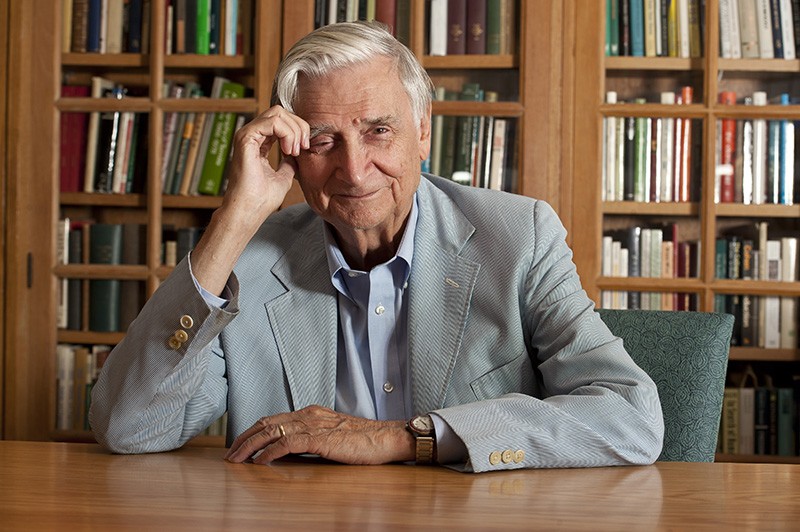




.jpg)
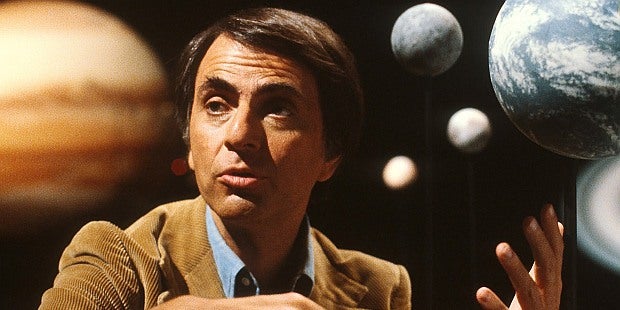





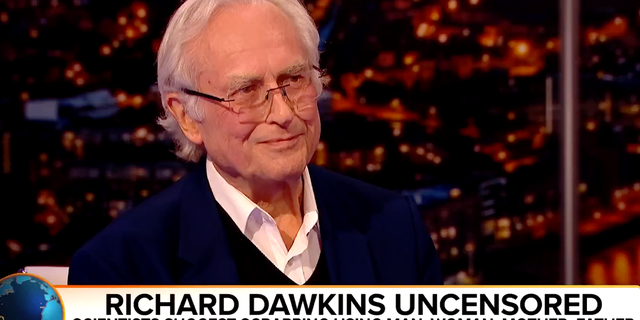


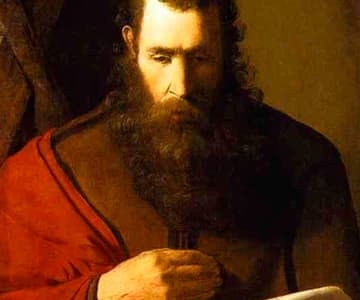


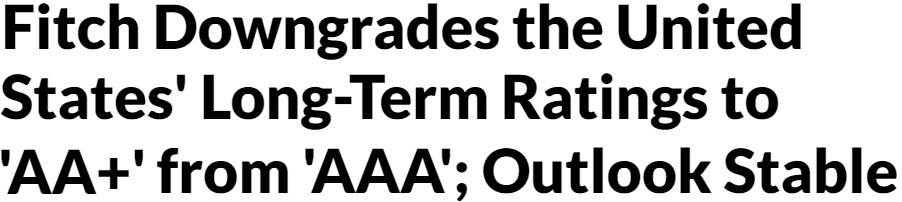



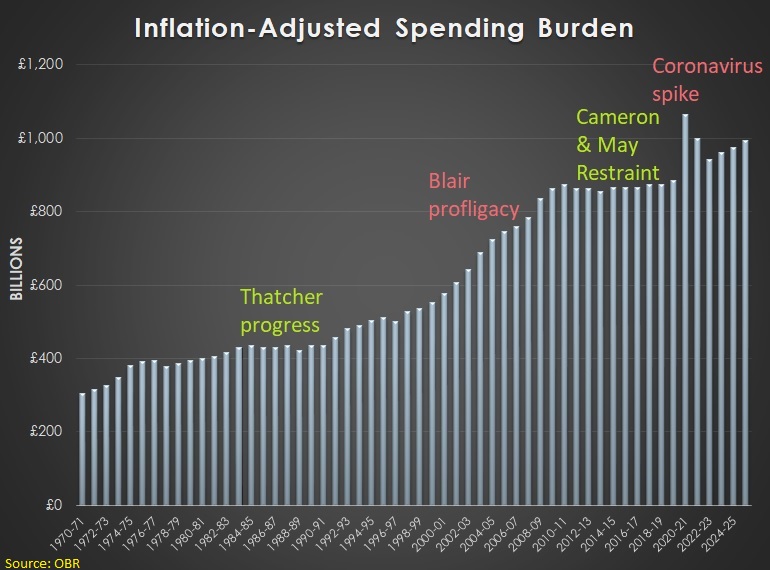

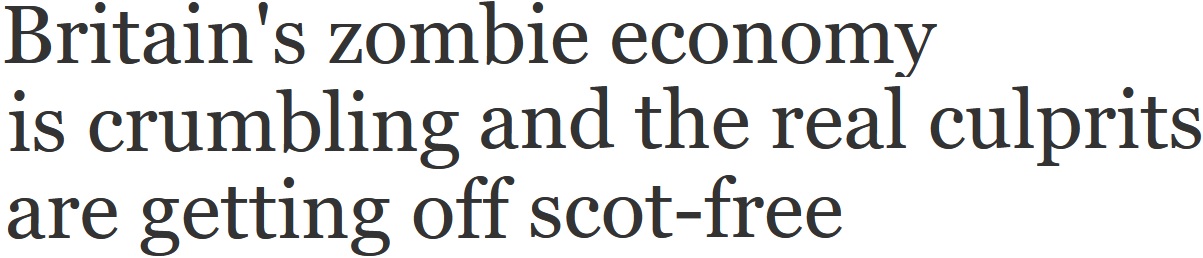



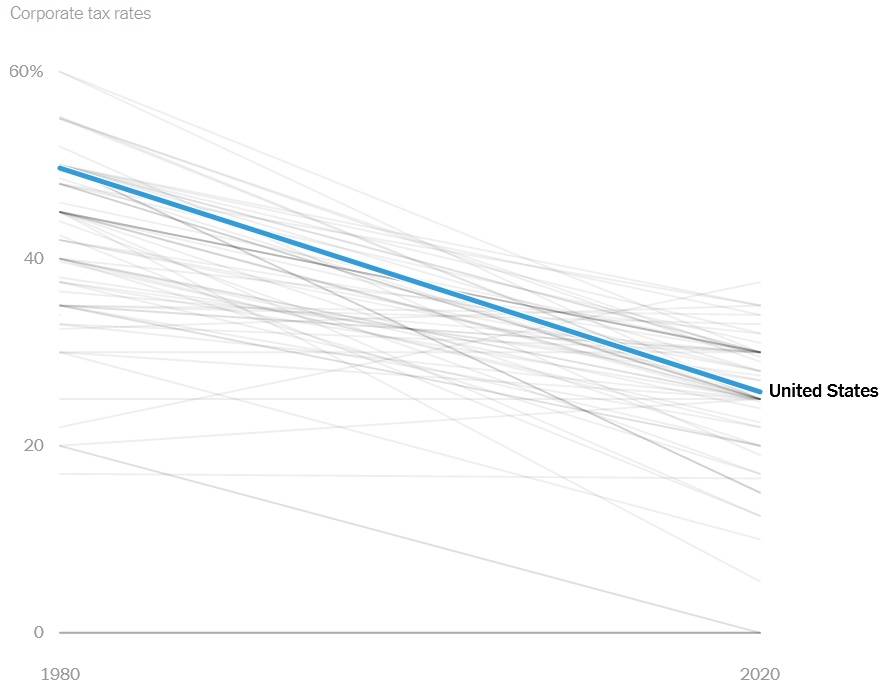

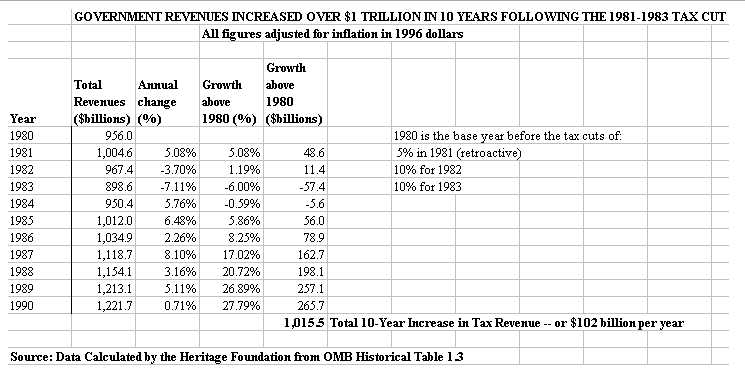


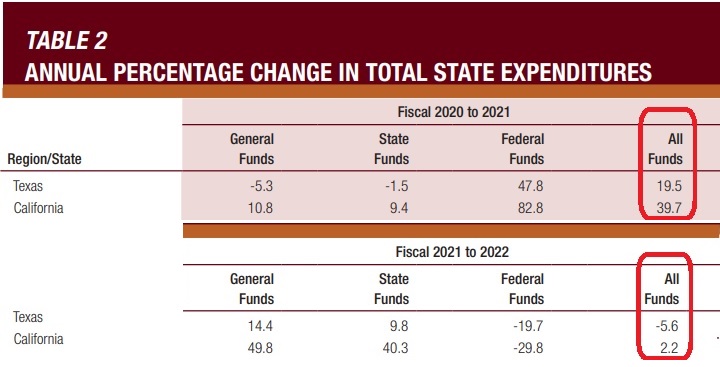
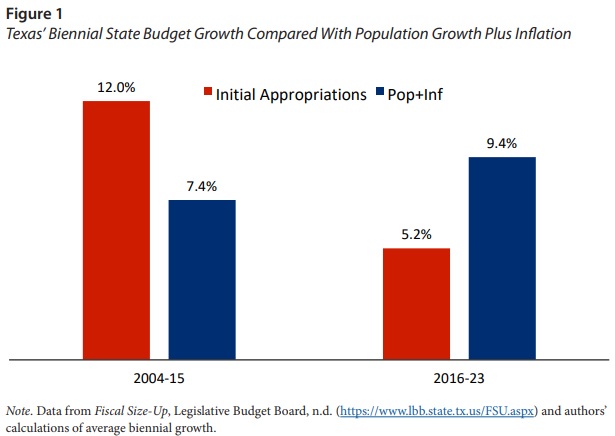












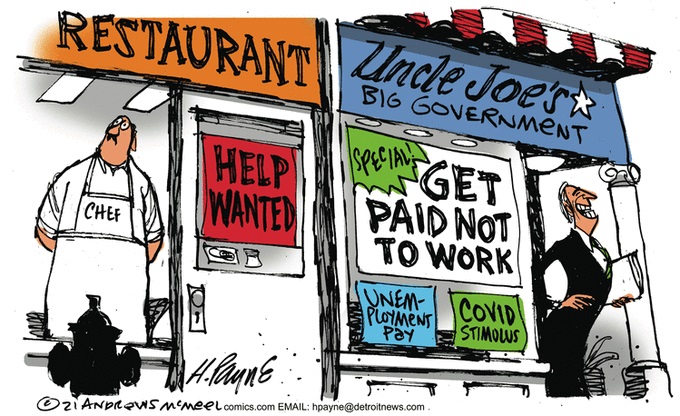



.jpg)
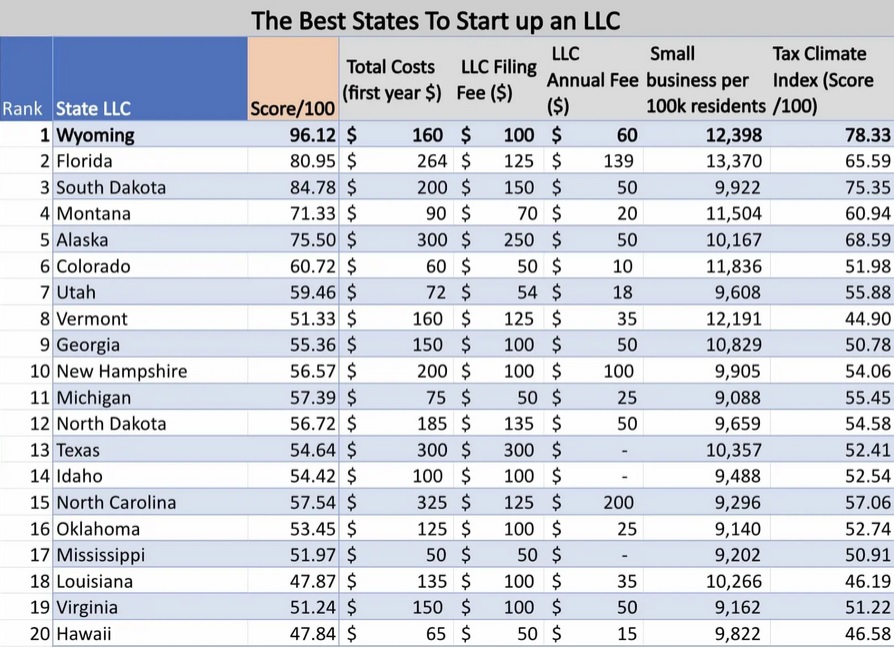




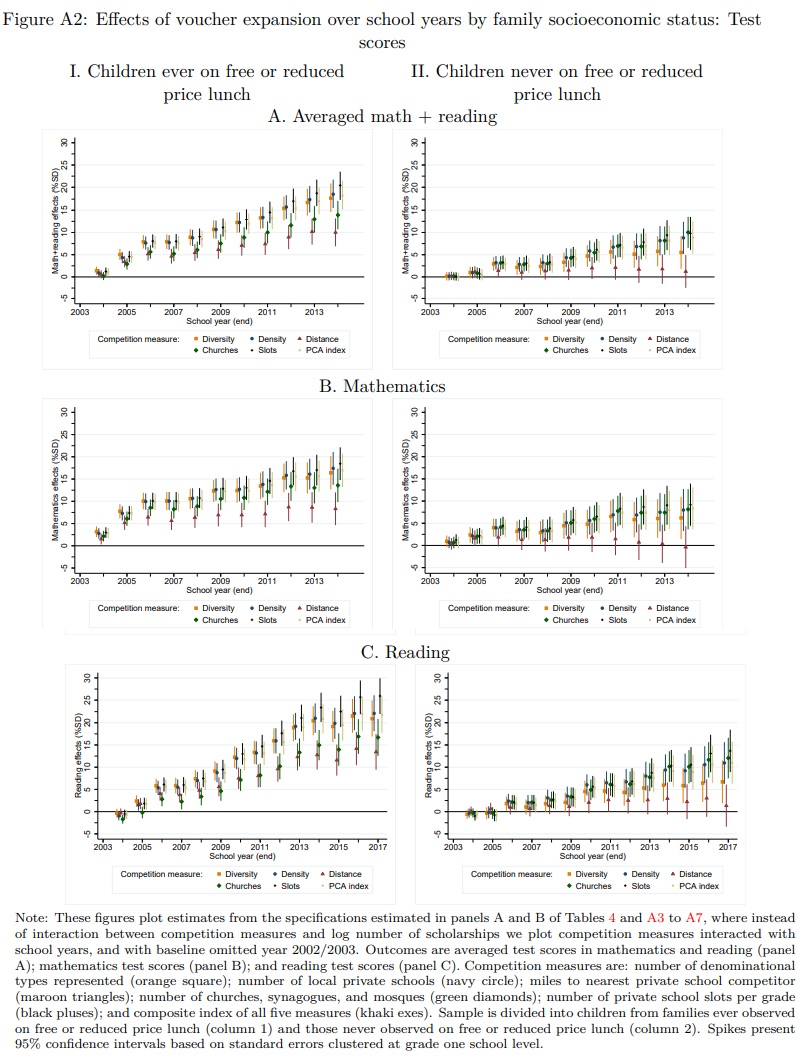




 The Daily Hatch

