Back in 2012, I wrote a column for the Wall Street Journal to highlight the success of Switzerland’s spending cap (also known as the “debt brake”).
Swiss voters voted for this spending cap in 2001 and ever since it took effect in 2003, government spending has increased by an average of 2.2 percent annually, only about half as fast as it was growing in the decades before the cap was imposed.
To show the ongoing success of the debt brake, here’s a map comparing changes in the burden of spending in Switzerland and its four major neighbors (France, Germany, Italy, and Austria). As you can see, IMF data reveals that Switzerland has been more responsible.
I even calculated changes in national spending burdens since the start of the pandemic.
You can see that all governments used the virus as an excuse for more spending, but the fiscal damage was most contained in Switzerland.
Professors Steve Hanke and Barry Poulson presumably agree. They have a column in National Review arguing in favor of a similar spending cap for the United States.
President Biden’s budget proposal for 2024 makes it clear that the U.S. needs a budget straitjacket sooner rather than later. …Switzerland has been arguably the most successful country in reining in budget deficits and its debt burden. …The Swiss debt brake requires that expenditures be brought into balance with revenues.A cap is imposed on spending based on expected revenue, and revenue is projected based on long-term trends in the real growth of national income. Expenditures may exceed the cap in response to extraordinary events such as war, but if that’s the case, eventually, revenues from budget surpluses must be generated and set aside to offset this excess expenditure. We propose a debt brake for the U.S. that would initially be more stringent than the Swiss debt brake…a spending limit (read: cap) be calculated each year, and that the cap be reduced by 1 percent.
Interestingly, they want a spending cap that is stricter than the Swiss version.
That would be ideal (the tighter the cap, the greater the progress), but I’d settle for the Swiss approach. Why? Because here’s the data comparing US profligacy and Swiss prudence.
When I contemplate these numbers, my disdain for Bush, Obama, Trump, and Biden becomes even more intense.
P.P.S. There’s plenty of academic evidence for Switzerland’s debt brake. But what’s more surprising are that pro-spending cap studies from the International Monetary Fund (here and here), the Organization for Economic Cooperation and Development (here and here) and the European Central Bank (here and here).
Open letter to President Obama (Part 704)
(Emailed to White House on 6-25-13.)
President Obama c/o The White House 1600 Pennsylvania Avenue NW Washington, DC 20500
Remember the debt? That $17 trillion problem? Some in Washington seem to think it’s gone away.
The Washington Post reported that “the national debt is no longer growing out of control.” Lawmakers and liberal inside-the-Beltway organizations are floating the notion that it’s not a high priority any more.
We beg to differ, so we came up with 17 reasons that $17 trillion in debt is still a big, bad deal.
Some families and businesses won’t be able to borrow money because of high interest rates on mortgages, car loans, and more – the dream of starting a business could be out of reach.
5.High debt and high spending won’t help the economy.
8. Jeopardizes the stability of Medicare, Social Security, and Medicaid.
Millions of people depend on Medicare, Medicaid, and Social Security, but these programs are also the main drivers of the growing debt. Congress has yet to take the steps needed to make these programs affordable and sustainable to preserve benefits for those who need them the most.
9. Washington collects a lot, and then spends a ton. Where are your tax dollars going?
In 2012, Washington collected $2.4 trillion in taxes—more than $20,000 per household. But it wasn’t enough for Washington’s spending habits. The federal government actually spent $3.5 trillion.
College students from all over the country got together in February at a “Millennial Meetup” to talk about how the national debt impacts their generation.
14. Makes us more vulnerable to the next economic crisis.
According to the Congressional Budget Office’s 2012 Long-Term Budget Outlook, “growing federal debt also would increase the probability of a sudden fiscal crisis.”
15. Washington racked up $300 billion in more debt in less than four months.
Read the Morning Bell and more en español every day at Heritage Libertad.
_____________
Thank you so much for your time. I know how valuable it is. I also appreciate the fine family that you have and your commitment as a father and a husband.
Sincerely,
Everette Hatcher III, 13900 Cottontail Lane, Alexander, AR 72002, ph 501-920-5733, lowcostsqueegees@yahoo.com
“The credit of the United States ‘is not a bargaining chip,’ Obama said on 1-14-13. However, President Obama keeps getting our country’s credit rating downgraded as he raises the debt ceiling higher and higher!!!! Washington Could Learn a Lot from a Drug Addict Just spend more, don’t know how to cut!!! Really!!! That is not […]
We got to stop all the red ink. New Video Is a Strong Indictment of Obama’s Dismal Record on Spending August 13, 2012 by Dan Mitchell The burden of federal spending in the United States was down to 18.2 percent of gross domestic product when Bill Clinton left office. But this progress didn’t last long. Thanks […]
In One Year, Spending on Interest on the National Debt Is Greater Than Funding for Most Programs Everyone wants to know more about the budget and here is some key information with a chart from the Heritage Foundation and a video from the Cato Institute. In 2010, the U.S. spent more on interest on the national debt than […]
National Debt Set to Skyrocket Everyone wants to know more about the budget and here is some key information with a chart from the Heritage Foundation and a video from the Cato Institute. In the past, wars and the Great Depression contributed to rapid but temporary increases in the national debt. Over the next few decades, runaway spending […]
Each American’s Share of National Debt Is Growing Everyone wants to know more about the budget and here is some key information with a chart from the Heritage Foundation and a video from the Cato Institute. As Washington continues to spend more than it can afford, future generations of taxpayers will be on the hook for increasing levels […]
I have been writing President Obama letters and have not received a personal response yet. (He reads 10 letters a day personally and responds to each of them.) However, I did receive a form letter in the form of an email on May 9, 2012. I don’t know which letter of mine generated this response so I have […]
Uploaded by PBS on Jan 4, 2008 Thousands of media outlets descended on Iowa, erecting a powerful wall of TV cameras and reporters between the voters and candidates. Bill Moyers talks with Ron Paul who knows well the power of the press to set expectations and transform the agenda. ____________________________ We should not be running […]
Liam Fox Issues a Warning to America Uploaded by HeritageFoundation on Feb 28, 2012 Britain’s Liam Fox has a warning for America: Fix the debt problem now or suffer the consequences of less power on the world stage. The former U.K. secretary of state for defense visited Heritage to explain why the America’s debt is […]
Liam Fox Issues a Warning to America Uploaded by HeritageFoundation on Feb 28, 2012 Britain’s Liam Fox has a warning for America: Fix the debt problem now or suffer the consequences of less power on the world stage. The former U.K. secretary of state for defense visited Heritage to explain why the America’s debt is […]
Each American’s Share of National Debt Is Growing Everyone wants to know more about the budget and here is some key information with a chart from the Heritage Foundation and a video from the Cato Institute. As Washington continues to spend more than it can afford, future generations of taxpayers will be on the hook for increasing levels […]
I wrote last week about President Macron’s very modest effort to slow down the growth of the welfare state and started with a chart showing that France has the highest overall burden of government spending in the developed world.
The good news (relatively speaking) is that France is in third place, based on this chart from the OECD, when looking at the burden of government-provided retirement benefits.
To be sure, having the third-highest burden of retirement spending is hardly something to celebrate. And it is not exactly a big achievement to be slightly less worse than Greece and Italy.
This is why President Macron is pushing to increase the retirement age from 62 to 64.
But French voters and French lawmakers have an entitlement mentality and Macron’s initiative was faltering. So the government used executive authority to unilaterally impose the law.
Needless to say, this has triggered a lot of outrage. Here are some details from an article by Rich Noack in the Washington Post.
The French government used its executive powers Thursday to raise the retirement age to 64 and avoid a vote on an unpopular bill, outraging lawmakers who could retaliate with a no-confidence motion… Two-thirds of the French public have opposed the plans, and within minutes of Borne announcing the law’s adoption, demonstrators assembled near Parliament for their ninth day of mobilization, with some of them clashing with authorities. …Macron has been pushing for changes to the country’s pension system since he was elected in 2017… France has a lower minimum retirement age than many of its European neighbors… Germany, for instance, is preparing for an increase in the retirement age from 65 to 67, and lawmakers there have faced little public backlash. …Macron and his allies argue that the retirement age needs to reflect that increase if the country wants to preserve a welfare system that relies on a sufficiently large base of working-age contributors.
Here’s a chart from the article to show the excesses of the French system.
The Wall Street Journalopined this morning on the controversy.
The political difficulty of reforming pensions in Western democracies has been on display in France, with strikes and mass protests against Emmanuel Macron’s modest pension reform. …Give Mr. Macron credit for persistence—and political brass. …Thursday Prime Minister Elisabeth Borne invoked Article 49 of the French constitution, which enabled the Macron government to strong-arm a bill through the National Assembly without a vote.The National Assembly’s remaining recourse to block reform is to pass a motion of no confidence. That would block the legislation, oust Ms. Borne, and dissolve the government. …The opponents are on the populist left and right, including his presidential opponent in 2022, Marine Le Pen, who accused Mr. Macron of choosing “to govern with brutality” and called for Ms. Borne’s ouster. The cold reality is that France needs reform because its pay-as-you-go pension system is unsustainable. The retirement age is 62, one of the youngest in Europe, and Mr. Macron would stretch it only to 64 with some exceptions. The worker-to-retiree ratio has shrunk to 1.7 to 1 from 3 to 1 in 1970. French pensions already consume 14% of the economy.
The second-to-last sentence of the above excerpt deserves some emphasis.
Back in 1970, there were three workers (taxpayers) for every retiree. Now the ratio if 1.7 workers to every retiree, and that situation is going to get much worseover the next few decades (the same problem of demographic change exists in the United States).
So the real-world choice is reform or bankruptcy (especially since taxes already are maxed out).
P.S. Macron’s reform is better than the status quo, but it would be far better to shift to personal retirement accounts – which is something that has happened in dozens of nations.
January 31, 2021
President Obama c/o The White House 1600 Pennsylvania Avenue NW Washington, DC 20500
Remember the debt? That $17 trillion problem? Some in Washington seem to think it’s gone away.
The Washington Post reported that “the national debt is no longer growing out of control.” Lawmakers and liberal inside-the-Beltway organizations are floating the notion that it’s not a high priority any more.
We beg to differ, so we came up with 17 reasons that $17 trillion in debt is still a big, bad deal.
Some families and businesses won’t be able to borrow money because of high interest rates on mortgages, car loans, and more – the dream of starting a business could be out of reach.
5.High debt and high spending won’t help the economy.
8. Jeopardizes the stability of Medicare, Social Security, and Medicaid.
Millions of people depend on Medicare, Medicaid, and Social Security, but these programs are also the main drivers of the growing debt. Congress has yet to take the steps needed to make these programs affordable and sustainable to preserve benefits for those who need them the most.
9. Washington collects a lot, and then spends a ton. Where are your tax dollars going?
In 2012, Washington collected $2.4 trillion in taxes—more than $20,000 per household. But it wasn’t enough for Washington’s spending habits. The federal government actually spent $3.5 trillion.
College students from all over the country got together in February at a “Millennial Meetup” to talk about how the national debt impacts their generation.
14. Makes us more vulnerable to the next economic crisis.
According to the Congressional Budget Office’s 2012 Long-Term Budget Outlook, “growing federal debt also would increase the probability of a sudden fiscal crisis.”
15. Washington racked up $300 billion in more debt in less than four months.
Read the Morning Bell and more en español every day at Heritage Libertad.
_____________
Thank you so much for your time. I know how valuable it is. I also appreciate the fine family that you have and your commitment as a father and a husband.
Sincerely,
Everette Hatcher III, 13900 Cottontail Lane, Alexander, AR 72002, ph 501-920-5733,
Related posts:
Milton Friedman’s Free to Choose (1980), episode 3 – Anatomy of a Crisis. part 1
Milton Friedman The Power of the Market 5-5 How can we have personal freedom without economic freedom? That is why I don’t understand why socialists who value individual freedoms want to take away our economic freedoms. I wanted to share this info below with you from Milton Friedman who has influenced me greatly over the […]
Milton Friedman The Power of the Market 4-5 How can we have personal freedom without economic freedom? That is why I don’t understand why socialists who value individual freedoms want to take away our economic freedoms. I wanted to share this info below with you from Milton Friedman who has influenced me greatly over the […]
Milton Friedman The Power of the Market 3-5 How can we have personal freedom without economic freedom? That is why I don’t understand why socialists who value individual freedoms want to take away our economic freedoms. I wanted to share this info below with you from Milton Friedman who has influenced me greatly over the […]
Milton Friedman The Power of the Market 2-5 How can we have personal freedom without economic freedom? That is why I don’t understand why socialists who value individual freedoms want to take away our economic freedoms. I wanted to share this info below with you from Milton Friedman who has influenced me greatly over the […]
Milton Friedman The Power of the Market 1-5 How can we have personal freedom without economic freedom? That is why I don’t understand why socialists who value individual freedoms want to take away our economic freedoms. I wanted to share this info below with you from Milton Friedman who has influenced me greatly over the […]
“The credit of the United States ‘is not a bargaining chip,’ Obama said on 1-14-13. However, President Obama keeps getting our country’s credit rating downgraded as he raises the debt ceiling higher and higher!!!! Washington Could Learn a Lot from a Drug Addict Just spend more, don’t know how to cut!!! Really!!! That is not […]
We got to stop all the red ink. New Video Is a Strong Indictment of Obama’s Dismal Record on Spending August 13, 2012 by Dan Mitchell The burden of federal spending in the United States was down to 18.2 percent of gross domestic product when Bill Clinton left office. But this progress didn’t last long. Thanks […]
In One Year, Spending on Interest on the National Debt Is Greater Than Funding for Most Programs Everyone wants to know more about the budget and here is some key information with a chart from the Heritage Foundation and a video from the Cato Institute. In 2010, the U.S. spent more on interest on the national debt than […]
National Debt Set to Skyrocket Everyone wants to know more about the budget and here is some key information with a chart from the Heritage Foundation and a video from the Cato Institute. In the past, wars and the Great Depression contributed to rapid but temporary increases in the national debt. Over the next few decades, runaway spending […]
Each American’s Share of National Debt Is Growing Everyone wants to know more about the budget and here is some key information with a chart from the Heritage Foundation and a video from the Cato Institute. As Washington continues to spend more than it can afford, future generations of taxpayers will be on the hook for increasing levels […]
I have been writing President Obama letters and have not received a personal response yet. (He reads 10 letters a day personally and responds to each of them.) However, I did receive a form letter in the form of an email on May 9, 2012. I don’t know which letter of mine generated this response so I have […]
Uploaded by PBS on Jan 4, 2008 Thousands of media outlets descended on Iowa, erecting a powerful wall of TV cameras and reporters between the voters and candidates. Bill Moyers talks with Ron Paul who knows well the power of the press to set expectations and transform the agenda. ____________________________ We should not be running […]
Liam Fox Issues a Warning to America Uploaded by HeritageFoundation on Feb 28, 2012 Britain’s Liam Fox has a warning for America: Fix the debt problem now or suffer the consequences of less power on the world stage. The former U.K. secretary of state for defense visited Heritage to explain why the America’s debt is […]
Liam Fox Issues a Warning to America Uploaded by HeritageFoundation on Feb 28, 2012 Britain’s Liam Fox has a warning for America: Fix the debt problem now or suffer the consequences of less power on the world stage. The former U.K. secretary of state for defense visited Heritage to explain why the America’s debt is […]
Each American’s Share of National Debt Is Growing Everyone wants to know more about the budget and here is some key information with a chart from the Heritage Foundation and a video from the Cato Institute. As Washington continues to spend more than it can afford, future generations of taxpayers will be on the hook for increasing levels […]
Last week, I wrote about Biden’s proposed budget, focusing on the aggregate increase in the fiscal burden.
Today, let’s take a closer look at his class-warfare tax proposals. Consider this Part VI in a series (Parts I-V can be found here, here, here, here, and here), and we’ll use data from the folks at the Tax Foundation.
We’ll start with this map, which shows each state’s top marginal tax rate on household income if Biden’s budget is enacted.
The main takeaway is that five state would have combined top tax rates of greater than 50 percent if Biden is successful in pushing the top federal rate from 37 percent to 39.6 percent.
While it is a very bad idea to have high marginal tax rates, it’s also important to look at whether the government is taxing some types of income more than one time.
That’s already a pervasive problem.
Yet the Tax Foundation shows that Biden wants to make the problem worse. Much worse.
His proposed increase in the corporate tax rate is awful, but his proposal to nearly double the tax burden on capital gains is incomprehensiblyfoolish.
I guess we should be happy that Biden didn’t propose to also increase the 40 percent rate imposed by the death tax.
But that’s not much solace considering what Biden would do to American competitiveness. Here’s our final visual for today.
I’ll close by observing that some of my leftist friends defend these taxes since they target the “evil rich.”
I have a moral disagreement with their view that people should be punished simply because they are successful investors, entrepreneurs, or business owners.
President Biden c/o The White House
1600 Pennsylvania Avenue NW
Washington, DC 20500
Dear Mr. President,
Please explain to me if you ever do plan to balance the budget while you are President? I have written these things below about you and I really do think that you don’t want to cut spending in order to balance the budget. It seems you ever are daring the Congress to stop you from spending more.
“The credit of the United States ‘is not a bargaining chip,’ Obama said on 1-14-13. However, President Obama keeps getting our country’s credit rating downgraded as he raises the debt ceiling higher and higher!!!!
Washington Could Learn a Lot from a Drug Addict
Just spend more, don’t know how to cut!!! Really!!! That is not living in the real world is it?
Making more dependent on government is not the way to go!!
Why is our government in over 16 trillion dollars in debt? There are many reasons for this but the biggest reason is people say “Let’s spend someone else’s money to solve our problems.” Liberals like Max Brantley have talked this way for years. Brantley will say that conservatives are being harsh when they don’t want the government out encouraging people to be dependent on the government. The Obama adminstration has even promoted a plan for young people to follow like Julia the Moocher.
Imagine standing a baby carrot up next to the 25-story Stephens building in Little Rock. That gives you a picture of the impact on the national debt that federal spending in Arkansas on Medicaid expansion would have, while here at home expansion would give coverage to more than 200,000 of our neediest citizens, create jobs, and save money for the state.
Here’s the thing: while more than a billion dollars a year in federal spending would represent a big-time stimulus for Arkansas, it’s not even a drop in the bucket when it comes to the national debt.
Currently, the national debt is around $16.4 trillion. In fiscal year 2015, the federal government would spend somewhere in the neighborhood of $1.2 billion to fund Medicaid expansion in Arkansas if we say yes. That’s about 1/13,700th of the debt.
It’s hard to get a handle on numbers that big, so to put that in perspective, let’s get back to the baby carrot. Imagine that the height of the Stephens building (365 feet) is the $16 trillion national debt. That $1.2 billion would be the length of a ladybug. Of course, we’re not just talking about one year if we expand. Between now and 2021, the federal government projects to contribute around $10 billion. The federal debt is projected to be around $25 trillion by then, so we’re talking about 1/2,500th of the debt. Compared to the Stephens building? That’s a baby carrot.
______________
Here is how it will all end if everyone feels they should be allowed to have their “baby carrot.”
How sad it is that liberals just don’t get this reality.
While living in Europe in the 1760s, Franklin observed: “in different countries … the more public provisions were made for the poor, the less they provided for themselves, and of course became poorer. And, on the contrary, the less was done for them, the more they did for themselves, and became richer.”
Alexander Fraser Tytler, Lord Woodhouselee(15 October 1747 – 5 January 1813) was a Scottish lawyer, writer, and professor. Tytler was also a historian, and he noted, “A democracy cannot exist as a permanent form of government. It can only exist until the majority discovers it can vote itself largess out of the public treasury. After that, the majority always votes for the candidate promising the most benefits with the result the democracy collapses because of the loose fiscal policy ensuing, always to be followed by a dictatorship, then a monarchy.”
[Jefferson affirms that the main purpose of society is to enable human beings to keep the fruits of their labor.— TGW]
To take from one, because it is thought that his own industry and that of his fathers has acquired too much, in order to spare to others, who, or whose fathers have not exercised equal industry and skill, is to violate arbitrarily the first principle of association, “the guarantee to every one of a free exercise of his industry, and the fruits acquired by it.” If the overgrown wealth of an individual be deemed dangerous to the State, the best corrective is the law of equal inheritance to all in equal degree; and the better, as this enforces a law of nature, while extra taxation violates it.
[From Writings of Thomas Jefferson, ed. Albert E. Bergh (Washington: Thomas Jefferson Memorial Association, 1904), 14:466.]
_______
Jefferson pointed out that to take from the rich and give to the poor through government is just wrong. Franklin knew the poor would have a better path upward without government welfare coming their way. Milton Friedman’s negative income tax is the best method for doing that and by taking away all welfare programs and letting them go to the churches for charity.
_____________
_________
Thank you so much for your time. I know how valuable it is. I also appreciate the fine family that you have and your commitment as a father and a husband.
Sincerely,
Everette Hatcher III, 13900 Cottontail Lane, Alexander, AR 72002, ph 501-920-5733
We got to act fast and get off this path of socialism. Morning Bell: Welfare Spending Shattering All-Time Highs Robert Rector and Amy Payne October 18, 2012 at 9:03 am It’s been a pretty big year for welfare—and a new report shows welfare is bigger than ever. The Obama Administration turned a giant spotlight […]
We need to cut Food Stamp program and not extend it. However, it seems that people tell the taxpayers back home they are going to Washington and cut government spending but once they get up there they just fall in line with everyone else that keeps spending our money. I am glad that at least […]
Government Must Cut Spending Uploaded by HeritageFoundation on Dec 2, 2010 The government can cut roughly $343 billion from the federal budget and they can do so immediately. __________ Liberals argue that the poor need more welfare programs, but I have always argued that these programs enslave the poor to the government. Food Stamps Growth […]
Milton Friedman – The Negative Income Tax Published on May 11, 2012 by LibertyPen In this 1968 interview, Milton Friedman explained the negative income tax, a proposal that at minimum would save taxpayers the 72 percent of our current welfare budget spent on administration. http://www.LibertyPen.com Source: Firing Line with William F Buckley Jr. ________________ Milton […]
Dan Mitchell Commenting on Obama’s Failure to Propose a Fiscal Plan Published on Aug 16, 2012 by danmitchellcato No description available. ___________ After the Welfare State Posted by David Boaz Cato senior fellow Tom G. Palmer, who is lecturing about freedom in Slovenia and Tbilisi this week, asked me to post this announcement of his […]
Is President Obama gutting the welfare reform that Bill Clinton signed into law? Morning Bell: Obama Denies Gutting Welfare Reform Amy Payne August 8, 2012 at 9:15 am The Obama Administration came out swinging against its critics on welfare reform yesterday, with Press Secretary Jay Carney saying the charge that the Administration gutted the successful […]
Thomas Sowell – Welfare Welfare reform was working so good. Why did we have to abandon it? Look at this article from 2003. The Continuing Good News About Welfare Reform By Robert Rector and Patrick Fagan, Ph.D. February 6, 2003 Six years ago, President Bill Clinton signed legislation overhauling part of the nation’s welfare system. […]
Uploaded by ForaTv on May 29, 2009 Complete video at: http://fora.tv/2009/05/18/James_Bartholomew_The_Welfare_State_Were_In Author James Bartholomew argues that welfare benefits actually increase government handouts by ‘ruining’ ambition. He compares welfare to a humane mousetrap. —– Welfare reform was working so good. Why did we have to abandon it? Look at this article from 2003. In the controversial […]
Thomas Sowell If the welfare reform law was successful then why change it? Wasn’t Bill Clinton the president that signed into law? Obama Guts Welfare Reform Robert Rector and Kiki Bradley July 12, 2012 at 4:10 pm Today, the Obama Department of Health and Human Services (HHS) released an official policy directive rewriting the welfare […]
I have been writing President Obama letters and have not received a personal response yet. (He reads 10 letters a day personally and responds to each of them.) However, I did receive a form letter in the form of an email on July 10, 2012. I don’t know which letter of mine generated this response so I have […]
Because the central bank’s easy-money policycreated artificially low interest rates, but those policies also produced high inflation, and now interest rates are going up as the Fed tries to undo its mistake.
By the way, the center box (higher prices) also includes asset bubble since bad monetary policy sometimes leads to financial bubbles instead of (or in addition to) higher consumer prices.
And higher interest rates can occur for two reasons. Most people focus on the Federal Reserve tightening monetary policy as it tries to reverse its original mistake of easy money. But don’t forget that interest rates also rise once lenders feel the pinch of inflation and insist on higher rates to compensate for the falling value of the dollar.
But let’s not digress too much. The focus of today’s column is that the Fed goofed by creating too much money in 2020 and 2021. That’s what set the stage for big price increases in 2022 and now economic instability in 2023.
Joakim Book of Reason shares my perspective. Here are excerpts from his article.
The Federal Reserve is in the unenviable position of achieving its mandate by crashing the economy. …it’s something that happens as an unavoidable outcome of slowing down an economy littered with excess money and inflation. …This hiking cycle, the fastest that the Fed has embarked upon in a generation, was always likely to break something. And break something they did over the weekend…Silicon Valley Bank (SVB), which faced the second-largest bank run in U.S. history. …this pushes the Fed into a very delicate position: risk systemic bank runs, or roll back the hikes and quantitative tightening that caused this mess, printing money for an even hotter inflation.
The Wall Street Journal also has the right perspective, editorializing that the current mess was largely caused by bad monetary policy.
Cracks in the financial system emerge whenever interest rates rise quickly after an easy-credit mania, and the surprise is that it took so long. …This week’s bank failures are another painful lesson in the costs of a credit mania fed by bad monetary policy. The reckoning always arrives when the Fed has to correct its mistakes. …We saw the first signs of panic in last year’s crypto crash and the liquidity squeeze at British pension funds. …nobody, least of all central bank oracles, should be surprised that there are now bodies washing up on shore as the tide goes out.
Finally, I can’t resist sharing some excerpts from Tyler Cowen’s Bloombergcolumn. He pointed out last November that the Austrian School has some insights with regards to the current mess.
The Austrian theory…works something like this: Investors expected that very low real interest rates would hold. They committed resources accordingly, and now forthcoming rates are likely to be much higher. That means the economy is stuck with malinvestment and will need to reconfigure in a painful manner.…The basic story here fits with the work of two economists from Austria, Ludwig Mises and Nobel laureate Friedrich von Hayek, and thus it is called the Austrian theory of the business cycle. The Austrian theory stresses how mistaken expectations about interest rates, brought on by changes in the rate of inflation, will lead to bad and abandoned investment projects. The Austrian theory has often been attacked by Keynesians, but in one form or another it continues to resurface in the economic data.
Senate Majority Leader Chuck Schumer, D-N.Y., exults at a news conference after Senate passage of the Inflation Reduction Act at the Capitol on Sunday after a marathon session. The entirely party-line vote was 51-50, with the tie-breaking vote being cast by Vice President Kamala Harris. (Photo: Drew Angerer/Getty Images)
As Senate Democrats achieve their goal of jamming through the so-called Inflation Reduction Act, reality is becoming clear: The bill will likely increase near-term inflation, depress household incomes, and produce the long-term deficits that fuel long-term inflation.
Using the Congressional Budget Office’s latest scoring, estimates of the most recent changes, and accounting for very expensive gimmicks, it’s likely that the bill will produce deficits.
The cumulative deficit would be around $52.5 billion over the next four years, at least $110 billion through fiscal year 2031, and more beyond. That would mean adding to near-term and long-term inflationary pressures, in contrast to what proponents such as Sen. Joe Manchin, D-W.Va., claim.
In short, the bill is about as far away from a genuine Inflation Reduction Act as possible. Though it would be harmful under any circumstances, signing it into law during a period of stagflation would be the worst possible timing.
The Inflation Reduction Act utilizes three major sets of common congressional gimmicks to mask its true costs: cherry-picked expiration dates, ignoring net interest costs, and indirect tax burdens.
As one very costly example, the bill would extend for three more years “temporary” Obamacare subsidies that were supposed to expire this year. That brings to mind the wisdom of the late economist Milton Friedman, who once observed, “Nothing is so permanent as a temporary government program.”
Despite the Obamacare subsidies being peddled as temporary, extending them was among the first provisions of the Inflation Reduction Act that Senate Democrats committed to voting for. It just goes to prove something the everyone knows: There are certain taxpayer-funded handouts and giveaways that seem to always get extended in perpetuity.
To keep the reported cost of the provision down, a three-year expansion was chosen because it is what they could afford on paper. However, accounting for political reality, these subsidies will likely cost at least $146.5 billion more than what is being reported through fiscal year 2031.
That would be further compounded by Congress yet again delaying implementation of the Trump-era Medicare rebate rule, a move that shifts federal costs further into the future and arbitrarily reduces the portion of the costs included in the budgetary window. While the future costs would remain real, they would conveniently slip under the radar of the formal score.
Yet another overestimation of savings presented by the bill’s authors is a claim to $204 billion in increased revenues from cracking down on tax fraud.
While increased enforcement activity might result in higher revenue collections, estimates are highly speculative. Because the actual results are so uncertain, such revenues are not included in official cost estimates under the bipartisan scorekeeping guidelines.
The deficits created by the bill, and the fact that they are front-loaded, would increase federal net interest costs by more than $14 billion—a fact that is not reflected in the formal CBO estimates.
In total, the bill would add at least $110 billion to the federal deficit through fiscal 2031.
To put that level of spending in perspective, $110 billion is roughly four-and-a-half times NASA’s annual budget, or nearly the cost of the ships in six U.S. Carrier Strike Groups. In this case, however, the $110 billion will be used to buy more inflation.
When the federal government runs a deficit, it eventually must be paid back. That’s either done through job- and wage-killing taxes or by way of the Federal Reserve printing new money to finance the deficits.
During the height of the COVID-19 pandemic, the Fed financed 56% of new federal debt with trillions upon trillions of newly created dollars. Those dollars devalued paychecks and Americans’ lifetime savings.
When the federal government attempts to print its way out of fiscal irresponsibility, it does so by imposing an inflation tax on every American household.
With that precedent, no one can be certain of how much the federal government will use new taxes or new money creation to cover deficits. The expectation of future money printing causes immediate inflationary pressures as people act now to mitigate such future possibilities.
As such, the deficits created by the Inflation Reduction Act would simply be the newest addition to the current inflation tax.
To add insult to injury, almost every provision of the bill will bleed the bank accounts of American families. Tragically, the deficit- and inflation-increasing aspects of the Inflation Reduction Act are only the beginning of its burdens.
In these provisions we find the third set of gimmicks; namely, indirect tax burdens. Despite President Joe Biden’s assurances, the tax and price-control burdens of the Inflation Reduction Act will fall squarely on families trying to make ends meet.
Companies are combinations of workers, tools, and institutional knowledge that when brought together can produce the goods and services we need and enjoy. As such, companies can’t absorb a tax. They only direct how American households will feel it.
The bill’s business-tax hike will leave companies with no choice but to cut wages, increase consumer prices, or cut future investments in a growing and prosperous economy. The bill’s requirement that the government get a deal on drug prices will simply mean that drug prices will go up for families and that research budgets for new lifesaving drugs will be slashed.
In reality, this bill is a litany of policies aimed at scoring political points that has been recklessly and hurriedly slapped together. If it’s signed into law as expected, long after the press conferences and congressional pats on the back have faded into distant memory, it’s inflationary, tax, and other burdens will continue to haunt every American household.
Have an opinion about this article? To sound off, please email letters@DailySignal.com and we’ll consider publishing your edited remarks in our regular “We Hear You” feature. Remember to include the url or headline of the article plus your name and town and/or state.
Milton Friedman’s FREE TO CHOOSE “How to Stay Free,” Transcript and Video (60 Minutes)
In 1980 I read the book FREE TO CHOOSE by Milton Friedman and it really enlightened me a tremendous amount. I suggest checking out these episodes and transcripts of Milton Friedman’s film series FREE TO CHOOSE: “The Failure of Socialism” and “The Anatomy of a Crisis” and “What is wrong with our schools?” and “Created Equal” and From Cradle to Grave, and – Power of the Market. In this episode “How to Stay Free” Friedman makes the statement “What we need is widespread public recognition that the central government should be limited to its basic functions: defending the nation against foreign enemies, preserving order at home, and mediating our disputes. We must come to recognize that voluntary cooperation through the market and in other ways is a far better way to solve our problems than turning them over to the government.”
— On Mon, 12/6/10, Everette Hatcher <lowcostsqueegees@yahoo.com>wrote:
From: Everette Hatcher <lowcostsqueegees@yahoo.com>
Subject: Vol 10 How to stay Free,Videos and Transcript Free to Choose
To:
Date: Monday, December 6, 2010, 8:50 AM
The Great Depression of the 1930s changed the public philosophy regarding the appropriate role of government in American life. Before the Depression, government was not assumed to have special responsibilities for individual or business welfare. The severity of the economic tragedy of the 1930s resulted in a dramatic change in public attitudes. Many believed the Depression represented a “failure of capitalism.” Because of this alleged failure, government has ever since been expanding its power and the scope of its control. Government growth has resulted in waste, inefficiency, and a loss of personal freedom. Intended to serve the interests of the people, many governmental programs have been revealed to serve primarily the interests of the bureaucrats. Many government programs serve at cross purposes. For example, different agencies attempt, on the one hand, to discourage use of tobacco as potentially dangerous to good health and, on the other hand, to encourage production of tobacco through subsidies to tobacco farmers. The list of government inconsistencies and inefficiencies goes on and on. Dr. Friedman, however, says that there is reason for optimism. Today, he notes, the public is better informed about these matters and is increasingly willing to take a stand against further unnecessary expansion of government services. He suggests the most fruitful approach is to remove discretionary budget power from the government. Friedman favors passage of a Constitutional amendment limiting the government’s budget and forcing government to work within that budget. But this is only the first step. As Dr. Friedman points out, “What we need is widespread public recognition that the central government should be limited to its basic functions: defending the nation against foreign enemies, preserving order at home, and mediating our disputes. We must come to recognize that voluntary cooperation through the market and in other ways is a far better way to solve our problems than turning them over to the government.”
_____________________________________________
Milton Friedman makes the point: “If power were really concentrated in monolithic in a few hands, it would be hopeless to reform the system. But because it’s fragmented, because it’s split up, we can see how much waste there is, we can see how inefficient it is, how the left hand seldom knows what the right hand is doing.” IN OTHER WORDS A DICTATOR IS NOT RUNNING THE GOVERNMENT WE HAVE A CHANCE TO CHANGE WHAT IS GOING ON!!!
Volume 10 – How to Stay Free
Transcript:
Friedman: Every day hundreds of people flock to the capital in Washington, D.C. attracted only by power. That power has accumulated here over the past 50 years at the seat of government of the most powerful nation on Earth.
Worker: How do you do? Glad to meet you. How are you? How’s it going? What are you talking about? Guns?
Warren Richardson: Hello, this is Warren Richardson. Oh Mary, yes, what’s on your mind?
Friedman: Warren Richardson makes his living by knowing who has power and influence to trade.
Warren Richardson: I’ll be waiting for you.
Friedman: He’s a lobbyist.
Warren Richardson: Thanks a lot. Bye.
Unidentified Member of the House: The official administration position on this bill, however, is that its consideration would be premature in view of the President’s….
Friedman: He trades with people like these. Members of the House Committee on Agriculture. They make some of the laws and regulations that among other things, control the food we eat. They are elected officials who have the power to spend billions of dollars of our tax money.
Mr. Baldus: It’s all of page two. It takes all of page three.
Friedman: Naturally, lots of people would like to get their hands on that money.
Mr. Baldus: That’s the kind of stuff that ought never go into the statute books. And I think anybody who’s practicing justice court knows it.
Unidentified Member of the House: Bill, the way you get common sense administration is by having common sense administrators. And it seems like there’s more common sense administration in agriculture.
Michael Masterson (Congressional Aide): Access is all important and how you gain access. It used to be there were only a few hundred lobbyists in this town, now we record up to 15,000 lobbyists plus ancillary personnel, secretaries, receptionists and typists and the researchers that go with that. They are calling upon all the law firms imaginable. So there is a tremendous support base out there for the lobbying effort.
Friedman: You don’t have to walk these corridors for very long before you begin to realize that the concentration of power in the hands of a few people, however well intentioned, is a real threat to the freedom of the individual. Of course, Warren Richardson doesn’t see it that way. Over the years he’s successfully lobbied for special interest groups in energy, environment, wages and prices. Today he’s arguing the case for another special interest. The National Action Committee on Labor Law Reform, hoping to swing influence his way.
Warren Richardson: When the bill goes overboard in terms…much, much too far.
Friedman:There’s hardly a time when the corridors of Congressional Office buildings are not peppered with people waiting for their chance to see and influence the elected man at the center of power.
Unidentified Member of the House: Within that legislation for funds for communities of 50,000 and under, the goals of the existing law and certain statutory paperwork requirements are often very unrealistic for smaller communities.
Friedman: The deals made here effect all of us and sometimes in ways we don’t like. But don’t blame the people making the deals. They’re just pursuing their own self-interest which may be as narrow as making a buck or as broad as trying to reform the world. We, the citizens, are to blame because we’ve handed over much of our lives of personal decision making to government. And we now find that was government does severely limits our freedom.
The leather and wood paneled official offices of a Congressman in Washington, D.C. It’s the mecca of those who try for behind the scenes influence. Weaving his way between special interest groups can be tough for a politician. To stay in office he needs votes. To get votes he often has to make deals.
Unidentified Politician: The chances of our party regaining the White House. Republicans. If the President sends the policies to the public …..
Friedman: It’s frequently a frustrating business.
Michael Masterson: When you have people who are coming in not for purposes of debate and dialogue and discussion on something, but merely they demand their special interest or their single issue concern. That’s where it becomes extremely difficult because there might be an equal number on the opposite side of the coin.
Friedman: Every time I come to Washington I’m impressed all over again with how much power is concentrated in this city. But we must understand the character of that power. It is not monolithic power in a few hands like the way it is in countries like the Soviet Union or Red China. It is fragmented into lots of little bits and pieces and with every special group around the country trying to get its hand on whatever bits and pieces it can. The result is that there’s hardly an issue in which you won’t find government on both sides. For example, in one of these massive buildings spread, scattering all through this town filled to the bursting with government employees, so of them are sitting around trying to figure out how to spend our money to discourage us from smoking cigarettes. In another of the massive building, maybe far away from the first, some other employees, equally dedicated, equally hardworking, are sitting around figuring out how to spend our money to subsidize farmers to grow more tobacco. In one building they’re figuring out how to hold down prices, in another building they’ve got schemes for raising prices. The prices the farmers receive or import prices or keeping out cheap foreign goods. We set up an enormous Department of Energy with 20,000 employees to encourage us to save energy. We set up an enormous Department of Environmental Protection to figure out ways to get cleaner air involving our using more energy.
Now, many of these effects cancel out but that doesn’t mean that these programs don’t do a great deal of harm and that there aren’t some very bad things about it. One thing you can be sure of, the costs don’t cancel out, they add together. Each of these programs spends money taken from our pockets that we could be using to buy goods and services to meet our separate needs. All of these programs use very able, very skilled people who could be doing productive things. They, all of them, grind out rules, regulations, red tape, forms to fill-in. I doubt that there’s a person in this country who doesn’t violate one or another of those rules or regulations or laws everyday. Not because he wants to or intends to, but simply because it’s impossible for anybody to know what they all are. Those are the bad things. But there’s something good about this fragmentation of power too. And that is, that it enables us to do something about it.
If power were really concentrated in monolithic in a few hands, it would be hopeless to reform the system. But because it’s fragmented, because it’s split up, we can see how much waste there is, we can see how inefficient it is, how the left hand seldom knows what the right hand is doing.
It wasn’t always like this. The armies of bureaucrats administering our lives making our decisions spending our money, all supposedly for our good. Our nation was founded with something fundamentally different in mind.
___________________________________________
In this episode Milton Friedman makes the point, “From regarding government as a threat to our freedom, we have come more and more to regard government as a benefactor from which all good things flow. We have assigned increasing tasks of great importance to government. We have turned over to government a larger and larger fraction of our income to be spent on our behalf and the results are plain for all the same they are disappointing.”
Pt 2
Almost 200 years ago a remarkable group of men gathered in this room to write a Constitution for the new nation that they had helped to create a few years earlier. They were a wise and learned group of people. They had learned the lesson of history. The great danger to freedom is the concentration of power, especially in the hands of a government. They were determined to protect the citizens of the new United States of America from that danger. And they crafted their Constitution with that in mind. That Constitution has served us well. It has enabled us to preserve our freedom for close on to 200 years. But in the past 50 years, we have been forgetting the lesson that these wise men knew so well. From regarding government as a threat to our freedom, we have come more and more to regard government as a benefactor from which all good things flow. We have assigned increasing tasks of great importance to government. We have turned over to government a larger and larger fraction of our income to be spent on our behalf and the results are plain for all the same they are disappointing. The great expectations have not been achieved and our freedoms have suffered in the process.
Where did it all go wrong? Government began to take an increasing part in our personal affairs nearly 50 years ago. It was 1933, at the lowest point of the worst depression in history. The idea took root that capitalism had failed and that failure was responsible for the human and economic tragedy. In the early 30’s, Franklin Delano Roosevelt and his advisors met here to devise programs to meet the problems of the depression. Their answer was to give central government more power. Out of that beginning came today’s welfare state.
This Empire State Plaza in Albany, NY is a fine example of the difference between public political power and private economic power. It was constructed while Nelson Rockefeller was Governor of the state of New York. The Rockefeller family has spent millions of its private money on good causes. It has endowed universities like my own, at the University of Chicago, financed medical research, reconstructed Williamsburg, yet not all the private money of the Rockefeller family gave them anything like the amount of power that Nelson Rockefeller was able to have as Governor of the State of New York. He constructed monuments like this all over the state, using every expedient he could think of to finance them. When he left office, taxes per persons in New York State were higher than in any other state in the country excepting only Alaska. And there was a monumental debt besides. So much so, that his successor, who had the reputation as a Democratic congressman of being a big spender, had to use his inaugural speech to preach the virtues of austerity and to say the time of wine and roses is over.
Look at this skyline. It’s Chicago and I think it’s very beautiful. Much of it is less than 20 years old. Those tall buildings were built by private enterprise for use by private enterprise. Not by government for use by government bureaucrats. These are productive monuments, not a burden on the taxpayer, a burden that has almost bankrupted New York City. The irony is that for the most part it was good intentions that led us to where we are today, a nation governed by bureaucratic empires. I wonder whether when they built this building, they realized that it was going to come out looking like a fortress. From modest beginnings in 1953, the Department of Health, Education and Welfare has grown into a veritable empire. Only a small part of its total staff is housed in this headquarters building, a mere 2,000 bureaucrats. Its budget is the third largest budget in the whole world exceeded only by the entire budget of the United States and of the Soviet Union. It employs directly 150,000 full time people and the empire it rules employs another million. More than one out of every 100 people in the U.S. works in the HEW empire.
As we have seen in this series, the Department of Health, Education and Welfare is spending increasing amounts of our money each year on health. One effect is simply to raise the fees and prices for medical and hospital services without a corresponding improvement in the quality of medical care that we receive. It is controlling more and more of the food and drugs we buy. In the process, discouraging the development and preventing the marketing of new drugs that could be saving tens of thousands of lives a year. In the field of education the sums being spent are skyrocketing. Yet by common consent, the quality of education is declining. More and more money is being spent and increasingly rigid controls imposed to promote racial integration. Yet our society is becoming more fragmented. In the field of welfare, billions of dollars are being spent each year, yet at a time when the standard of life of the average American is higher than it has ever been in history, the number of people on welfare roles is growing. Social Security, the budget is colossal, yet it is in deep financial trouble. The young complain and with considerable justice about the high taxes they must pay and those taxes are needed to finance the benefits that are going to the old, yet the old complain and also with justice that it is difficult for them to maintain the standard of life that they were led to expect. A system that was enacted to make sure that the old never became objects of charity sees an increasing number of our older folk on the welfare roles. By its own accounting, HEW in one year lost through fraud, abuse and waste and amount of money that would have built well over 100,000 houses costing $50,000 a piece. Little wondered that those initials are increasing coming to stand for “How to encourage waste.”
Martin Anderson: We found in some cities that upwards of 20_25% of all the people currently receiving welfare are either totally ineligible for welfare or are receiving more than they should be receiving. And it appears in looking into this that the main reason for this is not the welfare laws themselves, but the way they are administered. They are administered in a very lax and loose manner. One of the most famous cases, in fact it just happened last week, they arrested a woman in southern California, they referred to her as the Welfare Queen. And over the past six or seven years she has received $300,000 in welfare payments. Which of course is on an after tax basis, so if you put her on a before tax basis, it might be equivalent to over a million dollars in before tax income. And, she and her husband were living in a nice $170,000 home, nice cars, and she used a very simple technique. She just used alias, used false names, and signed up to get countless different welfare agencies and departments and drove around and collected her checks.
Friedman: Something had to be done about this scandalous state of affairs. What better bureaucratic decision than to set up a special department crammed with computers and civil servants all dedicated to tracking down waste using taxpayers money, of course, in the process. $27.5 million in the first year.
When there is a high rate of taxation then you have people cheating on their taxes and you can see that in England today.
Pt 3
As Adam Smith wrote over 200 years ago, in the economic market people who intend to serve only their own private interests are led by an invisible hand to serve public interests where there was no part of their intention to promote. In the political market, there is an invisible hand operating as well. But unfortunately it operates in the opposite direction. People who intend only to serve the public interest are led by an invisible hand to serve private interests that was not part of their intention to promote. The reason is simple, as we have seen in case after case, the general interest is diffused among millions and millions of people with special interest its concentrated. When reformers get a measure through they go on to their next crusade leaving no one behind to protect the public interest. But they do leave behind some money and some power and the special interests that can benefit from that money and from that power are quick to gain it at the expense of most of the rest of us. By now, after 50 years of experience, it is clear that it doesn’t really matter who lives in that house. Government will continue to grow so long as the rest of us believe that the way to solve our problems is to turn them over to government.
Yet there are many people who want to solve their own problems, who want to use their own skills and energy and resources. We found such a person here in southern California.
John McCalm, a fireman, was planning his retirement. He decided to fulfill his life’s ambition, he built his own house with his own hands. He bought a site with a magnificent view, cleared the ground and realized that he was the first man who ever cultivated this land. It made him feel good. He pulled a trailer on to the edge of his plot and moved in with his wife to live there while they worked on the house. He made his own adobe bricks, he planted avocado trees, learned about carpentry and plumbing. It was going well when one day a local official arrived with a warning. It was alright to build a house he said, but it was against regulations to live in the trailer any longer. The McCalms thought that the rules were bureaucratic and foolish and they resented them. They decided to leave the trailer exactly where it was and defy the authorities.
Pat Brennan became something of a celebrity in 1978 because she was delivering mail in competition with the United States Post Office. With her husband she set up business in a basement in Rochester, NY. Soon it was thriving. They charged less than the post office and they guaranteed delivery the same day of parcels and letters in downtown Rochester. There is no doubt now that they were breaking the law as it stood. The post office took them to court. The case against them was simply that they should not be handling letters. The Brennan’s decided to fight and local businessmen provided the financial backing.
Pat Brennan: I think there’s going to be a quiet revolt and perhaps we’re the beginning of it. That you see people bucking the bureaucrats where years ago you wouldn’t dream of doing that because you’d be squelched. Now, with tax revolts and with what we’re doing, people are deciding that their fates are their own and not up to somebody in Washington who has no interest in them whatsoever. So, it’s not a question of anarchy, but it’s a questions of people rethinking the power of the bureaucrats and rejecting it.
Friedman: The Brennan customers were clear about one thing. After all, the Brennan’s service was cheaper than the regular mail.
Thomas O’Donaghue (storekeeper): We’re not sure that they have done anything illegal and I’d like to know more about this and I hope that this gets further into the courts than it has already. And someone will listen to their appeal because when we use the Brennan’s we know for a fact that same day delivery is going to be happening day after day after day, whereas with the other guy, you’re not sure and you’re sure what kind of shape it’s going to get there in. So I am behind the Brennan’s 100% and anything I can do to help them, I will.
Pat Brennan: Well, the questions of freedom comes up in any kind of a business. Whether you have the right to pursue it and the right to decide what you are going to do. There is also the question of the freedom of the consumers to utilize the service that they find is inexpensive and far superior. And according to the federal government and the body of laws called the Private Express Statutes, I don’t have a freedom to start a business and the consumer does not have the freedom to use it. Which seems very strange in a country like this that the entire context of the country is based on freedom and free enterprise.
Friedman: The post office won the case. It went all the way to the State Supreme Court and the Brennan’s were closed down. Put out of the business of delivering mail.
What we’ve been looking at is a natural human reaction to the attempt by other people to control your life when you think it’s none of their business. The first reaction is resentment. The second is to attempt to get around it. And finally there comes a decline in respect for law in general. There’s nothing especially American about this. It happens all over the world whenever some people try to control other people. For example, take a look at what’s happening to the British.
For most of the past century Britain was known throughout the world for the respect which its citizens gave to the law, but no longer. Graham Turner (Author “Business in Britain) Nothing is perfect that we have become in the course of the last ten or fifteen years, a nation of fiddlers. How do they do it? They do it in a colossal variety of ways. Lets take it right at the lowest level. Take a small grocer in a country area, say Devon. Very small turnover. How does he make money? He finds out that by buying through regular wholesalers he’s always got to use invoices. But if he goes to the cash and carry and buys his goods from there, and the profit margin on those goods can be untaxed because the tax inspector simply don’t know he’s had those goods. That’s the way he does it. Then if you take it to the top end, if you take a company director, well there’s all kinds of ways they can do it. They buy their food through the company, they have their holidays on the company, the put their wives as company directors even though they never visit the factory. They build their houses on the company by a very simple device of building a factory at the same time as a house, it goes absolutely right through the range from the ordinary person, the ordinary working class person, doing quite menial jobs right to the top end, businessmen, senior politicians, members of the Cabinet, members of the Shadow Cabinet, they all do it. I think almost everybody now feels the tax system is basically unfair. And, everybody who can tries to find a way around that tax system. Now, once that happens, once there is a consensus that the tax system is unfair, the country in effect becomes a kind of conspiracy. And everybody helps each other to fiddle. You’ve no difficulty fiddling in this country because other people actually want to help you. Now 15 years ago that would have been quite different. People would have said, hey, you know, this is not quite as it should be. So that’s the first reason. A very high level of taxation. But I think personally there’s another fact that comes into it. And that is that over the years we’ve had a huge growth in bureaucracy, government expenditure, cotton wool, if you like, to protect people from the slings and arrow of ordinary life, you know, health service, all kinds of benefits of one sort or another. And I think this comes into the consciousness of people almost a sort of new factor feeling that things don’t quite have the value that they did that money is not a thing of value, if your short you get it from some government body or other
_________________________________________
In this episode Milton Friedman makes the point:
“It will be no easy task to cut government down to size. Today in country after country the strongest special interest has become the entrenched bureaucracy. Whether at the national or at the local level. In addition, each of us gets special benefits from one or another governmental program. The temptation is to try to cut down government at someone else’s expense while retaining our own special privileges. That was a stalemate.”
Ep. 10 – How to Stay Free [4/7]. Milton Friedman’s Free to Choose (1980)
Friedman: Criminal tax evasion in Britain, laws and regulations defied in the U.S. It’s nothing to celebrate. The hopeful thing is that throughout the free world the public is coming to recognize the dangers of big government and is taking steps to control it. But it will be no easy task to cut government down to size. Today in country after country the strongest special interest has become the entrenched bureaucracy. Whether at the national or at the local level. In addition, each of us gets special benefits from one or another governmental program. The temptation is to try to cut down government at someone else’s expense while retaining our own special privileges. That was a stalemate. The right approach is to tackle head on the explosive growth in government spending. Lets give the government a budget the way each of us has a budget. A movement in this direction is already underway in the U.S. with the many proposals for Constitutional Amendments limiting government spending. Several states have already adopted such an amendment. There is strong pressure for a similar amendment at the federal level. Those amendments would force government to operate within a strict budget. Each special interest would have to compete with other special interests for a larger share of a fixed pie instead of all of them being able to join forces at the expense of the taxpayer.
This is an important step, but it is only a first step. No piece of paper by itself can solve our problems for us.
What we need is widespread public recognition that the central government should be limited to its basic functions. Defending the nation against foreign enemies. Preserving order at home. Mediating our dispute. We must come to recognize that voluntary cooperation through the market and in other ways is a far better way to solve our problem than turning them over to the government.
This is where much of the future strength of the United States lies. In places like Utuma, Iowa where ordinary hardworking American people live. People of all economic levels live in Utuma, but there are no extremes of either wealth or poverty. All are part of a community. Each part of which depends on the others for a stable and happy life worth living. This is a kind of community that formed the character of democratic America.
We began this series by stressing two ideas, the idea of human freedom as embodied in Thomas Jefferson’s Declaration of Independence, the idea of economic freedom as embodied in Adam Smith’s Wealth of Nations. Those two ideas working together, came to their greatest fruition here in the heartland of America. But the basic character of the society that they created has been changing as a result of the rise of another set of ideas.
We have forgotten the basic truth that the founders of this country knew so well. That the greatest threat to human freedom is a concentration of power whether in the hands of government or anyone else. Throughout the Western world, more and more of us are coming to recognize the dangers of an over-governed society. But it will take more than a recognition of danger. Freedom is not the natural state of mankind. It is a rare and wonderful achievement. It will take an understanding of what freedom is, of where the dangers to freedom come from. It will take the courage to act on that understanding if we are not only to preserve the freedoms that we have, but to realize the full potential of a truly free society.
Lawrence E. Spivak: Milton, all through your discussions, you hammer away at two things, the theories of Adam Smith on the free market and of Thomas Jefferson on central power. One thing that troubled me a little bit about your discussions is that it seemed to me that you are little bit the way psychoanalysts used to talk about Freud. That you believe they had given us the word and that even thought 200 years have gone by, it was still in the world, that circumstances had not changed the meaning anyway. Are you that fixed about their ideas?
Friedman: There’s a great difference between principles and the application of principles. The application of a principle has to take account of circumstances. But the principles that explain how it is that an automobile operates, are no different from the principles that explain how a horse and buggy operated or how a bow and arrow operated. The principles that Adam Smith enunciated, the philosophy that Thomas Jefferson enunciated, are every bit as valid today as they were then. But the circumstances are different and therefore the applications in many cases are very different. In addition, there has been a great deal of work and study and scholarly activity that has gone on since then. We know a great deal more about the way in which an economy works than Adam Smith knew. He was wrong in many individual details of his theory but his overall vision, his conception of how it was that without any central body planning it, millions of people could coordinate their activities in a way that was mutually beneficial to all of them. That central concept is every bit as valid today as it was then, and indeed, we have more reason to be confident in it now than he had because we’ve had 200 years more experience to observe how it works.
Lawrence E. Spivak: Let’s go back to Jefferson. You say cut the functions of central government to the basic functions advocated by Jefferson which was what? Defense against foreign enemies, preserve order at home, and mediate our disputes. Now, can we do that in the complicated, the complex world we live in today, without getting into very serious trouble.
Friedman: Suppose we look at the activities of government in the complex world of today. And ask to what extent has the growth of government arisen because of those complexities? And the answer is, very little indeed. What is the area of government that has grown most rapidly? The taking of money from some people and the giving of it to others. The transfer area. HEW, a budget 1_1/2 times as large as a whole defense budget. That’s the area where government has grown. Now, in that area, the way in which technology has entered has not been by making certain functions of government necessary, but by making it possible for government to do things they couldn’t have done before. Without the modern computers, without modern methods of communication and transportation, it would be utterly impossible to administer the kind of big government we have now. So I would say that the relation between technology and government has been that technology has made possible big government in many areas, but it’s not required it.
________________________________
In this episode Milton Friedman makes the point, “There was no widespread public demand for Social Security programs… it had to be sold to the American people primarily by the group of reformers, intellectuals, new dealers, the people associated with FDR. The Social Security is one of the most misleading programs. It has been sold as an insurance program. It’s not an insurance program. It’s a program which combines a bad tax, a flat tax on wages up to a maximum with a very inequitable and uneven system of giving benefits under which some people get much, some people get little.”
Pt 5
Lawrence E. Spivak: I know, I believe, I say I know, I think I know, but I’ll say I believe that you felt, you blame the government for the Great Depression of 1929 through 1933 and of course, you had to blame FDR for all he did, but most people feel that he saved this free economy of ours.
Friedman: Given the catastrophe of the Great Depression, there is no doubt in my mind that emergency government measures were necessary. The government had made a mess. Not FDR’s government, it was the government that preceded him. Although it was mainly the Federal Reserve System which really wasn’t subject to election. But once FDR came in he did two very different kinds of things.
Lawrence E. Spivak: Well, had the government made a mess by what it did or but by what it didn’t do.
Friedman: By what it did. By it’s monetary policies which forced and produced a sharp decline in the total quantity of money. It was a mismanagement of the monetary apparatus. If there had been no federal reserve system, in my opinion, there would not have been a Great Depression at that time. But given that the depression had occurred, and it was a catastrophe of almost unimaginable kind, I do not fault at all, indeed on the contrary I commend Roosevelt for some of emergency measures he took. They obviously weren’t of the best, but they were emergency measures and you had an emergency you had to deal with. And the emergency measure such as relief programs, even the WPA which was a make work program, these served a very important function. He also served a very important function by giving people confidence in themselves. His great speech about the only thing we have to fear is fear itself was certainly a very important element in restoring confidence to the public at large. But he went much beyond that, he also started to change, under public pressure, the kind of government system we had. If you go beyond the emergency measures to the, what he regarded as reform measures, things like NRA and AAA, which were declared unconstitutional, but then from there on to the Social Security system, to the …
Lawrence E. Spivak: Take the Social Security System for a minute. The people wanted that, they wanted that protection. They were frightened, they wanted welfare.
Friedman: Not at all.
Lawrence E. Spivak: When you said pressure, who, pressure from whom?
Friedman: Pressure from people who were expressing what they thought the public ought to have. There was no widespread public demand for Social Security programs. The demands…….
Lawrence E. Spivak: No demand for welfare with 13 million people …….
Friedman: There was a demand for welfare and assistance I was separating out the emergency measures from the permanent measures. Social Security in the first 10 years of its existence, helped almost no one. It only took in money. Very few people qualified for benefits. It wasn’t an emergency measure. It was a long term measure. And it had to be sold to the American people primarily by the group of reformers, intellectuals, new dealers, the people associated with FDR. The Social Security is one of the most misleading programs. It has been sold as an insurance program. It’s not an insurance program. It’s a program which combines a bad tax, a flat tax on wages up to a maximum with a very inequitable and uneven system of giving benefits under which some people get much, some people get little. So that Social Security….
Lawrence E. Spivak: Would you now abolish Social Security?
Friedman: I would not go back on any of the commitments that the government has made. But I would certainly reform Social Security in a way that would end in its ultimate elimination.
Lawrence E. Spivak: If you’re not afraid then of the free market under any circumstances, where cooperation which you find necessary which you believe all to come, fails to come, where competition becomes so fierce and becomes very frequently corrupt and where, all where it becomes stupid. Take for example what’s happening in today’s market, the conglomerates. Which have been seizing up all sorts of, we happen to live in a hotel that’s run by a conglomerate. Why should ITT, for example, run a hotel and how are you going to stop that.
Friedman: Well in the first place, once again,
Lawrence E. Spivak: Without government, without…..
Friedman: Once again, it’s government measures that have promoted the conglomerates. The only major reason we have conglomerates is because they are a very effective way to get around a whole batch of tax legislation. Let me ask a different question. Who is more effected by government regulations, by government controls?
Lawrence E Spivak: I thought I was supposed to ask the questions. But I was warned that you might turn these on me.
Friedman: Well tell me, whose more effected the big fellow who can deal with it or that have a separated department to handle the red tape, or the poor fellow?
Lawrence E. Spivak: The big fellow can always take care of himself under any system.
Friedman: Right, and therefore he’ll want a system which gives the big fellow the least advantage. And the system under which he can get government to help him out, gives him the most advantage, not the least. You say am I afraid of greed, of lack of cooperation. Of course. But we always have to compare the real with the real. What are the real alternatives? And if we look at the record of history, if we go back to the 19th century which everybody always points to as the era of the robber baron who strode around the land and ground the poor under his heel, what do we find? The greatest outpouring of voluntary charitable activity in the history of the world. This University, this University of Chicago is an example. It was founded by contributions by John D. Rockefeller and other people. The colleges and universities throughout the Midwest. If you go back and ask when was the Red Cross founded, when was the Salvation Army founded, when were the Boy Scouts founded, you’ll discover all of that came during the 19th century in the era of unregulated rapacious capitalism.
Lawrence E. Spivak: I’d like to go back for a minute to the question of conglomerates. Granted that what you say that the government policies concentration on central government if you will, or whatever you want to call it, are responsible for the growth of conglomerates. What would we, what should we do about them now? Government try to undue them? Or should anybody try to undue them?
Friedman: No.
Lawrence E. Spivak: Or should you just let them fail?
Friedman: You should let them fail, of course. I am strongly opposed to government bailing any of them out. You should let them fail. The best things you can do in my opinion, are first to have complete free trade so you can have conglomerates in other countries compete with conglomerates in this country. We may have only two or three automobile companies, but there’s Toyota, there’s Volkswagen, competition from abroad is effective. But in the second place…
Lawrence E. Spivak: When do you say complete free trade you mean all over the world?
Friedman: No sir. I mean the U.S. all by itself unilaterally should eliminate all trade barriers. We would be better off if all the countries did the same.
Lawrence E. Spivak: What do you think would happen if we just did it though?
Friedman: I think we’d be very much better off and a lot others would then follow our example. That’s what happened in the 19th Century when Great Britain in 1846 completed removed, unilaterally, all trade barriers so that…..
Lawrence E. Spivak: You don’t think this country would be flooded with goods of all kinds from all over the world, maybe cheaper in that we wouldn’t have great unemployment in this country?
Friedman: What would the people who sold us goods do with their money? They’d get dollars, what would they do with the dollars? Eat them. If they want to send us goods and take dollars in return, we’re delighted to have them. No. That’s not a problem as long as you have a free exchange rate. Because we cannot export without importing, we cannot import without exporting. You would not have a reduction in employment, what you’d have would be a different pattern of employment. You’d have more employment in export industries and less employment in those industries that compete with import. But go back to conglomerates, Larry for a moment. I just want to ask a very different kind of a question. Conglomerates are not very attractive, I would much rather have a lot of small enterprises. But there’s all the difference in the world between a private conglomerate and a government conglomerate. In general, the government conglomerate can get money from you without your agreeing to give it to him. You and I pay for Amtrak and for the postal deficit whether we use the services of Amtrak or the postal deficit or not. I don’t pay your conglomerate unless I rent one of their apartments. I get something for my money. So bad as private conglomerates are, they’re less bad than one of the alternatives.
_____________________________________________
Milton Friedman in this episode makes this point, ” If you compare the conditions of people in a place like Singapore with the conditions of people in a place like Red China, or for that matter, Indonesia, you will see that the economic freedom is a very important component of total freedom”
Pt 6
Lawrence E. Spivak: Milton, suppose I agree with almost everything you say and say it would be wonderful if we … starting from scratch
Friedman:….If you agree with everything I say, you are a unique human being.
Lawrence E. Spivak: I don’t say I do agree, but I said suppose I agree for the sake of argument. We can’t start from scratch. How do we undo what we have done? How would you undo it, not me?
Friedman: That’s the hardest problem and I agree that is the real question. How do we get from where we are to where we want to go? And we can’t get there overnight, we cannot get there by simply eliminating the things that should not have been done. As in the case of Social Security, we have it. And we’ve got to live up to our obligations. So we do have to develop a series of policies which will enable us gradually to move from where we are to where we want to be. The first and most important step in my opinion, is to stop moving in the wrong direction.
Lawrence E. Spivak: Milton, you said a few minutes ago that throughout the free world, the public is coming to recognize the danger of big government and is taking steps to control it. But how with the example of what freedom does before them, how do you explain the new countries that have been coming up, all going in the direction of dictatorship?
Friedman: The climate, the intellectual climate of opinion has an enormous influence on what happens and the popular intellectual attitude within the free countries for the poor countries has been that they have to have centralized government. And that has served the interests of small elite groups within those countries. In one backward country after another what has happened is they’ve gotten their freedom supposedly from colonial rule, you’ve had a small elite take over and they have run that country for their own benefit and at the expense of the poor. It’s a tragedy of the modern era. Change the climate of opinion in the major countries. As the climate of opinion is changing, as the philosophy, the attitude what’s being taught at the universities is different, and you will see that these other countries, these backward countries will follow it and there are, there is some evidence that way. If you look at the countries where the backward countries which are doing best for themselves, they are places like Hong Kong, like Singapore, like Taiwan, like Korea, they’re not free countries in our sense of the term but they have much larger elements of freedom. Much greater scope for individual initiative. Many other countries of the world which have gone much further in the Communist centralized controlled direction.
Lawrence E. Spivak: How, for example, Singapore in Taiwan, have had you say very free economies. Now how do there economies, remain free but their politics and their human freedom is still curtailed. And as I understand in many cases, rather severely curtailed. They don’t have any of the freedoms we have. Press, religion,
Friedman: Economic freedom is a necessary condition for a human, all humans, but it is not a sufficient condition. You can have an economy that is largely free with large elements of restrictions. For example, let me take the American experience before the Civil War. We had a mixture of a largely free economy, with a segment of the population, the slaves, held in the condition of involuntary servitude. But even where you don’t have complete political freedom in the case of a Singapore or a Taiwan, human beings are much freer than they are in those societies where there is no economic freedom either. If you compare the conditions of people in a place like Singapore with the conditions of people in a place like Red China, or for that matter, Indonesia, you will see that the economic freedom is a very important component of total freedom. It’s not something different, it’s not something separate. Economic freedom is part of total freedom and for most people it’s the most important part. Freedom doesn’t mean very much to a starving man. And if a free society could not help the starving man, it would be very difficult for, to remain free very long. That’s why the ability of a free society to improve the lot of the ordinary person is a very, very necessary condition for its remaining free but it’s not the fundamental reason why I want a free society. I want a free society for the human and ethically and moral values that you stressed as pertaining to freedom. Freedom really rests, the value of freedom.
Lawrence E. Spivak: But suppose the moral values mean a lot to me. But, again, as I say, they mean nothing to the man who is hungry. It means absolutely nothing to him. What are you going to…. well do you think it does mean something to him.
Friedman: No. At first I think it means something to many of them. Of course, many men have died for their moral values, have put those moral values much above life itself. But I, you and I are citizens of a free society, will not stand the sight of…
Lawrence E. Spivak: … Well let me put it a different way, suppose you turn and you made a speech to all the people on welfare and you said to them, look there are, freedom is much more important than the welfare money that you are getting. Their ethical concepts, their spiritual things about the, men have died for this things. What if you told them all that and then said and we’re going to withdraw welfare now. What do you think would happen now?
Friedman: Would tell them something else. I would tell them.
Lawrence E. Spivak: I know also what you’d do.
Friedman: I tell them both what I would do and what I would tell them. I would tell them welfare has been corrupting you. Look at what it is doing to you. Look at what it’s doing to your children. You would be far better off in every respect….
Lawrence E. Spivak: But suppose they said to you, I don’t see that at all. Without that welfare we’d be in an awful mess.
Friedman: Your wrong, you wouldn’t be in an awful mess, but I understand your feeling and I do not propose to withdraw assistance from you like that all at once. I think it would be intolerable to throw the millions of people who are now depending on welfare on to the streets. We’ve got to go gradually from here to there. That’s why I proposed a negative income tax as a transitional device. That it would enable us to give help to people who really need help while not at the same time having the kind of mess we have now where most of the benefits go to people who are not but look at the way in which the welfare system has been corrupting the very fabric of our society. We have put people in a trap which is of no part of your own making. I don’t blame them, but they’ve been put in a trap where we are inducing them to become dependents, to become children, not to become independent human beings. The virtue and the desire of freedom is for what people can do with their freedom. Freedom is not an individual value, it’s a social value. A Robinson Caruso on an island, freedom is a meaningless concept to him.
_______________________
Milton Friedman says this in the following episode:
I believe that there is a strong enough component of freedom in our society that we will be able to preserve it, that we’re going to turn this trend back, that we are going to cut government down to size, we’re going to lay the ground work for a resurgence for a, a flowering, of that diversity which has been the real product of our free society.
___________________________________________
Pt 7
Lawrence E. Spivak: Milton, how bad is the state of freedom in this country today?
Friedman: It’s a mixed bag. In some areas we have more freedom than we’ve ever had before. In some other areas our freedom has been drastically reduced. Our freedom to spend our own money as we want has been cut sharply. Our freedom to go into whatever occupation we want has been reduced sharply. Our freedom to have various businesses has been reduced sharply. And these restrictions in our economic freedoms have carried over to restrictions on the freedom with which we speak and we talk, the activities we carry on, our attitudes toward governmental officials and all the rest. In those areas, our freedoms have been very seriously restricted.
Lawrence E. Spivak: What about your yourself? You as an individual and we really have to do with, deal with millions of hundreds, two hundred million, two hundred twenty million individuals. What about you? What freedom do you think you’ve lost?
Friedman: Well, I have been a very fortunate individual. I always have…
Lawrence E. Spivak: That sounds like a cop out.
Friedman: No, it’s not a cop out because I’m going to add to it. I’ve always said about the only people who have effective freedom of speech these days in the United States are tenured professors at private universities who are on the verge of retirement or have retired. And that’s been my situation in these recent years. Consider the freedom of, for example, a professor of medicine at any one of our great institutions. He’s almost certainly having his research financed by the Federal Government. Don’t you suppose he’d think two or three times before he gave a lecture on the evils of socialized medicine? Or consider one of my colleagues at the University who happens to be getting grants of money from the National Science Foundation. Do you think he really feels free to speak out on the issue of whether government ought to be financing such research. Of course, you ought not to have freedom without costs. But the costs ought to be reasonable. They ought not to be disproportionate, there’s no businessmen in this country today who can speak out. Why is it, why is it that the businessmen today are so mealy-mouthed in what they say? There are very few of them who are willing to come out and say openly what they believe. Why?
Lawrence E. Spivak: About what?
Friedman: About anything. Take for example the recent attempts by President Carter to impose voluntary wage and price controls. There’s hardly a businessman in this country who doesn’t think it’s terrible. There are only about two or three businessmen who have had the courage to stand up and say something about that. But again, as I say, go to my academic colleagues. Many of them feel as I do that government is devoting altogether too much money. That there’s been altogether too much subsidization of state universities and colleges all along the line. Yet very few of them are willing to speak out.
Lawrence E. Spivak: What about the generation that doesn’t know what freedom is as you knew it, and therefore, doesn’t mind so much what has happened. Just takes for granted what he’s living under now.
Friedman: I think that’s a very real problem. I think we’re living on our inheritance. We have inherited a philosophy and a set of attitudes and they tend to be eroded. People get accustomed to what they know. There’s an enormous tear in the status quote and most people, most of the time, accept the circumstances that are around them. There’s a natural human drive for freedom which always expresses itself. But, its stronger or weaker and I think a great danger in continuing along the path that we’ve been going on is that we will lose still more of our inheritance, still more of our basic values of our basic beliefs in freedom and that we will have still less protest as more and more freedoms are taken away. The real value of freedom is that it provides diversity and diversity is in turn the real protection of freedom. People who like to live in small cities, can live in small cities. People who like the impersonality of the metropolis can live in a metropolis. We have loyalties to our churches, we have loyalties to our universities, to our schools, to our clubs, to our cities, to our states. It’s this diversity. That fact that there isn’t a monolithic conformity imposed on us, that is, the source of protection for our freedom and also the fruit of freedom. It’s because freedom protects diversity, allows, you will remember the phrase when Mao said he was going to allow a 100 flowers to bloom. But of course he didn’t. As soon as people spoke out and 100 flowers bloomed, he cut them off. But it’s the blooming of many flowers, the fact that you have all of these different expressions of people’s individuality and produces the great achievements of civilization and that provides the great hope a protection of our freedom.
Lawrence E. Spivak: Why are you saying that there are pockets of freedom still existing in the countries?
Friedman: As I said before, the picture’s a mixed bag. In certain respects we have more freedom than we’ve ever had, but in other respects we’ve had very much less freedom. Of course there are great pockets of freedom, this is predominantly still a free country. We must not confuse the trend with the situation. We have been moving away from freedom. Our freedom is in jeopardy but by no means has been completely destroyed. I believe that there is a strong enough component of freedom in our society that we will be able to preserve it, that we’re going to turn this trend back, that we are going to cut government down to size, we’re going to lay the ground work for a resurgence for a, a flowering, of that diversity which has been the real product of our free society.
Milton Friedman The Power of the Market 1-5 How can we have personal freedom without economic freedom? That is why I don’t understand why socialists who value individual freedoms want to take away our economic freedoms. I wanted to share this info below with you from Milton Friedman who has influenced me greatly over the […]
Milton Friedman: Free To Choose – The Failure Of Socialism With Ronald Reagan (Full) Published on Mar 19, 2012 by NoNationalityNeeded Milton Friedman’s writings affected me greatly when I first discovered them and I wanted to share with you. We must not head down the path of socialism like Greece has done. Abstract: Ronald Reagan […]
Worse still, America’s depression was to become worldwide because of what lies behind these doors. This is the vault of the Federal Reserve Bank of New York. Inside is the largest horde of gold in the world. Because the world was on a gold standard in 1929, these vaults, where the U.S. gold was stored, […]
George Eccles: Well, then we called all our employees together. And we told them to be at the bank at their place at 8:00 a.m. and just act as if nothing was happening, just have a smile on their face, if they could, and me too. And we have four savings windows and we […]
Milton Friedman’s Free to Choose (1980), episode 3 – Anatomy of a Crisis. part 1 FREE TO CHOOSE: Anatomy of Crisis Friedman Delancy Street in New York’s lower east side, hardly one of the city’s best known sites, yet what happened in this street nearly 50 years ago continues to effect all of us today. […]
Friedman Friday” Free to Choose by Milton Friedman: Episode “What is wrong with our schools?” (Part 3 of transcript and video) Here is the video clip and transcript of the film series FREE TO CHOOSE episode “What is wrong with our schools?” Part 3 of 6. Volume 6 – What’s Wrong with our Schools Transcript: If it […]
Here is the video clip and transcript of the film series FREE TO CHOOSE episode “What is wrong with our schools?” Part 2 of 6. Volume 6 – What’s Wrong with our Schools Transcript: Groups of concerned parents and teachers decided to do something about it. They used private funds to take over empty stores and they […]
Here is the video clip and transcript of the film series FREE TO CHOOSE episode “What is wrong with our schools?” Part 1 of 6. Volume 6 – What’s Wrong with our Schools Transcript: Friedman: These youngsters are beginning another day at one of America’s public schools, Hyde Park High School in Boston. What happens when […]
Friedman Friday” Free to Choose by Milton Friedman: Episode “Created Equal” (Part 3 of transcript and video) Liberals like President Obama want to shoot for an equality of outcome. That system does not work. In fact, our free society allows for the closest gap between the wealthy and the poor. Unlike other countries where free enterprise and other […]
Free to Choose by Milton Friedman: Episode “Created Equal” (Part 2 of transcript and video) Liberals like President Obama want to shoot for an equality of outcome. That system does not work. In fact, our free society allows for the closest gap between the wealthy and the poor. Unlike other countries where free enterprise and other freedoms are […]
Milton Friedman and Ronald Reagan Liberals like President Obama (and John Brummett) want to shoot for an equality of outcome. That system does not work. In fact, our free society allows for the closest gap between the wealthy and the poor. Unlike other countries where free enterprise and other freedoms are not present. This is a seven part series. […]
I am currently going through his film series “Free to Choose” which is one the most powerful film series I have ever seen. PART 3 OF 7 Worse still, America’s depression was to become worldwide because of what lies behind these doors. This is the vault of the Federal Reserve Bank of New York. Inside […]
I am currently going through his film series “Free to Choose” which is one the most powerful film series I have ever seen. For the past 7 years Maureen Ramsey has had to buy food and clothes for her family out of a government handout. For the whole of that time, her husband, Steve, hasn’t […]
Friedman Friday:(“Free to Choose” episode 4 – From Cradle to Grave, Part 1 of 7) Volume 4 – From Cradle to Grave Abstract: Since the Depression years of the 1930s, there has been almost continuous expansion of governmental efforts to provide for people’s welfare. First, there was a tremendous expansion of public works. The Social Security Act […]
_________________________ Pt3 Nowadays there’s a considerable amount of traffic at this border. People cross a little more freely than they use to. Many people from Hong Kong trade in China and the market has helped bring the two countries closer together, but the barriers between them are still very real. On this side […]
Aside from its harbor, the only other important resource of Hong Kong is people __ over 4_ million of them. Like America a century ago, Hong Kong in the past few decades has been a haven for people who sought the freedom to make the most of their own abilities. Many of them are […]
“FREE TO CHOOSE” 1: The Power of the Market (Milton Friedman) Free to Choose ^ | 1980 | Milton Friedman Posted on Monday, July 17, 2006 4:20:46 PM by Choose Ye This Day FREE TO CHOOSE: The Power of the Market Friedman: Once all of this was a swamp, covered with forest. The Canarce Indians […]
Milton Friedman: Free To Choose – The Failure Of Socialism With Ronald Reagan (Full) Published on Mar 19, 2012 by NoNationalityNeeded Milton Friedman’s writings affected me greatly when I first discovered them and I wanted to share with you. We must not head down the path of socialism like Greece has done. Abstract: Ronald Reagan […]
Today’s soaring federal deficits are a looming disaster and were sadly avoidable. If policymakers had held spending to the same level relative to gross domestic product (GDP) as under President Bill Clinton, this year’s budget would be balanced. Instead, presidents and congresses over the past two decades have failed to reform elderly entitlement programs, while also jacking up spending on many other activities.
The federal budget was balanced the last four years of the Clinton administration from 1998 to 2001, but it has not been balanced since. The imbalance has grown over time, and today’s policymakers seem to shrug off the huge irresponsibility of adding more than a trillion dollars to accumulated debt every year.
The figure shows that federal spending has risen from 17.7 percent of GDP in 2000 to 24.2 percent estimated for 2023. If policymakers had instead held spending to the 2000 level of 17.7 percent of GDP, then the budget would be balanced this year since revenues are expected to be at least that high. The OMB baseline has revenues at 17.7 percent this year, while the CBO baseline has them at 18.3 percent.
Put another way, if policymakers had restrained spending growth over 23 years to the annual average nominal GDP growth rate of 4.2 percent, then today’s budget would be balanced. Unfortunately, actual federal spending grew at an annual average rate of 5.7 percent between 2000 and 2023.
The figure also shows that all three components of federal spending—Health and Human Services (HHS), Social Security, and all other—have grown substantially since 2000. HHS spending includes Medicare, Medicaid, and other programs. People often say that health care and Social Security are breaking the budget, but other spending has grown rapidly as well.
The table further details spending growth since 2000. The rows are federal departments, except that IRS and net interest spending have been broken out from the Treasury Department. The rows are in order of increased spending over the period. Aside from HHS and Social Security, there have been substantial spending increases relative to GDP on veterans, education, the IRS, net interest, homeland security, agriculture, and defense. The rise in IRS spending mainly reflects the growth in refundable tax credits, and the rise in agriculture spending mainly reflects growth in food subsidy programs.
A long‐term perspective on federal spending is here, and proposals to cut spending are here and here.
Notes: Spending data for the figure and table are mainly from budget table 4.1 here. Spending is outlays, and data are for fiscal years.
Simply stated, the folks who oppose fixing entitlements – including so-called national conservatives and politicians such as Donald Trump– are in favor of giant tax increases on lower-income and middle-class Americans.
This process already is underway in the United Kingdom.
The Conservative Party became recklessly profligateunder Boris Johnson, causing a big bump in the country’s (already excessive) spending trajectory.
And bad spending policy is now leading to bad tax policy (the British pound no longer is the world’s reserve currency, so there’s not as much ability to finance ever-expanding spending by endlessly issuing new debt).
As explained in a Wall Street Journaleditorial from last November, Prime Minister Rishi Sunak and his Chancellor of the Exchequer Jeremy Hunt have a tax agenda somewhat akin to Joe Biden’s.
The Chancellor and his boss, Prime Minister Rishi Sunak, are making a particular tax grab at highly mobile workers, especially in financial services, by reducing the threshold for the top 45% income-tax rate to £125,000 from £150,000. The Treasury pretends this will rake in an additional £3.8 billion in revenue over six years…Mr. Hunt is increasing the top corporate tax rate to 25% from 19% and imposing a global minimum tax not even the European Union has managed to implement. …Mr. Sunak’s Conservative Party ditched Ms. Truss’s supply-side tax and regulatory reforms in favor of this plan to tax and spend Britain to prosperity. One of those strategies boasts a proven track record of success and the other has a history of failure. The Tories can explain their choice to voters at the next election.
In a column for CapX, Conor Holohan made similar points, while also pointing out the corporate tax hike won’t raise nearly as much money and Sunak and Hunt are hoping to collect.
Hunt is right to want to balance the books and avoid passing on huge levels of debt to future generations. But to raise corporation tax on such a scale risks turning away those businesses which will be central to the growth and investment we need to generate the receipts that will pay the nation’s bills…. But that static approach doesn’t..reflect the fact that businesses are being discouraged from investing in Britain because of the planned increase in corporation tax. …The TaxPayers’ Alliance (TPA) dynamic tax model..suggests the planned corporation tax rise could cost £30.2bn of lost GDP after a decade. This slower growth would see almost two thirds of the expected revenue from the rise to be lost through lower receipts. …By raising corporation tax on this scale, the Government will be eroding that tax base, and we will see more companies like AstraZeneca deciding that there are more competitive places to be investing.
Steve Entin of the Tax Foundation also did some economic analysis and is not impressed with the Sunak-Hunt tax-and-spend agenda.
…the Sunak-Hunt tax plan will raise labor costs and reduce hours worked. It will increase tax hurdles for new corporate investment, discouraging capital formation. With less labor and capital, real output and employment will fall, increasing the economic pain… The system phases out the untaxed personal allowance for incomes between £100,000 and £125,140, at a rate of £1 for every £2 of income over £100,000.This results in a de facto 60 percent tax band in the middle of the 40 percent band. …The Sunak-Hunt plan…leaves the pending rise in the corporation tax in place. It raises the windfall profits tax on oil and gas producers and imposes a new tax on electricity generation, which will drive up the cost of energy, prompting the government to promise more spending on energy grants to consumers. …The Sunak-Hunt tax plan…estimates another 6 million workers will be pushed onto the tax roles due to the freezes. …History is clear. Lowering budget deficits via spending restraint frees resources for additional private output and jobs. …It is folly to think deficit reduction by means of a corporation tax increase would lower interest rates enough to spur investment despite the direct damage from the tax
Let’s close with a few passages from another Wall Street Journal editorial, this one published just yesterday.
U.K. Prime Minister Rishi Sunak promised economic expertise… British businesses think he needs a refresher. Witness the brewing revolt against the mammoth tax increases Mr. Sunak cooked up with Chancellor Jeremy Hunt. …they want to raise the top corporate tax rate to 25% from 19%; reduce the threshold for the top 45% personal income-tax rate to £125,140 from £150,000; and soak the middle class by freezing tax brackets…The ruling Conservatives have convinced themselves that only a balanced budget can induce businesses to invest in Britain. But…James Dyson of vacuum cleaner fame wrote in the Telegraph in January that the Tory policy of tax hikes and overregulation is “short-sighted” and “stupid.” …Pharma giant AstraZeneca last month said it will build a £320 million factory in low-tax Ireland instead of the U.K. “because the [U.K.] tax rate was discouraging.” Shell is reevaluating $25 billion in oil and gas investments after Mr. Hunt cranked up a windfall-profits tax on top of the regular corporate rate. …The business revolt is a warning that the taxes will be fiscal duds. …That may leave the Tories defending a record of slow growth, high taxes and more deficits and debt at the next election. A party of the right that loses its low-tax, pro-growth economic credibility is headed for defeat.
Some readers may not care about fiscal policy in the United Kingdom.
But today’s column is a warning sign about what will happen in the United States if Republicans surrenderon spending and entitlement programs are left on autopilot.
Today, we’re going to expand on this list with the “most laughable” tweet of 2022. But this tweet from the Republican National Committee is a case of accidental humor rather than deliberate humor.
As you might expect, the RNC did not bother trying to prove its statement.
That’s because the Republican party generally does a terrible job. Donald Trump expanded government. George W. Bush expanded government. And George H.W. Bush expanded government.
You have to go all the way back to Ronald Reagan to find a Republican who actually was on the side of taxpayers (and before him, you have to go all the way back to Coolidge).
And that’s not because of the defense budget. Even when looking at just domestic spending, Republicans (other than Reagan) have a worse track record.
I have to wonder whether the folks at the RNC were doing hallucinogenic drugs when they sent out that tweet? Or was it a naive intern who heard a few speeches and was tricked into thinking the GOP actually cared about shrinking government.
The latter possibility is a good excuse to share this cartoon.
But let’s also look at some serious analysis.
Here are some excerpts from a column in the Wall Street Journal by Kimberley Strassel. She was motivated by a pork-filled handout to the tech industry this past summer, but then proceeded to list many other sins.
The GOP that is assisting in this quarter-trillion-dollar spendathon is the same GOP that last year provided the votes for a $1 trillion infrastructure boondoggle. The same GOP that in 2020 signed on to not one, not two, three or four, but five Covid “relief” bills, to the tune of some $3.5 trillion. The same GOP that…blew through discretionary spending caps. The same GOP that has unofficially re-embraced earmarks. The party occasionally takes a breather—say to gripe about the Democrats’ $1.9 trillion Covid bill in 2021—but then it’s right back to the spending grindstone. When was the last time anyone heard a Republican talk about the need to reform Social Security or Medicare? That disappeared with the election of Donald Trump (opposed to both)… Instead, a growing faction of the party sees a future in buying the votes of working- and middle-class voters with costly new entitlement proposals of their own, such as expanded child tax credits.
I don’t know whether to laugh or cry.
But since laughing is more fun, here’s a cartoon about earmarks (which recently were endorsed by Republican lawmakers).
I’ll close with a tiny bit of optimism.
I’ve dealt with hundreds of politicians over the years, most of whom were Republicans.
By and large, they usually understand that big government is bad for prosperity. But there are two things that have an impact on their voting behavior.
They are afraid of being rejected by voters who want freebies (especially the ones they already are receiving).
But they might be willing to cast courageous votes if there is a real chance of a long-run change in policy.
To elaborate on the second point, there have been three periods of spending restraint in my lifetime: 1) the Reagan years, 2) the Clinton years, and 3) the Tea Party years.
In all three cases, there was a critical mass of lawmakers who were willing to do the right thing in spite of the usual incentives in Washington to do the wrong thing.
Is there a 4th period in our future? That depends on whether the GOP returns to Reaganism.
————
—
—
December 22, 2022
The Honorable t John Thune of Soth Dakota United States Senate Washington, D.C. 20510
We got to stop spending so much money and start paying off our national debt or the future of our children and grandchildren will be very sad indeed. Everyone knows that entitlement spending must be cut but it seems we are not brave enough to do it.
TRUE CONSERVATIVES are not the problem because they voted AGAINST THE OMNIBUS SPENDING BILL THAT DEMOCRATS AND RINO REPUBLICANS LIKE YOU IN THE SENATE HAVE VOTED FOR!!! Why did you betray your conservative supporters back home?
WASHINGTON – Sen. John Kennedy (R-La.) released the above statement after voting against the $1.7 trillion government appropriations package.
Key excerpts from the senator’s statement are below:
“Here’s the main reason I voted against the budget: Inflation. As I’ve said before, inflation is ravaging the American Dream. It’s a cancer on the American Dream, and we’re not going to get control of it until Congress stops spending so much money.”
“We’ve got to slow the rate of growth of spending and debt. Now, look, I’m not naive. There are many people here in Washington, not just on the Democratic side—there are many big-government Republicans as well—and their attitude is, ‘We can’t possibly spend enough money.’ If they ran out of money to spend and couldn’t borrow any more, they would think about taking out a reverse mortgage on Alaska to get the money. But there are enough Republicans on Capitol Hill for us to be able to slow the rate of growth and spending, and this bill didn’t do that.”
“The question becomes . . . What’s the best way to achieve the best budget? Do we sit down and do it now, or do we wait until we have a majority of Republicans in the House of Representatives? And I said all along, we should wait.”
“Here’s what it comes down to: Would you rather have Nancy Pelosi decide what the federal budget is going to be, or would you rather wait until he’s sworn in as Speaker of the House and have Kevin McCarthy? And that, to me, is a no brainer, and there was never any doubt in my mind that the prudent decision, in terms of controlling spending, was to wait for Kevin McCarthy [instead of] allowing Speaker Pelosi to make the decision.”
President Ronald Reagan once said, “I have only one thing to say to the tax increasers: Go ahead, make my day.” ____________ Here below is a list of those 66 brave Republicans that voted against the debt ceiling increase listed below in August of 2011. The ones in blue are the ones that I have […]
_________________ President Ronald Reagan wisely said: “The federal government has taken too much tax money from the people, too much authority from the states, and too much liberty with the Constitution.” You would think that the Republicans who talk so much of cutting spending would try to get a plan that cuts spending 3 […]
(Emailed to White House on 12-21-12.) President Obama c/o The White House 1600 Pennsylvania Avenue NW Washington, DC 20500 Dear Mr. President, I know that you receive 20,000 letters a day and that you actually read 10 of them every day. I really do respect you for trying to get a pulse on […]
(Emailed to White House on 12-21-12.) President Obama c/o The White House 1600 Pennsylvania Avenue NW Washington, DC 20500 Dear Mr. President, I know that you receive 20,000 letters a day and that you actually read 10 of them every day. I really do respect you for trying to get a pulse on what is […]
(Emailed to White House on 12-21-12) President Obama c/o The White House 1600 Pennsylvania Avenue NW Washington, DC 20500 Dear Mr. President, I know that you receive 20,000 letters a day and that you actually read 10 of them every day. I really do respect you for trying to get a pulse on what is […]
The federal government has a spending problem and Milton Friedman came up with the negative income tax to help poor people get out of the welfare trap. It seems that the government screws up about everything. Then why is President Obama wanting more taxes? _______________ Milton Friedman – The Negative Income Tax Published on […]
I was sad to read that the Speaker John Boehner has been involved in punishing tea party republicans. Actually I have written letters to several of these same tea party heroes telling them that I have emailed Boehner encouraging him to listen to them. Rep. David Schweikert (R-AZ),Justin Amash (R-MI), and Tim Huelskamp (R-KS). have been contacted […]
Michael Tanner of the Cato Institute in his article, “Hitting the Ceiling,” National Review Online, March 7, 2012 noted: After all, despite all the sturm und drang about spending cuts as part of last year’s debt-ceiling deal, federal spending not only increased from 2011 to 2012, it rose faster than inflation and population growth combined. […]
Michael Tanner of the Cato Institute in his article, “Hitting the Ceiling,” National Review Online, March 7, 2012 noted: After all, despite all the sturm und drang about spending cuts as part of last year’s debt-ceiling deal, federal spending not only increased from 2011 to 2012, it rose faster than inflation and population growth combined. […]
Some of the heroes are Mo Brooks, Martha Roby, Jeff Flake, Trent Franks, Duncan Hunter, Tom Mcclintock, Devin Nunes, Scott Tipton, Bill Posey, Steve Southerland and those others below in the following posts. THEY VOTED AGAINST THE DEBT CEILING INCREASE IN 2011 AND WE NEED THAT TYPE OF LEADERSHIP NOW SINCE PRESIDENT OBAMA HAS BEEN […]
I hated to see that Allen West may be on the way out. ABC News reported: Nov 7, 2012 7:20am What Happened to the Tea Party (and the Blue Dogs?) Some of the Republican Party‘s most controversial House members are clinging to narrow leads in races where only a few votes are left to count. […]
Rep Himes and Rep Schweikert Discuss the Debt and Budget Deal Michael Tanner of the Cato Institute in his article, “Hitting the Ceiling,” National Review Online, March 7, 2012 noted: After all, despite all the sturm und drang about spending cuts as part of last year’s debt-ceiling deal, federal spending not only increased from 2011 […]
Michael Tanner of the Cato Institute in his article, “Hitting the Ceiling,” National Review Online, March 7, 2012 noted: After all, despite all the sturm und drang about spending cuts as part of last year’s debt-ceiling deal, federal spending not only increased from 2011 to 2012, it rose faster than inflation and population growth combined. […]
Here is a study done on the votes of the 87 incoming freshman republicans frm the Club for Growth. Freshman Vote Study In the 2010 election, 87 freshmen House Republicans came to Washington pledging fealty to the Tea Party movement and the ideals of limited government and economic freedom. The mainstream media likes to say […]
Stimulating the economy comes from giving the private sector incentive to grow or in other words cutting taxes for job creators and not class warfare. Sadly we have had too many RINOS out there. The Tea Party is the answer for that. The liberal Arkansas Times blog runned by Max Brantley is upset that the Tea […]
Tea Party Conservative Senator Mike Lee interview Here is an excellent interview above with Senator Lee with a fine article below from the Heritage Foundation. Sen. Mike Lee (R-UT) came to Washington as the a tea-party conservative with the goal of fixing the economy, addressing the debt crisis and curbing the growth of the federal […]
I feel so strongly about the evil practice of running up our national debt. I was so proud of Rep. Todd Rokita who voted against the Budget Control Act of 2011 on August 11, 2011. He made this comment: For decades now, we have spent too much money on ourselves and have intentionally allowed our […]
Rep. Quayle on Fox News with Neil Cavuto __________________ We have to get people realize that the most important issue is the debt!!! Recently I read a comment by Congressman Ben Quayle (R-AZ) made after voting against the amended Budget Control Act on August 1, 2011. He said it was important to compel “Congressional Democrats and […]
What future does our country have if we never even attempt to balance our budget. I read some wise words by Congressman Jeff Landry (R, LA-03) regarding the debt ceiling deal that was passed on August 1, 2011:”Throughout this debate, the American people have demanded a real cure to America’s spending addiction – a Balanced Budget […]
I read some wise comments by Idaho First District Congressman Raúl R. Labrador concerning the passage of the Budget Control Act on August 1, 2011 and I wanted to point them out: “The legislation lacks a rock solid commitment to passage of a balanced budget amendment, which I believe is necessary to saving our nation.” I just […]
Gun control arguments just don’t make any sense, but President Obama still supports gun control. Laughing at Obama’s Belly Flop on Gun Control April 23, 2013 by Dan Mitchell I’ve shared serious articles on gun control, featuring scholars such as John Lott and David Kopel. I also posted testimonials from gun experts and an honest liberal. […]
Gun Control explained Merry Christmas from the 2nd Amendment Buy a Shotgun Joe Biden Lying AR-15 Make your own Gun Free Zone PRK Arms on CBS 47 news, Fresno Suzanna Gratia Hupp explains meaning of 2nd Amendment! Penn and Teller – Gun Control and Columbine Somebody Picked the Wrong Girl 5 Facts About Guns, Schools, […]
I have read articles for years from Dan Barker, but recently I just finished the book Barker wrote entitled LIFE DRIVEN PURPOSE which was prompted by Rick Warren’s book PURPOSE DRIVEN LIFE which I also read several years ago.
Dan Barker is the Co-President of the Freedom From Religion Foundation, And co-host of Freethought Radio and co-founder of The Clergy Project.
On March 19, 2022, I got an email back from Dan Barker that said:
Thanks for the insights.
Have you read my book Life Driven Purpose? To say there is no purpose OF life is not to say there is no purpose IN life. Life is immensely meaningful when you stop looking for external purpose.
Ukraine … we’ll, we can no longer blame Russian aggression on “godless communism.” The Russian church, as far as I know, has not denounced the war.
db
—
In the next few weeks I will be discussing the book LIFE DRIVEN PURPOSE which I did enjoy reading. Here is an assertion that Barker makes that I want to discuss:
Think about sexuality. The bible says that “God created mankind in his own image, in the image of God he created them; male and female he created them” (Genesis 1:27). It is assumed that Adam and Eve were heterosexual, because they were commanded to “replenish the earth.” Jesus made the same assumption: “Have you not read that He who created them from the beginning made them male and female, and said ‘for this reason a man shall leave his father and mother and be joined to his wife, and the two shall become one flesh’?” (This is also sexist, from the male point of view.)
Sexiest? Sounds like you are modern day woke and you will end up turning on your buddy Richard Dawkins?
TRANSGENDERISM SEEN BELOW
——
After Life 2 – Man identifies as an 8 year old girl
During a recent interview with British journalist Piers Morgan, famed atheist and biologist Richard Dawkinsdeclared, “there are two sexes, and that’s all there is to it.”
He added that LGBTQ activists looking to discredit the reality of two biological sexes are pushing “utter nonsense.”
Dawkins further noted that those going after Harry Potter author J.K. Rowling for her commitment to the reality of two sexes are “bullies.”
Famed atheist and biologist Richard Dawkins strongly defends the reality of biological sex during an interview with Piers Morgan.(Screenshot/Piers Morgan Uncensored)
The famous critic of religion spoke with Morgan during a recent episode of “Piers Morgan Uncensored.” The host prompted Hawkins by mentioning how “extraordinary” it is that LGBTQ activists and woke ideologues “want to what they call, de-gender and neutralize language.”
Piers was referring to a recent list of problematic words put out by the “EBB Language Project,” a collection of academics looking to police words that could potentially be found to be politically incorrect. The proposed list contained gendered words, such as “male, female, man, woman, mother, father,” U.K. outlet The Telegraph reported.
Dawkins had commented on the project last month, telling the paper, “The only possible response is contemptuous ridicule. I shall continue to use every one of the prohibited words. I am a professional user of the English language. It is my native language.”
During their interview, Morgan trashed such language policing and the idea there aren’t two sexes, He declared, “I mean, it’s incontrovertible. There’s no scientific doubt about this.” He also noted that a “small group of people have been quite successful actually in reshaping vast swathes of the way society talks and is allowed to talk.”
Dawkins immediately discredited the entire movement, saying, “It’s bullying.” Mentioning famous people who have been demonized for going against these activists, the renowned researcher added, “And we’ve seen the way J.K. Rowling has been bullied, Kathleen Stock has been bullied. They’ve stood up to it. But it’s very upsetting the way this tiny minority of people has managed to capture the discourse and really talk errant nonsense.”
Richard Dawkins rose to fame for his books on religion and biology, but he has locked horns with woke orthodoxy over issues such as gender ideology. (Mark Renders/Getty Images)
Upon Morgan asking Dawkins how to combat the “nonsense,” Dawkins simply replied, “Science.”
He then said, “There are two sexes. You can talk about gender if you wish, and that’s subjective.” Morgan asked him about people who claim there are “a hundred genders,” though Dawkins claimed, “I’m not interested in that.”
He said bluntly, “As a biologist, there are two sexes, and that’s all there is to it.”
Subsequently, the host mentioned how Dawkins has had his career and reputation dinged for simply asking questions about inconsistencies in the left’s dogmas on gender and identity.
Morgan said, “You had a humanist award stripped in 2021 because of your comments about of this kind of thing.” He cited the tweet that cost him, which stated, “In 2015, Rachel Dolezal, a white chapter president of the NAACP, was vilified for identifying as Black. Some men choose to identify as women, and some women choose to identify as men. You will be vilified if you deny that they literally are what they identify as. Discuss.”
Morgan mentioned, “You had your award stripped because you were effectively doing what J.K. Rowling and others have said – you were just espousing a biological fact.”
Dawkins shot back, “I wasn’t even doing that. I was asking people to discuss. Discuss! That’s what I’ve done all my life in universities.”
Demonstrators protest in support of rights for transgender youth. (Fox News )
Morgan asked Dawkins why society has “lost that ability to actually have an open and frank debate.”
The scientist replied, “There are people for whom the word discuss doesn’t mean discuss, it means you’ve taken a position, which I hadn’t… I thought it was a reasonable thing to discuss.”
Gabriel Hays is an associate editor for Fox News Digital.
——-
I was referred this fine article by Robyn E. Blumner in defense of her boss at the RICHARD DAWKINS FOUNDATION by a tweet by Daniel Dennett.
As an evangelical I have had the opportunity to correspond with more more secular humanists that have signed the Humanist Manifestos than any other evangelical alive (at least that has been one of my goals since reading Francis Schaeffer’s books and watching his films since 1979). Actually I just attended the retirement party held for my high school Bible teacher Mark Brink of EVANGELICAL CHRISTIAN SCHOOL of Cordova, Tennessee on May 19th and he introduced me to the works of Francis Schaeffer and it was Schaeffer’s works that eventually help topple ROE v WADE!!! Ironically Mr Brink had a 49 year career that spanned 1973 to 2022 which was the same period that ROE v WADE survived!!!
Let me make a few points about this fine article below by the humanist Robyn E. Blumner.
Robyn is trying to use common sense on people that “GOD GAVE THEM OVER to a depraved mind.” Romans 1 states:
28 And just as they did not see fit to acknowledge God any longer, GOD GAVE THEM OVER to a depraved mind, to do those things which are not proper, 29 being filled with all unrighteousness, wickedness, greed, evil; full of envy, murder, strife, deceit, malice; they are…inventors of evil,
Identitarian:A person or ideology that espouses that group identity is the most important thing about a person, and that justice and power must be viewed primarily on the basis of group identity rather than individual merit.(Source: Urban Dictionary)
“The Affirmations of Humanism”:We attempt to transcend divisive parochial loyalties based on race, religion, gender, nationality, creed, class, sexual orientation, or ethnicity and strive to work together for the common good of humanity.(Paul Kurtz,Free Inquiry, Spring 1987)
The humanist project is at a dangerous crossroads. I fear that our cohesion as fellow humanists is being torn apart by a strain of identitarianism that is making enemies of long-standing friends and opponents of natural allies.
Just at a time when it is essential for all of us to come together to work arm-in-arm against Christian Nationalism and the rise of religious privilege in law, humanism is facing a schism within its own movement. It is heartbreaking to watch and even more disheartening to know that the continued breach seems destined to grow.
The division has to do with a fundamental precept of humanism, that enriching human individuality and celebrating the individual is the basis upon which humanism is built. Humanism valorizes the individual—and with good reason; we are each the hero of our own story. Not only is one’s individual sovereignty more essential to the humanist project than one’s group affiliation, but fighting for individual freedom—which includes freedom of conscience, speech, and inquiry—is part of the writ-large agenda of humanism. It unleashes creativity and grants us the breathing space to be agents in our own lives.
Or at least that idea used to be at the core of humanism.
Today, there is a subpart of humanists, identitarians, who are suspicious of individuals and their freedoms. They do not want a free society if it means some people will use their freedom to express ideas with which they disagree. They see everything through a narrow affiliative lens of race, gender, ethnicity, or other demographic category and seek to shield groups that they see as marginalized by ostensible psychic harms inflicted by the speech of others.
This has given rise to a corrosive cultural environment awash in controversial speakers being shouted down on college campuses; even liberal professors and newspaper editors losing their jobs for tiny, one-off slights; the cancellation of great historical figures for being men of their time; and a range of outlandish claims of microaggressions, cultural appropriation, and other crimes against current orthodoxy.
It has pitted humanists who stand for foundational civil liberties principles such as free speech and equal protection under the law against others on the political Left who think individual freedoms should give way when they fail to serve the interests of select identity groups. The most important feature of the symbol of justice is not her sword or scales; it is her blindfold. Identitarians would pull it off so she could benefit certain groups over others.
Good people with humanist hearts have been pilloried if they don’t subscribe to every jot and tittle of the identitarian gospel. A prime example is the decision last year by the American Humanist Association (AHA) to retract its 1996 award to Richard Dawkins as Humanist of the Year. The man who has done more than anyone alive to advance evolutionary biology and the public’s understanding of that science, who has brought the light of atheism to millions of people, and whose vociferous opposition to Donald Trump and Brexit certainly must have burnished his liberal cred became radioactive because of one tweet on transgender issues that the AHA didn’t like.
Apparently decades of past good works are erased by 280 characters. Just poof. No wonder a New York Times poll1 recently found that 84 percent of adults say it is a “very serious” or “somewhat serious” problem that some Americans do not speak freely because of fear of retaliation or harsh criticism.
This is what identitarians have wrought. Rather than lifting up individuals and imbuing them with autonomy and all the extraordinary uniqueness that flows from it, identitarians would divide us all into racial, ethnic, and gender-based groups and make that group affiliation our defining characteristic. This has the distorting effect of obliterating personal agency, rewarding group victimhood, and incentivizing competition to be seen as the most oppressed.
In addition to being inherently divisive, this is self-reinforcing defeatism. It results in extreme examples, such as a draft plan in California to deemphasize calculus as a response to persistent racial gaps in math achievement.2 Suddenly a subject as racially neutral as math has become a flashpoint for identitarians set on ensuring equality of outcomes for certain groups rather than the far-more just standard of equality of opportunity. In this freighted environment, reducing the need for rigor and eliminating challenging standards becomes a feasible solution. The notion of individual merit or recognition that some students are better at math than others becomes racially tinged and suspect.
Not only does the truth suffer under this assault on common sense, but we start to live in a Harrison Bergeron world where one’s natural skills are necessarily sacrificed on the altar of equality or, in today’s parlance, equity.
Of course, the identitarians’ focus is not just on racial issues. Gender divisions also play out on center stage. I was at a secular conference recently when a humanist leader expressed the view that if you don’t have a uterus, you have no business speaking about abortion.
Really? Only people with female reproductive organs should be heard on one of the most consequential issues of the day? Such a call, itself, is a form of lamentable sexism. And it seems purposely to ignore the fact that plenty of people with a uterus are actively opposed to the right to choose, while plenty of people without a uterus are among our greatest allies for abortion rights. Why should those of us who care about reproductive freedom cut fully half of all humanity from our roster of potential vocal supporters and activists?
As has been said by others perplexed and disturbed by such a narrow-minded view, you don’t have to be poor to have a valid opinion on ways to alleviate poverty. You don’t have to be a police officer to have a valid opinion on policing. And, similarly, you don’t have to be a woman to have a valid opinion on abortion rights.
If the Affirmation quoted at the beginning of this article that rejects “divisive parochial loyalties” based on facile group affiliations isn’t a rejection of identitarianism, I don’t know what is. In his 1968 essay “Humanism and the Freedom of the Individual,” Kurtz stated bluntly:
Any humanism that does not cherish the individual, I am prepared to argue, is neither humanistic nor humanitarian. … Any humanism worthy of the name should be concerned with the preservation of the individual personality with all of its unique idiosyncrasies and peculiarities. We need a society in which the full and free development of every individual is the ruling principle. The existence of individual freedom thus is an essential condition for the social good and a necessary end of humanitarianism.
The individual is the most important unit in humanism. When our individuality is stripped away so we can be fitted into prescribed identity groups instead, something essential to the humanist project is lost. Those pushing for this conception of society are misconstruing humanism, diminishing human potential and self-actualization, and driving a wedge between good people everywhere.
Robyn E. Blumner is the CEO of the Center for Inquiry and the executive director of the Richard Dawkins Foundation for Reason &, Science. She was a nationally syndicated columnist and editorial writer for the Tampa Bay Times (formerly the St. Petersburg Times) for sixteen years.
FRANCIS SCHAEFFER LGBTQ+ SCHISM
—-
Francis Schaeffer later in this blog post discusses what the unbelievers in Romans 1 were rejecting, but first John MacArthur discusses what the unbelievers in the Democratic Party today are affirming and how these same activities were condemned 2000 years ago in Romans 1.
Christians Cannot And MUST Not Vote Democrat – John MacArthur
–
A Democrat witness testifying before the HouseJudiciary Committee on abortion rights Thursday declared that men can get pregnant and have abortions. This reminds of Romans chapter 1 and also John MacArthur’s commentary on the 2022 Agenda of the Democratic Party:
25 For they exchanged the truth of God for a lie and worshiped and served the creature rather than the Creator…26 For this reason (M)GOD GAVE THEM OVER to degrading passions; for their women exchanged the natural function for that which is unnatural, 27 and in the same way also the men abandoned the natural function of the woman and burned in their desire toward one another, men with men committing indecent acts and receiving in their own persons the due penalty of their error.28 And just as they did not see fit to acknowledge God any longer, GOD GAVE THEM OVER to a depraved mind, to do those things which are not proper, 29 being filled with all unrighteousness, wickedness, greed, evil; full of envy, murder, strife, deceit, malice; they are…inventors of evil, disobedient to parents, 31 without understanding, untrustworthy, unloving, unmerciful; 32 but also give hearty approval to those who practice them.
Now, all of a sudden, not only is this characteristic of our nation, but we now promote it. One of the parties, the Democratic Party, has now made Romans 1, the sins of Romans 1, their agenda. What God condemns, they affirm.
I know from last week’s message that there was some response from people who said, “Why are you getting political?”
Romans 1 is not politics. This has to do with speaking the Word of God through the culture in which we live….it’s about iniquity and judgment. And why do we say this? Because this must be recognized for what it is–sin, serious sin, damning sin, destructive sin.
Dem witness tells House committee men can get pregnant, have abortions
‘I believe that everyone can identify for themselves,’ Aimee Arrambide tells House Judiciary Committee
A Democrat witness testifying before the HouseJudiciary Committee on abortion rights Thursday declared that men can get pregnant and have abortions.
Aimee Arrambide, the executive director of the abortion rights nonprofit Avow Texas, was asked by Rep. Dan Bishop, R-N.C., to define what “a woman is,” to which she responded, “I believe that everyone can identify for themselves.”
“Do you believe that men can become pregnant and have abortions?” Bishop asked.
“Yes,” Arrambide replied.
The remarks from Arrambide followed a tense exchange between Bishop and Dr. Yashica Robinson, another Democrat witness, after he similarly asked her to define “woman.”
Aimee Arrambide testifies before the House Judiciary Committee on May 11, 2020. (YouTube screenshot) (Screenshot/ House Committee on the Judiciary)
“Dr. Robinson, I noticed in your written testimony you said that you use she/her pronouns. You’re a medical doctor – what is a woman?” Bishop asked Robinson, an OBGYN and board member with Physicians for Reproductive Health.
“I think it’s important that we educate people like you about why we’re doing the things that we do,” Robinson responded. “And so the reason that I use she and her pronouns is because I understand that there are people who become pregnant that may not identify that way. And I think it is discriminatory to speak to people or to call them in such a way as they desire not to be called.”
“Are you going to answer my question? Can you answer the question, what’s a woman?” Bishop asked.
Donna Howard and Aimee Arrambide speaks at Making Virtual Storytelling and Activism Personal during the 2022 SXSW Conference and Festivals at Austin Convention Center on March 14, 2022 in Austin, Texas. (Photo by Hubert Vestil/Getty Images for SXSW)
“I’m a woman, and I will ask you which pronouns do you use?” Robinson replied. “If you tell me that you use she and her pronouns … I’m going to respect you for how you want me to address you.”
“So you gave me an example of a woman, you say that you are a woman, can you tell me otherwise what a woman is?” Bishop asked.
“Yes, I’m telling you, I’m a woman,” Robinson responded.
“Is that as comprehensive a definition as you can give me?” Bishop asked.
“That’s as comprehensive a definition as I will give you today,” Robinson said. “Because I think that it’s important that we focus on what we’re here for, and it’s to talk about access to abortion.”
“So you’re not interested in answering the question that I asked unless it’s part of a message you want to deliver…” Bishop fired back.
Wednesday’s hearing, titled, “Revoking your Rights,” addressed the threat to abortion rights after the leaked Supreme Court draft opinion signaled the high court is poised to soon strike down Roe v. Wade. John MacArthur explains God’s Wrath on unrighteousness from Romans Chapt…
18 For (A)the wrath of God is revealed from heaven against all ungodliness and unrighteousness of men who (B)suppress the truth [a]in unrighteousness, 19 because (C)that which is known about God is evident [b]within them; for God made it evident to them. 20 For (D)since the creation of the world His invisible attributes, His eternal power and divine nature, have been clearly seen, (E)being understood through what has been made, so that they are without excuse. 21 For even though they knew God, they did not [c]honor Him as God or give thanks, but they became (F)futile in their speculations, and their foolish heart was darkened. 22 (G)Professing to be wise, they became fools, 23 and (H)exchanged the glory of the incorruptible God for an image in the form of corruptible man and of birds and four-footed animals and [d]crawling creatures.
24 Therefore (I)God gave them over in the lusts of their hearts to impurity, so that their bodies would be (J)dishonored among them. 25 For they exchanged the truth of God for [e]a (K)lie, and worshiped and served the creature rather than the Creator, (L)who is blessed [f]forever. Amen.
26 For this reason (M)God gave them over to (N)degrading passions; for their women exchanged the natural function for that which is [g]unnatural, 27 and in the same way also the men abandoned the natural function of the woman and burned in their desire toward one another, (O)men with men committing [h]indecent acts and receiving in [i]their own persons the due penalty of their error.
28 And just as they did not see fit [j]to acknowledge God any longer, (P)God gave them over to a depraved mind, to do those things which are not proper, 29 being filled with all unrighteousness, wickedness, greed, evil; full of envy, murder, strife, deceit, malice; they are(Q)gossips, 30 slanderers, [k](R)haters of God, insolent, arrogant, boastful, inventors of evil, (S)disobedient to parents, 31 without understanding, untrustworthy, (T)unloving, unmerciful; 32 and although they know the ordinance of God, that those who practice such things are worthy of (U)death, they not only do the same, but also (V)give hearty approval to those who practice them.
Now, all of a sudden, not only is this characteristic of our nation, but we now promote it. One of the parties, the Democratic Party, has now made Romans 1, the sins of Romans 1, their agenda. What God condemns, they affirm. What God punishes, they exalt. Shocking, really. The Democratic Party has become the anti-God party, the sin-promoting party. By the way, there are seventy-two million registered Democrats in this country who have identified themselves with that party and maybe they need to rethink that identification.
I know from last week’s message that there was some response from people who said, “Why are you getting political?”
Romans 1 is not politics. The Bible is not politics. This has nothing to do with politics. This has to do with speaking the Word of God through the culture in which we live. It has nothing to do with politics. It’s not about personalities; it’s about iniquity and judgment. And why do we say this? Because this must be recognized for what it is–sin, serious sin, damning sin, destructive sin.
WHAT HAS THE DEMOCRATIC PARTY REJECTED? THE ANSWER IS THE GOD WHO HAS REVEALED HIM SELF THROUGH THE BOOK OF NATURE AND THE BOOK OF SCRIPTURE!
God Is There And He Is Not Silent Psalm 19 Intro. 1) Francis Schaeffer lived from 1912-1984. He was one of the Christian intellectual giants of the 20th century. He taught us that you could be a Christian and not abandon the mind. One of the books he wrote was entitled He Is There And He Is Not Silent. In that work he makes a crucial and thought provoking statement, “The infinite- personal God is there, but also he is not silent; that changes the whole world…He is there and is not a silent, nor far-off God.” (Works of F.S., Vol 1, 276). 2) God is there and He is not silent. In fact He has revealed Himself to us in 2 books: the book of nature and the book of Scripture. Francis Bacon, a 15th century scientist who is credited by many with developing the scientific method said it this way: “There are 2 books laid before us to study, to prevent us from falling into error: first the volume to the Scriptures, which reveal the will of God; then the volume of the creation, which expresses His power.” 3) Psalm 19 addresses both of God’s books, the book of nature in vs 1-6 and the book of Scripture in vs. 7-14. Described as a wisdom Psalm, its beauty, poetry and splendor led C.S. Lewis to say, “I take this to be the greatest poem in the Psalter and one of the greatest lyrics in the world” (Reflections on the Psalms, 63). Trans. God is there and He is not silent. How should we hear and listen to the God who talks? I. Listen To God Speak Through Nature 19:1-6 God has revealed himself to ever rational human on the earth in two ways: 1) nature and 2) conscience. We call this natural or general revelation. In vs. 1-6 David addresses the wonder of nature and creation
Helen Pashgian on Georges de La Tour | Artists on Art
FEATURED ARTIST IS DE LA TOUR
GEORGES DE LA TOUR (1593-1652)
The influence of Caravaggio is evident in De la Tour, whose use of light and shadows is unique among the painters of the Baroque era.
—
Francis Schaeffer
How Should We Then Live | Season 1 | Episode 7 | The Age of Non-Reason
How Should We Then Live | Season 1 | Episode 8 | The Age of Fragmentation
Whatever Happened To The Human Race? | Episode 1 | Abortion of the Human…
Whatever Happened To The Human Race? | Episode 4 | The Basis for Human D…
1984 SOUNDWORD LABRI CONFERENCE VIDEO – Q&A With Francis & Edith Schaefer
I have gone back and forth and back and forth with many liberals on the Arkansas Times Blog on many issues such as abortion, human rights, welfare, poverty, gun control and issues dealing with popular culture. Here is another exchange I had with them a while back. My username at the Ark Times Blog is Saline […]
On March 17, 2013 at our worship service at Fellowship Bible Church, Ben Parkinson who is one of our teaching pastors spoke on Genesis 1. He spoke about an issue that I was very interested in. Ben started the sermon by reading the following scripture: Genesis 1-2:3 English Standard Version (ESV) The Creation of the […]
At the end of this post is a message by RC Sproul in which he discusses Sagan. Over the years I have confronted many atheists. Here is one story below: I really believe Hebrews 4:12 when it asserts: For the word of God is living and active and sharper than any two-edged sword, and piercing as far as the […]
In today’s news you will read about Kirk Cameron taking on the atheist Stephen Hawking over some recent assertions he made concerning the existence of heaven. Back in December of 1995 I had the opportunity to correspond with Carl Sagan about a year before his untimely death. Sarah Anne Hughes in her article,”Kirk Cameron criticizes […]
In this post we are going to see that through the years humanist thought has encouraged artists like Michelangelo to think that the future was extremely bright versus the place today where many artist who hold the humanist and secular worldview are very pessimistic. In contrast to Michelangelo’s DAVID when humanist man thought he […]
_________ Antony Flew on God and Atheism Published on Feb 11, 2013 Lee Strobel interviews philosopher and scholar Antony Flew on his conversion from atheism to deism. Much of it has to do with intelligent design. Flew was considered one of the most influential and important thinker for atheism during his time before his death […]
and you will hear what far smarter people than I have to say on this matter. I agree with them.
Harry Kroto
I have attempted to respond to all of Dr. Kroto’s friends arguments and I have posted my responses one per week for over a year now. Here are some of my earlier posts:
In the 1st video below in the 45th clip in this series are his words and my response is below them.
50 Renowned Academics Speaking About God (Part 1)
Another 50 Renowned Academics Speaking About God (Part 2
A Further 50 Renowned Academics Speaking About God (Part 3)
–
CARL SAGAN interview with Charlie Rose:
“…faith is belief in the absence of evidence. To believe in the absence of evidence, in my opinion, is a mistake. The idea is to hold belief until there is compelling evidence. If the Universe does not comply with our previous propositions, then we have to change…Religion deals with history poetry, great literature, ethics, morals, compassion…where religion gets into trouble is when it pretends to know something about science,”
Carl Sagan famously said “we are all star stuff” in his 1980s TV series Cosmos. The stuff theme stuck. Lawrence Krauss wrote in New Scientist for February’s Darwin Bicentennial that we should all “celebrate evolution as only star children can.” He said, “Since the days of Galileo, astronomy has established a fundamental connection between humans and the cosmos. We have learned that ‘star stuff’ and ‘earth stuff’ have the same elemental composition. The very atoms in our bodies come from the stars.”1
Logically, the statement is reversible. One could say that stars are made of human stuff. But evolutionists don’t want the statement to be commutative. They want to teach a one-way progression from Big Bang to stars to man to mind. Why not teach it the other way? Mind first, then a plan, then the creation of a diverse array of living and nonliving phenomena, all sharing the same basic atomic structure.
The star stuff metaphor commits the fallacy of reductionism. It is like saying the Constitution is earth stuff. Reductionism distracts attention from the most important properties of an object. We think of the Constitution for its political philosophy, not its atoms of ink on paper. The outstanding features of human nature are not the carbon, hydrogen, oxygen, and other elements that make up our physical bodies, but rationality, morality, aesthetics, and spirit. God breathed the breath of life into Adam to make him a living soul. A soul is not star stuff.
Krauss could not sustain his reductionist doctrine. In the New Scientist article, he launched into a crusade:
[T]he intimate connections between humanity and the entire cosmos, as illustrated by both evolution and astronomy, suggest that the only sensible perspective of humanity is a global one. The need for a global perspective is of vital importance now, as we are the first generation in history that must seriously confront global limits to our future on Earth, from energy to climate change.1
Star stuff suggests no such thing. Krauss just appealed to morals. Here is another logical fallacy, a non sequitur (Latin, “it does not follow”). How did “sensible perspective” and “vital importance” emerge from atoms? Krauss followed this statement by saying that “science raises the human spirit.” Now he smuggled in spirituality and science (knowledge).
If anything is “suggested” by the linkage of our bodies to star stuff, it is the fundamental ability of intelligence to organize materials, and the inadequacy of atoms alone to describe the mind. Stars have a simple structure defined by physical laws. We, however, can order and direct our material bodies by our minds.
When someone says you are star stuff, ask if a computer is star stuff, too, or a car, or a book. Yes, we have stuff, but we are not mere stuff. “For he knoweth our frame; he remembereth that we are dust” (Psalm 103:14)–yet He took on human form and died to save us. The dry bones in Ezekiel’s vision were just stuff until God organized them into an army (Ezekiel 37:3). Even then, they were merely organized stuff until God’s Spirit breathed life into them.
Christians can choose to order their “stuff” toward a star-like goal: “And they that be wise shall shine as the brightness of the firmament; and they that turn many to righteousness as the stars for ever and ever” (Daniel 12:3).
* David Coppedge works in the Cassini Program at the Jet Propulsion Laboratory. The views expressed are his own.
Cite this article: Coppedge, D. 2009. More Than Star Stuff. Acts & Facts. 38 (6): 18.
—
I disagree that being star stuff is a great thing versus being created by the God of the Bi le for a purpose.
On May 15, 1994 on the 10th anniversary of the passing of Francis Schaeffer I mailed the following letter to Stephen Jay Gould and Carl Sagan and about 250 other skeptics.
Could you take 3 minutes and attempt to refute the nihilistic message of the song (DUST IN THE WIND) which appears at the beginning of the enclosed audio tape followed by Adrian Rogers sermon FOUR BRIDGES THE EVOLUTIONIST CAN NOT CROSS.
Back in 1980 I watched the series COSMOS and on May 5, 1994 I again sat down to watch it again. In this letter today I will tell you of 3 GENTLEMEN who contemplated the world around them. The first one is an evolutionist by the name of Carl Sagan. Mr. Sagan is what I would call a humanist full of optimism.
The second man also sought to contemplate the world around him and this man was King Solomon of Israel. In the Book of Ecclesiastes, Solomon limits himself to the question of human life lived “under the sun” between birth and death and what answers this would give (that is exactly what Mr. Sagan has done in COSMOS).It is this belief that life is only between birth and death that eventually causes Solomon to embrace nihilism. In the first few words of Ecclesiastes he observes the continual cycles of the earth and makes some very interesting conclusions”…to search for understanding about everything in the universe.”
The third man I want to mention is Francis Schaeffer who I believe was the greatest Christian philosopher of the 20th century. However, when he was a young agnostic many years ago he also had an experience similar to King Solomon’s when he contemplated the world and universe around him.contemplated the world and the universe around him.CARLSAGAN:”Our contemplations of the Cosmos stir us. There is a tingling in the spine, a catch in the voice, a faint sensation as if a distant memory of falling from a great height. We know we are approaching the grandest of mysteries.”KING SOLOMON: Ecclesiastes 1:2-11;3:18-19 (Living Bible): 2 In my opinion, nothing is worthwhile; everything is futile. 3-7 For what does a man get for all his hard work?Generations come and go, but it makes no difference.[b] The sun rises and sets and hurries around to rise again. The wind blows south and north, here and there, twisting back and forth, getting nowhere.* The rivers run into the sea, but the sea is never full, and the water returns again to the rivers and flows again to the sea . .everything is unutterably weary and tiresome. No matter how much we see, we are never satisfied; no matter how much we hear, we are not content. History merely repeats itself…For men and animals both breathe the same air, and both die. So mankind has no real advantage over the beasts; what an absurdity!—-What Solomon said ties into this following statement by evolutionist Douglas Futuyma – “Whether people are explicitly religious or not they tend to imagine that humans are in some sense the center of the universe. And what evolution does is to remove humans from the center of the universe. We are just one product of a very long historical process that has given rise to an enormous amount of organisms, and we are just one of them. So in one sense there is nothing special about us.”
———-FRANCIS SCHAEFFER: There is no doubt in my mind that Solomon had the same experience in his life that I had as a younger man (at the age of 18 in 1930). I remember standing by the sea and the moon arose and it was copper and beauty. Then the moon did not look like a flat dish but a globe or a sphere since it was close to the horizon. One could feel the global shape of the earth too. Then it occurred to me that I could contemplate the interplay of the spheres and I was exalted because I thought I can look upon them with all their power, might, and size, but they could contempt nothing. Then came upon me a horror of great darkness because it suddenly occurred to me that although I could contemplate them and they could contemplate nothing yet they would continue to turn in ongoing cycles when I saw no more forever and I was crushed.
__________________PAGE 1 B
Solomon died 3000 years ago and Francis Schaeffer passed away on May 15, 1984 exactly 10 years ago.I firmly believe Solomon was correct when he said in Ecclesiastes 7:2 “It is better to spend your time at funerals than at festivals. For you are going to die, and it is a good thing to think about it while there is time.”Suppose that you to learn that you only had just one year to live—the number of your days would be 365. What would you do with the precious few days that remained to you? With death stalking you, you would have little interest in trivial subjects and would instead be concerned with essentials. I know that is what I did when I was bed ridden in a hospital in Memphis at age 15. I was told that I may not live. My thoughts turned to spiritual things. Thank you for your time.Sincerely,Everette Hatcher III, 13900 Cottontail lane, ALEXANDER, AR 72002, TIME MAGAZINE May 28, 1984
______________ George Harrison Swears & Insults Paul and Yoko Lucy in the Sky with Diamonds- The Beatles The Beatles: I have dedicated several posts to this series on the Beatles and I don’t know when this series will end because Francis Schaeffer spent a lot of time listening to the Beatles and talking […]
The Beatles in a press conference after their Return from the USA Uploaded on Nov 29, 2010 The Beatles in a press conference after their Return from the USA. The Beatles: I have dedicated several posts to this series on the Beatles and I don’t know when this series will end because Francis […]
__________________ Beatles 1966 Last interview I have dedicated several posts to this series on the Beatles and I don’t know when this series will end because Francis Schaeffer spent a lot of time listening to the Beatles and talking and writing about them and their impact on the culture of the 1960’s. In this […]
_______________ The Beatles documentary || A Long and Winding Road || Episode 5 (This video discusses Stg. Pepper’s creation I have dedicated several posts to this series on the Beatles and I don’t know when this series will end because Francis Schaeffer spent a lot of time listening to the Beatles and talking and writing about […]
_______________ Francis Schaeffer pictured below: _____________________ I have included the 27 minute episode THE AGE OF NONREASON by Francis Schaeffer. In that video Schaeffer noted, ” Sergeant Pepper’s Lonely Hearts Club Band…for a time it became the rallying cry for young people throughout the world. It expressed the essence of their lives, thoughts and their feelings.” How Should […]
Crimes and Misdemeanors: A Discussion: Part 1 ___________________________________ Today I will answer the simple question: IS IT POSSIBLE TO BE AN OPTIMISTIC SECULAR HUMANIST THAT DOES NOT BELIEVE IN GOD OR AN AFTERLIFE? This question has been around for a long time and you can go back to the 19th century and read this same […]
____________________________________ Francis Schaeffer pictured below: __________ Francis Schaeffer has written extensively on art and culture spanning the last 2000years and here are some posts I have done on this subject before : Francis Schaeffer’s “How should we then live?” Video and outline of episode 10 “Final Choices” , episode 9 “The Age of Personal Peace and Affluence”, episode 8 […]
Love and Death [Woody Allen] – What if there is no God? [PL] ___________ _______________ How Should We then Live Episode 7 small (Age of Nonreason) #02 How Should We Then Live? (Promo Clip) Dr. Francis Schaeffer 10 Worldview and Truth Two Minute Warning: How Then Should We Live?: Francis Schaeffer at 100 Francis Schaeffer […]
___________________________________ Francis Schaeffer pictured below: ____________________________ Francis Schaeffer “BASIS FOR HUMAN DIGNITY” Whatever…HTTHR Dr. Francis schaeffer – The flow of Materialism(from Part 4 of Whatever happened to human race?) Dr. Francis Schaeffer – The Biblical flow of Truth & History (intro) Francis Schaeffer – The Biblical Flow of History & Truth (1) Dr. Francis Schaeffer […]
It’s hard to judge whether “Time To Pretend” was the riskiest opening salvo in the history of bands or if MGMT were pulling all of our legs. By predicting a fame and fortune scenario in the song that they hadn’t yet experienced, they were opening themselves up for ridicule if it flopped. But perhaps they realized that they possessed the goods, as the song is one of the most lauded to be released in this century to date.
MGMT is comprised of Ben Goldwasser and Andrew VanWyngarden, and they wrote “Time To Pretend” as college students before including it as the leadoff track on their 2008 debut album Oracular Spectacular. As VanWyngarden told Rolling Stone, there was always a little bit of misdirection involved in the song. “Some think we’re druggies,” he said. “Others see the tongue-in-cheek element. That’s what I hope for as a lyricist: confusion!”
What wasn’t at all confusing was the catchiness of the music, highlighted by a mischievous synth riff and skyscraping chorus. The lyrics come out swinging with braggadocio: “I’m feeling rough, I’m feeling raw/ I’m in the prime of my life.” But the goals mentioned in the next line might not strike some people as the most noble: “Let’s make some music, make some money/ Find some models for wives.” At that point, you’ve either bailed out on the song as obnoxious boasting or you’re in for the long haul with VanWyngarden’s sly humor.
Heroin, cocaine, islands, and “elegant cars” soon follow, exaggerating the dream to comic proportions. “This is our decision, to live fast and die young,” goes the chorus. The alternative: “Get jobs in offices and wake up for the morning commute.” Personal relationships have to suffer, of course: “Forget about our mothers and our friends.”
Yet it’s too limiting to read this as just a parody of a hedonistic, rock-star lifestyle. In the second verse, the narrator begins to wax nostalgic for the life he’s leaving behind, full of relatives, pets, worm-digging, freedom, and alone time. But sacrifices have to be made: “Love must be forgotten/Life can always start up anew.”
The humor then resurfaces for MGMT’s take on the circle of life: “The models will have children, we’ll get a divorce/ We’ll find some more models, everything must run its course.” And then, the inevitable, unavoidable climax once you’ve started down that path: “We’ll choke on our vomit and that will be the end/ We were fated to pretend.”
MGMT followed up the success of Oracular Spectacular, which contained several other earworm singles, with music that was more complex and less pop-oriented, as if they were worried that too many sure shots like the ones on that album could lead them to fulfilling their prophecy. Their catalog since has been challenging but rewarding for those who want to make the leap. But first there was “Time To Pretend,” the song where they imagined a debauched victory lap for a race they hadn’t yet run.
________
630 × 400Images may be subject to copyright. Learn More
In his book HOW SHOULD WE THEN LIVE? Francis Schaeffer noted:
The man who followed on from that point was English–Aldous Huxley (1894-1963). He proposed drugs as a solution. We should, he said, give healthy people drugs and they can then find truth inside their own heads. All that was left for Aldous Huxley and those who followed him was truth inside a person’s own head. With Huxley’s idea, what began with the existential philosophers – man’s individual subjectivity attempting to give order as well as meaning, in contrast to order being shaped by what is objective or external to oneself – came to its logical conclusion. Truth is in one’s own head. The ideal of objective truth was gone.
This emphasis on hallucinogenic drugs brought with it many rock groups–for example, Cream, Jefferson Airplane, Grateful Dead, Incredible String Band, Pink Floyd, and Jimi Hendrix. Most of their work was from 1965-1958. The Beatles’Sergeant Pepper’s Lonely Hearts Club Band (1967) also fits here. This disc is a total unity, not just an isolated series of individual songs, and for a time it became the rallying cry for young people throughout the world. As a whole, this music was the vehicle to carry the drug culture and the mentality which went with it across frontiers which were almost impassible by other means of communication.
Together with the advent of the “drug Age” was the increased interest in the West in the religious experience of Hinduism and Buddhism. Schaeffer tells us that: “This grasping for a nonrational meaning to life and values is the central reason that these Eastern religions are so popular in the West today.” Drugs and Eastern religions came like a flood into the Western world. They became the way that people chose to find meaning and values in life. By themselves or together, drugs and Eastern religion became the way that people searched inside themselves for ultimate truth.
Along with drugs and Eastern religions there has been a remarkable increase “of the occult appearing as an upper-story hope.” As modern man searches for answers it “many moderns would rather have demons than be left with the idea that everything in the universe is only one big machine.” For many people having the “occult in the upper story of nonreason in the hope of having meaning” is better than leaving the upper story of nonreason empty. For them horror or the macabre are more acceptable than the idea that they are just a machine.
Francis Schaeffer has correctly argued:
The universe was created by an infinite personal God and He brought it into existence by spoken word and made man in His own image. When man tries to reduce [philosophically in a materialistic point of view] himself to less than this [less than being made in the image of God] he will always fail and he will always be willing to make these impossible leaps into the area of nonreason even though they don’t give an answer simply because that isn’t what he is. He himself testifies that this infinite personal God, the God of the Old and New Testament is there. —
Johnny Cash had a long struggle with drugs and his story was told in an earlier post.
The John Lennon and the Beatles really were on a long search for meaning and fulfillment in their lives just like King Solomon did in the Book of Ecclesiastes. Solomon looked into learning (1:12-18, 2:12-17), laughter, ladies, luxuries, and liquor (2:1-2, 8, 10, 11), and labor (2:4-6, 18-20). He fount that without God in the picture all […]
______________ George Harrison Swears & Insults Paul and Yoko Lucy in the Sky with Diamonds- The Beatles The Beatles: I have dedicated several posts to this series on the Beatles and I don’t know when this series will end because Francis Schaeffer spent a lot of time listening to the Beatles and talking […]
The Beatles in a press conference after their Return from the USA Uploaded on Nov 29, 2010 The Beatles in a press conference after their Return from the USA. The Beatles: I have dedicated several posts to this series on the Beatles and I don’t know when this series will end because Francis […]
__________________ Beatles 1966 Last interview I have dedicated several posts to this series on the Beatles and I don’t know when this series will end because Francis Schaeffer spent a lot of time listening to the Beatles and talking and writing about them and their impact on the culture of the 1960’s. In this […]
_______________ The Beatles documentary || A Long and Winding Road || Episode 5 (This video discusses Stg. Pepper’s creation I have dedicated several posts to this series on the Beatles and I don’t know when this series will end because Francis Schaeffer spent a lot of time listening to the Beatles and talking and writing about […]
_______________ Francis Schaeffer pictured below: _____________________ I have included the 27 minute episode THE AGE OF NONREASON by Francis Schaeffer. In that video Schaeffer noted, ” Sergeant Pepper’s Lonely Hearts Club Band…for a time it became the rallying cry for young people throughout the world. It expressed the essence of their lives, thoughts and their feelings.” How Should […]
Crimes and Misdemeanors: A Discussion: Part 1 ___________________________________ Today I will answer the simple question: IS IT POSSIBLE TO BE AN OPTIMISTIC SECULAR HUMANIST THAT DOES NOT BELIEVE IN GOD OR AN AFTERLIFE? This question has been around for a long time and you can go back to the 19th century and read this same […]
____________________________________ Francis Schaeffer pictured below: __________ Francis Schaeffer has written extensively on art and culture spanning the last 2000years and here are some posts I have done on this subject before : Francis Schaeffer’s “How should we then live?” Video and outline of episode 10 “Final Choices” , episode 9 “The Age of Personal Peace and Affluence”, episode 8 […]
Love and Death [Woody Allen] – What if there is no God? [PL] ___________ _______________ How Should We then Live Episode 7 small (Age of Nonreason) #02 How Should We Then Live? (Promo Clip) Dr. Francis Schaeffer 10 Worldview and Truth Two Minute Warning: How Then Should We Live?: Francis Schaeffer at 100 Francis Schaeffer […]
___________________________________ Francis Schaeffer pictured below: ____________________________ Francis Schaeffer “BASIS FOR HUMAN DIGNITY” Whatever…HTTHR Dr. Francis schaeffer – The flow of Materialism(from Part 4 of Whatever happened to human race?) Dr. Francis Schaeffer – The Biblical flow of Truth & History (intro) Francis Schaeffer – The Biblical Flow of History & Truth (1) Dr. Francis Schaeffer […]
Back in 2011, I shared a chart comparing economic growth in Chile, Argentina, and Venezuela between 1980 and 2008.
My simple goal was to show that market-oriented nations enjoy very fast growth compared to nations with “mixed economies or socialist economies.
Over the past dozen years, I’ve repeatedly shared that chart and featured it in the “anti-convergence club.”
Having written yesterday about the ongoing economic misery of Venezuela, it dawned on me that is it probably time to update the numbers.
So I went to the International Monetary Fund’s World Economic Outlookdatabase.
What did I find? As you can see from the chart, everything I wrote back in 2011 is still true. Except Chile looks even better and Venezuela looks even worse.
The obvious takeaway is that the longer a nation follows good policy, the better the results. And the longer a nation is subjected to socialism, the worse the results.
If you want numbers, inflation-adjusted per-capita output has nearly tripled in Chile over the past four decades. Call that a reward for good policy.
By contrast, economic growth in Argentina has been very anemic, just 21 percent in 42 years. Call that the price of bad policy.
But Argentina’s anemia looks great compared to Venezuela, where per-capita GDP has suffered a 70 percent collapse. I’m not sure there’s a word to describe such a cataclysmic decline. For lack of a better alternative, we’ll say that’s the “reward” for socialism.
I always challenge my leftist friends to respond to my never-answered question. Maybe I should simplify things and simply ask if they still thinkVenezuela is a role model.
P.P.S. While Venezuela is the main focus of today’s column, I can’t resist sharing my concerns about Chile. As documented in my six-part series in 2021, Chile elected a socialist president. It is therefore possible that a future version of his chart will show grim news. But hope is not lost. Chilean voters overwhelmingly rejected a proposal for a new constitution based on socialism. And just a few days ago, the legislature rejected a huge, class-warfare tax increase.
José Niño is a graduate student based in Santiago, Chile. A citizen of the world, he has lived in Venezuela, Colombia, and the United States. He is currently an international research analyst with the Acton Circle of Chile. Follow@JoseAlNino.
EspañolThe power of ideas to help shape political movements has been grossly underestimated over the years. In truth, some of the largest political transformations in human history have come from ideas that were developed in the secluded confines of an intellectual’s home or in obscure academic institutes. Regardless of the origins, ideas can snowball into powerful vehicles of social change.+
As Friedrich Hayek noted in one of his most powerful works, Intellectuals and Socialism,the triumph of socialist ideas can largely be attributed to the ideas first put forward by various intellectuals. They began with relatively well-off intellectuals and then made their way to “second-hand dealers” — journalists, scientists, doctors, teachers, ministers, lecturers, radio commentators, fiction writers, cartoonists, and artists — who then spread those ideas to the masses.+
Intellectuals like Milton Friedman took it upon themselves to reverse this trend and create an environment that was more favorable to free markets. Steadfast in his beliefs in the power of ideas, Friedman knew that big changes usually start out in small venues.+
It was in Chile where Friedman’s vision was first implemented on a large scale. The results were nothing short of spectacular, as Chile was able to escape a veritable economic collapse and experience an unprecedented boom.+
Chile’s economic success was no mere coincidence; it was the product of ideas that Milton Friedman put forward in the 1950s. To understand how such a radical change was brought about, one must first look at the origins of the Chicago Boys, the group of Chilean economists that played a pivotal role in the transformation of Chile’s economy during the 1970s and 1980s.+
The Chicago Boys
Under the tutelage of the United States Agency for International Development (USAID), the University of Chicago signed a modest agreement with the Pontifical Catholic University of Chile in the 1950s to provide a group of Chilean students training in economics.+
In exchange, the University of Chicago would send four faculty members to help the Catholic University build up their economics department. Of these four faculty members, Arnold Harberger would serve as the Chicago Boys’ principal mentor.+
What at first looked liked just another exchange program between universities would play a substantial role in Chile’s economic rise.+
A Country Mired By Statism
At the start of this program, Chile’s economy was in the doldrums. Another victim of Raúl Prebisch’s Import Substitution Industrialization (ISI) policy, Chile had a very loose central banking policy, featured 15 different exchange rates, heavy tariffs, and a number of import and export controls. Subsequent governments maintained the same neo-mercantilist structure up until the 1970s.+
During this era of economic malaise, the Chicago Boys constructed El Ladrillo(The Brick), a text primarily shaped by economist Sergio de Castro which advocated for economic liberalization in all sectors of the Chilean economy. Sadly, this text was largely ignored at that time.+
It wasn’t until the presidency of Salvador Allende that the Chicago Boys’ talents would be desperately needed.+
On the Road to Cuba 2.0
Though democratically elected by a narrow margin in 1970, Salvador Allende was determined to turn Chile into the next Cuba by undermining all of its democratic institutions. Through price controls, arbitrary expropriations, and lax monetary policy, Allende put the Chilean economy on the verge of collapse. By 1973, inflation reached 606 percent and per capita GDP dropped 7.14 percent.+
Under the command of General Augusto Pinochet, the military deposed Allende’s government. Despite this tumultuous change, the military ruler did not have a clear economic vision for Chile.+
Enter Milton Friedman
Milton Friedman’s visit to Chile in March 1975 proved to be quite fateful. Friedman was on a week-long lecture tour for various think thanks. Eventually, Friedman sat down with the general himself for 45 minutes. Right off the bat, Friedman recognized that Pinochet had very little knowledge of economics. After their meeting, Friedman sent Pinochet a letter with a list of policy recommendations.+
Friedman was blunt is his diagnosis of Chile’s economy: for the country to recover, it had to truly embrace free-market measures.+
Ideas Put in Action
Cooler heads prevailed and Pinochet let the Chicago School disciples occupy various posts in the military government. In April 1975, El Plan de Recuperación Económica (The Economic Recovery Plan) was implemented. Soon Chile curbed its inflation, opened up its markets, privatized state-owned industries, and cut government spending. By the 1990s, Chile was experiencing the largest economic boom in its history.+
A principled libertarian, Friedman criticized Pinochet’s repressive political measures. Friedman understood that economic and political freedoms are not mutually exclusive. The principles laid in Friedman’s book Capitalism and Freedom inspired José Piñera, a notable Chilean reformer, to become a part of Chile’s classical liberal revolution.+
Like Friedman, Piñera understood the link between economic and political freedom. This motivated him to help ratify the Chilean Constitution of 1980. The most classically liberal constitution in Latin America’s history, it established the transition towards free elections and Chile’s return to democracy.+
Additionally, Piñera was the architect of Chile’s private social security system that empowered millions of workers and has fostered the growth of an ownership society. This model has been exported to dozens of countries abroad and has served as a market-based alternative to government-run pension systems.+
The “Chilean Miracle” represented the first major triumph against communism during the Cold War. Chile’s classical-liberal revolution subsequently inspired the Thatcher Revolution of 1979 and the Reagan Revolution of 1980. These ideas had resounding effects all over the globe and marked the beginning of the end for Soviet-style models of economic organization.+
There is still much work to do, as the illegitimate children of Marxist and Keynesian thought still run loose these days throughout Latin America. But one thing is absolutely certain: an idea whose time has come is unstoppable.+
RIP Milton Friedman
Milton Friedman is the short one!!!
Milton Friedman’s Free to Choose (1980), episode 3 – Anatomy of a Crisis. part 1
Milton Friedman The Power of the Market 5-5 How can we have personal freedom without economic freedom? That is why I don’t understand why socialists who value individual freedoms want to take away our economic freedoms. I wanted to share this info below with you from Milton Friedman who has influenced me greatly over the […]
By the way, if you somehow think IMF data is suspect, you can also look at the UN’s Human Development Index. Over the past couple of decades, only Syria, Libya, and Yemen performed worse than Venezuela.
In his column for the Miami Herald, Andres Oppenheimer documents Venezuela’s descent into misery.
As Venezuelan dictator Nicolás Maduro celebrates his 10th year in office this week, a reality check shows that his presidency has been much more disastrous than people think. Maduro…has performed an economic miracle in reverse: He has turned what used to be one of Latin America’s richest countries into the poorest one, alongside Haiti.…Venezuela’s gross domestic product has plummeted from $350 billion in 2013 to $60 billion today… Venezuela’s poverty rate has soared from 40% of the population in 2013 to 94% today… Venezuela’s annual inflation rate has risen to nearly 350% this year from 56% in 2013… More than 7.2 million Venezuelans have fled the country during the past decade, according to United Nations estimates. That’s the biggest mass exodus in Latin America’s history.
That’s a depressing indictment.
But there’s more bad news to share. Here are some excerpts from an article by Dominic Wightman for the U.K.-based Critic.
Caracas has grown into one such city from hell. …there’s all-round cynicism, the pongs of death and dank deprivation ubiquitous. …The capital city is flatlining, the flatline only spiked by oases of ill-gotten gains underwritten by Russian gangsters, by wannabe Cuban puppet masters and the Chavistas themselves,whose grip on Venezuela has been transitorily perpetuated by narcodollars… No politics class or textbook can prepare a man for fifteen years viewing first-hand this latest chapter in the failure of socialist doctrine. The descent to hell in Venezuela has been swift and gruesome. …Too often in the West we have discussed Socialism as if it were a cheese on a cheeseboard, some kind of edible mushroom from which we might find nourishment, even as a side dish in a broader menu of political possibilities. The truth is that Socialism is poison, whichever way it is prepared or digested. It is appropriate — no, it is vital — to be so black and white about it.
Wightman’s analysis is particularly persuasive since he is married to a Venezuelan woman and has personally witnessed the nation’s decline over many years.
By the way, if you somehow think IMF data is suspect, you can also look at the UN’s Human Development Index. Over the past couple of decades, only Syria, Libya, and Yemen performed worse than Venezuela.
In his column for the Miami Herald, Andres Oppenheimer documents Venezuela’s descent into misery.
As Venezuelan dictator Nicolás Maduro celebrates his 10th year in office this week, a reality check shows that his presidency has been much more disastrous than people think. Maduro…has performed an economic miracle in reverse: He has turned what used to be one of Latin America’s richest countries into the poorest one, alongside Haiti.…Venezuela’s gross domestic product has plummeted from $350 billion in 2013 to $60 billion today… Venezuela’s poverty rate has soared from 40% of the population in 2013 to 94% today… Venezuela’s annual inflation rate has risen to nearly 350% this year from 56% in 2013… More than 7.2 million Venezuelans have fled the country during the past decade, according to United Nations estimates. That’s the biggest mass exodus in Latin America’s history.
That’s a depressing indictment.
But there’s more bad news to share. Here are some excerpts from an article by Dominic Wightman for the U.K.-based Critic.
Caracas has grown into one such city from hell. …there’s all-round cynicism, the pongs of death and dank deprivation ubiquitous. …The capital city is flatlining, the flatline only spiked by oases of ill-gotten gains underwritten by Russian gangsters, by wannabe Cuban puppet masters and the Chavistas themselves,whose grip on Venezuela has been transitorily perpetuated by narcodollars… No politics class or textbook can prepare a man for fifteen years viewing first-hand this latest chapter in the failure of socialist doctrine. The descent to hell in Venezuela has been swift and gruesome. …Too often in the West we have discussed Socialism as if it were a cheese on a cheeseboard, some kind of edible mushroom from which we might find nourishment, even as a side dish in a broader menu of political possibilities. The truth is that Socialism is poison, whichever way it is prepared or digested. It is appropriate — no, it is vital — to be so black and white about it.
Wightman’s analysis is particularly persuasive since he is married to a Venezuelan woman and has personally witnessed the nation’s decline over many years.
The shift toward free markets, which began in the mid-1970s, was especially beneficial for the less fortunate (see here, here, and here).
But it’s quite common for critics to assert that Chile is a bad example because many of the reforms were enacted by General Augusto Pinochet, a dictator who seized power in 1973. And some of those critics also attack Milton Friedman for urging Pinochet to liberalize the economy and reduce the burden of government.
Are these critics right?
To answer that question, I very much recommend the following cartoon strip by Peter Bagge. Published by Reason, it accurately depicts the efforts of reformers to get good reforms from a bad government.
It starts in 1973, with a group of Chilean economists, known as the “Chicago Boys,” who wanted free markets.
In 1975, they invited Milton Friedman to help make the case for economic reform.
This 1982 strip shows some of the controversies that materialized.
But by the time we got to the 21st century, everything Friedman said turned out to be true.
First, I’ll be able to share it with people who want to delegitimize Chile’s transition to a market-oriented democracy (ranked #14 according to the most-recent edition of Economic Freedom of the World). Simply stated, it was bad that Chile had a dictatorship, but it was good that the dictatorship allowed pro-market reforms (particularly when compared to the alternative of a dictatorship with no reforms). And it was great that Chile became a democracy (a process presumably aided by mass prosperity).
Second, we should encourage engagement with distasteful governments. I certainly don’t endorse China’s government or Russia’s government, but I’ve advised government officials from both nations. Heck, I would even give advice to Cuba’s government or North Korea’s government (not that I’m expecting to be asked). My goal is to promote more liberty and it would make me very happy if I could have just a tiny fraction of Friedman’s influence in pursuing that goal.
P.S. Here’s Milton Friedman discussing his role in Chile.
P.P.S. While I disagree, it’s easy to understand why some people try to delegitimize Chile’s reforms by linking them to Pinochet. What baffles me are the folks who try to argue that the reforms were a failure. See, for instance, Prof. Dani Rodrik and the New York Times.
José Niño is a graduate student based in Santiago, Chile. A citizen of the world, he has lived in Venezuela, Colombia, and the United States. He is currently an international research analyst with the Acton Circle of Chile. Follow@JoseAlNino.
EspañolThe power of ideas to help shape political movements has been grossly underestimated over the years. In truth, some of the largest political transformations in human history have come from ideas that were developed in the secluded confines of an intellectual’s home or in obscure academic institutes. Regardless of the origins, ideas can snowball into powerful vehicles of social change.+
As Friedrich Hayek noted in one of his most powerful works, Intellectuals and Socialism,the triumph of socialist ideas can largely be attributed to the ideas first put forward by various intellectuals. They began with relatively well-off intellectuals and then made their way to “second-hand dealers” — journalists, scientists, doctors, teachers, ministers, lecturers, radio commentators, fiction writers, cartoonists, and artists — who then spread those ideas to the masses.+
Intellectuals like Milton Friedman took it upon themselves to reverse this trend and create an environment that was more favorable to free markets. Steadfast in his beliefs in the power of ideas, Friedman knew that big changes usually start out in small venues.+
It was in Chile where Friedman’s vision was first implemented on a large scale. The results were nothing short of spectacular, as Chile was able to escape a veritable economic collapse and experience an unprecedented boom.+
Chile’s economic success was no mere coincidence; it was the product of ideas that Milton Friedman put forward in the 1950s. To understand how such a radical change was brought about, one must first look at the origins of the Chicago Boys, the group of Chilean economists that played a pivotal role in the transformation of Chile’s economy during the 1970s and 1980s.+
The Chicago Boys
Under the tutelage of the United States Agency for International Development (USAID), the University of Chicago signed a modest agreement with the Pontifical Catholic University of Chile in the 1950s to provide a group of Chilean students training in economics.+
In exchange, the University of Chicago would send four faculty members to help the Catholic University build up their economics department. Of these four faculty members, Arnold Harberger would serve as the Chicago Boys’ principal mentor.+
What at first looked liked just another exchange program between universities would play a substantial role in Chile’s economic rise.+
A Country Mired By Statism
At the start of this program, Chile’s economy was in the doldrums. Another victim of Raúl Prebisch’s Import Substitution Industrialization (ISI) policy, Chile had a very loose central banking policy, featured 15 different exchange rates, heavy tariffs, and a number of import and export controls. Subsequent governments maintained the same neo-mercantilist structure up until the 1970s.+
During this era of economic malaise, the Chicago Boys constructed El Ladrillo(The Brick), a text primarily shaped by economist Sergio de Castro which advocated for economic liberalization in all sectors of the Chilean economy. Sadly, this text was largely ignored at that time.+
It wasn’t until the presidency of Salvador Allende that the Chicago Boys’ talents would be desperately needed.+
On the Road to Cuba 2.0
Though democratically elected by a narrow margin in 1970, Salvador Allende was determined to turn Chile into the next Cuba by undermining all of its democratic institutions. Through price controls, arbitrary expropriations, and lax monetary policy, Allende put the Chilean economy on the verge of collapse. By 1973, inflation reached 606 percent and per capita GDP dropped 7.14 percent.+
Under the command of General Augusto Pinochet, the military deposed Allende’s government. Despite this tumultuous change, the military ruler did not have a clear economic vision for Chile.+
Enter Milton Friedman
Milton Friedman’s visit to Chile in March 1975 proved to be quite fateful. Friedman was on a week-long lecture tour for various think thanks. Eventually, Friedman sat down with the general himself for 45 minutes. Right off the bat, Friedman recognized that Pinochet had very little knowledge of economics. After their meeting, Friedman sent Pinochet a letter with a list of policy recommendations.+
Friedman was blunt is his diagnosis of Chile’s economy: for the country to recover, it had to truly embrace free-market measures.+
Ideas Put in Action
Cooler heads prevailed and Pinochet let the Chicago School disciples occupy various posts in the military government. In April 1975, El Plan de Recuperación Económica (The Economic Recovery Plan) was implemented. Soon Chile curbed its inflation, opened up its markets, privatized state-owned industries, and cut government spending. By the 1990s, Chile was experiencing the largest economic boom in its history.+
A principled libertarian, Friedman criticized Pinochet’s repressive political measures. Friedman understood that economic and political freedoms are not mutually exclusive. The principles laid in Friedman’s book Capitalism and Freedom inspired José Piñera, a notable Chilean reformer, to become a part of Chile’s classical liberal revolution.+
Like Friedman, Piñera understood the link between economic and political freedom. This motivated him to help ratify the Chilean Constitution of 1980. The most classically liberal constitution in Latin America’s history, it established the transition towards free elections and Chile’s return to democracy.+
Additionally, Piñera was the architect of Chile’s private social security system that empowered millions of workers and has fostered the growth of an ownership society. This model has been exported to dozens of countries abroad and has served as a market-based alternative to government-run pension systems.+
The “Chilean Miracle” represented the first major triumph against communism during the Cold War. Chile’s classical-liberal revolution subsequently inspired the Thatcher Revolution of 1979 and the Reagan Revolution of 1980. These ideas had resounding effects all over the globe and marked the beginning of the end for Soviet-style models of economic organization.+
There is still much work to do, as the illegitimate children of Marxist and Keynesian thought still run loose these days throughout Latin America. But one thing is absolutely certain: an idea whose time has come is unstoppable.+
RIP Milton Friedman
Milton Friedman is the short one!!!
Milton Friedman’s Free to Choose (1980), episode 3 – Anatomy of a Crisis. part 1
Milton Friedman The Power of the Market 5-5 How can we have personal freedom without economic freedom? That is why I don’t understand why socialists who value individual freedoms want to take away our economic freedoms. I wanted to share this info below with you from Milton Friedman who has influenced me greatly over the […]

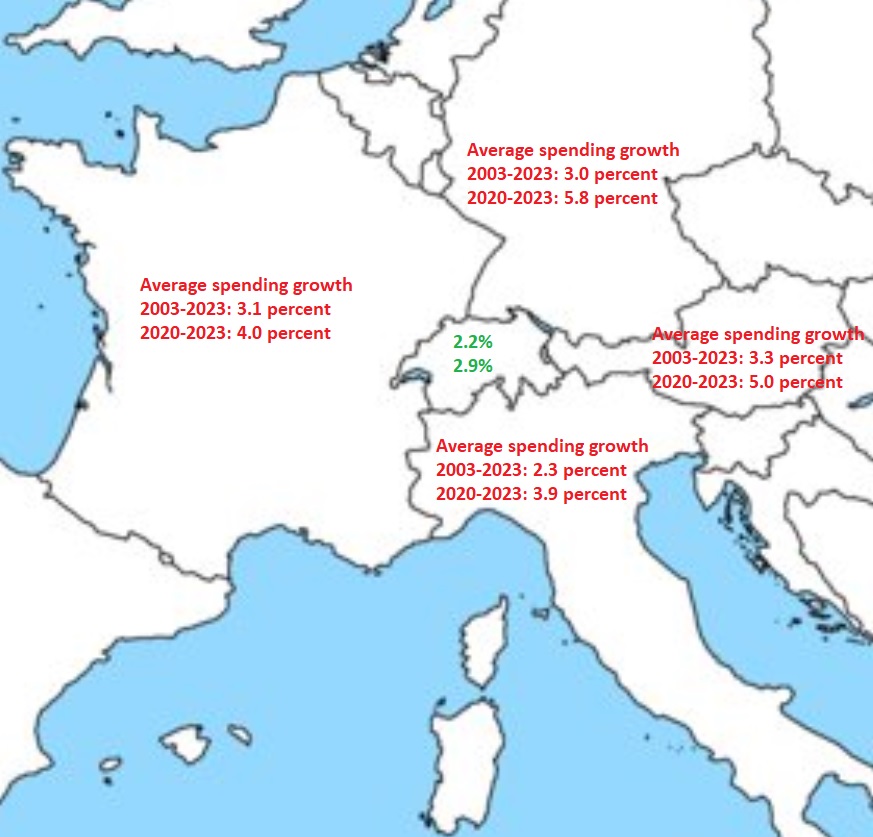
A cap is imposed on spending based on expected revenue, and revenue is projected based on long-term trends in the real growth of national income. Expenditures may exceed the cap in response to extraordinary events such as war, but if that’s the case, eventually, revenues from budget surpluses must be generated and set aside to offset this excess expenditure. We propose a debt brake for the U.S. that would initially be more stringent than the Swiss debt brake…a spending limit (read: cap) be calculated each year, and that the cap be reduced by 1 percent.

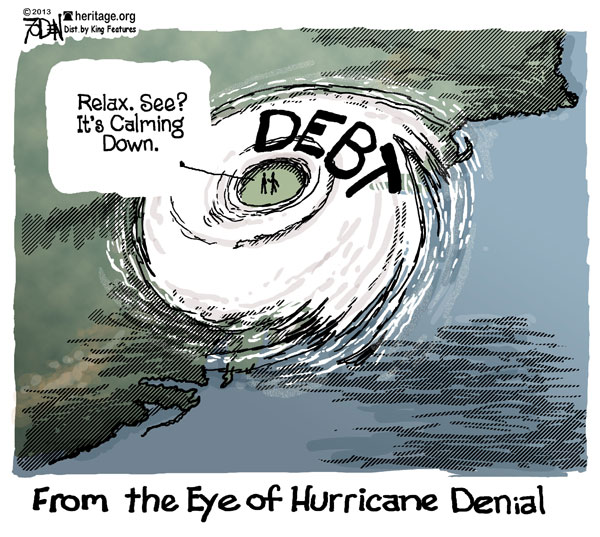
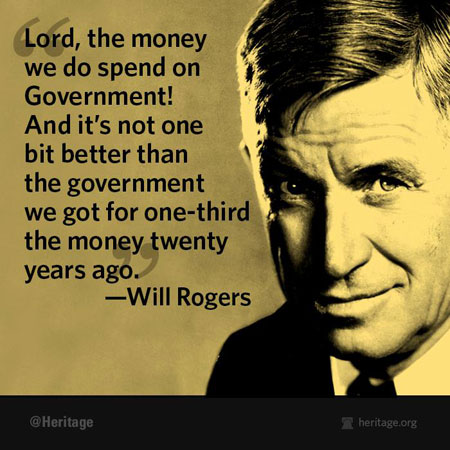
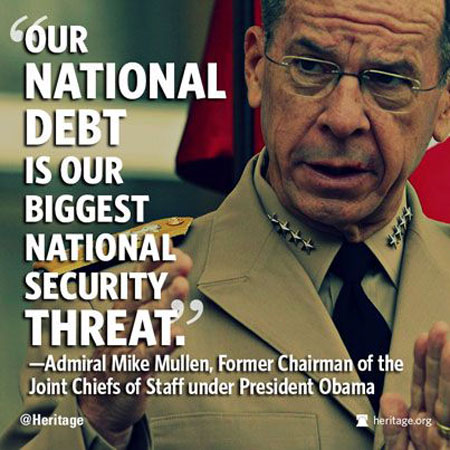



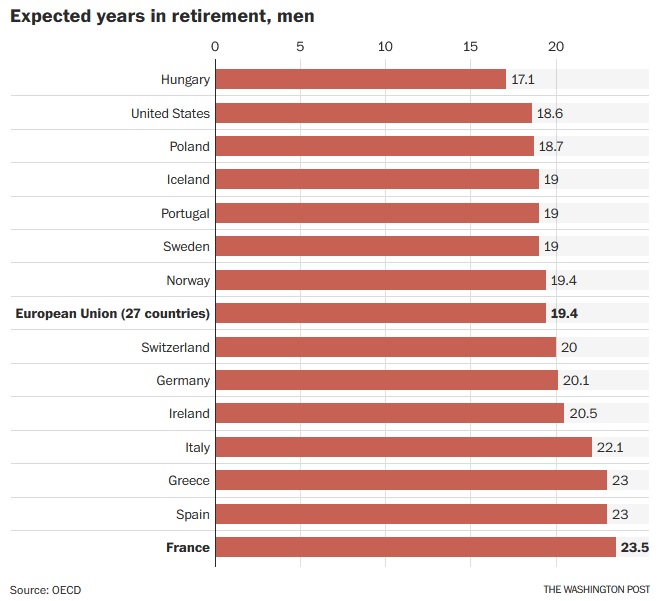

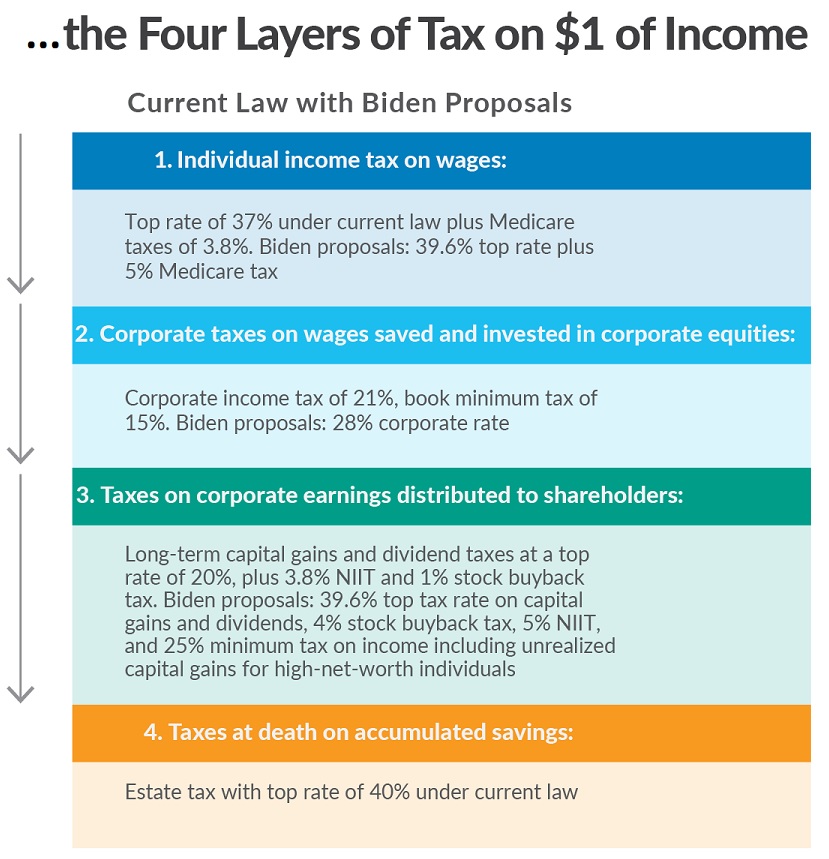
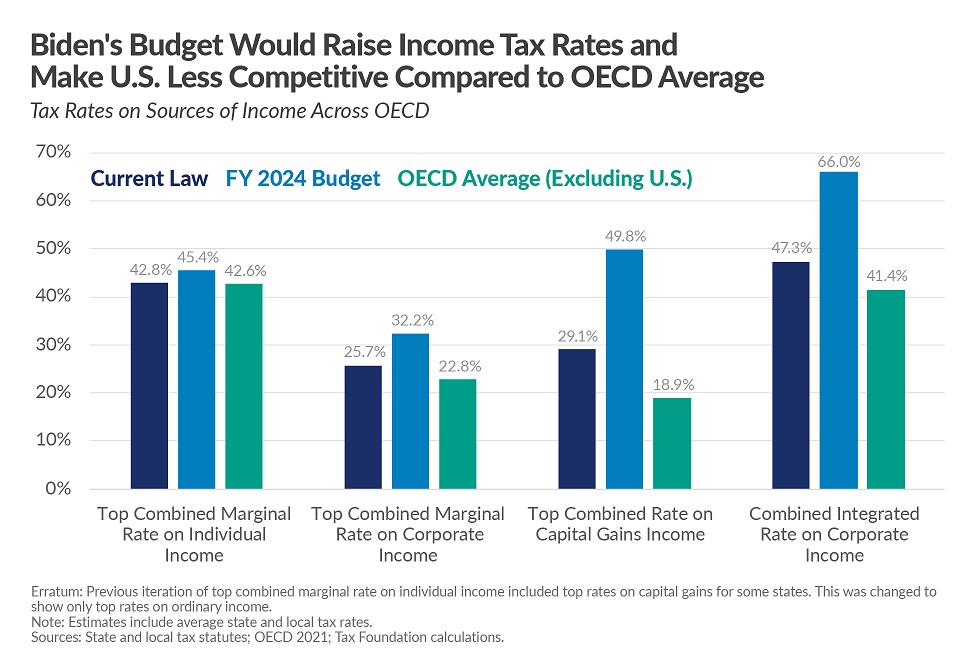


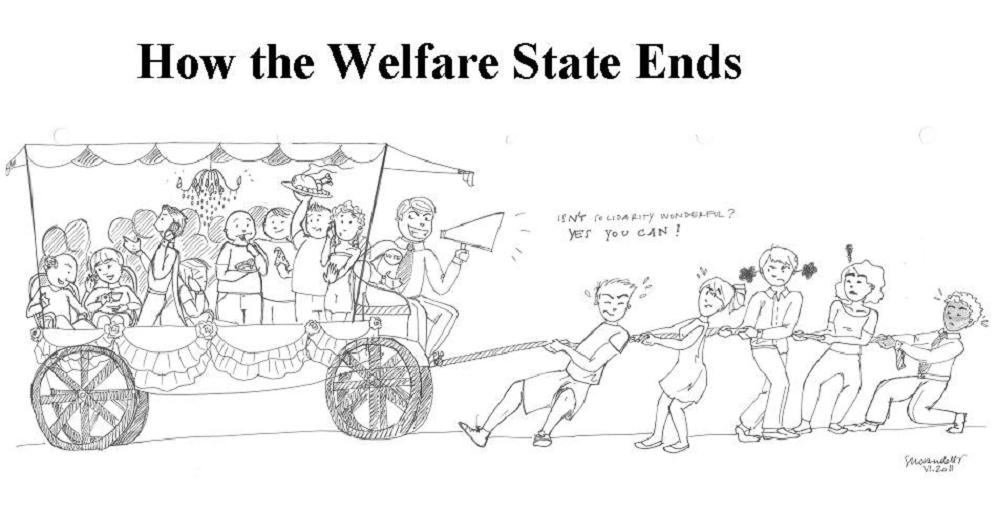



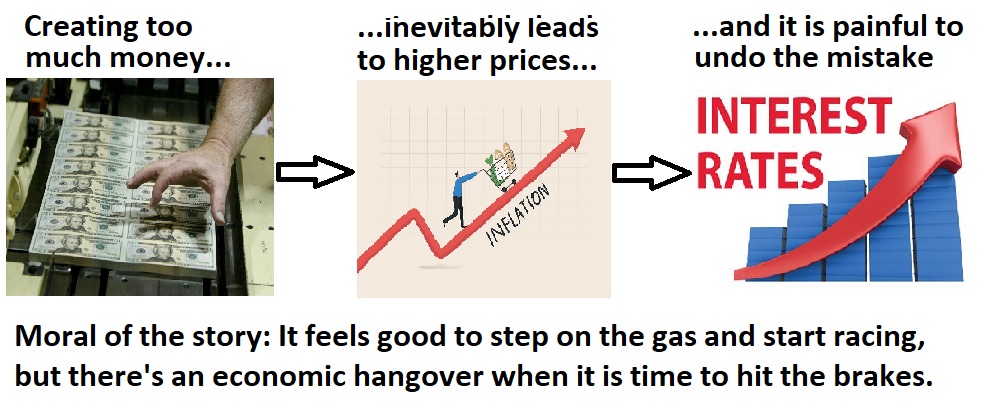

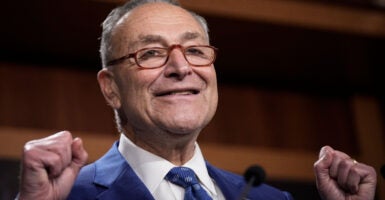


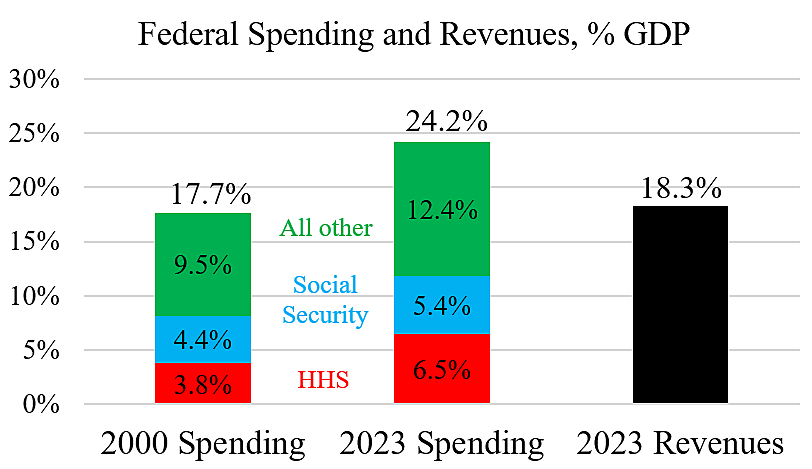
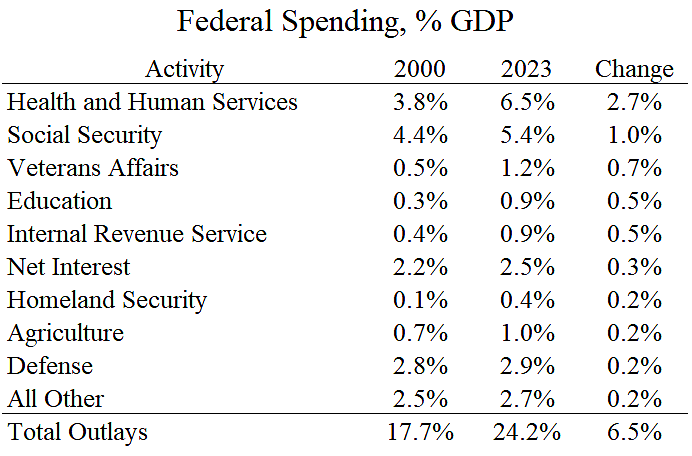
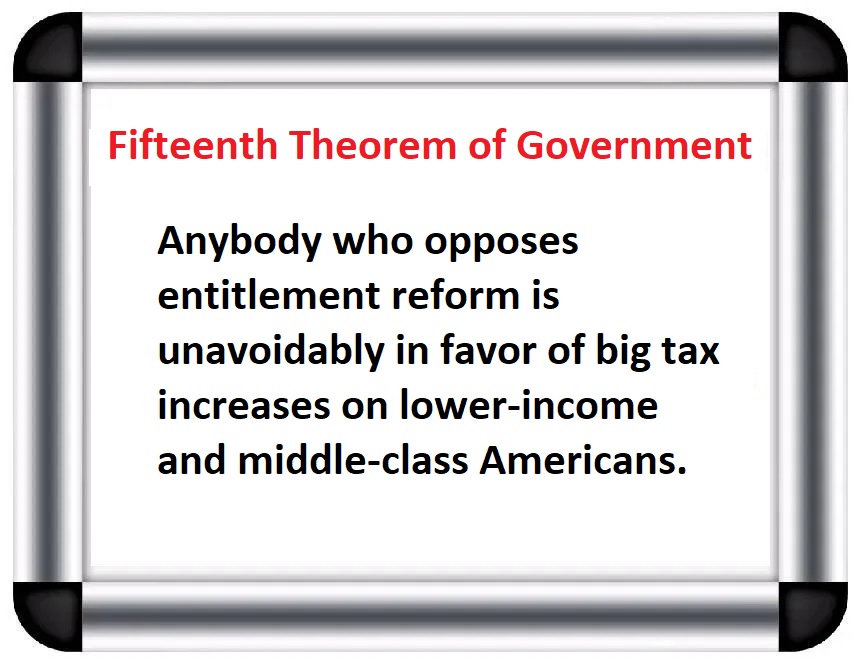
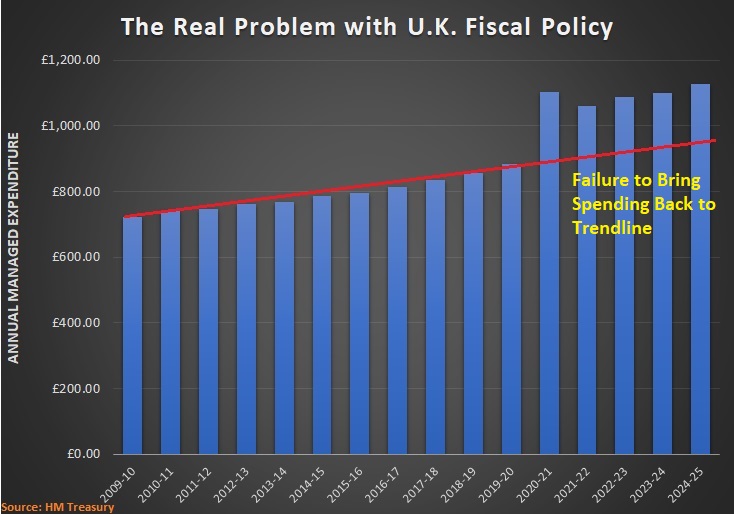

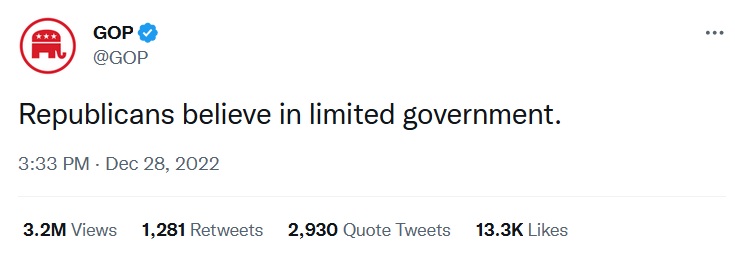

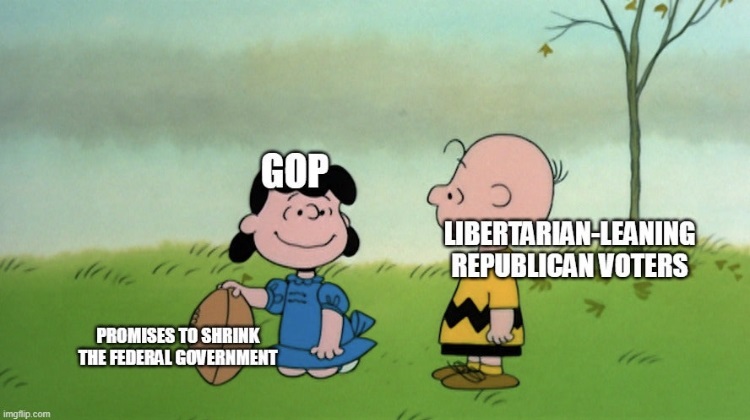
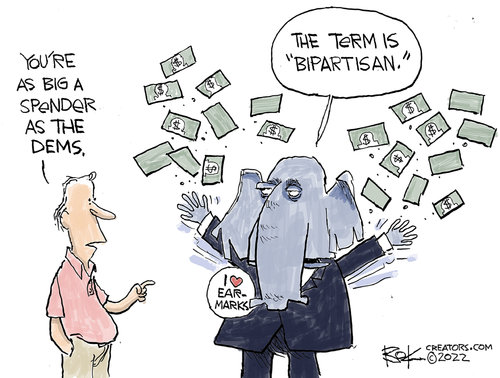












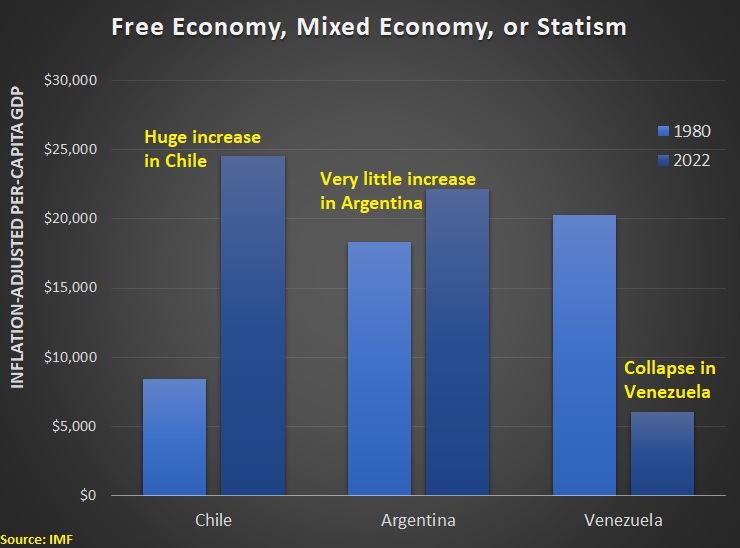


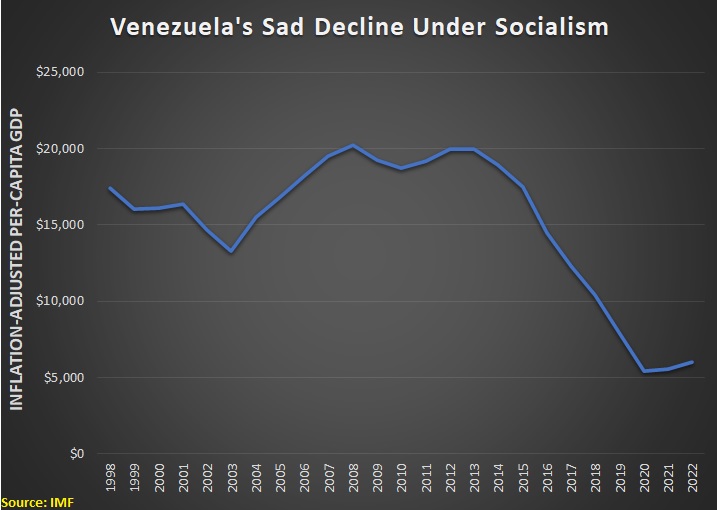

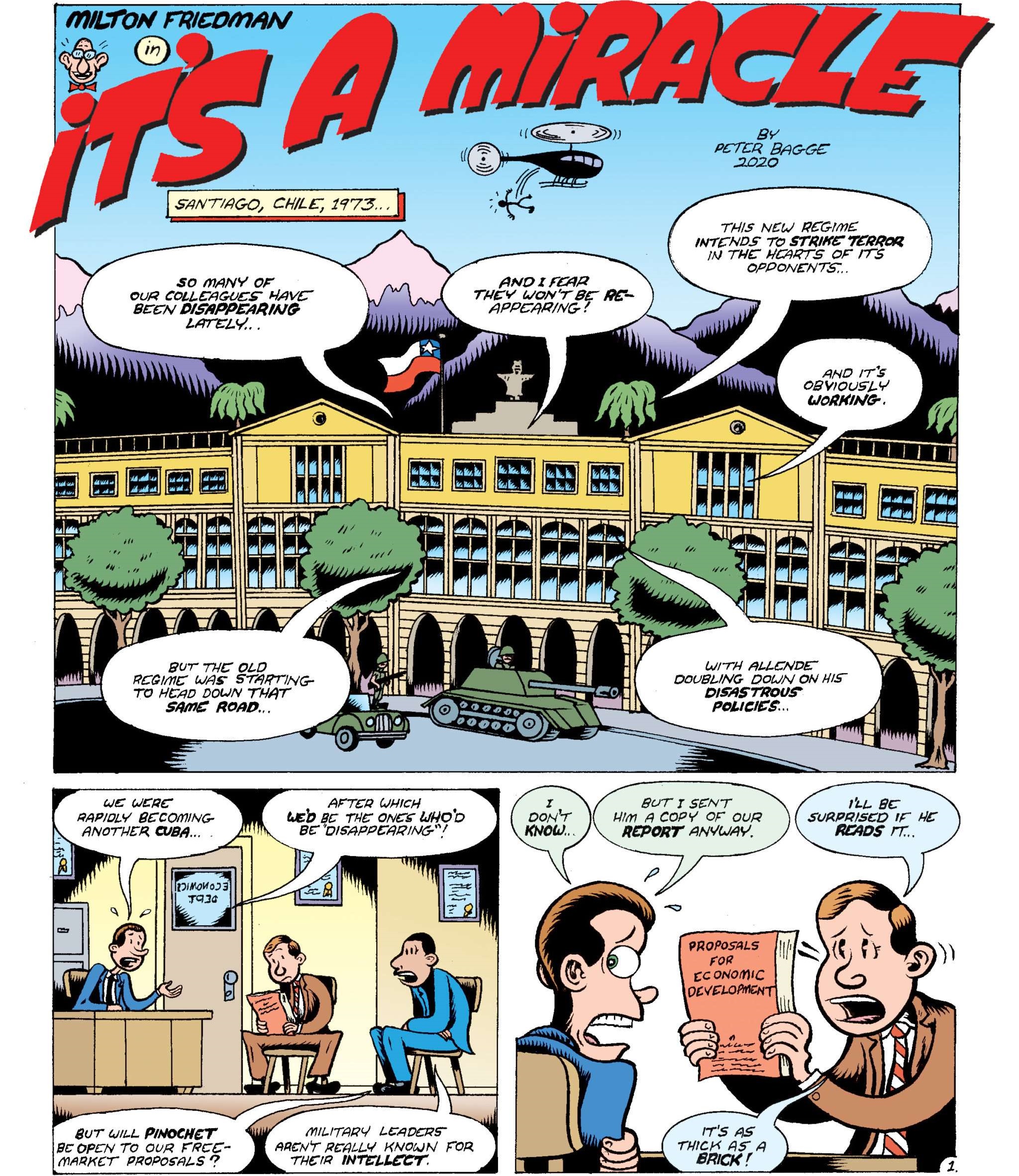
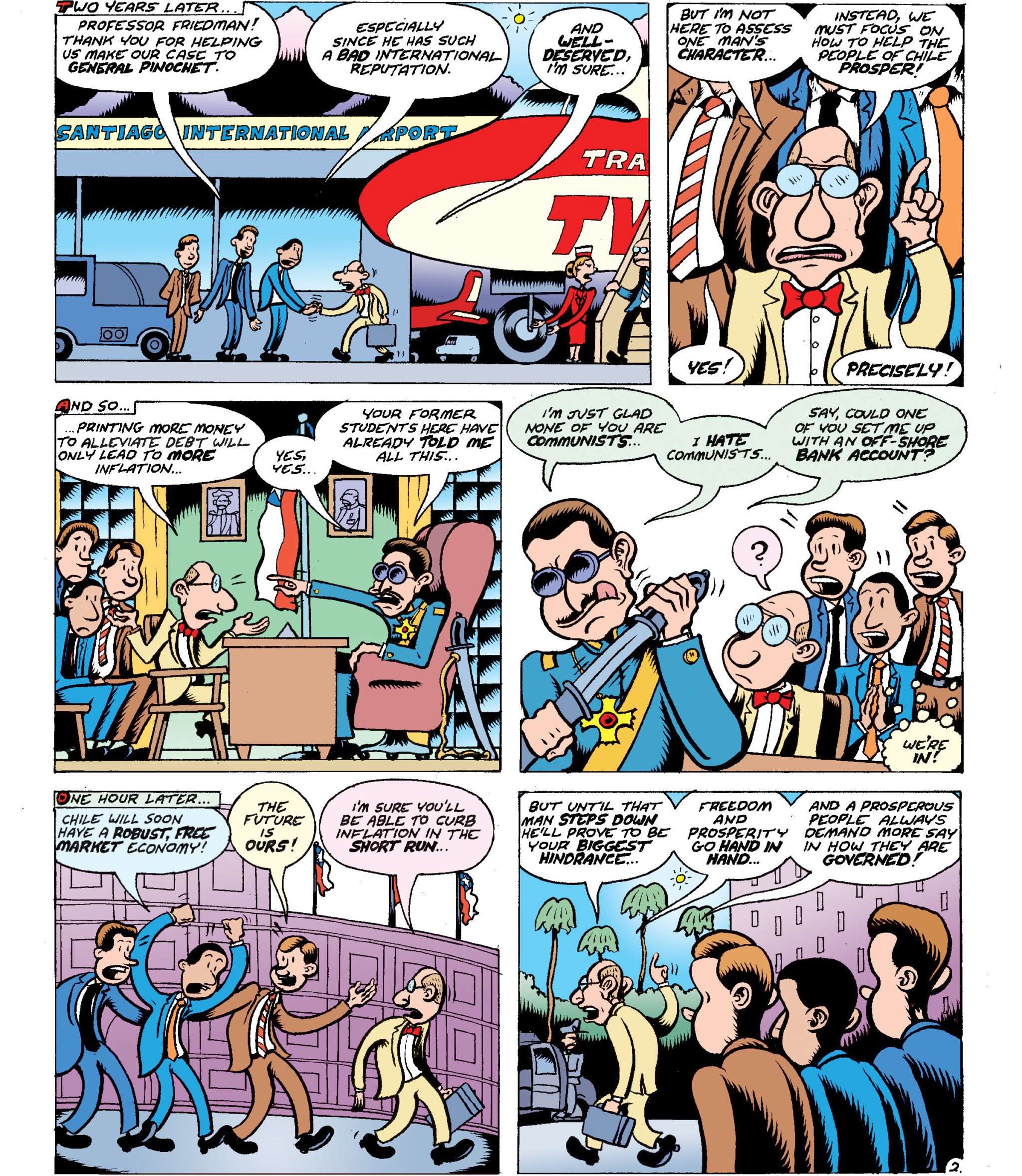
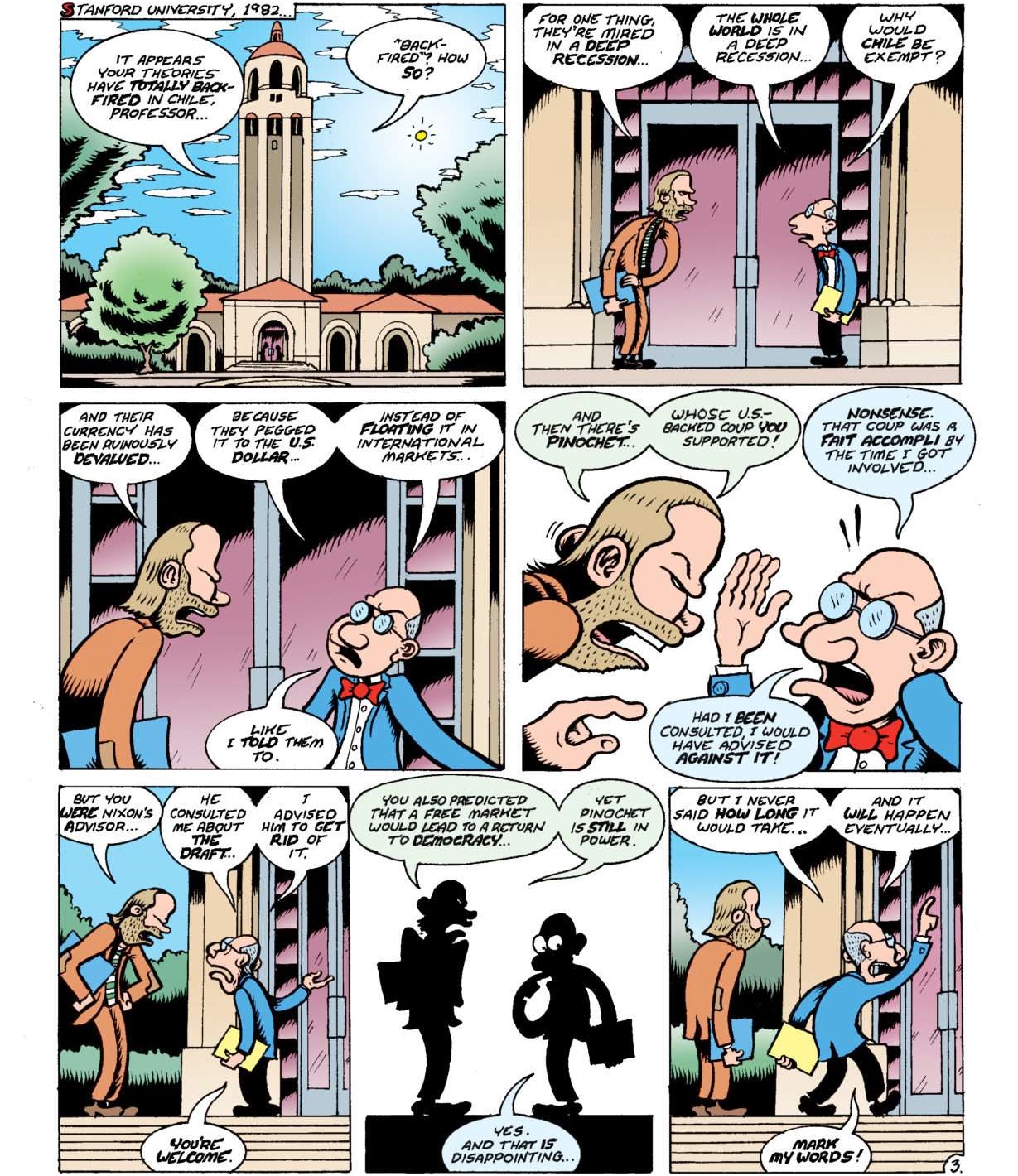
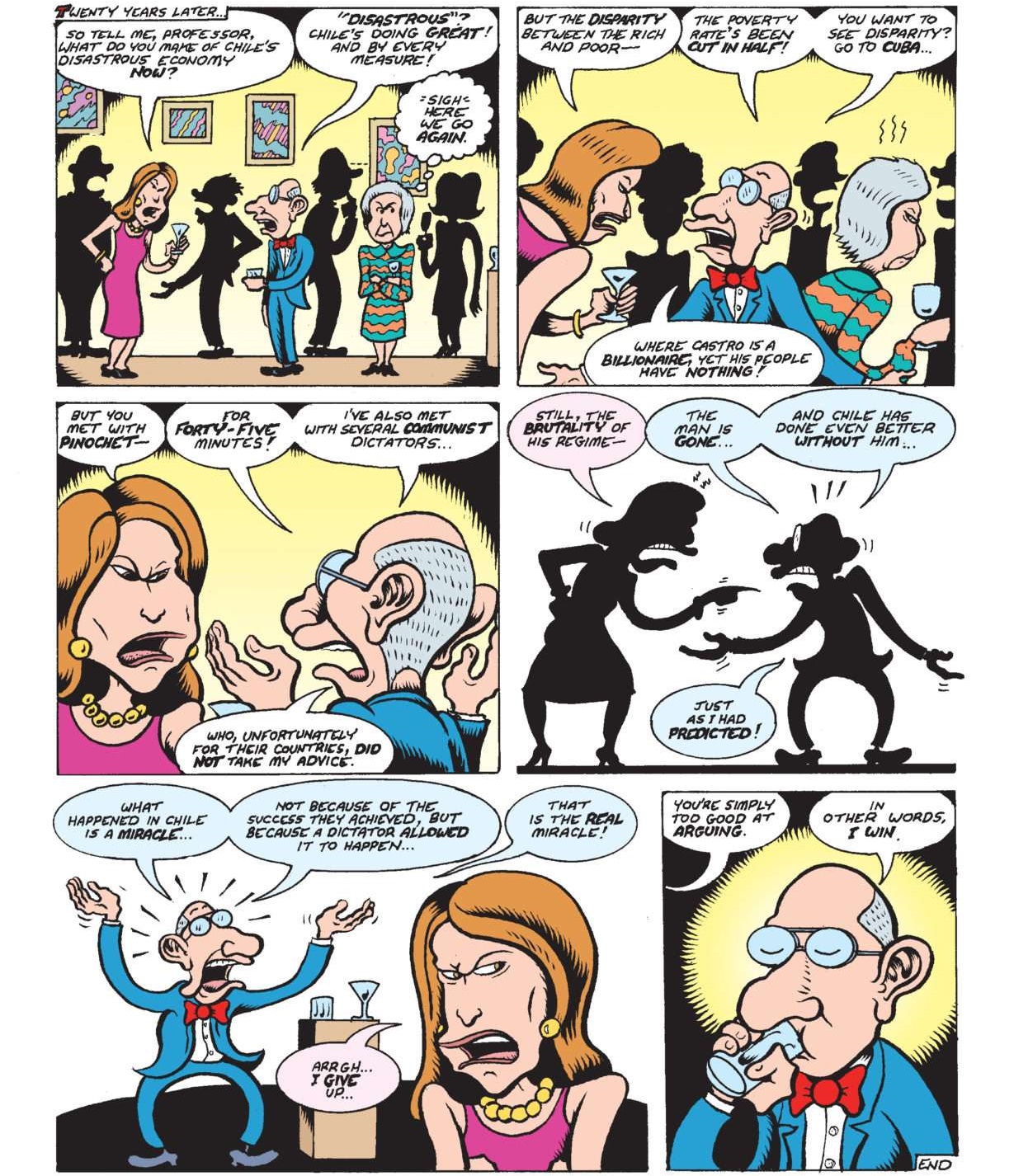


 The Daily Hatch
