Milton Friedman bragged on Hong Kong’s free economy in 1980 and Dan Mitchell does in 2016!!!
Milton Friedman PBS Free to Choose 1980 Vol 1 of 10 Power of the Market
Published on May 9, 2012
America’s freedom and prosperity derive from the combination of the idea of human liberty in America’s Declaration of Independence with the idea of economic freedom in Adam Smith’s Wealth of Nations. Friedman explains how markets and voluntary exchange organize activity and enable people to improve their lives. He also explains the price system. Friedman visits Hong Kong, U.S. and Scotland.
Can you name, after all, another government in the world that brags about how little it spends on redistribution programs andhow few people are dependent on government?
And how many jurisdictions adopt private Social Security systems to help make sure the burden of government spending doesn’t climb above 20 percent of GDP?
Here is some additional evidence of Hong Kong’s sensible approach. Below is a slide from a presentation by Hong Kong government officials, quoting the current Financial Secretary and all his predecessors, covering both the period of Chinese sovereignty and British sovereignty. As you can see, the one constant theme is free markets and small government.
For additional background, let’s enjoy the insight of one of these men.
In a column for Reason, my Cato Institute colleague Marian Tupy reminisces on his meeting with John Cowperthwaite, one of the British-appointed economic advisers.
…a young Scottish civil servant named John Cowperthwaite arrived in the colony to oversee its economic development. Some 50 years later, I met Cowperthwaite in St Andrews, Scotland, where I was a student and he was enjoying his retirement. As he told me, “I came to Hong Kong and found the economy working just fine. So, I left it that way.” …Of all the policies that we discussed, one stands out in my mind. I asked him to name the one reform that he was most proud of. “I abolished the collection of statistics,” he replied. Cowperthwaite believed that statistics are dangerous, because they enable social engineers of all stripes to justify state intervention in the economy. At some point during our first conversation I managed to irk him by suggesting that he was chiefly known “for doing nothing.” In fact, he pointed out, keeping the British political busy-bodies from interfering in Hong Kong’s economic affairs took up a large portion of his time.
I especially like Cowperthwaite’s insight about the downside risk of letting governments collect a lot of data.
But let’s not get sidetracked. Economic freedom in Hong Kong is today’s topic. With that in mind, here’s a chart from Marian’s column. It shows that Hong Kong used to be much poorer than the United Kingdom. But after decades of faster growth (thanks to good policy), Hong Kong is now more prosperous than its former colonial master.
In other words, Hong Kong didn’t just converge with one of the world’s richest countries, which by itself would be a remarkable and unusual achievement. It actually became richer.
This is tremendous evidence on the benefits of good policy and the importance of strong, long-run growth.
Let’s close by looking at this issue of growth and development. Here’s a video from Marginal Revolution, narrated by Professor Alex Tabarrok of George Mason University. You should watch it from start to finish, but if you’re pressed for time, make sure to at least watch the first 2:10.
Puzzle of Growth: Rich Countries and Poor Countries
There are two things that are worth emphasizing from the video.
By the way, there are two sins of omission in the video. If you watch the whole thing, you’ll notice it mentions that strong economic performance is linked to therule of law, property rights, free trade, and sensible regulation.
But I’m nitpicking. Let’s close with another video from Marginal Revolution. You should once again watch the entire video, but for those in a rush, I adjusted the settings so it starts at the most important part.
Growth Rates Are Crucial
The video uses GDP data that is adjusted for both inflation and population, which is a very useful approach. But the key lesson, as Professor Tabarrok explained, is that even small sustained changes in growth have enormous implications for long-run prosperity.
Indeed, that’s why Hong Kong is now richer than the United Kingdom. And it’s also worth noting that Hong Kong (and Singapore) are passing the United States.
________ Milton Friedman – Iceland 1 of 8 Friedman visited Iceland in the autumn of 1984, met with prominent Icelanders and gave a lecture at the University of Iceland on the Tyranny of the Status Quo. He participated in a lively television debate on August 31, 1984 with leading socialist intellectuals, including current President Ólafur […]
Volume 1: Power of the Market Volume 2: The Tyranny of Control Volume 3: Anatomy of a Crisis Volume 4: From Cradle to Grave Volume 5: Created Equal Volume 6: What’s Wrong With Our Schools? Volume 7: Who Protects the Consumer? Volume 8: Who Protects the Worker? Volume 9: How to Cure Inflation Volume 10: […]
How to Cure Health Care: What We Can Learn from Milton Friedman 2 years ago Kurt Jaros Blog Economics 3 I recently read about Michael Ciampi, a doctor from Maine who has stopped accepting payments from insurance companies, both private and public. The article states: …the decision to do away with insurance allows Ciampi to […]
Best quote from the speech below: However, the point that impresses me now and that I want to emphasize is that the problem is not only for them but for us. They have as much to teach us as we have to teach them. What was their problem under communism? Too big, too intrusive, too […]
Milton Friedman – Public Schools / Voucher System Published on May 9, 2012 by BasicEconomics No description available. Milton Friedman – Public Schools / Voucher System (Q&A) Part 1 Milton Friedman: Why soaking the rich won’t work (Do the rich hoard their money? What are they investing in?) Uploaded by voogru on Apr 10, 2010 […]
Milton Friedman – Health Care Reform (1992) pt 1/4 Milton Friedman – Health Care Reform (1992) pt 2/4 A Way Out of Soviet-Style Health Care Solzhenitsyn’s prophetic warning about the depersonalization of medicine. By MILTON FRIEDMAN Updated March 20, 2010 12:01 a.m. ET Editor’s note: The following is excerpted from an article with the same […]
and you will hear what far smarter people than I have to say on this matter. I agree with them.
Harry Kroto
I have attempted to respond to all of Dr. Kroto’s friends arguments and I have posted my responses one per week for over a year now. Here are some of my earlier posts:
John Sulston was educated at York House School, Redheath, Merchant Taylors’ School, Northwood and Pembroke College, Cambridge, graduating with BS in organic chemistry. He earned his doctorate from the University of Cambridge. Inspired by Leslie Orgel, Francis Crick and Sidney Brenner while working at the Salk Institute for Biological Studies in US, he changed his research into biology. His works on the genome of C. elegans led to his active participation in the Human Genome Project. He, with Georgina Ferry, narrates his research career leading to the human genome sequence in The Common Thread: A Story of Science, Politics, Ethics, and the Human Genome (2002).[15]
John Sulston was born in Cambridge[16][17][18] to parents Theodore Sulston and Muriel Sulston.[19] His father was an Anglican priest and administrator of the Society for the Propagation of the Gospel. An English teacher at Watford Grammar School, his mother quit her job to care for him and his sister Madeleine.[20] His mother home-tutored them until he was five. At age five he entered the local preparatory school where he soon developed aversion to games. He instead developed an early interest in science, having fun with dissecting animals and sectioning plants to observe their structure and function.[21] He won scholarship to Merchant Taylors’ School, Northwood[1] and then to Pembroke College, Cambridge graduating in 1963 with BS in organic chemistry. He joined the department of chemistry in University of Cambridge, earning his Doctor of Philosophy in 1966[22] for research in nucleotide chemistry. Between 1966 and 1969 he worked as a postdoctoral researcher at the Salk Institute for Biological Studies in US.[19] His supervisor Colin Reese had arranged for him to work with Leslie Orgel, who would turn his scientific career in a different pathway. Orgel introduced him to Francis Crick and Sidney Brenner, who were themselves from Cambridge. He became inclined to biological research.[20]
Although Orgel wanted Sulston to remain with him, Sidney Brenner persuaded Sulston returned to Cambridge to work on the neurobiology of Caenorhabditis elegans at the Medical Research CouncilLaboratory of Molecular Biology. Sulston soon produced the complete map of the worm’s neurons.[23] He continued to work for its DNA and subsequently the whole genome sequencing. In collaboration with the Genome Institute at Washington University the whole genome sequence was published in 1998,[24] so that C. elegans became the first animal to have its complete genome sequenced.[25]
Sulston played a central role in both the C. elegans[3] and human genome[26] sequencing projects. He had argued successfully for the sequencing of C. elegans to show that large-scale genome sequencing projects were feasible. As sequencing of the worm genome proceeded, the project to sequence the human genome began. At this point he was made director of the newly established Sanger Centre (named after Fred Sanger and now the Wellcome TrustSanger Institute), located in Cambridgeshire, England.
Following completion of the ‘working draft’ of the human genome sequence in 2000, Sulston retired from his role as director at the Sanger Centre. In 2002 he won the Dan David Prize and the Robert Burns Humanitarian Award. Later, he shared the Nobel Prize in Physiology or Medicine with Sydney Brenner and H. Robert Horvitz, both of whom he had collaborated with at the MRC Laboratory of Molecular Biology (LMB), for their discoveries concerning ‘genetic regulation of organ development and programmed cell death’. One of Sulston’s most important contributions during his research years at the LMB was to elucidate the precise order in which cells in C. elegansdivide. In fact, he and his team succeeded in tracing the nematode‘s entire embryonic cell lineage. Sulston is now a leading campaigner against the patenting of human genetic information.
In the second video below in the 61th clip in this series are his words and my response is below them.
50 Renowned Academics Speaking About God (Part 1)
Another 50 Renowned Academics Speaking About God (Part 2)
A Further 50 Renowned Academics Speaking About God (Part 3)
Bertrand Russell below
Interview of Sir John Sulston – part one
Uploaded on Jun 24, 2010
An Interview on the life and work of Sir John Sulston, Nobel Prize winner, who organized the team which sequenced the human genome for the first time. For a higher quality, downloadable, version, with a detailed summary please see http://www.alanmacfarlane.com
Interview of Sir John Sulston – part two
Uploaded on Jun 24, 2010
An Interview on the life and work of Sir John Sulston, Nobel Prize winner, who organized the team which sequenced the human genome for the first time. For a higher quality, downloadable, version, with a detailed summary please see http://www.alanmacfarlane.com
_________
QUOTE
I see that we have enormous amounts to discover as a strategy for going forward as human beings; I believe atheism makes coherent sense; all the religions are in conflict with each other; they have different stories, based on insubstantial records, but justify them with saying that there was some direct communication with a deity in the past which has led them to this belief; I find those unconvincing, particularly because of the conflict; this was my main argument in discussions with my father and he found it hard to answer that.
Simply put there is a simple explanation for why there are so many religions and it is because God has put inside everyone a knowledge of his existence. I go into this further in this letter below:
April 9, 2016
Professor John Sulston, Chair of the Institute for Science, Ethics and Innovation (iSEI)c/o The University of Manchester,
United Kingdom
Dear Dr Sulston,
I was fascinated with your interview by Alan Macfarlane. I have corresponded with Macfarlane before and I told him how much I have enjoyed his series of You Tube extensive interviews. Thank you for taking part in one of those. I wanted to quote you from one of those interviews below and then respond to what you have said.
I see that we have enormous amounts to discover as a strategy for going forward as human beings; I believe atheism makes coherent sense; all the religions are in conflict with each other; they have different stories, based on insubstantial records, but justify them with saying that there was some direct communication with a deity in the past which has led them to this belief; I find those unconvincing, particularly because of the conflict; this was my main argument in discussions with my father and he found it hard to answer that….
My mother was my confidant and my rock as I was growing up; I could come home from school and talk; she had been a teacher of English at Watford Grammar School for Girls; throughout the time I was losing my links with my father over religion, my mother was always the neutral party; although she clearly was a believer and strongly supported my father she never indicated to me that she thought I was going off the rails as he did; she was the go-between; the most extraordinary event was that after her death, among her possessions was a letter to me saying how sad she was that I had lost my faith and her hope that one day I would regain it; it shocked me, it was a second bereavement, as here was this person who I had thought of as being at the unbelieving end of Anglicanism, and I had disappointed her…
The music in my life now comes from Daphne, my wife, who is quite a good pianist and plays the clarinet; my parents did listen to classical music and I listened to Radio Luxemburg,
Let me start responded by making a few quick observations:
First, there is a simple reason why there are so many people who believe in God and it is because according to Romans 1 there is no such thing as a true atheist because everyone knows in their heart that God exists and a lie-detector test can demonstrate this. I have included below comments from 7 scholars involved with The Committee for the Scientific Investigation of Claims of the Paranormal (CSICOP). All of these individuals took time to correspond with me concerning the evidence I presented to them.
Actually I had the opportunity to correspond with Antony Flew (member of CSICOP) several times. I have more articles posted on my blog about the last few years of Antony Flew’s life than any other website in the world probably. The reason is very simple. I had the opportunity to correspond with Antony Flew back in the middle 90’s and he said that he had the opportunity to listen to several of the cassette tapes that I sent him with messages from Adrian Rogers and he also responded to several of the points I put in my letters that I got from Francis Schaeffer’s materials. The ironic thing was that I purchased the sermon IS THE BIBLE TRUE? originally from the Bellevue Baptist Church Bookstore in 1992 and in the same bookstore in 2008 I bought the book THERE IS A GOD by Antony Flew.Back in 1993 I decided to contact some of the top secular thinkers of our time and I got my initial list of individuals from those scholars that were mentioned in the works of both Francis Schaeffer and Adrian Rogers. Schaeffer had quoted Flew in his book ESCAPE FROM REASON. It was my opinion after reviewing the evidence that Antony Flew was the most influential atheistic philosopher of the 20th century.
Dr. Sulston I thought of you when I thought back to my correspondence with Dr. Flew because Dr. Flew said that listening to the sermons I sent him reminded him of his father’s sermons. YOU ALSO HAD A FATHER THAT WAS A PREACHER. THEREFORE, I AM ENCLOSING A CD OF SOME OF THE SAME SERMONS THAT I SENT TO ANTONY FLEW.
Second, it is obvious that you like Charles Darwin lost your faith over time and it was quite difficult for you and your close family members during this process. Let me take your mother’s side in this regard and when I read your comments above about her it prompted me to write you today.
Third, since you are a lover of fine music I thought you would be interested to know what happened to Charles Darwin in the last few years of his life. Did you know that he blamed the lost of appreciation of music and poetry he attributed to his theory of evolution?
Now let us take a look at this first issue. I have a good friend who is a street preacher who preaches on the Santa Monica Promenade in California and during the Q/A sessions he does have lots of atheists that enjoy their time at the mic. When this happens he always quotes Romans 1:18-19 (Amplified Bible) ” For God’s wrath and indignation are revealed from heaven against all ungodliness and unrighteousness of men, who in their wickedness REPRESSandHINDER the truth and make it inoperative. For that which is KNOWN about God is EVIDENT to them andMADE PLAIN IN THEIR INNER CONSCIOUSNESS, because God has SHOWN IT TO THEM,”(emphasis mine). Then he tells the atheist that the atheist already knows that God exists but he has been suppressing that knowledge in unrighteousness. This usually infuriates the atheist.
My friend draws some large crowds at times and was thinking about setting up a lie detector test and see if atheists actually secretly believe in God. He discussed this project with me since he knew that I had done a lot of research on the idea about 20 years ago.
Nelson Price in THE EMMANUEL FACTOR (1987) tells the story about Brown Trucking Company in Georgia who used to give polygraph tests to their job applicants. However, in part of the test the operator asked, “Do you believe in God?” In every instance when a professing atheist answered “No,” the test showed the person to be lying. My pastor Adrian Rogers used to tell this same story to illustrate Romans 1:19 and it was his conclusion that “there is no such thing anywhere on earth as a true atheist. If a man says he doesn’t believe in God, then he is lying. God has put his moral consciousness into every man’s heart, and a man has to try to kick his conscience to death to say he doesn’t believe in God.”
It is true that polygraph tests for use in hiring were banned by Congress in 1988. Mr and Mrs Claude Brown on Aug 25, 1994 wrote me a letter confirming that over 15,000 applicants previous to 1988 had taken the polygraph test and EVERYTIME SOMEONE SAID THEY DID NOT BELIEVE IN GOD, THE MACHINE SAID THEY WERE LYING.
It had been difficult to catch up to the Browns. I had heard about them from Dr. Rogers’ sermon but I did not have enough information to locate them. Dr. Rogers referred me to Dr. Nelson Price and Dr. Price’s office told me that Claude Brown lived in Atlanta. After writing letters to all 9 of the entries for Claude Brown in the Atlanta telephone book, I finally got in touch with the Browns.
Adrian Rogers also pointed out that the Bible does not recognize the theoretical atheist. Psalms 14:1: The fool has said in his heart, “There is no God.” Dr Rogers notes, “The fool is treating God like he would treat food he did not desire in a cafeteria line. ‘No broccoli for me!’ ” In other words, the fool just doesn’t want God in his life and is a practical atheist, but not a theoretical atheist. Charles Ryrie in the The Ryrie Study Bible came to the same conclusion on this verse.
Pastor Nelson Price pictured below
Adrian Rogers (1931-2005) pictured below
Here are the conclusions of the experts I wrote in the secular world concerning the lie detector test and it’s ability to get at the truth:
Professor Frank Horvath of the School of Criminal Justice at Michigan State University has testified before Congress concerning the validity of the polygraph machine. He has stated on numerous occasions that “the evidence from those who have actually been affected by polygraph testing in the workplace is quite contrary to what has been expressed by critics. I give this evidence greater weight than I give to the most of the comments of critics” (letter to me dated October 6, 1994).
There was no better organization suited to investigate this claim concerning the lie detector test than the Committee for the Scientific Investigation of Claims of the Paranormal (CSICOP). This organization changed their name to the Committe for Skeptical Inquiry in 2006. This organization includes anyone who wants to help debunk the whole ever-expanding gamut of misleading, outlandish, and fraudulent claims made in the name of science. I AM WRITING YOU TODAY BECAUSE YOU ARE ASSOCIATED WITH CSICOP.
I read The Skeptical Review(publication of CSICOP) for several years during the 90’s and I would write letters to these scientists about taking this project on and putting it to the test. Below are some of their responses (15 to 20 years old now):
1st Observation: Religious culture of USA could have influenced polygraph test results. ANTONY FLEW (formerly of Reading University in England, now deceased, in a letter to me dated 8-11-96) noted, “For all the evidence so far available seems to be of people from a culture in which people are either directly brought up to believe in the existence of God or at least are strongly even if only unconsciously influenced by those who do. Even if everyone from such a culture revealed unconscious belief, it would not really begin to show that — as Descartes maintained— the idea of God is so to speak the Creator’s trademark, stamped on human souls by their Creator at their creation.”
2nd Observation: Polygraph Machines do not work.JOHN R. COLE,anthropologist, editor, National Center for Science Education, Dr. WOLF RODER, professor of Geography, University of Cincinnati, Dr. SUSAN BLACKMORE,Dept of Psychology, University of the West of England, Dr. CHRISTOPHER C. FRENCH, Psychology Dept, Goldsmith’s College, University of London, Dr.WALTER F. ROWE, The George Washington University, Dept of Forensic Sciences, Graduate School of Arts and Sciences.
3rd Observation: The sample size probably was not large enough to apply statistical inference. (These gentlemen made the following assertion before I received the letter back from Claude Brown that revealed that the sample size was over 15,000.) JOHN GEOHEGAN, Chairman of New Mexicans for Science and Reason, Dr. WOLF RODER, and Dr WALTER F. ROWE (in a letter dated July 12, 1994) stated, “The polygraph operator for Brown Trucking Company has probably examined only a few hundred or a few thousand job applicants. I would surmise that only a very small number of these were actually atheists. It seems a statistically insignificant (and distinctly nonrandom) sampling of the 5 billion human beings currently inhabiting the earth. Dr. Nelson Price also seems to be impugning the integrity of anyone who claims to be an atheist in a rather underhanded fashion.”
4th Observation: The question (Do you believe in God?) was out of place and it surprised the applicants. THOMAS GILOVICH, psychologist, Cornell Univ., Dr. ZEN FAULKES, professor of Biology, University of Victoria (Canada), ROBERT CRAIG, Head of Indiana Skeptics Organization, Dr. WALTER ROWE,
5th Observation: Proof that everyone believes in God’s existence does not prove that God does in fact exist. PAUL QUINCEY, Nathional Physical Laboratory,(England), Dr. CLAUDIO BENSKI, Schneider Electric, CFEPP, (France),
6th Observation: Both the courts and Congress recognize that lie-detectors don’t work and that is why they were banned in 1988. (Governments and the military still use them.)
Dr WALTER ROWE, KATHLEEN M. DILLION, professor of Psychology, Western New England College.
7th Observation:This information concerning Claude Brown’s claim has been passed on to us via a tv preacher and eveybody knows that they are untrustworthy– look at their history. WOLF RODER.
I had the joy of corresponding with Antony Flew (pictured below) several times in the 1990’s
SUSAN BLACKMORE pictured below
THOMAS GILOVICH pictured below
Dr. CHRISTOPHER C. FRENCH, University of London, pictured below
PAUL QUINCEY, Nathional Physical Laboratory pictured below
______________
Solomon wisely noted in Ecclesiastes 3:11 “God has planted eternity in the heart of men…” (Living Bible). No wonder Bertrand Russell wrote in his autobiography, “It is odd, isn’t it? I feel passionately for this world and many things and people in it, and yet…what is it all? There must be something more important, one feels, though I don’t believe there is. I am haunted. Some ghosts, for some extra mundane regions, seem always trying to tell me something that I am to repeat to the world, but I cannot understand that message.”
Gene Emery, science writer for Providence Journal-Bulletin is a past winner of the CSICOP “Responsibility in Journalism Award” and he had the best suggestion of all when he suggested, “Actually, if you want to make a good case about whether Romans 1:19 is true, arrange to have a polygraph operator (preferably an atheist or agnostic) brought to the next CSICOP meeting. (I’m not a member of CSICOP, by the way, so I can’t give you an official invitation or anything.) If none of the folks at that meeting can convince the machine that they truly believe in God, maybe there is, in fact, an innate willingness to believe in God.”
DO YOU HAVE ANY REACTIONS TO ADD TO THESE 7 OBSERVATIONS THAT I GOT 15 YEARS AGO?
Francis Schaeffer (1912-1984) pictured below
__
Just like Darwin you lost your faith not overnight but it was over time. Also your love of music made me think of you when I read the book Charles Darwin: his life told in an autobiographical chapter, and in a selected series of his published lettersbecause of what Darwin said about science causing him to lose hisaesthetic tastes. I am going to quote some of Charles Darwin’s own words and then include the comments of Francis Schaeffer on those words. I have also enclosed a CD with two messages from Adrian Rogers and Bill Elliff concerning Darwinism.
“I have said that in one respect my mind has changed during the last twenty or thirty years. Up to the age of thirty, or beyond it, poetry of many kinds, such as the works of Milton, Gray, Byron, Wordsworth, Coleridge, and Shelley, gave me great pleasure, and even as a schoolboy I took intense delight in Shakespeare, especially in the historical plays. I have also said that formerly pictures gave me considerable, and music very great delight. But now for many years I cannot endure to read a line of poetry: I have tried lately to read Shakespeare, and found it so intolerably dull that it nauseated me. I have also almost lost my taste for pictures or music. Music generally sets me thinking too energetically on what I have been at work on, instead of giving me pleasure. I retain some taste for fine scenery, but it does not cause me the exquisite delight which it formerly did….My mind seems to have become a kind of machine for grinding general laws out of large collections of facts, but why this should have caused the atrophy of that part of the brain alone, on which the higher tastes depend, I cannot conceive….The loss of these tastes is a loss of happiness, and may possibly be injurious to the intellect, and more probably to the moral character, by enfeebling the emotional part of our nature.”
Francis Schaeffer commented:
This is the old man Darwin writing at the end of his life. What he is saying here is the further he has gone on with his studies the more he has seen himself reduced to a machine as far as aesthetic things are concerned. I think this is crucial because as we go through this we find that his struggles and my sincere conviction is that he never came to the logical conclusion of his own position, but he nevertheless in the death of the higher qualities as he calls them, art, music, poetry, and so on, what he had happen to him was his own theory was producing this in his own self just as his theories a hundred years later have produced this in our culture.
“I may state that my judgment often fluctuates . . . In my most extreme fluctuations I have never been an Atheist in the sense of denying the existence of a God. I think that generally (and more and more as I grow older), but not always, that an Agnostic would be the more correct description of my state of mind.”
Francis Schaeffer asserted:
What we find now is that he comes to the place in being agnostic, but as we read through this section on religion what we find is in reality his reason leads him against this position, which is interesting but his theory makes him accept the position of agnosticism….. I think what you have in Darwin is a magnificent example, although a sad one of what I lecture on in apologetics, and that is if a man takes a set of nonchristian presuppositions he is forced eventually to be in a place of tension. The more consistent he is with his own nonchristian presuppositions the more he is away from the real world. When he is closer to the real world then he is more illogical to his own presuppositions.
“But I may say that the impossibility of conceiving that this grand and wondrous universe, with our conscious selves, arose through chance, seems to me the chief argument for the existence of God; but whether this is an argument of real value, I have never been able to decide.”
Francis Schaeffer observed:
So he sees here exactly the same that I would labor and what Paul gives in Romans chapter one, and that is first this tremendous universe [and it’s form] and the second thing, the mannishness of man and the concept of this arising from chance is very difficult for him to come to accept and he is forced to leap into this, his own kind of Kierkegaardian leap, but he is forced to leap into this because of his presuppositions but when in reality the real world troubles him. He sees there is no third alternative. If you do not have the existence of God then you only have chance. In my own lectures I am constantly pointing out there are only two possibilities, either a personal God or this concept of the impersonal plus time plus chance and Darwin understood this . You will notice that he divides it into the same exact two points that Paul does in Romans chapter one into and that Carl Gustav Jung (1875-1961) will in the problem of existence, the external universe, and man and his consciousness. Paul points out there are these two steps that man is confronted with…
______________
Here below is the Romans passage that Schaeffer is referring to and verse 19 refers to what Schaeffer calls “the mannishness of man” and verse 20 refers to Schaeffer’s other point which is “the universe and it’s form.”Romans 1:18-22Amplified Bible (AMP) 18 For God’s [holy] wrath and indignation are revealed from heaven against all ungodliness and unrighteousness of men, who in their wickedness repress and hinder the truth and make it inoperative. 19 For that which is known about God is evident to them and made plain in their inner consciousness, because God [Himself] has shown it to them. 20 For ever since the creation of the world His invisible nature and attributes, that is, His eternal power and divinity, have been made intelligible and clearly discernible in and through the things that have been made (His handiworks). So [men] are without excuse [altogether without any defense or justification], 21 Because when they knew and recognized Him as God, they did not honor andglorify Him as God or give Him thanks. But instead they became futile andgodless in their thinking [with vain imaginings, foolish reasoning, and stupid speculations] and their senseless minds were darkened. 22 Claiming to be wise, they became fools [professing to be smart, they made simpletons of themselves]
“Mr. Darwin…considers that the theory of Evolution is quite compatible with the belief in a God; but that you must remember that different persons have different definitions of what they mean by God.”
Francis Schaeffer commented:
You find a great confusion in his writings although there is a general structure in them. Here he says the word “God” is alright but you find later what he doesn’t take is a personal God. Of course, what you open is the whole modern linguistics concerning the word “God.” is God a pantheistic God? What kind of God is God? Darwin says there is nothing incompatible with the word “God.”
” Science has nothing to do with Christ, except in so far as the habit of scientific research makes a man cautious in admitting evidence. For myself, I do not believe that there ever has been any revelation.”
Francis Schaeffer observed:
So he has come to the place as an old man that he doesn’t believe there has been any revelation. In his younger years he held a different position.
So you find that as a younger man he did accept the Bible. As an older man he has given up revelation but he is not satisfied with his own answers. He is caught in the tension that modern man is caught in. He is a prefiguration of the modern man and he himself contributed to. Then Darwin goes on and tells us why he gave up the Bible.
I suppose it was the novelty of the argument that amused them. But I had gradually come by this time, i.e. 1836 to 1836, to see that the Old Testament was no more to be trusted than the sacred books of the Hindoos. The question then continually rose before my mind and would not be banished,—is it credible that if God were now to make a revelation to the Hindoos, he would permit it to be connected with the belief in Vishnu, Siva, &c., as Christianity is connected with the Old Testament? This appeared to me utterly incredible.
Francis Schaeffer asserted:
Darwin is saying that he gave up the New Testament because it was connected to the Old Testament. He gave up the Old Testament because it conflicted with his own theory. Did he have a real answer himself and the answer is no. At the end of his life we see that he is dehumanized by his position and on the other side we see that he never comes to the place of intellectual satisfaction for himself that his answers were sufficient.
“BUT I WAS VERY UNWILLING TO GIVE UP MY BELIEF; I feel sure of this, for I can well remember often and often inventing day-dreams of old letters between distinguished Romans, and manuscripts being discovered at Pompeii or elsewhere, which confirmed in the most striking manner all that was written in the Gospels.
Francis Schaeffer commented:
This is very sad. He lies on his bunk and the Beagle tosses and turns and he makes daydreams, and his dreams and hopes are that someone would find in Pompeii or some place like this, an old manuscript by a distinguished Roman that would put his stamp of authority on it, which would be able to show that Christ existed. This is undoubtedly what he is talking about. Darwin gave up this hope with great difficulty. I think he didn’t want to come to the position where his accepted presuppositions were driving him. He didn’t want to give it up, just as an older man he understood where it would lead…
“But I found it more and more difficult, with free scope given to my imagination, to invent evidence which would suffice to convince me. Thus disbelief crept over me at a very slow rate, but was at last complete. THE RATE WAS SLOW that I felt no distress. Although I did not think much about the existence of a personal God until a considerably later period of my life,”
Francis Schaeffer commented:
So there is something deficient in his position from the beginning. The word of God if it is going to mean something, must mean a personal God. The word “God” is without much meaning otherwise.
_________________
Francis Schaeffer noted that in Darwin’s 1876 Autobiography that Darwin he is going to set forth two arguments for God in this and again you will find when he comes to the end of this that he is in tremendous tension. Darwin wrote,
“At the present day the most usual argument for the existence of an intelligent God is drawn from the deep inward conviction and feelings which are experienced by most persons.Formerly I was led by feelings such as those just referred to (although I do not think that the religious sentiment was ever strongly developed in me), to the firm conviction of the existence of God and of the immortality of the soul. In my Journal I wrote that whilst standing in the midst of the grandeur of a Brazilian forest, ‘it is not possible to give an adequate idea of the higher feelings of wonder, admiration, and devotion which fill and elevate the mind.’ I well remember my conviction that there is more in man than the mere breath of his body; but now the grandest scenes would not cause any such convictions and feelings to rise in my mind. It may be truly said that I am like a man who has become COLOUR-BLIND.”
Francis Schaeffer remarked:
Now Darwin says when I look back and when I look at nature I came to the conclusion that man can not be just a fly! But now Darwin has moved from being a younger man to an older man and he has allowed his presuppositions to enter in to block his logic, these things at the end of his life he had no intellectual answer for. To block them out in favor of his theory. Remember the letter of his that said he had lost all aesthetic senses when he had got older and he had become a clod himself. Now interesting he says just the same thing, but not in relation to the arts, namely music, pictures, etc, but to nature itself. Darwin said, “But now the grandest scenes would not cause any such convictions and feelings to rise in my mind. It may be truly said that I am like a man who has become colour-blind…” So now you see that Darwin’s presuppositions have not only robbed him of the beauty of man’s creation in art, but now the universe. He can’t look at it now and see the beauty. The reason he can’t see the beauty is for a very, very , very simple reason: THE BEAUTY DRIVES HIM TO DISTRACTION. THIS IS WHERE MODERN MAN IS AND IT IS HELL. The art is hell because it reminds him of man and how great man is, and where does it fit in his system? It doesn’t. When he looks at nature and it’s beauty he is driven to the same distraction and so consequently you find what has built up inside him is a real death, not only the beauty of the artistic but the beauty of nature. He has no answer in his logic and he is left in tension. He dies and has become less than human because these two great things (such as any kind of art and the beauty of nature) that would make him human stand against his theory.
________________
Darwin like you was consistent with his view of the UNIFORMITY OF NATURAL CAUSES in a closed system and it cost him the love of music, art and the beauty of nature. TWO OTHER ALSO HELD THIS SAME view of uniformity of natural causes in a closed system in 1978 when their hit song DUST IN THE WIND rose to the top 10 in the music charts.
_______________________________________
IF WE ARE LEFT WITH JUST THE MACHINE THEN WHAT IS THE FINAL CONCLUSION IF THERE WAS NO PERSONAL GOD THAT CREATED US? I sent you a CD that starts off with the song DUST IN THE WIND by Kerry Livgren of the group KANSAS which was a hit song in 1978 when it rose to #6 on the charts because so many people connected with the message of the song. It included these words, “All we do, crumbles to the ground though we refuse to see, Dust in the Wind, All we are is dust in the wind, Don’t hang on, Nothing lasts forever but the Earth and Sky, It slips away, And all your money won’t another minute buy.”
Kerry Livgren himself said that he wrote the song because he saw where man was without a personal God in the picture. Solomon pointed out in the Book of Ecclesiastes that those who believe that God doesn’t exist must accept three things. FIRST, death is the end and SECOND, chance and time are the only guiding forces in this life. FINALLY, power reigns in this life and the scales are never balanced. The Christian can face death and also confront the world knowing that it is not determined by chance and time alone and finally there is a judge who will balance the scales.
Both Kerry Livgren and the bass player Dave Hope of Kansas became Christians eventually. Kerry Livgren first tried Eastern Religions and Dave Hope had to come out of a heavy drug addiction. I was shocked and elated to see their personal testimony on The 700 Club in 1981 and that same interview can be seen on You Tube today. Livgren lives in Topeka, Kansas today where he teaches “Diggers,” a Sunday school class at Topeka Bible Church. DAVE HOPE is the head of Worship, Evangelism and Outreach at Immanuel Anglican Church in Destin, Florida.
PS: John was very moving about your mother being grieved over your atheism. I spent 2 months in Manchester in 1979 going door to door telling people about Christ and I ran into many people who were involved in SPIRITUALISM and they thought they could talk to the dead. I totally reject that view. But one thing is for sure and that if your mother ever had discussed this issue with your personally before she died she would have urged you to take another look again at Christianity. I have attempted to do that in this letter, but now I just want to take a closer look at where your humanist view actually leads.
What does the BRITISH HUMANIST ASSOCIATION have to offer in the area of meaning and values? Francis Schaeffer two months before he died said if he was talking to a gentleman he was sitting next to on an airplane about Christ he wouldn’t start off quoting Bible verses. Schaeffer asserted:
I would go back rather to their dilemma if they hold the modern worldview of the final reality only being energy, etc., I would start with that. I would begin as I stress in the book THE GOD WHO IS THERE about their own [humanist] prophets who really show where their view goes. For instance, Jacques Monod, Nobel Prize winner from France, in his book NECESSITY AND CHANCE said there is no way to tell the OUGHT from the IS. In other words, you live in a totally silent universe.
The men like Monod and Sartre or whoever the man might know that is his [humanist] prophet and they point out quite properly and conclusively what life is like, not just that there is no meaningfulness in life but everyone according to modern man is just living out some kind of game plan. It may be knocking 1/10th of a second off a downhill ski run or making one more million dollars. But all you are doing is making a game plan within the mix of a meaningless situation. WOODY ALLEN exploits this very strongly in his films. He really lives it. I feel for that man, and he has expressed it so thoroughly in ANNIE HALL and MANHATTAN and so on.
According to the Humanist worldview Jacques Monod the universe is silent about values and therefore his good friendWoody Allendemonstrated this very fact so well in his 1989 movieCRIMES AND MISDEMEANORS. In other words, if we can’t get our values from the Bible then the answer is MIGHT MAKES RIGHT!!!!
I CHALLENGE YOU TO TAKE 90 MINUTES AND WATCH THE MOVIE “CRIMES AND MISDEMEANORS” AND THEN ANSWER THE QUESTION: “What reason is there that Judah should not have his mistress eliminated if there is no God and afterlife of judgment and rewards?”
You can hear DAVE HOPE and Kerry Livgren’s stories from this youtube link:
About the film:
In 1973, six guys in a local band from America’s heartland began a journey that surpassed even their own wildest expectations, by achieving worldwide superstardom… watch the story unfold as the incredible story of the band KANSAS is told for the first time in the DVD Miracles Out of Nowhere.
_____________________________
Adrian Rogers on Darwinism
The Bible and Archaeology – Is the Bible from God? (Kyle Butt 42 min)
The John Lennon and the Beatles really were on a long search for meaning and fulfillment in their lives just like King Solomon did in the Book of Ecclesiastes. Solomon looked into learning (1:12-18, 2:12-17), laughter, ladies, luxuries, and liquor (2:1-2, 8, 10, 11), and labor (2:4-6, 18-20). He fount that without God in the picture all […]
______________ George Harrison Swears & Insults Paul and Yoko Lucy in the Sky with Diamonds- The Beatles The Beatles: I have dedicated several posts to this series on the Beatles and I don’t know when this series will end because Francis Schaeffer spent a lot of time listening to the Beatles and talking […]
The Beatles in a press conference after their Return from the USA Uploaded on Nov 29, 2010 The Beatles in a press conference after their Return from the USA. The Beatles: I have dedicated several posts to this series on the Beatles and I don’t know when this series will end because Francis […]
__________________ Beatles 1966 Last interview I have dedicated several posts to this series on the Beatles and I don’t know when this series will end because Francis Schaeffer spent a lot of time listening to the Beatles and talking and writing about them and their impact on the culture of the 1960’s. In this […]
_______________ The Beatles documentary || A Long and Winding Road || Episode 5 (This video discusses Stg. Pepper’s creation I have dedicated several posts to this series on the Beatles and I don’t know when this series will end because Francis Schaeffer spent a lot of time listening to the Beatles and talking and writing about […]
_______________ Francis Schaeffer pictured below: _____________________ I have included the 27 minute episode THE AGE OF NONREASON by Francis Schaeffer. In that video Schaeffer noted, ” Sergeant Pepper’s Lonely Hearts Club Band…for a time it became the rallying cry for young people throughout the world. It expressed the essence of their lives, thoughts and their feelings.” How Should […]
Crimes and Misdemeanors: A Discussion: Part 1 ___________________________________ Today I will answer the simple question: IS IT POSSIBLE TO BE AN OPTIMISTIC SECULAR HUMANIST THAT DOES NOT BELIEVE IN GOD OR AN AFTERLIFE? This question has been around for a long time and you can go back to the 19th century and read this same […]
____________________________________ Francis Schaeffer pictured below: __________ Francis Schaeffer has written extensively on art and culture spanning the last 2000years and here are some posts I have done on this subject before : Francis Schaeffer’s “How should we then live?” Video and outline of episode 10 “Final Choices” , episode 9 “The Age of Personal Peace and Affluence”, episode 8 […]
Love and Death [Woody Allen] – What if there is no God? [PL] ___________ _______________ How Should We then Live Episode 7 small (Age of Nonreason) #02 How Should We Then Live? (Promo Clip) Dr. Francis Schaeffer 10 Worldview and Truth Two Minute Warning: How Then Should We Live?: Francis Schaeffer at 100 Francis Schaeffer […]
___________________________________ Francis Schaeffer pictured below: ____________________________ Francis Schaeffer “BASIS FOR HUMAN DIGNITY” Whatever…HTTHR Dr. Francis schaeffer – The flow of Materialism(from Part 4 of Whatever happened to human race?) Dr. Francis Schaeffer – The Biblical flow of Truth & History (intro) Francis Schaeffer – The Biblical Flow of History & Truth (1) Dr. Francis Schaeffer […]
According to Elvis Costello and many others A DAY IN THE LIFE was the greatest song from the greatest album. It was drug induced song about a drug induced crash that included the solution of escaping into drug trips
(Francis Schaeffer pictured below)
Francis Schaeffer noted that King Solomon took a long look at life UNDER THE SUN without God in the picture and Solomon notes that death can arrive unexpectedly at anytime in Ecclesiastes 9:11-13:
11 Again I saw that under the sun the race is not to the swift, nor the battle to the strong, nor bread to the wise, nor riches to the intelligent, nor favor to those with knowledge, but time and chance happen to them all.12 For man does not know his time. Like fish that are taken in an evil net, and like birds that are caught in a snare, so the children of man are snared at an evil time, when it suddenly falls upon them. 13 I have also seen this example of wisdom under the sun, and it seemed great to me.
______
Death can come at anytime. Albert Camus in a speeding car with a pretty girl, then Camus dead. Lawrence of Arabia coming over the crest of a hill at 100 mph on his motorcycle and some boy stands in the road and Lawrence turns aside and dies.
‘
Lawrence of Arabia on a Brough Superior he called George V. Lawrence owned eight Broughs: 1922: Boa (short for Boanerges)
The driver of the Facel-Vega FV3B car, Michel Gallimard, who was Camus’ publisher and close friend, also died in the accident.
My absolute favorite albums are Rubber Soul and Revolver. On both records you can hear references to other music — R&B, Dylan, psychedelia — but it’s not done in a way that is obvious or dates the records. When you picked up Revolver, you knew it was something different. Heck, they are wearing sunglasses indoors in the picture on the back of the cover and not even looking at the camera . . . and the music was so strange and yet so vivid. If I had to pick a favorite song from those albums, it would be “And Your Bird Can Sing” . . . no, “Girl” . . . no, “For No One” . . . and so on, and so on. . . .
Their breakup album, Let It Be, contains songs both gorgeous and jagged. I suppose ambition and human frailty creeps into every group, but they delivered some incredible performances. I remember going to Leicester Square and seeing the film of Let It Be in 1970. I left with a melancholy feeling.
The Beatles- A Day in the Life
1
‘A Day in the Life’
Keystone-France/Gamma-Keystone via Getty Images
Writers: Lennon-McCartney Recorded: January 19 and 20, February 3, 10 and 22, 1967 Released: June 2, 1967 Not released as a single
“A Day in the Life” is the sound of the Beatles on a historic roll. “It was a peak,” John Lennon told Rolling Stone in 1970, recalling the Sgt. Pepper period. It’s also the ultimate Lennon-McCartney collaboration: “Paul and I were definitely working together, especially on ‘A Day in the Life,'” said Lennon.
After their August 29th, 1966, concert in San Francisco, the Beatles left live performing for good. Rumors of tension within the group spread as the Beatles released no new music for months. “People in the media sensed that there was too much of a lull,” Paul McCartney said later, “which created a vacuum, so they could bitch about us now. They’d say, ‘Oh, they’ve dried up,’ but we knew we hadn’t.”
With Sgt. Pepper, the Beatles created an album of psychedelic visions; coming at the end, “A Day in the Life” sounds like the whole world falling apart. Lennon sings about death and dread in his most spectral vocal, treated with what he called his “Elvis echo” — a voice, as producer George Martin said in 1992, “which sends shivers down the spine.”
Lennon took his lyrical inspiration from the newspapers and his own life: The “lucky man who made the grade” was supposedly Tara Browne, a 21-year-old London aristocrat killed in a December 1966 car wreck, and the film in which “the English army had just won the war” probably referred to Lennon’s own recent acting role in How I Won the War. Lennon really did find a Daily Mail story about 4,000 potholes in the roads of Blackburn, Lancashire.
(Is it a world of time and chance? Tara Browne is killed and his girlfriend walks away with minor bruises)
Brian Jones, Suki Poitier (centre) and Tara Browne (right), 1966
Mick Jagger and Paul McCartney
Lennon wrote the basic song, but he felt it needed something different for the middle section. McCartney had a brief song fragment handy, the part that begins “Woke up, fell out of bed.” “He was a bit shy about it because I think he thought, ‘It’s already a good song,'” Lennon said. But McCartney also came up with the idea to have classical musicians deliver what Martin called an “orchestral orgasm.” The February 10th session became a festive occasion, with guests like Mick Jagger, Keith Richards, Marianne Faithfull and Donovan. The studio was full of balloons; the formally attired orchestra members were given party hats, rubber noses and gorilla paws to wear. Martin and McCartney both conducted the musicians, having them play from the lowest note on their instruments to the highest.
Two weeks later, the Beatles added the last touch: the piano crash that hangs in the air for 53 seconds. Martin had every spare piano in the building hauled down to the Beatles’ studio, where Lennon, McCartney, Ringo Starr, Martin and roadie Mal Evans played the same E-major chord, as engineer Geoff Emerick turned up the faders to catch every last trace. By the end, the levels were up so high that you can hear Starr’s shoe squeak.
In April, two months before Sgt. Pepper came out, McCartney visited San Francisco, carrying a tape with an unfinished version of “A Day in the Life.” He gave it to members of the Jefferson Airplane, and the tape ended up at a local free-form rock station, KMPX, which put it into rotation, blowing minds all over the Haight-Ashbury community. The BBC banned the song for the druggy line “I’d love to turn you on.” They weren’t so far off base: “When [Martin] was doing his TV program on Pepper,” McCartney recalled later, “he asked me, ‘Do you know what caused Pepper?’ I said, ‘In one word, George, drugs. Pot.’ And George said, ‘No, no. But you weren’t on it all the time.’ ‘Yes, we were.’ Sgt. Pepper was a drug album.”
In truth, the song was far too intense musically and emotionally for regular radio play. It wasn’t really until the Eighties, after Lennon’s murder, that “A Day in the Life” became recognized as the band’s masterwork. In this song, as in so many other ways, the Beatles were way ahead of everyone else.
Appears On:Sgt. Pepper’s Lonely Hearts Club Band
How Should We then Live Episode 7 small
The drug culture and the mentality that went with it had it’s own vehicle that crossed the frontiers of the world which were otherwise almost impassible by other means of communication. This record, Sergeant Pepper’s Lonely Hearts Club Band,became the rallying cry for young people throughout the world. It expressed the essence of their lives, thoughts and their feelings. Later came psychedelic rock an attempt to find this experience without drugs. The younger people and the older ones tried drug taking but then turned to the eastern religions. Both drugs and the eastern religions seek truth inside one’s own head, a negation of reason. The central reason of the popularity of eastern religions in the west is a hope for a non-rational meaning to life and values.
Francis Schaeffer below is holding the album Beatles’ album SGT PEP in the film series HOW SHOULD WE THEN LIVE? episode 7 “The Age of Non-Reason” in which he discusses the Beatles’ 1960’s generation and their search for meanings and values!
John Lennon who wrote the major part of A DAY IN THE LIFE believed that we live in materialistic universe of time and chance and in this song he tells the sad story of his friend Tara Browne. “I read the news today, oh boy, About a lucky man who made the grade, And though the news was rather sad, Well I just had to laugh, I saw the photograph. He blew his mind out in a car, He didn’t notice that the red lights had changed.”
How do people cope if there is no purpose for our lives in this secular world of time and chance? They do it by trying to by escaping into the area of NON-REASON. Francis Schaeffer wrote about this in his 1968 book ESCAPE FROM REASON and Schaeffer pointed out that one of the way that is done is through drugs. Look at the drug references below in A DAY IN THE LIFE.
I read the news today, oh boy
About a lucky man who made the grade
And though the news was rather sad
Well I just had to laugh
I saw the photograph.
He blew his mind out in a car
He didn’t notice that the red lights had changed
A crowd of people stood and stared
They’d seen his face before
Nobody was really sure
If he was from the House of Lords.
I saw a film today, oh boy
The English army had just won the war
A crowd of people turned away
But I just had to look
Having read the book I’d love to turn you on.
Woke up, fell out of bed,
Dragged a comb across my head
Found my way downstairs and drank a cup,
And looking up I noticed I was late.
Found my coat and grabbed my hat
Made the bus in seconds flat Found my way upstairs and had a smoke, Somebody spoke and I went into a dream.
I read the news today oh boy
Four thousand holes in Blackburn, Lancashire
And though the holes were rather small
They had to count them all
Now they know how many holes it takes to fill the Albert Hall. I’d love to turn you on.
The song became controversial for its supposed references to drugs. The BBC announced that it would not broadcast “A Day in the Life” due to the line “I’d love to turn you on”, which, according to the corporation, advocated drug use.[7] Other lyrics allegedly referring to drugs include “found my way upstairs and had a smoke / somebody spoke and I went into a dream”. A spokesman for the BBC stated, “We have listened to this song over and over again. And we have decided that it appears to go just a little too far, and could encourage a permissive attitude to drug-taking.”[46] The ban was eventually lifted on 13 March 1972.[47]
Lennon and McCartney denied that there were drug references and publicly complained about the ban at a dinner party at the home of their manager, Brian Epstein, celebrating their album. Lennon said that the song was simply about “a crash and its victim”, and called the line in question “the most innocent of phrases.”[46] McCartney later said “This was the only one in the album written as a deliberate provocation. A stick-that-in-your-pipe … But what we want is to turn you on to the truth rather than pot.”[48] However, George Martin later commented that he had always suspected that the line “found my way upstairs and had a smoke” was a drug reference, recalling how the Beatles would “disappear and have a little puff”, presumably of cannabis, but not in front of him.[49] “When [Martin] was doing his TV programme on Pepper”, McCartney recalled later, “he asked me, ‘Do you know what caused Pepper?’ I said, ‘In one word, George, drugs. Pot.’ And George said, ‘No, no. But you weren’t on it all the time.’ ‘Yes, we were.’ Sgt. Pepper was a drug album.”[6]
WHY IS SOLOMON CAUGHT IN DESPAIR IN THE BOOK OF ECCLESIASTES? Christian scholar Ravi Zacharias has noted, “The key to understanding the Book of Ecclesiastes is the term ‘UNDER THE SUN.’ What that literally means is you lock God out of a closed system, and you are left with only this world of time plus chance plus matter.” THIS IS EXACT POINT SCHAEFFER SAYS SECULAR ARTISTS ARE PAINTING FROM TODAY BECAUSE THEY BELIEVED ARE A RESULT OF MINDLESS CHANCE.
By the way, the final chapter of Ecclesiastes finishes with Solomon emphasizing that serving God is the only proper response of man. Solomon LOOKS ABOVE THE SUN AND BRINGS GOD BACK INTO THE PICTURE in the final chapter of the book in Ecclesiastes 12:13-14, “ Now all has been heard; here is the conclusion of the matter: Fear God and keep his commandments, for this is the whole duty of man. For God will bring every deed into judgment, including every hidden thing, whether it is good or evil.”
(Francis Schaeffer pictured below)
______
Patrick Caulfield is artist featured today
TateShots: Mavis Cheek & Antonio Carluccio on Patrick Caulfield
Patrick Joseph Caulfield,CBE, RA (29 January 1936 – 29 September 2005), was an English painter and printmaker known for his bold canvases, which often incorporated elements of photorealismwithin a pared-down scene. Examples of his work are Pottery and Still Life Ingredients.
Patrick Joseph Caulfield was born on 29 January 1936 in Acton, west London. During the second world war Caulfield’s family returned to Bolton, where his parents were born, to work at the De Havillandfactory. Leaving Acton Secondary Modern at the age of 15, Caulfield secured a position as a filing clerk at Crosse & Blackwell and later transferred to the design studio, working on food display and carrying out menial tasks. At 17, he joined the Royal Air Force at RAF Northwood, pre-empting requirement for national service. Inspired by the 1952 film Moulin Rouge about the artist Henri de Toulouse-Lautrec, he spent his free time attending evening classes at Harrow School of Art (now part of the University of Westminster).[1][2]
Patrick Caulfield studied at Chelsea School of Art from 1956 to 1960, and during this time he won two prizes which funded a trip he made to Greece and Crete upon graduation. The visit to the island proved important, with Caulfield finding inspiration in the Minoan frescoes and the bright, hard colours on Crete.[3] One of his greatest friends was the abstract painter John Hoyland, whom he first met at the Young Contemporaries exhibition in 1959.[4] Progressing to the Royal College of Art from 1960 to 1963,[5] his contemporaries included David Hockney and Allen Jones.[6] He taught at Chelsea School of Art from 1963–71.[5] In 1964, he exhibited at the New Generation show at London’s Whitechapel Gallery, which resulted in him being associated with the pop art movement. This was a label Caulfield was opposed to throughout his career, seeing himself rather as “a ‘formal’ artist”.[1]
From the mid-1970s he incorporated more detailed, realistic elements into his work, After Lunch (1975) is an early example. Still-life: Autumn Fashion (1978) contains a variety of styles – some objects have heavy black outlines and flat colour, but a bowl of oysters is depicted more realistically and other areas are executed with looser brushwork. Caulfield later returned to his earlier, more stripped-down style of painting.
Caulfield’s paintings are figurative, often portraying a few simple objects in an interior. Typically, he used flat areas of simple colour surrounded by black outlines.[7] Some of his works are dominated by a single hue.
In 1987, Caulfield was nominated for the Turner Prize for his show The Artist’s Eye at the National Gallery in London.[8] In 1996 he was made a CBE.
Later in his career, Caulfield worked on several commissions in addition to his painting and printmaking. In 1990 he designed a stained glass window for The Ivy restaurant, it is visible from within the restaurant and on its exterior. In 1992 he designed a 12-metre carpet for the British Council‘s Manchester headquarters and in 1984 and 1995 set designs for Party Game and Rhapsody (respectively) at the Royal Opera House.[12] Caulfield painted the doors of the Great West Organ at Portsmouth Cathedral in 2001.
Typically allied with pop art, English painter and print maker Patrick Caulfield’s paintings are graphic, colour popping vibrant and joyous – kinda like London’s surprising string of 30 degree plus summer days! We caught his retrospective at the Tate Britain and I really loved it.
_____________ The Beatles were looking for lasting satisfaction in their lives and their journey took them down many of the same paths that other young people of the 1960’s were taking. No wonder in the video THE AGE OF NON-REASON Schaeffer noted, ” Sergeant Pepper’s Lonely Hearts Club Band…for a time it became the rallying cry for young people throughout […]
SGT. PEPPER’S LONELY HEARTS CLUB BAND ALBUM was the Beatles’ finest work and in my view it had their best song of all-time in it. The revolutionary song was A DAY IN THE LIFE which both showed the common place part of everyday life and also the sudden unexpected side of life. The shocking […]
_ The Beatles wrote a lot about girls!!!!!! The Beatles – I Want To Hold your Hand [HD] The Beatles – ‘You got to hide your love away’ music video Uploaded on Nov 6, 2007 The Beatles – ‘You got to hide your love away’ music video. The Beatles – Twist and Shout [live] THE […]
__________ Melanie Coe – She’s Leaving Home – The Beatles Uploaded on Nov 25, 2010 Melanie Coe ran away from home in 1967 when she was 15. Paul McCartney read about her in the papers and wrote ‘She’s Leaving Home’ for Sgt.Pepper’s. Melanie didn’t know Paul’s song was about her, but actually, the two did […]
__________________ A Funny Press Interview of The Beatles in The US (1964) Funny Pictures of The Beatles Published on Oct 23, 2012 funny moments i took from the beatles movie; A Hard Days Night ___________________ Scene from Help! The Beatles Funny Clips and Outtakes (Part 1) The Beatles * Wildcat* (funny) Uploaded on Mar 20, […]
_____________________ Great article on Dylan and Sergeant Pepper’s Lonely Hearts Club Band Cover: A famous album by the fab four – The Beatles – is “Sergeant peppers lonely hearts club band“. The album itself is one of the must influential albums of all time. New recording techniques and experiments with different styles of music made this […]
__________________________ Beatles 1966 Last interview 69 THE BEATLES TWO OF US As a university student, Karl Marx (1818-1883) joined a movement known as the Young Hegelians, who strongly criticized the political and cultural establishments of the day. He became a journalist, and the radical nature of his writings would eventually get him expelled by the […]
____________ Aleister Crowley on cover of Stg. Pepper’s: _______________ I have dedicated several posts to this series on the Beatles and I don’t know when this series will end because Francis Schaeffer spent a lot of time listening to the Beatles and talking and writing about them and their impact on the culture of the 1960’s. […]
(HD) Paul McCartney & Ringo Starr – With a Little Help From My Friends (Live) John Lennon The Final Interview BBC Radio 1 December 6th 1980 A young Aldous Huxley pictured below: _______ Much attention in this post is given to the songs LUCY IN THE SKY WITH DIAMONDS and TOMORROW NEVER KNOWS which […]
GIL PENDER:I’m actually a huge Mark Twain fan.I think you can even make the case that all modern American literature comes from Huckleberry Finn.-
The Book of Ecclesiastes pictures life UNDER THE SUN without God in the picture. The Christian Scholar Ravi Zacharias noted, “The key to understanding the Book of Ecclesiastes is the term UNDER THE SUN — What that literally means is you lock God out of a closed system and you are left with only this world of Time plus Chance plus matter.”
Ecclesiastes 4:1
Then I looked again at all the acts of oppression which were being done under the sun. And behold I saw the tears of the oppressed and that they had no one to comfort them; and on the side of their oppressors was power, but they had no one to comfort them.
(Francis Schaeffer pictured below)
Francis Schaeffer noted concerning this verse, “Between birth and death power rules. Solomon looked over his kingdom and also around the world and proclaimed that right does not rule but power rules.”
No better example of oppression can be given than that of slavery, but even though many Christians were involved as slave owners the abolition movement in the United States would not have been successful if it wasn’t for people like Mark Twain’s next door neighbor Harriet Beecher Stowe (the author of UNCLE TOM’S CABIN).
Who is Harriet Beecher Stowe?
Harriet Tubman & the Underground Railroad {Part 1}
Harriet Tubman & the Underground Railroad {Part 2}
Nursemaid with child Courtesy California Historical Society
It was summer time, and twilight. We were sitting on the porch of the farm-house, on the summit of the hill, and “Aunt Rachel” was sitting respectfully below our level, on the steps, – for she was our servant, and colored. She was of mighty frame and stature; she was sixty years old, but her eye was undimmed and her strength unabated. She was a cheerful, hearty soul, and it was no more trouble for her to laugh than it is for a bird to sing. She was under fire, now, as usual when the day was done. That is to say, she was being chaffed without mercy, and was enjoying it. She would let off peal after peal of laughter, and then sit with her face in her hands and shake with throes of enjoyment which she could no longer get breath enough to express. At such a moment as this a thought occurred to me, and I said:
“Aunt Rachel, how is it that you’ve lived sixty years and never had any trouble?”
She stopped quaking. She paused, and there was a moment of silence. She turned her face over her shoulder toward me, and said, without even a smile in her voice: –
“Misto C –, is you in ‘arnest?”
It surprised me a good deal; and it sobered my manner and my speech, too. I said: –
“Why, I thought – that is, I meant – why, you can’t have had any trouble. I’ve never heard you sigh, and never seen your eye when there wasn’t a laugh in it.”
She faced fairly around, now, and was full of earnestness.
“Has I had any trouble? Misto C –, I’s gwyne to tell you, den I leave it to you. I was bawn down ‘mongst de slaves; I knows all ‘bout slavery, ‘cause I been one of ‘em my own se’f. Well, sah, my ole man – dat’s my husban’ – he was lovin’ an’ kind to me, jist as kind as you is to yo’ own wife. An’ we had chil’en – seven chil’en – an’ we loved dem chil’en jist de same as you loves you’ chil’en. Dey was black, but de Lord can’t make no chil’en so black but what dey mother loves ’em an’ wouldn’t give ‘em up, no, not for anything dat’s in dis whole world.
“Well, sah, I was raised in ole Fo’ginny, but my mother she was raised in Maryland; an’ my souls! She was turrible when she’d git started! My lan’! But she’d make de fur fly! When she’d git into dem tantrums, she always had one word dat she said. She’d straighten herse’f up an’ put her fists in her hips an’ say, ‘I want you to understan’ dat I wasn’t bawn in de mash to be fool’ by trash! I’s one o’ de ole Blue Hen’s Chickens, I is!’ ‘Ca’se, you see, dat’s what folks dat’s bawn in Maryland calls deyselves, an’ dey’s proud of it. Well, dat was her word. I don’t ever forgit it, beca’se she said it so much, an’ beca’se she said it one day when my little Henry tore his wris’ awful, an’ most busted his head, right up at de top of his forehead, an’ de niggers didn’t fly aroun’ fas’ enough to ’tend to him. An’ when dey talk’ back at her, she up an’ she says, ‘Look-a-heah!’ she says, ‘I want you niggers to understan’ dat I wasn’t bawn in de mash to be fool’ by trash! I’s one o’ de ole Blue Hen’s Chickens, I is!’ an’ den she clar’ dat kitchen an’ bandage’ up de chile herse’f. So I says dat word, too, when I’s riled.
“Well, bymeby my ole mistis say she’s broke, an’ she got to sell all de niggers on de place. An’ when I heah dat dey gwyne to sell us all off at oction in Richmon’, oh de good gracious! I know what dat mean!”
Aunt Rachel had gradually risen, while she warmed to her subject, and now she towered above us, black against the stars.
“Dey put chains on us an’ put us on a stan’ as high as dis po’ch, – twenty foot high, – an’ all de people stood aroun’, crowds an’ crowds. An’ dey’d come up dah an’ look at us all roun’, an’ squeeze our arm, an’ make us git up an’ walk, an’ den say, ‘Dis one too ole,’ or ‘Dis one lame,’ or ‘Dis one don’t ‘mount to much.’ An’ dey sole my ole man, an’ took him away, an’ dey begin to sell my chil’en an’ take dem away, an’ I begin to cry; an’ de man say, ‘Shet up yo’ dam blubberin’,’ an’ hit me on de mouf wid his han’. An’ when de las’ one was gone but my little Henry, I grab’ him clost up to my breas’ so, an’ I ris up an’ says, ‘You shan’t take him away,’ I says; ‘I’ll kill de man dat tetch him!’ I says. But my little Henry whisper an’ say, ‘I gwyne to run away, an’ den I work an’ buy yo’ freedom.’ Oh, bless de chile, he always so good! But dey got him – dey got him, de men did; but I took and tear de clo’es mos’ off of ’em, an’ beat ’em over de head wid my chain; an’ dey give it to me, too, but I didn’t mine dat.
Smith’s plantation, Beaufort, SC. Courtesy Library of Congress
“Well, dah was my ole man gone, an’ all my chil’en, all my seven chil’en – an’ six of ‘em I hadn’t set eyes on ag’in to dis day, an’ dat’s twenty-two year ago las’ Easter. De man dat bought me b’long’ in Newbern, an’ he took me dah. Well, bymeby de years roll on an’ de waw come. My marster he was a Confedrit colonel, an’ I was his family’s cook. So when de Unions took dat town, dey all run away an’ lef’ me all by myse’f wid de other niggers in dat mons’us big house. So de big Union officers move in dah, an’ dey ask me would I cook for dem. ‘Lord bless you,’ says I, ‘dat’s what I’s for.’
“Dey wa’n’t no small-fry officers, mine you, dey was de biggest dey is; an’ de way dey made dem sojers mosey roun’! De Gen’l he tole me to boss dat kitchen; an’ he say, ‘If anybody come meddlin’ wid you, you jist make ’em walk chalk; don’t you be afeard,’ he say; ‘you’s ‘mong frens, now.’
“Well, I thinks to myse’f, if my little Henry ever got a chance to run away, he’d make to de Norf, o’ course. So one day I comes in dah whah de big officers was, in de parlor, an’ I drops a kurtchy, so, an’ I up an’ tole ‘em ‘bout my Henry, dey a-listenin’ to my troubles jist de same as if I was white folks; an’ I says, ‘What I come for is beca’se if he got away and got up Norf whah you gemmen comes from, you might ‘a’ seen him, maybe, an’ could tell me so as I could fine him ag’in; he was very little, an’ he had a sk-yar on his lef’ wris’, an’ at de top of his forehead.’ Den dey look mournful, an’ de Gen’l say, ‘How long sence you los’ him?’ an’ I say, ‘Thirteen year.’ Den de Gen’l say, ‘He wouldn’t be little no mo’, now – he’s a man!’
“I never thought o’ dat befo’! He was only dat little feller to me, yit. I never thought ‘bout him growin’ up an’ bein’ big. But I see it den. None o’ de gemmen had run across him, so dey couldn’t do nothin’ for me. But all dat time, do’ I didn’t know it, my Henry was run off to de Norf, years an’ years, an’ he was a barber, too, an’ worked for hisse’f. An’ bymeby, when de waw come, he ups an’ he says, ‘I’s done barberin’,’ he says; ’I‘s gwyne to fine my ole mammy, less’n she’s dead.’ So he sole out an’ went to whah dey was recruitin’, an’ hired hisse’f out to de colonel for his servant; en’ den he went all froo de battles everywhah, huntin’ for his ole mammy; yes indeedy, he’d hire to fust one officer an’ den another, tell he’d ransacked de whole Souf; but you see I didn’t know nufffin ‘bout dis. How was I gwyne to know it?
Mary Ann Cord Courtesy The Mark Twain House, Hartford
“Well, one night we had a big sojer ball; de sojers dah at Newbern was always havin’ balls an’ carryin’ on. Dey had ‘em in my kitchen, heaps o’ times, ‘ca’se it was so big. Mine you, I was down on sich doin’s; beca’se my place was wid de officers, an’ it rasp’ me to have dem common sojers cavortin’ roun’ my kitchen like dat. But I alway’ stood aroun’ an’ kep’ things straight, I did; an’ sometimes dey’d git my dander up, an’ den I’d make ‘em clar dat kitchen, mine I tell you!
“Well, one night – it was a Friday night – dey comes a whole plattoon f’m a nigger ridgment dat was on guard at de house, – de house was head-quarters, you know, – an’ den I was jist a-bilin’! Mad? I was jist a-boomin’! I swelled aroun’, an’ swelled aroun’; I jist was a-itchin’ for ‘em to do somefin for to start me. An’ dey was a-waltzin’ an a-dancin’! my! but dey was havin’ a time! an’ I jist a-swellin’ an’ a-swellin’ up! Pooty soon, ‘long comes sich a spruce young nigger a-sailin’ down de room wid a yeller wench roun’ de wais’; an’ roun’ an’ roun’ an’ roun’ dey went, enough to make a body drunk to look at ‘em; an’ when dey got abreas’ o’ me, dey went to kin’ o’ balancin’ aroun’, fust on one leg an’ den on t’other, an’ smilin’ at my big red turban, an’ makin’ fun, an’ I ups an’ says, ‘Git along wid you! – rubbage!’ De young man’s face kin’ o’ changed, all of a sudden, for ’bout a second, but den he went to smilin’ ag’in, same as he was befo’. Well, ‘bout dis time, in comes some niggers dat played music an’ b’long’ to de ban’, an’ dey never could git along widout puttin’ on airs. An’ de very fust air dey put on dat night, I lit into ‘em! Dey laughed, an’ dat made me wuss. De res’ o’ de niggers got to laughin’, an’ den my soul alive but I was hot! My eye was jist ablazin’! I jist straightened myself up, so, – jist as I is now, plum to de ceilin’, mos’, – an’ I digs my fists into my hips, an’ I says, ‘Look-a-heah!’ I says, ‘I want you niggers to understan’ dat I wa’n’t bawn in de mash to be fool’ by trash! I’s one o’ de ole Blue Hen’s Chickens, I is!’ an’ den I see dat young man stan’ astarin’ an’ stiff, lookin’ kin’ o’ up at de ceilin’ like he fo’got somefin, an’ couldn’t ’member it no mo’. Well, I jist march’ on dem niggers, – so, lookin’ like a gen’l, – an’ dey jist cave’ away befo’ me an’ out at de do’. An’ as dis young man was a-goin’ out, I heah him say to another nigger, ‘Jim,’ he says, ‘you go ‘long an’ tell de cap’n I be on han’ ‘bout eight o’clock in de mawnin’; dey’s somefin on my mine,’ he says; ’I don’t sleep no mo’ dis night. You go ‘long,’ he says, ‘an’ leave me by my own se’f.’
“Dis was ‘bout one o’clock in de mawnin’. Well, ‘bout seven, I was up an’ on han’, gittin’ de officers’ breakfast. I was a-stoopin’ down by de stove, – jist so, same as if yo’ foot was de stove, – an’ I’d opened de stove do’ wid my right han’, – so, pushin’ it back, jist as I pushes yo’ foot, – an’ I’d jist got de pan o’ hot biscuits in my han’ an’ was ‘bout to raise up, when I see a black face come aroun’ under mine, an’ de eyes a-lookin’ up into mine, jist as I’s a-lookin’ up clost under yo’ face now; an’ I jist stopped right dah, an’ never budged! jist gazed, an’ gazed, so; an’ de pan begin to tremble, an’ all of a sudden I knowed! De pan drop’ on de flo’ an’ I grab his lef’ han’ an’ shove back his sleeve, – jist so, as I’s doin’ to you, – an’ den I goes for his forehead an’ push de hair back, so, an’ ‘Boy!’ I says, ‘if you an’t my Henry, what is you doin’ wid dis welt on yo’ wris’ an’ dat sk-yar on yo’ forehead? De Lord God ob heaven be praise’, I got my own ag’in!’
“Oh, no, Misto C –, I hadn’t had no trouble. An’ no joy!”
The full transcript of “A True Story…” is available from The University of Virginia.
I have always felt strongly about racial equality myself. I remember my grandparents from Mississippi wondering what I was up to in the 1960’s when as a elementary kid I invited a black friend of mine to come over and spend the day with me playing at my home. Later in high school I convinced a black friend of mine from my church youth group to switch to our private Christian school in Memphis and later he became the first black graduate.
(Ben Parkinson pictured below)
When Mark Twain was courting his future wife Olivia Langdon she insisted that he read sermons by Henry Ward Beecher.
Mr. Beecher is a remarkably handsome man when he is in the full tide of sermonizing, and his face is lit up with animation, but he is as homely as a singed cat when he isn’t doing anything.
– letter to the San Francisco Alta California, March 30, 1867What a pity that so insignificant a matter as the chastity or unchastity of an Elizabeth Tilton could clip the locks of this Samson and make him as other men, in the estimation of a nation of Lilliputians creeping and climbing about his shoe-soles.
– letter to Joseph Twichell, 14 March 1887. Reprinted in The Most Famous Man in America
The film God’s Not Deadwas such a surprise hit that the producers were excited about the prospect of a sequel. The result, God’s Not Dead 2, is, as Gov. Mike Huckabee termed it, “like ‘The Godfather 2.’ It’s one of those rare cases where the sequel is better than the first, and I thought the first movie was excellent.” The movie also serves as a wake-up call for Christian and secular viewers alike. As Gov. Huckabee put it, “The secular audience is asked, ‘Is this where you want your country to go?’ I think it is a very powerful, timely movie.” Christian viewers hopefully will be emboldened to take action and stand up for their beliefs should the situation arise.
The film boasts a large cast of notable performers that viewers likely will recognize from their other projects, such as Melissa Joan Hart, Jesse Metcalfe, Pat Boone, Ernie Hudson, Hayley Orrantia, Robin Givens, Sadie Robertson and Maria Canals Barrera, to name a few. Some fan favorites from the first movie returned for the sequel, including The Newsboys. Gov. Huckabee has a cameo appearance in the movie, which he was thrilled to do when the producers approached him. He was a fan of the first movie and also liked that it was being filmed in Little Rock. “I thought it was a terrific screenplay.”
Gov. Huckabee explained that the ripped-from-the-newspapers story means “You don’t have to suspend belief to enjoy the movie; this is something that could be happening right now. It’s a very honest portrayal of what it is like to follow Christ. You may lose and suffer. Quite frankly, I don’t think a lot of Christians are willing to do that. Many tend to wave the white flag of surrender.”
Rev. Dr. Martin Luther King, Jr. and Jesus Christ
In the film, a history teacher (Melissa Joan Hart) is accused of violating a student’s rights by answering that student’s question in class wherein she compared Gandhi and Rev. Dr. Martin Luther King, Jr.’s teachings to that of Jesus. She stands accused of “preaching the gospel” in class, which results in legal proceedings when she refuses to apologize since she does not feel she has committed any wrongdoing. If any viewer thinks this scenario is overly dramatic or far-fetched, pay attention to the closing credits. Although the specifics of the case in the film were fictionalized, the credits run a shockingly long list of actual court cases which inspired the screenplay. Yet, Dr. King was a Christian minister, so does it not stand to reason that his teachings would reflect that of Jesus? The film asks why would it be okay to quote Gandhi or Dr. King, but not Jesus?
“I think that’s one of the most powerful elements of the film,” Huckabee explained. “People like to focus on Dr. King’s civil rights work, but he would correct those people and be the first one to say he was, first and foremost, a preacher of the gospel. I spent hours in seminary studying Dr. King. Look at his letters from the Birmingham jail. Look at his speeches. They are basically all sermons that start off quoting scripture. He took the gospel as Jesus taught it and applied it to human rights. Yet people think they can separate his civil rights work from his Christianity. It’s not possible.”
Below are just a few words from MLK’s famous letter:
While confined here in the Birmingham city jail, I came across your recent statement calling my present activities “unwise and untimely.”
…I am in Birmingham because injustice is here. Just as the prophets of the eighth century B.C. left their villages and carried their “thus saith the Lord” far beyond the boundaries of their home towns, and just as the Apostle Paul left his village of Tarsus and carried the gospel of Jesus Christ to the far corners of the Greco-Roman world, so am I compelled to carry the gospel of freedom beyond my own home town. Like Paul, I must constantly respond to the Macedonian call for aid….
Of course, there is nothing new about this kind of civil disobedience. It was evidenced sublimely in the refusal of Shadrach, Meshach and Abednego to obey the laws of Nebuchadnezzar, on the ground that a higher moral law was at stake. It was practiced superbly by the early Christians, who were willing to face hungry lions and the excruciating pain of chopping blocks rather than submit to certain unjust laws of the Roman Empire. To a degree, academic freedom is a reality today because Socrates practiced civil disobedience. In our own nation, the Boston Tea Party represented a massive act of civil disobedience….
(Below is painting of Shadrach, Meshach and Abednego and King Nebuchadnezzar)
But though I was initially disappointed at being categorized as an extremist, as I continued to think about the matter I gradually gained a measure of satisfaction from the label. Was not Jesus an extremist for love: “Love your enemies, bless them that curse you, do good to them that hate you, and pray for them which despitefully use you, and persecute you.” Was not Amos an extremist for justice: “Let justice roll down like waters and righteousness like an ever-flowing stream.” Was not Paul an extremist for the Christian gospel: “I bear in my body the marks of the Lord Jesus.” Was not Martin Luther an extremist: “Here I stand; I cannot do otherwise, so help me God.” And John Bunyan: “I will stay in jail to the end of my days before I make a butchery of my conscience.” And Abraham Lincoln: “This nation cannot survive half slave and half free.” And Thomas Jefferson: “We hold these truths to be self-evident, that all men are created equal …” So the question is not whether we will be extremists, but what kind of extremists we will be. Will we be extremists for hate or for love? Will we be extremists for the preservation of injustice or for the extension of justice? In that dramatic scene on Calvary’s hill three men were crucified. We must never forget that all three were crucified for the same crime—the crime of extremism. Two were extremists for immorality, and thus fell below their environment. The other, Jesus Christ, was an extremist for love, truth and goodness, and thereby rose above his environment. Perhaps the South, the nation and the world are in dire need of creative extremists….
I hope this letter finds you strong in the faith. I also hope that circumstances will soon make it possible for me to meet each of you, not as an integrationist or a civil rights leader but as a fellow clergyman and a Christian brother. Let us all hope that the dark clouds of racial prejudice will soon pass away and the deep fog of misunderstanding will be lifted from our fear-drenched communities, and in some not too distant tomorrow the radiant stars of love and brotherhood will shine over our great nation with all their scintillating beauty.
Yours for the cause of Peace and Brotherhood,
Martin Luther King, Jr.
ZELDA FITZGERALD: I know what you’re thinking.This is boring. I agree!I’m ready to move on.Let’s do Bricktop’s!- Bricktop’s?-
SCOTT FITZGERALD: I’m bored! He’s bored! We’re all bored.We. Are. All. Bored.Let’s do Bricktop’s.Why don’t you tell Cole and Linda to come with, and…um…uh…Gil? You coming?
[Cole Porter’s”You’ve Got That Thing”]
You got that thing- You got that thing The thing that makes birds forget to sing Yes, you’ve got that thing, that certain thing You’ve got that charm,that subtle charm that makes young farmers desert the farm
This is one of the finest establishments in Paris. They do a diamond whiskey sour.Bon soir, tous le monde! (Good evening, everyone!) Un peu tir de bourbon, s’il vous plaît .(A small shot of bourbon, please.)
SCOTT FITZGERALD: Greetings and salutations.You’ll forgive me. I’ve been mixing grain and grape.Now, this a writer. uh…Gil. Yes?- Gil…
GIL PENDER: Gil Pender.- Gil Pender.
In 1925 in the United States and across the world racism was widespread but in Paris there were a great deal of racial freedom and that is exactly what we see in Woody Allen’s film MIDNIGHT IN PARIS which takes us back to 1925 in Paris at the club called BRICKTOP.
Ada ‘Bricktop’ Smith -St Louis Blues (1970)
Published on Oct 23, 2014
Ada Smith, better known as Bricktop was an American dancer, singer, vaudevillian, and self-described saloon-keeper who owned the nightclub Chez Bricktop in Paris from 1924 to 1961, as well as clubs in Mexico City and Rome. St. Louis Blues,Song written by William Cristopher Handy in the 1917.Recorded in Italian studio TV
Ada Beatrice Queen Victoria Louise Virginia Smith, better known as Bricktop, (August 14, 1894 – February 1, 1984) was an American dancer, jazzsinger, vaudevillian, and self-described saloon-keeper who owned the nightclub Chez Bricktop in Paris from 1924 to 1961, as well as clubs in Mexico City and Rome. She has been called “…one of the most legendary and enduring figures of twentieth-century American cultural history.”[citation needed]
BRICKTOP AND DOROTHY DONEGAN
Published on Jun 18, 2013
Bricktop describes how Cole Porter brought his song Miss Otis Regrets to her in Paris.
Smith was born in Alderson, West Virginia, the youngest of four children by an Irish father and a black mother. When her father died, her family relocated to Chicago. It was there that saloon life caught her fancy, and where she acquired her nickname, “Bricktop,” for the flaming red hair and freckles inherited from her father. She began performing when she was very young, and by 16, she was touring with TOBA (Theatre Owners’ Booking Association) and on the Pantages vaudeville circuit. Aged 20, her performance tours brought her to New York City. While at Barron’s Exclusive Club, a nightspot in Harlem, she put in a good word for a band called Elmer Snowden’s Washingtonians, and the club booked them. One of its members was Duke Ellington.[1]
Her first meeting with Cole Porter is related in her obituary in the Huntington (West Virginia) Herald-Dispatch:
Porter once walked into the cabaret and ordered a bottle of wine. “Little girl, can you do the Charleston?” he asked. Yes, she said. And when she demonstrated the new dance, he exclaimed, “What legs! What legs!”
John Steinbeck was once thrown out of her club for “ungentlemanly behavior.” He regained her affection by sending a taxi full of roses.
By 1924, she was in Paris. Cole Porter hosted many parties, “lovely parties” as Bricktop called them, where he hired her as an entertainer, often to teach his guests the latest dance craze such as the Charleston and the Black Bottom. In Paris, Bricktop began operating the clubs where she performed, including The Music Box and Le Grand Duc. She called her next club “Chez Bricktop,” and in 1929 she relocated it to 66 rue Pigalle. Her headliner was a young Mabel Mercer, who was to become a legend in cabaret.
She married singer Peter DuConge in 1929.[2] Though they separated after a few years, they never divorced, Bricktop later saying that “as a Catholic I do not recognize divorce”.[3] According to Jean-Claude Baker, one of Josephine Baker’s children, as recorded in his book about his mother’s life, titled Josephine: The Hungry Heart, Baker and Bricktop were involved in a lesbian affair for a time, early in their careers.[4]
Bricktop broadcast a radio program in Paris from 1938–39, for the French government. During WWII, she closed “Chez Bricktop” and moved to Mexico City where she opened a new nightclub in 1944. In 1949, she returned to Europe and started a club in Rome. Bricktop closed her club and retired in 1961 at the age of 67, saying “I’m tired, honey. Tired of staying up all night.” Afterwards, she moved back to the United States.
Bricktop continued to perform as a cabaret entertainer well into her eighties, including some engagements at the age of 84 in London, where she proved herself to be as professional and feisty as she had ever been and included Cole Porter’s “Love for Sale” in her repertoire.
Bricktop made a brief cameo appearance, as herself, in Woody Allen‘s 1983 mockumentary film Zelig, in which she “reminisced” about a visit by Leonard Zelig to her club, and an unsuccessful attempt by Cole Porter to find a rhyme for “You’re the tops, you’re Leonard Zelig.” She appeared in the 1974 Jack Jordan’s film Honeybaby, Honeybaby, in which she played herself, operating a “Bricktop’s” in Beirut, Lebanon. In 1972, Bricktop made her only recording, “So Long Baby,” with Cy Coleman. Nevertheless, she also recorded a few Cole Porter songs in New-York City at the end of the seventies with pianist Dorothy Donegan. The session was directed by Otis Blackwell, produced by Jack Jordan on behalf of the Sweet Box Company. The songs recorded are: Love For Sale, Miss Otis Regrets, Happiness Is A Thing Called Joe, A Good Man Is Hard To Find, Am I Blue and He’s Funny That Way. This recording was never released as of today. She preferred not to be called a singer or dancer, but rather a performer.[citation needed](See external link below to YouTube “Bricktop tells about Cole Porter and her singing”)
She wrote her autobiography, Bricktop by Bricktop, with the help of James Haskins, the prolific author who wrote biographies of Thurgood Marshall and Rosa Parks. It was published in 1983 by Welcome Rain Publishers (ISBN 0-689-11349-8).
Bricktop died in her sleep in her apartment in Manhattan in 1984, aged 89. She remained active into her old age and according to James Haskins, had talked to friends on the phone hours before her death.[5][6] She is interred in the Zinnia Plot (Range 32, Grave 74) at Woodlawn Cemetery (Bronx).
This series deals with the Book of Ecclesiastes and Woody Allen films. The first post dealt with MAGIC IN THE MOONLIGHT and it dealt with the fact that in the Book of Ecclesiastes Solomon does contend like Hobbes and Stanley that life is “nasty, brutish and short” and as a result has no meaning UNDER THE SUN.
The movie MIDNIGHT IN PARISoffers many of the same themes we see in Ecclesiastes. The second postlooked at the question: WAS THERE EVER A GOLDEN AGE AND DID THE MOST TALENTED UNIVERSAL MEN OF THAT TIME FIND TRUE SATISFACTION DURING IT?
In the third post in this series we discover in Ecclesiastes that man UNDER THE SUN finds himself caught in the never ending cycle of birth and death. The SURREALISTS make a leap into the area of nonreason in order to get out of this cycle and that is why the scene in MIDNIGHT IN PARIS with Salvador Dali, Man Ray, and Luis Bunuel works so well!!!! These surrealists look to the area of their dreams to find a meaning for their lives and their break with reality is only because they know that they can’t find a rational meaning in life without God in the picture.
The fourth post looks at the solution of WINE, WOMEN AND SONG and the fifthandsixth posts look at the solution T.S.Eliot found in the Christian Faith and how he left his fragmented message of pessimism behind. In theseventh post the SURREALISTS say that time and chance is all we have but how can that explain love or art and the hunger for God? The eighth post looks at the subject of DEATH both in Ecclesiastes and MIDNIGHT IN PARIS. In the ninth post we look at the nihilistic worldview of Woody Allen and why he keeps putting suicides into his films.
In the tenth post I show how Woody Allen pokes fun at the brilliant thinkers of this world and how King Solomon did the same thing 3000 years ago. In theeleventh postI point out how many of Woody Allen’s liberal political views come a lack of understanding of the sinful nature of man and where it originated. In thetwelfth post I look at the mannishness of man and vacuum in his heart that can only be satisfied by a relationship with God.
In the thirteenth postwe look at the life of Ernest Hemingway as pictured in MIDNIGHT AND PARIS and relate it to the change of outlook he had on life as the years passed. In the fourteenth post we look at Hemingway’s idea of Paris being a movable feast. The fifteenth andsixteenth posts both compare Hemingway’s statement, “Happiness in intelligent people is the rarest thing I know…” with Ecclesiastes 2:18 “For in much wisdom is much vexation, and he who increases knowledge increases sorrow.” The seventeenth post looks at these words Woody Allen put into Hemingway’s mouth, “We fear death because we feel that we haven’t loved well enough or loved at all.”
In MIDNIGHT IN PARIS Hemingway and Gil Pender talk about their literary idol Mark Twain and the eighteenth post is summed up nicely by Kris Hemphill‘swords, “Both Twain and [King Solomon in the Book of Ecclesiastes] voice questions our souls long to have answered: Where does one find enduring meaning, life purpose, and sustainable joy, and why do so few seem to find it? The nineteenth postlooks at the tension felt both in the life of Gil Pender (written by Woody Allen) in the movie MIDNIGHT IN PARIS and in Mark Twain’s life and that is when an atheist says he wants to scoff at the idea THAT WE WERE PUT HERE FOR A PURPOSE but he must stay face the reality of Ecclesiastes 3:11 that says “God has planted eternity in the heart of men…” and THAT CHANGES EVERYTHING! Therefore, the secular view that there is no such thing as love or purpose looks implausible. The twentieth post examines how Mark Twain discovered just like King Solomon in the Book of Ecclesiastes that there is no explanation for the suffering and injustice that occurs in life UNDER THE SUN. Solomon actually brought God back into the picture in the last chapter and he looked ABOVE THE SUN for the books to be balanced and for the tears to be wiped away.
The twenty-first post looks at the words of King Solomon, Woody Allen and Mark Twain that without God in the picture our lives UNDER THE SUN will accomplish nothing that lasts. The twenty-second postlooks at King Solomon’s experiment 3000 years that proved that luxuries can’t bring satisfaction to one’s life but we have seen this proven over and over through the ages. Mark Twain lampooned the rich in his book “The Gilded Age” and he discussed get rich quick fever, but Sam Clemens loved money and the comfort and luxuries it could buy. Likewise Scott Fitzgerald was very successful in the 1920’s after his publication of THE GREAT GATSBY and lived a lavish lifestyle until his death in 1940 as a result of alcoholism.
In the twenty-third postwe look at Mark Twain’s statement that people should either commit suicide or stay drunk if they are “demonstrably wise” and want to “keep their reasoning faculties.” We actually see this play out in the film MIDNIGHT IN PARIS with the character Zelda Fitzgerald. In the twenty-fourth, twenty-fifth and twenty-sixth posts I look at Mark Twain and the issue of racism. In MIDNIGHT IN PARIS we see the difference between the attitudes concerning race in 1925 Paris and the rest of the world.
and you will hear what far smarter people than I have to say on this matter. I agree with them.
Harry Kroto
Sir Harry Kroto, FSU’s Francis Eppes Professor of Chemistry
I have attempted to respond to all of Dr. Kroto’s friends arguments and I have posted my responses one per week for over a year now. Here are some of my earlier posts:
Ramachandran is the author of several books that have garnered widespread public interest. These include Phantoms in the Brain (1998), “A Brief Tour of Human Consciousness” (2004) and The Tell-Tale Brain (2010). In addition to his books, Ramachandran is known for his engaging style as a public lecturer. He has presented keynote addresses and public lectures in the U.S., Canada, Britain, Australia and India. His work in behavioral neurology has been widely reported by the media and he has appeared in numerous Channel 4 and PBS documentaries. He has also been featured by the BBC, the Science Channel,Newsweek, Radio Lab, and This American Life, TED Talks and Charlie Rose.
Ramachandran is the director of a neuroscience research group known as the Center for Brain and Cognition.[1] This group, made up of students and researchers from different universities, is affiliated with the Department of Psychology at UCSD. Members of the CBC have published articles on a range of topics related to neuroscience.[1][2]
Can you explain everything about who we human beings are by looking at the physiognomy of the brain? . Is it as simple as that? Does it come down to what you once described as understanding that sort of block of jelly inside the head and that ultimately explains everything about the way human beings are and the way we perceive ourselves and orhers? I think that answer to that question is almost certainly yes. Things like creativity may go up to a certain point in explaining it or you have to start saying the divine sparkle or something that we scientists don’t believe in. Eventually the answer is yes, we are going to explain many different aspects by brain function.
Below my letter to Professor Ramachandran responding to his quote:
I really enjoyed watching your comments on the You Tube clip from the BEYOND BELIEF CONFERENCE and that got me started reading your material. Let me start off by saying that this is not the first time that I have written you. Earlier I shared several letters of correspondence I had with Carl Sagan, and Antony Flew. Both men were strong believers in evolution as you are today. Instead of talking to you about their views today I wanted to discuss the views of you and Charles Darwin.
TWO THINGS MADE ME THINK OF YOU RECENTLY. On April 5, 2015 at the Fellowship Bible Church Easter morning service in Little Rock, Arkansas our pastor Mark Henry described DOUBTING THOMASand that description made me think of you. Moreover, your skeptical view towards Christianity reminds me ofCHARLES DARWIN’S growing doubts throughout his life on these same theological issues such as skepticism in reaction to the claims of the Bible!!!
I’m an evangelical Christian and you are a secularist but I am sure we can both agree with the apostle Paul when he said in First Corinthians 15 that if Christ did not rise from the dead then Christians are to be most pited!!!! I attended Easter services this week and this issue came up and Mark Henry asserted that there is plenty of evidence that indicates that the Bible is historically accurate. Did you know that CHARLES DARWIN thought about this very subject quite a lot?
I just finished reading the online addition of the book Darwin, Francis ed. 1892. Charles Darwin: his life told in an autobiographical chapter, and in a selected series of his published letters [abridged edition]. London: John Murray. There are several points that Charles Darwin makes in this book that were very wise, honest, logical, shocking and some that were not so wise. The Christian Philosopher Francis Schaeffer once said of Darwin’s writings, “Darwin in his autobiography and in his letters showed that all through his life he never really came to a quietness concerning the possibility that chance really explained the situation of the biological world. You will find there is much material on this [from Darwin] extended over many manufacturers years that constantly he was wrestling with this problem.”
Your QUOTE:
Can you explain everything about who we human beings are by looking at the physiognomy of the brain? . Is it as simple as that? Does it come down to what you once described as understanding that sort of block of jelly inside the head and that ultimately explains everything about the way human beings are and the way we perceive ourselves and orhers? I think that answer to that question is almost certainly yes. Things like creativity may go up to a certain point in explaining it or you have to start saying the divine sparkle or something that we scientists don’t believe in. Eventually the answer is yes, we are going to explain many different aspects by brain function.
_______
In the You Tube clip from the BEYOND BELIEF conference in 2007 you said that proving that there is a ghost is standing next to you or the “great spaghetti monster” doesn’t exist is the same as trying to prove that God does not exist. As William Lane Craig stated, “That people could think that belief in God is anything like the groundless belief in a fantasy monster shows how utterly ignorant they are of the works of Anselm, Aquinas, Leibniz, Paley, Sorley, and a host of others, past and present.” (7)
Quotes like this indicate to me that you are a DOUBTING THOMAS type. YOU MAY FIND IT INTERESTING THAT CHARLES DARWIN WAS ALSO INTERESTED IN THE HISTORICAL ASPECT OF THE BIBLE. When I read the book Charles Darwin: his life told in an autobiographical chapter, and in a selected series of his published letters, I also read a commentary on it by Francis Schaeffer and I wanted to both quote some of Charles Darwin’s own words to you and then include the comments of Francis Schaeffer on those words. I have also enclosed a CD with two messages from Adrian Rogers and Bill Elliff concerning Darwinism.
“It is impossible to answer your question briefly; and I am not sure that I could do so, even if I wrote at some length. But I may say that the impossibility of conceiving that this grand and wondrous universe, with our conscious selves, arose through chance, seems to me the chief argument for the existence of God; but whether this is an argument of real value, I have never been able to decide…Nor can I overlook the difficulty from the immense amount of suffering through the world.I am aware that if we admit a First Cause,the mind still craves to know whence it came, and how it arose.”
Francis Schaeffer noted:
What he is saying is if you say there is a first cause, then the mind says, “Where did this come from?” I think this is a bit old fashioned, with some of the modern thinkers, this would not have carry as much weight today as it did when Darwin expressed it. Jean Paul Sartre said it as well as anyone could possibly say it. The philosophic problem is that something is there and not nothing being there. No one has the luxury of beginning with nothing. Nobody I have ever read has put forth that everything came from nothing. I have never met such a person in all my reading,or all my discussion. If you are going to begin with nothing being there, it has to be nothing nothing, and it can’t be something nothing. When someone says they believe nothing is there, in reality they have already built in something there. The only question is do you begin with an impersonal something or a personal something. All human thought is shut up to these two possibilities. Either you begin with an impersonal and then have Darwin’s own dilemma which impersonal plus chance, now he didn’t bring in the amount of time that modern man would though. Modern man has brought in huge amounts of time into the equation as though that would make a difference because I have said many times that time can’t make a qualitative difference but only a quantitative difference. The dilemma is it is either God or chance. Now you find this intriguing thing in Darwin’s own situation, he can’t understand how chance could have produced these two great factors of the universe and its form and the mannishness of man.
“Another source of conviction in the existence of God, connected with the reason and not with the feelings, impresses me as having much more weight. This follows from the extreme difficulty or rather impossibility of conceiving this immense and wonderful universe, including man with his capacity of looking far backwards and far into futurity, as the result of blind chance or necessity. When thus reflecting, I feel compelled to look to a First Cause having an intelligent mind in some degree analogous to that of man; and I deserve to be called a Theist. This conclusion was strong in my mind about the time, as far as I can remember, when I wrote the Origin of Species, and it is since that time that it has very gradually, with many fluctuations, become weaker. But then arises the doubt…”
Francis Schaeffer commented:
On the basis of his reason he has to say there must be an intelligent mind, someone analogous to man. You couldn’t describe the God of the Bible better. That is man is made in God’s image and therefore, you know a great deal about God when you know something about man. What he is really saying here is that everything in my experience tells me it must be so, and my mind demands it is so. Not just these feelings he talked about earlier but his MIND demands it is so, but now how does he counter this? How does he escape this? Here is how he does it!!!
Charles Darwin went on to observe: “—can the mind of man, which has, as I fully believe, been developed from a mind as low as that possessed by the lowest animals, be trusted when it draws such grand conclusions?”
Francis Schaeffer asserted:
So he says my mind can only come to one conclusion, and that is there is a mind behind it all. However, the doubt comes because his mind has come from the lowest form of earthworm, so how can I trust my mind. But this is a joker isn’t it? Then how can you trust his mind to support such a theory as this? He proved too much. The fact that Darwin found it necessary to take such an escape shows the tremendous weight of Romans 1, that the only escape he can make is to say how can I trust my mind when I come from the lowest animal the earthworm? Obviously think of the grandeur of his concept, I don’t think it is true, but the grandeur of his concept, so what you find is that Darwin is presenting something here that is wrong I feel, but it is not nothing. It is a tremendously grand concept that he has put forward. So he is accepting the dictates of his mind to put forth a grand concept which he later can’t accept in this basic area with his reason, but he rejects what he could accept with his reason on this escape. It really doesn’t make sense. This is a tremendous demonstration of the weakness of his own position.
Darwin also noted, “I cannot pretend to throw the least light on such abstruse problems. The mystery of the beginning of all things is insoluble by us, and I for one must be content to remain an Agnostic.”
Francis Schaeffer remarked:
What a stupid reply and I didn’t say wicked. It just seems to me that here is 2 plus 2 equals 36 at this particular place.
Nevertheless you have expressed my inward conviction, though far more vividly and clearly than I could have done, that the Universe is not the result of chance.* But then with me the horrid doubt always arises whether the convictions of man’s mind, which has been developed from the mind of the lower animals, are of any value or at all trustworthy. Would any one trust in the convictions of a monkey’s mind, if there are any convictions in such a mind?
Francis Schaeffer observed:
Can you feel this man? He is in real agony. You can feel the whole of modern man in this tension with Darwin. My mind can’t accept that ultimate of chance, that the universe is a result of chance. He has said 3 or 4 times now that he can’t accept that it all happened by chance and then he will write someone else and say something different. How does he say this (about the mind of a monkey) and then put forth this grand theory? Wrong theory I feel but great just the same. Grand in the same way as when I look at many of the paintings today and I differ with their message but you must say the mark of the mannishness of man are one those paintings titanic-ally even though the message is wrong and this is the same with Darwin. But how can he say you can’t think, you come from a monkey’s mind, and you can’t trust a monkey’s mind, and you can’t trust a monkey’s conviction, so how can you trust me? Trust me here, but not there is what Darwin is saying. In other words it is very selective.
Now we are down to the last year of Darwin’s life.
* The Duke of Argyll (Good Words, April 1885, p. 244) has recorded a few words on this subject, spoken by my father in the last year of his life. “. . . in the course of that conversation I said to Mr. Darwin, with reference to some of his own remarkable works on the Fertilisation of Orchids, and upon The Earthworms,and various other observations he made of the wonderful contrivances for certain purposes in nature—I said it was impossible to look at these without seeing that they were the effect and the expression of mind. I shall never forget Mr. Darwin’s answer. He looked at me very hard and said, ‘Well, that often comes over me with overwhelming force; but at other times,’ and he shook his head vaguely, adding, ‘it seems to go away.'”
Francis Schaeffer summarized :
And this is the great Darwin, and it makes you cry inside. This is the great Darwin and he ends as a man in total tension.
Francis Schaeffer noted that in Darwin’s 1876 Autobiography that Darwin he is going to set forth two arguments for God in this and again you will find when he comes to the end of this that he is in tremendous tension. Darwin wrote,
At the present day the most usual argument for the existence of an intelligent God is drawn from the deep inward conviction and feelings which are experienced by most persons.Formerly I was led by feelings such as those just referred to (although I do not think that the religious sentiment was ever strongly developed in me), to the firm conviction of the existence of God and of the immortality of the soul. In my Journal I wrote that whilst standing in the midst of the grandeur of a Brazilian forest, ‘it is not possible to give an adequate idea of the higher feelings of wonder, admiration, and devotion which fill and elevate the mind.’ I well remember my conviction that there is more in man than the mere breath of his body; but now the grandest scenes would not cause any such convictions and feelings to rise in my mind. It may be truly said that I am like a man who has become colour-blind.
Francis Schaeffer remarked:
Now Darwin says when I look back and when I look at nature I came to the conclusion that man can not be just a fly! But now Darwin has moved from being a younger man to an older man and he has allowed his presuppositions to enter in to block his logic. These things at the end of his life he had no intellectual answer for. To block them out in favor of his theory. Remember the letter of his that said he had lost all aesthetic senses when he had got older and he had become a clod himself. Now interesting he says just the same thing, but not in relation to the arts, namely music, pictures, etc, but to nature itself. Darwin said, “But now the grandest scenes would not cause any such convictions and feelings to rise in my mind. It may be truly said that I am like a man who has become colour-blind…” So now you see that Darwin’s presuppositions have not only robbed him of the beauty of man’s creation in art, but now the universe. He can’t look at it now and see the beauty. The reason he can’t see the beauty is for a very, very , very simple reason: THE BEAUTY DRIVES HIM TO DISTRACTION. THIS IS WHERE MODERN MAN IS AND IT IS HELL. The art is hell because it reminds him of man and how great man is, and where does it fit in his system? It doesn’t. When he looks at nature and it’s beauty he is driven to the same distraction and so consequently you find what has built up inside him is a real death, not only the beauty of the artistic but the beauty of nature. He has no answer in his logic and he is left in tension. He dies and has become less than human because these two great things (such as any kind of art and the beauty of nature) that would make him human stand against his theory.
________________________
DO THESE WORDS OF DARWIN APPLY TO YOU TODAY? “I am like a man who has become colour-blind.” As a secularist you believe that it is sad indeed that millions of Christians are hoping for heaven but no heaven is waiting for them. Paul took a close look at this issue too. I Corinthians 15 asserts:
12 But if it is preached that Christ has been raised from the dead, how can some of you say that there is no resurrection of the dead?13 If there is no resurrection of the dead, then not even Christ has been raised.14 And if Christ has not been raised, our preaching is useless and so is your faith.15 More than that, we are then found to be false witnesses about God, for we have testified about God that he raised Christ from the dead. But he did not raise him if in fact the dead are not raised.16 For if the dead are not raised, then Christ has not been raised either.17 And if Christ has not been raised, your faith is futile; you are still in your sins.18 Then those also who have fallen asleep in Christ are lost.19 If only for this life we have hope in Christ, we are of all people most to be pitied.
I sent you a CD that starts off with the song DUST IN THE WIND by Kerry Livgren of the group KANSAS which was a hit song in 1978 when it rose to #6 on the charts because so many people connected with the message of the song. It included these words, “All we do, crumbles to the ground though we refuse to see, Dust in the Wind, All we are is dust in the wind, Don’t hang on, Nothing lasts forever but the Earth and Sky, It slips away, And all your money won’t another minute buy.”
Kerry Livgren himself said that he wrote the song because he saw where man was without a personal God in the picture. Solomon pointed out in the Book of Ecclesiastes that those who believe that God doesn’t exist must accept three things. FIRST, death is the end and SECOND, chance and time are the only guiding forces in this life. FINALLY, power reigns in this life and the scales are never balanced. The Christian can face death and also confront the world knowing that it is not determined by chance and time alone and finally there is a judge who will balance the scales.
Both Kerry Livgren and the bass player Dave Hope of Kansas became Christians eventually. Kerry Livgren first tried Eastern Religions and Dave Hope had to come out of a heavy drug addiction. I was shocked and elated to see their personal testimony on The 700 Club in 1981 and that same interview can be seen on You Tube today. Livgren lives in Topeka, Kansas today where he teaches “Diggers,” a Sunday school class at Topeka Bible Church. DAVE HOPE is the head of Worship, Evangelism and Outreach at Immanuel Anglican Church in Destin, Florida.
About the film:
In 1973, six guys in a local band from America’s heartland began a journey that surpassed even their own wildest expectations, by achieving worldwide superstardom… watch the story unfold as the incredible story of the band KANSAS is told for the first time in the DVD Miracles Out of Nowhere.
At a recent memorial service and celebration of Francis Crick at the Salk Institute, V.S. Ramachandran, was among the speakers (others included Sydney Brenner and Jim Watson). The title of Rama’s talk, “The Astonishing Francis Crick”, is from the recent “Francis Crick Memorial Lecture” he gave at the center for the philosophical foundations of science in New Delhi, India, at the invitation of Professor Ranjit Nair.
V.S. RAMACHANDRAN is Director of the Center for Brain and Cognition and professor with the Psychology Department and the Neurosciences Program at the University of California, San Diego, and Adjunct Professor of Biology at the Salk Institute. He is the coauthor (with Sandra Blakeslee) of Phantoms in the Brain: Probing the Mysteries of the Human Mind.
Ramachandran: The word “genius” is rarely used these days yet few would deny the aptness of that term for Francis Crick. Indeed, most historians of science would agree that he was the greatest biologist of the twentieth century.
Everyone knows that Crick (along with his colleague James Watson) unraveled the double helical structure of the DNA molecule but not everyone appreciates the even greater contributions he made soon afterwards. He went on to decipher the genetic code (three nucleotides coding for an amino acid; the mechanism of DNA replication, the transcription of the code by mRNA and its subsequent translation into amino acid sequences mediated by transfer RNA) With these achievements in place Crick soon came to be regarded as the founder of the new science of molecular biology and occupied the same place in twentieth century Science as Darwin did in the 19th century.
The history of ideas in the last few centuries has been punctuated by major upheavals in thought that have turned our world-view upside down and created what Thomas Kuhn called “scientific revolutions”. The first of these was the Copernican revolution that far from being the center of the universe the earth is a mere speck of dust revolving around the sun. Second came Darwin’s insight that we humans do not represent the pinnacle of creation—we are merely hairless neotonous apes that happen to be slightly cleverer than our cousins. Third, the Freudian revolution…the view that our behavior is governed largely by a cauldron of unconscious motives and desires. Fourth, Crick and Watsons’ elucidation of DNAs structure and the genetic code, banishing vitalism forever from science.
And now, thanks once again partly to Crick, we are poised for the greatest revolution of all—understanding consciousness—understanding the very mechanism that made those earlier revolutions possible! As Crick often reminded us, it’s a sobering thought that all our motives, emotions, desires, cherished values and ambitions—even what each of us regards as his very own “self”—are merely the activity of a hundred billion tiny wisps of jelly in the brain. He referred to this as the “astonishing hypothesis”—the title of his last book. (Echoed by Jim Watson’s quip “There are only molecules—everything else is sociology”).
Crick’s contributions to molecular biology are too well known to require repetition here. I will, instead, just mention a few anecdotes which, I hope, will convey the spirit of the man. He was without any doubt the most amazing person I have known. He loomed large like a colossus over the entire La Jolla neuroscience community and was a formidable—but always welcome—presence at seminars. His intolerance for sloppy thinking was widely feared by speakers visiting from the East coast. “Politeness is the poison of all good collaboration in science,” he once said.
Watson’s famous opening line “I have never met Francis Crick in a modest mood” is now part of the folklore of science. Yet he was, at heart, extraordinarily modest, although he would sometimes inadvertently give the impression of being arrogant. I remember the time when he was writing a book on neuroscience intended for a broad audience. He phoned me and sounded a bit agitated. “I have sent a first draft to my editor, Rama”, he said. “She feels it’s well written but that its still too full of jargon and technical language and suggested that I pass it around to a layman to get some feedback”. He then paused and added “Rama, the trouble is I don’t know any laymen…do you know any layman I could show it to?” It’s easy to see how a remark such as this could have been misconstrued as arrogance, even though he was being perfectly honest! He was arrogant not so much towards his colleagues as towards nature herself as he tried to wrest away her deepest secrets.
I should add, though, that he didn’t suffer fools gladly. He abhorred shoddy thinking and was suspicious of “modeling” that was not informed by biological constraints. I recall a time—in the eighties—when a scientist from MIT was telling Crick about his model for some aspect of brain function. Upon seeing Crick’s vehement, exasperated nods of disapproval, the young man said “But Dr. Crick, my model is pretty and it works”, to which Crick replied, “My dear chap, that’s a criterion you would use for selling a vacuum cleaner—I don’t see what it has to do with the brain.”
He had very little patience with orthodox philosophers. He felt they became too prematurely trapped in matters of terminology. I am reminded of a seminar on consciousness he gave at the Salk in the eighties. A philosopher—whose name politeness forbids me from mentioning—raised his hand and said “But Dr Crick … you are attempting to solve the so-called problem of consciousness yet you haven’t even bothered to define it…can you clearly define what you are talking about?” Crick’s reply: “My dear chap, there was never a time in the pre-DNA era when a lot of us biologists sat around the table and said ‘Let us first clearly define life before we explore it’. We just went out there, forged ahead and found out what it was. It’s no doubt good to have a rough idea of what one is talking about but matters of terminology are best left to philosophers who spend most of their time on such things. Indeed clear definitions often emerge from empirical research. We now no longer quibble over questions like is a virus really alive”. Semantic hygiene, Crick felt, was largely a waste of time.
Through most of his career Crick wisely steered clear of administrative responsibilities—in fact he regarded administrators and bureaucrats as mainly a nuisance and impediment to his research. Yet he surprised everyone (including himself) when he accepted an appointment as president of the Salk, and discharged his duties admirably, a tradition being continued by Dr. Richard A. Murphy.
Crick was also an outstanding seminar speaker frequently sought after for his erudition, eloquence, pugnacity and wit. But even in a public forum he was reluctant to completely avoid all technical terms, for fear of oversimplifying the complexities of brain function. I remember after a fundraiser at UCSD he was approached by a lady during the cocktail reception. “All this stuff on the brain is interesting, Dr. Crick”, she said, “but can you name any one single discovery in the last two decades that has really important implications?” “Well, my dear, “replied Crick, “one thing we have now learnt is that the brain is really plastic”. The lady fainted.
I would be remiss not to add that my own career in neuroscience and those of many of my colleagues here at UCSD has benefited enormously from having had Crick as a colleague. His influence has been felt in many different ways. First, he and Koch have made the scientific study of consciousness respectable and in so doing, played a key role in making UCSD and the Salk the nation’s preeminent centers for research in cognitive neuroscience. Second, he was instrumental in having many of us in neuroscience and psychology move to La Jolla in the early eighties—transforming it into “neuron valley” (He had the foresight to bring Terry Sejnowsky and the Churchlands to UCSD at a time when the kinds of topics they worked on were not considered especially fashionable). We all thought of him as a great Sequoia tree under whose branches many of us saplings eked out a precarious living. And third, the most important lesson I learned from him on research strategy was—as I tell my students—that it is better to tackle ten fundamental problems and succeed in only one, than to tackle ten trivial ones and solve them all! (So obvious when stated, yet so difficult to practice) Beware of getting trapped in narrow cul-de-sacs of specialization no matter how many pats in the back you get from colleagues.
Crick played a direct role in the intellectual development of CHIP (Center for Human Information Processing—now renamed CBC—Center for Brain and Cognition) which was a brainchild of George Mandler. Crick’s lively discussions with Dave Rumelhart, Jay McLelland, Don Norman and Geoff Hinton in the late seventies set in motion the neural networks revolution, making UCSD a leader in the field of cognitive neuroscience. To honor his contributions to CBC/CHIP, Jim Kulik and I named the main seminar room (shared with Psychology) “The Francis Crick Conference Room”…with the enthusiastic endorsement of the Psychology Department and the university administration. The Crick Room has now become one of the main hubs of intellectual life on the campus.
Crick has been a tremendous inspiration to a whole generation of young students here in La Jolla and elsewhere. There are several hallmarks of his style of research that we would all do well to emulate… I’ll mention just two. First, sheer chutzpah; he pointed out that problems of fundamental importance in science are not necessarily more difficult than humdrum, trivial ones…”Nature isn’t conspiring against us to make important problems difficult”, he often said, “so given a finite life span, aim high—go after fundamental problems.” Second, those who met Crick for the first time were often struck by the sheer force of his passion and energy; even at 88 he was more passionate and ebullient about science than most of my younger students and colleagues. (I recall the time when he drove me back to La Jolla from Irvine after a full day Helmholtz Club symposium. It was 11 pm and I was dozing off but he—at 85—was gesticulating wildly airing his views on the Meynert cells. I remember saying to myself that it was this same tenacity and passion that lead him to crack the secret of life 40 years ago!). Science, for Crick, was always a love affair with nature—a grand romantic adventure.
It is difficult to imagine La Jolla without Francis Crick…He will be missed by all of us who knew him. Over the years his name has almost become synonymous with La Jolla neuroscience. His presence here was so powerful that upon hearing the sad news my son Mani said “It is hard to believe that anything—even death—could defeat Francis Crick.” What’s more, most of my colleagues would agree that apart from his superhuman intellect, he was also a wonderful human being (Two traits that don’t always coexist in the same individual, but did so in Crick). His warmth and generosity towards younger colleagues was widely appreciated. Odile and Francis were always gracious hosts at the numerous dinner parties they held in their home for friends, visiting speakers, and new faculty recruits.
Three weeks prior to his death, I visited him in his home in La Jolla. He was 88, had terminal cancer, was in pain and was on chemotherapy, yet he had obviously been working away non-stop on his latest project. His very large desk …occupying half the room—was covered by articles, correspondence, envelopes, recent issues of Nature, a lap-top ( despite his dislike of computers) and recent books on neuroanatomy. During the whole two hours that I was visiting there was no mention of his illness…only a flight of ideas on the neural basis of consciousness. He was especially interested in a tiny structure called the claustrum which, he felt, had been largely ignored by mainstream pundits. As I was leaving he said “Rama, I think the secret of consciousness lies in the claustrum—don’t you? Why else would this one tiny structure be connected to so many areas in the brain?”—and he gave me a sly, conspiratorial wink. It was the last time I saw him.
Crick is gone but if I might be allowed a cliché, he is immortal in spirit ( a word he would have loathed). The seeds he planted in the minds of hundreds of students and colleagues here in La Jolla will continue to take root, blossom, and bear fruit for centuries to come.
Here was a Francis Crick, when comes such another.
The John Lennon and the Beatles really were on a long search for meaning and fulfillment in their lives just like King Solomon did in the Book of Ecclesiastes. Solomon looked into learning (1:12-18, 2:12-17), laughter, ladies, luxuries, and liquor (2:1-2, 8, 10, 11), and labor (2:4-6, 18-20). He fount that without God in the picture all […]
______________ George Harrison Swears & Insults Paul and Yoko Lucy in the Sky with Diamonds- The Beatles The Beatles: I have dedicated several posts to this series on the Beatles and I don’t know when this series will end because Francis Schaeffer spent a lot of time listening to the Beatles and talking […]
The Beatles in a press conference after their Return from the USA Uploaded on Nov 29, 2010 The Beatles in a press conference after their Return from the USA. The Beatles: I have dedicated several posts to this series on the Beatles and I don’t know when this series will end because Francis […]
__________________ Beatles 1966 Last interview I have dedicated several posts to this series on the Beatles and I don’t know when this series will end because Francis Schaeffer spent a lot of time listening to the Beatles and talking and writing about them and their impact on the culture of the 1960’s. In this […]
_______________ The Beatles documentary || A Long and Winding Road || Episode 5 (This video discusses Stg. Pepper’s creation I have dedicated several posts to this series on the Beatles and I don’t know when this series will end because Francis Schaeffer spent a lot of time listening to the Beatles and talking and writing about […]
_______________ Francis Schaeffer pictured below: _____________________ I have included the 27 minute episode THE AGE OF NONREASON by Francis Schaeffer. In that video Schaeffer noted, ” Sergeant Pepper’s Lonely Hearts Club Band…for a time it became the rallying cry for young people throughout the world. It expressed the essence of their lives, thoughts and their feelings.” How Should […]
Crimes and Misdemeanors: A Discussion: Part 1 ___________________________________ Today I will answer the simple question: IS IT POSSIBLE TO BE AN OPTIMISTIC SECULAR HUMANIST THAT DOES NOT BELIEVE IN GOD OR AN AFTERLIFE? This question has been around for a long time and you can go back to the 19th century and read this same […]
____________________________________ Francis Schaeffer pictured below: __________ Francis Schaeffer has written extensively on art and culture spanning the last 2000years and here are some posts I have done on this subject before : Francis Schaeffer’s “How should we then live?” Video and outline of episode 10 “Final Choices” , episode 9 “The Age of Personal Peace and Affluence”, episode 8 […]
Love and Death [Woody Allen] – What if there is no God? [PL] ___________ _______________ How Should We then Live Episode 7 small (Age of Nonreason) #02 How Should We Then Live? (Promo Clip) Dr. Francis Schaeffer 10 Worldview and Truth Two Minute Warning: How Then Should We Live?: Francis Schaeffer at 100 Francis Schaeffer […]
___________________________________ Francis Schaeffer pictured below: ____________________________ Francis Schaeffer “BASIS FOR HUMAN DIGNITY” Whatever…HTTHR Dr. Francis schaeffer – The flow of Materialism(from Part 4 of Whatever happened to human race?) Dr. Francis Schaeffer – The Biblical flow of Truth & History (intro) Francis Schaeffer – The Biblical Flow of History & Truth (1) Dr. Francis Schaeffer […]
Christian Rock Pioneer Larry Norman’s Songs Part 13
I posted a lot in the past about my favorite Christian musicians such as Keith Green (I enjoyed reading Green’s monthly publications too), and 2nd Chapter of Acts and others. Today I wanted to talk about one of Larry Norman’s songs. David Rogers introduced me to Larry Norman’s music in the 1970’s and his album IN ANOTHER LAND came out in 1976 and sold an enormous amount of copies for a Christian record back then.
A living, breathing contradiction in terms, Larry Norman passed away on February 24th, 2008 at the age of 60. I attended the funeral, arriving late and “listening” to it from outside the doors of a Church near Salem, Or.
* * *
DC Talk – I Wish We’d All Been Ready [Live]
But that influence ultimately started with “Only Visiting This Planet.” Recorded for MGM’s Verve label, the album would become the most influential Christian album of all time. It served as a lesson in how a Christian can write songs on every possible topic with true humanity all the while expressing the undeniable Biblical truths a Christian possesses. There are songs about lost love, sex, free love, politics, media, culture and theology.
George Martin produced the album that was recorded in London at his AIR studios in 1972. It would be, by far, the best produced Christian album for its time and still remains a quality production. Norman’s voice is at its very best, both his singing and lyrical voice.
The album starts with a song of lost love, “I’ve Got to Learn to Live Without You.” I have always believed that it was Norman’s attempt at a Top 40 pop song. The honesty and longing in Norman’s voice makes the song utterly believable. These are theme and thoughts shared by nearly all who have experienced a love gone wrong.Musically it contains a very beautiful string arrangement and a subtle similarity to what The Beatles finished their career with.
Today I thought I saw you walking down the street
With someone else, I turned my head and faced the wall.
I started crying and my heart fell to my feet
But when I looked again it wasn’t you at all.
Why’d you go, baby? I guess you know,
I’ve got to learn to live without you
“The Outlaw” follows and would become one of the two or three most famous Larry Norman songs even though it would not receive Christian radio airplay until several years later. The story of Jesus as portrayed by an outlaw working on the outside of the established religious community also would speak to Norman’s own situation. With limited acoustic guitar accompaniment and some keyboards, this song is all about Norman’s voice and words.
some say He was an outlaw that He roamed across the land
with a band of unschooled ruffians and a few old fishermen
no one knew just where He came from or exactly what He’d done
but they said it must be something bad that kept Him on the run
Larry Norman The Outlaw
While at a sales conference for The Benson company the sales force was being introduced to music from an upcoming Dana Key (DeGarmo and Key) solo project. One song was going to be a reworking of a DeGarmo and Key song. I commented that having Key re-record a song he had already sung wouldn’t “sound new” to fans and would possibly cause the listener to wonder why Key would need to do a solo album if he was just going to redo previously recorded songs.
Actually I said, “What’s going on a the record company? You guys running out of songs?” But what I really meant was the above. Either way Key went back into the studio and recorded a cover of Norman’s “The Outlaw” and it ended up being the biggest hit from that album.
For some reason, I never got a thank you letter.
“Why Don’t You Look Into Jesus” would be a song that would continue to shock listeners for generations to follow. The blunt discussion included would not even be accepted well today with a more “enlightened” audience. Labeled vulgar, this ong is the primary reason many stores would never carry the album, even decades later.Driven by an amazing blues vibe the song remains one of Norman’s finest and on par with the best of Bob Dylan lyrically.
Sipping whiskey from a paper cup,
You drown your sorrows till you can’t get up,
Take a look at what you’ve done to yourself,
Why don’t you put the bottle back on she shelf,
Yellow fingers from your cigarettes,
Your hands are shaking while your body sweats,
Why don’t you look into Jesus, He’s got the answer.
Gonorrhea on Valentines Day,
And you’re still looking for the perfect lay,
You think rock and roll will set you free,
You’ll be deaf before your thirty three,
Shooting junk till your half insane,
Broken needle in your purple vein,
Why don’t you look into Jesus, he’s got the answer.
Francis Schaeffer Whatever Happened to the Human Race (Episode 1) ABORTION _____________________________________ 1978 Prolife Pamphlet from Keith Green’s ministry has saved the lives of many babies!!!! Francis Schaeffer “BASIS FOR HUMAN DIGNITY” Whatever…HTTHR Dr. Francis schaeffer – The flow of Materialism(from Part 4 of Whatever happened to human race?) Dr. Francis Schaeffer – The Biblical […]
This is a tribute to Keith Green who died 32 years ago today!!! On July 28, 1983 I was sitting by the radio when CBS radio news came on and gave the shocking news that Keith Green had been killed by an airplane crash in Texas with two of his children. 7 months later I […]
My favorite Christian music artist of all time is Keith Green. Sunday, May 5, 2013 You Are Celled To Go – Keith Green Keith Green – (talks about) Jesus Commands Us To Go! (live) Uploaded on May 26, 2008 Keith Green talks about “Jesus Commands Us To Go!” live at Jesus West Coast ’82 You can find […]
To me this song below sums up Keith Green’s life best. 2nd Chapter of Acts – Make My Life A Prayer to You Make my life a prayer to You I want to do what You want me to No empty words and no white lies No token prayers, no compromise I want to shine […]
Keith Green – Easter Song (live) Uploaded by monum on May 25, 2008 Keith Green performing “Easter Song” live from The Daisy Club — LA (1982) ____________________________ Keith Green was a great song writer and performer. Here is his story below: The Lord had taken Keith from concerts of 20 or less — to stadiums […]
Keith Green – Asleep In The Light Uploaded by keithyhuntington on Jul 23, 2006 keith green performing Asleep In The Light at Jesus West Coast 1982 __________________________ Keith Green was a great song writer and performer and the video clip above includes my favorite Keith Green song. Here is his story below: “I repent of […]
Keith Green – So You Wanna Go Back To Egypt (live) Uploaded by monum on May 25, 2008 Keith Green performing “So You Wanna Go Back To Egypt” live at West Coast 1980 ____________ This song really shows Keith’s humor, but it really has great message. Keith also had a great newsletter that went out […]
Keith Green – So You Wanna Go Back To Egypt (live) Uploaded by monum on May 25, 2008 Keith Green performing “So You Wanna Go Back To Egypt” live at West Coast 1980 ____________ This song really shows Keith’s humor, but it really has great message. Keith also had a great newsletter that went out […]
Keith Green – Your Love Broke Through Here is something I got off the internet and this website has lots of Keith’s great songs: Keith Green: His Music, Ministry, and Legacy My mom hung up the phone and broke into tears. She had just heard the news of Keith Green’s death. I was only ten […]
Keith Green – So You Wanna Go Back To Egypt (live) Uploaded by monum on May 25, 2008 Keith Green performing “So You Wanna Go Back To Egypt” live at West Coast 1980 ____________ This song really shows Keith’s humor, but it really has great message. Keith also had a great newsletter that went out […]
and you will hear what far smarter people than I have to say on this matter. I agree with them.
Harry Kroto
I have attempted to respond to all of Dr. Kroto’s friends arguments and I have posted my responses one per week for over a year now. Here are some of my earlier posts:
Penrose is known for his work in mathematical physics, in particular for his contributions to general relativity and cosmology. He has received a number of prizes and awards, including the 1988 Wolf Prize for physics, which he shared with Stephen Hawking for their contribution to our understanding of the universe.[1]
As a student in 1954, Penrose was attending a conference in Amsterdam when by chance he came across an exhibition of Escher’s work. Soon he was trying to conjure up impossible figures of his own and discovered the tri-bar – a triangle that looks like a real, solid three-dimensional object, but isn’t. Together with his father, a physicist and mathematician, Penrose went on to design a staircase that simultaneously loops up and down. An article followed and a copy was sent to Escher. Completing a cyclical flow of creativity, the Dutch master of geometrical illusions was inspired to produce his two masterpieces.[4]
In the third video below in the 139th clip in this series are his words and my response is below them.
50 Renowned Academics Speaking About God (Part 1)
Another 50 Renowned Academics Speaking About God (Part 2)
A Further 50 Renowned Academics Speaking About God (Part 3)
TEDxWarwick – Sir Roger Penrose – Space-Time Geometry and a New Cosmology
Uploaded on Jan 13, 2011
Sir Roger Penrose is one of the world’s leading mathematical physicists. He is also joint winner of the Wolf prize with Stephen Hawking for their contribution to our understanding of the universe. Some of his discoveries include Penrose Tiling, Twistor theory and works about the geometry of spacetime. He is also a recreational mathematician and philosopher.
About TEDx, x = independently organized event
In the spirit of ideas worth spreading, TEDx is a program of local, self-organized events that bring people together to share a TED-like experience. At a TEDx event, TEDTalks video and live speakers combine to spark deep discussion and connection in a small group. These local, self-organized events are branded TEDx, where x = independently organized TED event. The TED Conference provides general guidance for the TEDx program, but individual TEDx events are self-organized.* (*Subject to certain rules and regulations)
Hawking, God, & the Universe – Alister McGrath vs. Roger Penrose
Published on Sep 18, 2013
Date: September 24, 2010
Location: Unbelievable? Premier Christian Radio
Christian debater: Alister E. McGrath
Atheist debater: Roger Penrose
What things really exist? Our host Robert Lawrence Kuhn poses the question to Roger Penrose, in an interview from our series “Closer To Truth,” currently airing on PBS stations nationwide. Check your local listings for air times.
XXXXXXXXXXXXXXX
Below is a letter I wrote responding to Dr. Penrose’s quote:
April 12, 2016
Dr. Roger Penrose, c/o Mathematical Institute, University of Oxford, United Kingdom,
Dear Dr. Penrose,
In the You Tube video “A Further 50 Renowned Academics Speaking About God (Part 3),” you asserted:
I tend to call myself an atheist versus agnostic but that doesn’t mean that I don’t have doubts. I don’t think the words convey appropriately the differences. I mean an agnostic is someone who doesn’t know and take the view that some religions could be right. I certainly think it would be highly unlikely that any existing religion in the sense of the stories that go along with it, particularly the Christian religion, Christ having a particular role in this where as it doesn’t mean that God in a more metaphorical sense couldn’t exist. I don’t like using the term God because it has too much baggage with it, and you might think you could pray to this entity which doesn’t seem to me as necessary…
If you are an atheist and a humanist then what do you have to say about the negative view that many humanists have about the ultimate meaningless of life?
I know that you are active in the BRITISH HUMANIST ASSOCIATION so I thought this short letter may interest you.
H. J. Blackham was the founder of the BRITISH HUMANIST ASSOCIATION and he asserted:
“On humanist assumptions, life leads to nothing, and every pretense that it does not is a deceit. If there is a bridge over a gorge which spans only half the distance and ends in mid-air, and if the bridge is crowded with human beings pressing on, one after the other they fall into the abyss. The bridge leads nowhere, and those who are pressing forward to cross it are going nowhere….It does not matter where they think they are going, what preparations for the journey they may have made, how much they may be enjoying it all. The objection merely points out objectively that such a situation is a model of futility“( H. J. Blackham, et al., Objections to Humanism (Riverside, Connecticut: Greenwood Press, 1967).
On John Ankerberg’s show in 1986 there was a debate between Dr. Paul Kurtz, and Dr. Norman Geisler and when part of the above quote was read, Dr. Kurtz responded:
I think you may be quoting Blackham out of context because I’ve heard Blackham speak, and read much of what he said, but Blackham has argued continuously that life is full of meaning;
With that in mind I wanted to ask you what does the BRITISH HUMANIST ASSOCIATION have to offer in the area of meaning and values? Francis Schaeffer two months before he died said if he was talking to a gentleman he was sitting next to on an airplane about Christ he wouldn’t start off quoting Bible verses. Schaeffer asserted:
I would go back rather to their dilemma if they hold the modern worldview of the final reality only being energy, etc., I would start with that. I would begin as I stress in the book THE GOD WHO IS THERE about their own [humanist] prophets who really show where their view goes. For instance, Jacques Monod, Nobel Prize winner from France, in his book NECESSITY AND CHANCE said there is no way to tell the OUGHT from the IS. In other words, you live in a totally silent universe.
The men like Monod and Sartre or whoever the man might know that is his [humanist] prophet and they point out quite properly and conclusively what life is like, not just that there is no meaningfulness in life but everyone according to modern man is just living out some kind of game plan. It may be knocking 1/10th of a second off a downhill ski run or making one more million dollars. But all you are doing is making a game plan within the mix of a meaningless situation. WOODY ALLEN exploits this very strongly in his films. He really lives it. I feel for that man, and he has expressed it so thoroughly in ANNIE HALL and MANHATTAN and so on.
According to the Humanist worldview Jacques Monod the universe is silent about values and therefore his good friendWoody Allendemonstrated this very fact so well in his 1989 movieCRIMES AND MISDEMEANORS. In other words, if we can’t get our values from the Bible then the answer is MIGHT MAKES RIGHT!!!!
I CHALLENGE YOU TO TAKE 90 MINUTES AND WATCH THE MOVIE “CRIMES AND MISDEMEANORS” AND THEN ANSWER THE QUESTION: “What reason is there that Judah should not have his mistress eliminated if there is no God and afterlife of judgment and rewards?”
CRIMES AND MISDEMEANORS was written and directed by Woody Allen
Judah has his mistress eliminated through his brother’s underworld connections
Anjelica Huston
__
King Solomon closed the Book of Ecclesiastes (Richard Dawkins’ favorite Book of the Bible) with these words, “The end of the matter; all has been heard. Fear God and keep his commandments, for this is the whole duty of man.For God will bring every deed into judgment, with[d] every secret thing, whether good or evil.” With that in mind I have enclosed a short booklet called THIS WAS YOUR LIFE!
Thank you again for your time. I know how busy you are.
The John Lennon and the Beatles really were on a long search for meaning and fulfillment in their lives just like King Solomon did in the Book of Ecclesiastes. Solomon looked into learning (1:12-18, 2:12-17), laughter, ladies, luxuries, and liquor (2:1-2, 8, 10, 11), and labor (2:4-6, 18-20). He fount that without God in the picture all […]
______________ George Harrison Swears & Insults Paul and Yoko Lucy in the Sky with Diamonds- The Beatles The Beatles: I have dedicated several posts to this series on the Beatles and I don’t know when this series will end because Francis Schaeffer spent a lot of time listening to the Beatles and talking […]
The Beatles in a press conference after their Return from the USA Uploaded on Nov 29, 2010 The Beatles in a press conference after their Return from the USA. The Beatles: I have dedicated several posts to this series on the Beatles and I don’t know when this series will end because Francis […]
__________________ Beatles 1966 Last interview I have dedicated several posts to this series on the Beatles and I don’t know when this series will end because Francis Schaeffer spent a lot of time listening to the Beatles and talking and writing about them and their impact on the culture of the 1960’s. In this […]
_______________ The Beatles documentary || A Long and Winding Road || Episode 5 (This video discusses Stg. Pepper’s creation I have dedicated several posts to this series on the Beatles and I don’t know when this series will end because Francis Schaeffer spent a lot of time listening to the Beatles and talking and writing about […]
_______________ Francis Schaeffer pictured below: _____________________ I have included the 27 minute episode THE AGE OF NONREASON by Francis Schaeffer. In that video Schaeffer noted, ” Sergeant Pepper’s Lonely Hearts Club Band…for a time it became the rallying cry for young people throughout the world. It expressed the essence of their lives, thoughts and their feelings.” How Should […]
Crimes and Misdemeanors: A Discussion: Part 1 ___________________________________ Today I will answer the simple question: IS IT POSSIBLE TO BE AN OPTIMISTIC SECULAR HUMANIST THAT DOES NOT BELIEVE IN GOD OR AN AFTERLIFE? This question has been around for a long time and you can go back to the 19th century and read this same […]
____________________________________ Francis Schaeffer pictured below: __________ Francis Schaeffer has written extensively on art and culture spanning the last 2000years and here are some posts I have done on this subject before : Francis Schaeffer’s “How should we then live?” Video and outline of episode 10 “Final Choices” , episode 9 “The Age of Personal Peace and Affluence”, episode 8 […]
Love and Death [Woody Allen] – What if there is no God? [PL] ___________ _______________ How Should We then Live Episode 7 small (Age of Nonreason) #02 How Should We Then Live? (Promo Clip) Dr. Francis Schaeffer 10 Worldview and Truth Two Minute Warning: How Then Should We Live?: Francis Schaeffer at 100 Francis Schaeffer […]
___________________________________ Francis Schaeffer pictured below: ____________________________ Francis Schaeffer “BASIS FOR HUMAN DIGNITY” Whatever…HTTHR Dr. Francis schaeffer – The flow of Materialism(from Part 4 of Whatever happened to human race?) Dr. Francis Schaeffer – The Biblical flow of Truth & History (intro) Francis Schaeffer – The Biblical Flow of History & Truth (1) Dr. Francis Schaeffer […]
Socialist Edward Lipinski met Milton Friedman and said, “I used to believe in socialism, I still do, but socialism is an ideal but we can’t have in the real world until we are rich enough to afford it. Socialism will be practical when every man in Poland has a house and two servants.”
“Milton Friedman Speaks” – Is Capitalism Humane?
Published on Jul 31, 2012
Dr. Friedman speaks on the morality of capitalism.
Milton Friedman – Power of Choice (Biography) Part 3 Published on May 21, 2012 by BasicEconomics Tribute to Milton Friedman English Pages, 8. 9. 2008 Dear colleagues, dear friends, (1) It is a great honor for me to be asked to say a few words to this distinguished and very knowledgeable audience about one of our greatest […]
Milton Friedman – Power of Choice (Biography) Part 2 Published on May 21, 2012 by BasicEconomics My Tribute to Milton Friedman: The Little Giant of Free Market Economics By: admin- 11/17/2006 09:49 AM RESIZE: AAA Milton Friedman, the intellectual architect of the free-market reforms of the post-World War II era, was a dear friend. I […]
Milton Friedman – Power of Choice – Biography (Part 1) Published on May 20, 2012 by BasicEconomics David R. Henderson The Pursuit of Happiness ~ Milton Friedman: A Personal Tribute May 2007 • Volume: 57 • Issue: 4 David Henderson (davidrhenderson1950@gmail.com) is a research fellow with the Hoover Institution and an economics professor at […]
Milton Friedman and Chile – The Power of Choice Uploaded on May 13, 2011 In this excerpt from Free To Choose Network’s “The Power of Choice (2006)”, we set the record straight on Milton Friedman’s dealings with Chile — including training the Chicago Boys and his meeting with Augusto Pinochet. Was the tremendous prosperity unleashed […]
RARE Friedman Footage – On Keys to Reagan and Thatcher’s Success Margaret Thatcher and Milton Friedman were two of my heroes. Thatcher praises Friedman, her freedom fighter By George Jones, Political Editor 12:01AM GMT 17 Nov 2006 A tireless champion of the free market Let’s not get misty eyed over the Friedman legacy Milton Friedman, […]
Milton Friedman was a great economist and a fine speaker. ___________________ I have written before about Milton Friedman’s influence on the economy of Chile. Now I saw this fine article below from http://www.heritage.org and below that article I have included an article from the Wall Street Journal that talks about Milton Friedman’s influence on Chile. I […]
December 06, 2011 03:54 PM Milton Friedman Explains The Negative Income Tax – 1968 0 comments By Gordonskene enlarge Milton Friedman and friends.DOWNLOADS: 36 PLAYS: 35 Embed The age-old question of Taxes. In the early 1960′s Economist Milton Friedman adopted an idea hatched in England in the 1950′s regarding a Negative Income Tax, to […]
RARE Friedman Footage – On Keys to Reagan and Thatcher’s Success Margaret Thatcher and Milton Friedman were two of my heroes. Milton Friedman on How Francois Mitterrand (and Failed Lefty Economics) Helped Re-elect Margaret Thatcher Matt Welch|Apr. 10, 2013 9:37 am Yesterday I wrote a column about how Margaret Thatcher liberated Western Europe from the […]
I have written about the tremendous increase in the food stamp program the last 9 years before and that means that both President Obama and Bush were guilty of not trying to slow down it’s growth. Furthermore, Republicans have been some of the biggest supporters of the food stamp program. Milton Friedman had a […]
Milton Friedman, Ronald Reagan And William F. Buckley Jr. Peter Robinson, 12.12.08, 12:01 AM EST In a time of crisis, don’t forget what they had to say. As the federal deficit surpasses $1 trillion, Congress debates a bailout for the Detroit automakers and President-elect Barack Obama draws up plans for a vast new stimulus package, […]
On the cover of Sergeant Pepper’s Lonely Hearts Club Band Album there were many individuals that were historical figures that changed history. Many of these individuals had died before the release June 1, 1967 of the album. Aldous Huxley was a major figure in the drug culture and he had died on November 22, 1963. Aleister Crowley was a major figure in the occult and he had died on December 1, 1947 in Hastings, in the United Kingdom. During the 1960’s there was a great growth in what Francis Schaeffer calls LEAPS INTO THE AREA OF NON-REASON in order to seek meaning in a secular materialist world and taking drugs and trying the occult were two areas that many people looked into. The book “Witchcraft and MagicContemporary North America“, Edited by Helen A. Berger, 2005 | 216 pages, asserts:
Magic, always part of the occult underground in North America, has experienced a resurgence since the 1960s. Religions such as Witchcraft, Neopaganism, Goddess Worship, the New Age, and Yoruba (also known as Santería), which incorporate magic or mystical beliefs, have gained adherents, particularly among well-educated middle-class individuals.
Aldous Huxley (1894-1963) is famous today for two books, one of which many people have read and another which almost nobody has read. The unread volume is The Doors of Perception (1954), an account of Huxley’s mescaline use that made him a counter-culture favourite during the 1960s. The Doors took their name from its title, and Huxley also appears on the album sleeve of Sgt. Pepper’s Lonely Hearts Club Band. Here he is, just above Dylan Thomas:
Fact: Crowley was depicted on the cover of The Beatles’ Sergeant Pepper’s Lonely Hearts Club Band.
Crowley bore a heavy influence on many musicians including Jimmy Page, who bought his former residence in Scotland, Boleskine House. The Beatles were no exception in finding inspiration from him. On the Sergeant Pepper’s Lonely Hearts Club Band cover he is situated in between Mae West and Sri Yukteswar.
In the 7th episode of Francis Schaeffer film HOW SHOULD WE THEN LIVE? are these words:
Aldous Huxley the English philosopher and writer proposed drugs as a solution. We should, he said, give healthy people drugs and they can then find truth inside their own heads. All that was left for Aldous Huxley and those who followed him was truth inside a person’s own head. With Huxley’s idea, what began with the existential philosophers – man’s individual subjectivity attempting to give order as well as meaning, in contrast to order being shaped by what is objective or external to oneself – came to its logical conclusion. Truth is in one’s own head. The ideal of objective truth was gone.
The drug culture and the mentality that went with it had it’s own vehicle that crossed the frontiers of the world which were otherwise almost impassible by other means of communication. This record, Sergeant Pepper’s Lonely Hearts Club Band, became the rallying cry for young people throughout the world. It expressed the essence of their lives, thoughts and their feelings. Later came psychedelic rock an attempt to find this experience without drugs.The younger people and the older ones tried drug taking but then turned to the eastern religions. Both drugs and the eastern religions seek truth inside one’s own head, a negation of reason. The central reason of the popularity of eastern religions in the west is a hope for a nonrational meaning to life and values. The reason the young people turn to eastern religions is simply the fact as we have said and that is that man having moved into the area of nonreason could put anything up there and the heart of the eastern religions is a denial of reason just exactly as the idealistic drug taking was. So the turning to the eastern religions today fits exactly into the modern existential methodology, the existential thinking of modern man, of trying to find some optimistic hope in the area of nonreason when he has given up hope on a humanistic basis of finding any kind of unifying answer to life, any meaning to life in the answer of reason.
Though demons don’t fit into modern man’s conclusions on the basis of his reason, many modern people feel that even demons are better than everything in the universe being only one big machine. People put the Occult in the area of nonreason in the hope of some kind of meaning even if it is a horrendous kind of meaning.
Francis Schaeffer below is holding the album Beatles’ album SGT PEP in the film series HOW SHOULD WE THEN LIVE? episode 7 “The Age of Non-Reason” in which he discusses the Beatles’ 1960’s generation and their search for meanings and values!
CBN.comJohn Ramirez grew up in the Bronx, where his relatives practiced Santeria. “My father’s side came from a family of witches and warlocks,” says John. “My father was very heavy into Santeria, very heavy into Spiritualism.”
John longed for a relationship with his dad, but his father was abusive. “There was no love; there was no compassion. We watched him beat my mother in the house. He came in drunk most of the time–demanding stuff, asking for stuff. If things weren’t done a certain way it was always put down, hurtful words: ‘Dummy! Stupid! You’re going to amount to nothing.’ That kind of stuff,” John recalls. “I would just stand by the door and look and see what he was up to because I was looking to see if there was time for me just to have interaction. Hey, my dad and I did something. But he was connected to the demons; he was connected to Spiritualism.”
John’s mother was also influenced by Santeria. At his aunt’s suggestion, she took John to a tarot card reading. “The lady said in her cards I had thirty days to do a ceremony or I would be blind. So my mother, as a good mother, didn’t want anything to happen to her son, so we did it. They blindfolded me; they did a bath for me with herbs and they started chanting and calling their five main god/demons from Santeria.”
From that moment, John’s life changed. “My whole personality, everything who I stood for as a young boy was no longer there. I felt like someone took a black blanket and just put it right over me – spiritually. I was answering not only to my mom and my dad, but I was answering to the demons,” John recalls.
John’s involvement with Santeria deepened quickly. “I was being taught and trained with high rank devil worshippers into Spiritualism,” says John. “I went to sneaking into funerals, acting like I knew the person that died because I wanted to buy the soul of that person that died, because I can get that soul and put it on somebody and (they’d) die the same way. When drug dealers got killed in the street, I wanted to run out and get the blood, because I can use that human blood to do witchcraft.”
For the first time in his life, John felt powerful and respected. “People knew that I was a force to be reckoned with,” says John. “I liked that power. I was talked down to as a young boy. Now, I had the authority and the power that I can do whatever I want.”
When John was thirteen, his father was murdered in a bar fight. John gave credit to the devil for relieving his mother’s suffering. “I’d be up at five in the morning calling out to God saying, ‘Help my mother!’ and no one showed up,” John recalls. “But the devil showed up because he killed my dad. I believed the devil said, ‘Well, no one loves you, but I love you. Your father can’t provide for you, but I’m your provider.’ The devil said to me, ‘Do the religion. I’ll give you anything you want–just ask.’”
John says Satan became the father he never had; John was devoted to him. “I’d light up my candles; I spit the rum; I spit the cigar smoke–the cigar smoke means power. If I didn’t have money for a rooster, I’d cut myself and use my own blood and pour it in,” says John. “The whole atmosphere of the room changes and you know there’s something there. And when it’s there you have to address him like a family member, ‘My father, I’m here. What would you like to speak to me about? What is it that you want me to do?’”
As time went on, John also practiced the dark arts outside his apartment. He preyed on Christians in particular. “At the clubs, I would go around looking for Christians,” John recalls. “And I knew that in the club you were in the devil’s playground. So I knew that if I could get into you and you had a beer or two already in your system, I knew all I had to do was just say, ‘Listen, I have something to tell you today.’ And right now you will open the door up and say, ‘What is it you need to tell me?’ You gave me the gateway.”
Eventually, John became a high priest in Palo Mayombe, a form of African Spiritualism. As he became more powerful, John took warfare seriously. “The devil told me that I had to go into the neighborhood in the spirit realm in order to weaken it in the natural,” says John. “Whatever you kill in the spirit realm you can kill in the natural. So I would leave my body home and astral project myself into different boroughs, different regions, different states, different countries. And as I fly into the neighborhood I would speak curses into the neighborhood, speak things that I wanted to happen into the neighborhood. Sometime I would go into a neighborhoods and I’d see this group of people in the spirit realm, on the corner praying–holding hands, heads bowed, praying up a storm. And there was no accomplishment in that neighborhood. That neighborhood was sanctified, blessed through prayer. You couldn’t touch it. But in the other neighborhoods, it was party time.”
Around that time, John met a girl who intrigued him. “I said, ‘Well, you know, I could hang out with her,” John remembers. ‘She’s good looking and she invited me to church.’”
She also invited John to meet her parents, who talked to him about Jesus. “They had the Bible out, ‘Hey, listen, we want to talk to you about this.’ I’m like, ‘Well, I can’t come to your house anymore. Your parents are crazy,’” says John. “And I said, ‘At least let me digest the food, and then you can talk about this Jesus guy.’ And then after I leave her I would go to worship at the devil church and kill animals all night long, and then I would come back and see her but she didn’t know.”
John found the Christians amusing and harmless. “We had a different system than they had. They’re stuff was just kisses; ‘Hallelujah, we love you,’ John remembers. “So I kept coming to church to please her, but I wasn’t going to leave the people I was committed to.”
One Sunday morning, the pastor gave an altar call. John went forward, but he wasn’t prepared for what happened next. “I said, ‘Well, the devil can’t touch me here. I’m in front of the pastor now. I’m protected,’” John recalls. All of a sudden… “I got demon possessed. I grabbed him by the throat, picked him up in the air and said, ‘I came for you.’ And all these big men came out of their seats, tried to grab me. I was just throwing people around like ragdolls,” John says. “And then two hundred-and-some people got up and raised their hands–spiritual warfare for a person that would have killed them in a heartbeat. I saw the power of God in the church. One of the guys was whispering back in my ear, ‘”Say, Jesus is Lord.’ Say, ‘Jesus is Lord.’ Say it. Say it.’ I couldn’t open my mouth. And then suddenly I was able to say, ‘Jesus is Lord.’ And the devil left.”
John was embarrassed about the outburst but not sure what to do next. One of the church elders approached him a few days later. “He said, ‘Jesus wants you to have this,’” John recalls. “He gave me a sweatshirt that said, ‘You’re a warrior for Christ.’ For someone to come and say, ’Here is a gift from Christ because He loves you.’ To me, that was amazing. I couldn’t believe that Jesus loved me. But I was committed to the dark side. I was committed to the demons. I was committed to the devil. And I was betwixt two worlds.”
One night, John decided to end the struggle between the two worlds the only way he knew how. “I said, ‘Lord Jesus can’t have me. The devil can’t have me. The best way out is suicide.’ In my ignorance; in my shame; in my mind I was so far gone, spiritually drained, very spiritually drained.”
John didn’t know how to pray, but he began to talk to God. “’I don’t know what they call You, Jesus, whatever they call You in church, I don’t like You. I never liked You. I never had nothing to do with You. I want no dealings with You. I hate You. I don’t want to be part of You. I never want to be a Christian. I disown You, if that’s going to get You away from me. I will worship the devil till the day I die.’ And I whispered, ‘If You are bigger than the god that I serve, then You show me tonight or leave me alone.’”
John went to sleep and dreamed he was on a subway. “The train was filled with people,” John recalls. “And their faces were drained. And we were going somewhere I knew that was not good. And as the train was going faster than light, there was a lady dressed very elegant and she started talking to me in demonic tongues. I understood the tongue: ‘Traitor! You’re leaving us.’ So I tried to get into the middle of the train, in the middle of the people so she won’t reach me and a pop hit and the doors opened. I ended up in hell.”
John stepped out of the subway and into the darkness. “As I went to the tunnels of hell, the heat — it wasn’t a heat that you feel on earth, it grips you and the fear ropes around you. There’s no hope. The hope is removed,” John says. “As I got to a part of the tunnel, the devil came out bigger and more strong—I’d never seen him like that. And he said to me, ‘I’ve been with you when you were 9 years old. I’ve been a father to you. I’ve given you everything.’ And he said, ‘I’m going to keep you here, because if I can keep you here, you won’t wake up upstairs,’ which is on earth. And he said, ‘You belong to me. You’re not going to leave. You know too many secrets of my religion.’ And when he went to grab me, to snuff me, this three-foot cross appeared in my hands. I couldn’t understand how a cross would appear in my hand. I never called for the cross. I put it on the devil. And he felt like nothing. He felt like he was a baby, no powers, at the foot of the cross.”
When John woke up, he was a changed man. “And I knew that Jesus is Lord. I bend my knee to the cross and Jesus came into my life,” says John. “I took a white piece of paper and I wrote down, ‘I’m a servant, a slave of Jesus Christ. I’ll serve You all the days of my life.’”
John threw out all of his witchcraft paraphernalia, but the battle wasn’t over. He was under spiritual attack every night for the next month. “At night, I felt a presence come into the room,” John recalls. “And then when I would turn around, I would actually sometimes see what was there. Or sometimes I would somehow fall asleep up this way and I’d feel someone’s hands just grab me by my throat and try to pick me off the bed and try to rip my soul out of my body. Sometimes they’d grab me by my feet and the bed would shake, and they would bring it up and levitate the bed and levitate me to the point that sometimes I even reached the ceiling. And I couldn’t breathe; I couldn’t cry out. I couldn’t talk. I felt like I was choking; I felt like they were choking the life out of me. And I would try to call out for Jesus, and the words wouldn’t come out and then in the end the words would come out, ‘Jesus, help me. Jesus, help me. Save me.’ And it would go away.”
John didn’t understand why God permitted the nightly struggles. “I asked the Lord, ‘Why did you allow this to happen to me? Why this torment? Why did you allow these people to abuse me this way? I gave my life to You. I told You I would serve you.’ And He said to me, ‘I wanted to know how much you loved me, how much you trust Me.’ And no devil ever showed up to my house ever again.”
John says that he wouldn’t trade anything for what he’s found in Christ. “For twenty-five years of my life, I was able to do anything to anybody, anywhere. I count that all to be foolish to gain Christ. He’s my Uno. He’s the breath that I breathe. He walks with me. I can hear the sound of His voice in my ear.”
Today, John shares the gospel with everyone he can. He has written a book about his experiences called Out of the Devil’s Cauldron.
“I’ve been victorious in Christ,” says John. “I’ve got peace. I’m not empty anymore. I’ve got fulfillment. I’ve got a purpose and I have a destiny today, and all because I said ‘yes’ to the cross. Now I’m an evangelist for the Kingdom of Light. No more an evangelist for the dark side. I expose the dark side every time the Lord gives me a chance, because you don’t have to die in your sins. You don’t have to shed blood, like in Palo Mayombe. Jesus shed the blood for you. That’s the blood that counts, the one at the cross.”
At the beginning of the 1960s, while still at Saint Martin’s, Laing was introduced to artists in New York City. He met Andy Warhol, Roy Lichtenstein, Jim Rosenquist and Robert Indiana. [5]After art school he moved there, and with his connections, his art career began to take off.
Laing’s career took him from the avant-garde world of 1960s pop art, through minimalist sculpture, followed by representational sculpture and then back full circle to his pop art roots.
In 2012 Sims Reed Gallery staged an exhibition of his prints and multiples, his most comprehensive show of work to date.
Laing did a series of anti-war paintings, based primarily on photographs from the atrocities at Abu Ghraib. These paintings were the beginning of his return to pop art. They were followed in 2004 by a series of Amy Winehouse paintings, as well as a painting of Victoria Beckham and Kate Moss.
In February 2014, Laing’s Brigitte Bardot painting from 1963 work sold for £902,500 in an auction at Christie’s in London, a record sum for the artist.[8]
Sims Reed Gallery represents the Estate of Gerald Laing.
Sixties Pop Art had a “culpable banality” and Andy Warhol’s sculpture of Brillo boxes was a “real travesty”, according to one of the movement’s pioneers, Gerald Laing.
The Scottish artist features heavily in a new show at Wolverhampton Art Gallery, in which Pop Art finds politics. Many of the works are from the past ten years.
“Of course we were seduced by the American glossiness,” says Laing. “We were emerging from an intolerable period in Britain. You know the sixties were not all fun. There were plenty of bombed buildings everywhere and plenty of worn out cars, you know. Everything was crumbling and hopeless and very few people wore miniskirts.”
It puzzles him why musicians, rather than artists, were the leading voices of protest. “The only pop artist I can remember at all who was involved with politics in Britain was Derek Boshier and in America was James Rosenquist. The rest skated past it.”
Laing’s own attempts to engage with current affairs floundered when he tried to sell a painting of the Kennedy assassination. “My dealer wouldn’t show it, so it was folded up and put in the garden shed. He said it was a downer and he didn’t want anything to do with it and it stayed there for 30 years.” Now the painting is recognised as the only representation of the shooting completed at the time.
Instead, it was paintings of all-American girls and Navy pilots which helped Laing make his name. But these images would later haunt him as, 50 years later, allied forces invaded Iraq and bombers flew raids from 35,000 ft. “It was not exactly a heroic act,” he says, “but it was being carried out by the people I used to paint.”
The souring of the American dream prompted Laing to return to painting after many years making sculpture and the resulting series, War Paintings, is now on show for the first time in a UK public space. Tony Blair, Abu Graibh and Warhol’s Brillo boxes all feature.
“When I painted Blair in front of the destruction of Baghdad and I’m contrasting it with what I imagine his living room in Notting Hill to be like. I’m thinking ‘you’re not going to get away with this’, because although we can’t change anything we can commemorate it and it won’t go away,” he says.
Laing offers a potted history of war painting, from illuminated manuscripts up until the horrifying realism of Otto Dix, complete with a highly entertaining digression.
“I dreamt I was picking the Bayeux Tapestry to bits with a pair of nail scissors about a week ago, and I actually pulled the arrow our of Harold’s eye,” he says, laughing. “I don’t know what it means. It doesn’t sound very politically correct anyway.”
Perhaps it was a comment on the visual appeal of warfare today. “The awful thing is that the war images, the pyrotechnics we now have, have an awful beauty. The little circles of phosphorus popping out like pearls and the lurid colours and the effects of the smoke afterwards.
“In fact I’m thinking of Constable and what little opportunity he had compared with now,” he jokes.
But Constable would these days have little trouble getting a show; Laing was not so fortunate with his War Paintings. “I couldn’t get anyone to show them. People ran a mile. I was surprised at how pusillanimous they were,” he says.
Whereas most people “chickened out”, Laing is keen to point out that the only “people in the establishment” who “wholeheartedly backed it” are from the Wolverhampton venue and the National Army Museum in Chelsea which, he feels, “is extraordinary.”
“You have to follow the party line or you’re out on your ear,” he says at another point. “You know I don’t think that’s the job of an artist to follow anybody’s party line. I think it’s quite a good thing to be out on your ear too if you’re an artist.”
Consequently, Laing has a lot of time for younger talents. “I think there are two things happening that are really cheering,” he says.
“Young artists are politically engaged and they do have much more information than we had.” The 74-year-old artist even has a “fairly close relationship” with a number of street artists.
But Laing is joined by a number of figures from his generation for the show at Wolverhampton. Derek Boshier, Richard Hamilton, Jann Haworth and Clive Barker all contribute protest work. If the times they are a-changing, again, it is better late than never.
When Gerald Laing passed out from the Royal Military Academy, Sandhurst, in 1955 and joined up with the Royal Northumberland Fusiliers, his destiny as one of Britain’s best-known pop artists seemed remote. However, the fame – achieved within just 10 years – was tarnished by the time when, late in life, he returned to pop as he sensed the potential power of the ill-fated Amy Winehouse as an image.
Life in Britain in the early 1950s had seemed tedious to Laing, who has died of cancer aged 75, so joining the regiment in which his father had also been an officer seemed the natural thing to do. But things were stirring in postwar austerity Britain, and in 1957 he saw a performance of Look Back in Anger that transformed his life.
For him, as for many of his generation, John Osborne’s play articulated what seemed wrong with Britain. As the critic Kenneth Tynan wrote when he picked Look Back as his play of the year 1956, it “split families in almost the same way as they were split over Suez”. Laing realised that he was a rebel, and that the army was not the ideal setting for a rebellion. After five years with the colours, he prised himself free in 1960 and took up student life at St Martin’s School of Art in central London.
Very soon he was using his elbows to get what he needed from an institution that armed students with stiff hogs hair brushes so that they would produce surfaces roughened with vigorous brush marks as a raft of “painterly” English artists had in the wake of the post-impressionists. What had caught Laing’s attention was the romance of the mass-produced newspaper photograph, that grey dramatic image distanced from life by its composition of small dots. He simulated this look in his painting, about the same time as Roy Lichtenstein took the same route in America. Although he valued visiting tutors such as Richard Smith and Peter Blake, he voluntarily exiled himself from his college studio and painted at the top of the stairs to be out of the way of staff.
Brigitte Bardot screenprint, 1968, after Laing’s 1963 painting
There he produced the earliest of his best-known pop paintings, of European cinema’s brightest star, Brigitte Bardot, and of Anna Karina, wife and muse of the new-wave director Jean-Luc Godard, a portrait painted on nine joined canvases, making it as big as a billboard. Smith had recently returned from a two-year spell on a Harkness fellowship in the US, and when Laing told him that he proposed spending the summer of 1963 in New York, Smith gave him introductions to Andy Warhol, Lichtenstein, Jim Rosenquistand Robert Indiana.
The names were unknown to Laing, but soon they composed the aristocracy of the new American painting, a bonus for Laing when they readily accepted him. Most useful was Indiana, who employed Laing as a studio assistant for that summer. During this time, Laing found the subjects for the paintings of his most successful period: skydiving, hotrod cars, drag racing, all the sort of stuff that Tom Wolfe was popularising in the US and which already had a strong niche following through magazines in Britain.
He then rejoined his wife, Jenifer, whom he had married in 1962, and their daughter in a grim house in Spitalfields, east London. While completing the final year of his St Martin’s course in 1964, he had his first show, at the Institute of Contemporary Arts, which included the Bardot and Karina paintings alongside newer work inspired during his American summer. His view of the US had darkened after the assassination of President Kennedy the previous November, but he responded with alacrity to a telegrammed invitation from the up-and-coming gallery owner Richard Feigen inviting him and his family back to New York.
Laing had been born in Newcastle upon Tyne, the son of Gerald Francis Laing and his wife, Enid. He attended Berkhamsted school, Hertfordshire, until he was 17. In 1968 he added Ogilvie to his surname by deed poll, though professionally he remained simply Laing.
He turned 30 when he was in New York (1964-69), and had already become a popular success, helped by replicating many of his paintings as silkscreen prints. In 1965 he showed in the US pavilion at the São Paulo biennale; the Whitney Museum of American Art and the Museum of Modern Art in New York bought work by him.
He was increasingly involved with sculpture, which eventually became his principal occupation. In Los Angeles he had a show, stayed, and met Ed Ruscha, to whom his work bore an (accidentally) closer resemblance than to anyone else’s.
His first marriage ended in divorce and in 1969 he married Galina Golikova, who looked like a model and acted as one for him. They moved to Scotland and restored Kinkell Castle, near Inverness, so that it could become a home. The series of sculptures Laing made of Galina (1973-80) was semi-abstract and looked intriguingly like a reworking of Brancusi, but he also learned from the noted craftsman George Mancini to cast bronze, and in 1978 set up his own bronze foundry at Kinkell.
Later, in 1994, one of his sons with Galina, Farquhar, set up the Black Isle Bronze Foundry in Nairn, and Gerald had pieces case there. After his father’s death, Farquhar said: “He painted and sculpted, he rebuilt motorcycles and cars and castles and wrote books. But his biggest talent of all was he was a fantastic father.” Laing’s marriage to Galina ended in divorce, and in 1988 he married Adaline Havemeyer Frelinghuysen.
He turned increasingly to portrait sculpture (mildly expressionist: see the lively bust of Sir Paul Getty from 1996 in the lobby of the National Gallery, London) and public statues. One of the impulses behind his work from the Galina series onwards had come from being deeply struck by Charles Sargent Jagger’s Royal Artillery Memorial at Hyde Park Corner in central London. But he missed the deeply felt classical order of Jagger’s work in his own sculpture and fell into a worked-out seam of naturalism, well typified by the four colossal rugby players at the west gate at Twickenham stadium, south-west London, and a lineout inside the gate: technically brilliant, but lacking creative spark.
His painting, still based on photographs, developed a sour edge during the Iraq war in studies of atrocities such as Abu Ghraib, illustrated by a toothpaste advertisement model taking the place of the grinning female soldier in a scene of torture. It did not impress the media. He professed himself mildly embittered by the absence of critical esteem in his later years, and began to despise the whole notion of the avant garde.
Laing’s marriage to Adaline also ended in divorce. He is survived by his daughter; by two sons from his second marriage; by two sons from his third; and by a son from a further relationship.
• Gerald Laing (Ogilvie-Laing), artist, born 11 February 1936; died 23 November 2011
• This article was amended on 2 January 2012. The chronology from Gerald Laing’s move to Scotland onwards and the spelling of his first wife’s name have been corrected. He joined the regiment in which his father, rather than his grandfather, had been an officer, and did not meet his grandfather, who had been killed in the first world war. He had two sons, rather than three, by his second wife. These points have also been corrected, and a disputed personal detail has been deleted.
This entry was posted on August 20, 2013 by admin.
This autumn Christie’s auction house will be showcasing the Pioneers of British Pop Art in the first UK exhibition devoted to these international innovators since a touring show from Germany visited York in 1976. We’re taking the opportunity to introduce some of the fantastic early British pop artists, whose achievements have often been overlooked.
Christie’s head of postwar and contemporary art Frances Outred has said that early British pop art is crying out for serious appraisal, “What’s really interesting here is that it’s not like the British were second – they were the first. Britain invented the term Pop Art and it is now a global phenomenon which is known principally as an American phenomenon.”
The Christie’s exhibition, titled ‘Britain Went Pop!’, will show how British artists went on to influence the big American pop artists such as Andy Warhol and Roy Lichtenstein, “As the Americans became more and more popular and strong it seems the Brits became a bit more shy and went more esoteric”, Outred explained.
Christie’s have been working with living artists such as Peter Blake and Allen Jones and the families of other artists to showcase over 70 works, many of which have not been since the 1960s, if at all. One of the earliest works will be a 1948 proto-pop art collage by Eduardo Paolozzi. Whilst the British pop artists were mostly men, the exhibition will also feature the work of two women artists, Jann Haworth and Pauline Boty, who were both innovators of the international movement.
Here’s an introduction to some of the renowned and lesser known British artists who led the way in the cutting-edge exploration of the paradoxical imagery of popular culture. Meet the forgotten women, the father, the godfather and the king of Pop Art…
Richard Hamilton is regarded by many as the father of Pop Art. His best known work was his 1956 collage ‘Just What is it That Makes Today’s Homes so Different, so Appealing?’, considered by some historians to mark the birth of the pop art movement.
Hamilton is credited with coining the phrase ‘pop art’ itself. In words dating from 1957, that are seen as prescient of the likes of Andy Warhol and Damien Hirst, he wrote, “Pop art is popular (designed for a mass audience), transient (short term solution), expandable (easily forgotten), low cost, mass produced, young (aimed at youth), witty, sexy, gimmicky, glamorous, big business.”
Hamilton hung out with the musicians of the Sixties; his silkscreen ‘Swingeing London’ shows Mick Jagger in the back of a police car and Paul McCartney asked him to design The Beatles’ ‘White Album’ sleeve. René Magritte andMarcel Duchamp were among his close friends and David Hockney and Peter Blake were among those he taught and influenced.
Exhibition highlight – ‘L is for Elle’ which echoes Warhol’s parody of advertising motifs
During the late 1950s, Peter Blake became one of the best known pioneers of British pop art. Studying at the Royal College of Art (1953-7), he was placed in the centre of Swinging London and came into contact with the leading figures of popular culture.
He came to wider public attention when, along with Pauline Boty, Derek Boshier and Peter Philips, he featured in Ken Russell’s ‘Monitor’ film on pop art, ‘Pop Goes the Easel’ (broadcast on the BBC in 1962). Blake’s art captured the effervescent and optimistic ethos of the sixties and reflected his fascination with icons and the ephemera of popular culture.
The ‘Godfather of Pop Art’ is best known for co-creating the sleeve design for the Beatle’s ‘Sgt. Pepper’s Lonely Hearts Club Band’ with fellow pop art pioneer Jan Howarth. Still creating exceptional artwork today, he continues to explore the beauty to be found in everyday objects.
GERALD LAING
Gerald Laing loomed large in the British pop art movement, helping to define the 1960s with huge canvases based on newspaper photographs of famous models, astronauts and film stars. His portrait of Brigitte Bardot is one of his most famous works.
Laing’s earliest pop art pieces presented young starlets or bikini-clad beauties bursting with sex appeal, capturing the excitement and exuberance of the 1960s. His work frequently commented on current events, such as the painting ‘Souvenir’ (1962), a response to the Cuban missile crisis which used a 3D effect allowing the viewer to see Khruschev from one side and Kennedy from the other.
At the end of his third year at St Martin’s (1963) he spent the summer in New York, having been given introductions to Andy Warhol, Roy Lichtenstein, James Rosenquist and Robert Indiana, all of whom were still on the brink of fame. Indiana employed him as a studio assistant and Andy Warhol became a friend and lifelong influence.
Exhibition highlight – ‘Conception’, a bronze sculpture from a series of works modelled by his second wife Galina Golikova.
ALLEN JONES
Allen Jones is one of the most renowned British pop sculptors. While living in New York (1964-5) he discovered a rich fund of imagery in the sexually motivated popular illustrations of the 1940s and 1950s. Henceforth, in paintings such as ‘Perfect Match’, he made explicit previously subdued eroticism. The full extent of his Pop sensibility emerged in sexually provocative fibreglass sculptures such as ‘Chair’ (1969), life-size images of women as furniture with fetishist and sado-masochist overtones.
In the late 1950s Jones studied at the Royal College of Art with David Hockney and R.B.Kitaj. He credits Richard Hamilton, Eduardo Paolozzi and the writer Lawrence Alloway for introducing him to new ways of thinking about representation. Living on the Kings Road in the 60s and 70s he witnessed the liberation of the body and socio-political situation that followed the austerity of the post war years. These things fed into his artwork and with the passage of time his sculptures now encapsulate the spirit of swinging London.
Exhibition highlight – ‘Interesting Journey’, a rare and early self-portrait and ‘Artistic Foot(wear)’ the last of his ‘shelf’ paintings.
PAULINE BOTY
Pauline Boty was a founder of British pop art and the only female painter in the British wing of the movement. She has been described by the Independent as “the heartbreaker of the Sixties art scene.” In 1959, she entered the Royal College of Art (a year ahead of Boshier, David Hockney and Allen Jones).
Boty, who died in 1966 aged just 28, was a key player in the frenetic Swinging London social scene; she was reportedly loved by countless men including Peter Blake, she escorted Bob Dylan around London on his first visit to Britain, and was a dancer on ‘Ready Steady Go!’. Her work was, in the pop art manner, uncompromising, sensational, gaudy, and frequently explicitly sexual. Her rebellious art, combined with her free-spirited lifestyle, made her a herald of 1970s feminism.
JANN HAWORTH
Although Jann Haworth is an American born artist she spent many years living in England, moving to London in 1961 to study art history at the Courtauld Institute of Art and studio art at the Slade. She experimented with sewn and stuffed soft sculptures which often contained specific references to American culture, for examples her dummies of Mae West and Shirley Temple. Her use of soft materials was unprecedented at the time and she soon became an innovative leading figure of the British pop art movement.
Haworth married Peter Blake, with whom she created the iconic album cover design of The Beatles’ ‘Sgt Pepper’s Lonely Hearts Club Band’. The original concept was to have The Beatles dressed in their new “Northern brass band” uniforms appearing at an official ceremony in a park. For the great crowd gathered at this imaginary event, John Lennon, Paul McCartney, and George Harrison, as well as Haworth and Blake all submitted a list of characters they wanted to see in attendance. Blake and Haworth then pasted life-size, black-and-white photographs of all the approved characters onto hardboard, which Haworth subsequently hand-tinted. Haworth also added several cloth dummies to the assembly, including one of her “Old Lady” figures and a Shirley Temple doll who wears a ‘Welcome The Rolling Stones’ sweater. Inspired by the municipal flower-clock in Hammersmith, West London, Haworth came up with the idea of writing out the name of the band in civic flower-bed lettering.
JOE TILSON
The Telegraph has declared Joe Tilson “the forgotten king of British pop art” He was one of the first in the group of young art stars to have a highly successful show in the Swinging Sixties (1961). “I was famous before the Beatles and Hockney,” Tilson says.
Following national service, he studied alongside Frank Auerback, Leon Kossoff and Peter Blake at the Royal College of Art. Part of the gilded circle, he made lasting friendships with Blake and David Hockney. He responded quickly to the emergence of pop art, adapting his earlier, highly formalised abstract language to the creation of objects reminiscent of children’s toys in their construction, bold colours and schematised imagery.
Exhibition highlight – ‘Gagarin, Star, Triangle’ which depicts the first man in space as both a figurehead of interstellar Pop iconography and Cold War power in its puzzle-like composition.
‘Britain Went Pop!’ will also be showcasing work by David Hockney, R.B. Kitaj, Colin Self, Clive Barker, Derek Boshier, Antony Donaldson, Jann Haworth, Nicholas Monro, Eduardo Paolozzi, Peter Phillips and Richard Smith.
_____________ The Beatles were looking for lasting satisfaction in their lives and their journey took them down many of the same paths that other young people of the 1960’s were taking. No wonder in the video THE AGE OF NON-REASON Schaeffer noted, ” Sergeant Pepper’s Lonely Hearts Club Band…for a time it became the rallying cry for young people throughout […]
SGT. PEPPER’S LONELY HEARTS CLUB BAND ALBUM was the Beatles’ finest work and in my view it had their best song of all-time in it. The revolutionary song was A DAY IN THE LIFE which both showed the common place part of everyday life and also the sudden unexpected side of life. The shocking […]
_ The Beatles wrote a lot about girls!!!!!! The Beatles – I Want To Hold your Hand [HD] The Beatles – ‘You got to hide your love away’ music video Uploaded on Nov 6, 2007 The Beatles – ‘You got to hide your love away’ music video. The Beatles – Twist and Shout [live] THE […]
__________ Melanie Coe – She’s Leaving Home – The Beatles Uploaded on Nov 25, 2010 Melanie Coe ran away from home in 1967 when she was 15. Paul McCartney read about her in the papers and wrote ‘She’s Leaving Home’ for Sgt.Pepper’s. Melanie didn’t know Paul’s song was about her, but actually, the two did […]
__________________ A Funny Press Interview of The Beatles in The US (1964) Funny Pictures of The Beatles Published on Oct 23, 2012 funny moments i took from the beatles movie; A Hard Days Night ___________________ Scene from Help! The Beatles Funny Clips and Outtakes (Part 1) The Beatles * Wildcat* (funny) Uploaded on Mar 20, […]
_____________________ Great article on Dylan and Sergeant Pepper’s Lonely Hearts Club Band Cover: A famous album by the fab four – The Beatles – is “Sergeant peppers lonely hearts club band“. The album itself is one of the must influential albums of all time. New recording techniques and experiments with different styles of music made this […]
__________________________ Beatles 1966 Last interview 69 THE BEATLES TWO OF US As a university student, Karl Marx (1818-1883) joined a movement known as the Young Hegelians, who strongly criticized the political and cultural establishments of the day. He became a journalist, and the radical nature of his writings would eventually get him expelled by the […]
____________ Aleister Crowley on cover of Stg. Pepper’s: _______________ I have dedicated several posts to this series on the Beatles and I don’t know when this series will end because Francis Schaeffer spent a lot of time listening to the Beatles and talking and writing about them and their impact on the culture of the 1960’s. […]
(HD) Paul McCartney & Ringo Starr – With a Little Help From My Friends (Live) John Lennon The Final Interview BBC Radio 1 December 6th 1980 A young Aldous Huxley pictured below: _______ Much attention in this post is given to the songs LUCY IN THE SKY WITH DIAMONDS and TOMORROW NEVER KNOWS which […]
The film God’s Not Deadwas such a surprise hit that the producers were excited about the prospect of a sequel. The result, God’s Not Dead 2, is, as Gov. Mike Huckabee termed it, “like ‘The Godfather 2.’ It’s one of those rare cases where the sequel is better than the first, and I thought the first movie was excellent.” The movie also serves as a wake-up call for Christian and secular viewers alike. As Gov. Huckabee put it, “The secular audience is asked, ‘Is this where you want your country to go?’ I think it is a very powerful, timely movie.” Christian viewers hopefully will be emboldened to take action and stand up for their beliefs should the situation arise.
The film boasts a large cast of notable performers that viewers likely will recognize from their other projects, such as Melissa Joan Hart, Jesse Metcalfe, Pat Boone, Ernie Hudson, Hayley Orrantia, Robin Givens, Sadie Robertson and Maria Canals Barrera, to name a few. Some fan favorites from the first movie returned for the sequel, including The Newsboys. Gov. Huckabee has a cameo appearance in the movie, which he was thrilled to do when the producers approached him. He was a fan of the first movie and also liked that it was being filmed in Little Rock. “I thought it was a terrific screenplay.”
Gov. Huckabee explained that the ripped-from-the-newspapers story means “You don’t have to suspend belief to enjoy the movie; this is something that could be happening right now. It’s a very honest portrayal of what it is like to follow Christ. You may lose and suffer. Quite frankly, I don’t think a lot of Christians are willing to do that. Many tend to wave the white flag of surrender.”
Rev. Dr. Martin Luther King, Jr. and Jesus Christ
In the film, a history teacher (Melissa Joan Hart) is accused of violating a student’s rights by answering that student’s question in class wherein she compared Gandhi and Rev. Dr. Martin Luther King, Jr.’s teachings to that of Jesus. She stands accused of “preaching the gospel” in class, which results in legal proceedings when she refuses to apologize since she does not feel she has committed any wrongdoing. If any viewer thinks this scenario is overly dramatic or far-fetched, pay attention to the closing credits. Although the specifics of the case in the film were fictionalized, the credits run a shockingly long list of actual court cases which inspired the screenplay. Yet, Dr. King was a Christian minister, so does it not stand to reason that his teachings would reflect that of Jesus? The film asks why would it be okay to quote Gandhi or Dr. King, but not Jesus?
“I think that’s one of the most powerful elements of the film,” Huckabee explained. “People like to focus on Dr. King’s civil rights work, but he would correct those people and be the first one to say he was, first and foremost, a preacher of the gospel. I spent hours in seminary studying Dr. King. Look at his letters from the Birmingham jail. Look at his speeches. They are basically all sermons that start off quoting scripture. He took the gospel as Jesus taught it and applied it to human rights. Yet people think they can separate his civil rights work from his Christianity. It’s not possible.”
Below are just a few words from MLK’s famous letter:
While confined here in the Birmingham city jail, I came across your recent statement calling my present activities “unwise and untimely.”
…I am in Birmingham because injustice is here. Just as the prophets of the eighth century B.C. left their villages and carried their “thus saith the Lord” far beyond the boundaries of their home towns, and just as the Apostle Paul left his village of Tarsus and carried the gospel of Jesus Christ to the far corners of the Greco-Roman world, so am I compelled to carry the gospel of freedom beyond my own home town. Like Paul, I must constantly respond to the Macedonian call for aid….
Of course, there is nothing new about this kind of civil disobedience. It was evidenced sublimely in the refusal of Shadrach, Meshach and Abednego to obey the laws of Nebuchadnezzar, on the ground that a higher moral law was at stake. It was practiced superbly by the early Christians, who were willing to face hungry lions and the excruciating pain of chopping blocks rather than submit to certain unjust laws of the Roman Empire. To a degree, academic freedom is a reality today because Socrates practiced civil disobedience. In our own nation, the Boston Tea Party represented a massive act of civil disobedience….
(Below is painting of Shadrach, Meshach and Abednego and King Nebuchadnezzar)
But though I was initially disappointed at being categorized as an extremist, as I continued to think about the matter I gradually gained a measure of satisfaction from the label. Was not Jesus an extremist for love: “Love your enemies, bless them that curse you, do good to them that hate you, and pray for them which despitefully use you, and persecute you.” Was not Amos an extremist for justice: “Let justice roll down like waters and righteousness like an ever-flowing stream.” Was not Paul an extremist for the Christian gospel: “I bear in my body the marks of the Lord Jesus.” Was not Martin Luther an extremist: “Here I stand; I cannot do otherwise, so help me God.” And John Bunyan: “I will stay in jail to the end of my days before I make a butchery of my conscience.” And Abraham Lincoln: “This nation cannot survive half slave and half free.” And Thomas Jefferson: “We hold these truths to be self-evident, that all men are created equal …” So the question is not whether we will be extremists, but what kind of extremists we will be. Will we be extremists for hate or for love? Will we be extremists for the preservation of injustice or for the extension of justice? In that dramatic scene on Calvary’s hill three men were crucified. We must never forget that all three were crucified for the same crime—the crime of extremism. Two were extremists for immorality, and thus fell below their environment. The other, Jesus Christ, was an extremist for love, truth and goodness, and thereby rose above his environment. Perhaps the South, the nation and the world are in dire need of creative extremists….
I hope this letter finds you strong in the faith. I also hope that circumstances will soon make it possible for me to meet each of you, not as an integrationist or a civil rights leader but as a fellow clergyman and a Christian brother. Let us all hope that the dark clouds of racial prejudice will soon pass away and the deep fog of misunderstanding will be lifted from our fear-drenched communities, and in some not too distant tomorrow the radiant stars of love and brotherhood will shine over our great nation with all their scintillating beauty.
Nat Hentoff is an atheist, but he became a pro-life activist because of the scientific evidence that shows that the unborn child is a distinct and separate human being and even has a separate DNA. His perspective is a very intriguing one that I thought you would be interested in. I have shared before many […]
Here are videos from the HOW SHOULD WE THEN LIVE? film series: Francis Schaeffer’s “How should we then live?” Video and outline of episode 10 “Final Choices” , episode 9 “The Age of Personal Peace and Affluence”, episode 8 “The Age of Fragmentation”, episode 7 “The Age of Non-Reason” , episode 6 “The Scientific Age” , episode 5 “The […]
Abraham Lincoln (Daniel Day-Lewis) Spielberg’s film follows 56-year-old Abraham Lincoln, the 16th president of the United States, from January of 1865 until his death in April. The portrait on the left was taken in 1864. _________- Lincoln quotes on slavery: ABRAHAM LINCOLN QUOTES ABOUT SLAVERY (Including Sources) <!img src=”quotables.gif” width=”364″ height=”80″ alt=”Abraham Lincoln Quotes About Slavery”> […]
John Brummett in his article, “Praying for Bachmann’s America,” Arkansas News Bureau, July 18, 2011 notes: Speaking of incredibly ridiculous things, she said in another television interview that she had been right to assert that our founding fathers fought tirelessly against slavery. She cited John Quincy Adams, a little boy and teen in revolutionary days. […]
Ark Times blogger gets abortion for selfish reasons, Schaeffer points out that abortion is being performed for own hedonistic happiness reasons today” (includes film ABORTION OF THE HUMAN RACE) Max Brantley of the Arkansas Times Blog reprinted a story of a 38 year old later telling his story. She got an abortion when she was […]
It is amazing to me that our country is so young. I was born in 1961 and at that time Mark Twain’s daughter Clara was still living. Of course, Mark Twain had come in and left with Halley’s Comet (November 30, 1835 – April 21, 1910). It is truly baffling to me how such a brilliant man as […]
_____ RESPONDING TO HARRY KROTO’S BRILLIANT RENOWNED ACADEMICS!! Part 69 On November 21, 2014 I received a letter from Nobel Laureate Harry Kroto and it said: …Please click on this URLhttp://vimeo.com/26991975 and you will hear what far smarter people than I have to say on this matter. I agree with them. Harry Kroto _________________ Below […]

 that brags about how little it spends on redistribution programs andhow few people are dependent on government?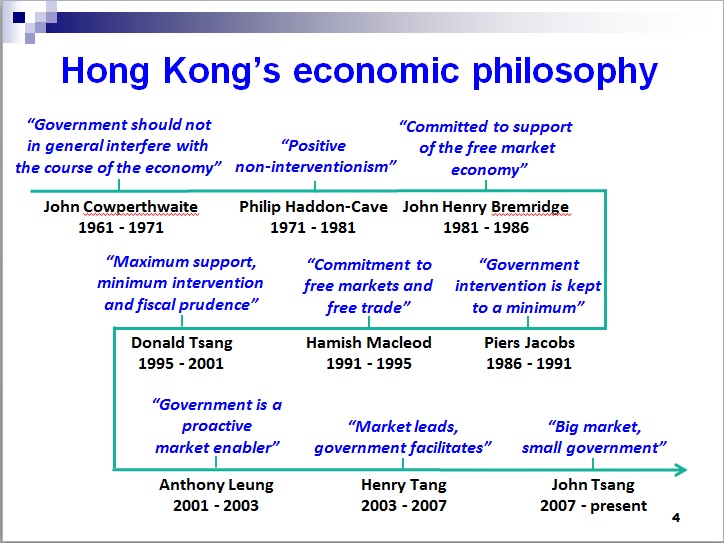


.jpg/220px-Susan_Blackmore_(2014).jpg)


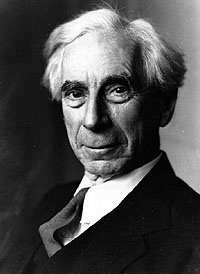
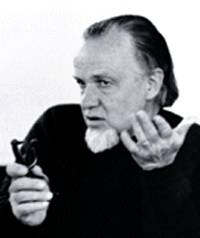
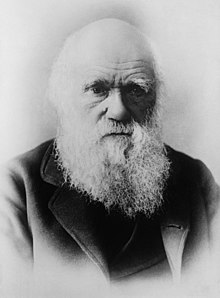

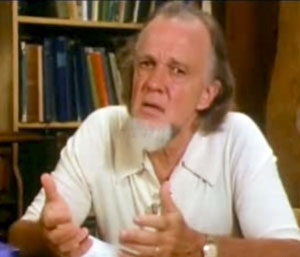
 ‘
‘


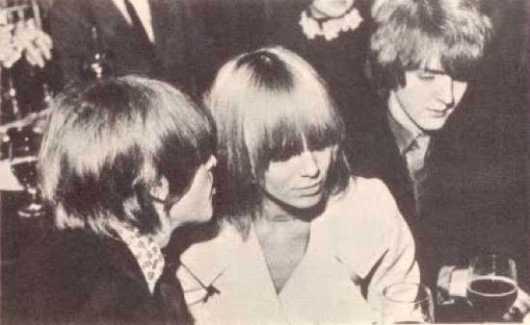









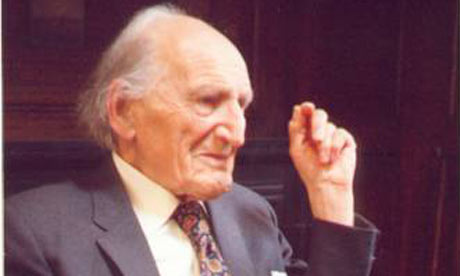







 The Daily Hatch