Monthly Archives: December 2015

Milton Friedman And ObamaCare November 4, 2013

Milton Friedman – Health Care Reform (1992) pt 1/4

Milton Friedman – Health Care Reform (1992) pt 2/4

Milton Friedman – Health Care Reform (1992) pt 3/4

Milton Friedman – Health Care Reform (1992) pt 4/4


Milton Friedman And ObamaCare

Milton Friedman

friedmandonahuees (2)Where is Milton Friedman when we need him most? His ability to explain complex subjects in simple terms is needed, especially with regard to the fiasco we know as the “Affordable Care Act.”

In politics, there is little truth. The denizens of this netherworld are not our best and brightest. Most do not consider ethics or truth as boundaries. As a result, it is difficult to differentiate between stupidity, disingenuous and downright lying when examining their positions. Truth, when it meets their desired ends, is not avoided, although it is rarely convenient.

The following exchange represents a typical example of the nonsense that passes for news. This one involves a confrontation between Megyn Kelly (Fox News) and Democratic Rep (NJ) Frank Pallone over ObamaCare. It was reported by the Daily Caller and is of note because of the absurd politician’s answers and the inept handling of them by the host:

PALLONE: They tell them where to get insurance. Look the bottom line is, if you are selling a lousy policy at a price that’s too high, nobody is going to buy it.

KELLY: That’s not true.

PALLONE: And so they are canceling these policies because they know people won’t buy them. It’s a competitive marketplace. That’s the problem.

KELLY: But they were buying them.

[CROSSTALK]

PALLONE: But they won’t buy them anymore when they have a better alternative.

KELLY: There were 15 million people who bought them and said “I like them.”

PALLONE: They’re not going to buy them anymore when they have a better alternative.

KELLY: Thanks to you.

PALLONE: Well, I can’t go out as an insurance company and sell a lousy policy anymore at a high price.

KELLY: People like — why do you get to decide what’s lousy? Why can’t the American people say ‘it’s lousy for you. For me, I like it.’

PALLONE: It’s capitalism. You can go out and buy whatever you want, but the insurance company realizes they can’t sell this lousy insurance policy anymore.

KELLY: They were selling it, sir. You are ignoring my point. They were selling it. Some 15 million Americans thought it was great. You didn’t like it, but they liked it. And then you and the president –

PALLONE: Now there are better alternatives.

I didn’t see the encounter. I rarely watch television news. It is safer for me and more so for my television that way.

Rep. Pallone attempts to use, of all things, free markets as a defense. His responses are laced with direct and indirect references:

  • “It’s a competitive marketplace.”
  • “… they [citizens] have better alternatives.”
  •  “It’s capitalism. You can go out and buy whatever you want …”
  • “Now there are better alternatives.”

His terminology is reminiscent of the late Milton Friedman who must be spinning in his grave if he heard the segment.

Frank Pallone is no Milton Friedman. Unfortunately, neither is Megyn Kelly. A defense of ObamaCare on free markets or competitive markets is an outrage. So too was the host’s inability or unwillingness to recognize that. “It’s a competitive marketplace” would have been, politely and effectively, the point at which Dr. Friedman would have obliterated Rep. Pallone’s position.

A competitive marketplace requires freedom on the part of both buyers and sellers. ObamaCare is a lot of things, but it is not a competitive marketplace. It reduce/eliminates freedom from both parties to a transaction. It is government coercion. What little competition and competitive markets existed in healthcare (as a result of prior governmental interventions) was eliminated with the passage of the ACA.

ObamaCare is classic central planning run amuck. It reduces choice, mandating by law what is “acceptable.” Regardless of what you prefer, you must buy what has been deemed acceptable by some unknown, pointy-headed bureaucrat. The threat of force backs up the “must.”

Neither buyer or seller gains from this legislation. Both have their freedoms restricted and are harmed. Government power and control is the only winner, again.

Consumer sovereignty no longer controls the insurance producers. Nor will it guide the service, delivery and quality of medical care forthcoming. These are now determined by a Politburo, indistinguishable in power and control from the old Soviet Union. “Death Panels” represent the extreme of a series of decisions that have nothing to do with buyer or seller.

Freedom and economics need not be complex. Anyone who saw Milton Friedman on television found his presentation simple and understandable. The classic video with Phil Donahue (provided below) illustrates his unique ability. A more relevant one about Socialized  medicine, which Mr. Friedman  presented at the Mayo Clinic 35 years ago, is also provided.

Few have Friedman’s capabilities. Yet how difficult would it have been to respond to Rep. Pallone with some simple analogy along the following lines?

I have always driven a Ford pickup because I like it, it meets my needs and it fits my budget. Now you have made it illegal for Ford to produce pickups or any car but a Lincoln. My “choice” is now limited to buying a Lincoln or a Cadillac. While they may be better cars, neither fits my needs or budget. Forcing me to accept your preferences has not made me better off.

Or, what about the obvious issue of coercion versus choice?

If the ObamaCare program is so good, then the legislation of penalties, fines and coercion would be unnecessary. People would flock to it out of choice, not compulsion. The reality is that it is not good and that is why you needed the force of law to make it work.

Enjoy the following clips and pray that someone with Friedman’s common sense and communicative skills steps forward to address the nonsense that passes for policy in Washington.

Milton Friedman on Medical Care (Full Lecture)

Published on Feb 2, 2014

I have written about Obamacare over and over again on this blog. Dan Mitchell has shared many funny cartoons about Obamacare too. Milton Friedman has spoken out about government healthcare many times in the past and his film series FREE TO CHOOSE is on You Tube and I encourage you to watch it. It is clear that the federal government debt is growing so much that it is endangering us because if things keep going like they are now we will not have any money left for the national defense because we are so far in debt as a nation.

We have been spending so much on our welfare state through food stamps and other programs that I am worrying that many of our citizens are becoming more dependent on government and in many cases they are losing their incentive to work hard because of the welfare trap the government has put in place. Other nations in Europe have gone down this road and we see what mess this has gotten them in. People really are losing their faith in big government and they want more liberty back. It seems to me we have to get back to the founding  principles that made our country great.  We also need to realize that a big government will encourage waste and corruption. Also raising taxes on the job creators is a very bad idea too. The Laffer Curve clearly demonstrates that when the tax rates are raised many individuals will move their investments to places where they will not get taxed as much.

In 1980 I read the book FREE TO CHOOSE by Milton Friedman and it really enlightened me a tremendous amount.  I suggest checking out these episodes and transcripts of Milton Friedman’s film series FREE TO CHOOSE: “The Failure of Socialism” and “The Anatomy of a Crisis” and “What is wrong with our schools?”  and “Created Equal”  and  From Cradle to Grave, and – Power of the Market.

_____________________

Related posts:

Dan Mitchell on Obamacare Supreme Court Decision: “I’m disgusted that the Supreme Court once again has decided to put politics above the Constitution!” (Includes lots of videos and cartoons)

__________ Enzi statement on the Supreme Court’s King Vs. Burwell decision 5 Takeaways From Today’s Supreme Court Ruling on Obamacare Wicker Comments on King v Burwell Supreme Court Decision Senator Lankford Discusses the King v. Burwell Supreme Court Decision Congressman Steve King Response to SCOTUS King v. Burwell Ruling Obamacare and the Odious Anti-Constitutionalism of […]

Open letter to President Obama (Part 718) Cartoonists Go to War against Obamacare

Open letter to President Obama (Part 718) (Emailed to White House on 6-25-13.) President Obama c/o The White House 1600 Pennsylvania Avenue NW Washington, DC 20500 Dear Mr. President, I know that you receive 20,000 letters a day and that you actually read 10 of them every day. I really do respect you for trying to get […]

The Region – Banking and Policy Issues Magazine – Interview with Milton Friedman June 1992

______ Milton Friedman’s Free to Choose (1980), episode 3 – Anatomy of a Crisis. part 1 The Region – Banking and Policy Issues Magazine – Interview with Milton Friedman June 1992 In his new book, Money Mischief, economist Milton Friedman compares inflation to alcoholism; blames the rise of Chinese communism, in large part, on an […]

NEW RIVER MEDIA INTERVIEW WITH: MILTON FRIEDMAN Professor Emeritus of Economics, University of Chicago Senior Fellow, Hoover Institution

______ Milton Friedman – A Conversation On Minimum Wage Milton Friedman Interview Milton Friedman is Professor Emeritus of Economics at the University of Chicago and Senior Fellow at the Hoover Institution.Dr. Friedman received the 1976 Nobel Memorial Prize for Economic Science. Member of the research staff of the National Bureau of Economic Research from 1937 […]

Walter E. Williams: “Milton Friedman was an economist’s economist” Wednesday, Dec. 6 2006 1

________ Milton Friedman on Donahue – 1979 Uploaded on Aug 26, 2009 Dr. Milton Friedman, Nobel Laureate, promoting “Free to Choose” on the show Donahue. Walter E. Williams: Milton Friedman was an economist’s economist Print Font [+] [-] Leave a comment » By Walter E. Williams Published: Wednesday, Dec. 6 2006 12:00 a.m. MST Walter […]

FRIEDMAN FRIDAY 40 Years Later: Milton Friedman’s Legacy in Chile “Chilean Miracle” Struck a Blow against Communism When Needed Most José Niño April 22, 2015

_______ José Niño José Niño is a graduate student based in Santiago, Chile. A citizen of the world, he has lived in Venezuela, Colombia, and the United States. He is currently an international research analyst with the Acton Circle of Chile. Follow@JoseAlNino. 40 Years Later: Milton Friedman’s Legacy in Chile “Chilean Miracle” Struck a Blow […]

FRIEDMAN FRIDAY Milton Friedman came up with the NEGATIVE INCOME TAX

____ Milton Friedman – The Negative Income Tax The Conservative Case for a Guaranteed Basic Income NOAH GORDON AUG 6, 2014 Creating a wage floor is an effective way to fight poverty—and it would reduce government spending and intrusion. Swiss backers of a minimum income spread out coins in Bern. Denis Balibouse/Reuters Last week, my […]

FRIEDMAN FRIDAY Which Fed Bill Would Milton Friedman Have Liked? Posted on March 10, 2015by John Taylor

________________ Which Fed Bill Would Milton Friedman Have Liked? Posted on March 10, 2015by John Taylor Writing last week on the Cato at Liberty blog, Steve Hanke argued that Milton Friedman would have supported the “Audit the Fed” bill recently introduced in the Senate.  Steve’s reasoning is based on Friedman’s 1962 essay “Should there be an […]

5 myths that conceal reality by Milton Friedman

A great speech below: Here are the myths:Robber Baron Myth, The Cause of Great Depression Myth, The Demand for Government Service Myth, The Free Lunch Smith, and The Robin Hood Myth. 1) the Robber Baron Myth, 2) the Great Depression Myth, 3) the Demand for Government Service Myth, 4) the Free Lunch Myth, and 5) […]

FRIEDMAN FRIDAY SEPTEMBER 4, 2006 An Interview with Milton Friedman

_______________ FEATURED ARTICLE | SEPTEMBER 4, 2006 An Interview with Milton Friedman Milton Friedman* I recently sat down with Milton Friedman, a few days before his 94th birthday, to discuss the impact of two of his most important contributions to economics and liberty: A Monetary History of the United States, 1870-1960 [co-written] with Anna Schwartz, […]

FRIEDMAN FRIDAY The Social Responsibility of Business is to Increase its Profits by Milton Friedman The New York Times Magazine, September 13, 1970.

Milton Friedman on Self-Interest and the Profit Motive 1of2 Milton Friedman on Self-Interest and the Profit Motive 2of2 The Social Responsibility of Business is to Increase its Profits by Milton FriedmanThe New York Times Magazine, September 13, 1970. Copyright @ 1970 by The New York Times Company. When I hear businessmen speak eloquently about the […]

FRIEDMAN FRIDAY Levin on Milton Friedman: ‘One Thing to Have Free Immigration to Jobs, Another for Welfare’ By Michael Morris | January 16, 2015

____________ Levin on Milton Friedman: ‘One Thing to Have Free Immigration to Jobs, Another for Welfare’ By Michael Morris | January 16, 2015 | 5:12 PM EST During his show on January 15, 2015, Nationally syndicated radio host Mark Levin recalled the famed economist Milton Friedman and explored an important reason why open immigration, despite […]

RESPONDING TO HARRY KROTO’S BRILLIANT RENOWNED ACADEMICS!! Part 55 Baroness Susan Greenfield “. Everything is rooted finally in our brain, if anything exists in a physical sense beyond that then I myself can not buy into that new kind of physics!”

On November 21, 2014 I received a letter from Nobel Laureate Harry Kroto and it said:

…Please click on this URL http://vimeo.com/26991975

and you will hear what far smarter people than I have to say on this matter. I agree with them.

Harry Kroto

_________________

Fig 9. The Sussex team from left: (back) Ala’a Abdul Sada and Jon Hare (front) HK, Roger Taylor and David Walton and Dr. Harry Kroto is the 1996 Chemistry Nobel Prize Winner and he is seen the photo below on the left seated:

________________

Susan Greenfield, Baroness Greenfield

From Wikipedia, the free encyclopedia
The Baroness Greenfield
Baronesssusangre1.jpeg
Born 1 October 1950 (age 65)
Hammersmith, London, England, UK
Nationality British
Institutions
Alma mater St Hilda’s College, Oxford
Thesis Origins of acetylcholinesterase in cerebrospinal fluid (1977)
Doctoral advisor Anthony David Smith[1]
Notable awards CBE

Chevalier Légion d’honneur

Spouse Peter Atkins (m. 1991–2005)
Website
www.susangreenfield.com
Susan Greenfield’s voice
MENU
0:00
Recorded February 2011 from the BBC Radio 4 programme Four Thought

Susan Adele Greenfield, Baroness Greenfield, CBE,[2] HonFRCP (born 1 October 1950) is a British scientist, writer, broadcaster, and member of the House of Lords. Her research has focused on the treatment of Parkinson’s disease and Alzheimer’s disease. She is also interested in the neuroscience of consciousness [3] and the impact of technology on the brain.[4]

Greenfield is Senior Research Fellow at Lincoln College, Oxford University [5] and was Professor of Synaptic Pharmacology.[citation needed] From 2005 to 2012, she was also Chancellor of Heriot-Watt University in Edinburgh between 2005 and 2013.[6] From 1998 to 2010, she was director of the Royal Institution of Great Britain.[7] In September 2013, she co-founded the biotech company Neuro-bio Ltd, where she is Chief Executive Officer.[8][9]

Education[edit]

Susan Adele Greenfield was born to a Jewish father[10] and a Christian mother in Hammersmith, London. Her mother, Doris (née Thorp), was a dancer, and her father, Reginald Myer Greenfield, was an electrician.[11]

She attended the Godolphin and Latymer School, where she took A levels in Latin, Greek and ancient history, and maths. The first member of her immediate family to go on to university, she was initially admitted to St Hilda’s College to read Philosophy, Psychology and Psychiatry, graduated with a first degree in experimental psychology.[11][12] As a Senior Scholar at St Hugh’s College, Oxford,[13] she completed her DPhil degree in 1977 under the supervision of Anthony David Smith on the Origins of acetylcholinesterase incerebrospinal fluid.[1] She then held a junior research fellowship at Green College, Oxford between 1981 – 1984.[14]

Career[edit]

Greenfield’s research is focused on brain physiology, particularly on the brain mechanisms of Parkinson’s and Alzheimer’s diseases, but she is also known as a populariser of science. Greenfield has written a range of books about the brain, regularly gives public lectures, and appears on radio and television.[15]

Since 1976, Greenfield has published some 200 papers in peer-reviewed journals, including studies on the basic brain mechanisms involved in addiction and reward,[16][17][18][19][20]i.e. relating to dopamine systems and related neurochemicals.[21][22] She investigated the brain mechanisms underlying ADHD[22][23] as well as the impact of environmental enrichment.[24]

In 1994, she was invited to be the first woman to give the Royal Institution Christmas Lecture, then sponsored by the BBC. Her lecture was titled “Journey to the centre of the brain”.[25] She was appointed Director of the Royal Institution in 1998,.[26] The post was abolished in 2010.[27] The Royal Institution had found itself in a financial crisis following a £22m development programme led by Greenfield and the Board. The project ended £3 million in debt.[28][29] Greenfield subsequently announced that she would be taking her employers to an employment tribunal and her claim would include discrimination,[30] but the case was settled out of court.[31]

Greenfield’s two main posts at Oxford were as Tutorial Fellow in Medicine at Lincoln College Oxford,[5] and Professor of Synaptic Pharmacology.[citation needed] From 1995 to 1999, she gave public lectures as Gresham Professor of Physic in London. Greenfield was Adelaide‘s Thinker in Residence for 2004 and 2005.[32] As a result of her recommendations, South Australian Premier Mike Rann made a major funding commitment, backed by the State and Federal Governments and the private sector, to establish the Royal Institution of Australia and the Australian Science Media Centre in Adelaide.[33]

She has explored the relevance of neuroscience knowledge to education[34] and has introduced the concept of “mind change”,[35] an umbrella term comparable to “climate change”, encompassing the diverse issues involved in the impact of the 21st-century environment on the brain.[36]

Politics[edit]

Baroness Greenfield sits in the Parliament of the United Kingdom in the House of Lords as a crossbencher, having no formal political affiliation.[37] Records of Baroness Greenfield’s activity in the House of Lords indicate abstention on a range of issues.[38] She has spoken on a variety of topics,[39] including education, drugs, and economic empowerment for women.[40]

Books[edit]

In 1995 Greenfield published her own theory of consciousness in Journey to the Centres of the Mind (1995), which was developed substantially in The Private Life of the Brain (2000). Her book The Human Brain: A Guided Tour (1997) was followed byTomorrow’s People (2003), which explored human nature and its potential vulnerability in an age of technology. These ideas were expanded in her later book, ID (2009). The theme of unprecedented changes to contemporary human cognition was briefly explored in a monograph You and Me (2011), and has was later developed further in an in-depth exploration of the impact of technology on the brain inMind Change published in 2014 by Random House. A further book A Day in the Life of the Brain is due to be published by Penguin in early 2016.[citation needed]

In 2013 Greenfield published a dystopian science-fiction novel, 2121: A Tale from the Next Century, telling the story of videogame-playing hedonists and their conflict with “Neo-Puritans”.[41]

Impact of digital technology controversy[edit]

In press interviews, at public speaking events,[42] as well as in her writing,[43] Greenfield has expressed concerns that modern technology, and in particular social networking sites and video games,[42] may have a significant impact on child development as a factor in autistic-like behaviour.[42][44][45][46] She noted[citation needed] that Public Health England had related social networking and multiplayer online games to “lower levels of wellbeing”, and believed that evidence pointed to a “dose-response” relationship, “where each additional hour of viewing increases the likelihood of experiencing socio-emotional problems”.[47] She believed this raised questions about where to draw the boundaries between beneficial and harmful use of such technology, saying that “it would be surprising if many hours per day of screen activity did not influence this neuroplasticity”.[48]

Greenfield has been criticised for explicitly linking the increase in internet usage to a rise in autism. In an 2015 article in the BMJ, clinical psychologist Vaughan Bell, developmental psychologist Dorothy Bishop and psychologist Andrew Przybylski took Greenfield to task for her statements, writing that Greenfield’s notion had “no basis in scientific evidence” and was “entirely implausible in light of what we know of autism as a neurodevelopmental condition”. They expressed concern that her work could be misleading to parents.[49]

Greenfield had already been criticised for failing to publish any research into her theories of technology’s impact on child development. Ben Goldacre suggested that “A scientist with enduring concerns about a serious widespread risk would normally set out their concerns clearly, to other scientists, in a scientific paper.”[42]

Honours[edit]

Greenfield has 32 honorary degrees,[50] and has received awards including the Royal Society‘s Michael Faraday Prize. She has been elected to an Honorary Fellowship of the Royal College of Physicians[51] and the LondonScience Museum.[52] In 2006 she was made an Honorary Fellow of the British Science Association[53] and was the Honorary Australian of the Year.

In January 2000, Greenfield received the CBE[54] for her contribution to the public understanding of science.[2] Later that year, she was named Woman of the Year by The Observer. In 2001, she became a Life Peer under the via the House of Lords Appointments Commission system,[55] as Baroness Greenfield, of Ot Moor in the County of Oxfordshire.[2][56]

In 2003, she was appointed a Chevalier of the Légion d’Honneur by the French Government.[51] In 2010 she was awarded the Australian Society for Medical Research Medal.[57] She also received the British Inspiration award for Science and Technology in 2010.[58]

Patronage[edit]

She is a patron of the Alzheimer’s Research UK[59] and of Dignity in Dying.[60] She is a founder and trustee of the charity Science for Humanity, a network of scientists, researchers and technologists that collaborates with non-profits to create practical solutions to the everyday problems of developing communities.[61]

Personal life[edit]

Greenfield was married to University of Oxford Professor Peter Atkins from 1991 until their divorce in 2003.[62]

_____________________________

In  the third video below in the 129th clip in this series are her words and  my response is below them. 

50 Renowned Academics Speaking About God (Part 1)

Another 50 Renowned Academics Speaking About God (Part 2)

A Further 50 Renowned Academics Speaking About God (Part 3)

I grew up at Bellevue Baptist Church under the leadership of our pastor Adrian Rogers and I read many books by the Evangelical Philosopher Francis Schaeffer and have had the opportunity to contact many of the evolutionists or humanistic academics that they have mentioned in their works. Many of these scholars have taken the time to respond back to me in the last 20 years and some of the names  included are  Ernest Mayr (1904-2005), George Wald (1906-1997), Carl Sagan (1934-1996),  Robert Shapiro (1935-2011), Nicolaas Bloembergen (1920-),  Brian Charlesworth (1945-),  Francisco J. Ayala (1934-) Elliott Sober (1948-), Kevin Padian (1951-), Matt Cartmill (1943-) , Milton Fingerman (1928-), John J. Shea (1969-), , Michael A. Crawford (1938-), Paul Kurtz (1925-2012), Sol Gordon (1923-2008), Albert Ellis (1913-2007), Barbara Marie Tabler (1915-1996), Renate Vambery (1916-2005), Archie J. Bahm (1907-1996), Aron S “Gil” Martin ( 1910-1997), Matthew I. Spetter (1921-2012), H. J. Eysenck (1916-1997), Robert L. Erdmann (1929-2006), Mary Morain (1911-1999), Lloyd Morain (1917-2010),  Warren Allen Smith (1921-), Bette Chambers (1930-),  Gordon Stein (1941-1996) , Milton Friedman (1912-2006), John Hospers (1918-2011), Michael Martin (1932-), John R. Cole  (1942-),   Wolf Roder,  Susan Blackmore (1951-),  Christopher C. French (1956-)  Walter R. Rowe Thomas Gilovich (1954-), Paul QuinceyHarry Kroto (1939-), Marty E. Martin (1928-), Richard Rubenstein (1924-), James Terry McCollum (1936-), Edward O. WIlson (1929-), Lewis Wolpert (1929), Gerald Holton (1922-), Martin Rees (1942-), Alan Macfarlane (1941-),  Roald Hoffmann (1937-), Herbert Kroemer (1928-), Thomas H. Jukes (1906-1999), Glenn BranchGeoff Harcourt (1931-), and  Ray T. Cragun (1976-).

___________

In the popular You Tube video “Renowned Academics Speaking About God” Dr. Greenfield made the following statement:

“I think what is more important is to realize we are individuals. Everything is rooted finally in our brain. My own view is that. If anything exists in a physical sense beyond that then I myself can not buy into that new kind of physics. If people believe that and it comforts them then who am I to say…”

Let me respond first by saying that Dr. Greenfield’s assertion is that when the brain dies we die too, but is there evidence that there is a life after death as the Bible claims? WHAT IF THERE WAS EVIDENCE THAT THE BIBLE IS TRUE HISTORICALLY? IF THAT COULD BE SHOWN THEN WOULD DR. GREENFIELD BELIEVE WHAT IT SAYS ABOUT THE AFTERLIFE? 

Let me further respond with the words of Francis Schaeffer from his book HE IS THERE AND HE IS NOT SILENT (the chapter is entitled, “Is Propositional Revelation Nonsense?”

Of course, if the infinite uncreated Personal communicated to the finite created personal, he would not exhaust himself in his communication; but two things are clear here:
 
1. Even communication between once created person and another is not exhaustive, but that does not mean that for that reason it is not true. 
 
2. If the uncreated Personal really cared for the created personal, it could not be thought unexpected for him to tell the created personal things of a propositional nature; otherwise as a finite being the created personal would have numerous things he could not know if he just began with himself as a limited, finite reference point. In such a case, there is no intrinsic reason why the uncreated Personal could communicate some vaguely true things, but could not communicate propositional truth concerning the world surrounding the created personal – for fun, let’s call that science. Or why he could not communicate propositional truth to the created personal concerning the sequence that followed the uncreated Personal making everything he made – let’s call that history. There is no reason we could think of why he could not tell these two types of propositional things truly. They would not be exhaustive; but could we think of any reason why they would not be true? The above is, of course, what the Bible claims for itself in regard to propositional revelation.
DOES THE BIBLE ERR IN THE AREA OF SCIENCE AND HISTORY? The Bible is true from cover to cover and can be trusted. Charles Darwin himself longed for evidence to come forward from the area of  Biblical Archaeology  but so much has  advanced  since Darwin wrote these words in the 19th century! Here are some of the posts I have done in the past on the subject and if you like you could just google these subjects: 1. The Babylonian Chronicleof Nebuchadnezzars Siege of Jerusalem, 2. Hezekiah’s Siloam Tunnel Inscription.13. The Pilate Inscription14. Caiaphas Ossuary14 B Pontius Pilate Part 214c. Three greatest American Archaeologists moved to accept Bible’s accuracy through archaeology.
Here is a letter I sent to Dr. Greenfield below:

October 5, 2015

Professor Susan Greenfield
Director
Institute for the Future of the Mind

Dear Dr. Greenfield,

I really enjoyed your TED TALK and I also got to hear another TED TALK the other day by Nobel Prize Winner John Polanyi whose father I am writing you about later in this letter. You might want to check that out on You Tube too.

I read in Wikipedia concerning you:

Baroness Greenfield sits in the Parliament of the United Kingdom in the House of Lords as a crossbencher, having no formal political affiliation.[35] Records of Baroness Greenfield’s activity in the House of Lords indicate abstention on a range of issues.[36]

That intrigued me because I recently got involved in politics too and was elected Justice of the Peace in the 4th largest county in Arkansas and my wife Jill has served several years on the City Council in Shannon Hills.

It has been many years since I first visited Parliament but I have been watching many of their sessions on television and reading about them. Recently I read about the amazing career of Dominick Geoffrey Edward Browne. I wonder if you ever got to know him and did you know that he was mentioned indirectly in what I think is the most famous Beatles song of all-time.

What is the best Beatles song of all time? It is my opinion that is the song A DAY IN THE LIFE, and that is also the conclusion of Elvis Costello in his article “100 Greatest Beatles Songs,” September 19, 2011.

It is a song that takes a long look at the issue of death. It starts off telling the story of Tara Browne who “had made the grade” but then gets blow up in a car. Browne’s father was Dominick Geoffrey Edward Browne and that is why the Beatles noted,Nobody was really sure
If he was from the House of Lords.” 

It is true that Tara Browne was a very wealthy friend of the Beatles and unfortunately he sped through a red-light in London going 100 miles per hour and ended his life.King Solomon noted, “No one knows when their hour will come: As fish are caught in a cruel net, or birds are taken in a snare, so people are trapped by evil times  that fall unexpectedly upon them.”

Beatles – A Day In The Life Lyrics

I read the news today, oh boy
About a lucky man who made the grade
And though the news was rather sad
Well I just had to laugh
I saw the photograph.He blew his mind out in a car
He didn’t notice that the lights had changed
A crowd of people stood and stared
They’d seen his face before
Nobody was really sure
If he was from the House of Lords.I saw a film today, oh boy
The English army had just won the war
A crowd of people turned away
But I just had to look
Having read the book
I’d love to turn you on.Woke up, fell out of bed,
Dragged a comb across my head
Found my way downstairs and drank a cup,
And looking up I noticed I was late.Found my coat and grabbed my hat
Made the bus in seconds flat
Found my way upstairs and had a smoke,
Somebody spoke and I went into a dream.I read the news today oh boy
Four thousand holes in Blackburn, Lancashire
And though the holes were rather small
They had to count them all
Now they know how many holes it takes to fill the Albert Hall.
I’d love to turn you on.
Songwriters: LENNON, JOHN WINSTON / MCCARTNEY, PAUL JAMES
____________________________
The article below explains the meaning of these words from the song:
“They’d seen his face before
Nobody was really sure
If he was from the House of Lords.”
12:03AM BST 10 Aug 2002

The 4th Lord Oranmore and Browne, who has died aged 100, is believed to hold the record as the longest-serving member of the House of Lords, having taken his seat in 1927 and been evicted under the Government’s reforms of 1999.

He earned the unspoken admiration of many by never speaking in the chamber, and was better known for his three marriages, particularly to the heiress Oonagh Guinness and to the actress Sally Gray.

It was also his misfortune to be associated in the public memory with the tragic deaths in traffic accidents of first his parents in 1927, and then of his son Tara Browne, an icon of the Swinging Sixties, almost 40 years later.

Dominick Geoffrey Edward Browne was born in Dublin on October 21 1901, heir to the Irish peerages of Oranmore and Browne of Carrabrowne Castle, Co Galway, and Castle Mac Garrett, Co Mayo.

Oranmore and Browne married three times, first Mildred Helen, daughter of Thomas Egerton, a cousin of the Duke of Sutherland; they had two sons and three daughters (one of whom died aged 13). They divorced in 1936, so he could marry Oonagh Guinness, one of the “Golden Guinness girls”; she was a considerable heiress in her own right and the owner of Luggala, a fairytale Gothic lodge in the Wicklow mountains.

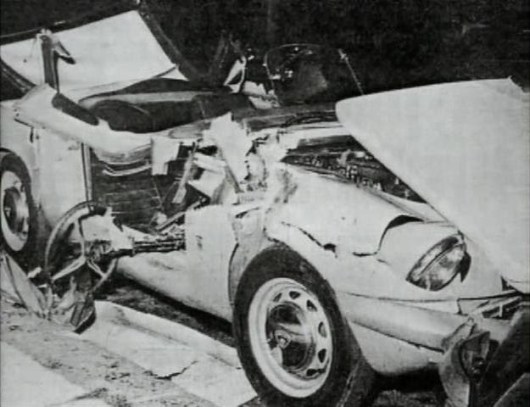
They had three sons, the eldest of whom is Garech Browne, the pony-tailed squire of Luggala, a guardian of Irish lore and founder of The Chieftains. The second son died after a week. The third was Tara Browne, a friend of John Lennon who drove his Lotus Elan into a lamp-post in Redcliffe Square, London, in 1966. Tara was the subject of the Beatles’ song A Day in the Life, which contained the verse:

He blew his mind out in a car
He didn’t notice that the lights had changed
A crowd of people stood and stared
They’d seen his face before,
Nobody was really sure if he was from the House of Lords.

A Day in the Life

From Wikipedia, the free encyclopedia
 “A Day in the Life” is the final song on the BeatlesSgt. Pepper’s Lonely Hearts Club Band album. Credited to Lennon–McCartney, the song comprises distinct sections written independently by John Lennonand Paul McCartney, with orchestral additions. While Lennon’s lyrics were inspired by contemporary newspaper articles, McCartney’s were reminiscent of his youth. The decisions to link sections of the song with orchestral glissandos and to end the song with a sustained piano chord were made only after the rest of the song had been recorded.

The supposed drug reference in the line “I’d love to turn you on” resulted in the song initially being banned from broadcast by the BBC. Since its original album release, “A Day in the Life” has been released as aB-side, and also on variouscompilation albums. It has been covered by other artists, and since 2008, by McCartney in his live performances. It was ranked the 28th greatest song of all time by Rolling Stonemagazine.[5] The magazine also ranked it as the greatest Beatles song.[6]

Composition[edit]

According to Lennon, the inspiration for the first two verses was the death of Tara Browne, the 21-year-old heir to the Guinness fortune who had crashed his Lotus Elan on 18 December 1966 in Redcliffe Gardens, Earls Court. Browne had been a friend of Lennon and McCartney,[7] and had, earlier in 1966, instigated McCartney’s first experience with LSD.[8] Lennon’s verses were adapted from a story in the 17 January 1967 edition of the Daily Mail, which reported the ruling on a custody action over Browne’s two young children:

Guinness heir Tara Browne’s two children will be brought up by their 56-year-old grandmother, the High Court ruled yesterday. It turned down a plea by their mother, Mrs. Nicky Browne, 24, that she should have them …This, she said, happened after Mr. Browne, 21, from whom she was estranged, had taken them for a holiday in County Wicklow [Ireland] with his mother.

Mrs. Browne began an action for their return in October [1966], naming Mr. Browne and his mother as defendants. The action, held in private, was part way through when Mr. Browne died in a crash in his Lotus Elan car in South Kensington a week before Christmas.[9]

“I didn’t copy the accident,” Lennon said. “Tara didn’t blow his mind out, but it was in my mind when I was writing that verse. The details of the accident in the song—not noticing traffic lights and a crowd forming at the scene—were similarly part of the fiction.”[10]

____

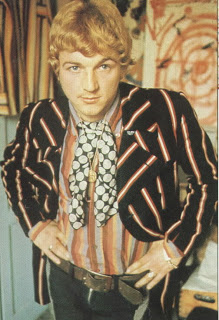
Tara Browne in 1966

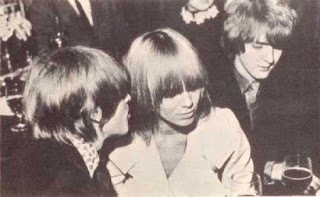
Suki Poitier (centre) and Tara Browne (right), 1966

_________________

keith suki brian and mick. suki would later survive a car(Lotus Elan) crash driven by Tara Browne- heir to the Guinness fortune. The driver perished(blew his mind out in a car, he didn’t notice that the lights had changed) made famous by a Beatles song.

_____________________

In the popular You Tube video “Renowned Academics Speaking About God” you made the following statement:

“I think what is more important is to realize we are individuals. Everything is rooted finally in our brain. My own view is that. If anything exists in a physical sense beyond that then I myself can not buy into that new kind of physics. If people believe that and it comforts them then who am I to say…”

WHAT IF THERE WAS EVIDENCE THAT THE BIBLE IS TRUE HISTORICALLY? IF THAT COULD BE SHOWN THEN WOULD YOU BELIEVE WHAT IT SAYS ABOUT THE AFTERLIFE? 

Let me further respond with the words of Francis Schaeffer from his book HE IS THERE AND HE IS NOT SILENT (the chapter is entitled, “Is Propositional Revelation Nonsense?”

Of course, if the infinite uncreated Personal communicated to the finite created personal, he would not exhaust himself in his communication; but two things are clear here:
 
1. Even communication between once created person and another is not exhaustive, but that does not mean that for that reason it is not true. 
 
2. If the uncreated Personal really cared for the created personal, it could not be thought unexpected for him to tell the created personal things of a propositional nature; otherwise as a finite being the created personal would have numerous things he could not know if he just began with himself as a limited, finite reference point. In such a case, there is no intrinsic reason why the uncreated Personal could communicate some vaguely true things, but could not communicate propositional truth concerning the world surrounding the created personal – for fun, let’s call that science. Or why he could not communicate propositional truth to the created personal concerning the sequence that followed the uncreated Personal making everything he made – let’s call that history. There is no reason we could think of why he could not tell these two types of propositional things truly. They would not be exhaustive; but could we think of any reason why they would not be true? The above is, of course, what the Bible claims for itself in regard to propositional revelation.
DOES THE BIBLE ERR IN THE AREA OF SCIENCE AND HISTORY? The Bible is true from cover to cover and can be trusted. Charles Darwin himself longed for evidence to come forward from the area of  Biblical Archaeology  but so much has  advanced  since Darwin wrote these words in the 19th century! Here are some of the posts I have done in the past on the subject and if you like you could just google these subjects: 1. The Babylonian Chronicleof Nebuchadnezzars Siege of Jerusalem, 2. Hezekiah’s Siloam Tunnel Inscription.13. The Pilate Inscription14. Caiaphas Ossuary14 B Pontius Pilate Part 214c. Three greatest American Archaeologists moved to accept Bible’s accuracy through archaeology.

Recently I had the opportunity to come across a very interesting article by Michael Polanyi, LIFE TRANSCENDING PHYSICS AND CHEMISTRY, in the magazine CHEMICAL AND ENGINEERING NEWS, August 21, 1967, and I also got hold of a 1968 talk by Francis Schaeffer based on this article. Polanyi’s son John actually won the 1986 Nobel Prize for Chemistry. This article by Michael Polanyi concerns Francis Crick and James Watson and their discovery of DNA in 1953. Polanyi noted:

Mechanisms, whether man-made or morphological, are boundary conditions harnessing the laws of in
animate nature, being themselves irreducible to those laws. The pattern of organic bases in DNA which functions as a genetic code is a boundary condition irreducible to physics and chemistry. Further controlling principles of life may be represented as a hierarchy of boundary conditions extending, in the case of man, to consciousness and responsibility.

I would like to send you a CD copy of this talk because I thought you may find it very interesting. It includes references to not only James D. Watson, and Francis Crick but also  Maurice Wilkins, Erwin Schrodinger, J.S. Haldane (his son was the famous J.B.S. Haldane), Peter Medawar, and Barry Commoner. I WONDER IF YOU EVER HAD THE OPPORTUNITY TO RUN ACROSS THESE MEN OR ANY OF THEIR FORMER STUDENTS?

Below is a portion of the transcript from the CD and Michael Polanyi’s words are in italics while Francis Schaeffer’s words are not:

During the past 15 years, I have worked on these questions, achieving gradually stages of the argument presented in this paper. These are:

  1. Machines are not formed by physical and chemical equilibration. 
  2. The functional terms needed for characterizing a machine cannot for defined in terms of physics and chemistry. 

Polanyi is talking about specific machines but I would include the great cause and effect machine of the external universe that functions on a cause and effect basis. So if this is true of the watch,  then you have to ask the same question about the total machine that Sartre points out that is there, and that is the cause and effect universe. Polanyi doesn’t touch on this and he doesn’t have an answer, and I know people who know him. Yet nevertheless he sees the situation exactly as it is. And I would point out what  Alfred North Whitehead (1861–1947) and J. Robert Oppenheimer (1904–1967) said and that it needed a Christian consensus to produce modern science because it was the Christian consensus that gave the concept that the world being created by a reasonable God and that it could be found out and discovered by reason. So the modern science when it began with Copernicus and Galileo and all these men conceived that the cause and effect system of the universe would be there on the basis that it was created by a reasonable God, and that is Einstein’s big dilemma and that is why he became a mystic at the end of life…What Polanyi says here can be extended to the watch, and the bridge and the automobile but also to the big cause and effect universe. You have to give some kind of answer to this too and I would say this to Michael Polanyi if I ever have a chance to talk to him. You need another explanation too Polanyi.

3. No physical chemical topography will tell us that we have a machine before us and what its functions are. 

In other words, if you only know the chemicals and the physics you don’t know if you have a machine. It may just be junk. So nobody in the world could tell if it was a machine from merely the “physical chemical-topography.” You have to look at the machineness of the machine to say it is a machine. You could take an automobile and smash it into a small piece of metal with a giant press and it would have the same properties of the automobile, but the automobile would have disappeared. The automobile-ness of the automobile is something else than the physical chemical-topography.

4. Such a topography can completely identify one particular specimen of a machine, but can tell us nothing about a class of machines. 

5. And if we are asked how the same solid system can be subject to control by two independent principles, the answer is: The boundary conditions of the system are free of control by physics and can be controlled therefore by nonphysical, purely technical, principles. 

In other words you have to explain the engineering by something other than merely physical principles and of course it is. You can’t explain the watchness of the watch merely by this. You can explain it on the basis of engineering principles in which the human mind conceives of a use for the machine and produces the machine. But notice where Polanyi is and that is in our argument of a need of personality in the universe though Polanyi doesn’t draw this final conclusion, though I thought that is the only explanation.

If you look at the watch a man has made it for the purpose of telling time. When you see the automobile a man has made it for the purpose of locomotion and the explanation of the difference is not in the chemical and physical properties but in the personality of a man to make these two different machines for two different purposes out of the same material. So what you are left here is the need of personality in the universe.

____

Thank you for your time. I know how busy you are and I want to thank you for taking the time to read this letter.

Sincerely,

Everette Hatcher,

P.O. Box 23416, Little Rock, AR 72221, United States, cell ph 501-920-5733, everettehatcher@gmail.com


Related posts:

FRANCIS SCHAEFFER ANALYZES ART AND CULTURE Part 53 THE BEATLES (Part E, Stg. Pepper’s and John Lennon’s search in 1967 for truth was through drugs, money, laughter, etc & similar to King Solomon’s, LOTS OF PICTURES OF JOHN AND CYNTHIA) (Feature on artist Yoko Ono)

The John Lennon and the Beatles really were on a long search for meaning and fulfillment in their lives  just like King Solomon did in the Book of Ecclesiastes. Solomon looked into learning (1:12-18, 2:12-17), laughter, ladies, luxuries, and liquor (2:1-2, 8, 10, 11), and labor (2:4-6, 18-20). He fount that without God in the picture all […]

FRANCIS SCHAEFFER ANALYZES ART AND CULTURE Part 52 THE BEATLES (Part D, There is evidence that the Beatles may have been exposed to Francis Schaeffer!!!) (Feature on artist Anna Margaret Rose Freeman )

______________   George Harrison Swears & Insults Paul and Yoko Lucy in the Sky with Diamonds- The Beatles The Beatles:   I have dedicated several posts to this series on the Beatles and I don’t know when this series will end because Francis Schaeffer spent a lot of time listening to the Beatles and talking […]

FRANCIS SCHAEFFER ANALYZES ART AND CULTURE Part 51 THE BEATLES (Part C, List of those on cover of Stg.Pepper’s ) (Feature on artist Raqib Shaw )

  The Beatles in a press conference after their Return from the USA Uploaded on Nov 29, 2010 The Beatles in a press conference after their Return from the USA. The Beatles:   I have dedicated several posts to this series on the Beatles and I don’t know when this series will end because Francis […]

FRANCIS SCHAEFFER ANALYZES ART AND CULTURE Part 50 THE BEATLES (Part B, The Psychedelic Music of the Beatles) (Feature on artist Peter Blake )

__________________   Beatles 1966 Last interview I have dedicated several posts to this series on the Beatles and I don’t know when this series will end because Francis Schaeffer spent a lot of time listening to the Beatles and talking and writing about them and their impact on the culture of the 1960’s. In this […]

FRANCIS SCHAEFFER ANALYZES ART AND CULTURE Part 49 THE BEATLES (Part A, The Meaning of Stg. Pepper’s Cover) (Feature on artist Mika Tajima)

_______________ The Beatles documentary || A Long and Winding Road || Episode 5 (This video discusses Stg. Pepper’s creation I have dedicated several posts to this series on the Beatles and I don’t know when this series will end because Francis Schaeffer spent a lot of time listening to the Beatles and talking and writing about […]

FRANCIS SCHAEFFER ANALYZES ART AND CULTURE PART 48 “BLOW UP” by Michelangelo Antonioni makes Philosophic Statement (Feature on artist Nancy Holt)

_______________ Francis Schaeffer pictured below: _____________________ I have included the 27 minute  episode THE AGE OF NONREASON by Francis Schaeffer. In that video Schaeffer noted,  ” Sergeant Pepper’s Lonely Hearts Club Band…for a time it became the rallying cry for young people throughout the world. It expressed the essence of their lives, thoughts and their feelings.” How Should […]

FRANCIS SCHAEFFER ANALYZES ART AND CULTURE Part 47 Woody Allen and Professor Levy and the death of “Optimistic Humanism” from the movie CRIMES AND MISDEMEANORS Plus Charles Darwin’s comments too!!! (Feature on artist Rodney Graham)

Crimes and Misdemeanors: A Discussion: Part 1 ___________________________________ Today I will answer the simple question: IS IT POSSIBLE TO BE AN OPTIMISTIC SECULAR HUMANIST THAT DOES NOT BELIEVE IN GOD OR AN AFTERLIFE? This question has been around for a long time and you can go back to the 19th century and read this same […]

FRANCIS SCHAEFFER ANALYZES ART AND CULTURE PART 46 Friedrich Nietzsche (Featured artist is Thomas Schütte)

____________________________________ Francis Schaeffer pictured below: __________ Francis Schaeffer has written extensively on art and culture spanning the last 2000years and here are some posts I have done on this subject before : Francis Schaeffer’s “How should we then live?” Video and outline of episode 10 “Final Choices” , episode 9 “The Age of Personal Peace and Affluence”, episode 8 […]

FRANCIS SCHAEFFER ANALYZES ART AND CULTURE Part 45 Woody Allen “Reason is Dead” (Feature on artists Allora & Calzadilla )

Love and Death [Woody Allen] – What if there is no God? [PL] ___________ _______________ How Should We then Live Episode 7 small (Age of Nonreason) #02 How Should We Then Live? (Promo Clip) Dr. Francis Schaeffer 10 Worldview and Truth Two Minute Warning: How Then Should We Live?: Francis Schaeffer at 100 Francis Schaeffer […]

FRANCIS SCHAEFFER ANALYZES ART AND CULTURE Part 44 The Book of Genesis (Featured artist is Trey McCarley )

___________________________________ Francis Schaeffer pictured below: ____________________________ Francis Schaeffer “BASIS FOR HUMAN DIGNITY” Whatever…HTTHR Dr. Francis schaeffer – The flow of Materialism(from Part 4 of Whatever happened to human race?) Dr. Francis Schaeffer – The Biblical flow of Truth & History (intro) Francis Schaeffer – The Biblical Flow of History & Truth (1) Dr. Francis Schaeffer […]

“Truth Tuesday” Taking on Ark Times Bloggers on the “Absurdity of Life without God!!” Part 23 (The atheist without a moral lawgiver can not base his or her moral views on anything but moral relativism)

Is the Bible historically accurate? Here are some of the posts I have done in the past on the subject: 1. The Babylonian Chronicleof Nebuchadnezzars Siege of Jerusalem2. Hezekiah’s Siloam Tunnel Inscription. 3. Taylor Prism (Sennacherib Hexagonal Prism)4. Biblical Cities Attested Archaeologically. 5. The Discovery of the Hittites6.Shishak Smiting His Captives7. Moabite Stone8Black Obelisk of Shalmaneser III9A Verification of places in Gospel of John and Book of Acts., 9B Discovery of Ebla Tablets10. Cyrus Cylinder11. Puru “The lot of Yahali” 9th Century B.C.E.12. The Uzziah Tablet Inscription13. The Pilate Inscription14. Caiaphas Ossuary14 B Pontius Pilate Part 214c. Three greatest American Archaeologists moved to accept Bible’s accuracy through archaeology.

The Bible and Archaeology – Is the Bible from God? (Kyle Butt 42 min)

There Is A Difference Between Absolute and Objective Moral Values

Published on Dec 6, 2012

For more resources visit: http://www.reasonablefaith.org

The Bethinking National Apologetics Day Conference: “Countering the New Atheism” took place during the UK Reasonable Faith Tour in October 2011. Christian academics William Lane Craig, John Lennox, Peter J Williams and Gary Habermas lead 600 people in training on how to defend and proclaim the credibility of Christianity against the growing tide of secularism and New Atheist popular thought in western society.

In this session, William Lane Craig delivers his critique of Richard Dawkins’ objections to arguments for the existence of God, followed by questions and answers from the audience. In this clip, Dr Craig addresses a question about objective moral values and distinguishes them from absolute moral values.

Dr. Francis Schaeffer – The Biblical Flow of Truth & History (part 2)

Francis Schaeffer pictured below:

______________________________

_________________

Life without God in the picture is absurdity!!!. That was the view of King Solomon when he wrote the Book of Ecclesiastes 3000 years ago and it is the view of many of the modern philosophers todayModern man has tried to come up with a lasting meaning for life without God in the picture (life under the sun), but it is not possible. Without the infinite-personal God of the Bible to reveal moral absolutes then man is left to embrace moral relativism. In a time plus chance universe man is reduced to a machine and can not find a place for values such as love. Both of Francis Schaeffer’s film series have tackled these subjects and he shows how this is reflected in the arts.

Here are some posts I have done on the series “HOW SHOULD WE THEN LIVE? : Francis Schaeffer’s “How should we then live?” Video and outline of episode 10 “Final Choices” episode 9 “The Age of Personal Peace and Affluence”episode 8 “The Age of Fragmentation”episode 7 “The Age of Non-Reason” episode 6 “The Scientific Age”  episode 5 “The Revolutionary Age” episode 4 “The Reformation” episode 3 “The Renaissance”episode 2 “The Middle Ages,”, and  episode 1 “The Roman Age,” .

In the film series “WHATEVER HAPPENED TO THE HUMAN RACE?” the arguments are presented  against abortion (Episode 1),  infanticide (Episode 2),   euthenasia (Episode 3), and then there is a discussion of the Christian versus Humanist worldview concerning the issue of “the basis for human dignity” in Episode 4 and then in the last episode a close look at the truth claims of the Bible.

I have discussed many subjects with my liberal friends over at the Ark Times Blog in the past and I have taken them on now on the subject of the absurdity of life without God in the picture. Most of my responses included quotes from William Lane Craig’s book THE ABSURDITY OF LIFE WITHOUT GOD.  Here is the result of one of those encounters from June of 2013:

I wrote:

Vanessa, thank you for your thoughts. You wrote, “The afterlife: there’s good and there’s evil. Most people fall on one side or the other. The part of you that’s left when your earthly body turns to dust, or begins to turn to dust, becomes one with good or one with evil. The force. The force has nothing to do with the bible, which is still a decent history book and an outline for living a good life if you don’t get too literal with it.”
___________

Your view of the afterlife is a very popular view that is spreading to more parts of the world than ever before, but is it right? I have defended the truthfulness of the Bible and have given evidence to show that it is the revealed word of God. On what basis do you make your claims? WHAT IS EVIL AND WHAT IS GOOD ACCORDING TO YOU AND ON WHAT BASIS CAN YOU MAKE THOSE CLAIMS?

Evidently you do not believe in the infinite-personal God of the Bible. It sounds like to me that you are similar in your religious views to Steve Jobs. His views were based on evolution and he did not believe in a personal God. I have written about his views many times in the past.

https://thedailyhatch.org/2011/10/31/steve-…

The sad fact is that without a moral lawgiver then you can not base your moral views on anything but moral relativism. An atheistic religion just doesn’t cut it.

William Lane Craig noted:

The dilemma of modern man is thus truly terrible. The atheistic worldview is insufficient to maintain a happy and consistent life. Man cannot live consistently and happily as though life were ultimately without meaning, value, or purpose. If we try to live consistently within the framework of the atheistic worldview, we shall find ourselves profoundly unhappy. If instead we manage to live happily, it is only by giving the lie to our worldview.

Confronted with this dilemma, modern man flounders pathetically for some means of escape. In a remarkable address to the American Academy for the Advancement of Science in 1991, Dr. L. D. Rue, confronted with the predicament of modern man, boldly advocated that we deceive ourselves by means of some “Noble Lie” into thinking that we and the universe still have value.28 Claiming that “the lesson of the past two centuries is that intellectual and moral relativism is profoundly the case,” Dr. Rue muses that the consequence of such a realization is that one’s quest for personal wholeness (or self-fulfillment) and the quest for social coherence become independent from one another. This is because on the view of relativism the search for self-fulfillment becomes radically privatized: each person chooses his own set of values and meaning. “There is no final, objective reading on the world or the self. There is no universal vocabulary for integrating cosmology and morality.” If we are to avoid “the madhouse option,” where self-fulfillment is pursued regardless of social coherence, and “the totalitarian option,” where social coherence is imposed at the expense of personal wholeness, then we have no choice but to embrace some Noble Lie that will inspire us to live beyond selfish interests and so achieve social coherence. A Noble Lie “is one that deceives us, tricks us, compels us beyond self-interest, beyond ego, beyond family, nation, [and] race.” It is a lie, because it tells us that the universe is infused with value (which is a great fiction), because it makes a claim to universal truth (when there is none), and because it tells me not to live for self-interest (which is evidently false). “But without such lies, we cannot live.”

This is the dreadful verdict pronounced over modern man. In order to survive, he must live in self-deception. But even the Noble Lie option is in the end unworkable. For if what I have said thus far is correct, belief in a Noble Lie would not only be necessary to achieve social coherence and personal wholeness for the masses, but it would also be necessary to achieve one’s own personal wholeness. For one cannot live happily and consistently on an atheistic worldview. In order to be happy, one must believe in objective meaning, value, and purpose. But how can one believe in those Noble Lies while at the same time believing in atheism and relativism? The more convinced you are of the necessity of a Noble Lie, the less you are able to believe in it. Like a placebo, a Noble Lie works only on those who believe it is the truth. Once we have seen through the fiction, then the Lie has lost its power over us. Thus, ironically, the Noble Lie cannot solve the human predicament for anyone who has come to see that predicament.

The Noble Lie option therefore leads at best to a society in which an elitist group of illuminati deceive the masses for their own good by perpetuating the Noble Lie. But then why should those of us who are enlightened follow the masses in their deception? Why should we sacrifice self-interest for a fiction? If the great lesson of the past two centuries is moral and intellectual relativism, then why (if we could) pretend that we do not know this truth and live a lie instead? If one answers, “for the sake of social coherence,” one may legitimately ask why I should sacrifice my self-interest for the sake of social coherence. The only answer the relativist can give is that social coherence is in my self-interest—but the problem with this answer is that self-interest and the interest of the herd do not always coincide. Besides, if (out of self-interest) I do care about social coherence, the totalitarian option is always open to me: forget the Noble Lie and maintain social coherence (as well as my self-fulfillment) at the expense of the personal wholeness of the masses. Generations of Soviet leaders who extolled proletarian virtues while they rode in limousines and dined on caviar in their country dachas found this alternative quite workable. Rue would undoubtedly regard such an option as repugnant. But therein lies the rub. Rue’s dilemma is that he obviously values deeply both social coherence and personal wholeness for their own sakes; in other words, they are objective values, which according to his philosophy do not exist. He has already leapt to the upper story. The Noble Lie option thus affirms what it denies and so refutes itself.

Related posts:

Francis Schaeffer’s “How should we then live?” Video and outline of episode 10 “Final Choices” (Schaeffer Sundays)

E P I S O D E 1 0   Dr. Francis Schaeffer – Episode X – Final Choices 27 min FINAL CHOICES I. Authoritarianism the Only Humanistic Social Option One man or an elite giving authoritative arbitrary absolutes. A. Society is sole absolute in absence of other absolutes. B. But society has to be […]

Francis Schaeffer’s “How should we then live?” Video and outline of episode 9 “The Age of Personal Peace and Affluence” (Schaeffer Sundays)

E P I S O D E 9 Dr. Francis Schaeffer – Episode IX – The Age of Personal Peace and Affluence 27 min T h e Age of Personal Peace and Afflunce I. By the Early 1960s People Were Bombarded From Every Side by Modern Man’s Humanistic Thought II. Modern Form of Humanistic Thought Leads […]

Francis Schaeffer’s “How should we then live?” Video and outline of episode 8 “The Age of Fragmentation” (Schaeffer Sundays)

E P I S O D E 8 Dr. Francis Schaeffer – Episode VIII – The Age of Fragmentation 27 min I saw this film series in 1979 and it had a major impact on me. T h e Age of FRAGMENTATION I. Art As a Vehicle Of Modern Thought A. Impressionism (Monet, Renoir, Pissarro, Sisley, […]

Francis Schaeffer’s “How should we then live?” Video and outline of episode 7 “The Age of Non-Reason” (Schaeffer Sundays)

E P I S O D E 7 Dr. Francis Schaeffer – Episode VII – The Age of Non Reason I am thrilled to get this film series with you. I saw it first in 1979 and it had such a big impact on me. Today’s episode is where we see modern humanist man act […]

Francis Schaeffer’s “How should we then live?” Video and outline of episode 6 “The Scientific Age” (Schaeffer Sundays)

E P I S O D E 6 How Should We Then Live 6#1 Uploaded by NoMirrorHDDHrorriMoN on Oct 3, 2011 How Should We Then Live? Episode 6 of 12 ________ I am sharing with you a film series that I saw in 1979. In this film Francis Schaeffer asserted that was a shift in […]

Francis Schaeffer’s “How should we then live?” Video and outline of episode 5 “The Revolutionary Age” (Schaeffer Sundays)

E P I S O D E 5 How Should We Then Live? Episode 5: The Revolutionary Age I was impacted by this film series by Francis Schaeffer back in the 1970′s and I wanted to share it with you. Francis Schaeffer noted, “Reformation Did Not Bring Perfection. But gradually on basis of biblical teaching there […]

Francis Schaeffer’s “How should we then live?” Video and outline of episode 4 “The Reformation” (Schaeffer Sundays)

Dr. Francis Schaeffer – Episode IV – The Reformation 27 min I was impacted by this film series by Francis Schaeffer back in the 1970′s and I wanted to share it with you. Schaeffer makes three key points concerning the Reformation: “1. Erasmian Christian humanism rejected by Farel. 2. Bible gives needed answers not only as to […]

“Schaeffer Sundays” Francis Schaeffer’s “How should we then live?” Video and outline of episode 3 “The Renaissance”

Francis Schaeffer’s “How should we then live?” Video and outline of episode 3 “The Renaissance” Francis Schaeffer: “How Should We Then Live?” (Episode 3) THE RENAISSANCE I was impacted by this film series by Francis Schaeffer back in the 1970′s and I wanted to share it with you. Schaeffer really shows why we have so […]

Francis Schaeffer’s “How should we then live?” Video and outline of episode 2 “The Middle Ages” (Schaeffer Sundays)

  Francis Schaeffer: “How Should We Then Live?” (Episode 2) THE MIDDLE AGES I was impacted by this film series by Francis Schaeffer back in the 1970′s and I wanted to share it with you. Schaeffer points out that during this time period unfortunately we have the “Church’s deviation from early church’s teaching in regard […]

Francis Schaeffer’s “How should we then live?” Video and outline of episode 1 “The Roman Age” (Schaeffer Sundays)

Francis Schaeffer: “How Should We Then Live?” (Episode 1) THE ROMAN AGE   Today I am starting a series that really had a big impact on my life back in the 1970′s when I first saw it. There are ten parts and today is the first. Francis Schaeffer takes a look at Rome and why […]

Francis Schaeffer: “Whatever Happened to the Human Race” (Episode 5) TRUTH AND HISTORY

Francis Schaeffer: “Whatever Happened to the Human Race” (Episode 5) TRUTH AND HISTORY Published on Oct 7, 2012 by AdamMetropolis This crucial series is narrated by the late Dr. Francis Schaeffer and former Surgeon General Dr. C. Everett Koop. Today, choices are being made that undermine human rights at their most basic level. Practices once […]

Francis Schaeffer: “Whatever Happened to the Human Race” (Episode 4) THE BASIS FOR HUMAN DIGNITY

The opening song at the beginning of this episode is very insightful. Francis Schaeffer: “Whatever Happened to the Human Race” (Episode 4) THE BASIS FOR HUMAN DIGNITY Published on Oct 7, 2012 by AdamMetropolis This crucial series is narrated by the late Dr. Francis Schaeffer and former Surgeon General Dr. C. Everett Koop. Today, choices […]

Francis Schaeffer: “Whatever Happened to the Human Race” (Episode 3) DEATH BY SOMEONE’S CHOICE

Francis Schaeffer: “Whatever Happened to the Human Race” (Episode 3) DEATH BY SOMEONE’S CHOICE Published on Oct 6, 2012 by AdamMetropolis This crucial series is narrated by the late Dr. Francis Schaeffer and former Surgeon General Dr. C. Everett Koop. Today, choices are being made that undermine human rights at their most basic level. Practices […]

Francis Schaeffer: “Whatever Happened to the Human Race?” (Episode 2) SLAUGHTER OF THE INNOCENTS

Francis Schaeffer: “Whatever Happened to the Human Race?” (Episode 2) SLAUGHTER OF THE INNOCENTS Published on Oct 6, 2012 by AdamMetropolis This crucial series is narrated by the late Dr. Francis Schaeffer and former Surgeon General Dr. C. Everett Koop. Today, choices are being made that undermine human rights at their most basic level. Practices […]

Francis Schaeffer: “Whatever Happened to the Human Race” (Episode 1) ABORTION OF THE HUMAN RACE

It is not possible to know where the pro-life evangelicals are coming from unless you look at the work of the person who inspired them the most. That person was Francis Schaeffer.  I do care about economic issues but the pro-life issue is the most important to me. Several years ago Adrian Rogers (past president of […]

Ecclesiastes, Purpose, Meaning, and the Necessity of God by Suiwen Liang (Quotes Will Durant, Madalyn Murray O’Hair, Stephen Jay Gould,Richard Dawkins, Jean-Paul Sartre,Bertrand Russell, Leo Tolstoy, Loren Eiseley,Aldous Huxley, G.K. Chesterton, Ravi Zacharias, and C.S. Lewis.)

Ecclesiastes 2-3 Published on Sep 19, 2012 Calvary Chapel Spring Valley | Sunday Evening | September 16, 2012 | Derek Neider _____________________________ I have written on the Book of Ecclesiastes and the subject of the meaning of our lives on several occasions on this blog. In this series on Ecclesiastes I hope to show how secular […]

Robert Leroe on Ecclesiastes (Mentions Thomas Aquinas, Princess Diana, Mother Teresa, King Solomon, King Rehoboam, Eugene Peterson, Chuck Swindoll, and John Newton.)

Ecclesiastes 1 Published on Sep 4, 2012 Calvary Chapel Spring Valley | Sunday Evening | September 2, 2012 | Pastor Derek Neider _____________________ I have written on the Book of Ecclesiastes and the subject of the meaning of our lives on several occasions on this blog. In this series on Ecclesiastes I hope to show how […]

Super Bowl, Black Eyed Peas, and the Meaning of Life and Ecclesiastes

Ecclesiastes 8-10 | Still Searching After All These Years Published on Oct 9, 2012 Calvary Chapel Spring Valley | Sunday Evening | October 7, 2012 | Pastor Derek Neider _______________________ Ecclesiastes 11-12 | Solomon Finds His Way Published on Oct 30, 2012 Calvary Chapel Spring Valley | Sunday Evening | October 28, 2012 | Pastor Derek Neider […]

The Null Space Blog Milton Friedman on Health Care

Milton Friedman on Medical Care (Full Lecture)

Published on Feb 2, 2014

I have written about Obamacare over and over again on this blog. Dan Mitchell has shared many funny cartoons about Obamacare too. Milton Friedman has spoken out about government healthcare many times in the past and his film series FREE TO CHOOSE is on You Tube and I encourage you to watch it. It is clear that the federal government debt is growing so much that it is endangering us because if things keep going like they are now we will not have any money left for the national defense because we are so far in debt as a nation.

We have been spending so much on our welfare state through food stamps and other programs that I am worrying that many of our citizens are becoming more dependent on government and in many cases they are losing their incentive to work hard because of the welfare trap the government has put in place. Other nations in Europe have gone down this road and we see what mess this has gotten them in. People really are losing their faith in big government and they want more liberty back. It seems to me we have to get back to the founding  principles that made our country great.  We also need to realize that a big government will encourage waste and corruption. Also raising taxes on the job creators is a very bad idea too. The Laffer Curve clearly demonstrates that when the tax rates are raised many individuals will move their investments to places where they will not get taxed as much.

In 1980 I read the book FREE TO CHOOSE by Milton Friedman and it really enlightened me a tremendous amount.  I suggest checking out these episodes and transcripts of Milton Friedman’s film series FREE TO CHOOSE: “The Failure of Socialism” and “The Anatomy of a Crisis” and “What is wrong with our schools?”  and “Created Equal”  and  From Cradle to Grave, and – Power of the Market.

 The Null Space Blog

Milton Friedman on Health Care

The other day I came across a superb article by economist and Nobel laureate Milton Friedman on how to cure health care (H/TSwiss Economist who originally linked to the article, and who posted a comment about it on Enjoyment and Contemplation). The article is somewhat long but definitely worth reading, especially in light of the recent Supreme Court ruling on the Patient Neglect and Unaffordable Care Act (known as the Patient Protection and Affordable Care Act in Newspeak, or as “Obamacare”). The government naturally ignored all of Friedman’s advice in the Patient Neglect and Unaffordable Care Act, and Friedman hints at why the government’s health care reform will fail (despite the fact that Friedman died even before “Obamacare” was written).

First, Friedman explains why health insurance — unlike many other forms of insurance — is bought through one’s employer:

We have become so accustomed to employer-provided medical care that we regard it as part of the natural order. Yet it is thoroughly illogical. Why single out medical care? Food is more essential to life than medical care. Why not exempt the cost of food from taxes if provided by the employer? Why not return to the much-reviled company store when workers were in effect paid in kind rather than in cash?

The revival of the company store for medicine has less to do with logic than pure chance. It is a wonderful example of how one bad government policy leads to another. During World War II, the government financed much wartime spending by printing money while, at the same time, imposing wage and price controls. The resulting repressed inflation produced shortages of many goods and services, including labor. Firms competing to acquire labor at government-controlled wages started to offer medical care as a fringe benefit. That benefit proved particularly attractive to workers and spread rapidly.

Initially, employers did not report the value of the fringe benefit to the Internal Revenue Service as part of their workers’ wages. It took some time before the IRS realized what was going on. When it did, it issued regulations requiring employers to include the value of medical care as part of reported employees’ wages. By this time, workers had become accustomed to the tax exemption of that particular fringe benefit and made a big fuss. Congress responded by legislating that medical care provided by employers should be tax-exempt.

I had always wondered why health insurance was bought through one’s employer. It is indeed “thoroughly illogical”. Next, Friedman explains that the meaning of insurance has undergone a drastic change in the context of health insurance:

Employer financing of medical care has caused the term insurance to acquire a rather different meaning in medicine than in most other contexts. We generally rely on insurance to protect us against events that are highly unlikely to occur but that involve large losses if they do occur—major catastrophes, not minor, regularly recurring expenses. We insure our houses against loss from fire, not against the cost of having to cut the lawn. We insure our cars against liability to others or major damage, not against having to pay for gasoline. Yet in medicine, it has become common to rely on insurance to pay for regular medical examinations and often for prescriptions.

This is exactly what I was explaining in my argument against health insurance mandates. The problem with using insurance to cover regular medical expenses like examinations is that a third party (the insurance company or government) needlessly interferes with normal economic transactions between caregiver and patient, and the patient has no incentive to pay attention to costs since the insurance company is paying for the care (i.e. the costs are hidden from the patient). As Friedman puts it:

Third-party payment has required the bureaucratization of medical care and, in the process, has changed the character of the relation between physicians (or other caregivers) and patients. A medical transaction is not simply between a caregiver and a patient; it has to be approved as “covered” by a bureaucrat and the appropriate payment authorized. The patient—the recipient of the medical care—has little or no incentive to be concerned about the cost since it’s somebody else’s money. The caregiver has become, in effect, an employee of the insurance company or, in the case of Medicare and Medicaid, of the government. The patient is no longer the one, and the only one, the caregiver has to serve. An inescapable result is that the interest of the patient is often in direct conflict with the interest of the caregiver’s ultimate employer. That has been manifest in public dissatisfaction with the increasingly impersonal character of medical care.

This system results in high costs for health care due to the fact that

nobody spends somebody else’s money as wisely or as frugally as he spends his own.

This principle is the ultimate basis for conservative arguments against such heavy government involvement as created and perpetuated in the most recent health care reform — government cannot and does not spend money as wisely or frugally on health care as patients themselves, who are also most familiar with their health care needs.

Friedman gives a solution to reducing the high cost of health care:

A cure requires reversing course, reprivatizing medical care by eliminating most third-party payment, and restoring the role of insurance to providing protection against major medical catastrophes.

The ideal way to do that would be to reverse past actions: repeal the tax exemption of employer-provided medical care; terminate Medicare and Medicaid; deregulate most insurance; and restrict the role of the government, preferably state and local rather than federal, to financing care for the hard cases. However, the vested interests that have grown up around the existing system, and the tyranny of the status quo, clearly make that solution not feasible politically.

Note that Friedman’s solution does call for some government involvement, particularly for the “hard cases” (individuals with pre-existing conditions, the poor, etc.). The conservative approach to health care does not mean the poor and unhealthy must be neglected or that government has no role in health care — despite what many leftists think and would have you believe — but it does limit the government to its proper role.

A politically feasible approach to Friedman’s solution (that actually exists to some degree already) is a medical savings account:

A medical savings account enables individuals to deposit tax-free funds in an account usable only for medical expense, provided they have a high-deductible insurance policy that limits the maximum out-of-pocket expense…it eliminates third-party payment except for major medical expenses and is thus a movement very much in the right direction. By extending tax exemption to all medical expenses whether paid by the employer or not, it eliminates the present bias in favor of employer-provided medical care.

This solution not only restores the true meaning of health insurance as insurance against major, unexpected, and catastrophic health expenses, but it weakens the current model of employer-based health insurance. With employers paying less for high deductible health insurance plans than for low deductible plans, employees can receive more of their compensation in the form of wages rather than health insurance. Cash is more flexible than insurance, so employees can choose to either spend their extra wages on health care (their out-of-pocket expenses would be higher) or on whatever else they want to spend it on (for example, if they are healthy and don’t need much health care).

Given the clear benefits of medical savings accounts, can you guess what the Patient Neglect and Unaffordable Care Act does? Although the law does allow such accounts, it restricts what they can be used to purchase (non-prescription medications cannot be paid for with funds from such accounts) and limits the amount of tax-free contributions that can be made to the accounts.

For completeness, Friedman does briefly mention the leftist approach to health care and its benefits and drawbacks:

In terms of holding down cost, one-payer directly administered government systems, such as exist in Canada and Great Britain, have a real advantage over our mixed system. As the direct purchaser of all or nearly all medical services, they are in a monopoly position in hiring physicians and can hold down their remuneration, so that physicians earn much less in those countries than in the United States. In addition, they can ration care more directly—at the cost of long waiting lists and much dissatisfaction.

The reason why this government approach to health care leads to rationing and long wait times is, of course, explained by basic economics:

Legislation cannot repeal the nonlegislated law of demand and supply: the lower the price, the greater the quantity demanded; at a zero price, the quantity demanded becomes infinite. Some method of rationing must be substituted for price, which invariably means administrative rationing.

With artificially low prices due to insurance mandates (like the “free contraceptives” mandate) demand rises and the low or zero price product is over-utilized. Furthermore, although the government can use its monopoly position to hold down physicians’ compensation, doing so reduces supply in a system of rising demand so that even more rationing is required. There are obvious reasons why monopolies should be avoided, so the leftist desire for a government monopoly (which, unlike a private monopoly, also has the authority of law and armed force to coerce) is “thoroughly illogical”.

Developing a good system of health care is certainly a difficult problem that requires much serious thought and debate, especially when dealing with the “hard cases” like the poor and individuals with pre-existing medical conditions. Both the left and the right have solutions to this problem, although as Milton Friedman has shown the left’s solution has serious logical and practical conflicts with the laws of economics. The conservative approach outlined by Friedman, on the other hand, takes into account the laws of economics and gives patients the power to choose how best to spend their money — on health care as well as other expenses — rather than impose an “individual mandate” tax.

_____________________

Related posts:

Dan Mitchell on Obamacare Supreme Court Decision: “I’m disgusted that the Supreme Court once again has decided to put politics above the Constitution!” (Includes lots of videos and cartoons)

__________ Enzi statement on the Supreme Court’s King Vs. Burwell decision 5 Takeaways From Today’s Supreme Court Ruling on Obamacare Wicker Comments on King v Burwell Supreme Court Decision Senator Lankford Discusses the King v. Burwell Supreme Court Decision Congressman Steve King Response to SCOTUS King v. Burwell Ruling Obamacare and the Odious Anti-Constitutionalism of […]

Open letter to President Obama (Part 718) Cartoonists Go to War against Obamacare

Open letter to President Obama (Part 718) (Emailed to White House on 6-25-13.) President Obama c/o The White House 1600 Pennsylvania Avenue NW Washington, DC 20500 Dear Mr. President, I know that you receive 20,000 letters a day and that you actually read 10 of them every day. I really do respect you for trying to get […]

The Region – Banking and Policy Issues Magazine – Interview with Milton Friedman June 1992

______ Milton Friedman’s Free to Choose (1980), episode 3 – Anatomy of a Crisis. part 1 The Region – Banking and Policy Issues Magazine – Interview with Milton Friedman June 1992 In his new book, Money Mischief, economist Milton Friedman compares inflation to alcoholism; blames the rise of Chinese communism, in large part, on an […]

NEW RIVER MEDIA INTERVIEW WITH: MILTON FRIEDMAN Professor Emeritus of Economics, University of Chicago Senior Fellow, Hoover Institution

______ Milton Friedman – A Conversation On Minimum Wage Milton Friedman Interview Milton Friedman is Professor Emeritus of Economics at the University of Chicago and Senior Fellow at the Hoover Institution.Dr. Friedman received the 1976 Nobel Memorial Prize for Economic Science. Member of the research staff of the National Bureau of Economic Research from 1937 […]

Walter E. Williams: “Milton Friedman was an economist’s economist” Wednesday, Dec. 6 2006 1

________ Milton Friedman on Donahue – 1979 Uploaded on Aug 26, 2009 Dr. Milton Friedman, Nobel Laureate, promoting “Free to Choose” on the show Donahue. Walter E. Williams: Milton Friedman was an economist’s economist Print Font [+] [-] Leave a comment » By Walter E. Williams Published: Wednesday, Dec. 6 2006 12:00 a.m. MST Walter […]

FRIEDMAN FRIDAY 40 Years Later: Milton Friedman’s Legacy in Chile “Chilean Miracle” Struck a Blow against Communism When Needed Most José Niño April 22, 2015

_______ José Niño José Niño is a graduate student based in Santiago, Chile. A citizen of the world, he has lived in Venezuela, Colombia, and the United States. He is currently an international research analyst with the Acton Circle of Chile. Follow@JoseAlNino. 40 Years Later: Milton Friedman’s Legacy in Chile “Chilean Miracle” Struck a Blow […]

FRIEDMAN FRIDAY Milton Friedman came up with the NEGATIVE INCOME TAX

____ Milton Friedman – The Negative Income Tax The Conservative Case for a Guaranteed Basic Income NOAH GORDON AUG 6, 2014 Creating a wage floor is an effective way to fight poverty—and it would reduce government spending and intrusion. Swiss backers of a minimum income spread out coins in Bern. Denis Balibouse/Reuters Last week, my […]

FRIEDMAN FRIDAY Which Fed Bill Would Milton Friedman Have Liked? Posted on March 10, 2015by John Taylor

________________ Which Fed Bill Would Milton Friedman Have Liked? Posted on March 10, 2015by John Taylor Writing last week on the Cato at Liberty blog, Steve Hanke argued that Milton Friedman would have supported the “Audit the Fed” bill recently introduced in the Senate.  Steve’s reasoning is based on Friedman’s 1962 essay “Should there be an […]

5 myths that conceal reality by Milton Friedman

A great speech below: Here are the myths:Robber Baron Myth, The Cause of Great Depression Myth, The Demand for Government Service Myth, The Free Lunch Smith, and The Robin Hood Myth. 1) the Robber Baron Myth, 2) the Great Depression Myth, 3) the Demand for Government Service Myth, 4) the Free Lunch Myth, and 5) […]

FRIEDMAN FRIDAY SEPTEMBER 4, 2006 An Interview with Milton Friedman

_______________ FEATURED ARTICLE | SEPTEMBER 4, 2006 An Interview with Milton Friedman Milton Friedman* I recently sat down with Milton Friedman, a few days before his 94th birthday, to discuss the impact of two of his most important contributions to economics and liberty: A Monetary History of the United States, 1870-1960 [co-written] with Anna Schwartz, […]

FRIEDMAN FRIDAY The Social Responsibility of Business is to Increase its Profits by Milton Friedman The New York Times Magazine, September 13, 1970.

Milton Friedman on Self-Interest and the Profit Motive 1of2 Milton Friedman on Self-Interest and the Profit Motive 2of2 The Social Responsibility of Business is to Increase its Profits by Milton FriedmanThe New York Times Magazine, September 13, 1970. Copyright @ 1970 by The New York Times Company. When I hear businessmen speak eloquently about the […]

FRIEDMAN FRIDAY Levin on Milton Friedman: ‘One Thing to Have Free Immigration to Jobs, Another for Welfare’ By Michael Morris | January 16, 2015

____________ Levin on Milton Friedman: ‘One Thing to Have Free Immigration to Jobs, Another for Welfare’ By Michael Morris | January 16, 2015 | 5:12 PM EST During his show on January 15, 2015, Nationally syndicated radio host Mark Levin recalled the famed economist Milton Friedman and explored an important reason why open immigration, despite […]

MUSIC MONDAY Reviews of Coldplay’s new album

___________

plastered in smiley faces

3/5stars

‘Business as usual’: Coldplay at the American music awards in Los Angeles, November 2015.
‘Business as usual’: Coldplay at the American music awards in Los Angeles, November 2015. Photograph: Kevin Mazur/AMA2015/WireImage

If smiley faces weren’t already taken as a signifier in pop, this album would be plastered in them. Coldplay’s last album, Ghost Stories (2014), was a sombre affair dealing with the fallout from Chris Martin’s conscious uncoupling. A Head Full of Dreams, by contrast, splats the band in primary hues, accentuating the positive with dance moves, ape costumes, high-profile guest spots – Beyoncé, Noel Gallagher – and Norwegian pop producers Stargate.

Instead of emoticons, Coldplay have illustrated this feeling with the spectrum of colours – à la Jamie xx, or Radiohead’s In Rainbows – and their newfound equanimity with “the flower of life”, a geometric doodle also used by emo bandBring Me the Horizon, the latter almost certainly a coincidence.

Coldplay have tended to absorb their influences more transparently than most. And for all the novelties here – electronic touches, chiefly – many echoes of U2 and Arcade Fire remain. As this album wends its way through departures and retrenchments, it feels very much like a transitional work, with the foursome dipping a toe into unfamiliar waters, keeping the other foot firmly on the shore.

On the one hand, you have lead single Adventure of a Lifetime, all flute loop and easy funk, a Hawaiian-shirted holiday from the earnest piano rock. “We are diamonds/Taking shape” is one of Martin’s better lyrics. It’s brand-busting, but hardly groundbreaking. Halfway through Army of One, Martin goes a little R&B (his heart goes “bu-boom-bu-boom-boom”) and you get a sense of what this album might have been.

Coldplay – Adventure Of A Lifetime (Official video)

Mostly, it’s business as usual, with more programming. Just two minutes and 20 seconds into the opening, title track, we find the first anthemic “oh-woah”, something of a Coldplay trademark; the kind of thing that has helped sell them in non-anglophone markets. Coldplay’s USP has always been epic consolation, and so it proves here once again on the final track, Up & Up, a singalong that’s hard to resist.

The reinventions just aren’t brave enough. A promised pop takeover by Stargate never quite materialises on Everglow – another Coldplay piano ballad, remarkable for being about the split and featuring Gwyneth Paltrow on backing vocals. If you are the kind of person who shares Facebook posts of inspirational quotes, there’s Kaleidoscope – an interlude featuring a Rumi poem about mindful acceptance, followed up by a snippet of President Obama singing Amazing Grace at the funeral of South Carolina state senator Clementa Pinckney. A poignant touch, but hardly the stuff of dreams.

___________

Related posts:

The Spiritual Implication of Coldplay songs

_________ Coldplay – Midnight At the bottom of this post are links to other articles about the spiritual implications of some Coldplay songs. Midnight (Coldplay song) From Wikipedia, the free encyclopedia “Midnight” Song by Coldplay Recorded 2013 at The Bakery and The Beehive (London, England) Genre Ambient, experimental rock,electronic[1] Label Parlophone, Atlantic Writer Guy Berryman, Jonny Buckland, Will Champion, Jon Hopkins, Chris Martin Producer […]

“Music Monday” The most popular posts in the last 30 days about the spiritual quest of Chris Martin of Coldplay that can be found on www.thedailyhatch.org

These are some of the most popular posts in the last 30 days about the spiritual quest of Chris Martin of Coldplay that can be found on http://www.thedailyhatch.org: Chris Martin of Coldplay unknowingly lives out his childhood Christian beliefs (Part 3 of notes from June 23, 2012 Dallas Coldplay Concert, Martin left Christianity because of […]

Steve Jobs, Death, Woody Allen, Ecclesiastes and the band Coldplay

_________________________ (If you want to check out other posts I have done about about Steve Jobs:Some say Steve Jobs was an atheist , Steve Jobs and Adoption , What is the eternal impact of Steve Jobs’ life? ,Steve Jobs versus President Obama: Who created more jobs? ,Steve Jobs’ view of death and what the Bible has to say about it ,8 things you might not know about […]

“Music Monday” Coldplay the documentary with pictures and videos (Part 7 )

Coldplay Live 2003 Backstage Chris Martin revealed in his interview with Howard Stern that he was rasied an evangelical Christian but he has left the church. I believe that many words that he puts in his songs today are generated from the deep seated Christian beliefs from his childhood that find their way out in […]

Are Gwyneth Paltrow and Chris Martin looking for Spiritual Answers? (Coldplay’s spiritual search Part 4)jh62

  I wrote this article a couple of years ago. Are Gwyneth Paltrow and Chris Martin looking for Spiritual Answers? Just like King Solomon’s predicament in the Book of Ecclesiastes, both of these individuals are very wealthy, famous, and successful, but they still are seeking satisfying answers to life’s greatest questions even though it seems […]

Insight into what Coldplay meant by “St. Peter won’t call my name” (Series on Coldplay’s spiritual search, Part 3)jh61

Coldplay seeks to corner the market on earnest and expressive rock music that currently appeals to wide audiences Here is an article I wrote a couple of years ago about Chris Martin’s view of hell. He says he does not believe in it but for some reason he writes a song that teaches that it […]

Will Coldplay’s 2011 album continue on spiritual themes found in 2008 Viva La Vida? (Series on Coldplay’s spiritual search, Part 2)jh60

Views:2 By waymedia Coldplay Coldplay – Life In Technicolor ii Back in 2008 I wrote a paper on the spiritual themes of Coldplay’s album Viva La Vida and I predicted this spiritual search would continue in the future. Below is the second part of the paper, “Coldplay’s latest musical lyrics indicate a Spiritual Search for the […]

Milton Friedman would oppose bailouts, Obamacare Robert Enlow | Tuesday Jul 31, 2012 6:02 PM

Milton Friedman on Medical Care (Full Lecture)

Published on Feb 2, 2014

I have written about Obamacare over and over again on this blog. Dan Mitchell has shared many funny cartoons about Obamacare too. Milton Friedman has spoken out about government healthcare many times in the past and his film series FREE TO CHOOSE is on You Tube and I encourage you to watch it. It is clear that the federal government debt is growing so much that it is endangering us because if things keep going like they are now we will not have any money left for the national defense because we are so far in debt as a nation.

We have been spending so much on our welfare state through food stamps and other programs that I am worrying that many of our citizens are becoming more dependent on government and in many cases they are losing their incentive to work hard because of the welfare trap the government has put in place. Other nations in Europe have gone down this road and we see what mess this has gotten them in. People really are losing their faith in big government and they want more liberty back. It seems to me we have to get back to the founding  principles that made our country great.  We also need to realize that a big government will encourage waste and corruption. Also raising taxes on the job creators is a very bad idea too. The Laffer Curve clearly demonstrates that when the tax rates are raised many individuals will move their investments to places where they will not get taxed as much.

In 1980 I read the book FREE TO CHOOSE by Milton Friedman and it really enlightened me a tremendous amount.  I suggest checking out these episodes and transcripts of Milton Friedman’s film series FREE TO CHOOSE: “The Failure of Socialism” and “The Anatomy of a Crisis” and “What is wrong with our schools?”  and “Created Equal”  and  From Cradle to Grave, and – Power of the Market.

Milton Friedman would oppose bailouts, Obamacare

Milton Friedman would oppose bailouts, Obamacare

The United States a century ago was a highly charged magnet for immigrants around the world. Thousands entered Ellis Island each day on the hope of making a better life for themselves and their families. Two of those immigrants were Jeno and Sara Friedman; they would become the parents of Milton Friedman, one of the most influential and important economists of the 20th century.

Dubbed the “grandmaster of free-market economic theory” by the New York Times, Friedman’s writings, especially his 1980 book “Free to Choose” authored with his wife, Rose, refuted popular claims that “more government” would improve the quality of our lives. Milton Friedman was the most ardent spokesperson advocating the complete opposite. Voluntary choices of individuals rather than arbitrary dictates of the state, he argued, should be the default mode of human life. Government is justified only insofar as it preserves, protects, and defends individual liberty.

On [last] week’s 100th anniversary of his birth, one may wonder what the Nobel laureate would say about the more controversial policies now unfolding across America. What would Dr. Friedman have thought about the recent advances in school choice, the idea he developed in 1955? How would he react to government’s decision to tax Americans who do not purchase health care?

Would Dr. Friedman take a position regarding the financial impact of soaring public union pensions on state economies? As an expert on monetary policy, certainly Dr. Friedman would have an opinion regarding the federal government’s bailout of the financial industry and its impact on our personal freedom.

On school choice – the principle that all parents should have access to their child’s education funding so that they may choose whatever learning environment is best for their child – I believe Milton would say we’ve come a long way, but not nearly far enough.

Today there are 39 voucher and tax-credit programs in 21 states and the District of Columbia, offering more than 200,000 children educational freedom. In the past two years, more advancement has been made in school choice than in the previous 20 years. Yet most American parents still are not free to choose their child’s school. Limited by financial resources of their parents, children living within arbitrarily drawn boundaries are assigned to government-run institutions. The competitive, diverse, and innovative system of high-quality educational options Dr. Friedman advocated is not yet a reality.

On health care centralization

On health care, Milton likely would have disagreed with the massive centralization of an industry – a consequence of the Affordable Care Act. Moreover, its central tenet – that Americans are forced through taxation to engage in certain behaviors – resembles what Milton’s parents tried to escape when coming to the U.S. in 1894. The results, Friedman might have said, would be a lowering of quality accompanied by a significant increase in cost.

Friedman was particularly dismayed at how much unions continue to drive up taxpayer costs in places like California. Today, public employee unions and their largess have contributed to multiple cities to filing for bankruptcy. Friedman believed a free nation should never be held hostage to monopolies, including trade unions. He would have been heartened by progress made by strong leaders in several states to bring the public sector more in line with the private sector, yet Dr. Friedman would likely have agreed that much more needs to be done as teacher pension liabilities alone approach $1 trillion.

As for those bailouts, it is highly doubtful Dr. Friedman would support propping up any institution that cannot compete in the free market. Milton’s writings on monetary policy were sternly against actions that could cause inflation. But he also did not favor “easy money,” which has become the worldwide solution to the ongoing financial crisis. Friedman believed banks, governments, and individuals must keep their fiscal house in order.

Ultimately, we can rely only on Dr. Friedman’s writings to determine what he might have said to the issues we face today. Yet we can rest assured; at the core of his work was a commitment to the freedom of individuals over the collective force of a centralized government.

Just like in the early and mid-20th century, today the threat of central power and planning is threatening Americans’ freedom and quality of life. And although Milton Friedman is no longer with us, the vision he expressed through his writings endures.

Since his death in 2006, the Friedman Foundation has sponsored annual events around the world to spread the ideas espoused by Milton Friedman. On July 31, more than 140 events will be held in 50 states and in 44 counties honoring the life and legacy of Dr. Friedman, on what would have been his 100th birthday. From California to Chile, Vermont to Venezuela, Pennsylvania to Pakistan, and Illinois to Iran, thousands will gather to remember Milton Friedman and to keep his work alive.

These events are reminders that free markets are about much more than economics. As Friedman wrote in his book, “Capitalism and Freedom:” “Underlying most arguments against the free market is a lack of belief in freedom itself.”

Economic freedom lies at the heart of liberty; to live with the freedom to choose, to build our own lives, is what motivated people like Dr. Friedman’s parents to seek America’s shores many years ago.

_____________________

Related posts:

Dan Mitchell on Obamacare Supreme Court Decision: “I’m disgusted that the Supreme Court once again has decided to put politics above the Constitution!” (Includes lots of videos and cartoons)

__________ Enzi statement on the Supreme Court’s King Vs. Burwell decision 5 Takeaways From Today’s Supreme Court Ruling on Obamacare Wicker Comments on King v Burwell Supreme Court Decision Senator Lankford Discusses the King v. Burwell Supreme Court Decision Congressman Steve King Response to SCOTUS King v. Burwell Ruling Obamacare and the Odious Anti-Constitutionalism of […]

Open letter to President Obama (Part 718) Cartoonists Go to War against Obamacare

Open letter to President Obama (Part 718) (Emailed to White House on 6-25-13.) President Obama c/o The White House 1600 Pennsylvania Avenue NW Washington, DC 20500 Dear Mr. President, I know that you receive 20,000 letters a day and that you actually read 10 of them every day. I really do respect you for trying to get […]

The Region – Banking and Policy Issues Magazine – Interview with Milton Friedman June 1992

______ Milton Friedman’s Free to Choose (1980), episode 3 – Anatomy of a Crisis. part 1 The Region – Banking and Policy Issues Magazine – Interview with Milton Friedman June 1992 In his new book, Money Mischief, economist Milton Friedman compares inflation to alcoholism; blames the rise of Chinese communism, in large part, on an […]

NEW RIVER MEDIA INTERVIEW WITH: MILTON FRIEDMAN Professor Emeritus of Economics, University of Chicago Senior Fellow, Hoover Institution

______ Milton Friedman – A Conversation On Minimum Wage Milton Friedman Interview Milton Friedman is Professor Emeritus of Economics at the University of Chicago and Senior Fellow at the Hoover Institution.Dr. Friedman received the 1976 Nobel Memorial Prize for Economic Science. Member of the research staff of the National Bureau of Economic Research from 1937 […]

Walter E. Williams: “Milton Friedman was an economist’s economist” Wednesday, Dec. 6 2006 1

________ Milton Friedman on Donahue – 1979 Uploaded on Aug 26, 2009 Dr. Milton Friedman, Nobel Laureate, promoting “Free to Choose” on the show Donahue. Walter E. Williams: Milton Friedman was an economist’s economist Print Font [+] [-] Leave a comment » By Walter E. Williams Published: Wednesday, Dec. 6 2006 12:00 a.m. MST Walter […]

FRIEDMAN FRIDAY 40 Years Later: Milton Friedman’s Legacy in Chile “Chilean Miracle” Struck a Blow against Communism When Needed Most José Niño April 22, 2015

_______ José Niño José Niño is a graduate student based in Santiago, Chile. A citizen of the world, he has lived in Venezuela, Colombia, and the United States. He is currently an international research analyst with the Acton Circle of Chile. Follow@JoseAlNino. 40 Years Later: Milton Friedman’s Legacy in Chile “Chilean Miracle” Struck a Blow […]

FRIEDMAN FRIDAY Milton Friedman came up with the NEGATIVE INCOME TAX

____ Milton Friedman – The Negative Income Tax The Conservative Case for a Guaranteed Basic Income NOAH GORDON AUG 6, 2014 Creating a wage floor is an effective way to fight poverty—and it would reduce government spending and intrusion. Swiss backers of a minimum income spread out coins in Bern. Denis Balibouse/Reuters Last week, my […]

FRIEDMAN FRIDAY Which Fed Bill Would Milton Friedman Have Liked? Posted on March 10, 2015by John Taylor

________________ Which Fed Bill Would Milton Friedman Have Liked? Posted on March 10, 2015by John Taylor Writing last week on the Cato at Liberty blog, Steve Hanke argued that Milton Friedman would have supported the “Audit the Fed” bill recently introduced in the Senate.  Steve’s reasoning is based on Friedman’s 1962 essay “Should there be an […]

5 myths that conceal reality by Milton Friedman

A great speech below: Here are the myths:Robber Baron Myth, The Cause of Great Depression Myth, The Demand for Government Service Myth, The Free Lunch Smith, and The Robin Hood Myth. 1) the Robber Baron Myth, 2) the Great Depression Myth, 3) the Demand for Government Service Myth, 4) the Free Lunch Myth, and 5) […]

FRIEDMAN FRIDAY SEPTEMBER 4, 2006 An Interview with Milton Friedman

_______________ FEATURED ARTICLE | SEPTEMBER 4, 2006 An Interview with Milton Friedman Milton Friedman* I recently sat down with Milton Friedman, a few days before his 94th birthday, to discuss the impact of two of his most important contributions to economics and liberty: A Monetary History of the United States, 1870-1960 [co-written] with Anna Schwartz, […]

FRIEDMAN FRIDAY The Social Responsibility of Business is to Increase its Profits by Milton Friedman The New York Times Magazine, September 13, 1970.

Milton Friedman on Self-Interest and the Profit Motive 1of2 Milton Friedman on Self-Interest and the Profit Motive 2of2 The Social Responsibility of Business is to Increase its Profits by Milton FriedmanThe New York Times Magazine, September 13, 1970. Copyright @ 1970 by The New York Times Company. When I hear businessmen speak eloquently about the […]

FRIEDMAN FRIDAY Levin on Milton Friedman: ‘One Thing to Have Free Immigration to Jobs, Another for Welfare’ By Michael Morris | January 16, 2015

____________ Levin on Milton Friedman: ‘One Thing to Have Free Immigration to Jobs, Another for Welfare’ By Michael Morris | January 16, 2015 | 5:12 PM EST During his show on January 15, 2015, Nationally syndicated radio host Mark Levin recalled the famed economist Milton Friedman and explored an important reason why open immigration, despite […]

“Schaeffer Sunday” Debating Kermit Gosnell Trial, Abortion and infanticide with Ark Times Bloggers Part 14 Al Mohler: “Dr. Gosnell is not alone in having the blood of babies on his hands”

Francis Schaeffer.jpg

Founder of the L’Abri community
Born Francis August Schaeffer
January 30, 1912

Died May 15, 1984 (aged 72)

I truly believe that many of the problems we have today in the USA are due to the advancement of humanism in the last few decades in our society. Ronald Reagan appointed the evangelical Dr. C. Everett Koop to the position of Surgeon General in his administration. He partnered with Dr. Francis Schaeffer in making the video below. It is very valuable information for Christians to have.  Actually I have included a video below that includes comments from him on this subject.

Francis Schaeffer “BASIS FOR HUMAN DIGNITY” Whatever…HTTHR

Dr. Francis Schaeffer: Whatever Happened to the Human Race Episode 1 ABORTION

Dr. Francis schaeffer – The flow of Materialism(from Part 4 of Whatever happened to human race?)

Dr. Francis Schaeffer – The Biblical flow of Truth & History (intro)

Francis Schaeffer – The Biblical Flow of History & Truth (1)

Dr. Francis Schaeffer – The Biblical Flow of Truth & History (part 2)

I have gone back and forth and back and forth with many liberals on the Arkansas Times Blog on many issues such as abortionhuman rightswelfarepovertygun control  and issues dealing with popular culture . This time around I have discussed morality with the Ark Times Bloggers and particularly the trial of the abortionist Dr. Kermit Gosnell and through that we discuss infanticide, abortion and even partial birth abortion. Here are some of my favorite past posts on the subject of Gosnell: ,Abby Johnson comments on Dr. Gosnell’s guilty verdict, Does President Obama care about Kermit Gosnell verdict?,  Dr. Gosnell Trial mostly ignored by media,  Kermit Gosnell is guilty of same crimes of abortion clinics are says Jennifer Mason,  Denny Burk: Is Dr. Gosnell the usual case or not?Pro-life Groups thrilled with Kermit Gosnell guilty verdict,  Reactions to Dr. Gosnell guilty verdict from pro-life leaders,  Kermit Gosnell and Planned Parenthood supporting infanticide?, Owen Strachan on Dr. Gosnell Trial, Al Mohler on Kermit Gosnell’s abortion practice, Finally we get justice for Dr. Kermit Gosnell .

In July of 2013 I went back and forth with several bloggers from the Ark Times Blog concerning Dr. Kermit Gosnell’s abortion practice and his trial which had finished up in the middle of May:

Olphart you wrote a well thought out post. In it you noted, “Even I can see that you jump to a huge conclusion when you draw the line by saying that abortion is murder. The Bible doesn’t tell you that.”

______________

Is abortion murder according to the Bible. Let’s take just a few verses.

For you created my inmost being; you knit me together in my mother’s womb. I praise you because I am fearfully and wonderfully made; your works are wonderful, I know that full well. My frame was not hidden from you when I was made in the secret place. When I was woven together in the depths of the earth, your eyes saw my unformed body. All the days ordained for me were written in your book before one of them came to be.

Psalm 139:13-16
________

Sue Bohlin of Probe Ministries has asserted:

Sometimes you will hear a pro-choice argument that says the Bible does not put the same value on the life of the unborn as on infants, citing an Old Testament passage on personal injury law. Exodus 21:22-25 gives two penalties if fighting men hit a pregnant woman. The first penalty was a fine, and some people conclude from this that an unborn baby doesn’t have the same value as a born child. But that penalty was for a situation where nothing serious happened. If there was serious injury, the offender was severely punished with the same injury he inflicted. If the mother or baby died, the offender was to be put to death. This actually shows very eloquently how valuable God considers both the mother and her unborn baby.

https://thedailyhatch.org/2013/04/16/rememb…

Al Mohler talked about Americans’ sense of right and wrong and how everything is turned upside down now while viewing the results of the Gosnell Trial:

What the pro-abortion movement fears most is that Americans will pause to consider what this trial really means. It means that Dr. Gosnell would not be on trial for murder if he had killed those three babies while inside their mother’s body. His murder convictions have everything to do with the fact that the abortions were “botched” and the babies were accidentally born alive. Had the abortions been “successful” — even up to the last hours of pregnancy — Dr. Gosnell might have been charged with performing a late-term abortion, but not of murder.

And, speaking of late-term abortions, the abortion rights movement is against all legal restrictions on those as well. They insist on a woman’s unfettered right to an abortion up to the moment of birth.

Even more chillingly, a Planned Parenthood representative recently told a committee of the Florida legislature that even a baby born alive after a failed abortion should have its life or death decided only by its mother and her doctor.

This is America. A nation that has legalized murder in the womb and that now finds itself staring at what abortion really represents. Human dignity cannot survive in a society that insists that a baby inside the womb has no right to live while that same baby, just seconds later, is a murder victim. Respect for human life cannot endure when a baby inside the womb is just a fetus, but when moved only a few centimeters is a full citizen.

The body parts of babies presented as evidence in the Gosnell trial are routinely discarded as “medical waste” outside your local abortion clinic.

What the Gosnell trial revealed is not the exceptional gruesomeness of a single clinic in Philadelphia. It reveals the truth that all Americans are, by our laws, complicit in Dr. Gosnell’s evil. The real scandal is not just the babies murdered outside the womb, but the millions aborted legally — torn apart by blades, suctioned out as waste, poisoned unto death by drugs.

The trial of Dr. Kermit Gosnell revealed the truth about this homicidal doctor and his house of horrors, but it also revealed the moral house of mirrors behind which America hides. Dr. Gosnell is not alone in having the blood of babies on his hands.

https://thedailyhatch.org/2013/05/15/al-moh…

Part 1 of 2 Gianna Jessen, abortion survivor speaks at Queen’s Hall, Parliament House, Victoria. Australia – on the eve of the debate to decriminalize abortion in Victoria.
Gianna’s visit was sponsored by the Ad Hoc Interfaith Committee.

Gianna Jessen is an abortion survivor. She  was intervewed on Fox’s Hannity and Colmes, where she shared her personal story and also commented on Obama’s voting record. As an Illinois state senator, four times he voted “no” on the Illinois Born-Alive Infant Defined Act, which would protect babies born alive after failed abortions.
There is a lively discussion at the end about whether or not Obama, by his vote, was in fact denying born babies (abortion survivors now outside the womb), the right to live. Pay attention especially to Alan Combs who tries to defend his pro-life liberal president.
Sean Hannity show with Gianna Jessen
Did you see how difficult it was for Alan Combs to defend his liberal president from the charge of infanticide. Logically there is no escape but he tried the best he could.  President Obama was so intent on protecting Roe v Wade that he had to endorse a form of infanticide in order to protect Roe v Wade.
Liberals must acknowledge that hospitals are required to save lives. However, if a hospital is paid to perform an abortion and they botch the job then they must turn from trying to snuff out a life to trying to save it again. How ironic.
Part 2 of 2 Gianna Jessen, abortion survivor speaks at Queen’s Hall.

Related posts:

GBCSUMC on Gosnell: What’s abortion got to do with it? #UMC

Many in the world today are taking a long look at the abortion industry because of the May 14, 2013 guilty verdict and life term penalty handed down by a jury (which included 9 out of 12 pro-choice jurors)  to Dr. Kermit Gosnell. During this time of reflection I wanted to put forth some of the […]

Kermit Gosnell and the irony of the coat hanger back alley argument

Many in the world today are taking a long look at the abortion industry because of the May 14, 2013 guilty verdict and life term penalty handed down by a jury (which included 9 out of 12 pro-choice jurors)  to Dr. Kermit Gosnell. During this time of reflection I wanted to put forth some of the […]

History’s Jury Is Out: Has Gosnell Rocked Our Conscience?

Many in the world today are taking a long look at the abortion industry because of the May 14, 2013 guilty verdict and life term penalty handed down by a jury (which included 9 out of 12 pro-choice jurors)  to Dr. Kermit Gosnell. During this time of reflection I wanted to put forth some of the […]

Evangelical Blogger Lists Eight Reasons the Media Are Ignoring the Gosnell Murder Trial

Many in the world today are taking a long look at the abortion industry because of the May 14, 2013 guilty verdict and life term penalty handed down by a jury (which included 9 out of 12 pro-choice jurors)  to Dr. Kermit Gosnell. During this time of reflection I wanted to put forth some of the […]

Cornerstone Executive Ashley Pratte on Gosnell Trial Verdict

Many in the world today are taking a long look at the abortion industry because of the May 14, 2013 guilty verdict and life term penalty handed down by a jury (which included 9 out of 12 pro-choice jurors)  to Dr. Kermit Gosnell. During this time of reflection I wanted to put forth some of the […]

Dr. Gosnell Trial ignored for a while by mainstream media

Many in the world today are taking a long look at the abortion industry because of the May 14, 2013 guilty verdict and life term penalty handed down by a jury (which included 9 out of 12 pro-choice jurors)  to Dr. Kermit Gosnell. During this time of reflection I wanted to put forth some of the […]

ANALYSIS: Will the Kermit Gosnell verdict change the abortion debate?

Many in the world today are taking a long look at the abortion industry because of the May 14, 2013 guilty verdict and life term penalty handed down by a jury (which included 9 out of 12 pro-choice jurors)  to Dr. Kermit Gosnell. During this time of reflection I wanted to put forth some of the […]

What’s So Bad About Kermit Gosnell?

Many in the world today are taking a long look at the abortion industry because of the May 14, 2013 guilty verdict and life term penalty handed down by a jury (which included 9 out of 12 pro-choice jurors)  to Dr. Kermit Gosnell. During this time of reflection I wanted to put forth some of the […]

Kermit Gosnell and the Gospel

Many in the world today are taking a long look at the abortion industry because of the May 14, 2013 guilty verdict and life term penalty handed down by a jury (which included 9 out of 12 pro-choice jurors)  to Dr. Kermit Gosnell. During this time of reflection I wanted to put forth some of the […]

VIDEO: Kermit Gosnell killings like ‘weeding your garden’

Many in the world today are taking a long look at the abortion industry because of the May 14, 2013 guilty verdict and life term penalty handed down by a jury (which included 9 out of 12 pro-choice jurors)  to Dr. Kermit Gosnell. During this time of reflection I wanted to put forth some of the […]

Gosnell: The Silence is Deafening

Many in the world today are taking a long look at the abortion industry because of the May 14, 2013 guilty verdict and life term penalty handed down by a jury (which included 9 out of 12 pro-choice jurors)  to Dr. Kermit Gosnell. During this time of reflection I wanted to put forth some of the […]

Five Thoughts on the Gosnell Conviction

Many in the world today are taking a long look at the abortion industry because of the May 14, 2013 guilty verdict and life term penalty handed down by a jury (which included 9 out of 12 pro-choice jurors)  to Dr. Kermit Gosnell. During this time of reflection I wanted to put forth some of the […]

Implications of the Kermit Gosnell Verdict

Many in the world today are taking a long look at the abortion industry because of the May 14, 2013 guilty verdict and life term penalty handed down by a jury (which included 9 out of 12 pro-choice jurors)  to Dr. Kermit Gosnell. During this time of reflection I wanted to put forth some of the […]

Godly comments on Dr. Kermit Gosnell

Many in the world today are taking a long look at the abortion industry because of the May 14, 2013 guilty verdict and life term penalty handed down by a jury (which included 9 out of 12 pro-choice jurors)  to Dr. Kermit Gosnell. During this time of reflection I wanted to put forth some of the […]

Dr. Gosnell Trial has prompted closer look at Albuquerque abortion clinic

Many in the world today are taking a long look at the abortion industry because of the May 14, 2013 guilty verdict and life term penalty handed down by a jury (which included 9 out of 12 pro-choice jurors)  to Dr. Kermit Gosnell. During this time of reflection I wanted to put forth some of the […]

Why won’t President Obama comment on Dr. Gosnell Trial?

Many in the world today are taking a long look at the abortion industry because of the May 14, 2013 guilty verdict and life term penalty handed down by a jury (which included 9 out of 12 pro-choice jurors)  to Dr. Kermit Gosnell. During this time of reflection I wanted to put forth some of the […]

Dr. Alveda King reacts to guilty verdict of Kermit Gosnell

Francis Schaeffer: “Whatever Happened to the Human Race” (Episode 1) ABORTION OF THE HUMAN RACE Published on Oct 6, 2012 by AdamMetropolis ________________ What a great article below: Dr. Alveda King: Guilty Gosnell Verdict May Spark More Justice for Women and Babies Contact: Eugene Vigil, King for America, 470-244-3302 PHILADELPHIA, May 13, 2013 /Christian Newswire/ […]

Kristen Hatten: Dr. Gosnell guilty verdict, but what about the rest?

Many in the world today are taking a long look at the abortion industry because of the May 14, 2013 guilty verdict and life term penalty handed down by a jury (which included 9 out of 12 pro-choice jurors)  to Dr. Kermit Gosnell. During this time of reflection I wanted to put forth some of the […]

Lila Rose of Live Action comments on Kermit Gosnell guilty verdict

Francis Schaeffer: “Whatever Happened to the Human Race” (Episode 1) ABORTION OF THE HUMAN RACE Published on Oct 6, 2012 by AdamMetropolis ________________ May 14, 2013 Murdered Thousands, Convicted for Three: The Kermit Gosnell Verdict By Drew Belsky Read more: http://www.americanthinker.com/2013/05/murdered_thousands_convicted_for_three_the_kermit_gosnell_verdict.html#ixzz2TMstLk1c Follow us: @AmericanThinker on Twitter | AmericanThinker on FacebookPhiladelphia abortionist Kermit Gosnell was convicted […]

Gerard M. Nadal: Dr. Gosnell Guilty, but now what?

Many in the world today are taking a long look at the abortion industry because of the May 14, 2013 guilty verdict and life term penalty handed down by a jury (which included 9 out of 12 pro-choice jurors)  to Dr. Kermit Gosnell. During this time of reflection I wanted to put forth some of the […]

Reince Priebus on Kermit Gosnell guilty verdict

Francis Schaeffer: “Whatever Happened to the Human Race” (Episode 1) ABORTION OF THE HUMAN RACE Published on Oct 6, 2012 by AdamMetropolis ________________ A Verdict Doesn’t End the Gosnell Story By: Chairman Reince Priebus (Diary)  |  May 13th, 2013 at 03:27 PM  |  28 RESIZE: AAA The horrors that unfolded in the clinic of Dr. […]

Kirsten Powers of USA Today on Dr. Gosnell Trial

Many in the world today are taking a long look at the abortion industry because of the May 14, 2013 guilty verdict and life term penalty handed down by a jury (which included 9 out of 12 pro-choice jurors)  to Dr. Kermit Gosnell. During this time of reflection I wanted to put forth some of the […]

Top 10 Revelations of Kermit Gosnell Trial

Francis Schaeffer: “Whatever Happened to the Human Race” (Episode 1) ABORTION OF THE HUMAN RACE Published on Oct 6, 2012 by AdamMetropolis ________________ All-American Horror Story: Top 10 Kermit Gosnell Trial Revelations by Kristan Hawkins | Washington, DC | LifeNews.com | 4/12/13 3:38 PM Since so many in the media have failed/refused to report on […]

Denny Burk: We have to learn from Dr. Gosnell’s Crimes

Many in the world today are taking a long look at the abortion industry because of the May 14, 2013 guilty verdict and life term penalty handed down by a jury (which included 9 out of 12 pro-choice jurors)  to Dr. Kermit Gosnell. During this time of reflection I wanted to put forth some of the […]

Tony Perkins on Kermit Gosnell Trial

Francis Schaeffer: “Whatever Happened to the Human Race” (Episode 1) ABORTION OF THE HUMAN RACE Published on Oct 6, 2012 by AdamMetropolis _____________ Tony Perkins: Gosnell Trial – FOX News Published on May 13, 2013 Tony Perkins: Gosnell Trial – FOX News ________________ Hey Obama, Kermit Gosnell Is What a Real War on Women Looks Like […]

Ross Douthat of NY Times on Dr. Gosnell

Many in the world today are taking a long look at the abortion industry because of the May 14, 2013 guilty verdict and life term penalty handed down by a jury (which included 9 out of 12 pro-choice jurors)  to Dr. Kermit Gosnell. During this time of reflection I wanted to put forth some of the […]

Family Research Council happy with Kermit Gosnell Guilty Verdict

Francis Schaeffer: “Whatever Happened to the Human Race” (Episode 1) ABORTION OF THE HUMAN RACE Published on Oct 6, 2012 by AdamMetropolis ___ _____________ Tony Perkins: Gosnell Trial – FOX News Published on May 13, 2013 Tony Perkins: Gosnell Trial – FOX News ________________ Family Research Council Praises Jury for Bringing Justice to Victims of Abortionist […]

Peter Jones on Infanticide and Dr. Gosnell

Many in the world today are taking a long look at the abortion industry because of the May 14, 2013 guilty verdict and life term penalty handed down by a jury (which included 9 out of 12 pro-choice jurors)  to Dr. Kermit Gosnell. During this time of reflection I wanted to put forth some of the […]

Is Dr. Gosnell a “one-of-a-kind anomaly”?

Many in the world today are taking a long look at the abortion industry because of the May 14, 2013 guilty verdict and life term penalty handed down by a jury (which included 9 out of 12 pro-choice jurors)  to Dr. Kermit Gosnell. During this time of reflection I wanted to put forth some of the […]

Kermit Gosnell and the Logic of “Pro-Choice”

Francis Schaeffer: “Whatever Happened to the Human Race” (Episode 1) ABORTION OF THE HUMAN RACE Published on Oct 6, 2012 by AdamMetropolis ________________ _____________ Tony Perkins: Gosnell Trial – FOX News Published on May 13, 2013 Tony Perkins: Gosnell Trial – FOX News ________________ Kermit Gosnell and the Logic of “Pro-Choice” by  Matthew J. Franck within […]

______________________

Do New York late term abortionists need more attention like Dr. Gosnell did?

Many in the world today are taking a long look at the abortion industry because of the May 14, 2013 guilty verdict and life term penalty handed down by a jury (which included 9 out of 12 pro-choice jurors)  to Dr. Kermit Gosnell. During this time of reflection I wanted to put forth some of the […]

Dr. Gosnell Trial has prompted Texas authorities to take closer look a Houston abortionist

Many in the world today are taking a long look at the abortion industry because of the May 14, 2013 guilty verdict and life term penalty handed down by a jury (which included 9 out of 12 pro-choice jurors)  to Dr. Kermit Gosnell. During this time of reflection I wanted to put forth some of the […]

Father Frank Pavone reacts to Kermit Gosnell guilty verdict

Francis Schaeffer: “Whatever Happened to the Human Race” (Episode 1) ABORTION OF THE HUMAN RACE Published on Oct 6, 2012 by AdamMetropolis ________________ Fr. Pavone: Right to choose must yield to right to life STATEN ISLAND, NY — Father Frank Pavone, National Director of Priests for Life, had the following comment on the verdict in […]

NAF reacts to Dr. Gosnell guilty verdict

Many in the world today are taking a long look at the abortion industry because of the May 14, 2013 guilty verdict and life term penalty handed down by a jury (which included 9 out of 12 pro-choice jurors)  to Dr. Kermit Gosnell. During this time of reflection I wanted to put forth some of the […]

Hope for Kermit Gosnell’s repentance?

Francis Schaeffer: “Whatever Happened to the Human Race” (Episode 1) ABORTION OF THE HUMAN RACE Published on Oct 6, 2012 by AdamMetropolis ________________ The truth of abortion … the hope for Gosnell’s repentance A conviction in the murder trial of Philadelphia abortionist Kermit Gosnell has boosted the efforts of pro-lifers to demonstrate what abortion really […]

The Selfishness of Chris Evert Part 5 (Includes videos and Pictures)

The Selfishness of Chris Evert Part 2 (Includes videos and Pictures) _________________________________ _____________________ _______________________ __________________________ Tennis – Wimbledon 1974 [ Official Film ] – 05/05 Published on May 1, 2012 John Newcombe, Ken Rosewall, Bjor Borg, Jimmy Connors, Cris Evert… ___________________ Jimmy Connors Reflects Published on May 13, 2013 Jimmy Connors visits “SportsCenter” to discuss his memoir, […]

By Everette Hatcher III | Posted in Current EventsFrancis SchaefferProlife | Tagged  | Edit | Comments (0)

FRIEDMAN FRIDAY M.J. Perry’s blog: Milton Friedman’s Response to Obamacare? The “Economics of Medical Care” from 1978 at Mayo

M.J. Perry’s blog

TUESDAY, JULY 03, 2012

Milton Friedman’s Response to Obamacare? The “Economics of Medical Care” from 1978 at Mayo

The genius of Milton Friedman is that his economic insights are as powerful as they are timeless. Despite the fact that these comments were made more than thirty years ago in 1978 at the Mayo Clinic, they ring as true today as they did then.  Milton Friedman’s six-part video series below on the economics of medical care is especially timely, in light of the fact that the Supreme Court ruled in favor of Obamacare this week and Milton Friedman predicted in this lecture that increased government involvement in health care would lead inevitably to completely socialized medicine.  This Mayo Clinic lecture is also a testament to Milton Friedman’s effectiveness at delivering the message of individual liberty and limited government in a convincing and  non-threatening way, as Milton explains diplomatically to an audience of physicians how the “power of organized medicine” led to significant restrictions on entry to their profession through the American Medical Association’s control over occupational licensing for physicians, which has contributed to the rising costs of medical care.
Milton Friedman: “I’m going to talk today about the economics of medical care. This in an area, in which we all know there has been a trend toward ever-greater government involvement. One step in this area inevitably leads to another. We have had an expansion of government involvement in the spending of money – Medicare, Medicaid funds, expenditures by the Department of Health, Education and Welfare for other medical purposes have been growing by leaps and bounds. They have gone from a very tiny portion of the total national expenditures on medical care to a substantial portion. If this trend continues, it inevitably leads to completely socialized medicine. I believe that this trend is very much against the interest of patients, physicians, and other health care personnel. And in the brief time I have to today, I want to explain why I believe the trend is so much against their interest, why it has occurred, and what, if anything can be done about it.”

– See more at: http://mjperry.blogspot.com/2012/07/milton-friedmans-response-to-obamacare.html#sthash.d4rGPeJq.dpuf

Milton Friedman on Medical Care (Full Lecture)

Published on Feb 2, 2014

I have written about Obamacare over and over again on this blog. Dan Mitchell has shared many funny cartoons about Obamacare too. Milton Friedman has spoken out about government healthcare many times in the past and his film series FREE TO CHOOSE is on You Tube and I encourage you to watch it. It is clear that the federal government debt is growing so much that it is endangering us because if things keep going like they are now we will not have any money left for the national defense because we are so far in debt as a nation.

We have been spending so much on our welfare state through food stamps and other programs that I am worrying that many of our citizens are becoming more dependent on government and in many cases they are losing their incentive to work hard because of the welfare trap the government has put in place. Other nations in Europe have gone down this road and we see what mess this has gotten them in. People really are losing their faith in big government and they want more liberty back. It seems to me we have to get back to the founding  principles that made our country great.  We also need to realize that a big government will encourage waste and corruption. Also raising taxes on the job creators is a very bad idea too. The Laffer Curve clearly demonstrates that when the tax rates are raised many individuals will move their investments to places where they will not get taxed as much.

In 1980 I read the book FREE TO CHOOSE by Milton Friedman and it really enlightened me a tremendous amount.  I suggest checking out these episodes and transcripts of Milton Friedman’s film series FREE TO CHOOSE: “The Failure of Socialism” and “The Anatomy of a Crisis” and “What is wrong with our schools?”  and “Created Equal”  and  From Cradle to Grave, and – Power of the Market.

_____________________

Related posts:

Dan Mitchell on Obamacare Supreme Court Decision: “I’m disgusted that the Supreme Court once again has decided to put politics above the Constitution!” (Includes lots of videos and cartoons)

__________ Enzi statement on the Supreme Court’s King Vs. Burwell decision 5 Takeaways From Today’s Supreme Court Ruling on Obamacare Wicker Comments on King v Burwell Supreme Court Decision Senator Lankford Discusses the King v. Burwell Supreme Court Decision Congressman Steve King Response to SCOTUS King v. Burwell Ruling Obamacare and the Odious Anti-Constitutionalism of […]

Open letter to President Obama (Part 718) Cartoonists Go to War against Obamacare

Open letter to President Obama (Part 718) (Emailed to White House on 6-25-13.) President Obama c/o The White House 1600 Pennsylvania Avenue NW Washington, DC 20500 Dear Mr. President, I know that you receive 20,000 letters a day and that you actually read 10 of them every day. I really do respect you for trying to get […]

The Region – Banking and Policy Issues Magazine – Interview with Milton Friedman June 1992

______ Milton Friedman’s Free to Choose (1980), episode 3 – Anatomy of a Crisis. part 1 The Region – Banking and Policy Issues Magazine – Interview with Milton Friedman June 1992 In his new book, Money Mischief, economist Milton Friedman compares inflation to alcoholism; blames the rise of Chinese communism, in large part, on an […]

NEW RIVER MEDIA INTERVIEW WITH: MILTON FRIEDMAN Professor Emeritus of Economics, University of Chicago Senior Fellow, Hoover Institution

______ Milton Friedman – A Conversation On Minimum Wage Milton Friedman Interview Milton Friedman is Professor Emeritus of Economics at the University of Chicago and Senior Fellow at the Hoover Institution.Dr. Friedman received the 1976 Nobel Memorial Prize for Economic Science. Member of the research staff of the National Bureau of Economic Research from 1937 […]

Walter E. Williams: “Milton Friedman was an economist’s economist” Wednesday, Dec. 6 2006 1

________ Milton Friedman on Donahue – 1979 Uploaded on Aug 26, 2009 Dr. Milton Friedman, Nobel Laureate, promoting “Free to Choose” on the show Donahue. Walter E. Williams: Milton Friedman was an economist’s economist Print Font [+] [-] Leave a comment » By Walter E. Williams Published: Wednesday, Dec. 6 2006 12:00 a.m. MST Walter […]

FRIEDMAN FRIDAY 40 Years Later: Milton Friedman’s Legacy in Chile “Chilean Miracle” Struck a Blow against Communism When Needed Most José Niño April 22, 2015

_______ José Niño José Niño is a graduate student based in Santiago, Chile. A citizen of the world, he has lived in Venezuela, Colombia, and the United States. He is currently an international research analyst with the Acton Circle of Chile. Follow@JoseAlNino. 40 Years Later: Milton Friedman’s Legacy in Chile “Chilean Miracle” Struck a Blow […]

FRIEDMAN FRIDAY Milton Friedman came up with the NEGATIVE INCOME TAX

____ Milton Friedman – The Negative Income Tax The Conservative Case for a Guaranteed Basic Income NOAH GORDON AUG 6, 2014 Creating a wage floor is an effective way to fight poverty—and it would reduce government spending and intrusion. Swiss backers of a minimum income spread out coins in Bern. Denis Balibouse/Reuters Last week, my […]

FRIEDMAN FRIDAY Which Fed Bill Would Milton Friedman Have Liked? Posted on March 10, 2015by John Taylor

________________ Which Fed Bill Would Milton Friedman Have Liked? Posted on March 10, 2015by John Taylor Writing last week on the Cato at Liberty blog, Steve Hanke argued that Milton Friedman would have supported the “Audit the Fed” bill recently introduced in the Senate.  Steve’s reasoning is based on Friedman’s 1962 essay “Should there be an […]

5 myths that conceal reality by Milton Friedman

A great speech below: Here are the myths:Robber Baron Myth, The Cause of Great Depression Myth, The Demand for Government Service Myth, The Free Lunch Smith, and The Robin Hood Myth. 1) the Robber Baron Myth, 2) the Great Depression Myth, 3) the Demand for Government Service Myth, 4) the Free Lunch Myth, and 5) […]

FRIEDMAN FRIDAY SEPTEMBER 4, 2006 An Interview with Milton Friedman

_______________ FEATURED ARTICLE | SEPTEMBER 4, 2006 An Interview with Milton Friedman Milton Friedman* I recently sat down with Milton Friedman, a few days before his 94th birthday, to discuss the impact of two of his most important contributions to economics and liberty: A Monetary History of the United States, 1870-1960 [co-written] with Anna Schwartz, […]

FRIEDMAN FRIDAY The Social Responsibility of Business is to Increase its Profits by Milton Friedman The New York Times Magazine, September 13, 1970.

Milton Friedman on Self-Interest and the Profit Motive 1of2 Milton Friedman on Self-Interest and the Profit Motive 2of2 The Social Responsibility of Business is to Increase its Profits by Milton FriedmanThe New York Times Magazine, September 13, 1970. Copyright @ 1970 by The New York Times Company. When I hear businessmen speak eloquently about the […]

FRIEDMAN FRIDAY Levin on Milton Friedman: ‘One Thing to Have Free Immigration to Jobs, Another for Welfare’ By Michael Morris | January 16, 2015

____________ Levin on Milton Friedman: ‘One Thing to Have Free Immigration to Jobs, Another for Welfare’ By Michael Morris | January 16, 2015 | 5:12 PM EST During his show on January 15, 2015, Nationally syndicated radio host Mark Levin recalled the famed economist Milton Friedman and explored an important reason why open immigration, despite […]

FRANCIS SCHAEFFER ANALYZES ART AND CULTURE Part 88 THE BEATLES, Breaking down the song “BLACKBIRD” Part A (Featured Photographer is Richard Avedon)

The Beatles in their song BLACKBIRD were taking  notice of the plight of the Blacks and their civil rights struggles in the USA in the 1960’s. The song reminds me  of U2’s song PRIDE and Dion’s song ABRAHAM, MARTIN AND JOHN. Obviously Martin Luther King was the central leader of the Civil Rights Movement at this time and he was murdered  in Memphis just 2  months before the song was recorded by the Beatles. Paul McCartney wrote this song because it was a subject that had to be addressed!!! No wonder in the video THE AGE OF NON-REASON Francis Schaeffer noted that the Beatles did a great job of expressing exactly what people at the time were thinking and feeling in their songs.

How Should We then Live Episode 7 small (Age of Nonreason)

HowShouldweThenLive Episode 6

The Beatles – Blackbird (official video)

U2 – Pride (In The Name Of Love)

Dion — Abraham, Martin and John — Smothers Brothers Comedy Hour.


The Beatles – Blackbird Meaning

Martin Luther King noted in 1963 in his I HAVE A DREAM SPEECH: 

In a sense we’ve come to our nation’s capital to cash a check. When the architects of our republic wrote the magnificent words of the Constitution and the Declaration of Independence, they were signing a promissory note to which every American was to fall heir. This note was a promise that all men, yes, black men as well as white men, would be guaranteed the “unalienable Rights” of “Life, Liberty and the pursuit of Happiness.” It is obvious today that America has defaulted on this promissory note, insofar as her citizens of color are concerned. Instead of honoring this sacred obligation, America has given the Negro people a bad check, a check which has come back marked “insufficient funds.”

But we refuse to believe that the bank of justice is bankrupt. We refuse to believe that there are insufficient funds in the great vaults of opportunity of this nation. And so, we’ve come to cash this check, a check that will give us upon demand the riches of freedom and the security of justice.

Francis Schaeffer asserted shortly before his death: 

The world view that the final reality is only material or energy shaped by pure chance, inevitably, (that’s the next word I would bring to you ) mathematically — with mathematical certainty — brings forth all these other results which are in our country and in our society which have led to the breakdown in the country — in society — and which are its present sorrows. So, if you hold this other world view, you must realize that it is inevitable that we will come to the very sorrows of relativity and all these other things that are so represented in our country at this moment of history.

It should be noticed that this new dominant world view is a view which is exactly opposite from that of the founding fathers of this country. Now, not all the founding fathers were individually, personally, Christians. That certainly is true. But, nevertheless, they founded the country on the base that there is a God who is the Creator (now I come to the next central phrase) who gave the inalienable rights.

We must understand something very thoroughly. If society — if the state gives the rights, it can take them away — they’re not inalienable. If the states give the rights, they can change them and manipulate them. But this was not the view of the founding fathers of this country. They believed, although not all of them were individual Christians, that there was a Creator and that this Creator gave the inalienable rights — this upon which our country was founded and which has given us the freedoms which we still have — even the freedoms which are being used now to destroy the freedoms.

The reason that these freedoms were there is because they believed there was somebody who gave the inalienable rights. But if we have the view that the final reality is material or energy which has existed forever in some form, we must understand that this view never, never, never would have given the rights which we now know and which, unhappily, I say to you (those of you who are Christians) that too often you take all too much for granted. You forget that the freedoms which we have in northern Europe after the Reformation (and the United States is an extension of that, as would be Australia or Canada, New Zealand, etc.) are absolutely unique in the world.

______________

According to SONGFACTS.COM:

  • Paul McCartney wrote this about the civil rights struggle for blacks after reading about race riots in the US. He penned it in his kitchen in Scotland not long after Little Rock, when the federal courts forced the racial desegregation of the Arkansas capital’s school system. McCartney told Mojo magazine October 2008: “We were totally immersed in the whole saga which was unfolding. So I got the idea of using a blackbird as a symbol for a black person. It wasn’t necessarily a black ‘bird’, but it works that way, as much as then you called girls ‘birds’; the Everlys had had Bird Dog, so the word ‘bird’ was around. ‘Take these broken wings’ was very much in my mind, but it wasn’t exactly an ornithological ditty; it was purposely symbolic.”

Paul McCartney ‘Early Days’

Published on Jul 7, 2014

http://www.PaulMcCartney.com
‘Early Days’ is taken from Paul McCartney’s ‘NEW’ album.

Get ‘NEW’:
From Amazon: http://smarturl.it/PMc_New_Album_Amzn
From iTunes: http://smarturl.it/PMnewiTunes
From Google Play: http://g.co/PlayPaulMcCartney

Early Days:

They can’t take it from me if they try
I lived through those early days
So many times I had to change the pain to laughter
Just to keep from getting crazed

Dressed in black from head to toe
Two guitars across our backs
We would walk the city roads
Seeking someone who would listen to the music
That we were writing down at home

But they can’t take it from me if they try
I lived through those early days
So many times I had to change the pain to laughter
Just to keep from getting crazy

Hair slicked back with Vaseline
Like the pictures on the wall
Of the local record shop
Hearing noises we were destined to remember
We willed the thrill to never stop

May sweet memories of friends from the past
Always come to you, when you look for them
And your inspiration, long may it last
May it come to you, time and time again

Now everybody seems to have their own opinion
Who did this and who did that
But as for me I don’t see how they can remember
When they weren’t where it was at

And they can’t take it from me if they try
I lived through those early days
So many times I had to change the pain to laughter
Just to keep from getting crazed
I lived through those early days

Paul McCartney – Blackbird (Live)

Blackbird (Beatles song)

From Wikipedia, the free encyclopedia
This article is about the Beatles song. For other songs with similar titles, see Blackbird (disambiguation).
“Blackbird”
Beatles-blackbird.jpg

Sheet music
Song by The Beatles from the album The Beatles
Released 22 November 1968
Recorded 11 June 1968, EMI Studios,London
Genre Folk
Length 2:19
Label Apple Records
Writer Lennon–McCartney
Producer George Martin

Blackbird” is a Beatles song from the double-disc album The Beatles (known as the White Album). The song was written by Paul McCartney, though credited to Lennon–McCartney.

Origins[edit]

McCartney explained on Chaos and Creation at Abbey Road, aired in 2005, that the guitar accompaniment for “Blackbird” was inspired by J.S. Bach‘s Bourrée in E minor, a well known lute piece, often played on the classical guitar.
The first night his future wife Linda Eastman stayed at his home, McCartney played “Blackbird” for the fans camped outside his house.[1]As teenagers, he and George Harrison tried to learn Bourrée as a “show off” piece. The Bourrée is distinguished by melody and bass notes played simultaneously on the upper and lower strings. McCartney adapted a segment of the Bourrée (reharmonised into the original’s relative major key of G) as the opening of “Blackbird”, and carried the musical idea throughout the song.

Meaning[edit]

McCartney was inspired to write it while in Scotland as a reaction to racial tensions escalating in the United States in the spring of 1968.[2]

In May 2002, during a show at the Reunion Arena in Dallas, Texas as part of the Driving USA Tour supporting the Driving Rain album, McCartney spoke on stage about the meaning of the song. KCRW DJ Chris Douridas interviewed McCartney backstage afterwards for his radio show New Ground, and the meaning of the song was discussed.[3] This interview aired on KCRW on 25 May 2002.

I had been doing poetry readings. I had been doing some in the last year or so because I’ve got a poetry book out called Blackbird Singing, and when I would read “Blackbird”, I would always try and think of some explanation to tell the people, ’cause there’s not a lot you can do except just read the poem, you know, you read 10 poems that takes about 10 minutes, almost. It’s like, you’ve got to, just, do a bit more than that. So, I was doing explanations, and I actually just remembered why I’d written “Blackbird”, you know, that I’d been, I was in Scotland playing on my guitar, and I remembered this whole idea of “you were only waiting for this moment to arise” was about, you know, the black people’s struggle in the southern states, and I was using the symbolism of a blackbird. It’s not really about a blackbird whose wings are broken, you know, it’s a bit more symbolic.— Paul McCartney, Interview with KCRW’s Chris Douridas, 25 May 2002 episode of New Ground (17:50–19:00)

Also, before his solo acoustic guitar set during the Driving USA Tour, McCartney explained that “bird” is British slang for girl, making “blackbird” a synonym for ‘black girl’. Near the end of the song’s performance, a young black woman sang the lyrics, “You were only waiting for this moment to arrive, blackbird fly…”, after which the program faded to a commercial.

In 2009, McCartney performed this song at the Coachella Valley Music and Arts Festival, commenting prior to singing it on how it had been written in response to the 1960s Civil Rights movement, and added, “It’s so great to realise so many civil rights issues have been overcome.”[4]

The Beatles – Blackbird (Subtitulada en español)

Composition and recording[edit]

The song was recorded on 11 June 1968 in EMI Studios, with George Martin as the producer and Geoff Emerick as the audio engineer.[5] It is a solo performance with McCartney playing a Martin D 28 acoustic guitar. The track includes recordings of a male blackbird singing in the background.[5][6]

The accompaniment consists of guitar, tapping, and birdsong overdub. The tapping “has been incorrectly identified as a metronome in the past”, according to engineer Geoff Emerick, who says it is actually the sound of Paul tapping his foot, which Emerick recalls as being mic’d up separately.[7] Footage included in the bonus content on disc two of the 2009 remaster of the album shows McCartney tapping both his feet alternately while performing the song.

The mono version contains bird sounds different from the stereo recording, and was originally issued on a mono incarnation of The Beatles (it has since been issued worldwide as part of The Beatles in Mono CD box set). The song appears on Love with “Yesterday“, billed as “Blackbird/Yesterday”. “Blackbird” provides an introduction to “Yesterday”.

George Harrison Interview 2000 (rare!)

Personnel[edit]

Cover versions[edit]

“Blackbird” is, by one count, one of the top ten most recorded covers of all time.[8] The following artists have recorded “Blackbird” in a variety of styles (in alphabetical order):

_____________

Featured Photographer is Richard Avedon

Charlie Rose – Richard Avedon

Published on Feb 26, 2014

1999 Interview of photographer Richard Avedon by Charlie Rose. The first half of this episode of The Charlie Rose Show is an interview with photographer Annie Leibovitz here: http://bit.ly/1llyFo4

_________________

These first few people were on the cover of Sgt. Pepper’s:

Marlene Dietrich, Actor, The Ritz, Paris, August 1955 © Richard Avedon

______________


Bob Dylan

__________________


Aldous Huxley

___________

Marilyn Monroe and Arthur Miller by Richard Avedon, New York, May 8, 1957

________________


William S. Burroughs

___________________

Below Paul by Richard Avedon

____________

Richard Avedon is mentioned at the 4:40 mark in the clip below:

Beatles Revolution #7-A

Richard Avedon below:

___________

___________

_____________________

_______________

_____________________________

GEORGE BY AVEDON:

______________

This shot of Ringo as Nero was taken by Richard Avedon on 29 January and used as illustration for a Daily Mail article titlled ‘Hail, Ringo’. The pic was taken at Thomson House where Avedon later took his iconic image of the four Beatles on 11 August 1967 (used for the psychedelic Daily Express posters in 1968 and, of course, on the Love Songs album. The Beatles also came to thomson House to start the Mad Day out photo shoot on 28 July 1968. BTW, Thomson House is now the headquarters of the ITV media empire.

Tags: ,

___________

Richard Avedon- Darkness and Light

Published on Sep 6, 2012

From the 1995 American Masters Series.

Good article below:

Once and For All: What’s The Beatles’ Coolest Collective Look?

Posted by

Let’s kick off Once and For All February with a subject that hits on a large segment of the Hall’s demographic, involving a favorite band, Rock Superpowers, and the all-important issues of Look. Let’s determine—once and for allThe Beatles’ Coolest Collective Look.

The nominees and the RTH People’s Poll follow…after the jump!

Collarless Suits. What’s more classic, more Beatle-esque than the original collarless suits? Next to the moptop hairdos (and the music, of course), those suits are most responsible for putting the band on the map.

collarless

Sgt. Pepper’s. What’s more classic, more Beatle-esque than the moustachioed Sgt. Pepper’s Look? Any Beatles tribute band performance builds to a crescendo once the vaguely Beatles-looking members come back from a brief intermission in their colorful silk military suits and glue-on moustaches.

sgtpeppers

Rooftop Concert. The rooftop performance Look is heavy, man. Hair is blowing in the wind. Facial hair is in need of that snazzy electric razor favored by Adrien Brody, André 3000, and the Spanish guy from that overlooked gem of a movie The Science of Sleep. To top it off, they’re wearing a mish-mash of women’s fur coats, raincoats, green jeans, and proto-hipster sneaks!

rooftop

Stoned Soul Picnic. The Rubber Soul album cover photo shoot caught the band on a day when they probably needed a haircut, but someone must have watched the weather report and realized that low humidity would allow for one more day of stoned shagginess.

rubbersoulphoto

Richard Avedon glossies. Fashion photographer Richard Avedon’s White Album glossies capture a unique perspective on the boys: they are both immersed in their hippie-dom yet cleaned up and glammed up just enough to show their original guise as the fresh-faced lads they had been just a few years earlier.

avedon

Runners up (not eligible): Leonine (ie, when all 4 Beatles were bearded, which I don’t believe was ever captured on camera simultaneously); Walrus/Eggman costumes; Beatles Dress Up Like The Band (ie, Beatles Again album cover)…

_____________

Richard Avedon Biography

Photographer (1923–2004)
American photographer Richard Avedon was best known for his work in the fashion world and for his minimalist, large-scale character-revealing portraits.
American photographer Richard Avedon was best known for his work in the fashion world and for his minimalist portraits. He worked first as a photographer for the Merchant Marines, taking identification photos. He then moved to fashion, shooting for Harper’s Bazaar and Vogue, demanding that his models convey emotion and movement, a departure from the norm of motionless fashion photography.

Profile

Richard Avedon was born on May 15, 1923 in New York City. His mother, Anna Avedon, came from a family of dress manufacturers, and his father, Jacob Israel Avedon, owned a clothing store called Avedon’s Fifth Avenue. Inspired by his parents’ clothing businesses, as a boy Avedon took a great interest in fashion, especially enjoying photographing the clothes in his father’s store. At the age of 12, he joined the YMHA (Young Men’s Hebrew Association) Camera Club.

Avedon later described one childhood moment in particular as helping to kindle his interest in fashion photography: “One evening my father and I were walking down Fifth Avenue looking at the store windows,” he remembered. “In front of the Plaza Hotel, I saw a bald man with a camera posing a very beautiful woman against a tree. He lifted his head, adjusted her dress a little bit and took some photographs. Later, I saw the picture in Harper’s Bazaar. I didn’t understand why he’d taken her against that tree until I got to Paris a few years later: the tree in front of the Plaza had that same peeling bark you see all over the Champs-Elysees.”

Avedon attended DeWitt Clinton High School in New York City, where one of his classmates and closest friends was the great writer James Baldwin. In addition to his continued interest in fashion and photography, in high school Avedon also developed an affinity for poetry. He and Baldwin served as co-editors of the school’s prestigious literary magazine, The Magpie, and during his senior year, in 1941, Avedon was named “Poet Laureate of New York City High Schools.” After high school, Avedon enrolled at Columbia University to study philosophy and poetry. However, he dropped out after only one year to serve in the United States Merchant Marine during World War II. As a Photographer’s Mate Second Class, his main duty was taking identification portraits of sailors. Avedon served in the Merchant Marine for two years, from 1942 to 1944.

Upon leaving the Merchant Marine in 1944, Avedon attended the New School for Social Research in New York City to study photography under Alexey Brodovitch, the acclaimed art director of Harper’s Bazaar. Avedon and Brodovitch formed a close bond, and within one year Avedon was hired as a staff photographer for the magazine. After several years photographing daily life in New York City, Avedon was assigned to cover the spring and fall fashion collections in Paris. While legendary editor Carmel Snow covered the runway shows, Avedon’s task was to stage photographs of models wearing the new fashions out in the city itself. Throughout the late 1940s and early 1950s he created elegant black-and-white photographs showcasing the latest fashions in real-life settings such as Paris’s picturesque cafes, cabarets and streetcars.

Already established as one of the most talented young fashion photographers in the business, in 1955 Avedon made fashion and photography history when he staged a photo shoot at a circus. The iconic photograph of that shoot, “Dovima with Elephants,” features the most famous model of the time in a black Dior evening gown with a long white silk sash. She is posed between two elephants, her back serenely arched as she holds on to the trunk of one elephant while reaching out fondly toward the other. The image remains one of the most strikingly original and iconic fashion photographs of all time. “He asked me to do extraordinary things,” Dovima said of Avedon. “But I always knew I was going to be part of a great picture.”

Avedon served as a staff photographer for Harper’s Bazaar for 20 years, from 1945 to 1965. In addition to his fashion photography, he was also well known for his portraiture. His black-and-white portraits were remarkable for capturing the essential humanity and vulnerability lurking in such larger-than-life figures as President Dwight D. Eisenhower, Marilyn Monroe, Bob Dylan and The Beatles. During the 1960s, Avedon also expanded into more explicitly political photography. He did portraits of civil rights leaders such as Dr. Martin Luther King Jr., Malcolm X and Julian Bond, as well as segregationists such as Alabama Governor George Wallace, and ordinary people involved in demonstrations. In 1969, he shot a series of Vietnam War portraits that included the Chicago Seven, American soldiers and Vietnamese napalm victims.

Avedon left Harper’s Bazaar in 1965, and from 1966 to 1990 he worked as a photographer for Vogue, its chief rival among American fashion magazines. He continued to push the boundaries of fashion photography with surreal, provocative and often controversial pictures in which nudity, violence and death featured prominently. He also continued to take illuminating portraits of leading cultural and political figures, ranging from Stephen Sondheim and Toni Morrison to Hillary Clinton. In addition to his work for Vogue, Avedon was also a driving force behind photography’s emergence as a legitimate art form during the 1960s, ’70s and ’80s. In 1959 he published a book of photographs, Observations, featuring commentary by Truman Capote, and in 1964 he published Nothing Personal, another collection of photographs, with an essay by his old friend James Baldwin.

In 1974 Avedon’s photographs of his terminally ill father were featured at the Museum of Modern Art, and the next year a selection of his portraits was displayed at the Marlborough Gallery. In 1977, a retrospective collection of his photographs, “Richard Avedon: Photographs 1947-1977,” was exhibited at the Metropolitan Museum of Art before beginning an international tour of many of the world’s most famous museums. As one of the first self-consciously artistic commercial photographers, Avedon played a large role in defining the artistic purpose and possibilities of the genre. “The moment an emotion or fact is transformed into a photograph it is no longer a fact but an opinion,” he once said. “There is no such thing as inaccuracy in a photograph. All photographs are accurate. None of them is the truth.”

Richard Avedon married a model named Dorcas Nowell in 1944, and they remained married for six years before parting ways in 1950. In 1951, he married a woman named Evelyn Franklin; they had one son, John, before they also divorced.

In 1992, Avedon became the first staff photographer in the history of The New Yorker. “I’ve photographed just about everyone in the world,” he said at the time. “But what I hope to do is photograph people of accomplishment, not celebrity, and help define the difference once again.” His last project for The New Yorker, which remained unfinished, was a portfolio entitled “Democracy” that included portraits of political leaders such as Karl Rove and John Kerry as well as ordinary citizens engaged in political and social activism.

Richard Avedon passed away on October 1, 2004, while on assignment forThe New Yorker in San Antonio, Texas. He was 81 years old.

One of the greatest photographers of the 20th century, Richard Avedon expanded the genre of photography with his surreal and provocative fashion photography as well as portraits that bared the souls of some of the most important and opaque figures in the world. Avedon was such a predominant cultural force that he inspired the classic 1957 film Funny Face, in which Fred Astaire’s character is based on Avedon’s life. While much has been and continues to be written about Avedon, he always believed that the story of his life was best told through his photographs. Avedon said, “Sometimes I think all my pictures are just pictures of me. My concern is… the human predicament; only what I consider the human predicament may simply be my own.”

______________

___________

Groucho Marx by Richard Avedon

_______________

__________

Buster Keaton, comedian, New York, September 1952. Photo Richard Avedon

______________

Dwight-EistenhowerRichard Avedon Foundation. Eli Reed. ‘Tupac Shakur’ 1992 (printed 2013)Richard Avedon. Charlie Chaplin Leaving America. NYC, September 13 1952___________

SIMPLY STUNNING: RICHARD AVEDON’S PORTRAITS

August 31, 2012

Good luck keeping your $#!% together when you walk into a room and see Jackie O., Malcolm X, Elizabeth Taylor, Tina Turner, Truman Capote, Janis Joplin, Katharine Hepburn, and Andy Warhol all in the same place.  Perhaps one of the most striking photography exhibitions in modern history, the SF MoMA’s Richard Avedon retrospective in 2009 was the first comprehensive retrospective of the American photographer since his death in 2004.  Titled “Richard Avedon: Photographs 1946-2004,” the exhibit focused purely on Avedon’s black and white photographs spanning his fifty+ year career, from pieces that graced the pages of Vogue to a portrait series of rural, Midwestern farm hands, carneys and beekeepers.

Born to a Russian Jewish family in New York City in 1923, Avedon began his career in his 20s in commercial and fashion photography, producing shots for Harper’s Bazaar, and soon after for Vogue and Life Magazine.

Funny Face – trailer (1956) AUDREY HEPBURN

Though he began his career in fashion photography, as he became a more established artist his interests  meandered to the movers and shakers of the American political and social scene.  Many of Avedon’s iconic photos depict some of the most famous models, actresses and actors, politicians, writers and artists in modern history.  In most cases, however, Avedon tried to capture a version of each person that is stripped of the Hollywood or political branding and bravado, instead aiming to represent basic human emotions and relatable expressions.

Keep in mind that the vast majority of the work reproduced below was originally produced on a larger-than-life scale, some reaching 8 by 10 feet or larger.

Even if you had no idea who these people were or what they did for a living, each portrait could give you a pretty good idea based on how Avedon chose to represent them.  The combination of the simple background with the close-up details and epic proportions of each photograph force your eyes to focus sharply on each facial expression and body movement; You notice the wrinkles around the lips of the trumpeter, the musician’s easy posture, a wife’s admirative stare, the grin and outstretched hand of a budding politician.

“He was trying to cut to the heart of the matter…to understand what people’s lives were really like under force of pressure.  His work, in a way, strips away the masks that we all wear, and in doing so reveals a kind of deeper humanity.  I think that when photographers today, or artists or writers or the public at large, look at his photographs, that this is what they’ll really be able to take away from the work: this penetrating of the masks that we all wear in order to hide ourselves.”  -Paul Roth, curator of Photography at Corcoran Gallery in Washington D.C.

Famous for saying, “All photographs are accurate.  None of them is the truth.”, Avedon understood that photography is an art of collaboration between a photographer and his subject, with push and pull, give and take from each.  He enjoyed using stories to evoke specific reactions from his subjects and to play with their emotions, allowing him to capture the expressions he wanted to show.

Take, for example, his photo shoot with the Duke and Duchess of Windsor.  Here is a photo of the duo taken in the Bahamas by the The Vancouver Sun in 1940 (not by Avedon):

Infamous for abdicating the throne to marry the woman he loved, Edward VIII was given the title Duke of Windsor, and his new wife Wallis Simpson became the Duchess of Windsor upon their marriage in the 1930s.  Wallis was an American socialite with two living ex-husbands (the second divorce was not finalized when she met Edward VIII)–hardly a suitable companion for a British monarch.  In addition to the initial political uproar that their romance caused in Britain,  during the Second World War the Duke and Duchess of Windsor were also suspected by many to be Nazi sympathizers.

Avedon knew that these political and socialite subjects were no strangers to being photographed, and that they were likely expecting a classic “stock photo shoot.”  As they sat down in front of the camera, and with the knowledge that they were avid Pug lovers, Avedon told them that on his way to meet them that day, his taxi had run over and killed a dog.

The following expression ensued:

The Duke and Duchess of Windsor, Waldorf Astoria, Suite 28A, New York, April 16, 1957

In the late 1970s and early 1980s, Avedon’s focus shifted from celebrity portraits to documenting “working class” Americans.  He created a series, eventually published into an exhibition catalogue, called “In the American West: 1979-1984.”

Avedon himself said, during his transition from celebrity and fashion photographer  to “staff photographer” (ha!) at U.S.A. Today:

“I’ve photographed just about everyone in the world…but what I hope to do is photograph people of accomplishment, not celebrity, and help define the difference once again.”

In lieu of me posting a million (or two) additional mesmerizing Avedon portraits, check out The Richard Avedon Foundation’s website, which keeps his artwork and legacy alive in truly stunning photo displays, as well as in arts institutions worldwide.

Avedon Self Portrait

Richard Avedon, Self-portrait, Provo, Utah, August 20, 1980; © 2009 The Richard Avedon Foundation

________________

Salvador Dalí and Dovima, New York, January 1963Photographer: Richard Avedon

Avedon’s son and father, 1969

Avedon’s 8 x 10 portrait of his son, his father, and himself during a visit to Jacob Avedon’s home in Sarasota, Florida, August 9, 1969

Evidence 1944-1994 by Richard Avedon, Random House, 1994, p. 151: “Avedon’s 8″ x 10″ portrait of his son, his father, and himself during a visit to Jacob Avedon’s home in Sarasota, Florida, August 9, 1969”. © Richard Avedon Foundation.

This is the portrait of three different generations of men from the same family, each of them moving through life at different speed and in different direction, immobilized for a fraction of a second within the same frame.

From left to right: John Avedon, Jacob Israel Avedon (died in 1973) and Richard Avedon (died in 2004). The complete series of photos Richard Avedon took of his father can be found online at The Richard Avedon Foundation website.

palonka: photo of Coco Chanel by Richard Avedon via Accro de la Mode

____________

PATTI HANSEN aka Ms KEITH RICHARDS – Richard Avedon (1977) (Via superseventies)George Bush below:Henri Cartier-Bresson – Photographer Richard Avedon, Carmel Snow and Marie-Louise Bousquet, Paris 1951

Boston Museum of Fine Arts Hosts Richard Avedon Exhibit

Legendary American fashion photographer Richard Avedon who revolutionized the industry during his 60-year-long career (until his death in 2004) has taken tens upon thousands of the most well-done and well-known photographs. He is also famous for saying, “Think about the dream of Paris that everyone has. I helped invent that dream.” To honor this icon, theBoston Museum of Fine Arts is hosting a traveling exhibition of Avedon’s works entitled Avedon Fashion 1944-2000 which runs through January 17 2011.

Whether it be his photos of 15-year-old Brooke Shields in the controversial Calvin Klein Jeans campaign, his portraits of Andy Warhol, The Beatles, Audrey Hepburn, Elizabeth Taylor, Bob Dylan, his tenure at Harper’s Bazaar, US Vogue and Life, or his photos for Gianni Versace, Richard Avedon’s name has been synonymous with fashion since the 1940s.

Brooke Shields, Calvin Klein Jeans, 1981

Andy Warhol, Jay Johnson and Candy Darling, New York, August 20, 1969

Audrey Hepburn, evening wear by Balmain, Dior, Patou, at Maxim’s, Paris, 1957

Born in New York City in the 1920s, Richard Avedon was fascinated since childhood by the art of photography, and the power that it has to portray clothes and women. He realized this as he grew up watching his father’s business (a women’s clothing store). Dropping out of Columbia University, Avedon began his career as a photographer for the Merchant Marines in 1942, followed by shooting advertisements for a department store. He soon caught the eye of Harper’s Bazaar’s creative director, eventually leading him to occupy the role of chief photographer for the magazine. During this time, Avedon opened up his own studio and began working on assignments for US Vogue and Life magazine.

Dorian Leigh, evening dress by Piguet, Paris, August 1949

Marilyn Monroe, New York City, May 6, 1957

Dovima with elephants, evening dress by Dior, Cirque d’Hiver, 1955

In 1966, Avedon followed famous editor Diana Vreeland when she left Harper’s Bazaar for Vogue; he subsequently became the staff photographer at Vogue until Anna Wintour‘s entry in 1988. He was also the star photographer year after year for the Gianni Versace label circa the 1980s. Numerous 1990s supermodels such as Linda Evangelista, Naomi Campbell, Christy Turlington, Stephanie Seymour and Cindy Crawford were featured in his photos. These images are now considered precious collectibles.

Christy Turlington, Linda Evangelista & Paulina Porizkova for Gianni Versace, 1988

Christy Turlington & Linda Evangelista for Gianni Versace, 1987

Karen Elson for Versace Couture, 1997

At a time, when fashion photographers followed de rigeur of asking models to remain still and emotionless in order to emphasize the clothes, Avedon went against the grain, asking models to jump, laugh, run down the street and wear rollerblades. He is said to have been able to animate the clothes via the model unlike any other photographer.

Model Carmen, coat by Cardin, Paris, August 1957

Richard Avedon with Twiggy in the 1960s

Stephanie Seymour, dress by Chanel, Paris, 1995

Richard Avedon was not only responsible for animating designers’ creations, but his photos of Paris can be said to hold testament to his self-proclaimed statement regarding the invention of the dreamy vision of Paris that exists today. As he frequented Paris in the latter half of the 1940s on Harper’s Bazaar assignments, Avedon began taking multiple series of photos of bleak Post-World War II Paris. However instead of showing a disheartened, gray city, he showed models skipping on the sidewalks, showing a real sense of joie de vivre.

Models Elise & Monique, hats by Schiaparelli, Cafe de Flore, Paris, August 1948

Suzy Parker & Robin Tattersall, evening dress by Grès, Moulin Rouge, Paris, 1957

Christian Bérard & Renée, suit by Dior, Le Marais, Paris, 1947

He found a way to take designers’ creations, be it Dior or Balenciaga, depict a woman wearing these clothes with sophistication, and then involve her with an element of the city, be it at the Moulin Rouge, or watching street performers in the Marais or outside the many cafes that line the Parisian sidewalks.

Kate Moss, May 1998

John Galliano, December 1999

Although Avedon did take non-fashion photographs as well, the Avedon Fashion exhibition explores only one aspect of his multi-faceted talent. The exhibition runs at the Boston Museum of Fine Arts until January 17, 2011.

Images from TFS & The Richard Avedon Foundation.

Richard Avedon

From Wikipedia, the free encyclopedia
“Avedon” redirects here. For other uses, see Avedon (disambiguation).
Richard Avedon
Richard Avedon.jpg

Richard Avedon, 2004
Born May 15, 1923
New York City, New York, U.S.
Died October 1, 2004 (aged 81)
San Antonio, Texas, U.S.
Alma mater The New School for Social Research
Known for Photography
Spouse(s) Dorcas Marie “Doe” (Nowell) Avedon (m. 1944; div. 1949)
Evelyn Franklin (m. 1951)

Richard Avedon (May 15, 1923 – October 1, 2004) was an American fashion and portrait photographer. An obituary published in The New York Times said that “his fashion and portrait photographs helped define America’s image of style, beauty and culture for the last half-century”.[1]

Personal life and death[edit]

In 1944, Avedon married 19-year-old bank teller Dorcas Marie Nowell who later became the model and actress Doe Avedon; they did not have children and divorced in 1949.[27] In 1951, he married Evelyn Franklin; she died on March 13, 2004.[28] Their marriage produced one son, John Avedon, who has written extensively about Tibet.[29][30][31] [32]

In 1970, Avedon purchased a former carriage house on the Upper East Side that would serve as both his studio and his apartment.[33] In the late 1970s, he purchased a four-bedroom house on a 7.5-acre (3.0 ha) estate in Montauk, nestled between the Atlantic Ocean and a nature preserve; in 1998, he put the place on the market for $10 million and sold it for almost $9 million in 2000.[32][34]

On October 1, 2004, Avedon died in a San Antonio, Texas hospital of complications from a cerebral hemorrhage. He was in San Antonio shooting an assignment for The New Yorker. At the time of his death, he was also working on a new project titled Democracy to focus on the run-up to the 2004 U.S. presidential election.[1]

Legacy[edit]

The Richard Avedon Foundation is a private operating foundation, structured by Avedon during his lifetime. It began its work shortly after his death in 2004. Based in New York, the foundation is the repository for Avedon’s photographs, negatives, publications, papers, and archival materials.[35] In 2006, Avedon’s personal collection was shown at the Pace/MacGill Gallery, New York, and at the Fraenkel Gallery, San Francisco, and later sold to benefit the Avedon Foundation. The collection included photographs by Martin Munkacsi, Edward Steichen and Man Ray, among others. A slender volume, Eye of the Beholder: Photographs From the Collection of Richard Avedon (Fraenkel Gallery), assembles the majority of the collection in a boxed set of five booklets: “Diane Arbus,” “Peter Hujar”, “Irving Penn”, “The Countess de Castiglione” and “Etcetera,” which includes 19th- and 20th-century photographers.[36]

In popular culture[edit]

Hollywood presented a fictional account of his early career in the 1957 musical Funny Face, starring Fred Astaire as the fashion photographer “Dick Avery.” Avedon supplied some of the still photographs used in the production, including its most famous single image: an intentionally overexposed close-up of Audrey Hepburn‘s face in which only her famous features – her eyes, her eyebrows, and her mouth – are visible.

Hepburn was Avedon’s muse in the 1950s and 1960s, and he went so far as to say: “I am, and forever will be, devastated by the gift of Audrey Hepburn before my camera. I cannot lift her to greater heights. She is already there. I can only record. I cannot interpret her. There is no going further than who she is. She has achieved in herself her ultimate portrait.”[37]

Famous photographs[edit]

_______________


Alberto Giacometti

________________


J. Robert Oppenheimer

____________

Ronald Reagan by Richard Avedon

Merce Cunningham, choreographer, New York, February 17, 1993

_______________

__________

Arnold Schwarzenegger, actor, Republican candidate for Governor of California, New York, June

_____________


Truman Capote

_________________

Richard Avedon with Francis Bacon

____________


Willem de Kooning

___________


Ronald Reagan

___________________


Patti Smith

____________


Janis Joplin

____________


John and Jackie Kennedy

__________


Andy Warhol and Group

_____________

Image result for sergent peppers album cover

Francis Schaeffer’s favorite album was SGT. PEPPER”S and he said of the album “Sergeant Pepper’s Lonely Hearts Club Band…for a time it became the rallying cry for young people throughout the world. It expressed the essence of their lives, thoughts and their feelings.”  (at the 14 minute point in episode 7 of HOW SHOULD WE THEN LIVE? ) 

Image result for francis schaeffer how should we then live

How Should We Then Live – Episode Seven – 07 – Portuguese Subtitles

Francis Schaeffer

Image result for francis schaeffer

______

FRANCIS SCHAEFFER ANALYZES ART AND CULTURE PART 202 the BEATLES’ last song FREE AS A BIRD (Featured artist is Susan Weil )

February 15, 2018 – 1:45 am

FRANCIS SCHAEFFER ANALYZES ART AND CULTURE Part 200 George Harrison song HERE ME LORD (Featured artist is Karl Schmidt-Rottluff )

FRANCIS SCHAEFFER ANALYZES ART AND CULTURE PART 184 the BEATLES’ song REAL LOVE (Featured artist is David Hammonds )

FRANCIS SCHAEFFER ANALYZES ART AND CULTURE Part 170 George Harrison and his song MY SWEET LORD (Featured artist is Bruce Herman )

FRANCIS SCHAEFFER ANALYZES ART AND CULTURE Part 168 George Harrison’s song AWAITING ON YOU ALL Part B (Featured artist is Michelle Mackey )

FRANCIS SCHAEFFER ANALYZES ART AND CULTURE Part 167 George Harrison’s song AWAITING ON YOU Part A (Artist featured is Paul Martin)

RESPONDING TO HARRY KROTO’S BRILLIANT RENOWNED ACADEMICS!! Part 133 Louise Antony is UMass, Phil Dept, “Atheists if they commit themselves to justice, peace and the relief of suffering can only be doing so out of love for the good. Atheist have the opportunity to practice perfect piety”

FRANCIS SCHAEFFER ANALYZES ART AND CULTURE Part 166 George Harrison’s song ART OF DYING (Featured artist is Joel Sheesley )

FRANCIS SCHAEFFER ANALYZES ART AND CULTURE Part 165 George Harrison’s view that many roads lead to Heaven (Featured artist is Tim Lowly)

FRANCIS SCHAEFFER ANALYZES ART AND CULTURE Part 164 THE BEATLES Edgar Allan Poe (Featured artist is Christopher Wool)

PART 163 BEATLES Breaking down the song LONG AND WINDING ROAD (Featured artist is Charles Lutyens )

FRANCIS SCHAEFFER ANALYZES ART AND CULTURE PART 162 A look at the BEATLES Breaking down the song ALL WE NEED IS LOVE Part C (Featured artist is Grace Slick)

PART 161 A look at the BEATLES Breaking down the song ALL WE NEED IS LOVE Part B (Featured artist is Francis Hoyland )


FRANCIS SCHAEFFER ANALYZES ART AND CULTURE PART 160 A look at the BEATLES Breaking down the song ALL WE NEED IS LOVE Part A (Featured artist is Shirazeh Houshiary)

FRANCIS SCHAEFFER ANALYZES ART AND CULTURE Part 159 BEATLES, Soccer player Albert Stubbins made it on SGT. PEP’S because he was sport hero (Artist featured is Richard Land)

FRANCIS SCHAEFFER ANALYZES ART AND CULTURE Part 158 THE BEATLES (breaking down the song WHY DON’T WE DO IT IN THE ROAD?) Photographer Bob Gomel featured today!

FRANCIS SCHAEFFER ANALYZES ART AND CULTURE Part 118 THE BEATLES (Why was Tony Curtis on cover of SGT PEP?) (Feature on artist Jeffrey Gibson )

FRANCIS SCHAEFFER ANALYZES ART AND CULTURE Part 117 THE BEATLES, Breaking down the song WITHIN YOU WITHOUT YOU Part B (Featured artist is Emma Amos )

Related posts:

Conservative looks at Martin Luther King Jr’s “I have a dream speech”

I really got a lot out of this article from the Cato Institute concerning Martin Luther King’s “I have a dream speech.” The Constitutional Foundations of Martin Luther King’s Dream By David Azerrad January 14, 2011   Nearly 50 years ago, Martin Luther King Jr. delivered one of the greatest speeches in American history. Standing […]

Three conservative principles Martin Luther King believed in

Why do liberals ignore these core principles that Martin Luther King Jr believed in? Martin Luther King’s Conservative Principles Matt Spalding January 15, 2012 at 9:00 am Martin Luther King Day has arrived once again, and like clockwork, liberals are invoking King’s name to support their causes. In an e-mail to activists, Obama’s former “green […]

Libertarian Jonathan Martin on Francis Schaeffer

Libertarian Jonathan Martin on Francis Schaeffer Episode 8: The Age Of Fragmentation Published on Jul 24, 2012 Dr. Schaeffer’s sweeping epic on the rise and decline of Western thought and Culture How Should We Then Live Episode 9: The Age Of Personal Peace & Affluence _______________________ I love the works of Francis Schaeffer and I […]

The most popular posts in the last 30 days about the spiritual quest of Chris Martin of Coldplay that can be found on www.thedailyhatch.org

These are some of the most popular posts in the last 30 days about the spiritual quest of Chris Martin of Coldplay that can be found on http://www.thedailyhatch.org: Chris Martin of Coldplay unknowingly lives out his childhood Christian beliefs (Part 3 of notes from June 23, 2012 Dallas Coldplay Concert, Martin left Christianity because of […]

Jesse Jackson in 1979: “There are those who argue that the right to privacy is of a higher order than the right to life…That was the premise to slavery!”

Nat Hentoff is an atheist, but he became a pro-life activist because of the scientific evidence that shows that the unborn child is a distinct and separate human being and even has a separate DNA. His perspective is a very intriguing one that I thought you would be interested in. I have shared before many   […]

Liberals at Ark Times can not stand up to Scott Klusendorf’s pro-life arguments (Part 1) Prochoice blogger stated, “You people will kill and murder doctors and anyone who is pro choice…”

Anti Abortion Pro-Life Training Video by Scott Klusendorf Part 1 of 4 Francis Schaeffer: “Whatever Happened to the Human Race” (Episode 1) ABORTION OF THE HUMAN RACE Published on Oct 6, 2012 by AdamMetropolis This crucial series is narrated by the late Dr. Francis Schaeffer and former Surgeon General Dr. C. Everett Koop. Today, choices […]

“Sanctity of Life Saturday” Jesse Jackson in 1979: “There are those who argue that the right to privacy is of a higher order than the right to life…That was the premise to slavery!”

Nat Hentoff is an atheist, but he became a pro-life activist because of the scientific evidence that shows that the unborn child is a distinct and separate human being and even has a separate DNA. His perspective is a very intriguing one that I thought you would be interested in. I have shared before many   […]

Pro-life Atheist Nat Hentoff’s conversation with Ken Burns about the censoring of pro-life history!!!!!

Nat Hentoff is an atheist, but he became a pro-life activist because of the scientific evidence that shows that the unborn child is a distinct and separate human being and even has a separate DNA. His perspective is a very intriguing one that I thought you would be interested in. I have shared before many   […]

The Selfishness of Chris Evert Part 3 (Includes videos and Pictures) What if she had an ultrasound done first?

The Selfishness of Chris Evert Part 3 (Includes videos and Pictures) ___________________ SportsCentury Chris Evert Part 1 SportsCentury Chris Evert Part 2 Chicago 1982 Michelob – Connors vs McEnroe flare-up In 1984 I  traveled to Memphis and watched Jimmy Connors win the United States National Indoor tennis championships. I had been a big tennis fan […]

Hope for Kermit Gosnell’s repentance?

Francis Schaeffer: “Whatever Happened to the Human Race” (Episode 1) ABORTION OF THE HUMAN RACE Published on Oct 6, 2012 by AdamMetropolis ________________ The truth of abortion … the hope for Gosnell’s repentance A conviction in the murder trial of Philadelphia abortionist Kermit Gosnell has boosted the efforts of pro-lifers to demonstrate what abortion really […]

Whining Harvard Professors Discover Obamacare 3225 JAN 5, 2015 4:29 PM EST By Megan McArdle

Milton Friedman on Medical Care (Full Lecture)

Published on Feb 2, 2014

I have written about Obamacare over and over again on this blog. Dan Mitchell has shared many funny cartoons about Obamacare too. Milton Friedman has spoken out about government healthcare many times in the past and his film series FREE TO CHOOSE is on You Tube and I encourage you to watch it. It is clear that the federal government debt is growing so much that it is endangering us because if things keep going like they are now we will not have any money left for the national defense because we are so far in debt as a nation.

We have been spending so much on our welfare state through food stamps and other programs that I am worrying that many of our citizens are becoming more dependent on government and in many cases they are losing their incentive to work hard because of the welfare trap the government has put in place. Other nations in Europe have gone down this road and we see what mess this has gotten them in. People really are losing their faith in big government and they want more liberty back. It seems to me we have to get back to the founding  principles that made our country great.  We also need to realize that a big government will encourage waste and corruption. Also raising taxes on the job creators is a very bad idea too. The Laffer Curve clearly demonstrates that when the tax rates are raised many individuals will move their investments to places where they will not get taxed as much.

In 1980 I read the book FREE TO CHOOSE by Milton Friedman and it really enlightened me a tremendous amount.  I suggest checking out these episodes and transcripts of Milton Friedman’s film series FREE TO CHOOSE: “The Failure of Socialism” and “The Anatomy of a Crisis” and “What is wrong with our schools?”  and “Created Equal”  and  From Cradle to Grave, and – Power of the Market.

“Deplorable, deeply regressive, a sign of the corporatization of the university.”  That’s what Harvard Classics professor Richard F. Thomas calls the changes in Harvard’s health plan, which have a large number of the faculty up in arms.

Are Harvard professors being forced onto Medicaid? Has their employer denied coverage for cancer treatment? Do they need to sign a corporate loyalty oath in order to access health insurance? Not exactly. But copayments are being raised and deductibles altered, making their plan … well, actually, their plan is still extraordinarily generous by any standard:

The university is adopting standard features of most employer-sponsored health plans: Employees will now pay deductibles and a share of the costs, known as coinsurance, for hospitalization, surgery and certain advanced diagnostic tests. The plan has an annual deductible of $250 per individual and $750 for a family. For a doctor’s office visit, the charge is $20. For most other services, patients will pay 10 percent of the cost until they reach the out-of-pocket limit of $1,500 for an individual and $4,500 for a family.

The deepest irony is, of course, that Harvard professors helped to design Obamacare. And Obamacare is the reason that these changes are probably necessary.

The culprit is the “Cadillac Tax,” the hefty excise tax on high-cost plans.  The purpose of that tax is to hold down health-care costs, by making it much more expensive for employers to offer the kind of gold-plated benefit plans that shield consumers from virtually all the costs of their health-care decisions.

The economic logic is impeccable. Milton Friedman famously divided spending into four kinds, which P.J. O’Rourke once summarized as follows:

1. You spend your money on yourself. You’re motivated to get the thing you want most at the best price. This is the way middle-aged men haggle with Porsche dealers.

2. You spend your money on other people. You still want a bargain, but you’re less interested in pleasing the recipient of your largesse. This is why children get underwear at Christmas.

3. You spend other people’s money on yourself. You get what you want but price no longer matters. The second wives who ride around with the middle-aged men in the Porsches do this kind of spending at Neiman Marcus.

4. You spend other people’s money on other people. And in this case, who gives a [damn]?

Most health-care spending in the U.S. falls into category three. In theory, the people who are funding our expenses–the proverbial middle-aged men in Porsches, except that they’re actually insurance executives and government bureaucrats–have every incentive to step in, cut up the charge cards, and substitute a gift-wrapped box of Hanes briefs with the comfort-soft waistband. In practice, legislators frequently intervene to stop them from exercising much cost-control. The managed care revolution of the 1990s died when patients complained to their representatives, and the representatives ran down to their offices to pass laws making it very hard to deny coverage for anything anyone wanted. Medicare cost-controls, such as the famed Sustainable Growth Rate, fell prey to similar maneuvers. The only system that exhibits sustained cost control is Medicaid, because poor people don’t vote, or exit the system for better insurance.

The result is a system where everyone complains that we spend much too much on health care–and the very same people get indignant if anyone suggests that they, personally, should maybe spend a little bit less.  Everyone wants to go to heaven–but nobody wants to die.

Unfortunately, this is what cost-control actually looks like, which is to say, like people not being able to spend as much on health care. Oh, to be sure, we could achieve this end differently–instead of asking patients to pay a modest share of their own costs (the article suggests that this amount is less than 10 percent, in the case of Harvard professors)–we could simply set a schedule of covered treatment, and deny patients access to off-schedule treatments, or even better, not even tell them that those treatments exist. But people don’t like that solution either, which is why medical dramas are filled with rants about insurers who won’t cover procedures, and the law books are filled with regulations that sharply curtail the ability of insurers to ration care. And the third option, refusing to pay top-dollar for care, would be a bit tricky for Harvard to implement, given that they run exactly the sort of high-cost research facilities that help drive health-care costs skyward. Nor do I really think that the angry professors would be mollified by being given a cheap insurance package that wouldn’t let them go see the top-flight specialists their elite status now entitles them to access.

Instead, they persist in our mass delusion: that there is some magic pot of money in the health-care system, which can be painlessly tapped to provide universal coverage without dislocating any of the generous arrangements that insured people currently enjoy. Just as there are no leprechauns, there is no free money at the end of the rainbow; there are patients demanding services, and health-care workers making comfortable livings, who have built their financial lives around the expectation that those incomes will continue. Until we shed this delusion, you can expect a lot of ranting and raving about the hard truths of the real world.

This column does not necessarily reflect the opinion of Bloomberg View’s editorial board or Bloomberg LP, its owners and investors.

To contact the author on this story:
Megan McArdle at mmcardle3@bloomberg.net

To contact the editor on this story:
James Gibney at jgibney5@bloomberg.net

_____________________

Related posts:

Dan Mitchell on Obamacare Supreme Court Decision: “I’m disgusted that the Supreme Court once again has decided to put politics above the Constitution!” (Includes lots of videos and cartoons)

__________ Enzi statement on the Supreme Court’s King Vs. Burwell decision 5 Takeaways From Today’s Supreme Court Ruling on Obamacare Wicker Comments on King v Burwell Supreme Court Decision Senator Lankford Discusses the King v. Burwell Supreme Court Decision Congressman Steve King Response to SCOTUS King v. Burwell Ruling Obamacare and the Odious Anti-Constitutionalism of […]

Open letter to President Obama (Part 718) Cartoonists Go to War against Obamacare

Open letter to President Obama (Part 718) (Emailed to White House on 6-25-13.) President Obama c/o The White House 1600 Pennsylvania Avenue NW Washington, DC 20500 Dear Mr. President, I know that you receive 20,000 letters a day and that you actually read 10 of them every day. I really do respect you for trying to get […]

The Region – Banking and Policy Issues Magazine – Interview with Milton Friedman June 1992

______ Milton Friedman’s Free to Choose (1980), episode 3 – Anatomy of a Crisis. part 1 The Region – Banking and Policy Issues Magazine – Interview with Milton Friedman June 1992 In his new book, Money Mischief, economist Milton Friedman compares inflation to alcoholism; blames the rise of Chinese communism, in large part, on an […]

NEW RIVER MEDIA INTERVIEW WITH: MILTON FRIEDMAN Professor Emeritus of Economics, University of Chicago Senior Fellow, Hoover Institution

______ Milton Friedman – A Conversation On Minimum Wage Milton Friedman Interview Milton Friedman is Professor Emeritus of Economics at the University of Chicago and Senior Fellow at the Hoover Institution.Dr. Friedman received the 1976 Nobel Memorial Prize for Economic Science. Member of the research staff of the National Bureau of Economic Research from 1937 […]

Walter E. Williams: “Milton Friedman was an economist’s economist” Wednesday, Dec. 6 2006 1

________ Milton Friedman on Donahue – 1979 Uploaded on Aug 26, 2009 Dr. Milton Friedman, Nobel Laureate, promoting “Free to Choose” on the show Donahue. Walter E. Williams: Milton Friedman was an economist’s economist Print Font [+] [-] Leave a comment » By Walter E. Williams Published: Wednesday, Dec. 6 2006 12:00 a.m. MST Walter […]

FRIEDMAN FRIDAY 40 Years Later: Milton Friedman’s Legacy in Chile “Chilean Miracle” Struck a Blow against Communism When Needed Most José Niño April 22, 2015

_______ José Niño José Niño is a graduate student based in Santiago, Chile. A citizen of the world, he has lived in Venezuela, Colombia, and the United States. He is currently an international research analyst with the Acton Circle of Chile. Follow@JoseAlNino. 40 Years Later: Milton Friedman’s Legacy in Chile “Chilean Miracle” Struck a Blow […]

FRIEDMAN FRIDAY Milton Friedman came up with the NEGATIVE INCOME TAX

____ Milton Friedman – The Negative Income Tax The Conservative Case for a Guaranteed Basic Income NOAH GORDON AUG 6, 2014 Creating a wage floor is an effective way to fight poverty—and it would reduce government spending and intrusion. Swiss backers of a minimum income spread out coins in Bern. Denis Balibouse/Reuters Last week, my […]

FRIEDMAN FRIDAY Which Fed Bill Would Milton Friedman Have Liked? Posted on March 10, 2015by John Taylor

________________ Which Fed Bill Would Milton Friedman Have Liked? Posted on March 10, 2015by John Taylor Writing last week on the Cato at Liberty blog, Steve Hanke argued that Milton Friedman would have supported the “Audit the Fed” bill recently introduced in the Senate.  Steve’s reasoning is based on Friedman’s 1962 essay “Should there be an […]

5 myths that conceal reality by Milton Friedman

A great speech below: Here are the myths:Robber Baron Myth, The Cause of Great Depression Myth, The Demand for Government Service Myth, The Free Lunch Smith, and The Robin Hood Myth. 1) the Robber Baron Myth, 2) the Great Depression Myth, 3) the Demand for Government Service Myth, 4) the Free Lunch Myth, and 5) […]

FRIEDMAN FRIDAY SEPTEMBER 4, 2006 An Interview with Milton Friedman

_______________ FEATURED ARTICLE | SEPTEMBER 4, 2006 An Interview with Milton Friedman Milton Friedman* I recently sat down with Milton Friedman, a few days before his 94th birthday, to discuss the impact of two of his most important contributions to economics and liberty: A Monetary History of the United States, 1870-1960 [co-written] with Anna Schwartz, […]

FRIEDMAN FRIDAY The Social Responsibility of Business is to Increase its Profits by Milton Friedman The New York Times Magazine, September 13, 1970.

Milton Friedman on Self-Interest and the Profit Motive 1of2 Milton Friedman on Self-Interest and the Profit Motive 2of2 The Social Responsibility of Business is to Increase its Profits by Milton FriedmanThe New York Times Magazine, September 13, 1970. Copyright @ 1970 by The New York Times Company. When I hear businessmen speak eloquently about the […]

FRIEDMAN FRIDAY Levin on Milton Friedman: ‘One Thing to Have Free Immigration to Jobs, Another for Welfare’ By Michael Morris | January 16, 2015

____________ Levin on Milton Friedman: ‘One Thing to Have Free Immigration to Jobs, Another for Welfare’ By Michael Morris | January 16, 2015 | 5:12 PM EST During his show on January 15, 2015, Nationally syndicated radio host Mark Levin recalled the famed economist Milton Friedman and explored an important reason why open immigration, despite […]