and you will hear what far smarter people than I have to say on this matter. I agree with them.
Harry Kroto
I have attempted to respond to all of Dr. Kroto’s friends arguments and I have posted my responses one per week for over a year now. Here are some of my earlier posts:
In the second video below in the 83rd clip in this series are his words and my response is below them.
50 Renowned Academics Speaking About God (Part 1)
Another 50 Renowned Academics Speaking About God (Part 2)
A Further 50 Renowned Academics Speaking About God (Part 3)
_________________________________
Dr. Fuz Rana and Dr. PZ Myers Debate
Below is a letter where I respond to the quote by Dr. Myers:
September 29, 2015
Dr. P. Z. Myers, c/o University of Minnesota, Morris, Minnesota
Dear Dr. Myers,
In the popular You Tube video “Renowned Academics Speaking About God” you made the following statement:
Until somebody defines what they mean by “God” and what they mean by “exist” then the question “Does God exist?” is nonsensical. It gets you nowhere but I have to also agree with T.J.on the absence of evidence question. If you have something that is invisible, then it is indistinguishable from something that is nonexistent. Why should we accept that? In addition to being able to do experiments and observe and measure another thing a good scientist has to do is clearly state where he got his information from and if you are just daydreaming it out into existence that doesn’t count. That is not a good reason to believe in something. Maybe wishful thinking is a reason to believe in it but it is not a good or skeptical reason.
I WILL BE VERY CLEAR WHERE THE EVIDENCE I AM ABOUT TO PRESENT COMES FROM AND IT COMES FROM THE HISTORICAL RECORDS OF OUR ANCIENT MIDDLE EASTERN COUNTRIES AND THEY CONFIRM THAT THE BIBLE CAN BE TRUSTED TO BE ACCURATE. Let me further respond with the words of Francis Schaeffer from his book HE IS THERE AND HE IS NOT SILENT (the chapter is entitled, “Is Propositional Revelation Nonsense?”
Of course, if the infinite uncreated Personal communicated to the finite created personal, he would not exhaust himself in his communication; but two things are clear here:
1. Even communication between once created person and another is not exhaustive, but that does not mean that for that reason it is not true.
2. If the uncreated Personal really cared for the created personal, it could not be thought unexpected for him to tell the created personal things of a propositional nature; otherwise as a finite being the created personal would have numerous things he could not know if he just began with himself as a limited, finite reference point. In such a case, there is no intrinsic reason why the uncreated Personal could communicate some vaguely true things, but could not communicate propositional truth concerning the world surrounding the created personal – for fun, let’s call that science. Or why he could not communicate propositional truth to the created personal concerning the sequence that followed the uncreated Personal making everything he made – let’s call thathistory. There is no reason we could think of why he could not tell these two types of propositional things truly. They would not be exhaustive; but could we think of any reason why they would not be true? The above is, of course, what the Bible claims for itself in regard to propositional revelation.
Recently I had the opportunity to come across a very interesting article by Michael Polanyi,LIFE TRANSCENDING PHYSICS AND CHEMISTRY, in the magazine CHEMICAL AND ENGINEERING NEWS, August 21, 1967, and I also got hold of a 1968 talk by Francis Schaeffer based on this article. Polanyi’s son John actually won the 1986 Nobel Prize for Chemistry. This article by Michael Polanyi concerns Francis Crick and James Watson and their discovery of DNA in 1953. Polanyi noted:
Mechanisms, whether man-made or morphological, are boundary conditions harnessing the laws of in animate nature, being themselves irreducible to those laws. The pattern of organic bases in DNA which functions as a genetic code is a boundary condition irreducible to physics and chemistry. Further controlling principles of life may be represented as a hierarchy of boundary conditions extending, in the case of man, to consciousness and responsibility.
I would like to send you a CD copy of this talk because I thought you may find it very interesting. It includes references to not only James D. Watson, and Francis Crick but also Maurice Wilkins, Erwin Schrodinger, J.S. Haldane (his son was the famous J.B.S. Haldane), Peter Medawar, and Barry Commoner. I WONDER IF YOU EVER HAD THE OPPORTUNITY TO RUN ACROSS THESE MEN OR ANY OF THEIR FORMER STUDENTS?
Below is a portion of the transcript from the CD and Michael Polanyi’s words are in italics while Francis Schaeffer’s words are not:
During the past 15 years, I have worked on these questions, achieving gradually stages of the argument presented in this paper. These are:
Machines are not formed by physical and chemical equilibration.
The functional terms needed for characterizing a machine cannot for defined in terms of physics and chemistry.
Polanyi is talking about specific machines but I would include the great cause and effect machine of the external universe that functions on a cause and effect basis. So if this is true of the watch, then you have to ask the same question about the total machine that Sartre points out that is there, and that is the cause and effect universe.Polanyi doesn’t touch on this and he doesn’t have an answer, and I know people who know him. Yet nevertheless he sees the situation exactly as it is. And I would point out what Alfred North Whitehead (1861–1947) and J. Robert Oppenheimer (1904–1967) said and that it needed a Christian consensus to produce modern science because it was the Christian consensus that gave the concept that the world being created by a reasonable God and that it could be found out and discovered by reason. So the modern science when it began with Copernicus and Galileo and all these men conceived that the cause and effect system of the universe would be there on the basis that it was created by a reasonable God, and that is Einstein’s big dilemma and that is why he became a mystic at the end of life…What Polanyi says here can be extended to the watch, and the bridge and the automobile but also to the big cause and effect universe.You have to give some kind of answer to this too and I would say this to Michael Polanyi if Iever have a chance to talk to him.You need another explanation too Polanyi.
3. No physical chemical topography will tell us that we have a machine before us and what its functions are.
In other words, if you only know the chemicals and the physics you don’t know if you have a machine. It may just be junk. So nobody in the world could tell if it was a machine from merely the “physical chemical-topography.” You have to look at the machineness of the machine to say it is a machine. You could take an automobile and smash it into a small piece of metal with a giant press and it would have the same properties of the automobile, but the automobile would have disappeared. The automobile-ness of the automobile is something else than the physical chemical-topography.
4. Such a topography can completely identify one particular specimen of a machine, but can tell us nothing about a class of machines.
5. And if we are asked how the same solid system can be subject to control by two independent principles, the answer is: The boundary conditions of the system are free of control by physics and can be controlled therefore by nonphysical, purely technical, principles.
In other words you have to explain the engineering by something other than merely physical principles and of course it is. You can’t explain the watchness of the watch merely by this. You can explain it on the basis of engineering principles in which the human mind conceives of a use for the machine and produces the machine. But notice where Polanyi is and that is in our argument of a need of personality in the universe though Polanyi doesn’t draw this final conclusion, though I thought that is the only explanation.
If you look at the watch a man has made it for the purpose of telling time. When you see the automobile a man has made it for the purpose of locomotion and the explanation of the difference is not in the chemical and physical properties but in the personality of a man to make these two different machines for two different purposes out of the same material. So what you are left here is the need of personality in the universe.
____
Thank you for your time. I know how busy you are and I want to thank you for taking the time to read this letter.
Sincerely,
Everette Hatcher,
P.O. Box 23416, Little Rock, AR 72221, United States, cell ph 501-920-5733, everettehatcher@gmail.com
The John Lennon and the Beatles really were on a long search for meaning and fulfillment in their lives just like King Solomon did in the Book of Ecclesiastes. Solomon looked into learning (1:12-18, 2:12-17), laughter, ladies, luxuries, and liquor (2:1-2, 8, 10, 11), and labor (2:4-6, 18-20). He fount that without God in the picture all […]
______________ George Harrison Swears & Insults Paul and Yoko Lucy in the Sky with Diamonds- The Beatles The Beatles: I have dedicated several posts to this series on the Beatles and I don’t know when this series will end because Francis Schaeffer spent a lot of time listening to the Beatles and talking […]
The Beatles in a press conference after their Return from the USA Uploaded on Nov 29, 2010 The Beatles in a press conference after their Return from the USA. The Beatles: I have dedicated several posts to this series on the Beatles and I don’t know when this series will end because Francis […]
__________________ Beatles 1966 Last interview I have dedicated several posts to this series on the Beatles and I don’t know when this series will end because Francis Schaeffer spent a lot of time listening to the Beatles and talking and writing about them and their impact on the culture of the 1960’s. In this […]
_______________ The Beatles documentary || A Long and Winding Road || Episode 5 (This video discusses Stg. Pepper’s creation I have dedicated several posts to this series on the Beatles and I don’t know when this series will end because Francis Schaeffer spent a lot of time listening to the Beatles and talking and writing about […]
_______________ Francis Schaeffer pictured below: _____________________ I have included the 27 minute episode THE AGE OF NONREASON by Francis Schaeffer. In that video Schaeffer noted, ” Sergeant Pepper’s Lonely Hearts Club Band…for a time it became the rallying cry for young people throughout the world. It expressed the essence of their lives, thoughts and their feelings.” How Should […]
Crimes and Misdemeanors: A Discussion: Part 1 ___________________________________ Today I will answer the simple question: IS IT POSSIBLE TO BE AN OPTIMISTIC SECULAR HUMANIST THAT DOES NOT BELIEVE IN GOD OR AN AFTERLIFE? This question has been around for a long time and you can go back to the 19th century and read this same […]
____________________________________ Francis Schaeffer pictured below: __________ Francis Schaeffer has written extensively on art and culture spanning the last 2000years and here are some posts I have done on this subject before : Francis Schaeffer’s “How should we then live?” Video and outline of episode 10 “Final Choices” , episode 9 “The Age of Personal Peace and Affluence”, episode 8 […]
Love and Death [Woody Allen] – What if there is no God? [PL] ___________ _______________ How Should We then Live Episode 7 small (Age of Nonreason) #02 How Should We Then Live? (Promo Clip) Dr. Francis Schaeffer 10 Worldview and Truth Two Minute Warning: How Then Should We Live?: Francis Schaeffer at 100 Francis Schaeffer […]
___________________________________ Francis Schaeffer pictured below: ____________________________ Francis Schaeffer “BASIS FOR HUMAN DIGNITY” Whatever…HTTHR Dr. Francis schaeffer – The flow of Materialism(from Part 4 of Whatever happened to human race?) Dr. Francis Schaeffer – The Biblical flow of Truth & History (intro) Francis Schaeffer – The Biblical Flow of History & Truth (1) Dr. Francis Schaeffer […]
and you will hear what far smarter people than I have to say on this matter. I agree with them.
Harry Kroto
Nick Gathergood, David-Birkett, Harry-Kroto
I have attempted to respond to all of Dr. Kroto’s friends arguments and I have posted my responses one per week for over a year now. Here are some of my earlier posts:
This article includes a list of references, but its sources remain unclear because it has insufficient inline citations. Please help to improve this article by introducing more precise citations.(February 2013)
In 1972 Renfrew became Professor of Archaeology at the University of Southampton succeeding Barry Cunliffe. During his time at Southampton he directed excavations at Quanterness in Orkney and Phylakopi on the island of Milos,Greece. In 1973 Renfrew published Before Civilisation: The Radiocarbon Revolution and Prehistoric Europe in which he challenged the assumption that prehistoric cultural innovation originated in the Near East and then spread to Europe. He also excavated with Marija Gimbutas at Sitagroi in Greece.
Renfrew served as Master of Jesus College from 1986 until 1997. In 2004 he retired from the Disney Professorship and is now a Senior Fellow at the McDonald Institute. From 2006–2008 he directed new excavations on the Cycladic Island of Keros and is currently co-director of the Keros Island Survey.
In the first video below in the 44th clip in this series are his words and my response is below them.
50 Renowned Academics Speaking About God (Part 1)
Another 50 Renowned Academics Speaking About God (Part 2)
A Further 50 Renowned Academics Speaking About God (Part 3)
_________________________________
Interview of Colin Renfrew, part one
Uploaded on Apr 3, 2009
Interview of Colin Renfrew, part two
Uploaded on Apr 3, 2009
Interview of the archaeologist and sometime Master of Jesus College, Cambridge, Colin Renfrew, interviewed by alan Macfarlane on 23 October 2008. For a full, downloadable, version with a summary, please see http://www.alanmacfarlane.com
All revenues donated to World Oral Literature Project
Below is my letter that responds to Dr. Renfrew’s comment on You Tube:
June 6, 2016
Dear Dr. Renfrew,
I have seen several of your interviews on You Tube and that prompted me to write you today. Let me start off by saying that this is not the first time that I have written you. Earlier I shared several letters of correspondence I had with Carl Sagan, and Antony Flew. Both men were strong believers in evolution as you are today. Instead of talking to you about their views today I wanted to discuss the views of you and Charles Darwin.
Charles Robert Darwin, (12 February 1809 – 19 April 1882)
TWO THINGS MADE ME THINK OF YOU. On April 5, 2015 at the Fellowship Bible Church Easter morning service in Little Rock, Arkansas our pastor Mark Henry described DOUBTING THOMASand that description made me think of you. Moreover, your skeptical view towards Christianity reminds me ofCHARLES DARWIN’S growing doubts throughout his life on these same theological issues such as skepticism in reaction to the claims of the Bible!!!
I’m an evangelical Christian and you are a secularist but I am sure we can both agree with the apostle Paul when he said in First Corinthians 15 that if Christ did not rise from the dead then Christians are to be most pited!!!! I attended Easter services this week and this issue came up and Mark Henry asserted that there is plenty of evidence that indicates that the Bible is historically accurate. Did you know that CHARLES DARWIN thought about this very subject quite a lot?
I just finished reading the online addition of the book Darwin, Francis ed. 1892. Charles Darwin: his life told in an autobiographical chapter, and in a selected series of his published letters [abridged edition]. London: John Murray. There are several points that Charles Darwin makes in this book that were very wise, honest, logical, shocking and some that were not so wise. The Christian Philosopher Francis Schaeffer once said of Darwin’s writings, “Darwin in his autobiography and in his letters showed that all through his life he never really came to a quietness concerning the possibility that chance really explained the situation of the biological world. You will find there is much material on this [from Darwin] extended over many manufacturers years that constantly he was wrestling with this problem.”
Your quote from the You Tube series RENOWNED ACADEMICS SPEAKING ABOUT GOD:
Stephen Hawking was also there, but younger than me; an exact contemporary is Joe Cann, a distinguished geologist, also Ansel Dunham, another geologist; I was baptised into the Church of England but never confirmed; I never felt the urge and nobody particularly encouraged me in the school; neither of my parents was inclined towards divinity; I remember being interested and asking questions as a child; I had an uncle, George, who was a Catholic and quite clear about being one; I used to ask him questions but was never very satisfied by the answers; I have always had a sceptical streak about anything, which developed while I was at school, so I have never found it possible to be a profound believer in the Trinity, or the Christian concept of God and Christ; it is a fascinating story and I find many beautiful things in the church service; I have not got provoked into the position of some to excoriate all religious thinking and activity, but not the central concept that this explains things; my approach has always been to try to understand how things work and I went up to university to do natural sciences; I have never really found that the concept of the divinity helped answer any of those questions; as Master of Jesus I did not find any difficulties; perhaps if I had taken a more rigorous analysis I would have found some inconsistencies; I think there is an inconsistency in pronouncing the ‘Apostles Creed’ when I can’t say that I utter those words with a full and devout heart;
You can see why I compare you to DOUBTING THOMAS when considering the accuracy of the Bible. YOU MAY FIND IT INTERESTING THAT CHARLES DARWIN WAS ALSO INTERESTED IN THE HISTORICAL ASPECT OF THE BIBLE. When I read the book Charles Darwin: his life told in an autobiographical chapter, and in a selected series of his published letters, I also read a commentary on it by Francis Schaeffer and I wanted to both quote some of Charles Darwin’s own words to you and then include the comments of Francis Schaeffer on those words. I have also enclosed a CD with two messages from Adrian Rogers and Bill Elliff concerning Darwinism.
“But I was very unwilling to give up my belief; I feel sure of this, for I can well remember often and often inventing day-dreams of old letters between distinguished Romans, and manuscripts being discovered at Pompeii or elsewhere, which confirmed in the most striking manner all that was written in the Gospels.
Francis Schaeffer (30 January 1912 – 15 May 1984)
Francis Schaeffer commented:
This is very sad. He lies on his bunk and the Beagle tosses and turns and he makes daydreams, and his dreams and hopes are that someone would find in Pompeii or some place like this, an old manuscript by a distinguished Roman that would put his stamp of authority on it, which would be able to show that Christ existed. This is undoubtedly what he is talking about. Darwin gave up this hope with great difficulty. I think he didn’t want to come to the position where his accepted presuppositions were driving him. He didn’t want to give it up, just as an older man he understood where it would lead and “man can do his duty.” Instinctively this of brains understood where this whole thing was going to eventually go…
SINCE CHARLES DARWIN’S DEATH WE NOW HAVE LOTS OF HISTORICAL RECORDS AND MUCH EVIDENCE FROM THE FIELD OF ARCHAEOLOGY THAT SHOW THE BIBLE IS HISTORICALLY ACCURATE.
**************TAKE TIME TO CONSIDER THIS EVIDENCE BELOW********************
Many times it has been alleged that the author of the Book of Danielwas from a later period but how did a later author know these 5 HISTORICAL FACTS? How did he know [1] that Belshazzar was ruling during the last few years of the Babylonian Empire when the name “Belshazzar” was lost to history until 1853 when it was uncovered in the monuments? [2] The author also knew that the Babylonians executed individuals by casting them into fire, and that the Persians threw the condemned to the lions. [3] He knew the practice in the 6th Century was to mention first the Medes, then the Persians and not the other way around. [4] Plus he knew the laws made by Persian kings could not be revoked and [5] he knew that in the sixth century B.C., Susa was in the province of Elam (Dan. 8:2). Of course, the Book of Daniel (2:37-42) clearly predicted the rise of the 4 world empires in the correct order of Babylon, Medo-Persia, Greece, and Rome.
a) That King Nebuchadnezzar of Babylon would destroy the mainland city of Tyre (26:7-8).
b) That many nations would rise up against Tyre. These nations would come like waves of the sea, one after another (26:3- 4).
c) That Tyre will be made like a flat rock (26:4, 14).
d) That fisherman will dry their nets there (26:5, 14).
e) That the rubble of the city would be cast into the sea (26:12).
f) That Tyre would never be rebuilt (26:14).
2. The setting
Tyre was a great city. It was one of the largest and most powerful cities of Phoenicia, which is modern day Lebanon.
It was well fortified. A great wall protected the city from land attacks while their world-renowned fleet protected them from attack by sea.
Tyre was a flourishing city during the time when Joshua led Israel into the Promised Land. King Hiram, who began his reign during the rule of David, offered David cedars from Tyre to build his palace. He also loaned David his artisans to craft parts of the great palace (1 Chron. 14:1). Hiram also helped Solomon build the Temple by floating cedars down the shoreline to be picked up and hauled to Jerusalem (2 Chron. 2:16). So Tyre was a great city, and both David and Solomon looked to it for aid.
B. The Fulfillment
1. The prophetic call
a) To Nebuchadnezzar
Not long after the prophecy given by Ezekiel, Nebuchadnezzar did exactly what had been predicted–he laid siege against the city in 585 B.C. For thirteen years Nebuchadnezzar cut off the flow of supplies into the city. In 537 B.C. he finally succeeded in breaking the gates down, but found the city almost empty.
During the thirteen-year siege, the people of Tyre moved all their possessions by ship to an island one-half mile offshore. So Nebuchadnezzar gained no plunder (Ezek. 29:17- 20). Although he destroyed the mainland city (Ezek. 26:8), the new city offshore continued to flourish for 250 years. The prophecy of Ezekiel 26:12–“they shall lay thy stones and thy timber and thy dust in the midst of the water”–remained unfulfilled.
b) To Alexander the Great
At age twenty-two, Alexander the Great came east conquering the known world with an army of between thirty and forty thousand men. Having defeated the Persians under Darius III, Alexander was on the march toward Egypt.
(1) The dilemma
Alexander arrived in the Phoenician territory and demanded that the cities open their gates to him. The citizens of Tyre refused, feeling they were secure on their island with their superior fleet.
(2) The decision
Realizing he did not have a fleet that could match Tyre’s, Alexander decided to build a causeway to the island using the ruins from the mainland city. It was about two hundred feet wide. The prophet said that the city would be thrown into the water, and that’s exactly what happened.
(3) The details
Arrian, a Greek historian, wrote about the overthrow of Tyre and how it was accomplished (The Campaigns of Alexander [New York: Penquin, 1958], pp. 132-43). The fortification of Tyre resembled Alcatraz. The city sat offshore like a rock with walls that came down to the edge of the water. Alexander set out to build the only means to approach the city–a land peninsula. Soldiers started pitching rubble into the water, leveling it off as they went so they could march on it. The water got deeper as they approached the island, and to make their task even more difficult, the people of Tyre bombarded them with missiles.
Werner Keller in The Bible as History tells us that to safeguard the operation, Alexander built mobile shields called “tortoises” (New York: Bantam, 1956], p. 361). Knowing that when they reached the city they would have to scale the walls, Alexander built “Hele-poleis,” which were mobile siege towers 160 foot high. The idea was to roll these structures across the causeway and push them up against the walls. A drawbridge on the front of the towers enabled the soldiers to march across the top of the walls and into the city.
Alexander’s men were under constant attack from people within the city and from the Tyrian navy. Realizing that he needed ships to defend his flanks, Alexander returned to the cities he had conquered and demanded their assistance. That fulfilled the prophecy that God “will cause many nations to come up against thee, as the sea causeth its waves to come up” (Ezek. 26:3).
(4) The destruction
Alexander’s plan succeeded. Eight thousand people were slain and thirty thousand were sold into slavery. It took Alexander seven months to conquer Tyre. The causeway he built can be seen to this day.
2. The prophetic result
How did Ezekiel know all those things would happen? The only explanation is he expressed the mind of God. Historian Philip Myers said, “Alexander the Great reduced it [Tyre] to ruins (332 B.C.). She recovered in a measure from this blow, but never regained the place she had previously held in the world. The larger part of the site … is now as bare as the top of a rock–a place where the fishermen that still frequent the spot spread their nets to dry” (General History for Colleges and High Schools [Boston: Ginn and Co., 1889], p. 55). That fulfills the prophecies of Ezekiel 26:4-5, 14. The island city was repopulated, later to be destroyed by the Moslems in A.D. 1281. However, God said the mainland city would never be rebuilt–and it never has. Jerusalem has been rebuilt many times but Tyre will never be rebuilt because a prophet in Babylon said twenty-five centuries ago, “Thou shalt be built no more” (Ezek. 26:14).
___________________
ANY HISTORIAN CAN HAVE ACCESS TO ALL OF THESE RECORDS. WHY NOT TAKE A FEW MOMENTS AND CHECK OUT THESE FACTS YOURSELF? As a secularist you believe that it is sad indeed that millions of Christians are hoping for heaven but no heaven is waiting for them. Paul took a close look at this issue too:
I Corinthians 15 asserts:
12 But if it is preached that Christ has been raised from the dead, how can some of you say that there is no resurrection of the dead?13 If there is no resurrection of the dead, then not even Christ has been raised.14 And if Christ has not been raised, our preaching is useless and so is your faith.15 More than that, we are then found to be false witnesses about God, for we have testified about God that he raised Christ from the dead. But he did not raise him if in fact the dead are not raised.16 For if the dead are not raised, then Christ has not been raised either.17 And if Christ has not been raised, your faith is futile; you are still in your sins.18 Then those also who have fallen asleep in Christ are lost.19 If only for this life we have hope in Christ, we are of all people most to be pitied.
I sent you a CD that starts off with the song DUST IN THE WIND by Kerry Livgren of the group KANSAS which was a hit song in 1978 when it rose to #6 on the charts because so many people connected with the message of the song. It included these words, “All we do, crumbles to the ground though we refuse to see, Dust in the Wind, All we are is dust in the wind, Don’t hang on, Nothing lasts forever but the Earth and Sky, It slips away, And all your money won’t another minute buy.”
Kerry Livgren himself said that he wrote the song because he saw where man was without a personal God in the picture. Solomon pointed out in the Book of Ecclesiastes that those who believe that God doesn’t exist must accept three things. FIRST, death is the end and SECOND, chance and time are the only guiding forces in this life. FINALLY, power reigns in this life and the scales are never balanced. The Christian can face death and also confront the world knowing that it is not determined by chance and time alone and finally there is a judge who will balance the scales.
Both Kerry Livgren and the bass player Dave Hope of Kansas became Christians eventually. Kerry Livgren first tried Eastern Religions and Dave Hope had to come out of a heavy drug addiction. I was shocked and elated to see their personal testimony on The 700 Club in 1981 and that same interview can be seen on You Tube today. Livgren lives in Topeka, Kansas today where he teaches “Diggers,” a Sunday school class at Topeka Bible Church. DAVE HOPE is the head of Worship, Evangelism and Outreach at Immanuel Anglican Church in Destin, Florida.
The John Lennon and the Beatles really were on a long search for meaning and fulfillment in their lives just like King Solomon did in the Book of Ecclesiastes. Solomon looked into learning (1:12-18, 2:12-17), laughter, ladies, luxuries, and liquor (2:1-2, 8, 10, 11), and labor (2:4-6, 18-20). He fount that without God in the picture all […]
______________ George Harrison Swears & Insults Paul and Yoko Lucy in the Sky with Diamonds- The Beatles The Beatles: I have dedicated several posts to this series on the Beatles and I don’t know when this series will end because Francis Schaeffer spent a lot of time listening to the Beatles and talking […]
The Beatles in a press conference after their Return from the USA Uploaded on Nov 29, 2010 The Beatles in a press conference after their Return from the USA. The Beatles: I have dedicated several posts to this series on the Beatles and I don’t know when this series will end because Francis […]
__________________ Beatles 1966 Last interview I have dedicated several posts to this series on the Beatles and I don’t know when this series will end because Francis Schaeffer spent a lot of time listening to the Beatles and talking and writing about them and their impact on the culture of the 1960’s. In this […]
_______________ The Beatles documentary || A Long and Winding Road || Episode 5 (This video discusses Stg. Pepper’s creation I have dedicated several posts to this series on the Beatles and I don’t know when this series will end because Francis Schaeffer spent a lot of time listening to the Beatles and talking and writing about […]
_______________ Francis Schaeffer pictured below: _____________________ I have included the 27 minute episode THE AGE OF NONREASON by Francis Schaeffer. In that video Schaeffer noted, ” Sergeant Pepper’s Lonely Hearts Club Band…for a time it became the rallying cry for young people throughout the world. It expressed the essence of their lives, thoughts and their feelings.” How Should […]
Crimes and Misdemeanors: A Discussion: Part 1 ___________________________________ Today I will answer the simple question: IS IT POSSIBLE TO BE AN OPTIMISTIC SECULAR HUMANIST THAT DOES NOT BELIEVE IN GOD OR AN AFTERLIFE? This question has been around for a long time and you can go back to the 19th century and read this same […]
____________________________________ Francis Schaeffer pictured below: __________ Francis Schaeffer has written extensively on art and culture spanning the last 2000years and here are some posts I have done on this subject before : Francis Schaeffer’s “How should we then live?” Video and outline of episode 10 “Final Choices” , episode 9 “The Age of Personal Peace and Affluence”, episode 8 […]
Love and Death [Woody Allen] – What if there is no God? [PL] ___________ _______________ How Should We then Live Episode 7 small (Age of Nonreason) #02 How Should We Then Live? (Promo Clip) Dr. Francis Schaeffer 10 Worldview and Truth Two Minute Warning: How Then Should We Live?: Francis Schaeffer at 100 Francis Schaeffer […]
___________________________________ Francis Schaeffer pictured below: ____________________________ Francis Schaeffer “BASIS FOR HUMAN DIGNITY” Whatever…HTTHR Dr. Francis schaeffer – The flow of Materialism(from Part 4 of Whatever happened to human race?) Dr. Francis Schaeffer – The Biblical flow of Truth & History (intro) Francis Schaeffer – The Biblical Flow of History & Truth (1) Dr. Francis Schaeffer […]
In part H of PAUSING TO LOOK AT THE LIFE OF HARRY KROTO, I respond to his statement, “How anyone can believe that an ALL-POWERFUL ENTITY, with even an iota of humanitarian sensitivity, could have created a living system that is so blatantly, intrinsically CANNIBALISTIC is beyond my belief.” In part I, in an hour long video Dr. Kroto discusses the work of Fred Hoyle and I include some comments from others on Fred Hoyle.
I did not know Harry Kroto personally but I did have the opportunity to correspond with him in 2014. I sent him a letter in the spring and two in the summer and he responded with an email on 9-18-16 and I thanked him for responding in an email and then he emailed me again and even sent me a letter on 11-21-14. In that 11-21-14 letter he referred me to the You Tube film series Renowned Academics Speaking About God which has over 300,000 views on You Tube and that prompted me on 11-29-14 to start my blog series RESPONDING TO HARRY KROTO’S BRILLIANT RENOWNED ACADEMICS!! Below are the links to the posts I have already done on previous Tuesdays in this series:
Dear Everette
Thank you for your letter
re your question
“How does our life have any ultimate meaning”
I have no idea how others deal with this question
and do not even know whether it “means” anything
to ask such a question…I do not ask it of myself
re “ultimate meaning”
I give my own life “personal meaning” by doing “what I do”
that is all that matters to me
David Hume whom I consider to be a great philosopher said
“The life of man is of no greater importance to the universe than that of an oyster.”
….other good quotes for you here: http://www.goodreads.com/author/quotes/45726.David_Hume
The simple words of Dust in the wind…seems to makes sense to me
I do not need to analyse the words any more deeply
as I have said above…yes I agree with Myers re “my significance”
harry
PS NB
Thank you for writing to me but note that
I really am sorry that I have nothing more to say on any of the matters
which seem to interest you…
_____________________
I grew up at Bellevue Baptist Church in Memphis, Tennessee and recently I got to listen to a CD with the sermon entitled WHY AM I HERE? by Steve Gaines the current pastor of Bellevue Baptist. This sermon really does describe those who like TONY CURTIS who are looking for life’s meaning in liquor, luxuries or lust. Here is an excerpt:
Today we are going to do a very quick overview of the Book of Ecclesiastes. If you want to describe Ecclesiastes then you could describe it with these words BEEN THERE DONE THAT, NOW WHAT?
Ecclesiastes was written by a frustrated old man who had wasted his life on this earth. Solomon wrote three books. He wrote THE SONG OF SOLOMON when he was a young man in love and he was in love with a precious wife and would to God that he would have stayed in that vein. Then as an older man he wrote Book of Proverbs and he showed that he was indeed a very wise man at the moment he wrote those words inspired by the Holy Spirit. But at the end of his life when he had turned his heart from the Lord and he had married all these women from many different religions and he had all these different concubines and he had tried everything in life then he sat down and wrote his opus call Ecclesiastes. It is a book of frustration written by a man who had wasted his life.
Let’s look first at why we are not here.
FIRST, we are not here primarily for scholarship or learning.
Ecclesiastes 1:12-13 New American Standard Bible (NASB)
12 I, the Preacher, have been king over Israel in Jerusalem.13 And I set my [a]mind to seek and explore by wisdom concerning all that has been done under heaven.It is [b]a grievous task which God has given to the sons of men to be afflicted with.14 I have seen all the works which have been done under the sun, and behold, all is[c]vanity and striving after wind.
SECONDLY, we are not here primarily for possessions and pleasure.
Ecclesiastes 2:3-11 New American Standard Bible (NASB)
3 I explored with my [c]mind how to stimulate my body with wine while my [d]mind was guiding me wisely, and how to take hold of folly, until I could see what good there is for the sons of men [e]to do under heaven the few [f]years of their lives.4I enlarged my works: I built houses for myself, I planted vineyards for myself;5 I made gardens and parks for myself and I planted in them all kinds of fruit trees;6 I made ponds of water for myself from which to irrigate a forest of growing trees.7 I bought male and female slaves and I had [g]homeborn slaves. Also I possessed flocks and herds larger than all who preceded me in Jerusalem.8 Also, I collected for myself silver and gold and the treasure of kings and provinces. I provided for myself male and female singers and the pleasures of men—many concubines.
9 Then I became great and increased more than all who preceded me in Jerusalem. My wisdom also stood by me.10 All that my eyes desired I did not refuse them. I did not withhold my heart from any pleasure, for my heart was pleased because of all my labor and this was my reward for all my labor.11 Thus I considered all my activities which my hands had done and the labor which I had[h]exerted, and behold all was [i]vanity and striving after wind and there was no profit under the sun.
(Verse 8 is put this way by THE MESSAGE, “I gathered a chorus of singers to entertain me with song, and—most exquisite of all pleasures— voluptuous maidens for my bed.”)
THIRDLY, we are not here primarily for work.
Ecclesiastes 2:22-23 New American Standard Bible (NASB)
22 For what does a man get in all his labor and in [d]his striving with which he labors under the sun?23Because all his days his task is painful and grievous; even at night his[e]mind does not rest. This too is vanity.
FOURTHLY, we are not here primarily for money.
Ecclesiastes 5:10-12 New American Standard Bible (NASB)
10 He who loves money will not be satisfied with money, nor he who loves abundance with its income. This too is [a]vanity.11 When good things increase, those who consume them increase. So what is the advantage to their owners except to [b]look on?12 The sleep of the working man is pleasant, whether he eats little or much; but the [c]full stomach of the rich man does not allow him to sleep.
If we are not here primarily for scholarship, possessions, pleasures, work or money then what are we here for?
We are here primarily for God.
Ecclesiastes 12:1, 13-14 New American Standard Bible (NASB)
12 Remember also your Creator in the days of your youth, before the evil days come and the years draw near when you will say, “I have no delight in them”;
13 The conclusion, when all has been heard, is: fear God and keep His commandments, because this applies to every person.14For God will bring every act to judgment, everything which is hidden, whether it is good or evil.
You see Solomon is the one who wrote in Proverbs:
Proverbs 9:10 Amplified Bible (AMP)
10 The [reverent] fear of the Lord [that is, worshiping Him and regarding Him as truly awesome] is the beginning and the preeminent part of wisdom [its starting point and its essence], And the knowledge of the Holy One is understanding and spiritual insight.
But then Solomon wasted his life. He didn’t fear and revere and serve the living God, and then he comes back full circle and says he was right when he first wrote Proverbs 9:10.
Jesus said we are here to focus on the king and his kingdom. “But seek first the kingdom of God and his righteousness, and all these things will be added to you.” (Matt 6:33). Jesus when he was praying to the Father said, “And this is eternal life, that they know you the only true God, and Jesus Christ whom you have sent,”(John 17:3).
WHAT IS OUR PURPOSE?
My life is supposed to be about Jesus.
Matthew 22:35-38 English Standard Version (ESV)
35 And one of them, a lawyer, asked him a question to test him.36 “Teacher, which is the great commandment in the Law?”37 And he said to him, “You shall love the Lord your God with all your heart and with all your soul and with all your mind.38 This is the great and first commandment.
We are here everyday to enjoy God and to have fellowship with God. To get to know God, to worship God, to serve God and to prepare to meet our God and who we are going to stand before and give account of the life he has given us. That is why we are here. Not primarily for scholarship, possessions, money and career.
(END OF SERMON)
__________________
Saul Perlmutter: “There are so many places we could go with that same information that I am not sure it nails the case of is there a purpose that is written in the universe.”
Saul Perlmutter Professor of Physics, UC Berkeley
Senior Scientist, LBNL
Without God in the picture there is no lasting meaning to our lives and no lasting purpose either. Words like HOPE disappear in a purely materialistic point of view such as Saul Perlmutter and his atheist friends believe. The comic Doug Stanhope’s life demonstrates in a logical way the conclusions that atheists should have according their own views concerning the issue of purpose and hope in the world and that conclusion is NIHILISM.
Doug Stanhope on John Stossel
Uploaded on Oct 1, 2011
No description available.
______________________
I have so much respect for the hard work that goes into stand up comedy because I have a son named Hunter who has been involved with a local comedy club and even presented several full length shows himself. He is always using just original material from his own life and that involves the constant study of life itself. The absurdities inside life are always being carefully examined. Today I am writing because I want to take a close look at the comedy of an atheist comic and breakdown his nihilistic views on life.
Since I have lived and worked in Little Rock many years, I used to run into Bill Clinton quite a lot in downtown Little Rock. It was quite remarkable to me when he chose to emphasize that the small town of Hope was his home town even though he had only lived there 3 or 4 years. Of course, he did so because of the power of the word “HOPE.” I wanted to talk to you about three men and the subject of nihilism: Comedian DOUG STANHOPE, Bass player DAVE HOPE of the 1970’s rock band Kansas and King Solomon of Israel who wrote Richard Dawkins’ favorite book of the Bible which is Ecclesiastes. There is a thread of nihilism that can be compared in these three men’s stories, and nihilism is the opposite of HOPE.
From sex to religion, nothing’s off-topic for the fearless comedian. Posted December 12th, 2012, 1:12 PM by Andy Hunsaker
Last year, on Louis C.K.’s breakout hit series “Louie,” Doug Stanhope played Eddie, an old friend and peer of Louie’s who hadn’t found any success in comedy, nor any happiness in life. Sharing Louie’s low tolerance for bull$#!@, Eddie confided in him that he was just passing through town on his way to Boston, where he would do his final show before killing himself. Every argument Louie tries to muster to convince him otherwise is quickly and brutally shot down, and eventually, he has to just acquiesce to Eddie’s intentions and bid him farewell. With a strong performance from both men, they destroyed the common wisdom that suicide should never be a viable option.
The more viscerally affecting part of that episode is that Eddie doesn’t seem all that far removed from Stanhope himself, aside from the quality of his comedy. Stanhope’s stage persona is a nihilistic man who has to blind himself on alcohol and drugs to enjoy any small part of the bleak, unending hellscape of existence, but as he often says, he’s funnier when he’s drunk, which means he’s not blinding himself at all.
________________________________________________
Obviously the atheist comedian DOUG STANHOPE has already arrived at the nihilistic conclusion that many other atheists have reached in the past.
The late Christian philosopher Francis Schaeffer sums up where the secular worldview has brought modern man:
So some humanists act as if they have a great advantage over Christians. They act as if the advance of science and technology and a better understanding of history (through such concepts as the evolutionary theory) have all made the idea of God and Creation quite ridiculous.
This superior attitude, however, is strange because one of the most striking developments in the last half-century is the growth of a profound pessimism among both the well-educated and less-educated people. The thinkers in our society have been admitting for a long time that they have no final answers at all.
Take Woody Allen, for example. Most people know his as a comedian, but he has thought through where mankind stands after the “religious answers” have been abandoned. In an article in Esquire (May 1977), he says that man is left with: … alienation, loneliness [and] emptiness verging on madness…. The fundamental thing behind all motivation and all activity is the constant struggle against annihilation and against death. It’s absolutely stupefying in its terror, and it renders anyone’s accomplishments meaningless. As Camus wrote, it’s not only that he (the individual) dies, or that man (as a whole) dies, but that you struggle to do a work of art that will last and then you realize that the universe itself is not going to exist after a period of time. Until those issues are resolved within each person – religiously or psychologically or existentially – the social and political issues will never be resolved, except in a slapdash way.
Allen sums up his view in his film Annie Hall with these words: “Life is divided into the horrible and the miserable.”
Many would like to dismiss this sort of statement as coming from one who is merely a pessimist by temperament, one who sees life without the benefit of a sense of humor. Woody Allen does not allow us that luxury. He speaks as a human being who has simply looked life in the face and has the courage to say what he sees. If there is no personal God, nothing beyond what our eyes can see and our hands can touch, then Woody Allen is right: life is both meaningless and terrifying. As the famous artist Paul Gauguin wrote on his last painting shortly before he tried to commit suicide: “Whence come we? What are we? Whither do we go?” The answers are nowhere, nothing, and nowhere. The humanist H. J. Blackham has expressed this with a dramatic illustration:
On humanist assumptions, life leads to nothing, and every pretense that it does not is a deceit.79
One does not have to be highly educated to understand this. It follows directly from the starting point of the humanists’ position, namely, that everything is just matter. That is, that which has existed forever and ever is only some form of matter or energy, and everything in our world now is this and only this in a more or less complex form.
__________________
To sum up Schaeffer is saying, “If man has been kicked up out of that which is only impersonal by chance , then those things that make him man-hope of purpose and significance, love, motions of morality and rationality, beauty and verbal communication-are ultimately unfulfillable and thus meaningless.” (Francis Schaeffer in THE GOD WHO IS THERE)
HAS COMEDY PROVIDED DOUG STANHOPE ANY ANSWERS? 3000 years ago Solomon pursued five “L” words in his search for the meaning of life and probing the area of LAUGHTER was one of his first places to start. In Ecclesiastes 2:2 he starts this quest but he concludes it is not productive to be laughing the whole time and not considering the serious issues of life. Then Solomon also asserted the nihilistic statement in Ecclesiastes 2:17: “So I hated life, because the work that is done under the sun was grievous to me. All of it is meaningless, a chasing after the wind.”
In the Book of Ecclesiastes what are all of the 6 “L” words that Solomon looked into? He looked into learning (1:16-18), laughter, ladies, luxuries, and liquor (2:1-3, 8, 10, 11), and labor (2:4-6, 18-20). IRONICALLY, DOUG STANHOPE HAS MADE ALL FIVE OF THESE BUTTS OF HIS NIHILISTIC JOKES!!!
Schaeffer noted that Solomon took a look at the meaning of life on the basis of human life standing alone between birth and death “under the sun.” This phrase UNDER THE SUN appears over and over in Ecclesiastes. The Christian Scholar Ravi Zacharias noted, “The key to understanding the Book of Ecclesiastes is the term UNDER THE SUN — What that literally means is you lock God out of a closed system and you are left with only this world of Time plus Chance plus matter.” This puts him in the same place that DOUG STANHOPE finds himself.
If you are an atheist then you have a naturalistic materialistic worldview, and this short book of Ecclesiastes should interest you because the wisest man who ever lived in the position of King of Israel came to THREE CONCLUSIONS that will affect you.
FIRST, chance and time have determined the past, and they will determine the future. (Ecclesiastes 9:11-13)
These two verses below take the 3 elements mentioned in a naturalistic materialistic worldview (time, chance and matter) and so that is all the unbeliever can find “under the sun” without God in the picture. You will notice that these are the three elements that evolutionists point to also.
Ecclesiastes 9:11-12 is following: I have seen something else under the sun: The race is not to the swift or the battle to the strong, nor does food come to the wise or wealth to the brilliant or favor to the learned; but time and chance happen to them all. Moreover, no one knows when their hour will come: As fish are caught in a cruel net, or birds are taken in a snare, so people are trapped by evil times that fall unexpectedly upon them.
SECOND, Death is the great equalizer (Eccl 3:20, “All go to the same place; all come from dust, and to dust all return.”)
THIRD, Power reigns in this life, and the scales are not balanced(Eccl 4:1, 8:15)
Ecclesiastes 4:1-2: “Next I turned my attention to all the outrageous violence that takes place on this planet—the tears of the victims, no one to comfort them; the iron grip of oppressors, no one to rescue the victims from them.” Ecclesiastes 8:14; “Here’s something that happens all the time and makes no sense at all: Good people get what’s coming to the wicked, and bad people get what’s coming to the good. I tell you, this makes no sense. It’s smoke.”
Solomon had all the resources in the world and he found himself searching for meaning in life and trying to come up with answers concerning the afterlife. However, it seems every door he tries to open is locked. Today men try to find satisfaction in learning, liquor, ladies, luxuries, laughter, and labor and that is exactly what Solomon tried to do too. None of those were able to “fill the God-sized vacuum in his heart” (quote from famous mathematician and philosopher Blaise Pascal). You have to wait to the last chapter in Ecclesiastes to find what Solomon’s final conclusion is.
In 1978 I heard the song “Dust in the Wind” by Kansas when it rose to #6 on the charts. That song told me that Kerry Livgren the writer of that song and a member of Kansas had come to the same conclusion that Solomon had. I remember mentioning to my friends at church that we may soon see some members of Kansas become Christians because their search for the meaning of life had obviously come up empty even though they had risen from being an unknown band to the top of the music business and had all the wealth and fame that came with that. Furthermore, Solomon realized death comes to everyone and there must be something more.
Livgren wrote:
“All we do, crumbles to the ground though we refuse to see, Dust in the Wind, All we are is dust in the wind, Don’t hang on, Nothing lasts forever but the Earth and Sky, It slips away, And all your money won’t another minute buy.”
Take a minute and compare Kerry Livgren’s words to that of the late British humanist H.J. Blackham:
“On humanist assumptions, life leads to nothing, and every pretense that it does not is a deceit. If there is a bridge over a gorge which spans only half the distance and ends in mid-air, and if the bridge is crowded with human beings pressing on, one after the other they fall into the abyss. The bridge leads nowhere, and those who are pressing forward to cross it are going nowhere….It does not matter where they think they are going, what preparations for the journey they may have made, how much they may be enjoying it all. The objection merely points out objectively that such a situation is a model of futility“( H. J. Blackham, et al., Objections to Humanism (Riverside, Connecticut: Greenwood Press, 1967).
_____________________________________
Both Kerry Livgren and the bass player DAVE HOPE of Kansas became Christians eventually. Kerry Livgren first tried Eastern Religions and DAVE HOPE had to come out of a heavy drug addiction. I was shocked and elated to see their personal testimony on The 700 Club in 1981 and that same interview can be seen on youtube today. Livgren lives in Topeka, Kansas today where he teaches “Diggers,” a Sunday school class at Topeka Bible Church. DAVE HOPE is the head of Worship, Evangelism and Outreach at Immanuel Anglican Church in Destin, Florida. IT IS TRULY IRONIC THAT TWO MEN WITH THE WORD “HOPE” IN THEIR NAMES HAVE SUCH DIFFERENT APPROACHES TO THE 3 PROBLEMS THAT MAN MUST FACE IN ECCLESIASTES.
DOUG STANHOPE believes three things. FIRST, death is the end and SECOND, chance and time are the only guiding forces in this life. FINALLY, power reigns in this life and the scales are never balanced. In contrast, DAVE HOPE believes death is not the end and the Christian can face death and also confront the world knowing that it is not determined by chance and time alone and finally there is a judge who will balance the scales.
Solomon’s experiment was a search for meaning to life “under the sun.” Then in last few words in the Book of Ecclesiastes he looks above the sun and brings God back into the picture: “The conclusion, when all has been heard, is: Fear God and keep His commandments, because this applies to every person. For God will bring every act to judgment, everything which is hidden, whether it is good or evil.”
Today I have demonstrated that atheists should agree with the comics Doug Stanhope and Woody Allen that nihilism should be embraced by atheists or they should consider the fact that God does exist and that will change everything!!!!
Sir Harold Kroto, Chairman of the Board of the Vega Science Trust, gave a presentation that was very similar to his presentation last year. It concerned a project of using the internet to pread a love of science and math that, ultimately, is the best way of defeating religious dogma. Noting that there is a positive correlation between academic achievement and believing that there is no God, Kroto draws the conclusion that educating people on how the universe really works (in math and science) is our best defense against religious dogma.
Teaching
One of the claims that Kroto made in giving this presentation is that we should not wait until we have better science and math teachers. Instead, we should devote ourselves to improving the math and science teachers we already have. So, his project includes a task of creating collections of math and science teaching materials that teachers can find on the internet and download for free.
Of course, this has one obvious drawback – that it requires that there be teachers who are interested in learning how to teach math and science. Many high school math and science teachers – and particularly biology teachers – do not see their position as being one of teaching biology. They have entered into the profession specifically for the purpose of making sure that the students learn about creationism – and learn only as much (or as little) about evolution as is necessary to pass the tests. Even here, creationists are constantly struggling to change the standards so that they can teach creationism in science class – turning high school biology class into a bible study group.
These types of teachers are too common, and will almost certainly not look towards Kroto’s web site for information on how to teach biology to tenth graders. Instead, they are going to be looking to the Discovery Institute and similar organizations for ways of sneaking creationism into the science class.
The first line of attack is to make sure that the high school curriculum requires that students learn biology in biology class (and not religion in biology class), and to make sure that students appreciate their obligation to teach according to those standards. This, then, will provide teachers with an incentive to go out and find materials that will better allow them to do the job assigned, and to keep teachers who inclined to abuse their positions as science teachers from entering into that profession.
In addition to his own project’s work, Kroto advertised other things that are happening on the Internet that are useful in fighting religion. For example, he mentioned Pat Condell’s videos. Condell used to be a stand-up comedian who recently started to produce podcasts that serious blast religious beliefs. In his video casts, he shows no respect for those who hold dangerous religious ideas, and no respect for atheists who are against speaking disrespectfully towards those people and their dangerous ideas.
Blaming Religion
Kroto is like Condell. He has nothing good to say about religion. The first part of his presentation was substantially a rant about all of the bad things that can be associated with religion.
Listening to his presentation made me want to make clear a very subtle distinction that I have used in my writings that I think a lot of people miss. One of the views that many atheists take towards religion is to make an inference like, “9/11 was caused by people who were acting on religious belief; therefore, all religion is bad.” I argue against this implication precisely because it is invalid and it does not demonstrate the devotion to logical and critical analysis that many atheists say should be a part of our culture.
(Those atheists are right, by the way People generally do have good reason to promote a love of reason and an aversion to sophistry and rhetoric. Sophistry and rhetoric keeps us away from the truths that could, in some cases, easily save our life, health, and well-being. Whereas superstitious and foolish thinking is likely to lead us into error – causing us to devote resources to activities that are not in our interests.)
I want to distinguish this inference to the conclusion that “X is a bad thing that comes from religion, period.” Saying that the first inference is invalid is not the same as saying that there are good religions. An individual could agree with the position that each religion should be evaluated on its own merits, yet also find that each and every religion has something it it that justifies significant demerits.
This is true in the same way that a person can hold that a group of 10 people should each be judged by their individual actions, yet discover that every one of those 10 people are guilty of a serious crime. The fact we have rejected the proposition, ‘P1 is a bad person, so all ten people are evil” does not imply that we must reject the conclusion, “all ten people are evil.”
Harold Kroto has a lot of bad things to say about many of the more common forms of religion. Though he does not provide enough evidence to show that all religion is evil, he does show that several subsets of religion are evil. This is comparable to showing that 7 out of 10 people in our groop are evil. It is substantially the same thing that Richard Dawkins and Sam Harris had done in their books.
However, even in showing that 7 out of the 10 people in our group had committed a crime, we are not yet justified in condemning the remaining 3. Each person has a right to be judged on his or her own merits. Justice requires this type of individual assessment. Any time people speak of whole groups being guilty of some wrongdoing, merely because a subset are guilty, they are treating the others unjustly, and proving that they have their own moral flaws in the process.
The Templeton Foundation
An item of debate in this presentation was the work done by the Templeton Foundation. Kroto portrayed the organization as one that is using its vast stores of wealth to blur the line between religion and science and of confusing public thinking on matters of science. Ultimately, he called for a boycott of anything having to do with the Templeton Foundation, or at least praised those who would not accept their money.
He criticized a Templeton Foundation advertisement concerning the question of whether the universe had a purpose. The Foundation’s advertisement had comments by about a dozen scientists, of which about half believed in a definite purpose, and a few others argued for some purpose.
Kroto portrayed the advertisement as deceptive. If one takes the opinions of the members of the National Academies of Sc9ience, one would find that over 90% of these people (and over 95% of those thoat are biologists) do not believe in God. An advertisement that accurately represented the thinking of the scientific community would have been one where 11 out of 12 respondents answered “no” – not one in which a single respondent answered ‘no.’. to Kroto, this is an example of deceptive advertising – an attempt to manipulate people into adopting a view of science that is not true.
Michael Shermer challenged Kroto on the fact that the Templeton Foundation funded a study that showed the effects of prayer on medical care. The study showed that prayer had no effect unless the patient knew that he was being prayed for – in which case it made the patient’s condition worse than that of a control group. It is as if those who knew tht they were being prayed for suffered from some type of additional stress or anxiety which adversely affected their health.
The fact that the Templeton Foundation was willing to do this shows that they do objective research.
There is actually no dispute here. The fact of the matter is that the advertisement that Kroto talked about was poorly done, and showed an intent to convince others of a view that was false. In addition, the Templeton Foundation provided at least one example of an objective study.
There is nothing at all inconsistent in complaining that the Templeton Foundation’s behavior was deceptive and manipulative in the first case, and objective in the second. There is nothing inconsistent with saying, “Here, you did as you should; but, over there, your behavior was intellectually and morally worthy of contempt.” It’s just another example of the same policy of judging each case (as one judges each person) on its own merits.
To be a scientist, you have to be resilient like a punching ball
When Euroscientist met with Nobel Laureate Harold Kroto in June 2015 at the Lindau Nobel Laureate Meeting, he was sitting in a wheel chair, next to his wife Margaret. Kroto suffered from Lou Gehrig’s disease; the same condition which affects Stephen Hawking, as Kroto light-heartedly used to say in his last months. Complications of this disease led to his death on 30th April 2016. He was 76.
The British scientist shared the 1996 Chemistry Nobel Prize with Robert Curl and Richard Smalley for their discovery of the football-shaped molecules called fullerenes, because of an art-magazine right in front of him at the time of discovery, as he explains in this exclusive interview. Few weeks before, he had left the United States to go back to his native England, where he was born in 1939 to two German refugees.
Taking about his youth, he recalls being a brilliant and very versatile student, “The reports said I was tireless,” he told EuroScientist. His interests spanned from Geography, to Math and English writing. “people tell me I write well, with a sense of humour,” he confesses – drawing, music, and also sports, especially tennis. He jokingly admits, “I wanted to be a Wimbledon champion but I kept being beaten.”
He has a rather unconventional suggestion for young students: “I think it’s important for students to keep your options open, not to be focussed.”
And for chemistry, he said he did not have a passion, but rather a “ration”, a rational passion. “It was part of my life, and I never felt I was anything special,” he said humbly.
He, however, admits that, “In order to be a scientist, you have to be resilient like a punching ball, that comes back and hits you.” But his curiosity is what kept him trying even though “four out of five things I did, did not work.”
And he concludes with a monition that can be considered his legacy: “The universe is so beautiful – it’s just a pity that people are prepared to make weapons out of scientific discoveries1.”
Luca is an Italian science journalist based in Barcelona, Spain. He has extensive experience working for magazines, newspapers and radio. He also currently works in the communication team of the Institute for Research in BIomedicine. He writes for different media in English, Spanish and Italian.
On November 21, 2014 I received a letter from Nobel Laureate Harry Kroto and it said: …Please click on this URL http://vimeo.com/26991975 and you will hear what far smarter people than I have to say on this matter. I agree with them. Harry Kroto I have attempted to respond to all of Dr. Kroto’s friends arguments […]
Communication at the The Royal Society Featuring: Professor Sir Harry Kroto, Alexei Leonov, Dr Richard Dawkins, Dr Brian May, Professor Stephen Hawking It is with sadness that I write this post having learned of the death of Sir Harold Kroto on April 30, 2016 at the age of 76. He was a scientist of […]
On November 21, 2014 I received a letter from Nobel Laureate Harry Kroto and it said: …Please click on this URL http://vimeo.com/26991975 and you will hear what far smarter people than I have to say on this matter. I agree with them. Harry Kroto Nick Gathergood, David-Birkett, Harry-Kroto I have attempted to respond to all of […]
(The Nobel chemistry laureates Harold Kroto, Robert Curl and Richard Smalley)
On November 21, 2014 I received a letter from Nobel Laureate Harry Kroto and it said: …Please click on this URL http://vimeo.com/26991975 and you will hear what far smarter people than I have to say on this matter. I agree with them. Harry Kroto I have attempted to respond to all of Dr. Kroto’s friends arguments […]
On November 21, 2014 I received a letter from Nobel Laureate Harry Kroto and it said: …Please click on this URL http://vimeo.com/26991975 and you will hear what far smarter people than I have to say on this matter. I agree with them. Harry Kroto I have attempted to respond to all of Dr. Kroto’s friends arguments […]
On November 21, 2014 I received a letter from Nobel Laureate Harry Kroto and it said: …Please click on this URL http://vimeo.com/26991975 and you will hear what far smarter people than I have to say on this matter. I agree with them. Harry Kroto Nick Gathergood, David-Birkett, Harry-Kroto I have attempted to respond to all of […]
On November 21, 2014 I received a letter from Nobel Laureate Harry Kroto and it said: …Please click on this URL http://vimeo.com/26991975 and you will hear what far smarter people than I have to say on this matter. I agree with them. Harry Kroto I have attempted to respond to all of Dr. Kroto’s friends arguments […]
(Margaret and Harry Kroto with students at Lindau 2005)
On November 21, 2014 I received a letter from Nobel Laureate Harry Kroto and it said: …Please click on this URL http://vimeo.com/26991975 and you will hear what far smarter people than I have to say on this matter. I agree with them. Harry Kroto Nick Gathergood, David-Birkett, Harry-Kroto I have attempted to respond to all of […]
On November 21, 2014 I received a letter from Nobel Laureate Harry Kroto and it said: …Please click on this URL http://vimeo.com/26991975 and you will hear what far smarter people than I have to say on this matter. I agree with them. Harry Kroto Nick Gathergood, David-Birkett, Harry-Kroto I have attempted to respond to all of […]
On November 21, 2014 I received a letter from Nobel Laureate Harry Kroto and it said: …Please click on this URL http://vimeo.com/26991975 and you will hear what far smarter people than I have to say on this matter. I agree with them. Harry Kroto I have attempted to respond to all of Dr. Kroto’s friends arguments […]
On November 21, 2014 I received a letter from Nobel Laureate Harry Kroto and it said: …Please click on this URL http://vimeo.com/26991975 and you will hear what far smarter people than I have to say on this matter. I agree with them. Harry Kroto I have attempted to respond to all of Dr. Kroto’s friends arguments […]
__ On November 21, 2014 I received a letter from Nobel Laureate Harry Kroto and it said: …Please click on this URL http://vimeo.com/26991975 and you will hear what far smarter people than I have to say on this matter. I agree with them. Harry Kroto I have attempted to respond to all of Dr. Kroto’s friends […]
On November 21, 2014 I received a letter from Nobel Laureate Harry Kroto and it said: …Please click on this URL http://vimeo.com/26991975 and you will hear what far smarter people than I have to say on this matter. I agree with them. Harry Kroto Sir Harry Kroto, FSU’s Francis Eppes Professor of Chemistry I […]
On November 21, 2014 I received a letter from Nobel Laureate Harry Kroto and it said: …Please click on this URL http://vimeo.com/26991975 and you will hear what far smarter people than I have to say on this matter. I agree with them. Harry Kroto I have attempted to respond to all of Dr. Kroto’s friends arguments […]
On November 21, 2014 I received a letter from Nobel Laureate Harry Kroto and it said: …Please click on this URL http://vimeo.com/26991975 and you will hear what far smarter people than I have to say on this matter. I agree with them. Harry Kroto Wikipedia notes: Mahzarin Banaji From Wikipedia, the free encyclopedia [hide]This article has […]
On November 21, 2014 I received a letter from Nobel Laureate Harry Kroto and it said: …Please click on this URL http://vimeo.com/26991975 and you will hear what far smarter people than I have to say on this matter. I agree with them. Harry Kroto Wikipedia notes: Anthony Clifford “A. C.” Grayling (/ˈɡreɪlɪŋ/; born 3 April 1949) […]
On November 21, 2014 I received a letter from Nobel Laureate Harry Kroto and it said: …Please click on this URL http://vimeo.com/26991975 and you will hear what far smarter people than I have to say on this matter. I agree with them. Harry Kroto _________________ Below you have picture of Dr. Harry Kroto: ______________ I have […]
On November 21, 2014 I received a letter from Nobel Laureate Harry Kroto and it said: …Please click on this URL http://vimeo.com/26991975 and you will hear what far smarter people than I have to say on this matter. I agree with them. Harry Kroto _________________ Below you have picture of Dr. Harry Kroto: ______________ I […]
On November 21, 2014 I received a letter from Nobel Laureate Harry Kroto and it said: …Please click on this URL http://vimeo.com/26991975 and you will hear what far smarter people than I have to say on this matter. I agree with them. Harry Kroto _________________ Below you have picture of Dr. Harry Kroto: ______________ I […]
_____ RESPONDING TO HARRY KROTO’S BRILLIANT RENOWNED ACADEMICS!! Part 69 On November 21, 2014 I received a letter from Nobel Laureate Harry Kroto and it said: …Please click on this URLhttp://vimeo.com/26991975 and you will hear what far smarter people than I have to say on this matter. I agree with them. Harry Kroto _________________ Below […]
_____ RESPONDING TO HARRY KROTO’S BRILLIANT RENOWNED ACADEMICS!! Part 68 On November 21, 2014 I received a letter from Nobel Laureate Harry Kroto and it said: …Please click on this URLhttp://vimeo.com/26991975 and you will hear what far smarter people than I have to say on this matter. I agree with them. Harry Kroto _________________ Below […]
___ On November 21, 2014 I received a letter from Nobel Laureate Harry Kroto and it said: …Please click on this URL http://vimeo.com/26991975 and you will hear what far smarter people than I have to say on this matter. I agree with them. Harry Kroto _________________ Below you have picture of Dr. Harry Kroto: ______________ I […]
_______ On November 21, 2014 I received a letter from Nobel Laureate Harry Kroto and it said: …Please click on this URL http://vimeo.com/26991975 and you will hear what far smarter people than I have to say on this matter. I agree with them. Harry Kroto _________________ Below you have picture of Dr. Harry Kroto: Professor Stephan […]
___ On November 21, 2014 I received a letter from Nobel Laureate Harry Kroto and it said: …Please click on this URL http://vimeo.com/26991975 and you will hear what far smarter people than I have to say on this matter. I agree with them. Harry Kroto _________________ Below you have picture of Dr. Harry Kroto: ______________ I […]
__ On November 21, 2014 I received a letter from Nobel Laureate Harry Kroto and it said: …Please click on this URL http://vimeo.com/26991975 and you will hear what far smarter people than I have to say on this matter. I agree with them. Harry Kroto _________________ Below you have picture of Dr. Harry Kroto: I have […]
On November 21, 2014 I received a letter from Nobel Laureate Harry Kroto and it said: …Please click on this URL http://vimeo.com/26991975 and you will hear what far smarter people than I have to say on this matter. I agree with them. Harry Kroto _________________ Below you have picture of Dr. Harry Kroto: ______________ I […]
On November 21, 2014 I received a letter from Nobel Laureate Harry Kroto and it said: …Please click on this URL http://vimeo.com/26991975 and you will hear what far smarter people than I have to say on this matter. I agree with them. Harry Kroto _________________ Below you have picture of Dr. Harry Kroto: ______________ Yujin […]
On November 21, 2014 I received a letter from Nobel Laureate Harry Kroto and it said: …Please click on this URL http://vimeo.com/26991975 and you will hear what far smarter people than I have to say on this matter. I agree with them. Harry Kroto _________________ Below you have picture of Dr. Harry Kroto: ______________ I have […]
On November 21, 2014 I received a letter from Nobel Laureate Harry Kroto and it said: …Please click on this URL http://vimeo.com/26991975 and you will hear what far smarter people than I have to say on this matter. I agree with them. Harry Kroto _________________ Below you have picture of Dr. Harry Kroto: ______________ I have […]
On November 21, 2014 I received a letter from Nobel Laureate Harry Kroto and it said: …Please click on this URL http://vimeo.com/26991975 and you will hear what far smarter people than I have to say on this matter. I agree with them. Harry Kroto _________________ Below you have picture of Dr. Harry Kroto: ______________ I have […]
In part H of PAUSING TO LOOK AT THE LIFE OF HARRY KROTO, I respond to his statement, “How anyone can believe that an ALL-POWERFUL ENTITY, with even an iota of humanitarian sensitivity, could have created a living system that is so blatantly, intrinsically CANNIBALISTIC is beyond my belief.” In part I, in an hour long video Dr. Kroto discusses the work of Fred Hoyle and I include some comments from others on Fred Hoyle.
I did not know Harry Kroto personally but I did have the opportunity to correspond with him in 2014. I sent him a letter in the spring and two in the summer and he responded with an email on 9-18-16 and I thanked him for responding in an email and then he emailed me again and even sent me a letter on 11-21-14. In that 11-21-14 letter he referred me to the You Tube film series Renowned Academics Speaking About God which has over 300,000 views on You Tube and that prompted me on 11-29-14 to start my blog series RESPONDING TO HARRY KROTO’S BRILLIANT RENOWNED ACADEMICS!! Below are the links to the posts I have already done on previous Tuesdays in this series:
Research support for this article was provided by the Investigative Fund at The Nation Institute.
For decades, sociologist Margaret Poloma struggled against the tone-deafness to spirituality that rules her discipline; she wanted to study prayer, to measure divine love, to “see God as an actor.” In the meantime, having held a tenured post at the University of Akron since 1970, she built a respectable career with a long list of journal articles and books to her name. She became an authority on Pentecostalism and on the family lives of modern women. But all along, Poloma says, “I felt like I was swimming alone upstream.”
That changed in the early 1990s, when she found an ally in David Larson, a psychiatrist who longed to integrate religion into the practice of medicine. He was in the process of founding the National Institute for Healthcare Research (NIHR); what the National Institutes of Health (NIH) is to medicine writ large, the NIHR would be for “the forgotten factor” of faith. In 1995 Larson brought Poloma to a conference organized by his funder: the John Templeton Foundation, established by the eponymous investor who died in July 2008 at 95. “That conference was a magical experience for me,” Poloma remembers. It was there that she met Stephen Post, a bioethicist who would later create the Institute for Research on Unlimited Love with Templeton money. With Post she began receiving grants from the foundation. By 2007 she was co-director of the Flame of Love Project, administering $2.3 million from Templeton to establish “a new interdisciplinary science of Godly Love,” with a focus on the Pentecostal tradition.
Other scholars aren’t quite sure what the “science of Godly Love” means, exactly. Anthea Butler, a historian of Pentecostalism at the University of Pennsylvania, remembers that when Poloma’s Flame of Love request for proposals appeared, “nobody in the field could figure out what the hell she was talking about.” Many applied anyway. “She went from being an outsider to someone with tons of money who can set the terms of discussion,” says Butler.
“This grant is something I would never have dreamed of,” Poloma told me. “I feel like I’m soaring like an eagle.” For her, all gratitude is due to the funder. “Where but Templeton would you find that kind of dialogue going on?”
Nowhere—and that’s what has some people so concerned. The kind of research Poloma and her colleagues propose, however empirical and peer-reviewed, seems to come as an affront to centuries of purported progress in disentangling natural science from supernatural belief. Depending on whom you ask, Templeton represents either the hijacking of nothing less than the meaning of life, or the restoration of its luster, which has been dulled by politics and cynicism.
Poloma’s story repeats itself throughout the cluster of academic fields that the Templeton Foundation has chosen to flush with money. This past January $4.4 million went to a project on free will, headed by philosopher Alfred Mele at Florida State University. In a particularly arresting case, between 2006 and 2009 MIT physicist Max Tegmark received $8.8 million to set up the Foundational Questions Institute (with the dashing acronym FQXi), which funds first-rate scientists to explore basic problems about time, space and the origin of the universe. Its conferences have been “a coming-out-of-the-closet experience,” says Tegmark. “Lots of people reconnect with the real reasons they started doing science in the first place.”
Templeton has a history of seeding fields of study almost from scratch. After the foundation’s initiative for research on forgiveness began in 1997, the number of psychology journal articles on the subject went from fewer than fifty per year to more than 100 in 2000 and nearly 250 in 2008. When Templeton first financed Larson’s NIHR in the early 1990s, the number of medical schools with courses on religion could be counted on one latex glove. Now, according to Dr. Christina Puchalski of the Templeton-funded George Washington Institute for Spirituality and Health, three-quarters of US medical schools have brought spirituality into their curriculums.
What connects, say, unlimited love with string theory? According to the foundation, they are among life’s “Big Questions,” the exploration of which constitutes its mission. Templeton money supports other causes, like promoting virtue, encouraging gifted youth and fostering free enterprise, but its core concerns are more cosmic: “Does the universe have a purpose?” “Does science make belief in God obsolete?” “Does evolution explain human nature?” As the advance of knowledge becomes ever more specialized and remote, these questions seem as refreshing as they are intractable; the foundation wants them to be our culture’s uniting, overriding focus. For those who work on matters of spirituality and science today, Templeton is around every turn, active in disciplines from biology and cosmology to philosophy and theology. Many leading scholars speak of it with a tone of caution; some who have not applied for grants expect to do so in the future, while a few have taken a principled stand against doing so.
Like debates about religion broadly, debates about Templeton often get mapped onto the culture wars in black and white, or red and blue. It doesn’t help that the foundation is a longstanding donor to conservative think tanks like the Heritage Foundation and the Cato Institute. And while its founder preferred eternal questions to worldly politics, the son who has succeeded him, John Templeton Jr.—Jack—is a conservative Evangelical who spends his personal time and money opposing gay marriage and defending the Iraq War. Since his father’s death, concerns have swirled among the foundation’s grantees and critics alike that Jack Templeton will steer the foundation even further rightward and, perhaps, even further from respectable science.
The stakes are high. The Templeton Foundation holds assets valued at around $1 billion, a sum that will likely swell to $2.5 billion in the years to come as John Templeton Sr.’s estate is settled. That would put it squarely among the richest twenty-five foundations in the country, somewhere between the Rockefeller Foundation and the Open Society Institute. The foundation dispenses about $70 million in grants annually, the bulk of which goes to programs in the religion-and-science orbit, from an eight-year, $9.8 million grant to Duke University’s Center for Spirituality, Theology and Health to $25,000 for a 2007 conference on Carl Linnaeus and religion in Sweden. For the often-fledgling, cash-strapped areas it funds, nothing else can compete.
But what makes the foundation more influential than its deep pockets is the combination of elite research and broad dissemination. As a memo signed by John Templeton in 1995 put it, “The main purpose of the John Templeton Foundation is to encourage the top 1/10 of 1% of people and thereby encourage all people to think that progress in spiritual information is possible, desirable, can be done and will be done.” The “top 1/10 of 1%” part happens in projects like the Humble Approach Initiative, a series of high-level interdisciplinary seminars that since 1998 have covered topics such as “Universe or Multiverse?” and “Faith, Rationality, and the Passions.” At each step, the foundation tries to keep a wider audience abreast. Along with advanced research, it funds public essay contests and lectures. A series of periodicals, including In Character and Science & Spirit, have tried to build readerships around Templeton’s favorite topics—the former was even, for a time, sent to every member of Congress. The foundation supports the annual World Science Festival in New York and takes out lavish ads in magazines and newspapers to showcase handpicked intellectuals answering Big Questions about God, science and markets.
The founder’s flagship program, though, is the Templeton Prize, usually handed out each year by Prince Philip at Buckingham Palace. The first went to Mother Teresa in 1973; this year’s laureate is biologist and former Catholic priest Francisco Ayala. Winners have run the gamut from Aleksandr Solzhenitsyn to physicist Freeman Dyson. The award’s value is consciously pegged to be bigger than that of the Nobel Prize.
The zoologist and author Richard Dawkins quipped in his 2006 book The God Delusion that the Templeton Prize goes “usually to a scientist who is prepared to say something nice about religion.” He and others among the so-called New Atheists have been the foundation’s most strident critics lately; they believe Templeton is corrupting science by trying to inject it with religious dogma and, in turn, misrepresent science to the public. The advance of science steamrolls over religion, they say, and Templeton is deluding people into thinking otherwise.
These are no minor charges. Recent years have witnessed political and religious campaigns to both undermine and co-opt scientific authority on matters ranging from climate change to sex education to evolution. Organizations like Answers in Genesis, which advocates for young-earth creationism, and the Discovery Institute, which orchestrates the intelligent-design movement, have been trying to squeeze creationism into public school science classes. Within this environment, Templeton has struggled to maintain a delicate balance between alarmed scientists on one side and its mission to bring religion into conversation with science on the other.
In the past the foundation has funded book projects related to intelligent design by theorists William Dembski and Guillermo Gonzalez, who were affiliated with the Discovery Institute when they received Templeton grant money. By then, though, Templeton had already begun funding a program that opposes creationism at the American Association for the Advancement of Science. “We do not believe that the science underpinning the intelligent-design movement is sound,” wrote one foundation official in a 2007 letter to the Los Angeles Times. Templeton has since taken pains to promote evolutionary theory among Christians, such as through the BioLogos Foundation, which was headed by geneticist Francis Collins until President Obama appointed him director of NIH. Still, Templeton continues to find itself in murky waters; in May, for instance, it supported a conference celebrating the retirement of the eminent philosopher Alvin Plantinga, who also happens to have been a sometime ally of intelligent design.
Indeed, the larger the foundation becomes, the harder it is to pin down. “They’ve become fuzzier and fuzzier,” says California Institute of Technology astronomer Sean Carroll, one of Templeton’s more outspoken critics. Even Jeffrey Schloss, a Templeton trustee who is part of the new $10 million grant project on evolutionary biology based at Harvard, admits that without the foundation “there’d be a bit less accommodationist fluff that proposes integration [between religion and science] at the expense of rigor.”
Nonreligious scientists who accept Templeton grants—like biologist David Sloan Wilson and psychologist Jonathan Haidt—insist that the money comes without strings attached. “No coercion, no corruption,” Haidt says. But Nobel Prize–winning chemist Harry Kroto won’t accept that. “They are involved in an exercise that endangers the fundamental credibility of the scientific community,” he contends. Kroto has taken to organized resistance; in 2007, when the Royal Society of London considered accepting Templeton money for one of its programs, he was among eleven fellows, five of them Nobel laureates, who successfully lobbied against the plan. Since a Templeton lecture series in 2004, the Royal Society hasn’t worked with the foundation, though some fellows and its president, astrophysicist Martin Rees, have done so individually.
Now Dawkins and Kroto, with eight other advisory board members of Project Reason, founded by New Atheist author Sam Harris in 2007 to promote secularism, are at work on another offensive. Project Reason hired British science journalist Sunny Bains to investigate Templeton and build a case against it. Her unpublished findings include evidence of pervasive cronyism: more than half of the past dozen Templeton Prize winners were connected to the foundation before their win, and board members do well obtaining grant money and speaking gigs. Bains also argues that the true atheistic tendencies of leading scientists were misrepresented in the foundation’s Big Questions advertisements. Templeton’s mission, Bains concludes, is to promote religion, and its overtures to science are an insidious trick with the purpose of sneaking in God.
Though some critics refuse to go near anything associated with Templeton, others are forced by its ubiquity to make compromises. Sean Carroll, for one, will work only on scientific projects funded by Templeton (such as the FQXi) that aren’t solely under the foundation’s banner. “It represents a serious ethical dilemma,” says A.C. Grayling, a British philosopher and former columnist for New Scientist magazine; he accuses the foundation of “borrowing respectability from science for religion.”
These critiques have taken a toll on the Templeton brand. “I don’t think Templeton money is dishonorable, and I have taken it myself,” says Michael Ruse, a philosopher of science at Florida State University. But Ruse expresses relief that his latest book wasn’t funded by any Templeton grants. “The whole business has become so politicized and open to attack by the New Atheists—they would claim that I am just a paid spokesman.”
In response to its critics, the foundation cites the careful peer review process its projects go through and the integrity of the leading institutions with which it partners. “The goal is to insist that the scholarship that is done in theology and philosophy is scientifically informed, and that the research done on the scientific side is conceptually rigorous and clear,” explains Michael Murray, a Templeton Foundation vice president. In many cases these protocols and elite affiliations are enough to persuade eminent scientists, like Rees and Carroll, to put aside their misgivings and participate in Templeton projects.
Still, few Templeton grantees are fully aware of the breadth of the foundation’s activities, much less the quixotic vision of its founder, John Templeton—or, as friends of the foundation have called him since he was knighted by Queen Elizabeth II in 1987, “Sir John.”
In the foundation’s boardroom, no one can hide from Sir John’s gaze. His bust is mounted above the far end of a long meeting table, and his portrait hangs on a long wall. The offices are in one of a cluster of new towers scattered among industrial relics and hillside homes in West Conshohocken, Pennsylvania, fourteen miles up the Schuylkill River from downtown Philadelphia. There, away from the distractions of big-city political and intellectual life, John Templeton’s legacy is meant to carry itself out, unadulterated. As the foundation grew larger, it became increasingly concerned that it not stray from the mission he gave it. By the time he died, an elaborate audit system had been put in place to ensure that his wishes would forever be its holy writ.
Templeton’s own spirituality was eclectic. Though a lifelong Presbyterian, he imbibed the wisdom of religions both Eastern and Western, ranging from his friend Norman Vincent Peale, the prophet of the organization man, to Ramakrishna. Early on, his mother exposed him to the Unity School of Christianity, a turn-of-the-century movement that emphasized positive thinking and healing through prayer. The Unity School considered itself progressive and even, loosely speaking, scientific: a practical application of Christianity to modern life.
Out of his humble origins in small-town Tennessee, Templeton built a career as one of the great architects of globalization—”the dean of global investing,” Forbes once dubbed him. As he grew older, though, his wealth ever multiplying, Templeton began turning his attention away from business. “All my life I was trying to help people get wealthy, and with a little success. But I never noticed it made them any happier,” he told Charlie Rose in a 1997 interview. “Real wealth is not in money; it’s in spiritual growth.”
When Templeton created his foundation in the mid-’80s, conventional wisdom still largely held that religion would retreat as science secularized the world. But in Templeton’s eyes, this made religion the perfect investment. “To get a bargain price,” he would say, “you’ve got to look for where the public is most frightened and pessimistic.” Religion’s potential value far exceeded the asking price; a lot could be done with a little. Templeton would rhapsodize about science’s amazing progress in virtually every area of knowledge over the past century—except in spirituality, which he believed had remained stagnant. “It is no small wonder, then,” Templeton wrote in his manifesto, The Humble Approach, “that some people believe religion is gradually becoming obsolete.” The answer he envisioned wasn’t simply a louder, timelier enunciation of familiar doctrines but a new posture he called “humility theology,” an outlook that emphasizes how little is known about the divine and how much believers need to question and test their beliefs, as scientists do. Templeton thought that science could get religions out of their rut.
Through his mostly self-published writings, Templeton developed an idiosyncratic vocabulary, speaking of the search for “spiritual information” and of God as “Unlimited Creative Spirit.” But many of Templeton’s books are less properly theological than they are well-meaning self-help texts with a metaphysical bent. Uneasy with conventional meanings for “God” and “religion,” he speculated in a 1990 document that “maybe God is providing new revelations in ways which go beyond any religion.” Concerning atheism, Templeton seems to have thought that if religion were more sophisticated, the line between belief and unbelief might disappear. He once mused, “Could even atheists, who deny the reality of a personal God, begin to worship fundamental reality or unlimited mind or unlimited love?”
At worst, Templeton could be called heterodox and naïve; at best, his was a mind more open than most, reflective of the most inventive and combinatorial strains of American religious thought, eager to radically reinterpret ancient wisdom and bring it up to speed with some version from the present.
In 1996 Charles Harper, a planetary scientist from Harvard and NASA with a graduate education in cosmology and theology from Oxford, joined the foundation as its executive director. A forceful—and by many accounts difficult—personality with a visionary streak, Harper shaped John Templeton’s dream into a package of programs that could begin to look credible to the scientific community.
A decade later, phrases that Templeton used, like “spiritual realities,” “progress in religion” and even the foundation’s official motto, “How little we know, how eager to learn,” were hiding behind a more presentable formula: “Supporting science, investing in the Big Questions.” By no means, though, was the spiritual sidelined under Harper’s leadership. “Rigorous, advanced research in science in certain areas,” he wrote me, “can be supported and engaged as a form of theologically- significant research adventure.” Harper shared with his boss the hope of making questions of faith part of the scientific conversation, and for years they funded innovative ways of doing so.
But in May 2009, less than a year after Templeton’s death, Harper was fired. Those at the foundation are reluctant to explain why; Harvard astronomer and longtime advisory board member Owen Gingerich attributes it to “a difference of opinion about who could best understand Sir John’s intentions” between Harper and Jack Templeton. Above all, “there was a clash of personalities.”
Jack Templeton is little like his father. While the elder Templeton’s writings venture into the poetic and speculative, his son’s read like a medical report. Jack displays admirable filial loyalty, evident most of all in his decades-long leadership of the foundation under his father’s guidance; he has been president since it began, serving full time since he left a successful pediatric surgery practice in 1995. His memoir begins and ends with lessons his father taught him and is suffused by, as he put it, “a struggle to find acceptance and approval in my father’s eyes.”
Only now, though, are we beginning to learn how that struggle will express itself in his father’s absence. With Harper gone, and his replacement yet to be announced, there is a vacuum at the top. It is, says physicist and trustee Paul Davies, “an anxious time.” What seems to have people there most on edge right now, though, is not so much science as politics. In this respect too, the younger Templeton differs in kind from his father. He has financed a right-wing organization of his own, Let Freedom Ring, which once promoted the “Templeton Curve,” a graph he designed to advocate privatizing Social Security. Now Let Freedom Ring lends support to the Tea Party movement. Jack Templeton’s money has also gone to the Swift Boat Veterans for Truth and to ads by the neoconservative group Freedom’s Watch. In 2008 he and his wife gave more than $1 million to support California’s Proposition 8, which banned same-sex marriage.
According to his lifelong friend Jay Norwalk, Templeton “is exceedingly scrupulous about keeping his personal life separate from the foundation.” By most accounts, this has been the case. Physicist Karl Giberson, a self-described liberal who has been a close collaborator on various foundation projects, adds, “To me, Jack Templeton represents the way you want conservatives to be.” (Jack Templeton declined requests for an interview, and the foundation’s chief external affairs officer, Gary Rosen, a former editor at Commentary, instructed foundation leadership to conduct interviews with The Nation only in writing.)
“Conservative,” though, hardly encompasses what the Templeton Foundation is about. The founder’s relationship to the notion was especially paradoxical; in The Humble Approach, Templeton writes, “Rarely does a conservative become a hero of history.” Although Templeton could be nostalgic, harking back to time-tested values and homespun sayings, he wanted above all to move the world forward, not hold it back. Yet he was, in political parlance, a conservative: a voting (and donating) small-government, probusiness Republican. More George H.W. than Dubya, his values bear little resemblance to the sex-centered prohibitions of today’s religious right. His foundation’s charter speaks instead of “love,” “forgiveness,” “generosity,” “creativity,” “thrift” and “awe.”
John Templeton once told Harper that he read only the news in the paper, never the editorials; the fray of partisanship and policy didn’t interest him. He wanted to keep his foundation away from party politics, just as he kept its offices away from downtown philanthropic circles. He loved undertakings, like a mission to the moon or a mutual fund, that would unite people around a common transcendent purpose.
In the minds of some, he succeeded. Conservative Christian columnist and blogger Rod Dreher, upon beginning his new job as the foundation’s director of publications at the start of this year, had a revelation. “I didn’t realize how burned out with and depressed by politics I had become,” he wrote me. Working at the Templeton Foundation, he believes, gave him a chance to grow in a way that political editorializing would never allow. “I’ve become ever more convinced that the more important questions facing us are cultural, not political,” Dreher explains.
Templeton has long maintained relationships with a network of right-wing organizations that share its interest in open markets, entrepreneurship and philanthropy. The Heritage Foundation, for instance, received more than $1 million between 2005 and 2008, and the Cato Institute, more than $200,000 in the same period. Templeton’s charter stipulates that the chief executives of the Atlas Economic Research Foundation and the Acton Institute for the Study of Religion and Liberty are entitled to be members of the foundation, and both have received hundreds of thousands of dollars in Templeton grants in recent years. Those organizations also receive contributions from Big Oil and take part in the campaign to distort the scientific consensus on global warming.
Exceptions to the rightward trend abound: psychologist and Templeton trustee David Myers penned What God Has Joined Together: The Christian Case for Gay Marriage; just last year the foundation treated the Marxist literary theorist Terry Eagleton to a Templeton Book Forum event at the Harvard Club in New York—the list goes on. Grants to conservative think tanks are a comparatively minor part of the foundation’s overall giving, but they send a strong signal nonetheless. “There is no getting around the fact,” declared a glowing 2007 National Review article, “that it [Templeton] has quickly become a major force in conservative philanthropy.”
This is even more the case today. Jack Templeton announced, in the 2008 Capabilities Report, a “fresh endeavor” on free enterprise, the area of the foundation’s work closest to his own predilections. Mauro De Lorenzo, hired as a vice president to lead the initiative, still retains a post at the neoconservative American Enterprise Institute (AEI), which Templeton has also funded. When I asked him about the foundation’s think tank portfolio, De Lorenzo said, “We would be delighted to fund work at so-called left-of-center think tanks, so long as it meets the donor intent.” That they haven’t funded such organizations yet, he continued, is just a matter of “not knowing each other.”
There is another glaring omission in Templeton’s funding record: the foundation has yet to break ground on one of the six principal causes that John Templeton stipulated—education about voluntary family planning. Gary Rosen explains that this program “is still in development” though it has been in the charter for more than a decade. It is also an area where the foundation’s mission could come into tension with its political and religious allies.
Treading carefully over such theologically fraught ground is a practice that goes back to the founder. His writings might have been iconoclastic, but his deeds were mainly establishmentarian, keeping him in good standing with the religious powers that be. Templeton money has supported a wide range of pious causes, from the American Bible Society to awards for “wholesome” filmmaking (including, controversially, The Passion of the Christ). Templeton Prizes have gone to evangelists Billy Graham and Bill Bright, as well as Watergate conspirator turned Evangelical activist Charles Colson and AEI theologian Michael Novak.
John Templeton built a place where the right’s hardened partisans, like Dreher and Rosen, can settle down and turn to life’s real Big Questions, in peace, for all mankind. But the foundation meanwhile has associated itself with political and religious forces that cause it to be perceived as threatening the integrity of science and protecting the religious status quo. This is quite the reverse of the founder’s most alluring hope: a spirituality finally worthy of our scientific achievements. As a result of such alliances, though, the foundation is also better positioned than most to foster a conservatism—and a culture generally—that holds the old habits of religions and business responsible to good evidence, while helping scientists better speak to people’s deepest concerns. On issues that range from climatology to stem cells, science has too often taken a back seat to the whims of politics, and Templeton’s peculiar vision offers a welcome antidote to that. To live up to this calling, Big Questions are one thing; but the foundation will have to stand up for tough answers, too, as it did when announcing the findings of a major study that intercessory prayer doesn’t improve medical outcomes, or when rebuking intelligent design.
John Templeton did want to hijack the meaning of life; he meant to remake the human race’s moral and cosmic toolbox in some scientific revolution of the spirit. His money has given new life to ancient questions that matter to all of us. But there is also an inescapable curiosity—or for some, like Margaret Poloma, good luck—in the idea that how we think about the most lofty things has become so much at the mercy of an eccentric investor’s later-life dreams.
Harry Kroto (1939-2016): A salesman of science in the best sense of the term
Harry Kroto who sadly passed away yesterday at 76 co-discovered fullerenes and was a passionate communicator of science. After he got the Nobel Prize, he devoted all his time to spreading the excitement of science in developing countries. Among other things he started the Vega Science Trust website which features interviews with and lectures by many famous scientists, from Feynman to Sanger. I had a nice chat with Kroto at the Lindau Nobel Laureate meeting in Germany in 2009. At Lindau he gave a sparkling multimedia presentation that was less science and more of a paean for science. After his talk I wrote a post comparing his presentation to savoring a rich parade of treats, and I think this attitude to science characterized his entire post-Nobel career. Below I reprint the post. Harry’s zest for science will be missed
When I visit my favorite restaurant for lunch or dinner, I usually order a legitimate food item from the main course. But once in a while, just to indulge, I order a sample platter of appetizers. The appetizers don’t always provide the deep satisfaction that I get from eating a proper, expensive food item. But they provide me with a different kind of unique satisfaction; they give me a glimpse of what’s new, what’s possible. They provide a view of the diversity that can emerge in a plate of bite-sized chunks. And through their frequent novelty, they give me hope that there are new possibilities on the horizon. These appetizers constitute occasional but necessary fodder. Sir Harold Kroto’s talk was one of the most satisfying platter of appetizers I have sampled, and I had not even ordered it.
Harry Kroto exemplifies the British intellectual tradition at its best. He has three passions; science, education and humanism. And in a wonderfully entertaining talk filled with animation, quotes, videos and wit, he exemplified all three qualities. And of course no talk is ever really interesting without being a little provocative, so there was plenty of that too.
Kroto shared the Nobel Prize in 1996 for discovering a chemical structure that has become a cornerstone of our scientific imagination in the same way that DNA has. The fullerenes that he, Robert Curl and Richard Smalley discovered have symbolized scientific discovery. The myriad odd structures emerging from these structures including carbon nanotubes give us the hope of novel technologies in engineering and medicine. Since his discovery of buckyballs in 1985, Kroto has turned toward other endeavors. He has strived to make his beloved science accessible to those who would most benefit from it, namely children around the world. To do this he travels all over the world and organizes local groups in developing and developed countries who teach children about science.
Kroto believes that science should always be presented in an attractive way for it to become truly appealing. To this end his talk reflected this style. Each of the slides was highly pictorial, filled with rapid animation, videos and quotes, exactly the dose of inspiration and fun that a roomful of 500 excited science students and young researchers needed. The talk began with an exposition of “chemistry in 30 seconds”. It must have been a module that Kroto and his team designed for students; starting from simple numbers and figures Kroto derived the periodic table on the screen. The next few slides explored molecular flexibility, an important consideration which is paramount in the biological activity of drugs for instance. Kroto’s own speciality- microwave spectroscopy- examines this phenomenon and was key in the discovery of fullerenes. Kroto’s story is the quintessential story of serendipitous scientific discovery.
His real interest was the study of molecules found in outer space. One day during this exploration he and his team accidentally discovered a peak in their spectrum, something that they were not looking for. Today a PhD. advisor may severely reprimand a graduate student if he tries to assign a chemical structure to a single signal in a complex spectrum. But Kroto and independently Smalley and Curl investigated this anomaly. As they say, the trick in science consists of seeing what everyone sees, and thinking of what nobody thinks. The rest is history, although Donald Huffman and Wolfgang Krätschmer had to synthesize fullerene in measurable quantities to meticulously characterize it.
After encapsulating chemistry in 30 seconds, Kroto moved on to the topic of science education. Some of the brightest children in the world are the most pressed for access to scientific knowledge. As I write this and look at the young scientists and bloggers around me, I ask myself, “What if we had been born in Somalia, or the DRC, or El Salvador, or a tiny village in China or India?”. We each have to realize that most of us are privileged in doing what we do not just because of our own intrinsic capabilities of learning but because of fortunate circumstances, educated parents and plain old good luck. We should continue to remember that there are kids brighter than us, kids who potentially could make Nobel Prize winning contributions, who don’t have the tiniest chance to climb the ladder of education. We owe it to ourselves to make sure if we can, to invest a tiny amount of effort in our own way to educate those who have not been fortunate to educate themselves.
To achieve this, Kroto has started the Vega Science Trust which seeks to communicate the value of science and common sense thinking to children in poor countries. In this respect Kroto is not a general who dictates from the sidelines. He is a foot soldier who is out there in the field. Photographic evidence of this fact came from several photos of Kroto teaching science to children in Mexico, Florida, China and Africa. The children were wearing t-shirts that were proudly emblazoned with fullerenes. The teaching of science extended to the spiritual; “fullerene meditation” in which children balance fullerenes on their heads while adopting a state of quiet contemplation. Kroto also emphasized the importance of the three bastions of modern information access, Google, Wikipedia and Youtube. All three constitute important forms of information access for millions of people in the future. Especially Wikipedia is a tremendous example of the remarkable wealth of high-quality knowledge and intense interest that individuals have in contributing to it.
The Vega Science Trust also has a really great website which has free access to interviews with Nobel Prize winners and other scientists, lectures by famous scientists (including a fantastic set of four one-hour lectures by Richard Feynman) and many other science resources. I have listened to several of the interviews and talks on this site and they do an admirable job of inspiring young people to study science.
However, educating children is not just educating them about science, because science itself is not simply about facts but about a process of constant questioning and revision. Sir Harold’s third passion, humanism, firmly rests on the pillars of open criticism and inquiry that exemplify science. Humanism is not necessarily a rejection of religion, but it is an active and relentless emphasis on critical thinking, equality and skeptical thought.
Here is where the talk became provocative because when you start talking about impediments to learning you inevitably have to mention religion. The science-religion controversy is so widespread that you think that everything possible that one can say about it has been said. However Kroto focused on some key aspects. He was categorically clear that children should not be indoctrinated with their parents’ religion and taught that that is the only “right” one. Kroto has spent more than a decade teaching children to be inquisitive, critical and open-minded. Religious indoctrination of children will undo much of what he has been trying to do. But for Kroto the issue goes much further. Religious indoctrination is part of many different environments that the child inhabits. To make his point Kroto showed pictures from the odious creation “museum” in Kentucky, with saddled dinosaurs and with children shown the “evolution” of the earth over the past 6000 years. Even religious moderates should find this spectacle ridiculous. Richard Dawkins has called parents bringing up their children in their own religious tradition as engaging in “child abuse”. While one might debate the merits of such a strong statement, there is no doubt that parents of all stripes must teach their children the value of open exchange and critical thinking.
But why? Why constantly stress the value of scientific thinking? Because otherwise our future generation would not be able to make the contributions that scientists at Lindau have made, and they would not be able to reap the benefits of these discoveries. The current flood of students at Lindau might well dwindle down to a trickle. We depend so intimately on continuous scientific discovery that we largely take it for granted. Too much of the science-religion debate ignores the simple fact that science has led to an enormous reduction in the amount of suffering in our world. As just two examples, Kroto quoted the discovery of anesthetics and penicillin, two discoveries which were watersheds in the amelioration of human disease and suffering. Whatever the positive and negative qualities of religion, the positive qualities of science should be apparent to any person. And it is only through the constant application of critical thinking and healthy skepticism that we have bequeathed the fruits of scientific wisdom.
Thinking about critical thinking and a balanced outlook takes us to the last point that Kroto discussed, and that was the absolutely crucial need for sustainable development. The same rational thinking that has led us away from superstition should also lead us to realize the grave danger that our activities pose to our planet, and the urgent need for prompt and cogent action. If we don’t take care of our planet, we would not be able to take care of ourselves and nothing would matter then; not fullerenes, not education and not the science-religion debate. All that would matter would be the throes of a helpless species which could not prevent its own destruction. For a species which has sequenced its own language of life, sent men to the moon, plumbed the depths of its planet and defied nature by extending its own survival and life-span by leaps and bounds, we owe ourselves more than that.
Albert Einstein once said that “all of science measured against reality is primitive and childlike- and yet it is the most precious thing we have”. This is another profound realization that is frequently lost in the science-religion debate; that science makes no claim to ultimate truths (notwithstanding the utmost self-confidence that some of its practitioners may exhibit) but it has been supremely useful in gradually helping us know and get rid of our biases; as Niels Bohr said, the rather unpretentious goal of science is the gradual removal of our prejudices. To this extent science should be the epitome of modesty. We should be humbled and reminded of our own tiny little space in the universe whenever our eyes stretch across the vast milky way or whenever we view the sheer diversity of the species that populate a rain forest and recognize the deep and intimate relationship we share with these creatures.
At the same time we should feel supremely privileged that science, with the simplest of lessons, has allowed us to transcend our dreams in ways that have been possible for no other species on our planet. Science is not perfect, but the values of open-mindedness and skepticism that it has taught us have not only allowed us to make the world a better place through practical discoveries, but have also engendered the most basic elements of humanity, including a respect for free and open minds that is independent of nationality, gender, race and language. The Lindau meeting proves that science transcends every kind of barrier like no other endeavor. This rare realization, this most unifying of paradigms, is indeed a thing of limitless value. The most precious thing that we have.
On November 21, 2014 I received a letter from Nobel Laureate Harry Kroto and it said: …Please click on this URL http://vimeo.com/26991975 and you will hear what far smarter people than I have to say on this matter. I agree with them. Harry Kroto I have attempted to respond to all of Dr. Kroto’s friends arguments […]
Communication at the The Royal Society Featuring: Professor Sir Harry Kroto, Alexei Leonov, Dr Richard Dawkins, Dr Brian May, Professor Stephen Hawking It is with sadness that I write this post having learned of the death of Sir Harold Kroto on April 30, 2016 at the age of 76. He was a scientist of […]
On November 21, 2014 I received a letter from Nobel Laureate Harry Kroto and it said: …Please click on this URL http://vimeo.com/26991975 and you will hear what far smarter people than I have to say on this matter. I agree with them. Harry Kroto Nick Gathergood, David-Birkett, Harry-Kroto I have attempted to respond to all of […]
(The Nobel chemistry laureates Harold Kroto, Robert Curl and Richard Smalley)
On November 21, 2014 I received a letter from Nobel Laureate Harry Kroto and it said: …Please click on this URL http://vimeo.com/26991975 and you will hear what far smarter people than I have to say on this matter. I agree with them. Harry Kroto I have attempted to respond to all of Dr. Kroto’s friends arguments […]
On November 21, 2014 I received a letter from Nobel Laureate Harry Kroto and it said: …Please click on this URL http://vimeo.com/26991975 and you will hear what far smarter people than I have to say on this matter. I agree with them. Harry Kroto I have attempted to respond to all of Dr. Kroto’s friends arguments […]
On November 21, 2014 I received a letter from Nobel Laureate Harry Kroto and it said: …Please click on this URL http://vimeo.com/26991975 and you will hear what far smarter people than I have to say on this matter. I agree with them. Harry Kroto Nick Gathergood, David-Birkett, Harry-Kroto I have attempted to respond to all of […]
On November 21, 2014 I received a letter from Nobel Laureate Harry Kroto and it said: …Please click on this URL http://vimeo.com/26991975 and you will hear what far smarter people than I have to say on this matter. I agree with them. Harry Kroto I have attempted to respond to all of Dr. Kroto’s friends arguments […]
(Margaret and Harry Kroto with students at Lindau 2005)
On November 21, 2014 I received a letter from Nobel Laureate Harry Kroto and it said: …Please click on this URL http://vimeo.com/26991975 and you will hear what far smarter people than I have to say on this matter. I agree with them. Harry Kroto Nick Gathergood, David-Birkett, Harry-Kroto I have attempted to respond to all of […]
On November 21, 2014 I received a letter from Nobel Laureate Harry Kroto and it said: …Please click on this URL http://vimeo.com/26991975 and you will hear what far smarter people than I have to say on this matter. I agree with them. Harry Kroto Nick Gathergood, David-Birkett, Harry-Kroto I have attempted to respond to all of […]
On November 21, 2014 I received a letter from Nobel Laureate Harry Kroto and it said: …Please click on this URL http://vimeo.com/26991975 and you will hear what far smarter people than I have to say on this matter. I agree with them. Harry Kroto I have attempted to respond to all of Dr. Kroto’s friends arguments […]
On November 21, 2014 I received a letter from Nobel Laureate Harry Kroto and it said: …Please click on this URL http://vimeo.com/26991975 and you will hear what far smarter people than I have to say on this matter. I agree with them. Harry Kroto I have attempted to respond to all of Dr. Kroto’s friends arguments […]
__ On November 21, 2014 I received a letter from Nobel Laureate Harry Kroto and it said: …Please click on this URL http://vimeo.com/26991975 and you will hear what far smarter people than I have to say on this matter. I agree with them. Harry Kroto I have attempted to respond to all of Dr. Kroto’s friends […]
On November 21, 2014 I received a letter from Nobel Laureate Harry Kroto and it said: …Please click on this URL http://vimeo.com/26991975 and you will hear what far smarter people than I have to say on this matter. I agree with them. Harry Kroto Sir Harry Kroto, FSU’s Francis Eppes Professor of Chemistry I […]
On November 21, 2014 I received a letter from Nobel Laureate Harry Kroto and it said: …Please click on this URL http://vimeo.com/26991975 and you will hear what far smarter people than I have to say on this matter. I agree with them. Harry Kroto I have attempted to respond to all of Dr. Kroto’s friends arguments […]
On November 21, 2014 I received a letter from Nobel Laureate Harry Kroto and it said: …Please click on this URL http://vimeo.com/26991975 and you will hear what far smarter people than I have to say on this matter. I agree with them. Harry Kroto Wikipedia notes: Mahzarin Banaji From Wikipedia, the free encyclopedia [hide]This article has […]
On November 21, 2014 I received a letter from Nobel Laureate Harry Kroto and it said: …Please click on this URL http://vimeo.com/26991975 and you will hear what far smarter people than I have to say on this matter. I agree with them. Harry Kroto Wikipedia notes: Anthony Clifford “A. C.” Grayling (/ˈɡreɪlɪŋ/; born 3 April 1949) […]
On November 21, 2014 I received a letter from Nobel Laureate Harry Kroto and it said: …Please click on this URL http://vimeo.com/26991975 and you will hear what far smarter people than I have to say on this matter. I agree with them. Harry Kroto _________________ Below you have picture of Dr. Harry Kroto: ______________ I have […]
On November 21, 2014 I received a letter from Nobel Laureate Harry Kroto and it said: …Please click on this URL http://vimeo.com/26991975 and you will hear what far smarter people than I have to say on this matter. I agree with them. Harry Kroto _________________ Below you have picture of Dr. Harry Kroto: ______________ I […]
On November 21, 2014 I received a letter from Nobel Laureate Harry Kroto and it said: …Please click on this URL http://vimeo.com/26991975 and you will hear what far smarter people than I have to say on this matter. I agree with them. Harry Kroto _________________ Below you have picture of Dr. Harry Kroto: ______________ I […]
_____ RESPONDING TO HARRY KROTO’S BRILLIANT RENOWNED ACADEMICS!! Part 69 On November 21, 2014 I received a letter from Nobel Laureate Harry Kroto and it said: …Please click on this URLhttp://vimeo.com/26991975 and you will hear what far smarter people than I have to say on this matter. I agree with them. Harry Kroto _________________ Below […]
_____ RESPONDING TO HARRY KROTO’S BRILLIANT RENOWNED ACADEMICS!! Part 68 On November 21, 2014 I received a letter from Nobel Laureate Harry Kroto and it said: …Please click on this URLhttp://vimeo.com/26991975 and you will hear what far smarter people than I have to say on this matter. I agree with them. Harry Kroto _________________ Below […]
___ On November 21, 2014 I received a letter from Nobel Laureate Harry Kroto and it said: …Please click on this URL http://vimeo.com/26991975 and you will hear what far smarter people than I have to say on this matter. I agree with them. Harry Kroto _________________ Below you have picture of Dr. Harry Kroto: ______________ I […]
_______ On November 21, 2014 I received a letter from Nobel Laureate Harry Kroto and it said: …Please click on this URL http://vimeo.com/26991975 and you will hear what far smarter people than I have to say on this matter. I agree with them. Harry Kroto _________________ Below you have picture of Dr. Harry Kroto: Professor Stephan […]
___ On November 21, 2014 I received a letter from Nobel Laureate Harry Kroto and it said: …Please click on this URL http://vimeo.com/26991975 and you will hear what far smarter people than I have to say on this matter. I agree with them. Harry Kroto _________________ Below you have picture of Dr. Harry Kroto: ______________ I […]
__ On November 21, 2014 I received a letter from Nobel Laureate Harry Kroto and it said: …Please click on this URL http://vimeo.com/26991975 and you will hear what far smarter people than I have to say on this matter. I agree with them. Harry Kroto _________________ Below you have picture of Dr. Harry Kroto: I have […]
On November 21, 2014 I received a letter from Nobel Laureate Harry Kroto and it said: …Please click on this URL http://vimeo.com/26991975 and you will hear what far smarter people than I have to say on this matter. I agree with them. Harry Kroto _________________ Below you have picture of Dr. Harry Kroto: ______________ I […]
On November 21, 2014 I received a letter from Nobel Laureate Harry Kroto and it said: …Please click on this URL http://vimeo.com/26991975 and you will hear what far smarter people than I have to say on this matter. I agree with them. Harry Kroto _________________ Below you have picture of Dr. Harry Kroto: ______________ Yujin […]
On November 21, 2014 I received a letter from Nobel Laureate Harry Kroto and it said: …Please click on this URL http://vimeo.com/26991975 and you will hear what far smarter people than I have to say on this matter. I agree with them. Harry Kroto _________________ Below you have picture of Dr. Harry Kroto: ______________ I have […]
On November 21, 2014 I received a letter from Nobel Laureate Harry Kroto and it said: …Please click on this URL http://vimeo.com/26991975 and you will hear what far smarter people than I have to say on this matter. I agree with them. Harry Kroto _________________ Below you have picture of Dr. Harry Kroto: ______________ I have […]
On November 21, 2014 I received a letter from Nobel Laureate Harry Kroto and it said: …Please click on this URL http://vimeo.com/26991975 and you will hear what far smarter people than I have to say on this matter. I agree with them. Harry Kroto _________________ Below you have picture of Dr. Harry Kroto: ______________ I have […]
and you will hear what far smarter people than I have to say on this matter. I agree with them.
Harry Kroto
I have attempted to respond to all of Dr. Kroto’s friends arguments and I have posted my responses one per week for over a year now. Here are some of my earlier posts:
Sir Andrew Fielding HuxleyOMPRS (22 November 1917 – 30 May 2012) was a Nobel Prize-winning English physiologist and biophysicist.[1][2] He was born into the prominent Huxley family. After graduating from Westminster School in Central London, from where he won a scholarship to Trinity College, Cambridge, he joined Alan Lloyd Hodgkin to study nerve impulses. Their eventual discovery of the basis for propagation of nerve impulses (called an action potential) earned them the Nobel Prize in Physiology or Medicine in 1963. They made their discovery from the giant axon of the Atlantic squid. Soon after the outbreak of the Second World War, Huxley was recruited by the British Anti-Aircraft Command and later transferred to the Admiralty. After the war he resumed research at The University of Cambridge, where he developed interference microscopy that would be suitable for studying muscle fibres. In 1952 he was joined by a German physiologist Rolf Niedergerke. Together they discovered in 1954 the mechanism of muscle contraction, popularly called the “sliding filament theory“, which is the foundation of our modern understanding of muscle mechanics. In 1960 he became head of the Department of Physiology at University College London. He was elected a Fellow of theRoyal Society in 1955, and President in 1980. The Royal Society awarded him the Copley Medal in 1973 for his collective contributions to the understanding of nerve impulses and muscle contraction. He was conferred a Knight Bachelor by Queen Elizabeth II in 1974, and was appointed to the Order of Merit in 1983. He was a fellow of Trinity College, Cambridge, until his death.
Huxley was born in Hampstead, London, England, on 22 November 1917. He was the youngest son of the writer and editor Leonard Huxley by Leonard Huxley’s second wife Rosalind Bruce, and hence half-brother of the writer Aldous Huxley and fellow biologist Julian Huxley, and grandson of the biologist T. H. Huxley.
When he was about 12, Andrew and his brother David were given a lathe by their parents. Andrew soon became proficient at designing, making and assembling mechanical objects of all kinds, from wooden candle sticks to a working internal combustion engine. He used these practical skills throughout his career, building much of the specialized equipment he needed for his research. It was also in his early teens that he formed his lifelong interest in microscopy.[3]
Having entered Cambridge in 1935, Huxley graduated with a bachelor’s degree in 1938. In 1939, Alan Lloyd Hodgkin returned from the USA to take up a fellowship at Trinity College, and Huxley became one of his postgraduate students. Hodgkin was interested in the transmission of electrical signals along nerve fibres. Beginning in 1935 in Cambridge, he had made preliminary measurements on frog sciatic nerves suggesting that the accepted view of the nerve as a simple, elongated battery was flawed. Hodgkin invited Huxley to join him researching the problem. The work was experimentally challenging. One major problem was that the small size of most neurons made it extremely difficult to study them using the techniques of the time. They overcame this by working at the Marine Biological Association laboratory in Plymouth using the giant axon of the Atlantic squid (Loligo pealei), which have the largest neurons known. The experiments were still extremely challenging as the nerve impulses only last a fraction of a millisecond, during which time they needed to measure the changing electrical potential at different points along the nerve. Using equipment largely of their own construction and design, including one of the earliest applications of a technique of electrophysiology known as the voltage clamp, they were able to record ionic currents. In 1939, they jointly published a short paper in Nature reporting on the work done in Plymouth and announcing their achievement of recording action potentials from inside a nerve fibre.[6]
Then World War II broke out, and their research was abandoned. Huxley was recruited by the British Anti-Aircraft Command, where he worked on radar control of anti-aircraft guns. Later he was transferred to the Admiralty to do work on naval gunnery, and worked in a team led by Patrick Blackett. Hodgkin, meanwhile, was working on the development of radar at the Air Ministry. When he had a problem concerning a new type of gun sight, he contacted Huxley for advice. Huxley did a few sketches, borrowed a lathe and produced the necessary parts.
Huxley was elected to a research fellowship at Trinity College, Cambridge, in 1941. In 1946, with the war ended, he was able to take this up and to resume his collaboration with Hodgkin on understanding how nerves transmit signals. Continuing their work in Plymouth, they were, within six years, able to solve the problem using equipment they built themselves. The solution was that nerve impulses, or action potentials, do not travel down the core of the fiber, but rather along the outer membrane of the fiber as cascading waves of sodium ions diffusing inward on a rising pulse and potassium ions diffusing out on a falling edge of a pulse. In 1952, they published their theory of how action potentials are transmitted in a joint paper, in which they also describe one of the earliest computational models[7] in biochemistry. This model forms the basis of most of the models used in neurobiology during the following four decades.[8]
In 1952, having completed work on action potentials, Huxley was teaching physiology at Cambridge and became interested in another difficult, unsolved problem: how does muscle contract? To make progress on understanding the function of muscle, new ways of observing how the network of filaments behave during contraction were needed. Prior to the war, he had been working on a preliminary design for interference microscopy, which at the time he believed to be original, though it turned out to have been tried 50 years before and abandoned. He, however, was able to make interference microscopy work and to apply it to the problem of muscle contraction with great effect. He was able to view muscle contraction with greater precision than conventional microscopes, and to distinguish types of fiber more easily. By 1953, with the assistance of Rolf Niedergerke, he began to find the features of muscle movement. Around that time, Hugh Huxley and Jean Hanson came to a similar observation. Authored in pairs, their papers were simultaneously published in the 22 May 1954 issue of Nature.[9][10] Thus the four people introduced what is called the sliding filament theory of muscle contractions.[11] Huxley synthesized his findings, and the work of colleagues, into a detailed description of muscle structure and how muscle contraction occurs and generates force that he published in 1957.[12] In 1966 his team provided the proof of the theory, and has remained the basis of modern understanding of muscle physiology.[13]
Huxley held college and university posts in Cambridge until 1960, when he became head of the Department of Physiology at University College London. In 1963, he was jointly awarded the Nobel Prize in Physiology or Medicine for his part in discoveries concerning the ionic mechanisms of the nerve cell.[14] In 1969 he was appointed to a Royal Society Research Professorship, which he holds in the Department of Physiology at University College London.
In 1980, Huxley was elected as President of the Royal Society, a post he held until 1985. In his Presidential Address in 1981, he chose to defend the Darwinian explanation of evolution, as his ancestor, T. H. Huxley had in 1860. Whereas T. H. Huxley was defying the bishops of his day, Sir Andrew was countering new theories of periods of accelerated change. In 1983, he defended the Society’s decision to elect Margaret Thatcher as a fellow on the ground of her support for science even after 44 fellows had signed a letter of protest.
In 1984, he was elected Master of Trinity, succeeding his longtime collaborator, Sir Alan Hodgkin. His appointment broke the tradition that the office of Master of Trinity alternates between a scientist and an arts man. He was Master until 1990 and was fond of reminding interviewers that Trinity College had more Nobel Prize winners than did the whole of France. He maintained up to his death his position as a fellow at Trinity College, Cambridge, teaching inphysiology, natural sciences and medicine.[15] He was also a fellow of Imperial College London in 1980.[16]
From his experimental work with Hodgkin, Huxley developed a set of differential equations that provided a mathematical explanation for nerve impulses—the “action potential”. This work provided the foundation for all of the current work on voltage-sensitive membrane channels, which are responsible for the functioning of animal nervous systems. Quite separately, he developed the mathematical equations for the operation of myosin “cross-bridges” that generate the sliding forces between actin and myosin filaments, which cause the contraction of skeletal muscles. These equations presented an entirely new paradigm for understanding muscle contraction, which has been extended to provide understanding of almost all of the movements produced by cells above the level of bacteria. Together with the Swiss physiologist Robert Stämpfli, he evidenced the existence of saltatory conduction in myelinated nerve fibres.
Huxley, Alan Hodgkin and John Eccles jointly won the 1963 Nobel Prize in Physiology or Medicine “for their discoveries concerning the ionic mechanisms involved in excitation and inhibition in the peripheral and central portions of the nerve cell membrane”. Huxley and Hodgkin won the prize for experimental and mathematical work on the process of nerve action potentials, the electrical impulses that enable the activity of an organism to be coordinated by a central nervous system.[17] Eccles had made important discoveries on synaptic transmission.
In 1947, Huxley married Jocelyn “Richenda” Gammell (née Pease), the daughter of the geneticist Michael Pease (a son of Edward R. Pease) and his wife Helen Bowen Wedgwood, eldest daughter of the first Lord Wedgwood (see alsoDarwin-Wedgwood family). They had one son and five daughters – Janet Rachel Huxley (born 20 April 1948), Stewart Leonard Huxley (born 19 December 1949), Camilla Rosalind Huxley (born 12 March 1952), Eleanor Bruce Huxley (born 21 February 1959), Henrietta Catherine Huxley (born 25 December 1960), and Clare Marjory Pease Huxley (born 4 November 1962).
Huxley died on 30 May 2012. He was survived by his six children, grandchildren, and great-grandchildren. His wife Richenda, Lady Huxley died in 2003, aged 78. A funeral service was held in Trinity College Chapel on 13 June 2012, followed by a private cremation.[20]
Interview with Sir Andrew Huxley – part one
Interview with Sir Andrew Huxley, second part
Uploaded on Jan 2, 2012
An interview on the life and work of Sir Andrew Huxley, grand-son of T.H. Huxley, sometime Master of Trinity and Nobel Prize Winner.
Filmed on 7 November 2007 in his home.
All revenues to World Oral Literature Project
In the third video below in the 100th clip in this series are his words and my response is below them.
50 Renowned Academics Speaking About God (Part 1)
Another 50 Renowned Academics Speaking About God (Part 2
A Further 50 Renowned Academics Speaking About God (Part 3)
Andrew Huxley Quote:
Richenda (his late wife) was an agnostic as I am, a word invented by my grandfather (Thomas H. Huxley).
__________
One of my favorite messages by Adrian Rogers is called “WHO IS JESUS?”and he goes through the Old Testament and looks at the scriptures that describe the Messiah. I want to encourage you to listen to this audio message which I will send to anyone anywhere anytime. I have given thousands of these CD’s away over the years that contain this message and they all contain the following story from Adrian Rogers. Here is how the story goes:
Years ago Adrian Rogers counseled with a NASA scientist and his severely depressed wife. The wife pointed to her husband and said, “My problem is him.” She went on to explain that her husband was a drinker, a liar, and an adulterer. Dr. Rogers asked the man if he were a Christian. “No!” the man laughed. “I’m an atheist.”
“Really?” Dr. Rogers replied. “That means you’re someone who knows that God does not exist.”
“That’s right,” said the man.
“Would it be fair to say that you don’t know all there is to know in the universe?”
“Of course.”
“Would it be generous to say you know half of all there is to know?”
“Yes.”
“Wouldn’t it be possible that God’s existence might be in the half you don’t know?”
“Okay, but I don’t think He exists.”
“Well then, you’re not an atheist; you’re an agnostic. You’re a doubter.”
“Yes, and I’m a big one.”
“It doesn’t matter what size you are. I want to know what kind you are.”
“What kinds are there?”
“There are honest doubters and dishonest doubters. An honest doubter is willing to search out the truth and live by the results; a dishonest doubter doesn’t want to know the truth. He can’t find God for the same reason a thief can’t find a policeman.”
“I want to know the truth.”
“Would you like to prove that God exists?”
“It can’t be done.”
“It can be done. You’ve just been in the wrong laboratory. Jesus said, ‘If any man’s will is to do His will, he will know whether my teaching is from God or whether I am speaking on my own authority’ (John 7:17). I suggest you read one chapter of the book of John each day, but before you do, pray something like this, ‘God, I don’t know if You’re there, I don’t know if the Bible is true, I don’t know if Jesus is Your Son. But if You show me that You are there, that the Bible is true, and that Jesus is Your Son, then I will follow You. My will is to do your will.”
The man agreed. About three weeks later he returned to Dr. Rogers’s office and invited Jesus Christ to be his Savior and Lord.
Adrian Rogers is pictured below and Francis Schaeffer above.
Watching the film HOW SHOULD WE THEN LIVE? in 1979 impacted my life greatly
Francis Schaeffer in the film WHATEVER HAPPENED TO THE HUMAN RACE?
Francis and Edith Schaeffer
_______
On May 15, 1994 on the 10th anniversary of the passing of Francis Schaeffer I attempted to send a letter to almost every living Nobel Prize winner and I believe Dr. Andrew Huxley was probably among that group and here is a portion of that letter below:
I have enclosed a cassette tape by Adrian Rogers and it includes a story about Charles Darwin‘s journey from the position of theistic evolution to agnosticism. Here are the four bridges that Adrian Rogers says evolutionists can’t cross in the CD “Four Bridges that the Evolutionist Cannot Cross.” 1. The Origin of Life and the law of biogenesis. 2. The Fixity of the Species. 3.The Second Law of Thermodynamics. 4. The Non-Physical Properties Found in Creation.
In the first 3 minutes of the cassette tape is the hit song “Dust in the Wind.” Below I have given you some key points Francis Schaeffer makes about the experiment that Solomon undertakes in the book of Ecclesiastes to find satisfaction by looking into learning (1:16-18), laughter, ladies, luxuries, and liquor (2:1-3, 8, 10, 11), and labor (2:4-6, 18-20).
Schaeffer noted that Solomon took a look at the meaning of life on the basis of human life standing alone between birth and death “under the sun.” This phrase UNDER THE SUN appears over and over in Ecclesiastes. The Christian Scholar Ravi Zacharias noted, “The key to understanding the Book of Ecclesiastes is the term UNDER THE SUN — What that literally means is you lock God out of a closed system and you are left with only this world of Time plus Chance plus matter.”
Here the first 7 verses of Ecclesiastes followed by Schaeffer’s commentary on it:
The words of the Preacher, the son of David, king in Jerusalem. Vanity of vanities, says the Preacher, vanity of vanities! All is vanity. What does man gain by all the toil at which he toils under the sun? A generation goes, and a generation comes, but the earth remains forever. The sun rises, and the sun goes down, and hastens to the place where it rises. The wind blows to the south and goes around to the north; around and around goes the wind, and on its circuits the wind returns. All streams run to the sea, but the sea is not full; to the place where the streams flow, there they flow again.
Solomon is showing a high degree of comprehension of evaporation and the results of it. Seeing also in reality nothing changes. There is change but always in a set framework and that is cycle. You can relate this to the concepts of modern man. Ecclesiastes is the only pessimistic book in the Bible and that is because of the place where Solomon limits himself. He limits himself to the question of human life, life under the sun between birth and death and the answers this would give.
Solomon doesn’t place man outside of the cycle. Man doesn’t escape the cycle. Man is in the cycle. Birth and death and youth and old age.
There is no doubt in my mind that Solomon had the same experience in his life that I had as a younger man (at the age of 18 in 1930). I remember standing by the sea and the moon arose and it was copper and beauty. Then the moon did not look like a flat dish but a globe or a sphere since it was close to the horizon. One could feel the global shape of the earth too. Then it occurred to me that I could contemplate the interplay of the spheres and I was exalted because I thought I can look upon them with all their power, might, and size, but they could contempt nothing. Then came upon me a horror of great darkness because it suddenly occurred to me that although I could contemplate them and they could contemplate nothing yet they would continue to turn in ongoing cycles when I saw no more forever and I was crushed.
Let me show you some inescapable conclusions if you choose to live without God in the picture. Schaeffer noted that Solomon came to these same conclusions when he looked at life “under the sun.”
Death is the great equalizer (Eccl 3:20, “All go to the same place; all come from dust, and to dust all return.”)
Chance and time have determined the past, and they will determine the future. (Ecclesiastes 9:11-13 “I have seen something else under the sun: The race is not to the swift
or the battle to the strong, nor does food come to the wise or wealth to the brilliant or favor to the learned; but time and chance happen to them all. Moreover, no one knows when their hour will come: As fish are caught in a cruel net, or birds are taken in a snare, so people are trapped by evil times that fall unexpectedly upon them.”)
Power reigns in this life, and the scales are not balanced(Eccl 4:1; “Again I looked and saw all the oppression that was taking place under the sun: I saw the tears of the oppressed—
and they have no comforter; power was on the side of their oppressors— and they have no comforter.” 7:15 “In this meaningless life of mine I have seen both of these: the righteous perishing in their righteousness, and the wicked living long in their wickedness. ).
Nothing in life gives true satisfaction without God including knowledge (1:16-18), ladies and liquor (2:1-3, 8, 10, 11), and great building projects (2:4-6, 18-20).
There is no ultimate lasting meaning in life. (1:2)
By the way, the final chapter of Ecclesiastes finishes with Solomon emphasizing that serving God is the only proper response of man. Solomon looks above the sun and brings God back into the picture in the final chapter of the book in Ecclesiastes 12:13-14, “ Now all has been heard; here is the conclusion of the matter: Fear God and keep his commandments, for this is the whole duty of man. For God will bring every deed into judgment, including every hidden thing, whether it is good or evil.”
The answer to find meaning in life is found in putting your faith and trust in Jesus Christ. The Bible is true from cover to cover and can be trusted. In 1978 I heard the song “Dust in the Wind” by Kansas when it rose to #6 on the charts. That song told me that Kerry Livgren the writer of that song and a member of Kansas had come to the same conclusion that Solomon had and that “all was meaningless UNDER THE SUN,” and looking ABOVE THE SUN was the only option. I remember mentioning to my friends at church that we may soon see some members of Kansas become Christians because their search for the meaning of life had obviously come up empty even though they had risen from being an unknown band to the top of the music business and had all the wealth and fame that came with that.
Livgren wrote, “All we do, crumbles to the ground though we refuse to see, Dust in the Wind, All we are is dust in the wind, Don’t hang on, Nothing lasts forever but the Earth and Sky, It slips away, And all your money won’t another minute buy.”
Both Kerry Livgren and Dave Hope of Kansas became Christians eventually. Kerry Livgren first tried Eastern Religions and Dave Hope had to come out of a heavy drug addiction. I was shocked and elated to see their personal testimony on The 700 Club in 1981. Livgren lives in Topeka, Kansas today where he teaches “Diggers,” a Sunday school class at Topeka Bible Church. Hope is the head of Worship, Evangelism and Outreach at Immanuel Anglican Church in Destin, Florida.
______________ George Harrison Swears & Insults Paul and Yoko Lucy in the Sky with Diamonds- The Beatles The Beatles: I have dedicated several posts to this series on the Beatles and I don’t know when this series will end because Francis Schaeffer spent a lot of time listening to the Beatles and talking […]
The Beatles in a press conference after their Return from the USA Uploaded on Nov 29, 2010 The Beatles in a press conference after their Return from the USA. The Beatles: I have dedicated several posts to this series on the Beatles and I don’t know when this series will end because Francis […]
__________________ Beatles 1966 Last interview I have dedicated several posts to this series on the Beatles and I don’t know when this series will end because Francis Schaeffer spent a lot of time listening to the Beatles and talking and writing about them and their impact on the culture of the 1960’s. In this […]
_______________ The Beatles documentary || A Long and Winding Road || Episode 5 (This video discusses Stg. Pepper’s creation I have dedicated several posts to this series on the Beatles and I don’t know when this series will end because Francis Schaeffer spent a lot of time listening to the Beatles and talking and writing about […]
_______________ Francis Schaeffer pictured below: _____________________ I have included the 27 minute episode THE AGE OF NONREASON by Francis Schaeffer. In that video Schaeffer noted, ” Sergeant Pepper’s Lonely Hearts Club Band…for a time it became the rallying cry for young people throughout the world. It expressed the essence of their lives, thoughts and their feelings.” How Should […]
Crimes and Misdemeanors: A Discussion: Part 1 ___________________________________ Today I will answer the simple question: IS IT POSSIBLE TO BE AN OPTIMISTIC SECULAR HUMANIST THAT DOES NOT BELIEVE IN GOD OR AN AFTERLIFE? This question has been around for a long time and you can go back to the 19th century and read this same […]
____________________________________ Francis Schaeffer pictured below: __________ Francis Schaeffer has written extensively on art and culture spanning the last 2000years and here are some posts I have done on this subject before : Francis Schaeffer’s “How should we then live?” Video and outline of episode 10 “Final Choices” , episode 9 “The Age of Personal Peace and Affluence”, episode 8 […]
Love and Death [Woody Allen] – What if there is no God? [PL] ___________ _______________ How Should We then Live Episode 7 small (Age of Nonreason) #02 How Should We Then Live? (Promo Clip) Dr. Francis Schaeffer 10 Worldview and Truth Two Minute Warning: How Then Should We Live?: Francis Schaeffer at 100 Francis Schaeffer […]
___________________________________ Francis Schaeffer pictured below: ____________________________ Francis Schaeffer “BASIS FOR HUMAN DIGNITY” Whatever…HTTHR Dr. Francis schaeffer – The flow of Materialism(from Part 4 of Whatever happened to human race?) Dr. Francis Schaeffer – The Biblical flow of Truth & History (intro) Francis Schaeffer – The Biblical Flow of History & Truth (1) Dr. Francis Schaeffer […]
It is with sadness that I write this post having learned of the death of Sir Harold Kroto on April 30, 2016 at the age of 76. He was a scientist of remarkable abilities and a man of great humor too.
I did not know Harry Kroto personally but I did have the opportunity to correspond with him in 2014. I sent him a letter in the spring and two in the summer and he responded with an email on 9-18-16 and I thanked him for responding in an email and then he emailed me again and even sent me a letter on 11-21-14. In that 11-21-14 letter he referred me to the You Tube film series Renowned Academics Speaking About God which has over 300,000 views on You Tube and that prompted me on 11-29-14 to start my blog series RESPONDING TO HARRY KROTO’S BRILLIANT RENOWNED ACADEMICS!! Below are the links to the posts I have already done on previous Tuesdays in this series:
Harry Kroto discusses…The Claim of Bacteria in Space – Fred Hoyle – Scientific Observations
Harry Kroto talks for over an hour on Fred Hoyle and I actually wrote about Fred Hoyle to Prof. C.J. van Rijsbergen, c/o Dept of Computing Science, University of Glasgow after hearing a clip by Dr. van Rijsbergen.
In the last correspondence I had with Harry Koto was on November 21, 2014 and I received a letter from Nobel Laureate Harry Kroto and it said:
and you will hear what far smarter people than I have to say on this matter. I agree with them.
Harry Kroto
A Further 50 Renowned Academics Speaking About God (Part 3)
_____________________________
Interview of computer scientist Keith van Rijsbergen, pt. 1
Interview of the computer scientist, Keith van Rijsbergen, pt. 2
In the video series Renowned Academics Speaking About God which features 150 academics in three consecutive videos I found this quote from Prof. C.J. van Rijsbergen in the third video in the 110th clip. Here is the letter I wrote:
March 13, 2015
Prof. C.J. van Rijsbergen, c/o Dept of Computing Science, University of Glasgow,
Dear Dr. C.J. van Rijsbergen,
I just finished reading the online addition of the book Darwin, Francis ed. 1892. Charles Darwin: his life told in an autobiographical chapter, and in a selected series of his published letters [abridged edition]. London: John Murray. There are several points that Charles Darwin makes in this book that were very wise, honest, logical, shocking and some that were not so wise. The Christian Philosopher Francis Schaeffer once said of Darwin’s writings, “Darwin in his autobiography and in his letters showed that all through his life he never really came to a quietness concerning the possibility that chance really explained the situation of the biological world. You will find there is much material on this [from Darwin] extended over many many years that constantly he was wrestling with this problem.”
I really enjoyed listening to your interview by Alan Macfarlane. Dr. Macfarlane has done so many wonderful in-depth interviews and yours with him was very good too. I noticed that you were educated under Fred Hoyle at Cambridge and that you also were interested in Dostoyevsky at one time.
Another apologetic based on the human predicament may be found in the magnificent novels of the great nineteenth-century Russian writer Fyodor Dostoyevsky (1821–1881). (May I add that I think the obsession of contemporary evangelicals with the writings of authors like C. S. Lewis to the neglect of writers like Dostoyevsky is a great shame? Dostoyevsky is a far, far grander writer.) The problem that tortured Dostoyevsky was the problem of evil: how can a good and loving God exist when the world is filled with so much suffering and evil? Dostoyevsky presented this problem in his works so persuasively, so poignantly, that certain passages of his, notably “The Grand Inquisitor” section from his Brothers Karamazov, are often reprinted in anthologies as classic statements of the problem of evil. As a result, some people are under the impression that Dostoyevsky was himself an atheist and that the viewpoint of the Grand Inquisitor is his own.
Actually, he sought to carry through a two-pronged defense of theism in the face of the problem of evil. Positively, he argued that innocent suffering may perfect character and bring one into a closer relation with God. Negatively, he tried to show that if the existence of God is denied, then one is landed in complete moral relativism, so that no act, regardless how dreadful or heinous, can be condemned by the atheist. To live consistently with such a view of life is unthinkable and impossible. Hence, atheism is destructive of life and ends logically in suicide.
Dostoyevsky’s magnificent novels Crime and Punishment and The Brothers Karamazov powerfully illustrate these themes. In the former a young atheist, convinced of moral relativism, brutally murders an old woman. Though he knows that on his presuppositions he should not feel guilty, nevertheless he is consumed with guilt until he confesses his crime and gives his life to God. The latter novel is the story of four brothers, one of whom murders their father because his atheist brother Ivan had told him that moral absolutes do not exist. Unable to live with the consequences of his own philosophical system, Ivan suffers a mental collapse. The remaining two brothers, one of whom is unjustly accused of the parricide and the other a young Russian orthodox priest, find in what they suffer the perfection of their character and a nearness to God.
Dostoyevsky recognizes that his response to atheism constitutes no positive proof of Christianity. Indeed, he rejects that there could be such. Men demand of Christ that he furnish them “bread and circuses,” but he refuses to do so. The decision to follow Christ must be made in loneliness and anxiety. Each person must face for himself the anguish of a world without God and in the solitude of his own heart give himself to God in faith….Finally, let’s look at the problem of purpose in life. Unable to live in an impersonal universe in which everything is the product of blind chance, atheists sometimes begin to ascribe personality and motives to the physical processes themselves. It is a bizarre way of speaking and represents a leap from the lower to the upper story. For example, the brilliant Russian physicists Zeldovich and Novikov, in contemplating the properties of the universe, ask, why did “Nature” choose to create this sort of universe instead of another? “Nature” has obviously become a sort of God-substitute, filling the role and function of God. Francis Crick halfway through his book The Origin of the Genetic Code begins to spell nature with a capital N and elsewhere speaks of natural selection as being “clever” and as “thinking” of what it will do. Sir Fred Hoyle, the English astronomer, attributes to the universe itself the qualities of God. For Carl Sagan the “Cosmos,” which he always spelled with a capital letter, obviously fills the role of a God-substitute. Though these men profess not to believe in God, they smuggle in a God-substitute through the back door because they cannot bear to live in a universe in which everything is the chance result of impersonal forces…Modern man no longer has any right to that support, since he rejects God. But in order to live purposefully, he makes a leap of faith to affirm a reason for living.
___________
Here are a couple of more quotes from -Sir Fred Hoyle, atheist, and a prominent astrophysicist of the 20th century.
“If you stir up simple nonorganic molecules like water, ammonia, methane, carbon dioxide and hydrogen cyanide with almost any form of intense energy … some of the molecules reassemble themselves into amino acids … demonstrated … byStanley Miller and Harold Urey. The … building blocks of proteins can therefore be produced by natural means. But this is far from proving that life could have evolved in this way. No one has shown that the correct arrangements of amino acids, like the orderings in enzymes, can be produced by this method. …. A junkyard contains all the bits and pieces of a Boeing 747, dismembered and in disarray. A whirlwind happens to blow through the yard. What is the chance that after its passage a fully assembled 747, ready to fly, will be found standing there? So small as to be negligible, even if a tornado were to blow through enough junkyards to fill the whole Universe.” (Hoyle, F., “The Intelligent Universe,” Michael Joseph: London, 1983, pp.18-19).
“If one proceeds directly…in this matter, without being deflected by a fear of incurring the wrath of scientific opinion, one arrives at the conclusion that biomaterialists (life forms) with their amazing measure of order must be the outcome of intelligent design.”
Recently I noticed this comment by you:
Martin Rees said, “I am a non-believing Christian.” I thought yeah that is exactly quite close to what I am. In other words, I understand and I accept the culture that we have has come out of Christianity, but just because I accept it and go along with it and admire it actually, doesn’t mean to say that I have to also believe in God.
Just like Charles Darwin you have come out this Christian culture and this exact quote made me think of you when I read the book Charles Darwin: his life told in an autobiographical chapter, and in a selected series of his published lettersbecause of what Darwin said on this same issue of intelligent design.I am going to quote some of Charles Darwin’s own words and then include the comments of Francis Schaeffer on those words. I have also enclosed a CD with two messages from Adrian Rogers and Bill Elliff concerning Darwinism.
“It is impossible to answer your question briefly; and I am not sure that I could do so, even if I wrote at some length. But I may say that the impossibility of conceiving that this grand and wondrous universe, with our conscious selves, arose through chance, seems to me the chief argument for the existence of God; but whether this is an argument of real value, I have never been able to decide…Nor can I overlook the difficulty from the immense amount of suffering through the world.I am aware that if we admit a First Cause,the mind still craves to know whence it came, and how it arose.”
Francis Schaeffer noted:
What he is saying is if you say there is a first cause, then the mind says, “Where did this come from?” I think this is a bit old fashioned, with some of the modern thinkers, this would not have carry as much weight today as it did when Darwin expressed it. Jean Paul Sartre said it as well as anyone could possibly say it. The philosophic problem is that something is there and not nothing being there. No one has the luxury of beginning with nothing. Nobody I have ever read has put forth that everything came from nothing. I have never met such a person in all my reading,or all my discussion. If you are going to begin with nothing being there, it has to be nothing nothing, and it can’t be something nothing. When someone says they believe nothing is there, in reality they have already built in something there. The only question is do you begin with an impersonal something or a personal something. All human thought is shut up to these two possibilities. Either you begin with an impersonal and then have Darwin’s own dilemma which impersonal plus chance, now he didn’t bring in the amount of time that modern man would though. Modern man has brought in huge amounts of time into the equation as though that would make a difference because I have said many times that time can’t make a qualitative difference but only a quantitative difference. The dilemma is it is either God or chance. Now you find this intriguing thing in Darwin’s own situation, he can’t understand how chance could have produced these two great factors of the universe and its form and the mannishness of man.
“Another source of conviction in the existence of God, connected with the reason and not with the feelings, impresses me as having much more weight. This follows from the extreme difficulty or rather impossibility of conceiving this immense and wonderful universe, including man with his capacity of looking far backwards and far into futurity, as the result of blind chance or necessity. When thus reflecting, I feel compelled to look to a First Cause having an intelligent mind in some degree analogous to that of man; and I deserve to be called a Theist. This conclusion was strong in my mind about the time, as far as I can remember, when I wrote the Origin of Species, and it is since that time that it has very gradually, with many fluctuations, become weaker. But then arises the doubt…”
Francis Schaeffer commented:
On the basis of his reason he has to say there must be an intelligent mind, someone analogous to man. You couldn’t describe the God of the Bible better. That is man is made in God’s image and therefore, you know a great deal about God when you know something about man. What he is really saying here is that everything in my experience tells me it must be so, and my mind demands it is so. Not just these feelings he talked about earlier but his MIND demands it is so, but now how does he counter this? How does he escape this? Here is how he does it!!!
Charles Darwin went on to observe: “—can the mind of man, which has, as I fully believe, been developed from a mind as low as that possessed by the lowest animals, be trusted when it draws such grand conclusions?”
Francis Schaeffer asserted:
So he says my mind can only come to one conclusion, and that is there is a mind behind it all. However, the doubt comes because his mind has come from the lowest form of earthworm, so how can I trust my mind. But this is a joker isn’t it? Then how can you trust his mind to support such a theory as this? He proved too much. The fact that Darwin found it necessary to take such an escape shows the tremendous weight of Romans 1, that the only escape he can make is to say how can I trust my mind when I come from the lowest animal the earthworm? Obviously think of the grandeur of his concept, I don’t think it is true, but the grandeur of his concept, so what you find is that Darwin is presenting something here that is wrong I feel, but it is not nothing. It is a tremendously grand concept that he has put forward. So he is accepting the dictates of his mind to put forth a grand concept which he later can’t accept in this basic area with his reason, but he rejects what he could accept with his reason on this escape. It really doesn’t make sense. This is a tremendous demonstration of the weakness of his own position.
Darwin also noted, “I cannot pretend to throw the least light on such abstruse problems. The mystery of the beginning of all things is insoluble by us, and I for one must be content to remain an Agnostic.”
Francis Schaeffer remarked:
What a stupid reply and I didn’t say wicked. It just seems to me that here is 2 plus 2 equals 36 at this particular place.
Nevertheless you have expressed my inward conviction, though far more vividly and clearly than I could have done, that the Universe is not the result of chance.* But then with me the horrid doubt always arises whether the convictions of man’s mind, which has been developed from the mind of the lower animals, are of any value or at all trustworthy. Would any one trust in the convictions of a monkey’s mind, if there are any convictions in such a mind?
Francis Schaeffer observed:
Can you feel this man? He is in real agony. You can feel the whole of modern man in this tension with Darwin. My mind can’t accept that ultimate of chance, that the universe is a result of chance. He has said 3 or 4 times now that he can’t accept that it all happened by chance and then he will write someone else and say something different. How does he say this (about the mind of a monkey) and then put forth this grand theory? Wrong theory I feel but great just the same. Grand in the same way as when I look at many of the paintings today and I differ with their message but you must say the mark of the mannishness of man are one those paintings titanic-ally even though the message is wrong and this is the same with Darwin. But how can he say you can’t think, you come from a monkey’s mind, and you can’t trust a monkey’s mind, and you can’t trust a monkey’s conviction, so how can you trust me? Trust me here, but not there is what Darwin is saying. In other words it is very selective.
Now we are down to the last year of Darwin’s life.
* The Duke of Argyll (Good Words, April 1885, p. 244) has recorded a few words on this subject, spoken by my father in the last year of his life. “. . . in the course of that conversation I said to Mr. Darwin, with reference to some of his own remarkable works on the Fertilisation of Orchids, and upon The Earthworms,and various other observations he made of the wonderful contrivances for certain purposes in nature—I said it was impossible to look at these without seeing that they were the effect and the expression of mind. I shall never forget Mr. Darwin’s answer. He looked at me very hard and said, ‘Well, that often comes over me with overwhelming force; but at other times,’ and he shook his head vaguely, adding, ‘it seems to go away.'”
Francis Schaeffer summarized :
And this is the great Darwin, and it makes you cry inside. This is the great Darwin and he ends as a man in total tension.
Francis Schaeffer noted that in Darwin’s 1876 Autobiography that Darwin he is going to set forth two arguments for God in this and again you will find when he comes to the end of this that he is in tremendous tension. Darwin wrote,
At the present day the most usual argument for the existence of an intelligent God is drawn from the deep inward conviction and feelings which are experienced by most persons.Formerly I was led by feelings such as those just referred to (although I do not think that the religious sentiment was ever strongly developed in me), to the firm conviction of the existence of God and of the immortality of the soul. In my Journal I wrote that whilst standing in the midst of the grandeur of a Brazilian forest, ‘it is not possible to give an adequate idea of the higher feelings of wonder, admiration, and devotion which fill and elevate the mind.’ I well remember my conviction that there is more in man than the mere breath of his body; but now the grandest scenes would not cause any such convictions and feelings to rise in my mind. It may be truly said that I am like a man who has become colour-blind.
Francis Schaeffer remarked:
Now Darwin says when I look back and when I look at nature I came to the conclusion that man can not be just a fly! But now Darwin has moved from being a younger man to an older man and he has allowed his presuppositions to enter in to block his logic. These things at the end of his life he had no intellectual answer for. To block them out in favor of his theory. Remember the letter of his that said he had lost all aesthetic senses when he had got older and he had become a clod himself. Now interesting he says just the same thing, but not in relation to the arts, namely music, pictures, etc, but to nature itself. Darwin said, “But now the grandest scenes would not cause any such convictions and feelings to rise in my mind. It may be truly said that I am like a man who has become colour-blind…” So now you see that Darwin’s presuppositions have not only robbed him of the beauty of man’s creation in art, but now the universe. He can’t look at it now and see the beauty. The reason he can’t see the beauty is for a very, very , very simple reason: THE BEAUTY DRIVES HIM TO DISTRACTION. THIS IS WHERE MODERN MAN IS AND IT IS HELL. The art is hell because it reminds him of man and how great man is, and where does it fit in his system? It doesn’t. When he looks at nature and it’s beauty he is driven to the same distraction and so consequently you find what has built up inside him is a real death, not only the beauty of the artistic but the beauty of nature. He has no answer in his logic and he is left in tension. He dies and has become less than human because these two great things (such as any kind of art and the beauty of nature) that would make him human stand against his theory.
________________________
DO THESE WORDS OF DARWIN APPLY TO YOU TODAY? “I am like a man who has become colour-blind.”
Sir Fred Hoyle, at the British Academy of Science—a leading mathematician, a leading astronomer—shook up a lot of people in the scientific community, when he said this—listen: “We must now admit to ourselves that the probability of life arising by chance, by evolution, is the same probability as throwing six on a die 5 million consecutive times.” Now, get a die, and begin to throw it; and, if you can throw six, it’ll land on six 5 million times in a row—that’s the probability that life could arise by spontaneous generation. He went on to say—this is Sir Fred Hoyle: “Let us be scientifically honest with ourselves. The probability of having life arise to greater and greater complexity in organization by chance is the same probability of having a tornado tear through a junkyard and form a 747 on the other end.” What is this great scientist saying? That random and impersonal chance does not create complexity in design— that’s what he’s saying.
IF WE ARE LEFT WITH JUST THE MACHINE THEN WHAT IS THE FINAL CONCLUSION IF THERE WAS NO PERSONAL GOD THAT CREATED US? I sent you a CD that starts off with the song DUST IN THE WIND by Kerry Livgren of the group KANSAS which was a hit song in 1978 when it rose to #6 on the charts because so many people connected with the message of the song. It included these words, “All we do, crumbles to the ground though we refuse to see, Dust in the Wind, All we are is dust in the wind, Don’t hang on, Nothing lasts forever but the Earth and Sky, It slips away, And all your money won’t another minute buy.”
Kerry Livgren himself said that he wrote the song because he saw where man was without a personal God in the picture. Solomon pointed out in the Book of Ecclesiastes that those who believe that God doesn’t exist must accept three things. FIRST, death is the end and SECOND, chance and time are the only guiding forces in this life. FINALLY, power reigns in this life and the scales are never balanced. The Christian can face death and also confront the world knowing that it is not determined by chance and time alone and finally there is a judge who will balance the scales.
Both Kerry Livgren and the bass player Dave Hope of Kansas became Christians eventually. Kerry Livgren first tried Eastern Religions and Dave Hope had to come out of a heavy drug addiction. I was shocked and elated to see their personal testimony on The 700 Club in 1981 and that same interview can be seen on You Tube today. Livgren lives in Topeka, Kansas today where he teaches “Diggers,” a Sunday school class at Topeka Bible Church. DAVE HOPE is the head of Worship, Evangelism and Outreach at Immanuel Anglican Church in Destin, Florida.
About the film:
In 1973, six guys in a local band from America’s heartland began a journey that surpassed even their own wildest expectations, by achieving worldwide superstardom… watch the story unfold as the incredible story of the band KANSAS is told for the first time in the DVD Miracles Out of Nowhere.
I fully support the aims of the British Humanist Association and am happy to do what I can to further them as I feel they focus on some of the serious issues that confront us now and will continue to confront us in the 21 st century.
In these disturbing times in which the political leaders of the USA, UK and Germany (Blair, Bush and Merkel) as well as countless organisations, using massive financial resources, strive to drag us all back towards the mind-set in which the Dark Ages were mired, the Champions of the Enlightenment are the freethinking Humanists. The challenge is however to maintain our democratic secular values, firmly set in doubt and rational argument, but still remain tolerant and steadfast in interactions with those who seek to undermine these values.
On Religion and Ethics:
At no point do I ever remember taking religion very seriously or even feeling that the biblical stories were any different from fairy stories. Certainly none of it made any sense. By comparison the world in which I lived, though I might not always understand it in all aspects, always made a lot of sense. Nor did it make much sense that my friends were having a good time in a coffee bar on Saturday mornings while I was in schul singing in a language I could not understand. Once while my father and I were fasting, I remember my mother having some warm croissants – and did they smell good! I decided to have one too – ostensibly a heinous crime. I waited for a 10 ton “Monty Python” weight to fall on my head! It didn’t. Some would see this lack of retribution as proof of a merciful God (or that I was not really Jewish because my mother wasn’t), but I drew the logical (Occam’s razor) conclusion that there was “nothing” there. There are serious problems confronting society and a “humanitarian” God would not have allowed the unaccountable atrocities carried out in the name of any philosophy, religious or otherwise, to happen to anyone let alone to his/her/its chosen people. The desperate need we have for such organisations as Amnesty International has become, for me, one of the pieces of incontrovertible evidence that no divine ( mystical ) creator (other than the simple Laws of Nature) exists.}
The illogical excuses, involving concepts such as free will(!), convoluted into confusing arguments by clerics and other self-appointed guardians of universal morality, have always seemed to me to be just so much fancy (or actually clumsy) footwork devised to explain why the fascinating and beautifully elegant world I live in operates exactly the way one would expect it to in the absence of a mystical power. Of course the excuses have been honed and polished over millennia to retain a hold over those unwilling or unable to accept that, as a Croatian friend of mine once neatly put it, “When you’ve had it you’ve had it”.
… I have very serious personal problems when confronted by individuals, organisations and regimes which do not accept that these freedoms are fundamental human rights. I feel one must oppose those who claim that the “good” of the community must come before that of the individual – this claim is invariably used to justify oppression by the state. Furthermore there has never been any consensus on what the “good” of the community actually consists of, whereas for individuals there is little difficulty. Thus I am a supporter of Amnesty International, a humanist and an atheist. I believe in a secular, democratic society in which women and men have total equality, and individuals can pursue their lives as they wish, free of constraints – religious or otherwise. I feel that the difficult ethical and social problems which invariably arise must be solved, as best they can, by discussion and am opposed to the crude simplistic application of dogmatic rules invented in past millennia and ascribed to a plethora of mystical creators – or the latest invention; a single creator masquerading under a plethora of pseudonyms.” (From Les Prix Nobel, The Nobel Prizes 1996 , Editor Tore Frängsmyr, [Nobel Foundation], Stockholm, 1997 – see below.)
On accepting the BHA invitation to become “a Patron of Humanism”, he wrote: “I fully support the aims of the Association and am happy to do what I can to further them as I feel they focus on some of the serious issues that confront us now and will continue to confront us in the 21 st century.”
At the Starmus Festival 2015 I asked the gentleman next to me what evidence he would consider to convince himself that climate change might be a possibility. He said: “I’m not interested”. As Socrates said: “it is a sign of intelligence to consider arguments with which you don’t agree”
Some Efforts on saving Enlightened Humanitarian attitudes
In July 2001 Kroto was one of the signatories to a letter published in The Independent which urged the Government to reconsider its support for the expansion of maintained religious schools.
In March 2010 Kroto protested against the NAS (National Academy of Sciences) in the US hosting the Templeton Foundation’s infamous annual prize for ‘scientific’ research on the “spiritual dimension”. Kroto said, “For the National Academy of Sciences to get involved with an organisation like this is dangerous … The National Academy should look very carefully at what the majority of its members feel about the apparent legitimising of the scientific credentials of the Templeton Foundation.”
On November 21, 2014 I received a letter from Nobel Laureate Harry Kroto and it said: …Please click on this URL http://vimeo.com/26991975 and you will hear what far smarter people than I have to say on this matter. I agree with them. Harry Kroto I have attempted to respond to all of Dr. Kroto’s friends arguments […]
Communication at the The Royal Society Featuring: Professor Sir Harry Kroto, Alexei Leonov, Dr Richard Dawkins, Dr Brian May, Professor Stephen Hawking It is with sadness that I write this post having learned of the death of Sir Harold Kroto on April 30, 2016 at the age of 76. He was a scientist of […]
On November 21, 2014 I received a letter from Nobel Laureate Harry Kroto and it said: …Please click on this URL http://vimeo.com/26991975 and you will hear what far smarter people than I have to say on this matter. I agree with them. Harry Kroto Nick Gathergood, David-Birkett, Harry-Kroto I have attempted to respond to all of […]
(The Nobel chemistry laureates Harold Kroto, Robert Curl and Richard Smalley)
On November 21, 2014 I received a letter from Nobel Laureate Harry Kroto and it said: …Please click on this URL http://vimeo.com/26991975 and you will hear what far smarter people than I have to say on this matter. I agree with them. Harry Kroto I have attempted to respond to all of Dr. Kroto’s friends arguments […]
On November 21, 2014 I received a letter from Nobel Laureate Harry Kroto and it said: …Please click on this URL http://vimeo.com/26991975 and you will hear what far smarter people than I have to say on this matter. I agree with them. Harry Kroto I have attempted to respond to all of Dr. Kroto’s friends arguments […]
On November 21, 2014 I received a letter from Nobel Laureate Harry Kroto and it said: …Please click on this URL http://vimeo.com/26991975 and you will hear what far smarter people than I have to say on this matter. I agree with them. Harry Kroto Nick Gathergood, David-Birkett, Harry-Kroto I have attempted to respond to all of […]
On November 21, 2014 I received a letter from Nobel Laureate Harry Kroto and it said: …Please click on this URL http://vimeo.com/26991975 and you will hear what far smarter people than I have to say on this matter. I agree with them. Harry Kroto I have attempted to respond to all of Dr. Kroto’s friends arguments […]
(Margaret and Harry Kroto with students at Lindau 2005)
On November 21, 2014 I received a letter from Nobel Laureate Harry Kroto and it said: …Please click on this URL http://vimeo.com/26991975 and you will hear what far smarter people than I have to say on this matter. I agree with them. Harry Kroto Nick Gathergood, David-Birkett, Harry-Kroto I have attempted to respond to all of […]
On November 21, 2014 I received a letter from Nobel Laureate Harry Kroto and it said: …Please click on this URL http://vimeo.com/26991975 and you will hear what far smarter people than I have to say on this matter. I agree with them. Harry Kroto Nick Gathergood, David-Birkett, Harry-Kroto I have attempted to respond to all of […]
On November 21, 2014 I received a letter from Nobel Laureate Harry Kroto and it said: …Please click on this URL http://vimeo.com/26991975 and you will hear what far smarter people than I have to say on this matter. I agree with them. Harry Kroto I have attempted to respond to all of Dr. Kroto’s friends arguments […]
On November 21, 2014 I received a letter from Nobel Laureate Harry Kroto and it said: …Please click on this URL http://vimeo.com/26991975 and you will hear what far smarter people than I have to say on this matter. I agree with them. Harry Kroto I have attempted to respond to all of Dr. Kroto’s friends arguments […]
__ On November 21, 2014 I received a letter from Nobel Laureate Harry Kroto and it said: …Please click on this URL http://vimeo.com/26991975 and you will hear what far smarter people than I have to say on this matter. I agree with them. Harry Kroto I have attempted to respond to all of Dr. Kroto’s friends […]
On November 21, 2014 I received a letter from Nobel Laureate Harry Kroto and it said: …Please click on this URL http://vimeo.com/26991975 and you will hear what far smarter people than I have to say on this matter. I agree with them. Harry Kroto Sir Harry Kroto, FSU’s Francis Eppes Professor of Chemistry I […]
On November 21, 2014 I received a letter from Nobel Laureate Harry Kroto and it said: …Please click on this URL http://vimeo.com/26991975 and you will hear what far smarter people than I have to say on this matter. I agree with them. Harry Kroto I have attempted to respond to all of Dr. Kroto’s friends arguments […]
On November 21, 2014 I received a letter from Nobel Laureate Harry Kroto and it said: …Please click on this URL http://vimeo.com/26991975 and you will hear what far smarter people than I have to say on this matter. I agree with them. Harry Kroto Wikipedia notes: Mahzarin Banaji From Wikipedia, the free encyclopedia [hide]This article has […]
On November 21, 2014 I received a letter from Nobel Laureate Harry Kroto and it said: …Please click on this URL http://vimeo.com/26991975 and you will hear what far smarter people than I have to say on this matter. I agree with them. Harry Kroto Wikipedia notes: Anthony Clifford “A. C.” Grayling (/ˈɡreɪlɪŋ/; born 3 April 1949) […]
On November 21, 2014 I received a letter from Nobel Laureate Harry Kroto and it said: …Please click on this URL http://vimeo.com/26991975 and you will hear what far smarter people than I have to say on this matter. I agree with them. Harry Kroto _________________ Below you have picture of Dr. Harry Kroto: ______________ I have […]
On November 21, 2014 I received a letter from Nobel Laureate Harry Kroto and it said: …Please click on this URL http://vimeo.com/26991975 and you will hear what far smarter people than I have to say on this matter. I agree with them. Harry Kroto _________________ Below you have picture of Dr. Harry Kroto: ______________ I […]
On November 21, 2014 I received a letter from Nobel Laureate Harry Kroto and it said: …Please click on this URL http://vimeo.com/26991975 and you will hear what far smarter people than I have to say on this matter. I agree with them. Harry Kroto _________________ Below you have picture of Dr. Harry Kroto: ______________ I […]
_____ RESPONDING TO HARRY KROTO’S BRILLIANT RENOWNED ACADEMICS!! Part 69 On November 21, 2014 I received a letter from Nobel Laureate Harry Kroto and it said: …Please click on this URLhttp://vimeo.com/26991975 and you will hear what far smarter people than I have to say on this matter. I agree with them. Harry Kroto _________________ Below […]
_____ RESPONDING TO HARRY KROTO’S BRILLIANT RENOWNED ACADEMICS!! Part 68 On November 21, 2014 I received a letter from Nobel Laureate Harry Kroto and it said: …Please click on this URLhttp://vimeo.com/26991975 and you will hear what far smarter people than I have to say on this matter. I agree with them. Harry Kroto _________________ Below […]
___ On November 21, 2014 I received a letter from Nobel Laureate Harry Kroto and it said: …Please click on this URL http://vimeo.com/26991975 and you will hear what far smarter people than I have to say on this matter. I agree with them. Harry Kroto _________________ Below you have picture of Dr. Harry Kroto: ______________ I […]
_______ On November 21, 2014 I received a letter from Nobel Laureate Harry Kroto and it said: …Please click on this URL http://vimeo.com/26991975 and you will hear what far smarter people than I have to say on this matter. I agree with them. Harry Kroto _________________ Below you have picture of Dr. Harry Kroto: Professor Stephan […]
___ On November 21, 2014 I received a letter from Nobel Laureate Harry Kroto and it said: …Please click on this URL http://vimeo.com/26991975 and you will hear what far smarter people than I have to say on this matter. I agree with them. Harry Kroto _________________ Below you have picture of Dr. Harry Kroto: ______________ I […]
__ On November 21, 2014 I received a letter from Nobel Laureate Harry Kroto and it said: …Please click on this URL http://vimeo.com/26991975 and you will hear what far smarter people than I have to say on this matter. I agree with them. Harry Kroto _________________ Below you have picture of Dr. Harry Kroto: I have […]
On November 21, 2014 I received a letter from Nobel Laureate Harry Kroto and it said: …Please click on this URL http://vimeo.com/26991975 and you will hear what far smarter people than I have to say on this matter. I agree with them. Harry Kroto _________________ Below you have picture of Dr. Harry Kroto: ______________ I […]
On November 21, 2014 I received a letter from Nobel Laureate Harry Kroto and it said: …Please click on this URL http://vimeo.com/26991975 and you will hear what far smarter people than I have to say on this matter. I agree with them. Harry Kroto _________________ Below you have picture of Dr. Harry Kroto: ______________ Yujin […]
On November 21, 2014 I received a letter from Nobel Laureate Harry Kroto and it said: …Please click on this URL http://vimeo.com/26991975 and you will hear what far smarter people than I have to say on this matter. I agree with them. Harry Kroto _________________ Below you have picture of Dr. Harry Kroto: ______________ I have […]
On November 21, 2014 I received a letter from Nobel Laureate Harry Kroto and it said: …Please click on this URL http://vimeo.com/26991975 and you will hear what far smarter people than I have to say on this matter. I agree with them. Harry Kroto _________________ Below you have picture of Dr. Harry Kroto: ______________ I have […]
On November 21, 2014 I received a letter from Nobel Laureate Harry Kroto and it said: …Please click on this URL http://vimeo.com/26991975 and you will hear what far smarter people than I have to say on this matter. I agree with them. Harry Kroto _________________ Below you have picture of Dr. Harry Kroto: ______________ I have […]
and you will hear what far smarter people than I have to say on this matter. I agree with them.
Harry Kroto
I have attempted to respond to all of Dr. Kroto’s friends arguments and I have posted my responses one per week for over a year now. Here are some of my earlier posts:
Born in the Royal Oldham Hospital, later living at the family home in Chadderton, Oldham from 1971,[22] Cox is best known to the public as the presenter of a number of science programmes for the BBC, boosting the popularity of subjects such as astronomy and physics.[23] He has been described as the natural successor for BBC’s scientific programming by both David Attenborough and the late Patrick Moore.[24][25] He also had some fame in the 1990s as the keyboard player for the pop band D:Ream.
Cox has appeared in many science programmes for BBC radio and television,[12] including In Einstein’s Shadow,[36] the BBC Horizon series,[37] (“The Six Billion Dollar Experiment”, “What on Earth is Wrong with Gravity?”, “Do You Know What Time It Is?”, and “Can we Make a Star on Earth?”) and as a voice-over for the BBC’s Bitesize revision programmes. Cox presented the five-part BBC Two television seriesWonders of the Solar System in early 2010 and a follow up four-part series, Wonders of the Universe, which began on 6 March 2011.[38] A new series, Wonders of Life, completed filming in June 2012,[39] which Cox describes as “a physicist’s take on life / natural history”.[40]
He co-presents Space Hoppers and has also featured in Dani’s House on CBBC.[41]
Brian Cox also presented a three part BBC series called ‘Science Britannica’ which sees him explore the contribution of British scientists over the last 350 years, as well as the relationship between British science and the public perception thereof.[42]
BBC Two commissioned Cox to copresent Stargazing Live, a three-day live astronomy series in January 2011 – co-presented with physicist-turned-comedian Dara Ó Briain and featuring chat show hostJonathan Ross[43] – linked to events across the United Kingdom. A second and a third series featuring a variety of guests ran in January 2012 and January 2013.[44]
Cox has also appeared numerous times at TED, giving talks on the LHC and particle physics.[47][48] In 2009 he appeared in People magazine‘s Sexiest Men Alive.[49] In 2010 he was featured in The Case for Mars by Symphony of Science. In November 2010 he made a promotional appearance in the Covent GardenApple Store, talking about his new e-book set to accompany his new television series as well as answering audience questions.[50]
Cox gave the Royal Television Society’s 2010 Huw Wheldon Memorial Lecture on “Science, a Challenge to TV Orthodoxy”, in which he examined problems in media coverage of science and news about science. It was subsequently broadcast on BBC Two. On 4 March, Frankenstein’s Science featured Cox in discussion with biographer Richard Holmes on Mary Shelley’s exploration of humanity’s desire to bring life to an inanimate object and whether the notion is possible, in both the 19th century and today.
On 6 March 2011, Cox appeared as a guest at Patrick Moore’s 700th episode anniversary of The Sky At Night. He has said that he is a lifelong fan of the programme, and that it helped inspire him to become a physicist. On 10 March 2011, Cox gave the Ninth Douglas Adams Memorial Lecture.
Cox has co-authored several books on physics including Why does E=mc2?[51] with Jeff Forshaw, and The Quantum Universe, also with Jeff Forshaw.[52]
Cox was the science advisor for the science fiction film Sunshine. On the DVD release, he provides an audio commentary where he discusses scientific accuracies (and inaccuracies) depicted in the film. He also was featured on the Discovery Channel special Megaworld: Switzerland. In 2013, he presented another series of “Wonders of Life”.
On 14 November 2013, BBC Two broadcast The Science of Doctor Who in celebration of Doctor Who’s 50th anniversary, in which Cox tackles the mysteries of time travel. The lecture was recorded at the Royal InstitutionFaraday Lecture Theatre. In November 2013, the BBC announced that Cox will present Human Universe on BBC Two.
Cox has received many awards for his efforts to publicise science. In 2002 he was elected an International Fellow of The Explorers Club and in 2006 Cox received the British Association’sLord Kelvin Award for this work.
On 15 March 2011, Cox won Best Presenter and Best Science / Natural History programme by the Royal Television Society for Wonders of the Universe. On 25 March 2011, Cox won twice at the Broadcasting Press Guild Awards for ‘Best Performer’ in a non-acting role, while Wonders of the Solar System was named best documentary series of 2010.[55][56]
In July 2012, Cox was awarded an honorary doctorate from the University of Huddersfield.[57] Later that year, he was awarded the Institute of Physics President’s medal by Sir Patrick Stewart, following which he gave a speech on the value of education in science and the need to invest more in future generations of scientists.[58] On 5 October 2012 Cox was awarded an honorary doctorate by the Open University for his “Exceptional contribution to Education and Culture”.[59] In 2012 he also was awarded theMichael Faraday Prize of the Royal Society “for his excellent work in science communication”[60]
“I’m comfortable with the unknown — that’s the point of science. There are places out there, billions of places out there, that we know nothing about. And the fact that we know nothing about them excites me, and I want to go out and find out about them. And that’s what science is. So I think if you’re not comfortable with the unknown, then it’s difficult to be a scientist… I don’t need an answer. I don’t need answers to everything. I want to have answers to find.”
― Brian Cox
The above quote from you was given when you were asked if SCIENCE WAS YOUR GOD and judging from the answer you gave it obvious is. If you are an atheist and a humanist then what do you have to say about the negative view that many humanists have about the ultimate meaningless of life?
I know that you are active in the BRITISH HUMANIST ASSOCIATION so I thought this short letter may interest you.
H. J. Blackham was the founder of the BRITISH HUMANIST ASSOCIATION and he asserted:
“On humanist assumptions, life leads to nothing, and every pretense that it does not is a deceit. If there is a bridge over a gorge which spans only half the distance and ends in mid-air, and if the bridge is crowded with human beings pressing on, one after the other they fall into the abyss. The bridge leads nowhere, and those who are pressing forward to cross it are going nowhere….It does not matter where they think they are going, what preparations for the journey they may have made, how much they may be enjoying it all. The objection merely points out objectively that such a situation is a model of futility“( H. J. Blackham, et al., Objections to Humanism (Riverside, Connecticut: Greenwood Press, 1967).
On John Ankerberg’s show in 1986 there was a debate between Dr. Paul Kurtz, and Dr. Norman Geisler and when part of the above quote was read, Dr. Kurtz responded:
I think you may be quoting Blackham out of context because I’ve heard Blackham speak, and read much of what he said, but Blackham has argued continuously that life is full of meaning;
Harold J. Blackham (1903-2009)
With that in mind I wanted to ask you what does the BRITISH HUMANIST ASSOCIATION have to offer in the area of meaning and values? Francis Schaeffer two months before he died said if he was talking to a gentleman he was sitting next to on an airplane about Christ he wouldn’t start off quoting Bible verses. Schaeffer asserted:
I would go back rather to their dilemma if they hold the modern worldview of the final reality only being energy, etc., I would start with that. I would begin as I stress in the book THE GOD WHO IS THERE about their own [humanist] prophets who really show where their view goes. For instance, Jacques Monod, Nobel Prize winner from France, in his book NECESSITY AND CHANCE said there is no way to tell the OUGHT from the IS. In other words, you live in a totally silent universe.
The men like Monod and Sartre or whoever the man might know that is his [humanist] prophet and they point out quite properly and conclusively what life is like, not just that there is no meaningfulness in life but everyone according to modern man is just living out some kind of game plan. It may be knocking 1/10th of a second off a downhill ski run or making one more million dollars. But all you are doing is making a game plan within the mix of a meaningless situation. WOODY ALLEN exploits this very strongly in his films. He really lives it. I feel for that man, and he has expressed it so thoroughly in ANNIE HALL and MANHATTAN and so on.
According to the Humanist worldview Jacques Monod the universe is silent about values and therefore his good friendWoody Allendemonstrated this very fact so well in his 1989 movieCRIMES AND MISDEMEANORS. In other words, if we can’t get our values from the Bible then the answer is MIGHT MAKES RIGHT!!!!
I CHALLENGE YOU TO TAKE 90 MINUTES AND WATCH THE MOVIE “CRIMES AND MISDEMEANORS” AND THEN ANSWER THE QUESTION: “What reason is there that Judah should not have his mistress eliminated if there is no God and afterlife of judgment and rewards?”
CRIMES AND MISDEMEANORS was written and directed by Woody Allen
Judah has his mistress eliminated through his brother’s underworld connections
Anjelica Huston
__
King Solomon closed the Book of Ecclesiastes (Richard Dawkins’ favorite Book of the Bible) with these words, “The end of the matter; all has been heard. Fear God and keep his commandments, for this is the whole duty of man.For God will bring every deed into judgment, with[d] every secret thing, whether good or evil.” With that in mind I have enclosed a short booklet called THIS WAS YOUR LIFE!
Thank you again for your time. I know how busy you are.
The John Lennon and the Beatles really were on a long search for meaning and fulfillment in their lives just like King Solomon did in the Book of Ecclesiastes. Solomon looked into learning (1:12-18, 2:12-17), laughter, ladies, luxuries, and liquor (2:1-2, 8, 10, 11), and labor (2:4-6, 18-20). He fount that without God in the picture all […]
______________ George Harrison Swears & Insults Paul and Yoko Lucy in the Sky with Diamonds- The Beatles The Beatles: I have dedicated several posts to this series on the Beatles and I don’t know when this series will end because Francis Schaeffer spent a lot of time listening to the Beatles and talking […]
The Beatles in a press conference after their Return from the USA Uploaded on Nov 29, 2010 The Beatles in a press conference after their Return from the USA. The Beatles: I have dedicated several posts to this series on the Beatles and I don’t know when this series will end because Francis […]
__________________ Beatles 1966 Last interview I have dedicated several posts to this series on the Beatles and I don’t know when this series will end because Francis Schaeffer spent a lot of time listening to the Beatles and talking and writing about them and their impact on the culture of the 1960’s. In this […]
_______________ The Beatles documentary || A Long and Winding Road || Episode 5 (This video discusses Stg. Pepper’s creation I have dedicated several posts to this series on the Beatles and I don’t know when this series will end because Francis Schaeffer spent a lot of time listening to the Beatles and talking and writing about […]
_______________ Francis Schaeffer pictured below: _____________________ I have included the 27 minute episode THE AGE OF NONREASON by Francis Schaeffer. In that video Schaeffer noted, ” Sergeant Pepper’s Lonely Hearts Club Band…for a time it became the rallying cry for young people throughout the world. It expressed the essence of their lives, thoughts and their feelings.” How Should […]
Crimes and Misdemeanors: A Discussion: Part 1 ___________________________________ Today I will answer the simple question: IS IT POSSIBLE TO BE AN OPTIMISTIC SECULAR HUMANIST THAT DOES NOT BELIEVE IN GOD OR AN AFTERLIFE? This question has been around for a long time and you can go back to the 19th century and read this same […]
____________________________________ Francis Schaeffer pictured below: __________ Francis Schaeffer has written extensively on art and culture spanning the last 2000years and here are some posts I have done on this subject before : Francis Schaeffer’s “How should we then live?” Video and outline of episode 10 “Final Choices” , episode 9 “The Age of Personal Peace and Affluence”, episode 8 […]
Love and Death [Woody Allen] – What if there is no God? [PL] ___________ _______________ How Should We then Live Episode 7 small (Age of Nonreason) #02 How Should We Then Live? (Promo Clip) Dr. Francis Schaeffer 10 Worldview and Truth Two Minute Warning: How Then Should We Live?: Francis Schaeffer at 100 Francis Schaeffer […]
___________________________________ Francis Schaeffer pictured below: ____________________________ Francis Schaeffer “BASIS FOR HUMAN DIGNITY” Whatever…HTTHR Dr. Francis schaeffer – The flow of Materialism(from Part 4 of Whatever happened to human race?) Dr. Francis Schaeffer – The Biblical flow of Truth & History (intro) Francis Schaeffer – The Biblical Flow of History & Truth (1) Dr. Francis Schaeffer […]
It is with sadness that I write this post having learned of the death of Sir Harold Kroto on April 30, 2016 at the age of 76. He was a scientist of remarkable abilities and a man of great humor too.
I did not know Harry Kroto personally but I did have the opportunity to correspond with him in 2014. I sent him a letter in the spring and two in the summer and he responded with an email on 9-18-16 and I thanked him for responding in an email and then he emailed me again and even sent me a letter on 11-21-14. In that 11-21-14 letter he referred me to the You Tube film series Renowned Academics Speaking About God which has over 300,000 views on You Tube and that prompted me on 11-29-14 to start my blog series RESPONDING TO HARRY KROTO’S BRILLIANT RENOWNED ACADEMICS!! Below are the links to the posts I have already done on previous Tuesdays in this series:
You are a chemist but your first love is graphic design. Is there common ground?
There are very similar processes involved. In science we seek to discover the patterns that underpin the way the universe works and take great delight when we uncover them. For me one of the most satisfying revelations is the fact that the simple number sequence 1, 3, 5… which maps on to (1×2), (1×2 + 3×2), (1×2 + 3×2 + 5×2)… leads us to the periodic table whose rows consist of 2, 8, 18… elements. Thus the numeric sequence 1, 3, 5… underpins the whole of chemistry and biology, and thus all of life. I get a similar sort of cathartic satisfaction when I create an effective drawing or a clever logo.
You won a Nobel for the discovery of Buckminsterfullerenes. What are they?
C60 Buckminsterfullerene (aka “Buckyball”) is a closed cage pure carbon molecule in which the atoms are arranged in the 12 pentagon/20 hexagon soccerball pattern. It is the first member of a vast family of such stable cages. Its importance lies in its spontaneous self-assembly from a chaotic carbon atom plasma, which opened our eyes to the fundamental forces controlling self-assembly on a nanoscale. The fact that they were discovered in an experiment to simulate the conditions in red giant stars suggested to me that this molecule must exist in space. This was confirmed in July this year and it seems – amazingly – that there may be as much as one per cent of the interstellar carbon budget locked up in the form of C60. I named it after Buckminster Fuller because his geodesic domes were a crucial clue in conjecturing what the structure might be.
Why does science matter?
For me science is first and foremost the philosophical construct that the human race has developed to determine, as reliably as possible, what might be true, can be true and more importantly cannot be true. It requires of course infinite doubt and evidence to have any reasonable degree of certainty. Science is about Truth with a capital T, but whether or not it is involved in how we should behave is not obvious. I believe that humanity is our (the human race’s) greatest single achievement and I do not give the credit for the development of this wonderful attribute to any outside (mystical) entity. Indeed anyone who looks at nature with a discerning eye sees that there is precious little humanity to be seen in the way that the world works. How anyone can believe that an ALL-POWERFUL ENTITY, with even an iota of humanitarian sensitivity, could have created a living system that is so blatantly, intrinsically CANNIBALISTIC is beyond my belief.
What do you believe?
I am well aware that for many people belief in a mystical entity which cares about them is a crucial factor in their lives – perhaps even a life-saving one. There is an amazing gentleman, in Tallahassee where I live, who on his release after wrongful imprisonment for 25 years in a Florida jail said, “I thank God for this day.” Belief in a God enabled him to remain a remarkably decent human being in terrible circumstances. But it was science, i.e. DNA fingerprinting developed by Alec Jeffries at Leicester University, that got him out! I see religion as the Achilles heel of the human race and the major impediment to rational thinking. A moment’s clear thinking indicates that essentially no religion can be true. I am pretty hardline when it comes to criticising the ludicrous socio-political influence wielded by the vast global Church/Mosque/Synagogue/Temple conglomerate. It is the biggest business on the planet, bringing in untold funding from hordes of gullible people, many of them extremely poor. It is by far the biggest confidence trick of all time.
Your lecture is about the threats to science education. What threats? [Kroto gave the 2010 Bernal Lecture on Science and Society at Birkbeck College, London on 28 October]
The teaching of “How what is True can be recognised” should surely be the first and foremost aim of education and thus the dual doubt-based evidence-required assessment approach of science is the primary thing that should be taught. Faith-based schooling is obviously antagonistic to this and it is intellectually irresponsible and ethically invidious that the Government is using taxpayers’ money to create more faith schools. Those that claim that there is no conflict between science and religion are intellectually blind to the intrinsic orthogonality of these mutually opposed human constructs. There are a few scientists (not many good ones) who do not see a problem and it seems to me they suffer from some form of intellectual schizophrenia.
Harry Kroto is Francis Eppes Professor of Chemistry at Florida State University, and was awarded the Nobel Prize for Chemistry in 1996. He has set up two influential science education organisations: Vega and Geoset
__
Dr. Kroto asserted:
How anyone can believe that an ALL-POWERFUL ENTITY, with even an iota of humanitarian sensitivity, could have created a living system that is so blatantly, intrinsically CANNIBALISTIC is beyond my belief.
The answer to this is that we are now living in a fallen world. Genesis chapter 3 tells us that man rebelled against God and that the result was this fallen world. Many people in this series RENOWNED ACADEMICS SPEAK ABOUT GOD have mentioned this same issue. I have already responded to the problem of evil and suffering with my earlier responses to Rebecca Goldstein, David Attenborough, Alan Dershowitz, and Shelly Kagan. Below is the quote from Jonathan Perry and then my response to him:
Since the age of about 15 or 16 I have been an agnostic. In later years I converted from being an agnostic to a somewhat dogmatic atheist. I think my personal attitudes to religion were actually hardened by doing the Banaras Study (about death)…. A lot of the ideas that were underlying what people were saying were really rather deeply disturbing and frankly personally unpleasant. You would meet a man whose son had died in some tragic circumstances and the Priest would be going on about the fruits of Karma and so on. I found this personally unattractive.
Interview with Jonathan Parry, Part 1
Interview with Jonathan Parry, Part 2
Professor Jonathan Perry below:
Below is a letter I wrote recently to Dr. Parry:
(pictured below during interview with Alan MacFarlane:
February 15, 2015
Dear Dr. Parry,
I just finished reading the online addition of the book Darwin, Francis ed. 1892. Charles Darwin: his life told in an autobiographical chapter, and in a selected series of his published letters [abridged edition]. London: John Murray. There are several points that Charles Darwin makes in this book that were very wise, honest, logical, shocking and some that were not so wise. The Christian Philosopher Francis Schaeffer once said of Darwin’s writings, “Darwin in his autobiography and in his letters showed that all through his life he never really came to a quietness concerning the possibility that chance really explained the situation of the biological world. You will find there is much material on this [from Darwin] extended over many many years that constantly he was wrestling with this problem.”
Here is a quote I ran across recently from you in your wonderful in depth interview with Alan Macfarlane :
Since the age of about 15 or 16 I have been an agnostic. In later years I converted from being an agnostic to a somewhat dogmatic atheist. I think my personal attitudes to religion were actually hardened by doing the Banaras Study (about death)…. A lot of the ideas that were underlying what people were saying were really rather deeply disturbing and frankly personally unpleasant. You would meet a man whose son had died in some tragic circumstances and the Priest would be going on about the fruits of Karma and so on. I found this personally unattractive.
On February 15, 2015 at our church service at FELLOWSHIP BIBLE CHURCH in Little Rock, Arkansas, our teaching pastor Brandon Barnard told the story of my good friends Roger and Terrie Cheuvront and the tragic death of their 19 year daughter Danaea on April 15, 2007 in a traffic accident. Just like you I was at the Funeral Home when the minister came in that very day, but unlike you I found the words of the pastor as a great comfort. The sermon on 2-15-15 was about the time that Jesus wept at sight of his friend Lazarus’ tomb, and this 11th chapter of John had comforted Terrie Cheuvront because she knew that Jesus had felt the same pain that we have and he will eventually raise us too from the dead and her daughter Danaea is even now in heaven with Christ.
Rev Barnard actually read these words from Terri at our service: “God never intended us to experience sin and death, but sin brought about this consequence. I could be mad at death and all that it meant but the amazing thing was when I realized God’s plan then God took the anger and replaced it with His grace. It made me realize at a deeper level what God had truly done for me on the cross. He conquered sin and death for me. What amazing glorious hope he gives us. We live because He lives. Yes I am separated from my daughter now but there will be a glorious reunion.”
Let me make three points concerning the problem of evil and suffering.First, the problem of evil and suffering hit this world in a big way because of Adam and what happened in Genesis Chapter 3. Second, if there is no God then there is no way to distinguish good from evil and there will be no ultimate punishment for Hitler and Josef Mengele. (By the way Mengele never faced punishment and lived his long life out in peace.) Third. Christ came and suffered and will destroy all evil from this world eventually forever.
“I am sure you will excuse my writing at length, when I tell you that I have long been much out of health, and am now staying away from my home for rest. It is impossible to answer your question briefly; and I am not sure that I could do so, even if I wrote at some length. But I may say that the impossibility of conceiving that this grand and wondrous universe, with our conscious selves, arose through chance, seems to me the chief argument for the existence of God; but whether this is an argument of real value, I have never been able to decide…....Nor can I overlook the difficulty from the immense amount of suffering through the world.”
Francis Schaeffer observed:
This of course is a valid problem. The only answer to the problem of evil is the biblical answer of the fall. Darwin has a problem because he never had a high view of revelation, so he doesn’t have the answer any more than the liberal theologian has the answer. If you don’t have a space-time fall then you don’t have an answer to suffering. If you have a very, very significant man at the beginning, Darwin did not have that, but if you had a very significant, wonderful man at the beginning and can change history then the fall is the possible answer that can be given to Darwin’s 2nd argument.
“But passing over the endless beautiful adaptations which we everywhere meet with, it may be asked how can the generally beneficent arrangement of the world be accounted for? Some writers indeed are so much impressed with the amount of suffering in the world, that they doubt, if we look to all sentient beings, whether there is more of misery or of happiness; whether the world as a whole is a good or a bad one. According to my judgment happiness decidedly prevails, though this would be very difficult to prove.”
Francis Schaeffer commented:
We come now to a funny situation where Darwin is arguing there is more happiness than sorry in the world. In this I think he is right. What he is saying if you could have a balance of 51% of happiness then it would open the door to thinking God is good, but I would never argue this way because it is not 51% of happiness versus 49% of unhappiness in the universe but how could a good God make unhappiness at all. The answer is in the [space time fall in Genesis].
If the truth of this conclusion be granted, it harmonizes well with the effects which we might expect from natural selection. If all the individuals of any species were habitually to suffer to an extreme degree, they would neglect to propagate their kind; but we have no reason to believe that this has ever, or at least often occurred. Some other considerations, moreover, lead to the belief that all sentient begins have been formed so as to enjoy, as a general rule, happiness. Every one who believes, as I do, that all the corporeal and mental organs (excepting those which are neither advantageous nor disadvantageous to the possessor) of all beings have been developed through natural selection, or the survival of the fittest, together with use or habit, will admit that these organs have been formed so that their possessors may compete successfully with other beings, and thus increase in number.
Francis Schaeffer noted:
What he is saying here is that from his own view he needs to hold that suffering is less than happiness otherwise what would drive the creatures on toward natural selection. The Christian of course does not have this problem. The Christian says everything is in agony because the whole has been thrown out of joint and there has been an reordering of the universe because of the fall. We don’t have to find such a balance as he was grappling with here.
The sum of such pleasures as these, which are habitual or frequently recurrent, give, as I can hardly doubt, to most sentient beings an excess of happiness over misery, although many occasionally suffer much. Such suffering is quite compatible with the belief in Natural Selection, which is not perfect in its action, but tends only to render each species as successful as possible in the battle for life with other species, in wonderfully complex and changing circumstances.That there is much suffering in the world no one disputes. Some have attempted to explain this with reference to man by imagining that it serves for his moral improvement. But the number of men in the world is as nothing compared with that of all other sentient beings, and they often suffer greatly without any moral improvement. This very old argument from the existence of suffering against the existence of an intelligent First Cause seems to me a strong one; whereas, as just remarked, the presence of much suffering agrees well with the view that all organic beings have been developed through variation and natural selection.
Francis Schaeffer :
He has to argue this otherwise what drove the creatures on. He has to have a 51% or 52% happiness. Then he says what does this do to God. We would answer if there is no space time fall it makes God if He exists the devil, on the other hand with a space time fall you have another answer.
WITHOUT THE VIEW THAT THE GARDEN OF EDEN EXISTED OR IN THE EXISTENCE OF HEAVEN THEN YOUR ANALYSIS IS THE ONLY ONE THAT IS PROBABLE. FURTHERMORE, IF WE WERE NOT CREATED BY GOD THEN WE HAVE NO HOPE FOR OUR ETERNAL FUTURES. I sent you a CD that starts off with the song DUST IN THE WIND by Kerry Livgren of the group KANSAS which was a hit song in 1978 when it rose to #6 on the charts because so many people connected with the message of the song. It included these words, “All we do, crumbles to the ground though we refuse to see, Dust in the Wind, All we are is dust in the wind, Don’t hang on, Nothing lasts forever but the Earth and Sky, It slips away, And all your money won’t another minute buy.”
Kerry Livgren himself said that he wrote the song because he saw where man was without a personal God in the picture. Solomon pointed out in the Book of Ecclesiastes that those who believe that God doesn’t exist must accept three things. FIRST, death is the end and SECOND, chance and time are the only guiding forces in this life. FINALLY, power reigns in this life and the scales are never balanced. The Christian can face death and also confront the world knowing that it is not determined by chance and time alone and finally there is a judge who will balance the scales.
Both Kerry Livgren and the bass player Dave Hope of Kansas became Christians eventually. Kerry Livgren first tried Eastern Religions and Dave Hope had to come out of a heavy drug addiction. I was shocked and elated to see their personal testimony on The 700 Club in 1981 and that same interview can be seen on You Tube today. Livgren lives in Topeka, Kansas today where he teaches “Diggers,” a Sunday school class at Topeka Bible Church. DAVE HOPE is the head of Worship, Evangelism and Outreach at Immanuel Anglican Church in Destin, Florida.
About the film:
In 1973, six guys in a local band from America’s heartland began a journey that surpassed even their own wildest expectations, by achieving worldwide superstardom… watch the story unfold as the incredible story of the band KANSAS is told for the first time in the DVD Miracles Out of Nowhere.
_____________________________
Adrian Rogers on Darwinism
74. Sir Harold Kroto and Charles Harper Take Questions – Beyond Belief 2006
On November 21, 2014 I received a letter from Nobel Laureate Harry Kroto and it said: …Please click on this URL http://vimeo.com/26991975 and you will hear what far smarter people than I have to say on this matter. I agree with them. Harry Kroto I have attempted to respond to all of Dr. Kroto’s friends arguments […]
Communication at the The Royal Society Featuring: Professor Sir Harry Kroto, Alexei Leonov, Dr Richard Dawkins, Dr Brian May, Professor Stephen Hawking It is with sadness that I write this post having learned of the death of Sir Harold Kroto on April 30, 2016 at the age of 76. He was a scientist of […]
On November 21, 2014 I received a letter from Nobel Laureate Harry Kroto and it said: …Please click on this URL http://vimeo.com/26991975 and you will hear what far smarter people than I have to say on this matter. I agree with them. Harry Kroto Nick Gathergood, David-Birkett, Harry-Kroto I have attempted to respond to all of […]
(The Nobel chemistry laureates Harold Kroto, Robert Curl and Richard Smalley)
On November 21, 2014 I received a letter from Nobel Laureate Harry Kroto and it said: …Please click on this URL http://vimeo.com/26991975 and you will hear what far smarter people than I have to say on this matter. I agree with them. Harry Kroto I have attempted to respond to all of Dr. Kroto’s friends arguments […]
On November 21, 2014 I received a letter from Nobel Laureate Harry Kroto and it said: …Please click on this URL http://vimeo.com/26991975 and you will hear what far smarter people than I have to say on this matter. I agree with them. Harry Kroto I have attempted to respond to all of Dr. Kroto’s friends arguments […]
On November 21, 2014 I received a letter from Nobel Laureate Harry Kroto and it said: …Please click on this URL http://vimeo.com/26991975 and you will hear what far smarter people than I have to say on this matter. I agree with them. Harry Kroto Nick Gathergood, David-Birkett, Harry-Kroto I have attempted to respond to all of […]
On November 21, 2014 I received a letter from Nobel Laureate Harry Kroto and it said: …Please click on this URL http://vimeo.com/26991975 and you will hear what far smarter people than I have to say on this matter. I agree with them. Harry Kroto I have attempted to respond to all of Dr. Kroto’s friends arguments […]
(Margaret and Harry Kroto with students at Lindau 2005)
On November 21, 2014 I received a letter from Nobel Laureate Harry Kroto and it said: …Please click on this URL http://vimeo.com/26991975 and you will hear what far smarter people than I have to say on this matter. I agree with them. Harry Kroto Nick Gathergood, David-Birkett, Harry-Kroto I have attempted to respond to all of […]
On November 21, 2014 I received a letter from Nobel Laureate Harry Kroto and it said: …Please click on this URL http://vimeo.com/26991975 and you will hear what far smarter people than I have to say on this matter. I agree with them. Harry Kroto Nick Gathergood, David-Birkett, Harry-Kroto I have attempted to respond to all of […]
On November 21, 2014 I received a letter from Nobel Laureate Harry Kroto and it said: …Please click on this URL http://vimeo.com/26991975 and you will hear what far smarter people than I have to say on this matter. I agree with them. Harry Kroto I have attempted to respond to all of Dr. Kroto’s friends arguments […]
On November 21, 2014 I received a letter from Nobel Laureate Harry Kroto and it said: …Please click on this URL http://vimeo.com/26991975 and you will hear what far smarter people than I have to say on this matter. I agree with them. Harry Kroto I have attempted to respond to all of Dr. Kroto’s friends arguments […]
__ On November 21, 2014 I received a letter from Nobel Laureate Harry Kroto and it said: …Please click on this URL http://vimeo.com/26991975 and you will hear what far smarter people than I have to say on this matter. I agree with them. Harry Kroto I have attempted to respond to all of Dr. Kroto’s friends […]
On November 21, 2014 I received a letter from Nobel Laureate Harry Kroto and it said: …Please click on this URL http://vimeo.com/26991975 and you will hear what far smarter people than I have to say on this matter. I agree with them. Harry Kroto Sir Harry Kroto, FSU’s Francis Eppes Professor of Chemistry I […]
On November 21, 2014 I received a letter from Nobel Laureate Harry Kroto and it said: …Please click on this URL http://vimeo.com/26991975 and you will hear what far smarter people than I have to say on this matter. I agree with them. Harry Kroto I have attempted to respond to all of Dr. Kroto’s friends arguments […]
On November 21, 2014 I received a letter from Nobel Laureate Harry Kroto and it said: …Please click on this URL http://vimeo.com/26991975 and you will hear what far smarter people than I have to say on this matter. I agree with them. Harry Kroto Wikipedia notes: Mahzarin Banaji From Wikipedia, the free encyclopedia [hide]This article has […]
On November 21, 2014 I received a letter from Nobel Laureate Harry Kroto and it said: …Please click on this URL http://vimeo.com/26991975 and you will hear what far smarter people than I have to say on this matter. I agree with them. Harry Kroto Wikipedia notes: Anthony Clifford “A. C.” Grayling (/ˈɡreɪlɪŋ/; born 3 April 1949) […]
On November 21, 2014 I received a letter from Nobel Laureate Harry Kroto and it said: …Please click on this URL http://vimeo.com/26991975 and you will hear what far smarter people than I have to say on this matter. I agree with them. Harry Kroto _________________ Below you have picture of Dr. Harry Kroto: ______________ I have […]
On November 21, 2014 I received a letter from Nobel Laureate Harry Kroto and it said: …Please click on this URL http://vimeo.com/26991975 and you will hear what far smarter people than I have to say on this matter. I agree with them. Harry Kroto _________________ Below you have picture of Dr. Harry Kroto: ______________ I […]
On November 21, 2014 I received a letter from Nobel Laureate Harry Kroto and it said: …Please click on this URL http://vimeo.com/26991975 and you will hear what far smarter people than I have to say on this matter. I agree with them. Harry Kroto _________________ Below you have picture of Dr. Harry Kroto: ______________ I […]
_____ RESPONDING TO HARRY KROTO’S BRILLIANT RENOWNED ACADEMICS!! Part 69 On November 21, 2014 I received a letter from Nobel Laureate Harry Kroto and it said: …Please click on this URLhttp://vimeo.com/26991975 and you will hear what far smarter people than I have to say on this matter. I agree with them. Harry Kroto _________________ Below […]
_____ RESPONDING TO HARRY KROTO’S BRILLIANT RENOWNED ACADEMICS!! Part 68 On November 21, 2014 I received a letter from Nobel Laureate Harry Kroto and it said: …Please click on this URLhttp://vimeo.com/26991975 and you will hear what far smarter people than I have to say on this matter. I agree with them. Harry Kroto _________________ Below […]
___ On November 21, 2014 I received a letter from Nobel Laureate Harry Kroto and it said: …Please click on this URL http://vimeo.com/26991975 and you will hear what far smarter people than I have to say on this matter. I agree with them. Harry Kroto _________________ Below you have picture of Dr. Harry Kroto: ______________ I […]
_______ On November 21, 2014 I received a letter from Nobel Laureate Harry Kroto and it said: …Please click on this URL http://vimeo.com/26991975 and you will hear what far smarter people than I have to say on this matter. I agree with them. Harry Kroto _________________ Below you have picture of Dr. Harry Kroto: Professor Stephan […]
___ On November 21, 2014 I received a letter from Nobel Laureate Harry Kroto and it said: …Please click on this URL http://vimeo.com/26991975 and you will hear what far smarter people than I have to say on this matter. I agree with them. Harry Kroto _________________ Below you have picture of Dr. Harry Kroto: ______________ I […]
__ On November 21, 2014 I received a letter from Nobel Laureate Harry Kroto and it said: …Please click on this URL http://vimeo.com/26991975 and you will hear what far smarter people than I have to say on this matter. I agree with them. Harry Kroto _________________ Below you have picture of Dr. Harry Kroto: I have […]
On November 21, 2014 I received a letter from Nobel Laureate Harry Kroto and it said: …Please click on this URL http://vimeo.com/26991975 and you will hear what far smarter people than I have to say on this matter. I agree with them. Harry Kroto _________________ Below you have picture of Dr. Harry Kroto: ______________ I […]
On November 21, 2014 I received a letter from Nobel Laureate Harry Kroto and it said: …Please click on this URL http://vimeo.com/26991975 and you will hear what far smarter people than I have to say on this matter. I agree with them. Harry Kroto _________________ Below you have picture of Dr. Harry Kroto: ______________ Yujin […]
On November 21, 2014 I received a letter from Nobel Laureate Harry Kroto and it said: …Please click on this URL http://vimeo.com/26991975 and you will hear what far smarter people than I have to say on this matter. I agree with them. Harry Kroto _________________ Below you have picture of Dr. Harry Kroto: ______________ I have […]
On November 21, 2014 I received a letter from Nobel Laureate Harry Kroto and it said: …Please click on this URL http://vimeo.com/26991975 and you will hear what far smarter people than I have to say on this matter. I agree with them. Harry Kroto _________________ Below you have picture of Dr. Harry Kroto: ______________ I have […]
On November 21, 2014 I received a letter from Nobel Laureate Harry Kroto and it said: …Please click on this URL http://vimeo.com/26991975 and you will hear what far smarter people than I have to say on this matter. I agree with them. Harry Kroto _________________ Below you have picture of Dr. Harry Kroto: ______________ I have […]
and you will hear what far smarter people than I have to say on this matter. I agree with them.
Harry Kroto
I have attempted to respond to all of Dr. Kroto’s friends arguments and I have posted my responses one per week for over a year now. Here are some of my earlier posts:
Skinner has delivered lectures at the Christian Gauss Seminars in Criticism at Princeton (1980), the Carlyle Lectures at Oxford (1980), the Messenger Lectures at Cornell (1983), the Tanner Lectures on Human Values at Harvard(1984), the T. S. Eliot Memorial Lectures at Kent (1995), the Ford Lectures at Oxford (2003), the Clarendon Lectures at Oxford (2011), the Clark Lectures at Cambridge (2012), the Academia Sinica Lectures in Taiwan (2013) and the Spinoza Lectures at University of Amsterdam (2014).
Skinner was Distinguished Visiting Professor at Queen Mary, University of London for the 2007–2008 academic year, and has been Barber Beaumont Professor of the Humanities at Queen Mary since October 2008.[2] In 2014 he held the Spinoza Chair of Philosophy at the University of Amsterdam[3]
In the first video below in the 36th clip in this series are his words and my response is below them.
50 Renowned Academics Speaking About God (Part 1)
Another 50 Renowned Academics Speaking About God (Part 2
A Further 50 Renowned Academics Speaking About God (Part 3)
___
Interview of Professor Quentin Skinner – part 1
Uploaded on Jun 2, 2008
Interview with the Regius Professor of History at Cambridge University on his life and work in 2008. For a downloadable version and textual summary, please see http://www.alanmacfarlane.com
All revenues donated to World Oral Literature Project
Interview of Professor Quentin Skinner – part 2
__________
Below is a letter I sent to Dr. Skinner and in the letter I respond to his quote:
Bertrand Russell pictured below:
____
Francis Schaeffer (30 January 1912 – 15 May 1984[1]) and his wife Edith (November 3, 1914 – March 30, 2013)
James Watson (1928-) and Francis Crick (8 June 1916 – 28 July 2004)
Michael Polanyi, FRS[1] (11 March 1891 – 22 February 1976)
John Charles Polanyi, (born 23 January 1929)
___
John Scott Haldane (2 May 1860 – 14/15 March 1936)
Erwin Schrödinger (12 August 1887 – 4 January 1961)
Sir Peter Medawar ( 28 February 1915 – 2 October 1987)
Barry Commoner (May 28, 1917 – September 30, 2012)
Enjoy the pictures of an amazing life
Harry Kroto with his father above
Margaret with David and Stephen
leaving Liverpool for Canada 1964
Kroto and his wife, Margaret.
______________
July 16, 2016
Dr. Quentin Skinner, Professor of the Humanities, Queen Mary University of London,
Dear. Dr. Skinner,
I was very sad to learn of the passing of the great scientist Harry Kroto. Judging from comments of his close friends, Kroto was not only a great scientist but an even better man personally.
Tim Logan, chair of Chemistry and Biochemistry at Florida State: “What always brought out the best in Harry was his wife, Margaret. Margaret and Harry were always together, until the end of Harry’s life. She served as his business manager, scheduling his many speaking engagements around the world, organizing the travel, and supporting him in many, many ways. What I found so remarkable is that even after 57 years together, they were so obviously in love. Harry would include photos and sketches he made of her in his lectures, and he always acknowledged her as his moral compass.”
HAVE YOU EVER WONDERED WHY I WAS PROMPTED ORIGINALLY TO WRITE YOU? It was because Harry Kroto took the time in 2014 to correspond with me. After I wrote him in the spring and summer of 2014 he emailed me twice and then sent me a letter in November of 2014. In that letter he referred me to a film series Renowned Academics talk about God that featured your comments.
I have always been fascinated by brilliant individuals and recently I had the opportunity to come across a very interesting article by Michael Polanyi,LIFE TRANSCENDING PHYSICS AND CHEMISTRY, in the magazine CHEMICAL AND ENGINEERING NEWS, August 21, 1967, and I also got hold of a 1968 talk by Francis Schaeffer based on this article. ISN’T IT AMAZING THAT JUST LIKE KROTO’S FAMILY POLANYI HAD TO FLEE EUROPE BECAUSE OF HITLER’S INSANE GRUDGE AGAINST THE JEWS!!!!I know you don’t believe in God or the Devil but if anyone was demon-possessed it had to be Hitler.
Mechanisms, whether man-made or morphological, are boundary conditions harnessing the laws of in animate nature, being themselves irreducible to those laws. The pattern of organic bases in DNA which functions as a genetic code is a boundary condition irreducible to physics and chemistry. Further controlling principles of life may be represented as a hierarchy of boundary conditions extending, in the case of man, to consciousness and responsibility.
I am sending you this two CD’s of this talk because I thought you may find it very interesting. It includes references to not only James D. Watson, and Francis Crick but also Maurice Wilkins, Erwin Schrodinger, J.S. Haldane (his son was the famous J.B.S. Haldane), Peter Medawar, and Barry Commoner.
Adrian Rogers noted that Evolution has no answer for these three points:
1. The fossil record. Not only is the so-called missing link still missing, all of the transitional life forms so crucial to evolutionary theory are missing from the fossil record. There are thousands of missing links, not one!
2. The second law of thermodynamics. This law states that energy is winding down and that matter left to itself tends toward chaos and randomness, not greater organization and complexity. Evolution demands exactly the opposite process, which is observed nowhere in nature.
3. The origin of life. Evolution offers no answers to the origin of life. It simply pushes the question farther back in time, back to some primordial event in space or an act of spontaneous generation in which life simply sprang from nothing.
Let me start off by saying that this is not the first time that I have written you. Earlier I shared several letters of correspondence I had with Carl Sagan, and Antony Flew. Both men were strong believers in evolution as you are today. Instead of talking to you about their views today I wanted to discuss the views of Bertrand Russell since you are a big fan of his writings.
Your QUOTE from your interview with Alan Macfarlane:
I am an atheist; think that if we know anything it is that none of that could be true;
of course we may not know anything, so atheist is a bold word;
I'm a Richard Dawkins kind of atheist; there are two kinds,
the Marxists who think that though they are materialists
 what is interesting about religion in all forms is that it deformed very deep human yearnings
 and aspirations and that it is a very powerful route into trying to understand human psychology;
 another kind of atheist - David Hume or Bertrand Russell -
who mostly can't understand what these people are claiming, but in so far that I do it is obviously false,
and I am that kind of atheist, it just doesn't interest me at all;
On You Tube in the clip “Sir Harold Kroto – Beyond Belief 2008,” at the 14:35 mark Harry Kroto said, “As Bertrand Russell and really of course anytime I read anything [of his] I think it is fantastic and he said this about INTELLECTUAL INTEGRITY:
I mean by intellectual integrity the habit of deciding vexed questions in accordance with the evidence, or of leaving them undecided where the evidence is inconclusive.
— Bertrand Russell, “Can Religion Cure Our Troubles?” (1954)
While corresponding back and forth with Harry Kroto I did send this letter below that talked about Bertrand Russell and I wanted to share it with you:
To Harry Kroto, Dept of Chemistry and Biochemistry, c/o Florida State Univ,
6-26-14
Just the other day I sent you the CD called“Dust in the Wind, Darwin and Disbelief.” I know you may not have time to listen to the CD but on the first 2 1/2 minutes of that CD is the hit song “Dust in the Wind” by the rock group KANSAS and was written by Kerry Livgren in 1978. Would you be kind enough to read these words of that song given below and refute the idea that accepting naturalistic evolution with the exclusion of God must lead to the nihilistic message of the song! Or maybe you agree with Richard Dawkins and other scholars below?
DUST IN THE WIND:
I close my eyes only for a moment, and the moment’s gone
All my dreams pass before my eyes, a curiosity
Dust in the wind, all they are is dust in the wind
Same old song, just a drop of water in an endless sea
All we do crumbles to the ground, though we refuse to see
Dust in the wind, all we are is dust in the wind
Now, don’t hang on, nothing lasts forever but the earth and sky
It slips away, and all your money won’t another minute buy
_________________________________
Humans have always wondered about the meaning of life…life has no higher purpose than to perpetuate the survival of DNA…life has no design, no purpose, no evil and no good, nothing but blind pitiless indifference. —Richard Dawkins
______________
The vast majority of people believe there is a design or force in the universe; that it works outside the ordinary mechanics of cause and effect; that it is somehow responsible for both the visible and the moral order of the world. Modern biology has undermined this assumption…But beginning with Darwin, biology has undermined that tradition. Darwin in effect asserted that all living organisms had been created by a combination of chance and necessity–natural selection…First,God has no role in the physical world…Second,except for the laws of probability and cause and effect, there is no organizing principle in the world, and no purpose.(William B. Provine, “The End of Ethics?” in HARD CHOICES ( a magazine companion to the television series HARD CHOICES, Seattle: KCTS-TV, channel 9, University of Washington, 1980, pp. 2-3).
That Man is the product of causes which had no prevision of the end they were achieving; that his origin, his growth, his hopes and fears, his loves and his beliefs, are but the outcome of accidental collocations of atoms; …that all the labors of the ages, all the devotion, all the inspiration, all the noonday brightness of human genius, are destined to extinction in the vast death of the solar system, and that the whole temple of Man’s achievement must inevitably be buried beneath the debris of a universe in ruins—all these things, if not quite beyond dispute, are yet so nearly certain, that no philosophy which rejects them can hope to stand.Bertrand Russell
The British humanist H. J. Blackham (1903-2009) put it very plainly: “On humanist assumptions, life leads to nothing, and every pretense that it does not is a deceit. If there is a bridge over a gorge which spans only half the distance and ends in mid-air, and if the bridge is crowded with human beings pressing on, one after the other they fall into the abyss. The bridge leads nowhere, and those who are pressing forward to cross it are going nowhere….It does not matter where they think they are going, what preparations for the journey they may have made, how much they may be enjoying it all. The objection merely points out objectively that such a situation is a model of futility“( H. J. Blackham, et al., Objections to Humanism (Riverside, Connecticut: Greenwood Press, 1967).
I think you may be quoting Blackham out of context because I’ve heard Blackham speak, and read much of what he said, but Blackham has argued continuously that life is full of meaning; that there are points. The fact that one doesn’t believe in God does not deaden the appetite or the lust for living. On the contrary; great artists and scientists and poets and writers have affirmed the opposite.
I read the book FORBIDDEN FRUIT by Paul Kurtz and I had the opportunity to correspond with him but I still reject his view that optimistic humanism withstand the view of nihilism if one accepts there is no God. Christian philosopherR.C. Sproul put it best:
Nihilism has two traditional enemies–Theism and Naive Humanism. The theist contradicts the nihilist because the existence of God guarantees that ultimate meaning and significance of personal life and history. Naive Humanism is considered naive by the nihilist because it rhapsodizes–with no rational foundation–the dignity and significance of human life. The humanist declares that man is a cosmic accident whose origin was fortuitous and entrenched in meaningless insignificance. Yet in between the humanist mindlessly crusades for, defends, and celebrates the chimera of human dignity…Herein is the dilemma: Nihilism declares that nothing really matters ultimately…In my judgment, no philosophical treatise has ever surpassed or equaled the penetrating analysis of the ultimate question of meaning versus vanity that is found in the Book of Ecclesiastes.
________________
Kerry Livgren is the writer of the song “Dust in the Wind” and he said concerning that song in 1981 and then in 2006:
1981: “When I wrote “Dust in the Wind” I was writing about a yearning emptiness that I felt which millions of people identified with because the song was very popular.” 2006:“Dust In the Wind” was certainly the most well-known song, and the message was out of Ecclesiastes. I never ceased to be amazed at how the message resonates with people, from the time it came out through now. The message is true and we have to deal with it, plus the melody is memorable and very powerful. It disturbs me that there’s only part of the [Christian] story told in that song. It’s about someone yearning for some solution, but if you look at the entire body of my work, there’s a solution to the dilemma.”
Ecclesiastes reasons that chance and time have determined the past and will determine the future (9:11-13), and power reigns in this life and the scales are not balanced(4:1). Is that how you see the world? Solomon’s experiment was a search for meaning to life “under the sun.” Then in last few words in Ecclesiastes he looks above the sun and brings God back into the picture: “The conclusion, when all has been heard, is: Fear God and keep His commandments, because this applies to every person. For God will bring every act to judgment.”
In 2006 in the publication CROSSWALK Livgren noted:
Dust In the Wind” was certainly the most well-known song, and the message was out of Ecclesiastes. I never ceased to be amazed at how the message resonates with people, from the time it came out through now. The message is true and we have to deal with it, plus the melody is memorable and very powerful. It disturbs me that there’s only part of the [Christian] story told in that song. It’s about someone yearning for some solution, but if you look at the entire body of my work, there’s a solution to the dilemma.
__________
On 9-18-16 Dr. Kroto emailed twice:
Dear Everette
Thank you for your letter
re your question
“How does our life have any ultimate meaning”
I have no idea how others deal with this question
and do not even know whether it “means” anything
to ask such a question…I do not ask it of myself
re “ultimate meaning”
I give my own life “personal meaning” by doing “what I do”
that is all that matters to me
David Hume whom I consider to be a great philosopher said
“The life of man is of no greater importance to the universe than that of an oyster.”
….other good quotes for you here: http://www.goodreads.com/author/quotes/45726.David_Hume
The simple words of Dust in the wind…seems to makes sense to me
I do not need to analyse the words any more deeply
as I have said above…yes I agree with Myers re “my significance”
harry
PS NB
Thank you for writing to me but note that
I really am sorry that I have nothing more to say on any of the matters
which seem to interest you…
____
SECOND EMAIL from Dr. Kroto
Thank you
great story
I think we may see the good things the same way
but I do not gloss over the bad aspects of religiosity
but …some of the bad…cf ISIS
“With or without religion, you would have good people doing good things and evil people doing evil things. But for good people to do evil things, that takes religion.”
― Steven Weinberg
“Religion is an insult to human dignity. Without it you would have good people doing good things and evil people doing evil things.
But for good people to do evil things, that takes religion.”
― Steven Weinberg
______________ George Harrison Swears & Insults Paul and Yoko Lucy in the Sky with Diamonds- The Beatles The Beatles: I have dedicated several posts to this series on the Beatles and I don’t know when this series will end because Francis Schaeffer spent a lot of time listening to the Beatles and talking […]
The Beatles in a press conference after their Return from the USA Uploaded on Nov 29, 2010 The Beatles in a press conference after their Return from the USA. The Beatles: I have dedicated several posts to this series on the Beatles and I don’t know when this series will end because Francis […]
__________________ Beatles 1966 Last interview I have dedicated several posts to this series on the Beatles and I don’t know when this series will end because Francis Schaeffer spent a lot of time listening to the Beatles and talking and writing about them and their impact on the culture of the 1960’s. In this […]
_______________ The Beatles documentary || A Long and Winding Road || Episode 5 (This video discusses Stg. Pepper’s creation I have dedicated several posts to this series on the Beatles and I don’t know when this series will end because Francis Schaeffer spent a lot of time listening to the Beatles and talking and writing about […]
_______________ Francis Schaeffer pictured below: _____________________ I have included the 27 minute episode THE AGE OF NONREASON by Francis Schaeffer. In that video Schaeffer noted, ” Sergeant Pepper’s Lonely Hearts Club Band…for a time it became the rallying cry for young people throughout the world. It expressed the essence of their lives, thoughts and their feelings.” How Should […]
Crimes and Misdemeanors: A Discussion: Part 1 ___________________________________ Today I will answer the simple question: IS IT POSSIBLE TO BE AN OPTIMISTIC SECULAR HUMANIST THAT DOES NOT BELIEVE IN GOD OR AN AFTERLIFE? This question has been around for a long time and you can go back to the 19th century and read this same […]
____________________________________ Francis Schaeffer pictured below: __________ Francis Schaeffer has written extensively on art and culture spanning the last 2000years and here are some posts I have done on this subject before : Francis Schaeffer’s “How should we then live?” Video and outline of episode 10 “Final Choices” , episode 9 “The Age of Personal Peace and Affluence”, episode 8 […]
Love and Death [Woody Allen] – What if there is no God? [PL] ___________ _______________ How Should We then Live Episode 7 small (Age of Nonreason) #02 How Should We Then Live? (Promo Clip) Dr. Francis Schaeffer 10 Worldview and Truth Two Minute Warning: How Then Should We Live?: Francis Schaeffer at 100 Francis Schaeffer […]
___________________________________ Francis Schaeffer pictured below: ____________________________ Francis Schaeffer “BASIS FOR HUMAN DIGNITY” Whatever…HTTHR Dr. Francis schaeffer – The flow of Materialism(from Part 4 of Whatever happened to human race?) Dr. Francis Schaeffer – The Biblical flow of Truth & History (intro) Francis Schaeffer – The Biblical Flow of History & Truth (1) Dr. Francis Schaeffer […]
and you will hear what far smarter people than I have to say on this matter. I agree with them.
Harry Kroto
I have attempted to respond to all of Dr. Kroto’s friends arguments and I have posted my responses one per week for over a year now. Here are some of my earlier posts:
Paul Churchland (born October 21, 1942) is a Canadian philosopher noted for his studies in neurophilosophy and the philosophy of mind.[1] He is Professor Emeritus at the University of California, San Diego, where he held the Valtz Chair of Philosophy[2] and a joint appointment with the Cognitive Science Faculty and the Institute for Neural Computation.[3] He earned his Ph.D. from the University of Pittsburgh in 1969 under the direction of Wilfrid Sellars.[4] Churchland is the husband of philosopher Patricia Churchland, and it has been noted that, “Their work is so similar that they are sometimes discussed, in journals and books, as one person.”[5] He is also the father of two children, Mark and Anne Churchland, both of whom are neuroscientists.[6][7][8]
Professional career
Churchland began his professional career as an instructor at the University of Pittsburgh in 1969;[9] he also lectured at the University of Toronto from 1967-69.[10] In 1969, Churchland took a position at the University of Manitoba, where he would teach for fifteen years: as an assistant professor (1969–74) and associate professor (1974–79), and then as a full professor from 1979-1984.[11] Professor Churchland joined the Institute for Advanced Study in Princeton in 1982, staying as a member until 1983.[12] He joined the faculty at the University of California, San Diego in 1983, serving as Department Chair from 1986-1990.[13] He is a member of the Board of Trustees Moscow Center for Consciousness Studies of Philosophy Department, Moscow State University.[14]
Philosophical views
Along with his wife, Churchland is a major proponent of eliminative materialism, the belief that everyday mental concepts such as beliefs, feelings, and desires are part of a “folk psychology” of theoretical constructs without coherent definition, destined to simply be obviated by a thoroughly scientific understanding of human nature.
Just as modern science has discarded such notions as legends or witchcraft, Churchland maintains that a future, fully matured neuroscience is likely to have no need for “beliefs” (see propositional attitudes). In other words, he holds that beliefs are not ontologically real. Such concepts will not merely be reduced to more finely grained explanation and retained as useful proximate levels of description, but will be strictly eliminated as wholly lacking in correspondence to precise objective phenomena, such as activation patterns across neural networks. He points out that the history of science has seen many posits once considered real entities, such as phlogiston, caloric, the luminiferous ether, and vital forces, thus eliminated. In The Engine of Reason, The Seat of the Soul Churchland hypothesizes that consciousness might be explained in terms of a recurrent neural network with its hub in the intralaminar nucleus of the thalamus and feedback connections to all parts of the cortex. He says his proposal is probably mistaken in the neurological details, but on the right track in its use of recurrent neural networks to account for consciousness. This is notably a reductionist rather than eliminativist account of consciousness.
In the third video below in the 143rd clip in this series are his words and my response is below them.
50 Renowned Academics Speaking About God (Part 1)
Another 50 Renowned Academics Speaking About God (Part 2
A Further 50 Renowned Academics Speaking About God (Part 3)
Below is both a letter I wrote to Dr. Churchland back in 1994 and one I wrote him on July 9, 2016 and I respond to his quote in the second letter.
Adrian Rogers is pictured below and Francis Schaeffer above.
Watching the film HOW SHOULD WE THEN LIVE? in 1979 impacted my life greatly
Francis Schaeffer in the film WHATEVER HAPPENED TO THE HUMAN RACE?
Francis and Edith Schaeffer
_______
July 9, 2016
Dr. Paul Churchland, University of California San Diego,
Dear Dr. Churchland,
I would to do two things today.
FIRST, I wanted to respond to your quote from the You Tube series “Renowned Academics Speaking About God.”
SECOND, I would like to send you a portion of the letter I sent to you back in 1994.
YOUR QUOTE
If you think you already have the answer of truth whether scientific or moral and it is given to you from God, then you have a problem. You can no longer learn. Absolute truth is immutable and that is the most tragic thing of all. In order to buy needed authority [religions] have bought too much and it is self defeating. If you laws are infallible, if your laws are already perfect then you can’t possibly anything more from experience. Any creature that stops learning dies.
My first response is to challenge you to watch the WOODY ALLEN movie CRIMES AND MISDEMEANORS and just simply answer the question HOW CAN AN ATHEIST CONVINCE JUDAH NOT TO MURDER HIS TROUBLESOME MISTRESS?
Second let me just put before this short article that deals with the idea of an INFINITE REFERENCE POINT.
The beautiful Portland Head Lighthouse on the Maine coast.
It was the flash from this lighthouse I could see from the
balcony of my hotel in Ogunquit, far to the south.
No finite point has meaning without an infinite reference point.
Jean-Paul Sartre
I am the light of the world.
Jesus Christ (Matthew 5:14)
I stood outside on the deck of my hotel listening to the surf quietly lap the beach. It was a beautiful Maine evening, with stars blazing overhead and a gentle breeze blowing warm for early October. Out in the darkness my eyes traced a dim line of lights running along the shore of the peninsula that jutted far out to sea. Where the lights ended, I assumed, was lands end and where the open sea began. I was curious then, when I saw a light flash much farther out to sea. It didn’t take long to realize that the flash was from a lighthouse, which marked the true end of land. It was plain to me then how a lighthouse could make the difference between life and death to a ship sailing off the coast.
My friends and I had to laugh when
we saw this sign in Beijing, China,
north of the Forbidden City. It reminded
us all about the perilous journey of life.
A Point of Reference
As I thought about a ship sailing along the coast in rough waters without a reference point to warn it where it could run aground, it occurred to me how similar this is to navigating through life. Who could argue that life is not perilous? And how many lives have been shattered on the rocks of despair, meaninglessness, alcohol and drug addiction, bitterness, anxiety, etc.
How helpful it would be to have a point of reference to warn us of the dangers in life.
Even John-Paul Sartre (quoted above), a famous atheist existentialist, recognized that we finite human beings need an infinite reference point in order to have meaning. However, because Sartre didn’t believe there was an infinite reference point (God), he concluded that life is meaningless. “Man is absurd”, he said, “but he must grimly act as if he were not”. Sartre had worked through the implications of life without God, and his conclusion perfectly illustrates the hopelessness of the atheistic and secularist worldview.
The flash of the lighthouse interrupted my thoughts. Each time I saw it, I was amazed at how far out the shore really ran.
Worldview
All of us have worldviews that, consciously or unconsciously, guide us through life and affect our daily decisions…decisions that could move us closer to or farther away from dangers that could destroy our lives. Francis Schaeffer noted that our worldviews are based on “presuppositions” (1). For example, the presupposition that is championed at the secular university (and widely in our culture) today is the “uniformity of natural causes in a closed system”. Because, it is believed, the system is closed, then there can be nothing outside the system (i.e., God) and therefore, intervention from the outside (miracles or revelation from God) is impossible. With this presupposition, as Oxford mathematician John Lennox so eloquently stated, “we can’t even answer the simple questions of a child: Why am I here? What’s the meaning of life? And so on” (2). This is why Sartre, who believed in the closed system model, concluded that man is absurd.
If, on the other hand, you believe in the “uniformity of natural causes in an open system”, into which God can act, then revelation and miracles are entirely possible. We can receive answers to the simple questions of a child because there is a God who can speak into our system (such as through the Bible). He is our lighthouse.Then the statement by Jesus Christ that he is the light of the world (quoted above) makes sense.
View from my hotel balcony on the coast of Ogunquit, Maine.
At night I could see the Portland Head Lighthouse flashing in
the distance at the far right.
A North Star Francis Schaeffer went on to say that the Bible gives us an adequate reference point, a North Star for our lives in the infinite-personal God. God is infinite (and thus, provides us a needed infinite reference point), and at the same time personal. How was he personal? The apostle John wrote that God came into the world as a human, a person, whose name was Jesus Christ (3). Jesus reached out and touched the lepers (4), which everyone else was afraid to do because they didn’t want to catch leprosy! He restored the lame (5) and even brought the dead back to life (6). Its hard to imagine getting more personal than that. In fact, read the New Testament and you will learn of many broken lives that, when touched by him, were healed and restored. Truly his mission had profound implications for those whose lives had been shattered on the jagged rocks of life.
Amazingly, the good news for us is that Jesus is still at work, healing and restoring life to all who accept him! (7)
The lighthouse flashed again. Its no accident that Jesus described himself as the light of the world, or that John called him “the true light that gives light to everyone” (8).
It was getting late and I was growing tired. But I went back into my hotel room with a supernatural assurance that God was with me. As John wrote about Jesus: “The light shines in the darkness, and the darkness has not overcome it.” (9)
Footnotes:
(1) He is There He is not Silent, by Francis Schaeffer
(2) An interview with John Lennox, Professor Lennox discusses Christianity, atheism, and science
(3) John 1:1,14,17.
(4) Matthew 8:1-3.
(5) Mark 3:1-6.
(6) Mark 5:21-43; John 11:1-44.
(7) Romans 8:10-11.
(8) John 1:9.
(9) John 1:5.
You will notice in the above article that Francis Schaeffer is referenced. On May 15, 1994 on the 10th anniversary of the passing of Francis Schaeffer I sent a letter to you and here is a portion of that letter below:
I have enclosed a cassette tape by Adrian Rogers and it includes a story about Charles Darwin‘s journey from the position of theistic evolution to agnosticism. Here are the four bridges that Adrian Rogers says evolutionists can’t cross in the CD “Four Bridges that the Evolutionist Cannot Cross.” 1. The Origin of Life and the law of biogenesis. 2. The Fixity of the Species. 3.The Second Law of Thermodynamics. 4. The Non-Physical Properties Found in Creation.
In the first 3 minutes of the cassette tape is the hit song “Dust in the Wind.” Below I have given you some key points Francis Schaeffer makes about the experiment that Solomon undertakes in the book of Ecclesiastes to find satisfaction by looking into learning (1:16-18), laughter, ladies, luxuries, and liquor (2:1-3, 8, 10, 11), and labor (2:4-6, 18-20).
Schaeffer noted that Solomon took a look at the meaning of life on the basis of human life standing alone between birth and death “under the sun.” This phrase UNDER THE SUN appears over and over in Ecclesiastes. The Christian Scholar Ravi Zacharias noted, “The key to understanding the Book of Ecclesiastes is the term UNDER THE SUN — What that literally means is you lock God out of a closed system and you are left with only this world of Time plus Chance plus matter.”
Here the first 7 verses of Ecclesiastes followed by Schaeffer’s commentary on it:
The words of the Preacher, the son of David, king in Jerusalem. Vanity of vanities, says the Preacher, vanity of vanities! All is vanity. What does man gain by all the toil at which he toils under the sun? A generation goes, and a generation comes, but the earth remains forever. The sun rises, and the sun goes down, and hastens to the place where it rises. The wind blows to the south and goes around to the north; around and around goes the wind, and on its circuits the wind returns. All streams run to the sea, but the sea is not full; to the place where the streams flow, there they flow again.
Solomon is showing a high degree of comprehension of evaporation and the results of it. Seeing also in reality nothing changes. There is change but always in a set framework and that is cycle. You can relate this to the concepts of modern man. Ecclesiastes is the only pessimistic book in the Bible and that is because of the place where Solomon limits himself. He limits himself to the question of human life, life under the sun between birth and death and the answers this would give.
Solomon doesn’t place man outside of the cycle. Man doesn’t escape the cycle. Man is in the cycle. Birth and death and youth and old age.
There is no doubt in my mind that Solomon had the same experience in his life that I had as a younger man (at the age of 18 in 1930). I remember standing by the sea and the moon arose and it was copper and beauty. Then the moon did not look like a flat dish but a globe or a sphere since it was close to the horizon. One could feel the global shape of the earth too. Then it occurred to me that I could contemplate the interplay of the spheres and I was exalted because I thought I can look upon them with all their power, might, and size, but they could contempt nothing. Then came upon me a horror of great darkness because it suddenly occurred to me that although I could contemplate them and they could contemplate nothing yet they would continue to turn in ongoing cycles when I saw no more forever and I was crushed.
Let me show you some inescapable conclusions if you choose to live without God in the picture. Schaeffer noted that Solomon came to these same conclusions when he looked at life “under the sun.”
Death is the great equalizer (Eccl 3:20, “All go to the same place; all come from dust, and to dust all return.”)
Chance and time have determined the past, and they will determine the future. (Ecclesiastes 9:11-13 “I have seen something else under the sun: The race is not to the swift
or the battle to the strong, nor does food come to the wise or wealth to the brilliant or favor to the learned; but time and chance happen to them all. Moreover, no one knows when their hour will come: As fish are caught in a cruel net, or birds are taken in a snare, so people are trapped by evil times that fall unexpectedly upon them.”)
Power reigns in this life, and the scales are not balanced(Eccl 4:1; “Again I looked and saw all the oppression that was taking place under the sun: I saw the tears of the oppressed—
and they have no comforter; power was on the side of their oppressors— and they have no comforter.” 7:15 “In this meaningless life of mine I have seen both of these: the righteous perishing in their righteousness, and the wicked living long in their wickedness. ).
Nothing in life gives true satisfaction without God including knowledge (1:16-18), ladies and liquor (2:1-3, 8, 10, 11), and great building projects (2:4-6, 18-20).
There is no ultimate lasting meaning in life. (1:2)
By the way, the final chapter of Ecclesiastes finishes with Solomon emphasizing that serving God is the only proper response of man. Solomon looks above the sun and brings God back into the picture in the final chapter of the book in Ecclesiastes 12:13-14, “ Now all has been heard; here is the conclusion of the matter: Fear God and keep his commandments, for this is the whole duty of man. For God will bring every deed into judgment, including every hidden thing, whether it is good or evil.”
The answer to find meaning in life is found in putting your faith and trust in Jesus Christ. The Bible is true from cover to cover and can be trusted. In 1978 I heard the song “Dust in the Wind” by Kansas when it rose to #6 on the charts. That song told me that Kerry Livgren the writer of that song and a member of Kansas had come to the same conclusion that Solomon had and that “all was meaningless UNDER THE SUN,” and looking ABOVE THE SUN was the only option. I remember mentioning to my friends at church that we may soon see some members of Kansas become Christians because their search for the meaning of life had obviously come up empty even though they had risen from being an unknown band to the top of the music business and had all the wealth and fame that came with that.
Livgren wrote, “All we do, crumbles to the ground though we refuse to see, Dust in the Wind, All we are is dust in the wind, Don’t hang on, Nothing lasts forever but the Earth and Sky, It slips away, And all your money won’t another minute buy.”
Both Kerry Livgren and Dave Hope of Kansas became Christians eventually. Kerry Livgren first tried Eastern Religions and Dave Hope had to come out of a heavy drug addiction. I was shocked and elated to see their personal testimony on The 700 Club in 1981. Livgren lives in Topeka, Kansas today where he teaches “Diggers,” a Sunday school class at Topeka Bible Church. Hope is the head of Worship, Evangelism and Outreach at Immanuel Anglican Church in Destin, Florida.
Thank you Dr. Churchland for taking time to read this letter.
______________ George Harrison Swears & Insults Paul and Yoko Lucy in the Sky with Diamonds- The Beatles The Beatles: I have dedicated several posts to this series on the Beatles and I don’t know when this series will end because Francis Schaeffer spent a lot of time listening to the Beatles and talking […]
The Beatles in a press conference after their Return from the USA Uploaded on Nov 29, 2010 The Beatles in a press conference after their Return from the USA. The Beatles: I have dedicated several posts to this series on the Beatles and I don’t know when this series will end because Francis […]
__________________ Beatles 1966 Last interview I have dedicated several posts to this series on the Beatles and I don’t know when this series will end because Francis Schaeffer spent a lot of time listening to the Beatles and talking and writing about them and their impact on the culture of the 1960’s. In this […]
_______________ The Beatles documentary || A Long and Winding Road || Episode 5 (This video discusses Stg. Pepper’s creation I have dedicated several posts to this series on the Beatles and I don’t know when this series will end because Francis Schaeffer spent a lot of time listening to the Beatles and talking and writing about […]
_______________ Francis Schaeffer pictured below: _____________________ I have included the 27 minute episode THE AGE OF NONREASON by Francis Schaeffer. In that video Schaeffer noted, ” Sergeant Pepper’s Lonely Hearts Club Band…for a time it became the rallying cry for young people throughout the world. It expressed the essence of their lives, thoughts and their feelings.” How Should […]
Crimes and Misdemeanors: A Discussion: Part 1 ___________________________________ Today I will answer the simple question: IS IT POSSIBLE TO BE AN OPTIMISTIC SECULAR HUMANIST THAT DOES NOT BELIEVE IN GOD OR AN AFTERLIFE? This question has been around for a long time and you can go back to the 19th century and read this same […]
____________________________________ Francis Schaeffer pictured below: __________ Francis Schaeffer has written extensively on art and culture spanning the last 2000years and here are some posts I have done on this subject before : Francis Schaeffer’s “How should we then live?” Video and outline of episode 10 “Final Choices” , episode 9 “The Age of Personal Peace and Affluence”, episode 8 […]
Love and Death [Woody Allen] – What if there is no God? [PL] ___________ _______________ How Should We then Live Episode 7 small (Age of Nonreason) #02 How Should We Then Live? (Promo Clip) Dr. Francis Schaeffer 10 Worldview and Truth Two Minute Warning: How Then Should We Live?: Francis Schaeffer at 100 Francis Schaeffer […]
___________________________________ Francis Schaeffer pictured below: ____________________________ Francis Schaeffer “BASIS FOR HUMAN DIGNITY” Whatever…HTTHR Dr. Francis schaeffer – The flow of Materialism(from Part 4 of Whatever happened to human race?) Dr. Francis Schaeffer – The Biblical flow of Truth & History (intro) Francis Schaeffer – The Biblical Flow of History & Truth (1) Dr. Francis Schaeffer […]


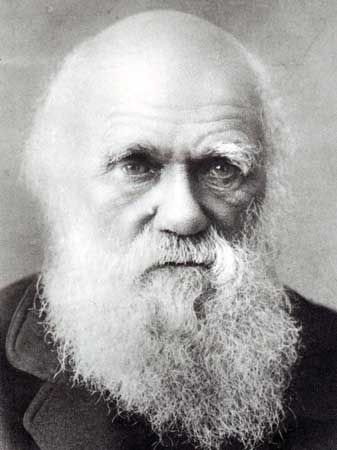


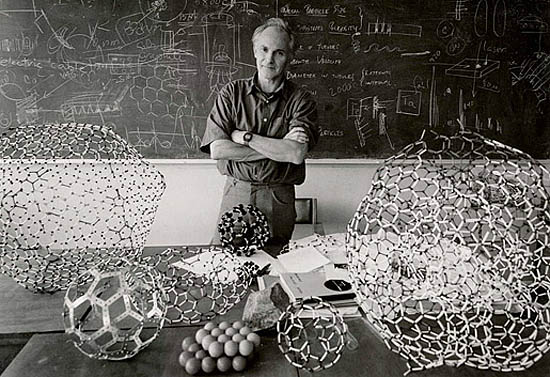


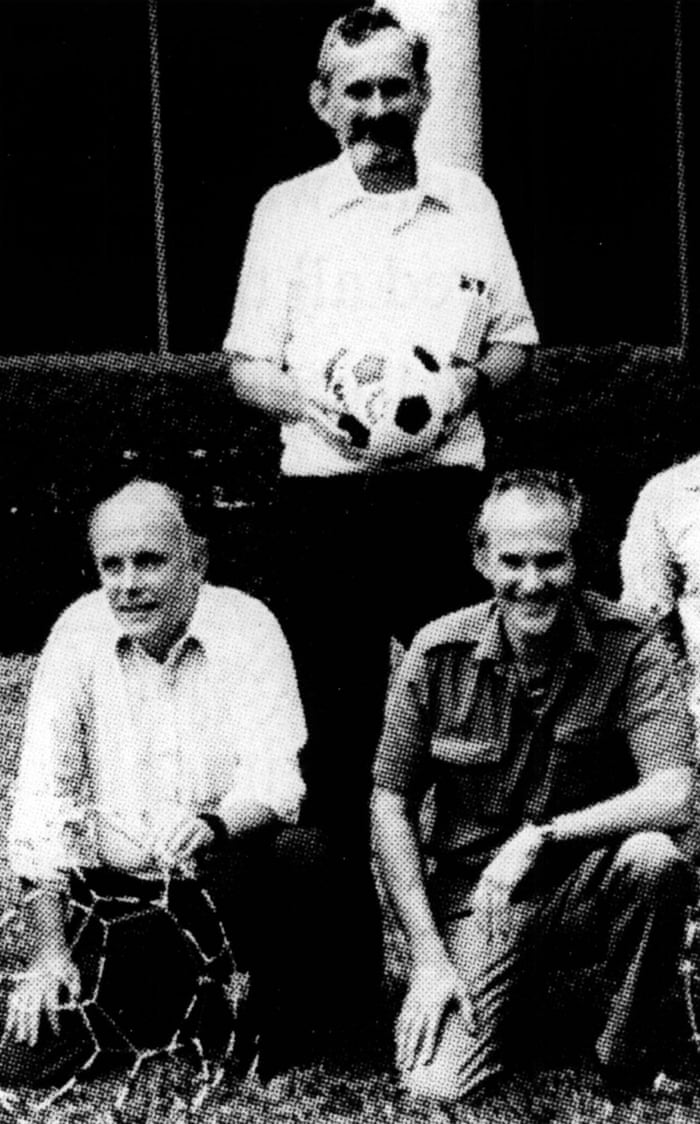


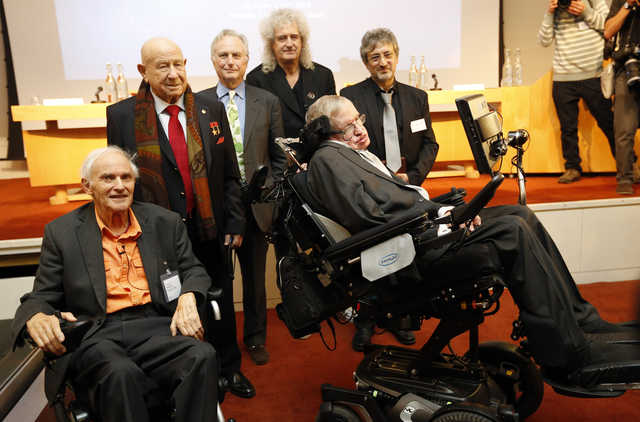

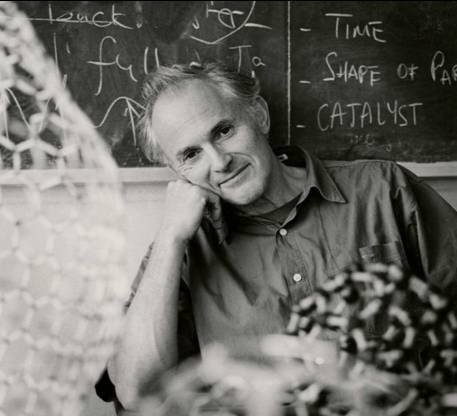
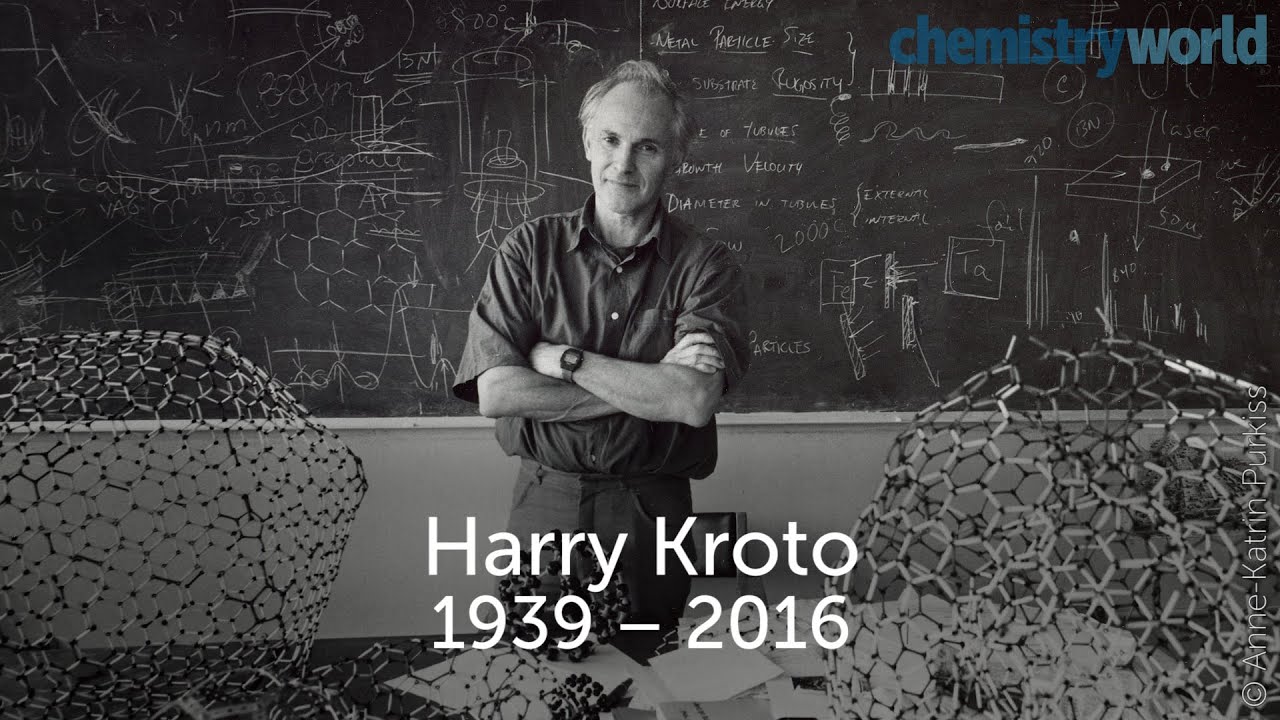



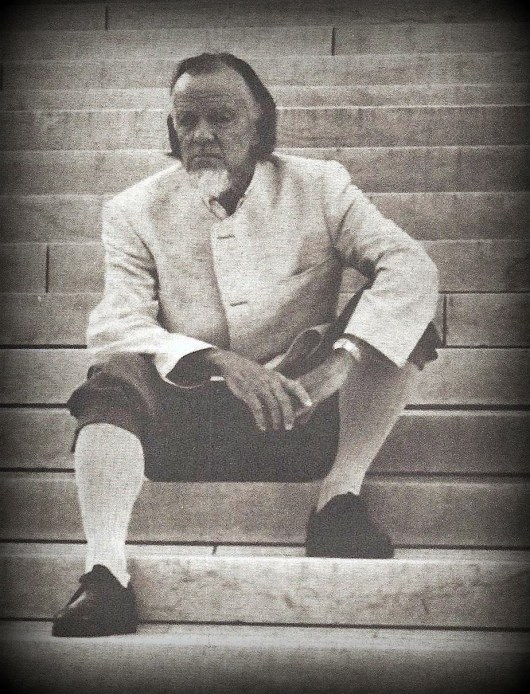




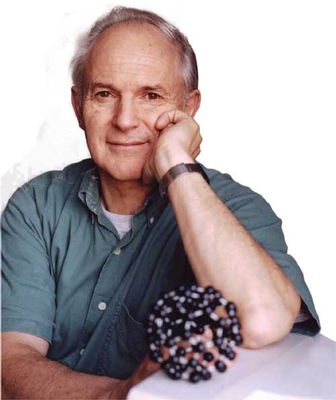 You are a chemist but your first love is graphic design. Is there common ground?
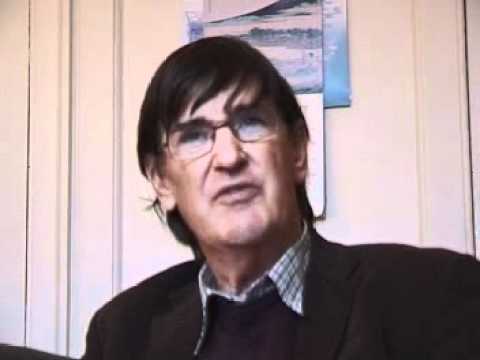
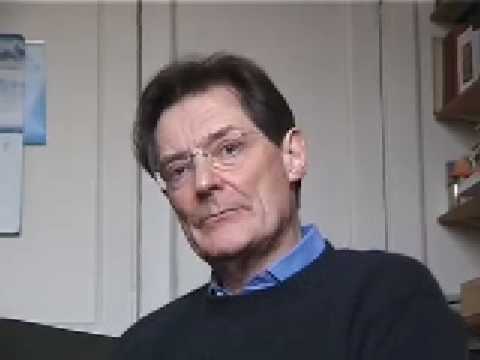




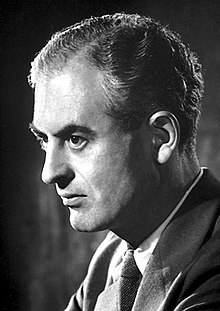







 The Daily Hatch