Larry Elder rebuts candidate’s ‘they’re taking our jobs’ claim
Published: 02/03/2016 at 6:39 PM
One of Donald Trump’s talking points and biggest applause lines is how “they” – Japan, China and Mexico – are “beating us in trade” and are “taking our jobs.” He proposes tariffs, for example, on Chinese goods in retaliation for that country’s alleged “cheating.”
To someone who is out of work in an industry where foreign workers do what he or she once did, Trump-like protectionism sounds appealing. But Trump actually proposes punishing the American consumer. As economist Milton Friedman says, protectionism discriminates against low prices.
It is certainly true that many countries prop up or subsidize companies or even whole industries by providing capital or special privileges. This allows them to produce goods and services “below cost” – or at prices below what a competitor could charge and still make a profit. But doing so also means that taxes in that country, which could have gone to a more productive use, are squandered to keep a company in business that otherwise wouldn’t exist or would have gone out of business. This means consumers in other countries with which the “cheater” country trades can buy those imported goods at a cheaper price.
Trump proposes to retaliate by placing tariffs on those imported goods. But this prevents American consumers from benefiting from the “cheater” country’s folly of propping up companies that would not survive but for the taxes spent to keep it alive. Why compound the stupidity?
Another justification for this kind of protectionism is that a foreign country “exploits” America through the use of “slave labor” which, as to wages, causes a “race to the bottom.” Certainly forced labor, as when “blood diamonds” are mined by workers with guns pointed to their heads, is criminal and immoral. But free laborers offering to work for less money than others is how poor countries become wealthier – by allowing other countries to buy goods more cheaply.
NAFTA, the North American Free Trade Agreement, established in 1994, has become exhibit A on how “we lose” on trade. After all, many American jobs have been “outsourced” to Mexico. But that looks at but one side of the ledger. That an American pays less for certain things frees up capital to spend on something or on someone else. A machinist sees his job “shipped to Mexico,” but the planner or analyst hired by a company with the “savings” might not see the direct relationship between free trade and the fact that he or she has this new job. When NAFTA was debated, businessman and presidential candidate Ross Perot predicted “a giant sucking sound” as jobs and incomes would be lost to Mexico.
The American Enterprise Institute writes: “It is an article of faith among protectionists that NAFTA harmed American workers. … The justification may be that NAFTA went into force at the beginning of 1994 and the U.S. trade balance with Canada and Mexico, two of our top partners, then deteriorated.
“But the American job market improved as these trade deficits grew. Unemployment fell more than two points from the beginning of 1994 through the middle of 2000. Already high labor force participation edged higher to its all-time record by early 2000. Manufacturing employment rose until mid-1998 and was above its pre-NAFTA level until April 2001. Manufacturing wages rose. The strength in the American job market from 1994 to 1999 is not due primarily to NAFTA, but it is plain that the job market, including manufacturing, strengthened after NAFTA.”
Trump is also schizophrenic on this issue. On the one hand, he opposes illegal immigration, which most often is an economic decision where, for example, a poor, unskilled worker from Mexico sneaks into America to make money. On the other hand, Trump deems it unfair and a form of “cheating” if an American company relocates to or builds a factory in Mexico to take advantage of that unskilled Mexican worker’s willingness to work for less.
If Trump were talking about the excessive taxes or regulations that induce American companies to leave the U.S. or to put factories in foreign countries, that would be one thing. The U.S. general top marginal corporate income tax rate is the highest in the industrialized world – and, worldwide, is only exceeded by Chad and the United Arab Emirates. Unnecessary regulations also increase the cost of doing business stateside. But this is not Trump’s argument.
About free trade, the father of modern economics, Adam Smith, in 1776 wrote in “The Wealth of Nations”: “In every country it always is and must be in the interest of the great body of the people to buy whatever they want of those who sell it cheapest. The proposition is so very manifest that it seems ridiculous to take any pains to prove it; nor could it ever have been called in question had not the interested sophistry of merchants and manufacturers confounded the common sense of mankind. Their interest is, in this respect, directly opposite to that of the great body of the people.”
Milton Friedman’s FREE TO CHOOSE “The Tyranny of Control” Transcript and Video (60 Minutes) In 1980 I read the book FREE TO CHOOSE by Milton Friedman and it really enlightened me a tremendous amount. I suggest checking out these episodes and transcripts of Milton Friedman’s film series FREE TO CHOOSE: “The Failure of Socialism” and […]
In 1980 I read the book FREE TO CHOOSE by Milton Friedman and it really enlightened me a tremendous amount. I suggest checking out these episodes and transcripts of Milton Friedman’s film series FREE TO CHOOSE: “The Failure of Socialism” and “What is wrong with our schools?” and “Created Equal” and From Cradle to Grave, […]
In 1980 I read the book FREE TO CHOOSE by Milton Friedman and it really enlightened me a tremendous amount. I suggest checking out these episodes and transcripts of Milton Friedman’s film series FREE TO CHOOSE: “The Failure of Socialism” and “What is wrong with our schools?” and “Created Equal” and From Cradle to Grave, […]
In 1980 I read the book FREE TO CHOOSE by Milton Friedman and it really enlightened me a tremendous amount. I suggest checking out these episodes and transcripts of Milton Friedman’s film series FREE TO CHOOSE: “The Failure of Socialism” and “What is wrong with our schools?” and “Created Equal” and From Cradle to Grave, […]
In 1980 I read the book FREE TO CHOOSE by Milton Friedman and it really enlightened me a tremendous amount. I suggest checking out these episodes and transcripts of Milton Friedman’s film series FREE TO CHOOSE: “The Failure of Socialism” and “What is wrong with our schools?” and “Created Equal” and From Cradle to Grave, […]
In 1980 I read the book FREE TO CHOOSE by Milton Friedman and it really enlightened me a tremendous amount. I suggest checking out these episodes and transcripts of Milton Friedman’s film series FREE TO CHOOSE: “The Failure of Socialism” and “What is wrong with our schools?” and “Created Equal” and From Cradle to Grave, […]
In 1980 I read the book FREE TO CHOOSE by Milton Friedman and it really enlightened me a tremendous amount. I suggest checking out these episodes and transcripts of Milton Friedman’s film series FREE TO CHOOSE: “The Failure of Socialism” and “What is wrong with our schools?” and “Created Equal” and From Cradle to Grave, […]
In 1980 I read the book FREE TO CHOOSE by Milton Friedman and it really enlightened me a tremendous amount. I suggest checking out these episodes and transcripts of Milton Friedman’s film series FREE TO CHOOSE: “The Failure of Socialism” and “What is wrong with our schools?” and “Created Equal” and From Cradle to Grave, […]
Open letter to President Obama (Part 654) (Emailed to White House on July 22, 2013) President Obama c/o The White House 1600 Pennsylvania Avenue NW Washington, DC 20500 Dear Mr. President, I know that you receive 20,000 letters a day and that you actually read 10 of them every day. I really do respect you […]
Open letter to President Obama (Part 650) (Emailed to White House on July 22, 2013) President Obama c/o The White House 1600 Pennsylvania Avenue NW Washington, DC 20500 Dear Mr. President, I know that you receive 20,000 letters a day and that you actually read 10 of them every day. I really do respect you […]
The Beatles spent the whole decade of the 1960’s searching for meaning in life and they tried several possible solutions but what areas did they probe in and what solutions if any did they come up with? Francis Schaeffer studied Beatles’ lives and music extensively and he weighs in on this.
_
Francis Schaeffer (1912-1984) was a Christian and a philosopher who also took a deep interest in the trends in culture in the 1960’s and he spent a lot of time analyzing the Beatles search for meaning and values in life. Here is a summary statement he had on the Beatles:
The Beatles have showed us what has occurred [in the last years of the 1960’s in the culture.] The Beatles with Sergeant Pepper’s Lonely Hearts Club Band which incidentally was a very good piece of total art in the sense that it was an unit, they had many songs on this album but the songs all made one message and the whole album was an unit, and the way the songs were arranged.
(Francis Schaeffer holding up Sergeant Pepper’s Lonely Hearts Club Band Album in his film HOW SHOULD WE THEN LIVE? Episode 7 (which can be seen on You Tube.
.
It all formed an unit of infiltration of the message of modern man and of the drug culture. In fact, it could be said the drug culture and the mentality that went with it had it’s own vehicle that crossed the frontiers of the world which were otherwise almost impassible by other means of communication. This record, Sergeant Pepper’s Lonely Hearts Club Band, became the rallying cry for young people throughout the world. It expressed the essence of their lives, thoughts and their feelings.
Later came psychedelic rock, an attempt to find this experience without drugs.The younger people and the older ones tried drug taking but then turned to the eastern religions.Both drugs and the eastern religions seek truth inside one’s own head, a negation of reason. The central reason of the popularity of eastern religions in the west is a hope for a nonrational meaning to life and values….
Then the Beatles gradually came home. The last thing we find them doing is the YELLOW SUBMARINE. I sure a lot of parents thought this is much better than the old hard rock, but I thought it was a very sad thing because it really wasn’t a children’s story at all, but what it was in fact was a romantic statement and the fact is that is all there is. Just the same as [Ingmar] Bergman after he makes the movie SILENCE [1963] then he makes a comedy [ALL THESE WOMEN in 1964]. It is the same as Picasso when he pictures his child as a clown [Paul in a Clown Suit, 1924].
YELLOW SUBMARINE
So we find the Beatles making the YELLOW SUBMARINE, but there is something more to it than this because Erich Segal made his reputation by writing the script for the movie version of YELLOW SUBMARINE and then he went on and wrote LOVE STORY. So what we have done is we have come around in a big circle. There was the destruction of the romantic. Students in the 1960’s said we are tired of the romantic of giving us optimistic statements with no sufficient base.
So the Beatles destroyed that and then they went through these various trips into non-reason but when they came out they had nothing left but the romantic. This is the tragedy of the young people starting with Berkeley in 1964. How right they were in saying we have largely a plastic culture. This is something the church should have been saying. These students said give us reality. Then the students tried those trips and they weren’t trips based on reality but they were separated from reason. It was trying to find answers in one’s own head whether it was the drug trip or the Eastern Religion trip. Then they came around in a big circle and what do we find–we end up with Segal’s LOVE STORY, just the romantic thing as one can imagine but with no adequate base at all, yet giving us a lovely romantic answer, which just like the YELLOW SUBMARINE is very, very sad because the Beatles and young people were giving up the search and just accepting something like this.
(Joan Baez sings at Free Speech Movement rally in Berkeley. November 20, 1964)
If we are going to understand the line of despair we must understand that it is an unit saying that reason is not going to take us anywhere. After Jean-Jacques Rousseau, Søren Kierkegaard and the German philosophers Georg Wilhelm Friedrich Hegel, and Immanuel Kant there was an unity that bound all these fields of expressions together. First, it was the philosopher expressing this. Second, it was the artist.Third, it was the musician and lastly it was expressed in general culture. The giving up of hope that on the basis of reason one is going to have optimistic answers is the mark of our age. Any kind of answers to the purpose in life, love morals have nothing to do with reason for modern man. It can be expressed in John Cage’s music or in certain forms of rock music.
You scientists out there who say man is only the atom but a big more complex then you come home to your wife and you say, “I love you.” You want something more than merely sex. Those of you who look to your children with some tenderness and those of you who believe in some morals but you have never settled your score with Marquis de Sade who said it so well WHAT IS IS RIGHT.
(de Sade portrayed in recent movie seen below)
Modern man lives in a dichotomy. Downstairs there is reason which leads to man only being a machine and upstairs there is a some kind of hope against all reason. That great high boast coming out of the Enlightenment that man beginning from himself would gather enough particulars to make his own universal to give adequate answers for life, but it has failed.
Rationalism fails because man is finite and limited.Karl Popper in England can falsify a few things but he can’t verify anything. Alfred Kinsey tells us that all sexual behavior just comes down to sociological statistics. There is not going to be an answer for modern man unless there is something more than modern man beginning from himself, namely that there is a God there and He is not silent.
Karl Popper seen above
Alfred Kinsey seen above
_
Francis Schaeffer has correctly argued:
The universe was created by an infinite personal God and He brought it into existence by spoken word and made man in His own image. When man tries to reduce [philosophically in a materialistic point of view] himself to less than this [less than being made in the image of God] he will always fail and he will always be willing to make these impossible leaps into the area of nonreason even though they don’t give an answer simply because that isn’t what he is. He himself testifies that this infinite personal God, the God of the Old and New Testament is there.
Instead of making a leap into the area of nonreason the better choice would be to investigate the claims that the Bible is a historically accurate book and that God created the universe and reached out to humankind with the Bible. Below is a piece of that evidence given by Francis Schaeffer concerning the accuracy of the Bible.
TRUTH AND HISTORY (chapter 5 of WHATEVER HAPPENED TO THE HUMAN RACE?, under footnote #94)
Consider, too, the threat in the entire Middle East from the power of Assyria. In 853 B.C. King Shalmaneser III of Assyria came west from the region of the Euphrates River, only to be successfully repulsed by a determined alliance of all the states in that area of the Battle of Qarqar. Shalmaneser’s record gives details of the alliance. In these he includes Ahab, who he tells us put 2000 chariots and 10,000 infantry into the battle. However, after Ahab’s death, Samaria was no longer strong enough to retain control, and Moab under King Mesha declared its independence, as II Kings 3:4,5 makes clear:
4 Now Mesha king of Moab was a sheep breeder, and he had to deliver to the king of Israel 100,000 lambs and the wool of 100,000 rams.5 But when Ahab died, the king of Moab rebelled against the king of Israel.
The famous Moabite (Mesha) Stone, now in the Louvre, bears an inscription which testifies to Mesha’s reality and of his success in throwing off the yoke of Israel. This is an inscribed black basalt stela, about four feet high, two feet wide, and several inches thick.
Dimensions: 24 × 16 in. (61 × 40.6 cm) Framed: 26 1/2 × 18 1/2 × 2 1/4 in.
Credit Line: Promised Gift to Crystal Bridges Museum of American Art, Bentonville, Arkansas
Art This Week-At The Modern-David Bates-David Bates Interview
Published on Mar 18, 2014
This week, we visit the The Modern Art Museum of Fort Worth and speak with artist David Bates about his paintings now on view in his exhibition, David Bates. This exhibition is one half of a dual exhibition, made in collaboration with the Nasher Sculpture Center. There you can see his sculptures.
David Bates bounces around a storage room crammed with his art at Talley Dunn Gallery. He’s a bit frazzled, for good reason. It’s November, and he has less than three months to prepare for one of the biggest exhibitions of his life, a retrospective that will be mounted simultaneously at the Nasher Sculpture Center and the Modern Art Museum of Fort Worth. He has been fretting over drafts of the forthcoming exhibition catalog and running back and forth to his foundry in Houston to oversee the casting of new bronzes. Further throwing his life in disarray, Bates is moving his studio. In the storage room, a few blocks south of SMU, paintings cover the walls, sculptures sit on pedestals, yet more paintings and smaller sculptures fill storage racks. Much of the work is recent still lifes, mostly flowers, magnolias in particular. Bates picks up some little bronze skulls and casually tosses one into the garbage with a laugh, a self-deprecating knock on his own work.
Vine, 2011–12 Photographer: Kevin Todora, courtesy Talley Dunn Gallery
Unlike his portraits, which often render the human figure in a virile jangle of angular and confident brushstrokes, Bates has a rounded, unassuming, almost nondescript appearance. He’s cheery and approachable, given to affecting accents when he tells stories, taking particular delight in tales of clueless curators describing his Southern landscapes and portraits of Gulf Coast fisherman hunched over dragnets.
“They’d say, ‘Ham-handed, clumsy, sort of stupid shapes and forms, Cro-Magnon drawing style, lots of big black lines,’ ” he says. “And I’m like, well, none of that sounded good, but I do agree with you.”
For someone who has managed a 35-plus-year career, the 61-year-old artist has surprisingly little patience for the lingo and pretension that typify the world of contemporary art. Rather, when Bates talks about painting, it sounds more like fishing. There’s a strategy and a process, best learned by receiving wisdom passed down through generations. At first glance, his work can look startlingly old-fashioned. Throughout his career, he has returned again and again to the most traditional forms of painting: still lifes, portraits, and landscapes. And yet it is precisely this approach that has won him a reputation as a maverick. He is the rare interpreter of flowers, sculptor of busts, and etcher of majestic birds that the art world hasn’t shunned. To the contrary, he has racked up nearly every accolade it can bestow upon an artist. He has been exhibited by major biennials, collected by the biggest museums, and acquired by important collectors. His acceptance, however, has come with a full measure of skepticism.
“In fashionable art-world circles the paintings of David Bates are considered conservative if not reactionary or, at best, guilty pleasures, if they are considered at all,” wrote the New York Times’ co-chief art critic, Roberta Smith, in 2006. “If I wanted to signal my agreement I would say that I like them against my better judgment, but in truth I just like them.”
It is easy to like Bates’ art. In fact, some of the skepticism about his work seems to spring from the fact that it is almost too easy to like Bates’ art, even without knowing much about contemporary art. It almost seems as if Bates pulled one over on the art world. His career began in New York in the late 1970s, a particularly heady time in the history of art. Then Bates turned his back on it. He returned to his hometown of Dallas, where he set about painting his birds and landscapes. Remarkably, that’s how he became the most successful artist this city has ever produced.
•••
A four-hour drive northeast of Dallas, Grassy Lake might as well be on another planet. It’s a murky virgin cypress swamp filled with mud, muck, shrubs, and thickets. From its black waters, a thick forest of bald cypress trees rises up, each as straight as a telephone pole, with bony little knees jutting out from the trunks. Grassy Lake is not hospitable to human life, but the wetlands are fecund. Hunters and fisherman have built rickety cabins that sit on thin wooden piers driven into the muddy lake bottom. The swamp teems with bass, catfish, ducks, geese, and migrating heron and ibises. There’s little solid ground, save thin strips of sticky mud where alligators sun themselves. It is a wild and mysterious place, perhaps the closest place to Dallas that feels the farthest thing from it. For Bates, Grassy Lake is an artist’s paradise.
Magnolia, 2013 Photographer: Kevin Tadora, courtesy Talley Dunn Gallery
He first came to Grassy Lake in 1982, led here by Dallas arts patron Claude Albritton. At the time, Bates was an artist and adjunct professor at SMU, Eastfield College, El Centro, and Richland. After receiving his master of fine arts degree and studying for a year at the Whitney Museum of American Art in New York, he had returned to his hometown disenchanted with the money- and career-driven frenzy of New York. On weekends and during the summer, he would strike out from Dallas to places like Grassy Lake to paint, stepping into waders and slogging through the muddy waters, sketchbook in hand.
“What Grassy Lake gave me … was the understanding about how nature and art work together,” Bates told the Modern Art Museum of Fort Worth curator Michael Auping in an interview. “The Cezanne-Monet-Courbet lesson in real time.”
It was an unlikely existence for a kid who grew up in suburban Garland. His father was a traveling salesman for a sportswear company. His mother had studied at the Art Institute of Chicago before settling into suburban domesticity, taking up an interest in 1950s interior design and Asian flower arrangements. When Bates was a boy, his mother brought him to art classes at the Dallas Museum of Art, where he was exposed to work by the Dallas Nine and Texas Regionalist painters such as Jerry Bywaters and Otis Dozier, artists who shunned the European stronghold on American modernism in the 1930s for vernacular landscapes of the Southwest.
“American art, the way I remember it from when I was younger, it was bold,” Bates says. “It was ‘I don’t give a shit about how y’all do it over in Europe. This is how we do it.’ ”
But Bates wasn’t a very good student. (“They didn’t have dyslexia back then,” he says. “You were just slow.”) His real passion was fishing. During the summers, Bates’ father would take the family down to the Gulf Coast, where he would roam the beaches and haunt the bait shops. But he also showed promise as a draftsman. After graduating from Garland High School, he took art classes at Eastfield Community College. His professors encouraged him to apply to SMU. He got a scholarship and studied with the painter Roger Winter. “He was the link between Bywaters, Dozier, and that stuff and me,” Bates says.
LIFE’S WORK: David Bates in his studio Photography by James Bland
In his mature work, one can see connections between this legacy and Texas regionalism, which, like Bates’ work, drew inspiration from early Renaissance art and American folk art. In the 1970s, though, Bates hadn’t found his own style, and Dallas art was more interested in so-called Texas Funk, which blended vernacular Texas idioms with psychedelic and pop art (and included artists such as Bob “Daddy-O” Wade and the Oak Cliff 4). The artist Julian Schnabel lived in Dallas at the time, working as a line cook at The Grape before moving to New York in the 1980s and becoming one of art’s biggest stars. Schnabel had just finished studying at the Whitney Museum of American Art’s prestigious independent-study program, and he encouraged Bates to apply. The kid from Garland was surprised when he was accepted. “Later they said, ‘It’s so good you didn’t come here for an interview, brother,’ ” Bates recalls, affecting an ironic, King of the Hill-style Garland drawl. “They would have never let your ass in.”
Bates’ time in New York was intense and bewildering. In the late 1970s, painting was dead again; video, performance, text, and other conceptual-based forms reigned. The students in Bates’ class at the Whitney program, including feminist conceptual artist Jenny Holzer, visited different artists every day. “It would be Alice Neel one day and Richard Serra the next day,” Bates says. “They would all come in and tell you how to do it, and any other way to do it was fucking bullshit.”
Bates’ paintings take up subjects with similar sensitivity of folk ballads and blues songs, Faulkner novels and Horton Foote plays.
Bates made video art and wrote performance pieces and plays. The performance artists Sylvia and Robert Whitman, whom Bates had met when they were in Dallas in 1974 as part of the DMA’s “Poets of the Cities” exhibition, gave the young artist a place to stay in New York. Bates liked the city, but after a year, the grind began to wear him down. “It was all how to get famous, how to fit in, and how to find your niche within this art world,” Bates says. “I thought, ‘This isn’t my deal.’ It was too based in what I should be doing.”
The problem was that Bates still wasn’t sure what he wanted to do. He had a hunch, though, that he could figure that out back home in Dallas. “I came back, and I told Bob Murdoch, who was curator at the Dallas museum at the time, ‘Okay, man, I have a play for you. I have a performance. I have some videos,’ ” Bates says. “I was like, ‘Look, dude, I’m just trying to enlighten you with some brilliance from New York.’ ”
After returning from New York, though, Bates began to find the art that would really draw him in. He was teaching at a number of local colleges and audited a full slate of art history courses. He also met the artist and his future wife, Jan Lee McComas. McComas’ work drew from a heavy folk art influence, and that kind of work, often created by self-taught painters, rural mystics, and other outsider artists, helped reacquaint Bates with the simple pleasure and sense of play in making art.
“That’s the thing with those folk artists; they don’t care,” Bates says. “They are just taking some paint and throwing it around and seeing what it looks like. And those early Renaissance people were folk artists. Giotto. They didn’t know how to do that stuff. They have these profiles, and it’s just a two-dimensional face. They loved the charm of that.”
Bates was set. He had a good teaching job and didn’t have to worry about selling work to pay the bills. He had time to explore the countryside and experiment with new forms and techniques. His paintings during this period mix folk motifs, like the abstract patterns of quilts, with scenes reminiscent of European primitivism, painters like Henri Rousseau and Paul Gauguin. Meanwhile, the Dallas art scene was diversifying. The institution that would become The Dallas Contemporary opened, as did the state’s first artist-run cooperative, 500x. DW Gallery, which had started as an all-female art collective, gave Bates a solo show in 1981 that created a local stir.
A year later, he discovered Grassy Lake and began painting it in earnest. Bates’ career took off. In 1983, his work was included in exhibitions at the Contemporary Arts Museum in Houston and the New Orleans Museum of Art, and he was chosen for the 38th Corcoran Biennial in Washington, D.C., an exhibition of American painters that proved life changing. His work would be picked up by former Artforum editor Charles Cowles’ gallery in New York and purchased by the Metropolitan Museum of Art. By the end of 1984, his work was also in the collections of the Dallas Museum of Art and the New Orleans Museum. Success allowed him to quit his teaching job and focus full time on painting. For the next decade, he would regularly return to Grassy Lake.
•••
In the art publisher Phaidon’s Art USA, an anthology of American artists, Bates is represented by an image of his painting called Anhinga. It depicts a snakebird perched on a branch that bends over a watery landscape with an almost toxic glow. The bird’s long neck twists upward, pinching a tiny fish in its thin beak, holding the little critter high to soot-black clouds that gather ominously over the spiny trees of Grassy Lake. The text accompanying the image says that Bates “pictures the inhabitants of his hometown of Dallas, Texas.” For anyone who knows Dallas, the description reads like a punch line.
Bates doesn’t paint pictures of Dallas. In fact, his travels to unfamiliar locales are integral to his process. He visits places that inspire him—the swamp, the Gulf Coast—learning the lay of the land, befriending locals, accompanying fishermen on their shrimp boats, sketchbook in hand. Just as Gauguin traveled the South Pacific to watch the islanders and make paintings of their daily lives, so has Bates drawn from Texas, Arkansas, and Louisiana versions of these subjects, people like the Grassy Lake fisherman Ed Walker. Flipping through Bates’ catalog, he is more likely to tell you a story about the person or the dog in the image than to go on about composition or form.
Likewise, it seems just as important to Bates that his work be understood by the people he paints. “What’s that, a painting of a beer and shrimp and cigarettes?” Bates says, affecting the accent of an imaginary Texan encountering one of his paintings. “Love it. I’ve had a shitload of that in my life. I’ll take that painting.”
Man with Snake, 1995 Photographer: Tom Jenkins, courtesy Modern Art Museum of Fort Worth
In his sculpture, the use of found materials, such as cardboard, wood, and rebar, push his work toward abstraction, while taking up nuanced concepts about the use of everyday materials in art. But Bates makes light of attempts to read too much into these works. “I think 90 percent of the people would come in here and say, ‘Wait a minute, let me get this straight. This is the stupid stuff, and this is the smart stuff?’ ” he says, falling back into that exaggerated Hank Hill impersonation. “ ‘Okay, I’m just seeing a block of plaster with a little face on it. Maybe. Over here, it looks like I can see everything.’ ”
However, as much as Bates avoids intellectualism and admires the honesty and innate approach of the self-taught folk artists, he has a deep knowledge of art history, and the work of the past looms over his practice. In the corner of the storage room at Talley Dunn, there stands a sculpture of a nude woman posed with her arm arched above her head. It is an unmistakable quote from Pablo Picasso’s Les Demoiselles d’Avignon. It’s this engagement with the monumental artistic talents of the past that caught Nasher director Jeremy Strick’s eye.
“His historical ambitions become clear when viewed over the length of his career,” Strick says. “When he first emerged, on the one hand, there was such facility as a painter. On the other hand, the subject matter was so distinctly his own—effectively regional. And there was a relationship to folk art and folk imagery. The broader art-history ambitions weren’t as evident, but over time, he has taken on genre after genre.”
Bates has always tackled the “jazz standards” of painting—still lifes, landscapes, and portraits—but his more recent critical acclaim came when he created a series of paintings in the aftermath of Hurricane Katrina. In these works, Bates’ naturalistic romanticism gives way to a more singular emotional plea. His works are melodramatic—almost sentimental, teetering on voyeuristic—and yet what is striking is that they play in such contrast to the more sanitized and diffused visions of New Orleans in the days after Hurricane Katrina that made it onto the television airwaves. Somehow Bates found a gap in the news cycle’s continuous bombardment of reported images, where painting could find a place to, once again, tell its own version of history.
Bates has created a space for himself as an artist. He draws heavily from folk art, but he is not a folk artist. As much as he eschews high art pretension, he is working in dialogue with the breadth of art history. “Certain artists seem to be very connected to their place,” Strick says. “Their work speaks to something of that place, but you wouldn’t qualify them as regional. There is something that is quite distinctive and personal in Bates’ work, but there’s all kinds of modernist or even postmodern elements to the way he works: the subject matter, repetition, appropriations, the use of materials. All of those things put him in the contemporary world, even if he is an artist that made a choice to come back to Dallas. That reflects a desire to preserve and nurture his own identity at some remove from the contemporary art world.”
Bates embraces his sense of place, his position on the outside. And yet he’s bemused that there is a place inside and outside art in the first place. How is it, he wonders, that the South can be loved for so many of its cultural contributions, but art, somehow, doesn’t have a place in that conversation?
“It’s always been interesting to me in the South,” he says. “They have such a culture of writers, food, music, jazz, blues—all of it comes from down there. All of that stuff is so sophisticated, and so where’s the visual art team? Well, we all picked up and moved to New York because we didn’t want to sit around here and be losers.”
The Dock Builder, 1987 Photographer: Lee Cockman, courtesy Modern Art Museum of Fort Worth
The South resonates in Bates’ work, in its subjects and settings, in its charm, wit, humor, and narrative. The paintings take up subjects with similar sensitivity of folk ballads and blues songs, Faulkner novels and Horton Foote plays. It is precisely this affinity with the narrative of Southern culture that plays into Bates’ status as a semioutsider.
“The New York Times will review cooking from Louisiana, and they love going down and hearing some jazz, and will review music from Nashville, Austin,” he says, and then takes up a haughty voice of an imaginary editor. “But when it comes to ballet, symphony, or the fine arts, that’s where we stop. Now, y’all don’t know shit about that. Making ribs, whatever. But painting, dance. If you’re serious about that, you need to bring it up here. You can join the big leagues or quit. And you go, ‘Really?’ ”
Bates takes a rare pause, and then he laughs. He knows what he has done. We’re sitting surrounded by work that will soon decorate the walls of two museums. We’re flipping through a catalog that spans a career that has taken him into swamps and shrimp boats, museums and biennale pavilions alike. He had to fight through dismissiveness and ambivalence. But in the end, David Bates challenged conventional wisdom and won. Do you need to bring it up to the big leagues? Really? What big leagues are you talking about?
“I know it sounds like a loser from the flyover area, but every decade it seems a little bit more makeable,” he says, “that some guy can not show up to the party and say, ‘I’m going to have my own fucking party.’ ”
_____________ The Beatles were looking for lasting satisfaction in their lives and their journey took them down many of the same paths that other young people of the 1960’s were taking. No wonder in the video THE AGE OF NON-REASON Schaeffer noted, ” Sergeant Pepper’s Lonely Hearts Club Band…for a time it became the rallying cry for young people throughout […]
SGT. PEPPER’S LONELY HEARTS CLUB BAND ALBUM was the Beatles’ finest work and in my view it had their best song of all-time in it. The revolutionary song was A DAY IN THE LIFE which both showed the common place part of everyday life and also the sudden unexpected side of life. The shocking […]
_ The Beatles wrote a lot about girls!!!!!! The Beatles – I Want To Hold your Hand [HD] The Beatles – ‘You got to hide your love away’ music video Uploaded on Nov 6, 2007 The Beatles – ‘You got to hide your love away’ music video. The Beatles – Twist and Shout [live] THE […]
__________ Melanie Coe – She’s Leaving Home – The Beatles Uploaded on Nov 25, 2010 Melanie Coe ran away from home in 1967 when she was 15. Paul McCartney read about her in the papers and wrote ‘She’s Leaving Home’ for Sgt.Pepper’s. Melanie didn’t know Paul’s song was about her, but actually, the two did […]
__________________ A Funny Press Interview of The Beatles in The US (1964) Funny Pictures of The Beatles Published on Oct 23, 2012 funny moments i took from the beatles movie; A Hard Days Night ___________________ Scene from Help! The Beatles Funny Clips and Outtakes (Part 1) The Beatles * Wildcat* (funny) Uploaded on Mar 20, […]
_____________________ Great article on Dylan and Sergeant Pepper’s Lonely Hearts Club Band Cover: A famous album by the fab four – The Beatles – is “Sergeant peppers lonely hearts club band“. The album itself is one of the must influential albums of all time. New recording techniques and experiments with different styles of music made this […]
__________________________ Beatles 1966 Last interview 69 THE BEATLES TWO OF US As a university student, Karl Marx (1818-1883) joined a movement known as the Young Hegelians, who strongly criticized the political and cultural establishments of the day. He became a journalist, and the radical nature of his writings would eventually get him expelled by the […]
____________ Aleister Crowley on cover of Stg. Pepper’s: _______________ I have dedicated several posts to this series on the Beatles and I don’t know when this series will end because Francis Schaeffer spent a lot of time listening to the Beatles and talking and writing about them and their impact on the culture of the 1960’s. […]
(HD) Paul McCartney & Ringo Starr – With a Little Help From My Friends (Live) John Lennon The Final Interview BBC Radio 1 December 6th 1980 A young Aldous Huxley pictured below: _______ Much attention in this post is given to the songs LUCY IN THE SKY WITH DIAMONDS and TOMORROW NEVER KNOWS which […]
Foster the People is an American indie pop band formed in Los Angeles in 2009. The group is composed of Mark Foster (vocals, keyboards, piano, synthesizers, guitar, programming, percussion) and Mark Pontius (drums, percussion).[2] The group’s music, described as melodic dance-infused pop and rock, spans many genres.
Foster founded the band in 2009 after spending several years in Los Angeles as a struggling musician and working as a commercial jingle writer. After Foster’s song “Pumped Up Kicks” became a viral success in 2010, the group received a record deal from Startime International and gained a fanbase through small club shows and appearances at music festivals. After releasing their debut albumTorches in May 2011, “Pumped Up Kicks” became a crossover hit on commercial radio in mid-2011 and eventually reached number three on the Billboard Hot 100.[3] The record also produced the popular singles “Helena Beat” and “Don’t Stop (Color on the Walls)“. The group received two Grammy Award nominations for Torches and “Pumped Up Kicks”.
After touring for two years in support of Torches, Foster the People released their second album, Supermodel, in March 2014. It was preceded by the lead single “Coming of Age“.
Background and formation (Mark’s early years–2009)[edit]
Mark Foster founded the group in Los Angeles in 2009 after years as a struggling musician.
Mark Foster graduated from Nordonia High School[4] in the suburbs of Cleveland, Ohio. At his father’s encouragement, Foster moved in with his uncle in Sylmar, Los Angeles, California to pursue a career in music. Foster worked various jobs and at night, he attended parties in Hollywood to expand his social network. He said, “I felt like an 18-year-old Hunter S. Thompson. I was just diving into this Hollywood Hillssubculture and taking it all in. I wasn’t shy about taking my guitar out at a party. I wanted to be the center of attention.”[5] At one time, he roomed with actor Brad Renfro.[6] Foster struggled with drug addiction during his initial years in Los Angeles, saying, “It got pretty dark. My friends thought I was going to die. I was blind to it. When I was 19 years old, it got to a point where I said, ‘Enough is enough’ … I saw time was just passing me by. I wasn’t being productive.”[7]
Several attempts at founding a band proved unsuccessful. After turning 22, he says he was contacted by Aftermath Entertainment about showcasing his musical talents, but the opportunity ultimately fell through. For the next few years, Foster waited tables at a cafe while dealing with writer’s block, but he remained in Los Angeles after landing a job as a commercial jingle writer for Mophonics in 2008.[5][8] He said of the profession, “I definitely learned from the commercial standpoint what works,”[7] and he credited it with reviving his confidence in performing.[5] The music Foster wrote spanned a wide range of genres, but he had difficulty reconciling his eclectic compositions. He explained: “I’d write one song and it’d be a hip-hop song. I’d write another and it’d be heavily electronic. Another would be like a spiritual, and another would be classic piano song. I was constantly trying to pull those elements together. It took me six years to do it.”[7] He still wished to be part of a group; reflecting on a residency he did at a venue performing electronic music, he said, “It was just me and a laptop. Really, it was terrible. I knew I needed a band.”[5]
Foster the People was born out of a nascent relationship with drummer Mark Pontius, a film school student who left his group Malbec in 2009 to found a band with Foster.[5][9] Pontius was impressed by the number and diversity of songs that Foster had written to that point, saying, “Some were on the guitar, and some were on the computer. But it was this really awesome singer-songwriter thing with a tricked-out beat, and I felt we could go wherever we wanted with this.” The group added a bassist, Foster’s long-time friend Cubbie Fink, who lost his job at a television production company during the recession.[5][9] Mark Foster originally named the band Foster & the People, but people misheard it as “Foster the People”. Eventually, he took to the nurturing image it evoked of “taking care” of people, so the name stuck.[6]
Initial attention of “Pumped Up Kicks” and record deal (2010)[edit]
Not long after the group formed, Foster wrote and recorded a song at Mophonics called “Pumped Up Kicks“, which eventually proved to be the band’s breakthrough. After Foster posted the song on his website as a free download in early 2010, it drew considerable attention; Nylon magazine used the track in an online advertising campaign,[10] and through various blogs, it went viral.[11] The group, yet to be signed, garnered buzz with performances at the South by Southwest music festival in March 2010.[12][13] Foster was emailed by many people about “Pumped Up Kicks”, and needing professional guidance, he contacted artist manager Brent Kredel at Monotone, Inc. in March, saying, “Everyone is calling me and emailing me—what do I do? Who are the good guys, who are the bad guys?” Kredel recalled that “He went from the guy who couldn’t get a hold of anyone to being the guy who had hundreds of emails in his inbox.” Kredel and Brett Williams were subsequently hired to co-manage Foster the People, and they arranged meetings for the band with several record labels, including Warner Bros., Atlantic, Columbia, and Universal Republic. In May 2010, the band was signed to the Columbia imprint Startime International in a multi-album deal. The deal did not involve ancillary rights. Foster controls publishing of the songs in North America, while a separate 2010 deal with Sony/ATV Music Publishing controls publishing outside of North America.[10]
After Foster the People signed their record deal, Kredel said, “The focus was to stop everything and not work on any marketing or touring, but to make an album that backed up ‘Pumped Up Kicks.'” Wishing to avoid burnout, Startime allowed the group to pace themselves and not rush an album that would cash in on the popularity of the song. Isaac Green of Startime said, “You can’t control everything, but you can be meticulous about the music.” From July to September 2010, the group wrote new material that would appear on their debut album, and they chose Paul Epworth, Rich Costey, and Greg Kurstin to co-produce the record with Mark Foster.[10] In September, “Pumped Up Kicks” was released as the group’s debut single.[citation needed]
Without much experience as a live act, Foster the People were booked in October 2010 to play several club shows “to help them get their sea legs”. Booking the group proved difficult, as concert promoterswere hesitant about an artist without previous touring experiences. Foster the People promoted these concerts by emailing fans who had downloaded “Pumped Up Kicks” from their website about the shows. In early 2011, the band was booked to perform in a much sought-after tent at April’s Coachella Valley Music and Arts Festival. Meanwhile, the group continued to grow its fanbase with a month-long residency of concerts in January at The Echo nightclub in Los Angeles. According to booking agent Tom Windish, by the group’s third show at the venue, “there were hundreds of people trying to get in outside…. It was an obvious turning point that could be measured in numbers.” The residency also drew the attention of music supervisors in attendance who would later help the group license their music.[10]
Foster the People issued its first commercial non-single release in January 2011, a self-titled EP featuring “Pumped Up Kicks”, “Houdini“, and “Helena Beat” that was intended to hold fans over until their first studio album, Torches, was completed. Fans who purchased the EP through the iTunes Store were able to apply it towards the purchase of their full-length debut album. The EP drew the attention of organizers of March’s South by Southwest festival, as well as executives looking to license music for upcoming season finales of television series. Columbia senior director of creative licensing Jonathan Palmer said, “The plan helped us a great deal to set up more opportunities rather than chasing the release date. So by the time we put the record out in May, we had already placed several songs.” Half of Torches‘ songs were licensed—among them are: “Pumped Up Kicks” (Gossip Girl, The Vampire Diaries, Friends with Benefits, Entourage), “Houdini” (Gossip Girl); “Helena Beat” (The Vampire Diaries); “Don’t Stop (Color on the Walls)” (Suits, Nissan Motors commercial); and “Call It What You Want” (FIFA 12). Palmer commented, “I haven’t seen this kind of a range of song licenses from one album since we worked the first Ting Tingsrecord three-and-a-half years ago. That was an album where we licensed nine or [all] 10 songs on the album. We’re kind of in a similar situation [with Torches].”[10]
Breakthrough of “Pumped Up Kicks” and release of Torches (2011–12)[edit]
Foster the People performing in Colorado in June 2011
Beginning in July 2010, Sirius XM satellite radio’s Alt Nation channel began playing Pumped Up Kicks, followed by many alternative radio stations including Los Angeles terrestrial stations KROQ-FM and KYSR in January 2011.[14][15] Mark Foster credits Sirius XM’s airplay with the song’s success, saying, “Alt Nation played our music before any other radio outlet in the country.”[16] On January 29, the song debuted on Billboard‘sRock Songs chart and a week later, it debuted on the Alternative Songs chart. In May, the track debuted at number 96 on the Billboard Hot 100, and later that month, the group released their first full-length studio album, Torches. The success of “Pumped Up Kicks” and appearances on many late-night talk shows, including Last Call with Carson Daly, The Tonight Show, Jimmy Kimmel Live!, and The Late Late Show with Craig Ferguson, helped the record debut at number eight on the Billboard 200.[10] To promote the album, the group undertook a concert tour in the US and Europe for much of the second half of 2011, with most dates sold-out.[5] By the time the group took a break in December, they had toured for 10 consecutive months.[9]
“Pumped Up Kicks” proved to be a crossover hit, charting across several different radio formats; in addition to peaking at number one on the Alternative Songs chart in June and number three on the Rock Songs chart in July, the song broke into the top 40 of the Hot 100 in late July and appeared on the Adult Top 40 and Mainstream Top 40 charts. Columbia senior VP of promotion Lee Leipsner said, “It was one of the only alternative bands I remember in a while that you could actually dance to. And the fact that the record has a groove and rhythmic feel to it—not heavy guitar-based at all—gave us a wide opportunity to cross the record.” He credits the song’s crossover success and push into the top 40 to a June presentation of new music by Tom Poleman of Clear Channel. According to Leipsner, “After we showed our presentation, we had so many Clear Channel major-market programmers come up to us and say, ‘The record I want to play besides Adele is Foster the People.'” “Pumped Up Kicks” peaked at number three on the Hot 100, spending eight consecutive weeks at the position. According to Nielsen Soundscan, over 321,000 copies of Torches have been sold in the US.[10] “Pumped Up Kicks” finished 2011 as the sixth-best-selling digital song of the year, with 3.84 million copies sold.[17]
The band was named in a lawsuit filed by Brandon Dorsky on May 24, 2011, alleging a breach of an oral contract between him and Foster, and that Dorsky had named the band.[5] The case was settled for an undisclosed amount in July 2011.[citation needed]
Foster the People appeared as the musical guest on the October 8, 2011, episode of Saturday Night Live, playing “Pumped Up Kicks” and “Houdini”. Kenny G appeared as a guest performer on the latter song.[18][19] At the end of the year, the group received two Grammy Award nominations: Best Pop Duo/Group Performance for “Pumped Up Kicks” and Best Alternative Music Album for Torches.[20] At the awards ceremony, the band and Maroon 5 performed with The Beach Boys, one of Foster’s childhood idols, in a medley of songs to celebrate The Beach Boys’ 50th anniversary.[21] Reflecting on Foster the People’s sudden rise to success, Foster said, “For so many years, it was slow, playing in front of rooms full of 10 people and trying to get your friends to come… And then all of a sudden, it kind of took off. It’s been a fast incline, so we’ve had to just work really hard, keep our heads down and just stay grounded. At the same time, we’ve had a lot of fun during the process.”[20] The group continued to tour throughout 2012.[22] By the time the group’s final US tour for Torches concluded in Los Angeles in July 2012, the group had played 295 shows in the previous 16 months.[23]
At the Brit Awards 2012, Mark Foster said that the group’s second album would be released in 2013. In June 2013, the band played at the Firefly Music Festival, performing four new songs: “A Beginner’s Guide To Destroying The Moon”, “Pseudologia Fantastica”, “Fire Escape”, and “Coming of Age”—as well as at a secret show at The Troubadour in Los Angeles. Their second album was supposed to be released in November 2013, but Columbia decided to delay the release until January 2014 because they “didn’t want them to be stumbling a hurtle too intense like that fourth-quarter competition. The record’s so beautiful, we didn’t want to take a gamble of potentially losing it in the rush.” Foster told Rolling Stone, “This record still has the joy that our first album did, but it’s been thrown into a pit and forced to dance among wolves.” Foster said that the new album, which is “more organic and more human”, would be released in early 2014. He hinted at a few new tracks, including “A Beginner’s Guide to Destroying the Moon” and “Are You What You Wanna Be?”, and stated that the first single should be on radio by January.[24] Foster also told Rolling Stone that, “In the first record, I was looking at my vision for the project through a piece of opaque glass,” and that the next album will be “a clearer picture of what I’ve had in my head when it comes to that vision”.[25]
Their second studio album, Supermodel, was released on digital retailers on March 18, 2014.[26] The first single, “Coming of Age“, was digitally released on January 14, 2014. They promoted the single by releasing a time-lapse music video of a seven-story mural of the Supermodel album cover being painted in downtown Los Angeles.[27]Young and Sick, who also designed artwork for Torches, designed the mural. The painting took over ten days to complete.[28] Although Young and Sick designed the mural, the actual painting was done by artists LeBA and Vyal under the guidance of Danial Lahoda, the owner and director of LALAarts.[29]
Foster explained that the mural wasn’t intended to be a promotion for the album cover: “it’s meant to be a piece of art for the city that happens to be an album cover.”[30] On January 23, 2014, the band played a free show in front of the mural.[27] The album was followed by 3 more singles (“Best Friend“, “Pseudologia Fantastica“, “Are You What You Want to Be?“), and an extended play titled Spotify Sessions with recorded versions of five songs off their album.
Following some legal controversy, the Supermodel mural was later painted over.[31][32]
On September 23, 2015, Foster the People announced that Cubbie Fink was leaving the band to pursue other opportunities. He stated, “I would like to express my extreme gratitude to our fans for your incredible love and support over the last four years. It was a true gift getting to perform for such loyal, passionate, and heartfelt people. I will miss playing and seeing all of you on the road. God bless you all.”[33]
On December 8, 2015, Foster The People released a new song called “The Unforeseeable Fate of Mr. Jones” through BitTorrent. [34]
On March 24, 2015, during an interview in Paraguay, Foster The People announced that they were working on a third album. When describing their upcoming record, they said that “the first record was more, kind of, electro-pop, the second record was more of a rock record, and I think this one is going to be a little more hip hop”.[35]
Foster the People band members Jacob Fink, left, Mark Foster, and Mark Pontius, right, pose for a photograph in Toronto on Thursday, March 20, 2014. (AP Photo/The Canadian Press, Nathan Denette) The Associated Press
Jacob “Cubbie” Fink had a very sound reason for missing his 10th anniversary La Costa Canyon High School reunion in Encinitas in 2011.
“I was out on the road; we were touring,” said Fink, the 30-year-old bassist in the chart-topping band Foster the People, which performs Saturday at RIMAC Arena. (See below for ticket information.)
Thanks to this Los Angeles trio’s 2011 megahit “Pumped Up Kicks” — which topped the charts in several countries and has sold more than 5 million copies in the U.S. alone — Foster has spent much of the past three years touring.
So far this year, Foster has released its second album, “Supermodel,” performed nearly 100 concerts and co-headlined at such major festivals as Coachella, Lollapalooza, Fuji Rock in Japan, Optimus Alive in Portugal and Glastonbury in England.
“Pumped Up Kicks” helped make Foster’s 2011 debut album, “Torches,” an international success that won praise from Elton John and led to the band’s 2012 Grammy Awards performance with the Beach Boys and a joint concert tour.
“It’s definitely pretty amazing when someone like Sir Elton pays you praise like that,” Fink said. “And it’s still kind of hard to wrap our heads around even now, even though we’ve experienced (acclaim) for past couple of years. It was a ‘pinch me’ moment. ‘How is this possible, that someone I looked up to for so long is now recognizing us?’ It’s kind of mind-boggling to be on this side of the fence now. I’ve just always looked up to Elton John and respected him as an artist so much. And, then, all of a sudden getting such high praise from him…”
For Fink, who married Christian music singing star Rebecca St. James in 2011, being in Foster is a dizzying whirlwind, with or without being singled out by John.
“A lot of it does become a blur, just because our schedule is so nonstop,” he said, speaking from the North County home he shares with his wife and their daughter, Gemma.
“It’s a bummer that we go to amazing places, but don’t get to experience them. We arrive, play a show, and then have to pack up and leave for the next show. So the moments that stand out are when we’ve had a few days off to explore a place and experience a culture.”
A Denver native, Fink and his family moved to North County when he was 9. His dad drummed in a number of bands here, including the surf-rock group The Hurricanes. The younger Fink began playing guitar when he was 11.
“I think it was just a love for music and wanting to be a part of it,” he said.
“Being around it, I was always fascinated by it Then I stumbled across my parents record collection at that time, and dug their record player out of the attic. The first album I heard was ‘Rubber Soul’ and I was captivated immediately. I figured best way to be part of it was to learn an instrument. I saved up some money and I convinced my parents to get me a guitar. I got $80 The Memphis (model), a ¾-sized electric guitar, and it was one of the best days of my life, getting that.”
His first concert, as best he can recall, was at Starlight Bowl in Balboa Park.
“It was Petra and I went with my parents; I was 7 or 8,” Fink said. “I have a vague recollection of guys with big hair and tight jeans.”
He first explored a foreign culture a year after he graduated from La Costa Canyon, where he performed in his first band, a Led Zeppelin-meets-Miles Davis band called Lumière. After delaying entering college to focus on his second band, Speaking of Aslan, Fink did missionary work in South Africa, where his two-week trip stretched into two years.
Lion – Rebecca St. James
I will praise You – Rebecca St James
Rebecca St James 1995 TBN – Everything I Do
Rebecca St James 1995 TBN – Here I Am
Meet Rebecca St. James husband, Cubbie Fink, RSJ chats about purity and marriage
‘Apple gave me advice’: Coldplay’s Chris Martin turned to 11-year-old daughter for words of wisdom ahead of Superbowl 50 By DAILYMAIL.COM REPORTER PUBLISHED: 00:58 EST, 2 February 2016 | UPDATED: 17:20 EST, 2 February 2016 n Facebook They’ve sold 80 million records and been around for 20 years. But Coldplay’s lead singer Chris Martin, 38, […]
__________ Chris Martin, Lead Singer of Coldplay: 5 Fast Facts You Need to Know Published 3:44 pm EDT, February 7, 2016 Updated 3:44 pm EDT, February 7, 2016 Comment By Lauren Weigle 17.6k (Getty) Chris Martin has been the front-man of the band Coldplay for about 20 years, though the band changed its name a […]
Christian Rock Pioneer Larry Norman’s Songs Part 14 I posted a lot in the past about my favorite Christian musicians such as Keith Green (I enjoyed reading Green’s monthly publications too), and 2nd Chapter of Acts and others. Today I wanted to talk about one of Larry Norman’s songs. David Rogers introduced me to Larry […]
Christian Rock Pioneer Larry Norman’s Songs Part 13 I posted a lot in the past about my favorite Christian musicians such as Keith Green (I enjoyed reading Green’s monthly publications too), and 2nd Chapter of Acts and others. Today I wanted to talk about one of Larry Norman’s songs. David Rogers introduced me to Larry […]
Christian Rock Pioneer Larry Norman’s Songs Part 12 I posted a lot in the past about my favorite Christian musicians such as Keith Green (I enjoyed reading Green’s monthly publications too), and 2nd Chapter of Acts and others. Today I wanted to talk about one of Larry Norman’s songs. David Rogers introduced me to Larry […]
Christian Rock Pioneer Larry Norman’s Songs Part 11 I posted a lot in the past about my favorite Christian musicians such as Keith Green (I enjoyed reading Green’s monthly publications too), and 2nd Chapter of Acts and others. Today I wanted to talk about one of Larry Norman’s songs. David Rogers introduced me to Larry […]
Christian Rock Pioneer Larry Norman’s Songs Part 10 more on Album “Only Visiting This Planet” I posted a lot in the past about my favorite Christian musicians such as Keith Green (I enjoyed reading Green’s monthly publications too), and 2nd Chapter of Acts and others. Today I wanted to talk about one of Larry Norman’s […]
Christian Rock Pioneer Larry Norman’s Songs Part 9 more on Album “Only Visiting This Planet” I posted a lot in the past about my favorite Christian musicians such as Keith Green (I enjoyed reading Green’s monthly publications too), and 2nd Chapter of Acts and others. Today I wanted to talk about one of Larry Norman’s […]
Christian Rock Pioneer Larry Norman’s Songs Part 8 Album “Only Visiting This Planet” I posted a lot in the past about my favorite Christian musicians such as Keith Green (I enjoyed reading Green’s monthly publications too), and 2nd Chapter of Acts and others. Today I wanted to talk about one of Larry Norman’s songs. David […]
Christian Rock Pioneer Larry Norman’s Songs Part 7 “I Wish We’d All Been Ready” I posted a lot in the past about my favorite Christian musicians such as Keith Green (I enjoyed reading Green’s monthly publications too), and 2nd Chapter of Acts and others. Today I wanted to talk about one of Larry Norman’s songs. David […]
Today summing up Mark Twain’s life and drawing comparisons to Solomon and Gil Pender.
Mark Twain at his “Stormfield” home in Redding.
HEMINGWAY:You like Mark Twain?
GIL PENDER:I’m actually a huge Mark Twain fan.I think you can even make the case that all modern American literature comes from Huckleberry Finn.-
In the movie MIDNIGHT IN PARIS we see the lead character Gil Pender unsatisfied in his life and he had achieved fame and riches in his life but he is still looking for the GOLDEN AGE to bring him satisfaction. As the film develops Gil realizes that life itself is unsatisfying no matter when you live and he describes the world as existing “in this cold, violent, meaningless universe.” Mark Twain seemed to have that same experience in his life. Today we will look back over all the posts done in the last few weeks on Mark Twain and sum them all up.
This series deals with the Book of Ecclesiastes and Woody Allen films. The first post dealt with MAGIC IN THE MOONLIGHT and it dealt with the fact that in the Book of Ecclesiastes Solomon does contend like Hobbes and Stanley that life is “nasty, brutish and short” and as a result has no meaning UNDER THE SUN.
The movie MIDNIGHT IN PARISoffers many of the same themes we see in Ecclesiastes. The second postlooked at the question: WAS THERE EVER A GOLDEN AGE AND DID THE MOST TALENTED UNIVERSAL MEN OF THAT TIME FIND TRUE SATISFACTION DURING IT?
In the third post in this series we discover in Ecclesiastes that man UNDER THE SUN finds himself caught in the never ending cycle of birth and death. The SURREALISTS make a leap into the area of nonreason in order to get out of this cycle and that is why the scene in MIDNIGHT IN PARIS with Salvador Dali, Man Ray, and Luis Bunuel works so well!!!! These surrealists look to the area of their dreams to find a meaning for their lives and their break with reality is only because they know that they can’t find a rational meaning in life without God in the picture.
The fourth post looks at the solution of WINE, WOMEN AND SONG and the fifthandsixth posts look at the solution T.S.Eliot found in the Christian Faith and how he left his fragmented message of pessimism behind. In theseventh post the SURREALISTS say that time and chance is all we have but how can that explain love or art and the hunger for God? The eighth post looks at the subject of DEATH both in Ecclesiastes and MIDNIGHT IN PARIS. In the ninth post we look at the nihilistic worldview of Woody Allen and why he keeps putting suicides into his films.
In the tenth post I show how Woody Allen pokes fun at the brilliant thinkers of this world and how King Solomon did the same thing 3000 years ago. In theeleventh postI point out how many of Woody Allen’s liberal political views come a lack of understanding of the sinful nature of man and where it originated. In thetwelfth post I look at the mannishness of man and vacuum in his heart that can only be satisfied by a relationship with God.
In the thirteenth postwe look at the life of Ernest Hemingway as pictured in MIDNIGHT AND PARIS and relate it to the change of outlook he had on life as the years passed. In the fourteenth post we look at Hemingway’s idea of Paris being a movable feast. The fifteenth andsixteenth posts both compare Hemingway’s statement, “Happiness in intelligent people is the rarest thing I know…” with Ecclesiastes 2:18 “For in much wisdom is much vexation, and he who increases knowledge increases sorrow.” The seventeenth post looks at these words Woody Allen put into Hemingway’s mouth, “We fear death because we feel that we haven’t loved well enough or loved at all.”
The Life Of Mark Twain
In MIDNIGHT IN PARIS Hemingway and Gil Pender talk about their literary idol Mark Twain and the eighteenth post is summed up nicely by Kris Hemphill‘swords, “Both Twain and [King Solomon in the Book of Ecclesiastes] voice questions our souls long to have answered: Where does one find enduring meaning, life purpose, and sustainable joy, and why do so few seem to find it? The nineteenth postlooks at the tension felt both in the life of Gil Pender (written by Woody Allen) in the movie MIDNIGHT IN PARIS and in Mark Twain’s life and that is when an atheist says he wants to scoff at the idea THAT WE WERE PUT HERE FOR A PURPOSE but he must stay face the reality of Ecclesiastes 3:11 that says “God has planted eternity in the heart of men…” and THAT CHANGES EVERYTHING! Therefore, the secular view that there is no such thing as love or purpose looks implausible. The twentieth post examines how Mark Twain discovered just like King Solomon in the Book of Ecclesiastes that there is no explanation for the suffering and injustice that occurs in life UNDER THE SUN. Solomon actually brought God back into the picture in the last chapter and he looked ABOVE THE SUN for the books to be balanced and for the tears to be wiped away.
The twenty-first post looks at the words of King Solomon, Woody Allen and Mark Twain that without God in the picture our lives UNDER THE SUN will accomplish nothing that lasts. The twenty-second postlooks at King Solomon’s experiment 3000 years that proved that luxuries can’t bring satisfaction to one’s life but we have seen this proven over and over through the ages. Mark Twain lampooned the rich in his book “The Gilded Age” and he discussed get rich quick fever, but Sam Clemens loved money and the comfort and luxuries it could buy. Likewise Scott Fitzgerald was very successful in the 1920’s after his publication of THE GREAT GATSBY and lived a lavish lifestyle until his death in 1940 as a result of alcoholism.
In the twenty-third postwe look at Mark Twain’s statement that people should either commit suicide or stay drunk if they are “demonstrably wise” and want to “keep their reasoning faculties.” We actually see this play out in the film MIDNIGHT IN PARIS with the character Zelda Fitzgerald. In the twenty-fourth, twenty-fifth and twenty-sixth posts I look at Mark Twain and the issue of racism. In MIDNIGHT IN PARIS we see the difference between the attitudes concerning race in 1925 Paris and the rest of the world.
Francis Schaeffer noted that King Solomon took a look at the meaning of life on the basis of human life standing alone between birth and death “under the sun.” This phrase UNDER THE SUN appears over and over in Ecclesiastes. The Christian Scholar Ravi Zacharias noted, “The key to understanding the Book of Ecclesiastes is the term UNDER THE SUN — What that literally means is you lock God out of a closed system and you are left with only this world of Time plus Chance plus matter.”
(Francis Schaeffer pictured below)
Mark Twain was searching for meaning in life in what I call the 6 big L words just like King Solomon did in the Book of Ecclesiastes. He looked into learning (1:16-18), laughter, ladies, luxuries, and liquor (2:1-3, 8, 10, 11), and labor (2:4-6, 18-20).
Ecclesiastes 2:4-11 English Standard Version (ESV)
4 I made great works. I built houses and planted vineyards for myself.5 I made myself gardens and parks, and planted in them all kinds of fruit trees.6 I made myself pools from which to water the forest of growing trees.7 I bought male and female slaves, and had slaves who were born in my house. I had also great possessions of herds and flocks, more than any who had been before me in Jerusalem.8I also gathered for myself silver and gold and the treasure of kings and provinces. I got singers, both men and women, and many concubines,[a]the delight of the sons of man.
9 So I became great and surpassed all who were before me in Jerusalem. Also my wisdom remained with me.10And whatever my eyes desired I did not keep from them. I kept my heart from no pleasure, for my heart found pleasure in all my toil, and this was my reward for all my toil.11 Then I considered all that my hands had done and the toil I had expended in doing it, and behold, all was vanity and a striving after wind, and there was nothing to be gained UNDER THE SUN.
In this passage we see Solomon amassing great wealth, and having many women, and increasing his learning and building more than any King of Israel before him and when he concluded, “Then I considered all that my hands had done and the toil I had expended in doing it, and behold, all was vanity and a striving after wind, and there was nothing to be gained UNDER THE SUN.”
Solomon expresses his despair and pessimism because of his search for meaning and satisfaction UNDER THE SUN without God in the picture. (In chapter 12 of Ecclesiastes he brings God back in the picture). Mark Twain also tried life as an agnostic and he too was a pessimist and even a nihilist because of his experiences in life UNDER THE SUN without God in the picture.
The man who is a pessimist before 48 knows too much; if he is an optimist after it, he knows too little….There is no sadder sight than a young pessimist, except an old optimist.
– Mark Twain’s Notebook, 1902-1903
Twain is a figure of exceptionally wide significance in relation to the issue of pessimism as a general tendency in the 19th century. In part, this is because of the explicitness with which Twain expresses his growing pessimism. In this he resembles Tolstoy, for by the end of their careers both writers had reached a position of explicit, cosmic pessimism; a position registered particularly forcefully by their readers because it seems, at least superficially, to contrast sharply with their best known works – Anna Karenina and Huckleberry Finn – which are particularly beloved by all readers for their rendering of some of the simplest and most deeply felt of life’s pleasures and values. But in what his pessimism reveals about the times in which he lived Twain is of more direct significance than Tolstoy. For although his later years were marked by exceptional difficulties and sorrows in his personal life, it is not in terms of private suffering that he develops his pessimistic outlook, but in terms of his beliefs about nature and society.
Shortly before his death Mark Twain wrote in his autobiography:
Men are born; they labor and sweat and struggle for bread;… age creeps upon them; infirmities follow; those they love are taken from them, and the joy of life is turned to aching grief… Death comes at last—the only unpoisoned gift earth ever had for them—and they vanish from a world which will lament them a day and forget them forever.1
Let me show you some inescapable conclusions if you choose to live without God in the picture. Solomon came to these same conclusions when he looked at life “UNDER THE SUN.”
Death is the great equalizer (Eccl 3:20, “All go to the same place; all come from dust, and to dust all return.”)
Chance and time have determined the past, and they will determine the future. (Ecclesiastes 9:11-13)
Power reigns in this life, and the scales are not balanced(Eccl 4:1)
Nothing in life gives true satisfaction without God including knowledge (1:16-18), ladies and liquor (2:1-3, 8, 10, 11), and great building projects (2:4-6, 18-20).
Mark Twain said of his daughter Susy:
The summer seasons of Susy’s childhood were spent at Quarry Farm, on the hills east of Elmira, New York; the other seasons of the year at the home in Hartford. Like other children, she was blithe and happy, fond of play; unlike the average of children, she was at times much given to retiring within herself, and TRYING TO SEARCH OUT THE HIDDEN MEANINGS OF THE DEEP THINGS THAT MAKE THE PUZZLE AND PATHOS OF HUMAN EXISTENCE, AND IN THE AGES HAVE BAFFLED THE INQUIRER AND MOCKED HIM.
In his autobiography Twain wrote, “Mamma, what is it all for?” asked Susy, preliminary stating the above details in her own halting language, after long brooding over them alone in the privacy of the nursery.”
“The two most important days in your life are the day you are born . . . and the day you find out why. — Mark Twain”
Olivia Susan Clemens died of spinal meningitis. She was only 24 years old. Just as he held himself guilty for his younger brother’s death, just as he had blamed himself for the loss of his 19-month old son Langdon in 1872, Clemens now blamed himself for Susy’s death. The strain of his bankruptcy and the world lecture tour that tore his family apart were his own doings, and he was sure that together they had killed his beloved daughter. Meanwhile Livy was on a boat halfway across the Atlantic still unaware of Susy’s death. It was August 19, 1896 when he poured his heart out into a stream of letters to his wife.
Dearest Livy,
Oh my heartbroken darling. No not heartbroken yet for you still do not know. But what tidings are in store for you. What a bitter world, what a shameful world it is. I love you my darling. I wish you could have been spared this unutterable sorrow.
Samuel
Dearest Livy,
I have spent the day alone thinking bitter thoughts, sometimes only sad ones, reproaching myself for laying the foundation of all our troubles. Reproaching myself for a million things whereby I have brought misfortune and sorrow to this family. It rains all day. No, it drizzles. It is somber and dark. I would not have it otherwise. I could not welcome the sun today. Be comforted my darling. We shall have our release in time. Be comforted remembering how much hardship, grief, pain she is spared and that her heart can never be broken now for the loss of a child. I seem to see her in her coffin. I do not know in which room, in the library I hope for there she, Jean, Clara and I mostly played when they were children together and happy.
She died in our own house not in another’s. She died where every little thing was familiar and beloved. She died where she had spent all her life ’til my crimes have made her a pauper and an exile. How good it is that she got home again.
Give my love to Clara and Jean. We have that much of our fortune left.
Samuel
How could have things turned out different for Mark Twain to possibly make him an optimist? Mark Twain like Hemingway was raised in a Christian home but later became an agnostic. In fact, Twain wrote, “Faith is believing what you know ain’t so.” Here is the key to Twain turning to pessimism because if he truly understood the nature of Christian faith then maybe he would given Livy’s Christian outlook a better chance. Christians have real historical evidence that indicates the Bible is historically accurate and one may examine that evidence and put it to the test. If the Bible is true then it must be obeyed and that is where faith in Christ comes in.
Below is a piece of that evidence given by Francis Schaeffer concerning the accuracy of the Bible that was actually unearthed during Mark Twain and Ernest Hemingway’s lifetimes.
TRUTH AND HISTORY (chapter 5 of WHATEVER HAPPENED TO THE HUMAN RACE? which was written by Francis Schaeffer and Dr. C. Everett Koop, under footnote #94)
So the story goes on. We have stopped at only a few incidents in the sweep back to the year 1000 B.C. What we hope has emerged from this is a sense of the historical reliability of the Bible’s text. When the Bible refers to historical incidents, it is speaking about the same sort of “history” that historians examine elsewhere in other cultures and periods. This borne out by the fact that some of the incidents, some of the individuals, and some of the places have been confirmed by archaeological discoveries in the past hundred years has swept away the possibility of a naive skepticism about the Bible’s history.And what is particularly striking is that the tide has built up concerning the time before the year 1000 B.C. Our knowledge about the years 2500 B.C. to 1000 B.C. has vastly increased through discoveries sometimes of whole libraries and even of hitherto unknown people and languages.
There was a time, for example, when the Hittite people, referred to in the early parts of the Bible, were treated as fictitious by critical scholars. Then came the discoveries after 1906 at Boghaz Koi (Boghaz-koy) which not only gave us the certainty of their existence but stacks of details from their own archives!
Hittite Lion Gates seen below
In 1978 I heard the song “Dust in the Wind” by Kansas when it rose to #6 on the charts. That song told me that Kerry Livgren the writer of that song and a member of Kansas had come to the same conclusion that Solomon had. I remember mentioning to my friends at church that we may soon see some members of Kansas become Christians because their search for the meaning of life had obviously come up empty even though they had risen from being an unknown band to the top of the music business and had all the wealth and fame that came with that. Furthermore, Solomon realized death comes to everyone and there must be something more.
Livgren wrote:
“All we do, crumbles to the ground though we refuse to see, Dust in the Wind, All we are is dust in the wind, Don’t hang on, Nothing lasts forever but the Earth and Sky, It slips away, And all your money won’t another minute buy.”
Take a minute and compare Kerry Livgren’s words to that of the late British humanist H.J. Blackham:
“On humanist assumptions, life leads to nothing, and every pretense that it does not is a deceit. If there is a bridge over a gorge which spans only half the distance and ends in mid-air, and if the bridge is crowded with human beings pressing on, one after the other they fall into the abyss. The bridge leads nowhere, and those who are pressing forward to cross it are going nowhere….It does not matter where they think they are going, what preparations for the journey they may have made, how much they may be enjoying it all. The objection merely points out objectively that such a situation is a model of futility“( H. J. Blackham, et al., Objections to Humanism (Riverside, Connecticut: Greenwood Press, 1967).
_____________________________________
Both Kerry Livgren and the bass player DAVE HOPE of Kansas became Christians eventually. Kerry Livgren first tried Eastern Religions and DAVE HOPE had to come out of a heavy drug addiction. I was shocked and elated to see their personal testimony on The 700 Club in 1981 and that same interview can be seen on youtube today. Livgren lives in Topeka, Kansas today where he teaches “Diggers,” a Sunday school class at Topeka Bible Church. DAVE HOPE is the head of Worship, Evangelism and Outreach at Immanuel Anglican Church in Destin, Florida.
Those who reject God must accept three realities of their life UNDER THE SUN. FIRST, death is the end and SECOND, chance and time are the only guiding forces in this life. FINALLY, power reigns in this life and the scales are never balanced. In contrast, Dave Hope and Kerry Livgren believe death is not the end and the Christian can face death and also confront the world knowing that it is not determined by chance and time alone and finally there is a judge who will balance the scales.
Solomon’s experiment was a search for meaning to life “under the sun.” Then in last few words in the Book of Ecclesiastes he looks above the sun and brings God back into the picture: “The conclusion, when all has been heard, is: Fear God and keep His commandments, because this applies to every person. For God will bring every act to judgment, everything which is hidden, whether it is good or evil.”
Kansas, circa 1973 (Phil Ehart, Kerry Livgren, Steve Walsh, Rich Williams, Robby Steinhardt, Dave Hope) (photo credit: DON HUNSTEIN)
____________
You can hear DAVE HOPE and Kerry Livgren’s stories from this youtube link:
and you will hear what far smarter people than I have to say on this matter. I agree with them.
Harry Kroto
I have attempted to respond to all of Dr. Kroto’s friends arguments and I have posted my responses one per week for over a year now. Here are some of my earlier posts:
John Sulston was educated at York House School, Redheath, Merchant Taylors’ School, Northwood and Pembroke College, Cambridge, graduating with BS in organic chemistry. He earned his doctorate from the University of Cambridge. Inspired by Leslie Orgel, Francis Crick and Sidney Brenner while working at the Salk Institute for Biological Studies in US, he changed his research into biology. His works on the genome of C. elegans led to his active participation in the Human Genome Project. He, with Georgina Ferry, narrates his research career leading to the human genome sequence in The Common Thread: A Story of Science, Politics, Ethics, and the Human Genome (2002).[15]
John Sulston was born in Cambridge[16][17][18] to parents Theodore Sulston and Muriel Sulston.[19] His father was an Anglican priest and administrator of the Society for the Propagation of the Gospel. An English teacher at Watford Grammar School, his mother quit her job to care for him and his sister Madeleine.[20] His mother home-tutored them until he was five. At age five he entered the local preparatory school where he soon developed aversion to games. He instead developed an early interest in science, having fun with dissecting animals and sectioning plants to observe their structure and function.[21] He won scholarship to Merchant Taylors’ School, Northwood[1] and then to Pembroke College, Cambridge graduating in 1963 with BS in organic chemistry. He joined the department of chemistry in University of Cambridge, earning his Doctor of Philosophy in 1966[22] for research in nucleotide chemistry. Between 1966 and 1969 he worked as a postdoctoral researcher at the Salk Institute for Biological Studies in US.[19] His supervisor Colin Reese had arranged for him to work with Leslie Orgel, who would turn his scientific career in a different pathway. Orgel introduced him to Francis Crick and Sidney Brenner, who were themselves from Cambridge. He became inclined to biological research.[20]
(Francis Crick pictured below)
Following completion of the ‘working draft’ of the human genome sequence in 2000, Sulston retired from his role as director at the Sanger Centre. In 2002 he won the Dan David Prize and the Robert Burns Humanitarian Award. Later, he shared the Nobel Prize in Physiology or Medicine with Sydney Brenner and H. Robert Horvitz, both of whom he had collaborated with at the MRC Laboratory of Molecular Biology (LMB), for their discoveries concerning ‘genetic regulation of organ development and programmed cell death’. One of Sulston’s most important contributions during his research years at the LMB was to elucidate the precise order in which cells in C. elegansdivide. In fact, he and his team succeeded in tracing the nematode‘s entire embryonic cell lineage. Sulston is now a leading campaigner against the patenting of human genetic information.
In the second video below in the 61st clip in this series are his words and my response is below them.
50 Renowned Academics Speaking About God (Part 1)
Another 50 Renowned Academics Speaking About God (Part 2)
A Further 50 Renowned Academics Speaking About God (Part 3)
Bertrand Russell below
Interview of Sir John Sulston – part one
Uploaded on Jun 24, 2010
An Interview on the life and work of Sir John Sulston, Nobel Prize winner, who organized the team which sequenced the human genome for the first time. For a higher quality, downloadable, version, with a detailed summary please see http://www.alanmacfarlane.com
Interview of Sir John Sulston – part two
Uploaded on Jun 24, 2010
An Interview on the life and work of Sir John Sulston, Nobel Prize winner, who organized the team which sequenced the human genome for the first time. For a higher quality, downloadable, version, with a detailed summary please see http://www.alanmacfarlane.com
_________
QUOTE
I see that we have enormous amounts to discover as a strategy for going forward as human beings; I believe atheism makes coherent sense; all the religions are in conflict with each other; they have different stories, based on insubstantial records, but justify them with saying that there was some direct communication with a deity in the past which has led them to this belief; I find those unconvincing, particularly because of the conflict; this was my main argument in discussions with my father and he found it hard to answer that.
Simply put there is a simple explanation for why there are so many religions and it is because God has put inside everyone a knowledge of his existence. I go into this further in this letter below:
April 9, 2016
Professor John Sulston, Chair of the Institute for Science, Ethics and Innovation (iSEI)c/o The University of Manchester,
United Kingdom
Dear Dr Sulston,
I was fascinated with your interview by Alan Macfarlane. I have corresponded with Macfarlane before and I told him how much I have enjoyed his series of You Tube extensive interviews. Thank you for taking part in one of those. I wanted to quote you from one of those interviews below and then respond to what you have said.
I see that we have enormous amounts to discover as a strategy for going forward as human beings; I believe atheism makes coherent sense; all the religions are in conflict with each other; they have different stories, based on insubstantial records, but justify them with saying that there was some direct communication with a deity in the past which has led them to this belief; I find those unconvincing, particularly because of the conflict; this was my main argument in discussions with my father and he found it hard to answer that….
My mother was my confidant and my rock as I was growing up; I could come home from school and talk; she had been a teacher of English at Watford Grammar School for Girls; throughout the time I was losing my links with my father over religion, my mother was always the neutral party; although she clearly was a believer and strongly supported my father she never indicated to me that she thought I was going off the rails as he did; she was the go-between; the most extraordinary event was that after her death, among her possessions was a letter to me saying how sad she was that I had lost my faith and her hope that one day I would regain it; it shocked me, it was a second bereavement, as here was this person who I had thought of as being at the unbelieving end of Anglicanism, and I had disappointed her…
The music in my life now comes from Daphne, my wife, who is quite a good pianist and plays the clarinet; my parents did listen to classical music and I listened to Radio Luxemburg,
Let me start responded by making a few quick observations:
First, there is a simple reason why there are so many people who believe in God and it is because according to Romans 1 there is no such thing as a true atheist because everyone knows in their heart that God exists and a lie-detector test can demonstrate this. I have included below comments from 7 scholars involved with The Committee for the Scientific Investigation of Claims of the Paranormal (CSICOP). All of these individuals took time to correspond with me concerning the evidence I presented to them.
Actually I had the opportunity to correspond with Antony Flew (member of CSICOP) several times. I have more articles posted on my blog about the last few years of Antony Flew’s life than any other website in the world probably. The reason is very simple. I had the opportunity to correspond with Antony Flew back in the middle 90’s and he said that he had the opportunity to listen to several of the cassette tapes that I sent him with messages from Adrian Rogers and he also responded to several of the points I put in my letters that I got from Francis Schaeffer’s materials. The ironic thing was that I purchased the sermon IS THE BIBLE TRUE? originally from the Bellevue Baptist Church Bookstore in 1992 and in the same bookstore in 2008 I bought the book THERE IS A GOD by Antony Flew.Back in 1993 I decided to contact some of the top secular thinkers of our time and I got my initial list of individuals from those scholars that were mentioned in the works of both Francis Schaeffer and Adrian Rogers. Schaeffer had quoted Flew in his book ESCAPE FROM REASON. It was my opinion after reviewing the evidence that Antony Flew was the most influential atheistic philosopher of the 20th century.
Dr. Sulston I thought of you when I thought back to my correspondence with Dr. Flew because Dr. Flew said that listening to the sermons I sent him reminded him of his father’s sermons. YOU ALSO HAD A FATHER THAT WAS A PREACHER. THEREFORE, I AM ENCLOSING A CD OF SOME OF THE SAME SERMONS THAT I SENT TO ANTONY FLEW.
Second, it is obvious that you like Charles Darwin lost your faith over time and it was quite difficult for you and your close family members during this process. Let me take your mother’s side in this regard and when I read your comments above about her it prompted me to write you today.
Third, since you are a lover of fine music I thought you would be interested to know what happened to Charles Darwin in the last few years of his life. Did you know that he blamed the lost of appreciation of music and poetry he attributed to his theory of evolution?
Now let us take a look at this first issue. I have a good friend who is a street preacher who preaches on the Santa Monica Promenade in California and during the Q/A sessions he does have lots of atheists that enjoy their time at the mic. When this happens he always quotes Romans 1:18-19 (Amplified Bible) ” For God’s wrath and indignation are revealed from heaven against all ungodliness and unrighteousness of men, who in their wickedness REPRESSandHINDER the truth and make it inoperative. For that which is KNOWN about God is EVIDENT to them andMADE PLAIN IN THEIR INNER CONSCIOUSNESS, because God has SHOWN IT TO THEM,”(emphasis mine). Then he tells the atheist that the atheist already knows that God exists but he has been suppressing that knowledge in unrighteousness. This usually infuriates the atheist.
My friend draws some large crowds at times and was thinking about setting up a lie detector test and see if atheists actually secretly believe in God. He discussed this project with me since he knew that I had done a lot of research on the idea about 20 years ago.
Nelson Price in THE EMMANUEL FACTOR (1987) tells the story about Brown Trucking Company in Georgia who used to give polygraph tests to their job applicants. However, in part of the test the operator asked, “Do you believe in God?” In every instance when a professing atheist answered “No,” the test showed the person to be lying. My pastor Adrian Rogers used to tell this same story to illustrate Romans 1:19 and it was his conclusion that “there is no such thing anywhere on earth as a true atheist. If a man says he doesn’t believe in God, then he is lying. God has put his moral consciousness into every man’s heart, and a man has to try to kick his conscience to death to say he doesn’t believe in God.”
It is true that polygraph tests for use in hiring were banned by Congress in 1988. Mr and Mrs Claude Brown on Aug 25, 1994 wrote me a letter confirming that over 15,000 applicants previous to 1988 had taken the polygraph test and EVERYTIME SOMEONE SAID THEY DID NOT BELIEVE IN GOD, THE MACHINE SAID THEY WERE LYING.
It had been difficult to catch up to the Browns. I had heard about them from Dr. Rogers’ sermon but I did not have enough information to locate them. Dr. Rogers referred me to Dr. Nelson Price and Dr. Price’s office told me that Claude Brown lived in Atlanta. After writing letters to all 9 of the entries for Claude Brown in the Atlanta telephone book, I finally got in touch with the Browns.
Adrian Rogers also pointed out that the Bible does not recognize the theoretical atheist. Psalms 14:1: The fool has said in his heart, “There is no God.” Dr Rogers notes, “The fool is treating God like he would treat food he did not desire in a cafeteria line. ‘No broccoli for me!’ ” In other words, the fool just doesn’t want God in his life and is a practical atheist, but not a theoretical atheist. Charles Ryrie in the The Ryrie Study Bible came to the same conclusion on this verse.
Pastor Nelson Price pictured below
Adrian Rogers (1931-2005) pictured below
Here are the conclusions of the experts I wrote in the secular world concerning the lie detector test and it’s ability to get at the truth:
Professor Frank Horvath of the School of Criminal Justice at Michigan State University has testified before Congress concerning the validity of the polygraph machine. He has stated on numerous occasions that “the evidence from those who have actually been affected by polygraph testing in the workplace is quite contrary to what has been expressed by critics. I give this evidence greater weight than I give to the most of the comments of critics” (letter to me dated October 6, 1994).
There was no better organization suited to investigate this claim concerning the lie detector test than the Committee for the Scientific Investigation of Claims of the Paranormal (CSICOP). This organization changed their name to the Committe for Skeptical Inquiry in 2006. This organization includes anyone who wants to help debunk the whole ever-expanding gamut of misleading, outlandish, and fraudulent claims made in the name of science. I AM WRITING YOU TODAY BECAUSE YOU ARE ASSOCIATED WITH CSICOP.
I read The Skeptical Review(publication of CSICOP) for several years during the 90’s and I would write letters to these scientists about taking this project on and putting it to the test. Below are some of their responses (15 to 20 years old now):
1st Observation: Religious culture of USA could have influenced polygraph test results. ANTONY FLEW (formerly of Reading University in England, now deceased, in a letter to me dated 8-11-96) noted, “For all the evidence so far available seems to be of people from a culture in which people are either directly brought up to believe in the existence of God or at least are strongly even if only unconsciously influenced by those who do. Even if everyone from such a culture revealed unconscious belief, it would not really begin to show that — as Descartes maintained— the idea of God is so to speak the Creator’s trademark, stamped on human souls by their Creator at their creation.”
2nd Observation: Polygraph Machines do not work.JOHN R. COLE,anthropologist, editor, National Center for Science Education, Dr. WOLF RODER, professor of Geography, University of Cincinnati, Dr. SUSAN BLACKMORE,Dept of Psychology, University of the West of England, Dr. CHRISTOPHER C. FRENCH, Psychology Dept, Goldsmith’s College, University of London, Dr.WALTER F. ROWE, The George Washington University, Dept of Forensic Sciences, Graduate School of Arts and Sciences.
3rd Observation: The sample size probably was not large enough to apply statistical inference. (These gentlemen made the following assertion before I received the letter back from Claude Brown that revealed that the sample size was over 15,000.) JOHN GEOHEGAN, Chairman of New Mexicans for Science and Reason, Dr. WOLF RODER, and Dr WALTER F. ROWE (in a letter dated July 12, 1994) stated, “The polygraph operator for Brown Trucking Company has probably examined only a few hundred or a few thousand job applicants. I would surmise that only a very small number of these were actually atheists. It seems a statistically insignificant (and distinctly nonrandom) sampling of the 5 billion human beings currently inhabiting the earth. Dr. Nelson Price also seems to be impugning the integrity of anyone who claims to be an atheist in a rather underhanded fashion.”
4th Observation: The question (Do you believe in God?) was out of place and it surprised the applicants. THOMAS GILOVICH, psychologist, Cornell Univ., Dr. ZEN FAULKES, professor of Biology, University of Victoria (Canada), ROBERT CRAIG, Head of Indiana Skeptics Organization, Dr. WALTER ROWE,
5th Observation: Proof that everyone believes in God’s existence does not prove that God does in fact exist. PAUL QUINCEY, Nathional Physical Laboratory,(England), Dr. CLAUDIO BENSKI, Schneider Electric, CFEPP, (France),
6th Observation: Both the courts and Congress recognize that lie-detectors don’t work and that is why they were banned in 1988. (Governments and the military still use them.)
Dr WALTER ROWE, KATHLEEN M. DILLION, professor of Psychology, Western New England College.
7th Observation:This information concerning Claude Brown’s claim has been passed on to us via a tv preacher and eveybody knows that they are untrustworthy– look at their history. WOLF RODER.
I had the joy of corresponding with Antony Flew (pictured below) several times in the 1990’s
SUSAN BLACKMORE pictured below
THOMAS GILOVICH pictured below
Dr. CHRISTOPHER C. FRENCH, University of London, pictured below
PAUL QUINCEY, Nathional Physical Laboratory pictured below
______________
Solomon wisely noted in Ecclesiastes 3:11 “God has planted eternity in the heart of men…” (Living Bible). No wonder Bertrand Russell wrote in his autobiography, “It is odd, isn’t it? I feel passionately for this world and many things and people in it, and yet…what is it all? There must be something more important, one feels, though I don’t believe there is. I am haunted. Some ghosts, for some extra mundane regions, seem always trying to tell me something that I am to repeat to the world, but I cannot understand that message.”
Gene Emery, science writer for Providence Journal-Bulletin is a past winner of the CSICOP “Responsibility in Journalism Award” and he had the best suggestion of all when he suggested, “Actually, if you want to make a good case about whether Romans 1:19 is true, arrange to have a polygraph operator (preferably an atheist or agnostic) brought to the next CSICOP meeting. (I’m not a member of CSICOP, by the way, so I can’t give you an official invitation or anything.) If none of the folks at that meeting can convince the machine that they truly believe in God, maybe there is, in fact, an innate willingness to believe in God.”
DO YOU HAVE ANY REACTIONS TO ADD TO THESE 7 OBSERVATIONS THAT I GOT 15 YEARS AGO?
Francis Schaeffer (1912-1984) pictured below
__
Just like Darwin you lost your faith not overnight but it was over time. Also your love of music made me think of you when I read the book Charles Darwin: his life told in an autobiographical chapter, and in a selected series of his published lettersbecause of what Darwin said about science causing him to lose hisaesthetic tastes. I am going to quote some of Charles Darwin’s own words and then include the comments of Francis Schaeffer on those words. I have also enclosed a CD with two messages from Adrian Rogers and Bill Elliff concerning Darwinism.
“I have said that in one respect my mind has changed during the last twenty or thirty years. Up to the age of thirty, or beyond it, poetry of many kinds, such as the works of Milton, Gray, Byron, Wordsworth, Coleridge, and Shelley, gave me great pleasure, and even as a schoolboy I took intense delight in Shakespeare, especially in the historical plays. I have also said that formerly pictures gave me considerable, and music very great delight. But now for many years I cannot endure to read a line of poetry: I have tried lately to read Shakespeare, and found it so intolerably dull that it nauseated me. I have also almost lost my taste for pictures or music. Music generally sets me thinking too energetically on what I have been at work on, instead of giving me pleasure. I retain some taste for fine scenery, but it does not cause me the exquisite delight which it formerly did….My mind seems to have become a kind of machine for grinding general laws out of large collections of facts, but why this should have caused the atrophy of that part of the brain alone, on which the higher tastes depend, I cannot conceive….The loss of these tastes is a loss of happiness, and may possibly be injurious to the intellect, and more probably to the moral character, by enfeebling the emotional part of our nature.”
Francis Schaeffer commented:
This is the old man Darwin writing at the end of his life. What he is saying here is the further he has gone on with his studies the more he has seen himself reduced to a machine as far as aesthetic things are concerned. I think this is crucial because as we go through this we find that his struggles and my sincere conviction is that he never came to the logical conclusion of his own position, but he nevertheless in the death of the higher qualities as he calls them, art, music, poetry, and so on, what he had happen to him was his own theory was producing this in his own self just as his theories a hundred years later have produced this in our culture.
“I may state that my judgment often fluctuates . . . In my most extreme fluctuations I have never been an Atheist in the sense of denying the existence of a God. I think that generally (and more and more as I grow older), but not always, that an Agnostic would be the more correct description of my state of mind.”
Francis Schaeffer asserted:
What we find now is that he comes to the place in being agnostic, but as we read through this section on religion what we find is in reality his reason leads him against this position, which is interesting but his theory makes him accept the position of agnosticism….. I think what you have in Darwin is a magnificent example, although a sad one of what I lecture on in apologetics, and that is if a man takes a set of nonchristian presuppositions he is forced eventually to be in a place of tension. The more consistent he is with his own nonchristian presuppositions the more he is away from the real world. When he is closer to the real world then he is more illogical to his own presuppositions.
“But I may say that the impossibility of conceiving that this grand and wondrous universe, with our conscious selves, arose through chance, seems to me the chief argument for the existence of God; but whether this is an argument of real value, I have never been able to decide.”
Francis Schaeffer observed:
So he sees here exactly the same that I would labor and what Paul gives in Romans chapter one, and that is first this tremendous universe [and it’s form] and the second thing, the mannishness of man and the concept of this arising from chance is very difficult for him to come to accept and he is forced to leap into this, his own kind of Kierkegaardian leap, but he is forced to leap into this because of his presuppositions but when in reality the real world troubles him. He sees there is no third alternative. If you do not have the existence of God then you only have chance. In my own lectures I am constantly pointing out there are only two possibilities, either a personal God or this concept of the impersonal plus time plus chance and Darwin understood this . You will notice that he divides it into the same exact two points that Paul does in Romans chapter one into and that Carl Gustav Jung (1875-1961) will in the problem of existence, the external universe, and man and his consciousness. Paul points out there are these two steps that man is confronted with…
______________
Here below is the Romans passage that Schaeffer is referring to and verse 19 refers to what Schaeffer calls “the mannishness of man” and verse 20 refers to Schaeffer’s other point which is “the universe and it’s form.”Romans 1:18-22Amplified Bible (AMP) 18 For God’s [holy] wrath and indignation are revealed from heaven against all ungodliness and unrighteousness of men, who in their wickedness repress and hinder the truth and make it inoperative. 19 For that which is known about God is evident to them and made plain in their inner consciousness, because God [Himself] has shown it to them. 20 For ever since the creation of the world His invisible nature and attributes, that is, His eternal power and divinity, have been made intelligible and clearly discernible in and through the things that have been made (His handiworks). So [men] are without excuse [altogether without any defense or justification], 21 Because when they knew and recognized Him as God, they did not honor andglorify Him as God or give Him thanks. But instead they became futile andgodless in their thinking [with vain imaginings, foolish reasoning, and stupid speculations] and their senseless minds were darkened. 22 Claiming to be wise, they became fools [professing to be smart, they made simpletons of themselves]
“Mr. Darwin…considers that the theory of Evolution is quite compatible with the belief in a God; but that you must remember that different persons have different definitions of what they mean by God.”
Francis Schaeffer commented:
You find a great confusion in his writings although there is a general structure in them. Here he says the word “God” is alright but you find later what he doesn’t take is a personal God. Of course, what you open is the whole modern linguistics concerning the word “God.” is God a pantheistic God? What kind of God is God? Darwin says there is nothing incompatible with the word “God.”
” Science has nothing to do with Christ, except in so far as the habit of scientific research makes a man cautious in admitting evidence. For myself, I do not believe that there ever has been any revelation.”
Francis Schaeffer observed:
So he has come to the place as an old man that he doesn’t believe there has been any revelation. In his younger years he held a different position.
So you find that as a younger man he did accept the Bible. As an older man he has given up revelation but he is not satisfied with his own answers. He is caught in the tension that modern man is caught in. He is a prefiguration of the modern man and he himself contributed to. Then Darwin goes on and tells us why he gave up the Bible.
I suppose it was the novelty of the argument that amused them. But I had gradually come by this time, i.e. 1836 to 1836, to see that the Old Testament was no more to be trusted than the sacred books of the Hindoos. The question then continually rose before my mind and would not be banished,—is it credible that if God were now to make a revelation to the Hindoos, he would permit it to be connected with the belief in Vishnu, Siva, &c., as Christianity is connected with the Old Testament? This appeared to me utterly incredible.
Francis Schaeffer asserted:
Darwin is saying that he gave up the New Testament because it was connected to the Old Testament. He gave up the Old Testament because it conflicted with his own theory. Did he have a real answer himself and the answer is no. At the end of his life we see that he is dehumanized by his position and on the other side we see that he never comes to the place of intellectual satisfaction for himself that his answers were sufficient.
“BUT I WAS VERY UNWILLING TO GIVE UP MY BELIEF; I feel sure of this, for I can well remember often and often inventing day-dreams of old letters between distinguished Romans, and manuscripts being discovered at Pompeii or elsewhere, which confirmed in the most striking manner all that was written in the Gospels.
Francis Schaeffer commented:
This is very sad. He lies on his bunk and the Beagle tosses and turns and he makes daydreams, and his dreams and hopes are that someone would find in Pompeii or some place like this, an old manuscript by a distinguished Roman that would put his stamp of authority on it, which would be able to show that Christ existed. This is undoubtedly what he is talking about. Darwin gave up this hope with great difficulty. I think he didn’t want to come to the position where his accepted presuppositions were driving him. He didn’t want to give it up, just as an older man he understood where it would lead…
“But I found it more and more difficult, with free scope given to my imagination, to invent evidence which would suffice to convince me. Thus disbelief crept over me at a very slow rate, but was at last complete. THE RATE WAS SLOW that I felt no distress. Although I did not think much about the existence of a personal God until a considerably later period of my life,”
Francis Schaeffer commented:
So there is something deficient in his position from the beginning. The word of God if it is going to mean something, must mean a personal God. The word “God” is without much meaning otherwise.
_________________
Francis Schaeffer noted that in Darwin’s 1876 Autobiography that Darwin he is going to set forth two arguments for God in this and again you will find when he comes to the end of this that he is in tremendous tension. Darwin wrote,
“At the present day the most usual argument for the existence of an intelligent God is drawn from the deep inward conviction and feelings which are experienced by most persons.Formerly I was led by feelings such as those just referred to (although I do not think that the religious sentiment was ever strongly developed in me), to the firm conviction of the existence of God and of the immortality of the soul. In my Journal I wrote that whilst standing in the midst of the grandeur of a Brazilian forest, ‘it is not possible to give an adequate idea of the higher feelings of wonder, admiration, and devotion which fill and elevate the mind.’ I well remember my conviction that there is more in man than the mere breath of his body; but now the grandest scenes would not cause any such convictions and feelings to rise in my mind. It may be truly said that I am like a man who has become COLOUR-BLIND.”
Francis Schaeffer remarked:
Now Darwin says when I look back and when I look at nature I came to the conclusion that man can not be just a fly! But now Darwin has moved from being a younger man to an older man and he has allowed his presuppositions to enter in to block his logic, these things at the end of his life he had no intellectual answer for. To block them out in favor of his theory. Remember the letter of his that said he had lost all aesthetic senses when he had got older and he had become a clod himself. Now interesting he says just the same thing, but not in relation to the arts, namely music, pictures, etc, but to nature itself. Darwin said, “But now the grandest scenes would not cause any such convictions and feelings to rise in my mind. It may be truly said that I am like a man who has become colour-blind…” So now you see that Darwin’s presuppositions have not only robbed him of the beauty of man’s creation in art, but now the universe. He can’t look at it now and see the beauty. The reason he can’t see the beauty is for a very, very , very simple reason: THE BEAUTY DRIVES HIM TO DISTRACTION. THIS IS WHERE MODERN MAN IS AND IT IS HELL. The art is hell because it reminds him of man and how great man is, and where does it fit in his system? It doesn’t. When he looks at nature and it’s beauty he is driven to the same distraction and so consequently you find what has built up inside him is a real death, not only the beauty of the artistic but the beauty of nature. He has no answer in his logic and he is left in tension. He dies and has become less than human because these two great things (such as any kind of art and the beauty of nature) that would make him human stand against his theory.
________________
Darwin like you was consistent with his view of the UNIFORMITY OF NATURAL CAUSES in a closed system and it cost him the love of music, art and the beauty of nature. TWO OTHER ALSO HELD THIS SAME view of uniformity of natural causes in a closed system in 1978 when their hit song DUST IN THE WIND rose to the top 10 in the music charts.
_______________________________________
IF WE ARE LEFT WITH JUST THE MACHINE THEN WHAT IS THE FINAL CONCLUSION IF THERE WAS NO PERSONAL GOD THAT CREATED US? I sent you a CD that starts off with the song DUST IN THE WIND by Kerry Livgren of the group KANSAS which was a hit song in 1978 when it rose to #6 on the charts because so many people connected with the message of the song. It included these words, “All we do, crumbles to the ground though we refuse to see, Dust in the Wind, All we are is dust in the wind, Don’t hang on, Nothing lasts forever but the Earth and Sky, It slips away, And all your money won’t another minute buy.”
Kerry Livgren himself said that he wrote the song because he saw where man was without a personal God in the picture. Solomon pointed out in the Book of Ecclesiastes that those who believe that God doesn’t exist must accept three things. FIRST, death is the end and SECOND, chance and time are the only guiding forces in this life. FINALLY, power reigns in this life and the scales are never balanced. The Christian can face death and also confront the world knowing that it is not determined by chance and time alone and finally there is a judge who will balance the scales.
Both Kerry Livgren and the bass player Dave Hope of Kansas became Christians eventually. Kerry Livgren first tried Eastern Religions and Dave Hope had to come out of a heavy drug addiction. I was shocked and elated to see their personal testimony on The 700 Club in 1981 and that same interview can be seen on You Tube today. Livgren lives in Topeka, Kansas today where he teaches “Diggers,” a Sunday school class at Topeka Bible Church. DAVE HOPE is the head of Worship, Evangelism and Outreach at Immanuel Anglican Church in Destin, Florida.
PS: JOHN it was very moving what you said about your mother being grieved over your atheism. I spent 2 months in Manchester in 1979 going door to door telling people about Christ and I ran into many people who were involved in SPIRITUALISM and they thought they could talk to the dead. I totally reject that view. But one thing is for sure and that if your mother ever had discussed this issue with your personally before she died she would have urged you to take another look again at Christianity. I have attempted to do that in this letter, but now I just want to take a closer look at where your humanist view actually leads.
What does the BRITISH HUMANIST ASSOCIATION have to offer in the area of meaning and values? Francis Schaeffer two months before he died said if he was talking to a gentleman he was sitting next to on an airplane about Christ he wouldn’t start off quoting Bible verses. Schaeffer asserted:
I would go back rather to their dilemma if they hold the modern worldview of the final reality only being energy, etc., I would start with that. I would begin as I stress in the book THE GOD WHO IS THERE about their own [humanist] prophets who really show where their view goes. For instance, Jacques Monod, Nobel Prize winner from France, in his book NECESSITY AND CHANCE said there is no way to tell the OUGHT from the IS. In other words, you live in a totally silent universe.
(Monad pictured above and Sartre below)
The men like Monod and Sartre or whoever the man might know that is his [humanist] prophet and they point out quite properly and conclusively what life is like, not just that there is no meaningfulness in life but everyone according to modern man is just living out some kind of game plan. It may be knocking 1/10th of a second off a downhill ski run or making one more million dollars. But all you are doing is making a game plan within the mix of a meaningless situation. WOODY ALLEN exploits this very strongly in his films. He really lives it. I feel for that man, and he has expressed it so thoroughly in ANNIE HALL and MANHATTAN and so on.
According to the Humanist worldview Jacques Monod the universe is silent about values and therefore his good friendWoody Allendemonstrated this very fact so well in his 1989 movieCRIMES AND MISDEMEANORS. In other words, if we can’t get our values from the Bible then the answer is MIGHT MAKES RIGHT!!!!
I CHALLENGE YOU TO TAKE 90 MINUTES AND WATCH THE MOVIE “CRIMES AND MISDEMEANORS” AND THEN ANSWER THE QUESTION: “What reason is there that Judah should not have his mistress eliminated if there is no God and afterlife of judgment and rewards?”
You can hear DAVE HOPE and Kerry Livgren’s stories from this youtube link:
About the film:
In 1973, six guys in a local band from America’s heartland began a journey that surpassed even their own wildest expectations, by achieving worldwide superstardom… watch the story unfold as the incredible story of the band KANSAS is told for the first time in the DVD Miracles Out of Nowhere.
_____________________________
Adrian Rogers on Darwinism
The Bible and Archaeology – Is the Bible from God? (Kyle Butt 42 min)
EMAILED TO DR. SULSTON:
From Everette Hatcher, My 3 responses to your assertions on RENOWNED ACADEMICS You Tube Interview, BTW I agree with your parents!!!
April 23, 2016
Dear Dr. Sulston,
I really enjoyed your interviews on You Tube with Alan MacFarlane. They were very informative.
In my correspondence with Harry Kroto he suggested that I check out the You Tube series “RESPONDING TO HARRY KROTO’S BRILLIANT RENOWNED ACADEMICS!!” and since then I have been responding to all 150 academics one at a time. Today I finally got around to responding to what you said and here is my response on my blog post.
I sent you a letter last week that actually was my response but something in your interview reminded me of my good friend Dr. John Redmond here in Little Rock. This is what you said:
My mother was my confidant and my rock as I was growing up; I could come home from school and talk; she had been a teacher of English at Watford Grammar School for Girls; throughout the time I was losing my links with my father over religion, my mother was always the neutral party; although she clearly was a believer and strongly supported my father she never indicated to me that she thought I was going off the rails as he did; she was the go-between; the most extraordinary event was that after her death, among her possessions was a letter to me saying how sad she was that I had lost my faith and her hope that one day I would regain it; it shocked me, it was a second bereavement, as here was this person who I had thought of as being at the unbelieving end of Anglicanism, and I had disappointed her…
Dr. Redman also had to deal with a stack a letters that he had never read from his father. However, he opened them after his father’s death and it impacted him greatly. Below is his story:
Born about 1938, he resides in Little Rock, Arkansas. He graduated from the UAMS medical school there in 1963 & won the distinguished faculty award in 1993. He was the 2014 UAMS Hall of Fame inductee, HERE. Long before the 1990’s, Dr. John Redman had reached the pinnacle of success! By the age of 55, he had written every textbook but one in the field of Urology, and had received every national and international award that a medical professional in his field could receive. Dr. Redman was known and highly respected around the world, and had been serving for 25 years as the Chairman of the Department of Urology at the University of Arkansas for Medical Sciences in Little Rock, Arkansas. His brilliance was renowned, reflected by his being asked in 1973 (at a younger age than ever before in the history of the school ) to take on the position of Urology Department Chairman. You didn’t get any higher up the professional ladder in the field of medicine than Dr. Redman had achieved!
Although his professional reputation was sterling, he also had a broad reputation for being foul-mouthed, a lady’s man, and a party specialist. His lifestyle outside of his professional career was fast and wild. Full of himself, John often bragged about his escapades, including being responsible for starting the Poker Club at the Medical School. He had several failed marriages behind him, and no relationship at all with his parents, who were devout Christians. Dr. Redman had been exposed to Christianity at an early age, but rejected it as a life plan for weaklings (see Ted Turner). And he viewed himself as anything but weak! He had a world to conquer, and no namby-pamby, goody-two-shoes religion was going to slow him down!
One day Dr. Redman was ‘speed walking’ around a track in Little Rock, and found himself cooling down next to one of Arkansas’s most famous joggers, then-Governor Bill Clinton! They chatted for a few moments, and that was that. Several years later, when Bill Clinton became the President of the United States, one of Dr. Redman’s friends made note of that encounter by commenting that John had formerly been talking with the most powerful man in the world. John considered that encounter to be no big deal, since he saw himself as having also reached the top of his field! There was no shortage of arrogance at the Redman household!
Dr. Redman had, many years previously, estranged himself from his parents as a result of their efforts to guide him toward the spiritual straight and narrow. He was determined to live life his way. And then his world was crushed when his mother died. Ironically, John’s mother died at about the same time as Bill Clinton’s mother died [Clinton’s mom’s grave] and her story, HERE). The two funerals were held on the same day, at approximately the same time. This ‘coincidence’ ultimately had a life-changing impact on John’s life.
(President Clinton in Hot Springs, Arkansas at his mother’s funeral service pictured below)
While Dr. Redman was sitting at the tiny graveside service, a scripture was quoted that he had heard as a small boy…”What does it profit a man if he gains the whole world, but loses his own soul?” He began to consider the fact that both he and the most powerful man in the world were both doing the same thing at the same time, i.e., burying their mothers (Jan. 1994). At that point, he realized that no matter what level of success you achieve on this earth, you are still going to be put in the ground someday. All of your success and the adulation from others would one day end. And what then?
Dr. Redman soon came to realize that he was a lost soul with no hope of eternal life with his parents or with God. And that began to bring great turmoil into his life. His heart was under great conviction, but he didn’t know how to fix his problem. Knowing that this was a spiritual problem (but still incredibly full of pride), Dr. Redman wasn’t about to humble himself to go and talk with a preacher! So he spent several restless nights tossing and turning, unable to sleep. One Saturday, he went to his office to work because his heart was so burdened with the lostness of his soul’s condition.
AS HE WAS CLEANING OUT HIS DESK, HE CAME ACROSS A STACK OF UNOPENED LETTERS SENT TO HIM BY HIS FATHER BEFORE HE DIED FOUR YEARS PREVIOUSLY. When John had received them, because he knew that they would be full of religious comments, he simply threw them (unopened) into the bottom drawer of his desk.
But now he was more than eager to read the legacy left by his father! As he opened each letter, he discovered the pathway for his soul to eternal salvation! Privately in his office, he cried out to God and admitted his rebellion. He asked for forgiveness and expressed a willingness to turn his life around. He now understood that Jesus had already paid the penalty for his sins by sacrificing his life on a cross. So Dr. Redman humbled himself, asking Jesus to take up residence in his heart. He followed his father’s written advice to surrender his life totally to the leadership and guidance of Jesus Christ, the living son of God.
And his life began to change dramatically! Shortly thereafter, as a result of the difference she saw in John’s behavior, Anna (John’s live-in girlfriend) also gave her life to Christ, and they were married! They then followed the Lord’s leadership to outwardly demonstrate (1) their rejection of the old way of life and (2) their new commitment to follow the Spirit of the living God through the act of baptism! And there is no question in anyone’s mind (of those who know them) that these two physicians have experienced a radical life change!
Since that time, Dr. Redman has extensively exercised the gift of evangelism that the Lord blessed him with. He has become a powerful speaker for the Lord, and has allowed his new Spiritual Father to position him in many high-level positions to share his testimony of how the Lord can bring salvation to even the most hardened sinner. In similar fashion, Anna utilizes every opportunity to share the good news of life through Jesus Christ, even being blessed to lead some of her patients to Christ in her office!
This is truly a victory story of reaching the pinnacle of what the world has to offer, coming up empty, and finding the pathway that leads to real life [written for me 7 Jan. 2004 by my…and Dr. John Redman’s…friendD. O.].
I was at church the day that Dr. John Redman joined and he gave his testimony in about 9 minutes and it was an amazing story. Thank you for your time. I know how busy you are.
Everette Hatcher, cell ph 501-920-5733
Below: Urology Department Chair Rodney Davis, M.D., (left) nominated John Redman, M.D., for induction into the college’s Hall of Fame.
The John Lennon and the Beatles really were on a long search for meaning and fulfillment in their lives just like King Solomon did in the Book of Ecclesiastes. Solomon looked into learning (1:12-18, 2:12-17), laughter, ladies, luxuries, and liquor (2:1-2, 8, 10, 11), and labor (2:4-6, 18-20). He fount that without God in the picture all […]
______________ George Harrison Swears & Insults Paul and Yoko Lucy in the Sky with Diamonds- The Beatles The Beatles: I have dedicated several posts to this series on the Beatles and I don’t know when this series will end because Francis Schaeffer spent a lot of time listening to the Beatles and talking […]
The Beatles in a press conference after their Return from the USA Uploaded on Nov 29, 2010 The Beatles in a press conference after their Return from the USA. The Beatles: I have dedicated several posts to this series on the Beatles and I don’t know when this series will end because Francis […]
__________________ Beatles 1966 Last interview I have dedicated several posts to this series on the Beatles and I don’t know when this series will end because Francis Schaeffer spent a lot of time listening to the Beatles and talking and writing about them and their impact on the culture of the 1960’s. In this […]
_______________ The Beatles documentary || A Long and Winding Road || Episode 5 (This video discusses Stg. Pepper’s creation I have dedicated several posts to this series on the Beatles and I don’t know when this series will end because Francis Schaeffer spent a lot of time listening to the Beatles and talking and writing about […]
_______________ Francis Schaeffer pictured below: _____________________ I have included the 27 minute episode THE AGE OF NONREASON by Francis Schaeffer. In that video Schaeffer noted, ” Sergeant Pepper’s Lonely Hearts Club Band…for a time it became the rallying cry for young people throughout the world. It expressed the essence of their lives, thoughts and their feelings.” How Should […]
Crimes and Misdemeanors: A Discussion: Part 1 ___________________________________ Today I will answer the simple question: IS IT POSSIBLE TO BE AN OPTIMISTIC SECULAR HUMANIST THAT DOES NOT BELIEVE IN GOD OR AN AFTERLIFE? This question has been around for a long time and you can go back to the 19th century and read this same […]
____________________________________ Francis Schaeffer pictured below: __________ Francis Schaeffer has written extensively on art and culture spanning the last 2000years and here are some posts I have done on this subject before : Francis Schaeffer’s “How should we then live?” Video and outline of episode 10 “Final Choices” , episode 9 “The Age of Personal Peace and Affluence”, episode 8 […]
Love and Death [Woody Allen] – What if there is no God? [PL] ___________ _______________ How Should We then Live Episode 7 small (Age of Nonreason) #02 How Should We Then Live? (Promo Clip) Dr. Francis Schaeffer 10 Worldview and Truth Two Minute Warning: How Then Should We Live?: Francis Schaeffer at 100 Francis Schaeffer […]
___________________________________ Francis Schaeffer pictured below: ____________________________ Francis Schaeffer “BASIS FOR HUMAN DIGNITY” Whatever…HTTHR Dr. Francis schaeffer – The flow of Materialism(from Part 4 of Whatever happened to human race?) Dr. Francis Schaeffer – The Biblical flow of Truth & History (intro) Francis Schaeffer – The Biblical Flow of History & Truth (1) Dr. Francis Schaeffer […]
Without the infinite-personal God of the Bible to reveal moral absolutes then man is left to embrace moral relativism. In a time plus chance universe man is reduced to a machine and can not find a place for values such as love. Both of Francis Schaeffer’s film series have tackled these subjects and he shows how this is reflected in the arts.
Mudturtle, I want to personally thank you for answering the question, ON WHAT BASIS IS MURDER WRONG?
Your response is:
Because I think it is wrong for me. Internally….Yes. Apparently Christians can sit around saying, “Is it OK to murder? I don’t know yet, I’m only on Genesis” whereas every other culture seems to know it inherently, whether they believe in the God of Abraham or not.
_________________
Why do you have that belief internally that murder is wrong?
The Bible tells us, “{God} has also set eternity in the hearts of men…” (Ecclesiastes 3:11 NIV). The secularist calls this an illusion, but the Bible tells us that the idea that we will survive the grave was planted in everyone’s heart by God Himself. Romans 1:19-21 tells us that God has instilled a conscience in everyone that points each of them to Him and tells them what is right and wrong (also Romans 2:14 -15). THAT IS WHY YOU (MUDTURTLE) SAY THAT MURDER IS WRONG AND THAT OTHER CULTURES SAY THAT TOO!!!
It’s no wonder, then, that one of your own fellow humanists would comment, “Certain moral truths — such as do not kill, do not steal, and do not lie — do have a special status of being not just ‘mere opinion’ but bulwarks of humanitarian action. I have no intention of saying, ‘I think Hitler was wrong.’ Hitler WAS wrong.” (Gloria Leitner, “A Perspective on Belief,” THE HUMANIST, May/June 1997, pp. 38-39)
Here Leitner is reasoning from her God-given conscience JUST LIKE YOU DO MUDTURTLE, and not from humanist philosophy. It wasn’t long before she received criticism. Humanist Abigail Ann Martin responded, “Neither am I an advocate of Hitler; however, by whose criteria is he evil?” (THE HUMANIST, September/October 1997, p. 2)
THIS IS EXACTLY WHAT HAPPENED IN THE MOVIE ‘CRIMES AND MISDEMEANORS” WHEN JUDAH STRUGGLED AT FIRST WITH THIS CONSCIENCE BUT THEN KILLED HIS OWN CONSCIENCE IN ORDER TO TAKE THE EASY WAY OUT. Look at how Romans 1 describes this process:
18 For God’s [holy] wrath and indignation are revealed from heaven against all ungodliness and unrighteousness of men, who in their wickedness repress and hinder the truth and make it inoperative.
19 FOR THAT WHICH IS KNOWN ABOUT GOD IS EVIDENT TO THEM AND MADE PLAIN IN THEIR INNER CONSCIOUSNESS, BECAUSE GOD (HIMSELF) HAS SHOWN IT TO THEM.
20 FOR EVER SINCE THE CREATION OF THE WORLD His invisible nature and attributes, that is, His eternal power and divinity, HAVE BEEN MADE INTELLIGIBLE AND CLEARLY DISCERNIBLE in and through the things that have been made (His handiworks). So [men] are without excuse [altogether without any defense or justification],
21 Because when they knew and recognized Him as God, they did not honor and glorify Him as God or give Him thanks. But instead they became futile and [a]godless in their thinking [with vain imaginings, foolish reasoning, and stupid speculations] and their senseless minds were darkened.
22 Claiming to be wise, they became fools [professing to be smart, they made simpletons of themselves].
(By the way did you notice the two evidences given every person that God exists? In verse 19 we see the conscience put in everyone that tells a person that there is more than just breath in their body and in verse we see the testimony of the creation that everyone sees around them!!!)
Judah ‘s final conclusion was that might did make right. He observed that one day, because of this conclusion, he woke up and the cloud of guilt was gone. He was, as his aunt said, “home free.”
Woody Allen has exposed a weakness in his own humanistic view that God is not necessary as a basis for good ethics. There must be an enforcement factor in order to convince Judah not to resort to murder. Otherwise, it is fully to Judah ‘s advantage to remove this troublesome woman from his life.
The secularist can only give incomplete answers to these questions: HOW COULD YOU HAVE CONVINCED JUDAH NOT TO KILL? ON WHAT BASIS COULD YOU CONVINCE JUDAH IT WAS WRONG FOR HIM TO MURDER?
As Christians, we would agree with Judah ‘s father that “The eyes of God are always upon us.” Proverbs 5:21 asserts, “For the ways of man are before the eyes of the Lord, and He ponders all his paths.” Revelation 20:12 states, “…And the dead were judged (sentenced) by what they had done (their whole way of feeling and acting, their aims and endeavors) in accordance with what was recorded in the books” (Amplified Version). The Bible is revealed truth from God. It is the basis for our morality. Judah inherited the Jewish ethical values of the Ten Commandments from his father, but, through years of life as a skeptic, his standards had been lowered. Finally, we discover that Judah ‘s secular version of morality does not resemble his father’s biblical-based morality.
I have spent alot of time talking about Woody Allen films on this blog and looking at his worldview. He has a hopeless, meaningless, nihilistic worldview that believes we are going to turn to dust and there is no afterlife. Even though he has this view he has taken the opportunity to look at the weaknesses of […]
Ecclesiastes 1 Published on Sep 4, 2012 Calvary Chapel Spring Valley | Sunday Evening | September 2, 2012 | Pastor Derek Neider _____________________ Ecclesiastes 2-3 Published on Sep 19, 2012 Calvary Chapel Spring Valley | Sunday Evening | September 16, 2012 | Derek Neider _____________________________ I have spent alot of time talking about Woody Allen films on […]
I have spent alot of time talking about Woody Allen films on this blog and looking at his worldview. He has a hopeless, meaningless, nihilistic worldview that believes we are going to turn to dust and there is no afterlife. Even though he has this view he has taken the opportunity to look at the weaknesses of […]
Crimes and Misdemeanors: A Discussion: Part 3 Uploaded by camdiscussion on Sep 23, 2007 Part 3 of 3: ‘Is Woody Allen A Romantic Or A Realist?’ A discussion of Woody Allen’s 1989 movie, Crimes and Misdemeanors, perhaps his finest. By Anton Scamvougeras. http://camdiscussion.blogspot.com/antons@mail.ubc.ca ______________ One of my favorite Woody Allen movies and I reviewed […]
Crimes and Misdemeanors: A Discussion: Part 2 Uploaded by camdiscussion on Sep 23, 2007 Part 2 of 3: ‘What Does The Movie Tell Us About Ourselves?’ A discussion of Woody Allen’s 1989 movie, perhaps his finest. By Anton Scamvougeras. http://camdiscussion.blogspot.com/antons@mail.ubc.ca _________________- One of my favorite Woody Allen movies and I reviewed it earlier but […]
Crimes and Misdemeanors: A Discussion: Part 1 Uploaded by camdiscussion on Sep 23, 2007 Part 1 of 3: ‘What Does Judah Believe?’ A discussion of Woody Allen’s 1989 movie, perhaps his finest. By Anton Scamvougeras. http://camdiscussion.blogspot.com/antons@mail.ubc.ca _____________ One of my favorite films is this gem by Woody Allen “Crimes and Misdemeanors”: Film Review By […]
Crimes and Misdemeanors: A Discussion: Part 3 Uploaded by camdiscussion on Sep 23, 2007 Part 3 of 3: ‘Is Woody Allen A Romantic Or A Realist?’ A discussion of Woody Allen’s 1989 movie, Crimes and Misdemeanors, perhaps his finest. By Anton Scamvougeras. http://camdiscussion.blogspot.com/antons@mail.ubc.ca ______________ One of my favorite Woody Allen movies and I reviewed […]
Ecclesiastes 8-10 | Still Searching After All These Years Published on Oct 9, 2012 Calvary Chapel Spring Valley | Sunday Evening | October 7, 2012 | Pastor Derek Neider _______________________ Ecclesiastes 11-12 | Solomon Finds His Way Published on Oct 30, 2012 Calvary Chapel Spring Valley | Sunday Evening | October 28, 2012 | Pastor Derek Neider […]
Ecclesiastes 2-3 Published on Sep 19, 2012 Calvary Chapel Spring Valley | Sunday Evening | September 16, 2012 | Derek Neider _____________________________ I have written on the Book of Ecclesiastes and the subject of the meaning of our lives on several occasions on this blog. In this series on Ecclesiastes I hope to show how secular […]
Ecclesiastes 1 Published on Sep 4, 2012 Calvary Chapel Spring Valley | Sunday Evening | September 2, 2012 | Pastor Derek Neider _____________________ I have written on the Book of Ecclesiastes and the subject of the meaning of our lives on several occasions on this blog. In this series on Ecclesiastes I hope to show how […]
Regular readers know that the two things that get me most excited are the Georgia Bulldogs and the fight against a bloated public sector that is ineffective in the best of circumstances and more often than not is a threat to our freedoms.
So you will not be surprised to know that I am delighted that former Georgia Bulldog star Fran Tarkenton (who also happened to play in the NFL) has a superb piece in the Wall Street Journal ripping apart the inherent inefficiency of government-run monopoly schools.
Here is the key passage.
Imagine the National Football League in an alternate reality. Each player’s salary is based on how long he’s been in the league. It’s about tenure, not talent. The same scale is used for every player, no matter whether he’s an All-Pro quarterback or the last man on the roster. For every year a player’s been in this NFL, he gets a bump in pay. The only difference between Tom Brady and the worst player in the league is a few years of step increases. And if a player makes it through his third season, he can never be cut from the roster until he chooses to retire, except in the most extreme cases of misconduct. Let’s face the truth about this alternate reality: The on-field product would steadily decline. Why bother playing harder or better and risk getting hurt? No matter how much money was poured into the league, it wouldn’t get better. In fact, in many ways the disincentive to play harder or to try to stand out would be even stronger with more money. Of course, a few wild-eyed reformers might suggest the whole system was broken and needed revamping to reward better results, but the players union would refuse to budge and then demonize the reform advocates: “They hate football. They hate the players. They hate the fans.” The only thing that might get done would be building bigger, more expensive stadiums and installing more state-of-the-art technology. But that just wouldn’t help.
This sounds absurd, of course, but Mr. Tarkenton goes on to explain that this is precisely how government schools operate.
If you haven’t figured it out yet, the NFL in this alternate reality is the real-life American public education system. Teachers’ salaries have no relation to whether teachers are actually good at their job—excellence isn’t rewarded, and neither is extra effort. Pay is almost solely determined by how many years they’ve been teaching. That’s it. After a teacher earns tenure, which is often essentially automatic, firing him or her becomes almost impossible, no matter how bad the performance might be. And if you criticize the system, you’re demonized for hating teachers and not believing in our nation’s children. Inflation-adjusted spending per student in the United States has nearly tripled since 1970. According to the Organization for Economic Cooperation and Development, we spend more per student than any nation except Switzerland, with only middling results to show for it.
Actually, I will disagree with the last sentence of this excerpt. We’re not even getting “middling results.” Here’s a chart from an earlier post showing that we’ve gotten more bureaucracy and more spending but no improvement over the past 40 years.
Milton Friedman’s FREE TO CHOOSE “The Tyranny of Control” Transcript and Video (60 Minutes) In 1980 I read the book FREE TO CHOOSE by Milton Friedman and it really enlightened me a tremendous amount. I suggest checking out these episodes and transcripts of Milton Friedman’s film series FREE TO CHOOSE: “The Failure of Socialism” and […]
In 1980 I read the book FREE TO CHOOSE by Milton Friedman and it really enlightened me a tremendous amount. I suggest checking out these episodes and transcripts of Milton Friedman’s film series FREE TO CHOOSE: “The Failure of Socialism” and “What is wrong with our schools?” and “Created Equal” and From Cradle to Grave, […]
In 1980 I read the book FREE TO CHOOSE by Milton Friedman and it really enlightened me a tremendous amount. I suggest checking out these episodes and transcripts of Milton Friedman’s film series FREE TO CHOOSE: “The Failure of Socialism” and “What is wrong with our schools?” and “Created Equal” and From Cradle to Grave, […]
In 1980 I read the book FREE TO CHOOSE by Milton Friedman and it really enlightened me a tremendous amount. I suggest checking out these episodes and transcripts of Milton Friedman’s film series FREE TO CHOOSE: “The Failure of Socialism” and “What is wrong with our schools?” and “Created Equal” and From Cradle to Grave, […]
In 1980 I read the book FREE TO CHOOSE by Milton Friedman and it really enlightened me a tremendous amount. I suggest checking out these episodes and transcripts of Milton Friedman’s film series FREE TO CHOOSE: “The Failure of Socialism” and “What is wrong with our schools?” and “Created Equal” and From Cradle to Grave, […]
In 1980 I read the book FREE TO CHOOSE by Milton Friedman and it really enlightened me a tremendous amount. I suggest checking out these episodes and transcripts of Milton Friedman’s film series FREE TO CHOOSE: “The Failure of Socialism” and “What is wrong with our schools?” and “Created Equal” and From Cradle to Grave, […]
In 1980 I read the book FREE TO CHOOSE by Milton Friedman and it really enlightened me a tremendous amount. I suggest checking out these episodes and transcripts of Milton Friedman’s film series FREE TO CHOOSE: “The Failure of Socialism” and “What is wrong with our schools?” and “Created Equal” and From Cradle to Grave, […]
In 1980 I read the book FREE TO CHOOSE by Milton Friedman and it really enlightened me a tremendous amount. I suggest checking out these episodes and transcripts of Milton Friedman’s film series FREE TO CHOOSE: “The Failure of Socialism” and “What is wrong with our schools?” and “Created Equal” and From Cradle to Grave, […]
Open letter to President Obama (Part 654) (Emailed to White House on July 22, 2013) President Obama c/o The White House 1600 Pennsylvania Avenue NW Washington, DC 20500 Dear Mr. President, I know that you receive 20,000 letters a day and that you actually read 10 of them every day. I really do respect you […]
Open letter to President Obama (Part 650) (Emailed to White House on July 22, 2013) President Obama c/o The White House 1600 Pennsylvania Avenue NW Washington, DC 20500 Dear Mr. President, I know that you receive 20,000 letters a day and that you actually read 10 of them every day. I really do respect you […]
Foster the People is an American indie pop band formed in Los Angeles in 2009. The group is composed of Mark Foster (vocals, keyboards, piano, synthesizers, guitar, programming, percussion) and Mark Pontius (drums, percussion).[2] The group’s music, described as melodic dance-infused pop and rock, spans many genres.
Foster founded the band in 2009 after spending several years in Los Angeles as a struggling musician and working as a commercial jingle writer. After Foster’s song “Pumped Up Kicks” became a viral success in 2010, the group received a record deal from Startime International and gained a fanbase through small club shows and appearances at music festivals. After releasing their debut albumTorches in May 2011, “Pumped Up Kicks” became a crossover hit on commercial radio in mid-2011 and eventually reached number three on the Billboard Hot 100.[3] The record also produced the popular singles “Helena Beat” and “Don’t Stop (Color on the Walls)“. The group received two Grammy Award nominations for Torches and “Pumped Up Kicks”.
After touring for two years in support of Torches, Foster the People released their second album, Supermodel, in March 2014. It was preceded by the lead single “Coming of Age“.
Background and formation (Mark’s early years–2009)[edit]
Mark Foster founded the group in Los Angeles in 2009 after years as a struggling musician.
Mark Foster graduated from Nordonia High School[4] in the suburbs of Cleveland, Ohio. At his father’s encouragement, Foster moved in with his uncle in Sylmar, Los Angeles, California to pursue a career in music. Foster worked various jobs and at night, he attended parties in Hollywood to expand his social network. He said, “I felt like an 18-year-old Hunter S. Thompson. I was just diving into this Hollywood Hillssubculture and taking it all in. I wasn’t shy about taking my guitar out at a party. I wanted to be the center of attention.”[5] At one time, he roomed with actor Brad Renfro.[6] Foster struggled with drug addiction during his initial years in Los Angeles, saying, “It got pretty dark. My friends thought I was going to die. I was blind to it. When I was 19 years old, it got to a point where I said, ‘Enough is enough’ … I saw time was just passing me by. I wasn’t being productive.”[7]
Several attempts at founding a band proved unsuccessful. After turning 22, he says he was contacted by Aftermath Entertainment about showcasing his musical talents, but the opportunity ultimately fell through. For the next few years, Foster waited tables at a cafe while dealing with writer’s block, but he remained in Los Angeles after landing a job as a commercial jingle writer for Mophonics in 2008.[5][8] He said of the profession, “I definitely learned from the commercial standpoint what works,”[7] and he credited it with reviving his confidence in performing.[5] The music Foster wrote spanned a wide range of genres, but he had difficulty reconciling his eclectic compositions. He explained: “I’d write one song and it’d be a hip-hop song. I’d write another and it’d be heavily electronic. Another would be like a spiritual, and another would be classic piano song. I was constantly trying to pull those elements together. It took me six years to do it.”[7] He still wished to be part of a group; reflecting on a residency he did at a venue performing electronic music, he said, “It was just me and a laptop. Really, it was terrible. I knew I needed a band.”[5]
Foster the People was born out of a nascent relationship with drummer Mark Pontius, a film school student who left his group Malbec in 2009 to found a band with Foster.[5][9] Pontius was impressed by the number and diversity of songs that Foster had written to that point, saying, “Some were on the guitar, and some were on the computer. But it was this really awesome singer-songwriter thing with a tricked-out beat, and I felt we could go wherever we wanted with this.” The group added a bassist, Foster’s long-time friend Cubbie Fink, who lost his job at a television production company during the recession.[5][9] Mark Foster originally named the band Foster & the People, but people misheard it as “Foster the People”. Eventually, he took to the nurturing image it evoked of “taking care” of people, so the name stuck.[6]
Initial attention of “Pumped Up Kicks” and record deal (2010)[edit]
Not long after the group formed, Foster wrote and recorded a song at Mophonics called “Pumped Up Kicks“, which eventually proved to be the band’s breakthrough. After Foster posted the song on his website as a free download in early 2010, it drew considerable attention; Nylon magazine used the track in an online advertising campaign,[10] and through various blogs, it went viral.[11] The group, yet to be signed, garnered buzz with performances at the South by Southwest music festival in March 2010.[12][13] Foster was emailed by many people about “Pumped Up Kicks”, and needing professional guidance, he contacted artist manager Brent Kredel at Monotone, Inc. in March, saying, “Everyone is calling me and emailing me—what do I do? Who are the good guys, who are the bad guys?” Kredel recalled that “He went from the guy who couldn’t get a hold of anyone to being the guy who had hundreds of emails in his inbox.” Kredel and Brett Williams were subsequently hired to co-manage Foster the People, and they arranged meetings for the band with several record labels, including Warner Bros., Atlantic, Columbia, and Universal Republic. In May 2010, the band was signed to the Columbia imprint Startime International in a multi-album deal. The deal did not involve ancillary rights. Foster controls publishing of the songs in North America, while a separate 2010 deal with Sony/ATV Music Publishing controls publishing outside of North America.[10]
After Foster the People signed their record deal, Kredel said, “The focus was to stop everything and not work on any marketing or touring, but to make an album that backed up ‘Pumped Up Kicks.'” Wishing to avoid burnout, Startime allowed the group to pace themselves and not rush an album that would cash in on the popularity of the song. Isaac Green of Startime said, “You can’t control everything, but you can be meticulous about the music.” From July to September 2010, the group wrote new material that would appear on their debut album, and they chose Paul Epworth, Rich Costey, and Greg Kurstin to co-produce the record with Mark Foster.[10] In September, “Pumped Up Kicks” was released as the group’s debut single.[citation needed]
Without much experience as a live act, Foster the People were booked in October 2010 to play several club shows “to help them get their sea legs”. Booking the group proved difficult, as concert promoterswere hesitant about an artist without previous touring experiences. Foster the People promoted these concerts by emailing fans who had downloaded “Pumped Up Kicks” from their website about the shows. In early 2011, the band was booked to perform in a much sought-after tent at April’s Coachella Valley Music and Arts Festival. Meanwhile, the group continued to grow its fanbase with a month-long residency of concerts in January at The Echo nightclub in Los Angeles. According to booking agent Tom Windish, by the group’s third show at the venue, “there were hundreds of people trying to get in outside…. It was an obvious turning point that could be measured in numbers.” The residency also drew the attention of music supervisors in attendance who would later help the group license their music.[10]
Foster the People issued its first commercial non-single release in January 2011, a self-titled EP featuring “Pumped Up Kicks”, “Houdini“, and “Helena Beat” that was intended to hold fans over until their first studio album, Torches, was completed. Fans who purchased the EP through the iTunes Store were able to apply it towards the purchase of their full-length debut album. The EP drew the attention of organizers of March’s South by Southwest festival, as well as executives looking to license music for upcoming season finales of television series. Columbia senior director of creative licensing Jonathan Palmer said, “The plan helped us a great deal to set up more opportunities rather than chasing the release date. So by the time we put the record out in May, we had already placed several songs.” Half of Torches‘ songs were licensed—among them are: “Pumped Up Kicks” (Gossip Girl, The Vampire Diaries, Friends with Benefits, Entourage), “Houdini” (Gossip Girl); “Helena Beat” (The Vampire Diaries); “Don’t Stop (Color on the Walls)” (Suits, Nissan Motors commercial); and “Call It What You Want” (FIFA 12). Palmer commented, “I haven’t seen this kind of a range of song licenses from one album since we worked the first Ting Tingsrecord three-and-a-half years ago. That was an album where we licensed nine or [all] 10 songs on the album. We’re kind of in a similar situation [with Torches].”[10]
Breakthrough of “Pumped Up Kicks” and release of Torches (2011–12)[edit]
Foster the People performing in Colorado in June 2011
Beginning in July 2010, Sirius XM satellite radio’s Alt Nation channel began playing Pumped Up Kicks, followed by many alternative radio stations including Los Angeles terrestrial stations KROQ-FM and KYSR in January 2011.[14][15] Mark Foster credits Sirius XM’s airplay with the song’s success, saying, “Alt Nation played our music before any other radio outlet in the country.”[16] On January 29, the song debuted on Billboard‘sRock Songs chart and a week later, it debuted on the Alternative Songs chart. In May, the track debuted at number 96 on the Billboard Hot 100, and later that month, the group released their first full-length studio album, Torches. The success of “Pumped Up Kicks” and appearances on many late-night talk shows, including Last Call with Carson Daly, The Tonight Show, Jimmy Kimmel Live!, and The Late Late Show with Craig Ferguson, helped the record debut at number eight on the Billboard 200.[10] To promote the album, the group undertook a concert tour in the US and Europe for much of the second half of 2011, with most dates sold-out.[5] By the time the group took a break in December, they had toured for 10 consecutive months.[9]
“Pumped Up Kicks” proved to be a crossover hit, charting across several different radio formats; in addition to peaking at number one on the Alternative Songs chart in June and number three on the Rock Songs chart in July, the song broke into the top 40 of the Hot 100 in late July and appeared on the Adult Top 40 and Mainstream Top 40 charts. Columbia senior VP of promotion Lee Leipsner said, “It was one of the only alternative bands I remember in a while that you could actually dance to. And the fact that the record has a groove and rhythmic feel to it—not heavy guitar-based at all—gave us a wide opportunity to cross the record.” He credits the song’s crossover success and push into the top 40 to a June presentation of new music by Tom Poleman of Clear Channel. According to Leipsner, “After we showed our presentation, we had so many Clear Channel major-market programmers come up to us and say, ‘The record I want to play besides Adele is Foster the People.'” “Pumped Up Kicks” peaked at number three on the Hot 100, spending eight consecutive weeks at the position. According to Nielsen Soundscan, over 321,000 copies of Torches have been sold in the US.[10] “Pumped Up Kicks” finished 2011 as the sixth-best-selling digital song of the year, with 3.84 million copies sold.[17]
The band was named in a lawsuit filed by Brandon Dorsky on May 24, 2011, alleging a breach of an oral contract between him and Foster, and that Dorsky had named the band.[5] The case was settled for an undisclosed amount in July 2011.[citation needed]
Foster the People appeared as the musical guest on the October 8, 2011, episode of Saturday Night Live, playing “Pumped Up Kicks” and “Houdini”. Kenny G appeared as a guest performer on the latter song.[18][19] At the end of the year, the group received two Grammy Award nominations: Best Pop Duo/Group Performance for “Pumped Up Kicks” and Best Alternative Music Album for Torches.[20] At the awards ceremony, the band and Maroon 5 performed with The Beach Boys, one of Foster’s childhood idols, in a medley of songs to celebrate The Beach Boys’ 50th anniversary.[21] Reflecting on Foster the People’s sudden rise to success, Foster said, “For so many years, it was slow, playing in front of rooms full of 10 people and trying to get your friends to come… And then all of a sudden, it kind of took off. It’s been a fast incline, so we’ve had to just work really hard, keep our heads down and just stay grounded. At the same time, we’ve had a lot of fun during the process.”[20] The group continued to tour throughout 2012.[22] By the time the group’s final US tour for Torches concluded in Los Angeles in July 2012, the group had played 295 shows in the previous 16 months.[23]
At the Brit Awards 2012, Mark Foster said that the group’s second album would be released in 2013. In June 2013, the band played at the Firefly Music Festival, performing four new songs: “A Beginner’s Guide To Destroying The Moon”, “Pseudologia Fantastica”, “Fire Escape”, and “Coming of Age”—as well as at a secret show at The Troubadour in Los Angeles. Their second album was supposed to be released in November 2013, but Columbia decided to delay the release until January 2014 because they “didn’t want them to be stumbling a hurtle too intense like that fourth-quarter competition. The record’s so beautiful, we didn’t want to take a gamble of potentially losing it in the rush.” Foster told Rolling Stone, “This record still has the joy that our first album did, but it’s been thrown into a pit and forced to dance among wolves.” Foster said that the new album, which is “more organic and more human”, would be released in early 2014. He hinted at a few new tracks, including “A Beginner’s Guide to Destroying the Moon” and “Are You What You Wanna Be?”, and stated that the first single should be on radio by January.[24] Foster also told Rolling Stone that, “In the first record, I was looking at my vision for the project through a piece of opaque glass,” and that the next album will be “a clearer picture of what I’ve had in my head when it comes to that vision”.[25]
Their second studio album, Supermodel, was released on digital retailers on March 18, 2014.[26] The first single, “Coming of Age“, was digitally released on January 14, 2014. They promoted the single by releasing a time-lapse music video of a seven-story mural of the Supermodel album cover being painted in downtown Los Angeles.[27]Young and Sick, who also designed artwork for Torches, designed the mural. The painting took over ten days to complete.[28] Although Young and Sick designed the mural, the actual painting was done by artists LeBA and Vyal under the guidance of Danial Lahoda, the owner and director of LALAarts.[29]
Foster explained that the mural wasn’t intended to be a promotion for the album cover: “it’s meant to be a piece of art for the city that happens to be an album cover.”[30] On January 23, 2014, the band played a free show in front of the mural.[27] The album was followed by 3 more singles (“Best Friend“, “Pseudologia Fantastica“, “Are You What You Want to Be?“), and an extended play titled Spotify Sessions with recorded versions of five songs off their album.
Following some legal controversy, the Supermodel mural was later painted over.[31][32]
On September 23, 2015, Foster the People announced that Cubbie Fink was leaving the band to pursue other opportunities. He stated, “I would like to express my extreme gratitude to our fans for your incredible love and support over the last four years. It was a true gift getting to perform for such loyal, passionate, and heartfelt people. I will miss playing and seeing all of you on the road. God bless you all.”[33]
On December 8, 2015, Foster The People released a new song called “The Unforeseeable Fate of Mr. Jones” through BitTorrent. [34]
On March 24, 2015, during an interview in Paraguay, Foster The People announced that they were working on a third album. When describing their upcoming record, they said that “the first record was more, kind of, electro-pop, the second record was more of a rock record, and I think this one is going to be a little more hip hop”.[35]
Foster the People band members Jacob Fink, left, Mark Foster, and Mark Pontius, right, pose for a photograph in Toronto on Thursday, March 20, 2014. (AP Photo/The Canadian Press, Nathan Denette) The Associated Press
Jacob “Cubbie” Fink had a very sound reason for missing his 10th anniversary La Costa Canyon High School reunion in Encinitas in 2011.
“I was out on the road; we were touring,” said Fink, the 30-year-old bassist in the chart-topping band Foster the People, which performs Saturday at RIMAC Arena. (See below for ticket information.)
Thanks to this Los Angeles trio’s 2011 megahit “Pumped Up Kicks” — which topped the charts in several countries and has sold more than 5 million copies in the U.S. alone — Foster has spent much of the past three years touring.
So far this year, Foster has released its second album, “Supermodel,” performed nearly 100 concerts and co-headlined at such major festivals as Coachella, Lollapalooza, Fuji Rock in Japan, Optimus Alive in Portugal and Glastonbury in England.
“Pumped Up Kicks” helped make Foster’s 2011 debut album, “Torches,” an international success that won praise from Elton John and led to the band’s 2012 Grammy Awards performance with the Beach Boys and a joint concert tour.
“It’s definitely pretty amazing when someone like Sir Elton pays you praise like that,” Fink said. “And it’s still kind of hard to wrap our heads around even now, even though we’ve experienced (acclaim) for past couple of years. It was a ‘pinch me’ moment. ‘How is this possible, that someone I looked up to for so long is now recognizing us?’ It’s kind of mind-boggling to be on this side of the fence now. I’ve just always looked up to Elton John and respected him as an artist so much. And, then, all of a sudden getting such high praise from him…”
For Fink, who married Christian music singing star Rebecca St. James in 2011, being in Foster is a dizzying whirlwind, with or without being singled out by John.
“A lot of it does become a blur, just because our schedule is so nonstop,” he said, speaking from the North County home he shares with his wife and their daughter, Gemma.
“It’s a bummer that we go to amazing places, but don’t get to experience them. We arrive, play a show, and then have to pack up and leave for the next show. So the moments that stand out are when we’ve had a few days off to explore a place and experience a culture.”
A Denver native, Fink and his family moved to North County when he was 9. His dad drummed in a number of bands here, including the surf-rock group The Hurricanes. The younger Fink began playing guitar when he was 11.
“I think it was just a love for music and wanting to be a part of it,” he said.
“Being around it, I was always fascinated by it Then I stumbled across my parents record collection at that time, and dug their record player out of the attic. The first album I heard was ‘Rubber Soul’ and I was captivated immediately. I figured best way to be part of it was to learn an instrument. I saved up some money and I convinced my parents to get me a guitar. I got $80 The Memphis (model), a ¾-sized electric guitar, and it was one of the best days of my life, getting that.”
His first concert, as best he can recall, was at Starlight Bowl in Balboa Park.
“It was Petra and I went with my parents; I was 7 or 8,” Fink said. “I have a vague recollection of guys with big hair and tight jeans.”
He first explored a foreign culture a year after he graduated from La Costa Canyon, where he performed in his first band, a Led Zeppelin-meets-Miles Davis band called Lumière. After delaying entering college to focus on his second band, Speaking of Aslan, Fink did missionary work in South Africa, where his two-week trip stretched into two years.
Lion – Rebecca St. James
I will praise You – Rebecca St James
Rebecca St James 1995 TBN – Everything I Do
Rebecca St James 1995 TBN – Here I Am
Meet Rebecca St. James husband, Cubbie Fink, RSJ chats about purity and marriage
‘Apple gave me advice’: Coldplay’s Chris Martin turned to 11-year-old daughter for words of wisdom ahead of Superbowl 50 By DAILYMAIL.COM REPORTER PUBLISHED: 00:58 EST, 2 February 2016 | UPDATED: 17:20 EST, 2 February 2016 n Facebook They’ve sold 80 million records and been around for 20 years. But Coldplay’s lead singer Chris Martin, 38, […]
__________ Chris Martin, Lead Singer of Coldplay: 5 Fast Facts You Need to Know Published 3:44 pm EDT, February 7, 2016 Updated 3:44 pm EDT, February 7, 2016 Comment By Lauren Weigle 17.6k (Getty) Chris Martin has been the front-man of the band Coldplay for about 20 years, though the band changed its name a […]
Christian Rock Pioneer Larry Norman’s Songs Part 14 I posted a lot in the past about my favorite Christian musicians such as Keith Green (I enjoyed reading Green’s monthly publications too), and 2nd Chapter of Acts and others. Today I wanted to talk about one of Larry Norman’s songs. David Rogers introduced me to Larry […]
Christian Rock Pioneer Larry Norman’s Songs Part 13 I posted a lot in the past about my favorite Christian musicians such as Keith Green (I enjoyed reading Green’s monthly publications too), and 2nd Chapter of Acts and others. Today I wanted to talk about one of Larry Norman’s songs. David Rogers introduced me to Larry […]
Christian Rock Pioneer Larry Norman’s Songs Part 12 I posted a lot in the past about my favorite Christian musicians such as Keith Green (I enjoyed reading Green’s monthly publications too), and 2nd Chapter of Acts and others. Today I wanted to talk about one of Larry Norman’s songs. David Rogers introduced me to Larry […]
Christian Rock Pioneer Larry Norman’s Songs Part 11 I posted a lot in the past about my favorite Christian musicians such as Keith Green (I enjoyed reading Green’s monthly publications too), and 2nd Chapter of Acts and others. Today I wanted to talk about one of Larry Norman’s songs. David Rogers introduced me to Larry […]
Christian Rock Pioneer Larry Norman’s Songs Part 10 more on Album “Only Visiting This Planet” I posted a lot in the past about my favorite Christian musicians such as Keith Green (I enjoyed reading Green’s monthly publications too), and 2nd Chapter of Acts and others. Today I wanted to talk about one of Larry Norman’s […]
Christian Rock Pioneer Larry Norman’s Songs Part 9 more on Album “Only Visiting This Planet” I posted a lot in the past about my favorite Christian musicians such as Keith Green (I enjoyed reading Green’s monthly publications too), and 2nd Chapter of Acts and others. Today I wanted to talk about one of Larry Norman’s […]
Christian Rock Pioneer Larry Norman’s Songs Part 8 Album “Only Visiting This Planet” I posted a lot in the past about my favorite Christian musicians such as Keith Green (I enjoyed reading Green’s monthly publications too), and 2nd Chapter of Acts and others. Today I wanted to talk about one of Larry Norman’s songs. David […]
Christian Rock Pioneer Larry Norman’s Songs Part 7 “I Wish We’d All Been Ready” I posted a lot in the past about my favorite Christian musicians such as Keith Green (I enjoyed reading Green’s monthly publications too), and 2nd Chapter of Acts and others. Today I wanted to talk about one of Larry Norman’s songs. David […]
In the video above Donald Trump’s uninformed, economically illiterate, and childlike views on international trade and trade policy are contrasted with Milton Friedman’s informed, economically sophisticated and mature views on trade. Toward the end of the video, Milton Friedman paraphrases what he considers to be the best argument he’s ever heard for free trade, from 19th century American economist and free trade advocate Henry George, who criticized protectionist trade policies in his 1886 book Protection or Free Trade at a time when President Grover Cleveland was pushing for reductions in US tariffs from an average rate of 47% (very close to the 45% rate Trump has proposed for Chinese imports) at a time when Britain had tariffs of less than 1% and France of 1.5%. Here’s a longer quote from Henry George, Friedman focused mostly on the underlined text below:
Trade is not invasion. It does not involve aggression on one side and resistance on the other, but mutual consent and gratification. There cannot be a trade unless the parties to it agree, any more than there can be a quarrel unless the parties to it differ. England, we say, forced trade with the outside world upon China, and the United States upon Japan. But, in both cases, what was done was not to force the people to trade, but to force their governments to let them. If the people had not wanted to trade, the opening of the ports would have been useless.
Civilized nations, however, do not use their armies and fleets to open one another’s ports to trade. What they use their armies and fleets for, is, when they quarrel, to close one another’s ports. And their effort then is to prevent the carrying in of things even more than the bringing out of things—importing rather than exporting. For a people can be more quickly injured by preventing them from getting things than by preventing them from sending things away. Trade does not require force. Free trade consists simply in letting people buy and sell as they want to buy and sell. It is protection that requires force, for it consists in preventing people from doing what they want to do. Protective tariffs are as much applications of force as are blockading squadrons, and their object is the same—to prevent trade.The difference between the two is that blockading squadrons are a means whereby nations seek to prevent their enemies from trading; protective tariffs are a means whereby nations attempt to prevent their own people from trading. What protection teaches us, is to do to ourselves in time of peace what enemies seek to do to us in time of war.
Can there be any greater misuse of language than to apply to commerce terms suggesting strife, and to talk of one nation invading, deluging, overwhelming or inundating another with goods? Goods! what are they but good things—things we are all glad to get? Is it not preposterous to talk of one nation forcing its good things upon another nation? Who individually would wish to be preserved from such invasion? Who would object to being inundated with all the dress goods his wife and daughters could want; deluged with a horse and buggy; overwhelmed with clothing, with groceries, with good cigars, fine pictures, or anything else that has value? And who would take it kindly if any one should assume to protect him by driving off those who wanted to bring him such things?
Bottom Line: To hear Donald Trump explain international trade in his infantile way and with his “great misuse of language,” China, Japan, and Mexico are currently “deluging, overwhelming, and inundating” Americans with cheap clothing, cars, and smartphones, and US consumers and businesses somehow need his protection from such an “overwhelming foreign invasion” of low-cost, affordable goods with his 45% tariffs/taxes?? And to use Henry George’s insight, if Donald Trump is elected president and is able to advance his protectionist agenda with tariffs and trade barriers, he would be doing to the US during a time of peace what our worst enemies would do to us in time of war, i.e. waging a war on American consumers and businesses who purchase goods produced outside the country. To further paraphrase George, Americans shouldn’t take it kindly that Trump seeks to protect us consumers by driving off, or raising prices on, the “invasion” of foreign goods that help us stretch our paychecks and significantly improve our standard of living.
Milton Friedman’s FREE TO CHOOSE “The Tyranny of Control” Transcript and Video (60 Minutes) In 1980 I read the book FREE TO CHOOSE by Milton Friedman and it really enlightened me a tremendous amount. I suggest checking out these episodes and transcripts of Milton Friedman’s film series FREE TO CHOOSE: “The Failure of Socialism” and […]
In 1980 I read the book FREE TO CHOOSE by Milton Friedman and it really enlightened me a tremendous amount. I suggest checking out these episodes and transcripts of Milton Friedman’s film series FREE TO CHOOSE: “The Failure of Socialism” and “What is wrong with our schools?” and “Created Equal” and From Cradle to Grave, […]
In 1980 I read the book FREE TO CHOOSE by Milton Friedman and it really enlightened me a tremendous amount. I suggest checking out these episodes and transcripts of Milton Friedman’s film series FREE TO CHOOSE: “The Failure of Socialism” and “What is wrong with our schools?” and “Created Equal” and From Cradle to Grave, […]
In 1980 I read the book FREE TO CHOOSE by Milton Friedman and it really enlightened me a tremendous amount. I suggest checking out these episodes and transcripts of Milton Friedman’s film series FREE TO CHOOSE: “The Failure of Socialism” and “What is wrong with our schools?” and “Created Equal” and From Cradle to Grave, […]
In 1980 I read the book FREE TO CHOOSE by Milton Friedman and it really enlightened me a tremendous amount. I suggest checking out these episodes and transcripts of Milton Friedman’s film series FREE TO CHOOSE: “The Failure of Socialism” and “What is wrong with our schools?” and “Created Equal” and From Cradle to Grave, […]
In 1980 I read the book FREE TO CHOOSE by Milton Friedman and it really enlightened me a tremendous amount. I suggest checking out these episodes and transcripts of Milton Friedman’s film series FREE TO CHOOSE: “The Failure of Socialism” and “What is wrong with our schools?” and “Created Equal” and From Cradle to Grave, […]
In 1980 I read the book FREE TO CHOOSE by Milton Friedman and it really enlightened me a tremendous amount. I suggest checking out these episodes and transcripts of Milton Friedman’s film series FREE TO CHOOSE: “The Failure of Socialism” and “What is wrong with our schools?” and “Created Equal” and From Cradle to Grave, […]
In 1980 I read the book FREE TO CHOOSE by Milton Friedman and it really enlightened me a tremendous amount. I suggest checking out these episodes and transcripts of Milton Friedman’s film series FREE TO CHOOSE: “The Failure of Socialism” and “What is wrong with our schools?” and “Created Equal” and From Cradle to Grave, […]
Open letter to President Obama (Part 654) (Emailed to White House on July 22, 2013) President Obama c/o The White House 1600 Pennsylvania Avenue NW Washington, DC 20500 Dear Mr. President, I know that you receive 20,000 letters a day and that you actually read 10 of them every day. I really do respect you […]
Open letter to President Obama (Part 650) (Emailed to White House on July 22, 2013) President Obama c/o The White House 1600 Pennsylvania Avenue NW Washington, DC 20500 Dear Mr. President, I know that you receive 20,000 letters a day and that you actually read 10 of them every day. I really do respect you […]
Can you name, after all, another government in the world that brags about how little it spends on redistribution programs andhow few people are dependent on government?
And how many jurisdictions adopt private Social Security systems to help make sure the burden of government spending doesn’t climb above 20 percent of GDP?
Here is some additional evidence of Hong Kong’s sensible approach. Below is a slide from a presentation by Hong Kong government officials, quoting the current Financial Secretary and all his predecessors, covering both the period of Chinese sovereignty and British sovereignty. As you can see, the one constant theme is free markets and small government.
For additional background, let’s enjoy the insight of one of these men.
In a column for Reason, my Cato Institute colleague Marian Tupy reminisces on his meeting with John Cowperthwaite, one of the British-appointed economic advisers.
…a young Scottish civil servant named John Cowperthwaite arrived in the colony to oversee its economic development. Some 50 years later, I met Cowperthwaite in St Andrews, Scotland, where I was a student and he was enjoying his retirement. As he told me, “I came to Hong Kong and found the economy working just fine. So, I left it that way.” …Of all the policies that we discussed, one stands out in my mind. I asked him to name the one reform that he was most proud of. “I abolished the collection of statistics,” he replied. Cowperthwaite believed that statistics are dangerous, because they enable social engineers of all stripes to justify state intervention in the economy. At some point during our first conversation I managed to irk him by suggesting that he was chiefly known “for doing nothing.” In fact, he pointed out, keeping the British political busy-bodies from interfering in Hong Kong’s economic affairs took up a large portion of his time.
I especially like Cowperthwaite’s insight about the downside risk of letting governments collect a lot of data.
But let’s not get sidetracked. Economic freedom in Hong Kong is today’s topic. With that in mind, here’s a chart from Marian’s column. It shows that Hong Kong used to be much poorer than the United Kingdom. But after decades of faster growth (thanks to good policy), Hong Kong is now more prosperous than its former colonial master.
In other words, Hong Kong didn’t just converge with one of the world’s richest countries, which by itself would be a remarkable and unusual achievement. It actually became richer.
This is tremendous evidence on the benefits of good policy and the importance of strong, long-run growth.
Let’s close by looking at this issue of growth and development. Here’s a video from Marginal Revolution, narrated by Professor Alex Tabarrok of George Mason University. You should watch it from start to finish, but if you’re pressed for time, make sure to at least watch the first 2:10.
Puzzle of Growth: Rich Countries and Poor Countries
There are two things that are worth emphasizing from the video.
By the way, there are two sins of omission in the video. If you watch the whole thing, you’ll notice it mentions that strong economic performance is linked to therule of law, property rights, free trade, and sensible regulation.
But I’m nitpicking. Let’s close with another video from Marginal Revolution. You should once again watch the entire video, but for those in a rush, I adjusted the settings so it starts at the most important part.
Growth Rates Are Crucial
The video uses GDP data that is adjusted for both inflation and population, which is a very useful approach. But the key lesson, as Professor Tabarrok explained, is that even small sustained changes in growth have enormous implications for long-run prosperity.
Indeed, that’s why Hong Kong is now richer than the United Kingdom. And it’s also worth noting that Hong Kong (and Singapore) are passing the United States.
Milton Friedman’s FREE TO CHOOSE “The Tyranny of Control” Transcript and Video (60 Minutes) In 1980 I read the book FREE TO CHOOSE by Milton Friedman and it really enlightened me a tremendous amount. I suggest checking out these episodes and transcripts of Milton Friedman’s film series FREE TO CHOOSE: “The Failure of Socialism” and […]
In 1980 I read the book FREE TO CHOOSE by Milton Friedman and it really enlightened me a tremendous amount. I suggest checking out these episodes and transcripts of Milton Friedman’s film series FREE TO CHOOSE: “The Failure of Socialism” and “What is wrong with our schools?” and “Created Equal” and From Cradle to Grave, […]
In 1980 I read the book FREE TO CHOOSE by Milton Friedman and it really enlightened me a tremendous amount. I suggest checking out these episodes and transcripts of Milton Friedman’s film series FREE TO CHOOSE: “The Failure of Socialism” and “What is wrong with our schools?” and “Created Equal” and From Cradle to Grave, […]
In 1980 I read the book FREE TO CHOOSE by Milton Friedman and it really enlightened me a tremendous amount. I suggest checking out these episodes and transcripts of Milton Friedman’s film series FREE TO CHOOSE: “The Failure of Socialism” and “What is wrong with our schools?” and “Created Equal” and From Cradle to Grave, […]
In 1980 I read the book FREE TO CHOOSE by Milton Friedman and it really enlightened me a tremendous amount. I suggest checking out these episodes and transcripts of Milton Friedman’s film series FREE TO CHOOSE: “The Failure of Socialism” and “What is wrong with our schools?” and “Created Equal” and From Cradle to Grave, […]
In 1980 I read the book FREE TO CHOOSE by Milton Friedman and it really enlightened me a tremendous amount. I suggest checking out these episodes and transcripts of Milton Friedman’s film series FREE TO CHOOSE: “The Failure of Socialism” and “What is wrong with our schools?” and “Created Equal” and From Cradle to Grave, […]
In 1980 I read the book FREE TO CHOOSE by Milton Friedman and it really enlightened me a tremendous amount. I suggest checking out these episodes and transcripts of Milton Friedman’s film series FREE TO CHOOSE: “The Failure of Socialism” and “What is wrong with our schools?” and “Created Equal” and From Cradle to Grave, […]
In 1980 I read the book FREE TO CHOOSE by Milton Friedman and it really enlightened me a tremendous amount. I suggest checking out these episodes and transcripts of Milton Friedman’s film series FREE TO CHOOSE: “The Failure of Socialism” and “What is wrong with our schools?” and “Created Equal” and From Cradle to Grave, […]
Open letter to President Obama (Part 654) (Emailed to White House on July 22, 2013) President Obama c/o The White House 1600 Pennsylvania Avenue NW Washington, DC 20500 Dear Mr. President, I know that you receive 20,000 letters a day and that you actually read 10 of them every day. I really do respect you […]
Open letter to President Obama (Part 650) (Emailed to White House on July 22, 2013) President Obama c/o The White House 1600 Pennsylvania Avenue NW Washington, DC 20500 Dear Mr. President, I know that you receive 20,000 letters a day and that you actually read 10 of them every day. I really do respect you […]


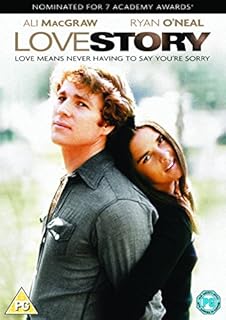


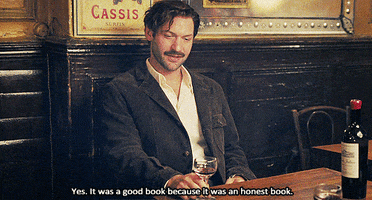


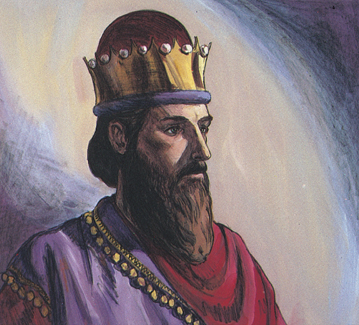


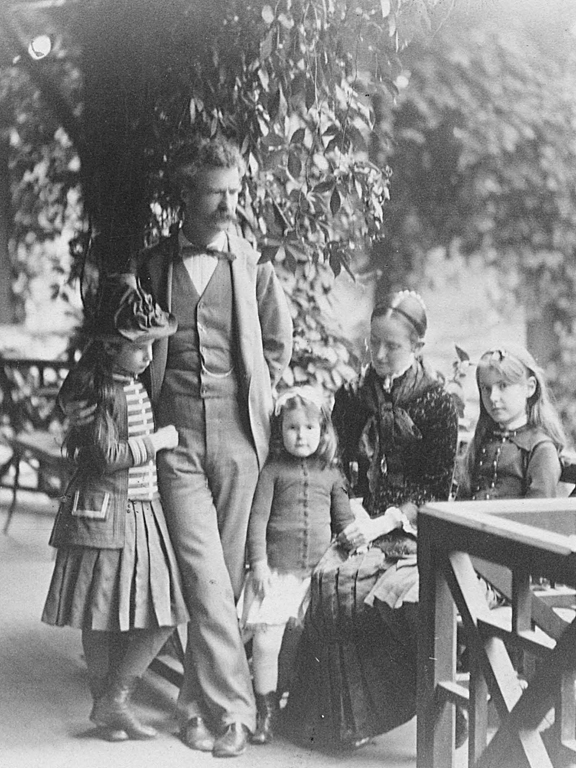


.jpg/220px-Susan_Blackmore_(2014).jpg)