Something about television brings out the nostalgist in Woody Allen (well, y’know, even more than usual), and understandably – it’s a medium inextricably tied to his own early days. He got his start as a staff writer for The Colgate Comedy Hour, Sid Caesar specials, and sitcoms like The Gary Moore Show; in his stand-up and early (comic) filmmaking days, he was a fixture on Jack Paar, Ed Sullivan, Dick Cavett, and Merv Griffin’s shows, and even had a couple of prime-time specials. But after his Nixon-baiting Men of Crisis: The Harvey Wallinger Story was yanked from PBS, he swore off the medium, and mostly stuck to his guns. His last major television project was a 1994 TV movie adaptation of his hit ‘60s play Don’t Drink the Water, in which he was now old enough to play the harried patriarch confounded by his times. [13]
-Woody Allen’s six-episode miniseries for Amazon, “Crisis in Six Scenes,” which runs just less than two and a half hours in total, is, in effect, his “American Pastoral.” Like Philip Roth’s 1997 novel, it’s a vision (a comedic one, where Roth’s is tragic) of a liberal suburban household, in the late nineteen-sixties, that’s thrown into turmoil by a young woman who commits an act of political terrorism. It has the virtues and the faults of Allen’s later films—which is to say that his ideas come to the fore in sharp focus, sketched with clear and decisive lines, but sometimes the sketchiness detaches them from the context of lived experience and turns them merely assertive and hermetic. [1]
-In “Crisis,” Allen writes himself back, in current form, into an time in which he was actually already anachronistic. Allen made his great breakthrough, with “Annie Hall,” not at the beginning of an era but at its end. He was already older than forty; he had twenty years of show biz behind him, and his nineteen-sixties weren’t an age of protest and activism but of trying to establish himself, tooth and nail, as the filmmaker that he had decided to become. “Crisis in Six Scenes” starkly conveys the wistful—yet not regretful—sense that his sixties were secondhand and spectatorial. [1]
-Above all, however, the core of the series is the secondhand experience not of the sixties as action but of the sixties as political rhetoric. It isn’t only Alan and Kay who are transformed by Lennie’s presence. Kay also delivers the political literature to the members of her book club, mainly elderly women, who become comically enthusiastic acolytes of violent revolution, spouting Mao’s aphorisms and eagerly, if obliviously, anticipating bloodshed. [1]
-This readiness of many people to fall for the virtuous-sounding but hollow, reckless, dangerous, and destructive rhetoric of dictatorial revolutionaries is the very through-line of the series. [1]
-Allen presents his Sid as the one sane man who, despite—or rather, because of—his neurotic inhibitions and practical artistic ambitions and ideals, remains invulnerable to such flights of grandiose and vapid thinking. As a portrait of the sixties, this relentless satire of revolutionary action serves to justify the course of Allen’s own ideas and activity, even as he hints at admiration for the fervor and daring of the revolutionaries themselves [1]
___________ Justin Timberlake Talks ‘Trolls,’ Family Life and His New Album With Pharrell Williams Andrew Barker Senior Features Writer@barkerrant TOM MUNRO FOR VARIETY NOVEMBER 1, 2016 | 10:00AM PT Settling into a hotel bar in Soho after a long day shooting a film for Woody Allen in the Bronx, Justin Timberlake wastes no time ordering […]
_ Woody Allen – standup – ’65 – RARE! Happy 81st Birthday, Woody Allen December 2, 2016 1 Comment Woody Allen turns 81 today. And he shows no signs of slowing down. Allen spent his 80th year being remarkably prolific, even by his own standards. The end of 2015 saw that year’s film, Irrational Man, […]
_ Everything We Know About Woody Allen’s 2017 Film With Kate Winslet And Justin Timberlake October 16, 2016 3 Comments Woody Allen has, it seems, wrapped production on his 2017 Film. The new film stars Kate Winlset and Justin Timberlake. And despite some very public days of shooting, We still don’t know that much […]
_____________ Woody Allen – The Atheist At 79, Woody Allen Says There’s Still Time To Do His Best Work JULY 29, 2015 5:03 PM ET When asked about his major shortcomings, filmmaker Woody Allen says, “I’m lazy and an imperfectionist.” Thibault Camus/AP Woody Allen is a prolific filmmaker — he’s been releasing films pretty much […]
Midnight in Paris: TAP’s Movie of the Month for June 2015 JUNE 1, 2015 by TAP Adventures Each month in TAP, we select a Movie of the Month to help prepare our students for their overseas trip. This month we’re starting to prepare for our 2016 adventure in France and the Benelux countries, so we’ve selected […]
This interview below reveals Woody Allen’s nihilistic views and reminds me of his best movie which is CRIMES AND MISDEMEANORS!!!! Crimes and Misdemeanors 1989 Woody Allen Woody Allen Crimes and Misdemeanors Nihilism Nietzsche’s Death of God An Interview with Woody Allen Woody Allen’s World: Whatever Works Robert E. Lauder April 15, 2010 – 2:31pm Woody […]
Top 10 Woody Allen Movies Woody’s Cold Comforts Robert E. LauderApril 19, 2010 – 1:36pm Friends have often asked me about my interest in the films of Woody Allen: Why is a Catholic priest such an ardent admirer of the work of an avowed atheist, an artist who time and again has insisted on […]
Woody Allen & Parker Posey Red-Carpet Interviews for ‘Irrational Man’ New bio reassesses Woody Allen at 80 James Endrst , Special for USA TODAY2:03 p.m. EST November 7, 2015 Woody: The Biography by David Evanier (St. Martin’s Press) in Biography Buy Now USA TODAY Rating Woody Allen turns 80 on Dec. 1 and David Evanier has […]
___ Existentialism and the Meaningful Life [The Common Room] Francis Schaeffer “BASIS FOR HUMAN DIGNITY” Whatever…HTTHR A Handy Guide to All the Philosophers Referenced in Irrational Man Eliza Berman @lizabeaner July 17, 2015 David Livingston–Getty ImagesJoaquin Phoenix and Emma Stone attend the premiere of “Irrational Man” in Los Angeles on July 9, 2015. Leave it […]
Woody Wednesday All 47 Woody Allen movies – ranked from worst to best (L-R): Annie Hall, Sleeper and To Rome With Love Robbie Collin, Film Critic Tim Robey, Film Critic 12 October 2016 • 2:55pm Annie Hall or Bananas? Blue Jasmine or Sleeper? Our critics Robbie Collin and Tim Robey rank all 47 Woody Allen movies […]
0:00 Everybody Needs Somebody To Love (Version 1) 5:04 Down Home Girl 9:18 You Can’t Catch Me 12:58 Time Is On My Side (Version 2) 15:58 What A Shame 19:05 Grown Up Wrong 21:11 Down The Road Apiece 24:07 Under The Boardwalk 26:55 I Can’t Be Satisfied 30:22 Pain In My Heart 32:35 Off The Hook 35:11 Susie Q 37:02 Surprise, Surprise 39:33 Everybody Needs Somebody To Love (Version 2)
This article should be divided into sections by topic, to make it more accessible. Please help by adding section headings in accordance with Wikipedia’s Manual of Style.(June 2016)
10–11 June 1964 Chess Studios, Chicago, Illinois, United States; 2 and 28–29 September 1964 Regent Sound Studios, London, United Kingdom; 2 November 1964 RCA Studios, Hollywood, California, United States; and 8 November 1964 Chess Studios, Chicago, Illinois, United States
The Rolling Stones No. 2 is the second UK album by the Rolling Stones released in 1965 following the massive success of 1964’s debut The Rolling Stones. It followed its predecessor’s tendency to largely feature R&Bcovers. However, it does contain three compositions from the still-developing Mick Jagger/Keith Richards songwriting team. On Dutch and German pressings of the album, the title is listed as The Rolling Stones Vol. 2 on the front cover, although the back of the album cover lists the title as The Rolling Stones No. 2.
Using the cover shot for 12 X 5, the second US-released album in October 1964, The Rolling Stones No. 2′s track listing would largely be emulated on the upcoming US release of The Rolling Stones, Now!. While Eric Easton was co-credited as producer alongside Andrew Loog Oldham on The Rolling Stones’ debut album, Oldham takes full production duties for The Rolling Stones No, 2, which was recorded sporadically in the UK and US during 1964.
A huge hit in the UK upon release, The Rolling Stones No. 2 spent 10 weeks at No. 1 in early 1965, becoming one of the year’s biggest sellers in the UK.
According to Bill Wyman in his book Stone Alone: The Story of a Rock’N’Roll Band, John Lennon said of The Rolling Stones No. 2: “The album’s great, but I don’t like five-minute numbers.”
Due to ABKCO’s preference towards the American albums, they overlooked both The Rolling Stones and The Rolling Stones No. 2 for CD release in 1986 and during its remastering series in 2002. Consequently, the album was out of print for many years and was thus widely bootlegged by collectors.
The Rolling Stones No. 2 was again made available to the public as part of a limited edition vinyl box set, titled “The Rolling Stones 1964–1969”, in November 2010 and (by itself) digitally at the same time. The original title was also re-instated as part of the ‘Rolling Stones in Mono’ cd box set, released on September 30th 2016.
__________ __ The Rolling Stones ~ Jumpin’ Jack Flash. (1968) The Dirty Mac Band (John Lennon, Eric Clapton, Keith Richards & Mitch Mitchell) | FeelNumb.com John Lennon, Eric Clapton, Keith Richards, Mitch Mitchell, Jimi Hendrix ____
News/ Katy Perry Sings With Mick Jagger at Rolling Stones Concert—Watch Now by Rebecca Macatee Today 5:45 AM PDT The Rolling Stones & Katy Perry – Beast Of Burden – Live – By Request Published on May 12, 2013 The Rolling Stones and special guest Katy Perry perform ‘Beast Of Burden’ at the Las Vegas […]
News/ Katy Perry Sings With Mick Jagger at Rolling Stones Concert—Watch Now by Rebecca Macatee Today 5:45 AM PDT The Rolling Stones & Katy Perry – Beast Of Burden – Live – By Request Published on May 12, 2013 The Rolling Stones and special guest Katy Perry perform ‘Beast Of Burden’ at the Las Vegas […]
Jimi Hendrix & Cream – Sunshine Of Your Love Jimi Hendrix & Eric Clapton Jimi Hendrix & Mick Jagger Jimi Hendrix & Keith Richards Jimi Hendrix & Brian Jones Jimi Hendrix & Janis Joplin Jimi Hendrix with Cream & Pink Floyd Even “Legends” want to meet a “Legend” Jimi Hendrix: ‘You never told me he […]
Eric Clapton and Jimi Hendrix were good friends!! Jimi Hendrix & Cream – Sunshine Of Your Love Uploaded on Feb 5, 2012 Hey Joe JIMI HENDRIX live images in 1969, in London! BBC! dedicated to cream”Sunshine of Your Love”. High quality and superior sound. ¡¡¡¡¡full screen!!!!! Everyone wanted to meet or take a picture with […]
RESPONDING TO HARRY KROTO’S BRILLIANT RENOWNED ACADEMICS!! Michael Mann, UCLA Anthropologist, “My mother was a very loving, warm person who I remember her getting extremely unhappy when I told her at the age of 13 I was an atheist but she was the core of the family”
The following was emailed to George F. Will on 6-27-16: Scott Ableman / Wikimedia Dear Mr. Will, I really enjoyed your You Tube cllip “George Will Keynotes 2010 Milton Friedman Prize Dinner:” If you google ARKANSAS MILTON FRIEDMAN you will be brought to my website http://www.thedailyhatch.org since I have written so many posts on my economic hero […]
Christian Rock Pioneer Larry Norman’s Songs Part 14 I posted a lot in the past about my favorite Christian musicians such as Keith Green (I enjoyed reading Green’s monthly publications too), and 2nd Chapter of Acts and others. Today I wanted to talk about one of Larry Norman’s songs. David Rogers introduced me to Larry […]
On the cover of Sergeant Pepper’s Lonely Hearts Club Band Album there were many individuals that were historical figures that changed history. Many of these individuals had died before the release June 1, 1967 of the album. Aldous Huxley was a major figure in the drug culture and he had died on November 22, 1963. Aleister […]
As a way of getting acquainted, let me just say that I was the first presidential candidate for the Libertarian Party back in l972, and was the author of the first full-length book, Libertarianism, describing libertarianism in detail. I also wrote the Libertarian Party’s Statement of Principles at the first libertarian national convention in 1972. I still believe in those principles as strongly as ever, but this year — more than any year since the establishment of the Libertarian Party — I have major concerns about the choices open to us as voting Americans.
There is a belief that’s common among many libertarians that there is no essential difference between the Democrat and Republican Parties — between a John Kerry and a George W. Bush administration; or worse: that a Bush administration would be more undesirable. Such a notion could not be farther from the truth, or potentially more harmful to the cause of liberty.
The election of John Kerry would be, far more than is commonly realized, a catastrophe. Regardless of what he may say in current campaign speeches, his record is unmistakable: he belongs to the International Totalitarian Left in company with the Hillary and Bill Clintons, the Kofi Annans, the Ted Kennedys, and the Jesse Jacksons of the world. The Democratic Party itself has been undergoing a transformation in recent years; moderate, pro-American, and strong defense Senators such as Zell Miller, Joe Lieberman and Scoop Jackson are a dying breed. Observe how many members of the Democrat Party belong to the Progressive Caucus, indistinguishable from the Democratic Socialists of America. That caucus is the heart and soul of the contemporary Democratic Party.
Today’s Democrats have been out of majority power for so long that they are hungry for power at any price and will do anything to achieve it, including undermining the President and our troops in time of war; for them any victory for Americans in the war against terrorism is construed as a defeat for them.
The Democratic Party today is a haven for anti-Semites, racists, radical environmentalists, plundering trial lawyers, government employee unions, and numerous other self-serving elites who despise the Constitution and loath private property. It is opposed to free speech – witness the mania for political correctness and intimidation on college campuses, and Kerry’s threat to sue television stations that carry the Swift Boat ads. If given the power to do so, Democrats will use any possible means to suppress opposing viewpoints, particularly on talk radio and in the university system. They will attempt to enact “hate speech” and “hate crime” laws and re-institute the Fairness Doctrine, initiate lawsuits, and create new regulations designed to suppress freedom of speech and intimidate their political adversaries. They will call it “defending human rights.” This sort of activity may well make up the core of a Kerry administration Justice Department that will have no truck with the rule of law except as a weapon to use against opponents.
There are already numerous stories of brownshirt types committing violence against Republican campaign headquarters all over the country, and Democrat thugs harassing Republican voters at the polls. Yet not a word about it from the Kerry campaign. Expect this dangerous trend to increase dramatically with a Kerry win, ignored and tacitly accepted by the liberal-left mainstream media. This is ominous sign of worse things to come.
Kerry, who changes direction with the wind, has tried to convince us that he now disavows the anti-military sentiments that he proclaimed repeatedly in the l970s. But in fact he will weaken our military establishment and devastate American security by placing more value on the United Nations than on the United States: for example he favors the Kyoto Treaty and the International Criminal Court, and opposed the withdrawal of the U.S. from the ABM Treaty. He has been quoted as saying that it is honorable for those in the U.S. military to die under the flag of the U.N. but not that of the U.S. Presumably he and a small cadre of bureaucrats should rule the world, via the U.N. or some other world body which will make all decisions for the whole world concerning private property, the use of our military, gun ownership, taxation, and environmental policy (to name a few). In his thirty-year career he has demonstrated utter contempt for America, national security, constitutional republicanism, democracy, private property, and free markets.
His wife’s foundations have funneled millions of dollars into far-left organizations that are virulently hostile to America and libertarian principles. Not only would these foundations continue to lack transparency to the American people, they would be given enormous vigor in a Kerry administration.
Already plans are afoot by the Kerry campaign to steal the coming election via a legal coup, e.g. to claim victory on election night no matter what the vote differential is, and initiate lawsuits anywhere and everywhere they feel it works to their advantage, thus making a mockery of our election process, throwing the entire process into chaos — possibly for months — and significantly weakening our ability to conduct foreign policy and protect ourselves domestically. Let me repeat: we are facing the very real possibility of a political coup occurring in America. Al Gore very nearly got away with one in 2000. Do not underestimate what Kerry and his ilk are going to attempt to do to America.
George Bush has been criticized for many things – and in many cases with justification: on campaign finance reform (a suppression of the First Amendment), on vast new domestic spending, on education, and on failing to protect the borders. No self-respecting libertarian or conservative would fail to be deeply appalled by these. His great virtue, however, is that he has stood up — knowingly at grave risk to his political viability — to terrorism when his predecessors, Ford, Carter, Reagan, and Clinton did not. On many occasions during their administrations terrorists attacked American lives and property. Clinton did nothing, or engaged in a feckless retaliation such as bombing an aspirin factory in the Sudan (based on faulty intelligence, to boot). Then shortly after Bush became president he was hit with “the big one:” 9/11. It was clear to him that terrorism was more than a series of criminal acts: it was a war declared upon U.S. and indeed to the entire civilized world long before his administration. He decided that action had to be taken to protect us against future 9/11s involving weapons of mass destruction, including “suitcase” nuclear devices.
Indeed, today it is Islamic fundamentalism that increasingly threatens the world just as Nazis fascism and Soviet communism did in previous decades. The Islamo-fascists would be happy to eliminate all non-Muslims without a tinge of regret. Many Americans still indulge in wishful thinking on this issue, viewing militant Islam as a kind of nuisance, which can be handled without great inconvenience in much the same way as one swats flies, rather than as hordes of genocidal religious fanatics dedicated to our destruction.
The president has been berated for taking even minimal steps to deal with the dangers of this war (the allegations made against the Patriot Act seem to me based more on hysteria and political opportunism than on reality). But Bush, like Churchill, has stood steadfast in the face of it, and in spite of the most virulent hate and disinformation campaign that any American president has had to endure. Afghanistan is no longer a safe haven for terrorists. Saddam’s regime is no longer a major player in the worldwide terror network. Libya has relinquished their weapons of terror. The Pakistani black market in weapons of mass destruction has been eliminated. Arafat is rotting in Ramallah. Terrorist cells all over the world have been disrupted, and thousands of terrorists killed. The result: Americans are orders of magnitude safer.
National defense is always expensive, and Bush has been widely excoriated for these expenditures. But as Ayn Rand memorably said at a party I attended in l962, in response to complaints that “taxes are too high” (then 20%), “Pay 80% if you need it for defense.” It is not the amount but the purpose served that decides what is “too much.” And the purpose here is the continuation of civilized life on earth in the face of vastly increased threats to its existence.
Bush cut income tax rates for the first time in fifteen years. These cuts got us moving out of the recession he inherited, and we are all economically much better off because of them. 1.9 million new jobs have been added to the economy since August 2003. Bush has other projects in the wind for which libertarians have not given him credit. For example:
(l) A total revision of our tax code. We will have a debate concerning whether this is best done via a flat tax or a sales tax. If such a change were to occur, it would be a gigantic step in the direction of liberty and prosperity. No such change will occur with Kerry.
(2) A market-based reform of Social Security. This reform, alone, could bring future budget expenditures down so significantly that it would make his current expenditures seem like pocket change. Kerry has already repudiated any such change in social security laws.
The American electorate is not yet psychologically prepared for a completely libertarian society. A transition to such a society takes time and effort, and involves altering the mind-set of most Americans, who labor under a plethora of economic fallacies and political misconceptions. It will involve a near-total restructuring of the educational system, which today serves the liberal-left education bureaucracy and Democratic Party, not the student or parent. It will require a merciless and continuous expose of the bias in the mainstream media (the Internet, blogs, and talk radio have been extremely successful in this regard over the past few years). And it will require understanding the influence and importance of the Teresa Kerry-like Foundations who work in the shadows to undermine our constitutional system of checks and balances.
Most of all, it will require the American people — including many libertarians – to realize the overwhelming dangerousness of the American Left – a Fifth Column comprised of the elements mentioned above, dedicated to achieving their goal of a totally internationally dominated America, and a true world-wide Fascism.
Thus far their long-term plans have been quite successful. A Kerry presidency will fully open their pipeline to infusions of taxpayer-funded cash and political pull. At least a continued Bush presidency would help to stem this tide, and along the way it might well succeed in preserving Western civilization against the fanatic Islamo-fascists who have the will, and may shortly have the weapons capability, to bring it to an end.
When the stakes are not high it is sometimes acceptable, even desirable, to vote for a ‘minor party’ candidate who cannot possibly win, just to “get the word out” and to promote the ideals for which that candidate stands. But when the stakes are high, as they are in this election, it becomes imperative that one should choose, not the candidate one considers philosophically ideal, but the best one available who has the most favorable chance of winning. The forthcoming election will determine whether it is the Republicans or the Democrats that win the presidency. That is an undeniable reality. If the election is as close as it was in 2000, libertarian voters may make the difference as to who wins in various critical “Battle Ground” states and therefore the presidency itself. That is the situation in which we find ourselves in 2004. And that is why I believe voting for George W. Bush is the most libertarian thing we can do.
We stand today at an important electoral crossroads for the future of liberty, and as libertarians our first priority is to promote liberty and free markets, which is not necessarily the same as to promote the Libertarian Party. This time, if we vote libertarian, we may win a tiny rhetorical battle, but lose the larger war.
John Hospers
Los Angeles, CA
The Sovietization of America: John Hospers
I sent a cassette tape of Adrian Rogers on Evolution to John Hospers in May of 1994 which was the 10th anniversary of Francis Schaeffer’s passing and I promptly received a typed two page response from Dr. John Hospers. Dr. Hospers had both read my letter and all the inserts plus listened to the whole sermon and had some very angry responses. If you would like to hear the sermon from Adrian Rogers and read the transcript then refer to my earlier post at this link. Over the last few weeks I have posted portions of Dr. Hospers’ letter and portions of the cassette tape that he listened to back in 1994, but today I want to look at some other comments made on that cassette tape that John Hospers listened to and I will also post a few comments that Dr. Hospers made in that 2 page letter.
Here is a portion of Hospers’ June 2, 1994 letter to me:
Why the holier-than-thou-attitude? “Don’t you think it is time you stopped and thought about spiritual things?” you ask. I have spent most of my life thinking about NOTHING ELSE.
_______
Bill Elliff, the pastor of Summitt Church in North Little Rock, was my pastor during the 1990’s at First Baptist Church in Little Rock. On the cassette tape that I sent to Dr. John Hospers there is a portion of a sermon that Dr. Elliff did on Romans 1 that I wanted to share:
Romans 1:18-32 New American Standard Bible (NASB)
Unbelief and Its Consequences
18 For the wrath of God is revealed from heaven against all ungodliness and unrighteousness of men who suppress the truth [a]in unrighteousness,19 because that which is known about God is evident [b]within them; for God made it evident to them.20For since the creation of the world His invisible attributes, His eternal power and divine nature, have been clearly seen, being understood through what has been made, so that they are without excuse.21For even though they knew God, they did not [c]honor Him as God or give thanks, but they became futile in their speculations, and their foolish heart was darkened.22 Professing to be wise, they became fools,23 and exchanged the glory of the incorruptible God for an image in the form of corruptible man and of birds and four-footed animals and [d]crawling creatures.
24 Therefore God gave them over in the lusts of their hearts to impurity, so that their bodies would be dishonored among them.25 For they exchanged the truth of God for [e]a lie, and worshiped and served the creature rather than the Creator, who is blessed [f]forever. Amen.
26 For this reason God gave them over to degrading passions; for their women exchanged the natural function for that which is [g]unnatural,27 and in the same way also the men abandoned the natural function of the woman and burned in their desire toward one another, men with men committing [h]indecent acts and receiving in [i]their own persons the due penalty of their error.
28 And just as they did not see fit [j]to acknowledge God any longer, God gave them over to a depraved mind, to do those things which are not proper,29 being filled with all unrighteousness, wickedness, greed, evil; full of envy, murder, strife, deceit, malice; they are gossips,30 slanderers, [k]haters of God, insolent, arrogant, boastful, inventors of evil, disobedient to parents,31 without understanding, untrustworthy, unloving, unmerciful;32 and although they know the ordinance of God, that those who practice such things are worthy of death, they not only do the same, but also give hearty approval to those who practice them.
________________
God has revealed himself to you…Most men reject the light that God gives them and with that knowing rejection come FOOLISH THINKING and FATAL CHOICES.
I read an illustration last Sunday night so profound to me that I want to read it again in closing. CHARLES DARWIN who has so dramatically affected the thinking of the world in a tragic way made this statement:
At the present day the most usual argument for the existence of an intelligent God is drawn from the deep inward conviction and feelings which are experienced by most persons….Formerly I was led by feelings such as those just referred to… to the firm conviction of the existence of God, and of the immortality of the soul. In my Journal I wrote that whilst standing in the midst of the grandeur of a Brazilian forest, “it is not possible to give an adequate idea of the higher feelings of wonder, admiration, and devotion, which fill and elevate the mind.” I well remember my conviction that there is more in man than the mere breath of his body. But now the grandest scenes would not cause any such convictions and feelings to rise in my mind. It may be truly said that I am like a man who has become color-blind,
For even though they knew God, they did not honor Him as God or give thanks, but they became futile in their speculations, and their foolish heart was darkened.Professing to be wise, they became fools,and exchanged the glory of the incorruptible God for the glory of man’s creation. They exchanged the truth of God for a lie and worshiped and served the creature more than the creator. And they exchanged the natural glorious plans that God has for man for the Godless, immoral, perverse plans of man. It happens to every man who ultimately rejects God. WHAT ABOUT YOU?
XXXXXXX
How can I know the Bible is the Word of God? by Adrian Rogers
at the 15 min mark she talks about Tolstoy and the story Anna Karenina and at the 17 min mark she talked about Nina Simone, Glen Campbell and Frank Sinatra doing the song MY WAY and she would listen to that song over and over. “Music has saved me life” and talked about Marcel Duchamp at 18 min mark and then talked about Martin Puryear’s Jacobs ladder
__
Marcel Duchamp (photographed by Man Ray, 1890–1976) from 1921
FRESH TALK: Carrie Mae Weems—Can an artist inspire social change?
Carrie Mae Weems: An Artist Reflects
Left of Black with Carrie Mae Weems and Thabiti Lewis
Carrie Mae Weems: “The Kitchen Table Series” | “Exclusive” | Art21
Crystal Bridges Museum of American Art is overflowing with news. First up: Pablo Picasso’s “Seated Woman in Chemise (1923)” is coming to the museum from the Tate Modern for a three-month loan starting in late April.
Also being loaned: Philip Haas’ “The Four Seasons” sculptures from Sonnabend Gallery, which will go on exhibit Friday, and Rene Magritte’s “L’Anniversaire,” on loan from the Art Gallery of Ontario, will come in the fall. The Picasso and Magritte will be part of a reinstallation of works from Crystal Bridges’ collection of Modernist paintings.
The Arkansas Times Art Bus is making a trip in July; “Seated Woman” should add even more interest to the other show on the menu, “American Made: Treasures from the American Folk Art Museum.”
click to enlarge
Philip Haas’ “Four Seasons” at the Nelson-Atkins Museum in Kansas City.
Haas’ “Four Seasons,” inspired by the vegetable heads of the 16h century artist Giuseppe Arcimboldi, will be installed along the Orchard Trail and in the museum courtyard. The heads of the “Four Seasons” are 15 feet tall and constructed of fiberglass. Smaller maquettes of the sculptures will be installed in the museum’s Bridge Gallery. Haas, who is a screenwriter and filmmaker, will give a talk at Crystal Bridges 1-2 p.m. this Friday, April 29.
From the news release on Haas:
Philip Haas, in marrying sculpture, painting, film and architecture, has created a contemporary visual vocabulary all his own. He describes his process as “sculpting by thinking.” Haas’s twenty-first-century interpretation translates the historic paintings into three-dimensional form and connects to nature’s annual cycle of death and renewal. Each bust-length sculpture showcases a medley of vegetation associated with a specific time of year. In Winter, for example, the skin of the subject is represented through oversized forms of fiberglass bark and hair by gnarled tree limbs and ivy. Spring features a riot of flower forms in bright hues arranged to represent a human portrait. The Summer head is adorned with seasonal foliage, while Autumn includes its own cornucopia of fruits and vegetables.
click to enlarge
CRYSTAL BRIDGES MUSEUM OF AMERICAN ART, BENTONVILLE, ARKANSAS
Carrie Mae Weems’ “Untitled (Woman and daughter with children)”
Next up: Five new acquisitions will be part of the “Black Unity” exhibition opening next week, May 4. On exhibit will be 13 works made by eight African American artists in photography, sculpture, painting and tapestry.
The works owned by Crystal Bridges include the famous “A Warm Summer Evening in 1863 (2008)” by Kara Walker; “Liberty Bros. Permanent Daily Circus — Army of Clowns (1995)” by Michael Ray Charles; the sculpture “Black Unity” by Elizabeth Catlett; and four photographs by Carrie Mae Weems.
The show runs through Sept. 5.
“With the increased diversification of our collections, it is exciting to have the opportunity to showcase new acquisitions in an installation that specifically addresses the black experience in this country,” says Alejo Benedetti, Crystal Bridges curator for Black Unity. “This show encourages conversations about race. The unique voices of the artists unite visitors across a shared American identity—in this way black unity is inherently American unity.”
________ H. J. Blackham H. J. Blackham, (31 March 1903 – 23 January 2009), was a leading and widely respected British humanist for most of his life. As a young man he worked in farming and as a teacher. He found his niche as a leader in the Ethical Union, which he steadfastly […]
H.J.Blackham pictured below: I had to pleasure of corresponding with Paul Kurtz in the 1990’s and he like H. J. Blackham firmly believed that religion was needed to have a basis for morals. At H. J. Blackham’s funeral in 2009 these words were read from Paul Kurtz: Paul Kurtz Founder and Chair, Prometheus Books and the […]
H. J. Blackham pictured below: On May 15, 1994 on the 10th anniversary of the passing of Francis Schaeffer I sent a letter to H.J. Blackham and here is a portion of that letter below: I have enclosed a cassette tape by Adrian Rogers and it includes a story about Charles Darwin‘s journey from […]
I featured the artwork of Ellsworth Kelly on my blog both on November 23, 2015 and December 17, 2015. Also I mailed him a letter on November 23, 2015, but I never heard back from him. Unfortunately he died on December 27, 2015 at the age of 92. Who were the artists who influenced […]
__ I featured the artwork of Ellsworth Kelly on my blog both on November 23, 2015 and December 17, 2015. Also I mailed him a letter on November 23, 2015, but I never heard back from him. Unfortunately he died on December 27, 2015 at the age of 92. Who were the […]
Andy, Ellsworth Kelly, Richard Koshalek and unidentified guest, 1980s I featured the artwork of Ellsworth Kelly on my blog both on November 23, 2015 and December 17, 2015. Also I mailed him a letter on November 23, 2015, but I never heard back from him. Unfortunately he died on December 27, 2015 at the age […]
How Should We Then Live – Episode 8 – The Age of Fragmentation I featured the artwork of Ellsworth Kelly on my blog both on November 23, 2015 and December 17, 2015. Also I mailed him a letter on November 23, 2015, but I never heard back from him. Unfortunately he died on December […]
Today I am bringing this series on William Provine to an end. Will Provine’s work was cited by Francis Schaeffer in his book WHATEVER HAPPENED TO THE HUMAN RACE? I noted: I was sad to learn of Dr. Provine’s death. William Ball “Will” Provine (February 19, 1942 – September 1, 2015) He grew up an […]
___ Setting the record straight was Will Provine’s widow Gail when she stated, “[Will] did not believe in an ULTIMATE meaning in life (i.e. God’s plan), but he did believe in proximate meaning (i.e. relationships with people — friendship and especially LOVE🙂 ). So one’s existence is ultimately senseless and useless, but certainly not to those […]
I was sad when I learned of Will Provine’s death. He was a very engaging speaker on the subject of Darwinism and I think he correctly realized what the full ramifications are when accepting evolution. This is the fourth post I have done on Dr. Provine and the previous ones are these links, 1st, 2nd […]
Settling into a hotel bar in Soho after a long day shooting a film for Woody Allen in the Bronx, Justin Timberlake wastes no time ordering the first of several Vesper martinis. “I was terrified all day today, dude,” he says.
This story first appeared in the October 25, 2016 issue of Variety. Subscribe today.
“All day I’m thinking about what Woody was going to say to me on set, like, ‘Man, he’s gonna annihilate me.’ I think we all have a level of anxiety. I have it. I’ve had panic attacks.”
Timberlake, 35, is hardly a stranger to working with storied auteurs, among them David Fincher, the Coen brothers, and Jonathan Demme, and yet for the rest of the evening he’ll joke about Allen potentially firing him from the production. He also recalls the day the role came his way.
“Literally, it’s embarrassing,” he says of being cold-called by Allen and offered a part. “Woody, Jonathan… I’m literally working with all my heroes. It’s leading me to drinking.”
His fears are surprising, since Timberlake, over the last two decades, has amassed a remarkable career as a pop star, songwriter, and actor. Yet his modesty seems quite genuine. Full-scale leading-man movie stardom, after all, is perhaps the one brass ring that has eluded him. But if film stardom remains a hole in his résumé, Timberlake is making up for it by expanding his reach into unexplored creative corners.
In September, for instance, he traveled from his home in Manhattan to the Toronto Film Festival for the premiere of his Demme-directed concert film, “Justin Timberlake + the Tennessee Kids,” which has since been released by Netflix. In May, he visited Cannes on a press jaunt for DreamWorks Animation’s animated comedy “Trolls,” in which he voices a lead character and serves as executive producer of music. “Can’t Stop the Feeling!,” one of his original songs for the film, stands as the best-selling single of 2016 and has accrued plenty of Oscar buzz along the way.
TOM MUNRO FOR VARIETY
This year also marked Timberlake’s first foray into film scoring, with “The Book of Love,” which premiered at Tribeca and was produced by his wife, Jessica Biel, who also stars. He’s also spending time in the studio with an old mentor, producer Pharrell Williams, recording songs with an eye toward his next album. On top of that, he’s working to develop and star in a biopic about the life of Casablanca Records founder Neil Bogart, with Nick Cassavetes lined up to direct. All this, and Timberlake has an 18-month-old son at home.
And yet, by Timberlake standards, 2016 has been a year of newfound balance between the vocal booth and the mixing board, above-the-line and below. After all, the last time Timberlake released new music, it was the double-album blitz of “The 20/20 Experience,” which saw the singer flood the airwaves with two and a half hours of new music in a single year, sell six million albums, make appearances on just about every televised venue, and embark on a series of tours that stretched for two years.
“My life has changed and is changing. So it’s important to discover that there’s work you can do where you get more time with your family,” Timberlake says. “I wouldn’t go on tour next week, because I wanna be with my son. I wanna be with my wife. What does touring even look like for me now? It’s such a luxury to be able to make those decisions: to be able to think about how you could do the work you used to do in a different way. As men, we’re always taught at a young age to be a man and have your priorities in order. And you get to a point where you’re like, ‘It’s not about “being a man” — it’s about fulfillment.’ Which is a totally different thing.”
Timberlake apologizes for “sounding like I’m reading from the New Age Entertainer Manuscript,” but this level of easy-going maturity suits him. For someone who won his first Emmy for co-writing “Dick in a Box,” his humor is now largely of the dad-joke variety. He tells detailed diaper-changing anecdotes, asks for film and music recommendations, and almost proudly says, “I haven’t seen or heard anything in a year.” (Although, for the record, he’s keen to discuss Chris Stapleton and Chance the Rapper’s latest albums, and when the topic of Frank Ocean’s “Blonde” is broached, he offers some impromptu a cappella beat-boxed renditions of “Solo” and “Ivy” in the middle of a crowded restaurant.)
“You’ll notice I say ‘I don’t know’ a lot,” he says later. “And you know the reason why? Because I don’t f—king know! I’ve realized that I don’t really know anything, and when you realize that, you realize a lot.”
He adds, “I think you always have to be able to be malleable. The worst thing you can do is base all your creativity on some sort of ideal destination. Because you never get there. Which is not to say that I didn’t think more like that when I was young, but that’s a big part of growing up.”
There’s no doubt that Timberlake spent the first stretch of his career working ruthlessly toward a particular destination. Raised around Memphis by his mother and stepfather — a manager and a banker, respectively — and the son of a church choir director father, Timberlake caught the performance bug early.
“My parents were divorced,” he says, “and I’ll never forget going to stay with my father for a weekend, and he had a vinyl player that he had set up in my bedroom for me. There were a lot of records, and I just looked at the cover of Queen’s ‘A Night at the Opera’ and put it on, and I didn’t leave the room for a weekend. I listened to it over and over again.”
“I think everyone I’m working with right now knows I’m notorious for being like, ‘Yeah, let’s work. I have no idea when I’ll put it out, though.’ I’ll put it out when it’s done, when it feels right.”
JUSTIN TIMBERLAKE
Timberlake first appeared on “Star Search” at age 11, and by 15 he had joined the nascent boy band NSYNC, quickly ascending to the front pages of both the music and gossip press as the group’s standout member. As stratospheric as the group’s popularity would soon become — the first week’s sales for their 2000 album “No Strings Attached” set a record that was broken only last fall, by Adele — Timberlake still had to prove himself as a credible adult solo artist. “Justified,” executive produced by Pharrell, started that process in 2002, and 2006’s “FutureSex/LoveSounds” — the first of Timberlake’s three album-length collaborations with producer Timbaland — finished the job.
Unlikely collaborators when they first crafted Timberlake’s 2002 No. 3 hit, “Cry Me a River,” the former boy-band star and the hip-hop-bred producer have since become one of the most forward-thinking star-producer duos in pop music. Their work on Timberlake’s second solo album not only brought the star into his own, it also helped recalibrate the sonic frequency of several years’ worth of pop-radio trends.
“My connection with Justin is very deep,” says Timbaland. “Just because I like what’s in his brain, and he likes what’s in my brain. And our process is we just sit around, talk and vibe, catch up on life. All the while, the musical equipment is hooked up, and we play little sounds until we find something and go, ‘Ooh! Let’s do that.’ When a sound stops the conversation, that’s where we start.”
But even as Timberlake established himself as one of the new millennium’s premier pop idols, film has been a difficult nut to crack. It took him years of work to develop a reputation as more than a moonlighter, an image that finally began to dissipate with his supporting roles as Sean Parker in Fincher’s “The Social Network,” and as a guileless folk singer in the Coen brothers’ “Inside Llewyn Davis.”
Yet, strangely, while those roles served notice to most people that Timberlake had genuine promise as an actor, it was through admiring his film work that Jonathan Demme became acquainted with Timberlake as a musician.
“There’s a certain irony to it,” Demme says. “When I saw ‘The Social Network,’ J.T. came on, and he just knocked me literally out of my seat. I couldn’t believe how thrilling and dynamic this guy was in that story. And I just felt this extraordinary potential as an actor from him. But I wasn’t at all hip to his music. I’m stuck decades back, really, when it comes to pop music. But it was like, ‘OK, this is on my relatively short list of things I want to do: make a movie starring Justin Timberlake.’ ”
The two met four years ago to discuss a possible lead role in which Timberlake would play a schoolteacher, but Timberlake kept turning the conversation to one of Demme’s older projects, the storied 1984 Talking Heads concert film “Stop Making Sense.”
“ ‘Stop Making Sense’ is a whole thing for me,” Timberlake says. “Within that meeting, I probably made [Demme] slightly uncomfortable with how much I brought it up.”
Demme’s scripted Timberlake vehicle ended up fizzling, but the singer called him up years later and asked him to film the last stop on the “20/20 Experience Tour” in Las Vegas, in January 2015. Much like “Stop Making Sense” captured Talking Heads in what would eventually be their last major concerts, “Justin Timberlake + the Tennessee Kids” is suffused with the go-for-broke energy of a grand finale, serving as both a spectacle and a time-capsule glimpse of the peak of Timberlake’s pop star ubiquity and ability.
TOM MUNRO FOR VARIETY
“I have accepted the fact I may not be physically able to do that again,” Timberlake says, not entirely joking, of watching his own dancing in the film.
Of course, acting ability is rarely diminished by age, and Demme believes that Timberlake is due to make a definitive statement as a leading man. “I think he can do anything,” the director says. “And part of the director’s ego is that you want to direct someone’s first gigantic breakout movie, right? Well, Justin is right on the verge of his gigantic breakout movie.”
Whether that breakout will come with Allen’s film remains to be seen. (With no announced premise or even title for the movie, Timberlake remains mum on the project’s details “in the interest of keeping my job until the end of principal photography.”)
But there have certainly been bumps along the way. As much as he’s excelled in smaller parts, his leading turn in 2013’s “Runner Runner” was a nonstarter, and the effortless comic timing he’d displayed on “SNL,” or with skit-buddy Jimmy Fallon, didn’t entirely translate to 2011’s “Friends With Benefits.” Timberlake acknowledges that there’s a perception of overreaching that comes with working in both film and music.
“For this generation of actors and musicians, to try to do both probably feels gratuitous in a way,” he says. “I just feel like I grew up thinking about Frank Sinatra or Gene Kelly — that era of entertainment, where everyone could use their voice and sing, everyone studied acting. It just seemed like being an entertainer was an all-encompassing and unabashed thing.”
He traces this sort of multimedia ambition to his first brush with stardom, when he was cast on “The All-New Mickey Mouse Club” alongside the pubescent Britney Spears, Ryan Gosling, Keri Russell, and Christina Aguilera.
“Listen, my first job ever was on a television show. It’s not a stretch when you see people who’ve come out of that show and go, ‘Oh, that guy can sing? Oh, that girl can act?’ We were taught all that, and we were just sponges — most of us, anyway — just soaking it all in.”
Jeffrey Katzenberg, who hired Timberlake on “Trolls,” recalls their first encounter when he was a top executive at Disney. “The first time I met Justin, it was literally right after I saw an audition tape of him singing. And even then he was brilliant. He was charismatic, captivating, warm, charming. He was Justin.”
Timberlake was always eager to soak up more than just the ins-and-outs of on-camera razzle-dazzle. Shortly after joining NSYNC, the 15-year-old was sent to Sweden to work with songwriter-producer Max Martin, who was then just beginning to accrue the résumé that would make him the reigning pop hitmaker of the last two decades.
“Already back then, in the mid-’90s, he stood out,” Martin says of Timberlake via email. “You could tell that his interest in writing and producing was there from the very beginning.”
Tasked with composing a few key original songs for “Trolls,” Timberlake reunited with Martin for the first time since his boy-band days, and their combined knack for earworms paid off handsomely with “Can’t Stop the Feeling!” a song so perfectly geared toward beach trips and pool parties that it was strategically unleashed months before the film’s November release.
Katzenberg says he was amazed how skillfully Timberlake and Martin adhered to the film’s creative demands. “There were so many different guidelines for the song within the movie: It had to fit into a specific place, a specific mood, a specific type of melody and sentiment, and a lyric that could talk to the character moments…. It’s inconceivable to me that it worked.”
Timberlake was originally tapped simply to voice Branch, a co-lead succinctly described in the film’s marketing materials as a “paranoid, disgruntled Troll survivalist.” Over time, he accrued more and more roles within the project, taking what had initially been conceived as a needle-drop musical and reworking it into something he describes as “a ‘Saturday Night Fever’ approach to an animated movie.”
TOM MUNRO FOR VARIETY
“He took it and made it into this glorious, cohesive, fully rainbowed pop soundtrack,” says producer Gina Shay.
In addition to re-recording old standards like “September” and “True Colors” with the film’s cast (which includes Anna Kendrick and Zooey Deschanel), Timberlake started from scratch with new songs for Ariana Grande and Gwen Stefani. Yet “Can’t Stop the Feeling!” scores a particularly essential moment in the film’s third act, an emotional pivot over which director Mike Mitchell had spent months agonizing before Timberlake came to the rescue.
“We had maybe a thousand different temp songs in there, and sometimes there were two or three of them mashed up,” Mitchell remembers. “It was cacophonous, and it was messy, and it was frustrating. And when Justin signed on as music producer, it was like, ‘Well, there’s that problem going away forever.’”
Martin remembers writing the song with Timberlake and frequent collaborator Shellback. “The lyric was the hardest part, to capture the vibe of the scene, the characters, and the movie overall, but still making it a relevant pop song,” he says. “I personally am always nervous and paranoid before a song comes out — if it’s going to work or not. In this case, I felt I was alone in feeling this way.”
The perpetually bouncy, kid-friendly track is unlike anything in Timberlake’s recent discography — from the sinewy robo-funk of “FutureSex” to the sprawling luxury pop of “The 20/20 Experience” — and Timberlake naturally nods toward his experiences entertaining a particular audience of one as inspiration.
“I think I would’ve said yes to the project regardless, but I do think that song came together the way it did because I’d had a son at that point,” he says. “It’s the sort of thing where you realize, ‘Man, there’s nothing wrong with putting some good vibes in the world.’ Like, ‘Hey, you over there trying hard to act like you don’t care, that sounds exhausting.’”
Whether or not “Can’t Stop” is an arbiter of Timberlake’s future musical direction, he’s confident he’ll continue to work closely with his core collaborators.
“I wouldn’t say [my new material] is the antithesis of ‘20/20,’ but it does sound more singular,” he says. “If ‘20/20’ sounded like it literally surrounds your entire head, this stuff feels more like it just punches you between the eyes.”
Which, of course, could just as well describe the distinction between Timbaland and Pharrell. Timberlake defines his major collaborators like this: “Tim is a sound junkie, the same way Pharrell is a song junkie. And then Max is like music’s Morpheus.”
After a few weeks in the studio with Timberlake this year, Pharrell reports, “Songwise, I think we’ve got a good solid six that are like, ‘Whoa, what was that? Play that again.’” He also notes that the sessions have been unusually personal and self-reflective. “I would pay Justin a huge compliment to say he’s just discovering who he is now.”
Pharrell explains: “For the biggest pop stars in the world, the place where they have the most trouble is honesty. It’s hard for them to know that the beauty of a record, the sweetest spot in the song, is where they show vulnerability. Because there’s a formulaic sort of vulnerability, like, ‘Baby, I can’t sleep without you …’ and that’s not really it. But if you’re able to really screenshot your own vulnerability, and frame it properly, and color-correct it, then it becomes something that every human can relate to. And I think Justin is in the place where he’s mastering that right now.”
As for when this new material will see the light of day, there’s no need to mark any calendars. Timberlake has cultivated an old-fashioned insistence on developing material at his own pace — pop-radio demands be damned — and that’s unlikely to change.
“I think everyone I’m working with right now knows that I’m notorious for being like, ‘Yeah let’s work. I have no idea when I’ll put it out, though,’” he says. “I’ll put it out when it’s done — when it feels right.”
He continues: “I’m just in the now of now. I think it’s an effect of just enjoying my life more. For a long time I lived my life for a lot of other people, or for the idea that those other people had an idea of me. And whatever — there’s a guy who’s gonna wake up tomorrow and transfer an organ from one body to another and save someone’s life — so what are we even doing?”
Lingering in the hotel entryway after dinner, Timberlake is approached by a fan — the first such encounter in the past three hours. He responds warmly and appreciatively, and then makes his exit without too much fuss. It’s a subtle survival skill: neither dismissing the enthusiasm of his supporters, nor allowing their attentions to overwhelm him.
“But the more I go through this — making people laugh, and making people feel — it’s an amazing thing to be a part of,” he says. “I get a gift out of it. When you’re younger, sometimes you can’t see that gift; I think that’s how some people in our industry become so megalomaniacal, in a way: It’s easy to be made to feel like, ‘I made all this happen.’ But you didn’t. You were just there for it. That’s what I feel like whenever I write a song. I was just there for it.”
This interview below reveals Woody Allen’s nihilistic views and reminds me of his best movie which is CRIMES AND MISDEMEANORS!!!! Crimes and Misdemeanors 1989 Woody Allen Woody Allen Crimes and Misdemeanors Nihilism Nietzsche’s Death of God An Interview with Woody Allen Woody Allen’s World: Whatever Works Robert E. Lauder April 15, 2010 – 2:31pm Woody […]
Top 10 Woody Allen Movies Woody’s Cold Comforts Robert E. LauderApril 19, 2010 – 1:36pm Friends have often asked me about my interest in the films of Woody Allen: Why is a Catholic priest such an ardent admirer of the work of an avowed atheist, an artist who time and again has insisted on […]
Woody Allen & Parker Posey Red-Carpet Interviews for ‘Irrational Man’ New bio reassesses Woody Allen at 80 James Endrst , Special for USA TODAY2:03 p.m. EST November 7, 2015 Woody: The Biography by David Evanier (St. Martin’s Press) in Biography Buy Now USA TODAY Rating Woody Allen turns 80 on Dec. 1 and David Evanier has […]
___ Existentialism and the Meaningful Life [The Common Room] Francis Schaeffer “BASIS FOR HUMAN DIGNITY” Whatever…HTTHR A Handy Guide to All the Philosophers Referenced in Irrational Man Eliza Berman @lizabeaner July 17, 2015 David Livingston–Getty ImagesJoaquin Phoenix and Emma Stone attend the premiere of “Irrational Man” in Los Angeles on July 9, 2015. Leave it […]
Woody Wednesday All 47 Woody Allen movies – ranked from worst to best (L-R): Annie Hall, Sleeper and To Rome With Love Robbie Collin, Film Critic Tim Robey, Film Critic 12 October 2016 • 2:55pm Annie Hall or Bananas? Blue Jasmine or Sleeper? Our critics Robbie Collin and Tim Robey rank all 47 Woody Allen movies […]
Woody Wednesday All 47 Woody Allen movies – ranked from worst to best (L-R): Annie Hall, Sleeper and To Rome With Love Robbie Collin, Film Critic Tim Robey, Film Critic 12 October 2016 • 2:55pm Annie Hall or Bananas? Blue Jasmine or Sleeper? Our critics Robbie Collin and Tim Robey rank all 47 Woody Allen movies […]
Woody Wednesday All 47 Woody Allen movies – ranked from worst to best (L-R): Annie Hall, Sleeper and To Rome With Love Robbie Collin, Film Critic Tim Robey, Film Critic 12 October 2016 • 2:55pm Annie Hall or Bananas? Blue Jasmine or Sleeper? Our critics Robbie Collin and Tim Robey rank all 47 Woody Allen movies […]
Woody Wednesday All 47 Woody Allen movies – ranked from worst to best (L-R): Annie Hall, Sleeper and To Rome With Love Robbie Collin, Film Critic Tim Robey, Film Critic 12 October 2016 • 2:55pm Annie Hall or Bananas? Blue Jasmine or Sleeper? Our critics Robbie Collin and Tim Robey rank all 47 Woody Allen movies […]
Woody Wednesday All 47 Woody Allen movies – ranked from worst to best (L-R): Annie Hall, Sleeper and To Rome With Love Robbie Collin, Film Critic Tim Robey, Film Critic 12 October 2016 • 2:55pm Annie Hall or Bananas? Blue Jasmine or Sleeper? Our critics Robbie Collin and Tim Robey rank all 47 Woody Allen movies […]
Woody Wednesday All 47 Woody Allen movies – ranked from worst to best (L-R): Annie Hall, Sleeper and To Rome With Love Robbie Collin, Film Critic Tim Robey, Film Critic 12 October 2016 • 2:55pm Annie Hall or Bananas? Blue Jasmine or Sleeper? Our critics Robbie Collin and Tim Robey rank all 47 Woody Allen movies […]
and you will hear what far smarter people than I have to say on this matter. I agree with them.
Harry Kroto
I have attempted to respond to all of Dr. Kroto’s friends arguments and I have posted my responses one per week for over a year now. Here are some of my earlier posts:
Sir Raymond William Firth, CNZM, FBA (25 March 1901 – 22 February 2002) was an ethnologist from New Zealand. As a result of Firth’s ethnographic work, actual behaviour of societies (social organization) is separated from the idealized rules of behaviour within the particular society (social structure). He was a long serving Professor of Anthropology at London School of Economics, and is considered to have singlehandedly created a form of British economic anthropology.[1]
Firth was born to Wesley and Marie Firth in Auckland, New Zealand, in 1901. He was educated at Auckland Grammar School, and then at Auckland University College, where he graduated in economics in 1921.[2] He took his MA there in 1922, and a diploma in social science in 1923.[3] In 1924 he began his doctoral research at the London School of Economics. Originally intending to complete a thesis in economics, a chance meeting with the eminent social anthropologistBronisław Malinowski led to him to alter his field of study to ‘blending economic and anthropological theory with Pacific ethnography’.[2] It was possibly during this period in England that he worked as research assistant to Sir James G Frazer, author of The Golden Bough.[4] Firth’s doctoral thesis was published in 1929 as Primitive Economics of the New Zealand Māori.
After receiving his PhD in 1927 Firth returned to the southern hemisphere to take up a position at the University of Sydney, although he did not start teaching immediately as a research opportunity presented itself. In 1928 he first visited Tikopia, the southernmost of the Solomon Islands, to study the untouched Polynesian society there, resistant to outside influences and still with its pagan religion and undeveloped economy.[2] This was the beginning of a long relationship with the 1200 people of the remote four mile long island, and resulted in ten books and numerous articles written over many years. The first of these, We the Tikopia: A Sociological Study of Kinship in Primitive Polynesia was published in 1936 and seventy years on is still used as a basis for many university courses about Oceania.[5]
In 1930 he started teaching at the University of Sydney. On the departure for Chicago of Alfred Radcliffe-Brown, Firth succeeded him as acting Professor. He also took over from Radcliffe-Brown as acting editor of the journal Oceania, and as acting director of the Anthropology Research Committee of the Australian National Research Committee.
After 18 months he returned to the London School of Economics in 1933 to take up a lectureship, and was appointed Reader in 1935. Together with his wife Rosemary Firth, also to become a distinguished anthropologist, he undertook fieldwork in Kelantan and Terengganu in Malaya in 1939-1940.[6] During the Second World War Firth worked for British naval intelligence, primarily writing and editing the four volumes of the Naval Intelligence Division Geographical Handbook Series that concerned the Pacific Islands.[7] During this period Firth was based in Cambridge, where the LSE had its wartime home.
He returned to Tikopia on research visits several times, although as travel and fieldwork requirements became more burdensome he focused on family and kinship relationships in working- and middle-class London.[6]Firth left LSE in 1968, when he took up a year’s appointment as Professor of Pacific Anthropology at the University of Hawaiʻi. There followed visiting professorships at British Columbia (1969), Cornell (1970), Chicago (1970-1), the Graduate School of the City University of New York (1971) and UC Davis (1974). The second festschrift published in his honour described him as ‘perhaps the greatest living teacher of anthropology today’.[3]
After retiring from teaching work, Firth continued with his research interests, and right up until his hundredth year he was producing articles. He died in London a few weeks before his 101st birthday: his father had lived to 104.
Firth married Rosemary Firth (née Upcott) in 1936 and she died in 2001; they had one son, Hugh, who was born in 1946. He was raised a Methodist then later became a humanist and an atheist, a decision influenced by his anthropological studies.[9][10] He was one of the signers of the Humanist Manifesto.[11]
In the second video below in the 54th clip in this series are his words and my response is below them.
50 Renowned Academics Speaking About God (Part 1)
Another 50 Renowned Academics Speaking About God (Part 2)
A Further 50 Renowned Academics Speaking About God (Part 3)
________
Sir Raymond Firth:
I think that religion has always been one of my interests, looking at it as an essentially human product…
I would like to give 3 responses to the above assertion made by Dr. Firth.
FIRST, Romans 1 points that every person has a God-given conscience instead of them that tells them that God exists. I go into this further in a June 17, 2014 letter I wrote to Harry Kroto (which is below). The interesting factor is that this can be tested by a lie-detector.
THIRD, Solomon showed very clearly in the Book of Ecclesiastes that without God in the picture when one looks at life UNDER THE SUN the only conclusions one can reach is that life is meaningless and there is no satisfaction anywhere. Firth’s close friend H.J.Blackham who founded the BRITISH HUMANIST ASSOCIATION where Firth belonged as a member has eloquently stated:
“On humanist assumptions, life leads to nothing, and every pretense that it does not is a deceit. If there is a bridge over a gorge which spans only half the distance and ends in mid-air, and if the bridge is crowded with human beings pressing on, one after the other they fall into the abyss. The bridge leads nowhere, and those who are pressing forward to cross it are going nowhere….It does not matter where they think they are going, what preparations for the journey they may have made, how much they may be enjoying it all. The objection merely points out objectively that such a situation is a model of futility“( H. J. Blackham, et al., Objections to Humanism (Riverside, Connecticut: Greenwood Press, 1967).
Harold John Blackham (31 March 1903 – 23 January 2009)
___
In fact, I sent Dr. Firth I sheet of quotes on May 15, 1994 that included that quote above from his friend H.J. Blackham but I never received a return letter from him. I have included a portion of that letter that I sent to Dr. Firth at the end of this post. Here is another section from that letter:
Let me show you some inescapable conclusions if you choose to live without God in the picture. Schaeffer noted that Solomon came to these same conclusions when he looked at life “under the sun.”
Death is the great equalizer (Eccl 3:20, “All go to the same place; all come from dust, and to dust all return.”)
Chance and time have determined the past, and they will determine the future. (Ecclesiastes 9:11-13 “I have seen something else under the sun: The race is not to the swift
or the battle to the strong, nor does food come to the wise or wealth to the brilliant or favor to the learned; but time and chance happen to them all. Moreover, no one knows when their hour will come: As fish are caught in a cruel net, or birds are taken in a snare, so people are trapped by evil times that fall unexpectedly upon them.”)
Power reigns in this life, and the scales are not balanced(Eccl 4:1; “Again I looked and saw all the oppression that was taking place under the sun: I saw the tears of the oppressed—
and they have no comforter; power was on the side of their oppressors— and they have no comforter.” 7:15 “In this meaningless life of mine I have seen both of these: the righteous perishing in their righteousness, and the wicked living long in their wickedness. ).
Nothing in life gives true satisfaction without God including knowledge (1:16-18), ladies and liquor (2:1-3, 8, 10, 11), and great building projects (2:4-6, 18-20).
There is no ultimate lasting meaning in life. (1:2)
By the way, the final chapter of Ecclesiastes finishes with Solomon emphasizing that serving God is the only proper response of man. Solomon looks above the sun and brings God back into the picture in the final chapter of the book in Ecclesiastes 12:13-14, “ Now all has been heard; here is the conclusion of the matter: Fear God and keep his commandments, for this is the whole duty of man. For God will bring every deed into judgment, including every hidden thing, whether it is good or evil.”
______________________
Harry Kroto, Dept of Chemistry and Biochemistry, c/o Florida State
June 17, 2014
Dear Dr. Kroto,
I noticed that you are on the Committee for the Scientific Investigation of Claims of the Paranormal (CSICOP) and that prompted me to send this material to you today.
A couple of months ago I mailed you a letter that contained correspondence I had with Antony Flew and Carl Sagan and I also included some of the material I had sent them from Adrian Rogers and Francis Schaeffer. Did you have a chance to listen to the IS THE BIBLE TRUE? CD yet? I also wanted to let know some more about about Francis Schaeffer. Ronald Reagan said of Francis Schaeffer, “He will long be remembered as one of the great Christian thinkers of our century, with a childlike faith and a profound compassion toward others. It can rarely be said of an individual that his life touched many others and affected them for the better; it will be said of Francis Schaeffer that his life touched millions of souls and brought them to the truth of their creator.”
The truth is that I am an evangelical Christian and I have enjoyed developing relationships with skeptics and humanists over the years. Back in 1996 I took my two sons who were 8 and 10 yrs old back then to New York, Washington, Philadelphia, Delaware, and New Jersey and we had dinner one night with Herbert A. Tonne, who was one of the signers of the Humanist Manifesto II. The Late Professor John Georgewho has written books for Prometheus Press was my good friend during the last 10 years of his life. (I still miss him today.) We often ate together and were constantly talking on the phone and writing letters to one another.
It is a funny story how I met Dr. George. As an evangelical Christian and a member of the Christian Coalition, I felt obliged to expose a misquote of John Adams’ I found in an article entitled “America’s Unchristian Beginnings” by the self-avowed atheist Dr. Steven Morris. However, what happened next changed my focus to the use of misquotes, unconfirmed quotes, and misleading attributions by the religious right.
In the process of attempting to correct Morris, I was guilty of using several misquotes myself. Professor John George of the University of Central Oklahoma political science department and coauthor (with Paul Boller Jr.) of the book THEY NEVER SAID IT! set me straight. George pointed out that George Washington never said, “It is impossible to rightly govern the world without God and the Bible.“ I had cited page 18 of the 1927 edition of HALLEY’S BIBLE HANDBOOK. This quote was probably generated by a similar statement that appears in A LIFE OF WASHINGTON by James Paulding. Sadly, no one has been able to verify any of the quotes in Paulding’s book since no footnotes were offered.
After reading THEY NEVER SAID IT! I had a better understanding of how widespread the problem of misquotes is. Furthermore, I discovered that many of these had been used by the leaders of the religious right. I decided to confront some individuals concerning their misquotes. WallBuilders, the publisher of David Barton’s THE MYTH OF SEPARATION, responded by providing me with their “unconfirmed quote” list which contained a dozen quotes widely used by the religious right.
Sadly some of the top leaders of my own religious right have failed to take my encouragement to stop using these quotes and they have either claimed that their critics were biased skeptics who find the truth offensive or they defended their own method of research and claimed the secondary sources were adequate.
I have enclosed that same CD by Adrian Rogers that I sent 20 years ago although the second half does include a story about Charles Darwin‘s journey from the position of theistic evolution to agnosticism. Here are the four bridges that Adrian Rogers says evolutionists can’t cross in the CD “Four Bridges that the Evolutionist Cannot Cross.” 1. The Origin of Life and the law of biogenesis. 2. The Fixity of the Species. 3.The Second Law of Thermodynamics. 4. The Non-Physical Properties Found in Creation.
In the first 3 minutes of the CD is the hit song “Dust in the Wind.” In the letter 20 years ago I gave some of the key points Francis Schaeffer makes about the experiment that Solomon undertakes in the book of Ecclesiastes to find satisfaction by looking into learning (1:16-18), laughter, ladies, luxuries, and liquor (2:1-3, 8, 10, 11), and labor (2:4-6, 18-20).
I later learned this book of Ecclesiastes was Richard Dawkins’ favorite book in the Bible. Schaeffer noted that Solomon took a look at the meaning of life on the basis of human life standing alone between birth and death “under the sun.” This phrase UNDER THE SUN appears over and over in Ecclesiastes. The Christian Scholar Ravi Zacharias noted, “The key to understanding the Book of Ecclesiastes is the term UNDER THE SUN — What that literally means is you lock God out of a closed system and you are left with only this world of Time plus Chance plus matter.”No wonder Ecclesiastes is Richard Dawkins’ favorite book of the Bible!
Here the first 7 verses of Ecclesiastes followed by Schaeffer’s commentary on it:
The words of the Preacher, the son of David, king in Jerusalem. Vanity of vanities, says the Preacher, vanity of vanities! All is vanity. What does man gain by all the toil at which he toils under the sun? A generation goes, and a generation comes, but the earth remains forever. The sun rises, and the sun goes down, and hastens to the place where it rises. The wind blows to the south and goes around to the north; around and around goes the wind, and on its circuits the wind returns. All streams run to the sea, but the sea is not full; to the place where the streams flow, there they flow again.
Solomon is showing a high degree of comprehension of evaporation and the results of it. (E.O.Wilson has marveled at Solomon’s scientific knowledge of ants that was only discovered in the 1800’s.) Seeing also in reality nothing changes. There is change but always in a set framework and that is cycle. You can relate this to the concepts of modern man. Ecclesiastes is the only pessimistic book in the Bible and that is because of the place where Solomon limits himself. He limits himself to the question of human life, life under the sun between birth and death and the answers this would give.
(Harvard’s E.O. Wilson below)
Solomon doesn’t place man outside of the cycle. Man doesn’t escape the cycle. Man is in the cycle. Birth and death and youth and old age.
(Francis Schaeffer pictured above)
There is no doubt in my mind that Solomon had the same experience in his life that I had as a younger man (at the age of 18 in 1930). I remember standing by the sea and the moon arose and it was copper and beauty. Then the moon did not look like a flat dish but a globe or a sphere since it was close to the horizon. One could feel the global shape of the earth too. Then it occurred to me that I could contemplate the interplay of the spheres and I was exalted because I thought I can look upon them with all their power, might, and size, but they could contempt nothing. Then came upon me a horror of great darkness because it suddenly occurred to me that although I could contemplate them and they could contemplate nothing yet they would continue to turn in ongoing cycles when I saw no more forever and I was crushed.
You are an atheist and you have a naturalistic materialistic worldview, and this short book of Ecclesiastes should interest you because the wisest man who ever lived in the position of King of Israel came to THREE CONCLUSIONS that will affect you.
FIRST, chance and time have determined the past, and they will determine the future. (Ecclesiastes 9:11-13)
These two verses below take the 3 elements mentioned in a naturalistic materialistic worldview (time, chance and matter) and so that is all the unbeliever can find “under the sun” without God in the picture. You will notice that these are the three elements that evolutionists point to also.
Ecclesiastes 9:11-12 is following: I have seen something else under the sun: The race is not to the swift or the battle to the strong, nor does food come to the wise or wealth to the brilliant or favor to the learned; but time and chance happen to them all. Moreover, no one knows when their hour will come: As fish are caught in a cruel net, or birds are taken in a snare, so people are trapped by evil times that fall unexpectedly upon them.
SECOND, Death is the great equalizer (Eccl 3:20, “All go to the same place; all come from dust, and to dust all return.”)
THIRD, Power reigns in this life, and the scales are not balanced(Eccl 4:1, 8:15)
Ecclesiastes 4:1-2: “Next I turned my attention to all the outrageous violence that takes place on this planet—the tears of the victims, no one to comfort them; the iron grip of oppressors, no one to rescue the victims from them.” Ecclesiastes 8:14; “Here’s something that happens all the time and makes no sense at all: Good people get what’s coming to the wicked, and bad people get what’s coming to the good. I tell you, this makes no sense. It’s smoke.”
Solomon had all the resources in the world and he found himself searching for meaning in life and trying to come up with answers concerning the afterlife. However, it seems every door he tries to open is locked. Today men try to find satisfaction in learning, liquor, ladies, luxuries, laughter, and labor and that is exactly what Solomon tried to do too. None of those were able to “fill the God-sized vacuum in his heart” (quote from famous mathematician and philosopher Blaise Pascal). You have to wait to the last chapter in Ecclesiastes to find what Solomon’s final conclusion is.
In 1978 I heard the song “Dust in the Wind” by Kansas when it rose to #6 on the charts. That song told me that Kerry Livgren the writer of that song and a member of Kansas had come to the same conclusion that Solomon had. I remember mentioning to my friends at church that we may soon see some members of Kansas become Christians because their search for the meaning of life had obviously come up empty even though they had risen from being an unknown band to the top of the music business and had all the wealth and fame that came with that. Furthermore, Solomon realized death comes to everyone and there must be something more.
Livgren wrote:
“All we do, crumbles to the ground though we refuse to see, Dust in the Wind, All we are is dust in the wind, Don’t hang on, Nothing lasts forever but the Earth and Sky, It slips away, And all your money won’t another minute buy.”
Take a minute and compare Kerry Livgren‘s words to that of the late British humanist H.J. Blackham:
“On humanist assumptions, life leads to nothing, and every pretense that it does not is a deceit. If there is a bridge over a gorge which spans only half the distance and ends in mid-air, and if the bridge is crowded with human beings pressing on, one after the other they fall into the abyss. The bridge leads nowhere, and those who are pressing forward to cross it are going nowhere….It does not matter where they think they are going, what preparations for the journey they may have made, how much they may be enjoying it all. The objection merely points out objectively that such a situation is a model of futility“( H. J. Blackham, et al., Objections to Humanism (Riverside, Connecticut: Greenwood Press, 1967).
Harold John Blackham (31 March 1903 – 23 January 2009)
_____________________________________
Both Kerry Livgren and the bass player DAVE HOPE of Kansas became Christians eventually. Kerry Livgren first tried Eastern Religions and DAVE HOPE had to come out of a heavy drug addiction. I was shocked and elated to see their personal testimony on The 700 Club in 1981 and that same interview can be seen on youtube today. Livgren lives in Topeka, Kansas today where he teaches “Diggers,” a Sunday school class at Topeka Bible Church. DAVE HOPE is the head of Worship, Evangelism and Outreach at Immanuel Anglican Church in Destin, Florida.
Solomon’s experiment was a search for meaning to life “under the sun.” Then in last few words in the Book of Ecclesiastes he looks above the sun and brings God back into the picture: “The conclusion, when all has been heard, is: Fear God and keep His commandments, because this applies to every person. For God will bring every act to judgment, everything which is hidden, whether it is good or evil.”
Now on to the other topic I wanted to discuss with you today. I wanted to write you today for one reason. IS THERE A GOOD CHANCE THAT DEEP DOWN IN YOUR CONSCIENCE you have repressed the belief in your heart that God does exist and IS THERE A POSSIBILITY THIS DEEP BELIEF OF YOURS CAN BE SHOWN THROUGH A LIE-DETECTOR? (Back in the late 1990’s I had the opportunity to correspond with over a dozen members of CSICOP on just this very issue.)
I have a good friend who is a street preacher who preaches on the Santa Monica Promenade in California and during the Q/A sessions he does have lots of atheists that enjoy their time at the mic. When this happens he always quotes Romans 1:18-19 (Amplified Bible) ” For God’s wrath and indignation are revealed from heaven against all ungodliness and unrighteousness of men, who in their wickedness REPRESSandHINDER the truth and make it inoperative. For that which is KNOWN about God is EVIDENT to them andMADE PLAIN IN THEIR INNER CONSCIOUSNESS, because God has SHOWN IT TO THEM,”(emphasis mine). Then he tells the atheist that the atheist already knows that God exists but he has been suppressing that knowledge in unrighteousness. This usually infuriates the atheist.
My friend draws some large crowds at times and was thinking about setting up a lie detector test and see if atheists actually secretly believe in God. He discussed this project with me since he knew that I had done a lot of research on the idea about 20 years ago.
Nelson Price in THE EMMANUEL FACTOR (1987) tells the story about Brown Trucking Company in Georgia who used to give polygraph tests to their job applicants. However, in part of the test the operator asked, “Do you believe in God?” In every instance when a professing atheist answered “No,” the test showed the person to be lying. My pastor Adrian Rogers used to tell this same story to illustrate Romans 1:19 and it was his conclusion that “there is no such thing anywhere on earth as a true atheist. If a man says he doesn’t believe in God, then he is lying. God has put his moral consciousness into every man’s heart, and a man has to try to kick his conscience to death to say he doesn’t believe in God.”
(Adrian Rogers at White House)
It is true that polygraph tests for use in hiring were banned by Congress in 1988. Mr and Mrs Claude Brown on Aug 25, 1994 wrote me a letter confirming that over 15,000 applicants previous to 1988 had taken the polygraph test and EVERY-TIME SOMEONE SAID THEY DID NOT BELIEVE IN GOD, THE MACHINE SAID THEY WERE LYING.
It had been difficult to catch up to the Browns. I had heard about them from Dr. Rogers’ sermon but I did not have enough information to locate them. Dr. Rogers referred me to Dr. Nelson Price and Dr. Price’s office told me that Claude Brown lived in Atlanta. After writing letters to all 9 of the entries for Claude Brown in the Atlanta telephone book, I finally got in touch with the Browns.
Adrian Rogers also pointed out that the Bible does not recognize the theoretical atheist. Psalms 14:1: The fool has said in his heart, “There is no God.” Dr Rogers notes, “The fool is treating God like he would treat food he did not desire in a cafeteria line. ‘No broccoli for me!’ ” In other words, the fool just doesn’t want God in his life and is a practical atheist, but not a theoretical atheist. Charles Ryrie in the The Ryrie Study Bible came to the same conclusion on this verse.
Here are the conclusions of the experts I wrote in the secular world concerning the lie detector test and it’s ability to get at the truth:
Professor Frank Horvath of the School of Criminal Justice at Michigan State University has testified before Congress concerning the validity of the polygraph machine. He has stated on numerous occasions that “the evidence from those who have actually been affected by polygraph testing in the workplace is quite contrary to what has been expressed by critics. I give this evidence greater weight than I give to the most of the comments of critics” (letter to me dated October 6, 1994).
There was no better organization suited to investigate this claim concerning the lie detector test than the Committee for the Scientific Investigation of Claims of the Paranormal (CSICOP). This organization changed their name to the Committe for Skeptical Inquiry in 2006. This organization includes anyone who wants to help debunk the whole ever-expanding gamut of misleading, outlandish, and fraudulent claims made in the name of science. I AM WRITING YOU TODAY BECAUSE YOU ARE ASSOCIATED WITH CSICOP.
I read The Skeptical Review(publication of CSICOP) for several years during the 90’s and I would write letters to these scientists about taking this project on and putting it to the test. Below are some of their responses (15 to 20 years old now):
1st Observation: Religious culture of USA could have influenced polygraph test results. ANTONY FLEW (formerly of Reading University in England, now deceased, in a letter to me dated 8-11-96) noted, “For all the evidence so far available seems to be of people from a culture in which people are either directly brought up to believe in the existence of God or at least are strongly even if only unconsciously influenced by those who do. Even if everyone from such a culture revealed unconscious belief, it would not really begin to show that — as Descartes maintained— the idea of God is so to speak the Creator’s trademark, stamped on human souls by their Creator at their creation.”
2nd Observation: Polygraph Machines do not work. JOHN R. COLE, anthropologist, editor, National Center for Science Education, Dr. WOLF RODER, professor of Geography, University of Cincinnati, Dr. SUSAN BLACKMORE,Dept of Psychology, University of the West of England, Dr. CHRISTOPHER C. FRENCH, Psychology Dept, Goldsmith’s College, University of London, Dr.WALTER F. ROWE, The George Washington University, Dept of Forensic Sciences, Graduate School of Arts and Sciences.
3rd Observation: The sample size probably was not large enough to apply statistical inference. (These gentlemen made the following assertion before I received the letter back from Claude Brown that revealed that the sample size was over 15,000.) JOHN GEOHEGAN, Chairman of New Mexicans for Science and Reason, Dr. WOLF RODER, and Dr WALTER F. ROWE (in a letter dated July 12, 1994) stated, “The polygraph operator for Brown Trucking Company has probably examined only a few hundred or a few thousand job applicants. I would surmise that only a very small number of these were actually atheists. It seems a statistically insignificant (and distinctly nonrandom) sampling of the 5 billion human beings currently inhabiting the earth. Dr. Nelson Price also seems to be impugning the integrity of anyone who claims to be an atheist in a rather underhanded fashion.”
4th Observation: The question (Do you believe in God?) was out of place and it surprised the applicants. THOMAS GILOVICH, psychologist, Cornell Univ., Dr. ZEN FAULKES, professor of Biology, University of Victoria (Canada), ROBERT CRAIG, Head of Indiana Skeptics Organization, Dr. WALTER ROWE,
5th Observation: Proof that everyone believes in God’s existence does not prove that God does in fact exist. PAUL QUINCEY, Nathional Physical Laboratory,(England), Dr. CLAUDIO BENSKI, Schneider Electric, CFEPP, (France),
6th Observation: Both the courts and Congress recognize that lie-detectors don’t work and that is why they were banned in 1988. (Governments and the military still use them.)
Dr WALTER ROWE, KATHLEEN M. DILLION, professor of Psychology, Western New England College.
7th Observation:This information concerning Claude Brown’s claim has been passed on to us via a tv preacher and eveybody knows that they are untrustworthy– look at their history. WOLF RODER.
______________
Solomon wisely noted in Ecclesiastes 3:11 “God has planted eternity in the heart of men…” (Living Bible). No wonder Bertrand Russell wrote in his autobiography, “It is odd, isn’t it? I feel passionately for this world and many things and people in it, and yet…what is it all? There must be something more important, one feels, though I don’t believe there is. I am haunted. Some ghosts, for some extra mundane regions, seem always trying to tell me something that I am to repeat to the world, but I cannot understand that message.”
Gene Emery, science writer for Providence Journal-Bulletin is a past winner of the CSICOP “Responsibility in Journalism Award” and he had the best suggestion of all when he suggested, “Actually, if you want to make a good case about whether Romans 1:19 is true, arrange to have a polygraph operator (preferably an atheist or agnostic) brought to the next CSICOP meeting. (I’m not a member of CSICOP, by the way, so I can’t give you an official invitation or anything.) If none of the folks at that meeting can convince the machine that they truly believe in God, maybe there is, in fact, an innate willingness to believe in God.”
DO YOU HAVE ANY REACTIONS TO ADD TO THESE 7 OBSERVATIONS THAT I GOT 15 YEARS AGO? Thank you again for your time and I know how busy you are.
Adrian Rogers is pictured below and Francis Schaeffer above.
Watching the film HOW SHOULD WE THEN LIVE? in 1979 impacted my life greatly
Francis Schaeffer in the film WHATEVER HAPPENED TO THE HUMAN RACE?
Francis and Edith Schaeffer
_______
On May 15, 1994 on the 10th anniversary of the passing of Francis Schaeffer I sent a letter to Dr. Raymond Firth since he was a very prominent British humanist and here is a portion of that letter below:
I have enclosed a cassette tape by Adrian Rogers and it includes a story about Charles Darwin‘s journey from the position of theistic evolution to agnosticism. Here are the four bridges that Adrian Rogers says evolutionists can’t cross in the CD “Four Bridges that the Evolutionist Cannot Cross.” 1. The Origin of Life and the law of biogenesis. 2. The Fixity of the Species. 3.The Second Law of Thermodynamics. 4. The Non-Physical Properties Found in Creation.
In the first 3 minutes of the cassette tape is the hit song “Dust in the Wind.” Below I have given you some key points Francis Schaeffer makes about the experiment that Solomon undertakes in the book of Ecclesiastes to find satisfaction by looking into learning (1:16-18), laughter, ladies, luxuries, and liquor (2:1-3, 8, 10, 11), and labor (2:4-6, 18-20).
Schaeffer noted that Solomon took a look at the meaning of life on the basis of human life standing alone between birth and death “under the sun.” This phrase UNDER THE SUN appears over and over in Ecclesiastes. The Christian Scholar Ravi Zacharias noted, “The key to understanding the Book of Ecclesiastes is the term UNDER THE SUN — What that literally means is you lock God out of a closed system and you are left with only this world of Time plus Chance plus matter.”
Here the first 7 verses of Ecclesiastes followed by Schaeffer’s commentary on it:
The words of the Preacher, the son of David, king in Jerusalem. Vanity of vanities, says the Preacher, vanity of vanities! All is vanity. What does man gain by all the toil at which he toils under the sun? A generation goes, and a generation comes, but the earth remains forever. The sun rises, and the sun goes down, and hastens to the place where it rises. The wind blows to the south and goes around to the north; around and around goes the wind, and on its circuits the wind returns. All streams run to the sea, but the sea is not full; to the place where the streams flow, there they flow again.
Solomon is showing a high degree of comprehension of evaporation and the results of it. Seeing also in reality nothing changes. There is change but always in a set framework and that is cycle. You can relate this to the concepts of modern man. Ecclesiastes is the only pessimistic book in the Bible and that is because of the place where Solomon limits himself. He limits himself to the question of human life, life under the sun between birth and death and the answers this would give.
Solomon doesn’t place man outside of the cycle. Man doesn’t escape the cycle. Man is in the cycle. Birth and death and youth and old age.
There is no doubt in my mind that Solomon had the same experience in his life that I had as a younger man (at the age of 18 in 1930). I remember standing by the sea and the moon arose and it was copper and beauty. Then the moon did not look like a flat dish but a globe or a sphere since it was close to the horizon. One could feel the global shape of the earth too. Then it occurred to me that I could contemplate the interplay of the spheres and I was exalted because I thought I can look upon them with all their power, might, and size, but they could contempt nothing. Then came upon me a horror of great darkness because it suddenly occurred to me that although I could contemplate them and they could contemplate nothing yet they would continue to turn in ongoing cycles when I saw no more forever and I was crushed.
Let me show you some inescapable conclusions if you choose to live without God in the picture. Schaeffer noted that Solomon came to these same conclusions when he looked at life “under the sun.”
Death is the great equalizer (Eccl 3:20, “All go to the same place; all come from dust, and to dust all return.”)
Chance and time have determined the past, and they will determine the future. (Ecclesiastes 9:11-13 “I have seen something else under the sun: The race is not to the swift
or the battle to the strong, nor does food come to the wise or wealth to the brilliant or favor to the learned; but time and chance happen to them all. Moreover, no one knows when their hour will come: As fish are caught in a cruel net, or birds are taken in a snare, so people are trapped by evil times that fall unexpectedly upon them.”)
Power reigns in this life, and the scales are not balanced(Eccl 4:1; “Again I looked and saw all the oppression that was taking place under the sun: I saw the tears of the oppressed—
and they have no comforter; power was on the side of their oppressors— and they have no comforter.” 7:15 “In this meaningless life of mine I have seen both of these: the righteous perishing in their righteousness, and the wicked living long in their wickedness. ).
Nothing in life gives true satisfaction without God including knowledge (1:16-18), ladies and liquor (2:1-3, 8, 10, 11), and great building projects (2:4-6, 18-20).
There is no ultimate lasting meaning in life. (1:2)
By the way, the final chapter of Ecclesiastes finishes with Solomon emphasizing that serving God is the only proper response of man. Solomon looks above the sun and brings God back into the picture in the final chapter of the book in Ecclesiastes 12:13-14, “ Now all has been heard; here is the conclusion of the matter: Fear God and keep his commandments, for this is the whole duty of man. For God will bring every deed into judgment, including every hidden thing, whether it is good or evil.”
The answer to find meaning in life is found in putting your faith and trust in Jesus Christ. The Bible is true from cover to cover and can be trusted. In 1978 I heard the song “Dust in the Wind” by Kansas when it rose to #6 on the charts. That song told me that Kerry Livgren the writer of that song and a member of Kansas had come to the same conclusion that Solomon had and that “all was meaningless UNDER THE SUN,” and looking ABOVE THE SUN was the only option. I remember mentioning to my friends at church that we may soon see some members of Kansas become Christians because their search for the meaning of life had obviously come up empty even though they had risen from being an unknown band to the top of the music business and had all the wealth and fame that came with that.
Livgren wrote, “All we do, crumbles to the ground though we refuse to see, Dust in the Wind, All we are is dust in the wind, Don’t hang on, Nothing lasts forever but the Earth and Sky, It slips away, And all your money won’t another minute buy.”
Both Kerry Livgren and Dave Hope of Kansas became Christians eventually. Kerry Livgren first tried Eastern Religions and Dave Hope had to come out of a heavy drug addiction. I was shocked and elated to see their personal testimony on The 700 Club in 1981. Livgren lives in Topeka, Kansas today where he teaches “Diggers,” a Sunday school class at Topeka Bible Church. Hope is the head of Worship, Evangelism and Outreach at Immanuel Anglican Church in Destin, Florida.
One of the brashest challenges that religious truth has experienced over the past several decades is the remarkable rise of the pugnacious New Atheists. Sean McDowell and Jonathan Marrow, new generation Christian apologists, have undertaken the task of contesting this anti-theistic upsurge. And in Is God Just a Human Invention? And Seventeen Other Questions Raised by the New Atheists the authors have pulled together a wide range of research that powerfully critiques the arguments from the combative non-theists.
Worldviews are in dispute: Christian theism vs. modern atheism. There are powerful and compelling arguments for the existence of God, but one wouldn’t know it if one only read the works of Hitchens, Harris, and Dawkins. They assert numerous fallacious and deceptive arguments as they often erect the frailest of straw men in order to push them down with the greatest of rhetorical ease.
You would think that atheism is a forceful challenger to Christianity. But McDowell and Morrow argue that the New Atheism, as aggressive as it is, does not provide the evidential or philosophical truth. The more important consideration, they advocate, is what worldview has the preeminent rational arguments and historical facts on its side.
They proceed to make the case that Christian theism, categorically, provides the finest evidence and makes the most sense.
The authors deal with the scientific and philosophical challenges to Christian theism in a reasoned and respectful manner.
In Is God Just a Human Invention? topics include:
The relationship between reason and faith
A defense of miracles
The origin of the cosmos
The reality of soul/body dualism
Flaws in Darwinian thought
The biblical view of slavery and genocide
The remarkable rise and impact of a new generation of Christian philosophers
The exclusivity of Jesus Christ
And much more.
The apologists begin with an examination and refutation of the atheist accusation that “faith … is belief without supportive evidence” (atheist Victor Stenger, p. 19). “The idea that faith is opposed to reason permeates the writings of the New Atheists.” This allegation is erroneous inasmuch as Christianity doesn’t value blind faith and irrationality since biblical faith is “belief in the light of the evidence” (pp. 19-21). They make it clear that Christianity is not to be lumped together with irrational religions because it “values the role of the mind which includes the proper use of reasoning and argumentation” (p. 22). A list of supporting quotes by Christian thinkers across time is posited as one of many helpful tools within this essay. The reader then learns that all men, even atheists, have faith in their daily lives. One trusts the unfamiliar pilot of a plane one boards; one has faith that the electrician properly wires your house; one trusts the cook at the restaurant where one eats, etc. (p. 24). Thus religious followers are not the only people with faith; all men have faith in things they have not seen, often this faith is not based on evidence. Moreover, atheists have blind faith in the idea that the universe “came into existence from nothing,” that life emerged from non-life, and the mind arose from mere matter (p. 25).
This section ends with brief expositions of the classic proofs for God’s existence presented in a clear and persuasive manner, but too diminutive to be useful standing alone (p. 28-29, the remainder of the book supplements and defends their claims nicely).
The writers in the next chapter tackle the alleged conflict between science and religion. “There is no inherent conflict between Christianity and science” (although there is antagonism at times), since most of the early pioneering scientists were theists. Furthermore, the universe was created by God; Galileo’s new theories (he remained a theist) were not handled wisely, but the skeptics exaggerate the conflict; and naturalism fails to supply the underlying ontological (the nature of matter) and epistemic (ground for knowledge) resources required and presupposed by science. Naturalism is defined by Dawkins as the view that nothing exists “beyond the natural, physical world” (p. 37). The problem is naturalism “ultimately undermines any basis for confidence” in nature’s order and the powers of reason (p. 37). Likewise, naturalism leads to skepticism regarding our senses and rational notions forasmuch as men are mere products of blind evolutionary processes. Thus, under a naturalistic worldview, there’s no reason to trust our reason or our senses; they were merely the result of blind Darwinian accidents.
If the mind has developed through blind, irrational, and material processes of Darwinian evolution, then why should we trust it at all? Why should we believe that the human brain—outcome of an accidental process—actually puts us in touch with reality? Science cannot be used as an answer to this question, because science itself relies upon these very assumptions (p. 39).
The section ends with a very succinct essay by John W. Montgomery that presses the truth that Christianity has the necessary explanatory power required for science and intelligibility; what’s more, it alone offers a Saving Redeemer. This essay would make a fine pamphlet to print as a witnessing tract (pp. 42-43).
Chapter Three offers a defense of miracles as the authors challenge many assumptions and proposed methodology posited by naturalists who oppose the possibility of miracles; after all, “if a transcendent God exists, then it seems eminently possible that He has acted in the universe” (p. 46). So combating the faulty presuppositions of the naturalist is an important aspect of an evenhanded defense of miracles. The authors rest their case for miracles on all the cumulative evidence for God’s existence: Cosmological, Design, and Moral arguments as well as the evidence for the human soul and Christ’s Resurrection. Thus there is a large amount of compelling evidence for God and God has the ability to perform miracles, and miracles “seem quite probable” (p. 46).
The chapter proceeds to directly contest Hume’s case against miracles. First they counter Hume’s underlying ideas because many of the New Atheists employ Hume’s longstanding arguments. The authors expose Hume’s circular reasoning:
Hume presumes to know the uniformity of human experience prior to considering the evidence. To assert that uniform experience counts against miracles is to assume that all miracle claims are false. But how can he make such a claim before examining the facts? Well, he simply assumes it (pp. 47-48).
Since vicious circular arguments are fallacious, this part of Hume’s case fails before it can get off the ground.
Second they successfully attack Hume’s theory that one should never believe the improbable. If one must view all life this way, one can never see anyone win the lottery or draw a royal flush since it’s very improbable (p. 48). But we observe royal flush winners even though it is very improbable that one can hold such a hand. Under Hume’s critique of miracles, one “would not be justified in believing” that improbable winning hands occur. “But surely it is perfectly reasonable to believe that an improbable event can occasionally occur” (p. 48). Thus Hume’s improbability critique against miracles misses the mark.
The rest of the chapter delivers some credible counters vis-à-vis the remainder of Hume’s case against supernatural marvels, including a concise defense of the majestic miracle of the resurrection of Jesus of Nazareth (pp. 47-54).
The New Atheists boldly claim that miracles are impossible. Yet, as we have seen, this denial is not based on any scientific or historical evidence, but rather comes out of a philosophical commitment to naturalism (p. 54).
The subsequent chapter focuses on Darwinian evolution as anti-Darwinian quotes from non-theistic and theistic scientists are brought to bear upon this highly favored theory. Added to this is the case of Intelligent Design. Rational design of biological life is the case since many pursuits of truth seek evidence for design (or information) as evidence for the agency of intelligence; this includes SETI research, forensic science, and archeological examination (p. 59). If it’s a suitable scientific tool in those cases, it can be in the analysis of biological design.
Additionally, Morrow and McDowell highlight the distinction between macroevolution (changes from one species into another different species) and microevolution (small changes within a kind) as a way to clarify the dispute between Divine creation and Darwinian evolution:
If you’ve only read the New Atheists, then you may think evolution is the only game in town. … But that is not the whole story. When examined closely, their most compelling examples turn out to be (at best) evidence for microevolution. Not only is the evidence for Darwinian evolution lacking, compelling evidence for design can be found from the tiniest cell to the origin and structure of the universe (p. 67).
The Kalam argument comes next. They define it via William Lane Craig:
Whatever begins to exist has a cause.
The universe began to exist.
Therefore, the universe has a cause (p. 74).
A lucid exposition defending the argument follows as they discuss the Big Bang theory, the Second Law of Thermodynamics, and some of Stephen Hawking’s ideas (they didn’t interact with Hawking’s latest theory: one aspect of his new view is that nothing could have created everything, Hawking: The Grand Design, 2010).
The volume adds essays about how life began (pp. 71-82) and the Fine Tuning argument (everything is just right for life, pp. 95-107) as they stack up their imposing cumulative case for Christian theism.
Chapter eight contends that a purely material reality cannot produce consciousness.1They argue for an immaterial aspect of the mind using:
The New Atheists’ words against them
Documented Near Death Experiences
Intention and free choice
The need of an enduring personhood over time (a person is more than the sum of one’s physical parts)2
Mental states which “cannot be described in physical terms” (“how much a thought weighs, or how long your beliefs could be stretched out,” pp. 109-115).
It’s difficult to see how a mind could arise from nonmind through the purposeless, material, mindless process of evolution. It’s much easier to see how a Conscious Mind could produce the human consciousness (p. 116).
McDowell and Morrow go on to rebut various atheistic notions such as: theism is a mere product of wishful thinking, Dawkins’ Meme theory, and blind natural selection (Chapter 9). Thus it is “reasonable to conclude that God exists” which means that it is “also possible to infer that the reason so many humans have desires for and beliefs in the divine points to God’s desire to be known” (p. 129).
The authors then defend Christianity against the unfair charge that it is dangerous as they expose the massive death toll that political atheism racked up by atheists Stalin, Mao, and Pol Pot. These anti-theistic leaders murdered tens of millions of innocent people (pp. 135-147).
The next section gives a brief but suitable explanation of Old Testament ethics by means of the employment of context, proper hermeneutical applications, and cultural veracities to make their case. Moreover, they press the moral truths that Jesus lived out (accepting the needy, healing, and His vicarious atonement) and commanded (turn the other cheek, give, seek peace, love, and forgive) as the most profound moral standard ever offered (pp. 148-155). Additionally they provide fine essays concerning the doctrine of eternal punishment, God’s command to go to war, and the appropriate view of sexual morality (pp. 159-196). They add: “True freedom is found not in throwing off Christian morality, but in embracing it wholeheartedly” p. 194).
The succeeding portion seeks to demonstrate that atheism lacks the ontic grounding for objective moral truths. Atheists can know what is moral (epistemic explanation); they can know right from wrong. Nonetheless, atheism lacks an objective and perfect ontic ground to issue objective moral commandments as well as the means to hold all moral lawbreakers to an account.
“In the theistic view, objective moral laws are grounded in the reality of a Moral Lawgiver. So what grounds morality in a world without God? (p. 198).” Without theism nothing has the ontic stature to ground objective moral truths.
Their chapter regarding the most perplexing problem: Why does an all-good and omnipotent God allow evil (theodicy) and suffering? This segment is short but convincing. Still, the authors know that the problem of evil has no easy solution when it comes to real pain.
They rightly profess: “According to the Bible, a day will come when every broken heart will be mended, every illness healed. God will set the world right. Death will not have the final word—Jesus Christ made certain of that” (p. 219).
Chapter seventeen is a fascinating look at the innumerable things modern men take for granted that resulted from the application of the Christian worldview or its extension and influence. This includes charity, hospitals, orphanages, rights for infants and women, and the ending of culturally mandated abuse of people across the globe. Hence, Christianity has been and continues to be good for the world: “Christianity has been a force for good in the past, continues to be so today, and will be tomorrow as long as Christians pay close attention to the teaching and example of Jesus” (p. 233).
As they cross home plate the two apologists forward a critique of the dreamt up religion of the Flying Spaghetti Monster; in contrast to this puerile invention, they offer a superb apologia for the wonder of Christ. At that juncture they bless the reader with their personal testimonies (pp. 237-264).
Is God Just a Human Invention? is loaded with exceptional quotes from Christian and non-Christian thinkers. Additionally, the book furnishes very short essays at the back of each chapter from various erudite Christian scholars that augment the thesis of what was advanced by the authors.
This volume combines simplicity and applicability without forfeiting precision. The authors lead the reader into the full girth of the many contemporary discussions concerning the defense of Christianity. They offer several of the leading arguments for Christian theism while toppling some of the most belligerent of the objections promoted by the New Atheists. They have written, with abundant care, to attain a thoroughness that is not often established in popular books. The wisdom and excellence with which each chapter is written makes this a crucial volume for the budding apologist’s library.
Apologetics 315 Book Reviewer Mike A. Robinson is an avid reader and reviewer; he has authored 14 books using leading-edge apologetics that make an impact on average people. More of his work can be found at http://theLordGodExists.com.
The atheist who maintains that only the physical world exists is claiming that nothing spiritual or nonmaterial exists; this includes an enduring immaterial soul. Without an ongoing immaterial apsect of personhood, after seven years, everyone is a different person. So the atheist cannot account for personal identity. By his standard of a physical-only world, everyone is a different person after seven years because every physical atom has been swapped for new ones. If we consist of only physical matter, and are devoid of a nonmaterial soul, under the atheist physical-only view, after our bodily atoms were completely exchanged for new ones, we would be different people. The atheist, under his worldview, is not married to the woman he married nine years ago. They are totally different physically, due to the complete exchange of bodily atoms after seven years. If he has a child over the age of seven, by the atheist’s standard, the kid is not the same child that was born to them. Therefore, if he wanted to be consistent in his worldview, he should throw away all his baby pictures and their wedding album. The atheist husband still hugs his wife without being unfaithful to her, since people have souls. He will still take his kid to the park and buy him a balloon. But he will not buy the unknown kid who is next to him a balloon. The atheist knows that his child is the same child who was born to him years before because he has an enduring immaterial soul. Can the information in one’s DNA be the basis for personal identity? No, since twins have the same DNA but they are two different individuals (http://thelordgodexists.com/2011/05/enduring-personal-identity-presupposes-god-part-i/).
For more on the “problem of enduring personal identity” see: Keith Ward: More Than Matter, pp. 64-80; J.P. Moreland: Scaling the Secular City, pp. 88-89; and for a Thomistic view see: Edward Feser: The Last Superstition, pp. 203-208).
The John Lennon and the Beatles really were on a long search for meaning and fulfillment in their lives just like King Solomon did in the Book of Ecclesiastes. Solomon looked into learning (1:12-18, 2:12-17), laughter, ladies, luxuries, and liquor (2:1-2, 8, 10, 11), and labor (2:4-6, 18-20). He fount that without God in the picture all […]
______________ George Harrison Swears & Insults Paul and Yoko Lucy in the Sky with Diamonds- The Beatles The Beatles: I have dedicated several posts to this series on the Beatles and I don’t know when this series will end because Francis Schaeffer spent a lot of time listening to the Beatles and talking […]
The Beatles in a press conference after their Return from the USA Uploaded on Nov 29, 2010 The Beatles in a press conference after their Return from the USA. The Beatles: I have dedicated several posts to this series on the Beatles and I don’t know when this series will end because Francis […]
__________________ Beatles 1966 Last interview I have dedicated several posts to this series on the Beatles and I don’t know when this series will end because Francis Schaeffer spent a lot of time listening to the Beatles and talking and writing about them and their impact on the culture of the 1960’s. In this […]
_______________ The Beatles documentary || A Long and Winding Road || Episode 5 (This video discusses Stg. Pepper’s creation I have dedicated several posts to this series on the Beatles and I don’t know when this series will end because Francis Schaeffer spent a lot of time listening to the Beatles and talking and writing about […]
_______________ Francis Schaeffer pictured below: _____________________ I have included the 27 minute episode THE AGE OF NONREASON by Francis Schaeffer. In that video Schaeffer noted, ” Sergeant Pepper’s Lonely Hearts Club Band…for a time it became the rallying cry for young people throughout the world. It expressed the essence of their lives, thoughts and their feelings.” How Should […]
Crimes and Misdemeanors: A Discussion: Part 1 ___________________________________ Today I will answer the simple question: IS IT POSSIBLE TO BE AN OPTIMISTIC SECULAR HUMANIST THAT DOES NOT BELIEVE IN GOD OR AN AFTERLIFE? This question has been around for a long time and you can go back to the 19th century and read this same […]
____________________________________ Francis Schaeffer pictured below: __________ Francis Schaeffer has written extensively on art and culture spanning the last 2000years and here are some posts I have done on this subject before : Francis Schaeffer’s “How should we then live?” Video and outline of episode 10 “Final Choices” , episode 9 “The Age of Personal Peace and Affluence”, episode 8 […]
Love and Death [Woody Allen] – What if there is no God? [PL] ___________ _______________ How Should We then Live Episode 7 small (Age of Nonreason) #02 How Should We Then Live? (Promo Clip) Dr. Francis Schaeffer 10 Worldview and Truth Two Minute Warning: How Then Should We Live?: Francis Schaeffer at 100 Francis Schaeffer […]
___________________________________ Francis Schaeffer pictured below: ____________________________ Francis Schaeffer “BASIS FOR HUMAN DIGNITY” Whatever…HTTHR Dr. Francis schaeffer – The flow of Materialism(from Part 4 of Whatever happened to human race?) Dr. Francis Schaeffer – The Biblical flow of Truth & History (intro) Francis Schaeffer – The Biblical Flow of History & Truth (1) Dr. Francis Schaeffer […]
Here are the four bridges that Adrian Rogers says evolutionists can’t cross in the CD “Four Bridges that the Evolutionist Cannot Cross.” 1. The Origin of Life and the law of biogenesis. 2. The Fixity of the Species. 3.The Second Law of Thermodynamics. 4. The Non-Physical Properties Found in Creation. ___
.
___
Genesis: Key to Reclaiming the Culture
___
Ken Ham – Genesis – The Key to Reclaiming the Culture (2003)
Uploaded on Apr 23, 2011
Don’t miss Ken Ham’s dynamic, fully illustrated talk on the relevance of Genesis! In his unique, captivating style, Ken explains why belief in a literal Genesis is the key to reforming the church and reclaiming our culture!
Dr. Adrian Rogers, one of America’s best-known preachers and a good friend of the AiG ministry has passed away.
Dr. Adrian Rogers-the recently retired pastor of Bellevue Baptist Church near Memphis, Tennessee and host of a national TV and radio ministry (Love Worth Finding)-had been hospitalized after complications in a battle against cancer.
AiG remembers Dr. Rogers not only as someone who had given his pulpit to AiG (in fact, one of our most popular messages was actually filmed in his church during a morning service in front of a huge audience), but as one of the key leaders (over many decades) in the US church in defending biblical inerrancy (especially in his denomination, the Southern Baptist Convention).
I experienced his strong belief in biblical authority firsthand. After I preached in his church a couple of years ago, Dr. Rogers took me out for lunch with his wife, Joyce, along with the associate pastor and his wife. After we ordered, Dr. Rogers asked me about the gap theory. I used a paper napkin to write down various thoughts, and using Scripture, I explained how the gap theory was in conflict with what the Bible clearly stated. Dr. Rogers then said something like this (quite emphatically) to everyone at the table: “That does it, then. The Bible makes it clear we can’t believe in the gap theory.”
The message I preached in Dr. Rogers’ church (the one that was turned into a popular DVD as mentioned above) was entitled: “Genesis, Key to Reclaiming America.” Multi-thousands of copies of this DVD have been distributed across America and around the world to help the church wake up to the foundational importance of the book of Genesis. I look on this video as one of the many legacies this man of God left to this world.
Because of his trust in the AiG ministry, not only did Dr. Rogers allow me to preach a sermon on biblical authority to his congregation, he also gave us permission to mass-produce the recorded message for worldwide distribution. It means so much to me that Dr. Rogers is seen on this video introducing me, thus personally endorsing the message I gave that day.
On another personal note, I must admit that I was somewhat in fear and trepidation of speaking in front of this well-known and respected Bible teacher of our day. But after I spoke, and as we talked over a meal, I found Dr. Rogers so easy to converse with. It was as if I was talking with someone I had known for years. What a dear man of God he was.
His funeral will be held at his church on Thursday evening. Dr. Rogers was 74.
He leaves his wife Joyce and children: Steve (and wife Cindi) Rogers, and their daughter; daughter Gayle (and husband Mike) Foster, and their sons; David (and wife Kelly) Rogers, and their sons; and Janice (and husband Bryan) Edmiston, and their children. Please pray for them.
On November 21, 2014 I received a letter from Nobel Laureate Harry Kroto and it said: …Please click on this URL http://vimeo.com/26991975 and you will hear what far smarter people than I have to say on this matter. I agree with them. Harry Kroto Nick Gathergood, David-Birkett, Harry-Kroto I have attempted to respond to all of […]
I was sad to learn of Dr. Provine’s death. William Ball “Will” Provine (February 19, 1942 – September 1, 2015) He grew up an evangelical in Tennessee which is the state that I grew up in, but when confronted by evolution he gave up his former beliefs in the Bible and embraced his new secular […]
On November 21, 2014 I received a letter from Nobel Laureate Harry Kroto and it said: …Please click on this URL http://vimeo.com/26991975 and you will hear what far smarter people than I have to say on this matter. I agree with them. Harry Kroto I have attempted to respond to all of Dr. Kroto’s friends arguments […]
On November 21, 2014 I received a letter from Nobel Laureate Harry Kroto and it said: …Please click on this URL http://vimeo.com/26991975 and you will hear what far smarter people than I have to say on this matter. I agree with them. Harry Kroto I have attempted to respond to all of Dr. Kroto’s friends arguments […]
The Scientific Age Published on Jul 24, 2012 Dr. Schaeffer’s sweeping epic on the rise and decline of Western thought and Culture Francis Schaeffer rightly noted, “These two world views stand as totals in complete antithesis in content and also in their natural results….It is not just that they happen to bring forth different results, […]
On November 21, 2014 I received a letter from Nobel Laureate Harry Kroto and it said: …Please click on this URL http://vimeo.com/26991975 and you will hear what far smarter people than I have to say on this matter. I agree with them. Harry Kroto Nick Gathergood, David-Birkett, Harry-Kroto I have attempted to respond to all of […]
___________________ Francis Schaeffer pictured below: _________ ______________ ___________ 프란시스 쉐퍼 – 그러면 우리는 어떻게 살 것인가 introduction (Episode 1) How Should We then Live Episode 7 small (Age of Nonreason) #02 How Should We Then Live? (Promo Clip) Dr. Francis Schaeffer The clip above is from episode 9 THE AGE OF PERSONAL PEACE […]
In 1967 the Beatles had honored Stockhausen by putting his photo on the cover of their Sergeant Pepper [sic] album. When John Lennon was murdered in December 1980, Stockhausen said in a telephone interview: “Lennon often used to phone me. He was particularly fond of my Hymnen and Gesang der Jünglinge, and got many things […]
Have you ever had the chance to contrast the music of Bach with that of the song Revolution 9 by the Beatles? Francis Schaeffer pointed out, “Bach as a Christian believed that there was resolution for the individual and for history. As the music that came out of the Biblical teaching of the Reformation was […]
Is the Bible historically accurate? Here are some of the posts I have done in the past on the subject: 1. The Babylonian Chronicle, of Nebuchadnezzars Siege of Jerusalem, 2. Hezekiah’s Siloam Tunnel Inscription. 3. Taylor Prism (Sennacherib Hexagonal Prism), 4. Biblical Cities Attested Archaeologically. 5. The Discovery of the Hittites, 6.Shishak Smiting His Captives, 7. Moabite Stone, 8. Black Obelisk of Shalmaneser III, 9A Verification of places in Gospel of John […]
25 February, 12 May, 10–11 and 24–26 June, 2 and 28–29 September 1964; Chess, Chicago, Illinois, United States and Regent Sound Studios, London, United Kingdom
The album, like its predecessor, largely featured R&B covers; however, it does contain three compositions from the still-developing Mick Jagger/Keith Richards songwriting team, as well as two group compositions under the pseudonym of “Nanker Phelge“. 12 X 5 is notable for featuring the first, and less-often-heard, of the Stones’ two versions of Jerry Ragovoy‘s “Time Is on My Side“, with a prominent electronic organ part instead of the better-known version’s electric guitar.
After a series of sessions in Chicago in June 1964, The Rolling Stones’ UK label Decca Records released the five-song EPFive by Five. Because EPs were never a lucrative format in the US, London Records—their American distributor at the time—spread the EP songs across an entire album, adding seven new recordings to create a release of 12 songs by five musicians, hence the album’s title. The rest of the songs were singles “It’s All Over Now” and “Time Is on My Side” with their B-sides, plus three songs that were later included on The Rolling Stones No. 2 album. Decca would use the same cover (minus the lettering) for The Rolling Stones’ second UK album The Rolling Stones No. 2 in early 1965.
In August 2002, 12 X 5 was reissued in a new remastered CD and SACDdigipak by ABKCO Records. This edition includes stereo versions of “Around and Around”, “Confessin’ the Blues”, “Empty Heart”, “It’s All Over Now”, an extended version of “2120 South Michigan Avenue”, and “If You Need Me”.[1]
__________ __ The Rolling Stones ~ Jumpin’ Jack Flash. (1968) The Dirty Mac Band (John Lennon, Eric Clapton, Keith Richards & Mitch Mitchell) | FeelNumb.com John Lennon, Eric Clapton, Keith Richards, Mitch Mitchell, Jimi Hendrix ____
News/ Katy Perry Sings With Mick Jagger at Rolling Stones Concert—Watch Now by Rebecca Macatee Today 5:45 AM PDT The Rolling Stones & Katy Perry – Beast Of Burden – Live – By Request Published on May 12, 2013 The Rolling Stones and special guest Katy Perry perform ‘Beast Of Burden’ at the Las Vegas […]
News/ Katy Perry Sings With Mick Jagger at Rolling Stones Concert—Watch Now by Rebecca Macatee Today 5:45 AM PDT The Rolling Stones & Katy Perry – Beast Of Burden – Live – By Request Published on May 12, 2013 The Rolling Stones and special guest Katy Perry perform ‘Beast Of Burden’ at the Las Vegas […]
Jimi Hendrix & Cream – Sunshine Of Your Love Jimi Hendrix & Eric Clapton Jimi Hendrix & Mick Jagger Jimi Hendrix & Keith Richards Jimi Hendrix & Brian Jones Jimi Hendrix & Janis Joplin Jimi Hendrix with Cream & Pink Floyd Even “Legends” want to meet a “Legend” Jimi Hendrix: ‘You never told me he […]
Eric Clapton and Jimi Hendrix were good friends!! Jimi Hendrix & Cream – Sunshine Of Your Love Uploaded on Feb 5, 2012 Hey Joe JIMI HENDRIX live images in 1969, in London! BBC! dedicated to cream”Sunshine of Your Love”. High quality and superior sound. ¡¡¡¡¡full screen!!!!! Everyone wanted to meet or take a picture with […]
RESPONDING TO HARRY KROTO’S BRILLIANT RENOWNED ACADEMICS!! Michael Mann, UCLA Anthropologist, “My mother was a very loving, warm person who I remember her getting extremely unhappy when I told her at the age of 13 I was an atheist but she was the core of the family”
The following was emailed to George F. Will on 6-27-16: Scott Ableman / Wikimedia Dear Mr. Will, I really enjoyed your You Tube cllip “George Will Keynotes 2010 Milton Friedman Prize Dinner:” If you google ARKANSAS MILTON FRIEDMAN you will be brought to my website http://www.thedailyhatch.org since I have written so many posts on my economic hero […]
Christian Rock Pioneer Larry Norman’s Songs Part 14 I posted a lot in the past about my favorite Christian musicians such as Keith Green (I enjoyed reading Green’s monthly publications too), and 2nd Chapter of Acts and others. Today I wanted to talk about one of Larry Norman’s songs. David Rogers introduced me to Larry […]
On the cover of Sergeant Pepper’s Lonely Hearts Club Band Album there were many individuals that were historical figures that changed history. Many of these individuals had died before the release June 1, 1967 of the album. Aldous Huxley was a major figure in the drug culture and he had died on November 22, 1963. Aleister […]
The Securities and Exchange Commission (SEC) is poised to have the majority of its seats filled by Trump nominees. Earlier this week SEC chair Mary Jo White announced she would be stepping down at the end of President Obama’s term. This is not in itself surprising. The chair serves at the will of the president and it’s customary for the current chair to step aside and let an incoming president install a chair of his or her choosing. What is remarkable however is the number of vacancies that leaves president-elect Trump to fill.
The five member commission has had two empty seats for over a year and a half now, following Republican Dan Gallagher’s resignation in May 2015 and the expiration of Democrat Luis Aguilar’s term the same month. Although President Obama nominated two candidates to fill those seats, Republican Hester Peirce and Democrat Lisa Fairfax, their confirmations have been stalled in congress. (Like many similar commissions, the SEC must be politically balanced with no more than three seats filled by members of the same party.) White’s resignation will therefore leave only two commissioners in office, Republican Michael Piwowar and Democrat Kara Stein. Until a new chair can be confirmed, it is likely that president-elect Trump will name Piwowar acting chair. In the meantime, however, with only two commissioners, it is unlikely that the SEC will pursue any kind of ambitious agenda.
Looking forward to what the SEC might look like with its new members in place, it would be reasonable to hope for a less aggressive and more market-friendly agency than we have had under White’s direction. Trump has sounded a decidedly deregulatory tone both in the course of the campaign, vowing to dismantle Dodd-Frank, and in the days since the election. His pick of Paul Atkins, a former SEC commissioner known for his strong free-market bent, to head up part of his transition team also signals a commitment to paring back the voluminous regulations that have plagued the financial sector in recent years.
As far as concrete agenda items for a new chair, there are a number of regulations ripe for reform.
The U.S. capital markets have seen a marked decrease in the number of initial public offerings (IPOs) in recent years, which many have attributed to the Sarbanes-Oxley Act of 2002 and its onerous reporting and internal controls requirements for public companies. Under new direction, the SEC would be able to investigate what has been depressing interest in IPOs and to pursue strategies to reduce the regulatory burden as necessary.
Dodd-Frank imposed several disclosure requirements unrelated to companies’ profitability, a tactic former commissioner Gallagher has called “hijacking” the SEC’s disclosure regime. While many of these disclosure requirements cannot be repealed without an act of congress, the new SEC chair would have the authority to push back against any additional issue-of-the-day disclosures. Senator Warren and others on the left have agitated for a requirement that companies disclose information about political spending; it is unlikely that an SEC chair picked by Trump or his team would pursue such a rule.
Finally, a highly technical rule known as Regulation NMS has long plagued the securities exchanges, even some have argued spawning the trading strategy known as “high frequency trading.” A new chair would be well-positioned to reopen that regulation and to evaluate its potential unintended consequences.
Free to Choose: Part 1 of 10 The Power of the Market (Featuring Milton Friedman) Free to Choose Part 2: The Tyranny of Control (Featuring Milton Friedman Free to Choose Part 4: From Cradle to Grave Featuring Milton Friedman Mark J. Perry@Mark_J_Perry July 30, 2016 10:46 am | AEIdeas Happy 104th birthday, Milton Friedman Tomorrow […]
Free to Choose: Part 1 of 10 The Power of the Market (Featuring Milton Friedman) Free to Choose Part 2: The Tyranny of Control (Featuring Milton Friedman Free to Choose Part 4: From Cradle to Grave Featuring Milton Friedman Free to Choose Part 5: Created Equal Featuring Milton Friedman Champion of Liberty by Stephen Moore […]
Free to Choose: Part 1 of 10 The Power of the Market (Featuring Milton Friedman) Free to Choose Part 2: The Tyranny of Control (Featuring Milton Friedman Socialism, RIP Tottering European economies prove again the Keynesian model is a failure By Stephen Moore – – Sunday, July 12, 2015 ANALYSIS/OPINION: A few years ago, the […]
Free to Choose: Part 1 of 10 The Power of the Market (Featuring Milton Friedman) What Would Milton Friedman Say? Immigration opponents often try to claim the famed economist as an ally. They’re mistaken. By STEPHEN MOORE Updated May 29, 2013 8:31 p.m. ET One of the fascinating sideshows of the immigration debate within the […]
__ Obama loves the death tax but listen to what Milton Friedman had to say about it!!! Milton Friedman Redistribution of Wealth and the Death Tax ___________ The Obama Administration’s Assault on the Rule of Law September 6, 2016 by Dan Mitchell What’s the worst development in economic policy of the Obama years? The faux stimulus […]
Milton Friedman – Should Higher Education Be Subsidized? Published on Aug 14, 2013 Professor Friedman leads a roundtable discussion with students. http://www.LibertyPen.com Hillary Is Wrong: Subsidies for Higher Education Are the Problem, not the Solution August 24, 2016 by Dan Mitchell “So many bad ideas, so little time.” That’s my attitude about Hillary Clinton. She proposes […]
Milton Friedman – A Conversation On Minimum Wage Published on Oct 4, 2013 A debate on whether the minimum wage hurts or helps the working class. http://www.LibertyPen.com Is Anybody Shocked that Higher Minimum Wage Mandates Are Resulting in Fewer Jobs? August 25, 2016 by Dan Mitchell While economists are famous for their disagreements (and their incompetent […]
Milton Friedman on Medical Care (Full Lecture) Another Grim Reminder that Obamacare Has Made Healthcare More Expensive August 29, 2016 by Dan Mitchell Way back in 2009, some folks on the left shared a chart showing that national expenditures on healthcare compared to life expectancy. This comparison was not favorable to the United States, which easily […]
__________ Cato Institute scholar Dan Mitchell is right about Greece and the fate of socialism: Two Pictures that Perfectly Capture the Rise and Fall of the Welfare State July 15, 2011 by Dan Mitchell In my speeches, especially when talking about the fiscal crisis in Europe (or the future fiscal crisis in America), I often […]
Milton Friedman on Donahue Show in 1979 Milton Friedman has the two solutions to the Black Teenage Unemployment Problem!!! The solutions would be first to lower the Minimum Wage Amount and second give students the opportunity to have vouchers so their parents can put them in the best schools when they start in the kindergarten […]
I sent a cassette tape of Adrian Rogers on Evolution to John Hospers in May of 1994 which was the 10th anniversary of Francis Schaeffer’s passing and I promptly received a typed two page response from Dr. John Hospers. Dr. Hospers had both read my letter and all the inserts plus listened to the whole sermon and had some very angry responses. If you would like to hear the sermon from Adrian Rogers and read the transcript then refer to my earlier post at this link. Over the last few weeks I have posted portions of Dr. Hospers’ letter and portions of the cassette tape that he listened to back in 1994, but today I want to post a review that Hospers did of Sam Harris’ book THE END OF FAITH and then below give my reaction to it. I also read that book and found it very engaging although I differed with many of the assertions made by Harris.
I devote the opening section of this essay to a brief summary of Sam Harris’ (2004) book The End of Faith, with some deletions and a few additions of my own.
When I say to you, a trusted friend, “I have faith in you,” I am relying on past experience of your character and disposition to make a statement about my present attitude toward you. Many professions of faith, however, are not of this kind: they express a present attitude which has little or no basis in fact.
When we read, for example, that water has been turned into wine, or that a person already dead has come back to life, we have no such basis in our past experience; indeed, what is alleged is something contrary to our experience of how the world works; it is “pure faith´ in the absence of any evidence to sustain the belief. Many of the ancient Greeks believed that there were numerous gods—Zeus on Mt. Olympus ruling the earth, Poseidon ruling the seas, Pluto ruling the underworld, and do on. There were many forms of polytheism, as well as various forms of monotheism such as belief in the Old Testament god Yahweh. There is no empirical evidence that would enable us to determine which of them, if any, is true; belief in them is entirely a matter of faith. We have only the words in a supposedly sacred text. (We have independent evidence for the existence of Jesus, but not of Noah or Moses or Abraham.)
Not only have we no way to verify any of these beliefs, but there is an added problem: many of them contradict one another, so these beliefs cannot all be true. Zeus cannot be king of the gods if Zoroaster also is; nor can there be one and only one god if there are also numerous gods. If a belief is true, another belief that contradicts it cannot also be true. It is Aristotle’s Law of Non-contradiction that holds true, regardless of the field of discourse in which we are engaged.
Even within the same religious text, there are alleged truths that contradict one another. The god of the Old Testament is seen and heard: he talks with Adam and Eve in the cool of the evening. But God, we are also told, is eternal and invisible. The infant Jesus was taken into Egypt, but (according to another Gospel) was not taken into Egypt. God is the author of all things, and thus also of evil, but he is, we are also told, not the author of evil; Satan is.
How can people believe these mutually contradictory statements? (1) Sometimes, I think, the belief rests on some ambiguity: it is true if you take it in one sense but not if you take it in another: Jesus was a man who was born in Bethlehem of Judea and died like the rest of us, but also he was God who existed “from all eternity” and “before the foundation of the world”. This certainly seems like a contradiction, but some theologians have attempted to work out ways in which it is not. (2) Most believers, however, fail to notice these discrepancies because they don’t really bother to read the passages in question.
They mouth the lines as part of a religious liturgy, but the repetition of the words has been almost automatic: they do not think them through or try to connect them with other passages with which they are at odds.
Nor do they try to relate them to their everyday experience, as they do when talking about themselves or what goes on in their familiar world. They believe, at least they do not doubt, that (perhaps in their own lifetime) Jesus will return to earth “on the clouds of heaven” to bring “the legions of the saved” into eternal paradise with him. Yet if they were actually to see a robed figure appearing to them out of the sky and swooping earthward, they would probably be as surprised as anyone else They do not doubt, either, that the resurrection of Jesus was genuine: they do not cite, as their preachers do, numerous religious authorities who proclaim to them that Jesus’ resurrection is just as certainly true as the existence of the church they are now in; they don’t think about these religious authorities, they just believe on faith that after death they will live again.
What is it that prompts people to entertain such beliefs and continue to hold them throughout a lifetime even in the face of contrary experience? Some say is hope, grounded in the promises of Scripture; others, that it is hope entertained in desperation; for others, it is to believe something you know darned well isn’t so. For most part, believes Harris, it is the psychological difficulty or inability to face reality, the fact that “this is it” and death ends our mortal existence. People find life unbearable without belief in a hereafter, particularly when life has not dealt kindly with them and they have nothing to live for in the here and now. The parents’ six-year-old daughter has just died of a fatal disease and they desperately want to see her again; what buoys them up is the faith that they will one day be with her again.
At this point I could wish that the author had been more explicit about what the content of their belief is supposed to be: the parents believe they will see their daughter again, be with her, and love her. But for how long will it be? Presumably forever? If the parents will not see her until they reach heaven in sixty years, will she still be the same small daughter at that time? That is how the grieving parents imagine it: they do not imagine her as a grown woman and certainly not as an old woman some years later (and certainly not as one who in the course of time dies). It’s ‘their little girl, now’—years later they might not feel so strongly about it any more. Also, would she still look the same as she did here—surely not as she did when ravaged by the disease? Would she still have those fits of coughing or sneezing as she used to, or that little limp, and the inability to digest certain foods? Or would she have no defects whatever, not even the peculiarities of personality which irritated some people and endeared her to others? Surely the parents would imagine her as having the characteristics they liked or approved of (not quite the same thing!). And would she coexist in heaven alongside a younger sister who had not yet been born when this one died? And what would their relations be with each other? Would warmth, familiarity, a bit of strangeness, and perhaps common faith be in such a relationship?
One could speculate forever about how such things should be imagined, or exactly what there would be to imagine. (Harris does not venture so far.) In any case, the grieving parents don’t try to imagine the future situation (happiness with their daughter in heaven) in any specific detail. It is enough that they see her again (For how long; forever? Might they not tire of it eventually)?
Never mind such details as to how such things are possible, or apparent obstacles like the Law of Non-contradiction, which they have never heard of anyway. Their primary wish is to be happy again, which they find impossible without her. It would seem that in such a situation one doesn’t adjust one’s feelings to the facts (don’t we all think we should?) but one adjusts the facts to one’s feelings—a recipe for psychological disaster from a Randian perspective.
2. Faith and morality
The above is a summary and critique of a world-view based on faith, which Harris presents in The End of Faith. The author, however, also delves somewhat summarily into moral philosophy, or at any rate into moral pronouncements. What apparently unites these pronouncements is the view, shared by most people at least in the West, that pain and suffering are evil and should be avoided unless such pain and suffering lead to greater happiness or fulfillment. He repeatedly condemns the Crusades and the Inquisition as the wanton infliction of suffering. Also condemned are a large number of Biblical commands and prohibitions: “What, after all, is the punishment for taking the Lord’s name in vain? It happens to be death (Leviticus 24:l6). What is the punishment for working on the Sabbath? Also death (Exodus 3l:l5). What is the punishment for cursing one’s father and mother? Death again (Exodus 2l:l7). What is the punishment for adultery? You’re catching on (Leviticus 20:l0).” (page 115)
Moreover, the details of such punishment are often spelled out, though modern believers have only a limited visualization of them. “If your brother, the son of your father or of your mother, or the souse whom you embrace, or your most intimate friend, tries to secretly seduce you, saying, ‘Let us go and serve other gods,’ unknown to you or your ancestors before you, gods of the peoples surrounding you, whether near you or far away, anywhere throughout the world, you must not consent, you must not listen to him; you must show him no pity, you must not spare him or conceal his guilt. No, you must kill him, your hand must strike the first blow in putting him to death and the hands of the rest of the people following. You must stone him to death, since he has tried to divert you from Yahweh your God (Deuteronomy l3:7-ll)” (page l8)
Most people today, however, do not read such passages, or even know that they exist. They are somewhat embarrassed if they have to come across them, but if they are committed to believing that the entire Bible is the Word of God, they dare not openly reject such passages—since they are apparently “stuck with them,” they simply ignore them or “pay them no heed.” But they cannot reject them outright if their eternal salvation depends on acceptance of the entire Bible.
The author does condemn torture and killing in all its forms (including capital punishment), including the Nazi, Soviet, and Chinese communist regimes. But the main target of his condemnation is none of these, but current Islamo-fascism as manifested especially in Saudi Arabia and Iran. Fundamentalist Muslims differ from their Soviet predecessors in at least one important respect: the Soviets were deterred by the fear of nuclear annihilation. Today’s Islamo-fascists not deterrable by threats of death: by killing unbelievers they are promised a blissful hereafter for themselves.
Pacifism, says Harris, is an unwillingness to die, combined with a willingness to let others die at the pleasure of the world’s thugs. Islamofascists exhibit, by contrast, a willingness to die, combined with a commitment to making every unbeliever die. Such is the ultimate result of accepting religious views based solely on faith.
Harris reserves the term “moderate Christians” for believers in Christianity who don’t take their faith very seriously. “Moderate Muslims”, however many of them there are, don’t take theirs seriously either. The fate of the world in the twenty-first century, he concludes, may hinge on how many moderate Muslims there will be in the coming years.
I must say that I find that conclusion extremely plausible.
_____________
Here is a portion of Hospers’ June 2, 1994 letter to me:
Most of the writers you quote are quoted out of context, so as to capture just the sentences you agree with. I hereby quote a passage from Bertrand Russell’s HUMAN SOCIETY IN ETHICS AND POLITICS, which I think is not out of context:
If you think that your belief is based upon reason, you will support it by argument, rather then by persecution, and will abandon it if the argument goes against you. But if your belief is based on faith, you will realize that argument is useless, and will therefore resort to force either in the form of persecution or by stunting and distorting the minds of the young in what is called “education”. This last is particularly dastardly, since it takes advantage of the defenselessness of immature minds. Unfortunately it is practiced in greater or less degree in the schools of every civilized country.
My response to John Hospers and Sam Harris:
I personally like that quote from Bertrand Russell and see a lot of merit in it. Let me see if I can give a good argument based on evidence and not on faith alone.
In the above paper John Hospers makes this assertion:
When we read, for example, that water has been turned into wine, or that a person already dead has come back to life, we have no such basis in our past experience; indeed, what is alleged is something contrary to our experience of how the world works; it is “pure faith´ in the absence of any evidence to sustain the belief. Many of the ancient Greeks believed that there were numerous gods—Zeus on Mt. Olympus ruling the earth, Poseidon ruling the seas, Pluto ruling the underworld, and do on. There were many forms of polytheism, as well as various forms of monotheism such as belief in the Old Testament god Yahweh. There is no empirical evidence that would enable us to determine which of them, if any, is true; belief in them is entirely a matter of faith. We have only the words in a supposedly sacred text. (We have independent evidence for the existence of Jesus, but not of Noah or Moses or Abraham.)
Not only have we no way to verify any of these beliefs, but there is an added problem: many of them contradict one another, so these beliefs cannot all be true.
What you are describing is “blind faith” that is not based on any evidence at all and I do reject that as you do too!!!! I am glad we can agree on that. By the way did you know that you too have a sort of faith and that is in your faith in the view of the uniformity of natural causes in a closed system!!!!
Many secularists have claimed that Christians do not even have the right to have a place at the table. However, the vast majority of great scientists of the last 500 years did hold the view that we live in an open system and they did not hold the view of the uniformity of natural causes in a closed system. Recently I read the article ANSWERING THE NEW ATHEISTS, by KerbyAnderson, Sunday, January 30 th, 2011, and that article notes:
Are science and Christianity at odds with one another? Certainly there have been times in the past when that has been the case. But to only focus on those conflicts is to miss the larger point that modern science grew out of a Christian world view. In a previous radio program based upon the book Origin Science by Dr. Norman Geisler and me, I explain Christianity’s contribution to the rise of modern science.{27}
Alister McGrath challenges this idea that science and religion are in conflict with one another. He says, “Once upon a time, back in the second half of the nineteenth century, it was certainly possible to believe that science and religion were permanently at war. . . . This is now seen as a hopelessly outmoded historical stereotype that scholarship has totally discredited.”{28}
….Do religious people have a blind faith? Certainly some religious people exercise blind faith. But is this true of all religions, including Christianity? Of course not. The enormous number of Christian books on topics ranging from apologetics to theology demonstrate that the Christian faith is based upon evidence.
But we might turn the question around on the New Atheists. You say that religious faith is not based upon evidence. What is your evidence for that broad, sweeping statement? Where is the evidence for your belief that faith is blind?
Orthodox Christianity has always emphasized that faith and reason go together. Biblical faith is based upon historical evidence. It is not belief in spite of the evidence, but it is belief because of the evidence.
The Bible, for example, says that Jesus appeared to the disciples and provided “many convincing proofs, appearing to them over a period of forty days and speaking of the things concerning the kingdom of God” (Acts 1:3).
Peter appealed to evidence and to eyewitnesses when he preached about Jesus as “a man attested to you by God with mighty works and wonders and signs that God did through him in your midst, as you yourselves know” (Acts 2:22).
The Christian faith is not a blind faith. It is a faith based upon evidence. In fact, some authors contend that it takes more faith to be an atheist than to believe in God.{7}
Suppose we are climbing in the Alps and are very high on the bare rock, and suddenly the fog rolls in. The guide turns to us and says that the ice is forming and that there is no hope; before morning we will all freeze to death here on the shoulder of the mountain. Simply to keep warm the guide keeps us moving in the dense fog further out on the shoulder until none of us have any idea where we are. After an hour or so, someone says to the guide, “Suppose I dropped and hit a ledge ten feet down in the fog. What would happen then?” The guide would say that you might make it until the morning and thus live. So, with absolutely no knowledge or any reason to support his action, one of the group hangs and drops into the fog. This would be one kind of faith, a leap of faith.
Suppose, however, after we have worked out on the shoulder in the midst of the fog and the growing ice on the rock, we had stopped and we heard a voice which said, “You cannot see me, but I know exactly where you are from your voices. I am on another ridge. I have lived in these mountains, man and boy, for over sixty years and I know every foot of them. I assure you that ten feet below you there is a ledge. If you hang and drop, you can make it through the night and I will get you in the morning.
I would not hang and drop at once, but would ask questions to try to ascertain if the man knew what he was talking about and it he was not my enemy. In the Alps, for example, I would ask him his name. If the name he gave me was the name of a family from that part of the mountains, it would count a great deal to me. In the Swiss Alps there are certain family names that indicate mountain families of that area. In my desperate situation, even though time would be running out, I would ask him what to me would be the adequate and sufficient questions, and when I became convinced by his answers, then I would hang and drop.
__
Now I will turn to the message given by Adrian Rogers followed by some evidence from archaeology.
How can I know the Bible is the Word of God? by Adrian Rogers
How Can I Know the Bible is the Word of God?
By Dr. Adrian Rogers
Overview
The historical, scientific, and prophetic accuracy of Scripture, along with its life-changing qualities, offer evidence that the Bible is the revealed Word of God.
Introduction
Scripture Passage: Revelation 22:18-19
It is absolutely imperative that you are certain of God’s Word. You will never get much of anything else settled until you are sure of the Bible. Your salvation depends on it, since the Bible says you are born again by “the Word of God” (1 Peter 1:23). Your sanctification depends upon it, because Jesus said, “Sanctify them through thy truth. Thy Word is truth” (John 17:17). Your usefulness depends on it, for the Scriptures say, “These things have I written unto you that believe on the name of the Son of God that you might know that you have eternal life” (1 John 5:13). If you want to be sure of your faith; if you want to be an exclamation pointrather than a question mark, then you need to be certain that the Bible is the Word of God.
Discussion
“For I testify unto every man that heareth the words of the prophecy of this book, If any man shall add unto these things, God shall add unto him the plagues that are written in this book: and if any man shall take away from the words of the book of this prophecy, God shall take away his part out of the book of life, and out of the holy city, and from the things which are written in this book” (Rev. 22:18-19).
God makes it very clear that we are to believe and revere our Bibles, but there is in our world a war over the Word; a battle over the Bible. There are those who despise it; they are against all that we Christians stand for. There are those who deny it; they simply refuse to believe the Bible is the Word of God. There are those who distort it; they twist the words of the Bible to their own destruction. There are those who dissect it, treating Scripture more like a math text than a love story. There are those who disregard it, claiming it unimportant and irrelevant. They want to focus on the here-and-now, so they spend their energies making this world abetter place from which to go to hell. There are those who claim to believe it, giving lip service to the Bible as God’s Word, but they do not know it, nor do they live by it. There is dust on their Bibles and drought in their hearts. Finally, there are those who believe it. They know the Bible is the inspired, inerrant, infallible, authentic Word of God, and they trust it for the daily guidance of their lives. We can have a firm assurance that the Bible is the Word of God. There is an abundance of evidence to support the fact.
Scientific Evidence
Skeptics seem to think that the Bible is full of scientific errors. However, before an individual can make that assertion, they had better make sure they know both science and Scripture. You see, I have heard unbelievers state that the Bible is not a book of science, but a book of religion, which is basically true. It is not written to teach us about science, but to teach us about God. But the God of salvation and the God of creation are the same. Science doesn’t take God by surprise. A close look at Scripture reveals that it is scientifically accurate.
Every now and then science may disagree with the Bible, but usually science just needs time to catch up. For example, in 1861 a French scientific academy printed a brochure offering 51 incontrovertible facts that proved the Bible in error. Today there is not a single reputable scientist who would support those supposed “facts,” because modern science has disproved them all!
The ancients believed the earth was held up by Atlas, or resting on pillars, or even seated on the backs of elephants. But today we know the earth is suspended in space, a fact the Word of God records in Job 26:7: “He . . . hangeth the earth upon nothing.” God revealed the facts of cosmology long before man had any idea of the truth.
For centuries man believed the earth was flat, but now we know the earth is a globe. The prophet Isaiah, writing 750 years before the birth of Christ, revealed that “God sitteth upon the circle of the earth” (Isaiah 40:22). The word translated here as “circle” was more commonly translated “sphere.” In other words, Isaiah explained that the earth was a globe centuries before science discovered it.
When Ptolemy charted the heavens, he counted 1026 stars in the sky. But with the invention of the telescope man discovered millions and millions of stars, something that Jeremiah 33:22 revealed nearly three thousand years ago: “The host of heaven cannot be numbered.” How did these men of God know the truth of science long before the rest of the world discovered it? They were moved by the Holy Spirit to write the truth. God’s Word is not filled with errors. It is filled with facts, even scientific facts.
When the black plague was killing one quarter of Europe’s population in the fourteenth century, it was the church, not science, that helped overcome the dread disease. The leaders in the church noticed the instructions given by the Lord to Moses in Leviticus 13:46: “All the days wherein the plague shall be in him he shall be defiled; he is unclean: he shall dwell alone; without the camp shall his habitation be.” These early believers did not know microbiology or understand what germs were, but they could understand a clear teaching to quarantine someone who was sick. So they followed the Biblical dictum, quarantined those sick with the plague, and stopped it from spreading. The Bible had its science correct even before man discovered the truth! Don’t accept the charge that the Bible is filled with scientific errors. Modern science seems determined to explain God away, and refuses to acknowledge any evidence of the supernatural. But the science of Scripture is one reason to accept the Bible as God’s Word.
Historical Evidence
The Bible is not primarily a history book, but it records history, and all the things we believe as Christians are historical fact. Historians have criticized the Bible as being filled with errors, but in our lifetime we have seen the history of the Scriptures proven right time after time. For example, linguists rejected the fact that Moses authored the Pentateuch, claiming that people didn’t know how to write during Moses’ day. But then the Tel Elarmona tablets were discovered in northern Egypt, containing business transactions of people in Palestine centuries before Moses was born. It turns out the Bible was correct–the people of Moses’ day did have a written language.
For years historians claimed Daniel’s story of King Belshazzar was a fake, that there was no record of that Babylonian king. They claimed the last Babylonian king was named Nabinitus, and that Belshazzar never existed. Then one day an archeologist uncovered a clay tablet describing the rule of Belshazzar, who was co-regent with his father, King Nabinitus. The Bible had been right all along.
Historians and archaeologists have dug into the history of both the Old and New Testaments, and each time the historical accuracy of Scripture has been upheld. That is one of the reasons we can trust the Bible.
Wonderful Unity
Another reason to trust the Scripture as the Word of God is that it offers a unique unity. Here is one unified book, yet it is really 66 books put together. Those books were written by at least forty different authors over a period of sixteen hundred years. They were written in thirteen countries, on three continents, by people of all different backgrounds. Some were shepherds, others were kings; some were soldiers, others were scholars; some were learned historians, others were unschooled fishermen. They wrote on different subjects, at different times, in at least three different languages. Yet on all subjects they came together to create one unified book that reveals the story of God and His people. From Genesis to Revelation, it reads as one book. What incredible unity! I’ve been studying this book for forty years, and the more I study the more unified I find it. There are no hidden flaws, only hidden beauties. The Bible has but one theme: salvation. It has one hero: Jesus. It has one villain: Satan. It has one purpose: to glorify God. How could this incredible book be written apart from divine intervention? There was clearly a Master Architect who designed this book, giving it a wonderful unity. That’s why I believe it.
Fulfilled Prophecy
Another reason we can believe the Bible is because of the fulfilled prophecies contained in it. It is the only book of its kind with so many accurate prophecies. For example, there are over 300 Old Testament prophecies dealing with Jesus Christ that are fulfilled in the New Testament. Statisticians tell us that to suggest they are merely fulfilled by chance is an impossibility. A skeptic might say that Jesus, as a student of the Old Testament, simply arranged to fulfill these prophecies. But how could He arrange to be born in Bethlehem, fulfilling the prophecy of Micah? How could He arrange to be born of a virgin? How could He arrange for the prophet Isaiah to write all kinds of intricate details of the Lord centuries before He was born? And could He have arranged for the psalmist to describe His death by crucifixion long before that style of punishment was first used? Could He have arranged for the Roman government to crucify Him upon a cross, or for Judas to betray Him for exactly thirty pieces of silver, as the Old Testament prophesied? Finally, could He have arranged His own resurrection from the dead three days after His burial?
Well, in a sense the Lord Jesus did arrange all of that. As God, He revealed it to the Old Testament authors, who wrote the prophecies that Jesus fulfilled. And so convinced were those who saw Jesus, that they were willing to lay down their lives for the truth. No one lays down their life for a lie. The early Christians knew that Jesus was who He claimed to be. There is no way to explain fulfilled prophecy apart from divine inspiration.
The Ever-Living Quality of Scripture
Another reason we can trust the Bible is that it is always alive. No book has endured as much opposition. Men have laughed at it, scorned it, burned it, and made laws against it. At times it has been illegal to even own a Bible. Men have preached its funeral. But the corpse has outlived its pallbearers. The Bible has survived. Despite all the attempts to bury the Bible, it has continued to endure. No other book can make that claim. The ancient religious manuscripts of the pagans have disappeared, but the Bible continues. The wisdom of great men is often forgotten by succeeding generations, but the wisdom of God remains intact and available. The Word of the Lord endureth forever. That unique quality makes me believe that this is a special book–God’s book–and He intends for man to have it.
The Life-Changing Quality of Scripture
The Bible is not like any other book. It is alive and powerful. It describes itself as a sword and as dynamite. It has power to change lives and power to save sinners. No other book, no other power can take men’s guilt away except the Bible. It sanctifies those who believe. It brings truth and maturity to the saints. You will never grow spiritually strong until you begin to feed on the milk of the Word. It offers sufficiency to the sufferer. Many times I have seen people hurting or in torment, and they have found comfort in the Bible which they could find nowhere else. It brings satisfaction to the scholar. You can study it for a lifetime and still not fathom its depths. It is a book so deep you can swim forever and never touch bottom, yet so peaceful that even a child can take a drink without fear of drowning. You can never move on in your faith until you come to see the Bible for what it is: God’s precious gift to us, given so that we may know Him and find eternal life in Him. You can be certain that the Bible is the Word of God.
About Dr. Adrian Rogers
Dr. Adrian Rogers was the Pastor Emeritus of Bellevue Baptist Church and one of America’s most respected Bible preachers. Under his pastoral leadership, Bellevue Baptist Church in Memphis, Tennessee, grew from 9,000 members in 1972 to more than 29,000. A staunch defender of Biblical inerrancy, Pastor Rogers was called upon to serve three times as President of the 14-million member Southern Baptist Convention. Adrian Rogers has written numerous books: Mastering Your Emotions; God’s Way to Health, Wealth and Wisdom; The Power of His Presence; and Ten Secrets for a Successful Family; Kingdom Authority, Believe in Miracles but Trust in Jesus; Standing for Light and Truth; God’s Wisdom is Better Than Gold; plus many others.
Dr. Rogers was also the pastor/teacher of Love Worth Finding, a ministry which extends the message of Dr. Rogers far beyond the congregation, proving to be a blessing to listeners around the nation every day. This radio and television ministry takes Dr. Rogers’ message in four languages to more than 14,000 television outlets and 1,100 radio outlets in the United States and in 150 other countries including all of Europe, Latin America, China, Australia, Africa, India, and beyond. Tapes and other resources from Dr. Rogers are available through Love Worth Finding Ministries, P.O. Box 38300, Memphis, TN 38183-0300, 1-800-274-LOVE (5683).
Dr. Rogers went to be with Jesus on November 15, 2005.
“I believe in art that is connected to real human feeling, that extends itself beyond the limits of the art world to embrace all people who are striving for alternatives in an increasingly dehumanized world. I am trying to make art that relates to the deepest and most mythic concerns of human kind and I believe that, at this moment of history, feminism is humanism.”
JUDY CHICAGO SYNOPSIS
Judy Chicago was one of the pioneers of Feminist art in the 1970s, a movement that endeavored to reflect women’s lives, call attention to women’s roles as artists, and alter the conditions under which contemporary art was produced and received. In the process, Feminist art questioned the authority of the male-dominated Western canon and posed one of the most significant challenges to modernism, which was at the time wholly preoccupied with conditions of formalism as opposed to personal narrative and political activity. Seeking to redress women’s traditional underrepresentation in the visual arts, Chicago focused on female subject matter, most famously in her work The Dinner Party (1979), which celebrates the achievements of women throughout history, scandalizing audiences with her frank use of vaginal imagery. In her work, Chicago employed the “feminine” arts long relegated to the lowest rungs of the artistic hierarchy, such as needlework and embroidery. Chicago articulated her feminist vision not only as an artist, but also as an educator and organizer, most notably, in co-founding of the Feminist Art Program at Cal State Fresno as well as the installation and performance space, Womanhouse.
JUDY CHICAGO KEY IDEAS
Inspired by the women’s movement and rebelling against the male-dominated art scene of the 1960s, which lionized the Minimalist work of artists like Donald Judd, Chicago embraced explicitly female content. Creating works that recognized the achievements of major female historical figures or celebrated women’s unique experiences, Chicago produced a rich body of work that sought to add women to the historic record and, more generally, to enhance their representation in the visual arts.
Just as she elevated explicitly female subject matter, Chicago embraced artistic media whose creators were exclusively or mainly women and (perhaps not coincidentally) dismissed by the high art world as merely “craft.” Art forms such as needlework, ceramic decoration, and glass art are central to Chicago’s work, often included alongside traditional high art media, such as painting. Works such as The Dinner Party helped validate the importance of crafts-based art forms and break down the boundaries separating them from their “high” art counterparts.
Along with fellow artist Miriam Schapiro, Chicago co-founded several pioneering ventures that sought to change the structure of women’s artistic training, as well as broaden their access to, and visibility in, contemporary art. The women-only Feminist Art program, established at California Institute of Arts, centered on women’s identity, experiences, and collaborative, discussion-based practices such as consciousness-raising. Womanhouse, co-founded by Chicago and Schapiro as an outgrowth of the Feminist Art program, was an installation and performance space dedicated to female creative expression.
Composed of three dome-like forms and using transparent material with spray-on plastic, this piece is rendered in the Minimalist style of Chicago’s early work. Its use of repeated shapes and glossy, “industrial” media suggest the work of artists such as Donald Judd, though there is significant contrast to the hard, geometric forms of Judd and his contemporaries in the deployment of softer, rounded forms that suggest a kind of ambiguous femininity. Critic Susan Jenkins suggests that the work prefigures the “purely feminist idiom” that was to come: the three domes make up what came to be Chicago’s signature stylistic motif, the triangle, closely associated with vaginal imagery in Chicago’s oeuvre.
Sprayed acrylic lacquer inside clear acrylic – EDG, Exhibits Development Group
Judy Chicago was born Judy Cohen in 1939 in Chicago, Illinois, in the last year of the Great Depression. She grew up in a liberal environment; unusual for the time, her intellectual Jewish parents both worked to support their children and openly articulated their left-wing politics. Chicago began drawing at the age of three and attending classes at the Institute of Chicago starting in 1947. In 1948, her father, Arthur Cohen, left his union job in the midst of the McCarthy blacklist and the controversy surrounding the family’s “Communist” leanings. Two years later, he died from a massive stomach ulcer.
MORE
JUDY CHICAGO LEGACY
Judy Chicago’s work is significant for furthering the feminist movement of the 1960s and 1970s, and for the recognition and reinstatement of women’s roles throughout history, as well as for her dedication to the deconstruction of traditional hierarchies of fine art and craft, her zeal for the rediscovery of forgotten or undervalued technique, and for her vision of collaborative art-making. Her commitment to female subject matter provided a critical example followed by several generations of contemporary artists, such as video and performance artist Martha Rosler, while Chicago’s embrace of “female” art forms such as needlework and embroidery influenced many practitioners of textile art, including the contemporary textile artists Orly Kogan and Gillian Strong. Chicago’s legacy is also felt in her role as teacher, writer, and moving force behind such ventures as Womanhouse and Through the Flower, dedicated to using art to prevent the erasure of women’s achievements. Chicago has written eight major books documenting her and other female artists’ work, including Women and Art: Contested Territory.
“Women’s history and women’s art needs to become part of our cultural and intellectual heritage.”
“I could no longer pretend in my art that being a woman had no meaning.”
“There has to be more room for us as artists. We have to be able to be seen in our fullness in terms of our own artistic agency, and we’re a long way from that.”
“Because we are denied knowledge of our history, we are deprived of standing upon each other’s shoulders and building upon each other’s hard earned accomplishments. Instead we are condemned to repeat what others have done before us and thus we continually reinvent the wheel. The goal of The Dinner Party is to break this cycle.”
Judy Chicago (born Judith Sylvia Cohen, July 20, 1939) is an American feminist artist, art educator,[3] and writer known for her large collaborative art installation pieces which examine the role of women in history and culture. Born in Chicago, Illinois, as Judith Cohen, she changed her name after the deaths of both her father and her first husband, choosing to disconnect from the idea of male dominated naming conventions. By the 1970s, Chicago had coined the term “feminist art” and had founded the first feminist art program in the United States. Chicago’s work incorporates stereotypical women’s artistic skills, such as needlework, counterbalanced with stereotypical male skills such as welding and pyrotechnics. Chicago’s most well known work is The Dinner Party, which resides in the Elizabeth A. Sackler Center for Feminist Art at the Brooklyn Museum.
Judy Chicago was born Judith Sylvia Cohen[1] in 1939, to Arthur and May Cohen, in Chicago, Illinois. Her father came from a twenty-three generation lineage of rabbis, including the Vilna Gaon. Unlike his family predecessors, Arthur became a labor organizer and a Marxist.[4] He worked nights at a post office and took care of Chicago during the day, while May, who was a former dancer, worked as a medical secretary.[1][4] Arthur’s active participation in the American Communist Party, liberal views towards women and support of worker’s rights strongly influenced Chicago’s ways of thinking and belief.[5] During McCarthyism era in the 1950s, Arthur was investigated, which made it difficult for him to find work and caused the family much turmoil.[4] In 1945, while Chicago was alone at home with her infant brother, Ben, an FBI agent visited their house. The agent began to ask the six-year-old Chicago questions about her father and his friends, but the agent was interrupted upon the return of May to the house.[5] Arthur’s health declined, and he died in 1953 from peritonitis. May would not discuss his death with her children and did not allow them to attend the funeral. Chicago did not come to terms with his death until she was an adult; in the early 1960s she was hospitalized for almost a month with a bleeding ulcer attributed to unresolved grief.[4]
May loved the arts, and instilled her passion for them in her children, as evident in Chicago’s future as an artist, and brother Ben’s eventual career as a potter. At age of three, Chicago began to draw and was sent to the Art Institute of Chicago to attend classes.[4][6]By the age of 5, Chicago knew that she “never wanted to do anything but make art”[6] and started attending classes at the Art Institute of Chicago.[7] She applied but was denied admission to the Art Institute,[5] and instead attended UCLA on a scholarship.[4]
While at UCLA she became politically active, designing posters for the UCLA chapter NAACP and eventually became its corresponding secretary.[5] In June 1959, she met and became romantically linked with Jerry Gerowitz. She left school and moved in with him, for the first time having her own studio space. The couple hitch hiked to New York in 1959, just as Chicago’s mother and brother moved to Los Angeles to be closer to her.[8] The couple lived in Greenwich Village for a time, before returning in 1960 from Los Angeles to Chicago so she could finish her degree. Chicago married Gerowitz in 1961.[9] She graduated with a Bachelor of Fine Arts in 1962 and was a member of the Phi Beta Kappa Society. Gerowitz died in a car crash in 1963, devastating Chicago and causing her to suffer from an identity crisis until later that decade. She received her Master of Fine Arts from UCLA in 1964.[4]
While in grad school, Chicago’s created a series that was abstract, yet easily recognized as male and female sexual organs. These early works were called Bigamy, and represented the death of her husband. One depicted an abstract penis which was “stopped in flight” before it could unite with a vaginal form. Her professors, who were mainly men, were dismayed over these works.[9] Despite the use of sexual organs in her work, Chicago refrained from using gender politics or identity as themes.
In 1965, Chicago displayed work in her first solo show, at the Rolf Nelson Gallery in Los Angeles; Chicago was one of only four female artists to take part in the show.[10] In 1968, Chicago was asked why she did not participate in the “California Women in the Arts” exhibition at the Lytton Center, to which she answered “I won’t show in any group defined as Woman, Jewish, or California. Someday when we all grow up there will be no labels.” Chicago began working in ice sculpture, which represented “a metaphor for the preciousness of life,” another reference towards her husband’s death.[11]
Study for Pasadena Lifesavers, prismacolor, 1968.
In 1969, the Pasadena Art Museum exhibited a series of Chicago’s spherical acrylic plastic dome sculptures and drawings in an “experimental” gallery. Art in America noted that Chicago’s work was at the forefront of the conceptual art movement, and the Los Angeles Times described the work as showing no signs of “theoretical New York type art.”[11] Chicago would describe her early artwork as minimalist and as her trying to be “one of the boys”.[12] Chicago would also experiment with performance art, using fireworks and pyrotechnics to create “atmospheres”, which involved flashes of colored smoke being manipulated outdoors. Through this work she attempted to “feminize” and “soften” the landscape.[13]
During this time, Chicago also began exploring her own sexuality in her work. She created the Pasadena Lifesavers, which was a series of abstract paintings that placed acrylic paint on Plexiglas. The works blended colors to create an illusion that the shapes “turn, dissolve, open, close, vibrate, gesture, wiggle,” representing her own discovery that “I was multi-orgasmic.” Chicago credited Pasadena Lifesavers, as being the major turning point in her work in relation to women’s sexuality and representation.[13]
From Cohen to Gerowitz to Chicago: Name change[edit]
As Chicago made a name for herself as an artist, and came to know herself as a woman, she no longer felt connected to her last name, Cohen. This was due to the late grief of the death of her father and the lost connection to her name through marriage, Judith Gerowitz, after her husband’s death. She decided she wanted to change her last name to something independent of being connected to a man by marriage or heritage.[4] During this time, she married sculptor Lloyd Hamrol, in 1965. (They divorced in 1979.)[14] Gallery owner Rolf Nelson nicknamed her “Judy Chicago”[4] because of her strong personality and thick Chicago accent. She decided this would be her new name, and sought to change it legally. Chicago was described as being “appalled” by the fact that she had to have her new husband’s signature on the paperwork to change her name legally.[14] To celebrate the name change, she posed for the exhibition invitation dressed like a boxer, wearing a sweatshirt with her new last name on it.[13] She also posted a banner across the gallery at her 1970 solo show at California State University at Fullerton, that read: “Judy Gerowitz hereby divests herself of all names imposed upon her through male social dominance and chooses her own name, Judy Chicago.”[14] An advertisement with the same statement was also placed in Artforum‘s October 1970 issue.[15]
In 1970, Chicago decided to teach full-time at Fresno State College, hoping to teach women the skills needed to express the female perspective in their work.[16] At Fresno, she planned a class that would consist only of women, and she decided to teach off campus to escape “the presence and hence, the expectations of men.”[17] She taught the first women’s art class in the fall of 1970 at Fresno State College. It became the Feminist Art Program, a full 15-unit program, in the Spring of 1971. This was the first feminist art program in the United States. Fifteen students studied under Chicago at Fresno State College: Dori Atlantis, Susan Boud, Gail Escola, Vanalyne Green, Suzanne Lacy, Cay Lang, Karen LeCocq, Jan Lester, Chris Rush, Judy Schaefer, Henrietta Sparkman, Faith Wilding, Shawnee Wollenman, Nancy Youdelman, and Cheryl Zurilgen. Together, as the Feminist Art Program, these women rented and refurbished an off-campus studio at 1275 Maple Avenue in downtown Fresno. Here they collaborated on art, held reading groups, and discussion groups about their life experiences which then influenced their art. Later, Judy Chicago and Miriam Schapiro reestablished the Feminist Art Program at California Institute of the Arts. After Chicago left for Cal Arts, the class at Fresno State College was continued by Rita Yokoi from 1971 to 1973, and then by Joyce Aiken in 1973, until her retirement in 1992.[nb 1]
Chicago became a teacher at the California Institute for the Arts, and was a leader for their Feminist Art Program. In 1972, the program created Womanhouse, alongside Miriam Schapiro, which was the first art exhibition space to display a female point of view in art.[14] With Arlene Raven and Sheila Levrant de Bretteville, Chicago co-founded the Los Angeles Woman’s Building in 1973.[20] This housed the Feminist Studio Workshop, described by the founders as “an experimental program in female education in the arts. Our purpose is to develop a new concept of art, a new kind of artist and a new art community built from the lives, feelings, and needs of women.” [12][21] During this period, Chicago began creating spray-painted canvas, primarily abstract, with geometric forms on them. These works evolved, using the same medium, to become more centered around the meaning of the “feminine”. Chicago was strongly influenced by Gerda Lerner, whose writings convinced her that women who continued to be unaware and ignorant of women’s history would continue to struggle independently and collectively.[14]
Womanhouse was a project that involved Judy Chicago and Miriam Schapiro. It began in the fall of 1971. They wanted to start the year with a large scale collaborative project that involved woman artists who spent much of their time talking about their problems as women. They used those problems as fuel and dealt with them while working on the project. Judy thought that female students often approach artmaking with an unwillingness to push their limits due to their lack of familiarity with tools and processes, and an inability to see themselves as working people. “The aim of the Feminist Art Program is to help women restructure their personalities to be more consistent with their desires to be artists and to help them build their artmaking out of their experiences as women.”[22]
In 1975, Chicago’s first book, Through the Flower, was published; it “chronicled her struggles to find her own identity as a woman artist.”[10]
Chicago decided to take Lerner’s lesson to heart and took action to teach women about their history. This action would become Chicago’s masterpiece, The Dinner Party, now in the collection of the Brooklyn Museum.[23] It took her five years and cost about $250,000 to complete.[7] First, Chicago conceived the project in her Santa Monica studio: a large triangle, which measures 48-feet by 43-feet by 36-feet, consisting of 39 place settings.[14] Each place setting commemorates a historical or mythical female figure, such as artists, goddesses, activists and martyrs. The project came into fruition with the assistance of over 400 people, mainly women, who volunteered to assist in needlework, creating sculptures and other aspects of the process.[24]
From 1980 until 1985, Chicago created The Birth Project. The piece used images of childbirth to celebrate woman’s role as mother. The installation reinterpreted the Genesis creation narrative, which focused on the idea that a male god created a male human, Adam, without the involvement of a woman.[24] Chicago described the piece as revealing a “primordial female self hidden among the recesses of my soul…the birthing woman is part of the dawn of creation.”[6] 150 needleworkers from the United States, Canada and New Zealand assisted in the project, working on 100 panels, by quilting, macrame, embroidery and other techniques. The size of the piece means it is rarely displayed in its entirety. The majority of the pieces from The Birth Project are held in the collection of the Albuquerque Museum.[24]
It is interesting to note that Chicago was not personally interested in motherhood. While she admired the women who chose this path, she did not find it right for herself. As recently as 2012, she has said “There was no way on this earth I could have had children and the career I’ve had.”[7]
After The Birth Project, Chicago returned to independent studio work. She created Powerplay, a series of drawings, weavings, paintings, cast paper and bronze reliefs. Through the series, Chicago replaced the male gaze with a feminist one, exploring the construct of masculinity and how power has affected men.[25]
A new kind of collaboration and The Holocaust Project[edit]
In the mid-1980s Chicago’s interests “shifted beyond ‘issues of female identity’ to an exploration of masculine power and powerlessness in the context of the Holocaust.”[26] Chicago’s The Holocaust Project: From Darkness into Light (1985–93)[26] is a collaboration with her husband, photographer Donald Woodman, whom she married on New Year’s Eve 1985. Although Chicago’s previous husbands were both Jewish, it wasn’t until she met Woodman that she began to explore her own Jewish heritage. Chicago met poet Harvey Mudd, who had written an epic poem about the Holocaust. Chicago was interested in illustrating the poem, but decided to create her own work instead, using her own art, visual and written. Chicago worked alongside her husband to complete the piece, which took eight years to finish.[24] The piece, which documents victims of the Holocaust, was created during a time of personal loss in Chicago’s life: the death of her brother Ben, from Lou Gehrig’s disease, and the death of her mother from cancer.[27]
To seek inspiration for the project, Chicago and Woodman watched the documentary Shoah, which comprises interviews with Holocaust survivors at Nazi concentration camps and other relevant Holocaust sites.[27] They also explored photo archives and written pieces about the Holocaust.[28] They spent several months touring concentration camps and visited Israel.[26] Chicago brought other issues into the work, such as environmentalism, Native American genocide,[6] and the Vietnam War. With these subjects Chicago sought to relate contemporary issues to the moral dilemma behind the Holocaust.[27] This aspect of the work caused controversy within the Jewish community, due to the comparison of the Holocaust to these other historical and contemporary concerns.[6]The Holocaust Project: From Darkness into Light consists of sixteen large scale works made of a variety of mediums including: tapestry, stained glass, metal work, wood work, photography, painting, and the sewing of Audrey Cowan. The exhibit ends with a piece that displays a Jewish couple at Sabbath. The piece comprises 3000 square feet, providing a full exhibition experience for the viewer.[27]The Holocaust Project: From Darkness into Light was exhibited for the first time in October 1993 at the Spertus Museum in Chicago.[27] Most of the work from the piece is held at the Holocaust Center in Pittsburgh, Pennsylvania.[2]
Over the next six years, Chicago created works that explored the experiences of concentration camp victims.[26] Galit Mana of Jewish Renaissance magazine notes, “This shift in focus led Chicago to work on other projects with an emphasis on Jewish tradition”, including Voices from the Song of Songs (1997), where Chicago “introduces feminism and female sexuality into her representation of strong biblical female characters.”[26]
In 1985, Chicago was remarried, to photographer Donald Woodman. To celebrate the couple’s 25th wedding anniversary, Chicago created a “Renewal Ketubah” in 2010.[10]
Chicago had two solo exhibitions in the United Kingdom in 2012, one in London and another in Liverpool.[26] The Liverpool exhibition included the launch of Chicago’s book about Virginia Woolf. Once a peripheral part of her artistic expression, Chicago now considers writing to be well integrated into her career.[26]
Chicago strives to push herself, exploring new directions for her art; she even attended car-body school to learn to air-brush and has recently begun to work in glass.[7] Taking such risks is easier to do when one lives by Chicago’s philosophy: “I’m not career driven. Damien Hirst’s dots sold, so he made thousands of dots. I would, like, never do that! It wouldn’t even occur to me.”[7] Chicago’s subject matter, however, has broadened from the focus of The Dinner Party. In the words of the artist: “I guess you could say that my eyes were lifted from my vagina.”[7]
Chicago trained herself in “macho arts,” taking classes in auto body work, boat building, and pyrotechnics. Through auto body work she learned spray painting techniques and the skill to fuse color and surface to any type of media, which would become a signature of her later work. The skills learned through boat building would be used in her sculpture work, and pyrotechnics would be used to create fireworks for performance pieces. These skills allowed Chicago to bring fiberglass and metal into her sculpture, and eventually she would become an apprentice under Mim Silinsky to learn the art of porcelain painting, which would be used to create works in The Dinner Party. Chicago also added the skill of stained glass to her artistic tool belt, which she used for The Holocaust Project.[14]Photography became more present in Chicago’s work as her relationship with photographer Donald Woodman developed.[28] Since 2003, Chicago has been working with glass.[33]
Collaboration is a major aspect of Chicago’s installation works. The Dinner Party, The Birth Project and The Holocaust Project were all completed as a collaborative process with Chicago and hundreds of volunteer participants. Volunteer artisans skills vary, often connected to “stereotypical” women’s arts such as textile arts.[14][27] Chicago makes a point to acknowledge her assistants as collaborators, a task at which other artists have notably failed.[7][35]
In 1978, Chicago founded Through the Flower, a non-profit feminist art organization. The organization seeks to educate the public about the importance of art and how it can be used as a tool to emphasize women’s achievements. Through the Flower also serves as the maintainer of Chicago’s works, having handled the storage of The Dinner Party, before it found a permanent home at the Brooklyn Museum. The organization also maintained The Dinner Party Curriculum, which serves as a “living curriculum” for education about feminist art ideas and pedagogy. The online aspect of the curriculum was donated to Penn State University in 2011.[33]
Chicago developed an art education methodology in which “female-centered content,” such as menstruation and giving birth, is encouraged by the teacher as “personal is political” content for art.[36] Chicago advocates the teacher as facilitator by actively listening to students in order to guide content searches and the translation of content into art. She refers to her teaching methodology as “participatory art pedagogy.”[37]
The art created in the Feminist Art Program and Womanhouse introduced perspectives and content about women’s lives that had been taboo topics in society, including the art world.[38][39] In 1970 Chicago developed the Feminist Art Program at California State University, Fresno, and has implemented other teaching projects that conclude with an art exhibition by students such as Womanhouse with Miriam Schapiro at CalArts, and SINsation in 1999 at Indiana University, From Theory to Practice: A Journey of Discovery at Duke University in 2000, At Home: A Kentucky Project with Judy Chicago and Donald Woodman at Western Kentucky University in 2002, Envisioning the Future at California Polytechnic State University and Pomona Arts Colony in 2004, and Evoke/Invoke/Provoke at Vanderbilt University in 2005.[40] Several students involved in Judy Chicago’s teaching projects established successful careers as artists, including Suzanne Lacy, Faith Wilding, and Nancy Youdelman.
Jump up^Aiken opened the all-women’s co-opGallery 25 with her students, developed the Fresno Art Museum’s Council of 100 and the Distinguished Women Artist Series, which helped develop programming and exhibitions about women at the museum.[18]
Jump up^Jori Finkel (2011). “Q&A Judy Chicago”. Censorship. Los Angeles Times. Retrieved 15 January 2011.
Jump up^Gerhard, Jane (2013). The Dinner Party: Judy Chicago and the power of popular feminism. 1970-2007. Athens, Georgia: University of Georgia Press. pp. 2, 228. ISBN0-8203-3675-0.
Jump up^Keifer-Boyd, K. (2007). From content to form: Judy Chicago’s pedagogy with reflections by Judy Chicago. Studies in Art Education: A Journal of Issues and Research in Art Education, 48(2), 133-153.
Jump up^Fields, Jill (Ed.). (2012). Entering the picture: Judy Chicago, The Fresno Feminist Art Program, and the collective visions of women artists. New York: Routledge.
Jump up^Gerhard, Jane F. (2013). The Dinner Party: Judy Chicago and the power of popular feminism. 1970-2007. Athens, GA: University of Georgia Press.
Jump up^Chicago, Judy. (2014) Institutional Time: A Critique of Studio Art Education. New York, NY: Monacelli Press.
Bloch, Avital (editor) and Lauri Umansky (editor). Impossible to Hold: Women and Culture in the 1960s. New York: NYU Press (2005). ISBN 0-8147-9910-8.
Felder, Deborah G. and Diana Rosen. Fifty Jewish Women Who Changed the World. Yucca Valley: Citadel (2005). ISBN 0-8065-2656-4.
Lewis, Richard L. and Susan Ingalls Lewis. The Power of Art. Florence: Wadsworth (2008). ISBN 0-534-64103-2.
Wylder, Thompson Viki D. and Lucy R. Lippard. Judy Chicago: Trials and Tributes. Tallahassee: Florida State University Museum of Fine Arts (1999). ISBN 1-889282-05-7.
Dickson, Rachel (ed.), with contributions by Judy Battalion, Frances Borzello, Diane Gelon, Alexandra Kokoli, Andrew Perchuk. Judy Chicago. Lund Humpries, Ben Uri (2012). ISBN 978-1-84822-120-8.
Levin, Gail. Becoming Judy Chicago: A Biography of the Artist. New York: Crown (2007). ISBN 1-4000-5412-5.
Lippard, Lucy, Elizabeth A. Sackler, Edward Lucie-Smith and Viki D. Thompson Wylder. Judy Chicago. ISBN 0-8230-2587-X.
Lucie-Smith, Edward. Judy Chicago, An American Vision. New York: Watson-Guptill (2000). ISBN 0-8230-2585-3.
Right Out of History: Judy Chicago. DVD. Phoenix Learning Group (2008).
________ H. J. Blackham H. J. Blackham, (31 March 1903 – 23 January 2009), was a leading and widely respected British humanist for most of his life. As a young man he worked in farming and as a teacher. He found his niche as a leader in the Ethical Union, which he steadfastly […]
H.J.Blackham pictured below: I had to pleasure of corresponding with Paul Kurtz in the 1990’s and he like H. J. Blackham firmly believed that religion was needed to have a basis for morals. At H. J. Blackham’s funeral in 2009 these words were read from Paul Kurtz: Paul Kurtz Founder and Chair, Prometheus Books and the […]
H. J. Blackham pictured below: On May 15, 1994 on the 10th anniversary of the passing of Francis Schaeffer I sent a letter to H.J. Blackham and here is a portion of that letter below: I have enclosed a cassette tape by Adrian Rogers and it includes a story about Charles Darwin‘s journey from […]
I featured the artwork of Ellsworth Kelly on my blog both on November 23, 2015 and December 17, 2015. Also I mailed him a letter on November 23, 2015, but I never heard back from him. Unfortunately he died on December 27, 2015 at the age of 92. Who were the artists who influenced […]
__ I featured the artwork of Ellsworth Kelly on my blog both on November 23, 2015 and December 17, 2015. Also I mailed him a letter on November 23, 2015, but I never heard back from him. Unfortunately he died on December 27, 2015 at the age of 92. Who were the […]
Andy, Ellsworth Kelly, Richard Koshalek and unidentified guest, 1980s I featured the artwork of Ellsworth Kelly on my blog both on November 23, 2015 and December 17, 2015. Also I mailed him a letter on November 23, 2015, but I never heard back from him. Unfortunately he died on December 27, 2015 at the age […]
How Should We Then Live – Episode 8 – The Age of Fragmentation I featured the artwork of Ellsworth Kelly on my blog both on November 23, 2015 and December 17, 2015. Also I mailed him a letter on November 23, 2015, but I never heard back from him. Unfortunately he died on December […]
Today I am bringing this series on William Provine to an end. Will Provine’s work was cited by Francis Schaeffer in his book WHATEVER HAPPENED TO THE HUMAN RACE? I noted: I was sad to learn of Dr. Provine’s death. William Ball “Will” Provine (February 19, 1942 – September 1, 2015) He grew up an […]
___ Setting the record straight was Will Provine’s widow Gail when she stated, “[Will] did not believe in an ULTIMATE meaning in life (i.e. God’s plan), but he did believe in proximate meaning (i.e. relationships with people — friendship and especially LOVE🙂 ). So one’s existence is ultimately senseless and useless, but certainly not to those […]
I was sad when I learned of Will Provine’s death. He was a very engaging speaker on the subject of Darwinism and I think he correctly realized what the full ramifications are when accepting evolution. This is the fourth post I have done on Dr. Provine and the previous ones are these links, 1st, 2nd […]
Woody Allen turns 81 today. And he shows no signs of slowing down.
Allen spent his 80th year being remarkably prolific, even by his own standards.
The end of 2015 saw that year’s film, Irrational Man, wrap up its European run. It hit DVD and Blu-Ray shelves shortly after. Of course, Allen had already moved on.
He released a new film – Café Society – including an appearance at the Cannes Film Festival and the Venice Film Festival. He surprised everyone by signing a new deal for it – with Amazon. It turned out to be Allen’s biggest hit since 2013’s Blue Jasmine.
He went on to write and direct in a 6 episode series also for Amazon called Crisis In Six Scenes. He also starred in it, his first time starring in his own work since 2012’s To Rome With Love. Also in the series were Elaine May and Miley Cyrus.
And of course, he spent a couple of months shooting a new film for 2017, starring Juno Temple, Justin Timberlake and Kate Winslet. It looks like a murder drama set in the 1950s.
Allen’s musical Bullets Over Broadway went on tour around the US for the first time, including a premiere in Los Angeles. In New York, the New York Philharmonic paid tribute to Allen with a live performance of the score to Manhattan. Hannah And Her Sisters was given an exclusive live read, directed by Olivia Wilde, with a huge array of stars.
Twilight Time continued their US Blu Ray reissues of Allen’s early works. In the UK, Arrow Academy released new lavish blu-ray box sets.
Of course, Allen continued his jazz residency with the Eddy Davis New Orleans Jazz Band, most Mondays at the Carlyle Hotel in NYC.
Next year seems to be another typically prolific year. Most interesting comment this year for us was Allen saying he was thinking about writing an autobiography. It will no doubt be a huge seller and a big deal if he does.
This interview below reveals Woody Allen’s nihilistic views and reminds me of his best movie which is CRIMES AND MISDEMEANORS!!!! Crimes and Misdemeanors 1989 Woody Allen Woody Allen Crimes and Misdemeanors Nihilism Nietzsche’s Death of God An Interview with Woody Allen Woody Allen’s World: Whatever Works Robert E. Lauder April 15, 2010 – 2:31pm Woody […]
Top 10 Woody Allen Movies Woody’s Cold Comforts Robert E. LauderApril 19, 2010 – 1:36pm Friends have often asked me about my interest in the films of Woody Allen: Why is a Catholic priest such an ardent admirer of the work of an avowed atheist, an artist who time and again has insisted on […]
Woody Allen & Parker Posey Red-Carpet Interviews for ‘Irrational Man’ New bio reassesses Woody Allen at 80 James Endrst , Special for USA TODAY2:03 p.m. EST November 7, 2015 Woody: The Biography by David Evanier (St. Martin’s Press) in Biography Buy Now USA TODAY Rating Woody Allen turns 80 on Dec. 1 and David Evanier has […]
___ Existentialism and the Meaningful Life [The Common Room] Francis Schaeffer “BASIS FOR HUMAN DIGNITY” Whatever…HTTHR A Handy Guide to All the Philosophers Referenced in Irrational Man Eliza Berman @lizabeaner July 17, 2015 David Livingston–Getty ImagesJoaquin Phoenix and Emma Stone attend the premiere of “Irrational Man” in Los Angeles on July 9, 2015. Leave it […]
Woody Wednesday All 47 Woody Allen movies – ranked from worst to best (L-R): Annie Hall, Sleeper and To Rome With Love Robbie Collin, Film Critic Tim Robey, Film Critic 12 October 2016 • 2:55pm Annie Hall or Bananas? Blue Jasmine or Sleeper? Our critics Robbie Collin and Tim Robey rank all 47 Woody Allen movies […]
Woody Wednesday All 47 Woody Allen movies – ranked from worst to best (L-R): Annie Hall, Sleeper and To Rome With Love Robbie Collin, Film Critic Tim Robey, Film Critic 12 October 2016 • 2:55pm Annie Hall or Bananas? Blue Jasmine or Sleeper? Our critics Robbie Collin and Tim Robey rank all 47 Woody Allen movies […]
Woody Wednesday All 47 Woody Allen movies – ranked from worst to best (L-R): Annie Hall, Sleeper and To Rome With Love Robbie Collin, Film Critic Tim Robey, Film Critic 12 October 2016 • 2:55pm Annie Hall or Bananas? Blue Jasmine or Sleeper? Our critics Robbie Collin and Tim Robey rank all 47 Woody Allen movies […]
Woody Wednesday All 47 Woody Allen movies – ranked from worst to best (L-R): Annie Hall, Sleeper and To Rome With Love Robbie Collin, Film Critic Tim Robey, Film Critic 12 October 2016 • 2:55pm Annie Hall or Bananas? Blue Jasmine or Sleeper? Our critics Robbie Collin and Tim Robey rank all 47 Woody Allen movies […]
Woody Wednesday All 47 Woody Allen movies – ranked from worst to best (L-R): Annie Hall, Sleeper and To Rome With Love Robbie Collin, Film Critic Tim Robey, Film Critic 12 October 2016 • 2:55pm Annie Hall or Bananas? Blue Jasmine or Sleeper? Our critics Robbie Collin and Tim Robey rank all 47 Woody Allen movies […]
Woody Wednesday All 47 Woody Allen movies – ranked from worst to best (L-R): Annie Hall, Sleeper and To Rome With Love Robbie Collin, Film Critic Tim Robey, Film Critic 12 October 2016 • 2:55pm Annie Hall or Bananas? Blue Jasmine or Sleeper? Our critics Robbie Collin and Tim Robey rank all 47 Woody Allen movies […]


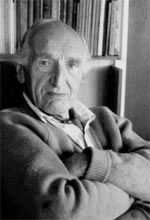


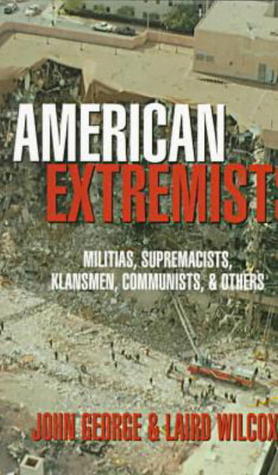
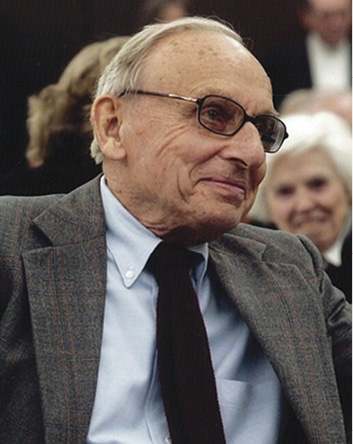


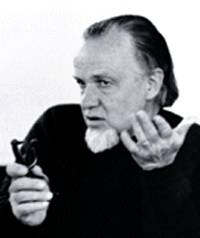



.jpg/220px-Harold_Blackham_(1974).jpg)


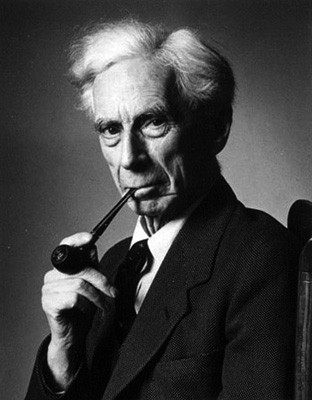

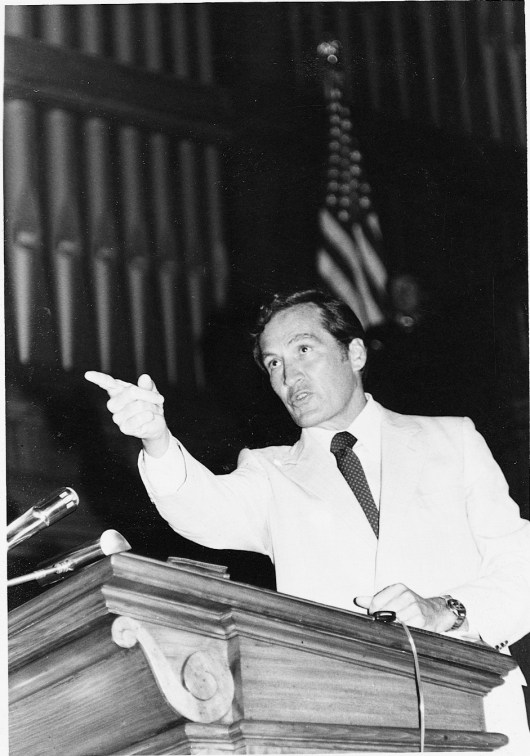

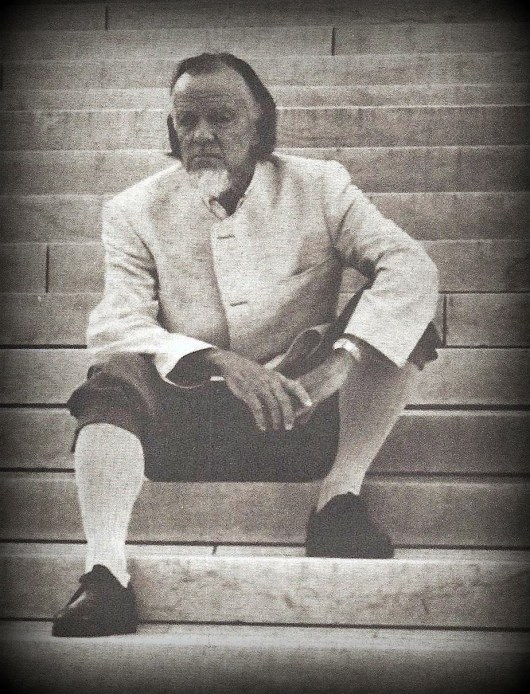

_coverart.jpg)


