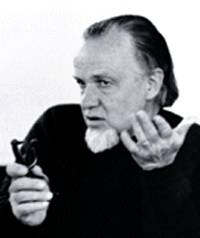
RESPONDING TO HARRY KROTO’S BRILLIANT RENOWNED ACADEMICS!! Sir John Bertrand Gurdon, biologist, 2012 Nobel Prize for Physiology or Medicine “I am actually agnostic on the grounds of I don’t know; there is no scientific proof either way”

_

On November 21, 2014 I received a letter from Nobel Laureate Harry Kroto and it said:

…Please click on this URL http://vimeo.com/26991975

and you will hear what far smarter people than I have to say on this matter. I agree with them.

Harry Kroto

Nick Gathergood, David-Birkett, Harry-Kroto

I have attempted to respond to all of Dr. Kroto’s friends arguments and I have posted my responses one per week for over a year now. Here are some of my earlier posts:

Arif Ahmed, Sir David AttenboroughMark Balaguer, Horace Barlow, Michael BatePatricia ChurchlandAaron CiechanoverNoam Chomsky,Alan DershowitzHubert Dreyfus, Bart Ehrman, Stephan FeuchtwangDavid Friend,  Riccardo GiacconiIvar Giaever , Roy GlauberRebecca GoldsteinDavid J. Gross,  Brian Greene, Susan GreenfieldStephen F Gudeman,  Alan Guth, Jonathan HaidtTheodor W. Hänsch, Brian Harrison,  Hermann HauserRoald Hoffmann,  Bruce HoodHerbert Huppert,  Gareth Stedman Jones, Steve JonesShelly KaganMichio Kaku,  Stuart Kauffman,  Lawrence KraussHarry Kroto, George LakoffElizabeth Loftus,  Alan MacfarlanePeter MillicanMarvin MinskyLeonard Mlodinow,  Yujin NagasawaAlva NoeDouglas Osheroff,  Jonathan Parry,  Saul PerlmutterHerman Philipse,  Carolyn PorcoRobert M. PriceLisa RandallLord Martin Rees,  Oliver Sacks, John SearleMarcus du SautoySimon SchafferJ. L. Schellenberg,   Lee Silver Peter Singer,  Walter Sinnott-ArmstrongRonald de Sousa, Victor StengerBarry Supple,   Leonard Susskind, Raymond TallisNeil deGrasse Tyson,  .Alexander Vilenkin, Sir John WalkerFrank WilczekSteven Weinberg, and  Lewis Wolpert,

John Gurdon

From Wikipedia, the free encyclopedia
Sir
John Gurdon
FRS FMedSci
John Gurdon Cambridge 2012.JPG
Born John Bertrand Gurdon
2 October 1933 (age 83)
Dippenhall, Surrey, England
Citizenship British
Nationality English
Fields Biology and Developmental Biology
Institutions University of Oxford
University of Cambridge
California Institute of Technology
Alma mater Christ Church, Oxford
Thesis Nuclear transplantation in Xenopus (1960)
Doctoral advisor Michael Fischberg[1]
Doctoral students Douglas A. Melton
Vincent Pasque
Known for Nuclear transfercloning
Notable awards William Bate Hardy Prize (1984)
Royal Medal (1985)
International Prize for Biology(1987)
Wolf Prize in Medicine (1989)
Edwin Grant Conklin Medal (2001)
Albert Lasker Basic Medical Research Award (2009)
Nobel Prize in Physiology or Medicine (2012)
Website
www.zoo.cam.ac.uk/zoostaff/gurdon.htm

Sir John Bertrand Gurdon FRS FMedSci (born 2 October 1933), is an English developmental biologist. He is best known for his pioneering research in nuclear transplantation[2][3][4] and cloning.[1][5][6][7] He was awarded the Lasker Award in 2009. In 2012, he and Shinya Yamanaka were awarded the Nobel Prize for Physiology or Medicine for the discovery that mature cells can be converted to stem cells.[8]

Early days[edit]

Gurdon attended Edgeborough and then Eton College, where he ranked last out of the 250 boys in his year group at biology, and was in the bottom set in every other science subject. A schoolmaster wrote a report stating “I believe he has ideas about becoming a scientist; on his present showing this is quite ridiculous.”[9][10][11] Gurdon explains it is the only document he ever framed; Gurdon also told a reporter “When you have problems like an experiment doesn’t work, which often happens, it’s nice to remind yourself that perhaps after all you are not so good at this job and the schoolmaster may have been right.”[12]

Gurdon went to Christ Church, Oxford, to study classics but switched to zoology. For his DPhil degree he studied nuclear transplantation in a frog species of the genus Xenopus[13][14] with Michael Fischberg at Oxford. Following postdoctoral work at Caltech,[15] he returned to England and his early posts were at the Department of Zoology of the University of Oxford (1962–71).

Gurdon has spent much of his research career at the University of Cambridge, first at the MRC Laboratory of Molecular Biology (1971–83) and then at the Department of Zoology (1983–present). In 1989, he was a founding member of the Wellcome/CRC Institute for Cell Biology and Cancer (later Wellcome/CR UK) in Cambridge, and was its Chair until 2001. He was a member of the Nuffield Council on Bioethics 1991–1995, and Master of Magdalene College, Cambridge, from 1995 to 2002.

Research[edit]

File:Xenopus-Nucleocytoplasmic-Hybrid.ogv

A video from an open-access article co-authored by Gurdon:[16] Animalview of different embryos developing in Xenopus laevis eggs: a diploidlaevis x laevis is shown on the top, cleaving and entering gastrulationabout 50 min earlier than haploid [laevis] x laevis(middle) and [laevis] x tropicalis cybrid (bottom) embryos.

Nuclear transfer[edit]

In 1958, Gurdon, then at the University of Oxford, successfully cloned a frog using intact nuclei from the somatic cells of a Xenopus tadpole.[17][18] This work was an important extension of work of Briggs and King in 1952 on transplanting nuclei from embryonic blastula cells[19] and the successful induction of polyploidy in the sticklebackGasterosteus aculatus, in 1956 by Har Swarup reported in Nature.[20] At that time he could not conclusively show that the transplanted nuclei derived from a fully differentiated cell. This was finally shown in 1975 by a group working at the Basel Institute for Immunology in Switzerland.[21] They transplanted a nucleus from an antibody-producing lymphocyte (proof that it was fully differentiated) into an enucleated egg and obtained living tadpoles.

Gurdon’s experiments captured the attention of the scientific community and the tools and techniques he developed for nuclear transfer are still used today. The term clone[22] (from the ancient Greek word κλών (klōn, “twig”)) had already been in use since the beginning of the 20th century in reference to plants. In 1963 the British biologist J. B. S. Haldane, in describing Gurdon’s results, became one of the first to use the word “clone” in reference to animals.

Messenger RNA expression[edit]

Gurdon and colleagues also pioneered the use of Xenopus (genus of highly aquatic frog) eggs and oocytes to translate microinjected messenger RNA molecules,[23] a technique which has been widely used to identify the proteins encoded and to study their function.

Recent research[edit]

Gurdon’s recent research has focused on analysing intercellular signalling factors involved in cell differentiation, and on elucidating the mechanisms involved in reprogramming the nucleus in transplantation experiments, including the role of histone variants,[24][25] and demethylation of the transplanted DNA.[26]

Politics and religion[edit]

Gurdon has stated that he is politically “middle of the road”, and religiously agnostic because “there is no scientific proof either way”. During his tenure as Master of Magdalene College, Gurdon created some controversy when he suggested that fellows should occasionally be allowed to deliver “an address on anything they would like to talk about” in college chapel services.[27] In an interview with EWTN.com, Gurdon reports that “I’m what you might call liberal minded. I’m not a Roman Catholic. I’m a Christian, of the Church of England.” [28]

Honours and awards[edit]

Gurdon was made a Fellow of the Royal Society (FRS) in 1971, and was knighted in 1995. In 2004, the Wellcome Trust/Cancer Research UK Institute for Cell Biology and Cancer was renamed the Gurdon Institute[29] in his honour. He has also received numerous awards, medals and honorary degrees.[15] In 2005, he was elected as an Honorary Member of the American Association of Anatomists. He was awarded the 2009 Albert Lasker Basic Medical Research award and in 2014 delivered the Harveian Oration at the Royal College of Physicians.[30]

Nobel Prize[edit]

In 2012 Gurdon was awarded, jointly with Shinya Yamanaka, the Nobel Prize for Physiology or Medicine “for the discovery that mature cells can be reprogrammed to become pluripotent.[31] His Nobel Lecture was called “The Egg and the Nucleus: A Battle for Supremacy”.

In  the first video below in the 13th clip in this series are his words and  my response is below them. 

50 Renowned Academics Speaking About God (Part 1)

Another 50 Renowned Academics Speaking About God (Part 2)

A Further 50 Renowned Academics Speaking About God (Part 3)

______

Interview of Sir John Gurdon, part 1

Interview of Sir John Gurdon, part 2

Uploaded on Dec 15, 2008

In the You Tube video “A Further 50 Renowned Academics Speaking About God (Part 1),” you asserted:

in terms of religious views I would say I am actually agnostic on the grounds of I don’t know; there is no scientific proof either way

Here is the fuller QUOTE taken from your interview with Alan MacFarlane:

I have respect for people who put a lot into life and contribute; on religion, my father took us to church every Sunday morning; I support the church; in terms of religious views I would say I am agnostic on the grounds of I don’t know; there is no scientific proof either way; I support the ethics of the Church of England; I am anti-Roman Catholic as I think they should  let people decide for themselves on contraception; I find myself giving lectures to theology students from time to time; this happened because when Master of Magdalene College I thought the sermons were boring; I suggested to the Chaplain at Magdalene that he occasionally asked Fellows to give an address on anything they would like to talk about; the letter was not responded to but the Bishop of Coventry, Simon Barrington-Ward, came back to Magdalene and I mentioned the idea to him; he thought it a good idea and I was asked to give an address; I chose to  take as a theme that you should not be prevented from trying to relieve human suffering by your religious views; rather controversial, and the Chaplain didn’t like it at all,  (by this time I was Master of the College), he got preferment at Windsor and decided  that it was interesting and invited me to give it to the theology students in Windsor Castle; I did so and he was very supportive; we disagree on a number of things but I continue do it; these are priests in service who come for revision classes, sent by their Bishop; after the talk I get them to vote; the first time they voted against the line I was taking; the Chaplain suggested that the next time we have a secret vote and then it came out in favour; I like talking on to what extent religion should interfere in the relief of suffering; a classic case is cystic fibrosis and should you get rid of embryos that are going to have it by in vitro-fertilization, and avoid enormous suffering; as Master of Magdalene never found any difficulty in presiding in Chapel; I don’t think an agnostic position is inappropriate; I support what the church does very strongly, but the fact that I can’t prove what we believe is a good reason to be called agnostic; Richard Dawkins’ views are rather too aggressive but make him good as a television presenter; he was a graduate student shortly after me and worked underTinbergen; he does interest people in science and that is good though I wouldn’t agree with his views on religion (he knew Richard Dawkins as a graduate student) 

One of my favorite messages by Adrian Rogers is called  “WHO IS JESUS?”and he goes through the Old Testament and looks at the scriptures that describe the Messiah.  I want to encourage you to listen to this audio message which I will send to anyone anywhere anytime. I have given thousands of these CD’s away over the years that contain this message and they all contain the following story from Adrian Rogers.  Here is how the story goes:

Years ago Adrian Rogers counseled with a NASA scientist and his severely depressed wife. The wife pointed to her husband and said, “My problem is him.” She went on to explain that her husband was a drinker, a liar, and an adulterer. Dr. Rogers asked the man if he were a Christian. “No!” the man laughed. “I’m an atheist.”

“Really?” Dr. Rogers replied. “That means you’re someone who knows that God does not exist.”

“That’s right,” said the man.

“Would it be fair to say that you don’t know all there is to know in the universe?”

“Of course.”

“Would it be generous to say you know half of all there is to know?”

“Yes.”

“Wouldn’t it be possible that God’s existence might be in the half you don’t know?”

“Okay, but I don’t think He exists.”

“Well then, you’re not an atheist; you’re an agnostic. You’re a doubter.”

“Yes, and I’m a big one.”

“It doesn’t matter what size you are. I want to know what kind you are.”

“What kinds are there?”

“There are honest doubters and dishonest doubters. An honest doubter is willing to search out the truth and live by the results; a dishonest doubter doesn’t want to know the truth. He can’t find God for the same reason a thief can’t find a policeman.”

“I want to know the truth.”

“Would you like to prove that God exists?”

“It can’t be done.”

“It can be done. You’ve just been in the wrong laboratory. Jesus said, ‘If any man’s will is to do His will, he will know whether my teaching is from God or whether I am speaking on my own authority’ (John 7:17). I suggest you read one chapter of the book of John each day, but before you do, pray something like this, ‘God, I don’t know if You’re there, I don’t know if the Bible is true, I don’t know if Jesus is Your Son. But if You show me that You are there, that the Bible is true, and that Jesus is Your Son, then I will follow You. My will is to do your will.”

The man agreed. About three weeks later he returned to Dr. Rogers’s office and invited Jesus Christ to be his Savior and Lord.

__

By your own statement you are an agnostic. The only question left is if you really want to know or not. A while back on  Easter we had a special service at our church, Fellowship Bible Church or Little Rock, Arkansas. On that day I heard a song that I wanted to discuss with you.  It is  called MAN OF SORROWS and it can be found on You Tube Man Of Sorrows – Hillsong Live (2013 Album Glorious Ruins) Worship Song with Lyrics and here are the lyrics:

“Man Of Sorrows”

Man of sorrows Lamb of God
By His own betrayed
The sin of man and wrath of God
Has been on Jesus laid

Silent as He stood accused
Beaten mocked and scorned
Bowing to the Father’s will
He took a crown of thorns

Oh that rugged cross
My salvation
Where Your love poured out over me
Now my soul cries out
Hallelujah
Praise and honour unto Thee

Sent of heaven God’s own Son
To purchase and redeem
And reconcile the very ones
Who nailed Him to that tree

Now my debt is paid
It is paid in full
By the precious blood
That my Jesus spilled

Now the curse of sin
Has no hold on me
Whom the Son sets free
Oh is free indeed

See the stone is rolled away
Behold the empty tomb
Hallelujah God be praised
He’s risen from the grave

We sang that song at our Easter service.

On Easter morning March 27, 2016 at FELLOWSHIP BIBLE CHURCH our teaching pastor Brandon Barnard delivered the message THIS CHANGES EVERYTHING based on I Corinthians chapter 15 and I wanted to share a portion of that sermon with you today.

This day is the day that changes everything. The resurrection changes everything and that is why we are gathered here today to celebrate the resurrection of our Lord Jesus Christ because it changes everything.

Some of you are going to be blown away by the opportunity before you this Easter morning because the resurrection of Jesus Christ stands at the very heart of Christianity. If what we we are gathered here to celebrate did not happen then people need to pity us as believers.  They need to feel sorry for you and me more than anyone on earth because we have set our hopes firmly on a lie.

But if the resurrection really did happen, then we need to repent and we need to believe in Jesus and we need to rejoice that we have hope in this life and the life to come. 

Paul wrote this to the believers in Corinth.

1 Corinthians 15:3-6, 13-21 English Standard Version (ESV)

For I delivered to you as of first importance what I also received: that Christ died for our sins in accordance with the Scriptures, that he was buried, that he was raised on the third day in accordance with the Scriptures, and that he appeared to Cephas, then to the twelve. Then he appeared to more than five hundred brothers at one time, most of whom are still alive, though some have fallen asleep.

13 But if there is no resurrection of the dead, then not even Christ has been raised. 14 And if Christ has not been raised, then our preaching is in vain and your faith is in vain. 15 We are even found to be misrepresenting God, because we testified about God that he raised Christ, whom he did not raise if it is true that the dead are not raised.16 For if the dead are not raised, not even Christ has been raised. 17 And if Christ has not been raised, your faith is futile and you are still in your sins. 18 Then those also who have fallen asleep in Christ have perished.19 If in Christ we have hope[a] in this life only, we are of all people most to be pitied.

20 But in fact Christ has been raised from the dead, the firstfruits of those who have fallen asleep. 21 For as by a man came death, by a man has come also the resurrection of the dead.

_____

If Christ hasn’t been raised then these facts are true:

  1. PREACHING AND FAITH ARE IN VAIN.
  2. WE ARE FALSE WITNESSES
  3. WE ARE STILL IN OUR SINS.
  4. THOSE WHO DIED IN FAITH ARE STILL DEAD
  5. WE ARE TO BE PITIED MORE THAN ANYONE ELSE IN THE WORLD.

Verse 20 says, “but Christ has been raised!!! Therefore, these things are true:

  1. Our faith is significant, valuable and eternal.
  2. we are truth tellers!!
  3. we are forgiven of our sins.
  4. death is not our final stop.
  5. don’t pity us but join us in believing in Jesus Christ.

You said above that you are an agnostic. However, would you agree that if the Bible is correct in regards to history then Jesus did rise from the grave? Let’s take a closer look at evidence concerning the accuracy of the Bible.

I know that you highly respected Surgeon General C. Everett Koop and he co-authored with Francis Schaeffer the book WHATEVER HAPPENED TO THE HUMAN RACE? Below is a piece of evidence from that book.

Francis Schaeffer (30 January 1912 – 15 May 1984[1])  and his wife Edith  (November 3, 1914 – March 30, 2013)

C. Everett Koop, MD (October 14, 1916 – February 25, 2013) 13th Surgeon General of the United States


__

Two things should be mentioned about the time of Moses in Old Testament history.

First, consider the archaeological evidence that relates to the period. True, it is not of the same explicitness that we have found, say, in relation to the existence of Ahab or Jehu or Jehoiakim. We have no inscription from Egypt which refers to Moses being taken out of the bulrushes and removed from the waterproof basket his mother had made him. But this does not mean that the Book of Exodus is a fictitious account, as some critics has suggested. Some say it is simply an idealized reading-back into history by the Jews under the later monarchy. There is not a reason why these “books of Moses,” as they are called, should not be treated as history, just as we have been forced to treat the Books of Kings and Chronicles dating 500 years later.

There is ample evidence about the building projects of the Egyptian kings, and the evidence we have fits well with Exodus. There are scenes of brick-making (for example, Theban Tomb 100 of Rekhmire). Contemporary parchments and papyri tell of production targets which had to be met. One speaks of a satisfied official report of his men as “making their quota of bricks daily” (Papyrus Anastasi III vso, p.3, in the British Museum. Also Louvre Leather Roll in the Louvre, Paris, col ii, mentions quotes of bricks and “taskmasters”). Actual bricks found show signs of straw which had to be mixed in with the clay, just as Exodus says. This matter of bricks and straw is further affirmed by the record that one despairing official complained, “There are no men to make bricks nor straw in my area.”

We know from contemporary discoveries that Semites were found at all levels of Egypt’s cosmopolitan society. (Brooklyn Museum, New York, no. 35, 1446. Papyrus Brooklyn). There is nothing strange therefore about Joseph’s becoming so important in the pharaoh’s court.

The store cities of Pithom and Raamses (Rameses) mentioned in Exodus 1:11 are well known in Egyptian inscriptions. Raamses was actually in the east-Delta capital, Pi-Ramses (near Goshen), where the Israelites would have had ample experience of agriculture. Thus, the references to agriculture found in the law of Moses would not have been strange to the Israelites even though they were in the desert at the time the law was given. Certainly there is no reason to say, as some critics do, that these sections on agriculture were an indication of a reading-back from a latter period when the Jews were settled in Canaan.

The form of the covenant made at Sinai has remarkable parallels with the covenant forms of other people at that time. (On covenants and parties to a treaty, the Louvre; and Treaty Tablet from Boghaz Koi (i.e., Hittite) in Turkey, Museum of Archaeology in Istanbul.) The covenant form at Sinai resembles just as the forms of letter writings of the first century after Christ (the types of introductions and greetings) are reflected in the letters of the apostles in the New Testament, it is not surprising to find the covenant form of the second millennium before Christ reflected in what occurred at Mount Sinai. God has always spoken to people within the culture of their time, which does not mean that God’s communication is limited by that culture. It is God’s communication but within the forms appropriate to the time.

The Pentateuch tells us that Moses led the Israelites up the east side of the Dead Sea after their long stay in the desert. There they encountered the hostile kingdom of Moab. We have firsthand evidence for the existence of this kingdom of Moab–contrary to what has been said by critical scholars who have denied the existence of Moab at this time. It can be found in a war scene from a temple at Luxor (Al Uqsor). This commemorates a victory by Ramses II over the Moabite nation at Batora (Luxor Temple, Egypt).

Also the definite presence of the Israelites in west Palestine (Canaan) no later than the end of the thirteenth century B.C. is attested by a victory stela of Pharaoh Merenptah (son and successor of Ramses II) to commemorate his victory over Libya (Israel Stela, Cairo Museum, no. 34025). In it he mentions his previous success in Canaan against Aschalon, Gize, Yenom, and Israel; hence there can be no doubt the nation of Israel was in existence at the latest by this time of approximately 1220 B.C. This is not to say it could not have been earlier, but it cannot be later than this date.

Christ came and laid his life down to die for our sins and there is evidence that indicates the Bible is true!!!!! Some 400 years before crucifixion was invented, both Israel’s King David and the prophet Zechariah described the Messiah’s death in words that perfectly depict that mode of execution. Further, they said that the body would be pierced and that none of the bones would be broken, contrary to customary procedure in cases of crucifixion (Psalm 22 and 34:20; Zechariah 12:10). Again, historians and New Testament writers confirm the fulfillment: Jesus of Nazareth died on a Roman cross, and his extraordinarily quick death eliminated the need for the usual breaking of bones. A spear was thrust into his side to verify that he was, indeed, dead.

Psalm 22 New American Standard Bible (NASB)

A Cry of Anguish and a Song of Praise.

For the choir director; upon [a]Aijeleth Hashshahar. A Psalm of David.

22 My God, my God, why have You forsaken me?
[b]Far from my deliverance are the words of my [c]groaning.
O my God, I cry by day, but You do not answer;
And by night, but [d]I have no rest.
But I am a worm and not a man,

A reproach of men and despised by the people.
7 All who see me [g]sneer at me;
They [h]separate with the lip, they wag the head, saying,
[i]Commit yourself to the Lord; let Him deliver him;
Let Him rescue him, because He delights in him.”

12 Many bulls have surrounded me;
Strong bulls of Bashan have encircled me.
13 They open wide their mouth at me,
As a ravening and a roaring lion.
14 I am poured out like water,
And all my bones are out of joint;
My heart is like wax;
It is melted within [l]me.
15 My strength is dried up like a potsherd,
And my tongue cleaves to my jaws;
And You lay me [m]in the dust of death.
16 For dogs have surrounded me;
[n]A band of evildoers has encompassed me;
[o]They pierced my hands and my feet.
17 I can count all my bones.
They look, they stare at me;
18 They divide my garments among them,
And for my clothing they cast lots.

Francis Schaeffer ended HOW SHOULD WE THEN LIVE? Episode 7 with these words:

When we think of Christ of course we think of his substitutionary death upon the cross when he who claimed to be God died in a substitutionary way and as such his death had infinite value and as we accept  that gift raising the empty hands of faith with no humanistic elements we have that which is real life and that is being in relationship to the infinite personal God who is there and being in a personal relationship to Him. But Christ brings life in another way that is not as often clearly thought about perhaps. He connects himself with what the Bible teaches in his teaching and as such he is a prophet as well as a savior. It is upon the basis of what he taught  and the Bible teaches because he himself wraps these together that we have life instead of death in the sense of having some knowledge that is more than men can have from himself, beginning from himself alone. Both of these elements are the place where Christ gives us life.  

The answer to find meaning in life is found in putting your faith and trust in Jesus Christ. The Bible is true from cover to cover and can be trusted.

Thanks for your time.

Sincerely,

Everette Hatcher, everettehatcher@gmail.com, http://www.thedailyhatch.org, cell ph 501-920-5733, Box 23416, LittleRock, AR 72221

____________

Related posts:

FRANCIS SCHAEFFER ANALYZES ART AND CULTURE Part 53 THE BEATLES (Part E, Stg. Pepper’s and John Lennon’s search in 1967 for truth was through drugs, money, laughter, etc & similar to King Solomon’s, LOTS OF PICTURES OF JOHN AND CYNTHIA) (Feature on artist Yoko Ono)

The John Lennon and the Beatles really were on a long search for meaning and fulfillment in their lives  just like King Solomon did in the Book of Ecclesiastes. Solomon looked into learning (1:12-18, 2:12-17), laughter, ladies, luxuries, and liquor (2:1-2, 8, 10, 11), and labor (2:4-6, 18-20). He fount that without God in the picture all […]

FRANCIS SCHAEFFER ANALYZES ART AND CULTURE Part 52 THE BEATLES (Part D, There is evidence that the Beatles may have been exposed to Francis Schaeffer!!!) (Feature on artist Anna Margaret Rose Freeman )

______________   George Harrison Swears & Insults Paul and Yoko Lucy in the Sky with Diamonds- The Beatles The Beatles:   I have dedicated several posts to this series on the Beatles and I don’t know when this series will end because Francis Schaeffer spent a lot of time listening to the Beatles and talking […]

FRANCIS SCHAEFFER ANALYZES ART AND CULTURE Part 51 THE BEATLES (Part C, List of those on cover of Stg.Pepper’s ) (Feature on artist Raqib Shaw )

  The Beatles in a press conference after their Return from the USA Uploaded on Nov 29, 2010 The Beatles in a press conference after their Return from the USA. The Beatles:   I have dedicated several posts to this series on the Beatles and I don’t know when this series will end because Francis […]

FRANCIS SCHAEFFER ANALYZES ART AND CULTURE Part 50 THE BEATLES (Part B, The Psychedelic Music of the Beatles) (Feature on artist Peter Blake )

__________________   Beatles 1966 Last interview I have dedicated several posts to this series on the Beatles and I don’t know when this series will end because Francis Schaeffer spent a lot of time listening to the Beatles and talking and writing about them and their impact on the culture of the 1960’s. In this […]

FRANCIS SCHAEFFER ANALYZES ART AND CULTURE Part 49 THE BEATLES (Part A, The Meaning of Stg. Pepper’s Cover) (Feature on artist Mika Tajima)

_______________ The Beatles documentary || A Long and Winding Road || Episode 5 (This video discusses Stg. Pepper’s creation I have dedicated several posts to this series on the Beatles and I don’t know when this series will end because Francis Schaeffer spent a lot of time listening to the Beatles and talking and writing about […]

FRANCIS SCHAEFFER ANALYZES ART AND CULTURE PART 48 “BLOW UP” by Michelangelo Antonioni makes Philosophic Statement (Feature on artist Nancy Holt)

_______________ Francis Schaeffer pictured below: _____________________ I have included the 27 minute  episode THE AGE OF NONREASON by Francis Schaeffer. In that video Schaeffer noted,  ” Sergeant Pepper’s Lonely Hearts Club Band…for a time it became the rallying cry for young people throughout the world. It expressed the essence of their lives, thoughts and their feelings.” How Should […]

FRANCIS SCHAEFFER ANALYZES ART AND CULTURE Part 47 Woody Allen and Professor Levy and the death of “Optimistic Humanism” from the movie CRIMES AND MISDEMEANORS Plus Charles Darwin’s comments too!!! (Feature on artist Rodney Graham)

Crimes and Misdemeanors: A Discussion: Part 1 ___________________________________ Today I will answer the simple question: IS IT POSSIBLE TO BE AN OPTIMISTIC SECULAR HUMANIST THAT DOES NOT BELIEVE IN GOD OR AN AFTERLIFE? This question has been around for a long time and you can go back to the 19th century and read this same […]

FRANCIS SCHAEFFER ANALYZES ART AND CULTURE PART 46 Friedrich Nietzsche (Featured artist is Thomas Schütte)

____________________________________ Francis Schaeffer pictured below: __________ Francis Schaeffer has written extensively on art and culture spanning the last 2000years and here are some posts I have done on this subject before : Francis Schaeffer’s “How should we then live?” Video and outline of episode 10 “Final Choices” , episode 9 “The Age of Personal Peace and Affluence”, episode 8 […]

FRANCIS SCHAEFFER ANALYZES ART AND CULTURE Part 45 Woody Allen “Reason is Dead” (Feature on artists Allora & Calzadilla )

Love and Death [Woody Allen] – What if there is no God? [PL] ___________ _______________ How Should We then Live Episode 7 small (Age of Nonreason) #02 How Should We Then Live? (Promo Clip) Dr. Francis Schaeffer 10 Worldview and Truth Two Minute Warning: How Then Should We Live?: Francis Schaeffer at 100 Francis Schaeffer […]

FRANCIS SCHAEFFER ANALYZES ART AND CULTURE Part 44 The Book of Genesis (Featured artist is Trey McCarley )

___________________________________ Francis Schaeffer pictured below: ____________________________ Francis Schaeffer “BASIS FOR HUMAN DIGNITY” Whatever…HTTHR Dr. Francis schaeffer – The flow of Materialism(from Part 4 of Whatever happened to human race?) Dr. Francis Schaeffer – The Biblical flow of Truth & History (intro) Francis Schaeffer – The Biblical Flow of History & Truth (1) Dr. Francis Schaeffer […]

_______________

_


_

RESPONDING TO HARRY KROTO’S BRILLIANT RENOWNED ACADEMICS!! Massimo Pigliucci, Philosophy, CUNY-City College, “[Reason] is opposed of course to FAITH”

_


Harry Kroto pictured below:

_________________

On November 21, 2014 I received a letter from Nobel Laureate Harry Kroto and it said:

…Please click on this URL http://vimeo.com/26991975

and you will hear what far smarter people than I have to say on this matter. I agree with them.

Harry Kroto

_____________

Massimo Pigliucci

From Wikipedia, the free encyclopedia
Massimo Pigliucci
Massimo Pigliucci.jpg
Born January 16, 1964 (age 53)
MonroviaLiberia
Alma mater
School Scientific skepticismsecular humanismStoicism
Main interests
Philosophy of science
Philosophy of pseudoscience
Relationship between science and religion
Demarcation problem

Massimo Pigliucci (Italian pronunciation: [ˈmassimo piʎˈʎuttʃi]; born January 16, 1964)[1] is Professor of Philosophy at CUNYCity College,[2] formerly co-host of the Rationally Speaking Podcast,[3] and formerly the editor in chief for the online magazine Scientia Salon.[4] He is an outspoken critic of pseudoscience[5][6] and creationism,[7] and an advocate for secularism[8], science education[9] and modern Stoicism.

Biography[edit]

Pigliucci was born in Monrovia, Liberia and raised in Rome, Italy.[1] He has a doctorate in genetics from the University of FerraraItaly, a PhD in biology from the University of Connecticut, and a PhD in philosophy of science from the University of Tennessee.[10] He is a fellow of the American Association for the Advancement of Science and of the Committee for Skeptical Inquiry.[1]

Pigliucci was formerly a professor of ecology and evolution at Stony Brook University. He explored phenotypic plasticitygenotype-environment interactions, natural selection, and the constraints imposed on natural selection by the genetic and developmental makeup of organisms.[11] In 1997, while working at the University of Tennessee, Pigliucci received the Theodosius Dobzhansky Prize,[12] awarded annually by the Society for the Study of Evolution[1] to recognize the accomplishments and future promise of an outstanding young evolutionary biologist. As a philosopher, Pigliucci is interested in the structure and foundations of evolutionary theory, the relationship between science and philosophy, and the relationship between science and religion.[10] He is a proponent of the extended evolutionary synthesis.[13]

Pigliucci writes regularly for Skeptical Inquirer on topics such as climate change denialintelligent designpseudoscience, and philosophy.[14] He has also written for Philosophy Now and maintains a blog called “Rationally Speaking”.[15] He has debated “deniers of evolution” (young-earth creationists and intelligent design proponents), including young earth creationists Duane Gish and Kent Hovind and intelligent design proponents William Dembski and Jonathan Wells, on many occasions.[16][17][18][19]

Michael ShermerJulia Galef and Massimo Pigliucci record live at NECSS 2013

Critical thinking and scepticism[edit]

While Pigliucci is an atheist himself,[20] he does not believe that science necessarily demands atheism because of two distinctions: the distinction between methodological naturalism and philosophical naturalism, and the distinction between value judgements and matters of fact. He believes that many scientists and science educators fail to appreciate these differences.[9] Pigliucci has criticized New Atheist writers for embracing what he considers to be scientism (although he largely excludes philosopher Daniel Dennett from this charge).[21] In a discussion of his book Answers for Aristotle: How Science and Philosophy Can Lead Us to a More Meaningful Life, Pigliucci told Skepticality podcast host Derek Colanduno, “Aristotle was the first ancient thinker to really take seriously the idea that you need both empirical facts, you need an evidence-based approach to the world and you need to be able to reflect on the meaning of those facts… If you want answers to moral questions then you don’t ask the neurobiologist, you don’t ask the evolutionary biologist, you ask the philosopher.”[22]

Pigliucci describes the mission of skeptics, referencing Carl Sagan‘s Demon Haunted World: Science as a Candle in the Dark saying “What skeptics are about is to keep that candle lit and spread it as much as possible”.[23] Pigliucci serves on the board of NYC Skeptics and on the advisory board of the Secular Coalition for America.[8]

In 2001, he debated William Lane Craig over the existence of God.[24]

Massimo Pigliucci criticised the newspaper article by Pope Francis entitled, “An open dialogue with non-believers”. Pigliucci viewed the article as a monologue rather than a dialogue and, in a response personally addressed to Pope Francis, wrote that the Pope only offered non-believers “a reaffirmation of entirely unsubstantiated fantasies about God and his Son…followed by a confusion between the concept of love and truth, the whole peppered by a significant amount of historical revisionism and downright denial of the ugliest facets of your Church (and you will notice that I haven’t even brought up the pedophilia stuff!).”[25]

Rationally Speaking[edit]

In August 2000 Massimo started with a monthly internet column called Rationally Speaking. In August 2005, the column became a blog,[26] where he wrote posts until March 2014.[27] Since 1 February 2010, he co-hosted the bi-weekly Rationally Speaking podcast together with Julia Galef, whom he first met at the Northeast Conference on Science and Skepticism, held in September 2009.[28] The podcast is produced by the New York City Skeptics. He left the podcast in 2015 to pursue other interests.[29] In 2010, Neil DeGrasse Tyson explained on the show his justification for spending large amounts of government money on space programs. He eventually printed the transcript of his performance as a guest on the show in his book Space Chronicles as a full chapter covering eight pages.[30] Another episode in which Tyson explained his position on the label “atheism” received attention on NPR.[31]

His comments can be found on the 2nd  video and the 57th clip in this series. Below the videos you will find his words.

50 Renowned Academics Speaking About God (Part 1)

Another 50 Renowned Academics Speaking About God (Part 2)

A Further 50 Renowned Academics Speaking About God (Part 3)

________

From Everette Hatcher, http://www.thedailyhatch.org, P.O. Box 23416, Little Rock , AR 72221

Dear  Professor MASSIMO PIGLICUCCI,

I have really enjoyed watching your debate with William Lane Craig on You Tube  and your discussion with Daniel Dennett on the limits of science. I have had the pleasure of both corresponding with Professor Dennett and reading his book DARWIN’S DANGEROUS IDEA earlier this year.

I noticed that you graduated from the University of Tennessee at Knoxville. Although I have never personally been a Tennessee fan, I was told by my grandfather that a cousin of his was a kicker for the Vols. My grandfather grew up in Franklin, Tennessee with his brothers and sister. They used to get up at 2 am on Saturdays and travel to Knoxville by 1pm for the kickoff. My grandfather attended the University of Tennessee in 1921-23 until his money ran out. My grandfather told me he was relatives with Buck Hatcher who was a star player for the Vols.

Sure enough Buck Hatcher did play for the Vols and he kicked a 53 yard field goal on Nov 13, 1920 to set a record.  Later my grandfather’s brother Mack had the “Mack Hatcher Memorial Highway” named after him. He was a Gideon and often helped those who needed help in his Williamson County. (A Gideon is one who gives out Bibles). He stood six foot eleven and his sister Sara Lou was six foot four.

In the You Tube series RENOWNED ACADEMICS SPEAKING ABOUT GOD I found the following quote from you:

Reason of course can be defined in a variety of ways, but these are pretty good approximations. Cause is a explanation or justification for an event. You have a reason to believe. There was a reason I got up from my and went to the refrigerator and got a beer because I was THIRSTY. That is a REASON.  

The Power of the mind to think, understand and form judgments by the course of logic is what we are talking about in this context. This is opposed of course to FAITH, which is the COMPLETE trust or confidence in someone or something. Notice the emphasis on COMPLETE for some belief in God or doctrine of religion based on SPIRITUAL APPREHENSION rather than truth. That is the interesting premise here. SPIRITUAL APPREHENSION, what the heck is SPIRITUAL APPREHENSION? How do people spiritually apprehend things? I can talk about how people LOGICALLY or RATIONALLY think about things, but it is hard to get my mind wrapped around the idea of spiritual apprehension. I suspect because there is no such thing as spiritual apprehension.

__


Let me respond with to your assertion that faith is totally opposed to logic with these writings below by Francis Schaeffer:

Image result for francis schaeffer

What is Faith?

Posted on July 29, 2012by 

What is faith?  Faith is often characterized as blind belief just because we want it to be true.  It’s sometimes thought to be belief in spite of evidence to the contrary.  But is that really what Biblical faith is like or is it a strawman argument that’s easily knocked down to make a point errantly?

Francis Schaeffer presents this story about faith:

Suppose we are climbing in the Alps and are very high on the bare rock, and suddenly the fog rolls in. The guide turns to us and says that the ice is forming and that there is no hope; before morning we will all freeze to death here on the shoulder of the mountain. Simply to keep warm the guide keeps us moving in the dense fog further out on the shoulder until none of us have any idea where we are. After an hour or so, someone says to the guide, “Suppose I dropped and hit a ledge ten feet down in the fog. What would happen then?” The guide would say that you might make it until the morning and thus live. So, with absolutely no knowledge or any reason tosupport his action, one of the group hangs and drops into the fog. This would be one kind of faith, a leap of faith.

Suppose, however, after we have worked out on the shoulder in the midst of the fog and the growing ice on the rock, we had stopped and we heard a voice which said, “You cannot see me, but I know exactly where you are from your voices.  I am on another ridge. I have lived in these mountains, man and boy, for over sixty years and I know every foot of them. I assure you that ten feet below you there is a ledge. If you hang and drop, you can make it through the night and I will get you in the morning.

I would not hang and drop at once, but would ask questions to try to ascertain if the man knew what he was talking about and it he was not my enemy. In the Alps, for example, I would ask him his name. If the name he gave me was the name of a family from that part of the mountains, it would count a great deal to me. In the Swiss Alps there are certain family names that indicate mountain families of that area. In my desperate situation, even though time would be running out, I would ask him what to me would be the adequate and sufficient questions, and when I became convinced by his answers, then I would hang and drop.

Schaeffer’s story captures the idea that faith is not blind.  It is based on reason, logic, information, but lives in a situation where a gap exists.  Faith bridges the gap by trusting in someone or something in a better position than yourself.  In this story, faith was put in the knowledge of the man who grew up in the Alps.  It was a rational, tested faith based on questioning the man’s knowledge, but it was still faith because the ledge below couldn’t be seen, touched or definitively known.  This idea that faith is well informed and not irrational is the first point to keep in mind.

The second point is about the object of faith.  When you walk across ice, your trust is put in the ice to hold your weight.  Ice is the object of your faith.  If your trust is misplaced, you’ll quickly be wet, cold and in significant danger.  It wouldn’t have mattered whether you have a little faith in the ice or trust it fully.  The strength of the object of faith is what counts.  It the story it was the knowledge of the guide in the fog.

Christian faith captures both of these ideas.  First, God provides evidence of Himself in creation, in prophecy, in archeology, in Scripture’s consistency across 40+ authors and in the life of Jesus.  He doesn’t leave us without witness or guidance.  Second, He then requires us to make Jesus the object of our faith.  Jesus’ sinless life, substitutionary death and bodily resurrection are what matter.  As Paul said, if Jesus didn’t rise from the dead our faith is in vain (1 Corinthians 15:17). Putting trust in the Creator of the universe rather than our own feeble attempts to be good doesn’t seem like much of a stretch when you look at the history of mankind’s failures an our own individual struggles.  We have all sinned and fall short of the glory of God and must put our faith in Jesus’ work to wash our sin away so we can enter God’s presence.

__________

The answer to finding out more about God is found in putting your faith and trust in Jesus Christ. The Bible is true from cover to cover and can be trusted. Please consider taking time to read Isaiah chapter 53 and if you have any interest then watch the You Tube clip “The Biography of the King” by Adrian Rogers which discusses that chapter in depth.

Is the Bible historically accurate? Here are some of the posts I have done in the past on the subject: 1. The Babylonian Chronicleof Nebuchadnezzars Siege of Jerusalem2. Hezekiah’s Siloam Tunnel Inscription. 3. Taylor Prism (Sennacherib Hexagonal Prism)4. Biblical Cities Attested Archaeologically. 5. The Discovery of the Hittites6.Shishak Smiting His Captives7. Moabite Stone8Black Obelisk of Shalmaneser III9A Verification of places in Gospel of John and Book of Acts., 9B Discovery of Ebla Tablets10. Cyrus Cylinder11. Puru “The lot of Yahali” 9th Century B.C.E.12. The Uzziah Tablet Inscription13. The Pilate Inscription14. Caiaphas Ossuary14 B Pontius Pilate Part 214c. Three greatest American Archaeologists moved to accept Bible’s accuracy through archaeology.

Below is a piece of that evidence given by Francis Schaeffer concerning the accuracy of the Bible.

Image result for francis schaeffer

TRUTH AND HISTORY (chapter 5 of WHATEVER HAPPENED TO THE HUMAN RACE?)

In the previous chapter we saw that the Bible gives us the explanation for the existence of the universe and its form and for the mannishness of man. Or, to reverse this, we came to see that the universe and its form and the mannishness of man are a testimony to the truth of the Bible. In this chapter we will consider a third testimony: the Bible’s openness to verification by historical study.

Christianity involves history. To say only that is already to have said something remarkable, because it separates the Judeo-Christian world-view from almost all other religious thought. It is rooted in history.

The Bible tells us how God communicated with man in history. For example, God revealed Himself to Abraham at a point in time and at a particular geographical place. He did likewise with Moses, David, Isaiah, Daniel and so on. The implications of this are extremely important to us. Because the truth God communicated in the Bible is so tied up with the flow of human events, it is possible by historical study to confirm some of the historical details.

It is remarkable that this possibility exists. Compare the information we have from other continents of that period. We know comparatively little about what happened in Africa or South America or China or Russia or even Europe. We see beautiful remains of temples and burial places, cult figures, utensils, and so forth, but there is not much actual “history” that can be reconstructed, at least not much when compared to that which is possible in the Middle East.

When we look at the material which has been discovered from the Nile to the Euphrates that derives from the 2500-year span before Christ, we are in a completely different situation from that in regard to South America or Asia. The kings of Egypt and Assyria built thousands of monuments commemorating their victories and recounting their different exploits. Whole libraries have been discovered from places like Nuzu and Mari and most recently at Elba, which give hundreds of thousands of texts relating to the historical details of their time. It is within this geographical area that the Bible is set. So it is possible to find material which bears upon what the Bible tells us.

The Bible purports to give us information on history. Is the history accurate? The more we understand about the Middle East between 2500 B.C. and A.D. 100, the more confident we can be that the information in the Bible is reliable, even when it speaks about the simple things of time and place.

(This material below is under footnote #94)

The site of the biblical city called Lachish is about thirty miles southwest of Jerusalem. This city is referred to on a number of occasions in the Old Testament. Imagine a busy city with high walls surrounding it, and a gate in front that is the only entrance to the city. We know so much about Lachish from archaeological studies that a reconstruction of the whole city has been made in detail. This can be seen at the British Museum in the Lachish Room in the Assyrian section.

There is also a picture made by artists in the eighth century before Christ, the Lachish Relief, which was discovered in the city of Nineveh in the ancient Assyria. In this picture we can see the Jewish inhabitants of Lachish surrendering to Sennacherib, the king of Assyria. The details in the picture and the Assyrian writing on it give the Assyrian side of what the Bible tells us in Second Kings:

2 Kings 18:13-16

New American Standard Bible (NASB)

13 Now in the fourteenth year of King Hezekiah, Sennacherib king of Assyria came up against all the fortified cities of Judah and seized them. 14 Then Hezekiah king of Judah sent to the king of Assyria at Lachish, saying, “I have done wrong. Withdraw from me; whatever you impose on me I will bear.” So the king of Assyria required of Hezekiah king of Judah three hundred talents of silver and thirty talents of gold. 15 Hezekiah gave him all the silver which was found in the house of the Lord, and in the treasuries of the king’s house. 16 At that time Hezekiah cut off the gold from the doors of the temple of the Lord, and from the doorposts which Hezekiah king of Judah had overlaid, and gave it to the king of Assyria.

________


We should notice two things about this. First, this is a real-life situation–a real siege of a real city with real people on both sides of the war–and it happened at a particular date in history, near the turn of the eighth century B.C. Second, the two accounts of this incident in 701 B.C. (the account from the Bible and the Assyrian account from Nineveh) do not contradict, but rather confirm each other. The history of Lachish itself is not so important for us, but some of its smaller historical details.


Image result for British Museum in the Lachish Room

_____________


_

The Assyrian king Sennacherib sits on his luxurious chair on a low mound. There is a tent behind him. His commander-in-chief stands before him (in a very close proximity) and greets him after conquering the city of Lachish. Assyrian soldiers (the king’s bodyguards) wear their exquisite military uniform and carry their weapons. Prisoners from Lachish are being reviewed and presented to the king. One prostrates and another two kneel; they seem to ask for mercy. Most likely, they were later beheaded. The king obviously had been watching the battle and its victorious aftermath. Neo-Assyrian Period, 700-692 BCE. From Nineveh (modern-day Mosul Governorate, Iraq), panels 11-13, Room XXXVI of the southwest palace; the heartland of the Assyrian Empire.The British Museum, London. Photo © Osama S. M. Amin.

The finale scene! The Assyrian King Sennacherib sits on his luxurious chair. His commander-in-chief stands before the King (in a very close proximity) and greets him after conquering the city of Lachish. Four high "soldiers" stand behind their leader; they wear their exquisite military uniform and carry their weapons. Prisoners from Lachish are being reviewed and presented to the King. One prostrates, another two kneel; they seem to ask for mercy to save their lives. Most likely, they were beheaded later on. The British Museum, London. Photo © Osama S. M. Amin.

Related posts:

FRANCIS SCHAEFFER ANALYZES ART AND CULTURE Part 41 Sarvepalli Radhakrishnan (Featured artist is Marina Abramović)

FRANCIS SCHAEFFER ANALYZES ART AND CULTURE Part 40 Timothy Leary (Featured artist is Margaret Keane)

FRANCIS SCHAEFFER ANALYZES ART AND CULTURE Part 39 Tom Wolfe (Featured artist is Richard Serra)

FRANCIS SCHAEFFER ANALYZES ART AND CULTURE Part 38 Woody Allen and Albert Camus “There is but one truly serious philosophical problem, and that is suicide” (Feature on artist Hamish Fulton Photographer )

FRANCIS SCHAEFFER ANALYZES ART AND CULTURE Part 37 Mahatma Gandhi and “Relieving the Tension in the East” (Feature on artist Luc Tuymans)

FRANCIS SCHAEFFER ANALYZES ART AND CULTURE Part 36 Julian Huxley:”God does not in fact exist, but act as if He does!” (Feature on artist Barry McGee)

FRANCIS SCHAEFFER ANALYZES ART AND CULTURE Part 35 Robert M. Pirsig (Feature on artist Kerry James Marshall)

FRANCIS SCHAEFFER ANALYZES ART AND CULTURE Part 34 Aleksandr Solzhenitsyn (Feature on artist Shahzia Sikander)

FRANCIS SCHAEFFER ANALYZES ART AND CULTURE Part 33 Aldous Huxley (Feature on artist Matthew Barney )

FRANCIS SCHAEFFER ANALYZES ART AND CULTURE Part 32 Steven Weinberg and Woody Allen and “The Meaningless of All Things” (Feature on photographer Martin Karplus )

FRANCIS SCHAEFFER ANALYZES ART AND CULTURE Part 31 David Hume and “How do we know we know?” (Feature on artist William Pope L. )

FRANCIS SCHAEFFER ANALYZES ART AND CULTURE Part 30 Rene Descartes and “How do we know we know?” (Feature on artist Olafur Eliasson)

FRANCIS SCHAEFFER ANALYZES ART AND CULTURE Part 29 W.H. Thorpe and “The Search for an Adequate World-View: A Question of Method” (Feature on artist Jeff Koons)

FRANCIS SCHAEFFER ANALYZES ART AND CULTURE Part 28 Woody Allen and “The Mannishness of Man” (Feature on artist Ryan Gander)

FRANCIS SCHAEFFER ANALYZES ART AND CULTURE Part 27 Jurgen Habermas (Featured artist is Hiroshi Sugimoto)

FRANCIS SCHAEFFER ANALYZES ART AND CULTURE Part 26 Bettina Aptheker (Featured artist is Krzysztof Wodiczko)

FRANCIS SCHAEFFER ANALYZES ART AND CULTURE Part 25 BOB DYLAN (Part C) Francis Schaeffer comments on Bob Dylan’s song “Ballad of a Thin Man” and the disconnect between the young generation of the 60’s and their parents’ generation (Feature on artist Fred Wilson)

FRANCIS SCHAEFFER ANALYZES ART AND CULTURE Part 24 BOB DYLAN (Part B) Francis Schaeffer comments on Bob Dylan’s words from HIGHWAY 61 REVISITED!! (Feature on artist Susan Rothenberg)

FRANCIS SCHAEFFER ANALYZES ART AND CULTURE Part 23 BOB DYLAN (Part A) (Feature on artist Josiah McElheny)Francis Schaeffer on the proper place of rebellion with comments by Bob Dylan and Samuel Rutherford

FRANCIS SCHAEFFER ANALYZES ART AND CULTURE Part 22 “The School of Athens by Raphael” (Feature on the artist Sally Mann)

FRANCIS SCHAEFFER ANALYZES ART AND CULTURE Part 21 William B. Provine (Feature on artist Andrea Zittel)

FRANCIS SCHAEFFER ANALYZES ART AND CULTURE Part 20 Woody Allen and Materialistic Humanism: The World-View of Our Era (Feature on artist Ida Applebroog)

FRANCIS SCHAEFFER ANALYZES ART AND CULTURE Part 19 Movie Director Luis Bunuel (Feature on artist Oliver Herring)

FRANCIS SCHAEFFER ANALYZES ART AND CULTURE Part 18 “Michelangelo’s DAVID is the statement of what humanistic man saw himself as being tomorrow” (Feature on artist Paul McCarthy)

FRANCIS SCHAEFFER ANALYZES ART AND CULTURE Part 17 Francis Schaeffer discusses quotes of Andy Warhol from “The Observer June 12, 1966″ Part C (Feature on artist David Hockney plus many pictures of Warhol with famous friends)

FRANCIS SCHAEFFER ANALYZES ART AND CULTURE Part 16 Francis Schaeffer discusses quotes of Andy Warhol from “The Observer June 12, 1966″ Part B (Feature on artist James Rosenquist plus many pictures of Warhol with famous friends)

FRANCIS SCHAEFFER ANALYZES ART AND CULTURE Part 15 Francis Schaeffer discusses quotes of Andy Warhol from “The Observer June 12, 1966″ Part A (Feature on artist Robert Indiana plus many pictures of Warhol with famous friends)

FRANCIS SCHAEFFER ANALYZES ART AND CULTURE Part 14 David Friedrich Strauss (Feature on artist Roni Horn )

FRANCIS SCHAEFFER ANALYZES ART AND CULTURE Part 13 Jacob Bronowski and Materialistic Humanism: The World-View of Our Era (Feature on artist Ellen Gallagher )

FRANCIS SCHAEFFER ANALYZES ART AND CULTURE Part 12 H.J.Blackham and Materialistic Humanism: The World-View of Our Era (Feature on artist Arturo Herrera)

FRANCIS SCHAEFFER ANALYZES ART AND CULTURE Part 11 Thomas Aquinas and his Effect on Art and HOW SHOULD WE THEN LIVE? Episode 2: THE MIDDLES AGES (Feature on artist Tony Oursler )

FRANCIS SCHAEFFER ANALYZES ART AND CULTURE Part 10 David Douglas Duncan (Feature on artist Georges Rouault )

FRANCIS SCHAEFFER ANALYZES ART AND CULTURE Part 9 Jasper Johns (Feature on artist Cai Guo-Qiang )

FRANCIS SCHAEFFER ANALYZES ART AND CULTURE Part 8 “The Last Year at Marienbad” by Alain Resnais (Feature on artist Richard Tuttle and his return to the faith of his youth)

FRANCIS SCHAEFFER ANALYZES ART AND CULTURE Part 7 Jean Paul Sartre (Feature on artist David Hooker )

FRANCIS SCHAEFFER ANALYZES ART AND CULTURE Part 6 The Adoration of the Lamb by Jan Van Eyck which was saved by MONUMENT MEN IN WW2 (Feature on artist Makoto Fujimura)

FRANCIS SCHAEFFER ANALYZES ART AND CULTURE Part 5 John Cage (Feature on artist Gerhard Richter)

FRANCIS SCHAEFFER ANALYZES ART AND CULTURE Part 4 ( Schaeffer and H.R. Rookmaaker worked together well!!! (Feature on artist Mike Kelley Part B )

FRANCIS SCHAEFFER ANALYZES ART AND CULTURE Part 3 PAUL GAUGUIN’S 3 QUESTIONS: “Where do we come from? What art we? Where are we going? and his conclusion was a suicide attempt” (Feature on artist Mike Kelley Part A)

FRANCIS SCHAEFFER ANALYZES ART AND CULTURE Part 2 “A look at how modern art was born by discussing Monet, Renoir, Pissaro, Sisley, Degas,Cezanne, Van Gogh, Gauguin, Seurat, and Picasso” (Feature on artist Peter Howson)

FRANCIS SCHAEFFER ANALYZES ART AND CULTURE Part 1 HOW SHOULD WE THEN LIVE? “The Roman Age” (Feature on artist Tracey Emin)


_______


_

FRIEDMAN FRIDAY Milton Friedman’s best quotes Part 4

_


Milton Friedman Quotes


Related posts:

“Friedman Friday” Milton Friedman believed in liberty (Interview by Charlie Rose of Milton Friedman part 1)

Charlie Rose interview of Milton Friedman My favorite economist: Milton Friedman : A Great Champion of Liberty  by V. Sundaram   Milton Friedman, the Nobel Prize-winning economist who advocated an unfettered free market and had the ear of three US Presidents – Nixon, Ford and Reagan – died last Thursday (16 November, 2006 ) in San Francisco […]

What were the main proposals of Milton Friedman?

Stearns Speaks on House Floor in Support of Balanced Budget Amendment Uploaded by RepCliffStearns on Nov 18, 2011 Speaking on House floor in support of Balanced Budget Resolution, 11/18/2011 ___________ Below are some of the main proposals of Milton Friedman. I highly respected his work. David J. Theroux said this about Milton Friedman’s view concerning […]

“Friedman Friday,” EPISODE “The Failure of Socialism” of Free to Choose in 1990 by Milton Friedman (Part 1)

Milton Friedman: Free To Choose – The Failure Of Socialism With Ronald Reagan (Full) Published on Mar 19, 2012 by NoNationalityNeeded Milton Friedman’s writings affected me greatly when I first discovered them and I wanted to share with you. We must not head down the path of socialism like Greece has done. Abstract: Ronald Reagan […]

Defending Milton Friedman

What a great defense of Milton Friedman!!!!   Defaming Milton Friedman by Johan Norberg This article appeared in Reason Online on September 26, 2008  PRINT PAGE  CITE THIS      Sans Serif      Serif Share with your friends: ShareThis In the future, if you tell a student or a journalist that you favor free markets and limited government, there is […]

Milton and Rose Friedman “Two Lucky People”

Milton Friedman on Hayek’s “Road to Serfdom” 1994 Interview 2 of 2 Uploaded by PenguinProseMedia on Oct 26, 2011 2nd half of 1994 interview. ________________ I have a lot of respect for the Friedmans.Two Lucky People by Milton and Rose Friedman reviewed by David Frum — October 1998. However, I liked this review below better. It […]

Video clip:Milton Friedman discusses his view of numerous political figures and policy issues in (Part 2)

Milton Friedman on Hayek’s “Road to Serfdom” 1994 Interview 1 of 2 Uploaded by PenguinProseMedia on Oct 25, 2011 Says Federal Reserve should be abolished, criticizes Keynes. One of Friedman’s best interviews, discussion spans Friedman’s career and his view of numerous political figures and public policy issues. ___________________ Here is a review of “Two Lucky People.” […]

Milton Friedman believed in liberty (Interview by Charlie Rose of Milton Friedman part 1)

Charlie Rose interview of Milton Friedman My favorite economist: Milton Friedman : A Great Champion of Liberty  by V. Sundaram   Milton Friedman, the Nobel Prize-winning economist who advocated an unfettered free market and had the ear of three US Presidents – Nixon, Ford and Reagan – died last Thursday (16 November, 2006 ) in San Francisco […]

“The Failure of Socialism” episode of Free to Choose in 1990 by Milton Friedman (Part 1)

Milton Friedman: Free To Choose – The Failure Of Socialism With Ronald Reagan (Full) Published on Mar 19, 2012 by NoNationalityNeeded Milton Friedman’s writings affected me greatly when I first discovered them and I wanted to share with you. We must not head down the path of socialism like Greece has done. Abstract: Ronald Reagan […]

Milton Friedman – The Negative Income Tax

Volume 1: Power of the Market Volume 2: The Tyranny of Control
Volume 3: Anatomy of a Crisis
Volume 4: From Cradle to Grave
Volume 5: Created Equal
Volume 6: What’s Wrong With Our Schools?
Volume 7: Who Protects the Consumer?
Volume 8: Who Protects the Worker?
Volume 9: How to Cure Inflation
Volume 10: How to Stay Free

Updated 1990 Series:
Volume 1: The Power of the Market
Volume 2: The Tyranny of Control
Volume 3: Freedom & Prosperity
Volume 4: The Failure of Socialism
Volume 5: Created Equal

_____________________

________

FRANCIS SCHAEFFER ANALYZES ART AND CULTURE PART 179 Nat Hentoff, historian,atheist, pro-life advocate, novelist, jazz and country music critic, and syndicated columnist (Featured artist is  Julie Mehretu )

__

_________

Photo

Nat Hentoff in 2009. CreditMarilynn K. Yee/The New York Times

Nat Hentoff, an author, journalist, jazz critic and civil libertarian who called himself a troublemaker and proved it with a shelf of books and a mountain of essays on free speech, wayward politics, elegant riffs and the sweet harmonies of the Constitution, died on Saturday at his home in Manhattan. He was 91.

His son Nicholas said he was surrounded by family members and listening to Billie Holiday when he died.

Mr. Hentoff wrote for The Village Voice for 50 years and also contributed to The New Yorker, The Washington Post, Down Beat magazine and dozens of other publications. He wrote more than 35 books — novels, volumes for young adults and nonfiction works on civil liberties, education and other subjects.

The Hentoff bibliotheca reads almost like an anthology: works by a jazz aficionado, a mystery writer, an eyewitness to history, an educational reformer, a political agitator, a foe of censors, a social critic. He was — like the jazz he loved — given to improvisations and permutations, a composer-performer who lived comfortably with his contradictions, although adversaries called him shallow and unscrupulous and even his admirers sometimes found him infuriating, unrealistic and stubborn.

In the 1950s, Mr. Hentoff was a jazz critic in Manhattan, frequenting crowded, smoky nightclubs where musicians played for low pay and audiences ran hot and cold and dreamy. “I knew their flaws as well as their strengths,” he recalled, referring to the jazz artists whose music he loved, many of whom he befriended, “but I continued to admire the honesty and courage of their art.”

In the 1960s and ’70s, he wrote books for young adults, nonfiction works on education, magazine profiles of political and religious leaders and essays on racial conflicts and the Vietnam War. He became an activist, too, befriending Malcolm X and joining peace protests and marches for racial equality.

In the 1980s and ’90s, he produced commentaries and books on censorship and other constitutional issues; murder mysteries; portraits of educators and judges; and an avalanche of articles on abortion, civil liberties and other issues. He also wrote a volume of memoirs, “Speaking Freely” (1997).

His writing was often passionate, even inspirational. Much of it was based on personal observations, and some critics said it was not deeply researched or analytic. His nonfiction took in the sweep of an era of war and social upheaval, while many of his novels caught the turbulence, if not the character, of politically astute young adults.

While his sympathies were usually libertarian, he often infuriated leftist friends with his opposition to abortion, his attacks on political correctness and his criticisms of gay groups, feminists, blacks and others he accused of trying to censor opponents. He relished the role of provocateur, defending the right of people to say and write whatever they wanted, even if it involved racial slurs, apartheid and pornography.

Photo

Mr. Hentoff with the clarinetist Edmond Hall in 1948 at the Savoy, a club in Boston. Creditvia Bob Parent/First Run Features

He had a firebrand’s face: wreathed in a gray beard and a shock of unruly hair, with dark, uncompromising eyes. Once, a student asked what made him tick. “Rage,” he replied. But he said it softly, and friends recalled that his invective, in print or in person, usually came wrapped in gentle good humor and respectful tones.

Nathan Irving Hentoff was born in Boston on June 10, 1925, the son of Simon and Lena Katzenberg Hentoff. His parents were Jewish immigrants from Russia, and he grew up in the tough Roxbury section in a vortex of political debate among Socialists, anarchists, Communists, Trotskyites and other revolutionaries. He learned early how to rebel.

In 1937, on Yom Kippur, the Jewish day of atonement and fasting, the 12-year-old Nat sat on his porch on a street leading to a synagogue and slowly ate a salami sandwich. It made him sick, and the action outraged his father. He had not done it to scandalize passing Jews who glared at him, he said in a memoir, “Boston Boy” (1986). “I wanted to know how it felt to be an outcast,” he wrote. “Except for my father’s reaction and for getting sick, it turned out to be quite enjoyable.”

He attended Boston Latin, the oldest public school in America, and read voraciously. He discovered Artie Shaw and fell passionately for Louis Armstrong, Bessie Smith, Duke Ellington, Fats Waller and other jazz legends. As more modern styles of jazz emerged, Mr. Hentoff also embraced musicians like Thelonious Monk, Charlie Parker, Charles Mingus and, later, Ornette Coleman and Cecil Taylor.

At Northeastern University, he became editor of a student newspaper and turned it into a muckraker. When it dug up a story about trustees backing anti-Semitic publications, the university shut it down. Mr. Hentoff and members of his staff resigned, but he graduated in 1946 with high honors and a lasting devotion to the First Amendment.

After several years with a Boston radio station, he moved to New York in 1953 and covered jazz for Down Beat until 1957.

He was one of the most prolific jazz writers of the 1950s and ’60s, providing liner notes for countless albums as well as writing or editing several books on jazz, including “Hear Me Talkin’ to Ya: The Story of Jazz as Told by the Men Who Made It” (1955), which he edited with Nat Shapiro. It was a seminal work of oral history.

In 1958, he was a founding editor of The Jazz Review, an influential publication that lasted until 1961. In 1960, he began a notable, if brief, career as a record producer, supervising sessions by Mingus, Max Roach and others for the Candid label.

Around the same time, he began a freelance career that took him into the pages of Esquire, Harper’s, Commonweal, The Reporter, Playboy and The New York Herald Tribune.

In 1958, he began writing for The Village Voice, the counterculture weekly. It became a 50-year gig, despite changes of ownership and editorial direction. Veering from jazz, he wrote weekly columns on civil liberties, politics, education, capital punishment and other topics, all widely syndicated to newspapers.

Photo

Mr. Hentoff in his office in Greenwich Village in 2010, as seen in “The Pleasures of Being Out of Step,” a 2013 documentary about him directed by David L. Lewis. CreditDavid L. Lewis/First Run Features

In January 2009, he was laid off by The Voice, but he said he would continue to bang away on the electric typewriter in his cluttered Greenwich Village apartment, producing articles for United Features and Jewish World Review and reflections on jazz and other music for The Wall Street Journal.

Citing the journalists George Seldes and I. F. Stone as his muses, he promised in a farewell Voice column to keep “putting on my skunk suit at other garden parties.”

He wrote for The New Yorker from 1960 to 1986 and for The Washington Post from 1984 to 2000. He also wrote for The Washington Times and other publications. For years, he lectured at schools and colleges, and he was on the faculties of New York University and the New School.

Mr. Hentoff’s first book, “The Jazz Life” (1961), examined social and psychological aspects of jazz. Later came “Peace Agitator: The Story of A. J. Muste” (1963), a biography of the pacifist, and “The New Equality” (1964), on the role of white guilt in racial reforms.

“Jazz Country” (1965) was the first of a series of novels for young adults. It explored the struggles of a young white musician breaking into the black jazz scene. Others included “This School Is Driving Me Crazy” (1976), “Does This School Have Capital Punishment?” (1981) and “The Day They Came to Arrest the Book” (1982). They addressed subjects like the military draft, censorship and the generation gap, but some critics called them polemics in the mouths of characters.

Many of Mr. Hentoff’s later books dealt with the Constitution and those who interpreted and acted on it. In “Living the Bill of Rights” (1998), he profiled Justice William O. Douglas of the Supreme Court, the educator Kenneth Clark and others as he explored capital punishment, prayer in schools, funding for education, race relations and other issues.

In “Free Speech for Me — but Not for Thee: How the American Left and Right Relentlessly Censor Each Other” (1992), he attacked not only school boards that banned books but also feminists who tried to silence abortion foes or close pornographic bookstores; gay rights groups that boycotted Florida orange juice because its spokeswoman, Anita Bryant, crusaded against gay people; and New York officials who tried to bar South Africa’s rugby team because it represented the land of apartheid.

In 1995, Mr. Hentoff received the National Press Foundation’s award for lifetime achievement in contributions to journalism, and in 2004, he was named one of six Jazz Masters by the National Endowment for the Arts, the first nonmusician to win the honor.

Mr. Hentoff was the subject of an award-winning 2013 biographical film, “The Pleasures of Being Out of Step,” produced and directed by the journalist David L. Lewis, which played in theaters across the country.

Mr. Hentoff’s first two marriages, to Miriam Sargent in 1950 and to Trudi Bernstein in 1954, ended in divorce. His third wife, the former Margot Goodman, whom he married in 1959, is a columnist and an author of essays, reviews and short stories.

Besides his wife and his son Nicholas, he is survived by two daughters, Jessica and Miranda; a son, Thomas; a stepdaughter, Mara Wolynski Nierman; a sister, Janet Krauss; and 10 grandchildren.

 ______________

Nat Hentoff like and Milton Friedman and John Hospers was a hero to Libertarians. Over the years I had the opportunity to correspond with some prominent Libertarians such as Friedman and Hospers. Friedman was very gracious, but Hospers was not. I sent a cassette tape of Adrian Rogers on Evolution to John Hospers in May of 1994 which was the 10th anniversary of Francis Schaeffer’s passing and I promptly received a typed two page response from Dr. John Hospers. Dr. Hospers had both read my letter and all the inserts plus listened to the whole sermon and had some very angry responses. If you would like to hear the sermon from Adrian Rogers and read the transcript then refer to my earlier post at this link.  Earlier I posted the comments made by Hospers in his letter to me and you can access those posts by clicking on the links in the first few sentences of this post or you can just google “JOHN HOSPERS FRANCIS SCHAEFFER” or “JOHN HOSPERS ADRIAN ROGERS.”

Image result for john hospers francis schaeffer

__

Image result for nat hentoff milton friedman

Likewise I read a lot of material from Nat Hentoff and I wrote him several letters. In the post I will include one of those letters.

Nat Hentoff on abortion

Published on Nov 5, 2016

__

Nat Hentoff c/o Cato Institute

June 6, 2014 (70 years after D Day)

Dear Mr. Hentoff,

I have reading lots of your prolife articles and posting them on my blog for some time now and I am proud to say that if someone does a google search with the words “Nat Hentoff Prolife” then several of my past posts on your material will come up in the first ten results. One of my favorite articles that you did was called, “Civil Rights And Anti- Abortion Protests,” by Nat Hentoff, The Washington Post, February 6, 1989, and on June 7, 201o John Whitehead wrote this article about you, “Nat Hentoff: A Civil Libertarian Takes on Obama and the World.” I agreed with every word he said about you!!!! Keep up the good work.

A couple of months ago I mailed you a letter that contained correspondence I had with Antony Flew and Carl Sagan and I also included some of the material I had sent them from Adrian Rogers and Francis Schaeffer. Did you have a chance to listen to the IS THE BIBLE TRUE? CD yet? I also wanted to let know some more about about Francis Schaeffer. Ronald Reagan said of Francis Schaeffer, “He will long be remembered as one of the great Christian thinkers of our century, with a childlike faith and a profound compassion toward others. It can rarely be said of an individual that his life touched many others and affected them for the better; it will be said of Francis Schaeffer that his life touched millions of souls and brought them to the truth of their creator.”

Thirty years ago the christian philosopher and author Francis Schaeffer (1912-1984) died and on the 10th anniversary of his passing in 1994 I wrote a number of the top evolutionists, humanists and atheistic scholars in the world and sent them a story about Francis Schaeffer in 1930 when he left agnosticism and embraced Christianity. I also sent them  a cassette tape with the title “Four intellectual bridges evolutionists can’t cross” by Adrian Rogers (1931-2005) and some of the top  scholars who corresponded with me since that time include Ernest Mayr (1904-2005), George Wald (1906-1997), Carl Sagan (1934-1996),  Robert Shapiro (1935-2011), Nicolaas Bloembergen (1920-),  Brian Charlesworth (1945-),  Francisco J. Ayala (1934-) Elliott Sober (1948-), Kevin Padian (1951-), Matt Cartmill (1943-) , Milton Fingerman (1928-), John J. Shea (1969-), , Michael A. Crawford (1938-), (Paul Kurtz (1925-2012), Sol Gordon (1923-2008), Albert Ellis (1913-2007), Barbara Marie Tabler (1915-1996), Renate Vambery (1916-2005), Archie J. Bahm (1907-1996), Aron S “Gil” Martin ( 1910-1997), Matthew I. Spetter (1921-2012), H. J. Eysenck (1916-1997), Robert L. Erdmann (1929-2006), Mary Morain (1911-1999), Lloyd Morain (1917-2010),  Warren Allen Smith (1921-), Bette Chambers (1930-),  Gordon Stein (1941-1996) , Milton Friedman (1912-2006), John Hospers (1918-2011), and Michael Martin (1932-).

The truth is that I am an evangelical Christian and I have enjoyed developing relationships with skeptics and humanists over the years. Back in 1996 I took my two sons who were 8  and 10 yrs old back then to New York, Washington, Philadelphia, Delaware, and New Jersey and we had dinner one night with Herbert A. Tonne, who was one of the signers of the Humanist Manifesto II. The Late Professor John George who has written books for Prometheus Press was my good friend during the last 10 years of his life. (I still miss him today.) We often ate together and were constantly talking on the phone and writing letters to one another.

It is a funny story how I met Dr. George. As an evangelical Christian and a member of the Christian Coalition, I felt obliged to expose a misquote of John Adams’ I found in an article entitled “America’s Unchristian Beginnings” by the self-avowed atheist Dr. Steven Morris. However, what happened next changed my focus to the use of misquotes, unconfirmed quotes, and misleading attributions by the religious right.

In the process of attempting to correct Morris, I was guilty of using several misquotes myself. Professor John George of the University of Central Oklahoma political science department and coauthor (with Paul Boller Jr.) of the book THEY NEVER SAID IT! set me straight. George pointed out that George Washington never said, “It is impossible to rightly govern the world without God and the Bible. I had cited page 18 of the 1927 edition of HALLEY’S BIBLE HANDBOOK. This quote was probably generated by a similar statement that appears in A LIFE OF WASHINGTON by James Paulding. Sadly, no one has been able to verify any of the quotes in Paulding’s book since no footnotes were offered.

After reading THEY NEVER SAID IT! I had a better understanding of how widespread the problem of misquotes is. Furthermore, I discovered that many of these had been used by the leaders of the religious right. I decided to confront some individuals concerning their misquotes. WallBuilders, the publisher of David Barton’s THE MYTH OF SEPARATION, responded by providing me with their “unconfirmed  quote” list which contained a dozen quotes widely used by the religious right.

Sadly some of the top leaders of my own religious right have failed to take my encouragement to stop using these quotes and they have either claimed that their critics were biased skeptics who find the truth offensive or they defended their own method of research and claimed the secondary sources were adequate.

I have enclosed that same CD by Adrian Rogers that I sent 20 years ago although the second half does include a story about  Charles Darwin‘s journey from  the position of theistic evolution to agnosticism. Here are the four bridges that Adrian Rogers says evolutionists can’t cross in the CD  “Four Bridges that the Evolutionist Cannot Cross.” 1. The Origin of Life and the law of biogenesis. 2. The Fixity of the Species. 3.The Second Law of Thermodynamics. 4. The Non-Physical Properties Found in Creation.  

In the first 3 minutes of the CD is the hit song “Dust in the Wind.” In the letter 20 years ago I gave some of the key points Francis Schaeffer makes about the experiment that Solomon undertakes in the book of Ecclesiastes to find satisfaction by  looking into  learning (1:16-18), laughter, ladies, luxuries,  and liquor (2:1-3, 8, 10, 11), and labor (2:4-6, 18-20).

I later learned this book of Ecclesiastes was Richard Dawkins’ favorite book in the Bible. Schaeffer noted that Solomon took a look at the meaning of life on the basis of human life standing alone between birth and death “under the sun.” This phrase UNDER THE SUN appears over and over in Ecclesiastes. The Christian Scholar Ravi Zacharias noted, “The key to understanding the Book of Ecclesiastes is the term UNDER THE SUN — What that literally means is you lock God out of a closed system and you are left with only this world of Time plus Chance plus matter.” No wonder Ecclesiastes is Richard Dawkins’ favorite book of the Bible! 

Here the first 7 verses of Ecclesiastes followed by Schaeffer’s commentary on it:

The words of the Preacher, the son of David, king in Jerusalem. Vanity of vanities, says the Preacher, vanity of vanities! All is vanity. What does man gain by all the toil at which he toils under the sun? A generation goes, and a generation comes, but the earth remains forever. The sun rises, and the sun goes down, and hastens to the place where it rises. The wind blows to the south and goes around to the north; around and around goes the wind, and on its circuits the wind returns. All streams run to the sea, but the sea is not full; to the place where the streams flow, there they flow again.  

Solomon is showing a high degree of comprehension of evaporation and the results of it. (E.O.Wilson has marveled at Solomon’s scientific knowledge of ants that was only discovered in the 1800’s.) Seeing also in reality nothing changes. There is change but always in a set framework and that is cycle. You can relate this to the concepts of modern man. Ecclesiastes is the only pessimistic book in the Bible and that is because of the place where Solomon limits himself. He limits himself to the question of human life, life under the sun between birth and death and the answers this would give.

Solomon doesn’t place man outside of the cycle. Man doesn’t escape the cycle. Man is in the cycle. Birth and death and youth and old age.

There is no doubt in my mind that Solomon had the same experience in his life that I had as a younger man (at the age of 18 in 1930). I remember standing by the sea and the moon arose and it was copper and beauty. Then the moon did not look like a flat dish but a globe or a sphere since it was close to the horizon. One could feel the global shape of the earth too. Then it occurred to me that I could contemplate the interplay of the spheres and I was exalted because I thought I can look upon them with all their power, might, and size, but they could contempt nothing. Then came upon me a horror of great darkness because it suddenly occurred to me that although I could contemplate them and they could contemplate nothing yet they would continue to turn in ongoing cycles when I saw no more forever and I was crushed.

_______________

You are an atheist and you have a naturalistic materialistic worldview, and this short book of Ecclesiastes should interest you because the wisest man who ever lived in the position of King of Israel came to THREE CONCLUSIONS that will affect you.

FIRST, chance and time have determined the past, and they will determine the future.  (Ecclesiastes 9:11-13)

These two verses below  take the 3 elements mentioned in a naturalistic materialistic worldview (time, chance and matter) and so that is all the unbeliever can find “under the sun” without God in the picture. You will notice that these are the three elements that evolutionists point to also.

Ecclesiastes 9:11-12 is following: I have seen something else under the sun: The race is not to the swift or the battle to the strong, nor does food come to the wise or wealth to the brilliant or favor to the learned; but time and chance happen to them all. Moreover, no one knows when their hour will come: As fish are caught in a cruel net, or birds are taken in a snare, so people are trapped by evil times that fall unexpectedly upon them.

SECOND, Death is the great equalizer (Eccl 3:20, “All go to the same place; all come from dust, and to dust all return.”)

THIRD, Power reigns in this life, and the scales are not balanced(Eccl 4:1, 8:15)

Ecclesiastes 4:1-2: “Next I turned my attention to all the outrageous violence that takes place on this planet—the tears of the victims, no one to comfort them; the iron grip of oppressors, no one to rescue the victims from them.” Ecclesiastes 8:14; “ Here’s something that happens all the time and makes no sense at all: Good people get what’s coming to the wicked, and bad people get what’s coming to the good. I tell you, this makes no sense. It’s smoke.”

Solomon had all the resources in the world and he found himself searching for meaning in life and trying to come up with answers concerning the afterlife. However, it seems every door he tries to open is locked. Today men try to find satisfaction in learning, liquor, ladies, luxuries, laughter, and labor and that is exactly what Solomon tried to do too.  None of those were able to “fill the God-sized vacuum in his heart” (quote from famous mathematician and philosopher Blaise Pascal). You have to wait to the last chapter in Ecclesiastes to find what Solomon’s final conclusion is.

In 1978 I heard the song “Dust in the Wind” by Kansas when it rose to #6 on the charts. That song told me that Kerry Livgren the writer of that song and a member of Kansas had come to the same conclusion that Solomon had. I remember mentioning to my friends at church that we may soon see some members of Kansas become Christians because their search for the meaning of life had obviously come up empty even though they had risen from being an unknown band to the top of the music business and had all the wealth and fame that came with that. Furthermore, Solomon realized death comes to everyone and there must be something more.

Livgren wrote:

All we do, crumbles to the ground though we refuse to see, Dust in the Wind, All we are is dust in the wind, Don’t hang on, Nothing lasts forever but the Earth and Sky, It slips away, And all your money won’t another minute buy.”

Take a minute and compare Kerry Livgren‘s words to that of the late British humanist H.J. Blackham:

On humanist assumptions, life leads to nothing, and every pretense that it does not is a deceit. If there is a bridge over a gorge which spans only half the distance and ends in mid-air, and if the bridge is crowded with human beings pressing on, one after the other they fall into the abyss. The bridge leads nowhere, and those who are pressing forward to cross it are going nowhere….It does not matter where they think they are going, what preparations for the journey they may have made, how much they may be enjoying it all. The objection merely points out objectively that such a situation is a model of futility“( H. J. Blackham, et al., Objections to Humanism (Riverside, Connecticut: Greenwood Press, 1967).

_____________________________________

Both Kerry Livgren and the bass player DAVE HOPE of Kansas became Christians eventually. Kerry Livgren first tried Eastern Religions and DAVE HOPE had to come out of a heavy drug addiction. I was shocked and elated to see their personal testimony on The 700 Club in 1981 and that same  interview can be seen on youtube today. Livgren lives in Topeka, Kansas today where he teaches “Diggers,” a Sunday school class at Topeka Bible ChurchDAVE HOPE is the head of Worship, Evangelism and Outreach at Immanuel Anglican Church in Destin, Florida.

Solomon’s experiment was a search for meaning to life “under the sun.” Then in last few words in the Book of Ecclesiastes he looks above the sun and brings God back into the picture: “The conclusion, when all has been heard, is: Fear God and keep His commandments, because this applies to every person. For God will bring every act to judgment, everything which is hidden, whether it is good or evil.”

The answer to find meaning in life is found in putting your faith and trust in Jesus Christ. The Bible is true from cover to cover and can be trusted.

have done a lot of blog posts in the past about War heroes from Arkansas. Now there seems to be an opportunity to write again on this subject. Last night on the news I saw a story about one of those who fought on D Day 70 years on June 6, 1944 and it was 92-year-old Denman Wolfe who is a Fayetteville, Arkansas resident who landed on Omaha beach as an army ranger. Wolfe says he jumped from the boat into rough water that was over his head. Wolfe said,”Cross the beach as best as you could, you couldn’t stop to think about nothing, you had to move on through…The Germans were up on the hill, mowing us down with machine guns and their 88 artillery. So, people just falling all around you.”

“I’m proud to have been a ranger, yes I really am,” expressed Wolfe. He says the real heroes are the soldiers that lost their lives on D-day.

Albert Camus asserted,”A man without ethics is a wild beast loosed upon the world.” Sounds like a good description of Hitler. Denman Wolfe and his friends were sent to bring Hitler and his friends to justice, and about a year later the Nuremberg Trials were held. Both Hitler and Himmler noted that Christianity’s notion of charity should be “replaced by the ethic of strength over weakness.” If God doesn’t exist then on what basis could we say that Hitler was wrong and why did Wolfe risk his life for others when there was no afterlife to reward good and punish evil? Agnostic Professor Arthur Allen Leff (1935–1981) of Yale Law School put it this way, “As things stand now, everything is up for grabs. Nevertheless, Napalming babies is bad, and starving the poor is wicked. Buying and selling each other is depraved and there is in the world such a thing as evil. [All together now:] Sez who? God help us.” Likewise,  Fyodor Dostoyevsky (1821–1881) observed in his novel THE BROTHERS KARAMAZOV, “if there is no God, all things are permissible.”

Judge Roy Moore noted:

Both the British and American prosecutors were expressing something well understood in the law at that time – the law of man and nations is subject to the laws of God and the laws of nature. Sir William Blackstone in his “Commentaries on the Laws of England” in 1765 explained the law of nature in this way, “This law of nature, being co-eval [co-existent] with mankind and dictated by God himself, is of course superior in obligation to any other. It is binding over all the globe, in all countries, and at all times: no human laws are of any validity, if contrary to this. …”

Norman Geisler in a debate with Paul Kurtz in 1986 on the JOHN ANKERBERG SHOW asserted:

This great country began with these great words: “We hold these truths to be self-evident, that all men are created equal. They are endowed by their Creator with certain inalienable rights,… among these are life, liberty and the pursuit of happiness.” There are at least three great principles in there: a Creator, man was created, and certain moral absolutes.

I wanted to write you today for one reason and that is that I wanted to demonstrate to you how weak a philosophy humanism is through an illustration given in a Woody Allen movie.

Carl Sagan said that he missed his parents terribly and he wished he could believe in the afterlife but he was not convinced because of the lack of proof. I had the opportunity to correspond back and forth with Carl Sagan.  I presented him evidence that the Bible was true and there was an afterlife,  but he would not accept the evidence.

Today I want to take another approach to the issue of the afterlife and that is the pure and simple fact that without an enforcement factor people can do what they want in this life and get away with it. This is a big glaring weakness in the Humanist Manifestos that have been published so far. All three of them do not recognize the existence of God who is our final judge. (I am not claiming that this is evidence that points to an afterlife, but this post will demonstrate that atheists many times have not thought through the full ramifications of their philosophy of life.)

I had the unique opportunity to discuss this very issue with Robert Lester Mondale and his wife Rosemary  on April 14, 1996 at his cabin in Fredricktown, Missouri , and my visit was very enjoyable and informative. Mr. Mondale had the distinction of being the only person to sign all three of the Humanist Manifestos in 1933, 1973 and 2003. I asked him which signers of Humanist Manifesto Number One did he know well and he said that Raymond B. Bragg, and Edwin H. Wilson  and him were known as “the three young radicals of the group.”  Harold P. Marley used to have a cabin near his and they used to take long walks together, but Marley’s wife got a job in Hot Springs, Arkansas and they moved down there.

Roy Wood Sellars was a popular professor of philosophy that he knew. I asked if he knew John Dewey and he said he did not, but Dewey did contact him one time to ask him some questions about an article he had written, but Mondale could not recall anything else about that. 

Mondale told me some stories about his neighbors and we got to talking about some of his church members when he was an Unitarian pastor. Once during the 1930’s he was told by one of his wealthier Jewish members that he shouldn’t continue to be critical of the Nazis. This member had just come back from Germany and according to him Hitler had done a great job of getting the economy moving and things were good.

Of course, just a few years later after World War II was over Mondale discovered on a second hand basis what exactly had happened over there when he visited with a Lutheran pastor friend who had just returned from Germany. This Lutheran preacher was one of the first to be allowed in after the liberation of the concentration camps in 1945, and he told Mondale what level of devastation and destruction of  innocent lives went on inside these camps. As Mondale listened to his friend he could feel his own face turning pale.

I asked, “If those Nazis escaped to Brazil or Argentina and lived out their lives in peace would they face judgment after they died?”

Mondale responded, “I don’t think there is anything after death.”

I told Mr. Mondale that there is sense in me that says  justice will be given eventually and God will judge those Nazis even if they evade punishment here on earth. I did point out that in Ecclesiastes 4:1 Solomon did note that without God in the picture  the scales may not be balanced in this life and power could reign, but at the same time the Bible teaches that all  must face the ultimate Judge.

Then I asked him if he got to watch the O.J. Simpson trial and he said that he did and he thought that the prosecution had plenty of evidence too. Again I asked Mr. Mondale the same question concerning O.J. and he responded, “I don’t think there is a God that will intervene and I don’t believe in the afterlife.”

Dan Guinn posted on his blog at http://www.francisschaefferstudies.org concerning the Nazis and evolution: As Schaeffer points out, “…these ideas helped produce an even more far-reaching yet logical conclusion: the Nazi movement in Germany. Heinrich Himmler (1900-1945), leader of the Gestapo, stated that the law of nature must take its course in the survival of the fittest. The result was the gas chambers. Hitler stated numerous times that Christianity and its notion of charity should be “replaced by the ethic of strength over weakness.” Surely many factors were involved in the rise of National Socialism in Germany. For example, the Christian consensus had largely been lost by the undermining from a rationalistic philosophy and a romantic pantheism on the secular side, and a liberal theology (which was an adoption of rationalism in theological terminology) in the universities and many of the churches. Thus biblical Christianity was no longer giving the consensus for German society. After World War I came political and economic chaos and a flood of moral permissiveness in Germany. Thus, many factors created the situation. But in that setting the theory of the survival of the fittest sanctioned what occurred. ” 

Francis Schaeffer notes that this idea ties into today when we are actually talking about making infanticide legal in some academic settings. Look at what these three humanist scholars have written:

  • Peter Singer, who recently was seated in an endowed chair at Princeton’s Center for Human Values, said, “Killing a disabled infant is not morally equivalent to killing a person. Very often it is not wrong at all.”
  • In May 1973, James D. Watson, the Nobel Prize laureate who discovered the double helix of DNA, granted an interview to Prism magazine, then a publication of the American Medical Association. Time later reported the interview to the general public, quoting Watson as having said, “If a child were not declared alive until three days after birth, then all parents could be allowed the choice only a few are given under the present system. The doctor could allow the child to die if the parents so choose and save a lot of misery and suffering. I believe this view is the only rational, compassionate attitude to have.”
  • In January 1978, Francis Crick, also a Nobel laureate, was quoted in the Pacific News Service as saying “… no newborn infant should be declared human until it has passed certain tests regarding its genetic endowment and that if it fails these tests it forfeits the right to live.”

Woody Allen’s 1989 movie, CRIMES AND MISDEMEANORS , was on this very subject of the Nazis that Lester Mondale and I discussed on that day in 1996 at Mondale’s cabin in Missouri.  In this film, Allen attacks his own atheistic view of morality. Martin Landau plays a Jewish eye doctor named Judah Rosenthal raised by a religious father who always told him, “The eyes of God are always upon you.” However, Judah later concludes that God doesn’t exist. He has his mistress (played in the film by Anjelica Huston) murdered because she continually threatened to blow the whistle on his past questionable, probably illegal, business activities. She also attempted to break up Judah’s respectable marriage by going public with their two-year affair. Judah struggles with his conscience throughout the remainder of the movie and continues to be haunted by his father’s words: “The eyes of God are always upon you.” This is a very scary phrase to a young boy, Judah observes. He often wondered how penetrating God’s eyes are.

Later in the film, Judah reflects on the conversation his religious father had with Judah ‘s unbelieving Aunt May at the dinner table many years ago:

“Come on Sol, open your eyes. Six million Jews burned to death by the Nazis, and they got away with it because might makes right,” says aunt May

Sol replies, “May, how did they get away with it?”

Judah asks, “If a man kills, then what?”

Sol responds to his son, “Then in one way or another he will be punished.”

Aunt May comments, “I say if he can do it and get away with it and he chooses not to be bothered by the ethics, then he is home free.”

Judah ‘s final conclusion was that might did make right. He observed that one day, because of this conclusion, he woke up and the cloud of guilt was gone. He was, as his aunt said, “home free.”

Woody Allen has exposed a weakness in his own humanistic view that God is not necessary as a basis for good ethics. There must be an enforcement factor in order to convince Judah not to resort to murder. Otherwise, it is fully to Judah ‘s advantage to remove this troublesome woman from his life. CAN A MATERIALIST OR A HUMANIST THAT DOES NOT BELIEVE IN AN AFTERLIFE GIVE JUDAH ONE REASON WHY HE SHOULDN’T HAVE HIS MISTRESS KILLED?

The Bible tells us, “{God} has also set eternity in the hearts of men…” (Ecclesiastes 3:11 NIV). The secularist calls this an illusion, but the Bible tells us that the idea that we will survive the grave was planted in everyone’s heart by God Himself. Romans 1:19-21 tells us that God has instilled a conscience in everyone that points each of them to Him and tells them what is right and wrong (also Romans 2:14 -15).

It’s no wonder, then, that one of Allen’s fellow humanists would comment, “Certain moral truths — such as do not kill, do not steal, and do not lie — do have a special status of being not just ‘mere opinion’ but bulwarks of humanitarian action. I have no intention of saying, ‘I think Hitler was wrong.’ Hitler WAS wrong.” (Gloria Leitner, “A Perspective on Belief,” THE HUMANIST, May/June 1997, pp. 38-39)

Here Leitner is reasoning from her God-given conscience and not from humanist philosophy. It wasn’t long before she received criticism. Humanist Abigail Ann Martin responded, “Neither am I an advocate of Hitler; however, by whose criteria is he evil?” (THE HUMANIST, September/October 1997, p. 2)

On the April 13, 2014 episode of THE GOOD WIFE called “The Materialist,” Alicia in a custody case asks the father Professor Mercer some questions about his own academic publications. She reads from his book that he is a “materialist and he believes that “free-will is just an illusion,” and we are all just products of the physical world and that includes our thoughts and emotions and there is no basis for calling anything right or wrong. Sounds like to me the good professor would agree wholeheartedly with the humanist Abigail Ann Martin’s assertion concerning Hitler’s morality too! Jean-Paul Sartre noted, “No finite point has meaning without an infinite reference point.”

Christians agree with Judah ‘s father that “The eyes of God are always upon us.” Proverbs 5:21 asserts, “For the ways of man are before the eyes of the Lord, and He ponders all his paths.” Revelation 20:12 states, “…And the dead were judged (sentenced) by what they had done (their whole way of feeling and acting, their aims and endeavors) in accordance with what was recorded in the books” (Amplified Version). The Bible is revealed truth from God. It is the basis for our morality. Judah inherited the Jewish ethical values of the Ten Commandments from his father, but, through years of life as a skeptic, his standards had been lowered. Finally, we discover that Judah ‘s secular version of morality does not resemble his father’s biblically-based morality.

Woody Allen’s CRIMES AND MISDEMEANORS forces unbelievers to grapple with the logical conclusions of a purely secular morality, and  the secularist has no basis for asserting that Judah is wrong.

Larry King actually mentioned on his show, LARRY KING LIVE, that Chuck Colson had discussed the movie CRIMES AND MISDEMEANORS with him. Colson asked King if life was just a Darwinian struggle where the ruthless come out on top. Colson continued, “When we do wrong, is that our only choice? Either live tormented by guilt, or else kill our conscience and live like beasts?” (BREAKPOINT COMMENTARY, “Finding Common Ground,” September 14, 1993)

Josef Mengele tortured and murdered many Jews and then lived the rest of his long life out in South America in peace. Will he ever face judgment for his actions?

The ironic thing is that at the end of our visit I that pointed out to Mr. Mondale that Paul Kurtz had said  in light of the horrible events in World War II that Kurtz witnessed himself in the death camps (Kurtz entered a death camp as an U.S. Soldier to liberate it) that it was obvious that Humanist Manifesto I was way too optimistic and it was necessary to come up with another one.  I thought that might encourage  Mr. Mondale to comment further on our earlier conversion concerning evil deeds, but he just said, “That doesn’t surprise me that Kurtz would say something like that.”

I noticed in Wikipedia:

The second Humanist Manifesto was written in 1973 by Paul Kurtz and Edwin H. Wilson, and was intended to update the previous one. It begins with a statement that the excesses of Nazism and world war had made the first seem “far too optimistic”, and indicated a more hardheaded and realistic approach in its seventeen-point statement, which was much longer and more elaborate than the previous version. Nevertheless, much of the unbridled optimism of the first remained, with hopes stated that war would become obsolete and poverty would be eliminated.

_________________

This is Lester Mondale’s obituary from the American Humanist Association:

R. Lester Mondale of Fredricktown, Missouri died on August 19, 2003, he was ninety-nine years old. Mondale was the last living signer of Humanist Manifesto I (he was the youngest to sign in 1933). He was also the only person to sign all three manifestos.

An AHA member perhaps since the organization’s founding, he received the AHA’s Humanist Pioneer award in 1973 and the Humanist Founder award in 2001. Mondale became a Unitarian minister after being raised a Methodist.

He was very active with the American Humanist Association, the American Ethical Union and served as president of the Fellowship of Religious Humanists in the 60’s and 70’s. Humanists Vice President Sarah Oelberg says that Mondale’s death marks “truly the end of an era” and AHA Director of Planned Giving Bette Chambers calls him “a great man, a great Humanist.”

Lester is survived by his wife, Rosemary, and four daughters: Karen Mondale of St. Louis, Missouri; Julia Jensen of St. Cloud, Minnesota; Tarrie Swenstad of Odin, Minnesota; and Ellen Mondale of Bethesda, Maryland. Also surviving him are his three brothers: Walter Mondale, former vice president of the United States, Pete Mondale, and Morton Mondale. Lester Mondale was also a proud grandparent of seven and a great-grandparent.

___

Thank you again for your time and I know how busy you are.

Everette Hatcher, everettehatcher@gmail.com, http://www.thedailyhatch.org, cell ph 501-920-5733, Box 23416, LittleRock, AR 72221

XXXXXXX Featured artist is Julie Mehretu

__

Image result for Julie Mehretu

Julie Mehretu: Workday | Art21 “Exclusive”

Uploaded on Feb 5, 2010

Episode #092: Filmed in her Berlin studio, Julie Mehretu discusses the ups and downs of her daily studio practice. Mehretu is shown working on the painting “Middle Grey” (2007-2009), one work in a suite of seven paintings commissioned by the Deutsche Guggenheim as part of the exhibition “Julie Mehretu: Grey Area.”

Mehretu’s paintings and drawings refer to elements of mapping and architecture, achieving a calligraphic complexity that resembles turbulent atmospheres and dense social networks. Architectural renderings and aerial views of urban grids enter the work as fragments, losing their real-world specificity and challenging narrow geographic and cultural readings. The paintings’ wax-like surfaces—built up over weeks and months in thin translucent layers—have a luminous warmth and spatial depth, with formal qualities of light and space made all the more complex by Mehretu’s delicate depictions of fire, explosions, and perspectives in both two and three dimensions. Her works engage the history of nonobjective art—from Constructivism to Futurism—posing contemporary questions about the relationship between utopian impulses and abstraction.

Learn more about Julie Mehretu: http://www.art21.org/artists/julie-me…

VIDEO | Producer: Wesley Miller & Nick Ravich. Interview: Susan Sollins. Camera: Ian Serfontein. Sound: Paul Stadden. Editor: Lizzie Donahue & Paulo Padilha. Artwork Courtesy: Julie Mehretu.

Thanks to the following volunteers for providing subtitles:

ENGLISH
Frenchie4ever
http://www.amara.org/en/profiles/prof…

Mary Keramida
http://www.amara.org/en/profiles/prof…

FRENCH
Frenchie4ever
http://www.amara.org/en/profiles/prof…

GREEK
Mary Keramida
http://www.amara.org/en/profiles/prof…

ITALIAN
Giulia Tramonti
http://www.amara.org/en/profiles/prof…

Franziska
http://www.amara.org/en/profiles/prof…

SPANISH
Carolina Tamara
http://www.amara.org/en/profiles/prof…

TURKISH
adeptgunes
http://www.amara.org/en/profiles/prof…

Become a volunteer translator by joining the Art21 Translation Project team:
http://www.amara.org/en/teams/art21/

Image result for Julie Mehretu

Julie Mehretu

From Wikipedia, the free encyclopedia
Julie Mehretu
Secretary Kerry Awards the Medal of Arts Lifetime Achievement Award to Julie Mehretu.jpg

Secretary Kerry Awards the Medal of Arts Lifetime Achievement Award to Julie Mehertu
Born 1970
Addis Ababa, Ethiopia
Nationality American
Education East Lansing High School
Alma mater Kalamazoo College,
Rhode Island School of Design
Occupation painter
Awards MacArthur Fellow

Julie Mehretu (born 1970 in Addis Ababa, Ethiopia) is an artist, best known for her densely layered abstract paintings and prints. She lives and works in New York City. Mehretu shares her New York studio with her partner, the artist Jessica Rankin.[1]

Life and work[edit]

Mehretu was born in Ethiopia, in 1970, the first child of an Ethiopian college professor and an American teacher. They fled the country in 1977 and moved to East Lansing, Michigan, for her father’s teaching position at Michigan State University.[2][3] A graduate of East Lansing High School, Mehretu received a Bachelor of Arts degree from Kalamazoo College in Kalamazoo, Michigan, and did a junior year abroad at Cheikh Anta Diop University (UCAD) in Dakar, Senegal, then attended the Rhode Island School of Design in Providence, Rhode Island, where she earned a Master of Fine Arts degree in 1997.[4][5] She moved to New York in 1999.[5]Mehretu’s mother-in-law is Australian author and poet Lily Brett.

Mehretu is known for her large-scale paintings and drawings and her technique of layering different elements and media.[6] Her paintings are built up through layers of acrylic paint on canvas overlaid with mark-making using pencil, pen, ink and thick streams of paint. Her canvases overlay different architectural features such as columns, façades and porticoes with different geographical schema such as charts, building plans and city maps and architectural renderings for stadiums, international airports, and other public gathering hubs,[7] seen from different perspectives, at once aerial, cross-section and isometric.[8] Her drawings are preparatory to her large paintings, and sometimes interim between paintings.[9]

I think of my abstract mark-making as a type of sign lexicon, signifier, or language for characters that hold identity and have social agency. The characters in my maps plotted, journeyed, evolved, and built civilizations. I charted, analyzed, and mapped their experience and development: their cities, their suburbs, their conflicts, and their wars. The paintings occurred in an intangible no-place: a blank terrain, an abstracted map space. As I continued to work I needed a context for the marks, the characters. By combining many types of architectural plans and drawings I tried to create a metaphoric, tectonic view of structural history. I wanted to bring my drawing into time and place.[10]

Mogamma: A Painting in Four Parts (2012), the collective name for four monumental canvases that were included in documenta 13, relates to ‘Al-Mogamma’, the name of the all purpose government building in Tahrir Square, Cairo which was both instrumental in the 2011 revolution and architecturally symptomatic of Egypt’s post-colonial past. The word ‘Mogamma’, however, means ‘collective’ in Arabic and historically, has been used to refer to a place that shares a mosque, a synagogue and a church and is a place of multi faith.[11] A later work, The Round City, Hatshepsut (2013) contains architectural traces of Baghdad, Afghanistan itself – its title referring to the historical name given to the city in ancient maps. Another painting, Insile (2013) built up from a photo image of Believers’ Palace amid civilian buildings, activates its surface with painterly ink gestures, blurring and effacing the ruins beneath.[12]

While best known for large-scale abstract paintings, Mehretu has experimented with prints since graduate school at the Rhode Island School of Design, where she was enrolled in the painting and printmaking program in the mid-1990s. Her exploration of printmaking began with etching. She has completed collaborative projects at professional printmaking studios across America, among them Highpoint Editions in Minneapolis, Crown Point Press in San Francisco, Gemini G.E.L. in Los Angeles, and Derrière L’Etoile Studios and Burnet Editions in New York City.[13]

Mehretu was a resident of the CORE Program, Glassell School of Art, Museum of Fine Arts, Houston (1997–98) and the Artist-in-Residence Program at the Studio Museum in Harlem (2001).[14] In 2003, the artist worked with thirty high school girls from East Africa in 2003 during a residency at the Walker Art Center in Minneapolis. In 2007, she led a monthlong residency program with 40 art students from Detroit public high schools.[2] In the spring of 2007 she was the Guna S. Mundheim Visual Arts Fellow at the American Academy in Berlin.[6]

Exhibitions[edit]

In 2001, Mehretu participated in the exhibition Painting at the Edge of the World at the Walker Art Center. She later was one of 38 artists whose work was exhibited in the 2004-5 Carnegie International: A Final Look.[15] She has participated in numerous group exhibitions, including one at the Center for Curatorial Studies, Bard College, Annandale-on-Hudson (2000). Her work has appeared in Free Style at the Studio Museum in Harlem (2001); The Americans at the Barbican Gallery in London (2001); White Cube gallery in London (2002),[16] the Busan Biennale in Korea (2002); the 8th Baltic Triennial in Vilnius, Lithuania (2002); and Drawing Now: Eight Propositions (2002) at the Museum of Modern Art in New York. Mehretu’s work was also included in the “In Praise of Doubt” exhibition at the Palazzo Grassi in Venice in the summer of 2011 as well as dOCUMENTA (13) in Kassel in 2012. In 2014, she participated in ‘The Divine Comedy. Heaven, Purgatory and Hell Revisited by Contemporary African Artists’ curated by Simon Njami,

Collections[edit]

Mehretu’s works are held in the collections of the Minneapolis Institute of Art[17] Museum of Modern Art,[18] Brooklyn Museum,[19] Carnegie Museum of Art,[20] Walker Art Center,[21] Studio Museum in Harlem,[22] and the San Diego Museum of Art.[23]

Although located in a private office building lobby, her 23′ x 80′ mural commissioned for the new Goldman Sachs tower in New York City (2010) is viewable from the sidewalk windows.[24]

Recognition[edit]

In 2000, Mehretu was awarded a grant from the Foundation for Contemporary Arts Grants to Artists Award. She was the recipient of the 2001 Penny McCall Award.[25] On September 20, 2005, she was named as one of the 2005 recipients of the MacArthur Fellowship, often referred to as the “genius grant.”[26]

In 2007, while completing a residency at the American Academy in Berlin, Julie Mehretu received the 15th commission of the Deutsche Bank and Solomon R. Guggenheim Foundation. The body of work she created, Grey Area, was composed of six large-scale paintings, completed between 2007 and 2009 in a studio in Berlin.[27]

In 2013, Mehretu was awarded the Barnett and Annalee Newman Award and in 2015 Mehretu received the US Department of State Medal of Arts from Secretary of State John Kerry.[28]

Art market[edit]

Mehretu’s painting Untitled 1 sold for $1.02 million at Sotheby’s in September 2010.[29] Its estimated value had been $600–$800,000.[30] At Art Basel in 2014, White Cube sold Mehretu’s Mumbo Jumbo (2008) for $5 million.[31]

Mehretu is represented by Marian Goodman Gallery in New York and by White Cube in London[32] as well as by carlier | gebauer in Berlin.[33]

In 2010, Mehretu’s work was the object of the Lehmann v. The Project Worldwide case before the New York Supreme Court.[1] The case involved legal issues over her work and the right of first refusal contracts between her then-gallery and a collector.[34] In return for a $75,000 loan by the collector Jean-Pierre Lehmann to the Project Gallery, made in February 2001, the gallery was to give Lehmann a right of first refusal on any work by any artist the gallery represented, and at a 30 per cent discount until the loan was repaid. According to Lehmann, the loan was primarily designed to buy access to works by Mehretu. However, the agreement between Lehmann and The Project expressly provided that four other individuals also have the right of first choice to any work by any artist represented by the gallery. The gallery sold 40 works by Mehretu during the period of the contract, and only one was offered first to Lehmann. Lehmann suspected that his agreement was not being honoured after seeing several large paintings by Mehretu belonging to other collectors in an exhibition at the Walker Art Center and sued for breach of contract.[35] The case, eventually won by the collector, revealed to a wider public precisely what prices and discounts galleries offer various collectors and galleries on paintings by Mehretu – information normally concealed by the art world. It also was the first case to try to enforce the right to buy contemporary art.[according to whom?]

Selected solo exhibitions[edit]

  • 2016
    • Julie Mehretu : Hoodnyx, Voodoo and Stelae, Marian Goodman Gallery, New York, USA[36]
    • Julie Mehretu: The Addis Show, Gebre Kristos Desta Center Modern Art Museum, Addis Ababa, Ethiopia.
    • Julie Mehretu | Epigraph, Damascus, Niels Borch Jensen Gallery & Editions, Berlin, Germany
  • 2014
    • Julie Mehretu: Half A Shadow, carlier | gebauer, Berlin, Germany
    • Julie Mehretu, Myriads Only By Dark, Gemini G.E.L, at Joni Moisant Weyl, New York
  • 2013
    • Excavations: The Prints of Julie Mehretu, Ohio University Art Gallery, Athens OH, USA
    • Julie Mehretu: Liminal Squared, Marian Goodman Gallery, New York, USA
    • Julie Mehretu: Liminal Squared, White Cube, London, UK
    • Julie Mehretu: Mind Breath and Beat Drawings, Marian Goodman Gallery, Paris, France
  • 2012
    • Excavations: The Prints of Julie Mehretu, The Frances Lehman Loeb Art Center, Vassar College, New York, USA
  • 2011
    • Excavations: The Prints of Julie Mehretu, Davison Art Center, Middletown, USA
  • 2010
    • Julie Mehretu: Notations After the Ring, Metropolitan Opera House, NY, USA
    • Julie Mehretu: Grey Area, Solomon R. Guggenheim Museum, New York, NY
  • 2009
    • Julie Mehretu: Grey Area, Deutsche Guggenheim, Berlin, DE
  • 2008
    • Julie Mehretu: City Sitings, North Carolina Museum of Art, Raleigh, NC
    • Julie Mehretu: City Sitings, Williams College Museum of Art, Williamstown, MA
  • 2007
    • Julie Mehretu: Black City, Kunstverein Hannover, Hanover
    • Julie Mehretu: Black City, Louisiana Museum, Humlebaek
    • Julie Mehretu: City Sitings (traveling through 2008), The Detroit Institute of Arts, Detroit
  • 2006
    • Black City, MUSAC – Museo de Arte Contemporáneo de Castilla y Léon, Léon
    • Julie Mehretu – Heavy Weather, Crown Point Press, San Francisco, CA
    • The Unhomely: Phantom Scenes in Global Society, 2nd International Biennial of Contemporary Art in Seville, Spain
  • 2005
    • Drawings, The Project, New York, NY
    • Currents, St Louis Art Museum, St Louis, estono vale naada no me ayuda con mis deberes

ing into Painting, REDCAT, Los Angeles, CA

    • Julie Mehretu: Drawing into Painting, Albright-Knox Art Gallery, Buffalo, NY
    • Déjà-vu, carlier │gebauer, Berlin, Germany
    • Landscape Allegories, Thomas Dane, London, UK
  • 2003
    • Julie Mehretu: Drawing into Painting, Palm Beach Institute of Contemporary Art
    • Julie Mehretu: Drawing into Painting, Walker Art Center, Minneapolis (travelling)
  • 2002
    • Julie Mehretu: Renegade Delirium, White Cube, London, UK
  • 2001
    • The Project, New York, NY
    • Art Pace, San Antonio, TX
  • 1999
    • Module, Project Row Houses, Houston, TX
  • 1998
    • Barbara Davis Gallery, Houston, TX
  • 1996
    • Paintings, Sol Kofler Gallery, Providence, RI
  • 1995
    • Ancestral Reflections, Archive Gallery. New York, NY
    • Ancestral Reflections, Hampshire College Gallery, Amherst, MA

External links[edit]


Related posts:

FRANCIS SCHAEFFER ANALYZES ART AND CULTURE PART 135 H. J. Blackham Part C Featured artist is Richard Anuszkiewicz

________     H. J. Blackham H. J. Blackham, (31 March 1903 – 23 January 2009), was a leading and widely respected British humanist for most of his life. As a young man he worked in farming and as a teacher. He found his niche as a leader in the Ethical Union, which he steadfastly […]

FRANCIS SCHAEFFER ANALYZES ART AND CULTURE PART 134 H.J.Blackham Part B (Featured artist is Richard M. Loving)

H.J.Blackham pictured below: I had to pleasure of corresponding with Paul Kurtz in the 1990’s and he like H. J. Blackham firmly believed that religion was needed to have a basis for morals. At H. J. Blackham’s funeral in 2009 these words were read from Paul Kurtz: Paul Kurtz Founder and Chair, Prometheus Books and the […]

FRANCIS SCHAEFFER ANALYZES ART AND CULTURE PART 133 A Portion of my 1994 letter to H. J. Blackham on the 10th Anniversary of Francis Schaeffer’s passing (Featured artist is Billy Al Bengston )

H. J. Blackham pictured below:   On May 15, 1994 on the 10th anniversary of the passing of Francis Schaeffer I sent a letter to H.J. Blackham and here is a portion of that letter below: I have enclosed a cassette tape by Adrian Rogers and it includes  a story about  Charles Darwin‘s journey from […]

FRANCIS SCHAEFFER ANALYZES ART AND CULTURE PART 132 Part D Ellsworth Kelly (Featured artist is Ronald Davis )

  I featured the artwork of Ellsworth Kelly on my blog both on November 23, 2015 and December 17, 2015. Also I mailed him a letter on November 23, 2015, but I never heard back from him.  Unfortunately he died on December 27, 2015 at the age of 92. Who were the artists who influenced […]

FRANCIS SCHAEFFER ANALYZES ART AND CULTURE PART 131 Part C Ellsworth Kelly (Featured artist is Janet Fish )

__ I featured the artwork of Ellsworth Kelly on my blog both on November 23, 2015 and December 17, 2015. Also I mailed him a letter on November 23, 2015, but I never heard back from him.  Unfortunately he died on December 27, 2015 at the age of 92.       Who were the […]

FRANCIS SCHAEFFER ANALYZES ART AND CULTURE PART 130 Part B Ellsworth Kelly (Featured artist is Art Green )

Andy, Ellsworth Kelly, Richard Koshalek and unidentified guest, 1980s I featured the artwork of Ellsworth Kelly on my blog both on November 23, 2015 and December 17, 2015. Also I mailed him a letter on November 23, 2015, but I never heard back from him.  Unfortunately he died on December 27, 2015 at the age […]

FRANCIS SCHAEFFER ANALYZES ART AND CULTURE PART 129 Part A Ellsworth Kelly (Featured artist is Sherrie Levine )

How Should We Then Live – Episode 8 – The Age of Fragmentation   I featured the artwork of Ellsworth Kelly on my blog both on November 23, 2015 and December 17, 2015. Also I mailed him a letter on November 23, 2015, but I never heard back from him.  Unfortunately he died on December […]

FRANCIS SCHAEFFER ANALYZES ART AND CULTURE PART 128 Will Provine, Determinism, Part F (Featured artist is Pierre Soulages )

Today I am bringing this series on William Provine to an end.  Will Provine’s work was cited by  Francis Schaeffer  in his book WHATEVER HAPPENED TO THE HUMAN RACE? I noted: I was sad to learn of Dr. Provine’s death. William Ball “Will” Provine (February 19, 1942 – September 1, 2015) He grew up an […]

FRANCIS SCHAEFFER ANALYZES ART AND CULTURE PART 127 Will Provine, Killer of the myth of Optimistic Humanism Part E (Featured artist is Jim Dine )

___ Setting the record straight was Will Provine’s widow Gail when she stated, “[Will] did not believe in an ULTIMATE meaning in life (i.e. God’s plan), but he did believe in proximate meaning (i.e. relationships with people — friendship and especially LOVE🙂 ). So one’s existence is ultimately senseless and useless, but certainly not to those […]

FRANCIS SCHAEFFER ANALYZES ART AND CULTURE PART 126 Will Provine, Killer of the myth of Optimistic Humanism Part D (Featured artists are Elena and Olivia Ceballos )

I was sad when I learned of Will Provine’s death. He was a very engaging speaker on the subject of Darwinism and I think he correctly realized what the full ramifications are when accepting evolution. This is the fourth post I have done on Dr. Provine and the previous ones are these links, 1st, 2nd […]

___


__

WOODY WEDNESDAY  Ranking Woody Allen’s 47 movies!!!! Part 7

Ranking Woody Allen’s 47 movies!!!! Part 1

The Best & The Rest: Every Woody Allen Film Ranked

This week, Woody Allen‘s 2016 title (for as we all know, there’s one each year), “Cafe Society,” starring Kristen Stewart, Jesse Eisenberg, Steve Carell, Corey Stoll, Blake Lively and Anna Camp, opens after a warm reception as the opening film at the most recent Cannes Film Festival. You can read our take from Cannes here, or hang on to scroll through and see where it lands on the list below, but we thought this would be a good time to gussy up our previous sprawling two-part Allen retrospective, and because we’ve been a little harmonious around here of late and miss the sounds of sobbing and breaking crockery, to rank it.

READ MORE: The Best And The Rest: Every Stanley Kubrick Ranked

Weathering personal scandal and coming in and out of fashion like flares, Allen’s been at constant work as a director for five decades now, and “Cafe Society” marks his 47th theatrically-released feature. Which means we have a lot to get through, so let’s get straight to it, shall we? Here, ranked worst to best, are all of Woody Allen’s theatrical features —with any list this long, there’s bound to be massive disagreement, so remember, the comments section awaits your ire. Or your congratulations, on the slim chance you agree with all of it.


September31. “September” (1987)
Marked by a fabulous performance by Elaine Stritch, who plays an awful, incorrigible, selfish and self-centered mother, Allen’s “September” is a film play, for better and worse, marked by long takes and few cuts. An ambrosial picture about secrets and lies, unrequited love, and crushed hopes, it is a somber, Bergman-esque chamber drama about the deceits and romantic betrayals that occur during a late summer weekend getaway in upstate New York. The bittersweet-but-mostly-bitter drama stars Stritch, Mia Farrow, Dianne Wiest, Jack Warden, Denholm Elliott and Sam Waterston, and shows Farrow’s depressive character and others all pining for objects of affection they can never attain. The picture is no “Autumn Sonata” (Bergman’s 1979 late-era masterpiece, which this mother-daughter-centric film vaguely resembles), but it’s not without its powerfully emotional scenes, generally between Farrow, Wiest and Stritch. Interestingly enough, the picture was shot twice, as early attempts with Sam Shepard, Maureen O’Sullivan and Christopher Walken failed to create sparks.

30. “What’s Up, Tiger Lily?” (1966)
Allen receives credit for being an auteur, a filmmaker with a distinct voice and very specific, abstract political views on the relationships between others. But he began modestly, with the aim to make people lose their composure in a flood of laughs, and in his early years, it’s startling how easy that seemed. Allen didn’t “direct” (as in “shoot”) most of “What’s Up, Tiger Lily?,” but the film is an early, brilliant precursor to the “Mystery Science Theater 3000” school of film appreciation. Using footage from two films in a Japanese series called “International Secret Police,” Allen recontextualized and redubbed key moments to turn the spy film into a search for the perfect egg salad recipe. It’s a cinematic mixtape, in other words, a fan-edit of sorts with Allen routinely popping in to remind us that he was a questionable choice by the studio to re-edit the film in the first place. More of a stunt than an actual film, the picture remains remarkably funny today, a testament to how much Allen thoroughly understood film comedy, even with extremely limited resources.

Shadows and Fog

shadows-and-fog-woody-allen29. “Shadows and Fog” (1992)
Shot in luminous, shrouded black and white by Michelangelo Antonioni cinematographer Carlo DiPalmi, doing his best German Expressionist, G.W. Pabst and F.W. Murnau impression, the appropriately titled “Shadows and Fog” is an ambitious entry in the director’s catalog. Here, Allen takes the starring role in this 1920s-set Kafka-esque story, as a sniveling and cowardly bookkeeper who is caught up in a vigilante group’s search for a local serial killer (major hat tip to Fritz Lang‘s “M“). A second story, which eventually meets up with the first, revolves around a circus clown (John Malkovich) searching for his sword-swallower girlfriend (Mia Farrow) who gets mixed up in the intrigue happening in a nearby whorehouse. All swinging directional lights and scary streets where prowlers and angry mobs roam unfettered, and featuring an excellent supporting cast including John Cusack, Madonna, Kenneth Mars, Kathy Bates, Jodie Foster, Julie Kavner, William H. Macy, Wallace Shawn, and Lily Tomlin it’s a bit of a puzzle why “Shadows and Fog,” with so much going for it, remains so distant and feels so minor.

Related posts:

WOODY WEDNESDAY Woody Allen Videos

Woody Allen – Concerto Parigi 1996 – Wild Man Blues Woody Allen & The Eddy Davis New Orleans Jazz Band I have spent alot of time talking about Woody Allen films on this blog and looking at his worldview. He has a hopeless, meaningless, nihilistic worldview that believes we are going to turn to dust and there […]

“Woody Wednesday” ECCLESIASTES AND WOODY ALLEN’S FILMS: SOLOMON “WOULD GOT ALONG WELL WITH WOODY!” ( MIDNIGHT IN PARIS Paul Gauguin’s 3 questions examined!!!)

______________ Gauguin’s 3 Questions Paul Gauguin, now regarded as a French Post-Impressionist artist, was not received well by his old painter friends while living. And having abandoned his wife and children he had no options or resources for getting by. He never found artistic success, either critically or financially in his lifetime. However, there is […]

WOODY WEDNESDAY Woody Allen CRISIS IN SIX SCENES

______________ Woody Allen CRISIS IN SIX SCENES Crisis in Six Scenes S01E01 CZ titulky Something about television brings out the nostalgist in Woody Allen (well, y’know, even more than usual), and understandably – it’s a medium inextricably tied to his own early days. He got his start as a staff writer for The Colgate Comedy […]

WOODY WEDNESDAY First Look at Woody Allen’s Next Movie ‘Wonder Wheel’ Posted on Tuesday, February 21st, 2017 by Jack Giroux

First Look at Woody Allen’s Next Movie ‘Wonder Wheel’ Posted on Tuesday, February 21st, 2017 by Jack Giroux Another period piece is coming our way from writer-director Woody Allen. We know little about his latest movie, titled Wonder Wheel, which is typical of Allen’s movies. Rarely are character and plot details shared early on. But we […]

WOODY WEDNESDAY The Performance of all Woody Allen movies at the Box Office!!!

_ Woody Allen Bob Hope Tonight Show 1971 Woody Allen Actor Director Writer Date Title (click to view) Studio Lifetime Gross / Theaters Opening / Theaters Rank 7/15/16 Cafe Society LGF $11,103,205 631 $359,289 5 18 7/17/15 Irrational Man SPC $4,030,360 925 $175,312 7 36 7/25/14 Magic in the Moonlight SPC $10,539,326 964 $412,095 17 […]

“WOODY WEDNESDAY” WOODY ALLEN TURNS 81 5 THINGS YOU DIDN’T KNOW ABOUT THE FILM GENIUS

__ The Woody Allen Special [1969] (Guests: Candice Bergen, Billy Graham and the 5th Dimension) Published on Sep 8, 2016 For all the Woody Allen/television fans, here is the rare 1969 CBS special! Featuring the flawless stand-up of Woody, and skits such as: Woody and Candice having to rehearse nude for an artistic play. A […]

WOODY WEDNESDAY Happy Birthday Woody Allen: 15 Quotes By The Maverick Filmmaker

__ Woody Allen The Dean Martin Show Happy Birthday Woody Allen: 15 Quotes By The Maverick Filmmaker News18.com First published: December 1, 2016, 3:30 PM IST | Updated: December 1, 2016 One of the most celebrated filmmakers of Hollywood, Woody Allen turns 81 today. Born and raised in Brooklyn as Allen Konigsberg he is arguably […]

WOODY WEDNESDAY Settling into a hotel bar in Soho after a long day shooting a film for Woody Allen in the Bronx, Justin Timberlake wastes no time ordering the first of several Vesper martinis. “I was terrified all day today, dude,”

___________ Justin Timberlake Talks ‘Trolls,’ Family Life and His New Album With Pharrell Williams Andrew Barker Senior Features Writer@barkerrant TOM MUNRO FOR VARIETY NOVEMBER 1, 2016 | 10:00AM PT Settling into a hotel bar in Soho after a long day shooting a film for Woody Allen in the Bronx, Justin Timberlake wastes no time ordering […]

WOODY WEDNESDAY Woody Allen’s 81st Birthday

_ Woody Allen – standup – ’65 – RARE! Happy 81st Birthday, Woody Allen December 2, 2016 1 Comment Woody Allen turns 81 today. And he shows no signs of slowing down. Allen spent his 80th year being remarkably prolific, even by his own standards. The end of 2015 saw that year’s film, Irrational Man, […]

WOODY WEDNESDAY Everything We Know About Woody Allen’s 2017 Film With Kate Winslet And Justin Timberlake October 16, 2016

  _ Everything We Know About Woody Allen’s 2017 Film With Kate Winslet And Justin Timberlake October 16, 2016 3 Comments Woody Allen has, it seems, wrapped production on his 2017 Film. The new film stars Kate Winlset and Justin Timberlake. And despite some very public days of shooting, We still don’t know that much […]

RESPONDING TO HARRY KROTO’S BRILLIANT RENOWNED ACADEMICS!! Part 145, Dan Brown, Dept of Chemistry, Kings College, Cambridge, Are you a chapel goer now? “I am entirely atheistic and have always have been!”

_


____

Harry Kroto pictured below:

_________________

On November 21, 2014 I received a letter from Nobel Laureate Harry Kroto and it said:

…Please click on this URL http://vimeo.com/26991975

and you will hear what far smarter people than I have to say on this matter. I agree with them.

Harry Kroto

_____________


Interview of Dan Brown, 2008

Uploaded on Jan 6, 2009

An interview with the chemist and important researcher on RNA, Dan Brown, in January 2008 by Alan Macfarlane. For a higher quality, downloadable, version with a detailed summary, please see http://www.alanmacfarlane.com

All revenues to World Oral Literature Project

___________

Dan Brown

It is with great regret that we announce the death of Dr Daniel Brown FRS. He died yesterday (Tuesday 24 April), aged 89.

Dan was born in Giffnock, Renfrewshire in 1923 and studied for his PhD at Cambridge. He was elected a Fellow of King’s in 1953 and remained here until his death.

He was a University Lecturer in Chemistry 1957-1975, and Vice-Provost of the college 1974-1981.

Dan was an eminent chemist, who was elected a Fellow of The Royal Society in 1982.


_________


____

His comments can be found on the 2nd  video and the 88th clip in this series. Below the videos you will find his words.

50 Renowned Academics Speaking About God (Part 1)

Another 50 Renowned Academics Speaking About God (Part 2)

A Further 50 Renowned Academics Speaking About God (Part 3)

_______________

Dan Brown interviewed by Alan Macfarlane 10th January 2008


Quote from Dan Brown

Are you a chapel goer now? I am entirely atheistic and have always have been!

As a man of science Dan Brown needed evidence. I wish he had a chance in the past to examine this evidence below.


I grew up at Bellevue Baptist Church under the leadership of our pastor Adrian Rogers and I read many books by the Evangelical Philosopher Francis Schaeffer and have had the opportunity to contact many of the evolutionists or humanistic academics that they have mentioned in their works. Many of these scholars have taken the time to respond back to me in the last 20 years and some of the names  included are  Ernest Mayr (1904-2005), George Wald (1906-1997), Carl Sagan (1934-1996),  Robert Shapiro (1935-2011), Nicolaas Bloembergen (1920-),  Brian Charlesworth (1945-),  Francisco J. Ayala (1934-) Elliott Sober (1948-), Kevin Padian (1951-), Matt Cartmill (1943-) , Milton Fingerman (1928-), John J. Shea (1969-), , Michael A. Crawford (1938-), Paul Kurtz (1925-2012), Sol Gordon (1923-2008), Albert Ellis (1913-2007), Barbara Marie Tabler (1915-1996), Renate Vambery (1916-2005), Archie J. Bahm (1907-1996), Aron S “Gil” Martin ( 1910-1997), Matthew I. Spetter (1921-2012), H. J. Eysenck (1916-1997), Robert L. Erdmann (1929-2006), Mary Morain (1911-1999), Lloyd Morain (1917-2010),  Warren Allen Smith (1921-), Bette Chambers (1930-),  Gordon Stein (1941-1996) , Milton Friedman (1912-2006), John Hospers (1918-2011), Michael Martin (1932-).Harry Kroto (1939-), Marty E. Martin (1928-), Richard Rubenstein (1924-), James Terry McCollum (1936-), Edward O. WIlson (1929-), Lewis Wolpert (1929), Gerald Holton (1922-),  and  Ray T. Cragun (1976-).

 ____________

Does it seem logical that God inspired men to write the Books in the Bible and that those books would be correct in what they say?  Why not consider the evidence?

The Bible and Archaeology – Is the Bible from God? (Kyle Butt)

___________


Archaeology and the Old Testament

by Kyle Butt, M.A.

A man wearing a leather vest and a broad-rimmed hat wraps a ripped piece of cloth around an old bone, sets it on fire, and uses it as a torch to see his way through ancient tunnels filled with bones, rats, bugs, and buried treasure. Close behind him lurks the dastardly villain, ready to pounce on the treasure after the hero has done all the planning and dangerous work. We have seen this scenario, or others similar to it, time and again in movies like Indiana Jones or The Mummy. And although we understand that Hollywood exaggerates and dramatizes the situation, it still remains a fact that finding ancient artifacts excites both young and old alike. Finding things left by people of the past is exciting because a little window of their lives is opened to us. When we find an arrowhead, we are reminded that Indians used bows and arrows to hunt and fight. Discovering a piece of pottery tells us something about the lives of ancient cultures. Every tiny artifact gives the modern person a more complete view of life in the past.

Because of the intrinsic value of archaeology, many have turned to it in order to try to answer certain questions about the past. One of the questions most often asked is, “Did the things recorded in the Bible really happen?” Truth be told, archaeology cannot always answer that question. Nothing material remains from Elijah’s ascension into heaven, and no physical artifacts exist to show that Christ actually walked on water. Therefore, if we ask archaeology to “prove” that the entire Bible is true or false, we are faced with the fact that archaeology can neither prove nor disprove the Bible’s validity. However, even though it cannot conclusively prove the Bible’s veracity in every instance, archaeology can provide important pieces of the past that consistently verify the Bible’s historical and factual accuracy. This month’s Reason and Revelation article is designed to bring to light a small fraction of the significant archaeological finds that have been instrumental in corroborating the biblical text of the Old Testament.

HEZEKIAH AND SENNACHERIB

When Hezekiah assumed the throne of Judah, he did so under extremely distressing conditions. His father Ahaz had turned to the gods of Damascus, cut into pieces the articles within the house of Jehovah, and shut the doors of the temple of the Lord. In addition, he created high places “in every single city” where he sacrificed, and offered incense to other gods (2 Chronicles 28:22-27). The people of Judah followed Ahaz, and as a result, the Bible records that “the Lord brought Judah low because of Ahaz king of Israel, for he had encouraged moral decline in Judah and had been continually unfaithful to the Lord” (2 Chronicles 28:19).

Upon this troubled throne, King Hezekiah began to rule at the youthful age of just twenty-five. He reigned for twenty-nine years, and the inspired text declares that he “did what was right in the sight of the Lord, according to all that his father David had done” (2 Chronicles 29:2). Among other reforms, Hezekiah reopened the temple, reestablished the observance of the Passover, and appointed the priests to receive tithes and administer their proper duties in the temple. After completing these reforms, Scripture states that “Sennacherib, king of Assyria entered Judah; he encamped against the fortified cities, thinking to win them over to himself ” (2 Chronicles 32:1).

It is here that we turn to the secular record of history to discover that the powerful nation Assyria, under the reign of King Sargon II, had subdued many regions in and around Palestine. Upon Sargon’s death, revolt broke out within the Assyrian empire. Sennacherib, the new Assyrian king, was determined to maintain a firm grasp on his vassal states, which meant that he would be forced to invade the cities of Judah if Hezekiah continued to defy Assyria’s might (Hoerth, 1998, pp. 341-352). Knowing that Sennacherib would not sit by idly and watch his empire crumble, King Hezekiah began to make preparations for the upcoming invasion. One of the preparations he made was to stop the water from the springs that ran outside of Jerusalem, and to redirect the water into the city by way of a tunnel. Second Kings 20:20 records the construction of the tunnel with these words: “Now the rest of the acts of Hezekiah—all his might, and how he made a pool and a tunnel and brought water into the city—are they not written in the book of chronicles of the kings of Judah?”

Hezekiah's Tunnel
Inside view of Hezekiah’s tunnel, displaying the thick limestone through which workers had to dig. Credit: Todd Bolen (www.BiblePlaces.com).

The biblical text from 2 Chronicles 32:30 further substantiates the tunnel construction with this comment: “This same Hezekiah also stopped the water outlet of Upper Gihon, and brought the water by tunnel to the west side of the City of David.” The tunnel—known today as “Hezekiah’s tunnel”—stands as one of the paramount archaeological attestations to the biblical text. Carved through solid limestone, the tunnel meanders in an S-shape under the city of Jerusalem for a length of approximately 1,800 feet. In 1880, two boys swimming at the site discovered an inscription (about 20 feet from the exit) that provided exacting details regarding how the tunnel had been constructed:

…And this was the account of the breakthrough. While the laborers were still working with their picks, each toward the other, and while there were still three cubits to be broken through, the voice of each was heard calling to the other, because there was a crack (or split or overlap) in the rock from the south to the north. And at the moment of the breakthrough, the laborers struck each toward the other, pick against pick. Then water flowed from the spring to the pool for 1,200 cubits. And the height of the rock above the heads of the laborers was 100 cubits (Price, 1997, p. 267).

Of the inscription, John Laughlin wrote that it is “one of the most important, as well as famous, inscriptions ever found in Judah” (2000, p. 145). Incidentally, since the length of the tunnel was about 1,800 feet, and the inscription marked the tunnel at “1,200 cubits,” archaeologists have a good indication that the cubit was about one-and-a-half feet at the time of Hezekiah (Free and Vos, 1992, p. 182). Dug in order to keep a steady supply of water pumping into Jerusalem during Sennacherib’s anticipated siege, Hezekiah’s tunnel stands as a strong witness to the accuracy of the biblical historical record of 2 Kings and 2 Chronicles.

Siloam Insciption
The Siloam inscription commemorates the excavation of Hezekiah’s Tunnel. Archaeological Museum, Istanbul, Turkey. Credit: Erich Lessing/Art Resource, NY.

In addition to Hezekiah’s tunnel, other amazingly detailed archaeological evidence provides an outstanding record of some of the events as they unfolded between Hezekiah and Sennacherib. Much of the information we have comes from the well-known Taylor Prism. This fascinating, six-sided clay artifact stands about 15 inches tall, and was found in Nineveh in 1830 by British colonel R. Taylor. Thus, it is known as the “Taylor Prism” (Price, pp. 272-273). The prism contains six columns covered by over 500 lines of writing, and was purchased in the winter of 1919-1920 by J.H. Breasted for the Oriental Institute in Chicago (Hanson, 2002).

Part of the text on the Taylor Prism has Sennacherib’s account of what happened in his military tour of Judah.

As to Hezekiah, the Jew, he did not submit to my yoke, I laid siege to 46 of his strong cities, walled forts and to the countless small villages in their vicinity, and conquered (them) by means of well-stamped (earth)ramps, and battering-rams brought (thus) near (to the walls) (combined with) the attack by foot soldiers, (using) mines, breeches as well as sapper work. I drove out (of them) 200,150 people, young and old, male and female, horses, mules, donkeys, camels, big and small cattle beyond counting, and considered (them) booty. Himself I made a prisoner in Jerusalem, his royal residence, like a bird in a cage. I surrounded him with earthwork in order to molest those who were leaving his city’s gate (Pritchard, 1958a, p. 200).

At least two facts of monumental significance reside in Sennacherib’s statement. First, Sennacherib’s attack on the outlying cities of Judah finds a direct parallel in 2 Chronicles 32:1: “Sennacherib king of Assyria came and entered Judah; he encamped against the fortified cities….” The most noteworthy fortified city that the Assyrian despot besieged and captured was the city of Lachish. Second, Sennacherib never mentions that he captured Jerusalem.

Lachish Under Siege

Assyrians attacking the Jewish town of Lachish
Assyrians attack the Jewish fortified town of Lachish. Part of a relief from the palace of Sennacherib at Nineveh. British Museum, London. Credit: Erich Lessing/Art Resource, NY.

When we turn to the biblical account of Sennacherib’s Palestinian invasion in 2 Kings 18, we learn that he had advanced against “all the fortified cities of Judah” (vs. 14). At one of those cities, Lachish, King Hezekiah sent tribute money in an attempt to assuage the Assyrian’s wrath. The text states: “Then Hezekiah king of Judah sent to the king of Assyria at Lachish, saying, ‘I have done wrong; turn away from me; whatever you impose on me I will pay’ ” (vs. 14). Of Lachish, Sennacherib demanded 300 talents of silver and 30 talents of gold, which Hezekiah promptly paid. Not satisfied, however, the Assyrian ruler “sent the Tartan, the Rabsaris, and the Rabshakeh from Lachish, with a great army against Jerusalem, to King Hezekiah” (vs. 17) in an attempt to frighten the denizens of Jerusalem into surrender. The effort failed, “so the Rabshakeh returned and found the king of Assyria warring against Libnah, for he heard that he had departed from Lachish” (19:8). From the biblical record, then, we discover very scant information about the battle at Lachish—only that Sennacherib was there, laid siege to the city (2 Chronicles 32:9), and moved on to Libnah upon the completion of his siege.

From Sennacherib’s historical files, however, we get a much more complete account of the events surrounding Lachish. The Assyrian monarch considered his victory at Lachish of such import that he dedicated an entire wall (nearly seventy linear feet) of his palace in Nineveh to carved reliefs depicting the event (Hoerth, p. 350). In the mid-1840s, renowned English archaeologist Henry Layard began extensive excavations in the ruins of ancient Nineveh. He published his initial finds in an 1849 best-selling volume titled Nineveh and Its Remains, and in three subsequent volumes: The Monuments of Nineveh (1849), Inscriptions in the Cuneiform Characters (1851), and Discoveries in the Ruins of Nineveh (1853) [see Moorey, 1991, pp. 7-12 for more about Layard’s work]. Since Layard’s early discoveries, archaeologists have located and identified thousands of artifacts from at least three different palaces. The remains of ancient Nineveh are located in two mounds on opposite banks of the Hawsar River. One of the mounds, known as Kouyunjik Tepe, contained the remains of the palaces of Esarhaddon and Ashurbanipal. The other mound, Nebi Younis, held the relics of the palace of Sennacherib. These palaces were built on raised platforms about 75 feet high (Negev and Gibson, 2001, p. 369).

One of the most outstanding artifacts found among the ruins of Nineveh was the wall relief depicting Sennacherib’s defeat of the city of Lachish. Ephraim Stern offered an excellent description of the events pictured in the relief:

The main scene shows the attack on the gate wall of Lachish. The protruding city gate is presented in minute detail, with its crenellations and its special reinforcement by a superstructure of warriors’ shields. The battering rams were moved over specially constructed ramps covered with wooden logs. They were “prefabricated,” four-wheeled, turreted machines. The scene vividly shows frenzied fighting of both attacker and defender in the final stage of battle (2001, 2:5).

Assyrians impaling Jewish prisoners
Assyrian warriors shown impaling Jewish prisoners. Part of a relief from the palace of Sennacherib. British Museum, London. Credit: Erich Lessing/Art Resource, NY.

Stern also discussed the flaming firebrands that the defenders of Lachish launched at their attackers, the long-handled, ladle-like instruments used to dowse the front of the battering rams when they were set on fire, slingmen, archers, and assault troops with spears. One of the most striking features of the relief is the depiction of the tortures inflicted on the inhabitants of the Lachish. Several prisoners are pictured impaled on poles, while women and children from the city are led past the victims (Stern, 2:5-6). The epigraph that accompanied the relief read: “Sennacherib, king of the world, king of Assyria, sat upon a nimedu– throne and passed in review the booty (taken) from Lachish (La-ki-su)” [Pritchard, 1958a, p. 201, parenthetical item in orig.].

Of further interest is the fact that archaeological digs at the city of Lachish bear out the details of Sennacherib’s wall relief. Extensive archaeological digs at Lachish from 1935 to 1938 by the British, and again from 1973 to 1987 under Israeli archaeologist David Ussishkin and others, have revealed a treasure trove of artifacts, each of which fits the events depicted by Sennacherib. Concerning the Assyrian siege of Lachish, William Dever noted:

The evidence of it is all there: the enormous sloping siege ramp thrown up against the city walls south of the gate; the double line of defense walls, upslope and downslope; the iron-shod Assyrian battering rams that breached the city wall at its highest point; the massive destruction within the fallen city…. Virtually all the details of the Assyrian reliefs have been confirmed by archaeology…. Also brought to light by the excavators were the double city walls; the complex siege ramp, embedded with hundreds of iron arrowheads and stone ballistae; the counter-ramp inside the city; the destroyed gate, covered by up to 6 ft. of destruction debris; huge boulders from the city wall, burned almost to lime and fallen far down the slope… (2001, pp. 168-169).

The Assyrian monarch’s siege of Lachish is documented by the biblical text, and the destruction of the city is corroborated by the massive carving dedicated to the event in Sennacherib’s palace at Nineveh, as well as the actual artifacts found in stratum III at Lachish.

Jerusalem Stands Strong

Of special interest in Sennacherib’s description of his Palestinian conquest is the fact that he never mentioned seizing the city of Jerusalem. On the Taylor Prism, we find the writings about his conquest of 46 outlying cities, in addition to “walled forts” and “countless small villages.” In fact, we even read that Hezekiah was shut up in Jerusalem as a prisoner “like a bird in a cage.” It also is recorded that Hezekiah sent more tribute to Sennacherib at the end of the campaign (Pritchard, 1958a, pp. 200-201). What is not recorded, however, is any list of booty that was taken from the capital city of Judah. Nor is an inventory of prisoners given in the text of the Taylor Prism. Indeed, one would think that if the city of Lachish deserved so much attention from the Assyrian dictator, then the capital city of Judah would deserve even more.

What we find, however, is complete silence as to the capture of the city. What happened to the vast, conquering army to cause it to buckle at the very point of total victory? Hershel Shanks, author of Jerusalem: An Archaeological Biography, wrote: “…although we don’t know for sure what broke the siege, we do know that the Israelites managed to hold out” (1995, p. 84).

The biblical text, however, offers the answer to this historical enigma. Due to Hezekiah’s faithfulness to the Lord, Jehovah offered His divine assistance to the Judean King. In the book of Isaiah, the prophet was sent to Hezekiah with a message of hope. Isaiah informed Hezekiah that God would stop Sennacherib from entering the city, because Hezekiah prayed to the Lord for assistance. In Isaiah 37:36, the text states: “Then the angel of the Lord went out, and killed in the camp of the Assyrians one hundred and eighty-five thousand; and when people arose early in the morning, there were the corpses—all dead. So Sennacherib king of Assyria departed and went away, returned home, and remained at Nineveh.” Sennacherib could not boast of his victory over the city of Jerusalem—because there was no victory! The Lord had delivered the city out of his hand. In addition, as Dever observed: “Finally, Assyrian records note that Sennacherib did die subsequently at the hands of assassins, his own sons…” (2001, p. 171). Luckenbill records the actual inscription from Esarhaddon’s chronicles that describe the event:

In the month Nisanu, on a favorable day, complying with their exalted command, I made my joyful entrance into the royal palace, an awesome place, wherein abides the fate of kings. A firm determination fell upon my brothers. They forsook the gods and turned to their deeds of violence plotting evil. …To gain the kingship they slew Sennacherib, their father (Luckenbill, 1989, 2:200-201).

These events and artifacts surrounding Hezekiah, Sennacherib, Lachish, and Jerusalem give us an amazing glimpse into the tumultuous relationship between Judah and her neighbors. These facts also provide an excellent example of how archaeology substantiates the biblical account.

THE SIGNIFICANCE OF BULLAE

The ancient Israelites used several different media to record their information. Among the most popular were scrolls of papyrus and leather. When a scribe had completed writing his information on a scroll, he often would roll the papyrus or leather into a cylinder shape and tie it securely with a string. In order to seal the string even more securely, and to denote the author or sender of the scroll, a bead of soft clay (or soft wax or soft metal) was placed over the string of the scroll. With some type of stamping device, the clay was pressed firmly to the scroll, leaving an inscription in the clay (King and Stager, 2001, p. 307). These clay seals are known as bullae (the plural form of the word bulla). Over the many years of archaeological excavations, hundreds of these bullae have been discovered. TheArchaeological Encyclopedia of the Holy Land provides an extensive list of bullae that have been unearthed: 50 in Samaria during the 1930s; 17 at Lachish in 1966; 51 in Jerusalem in digs conducted by Yigal Shiloh; 128 in 1962 found in the Wadi ed-Daliyeh Cave and a large cache of 2,000 bullae found in 1998 at Tel Kadesh (Negev and Gibson, 2001, pp. 93-94).

Examples of Bullae
On the left, a bulla with Hebrew writing in a slightly oval impression. On the right, a stamp seal with the name of the owner or scribe. Credit: The Schøyen Collection MS 1912 and MS 5160/1.

Most of the bullae that have been discovered are small, oval, clay stamps that contain the name of the person responsible for the document that was sealed (and occasionally the father of that person), the title or office of the sealer, and/or a picture of an animal or some other artistic rendering. One of the most interesting things about the bullae that have been discovered is the fact that certain names found among the clay seals correspond with biblical references. For instance, from 1978 to 1985, Yigal Shiloh did extensive digging in the city of Jerusalem. In 1982, in a building in Area G of Jerusalem, he discovered a cache of 51 bullae. Because of these clay inscriptions, the building is known in archaeological circles as the “House of Bullae.” This building was burned during the Babylonian destruction of Jerusalem in 586 B.C.Unfortunately, the intense heat of the fires burned all the leather and papyrus scrolls. Yet, even though it destroyed the scrolls, the same fire baked the clay bullae hard and preserved them for posterity (King and Stager, p. 307).

One interesting bulla, and probably the most famous, is connected to the scribe of Jeremiah—Baruch. Hershel Shanks, the editor of Biblical Archaeology Review, gave a detailed account of a landmark cache of over 250 bullae. In October 1975, the first four bullae were purchased by an antiquities dealer in east Jerusalem. The dealer took these bullae to Nahman Avigad, a leading Israeli expert on ancient seals at Hebrew University. More and more bullae came across Avigad’s desk that fit with the others. On more than one occasion, a fragment from one collection would fit with a corresponding fragment from another dealer’s collection. Ultimately, Yoav Sasson, a Jerusalem collector, came to acquire about 200 of the bullae, and Reuben Hecht obtained 49 pieces (Shanks, 1987, pp. 58-65).

The names on two of these bullae have captivated the archaeological world for several decades now. On one of the bulla, the name “Berekhyahu son of Neriyahu the scribe,” is clearly impressed. Shanks wrote concerning this inscription: “The common suffix –yahu in ancient Hebrew names, especially in Judah, is a form of Yahweh. Baruch means “the blessed.” Berekhyahu means “blessed of Yahweh.” An equivalent form to –yahu is –yah, traditionally rendered as “-iah” in our English translations. Neriah is actually Neri-yah or Neriyahu. Eighty of the 132 names represented in the hoard (many names appear more than once on the 250 bullae) include the theophoric element –yahu (1987, p. 61). Shanks (along with the general consensus of archaeological scholars) concluded that the bulla belonged to Baruch, the scribe of Jeremiah. In Jeremiah 36:4, the text reads: “Then Jeremiah called Baruch the son of Neriah….” The name on the bulla corresponds well with the name in Jeremiah. Concerning the bulla, Hoerth wrote: “This lump of clay…used to close a papyrus document, was sealed by none other than ‘Baruch son of Neriah’ (Jer. 36:4). Baruch’s name here carries a suffix abbreviation for God, indicating that his full name meant ‘blessed of God’ ” (1998, p. 364).

To multiply the evidence that this inscription was indeed the Baruch of Jeremiah fame, another of the inscriptions from a bulla in the cache documented the title “Yerahme’el, son of the king.” This name corresponds to King Jehoiakim’s son “who was sent on the unsuccessful mission to arrest Baruch and Jeremiah” (Shanks, 1987, p. 61). Indeed, the biblical text so states: “And the king commanded Jerahmeel the king’s son…to seize Baruch the scribe and Jeremiah the prophet, but the Lord hid them” (Jeremiah 36:26). In commenting on the bulla, Amihai Mazar, who is among the most noted of archaeologists, stated in regard to Jerahmeel the king’s son: “We presume [he] was Jehoiakim’s son sent to arrest Jeremiah (Jeremiah 36:26)” [1992, pp. 519-520]. [As a side note, the Hebrew letter yod is represented by Y and J, which often are used interchangeably in the English transliteration of Hebrew names—a fact that can be seen easily in the Hebrew name for God, which is written variously as Yahweh or Jehovah.] Another bulla in the hoard contained the title “Elishama, servant of the king.” And in Jeremiah 36:12, the text mentioned a certain “Elishama the scribe.” While professor Avigad thinks it would be a dubious connection, since he believes the biblical text would not drop the title “servant of the king” (because of its prestige), Shanks commented: “I would not reject the identification so easily” (1987, p. 62).

One of the names inscribed on a bulla was the Hebrew name “Gemaryahu [Gemariah] the son of Shaphan.” Price noted: “This name, which appears a few times in the book of Jeremiah, was the name of the scribe who served in the court of King Jehoiakim” (1998, p. 235). Jeremiah 36:10 records that Jeremiah’s scribe, Baruch, read from the words of the prophet “in the chamber of Gemariah the son of Shaphan the scribe….” It also is interesting to note that Gemariah was a scribe, which would have put him in precisely the position to produce bullae. Also among the collection from the “House of Bullae” was a bulla that was sealed with the name “Azaryahu son of Hilqiyahu”—a name that easily corresponds with Azariah son of Hilkiah found in 1 Chronicles 9:10-11 (Laughlin, 2000, p. 153).

We have then, among this phenomenal cache of bullae (which dates to the time of the events in the book of Jeremiah), two names and titles that correspond almost identically to Baruch, the son of Neriah, plus Jerahmeel, the son of Jehoiakim, and a third, Elishama, whose name appears in Jeremiah 36. What, then, does this prove? While it is the case that several men in ancient Israel could be named Baruch or Jerahmeel, it becomes almost absurd to suggest that these bullae just happen “coincidentally” to correspond so well to the biblical text. Such evidence points overwhelming to the accuracy of the biblical text and its historical verifiability. At the very least, such finds demonstrate these biblical names to be authentic for the time period. [As an added note of interest on the Baruch bulla, Shanks wrote a follow-up article in Biblical Archaeological Review in 1996, in which he discussed another bulla with Baruch’s title on it that also contains a fingerprint—possibly of the scribe himself. This bulla is in the private collection of a well-known collector named Shlomo Maussaieff (Shanks, 1996, pp. 36-38).]

THE MOABITE STONE

Another important archaeological find verifying the historicity of the biblical account is known as the Moabite Stone. It is true that writing about a rock that was discovered almost 150 years ago certainly would not fit in a current “in the news” section. In fact, so much has been written about this stone since 1868 that very few new articles pertaining to it have come to light. But the real truth of the matter is that, even though it was discovered more than a century ago, many people do not even know it exists, and thus need to be reminded of its importance.

The Moabite StoneThe find is known as the Moabite Stone, or the Mesha Inscription, since it was written by Mesha, King of Moab. A missionary named F.A. Klein first discovered the stone in August of 1868 (Edersheim, n.d., p. 109). When he initially saw the black basalt stone, it measured approximately 3.5 feet high and 2 feet wide. Upon learning of Klein’s adventure, a French scholar by the name of Clermont-Ganneau located the antiquated piece of rock, and copied eight lines from the stone. He then had an impression (known as a “squeeze”) made of the writing on its surface. A squeeze is made by placing a soggy piece of paper over the inscription, which then retains the form of the inscription when it dries (Pritchard, 1958b, p. 105). From that point, the details surrounding the stone are not quite as clear. Apparently (for reasons unknown), the Arabs who were in possession of the stone decided to shatter it. [Some have suggested that they thought the stone was a religious talisman of some sort, or that they could get more money selling the stone in pieces. However, LeMaire claims that these reasons are “apocryphal,” and suggests that the Arabs broke it because they hated the Ottomans, who were attempting to purchase the stone (1994, p. 34).] By heating it in fire and then pouring cold water on it, they succeeded in breaking the stone into several pieces. The pieces ended up being scattered, but eventually about two-thirds of the original stone ended up being relocated, and currently reside at the Louvre in Paris (Jacobs and McCurdy, 2002).

The written inscription on the stone provides a piece of outstanding evidence that verifies the Bible’s accuracy. Mesha, had the stone cut in c. 850 B.C. to relate his numerous conquests and his reacquisition of certain territories that were controlled by Israel. In the over 30-line text (composed of approximately 260 words), Mesha mentioned that Omri was the king of Israel who had oppressed Moab, but then Mesha says he “saw his desire upon” Omri’s son and upon “his house.” Mesha wrote:

I (am) Mesha, son of Chemosh-[…], king of Moab, the Dibonite—my father (had) reigned over Moab thirty years, and I reigned after my father,—(who) made this high place for Chemosh in Qarhoh […] because he saved me from all the kings and caused me to triumph over all my adversaries. As for Omri, king of Israel, he humbled Moab many years (lit., days), for Chemosh was angry at his land. And his son followed him and he also said, “I will humble Moab.” In my time he spoke (thus), but I have triumphed over him and over his house, while Israel hath perished forever (Pritchard, 1958a, p. 209).

The Mesha stele cites Omri as the king of Israel, just as 1 Kings 16:21-28 indicates. Furthermore, it mentions Ahab, Omri’s son, in close connection with the Moabites, as does 2 Kings 3:4-6. In addition, both the stele and 2 Kings 3:4-6 list Mesha as King of Moab. Later in the inscription, the stele further names the Israelite tribe of Gad, and the Israelite God, Yahweh. While the references to the Israelite kings are quite notable in and of themselves, Pritchard has pointed out that this reference to Yahweh is one of the few that have been found outside of Palestine proper (1958b, p. 106).

Another important feature of the Moabite stone is the fact that it “gave the solution to a question that had gone unanswered for centuries.” The biblical record chronicles the Moabite subjugation under King David and King Solomon, and how the Moabites broke free at the beginning of the divided kingdom. However, the Bible also mentions (2 Kings 3:4) that Ahab was receiving tribute from Moab. As Alfred Hoerth has remarked: “Nowhere does the Bible state how or when Moab was reclaimed, for Ahab to be receiving such tribute. The Moabite Stone provides that information, telling, as it does, of Omri’s conquest from the Moabite point of view” (1998, p. 310).

From the end of the quoted portion of the Mesha Inscription (“while Israel hath perished forever”), it is obvious that Mesha exaggerated the efficacy of his conquest—a common practice among ancient kings. Pritchard noted that historians agree that “the Moabite chroniclers tended generally, and quite understandably, to ignore their own losses and setbacks” (1958b, p. 106). Free and Vos document the works of John D. Davies and S.L. Caiger, which offer a harmonization of the Moabite text with the biblical record. Davies, formerly of the Princeton University Seminary, accurately observed: “Mesha is in no wise contradicting, but only unintentionally supplementing the Hebrew account” (as quoted in Free and Vos, 1992, p. 161).

As a further point of interest, French scholar André LeMaire, in an extensive article in Biblical Archaeology Review, “identified the reading of the name David in a formerly unreadable line, ‘House of D…,’ on the Mesha Stele (or Moabite Stone)” [Price, 1997, p. 171; see also LeMaire, 1994, pp. 30-37]. Whether or not this identification is accurate, has yet to be verified by scholarly consensus. Even liberal scholars Finkelstein and Silberman, however, acknowledged LaMaire’s identification, along with the Tel Dan inscription documenting the House of David, and concluded: “Thus, the house of David was known throughout the region; this clearly validates the biblical description of a figure named David becoming the founder of the dynasty of Judahite kings in Jerusalem” (2001, p. 129).

Taken as a whole, the Moabite stone remains one of the most impressive pieces of evidence verifying the historical accuracy of the Old Testament. And, although this find has been around almost 150 years, it “still speaks” to us today (Hebrews 11:4).

Cyrus Cylinder

THE CYRUS CYLINDER

Cyrus, King of the Medo-Persian Empire, is among the most important foreign rulers of the Israelite nation. In fact, many Old Testament prophecies revolve around this monarch. The prophet Isaiah documented that the Babylonian Empire would fall to the Medes and the Persians (Isaiah 13; 21:1-10). Not only did Isaiah detail the particular empire to which the Babylonians would fall, but he also called Cyrus by name (Isaiah 44:28; 45:1-5). Amazingly, Isaiah’s prophecy was made roughly 150 years before Cyrus was born(Isaiah prophesied in about 700 B.C.; Cyrus took the city of Babylon in 539 B.C.). To add to Cyrus’ significance, Isaiah predicted that Cyrus would act as the Lord’s “shepherd.” In fact, Isaiah recorded these words of the Lord concerning Cyrus: “And he shall perform all My pleasure, even saying to Jerusalem, ‘You shall be built,’ and to the temple, ‘Your foundation shall be laid’ ” (Isaiah 44:28).

In 1879, Hormoz Rasam found a small clay cylinder (about nine inches long, and now residing in the British Museum) in the ancient city of Babylon. Upon the clay cylinder, King Cyrus had inscribed, among other things, his victory over the city of Babylon and his policy toward the nations he had captured, as well as his policy toward their various gods and religions. Price recorded a translation of a segment of the cuneiform text found on the cylinder:

…I returned to [these] sacred cities on the other side of the Tigris, the sanctuaries of which have been in ruins for a long time, the images which [used] to live therein and established for them permanent sanctuaries. I [also] gathered all their [former] inhabitants and returned [to them] their habitations. Furthermore, I resettled upon the command of Marduk the great lord, all the gods of Sumer and Akkad whom Nabonidus has brought into Babylon to the anger of the lord of the gods, unharmed, in their [former] chapels, the places which made them happy. May all the gods who I have resettled in their sacred cities ask daily Bel and Nebo for long life for me and may they recommend me…to Marduk, my lord, may they say thus: Cyrus, the king who worships you and Cambyses, his son, […] all of them I settled in a peaceful place (pp. 251-252).

The policy, often hailed as Cyrus’ declaration of human rights, coincides with the biblical account of the ruler’s actions, in which Cyrus decreed that the temple in Jerusalem should be rebuilt, and that all the exiled Israelites who wished to join in the venture had his permission and blessing to do so (Ezra 1:1-11). The little nine-inch-long clay cylinder stands as impressive testimony—along with several other archaeological finds—to the historical accuracy of the biblical text.

CONCLUSION

The archaeological evidence presented in this article that confirms biblical history is, in truth, only a tiny fraction of the evidence that could be amassed along these lines. In fact, volumes of hundreds of pages each have been produced on such matters, and with every new find comes additional information that will fill archaeology texts for decades to come. The more we uncover the past, the more we discover the truth that the Bible is the most trustworthy, historically accurate document ever produced. As the poet John Greenleaf Whittier once wrote:

We search the world for truth; we cull the good, the pure, the beautiful, from all the old flower fields of the soul; and, weary seekers of the best, we come back laden from our quest, to find that all the sages said is in the Book our mothers read.

REFERENCES

Dever, William (2001), What did the Bible Writers Know and When did They Know It? (Grand Rapids, MI: Eerdmans).

Edersheim, Albert (no date), The Bible History—Old Testament, Book VI (Grand Rapids, MI: Eerdmans).

Finkelstein, Israel and Neil Silberman (2001), The Bible Unearthed (New York: Simon & Schuster).

Free, Joseph P. and Howard F. Vos (1992), Archaeology and Bible History (Grand Rapids, MI: Zondervan).

Hanson, K.C. (2002), Sennacherib Prism, [On-line], URL: http://www.kchanson.com/ANCDOCS/meso/sennprism1.html.

Hoerth, Alfred J. (1998), Archaeology and the Old Testament (Grand Rapids, MI: Baker).

Jacobs, Joseph and J. Frederick McCurdy (2002), “Moabite Stone,” Jewish Encyclopedia.com,[On-line], URL: http://www.jewishencyclopedia.com/view.jsp?artid=680&letter=M.

King, Philip J. and Lawrence E. Stager (2001), Life in Biblical Israel (in the Library of Ancient Israelseries), ed. Douglas A. Knight (Louisville, KY: Westminster/John Knox Press).

Laughlin, John C.H. (2000), Archaeology and the Bible (New York: Routledge).

LeMaire, André (1994), “House of David Restored in Moabite Inscription,” Biblical Archaeology Review, 20[3]:30-37, May/June.

Luckenbill, Daniel D. (1989), Ancient Records of Assyria and Babylon (London: Histories and Mysteries of Man Ltd.).

Mazar, Amihai (1992), Archaeology of the Land of the Bible (New York: Doubleday).

Moorey, P.R.S. (1991), A Century of Biblical Archaeology (Louisville, KY: Westminster/John Knox Press).

Negev, Avraham and Shimon Gibson (2001), Archaeological Encyclopedia of the Holy Land (New York: Continuum).

Price, Randall (1997), The Stones Cry Out (Eugene, OR: Harvest House).

Pritchard, James B., ed. (1958a), The Ancient Near East: An Anthology of Texts and Pictures(Princeton, NJ: Princeton University Press).

Pritchard, James B. (1958b), Archaeology and the Old Testament (Princeton, NJ: Princeton University Press).

Shanks, Hershel (1987), “Jeremiah’s Scribe and Confidant Speaks from a Hoard of Clay Bullae,” Biblical Archaeology Review, 13[5]:58-65, September/October.

Shanks, Hershel (1995), Jerusalem: An Archaeological Biography (New York: Random House).

Shanks, Hershel (1996), “Fingerprint of Jeremiah’s Scribe,” Biblical Archaeology Review, 22[2]:36-38, March/April.

Stern, Ephraim (2001), Archaeology and the Land of the Bible: The Assyrian, Babylonian, and Persian Periods (732-332 B.C.E.) (New York: Doubleday).

_____________

The answer to finding out more about God is found in putting your faith and trust in Jesus Christ. The Bible is true from cover to cover and can be trusted. Please consider taking time to read Isaiah chapter 53 and if you have any interest then watch the You Tube clip “The Biography of the King” by Adrian Rogers which discusses that chapter in depth.

Is the Bible historically accurate? Here are some of the posts I have done in the past on the subject: 1. The Babylonian Chronicleof Nebuchadnezzars Siege of Jerusalem2. Hezekiah’s Siloam Tunnel Inscription. 3. Taylor Prism (Sennacherib Hexagonal Prism)4. Biblical Cities Attested Archaeologically. 5. The Discovery of the Hittites6.Shishak Smiting His Captives7. Moabite Stone8Black Obelisk of Shalmaneser III9A Verification of places in Gospel of John and Book of Acts., 9B Discovery of Ebla Tablets10. Cyrus Cylinder11. Puru “The lot of Yahali” 9th Century B.C.E.12. The Uzziah Tablet Inscription13. The Pilate Inscription14. Caiaphas Ossuary14 B Pontius Pilate Part 214c. Three greatest American Archaeologists moved to accept Bible’s accuracy through archaeology.

Below is a piece of that evidence given by Francis Schaeffer concerning the accuracy of the Bible.

TRUTH AND HISTORY (chapter 5 of WHATEVER HAPPENED TO THE HUMAN RACE?)

In the previous chapter we saw that the Bible gives us the explanation for the existence of the universe and its form and for the mannishness of man. Or, to reverse this, we came to see that the universe and its form and the mannishness of man are a testimony to the truth of the Bible. In this chapter we will consider a third testimony: the Bible’s openness to verification by historical study.

Christianity involves history. To say only that is already to have said something remarkable, because it separates the Judeo-Christian world-view from almost all other religious thought. It is rooted in history.

The Bible tells us how God communicated with man in history. For example, God revealed Himself to Abraham at a point in time and at a particular geographical place. He did likewise with Moses, David, Isaiah, Daniel and so on. The implications of this are extremely important to us. Because the truth God communicated in the Bible is so tied up with the flow of human events, it is possible by historical study to confirm some of the historical details.

It is remarkable that this possibility exists. Compare the information we have from other continents of that period. We know comparatively little about what happened in Africa or South America or China or Russia or even Europe. We see beautiful remains of temples and burial places, cult figures, utensils, and so forth, but there is not much actual “history” that can be reconstructed, at least not much when compared to that which is possible in the Middle East.

When we look at the material which has been discovered from the Nile to the Euphrates that derives from the 2500-year span before Christ, we are in a completely different situation from that in regard to South America or Asia. The kings of Egypt and Assyria built thousands of monuments commemorating their victories and recounting their different exploits. Whole libraries have been discovered from places like Nuzu and Mari and most recently at Elba, which give hundreds of thousands of texts relating to the historical details of their time. It is within this geographical area that the Bible is set. So it is possible to find material which bears upon what the Bible tells us.

The Bible purports to give us information on history. Is the history accurate? The more we understand about the Middle East between 2500 B.C. and A.D. 100, the more confident we can be that the information in the Bible is reliable, even when it speaks about the simple things of time and place.

(This material below is under footnote #94)

The site of the biblical city called Lachish is about thirty miles southwest of Jerusalem. This city is referred to on a number of occasions in the Old Testament. Imagine a busy city with high walls surrounding it, and a gate in front that is the only entrance to the city. We know so much about Lachish from archaeological studies that a reconstruction of the whole city has been made in detail. This can be seen at the British Museum in the Lachish Room in the Assyrian section.

There is also a picture made by artists in the eighth century before Christ, the Lachish Relief, which was discovered in the city of Nineveh in the ancient Assyria. In this picture we can see the Jewish inhabitants of Lachish surrendering to Sennacherib, the king of Assyria. The details in the picture and the Assyrian writing on it give the Assyrian side of what the Bible tells us in Second Kings:

2 Kings 18:13-16

New American Standard Bible (NASB)

13 Now in the fourteenth year of King Hezekiah, Sennacherib king of Assyria came up against all the fortified cities of Judah and seized them. 14 Then Hezekiah king of Judah sent to the king of Assyria at Lachish, saying, “I have done wrong. Withdraw from me; whatever you impose on me I will bear.” So the king of Assyria required of Hezekiah king of Judah three hundred talents of silver and thirty talents of gold. 15 Hezekiah gave him all the silver which was found in the house of the Lord, and in the treasuries of the king’s house. 16 At that time Hezekiah cut off the gold from the doors of the temple of the Lord, and from the doorposts which Hezekiah king of Judah had overlaid, and gave it to the king of Assyria.

________

We should notice two things about this. First, this is a real-life situation–a real siege of a real city with real people on both sides of the war–and it happened at a particular date in history, near the turn of the eighth century B.C. Second, the two accounts of this incident in 701 B.C. (the account from the Bible and the Assyrian account from Nineveh) do not contradict, but rather confirm each other. The history of Lachish itself is not so important for us, but some of its smaller historical details.

_____________


Related posts:

FRANCIS SCHAEFFER ANALYZES ART AND CULTURE Part 41 Sarvepalli Radhakrishnan (Featured artist is Marina Abramović)

FRANCIS SCHAEFFER ANALYZES ART AND CULTURE Part 40 Timothy Leary (Featured artist is Margaret Keane)

FRANCIS SCHAEFFER ANALYZES ART AND CULTURE Part 39 Tom Wolfe (Featured artist is Richard Serra)

FRANCIS SCHAEFFER ANALYZES ART AND CULTURE Part 38 Woody Allen and Albert Camus “There is but one truly serious philosophical problem, and that is suicide” (Feature on artist Hamish Fulton Photographer )

FRANCIS SCHAEFFER ANALYZES ART AND CULTURE Part 37 Mahatma Gandhi and “Relieving the Tension in the East” (Feature on artist Luc Tuymans)

FRANCIS SCHAEFFER ANALYZES ART AND CULTURE Part 36 Julian Huxley:”God does not in fact exist, but act as if He does!” (Feature on artist Barry McGee)

FRANCIS SCHAEFFER ANALYZES ART AND CULTURE Part 35 Robert M. Pirsig (Feature on artist Kerry James Marshall)

FRANCIS SCHAEFFER ANALYZES ART AND CULTURE Part 34 Aleksandr Solzhenitsyn (Feature on artist Shahzia Sikander)

FRANCIS SCHAEFFER ANALYZES ART AND CULTURE Part 33 Aldous Huxley (Feature on artist Matthew Barney )

FRANCIS SCHAEFFER ANALYZES ART AND CULTURE Part 32 Steven Weinberg and Woody Allen and “The Meaningless of All Things” (Feature on photographer Martin Karplus )

FRANCIS SCHAEFFER ANALYZES ART AND CULTURE Part 31 David Hume and “How do we know we know?” (Feature on artist William Pope L. )

FRANCIS SCHAEFFER ANALYZES ART AND CULTURE Part 30 Rene Descartes and “How do we know we know?” (Feature on artist Olafur Eliasson)

FRANCIS SCHAEFFER ANALYZES ART AND CULTURE Part 29 W.H. Thorpe and “The Search for an Adequate World-View: A Question of Method” (Feature on artist Jeff Koons)

FRANCIS SCHAEFFER ANALYZES ART AND CULTURE Part 28 Woody Allen and “The Mannishness of Man” (Feature on artist Ryan Gander)

FRANCIS SCHAEFFER ANALYZES ART AND CULTURE Part 27 Jurgen Habermas (Featured artist is Hiroshi Sugimoto)

FRANCIS SCHAEFFER ANALYZES ART AND CULTURE Part 26 Bettina Aptheker (Featured artist is Krzysztof Wodiczko)

FRANCIS SCHAEFFER ANALYZES ART AND CULTURE Part 25 BOB DYLAN (Part C) Francis Schaeffer comments on Bob Dylan’s song “Ballad of a Thin Man” and the disconnect between the young generation of the 60’s and their parents’ generation (Feature on artist Fred Wilson)

FRANCIS SCHAEFFER ANALYZES ART AND CULTURE Part 24 BOB DYLAN (Part B) Francis Schaeffer comments on Bob Dylan’s words from HIGHWAY 61 REVISITED!! (Feature on artist Susan Rothenberg)

FRANCIS SCHAEFFER ANALYZES ART AND CULTURE Part 23 BOB DYLAN (Part A) (Feature on artist Josiah McElheny)Francis Schaeffer on the proper place of rebellion with comments by Bob Dylan and Samuel Rutherford

FRANCIS SCHAEFFER ANALYZES ART AND CULTURE Part 22 “The School of Athens by Raphael” (Feature on the artist Sally Mann)

FRANCIS SCHAEFFER ANALYZES ART AND CULTURE Part 21 William B. Provine (Feature on artist Andrea Zittel)

FRANCIS SCHAEFFER ANALYZES ART AND CULTURE Part 20 Woody Allen and Materialistic Humanism: The World-View of Our Era (Feature on artist Ida Applebroog)

FRANCIS SCHAEFFER ANALYZES ART AND CULTURE Part 19 Movie Director Luis Bunuel (Feature on artist Oliver Herring)

FRANCIS SCHAEFFER ANALYZES ART AND CULTURE Part 18 “Michelangelo’s DAVID is the statement of what humanistic man saw himself as being tomorrow” (Feature on artist Paul McCarthy)

FRANCIS SCHAEFFER ANALYZES ART AND CULTURE Part 17 Francis Schaeffer discusses quotes of Andy Warhol from “The Observer June 12, 1966″ Part C (Feature on artist David Hockney plus many pictures of Warhol with famous friends)

FRANCIS SCHAEFFER ANALYZES ART AND CULTURE Part 16 Francis Schaeffer discusses quotes of Andy Warhol from “The Observer June 12, 1966″ Part B (Feature on artist James Rosenquist plus many pictures of Warhol with famous friends)

FRANCIS SCHAEFFER ANALYZES ART AND CULTURE Part 15 Francis Schaeffer discusses quotes of Andy Warhol from “The Observer June 12, 1966″ Part A (Feature on artist Robert Indiana plus many pictures of Warhol with famous friends)

FRANCIS SCHAEFFER ANALYZES ART AND CULTURE Part 14 David Friedrich Strauss (Feature on artist Roni Horn )

FRANCIS SCHAEFFER ANALYZES ART AND CULTURE Part 13 Jacob Bronowski and Materialistic Humanism: The World-View of Our Era (Feature on artist Ellen Gallagher )

FRANCIS SCHAEFFER ANALYZES ART AND CULTURE Part 12 H.J.Blackham and Materialistic Humanism: The World-View of Our Era (Feature on artist Arturo Herrera)

FRANCIS SCHAEFFER ANALYZES ART AND CULTURE Part 11 Thomas Aquinas and his Effect on Art and HOW SHOULD WE THEN LIVE? Episode 2: THE MIDDLES AGES (Feature on artist Tony Oursler )

FRANCIS SCHAEFFER ANALYZES ART AND CULTURE Part 10 David Douglas Duncan (Feature on artist Georges Rouault )

FRANCIS SCHAEFFER ANALYZES ART AND CULTURE Part 9 Jasper Johns (Feature on artist Cai Guo-Qiang )

FRANCIS SCHAEFFER ANALYZES ART AND CULTURE Part 8 “The Last Year at Marienbad” by Alain Resnais (Feature on artist Richard Tuttle and his return to the faith of his youth)

FRANCIS SCHAEFFER ANALYZES ART AND CULTURE Part 7 Jean Paul Sartre (Feature on artist David Hooker )

FRANCIS SCHAEFFER ANALYZES ART AND CULTURE Part 6 The Adoration of the Lamb by Jan Van Eyck which was saved by MONUMENT MEN IN WW2 (Feature on artist Makoto Fujimura)

FRANCIS SCHAEFFER ANALYZES ART AND CULTURE Part 5 John Cage (Feature on artist Gerhard Richter)

FRANCIS SCHAEFFER ANALYZES ART AND CULTURE Part 4 ( Schaeffer and H.R. Rookmaaker worked together well!!! (Feature on artist Mike Kelley Part B )

FRANCIS SCHAEFFER ANALYZES ART AND CULTURE Part 3 PAUL GAUGUIN’S 3 QUESTIONS: “Where do we come from? What art we? Where are we going? and his conclusion was a suicide attempt” (Feature on artist Mike Kelley Part A)

FRANCIS SCHAEFFER ANALYZES ART AND CULTURE Part 2 “A look at how modern art was born by discussing Monet, Renoir, Pissaro, Sisley, Degas,Cezanne, Van Gogh, Gauguin, Seurat, and Picasso” (Feature on artist Peter Howson)

FRANCIS SCHAEFFER ANALYZES ART AND CULTURE Part 1 HOW SHOULD WE THEN LIVE? “The Roman Age” (Feature on artist Tracey Emin)

MUSIC MONDAY “Stay with Me” by THE FACES

__

Faces “Stay With Me”

The Faces – Had Me A Real Good Time

Stay with Me (Faces song)

From Wikipedia, the free encyclopedia
“Stay with Me”
Stay with Me - Faces.jpg
Single by Faces
from the album A Nod Is As Good As a Wink… to a Blind Horse
B-side “You’re So Rude” (US)

“Debris” (Intl.)

Released December 1971
Format 7-inch record
Genre Boogie rock, rock and roll, glam rock, hard rock, blues rock[citation needed]
Length 4:37
Label Warner Bros.
Songwriter(s) Rod Stewart, Ronnie Wood
Producer(s) Faces, Glyn Johns
Faces singles chronology
(I Know) I’m Losing You
(1971)
Stay with Me
(1971)
Cindy Incidentally
(1973)
Alternative cover
International single sleeve

International single sleeve

Stay with Me“, written by Rod Stewart and Ronnie Wood, was first recorded by their band Faces for the 1971 album A Nod Is As Good As a Wink… to a Blind Horse. The song has also appeared on various Faces compilations and on albums by both songwriters. The lyrics describe a woman named Rita with “red lips, hair and fingernails” he “found… down on the floor”; the singer proposes a one-night stand on the condition that she must be gone when he wakes up.

“Stay with Me” reached number 17 on the US Billboard Hot 100, and spent two weeks at number 10 on the Cash Box Top 100.[1] The song also reached number 6 in the UK and number 4 in Canada.[2]

Chart performance[edit]

Re-recordings[edit]

In 1993, Stewart reunited with Wood for a session of MTV Unplugged. They recorded a live version of the song which appears on the album Unplugged…and Seated (1993).

Personnel[edit]

References[edit]

  1. ^ Jump up to:a b http://50.6.195.142/archives/70s_files/19720226.html
  2. Jump up^ “Top Singles – Volume 17, No. 3, March 04 1972”. collectionscanada.gc.ca/. 1 October 2014. Retrieved 27 September 2016.
  3. Jump up^ [Joel Whitburn’s Top Pop Singles 1955-2002]
  4. Jump up^ Whitburn, Joel (1999). Pop Annual. Menomonee Falls, Wisconsin: Record Research Inc. p. 300. ISBN 0-89820-142-X.

External links[edit]

Related posts:

MUSIC MONDAY Rolling Stones New Album Part 8 Blue & Lonesome is the album any Rolling Stones fan would have wished for – review Neil McCormick, music critic

MUSIC MONDAY Rolling Stones New Album Part 8 Rolling Stones – Hoo Doo Blues Blue & Lonesome is the album any Rolling Stones fan would have wished for – review 9 Comments Evergreen: The Rolling Stones perform in Cuba earlier this year CREDIT: REX FEATURES Neil McCormick, music critic 22 NOVEMBER 2016 • 12:19PM The Rolling […]

MUSIC MONDAY Rolling Stones New Album Part 7 The Rolling Stones Alexis Petridis’s album of the week The Rolling Stones: Blue & Lonesome review – more alive than they’ve sounded for years

MUSIC MONDAY Rolling Stones New Album Part 7 Rolling Stones – Everybody Knows About My Good Thing The Rolling Stones Alexis Petridis’s album of the week The Rolling Stones: Blue & Lonesome review – more alive than they’ve sounded for years 4/5stars Mick Jagger’s voice and harmonica drive an album of blues covers that returns […]

MUSIC MONDAY Rolling Stones New Album Part 6 Music Review: ‘Blue & Lonesome’ by the Rolling Stones By Gregory Katz | AP November 29

MUSIC MONDAY Rolling Stones New Album Part 6 Rolling Stones – Just Like I Treat You   Music Review: ‘Blue & Lonesome’ by the Rolling Stones By Gregory Katz | AP November 29 The Rolling Stones, “Blue & Lonesome” (Interscope) It shouldn’t be a surprise, really, but still it’s a bit startling to hear just how well […]

MUSIC MONDAY Rolling Stones New Album Part 5 Review: The Rolling Stones make blues magic on ‘Blue & Lonesome’ Maeve McDermott , USATODAY6:07 p.m. EST November 30, 2016

MUSIC MONDAY Rolling Stones New Album Part 5 Rolling Stones – Everybody Knows About My Good Thing Review: The Rolling Stones make blues magic on ‘Blue & Lonesome’ Maeve McDermott , USATODAY6:07 p.m. EST November 30, 2016 (Photo: Frazer Harrison, Getty Images) Before the Rolling Stones were rock icons, before its members turned into sex […]

MUSIC MONDAY Rolling Stones New Album Part 4 Rolling Stones, ‘Blue & Lonesome’: Album Review By Michael Gallucci November 30, 2016 1:34 PM

MUSIC MONDAY Rolling Stones New Album Part 4 Rolling Stones – Little Rain       Rolling Stones, ‘Blue & Lonesome’: Album Review By Michael Gallucci November 30, 2016 1:34 PM Read More: Rolling Stones, ‘Blue & Lonesome’: Album Review | http://ultimateclassicrock.com/rolling-stones-blue-lonesome-review/?trackback=tsmclip The Rolling Stones were never really a thinking band. A shrewd one, for sure, […]

MUSIC MONDAY Rolling Stones New Album Part 3 Rolling Stones – ‘Blue & Lonesome’ Review Barry Nicolson 12:52 pm – Dec 2, 2016

MUSIC MONDAY Rolling Stones New Album Part 3 The Rolling Stones Mick Jagger chats about new album “Blue & Lonesome” on BBC Breakfast 02 Dec 2016 Rolling Stones – I Gotta Go     Rolling Stones – ‘Blue & Lonesome’ Review Barry Nicolson 12:52 pm – Dec 2, 2016 57shares The Stones sound their youngest […]

MUSIC MONDAY Rolling Stones New Album Part 2 Review The Rolling Stones’ new blues album is an amplified death wheeze. And it rules

MUSIC MONDAY Rolling Stones New Album Part 1 Review: The Rolling Stones Reinvigorate the Blues on ‘Blue and Lonesome’ Our take on rock legends’ first LP since 2005

MUSIC MONDAY Rolling Stones New Album Part 1 The Rolling Stones – Ride ‘Em On Down Published on Dec 1, 2016 Taken from Blue & Lonesome, the brand new album out now. Buy it at http://www.rollingstones.com/blueandl…. Directed by François Rousselet http://www.riffrafffilms.tv/video/dir… Produced by Natalie Arnett Riff Raff Films http://www.riffrafffilms.tv http://www.rollingstones.com/http://www.facebook.com/therollingstones http://twitter.com/RollingStoneshttp://www.rollingstones.com/newsletter Rolling Stones […]

MUSIC MONDAY Karen Carpenter’s tragic story

_____________ Carpenters Close To You Karen Carpenter’s tragic story Karen Carpenter’s velvet voice charmed millions in the 70s… but behind the wholesome image she was in turmoil. Desperate to look slim on stage – and above all desperate to please the domineering mother who preferred her brother – she became the first celebrity victim of […]

MUSIC MONDAY The Carpenters!!!

carpenters -We’ve Only Just Begun The Carpenters – Yesterday Once More (INCLUDES LYRICS) The Carpenters – There’s a kind of hush The Carpenters – Greatest Hits Related posts: MUSIC MONDAY Paul McCartney Mull Of Kintyre November 13, 2016 – 10:29 am Paul McCartney Mull Of Kintyre-Original Video-HQ Uploaded on Nov 25, 2011 Paul McCartney Mull Of […]


__

FRIEDMAN FRIDAY Milton Friedman’s best quotes Part 3

_

Milton Friedman Quotes


Related posts:

“Friedman Friday” Milton Friedman believed in liberty (Interview by Charlie Rose of Milton Friedman part 1)

Charlie Rose interview of Milton Friedman My favorite economist: Milton Friedman : A Great Champion of Liberty  by V. Sundaram   Milton Friedman, the Nobel Prize-winning economist who advocated an unfettered free market and had the ear of three US Presidents – Nixon, Ford and Reagan – died last Thursday (16 November, 2006 ) in San Francisco […]

What were the main proposals of Milton Friedman?

Stearns Speaks on House Floor in Support of Balanced Budget Amendment Uploaded by RepCliffStearns on Nov 18, 2011 Speaking on House floor in support of Balanced Budget Resolution, 11/18/2011 ___________ Below are some of the main proposals of Milton Friedman. I highly respected his work. David J. Theroux said this about Milton Friedman’s view concerning […]

“Friedman Friday,” EPISODE “The Failure of Socialism” of Free to Choose in 1990 by Milton Friedman (Part 1)

Milton Friedman: Free To Choose – The Failure Of Socialism With Ronald Reagan (Full) Published on Mar 19, 2012 by NoNationalityNeeded Milton Friedman’s writings affected me greatly when I first discovered them and I wanted to share with you. We must not head down the path of socialism like Greece has done. Abstract: Ronald Reagan […]

Defending Milton Friedman

What a great defense of Milton Friedman!!!!   Defaming Milton Friedman by Johan Norberg This article appeared in Reason Online on September 26, 2008  PRINT PAGE  CITE THIS      Sans Serif      Serif Share with your friends: ShareThis In the future, if you tell a student or a journalist that you favor free markets and limited government, there is […]

Milton and Rose Friedman “Two Lucky People”

Milton Friedman on Hayek’s “Road to Serfdom” 1994 Interview 2 of 2 Uploaded by PenguinProseMedia on Oct 26, 2011 2nd half of 1994 interview. ________________ I have a lot of respect for the Friedmans.Two Lucky People by Milton and Rose Friedman reviewed by David Frum — October 1998. However, I liked this review below better. It […]

Video clip:Milton Friedman discusses his view of numerous political figures and policy issues in (Part 2)

Milton Friedman on Hayek’s “Road to Serfdom” 1994 Interview 1 of 2 Uploaded by PenguinProseMedia on Oct 25, 2011 Says Federal Reserve should be abolished, criticizes Keynes. One of Friedman’s best interviews, discussion spans Friedman’s career and his view of numerous political figures and public policy issues. ___________________ Here is a review of “Two Lucky People.” […]

Milton Friedman believed in liberty (Interview by Charlie Rose of Milton Friedman part 1)

Charlie Rose interview of Milton Friedman My favorite economist: Milton Friedman : A Great Champion of Liberty  by V. Sundaram   Milton Friedman, the Nobel Prize-winning economist who advocated an unfettered free market and had the ear of three US Presidents – Nixon, Ford and Reagan – died last Thursday (16 November, 2006 ) in San Francisco […]

“The Failure of Socialism” episode of Free to Choose in 1990 by Milton Friedman (Part 1)

Milton Friedman: Free To Choose – The Failure Of Socialism With Ronald Reagan (Full) Published on Mar 19, 2012 by NoNationalityNeeded Milton Friedman’s writings affected me greatly when I first discovered them and I wanted to share with you. We must not head down the path of socialism like Greece has done. Abstract: Ronald Reagan […]

Milton Friedman – The Negative Income Tax

Volume 1: Power of the Market Volume 2: The Tyranny of Control
Volume 3: Anatomy of a Crisis
Volume 4: From Cradle to Grave
Volume 5: Created Equal
Volume 6: What’s Wrong With Our Schools?
Volume 7: Who Protects the Consumer?
Volume 8: Who Protects the Worker?
Volume 9: How to Cure Inflation
Volume 10: How to Stay Free

Updated 1990 Series:
Volume 1: The Power of the Market
Volume 2: The Tyranny of Control
Volume 3: Freedom & Prosperity
Volume 4: The Failure of Socialism
Volume 5: Created Equal

_____________________

________

FRANCIS SCHAEFFER ANALYZES ART AND CULTURE PART 178 Nat Hentoff, historian,atheist, pro-life advocate, novelist, jazz and country music critic, and syndicated columnist (Featured artist is Do Ho Suh )

_

Atheists who oppose abortion

Uploaded on Jan 24, 2012

What do Christopher Hitchens, Robert Price, Arif Ahmed, Nat Hentoff, and other atheists/nonbelievers reject besides God?

Real freethinkers should question abortion.

Visit:
Libertarians for Life at http://www.l4l.org/

Also check out this interview with a pro-life atheist:
http://prolifepodcast.net/2011/08/bon…


Jewish World Review Nov. 19, 2008 / 21 Mar-Cheshvan 5769

The abortion president

By Nat Hentoff

Printer Friendly Version
Email this article

http://www.JewishWorldReview.com | During a July 17, 2007 speech before the Planned Parenthood Action Fund, then Sen. Barack Obama pledged: “The first thing I’d do as president is sign the Freedom of Choice Act.” That is a bizarre way “to bring us together,” another goal of his as president. When Sen. Barbara Boxer, D-Calif., reintroduced the FOCA in 2007, her press release triumphantly explained that this draconian definition of “Freedom of Choice” would mean:


“Women would have the absolute right to choose whether to continue or terminate their pregnancies before fetal viability, and that right would be protected by this legislation. The Freedom of Choice Act also supersedes any law, regulation or local ordinance that impinges on a woman’s right to choose.”


With regard to “fetal viability” — the ability to survive on his or her own — the ardent supporters of FOCA slide over the language in the surviving 2007 version of FOCA bill that, as Douglas Johnson of the National Right to Life Committee points out: “Contains no objective criteria for ‘viability,’ but rather, requires that the judgment regarding ‘viability’ be left entirely in the hands of ‘the attending physician.'”


Guess who that would be? The abortionist!


There’s more. The restrictions on “the absolute right to choose” would also apply even after “viability” if a woman wanted to abort — what would undeniably be seen during pregnancy as a baby in ultrasound — for reasons of her health.


But the Supreme Court in 1973, the same year as Roe v. Wade, in Doe v. Bolton defined very broadly “health” as justification for aborting a viable human being, as “physical, emotional, psychological, familial and the woman’s age.” Nearly a blank check to dispose of that aborted person.


It’s no wonder that Obama opposed the Supreme Court decision that eventually ruled against the lawfulness of “partial-birth abortion” that the late Democratic Sen. Daniel Patrick Moynihan — who was pro-choice — said was infanticide.


The rabidly pro-abortion Freedom of Choice Act he supports, unless there is an unlikely successful filibuster in the Democratically controlled Senate, would invalidate parental-notification laws; any state’s requirement of full disclosure of the physical and emotional risks inherent in abortion; and — can you believe this? — all laws prohibiting medical personnel other than licensed physicians from performing abortions because such restrictions might “interfere” with access to this absolute right to abortion. This is respect for women?


As of now, before our abortion president gets his wish, 26 states have informed-consent laws, 36 have parental-involvement laws and 34 states have restrictions on funding for abortions.


Also disposed of will be the “conscience rights” in many states. They include, Johnson reminds us, “all laws allowing doctors, nurses or other state-licensed professionals, and hospitals or other health care providers, to decline to provide or pay for abortions.”


What about religiously based hospitals and clinics that refuse to perform abortions? At presidential press conferences, can we depend on at least some members of the Washington press corps to ask Obama about that provision or the others I’ve cited?


Sen. Dianne Feinstein, D-Calif., heralded the election of Obama as “a new birth of freedom.” Not, however, for the early-stage human beings, each with his or her own distinct DNA, who, under this law, could never become citizens.


Matt Bowman, an attorney with pro-life Alliance Defense Fund, projects that if FOCA is passed into law (Lifenews.com, Sept. 24), there will be an increase in abortion “by 125,000 per year” in the United States because of the abolition of laws in states that have parental involvement, informed-consent laws and funding restrictions.


“Even with this minimum,” Bowman adds, “that’s 125,000 children that were not killed this year because we (still) have these laws, and 125,000 (added to the existing 1.3 million abortions) who will be killed in 2009” and beyond.


On Jan. 22, 2008 — the 35th anniversary of Roe v. Wade, Obama said with pride:


“Throughout my career, I’ve been a consistent and strong supporter of reproductive justice and have consistently had a 100 percent pro-choice rating with Planned Parenthood and NARAL Pro-Choice America…


“To truly honor (Roe v. Wade), we need to update the social contract so that women can free themselves and their children from violent relationships.” What, Mr. President, can be more violent than murder by abortion?


Alveda King, niece of Dr. Martin Luther King, said on Nov. 11 (lifenews.com) that “his dream of full equality remains just a dream as long as unborn children continue to be treated no better than property. …The elections are over. The pro-life battle begins anew.”

Every weekday JewishWorldReview.com publishes what many in the media and Washington consider “must-reading”. Sign up for the daily JWR update. It’s free. Just click here.


Nat Hentoff is a nationally renowned authority on the First Amendment and the Bill of Rights and author of several books, including his current work, “The War on the Bill of Rights and the Gathering Resistance”. Comment by clicking here.

Nat Hentoff Archives

Nat Hentoff like and Milton Friedman and John Hospers was a hero to Libertarians. Over the years I had the opportunity to correspond with some prominent Libertarians such as Friedman and Hospers. Friedman was very gracious, but Hospers was not. I sent a cassette tape of Adrian Rogers on Evolution to John Hospers in May of 1994 which was the 10th anniversary of Francis Schaeffer’s passing and I promptly received a typed two page response from Dr. John Hospers. Dr. Hospers had both read my letter and all the inserts plus listened to the whole sermon and had some very angry responses. If you would like to hear the sermon from Adrian Rogers and read the transcript then refer to my earlier post at this link.  Earlier I posted the comments made by Hospers in his letter to me and you can access those posts by clicking on the links in the first few sentences of this post or you can just google “JOHN HOSPERS FRANCIS SCHAEFFER” or “JOHN HOSPERS ADRIAN ROGERS.”

Image result for john hospers francis schaeffer

__

Image result for nat hentoff milton friedman

Likewise I read a lot of material from Nat Hentoff and I wrote him several letters. In the post I will include one of those letters.

Nat Hentoff on abortion

Published on Nov 5, 2016

__

Emailed on 1-19-15

To Nat Hentoff, From Everette Hatcher, I thought you would  like to see this movie Monday night in a theater near you!!

Dear Mr. Hentoff,

I have two things for you today. I was elected as Justice of the Peace in Saline County in central Arkansas in November, and we are the only county in the state that does not have a countywide sales tax but we do have a property tax. There used to be 12 Democrats and 1 Republicans on the County Court but two years ago there were 11 Republicans and this time around there are 13 and no Democrats in what now has grown to the 5th largest county in Arkansas. Some JP’s want to eliminate the property tax and put in a sales tax. My position is that is fine but I want it to be revenue neutral, but some have said that we have a crime problem and need more jails and Sheriff Deputies. Milton Friedman was  my hero and he was ALWAYS AGAINST EXPANDING GOVERNMENT. What do you think? 

I thought of you when I heard about this film PATTERNS OF EVIDENCE: THE EXODUS, which is only showing one time this Monday night January 19, 2015 at 7 pm at a theater near you. You have contended you don’t believe in the Bible because you don’t have the scientific type evidence that you require. This film contains the findings of over a dozen academics who are experts in archaeology and here it is at a nearby theater to you.

You can get a ticket by going to this website at this link and putting in your zip code to find a theater near you. It stars Israel Finkelstein, Benjamin Netanyahu,  Shimon Peres,  and many more and they will be discussing if the Exodus took place or not with only scientific facts.  I have posted several very good reviews of the major motion picture on my blog.

Here are some theaters near you that are showing the film:

Wash DC 20001
1. Regal Potomac Yard Stadium 16
3575 Potomac Ave.
Alexandria, VA 22305
844-462-7342

2.
AMC Mazza Gallerie
5300 Wisconsin Ave. NW
Washington, DC 20015
202-537-9551

Everette Hatcher, cell ph 501-920-733, everettehatcher@gmail.com, P.O. Box 23416, Little Rock, AR 72221

PS: I bet some of your Jewish relatives are already going to the film. It would be a good time for discussion afterward with them.


__

Featured artist is Do Ho Suh

Do Ho Suh: “Rubbing / Loving” | Art21 “Exclusive”

Published on Dec 9, 2016

Episode #242: Artist Do Ho Suh makes one final artwork in the New York apartment that was his home and studio for eighteen years. Suh covered every surface in the apartment with white paper which he then rubbed with colored pencil to reveal and preserve all of the space’s memory-provoking details. “My energy has been accumulated and in a way I think my rubbing shows that,” says Suh. “I’m trying to show the layers of time.”

Suh’s landlord, who was initially hesitant to rent to a young artist, became a close friend and supported him in making earlier fabric works about the apartment. Before passing away, the landlord gave Suh permission to make this final work: “Rubbing/Loving.” It serves as a transportable testament to the home’s emotional importance to Suh and the owner’s family. “I try to understand my life as a movement through different spaces,” says Suh, who was born in South Korea, studied in Rhode Island and Connecticut and now lives in London.

Best known for his intricate sculptures that defy conventional notions of scale and site-specificity, Do Ho Suh draws attention to the ways viewers occupy and inhabit public space. Whether addressing the dynamic of personal space versus public space, or exploring the fine line between strength in numbers and homogeneity, Suh’s sculptures continually question the identity of the individual in today’s increasingly transnational, global society.

Learn more about the artist at:
http://www.art21.org/artists/do-ho-suh

CREDITS: Producer: Ian Forster. Consulting Producer: Nick Ravich. Editor: Morgan Riles. Camera: Mason Cash, Ian Forster, Semir Hot & Rafael Salazar. Sound: Ava Wiland. Music: Pinch Music. Artwork Courtesy: Do Ho Suh, Lehmann Maupin Gallery & Victoria Miro Gallery. Special Thanks: The Henoch Family.

Art21 “Exclusive” is supported, in part, by the New York City Department of Cultural Affairs in partnership with the City Council; 21c Museum Hotel, and by individual contributors.

Do-ho Suh

From Wikipedia, the free encyclopedia
This is a Korean name; the family name is Suh.
Do Ho Suh
Staircase-III.JPG

Staircase-III in the Tate Modern
Born 1962
Seoul, South Korea
Nationality South Korean
Education Seoul National University
Rhode Island School of Design
Yale University.
Known for Sculpture, Installation artist
Do-ho Suh
Hangul 서도호
Hanja 徐道濩[1]
Revised Romanization Seo Doho
McCune–Reischauer Sŏ Toho

Do Ho Suh (hangul:서도호, born 1962) is a Korean sculptor and installation artist.

Early life and career[edit]

Suh was born in Seoul, South Korea in 1962. After earning his Bachelor of Fine Arts and Master of Fine Arts in Oriental Painting from Seoul National University, and fulfilling his term of mandatory service in the South Korean military, Suh relocated to the United States to continue his studies at the Rhode Island School of Design and Yale University.[2] Suh leads an itinerant life, hopping from his family home in Seoul (where his father, Suh Se-ok is a major influence in Korean traditional painting) to his working life in New York. Migration, both spatial and psychological, has been one of Suh’s themes, manifested through biographical narrative and emotionally inflected architecture.[3] Best known for his intricate sculptures that defy conventional notions of scale and site-specificity, Suh’s work draws attention to the ways viewers occupy and inhabit public space. Interested in the malleability of space in both its physical and metaphorical manifestations, Suh constructs site-specific installations that question the boundaries of identity. His work explores the relation between individuality, collectivity, and anonymity.[4]

Suh currently lives and works in London,[5] New York City, and Seoul.

Exhibitions[edit]

Suh has had solo exhibitions at Storefront for Art and Architecture (2010), the Serpentine Gallery, London (2002),[6] Seattle Art Museum,[7] the Whitney Museum of American Art at Philip Morris, and the Artsonje Center in Korea. He has also participated in group exhibitions at the Baltimore Museum of Art, Museum of Modern Art, New York, and at the Houston Museum of Fine Arts,[8] among others. Suh has participated in many biennials including the 49th Venice Biennale in 2001.[9] In 2010 he was shown in the Liverpool Biennial,[10] the Venice Biennale Architecture,[11] and Media City Seoul Biennial.[12] Suh will participate in ROUNDTABLE: The 9th Gwangju Biennale, which takes place September 7 – November 11, 2012 in Gwangju, Korea. Suh has just opened an exhibition entitled “Perfect Home” in Kanazawa, Japan at The 21st Century Museum of Contemporary Art, Kanazawa [1]

Public collections[edit]

Suh’s work is found in major museum collections worldwide, including the Museum of Modern Art, New York;[13] Whitney Museum of American Art, New York; Solomon R. Guggenheim Museum, New York; Albright–Knox Art Gallery, Buffalo, N.Y.; Minneapolis Institute of Art; Walker Art Center, Minneapolis; Museum of Contemporary Art, Los Angeles;[14] Los Angeles County Museum of Art; Art Gallery of Ontario, Toronto; Tate Modern, London; Museum of Contemporary Art, Tokyo, among many others.

“Karma” (2010), Sculpture at Albright Knox Art Gallery in Buffalo, NY

Do-Ho Suh’s ‘New York Apartment’ at Bristol Museum and Art Gallery (2015)

Selected works include:

  • New York City Apartment (2015)[15]
  • Fallen Star (2012)[16]
  • Net-Work (2010)
  • Karma (2010)
  • Home within Home (2009-2011)
  • Fallen Star 1/5 (2008-2011)
  • Cause & Effect (2007)
  • Paratrooper-II (2005)
  • Paratrooper-V (2005)
  • Reflection (2004)
  • Karma Juggler (2004)
  • Staircase-IV (2004)
  • Some/One (2005)
  • Doormat: Welcome Back (2003)
  • The Perfect Home (2002)
  • Public Figures (2001)
  • Who Am We? (2000)
  • Floor (1997-2000)
  • High School Uni-form (1997)

References[edit]

  1. Jump up^ “LA미술관, 서도호 작품 매입 전시”, Chosun Ilbo, 2006-05-03, retrieved 2012-06-15
  2. Jump up^ Momin, Shamim, Do Ho Suh: Some/One, Whitney Museum of American Art at Philip Morris, 2001.
  3. Jump up^ Chung, Shinyoung, Do Ho Suh at Gallery Sun, Artforum, February 2007.
  4. Jump up^ Kwon, Miwon, “The Other Otherness: The Art of Do Ho Suh,” Serpentine Gallery and Seattle Art Museum, 2002.
  5. Jump up^ http://www.lehmannmaupin.com/artists/do-ho-suh/press/1872/artist_video Dudek, Ingrid. “Whitewall”. 2015.
  6. Jump up^ “Do-Ho Suh’s fabulous fabric flats”. The Guardian. London.
  7. Jump up^ “Archived copy”. Archived from the original on 2011-06-15. Retrieved 2009-04-06.
  8. Jump up^ Your Bright Future: 12 Contemporary Artists from Korea Museum of Fine Arts, Houston. 2010.
  9. Jump up^ Haupt, Universes in Universe – Pat Binder, Gerhard. “Do-Ho Suh, 49th Venice Biennial: Plateau of Humankind”.
  10. Jump up^ Searle, Adrian. The Guardian. Back in Business at the Liverpool Biennial. September 20, 2010.
  11. Jump up^ Designboom Archived August 21, 2010, at the Wayback Machine. Venice Architecture Biennale 2010 preview: Suh Architects + Do-Ho Suh. August 8, 2010.
  12. Jump up^ Media City Seoul 2010
  13. Jump up^ “Archived copy”. Archived from the original on 2011-07-27. Retrieved 2009-04-06.
  14. Jump up^ “Exhibitions • MOCA”.
  15. Jump up^ “New York City Apartment/Bristol”. Retrieved 31 October 2015.
  16. Jump up^ “The Stuart Collection”.

External links[edit]


Related posts:

FRANCIS SCHAEFFER ANALYZES ART AND CULTURE PART 135 H. J. Blackham Part C Featured artist is Richard Anuszkiewicz

________     H. J. Blackham H. J. Blackham, (31 March 1903 – 23 January 2009), was a leading and widely respected British humanist for most of his life. As a young man he worked in farming and as a teacher. He found his niche as a leader in the Ethical Union, which he steadfastly […]

FRANCIS SCHAEFFER ANALYZES ART AND CULTURE PART 134 H.J.Blackham Part B (Featured artist is Richard M. Loving)

H.J.Blackham pictured below: I had to pleasure of corresponding with Paul Kurtz in the 1990’s and he like H. J. Blackham firmly believed that religion was needed to have a basis for morals. At H. J. Blackham’s funeral in 2009 these words were read from Paul Kurtz: Paul Kurtz Founder and Chair, Prometheus Books and the […]

FRANCIS SCHAEFFER ANALYZES ART AND CULTURE PART 133 A Portion of my 1994 letter to H. J. Blackham on the 10th Anniversary of Francis Schaeffer’s passing (Featured artist is Billy Al Bengston )

H. J. Blackham pictured below:   On May 15, 1994 on the 10th anniversary of the passing of Francis Schaeffer I sent a letter to H.J. Blackham and here is a portion of that letter below: I have enclosed a cassette tape by Adrian Rogers and it includes  a story about  Charles Darwin‘s journey from […]

FRANCIS SCHAEFFER ANALYZES ART AND CULTURE PART 132 Part D Ellsworth Kelly (Featured artist is Ronald Davis )

  I featured the artwork of Ellsworth Kelly on my blog both on November 23, 2015 and December 17, 2015. Also I mailed him a letter on November 23, 2015, but I never heard back from him.  Unfortunately he died on December 27, 2015 at the age of 92. Who were the artists who influenced […]

FRANCIS SCHAEFFER ANALYZES ART AND CULTURE PART 131 Part C Ellsworth Kelly (Featured artist is Janet Fish )

__ I featured the artwork of Ellsworth Kelly on my blog both on November 23, 2015 and December 17, 2015. Also I mailed him a letter on November 23, 2015, but I never heard back from him.  Unfortunately he died on December 27, 2015 at the age of 92.       Who were the […]

FRANCIS SCHAEFFER ANALYZES ART AND CULTURE PART 130 Part B Ellsworth Kelly (Featured artist is Art Green )

Andy, Ellsworth Kelly, Richard Koshalek and unidentified guest, 1980s I featured the artwork of Ellsworth Kelly on my blog both on November 23, 2015 and December 17, 2015. Also I mailed him a letter on November 23, 2015, but I never heard back from him.  Unfortunately he died on December 27, 2015 at the age […]

FRANCIS SCHAEFFER ANALYZES ART AND CULTURE PART 129 Part A Ellsworth Kelly (Featured artist is Sherrie Levine )

How Should We Then Live – Episode 8 – The Age of Fragmentation   I featured the artwork of Ellsworth Kelly on my blog both on November 23, 2015 and December 17, 2015. Also I mailed him a letter on November 23, 2015, but I never heard back from him.  Unfortunately he died on December […]

FRANCIS SCHAEFFER ANALYZES ART AND CULTURE PART 128 Will Provine, Determinism, Part F (Featured artist is Pierre Soulages )

Today I am bringing this series on William Provine to an end.  Will Provine’s work was cited by  Francis Schaeffer  in his book WHATEVER HAPPENED TO THE HUMAN RACE? I noted: I was sad to learn of Dr. Provine’s death. William Ball “Will” Provine (February 19, 1942 – September 1, 2015) He grew up an […]

FRANCIS SCHAEFFER ANALYZES ART AND CULTURE PART 127 Will Provine, Killer of the myth of Optimistic Humanism Part E (Featured artist is Jim Dine )

___ Setting the record straight was Will Provine’s widow Gail when she stated, “[Will] did not believe in an ULTIMATE meaning in life (i.e. God’s plan), but he did believe in proximate meaning (i.e. relationships with people — friendship and especially LOVE🙂 ). So one’s existence is ultimately senseless and useless, but certainly not to those […]

FRANCIS SCHAEFFER ANALYZES ART AND CULTURE PART 126 Will Provine, Killer of the myth of Optimistic Humanism Part D (Featured artists are Elena and Olivia Ceballos )

I was sad when I learned of Will Provine’s death. He was a very engaging speaker on the subject of Darwinism and I think he correctly realized what the full ramifications are when accepting evolution. This is the fourth post I have done on Dr. Provine and the previous ones are these links, 1st, 2nd […]

WOODY WEDNESDAY  Ranking Woody Allen’s 47 movies!!!! Part 6

Ranking Woody Allen’s 47 movies!!!! Part 1

The Best & The Rest: Every Woody Allen Film Ranked

This week, Woody Allen‘s 2016 title (for as we all know, there’s one each year), “Cafe Society,” starring Kristen Stewart, Jesse Eisenberg, Steve Carell, Corey Stoll, Blake Lively and Anna Camp, opens after a warm reception as the opening film at the most recent Cannes Film Festival. You can read our take from Cannes here, or hang on to scroll through and see where it lands on the list below, but we thought this would be a good time to gussy up our previous sprawling two-part Allen retrospective, and because we’ve been a little harmonious around here of late and miss the sounds of sobbing and breaking crockery, to rank it.

READ MORE: The Best And The Rest: Every Stanley Kubrick Ranked

Weathering personal scandal and coming in and out of fashion like flares, Allen’s been at constant work as a director for five decades now, and “Cafe Society” marks his 47th theatrically-released feature. Which means we have a lot to get through, so let’s get straight to it, shall we? Here, ranked worst to best, are all of Woody Allen’s theatrical features —with any list this long, there’s bound to be massive disagreement, so remember, the comments section awaits your ire. Or your congratulations, on the slim chance you agree with all of it.


alice-woody-allen-mia-farrow33. “Alice” (1990)
A dissatisfied and spoiled middle-aged Manhattanite who gave up her career to raise a family (Mia Farrow) has her mundane, yet hyper-privileged world turned upside down when she meets what she believes is the man of her dreams (Joe Mantegna) at her children’s school. Feeling guilty about adultery she hasn’t even committed yet, Alice seeks out a Chinese herbalist and things take a turn for the whimsical and romantic. One herb gives her sexual confidence, another grants her powers of invisibility which she abuses to spy on the object of her affection, and another brings back a ghost of her past (Alec Baldwin, playing a reckless old boyfriend as an apparition) which allows her to relive old memories. Co-starring William Hurt, Blythe Danner and Judy Davis, while mildly cute the film — a loose reworking of Fellini’s “Juliet of the Spirits” with elements also clearly referencing episodes from “Alice in Wonderland” — is a little forgettable. But if it’s something of a misfire, it’s at least a well-intentioned and largely harmless one.


Deconstructing Harry – Trailer


______________

deconstructing-harry-woody-allen-elizabeth-shue-billy-crystal32. “Deconstructing Harry” (1997)
One of Allen’s most uncompromised, angriest works, “Deconstructing Harry” is unfortunately just too messy to really capitalize on its punchy energy. Allen plays Harry Block, a tortured writer who is undergoing a breakdown in his twilight years, as fantasy and reality begin to merge. While he has used his friends and family for inspiration frequently, his works start to come to life and intermingle with his own, throwing him into a tailspin as he also deals with a lover and a career honor he feels is undeserved. The film is one of Allen’s most autocritical works, taking to task both his critics and his own more onanistic tendencies, but it’s also filled with a number of absurdist touches provided by a peculiar all-star cast — look out for Billy Crystal in a memorable cameo as The Devil. “Deconstructing Harry” has moments of free-form hilarity, but the self-serving pettiness of his characters, while refreshingly unadorned, also make it difficult to really connect with this portrait of an artist in crisis, flailing and railing even as his work begins to cannibalize him.

Related posts:

WOODY WEDNESDAY Woody Allen Videos

Woody Allen – Concerto Parigi 1996 – Wild Man Blues Woody Allen & The Eddy Davis New Orleans Jazz Band I have spent alot of time talking about Woody Allen films on this blog and looking at his worldview. He has a hopeless, meaningless, nihilistic worldview that believes we are going to turn to dust and there […]

“Woody Wednesday” ECCLESIASTES AND WOODY ALLEN’S FILMS: SOLOMON “WOULD GOT ALONG WELL WITH WOODY!” ( MIDNIGHT IN PARIS Paul Gauguin’s 3 questions examined!!!)

______________ Gauguin’s 3 Questions Paul Gauguin, now regarded as a French Post-Impressionist artist, was not received well by his old painter friends while living. And having abandoned his wife and children he had no options or resources for getting by. He never found artistic success, either critically or financially in his lifetime. However, there is […]

WOODY WEDNESDAY Woody Allen CRISIS IN SIX SCENES

______________ Woody Allen CRISIS IN SIX SCENES Crisis in Six Scenes S01E01 CZ titulky Something about television brings out the nostalgist in Woody Allen (well, y’know, even more than usual), and understandably – it’s a medium inextricably tied to his own early days. He got his start as a staff writer for The Colgate Comedy […]

WOODY WEDNESDAY First Look at Woody Allen’s Next Movie ‘Wonder Wheel’ Posted on Tuesday, February 21st, 2017 by Jack Giroux

First Look at Woody Allen’s Next Movie ‘Wonder Wheel’ Posted on Tuesday, February 21st, 2017 by Jack Giroux Another period piece is coming our way from writer-director Woody Allen. We know little about his latest movie, titled Wonder Wheel, which is typical of Allen’s movies. Rarely are character and plot details shared early on. But we […]

WOODY WEDNESDAY The Performance of all Woody Allen movies at the Box Office!!!

_ Woody Allen Bob Hope Tonight Show 1971 Woody Allen Actor Director Writer Date Title (click to view) Studio Lifetime Gross / Theaters Opening / Theaters Rank 7/15/16 Cafe Society LGF $11,103,205 631 $359,289 5 18 7/17/15 Irrational Man SPC $4,030,360 925 $175,312 7 36 7/25/14 Magic in the Moonlight SPC $10,539,326 964 $412,095 17 […]

“WOODY WEDNESDAY” WOODY ALLEN TURNS 81 5 THINGS YOU DIDN’T KNOW ABOUT THE FILM GENIUS

__ The Woody Allen Special [1969] (Guests: Candice Bergen, Billy Graham and the 5th Dimension) Published on Sep 8, 2016 For all the Woody Allen/television fans, here is the rare 1969 CBS special! Featuring the flawless stand-up of Woody, and skits such as: Woody and Candice having to rehearse nude for an artistic play. A […]

WOODY WEDNESDAY Happy Birthday Woody Allen: 15 Quotes By The Maverick Filmmaker

__ Woody Allen The Dean Martin Show Happy Birthday Woody Allen: 15 Quotes By The Maverick Filmmaker News18.com First published: December 1, 2016, 3:30 PM IST | Updated: December 1, 2016 One of the most celebrated filmmakers of Hollywood, Woody Allen turns 81 today. Born and raised in Brooklyn as Allen Konigsberg he is arguably […]

WOODY WEDNESDAY Settling into a hotel bar in Soho after a long day shooting a film for Woody Allen in the Bronx, Justin Timberlake wastes no time ordering the first of several Vesper martinis. “I was terrified all day today, dude,”

___________ Justin Timberlake Talks ‘Trolls,’ Family Life and His New Album With Pharrell Williams Andrew Barker Senior Features Writer@barkerrant TOM MUNRO FOR VARIETY NOVEMBER 1, 2016 | 10:00AM PT Settling into a hotel bar in Soho after a long day shooting a film for Woody Allen in the Bronx, Justin Timberlake wastes no time ordering […]

WOODY WEDNESDAY Woody Allen’s 81st Birthday

_ Woody Allen – standup – ’65 – RARE! Happy 81st Birthday, Woody Allen December 2, 2016 1 Comment Woody Allen turns 81 today. And he shows no signs of slowing down. Allen spent his 80th year being remarkably prolific, even by his own standards. The end of 2015 saw that year’s film, Irrational Man, […]

WOODY WEDNESDAY Everything We Know About Woody Allen’s 2017 Film With Kate Winslet And Justin Timberlake October 16, 2016

  _ Everything We Know About Woody Allen’s 2017 Film With Kate Winslet And Justin Timberlake October 16, 2016 3 Comments Woody Allen has, it seems, wrapped production on his 2017 Film. The new film stars Kate Winlset and Justin Timberlake. And despite some very public days of shooting, We still don’t know that much […]