WOODY WEDNESDAY Ranking Woody Allen’s 47 movies!!!! Part 19

I am moving the WOODY WEDNESDAY to a monthly feature on http://www.thedailyhatch.org. My passion has been recent years to emphasize the works of Francis Schaeffer in my apologetic efforts and most of those posts are either on Tuesdays or Thursdays.

The Best & The Rest: Every Woody Allen Film Ranked

This week, Woody Allen‘s 2016 title (for as we all know, there’s one each year), “Cafe Society,” starring Kristen Stewart, Jesse Eisenberg, Steve Carell, Corey Stoll, Blake Lively and Anna Camp, opens after a warm reception as the opening film at the most recent Cannes Film Festival. You can read our take from Cannes here, or hang on to scroll through and see where it lands on the list below, but we thought this would be a good time to gussy up our previous sprawling two-part Allen retrospective, and because we’ve been a little harmonious around here of late and miss the sounds of sobbing and breaking crockery, to rank it.

READ MORE: The Best And The Rest: Every Stanley Kubrick Ranked

Weathering personal scandal and coming in and out of fashion like flares, Allen’s been at constant work as a director for five decades now, and “Cafe Society” marks his 47th theatrically-released feature. Which means we have a lot to get through, so let’s get straight to it, shall we? Here, ranked worst to best, are all of Woody Allen’s theatrical features —with any list this long, there’s bound to be massive disagreement, so remember, the comments section awaits your ire. Or your congratulations, on the slim chance you agree with all of it.

_

Woody Allen – Manhattan – ending

Manhattan (1979) Official Trailer – Woody Allen, Diane Keaton Movie HD


___________

Manhattan”2. “Manhattan” (1979)
“Annie Hall” is his most beloved film, but it’s “Manhattan” that is undoubtedly Allen’s most visually iconic: with the indelible pairing of that lazy wail from the beginning of Gershwin‘s “Rhapsody in Blue” over black-and-white shots of the classic New York skyline, it doesn’t just encapsulate the essence of Allen, it defines the image of his beloved home city in the collective cinematic imagination. This time, in various overlapping tragicomic storylines, Isaac (Allen) pursues 17-year-old Tracy (Mariel Hemingway), while close friend Yale (Michael Murphy) cheats on his wife with Mary (Diane Keaton). Allen’s writing here is typically sharp and his musings on “Why is life worth living?” is a darling moment for the typically dour auteur. But what stands out above all else is a picture of the Big Apple, and the idea of the city itself as a force that can shape, console and rejuvenate you. “Manhattan” embodies many of the narrative tendencies that Allen would display going forward — for better or worse — and is as funny/sad as anything he’s done, but it’s also perhaps the very fondest film ever made about a person’s relationship to the place they live.

Related posts:

WOODY WEDNESDAY Woody Allen Videos

Woody Allen – Concerto Parigi 1996 – Wild Man Blues Woody Allen & The Eddy Davis New Orleans Jazz Band I have spent alot of time talking about Woody Allen films on this blog and looking at his worldview. He has a hopeless, meaningless, nihilistic worldview that believes we are going to turn to dust and there […]

“Woody Wednesday” ECCLESIASTES AND WOODY ALLEN’S FILMS: SOLOMON “WOULD GOT ALONG WELL WITH WOODY!” ( MIDNIGHT IN PARIS Paul Gauguin’s 3 questions examined!!!)

______________ Gauguin’s 3 Questions Paul Gauguin, now regarded as a French Post-Impressionist artist, was not received well by his old painter friends while living. And having abandoned his wife and children he had no options or resources for getting by. He never found artistic success, either critically or financially in his lifetime. However, there is […]

WOODY WEDNESDAY Woody Allen CRISIS IN SIX SCENES

______________ Woody Allen CRISIS IN SIX SCENES Crisis in Six Scenes S01E01 CZ titulky Something about television brings out the nostalgist in Woody Allen (well, y’know, even more than usual), and understandably – it’s a medium inextricably tied to his own early days. He got his start as a staff writer for The Colgate Comedy […]

WOODY WEDNESDAY First Look at Woody Allen’s Next Movie ‘Wonder Wheel’ Posted on Tuesday, February 21st, 2017 by Jack Giroux

First Look at Woody Allen’s Next Movie ‘Wonder Wheel’ Posted on Tuesday, February 21st, 2017 by Jack Giroux Another period piece is coming our way from writer-director Woody Allen. We know little about his latest movie, titled Wonder Wheel, which is typical of Allen’s movies. Rarely are character and plot details shared early on. But we […]

WOODY WEDNESDAY The Performance of all Woody Allen movies at the Box Office!!!

_ Woody Allen Bob Hope Tonight Show 1971 Woody Allen Actor Director Writer Date Title (click to view) Studio Lifetime Gross / Theaters Opening / Theaters Rank 7/15/16 Cafe Society LGF $11,103,205 631 $359,289 5 18 7/17/15 Irrational Man SPC $4,030,360 925 $175,312 7 36 7/25/14 Magic in the Moonlight SPC $10,539,326 964 $412,095 17 […]

“WOODY WEDNESDAY” WOODY ALLEN TURNS 81 5 THINGS YOU DIDN’T KNOW ABOUT THE FILM GENIUS

__ The Woody Allen Special [1969] (Guests: Candice Bergen, Billy Graham and the 5th Dimension) Published on Sep 8, 2016 For all the Woody Allen/television fans, here is the rare 1969 CBS special! Featuring the flawless stand-up of Woody, and skits such as: Woody and Candice having to rehearse nude for an artistic play. A […]

WOODY WEDNESDAY Happy Birthday Woody Allen: 15 Quotes By The Maverick Filmmaker

__ Woody Allen The Dean Martin Show Happy Birthday Woody Allen: 15 Quotes By The Maverick Filmmaker News18.com First published: December 1, 2016, 3:30 PM IST | Updated: December 1, 2016 One of the most celebrated filmmakers of Hollywood, Woody Allen turns 81 today. Born and raised in Brooklyn as Allen Konigsberg he is arguably […]

WOODY WEDNESDAY Settling into a hotel bar in Soho after a long day shooting a film for Woody Allen in the Bronx, Justin Timberlake wastes no time ordering the first of several Vesper martinis. “I was terrified all day today, dude,”

___________ Justin Timberlake Talks ‘Trolls,’ Family Life and His New Album With Pharrell Williams Andrew Barker Senior Features Writer@barkerrant TOM MUNRO FOR VARIETY NOVEMBER 1, 2016 | 10:00AM PT Settling into a hotel bar in Soho after a long day shooting a film for Woody Allen in the Bronx, Justin Timberlake wastes no time ordering […]

WOODY WEDNESDAY Woody Allen’s 81st Birthday

_ Woody Allen – standup – ’65 – RARE! Happy 81st Birthday, Woody Allen December 2, 2016 1 Comment Woody Allen turns 81 today. And he shows no signs of slowing down. Allen spent his 80th year being remarkably prolific, even by his own standards. The end of 2015 saw that year’s film, Irrational Man, […]

WOODY WEDNESDAY Everything We Know About Woody Allen’s 2017 Film With Kate Winslet And Justin Timberlake October 16, 2016

  _ Everything We Know About Woody Allen’s 2017 Film With Kate Winslet And Justin Timberlake October 16, 2016 3 Comments Woody Allen has, it seems, wrapped production on his 2017 Film. The new film stars Kate Winlset and Justin Timberlake. And despite some very public days of shooting, We still don’t know that much […]

RESPONDING TO HARRY KROTO’S BRILLIANT RENOWNED ACADEMICS!! Part 149A Sir Bertrand Russell “I see no evidence whatever for any of the Christian dogmas…” Well, Bertie, here is some evidence from archaeology!!!

____

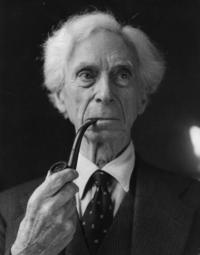
Image result for bertrand russell


On November 21, 2014 I received a letter from Nobel Laureate Harry Kroto and it said:

…Please click on this URL http://vimeo.com/26991975

and you will hear what far smarter people than I have to say on this matter. I agree with them.

Harry Kroto

Nick Gathergood, David-Birkett, Harry-Kroto

I have attempted to respond to all of Dr. Kroto’s friends arguments and I have posted my responses one per week for over a year now. Here are some of my earlier posts:

Arif Ahmed, Sir David AttenboroughMark Balaguer, Horace Barlow, Michael BatePatricia ChurchlandAaron CiechanoverNoam Chomsky,Alan DershowitzHubert Dreyfus, Bart Ehrman, Stephan FeuchtwangDavid Friend,  Riccardo GiacconiIvar Giaever , Roy GlauberRebecca GoldsteinDavid J. Gross,  Brian Greene, Susan GreenfieldStephen F Gudeman,  Alan Guth, Jonathan HaidtTheodor W. Hänsch, Brian Harrison,  Hermann HauserRoald Hoffmann,  Bruce HoodHerbert Huppert,  Gareth Stedman Jones, Steve JonesShelly KaganMichio Kaku,  Stuart Kauffman,  Lawrence KraussHarry Kroto, George LakoffElizabeth Loftus,  Alan MacfarlanePeter MillicanMarvin MinskyLeonard Mlodinow,  Yujin NagasawaAlva NoeDouglas Osheroff,  Jonathan Parry,  Saul PerlmutterHerman Philipse,  Carolyn PorcoRobert M. PriceLisa RandallLord Martin Rees,  Oliver Sacks, John SearleMarcus du SautoySimon SchafferJ. L. Schellenberg,   Lee Silver Peter Singer,  Walter Sinnott-ArmstrongRonald de Sousa, Victor StengerBarry Supple,   Leonard Susskind, Raymond TallisNeil deGrasse Tyson,  .Alexander Vilenkin, Sir John WalkerFrank WilczekSteven Weinberg, and  Lewis Wolpert,

Bertrand Arthur William Russell, 3rd Earl RussellOMFRS[60] (/ˈrʌsəl/; 18 May 1872 – 2 February 1970) was a British philosopher, logician, mathematician, historian, writer, social critic, political activist and Nobel laureate.[61][62] At various points in his life, Russell considered himself a liberal, a socialist and a pacifist, but he also admitted that he had “never been any of these things, in any profound sense”.[63] Russell was born in Monmouthshire into one of the most prominent aristocratic families in the United Kingdom.[64]

In  the first video below in the 14th clip in this series are his words and I will be responding to them in the next few weeks since Sir Bertrand Russell is probably the most quoted skeptic of our time, unless it was someone like Carl Sagan or Antony Flew.  

50 Renowned Academics Speaking About God (Part 1)

Another 50 Renowned Academics Speaking About God (Part 2)

A Further 50 Renowned Academics Speaking About God (Part 3)

__


Image result for bertrand russell

________

Quote from Bertrand Russell:

Q: Why are you not a Christian?

Russell: Because I see no evidence whatever for any of the Christian dogmas. I’ve examined all the stock arguments in favor of the existence of God, and none of them seem to me to be logically valid.

Q: Do you think there’s a practical reason for having a religious belief, for many people?

Russell: Well, there can’t be a practical reason for believing what isn’t true. That’s quite… at least, I rule it out as impossible. Either the thing is true, or it isn’t. If it is true, you should believe it, and if it isn’t, you shouldn’t. And if you can’t find out whether it’s true or whether it isn’t, you should suspend judgment. But you can’t… it seems to me a fundamental dishonesty and a fundamental treachery to intellectual integrity to hold a belief because you think it’s useful, and not because you think it’s true.

___


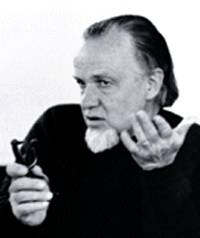
Image result for francis schaeffer

Francis Schaeffer noted in his book HOW SHOULD WE THEN LIVE? (p. 182 in Vol 5 of Complete Works) in the chapter The Breakdown in Philosophy and Science:

In his lecture at Acapulco, George Wald finished with only one final value. It was the same one with which English philosopher Bertrand Russell (1872-1970) was left. For Wald and Russell and for many other modern thinkers, the final value is the biological continuity of the human race. If this is the only final value, one is left wondering why this then has importance. 

Now having traveled from the pride of man in the High Renaissance and the Enlightenment down to the present despair, we can understand where modern people are. They have no place for a personal God. But equally they have no place for man as man, or for love, or for freedom, or for significance. This brings a crucial problem. Beginning only from man himself, people affirm that man is only a machine. But those who hold this position cannot live like machines! If they could, there would have been no tensions in their intellectual position or in their lives. But even people who believe they are machines cannot live like machines, and thus they must “leap upstairs” against their reason and try to find something which gives meaning to life, even though to do so they have to deny their reason. 

Francis Schaeffer in another place worded it like this:

The universe was created by an infinite personal God and He brought it into existence by spoken word and made man in His own image. When man tries to reduce [philosophically in a materialistic point of view] himself to less than this [less than being made in the image of God] he will always fail and he will always be willing to make these impossible leaps into the area of nonreason even though they don’t give an answer simply because that isn’t what he is. He himself testifies that this infinite personal God, the God of the Old and New Testament is there. 

Instead of making a leap into the area of nonreason the better choice would be to investigate the claims that the Bible is a historically accurate book and that God created the universe and reached out to humankind with the Bible. Below is a piece of that evidence given by Francis Schaeffer concerning the accuracy of the Bible.

TRUTH AND HISTORY (chapter 5 of WHATEVER HAPPENED TO THE HUMAN RACE?)

In the previous chapter we saw that the Bible gives us the explanation for the existence of the universe and its form and for the mannishness of man. Or, to reverse this, we came to see that the universe and its form and the mannishness of man are a testimony to the truth of the Bible. In this chapter we will consider a third testimony: the Bible’s openness to verification by historical study.

Christianity involves history. To say only that is already to have said something remarkable, because it separates the Judeo-Christian world-view from almost all other religious thought. It is rooted in history.

The Bible tells us how God communicated with man in history. For example, God revealed Himself to Abraham at a point in time and at a particular geographical place. He did likewise with Moses, David, Isaiah, Daniel and so on. The implications of this are extremely important to us. Because the truth God communicated in the Bible is so tied up with the flow of human events, it is possible by historical study to confirm some of the historical details.

It is remarkable that this possibility exists. Compare the information we have from other continents of that period. We know comparatively little about what happened in Africa or South America or China or Russia or even Europe. We see beautiful remains of temples and burial places, cult figures, utensils, and so forth, but there is not much actual “history” that can be reconstructed, at least not much when compared to that which is possible in the Middle East.

When we look at the material which has been discovered from the Nile to the Euphrates that derives from the 2500-year span before Christ, we are in a completely different situation from that in regard to South America or Asia. The kings of Egypt and Assyria built thousands of monuments commemorating their victories and recounting their different exploits. Whole libraries have been discovered from places like Nuzu and Mari and most recently at Elba, which give hundreds of thousands of texts relating to the historical details of their time. It is within this geographical area that the Bible is set. So it is possible to find material which bears upon what the Bible tells us.

The Bible purports to give us information on history. Is the history accurate? The more we understand about the Middle East between 2500 B.C. and A.D. 100, the more confident we can be that the information in the Bible is reliable, even when it speaks about the simple things of time and place.


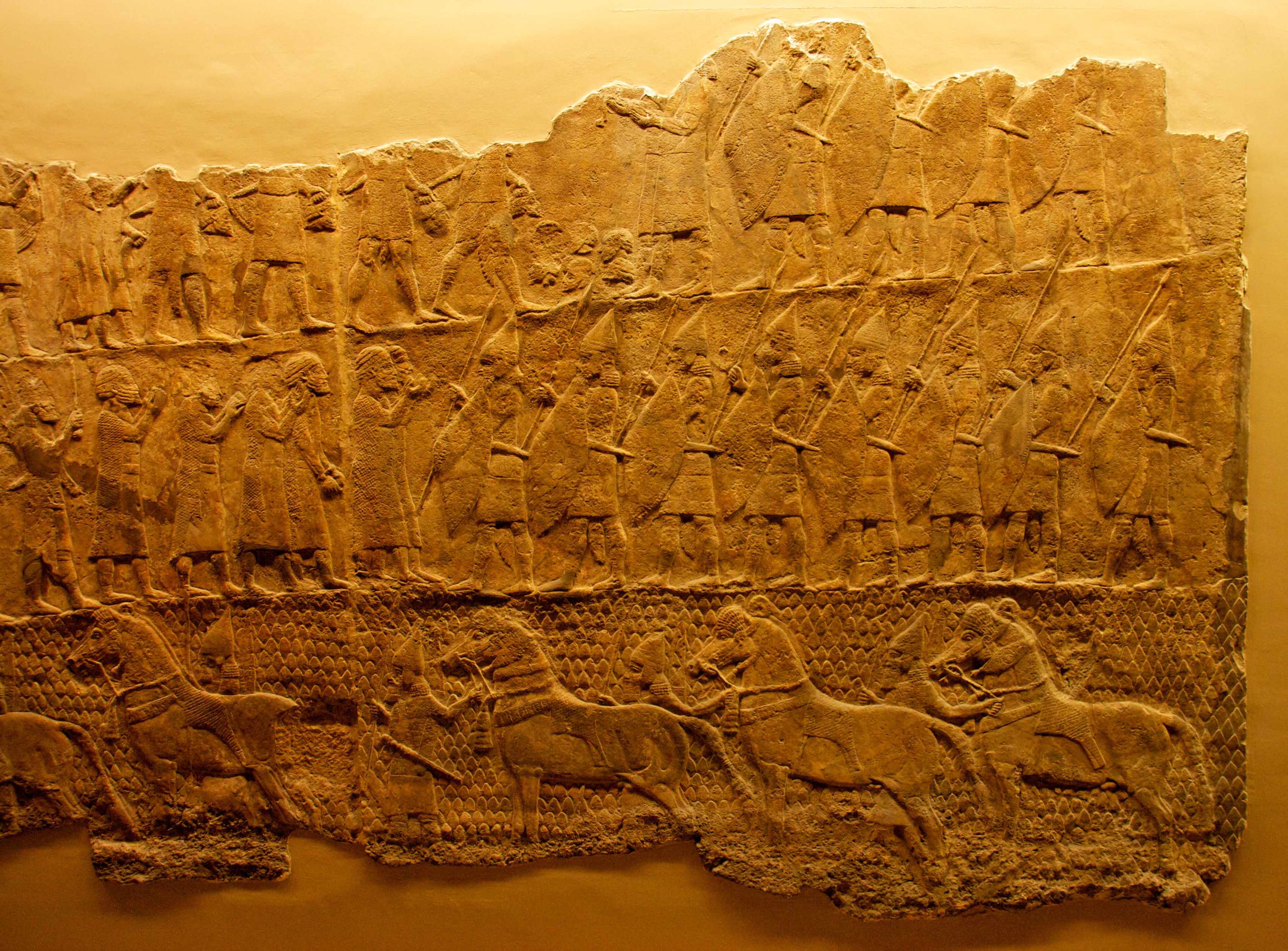
The site of the biblical city called Lachish is about thirty miles southwest of Jerusalem. This city is referred to on a number of occasions in the Old Testament. Imagine a busy city with high walls surrounding it, and a gate in front that is the only entrance to the city. We know so much about Lachish from archaeological studies that a reconstruction of the whole city has been made in detail. This can be seen at the British Museum in the Lachish Room in the Assyrian section.

Image result for Lachish Relief

There is also a picture made by artists in the eighth century before Christ, the Lachish Relief, which was discovered in the city of Nineveh in the ancient Assyria. In this picture we can see the Jewish inhabitants of Lachish surrendering to Sennacherib, the king of Assyria. The details in the picture and the Assyrian writing on it give the Assyrian side of what the Bible tells us in Second Kings:

2 Kings 18:13-16

New American Standard Bible (NASB)

13 Now in the fourteenth year of King Hezekiah, Sennacherib king of Assyria came up against all the fortified cities of Judah and seized them. 14 Then Hezekiah king of Judah sent to the king of Assyria at Lachish, saying, “I have done wrong. Withdraw from me; whatever you impose on me I will bear.” So the king of Assyria required of Hezekiah king of Judah three hundred talents of silver and thirty talents of gold. 15 Hezekiah gave him all the silver which was found in the house of the Lord, and in the treasuries of the king’s house. 16 At that time Hezekiah cut off the gold from the doors of the temple of the Lord, and from the doorposts which Hezekiah king of Judah had overlaid, and gave it to the king of Assyria.

________

We should notice two things about this. First, this is a real-life situation–a real siege of a real city with real people on both sides of the war–and it happened at a particular date in history, near the turn of the eighth century B.C. Second, the two accounts of this incident in 701 B.C. (the account from the Bible and the Assyrian account from Nineveh) do not contradict, but rather confirm each other. The history of Lachish itself is not so important for us, but some of its smaller historical details.

Related posts:


RESPONDING TO HARRY KROTO’S BRILLIANT RENOWNED ACADEMICS!! Pausing to take a look at the life of HARRY KROTO Part C (Kroto’s admiration of Bertrand Russell examined)

Today we look at the 3rd letter in the Kroto correspondence and his admiration of Bertrand Russell. (Below The Nobel chemistry laureates Harold Kroto, Robert Curl and Richard Smalley) It is with sadness that I write this post having learned of the death of Sir Harold Kroto on April 30, 2016 at the age of […]

RESPONDING TO HARRY KROTO’S BRILLIANT RENOWNED ACADEMICS!! Part 52 The views of Hegel and Bertrand Russell influenced Gareth Stedman Jones of Cambridge!!

On November 21, 2014 I received a letter from Nobel Laureate Harry Kroto and it said: …Please click on this URL http://vimeo.com/26991975 and you will hear what far smarter people than I have to say on this matter. I agree with them. Harry Kroto _________________ Below you have picture of Dr. Harry Kroto:   Gareth Stedman […]

WOODY WEDNESDAY John Piippo makes the case that Bertrand Russell would have loved Woody Allen because they both were atheists who don’t deny the ramifications of atheism!!!

Top 10 Woody Allen Movies __________ John Piippo makes the case that Bertrand Russell would have loved Woody Allen because they both were  atheists who don’t deny the ramifications of atheism!!! Monday, August 06, 2012 (More On) Woody Allen’s Atheism As I wrote in a previous post, I like Woody Allen. I have long admired his […]

John Piippo makes the case that Bertrand Russell would have loved Woody Allen because they both were two atheists who don’t deny the ramifications of atheism!!!

______ Top 10 Woody Allen Movies PBS American Masters – Woody Allen A Documentary 01 PBS American Masters – Woody Allen A Documentary 02 __________ John Piippo makes the case that Bertrand Russell would have loved Woody Allen because they both were two atheists who don’t deny the ramifications of atheism!!! Monday, August 06, 2012 […]

Bertrand Russell v. Frederick Copleston debate transcript (Part 4)

THE MORAL ARGUMENT     BERTRAND RUSSELL But aren’t you now saying in effect, I mean by God whatever is good or the sum total of what is good — the system of what is good, and, therefore, when a young man loves anything that is good he is loving God. Is that what you’re […]

Bertrand Russell v. Frederick Copleston debate transcript (Part 3)

Great debate Fr. Frederick C. Copleston vs Bertrand Russell – Part 1 Uploaded by riversonthemoon on Jul 15, 2009 BBC Radio Third Programme Recording January 28, 1948. BBC Recording number T7324W. This is an excerpt from the full broadcast from cassette tape A303/5 Open University Course, Problems of Philosophy Units 7-8. Older than 50 years, […]

Bertrand Russell v. Frederick Copleston debate transcript and audio (Part 2)

Uploaded by riversonthemoon on Jul 15, 2009 BBC Radio Third Programme Recording January 28, 1948. BBC Recording number T7324W. This is an excerpt from the full broadcast from cassette tape A303/5 Open University Course, Problems of Philosophy Units 7-8. Older than 50 years, out of UK/BBC copyright. Pardon the hissy audio. It was recorded 51 […]

Bertrand Russell v. Frederick Copleston debate transcript and audio (Part 1)

Fr. Frederick C. Copleston vs Bertrand Russell – Part 1 Uploaded by riversonthemoon on Jul 15, 2009 BBC Radio Third Programme Recording January 28, 1948. BBC Recording number T7324W. This is an excerpt from the full broadcast from cassette tape A303/5 Open University Course, Problems of Philosophy Units 7-8. Older than 50 years, out of […]

Bertrand Russell v. Frederick Copleston debate transcript (Part 4)

THE MORAL ARGUMENT     BERTRAND RUSSELL But aren’t you now saying in effect, I mean by God whatever is good or the sum total of what is good — the system of what is good, and, therefore, when a young man loves anything that is good he is loving God. Is that what you’re […]

Bertrand Russell v. Frederick Copleston debate transcript (Part 3)

Fr. Frederick C. Copleston vs Bertrand Russell – Part 1 Uploaded by riversonthemoon on Jul 15, 2009 BBC Radio Third Programme Recording January 28, 1948. BBC Recording number T7324W. This is an excerpt from the full broadcast from cassette tape A303/5 Open University Course, Problems of Philosophy Units 7-8. Older than 50 years, out of […]

__

MUSIC MONDAY The Hollies!!!!!! Part 1

I am thinking about moving MUSIC MONDAYS  to a monthly feature on http://www.thedailyhatch.org. My passion has been recent years to emphasize the works of Francis Schaeffer in my apologetic efforts and most of those posts are either on Tuesdays or Thursdays. I have already done so many ahead that MUSIC MONDAYS will remain weekly for now, but at some point I will be making them weekly.

__

_

 _


__

The Hollies

From Wikipedia, the free encyclopedia
The Hollies
The Hollies (1965).png

The Hollies in 1965.
(L-R: Eric Haydock, Allan Clarke, Graham Nash, Tony Hicks, Bobby Elliott)
Background information
Origin Manchester, England
Genres
Years active 1962–present
Labels
Associated acts
Website hollies.co.uk
Members Tony Hicks
Bobby Elliott
Ray Stiles
Ian Parker
Peter Howarth
Steve Lauri
Past members Allan Clarke
Graham Nash
Eric Haydock
Bernie Calvert
Terry Sylvester
Mikael Rickfors
Alan Coates
Steve Stroud
Denis Haines
Carl Wayne

The Hollies are an English pop/rock group, best known for their pioneering and distinctive three-part vocal harmony style. The Hollies became one of the leading British groups of the 1960s (231 weeks on the UK singles charts during the 1960s; the 9th highest of any artist of the decade) and into the mid 1970s. It was formed by Allan Clarke and Graham Nash in 1962 as a Merseybeat type music group in Manchester, although some of the band members came from towns north of there. Graham Nash left the group in 1968 to form the supergroup Crosby, Stills & Nash.

They enjoyed considerable popularity in many countries (at least 60 singles or EPs and 26 albums charting somewhere in the world spanning over five decades), although they did not achieve major US chart success until 1966 with “Bus Stop“. The Hollies had over 30 charting singles on the UK Singles Chart, and 22 on the Billboard Hot 100, with major hits on both sides of the Atlantic that included “Just One Look“, “Look Through Any Window“, “I Can’t Let Go“, “Bus Stop“, “Stop Stop Stop“, “On a Carousel“, “Carrie Anne“, “Jennifer Eccles“, and later “He Ain’t Heavy, He’s My Brother“, “Long Cool Woman in a Black Dress“, and “The Air That I Breathe“.

They are one of the few British groups of the early 1960s, along with the Rolling Stones and the Who, that have never disbanded and continue to record and perform. In recognition of their achievements, the Hollies were inducted to the Rock and Roll Hall of Fame in 2010.[2]

Origin[edit]

The Hollies originated as a duo formed by Allan Clarke and Graham Nash, who were best friends from primary school and began performing together during the skiffle craze of the late 1950s.[3] Eventually Clarke and Nash became a vocal and guitar duo modelled on the Everly Brothers under the names “Ricky and Dane Young.”[3] Under this name, they teamed up with a local band, the Fourtones, consisting of Pete Bocking (guitar), John ‘Butch’ Mepham (bass), Keith Bates (drums), and Derek Quinn (guitar). When Quinn quit to join Freddie and the Dreamers in 1962, Clarke and Nash also quit and joined another Manchester band, the Deltas, consisting of Vic Steele on lead guitar, Eric Haydock on bass guitar, and Don Rathbone on drums, which had just lost two members (including Eric Stewart, who left to join a “professional” band, the Mindbenders).[3]

The Deltas first called themselves “The Hollies” for a December 1962 gig at the Oasis Club in Manchester.[3] It has been suggested that Eric Haydock named the group in relation to a Christmas holly garland, though in a 2009 interview, Graham Nash said that the group decided just prior to a performance to call themselves “The Hollies” because of their admiration for Buddy Holly.[4] In 2009, Nash wrote, “We called ourselves The Hollies, after Buddy and Christmas.”[5]

1963-1968[edit]

In January 1963, the Hollies performed at the Cavern Club in Liverpool, where they were seen by Parlophone assistant producer Ron Richards, who had been involved in producing the first Beatles session.[3] Richards offered them an audition with Parlophone, but Steele did not want to be a “professional” musician and left the band in February 1963.[3] For the audition, they replaced Steele with Tony Hicks, who played in a Nelson band called the Dolphins, which also featured Bobby Elliott on drums and Bernie Calvert on bass.[3] Not only were the Hollies signed by Richards, who would continue to produce the band until 1976, and once more in 1979, but a song from the audition, a cover of the Coasters‘ 1961 single “(Ain’t That) Just Like Me”, was released as their debut single in May 1963, and hit No.25 on the UK Singles Chart.

Their second single, another cover of the Coasters, this time 1957’s “Searchin'”, hit No.12. At this point, after recording only eight songs for Parlophone, Rathbone also decided to leave the band, and Hicks was able to arrange for his Dolphins bandmate Bobby Elliott to replace him as the Hollies’ new drummer in August 1963.[3] They then scored their first British Top 10 hit in early 1964 with a cover of Maurice Williams and the Zodiacs‘ “Stay”, which reached No.8 in the UK. It was lifted from the band’s Parlophone debut album, Stay with the Hollies, released on 1 January 1964, which went to No.2 on the UK album chart. A version of the album was released in the US as Here I Go Again, on the Hollies’ US label of the time, Imperial.

The Hollies became known for doing cover versions, and they followed up with “Just One Look” (February 1964, UK No.2), a song that had already had top 10 success in the US for one-hit wonder Doris Troy. The hits continued with “Here I Go Again” (May 1964, UK No.4). At this point, there was some North American interest in the group, and versions of Stay With the Hollies; with these two singles added, were issued in both Canada by Capitol Records and the US by Imperial Records, with the title changed to Here I Go Again. Like their Parlophone labelmates the Beatles, the Hollies’ albums released in North America would remain very different from their UK counterparts.

By this time, the Hollies were writing and performing a substantial amount of original material, written by the group’s songwriting team of Clarke, Nash, and Hicks, and producer Richards finally permitted the group to release its first self-penned hit “We’re Through” (Sep. 1964, UK No.7) (credited to a pseudonym, “L. Ransford”; the name of Graham Nash’s grandfather, as were all their early compositions). This was followed by two more cover versions, “Yes I Will” (Jan. 1965, UK No.9); and finally the Clint Ballard, Jr.-penned “I’m Alive” (May 1965, the band’s first UK No.1, US No.103, Canada No.11). Their second album, In the Hollies Style (1964), did not chart (in the BBC top ten album chart, although it did chart in the New Musical Express album chart, making the top ten) and none of its tracks were released in the US, although a version was released in Canada with the addition of the British singles.

Finally, the Hollies broke through in North America with an original song that they requested from Manchester’s Graham Gouldman. “Look Through Any Window” (Sept. 1965, UK No.4) broke the Hollies into the US Top 40 (No.32, Jan. 1966) and into the Canadian top 10 (No. 3, Jan. 1966), both for the first time. Their follow-up single, an original recording of George Harrison’s “If I Needed Someone” (Dec. 1965), was undercut when the Beatles decided to release their own version on Rubber Soul; it only reached No.20 in the UK, and was not released in North America. Their third album, simply called Hollies, hit No. 8 in the UK in 1965, but failed to chart in the US under the name Hear! Here!, despite its inclusion of “Look Through Any Window” and “I’m Alive”.

The Hollies then returned to the UK Top 10 with “I Can’t Let Go” (Feb. 1966, UK No.2, US No.42). Their fourth album, Would You Believe?, which included the hit, made it to No. 16 in 1966. Released in the US as Beat Group!, it also failed to crack the US top 100.

At this point, a dispute between the Hollies and their management broke out over what bass guitarist Eric Haydock contended were excessive fees being charged to the group by management. As a result, Haydock decided to take a leave of absence from the group. While he was gone, the group brought in the Beatles‘ good friend Klaus Voorman to play on a few gigs and recorded two singles with fill-ins on bass: the Burt BacharachHal David song “After the Fox” (Sep. 1966), which featured Peter Sellers on vocals, Jack Bruce on electric bass and Burt Bacharach himself on keyboards, and was the theme song from the Sellers film of the same name (which failed to chart), and “Bus Stop” (UK No.5, US No.5, June 1966), another Gouldman song, which featured Bernie Calvert, a former bandmate of Hicks and Elliott in the Dolphins, on bass. Calvert also played a tour of Yugoslavia with the band in May 1966.

“Bus Stop” gave the Hollies their first US top ten single. As a result, a US/Canadian Bus Stop album made of the single mixed with unreleased songs from earlier in the band’s career climbed to No. 75, the group’s first US album to enter the Top 100. Although Haydock ultimately proved to be correct about the fee dispute, he was sacked in early July 1966 in favour of Calvert after “Bus Stop” became a huge hit.

At the time of Haydock’s departure, Clarke, Nash and Hicks participated (along with session guitarist Jimmy Page, bass guitarist John Paul Jones and pianist Elton John) in the recording of the Everly Brothers‘ 1966 album ‘Two Yanks in England‘, which consisted largely of covers of “L. Ransford” compositions. After the Everly Brothers album, the Hollies stopped publishing original songs under a pseudonym, and from this point until Nash’s last single with the Hollies in 1968, all of their single A-sides were original compositions, except the final Nash era single ‘Listen To Me’ (1968) which was written by Tony Hazzard.

In October 1966, the group’s fifth album, For Certain Because (UK No.23, 1966), became their first album consisting entirely of original compositions by Clarke, Nash and Hicks. Released in the US as Stop! Stop! Stop! it reached No.91 there and spawned a US release-only single, “Pay You Back with Interest”, which was a modest hit, peaking at No.28. Another track, “Tell Me to My Face”, was a moderate hit by Mercury artist Keith, and would also be covered a decade later by Dan Fogelberg and Tim Weisberg on their Twin Sons of Different Mothers album.

Meanwhile, the Hollies continued to release a steady stream of international hit singles: “Stop Stop Stop” (Oct. 1966, UK No.2, US No.7) from For Certain Because, known for its distinctive banjo arrangement; “On a Carousel” (Feb. 1967; UK No.4, 1967, US No.11, Australia No.14)[6]); “Carrie Anne” (May 1967, UK No.3, US No.9, Australia No.7[7]).

In mid-February 1967, Bobby Elliott collapsed on stage due to an inflamed appendix. The Hollies were forced to continue their touring commitments without him, using Tony Mansfield, Dougie Wright and Tony Newman as a stand-ins for further live dates, and Wright, Mitch Mitchell and Clem Cattini when they began recording for their next album, Evolution, which was released on 1 June 1967, the same day as the Beatles’ Sgt Pepper’s Lonely Hearts Club Band. It was also their first album for their new US label Epic. It reached UK No.13 and US No.43. The US version included the single “Carrie Anne”. In addition, the Searchers and Paul and Barry Ryan each had a minor UK Chart hit covering the Evolution song “Have You Ever Loved Somebody” in 1967.

Also in 1967, the Hollies participated in the Festival di San Remo with song Non prego per me, written by Italian songwriter Lucio Battisti and by Italian lyricist Mogol.[8][9][10]

Nash’s attempt to expand the band’s range with a more ambitious composition, “King Midas in Reverse“, only reached No.18 in the UK charts. The Hollies then released the ambitious, psychedelic album Butterfly, retitled for the US market as King Midas in Reverse/Dear Eloise, but it failed to chart. In response, Clarke and Nash wrote an almost “bubblegum” song “Jennifer Eccles” (named after their wives) (Mar. 1968, UK No.7, US No.40, Australia No.13[11]), which was a hit. The Hollies donated a Clarke-Nash song, “Wings”, to No One’s Gonna Change Our World, a charity album in aid of the World Wildlife Fund, in 1969.

Terry Sylvester replaces Graham Nash[edit]

In addition to his Hollies work, in 1967 Graham Nash co-wrote John Walker’s first solo hit “Annabella” – and later in 1968, Nash sang on the Scaffold‘s UK Chart topper, “Lily the Pink” (which referenced “Jennifer Eccles”). The failure of “King Midas in Reverse” had increased tension within the band, with Clarke and Hicks wanting to record more “pop” material than Nash did. Matters reached a head when the band rejected Nash’s “Marrakesh Express” and then decided to record an album made up entirely of Bob Dylan covers. Nash did take part in one Dylan cover, “Blowin’ in the Wind“, but made no secret of his disdain for the idea and repeatedly clashed with producer Ron Richards.

In August 1968 the Hollies recorded “Listen to Me” (written by Tony Hazzard) (Sept. 1968, UK No.11), which featured Nicky Hopkins on piano. That proved to be Nash’s last recording session with the Hollies, and he officially left the group after a performance in a charity concert at the London Palladium on December 8, 1968 to move to Los Angeles, where he tentatively planned to become primarily a songwriter. Nash told Disc magazine, “I can’t take touring any more. I just want to sit at home and write songs. I don’t really care what the rest of the group think.”[12] After relocating to Los Angeles, he joined with former Buffalo Springfield guitarist Stephen Stills and ex-Byrds singer & guitarist David Crosby to form one of the first supergroupsCrosby, Stills & Nash, which released “Marrakesh Express” as its debut single.

The B-side of “Listen to Me” was “Do the Best You Can”, the last original recording of a Clarke-Hicks-Nash song to appear on a Hollies record (although “Survival of the Fittest”, written by Clarke-Hicks-Nash, was re-cut with Terry Sylvester and issued as a US single in 1970).

Graham Nash was replaced in the Hollies in January 1969 by Terry Sylvester, formerly of both the Escorts, a second generation Merseybeat group who had a minor UK chart hit in 1964 with “Dizzy Miss Lizzy” and the Swinging Blue Jeans, best known for their hit singles with the HMV label; “Hippy Hippy Shake“, “Good Golly Miss Molly“, and “You’re No Good“, from 1966–1968. Sylvester also substituted for Nash as part of the group’s songwriting team, with Clarke and Hicks. As planned before Nash’s departure, the group’s next album was Hollies Sing Dylan, which reached the No.3 position on the UK chart while the US version, Words And Music by Bob Dylan, was ignored. The next album Hollies Sing Hollies did not chart in the UK but did well in Canada and in the USA charting at No. 32.

Nash’s departure saw The Hollies again turn to outside writers for their single A-sides, but the group’s British chart fortunes rallied during 1969 and 1970, and they scored four consecutive UK Top 20 hits (including two consecutive Top 5 placings) in this period, beginning with the Geoff Stephens/Tony Macaulay song, “Sorry Suzanne” (Feb. 1969), which reached No.3 in the UK. The follow-up was the emotional ballad “He Ain’t Heavy, He’s My Brother” written by Bobby Scott and Bob Russell, which featured the piano playing of Elton John, and which reached No.3 in the UK in October 1969, No.7 in the US in March 1970. The US version of Hollies Sing Holliesadded this song and was retitled He Ain’t Heavy, He’s My Brother, reaching No.32 on the US album charts.

1970s[edit]

The Hollies’ next single, “I Can’t Tell the Bottom from the Top”, again featured the young Elton John on piano and reached UK No. 7 in May 1970, charting in twelve countries. The UK hits continued with “Gasoline Alley Bred” (Oct. 1970, UK No. 14, Australia No. 20[13]), while the Tony Hicks’ song, “Too Young to Be Married” – merely an album track in the UK and the US – became a No. 1 single in Australia, New Zealand and Malaysia, also reaching No. 9 in Singapore. Allan Clarke’s hard edged rocker, “Hey Willy”, made No. 22 in the UK in 1971, and charted in eight other countries.

Like Graham Nash before him, frontman Allan Clarke by 1971 was growing frustrated, and he too began clashing with producer Ron Richards over material; after seeing Nash’s success since departing, he was eager to leave the group and cut a solo album. After the 1971 album Distant Light, which concluded the band’s EMI/Parlophone contract in the UK (and reached No.21 on the American Billboard chart), Clarke departed from the Hollies in December, a move which surprised both the band’s fans and the public in general.

The Hollies signed with Polydor for the UK/Europe in 1972, although their US contract with Epic still had three more albums to run. Swedish singer Mikael Rickfors, formerly of the group Bamboo (who had supported the Hollies in Sweden in 1967), was quickly recruited by the rest of the band and sang lead on the group’s first Polydor single “The Baby” (UK No. 26, March 1972). When Mikael first auditioned for them, he tried to sing in Allan Clarke’s range and the results were terrible.[14] The rest of the group decided it might be better to record songs with him starting from scratch. Terry Sylvester and Tony Hicks blended with Mikael’s baritone voice instead of him trying to imitate Allan’s tenor voice.[14] There were rumours Mikael couldn’t speak a word of English and had to learn the words of “The Baby” phonetically.[14] The rumour about him not knowing English was false, though he did struggle to understand English words that he had not put together.[14]

Meanwhile, in a counter-programming move, Parlophone lifted a Clarke-composed track from the previously-unsuccessful album Distant Light that also featured Clarke on lead vocals and lead guitar, the Creedence Clearwater Revival-inspired “Long Cool Woman in a Black Dress“. Parlophone released this as a rival single to “The Baby” in February 1972, although it fared relatively poorly in the UK (No. 32). In the US, Epic, which owned the rights to Distant Light but had not released it, finally released the album in April 1972 and the single in May 1972. Surprisingly, the song became a smash hit outside of Europe, peaking at No. 2 in the US (the Hollies’ highest-charting single in the US ever) and No. 1 in Australia.[15]

“Long Dark Road”, another track from Distant Light with lead vocals by Clarke, distinctive three-part harmonies, and a harmonica throughout, was then also released as a US single, reaching No. 26. As a result, Epic pressured Clarke and the Hollies to reform, despite the fact that they had split over a year previously, placing Rickfors in an awkward position.

Meanwhile, the Rickfors-led Hollies released their first album Romany (which reached No. 84 in the US) in October 1972. A second Rickfors-sung single, “Magic Woman Touch” (1972), failed to chart in the UK, becoming the band’s first official single to miss the UK charts since 1963, although it did chart in seven other countries, reaching the Top Ten in the Netherlands, New Zealand and Hong Kong. A second Rickfors/Hollies album, Out on the Road (1973), was recorded and issued in Germany. With the US success of Distant Light and its singles, Clarke decided to rejoin the band the summer of 1973 and Rickfors then left. Accordingly, no UK or US release was made of Out on the Road, giving this “lost” Hollies album legendary status among the band’s fans – and high prices on the original German release.

After Clarke’s return, the Hollies returned to the UK Top 30 with another swamp rock-style song penned by Clarke, “The Day That Curly Billy Shot Down Crazy Sam McGee” (UK No. 24, 1973). In 1974 they scored what was to be their last major new US and UK hit single with the Albert Hammond/Mike Hazlewood-composed love song, “The Air That I Breathe” (previously recorded by Hammond and by Phil Everly on his 1973 solo album, Star Spangled Springer), which reached No. 2 in the UK and Australia[16] and made the Top 10 in the US.

After the US failure of the Hollies’ single “4th of July, Asbury Park“, written by Bruce Springsteen, Epic gave up on the Hollies in the US, combining their two 1976 albums into their last US release of the decade, Clarke, Hicks, Sylvester, Calvert, Elliott (again including the Springsteen song to give it one last chance at success).

The Hollies continued to have singles chart hits during the rest of the seventies, but mostly in Europe and New Zealand. In 1976, for example, the group released three singles in three different styles, none of which charted in the UK or the US. “Star,” an uptempo harmony number reminiscent of their sixties hits, charted only in New Zealand and Australia, the hard rock number “Daddy Don’t Mind” charted only in The Netherlands and Germany, and “Wiggle That Wotsit,” an excursion into disco territory, charted only in The Netherlands, Sweden, and New Zealand. Especially popular outside of the US, always very professional in their continuous concert engagements, The Hollies had album chart successes with compilation albums in 1977 and 1978, which kept them going through the late 1970s.

1980s to the present[edit]

In 1980, the Hollies returned to the UK charts with the single “Soldier’s Song”, written and produced by Mike Batt, which was a minor hit in 1980 reaching No.58 in the UK. They also released an album of Buddy Holly covers named Buddy Holly which didn’t chart in the UK or the US, but did chart in the Netherlands among other places.

In May 1981 Calvert and Sylvester left the group after musical disagreements with Bruce Welch, who was producing them at that time (nothing from the Welch sessions was ever released during this time). Sylvester also disagreed strongly with the band’s sacking of their long time manager Robin Britten. Alan Coates joined the band on rhythm guitar and high harmony vocals shortly afterwards.

The Hollies went back in the studio on 6 June 1981 with singer/writer/guitarist John Miles and session bassist Alan Jones to record “Carrie” and “Driver”. But neither one of these songs was released at this time (“Carrie” eventually appeared as the b-side of the re-released “He Ain’t Heavy” in 1988).

In August 1981 the remaining Hollies released “Holliedaze” on EMI, a medley edited together by Tony Hicks from their hit records, which returned them to the UK Top 30. At the request of the BBC, Nash and Haydock briefly rejoined in September 1981 to promote the record on Top of the Pops. The Hollies issued their last Polydor single “Take My Love and Run” (written by keyboard player Brian Chatton, who also appeared with the Hollies while they promoted the single on TV) in November 1981 but this failed to chart.

Graham Nash joined them for the recording of an Alan Tarney song “Somethin’ Ain’t Right” in 10 September 1982 which led to a proper reunion album What Goes Around… issued on WEA Records in July 1983. Graham Nash continued appearing with the Hollies through early 1984 culminating in the Hollies last hit in the USA Top 40 with a remake of ‘the Supremes‘ “Stop in the Name of Love“, which reached No.29 in 1983. “Stop in the Name of Love” was taken from the album What Goes Around… which was released in July 1983 and charted in the US on Billboard top 200 albums at No. 90. A live album featuring the Clarke-Hicks-Elliott-Nash re-grouping, Reunion, was recorded at Kings Island Amusement Park in Ohio, during a US tour that followed that same year, finally being issued first in 1997 as Archive Alive, then retitled Reunion (with two extra tracks) in 2004.

The Hollies continued to tour and perform through the 1980s, by this time reaching classic rock status and drawing crowds around the world to see them. In the mid 80s, the band began to lower the keys of their songs when Allan began to lose range.

After its use in a TV beer commercial (for Miller Lite lager) in the summer of 1988, “He Ain’t Heavy” was reissued in the UK and reached No.1, thus establishing a new record for the length of time between chart-topping singles for one artist of 23 years (the Hollies’ only previous UK No.1 having been 1965’s I’m Alive). By this time bassist Ray Stiles, formerly a member of 1970s chart-topping glam rock group Mud, had joined the permanent line-up.

1988 also saw the release of compilation album All the Hits & More: The Definitive Collection which charted in the UK.

In 1993 the Hollies had their 30th anniversary as a band. A compilation album, The Air That I Breathe: The Very Best of The Hollies, charted No. 15 in the UK. This album included a new single, “The Woman I Love”, which charted at No. 42 in the UK. Graham Nash again reunited with the Hollies to record a new version of “Peggy Sue Got Married” that featured prerecorded lead vocals by Buddy Holly, taken from an ‘alternate’ version of the song given to Nash by Holly’s widow Maria Eleana Holly. This “Buddy Holly & The Hollies” recording opened the Not Fade Away tribute album to Holly by various artists. The Hollies also continued to tour and make TV appearances.

The Hollies were awarded an Ivor Novello Award in 1995 for Outstanding Contribution to British Music.

Allan Clarke retired in February 2000. He was replaced by Carl Wayne, former lead singer of the Move. A New Zealand Hollies Greatest Hits compilation made No. 1 in that country in 2001, dislodging the Beatles’ 1 collection from the top spot. While re-establishing the band as a touring attraction over 2000 to mid-2004, Carl Wayne only recorded one song with them, “How Do I Survive?“, the last (and only new) track on the 2003 Greatest Hits(which reached No.21 in the UK Album chart). After Wayne’s death from cancer in August 2004, he was replaced by Peter Howarth. By that time Alan Coates left the band and was replaced by Steve Lauri.

The Hollies charted at No. 21 in the UK in 2003 with compilation album, Greatest Hits from EMI in CD format. (EMI has released most of the Hollies EMI music on CD over the past 25 years)

The Hollies were inducted into the ‘Vocal Group Hall of Fame’ in the US in 2006. Also in 2006 the Hollies’ first new studio album since 1983, Staying Power, was released by EMI featuring Peter Howarth on lead vocals.

The group released a studio album Then, Now, Always in late March 2009, again featuring Peter Howarth on lead vocals. The album was later given an official release by EMI in 2010 with the addition of an extra original song, “She’d Kill For Me”.

In recognition of their achievements, the Hollies were inducted to the Rock and Roll Hall of Fame in 2010.[2] In the same year, a compilation album, Midas Touch: The Very Best of The Hollies, charted in the UK at No. 23.

In 2012, the Hollies released Hollies Live Hits! We Got The Tunes!, a live Double CD featuring the Hollies’ live performances recorded during the band’s 2012 UK Tour.

In 2013, the Hollies 50th year was packed with a worldwide 50th Anniversary Concert Tour performing over 60 concerts.

In 2014, EMI released a 3CD compilation; ’50 At Fifty’ which concluded with one new song; ‘Skylarks’ written by Bobby Elliott, Peter Howarth and Steve Vickers

In the United States[edit]

The Hollies were one of the last of the major British Invasion groups to have significant chart success in the United States. Their first single was not issued in the US and, although they had a minor US hit in 1964 with “Just One Look“, it was not until “Look Through Any Window” that the band reached the US Top 40. Many of their early singles that had been major hits in the UK, including “Here I Go Again“, “I’m Alive“, “Yes I Will” and “We’re Through”, failed to even reach the Top 100 in the US.

From 1966 until after they signed to Epic in 1967, the band had their most concentrated success in the US, including four Top 10 songs (“Bus Stop“, “Stop Stop Stop“,[17] “On a Carousel“, and “Carrie Anne“. The move to Epic followed by Graham Nash’s departure ended this streak; after that, the Hollies had a few more huge hits: “He Ain’t Heavy He’s My Brother” (No. 7, 1969), “Long Cool Woman” (No. 2, 1972), and “The Air That I Breathe” (No. 6, 1974). They did have additional US chart hits with the non-UK singles “Pay You Back With Interest” (No. 28 in 1966), “Dear Eloise” (No. 50 in 1967), “Long Dark Road” (No. 26 in 1972), and the “reunion” single “Stop! In the Name of Love” (No. 29 in 1983).

Rock and Roll Hall of Fame[edit]

In 2010, the Hollies were included in the Rock and Roll Hall of Fame.[18] The band members inducted were Allan Clarke, Graham Nash, Tony Hicks, Eric Haydock, Bobby Elliott, Bernie Calvert, and Terry Sylvester.

It was announced that the band would be reuniting with Allan Clarke and Graham Nash for a live performance at the induction ceremony, but the current incarnation of the band (with HOF inductees Hicks and Elliott) was unable to reschedule a performance in London to attend. The Hollies were represented at the RRHOF ceremony by Clarke, Nash, Sylvester, Haydock and Calvert. Allan Clarke and Graham Nash gave a reunion performance consisting of “Bus Stop“, “Carrie Anne” (accompanied by Adam Levine and Jesse Carmichael from Maroon 5), and “Long Cool Woman” (accompanied by Steve Van Zandt on guitar and Pat Monahan (from Train), with a cameo appearance by Sylvester on vocals). The performance marked the first time that Clarke had sung in 10 years.

Band members[edit]

Current

  • Tony Hicks – lead guitar, backing vocals (1963–present)
  • Bobby Elliott – drums (1963–present)
  • Ray Stiles – bass (1986–1990, 1991–present)
  • Ian Parker – keyboards (1991–present)
  • Peter Howarth – lead vocals, rhythm guitar (2004–present)
  • Steve Lauri – rhythm guitar, backing vocals (2004–present)

Discography[edit]

See The Hollies discography

UK Albums :

  • Then, Now, Always (2009)

US Albums :

References[edit]

  1. Jump up^ The Hollies at AllMusic
  2. Jump up to:a b The band’s lineup in the Hall of Fame includes only the seven band members during 1964 through 1971. The most famous member during this time was Graham Nash, who went on to form the Crosby, Stills, Nash and Young supergroup in the US. Letterman updateThe Boston Globe, 17 December 2009
  3. Jump up to:a b c d e f g h Dawn Eden, 30th Anniversary essay, March 1993, in 30th Anniversary Collection.
  4. Jump up^ William Kerns (14 March 2009). “Holly’s influence will not fade away”. Lubbockonline.com. Retrieved 18 May 2011.
  5. Jump up^ 2009 Graham Nash Reflections :: Introduction to autobiographical liner/CD booklet
  6. Jump up^ “Go-Set national Top 40, 12 Apr. 1967”. Poparchives.com.au. 12 April 1967. Retrieved 18 May 2011.
  7. Jump up^ “Go-Set national chart, 9 Aug. 1967”. Poparchives.com.au. 9 August 1967. Retrieved 18 May 2011.
  8. Jump up^ “Gli Hollies di Graham Nash”altervista.org.
  9. Jump up^ “Gli Hollies – Non Prego Per Me (Live 1967 Audio)”YouTube.
  10. Jump up^ “Grande enciclopedia rock”google.it.
  11. Jump up^ “‘,Go-Set’, national Top 40, 8 May 1968”. Poparchives.com.au. 8 May 1968. Retrieved 18 May 2011.
  12. Jump up^ DISC magazine article reproduced in the Hollies tour book 2004
  13. Jump up^ “Go-Set national chart, 20 Feb. 1970”. Poparchives.com.au. 20 February 1971. Retrieved 18 May 2011.
  14. Jump up to:a b c d Circus Magazine, May 1973. – “Romany – The Hollies Hop Over Disaster” by Janis Schacht.
  15. Jump up^ “Go-Set National Top 40, 20 September 1972”. Poparchives.com.au. 30 September 1972. Retrieved 18 May 2011.
  16. Jump up^ “‘,Go-Set’, national Top 40, 1 June 1974”. Poparchives.com.au. 1 June 1974. Retrieved 18 May 2011.
  17. Jump up^ Gilliland, John (1969). “Show 38 – The Rubberization of Soul: The great pop music renaissance. [Part 4]” (audio). Pop ChroniclesUniversity of North Texas Libraries.
  18. Jump up^ Congratulations to the 2010 Rock and Roll Hall of Fame Inductees!”Rockhall.com, 17 December 2009

External links[edit]


Related posts:

MUSIC MONDAY 1st album of WASHED OUT

_ Washed Out – Within and Without (Full Album) Published on Aug 16, 2013 Within and Without is the 2011 debut album by the artist Washed Out. Track List: 1. “Eyes Be Closed” 00:00 2. “Echoes” 4:48 3. “Amor Fati” 8:56 4. “Soft” 13:23 5. “Far Away” 18:54 6. “Before” 22:55 7. “You and I (Ft. Caroline Polachek)” 27:41 8. “Within and […]

MUSIC MONDAY A look at WASHED OUT

Washed Out – It All Feels Right (Live on KEXP) Washed Out – Eyes Be Closed (Live on KEXP) Published on Feb 8, 2012 Washed Out performs “Eyes Be Closed” live in the KEXP studio. Recorded on 10/11/2011. Host: DJ El Toro Engineer: Kevin Suggs Cameras: Jim Beckmann, Shelly Corbett & Scott Holpainen Editing: Christopher […]

MUSIC MONDAY the song FEEL IT ALL AROUND by WASHED OUT

_ Feel It All Around by Washed Out – Portlandia Theme Published on Dec 24, 2011 This is the song Feel It All Around used in the opening for the TV Series on IFC called Portlandia. I claim no rights to the song or any rights to the show. All rights go to IFC, the […]

“Music Monday” The Thompson Twins and the song “If you were here” from the movie “16 Candles”

____________________ Sixteen Candles Final Scene Movie Ending Video if you were here i could deceive you and if you were here you would believe but would you suspect my emotion wandering, yeah do not want a part of this anymore The rain water drips through a crack in the ceiling and i’ll have to spend […]

MUSIC MONDAY Elvis Presley and Ann Margret in scenes from “Viva Las Vegas”

________ Elvis Presley – Scene from “Viva Las Vegas” (MGM 1964) Elvis & Ann Margret Elvis Presley, Ann Margret – The Lady Loves Me – Viva Las Vegas Come On Everybody – Elvis and Ann-Margret HD. Hollywood Legend Ann-Margret on Faith, Love and Recovery Julie Blim – 700 Club Producer Scott Ross Ann-Margret interview on […]

MUSIC MONDAY Barry McGuire Eve of Destruction [1965]

__ Barry McGuire – Eve Of Destruction Barry McGuire Eve of Destruction [1965] Eve of Destruction (song) From Wikipedia, the free encyclopedia This article needs additional citations for verification. Please help improve this article by adding citations to reliable sources. Unsourced material may be challenged and removed. (April 2010)(Learn how and when to remove this […]

MUSIC MONDAY Vietnam War Protest Songs

Barry McGuire – Eve Of Destruction   Machine Gun by Jimi Hendrix Marvin Gaye ” What’s Going On ” Live 1972     Bob Dylan – Knockin’ On Heaven’s Door “Blowin’ in the Wind” – Bob Dylan | Vietnam War Montage Edwin Starr – War (Original Video – 1969) Uploaded on Dec 6, 2007 Original […]

MUSIC MONDAY “Stay with Me” by THE FACES

__ Faces “Stay With Me” The Faces – Had Me A Real Good Time Stay with Me (Faces song) From Wikipedia, the free encyclopedia “Stay with Me” Single by Faces from the album A Nod Is As Good As a Wink… to a Blind Horse B-side “You’re So Rude” (US) “Debris” (Intl.) Released December 1971 […]

MUSIC MONDAY : Song IT IS ENOUGH by the band THE WAITING

__   It is Enough – The Waiting Published on Feb 26, 2014 John 3:16-17 King James Version (KJV) 16,For God so loved the world, that he gave his only begotten Son, that whosoever believeth in him should not perish, but have everlasting life. 17,For God sent not his Son into the world to condemn […]

MUSIC MONDAY Religious Songs That Secular People Can Love: Bob Dylan, The Byrds, Sam Cooke, Johnny Cash & Your Favorites in Music, Religion| December 15th, 2015

__ Religious Songs That Secular People Can Love: Bob Dylan, The Byrds, Sam Cooke, Johnny Cash & Your Favorites in Music, Religion| December 15th, 2015 7 Comments There are good reasons to find the onslaught of religious music this time of year objectionable. And yet—though I want to do my part in the War on […]

FRIEDMAN FRIDAY Milton Friedman on Donahue – 1979

_

I am moving the FRIEDMAN FRIDAY to a monthly feature on http://www.thedailyhatch.org. My passion has been in recent years to emphasize the works of Francis Schaeffer in my apologetic efforts and most of those posts are either on Tuesdays or Thursdays.

Milton Friedman on Donahue – 1979

Uploaded on Aug 26, 2009

Dr. Milton Friedman, Nobel Laureate, promoting “Free to Choose” on the show Donahue.

Related posts:

“Friedman Friday” Milton Friedman believed in liberty (Interview by Charlie Rose of Milton Friedman part 1)

Charlie Rose interview of Milton Friedman My favorite economist: Milton Friedman : A Great Champion of Liberty  by V. Sundaram   Milton Friedman, the Nobel Prize-winning economist who advocated an unfettered free market and had the ear of three US Presidents – Nixon, Ford and Reagan – died last Thursday (16 November, 2006 ) in San Francisco […]

What were the main proposals of Milton Friedman?

Stearns Speaks on House Floor in Support of Balanced Budget Amendment Uploaded by RepCliffStearns on Nov 18, 2011 Speaking on House floor in support of Balanced Budget Resolution, 11/18/2011 ___________ Below are some of the main proposals of Milton Friedman. I highly respected his work. David J. Theroux said this about Milton Friedman’s view concerning […]

“Friedman Friday,” EPISODE “The Failure of Socialism” of Free to Choose in 1990 by Milton Friedman (Part 1)

Milton Friedman: Free To Choose – The Failure Of Socialism With Ronald Reagan (Full) Published on Mar 19, 2012 by NoNationalityNeeded Milton Friedman’s writings affected me greatly when I first discovered them and I wanted to share with you. We must not head down the path of socialism like Greece has done. Abstract: Ronald Reagan […]

Defending Milton Friedman

What a great defense of Milton Friedman!!!!   Defaming Milton Friedman by Johan Norberg This article appeared in Reason Online on September 26, 2008  PRINT PAGE  CITE THIS      Sans Serif      Serif Share with your friends: ShareThis In the future, if you tell a student or a journalist that you favor free markets and limited government, there is […]

Milton and Rose Friedman “Two Lucky People”

Milton Friedman on Hayek’s “Road to Serfdom” 1994 Interview 2 of 2 Uploaded by PenguinProseMedia on Oct 26, 2011 2nd half of 1994 interview. ________________ I have a lot of respect for the Friedmans.Two Lucky People by Milton and Rose Friedman reviewed by David Frum — October 1998. However, I liked this review below better. It […]

Video clip:Milton Friedman discusses his view of numerous political figures and policy issues in (Part 2)

Milton Friedman on Hayek’s “Road to Serfdom” 1994 Interview 1 of 2 Uploaded by PenguinProseMedia on Oct 25, 2011 Says Federal Reserve should be abolished, criticizes Keynes. One of Friedman’s best interviews, discussion spans Friedman’s career and his view of numerous political figures and public policy issues. ___________________ Here is a review of “Two Lucky People.” […]

Milton Friedman believed in liberty (Interview by Charlie Rose of Milton Friedman part 1)

Charlie Rose interview of Milton Friedman My favorite economist: Milton Friedman : A Great Champion of Liberty  by V. Sundaram   Milton Friedman, the Nobel Prize-winning economist who advocated an unfettered free market and had the ear of three US Presidents – Nixon, Ford and Reagan – died last Thursday (16 November, 2006 ) in San Francisco […]

“The Failure of Socialism” episode of Free to Choose in 1990 by Milton Friedman (Part 1)

Milton Friedman: Free To Choose – The Failure Of Socialism With Ronald Reagan (Full) Published on Mar 19, 2012 by NoNationalityNeeded Milton Friedman’s writings affected me greatly when I first discovered them and I wanted to share with you. We must not head down the path of socialism like Greece has done. Abstract: Ronald Reagan […]


_

FRANCIS SCHAEFFER ANALYZES ART AND CULTURE PART 191 “Film series HOW SHOULD WE THEN LIVE? PART 2, THE MIDDLE AGES” Featured artist is Marlene Dumas

_

_

_

__


_

How Shall We Then Live?—Francis Schaeffer

Episode Two: The Middle Ages
Key Terms:

  1. “Asceticism”: The view that matter is inherently evil and that by afflicting the body you will gain salvation. Under this idea the monks would inflict physical pain on their bodies to gain spiritual blessings. The idea did not come from the Bible but from Greek philosophers such as Plato.
  2. “Usury”: Charging interest on loans made to others. It has been modified at times to mean the charging of unjust loans through high interest rates.
  3. “Conciliar movement”: The attempt to place the authority of the council of the bishops under the authority of the popes.
  4. “Infinite reference point”: In logic, you cannot have a universal in the conclusion unless you have one in the premise. In philosophy, only an infinite absolute can give meaning to the particulars of life.
  5. “Christian art”: As Christianity became corrupted by the intrusion of pagan philosophy, the art reflected this change. It went from real people in real backgrounds to unreal people (symbols) in real backgrounds to unreal people in unreal backgrounds.
  6. Christian music was also corrupted by pagan thought. The message of the music was emphasized over the medium. Then it slowly changed to the medium over the message. The Gregorian chants are an illustration of this process. The chants were in a language which the common man did not understand. But it did not matter as the music of the chants gave man a non-rational religious experience that did not center in truth but in the experience itself. It made you “feel” religious.
  7. The Middle Ages produced some pre-reformers such as Huss and Wycliff who warned that the Roman Church had departed from the Gospel and that the common man with his Bible could decide religious truth. They taught that the Bible was the absolute authority in all matters of faith and practice- not the arbitrary rulings of the clergy.
  8. This threatened the popes because their authority was arbitrary and not based on anything other than their own personal opinion. Not having any biblical support for such things as the Mass or such doctrines as purgatory, the popes then used the power of the state to kill those who disagreed with them.

_

_

_

HowShouldWeThenLive Episode 4

_

_

_

__


__


__

Featured artist today is Marlene Dumas

__

Image result for Marlene Dumas

Marlene Dumas

From Wikipedia, the free encyclopedia
Marlene Dumas
Marlene Dumas - 2008 - Self Portrait at Noon.jpg

Self Portrait at Noon, 2008
Born 3 August 1953 (age 64)
Cape TownSouth Africa
Education Michaelis School of Fine Artde Ateliers
Known for Painting
Awards Rolf Schock Prize in Visual Arts(2011)
Website www.marlenedumas.nl

Marlene Dumas (born 3 August 1953) is a South African born artist and painter who lives and works in Amsterdam, the Netherlands. In the past Dumas produced paintings, collages, drawings, prints and installations. She now works mainly with oil on canvas and ink and watercolor on paper.[1] Almost all of Marlene Dumas’s paintings can be traced back to a photographic source, either collected from the media or taken by the artist herself.[2]

Life[edit]

Early Years[edit]

Marlene Dumas was born on a wine farm in Kuilsrivier, a semi-rural area in the outskirts of Cape Town in South Africa. She attended Bloemhof Girls’ High in Stellenbosch after her father’s death in 1966. Among her schoolmates were Marlene van Niekerk and Sandra Kriel, who also is an artist. Dumas attended the University of Cape Town’s Michaelis School of Fine Art. The artist describes the impact art school had on her and her art: ” Art school in South Africa was very stimulating in a theoretical way, issues that only now are becoming important for some Europeans, like… what is political art? I learn a lot about ethics, philosophy and theory in South Africa, while in Holland I started to look at paintings for the first time. I started to appreciate the pictorial or visual intelligence of remarkable paintings. So, that’s important to my work, as well as being white in a black country influenced my philosophy in life. I was not the victim of the bad system. I was part of the wrong system. So I don’t make work about being victimized (although apartheid as a whole was very bad for the spirit of its people). I rather find everyone capable of terrible things and I fear my own weakness and blindness first”.[3] In the summer of 1976, Marlene Dumas moved to Europe.[4]

Work[edit]

The White Disease, 1985

Dumas attended the University of Cape Town in Cape TownSouth Africa from 1972-1975 and relocated to Amsterdam in 1976, where she attended the University of Amsterdam as a student of painting and psychology from 1979-1980. At this time, Dumas was aspiring to be an abstract painter and was influenced by artists such as Willem de Kooning and Gerhard Richter.[5] The works Dumas produced between 1975 and 1979 demonstrate the development in the artist’s characteristic style, where the subject matter; the apartheid in South Africa, is presented in abstract style in painting. As Cornelia Butler, the curator of Dumas’s retrospective exhibition “Measuring Your Own Grave” in Tate Modern asserts, “Dumas’s paintings are products of the contemporary image world – that is, they are drawn from directly from the events of our time, abstracted to resonate in content and form.”[6] In 1984, Dumas started painting heads and figures.[7] These head and figure drawings were usually ink-wash based. Between the years 1979 to 1984, Marlene Dumas took a break from painting, and she primarily produced works on paper. These works are often a collage of drawings in pencil, ink or crayon with a title or a quote, newspaper clippings and magazines and sometimes objects. The paper used would usually be cut from a large roll, scratched, stained and torn.[8] A series of paintings she executed in the mid-1980s, titled “The Eyes of the Night Creatures”, explores recurring themes in the artist’s oeuvre, including racial and ethical intolerance. Dumas also gained recognition on the European scene for her series of painting in “The Eyes of the Night Creatures.”[9] The White Disease(1985) is a painting of an ageing South African woman with pale blue eyes taken from a medical photograph. The painting projects the disease of apartheid and Dumas acknowledges it as one of her favourites. Christie’s auction lot notes observes that the painting recalls the influence of predecessors such as Egon Schiele and Leon Golub. Translucent white paint creates a ghostly shade, alluding to the subject’s illness, while water-saturated colors gives the portrait an unreal transparency, suggesting the fugitive nature of life. The shape of the nose is replaced by a simple blob of pink color, symbolising a loss of humanity and the subject’s indifference to her state.[10][11][12]

In the late 1980s and early 1990s, Dumas produced a series of works based around the subject of pregnancy and babies.[13] Dumas states: “To create an artwork (to make an image of) and to give birth have essentially nothing to do with one another. Yet this is no reason to stop loving metaphors or avoiding the unrelated. But the poetry that results from mixing different kinds of language, disappears into sloppy thinking, when we imagine that these differences can ever be solved harmoniously; or even worse, when we forget that these realities we are mixing are of a beautiful and often cruel indifference towards each other.” [14] In 1987, she gave birth to her daughter, Helena, and a great body of work followed. The most compelling is The First People, which is a series of four canvases devoted to newborn infants. Each painting is large (many times greater than life-size) and each is composed vertically. She does not idealize her images; instead the babies are unattractive, squirming little beings with gnarled fingers and toes, bloated bellies, and wrinkled skin. Depicting a similar, rather horrifying, large baby is Warhol’s Child, painted on a horizontal plane, during the same period. It is a homage to Alice Neel, specifically the portrait Andy Warhol (c.1970).[15] Alice Neel is among the many artists who influenced Marlene Dumas’s works.

In the 1990s, Dumas indirectly returned to the subject of apartheid.[16] Between 1998 through 2000, in collaboration with the photographer Anton Corbijn, she worked on a project called “Stripping Girls”, which took the strip clubs and peep shows of Amsterdam as their subject;[17] while Corbijn exhibited photographs in the show, Dumas took Polaroids which she then used as sources for her pictures.

Since she first began painting portraits in the 1980s, famous figures ranging from Osama Bin Laden to Naomi Campbell, various family members, friends and even unknown persons have been the subjects of her work. The haunting and distorted faces and bodies of her figures are a product of her use of thinned down paint, wiping the pigment away from the canvas to create the washed out, smudged figures that are characteristic of her work. At times dark and disturbing, always weighted in poignancy, and drawn on topical and contentious material, she repeatedly mixes the personal with the political.[18] She has said that her works are better appreciated as originals, to mirror the at times shocking, discomforting intimacy she captures with her works.

Dumas uses oil and water color in her paintings. Many of her works confront themes such as pornography and segregation. A large number of her symbolic paintings depict either erotic or disconcerting nude bodies in acts.[19][20]

For Manifesta 10 in St Petersburg, Dumas created Great Men, a series of 16 ink and pencil portraits that depict famous gay men who have all influenced the artist, including James BaldwinLeonard MatlovichRudolf NureyevVaslav NijinskyPyotr Ilyich TchaikovskyAlan TuringOscar Wilde and Tennessee Williams.[21] Each of the men depicted was persecuted, in one way or another, because they were suspected of being gay. According to Dumas, the series is to “contribute to a mentality change” in Russia at a time of increasingly anti-gay legislation in the country.[22]

Writing[edit]

In addition to being a visual artist, Dumas is also an active writer. Her exhibitions and their accompanying catalogues are populated by a number of Dumas’ essays, poems, and passages about her work. A collection of these writings entitled Sweet Nothings: Notes and Texts was published by Tate in 2015. When used in conjunction with her work, Dumas’ writing can be both helpful and confusing, contributing additional layers to the work’s content and interpretation. Dumas is certainly not the first to use text in her work, but the way she directly addresses the reader by using the pronoun ‘you’ is a significant departure from Barbara Kruger‘s plural statements (‘We won’t play nature to your culture’) and Jenny Holzer‘s objective truisms (‘Abuse of power comes as no surprise’).[23]

Teaching[edit]

Dumas is committed to teaching. In a 2007 interview she said, “I see teaching as a very important thing, and not only because I teach [the students] things, but also because we have a dialogue, and you see what you really want. You find things out. I still believe in the Socratic dialogue. Art is really something that you learn from being around people”.[24] Marlene Dumas has also stated that she believes an artist defines and understand themselves only in relation to other artists, which is one of the reasons why she holds and attends lectures and discussions worldwide.[25]

Exhibitions[edit]

Marlene Dumas, Narutowicz. the President 1922, 2012, Zachęta National Gallery, Warsaw

Marlene Dumas’s works have been exhibited in galleries across the US, Canada, Japan and Europe, including Netherlands, Germany, Switzerland, UK, Ireland, Sweden, France, Austria, Portugal, Iceland, Norway and Poland. While her first exhibition was in 1984, in the Centraal Museum in Netherlands, she was exhibited in her homeland only in 2008, pointing to her art’s reception in South Africa.[26] Dumas’s first all-painting show was held in 1985, at the Galerie Paul Andriesse in Amsterdam, and it brought together nine portraits. Three of the portraits were of women named Martha; Martha Freud, the artist’s grandmother, and a worker. The women depicted sharing the same name demonstrates the significance language holds for Marlene Dumas, who has repeatedly commented on her meticulous selection of the titles for her works.[7]

In 1992 Dumas participated in Documenta IX in Kassel, Germany. Her catalogue entry for the show, My Thoughts on Big Shows presents the artist’s perspective of group shows which she would attend many of throughout her career.

“It’s not possible to participate in – Big Shows – without feeling this urge – to bite – the hand that feeds you.

Give me a face instead of a place – I don’t understand Kassel (as a place) – it’s too grey, too cold and too – far away for me.

Give me – the head of – John the Baptist. “[27]

In 1995 Dumas represented the Netherlands in the 46th Venice Biennale (together with Marijke van Warmerdam and Maria Roosen).[28][1] Dumas’s first international solo museum exhibition, “Marlene Dumas: Name No Names,” opened at the New Museum in 2002.[29] A major American museum exhibition and midcareer retrospective entitled “Measuring Your Own Grave”, opened in June 2008 at the Museum of Contemporary Art, Los Angeles, and moved to the Museum of Modern Art in New York City and the Menil Collection in Houston.[7] Also in 2008, the South African National Gallery, Cape Town, and the Standard Bank Gallery, Johannesburg, presented two consecutive shows of the artist’s work, marking the first time Dumas had solo exhibitions in her homeland. The Haus der Kunst, Munich, showed “Marlene Dumas: Tronies” in 2011.[30] The Stedelijk Museum, the Tate Modern, and the Beyeler Foundation have organized a major retrospective of the artist called “Marlene Dumas: The Image as Burden”, which includes artworks from the 1970s until 2014, set to debut in Amsterdam in September 2014 and due at the Tate 5 February – 10 May 2015.[31]

In 2017, works of art by Marlene Dumas are on display as part of group exhibitions in the Het Atzewige Museum in Belgium; from April 20 until August 13, National Portrait Gallery in London; from March 27 until October 1, Galerie Gebr in Germany; from March 25 until April 29, and Rijksmuseum in the Netherlands; from February 17 until May 21.[32]

Marlene Dumas’s works will also be exhibited at the ABN AMRO Headquarters in Amsterdam; from January 19, 2017 until March 2018.[32]

Dumas is represented by the David Zwirner Gallery, Gallery Koyanagi, Frith Street Gallery, Zeno X Gallery and Galerie Paul Andriesse.

Collections[edit]

Work by the artist is held in the public collections of various museums, including Rijksmuseum, Amsterdam,[33] the ARKEN Museum for Moderne Kunst, Copenhagen; Art Institute of Chicago, Chicago; Bawag Foundation, Vienna; Bonnefantenmuseum, Maastricht; Carnegie Museum of Art, Pittsburgh; Centraal Museum, Utrecht; De Pont Museum of Contemporary Art, Tilburg; Centre Pompidou, Paris; Centro de Artes Visuales Helga de Alvear, Caceres; Dallas Museum of Art, Dallas; De Ateliers, Amsterdam, The Netherlands; The Flemish Ministry of Culture, Brussels; Fonds Regional d’Art Contemporain Picardie, Amiens; Gemeentemuseum, Arnhem, The Netherlands; Gemeentemuseum Den Haag, The Hague; Institute of Contemporary Art, BostonSouth African National Gallery, Cape Town; Johannesburg Art Gallery, Johannesburg; Joods Historisch Museum, Amsterdam; Kasteel Wijlre / Hedge House, Wijlre, The Netherlands; Krannert Art Museum and Kinhead Pavilion, Champaign, Illinois; Kunsthalle zu Kiel der Christian-Albrechts-Universität, Kiel, Denmark; Lieve Van Gorp Foundation for Women Artists, Antwerp, Belgium; Los Angeles County Museum of Art, Los Angeles; Museum De Pont, Tilburg, The Netherlands; Museum für Moderne Kunst, Frankfurt; Museum het Domein, Sittard, The Netherlands; Museum of Contemporary Art, Los Angeles; Museum of Contemporary Art, Tokyo; The Museum of Modern Art, New York; Museum van Hedendaagse Kunst Antwerpen, Antwerp, Belgium; Museum voor Moderne Kunst, Arnhem, The Netherlands; Strasbourg Museum of Modern and Contemporary ArtNasher Museum of Art, Durham; Paleis Vught, Vught, The Netherlands; Saatchi Gallery, London; Scheringa Museum voor Realisme, Spanbroek, The Netherlands; Stadsgalerij Heerlen, Heerlen, The Netherlands; Van Abbemuseum, Eindhoven; Stedelijk Museum, Amsterdam; Stedelijk Museum, Gouda, The Netherlands; Museum De Lakenhal, Leiden, The Netherlands; Stedelijk Museum Schiedam, Schiedam, The Netherlands; Stedelijk Museum voor Actuele Kunst, Ghent, Belgium; Tropenmuseum, Amsterdam; Tate Modern, London, England; and ZKM Zentrum für Kunst und Medientechnologie, Karlsruhe.

Recognition[edit]

Dumas has been awarded honorary doctorate degrees from the University of Antwerp (2015), Stellenbosch University (2011) and Rhodes University (2010). She was the winner of the 2011 edition of the Rolf Schock award in Stockholm.[34]

In 1998, Dumas received the Coutts Contemporary Art Foundation Award. In 2007, Dumas received the Dusseldorf Art Prize. In 2012, Dumas won the Johannes Vermeer Award.[35]

Art market[edit]

Dumas’s artworks were first auctioned in 1994 in the Netherlands, where three paintings and drawings were sold for between $790 and $3,100. In 1999, following her debut exhibition at the Museum Kunst Hedendaagse in Antwerp, her drawing Checkered Skirt was sold for $22.000 at Christie’s New York.[36] By 2002, the record for Dumas’s paintings, only a few of which had come to auction, stood at about $50,000. Jule, die Vrou (Jule, the Woman), a 1985 close-up of a transvestite’s face, was auctioned at Christie’s for $1.24 million in 2004. In 2005 at Christie’s in London, The Teacher (Sub a) (1987), a rendering of a posed class photograph, was sold for $3.34 million.[37] In 2008, The Visitor (1995) sold for £3.1 million at Sotheby’s in 2008, making Dumas the most expensive living female artist at the time.[38] In an interview conducted by a correspondent of Vogue, Dumas asserted that she is not at ease with being an artist whose works are being sold at such high prizes. She stated: “If you know the history of art, the people whose work fetched the highest prices have often been terrible artists”.[39] However, most of Dumas’s works are sold to well-established institutions. Her portrait of the late Amy WinehouseAmy-Blue(2011), was acquired by London’s National Portrait Gallery for £95,000 ($150,000) in November 2012.[40]

Image result for Marlene Dumas

Sources[edit]

  • Selma Klein Essink, Marcel Vos and Jan Debbaut, Miss Interpreted, exhibition catalogue, Van Abbemuseum, Eindhoven 1992
  • Jonathan Hutchinson, Chlorosis, exhibition catalogue, The Dougles Hyde Gallery, Dublin 1994
  • Catherine Kinley, Marlene Dumas, exhibition broadsheet, Tate Gallery, London 1996
  • Gianni Romano, Suspect, Skira, Milan, 2003
  • Cornelia Butler, Marlene Dumas: painter as witness, Museum of Contemporary Art, Los Angeles, 2008
  • Ilaria Bonacossa, Dominic van den Boogerd, Barbara Bloom and Mariuccia Casadio, Marlene DumasPhaidon Press, London, 2009
  • Neal Benezra and Olga M. Viso, Distemper: Dissonant Themes in the Art of the 1990s. Hirshhorn Museum, Washington, D.C. 1996

External links[edit]


__


Related posts:

Milton Friedman and Francis Schaeffer and Dan Mitchell on Communism

Milton Friedman – Greed not in Communism? Communism catches the attention of the young at heart but it has always brought repression wherever it is tried (“Schaeffer Sundays” Part 1) Francis Schaeffer is a hero of mine and I want to honor him with a series of posts on Sundays called “Schaeffer Sundays” which will […]

FRANCIS SCHAEFFER ANALYZES ART AND CULTURE Part 187 Woodstock Part B, Featured artist is Henri Gaudier-Brzeska

  Francis Schaeffer   __ WOODSTOCK ’69 FRIDAY Part 1 Published on May 22, 2015 Beschreibung Woodstock ’69 FRIDAY Part 1 With A Little Help Of My Friends Joe Cocker Woodstock (film) From Wikipedia, the free encyclopedia This article needs additional or better citations for verification. Please help improve this article by adding citations to […]

FRANCIS SCHAEFFER ANALYZES ART AND CULTURE Part 186 Woodstock Part A, Featured artist is Erich Heckel

_ CROSBY, STILLS, NASH Woodstock 1971 Francis Schaeffer Tuesday, August 25, 2009 Woodstock August 15-18, 2009 marked the 40th anniversary of the original Woodstock festival. The first Woodstock festival was held from August 15-18, at Bethel, New York. There have been namesake Woodstock festivals since that time. Woodstock was a music festival playing psychedelic rock […]

FRANCIS SCHAEFFER ANALYZES ART AND CULTURE Part 185 Jimi Hendrix, Featured artist is Egon Schiele

Jimi Hendrix The Star Spangled Banner American Anthem Live at Woodstock 1969   WOODSTOCK ’69 SATURDAY Part 2 The peak of the drug culture of the hippie movement was well symbolized by the movie Woodstock. Woodstock was a rock festival held in northeastern United States in the summer of 1969. The movie about that rock festival was released […]

FRANCIS SCHAEFFER ANALYZES ART AND CULTURE PART 184 the BEATLES’ song REAL LOVE (Featured artist is David Hammonds )

______ The Beatles – Real Love _______ The Beatles are featured in this episode below and Schaeffer noted,  ” Sergeant Pepper’s Lonely Hearts Club Band…for a time it became the rallying cry for young people throughout the world.” How Should We then Live Episode 7    The Beatles: Real Love (Beatles song) From Wikipedia, the free encyclopedia […]

FRANCIS SCHAEFFER ANALYZES ART AND CULTURE PART 183 Rolling Stones song “Gimme Shelter” (Featured artist is Martin Sharp)

  The Rolling Stones – Gimme Shelter (Official Lyric Video) Published on May 16, 2016 Lyric video for “Gimme Shelter” by The Rolling Stones. Gimme Shelter Directed by: Hector Santizo Composers: Mick Jagger, Keith Richards Producers: Julian Klein, Robin Klein, Mick Gochanour, Hector Santizo (C) 2016 ABKCO Music & Records, Inc. Download or stream the […]

FRANCIS SCHAEFFER ANALYZES ART AND CULTURE Part 182 “Nat Hentoff told JESSE JACKSON that he frequently quoted his pro-life writings because they were among the most compelling he had read…” (Featured artist is Patti Smith)

Jesse Jackson, Joan Baez, Ira Sandperl and Martin Luther King Jr.   Francis Schaeffer pictured in his film WHATEVER HAPPENED TO THE HUMAN RACE?   Francis Schaeffer “BASIS FOR HUMAN DIGNITY” Whatever…HTTHR   The Devaluing of Life in America Former Surgeon General C. Everett Koop and Christian apologist Francis A. Schaeffer issue a stern warning […]

FRANCIS SCHAEFFER ANALYZES ART AND CULTURE Part 181 Leo Alexander quote, “The first direct order for euthanasia was issued by Hitler on Sept. 1, 1939…” (Featured artist is Ray Johnson)

Francis Schaeffer pictured in his film WHATEVER HAPPENED TO THE HUMAN RACE?   Francis Schaeffer “BASIS FOR HUMAN DIGNITY” Whatever…HTTHR   The Devaluing of Life in America Former Surgeon General C. Everett Koop and Christian apologist Francis A. Schaeffer issue a stern warning concerning the devaluing of life in America. They quote Psychiatrist Leo Alexander, […]

FRANCIS SCHAEFFER ANALYZES ART AND CULTURE PART 180 Nat Hentoff, historian,atheist, pro-life advocate, novelist, jazz and country music critic, and syndicated columnist (Featured artist is Kiki Smith )

__ Nat Hentoff like and Milton Friedman and John Hospers was a hero to Libertarians. Over the years I had the opportunity to correspond with some prominent Libertarians such as Friedman and Hospers. Friedman was very gracious, but Hospers was not. I sent a cassette tape of Adrian Rogers on Evolution to John Hospers in May […]

FRANCIS SCHAEFFER ANALYZES ART AND CULTURE PART 179 Nat Hentoff, historian,atheist, pro-life advocate, novelist, jazz and country music critic, and syndicated columnist (Featured artist is  Julie Mehretu )

__ _________ Nat Hentoff, Journalist and Social Commentator, Dies at 91 By ROBERT D. McFADDENJAN. 7, 2017 Continue reading the main storyShare This Page Share Tweet Email More Save Photo Nat Hentoff in 2009. CreditMarilynn K. Yee/The New York Times Nat Hentoff, an author, journalist, jazz critic and civil libertarian who called himself a troublemaker […]

WOODY WEDNESDAY All my posts on MIDNIGHT IN PARIS

Getting the comedic beat right | Midnight in Paris: through its pauses |…

—-

I am moving the WOODY WEDNESDAY to a monthly feature on http://www.thedailyhatch.org. My passion has been in recent years to emphasize the works of Francis Schaeffer in my apologetic efforts and most of those posts are either on Tuesdays or Thursdays. If you would like to visit some of my past blog posts on WOODY ALLEN then click on some of the links below.

I have spent alot of time talking about Woody Allen films on this blog and looking at his worldview. He has a hopelessmeaningless, nihilistic worldview that believes we are going to turn to dust and there is no afterlife. Even though he has this view he has taken the opportunity to look at the weaknesses of his own secular view. I salute him for doing that. That is why I have returned to his work over and over and presented my own Christian worldview as an alternative.

My interest in Woody Allen is so great that I have a “Woody Wednesday” on my blog www.thedailyhatch.org every week. Also I have done over 30 posts on the historical characters mentioned in his film “Midnight in Paris.” (Salvador Dali, Ernest Hemingway,T.S.Elliot,  Cole Porter,Paul Gauguin,  Luis Bunuel, and Pablo Picasso were just a few of the characters.)

During the last 30 days here are the posts that have got the most hits on my blog on this subject on the historical characters mentioned in the movie “Midnight in Paris”:

The Characters referenced in Woody Allen’s “Midnight in Paris” (Part 15, Luis Bunuel)
The Characters referenced in Woody Allen’s “Midnight in Paris” (Part 9, Georges Braque)
The Characters referenced in Woody Allen’s “Midnight in Paris” (Part 5 Juan Belmonte)
The characters referenced in Woody Allen’s movie “Midnight in Paris” (Part 23,Adriana, fictional mistress of Picasso)
The characters referenced in Woody Allen’s “Midnight in Paris” (Part 11, Rodin)The Characters referenced in Woody Allen’s “Midnight in Paris” (Part 29, Pablo Picasso)The Characters referenced in Woody Allen’s “Midnight in Paris” (Part 13, Amedeo Modigliani)

The Characters referenced in Woody Allen’s “Midnight in Paris” (Part 14, Henri Matisse)
Characters referenced in Woody Allen’s movie “Midnight in Paris” (Part 35, Recap of historical figures, Notre Dame Cathedral and Cult of Reason)

The Characters referenced in Woody Allen’s “Midnight in Paris” (Part 3 Scott and Zelda Fitzgerald)
The Characters referenced in Woody Allen’s “Midnight in Paris” (Part 10 Salvador Dali)

The characters referenced in Woody Allen’s “Midnight in Paris” (Part 12, Gabrielle “Coco” Chanel)

Related posts:

I love the movie “Midnight in Paris” by Woody Allen and I have done over 30 posts on the historical characters mentioned in the film. Take a look below:

“Midnight in Paris” one of Woody Allen’s biggest movie hits in recent years, July 18, 2011 – 6:00 am

(Part 32, Jean-Paul Sartre)July 10, 2011 – 5:53 am

 (Part 29, Pablo Picasso) July 7, 2011 – 4:33 am

(Part 28,Van Gogh) July 6, 2011 – 4:03 am

(Part 27, Man Ray) July 5, 2011 – 4:49 am

(Part 26,James Joyce) July 4, 2011 – 5:55 am

(Part 25, T.S.Elliot) July 3, 2011 – 4:46 am

(Part 24, Djuna Barnes) July 2, 2011 – 7:28 am

(Part 23,Adriana, fictional mistress of Picasso) July 1, 2011 – 12:28 am

(Part 22, Silvia Beach and the Shakespeare and Company Bookstore) June 30, 2011 – 12:58 am

(Part 21,Versailles and the French Revolution) June 29, 2011 – 5:34 am

(Part 16, Josephine Baker) June 24, 2011 – 5:18 am

(Part 15, Luis Bunuel) June 23, 2011 – 5:37 am

___

The movie MIDNIGHT IN PARIS offers many of the same themes we see in Ecclesiastes. The second post looked at the question: WAS THERE EVER A GOLDEN AGE AND DID THE MOST TALENTED UNIVERSAL MEN OF THAT TIME FIND TRUE SATISFACTION DURING IT?

In the third post in this series we discover in Ecclesiastes that man UNDER THE SUN finds himself caught in the never ending cycle of birth and death. The SURREALISTS make a leap into the area of nonreason in order to get out of this cycle and that is why the scene in MIDNIGHT IN PARIS with Salvador Dali, Man Ray, and Luis Bunuel works so well!!!! These surrealists look to the area of their dreams to find a meaning for their lives and their break with reality is  only because they know that they can’t find a rational meaning in life without God in the picture.

The fourth post looks at the solution of WINE, WOMEN AND SONG and the fifth and sixth posts look at the solution T.S.Eliot found in the Christian Faith and how he left his fragmented message of pessimism behind. In the seventh post the SURREALISTS say that time and chance is all we have but how can that explain love or art and the hunger for God? The eighth  post looks at the subject of DEATH both in Ecclesiastes and MIDNIGHT IN PARIS. In the ninth post we look at the nihilistic worldview of Woody Allen and why he keeps putting suicides into his films.

In the tenth post I show how Woody Allen pokes fun at the brilliant thinkers of this world and how King Solomon did the same thing 3000 years ago. In the eleventh post I point out how many of Woody Allen’s liberal political views come a lack of understanding of the sinful nature of man and where it originated. In the twelfth post I look at the mannishness of man and vacuum in his heart that can only be satisfied by a relationship with God.

In the thirteenth post we look at the life of Ernest Hemingway as pictured in MIDNIGHT AND PARIS and relate it to the change of outlook he had on life as the years passed. In the fourteenth post we look at Hemingway’s idea of Paris being a movable  feast. The fifteenth and sixteenth posts both compare Hemingway’s statement, “Happiness in intelligent people is the rarest thing I know…”  with Ecclesiastes 2:18 “For in much wisdom is much vexation, and he who increases knowledge increases sorrow.” The seventeenth post looks at these words Woody Allen put into Hemingway’s mouth,  “We fear death because we feel that we haven’t loved well enough or loved at all.”

In MIDNIGHT IN PARIS Hemingway and Gil Pender talk about their literary idol Mark Twain and the eighteenth post is summed up nicely by Kris Hemphill‘swords, “Both Twain and [King Solomon in the Book of Ecclesiastes] voice questions our souls long to have answered: Where does one find enduring meaning, life purpose, and sustainable joy, and why do so few seem to find it? The nineteenth post looks at the tension felt both in the life of Gil Pender (written by Woody Allen) in the movie MIDNIGHT IN PARIS and in Mark Twain’s life and that is when an atheist says he wants to scoff at the idea THAT WE WERE PUT HERE FOR A PURPOSE but he must stay face the reality of  Ecclesiastes 3:11 that says “God has planted eternity in the heart of men…” and  THAT CHANGES EVERYTHING! Therefore, the secular view that there is no such thing as love or purpose looks implausible. The twentieth post examines how Mark Twain discovered just like King Solomon in the Book of Ecclesiastes that there is no explanation  for the suffering and injustice that occurs in life UNDER THE SUN. Solomon actually brought God back into the picture in the last chapter and he looked  ABOVE THE SUN for the books to be balanced and for the tears to be wiped away.

The twenty-first post looks at the words of King Solomon, Woody Allen and Mark Twain that without God in the picture our lives UNDER THE SUN will accomplish nothing that lasts. The twenty-second post looks at King Solomon’s experiment 3000 years that proved that luxuries can’t bring satisfaction to one’s life but we have seen this proven over and over through the ages. Mark Twain lampooned the rich in his book “The Gilded Age” and he discussed  get rich quick fever, but Sam Clemens loved money and the comfort and luxuries it could buy. Likewise Scott Fitzgerald  was very successful in the 1920’s after his publication of THE GREAT GATSBY and lived a lavish lifestyle until his death in 1940 as a result of alcoholism.

In the twenty-third post we look at Mark Twain’s statement that people should either commit suicide or stay drunk if they are “demonstrably wise” and want to “keep their reasoning faculties.” We actually see this play out in the film MIDNIGHT IN PARIS with the character Zelda Fitzgerald. In the twenty-fourth, twenty-fifth and twenty-sixth posts I look at Mark Twain and the issue of racism. In MIDNIGHT IN PARIS we see the difference between the attitudes concerning race in 1925 Paris and the rest of the world.

The twenty-seventh and twenty-eighth posts are summing up Mark Twain. In the 29th post we ask did MIDNIGHT IN PARIS accurately portray Hemingway’s personality and outlook on life? and in the 30th post the life and views of Hemingway are summed up.

In the 31st post we will observe that just like Solomon Picasso slept with many women. Solomon actually slept with  over 1000 women ( Eccl 2:8, I Kings 11:3), and both men ended their lives bitter against all women and in the 32nd post we look at what happened to these former lovers of Picasso. In the 33rd post we see that Picasso  deliberately painted his secular  worldview of fragmentation on his canvas but he could not live with the loss of humanness and he reverted back at crucial points and painted those he loved with all his genius and with all their humanness!!! In the 34th post  we notice that both Solomon in Ecclesiastes and Picasso in his painting had an obsession with the issue of their impending death!!!

___________

Related posts:

“Woody Wednesday” ECCLESIASTES AND WOODY ALLEN’S FILMS: SOLOMON “WOULD GOT ALONG WELL WITH WOODY!” (Part 7 MIDNIGHT IN PARIS Part F, SURREALISTS AND THE IDEA OF ABSURDITY AND CHANCE)

Woody Allen believes that we live in a cold, violent and meaningless universe and it seems that his main character (Gil Pender, played by Owen Wilson) in the movie MIDNIGHT IN PARIS shares that view. Pender’s meeting with the Surrealists is by far the best scene in the movie because they are ones who can […]

“Woody Wednesday” ECCLESIASTES AND WOODY ALLEN’S FILMS: SOLOMON “WOULD GOT ALONG WELL WITH WOODY!” (Part 6 MIDNIGHT IN PARIS Part E, A FURTHER LOOK AT T.S. Eliot’s DESPAIR AND THEN HIS SOLUTION)

In the last post I pointed out how King Solomon in Ecclesiastes painted a dismal situation for modern man in life UNDER THE SUN  and that Bertrand Russell, and T.S. Eliot and  other modern writers had agreed with Solomon’s view. However, T.S. Eliot had found a solution to this problem and put his faith in […]

“Woody Wednesday” ECCLESIASTES AND WOODY ALLEN’S FILMS: SOLOMON “WOULD GOT ALONG WELL WITH WOODY!” (Part 5 MIDNIGHT IN PARIS Part D, A LOOK AT T.S. Eliot’s DESPAIR AND THEN HIS SOLUTION)

In MIDNIGHT IN PARIS Gil Pender ponders the advice he gets from his literary heroes from the 1920’s. King Solomon in Ecclesiastes painted a dismal situation for modern man in life UNDER THE SUN  and many modern artists, poets, and philosophers have agreed. In the 1920’s T.S.Eliot and his  house guest Bertrand Russell were two of […]

“Woody Wednesday” ECCLESIASTES AND WOODY ALLEN’S FILMS: SOLOMON “WOULD GOT ALONG WELL WITH WOODY!” (Part 4 MIDNIGHT IN PARIS Part C, IS THE ANSWER TO FINDING SATISFACTION FOUND IN WINE, WOMEN AND SONG?)

Ernest Hemingway and Scott Fitzgerald left the prohibitionist America for wet Paris in the 1920’s and they both drank a lot. WINE, WOMEN AND SONG  was their motto and I am afraid ultimately wine got the best of Fitzgerald and shortened his career. Woody Allen pictures this culture in the first few clips in the […]

“Woody Wednesday” ECCLESIASTES AND WOODY ALLEN’S FILMS: SOLOMON “WOULD GOT ALONG WELL WITH WOODY!” (Part 3 MIDNIGHT IN PARIS Part B, THE SURREALISTS Salvador Dali, Man Ray, and Luis Bunuel try to break out of cycle!!!)

In the film MIDNIGHT IN PARIS Woody Allen the best scene of the movie is when Gil Pender encounters the SURREALISTS!!!  This series deals with the Book of Ecclesiastes and Woody Allen films.  The first post  dealt with MAGIC IN THE MOONLIGHT and it dealt with the fact that in the Book of Ecclesiastes Solomon does contend […]

“Woody Wednesday” ECCLESIASTES AND WOODY ALLEN’S FILMS: SOLOMON “WOULD GOT ALONG WELL WITH WOODY!” (Part 2 MIDNIGHT IN PARIS Part A, When was the greatest time to live in Paris? 1920’s or La Belle Époque [1873-1914] )

In the film MIDNIGHT IN PARIS Woody Allen is really looking at one main question through the pursuits of his main character GIL PENDER. That question is WAS THERE EVER A GOLDEN AGE AND DID THE MOST TALENTED UNIVERSAL MEN OF THAT TIME FIND TRUE SATISFACTION DURING IT? This is the second post I have […]

“Woody Wednesday” ECCLESIASTES AND WOODY ALLEN’S FILMS: SOLOMON “WOULD GOT ALONG WELL WITH WOODY!” (Part 1 MAGIC IN THE MOONLIGHT)

I am starting a series of posts called ECCLESIASTES AND WOODY ALLEN’S FILMS: SOLOMON “WOULD GOT ALONG WELL WITH WOODY!” The quote from the title is actually taken from the film MAGIC IN THE MOONLIGHT where Stanley derides the belief that life has meaning, saying it’s instead “nasty, brutish, and short. Is that Hobbes? I would have […]

RESPONDING TO HARRY KROTO’S BRILLIANT RENOWNED ACADEMICS!! Part 148 K , PAUSING to look at the life of Nicolaas “Nico” Bloembergen, Physicist, Harvard, 3-11-20 to 9-5-17 (Visiting Bloembergen’s Harvard Campus in 2017!!!)

Next week we start taking a long look at Bertrand Russell who was featured in the first video suggested to me by Harry Kroto. After watching interviews with Dr. Kroto, it became very evident that Bertrand Russell was a hero of his.

However, today we are pausing to take time to look at the amazing life of Harvard’s Nicolaas “Nico” Bloembergen. 

Image result for Nicolaas "Nico" Bloembergen

Nicolaas Bloembergen, center, toasting his Nobel Prize in Physics award in 1981 with his wife, Deli Bloembergen, and Paul Martin, a dean at Harvard University, in Cambridge, Mass. CreditAssociated Press

____________

On November 21, 2014 I received a letter from Nobel Laureate Harry Kroto and it said:

…Please click on this URL http://vimeo.com/26991975

and you will hear what far smarter people than I have to say on this matter. I agree with them.

Harry Kroto

Nick Gathergood, David-Birkett, Harry-Kroto

I have attempted to respond to all of Dr. Kroto’s friends arguments and I have posted my responses one per week for over a year now. Here are some of my earlier posts:

Arif Ahmed, Sir David AttenboroughMark Balaguer, Horace Barlow, Michael BatePatricia ChurchlandAaron CiechanoverNoam Chomsky,Alan DershowitzHubert Dreyfus, Bart Ehrman, Stephan FeuchtwangDavid Friend,  Riccardo GiacconiIvar Giaever , Roy GlauberRebecca GoldsteinDavid J. Gross,  Brian Greene, Susan GreenfieldStephen F Gudeman,  Alan Guth, Jonathan HaidtTheodor W. Hänsch, Brian Harrison,  Hermann HauserRoald Hoffmann,  Bruce HoodHerbert Huppert,  Gareth Stedman Jones, Steve JonesShelly KaganMichio Kaku,  Stuart Kauffman,  Lawrence KraussHarry Kroto, George LakoffElizabeth Loftus,  Alan MacfarlanePeter MillicanMarvin MinskyLeonard Mlodinow,  Yujin NagasawaAlva NoeDouglas Osheroff,  Jonathan Parry,  Saul PerlmutterHerman Philipse,  Carolyn PorcoRobert M. PriceLisa RandallLord Martin Rees,  Oliver Sacks, John SearleMarcus du SautoySimon SchafferJ. L. Schellenberg,   Lee Silver Peter Singer,  Walter Sinnott-ArmstrongRonald de Sousa, Victor StengerBarry Supple,   Leonard Susskind, Raymond TallisNeil deGrasse Tyson,  .Alexander Vilenkin, Sir John WalkerFrank WilczekSteven Weinberg, and  Lewis Wolpert,

Image result for Nicolaas "Nico" Bloembergen

Nicolaas “Nico” Bloembergen (March 11, 1920 – September 5, 2017) was a DutchAmerican physicist and Nobel laureate, recognized for his work in developing driving principles behind nonlinear optics for laser spectroscopy.[1] During his career, he was a professor at both Harvard University and later at the University of Arizona.

In  the first video below in the 9th clip in this series are his words and I have been responding to them over the last 2 months while at the same time pausing to take a look at this amazing man’s life. (Today is just a summation of those earlier posts.)

I was privileged to be able to correspond with him since the 1990’s and he even called me on the phone. I tip my hat to him for all his contributions to mankind.

50 Renowned Academics Speaking About God (Part 1)

Another 50 Renowned Academics Speaking About God (Part 2)

A Further 50 Renowned Academics Speaking About God (Part 3)

__


Video interview with Nicolaas Bloembergen

Published on Aug 26, 2010

Nicolaas Bloembergen celebrated his 90th birthday in March 2010 with a scientific symposium and reception at the University of Arizona College of Optical Sciences, attended by three other Nobel laureates: Roy J. Glauber, John L. Hall, and Charles H. Townes.

__________

_

Professor and Curator of Entomology at the Museum of Comparative Zoology at Harvard University Edward O Wilson

Image result for museum harvard Edward O. wilson Museum of Comparative Zoology

Passing out CD’s at Harvard on 8-27-17! (Below is the statue of John Harvard near where the student tours began)

Image result for john harvard

I had the unique opportunity to spend a large portion of 8-27-17 visiting the Harvard campus. I was glad to get the opportunity to actually tag along with several tours of the campus conducted by current students for the parents of incoming freshmen and their children. This led to opportunities to pass out CD’s and this paperwork you see below concerning my past correspondence with famous atheists (many of them Harvard professors of the past and present).

Image result for george wald

George Wald Nobel Prize Winner from HARVARD

During the 1990′s I actually made it a practice to write famous atheists and scientists that were mentioned by Adrian Rogers and Francis Schaeffer and challenge them with the evidence for the Bible’s historicity and the claims of the gospel. Usually I would send them a cassette tape of Adrian Rogers’ messages “6 reasons I know the Bible is True,” “The Final Judgement,” “Who is Jesus?” and the message by Bill Elliff, “How to get a pure heart.”  I would also send them printed material from the works of Francis Schaeffer and a personal apologetic letter from me addressing some of the issues in their work. My second cassette tape that I sent to both Antony Flew and George Wald of HARVARD  was Adrian Rogers’ sermon on EVOLUTION.  Both men listened to the messages then wrote me back twice each.

Image result for francis schaeffer

Francis Schaeffer pictured above.

I think that Antony Flew may have pondered this quote from George Wald of HARVARD which was in Adrian Rogers’ sermon BECAUSE Flew referred to this SAME quote in his last book!!!!

Dr. George Wald of HARVARD:

“When it comes to the origin of life, we have only two possibilities as to how life arose. One is spontaneous generation arising to evolution; the other is a supernatural creative act of God. There is no third possibility…Spontaneous generation was scientifically disproved one hundred years ago by Louis Pasteur, Spellanzani, Reddy and others. That leads us scientifically to only one possible conclusion — that life arose as a supernatural creative act of God…I will not accept that philosophically because I do not want to believe in God. Therefore, I choose to believe in that which I know is scientifically impossiblespontaneous generationarising to evolution.” – Scientific American, August, 1954.

Adrian Rogers said the lack of an  answer for the  origin of life was a big reason Rogers rejected evolution.  Rogers noted, “Evolution offers no answers to the origin of life. It simply pushes the question farther back in time, back to some primordial event in space or an act of spontaneous generation in which life simply sprang from nothing.”

I actually had the chance to correspond with George Wald twice before his death. He wrote me two letters and in the first one he suggested that he was just using hyperbole when he made the assertion that is quoted by Dr. Rogers. He also suggested the religion of Buddhism although he said he was not a Buddhist himself, but he thought that would be closest to the truth which he thought was atheism. This does seem to contradict what Flew says of Wald’s views in the 1990’s. Flew contended concerning Wald:

In later years, he concluded that a preexisting mind, which he posits as the matrix of physical reality, composed a physical universe that breeds life: ‘the stuff of which physical reality is constructed is mind-stuff. It is mind that has composed a physical universe that breeds life…’ 

In my letters to both Wald and Flew in the 1990’s I demonstrated that  there is evidence that points to the fact that the Bible is historically true as Schaeffer pointed out in episode 5 of WHATEVER HAPPENED TO THE HUMAN RACEThere is a basis then for faith in Christ alone for our eternal hope. This link shows how to do that.

Fortunately some modern philosophers and scientists are starting to wake up and realize that materialistic chance evolution was not responsible for the origin of the universe but it was started by a Divine Mind. In fact, Antony Flew, who was probably the most famous atheist of the 20th century, took time to read several letters I sent him the 1990’s which included much material from Francis Schaeffer. Flew listened to several cassette tapes I sent him from Adrian Rogers and then in 2004 he reversed his view that this world came about through evolution and he left his atheism behind and  became a theist.  I still have several of the letters that Dr. Flew wrote back to me and I will be posting them later on my blog at some point. One of the letters I got back in 1994 said specifically that he enjoyed listening to whole cassette tape.

 Notice the quote in Antony Flew’s book, THERE IS A GOD: The Nobel Prize-winning physiologist George Wald once famously argued that “We choose to believe the impossible: that life arose spontaneously by chance”

Here are some excerpts from the book “THERE IS A GOD: How the world’s most notorious atheist changed his mind” by Anthony Flew with Roy Abraham Varghese (Harper One, 2007). This book is available for about €10 on http://www.amazon.co.uk.

Here is a taster of what the book contains:

Chapter 4 “A pilgrimage of reason”

“The leaders of science over the last hundred years, along with some of today’s most influential scientists, have built a philosophically compelling vision of a rational universe that sprang from a divine mind” (Anthony Flew). One could say that this vision was prompted by a response to three big questions – (a)How did the laws of nature come to be? (b)How did life as a phenomenon originate from non-life? (c)How did the universe, by which we mean all that is physical, come into existence?

Chapter 5 “Who wrote the laws of nature?”

The important point is not merely that there are regularities in nature, but that these regularities are mathematically precise, universal, and “tied together”. Einstein spoke of them as “reason incarnate”. The question we should ask is how nature came packaged in this fashion.

We can put the issue this way: (a)Where do the laws of physics come from? (b)Why is it that we have these laws instead of some other set? (c)How is it that we have a set of laws that drives featureless gases to life, consciousness and intelligence?

Chapter 6 “Did the universe know that we were coming?”

“The more I examine the universe and study the details of its architecture, the more evidence I find that the universe in some sense knew we were coming” (Physicist Freeman Dyson).

Image result for Freeman Dyson

In other words, the laws of nature seem to have been crafted and fine-tuned so as to move the universe towards the emergence and sustenance of life.

Chapter 7 “How did life go live?”

How can a universe of mindless matter produce beings with intrinsic ends, self-replication capabilities, and “coded chemistry”? How can self-reproduction arise by natural means from a material base? Why does living matter possess an inherent goal or end-centered organisation that is nowhere present in the matter that preceded it? “Life is more than just complex chemical reactions. The cell is also an information-storing, processing and replicating system. We need to explain the origin of this information, and the way in which the information processing machinery came to exist”. (Paul Davies, physicist and cosmologist)

(Paul Davies pictured below)

Image result for Paul Davies

The Nobel Prize-winning physiologist George Wald once famously argued that “We choose to believe the impossible: that life arose spontaneously by chance”

Chapter 8 “Did something come from nothing?”

Here, Flew notes how modern cosmology has placed the need to explain the universe center stage again.

“No matter how you describe the universe – as having existed for ever, or as having originated from a point outside space-time, or else in space but not in time, or as starting off so quantum-fuzzily that there was no definite point at which it started, or as having a total energy that is zero – the people who see a problem in the sheer existence of Something Rather Than Nothing will be little inclined to agree that the problem has been solved” (John Leslie).

(Dr. John Leslie seen below)

Image result for John Leslie scientist

In other words, “the universe is something that begs an explanation” (Richard Swinburne.)

THREE THINGS I HAVE LEARNED WHILE CORRESPONDING WITH ATHEISTS SINCE 1992!!!

I have learned several things about atheists in the last 20 years while I have been corresponding with them. First, they know in their hearts that God exists and they can’t live as if God doesn’t exist, but they will still search in some way in their life for a greater meaning. Second, many atheists will take time out of their busy lives to examine the evidence that I present to them. Third, there is hope that they will change their views.

Let’s go over again a few points I made at the first of this post.  My first point is backed up by  Romans 1:18-19 (Amplified Bible) ” For God’s wrath and indignation are revealed from heaven against all ungodliness and unrighteousness of men, who in their wickedness REPRESS and HINDER the truth and make it inoperative. For that which is KNOWN about God is EVIDENT to them and MADE PLAIN IN THEIR INNER CONSCIOUSNESS, because God  has SHOWN IT TO THEM,”(emphasis mine). I have discussed this many times on my blog and even have interacted with many atheists from CSICOP in the past. (I first heard this from my pastor Adrian Rogers back in the 1980’s.)

My second point is that many atheists will take the time to consider the evidence that I have presented to them and will respond. The late Adrian Rogers was my pastor at Bellevue Baptist when I grew up and I sent his sermon on evolution and another on the accuracy of the Bible to many atheists to listen to and many of them did. I also sent many of the arguments from Francis Schaeffer also.

(Above:Adrian Rogers visiting with President Reagan)
Many of these scholars have taken the time to respond back to me in the last 20 years and some of the names  included are   Francisco J. Ayala (1934-),
Archie J. Bahm (1907-1996), Nicolaas Bloembergen (1920-2017),   Glenn BranchMatt Cartmill (1943-) , Bette Chambers (1930-), Brian Charlesworth (1945-),  Noam Chomsky (1928-  ), Ray T. Cragun (1976-), Michael A. Crawford (1938-), Daniel Dennett (1942- ), Albert Ellis (1913-2007), Robert L. Erdmann (1929-2006), H. J. Eysenck (1916-1997), Milton Fingerman (1928-), Milton Friedman (1912-2006), Douglas J. Futuyma (1942- ),
Sol Gordon (1923-2008),  Geoff Harcourt (1931-),  Roald Hoffmann (1937-), Gerald Holton (1922-),  John Hospers (1918-2011), Thomas H. Jukes (1906-1999), Kenneth Kitchen (1932- ), Christof Koch (1956-  ), Melvin Konner (1946- ), Herbert Kroemer (1928-), Harry Kroto (1939-),  Paul Kurtz (1925-2012), Alan Macfarlane (1941-),  Michael Martin (1932-2015),  Marty E. Martin (1928-), Aron S “Gil” Martin ( 1910-1997), James Terry McCollum (1936-), Ernest Mayr (1904-2005),  Mary Morain (1911-1999), Lloyd Morain (1917-2010), Kevin Padian (1951-), Steven Pinker, (1954-  ), Martin Rees (1942-), Richard Rubenstein (1924-),   Carl Sagan (1934-1996),  Robert Shapiro (1935-2011), John J. Shea (1969-), Quentin Skinner (1940- ), Warren Allen Smith (1921-), Elliott Sober (1948-), Matthew I. Spetter (1921-2012),  Gordon Stein (1941-1996) ,  Barbara Marie Tabler (1915-1996),  Renate Vambery (1916-2005), Edwin M. Yamauchi (1937- ), George Wald (1906-1997),  Edward O. Wilson (1929-), Donald  J. Wiseman (1918-2010),  Lewis Wolpert (1929), Bryant G. Wood (1940- ).
__
Image result for carl sagan
Third, there is hope that an atheist will reconsider his or her position after examining more evidence. Twenty years I had the opportunity to correspond with two individuals that were regarded as two of the most famous atheists of the 20th Century, Antony Flew and Carl Sagan.  I had read the books and seen the films of the Christian philosopher Francis Schaeffer and he had discussed the works of both of these men. I sent both of these gentlemen philosophical arguments from Schaeffer in these letters and in the first letter I sent a cassette tape of my pastor’s sermon IS THE BIBLE TRUE? You may have noticed in the news a few years that Antony Flew actually became a theist in 2004 and remained one until his death in 2010. Carl Sagan remained a skeptic until his dying day in 1996.Antony Flew wrote me back several times and in the  June 1, 1994 letter he  commented, “Thank you for sending me the IS THE BIBLE TRUE? tape to which I have just listened with great interest and, I trust, profit.” I later sent him Adrian Rogers’ sermon on evolution too.  
Image result for bellevue baptist church memphis tn

 The ironic thing is back in 2008 I visited the Bellevue Baptist Book Store and bought the book There Is A God – How the World’s Most Notorious Atheist Changed His Mind, by Antony Flew, and it is in this same store that I bought the message by Adrian Rogers in 1994 that I sent to Antony Flew. Although Antony Flew did not make a public profession of faith he did admit that the evidence for God’s existence was overwhelming to him in the last decade of his life. His experience has been used in a powerful way to tell  others about Christ. Let me point out that while on airplane when I was reading this book a gentleman asked me about the book. I was glad to tell him the whole story about Adrian Rogers’ two messages that I sent to Dr. Flew and I gave him CD’s of the messages which I carry with me always. Then at McDonald’s at the Airport, a worker at McDonald’s asked me about the book and I gave him the same two messages from Adrian Rogers too. It reminds me of Psalm 43:3 which is printed on the front wall the entrance of Bellevue Baptist which says, “O send out thy light and thy truth.” That certainly has happened through the years.

 Image result for antony flew

The cassette tape I sent to these atheistic scientists and philosophers started off with the 3 minute song DUST IN THE WIND by the rock group KANSAS. In 1978 I heard the song “Dust in the Wind” by Kansas when it rose to #6 on the charts. That song told me that Kerry Livgren the writer of that song and a member of Kansas had come to the same conclusion that Solomon had in the BOOK OF ECCLESIASTES. I remember mentioning to my friends at church that we may soon see some members of Kansas become Christians because their search for the meaning of life had obviously come up empty even though they had risen from being an unknown band to the top of the music business and had all the wealth and fame that came with that. Furthermore, Solomon realized death comes to everyone and there must be something more. Just 3 years later I turned on THE 700 Club on TV and saw the testimony of Kerry Livgren and Dave Hope as they had found what they were looking for by making Christ the Lord of their lives.

Image result for kerry livgren 700 club

By Bruce Pollock

In 1970, Kerry Livgren formed the first Kansas, an experimental rock band that was a cross between Frank Zappa and King Crimson, with horns.

This interview took place in May, 1984.

God

Before Kansas got signed you could sum up everything I’d written in two words: I’m searching. But from that point on you could sum it all up by saying: I’ve found. What changed was my world view. I went from one of existential despair to one of joy and peace. I write about God almost exclusively at this point. Basically it’s always been that way. And when that’s the subject, by definition, there are no limits to what you can say. If you look at my lyrics, even “Dust in the Wind” is a song about the transitory nature of our physical lives. That falls under the umbrella heading of God. If you find something fulfilling then you want to communicate it to other people. What could you write about, ultimately, that could be more interesting?

Image result for kansas rock band

Lyrics of “Dust In The Wind” I close my eyes only for a moment, and the moment’s gone, All my dreams pass before my eyes, a curiosity, Dust in the wind, all they are is dust in the wind, Same old song, just a drop of water in an endless sea, All we do crumbles to the ground, though we refuse to see, Dust in the wind, all we are is dust in the wind, Now, don’t hang on, nothing lasts forever but the earth and sky, It slips away, and all your money won’t another minute buy, Dust in the wind, all we are is dust in the wind…. Go to YOUTUBE and search for KANSAS 700 CLUB and you see the clip of Dave Hope and Kerry Livgren of Kansas telling about their faith journey. Let me also suggest these verses from the  Romans Road of Salvation: Romans 3:23 KJV “For all have sinned, and come short of the glory of God;”Romans 6:23 KJV “For the wages of sin is death; but the gift of God is eternal life through Jesus Christ our Lord.”Romans 5:8 KJV “But God commendeth his love toward us, in that, while we were yet sinners, Christ died for us.”Romans 10:9 KJV “That if thou shalt confess with thy mouth the Lord Jesus, and shalt believe in thine heart that God hath raised him from the dead, thou shalt be saved.”Romans 10:13 KJV “For whosoever shall call upon the name of the Lord shall be saved.”Romans 8:1 KJV “There is therefore now no condemnation to them which are in Christ Jesus, who walk not after the flesh, but after the Spirit.”Romans 8:38-39 KJV “For I am persuaded, that neither death, nor life, nor angels, nor principalities, nor powers, nor things present, nor things to come, nor height, nor depth, nor any other creature, shall be able to separate us from the love of God, which is in Christ Jesus our Lord.”

Everette Hatcher, P.O. Box 23416, Little Rock, AR 72221-3416, everettehatcher@gmail.com cell ph 501-920-5733 Check out my blog at www.thedailyhatch.org (over 1 million views so far)

_

___

__

Kansas – Carry on Wayward Son

Published on Feb 15, 2017

From Song facts website I got this story behind the song:

This was written by Kansas guitarist Kerry Livgren. According to Livgren, the song was not written to express anything specifically religious, though it certainly expresses spiritual searching and other ideas.

Livgren became an evangelical Christian in 1980, and has said that his songwriting to that point was all about “searching.” Regarding this song, he explained: “I felt a profound urge to ‘Carry On’ and continue the search. I saw myself as the ‘Wayward Son,’ alienated from the ultimate reality, and yet striving to know it or him. The positive note at the end (‘Surely heaven waits for you’) seemed strange and premature, but I felt impelled to include it in the lyrics. It proved to be prophetic.”

Carry on my wayward son,
For there’ll be peace when you are done
Lay your weary head to rest
Don’t you cry no more

Once I rose above the noise and confusion
Just to get a glimpse beyond the illusion
I was soaring ever higher, but I flew too high
Though my eyes could see I still was a blind man
Though my mind could think I still was a mad man
I hear the voices when I’m dreamin’, I can hear them say

Carry on my wayward son,
For there’ll be peace when you are done
Lay your weary head to rest
Don’t you cry no more

Masquerading as a man with a reason
My charade is the event of the season
And if I claim to be a wise man, it surely means that I don’t know
On a stormy sea of moving emotion
Tossed about I’m like a ship on the ocean
I set a course for winds of fortune, but I hear the voices say

Carry on my wayward son,
For there’ll be peace when you are done
Lay your weary head to rest
Don’t you cry no more

Carry on, you will always remember
Carry on, nothing equals the splendor
Now your life’s no longer empty
Surely heaven waits for you

Carry on my wayward son,
For there’ll be peace when you are done
Lay your weary head to rest
Don’t you cry no moreWriter/s: KERRY LIVGREN, KERRY A LIVGREN
Publisher: Sony/ATV Music Publishing LLC
Lyrics licensed and provided by LyricFind

What some evidence showing the Bible is historically accurate?

_____

_

Related posts:

FRANCIS SCHAEFFER ANALYZES ART AND CULTURE Part 53 THE BEATLES (Part E, Stg. Pepper’s and John Lennon’s search in 1967 for truth was through drugs, money, laughter, etc & similar to King Solomon’s, LOTS OF PICTURES OF JOHN AND CYNTHIA) (Feature on artist Yoko Ono)

The John Lennon and the Beatles really were on a long search for meaning and fulfillment in their lives  just like King Solomon did in the Book of Ecclesiastes. Solomon looked into learning (1:12-18, 2:12-17), laughter, ladies, luxuries, and liquor (2:1-2, 8, 10, 11), and labor (2:4-6, 18-20). He fount that without God in the picture all […]

FRANCIS SCHAEFFER ANALYZES ART AND CULTURE Part 52 THE BEATLES (Part D, There is evidence that the Beatles may have been exposed to Francis Schaeffer!!!) (Feature on artist Anna Margaret Rose Freeman )

______________   George Harrison Swears & Insults Paul and Yoko Lucy in the Sky with Diamonds- The Beatles The Beatles:   I have dedicated several posts to this series on the Beatles and I don’t know when this series will end because Francis Schaeffer spent a lot of time listening to the Beatles and talking […]

FRANCIS SCHAEFFER ANALYZES ART AND CULTURE Part 51 THE BEATLES (Part C, List of those on cover of Stg.Pepper’s ) (Feature on artist Raqib Shaw )

  The Beatles in a press conference after their Return from the USA Uploaded on Nov 29, 2010 The Beatles in a press conference after their Return from the USA. The Beatles:   I have dedicated several posts to this series on the Beatles and I don’t know when this series will end because Francis […]

FRANCIS SCHAEFFER ANALYZES ART AND CULTURE Part 50 THE BEATLES (Part B, The Psychedelic Music of the Beatles) (Feature on artist Peter Blake )

__________________   Beatles 1966 Last interview I have dedicated several posts to this series on the Beatles and I don’t know when this series will end because Francis Schaeffer spent a lot of time listening to the Beatles and talking and writing about them and their impact on the culture of the 1960’s. In this […]

FRANCIS SCHAEFFER ANALYZES ART AND CULTURE Part 49 THE BEATLES (Part A, The Meaning of Stg. Pepper’s Cover) (Feature on artist Mika Tajima)

_______________ The Beatles documentary || A Long and Winding Road || Episode 5 (This video discusses Stg. Pepper’s creation I have dedicated several posts to this series on the Beatles and I don’t know when this series will end because Francis Schaeffer spent a lot of time listening to the Beatles and talking and writing about […]

FRANCIS SCHAEFFER ANALYZES ART AND CULTURE PART 48 “BLOW UP” by Michelangelo Antonioni makes Philosophic Statement (Feature on artist Nancy Holt)

_______________ Francis Schaeffer pictured below: _____________________ I have included the 27 minute  episode THE AGE OF NONREASON by Francis Schaeffer. In that video Schaeffer noted,  ” Sergeant Pepper’s Lonely Hearts Club Band…for a time it became the rallying cry for young people throughout the world. It expressed the essence of their lives, thoughts and their feelings.” How Should […]

FRANCIS SCHAEFFER ANALYZES ART AND CULTURE Part 47 Woody Allen and Professor Levy and the death of “Optimistic Humanism” from the movie CRIMES AND MISDEMEANORS Plus Charles Darwin’s comments too!!! (Feature on artist Rodney Graham)

Crimes and Misdemeanors: A Discussion: Part 1 ___________________________________ Today I will answer the simple question: IS IT POSSIBLE TO BE AN OPTIMISTIC SECULAR HUMANIST THAT DOES NOT BELIEVE IN GOD OR AN AFTERLIFE? This question has been around for a long time and you can go back to the 19th century and read this same […]

FRANCIS SCHAEFFER ANALYZES ART AND CULTURE PART 46 Friedrich Nietzsche (Featured artist is Thomas Schütte)

____________________________________ Francis Schaeffer pictured below: __________ Francis Schaeffer has written extensively on art and culture spanning the last 2000years and here are some posts I have done on this subject before : Francis Schaeffer’s “How should we then live?” Video and outline of episode 10 “Final Choices” , episode 9 “The Age of Personal Peace and Affluence”, episode 8 […]

FRANCIS SCHAEFFER ANALYZES ART AND CULTURE Part 45 Woody Allen “Reason is Dead” (Feature on artists Allora & Calzadilla )

Love and Death [Woody Allen] – What if there is no God? [PL] ___________ _______________ How Should We then Live Episode 7 small (Age of Nonreason) #02 How Should We Then Live? (Promo Clip) Dr. Francis Schaeffer 10 Worldview and Truth Two Minute Warning: How Then Should We Live?: Francis Schaeffer at 100 Francis Schaeffer […]

FRANCIS SCHAEFFER ANALYZES ART AND CULTURE Part 44 The Book of Genesis (Featured artist is Trey McCarley )

___________________________________ Francis Schaeffer pictured below: ____________________________ Francis Schaeffer “BASIS FOR HUMAN DIGNITY” Whatever…HTTHR Dr. Francis schaeffer – The flow of Materialism(from Part 4 of Whatever happened to human race?) Dr. Francis Schaeffer – The Biblical flow of Truth & History (intro) Francis Schaeffer – The Biblical Flow of History & Truth (1) Dr. Francis Schaeffer […]

____________

MUSIC MONDAY Mamas and Papas

I am thinking about moving MUSIC MONDAYS  to a monthly feature on http://www.thedailyhatch.org. My passion has been recent years to emphasize the works of Francis Schaeffer in my apologetic efforts and most of those posts are either on Tuesdays or Thursdays. I have already done so many ahead that MUSIC MONDAYS will remain weekly for now, but at some point I will be making them weekly.

_

_


___

____

________

The Mamas & the Papas

From Wikipedia, the free encyclopedia
The Mamas & the Papas
The Mamas and the Papas Ed Sullivan Show 1968.JPG

Background information
Origin Los AngelesCalifornia, U.S.[1]
Genres
Years active 1965–1971
Labels Dunhill
Associated acts The New Journeymen and The Mugwumps
Past members John PhillipsMichelle PhillipsDenny DohertyCass Elliot,
Jill GibsonMackenzie Phillips.

The Mamas & the Papas were an American folk rockvocal group that recorded and performed from 1965 to 1968, and were a defining force in the music scene of the Counterculture of the 1960s. The band reunited briefly in 1971. The group was composed of John PhillipsDenny DohertyCass Elliot, and Michelle Phillipsnée Gilliam. Their sound was based on vocal harmonies arranged by John Phillips,[2] the songwriter, musician, and leader of the group who adapted folk to the new beat style of the early sixties.

They released a total of five studio albums and seventeen singles over a four-year period, six of which made the Billboard top ten, and have sold close to 40 million records worldwide.[3]The band was inducted into the Rock and Roll Hall of Fame in 1998 for their contributions to the music industry.[1]

Background and formation[edit]

The group was formed by husband and wife John and Michelle Phillips, formerly of the New Journeymen, and Denny Doherty, formerly of the Mugwumps. Both of these earlier acts were folk groups active from 1964 to 1965. The last member to join was Cass Elliot, Doherty’s bandmate in the Mugwumps, who had to overcome John Phillips’ concern that her voice was too low for his arrangements, that her physical appearance would be an obstacle to the band’s success, and that her temperament was incompatible with his.[4] The group considered calling itself the Magic Cyrcle before switching to the Mamas and the Papas as apparently inspired by the Hells Angels, whose female associates were called “mamas”.[5][6]

The quartet spent the period from early spring to midsummer 1965 in the Virgin Islands “to rehearse and just put everything together”, as John Phillips later recalled.[7] Phillips acknowledged that he was reluctant to abandon folk music.[8] Others, including Doherty and guitarist Eric Hord, have said he hung on to it “like death”.[9]Roger McGuinn’s more measured view is that “It was hard for John to break out of folk music, because I think he was real good at it, conservative, and successful, too.”[10] Phillips also acknowledged that it was Doherty and Elliot who awakened him to the potential of contemporary pop, as epitomized by the Beatles. While previously, the New Journeymen had played acoustic folk, with banjo; and the Mugwumps played something closer to folk rock, with bass and drums.[11][12] Their rehearsals in the Virgin Islands were “the first time that we tried playing electric”.[13][14]

The band then traveled from New York to Los Angeles for an audition with Lou Adler, co-owner of Dunhill Records. The audition was arranged by Barry McGuire, who had befriended Cass Elliot and John Phillips independently over the previous two years, and who had recently signed with Dunhill himself.[15][16] It led to “a deal in which they would record two albums a year for the next five years”, with a royalty of 5 percent on 90 percent of retail sales.[17][18]Dunhill also tied the band to management and publishing deals, commonly known as a “triple hat” relationship.[19][20] Cass Elliot’s membership was not formalized until the paperwork was signed, with Adler, Michelle Phillips, and Doherty overruling John Phillips.[21]

Career[edit]

1965: Beginnings and debut[edit]

The Mamas and the Papas made their inaugural recording singing backing vocals on McGuire’s album This Precious Time, although they had already released a single of their own by the time the album appeared in December 1965.[22] This single was “Go Where You Wanna Go”, which was given a limited release in November but failed to chart.[23] There are few copies of this single extant and the follow-up, “California Dreamin’“, has the same B-side, suggesting that “Go Where You Wanna Go” had been withdrawn.[24][25] “California Dreamin’” was released in December, supported by a full-page ad in Billboard on the 18th of that month.[26] It peaked at number four in the United States and number twenty-three in the United Kingdom. “Go Where You Wanna Go” was subsequently covered by the 5th Dimension, who included it on their album Up, Up and Away and it became a Top 20 pop hit for them.

The quartet’s debut album, If You Can Believe Your Eyes and Ears, followed in February 1966 and became its only number-one on the Billboard 200. The third and final single from the album, “Monday, Monday“,[2] was released in March 1966. It became the band’s only number-one hit in the US, reached number three in the UK, and was the first number-one on Spain’s new Los 40 Principales. “Monday, Monday” won the Grammy Award for Best Pop Performance by a Duo or Group with Vocals in 1967. It was also nominated for Best Performance by a Vocal GroupBest Contemporary Song, and Record of the Year.

1966: The Mamas & the Papas[edit]

Their second album, The Mamas & the Papas, is sometimes referred to as Cass, John, Michelle, Dennie, whose names appear thus above the band’s name on the cover, including the unexplained misspelling of Doherty’s first name. Recording was reportedly interrupted when Michelle Phillips became indiscreet about her affair with Gene Clark of the Byrds.[27][28] A liaison the previous year between Michelle Phillips and Denny Doherty had been forgiven by her husband John Phillips; Doherty and John Phillips had reconciled and written “I Saw Her Again” about the episode.[29][30] They later disagreed about how much Doherty contributed to the song.[31][32] But after Michelle’s affair with Clark, John Phillips was determined to fire her.[33] After consulting their attorney and record label, he, Elliot, and Doherty served Michelle Phillips with a letter expelling her from the group on June 28, 1966.[27]

Jill Gibson was hired to replace Michelle. Gibson was a visual artist and singer-songwriter who had recorded with Jan and Dean.[34] After being introduced to the band by its producer, Lou Adler, she was soon taking part in concerts (at Forest Hills, New YorkDenver, Colorado, and Phoenix, Arizona)[35] television appearances (Hollywood Palace on ABC), and recording sessions[36] While Gibson was a quick study and well regarded, the three original members concluded that she lacked her predecessor’s “stage charisma and grittier edge”, and Michelle Phillips was reinstated on August 23, 1966.[37][38] “Jill Gibson, so nearly a full-time Mama, left and was paid a lump sum from the group’s funds.”[39]

The Mamas & the Papas peaked at number four in the US, continuing the band’s success, but only made number twenty-four in the UK. “I Saw Her Again” was released as a single in June 1966 and reached number five in the US and number eleven in the UK. There is a false start to the final chorus of the song at 2’42”. While mixing the record, Bones Howe inadvertently punched in the coda vocals too early. He then rewound the tape and inserted the vocals in their proper position. On playback, the mistaken early entry could still be heard, making it sound as though Doherty repeated the first three words, singing “I saw her … I saw her again last night”. Lou Adler liked the effect, and told Howe to leave it in the final mix.[40] “That has to be a mistake: nobody’s that clever,” Paul McCartney told the group.[41] The device was imitated by John Sebastian in the Lovin’ Spoonful song, “Darlin’ Be Home Soon” (1966), and by Kenny Loggins in the song “I’m Alright” (1980). “Words of Love” was the second single from the album, appearing in November 1966. In the US it was released as a double A-side with “Dancing in the Street” and reached number five (“Dancing in the Street,” which had been a hit two years earlier for Martha and the Vandellas, struggled to number seventy-three). In the UK it was backed with “I Can’t Wait” and peaked at number forty-seven.

With Michelle Phillips reinstated, the group embarked on a small tour on the East coast to promote the record in the fall of 1966, playing a series of precarious and reportedly bizarre shows. At a September 1966 concert at Fordham University in New York City, the band was noted by Gus Duffy and Jim Mason of their co-headlining band, Webster’s New Word, as being clearly “high, drunk, or tripping. When they got on stage, it was clear that these people shouldn’t be on stage… They tumbled onto the stage, shambled around, and just got nowhere.[42]

1967: The Mamas & the Papas Deliver[edit]

The Mamas & the Papas on ABC‘s The Songmakers, 1967

After completing their brief East coast tour, the group started work immediately on its third album, The Mamas & The Papas Deliver, which was recorded in the autumn of 1966. The first single from the album, “Look Through My Window“, was released in September 1966 (before the last single from The Mamas and the Papas). It reached number twenty-four in the US, but did not chart in the UK. The second single, “Dedicated to the One I Love” (February 1967), did much better, peaking at number two in both the US and the UK. That success helped the album, also released in February 1967, reach number two in the US and number four in the UK. The third single, “Creeque Alley” (April 1967), chronicled the band’s early history. It peaked at number five in the US and number nine in the UK.

The strain on the group was apparent when they performed indifferently at the first Monterey International Pop Festival in June 1967, as can be heard on Historic Performances Recorded at the Monterey International Pop Festival (1970). The band was badly under-rehearsed – partly because John and Michelle Phillips and Lou Adler were preoccupied with organizing the festival, partly because Doherty arrived at the last minute from another sojourn in the Virgin Islands,[43][44][45] and partly, it is said, because he was drinking heavily in the aftermath of his affair with Michelle Phillips.[46] They rallied for their performance before 18,000 people at the Hollywood Bowl in August (with Jimi Hendrix as the opener), which both John and Michelle Phillips would remember as the apex of the band’s career: “There would never be anything quite like it again.”[47][48]

Deliver was followed in October 1967 by the non-album single “Glad to Be Unhappy“, which reached number twenty-six in the US. “Dancing Bear” from the group’s second album was released as a single in November. It peaked at number fifty-one in the US. Neither of these singles charted in the UK.

1968: The Papas & the Mamas[edit]

The Mamas and the Papas cut their first three albums at United Western Recorders in Hollywood,[49] while the group’s subsequent releases were recorded at the eight-track studio John and Michelle Phillips built at their home in Bel Air – this at a time when four-track recording was still the norm.[50][51] John Phillips said, “I got the idea to transform the attic into my own recording studio, so I could stay high all the time and never have to worry about studio time. I began assembling the state-of-the-art equipment and ran the cost up to about a hundred grand.”[52]

While this gave him the autonomy he craved, it also removed the external discipline that may have been beneficial to a man who described himself as an “obsessive perfectionist”.[24] Doherty, Elliot, and Adler all found the arrangement uncongenial, with Elliot later complaining to Rolling Stone (October 26, 1968): “We spent one whole month on one song, just the vocals for ‘The Love of Ivy’ took one whole month. I did my [debut solo] album in three weeks, a total of ten days in the studio. Live with the band, not prerecorded tracks sitting there with earphones.”[53] The recording sessions for the fourth album eventually stalled completely, and in September 1967 John Phillips called a press conference to announce that The Mamas and the Papas were taking a break, which they confirmed on the Ed Sullivan Show on the 24th of that month.[54][55][56]

The plan was to give concerts at the Royal Albert Hall in London and the Olympia in Paris, before taking time out on Majorca to “get the muse going again”, as John Phillips put it.[57][58] When they docked at Southampton on October 5, Elliot was arrested on a charge of having stolen two blankets and a hotel key worth ten guineas (US$28) when in England the previous February. Elliot was transferred to London, strip-searched, and spent a night in custody, before the case was dismissed in the West London Magistrates’ Court the next day.[59] The hotel was actually less interested in the blankets than in an unpaid bill; it transpired that Elliot had entrusted the money to her companion, Pic Dawson (1943–1986),[60][61] who neglected to settle the account.[62] The police, in turn, were less interested in the blankets or the bill than in Dawson, who was suspected of international drug trafficking and was “the sole subject” of their questioning.[63]

Later, at a party hosted by the band to celebrate Elliot’s acquittal, John Phillips interrupted Elliot as she was telling Mick Jagger about her arrest and trial: “Mick, she’s got it all wrong, that’s not how it was at all.” Elliot “screamed” at Phillips “before storming out of the room”.[64][65] Elliot was ready to quit, the Royal Albert Hall and Olympia dates were cancelled, and the four went their separate ways; John and Michelle Phillips to Morocco, Doherty back to the United States, and Elliot either back to the United States (according to John Phillips) or to a rendezvous in Paris with Pic Dawson (according to Michelle Phillips).[65][66] In an interview with Melody Maker, Elliot unilaterally announced that The Mamas and the Papas had disbanded: “We thought this trip would give the group some stimulation, but this has not been so.”[67]

In fact, Phillips and Elliot did patch things up sufficiently to complete The Papas & The Mamas, which was released in May 1968. It was relatively successful in both the UK and US, although it was their first not to go gold or reach the top ten in America. “12:30 (Young Girls Are Coming to the Canyon)” had been released as a single in August 1967;[2] it peaked at number twenty in the US, but failed to chart in the UK. After the second single, “Safe in My Garden” (May 1968), made it only to number fifty-three, Dunhill released Elliot’s solo feature from the album, a cover of “Dream a Little Dream of Me“, as a single credited to “Mama Cass with the Mamas and the Papas” in June 1968 – against John Phillips’ wishes.[68] It reached number twelve in the US and became the band’s first single to chart in the UK after five failures, peaking at number eleven. It was the only Mamas and Papas single to chart higher in the UK than in the US. The fourth and final single from The Papas and the Mamas was “For the Love of Ivy” (July 1968), which peaked at number eighty-one in the US and did not chart in the UK. For the second time, Dunhill returned to their earlier work for a single. In this case it was “Do You Wanna Dance” from the debut album, released as a single in October 1968. It failed to chart in the UK and reached number seventy-six in the US.[69]

1968–69: Break-up and People Like Us[edit]

The success of “Dream a Little Dream of Me” confirmed Elliot’s desire to embark on a solo career, and by the end of 1968 it appeared that the group had split. Its chart performance had become increasingly erratic, with three of its last four singles failing on both sides of the Atlantic. As John Phillips recalled, “Times had changed. The Beatles showed the way. Music itself was heading toward a technological and compositional complexity that would leave many of us behind. It was tough to keep up.”[70] The group “made it official” at the beginning of 1969: “Dunhill released us from our contracts and we were history, though we still owed the label another album.”[71] Elliot (billed as Mama Cass) had released her solo debut Dream a Little Dream in 1968, Phillips released John Phillips (John, the Wolf King of L.A.) in 1970, and Denny Doherty followed with Watcha Gonna Do? in 1971.

Dunhill maintained momentum by releasing The Best of the Mamas and the Papas: Farewell to the First Golden Era in 1967, Golden Era Vol. 2 in 1968, 16 of Their Greatest Hits in 1969, and the Monterey live album in 1970. It was also determined to get the promised last LP, for which it had given the band an extension until September 1971.[72] It warned that each member of the group would be sued for $250,000 if they did not deliver (about $1.4 million apiece in 2010 values).[73][74] There was suit and counter suit but these were settled out of court and it was reported that the band would record under John Phillips own label, Warlock Records, distributed by Dunhill.[75] Phillips wrote another collection of songs, which was arranged, rehearsed, and recorded in fits and starts over about a year, depending on the availability of the other group members: “It was rare we were all together. Most tracks were dubbed, one vocal at a time.”[76]

The Mamas and the Papas’ last album of new material, People Like Us, was released in November 1971. The only single, “Step Out” (January 1972), reached number eighty-one in the US. The album peaked at number eighty-four on the Billboard 200, making it the only Mamas and Papas LP not to reach the top twenty in the US. Neither single nor album charted in the UK. Contractual obligations fulfilled, the band’s split was now final.

Aftermath[edit]

Cass Elliot[edit]

Cass Elliot had a successful solo career, touring the U.S. and Europe; appearing frequently on television, including in two specials (The Mama Cass Television Program on ABC in January 1969 and Don’t Call Me Mama Anymore on CBS in September 1973); and producing hits such as “Make Your Own Kind of Music” and “It’s Getting Better”. That said, she never surpassed her two Dunhill albums, Dream a Little Dream (1968) and Bubblegum, Lemonade, and … Something for Mama (1969). None of the three albums she recorded for RCA – Cass Elliot (1972), The Road Is No Place for a Lady (1972), and Don’t Call Me Mama Anymore (1973) – produced a charting single.

Elliot died of heart failure in London on July 29, 1974, after completing a two-week engagement at the Palladium. The shows were mostly sold out and prompted standing ovations. Her former bandmates and Lou Adler attended her funeral in Los Angeles. Elliot was survived by her only child, Owen Vanessa Elliot (b. 1967).

John Phillips[edit]

John Phillips’ country-influenced solo album, John Phillips (John, the Wolf King of L.A.), was not a commercial success, despite featuring the single “Mississippi”, which reached number thirty-two in the US. Nevertheless, it continues to enjoy critical favor. Rolling Stone gave it four stars when it was reissued in 2006, calling it “a genuine lost treasure”.[77] Denny Doherty said that if the Mamas and the Papas had recorded the album, it might have been their best.[78]Phillips wrote songs for the soundtrack to Brewster McCloud (Robert Altman, 1970)[79] and original music for the soundtracks to Myra Breckinridge (Michael Sarne,1970)[80] and The Man Who Fell to Earth (Nicolas Roeg, 1976).[81]He also wrote the ill-fated stage musical Man on the Moon (1975) and songs with and for other artists, including most of the tracks on the album Romance Is on the Rise (1974) by his then wife Geneviève Waïte, which he also produced;[82] and “Kokomo” (1988), which was a number-one hit for the Beach Boys.

Phillips was lost to heroin addiction through much of the 1970s, a period that culminated in his arrest and conviction in 1980 on a charge of conspiring to distribute narcotics, for which he spent a month in jail in 1981.[83][84][85] In later years he performed with the New Mamas and the Papas (see below) and appeared in revival shows and television specials. He told his side of the Mamas and Papas’ story in the memoir Papa John (1986),[86] and in the PBStelevision documentary, Straight Shooter: The True Story of John Phillips and the Mamas and the Papas (1988).[87] John Phillips died of heart failure in Los Angeles on March 18, 2001.[88]

Two albums were released immediately after his death: Pay Pack and Follow (April 2001), which included material recorded in London and New York with members of the Rolling Stones in 1976 and 1977;[89][90] and Phillips 66(August 2001), an album of new material and reworkings that “takes its title from the age Phillips would have been when the album was originally slated for its release”.[91] A later archival series on Varèse Sarabande included a reissue of John Phillips (John, the Wolf King of L.A.) with bonus tracks (2006); the sessions he recorded for Columbia with the Crusaders in 1972 and 1973, released as Jack of Diamonds (2007);[92] his preferred mix of the Rolling Stones sessions, released with other material as Pussycat (2008);[93] and his demos for Man on the Moon, released as Andy Warhol Presents Man on the Moon: The John Phillips Space Musical (2009).[94]

Phillips had five children:

In 2009, Mackenzie Phillips wrote in her memoir, High on Arrival, that she had been in a long-term sexual relationship with her late father.[95][96]

Denny Doherty[edit]

Denny Doherty’s solo career faltered after the appearance of Whatcha Gonna Do? in 1971. The follow-up, Waiting for a Song (1974), was not released in the US, although a 2001 reissue by Varèse Sarabande gained wider distribution and the album is now available as a digital download. It features Michelle Phillips and Cass Elliot as backing vocalists, the latter in what proved to be her last recorded performances. A single from the album, “You’ll Never Know“, made the adult contemporary charts. Doherty then turned to the stage, making a disastrous start in John Phillips’ Man on the Moon (1975). In 1977, he returned to his birthplace, HalifaxNova Scotia, and started playing legitimate roles, including Shakespeare, at the Neptune Theatre under the tutelage of John Neville.[97][98] This led to television work, beginning with a variety program, Denny’s Sho*, which ran for one season in 1978. He went on to host and voice parts in the children’s program, Theodore Tugboat, and to act in various series, including twenty-two episodes of the drama Pit Pony.[99] Doherty also performed with the New Mamas and the Papas (see below). An alcoholic through the 1960s and 1970s, Doherty recovered in the early 1980s and stayed sober for the remainder of his life.[100][101]In 1996, he was inducted into the Canadian Music Hall of Fame.[97]

Doherty answered John Phillips’ PBS documentary with the autobiographical stage musical Dream a Little Dream (the Nearly True Story of the Mamas and the Papas), which he wrote with Paul Ledoux and performed sporadically, starting in Halifax in 1997,[102] and eventually reaching the off-Broadway Village Theater in New York in 2003.[103] The original cast recording – featuring Doherty and supporting band – was released by Lewlacow in 1999.[104]

Doherty died of an abdominal aortic aneurysm at his home in Mississauga, Ontario, on January 19, 2007.[105] He was survived by his three children, Jessica Woods, Emberly Doherty, and John Doherty. A documentary by Paul Ledoux, Here I Am: Denny Doherty and the Mamas and the Papas, premiered at Halifax’s Atlantic Film Festival in September 2009 and screened on the Bravo cable network as part of the Great Canadian Biographies series in February 2010.[106][107]

Michelle Phillips[edit]

While Michelle Phillips’ only solo album, Victim of Romance (1977), made little impact, she went on to build a successful career as an actress. Her film credits include The Last Movie (1971), Dillinger (1973), Valentino (1977), Bloodline (1979), The Man with Bogart’s Face (1980), American Anthem (1986), Let It Ride (1989), and Joshua Tree (1993). Her television credits include Hotel,Knots Landing,Beverly Hills, 90210, and many others.[108]

Phillips published a memoir, California Dreamin’, in 1986,[109] the same year John Phillips published his. Reading the two books together was, according to one reviewer, “like reading the transcripts in a divorce trial.”[110] As the co-writer and owner of the copyright to California Dreamin’, Phillips was an important contributor to the 2005 PBS television documentary California Dreamin’: The Songs of the Mamas and the Papas.[111]

The New Mamas and the Papas[edit]

The New Mamas and the Papas were a by-product of John Phillips’ desire to “round out the picture of reform” as he awaited sentencing on narcotics charges in 1980.[112] He invited his children Jeffrey and Mackenzie, both living in Los Angeles, and Denny Doherty, who was living in Canada, to join him at the Fair Oaks Hospital in Summit, New Jersey, where he was undergoing rehabilitation. The children arrived around Thanksgiving and Doherty around Christmas. The idea of reviving the group was born at this time, with Phillips and Doherty in their original roles, Mackenzie Phillips taking Michelle Phillips’ part and Elaine “Spanky” McFarlane of Spanky and Our Gang taking the part of Cass Elliot.[113] Little progress was made until after Phillips had been sentenced and served his time in jail. The quartet began rehearsing in earnest and recording demos in the summer of 1981. Their first performances were in March 1982, when they were praised for their “verve and expertise”, the “impressive precision” of the harmonies, and the “feeling … of genuine celebration” on stage.[114]

The group toured the United States, including residencies in Las Vegas and Atlantic City, but lost $150,000 in their first eighteen months. Phillips called a halt in August 1983 and the New Mamas and the Papas did not perform again until February 1985.[115] They then resumed touring, with concerts in Europe, East Asia, and South America, as well as in Canada and the United States; at their height, they were playing up to 280 nights a year.[116] John Phillips stayed off heroin, but remained addicted to alcohol, cocaine, and pills, as did his daughter. This affected the group’s performance, as they were occasionally booed off stage.[117]

Doherty quit in 1987 and was replaced by Scott McKenzie (1939–2012). In 1991, Mackenzie Phillips was replaced by Laurie Beebe Lewis,[118] a former vocalist with the Buckinghams who had earlier (1986–1987) temped with the band when Mackenzie Phillips was pregnant. John Phillips dropped out after a liver transplant in 1992 and Doherty returned. Lewis and McFarlane left in 1993, to be replaced by Lisa Brescia and Deb Lyons. The band continued to perform with varying line-ups, including Barry McGuire (1997–1998) and the recovering Phillips, until 1998, by which time, according to one critic, “the jingle singers who sang those fabulous Cass, Michelle, John, and Denny parts were an aural cartoon”.[119] In 1998 the lineup was Phillips, Scott McKenzie, Chrissy Faith, David Baker and Janelle Sadler. After Phillips and McKenzie retired permanently from touring, another singer, Mark Williamson, was brought in.

Phillips wanted the New Mamas and the Papas to make an album, “but I just couldn’t bring myself to commit to it”.[120][121]Varèse Sarabande released the 1981 demos with other material as Many Mamas, Many Papas in 2010. Beyond that, the band is represented on record only by live albums of uncertain provenance, including The Mamas and the Papas Reunion Live (1987) featuring the Phillips-Doherty-Phillips-McFarlane line-up and released by Teichiku in Japan;[104] and Dreamin’ Live (2005) on a label called Legacy (not the Columbia-Sony imprint), which features John and Mackenzie Phillips, Spanky McFarlane, and (probably) Scott McKenzie.[122]

Members[edit]

Later recognition[edit]

In 1986, John and Michelle Phillips were featured in the music video for the Beach Boys‘ second recording of “California Dreamin’“, which appeared on the album Made in U.S.A. Denny Doherty was unavailable. The Mamas and the Papas’ own version of “California Dreamin'” was reissued in the UK and peaked at number nine in 1997. The song received a Grammy Hall of Fame Award in 2001.

The Mamas and the Papas were inducted into the Rock and Roll Hall of Fame in 1998, the Vocal Group Hall of Fame in 2000, and the Hit Parade Hall of Fame in 2009. Cass Elliot and Michelle Phillips, as “the Mamas”, were ranked number twenty-one on the VH1 network’s list of the 100 Greatest Women of Rock.

In a review by Matthew Greenwald, he stated, “One of the best anthologies of the Mamas & the Papas, A Gathering of Flowers was put together immediately after the group’s demise, and gives the listener an excellent overview of one of the most revolutionary and appealing groups to emerge from the folk-rock era. Although it may seem slim at first, with only 20 tracks spread out over two LPs, there is much more to be found. In between most cuts there are not only rehearsals and outtakes, but also interview snippets from John Phillips and Cass Elliot. These interviews create an aural documentary of the group in between great cuts like “California Dreamin’,” “Monday, Monday,” “I Saw Her Again,” and others. Excellent liner notes by Andy Wickham and a generous collection of rare photos top this collection off in grand style.” This anthology was never produced on CD but was available on vinyl and cassette tape for many years. Some companies are offering a CDR ripped version of this engaging look into the history of the Mamas & the Papas, normally including the source material to preserve copyrights.

The band finally received a box set when the four-CD Complete Anthology was released in the UK in September 2004 and in the US in January 2005. It contains the five studio albums, the live album from Monterey, selections from their solo work, and rarities including their first sessions with Barry McGuire, all in “uniformly excellent” sound.[123] A blogger on BBC Music called it “a treasure chest of pop gold”.[124]

In addition to the three documentaries (Straight ShooterCalifornia Dreamin’ and Here I Am), Doherty’s musical, and the memoirs by John, Michelle, and Mackenzie Phillips, the group is the subject of Doug Hall’s The Mamas and the Papas: California Dreamin’ (2000)[125] and Matthew Greenwald’s Go Where You Wanna Go: The Oral History of the Mamas and the Papas (2002).[126] Cass Elliot is the subject of Jon Johnson’s Make Your Own Kind of Music: A Career Retrospective of Cass Elliot (1987)[127] and Eddi Fiegel’s Dream a Little Dream of Me: The Life of Mama Cass Elliot (2005).[128] John Phillips’ estate has authorized Chris Campion to write a biography of the group’s leader, provisionally called Wolfking.[129][130][131]

Fox acquired the rights to make a film about the Mamas and the Papas in 2000.[132] It was reported in 2007 that “The right script is in the process of being written.”[133] Peter Fitzpatrick’s stage musical, Flowerchildren: The Mamas and Papas Story, was produced by Magnormos in Melbourne, Australia, in 2011 and revived in 2013.[134][135]

Sources:

  • Hall, Doug (2000). The Mamas and the Papas: California DreamIn’. Kingston, Ontario: Quarry Music Books. ISBN 1-88052-216-0.
  • Greenwald, Matthew (2002). Go Where You Wanna Go: The Oral History of the Mamas & the Papas. Cooper Square Press. ISBN 978-0-815-41204-5.
  • Johnson, Jon (1987). Make Your Own Kind of Music: A Career Retrospective of Cass Elliot. Hollywood, C.A.: Archives Press. ISBN 0-94084-901-1.
  • Fiegel, Eddie (2005). Dream a Little Dream of Me: The Life of Mama Cass Elliot. London: Sidgwick & Jackson. ISBN 0-283-07331-4.
  • Blazek, Matthias (2014). The Mamas and The Papas: Flower-Power-Ikonen, Psychedelika und sexuelle Revolution. Stuttgart: ibidem-Verlag. ISBN 978-3-8382-0577-9.
  • Phillips, Mackenzie; Liftin, Hilary (2009). High on Arrival: A Memoir. Simon & Schuster. ISBN 978-1-439-15385-7.
  • Phillips, Michelle (1986). California Dreamin’: The True Story of the Mamas and the Papas. New York, NY: Warner Books. ISBN 0-44634-430-3.
  • Phillips, John (1986). Papa John – An Autobiography. Garden City, NY: Doubleday & Co. ISBN 0-44016-783-3.

External links[edit]

Related posts:

MUSIC MONDAY 1st album of WASHED OUT

_ Washed Out – Within and Without (Full Album) Published on Aug 16, 2013 Within and Without is the 2011 debut album by the artist Washed Out. Track List: 1. “Eyes Be Closed” 00:00 2. “Echoes” 4:48 3. “Amor Fati” 8:56 4. “Soft” 13:23 5. “Far Away” 18:54 6. “Before” 22:55 7. “You and I (Ft. Caroline Polachek)” 27:41 8. “Within and […]

MUSIC MONDAY A look at WASHED OUT

Washed Out – It All Feels Right (Live on KEXP) Washed Out – Eyes Be Closed (Live on KEXP) Published on Feb 8, 2012 Washed Out performs “Eyes Be Closed” live in the KEXP studio. Recorded on 10/11/2011. Host: DJ El Toro Engineer: Kevin Suggs Cameras: Jim Beckmann, Shelly Corbett & Scott Holpainen Editing: Christopher […]

MUSIC MONDAY the song FEEL IT ALL AROUND by WASHED OUT

_ Feel It All Around by Washed Out – Portlandia Theme Published on Dec 24, 2011 This is the song Feel It All Around used in the opening for the TV Series on IFC called Portlandia. I claim no rights to the song or any rights to the show. All rights go to IFC, the […]

“Music Monday” The Thompson Twins and the song “If you were here” from the movie “16 Candles”

____________________ Sixteen Candles Final Scene Movie Ending Video if you were here i could deceive you and if you were here you would believe but would you suspect my emotion wandering, yeah do not want a part of this anymore The rain water drips through a crack in the ceiling and i’ll have to spend […]

MUSIC MONDAY Elvis Presley and Ann Margret in scenes from “Viva Las Vegas”

________ Elvis Presley – Scene from “Viva Las Vegas” (MGM 1964) Elvis & Ann Margret Elvis Presley, Ann Margret – The Lady Loves Me – Viva Las Vegas Come On Everybody – Elvis and Ann-Margret HD. Hollywood Legend Ann-Margret on Faith, Love and Recovery Julie Blim – 700 Club Producer Scott Ross Ann-Margret interview on […]

MUSIC MONDAY Barry McGuire Eve of Destruction [1965]

__ Barry McGuire – Eve Of Destruction Barry McGuire Eve of Destruction [1965] Eve of Destruction (song) From Wikipedia, the free encyclopedia This article needs additional citations for verification. Please help improve this article by adding citations to reliable sources. Unsourced material may be challenged and removed. (April 2010)(Learn how and when to remove this […]

MUSIC MONDAY Vietnam War Protest Songs

Barry McGuire – Eve Of Destruction   Machine Gun by Jimi Hendrix Marvin Gaye ” What’s Going On ” Live 1972     Bob Dylan – Knockin’ On Heaven’s Door “Blowin’ in the Wind” – Bob Dylan | Vietnam War Montage Edwin Starr – War (Original Video – 1969) Uploaded on Dec 6, 2007 Original […]

MUSIC MONDAY “Stay with Me” by THE FACES

__ Faces “Stay With Me” The Faces – Had Me A Real Good Time Stay with Me (Faces song) From Wikipedia, the free encyclopedia “Stay with Me” Single by Faces from the album A Nod Is As Good As a Wink… to a Blind Horse B-side “You’re So Rude” (US) “Debris” (Intl.) Released December 1971 […]

MUSIC MONDAY : Song IT IS ENOUGH by the band THE WAITING

__   It is Enough – The Waiting Published on Feb 26, 2014 John 3:16-17 King James Version (KJV) 16,For God so loved the world, that he gave his only begotten Son, that whosoever believeth in him should not perish, but have everlasting life. 17,For God sent not his Son into the world to condemn […]

MUSIC MONDAY Religious Songs That Secular People Can Love: Bob Dylan, The Byrds, Sam Cooke, Johnny Cash & Your Favorites in Music, Religion| December 15th, 2015

__ Religious Songs That Secular People Can Love: Bob Dylan, The Byrds, Sam Cooke, Johnny Cash & Your Favorites in Music, Religion| December 15th, 2015 7 Comments There are good reasons to find the onslaught of religious music this time of year objectionable. And yet—though I want to do my part in the War on […]

FRANCIS SCHAEFFER ANALYZES ART AND CULTURE PART 190 “Film series HOW SHOULD WE THEN LIVE? PART 1, THE ROMAN AGE” Featured artist is Katharina Grosse

_

_

_

How Shall We Then Live?—Francis Schaeffer

Episode One: The Roman Age
Key Terms:
A. “Presupposition” Those foundational ideas or concepts that are:

  1. assumed to be true or self-evident.
  2. form the basis of one’s explanation of the world, man and God.
  3. The “first” or “beginning” ideas or propositions that are the “Given.”
  4. The glasses through which you interpret life.

B. “Human autonomy”

  1. The foundational presupposition of all humanistic philosophy, religion, ethics, politics, etc.
  2. It is the assumption that man starting from himself, by himself, with himself without any information from the Bible can come to a correct understanding of himself, the world around him, and God. Thus he can establish truth, justice, morals, meaning, significance, dignity and beauty. “Man is the measure of all things” is the motto of humanism.

C. “Absolutes” vs. “Relativism”

    1. “Absolutes” are those standards by which we judge truth, justice, morals and beauty to distinguish truth from non-truth, justice from injustice, good from evil and beauty from ugliness.


    1. Absolute standards are:
      1. Eternal: always valid
      2. Universal: everywhere valid
      3. Objective: not subjective, i.e. not dependent on man’s existence of approval.
      4. For all men: not for a particular group within humanity such as a nation.
      5. Obligatory: nor optional
      6. Necessary: not arbitrary
    2. Absolutes are based on the law of antithesis: Within the universe that exists, “a” cannot be both “a” and “non-a” at the same time.
      1. Being vs. non-being
      2. True versus false
      3. Right vs. wrong
      4. Justice vs. injustice
      5. Good vs. evil
      6. Beauty vs. ugliness


  1. For example, the moral law, “Do not murder” is an absolute in the sense that it is valid at all times everywhere for all men with no exceptions.
  2. Civil law is nothing more than codified moral law – which is nothing more than someone’s theology. This is why civil laws change when a society changes it morals – because it changed its theology.
  3. When we ask for the “basis” of truth, justice, morals and beauty, we asking for the justification and demonstration of the valid grounds of those things. On what basis do we say that something is wrong or false, etc.? Why is it is wrong?
  4. The basis of truth, justice, morals and beauty is either rooted in absolutes or in relativism.
  5. Relativism is the concept that there are no absolutes by which we can judge between truth and non-truth, justice and injustice, morality and immorality, and beauty and ugliness. Of course, this concept is self-refuting because it is says the absolutes are false. Thus it sets itself up as the absolute standard by which to judge the truth-values of absolutes.
  6. A society exists only as long as it’s concepts of morality and civil laws are based upon ethical absolutes.
  7. It is logically impossible to have ethical absolutes without utilizing the concept of the personal/infinite God of the Bible and the laws given in the Bible. He alone can be the infinite reference point that gives meaning to all the particulars.
  8. Pagan societies such as Rome tried to base their civil laws on the relativism inherent in finite deities, totalitarianism, elitism, and arbitrary jurisprudence. They collapse in the end because these things cannot form a sufficient base for truth, justice, morals and beauty.
  9. Western society produced such good things as capitalism, civil rights, and human rights because of its historic Christian presuppositions.
  10. When the West turned away from Christianity, it lost its absolute basis for its civil laws. It has tried to base its laws on the arbitrary jurisprudence of judges. The primary example is the arbitrary jurisprudence practiced by the Supreme Court in which eight men arbitrary declared unborn children as non-citizens and thus not covered by the constitutional rights of life, liberty and the pursuit of happiness. The ruling ignored all legal precedents and brushed aside the Christian absolute of the sanctity of life. This has led to wholesale slaughter of millions of little babies. What is even more important is that the legal precedent has now been established that the judges may arbitrarily decide that any group of humans are non-citizens and strip them of their constitutional rights as well. In this way, Christians could be excluded from constitutional freedoms and be put to death without violating the law.
  11. The West will fall just like Rome because it no longer has an infinite basis for its particular laws.

__

__


__

_

_

HowShouldWeThenLive Episode 4

_

_

_

__


__


__

Image result for Katharina Grosse

Today’s featured artist is Katharina Grossee

Katharina Grosse: Painting with Color | ART21 “Exclusive”

Published on Apr 17, 2015

Episode #218: Shown in her studio and at Johann König Gallery (both in Berlin), artist Katharina Grosse discusses her use of color when painting on three-dimensional and flat surfaces. “I like this anarchic potential of color,” says Grosse, who paints very rapidly with an industrial spray gun. Grosse explains that despite an early interest in language and reading, she was attracted to painting because of its non-linear qualities. She elaborates further saying that painting “compresses time, shortening the process of thinking and acting.” Among the works featured is an exhibition of the artist’s paintings on paper at Johann König Gallery in Berlin.

Katharina Grosse is a painter who often employs electrifying sprayed acrylic colors to create large-scale sculptural environments and smaller wall works. By uniting a fluid perception of landscape with the ordered hierarchy of painting, Grosse treats both architecture and the natural world as an armature for expressive compositions of dreamy abandon, humorous juxtaposition, and futuristic flair. By building up layers of color with an expressive immediacy, she enables her work to become a material record of its own making and, perhaps, an inscription of her thoughts.

Learn more about the artist at:
http://www.art21.org/artists/katharin…

CREDITS: Producer: Ian Forster. Consulting Producers: Wesley Miller & Nick Ravich. Interview: Susan Sollins. Camera: Claus Deubel & Mark Walley. Sound: Oliver Lumpe & Angela Walley. Editor: Morgan Riles. Artwork Courtesy: Katharina Grosse, Johann König Gallery and Nasher Sculpture Center. Archival Images Courtesy: Katharina Grosse. Theme Music: Peter Foley.

ART21 “Exclusive” is supported, in part, by 21c Museum Hotel and by individual contributors

Image result for Katharina Grosse

Katharina Grosse

From Wikipedia, the free encyclopedia
Katharina Grosse
Born 1961 October 02 (Age 55)
Freiburg/Breisgau, Germany
Nationality German
Education Academy of Fine Arts Münster

Kunstakademie Düsseldorf

Website www.katharinagrosse.com

Katharina Grosse (born 2 October 1961) is a German artist.

Life and education[edit]

Grosse was born in 1961 in Freiburg/Breisgau, Germany.

She studied at the art academies in Münster and Düsseldorf, taught at the Art Academy Berlin-Weissensee from 2000 to 2010, and has been a professor of painting at the Düsseldorf Art Academy since 2010.[1][self-published source]

Grosse lives and works in Berlin.

Public commissions (selected)[edit]

  • Untitled, Greater Toronto Airports Authority (2003)[2]
  • Seven Days Time, Kunstmuseum Bonn (2011)[3]
  • Blue Orange, Vara Bahnhof, Sweden (2012 design)[4]
  • Just Two Of Us, MetroTech Commons, Public Art Fund, New York (2013)[5]
  • Untitled, Ehrenhof Düsseldorf (2014)
  • Untitled, The Cologne Public Transport Company – KVB, stop Chlodwigplatz, Cologne (2015)
  • Untitled, Marie-Elisabeth-Lüders-Haus, Berlin (commissioned by Federal Republic of Germany for House of Representatives) (2015)
  • Untitled, Washington University, St. Louis, MO, USA (commissioned by the Gary M. Sumers Recreation Center) (2016)[6]
  • Rockaway!, for MoMA PS1, Fort Tilden, NY (2016)[7]

Collections[edit]

Grosse’s work is held in the following permament collections:

Awards[edit]

  • Villa Romana Prize, Florence, Italy (1992)
  • Schmidt-Rottluff Stipend, Germany (1993)
  • Stiftung Kunstfonds Bonn, Germany (1995)
  • The Chinati Foundation’s Artist in Residence program, Marfa, TX, USA (1999 )
  • Artist in Residence at Elam School of Fine Art program, Auckland, New Zealand (2001)
  • Andy Warhol Residency Award, Headlands Foundation, San Francisco, CA, USA (2002)
  • Fred Thieler Award, Berlin (2003)
  • Oskar-Schlemmer-Award, Great State Prize for Visual Arts of Baden-Wuerttemberg (2014)
  • Otto-Ritschl-Kunstpreis (2015)

Publications (catalogues)[edit]

  • Location, Location, Location. Contributions by Steffen Bodekker, Roman Kurzmeyer, Judy Millar, Retrograde Strategies Cooperative, Angela Schneider, Beat Wismer, Düsseldorf, 2002.
  • Katharina Grosse. Kunstverein Ruhr. Contribution by Peter Friese, Essen 2002.
  • Cool Puppen / Der weisse Saal trifft sich im Wald / Ich wüsste jetzt nichts. Ikon Gallery, Birmingham; Städtische Galerie im Lenbachhaus, München; Kunstmuseum St. Gallen, St. Gallen; Kunsthalle zu Kiel, Kiel. Contributions by Marion Ackermann, Beate Ermacora, Jonathan Watkins, Roland Wäspe, Wolfratshausen 2002.
  • Katharina Grosse. Fred Thieler Preis für Malerei 2003. Berlinische Galerie, Berlin. Contribution by Armin Zweite, Berlin 2003.
  • Infinite Logic Conference. Magasin 3 Stockholm Konsthall, Sweden. Contributions by Richard Julin, Lars Mikael Raattamaa, Stockholm 2004.
  • Double Floor Painting. Kunsthallen Brandts Klaedefabrik, Denmark. Contributions by Lene Burkard, Tor Nørretranders, Cecilie Bepler, Odense 2004.
  • Holey Residue. de Appel, Amsterdam. Contribution by Janneke Wesseling, Amsterdam 2006.
  • Picture Park. Queensland Art Gallery/Gallery of Modern Art. Contributions by Nicholas Chambers, Robert Leonard, Brisbane 2007.
  • The Poise of the Head und die anderen folgen. Kunstmuseum Bochum. Contributions by Hans Gunther Golinski and Katharina Grosse, Nuremberg 2007.
  • Atoms Outside Eggs. Museu de Arte Contemporânea (Fundação de Serralves), Porto. Contributions by Leonhard Emmerling, Ulrich Loock, Porto 2007.
  • Another Man Who Has Dropped his Paintbrush. Galleria Civica di Modena. Contributions by Arno Brandlhuber & Katharina Grosse, Milovan Farronato, Angela Vettese, Cologne 2008.
  • The Flowershow / SKROW NO REPAP. FRAC Auvergne, Clermont-Ferrand. Contribution by Jean-Charles Vergne, Cologne 2008.
  • Ich wünsche mir ein grosses Atelier im Zentrum der Stadt. Contributions by Georg Augustin, Laura Bieger, Andreas Denk, Ulrich Loock, Philip Ursprung, Baden, Switzerland 2009.
  • Shadowbox. Temporäre Kunsthalle Berlin. Contributions by Laura Bieger, Katja Blomberg, Uta Degner, Antje Dietze, Alexander Koch, Gerd G. Kopper, Cologne 2009.
  • Atoms Inside Balloons. The Renaissance Society at the University of Chicago, Chicago, ILL, USA. Contributions by David Hilbert, Nana Last and Hamza Walker, Chicago 2009.
  • Barbara und Katharina Grosse. Museum für Neue Kunst Freiburg. Contributions by Walter von Lucadou, Isabel Herda, Nuremberg 2010.
  • Transparent Eyeballs. Quadriennale 2010, Kunsthalle Düsseldorf. Contributions by Gregor Jansem, Annika Reich, Uwe Vetter, Düsseldorf 2011.
  • Eat child eat. Contribution by Ulrich Wilmes, Berlin, 2011.
  • One floor up more highly. MASS MoCA, MA, North Adams, USA. Contribution by Susan Cross, Massachusetts 2012.
  • Wunderblock, Nasher Sculpture Center, Dallas, TX, USA. Contributions by Jeremy Strick, Catherine Craft, Dallas 2013.
  • Katharina Grosse. Monograph. Contributions and published by Ulrich Loock, Annika Reich, Katharina Grosse, Cologne 2013.
  • Wer, ich? Wen, Du?. Kunsthaus Graz, Austria. Contributions by Peter Pakesch, Katrin Bucher Trantow, Adam Budak, Graz 2014.
  • Inside the Speaker. Museum Kunstpalast, Düsseldorf. Contributions by Dustin Breitenwischer, Philipp Kaiser, Ulrich Loock, Beat Wismer, Cologne 2014.
  • psychylustro. City of Philadelphia Mural Arts Program. Contributions by Douglas Ashford, Anthony Elms, Jane Golden, Daniel Marcus, Elizabeth Thomas, Cologne 2015.
  • Katharina Grosse: Seven Hours, Eight Voices, Three Trees. Museum Wiesbaden. Contributions by Ann Cotten, Dustin Breitenwischer, Jörg Daur, Alexander Klar, Sally McGrane, Teresa Präauer, Annika Reich, Monika Rinck, Cologne, 2015.
  • Katharina Grosse. Museum Frieder Burda. Contributions by Helmut Friedel and Katrin Dillkofer (both in German), Cologne, 2016.

See also[edit]

References[edit]

  1. Jump up^ Katharina Grosse. http://www.katharinagrosse.com. Retrieved 5 January 2017. Missing or empty |title= (help)
  2. Jump up^ “Toronto Airports Authority commissions art for new terminal building at Pearson Airport”California Aviation Alliance. Retrieved 5 January 2017.
  3. Jump up^ “KATHARINA GROSSE: IN SEVEN DAYS TIME”Kunstmuseum Bonn. Retrieved 5 January 2017.
  4. Jump up^ Julin, Richard. “Blue Orange – Katharina Grosse”Public Art Agency Sweden. Retrieved 5 January 2017.
  5. Jump up^ “Katharina Grosse: Just Two of Us”Public Art Fun. Retrieved 5 January 2017.
  6. Jump up^ “Installation by Katharina Grosse”Sam Fox School, Washington University in St. Louis. Retrieved 5 January 2017.
  7. Jump up^ “Rockaway! at Fort Tilden”MoMA PS1. Retrieved 5 January2017.

__


Related posts:

Milton Friedman and Francis Schaeffer and Dan Mitchell on Communism

Milton Friedman – Greed not in Communism? Communism catches the attention of the young at heart but it has always brought repression wherever it is tried (“Schaeffer Sundays” Part 1) Francis Schaeffer is a hero of mine and I want to honor him with a series of posts on Sundays called “Schaeffer Sundays” which will […]

FRANCIS SCHAEFFER ANALYZES ART AND CULTURE Part 187 Woodstock Part B, Featured artist is Henri Gaudier-Brzeska

  Francis Schaeffer   __ WOODSTOCK ’69 FRIDAY Part 1 Published on May 22, 2015 Beschreibung Woodstock ’69 FRIDAY Part 1 With A Little Help Of My Friends Joe Cocker Woodstock (film) From Wikipedia, the free encyclopedia This article needs additional or better citations for verification. Please help improve this article by adding citations to […]

FRANCIS SCHAEFFER ANALYZES ART AND CULTURE Part 186 Woodstock Part A, Featured artist is Erich Heckel

_ CROSBY, STILLS, NASH Woodstock 1971 Francis Schaeffer Tuesday, August 25, 2009 Woodstock August 15-18, 2009 marked the 40th anniversary of the original Woodstock festival. The first Woodstock festival was held from August 15-18, at Bethel, New York. There have been namesake Woodstock festivals since that time. Woodstock was a music festival playing psychedelic rock […]

FRANCIS SCHAEFFER ANALYZES ART AND CULTURE Part 185 Jimi Hendrix, Featured artist is Egon Schiele

Jimi Hendrix The Star Spangled Banner American Anthem Live at Woodstock 1969   WOODSTOCK ’69 SATURDAY Part 2 The peak of the drug culture of the hippie movement was well symbolized by the movie Woodstock. Woodstock was a rock festival held in northeastern United States in the summer of 1969. The movie about that rock festival was released […]

FRANCIS SCHAEFFER ANALYZES ART AND CULTURE PART 184 the BEATLES’ song REAL LOVE (Featured artist is David Hammonds )

______ The Beatles – Real Love _______ The Beatles are featured in this episode below and Schaeffer noted,  ” Sergeant Pepper’s Lonely Hearts Club Band…for a time it became the rallying cry for young people throughout the world.” How Should We then Live Episode 7    The Beatles: Real Love (Beatles song) From Wikipedia, the free encyclopedia […]

FRANCIS SCHAEFFER ANALYZES ART AND CULTURE PART 183 Rolling Stones song “Gimme Shelter” (Featured artist is Martin Sharp)

  The Rolling Stones – Gimme Shelter (Official Lyric Video) Published on May 16, 2016 Lyric video for “Gimme Shelter” by The Rolling Stones. Gimme Shelter Directed by: Hector Santizo Composers: Mick Jagger, Keith Richards Producers: Julian Klein, Robin Klein, Mick Gochanour, Hector Santizo (C) 2016 ABKCO Music & Records, Inc. Download or stream the […]

FRANCIS SCHAEFFER ANALYZES ART AND CULTURE Part 182 “Nat Hentoff told JESSE JACKSON that he frequently quoted his pro-life writings because they were among the most compelling he had read…” (Featured artist is Patti Smith)

Jesse Jackson, Joan Baez, Ira Sandperl and Martin Luther King Jr.   Francis Schaeffer pictured in his film WHATEVER HAPPENED TO THE HUMAN RACE?   Francis Schaeffer “BASIS FOR HUMAN DIGNITY” Whatever…HTTHR   The Devaluing of Life in America Former Surgeon General C. Everett Koop and Christian apologist Francis A. Schaeffer issue a stern warning […]

FRANCIS SCHAEFFER ANALYZES ART AND CULTURE Part 181 Leo Alexander quote, “The first direct order for euthanasia was issued by Hitler on Sept. 1, 1939…” (Featured artist is Ray Johnson)

Francis Schaeffer pictured in his film WHATEVER HAPPENED TO THE HUMAN RACE?   Francis Schaeffer “BASIS FOR HUMAN DIGNITY” Whatever…HTTHR   The Devaluing of Life in America Former Surgeon General C. Everett Koop and Christian apologist Francis A. Schaeffer issue a stern warning concerning the devaluing of life in America. They quote Psychiatrist Leo Alexander, […]

FRANCIS SCHAEFFER ANALYZES ART AND CULTURE PART 180 Nat Hentoff, historian,atheist, pro-life advocate, novelist, jazz and country music critic, and syndicated columnist (Featured artist is Kiki Smith )

__ Nat Hentoff like and Milton Friedman and John Hospers was a hero to Libertarians. Over the years I had the opportunity to correspond with some prominent Libertarians such as Friedman and Hospers. Friedman was very gracious, but Hospers was not. I sent a cassette tape of Adrian Rogers on Evolution to John Hospers in May […]

FRANCIS SCHAEFFER ANALYZES ART AND CULTURE PART 179 Nat Hentoff, historian,atheist, pro-life advocate, novelist, jazz and country music critic, and syndicated columnist (Featured artist is  Julie Mehretu )

__ _________ Nat Hentoff, Journalist and Social Commentator, Dies at 91 By ROBERT D. McFADDENJAN. 7, 2017 Continue reading the main storyShare This Page Share Tweet Email More Save Photo Nat Hentoff in 2009. CreditMarilynn K. Yee/The New York Times Nat Hentoff, an author, journalist, jazz critic and civil libertarian who called himself a troublemaker […]

WOODY WEDNESDAY Woody Allen and MIDNIGHT IN PARIS


I am moving the WOODY WEDNESDAY to a monthly feature on http://www.thedailyhatch.org. My passion has been recent years to emphasize the works of Francis Schaeffer in my apologetic efforts and most of those posts are either on Tuesdays or Thursdays. If you would like to visit some of my past blog posts on WOODY ALLEN then click on some of the links below.

___

The movie MIDNIGHT IN PARIS offers many of the same themes we see in Ecclesiastes. The second post looked at the question: WAS THERE EVER A GOLDEN AGE AND DID THE MOST TALENTED UNIVERSAL MEN OF THAT TIME FIND TRUE SATISFACTION DURING IT?

In the third post in this series we discover in Ecclesiastes that man UNDER THE SUN finds himself caught in the never ending cycle of birth and death. The SURREALISTS make a leap into the area of nonreason in order to get out of this cycle and that is why the scene in MIDNIGHT IN PARIS with Salvador Dali, Man Ray, and Luis Bunuel works so well!!!! These surrealists look to the area of their dreams to find a meaning for their lives and their break with reality is  only because they know that they can’t find a rational meaning in life without God in the picture.

The fourth post looks at the solution of WINE, WOMEN AND SONG and the fifth and sixth posts look at the solution T.S.Eliot found in the Christian Faith and how he left his fragmented message of pessimism behind. In the seventh post the SURREALISTS say that time and chance is all we have but how can that explain love or art and the hunger for God? The eighth  post looks at the subject of DEATH both in Ecclesiastes and MIDNIGHT IN PARIS. In the ninth post we look at the nihilistic worldview of Woody Allen and why he keeps putting suicides into his films.

In the tenth post I show how Woody Allen pokes fun at the brilliant thinkers of this world and how King Solomon did the same thing 3000 years ago. In the eleventh post I point out how many of Woody Allen’s liberal political views come a lack of understanding of the sinful nature of man and where it originated. In the twelfth post I look at the mannishness of man and vacuum in his heart that can only be satisfied by a relationship with God.

In the thirteenth post we look at the life of Ernest Hemingway as pictured in MIDNIGHT AND PARIS and relate it to the change of outlook he had on life as the years passed. In the fourteenth post we look at Hemingway’s idea of Paris being a movable  feast. The fifteenth and sixteenth posts both compare Hemingway’s statement, “Happiness in intelligent people is the rarest thing I know…”  with Ecclesiastes 2:18 “For in much wisdom is much vexation, and he who increases knowledge increases sorrow.” The seventeenth post looks at these words Woody Allen put into Hemingway’s mouth,  “We fear death because we feel that we haven’t loved well enough or loved at all.”

In MIDNIGHT IN PARIS Hemingway and Gil Pender talk about their literary idol Mark Twain and the eighteenth post is summed up nicely by Kris Hemphill‘swords, “Both Twain and [King Solomon in the Book of Ecclesiastes] voice questions our souls long to have answered: Where does one find enduring meaning, life purpose, and sustainable joy, and why do so few seem to find it? The nineteenth post looks at the tension felt both in the life of Gil Pender (written by Woody Allen) in the movie MIDNIGHT IN PARIS and in Mark Twain’s life and that is when an atheist says he wants to scoff at the idea THAT WE WERE PUT HERE FOR A PURPOSE but he must stay face the reality of  Ecclesiastes 3:11 that says “God has planted eternity in the heart of men…” and  THAT CHANGES EVERYTHING! Therefore, the secular view that there is no such thing as love or purpose looks implausible. The twentieth post examines how Mark Twain discovered just like King Solomon in the Book of Ecclesiastes that there is no explanation  for the suffering and injustice that occurs in life UNDER THE SUN. Solomon actually brought God back into the picture in the last chapter and he looked  ABOVE THE SUN for the books to be balanced and for the tears to be wiped away.

The twenty-first post looks at the words of King Solomon, Woody Allen and Mark Twain that without God in the picture our lives UNDER THE SUN will accomplish nothing that lasts. The twenty-second post looks at King Solomon’s experiment 3000 years that proved that luxuries can’t bring satisfaction to one’s life but we have seen this proven over and over through the ages. Mark Twain lampooned the rich in his book “The Gilded Age” and he discussed  get rich quick fever, but Sam Clemens loved money and the comfort and luxuries it could buy. Likewise Scott Fitzgerald  was very successful in the 1920’s after his publication of THE GREAT GATSBY and lived a lavish lifestyle until his death in 1940 as a result of alcoholism.

In the twenty-third post we look at Mark Twain’s statement that people should either commit suicide or stay drunk if they are “demonstrably wise” and want to “keep their reasoning faculties.” We actually see this play out in the film MIDNIGHT IN PARIS with the character Zelda Fitzgerald. In the twenty-fourth, twenty-fifth and twenty-sixth posts I look at Mark Twain and the issue of racism. In MIDNIGHT IN PARIS we see the difference between the attitudes concerning race in 1925 Paris and the rest of the world.

The twenty-seventh and twenty-eighth posts are summing up Mark Twain. In the 29th post we ask did MIDNIGHT IN PARIS accurately portray Hemingway’s personality and outlook on life? and in the 30th post the life and views of Hemingway are summed up.

In the 31st post we will observe that just like Solomon Picasso slept with many women. Solomon actually slept with  over 1000 women ( Eccl 2:8, I Kings 11:3), and both men ended their lives bitter against all women and in the 32nd post we look at what happened to these former lovers of Picasso. In the 33rd post we see that Picasso  deliberately painted his secular  worldview of fragmentation on his canvas but he could not live with the loss of humanness and he reverted back at crucial points and painted those he loved with all his genius and with all their humanness!!! In the 34th post  we notice that both Solomon in Ecclesiastes and Picasso in his painting had an obsession with the issue of their impending death!!!

___________

Related posts:

“Woody Wednesday” ECCLESIASTES AND WOODY ALLEN’S FILMS: SOLOMON “WOULD GOT ALONG WELL WITH WOODY!” (Part 7 MIDNIGHT IN PARIS Part F, SURREALISTS AND THE IDEA OF ABSURDITY AND CHANCE)

Woody Allen believes that we live in a cold, violent and meaningless universe and it seems that his main character (Gil Pender, played by Owen Wilson) in the movie MIDNIGHT IN PARIS shares that view. Pender’s meeting with the Surrealists is by far the best scene in the movie because they are ones who can […]

“Woody Wednesday” ECCLESIASTES AND WOODY ALLEN’S FILMS: SOLOMON “WOULD GOT ALONG WELL WITH WOODY!” (Part 6 MIDNIGHT IN PARIS Part E, A FURTHER LOOK AT T.S. Eliot’s DESPAIR AND THEN HIS SOLUTION)

In the last post I pointed out how King Solomon in Ecclesiastes painted a dismal situation for modern man in life UNDER THE SUN  and that Bertrand Russell, and T.S. Eliot and  other modern writers had agreed with Solomon’s view. However, T.S. Eliot had found a solution to this problem and put his faith in […]

“Woody Wednesday” ECCLESIASTES AND WOODY ALLEN’S FILMS: SOLOMON “WOULD GOT ALONG WELL WITH WOODY!” (Part 5 MIDNIGHT IN PARIS Part D, A LOOK AT T.S. Eliot’s DESPAIR AND THEN HIS SOLUTION)

In MIDNIGHT IN PARIS Gil Pender ponders the advice he gets from his literary heroes from the 1920’s. King Solomon in Ecclesiastes painted a dismal situation for modern man in life UNDER THE SUN  and many modern artists, poets, and philosophers have agreed. In the 1920’s T.S.Eliot and his  house guest Bertrand Russell were two of […]

“Woody Wednesday” ECCLESIASTES AND WOODY ALLEN’S FILMS: SOLOMON “WOULD GOT ALONG WELL WITH WOODY!” (Part 4 MIDNIGHT IN PARIS Part C, IS THE ANSWER TO FINDING SATISFACTION FOUND IN WINE, WOMEN AND SONG?)

Ernest Hemingway and Scott Fitzgerald left the prohibitionist America for wet Paris in the 1920’s and they both drank a lot. WINE, WOMEN AND SONG  was their motto and I am afraid ultimately wine got the best of Fitzgerald and shortened his career. Woody Allen pictures this culture in the first few clips in the […]

“Woody Wednesday” ECCLESIASTES AND WOODY ALLEN’S FILMS: SOLOMON “WOULD GOT ALONG WELL WITH WOODY!” (Part 3 MIDNIGHT IN PARIS Part B, THE SURREALISTS Salvador Dali, Man Ray, and Luis Bunuel try to break out of cycle!!!)

In the film MIDNIGHT IN PARIS Woody Allen the best scene of the movie is when Gil Pender encounters the SURREALISTS!!!  This series deals with the Book of Ecclesiastes and Woody Allen films.  The first post  dealt with MAGIC IN THE MOONLIGHT and it dealt with the fact that in the Book of Ecclesiastes Solomon does contend […]

“Woody Wednesday” ECCLESIASTES AND WOODY ALLEN’S FILMS: SOLOMON “WOULD GOT ALONG WELL WITH WOODY!” (Part 2 MIDNIGHT IN PARIS Part A, When was the greatest time to live in Paris? 1920’s or La Belle Époque [1873-1914] )

In the film MIDNIGHT IN PARIS Woody Allen is really looking at one main question through the pursuits of his main character GIL PENDER. That question is WAS THERE EVER A GOLDEN AGE AND DID THE MOST TALENTED UNIVERSAL MEN OF THAT TIME FIND TRUE SATISFACTION DURING IT? This is the second post I have […]

“Woody Wednesday” ECCLESIASTES AND WOODY ALLEN’S FILMS: SOLOMON “WOULD GOT ALONG WELL WITH WOODY!” (Part 1 MAGIC IN THE MOONLIGHT)

I am starting a series of posts called ECCLESIASTES AND WOODY ALLEN’S FILMS: SOLOMON “WOULD GOT ALONG WELL WITH WOODY!” The quote from the title is actually taken from the film MAGIC IN THE MOONLIGHT where Stanley derides the belief that life has meaning, saying it’s instead “nasty, brutish, and short. Is that Hobbes? I would have […]

_____________


_____