and you will hear what far smarter people than I have to say on this matter. I agree with them.
Harry Kroto
I have attempted to respond to all of Dr. Kroto’s friends arguments and I have posted my responses one per week for over a year now. Here are some of my earlier posts:
In the first video below in the 14th clip in this series are his words and I will be responding to them in the next few weeks since Sir Bertrand Russell is probably the most quoted skeptic of our time, unless it was someone like Carl Sagan or Antony Flew.
50 Renowned Academics Speaking About God (Part 1)
Another 50 Renowned Academics Speaking About God (Part 2)
A Further 50 Renowned Academics Speaking About God (Part 3)
__
Quote from Bertrand Russell:
Q: Why are you not a Christian?
Russell: Because I see no evidence whatsoever for any of the Christian dogmas. I’ve examined all the stock arguments in favor of the existence of God, and none of them seem to me to be logically valid.
Q: Do you think there’s a practical reason for having a religious belief, for many people?
Russell: Well, there can’t be a practical reason for believing what isn’t true. That’s quite… at least, I rule it out as impossible. Either the thing is true, or it isn’t. If it is true, you should believe it, and if it isn’t, you shouldn’t. And if you can’t find out whether it’s true or whether it isn’t, you should suspend judgment. But you can’t… it seems to me a fundamental dishonesty and a fundamental treachery to intellectual integrity to hold a belief because you think it’s useful, and not because you think it’s true.
Bertrand Russell (1872-1970), a British mathematician and philosopher, was applauded as one of the world’s profound thinkers. In 1959 he was awarded the Nobel Prize for literature on the basis that he was “a defender of humanity and freedom of thought.” He authored more than 40 books covering such subjects as philosophy, education, sex, and morality.
Religious Philosophy
At times, Russell claimed to be an atheist. In his essay, “Why I Am Not a Christian,” he wrote: “I do not believe in God” (1957, 5).
On other occasions, he positioned himself as an agnostic. In the volume, Religions of America, Russell was asked to contribute an article titled, “What is an agnostic?”, since he was perceived as being such. In that piece, however, he conceded that “for practical purposes” the agnostics are “at one with the atheists” (Rosten, 1975, 286).
In a bizarre, absolutely unrealistic sense, Russell did not mind being called a Christian. In one essay, in discussing, “Can an Agnostic be a Christian?”, he wrote: “If you mean by a ‘Christian’ a man who loves his neighbor, who has wide sympathy with suffering, and who ardently desires a world freed from the cruelties and abominations that at present disfigure it, then, certainly, you will be justified in calling me a Christian” (Tait, 1975, 289).
Russell’s views of religion and morality caused a furor in the early decades of the 20th century. In 1940 he was fired from the College of the City of New York, and yet, his ideas probably prepared the way for the widespread climate of anti-religious sentiment so prominent in today’s society.
I have been interested in Russell’s writings for many years, and a number of his volumes make their rude presence felt among the noble ones on my shelves. I also have an autobiography, along with several biographies, of the controversial gentleman. I collected them for the sake of analysis and review, and, quite frankly, I have concluded that the noted philosopher was much overrated and erratically inconsistent. In fact, one authority observed that Russell not infrequently argued conflicting ethical positions; he “traversed all of the major positions in contemporary ethics in the course of his writings” (Stolnitz, 511). All of them, that is, except the right one!
Katharine’s Testimony
Several years ago, while browsing in a bookshop in the east, a volume with Russell’s photograph on the dust cover caught my eye. The title was, My Father—Bertrand Russell, by Katharine Tait.
Katharine Tait was Russell’s only daughter. She was born in London in 1923 and was educated at her parents’ innovative school, Beacon Hill. It was a small academy dedicated to the promotion of “free thought”; in other words, atheistic humanism.
In this fascinating book the author attempts to explain what it was like having Bertrand Russell for a father. It is not a lovely picture. The following glimpses into Russell’s life and teachings come from one who loved him with devotion, though not always agreeing with him. It could not be more objective.
Marriage
Tait is very candid about her father’s adulterous adventures. “Once my father had freed himself of his original Puritanism, he was never again a one-woman man, though each new love might seem to be the ideal, he did not want to be irrevocably committed” (101-102).
“Having given up strict monogamy with the end of his first marriage, he no longer felt any need to restrict his affections, which he distributed most liberally throughout the rest of his life” (46).
When he was once asked, “if it wasn’t unkind of him to love and leave so many women,” he replied: “Why? Surely they can find other men” (106).
The celebrated figure lived on the “alley cat” level, but such never bothered his skeptical fans; with them, there is no moral code. Or, as Russell himself once put it, “Outside human desire there is no moral standard” (1957, 62). Adolf Hitler and Charlie Manson would have endorsed this philosophical code entirely.
Apparently, however, the British scholar was unwilling to accept the consequences of his own “freedom.” For instance, he felt that “adulterous intercourse” should not “lead to children” (104), for a “stable marriage was important to the children” (102). Apparently it was not “important” in the case of his own daughter.
Though he wanted his sexual license to be unrestrained, when one of his wives became pregnant by another man, Russell was “hurt and angered and wounded in his family pride” (107).
Katharine wrote: “Once I asked him if I should sleep with an amiable young man of my acquaintance. ‘Do you love him?’ ‘No, not really.’ ‘Then I shouldn’t. It’s best to save that for someone you love and not treat it lightly’” (155-156). This was the epitome of inconsistency.
Is it not odd how libertine men can be so protective of their daughters, while caring nothing for the daughters of others? Tait had this interesting comment: “…it turned out that the new morality was no easier and no more natural than the ideal of rigorous life-long monogamy it was intended to replace.” And again: “Free marriage had proved more difficult than he had expected, its failure painful and expensive” (103, 118).
Man’s Origin
Russell was an ardent proponent of Darwinism. He taught his children that “mankind was no more than an accident of evolution” (178). When he traveled with his family, his daughter recalls, “he suggested that we might lean out the windows when we passed other cars and shout out: ‘Your grandfather was a monkey.’ This was to convince them of the correctness of Darwin’s theory of evolution” (4).
Tait charged: “When he wanted to attack religion, he sought out its most egregious errors and held them up to ridicule, while avoiding serious discussion of the basic message” (188).
It is small wonder that the philosopher had such a depressing outlook upon his fellows. In his autobiography he wrote:
“The sea, the stars, the night wind in waste places, mean more to me than even the human beings I love best, and I am conscious that human affection is to me at bottom an attempt to escape from the vain search for God” (1968, II, 36).
But the confused gentleman could not live with his views.
“Christians were mocked for imagining that man is important in the vast scheme of the universe, even the high point of all creation—yet my father thought man and his preservation the most important thing in the world, and he lived in hopes of a better life to come” (184).
Morality
Russell believed that a parent must teach his child “with its very first breath that it has entered into a moral world” (59). And yet, as with all atheists, he had a most difficult time explaining why, if man is simply the produce of natural forces, children should be taught morality. Ms. Tait recalled various conversations relative to moral matters in which she and her father engaged when she was a youngster.
“I don’t want to! Why should I?” she pressed. She noted that a conventional parent might reply: “Because I say so … your father says so … God says so….” Russell, however, would say to his children: “Because more people will be happy if you do than if you don’t.”
“So what?”, she would respond, “I don’t care about other people.”
“But you should,” her father would retort.
In her innocence she would exclaim: “But why?” To her question the redundant rejoinder would be: “Because more people will be happy if you do than if you don’t.”
Tait observed: “We felt the heavy pressure of his rectitude and obeyed, but the reason was not convincing—neither to us nor to him” (184-185).
The confused celebrity could hardly impress his children with any kind of moral sense of responsibility when, as noted above, he himself taught: “Outside human desire there is no moral standard” (1957, 62).
A Vain Search for Peace
As mentioned earlier, Professor Russell once said that “human affection” was but “an attempt to escape the vain search for God.” His daughter declared:
“I believe myself that his whole life was a search for God…. Indeed, he had first taken up philosophy in hope of finding proof of the evidence of the existence of God … Somewhere at the back of my father’s mind, at the bottom of his heart, in the depths of his soul there was an empty space that had once been filled by God, and he never found anything else to put in it” (185).
That statement is not quite correct. When God was banished from his heart, he replaced the vacuum with frustration, anger, and atheistic attempts to destroy the faith that flourished in the hearts of others. Such an evil disposition compounds one’s culpability considerably.
The wretchedness of his emotional state at times reached depths of great pathos. In a letter penned in 1920, he wrote:
“But I do know the despair in my soul. I know the great loneliness, as I wander through the world like a ghost, speaking in tones that are not heard, lost as if I had fallen from some other planet” (1968, I, 145).
Ray Monk is a professor of philosophy at the University of Southampton in the United Kingdom. In his highly acclaimed book, Bertrand Russell—The Spirit of Solitude 1872-1921 (xix), he records the words of a poem composed by Russell, and addressed, “To Edith.”
Through the long years
I have sought peace,
I found ecstasy,
I found anguish,
I found madness,
I found loneliness.
I found the solitary pain
that gnaws the heart,
But peace I did not find.
Such was a fitting epitaph for a tragic life.
REFERENCES
Monk, Ray (1996), Bertrand Russell – The Spirit of Solitude 1872-1921 (New York: The Free Press).
Rosten, Leo, ed. (1975), Religions of America (New York: Simon & Schuster).
Russell, Bertrand (1957), Why I Am Not a Christian and Other Essays (New York: Simon & Schuster).
Russell, Bertrand (1968), Autobiography (Boston: Atlantic-Little Brown), Two Volumes.
Stolnitz, Jerome (1956), “Bertrand Russell,†Encyclopedia of Morals, Vergilius Ferm, ed. (New York: Philosophical Library).
Tait, Katharine (1975), My Father – Bertrand Russell (New York: Harcourt Brace Jovanovich).
Above Bertrand Russell said he rejected Christianity “Because I see no evidence whatsoever” indicating that Christianity is true. I wish he had considered the following:
Francis Schaeffer noted in the book THE GOD WHO IS THERE:
Firstly, these are space-time proofs in written form, and consequently capable of careful consideration. Then, secondly, these proofs are of such a nature as to give good· and sufficient evidence that Christ is the Messiah as prophesied in the Old Testament, and also that he is the Son of God. So that, thirdly, we are not asked to believe until we have faced the question as to whether this is true on the basis of the space-time evidence.
_______
Schaeffer then points to the historical accuracy of the Bible in Chapter 5 of the book WHATEVER HAPPENED TO THE HUMAN RACE?
The Bible and Archaeology – Is the Bible from God? (Kyle Butt 42 min)
Today we look at the 3rd letter in the Kroto correspondence and his admiration of Bertrand Russell. (Below The Nobel chemistry laureates Harold Kroto, Robert Curl and Richard Smalley) It is with sadness that I write this post having learned of the death of Sir Harold Kroto on April 30, 2016 at the age of […]
On November 21, 2014 I received a letter from Nobel Laureate Harry Kroto and it said: …Please click on this URL http://vimeo.com/26991975 and you will hear what far smarter people than I have to say on this matter. I agree with them. Harry Kroto _________________ Below you have picture of Dr. Harry Kroto: Gareth Stedman […]
Top 10 Woody Allen Movies __________ John Piippo makes the case that Bertrand Russell would have loved Woody Allen because they both were atheists who don’t deny the ramifications of atheism!!! Monday, August 06, 2012 (More On) Woody Allen’s Atheism As I wrote in a previous post, I like Woody Allen. I have long admired his […]
______ Top 10 Woody Allen Movies PBS American Masters – Woody Allen A Documentary 01 PBS American Masters – Woody Allen A Documentary 02 __________ John Piippo makes the case that Bertrand Russell would have loved Woody Allen because they both were two atheists who don’t deny the ramifications of atheism!!! Monday, August 06, 2012 […]
THE MORAL ARGUMENT BERTRAND RUSSELL But aren’t you now saying in effect, I mean by God whatever is good or the sum total of what is good — the system of what is good, and, therefore, when a young man loves anything that is good he is loving God. Is that what you’re […]
Great debate Fr. Frederick C. Copleston vs Bertrand Russell – Part 1 Uploaded by riversonthemoon on Jul 15, 2009 BBC Radio Third Programme Recording January 28, 1948. BBC Recording number T7324W. This is an excerpt from the full broadcast from cassette tape A303/5 Open University Course, Problems of Philosophy Units 7-8. Older than 50 years, […]
Uploaded by riversonthemoon on Jul 15, 2009 BBC Radio Third Programme Recording January 28, 1948. BBC Recording number T7324W. This is an excerpt from the full broadcast from cassette tape A303/5 Open University Course, Problems of Philosophy Units 7-8. Older than 50 years, out of UK/BBC copyright. Pardon the hissy audio. It was recorded 51 […]
Fr. Frederick C. Copleston vs Bertrand Russell – Part 1 Uploaded by riversonthemoon on Jul 15, 2009 BBC Radio Third Programme Recording January 28, 1948. BBC Recording number T7324W. This is an excerpt from the full broadcast from cassette tape A303/5 Open University Course, Problems of Philosophy Units 7-8. Older than 50 years, out of […]
THE MORAL ARGUMENT BERTRAND RUSSELL But aren’t you now saying in effect, I mean by God whatever is good or the sum total of what is good — the system of what is good, and, therefore, when a young man loves anything that is good he is loving God. Is that what you’re […]
Fr. Frederick C. Copleston vs Bertrand Russell – Part 1 Uploaded by riversonthemoon on Jul 15, 2009 BBC Radio Third Programme Recording January 28, 1948. BBC Recording number T7324W. This is an excerpt from the full broadcast from cassette tape A303/5 Open University Course, Problems of Philosophy Units 7-8. Older than 50 years, out of […]
I am thinking about moving MUSIC MONDAYS to a monthly feature on http://www.thedailyhatch.org. My passion has been in recent years to emphasize the works of Francis Schaeffer in my apologetic efforts and most of those posts are either on Tuesdays or Thursdays. I have already done so many ahead that MUSIC MONDAYS will remain weekly for now, but at some point I will be making them weekly.
Jules Gary Alexander
Jim Yester
Bruce Pictor
Del Ramos
Jordan Cole
Paul Holland
Past members
Larry Ramos†
Russ Giguere Terry Kirkman Brian Cole†
Ted Bluechel Jr
Bob Page
Richard Thompson†
Wolfgang Meltz
Mike Berkowitz
Maurice Miller†
Art Johnson
David Vaught†
Jerry Yester
Dwayne Smith Andy Chapin†
Larry Brown
Jay Gruska
David Morgan
Cliff Woolley
Ric Ulsky
Russ Levine
John William Tuttle†
Jack Harris
Keith Moret
Joe Lamanno
Paul Beach
Brian Puckett
Michael Leroy Peed
Donni Gougeon
Chris Urmston
Bob Werner
David Jackson
Blair Anderson
Godfrey Townsend
†Deceased
Jules Alexander (born September 25, 1943, Chattanooga, Tennessee) was in Hawaii in 1962 serving a stint in the Navy when he met Terry Kirkman (born December 12, 1939, Salina, Kansas, who had grown up in Chino, California, and attended Chaffey College as a music major), a visiting salesman. The two young musicians jammed together and promised to get together once Alexander was discharged. That happened a year later; the two eventually moved to Los Angeles and began exploring the city’s music scene in the mid-1960s, often working behind the scenes as directors and arrangers for other music acts. At the same time, Kirkman played in groups with Frank Zappa for a short period before Zappa went on to form The Mothers of Invention.
Eventually, at a Monday night hootenanny at the Los Angeles nightclub The Troubadour in 1964, an ad hoc group called The Inner Tubes was formed by Kirkman, Alexander and Doug Dillard, whose rotating membership contained, at one time or another, Cass Elliot, David Crosby and many others who drifted in and out. This led in February 1965 to the forming of The Men, a 13 piece “folk-rock band”, reportedly[weasel words] the very first use of this hybrid term. This group had a brief spell as the house band at The Troubadour.
After a short time, however, The Men disbanded, with six of the members electing to go out on their own. At the suggestion of Kirkman’s then-fiancée, Judy, they took the name “The Association”. The original lineup consisted of Alexander (using his middle name, Gary, on the first two albums) on vocals and lead guitar; Kirkman on vocals and a variety of wind, brass and percussion instruments; Brian Cole (born September 8, 1942) on vocals, bass and woodwinds; Russ Giguere (born October 18, 1943), on vocals, percussion and guitar; Ted Bluechel, Jr. (born December 2, 1942), on drums, guitar, bass and vocals; and Bob Page (born May 13, 1943) on guitar, banjo and vocals. However, Page was replaced by Jim Yester (born November 24, 1939) on vocals, guitar and keyboards before any of the group’s public performances.
The new band spent about five months rehearsing before they began performing around the Los Angeles area, most notably a regular stint at The Ice House in Pasadena(where Giguere had worked as lighting director) and its sister club in Glendale.[2] They also auditioned for record labels but faced resistance due to their unique sound[citation needed]. Eventually, the small Jubilee label issued a single of “Babe I’m Gonna Leave You” (a song originally recorded by Joan Baez, later popularized by Led Zeppelin), but nothing happened. Finally, Valiant Records offered them a contract, with the first result being a version of Bob Dylan‘s “One Too Many Mornings“, which was produced by Valiant’s owner, Barry De Vorzon, at Gold Star Studios.
The Men were first managed by Doug Weston, owner of the Troubador, before switching to actor Dean Fredericks, who remained on board when the Association was formed and helped get them the Valiant deal. In 1966 Fredericks turned the reins over to Pat Colecchio, who managed the group for the next eight years.
Their national break would come with the song “Along Comes Mary“, written by Tandyn Almer.[2] Alexander first heard the song when he was hired to play on a demo version and persuaded Almer to give the Association first dibs on it. The song proved controversial thanks to the fact that “Mary” was street slang for marijuana, but it went to No. 7 on the Billboard charts and led to the group’s first album, And Then… Along Comes the Association, produced by Curt Boettcher and begun in Gary S. Paxton‘s garage, with vocals done separately at Columbia. Another song from the album, “Cherish“, written by Kirkman,[2] would become the Association’s first No. 1 hit in September 1966 and one of a handful of the Sixties’s most popular “slow dance” ballads.
The group followed with their second album, Renaissance, released in late 1966. The band changed producers, dropping Boettcher in favor of Jerry Yester (brother of Jim and formerly of the Modern Folk Quartet, and later, a member of The Lovin’ Spoonful). The album did not spawn any major hits (the highest charting single, “Pandora’s Golden Heebie Jeebies” stalled at No. 35), and the album only reached No. 34, compared with the No. 5 showing for And Then… Along Comes the Association.
In late 1966, Warner Bros. Records, which had been distributing Valiant, bought the smaller label, and with it, the Association’s contract.
In May 1967, Alexander left the band to study meditation in India and was replaced by Larry Ramos (born Hilario Ramos on April 19, 1942, Waimea, Hawaii; died April 30, 2014)[3] on vocals and guitar. Ramos joined the band while Alexander was still performing with them after bassist Cole’s hand was injured by a firecracker; Alexander subbed on bass while Ramos played lead guitar. Ramos had previously performed with The New Christy Minstrels and had even recorded solo singles for Columbia Records. He went on to sing co-lead (along with Giguere and Kirkman) on two of the Association’s biggest hit singles, “Windy” and “Never My Love“.
With the lineup settled, the group returned to the studio, this time with Bones Howe in the producer’s chair. The first fruits of this pairing would be the single “Windy“, written by Ruthann Friedman, topping the Billboard Hot 100 on July 1, 1967, and preceded by the album Insight Out, which reached No. 8 in June.
On June 16, 1967, the Association was the first act to perform at the Monterey Pop Festival. (The Criterion Collection DVD of the festival includes their performance of “Along Comes Mary” on disc 3.)
The group’s success continued with its next single, “Never My Love“, written by Dick and Don Addrisi; it went to No. 2 in Billboard and No. 1 in Cash Box in October 1967. It became the group’s only double-sided charted record, as its B-side, “Requiem For The Masses”, made a brief showing on the Billboard chart. Like “Cherish” and “One Too Many Mornings”, “Never My Love”‘s vocal arrangement was provided by Clark Burroughs, former member of The Hi-Lo’s. “Never My Love” has since been certified the second most frequently played song in America during the 20th century.[4]
In 1968 after turning down a cantata composed by Jimmy Webb that included the now-classic “MacArthur Park“, the group produced its fourth album, Birthday, with Bones Howe again at the controls. This album spawned “Everything That Touches You”, the group’s last Hot 100 Top 10 hit, and the more experimental “Time for Livin'”, the group’s final Hot 100 Top 40 hit.
Later that year, the group released a self-produced single, the harder-edged “Six Man Band”. This song would also appear on Greatest Hits, released in November 1968.
In early 1969, Alexander, who had returned from India and had done a stint with another band called Joshua Fox, returned to the group, which now made the Association a seven-man band. (“Six-Man Band” became “Seven-“.)
The larger band’s first project was to create the soundtrack for Goodbye, Columbus, the film version of Philip Roth‘s best-selling novel. The title track, written by Yester, peaked at No. 80. John Boylan, one third of the little-known group, Hamilton Streetcar, worked with the group on the soundtrack and stayed on board for its next album, The Association. Many of the tracks on this album have a country-rock sound, but none of the singles released made any impact, so the group re-teamed with Curt Boettcher in late 1969 for a one-off single, “Just About the Same” (released in February 1970), a reworking of a song Boettcher had recorded with his group, The Millennium. This too failed to catch on.
Despite all this, the band remained a popular concert draw, and on April 3, 1970, a Salt Lake City performance was recorded for The Association Live.
In 1971 Giguere left the band; he released a solo album, Hexagram 16, that same year. The Association replaced him with keyboardist Richard Thompson (no relation to the English singer-songwriter/guitarist), who had contributed to previous albums and would go on to be known primarily in jazz circles.
1971 also saw the release of Stop Your Motor. The album was their least popular to date, reaching only No. 158 on the Billboard chart. Stop Your Motor marked the end of the Association’s tenure at Warner Brothers.
For their 1972 tour, the group expanded to nine members, bringing in session players Wolfgang Melz and Mike Berkowitz on bass and drums respectively to add more musical versatility on stage and free up Brian Cole and Ted Bluechel to concentrate on singing. But on August 2, 1972, 29-year-old Cole was found dead in his Los Angeles home of a heroin overdose. For the rest of the 1970s, the Association was in a state of flux, releasing singles now and then along with sporadic touring.
At the end of 1972, Kirkman departed, as did Melz and Berkowitz. The group was then moved over to the CBS distributed Mums label and put out a new single, Albert Hammond‘s “Names, Tags, Numbers & Labels”, in January 1973. It failed to make much of an impression, though, and Mums folded by the end of 1974.
In early 1973, the remaining quintet of Alexander, Bluechel, Yester, Ramos and Thompson brought in new members Maurice Miller (vocals, drums, percussion, formerly of Charles Wright & the Watts 103rd Street Rhythm Band) and David Vaught (vocals, bass, later a member of the Lopez Beatles, who also played in the first lineup of Roger McGuinn‘s Thunderbyrd in 1976 and who died on March 20, 2013, from pancreatic cancer) and continued touring. But Thompson departed not long afterwards and Art Johnson (vocals, guitar) signed on. Jim Yester was then briefly replaced by his brother Jerry later this same year, only to return by 1974. When Alexander left in 1974 to join Giguere and former Honey Ltd. female vocalists Alex Sliwin, Joan Sliwin and Marsha Temmer in a new outfit, Bijou, Jerry again came in to play with the group until the end of that year.
In 1975 the band signed with RCA Records where they released two singles, “One Sunday Morning” (produced by Jack Richardson) and “Sleepy Eyes”. An album called The Association Bites Back was to follow but was never released. Recent releases onto YouTube of some of this unreleased material show that the group was incorporating a more R&B direction on some of the songs. During this period, the band was offered a production deal with Mike Curb, who wanted them to record a disco version of the prior hits, “Cherish”, “No Fair At All”, and an original song which Larry Brown wrote and sang entitled “It’s High Time To Get High”. Reportedly, Curb was dissatisfied with the drum tracks and wanted to bring in session drummer Jim Gordon to play, but the band refused, sinking the deal.
Membership was fluid in 1975–1976. Dwayne Smith (vocals, keyboards) joined and appeared on “One Sunday Morning” but was replaced by Andy Chapin by the end of 1975. Ramos departed as well in mid-1975 and was replaced by Larry Brown (vocals, guitar), who was a member for three years. Johnson stayed on board for a short while longer but was likewise gone by the end of 1975. The increased tour schedule led to Chapin’s departure in 1976 (he later played for artist Ricky Nelson and perished along with Nelson and his band when his plane crashed on December 31, 1985). Chapin was replaced, first by Jay Gruska, who had just finished a stint with Three Dog Night, and then by David Morgan (who would later join Three Dog Night himself) in mid-1976.
In 1977 Bluechel and Yester and the current lineup recorded new versions of “Windy”, “Cherish”, “Never My Love”, “Along Comes Mary” and “Everything That Touches You” with session players for a new album collection, Back to Back, where one half of the record was Association songs and the other half tunes by The Turtles.
By late 1977, with the prime gigs proving to be fewer and far between, Yester left, leaving Bluechel as the only original member. And by early 1978, keyboardist Ric Ulsky had stepped in and Larry Brown left to concentrate on session work to be replaced by Cliff Woolley. The group had two keyboardists for a short time in ’78, Ric Ulsky and David Morgan, before Morgan was succeeded by guitarist/singer John William Tuttle (son of makeup artist William Tuttle; John died on August 17, 1991, at age 41 of a perforated ulcer in Van Nuys, California). Russ Levine (who had played with Bobby Womack, Donna Summer, and Ultimate Spinach) also arrived at that time to replace Maurice Miller (who went on to play with Lena Horne but died of complications from diabetes October 10, 2005, in Burbank, California, at age 73) on drums. And a short time after that, guitarist Jack Harris came in for Woolley. But the band then dissolved shortly afterwards, leaving Bluechel with a huge debt. To help clear away some of it, in November 1978 he leased the group’s name to a company that put a fake “Association” out on the road.
In September 1979 the surviving key members Kirkman, Alexander, Giguere, Bluechel, Yester, and Ramos combined with Richard Thompson and seasoned studio pro and arranger Ray Pohlman to reunite the Association at the Ambassador Hotel‘s Coconut Grove nightclub in Los Angeles for an HBO special called Then and Now (Kirkman was working for HBO at the time) and that same year appeared at a charity show hosted in Dallas by Ed McMahon called Ed McMahon and Company that ran on the Showtime cable network in August 1980. This led, in the early 1980s, to a few singles on Elektra Records (one of which, “Dreamer”, reunited them with producer Bones Howe and made the Hot 100 with virtually no promotion) and more touring.
In 1980 the surviving originals (with Ric Ulsky returning in place of Thompson and Alexander taking over the bass) went back on the road for a concert tour, putting the short-lived bogus band out of business.
Happy Together Again and the 1960s package tours[edit]
Jim Yester left again in June 1983 and the group added Keith Moret (bass, backing vocals) as Alexander went back to playing guitar. Moret stayed only briefly until Joe LaManno joined during July 1984.
That same year the group was invited to appear on the Happy Together Again tour, a multi-bill of 1960s acts produced by David Fishof, headlined by The Turtles, and also including Gary Puckett and Spanky McFarlane of Spanky & Our Gang. Gary’s brother, Brian Puckett, played drums in the show for Gary and McFarlane and likewise joined the Association for their set as well. Donni Gougeon joined on keyboards in November 1984 in place of Ulsky. But by the end of the year, there was a mass exodus as Kirkman (who had already turned in his notice in September), Bluechel, LaManno and Brian Puckett all departed.
In February 1985 the band carried on as Alexander, Giguere, Ramos and Gougeon recruited new members: Paul Beach (vocals, bass, who’d also played in the Happy Together Again show band) and Bruce Pictor (vocals, drums, percussion, who’d played alongside Beach in Puckett’s group in the early 80s). Gougeon was replaced in early 1987 by Chris Urmston but was himself succeeded by Paul Holland later the same year. In 1989 when Beach quit, Holland switched over to bass as Gougeon then rejoined for a ten-year stint from 1989 to 1999 before illness in his family called him away. He was replaced by Jordan Cole (son of the band’s original bassist, Brian Cole; Jordan first played with the band on a Caribbean Christmas cruise in December 1998, when he was asked to fill in for Paul Holland on bass). Alexander turned in his notice in early 1989. Larry Ramos’s brother Del, who was audio mixing for the group in the 1980s, then began adding his voice to the mix and also assumed bass duties in 1999 after Paul Holland left to tend to his light and sound company. Bob Werner (vocals, guitar, bass), who had been the band’s light man and road manager in 1974–75, and fill-in member as needed from 1994 on, was also a member of the group from 1999 to 2007.
During the 1980s and 1990s the group’s recorded output was minimal. They recorded a few new tracks and some covers of popular 1960s songs for a few compilation albums on the Hitbound label made through Radio Shack‘s Tandy Corporation in the mid-1980s, including their first cover of “Walk Away Renee” that was recorded in collaboration with their original producer, Curt Boettcher, for the Mike Love & Dean Torrance 1983 cassette tape Rock ‘n’ Roll City, two Christmas covers contributed to another Radio Shack album, Scrooge’s Rock ‘n’ Roll Christmas, and an album of 60s tunes called New Memories (1983). They also re-recorded some of their older material and even more cover songs for another album, Vintage, for CBS in 1983 and put out yet another album full of covers, The Association 95: A Little Bit More, in 1995 from On Track Records (based in New York City), produced by New York City record producers John Allen Orofino and Stan Vincent. A Little Bit More’s featured single was their second remake of The Left Banke’s “Walk Away René”.
In September 2003 they were inducted into the Vocal Group Hall of Fame, joined by former members Yester, Alexander, Kirkman and Bluechel at the induction ceremony at Cafaro Field in Niles, Ohio. Yester, Alexander, Kirkman and Bluechel again rejoined the others for the taping of a PBS 1960s rock music special 60s Experience on December 9, 2004, at Dover Downs Showroom in Dover, Delaware.
In 2007 David Jackson (bass, guitar) came into the group for a brief stint when Bob Werner was unavailable, then Jim Yester returned to sub for Werner, rejoining again in 2008 after Werner left altogether. In 2008 drummer Bruce Pictor underwent back surgery. Blair Anderson sat in for Pictor until he was able to rejoin his bandmates that November.
By 2010, the band included Giguere, Ramos, Jim Yester,[5] Del Ramos, Bruce Pictor and Jordan Cole.[5] The Association continued to tour, mostly on bills with similar styled acts of the late 1960s, like The Grass Roots, The Buckinghams, Tommy James, and Gary Puckett.
During the summer of 2011, the Association carried a heavy touring schedule throughout the U.S. as part of the Happy Together: 2011 tour, along with The Grass Roots, Mark Lindsay, The Buckinghams, and The Turtlesfeaturing Flo & Eddie.[6] The Happy Together appearances featured only Giguere, Ramos, and Yester, who were backed up by the Happy Together show band.
In January 2012 Ramos was sidelined due to illness, so guitarist Godfrey Townsend (from the Happy Together and Hippiefest back-up bands) subbed for him. The following month, Alexander came back to the band as Ramos’s stand-in and stayed after Ramos returned in March.
In January 2014, it was announced that both Giguere [8] and Ramos would be retiring from touring. Ramos’s final performance with the group was a cancer benefit concert on February 24, 2014, at the Blue Fox Theater in Grangeville, Idaho. Upon returning from spending his 72nd birthday in his homeland of Hawaii, Ramos died from melanoma on April 30, 2014.[9] After Ramos’ death, former member Paul Holland was brought back into the group, this time as a guitarist/vocalist.
In the summers of 2015 and 2017, the Association again joined the Happy Together tour.
Shindig Magazine named the Now Sounds reissue of the album The Association the best reissue of 2013.[10]
New Memories – Hitbound Records 51-3022 (1983) (by various artists, including the Association, Bobby Vee, Mary McGregor and Mike Love)
Vintage – CBS Special Products BT-19223 (1983)
The Association 95: A Little Bit More – Track Records (1995)
Just the Right Sound: The Association Anthology (Double CD, released in 2002 as Warner Bros. / Rhino R2 78303, including two previously unreleased outtakes (‘The Machine’, ‘Better Times’) from 1966. An import variation also includes the outtake ‘Caney Creek’)
The Complete Warner Bros. & Valiant Singles Collection (Double CD, Released in 2012) – Now Sounds CRNOW 35D
_ Washed Out – Within and Without (Full Album) Published on Aug 16, 2013 Within and Without is the 2011 debut album by the artist Washed Out. Track List: 1. “Eyes Be Closed” 00:00 2. “Echoes” 4:48 3. “Amor Fati” 8:56 4. “Soft” 13:23 5. “Far Away” 18:54 6. “Before” 22:55 7. “You and I (Ft. Caroline Polachek)” 27:41 8. “Within and […]
Washed Out – It All Feels Right (Live on KEXP) Washed Out – Eyes Be Closed (Live on KEXP) Published on Feb 8, 2012 Washed Out performs “Eyes Be Closed” live in the KEXP studio. Recorded on 10/11/2011. Host: DJ El Toro Engineer: Kevin Suggs Cameras: Jim Beckmann, Shelly Corbett & Scott Holpainen Editing: Christopher […]
_ Feel It All Around by Washed Out – Portlandia Theme Published on Dec 24, 2011 This is the song Feel It All Around used in the opening for the TV Series on IFC called Portlandia. I claim no rights to the song or any rights to the show. All rights go to IFC, the […]
____________________ Sixteen Candles Final Scene Movie Ending Video if you were here i could deceive you and if you were here you would believe but would you suspect my emotion wandering, yeah do not want a part of this anymore The rain water drips through a crack in the ceiling and i’ll have to spend […]
________ Elvis Presley – Scene from “Viva Las Vegas” (MGM 1964) Elvis & Ann Margret Elvis Presley, Ann Margret – The Lady Loves Me – Viva Las Vegas Come On Everybody – Elvis and Ann-Margret HD. Hollywood Legend Ann-Margret on Faith, Love and Recovery Julie Blim – 700 Club Producer Scott Ross Ann-Margret interview on […]
__ Barry McGuire – Eve Of Destruction Barry McGuire Eve of Destruction [1965] Eve of Destruction (song) From Wikipedia, the free encyclopedia This article needs additional citations for verification. Please help improve this article by adding citations to reliable sources. Unsourced material may be challenged and removed. (April 2010)(Learn how and when to remove this […]
Barry McGuire – Eve Of Destruction Machine Gun by Jimi Hendrix Marvin Gaye ” What’s Going On ” Live 1972 Bob Dylan – Knockin’ On Heaven’s Door “Blowin’ in the Wind” – Bob Dylan | Vietnam War Montage Edwin Starr – War (Original Video – 1969) Uploaded on Dec 6, 2007 Original […]
__ Faces “Stay With Me” The Faces – Had Me A Real Good Time Stay with Me (Faces song) From Wikipedia, the free encyclopedia “Stay with Me” Single by Faces from the album A Nod Is As Good As a Wink… to a Blind Horse B-side “You’re So Rude” (US) “Debris” (Intl.) Released December 1971 […]
__ It is Enough – The Waiting Published on Feb 26, 2014 John 3:16-17 King James Version (KJV) 16,For God so loved the world, that he gave his only begotten Son, that whosoever believeth in him should not perish, but have everlasting life. 17,For God sent not his Son into the world to condemn […]
__ Religious Songs That Secular People Can Love: Bob Dylan, The Byrds, Sam Cooke, Johnny Cash & Your Favorites in Music, Religion| December 15th, 2015 7 Comments There are good reasons to find the onslaught of religious music this time of year objectionable. And yet—though I want to do my part in the War on […]
Free market economist Milton Friedman (1912-2006) won the Nobel Peace Prize for economics in 1976.
Friedman published more than 800 columns and articles in his career. From 1966 to 1984, he wrote a series of more than 300 columns for Newsweek on economics, often alternated with other columnists holding opposing views in order to foster the vigorous debate he relished. Here is an interesting 1983 quotefrom Friedman, looking back on his Newsweek experience:
“The task has been challenging and highly rewarding. It has forced me to try … to express technical economics in language accessible to all. It has forced me also to stick my neck out in public…. Best of all, it has produced a stream of reactions from readers – sometimes flattering, sometimes abusive, but always instructive. I have learned in the process how easy it is to be misunderstood or – to say the same thing – how hard it is to be crystal clear. I have learned also how numerous are the perspectives from which any issue can be viewed. There is no such thing as a purely economic issue.”
In a 1973 Newsweek column, Friedman boldly made the assertion that ever since its charter was revised in 1962, the Food and Drug Administration had caused more harm than good. The letters of response Newsweek received from its readers then gave Friedman the opportunity six weeks later to publish a follow-up column with one of his patented philosophical lessons about the nature of government bureaucracies
Let me show you, with some excerpts from both columns…
“Put yourself in the position of an FDA official charged with approving or disapproving a new drug. You can make two very different kinds of serious mistakes:
1. Approve a drug that turns out to have unanticipated side effects resulting in death or serious impairment of a sizable number of persons.
2. Refuse approval to a drug that is capable of saving many lives or relieving great distress and has no untoward side effects.
If you make the first mistake, the results will be emblazoned on the front pages of the newspapers. The finger of disapproval, perhaps even of disgrace, will point straight to you.
If you make the second mistake, who will know it? The pharmaceutical firm promoting the new drug…will be dismissed as greedy businessmen with hearts of stone…. The people whose lives might have been saved will not be around to protest. Their families will have no way of knowing that their loved ones lost their lives when they did only because of the [in]action of an unknown FDA official.
…The 1962 [Kefauver] amendments to the Food, Drug, and Cosmetic Act should be repealed. They are doing vastly more harm than good. To comply with them, FDA officials must condemn innocent people to death. In the present climate of opinion, this conclusion will seem shocking to most of you—better attack motherhood or even apple pie. Shocking it is—but that does not keep it from also being correct. Indeed, further studies may well justify the even more shocking conclusion that the FDA itself should be abolished.”
“In a recent column I pointed out that approval of drugs by the FDA delays and prevents the introduction of useful as well as harmful drugs. …I summarized a fascinating study by Prof. Sam Peltzman of UCLA of experience before and after 1962, when standards were stiffened. His study decisively confirmed the expectation that the bad effects would much outweigh the good.
The column evoked letters from a number of persons in pharmaceutical work offering tales of woe to confirm my allegation that the FDA was indeed “Frustrating Drug Advancement….” But most also said something like, “In contrast to your opinion, I do not believe that the FDA should be abolished, but I do believe that its power should be” changed in such and such a way—to quote from a typical letter.
I replied as follows: “What would you think of someone who said, ‘I would like to have a cat, provided it barked’? Yet your statement that you favor an FDA, provided it behaves as you believe desirable is precisely equivalent. The biological laws that specify the characteristics of cats are no more rigid than the political laws that specify the behavior of governmental agencies once they are established. The way the FDA now behaves, and the adverse consequences, are not an accident, not a result of some easily corrected human mistake, but a consequence of its constitution in precisely the same way that a meow is related to the constitution of a cat. As a natural scientist, you recognize that you cannot assign characteristics at will to chemical and biological entities, cannot demand that cats bark or water burn. Why do you suppose that the situation is different in the social sciences?”
The error of supposing that the behavior of social organisms can be shaped at will is widespread. It is the fundamental error of most so-called reformers. It explains why they so often believe that the fault lies in the man, not the “system,” that the way to solve problems is to “throw the rascals out” and put well-meaning people in charge. It explains why their reforms, when ostensibly achieved, so often go astray.
The harm done by the FDA does not result from defects in the men in charge—unless it be a defect to be human. Most are and have been able, devoted and public-spirited civil servants. What reformers so often fail to recognize is that social, political and economic pressures determine the behavior of the men supposedly in charge of a governmental agency to a far greater extent than they determine its behavior. No doubt there are exceptions, but they are exceedingly rare—about as rare as barking cats.”
IV. Chapter Four: The Reformation
A. Two Movements
The High Renaissance in the south and the Reformation in the north must be viewed side by side.
They dealt with the same problems, but gave completely different solutions.
B. Forerunners
1. John Wycliffe (1320-84)
2. John Huss (1369-1415)
Huss further developed Wycliffe’s views on the priesthood of the believer. Huss was promised safe
conduct to speak at the Council of Constance, but was betrayed and burned at the stake on July 6,
1415.
a. The Bohemian Brethren
Founded in 1457 by followers of Huss. There ideas were spread by their emphasis on music and
hymns as well as their doctrines.
3. Savonarola
He drew large audiences in Florence between 1494-98. He has hanged and his body burned in the
square before the Florence Town Square.
B. Reformers
1. Martin Luther (1483-1546)
a. His 95 Theses (Oct. 31, 1517)
2. John Calvin (1509-64)
3. Zwingli (led Zurich to break with Rome in 1523
a. Henry VIII broke with Rome in 1534 – this was political but did open the
door for a Protestant England
C. Different Perspectives
The north was entrenched with Reformation thought while the south waslooking to man as the final
answer to life. The south was following Thomas Aquinas’ view that the mind of man was not fallen.
Humanists believed that man could think his way to solving all of life’s questions and problems. We
see this philosophy alive and well today.
1. This is Not to Say that the Reformation was Blind to all Progress
They learned from the Renaissance but filtered it through a theistic worldview. “At its core, the
Reformation was the removing of the humanistic disortions which had entered the church.” [page
122]
D. How Humanistic Thought Showed Itself
1. Authority of the Church Made Equal to the Bible
2. Human Work was Added to the Work of Christ
3. After T. Aquinas Biblical Teaching and Pagan Thought were Synthesized
E. Erasmian Humanism
Erasmus only wanted partial reform. Farel disassociated himself from Erasmus because of this.
F. The Reformers Didn’t Have a “Nature vs. Grace” Problem
In their worldview there was meaning in the particulars and no universals vs. particulars dilemma.
Science and art were “set free” to operate under this worldview. Humanism, which focuses on the
individual, ends up leaving the individual meaningless. Bible = man made in God’s image.
1. The Rood Screen
In pre-reformation churches the people were separated from the altar by a high grill of iron or wood.
When reform came those screens were often removed and a Bible put in their place. Symbolic of sola
scriptura and the priesthood of every believer.
G. The Reformers and Art
They were not against art, but differentiated between cult images and genuine works of art that
exalted God. Many of the cult images were destroyed by their very donors who had come to faith
in Christ!
1. Lucas Cranach (1472-1553) Painted Luther and his Wife Many Times
2. The Reformation and Music
The Geneva Psalter was so lively that it was referred to as “Geneva jigs.” Luther was a superb
musician who placed a high priority on music in worship.
a. Reformation Composers
(1) Bach (1685-1750)
If there had been no Luther there would have been no Bach. Bach was a reformed believer who on
his score tributes to God such as “With the help of Jesus,” and “To God alone be the glory.”
(2) Handel (c. 1750)
3. Albrecht Durer
He was in the Netherlands in 1521. He heard a false rumor that Luther had been taken captive. In
fact, Luther’s friends had hidden him. Durer kept a diary in which he prayed that God keep Luther
safe (cf. pages 130-31). He wrote a letter to Spalatin in 1520 recommending Luther to him and
asking for the opportunity to “etch him in copper.” He also said that Luther has written more clearly
than anyone else in the past 140 years. He was probably thinking of John Huss (1369-1415). Durer
did many beautiful woodcuts and paintings.
4. Rembrandt (1606-69)
In 1663 he painted the “Raising of the Christ” for Prince Frederick Henry of Orange. A man in a blue
painter’s beret raises Christ on the cross. That man is Rembrandt himself.
To say that the Reformation depreciated or demeaned art is pure nonesense!
H. Jacob Burckhardt’s “The Civilization of the Renaissance in Italy”
In his work (1860) he pointed out a crucial difference between the Reformation in the north and the
Renaissance in the south. Freedom was introduced in both locations. Yet, in the south it went to
license whereas in the north it did not. The reason being that the south’s Renaissance humanism left
man with no way to being for meaning to the particulars of life and no absolutes in morals. In the
north there was freedom restrained by the absolute values of Scripture.
This outline below is one that I have found very helpful. It is by Tony Bartolucci
V. Chapter Five: The Reformation, Continued
A. The Secondary Effects of the Reformation
We must recognize that the Reformation was not a “Golden Era” and that the reformers and the
church (and culture) they were influencing was far from perfect. There was a positive influence that
went beyond the church to the culture, including the arts and politics.
1. Gradual Political Freedom
a. There was Freedom w/o Chaos (something never-before seen)
b. Martin Bucer (1491-1551) and his Influence on Calvin
Bucer was a leader of the Reformation in Strasbourg. He had strong constitutionalist ideas that
influenced John Calvin greatly over in Geneva. Such was the Presbyterian model of church
government carried over into state government, recognizing such things as the need for an absolute
standard (the Bible) as well as limitations on powers in light of the sinfulness of men.
2. Later Political Ramifications
a. Samuel Rutherford (1600-61)
Rutherford was a Scot who wrote “Lex Rex: Law is King” (1644). This was an example of one of
many positive contributions Scotland made on England. In Lex Rex Rutherford contended that a
government must be based on immutable law (Bible) so that we could have freedom w/o chaos which
would result if decisions were made arbitrarily by sinful men. The exercise of rule by one man, or a
group of men, or by the 51% vote was doomed to failure as the whims of men are tainted by sin.
There must be a foundational absolute, biblical law, which forms the immutable foundation.
Therefore, one single individual could have a say and be right even if the majority disagree.
Rutherford’s work had great influence on the US Constitution. This was mediated through two
sources: 1) John Witherspoon, a Presbyterian and only pastor to sign the Constitution. 2) John
Locke. Rutherford emphasized the ideals of govt. by consent, separation of powers and the right
of revolution–all based on a biblical foundation. Locke didn’t have this foundation and based his
views on empiricism. But empiricismleaves no roomfor inalienable human rights which are universal
and not based on experience. Locke wished the results of biblical Christianity w/o having the
foundation of it. Thomas Jefferson picked up on this secularized form.
3. Places where the Christian Ideal Fell Short
a. A Perverted View of Race and the Misuse of Wealth
(1) Race / Slavery
Aristotle called a slave “a living tool.” Many Christians believed this lie and viewed certain people
as less than human because of their sin. Slavery was universal, however, and practiced by many
cultures. But this was no excuse for “Christian” nations. It must be kept in mind that many who
called themselves Christian were not in fact Christian and that God used genuine believers to
eradicate the slave trade, among them John Wesley – 1703-91 (who preached against slavery), John
Newton – 1725-1807 (who was a slave trader who jettisoned his occupation and spoke against it upon
coming to faith in Christ), Thomas Clarkson – 1760-1846 (the son of a Church ofEngland pastor who
spoke out against slavery and greatly influenced Wilberforce), and William Wilberforce – 1759-1833
(who fought against slavery in England and didn’t see the fruit of his labor until he was on his
deathbed in 1833 when a bill was passed in England abolishing slavery).
The USA failed in that it took longer to address this issue and do away with it once and for all.
However, groups such as the Reformed Presbyterian Church decreed as early as 1800 that no slave
holder be admitted to their fellowship.
(2) Wealth
The Industrial Revolution was a high point in this failure. There were many benefits of the growth
of technology and industry, but all-too-often those in England and America failed to remember the
Bible’s emphasis on caring for the less fortunate. The slums in London grew during this time and
children and women were exploited (cf. America’s early factories).
VI. Chapter Six: The Enlightenment
A. England’s Bloodless Revolution
England stands in contrast to France in this regard because England had a reformation base and
France did not. Voltaire was in exile in England (1726-29) and was impressed. France could not
reproduce what happened in England due to France’s humanistic, enlightenment base. The result in
France was a bloodbath that ended with the rule of Napoleon (1769-1821).
B. The Utopian Dream of the Enlightenment
This dream can be summed up with 5 words: reason, nature, happiness, progress and liberty. The
Renaissance humanism had blossomed into the Enlightenment.
1. The Reformation was Antithesis of the Enlightenment
They stood for 2 different things and that’s why they had two different results.
a. The Enlightenment in France
If these men had a religion it was Deism. Even during the “Reign of Terror” they held to their
utopian dream that men and society were perfectible. Voltaire sketched out four stages of history
with his being the apex! Voltaire was a skeptic who illogically complained of God’s lack of
intervention during the Lisbon earthquake of 1755.
In June 1789 the French Revolution was at its height. The members of the National Assembly based
their constitution on a humanistic theory of rights. On August 26 of that year they issued the
Declaration of the Rights of Man. For France, man became what for America was a Supreme Being
(the Creator that the USA based their Declaration upon 13 years prior). America had a Reformation
base, France a humanistic one. It took two years for France to draft a constitution (1789-91). It
failed within a year, the result being the Second French Revolution and a bloodbath.
b. Parallels
The American Revolution parallels that of the bloodless English, while the French Revolution
parallels that of the later Russian Revolution (with Napoleon and Lenin parallel to one another).
2. Communism’s Ideals
For communists, socialism is a step toward the ideal of utopian communism. However, this utopian
ideal always leads to repression.
3. Humanism and Absolutes
Humanism has no way to say that anything is right or wrong. For them, the final thing that exists,
the impersonal universe, is silent and neutral about right and wrong. For example, Marx’s Manifest
of the Communist Partycalled marriage a part of capitalism, or “private prostitution.” The family was
minimized. Later, the state decreed a code of family laws that were needed for the time. They were
an historical absolute for a limited time in history, utilitarian, not moral, in purpose.
HowShouldWeThenLive Episode 4
_
_
_
__
__
__
________
Featured artist is Tim Hawkinson
Tim Hawkinson
Tim Hawkinson is a master at conjuring both organic and inorganic materials into extraordinary objects that are uncannily like something entirely different. Kitchen scraps, wizened Christmas trees, detritus blown by storms into his backyard and his own hair are just some of the materials he transforms into intelligent and amusing sculptures and photo-works. Importantly, many of Hawkinson’s objects use his own body as source material. Thumbsucker (2015), for example, is a two-part hanging sculpture of a moon and astronaut entirely made of casts of the artist’s lips and fingers. Another work looks like a microscope, but the “lenses” were created by casting imprints of his skull or butt cheeks in resin.
Though Hawkinson’s work is playful and often humorous, he addresses some of the most serious issues of our time. A number of works refer to current threats to our environment: rising temperatures and sea levels, drought, and the carbon footprint of our most beloved consumer products. Hawkinson is a visionary, a modern-day alchemist and provocateur, who sees the role of the artist in society as the person who asks the questions without answers.
Hawkinson’s solo museum exhibitions include the Museum of Contemporary Art, Sydney; J. Paul Getty Museum, Los Angeles, Whitney Museum of American Art, New York, Los Angeles County Museum of Art, Hirshhorn Museum and Sculpture Garden, Washington DC, Power Plant Contemporary Art Gallery, Toronto, Massachusetts Museum of Contemporary Art, North Adams, and an exhibition organized by the Contemporary Arts Center, Cincinnati which traveled to five venues including the Yerba Buena Center for the Arts, San Francisco. He was a featured artist in the PBS Art21 series in 2003, and was awarded a Guggenheim fellowship in 2015. Hawkinson’s tidal-dependent kinetic sound piece, “Bosun’s Bass,” was commissioned by the Exploratorium in San Francisco last year. His monumental sculpture, constructed from the demolished remains of the original downtown transit terminal, will be installed at the main entrance of the new Transbay Transit Center in San Francisco when it opens in 2017.
Courtesy of Hosfelt Gallery
Tim Hawkinson: Family Resemblance | “Exclusive” | Art21
Published on Jan 10, 2014
Episode #195: Filmed in 2013, Tim Hawkinson gives a tour of his sculpture exhibition at Pace Gallery in New York City. He provides insight into each artwork and discusses the variety of materials he used, such as resin and bronze casts of his body, pieces of his daughter’s old bicycle, and pine cones and palm fronds from his garden. Hawkinson made some of the works over time with his daughter Clare, a Girl Scout Brownie. “She has kind of given me ideas,” he says. Hawkinson named each sculpture in the exhibition after a different Girl Scout cookie, alluding to Clare’s involvement in his creative process.
Tim Hawkinson is known for creating complex sculptural systems through surprisingly simple means. Inspiration for many of Hawkinson’s pieces has been the re-imagining of his own body and what it means to make a self-portrait of this new or fictionalized body. Sculptures are often re-purposed out of materials, which the artist then mechanizes through hand-crafted electrical circuitry.
CREDITS: Producer: Ian Forster. Consulting Producers: Wesley Miller & Nick Ravich. Interview: Ian Forster. Camera: Ian Forster & Morgan Riles. Sound: Morgan Riles. Editor: Morgan Riles. Artwork Courtesy: Tim Hawkinson & Pace Gallery. Theme Music: Peter Foley.
“Exclusive” is supported, in part, by by the New York City Department of Cultural Affairs in partnership with the City Council; 21c Museum Hotel, and by individual contributors.
Hawkinson′s work is mostly sculptural, ranging in scale from minute to huge. His themes include his own body (although some of his work could be called self portraiture), music, and the passing of time, as well as his artistic engagement with material, technique, and process. Some of his pieces are mechanized (the mechanism usually fully on view), or involve sound. His 2005 sculpture Bear is a part of the Stuart Collection of public art on the campus of the University of California, San Diego.
Hawkinson is renowned for creating complex sculptural systems through surprisingly simple means. His installation “Überorgan”—a stadium-size, fully automated bagpipe—was pieced together from bits of electrical hardware and several miles of inflated plastic sheeting. Hawkinson’s fascination with music and notation can also be seen in “Pentecost,” a work in which the artist tuned cardboard tubes and assembled them in the shape of a giant tree. On this tree the artist placed twelve life-size robotic replicas of himself, and programmed them to beat out hymns at humorously irregular intervals. The source of inspiration for many of Hawkinson’s pieces has been the re-imagining of his own body and what it means to make a self-portrait of this new or fictionalized body. In 1997 the artist created an exacting, two-inch tall skeleton of a bird from his own fingernail parings, and later made a feather and egg from his own hair. Believable even at a close distance, these works reveal Hawkinson’s attention to detail as well as his obsession with life, death, and the passage of time.
Hawkinson has participated in numerous exhibitions in the United States and abroad, including the Venice Biennale (1999), the Massachusetts Museum of Contemporary Art, (2000), the Power Plant in Toronto, Canada (2000), the Whitney Biennial (2002), and the 2003 Corcoran Biennial in Washington, D.C. Tim Hawkinson resides in Los Angeles with his wife.
A 2009 exhibition of new works included sculptures crafted from eggshells and a life-sized motorcycle constructed out of feathers. It was on view from May 8 through July 4, 2009 at The Pace Gallery, New York (32 East 57th Street). Hawkinson has been represented by The Pace Gallery since 2005.
Milton Friedman – Greed not in Communism? Communism catches the attention of the young at heart but it has always brought repression wherever it is tried (“Schaeffer Sundays” Part 1) Francis Schaeffer is a hero of mine and I want to honor him with a series of posts on Sundays called “Schaeffer Sundays” which will […]
Francis Schaeffer __ WOODSTOCK ’69 FRIDAY Part 1 Published on May 22, 2015 Beschreibung Woodstock ’69 FRIDAY Part 1 With A Little Help Of My Friends Joe Cocker Woodstock (film) From Wikipedia, the free encyclopedia This article needs additional or better citations for verification. Please help improve this article by adding citations to […]
_ CROSBY, STILLS, NASH Woodstock 1971 Francis Schaeffer Tuesday, August 25, 2009 Woodstock August 15-18, 2009 marked the 40th anniversary of the original Woodstock festival. The first Woodstock festival was held from August 15-18, at Bethel, New York. There have been namesake Woodstock festivals since that time. Woodstock was a music festival playing psychedelic rock […]
Jimi Hendrix The Star Spangled Banner American Anthem Live at Woodstock 1969 WOODSTOCK ’69 SATURDAY Part 2 The peak of the drug culture of the hippie movement was well symbolized by the movie Woodstock. Woodstock was a rock festival held in northeastern United States in the summer of 1969. The movie about that rock festival was released […]
______ The Beatles – Real Love _______ The Beatles are featured in this episode below and Schaeffer noted, ” Sergeant Pepper’s Lonely Hearts Club Band…for a time it became the rallying cry for young people throughout the world.” How Should We then Live Episode 7 The Beatles: Real Love (Beatles song) From Wikipedia, the free encyclopedia […]
The Rolling Stones – Gimme Shelter (Official Lyric Video) Published on May 16, 2016 Lyric video for “Gimme Shelter” by The Rolling Stones. Gimme Shelter Directed by: Hector Santizo Composers: Mick Jagger, Keith Richards Producers: Julian Klein, Robin Klein, Mick Gochanour, Hector Santizo (C) 2016 ABKCO Music & Records, Inc. Download or stream the […]
Jesse Jackson, Joan Baez, Ira Sandperl and Martin Luther King Jr. Francis Schaeffer pictured in his film WHATEVER HAPPENED TO THE HUMAN RACE? Francis Schaeffer “BASIS FOR HUMAN DIGNITY” Whatever…HTTHR The Devaluing of Life in America Former Surgeon General C. Everett Koop and Christian apologist Francis A. Schaeffer issue a stern warning […]
Francis Schaeffer pictured in his film WHATEVER HAPPENED TO THE HUMAN RACE? Francis Schaeffer “BASIS FOR HUMAN DIGNITY” Whatever…HTTHR The Devaluing of Life in America Former Surgeon General C. Everett Koop and Christian apologist Francis A. Schaeffer issue a stern warning concerning the devaluing of life in America. They quote Psychiatrist Leo Alexander, […]
__ Nat Hentoff like and Milton Friedman and John Hospers was a hero to Libertarians. Over the years I had the opportunity to correspond with some prominent Libertarians such as Friedman and Hospers. Friedman was very gracious, but Hospers was not. I sent a cassette tape of Adrian Rogers on Evolution to John Hospers in May […]
__ _________ Nat Hentoff, Journalist and Social Commentator, Dies at 91 By ROBERT D. McFADDENJAN. 7, 2017 Continue reading the main storyShare This Page Share Tweet Email More Save Photo Nat Hentoff in 2009. CreditMarilynn K. Yee/The New York Times Nat Hentoff, an author, journalist, jazz critic and civil libertarian who called himself a troublemaker […]
and you will hear what far smarter people than I have to say on this matter. I agree with them.
Harry Kroto
Nick Gathergood, David-Birkett, Harry-Kroto
I have attempted to respond to all of Dr. Kroto’s friends arguments and I have posted my responses one per week for over a year now. Here are some of my earlier posts:
Bertrand Arthur William Russell was born at Trelleck on 18th May, 1872. His parents were Viscount Amberley and Katherine, daughter of 2nd Baron Stanley of Alderley. At the age of three he was left an orphan. His father had wished him to be brought up as an agnostic; to avoid this he was made a ward of Court, and brought up by his grandmother. Instead of being sent to school he was taught by governesses and tutors, and thus acquired a perfect knowledge of French and German. In 1890 he went into residence at Trinity College, Cambridge, and after being a very high Wrangler and obtaining a First Class with distinction in philosophy he was elected a fellow of his college in 1895. But he had already left Cambridge in the summer of 1894 and for some months was attaché at the British embassy at Paris.
In December 1894 he married Miss Alys Pearsall Smith. After spending some months in Berlin studying social democracy, they went to live near Haslemere, where he devoted his time to the study of philosophy. In 1900 he visited the Mathematical Congress at Paris. He was impressed with the ability of the Italian mathematician Peano and his pupils, and immediately studied Peano’s works. In 1903 he wrote his first important book, The Principles of Mathematics, and with his friend Dr. Alfred Whitehead proceeded to develop and extend the mathematical logic of Peano and Frege. From time to time he abandoned philosophy for politics. In 1910 he was appointed lecturer at Trinity College. After the first World War broke out, he took an active part in the No Conscription fellowship and was fined £ 100 as the author of a leaflet criticizing a sentence of two years on a conscientious objector. His college deprived him of his lectureship in 1916. He was offered a post at Harvard university, but was refused a passport. He intended to give a course of lectures (afterwards published in America as Political Ideals, 1918) but was prevented by the military authorities. In 1918 he was sentenced to six months’ imprisonment for a pacifistic article he had written in the Tribunal. His Introduction to Mathematical Philosophy (1919) was written in prison. His Analysis of Mind (1921) was the outcome of some lectures he gave in London, which were organized by a few friends who got up a subscription for the purpose.
In 1920 Russell had paid a short visit to Russia to study the conditions of Bolshevism on the spot. In the autumn of the same year he went to China to lecture on philosophy at the Peking university. On his return in Sept. 1921, having been divorced by his first wife, he married Miss Dora Black. They lived for six years in Chelsea during the winter months and spent the summers near Lands End. In 1927 he and his wife started a school for young children, which they carried on until 1932. He succeeded to the earldom in 1931. He was divorced by his second wife in 1935 and the following year married Patricia Helen Spence. In 1938 he went to the United States and during the next years taught at many of the country’s leading universities. In 1940 he was involved in legal proceedings when his right to teach philosophy at the College of the City of New York was questioned because of his views on morality. When his appointment to the college faculty was cancelled, he accepted a five-year contract as a lecturer for the Barnes foundation, Merion, Pa., but the cancellation of this contract was announced in Jan. 1943 by Albert C. Barnes, director of the foundation.
Russell was elected a fellow of the Royal Society in 1908, and re-elected a fellow of Trinity College in 1944. He was awarded the Sylvester medal of the Royal Society, 1934, the de Morgan medal of the London Mathematical Society in the same year, the Nobel Prize for Literature, 1950.
In a paper “Logical Atomism” (Contemporary British Philosophy. Personal Statements, First series. Lond. 1924) Russell exposed his views on his philosophy, preceded by a few words on historical development.1
In the first video below in the 14th clip in this series are his words and I will be responding to them in the next few weeks since Sir Bertrand Russell is probably the most quoted skeptic of our time, unless it was someone like Carl Sagan or Antony Flew.
50 Renowned Academics Speaking About God (Part 1)
Another 50 Renowned Academics Speaking About God (Part 2)
A Further 50 Renowned Academics Speaking About God (Part 3)
__
Quote from Bertrand Russell:
Q: Why are you not a Christian?
Russell: Because I see no evidence whatever for any of the Christian dogmas. I’ve examined all the stock arguments in favor of the existence of God, and none of them seem to me to be logically valid.
Q: Do you think there’s a practical reason for having a religious belief, for many people?
Russell: Well, there can’t be a practical reason for believing what isn’t true. That’s quite… at least, I rule it out as impossible. Either the thing is true, or it isn’t. If it is true, you should believe it, and if it isn’t, you shouldn’t. And if you can’t find out whether it’s true or whether it isn’t, you should suspend judgment. But you can’t… it seems to me a fundamental dishonesty and a fundamental treachery to intellectual integrity to hold a belief because you think it’s useful, and not because you think it’s true.
_
Why I Am Not Convinced A Critical Review Of Bertrand Russell’s “Why I Am Not A Christian.” When the lecture, “Why I Am Not A Christian”1 by Bertrand Russell, was first presented on March 6, 1927, to the National Secular Society, it was a bomb that was felt across the globe and for generations to come. Bertrand Russell was one of the greatest
philosophical minds of the twentieth century and one
of the most notorious atheists of his day. Even in the
twenty first century, many arguments used by the
“New Atheists” are merely recycled arguments from
Russell, but with a little more foam at the mouth. His
books, essays, and lectures helped to shaped an entire
world’s views of many issues, including philosophy,
mathematics, cosmology, language, and computer
science. In 1950, he was awarded the Nobel Prize for
Literature.
In his essay, Russell targeted arguments for
belief in God and to support Christianity specifically.
This essay has been a flagship writing for atheism for
almost 90 years. But does it deserve that reputation?
This article will be a critique of the reasons Russell
gives for rejecting Christianity to provide
encouragement for Christians and to challenge the
reasons many atheists have rejected the faith.
What Is A Christian?
Definitions are important so Russell preempts his
critique by listing two traits that he sees as essential
to a Christian: “you must believe in God and
immortality…you must have some kind of belief
about Christ.”
2
For Russell, those beliefs about Christ
must minimally include believing that “Christ was, if
not divine, at least the best and wisest of men.”3 But
the Bible itself describes many times that being a
Christian means more than believing in God, because
James points out that “the demons also believe, and
shudder.”4
It is also more than believing that Jesus is
a great person. To be a Christian is to “confess with
your mouth Jesus as Lord, and believe in your heart
that God raised Him from the dead.”5
True Christians
not only believe in God and believe that Jesus was a
“great man,” but believe Jesus died for our sins and
rose again6
, proving divinity, defeating death and
hell, and calling those who trust Him to obey.
7 Why I Am Not A Christian.
8
Ibid.
9
Ibid.
10 Deuteronomy 33:27.
February, 2016
The Song Of The Redeemed
Rev. Jeriah D. Shank, M.Div.; M.A.; M.A.
foundational belief in causation. If right, Russell has
undermined science itself because science is a search
for causes! If a universe can begin without a cause,
why can’t other things like rocks, people, or cash? It
was the atheist philosopher David Hume who saw
this two hundred years earlier when he wrote:
“But allow me to tell you that I never
asserted so absurd a proposition as that
anything might arise without a cause: I only
maintained that our certainty of the
falsehood of that proposition proceeded
neither from intuition nor demonstration; but
from another source.”11
Even at a time when quantum theory is touted as
evidence that particles can “pop” into existence
uncaused, quantum theorist David Albert points out:
“The fact that particles can pop in and out
of existence, over time, as those fields
rearrange themselves, is not a whit more
mysterious than the fact that fists can pop in
and out of existence, over time, as my
fingers rearrange themselves. And none of
these poppings…amount to anything even
remotely in the neighborhood of a creation
from nothing.”12
A third problem is that the past century has
shown that the universe had a beginning. The second
law of thermodynamics states the amount of usable
energy in a closed system will always run down. This
means that the universe has been slowly using up its
available energy. But if the universe is running out of
energy that means this process has not gone on
forever because there would be no energy left.
Evidence such as this and the evidence for the
expanding universe discovered by Edwin Hubble in
1929 has led cosmologist Alexander Vilenkin to
write, “With the proof now in place, cosmologists
can no longer hide a past-eternal universe. They have
to face the problem of cosmic beginning.”13
Cosmologist Robert Jastrow also writes:
“For the scientist who has lived by his faith
in the power of reason, the story ends like a
bad dream. He has scaled the mountains of
ignorance; he is about to conquer the highest
peak; as he pulls himself over the final rock,
11 David Hume to John Stewart, Feb. 1754, in The Letters Of David
Hume, 2 Vol. ed. J.Y.T. Grieg, Oxford: Clarendon Press, 1932.
1:187.
12 Albert, David. On The Origin Of Everything: ‘A Universe From
Nothing,” By Lawrence M. Krauss. The New York Times, March
23, 2012.
13 Vilenkin, Alexander. Many Worlds In One: The Search For
Other Universes. Hill And Wang, 2007. Pg. 176.
he is greeted by a band of theologians who
have been sitting there for centuries.”14
2. The Natural Law Argument
Russell next moves to the argument that nature
runs itself according to physical laws, such as
gravity, and laws require a lawgiver, thus God exists.
Russell’s main argument against this idea is that,
“We now find that a great many things we thought
were natural laws are really human conventions.”15
Does this mean, for Russell, that two plus two could
equal four in another part of the universe because
these are simply human conventions? Russell
acknowledges:
“even in the remotest depths of stellar space
there are still three feet to a yard… but you
would hardly call that a law of nature. And a
great many things …are of that kind.”16
So what would Russell call mathematical laws?
What else is a human convention and not a
cosmological necessity? He doesn’t say. He does,
however, make the point:
“The whole idea that natural laws imply a
lawgiver is due to confusion between natural
and human laws. Human laws are behests
commanding you to behave a certain
way…but natural laws are a description of
how things do in fact behave.”17
Theists have argued that the cosmological
constants are too finely tuned to be an accident or to
have been brought about by natural selection. But to
illustrate his point, Russell uses dice as an analogy:
“There is, as we all know, a law that if you
throw dice you will get double sixes only
about once in thirty-six times, and we do not
regard that as evidence that the fall of dice is
regulated by design.”18
The argument of the theist, however, is not
simply that there are natural laws. This is an
important argument because why should a random
universe be expected to be so finely regulated by
uniform descriptions? But the real argument is that
the precise combination of all these natural laws
gives the greatest evidence of design. It isn’t simply
that one gets double sixes every thirty-sixth roll. It is
that someone at the table just got double-sixes 1,000
times in a row! At that point, one would have to
believe that more than chance is at work!
14 Jastrow, Robert. God And The Astronomers. New York: Norton,
2000. Pg. 107.
15 Why I Am Not A Christian
16 Ibid.
17 Ibid.
18 Ibid.
February, 2016
The Song Of The Redeemed
Rev. Jeriah D. Shank, M.Div.; M.A.; M.A.
The laws of nature, such as gravity,
electromagnetism, and at least 17 other such
cosmological constants,
19 are tuned just right for life,
balanced to 1 part in 1040
. That’s
100,000,000,000,000,000,000,000,000,000,000,000,0
00,000, in case you are wondering!
20 This fact has led
many scientists to describe earth as being located in
the “Goldilocks Zone.” These laws have led Nobel
laureate Arno Penzias to state:
“Astronomy leads us to a unique event, a
universe which was created out of nothing
and delicately balanced to provide exactly
the conditions required to support life. In the
absence of an absurdly improbable accident,
the observations of modern science seem to
suggest an underlying, one might say,
supernatural plan.”21
For the Christian, natural law is a description of
the way God structures and orders the universe. God
and gravity are not opposites but are complimentary
descriptions of the sovereign hand of the Creator.
3. The Design Argument
Moving from cosmology to biology, Russell
turns to one of the most ancient arguments for God.
The Bible itself declares that God can be known
through what He has made.22 For Russell, the
argument from design is that:
“everything in the world is made just so that
we can manage to live in the world, and if
the world was ever so different, we could
not manage to live in it. That is the argument
for design.”23
It is clear that he has no respect for this
argument. He even states, “It sometimes takes a
rather curious form; for instance, it is argued that
rabbits have white tails in order to be easy to
shoot.”24 He also paraphrases Voltaire’s comment
that noses were designed for the purpose of being
able to hold up one’s glasses.25
Why does Russell show so little regard for this
argument? For him, it boils down to Darwin. “Since
the time of Darwin,” he writes, “we understand much
better why living creatures are adapted to their
19 Bradley, Walter. The ‘Just So’ Universe, in Signs Of
Intelligence, ed. By William A, Dembski and James M. Kushiner.
Grand Rapids: Brazos Press, 2001. Pg. 169.
20 Davies, Paul. Superforce: The Search For A Grand Unified
Theory Of Nature. New York: Simon & Schuster, 1984. Pg. 242.
21 Penzias, Arno. Quoted in Henry Margenau and Roy Varghese,
eds. Cosmos, Bios, and Theos. LaSalle, Il: Open Court, 1992. Pg.
118.
22 Romans 1:20.
23 Why I Am Not A Christian.
24 Ibid.
25 Ibid.
environment.”26 With Darwin’s idea that natural
selection acting on random variation can explain how
creatures not only diversify but actually change into
other kinds of creatures resulting in the common
descent of all living things, the idea of God specially
creating creatures for their environment became
obsolete in the mind of the intellectual elite. Even
today, almost ninety years after Russell first gave this
lecture, it is a cultural axiom that Darwin eliminated
a need for a creator.
Yet, despite all our efforts to explain away
design, it is still there. In his book, The Blind
Watchmaker, Richard Dawkins wrote, “Biology is
the study of complicated things that give the
appearance of having been designed for a purpose.”27
Francis Crick, a discoverer of DNA, has also written,
“biologists must constantly keep in mind that what
they see was not designed, but rather evolved.”28
The problem with this dismissal of the argument
from design is that, once again, he misrepresents it.
The argument is not that everything was designed for
humans. There are many things that have nothing to
do with humans. His illustrations about rabbits and
glasses are caricatures of the argument. The argument
is that, in the words of intelligent design thinker
William Dembski, “Nature exhibits patterns that are
best explained as the products of an intelligent cause
(design) rather than an undirected material process
(chance and necessity).”29
The argument is based on two ideas. First, all our
experience points to a designer. If we see a structure
that shows complex and specific features, we infer
design. Or if a person were to say to another person,
“I want to eat barbeque for supper,” the other person
would never question whether that sentence was the
product of design or random fluctuations in the vocal
chords acting on spikes in brain activity because we
understand complex and specified information to be
the product of design.
The DNA in the cells of the human body is
incredibly more complex and specified than that! Bill
Gates, the founder of Microsoft, has written, “Human
DNA is like a computer program but far, far more
advanced than any software ever created.”
30 DNA is
incredibly specific and complex. The Human
Genome Project, which proposes to map out the
DNA of humans, has described the situation this way:
26 Ibid.
27 Dawkins, Richard. The Blind Watchmaker. W.W. Norton &
Company, New York, USA, 1986. Pg. 1.
28 Quoted in Philip E. Johnson. The Wedge Of Truth. Downers
Grove, Il., InterVarsity Press, 2000. Pg. 153.
29 Dembski, William. , McDowell, Sean. Understanding Intelligent
Design. Harvest House Publishers, 2008. Pg. 26.
30 Gates, Bill. The Road Ahead, Penguin: London, Revised, 1996.
Pg.. 228
February, 2016
The Song Of The Redeemed
Rev. Jeriah D. Shank, M.Div.; M.A.; M.A.
“The human genome contains approximately
3 billion of these base pairs, which reside in
the 23 pairs of chromosomes within the
nucleus of all our cells. Each chromosome
contains hundreds to thousands of genes,
which carry the instructions for making
proteins. Each of the estimated 30,000 genes
in the human genome makes an average of
three proteins.”31
DNA becomes the informational code to govern
the organism. But where does information come
from? All our experience points to intelligence
behind information, leading philosophers and
apologists Norman Geisler and Frank Turek to write:
“When we conclude that intelligence
created the first cell of the human brain, it’s
not simply because we lack evidence of a
natural explanation; it’s also because we
have positive, empirically detectable
evidence for an intelligent cause.”32
Second, the engines of natural selection and
random mutation (variation) cannot bear the load
they are asked to carry. In other words, they cannot
produce the changes that are required to move from
molecules to man and produce the specified
complexity we see in the city of the cell or the
interconnectivity of the various systems of the body.
Because many of these systems require other
systems, they could not have developed slowly, one
organ at a time, over billions of years. How would an
organism function with a heart that could pump
blood, but not a system to create blood, a brain to
control the system, lungs to oxygenate the blood, etc?
Natural selection cannot power the work because
it only selects to preserve what already exists.
Random mutations (errors in the copying of the
genetic code) are also incapable of driving evolution
because they may produce change but, by being
random, they cannot create new information for an
organism. They can destroy it and they can copy it,
but they cannot write new code. The result is that
almost all the changes are harmful to the organism
and the few changes that convey an evolutionary
advantage are actually an example of the loss of
information, such as bacteria adaptation or the loss of
eyes in cave dwelling fish. James Shapiro, a bacterial
geneticist at the University of Chicago, writes:
“The argument that random variation and
Darwinian gradualism may not be adequate
to explain complex biological systems is
hardly new… in fact, there are no detailed
31 The Human Genome Project. https://www.genome.gov/11006943.
32 Geisler, Norman L.; Turek, Frank. I Don’t Have Enough Faith
To Be An Atheist. Crossway Books, 2004. Pg. 157.
Darwinian accounts for the evolution of any
fundamental biochemical or cellular system,
only a variety of wishful speculations. It is
remarkable that Darwinism is accepted as a
satisfactory explanation for such a vast
subject — evolution — with so little
rigorous examination of how well its basic
theses works in illuminating specific
instances of biological adaptation or
diversity.”33
Yet, Russell also rejects design on the basis of
the apparent bad design in the world. He reasons:
“Do you think that, if you were granted
omnipotence and omniscience and millions
of years in which to perfect your world, you
could produce nothing better than the Ku
Klux Klan or the Fascists? Moreover, if you
accept the ordinary laws of science, you
have to suppose that human life and life in
general on this planet will die out in due
course.”34
Russell reasons that because creatures do bad
things and die, they could not have been designed by
a good designer. But the law of decay does not mean
there was no design. Henry Ford did an amazing job
designing his Model-T, but it broke down in time
too! Further, Genesis 3 tells us that, because man
sinned, separating himself from the goodness of his
Creator, physical death and suffering followed.
Finally, wasn’t it Russell who argued against natural
laws because the laws of nature were only human
conventions anyway?
These kinds of evidences led Antony Flew, an
equally prolific and philosophically minded atheist as
Russell, to abandon his atheism. “It now seems to
me,” said Flew, “that the findings of more than fifty
years of DNA research have provided materials for a
new and enormously powerful argument to design.”35
For Flew, there is really only one explanation: a
designer. He also writes, “The only satisfactory
explanation for the origin of such ‘end-directed, selfreplicating’
life as we see on earth is an infinitely
intelligent Mind.”36
33 Shapiro, James. In the Details…What? National Review, 19
September 1996. Pg. 64.
34 Why I Am Not A Christian.
35 Flew, Antony and Habermas, Gary. My Pilgramage From
Atheism To Theism: A Discussion Between Antony Flew And Gary
Habermas. Philosophia Christi, Vol. 6. No. 2, 2004. Pg. 201.
36 Flew, Antony and Varghese, Roy Abraham. There is a God:
How the World’s Most Notorious Atheist Changed His Mind.
Harper One Publishers, New York, NY, 2007. Pg 132.
February, 2016
The Song Of The Redeemed
Rev. Jeriah D. Shank, M.Div.; M.A.; M.A.
4. The Moral Argument
Traditionally, the moral argument for God has
been one of the most powerful arguments for theism.
Russell rightly points at that Immanuel Kant was a
leading proponent of this argument, though he was
wrong that it was Kant who “invented it.”37
The Bible itself argues that morality is a
testimony to our Creator in that we all, being made in
the image of God, regardless of whether or not we
believe it, have a conscience that teaches that some
things, such as killing children for fun, are really
wrong and are not simply arbitrary.
38 But the only
way for such things to be really right or wrong is for
there to be such a thing as right or wrong. There must
be a standard that all people are obligated to obey.
That is why a person can be thrown into prison for
breaking a law they were obligated to keep. C.S.
Lewis himself wrote:
“(As an atheist) my argument against God
was that the universe seemed so cruel and
unjust. But how had I got this idea of just
and unjust? A man does not call a line
crooked unless he has some idea of a
straight line.”
39
But if God does not exist, where do real moral
laws come from? Do they come from culture? If so,
we are faced with the problem that might equals
right. Does biology determine morality? Is the
slogan “I was born this way” the ultimate trump card
when it comes to morality? If so, then the person who
is born with a propensity to kill others would be
morally justified in doing so. Is morality a matter of
preference? One person has one ethic and another has
theirs. As long as a person’s morality doesn’t harm
anyone, must it be ok? But even that is an appeal to a
standard. Whose gets to decide that a person’s
morality must not harm someone else? Is that just a
preference? Without a fixed reference point, all
morality is meaningless. It was Russell himself who
later wrote, “I cannot live as if ethical values are
simply a matter of personal taste. I do not know the
solution.”40
But Russell sidesteps all of that by writing, “I am
not for the moment concerned with whether there is a
difference between right and wrong, or whether there
is not: that is another question.”41 Russell doesn’t try
to ground his morality in reality. Rather, he points out
that if a Christian assumes there is a difference, he
37 Why I Am Not A Christian.
38 Romans 2:15.
39 Lewis, C.S., Mere Christianity. Macmillan Publishing Co., Inc.,
New York,1952. Pg. 45
40 Russell, Bertrand. Letter to the Observer. 1957.
41 Why I Am Not A Christian.
asks, “Is that difference due to God’s fiat or not?”42
In other words, is something good because God says
it is good, or does God say it is good because it really
is good?
The challenge is a difficult one. If one says that
God decides morality, then morality is an arbitrary
choice of God. He could have chosen one thing, but
He chose another. Murder, rape, and lying aren’t
really wrong; God just decided that they are. If, on
the other hand, one argued that God calls these things
wrong because they are truly wrong, then God is
subject to the laws of morality and thus morality is
not an argument for God because they are right or
wrong independently of Him.
This argument is not new. Theologians for years
have understood this struggle and have called it the
Euthyphro Dilemma. Unfortunately for Russell, there
is a third alternative. In the words of Scott Rae,
“Morality is not grounded ultimately in God’s
commands, but in His character, which then
expresses itself in His commands.”43 Something is
good, not because God said it and not because there
is a greater standard than God that He is obligated to,
but because it is a reflection of God Himself. God
created the world and a creation will always, in some
way, reflect the personality of its creator. God
Himself is the standard of goodness.
For example, lying is wrong. But it is not wrong
simply because God says not to and it isn’t wrong
because God has a standard against lying that He
must keep. Lying is wrong because God is, by His
very nature, truthful. The Bible teaches that God
“cannot lie”44 because He cannot violate His own
nature. For God to lie would be like a square circle.
Thus, Russell’s argument false prey to the false
dichotomy fallacy.
5. The Argument For The Remedying Of
Injustice.
Russell’s final critique involves a rather strange
argument. He states that theists believe “that there
must be a God, and there must be a Heaven and Hell
in order that in the long run there may be justice.”45
The idea that Russell seems to be getting at is that
many theists hope that God will, in the life to come,
remedy the hurts and pains of this life, as the Bible
promises.46 But people do not generally use this as an
argument for God’s existence. Rather, it is a
statement of hope in the character of God.
42 Ibid.
43 Scott Rae, Moral Choices–An Introduction to Ethics.
Zondervan, Grand Rapids, 1995. Pg. 32.
44 Titus 1:2.
45 Why I Am Not A Christian.
46 Revelation 21.
February, 2016
The Song Of The Redeemed
Rev. Jeriah D. Shank, M.Div.; M.A.; M.A.
Perhaps Russell is arguing against C.S. Lewis’
argument from desire. Lewis states:
“A man’s physical hunger does not prove
that man will get any bread; he may die of
starvation on a raft in the Atlantic. But
surely a man’s hunger does prove that he
comes of a race which repairs its body by
eating and inhabits a world where eatable
substances exist. In the same way, though I
do not believe (I wish I did) that my desire
for Paradise proves that I shall enjoy it, I
think it a pretty good indication that such a
thing exists and that some men will.”47
The point C.S. Lewis makes is that, if a person
longs for something, there is a high probably that
they long for it because it exists. This is not to say, as
Lewis points out, that such a desire proves the person
will get what they long for, but only that such a thing
is real. When a person longs for justice, peace, God,
etc., Lewis argues that this longing is rooted in the
ontological existence of such things.
While this is not an exceedingly convincing
argument, it should be pointed out, in Lewis’ defense,
that not one other thing that humans long for does not
exist. Everything that we need in the physical world
has a referential point in reality. Lewis then makes
the case that those things that are not physical must
then have a reality in the life to come.
For Russell, however, this argument tips his
hands as to what he believes is really the issue with
theistic belief:
“What really moves people to believe in
God is not any intellectual argument at all.
Most people believe in God because they
have been taught from early infancy to do it,
and that is the main reason.”48
For Russell, people believe in God because they
were taught to. This is a disappointing point because
a master philosopher should know that this is called
the genetic fallacy. The fallacy judges the rightness
or wrongness of a belief based upon the way a person
came to believe it. This is called a fallacy because a
person can hold a belief for any number of reasons,
but those reasons do not make or break the rightness
or wrongness of the belief itself. I may believe that
Christopher Columbus founded America because my
school teacher told me and because I was brought up
believing it, but that doesn’t mean he did or did not
found America. The issue must be settled by the
arguments for the thing, not by attacking the way a
person came to believe the thing.
47 Lewis, C.S. Weight Of Glory. HarperOne; HarperCollins REV
ed.2001. Pg. 32-33.
48 Why I Am Not A Christian.
When Russell’s arguments against the arguments
for theism are analyzed, they fall woefully short of
making a dent. It is interesting to note that the best
Russell can do is critique theistic arguments. Yet he
makes no positive arguments for atheism.
Responding To Specific Arguments Against
Christianity
1. The Character Of Christ
Russell now moves to attacking Christianity
itself. He begins with an off-handed comment that
Christians do not really follow what Jesus said to do,
like turning the other cheek.49 To Russell, it sounds
good, but try hitting a government official that claims
to be a Christian and see if they turn the other cheek!
But of course, the fact that people do not follow what
they claim to believe is hardly grounds for rejecting
the belief. Surely, Russell believes things that he has
not consistently lived as well.
2. Defects In Christ’s Teaching
In responding to specific Christian beliefs,
Russell’s most glaring weakness is that he expresses
doubt over the existence of a historical Jesus.
“Historically,” declares Russell, “it is quite doubtful
whether Christ ever existed at all, and if He did we
do not know anything about him.”50 Russell presents
this statement so causally that it is easy to gloss over
it. But this is actually a shocking admission! No
serious historian doubts the existence of the historical
Jesus. While there are always those on the fringe of
scholarship who insist on holding to the Christ Myth
theory, New Testament and historical scholars,
sacred and secular, vastly agree that Jesus existed and
that this is one of the most assured facts of all of
history. For example, leading New Testament critic
Bart Ehrman, who is well known for criticizing the
reliability of the Gospels and is himself an atheist,
writes of Jesus, “He certainly existed, as virtually
every competent scholar of antiquity, Christian or
non-Christian, agrees.”51 He goes on to say, in an
interview:
“I don’t think there’s any serious historian
who doubts the existence of Jesus …. We
have more evidence for Jesus than we have
for almost anybody from his time period.”52
Marcus Borg, another leading Bible critic and
skeptic, has also written:
“Some judgments are so probable as to be
certain; for example, Jesus really existed,
49 Ibid.
50 Ibid.
51 Ehrman, Bart. Forged: Writing In The Name Of God.
HarperCollins, 2011. Pg 285.
52 Ehrman, Bart. Did Jesus Exist. An Interview By The Infidel
Guy. https://www.youtube.com/watch?v=zdqJyk-dtLs
February, 2016
The Song Of The Redeemed
Rev. Jeriah D. Shank, M.Div.; M.A.; M.A.
and he really was crucified, just as Julius
Caesar really existed and was assassinated.
…. We can in fact know as much about Jesus
as we can about any figure in the ancient
world.”53
This doubt places Russell well outside the camp
of serious work on the person of Jesus.
But this is not all he has to say on the matter. For
Russell, the bigger problem is that Jesus was
obviously wrong about several things He taught. The
prime example that Russell uses is that “he certainly
thought that His second coming would occur in
clouds of glory before the death of all the people who
were living at that time.”
54 He then quotes several
passages that show Jesus predicting His return before
the death of those listening. After all, if Jesus is
wrongly predicting the future, how can He be God?
Once again, Russell brings up an issue that
Christians have known about for centuries and he
brings it up as if it were new. But in response to these
so-called “failed prophecies,” several things need to
be understood. First, there are several passages which
indicate that Jesus believed the second coming was
still far in the future. His Great Commission, which
instructs His followers to “make disciples of all
nations,”55 would hardly have been possible in one
lifetime.
Second, there were passages that only seemed to
indicate His quick return, but were quickly clarified.
When Peter asks what will happen to John, Jesus’
response, “If I want him to remain until I come, what
is that to you,”
56 was immediately misunderstood to
teach that Jesus would return before John died, but
John himself clarifies that this did not mean that he
wouldn’t die, but that it was Jesus’ business what
would happen, not Peter’s.
Third, while some passages, such as Jesus
prediction that those who He was speaking to would
not die until they see the Son of Man coming in
glory,
57 seem to clearly indicate that Jesus believed
He would come in that generation, this is not an
accurate way of understanding these texts. The word
“generation” is from a common Greek word meaning
generation, but it can also mean race or family.58 It is
very plausible and probable that Jesus is saying that
the race of people He is addressing, the Jews, will not
pass away until His coming.
53 Borg, Marcus. The Meaning of Jesus: Two Visions. HarperOne,
1999. Chapter 5.
54 Why I Am Not A Christian.
55 Matthew 28:19.
56 John 21:22-23.
57 Matthew 24:34.
58 Ryrie, Charles Caldwell. Ryrie Study Bible: Note On Matthew
24:34. Moody Press, Chicago, Il, 1995, Pg. 1561.
3. The Moral Problem
Unlike many who see Jesus as a moral teacher,
Russell takes issue which the content of His teaching.
Of all Jesus’ teachings, the one that is most offensive
to Russell is that Jesus believed in Hell. He writes:
“There is one very serious defect to my
mind in Christ’s moral character, and that is
that He believed in Hell. I do not myself feel
that any person who is really profoundly
humane can believe in everlasting
punishment.”59
To Russell, a person who believes others will
suffer for their sins eternally does not deserve our
adoration, but disdain. Yet, just earlier, he was
criticizing the idea that certain things are morally
right or wrong. If there is not real right and wrong,
why is it wrong to believe someone will suffer?
Russell stated that it was his “personal belief” that it
was wrong. My personal belief is that the Denver
Broncos are the greatest football team in history. Are
these beliefs equal? If not, what makes one belief
greater than another in a universe where 2.8 billion
years from now the sun will die out completely and
all living sacks of protoplasm will cease to exist?
Second, if someone were to rob Russell of his
car or were to murder someone he loved, he would
feel that such a person deserves to be punished. Why,
if people sin against God, does God not deserve
justice? One might suspect that it is because guilty
parties always want to deny the innocent party of
justice!
Third, if one were to ask why an eternal
punishment is necessary, the response would be that
the punishment has to fit the crime and there is a
greater degree of punishment based upon what one
does AND upon who one does it against. Punching a
co-worker in the nose will have fewer consequences
than punching the president. What kind of a
punishment for sin should exist for creatures who
have rebelled and pushed away an eternally good,
loving, holy, and just God? It turns out that Russell
denies to God the basic principles of justice that he
himself would afford himself if he were wronged.
4. The Emotional Factor, How Churches Have
Retarded Progress, And Fear, The Foundation Of
Religion.
Russell here begins a sustained argument that
begins under one heading but continues through two
others. For Russell, Christians accept Christianity,
not on the ground of evidence, but on the ground of
emotion. He goes back to an earlier theme but does
so at a new angle, stating, “As I said before, I do not
59 Why I Am Not A Christian.
February, 2016
The Song Of The Redeemed
Rev. Jeriah D. Shank, M.Div.; M.A.; M.A.
think that the real reason why people accept religion
has anything to do with argumentation. They accept
religion on emotional grounds.”
60 Again, he argues
toward the end of the paper that:
“Religion is based, I think, primarily and
mainly upon fear. It is partly the terror of the
unknown and partly, as I have said, the wish
to feel that you have a kind of older brother
who will stand by you in all your troubles
and disputes. Fear is the basis of the whole
thing- fear of the mysterious, fear of defeat,
fear of death.”61
Yet, once more, what does that have to do with
the truth or false reality of Christianity? Russell’s
broken record refuses to stop playing. Even if fear
were the motivation for belief, it does not follow that
the belief is wrong. I love my wife for emotional
reasons, not because I weighed the pros and cons of
loving. This argument against Christianity does
nothing to argue against the validity of its claims.
But taking this a step farther, Russell must
believe that he himself is God. After all, how else
would Russell be able to judge the heart and intent of
those who believe in Christianity? Does he have
some way to know why every person has come to
believe? Russell goes too far in assigning this motive
to all religious faith. What of the testimonies of men
like Lee Strobel, Simon Greenleaf, Alister McGrath,
John Warrick Montgomery, or C.S. Lewis, all of
whom were convinced against their will that theism
was true? Lewis himself writes:
“You must picture me alone in that room at
Magdalen, night after night, feeling,
whenever my mind lifted even for a second
from my work, the steady, unrelenting
approach of Him whom I so earnestly
desired not to meet. That which I greatly
feared had at last come upon me. In the
Trinity Term of 1929 I gave in, and admitted
that God was God, and knelt and prayed:
perhaps, that night, the most dejected and
reluctant convert in all England.”62
After this brief argument, He writes, “One is
often told that it is a very wrong thing to attack
religion, because religion makes men virtuous. So I
am told; I have not noticed it.” 63 For the rest of the
essay, Russell complains about the way Christians
have impeded human progress by its “insistence upon
what it calls morality,” and have inflicted “upon all
60 Ibid.
61 Ibid.
62 Lewis, C.S. The Beloved Works Of C.S. Lewis: Surprised By Joy.
Inspirational Press, New York, NY. Pg. 125.
63 Why I Am Not A Christian.
sorts of people undeserved and unnecessary
suffering.”64 Russell includes one particular example:
“Supposing that…an inexperienced girl is
married to a syphilitic man; in that case the
Catholic Church says, ‘this is an
indissoluble sacrament. You must endure
celibacy or stay together. And if you stay
together, you must not use birth control to
prevent the birth of syphilitic children.’
Nobody whose natural sympathies have not
been warped by dogma, or whose moral
nature was not absolutely dead to all sense
of suffering, could maintain that it is right
and proper that that state of things should
continue.”65
Once again, it must be asked how Russell can
argue that such a thing is immoral when he does not
seem to believe in objective right and wrong? In
truth, he is insisting on what he calls morality to
condemn others for insisting on what they call
morality! He later writes:
“Science can teach us, and I think our own
hearts can teach us, no longer to look around
for imaginary supports, no longer to invent
allies in the sky, but rather to look to our
own efforts here below to make this world a
better place to live in, instead of the sort of
place that the churches in all these centuries
have made it.”66
Of course, science can do no such thing. Science
can tell us that by stabbing someone in the heart, their
body will die. But science cannot tell whether or not
one ought to stab someone in the heart.
But this is not where the issue stops. While some
groups, such as the Catholics and various Christians,
have insisted that all forms of birth control are
against biblical law, this is simply not the case and
thus cannot be reason to condemn Christian morality.
Further, the insistence upon not divorcing by
Christians is not about what is being denied but about
what is being encouraged. Christians believe that
God works through suffering and so, while escape is
not always wrong, it is far more important to be an
instrument of God in suffering than it is to escape
from it.67
In spite of Russell’s protests against Christian
morality, Christians have done much good. They
have started hospitals and soup kitchens, working
within systems to alleviate suffering in many ways.
One struggles to think of a any endeavor, done in the
64 Ibid.
65 Ibid.
66 Ibid.
67 See Romans 8:28-29; 1 Corinthians 7:12-16; Philippians 1-2
February, 2016
The Song Of The Redeemed
Rev. Jeriah D. Shank, M.Div.; M.A.; M.A.
name of atheism, aimed at alleviating suffering. It is
much easier to think of regimes that were overtly
atheistic that killed millions of people.
The Real Issue For Russell
When all is said and done, Russell’s critique of
the Christian arguments fails to cast any doubt upon
the validity of such arguments. But, for Russell, there
is a greater problem. Imagine a debate in which one
of the debaters is arguing that air does not exist. With
every scientific argument for air proposed, the a-airist
counters with a rebuttal. With every personal
testimony of air proposed, the a-airist suggests a
reason to doubt the credibility of the testifier. And
with every book detailing the nature of air proposed,
the a-airist gives a book supporting his view. Finally,
someone in the crowd yells, “But you’re breathing air
right now to make your case!”
Russell is arguing that God does not exist but he
cannot do so on the basis of his own principles. In his
materialistic universe where all things are matter,
there is no reason to believe that we as humans even
have the ability to think rationally or to trust the
thoughts of our mind. C.S. Lewis states:
“If the solar system was brought about by an
accidental collision, then the appearance of
organic life on this planet was also an
accident, and the whole evolution of Man
was an accident too. If so, then all our
present thoughts are mere accidents – the
accidental by-product of the movement of
atoms. And this holds for the thoughts of the
materialists and astronomers as well as for
anyone else’s. But if their thoughts – i.e.,
Materialism and Astronomy – are mere
accidental by-products, why should we
believe them to be true? I see no reason for
believing that one accident should be able to
give me a correct account of all the other
accidents. It’s like expecting the accidental
shape taken by the splash when you upset a
milk-jug should give you a correct account
of how the jug was made and why it was
upset.”68
Lest someone object because Lewis was a
Christian and biased against evolution, Charles
Darwin himself understood the dilemma:
“With me the horrid doubt always arises
whether the convictions of man’s mind,
which has been developed from the mind of
the lower animals, are of any value or at all
trustworthy. Would anyone trust in the
68 Lewis, C.S. The Business of Heaven, Fount Paperbacks, U.K..,
1984. Pg. 97.
convictions of a monkey’s mind, if there are
any convictions in such a mind?”69
But Russell still believes that he is capable of
rational thought, and he is! He is because, whether he
likes it or not, Christianity is true. He is made in the
image of God and is capable of understanding the
world around him because his Creator is a rational
and intelligent Being. Yet his own worldview is
incapable of accounting for his ability to argue
rationally. Thus, before Russell can even begin to
argue, he has lost. Russell’s position of atheism is not
a position of intellectual superiority, but of a man
rebelling against his nature as a creature of God in
the hopes to free himself from obligation to his
Creator.70
69 Darwin, Charles. Darwin Correspondence Project — Letter
13230 — Darwin, C. R. to Graham, William, 3 July 1881.
70 Romans 1:16-32
Bertrand Russell pictured above and Francis Schaeffer below:
Francis Schaeffer noted in his book HOW SHOULD WE THEN LIVE? (p. 182 in Vol 5 of Complete Works) in the chapter The Breakdown in Philosophy and Science:
In his lecture at Acapulco, George Wald finished with only one final value. It was the same one with which English philosopher Bertrand Russell (1872-1970) was left. For Wald and Russell and for many other modern thinkers, the final value is the biological continuity of the human race. If this is the only final value, one is left wondering why this then has importance.
Now having traveled from the pride of man in the High Renaissance and the Enlightenment down to the present despair, we can understand where modern people are. They have no place for a personal God. But equally they have no place for man as man, or for love, or for freedom, or for significance. This brings a crucial problem. Beginning only from man himself, people affirm that man is only a machine. But those who hold this position cannot live like machines! If they could, there would have been no tensions in their intellectual position or in their lives. But even people who believe they are machines cannot live like machines, and thus they must “leap upstairs” against their reason and try to find something which gives meaning to life, even though to do so they have to deny their reason.
Francis Schaeffer in another place worded it like this:
The universe was created by an infinite personal God and He brought it into existence by spoken word and made man in His own image. When man tries to reduce [philosophically in a materialistic point of view] himself to less than this [less than being made in the image of God] he will always fail and he will always be willing to make these impossible leaps into the area of nonreason even though they don’t give an answer simply because that isn’t what he is. He himself testifies that this infinite personal God, the God of the Old and New Testament is there.
Instead of making a leap into the area of nonreason the better choice would be to investigate the claims that the Bible is a historically accurate book and that God created the universe and reached out to humankind with the Bible. Below is a piece of that evidence given by Francis Schaeffer concerning the accuracy of the Bible.
TRUTH AND HISTORY (chapter 5 of WHATEVER HAPPENED TO THE HUMAN RACE?)
A much more dramatic story surrounds the discovery of the Dead Sea Scrolls in the present century. The Dead Sea Scrolls, some of which relate to the text of the Bible, were found at Qumran, about fifteen miles from Jerusalem.
Most of the Old Testament was originally written in Hebrew, and the New Testament in Greek. Many people have been troubled by the length of time that has elapsed between the original writing of the documents and the present translations. How could the originals be copied from generation to generation and not be grossly distorted in the process? There is, however, much to reassure confidence in the text we have.
In the case of the New Testament, there are codes of the whole New Testament (that is, manuscripts in book form, like the Codes Sinaiticus and Codex Alexandrinus, dated around the fourth and fifth centuries respectively) and also thousands of fragments, some of them dating back to the second century. The earliest known so far is kept in the John Rylands Library in Manchester, England. It is only a small fragment, containing on one side John 18:31-33 and on the reverse, verses 37 and 38. It is important, however, both for its early date (about A.D.125) and for the place where it was discovered, namely Egypt. This shows that John’s Gospel was known and read in Egypt at that early time. There are thousands of such New Testament texts in Greek from the early centuries after Christ’s death and resurrection.
In the case of the Old Testament, however, there was once a problem. There were no copies of the Hebrew Old Testament in existence which dated from before the ninth century after Christ. This did not mean that there was no way to check the Old Testament, for there were other translations in existence, such as the Syriac and the Septuagint (a translation into Greek from several centuries before Christ). However, there was no Hebrew version of the Old Testament from earlier than the ninth century after Christ–because to the Jews the Scripture was so holy it was the common practice to destroy the copies of the Old Testament when they wore out, so that they would not fall into disrespectful use.
Then in 1947, a Bedouin Arab made a discovery not far from Qumran, which changed everything. While looking for sheep, he came across a cave in which he discovered some earthenware jars containing a number of scrolls. (There jars are now in the Israeli Shrine of the Book in Jerusalem.) Since that time at least ten other caves in the same vicinity have yielded up other scrolls and fragments. Copies of all the Old Testament books except Esther have been discovered (in part or complete) among these remains. One of the most dramatic single pieces was a copy of the Book of Isaiah dated approximately a hundred years before Christ. What was particularly striking about this is the great closeness of the discovered text tothe Hebrew text, whicch we previously had, a text written about a thousand years later!
On the issue of text, the Bible is unique as ancient documents go. No other book from that long ago exists in even a small percentage of the copies we have of the Greek and Hebrew texts which make up the Bible. We can be satisfied that we have a copy in our hands which closely approximates the original. Of course, there have been some mistakes in copying, and all translation lose something of the original language. That is inevitable. But the fact that most of us use translations into French, German, Chinise, English, and so on does not mean that we have an inadequate idea of what was written originally. We lose some of the nuances of the language, even when the translation is good, but we do not lose the essential content and communication.
Today we look at the 3rd letter in the Kroto correspondence and his admiration of Bertrand Russell. (Below The Nobel chemistry laureates Harold Kroto, Robert Curl and Richard Smalley) It is with sadness that I write this post having learned of the death of Sir Harold Kroto on April 30, 2016 at the age of […]
On November 21, 2014 I received a letter from Nobel Laureate Harry Kroto and it said: …Please click on this URL http://vimeo.com/26991975 and you will hear what far smarter people than I have to say on this matter. I agree with them. Harry Kroto _________________ Below you have picture of Dr. Harry Kroto: Gareth Stedman […]
Top 10 Woody Allen Movies __________ John Piippo makes the case that Bertrand Russell would have loved Woody Allen because they both were atheists who don’t deny the ramifications of atheism!!! Monday, August 06, 2012 (More On) Woody Allen’s Atheism As I wrote in a previous post, I like Woody Allen. I have long admired his […]
______ Top 10 Woody Allen Movies PBS American Masters – Woody Allen A Documentary 01 PBS American Masters – Woody Allen A Documentary 02 __________ John Piippo makes the case that Bertrand Russell would have loved Woody Allen because they both were two atheists who don’t deny the ramifications of atheism!!! Monday, August 06, 2012 […]
THE MORAL ARGUMENT BERTRAND RUSSELL But aren’t you now saying in effect, I mean by God whatever is good or the sum total of what is good — the system of what is good, and, therefore, when a young man loves anything that is good he is loving God. Is that what you’re […]
Great debate Fr. Frederick C. Copleston vs Bertrand Russell – Part 1 Uploaded by riversonthemoon on Jul 15, 2009 BBC Radio Third Programme Recording January 28, 1948. BBC Recording number T7324W. This is an excerpt from the full broadcast from cassette tape A303/5 Open University Course, Problems of Philosophy Units 7-8. Older than 50 years, […]
Uploaded by riversonthemoon on Jul 15, 2009 BBC Radio Third Programme Recording January 28, 1948. BBC Recording number T7324W. This is an excerpt from the full broadcast from cassette tape A303/5 Open University Course, Problems of Philosophy Units 7-8. Older than 50 years, out of UK/BBC copyright. Pardon the hissy audio. It was recorded 51 […]
Fr. Frederick C. Copleston vs Bertrand Russell – Part 1 Uploaded by riversonthemoon on Jul 15, 2009 BBC Radio Third Programme Recording January 28, 1948. BBC Recording number T7324W. This is an excerpt from the full broadcast from cassette tape A303/5 Open University Course, Problems of Philosophy Units 7-8. Older than 50 years, out of […]
THE MORAL ARGUMENT BERTRAND RUSSELL But aren’t you now saying in effect, I mean by God whatever is good or the sum total of what is good — the system of what is good, and, therefore, when a young man loves anything that is good he is loving God. Is that what you’re […]
Fr. Frederick C. Copleston vs Bertrand Russell – Part 1 Uploaded by riversonthemoon on Jul 15, 2009 BBC Radio Third Programme Recording January 28, 1948. BBC Recording number T7324W. This is an excerpt from the full broadcast from cassette tape A303/5 Open University Course, Problems of Philosophy Units 7-8. Older than 50 years, out of […]
I am thinking about moving MUSIC MONDAYS to a monthly feature on http://www.thedailyhatch.org. My passion has been recent years to emphasize the works of Francis Schaeffer in my apologetic efforts and most of those posts are either on Tuesdays or Thursdays. I have already done so many ahead that MUSIC MONDAYS will remain weekly for now, but at some point I will be making them weekly.
After Small Faces disbanded, with Marriott leaving to form Humble Pie, the remaining three members were joined by Ronnie Wood as guitarist, and Rod Stewart as their lead vocalist, both from The Jeff Beck Group, and the new line-up was renamed Faces,[7][8] except in North America, where this group’s first album (and only their first album) was credited to Small Faces. This practice has continued on all subsequent North American reissues of the album to this day. A revived version of the original Small Faces existed from 1975 to 1978.[9]
Small Faces were one of the biggest musical influences on the Britpop movement of the 1960s.[10] Despite the fact the band were together for just four years in their original incarnation, Small Faces’ music output from the mid to late sixties remains among the most acclaimed British mod and psychedelic music of that era.[11] They were inducted into the Rock and Roll Hall of Fame in 2012.
Lane and Marriott met in 1965 while Marriott was working at the J60 Music Bar in Manor Park, London.[12] Lane came in with his father Stan to buy a bass guitar, struck up a conversation with Marriott, bought the bass and went back to Marriott’s house after work to listen to records.[12] They recruited friends Kenney Jones and Jimmy Winston (born James Edward Winston Langwith, 20 April 1945, in Stratford, east London), who switched from guitar to the organ.[12] They rapidly progressed from rehearsals at The Ruskin Arms public house (which was owned by Winston’s parents) in Manor Park, London, to ramshackle pub gigs, to semi-professional club dates. The group chose the name, Small Faces, for many reasons: because of the members’ small physical stature[12] and “A ‘Face’ was somebody special, more than just a snappy dresser, he was Mister Cool.”[13]
The band’s early song set included R&B/soul classics such as “Jump Back“, James Brown‘s “Please Please Please“, Smokey Robinson‘s “You’ve Really Got a Hold on Me” and Ben E. King‘s “Stand by Me“.[12] The band also performed two Marriott/Lane original compositions, a fast and loud “Come on Children” and the “speed enhanced” song “E too D”, in which Marriott would display his considerable vocal abilities in the style of his heroes and role models, Otis Redding and Bobby Bland. “E too D”, which appears on their first album, Small Faces, is named after the guitar chord structure. On US compilation albums the track is titled “Running Wild”.[12] Marriott’s unique and powerful voice attracted rising attention. Singer Elkie Brooks was struck by Marriott’s vocal prowess and stage presence, and recommended them to a local club owner, Maurice King. Impressed, King began finding them work in London and beyond.[12][14] Their first out-of-town concert was at a working men’s club in Sheffield.[14] Since the crowd was mainly made up of Teddy boys and hard-drinking workers, the band were paid off after three songs.[14] Despondent, they walked into the mod-orientated King Mojo Club nearby (then owned by a young Peter Stringfellow) and offered to perform for free.[15] They played a set that left the local mods wanting more and started a strong buzz. During a crucial residency at Leicester Square’s Cavern Club, they were strongly supported by Sonny & Cher, who were living in London at the time.[16]
The group failed to capitalise on the success of their first single with the follow-up which was written by Marriott/Lane, the hard-edged mod number “I’ve Got Mine“.[3][16] The band appeared as themselves in a 1965 crime filmtitled Dateline Diamonds starring Kenneth Cope as the band’s manager and it featured the band playing their second single release.[18][19][20] Arden thought the band’s song would receive publicity by the film; however, the film’s UK release was delayed, and “I’ve Got Mine” subsequently failed to chart despite receiving good reviews.
Shortly thereafter, Jimmy Winston was released from the band because of a clash of personalities with the rest of the group and a lack of musical talent.[21][22] In a 2000 interview, Kenney Jones stated the reason Winston was fired from the band was because “He (Winston) got above his station and tried to compete with Steve Marriott.” [23] Winston was replaced by Ian McLagan, whose keyboard talents and diminutive stature fit with the groove of the band perfectly.[3][21]
The new Small Faces line-up hit the charts with their third single, “Sha-La-La-La-Lee“, released on 28 January 1966.[3] It was written for the group by Mort Shuman (who wrote many of Elvis Presley‘s biggest singles, including “Viva Las Vegas“) and popular English entertainer and singer Kenny Lynch. The song was a big hit in Britain, peaking at number three in the UK singles chart.[3] Their first album, Small Faces, released on 11 May 1966, was also a considerable success.[16][24] They rapidly rose in popularity with each chart success, becoming regulars on British pop TV shows such as Ready Steady Go! and Top of the Pops, and toured incessantly in the UK and Europe. Their popularity peaked in August 1966, when “All or Nothing“, their fifth single, hit the top of the UK charts.[16] According to Marriott’s mother Kay, he is said to have written the song about his breakup with his ex-fiancée Susan Oliver. On the success of “All or Nothing” they were set to tour America with the Lovin’ Spoonful and the Mamas & the Papas; however, these plans had to be shelved by Don Arden after details of Ian McLagan’s recent drug conviction were leaked.[25]
By 1966, despite being one of the highest-grossing live acts in the country and scoring many successful singles, including four UK Top 10 chart hits, financially the band had nothing to show for their efforts. After a messy confrontation with the notorious Arden who tried to face down the boys’ parents by claiming that the whole band were using drugs, they broke with both Arden and Decca.[26]
They were almost straight away offered a deal with the newly established Immediate label, formed by ex-Rolling Stones manager Andrew Loog Oldham.[3] Given a virtual open account at Olympic Studios in Barnes, London, the band progressed rapidly, working closely with engineer Glyn Johns.[27] Their first Immediate single was the daring “Here Come the Nice“, which was clearly influenced by their drug use, and managed to escape censorship despite the fact that it openly referred to the dealer who sold drugs.[28] A second self-titled album, Small Faces, followed, which, if not a major seller, was very highly regarded by other musicians and would exert a strong influence on a number of bands both at home and abroad.[16]
Three weeks before, their old label, Decca, released the album From The Beginning, combining old hits with a number of previously unreleased recordings.[29] It included earlier versions of songs they re-recorded for Immediate, including “My Way Of Giving”, which they had demoed for Chris Farlowe, and “(Tell Me) Have You Ever Seen Me”, which they had given to Apostolic Intervention.[30][31] The album also featured their stage favourite “Baby Don’t You Do It“, featuring Jimmy Winston on lead vocals and guitar.[31]
The band’s following single “Itchycoo Park“, released on 11 August 1967, is Small Faces’ best-remembered song and was also the first of the band’s two charting singles in the United States, reaching No. 16 in January 1968. The single was a bigger hit in Britain, peaking at No. 3.[15] “Itchycoo Park” was the first British single to use flanging, the technique of playing two identical master tapes simultaneously but altering the speed of one of them very slightly by touching the “flange” of one tape reel, which yielded a distinctive comb-filtering effect.[32] The effect had been applied by Olympic Studios engineer George Chkiantz.[33] “Itchycoo Park” was followed in December 1967 by “Tin Soldier“, written by Marriott.[34] Also, the track features American singer P. P. Arnold on backing vocals.[35][36][37] The song was quite a hit reaching No. 9 on the UK charts and No. 73 on the U.S. Hot 100 chart.[3][15] The Immediate Small Faces album was eventually released in the United States as There Are But Four Small Faces, with a considerable track change, including singles “Here Comes The Nice”, “Itchycoo Park”, and “Tin Soldier”, but eliminating several UK album tracks.
The next single “Lazy Sunday”, released in 1968, was an East Endmusic-hall style song released by Immediate against the band’s wishes.[38] It was written by Marriott inspired by the feuds with his neighbours and recorded as a joke.[3][39] The single reached No. 2 in the UK charts.[16] The final official single during the band’s career was folksy sounding “The Universal“, released in the summer of 1968. The song was recorded by adding studio overdubs to a basic track that Marriott had cut live in his back garden in Essex with an acoustic guitar.[34] Taped on a home cassette recorder, Marriott’s recording included his dogs’ barking in the background.[34] The single’s comparative lack of success in the charts (No. 16 on the UK chart) disappointed Marriott, who then stopped writing music.[40]
At home in England, their career reached an all-time high after the release of their classic psychedelia-influenced album Ogdens’ Nut Gone Flake on 24 May 1968.[41] It is widely regarded as a classic album, and featured an innovative round cover, the first of its kind, designed to resemble an antique tobacco tin. It stayed at No. 1 in the UK Albums Chart for six weeks, but reached only No. 159 in the US.[41][42]
The two-act concept album consisted of six original songs on side one and a whimsical psychedelicfairy tale on side two relating the adventures of “Happiness Stan” and his need to find out where the moon went when it waned. It was narrated by Stanley Unwin, after original plans to have Spike Milligan narrate the album went awry when he turned them down.[41][43]
Critics raved, and the album sold well, but the band were confronted by the practical problem that they had created a studio masterpiece which was virtually impossible to recreate on the road. Ogdens’ was performed as a whole just once, and memorably, live in the studio on the BBC television programme Colour Me Pop.[43]
Marriott officially quit the band at the end of 1968, walking off stage during a live New Year’s Eve gig yelling “I quit”.[38][44] Citing frustration at their failure to break out of their pop image and their inability to reproduce the more sophisticated material properly on stage, Marriott was already looking ahead to a new band, Humble Pie, with Peter Frampton.[38] On the subject of the group’s breakup, Kenney Jones, in an interview with John Hellier (2001), said:
I wish we had been a little bit more grown up at the time, if we had played Ogdens’ live it would have boosted our confidence so much, we were labelled as a pop band, which definitely got up Steve’s nose more than we realised. I wish we had been more like The Who in the fact that when they have problems they stick together until they’ve overcome them, Steve just thought well how do we top Ogdens’ and he was off. Ogdens’ was a masterpiece if we had played it live we would have gone on to even greater things, I reckon we were on the verge of crossing the great divide and becoming a heavier band.[45]
A posthumous album, The Autumn Stone, was released later in 1969, and included the major Immediate recordings, a rare live concert performance, and a number of previously unreleased tracks recorded for their intended fourth LP, 1862, including the classic Swinging Sixties instrumental “Wide Eyed Girl on the Wall” and “Donkey Rides, A Penny, A Glass”, co-written by Ian McLagan.[46] The final single, “Afterglow (Of Your Love)“, was released in 1969 after the band had ceased to exist and the single only reached No. 36 in the UK Singles Charts.[15]
After Small Faces split, Lane, Jones and McLagan floundered briefly before joining forces with two former members of The Jeff Beck Group, singer Rod Stewart and guitarist Ronnie Wood.[7] This line-up dropped the “Small” tag and became Faces.[7] However, hoping to capitalize on Small Faces’ earlier success, record company executives wanted the band to keep their old name. The band objected, arguing the personnel changes resulted in a group altogether different from Small Faces.
As a compromise, the new line-up’s first album in the UK was credited as First Step by Faces, while in the US the same album was released as First Step by Small Faces.[47] The album was only a mild commercial success, and the record companies perceived no further need to market this new line-up as “Small Faces”. Accordingly, all subsequent albums by this incarnation of the band appeared under the new name Faces, on both sides of the Atlantic. However, all North American LP, cassette and CD reissues of First Step still credit the band as Small Faces.
Jones and McLagan stayed with the ‘sequel’ group Faces until their breakup in 1975.[7] Lane exited Faces slightly earlier, in 1973.[7] With his backing band Slim Chance, Lane then released several singles and albums from 1973–1976, including the 1974 UK hit “How Come“.
Marriott’s first post-Small Faces venture was with the rock group Humble Pie, formed with the former Herd member Peter Frampton.[48] Initially, the group was a huge hit in the U.S. and the UK,[48] but Humble Pie split in 1975 due to lack of later chart success, and Marriott went solo.[48][49]
Following the breakup of Faces in 1975, the original Small Faces line-up reformed briefly to film videos miming to the reissued “Itchycoo Park” which hit the charts again.[9][50] The group tried recording together again but Lane left after the first rehearsal due to an argument.[9] Unknown to the others, he was just beginning to show the symptoms of multiple sclerosis, and his behaviour was misinterpreted by Marriott and the others as a drunken tantrum.[9]
Nevertheless, McLagan, Jones and Marriott decided to stay together as Small Faces, recruiting ex-Roxy Music bassist Rick Wills to take Lane’s place.[9] This iteration of Small Faces recorded two albums: Playmates (1977) and 78 In The Shade (1978), released on Atlantic Records.[9] Guitarist Jimmy McCulloch also briefly joined this line-up after leaving Wings.[5] When McCulloch phoned Paul McCartney, who had found him increasingly difficult to work with, to announce he was joining Marriott, McCartney reportedly said “I was a little put out at first, but, well, what can you say to that?”[51] McCulloch’s tenure with the band lasted only for a few months in late 1977. He recorded only one album, 78 in the Shade in 1978 with the band.[52][53]
Unfortunately for the band, mainstream music in Britain was rapidly changing direction, punk rock having been established around this time.[9] The reunion albums, as a result, were both critical and commercial failures. Small Faces broke up again in 1978.[54]
Kenney Jones became the drummer of The Who after Keith Moon‘s death in 1978 and continued to work with The Who through the late 1980s.[55][56] Most recent work includes a band he formed and named The Jones Gang.[57]
Ian McLagan went on to perform with artists such as Bonnie Raitt, Bob Dylan (the 1984 European Tour), The Rolling Stones, David Lindley and his band El Rayo-X among others, and more recently Billy Bragg.[58] In 1998 he published his autobiography, All the Rage.[59] He lived in a small town of Manor outside Austin, Texas, and was bandleader to his own “Bump Band”.[60] McLagan died from a massive stroke on 3 December 2014.
Steve Marriott recorded with a revived line-up of Humble Pie from 1980 to 1982.[49][61] During their tour of Australia in 1982 this version of Humble Pie was sometimes billed as the Small Faces in order to sell more tickets.[62]Along with Ronnie Lane, he formed a new band called the Majik Mijits in 1981, but this band’s lone album Together Again: The Lost Majik Mijits Recordings was not issued until 2000.[63] Later in the 1980s, Marriott went solo, playing nearly 200 concerts a year. On Saturday, 20 April 1991, Steve Marriott died in his sleep when a fire, caused by a cigarette, swept through his home in Essex, England.[64] His death came just a few days after he had begun work on a new album in America with his former Humble Pie bandmate, Peter Frampton.[65]
Ronnie Lane’s recording career was curtailed by the effects of multiple sclerosis, though he issued collaborative albums with Pete Townshend and Ronnie Wood in the late 1970s.[66] He moved to the United States and continued to perform live into the early 1990s.[66] Lane died at his home in Trinidad, Colorado on 4 June 1997, after battling MS for nearly 20 years.[66][67]
Rick Wills of the reunited Small Faces played on David Gilmour‘s 1978 album, David Gilmour, then joined Foreigner later that year.[9][68][69] He stayed with Foreigner for 14 years, until 1992. Subsequently, Wills was a member of Bad Company from 1993 to 1999 and again, briefly in 2001.[70] Currently, he lives in Cambridge, England, and works with Kenney Jones in “The Jones Gang”.[71]
Jimmy McCulloch’s stint with Small Faces only lasted for a few months in late 1977.[53] Shortly after leaving, he started a band called Wild Horses with Brian Robertson, Jimmy Bain and Kenney Jones.[72] He and Jones both left the band before they issued any recordings.[72] McCulloch then became a member of The Dukes, who issued one album in 1979.[53] That same year, McCulloch died at the age of twenty-six from a heroinoverdose in his flat in Maida Vale.[53]
In 1996, the Small Faces were awarded the Ivor Novello Outstanding Contribution to British Music “Lifetime Achievement” award.[73][74]
On 4 September 2007, a Small Faces and Don Ardencommemorative plaque, issued by the London Borough of Westminster, was unveiled in their memory in Carnaby Street.[10] An emotional Kenney Jones attended the ceremony and said in a BBC television interview, “To honour the Small Faces after all these years is a terrific achievement. I only wish that Steve Marriott, Ronnie Lane and the late Don Arden were here to enjoy this moment with me”.[10]
_ Washed Out – Within and Without (Full Album) Published on Aug 16, 2013 Within and Without is the 2011 debut album by the artist Washed Out. Track List: 1. “Eyes Be Closed” 00:00 2. “Echoes” 4:48 3. “Amor Fati” 8:56 4. “Soft” 13:23 5. “Far Away” 18:54 6. “Before” 22:55 7. “You and I (Ft. Caroline Polachek)” 27:41 8. “Within and […]
Washed Out – It All Feels Right (Live on KEXP) Washed Out – Eyes Be Closed (Live on KEXP) Published on Feb 8, 2012 Washed Out performs “Eyes Be Closed” live in the KEXP studio. Recorded on 10/11/2011. Host: DJ El Toro Engineer: Kevin Suggs Cameras: Jim Beckmann, Shelly Corbett & Scott Holpainen Editing: Christopher […]
_ Feel It All Around by Washed Out – Portlandia Theme Published on Dec 24, 2011 This is the song Feel It All Around used in the opening for the TV Series on IFC called Portlandia. I claim no rights to the song or any rights to the show. All rights go to IFC, the […]
____________________ Sixteen Candles Final Scene Movie Ending Video if you were here i could deceive you and if you were here you would believe but would you suspect my emotion wandering, yeah do not want a part of this anymore The rain water drips through a crack in the ceiling and i’ll have to spend […]
________ Elvis Presley – Scene from “Viva Las Vegas” (MGM 1964) Elvis & Ann Margret Elvis Presley, Ann Margret – The Lady Loves Me – Viva Las Vegas Come On Everybody – Elvis and Ann-Margret HD. Hollywood Legend Ann-Margret on Faith, Love and Recovery Julie Blim – 700 Club Producer Scott Ross Ann-Margret interview on […]
__ Barry McGuire – Eve Of Destruction Barry McGuire Eve of Destruction [1965] Eve of Destruction (song) From Wikipedia, the free encyclopedia This article needs additional citations for verification. Please help improve this article by adding citations to reliable sources. Unsourced material may be challenged and removed. (April 2010)(Learn how and when to remove this […]
Barry McGuire – Eve Of Destruction Machine Gun by Jimi Hendrix Marvin Gaye ” What’s Going On ” Live 1972 Bob Dylan – Knockin’ On Heaven’s Door “Blowin’ in the Wind” – Bob Dylan | Vietnam War Montage Edwin Starr – War (Original Video – 1969) Uploaded on Dec 6, 2007 Original […]
__ Faces “Stay With Me” The Faces – Had Me A Real Good Time Stay with Me (Faces song) From Wikipedia, the free encyclopedia “Stay with Me” Single by Faces from the album A Nod Is As Good As a Wink… to a Blind Horse B-side “You’re So Rude” (US) “Debris” (Intl.) Released December 1971 […]
__ It is Enough – The Waiting Published on Feb 26, 2014 John 3:16-17 King James Version (KJV) 16,For God so loved the world, that he gave his only begotten Son, that whosoever believeth in him should not perish, but have everlasting life. 17,For God sent not his Son into the world to condemn […]
__ Religious Songs That Secular People Can Love: Bob Dylan, The Byrds, Sam Cooke, Johnny Cash & Your Favorites in Music, Religion| December 15th, 2015 7 Comments There are good reasons to find the onslaught of religious music this time of year objectionable. And yet—though I want to do my part in the War on […]
Episode Five: The Reformation
The Reformation was actually a mighty revival during which hundreds of thousands of people were ushered into the Kingdom by the power of the Holy Spirit. Nothing less than a mighty act of God could free half of Europe from its bondage to the dogmas, rituals and superstitions of popery.
The Revival (or Reformation) was a combination of the preaching of the Gospel and the power of the Spirit (I Thess. 1:5). The Reformers could put the Gospel into the ears of people but only God could plant it into the heart (I Cor. 3:6).
There are many exciting stories during this Revival. Entire cities and even nations were converted in a manner of days. People turned to the Scriptures and set up churches that preached the Gospel of free grace. It was a time of miracles, signs and wonders.
The Reformation focused on certain Gospel truths that have always accompanied true revivals of religion. One explanation why we do not see widespread revival today is that most people have forgotten these truths and are drifting back to Rome. What are these Truths?
I. Scripture alone should be our final authority in all matters of faith and practice.
II. Grace alone is the only basis of salvation.
III. Faith alone is the only means to receive and to keep salvation.
IV. Christ alone is the Way to the Father.
May God raise up mighty preachers today who shall preach the Word even though it is “out of season.”
HowShouldWeThenLive Episode 4
_
_
_
__
__
__
Featured artist is Richard Wilson
Turning the Place Over by Richard Wilson
Published on Nov 22, 2007
The most daring piece of public art ever commissioned in the UK, Turning the Place Over is artist Richard Wilson’s most radical intervention into architecture to date, turning a building in Liverpool’s city centre literally inside out. One of Wilson’s very rare temporary works, Turning the Place Over colonises Cross Keys House, Moorfields. It runs in daylight hours, triggered by a light sensor.
Turning the Place Over consists of an 8 metres diameter ovoid cut from the façade of a building in Liverpool city centre and made to oscillate in three dimensions. The revolving façade rests on a specially designed giant rotator, usually used in the shipping and nuclear industries, and acts as a huge opening and closing ‘window’, offering recurrent glimpses of the interior during its constant cycle during daylight hours.
Wilson’s first solo show was 11 Pieces, at the Coracle Press Gallery in London in 1976. Since then he has had at least 50 solo exhibitions around the world.
Wilson’s work is characterised by architectural concerns with volume, illusionary spaces and auditory perception. His most famous work 20:50, a room of specific proportions, part-filled with highly reflective used sump oil creating an illusion of the room turned upside down was first exhibited at Matt’s Gallery, London in 1987, became one of the signature pieces of the Saatchi Gallery. It is considered to be a defining work in the genre of site-specific installation art.[1] The same year the temporary (May–June) installation One Piece at a Time filled the south tower of the Tyne Bridge at Newcastle-upon-Tyne.
In the 1990s and 21st century, Wilson has continued to work on a large scale to fulfil his ambitions to “tweak or undo or change the interiors of space… in that way unsettle or break peoples preconceptions of space, what they think space might be”, including an installation near London’s Millennium Dome called A Slice of Reality in 2000. It consisted of a portion (15%) of a ship being sliced off from the rest and mounted on the river bed. In 2007, Wilson installed Turning the Place Over in a building in Liverpool’s city centre. Described by Liverpool Biennial organisers as his “most radical intervention into architecture to date”, Wilson cut an 8-metre diameter disc from the walls and windows of the building, and attached it to a motor which literally turned this section of the building inside out, in a cycle lasting just over two minutes. It was switched off in 2011. In 2009, Wilson’s architectural intervention, Square the Block, was installed on the northwest exterior of LSE’s New Academic Building at the corner of Kingsway and Sardinia Street. Commissioned by London School of Economics and curated by the Contemporary Art Society, Square the Block is a spectacular outdoor sculpture that both mimics and subtly subverts the existing façade of the building. In 2012 the installation Hang On A Minute Lads, I’ve Got a Great Idea recreated the closing scene of the film The Italian Job on the roof of the De La Warr Pavilion, Bexhill-on-Sea.
He is Visiting Research Professor at the University of East London‘s School of Architecture and the Visual Arts,.[3] In November 2010, he was awarded an Honorary Doctorate by the university.[4]
Notes
Jump up ^installation (2004) The Oxford Dictionary of Art. Ed. Ian Chilvers. Oxford University Press.
Milton Friedman – Greed not in Communism? Communism catches the attention of the young at heart but it has always brought repression wherever it is tried (“Schaeffer Sundays” Part 1) Francis Schaeffer is a hero of mine and I want to honor him with a series of posts on Sundays called “Schaeffer Sundays” which will […]
Francis Schaeffer __ WOODSTOCK ’69 FRIDAY Part 1 Published on May 22, 2015 Beschreibung Woodstock ’69 FRIDAY Part 1 With A Little Help Of My Friends Joe Cocker Woodstock (film) From Wikipedia, the free encyclopedia This article needs additional or better citations for verification. Please help improve this article by adding citations to […]
_ CROSBY, STILLS, NASH Woodstock 1971 Francis Schaeffer Tuesday, August 25, 2009 Woodstock August 15-18, 2009 marked the 40th anniversary of the original Woodstock festival. The first Woodstock festival was held from August 15-18, at Bethel, New York. There have been namesake Woodstock festivals since that time. Woodstock was a music festival playing psychedelic rock […]
Jimi Hendrix The Star Spangled Banner American Anthem Live at Woodstock 1969 WOODSTOCK ’69 SATURDAY Part 2 The peak of the drug culture of the hippie movement was well symbolized by the movie Woodstock. Woodstock was a rock festival held in northeastern United States in the summer of 1969. The movie about that rock festival was released […]
______ The Beatles – Real Love _______ The Beatles are featured in this episode below and Schaeffer noted, ” Sergeant Pepper’s Lonely Hearts Club Band…for a time it became the rallying cry for young people throughout the world.” How Should We then Live Episode 7 The Beatles: Real Love (Beatles song) From Wikipedia, the free encyclopedia […]
The Rolling Stones – Gimme Shelter (Official Lyric Video) Published on May 16, 2016 Lyric video for “Gimme Shelter” by The Rolling Stones. Gimme Shelter Directed by: Hector Santizo Composers: Mick Jagger, Keith Richards Producers: Julian Klein, Robin Klein, Mick Gochanour, Hector Santizo (C) 2016 ABKCO Music & Records, Inc. Download or stream the […]
Jesse Jackson, Joan Baez, Ira Sandperl and Martin Luther King Jr. Francis Schaeffer pictured in his film WHATEVER HAPPENED TO THE HUMAN RACE? Francis Schaeffer “BASIS FOR HUMAN DIGNITY” Whatever…HTTHR The Devaluing of Life in America Former Surgeon General C. Everett Koop and Christian apologist Francis A. Schaeffer issue a stern warning […]
Francis Schaeffer pictured in his film WHATEVER HAPPENED TO THE HUMAN RACE? Francis Schaeffer “BASIS FOR HUMAN DIGNITY” Whatever…HTTHR The Devaluing of Life in America Former Surgeon General C. Everett Koop and Christian apologist Francis A. Schaeffer issue a stern warning concerning the devaluing of life in America. They quote Psychiatrist Leo Alexander, […]
__ Nat Hentoff like and Milton Friedman and John Hospers was a hero to Libertarians. Over the years I had the opportunity to correspond with some prominent Libertarians such as Friedman and Hospers. Friedman was very gracious, but Hospers was not. I sent a cassette tape of Adrian Rogers on Evolution to John Hospers in May […]
__ _________ Nat Hentoff, Journalist and Social Commentator, Dies at 91 By ROBERT D. McFADDENJAN. 7, 2017 Continue reading the main storyShare This Page Share Tweet Email More Save Photo Nat Hentoff in 2009. CreditMarilynn K. Yee/The New York Times Nat Hentoff, an author, journalist, jazz critic and civil libertarian who called himself a troublemaker […]
and you will hear what far smarter people than I have to say on this matter. I agree with them.
Harry Kroto
I have attempted to respond to all of Dr. Kroto’s friends arguments and I have posted my responses one per week for over a year now. Here are some of my earlier posts:
In the first video below in the 14th clip in this series are his words and I will be responding to them in the next few weeks since Sir Bertrand Russell is probably the most quoted skeptic of our time, unless it was someone like Carl Sagan or Antony Flew.
50 Renowned Academics Speaking About God (Part 1)
Another 50 Renowned Academics Speaking About God (Part 2)
A Further 50 Renowned Academics Speaking About God (Part 3)
__
Quote from Bertrand Russell:
Q: Why are you not a Christian?
Russell: Because I see no evidence whatever for any of the Christian dogmas. I’ve examined all the stock arguments in favor of the existence of God, and none of them seem to me to be logically valid.
Q: Do you think there’s a practical reason for having a religious belief, for many people?
Russell: Well, there can’t be a practical reason for believing what isn’t true. That’s quite… at least, I rule it out as impossible. Either the thing is true, or it isn’t. If it is true, you should believe it, and if it isn’t, you shouldn’t. And if you can’t find out whether it’s true or whether it isn’t, you should suspend judgment. But you can’t… it seems to me a fundamental dishonesty and a fundamental treachery to intellectual integrity to hold a belief because you think it’s useful, and not because you think it’s true.
_
Why I Am Not a Christian by Bertrand Russell
Published on Mar 10, 2012
Bertrand Russell first delivered this lecture on March 6, 1927 to the National Secular Society, South London Branch, at Battersea Town Hall.
What Is a Christian? 0:16
The Existence of God 4:16
The First-cause Argument 5:27
The Natural-law Argument 7:42
The Argument from Design 12:08
The Moral Arguments for Deity 15:18
The Argument for the Remedying of Injustice 18:06
The Character of Christ 20:28
Defects in Christ’s Teaching 23:22
The Moral Problem 25:43
The Emotional Factor 30:45
How the Churches Have Retarded Progress 33:48
Fear, the Foundation of Religion 35:41
What We Must Do 37:10
Without a doubt, Bertrand Russell stands as one of the most formidable minds of the modern era. Through his efforts with Alfred North Whitehead in “Principia Mathematica”, Russell further elaborated the relationship between mathematics and deductive logic. Russell’s endeavors, however, were not confined to complex philosophical treatises having little influence outside of academic circles. Russell’s work spanned the intellectual spectrum, ranging from works on the history of philosophy to international relations and political theory. Russell even produced newspaper articles for mass consumption. But despite his prolific intellectual output, Russell did not apply his mathematician’s logic and objectivity to much of his non-scientific thought, especially in the area of religion as embodied by his work “Why I Am Not A Christian”.
Instead of addressing a single topic throughout the entire work, “Why I Am Not A Christian” is a collection of articles and essays addressing Russell’s position on religious matters in general and issues regarding Christianity in particular. Proverbs 23:7 says, “For as he thinketh in his heart, so he is.” Many times influential voices speaking in the opinion-molding institutions of academia and media contend that one’s views on religion do not necessarily impact other areas of existence such as the political or the sociological. Scripture teaches that this popular opinion is incorrect. However, the Bible is not readily accepted by those arguing for the mentioned opinion. Even though the work argues against the traditional positions of Christianity, the power of “Why I Am Not A Christian” resides in how it links one’s views regarding religion with one’s beliefs about society and the world despite the author’s attempt to argue otherwise.
Russell’s religious beliefs (or lack thereof) found their basis in his position that the theistic proofs are not as conclusive as believers make them out to be. When asked what he would say if confronted by the Creator at his death, Russell said he would respond by saying, “God! Why did you make evidence of your existence so insufficient?”
In “Why I Am Not A Christian”, Russell proceeds to critique each of these arguments. None of them escape his scathing scrutiny. Of the argument from the First Cause, Russell remarks that, if everything must have a cause, then God cannot be the uncaused cause by those following in the intellectual lineage of Aquinas. Russell claims that this argument actually results in an endless digression of creators begetting creators much like those mythological cosmologies where the Earth rests atop an elephant resting atop a tortoise etc. etc (7).
From the outset, Russell argues from faulty notions. According to Norman Geisler in “Introduction To Philosophy: A Christian Perspective”, in a thoroughly naturalistic context something cannot come from nothing. But by its definition, a noncontingent being does not require a cause since its existence is complete in itself (289). Only finite contingent beings require a cause.
The next proofs tackled by Russell are the arguments for the existence of God from the evidence of creation. Russell argues that, in the light of Einsteinian relativity, the Newtonian system of natural law is not as binding upon the universe as originally thought. Therefore, these scientific principles cannot be used to argue for the existence of a rational creator. However, one could turn the tables on Russell and point out that the revelations of Einsteinian physics actually provide a better testimony to the existence of God than even the previous Newtonian model.
According to Russell, natural law is nothing more than statistical averages resulting from the laws of chance (Russell, 8). John Warwick Montgomery in “Faith Founded On Fact” rebuts Russell’s position by pointing out that the Einsteinian and quantum paradigms actually allow for miracles while maintaining that an ordered universe exists. In those systems attempting to account for the totality of the physical universe, it is God who keeps the universe from instantaneously dissolving into the chaos of individual atoms flying off into their own paths and who can rearrange the normal operations of reality when doing so suits His greater glory such as turning water into wine and resurrecting the dead (Montgomery, 43).
Besides drawing faulty conclusions regarding the validity of the theistic proofs, Russell errs as to their purpose as well. Russell is correct in pointing out that these arguments do leave room for some doubt. Yet this can be said about any other linguistically synthetic proposition about the world as well.
If one wants to get really nit-picky about the matter, one could doubt whether Bertrand Russell himself even existed since the Analysts were not above doubting the veracity of historical knowledge. As much as it might irritate the so-called “scientific mind”, one cannot exist without exercising some degree and kind of faith.
The theistic proofs can serve as a guide pointing towards faith or as a mechanism to help rationally clarify it. They do not properly serve as a replacement for it. Norman Geisler points out that one ought not to believe in God because of the theistic proofs. Rather, the theistic proofs provide one with a basis to reasonably assert that God exists (Geisler, 269).
Having taken on the first person of the triune Godhead, Russell turns his sites onto the second, the Lord Jesus Christ. To his perverse credit in a perverse sort way, Russell does not hind behind the phony religiosity of the liberal and the modernist which states, “Jesus was a good teacher, but…”
Russell openly wonders whether or not Christ even existed. And even if He did, Russell asserts, Jesus is far from being the greatest among human teachers as asserted by the likes of the Unitarians and the New Age movement. At best, according to Russell’s scorecard, Jesus comes in at a distant third behind Socrates and Buddha (16). According to Russell, Christ’s greatest flaw was His belief in the reality of Hell and His condemnation of those who would not heed the Messiah’s call. Socrates provides a superior moral example since Socrates did not verbally castigate his detractors (Russell, 17).
Russell’s disdain for those believing in the reality of Hell exposes his own bias rather than prove his dedication to the ideas of truth that he invokes elsewhere to undermine the claims of religious faith. In appraising the idea of Hell, Russell does not give much consideration to the realm of eternal damnation, instead dismissing the concept as a cruel idea (18). But if Hell is real, is not Christ doing the proper thing in warning how such a terrible fate might be avoided? Employing Russell’s line of reasoning, it becomes cruel to chastise someone standing under a tall tree with a piece of sheet metal during a thunderstorm since such an exhortation also warns of the dire consequences likely to result from such foolish behavior.
But while Russell questions the historicity of Jesus Christ, he readily accepts that of Buddha even though Christ is perhaps the best documented figure of ancient history. The first accounts of Buddha appear nearly 500 years after the death of that particular religious figure. Those regarding Jesus appear within the first several decades following the Crucifixion.
Allegedly having removed God from His thrown as sovereign of the universe, Russell proceeds to lay out what he does believe primarily in the chapter titled “What I Believe”. Replacing religion as the tool by which man approaches the world, Russell would have man utilize science to determine meaning, reducing the totality of reality to that of mere physics (50). To Russell, even thought is nothing more than the chemical components and electrical impulses arising from the brain’s physical composition.
Yet despite believing the material world to be ultimate, Russell saw no problem with making pronouncements regarding the areas of life transcending the material base such as ethics and social organization. Russell boldly states in italicized print for all to read, “The good life is one inspired by love and guided by knowledge (56).” However, elsewhere in the very same chapter, Russell says, “…nature in itself is neutral, neither good nor bad (55).”
If humanity is nothing more than the sum of the physical composition of the species, it is then inappropriate to elaborate a theory of morality. Morality poured into such a naturalistic crucible becomes nothing more than individual personal preferences, which do seem to serve as Russell’s source of moral reasoning. According to Russell, traditional morality is based upon cruelty and ignorance. However, according to John Frame in “Apologetics To The Glory Of God”, to invoke the values of love and knowledge (even when done so to undermine traditional conceptions of virtue) is to inadvertently defend the divinely established order of creation traditional moral values rests upon in the first place since such values are only desirable if a divinely created hierarchy exists (93-102).
Ultimately, one cannot craft a system of ethics solely based on science legitimately defined as science. At best, science can only assess and clarify the situations to which moral principles must be applied. To say that science is the source of moral values is to argue for a scientism or a naturalism as loaded with as many conceptual presuppositions as any theistic creed.
One can base one’s ethical beliefs on the record of Scripture, which II Timothy 3:16 says is given by inspiration of God and is profitable for doctrine, for reproof, for corrections, and for instruction in righteousness. Or, one can operate under man’s own unaided reason, which is finite, corruptible, and known to change every five to ten years subject to FDA approval. History reveals which has the far better track record.
Unlike many Christians who do not take their worldview outside the church sanctuary or seminary classroom, Bertrand Russell was not one content to keep his philosophy and ideology confined to the level of an academic exercise. In terms of political activism, this was manifested by his vocal opposition to the nuclear diplomacy engaged in by both the United States and the Soviet Union during the tensest days of the Cold War.
However, the application of Russell’s worldview did not always lead him to pursue admirable yet perhaps naive goals such as world peace. In fact, Presbyterian minister D.James Kennedy suggests in “Character & Destiny: A Nation In Search Of Its Soul” that Russell may have formulated his philosophical position regarding religious matters as a justification for his erotic proclivities, the lanky intellectual having actually had numerous adulterous relationships including philanderous escapades with the daughters of friends and colleagues (173). In fact, Russell social views derived from his foundational assumptions sparked considerable controversy. After all, it was not his “Principia Mathematica” that cost him a professorship at the City College of New York but rather his views regarding marriage and personal morality.
Seeing man soley as the product of natural processes and merely as a highly evolved animal, Russell’s views regarding human intimacy and procreation reflect this sentiment. According to Russell, much of traditional morality — especially that dealing with sexual ethics — is based upon superstition. In fact, Russell believes that it would be beneficial for society and family life if the traditional understanding of monogamous, life-long, God-ordained marriage was openly violated. In these matters, Russell sounds much like a contemporary Planned Parenthood operative or public school sex educator. For example, Russell argues for no-fault divorce, unhampered sexual promiscuity provided children do not result from such illicit unions, and for temporary trial marriages not unlike the phenomena of cohabitation (Russell, 168-178).
Despite his attempts to expand human freedom and happiness in regards to these matters, Russell’s proposals are in reality prescriptions for heartache and disaster. The segment of society sustaining the highest number of casualties in the sexual revolution are the young that Russell had hoped to liberate. According to syndicated columnist Cal Thomas in “The Death Of Ethics In America”, by the age of twenty-one 81% of unmarried males and 60% of unmarried females have had sexual intercourse. However, such carnal stimulation is not necessarily the fulfilling personal growth opportunity Russell claimed it would be.
Venereal diseases rank as the number one form of communicable illness in the United States. And the varieties of this pestilence prevalent today do not always react as well to penicillin as those ravaging the morally deviant of Professor Russell’s day (Thomas, 92). Those engaging in Dr. Russell’s trial marriages — what use to be referred to as living in sin — fare little better. Those participating in such arrangements on average go on to experience higher levels of marital discord and incidents of divorce.
God did not establish the regulations regarding human intimacy in order to rain on everybody’s parade. These rules were promulgated in order to bring about the maximum degree of individual well-being and personal happiness. Matthew 19:5 says, “For this cause a man shall leave his father and mother, and shall cleave to his wife; and the two shall become one flesh. Hebrews 13:4 adds, “Marriage is honorable in all and the bed undefiled: but whoremongers and adulterers God will judge.”
To his credit and the shame of the church, Russell does note how women have over the course of history often endured oppressive marriages many times under the sanction and justification of misunderstood interpretations regarding marital submission. However, any cruelty justified under this command is a misinterpretation of the passage’s true intent. In Ephesians 5:25, just two verses away from the famous Scripture misused as an excuse for all manner of masculine cruelty, the Bible clearly reads, “Husbands, love your wives even as Christ loved the church.” This love is to be a sacrificial and gentle love; not the decree of a tyrant even though the husband is the king of the house. Studies indicate that, in reality, marriage is far safer for women than the live-in arrangements advocated by Russell under the euphemism of temporary marriage.
Having dismissed the traditional family and religion (both organized and otherwise) as impediments to humanity’s progress, Russell puts his hope for the betterment of mankind in the state. Rather than punish individuals committing sins so heinous that they infringe upon the well-being of society, the state is to manipulate human behavior in order to bring about desired outcomes beneficial to the greater community. In fact, according to Russell, sin defined as an action committed by an individual in defiance of the universal moral order as established by an omnipotent creator does not exist. Sin is merely that which is disliked by those controlling education (159).
Even those committing the most heinous deeds are not beyond the pale of psychological reprogramming or pity much like that lavished upon a wayward dog that cannot help scratching up the furniture. To bring about his scientific utopia, the state would be granted expansive powers in even those most private aspects of existence. For example, Russell’s state would go so far as to decree that children must be confiscated from their parents and raised by trained statist experts (Russell, 163).
Russell also suffers from the same paradox afflicting Marx and other socialists in that Russell desires to shrink the power of the state while at the same time dramatically increasing it. While wanting to put economic power into the hands of workers through a system of guilds and syndicates, Russell also sought to establish a world state having a monopoly on the use of force as well as establish guaranteed incomes and the human breeding restrictions mentioned earlier.
The issues raised by Russell’s political opinions still possess relevance today with much of contemporary civic discourse an ongoing debate regarding the very kinds of policies advocated by Russell and his leftwing associates. F.A. Hayek noted in “The Road To Serfdom” that, while liberals might have naive but benevolent intentions behind their social engineering proposals, these ultimately require more bloodthirsty totalitarians or others of a similar vain lacking concern for innate human freedoms and constitutional liberties. Even Russell admits that much of human liberty is the result of the interplay between church and state (185). What then would result should the influence be nullified as Russell proposes?
Reflecting upon Russell’s proposal of state-run childcare, it is highly doubtful whether or not such a program could be implemented without a great deal of bloodshed or a massive multi-generational conspiracy such as Hillary Clinton’s it takes a village mentality and the United Nation’s Convention on the Rights of The Child. Programs and policy outlooks such as these seek to alter the fundamental nature of the family primarily through bureaucratic stealth and covert legislative manipulation. Realizing that the proclivities towards marriage and family ran so deeply in the human psyche, even the Soviets had to back off their plank to so openly undermine the oldest of human institutions as part of their diabolical agenda.
And while the wars plaguing mankind are deplorable, the geopolitical landscape allowing them to arise is still preferable to the global tyranny and persecution that would result from a planetary regime that would impose its iron will on any portion of the world refusing to heed its edicts and decrees. At least under the current world order, a small percentage of humanity is able to enjoy some measure of freedom until the Lord’s Second Coming.
Contrary to what even the National Rifle Association claims, America’s Founding Fathers did not draft the Second Amendment to protect skeet shooting and squirrel hunting. Instead, this constitutional provision established a sense of liberty by creating tension between freemen and the operatives of the state by implying violence could result should government authorities over step the confines of their legitimate powers. Something similar is true with a system of nation-states competing with one another, none of which can tyrannize all of mankind at one time.
By reading “Why I Am Not A Christian”, one is reminded that the current culture war besieging America did not begin with either the inaugurations of Bill Clinton or Barack Obama. It is in fact decades and even centuries old. While setting out an agenda and its ideological justification, Russell’s “Why I Am Not A Christian” also provides a glimpse into the cultural disputes of another era.
The final chapter of the book consists of an appendix detailing the court case that ultimately prevented Russell from obtaining a professorship of mathematical and scientific philosophy. Whether or not Russell’s critics should have acted so vehemently is open to debate as (to utilize a phrase just employed) there is some virtue to settling things through “open debate” with each side detailing their merits and revealing the weaknesses in the arguments of their opponents. However, history has shown that the concerns raised by those opposed to Russell’s appointment were based in legitimate fears.
Though Russell cannot bear sole guilt as much of that must also go to his colleagues sharing in his worldview of loose sex and paternalistic government, this philosophy has gained such prominence in social institutions such as education, entertainment, and even religion. Regard for the family and human life has deteriorated to such a degree that is has become regular to hear in news reports of former mailmen mowing down with machine guns their fellow employees (the act itself now referred to as “going postal”) or of prom queens killing their newborns between dances. The world has never been perfect since the expulsion from Eden, but seldom in history has there been times where such outright evil is openly justified by those in authority such as certain psychologists, elected officials, and media personalities.
Bertrand Russell’s “Why I Am Not A Christian” will not stand as a classic regarding what is explicitly written upon the pages. For the highest rational principle appealed to is that the world should enshrine the thoughts and preferences of Bertrand Russell simply because they are the thoughts and utterances of Bertrand Russell. However, the message it propounds between the lines of each man serving as his own god ranks among the central apologetic challenges of this or any other era. The clear style and detectable fallacies found within the pages of Russell’s “Why I Am Not A Christian” will prepare Christians to take on more sophisticated versions of these arguments wherever they might appear.
By Frederick Meekins
__
___
Francis Schaeffer noted in the book THE GOD WHO IS THERE:
Firstly, these are space-time proofs in written form, and consequently capable of careful consideration. Then, secondly, these proofs are of such a nature as to give good· and sufficient evidence that Christ is the Messiah as prophesied in the Old Testament, and also that he is the Son of God. So that, thirdly, we are not asked to believe until we have faced the question as to whether this is true on the basis of the space-time evidence.
_______
Schaeffer then points to the historical accuracy of the Bible:
The Bible and Archaeology – Is the Bible from God? (Kyle Butt 42 min)
Today we look at the 3rd letter in the Kroto correspondence and his admiration of Bertrand Russell. (Below The Nobel chemistry laureates Harold Kroto, Robert Curl and Richard Smalley) It is with sadness that I write this post having learned of the death of Sir Harold Kroto on April 30, 2016 at the age of […]
On November 21, 2014 I received a letter from Nobel Laureate Harry Kroto and it said: …Please click on this URL http://vimeo.com/26991975 and you will hear what far smarter people than I have to say on this matter. I agree with them. Harry Kroto _________________ Below you have picture of Dr. Harry Kroto: Gareth Stedman […]
Top 10 Woody Allen Movies __________ John Piippo makes the case that Bertrand Russell would have loved Woody Allen because they both were atheists who don’t deny the ramifications of atheism!!! Monday, August 06, 2012 (More On) Woody Allen’s Atheism As I wrote in a previous post, I like Woody Allen. I have long admired his […]
______ Top 10 Woody Allen Movies PBS American Masters – Woody Allen A Documentary 01 PBS American Masters – Woody Allen A Documentary 02 __________ John Piippo makes the case that Bertrand Russell would have loved Woody Allen because they both were two atheists who don’t deny the ramifications of atheism!!! Monday, August 06, 2012 […]
THE MORAL ARGUMENT BERTRAND RUSSELL But aren’t you now saying in effect, I mean by God whatever is good or the sum total of what is good — the system of what is good, and, therefore, when a young man loves anything that is good he is loving God. Is that what you’re […]
Great debate Fr. Frederick C. Copleston vs Bertrand Russell – Part 1 Uploaded by riversonthemoon on Jul 15, 2009 BBC Radio Third Programme Recording January 28, 1948. BBC Recording number T7324W. This is an excerpt from the full broadcast from cassette tape A303/5 Open University Course, Problems of Philosophy Units 7-8. Older than 50 years, […]
Uploaded by riversonthemoon on Jul 15, 2009 BBC Radio Third Programme Recording January 28, 1948. BBC Recording number T7324W. This is an excerpt from the full broadcast from cassette tape A303/5 Open University Course, Problems of Philosophy Units 7-8. Older than 50 years, out of UK/BBC copyright. Pardon the hissy audio. It was recorded 51 […]
Fr. Frederick C. Copleston vs Bertrand Russell – Part 1 Uploaded by riversonthemoon on Jul 15, 2009 BBC Radio Third Programme Recording January 28, 1948. BBC Recording number T7324W. This is an excerpt from the full broadcast from cassette tape A303/5 Open University Course, Problems of Philosophy Units 7-8. Older than 50 years, out of […]
THE MORAL ARGUMENT BERTRAND RUSSELL But aren’t you now saying in effect, I mean by God whatever is good or the sum total of what is good — the system of what is good, and, therefore, when a young man loves anything that is good he is loving God. Is that what you’re […]
Fr. Frederick C. Copleston vs Bertrand Russell – Part 1 Uploaded by riversonthemoon on Jul 15, 2009 BBC Radio Third Programme Recording January 28, 1948. BBC Recording number T7324W. This is an excerpt from the full broadcast from cassette tape A303/5 Open University Course, Problems of Philosophy Units 7-8. Older than 50 years, out of […]
I am thinking about moving MUSIC MONDAYS to a monthly feature on http://www.thedailyhatch.org. My passion has been in recent years to emphasize the works of Francis Schaeffer in my apologetic efforts and most of those posts are either on Tuesdays or Thursdays. I have already done so many ahead that MUSIC MONDAYS will remain weekly for now, but at some point I will be making them weekly.
Graham William Nash, OBE (born 2 February 1942) is a British-American singer-songwriter and musician. Nash is known for his light tenor voice and for his songwriting contributions as a member of the English pop/rock group the Hollies and the folk-rock supergroup Crosby, Stills & Nash. Nash became an American citizen on 14 August 1978 and holds dual citizenship of the United Kingdom and United States.
Nash is a photography collector and a published photographer. He was inducted into the Rock and Roll Hall of Fame as a member of Crosby, Stills & Nash in 1997 and as a member of The Hollies in 2010.[1][2]
Graham William Nash was born in 1942 in Blackpool, Lancashire, England, his mother having been evacuated there from the Nash’s home town of Salford, Lancashire, because of the Second World War. The family subsequently returned to Salford, where Nash grew up. In the early 1960s he co-founded The Hollies, one of the UK’s most successful popgroups, with school friend Allan Clarke. Credited on the first album as “Group Leader”, he occasionally took the lead vocals. Nash was featured vocally on “Just One Look” in 1964, and sang his first lead vocal on the original Hollies song “To You My Love” on the band’s second album In The Hollies Style (1964). He then progressed to often singing featured bridge vocals on Hollies recordings; “So Lonely”, “I’ve Been Wrong”, “Pay You Back With Interest”. Also by 1966 Nash was providing a few solo lead vocals on Hollies albums, and then from 1967 also on B-sides to singles, notably “On a Carousel” and “Carrie Anne“.[7]
Nash encouraged the Hollies to write their own songs, initially with Clarke, then with Clarke and guitarist Tony Hicks. From 1964 to mid-1966 they wrote under the alias L. Ransford. Their own names were credited on songs from “Stop Stop Stop” from October 1966 onward.
In 1965, Nash with Allan Clarke & guitarist, Tony Hicks, formed Gralto Music Ltd, a publishing company which handled their own songs and later signed the young Reg Dwight (a.k.a. ‘Elton John‘ – who played piano and organ on Hollies 1969 and 1970 recordings).
Songwriting, activism, Crosby, Stills, Nash & Young (CSNY), Crosby & Nash, and solo career
Nash performing in 2011
Nash was pivotal in the forging of a sound and lyrics, often writing the verses on Clarke, Hicks & Nash songs. However, Nash also composed songs by himself under the ‘team banner’ (like Lennon & McCartney), for example, ‘Fifi the Flea’ (1966), ‘Clown’ (1966), ‘Stop Right There’, ‘Everything is Sunshine’ (1967). The Butterfly album included several of his songs that had less group participation and exhibited more of a singer-songwriter approach. He was disappointed when this new style did not register with their audience, especially “King Midas in Reverse” (Nash and producer Ron Richards clashed over this song because Richards believed it was ‘too complex’ to work as a hit single).
Nash initially met both David Crosby and Stephen Stills in 1966 during a Hollies US tour. On a subsequent visit to the US in 1968, he was more formally introduced to Crosby by mutual friend Cass Elliott in Laurel Canyon, Los Angeles. Nash left the Hollies to form a new group with Crosby and Stills. A trio at first, Crosby, Stills & Nash later became a quartet with Neil Young: Crosby, Stills, Nash & Young (CSNY).
With both configurations, Nash went on to even greater worldwide success, penning many of CSN’s most-commercial hit singles such as “Marrakesh Express” (which had been rejected by the Hollies), “Our House“, “Teach Your Children” (also rejected by the Hollies), “Just a Song Before I Go” and “Wasted on the Way“. Nash, nicknamed “Willy” by his band mates, has been described as the glue that keeps their often fragile alliances together.
Nash became politically active after moving to California, as reflected in Nash’s songs “Military Madness” and “Chicago“. His song “Immigration Man“, Crosby & Nash‘s biggest hit as a duo, arose from a tiff he had with a US Customs official while trying to enter the country.
In 1972, during CSNY’s first hiatus, Nash teamed with Crosby, forming a successful duo. They have worked in this configuration on and off ever since, yielding four studio albums and a few live and compilation albums.
Nash briefly rejoined the Hollies in 1983 (to mark their 20th anniversary) to record two albums, What Goes Around and Reunion. In 1993, Nash again reunited with the Hollies to record a new version of “Peggy Sue Got Married” that featured lead vocal by Buddy Holly (taken from an alternate version of the song given to Nash by Holly’s widow Maria Eleana Holly)—this Buddy Holly & the Hollies recording opened the Not Fade Away tribute album to Holly by various artists.
In 2005, Nash collaborated with Norwegian musicians A-ha on the songs “Over the Treetops” (penned by Paul Waaktaar-Savoy) and “Cosy Prisons” (penned by Magne Furuholmen) for the Analogue recording. In 2006, Nash worked with David Gilmour and David Crosby on the title track of David Gilmour’s third solo album, On an Island. In March 2006, the album was released and quickly reached No. 1 on the UK charts. Nash and Crosby subsequently toured the UK with Gilmour, singing backup on “On an Island”, “The Blue”, “Shine On You Crazy Diamond“, and “Find the Cost of Freedom“.
Nash playing at the LBJ Presidential Library in 2014
In addition to his political songs Nash has written many songs on other themes he cares about such as of nature and ecology—beginning with the Hollies’ “Signs That Will Never Change” (first recorded by the Everly Brothers in 1966)—later CSNY’s “Clear Blue Skies”, plus anti-nuclear-waste-dumping (“Barrel of Pain”), anti-war (“Soldiers of Peace”) and social issues (“Prison Song”).
Nash appeared on the season 7 finale of American Idol singing “Teach Your Children” with Brooke White.
In 2010, Nash was inducted a second time to the Rock and Roll Hall of Fame, this time as a member of the Hollies. He received an OBE “for services to music and charitable activities”, becoming an Officer of the Order of the British Empire in the Diplomatic and Overseas Division of the Queen’s Birthday Honours List on 12 June 2010. Nash received the title of George Eastman Honorary Scholar at the George Eastman House on 22 January 2011, in Rochester, New York.[1][2]
On 22 January 2016, Nash announced the forthcoming release on 15 April 2016 of his new studio album entitled This Path Tonight (his first collection of new songs in fourteen years) and shared the title track from it through MOJO magazine’s website.[10] On 4 February 2016, Rolling Stone magazine unveiled a new song from the new album, the reflective “Encore,” the tender tune that wraps up Nash’s new album.[11] Upon the upcoming release of his new studio album in April 2016, Nash planned a solo tour from 25 March 2016 at Bluesfest in Byron Bay, Australia, continuing United States on April 22, 2016 at Saban Theatre, Beverly Hills, California, to visit Europe starting from the UK on May 21, 2016 at the Albert Hall, Manchester and ending 14 June 2016 at the Alte Oper Hall, Frankfurt, Germany.
He was still touring in the fall of 2017, performing in New Jersey and New York in September.[12]
Photography career
Interested in photography as a child, Nash began to collect photographs in the early 1970s. Having acquired more than a thousand prints by 1976, Nash hired Graham Howe as his photography curator. In 1978 through 1984 a touring exhibition of selections from the Graham Nash Collection toured to more than a dozen museums worldwide. Nash decided to sell his 2,000 print collection through Sotheby’s auction house in 1990 where it set an auction record for the highest grossing sale of a single private collection of photography.[13]
In 2010 21st Editions published a monograph titled “Love, Graham Nash” which includes facsimiles of his lyrics paired with signed photographs by Graham Nash and printed by Nash Editions.
Early digital fine art printing
In the late 1980s Nash began to experiment with digital images of his photography on Macintosh computers with the assistance of R. Mac Holbert who at that time was the tour manager for Crosby, Stills and Nash as well as handling computer/technical matters for the band. Nash ran into the problem common with all personal computers running graphics software during that period: he could create very sophisticated detailed images on the computer, but there was no output device (computer printer) capable of reproducing what he saw on the computer screen. Nash and Holbert initially experimented with early commercial printers that were then becoming available and printed many images on the large format Fujix inkjet printers at UCLA’s JetGraphix digital output centre. When Fuji decided to stop supporting the printers, John Bilotta, who was running JetGraphix, recommended that Nash and Holbert look into the Iris printer, a new large format continuous-tone inkjet printer built for prepress proofing by IRIS Graphics, Inc.[14] Through IRIS Graphics national sales rep Steve Boulter, Nash also met programmer David Coons, a colour engineer for Disney, who was already using the IRIS printer there to print images from Disney’s new digital animation system.
Coons worked off hours at Disney to produce large images of 16 of Nash’s photographic portraits on arches watercolour paper using Disney’s in-house model 3024 IRIS printer for a 24 April 1990 show at Simon Lowinsky gallery.[15] Since most of the original negatives and prints had been lost in shipment to a book publisher, Coons had to scan contact sheets and enhance the images so they could be printed in large format. He used software he had written to output the photographic images to the IRIS printer, a machine designed to work with proprietary prepress computer systems.[16]
In July 1990 Graham Nash purchased an IRIS Graphics 3047 inkjet printer for $126,000 and set it up in a small carriage house in Manhattan Beach, California near Los Angeles. David Coons and Steve Boulter used it to print an even larger November 1990 show of Nash’s work for Parco Stores in Tokyo. The show entitled Sunlight on Silver was a series of 35 celebrity portraits by Nash which were 3 feet by 4 feet in an edition of 50 prints per image, a total of 1,750 images.[17][18] Subsequently, Nash exhibited his photographs at the Museum of Photographic Arts in San Diego and elsewhere.[19]
Nash Editions
In 1991, Nash agreed to fund Mac Holbert to start a fine art digital based printing company using the IRIS Graphics 3047 printer sitting in Nash’s Manhattan Beach, California carriage house. Holbert retired as road manager for Crosby, Stills and Nash so that he could run the company. It opened its doors on 1 July 1991 with the name of Nash Editions Ltd.[15] Early employees included David Coons, John Bilotta and a serigraphic print maker named Jack Duganne. They worked to further adapt the IRIS printer to fine art printing, experimenting with ink sets to try to overcome the fast-fading nature of IRIS prints, and even going as far as sawing off part of the print heads so they could be moved back to clear thicker printing paper stocks (voiding the $126,000 machine’s warranty).[20] Nash and Holbert decided to call their fine art prints “digigraphs” although Jack Duganne coined the name “Giclée” for these type of prints.[21] The company is still in operation and currently uses Epson based large format printers.
Nash was married to his first wife, Rose Eccles from 1964 until 1966. He was then married to Susan Sennett for 38 years until 2016 when he divorced and moved to New York.[22]
Nash released an autobiographical memoir in September 2013 entitled Wild Tales: A Rock & Roll Life, published by Crown Publishing.[23] Photographs that he took during his career are on display as an art collection at the San Francisco Art Exchange.[24] In interviews pertaining to both the memoir and art exhibit he mentions the impact of Joni Mitchell, with whom he lived for two years in his early time in California. Nash also had a short-term relationship with Rita Coolidge, as had Stephen Stills.[23][24][25]
Nash endorsed Bernie Sanders for the 2016 United States presidential election.
_ Washed Out – Within and Without (Full Album) Published on Aug 16, 2013 Within and Without is the 2011 debut album by the artist Washed Out. Track List: 1. “Eyes Be Closed” 00:00 2. “Echoes” 4:48 3. “Amor Fati” 8:56 4. “Soft” 13:23 5. “Far Away” 18:54 6. “Before” 22:55 7. “You and I (Ft. Caroline Polachek)” 27:41 8. “Within and […]
Washed Out – It All Feels Right (Live on KEXP) Washed Out – Eyes Be Closed (Live on KEXP) Published on Feb 8, 2012 Washed Out performs “Eyes Be Closed” live in the KEXP studio. Recorded on 10/11/2011. Host: DJ El Toro Engineer: Kevin Suggs Cameras: Jim Beckmann, Shelly Corbett & Scott Holpainen Editing: Christopher […]
_ Feel It All Around by Washed Out – Portlandia Theme Published on Dec 24, 2011 This is the song Feel It All Around used in the opening for the TV Series on IFC called Portlandia. I claim no rights to the song or any rights to the show. All rights go to IFC, the […]
____________________ Sixteen Candles Final Scene Movie Ending Video if you were here i could deceive you and if you were here you would believe but would you suspect my emotion wandering, yeah do not want a part of this anymore The rain water drips through a crack in the ceiling and i’ll have to spend […]
________ Elvis Presley – Scene from “Viva Las Vegas” (MGM 1964) Elvis & Ann Margret Elvis Presley, Ann Margret – The Lady Loves Me – Viva Las Vegas Come On Everybody – Elvis and Ann-Margret HD. Hollywood Legend Ann-Margret on Faith, Love and Recovery Julie Blim – 700 Club Producer Scott Ross Ann-Margret interview on […]
__ Barry McGuire – Eve Of Destruction Barry McGuire Eve of Destruction [1965] Eve of Destruction (song) From Wikipedia, the free encyclopedia This article needs additional citations for verification. Please help improve this article by adding citations to reliable sources. Unsourced material may be challenged and removed. (April 2010)(Learn how and when to remove this […]
Barry McGuire – Eve Of Destruction Machine Gun by Jimi Hendrix Marvin Gaye ” What’s Going On ” Live 1972 Bob Dylan – Knockin’ On Heaven’s Door “Blowin’ in the Wind” – Bob Dylan | Vietnam War Montage Edwin Starr – War (Original Video – 1969) Uploaded on Dec 6, 2007 Original […]
__ Faces “Stay With Me” The Faces – Had Me A Real Good Time Stay with Me (Faces song) From Wikipedia, the free encyclopedia “Stay with Me” Single by Faces from the album A Nod Is As Good As a Wink… to a Blind Horse B-side “You’re So Rude” (US) “Debris” (Intl.) Released December 1971 […]
__ It is Enough – The Waiting Published on Feb 26, 2014 John 3:16-17 King James Version (KJV) 16,For God so loved the world, that he gave his only begotten Son, that whosoever believeth in him should not perish, but have everlasting life. 17,For God sent not his Son into the world to condemn […]
__ Religious Songs That Secular People Can Love: Bob Dylan, The Byrds, Sam Cooke, Johnny Cash & Your Favorites in Music, Religion| December 15th, 2015 7 Comments There are good reasons to find the onslaught of religious music this time of year objectionable. And yet—though I want to do my part in the War on […]
“Cultural transformation” always begins with the thinkers (philosophers and theologians). They develop ideas which influence the artists who depict the new ideas. These ideas are then picked by the politicians, lawyers, doctors, and wealthy businessmen. It then passes on to the educators who influence the students. The students return home and influence the common people. Cultures are thus usually transformed from the top down. The only exception was the Reformation which in many situations went from the bottom (i.e. the common man) to the top.
“Syncretism” is the attempt to combine different worldviews into one system. Many have tried to combine Christianity with pagan worldviews in order to make Christianity “relevant” or “modern.”
Examples:
Parmenides + Heraclitus = Plato
Gnosticism + Christianity = Arianism and Modalism
Plato + Christianity = Augustine
Aristotle + Christianity = Aquinas
Leibnez + Hume = Kant
Kant + Christianity = Barth
Existentialism + Christianity = Kierkegarrd
Marxism + Christianity = Liberation Theology
Neo-Kantianism + Christianity = Dooyeweerdianism
Greek humanism + Christianity = Molinism
Process philosophy + Christianity = “Open View of God”
D. The flow of philosophic ideas has a certain pattern. This pattern can be traced in the
history of ideas.
He is credited with painting one of the first recognised purely abstract works.[1] Born in Moscow, Kandinsky spent his childhood in Odessa, where he graduated at Grekov Odessa Art school. He enrolled at the University of Moscow, studying law and economics. Successful in his profession—he was offered a professorship (chair of Roman Law) at the University of Dorpat—Kandinsky began painting studies (life-drawing, sketching and anatomy) at the age of 30.
In 1896, Kandinsky settled in Munich, studying first at Anton Ažbe‘s private school and then at the Academy of Fine Arts. He returned to Moscow in 1914, after the outbreak of World War I. Kandinsky was unsympathetic to the official theories on art in Communist Moscow, and returned to Germany in 1920. There, he taught at the Bauhaus school of art and architecture from 1922 until the Nazis closed it in 1933. He then moved to France, where he lived for the rest of his life, becoming a French citizen in 1939 and producing some of his most prominent art. He died at Neuilly-sur-Seine in 1944.
Kandinsky’s creation of abstract work followed a long period of development and maturation of intense thought based on his artistic experiences. He called this devotion to inner beauty, fervor of spirit, and spiritual desire inner necessity; it was a central aspect of his art.
Early-period work, Munich-Schwabing with the Church of St. Ursula (1908)
Kandinsky was born in Moscow, the son of Lidia Ticheeva and Vasily Silvestrovich Kandinsky, a tea merchant.[2][3] His family comprised German aristocrats, and from his maternal side he also had Tatar origins, to which he ascribed the “slight Mongolian trait in his features”.[4] Kandinsky learned from a variety of sources while in Moscow. He studied many fields while in school, including law and economics. Later in life, he would recall being fascinated and stimulated by colour as a child. His fascination with colour symbolism and psychology continued as he grew. In 1889, he was part of an ethnographic research group which travelled to the Vologda region north of Moscow. In Looks on the Past, he relates that the houses and churches were decorated with such shimmering colours that upon entering them, he felt that he was moving into a painting. This experience, and his study of the region’s folk art (particularly the use of bright colours on a dark background), was reflected in much of his early work. A few years later he first likened painting to composing music in the manner for which he would become noted, writing, “Colour is the keyboard, the eyes are the hammers, the soul is the piano with many strings. The artist is the hand which plays, touching one key or another, to cause vibrations in the soul”.[5] Kandinsky was also the uncle of Russian-French philosopher Alexandre Kojève (1902-1968).
In 1896, at the age of 30, Kandinsky gave up a promising career teaching law and economics to enroll in the Munich Academy where his teachers would eventually include Franz von Stuck.[6] He was not immediately granted admission, and began learning art on his own. That same year, before leaving Moscow, he saw an exhibit of paintings by Monet. He was particularly taken with the impressionistic style of Haystacks; this, to him, had a powerful sense of colour almost independent of the objects themselves. Later, he would write about this experience:
That it was a haystack the catalogue informed me. I could not recognize it. This non-recognition was painful to me. I considered that the painter had no right to paint indistinctly. I dully felt that the object of the painting was missing. And I noticed with surprise and confusion that the picture not only gripped me, but impressed itself ineradicably on my memory. Painting took on a fairy-tale power and splendour.[7]
— Wassily Kandinsky
Kandinsky was similarly influenced during this period by Richard Wagner‘s Lohengrin which, he felt, pushed the limits of music and melody beyond standard lyricism.[citation needed]He was also spiritually influenced by Madame Blavatsky (1831–1891), the best-known exponent of theosophy. Theosophical theory postulates that creation is a geometrical progression, beginning with a single point. The creative aspect of the form is expressed by a descending series of circles, triangles and squares. Kandinsky’s book Concerning the Spiritual In Art (1910) and Point and Line to Plane (1926) echoed this theosophical tenet. Illustrations by John Varley in Thought Forms (1901) influenced him visually.[8]
In the summer of 1902, Kandinsky invited Gabriele Münter to join him at his summer painting classes just south of Munich in the Alps. She accepted, and their relationship became more personal than professional. Art school, usually considered difficult, was easy for Kandinsky. It was during this time that he began to emerge as an art theorist as well as a painter. The number of his existing paintings increased in the beginning of the 20th century; much remains of the landscapes and towns he painted, using broad swaths of colour and recognizable forms. For the most part, however, Kandinsky’s paintings did not feature any human figures; an exception is Sunday, Old Russia (1904), in which Kandinsky recreates a highly colourful (and fanciful) view of peasants and nobles in front of the walls of a town. Riding Couple(1907) depicts a man on horseback, holding a woman with tenderness and care as they ride past a Russian town with luminous walls across a river. The horse is muted while the leaves in the trees, the town, and the reflections in the river glisten with spots of colour and brightness. This work demonstrates the influence of pointillism in the way the depth of field is collapsed into a flat, luminescent surface. Fauvism is also apparent in these early works. Colours are used to express Kandinsky’s experience of subject matter, not to describe objective nature.
Perhaps the most important of his paintings from the first decade of the 1900s was The Blue Rider (1903), which shows a small cloaked figure on a speeding horse rushing through a rocky meadow. The rider’s cloak is medium blue, which casts a darker-blue shadow. In the foreground are more amorphous blue shadows, the counterparts of the fall trees in the background. The blue rider in the painting is prominent (but not clearly defined), and the horse has an unnatural gait (which Kandinsky must have known). Some art historians believe[citation needed] that a second figure (perhaps a child) is being held by the rider, although this may be another shadow from the solitary rider. This intentional disjunction, allowing viewers to participate in the creation of the artwork, became an increasingly conscious technique used by Kandinsky in subsequent years; it culminated in the abstract works of the 1911–1914 period. In The Blue Rider, Kandinsky shows the rider more as a series of colours than in specific detail. This painting is not exceptional in that regard when compared with contemporary painters, but it shows the direction Kandinsky would take only a few years later.
From 1906 to 1908 Kandinsky spent a great deal of time travelling across Europe (he was an associate of the Blue Rose symbolist group of Moscow), until he settled in the small Bavarian town of Murnau. In 1908 he bought a copy of Thought-Forms by Annie Besant and Charles Webster Leadbeater. In 1909 he joined the Theosophical Society. The Blue Mountain (1908–1909) was painted at this time, demonstrating his trend toward abstraction. A mountain of blue is flanked by two broad trees, one yellow and one red. A procession, with three riders and several others, crosses at the bottom. The faces, clothing, and saddles of the riders are each a single color, and neither they nor the walking figures display any real detail. The flat planes and the contours also are indicative of Fauvist influence. The broad use of color in The Blue Mountain illustrates Kandinsky’s inclination toward an art in which color is presented independently of form, and which each color is given equal attention. The composition is more planar; the painting is divided into four sections: the sky, the red tree, the yellow tree and the blue mountain with the three riders.
Wassily Kandinsky, Improvisation 27 (Garden of Love II), 1912, oil on canvas, 47 3/8 x 55 1/4 in. (120.3 x 140.3 cm), The Metropolitan Museum of Art, New York. Exhibited at the 1913 Armory Show.
Kandinsky’s paintings from this period are large, expressive coloured masses evaluated independently from forms and lines; these serve no longer to delimit them, but overlap freely to form paintings of extraordinary force. Music was important to the birth of abstract art, since music is abstract by nature—it does not try to represent the exterior world, but expresses in an immediate way the inner feelings of the soul. Kandinsky sometimes used musical terms to identify his works; he called his most spontaneous paintings “improvisations” and described more elaborate works as “compositions.”
In addition to painting, Kandinsky was an art theorist; his influence on the history of Western art stems perhaps more from his theoretical works than from his paintings. He helped found the Neue Künstlervereinigung München (Munich New Artists’ Association), becoming its president in 1909. However, the group could not integrate the radical approach of Kandinsky (and others) with conventional artistic concepts and the group dissolved in late 1911. Kandinsky then formed a new group, the Blue Rider (Der Blaue Reiter) with like-minded artists such as August Macke, Franz Marc, Albert Bloch, and Gabriele Münter. The group released an almanac (The Blue Rider Almanac) and held two exhibits. More of each were planned, but the outbreak of World War I in 1914 ended these plans and sent Kandinsky back to Russia via Switzerland and Sweden.
His writing in The Blue Rider Almanac and the treatise “On the Spiritual In Art” (which was released in 1910) were both a defence and promotion of abstract art and an affirmation that all forms of art were equally capable of reaching a level of spirituality. He believed that colour could be used in a painting as something autonomous, apart from the visual description of an object or other form.
These ideas had an almost-immediate international impact, particularly in the English-speaking world.[9] As early as 1912, On the Spiritual In Art was reviewed by Michael Sadleir in the London-based Art News.[10] Interest in Kandinsky grew apace when Sadleir published an English translation of On the Spiritual In Art in 1914. Extracts from the book were published that year in Percy Wyndham Lewis‘s periodical Blast, and Alfred Orage‘s weekly cultural newspaper The New Age. Kandinsky had received some notice earlier in Britain, however; in 1910, he participated in the Allied Artists’ Exhibition (organised by Frank Rutter) at London’s Royal Albert Hall. This resulted in his work being singled out for praise in a review of that show by the artist Spencer Frederick Gore in The Art News.[11]
Sadleir’s interest in Kandinsky also led to Kandinsky’s first works entering a British art collection; Sadleir’s father, Michael Sadler, acquired several woodprints and the abstract painting Fragment for Composition VII in 1913 following a visit by father and son to meet Kandinsky in Munich that year. These works were displayed in Leeds, either in the University or the premises of the Leeds Arts Club, between 1913 and 1923.[12]
The sun melts all of Moscow down to a single spot that, like a mad tuba, starts all of the heart and all of the soul vibrating. But no, this uniformity of red is not the most beautiful hour. It is only the final chord of a symphony that takes every colour to the zenith of life that, like the fortissimo of a great orchestra, is both compelled and allowed by Moscow to ring out.
From 1918 to 1921, Kandinsky dealt with the cultural politics of Russia and collaborated in art education and museum reform. He painted little during this period, but devoted his time to artistic teaching, with a program based on form and colour analysis; he also helped organize the Institute of Artistic Culture in Moscow. In 1916 he met Nina Andreievskaya (she died in 1980), whom he married the following year. His spiritual, expressionistic view of art was ultimately rejected by the radical members of the Institute as too individualistic and bourgeois. In 1921, Kandinsky was invited to go to Germany to attend the Bauhaus of Weimar by its founder, architect Walter Gropius.
Kandinsky taught the basic design class for beginners and the course on advanced theory at the Bauhaus; he also conducted painting classes and a workshop in which he augmented his colour theory with new elements of form psychology. The development of his works on forms study, particularly on points and line forms, led to the publication of his second theoretical book (Point and Line to Plane) in 1926. His examinations of the effects of forces on straight lines, leading to the contrasting tones of curved and angled lines, coincided with the research of Gestalt psychologists, whose work was also discussed at the Bauhaus.[14] Geometrical elements took on increasing importance in both his teaching and painting—particularly the circle, half-circle, the angle, straight lines and curves. This period was intensely productive. This freedom is characterised in his works by the treatment of planes rich in colours and gradations—as in Yellow – red – blue (1925), where Kandinsky illustrates his distance from the constructivism and suprematism movements influential at the time.
The two-meter-wide Yellow – red – blue (1925) of several main forms: a vertical yellow rectangle, an inclined red cross and a large dark blue circle; a multitude of straight (or sinuous) black lines, circular arcs, monochromatic circles and scattered, coloured checkerboards contribute to its delicate complexity. This simple visual identification of forms and the main coloured masses present on the canvas is only a first approach to the inner reality of the work, whose appreciation necessitates deeper observation—not only of forms and colours involved in the painting but their relationship, their absolute and relative positions on the canvas and their harmony.
Kandinsky was one of Die Blaue Vier (Blue Four), formed in 1923 with Klee, Feininger and von Jawlensky, which lectured and exhibited in the United States in 1924. Due to right-wing hostility, the Bauhaus left Weimar and settled in Dessau in 1925. Following a Nazi smear campaign the Bauhaus left Dessau in 1932 for Berlin, until its dissolution in July 1933. Kandinsky then left Germany, settling in Paris.
Living in an apartment in Paris, Kandinsky created his work in a living-room studio. Biomorphic forms with supple, non-geometric outlines appear in his paintings—forms which suggest microscopic organisms but express the artist’s inner life. Kandinsky used original colour compositions, evoking Slavic popular art. He also occasionally mixed sand with paint to give a granular, rustic texture to his paintings.
This period corresponds to a synthesis of Kandinsky’s previous work in which he used all elements, enriching them. In 1936 and 1939 he painted his two last major compositions, the type of elaborate canvases he had not produced for many years. Composition IX has highly contrasted, powerful diagonals whose central form gives the impression of an embryo in the womb. Small squares of colours and coloured bands stand out against the black background of Composition X as star fragments (or filaments), while enigmatic hieroglyphs with pastel tones cover a large maroon mass which seems to float in the upper-left corner of the canvas. In Kandinsky’s work some characteristics are obvious, while certain touches are more discreet and veiled; they reveal themselves only progressively to those who deepen their connection with his work.[15] He intended his forms (which he subtly harmonized and placed) to resonate with the observer’s soul.
Composition VII—according to Kandinsky, the most complex piece he ever painted (1913)
Writing that “music is the ultimate teacher,”[16] Kandinsky embarked upon the first seven of his ten Compositions. The first three survive only in black-and-white photographs taken by fellow artist and friend Gabriele Münter. While studies, sketches, and improvisations exist (particularly of Composition II), a Nazi raid on the Bauhaus in the 1930s resulted in the confiscation of Kandinsky’s first three Compositions. They were displayed in the State-sponsored exhibit “Degenerate Art“, and then destroyed (along with works by Paul Klee, Franz Marc and other modern artists).
Fascinated by Christian eschatology and the perception of a coming New Age,[17] a common theme among Kandinsky’s first seven Compositions is the apocalypse (the end of the world as we know it). Writing of the “artist as prophet” in his book, Concerning the Spiritual In Art, Kandinsky created paintings in the years immediately preceding World War I showing a coming cataclysm which would alter individual and social reality. Having a fervent belief in Orthodox Christianity,[18] Kandinsky drew upon the biblical stories of Noah’s Ark, Jonah and the whale, Christ’s resurrection, the four horsemen of the Apocalypse in the book of Revelation, Russian folktales and the common mythological experiences of death and rebirth. Never attempting to picture any one of these stories as a narrative, he used their veiled imagery as symbols of the archetypes of death–rebirth and destruction–creation he felt were imminent in the pre-World War I world.
As he stated in Concerning the Spiritual In Art (see below), Kandinsky felt that an authentic artist creating art from “an internal necessity” inhabits the tip of an upward-moving pyramid. This progressing pyramid is penetrating and proceeding into the future. What was odd or inconceivable yesterday is commonplace today; what is avant garde today (and understood only by the few) is common knowledge tomorrow. The modern artist–prophet stands alone at the apex of the pyramid, making new discoveries and ushering in tomorrow’s reality. Kandinsky was aware of recent scientific developments and the advances of modern artists who had contributed to radically new ways of seeing and experiencing the world.
Composition IV and later paintings are primarily concerned with evoking a spiritual resonance in viewer and artist. As in his painting of the apocalypse by water (Composition VI), Kandinsky puts the viewer in the situation of experiencing these epic myths by translating them into contemporary terms (with a sense of desperation, flurry, urgency, and confusion). This spiritual communion of viewer-painting-artist/prophet may be described within the limits of words and images.
As the Der Blaue Reiter Almanac essays and theorizing with composer Arnold Schoenberg indicate, Kandinsky also expressed the communion between artist and viewer as being available to both the senses and the mind (synesthesia). Hearing tones and chords as he painted, Kandinsky theorized that (for example), yellow is the colour of middle C on a brassy trumpet; black is the colour of closure, and the end of things; and that combinations of colours produce vibrational frequencies, akin to chords played on a piano. Kandinsky also developed a theory of geometric figures and their relationships—claiming, for example, that the circle is the most peaceful shape and represents the human soul. These theories are explained in Point and Line to Plane (see below).
Kandinsky’s legendary stage design for a performance of Mussorgsky‘s “Pictures at an Exhibition” illustrates his synaesthetic concept of a universal correspondence of forms, colors and musical sounds.[19] In 1928 in the theater of Dessau Wassily Kandinsky realized the stage production of “Pictures at an Exhibition”. In 2015 the original designs of the stage elements were animated with modern video technology and synchronized with the music according to the preparatory notes of Kandinsky and the director’s script of Felix Klee.
During the studies Kandinsky made in preparation for Composition IV, he became exhausted while working on a painting and went for a walk. While he was out, Gabriele Münter tidied his studio and inadvertently turned his canvas on its side. Upon returning and seeing the canvas (but not yet recognizing it) Kandinsky fell to his knees and wept, saying it was the most beautiful painting he had ever seen. He had been liberated from attachment to an object. As when he first viewed Monet’s Haystacks, the experience would change his life.[citation needed]
In another episode with Münter during the Bavarian abstract expressionist years, Kandinsky was working on his Composition VI. From nearly six months of study and preparation, he had intended the work to evoke a flood, baptism, destruction, and rebirth simultaneously. After outlining the work on a mural-sized wood panel, he became blocked and could not go on. Münter told him that he was trapped in his intellect and not reaching the true subject of the picture. She suggested he simply repeat the word uberflut (“deluge” or “flood”) and focus on its sound rather than its meaning. Repeating this word like a mantra, Kandinsky painted and completed the monumental work in a three-day span.[citation needed]
Kandinsky’s analyses on forms and colours result not from simple, arbitrary idea-associations but from the painter’s inner experience. He spent years creating abstract, sensorially rich paintings, working with form and colour, tirelessly observing his own paintings and those of other artists, noting their effects on his sense of colour.[20] This subjective experience is something that anyone can do—not scientific, objective observations but inner, subjective ones, what French philosopher Michel Henry calls “absolute subjectivity” or the “absolute phenomenological life“.[21]
Published in 1912, Kandinsky’s text, Du Spirituel dans l’art, defines three types of painting; impressions, improvisations and compositions. While impressions are based on an external reality that serves as a starting point, improvisations and compositions depict images emergent from the unconscious, though composition is developed from a more formal point of view.[22] Kandinsky compares the spiritual life of humanity to a pyramid—the artist has a mission to lead others to the pinnacle with his work. The point of the pyramid is those few, great artists. It is a spiritual pyramid, advancing and ascending slowly even if it sometimes appears immobile. During decadent periods, the soul sinks to the bottom of the pyramid; humanity searches only for external success, ignoring spiritual forces.[23]
Colours on the painter’s palette evoke a double effect: a purely physical effect on the eye which is charmed by the beauty of colours, similar to the joyful impression when we eat a delicacy. This effect can be much deeper, however, causing a vibration of the soul or an “inner resonance”—a spiritual effect in which the colour touches the soul itself.[24]
“Inner necessity” is, for Kandinsky, the principle of art and the foundation of forms and the harmony of colours. He defines it as the principle of efficient contact of the form with the human soul.[25] Every form is the delimitation of a surface by another one; it possesses an inner content, the effect it produces on one who looks at it attentively.[26] This inner necessity is the right of the artist to unlimited freedom, but this freedom becomes licence if it is not founded on such a necessity.[27] Art is born from the inner necessity of the artist in an enigmatic, mystical way through which it acquires an autonomous life; it becomes an independent subject, animated by a spiritual breath.[28]
The obvious properties we can see when we look at an isolated colour and let it act alone, on one side is the warmth or coldness of the colour tone, and on the other side is the clarity or obscurity of that tone.[29]Warmth is a tendency towards yellow, and coldness a tendency towards blue; yellow and blue form the first great, dynamic contrast.[30] Yellow has an eccentric movement and blue a concentric movement; a yellow surface seems to move closer to us, while a blue surface seems to move away.[31] Yellow is a typically terrestrial colour, whose violence can be painful and aggressive.[32] Blue is a celestial colour, evoking a deep calm.[33] The combination of blue and yellow yields total immobility and calm, which is green.[34]
Clarity is a tendency towards white, and obscurity is a tendency towards black. White and black form the second great contrast, which is static.[31] White is a deep, absolute silence, full of possibility.[35] Black is nothingness without possibility, an eternal silence without hope, and corresponds with death. Any other colour resonates strongly on its neighbors.[36] The mixing of white with black leads to gray, which possesses no active force and whose tonality is near that of green. Gray corresponds to immobility without hope; it tends to despair when it becomes dark, regaining little hope when it lightens.[37]
Red is a warm colour, lively and agitated; it is forceful, a movement in itself.[37] Mixed with black it becomes brown, a hard colour.[38] Mixed with yellow, it gains in warmth and becomes orange, which imparts an irradiating movement on its surroundings.[39] When red is mixed with blue it moves away from man to become purple, which is a cool red.[40] Red and green form the third great contrast, and orange and purple the fourth.[41]
In his writings, Kandinsky analyzed the geometrical elements which make up every painting—the point and the line. He called the physical support and the material surface on which the artist draws or paints the basic plane, or BP.[42] He did not analyze them objectively, but from the point of view of their inner effect on the observer.[43]
A point is a small bit of colour put by the artist on the canvas. It is neither a geometric point nor a mathematical abstraction; it is extension, form and colour. This form can be a square, a triangle, a circle, a star or something more complex. The point is the most concise form but, according to its placement on the basic plane, it will take a different tonality. It can be isolated or resonate with other points or lines.[44]
A line is the product of a force which has been applied in a given direction: the force exerted on the pencil or paintbrush by the artist. The produced linear forms may be of several types: a straight line, which results from a unique force applied in a single direction; an angular line, resulting from the alternation of two forces in different directions, or a curved (or wave-like) line, produced by the effect of two forces acting simultaneously. A plane may be obtained by condensation (from a line rotated around one of its ends).[45]
The subjective effect produced by a line depends on its orientation: a horizontal line corresponds with the ground on which man rests and moves; it possesses a dark and cold affective tonality similar to black or blue. A vertical line corresponds with height, and offers no support; it possesses a luminous, warm tonality close to white and yellow. A diagonal possesses a more-or-less warm (or cold) tonality, according to its inclination toward the horizontal or the vertical.[46]
A force which deploys itself, without obstacle, as the one which produces a straight line corresponds with lyricism; several forces which confront (or annoy) each other form a drama.[47] The angle formed by the angular line also has an inner sonority which is warm and close to yellow for an acute angle (a triangle), cold and similar to blue for an obtuse angle (a circle), and similar to red for a right angle (a square).[48]
The basic plane is, in general, rectangular or square. therefore, it is composed of horizontal and vertical lines which delimit it and define it as an autonomous entity which supports the painting, communicating its affective tonality. This tonality is determined by the relative importance of horizontal and vertical lines: the horizontals giving a calm, cold tonality to the basic plane while the verticals impart a calm, warm tonality.[49] The artist intuits the inner effect of the canvas format and dimensions, which he chooses according to the tonality he wants to give to his work. Kandinsky considered the basic plane a living being, which the artist “fertilizes” and feels “breathing”.[50]
Each part of the basic plane possesses an affective colouration; this influences the tonality of the pictorial elements which will be drawn on it, and contributes to the richness of the composition resulting from their juxtaposition on the canvas. The above of the basic plane corresponds with looseness and to lightness, while the below evokes condensation and heaviness. The painter’s job is to listen and know these effects to produce paintings which are not just the effect of a random process, but the fruit of authentic work and the result of an effort towards inner beauty.[51]
This book contains many photographic examples and drawing from Kandinsky’s works which offer the demonstration of its theoretical observations, and which allow the reader to reproduce in him the inner obviousness provided that he takes the time to look at those pictures with care, that he let them acting on its own sensibility and that he let vibrating the sensible and spiritual strings of his soul.[52]
In 2012, Christie’s auctioned Kandinsky’s Studie für Improvisation 8 (Study for Improvisation 8), a 1909 view of a man wielding a broadsword in a rainbow-hued village, for $23 million. The painting had been on loan to the Kunstmuseum Winterthur, Switzerland, since 1960 and was sold to a European collector by the Volkart Foundation, the charitable arm of the Swiss commodities trading firm Volkart Brothers. Before this sale, the artist’s last record was set in 1990 when Sotheby’s sold his Fugue (1914) for $20.9 million.[53] On November 16, 2016 Christie’s auctioned Kandinsky’s Rigide et courbé (rigid and bent), a large 1935 abstract painting, for $23.3 million, a new record for Kandinsky.[54][55]Solomon R. Guggenheim originally purchased the painting directly from the artist in 1936, but it was not exhibited after 1949, and was then sold at auction to a private collector in 1964 by the Solomon R. Guggenheim Museum.[55]
The 1990 play Six Degrees of Separation refers to a “double-sided Kandinsky” painting.[56] No such painting is known to exist; in the 1993 film version of the play, the double-sided painting is portrayed as having Kandinsky’s 1913 painting Black Lines on one side and his 1926 painting Several Circles on the other side.[57]
The 1999 film Double Jeopardy makes numerous references to Kandinsky, and a piece of his, “Sketch”, figures prominently in the plotline. The protagonist, Elizabeth Parsons (Ashley Judd), utilizes the registry entry for the work to track down her husband under his new alias. Two variations of the almanac cover of “Blue Rider” are also featured in the film.[58]
A picture-book biography entitled The Noisy Paint Box: The Colors and Sounds of Kandinsky’s Abstract Art was published in 2014. Its illustrations by Mary GrandPre earned it a 2015 Caldecott Honor.
His grandson was musicology professor and writer Aleksey Ivanovich Kandinsky (1918–2000), whose career was both focused on and centered in Russia.[61][62]
Note: Several sections of this article have been translated from its French version: Theoretical writings on art, The Bauhaus and The great synthesis artistic periods. For complete detailed references in French, see the original version at fr:Vassily Kandinsky
Wassily Kandinsky, M. T. Sadler (Translator), Adrian Glew (Editor). Concerning the Spiritual in Art. (New York: MFA Publications and London: Tate Publishing, 2001). 192pp. ISBN0-87846-702-5
Wassily Kandinsky, M. T Sadler (Translator). Concerning the Spiritual in Art. Dover Publ. (Paperback). 80 pp. ISBN0-486-23411-8. or: Lightning Source Inc Publ. (Paperback). ISBN1-4191-1377-1
Wassily Kandinsky. Klänge. Verlag R. Piper & Co., Munich
Wassily Kandinsky. Point and Line to Plane. Dover Publications, New York. ISBN0-486-23808-3
Wassily Kandinsky. Kandinsky, Complete Writings on Art. Da Capo Press. ISBN0-306-80570-7
John E Bowlt and Rose-Carol Washton Long. The Life of Vasilii Kandinsky in Russian art: a study of “On the spiritual in art” by Wassily Kandinsky. (Newtonville, MA.: Oriental Research Partners, 1984). ISBN0-89250-131-6
Magdalena Dabrowski. Kandinsky Compositions. (New York: Museum of Modern Art, 2002). ISBN0-87070-405-2
Hajo Düchting. Wassily Kandinsky 1866–1944: A Revolution in Painting. (Taschen, 2000). ISBN3-8228-5982-6
Hajo Düchting and O’Neill. The Avant-Garde in Russia.
Will Grohmann. Wassily Kandinsky. Life and Work. (New York: Harry N Abrams Inc., 1958).
Thomas M. Messer. Vasily Kandinsky. (New York: Harry N Abrams Inc, 1997). (Illustrated). ISBN0-8109-1228-7.
Margarita Tupitsyn, Against Kandinsky (Munich: Museum Villa Stuck, 2006).
Francis Schaeffer in the episode, “The Age of Fragmentation,” Episode 8 of HOW SHOULD WE THEN LIVE? noted:
Monet, Renoir, Camille Pissarro, Sisley, Degas were following nature as it has been called in their painting they were impressionists.They painted only what their eyes brought them. But was there reality behind the light waves reaching their eyes? After 1885 Monet carried this to its conclusion and reality tended to become a dream. With impressionism the door was open for art to become the vehicle for modern thought. As reality became a dream, impressionism began to fall apart. These men Cezanne, Van Gogh, Gauguin, Seurat, all great post Impressionists felt the problem, felt the loss of meaning. They set out to solve the problem, to find the way back to reality, to the absolute behind the individual things, behind the particulars, ultimately they failed.
I am not saying that these painters were always consciously painting their philosophy of life, but rather in their work as a whole their worldview was often reflected. Cezanne reduced nature to what he considered its basic geometric forms. In this he was searching for an universal which would tie all kinds of individual things in nature together, but this gave a broken fragmented appearance to his pictures.
In his bathers there is much freshness, much vitality. An absolute wonder in the balance of the picture as a whole, but he portrayed not only nature but also man himself in fragmented form. I want to stress that I am not minimizing these men as men. To read van Gogh’s letters is to weep for the pain of this sensitive man. Nor do I minimize theirtalent as painters. Their work often has great beauty indeed. But their art did become the vehicle of modern man’s view of fractured truth and light. As philosophy had moved from unity to fragmentation so did painting. In 1912 Wassily Kandinsky
wrote an article saying that in so far as the old harmony, that is an unity of knowledge have been lost, that only two possibilities remained: extreme abstraction or extreme naturalism, both he said were equal.
With this painting modern art was born. Picasso painted it in 1907 and called it Les Demoiselles d’Avignon. It unites Cezzanne’s fragmentation with Gauguin’s concept of the noble savage using the form of the African mask which was popular with Parisian art circle of that time. In great art technique is united with worldview and the technique of fragmentation works well with the worldview of modern man. A view of a fragmented world and a fragmented man and a complete break with the art of the Renaissance which was founded on man’s humanist hopes.
Here man is made to be less than man. Humanity is lost. Speaking of a part of Picasso’s private collection of his own works David Douglas Duncan says “Of course, not one of these pictures was actually a portrait, but his prophecy of a ruined world.”
A list of the Best Painters of all-time in Western Painting, the 101 most important painters of the history of western painting, from 13th century to 21st century
by G. Fernández – theartwolf.com
Although this list stems from a deep study of the painters, their contribution to Western painting, and their influence on later artists; we are aware that objectivity does not exist in Art, so we understand that most readers will not agree 100% with this list. In any case, theartwolf.com assures that this list is only intended as a tribute to painting and the painters who have made it an unforgettable Art
1. PABLO PICASSO (1881-1973) – Picasso is to Art History a giant earthquake with eternal aftermaths. With the possible exception of Michelangelo (who focused his greatest efforts in sculpture and architecture), no other artist had such ambitions at the time of placing his oeuvre in the history of art. Picasso created the avant-garde. Picasso destroyed the avant-garde. He looked back at the masters and surpassed them all. He faced the whole history of art and single-handedly redefined the tortuous relationship between work and spectator
2. GIOTTO DI BONDONE (c.1267-1337) – It has been said that Giotto was the first real painter, like Adam was the first man. We agree with the first part. Giotto continued the Byzantine style of Cimabue and other predecessors, but he earned the right to be included in gold letters in the history of painting when he added a quality unknown to date: emotion
3. LEONARDO DA VINCI (1452-1519) – For better or for worse, Leonardo will be forever known as the author of the most famous painting of all time, the “Gioconda” or “Mona Lisa”. But he is more, much more. His humanist, almost scientific gaze, entered the art of the quattrocento and revoluted it with his sfumetto that nobody was ever able to imitate
4. PAUL CÉZANNE (1839-1906) – “Cezanne is the father of us all.” This famous quote has been attributed to both Picasso and Matisse, and certainly it does not matter who actually said it, because in either case would be appropriate. While he exhibited with the Impressionist painters, Cézanne left behind the whole group and developed a style of painting never seen so far, which opened the door for the arrival of Cubism and the rest of the vanguards of the twentieth century
5. REMBRANDT VAN RIJN (1606-1669) – The fascinating use of the light and shadows in Rembrandt’s works seem to reflect his own life, moving from fame to oblivion. Rembrandt is the great master of Dutch painting, and, along with Velázquez, the main figure of 17th century European Painting. He is, in addition, the great master of the self-portrait of all time, an artist who had never show mercy at the time of depicting himself
6. DIEGO VELÁZQUEZ (1599-1660) – Along with Rembrandt, one of the summits of Baroque painting. But unlike the Dutch artist, the Sevillan painter spent most of his life in the comfortable but rigid courtesan society. Nevertheless, Velázquez was an innovator, a “painter of atmospheres” two centuries before Turner and the Impressionists, which it is shown in his colossal ‘royal paintings’ (“Meninas”, “The Forge of Vulcan”), but also in his small and memorable sketches of the Villa Medici.
7. WASSILY KANDINSKY (1866-1944) – Although the title of “father of abstraction” has been assigned to several artists, from Picasso to Turner, few painters could claim it with as much justice as Kandinsky. Many artists have succeeded in painting emotion, but very few have changed the way we understand art. Wassily Kandinsky is one of them.
8. CLAUDE MONET (1840-1926) – The importance of Monet in the history of art is sometimes “underrated”, as Art lovers tend to see only the overwhelming beauty that emanates from his canvases, ignoring the complex technique and composition of the work (a “defect” somehow caused by Monet himself, when he declared that “I do not understand why everyone discusses my art and pretends to understand, as if it were necessary to understand, when it is simply necessary to love”). However, Monet’s experiments, including studies on the changes in an object caused by daylight at different times of the day; and the almost abstract quality of his “water lilies”, are clearly a prologue to the art of the twentieth century.
9. CARAVAGGIO (1571-1610) – The tough and violent Caravaggio is considered the father of Baroque painting, with his spectacular use of lights and shadows. Caravaggio’s chiaroscuro became so famous that many painters started to copy his paintings, creating the ‘Caravaggisti’ style.
10. JOSEPH MALLORD WILLIAM TURNER (1775-1851) – Turner is the best landscape painter of Western painting. Whereas he had been at his beginnings an academic painter, Turner was slowly but unstoppably evolving towards a free, atmospheric style, sometimes even outlining the abstraction, which was misunderstood and rejected by the same critics who had admired him for decades
11. JAN VAN EYCK (1390-1441) – Van Eyck is the colossal pillar on which rests the whole Flemish paintings from later centuries, the genius of accuracy, thoroughness and perspective, well above any other artist of his time, either Flemish or Italian.
12. ALBRECHT DÜRER (1471-1528) – The real Leonardo da Vinci of Northern European Rennaisance was Albrecht Dürer, a restless and innovative genious, master of drawing and color. He is one of the first artists to represent nature without artifice, either in his painted landscapes or in his drawings of plants and animals
13. JACKSON POLLOCK (1912-1956) – The major figure of American Abstract Expressionism, Pollock created his best works, his famous drips, between 1947 and 1950. After those fascinating years, comparable to Picasso’s blue period or van Gogh’s final months in Auvers, he abandoned the drip, and his latest works are often bold, unexciting works.
14. MICHELANGELO BUONARROTI (1475-1564) – Some readers will be quite surprised to see the man who is, along with Picasso, the greatest artistic genius of all time, out of the “top ten” of this list, but the fact is that even Michelangelo defined himself as “sculptor”, and even his painted masterpiece (the frescoes in the Sistine Chapel) are often defined as ‘painted sculptures’. Nevertheless, that unforgettable masterpiece is enough to guarantee him a place of honor in the history of painting
15. PAUL GAUGUIN (1848-1903) – One of the most fascinating figures in the history of painting, his works moved from Impressionism (soon abandoned) to a colorful and vigorous symbolism, as can be seen in his ‘Polynesian paintings’. Matisse and Fauvism could not be understood without the works of Paul Gauguin
16. FRANCISCO DE GOYA (1746-1828) – Goya is an enigma. In the whole History of Art few figures are as complex as the artist born in Fuendetodos, Spain. Enterprising and indefinable, a painter with no rival in all his life, Goya was the painter of the Court and the painter of the people. He was a religious painter and a mystical painter. He was the author of the beauty and eroticism of the ‘Maja desnuda’ and the creator of the explicit horror of ‘The Third of May, 1808’. He was an oil painter, a fresco painter, a sketcher and an engraver. And he never stopped his metamorphosis
17. VINCENT VAN GOGH (1853-1890) – Few names in the history of painting are now as famous as Van Gogh, despite the complete neglect he suffered in life. His works, strong and personal, are one of the greatest influences in the twentieth century painting, especially in German Expressionism
18. ÉDOUARD MANET (1832-1883) – Manet was the origin of Impressionism, a revolutionary in a time of great artistic revolutions. His (at the time) quite polemical “Olympia” or “Déjeuner sur l’Herbe” opened the way for the great figures of Impressionism
19. MARK ROTHKO (1903-1970) – The influence of Rothko in the history of painting is yet to be quantified, because the truth is that almost 40 years after his death the influence of Rothko’s large, dazzling and emotional masses of color continues to increase in many painters of the 21st century
20. HENRI MATISSE (1869-1954) – Art critics tend to regard Matisse as the greatest exponent of twentieth century painting, only surpassed by Picasso. This is an exaggeration, although the almost pure use of color in some of his works strongly influenced many of the following avant-gardes
21. RAPHAEL (1483-1520) – Equally loved and hated in different eras, no one can doubt that Raphael is one of the greatest geniuses of the Renaissance, with an excellent technique in terms of drawing and color
22. JEAN-MICHEL BASQUIAT (1960-1988) – Basquiat is undoubtedly the most important and famous member of the “graffiti movement” that appeared in the New York scene in the early’80s, an artistic movement whose enormous influence on later painting is still to be measured
23. EDVARD MUNCH (1863-1944) – Modernist in his context, Munch could be also considered the first expressionist painter in history. Works like “The Scream” are vital to understanding the twentieth century painting.
24. TITIAN (c.1476-1576) – After the premature death of Giorgione, Titian became the leading figure of Venetian painting of his time. His use of color and his taste for mythological themes defined the main features of 16th century Venetian Art. His influence on later artists -Rubens, Velázquez…- is extremely important
25. PIET MONDRIAN (1872 -1944) – Along with Kandinsky and Malevich, Mondrian is the leading figure of early abstract painting. After emigrating to New York, Mondrian filled his abstract paintings with a fascinating emotional quality, as we can se in his series of “boogie-woogies” created in the mid-40s
26. PIERO DELLA FRANCESCA (1416-1492) – Despite being one of the most important figures of the quattrocento, the Art of Piero della Francesca has been described as “cold”, “hieratic” or even “impersonal”. But with the apparition of Berenson and the great historians of his era, like Michel Hérubel -who defended the “metaphysical dimension” of the paintings by Piero-, his precise and detailed Art finally occupied the place that it deserves in the Art history
27. PETER PAUL RUBENS (1577-1640) – Rubens was one of the most prolific painters of all time, thanks in part to the collaboration of his study. Very famous in life, he traveled around Europe to meet orders from very wealthy and important clients. His female nudes are still amazing in our days
28. ANDY WARHOL (1928-1987) – Brilliant and controversial, Warhol is the leading figure of pop-art and one of the icons of contemporary art. His silkscreen series depicting icons of the mass-media (as a reinterpretation of Monet’s series of Water lilies or the Rouen Cathedral) are one of the milestones of contemporary Art, with a huge influence in the Art of our days
29. JOAN MIRÓ (1893-1983) – Like most geniuses, Miro is an unclassificable artist. His interest in the world of the unconscious, those hidden in the depths of the mind, link him with Surrealism, but with a personal style, sometimes closer to Fauvism and Expressionism. His most important works are those from the series of “Constellations”, created in the early 40s
30. TOMMASO MASACCIO (1401-1428) – Masaccio was one of the first old masters to use the laws of scientific perspective in his works . One of the greatest innovative painters of the Early Renaissance
31. MARC CHAGALL (1887-1985) – Artist of dreams and fantasies, Chagall was for all his life an immigrant fascinated by the lights and colors of the places he visited. Few names from the School of Paris of the early twentieth century have contributed so much -and with such variety of ideas- to change modern Art as this man “impressed by the light,” as he defined himself
31. GUSTAVE COURBET (1819-1877) – Leading figure of realism, and a clear precedent for the impressionists, Courbet was one of the greatest revolutionaries, both as an artist and as a social-activist, of the history of painting. Like Rembrandt and other predecessors, Courbet did not seek to create beauty, but believed that beauty is achieved when and artist represents the purest reality without artifice
33. NICOLAS POUSSIN (1594-1665) – The greatest among the great French Baroque painters, Poussin had a vital influence on French painting for many centuries. His use of color is unique among all the painters of his era
34. WILLEM DE KOONING (1904-1997) – After Pollock, the leading figure of abstract expressionism, though one of his greatest contributions was not to feel limited by the abstraction, often resorting to a heartbreaking figurative painting (his series of “Women” are the best example) with a major influence on later artists such as Francis Bacon or Lucian Freud
35. PAUL KLEE (1879-1940) – In a period of artistic revolutions and innovations, few artists were as crucial as Paul Klee. His studies of color, widely taught at the Bauhaus, are unique among all the artists of his time
36. FRANCIS BACON (1909-1992) – Maximum exponent, along with Lucian Freud, of the so-called “School of London”, Bacon’s style was totally against all canons of painting, not only in those terms related to beauty, but also against the dominance of the Abstract Expressionism of his time
37. GUSTAV KLIMT (1862-1918) – Half way between modernism and symbolism appears the figure of Gustav Klimt, who was also devoted to the industrial arts. His nearly abstract landscapes also make him a forerunner of geometric abstraction
38. EUGÈNE DELACROIX (1798-1863) – Eugène Delacroix is the French romanticism painter “par excellence” and one of the most important names in the European painting of the first half of the 19th century. His famous “Liberty leading the People”also demonstrates the capacity of Painting to become the symbol of an era.
39. PAOLO UCCELLO (1397-1475) – “Solitary, eccentric, melancholic and poor”. Giorgio Vasari described with these four words one of the most audacious geniuses of the early Florentine Renaissance, Paolo Uccello.
40. WILLIAM BLAKE (1757-1827) – Revolutionary and mystic, painter and poet, Blake is one of the most fascinating artists of any era. His watercolors, prints and temperas are filled with a wild imagination (almost crazyness), unique among the artists of his era
41. KAZIMIR MALEVICH (1878-1935) – Creator of Suprematism, Malevich will forever be one of the most controversial figures of the history of art among the general public, divided between those who consider him an essential renewal and those who consider that his works based on polygons of pure colors do not deserve to be considered Art
42. ANDREA MANTEGNA (1431-1506) – One of the greatest exponents of the Quattrocento, interested in the human figure, which he often represented under extreme perspectives (“The Dead Christ”)
43. JAN VERMEER (1632-1675) – Vermeer was the leading figure of the Delft School, and for sure one of the greatest landscape painters of all time. Works such as “View of the Delft” are considered almost “impressionist” due to the liveliness of his brushwork. He was also a skilled portraitist
44. EL GRECO (1541-1614) – One of the most original and fascinating artists of his era, with a very personal technique that was admired, three centuries later, by the impressionist painters
45. CASPAR DAVID FRIEDRICH (1774-1840) – Leading figure of German Romantic painting, Friedrich is still identified as the painter of landscapes of loneliness and distress, with human figures facing the terrible magnificence of nature.
46. WINSLOW HOMER (1836-1910) – The main figure of American painting of his era, Homer was a breath of fresh air for the American artistic scene, which was “stuck” in academic painting and the more romantic Hudson River School. Homer’s loose and lively brushstroke is almost impressionistic .
47. MARCEL DUCHAMP (1887-1968) – One of the major figures of Dadaism and a prototype of “total artist”, Duchamp is one of the most important and controversial figures of his era. His contribution to painting is just a small part of his huge contribution to the art world.
48. GIORGIONE (1478-1510) – Like so many other painters who died at young age, Giorgione (1477-1510) makes us wonder what place would his exquisite painting occupy in the history of Art if he had enjoyed a long existence, just like his direct artistic heir – Titian.
49. FRIDA KAHLO (1907-1954) – In recent years, Frida’s increasing fame seems to have obscured her importance in Latin American art. On September 17th, 1925, Kahlo was almost killed in a terrible bus accident. She did not died, but the violent crash had terrible sequels, breaking her spinal column, pelvis, and right leg.. After this accident, Kahlo’s self-portraits can be considered as quiet but terrible moans
50. HANS HOLBEIN THE YOUNGER (1497-1543) – After Dürer, Holbein is the greatest of the German painters of his time. The fascinating portrait of “The Ambassadors” is still considered one of the most enigmatic paintings of art history
51. EDGAR DEGAS (1834-1917) – Though Degas was not a “pure” impressionist painter, his works shared the ideals of that artistic movement. Degas paintings of young dancers or ballerinas are icons of late 19th century painting
52. FRA ANGELICO (1387-1455) – One of the great colorists from the early Renaissance. Initially trained as an illuminator, he is the author of masterpieces such as “The Annunciation” in the Prado Museum.
53. GEORGES SEURAT (1859-1891) – Georges Seurat is one of the most important post-impressionist painters, and he is considered the creator of the “pointillism”, a style of painting in which small distinct points of primary colors create the impression of a wide selection of secondary and intermediate colors.
54. JEAN-ANTOINE WATTEAU (1684-1721) – Watteau is today considered one of the pioneers of rococo. Unfortunately, he died at the height of his powers, as it is evidenced in the great portrait of “Gilles” painted in the year of his death
55. SALVADOR DALÍ (1904-1989) – “I am Surrealism!” shouted Dalí when he was expelled from the surrealist movement by André Breton. Although the quote sounds presumptuous (which was not unusual in Dalí), the fact is that Dalí’s paintings are now the most famous images of all the surrealist movement.
56. MAX ERNST (1891-1976) – Halfway between Surrealism and Dadaism appears Max Ernst, important in both movements. Ernst was a brave artistic explorer thanks in part to the support of his wife and patron, Peggy Guggenheim
57. TINTORETTO (1518-1594) – Tintoretto is the most flamboyant of all Venetian masters (not the best, such honour can only be reclaimed by Titian or Giorgione) and his remarkable oeuvre not only closed the Venetian splendour till the apparition of Canaletto and his contemporaries, but also makes him the last of the Cinquecento masters.
58. JASPER JOHNS (born 1930) – The last living legend of the early Pop Art, although he has never considered himself a “pop artist”. His most famous works are the series of “Flags” and “Targets“.
59. SANDRO BOTTICELLI (1445-1510) – “If Botticelli were alive now he would be working for Vogue”, said actor Peter Ustinov. As well as Raphael, Botticelli had been equally loved or hated in different eras, but his use of color is one of the most fascinating among all old masters.
60. DAVID HOCKNEY (born 1937) – David Hockney is one of the living myths of the Pop Art. Born in Great Britain, he moved to California, where he immediately felt identified with the light, the culture and the urban landscape of the ‘Golden State’
61. UMBERTO BOCCIONI (1882-1916) – The maximum figure of Italian Futurism, fascinated by the world of the machine, and the movement as a symbol of contemporary times.
62. JOACHIM PATINIR (1480-1524) – Much less technically gifted than other Flemish painters like Memling or van der Weyden, his contribution to the history of art is vital for the incorporation of landscape as a major element in the painting.
63. DUCCIO DA BUONINSEGNA (c.1255/60 – 1318/19) – While in Florence Giotto di Bondone was changing the history of painting, Duccio of Buoninsegna provided a breath of fresh air to the important Sienese School.
64. ROGER VAN DER WEYDEN (1399-1464) – After Van Eyck, the leading exponent of Flemish painting in the fifteenth century; a master of perspective and composition.
65. JOHN CONSTABLE (1776-1837) – John Constable (1776-1837) is, along with Turner, the great figure of English romanticism. But unlike his contemporary, he never left England, and he devoted all his time to represent the life and landscapes of his beloved England.
66. JACQUES-LOUIS DAVID (1748-1825) – David is the summit of neoclassicism, a grandiloquent artist whose compositions seem to reflect his own hectic and revolutionary life.
67. ARSHILLE GORKY (1905-1948) – Armenian-born American painter, Gorky was a surrealist painter and also one of the leaders of abstract expressionism. He was called “the Ingres of the unconscious”.
68. HIERONYMUS BOSCH (1450-1516) – An extremely religious man, all works by Bosch are basically moralizing, didactic. The artist sees in the society of his time the triumph of sin, the depravation, and all the things that have caused the fall of the human being from its angelical character; and he wants to warn his contemporaries about the terrible consequences of his impure acts.
69. PIETER BRUEGEL THE ELDER (1528-1569) – Many scholars and art critics claim to have found important similarities between the works by Hyeronimus Bosch and those by Brueghel, but the truth is that the differences between both of them are abysmal. Whereas Bosch’s fantasies are born of a deep deception and preoccupation for the human being, with a clearly moralizing message; works by Bruegel are full of irony, and even filled with a love for the rural life, which seems to anticipate the Dutch landscape paintings from the next century.
70. SIMONE MARTINI (1284-1344) – One of the great painters of the Trecento, he was a step further and helped to expand its progress, which culminated in the “International Style”.
71. Frederic Edwin Church (1826-1900) – Church represents the culmination of the Hudson River School: he had Cole’s love for the landscape, Asher Brown Durand’s romantic lyricism, and Albert Bierstadt’s grandiloquence, but he was braver and technically more gifted than anyone of them. Church is without any doubt one of the greatest landscape painters of all time, perhaps only surpassed by Turner and some impressionists and postimpressionists like Monet or Cézanne.
72. EDWARD HOPPER (1882-1967) – Hopper is widely known as the painter of urban loneliness. His most famous work, the fabulous “Nighthawks” (1942) has become the symbol of the solitude of the contemporary metropolis, and it is one of the icons of the 20th century Art.
73. LUCIO FONTANA (1899-1968) – Father of the “White Manifesto”, in which he stated that “Matter, colour and sound in motion are the phenomena whose simultaneous development makes up the new art”. His “Concepts Spatiales” are already icons of the art of the second half of the twentieth century.
74. FRANZ MARC (1880-1916) – After Kandinsky, the great figure of the Expressionist group “The Blue Rider” and one of the most important expressionist painters ever. He died at the height of his artistic powers, when his use of color was even anticipating the later abstraction.
75. PIERRE-AUGUSTE RENOIR (1841-1919) – One of the key figures of Impressionism, he soon left the movement to pursue a more personal, academic painting.
76. JAMES MCNEILL WHISTLER (1834-1903) – Along with Winslow Homer, the great figure of American painting of his time. Whistler was an excellent portraitist, which is shown in the fabulous portrait of his mother, considered one of the great masterpieces of American painting of all time.
77. THEODORE GÉRICAULT (1791-1824) – Key figure in romanticism, revolutionary in his life and works despite his bourgeois origins. In his masterpiece, “The raft of the Medusa”, Gericault creates a painting that we can define as “politically incorrect”, as it depicts the miseries of a large group of castaways abandoned after the shipwreck of a French naval frigate.
78. WILLIAM HOGARTH (1697-1764) – A list of the great portrait painters of all time should never miss the name of William Hogarth, whose studies and sketches could even qualify as “pre-impressionist”.
79. CAMILLE COROT (1796-1875) – One of the great figures of French realism in the 19th century and certainly one of the major influences for the impressionist painters like Monet or Renoir, thanks to his love for “plen-air” painting, emphasizing the use of light.
80. GEORGES BRAQUE (1882-1963) – Along with Picasso and Juan Gris, the main figure of Cubism, the most important of the avant-gardes of the 20th century Art.
81. HANS MEMLING (1435-1494) – Perhaps the most complete and “well-balanced” of all fifteenth century Flemish painters, although he was not as innovative as Van Eyck or van der Weyden.
82. GERHARD RICHTER (born 1932) – One of the most important artists of recent decades, Richter is known either for his fierce and colorful abstractions or his serene landscapes and scenes with candles.
83. AMEDEO MODIGLIANI (1884-1920) – One of the most original portraitists of the history of painting, considered as a “cursed” painter because of his wild life and early death.
84. GEORGES DE LA TOUR (1593-1652) – The influence of Caravaggio is evident in De la Tour, whose use of light and shadows is unique among the painters of the Baroque era.
85. GENTILESCHI, ARTEMISIA (1597-1654) – One of the most gifted artists of the early baroque era, she was the first female painter to become a member of the Accademia di Arte del Disegno in Florence.
86. JEAN FRANÇOIS MILLET (1814-1875) – One of the main figures of the Barbizon School, author of one of the most emotive paintings of the 19th century: The “Angelus“.
87. FRANCISCO DE ZURBARÁN (1598-1664) – The closest to Caravaggio of all Spanish Baroque painters, his latest works show a mastery of chiaroscuro without parallel among any other painter of his time.
88. CIMABUE (c.1240-1302) – Although in some of his works Cimabue already represented a visible evolution of the rigid Byzantine art, his greatest contribution to painting was to discover a young talented artist named Giotto (see number 2), who changed forever the Western painting.
89. JAMES ENSOR (1860-1949) – Violent painter whose strong, almost “unfinished” works make him a precursor of Expressionism
90. RENÉ MAGRITTE (1898-1967) – One of the leading figures of surrealism, his apparently simple works are the result of a complex reflection about reality and the world of dreams
91. EL LISSITZKY (1890-1941) – One of the main exponents of Russian avant-garde painting. Influenced by Malevich, he also excelled in graphic design.
92. EGON SCHIELE (1890-1918) – Another “died too young” artist, his strong and ruthless portraits influenced the works of later artists, like Lucian freud or Francis Bacon.
93. DANTE GABRIEL ROSSETTI (1828-1882) – Perhaps the key figure in the pre-Raphaelite movement, Rossetti left the poetry to focus on classic painting with a style that influenced the symbolism.
94. FRANS HALS (c.1580-1666) – One of the most important portraitists ever, his lively brushwork influenced early impressionism.
95. CLAUDE LORRAIN (1600-1682) – His works were a vital influence on many landscape painters for many centuries, both in Europe (Corot, Courbet) and in America (Hudson River School).
96. ROY LICHTENSTEIN (1923-1977) – Along with Andy Warhol, the most famous figure of the American Pop-Art. His works are often related to the style of the comics, though Lichtenstein rejected that idea.
97. GEORGIA O’KEEFE (1887-1986) – A leading figure in the 20th century American Art, O’Keefe single-handedly redefined the Western American painting.
98. GUSTAVE MOREAU (1826-1898) – One of the key figures of symbolism, introverted and mysterious in life, but very free and colorful in his works.
99. GIORGIO DE CHIRICO (1888-1978) – Considered the father of metaphysical painting and a major influence on the Surrealist movement.
100. FERNAND LÉGER (1881-1955) – At first a cubist, Leger was increasingly attracted to the world of machinery and movement, creating works such as “The Discs” (1918).
101. JEAN-AUGUSTE-DOMINIQUE INGRES (1780-1867) – Ingres was the most prominent disciple of the most famous neoclassicist painter, Jacques Louis David, so he should not be considered an innovator. He was, however, a master of classic portrait.
Milton Friedman – Greed not in Communism? Communism catches the attention of the young at heart but it has always brought repression wherever it is tried (“Schaeffer Sundays” Part 1) Francis Schaeffer is a hero of mine and I want to honor him with a series of posts on Sundays called “Schaeffer Sundays” which will […]
Francis Schaeffer __ WOODSTOCK ’69 FRIDAY Part 1 Published on May 22, 2015 Beschreibung Woodstock ’69 FRIDAY Part 1 With A Little Help Of My Friends Joe Cocker Woodstock (film) From Wikipedia, the free encyclopedia This article needs additional or better citations for verification. Please help improve this article by adding citations to […]
_ CROSBY, STILLS, NASH Woodstock 1971 Francis Schaeffer Tuesday, August 25, 2009 Woodstock August 15-18, 2009 marked the 40th anniversary of the original Woodstock festival. The first Woodstock festival was held from August 15-18, at Bethel, New York. There have been namesake Woodstock festivals since that time. Woodstock was a music festival playing psychedelic rock […]
Jimi Hendrix The Star Spangled Banner American Anthem Live at Woodstock 1969 WOODSTOCK ’69 SATURDAY Part 2 The peak of the drug culture of the hippie movement was well symbolized by the movie Woodstock. Woodstock was a rock festival held in northeastern United States in the summer of 1969. The movie about that rock festival was released […]
______ The Beatles – Real Love _______ The Beatles are featured in this episode below and Schaeffer noted, ” Sergeant Pepper’s Lonely Hearts Club Band…for a time it became the rallying cry for young people throughout the world.” How Should We then Live Episode 7 The Beatles: Real Love (Beatles song) From Wikipedia, the free encyclopedia […]
The Rolling Stones – Gimme Shelter (Official Lyric Video) Published on May 16, 2016 Lyric video for “Gimme Shelter” by The Rolling Stones. Gimme Shelter Directed by: Hector Santizo Composers: Mick Jagger, Keith Richards Producers: Julian Klein, Robin Klein, Mick Gochanour, Hector Santizo (C) 2016 ABKCO Music & Records, Inc. Download or stream the […]
Jesse Jackson, Joan Baez, Ira Sandperl and Martin Luther King Jr. Francis Schaeffer pictured in his film WHATEVER HAPPENED TO THE HUMAN RACE? Francis Schaeffer “BASIS FOR HUMAN DIGNITY” Whatever…HTTHR The Devaluing of Life in America Former Surgeon General C. Everett Koop and Christian apologist Francis A. Schaeffer issue a stern warning […]
Francis Schaeffer pictured in his film WHATEVER HAPPENED TO THE HUMAN RACE? Francis Schaeffer “BASIS FOR HUMAN DIGNITY” Whatever…HTTHR The Devaluing of Life in America Former Surgeon General C. Everett Koop and Christian apologist Francis A. Schaeffer issue a stern warning concerning the devaluing of life in America. They quote Psychiatrist Leo Alexander, […]
__ Nat Hentoff like and Milton Friedman and John Hospers was a hero to Libertarians. Over the years I had the opportunity to correspond with some prominent Libertarians such as Friedman and Hospers. Friedman was very gracious, but Hospers was not. I sent a cassette tape of Adrian Rogers on Evolution to John Hospers in May […]
__ _________ Nat Hentoff, Journalist and Social Commentator, Dies at 91 By ROBERT D. McFADDENJAN. 7, 2017 Continue reading the main storyShare This Page Share Tweet Email More Save Photo Nat Hentoff in 2009. CreditMarilynn K. Yee/The New York Times Nat Hentoff, an author, journalist, jazz critic and civil libertarian who called himself a troublemaker […]


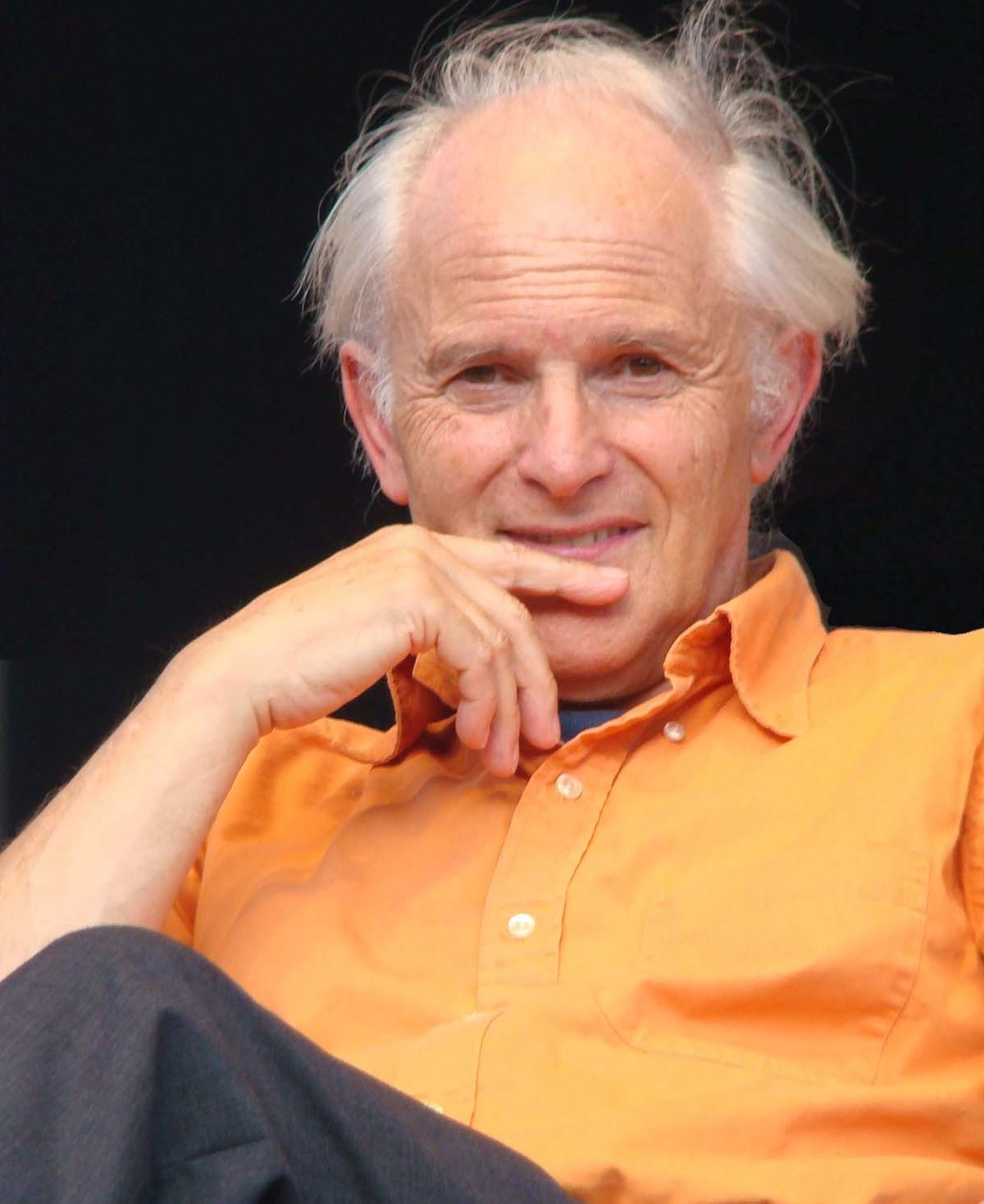


 Bertrand Arthur William Russell was born at Trelleck on 18th May, 1872. His parents were Viscount Amberley and Katherine, daughter of 2nd Baron Stanley of Alderley. At the age of three he was left an orphan. His father had wished him to be brought up as an agnostic; to avoid this he was made a ward of Court, and brought up by his grandmother. Instead of being sent to school he was taught by governesses and tutors, and thus acquired a perfect knowledge of French and German. In 1890 he went into residence at Trinity College, Cambridge, and after being a very high Wrangler and obtaining a First Class with distinction in philosophy he was elected a fellow of his college in 1895. But he had already left Cambridge in the summer of 1894 and for some months was attaché at the British embassy at Paris.



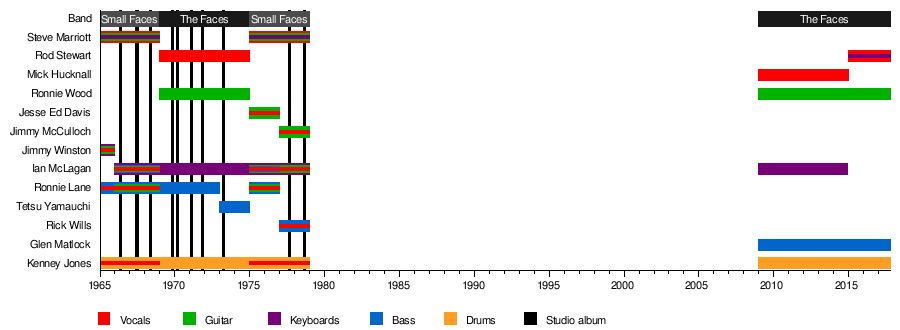


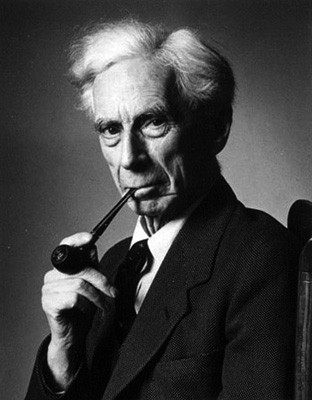


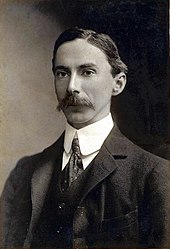


,_oil_on_canvas,_52.1_x_54.6_cm,_Stiftung_Sammlung_E.G._B%C3%BChrle,_Zurich.jpg)


,_oil_on_canvas,_94_x_130_cm,_Museum_Boijmans_Van_Beuningen.jpg)