This crucial series is narrated by the late Dr. Francis Schaeffer and former Surgeon General Dr. C. Everett Koop. Today, choices are being made that undermine human rights at their most basic level. Practices once considered unthinkable are now acceptable – abortion, infanticide and euthanasia. The destruction of human life, young and old, is being sanctioned on an ever-increasing scale by the medical profession, by the courts, by parents and by silent Christians. The five episodes in this series examine the sanctity of life as a social, moral and spiritual issue which the Christian must not ignore. The conclusion presents the Christian alternative as the only real solution to man’s problems.
I have gone back and forth with Ark Times liberal bloggers on the issue of abortion, but I am going to try something new. I am going to respond with logical and rational reasons the pro-life view is true. All of this material is from a paper by Scott Klusendorf called FIVE BAD WAYS TO ARGUE ABOUT ABORTION .
___________________
Here is a common prochoice argument I have heard from Ark Times liberal bloggers.Take a look at “Spunkrat”:
I am so sick and tired of your ridiculous ability to fit two completely different ideas into a head the size and consistency of, a baking pumpkin!
You people will kill and murder doctors and anyone who is pro choice to protect, in YOUR words, the “unborn (and by this word unhuman)” from being “murdered,” while your ilk arm as many in this country as you can, so they can “protect” themselves by murdering anyone who gets in their way, AND once they do, you’ll try and strap them to a gurney and execute/murder them, IF you can! The reasoning ability you people have is at best–at BEST, mentally stooped and decrepit.
Find an Ozark cliff and jump. Just jump! But before you do, set fire to your housetrailer so we can clean up the neighborhood!
On July 11, 2000, a knife-wielding man attacked Vancouver (BC) abortionist Garson Romalis in a downtown clinic. Abortion advocacy groups seized on his brush with death to score cheap political points against their opponents, notably Canadian Alliance Party leader Stockwell Day, who opposes abortion.22
Day was quick to condemn the attack against Romalis as “outrageous and untenable,” but that did not satisfy local abortion advocates. Marilyn Wilson, president of the Canadian Abortion Rights Action League, said Day had “indirectly sanctioned” the violence against Romalis with his extremist rhetoric.
Why was Mr. Day responsible for the attack? It’s really quite simple: He disagrees with Ms. Wilson on abortion and has said publicly that elective abortion is the unjust killing of an innocent human being. “Day is going to try and deny that he would support any violence,” she said in a press release, “but his rhetoric does incite other people who share his beliefs against abortion to violence.” She then called Day a “fanatic” for “the amount of anti-choice, extremist rhetoric that’s out there.”
Bear in mind that to Ms. Wilson, “fanatic” and “extremist” mean anyone who deviates in the slightest from her own position, which is that abortion should be legal for any reason whatsoever during all nine months of pregnancy. If you say that elective abortion takes the life of a defenseless child, as Day believes it does, your irresponsible rhetoric will cost an abortionist his life.
Ms. Wilson is using scaremongering tactics to poison the public debate over abortion. Her statements are intellectually dishonest for at least four reasons. First, let’s assume that pro-life rhetoric does in fact lead to acts of violence against abortionists (though there is no good reason to suppose that this is so). Would this in anyway refute the pro-life argument that elective abortion unjustly takes the life of an innocent human being? Keep in mind that pro-life advocates do not merely state their case; they buttress it with scientific and philosophic reasoning. If Ms. Wilson thinks we are wrong about the humanity of the unborn and the inhumanity of abortion, she should patiently explain why our arguments are mistaken and why fetuses should be disqualified from membership in the human community. But instead of refuting the pro-life view, she attempts to silence it with personal attacks.
Second, it is blatantly unfair of Ms. Wilson to demonize pro-life advocates for espousing their sincerely held beliefs. Let’s assume that I’m an animal rights activist opposed to the sale of fur. If a deranged environmentalist firebombs a local clothing store, am I responsible? More to the point, is Ms. Wilson responsible if, upon reading her press release, a pro-abortion activist shoots Stockwell Day for the purpose of saving the community from such an awful extremist? (In a press release one day prior to the stabbing, Wilson accused Mr. Day of favoring “state-sanctioned violence against women by forcing them to bear children they may not want.”23) If she is serious that merely disagreeing with her on abortion is itself an incitement to violence, then let’s not fool around: Ms. Wilson should lead the charge to ban all pro-life speech. (Actually, she would like that, but lacks the courage to say so publicly.)
Third, it does not follow that because a lone extremist stabs an abortionist, the pro-life cause itself is unjust. Dr. Martin Luther King, for example, used strong language to condemn the evil of racism during the 1960s. In response to his peaceful but confrontational tactics, racists unjustly blamed him for the violent unrest that sometimes followed his public demonstrations. Mayor Richard Daley of Chicago argued that if Dr. King would stop exposing racial injustice, black people would be less likely to riot.24 The Mayor’s remarks, like those of Ms. Wilson, were an outrage. Are we to believe that a handful of rioters made Dr. King’s crusade for civil rights entirely unjust?
In his Letter from the Birmingham Jail, King rebuts this dishonest attempt to change the subject:
In your statement you asserted that our actions, though peaceful, must be condemned because they precipitate violence….[I]t is immoral to urge an individual to withdraw his efforts to gain…basic constitutional rights because the quest precipitates violence….Non-violent direct action seeks to create such a crisis and establish such a creative tension that a community…is forced to confront the issue. It seeks to dramatize the issue so it can be no longer ignored.
Footnotes:
22 The facts from this story, as well as some of the analysis, come from Andrew Coyne, “Opinions are not Crimes,” The National Post, July 14, 2000.
23 Canadian Abortion Rights Action League press release, July 10, 2000.
24 Gregg Cunningham, Why Abortion is Genocide, available from www.abortionno.org
I have gone back and forth and back and forth with many liberals on the Arkansas Times Blog on many issues such as abortion, human rights, welfare, poverty, gun control and issues dealing with popular culture. Here is another exchange I had with them a while back. My username at the Ark Times Blog is Saline […]
I have gone back and forth and back and forth with many liberals on the Arkansas Times Blog on many issues such as abortion, human rights, welfare, poverty, gun control and issues dealing with popular culture. Here is another exchange I had with them a while back. My username at the Ark Times Blog is Saline […]
I have gone back and forth and back and forth with many liberals on the Arkansas Times Blog on many issues such as abortion, human rights, welfare, poverty, gun control and issues dealing with popular culture. Here is another exchange I had with them a while back. My username at the Ark Times Blog is Saline […]
I have gone back and forth and back and forth with many liberals on the Arkansas Times Blog on many issues such as abortion, human rights, welfare, poverty, gun control and issues dealing with popular culture. Here is another exchange I had with them a while back. My username at the Ark Times Blog is […]
I have gone back and forth and back and forth with many liberals on the Arkansas Times Blog on many issues such as abortion, human rights, welfare, poverty, gun control and issues dealing with popular culture. Here is another exchange I had with them a while back. My username at the Ark Times Blog is Saline […]
I have gone back and forth and back and forth with many liberals on the Arkansas Times Blog on many issues such as abortion, human rights, welfare, poverty, gun control and issues dealing with popular culture. Here is another exchange I had with them a while back. My username at the Ark Times Blog is Saline […]
I have gone back and forth and back and forth with many liberals on the Arkansas Times Blog on many issues such as abortion, human rights, welfare, poverty, gun control and issues dealing with popular culture. Here is another exchange I had with them a while back. My username at the Ark Times Blog is Saline […]
I have gone back and forth and back and forth with many liberals on the Arkansas Times Blog on many issues such as abortion, human rights, welfare, poverty, gun control and issues dealing with popular culture. Here is another exchange I had with them a while back. My username at the Ark Times Blog is […]
I have gone back and forth and back and forth with many liberals on the Arkansas Times Blog on many issues such as abortion, human rights, welfare, poverty, gun control and issues dealing with popular culture. Here is another exchange I had with them a while back. My username at the Ark Times Blog is Saline […]
I have gone back and forth and back and forth with many liberals on the Arkansas Times Blog on many issues such as abortion, human rights, welfare, poverty, gun control and issues dealing with popular culture. Here is another exchange I had with them a while back. My username at the Ark Times Blog is Saline […]
I have gone back and forth and back and forth with many liberals on the Arkansas Times Blog on many issues such as abortion, human rights, welfare, poverty, gun control and issues dealing with popular culture. Here is another exchange I had with them a while back. My username at the Ark Times Blog is Saline […]
I have gone back and forth and back and forth with many liberals on the Arkansas Times Blog on many issues such as abortion, human rights, welfare, poverty, gun control and issues dealing with popular culture. Here is another exchange I had with them a while back. My username at the Ark Times Blog is Saline […]
I have gone back and forth and back and forth with many liberals on the Arkansas Times Blog on many issues such as abortion, human rights, welfare, poverty, gun control and issues dealing with popular culture. Here is another exchange I had with them a while back. My username at the Ark Times Blog is Saline […]
I have gone back and forth and back and forth with many liberals on the Arkansas Times Blog on many issues such as abortion, human rights, welfare, poverty, gun control and issues dealing with popular culture. Here is another exchange I had with them a while back. My username at the Ark Times Blog is Saline […]
I have gone back and forth and back and forth with many liberals on the Arkansas Times Blog on many issues such as abortion, human rights, welfare, poverty, gun control and issues dealing with popular culture. Here is another exchange I had with them a while back. My username at the Ark Times Blog is Saline […]
I have gone back and forth and back and forth with many liberals on the Arkansas Times Blog on many issues such as abortion, human rights, welfare, poverty, gun control and issues dealing with popular culture. Here is another exchange I had with them a while back. My username at the Ark Times Blog is Saline […]
I have gone back and forth and back and forth with many liberals on the Arkansas Times Blog on many issues such as abortion, human rights, welfare, poverty, gun control and issues dealing with popular culture. Here is another exchange I had with them a while back. My username at the Ark Times Blog is Saline […]
I have gone back and forth and back and forth with many liberals on the Arkansas Times Blog on many issues such as abortion, human rights, welfare, poverty, gun control and issues dealing with popular culture. Here is another exchange I had with them a while back. My username at the Ark Times Blog is Saline […]
I have gone back and forth and back and forth with many liberals on the Arkansas Times Blog on many issues such as abortion, human rights, welfare, poverty, gun control and issues dealing with popular culture. Here is another exchange I had with them a while back. My username at the Ark Times Blog is Saline […]
I have gone back and forth and back and forth with many liberals on the Arkansas Times Blog on many issues such as abortion, human rights, welfare, poverty, gun control and issues dealing with popular culture. Here is another exchange I had with them a while back. My username at the Ark Times Blog is Saline […]
Max Brantley of the Arkansas Times Blog reprinted a story of a 38 year old later telling her story. She got an abortion when she was 23 for just selfish reasons. The lady identified herself as a Christian. As a response to this I posted the following on 2-8-13 on the Arkansas Times Blog: You […]
Dr Richard Land discusses abortion and slavery – 10/14/2004 – part 3 The best pro-life film I have ever seen below by Francis Schaeffer and Dr. C. Everett Koop “Whatever happened to the human race?” Over the years I have taken on the Ark Times liberal bloggers over and over and over concerning the issue […]
The best pro-life film I have ever seen below by Francis Schaeffer and Dr. C. Everett Koop “Whatever happened to the human race?” Francis Schaeffer pictured above._________ The 45 minute video above is from the film series created from Francis Schaeffer’s book “Whatever Happened to the Human Race?” with Dr. C. Everett Koop. This book really […]
The best pro-life film I have ever seen below by Francis Schaeffer and Dr. C. Everett Koop “Whatever happened to the human race?” Over the years I have taken on the Ark Times liberal bloggers over and over and over concerning the issue of abortion. I asked over and over again for one liberal blogger […]
Francis Schaeffer pictured above._________ The best pro-life film I have ever seen below by Francis Schaeffer and Dr. C. Everett Koop “Whatever happened to the human race?” Over the years I have taken on the Ark Times liberal bloggers over and over and over concerning the issue of abortion. I asked over and over again […]
The best pro-life film I have ever seen below by Francis Schaeffer and Dr. C. Everett Koop “Whatever happened to the human race?” On 1-24-13 I took on the child abuse argument put forth by Ark Times Blogger “Deathbyinches,” and the day before I pointed out that because the unborn baby has all the genetic code […]
PHOTO BY STATON BREIDENTHAL from Pro-life march in Little Rock on 1-20-13. Tim Tebow on pro-life super bowl commercial. Over the years I have taken on the Ark Times liberal bloggers over and over and over concerning the issue of abortion. Here is another encounter below. On January 22, 2013 (on the 40th anniversary of the […]
Dr Richard Land discusses abortion and slavery – 10/14/2004 – part 3 The best pro-life film I have ever seen below by Francis Schaeffer and Dr. C. Everett Koop “Whatever happened to the human race?” Over the years I have taken on the Ark Times liberal bloggers over and over and over concerning the issue […]
The Arkansas Times blogger going by the username “Sound Policy” asserted, “…you do know there is a slight difference between fetal tissue and babies, don’t you? Don’t you?” My response was taken from the material below: Science Matters: Former supermodel Kathy Ireland tells Mike Huckabee about how she became pro-life after reading what the science books […]
I wrote a response to an article on abortion on the Arkansas Times Blog and it generated more hate than enlightenment from the liberals on the blog. However, there was a few thoughtful responses. One is from spunkrat who really did identify the real issue. WHEN DOES A HUMAN LIFE BEGIN? _______________________________________ Posted by spunkrat […]
Superbowl commercial with Tim Tebow and Mom. The Arkansas Times article, “Putting the fetus first: Pro-lifers keep up attack on access, but pro-choice advocates fend off the end to abortion right” by Leslie Newell Peacock is very lengthy but I want to deal with all of it in this new series. click to enlarge ROSE MIMMS: […]
The Arkansas Times article, “Putting the fetus first: Pro-lifers keep up attack on access, but pro-choice advocates fend off the end to abortion right” by Leslie Newell Peacock is very lengthy but I want to deal with all of it in this new series. click to enlarge ROSE MIMMS: Arkansas Right to Life director unswayed by […]
Many times in the past these secular humanists have suggested books for me to read and I have made it my practice to take them up on that and read the books they suggest and then I send my reviews back to them to consider.
One trend I have noticed among modern scholars and that have become more and more pessimistic. (No where is this demonstrated better than in the beginning of the episode THE AGE OF NONREASON shown below. Also Francis Schaeffer in his book WHATEVER HAPPENED TO THE HUMAN RACE? points out that Steven Weinberg has discussed the issue of the meaningless and pointlessness of life.
How Should We then Live Episode 7 small (Age of Nonreason)
#02 How Should We Then Live? (Promo Clip) Dr. Francis Schaeffer
10 Worldview and Truth
Two Minute Warning: How Then Should We Live?: Francis Schaeffer at 100
Francis Schaeffer “BASIS FOR HUMAN DIGNITY” Whatever…HTTHR
Many modern artists are left in this point of desperation that Schaeffer points out and it reminds me of the despair that Solomon speaks of in Ecclesiastes. Christian scholar Ravi Zacharias has noted, “The key to understanding the Book of Ecclesiastes is the term ‘under the sun.’ What that literally means is you lock God out of a closed system, and you are left with only this world of time plus chance plus matter.” THIS IS EXACT POINT SCHAEFFER SAYS SECULAR ARTISTS ARE PAINTING FROM TODAY BECAUSE THEY BELIEVED ARE A RESULT OF MINDLESS CHANCE.
An overwhelming number of modern thinkers agree that seeing the universe and man from a humanist base leads to meaninglessness, both for the universe and for man – not just mankind in general but for each of us as individuals. Professor Steven Weinberg of Harvard University and the Smithsonian Astrophysical Observatory has written a book entitled The First Three Minutes: A Modern View of the Origin of the Universe (1976). Here he explains, as clearly as probably anyone has ever done, the modern materialistic view of the universe and its origin.
But when his explanation is finished and he is looking down at the earth from an airplane, as Weinberg writes, “It is very hard to realize that this all is just a tiny part of an overwhelmingly hostile universe … [which] has evolved from an unspeakably unfamiliar early condition, and faces a future extinction of endless cold or intolerable heat. The more the universe seems comprehensible, the more it also seems pointless.”86
When Weinberg says that the universe seems more “comprehensible,” he is, of course, referring to our greater understanding of the physical universe through the advance of science. But it is an understanding, notice, within, a materialistic framework, which considers the universe solely in terms of physics and chemistry – simply machinery. Here lies the irony. It is comprehension of a sort, but it is like giving a blind person sight, only to remove anything seeable. As we heard Woody Allen saying earlier, such a view of reality is “absolutely stupefying in its terror, and it renders anyone’s accomplishments meaningless.”
So, to the person who wants to be left alone without explanations for the big questions, we must say very gently, “Look at what you are left alone with.” This is not merely rhetoric. As the decades of this century have slipped by, more and more have said the same thing as Steven Weinberg and Woody Allen. It has become an obvious thing to say. The tremendous optimism of the nineteenth century, which stemmed from the Enlightenment of the eighteenth century, has gradually ebbed away.
If everything “faces a future extinction of endless cold or intolerable heat,” all things are meaningless. This is the first problem, the first form of pollution. The second is just as bad.
____________________________________________
Rice Broocks in his book GOD’S NOT DEAD quoted the American philosopher and theologian William Lane Craig:
My claim is that if there is no God then meaning, value, and purpose are ultimately human illusions. They’re just in our heads. If atheism is true, then life is really objectively meaningless, valueless, and purposeless, despite our subjective beliefs to the contrary,” (William Lane Craig, ON GUARD: Defending Your Faith with Reason and Precision [Colorodo Springs: David C. Cook, 2010], 30).
Dr. Francis schaeffer – The flow of Materialism(from Part 4 of Whatever happened to human race?)
Back in September of 2014 I had a chance to correspond with Nobel Prize Harold Kroto and he used this quote from his friend Steven Weinberg,“With or without religion, you would have good people doing good things and evil people doing evil things. But for good people to do evil things, that takes religion.” I DO AGREE WITH A PORTION OF THAT ASSERTION BUT IT SEEMS THAT MUSLIMS KILL A LOT MORE PEOPLE TODAY THAN CHRISTIANS. (SAM HARRIS EVEN POINTED THAT OUT RECENTLY ON BILL MAHER’S SHOW.)Then he gave me a link that gave more quotes from Steven Weinberg and here are some of those quotes and my initial reaction to some of them (From Nobel Lectures, Physics 1971-1980, Editor Stig Lundqvist, World Scientific Publishing Co., Singapore, 1992):
“I have a friend — or had a friend, now dead — Abdus Salam, a very devout Muslim, who was trying to bring science into the universities in the Gulf states and he told me that he had a terrible time because, although they were very receptive to technology, they felt that science would be a corrosive to religious belief, and they were worried about it… and damn it, I think they were right. It is corrosive of religious belief, and it’s a good thing too.”
― Steven Weinberg
“If there is no point in the universe that we discover by the methods of science, there is a point that we can give the universe by the way we live, by loving each other, by discovering things about nature, by creating works of art. And that—in a way, although we are not the stars in a cosmic drama, if the only drama we’re starring in is one that we are making up as we go along, it is not entirely ignoble that faced with this unloving, impersonal universe we make a little island of warmth and love and science and art for ourselves. That’s not an entirely despicable role for us to play.”Steven Weinberg (I was privileged to have the opportunity to correspond with Carl Sagan during the last year of his life and in that correspondence I answered back his letter with the assertion that mankind was put on this earth by God with a special purpose. We are precious, but even though Jodie Foster makes that claim in the movie CONTACT which Sagan wrote, the secular worldview does not in anywhere support that conclusion.)
One of the great achievements of science has been, if not to make it impossible for intelligent people to be religious, then at least to make it possible for them not to be religious. We should not retreat from this accomplishment.Steven Weinberg (Although Charles Darwin did lead science that direction, Dr. H. Fritz Schaefer confronted the assertion that a scientist cannot believe in God in an excellent article. )
“The effort to understand the universe is one of the very few things that lifts human life a little above the level of farce, and gives it some of the grace of tragedy. ”
― Steven Weinberg
“It does not matter whether you win or lose, what matters is whether I win or lose!”
― Steven Weinberg
The Nobel Prize in Physics 1979
Sheldon Glashow, Abdus Salam, Steven Weinberg
I was born in 1933 in New York City to Frederick and Eva Weinberg. My early inclination toward science received encouragement from my father, and by the time I was 15 or 16 my interests had focused on theoretical physics.
I received my undergraduate degree from Cornell in 1954, and then went for a year of graduate study to the Institute for Theoretical Physics in Copenhagen (now the Niels Bohr Institute). There, with the help of David Frisch and Gunnar Källén. I began to do research in physics. I then returned to the U.S. to complete my graduate studies at Princeton. My Ph.D thesis, with Sam Treiman as adviser, was on the application of renormalization theory to the effects of strong interactions in weak interaction processes.
After receiving my Ph.D. in 1957, I worked at Columbia and then from 1959 to 1966 at Berkeley. My research during this period was on a wide variety of topics – high energy behavior of Feynman graphs, second-class weak interaction currents, broken symmetries, scattering theory, muon physics, etc. – topics chosen in many cases because I was trying to teach myself some area of physics. My active interest in astrophysics dates from 1961-62; I wrote some papers on the cosmic population of neutrinos and then began to write a book, Gravitation and Cosmology, which was eventually completed in 1971. Late in 1965 I began my work on current algebra and the application to the strong interactions of the idea of spontaneous symmetry breaking.
From 1966 to 1969, on leave from Berkeley, I was Loeb Lecturer at Harvard and then visiting professor at M.I.T. In 1969 I accepted a professorship in the Physics Department at M.I.T., then chaired by Viki Weisskopf. It was while I was a visitor to M.I.T. in 1967 that my work on broken symmetries, current algebra, and renormalization theory turned in the direction of the unification of weak and electromagnetic interactions. In 1973, when Julian Schwinger left Harvard, I was offered and accepted his chair there as Higgins Professor of Physics, together with an appointment as Senior Scientist at the Smithsonian Astrophysical Observatory.
My work during the 1970’s has been mainly concerned with the implications of the unified theory of weak and electromagnetic interactions, with the development of the related theory of strong interactions known as quantum chromodynamics, and with steps toward the unification of all interactions.
In 1982 I moved to the physics and astronomy departments of the University of Texas at Austin, as Josey Regental Professor of Science. I met my wife Louise when we were undergraduates at Cornell, and we were married in 1954. She is now a professor of law. Our daughter Elizabeth was born in Berkeley in 1963.
J.I.PACKER WROTE OF SCHAEFFER, “His communicative style was not that of acautious academic who labors for exhaustive coverage and dispassionate objectivity. It was rather that of an impassioned thinker who paints his vision of eternal truth in bold strokes and stark contrasts.Yet it is a fact that MANY YOUNG THINKERS AND ARTISTS…HAVE FOUND SCHAEFFER’S ANALYSES A LIFELINE TO SANITY WITHOUT WHICH THEY COULD NOT HAVE GONE ON LIVING.”
Francis Schaeffer in Art and the Bible noted, “Many modern artists, it seems to me, have forgotten the value that art has in itself. Much modern art is far too intellectual to be great art. Many modern artists seem not to see the distinction between man and non-man, and it is a part of the lostness of modern man that they no longer see value in the work of art as a work of art.”
Steven Weinberg here in this video below does come down more critical on the violence brought on by Muslim radicals versus the political correct view that Islam is an religion of peace while Christianity has all the problems. At the end of this video he says “I don’t like God.”
Steven Weinberg on Atheism
Uploaded on Jul 31, 2011
According to atheist physicist Steven Weinburg, most scientists don’t think much about religion — they don’t think it’s worth thinking about. But Steven Weinburg does think about it and in a 2003 interview with BBC’s Jonathan Miller he gave his view on a number of things. Why are people religious, is the U.S. too religious, do Americans equate religion with patriotism, is truth important in religion, does our moral sense come from religion, is religion a good thing and does religion conflict with science? This video is edited from the original 29 minutes and does not have the annoying text over.
About the only solution the atheist can offer is that we face the absurdity of life and live bravely. The British philosopher Bertrand Russell, for example, believed that we have no choice but to build our lives upon “the firm foundation of unyielding despair.” Only by recognizing that the world really is a terrible place can we successfully come to terms with life. Camus said that we should honestly recognize life’s absurdity and then live in love for one another.
The fundamental problem with this solution, however, is that it’s impossible to live consistently and happily within the framework of such a worldview. If you live consistently, you will not be happy; if you live happily, it is only because you are not consistent.
Francis Schaeffer has explained this point well. Modern man, says Schaeffer, resides in a two-story universe. In the lower story is the finite world without God; here life is absurd, as we have seen. In the upper story are meaning, value, and purpose. Now modern man lives in the lower story because he believes there is no God. But he cannot live happily in such an absurd world; therefore, he continually makes leaps of faith into the upper story to affirm meaning, value, and purpose, even though he has no right to, since he does not believe in God.
Let’s look again, then, at each of the three areas in which we saw that life was absurd without God, to see how difficult it is to live consistently and happily with an atheistic worldview.
First, the area of meaning. We saw that without God, life has no meaning. Yet philosophers continue to live as though life does have meaning. For example, Sartre argued that one may create meaning for his life by freely choosing to follow a certain course of action. Sartre himself chose Marxism.
Now this is totally inconsistent. It is inconsistent to say life is objectively absurd and then to say you may create meaning for your life. If life is really absurd, then you’re trapped in the lower story. To try to create meaning in life represents a leap to the upper story. But Sartre has no basis for this leap. Sartre’s program is actually an exercise in self-delusion. For the universe doesn’t really acquire a meaning just because I happen to give it one. This is easy to see: Suppose I give the universe one meaning, and you give it another. Who’s right? The answer, of course, is neither one. For the universe without God remains objectively meaningless, no matter how we happen to regard it. Sartre is really saying, “Let’s pretend the universe has meaning.” And this is just fooling yourself.
The point is this: If God does not exist, then life is objectively meaningless; but man cannot live consistently and happily knowing that life is meaningless; so in order to be happy he pretends life has meaning. But this is, of course, entirely inconsistent—for without God, man and the universe are without any real significance.
Turn now to the problem of value. Here is where the most blatant inconsistencies occur. First of all, atheistic humanists are totally inconsistent in affirming the traditional values of love and brotherhood. Camus has been rightly criticized for inconsistently holding both to the absurdity of life and the ethics of human love and brotherhood. The view that there are no values is logically incompatible with affirming the values of love and brotherhood. Bertrand Russell, too, was inconsistent. For though he was an atheist, he was an outspoken social critic, denouncing war and restrictions on sexual freedom. Russell admitted that he could not live as though ethical values were simply a matter of personal taste, and that he therefore found his own views “incredible.” “I do not know the solution,” he confessed.6
The point is that if there is no God, then objective right and wrong do not exist. As Dostoyevsky said, “All things are permitted.” But man cannot live this way. So he makes a leap of faith and affirms values anyway. And when he does so, he reveals the inadequacy of a world without God.
The horror of a world devoid of value was brought home to me with new intensity several years ago as I watched a BBC television documentary called The Gathering. It concerned the reunion of survivors of the Holocaust in Jerusalem, where they rediscovered lost friendships and shared their experiences. One former prisoner, a nurse, told of how she was made the gynecologist at Auschwitz. She observed that pregnant women were grouped together by the soldiers under the direction of Dr. Josef Mengele and housed in the same barracks. Some time passed, and she noted that she no longer saw any of these women. She made inquiries. “Where are the pregnant women who were housed in that barracks?” “Haven’t you heard?” came the reply. “Dr. Mengele used them for vivisection.”
Another woman told of how Mengele had bound up her breasts so that she could not suckle her infant. The doctor wanted to learn how long an infant could survive without nourishment. Desperately this poor woman tried to keep her baby alive by giving it pieces of bread soaked in coffee, but to no avail. Each day the baby lost weight, a fact that was eagerly monitored by Dr. Mengele. A nurse then came secretly to this woman and told her, “I have arranged a way for you to get out of here, but you cannot take your baby with you. I have brought a morphine injection that you can give to your child to end its life.” When the woman protested, the nurse was insistent: “Look, your baby is going to die anyway. At least save yourself.” And so this mother felt compelled to take the life of her own baby. Dr. Mengele was furious when he learned of it because he had lost his experimental specimen, and he searched among the dead to find the baby’s discarded corpse so that he could have one last weighing.
My heart was torn by these stories. One rabbi who survived the camp summed it up well when he said that at Auschwitz it was as though there existed a world in which all the Ten Commandments were reversed. Mankind had never seen such a hell.
And yet, if God does not exist, then in a sense, our world is Auschwitz: There is no right and wrong; all things are permitted.
But no atheist, no agnostic, can live consistently with such a view. Nietzsche himself, who proclaimed the necessity of living beyond good and evil, broke with his mentor Richard Wagner precisely over the issue of the composer’s anti-Semitism and strident German nationalism. Similarly, Sartre, writing in the aftermath of the Second World War, condemned anti-Semitism, declaring that a doctrine that leads to mass extermination is not merely an opinion or matter of personal taste of equal value with its opposite. In his important essay “Existentialism Is a Humanism,” Sartre struggles vainly to elude the contradiction between his denial of divinely pre-established values and his urgent desire to affirm the value of human persons. Like Russell, he could not live with the implications of his own denial of ethical absolutes.
Neither can the so-called New Atheists like Richard Dawkins. For although he says that there is no evil, no good, nothing but pitiless indifference, he is an unabashed moralist. He vigorously condemns such actions as the harassment and abuse of homosexuals, religious indoctrination of children, the Incan practice of human sacrifice, and prizing cultural diversity over the interests of Amish children. He even goes so far as to offer his own amended Ten Commandments for guiding moral behavior, all the while marvelously oblivious to the contradiction with his ethical subjectivism.
Indeed, one will probably never find an atheist who lives consistently with his system. For a universe without moral accountability and devoid of value is unimaginably terrible.
Finally, let’s look at the problem of purpose in life. The only way most people who deny purpose in life live happily is either by making up some purpose—which amounts to self-delusion, as we saw with Sartre—or by not carrying their view to its logical conclusions. The temptation to invest one’s own petty plans and projects with objective significance and thereby to find some purpose to one’s life is almost irresistible.
For example, the outspoken atheist and Nobel Prize–winning physicist Steven Weinberg, at the close of his much-acclaimed book The First Three Minutes, writes,
It is almost irresistible for humans to believe that we have some special relation to the universe, that human life is not just a more-or-less farcical outcome of a chain of accidents reaching back to the first three minutes, but that somehow we were built in from the beginning.… It is very hard to realize that this all is just a tiny part of an overwhelmingly hostile universe. It is even harder to realize that this present universe has evolved from an unspeakably unfamiliar early condition, and faces a future extinction of endless cold or intolerable heat. The more the universe seems comprehensible, the more it also seems pointless.
But if there is no solace in the fruits of our research, there is at least some consolation in the research itself. Men and women are not content to comfort themselves with tales of gods and giants, or to confine their thoughts to the daily affairs of life; they also build telescopes and satellites and accelerators, and sit at their desks for endless hours working out the meaning of the data they gather. The effort to understand the universe is one of the very few things that lifts human life a little above the level of farce, and gives it some of the grace of tragedy.
There’s something strange about Weinberg’s moving description of the human predicament: Tragedy is not a neutral term. It expresses an evaluation of a situation. Weinberg evidently sees a life devoted to scientific pursuits as truly meaningful, and therefore it’s tragic that such a noble pursuit should be extinguished. But why, given atheism, should the pursuit of science be any different from slouching about doing nothing? Since there is no objective purpose to human life, none of our pursuits has any objective significance, however important and dear they may seem to us subjectively. They’re no more significant than shuffling deck chairs on the Titanic.
As I was driving to my office one day I heard a dramatic radio advertisement for a book. It began something like this: “Would you like to find meaning in life?” As I listened to the remainder of the ad I realized that the book’s author was focusing on New Age concepts of purpose and meaning. But the striking thing about what was said was that the advertisers obviously believed that they could get the attention of the radio audience by asking about meaning in life. Some may think it is advertising suicide to open an ad with such a question. Or perhaps the author and her publicists are on to something that “strikes a chord” with many people in our culture.
Questions of meaning and purpose are a part of the mental landscape as we enter a new millenium. Some contend this has not always been the case, but that such questions are an unprecedented legacy of the upheavals of the nineteenth and twentieth centuries.{3} Others assert that such questions are a result of man’s rejection of God.{4}
Even though most of us don’t make such issues a part of our normal conversations, the questions tend to lurk around us. They can be heard in songs, movies, books, magazines, and many other media that permeate our lives. For example, Jackson Browne, an exceptionally reflective songwriter of the ’60s and ’70s, wrote these haunting lyrics in a song entitled For a Dancer:
Into a dancer you have grown
From a seed somebody else has thrown
Go ahead and throw
Some seeds of your own
And somewhere between the time you arrive
And the time you go
May lie a reason you were alive….{5}
Russell Banks, the author of Affliction and The Sweet Hereafter, both of which became Oscar-nominated films, has this to say about his work: “I’m not a morbid man. In my writing, I’m just trying to describe the world as straightforwardly as I can. I think most lives are desperate and painful, despite surface appearances. If you consider anyone’s life for long, you find it’s without meaning.”{6}
Woody Allen, the film writer, director, and actor, has consistently populated his scripts with characters who exchange dialogue concerning meaning and purpose. In Hannah and Her Sisters a character named Mickey says, “Do you realize what a thread we’re all hanging by? Can you understand how meaningless everything is? Everything. I gotta get some answers.”{7}
Even television ads have focused on meaning, although in a flippant manner. A few years ago you could watch Michael Jordan running across hills and valleys in order to find a guru. When Jordan finds him he asks, “What is the meaning of life?” The guru answers with a maxim that leads to the product that is the real focus of Jordan’s quest.
Even though such illustrations can be ridiculous, maybe they serve to lead us beyond the surface of our subject. We often get nervous when we are encouraged to delve into subject matter that might stretch us. When we get involved in conversations that go beyond the more mundane things of everyday life we may tend to get tense and defensive. Actually, this can be a good thing. The Christian shouldn’t fear such conversations. Indeed, I’m confident that if we go beyond the surface, we can find peace and hope.
Beyond the Surface
Listen to the sober words of a famous writer of the twentieth century:
There is but one truly serious philosophical problem, and that is suicide. Judging whether life is worth living amounts to answering the fundamental question of philosophy…. I see many people die because they judge that life is not worth living. I see others paradoxically getting killed for the ideas or illusions that give them a reason for living (what is called a reason for living is an excellent reason for dying). I therefore conclude that the meaning of life is the most urgent of questions.{8}
These phrases indicate that Albert Camus, author of The Plague, The Stranger, and The Myth of Sisyphus, was not afraid to go beyond the surface. Camus was bold in exposing the thoughts many were having during his lifetime. In fact, his world view made it obligatory. He was struggling with questions of meaning in light of what some called the “death of God.” That is, if there is no God, can we find meaning? Many have concluded that the answer is a resounding “No!” If true, this means that one who believes there is no God is not living consistently with that belief.
William Lane Craig, one of the great Christian thinkers of our time, states that:
Man cannot live consistently and happily as though life were ultimately without meaning, value or purpose. If we try to live consistently within the atheistic world view, we shall find ourselves profoundly unhappy. If instead we manage to live happily, it is only by giving the lie to our world view.{9}
Francis Schaeffer agrees with Craig’s analysis, but makes even bolder assertions. He also maintains that the Christian can close the hopeless gap that is created in a person’s godless world view. Listen to what he wrote:
It is impossible for any non-Christian individual or group to be consistent to their system in logic or in practice. Thus, when you face twentieth-century man, whether he is brilliant or an ordinary man of the street, a man of the university or the docks, you are facing a man in tension; and it is this tension which works on your behalf as you speak to him.{10}
What happens when we go “beyond the surface” in order to find meaning? Can a Christian world view stand up to the challenge? I believe it can, but we must stop and think of whether we are willing to accept the challenge. David Henderson, a pastor and writer, gives us reason to pause and consider our response. He writes:
Our lives, like our Daytimers, are busy, busy, busy, full of things to do and places to go and people to see. Many of us, convinced that the opposite of an empty life is a full schedule, remain content to press on and ignore the deeper questions. Perhaps it is out of fear that we stuff our lives to the walls—fear that, were we to stop and ask the big questions, we would discover there are no satisfying answers after all.{11}
Let’s jettison any fear and continue our investigation. There are satisfying answers. It is not necessary to “stuff our lives to the walls” in order to escape questions of meaning and purpose. God has spoken to us. Let us begin to pursue His answers.
Eternity in Our Hearts
The book of Ecclesiastes contains numerous phrases that have entered our discourse. One of those phrases states that God “has made everything appropriate in its time. He has also set eternity in their heart. . .” (3:11). What a fascinating statement! Actually, the first part of the verse can be just as accurately translated “beautiful in its time.” Thus “a harmony of purpose and a beneficial supremacy of control pervade all issues of life to such an extent that they rightly challenge our admiration.”{12} The second part of the verse indicates that “man has a deep-seated ‘sense of eternity’, of purposes and destinies.”{13}But man can’t fathom the vastness of eternal things, even when he believes in the God of eternity. As a result, all people live with what some call a “God-shaped hole.” Stephen Evans believes this hole can be understood through “the desire for eternal life, the desire for eternal meaning, and the desire for eternal love:”{14}
The desire for eternal life is the most evident manifestation of the need for God. Deep in our hearts we feel death should not be, was not meant to be.
The second dimension of our craving for eternity is the desire for eternal meaning. We want lives that are eternally meaningful.
We crave eternity, and earthly loves resemble eternity enough to kindle our deepest love. Yet earthly loves are not eternal. Our sense that love is the clue to what it’s all about is right on target, but earthly love itself merely points us in the right direction.
What we want is an eternal love, a love that loves us unconditionally, accepts us as we are, while helping us to become all we can become.
In short, we want God, the God of Christian faith.{15}
We must trust God for what we cannot see and understand. Or, to put it another way, we continue to live knowing there is meaning, but we struggle to know exactly what it is at all times. We are striving for what the Bible refers to as our future glorification (Rom. 8:30). “There is something self-defeating about human desire, in that what is desired, when achieved, seems to leave the desire unsatisfied.”{16} For example, we attempt to find meaning while searching for what is beautiful. C.S. Lewis referred to this in a sermon entitled The Weight of Glory:
The books or the music in which we thought the beauty was located will betray us if we trust to them; it was not in them, it only came through them, and what came through them was longing. These things–the beauty, the memory of our own past–are good images of what we really desire; but if they are mistaken for the thing itself they turn into dumb idols, breaking the hearts of their worshippers. For they are not the thing itself; they are only the scent of a flower we have not found, the echo of a tune we have not heard, news from a country we have not visited.{17}
Lewis’ remarkable prose reminds us that meaning must be given to us. “Meaning is never intrinsic; it is always derivative. If my life itself is to have meaning (or a meaning), it thus must derive its meaning from some sort of purposive, intentional activity. It must be endowed with meaning.”{18} Thus we return to God, the giver of meaning.
Meaning: God’s Gift
Think of all the wonderful gifts that God has given you. No doubt you can come up with a lengthy record of God’s goodness. Does your list include meaning or purpose in life? Most people wouldn’t think of meaning as part of God’s goodness to us. But perhaps we should. This is because “only a being like God–a creator of all who could eventually, in the words of the New Testament, ‘work all things together for good’–only this sort of being could guarantee a completeness and permanency of meaning for human lives.”{19}So how did God accomplish this? The answer rests in His amazing love for us through His Son, Jesus Christ.
Consider the profound words of Carl F.H. Henry: “the eternal and self-revealed Logos, incarnate in Jesus Christ, is the foundation of all meaning.”{20} Bruce Lockerbie puts it like this: “The divine nature manifesting itself in the physical form of Jesus of Nazareth is, in fact, the integrating principle to which all life adheres, the focal point from which all being takes its meaning, the source of all coherence in the universe. Around him and him alone all else may be said to radiate. He is the Cosmic Center.”{21}
Picture a bicycle. When you ride one you are putting your weight on a multitude of spokes that radiate from a hub. All the spokes meet at the center and rotate around it. The bicycle moves based upon the center. Thus it is with Christ. He is the center around whom we move and find meaning. Our focus is on Him.
When the apostle Paul reflected on meaning and purpose in his life in Phillipians 3, he came to this conclusion (emphases added):
7…whatever things were gain to me, those things I have counted as loss for the sake of Christ.
8 More than that, I count all things to be loss in view of the surpassing value of knowing Christ Jesus my Lord, for whom I have suffered the loss of all things, and count them but rubbish in order that I may gain Christ,
9 and may be found in Him, not having a righteousness of my own derived from the Law, but that which is through faith in Christ, the righteousness which comes from God on the basis of faith,
10 that I may know Him, and the power of His resurrection and the fellowship of His sufferings, being conformed to His death;
11 in order that I may attain to the resurrection from the dead.
Did you notice how Christ was central to what Paul had to say about both his past and present? And did you notice that he used phrases such as “knowing Christ,” or “that I may gain Christ?” Such statements appear to be crucial to Paul’s sense of meaning and purpose. Paul wants “to know” Christ intimately, which means he wants to know by experience. “Paul wants to come to know the Lord Jesus in that fulness of experimental knowledge which is only wrought by being like Him.”{22}
Martin Karplus is a chemist, Professor emeritus at Harvard University, and Nobel laureate who has spent the past fifty years consumed by a passion for documenting humanity in thousands of photographs. Sourced from Europe, Asia, and the Americas, his photographs capture societies at pivotal moments in their cultural and economic development in rich Kodachrome color.
In 1953, the Austrian-born, American Karplus received his uncle’s Leica camera as a gift from his parents and headed to Oxford University on a fellowship. In the following years he would spend months exploring the globe, documenting what he describes a “vision of a world, much of which no longer exists”.
Images from the Netherlands, Denmark, Greece, Italy, France, Yugoslavia, and Germany present the closure of a bygone lifestyle as societies modernized and rebuilt in the wake of World War 2 and the dawning of the Cold War. Further travels throughout the 1950s took him to the Americas, where he photographed the exuberance of suburban Californian prosperity alongside Native and Latin Americans living a way of life uninterrupted for centuries, yet largely unheard of today. A more recent series from 2008-09 presents a look at China and India as each nation’s unfurling economy brings rapid modernization, as well as to Japan, where it has firmly taken root.
Exhibition Coordinator Natascha Boojar Exhibition Assistants Lisa-Joanna Csanyi, Sophie Gogl
With generous support from The Office of Science and Technology Austria (OSTA)
Supporting Institutions of the Austrian Cultural Forum New York Air Berlin, Esterházy Winery, Stiegl
Special thanks to Franklin Castanien, Taylor Hawkins, Stefan Hoza, Geraldine Lau
Jewish Trio Win Nobel Prize for Chemistry: Michael Levitt, Martin Karplus and Arieh Warshel awarded
Published on Oct 11, 2013
A three man team of professors has won the Nobel Prize in Chemistry. And all three are Jewish, with two hailing from Israel. Michael Levitt, a British-US citizen of Stanford University; US-Austrian Martin Karplus of Strasbourg University and Harvard; and US-Israeli Arieh Warshel of the University of Southern California will share this year’s prize of around USD 1.25 million. Warshel said the work for which he and his colleagues received the prize is for developing a method that allowed them to understand how proteins work. The trio devised computer simulations to understand chemical processes. In so doing, they revolutionized research in areas ranging from pharmaceuticals to solar energy.
Arieh Warshel, Michael Levitt, and Martin Karplus win prize for the development of multiscale models for complex chemical systems; all three scientists are Jewish, while Warshel and Levitt hold Israeli citizenship.
Three Jewish scientists – two of them Israelis who had emigrated to the U.S. – won the Nobel Prize in Chemistry on Wednesday.
Arieh Warshel, Michael Levitt and Martin Karplus were awarded the top international prize for the development of multiscale models for complex chemical systems.
The Royal Swedish Academy of Sciences on Wednesday said, upon awarding the prize of 8 million crowns ($1.25 million), that their research in the 1970s has helped scientists develop programs that unveil chemical processes such as the purification of exhaust fumes or the photosynthesis in green leaves.
“The work of Karplus, Levitt and Warshel is ground-breaking in that they managed to make Newton’s classical physics work side-by-side with the fundamentally different quantum physics,” the academy said. “Previously, chemists had to choose to use either/or.”
All three winners are American citizens, but also hold dual citizenships. Warshel and Levitt are Israeli citizens, and both studied and worked at the Weizmann Institute in Israel, where Levitt also served as head of the Chemical Physics Department. Warshel was also educated at the Technion. Austrian-born Karplus had fled the Nazis to the U.S. as a child.The Nobel prize was awarded to them on the basis of their research at American universities.
Warshel is a U.S. and Israeli citizen affiliated with the University of Southern California in Los Angeles, Levitt is a U.S., Israeli and British citizen and a professor at the Stanford University School of Medicine, and Karplus is affiliated with the University of Strasbourg, France, and Harvard University.
Pretoria-born Levitt immigrated to Israel at the age of 35 in 1983. He married an Israeli, and worked a few years at the Weizmann Institute until he left for Stanford.
“I can’t say I moved there because the conditions in Israel were not satisfactory,” Levitt told Israel Army Radio. “In all honesty, to this day I can’t quite say why I left the country, my connection to it being very strong. […] My wife is Israeli, I have two sons living in Israel.”
When visiting Israel, Levitt resides in a Rehovot flat, but recently has been considering a move to Tel Aviv, which he called “an amazing city.”
“I am being asked all the time what I plan to do with the winnings, but it isn’t enough to buy a flat in Tel Aviv with.” ‘I didn’t leave by choice’
Warshel completed his Bachelor’s degree in Chemistry at the Technion – Israel Institute of Technology in 1966.
The person who supervised Warshel in his final project, ‘his first scientific father,’ you could say, was Prof. Ruben Pauncz, who was the first in Israel who dealt with quantum chemistry and calculations of the molecular and atomic systems. Through him, Warshel entered the field of theoretical chemistry.
“I was very happy to hear of Arieh Warshel’s winning [the Nobel Prize]”, Pauncz, now 93 years old, told Haaretz. “There were very many students over the years and I remember him somewhat hazily. I remember at some point speaking with Prof. Shneior Lifson of the Weizmann Institute, who supervised his doctorate work, and I remember he was impressed by his intellectual abilities.”
From the Technion, Warshel continued on to the Weizmann Institute of Science, where, in 1970 he completed his Ph. D. degree after three years of work. He spent four years there as a researcher in the Molecular Biology Department, from 1972 to 1976, and then in the late 1970s left for the United States, after not being able to receive tenure at the Institute, according to Speiser.
“The primary reason I left [the Weitzmann Institute] was the difficulties I had in progressing [there],” said Warshel, interviewed Wednesday on Channel 2. “I didn’t leave by choice, so I am not a good example for the‘brain drain’ issue,” he added.
As to his relationship with Israel, Warshel said “I still define myself as an Israeli, but it isn’t a clear definition. I have two passports. I speak Hebrew, and sometimes pass to English.” But, he concluded his answer, “I act like an Israeli.”
“I was sleeping when I got the news,” he said. “My wife got a call, and after verifying a Swedish accent was on the other end I was very pleased.”
Warshel’s wife Tamar told Israel Radio on Wednesday that her husband “didn’t know how to sell himself well enough to Israeli academia,” when asked about his leaving Israel.
Benny Shalev, Warshel’s brother, spoke to him after the announcement. “He was very excited – like someone who won the Nobel Prize. He may not have been completely surprised since he has been a candidate to receive the prize for a few years already, but it is still a very nice surprise,” Shalev told Haaretz.
Warshel visits Israel once a year and was last here three months ago, said his brother. “He came to lecture at Tel Aviv University and Weizmann Institute.” As to the reasons Warshel left Weizmann, Shalev said: “There are a lot of smart people in Israel and at the same time there was not a job – so he left.”
Warshel won the prize for his development of computer programs that describe the processes of complex chemical and biological systems using quantum mechanical and classical models, explained Prof. Alon Hoffman, the dean of the Schulich Faculty of Chemistry at the Technion.
“Today, in biological systems we are trying to understand how proteins work and how drugs work, for example, on proteins. With the aid of these [computer] programs we can predict the nature of the interaction between the protein and the drug, the responses of the active ingredients, etc. To predict the processes using computerized methods has great importance and it allows the development of new materials and drugs,” said Hoffman.
“In short, what we developed is a method which requires computers to look, to take the structure of the protein and then to eventually understand how exactly it does what it does,” Warshel said. When scientists wanted to simulate complex chemical processes on computers, they used to have to choose between software that was based on quantum physics, which applies on the scale of an atom, or classical Newtonian physics, which operates at larger scales. The academy said the three laureates developed computer models that “opened a gate between these two worlds.”
While quantum mechanics is more accurate, it is impossible to use on large molecules because the equations are too complex to solve. By using quantum mechanics only for key parts of molecules and classical physics for the rest, the blended approach delivers the accuracy of the quantum approach with manageable computations.
“They certainly deserve the prize. They are trailblazers and to a great extent they founded this field,” said Prof. Hanoch Senderowitz of the chemistry department at Bar-Ilan University, who also works in the area of computerized models of chemical and biological systems.
“The specific field which they specialize in is molecular dynamics and in their first simulation they ran on biological systems. To receive a Nobel Prize in Chemistry in a theoretical field is exceptional,” said Senderowitz.
“The great majority of Nobel Prize winners are experimentalists. I think that this is mostly because people have finally understood the importance of this field and the things it can bring. For people in this field, international recognition is important, because we are talking about a computing tool that always went hand in hand with the experimental work. When you develop a computer model you always validate it against experimental results, since only after you validate it a great number of times can you achieve results,” explained Senderowitz.
Chemistry was the third of this year’s Nobel prizes, medicine and physics were already awarded. The prizes for achievements in science, literature and peace were first awarded in 1901 in accordance with the will of businessman and dynamite inventor Alfred Nobel.
Israel’s history of Nobel Prizes
Israel has an impressive showing when it comes to Nobel winners, with 11 laureates in its 65-year history. Most recently, Israeli scientist Daniel Shechtman won the Nobel Prize in Chemistry in 2011, just two years afterAda Yonath won the same award in 2009. Other Israelis to have won the prestigious prize in Chemistry were Aaron Ciechanover and Avram Hershko in 2004. Three Israeli politicians have also won the Nobel Prize for peace – Menachem Begin in 1978, and Shimon Peres and Yitzhak Rabin in 1994.
The other Israeli Nobel laureates are Robert Aumann and Daniel Kahneman, who won the prize in economic sciences in 2005 and 2002 respectively, and Shmuel Yosef Agnon, who won the prize in literature in 1966.
E P I S O D E 1 0 Dr. Francis Schaeffer – Episode X – Final Choices 27 min FINAL CHOICES I. Authoritarianism the Only Humanistic Social Option One man or an elite giving authoritative arbitrary absolutes. A. Society is sole absolute in absence of other absolutes. B. But society has to be […]
E P I S O D E 9 Dr. Francis Schaeffer – Episode IX – The Age of Personal Peace and Affluence 27 min T h e Age of Personal Peace and Afflunce I. By the Early 1960s People Were Bombarded From Every Side by Modern Man’s Humanistic Thought II. Modern Form of Humanistic Thought Leads […]
E P I S O D E 8 Dr. Francis Schaeffer – Episode VIII – The Age of Fragmentation 27 min I saw this film series in 1979 and it had a major impact on me. T h e Age of FRAGMENTATION I. Art As a Vehicle Of Modern Thought A. Impressionism (Monet, Renoir, Pissarro, Sisley, […]
E P I S O D E 7 Dr. Francis Schaeffer – Episode VII – The Age of Non Reason I am thrilled to get this film series with you. I saw it first in 1979 and it had such a big impact on me. Today’s episode is where we see modern humanist man act […]
E P I S O D E 6 How Should We Then Live 6#1 Uploaded by NoMirrorHDDHrorriMoN on Oct 3, 2011 How Should We Then Live? Episode 6 of 12 ________ I am sharing with you a film series that I saw in 1979. In this film Francis Schaeffer asserted that was a shift in […]
E P I S O D E 5 How Should We Then Live? Episode 5: The Revolutionary Age I was impacted by this film series by Francis Schaeffer back in the 1970′s and I wanted to share it with you. Francis Schaeffer noted, “Reformation Did Not Bring Perfection. But gradually on basis of biblical teaching there […]
Dr. Francis Schaeffer – Episode IV – The Reformation 27 min I was impacted by this film series by Francis Schaeffer back in the 1970′s and I wanted to share it with you. Schaeffer makes three key points concerning the Reformation: “1. Erasmian Christian humanism rejected by Farel. 2. Bible gives needed answers not only as to […]
Francis Schaeffer’s “How should we then live?” Video and outline of episode 3 “The Renaissance” Francis Schaeffer: “How Should We Then Live?” (Episode 3) THE RENAISSANCE I was impacted by this film series by Francis Schaeffer back in the 1970′s and I wanted to share it with you. Schaeffer really shows why we have so […]
Francis Schaeffer: “How Should We Then Live?” (Episode 2) THE MIDDLE AGES I was impacted by this film series by Francis Schaeffer back in the 1970′s and I wanted to share it with you. Schaeffer points out that during this time period unfortunately we have the “Church’s deviation from early church’s teaching in regard […]
Francis Schaeffer: “How Should We Then Live?” (Episode 1) THE ROMAN AGE Today I am starting a series that really had a big impact on my life back in the 1970′s when I first saw it. There are ten parts and today is the first. Francis Schaeffer takes a look at Rome and why […]
Examining the Creation/Evolution Controversy in Light of Reason and Revelation
Does God Have to Be Good or Are Things Good Just Because God Says So?
Published onAug 24, 2012
Dr William Lane Craig was invited by the School of Oriental and African Studies (SOAS) Christian Union, London to give a lecture titled “Can we be good without God?” In this video Dr Craig answers a question about the Euthyphro Dilemma.
The lecture formed part of the Reasonable Faith Tour in October 2011. The Tour was sponsored by Damaris Trust, UCCF and Premier Christian Radio.
I have discussed many subjects with my liberal friends over at the Ark Times Blog in the past and I have taken them on now on the subject of the absurdity of life without God in the picture. Most of my responses included quotes fromWilliam Lane Craig’sbookTHE ABSURDITY OF LIFE WITHOUT GOD. Here is the result of one ofthose encounters from June of 2013:
Hackett wrote, “I’m quite content with the reality of life as it is and have no need of faith and belief in any invisible being.”
____________
You have to base your morality on God’s revealed word or what are your left with? Reason is the answer most atheists give but where will that lead? Maybe to another Hitler? I have challenged those on this blog before to rent the movie “Crimes and Misdemeanors” through Net Flix and look at the valid attacks that Woody Allen makes on the morality that atheists are proposing and what the end result of that will be.
William Lane Craig has noted:
If life ends at the grave, then it makes no difference whether one has lived as a Stalin or as a saint. Since one’s destiny is ultimately unrelated to one’s behavior, you may as well just live as you please. As Dostoyevsky put it: “If there is no immortality, then all things are permitted.” On this basis, a writer like Ayn Rand is absolutely correct to praise the virtues of selfishness. Live totally for self; no one holds you accountable! Indeed, it would be foolish to do anything else, for life is too short to jeopardize it by acting out of anything but pure self-interest. Sacrifice for another person would be stupid. Kai Nielsen, an atheist philosopher who attempts to defend the viability of ethics without God, in the end admits,
We have not been able to show that reason requires the moral point of view, or that all really rational persons, unhoodwinked by myth or ideology, need not be individual egoists or classical amoralists. Reason doesn’t decide here. The picture I have painted for you is not a pleasant one. Reflection on it depresses me…. Pure practical reason, even with a good knowledge of the facts, will not take you to morality.8
But the problem becomes even worse. For, regardless of immortality, if there is no God, then any basis for objective standards of right and wrong seems to have evaporated. All we are confronted with is, in Jean-Paul Sartre’s words, the bare, valueless fact of existence. Moral values are either just expressions of personal taste or the by-products of socio-biological evolution and conditioning. In the words of one humanist philosopher, “The moral principles that govern our behavior are rooted in habit and custom, feeling and fashion.”9 In a world without God, who is to say which actions are right and which are wrong? Who is to judge that the values of Adolf Hitler are inferior to those of a saint? The concept of morality loses all meaning in a universe without God. As one contemporary atheistic ethicist points out, “To say that something is wrong because … it is forbidden by God, is … perfectly understandable to anyone who believes in a law-giving God. But to say that something is wrong … even though no God exists to forbid it, is not understandable….” “The concept of moral obligation [is] unintelligible apart from the idea of God. The words remain but their meaning is gone.”10 In a world without a divine lawgiver, there can be no objective right and wrong, only our culturally and personally relative, subjective judgments. This means that it is impossible to condemn war, oppression, or crime as evil. Nor can one praise brotherhood, equality, and love as good. For in a universe without God, good and evil do not exist—there is only the bare valueless fact of existence, and there is no one to say that you are right and I am wrong.
E P I S O D E 1 0 Dr. Francis Schaeffer – Episode X – Final Choices 27 min FINAL CHOICES I. Authoritarianism the Only Humanistic Social Option One man or an elite giving authoritative arbitrary absolutes. A. Society is sole absolute in absence of other absolutes. B. But society has to be […]
E P I S O D E 9 Dr. Francis Schaeffer – Episode IX – The Age of Personal Peace and Affluence 27 min T h e Age of Personal Peace and Afflunce I. By the Early 1960s People Were Bombarded From Every Side by Modern Man’s Humanistic Thought II. Modern Form of Humanistic Thought Leads […]
E P I S O D E 8 Dr. Francis Schaeffer – Episode VIII – The Age of Fragmentation 27 min I saw this film series in 1979 and it had a major impact on me. T h e Age of FRAGMENTATION I. Art As a Vehicle Of Modern Thought A. Impressionism (Monet, Renoir, Pissarro, Sisley, […]
E P I S O D E 7 Dr. Francis Schaeffer – Episode VII – The Age of Non Reason I am thrilled to get this film series with you. I saw it first in 1979 and it had such a big impact on me. Today’s episode is where we see modern humanist man act […]
E P I S O D E 6 How Should We Then Live 6#1 Uploaded by NoMirrorHDDHrorriMoN on Oct 3, 2011 How Should We Then Live? Episode 6 of 12 ________ I am sharing with you a film series that I saw in 1979. In this film Francis Schaeffer asserted that was a shift in […]
E P I S O D E 5 How Should We Then Live? Episode 5: The Revolutionary Age I was impacted by this film series by Francis Schaeffer back in the 1970′s and I wanted to share it with you. Francis Schaeffer noted, “Reformation Did Not Bring Perfection. But gradually on basis of biblical teaching there […]
Dr. Francis Schaeffer – Episode IV – The Reformation 27 min I was impacted by this film series by Francis Schaeffer back in the 1970′s and I wanted to share it with you. Schaeffer makes three key points concerning the Reformation: “1. Erasmian Christian humanism rejected by Farel. 2. Bible gives needed answers not only as to […]
Francis Schaeffer’s “How should we then live?” Video and outline of episode 3 “The Renaissance” Francis Schaeffer: “How Should We Then Live?” (Episode 3) THE RENAISSANCE I was impacted by this film series by Francis Schaeffer back in the 1970′s and I wanted to share it with you. Schaeffer really shows why we have so […]
Francis Schaeffer: “How Should We Then Live?” (Episode 2) THE MIDDLE AGES I was impacted by this film series by Francis Schaeffer back in the 1970′s and I wanted to share it with you. Schaeffer points out that during this time period unfortunately we have the “Church’s deviation from early church’s teaching in regard […]
Francis Schaeffer: “How Should We Then Live?” (Episode 1) THE ROMAN AGE Today I am starting a series that really had a big impact on my life back in the 1970′s when I first saw it. There are ten parts and today is the first. Francis Schaeffer takes a look at Rome and why […]
Francis Schaeffer: “Whatever Happened to the Human Race” (Episode 5) TRUTH AND HISTORY Published on Oct 7, 2012 by AdamMetropolis This crucial series is narrated by the late Dr. Francis Schaeffer and former Surgeon General Dr. C. Everett Koop. Today, choices are being made that undermine human rights at their most basic level. Practices once […]
The opening song at the beginning of this episode is very insightful. Francis Schaeffer: “Whatever Happened to the Human Race” (Episode 4) THE BASIS FOR HUMAN DIGNITY Published on Oct 7, 2012 by AdamMetropolis This crucial series is narrated by the late Dr. Francis Schaeffer and former Surgeon General Dr. C. Everett Koop. Today, choices […]
Francis Schaeffer: “Whatever Happened to the Human Race” (Episode 3) DEATH BY SOMEONE’S CHOICE Published on Oct 6, 2012 by AdamMetropolis This crucial series is narrated by the late Dr. Francis Schaeffer and former Surgeon General Dr. C. Everett Koop. Today, choices are being made that undermine human rights at their most basic level. Practices […]
Francis Schaeffer: “Whatever Happened to the Human Race?” (Episode 2) SLAUGHTER OF THE INNOCENTS Published on Oct 6, 2012 by AdamMetropolis This crucial series is narrated by the late Dr. Francis Schaeffer and former Surgeon General Dr. C. Everett Koop. Today, choices are being made that undermine human rights at their most basic level. Practices […]
It is not possible to know where the pro-life evangelicals are coming from unless you look at the work of the person who inspired them the most. That person was Francis Schaeffer. I do care about economic issues but the pro-life issue is the most important to me. Several years ago Adrian Rogers (past president of […]
Ecclesiastes 2-3 Published on Sep 19, 2012 Calvary Chapel Spring Valley | Sunday Evening | September 16, 2012 | Derek Neider _____________________________ I have written on the Book of Ecclesiastes and the subject of the meaning of our lives on several occasions on this blog. In this series on Ecclesiastes I hope to show how secular […]
Ecclesiastes 1 Published on Sep 4, 2012 Calvary Chapel Spring Valley | Sunday Evening | September 2, 2012 | Pastor Derek Neider _____________________ I have written on the Book of Ecclesiastes and the subject of the meaning of our lives on several occasions on this blog. In this series on Ecclesiastes I hope to show how […]
Ecclesiastes 8-10 | Still Searching After All These Years Published on Oct 9, 2012 Calvary Chapel Spring Valley | Sunday Evening | October 7, 2012 | Pastor Derek Neider _______________________ Ecclesiastes 11-12 | Solomon Finds His Way Published on Oct 30, 2012 Calvary Chapel Spring Valley | Sunday Evening | October 28, 2012 | Pastor Derek Neider […]
Ecclesiastes 6-8 | Solomon Turns Over a New Leaf Published on Oct 2, 2012 Calvary Chapel Spring Valley | Sunday Evening | September 30, 2012 | Pastor Derek Neider _____________________ I have written on the Book of Ecclesiastes and the subject of the meaning of our lives on several occasions on this blog. In this series […]
Ecclesiastes 4-6 | Solomon’s Dissatisfaction Published on Sep 24, 2012 Calvary Chapel Spring Valley | Sunday Evening | September 23, 2012 | Pastor Derek Neider ___________________ I have written on the Book of Ecclesiastes and the subject of the meaning of our lives on several occasions on this blog. In this series on Ecclesiastes I hope […]
Overview of the Book of Ecclesiastes Overview of the Book of EcclesiastesAuthor: Solomon or an unknown sage in the royal courtPurpose: To demonstrate that life viewed merely from a realistic human perspective must result in pessimism, and to offer hope through humble obedience and faithfulness to God until the final judgment.Date: 930-586 B.C. Ecclesiastes 2-3 Published on Sep 19, […]
Ecclesiastes 1 Published on Sep 4, 2012 Calvary Chapel Spring Valley | Sunday Evening | September 2, 2012 | Pastor Derek Neider _____________________ I have written on the Book of Ecclesiastes and the subject of the meaning of our lives on several occasions on this blog. In this series on Ecclesiastes I hope to show how […]
Ecclesiastes 8-10 | Still Searching After All These Years Published on Oct 9, 2012 Calvary Chapel Spring Valley | Sunday Evening | October 7, 2012 | Pastor Derek Neider _______________________ Ecclesiastes 11-12 | Solomon Finds His Way Published on Oct 30, 2012 Calvary Chapel Spring Valley | Sunday Evening | October 28, 2012 | Pastor Derek Neider […]
Well, the title alone probably tells you what I’m thinking in this article, but I’ll embellish anyways. I sense the confluence of several strong forces coming together that will significantly challenge how Christians manage their businesses in the coming years. There will be significant tradeoff choices that will reveal who we are as individuals and what we really value. The Affordable Health Care Act – more commonly known as ObamaCare – is a symptom of a larger problem in our culture, but will be the vehicle through which Christian business owners may be forced to make difficult choices.
In this post, I’ll discuss a long-forgotten work by Francis Schaeffer and C. Everett Koop, then connect their thinking and predictions to what is probably (in my estimation) in Obamacare and then end with an outline of the key challenges that those of us who are disciples of Jesus Christ will likely face. In all honesty, I hope that I’m wrong in the predictive points in this post. But I posit this information as a way for our society to look at ourselves in the mirror and ask if this is what we seriously want our country to be like.
In the revised copy of Schaeffer’s book, Whatever Happened to the Human Race, Koop joins Schaeffer in discussing critical beliefs in America in the early 80′s. Nearly 30 years later, we are dangerously close to reaping the fruits of seeds sown back in the 60′s and 70′s. I’ll quote at length from several sections of their book:
The human life issues will define our own time. For far from being only single issues, abortion, infanticide, and euthanasia strike at the heart of our most basic beliefs about God and man. The way in which we ultimately decide them will determine the future for all of us. As Mother Teresa has said, “If a mother can kill her own children, then what can be next?” Indeed, what can be next for all of us? If we can take one life because it does not measure up to our standards of perfection, what is to stop us from taking any life-simply for our own convenience? Abortion and infanticide are only the beginning steps on a slippery slope that will lead to death for all but the planned and perfect members of our society.
Francis A. Schaeffer;C. Everett Koop. Whatever Happened to the Human Race? (Revised Edition) (Kindle Locations 40-45). Kindle Edition.
Abortion, infanticide, and euthanasia are not only questions for women and other relatives directly involved-nor are they the prerogatives of a few people who have thought through the wider ramifications. They are life-and-death issues that concern the whole human race and should be addressed as such. Putting pressure on the public and on legislators to accept a lower view of human beings, small groups of people often argue their case by using a few extreme examples to gain sympathy for ideas and practices that later are not limited to extreme cases. These then become the common practice of the day. Abortion, for example, has moved from something once considered unusual and now in many cases is an accepted form of “birth control.” Infanticide is following the same pattern. The argument begins with people who have a so-called vegetative existence. There then follows a tendency to expand the indications and eliminate almost any child who is unwanted for some reason. The same movement can be seen with euthanasia. The arguments now being put forward center on the “miserable” person in old age-one dying of cancer, for instance. But once the doors are open, there is no reason why the aged, weak, and infirm will not find that as they become economic burdens they will be eliminated under one pretext or another.
Francis A. Schaeffer;C. Everett Koop. Whatever Happened to the Human Race? (Revised Edition) (Kindle Locations 542-549). Kindle Edition.
The concern about euthanasia and the use of that term in our common vocabulary lead to a degradation of the elderly and, ultimately, to inferior health care for the elderly-as well as encouraging the thought that those who do not want to “shuffle off” quickly are somehow failing in their contribution to society. Economic considerations then creep in, and old folks are made to feel-in this crazy, schizophrenic society of ours-that they are in some way depriving younger and more deserving people of the medical care that is now being provided them at the same cost. For example, one of the undersecretaries of the Department of Health, Education and Welfare suggested in 1977 that the various states that did not enact living-will legislation be penalized by having withdrawn or curtailed the federal funds that would ordinarily supplement state funds allocated for certain major programs.”
Francis A. Schaeffer;C. Everett Koop. Whatever Happened to the Human Race? (Revised Edition) (Kindle Locations 829-834). Kindle Edition.
Now, consider the reporting that questioned whether or not Vice President Dick Cheney should have received his heart transplant, given how old he is. Because ObamaCare will ultimately ration health care based on political factors that try to answer the question about who should receive care relative to age and/or habit, we can be confident that these decisionswill be life and death decisions that are based on political considerations.
I’m telling you now: ObamaCare coupled with our lack of commitment to following God, will lead to euthanasia because old people will be deemed “not worthy” of expensive care because of their diminished utility and value to society. Just like babies are killed in the womb for the convenience of the mother, elderly people who need expensive care to keep living will be cast aside – perhaps nicely – but still cast aside and denied the care they need because it will be deemed too expensive and/or an impairment on the care of someone else who is more useful to society. And God forbid that the care of the elderly inconvenience anyone in this “it’s all about me” age. As costs (predictably) skyrocket for health care once the government is in full control, we’ll find that the concepts of euthanasia will become more and more acceptable to society. It might take another 30 – 50 years, but it will become acceptable.
Add to this the coming wars between the generations as the older folks demand the goodies and benefits from the government that they believe they are entitled to and the younger generation fighting tooth and nail to not have their taxes raised anymore to pay for programs that are obviously going bankrupt.
Folks, I’m not usually a pessimist, but I see significant class, generational and health care warfare emerging in the county in the coming 30 years. It will not surprise me at all if many in their 40′s and 50′s – including myself – will find ourselves in the middle of a storm as politicians continue to pit groups against each other based on class, income, health care, generational issues and so forth. And the timing and method of the ending of our lives may rest in the hands of a bureaucrat whose job it is to figure out who should and should not receive immediate care due to scarce resources and government mandates.
What does the Bible have to say about all of this? Briefly, in the Scriptures we find that:
The younger members of a family should look after the elderly in their family and the church should look after widows who are unable to provide for themselves. The church has allowed itself to neglect clear teaching from the Bible because they have forfeited their responsibility to the government.
Retirement is not a Biblical concept. American Christians have bought into the lie that they deserve to spend their final years in the lap of convenience and leisure. Neither is commanded or advocated in the Bible.
Personal responsibility is an assumed value and principle behind nearly every command in Scripture. For example, “let him who stole steal no more, but rather, let him work with his hands, so that he will have something to give”. Think about it. You can’t move from being a thief to being a giver without taking personal responsibility both for stealing and for giving. However, if my stealing is classified as a compulsion or is explained by a life of poverty or abuse during my childhood, then I’m no longer responsible for my actions. To the extent that our government and/or society diminishes our responsibility to own our words and actions and the results from our words and actions, to that extent, the Scriptures are being supplanted with human foolishness. Our society is filled with people who honestly believe that the government is responsible to make them happy, to provide for them, to ameliorate their pain and to give them what they lack. We won’t survive as a country if we continue to allow ourselves to grow a dependency class who lack a sense of personal responsibility
What is incredibly frightening is that some of this future rests literally in the hands of one man – one justice of the Supreme Court – who will probably be the deciding vote on whether Obamacare lives or dies. One vote. I don’t think I’m overstating it when I say that the quality of our future rests literally in the hands of a few unelected people who may make a legal judgment based primarily on their own political views. AS our country moves farther and farther from the Lord, our views of God and man continue to deteriorate. The logical conclusion of a society that has jettisoned God is one where government assumes the role of God.
Interestingly enough, Christians alone can change this future – without taking political sides. 2 Chronicles tells us that if we simply forsake our sin, call on God’s name, humble ourselves and pray, He will hear our prayers and will heal our land. This is such a strong promise that I wonder if we honestly believe it can happen. The future that Schaeffer, Koop and I have outlined need not become reality if Christians will simply forsake our sin and call on the Lord in humility.
I’m speaking to Christians now – the rest of you can eavesdrop – are you willing to get on your knees and cry out to God for your sin and the sin of this nation? Are you willing to be inconvenienced in order to help drive healing in this nation? Do you take 2 Chronicles 7.14 seriously?
I’m sure some who have read this will think that my post is over the top – it may be hard to pull your eyes out from under your forehead. I get it. But in the absence of our nation returning to God, I believe it is predictable that we will end up not only killing our unborn for the sake of convenience, but we’ll also (effectively) kill our elderly to save on costs and to not inconvenience ourselves too much should they consume too much health care resources.
How Should We then Live Episode 7 small (Age of Nonreason)
#02 How Should We Then Live? (Promo Clip) Dr. Francis Schaeffer
The clip above is from episode 9 THE AGE OF PERSONAL PEACE AND AFFLUENCE
10 Worldview and Truth
In above clip Schaeffer quotes Paul’s speech in Greece from Romans 1 (from Episode FINAL CHOICES)
Two Minute Warning: How Then Should We Live?: Francis Schaeffer at 100
A Christian Manifesto Francis Schaeffer
Published on Dec 18, 2012
A video important to today. The man was very wise in the ways of God. And of government. Hope you enjoy a good solis teaching from the past. The truth never gets old.
Francis Schaeffer “BASIS FOR HUMAN DIGNITY” Whatever…HTTHR
J.I.PACKER WROTE OF SCHAEFFER, “His communicative style was not that of acautious academic who labors for exhaustive coverage and dispassionate objectivity. It was rather that of an impassioned thinker who paints his vision of eternal truth in bold strokes and stark contrasts.Yet it is a fact that MANY YOUNG THINKERS AND ARTISTS…HAVE FOUND SCHAEFFER’S ANALYSES A LIFELINE TO SANITY WITHOUT WHICH THEY COULD NOT HAVE GONE ON LIVING.”
Francis Schaeffer in Art and the Bible noted, “Many modern artists, it seems to me, have forgotten the value that art has in itself. Much modern art is far too intellectual to be great art. Many modern artists seem not to see the distinction between man and non-man, and it is a part of the lostness of modern man that they no longer see value in the work of art as a work of art.”
Many modern artists are left in this point of desperation that Schaeffer points out and it reminds me of the despair that Solomon speaks of in Ecclesiastes. Christian scholar Ravi Zacharias has noted, “The key to understanding the Book of Ecclesiastes is the term ‘under the sun.’ What that literally means is you lock God out of a closed system, and you are left with only this world of time plus chanceplus matter.” THIS IS EXACT POINT SCHAEFFER SAYS SECULAR ARTISTSARE PAINTING FROM TODAY BECAUSE THEY BELIEVED ARE A RESULTOF MINDLESS CHANCE.
Take another example out of the history of this new approach in philosophy, that of David Hume (1711-1776). In 1732 he shocked the world with A Treatise of Human Nature. John Locke (1632-1704) had already denied the concept of “innate ideas” of right and wrong; that is, Locke denied that these ideas are inherent in the mind from birth. This had troubled many. Then Hume burst on the scene with a challenge which went further.
What was most startling was his progression beyond skepticism concerning God and other things of the “invisible world” to a skepticism about the visible world as well. Among other things, he questioned the concept of causality. That is, Hume challenged the notion that there is a reality in the external world which leads us to speak about one thing as being the cause of another. When we see a tree bending and swaying and its leaves falling to the ground and racing off across the field, we naturally speak of the wind as causing this phenomenon. Hume challenged this. Following on from Locke, who said that all knowledge comes only from the senses, Hume argued that causality is not perceived by the senses. What we perceive are two events following closely upon each other. It was custom, he argued, which led us to speak in terms of causality, not any objective “force” working in the things themselves. Anyone can see where this thinking leads, and it was so understood at the time. If causality is not real, science becomes impossible – for what scientists are doing is tracing the path of cause and effect from one event to the next. A modern British humanist, Kathleen Nott, has written perceptively about Hume in Objections to Humanism (1967): “Among great philosophers, Hume … hung his nose as far as any over the nihilistic abyss.”83 This is right. Hume was questioning the most basic elements of our experience. Yet he was trying to be consistent to his presuppositions (that is, his starting point). Where did this lead him? To a skepticism about knowledge itself. Hume wrote designedly against the Christian world-view which prevailed in England at the time. He wanted to dismantle the system of ideas which came out of the Bible, of a God before whom man was responsible, of people being more than matter, of a life after death which seemed to defy all natural law. Where he ended, though, was with uncertainty even about the ordinary things of life. As Kathleen Nott continues: “Hume’s philosophizing was indeed a radical skepticism, which left no convincing logical grounds for believing that anything natural, let alone supernatural, was there at all.”84 But there is something even more striking about Hume. Skepticism was the direction in which his philosophy led him; yet he was not able to live with it himself. He “hung his nose over the nihilistic abyss” – and we can picture him standing on the edge and peering over – but what then? Nott says he “withdrew it sharply when he saw the psychological risks involved.” Hume himself said in A Treatise of Human Nature (Volume I): Should it be asked me whether I sincerely assent to this argument which I have been to such pains to inculcate, and whether I be really one of those skeptics who hold that all is uncertain … I … should reply … that neither I nor any other person was ever sincerely and constantly of that opinion … I dine, I play backgammon, I converse and am merry with my friends; and when, after 3 or 4 hours amusement, I would return to these speculations, they appear so cold and strained and ridiculous that I cannot find in my heart to enter into them any further. Thus the skeptic still continues to reason and believe, though he asserts that he cannot defend his reason by reason; and by the same rule, he must assent to the principle concerning the existence of body, though he cannot pretend, by any argument of philosophy, to maintain its veracity.85 We believe there are only two basic alternatives in the search for the source of knowledge. One is that a person attempts to find the answers to all his questions alone. The other is that he seeks revealed truths from God. We shall come to the second later. Now we are looking at the former, and we are suggesting that this is the basic problem with which all humanistic systems must wrestle: the problem of knowledge. We could go into many other details concerning the subsequent history of the ideas we have dealt with, including in particular Immanuel Kant (1724-1804) and his own “Copernican revolution” in philosophy and also the developments surrounding Ludwig Wittgenstein (1889-1951) and linguistic philosophy in the twentieth century. We shall stop here, partly to keep the discussion of modern philosophy from becoming too technical, but mainly because the basic difficulties had already been expressed within a century of the birth of modern philosophy. Starting with himself, a person cannot establish an adequate explanation for the amazing possibility that he can observe the world around him and be assured that his observations have a correspondence with reality. The problem is not just that a person cannot know everything. The need is not for exhaustive knowledge; the need is for a base for any knowledge at all. That is, even though we know we cannot exhaustively perceive even the smallest things in our experience, we want assurance that we have really perceived something – that is “perception” is not simply an “image” in our brain, a model or symbol of reality which we have projected out from ourselves. We want to know that we have had a real contact with reality. Even Hume had to admit that his philosophizing did not make sense, that it did not fit into his own experience of the world. On the humanist side this is the great tension – to have no reason for reason and yet at the same time to have to live continuously on the reality of reason. At this point, someone is bound to ask, “But why is it necessary to have an `adequate explanation’ for knowledge?” Agreeing that Descartes, Hume, and others could find no theoretical base which tied in with their experience, isn’t it sufficient to just reason? Probably many of you have been wanting to ask this, as you have followed along. It is a good question, for the bulk of the world never bothers about the issues which Locke, Hume, and others like them raised. Most people simply live, going about their daily lives, never troubling themselves about reality and fantasy, the subject and the object, and so on. And we are not suggesting that their experience in itself is invalid, as if to imply that they are not perceiving and knowing the universe around them. They are. What we are saying is that – whether they know it or not – their experience is possible only because they are living in the universe the Bible describes, that is, in a universe which was created by God. Their internal faculty of knowing was made by God to correspond to the world and its form which He made and which surrounds them. If, however, we attempt to bypass the question, “Why is it possible for man to have knowledge in this way?” we must then remember the other two great problems any system which starts only from man. Recall the illustration of the oil tanker and the rock. The rock is the problem of knowledge which we have been considering. That is the central problem. But there are two forms of pollution which flow from the broken ship of knowledge: first, the meaninglessness of all things and, second, the relativity of morals.
David Hume (1711-1776) generally regarded as the most important philosopher ever to write in English — the last of the great triumvirate of “British empiricists” — was also noted as an historian and essayist. A master stylist in any genre, Hume’s major philosophical works — A Treatise of Human Nature (1739-1740), the Enquiries concerning Human Understanding (1748) and Concerning the Principles of Morals(1751), as well as the posthumously published Dialogues concerning Natural Religion (1779) — remain widely and deeply influential, despite their being denounced by many of his contemporaries as works of scepticism and atheism. While Hume’s influence is evident in the moral philosophy and economic writings of his close friend Adam Smith, he also awakened Immanuel Kant from his “dogmatic slumbers” and “caused the scales to fall” from Jeremy Bentham’s eyes. Charles Darwin counted Hume as a central influence, as did “Darwin’s bulldog,” Thomas Henry Huxley. The diverse directions in which these writers took what they gleaned from reading Hume reflect not only the richness of their sources but also the wide range of Hume’s empiricism. Comtemporary philosophers recognize Hume as one of the most thoroughgoing exponents of philosophical naturalism. [1]
David Hume and “Radical Skepticism”
Generally regarded as the most important philosopher ever to write in English, David Hume (1711-1776) —
the last of the great triumvirate of “British empiricists” — was also noted as an historian and essayist. A
master stylist in any genre, Hume’s major philosophical works — A Treatise of Human Nature (1739-1740),
the Enquiries concerning Human Understanding (1748) and concerning the Principles of Morals (1751), as
well as the posthumously published Dialogues concerning Natural Religion (1779) — remain widely and
deeply influential, despite their being denounced by many of his contemporaries as works of scepticism and
atheism.
Quotes by David Hume in which he cannot find any rational, scientific “proof” that the principle of “cause
and effect” exists. His “radical skepticim” demonstrates that for the philsophically consistent atheist,
science (which presupposes “cause and effect” and the uniformity of nature) cannot lead to any knowledge
about the nature of reality whatsoever:
It appears that, in single instances of the operation of bodies, we never can, by our utmost
scrutiny, discover any thing but one event following another, without being able to
comprehend any force or power by which the cause operates, or any connexion between it
and its supposed effect. The same difficulty occurs in contemplating the operations of mind
on body- where we observe the motion of the latter to follow upon the volition of the
former, but are not able to observe or conceive the tie which binds together the motion and
volition, or the energy by which the mind produces this effect. The authority of the will
over its own faculties and ideas is not a whit more comprehensible: So that, upon the whole,
there appears not, throughout all nature, any one instance of connexion which is conceivable
by us. All events seem entirely loose and separate. One event follows another; but we never
can observe any tie between them. They seemed conjoined, but never connected. And as we
can have no idea of any thing which never appeared to our outward sense or inward
sentiment, the necessary conclusion seems to be that we have no idea of connexion or force
at all, and that these words are absolutely without meaning, when employed either in
philosophical reasonings or common life. (David Hume, 1737)
..all arguments concerning existence are founded on the relation of cause and effect; that
our knowledge of that relation is derived entirely from experience; and all our experimental
conclusions proceed upon the supposition that the future will be conformable to the past. ….
Without the influence of custom, we should be entirely ignorant of every matter of fact
beyond what is immediately present to the memory and senses. (Hume, 1737)
I shall venture to affirm, as a general proposition, which admits of no exception, that the
knowledge of this relation is not, in any instance, attained by reasonings a priori; but arises
entirely from experience, when we find that any particular objects are constantly conjoined
with each other. (Hume, 1737)
It is impossible, therefore, that any arguments from experience can prove this resemblance
of the past to the future; since all these arguments are founded on the supposition of that
resemblance. Let the course of things be allowed hitherto ever so regular; that alone,
without some new argument or inference, proves not that, for the future, it will continue so.
(Hume, 1737)
I say then, that, even after we have experience of the operations of cause and effect, our
conclusions from that experience are not founded on (a priori) reasoning, or any process of
the understanding.(Hume, 1737)
______________________________________ Francis Schaeffer, in The God Who is There, argues that the more philosophically consistent atheists are with their worldview, the less they will live in the real world. Conversely, the more they live in the real world, the less philosophically consistent they will be.
Applying this principle to Hume, we find a “point of tension” between his philosophy and the way he lived
his life:
Should it be asked me whether I sincerely assent to this argument which I have been to
such pains to inculcate, whether I be really one of those skeptics who hold that everything
is uncertain, I should reply that neither I nor any other person was ever sincerely and
constantly of that opinion. I dine, I play backgammon, I converse and am merry with my
friends and when after three or four hours of amusement I would return to these
speculations, they appear so cold and strange and ridiculous that I cannot find in my heart
to enter into them any further. Thus the skeptic still continues to reason and believe
though he asserts he cannot defend his reason by reason. (Hume)
“Among great philosophers Hume, who hung his nose as far as any over the nihilistic abyss, withdrew it
sharply when he saw the psychological risks involved and he advised dilution of metaphysics by playing
backgammon and making merry with his friends. The conclusion of Hume’s philosophizing was indeed a
radical skepticism which left no convincing logical grounds for believing anything natural was there at all
and he saved his reason by refusing to take the implications of his philosophy to heart.” Kathleen Knott – Objections to Humanism
_________________
Francis Schaeffer “BASIS FOR HUMAN DIGNITY” Whatever…HTTHR
Dr. Francis schaeffer – The flow of Materialism(from Part 4 of Whatever happened to human race?)
Dr. Francis Schaeffer – The Biblical flow of Truth & History (intro)
Francis Schaeffer – The Biblical Flow of History & Truth (1)
Dr. Francis Schaeffer – The Biblical Flow of Truth & History (part 2)
Featured artist is William Pope L.
Tom Wolfe on Modern Art in Sept of 2011
Uploaded on Oct 11, 2011
Washington and Lee University alumnus Tom Wolfe presented a lecture on Modern Art during the 60th reunion of his class, the Class of 1951, held on the campus in September 2011
__________________
William Pope.L 2012 Joyce Award
Uploaded on Jan 26, 2012
William Pope.L working with SPACES in Cleveland to create,” Parade: a large-scale public project that interweaves the memories, dreams and histories of Clevelanders.”
[ARTS 315] The (Spiritual) Crisis of Abstract Expressionism: Mark Rothko – Jon Anderson
Published on Apr 5, 2012
Contemporary Art Trends [ARTS 315], Jon Anderson
The (Spiritual) Crisis of Abstract Expressionism: Mark Rothko
September 2, 2011
__________________________
[ARTS 315] Clement Greenberg and Post-Painterly Abstraction – Jon Anderson
SAMSØN – BOSTON“Color Isn’t Matter,” the title for William Pope L.’s recent exhibition of tightly scattered works at Samsøn in Boston, seems at first pretty self-explanatory. Viewers must walk through a blue tarp to enter the show and are met by an aquarium filled with red liquid, a large cactus (and an adjacent wall) covered in splattered paint and several small pops of color throughout the room. Even the mound of rich, brown dirt in the center of the gallery is marked by pools of greentintedsoil, leaked from a mug of ink held by a mannequin-like performer in baggy blue scrubs and an Obama mask. Closer inspection of the exhibition (and of the artist’s other motive here) reveals that the color in question is, in fact, race. It’s a coy trick, and the show is full of them.
WILLIAM POPE L., Plant, 2009-10. Cactus, shelf & spray painton wall, dimensions variable. Courtesy the artist, Mitchell, Innes& Nash, New York and Samsøn, Boston.
Square-shaped vinyl pieces, scattered throughout the gallery and mixed in with found/altered works on paper, feature phrases like “Negro Idea #38” and “By any means necessary Dec. 20,1964,” taken from a speech by Malcom X on that date, nearly invisible in white letters on white material. The installation is raw, down to the details (including the gallery’s ladder leaning on awall), and a smattering of wooden boards from crates are exhibited alongside original works. Peanut butter covers two stuffed animals mounted to wooden trophy bases, installed flush against the walls. Even Obama’s clothes, which are largely proportioned, are a euphemism, in this case for “the clothes are too big for the man.” Everything feels both remarkable and remarkably unfinished, effectively placing Pope L.’s confrontational wit on view here instead of the work itself. And surprisingly, it works. The installation is a perfunctory affair, and the messy nature of the show ultimately takes a back seat to the investigation of color, in both racial andtonal conditions.
In his past work, William Pope.L has regularly used food as a medium. In both performance and installation work, processed foods have become symbolic of poverty, the scarcity of life below the welfare line, and of life in households where food is not consistently available. Hot dogs, mayonnaise, pop tarts, and milk are consumables that, when left in the open air, ultimately will lose their nutritive qualities. In the piece Map of the World (2002), for example, Pope.L constructed a map of the United states entirely out of hot dogs. Over time, the piece changed, transforming from a sterile work with self-contained meat sausages into a moldy, smelly, decomposing map of our country. This is not necessarily a blunt comment on the corruption of American society—Pope.L’s art is more oblique than that—but rather it invites the viewer to consider the relation between food and culture. It invites you to fully experience, through sight and smell, the relation between our usual composed existence and the inevitable decomposition that we pretend does not exist.
In considering Pope.L’s method, his artistic style, I’ve been musing on how his use of food relates to his other work. With food, there is a literal decomposition of the image. Over time someone who sees the exhibit can experience several stages of the same piece, receiving a different experience with each visit. I believe his other work also relates to decomposition. When he crawls across Manhattan or when he eats the Wall Street Journal, he is calling upon stock images from daily culture. Anyone who has lived in a city has encountered homeless men and women who lie prone on the ground. The Wall Street Journal, as an elite newspaper, carries another kind of symbolic power. Through Pope.L’s interaction with these symbols, he transforms our perception of them. He crawls down the street in business suits and superman suits, rather than rags. By chewing on the Wall Street Journal, Pope.L literally deconstructs the integrity of the newspaper. In each case, he twists or transforms an image to reveal something of the essential truth behind it. Like the food, as these images transform, many elements are literally the same. The newspaper is still ink and pulp, and a man on the ground is still a man on the ground, yet the bystanders relationship with those images has changed completely.
All of this makes me wonder: what will Pope.L change or transform in his visit to Haverford?
For ATM Piece, performed in 1997, he attached himself with an eight-foot length of Italian sausage to the door of a Chase bank in midtown Manhattan wearing nothing but a skirt made out of dollar bills.[1]
eRacism, a project that Pope.L began during the late 1970s, included over 40 endurance-based performances consisting of “crawls”, varying in length and duration. In one example titled Tompkins Square Crawl (1991) Pope.L dressed in a business suit and crawled through the gutter in Tompkins Square Park, New York, pushing a potted flower with one hand. Another example titled The Great White Way, involved a crawl which stretched over 22 miles and took five years to complete. For this performance he donned a Superman outfit and strapped a skateboard to his back. The crawl stretched the entire 22 miles of Broadway, in New York City.[2] Documentation of this performance was included in the 2002 Whitney Biennial. He attended Upper St. Clair High School where he donated much money for the reconstruction of the school; Upper St. Clair named their school library after him.[citation needed]
2001 onward
In 2001 The National Endowment for the Arts advisory renew panel granted Pope.L $42,000 in financing for a traveling retrospective called William Pope.L: eRacism. Shortly after announcing the award, the acting chairman, Robert S. Martin, rescinded funding for the grant.[3]Joel Wachs, then president of the Andy Warhol Foundation for Visual Arts, stated in the December 21st issue of The New York Times:
“It is important, particularly in light of what I would consider an attack on freedom of expression, to stand firm. We want this exhibition to occur; we want other funders to step forward; we don’t want the N.E.A.’s decision to be something that has the effect of stopping what I think is going to be an important exhibition of art.”
The Warhol Foundation, in partnership with the Rockefeller Foundation and the LEF Foundation provided $50,000 in funding for the traveling retrospective to tour the United States.[4]eRacism exhibited at the Institute of Contemporary Art at Maine College of Art; Diverse Works Art space, Houston, 2003; Portland Institute for Contemporary Art (PICA), Oregon, 2003; and Artists Space, New York, 2003 .
The catalog “William Pope.L: Friendliest Black Artist in America” was produced by curator Mark Bessire in conjunction with the retrospective exhibition.[5]
In 2002 Pope.L received a Foundation for Contemporary Arts grant. In 2004 he received a Guggenheim Fellowship.[6] In 2005 The Black Factory, an art installation on wheels, traveled from Maine to Missouri as part of The Interventionists show organized by the Massachusetts Museum of Contemporary Art (Mass MOCA). “Typically the Factory arrives at a city or town and sets up its interactive workshop on the street. People bring objects that represent blackness to them. The Factory’s workers use these objects in tightly rehearsed but loosely performed skits to stimulate a conversation — a flow of ideas, images and experiences. Most objects are photographed and made part of the Factory’s virtual library, some are housed in the Factory’s archive for later use, and some are pulverized in the Factory’s workshop to make new products available in the Factory’s gift shop.”[7]
In 2006 he was selected as one of the United States Artists fellows,[8] for which he was awarded a $50,000 unrestricted grant.[9]
Pope.L’s art focuses on issues of consumption, social class, and masculinity as they relate to race. He is quoted as saying of his own work:
“I am a fisherman of social absurdity, if you will… My focus is to politicize disenfranchisement, to make it neut, to reinvent what’s beneath us, to remind us where we all come from.[12]”
In his Foundation for Contemporary Arts Fellowship bio, he writes:
“Like the African shaman who chews his pepper seeds and spits seven times into the air, I believe art re-ritualizes the everyday to reveal something fresh about our lives. This revelation is a vitality and it is a power to change the world.”.[13]
E P I S O D E 1 0 Dr. Francis Schaeffer – Episode X – Final Choices 27 min FINAL CHOICES I. Authoritarianism the Only Humanistic Social Option One man or an elite giving authoritative arbitrary absolutes. A. Society is sole absolute in absence of other absolutes. B. But society has to be […]
E P I S O D E 9 Dr. Francis Schaeffer – Episode IX – The Age of Personal Peace and Affluence 27 min T h e Age of Personal Peace and Afflunce I. By the Early 1960s People Were Bombarded From Every Side by Modern Man’s Humanistic Thought II. Modern Form of Humanistic Thought Leads […]
E P I S O D E 8 Dr. Francis Schaeffer – Episode VIII – The Age of Fragmentation 27 min I saw this film series in 1979 and it had a major impact on me. T h e Age of FRAGMENTATION I. Art As a Vehicle Of Modern Thought A. Impressionism (Monet, Renoir, Pissarro, Sisley, […]
E P I S O D E 7 Dr. Francis Schaeffer – Episode VII – The Age of Non Reason I am thrilled to get this film series with you. I saw it first in 1979 and it had such a big impact on me. Today’s episode is where we see modern humanist man act […]
E P I S O D E 6 How Should We Then Live 6#1 Uploaded by NoMirrorHDDHrorriMoN on Oct 3, 2011 How Should We Then Live? Episode 6 of 12 ________ I am sharing with you a film series that I saw in 1979. In this film Francis Schaeffer asserted that was a shift in […]
E P I S O D E 5 How Should We Then Live? Episode 5: The Revolutionary Age I was impacted by this film series by Francis Schaeffer back in the 1970′s and I wanted to share it with you. Francis Schaeffer noted, “Reformation Did Not Bring Perfection. But gradually on basis of biblical teaching there […]
Dr. Francis Schaeffer – Episode IV – The Reformation 27 min I was impacted by this film series by Francis Schaeffer back in the 1970′s and I wanted to share it with you. Schaeffer makes three key points concerning the Reformation: “1. Erasmian Christian humanism rejected by Farel. 2. Bible gives needed answers not only as to […]
Francis Schaeffer’s “How should we then live?” Video and outline of episode 3 “The Renaissance” Francis Schaeffer: “How Should We Then Live?” (Episode 3) THE RENAISSANCE I was impacted by this film series by Francis Schaeffer back in the 1970′s and I wanted to share it with you. Schaeffer really shows why we have so […]
Francis Schaeffer: “How Should We Then Live?” (Episode 2) THE MIDDLE AGES I was impacted by this film series by Francis Schaeffer back in the 1970′s and I wanted to share it with you. Schaeffer points out that during this time period unfortunately we have the “Church’s deviation from early church’s teaching in regard […]
Francis Schaeffer: “How Should We Then Live?” (Episode 1) THE ROMAN AGE Today I am starting a series that really had a big impact on my life back in the 1970′s when I first saw it. There are ten parts and today is the first. Francis Schaeffer takes a look at Rome and why […]
RaceSaveCentury-finalforrealthistimeWe are only 14 years into this century, and things are grim…but not hopeless. That’s the message of the book, The Race to Save Our Century: Five Principles to Promote Peace, Freedom and a Culture of Life. The book is a collaboration between Jason Scott Jones and John Zmirak. Jones is a human-rights activist and filmmaker (his works include Bella and Crescendo.) Zmirak is a prolific author, known best for his theologically accurate but tongue-in-cheek books on Catholicism, such as The Bad Catholic’s Guide to the Catechism: A Faithful, Fun-Loving Look at Catholic Dogmas, Doctrines, and Schmoctrines.
The Race to Save Our Century is a slim volume, but not a quick read. There is much to mull over here. With chapters like “Total War” and “Utopian Collectivism,” it’s best to take this book slowly. You don’t want to miss any of the good stuff.
The 20th century, by any account, was a bloody mess, and the authors of this book don’t want us to repeat the terrible mistakes humanity visited upon itself in that 100 years. What do they propose?
Part of their prescription for what ails us is to closely examine our mistakes. That is: look at evil from the inside. They point to the likes of Solzhenitsyn and C. S. Lewis as guides. “Like an autopsy,” the authors say, “it’s an ugly but sometimes necessary work.” Therefore, they dig into the dirt of racism, collectivism, distributism, hedonism. What makes these ideologies evil? Why must we reject them? And even more important, are we humans capable of sustaining goodness?
Can we be good? When we are faced with the grave temptation to cooperate with evil, to “go along to get along,” rather than speak out and take a risk, how will subhumanism help us?…The only effective answer to the banality of evil is a thriving, vigorous, spirited sense of what is good. Mankind is good, and it is good that he flourishes in freedom and dignity, even if sometimes he suffers.
The second part of the book then takes up what we must do in order to bolster this good. We must base all that we do on the radical ideal that each human being is precious, unique, valuable and made in God’s image and likeness. To proceed without this basis is foolhardy at best, deadly at worst. We must recognize a transcendent moral order, a law etched in the heart of man, that gives us a “firm anchor” rather than warm fuzzy platitudes.
Only such a code, carved in stone with the chisel of rigorous reasoning, will serve to restrain selfish interests and ideological passions and preserve the dignity of the human person.
The authors go on to explain both the essence and the need for subsidiarity and solidarity, ideas familiar to those who know Catholic social teaching. Subsidiarity is the remedy for totalitarianism, which is government run amok, invading all aspects of an individual’s life. Truth is trampled and “rights” are granted and taken away by government, not by God. Subsidiarity allows for the people to form their own associations of their own free will, solve issues on a personal and local level, and not be restricted by the “blunt force of the state.”
Solidarity, say the authors, is the simple and timeless act of doing unto others as you would have them do unto you. It is the “debt of respect” we owe each person, because we recognize their unique nature, made in the image and likeness of God.
Finally, the authors state that we need a “humane economy,” as envisioned by Wilhelm Röpke:
The word “humane” conveys what we mean, both in its literal meaning and in the connotations of kindness that it carries: man’s dignity demands an economic system that provides for his needs, enables his efforts, and takes account of both his self-centered drives and his fundamentally social nature.
In the book’s final chapter, Jones and Zmirak ask, “How did we get here?” That is, how did we find ourselves mired in this subhuman, post-Christian, hostile and often deadly world? Bluntly: we created it. We humans have spent much of the past 100 years telling ourselves the age-old lie that we know better than God, we have a better plan for humanity, faith is archaic and unnecessary and reliance on God passé. We ate the apple.
Again, this is a short book, but heavy on both ideas and ideals. The authors kindly add suggested reading at the end of each chapter; a necessary feature, as they tackle big issues in a short space. However, the book stands on its own as both history lesson and sound warning: we are in danger of repeating the bloody century that preceded this one. We are both at fault and in control. Jones and Zmirak make sense of chaos, “cruelty and smallness of soul” and raise the call for loyalty, decency and courage.
E P I S O D E 9
Dr. Francis Schaeffer – Episode IX – The Age of Personal Peace and Affluence 27 min
T h e Age of Personal Peace and Afflunce
I. By the Early 1960s People Were Bombarded From Every Side by Modern Man’s Humanistic Thought
II. Modern Form of Humanistic Thought Leads to Pessimism
Regarding a Meaning for Life and for Fixed Values
A. General acceptance of selfish values (personal peace and affluence) accompanied rejection of Christian consensus.
1. Personal peace means: I want to be left alone, and I don’t care what happens to the man across the street or across the world. I want my own life-style to be undisturbed regardless of what it will mean — even to my own children and grandchildren.
2. Affluence means things, things, things, always more things — and success is seen as an abundance of things.
B. Students wish to escape meaninglessness of much of adult society.
1. Watershed was Berkeley in 1964.
2. Drug Taking as an ideology: “turning on” the world.
3. Free Speech Movement on Sproul Plaza.
a) At first neither Left nor Right.
b) Soon became the New Left.
(1) Followed Marcuse.
(2) Paris riots.
4. Student analysis of problem was right, but solution wrong.
5. Woodstock, Altamont, and the end of innocence.
6. Drug taking survives the death of ideology but as an escape.
7. Demise of New Left: radical bombings.
8. Apathy supreme. The young accept values of the older generation: their own idea of personal peace and affluence, even though adopting a different life-style.
C. Marxism and Maoism as pseudo-ideals.
1. Vogue for idealistic communism which is another form of leap into the area of non-reason.
2. Solzhenitsyn: violence and expediency as norms of communism.
3. Communist repression in Hungary and Czechoslovakia.
4. Communism has neither philosophic nor historic base for freedom. There is no base for “Communism with a human face.”
5. Utopian Marxism steals its talk of human dignity from Christianity.
6. But when it comes to power, the desire of majority has no meaning.
7. Two streams of communism.
a) Those who hold it as an idealistic leap.
b) Old-line communists who hold orthodox communist ideology and bureaucratic structure as it exists in Russia.
8. Many in West might accept communism if it seemed to give peace and affluence.
III. Legal and Political Results of Attempted Human Autonomy
A. Relativistic law.
1. Base for nonarbitrary law gone; only inertia allows a few principles to survive.
2. Holmes and sociological (variable) law.
3. Sociological law comes from failure of natural law (see evolution of existential from rationalistic theology).
4. Courts are now generating law.
5. Medical, legal, and historical arbitrariness of Supreme Court ruling on abortion and current abortion practice.
B. Sociological law opens door to racism, abrogation of freedoms, euthanasia, and so on.
IV. Social Alternatives After Death of Christian Consensus
A. Hedonism? But might is right when pleasures conflict.
B. Without external absolute, majority vote is absolute. But this justifies a Hitler.
V. Conclusion
A. If there is no absolute by which to judge society, then society is absolute.
B. Humanist thinking—making the individual and mankind the center of all things (autonomous) — has led to death in our culture and in our political life.
Note: Social alternatives after the death of Christian consensus are continued in Episode Ten.
Questions
1. What was the basic cause of campus unrest in the sixties? What has happened to the campus scene since, and why?
2. What elements — in the life and thought of the communist and noncommunist world alike — suggest a possible base for world agreement?
3. “To prophesy doom about Western society is premature. We are, like all others who have lived in times of great change, too close to the details to see the broader picture. One thing we do know:
Society has always gone on, and the most wonderful epochs have followed the greatest depressions. To suggest that our day is the exception says more about our headache than it does about our head.” Debate.
4. As Dr. Schaeffer shows, many apparently isolated events and options gain new meaning when seen in the context of the whole. How far does your own involvement in business, law, financing, and so on reveal an acquiescence to current values?
Key Events and Persons
Oliver Wendell Holmes: 1841-1935
Herbert Marcuse: 1898-1979
Alexander Solzhenitsyn: 1917-
Hungarian Revolution: 1956
Free Speech Movement: 1964
Czechoslovakian repression: 1968
Woodstock and Altamont: 1969
Radical bombings: 1970
Supreme Court abortion ruling: 1973
Solzhenitsyn’s The Gulag Archipelago: 1973-74
Further Study
Keeping one’s eyes and ears open is the most useful study project: the prevalence of pornographic films and books, more and more suggestive advertising and TV shows, and signs of arbitrary absolutes.
The following books will repay careful reading, and Solzhenitsyn, though long and horrifying, should not be skipped.
Os Guinness, The Dust of Death (1973).
Alexander Solzhenitsyn, The Gulag Archipelago: Parts I-II (1973), Parts III-IV (1974).
___________________________________________ Francis Schaeffer is a hero of mine and I want to honor him with a series of posts on Sundays called “Schaeffer Sundays” which will include his writings and clips from his film series. I have posted many times in the past using his material. Philosopher and Theologian, Francis A. Schaeffer has argued, “If […]
___________________________________________ Francis Schaeffer is a hero of mine and I want to honor him with a series of posts on Sundays called “Schaeffer Sundays” which will include his writings and clips from his film series. I have posted many times in the past using his material. Philosopher and Theologian, Francis A. Schaeffer has argued, “If […]
_______________________________ Adrian Rogers pictured below: __________________ I sent William Provine a letter several months ago with a CD of the following message by Adrian Rogers and in the letter were several arguments from Schaeffer. Adrian Rogers – How you can be certain the Bible is the word of God Today I am sending out another […]
The Bible and Science (Part 05) Why Can’t Morals Be Grounded In Society? Published on Aug 31, 2012 Dr William Lane Craig was invited by the School of Oriental and African Studies (SOAS) Christian Union, London to give a lecture titled “Can we be good without God?” In this video Dr Craig answers a question about […]
__________________________ Episode VII – The Age of Non Reason NoMirrorHDDHrorriMoN· _____________________________________________________________________________________________________________________________________ Francis Schaeffer pictured below: _________ Francis Schaeffer has written extensively on art and culture spanning the last 2000years and here are some posts I have done on this subject before : Francis Schaeffer’s “How should we then live?” Video and outline of episode 10 “Final […]
The Bible and Science (Part 04) Eastwooding Richard Dawkins’ Moral Argument Objections Published on Oct 20, 2012 For more information and resources visit: http://www.reasonablefaith.org On September 29th, 2012, William Lane Craig participated in the Contending with Christianity’s Critics Conference held at Watermark Community Church in Dallas, TX. In this short clip, Dr. Craig uses the technique of […]
_______ Francis Schaeffer pictured below: ______________ Francis Schaeffer pictured below: _____________ This series of posts entitled “FRANCIS SCHAEFFER ANALYZES ART AND CULTURE” touches things that affect our culture today. The first post took a look at the foundations of our modern society today that were set by the Roman Democracy 2000 years ago and […]
_____________________________ The Scientific Age Uploaded by NoMirrorHDDHrorriMoN on Oct 3, 2011 Francis Schaeffer “BASIS FOR HUMAN DIGNITY” Whatever…HTTHR Francis Schaeffer pictured below: ________ Francis Schaeffer has written extensively on art and culture spanning the last 2000years and here are some posts I have done on this subject before : Francis Schaeffer’s “How should we then live?” Video and […]
Francis Schaeffer — Review of “Polution and the Death of Man” Episode VII – The Age of Non Reason Dr. Schaeffer’s sweeping epic on the rise and decline of Western thought and Culture _______________________ I love the works of Francis Schaeffer and I have been on the internet reading several blogs that talk about […]
_________________________________________________________ The Bible and Science (Part 03) There Is A Difference Between Absolute and Objective Moral Values Published on Dec 6, 2012 For more resources visit: http://www.reasonablefaith.org The Bethinking National Apologetics Day Conference: “Countering the New Atheism” took place during the UK Reasonable Faith Tour in October 2011. Christian academics William Lane Craig, John Lennox, Peter J […]
In Part 1 I raised the question whether Soren Kierkegaard should be regarded as a forerunner and ally of modern/contemporary evangelicalism.
This isn’t a new discussion, but I haven’t heard it lately among evangelicals. With exceptions, of course, it seems like conservative evangelicals have developed a consensus that K. was not an evangelical or an ally of evangelicals but, as Francis Schaeffer claimed, a pernicious influence on modern/contemporary theology. For Schaeffer and his crew, K.’s main theological influence was on neo-orthodoxy which is, of course, bad.
Let me offer an example of what I’m talking about that provides evidence that evangelicals need to rediscover the real K. and stop misrepresenting him.
Of course, John MacArthur doesn’t represent all evangelicals. (Who does?) But he is influential within especially Reformed evangelical circles. His article (or is it as sermon?) “The War against Reason” may be found at Forgotten Word Ministries at http://www.forgottenword.org/johnmacarthur2.html. I don’t see a publication date there. According to a note at the end of the article, it is an excerpt from MacArthur’s book Reckless Faith: When the Church Loses Its Will to Discern (1994). Someone named Robert Wise, apparently the director of Forgotten Word Ministries, posts a note at the end of the on line version of the article/chapter (whatever it is) saying “We do pray this article has blessed you in some way. Our prayer is that you will use this message to better understand what is happening in our churches today.”
Hardly.
MacArthur’s article contains many paragraphs on K. under the heading “Adrift on a sea of subjectivity.” Here’s a typical statement–almost a thesis statement of the article: “…in his reaction against the lifeless state church, Kierkegaard set up a false antithesis. He decided that objectivity and truth were incompatible. … Kierkegaard devised an approach to religion that was pure passion, altogether subjective. Faith, he suggested, means the rejection of reason and the exaltation of feeling and personal experience.” MacArthur goes on to describe K. as a relativist who reveled in subjectivism and denied truth except “my truth” and “your truth.” Although he quotes K. a few times, I have to wonder if he really read any whole book by K. or just picked a few quotes out of context. Anyone who has really read K. KNOWS he did not believe in subjectivism (“ISM”) but in passionate inwardness which he called subjectivity.
Of course, there’s lots of room for debate over exactly what K. meant by truth as subjectivity, but no serious K. scholar thinks he was endorsing the old “my truth is my truth and your truth is your truth” (and both are equally valid because there’s really no such thing as truth anyway). K. was reacting against the overly objectified “faith” of Hegel and his followers which set aside passion and inwardness in favor of a sterile, rationalistic religious philosophy.
MacArthur makes the common mistake of confusing “subjectivity” (especially K. style) with “subjectivism” (popular culture style). He agrees with Schaeffer’s critique that K. “fell below the line of despair” and opened the door to modern denials of truth. (Of course, Schaeffer also traced this modern denial of what he called “True truth” to Thomas Aquinas and I won’t even get into all that here. But I have to mention the Christianity Today quote published soon after Schaeffer’s death in which Schaeffer, wearing Lederhosen and with his characteristic goatee, is standing at the gates of heaven talking with St. Peter. St. Peter looks at his book and says ‘Francis Schaeffer, Francis Schaeffer. Oh, yes. Saint Thomas would like a word with you.” In my opinion, the cartoon would have carried more “punch” for evangelicals if it has St. Peter saying “Oh, yes. Soren Kierkegaard would like a word with you.”)
I can say with confidence that MacArthur and Schaeffer were both wrong about K. There is no hint in K’s writings that he denied the “True truth” of God’s revelation of himself in Jesus Christ and the gospel. He simply didn’t think this truth is amenable to rational or empirical proof and that trying to prove it undermines it because this particular truth, by its very nature, requires personal commitment. It cannot be known apart from involvement. And, by its very nature, this “involvement” means suffering. Not necessarily physical suffering, but the suffering of self-sacrifice and total self-giving to God. Apart from repentance, faith, risk, involvement, commitment and suffering one cannot truly know God. Even then, in this life, at least, “knowing God” is never a matter of mastering God; the God-human relationship is ALWAYS a crisis and never a matter of harmony.
How can anyone read K. and come away thinking he denied truth? Why would he be so passionate if he didn’t think what he was writing was true? But, of course, what MacArthur is assuming (contrary even to Calvin) is that rational apologetics MUST be valid and get one at least partway to Christian faith OR ELSE faith is a totally subjective, blind leap in the dark. EVEN CALVIN underscored the absolute necessity of the “inner testimony of the Holy Spirit” for knowing the truth of scripture. Apart from that, according to Calvin, the human mind is nothing but a factory of idols. Why doesn’t MacArthur attack Calvin or Luther (who called reason the great seducer)?
In fact, contrary to the typical evangelical polemic against K., I think his whole work constitutes a kind of apologetic. Certainly not the kind evangelicals like (whether evidentialism or presuppositionalism), but an indirect argument for the truth of Christianity from the human condition. It’s ironic that Schaeffer and others would say K. fell below the “line of despair” because he would agree with them! But not in the way they meant it. For him, despair is the inevitable human condition apart from faith in God (meaning the God of Abraham, Isaac and Jacob and not the God of the philosophers). But also, despair can be a step toward faith insofar as one recognizes it and looks beyond it to Jesus Christ. K. was very Christocentric. His version of Christianity was Jesus-centered and cross-centered. Yes, sometimes he overstated his case as when he suggested that all we REALLY need to know about Jesus is that he was crucified. But one MUST NOT take such statements out of context and one must recognize hyperbole when he or she encounters it.
In brief, then, I think K.’s bad reputation among evangelicals is a bad rap; it’s wholly undeserved. That doesn’t mean we should embrace K. He didn’t want to be embraced. He wanted to make people of his day, including Christians, uncomfortable. And it doesn’t mean agreeing with everything K. wrote. But it’s simply dishonest to represent K. as a total subjectivist IN THE CONTEMPORARY sense of “subjective.” Today most people understand “subjective” to mean truth is relative to the individual; there is no true Truth beyond what individuals (or perhaps cultures) believe. Anyone who accuses K. of that is simply ignorant.
Have any evangelicals discovered the “real K.?” Yes. Unfortunately, they haven’t been listened to–at least not enough to alter the common evangelical disdain for K.
My colleague C. Stephen Evans is well-known as a K. scholar and has published several books about K. and numerous articles about him and his thought. Way back in 1984 Steve wrote an article defending K. and his philosophy/theology. The article was entitled “A Misunderstood Reformer” and was published in Christianity Today (September 21, 1984, pp. 26-29). I wish everyone even slightly interested in K. could read it. Unfortunately, I have not found it on line. But any good Christian college, university or seminary library will have it and you can probably order it through your local library’s interlibrary loans service.
Steve writes “Strangely, almost the only group that does not admire and revere Kierkegaard is the one group with whom I believe he had the strongest degree of spiritual kinship: evangelical Christians.” My point exactly. And Steve goes on for two pages (triple columns!) explaining why evangelicals are wrong about K. He says that the main reason evangelicals have such a low opinion of K. is simple: “We have not read his books.” Steve also rightly says “Poor Kierkegaard has suffered more than any author I know of from a generation of evangelical ignorance.” He notes exceptions–E. J. Carnell, Kenneth Hamilton, Vernard Eller and Vernon Grounds. But overall and in general especially American evangelicals have been trained to think of K. as the fountainhead of existentialism which is, of course, very bad because it leads to atheism.
In his article Steve writes “I believe that the common interpretation of Kierkegaard as an irrationalist or subjectivist is wrong.” Steve should know; he’s a world renowned expert on K. and a man of strong evangelical faith who has taught at Wheaton, Calvin and Bethel (among other evangelical schools) and was the curator of the Kierkegaard library at St. Olaf College.
I especially agree with Steve’s conclusion that “Kierkegaard, more than anyone I know, can help remind evangelicals that Christianity is a manner of being, a way of existing, not merely an affirmation of doctrine. But he can remind us of this in a way that will not precipitate a slide back into the contempt for reason and the life of the mind that has sometimes infected evangelicalism and fundamentalism.”
So was K. an evangelical? I wouldn’t want to saddle him with that label according to what it means to most people (especially journalists) today! However, in his own way he was an evangelical in the best sense–a lover of Jesus Christ and the gospel and a person determined to suffer for the cause of Christ in the world. He was a prophet to Christendom then and now. I suspect much of the disdain for K. in evangelical circles comes from the fact that he regarded Christianity as a way of life more than a creed. He never denied any cardinal tenet of orthodoxy, but, like the Pietists, he thought dead orthodoxy is a greater danger than heresy.
In my next installment (Part 3) I want to discuss K.’s evangelical beliefs–especially his belief in conversion. I also want to discuss his synergism of salvation and his Pietism. I won’t call him an Arminian, but his soteriology was quite compatible with Arminianism.
I have gone back and forth and back and forth with many liberals on the Arkansas Times Blog on many issues such as abortion, human rights, welfare, poverty, gun control and issues dealing with popular culture. Here is another exchange I had with them a while back. My username at the Ark Times Blog is Saline […]
It is not possible to know where the pro-life evangelicals are coming from unless you look at the work of the person who inspired them the most. That person was Francis Schaeffer. I do care about economic issues but the pro-life issue is the most important to me. Several years ago Adrian Rogers (past president of […]
I got this off a Christian blog spot. This person makes some good points and quotes my favorite Christian philosopher Francis Schaeffer too. Prostitution, Chaos, and Christian Art The newest theatrical release of Victor Hugo’s 1862 novel “Les Miserables” was released on Christmas, but many Christians are refusing to see the movie. The reason simple — […]
Francis Schaeffer was truly a great man and I enjoyed reading his books. A theologian #2: Rev. Francis Schaeffer Duriez, Colin. Francis Schaeffer: An Authentic Life. Wheaton, IL: Crossway Books, 2008. Pp. 240. Francis Schaeffer is one of the great evangelical theologians of our modern day. I was already familiar with some of his books and his […]
Francis Schaeffer: “Whatever Happened to the Human Race?” (Episode 2) SLAUGHTER OF THE INNOCENTS Published on Oct 6, 2012 by AdamMetropolis ___________ The 45 minute video above is from the film series created from Francis Schaeffer’s book “Whatever Happened to the Human Race?” with Dr. C. Everett Koop. This book really helped develop my political views […]
The Francis and Edith Schaeffer Story Pt.1 – Today’s Christian Videos The Francis and Edith Schaeffer Story – Part 3 of 3 Francis Schaeffer: “Whatever Happened to the Human Race” (Episode 1) ABORTION OF THE HUMAN RACE Published on Oct 6, 2012 by AdamMetropolis ________________ Picture of Francis Schaeffer and his wife Edith from the […]
THE MARK OF A CHRISTIAN – CLASS 1 – Introduction Published on Mar 7, 2012 This is the introductory class on “The Mark Of A Christian” by Francis Schaeffer. The class was originally taught at Redeemer Presbyterian Church in Overland Park, KS by Dan Guinn from FrancisSchaefferStudies.org as part of the adult Sunday School hour […]
Francis Schaeffer: “Whatever Happened to the Human Race?” (Episode 2) SLAUGHTER OF THE INNOCENTS Published on Oct 6, 2012 by AdamMetropolis The 45 minute video above is from the film series created from Francis Schaeffer’s book “Whatever Happened to the Human Race?” with Dr. C. Everett Koop. This book really helped develop my political views concerning […]
Francis Schaeffer: “Whatever Happened to the Human Race” (Episode 1) ABORTION OF THE HUMAN RACE Published on Oct 6, 2012 by AdamMetropolis The 45 minute video above is from the film series created from Francis Schaeffer’s book “Whatever Happened to the Human Race?” with Dr. C. Everett Koop. This book really helped develop my political views […]
I have gone back and forth and back and forth with many liberals on the Arkansas Times Blog on many issues such as abortion, human rights, welfare, poverty, gun control and issues dealing with popular culture. Here is another exchange I had with them a while back. My username at the Ark Times Blog is Saline […]
Francis Schaeffer: “Whatever Happened to the Human Race” (Episode 5) TRUTH AND HISTORY Published on Oct 7, 2012 by AdamMetropolis The 45 minute video above is from the film series created from Francis Schaeffer’s book “Whatever Happened to the Human Race?” with Dr. C. Everett Koop. This book really helped develop my political views concerning abortion, […]
I sent William Provine a letter several months ago with a CD of the following message by Adrian Rogers and in the letter were several arguments from Schaeffer.
Today I am sending out another letter to Dr. Provine and the package includes the following message from Adrian Rogers.
Evolution: Fact of Fiction? By Adrian Rogers
In the 1970’s and 1980’s I was a member of Bellevue Baptist in Memphis where Adrian Rogers was pastor and was a student at ECS from the 5th grade to the 12th grade where I was introduced to the books and films of Francis Schaeffer. At ECS my favorite teacher was Mark Brink who actually played both film series to us (WHATEVER HAPPENED TO THE HUMAN RACE? and HOW SHOULD WE THEN LIVE?) during our senior year and believe it or not after I graduated I would come back and join some of his future classes when the film was playing again because I couldn’t get enough of Schaeffer’s film series!!!! During this time I was amazed at how many prominent figures in the world found their way into the works of both Adrian Rogers and Francis Schaeffer and I wondered what it would be like if these individuals were exposed to the Bible and the gospel. Therefore, over 20 years ago I began sending the messages of Adrian Rogers and portions of the works of Francis Schaeffer to many of the secular figures that they mentioned in their works.
Dr Provine is a very honest believer in Darwinism. He rightly draws the right conclusions about the implications of Darwinism. I have attacked optimistic humanism many times in the past and it seems that he has confirmed all I have said about it. Notice the film clip below and the quote that Francis Schaeffer comments on below too.
Atheist William B Provine from the movie Expelled
Francis Schaeffer Whatever Happened to the Human Race (Episode 1) ABORTION
In the book WHATEVER HAPPENED TO THE HUMAN RACE? written by Francis Schaeffer and Dr. C. Everett Koop, Schaeffer asserts:
The media today is humanistic and relativistic…A good example of this lack of objectivity is public television. One of the public television program directors we approached in Washington, D.C., refused to watch the film WHATEVER HAPPENED TO THE HUMAN RACE?, or even to consider it. As soon as she heard of the position it took concerning abortion, she made the excuse, “We can’t program anything that presents only one point of view.”
At the same time public television was running HARD CHOICES, a program totally slanted in favor of abortion. The study guide which accompanied the series HARD CHOICES speaks clearly for the total view of a materialistic final reality:
The vast majority of people believe there is a design or force in the universe; that it works outside the ordinary mechanics of cause and effect; that it is somehow responsible for both the visible and the moral order of the world. Modern biology has undermined this assumption. Even though it is often asserted that science is fully compatible with our Judeo-Christian tradition, in fact it is not… To be sure, even in antiquity, the mechanistic view of life–that chance was responsible for the shape of the world– had a few adherents. But belief in overarching order was dominant; it can be seen as easily in such scientists as Newton, Harvey, and Einstein as in the theologians Augustine, Luther, and Tillich. But beginning with Darwin, biology has undermined that tradition. Darwin in effect asserted that all living organisms had been created by a combination of chance and necessity–natural selection.
In the twentieth century, this view of life has been reinforced by a whole series of discoveries…
Mind is the only remaining frontier, but it would be shortsighted to doubt that it can, one day, be duplicated in the form of thinking robots or analyzed in terms of the chemistry and electricity of the brain.
The extreme mechanic view of life, which every new discovery in biology tends to confirm, has certain implications. First, God has no role in the physical world…
Second, except for the laws of probability and cause and effect, there is no organizing principle in the world, and no purpose. Thus, there are no moral or ethical laws that belong to the nature of things, no absolute guiding principles for human society…
The mechanistic view of life has perhaps only one tangible implication for ethics: we should feel freer to adapt our morality to new social situations. But we are already fairly adept at that…As a result, ethical choices are likely to become more difficult, not because people are less moral but because they will be unable to justify their choices with fairy tales. (William B. Provine, “The End of Ethics?” in HARD CHOICES ( a magazine companion to the television series HARD CHOICES, Seattle: KCTS-TV, channel 9, University of Washington, 1980, pp. 2-3).
Here is public tax money being used not only in favor of abortion but to teach the whole view of a materialistic, mechanistic universe, shaped only by chance, with no final purpose and with morals (and law) purely a matter of social choice. The Judeo-Christian view is pushed into the catagory of “fairy tales.”
Francis Schaeffer “BASIS FOR HUMAN DIGNITY” Whatever…HTTHR
J.I.PACKER WROTE OF SCHAEFFER, “His communicative style was not that of a cautious academic who labors for exhaustive coverage and dispassionate objectivity. It was rather that of an impassioned thinker who paints his vision of eternal truth in bold strokes and stark contrasts.Yet it is a fact that MANY YOUNG THINKERS AND ARTISTS…HAVE FOUND SCHAEFFER’S ANALYSES A LIFELINE TO SANITY WITHOUT WHICH THEY COULD NOT HAVE GONE ON LIVING.”
Francis Schaeffer in Art and the Bible noted, “Many modern artists, it seems to me, have forgotten the value that art has in itself. Much modern art is far too intellectual to be great art. Many modern artists seem not to see the distinction between man and non-man, and it is a part of the lostness of modern man that they no longer see value in the work of art as a work of art.”
Many modern artists are left in this point of desperation that Schaeffer points out and it reminds me of the despair that Solomon speaks of in Ecclesiastes. Christian scholar Ravi Zacharias has noted, “The key to understanding the Book of Ecclesiastes is the term ‘under the sun.’ What that literally means is you lock God out of a closed system, and you are left with only this world of time plus chance plus matter.” THIS IS EXACT POINT SCHAEFFER SAYS SECULAR ARTISTS ARE PAINTING FROM TODAY BECAUSE THEY BELIEVED ARE A RESULT OF MINDLESS CHANCE.
_____________ Jürgen Habermas Interview Uploaded on Feb 1, 2007 Rare video footage of Jurgen Habermas discussing some of his theories.http://soundcloud.com/st-hanshaugen Francis Schaeffer pictured below: ______________ Francis Schaeffer notes: At Berkeley the Free Speech Movement arose simultaneously with the hippie world of drugs. At first it was politically neither left nor right, but rather a […]
Bettina Aptheker pictured below: Moral Support: “One Dimensional Man” author Herbert Marcuse accompanies Bettina Aptheker, center, and Angela Davis’ mother, Sallye Davis, to Angela Davis’ 1972 trial in San Jose. Associated Press ___________________________________________________________________________ Francis Schaeffer has written extensively on art and culture spanning the last 2000years and here are some posts I have done on […]
_____________________ Francis Schaeffer pictured below: ____ Elston Gunn- Ballad of A Thin Man, Live Sheffield 1966 Francis Schaeffer has written extensively on art and culture spanning the last 2000 years and here are some posts I have done on this subject before : Francis Schaeffer’s “How should we then live?” Video and outline of episode 10 […]
______________ Just like tom thumb´s blues (no direction home) Francis Schaeffer has written extensively on art and culture spanning the last 2000 years and here are some posts I have done on this subject before : Francis Schaeffer’s “How should we then live?” Video and outline of episode 10 “Final Choices” , episode 9 “The Age of Personal […]
Bob Dylan – When You Gonna Wake Up Sermon – Tempe 1979 Published on Apr 28, 2012 Probably the most contentious show in Dylan’s long history of live performance. The between-song “raps” were a fixture of Dylan’s performances during his “Christian” period, but early during the Slow Train Coming tour, Dylan and his band encountered […]
How Should We Then Live? Episode 2 Part 2/2 RebelShutze· __________ Episode III – The Renaissance JasonUellCrank How Should We Then Live? Episode 3 Part 1/2 RebelShutze Published on Jun 4, 2012 The third part of Dr. Francis Schaeffer’s ten-part series based off of his book “How Should We Then Live?” This is Episode 3, […]
_______ Dr Provine is a very honest believer in Darwinism. He rightly draws the right conclusions about the implications of Darwinism. I have attacked optimistic humanism many times in the past and it seems that he has confirmed all I have said about it. Notice the film clip below and the quote that Francis Schaeffer […]
___________________________________________________________________________ Francis Schaeffer “BASIS FOR HUMAN DIGNITY” Whatever…HTTHR ___________________ Woody Allen on Ingmar Bergman and the death. Woody Allen et Marshall McLuhan : « If life were only like this! » What Makes Life Worth Living? – Answered by Woody Allen. ______________ Diane Keaton et Woody Allen What Makes Life Worth Living? _____________________________________________________________________________________________________________________________________ Dr. Francis Schaeffer – […]
___________ Francis Schaeffer pictured below: ____ Dr. Francis Schaeffer – Episode 8 – The Age of Fragmentation NoMirrorHDDHrorriMoN In the book HOW SHOULD WE THEN LIVE? Schaeffer notes: Especially in the sixties the major philosophic statements which received a wide hearing were made through films. These philosophic movies reached many more people than philosophic writings […]
In this post we are going to see that through the years humanist thought has encouraged artists like Michelangelo to think that the future was extremely bright versus the place today where many artist who hold the humanist and secular worldview are very pessimistic. In contrast to Michelangelo’s DAVID when humanist man thought he […]
________________ Dr. Francis Schaeffer – Episode VII – The Age of Non Reason Francis Schaeffer- How Should We Then Live? -8- The Age of Fragmentation Joseph Rozak·https://www.youtube.com/watch?v=LEmwy_dI2j0 ___________________________ ___________________________ ___________________ Miles Davis and Andy below: ______________________ Dali and Warhol below: ________- __________________ Francis Schaeffer with his son Franky pictured below. Francis and Edith (who passed away in 2013) opened L’ Abri in 1955 in Switzerland. How Should […]
_________ John, Yoko and Warhol pictured below: ________________________ The Clash meets Warhol: ______________________ ________________ ________ Andy Warhol and members of The Factory: Gerard Malanga, poet; Viva, actress; Paul Morrissey, director; Taylor Mead, actor; Brigid Polk, actress; Joe Dallesandro, actor; Andy Warhol, artist, New York, October 9, 1969 (picture below) _____________________ Francis Schaeffer “BASIS FOR […]
Recently I got to see this piece of art by Andy Warhol of Dolly Parton at Crystal Bridges Museum in Bentonville, Arkansas: Andy Warhol, Dolly Parton (1985) Synthetic polymer paint and silkscreen ink on canvas 42 x 42 in. (106.7 x 106.7 cm) ___________ Susan Anton, Sylvester Stallone and Andy Warhol pictured […]
How Should We Then Live The Age of Non Reason Scott87508 ____________________________________________________________________________________________________ Dr. Francis Schaeffer – Episode 8 – The Age of Fragmentation NoMirrorHDDHrorriMoN Francis Schaeffer pictured below: ___________ Francis Schaeffer has written extensively on art and culture spanning the last 2000 years and here are some posts I have done on this subject before : Francis Schaeffer’s “How should we then live?” Video and outline of episode 10 “Final Choices” , episode 9 […]
________ Today I am looking at Jacob Bronowski and his contribution to spreading the thought of Charles Darwin to a modern generation. The artist Ellen Gallagher is one of those in today’s modern generation that talks about how evolution is pictured in his art works. What are some of the observations that Francis Schaeffer makes concerning […]
Dr. Francis schaeffer – The flow of Materialism(from Part 4 of Whatever happened to human race?) Dr. Francis Schaeffer – The Biblical flow of Truth & History (intro) Francis Schaeffer – The Biblical Flow of History & Truth (1) Dr. Francis Schaeffer – The Biblical Flow of Truth […]
___________________________________________________________________________________________________________________________ Dr. Francis Schaeffer – Episode 8 – The Age of Fragmentation NoMirrorHDDHrorriMoN Francis Schaeffer has written extensively on art and culture spanning the last 2000 years and here are some posts I have done on this subject before : Francis Schaeffer’s “How should we then live?” Video and outline of episode 10 “Final Choices” , episode 9 “The Age of Personal Peace and Affluence”, episode 8 “The Age of Fragmentation”, episode 7 “The Age of […]
____________________________________ Dr. Francis Schaeffer – Episode 8 – The Age of Fragmentation NoMirrorHDDHrorriMoN ___________________ In ART AND THE BIBLE Francis Schaeffer observed, “Modern art often flattens man out and speaks in great abstractions; But as Christians, we see things otherwise. Because God has created individual man in His own image and because God knows and […]
__________________ Francis Schaeffer- How Should We Then Live? -8- The Age of Fragmentation Joseph Rozak· https://www.youtube.com/watch?v=LEmwy_dI2j0Alain Resnais Interview 1 ______________ Last Year in Marienbad (1961) Trailer ________________________ My Favorite Films: Last Year at Marienbad Movie Review – WillMLFilm Review ________________________ ____________________________ Alain Resnais, NYC, 12/12/80 _______________ Francis Schaeffer pictured below: _______________- Francis Schaeffer below […]
__________________ Today we are going to look at the philosopher Jean Paul Sartre and will feature the work of the artist David Hooker. Francis Schaeffer pictured below: _________________________________ Sunday, November 24, 2013 A Star to Steer By – Revised! The beautiful Portland Head Lighthouse on the Maine coast. It was the flash from this lighthouse I […]
________________ Dr. Francis Schaeffer – Episode 3 – The Renaissance NoMirrorHDDHrorriMoN How Should We Then Live (Dr. Francis Schaeffer) Excerpt from Part 3 Eric Holmberg https://www.youtube.com/watch?v=qTa9BE2LNZM _________________________ Christians used to be the ones who were responsible for the best art in the culture. Will there ever be a day that happens again? […]
_________________ Francis Schaeffer has written extensively on art and culture spanning the last 2000 years and here are some posts I have done on this subject before : Francis Schaeffer’s “How should we then live?” Video and outline of episode 10 “Final Choices” , episode 9 “The Age of Personal Peace and Affluence”, episode 8 “The Age of Fragmentation”, episode 7 “The Age of Non-Reason” , episode 6 “The Scientific Age” , episode 5 “The Revolutionary Age” , episode 4 “The Reformation”, episode 3 […]
FRANCIS SCHAEFFER ANALYZES ART AND CULTURE Part 4 ( Schaeffer and H.R. Rookmaaker worked together well!!! (Feature on artist Mike Kelley Part B ) Dr. Francis Schaeffer – Episode 3 – The Renaissance NoMirrorHDDHrorriMoN __________ Episode III – The Renaissance JasonUellCrank How Should We Then Live (Dr. Francis Schaeffer) Excerpt from Part 3 Eric […]
___________________ ____________________________________________________________________________________________________ Dr. Francis Schaeffer – Episode 8 – The Age of Fragmentation NoMirrorHDDHrorriMoN Dr. Francis Schaeffer – Episode VII – The Age of Non Reason Dr. Francis Schaeffer examines the Age of Non-Reason and he mentions the work of Paul Gauguin. Paul Gauguin October 12, 2012 by theempireoffilms Paul Gauguin was born in Paris, France, on June […]
__________________________ Dr. Francis Schaeffer – Episode 8 – The Age of Fragmentation NoMirrorHDDHrorriMoN Today I am posting my second post in this series that includes over 50 modern artists that have made a splash. Last time it was Tracey Emin of England and today it is Peter Howson of Scotland. Howson has overcome alcoholism in […]
__________________ Francis Schaeffer pictured below: _______________- I want to make two points today. First, Greg Koukl has rightly noted that the nudity of a ten year old girl in the art of Robert Mapplethorpe is not defensible, and it demonstrates where our culture is morally. It the same place morally where Rome was 2000 years […]
Dr William Lane Craig was invited by the School of Oriental and African Studies (SOAS) Christian Union, London to give a lecture titled “Can we be good without God?” In this video Dr Craig answers a question about the objectivity of morality. Should we consider morals to be objective? If so, why can’t morals be “abiding” and objectively grounded in society?
The lecture formed part of the Reasonable Faith Tour in October 2011. The Tour was sponsored by Damaris Trust, UCCF and Premier Christian Radio.
(Samuel Beckett example: Life is meaningless, live in tension with reality)
(Modern man sees no hope for the future and has deluded himself by appealing to nonreason to stay sane. Look at the example of the lady tied to the railroad tracks in this above video as a example.)
Francis and Edith Schaeffer pictured below:
HOW SHOULD WE THEN LIVE? was both a book and a film series.
I have discussed many subjects with my liberal friends over at the Ark Times Blog in the past and I have taken them on now on the subject of the absurdity of life without God in the picture. Most of my responses included quotes fromWilliam Lane Craig’sbookTHE ABSURDITY OF LIFE WITHOUT GOD. Here is the result of one ofthose encounters from June of 2013:
Hackett’s secular atheist worldview could only lead to one conclusion and sure enough he stated, “Yeah! SR you’re going to the same place I am…straight into the dirt.”
I SALUTE YOU HACKETT FOR FOLLOWING A GOOD LINE OF LOGIC!!!! THIS QUOTE FROM BERTRAND RUSSELL COMES TO THE SAME CONCLUSION THAT YOU DO, “All the noonday brightness of human genius, [is] destined to extinction in the vast death of the solar system, and that the whole temple of Man’s achievement must inevitably be buried beneath the debris of a universe in ruins.” (Bertrand Russell, “A Free Man’s Worship,” Two Modern Essays on Religion (Hanover, NH: Westholm Publications, 1959) 25)
DO YOU REALLY BELIEVE THERE IS NO GOD OR DO YOU WANT TO AVOID BELIEVING IN GOD BECAUSE YOU DON’T WANT TO OBEY HIM? A THIEF DOESN’T WANT TO FIND A POLICEMAN EITHER!!!!!
The atheist ALDOUS HUXLEY found the logical conclusion that life is meaningless exhilarating:
“We objected to the morality because it interfered with our sexual freedom; we objected to the political and economic system because it was unjust. The supporters of these systems claimed that in some way they embodied the meaning (a Christian meaning, they insisted) of the world. There was one admirably simple method of confuting these people at the same time justifying ourselves… we could deny that the world had any meaning.” (Aldous Huxley, Ends and Means (New York and London: Harper & Brothers Publishers, 1937) 316)
E P I S O D E 1 0 Dr. Francis Schaeffer – Episode X – Final Choices 27 min FINAL CHOICES I. Authoritarianism the Only Humanistic Social Option One man or an elite giving authoritative arbitrary absolutes. A. Society is sole absolute in absence of other absolutes. B. But society has to be […]
E P I S O D E 9 Dr. Francis Schaeffer – Episode IX – The Age of Personal Peace and Affluence 27 min T h e Age of Personal Peace and Afflunce I. By the Early 1960s People Were Bombarded From Every Side by Modern Man’s Humanistic Thought II. Modern Form of Humanistic Thought Leads […]
E P I S O D E 8 Dr. Francis Schaeffer – Episode VIII – The Age of Fragmentation 27 min I saw this film series in 1979 and it had a major impact on me. T h e Age of FRAGMENTATION I. Art As a Vehicle Of Modern Thought A. Impressionism (Monet, Renoir, Pissarro, Sisley, […]
E P I S O D E 7 Dr. Francis Schaeffer – Episode VII – The Age of Non Reason I am thrilled to get this film series with you. I saw it first in 1979 and it had such a big impact on me. Today’s episode is where we see modern humanist man act […]
E P I S O D E 6 How Should We Then Live 6#1 Uploaded by NoMirrorHDDHrorriMoN on Oct 3, 2011 How Should We Then Live? Episode 6 of 12 ________ I am sharing with you a film series that I saw in 1979. In this film Francis Schaeffer asserted that was a shift in […]
E P I S O D E 5 How Should We Then Live? Episode 5: The Revolutionary Age I was impacted by this film series by Francis Schaeffer back in the 1970′s and I wanted to share it with you. Francis Schaeffer noted, “Reformation Did Not Bring Perfection. But gradually on basis of biblical teaching there […]
Dr. Francis Schaeffer – Episode IV – The Reformation 27 min I was impacted by this film series by Francis Schaeffer back in the 1970′s and I wanted to share it with you. Schaeffer makes three key points concerning the Reformation: “1. Erasmian Christian humanism rejected by Farel. 2. Bible gives needed answers not only as to […]
Francis Schaeffer’s “How should we then live?” Video and outline of episode 3 “The Renaissance” Francis Schaeffer: “How Should We Then Live?” (Episode 3) THE RENAISSANCE I was impacted by this film series by Francis Schaeffer back in the 1970′s and I wanted to share it with you. Schaeffer really shows why we have so […]
Francis Schaeffer: “How Should We Then Live?” (Episode 2) THE MIDDLE AGES I was impacted by this film series by Francis Schaeffer back in the 1970′s and I wanted to share it with you. Schaeffer points out that during this time period unfortunately we have the “Church’s deviation from early church’s teaching in regard […]
Francis Schaeffer: “How Should We Then Live?” (Episode 1) THE ROMAN AGE Today I am starting a series that really had a big impact on my life back in the 1970′s when I first saw it. There are ten parts and today is the first. Francis Schaeffer takes a look at Rome and why […]
Francis Schaeffer: “Whatever Happened to the Human Race” (Episode 5) TRUTH AND HISTORY Published on Oct 7, 2012 by AdamMetropolis This crucial series is narrated by the late Dr. Francis Schaeffer and former Surgeon General Dr. C. Everett Koop. Today, choices are being made that undermine human rights at their most basic level. Practices once […]
The opening song at the beginning of this episode is very insightful. Francis Schaeffer: “Whatever Happened to the Human Race” (Episode 4) THE BASIS FOR HUMAN DIGNITY Published on Oct 7, 2012 by AdamMetropolis This crucial series is narrated by the late Dr. Francis Schaeffer and former Surgeon General Dr. C. Everett Koop. Today, choices […]
Francis Schaeffer: “Whatever Happened to the Human Race” (Episode 3) DEATH BY SOMEONE’S CHOICE Published on Oct 6, 2012 by AdamMetropolis This crucial series is narrated by the late Dr. Francis Schaeffer and former Surgeon General Dr. C. Everett Koop. Today, choices are being made that undermine human rights at their most basic level. Practices […]
Francis Schaeffer: “Whatever Happened to the Human Race?” (Episode 2) SLAUGHTER OF THE INNOCENTS Published on Oct 6, 2012 by AdamMetropolis This crucial series is narrated by the late Dr. Francis Schaeffer and former Surgeon General Dr. C. Everett Koop. Today, choices are being made that undermine human rights at their most basic level. Practices […]
It is not possible to know where the pro-life evangelicals are coming from unless you look at the work of the person who inspired them the most. That person was Francis Schaeffer. I do care about economic issues but the pro-life issue is the most important to me. Several years ago Adrian Rogers (past president of […]
Ecclesiastes 2-3 Published on Sep 19, 2012 Calvary Chapel Spring Valley | Sunday Evening | September 16, 2012 | Derek Neider _____________________________ I have written on the Book of Ecclesiastes and the subject of the meaning of our lives on several occasions on this blog. In this series on Ecclesiastes I hope to show how secular […]
Ecclesiastes 1 Published on Sep 4, 2012 Calvary Chapel Spring Valley | Sunday Evening | September 2, 2012 | Pastor Derek Neider _____________________ I have written on the Book of Ecclesiastes and the subject of the meaning of our lives on several occasions on this blog. In this series on Ecclesiastes I hope to show how […]
Ecclesiastes 8-10 | Still Searching After All These Years Published on Oct 9, 2012 Calvary Chapel Spring Valley | Sunday Evening | October 7, 2012 | Pastor Derek Neider _______________________ Ecclesiastes 11-12 | Solomon Finds His Way Published on Oct 30, 2012 Calvary Chapel Spring Valley | Sunday Evening | October 28, 2012 | Pastor Derek Neider […]
Ecclesiastes 6-8 | Solomon Turns Over a New Leaf Published on Oct 2, 2012 Calvary Chapel Spring Valley | Sunday Evening | September 30, 2012 | Pastor Derek Neider _____________________ I have written on the Book of Ecclesiastes and the subject of the meaning of our lives on several occasions on this blog. In this series […]
Ecclesiastes 4-6 | Solomon’s Dissatisfaction Published on Sep 24, 2012 Calvary Chapel Spring Valley | Sunday Evening | September 23, 2012 | Pastor Derek Neider ___________________ I have written on the Book of Ecclesiastes and the subject of the meaning of our lives on several occasions on this blog. In this series on Ecclesiastes I hope […]
Overview of the Book of Ecclesiastes Overview of the Book of EcclesiastesAuthor: Solomon or an unknown sage in the royal courtPurpose: To demonstrate that life viewed merely from a realistic human perspective must result in pessimism, and to offer hope through humble obedience and faithfulness to God until the final judgment.Date: 930-586 B.C. Ecclesiastes 2-3 Published on Sep 19, […]
Ecclesiastes 1 Published on Sep 4, 2012 Calvary Chapel Spring Valley | Sunday Evening | September 2, 2012 | Pastor Derek Neider _____________________ I have written on the Book of Ecclesiastes and the subject of the meaning of our lives on several occasions on this blog. In this series on Ecclesiastes I hope to show how […]
Ecclesiastes 8-10 | Still Searching After All These Years Published on Oct 9, 2012 Calvary Chapel Spring Valley | Sunday Evening | October 7, 2012 | Pastor Derek Neider _______________________ Ecclesiastes 11-12 | Solomon Finds His Way Published on Oct 30, 2012 Calvary Chapel Spring Valley | Sunday Evening | October 28, 2012 | Pastor Derek Neider […]
#02 How Should We Then Live? (Promo Clip) Dr. Francis Schaeffer
The clip above is from episode 9 THE AGE OF PERSONAL PEACE AND AFFLUENCE
10 Worldview and Truth
In above clip Schaeffer quotes Paul’s speech in Greece from Romans 1 (from Episode FINAL CHOICES)
Two Minute Warning: How Then Should We Live?: Francis Schaeffer at 100
A Christian Manifesto Francis Schaeffer
Published on Dec 18, 2012
A video important to today. The man was very wise in the ways of God. And of government. Hope you enjoy a good solis teaching from the past. The truth never gets old.
Francis Schaeffer “BASIS FOR HUMAN DIGNITY” Whatever…HTTHR
J.I.PACKER WROTE OF SCHAEFFER, “His communicative style was not that of acautious academic who labors for exhaustive coverage and dispassionate objectivity. It was rather that of an impassioned thinker who paints his vision of eternal truth in bold strokes and stark contrasts.Yet it is a fact that MANY YOUNG THINKERS AND ARTISTS…HAVE FOUND SCHAEFFER’S ANALYSES A LIFELINE TO SANITY WITHOUT WHICH THEY COULD NOT HAVE GONE ON LIVING.”
Francis Schaeffer in Art and the Bible noted, “Many modern artists, it seems to me, have forgotten the value that art has in itself. Much modern art is far too intellectual to be great art. Many modern artists seem not to see the distinction between man and non-man, and it is a part of the lostness of modern man that they no longer see value in the work of art as a work of art.”
Many modern artists are left in this point of desperation that Schaeffer points out and it reminds me of the despair that Solomon speaks of in Ecclesiastes. Christian scholar Ravi Zacharias has noted, “The key to understanding the Book of Ecclesiastes is the term ‘under the sun.’ What that literally means is you lock God out of a closed system, and you are left with only this world of time plus chanceplus matter.” THIS IS EXACT POINT SCHAEFFER SAYS SECULAR ARTISTSARE PAINTING FROM TODAY BECAUSE THEY BELIEVED ARE A RESULTOF MINDLESS CHANCE.
Schaeffer noted:
How Do We Know We Know?
During the early stages of modern philosophy (as distinguished from medieval philosophy) – that is, around the seventeenth century in Europe – the question that was troubling philosophers was this: how do we know that we know?
The early modern scientists had made advances in the physical sciences by rejecting previous human authority. For example, they rejected much of what had been inherited from the science of the Middle Ages. At that time, investigation had been governed and restrained by the concepts of Aristotle. In the field of astronomy, this had meant that the Ptolemaic system held sway. Suddenly, observations were made which cast doubt on that entire system of understanding the heavenly bodies. The result was, of course, the Copernican revolution: the discovery that the sun does not move around the earth but, rather, the earth around the sun. Thus, a general attitude was developed toward the ideas which had prevailed till then. The scientists said, “We must not accept the ideas passed down to us or derived from various previous authorities. We must start from scratch and simply observe the world and see how it works. Otherwise, we may be hampered from seeing what is there.” The early modern scientists did not, however, reject the knowledge that God gave in the Bible as they rejected previous human authority and opinion. For example. in Novum Organum (1620) Francis Bacon wrote: “To conclude, therefore, let no man out of weak conceit of sobriety, or an ill applied moderation, think or maintain that a man can search too far of be too well studied in the book of God’s word, or in the book of God’s works.”81 “The book of God’s word” is the Bible. “The book of God’s works” is the world which God has made.
Modern scientists in general lived, thought, and worked in the framework of rejecting human authority, while respecting what was taught in the Bible in regard to the cosmos – right up to the time of Michael Faraday and James Clerk Maxwell in the second half of the nineteenth century.
The philosophers (and later the materialistic scientists) went further. Their error was to confuse the escape from past human authority (which was indeed confining) with putting man at the center and rejecting God’s authority as well. They wanted to reject all outside authority. They wanted to establish everything only on human observation. That was how the question of epistemology (how we know we know) became so important in modern philosophy. It has remained so right up to our own day.
_______________________________________
The philosopher who first raised these questions was Rene Descartes (1596-1650). Descartes wrote in Meditations on First Philosophy:
How often it happened to me that in the night I dreamt that I found myself on this particular place … whilst in reality I was lying on my bed! At this moment it does seem that it is with eyes awake that I am looking at this paper …. But in thinking over this I remind myself that on many occasions I have in sleep been deceived by similar illusions, and in dwelling carefully on this reflection I see so manifestly that there are no certain indications by which we may clearly distinguish wakefulness from sleep that I am lost in astonishment. And my astonishment is such that it is almost capable of persuading me that I now dream.82
Here is the modern epistemological problem expressed three centuries ago! All knowledge comes through the senses, but how can we rely on our own senses? Sometimes, as in dreaming, we seem to be experiencing things very really, yet the reality is only in our heads.
______________________________
We are reminded of the 1966 film by Michelangelo Antonioni called Blow-Up, in which one of the central issues was this same question. A photographer had taken a picture of a murdered man in a park in London and then became uncertain whether this was, in fact, part of reality or an experience of fantasy similar to a drug trip. Within the humanist world-view there is no final way of telling. And Antonioni ends his film by making the point graphically. Tennis players play the game without a ball. The invisible “ball” goes back and forth and the spectators watch its “path” from side to side until finally the “ball” (which does not exist) goes out over the surrounding wire and “falls” at the photographer’s feet. He pauses for a moment, uncertain about what he should do. (Is observation simply a matter of the majority? Does the reality of things come from the general agreement in society and nothing more?) Then the photographer stoops down, picks up the “ball,” and throws it back onto the court. Here, depicted brilliantly, is the problem of any system which builds its epistemology on man alone. This film was a philosophic statement of the period in which we are living.
Blow Up – Michelangelo Antonioni (Original Trailer)
Uploaded on Jul 7, 2008
Blow-up (1966)
Director:Michelangelo Antonioni
Writers:Michelangelo Antonioni (story)
and Julio Cortázar(short story)
Release Date:18 December 1966 (USA)
Brief Description: A mod London photographer believes that he has photographed a murder.
Julio Cortázar is an argentinian writer, of an incredible style, who made “Las babas del diablo”, from where the story was taken.
In this Film also The Yardbirds perform Stroll on, a stylish raging Mod song, a permited version of “Train Kept A-Rollin”. Originally, The Who were approached, but they declined, and then The In-Crowd had been planned but they were unable to attend the filming. The Yardbirds filled in at short notice, and the guitar that Beck smashes at the end of their set is a replica of Steve Howe’s instrument. Antonioni instructed Beck to smash his guitar in emulation of The Who’s Pete Townshend
In 1967 antonioni won the Golden Palm in Cannes for this film, and also the Critic’s Award in 1968 for Best Foreign Film.
The Cast:
Vanessa Redgrave – Jane
David Hemmings – Thomas
Sarah Miles – Patricia
John Castle – Bill
Jane Birkin – The Blonde
Gillian Hills – The Brunette
Peter Bowles – Ron
Veruschka von Lehndorff – Herself (as Verushka)
Julian Chagrin – Mime
Claude Chagrin – Mime
In this archived episode from the Movie Geeks United podcast, the hosts pay tribute to Ingmar Bergman and Michelangelo Antonioni days after their deaths on July 30, 2007 with guests Peter Burnett and NY Times writer Adam Bernstein.
For more information on Movie Geeks United, and to listen to our archive of over 600 filmmaker interviews, visit us at http://www.moviegeeksunited.net.
Blow-up – Antonioni (Yardbirds Scene)
Uploaded on Apr 26, 2009
Directed By Michelangelo Antonioni in (1966)
The Yardbirds (with Jimmy Page and Jeff Beck) playing Stroll On
Francis Schaeffer liked to talk about two aspects of the human experience that every person has to wrestle with. These are constants—every person who has ever lived has encountered these two things. The first (which I will explore in this post) is the existence of the external world. The second (which I will explore tomorrow) is what Schaeffer referred to as “the mannishness of man.”
We live in the midst of a world. We can’t deny it. We keep bumping into it. It’s everywhere we look. Try as we might, we can’t see beyond it, nor can we quite manage to see it differently than it is, though we often try. We can’t get its smell out of our nostrils or its feel away from our nerve endings. It’s just there. Unavoidable. Undeniable.
Of course, people being what they are, some have tried to deny the existence of the external world. Or at least cast doubt upon its existence. Rene Descartes’ famous dictum “I think therefore I am” was the conclusion of his experiment of systematic doubt. How do I really know anything at all? How do I know I even exist? Could not my senses or some evil spirit be deceiving me about everything I’ve ever known? The only thing that Descartes could not doubt was the fact that he was doubting.
Some of the eastern religions teach that this world is nothing more than an illusion. The trick is to call it out and realize that all of the distinctions we make between individual objects (I am not you, you are not a tree, the land is not the sea) are misguided. These distinctions are illusions. So we must let go of the illusion of an external world and mindlessly meld with everything.
How do I know I exist? How do I know you’re not a figment of my imagination? We can certainly ask ourselves these questions.
But at the end of the day, we’re still living in the real world. Go ahead and believe that this world is an illusion. You still can’t escape it. You still have to follow the dictates of gravity. You still come into contact with real people. You still see things like beauty and understand things like truth. Believe what you want, but we all know—truly and deeply—that the external world is real.
Literally every thing points to the reality of the external world. As Christians, the inescapable reality of the external world works in our favor. We can have a discussion with a Buddhist, for example, about the whole world being an illusion. And we can try to convince him intellectually. He will argue against us, but then he must go about his day living as though this world is a real place. In other words, he can say what he wants, but at this point—if he wants to function in the world that exists—he must live inconsistently with regard to his stated beliefs.
Or talk to the person who denies the existence of a Creator. She will explain that the existence of God is improbable or even impossible. But then she has to face the fact that this world is here. Why should it be here? She can appeal to concepts like “deep time” and talk about what could happen when time and chance work together over billions of years, but still—something is here! Where did it come from? That question must persist like a thorn in the brain when the only available answer is, “Well, who knows what could happen when you give it enough time and chance?”
The beauty of this whole thing is that the God who gave us the gospel is also the God who fashioned the external world. And he knows what he’s talking about. So when we speak to people about the truth of the Christian worldview, we can have full confidence that our worldview matches the world that exists completely. No one else has this advantage. So we have both truth and reality on our side—both working together to point people to the truth and power of the gospel. But even more powerful than the existence of the external world is “the mannishness of man”—a concept that we will explore tomorrow.
Mark has worked in youth, college, and worship ministry since 1999, and now serves at Eternity Bible College as the Associate Professor of Interdisciplinary Studies. He is passionate about building up the body of Christ, training future leaders for the Church, and writing. Though he is interested in many areas of theology and philosophy, Mark is most fascinated with practical theology and exploring the many ways in which the Bible can speak to and transform our world. He is the author of “Resonate: Enjoying God’s Gift of Music” and the co-author with Francis Chan of “Multiply: Disciples Making Disciples.” Mark lives in Simi Valley with his wife and two daughters.
RC Sproul : The Illusion Of Descartes – Defending Your Faith Part 17
Published on Mar 3, 2012
The illusion of Descartes
MESSAGE INTRODUCTION
Rene’ Descartes was a French philosopher and mathematician, born in La Haye,
France. In Bavaria, in the winter of 1619, he took on the mission to re-create the philosophical world by doubting every assumption and building a philosophy based on math. It may seem as though he was a wild-eyed mystic, but he was actually very quiet and careful, keeping many of his books from publication because Roman Catholicism was in the very act of condemning Galileo’s work. But after his works were released, they caused a storm in philosophy and apologetics that still troubles and amazes us.
LEARNING OBJECTIVES
1. To begin a critique of the four explanations of reality.
2. To discuss the philosophy of Descartes and its impact on apologetics.
QUOTATIONS AND THOUGHTS
I can only trace the lines that flow from God. (Albert Einstein)
Sin has gotten man into more trouble than science can get him out of. (Vance Havner)
The scientific way of looking at the world is not wrong any more than the glassmaker’s way of looking at the window. This way of looking at things has its very important uses.
Nevertheless the window was placed there not to be looked at, but to be looked through; and the world has failed of its purpose unless it too is looked through and the eye rests not on it, but on its God. (B.B. Warfield)
LECTURE OUTLINE
I. We start with four possibilities to explain reality.
a. Illusion: Reality is not real.
b. Self-Created: Reality came into existence through itself.
c. Self-Existent: Reality exists by its very nature.
d. Created: Reality is created by a self-existent being.
II. Descartes’ Critique of Reality as Illusion
a) Rene’ Descartes (1596-1650), a mathematician, was confronted by a wave of irrationality, an epistemological breakdown.
b) The controversies of Copernicus and the Reformation and Galileo created a crisis of authority.
c) Descartes attempted to restore certitude. “Clear and distinct ideas” were his goal, ideas that could reconstruct man’s search for knowledge.
d) Illustration: What are ten things that I know for sure?
e) Descartes doubted everything that he could conceivably doubt, and whatever was left, that is where he would begin. Perhaps everything was just the dream of a demon, he offered.
f) He found that the one thing he could not doubt was that he was doubting. There is no way to escape the reality of doubt and the underlying reality that there is a doubter.
III. Assumptions of Self-Consciousness: Cogito, Ergo Sum
a) If Descartes is right, then whatever else is in doubt, our existence is not in doubt.
b) Going a bit further, if a piece of chalk actually exists, then a self-existent Creator must exist.
c) The two major assumptions of Descartes in this formula are the law of non-contradiction and the law of causality.
*I do not own this presentation. Used only for education purposes
All rights to Ligonier Ministries. (C) Ligonier Ministries
See the following links to purchase a High Quality Version of the presentation. Please support the ministry! http://www.ligonier.org/store/defendi… http://www.ligonier.org/store/defendi…
The philosopher, mathematician and natural scientist René Descartes, Du Perron (Latin: Cartesius Renatus), was born in La Haye near Tours Touraine in France on March 31, 1596. He stemmed from an old French aristocratic family. His mother died one year after his birth, so René Descartes grew up with a nurse and his grandmother. From the age of eight, René Descartes attended the Jesuit college in La Flèche as a boarder. At 16, René Descartes successfully completed his education. He studied law in Poitiers. In 1616 he graduated with a degree in law. That same year Descartes worked under the famous general Moritz von Nassau in the Dutch town of Breda, where he met the doctor and natural scientist Isaac Beekman. He awakened René Descartes’ interest in physics and was also the person, to whom Descartes dedicated his first work on mathematics and physics “Musicae compendium”, which was published in 1618.
Between 1619 and 1620 Descartes entered into the service of Duke Maximilian of Bavaria. He was a soldier in the Thirty Years’ War and participated in the siege of Prague on the side of the emperor and the Catholics. In 1625 Descartes settled in Paris, having received a considerable inheritance. There, he soon came in contact with intellectuals and members of the wealthy society. In 1628 he wrote “Regulae ad directionem ingenii” (“Rules for the Direction of the Mind”), with which he earned significant acclaim and recognition. One year later René Descartes moved to Holland, where he spent the next 18 years of his life.
In Holland he worked on a treatise on metaphysics, which he left unfinished, to write another natural scientific piece, namely a work entitled “Traité du Monde”, which he also left incomplete, when he found out about the fate of Galileo Galilei. In 1637 René Descartes published his most important popular scientific work “Discours de la méthode”, he wrote on very intricate subjects but still in a style that “even women” were able to understand. In his works he incorporated epistemology, ethics, metaphysics and the general laws of physics. His “Mediations on First Philosophy”, which provide proof for the existence of God and the eternity of the soul, were first printed in Latin in 1641 and later also in French, his Principles of Philosophy were published in 1844.
These works by Descartes lead to such aggressive attacks by Dutch theologists, that in 1645 Descartes considered moving to England. It might have been this experience that inspired Descartes to write a treatise on the “Passions of the Soul” in 1649, a work on human emotions. In 1649 René Descartes followed the invitation of his long-term penpal Queen Christine of Sweden and visited Stockholm. There, he fell ill with pneumonia in early 1650 and died.
Some theories, however, say that René Descartes might not have died of natural causes but might have been poisoned with arsenic.
Featured artist is Olafur Eliasson
Art Now — Episode 1 Olafur Eliasson in Conversation
Olafur Eliasson (Icelandic: Ólafur Elíasson; born 1967) is a Danish–Icelandic artist known for sculptures and large-scale installation art employing elemental materials such as light, water, and air temperature to enhance the viewer’s experience. In 1995 he established Studio Olafur Eliasson in Berlin, a laboratory for spatial research. Eliasson represented Denmark at the 50th Venice Biennale in 2003 and later that year installed The Weather Project in the Turbine Hall of Tate Modern, London.
Eliasson has engaged in a number of projects in public space, including the intervention Green river, carried out in various cities between 1998 and 2001; the Serpentine Gallery Pavilion 2007, London, a temporary pavilion designed with the Norwegian architect Kjetil Thorsen; and The New York City Waterfalls, commissioned by Public Art Fund in 2008.
Olafur Eliasson speaking about his exhibition The New York City Waterfalls.
Olafur Eliasson, born in Copenhagen in 1967 to Icelandic parents, studied at the Royal Danish Academy of Fine Arts between 1989 and 1995.
In 2004, Eliasson told Berlin magazine 032c that his father was also an artist; in the same interview he also said that at one time he considered his “break-dancing” during the mid-1980s to be his first artworks.[1] In 1990, when he was awarded a travel budget by the Royal Danish Academy of Arts, Eliasson went to New York where he started working as a studio assistant. He received his degree from the academy in 1995, after having moved in 1993 to Cologne for a year, and then to Berlin, where he has since maintained a studio.[2] First located in a warehouse right next door to the Hamburger Bahnhof, the studio moved to a former brewery in Prenzlauer Berg in 2008.
In 1996, Eliasson started working with Einar Thorsteinn, an architect and geometry expert 25 years his senior as well as a former friend of Buckminster Fuller‘s.[3] The first piece they created called 8900054, was a stainless-steel dome 30 feet (9.1 m) wide and 7 feet (2.1 m) high, designed to be seen as if it were growing from the ground. Though the effect is an illusion, the mind has a hard time believing that the structure is not part of a much grander one developing from deep below the surface. Thorsteinn’s knowledge of geometry and space has been integrated into Eliasson’s artistic production, often seen in his geometric lamp works as well as his pavilions, tunnels and camera obscura projects.[4] For many projects, the artist works collaboratively with specialists in various fields, among them the architects Thorsteinn and Sebastian Behmann (both of whom have been frequent collaborators), author Svend Åge Madsen (The Blind Pavilion), landscape architect Gunther Vogt (The Mediated Motion), architecture theorist Cedric Price (Chaque matin je me sens différent, chaque soir je me sens le même), and architect Kjetil Thorsen (Serpentine Gallery Pavilion, 2007). Today, Studio Olafur Eliasson is a laboratory for spatial research that employs a team of c. 30 architects, engineers, craftsmen, and assistants who work together to conceptualize, test, engineer, and construct installations, sculptures, large-scale projects, and commissions.[5]
The weather project at the Tate Modern, London, 2003
Ventilator pieces
Early works by Eliasson consist of oscillating electric fans hanging from the ceiling. Ventilator (1997) swings back and forth and around, rotating on its axis.[6]Quadrible light ventilator mobile (2002–2007) is a rotating electrically powered mobile comprising a searchlight and four fans blowing air around the exhibition room and scanning it with the light cone.[7]
The weather project
The weather project was installed at the London’s Tate Modern in 2003 as part of the popular Unilever series. The installation filled the open space of the gallery’s Turbine Hall.
Eliasson used humidifiers to create a fine mist in the air via a mixture of sugar and water, as well as a semi-circular disc made up of hundreds of monochromatic lamps which radiated yellow light. The ceiling of the hall was covered with a huge mirror, in which visitors could see themselves as tiny black shadows against a mass of orange light. Many visitors responded to this exhibition by lying on their backs and waving their hands and legs. Open for six months, the work reportedly attracted two million visitors, many of whom were repeat visitors.[8]
Light installations
Eliasson has been developing various experiments with atmospheric density in exhibition spaces. In Room For One Colour (1998), a corridor lit by yellow monofrequency tubes, the participants find themselves in a room filled with light that affects the perception of all other colours. Another installation, 360 degrees Room For All Colours (2002), is a round light-sculpture where participants lose their sense of space and perspective, and experience being subsumed by an intense light.[9] Eliasson’s later installation Din blinde passager (Your blind passenger) (2010), commissioned by the Arken Museum of Modern Art, is a 90-metre-long tunnel. Entering the tunnel, the visitor is surrounded by dense fog. With visibility at just 1.5 metres, museumgoers have to use senses other than sight to orient themselves in relation to their surroundings.[10] For Feelings are facts, the first time Eliasson has worked with Chinese architect Yansong Ma as well as his first exhibition in China, Eliasson introduces condensed banks of artificially produced fog into the gallery of Ullens Center for Contemporary Art, Beijing. Hundreds of fluorescent lights are installed in the ceiling as a grid of red, green, and blue zones.
Your black horizon
This project, a light installation commissioned for the Venice Biennale by Thyssen-Bornemisza Art Contemporary in collaboration with British architectDavid Adjaye, was shown from 1 August to 31 October 2005 on the island of San Lazzaro in the lagoon near Venice, Italy. A temporary pavilion was constructed on the grounds of the monastery to house the exhibit, consisting of a square room painted black with one source of illumination – a thin, continuous line of light set into all four walls of the room at the viewers eye-level, serving as a horizontal division between above and below. From June 2007 through October 2008, the pavilion was reopened on the island of Lopud, Croatia near the city of Dubrovnik.
Your mobile expectations: BMW H2R project
Eliasson was commissioned by BMW in 2007 to create the sixteenth art car for the BMW Art Car Project. Based on the BMW H2R concept vehicle, Eliasson and his team removed the automobile’s alloy body and instead replaced it with a new interlocking framework of reflective steel bars and mesh. Layers of ice were created by spraying approximately 530 gallons of water during a period of several days upon the structure. On display, the frozen sculpture is glowing from within. Your mobile expectations: BMW H2R project was on special display in a temperature controlled room at the San Francisco Museum of Modern Art from 2007–08[11] and at the Pinakothek der Moderne, Munich, in 2008.
Dedicated on 15 May 2009, this permanent sculpture stands at Bard College, Annandale-on-Hudson, NY. The installation is based on the original Icelandic parliament, Althingi [1], one of the world’s earliest democratic forums. The artist envisions the project as a place where students and visitors can gather to relax, discuss ideas, or have an argument. The parliament of reality emphasizes that negotiation should be the core of any educational scheme. The man-made island is surrounded by a 30-foot circular lake, 24 trees, and wild grasses. The 100-foot-diameter (30 m) island is composed of a cut-bluestone, compass-like floor pattern (based upon meridian lines and navigational charts), on top of which 30 river-washed boulders create an outdoor seating area for students and the public to gather. The island is reached by a 20-foot-long stainless steel lattice-canopied bridge, creating the effect that visitors are entering a stage or outdoor forum. Frogs gather in this wiry mesh at night, creating an enjoyable symphony.
Eliasson designed the facade of Harpa, Reykjavík‘s new concert hall and conference centre which was completed in 2011. In close collaboration with his studio team and Henning Larsen Architects, the designers of the building, Eliasson has designed a unique facade consisting of large quasi bricks, a stackable twelve sided module in steel and glass. The facade will reflect the city life and the different light composed by the movements of the sun and varying weather. During the night the glass bricks are lit up by different colored LED lights. The building was opened on 13 May 2011.
In 2007, Eliasson’s idea to an art work which could complete ARoS Aarhus Kunstmuseum in Aarhus got chosen among five other proposals in a bidding process by a panel of judges. Eliasson’s artwork called “Your rainbow panorama” consists of circular, 150 feet long and ten feet wide circular corridor made of glass in every color of the rainbow. The work has a diameter of 52 meters and is mounted on slender pillars 3.5 meters above the museum’s roof. The artwork is at night lit up from the inside by spotlights in the floor. The project cost 60 million Danish kroner; construction began in May 2009 and was completed in May 2011.[13]
Other projects
Commissioned by Louis Vuitton in 2006, lamps titled Eye See You were installed in the Christmas windows of Louis Vuitton stores; a lamp titled ‘You See Me’ went on permanent display at Louis Vuitton Fifth Avenue, New York.[14] All fees from the project were donated to 121Ethiopia.org, a charitable foundation established by Eliasson and his wife.
In 2007, Eliasson developed the stage design for Phaedra, an opera production at the Berlin State Opera.
Along with James Corner‘s landscape architecture firm Field Operations and architecture firm Diller Scofidio + Renfro, Eliasson was part of the design team for New York’s High Line park.[15] Eliasson was originally supposed to create an outdoor-based artwork for the 2012 Summer Olympics; however, his proposed £1m project Take A Deep Breath was rejected due to funding problems.[16]
The artist is represented by Tanya Bonakdar Gallery in New York, Gallery Koyanagi in Tokyo, PKM Gallery in Seoul/Beijing, and Neugerriemschneider in Berlin.
Recognition
The Spiral Pavilion, conceived in 1999 for the Venice Biennial and today on display at Kunsthalle Bielefeld, brought Olafur Eliasson the Benesse Prize by the Benesse Corporation.[18] In 2004, Eliasson won the Nykredit Architecture Prize.[19] In 2007, Eliasson won the first Joan Miró Prize by the Joan Miró Foundation.[20] In October 2013 Eliasson will be awarded the Goslarer Kaiserring.[21][22]
E P I S O D E 1 0 Dr. Francis Schaeffer – Episode X – Final Choices 27 min FINAL CHOICES I. Authoritarianism the Only Humanistic Social Option One man or an elite giving authoritative arbitrary absolutes. A. Society is sole absolute in absence of other absolutes. B. But society has to be […]
E P I S O D E 9 Dr. Francis Schaeffer – Episode IX – The Age of Personal Peace and Affluence 27 min T h e Age of Personal Peace and Afflunce I. By the Early 1960s People Were Bombarded From Every Side by Modern Man’s Humanistic Thought II. Modern Form of Humanistic Thought Leads […]
E P I S O D E 8 Dr. Francis Schaeffer – Episode VIII – The Age of Fragmentation 27 min I saw this film series in 1979 and it had a major impact on me. T h e Age of FRAGMENTATION I. Art As a Vehicle Of Modern Thought A. Impressionism (Monet, Renoir, Pissarro, Sisley, […]
E P I S O D E 7 Dr. Francis Schaeffer – Episode VII – The Age of Non Reason I am thrilled to get this film series with you. I saw it first in 1979 and it had such a big impact on me. Today’s episode is where we see modern humanist man act […]
E P I S O D E 6 How Should We Then Live 6#1 Uploaded by NoMirrorHDDHrorriMoN on Oct 3, 2011 How Should We Then Live? Episode 6 of 12 ________ I am sharing with you a film series that I saw in 1979. In this film Francis Schaeffer asserted that was a shift in […]
E P I S O D E 5 How Should We Then Live? Episode 5: The Revolutionary Age I was impacted by this film series by Francis Schaeffer back in the 1970′s and I wanted to share it with you. Francis Schaeffer noted, “Reformation Did Not Bring Perfection. But gradually on basis of biblical teaching there […]
Dr. Francis Schaeffer – Episode IV – The Reformation 27 min I was impacted by this film series by Francis Schaeffer back in the 1970′s and I wanted to share it with you. Schaeffer makes three key points concerning the Reformation: “1. Erasmian Christian humanism rejected by Farel. 2. Bible gives needed answers not only as to […]
Francis Schaeffer’s “How should we then live?” Video and outline of episode 3 “The Renaissance” Francis Schaeffer: “How Should We Then Live?” (Episode 3) THE RENAISSANCE I was impacted by this film series by Francis Schaeffer back in the 1970′s and I wanted to share it with you. Schaeffer really shows why we have so […]
Francis Schaeffer: “How Should We Then Live?” (Episode 2) THE MIDDLE AGES I was impacted by this film series by Francis Schaeffer back in the 1970′s and I wanted to share it with you. Schaeffer points out that during this time period unfortunately we have the “Church’s deviation from early church’s teaching in regard […]
Francis Schaeffer: “How Should We Then Live?” (Episode 1) THE ROMAN AGE Today I am starting a series that really had a big impact on my life back in the 1970′s when I first saw it. There are ten parts and today is the first. Francis Schaeffer takes a look at Rome and why […]

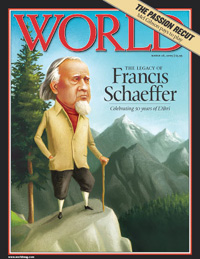
 I was born in 1933 in New York City to Frederick and Eva Weinberg. My early inclination toward science received encouragement from my father, and by the time I was 15 or 16 my interests had focused on theoretical physics.


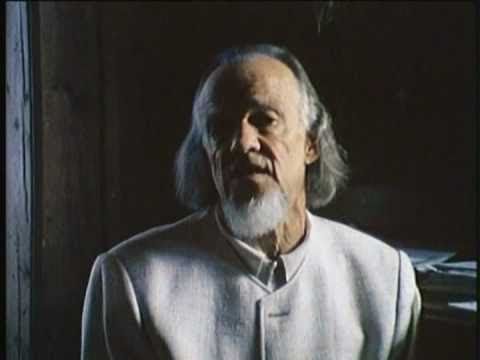


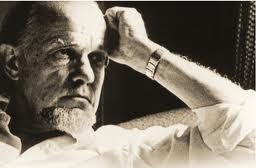


 The Daily Hatch

