My name is Everette Hatcher III. I am a businessman in Little Rock and have been living in Bryant since 1993. My wife Jill and I have four kids (Rett 24, Hunter 22, Murphey 16, and Wilson 14).
This is a picture of Bellevue Baptist in Memphis in 1926. Lee Auditorium had been built in 1924. During the 1970’s our youth choir practice was held there and the Sunday School Classes I was part of was in the building on the left on the third floor.
R.G.Lee, Ramsey Pollard and Adrian Rogers in 1972 in front of Bellevue Baptist in Memphis.
Dr. Robert Greene Lee was born in a log cabin on November 11, 1886.[5] The son of a South Carolina sharecropper, he worked his way through school, ultimately graduating with a doctorate in international law from Chicago Law School in 1919.[5] Lee preached the sermon Pay-Day Someday more than 1,200 times at Bible conferences, in state capitol buildings, churches, universities, youth camps, and ballparks across the nation and around the world.[4] At the time of his death on July 20, 1978, an estimated 3 million people had heard him preach Pay-Day Someday.[4] Presiding at the 1951 meeting in San Francisco, he introduced a young Billy Graham to the SBC.[7] Years later, Graham paid tribute to Lee at his death calling him “one of the towering giants of the 20th century”.[7]
__________
November 11, 2015
Hugh Hefner Playboy Mansion 10236 Charing Cross Road Los Angeles, CA 90024-1815
Dear Mr. Hefner,
This is the sixth letter I have written you. Each letter has a response to your statements in the past. Like today some of those letters have referenced a sermon called “THE PLAYBOY’S PAYDAY,” by Adrian Rogers (1931-2005) and today I am going to tell you where Rogers got that title from. HUGH, YOU WERE BORN IN 1926 and since then there have been only four pastors at Bellevue Baptist Church in Memphis, Tennessee where I grew up (R.G. Lee till 1959, Ramsey Pollard till 1972, Adrian Rogers till 2004 and Steve Gaines presently). Robert G. Lee’s famous sermon preached over 1200 times was about King Ahab and his wife Queen Jezebel and it was called PAYDAY SOME DAY and that is where Rogers got the idea for his sermon title.
In 2003 in an interview with FOX NEWS you noted:
Well, I think I’ve lived long enough to see the world change…I was the guy that tried to give sex a good name. Everybody talked about sex, but I was trying to give it a good name.
Hef, those who follow the plan of marriage put out in the Bible are able to enjoy sex. It seems that you have been a proponent of sex outside of marriage. In fact, in the first letter I just responded to your views of premarital sex. The harlot is condemned in the Bible and the fifth chapter of Proverbs does a great job of describing her. Proverbs notes that her kind has brought death prematurely to so many young men through the ages (and vice versa because Solomon was writing Proverbs as advice to his son so the same advice could be given to daughters about men).
Today I also want to talk to you about Queen Jezebel who was married to the evil King Ahab of Israel in the Old Testament and the archaeological evidence that has been found that indicates she was a real person.
In 1984 Adrian Rogers said in sermon, “Playboy’s Payday,” these words:
Proverbs 5 v 1 My son, give attention to my wisdom, Incline your ear to my understanding; 2 That you may observe discretion And your lips may reserve knowledge. 3 For the lips of an adulteress drip honey And smoother than oil is her speech; 4 But in the end she is bitter as wormwood, Sharp as a two-edged sword. 5 Her feet go down to death, Her steps take hold of Sheol. 6 She does not ponder the path of life…
Look if you will in verse 23. “He shall die without instruction:and in the greatness of his folly he shall go astray.” To die without instruction, to die without knowledge, is to die in a sin. It is to die and go to Hell! Death! Death! Death! That’s the Playboy’s Payday. And this is a message that needs to be heard across America today. I mean, across America! Young people today are getting information from everyplace except the Word of God.
_____
__
ADRIAN ROGERS PICTURED AT WHITE HOUSE AFTER BEING ELECTED PRESIDENT OF SOUTHERN BAPTIST CONVENTION
Since I am from Arkansas I have had the opportunity to be around Jim Bob and Michelle Duggar and their children on several occasions. Over the years we have watched their show“19 Kids and Counting” and we have been amazed at how many of their children have Biblical names that start with the letter “J.” However, I have to make the observation that they skipped the name JEZEBEL!!!!
I introduce to you Jezebel, daughter of Ethbaal, King of Tyre (I Kings 16:31), and wife of Ahab, the King of Israel — a king’s daughter and a king’s wife, the evil genius at once of her dynasty and of her country. Infinitely more daring and reckless was she in her wickedness than was her wicked husband. Masterful, indomitable, implacable, a devout worshiper of Baal, she hated anyone and everyone who spoke against or refused to worship her pagan god. As blunt in her wickedness and as brazen in her lewdness was she as Cleopatra, fair sorceress of the Nile. She had all the subtle and successful scheming of Lady Macbeth, all the adulterous desire and treachery of Potiphar’s wife (Gen. 39:7-20), all the boldness of Mary Queen of Scots, all the cruelty and whimsical imperiousness of Katherine of Russia, all the devilish infamy of a Madame Pompadour, and, doubtless, all the fascination of personality of a Josephine of France. Most of that which is bad in all evil women found expression through this painted viper of Israel. She had that rich endowment of nature which a good woman ought always to dedicate to the service of her day and generation. But, alas! This idolatrous daughter of an idolatrous king of an idolatrous people engaging with her maidens in worship unto Ashtoreth — the personification of the most forbidding obscenity, uncleanness, and sensuality — became the evil genius who wrought wreck, brought blight and devised death. She was the beautiful and malicious adder coiled upon the throne of the nation.
In 1975 at Bellevue Baptist Church I had the honor to hear Dr. Robert G. Lee preach his famous sermon PAYDAY SOME DAY and I wanted to share another portion of it with you from this article by Jon Akin which was posted on December 19, 2009 in his article, “SBC Heroes: RG Lee – Part 3 (Payday Someday).
Payday is a narrative sermon. Lee masterfully tells the story of Naboth, Ahab, Jezebel, and Elijah (from 1 Kings 21 & 2 Kings 9) as a theater tragedy with eight scenes: the real-estate request, the pouting potentate, the wicked wife, the message meaning murder, the fatal fast, the visit to the vineyard, the alarming appearance, and payday itself.
Ahab and Jezebel cheat Naboth out of his vineyard, and Jezebel signs a letter ordering his assassination. It looks as though evil will triumph and go unnoticed by God. Lee erupts, “Where is God? Where is God? Is He blind and He cannot see? Is He deaf and He cannot hear? Is He dumb and He cannot speak? Is He paralyzed and He cannot move? Where is God?” Then, Lee assures his audience, “Wait just a minute, and we shall find out.” As a result, Elijah announces God’s judgment sentence upon Ahab and Jezebel, “Ahab, as the Lord God liveth before whom I stand, God sent me here to tell you that someday, someday, where the dogs licked Naboth’s blood will the dogs lick thy blood, even thine. And Ahab God sent me here to tell you that someday, here, by the walls of Jezreel the dogs will eat Jezebel.” All happens according to God’s word. The sermon is about God’s judgment. God must and will judge sin. He may not punish today or tomorrow, but He will punish eventually.
Lee pauses the story after Elijah passes God’s judgment sentence and begins to drive home application. He tells his audience that “Payday Someday” is written “in the constitution of God’s universe.” God has revealed the reality of judgment in His Word, and it cannot be sidestepped or avoided. Sin will be repaid. It may not be today, but it will happen “Someday.” Lee lists certain sins and the payday God promises for them, “Oh, you can take God’s name in vain, if you will, if you’re indecent enough to be a profane swearer, but I have a book that tells us about the cursers payday, ‘God will not hold him guiltless who taketh His name in vain.’ You can tell lies, if you will, forgetting that lying lips are an abomination unto God… Here’s the payday, ‘All liars,’ says this book, ‘shall have their part in the lake that burneth with fire and brimstone.’…You can live to flesh and sex, if you will, like thousands do, but I have book that tells us about the payday for that, ‘the works of the flesh are these: adultery, fornication, uncleaness…’ Well, what’s the payday? God says that, ‘He who soweth to his flesh will of his flesh reap rotten flesh, corruption, carrion, which buzzards love.’”
Lee presses play on the story and describes how God’s payday came on Ahab and Jezebel. An arrow kills Ahab. He is stood up on the chariot while the bottom fills with his blood. Then, the dogs leap up in the chariot and lick his blood, “according to the word of God spoken by Elijah the Tishbite… God said it, and it was done. ‘The wicked shall be turned into Hell with all the nations that forget God.’ God says that, and it shall be done!” Lee’s point is that just as God’s promised payday came upon Ahab, so God’s promised payday will come upon all sinners. God’s payday continues to come to bear as Jehu, the newly anointed king of Israel, is told to blot out the house of Ahab. Jehu kills Jehoram, son of Ahab and Jezebel, and soldiers place his body in the vineyard Jehoram’s parents stole from Naboth. Lee points out the irony, “Listen, the vineyard they got by shedding Naboth’s blood is now stained with their own blood as it flowed in the veins of their son Jehoram. God’s payday train is coming into station, and all the powers of men and hell can’t put on the brakes…” Finally, Jehu commands eunuchs to throw Jezebel down from a palace window. They do, and the dogs eat her, leaving her head, feet, and hands. Lee pleads with his listeners to escape the sinner’s payday for the Christian’s payday though Jesus Christ saying, ““The only way I know for any man or woman on earth to escape the sinner’s payday on earth and the sinner’s hell beyond – making sure of the Christian’s payday – is through Christ Jesus, who took the sinner’s place on the cross, becoming for all sinners all that God must judge, that sinners through faith in Christ Jesus might become all that God cannot judge.”
IS THE STORY OF JEZEBEL JUST A FABLE ABOUT A MADE UP PERSON? I believe that God created the universe and reached out to humankind with the Bible. Below is a piece of that evidence given by Francis Schaeffer and Dr. C. Everett Koop in their book WHATEVER HAPPENED TO THE HUMAN RACE? Chapter 5 concerning the accuracy of the Bible and the existence of the Queen Jezebel:
We now take a jump back in time to the middle of the ninth century before Christ, that is, about 850 B.C. Most people have heard of Jezebel. She was the wife of Ahab, the king of the northern kingdom of Israel. Her wickedness has become so proverbial that we talk about someone as a “Jezebel.” She urged her husband to have Naboth killed, simply because Ahab had expressed his liking for a piece of land owned by Naboth, who would not sell it. The Bible tells us also that she introduced into Israel the worship of her homeland, the Baal worship of Tyre. This led to the opposition of Elijah the Prophet and to the famous conflict on Mount Carmel between Elijah and the priests of Baal.
Here again one finds archaeological confirmations of what the Bible says. Take for example: “As for the other events of Ahab’s reign, including all he did, the palace he built and inlaid with ivory, and the cities he fortified, are they not written in the book of the annals of the kings of Israel?” (I Kings 22:39).
This is a very brief reference in the Bible to events which must have taken a long time: building projects which probably spanned decades. Archaeological excavations at the site of Samaria, the capital, reveal something of the former splendor of the royal citadel. Remnants of the “ivory house” were found and attracted special attention (Palestinian Archaeological Museum, Jerusalem). This appears to have been a treasure pavilion in which the walls and furnishings had been adorned with colored ivory work set with inlays giving a brilliant too, with the denunciations revealed by the prophet Amos:
“I will tear down the winter house along with the summer house; the houses adorned with ivory will be destroyed and the mansions will be demolished,” declares the Lord. (Amos 3:15)
Other archaeological confirmation exists for the time of Ahab. Excavations at Hazor and Megiddo have given evidence of the extent of fortifications carried out by Ahab. At Megiddo, in particular, Ahab’s works were very extensive including a large series of stables formerly assigned to Solomon’s time.
On the political front, Ahab had to contend with danger from the Aramacaus king of Syria who besieged Samaria, Ahab’s capital. Ben-hadad’s existence is attested by a stela (a column with writing on it) which has been discovered with his name written on it (Melquart Stela, Aleppo Museum, Syria). Again, a detail of history given in the Bible is shown to be correct.
PS: I plan to write you again and will be responding to your past statements like I did today. Be honest Hef, you never really thought Queen Jezebel was a historical person until today did you?
XXXXXXXXXXX
—
–
–
Featured artist is Gülsün Karamustafa
Gülsün Karamustafa was born in 1946 in Ankara, Turkey. She lives and works in Istanbul. Including painting, sculpture, video, and installation, Karamustafa’s work deals with gender, migration, identity, and history.
Often described as one of Turkey’s most courageous and outspoken artists, Karamustafa has long been driven by her political ideals. Following political imprisonment in the 1970s, the artist painted a series of portraits of incarcerated women. Describing herself as a chronographer of Turkey’s modern history, Karamustafa is interested both in the stories that are glossed over as well as the ways in which history can be reinterpreted. In the late 1980s, her practice evolved from figurative painting to incorporate multimedia practices
Ecclesiastes 2-3 Published on Sep 19, 2012 Calvary Chapel Spring Valley | Sunday Evening | September 16, 2012 | Derek Neider _____________________________ I have written on the Book of Ecclesiastes and the subject of the meaning of our lives on several occasions on this blog. In this series on Ecclesiastes I hope to show how secular […] By Everette Hatcher III | Posted in Current Events | Edit | Comments (0)
Is Love All You Need? Jesus v. Lennon Posted on January 19, 2011 by Jovan Payes 0 On June 25, 1967, the Beatles participated in the first worldwide TV special called “Our World”. During this special, the Beatles introduced “All You Need is Love”; one of their most famous and recognizable songs. In it, John Lennon […] By Everette Hatcher III | Posted in Francis Schaeffer | Edit | Comments (0)
___________________ Something happened to the Beatles in their journey through the 1960’s and although they started off wanting only to hold their girlfriend’s hand it later evolved into wanting to smash all previous sexual standards. The Beatles: Why Don’t We Do It in the Road? _______ Beatle Ringo Starr, and his girlfriend, later his wife, […] By Everette Hatcher III | Posted in Current Events | Edit | Comments (0)
__________ Marvin Minsky __ I was sorry recently to learn of the passing of one of the great scholars of our generation. I have written about Marvin Minsky several times before in this series and today I again look at a letter I wrote to him in the last couple of years. It is my […] By Everette Hatcher III | Posted in Adrian Rogers, Francis Schaeffer | Edit | Comments (0)
Why was Tony Curtis on the cover of SGT PEPPERS? I have no idea but if I had to hazard a guess I would say that probably it was because he was in the smash hit SOME LIKE IT HOT. Above from the movie SOME LIKE IT HOT __ __ Jojo was a man who […] By Everette Hatcher III | Posted in Current Events | Edit | Comments (0)
Adrian Rogers seen below in 1981 with Ronald Reagan
__
_______
November 24, 2016
Hugh Hefner Playboy Mansion 10236 Charing Cross Road Los Angeles, CA 90024-1815
Dear Mr. Hefner,
Today is Thanksgiving and we both have so much to be thankful for, but who are we thankful to? The Pilgrims were thankful to the God of the Bible and that is who I am thankful to also. Let me ask you about a quote of yours that I read from an interview you gave in 1974 with R. Couri Hay:
I have no idea what we are doing here, but we are here and that wasn’t just man’s invention. I mean there is something beyond all of this and whether it has a purpose or a point, grander plan. I don’t know.
Evidently you do believe there possibly a personal God that created this whole world. That is what I wanted to talk you about today.
It is true that you are a prominent public figure and that you are known for your views on the sexual revolution. I want to talk to you about probably the most well known academic in the area of atheistic philosophy and my interaction with him over the last few decades.
I have more articles posted on my blog about the last few years of Antony Flew’s life than any other website in the world probably. The reason is very simple. I had the opportunity to correspond with Antony Flew back in the middle 90’s and he said that he had the opportunity to listen to several of the cassette tapes that I sent him with messages from Adrian Rogers and he also responded to several of the points I put in my letters that I got from Francis Schaeffer’s materials. The ironic thing was that I purchased the sermon IS THE BIBLE TRUE? originally from the Bellevue Baptist Church Bookstore in 1992 and in the same bookstore in 2008 I bought the book THERE IS A GOD by Antony Flew. Back in 1993 I decided to contact some of the top secular thinkers of our time and I got my initial list of individuals from those scholars that were mentioned in the works of both Francis Schaeffer and Adrian Rogers. Schaeffer had quoted Flew in his book ESCAPE FROM REASON. It was my opinion after reviewing the evidence that Antony Flew was the most influential atheistic philosopher of the 20th century, and, of course, that all changed in 2003 when Flew became a believer in God!!!!
The Fine Tuning Argument for the Existence of God from Antony Flew:
Imagine entering a hotel room on your next vacation. The CD player on the bedside table is softly playing a track from your favorite recording. The framed print over the bed is identical to the image that hangs over the fireplace at home. The room is scented with your favorite fragrance…You step over to the minibar, open the door, and stare in wonder at the contents. Your favorite beverage. Your favorite cookies and candy. Even the brand of bottled water you prefer…You notice the book on the desk: it’s the latest volume by your favorite author…
Chances are, with each new discovery about your hospitable new environment, you would be less inclined to think it has all a mere coincidence, right? You might wonder how the hotel managers acquired such detailed information about you. You might marvel at their meticulous preparation. You might even double-check what all this is going to cost you. But you would certainly be inclined to believe that someone knew you were coming. There Is A God (2007) p.113-4
HUGH AGAIN I COME BACK TO YOUR OWN WORDS: “I have no idea what we are doing here, but we are here and that wasn’t just man’s invention. I mean there is something beyond all of this and whether it has a purpose or a point, grander plan. I don’t know.”
___
Hugh, in 2015 I wrote you a dozen letters and they gave evidence from the historical record concerning the accuracy of the Bible in such issues as HEZEKIAH’S TUNNEL, Egyptian King Tirhakah, the Moabite (Mesha) Stone, Archaeology of Ahab and Jezebel, the Hittites, the BLACK OBELISK, and also the amazing evidence from the DEAD SEA SCROLLS that confirms that the Bible we have now is so close to what they had thousands of years ago.
Today I wanted to give you just a small portion from the message A PLACE CALLED HELL by Adrian Rogers:
Why I Believe in Hell
The words of Jesus teach it. There are at least 162 texts in the New Testament that speak of Hell and the judgment of the lost, over 70 issued by Jesus Christ Himself. I believe in Hell because I believe in Jesus.
The death of Jesus demonstrates it. If there’s no Hell from which men need to be saved, Jesus did not need to die and Calvary is the blunder of the ages.
Thejustice of God demands it. God is just. Acts of unspeakable injustice on earth will be accounted for. There is a judgment to face, a time when things are made right, when equity does come.
In Closing…
God doesn’t want you to go to Hell. I want to tell you, dear friend, God has placed a blockade on the road to Hell, and it is the cross of Jesus Christ. If you go to Hell, you’ll have to climb over His cross to get there. God is lifting up the blood-stained cross of the Lord Jesus Christ saying, “Please, don’t go to Hell!” It was created not for you but for Satan and his minions. God is pleading with you today. With nail-pierced hands Christ is pleading with you today. The Holy Spirit is pleading today. And if you have loved ones who are lost, tell them about the Lord Jesus.
Soon we’re going to meet the Lord. Jesus died to save you from Hell. With His blood He paid your sin debt. Your sin will be pardoned in Christ or punished in Hell, but it will never be overlooked. Come to Jesus. Trust Him. “Believe on the Lord Jesus Christ, and thou shalt be saved.” You don’t have to go to Hell if you don’t want to.
(End of Sermon)
___
How do you avoid hell? You must believe in what Jesus Christ did for you on the cross, repent of your sins, and commit the rest of your life to Him. This is not a ritual, just a prayerful guideline for your sincere step of faith:
“Father, I know that I have broken your laws and my sins have separated me from you. I am truly sorry, and now I want to turn away from my past sinful life toward you. Please forgive me, and help me avoid sinning again. I believe that your son, Jesus Christ died for my sins, was resurrected from the dead, is alive, and hears my prayer. I invite Jesus to become the Lord of my life, to rule and reign in my heart from this day forward. Please send your Holy Spirit to help me obey You, and to do Your will for the rest of my life. In Jesus’ name I pray, Amen.”
Francis Schaeffer has rightly noted concerning Hugh Hefner that Hefner’s goal with the “playboy mentality is just to smash the puritanical ethnic.” I have made the comparison throughout this series of blog posts between Hefner and King Solomon (the author of the BOOK of ECCLESIASTES). I have noticed that many preachers who have delivered sermons on Ecclesiastes have also mentioned Hefner as a modern day example of King Solomon especially because they both tried to find sexual satisfaction through the volume of women you could slept with in a lifetime.
Ecclesiastes 2:8-10 The Message (MSG)
I piled up silver and gold, loot from kings and kingdoms. I gathered a chorus of singers to entertain me with song, and—most exquisite of all pleasures— voluptuous maidens for my bed.
9-10 Oh, how I prospered! I left all my predecessors in Jerusalem far behind, left them behind in the dust. What’s more, I kept a clear head through it all. Everything I wanted I took—I never said no to myself. I gave in to every impulse, held back nothing. I sucked the marrow of pleasure out of every task—my reward to myself for a hard day’s work!
1 Kings 11:1-3 English Standard Version (ESV)
11 Now King Solomon loved many foreign women, along with the daughter of Pharaoh: Moabite, Ammonite, Edomite, Sidonian, and Hittite women, 2 from the nations concerning which the Lord had said to the people of Israel, “You shall not enter into marriage with them, neither shall they with you, for surely they will turn away your heart after their gods.” Solomon clung to these in love.3 He had 700 wives, who were princesses, and 300 concubines. And his wives turned away his heart.
Francis Schaeffer observed concerning Solomon, “You can not know woman by knowing 1000 women.”
–
–
Featured artists today are RAAAF:
Established in the Netherlands in 2006, the design collective RAAAF (Rietveld Architecture-Art-Affordances, formerly known as Rietveld Landscape) consists of the brothers Ronald and Erik Rietveld and Arna Mačkić. With backgrounds in architecture, design, and philosophy, the members of RAAAF produce context-specific works that imagine potential ways of living.
For the project The End of Sitting, they designed a chair-free office space composed of modules of varying heights, depths, and configurations, in which people can sit in countless adjustable positions. Vacant NL consisted of a model of ten thousand vacant government buildings in the Netherlands, in a call to the government to make use of these unoccupied spaces. Taking inspiration from the US artist and architect Lebbeus Woods, RAAAF is interested in design freed from historical conventions and expectations.
Ecclesiastes 2-3 Published on Sep 19, 2012 Calvary Chapel Spring Valley | Sunday Evening | September 16, 2012 | Derek Neider _____________________________ I have written on the Book of Ecclesiastes and the subject of the meaning of our lives on several occasions on this blog. In this series on Ecclesiastes I hope to show how secular […] By Everette Hatcher III | Posted in Current Events | Edit | Comments (0)
Is Love All You Need? Jesus v. Lennon Posted on January 19, 2011 by Jovan Payes 0 On June 25, 1967, the Beatles participated in the first worldwide TV special called “Our World”. During this special, the Beatles introduced “All You Need is Love”; one of their most famous and recognizable songs. In it, John Lennon […] By Everette Hatcher III | Posted in Francis Schaeffer | Edit | Comments (0)
___________________ Something happened to the Beatles in their journey through the 1960’s and although they started off wanting only to hold their girlfriend’s hand it later evolved into wanting to smash all previous sexual standards. The Beatles: Why Don’t We Do It in the Road? _______ Beatle Ringo Starr, and his girlfriend, later his wife, […] By Everette Hatcher III | Posted in Current Events | Edit | Comments (0)
__________ Marvin Minsky __ I was sorry recently to learn of the passing of one of the great scholars of our generation. I have written about Marvin Minsky several times before in this series and today I again look at a letter I wrote to him in the last couple of years. It is my […] By Everette Hatcher III | Posted in Adrian Rogers, Francis Schaeffer | Edit | Comments (0)
Why was Tony Curtis on the cover of SGT PEPPERS? I have no idea but if I had to hazard a guess I would say that probably it was because he was in the smash hit SOME LIKE IT HOT. Above from the movie SOME LIKE IT HOT __ __ Jojo was a man who […] By Everette Hatcher III | Posted in Current Events | Edit | Comments (0)
Johnny Cash’s version of the traditional God’s Gonna Cut You Down, from the album “American V: A Hundred Highways”, was released as a music video on November 9 2006, just over three years after Cash died. Producer Rick Rubin opens the music video, saying, “You know, Johnny always wore black. He wore black because he identified with the poor and the downtrodden…”. What follows is a collection of black and white clips of well known pop artists wearing black, each interacting with the song in their own way. Some use religious imagery. Howard sits in his limo reading from Ezekiel 34, a Biblical passage warning about impending judgment for false shepherd. Bono leaning on a graffiti-filled wall between angel’s wings and a halo, pointing to the words, “Sinners Make The Best Saints. J.C. R.I.P.” A number of artists wear or hold crosses.
Artists appear in this order: Rick Rubin, Iggy Pop, Kanye West, Chris Martin, Kris Kristofferson, Patti Smith, Terence Howard, Flea (Red Hot Chili Peppers), Q-Tip, Adam Levine (Maroon 5), Chris Rock, Justin Timberlake, Kate Moss, Sir Peter Blake (Sgt Peppers Artist), Sheryl Crow, Denis Hopper, Woody Harrelson, Amy Lee of Evanescence, Tommy Lee, Natalie Maines, Emily Robison, Martie Maguire (Dixie Chicks), Mick Jones, Sharon Stone, Bono, Shelby Lynne, Anthony Kiedis, Travis Barker, Lisa Marie Presley, Kid Rock, Jay Z, Keith Richards, Billy Gibbons, Corinne Bailey Rae, Johnny Depp, Graham Nash, Brian Wilson, Rick Rubin and Owen Wilson. The video finishes with Rick Rubin traveling to a seaside cliff with friend Owen Wilson to throw a bouquet of flowers up in the air.
March 16, 2019
Patricia Arquette
Beverly Hills, CA 90212-2605
USA
Dear Patricia,
I understand that you are Jewish. If Johnny Cash was here today, I bet he would share something like this below from the scriptures. Johnny was a student of the whole Bible. He wrote the book THE MAN IN WHITE about the apostle Paul and it took him 10 years to write and in that book you can tell that he spent much time in research asking Jewish leaders what life was like for the Jews in the 1st century in Palestine while being occupied by the Romans.
I know that you will spending lots of time in the scriptures and I wanted to share with you some key scriptures that talk about the Messiah. Patrick Zukeran of Probe Ministries wrote the article below:
A serious study of the Gospels leads a person to one of three conclusions about Jesus: He was (1) an evil lying villain, (2) a preposterously deluded madman, or (3) the Messiah, the Son of God. It is ludicrous for anyone who has studied His life to take the position that He was simply a good teacher. Only one of the three conclusions is a logical possibility.
Jesus made some outrageous claims no ordinary person would dare to make. First, He claimed to be God. His statements of equality with God meant He believed that He possessed the authority, attributes, and adoration belonging to God. He proclaimed authority over creation, forgiveness of sins, and life and death. He declared to possess the attributes of God. He emphatically stated that He was the source of truth and the only way to eternal life. Only Jesus among the significant leaders of history made such claims.
Here are a few of His outrageous claims. When “Philip said, Lord, show us the Father.’ Jesus answered. . . .Anyone who has seen me has seen the Father’” (John 14:8-9). Once, when the Pharisees were disparaging Jesus and challenging Him, Jesus responded, ” I and the Father are one.’ Again the Jews picked up stones to stone Him, but Jesus said to them, I have shown you many great miracles from the Father. For which of these do you stone me?’ We are not stoning you for any of these,’ replied the Jews, but for blasphemy, because you, a mere man, claim to be God’” (John 10:30-33). It is clear in these two statements, Jesus claimed to be God. His opponents clearly understood His declaration of equality with God.
When challenged by the scholars on His authority over Abraham, the father of the Jews, Jesus replied, “Your father Abraham rejoiced at the thought of seeing my day; he saw it and was glad.’ The Jews said to Him, You are not yet fifty years old, and you have seen Abraham!’ I tell you the truth,’ Jesus answered, before Abraham was born, I am!’” (John 8:56-58). Jesus clearly believed He had existed two thousand years earlier and knew Abraham.
On the issue of life and death Jesus stated, “I am the resurrection and the life. He who believes in me will live, even though he dies” (John 11:25). Here He believed He had authority over life and death.
Finally, Jesus accepted and encouraged others to worship Him. Throughout the Gospels the disciples worshiped Jesus as seen in Matthew 14:33 and John 9:38. Jesus states in John 5:22-23, “Moreover, the Father judges no one but has entrusted all judgment to the Son, that all may honor the Son just as they honor the Father. He who does not honor the Son does not honor the Father, who sent Him.” Jesus knew the Old Testament command “Worship the Lord your God, and serve Him only” (Matt. 4:10). Despite this, Jesus encouraged others to worship Him. Either He was mad (insane), or He was who He claimed to be and deserves our worship as God incarnate.
After reading such claims, it is impossible for anyone to say He was merely a good teacher. A man making claims like these must either be a diabolical liar, insane, or God incarnate. For the remainder of this essay we will be discussing which of these conclusions is most plausible.
A Villain, A Madman, or God Incarnate?
We have established at this point that Jesus made some astounding claims about himself. He presumed to be God, claimed the authority and attributes of God, and encouraged others to worship Him as God. If, however, Jesus was a liar, then He knew His message was false but was willing to deceive thousands with claims He knew were untrue. That is, Jesus knew that He was not God, He did not know the way to eternal life, and He died and sent thousands to their deaths for a message He knew was a lie. This would make Jesus history’s greatest villain (and perhaps, a demon) for teaching this wicked lie. He would have also been history’s greatest fool for it was these claims that lead Him to His death.
Few, if any, seriously hold to this position. Even the skeptics unanimously agree that He was at least a great moral teacher. William Lecky, one of Britain’s most respected historians and an opponent of Christianity writes, “It was reserved for Christianity to present the world an ideal character which through all the changes of eighteen centuries has inspired the hearts of men with an impassioned love.”{1}
However, it would be inconsistent and illogical to believe that Jesus was a great moral teacher if some of those teachings contained immoral lies about himself. He would have to be a stupendous hypocrite to teach others honesty and virtue and all the while preach the lie that He was God. It is inconceivable to think that such deceitful, selfish, and depraved acts could have issued forth from the same being who otherwise maintained from the beginning to the end the purest and noblest character known in history.
Since the liar conclusion is not logical, let us assume He really believed He was God but was mistaken. If He truly believed He had created the world, had seen Abraham two thousand years before, and had authority over death, and yet none of this was true, we can only conclude that He was mad or insane.
However, when you study the life of Jesus, He clearly does not display the characteristics of insanity. The abnormality and imbalance we find in a deranged person are not there. His teachings, such as the Sermon on the Mount, remain one of the greatest works ever recorded. Jesus was continually challenged by the Pharisees and lawyers, highly educated men whose modern day equivalent would be our university professors. They were fluent in several languages and were known for their scholarship of the Old Testament and Jewish law. They challenged Jesus with some of the most profound questions of their day and Jesus’ quick answers amazed and silenced them. In the face of tremendous pressure, we find He exemplified the greatest composure.
For these reasons, the lunatic argument is not consistent. If both the liar and the lunatic options are not consistent with the facts, we must take a serious look at the third option: that Jesus was really God. The next question is, does He prove to have the credentials of God? Let us investigate this possibility.
Messianic Prophecy
Thus far we have learned that Jesus is unique among all men for the profound statements He made about His divinity. We concluded that it is impossible to state He was simply a good moral teacher. From His amazing statements, He must be a liar, a lunatic, or God. Since the first two were not conceivable, we will begin looking at the third alternative, that He really is God. First, we must see if He had the credentials for these claims.
One of the most incredible types of evidence is the testimony of prophecy. The Old Testament contains a number of messianic prophecies made centuries before Christ appeared on the earth. The fact that He fulfilled each one is powerful testimony that He was no ordinary man. Allow me to illustrate this point using eight prophecies.
• Genesis 12:1-3 states the Messiah would come from the seed of Abraham.
• Genesis 49:10 states that He would be of the tribe of Judah.
• 2 Samuel 7:12 states that Messiah would be of the line of King David.
• Micah 5:2 states that He would be born in the city of Bethlehem.
• Daniel 9:24 states He would die or be “cut off” exactly 483 years after the declaration to reconstruct the temple in 444 B.C.
• Isaiah 53 states that the Messiah would die with thieves, then be buried in a richman’s tomb.
• Psalm 22:16 states upon His death His hands and His feet would be pierced. This is quite significant since Roman crucifixion had not been invented at the time the Psalmist was writing.
• Isaiah 49:7 states that Messiah would be known and hated by the entire nation. Not many men become known by their entire nation, and even less are despised by the entire nation.
Now calculate the possibility of someone fulfilling these by coincidence. Let us suppose you estimate there is a one in a hundred chance a man could fulfill just one of these prophecies by chance. That would mean when all eight are put together there is a 1/10 to the 16th power probability that they were fulfilled by chance. Mathematician Peter Stoner estimates 1/10 to the 17th power possibility that these prophecies were fulfilled by chance.{2} Mathematicians have estimated that the possibility of sixteen of these prophecies being fulfilled by chance are about 1/10 to the 45th power.{3} That’s a decimal point followed by 44 zeroes and a 1! These figures show it is extremely improbable that these prophecies could have been fulfilled by accident. The figures for fulfillment of the 109 major prophecies are staggering.{4}
Skeptics have objected to the testimony of prophecy, stating they were written after the times of Jesus and therefore fulfill themselves. However, the evidence overwhelmingly shows these prophecies were clearly written centuries before Christ. It is an established fact even by liberal scholars that the Old Testament canon was completed by 450 B.C. The Septuagint, the Greek translation of the Old Testament, was completed in the reign of Ptolemy Philadelphus in 250 B.C. The Dead Sea Scrolls discovered in 1948 contained the books of the Old Testament. Prophetic books like Isaiah were dated by paleographers to be written in 100 B.C.{5} Once again, these prophecies were confirmed to have been written centuries before Christ, and no religious leader has fulfilled anything close to the number of prophecies Jesus has fulfilled.
Notes
1. William Lecky, History of European Morals from Augustus to Charlemagne (New York: D.Appleton and Company, 1903), p. 8.
2. Josh McDowell, Evidence That Demands a Verdict (San Bernadino, Calif.: Here’s Life Publishers, 1979), p. 167.
3. Norman Geisler, When Skeptics Ask (Wheaton, Ill.:Victor Press, 1990), p. 116.
4. Tim LaHaye, Jesus, Who is He? (Sisters, Ore.: Multnomah Books, 1996), p. 176.
5. Norman Geisler and William Nix, A General Introduction to the Bible (Chicago: Moody Press, 1986), pp. 365-66.
6. Peter Carsten Theide and Matthew D’Ancona, Eyewitness to Jesus (New York: Doubleday, 1996), p. 163.
7. Anonymous, “One Solitary Life,” quoted in Tim LaHaye, Jesus, Who is He?, p. 68.
Bibliography
1. Craig, William Lane. Apologetics: An Introduction. Chicago: Moody Press, 1984.
2. Geisler, Norman. When Skeptics Ask. Wheaton, Ill.: Victor Press, 1990.
3. Geisler, Norman, & Nix, William. A General Introduction to the Bible. Chicago: Moody Press, 1986.
4. Hume, David. An Enquiry Concerning Human Understanding. Oxford, England: Clarendon Press, 1902.
5. LaHaye, Tim. Jesus, Who Is He? Sisters, Ore.: Multnomah Books, 1996.
6. Lecky, William. History of European Morals from Augustus to Charlemagne. New York: D. Appleton and Co., 1903. Page 8.
7. Lewis, C. S. Miracles. New York: Macmillan Publishing, 1960.
8. Little, Paul. Know Why You Believe. Downers Grove, Ill.: InterVarsity Press, 1988.
9. Nash, Ronald. Faith and Reason. Grand Rapids, Mich.: Zondervan Publishing, 1988.
10. McDowell, Josh. Evidence That Demands a Verdict. San Bernadino, Calif.: Here’s Life Publishers, 1979.
11. Stott, John. Basic Christianity. Downers Grove, Ill.: Inter Varsity Press, 1971.
12. Theide, Peter Carsten, and D’Ancona, Matthew. Eyewitness to Jesus. New York: Doubleday, 1996.
Patrick Zukeran is a Hawaii-based research associate with Probe Ministries. He has a B.A. in Religion from Point Loma Nazarene University, a Th.M. from Dallas Theological Seminary, and a D.Min. from Southern Evangelical Seminary. He is an author, radio talk show host, and a national and international speaker on apologetics, cults, world religions, Bible, theology, and current issues. His nationally syndicated radio talk show “Evidence and Answers” is broadcast on the KTLW Network (covering the West Coast), through all of Asia (through World Harvest Radio), and on the web at evidenceandanswers.org. Before joining Probe, Pat served for twelve years as an Associate Pastor. He can be reached at pzukeran@probe.org.
What is Probe?
Probe Ministries is a non-profit ministry whose mission is to assist the church in renewing the minds of believers with a Christian worldview and to equip the church to engage the world for Christ. Probe fulfills this mission through our Mind Games conferences for youth and adults, our 3-minute daily radio program, and our extensive Web site at www.probe.org.
Further information about Probe’s materials and ministry may be obtained by contacting us at:
Probe Ministries
2001 W. Plano Parkway, Suite 2000
Plano TX 75075
(972) 941-4565
You and I have something in common and it is the song GOD’S GONNA CUT YOU DOWN. You were in the video and my post about that video entitled, People in the Johnny Cash video “God’s Gonna Cut You Down” is the most popular post I have done in recent years. It ranked #1 for all of 2015 and I have over 1,000,000 hits on my http://www.thedailyhatch.org blog site. The ironic thing is that I never knew what a big deal Johnny Cash was until he had died. I grew up in Memphis with his nephew Paul Garrett and we even went to the same school and church. Paul’s mother was Johnny Cash’s sister Margaret Louise Garrett.
Stu Carnall, an early tour manager for Johnny Cash, recalled, “Johnny’s an individualist, and he’s a loner….We’d be on the road for weeks at a time, staying at motels and hotels along the way. While the other members of the troupe would sleep in, Johnny would disappear for a few hours. When he returned, if anyone asked where he’d been, he’d answer straight faced, ‘to church.'”
Have you ever taken the time to read the words of the song?
You can run on for a long time
Run on for a long time
Run on for a long time
Sooner or later God’ll cut you down
Sooner or later God’ll cut you down
Go tell that long tongue liar
Go and tell that midnight rider
Tell the rambler,
The gambler,
The back biter
Tell ’em that God’s gonna cut ’em down
Tell ’em that God’s gonna cut ’em down
Well my goodness gracious let me tell you the news
My head’s been wet with the midnight dew
I’ve been down on bended knee talkin’ to the man from Galilee
He spoke to me in the voice so sweet
I thought I heard the shuffle of the angel’s feet
He called my name and my heart stood still
When he said, “John go do My will!”
Well you may throw your rock and hide your hand
Workin’ in the dark against your fellow man
But as sure as God made black and white
What’s down in the dark will be brought to the light
You can run on for a long time
Run on for a long time
Sooner or later God’ll cut you down
___
Johnny Cash sang this song of Judgment because he knew the Bible says in Romans 6:23, “For the wages of sin is death; but the GIFT OF GOD IS ETERNAL LIFE THROUGH JESUS CHRIST OUR LORD.” The first part of this verse is about the judgment sinners must face if not pardoned, but the second part is about Christ who paid our sin debt!!! Did you know that Romans 6:23 is part of what we call the Roman Road to Christ. Here is how it goes:
Because of our sin, we are separated from God. For all have sinned and fall short of the glory of God. (Romans 3:23)
The Penalty for our sin is death. For the wages of sin is death, but the gift of God is eternal life in Jesus Christ our Lord.(Romans 6:23)
The penalty for our sin was paid by Jesus Christ! But God demonstrates His own love toward us, in that while we were yet sinners, Christ died for us. (Romans 5:8)
If we repent of our sin, then confess and trust Jesus Christ as our Lord and Savior, we will be saved from our sins! For whoever calls on the name of the Lord shall be saved. (Romans 10:13)
…if you confess with your mouth the Lord Jesus and believe in your heart that God has raised Him from the dead, you will be saved. For with the heart one believes unto righteousness, and with the mouth confession is made unto salvation. (Romans 10:9,10)
PS:If one repents and puts trust in Christ alone for eternal life then he or she will be forgiven. Francis Schaeffer noted, “If Satan tempts you to worry over it, rebuff him by saying I AM FORGIVEN ON THE BASIS OF THE WORK OF CHRIST AS HE DIED ON THE CROSS!!!
American singer and civil rights activist Odetta recorded a traditional version of the song. Musician Sean Michel covered the song during his audition on Season 6 of American Idol.Matchbox Twenty also used the song before playing “How Far We’ve Come” on their “Exile in America” tour.
The New Jersey rock band The Gaslight Anthem have also covered the song.[citation needed] Canadian rock band Three Days Grace has used the song in the opening of their live shows, as well as the rock band Staind . Bobbie Gentry recorded a version as “Sermon” on her album The Delta Sweete. Guitarist Bill Leverty recorded a version for his third solo project Deep South, a tribute album of traditional songs. Tom Jones recorded an up-tempo version which appears on his 2010 album Praise & Blame. Pow woW recorded a version with the Golden Gate Quartet for their 1992 album Regagner les Plaines and performed a live version with the quartet in 2008. A cover of the song by Blues Saraceno was used for the Season 8 trailer of the TV series Dexter. Pedro Costarecorded a neo-blues version for the Discovery channel TV show Weed Country (2013). Virginia based folk rock band Carbon Leaf covered the song many times during their live shows.
SANTIAGO, Chile (BP)–Sean Michel smiled through his distinctive, foot-long beard as he slid the guitar strap over his shoulder and greeted the crowd at El Huevo nightclub with what little Spanish he knows. The former American Idol contestant and his band then erupted into the sounds of Mississippi Delta blues-rock.But unlike other musicians who played that night, the Sean Michel band sang about every person’s need for God and the salvation that comes only through faith in Jesus Christ.”We came down [to Chile] to open doors that other ministries couldn’t,” said Jay Newman, Michel’s manager. “To get in places that only a rock band could — to create a vision for new church-planting movements among the underground, disenfranchised subcultures of Chile.”The Sean Michel band recently traveled through central Chile playing more than 15 shows in bars, churches, schools and parks. The group consists of Southern Baptists Sean Michel, lead singer; Alvin Rapien, lead guitarist; Seth Atchley, bass guitarist; and Tyler Groves, drummer.”Although we’re a blues rock ‘n’ roll band, we’re an extension of the church,” Michel said. “We’re kind of like ‘musicianaries,’ if you will.”MISSIONS-MINDED MUSICIANSThe band formed after Michel and Newman met as students at Ouachita Baptist University in Arkadelphia, Ark. While there, the two began recording and selling Michel’s music as a way to raise money for mission trips to Africa and Asia.”We were just trying to raise money for a mission trip, but we’d also seen God speaking to people through the music,” Michel said. “So we were like, ‘Well, maybe we need to do something with this,’ and we became a music ministry. But it’s always been rooted in missions and … in the Great Commission.”Michel graduated from Ouachita in 2001, Newman in 2004. In 2007, Newman talked Michel into auditioning for American Idol. The exposure Michel received through the television show gained a wider audience for their ministry.”The whole American Idol thing was so weird,” Michel said. “We just kind of went on a whim. But the Lord used it in a big way.”During his tryout, Michel belted out a soulful rendition of Johnny Cash’s “God’s Gonna Cut You Down.” The video of the audition went viral on the Internet.Soon he was doing radio interviews in which he identified himself as a Christian and directed listeners to the band’s Gospel-laden MySpace page. On their next mission trip to Asia, Michel and Newman found that being recognizable gave them access to venues they couldn’t have entered before.The band is now an official extension of First Southern Baptist Church of Bryant, Ark., where the musicians have long been active members serving in the music and youth ministries. Every mission trip they have taken has involved working with International Mission Board (IMB) missionaries.”We’re Southern Baptist,” Michel said. “That’s who we roll with.”TOUR DE FAITH”With short-term mission trips, you can plan, but you just got to be willing for your plans to change,” said Michel. When the band arrived in Chile, they were surprised to find that their schedule wasn’t nearly as full as expected. Almost no public venues had booked shows, and many rock-wary churches had declined to host the band.”The biggest barrier we had was the pastors,” said Cliff Case, an IMB missionary in Santiago, Chile, and a 1984 graduate of Ouachita Baptist. “The older pastors on two or three different occasions gave excuses for not doing it. It was a real frustration in that sense.”Disappointed by the lack of interest, the band prayed for God’s help. They met Jose Campos — or Pépe, as the band came to know him. Campos works with music and youth for the Ministry of the Down and Out, an independent Christian ministry that seeks to reach the often-overlooked demographics of Santiago.Campos was able to use his connections to book shows for the band in venues they wouldn’t have known about otherwise.
“Had we met Pépe (Campos) two or three weeks before the group came, there’s no telling how many shows we might have done,” said Case, who met Newman at Ouachita when Case and his wife, Cinthy, were missionaries-in-residence there.
Campos booked the show at El Huevo, possibly Chile’s most popular club. Playing there has given the band musical credibility among Chilean rockers. And, one Chilean church reported that a youth accepted Christ after hearing Newman talk before a show. The band already is contemplating a return tour next year.
OPENING NEW DOORS
Sharing the Gospel through their songs is only the beginning for the Sean Michel band. Their vision is to be a catalyst to help churches — and missionaries — connect with the lost people of their communities.
“God is not saving the world through rock bands,” Michel said. “He’s saving the world through the church. And it will always be through the local body.”
The band wants to see churches take ministry beyond the church doors.
“If you’re going to want to legitimately reach lost people, you’re going to have to get out,” Michel said. “Go out into the dark places. Those are the places we need to be to reach out.”
The band’s ministry in Chile opened new doors for IMB missionaries to reach the young, musical subculture of Chilean society.
“They laid the groundwork for more opportunities,” Case said. “Now we have a network of who to talk to and how to get organized. We can focus on how to use the work they’re doing so we can win people to the Lord and plant some churches.”
Tristan Taylor is an International Mission Board writer living in the Americas.
Having shown work at New York’s MoMA PS1 and Amsterdam’s Foam museum, Daniel Gordon is know for the vibrant and often-perplexing documentation of his working practice. Here, a new film by Art21, known for its flagship PBS series Art in the Twenty-First Century, which this season will be hosted by actress Claire Danes, takes us into Gordon’s studio—a door away from where his artist wife works. Read more on NOWNESS – http://bit.ly/2a4IFnG
___
Gordon is best known for producing large color photographs that operate somewhere between collage and set-up photography. His work, as described by the New York Times, “Involves creating figurative tableaus from cut paper and cut-out images that Mr. Gordon then photographs. In addition, he seems motivated by a deeply felt obsession with the human body and the discomforts of having one.”[1]
He has exhibited his work in solo exhibitions at Zach Feuer Gallery,[2] Wallspace,[3] and Leo Koenig, Inc., Projekte[4] in New York City and Claudia Groeflin Gallery in Zürich, Switzerland.[5] Gordon has been included in exhibitions at the Museum of Modern Art,[6] the Saatchi Gallery[7] in London, Gallery 400 at the University of Illinois, and he was included in MoMA PS1‘s[8] Greater New York 2010. He is the author of Portrait Studio (onestar press, 2009)[9] and Flying Pictures (powerHouse books, 2009).[10] His work is in the collection of the Museum of Modern Art,[11] New York. Gordon was a guest lecturer at Sarah Lawrence College in 2009.
I got to hear Johnny Cash sing in person back in 1978. Here is a portion of an article about his Christian Testimony. The Man Came Around “Being a Christian isn’t for sissies,” Cash said once. “It takes a real man to live for God—a lot more man than to live for the devil, […]
I got to see Johnny Cash perform in Memphis in 1978 and I actually knew his nephew very well. He was an outspoken Christian and evangelical. Here is an article that discusses this. Johnny Cash’s Complicated Faith Dave Urbanski <!– var fbShare = { google_analytics: ‘true’, } tweetmeme_source = ‘RELEVANTMag’; –> Unwrapping the enigma of […]
I got to hear Johnny Cash sing in person back in 1978. Here is a portion of an article about his Christian Testimony. The Man Came Around A Walking Contradiction Cash’s daughter, singer-songwriter Rosanne Cash, once pointed out that “my father was raised a Baptist, but he has the soul of a mystic. He’s […]
I got to hear Johnny Cash sing in person back in 1978 at a Billy Graham Crusade in Memphis. Here is a portion of an article about his Christian Testimony. The Man Came Around Cash also made major headlines when he shared his faith on The Johnny Cash Show, a popular variety program on ABC […]
I got to hear Johnny Cash sing in person back in 1978. Here is a portion of an article about his Christian Testimony. The Man Came Around Johnny Cash was not ashamed of his Christian faith—though it was sometimes a messy faith—and even got some encouragement from Billy Graham along the way. Dave Urbanski | […]
Wikipedia noted: Johnny Cash recorded a version of “God’s Gonna Cut You Down” on American V: A Hundred Highways in 2003, with an arrangement quite different from most known gospel versions of the song. A music video, directed by Tony Kaye,[1] was made for this version in late 2006. It featured a number of celebrities, […]
I have been very pessimistic in recent years about the United Kingdom. Now, having just finished giving speeches in Bristol and London, I’m even more pessimistic.
The core problem is that the burden of government spending has expanded dramatically in recent years,in part because of the pandemic.
But there’s been no move to undo the damage. Instead, the (supposedly) conservative governments of Boris Johnson and Rishi Sunak have kept the spigots open.
And this does not even include all the additional spending that almost surely will get added because of demographic change.
Sadly, none of the experts I met with on my trip expressed much hope of reversing the nation’s fiscal decline.
Indeed, most of them have a a glum outlook. Including the ones I didn’t talk to. For instance, Fiona Bulmer authored some depressing analysis for CapXabout the U.K.’s faux conservatives.
Now a Tory government boasts that it is spending “£407 billion on support for families, jobs and businesses”, borrowing is at its highest level since the war – and that’s only the start. …Ministers, commentators, the Bank of England…seem to believe that we have now finally created a climate in which the magic money tree can flourish. …spending discipline has been completely abandoned over the past year. …We used to believe that individuals and businesses would always be better at spending their own money than government, instead we must now celebrate that the Department of Transport is giving people £50 vouchers to get their bikes mended. The problem is that once public spending becomes celebrated as a virtue then the culture of cost constraint disappears and every part of government will adopt the Oliver Twist approach and constantly come back for more.
As you might expect, governments that spend too much also have bad tax systems.
That certainly is true in the United Kingdom. But, as reported by the Economist, the U.K. seemingly tries to make taxes as punitive as possible.
People in England, Wales and Northern Ireland pay a basic rate of income tax of 20% on annual earnings over £12,570 ($15,612)… Britons must also pay national-insurance contributions (NICs) of 12% of weekly earnings over £242… Recent university graduates with student debt must pay an additional 9% on anything they earn over £27,295. A 40% income-tax rate kicks in at slightly over £50,000, which is when parents also begin to be taxed on a welfare payment known as child benefit.The result can be a 60% marginal tax rate for those with two children and a 70% rate for those with three. For every £1 earned above £100,000, you lose 50p of the £12,570 tax-free allowance; the allowance falls to zero if your income is £125,140 or more. That means at least a 60% marginal tax rate for high-earning taxpayers—rising to over 100% for parents who start losing tax-free child-care benefits as well. …Value-added tax…is levied at a 20% rate on most final purchases by consumers. …Britain has some of the highest taxes on property of any country in the OECD.
Is there any hope of fixing this mess?
That is unlikely, given the profligacy of today’s Tory politicians.
But there is a solution if any of them eventually decide to be on the side of taxpayers. Writing for CapX, Gavin Rice opines that it is time to reform the welfare state and limit spending growth.
Despite Thatcher’s revolutionary attempt to shift responsibility back onto individuals and families, …the welfare state has grown and grown. Since 1948, welfare spending has risen from £11bn to well over £200bn, in today’s money – that’s 18 times more spent on social security than under Clement Attlee’s supposedly socialist Labour government.…spending…has also risen as a proportion of national income from around 4% in 1947 to over 10% by 2019, and is projected to rise to over 12% by 2065. …to sustain even pre-Covid spending habits over the medium term, the Office for Budget Responsibility has estimated that taxes would need to rise by one third in order to stabilise debt… Britain has an ‘inverse pyramid’ society with a minority of working adults sustaining a majority of economically inactive citizens. …when public spending requirements outstrip that growth, there’s a problem.
Since it reflects my Golden Rule, I particularly appreciate the last sentence in the above excerpt.
But I don’t appreciate how recent British Prime Ministers have violated that rule.
Makes me wonder whether Boris Johnson and Rishi Sunak are doing more damage to good fiscal policy in the U.K. than George Bush and Donald Trump did to good fiscal policy in the U.S.?
Ross Kaminsky of KHOW and I discussed how this is already happening.
I hate being right, but it’s always safe to predict that politicians and bureaucrats will embrace policies that give more power to government.
Especially when they are very anxious to stifle tax competition.
For decades, people in government have been upset that the tax cuts implemented by Ronald Reagan and Margaret Thatchertriggered a four-decade trend of lower tax rates and pro-growth tax reform.
That’s the reason Biden and his Treasury Secretary proposed a 15 percent minimum tax rate for businesses.
And it’s the reason they now want the rate to be even higher.
Though even I’m surprised that they’re already pushing for that outcome when the original pact hasn’t even been approved or implemented.
Treasury Secretary Janet Yellen will press G20 counterparts this week for a global minimum corporate tax rate above the 15% floor agreed by 130 countries last week…the global minimum tax rate…is tied to the outcome of legislation to raise the U.S. minimum tax rate, a Treasury official said.The Biden administration has proposed doubling the U.S. minimum tax on corporations overseas intangible income to 21% along with a new companion “enforcement” tax that would deny deductions to companies for tax payments to countries that fail to adopt the new global minimum rate. The officials said several countries were pushing for a rate above 15%, along with the United States.
Other kleptocratic governments naturally want the same thing.
A G7 proposal for a global minimum tax rate of 15% is too low and a rate of at least 21% is needed, Argentina’s finance minister said on Monday, leading a push by some developing countries… “The 15% rate is way too low,” Argentine Finance Minister Martin Guzman told an online panel hosted by the Independent Commission for the Reform of International Corporate Taxation. …”The minimum rate being proposed would not do much to countries in Africa…,” Mathew Gbonjubola, Nigeria’s tax policy director, told the same conference.
Needless to say, I’m not surprised that Argentina is on the wrong side.
And supporters of class warfare also are agitating for a higher minimum rate. Here are some excerpts from a column in the New York Times by Gabriel Zucman and Gus Wezerek.
In the decades after World War II, close to 50 percent of American companies’ earnings went to state and federal taxes. …it was a golden period. …President Biden should be applauded for trying to end the race to the bottom on corporate tax rates. But even if Congress approves the 15 percent global minimum corporate tax, it won’t be enough. …the Biden administration to give working families a real leg up, it should push Congress to enact a 25 percent minimum tax, which would bring in about $200 billion in additional revenue each year. …With a 25 percent minimum corporate tax, the Biden administration would begin to reverse decades of growing inequality. And it would encourage other countries to do the same, replacing a race to the bottom with a sprint to the top.
I can’t resist making two observations about this ideological screed.
Even the IMF and OECD agree that the so-called race to the bottom has not led to a decline in corporate tax revenues, even when measured as a share of economic output.
Since companies legally avoid rather than illegally evade taxes, the headline of the column is utterly dishonest – but it’s what we’ve learned to expect from the New York Times.
The only good thing about the Zucman-Wezerek column is that it includes this chart showing how corporate tax rates have dramatically declined since 1980.
P.S. For those interested, the horizontal line at the bottom is for Bermuda, though other jurisdictions (such as Monaco and the Cayman Islands) also deserve credit for having no corporate income taxes.
P.P.S. If you want to know why high corporate tax rates are misguided, click here. And if you want to know why Biden’s plan to raise the U.S. corporate tax rate is misguided, click here. Or here. Or here.
P.P.P.S. And if you want more information about why Biden’s global tax cartel is bad, click here, here, and here.
I enjoyed this article below because it demonstrates that the Laffer Curve has been working for almost 100 years now when it is put to the test in the USA. I actually got to hear Arthur Laffer speak in person in 1981 and he told us in advance what was going to happen the 1980’s and it all came about as he said it would when Ronald Reagan’s tax cuts took place. I wish we would lower taxes now instead of looking for more revenue through raised taxes. We have to grow the economy:
Mitt Romney repeatedly said last night that he would not allow tax cuts to add to the deficit. He repeatedly said it because over and over again Obama blathered the liberal talking point that cutting taxes necessarily increased deficits.
Romney’s exact words: “I want to underline that — no tax cut that adds to the deficit.”
The fact of the matter is that we can go back to Calvin Coolidge who said very nearly THE EXACT SAME THING to his treasury secretary: he too would not allow any tax cuts that added to the debt. Andrew Mellon – quite possibly the most brilliant economic mind of his day – did a great deal of research and determined what he believed was the best tax rate. And the Coolidge administration DID cut income taxes and MASSIVELY increased revenues. Coolidge and Mellon cut the income tax rate 67.12 percent (from 73 to 24 percent); and revenues not only did not go down, but they went UP by at least 42.86 percent (from $700 billion to over $1 billion).
That’s something called a documented fact. But that wasn’t all that happened: another incredible thing was that the taxes and percentage of taxes paid actually went UP for the rich. Because as they were allowed to keep more of the profits that they earned by investing in successful business, they significantly increased their investments and therefore paid more in taxes than they otherwise would have had they continued sheltering their money to protect themselves from the higher tax rates. Liberals ignore reality, but it is simply true. It is a fact. It happened.
Then FDR came along and raised the tax rates again and the opposite happened: we collected less and less revenue while the burden of taxation fell increasingly on the poor and middle class again. Which is exactly what Obama wants to do.
People don’t realize that John F. Kennedy, one of the greatest Democrat presidents, was a TAX CUTTERwho believed the conservative economic philosophy that cutting tax rates would in fact increase tax revenues. He too cut taxes, and he too increased tax revenues.
So we get to Ronald Reagan, who famously cut taxes. And again, we find that Reagan cut that godawful liberal tax rate during an incredibly godawful liberal-caused economic recession, and he increased tax revenue by 20.71 percent (with revenues increasing from $956 billion to $1.154 trillion). And again, the taxes were paid primarily by the rich:
“The share of the income tax burden borne by the top 10 percent of taxpayers increased from 48.0 percent in 1981 to 57.2 percent in 1988. Meanwhile, the share of income taxes paid by the bottom 50 percent of taxpayers dropped from 7.5 percent in 1981 to 5.7 percent in 1988.”
So we get to George Bush and the Bush tax cuts that liberals and in particular Obama have just demonized up one side and demagogued down the other. And I can simply quote the New York Times AT the time:
WASHINGTON, July 12 – For the first time since President Bush took office, an unexpected leap in tax revenue is about to shrink the federal budget deficit this year, by nearly $100 billion.
A Jump in Corporate Payments On Wednesday, White House officials plan to announce that the deficit for the 2005 fiscal year, which ends in September, will be far smaller than the $427 billion they estimated in February.
Mr. Bush plans to hail the improvement at a cabinet meeting and to cite it as validation of his argument that tax cuts would stimulate the economy and ultimately help pay for themselves.
Based on revenue and spending data through June, the budget deficit for the first nine months of the fiscal year was $251 billion, $76 billion lower than the $327 billion gap recorded at the corresponding point a year earlier.
The Congressional Budget Office estimated last week that the deficit for the full fiscal year, which reached $412 billion in 2004, could be “significantly less than $350 billion, perhaps below $325 billion.”
The big surprise has been in tax revenue, which is running nearly 15 percent higher than in 2004. Corporate tax revenue has soared about 40 percent, after languishing for four years, and individual tax revenue is up as well.
And of course the New York Times, as reliable liberals, use the adjective whenever something good happens under conservative policies and whenever something bad happens under liberal policies: ”unexpected.” But it WASN’T ”unexpected.” It was EXACTLY what Republicans had said would happen and in fact it was exactly what HAD IN FACT HAPPENED every single time we’ve EVER cut income tax rates.
The truth is that conservative tax policy has a perfect track record: every single time it has ever been tried, we have INCREASED tax revenues while not only exploding economic activity and creating more jobs, but encouraging the wealthy to pay more in taxes as well. And liberals simply dishonestly refuse to acknowledge documented history.
Now let’s take a look at the utterly fallacious view that tax cuts in general create higher deficits.
Let’s take a trip back in time, starting with the 1920s. From Burton Folsom’s book, New Deal or Raw Deal?:
In 1921, President Harding asked the sixty-five-year-old [Andrew] Mellon to be secretary of the treasury; the national debt [resulting from WWI] had surpassed $20 billion and unemployment had reached 11.7 percent, one of the highest rates in U.S. history. Harding invited Mellon to tinker with tax rates to encourage investment without incurring more debt. Mellon studied the problem carefully; his solution was what is today called “supply side economics,” the idea of cutting taxes to stimulate investment. High income tax rates, Mellon argued, “inevitably put pressure upon the taxpayer to withdraw this capital from productive business and invest it in tax-exempt securities. . . . The result is that the sources of taxation are drying up, wealth is failing to carry its share of the tax burden; and capital is being diverted into channels which yield neither revenue to the Government nor profit to the people” (page 128).
Mellon wrote, “It seems difficult for some to understand that high rates of taxation do not necessarily mean large revenue to the Government, and that more revenue may often be obtained by lower taxes.” And he compared the government setting tax rates on incomes to a businessman setting prices on products: “If a price is fixed too high, sales drop off and with them profits.”
And what happened?
“As secretary of the treasury, Mellon promoted, and Harding and Coolidge backed, a plan that eventually cut taxes on large incomes from 73 to 24 percent and on smaller incomes from 4 to 1/2 of 1 percent. These tax cuts helped produce an outpouring of economic development – from air conditioning to refrigerators to zippers, Scotch tape to radios and talking movies. Investors took more risks when they were allowed to keep more of their gains. President Coolidge, during his six years in office, averaged only 3.3 percent unemployment and 1 percent inflation – the lowest misery index of any president in the twentieth century.
Furthermore, Mellon was also vindicated in his astonishing predictions that cutting taxes across the board would generate more revenue. In the early 1920s, when the highest tax rate was 73 percent, the total income tax revenue to the U.S. government was a little over $700 million. In 1928 and 1929, when the top tax rate was slashed to 25 and 24 percent, the total revenue topped the $1 billion mark. Also remarkable, as Table 3 indicates, is that the burden of paying these taxes fell increasingly upon the wealthy” (page 129-130).
Now, that is incredible upon its face, but it becomes even more incredible when contrasted with FDR’s antibusiness and confiscatory tax policies, which both dramatically shrunk in terms of actual income tax revenues (from $1.096 billion in 1929 to $527 million in 1935), and dramatically shifted the tax burden to the backs of the poor by imposing huge new excise taxes (from $540 million in 1929 to $1.364 billion in 1935). See Table 1 on page 125 of New Deal or Raw Deal for that information.
FDR both collected far less taxes from the rich, while imposing a far more onerous tax burden upon the poor.
It is simply a matter of empirical fact that tax cuts create increased revenue, and that those [Democrats] who have refused to pay attention to that fact have ended up reducing government revenues even as they increased the burdens on the poorest whom they falsely claim to help.
Let’s move on to John F. Kennedy, one of the most popular Democrat presidents ever. Few realize that he was also a supply-side tax cutter.
“It is a paradoxical truth that tax rates are too high and tax revenues are too low and the soundest way to raise the revenues in the long run is to cut the rates now … Cutting taxes now is not to incur a budget deficit, but to achieve the more prosperous, expanding economy which can bring a budget surplus.”
– John F. Kennedy, Nov. 20, 1962, president’s news conference
“Lower rates of taxation will stimulate economic activity and so raise the levels of personal and corporate income as to yield within a few years an increased – not a reduced – flow of revenues to the federal government.”
– John F. Kennedy, Jan. 17, 1963, annual budget message to the Congress, fiscal year 1964
“In today’s economy, fiscal prudence and responsibility call for tax reduction even if it temporarily enlarges the federal deficit – why reducing taxes is the best way open to us to increase revenues.”
– John F. Kennedy, Jan. 21, 1963, annual message to the Congress: “The Economic Report Of The President”
“It is no contradiction – the most important single thing we can do to stimulate investment in today’s economy is to raise consumption by major reduction of individual income tax rates.”
– John F. Kennedy, Jan. 21, 1963, annual message to the Congress: “The Economic Report Of The President”
“Our tax system still siphons out of the private economy too large a share of personal and business purchasing power and reduces the incentive for risk, investment and effort – thereby aborting our recoveries and stifling our national growth rate.”
– John F. Kennedy, Jan. 24, 1963, message to Congress on tax reduction and reform, House Doc. 43, 88th Congress, 1st Session.
“A tax cut means higher family income and higher business profits and a balanced federal budget. Every taxpayer and his family will have more money left over after taxes for a new car, a new home, new conveniences, education and investment. Every businessman can keep a higher percentage of his profits in his cash register or put it to work expanding or improving his business, and as the national income grows, the federal government will ultimately end up with more revenues.”
– John F. Kennedy, Sept. 18, 1963, radio and television address to the nation on tax-reduction bill
Which is to say that modern Democrats are essentially calling one of their greatest presidents a liar when they demonize tax cuts as a means of increasing government revenues.
So let’s move on to Ronald Reagan. Reagan had two major tax cutting policies implemented: the Economic Recovery Tax Act (ERTA) of 1981, which was retroactive to 1981, and the Tax Reform Act of 1986.
Did Reagan’s tax cuts decrease federal revenues? Hardly:
We find that 8 of the following 10 years there was a surplus of revenue from 1980, prior to the Reagan tax cuts. And, following the Tax Reform Act of 1986, there was a MASSIVE INCREASEof revenue.
So Reagan’s tax cuts increased revenue. But who paid the increased tax revenue? The poor? Opponents of the Reagan tax cuts argued that his policy was a giveaway to the rich (ever heard that one before?) because their tax payments would fall. But that was exactly wrong. In reality:
“The share of the income tax burden borne by the top 10 percent of taxpayers increased from 48.0 percent in 1981 to 57.2 percent in 1988. Meanwhile, the share of income taxes paid by the bottom 50 percent of taxpayers dropped from 7.5 percent in 1981 to 5.7 percent in 1988.”
So Ronald Reagan a) collected more total revenue, b) collected more revenue from the rich, while c) reducing revenue collected by the bottom half of taxpayers, and d) generated an economic powerhouse that lasted – with only minor hiccups – for nearly three decades. Pretty good achievement considering that his predecessor was forced to describe his own economy as a “malaise,” suffering due to a “crisis of confidence.” Pretty good considering that President Jimmy Carter responded to a reporter’s question as to what he would do about the problem of inflation by answering,“It would be misleading for me to tell any of you that there is a solution to it.”
Reagan whipped inflation. Just as he whipped that malaise and that crisis of confidence.
and you will hear what far smarter people than I have to say on this matter. I agree with them.
Harry Kroto
I have attempted to respond to all of Dr. Kroto’s friends arguments and I have posted my responses one per week for over a year now. Here are some of my earlier posts:
In the 1st video below in the 45th clip in this series are his words and my response is below them.
50 Renowned Academics Speaking About God (Part 1)
Another 50 Renowned Academics Speaking About God (Part 2
A Further 50 Renowned Academics Speaking About God (Part 3)
–
CARL SAGAN interview with Charlie Rose:
“…faith is belief in the absence of evidence. To believe in the absence of evidence, in my opinion, is a mistake. The idea is to hold belief until there is compelling evidence. If the Universe does not comply with our previous propositions, then we have to change…Religion deals with history poetry, great literature, ethics, morals, compassion…where religion gets into trouble is when it pretends to know something about science,”
Thanks for your recent letter about evolution and abortion. The correlation is hardly one to one; there are evolutionists who are anti-abortion and anti-evolutionists who are pro-abortion.You argue that God exists because otherwise we could not understand the world in our consciousness. But if you think God is necessary to understand the world, then why do you not ask the next question of where God came from? And if you say “God was always here,” why not say that the universe was always here? On abortion, my views are contained in the enclosed article (Sagan, Carl and Ann Druyan {1990}, “The Question of Abortion,” Parade Magazine, April 22.)
Francis Schaeffer when he was a young pastor in St. Louis pictured above.
Francis Schaeffer and Adrian Rogers
(both Adrian Rogers and Francis Schaeffer mentioned Carl Sagan in their books and that prompted me to write Sagan and expose him to their views.
Carl Sagan asserted, “Despite many claims to the contrary, life does not begin at conception: It is an unbroken chain that stretches back nearly to the origin of the Earth, 4.6 billion years ago. Nor does human life begin at conception: It is an unbroken chain dating back to the origin of our species, hundreds of thousands of years ago”
Great article on Sagan article
A fundamental change occurs to the sperm and egg during fertilization.
PAGE SUMMARY:
Some ethicists try to defend abortion on the assertion that sperm and egg cells are just as “alive” as an embryo or fetus. Biologically speaking, this is an absurd and unfounded claim.
In 1990, the late American astronomer, Carl Sagan, made a philosophical defense of abortion in an article he wrote with his third wife, Ann Druyan, for Parade magazine. One of their key arguments hinges on the belief that there is no moral difference between killing an embryo and killing a sperm or egg cell. In their own words:
Despite many claims to the contrary, life does not begin at conception: It is an unbroken chain that stretches back nearly to the origin of the Earth, 4.6 billion years ago. Nor does human life begin at conception: It is an unbroken chain dating back to the origin of our species, tens or hundreds of thousands of years ago. Every human sperm and egg is, beyond the shadow of a doubt, alive. They are not human beings, of course. However, it could be argued that neither is a fertilized egg.
In some animals, an egg develops into a healthy adult without benefit of a sperm cell. But not, so far as we know, among humans. A sperm and an unfertilized egg jointly comprise the full genetic blueprint for a human being. Under certain circumstances, after fertilization, they can develop into a baby. But most fertilized eggs are spontaneously miscarried. Development into a baby is by no means guaranteed. Neither a sperm and egg separately, nor a fertilized egg, is more than a potential baby or a potential adult. So if a sperm and egg are as human as the fertilized egg produced by their union, and if it is murder to destroy a fertilized egg—despite the fact that it’s only potentially a baby—why isn’t it murder to destroy a sperm or an egg?1
The main problem with this conclusion is that it ignores the fundamental difference between a sperm and an egg prior to fertilization, and the zygote which results through fertilization. The difference is genetic. Former United States Surgeon General and pediatric surgeon, C. Everett Koop, wrote:
A sperm has twenty-three chromosomes; even though it is alive and can fertilize an egg, it can never make another sperm. An egg also has twenty-three chromosomes, and it can never make another egg. Thus, we have sperm that cannot reproduce and eggs that cannot reproduce unless they get together.2
Sperm and egg cells in themselves are not complete. If left alone they will die after a few days, never developing into anything other than what they are. The sperm shares the genetic code of the man, the egg shares the genetic code of the woman. It is only in combination, when the 23 chromosomes from the father join the 23 chromosomes from the mother, through fertilization, that a new, biologically distinct human beings comes into existence. This one fertilized cell, in fact, contains all the information necessary for a lifetime of human growth. Quoting C. Everett Koop again, “All that makes up the adult is present as the ovum and the sperm are united—the whole genetic code!”3
Individual sperm and egg cells are only alive in the same sense that any other human cell is “alive.” Sagan knows this and plainly admits that sperm and egg cells are “not human beings.” In the very next sentence, however, he makes an unfounded leap of faith, asserting that it is reasonable to argue that a fertilized egg is not a human being either. Interestingly, this is an argument he never bothers making. Instead he substitutes a biologically concrete term (human being) for a biologically fuzzy one (baby), and states that a fertilized egg is only a “potential baby or potential adult.” This may be a true statement (depending on how you define “baby”), but its inconsequential. The fact that a fertilized egg is a potential adult, does not thereby make it a potential human.
Later in the article, Sagan again resorts to a philosophic sleight of hand when he writes:
To date, murder uniquely applies to killing human beings. Therefore, the question of when personhood (or, if we like, ensoulment) arises is key to the abortion debate. When does the fetus become human? When do distinct and characteristic human qualities emerge?4
Notice what these questions assume. They assume that the fetus doesn’t “become human” until it exhibits human qualities and characteristics. In other words, Sagan has substituted something that is measurable (the specific species of a living being), with something that isn’t (relative characteristics of a species). He goes on to assert that “characteristically human thought” is the only unique characteristic that humans possess and concludes that human beings who can’t think like a human being, shouldn’t be recognized as human beings. The manifold dangers of this conclusion nothwithstanding, this is not the point he set out to prove at the beginning—that embryos and fetuses are qualitatively the same as sperm or eggs.
Though Sagan’s article does contain some accurate observations regarding the morality of abortion, his conclusions are not well-reasoned. In the broadest sense, his assertion that legal protection should be connected to “human thought” has dangerous ramifications that go well beyond the abortion debate. No matter what someone believes about the ethics of abortion, the fundamental differences between a sperm, an egg and an embryo are biologically obvious and undisputed.
This page was last updated on June 16, 2014. To cite this page in a research paper, visit: “Citing Abort73 as a Source.”
Carl Sagan and Ann Druyan, “Is It Possible To Be Pro-Life and Pro-Choice?” Parade Magazine. April 22, 1990, 5.
C. Everett Koop, M.D., and Francis A. Schaeffer, Whatever Happened to the Human Race? (Fleming H. Revell Company, 1979), 37.
Ibid, 41.
Carl Sagan and Ann Druyan, “Is It Possible To Be Pro-Life and Pro-Choice?” Parade Magazine. April 22, 1990, 6.
I mentioned earlier that I was blessed with the opportunity to correspond with Dr. Sagan. In his December 5, 1995 letter Dr. Sagan went on to tell me that he was enclosing his article “The Question of Abortion: A Search for Answers”by Carl Sagan and Ann Druyan. I am going to respond to several points made in that article. Here is a portion of Sagan’s article (here is a link to the whole article):
For the complete text, including illustrations, introductory quote, footnotes, and commentary on the reaction to the originally published article see Billions and Billions.
The issue had been decided years ago. The court had chosen the middle ground. You’d think the fight was over. Instead, there are mass rallies, bombings and intimidation, murders of workers at abortion clinics, arrests, intense lobbying, legislative drama, Congressional hearings, Supreme Court decisions, major political parties almost defining themselves on the issue, and clerics threatening politicians with perdition. Partisans fling accusations of hypocrisy and murder. The intent of the Constitution and the will of God are equally invoked. Doubtful arguments are trotted out as certitudes. The contending factions call on science to bolster their positions. Families are divided, husbands and wives agree not to discuss it, old friends are no longer speaking. Politicians check the latest polls to discover the dictates of their consciences. Amid all the shouting, it is hard for the adversaries to hear one another. Opinions are polarized. Minds are closed.
Is it wrong to abort a pregnancy? Always? Sometimes? Never? How do we decide? We wrote this article to understand better what the contending views are and to see if we ourselves could find a position that would satisfy us both. Is there no middle ground? We had to weigh the arguments of both sides for consistency and to pose test cases, some of which are purely hypothetical. If in some of these tests we seem to go too far, we ask the reader to be patient with us–we’re trying to stress the various positions to the breaking point to see their weaknesses and where they fail.
In contemplative moments, nearly everyone recognizes that the issue is not wholly one-sided. Many partisans of differing views, we find, feel some disquiet, some unease when confronting what’s behind the opposing arguments. (This is partly why such confrontations are avoided.) And the issue surely touches on deep questions: What are our responses to one another? Should we permit the state to intrude into the most intimate and personal aspects of our lives? Where are the boundaries of freedom? What does it mean to be human?
Of the many actual points of view, it is widely held–especially in the media, which rarely have the time or the inclination to make fine distinctions–that there are only two: “pro-choice” and “pro-life.” This is what the two principal warring camps like to call themselves, and that’s what we’ll call them here. In the simplest characterization, a pro-choicer would hold that the decision to abort a pregnancy is to be made only by the woman; the state has no right to interfere. And a pro-lifer would hold that, from the moment of conception, the embryo or fetus is alive; that this life imposes on us a moral obligation to preserve it; and that abortion is tantamount to murder. Both names–pro-choice and pro-life–were picked with an eye toward influencing those whose minds are not yet made up: Few people wish to be counted either as being against freedom of choice or as opposed to life. Indeed, freedom and life are two of our most cherished values, and here they seem to be in fundamental conflict.
Let’s consider these two absolutist positions in turn. A newborn baby is surely the same being it was just before birth. There ‘s good evidence that a late-term fetus responds to sound–including music, but especially its mother’s voice. It can suck its thumb or do a somersault. Occasionally, it generates adult brain-wave patterns. Some people claim to remember being born, or even the uterine environment. Perhaps there is thought in the womb. It’s hard to maintain that a transformation to full personhood happens abruptly at the moment of birth. Why, then, should it be murder to kill an infant the day after it was born but not the day before?
As a practical matter, this isn’t very important: Less than 1 percent of all tabulated abortions in the United States are listed in the last three months of pregnancy (and, on closer investigation, most such reports turn out to be due to miscarriage or miscalculation). But third-trimester abortions provide a test of the limits of the pro-choice point of view. Does a woman’s “innate right to control her own body” encompass the right to kill a near-term fetus who is, for all intents and purposes, identical to a newborn child?
We believe that many supporters of reproductive freedom are troubled at least occasionally by this question. But they are reluctant to raise it because it is the beginning of a slippery slope. If it is impermissible to abort a pregnancy in the ninth month, what about the eighth, seventh, sixth … ? Once we acknowledge that the state can interfere at any time in the pregnancy, doesn’t it follow that the state can interfere at all times?
Abortion and the slippery slope argument above
This conjures up the specter of predominantly male, predominantly affluent legislators telling poor women they must bear and raise alone children they cannot afford to bring up; forcing teenagers to bear children they are not emotionally prepared to deal with; saying to women who wish for a career that they must give up their dreams, stay home, and bring up babies; and, worst of all, condemning victims of rape and incest to carry and nurture the offspring of their assailants. Legislative prohibitions on abortion arouse the suspicion that their real intent is to control the independence and sexuality of women…
And yet, by consensus, all of us think it proper that there be prohibitions against, and penalties exacted for, murder. It would be a flimsy defense if the murderer pleads that this is just between him and his victim and none of the government’s business. If killing a fetus is truly killing a human being, is it not the duty of the state to prevent it? Indeed, one of the chief functions of government is to protect the weak from the strong.
If we do not oppose abortion at some stage of pregnancy, is there not a danger of dismissing an entire category of human beings as unworthy of our protection and respect? And isn’t that dismissal the hallmark of sexism, racism, nationalism, and religious fanaticism? Shouldn’t those dedicated to fighting such injustices be scrupulously careful not to embrace another?
Adrian Rogers’ sermon on animal rights refutes Sagan here
There is no right to life in any society on Earth today, nor has there been at any former time… : We raise farm animals for slaughter; destroy forests; pollute rivers and lakes until no fish can live there; kill deer and elk for sport, leopards for the pelts, and whales for fertilizer; entrap dolphins, gasping and writhing, in great tuna nets; club seal pups to death; and render a species extinct every day. All these beasts and vegetables are as alive as we. What is (allegedly) protected is not life, but human life.
Genesis 3 defines being human
And even with that protection, casual murder is an urban commonplace, and we wage “conventional” wars with tolls so terrible that we are, most of us, afraid to consider them very deeply… That protection, that right to life, eludes the 40,000 children under five who die on our planet each day from preventable starvation, dehydration, disease, and neglect.
Those who assert a “right to life” are for (at most) not just any kind of life, but for–particularly and uniquely—human life. So they too, like pro-choicers, must decide what distinguishes a human being from other animals and when, during gestation, the uniquely human qualities–whatever they are–emerge.
The Bible talks about the differences between humans and animals
Despite many claims to the contrary, life does not begin at conception: It is an unbroken chain that stretches back nearly to the origin of the Earth, 4.6 billion years ago. Nor does human life begin at conception: It is an unbroken chain dating back to the origin of our species, hundreds of thousands of years ago. Every human sperm and egg is, beyond the shadow of a doubt, alive. They are not human beings, of course. However, it could be argued that neither is a fertilized egg.
In some animals, an egg develops into a healthy adult without benefit of a sperm cell. But not, so far as we know, among humans. A sperm and an unfertilized egg jointly comprise the full genetic blueprint for a human being. Under certain circumstances, after fertilization, they can develop into a baby. But most fertilized eggs are spontaneously miscarried. Development into a baby is by no means guaranteed. Neither a sperm and egg separately, nor a fertilized egg, is more than a potential baby or a potential adult. So if a sperm and egg are as human as the fertilized egg produced by their union, and if it is murder to destroy a fertilized egg–despite the fact that it’s only potentially a baby–why isn’t it murder to destroy a sperm or an egg?
Hundreds of millions of sperm cells (top speed with tails lashing: five inches per hour) are produced in an average human ejaculation. A healthy young man can produce in a week or two enough spermatozoa to double the human population of the Earth. So is masturbation mass murder? How about nocturnal emissions or just plain sex? When the unfertilized egg is expelled each month, has someone died? Should we mourn all those spontaneous miscarriages? Many lower animals can be grown in a laboratory from a single body cell. Human cells can be cloned… In light of such cloning technology, would we be committing mass murder by destroying any potentially clonable cells? By shedding a drop of blood?
All human sperm and eggs are genetic halves of “potential” human beings. Should heroic efforts be made to save and preserve all of them, everywhere, because of this “potential”? Is failure to do so immoral or criminal? Of course, there’s a difference between taking a life and failing to save it. And there’s a big difference between the probability of survival of a sperm cell and that of a fertilized egg. But the absurdity of a corps of high-minded semen-preservers moves us to wonder whether a fertilized egg’s mere “potential” to become a baby really does make destroying it murder.
Opponents of abortion worry that, once abortion is permissible immediately after conception, no argument will restrict it at any later time in the pregnancy. Then, they fear, one day it will be permissible to murder a fetus that is unambiguously a human being. Both pro-choicers and pro-lifers (at least some of them) are pushed toward absolutist positions by parallel fears of the slippery slope.
Another slippery slope is reached by those pro-lifers who are willing to make an exception in the agonizing case of a pregnancy resulting from rape or incest. But why should the right to live depend on the circumstances of conception? If the same child were to result, can the state ordain life for the offspring of a lawful union but death for one conceived by force or coercion? How can this be just? And if exceptions are extended to such a fetus, why should they be withheld from any other fetus? This is part of the reason some pro-lifers adopt what many others consider the outrageous posture of opposing abortions under any and all circumstances–only excepting, perhaps, when the life of the mother is in danger.
By far the most common reason for abortion worldwide is birth control. So shouldn’t opponents of abortion be handing out contraceptives and teaching school children how to use them? That would be an effective way to reduce the number of abortions. Instead, the United States is far behind other nations in the development of safe and effective methods of birth control–and, in many cases, opposition to such research (and to sex education) has come from the same people who oppose abortions.continue on to Part 3
For the complete text, including illustrations, introductory quote, footnotes, and commentary on the reaction to the originally published article see Billions and Billions.
The attempt to find an ethically sound and unambiguous judgment on when, if ever, abortion is permissible has deep historical roots. Often, especially in Christian tradition, such attempts were connected with the question of when the soul enters the body–a matter not readily amenable to scientific investigation and an issue of controversy even among learned theologians. Ensoulment has been asserted to occur in the sperm before conception, at conception, at the time of “quickening” (when the mother is first able to feel the fetus stirring within her), and at birth. Or even later.
Different religions have different teachings. Among hunter-gatherers, there are usually no prohibitions against abortion, and it was common in ancient Greece and Rome. In contrast, the more severe Assyrians impaled women on stakes for attempting abortion. The Jewish Talmud teaches that the fetus is not a person and has no rights. The Old and New Testaments–rich in astonishingly detailed prohibitions on dress, diet, and permissible words–contain not a word specifically prohibiting abortion. The only passage that’s remotely relevant (Exodus 21:22) decrees that if there’s a fight and a woman bystander should accidentally be injured and made to miscarry, the assailant must pay a fine.
Neither St. Augustine nor St. Thomas Aquinas considered early-term abortion to be homicide (the latter on the grounds that the embryo doesn’t look human). This view was embraced by the Church in the Council of Vienne in 1312, and has never been repudiated. The Catholic Church’s first and long-standing collection of canon law (according to the leading historian of the Church’s teaching on abortion, John Connery, S.J.) held that abortion was homicide only after the fetus was already “formed”–roughly, the end of the first trimester.
But when sperm cells were examined in the seventeenth century by the first microscopes, they were thought to show a fully formed human being. An old idea of the homunculus was resuscitated–in which within each sperm cell was a fully formed tiny human, within whose testes were innumerable other homunculi, etc., ad infinitum. In part through this misinterpretation of scientific data, in 1869 abortion at any time for any reason became grounds for excommunication. It is surprising to most Catholics and others to discover that the date was not much earlier.
From colonial times to the nineteenth century, the choice in the United States was the woman’s until “quickening.” An abortion in the first or even second trimester was at worst a misdemeanor. Convictions were rarely sought and almost impossible to obtain, because they depended entirely on the woman’s own testimony of whether she had felt quickening, and because of the jury’s distaste for prosecuting a woman for exercising her right to choose. In 1800 there was not, so far as is known, a single statute in the United States concerning abortion. Advertisements for drugs to induce abortion could be found in virtually every newspaper and even in many church publications–although the language used was suitably euphemistic, if widely understood.
But by 1900, abortion had been banned at any time in pregnancy by every state in the Union, except when necessary to save the woman’s life. What happened to bring about so striking a reversal? Religion had little to do with it.Drastic economic and social conversions were turning this country from an agrarian to an urban-industrial society. America was in the process of changing from having one of the highest birthrates in the world to one of the lowest. Abortion certainly played a role and stimulated forces to suppress it.
One of the most significant of these forces was the medical profession. Up to the mid-nineteenth century, medicine was an uncertified, unsupervised business. Anyone could hang up a shingle and call himself (or herself) a doctor. With the rise of a new, university-educated medical elite, anxious to enhance the status and influence of physicians, the American Medical Association was formed. In its first decade, the AMA began lobbying against abortions performed by anyone except licensed physicians. New knowledge of embryology, the physicians said, had shown the fetus to be human even before quickening.
Their assault on abortion was motivated not by concern for the health of the woman but, they claimed, for the welfare of the fetus. You had to be a physician to know when abortion was morally justified, because the question depended on scientific and medical facts understood only by physicians. At the same time, women were effectively excluded from the medical schools, where such arcane knowledge could be acquired. So, as things worked out, women had almost nothing to say about terminating their own pregnancies. It was also up to the physician to decide if the pregnancy posed a threat to the woman, and it was entirely at his discretion to determine what was and was not a threat. For the rich woman, the threat might be a threat to her emotional tranquillity or even to her lifestyle. The poor woman was often forced to resort to the back alley or the coathanger.
This was the law until the 1960s, when a coalition of individuals and organizations, the AMA now among them, sought to overturn it and to reinstate the more traditional values that were to be embodied in Roe v. Wade.continue on to Part 4
If you deliberately kill a human being, it’s called murder. If you deliberately kill a chimpanzee–biologically, our closest relative, sharing 99.6 percent of our active genes–whatever else it is, it’s not murder. To date, murder uniquely applies to killing human beings. Therefore, the question of when personhood (or, if we like, ensoulment) arises is key to the abortion debate. When does the fetus become human? When do distinct and characteristic human qualities emerge?
Section 8 Sperm journey to becoming Human
We recognize that specifying a precise moment will overlook individual differences. Therefore, if we must draw a line, it ought to be drawn conservatively–that is, on the early side. There are people who object to having to set some numerical limit, and we share their disquiet; but if there is to be a law on this matter, and it is to effect some useful compromise between the two absolutist positions, it must specify, at least roughly, a time of transition to personhood.
Every one of us began from a dot. A fertilized egg is roughly the size of the period at the end of this sentence. The momentous meeting of sperm and egg generally occurs in one of the two fallopian tubes. One cell becomes two, two become four, and so on—an exponentiation of base-2 arithmetic. By the tenth day the fertilized egg has become a kind of hollow sphere wandering off to another realm: the womb. It destroys tissue in its path. It sucks blood from capillaries. It bathes itself in maternal blood, from which it extracts oxygen and nutrients. It establishes itself as a kind of parasite on the walls of the uterus.By the third week, around the time of the first missed menstrual period, the forming embryo is about 2 millimeters long and is developing various body parts. Only at this stage does it begin to be dependent on a rudimentary placenta. It looks a little like a segmented worm.By the end of the fourth week, it’s about 5 millimeters (about 1/5 inch) long. It’s recognizable now as a vertebrate, its tube-shaped heart is beginning to beat, something like the gill arches of a fish or an amphibian become conspicuous, and there is a pronounced tail. It looks rather like a newt or a tadpole. This is the end of the first month after conception.By the fifth week, the gross divisions of the brain can be distinguished. What will later develop into eyes are apparent, and little buds appear—on their way to becoming arms and legs.By the sixth week, the embryo is 13 millimeteres (about ½ inch) long. The eyes are still on the side of the head, as in most animals, and the reptilian face has connected slits where the mouth and nose eventually will be.By the end of the seventh week, the tail is almost gone, and sexual characteristics can be discerned (although both sexes look female). The face is mammalian but somewhat piglike.By the end of the eighth week, the face resembles that of a primate but is still not quite human. Most of the human body parts are present in their essentials. Some lower brain anatomy is well-developed. The fetus shows some reflex response to delicate stimulation.By the tenth week, the face has an unmistakably human cast. It is beginning to be possible to distinguish males from females. Nails and major bone structures are not apparent until the third month.By the fourth month, you can tell the face of one fetus from that of another. Quickening is most commonly felt in the fifth month. The bronchioles of the lungs do not begin developing until approximately the sixth month, the alveoli still later.
So, if only a person can be murdered, when does the fetus attain personhood? When its face becomes distinctly human, near the end of the first trimester? When the fetus becomes responsive to stimuli–again, at the end of the first trimester? When it becomes active enough to be felt as quickening, typically in the middle of the second trimester? When the lungs have reached a stage of development sufficient that the fetus might, just conceivably, be able to breathe on its own in the outside air?
The trouble with these particular developmental milestones is not just that they’re arbitrary. More troubling is the fact that none of them involves uniquely humancharacteristics–apart from the superficial matter of facial appearance. All animals respond to stimuli and move of their own volition. Large numbers are able to breathe. But that doesn’t stop us from slaughtering them by the billions. Reflexes and motion are not what make us human.
Sagan’s conclusion based on arbitrary choice of the presence of thought by unborn baby
Other animals have advantages over us–in speed, strength, endurance, climbing or burrowing skills, camouflage, sight or smell or hearing, mastery of the air or water. Our one great advantage, the secret of our success, is thought–characteristically human thought. We are able to think things through, imagine events yet to occur, figure things out. That’s how we invented agriculture and civilization. Thought is our blessing and our curse, and it makes us who we are.
Thinking occurs, of course, in the brain–principally in the top layers of the convoluted “gray matter” called the cerebral cortex. The roughly 100 billion neurons in the brain constitute the material basis of thought. The neurons are connected to each other, and their linkups play a major role in what we experience as thinking. But large-scale linking up of neurons doesn’t begin until the 24th to 27th week of pregnancy–the sixth month.
By placing harmless electrodes on a subject’s head, scientists can measure the electrical activity produced by the network of neurons inside the skull. Different kinds of mental activity show different kinds of brain waves. But brain waves with regular patterns typical of adult human brains do not appear in the fetus until about the 30th week of pregnancy–near the beginning of the third trimester. Fetuses younger than this–however alive and active they may be–lack the necessary brain architecture. They cannot yet think.
Acquiescing in the killing of any living creature, especially one that might later become a baby, is troublesome and painful. But we’ve rejected the extremes of “always” and “never,” and this puts us–like it or not–on the slippery slope. If we are forced to choose a developmental criterion, then this is where we draw the line: when the beginning of characteristically human thinking becomes barely possible.
It is, in fact, a very conservative definition: Regular brain waves are rarely found in fetuses. More research would help… If we wanted to make the criterion still more stringent, to allow for occasional precocious fetal brain development, we might draw the line at six months. This, it so happens, is where the Supreme Court drew it in 1973–although for completely different reasons.
Its decision in the case of Roe v. Wade changed American law on abortion. It permits abortion at the request of the woman without restriction in the first trimester and, with some restrictions intended to protect her health, in the second trimester. It allows states to forbid abortion in the third trimester, except when there’s a serious threat to the life or health of the woman. In the 1989 Webster decision, the Supreme Court declined explicitly to overturn Roe v. Wade but in effect invited the 50 state legislatures to decide for themselves.
What was the reasoning in Roe v. Wade? There was no legal weight given to what happens to the children once they are born, or to the family. Instead, a woman’s right to reproductive freedom is protected, the court ruled, by constitutional guarantees of privacy. But that right is not unqualified. The woman’s guarantee of privacy and the fetus’s right to life must be weighed–and when the court did the weighing’ priority was given to privacy in the first trimester and to life in the third. The transition was decided not from any of the considerations we have been dealing with so far…–not when “ensoulment” occurs, not when the fetus takes on sufficient human characteristics to be protected by laws against murder. Instead, the criterion adopted was whether the fetus could live outside the mother. This is called “viability” and depends in part on the ability to breathe. The lungs are simply not developed, and the fetus cannot breathe–no matter how advanced an artificial lung it might be placed in—until about the 24th week, near the start of the sixth month. This is why Roe v. Wade permits the states to prohibit abortions in the last trimester. It’s a very pragmatic criterion.
If the fetus at a certain stage of gestation would be viable outside the womb, the argument goes, then the right of the fetus to life overrides the right of the woman to privacy. But just what does “viable” mean? Even a full-term newborn is not viable without a great deal of care and love. There was a time before incubators, only a few decades ago, when babies in their seventh month were unlikely to be viable. Would aborting in the seventh month have been permissible then? After the invention of incubators, did aborting pregnancies in the seventh month suddenly become immoral? What happens if, in the future, a new technology develops so that an artificial womb can sustain a fetus even before the sixth month by delivering oxygen and nutrients through the blood–as the mother does through the placenta and into the fetal blood system? We grant that this technology is unlikely to be developed soon or become available to many. But if it were available, does it then become immoral to abort earlier than the sixth month, when previously it was moral? A morality that depends on, and changes with, technology is a fragile morality; for some, it is also an unacceptable morality.
And why, exactly, should breathing (or kidney function, or the ability to resist disease) justify legal protection? If a fetus can be shown to think and feel but not be able to breathe, would it be all right to kill it? Do we value breathing more than thinking and feeling? Viability arguments cannot, it seems to us, coherently determine when abortions are permissible. Some other criterion is needed. Again, we offer for consideration the earliest onset of human thinking as that criterion.
Since, on average, fetal thinking occurs even later than fetal lung development, we find Roe v. Wade to be a good and prudent decision addressing a complex and difficult issue. With prohibitions on abortion in the last trimester–except in cases of grave medical necessity–it strikes a fair balance between the conflicting claims of freedom and life.What do you think? What have others said about Carl Sagan’s thoughts on
END OF SAGAN’S ARTICLE
Carl Sagan with his wife Ann in the 1990’s
I grew up in Memphis as a member of Bellevue Baptist Church under our pastor Adrian Rogers and attended ECS High School where the books and films of Francis Schaeffer were taught. Both men dealt with current issues in the culture such as the film series COSMOS by Carl Sagan. I personally read several of Sagan’s books. (Francis and Edith Schaeffer pictured below in their home at L’ Abri in Switzerland where Francis taught students for 3 decades.
______________ George Harrison Swears & Insults Paul and Yoko Lucy in the Sky with Diamonds- The Beatles The Beatles: I have dedicated several posts to this series on the Beatles and I don’t know when this series will end because Francis Schaeffer spent a lot of time listening to the Beatles and talking […]
The Beatles in a press conference after their Return from the USA Uploaded on Nov 29, 2010 The Beatles in a press conference after their Return from the USA. The Beatles: I have dedicated several posts to this series on the Beatles and I don’t know when this series will end because Francis […]
__________________ Beatles 1966 Last interview I have dedicated several posts to this series on the Beatles and I don’t know when this series will end because Francis Schaeffer spent a lot of time listening to the Beatles and talking and writing about them and their impact on the culture of the 1960’s. In this […]
_______________ The Beatles documentary || A Long and Winding Road || Episode 5 (This video discusses Stg. Pepper’s creation I have dedicated several posts to this series on the Beatles and I don’t know when this series will end because Francis Schaeffer spent a lot of time listening to the Beatles and talking and writing about […]
_______________ Francis Schaeffer pictured below: _____________________ I have included the 27 minute episode THE AGE OF NONREASON by Francis Schaeffer. In that video Schaeffer noted, ” Sergeant Pepper’s Lonely Hearts Club Band…for a time it became the rallying cry for young people throughout the world. It expressed the essence of their lives, thoughts and their feelings.” How Should […]
Crimes and Misdemeanors: A Discussion: Part 1 ___________________________________ Today I will answer the simple question: IS IT POSSIBLE TO BE AN OPTIMISTIC SECULAR HUMANIST THAT DOES NOT BELIEVE IN GOD OR AN AFTERLIFE? This question has been around for a long time and you can go back to the 19th century and read this same […]
____________________________________ Francis Schaeffer pictured below: __________ Francis Schaeffer has written extensively on art and culture spanning the last 2000years and here are some posts I have done on this subject before : Francis Schaeffer’s “How should we then live?” Video and outline of episode 10 “Final Choices” , episode 9 “The Age of Personal Peace and Affluence”, episode 8 […]
Love and Death [Woody Allen] – What if there is no God? [PL] ___________ _______________ How Should We then Live Episode 7 small (Age of Nonreason) #02 How Should We Then Live? (Promo Clip) Dr. Francis Schaeffer 10 Worldview and Truth Two Minute Warning: How Then Should We Live?: Francis Schaeffer at 100 Francis Schaeffer […]
___________________________________ Francis Schaeffer pictured below: ____________________________ Francis Schaeffer “BASIS FOR HUMAN DIGNITY” Whatever…HTTHR Dr. Francis schaeffer – The flow of Materialism(from Part 4 of Whatever happened to human race?) Dr. Francis Schaeffer – The Biblical flow of Truth & History (intro) Francis Schaeffer – The Biblical Flow of History & Truth (1) Dr. Francis Schaeffer […]
Charles Stanley, influential pastor, author, president of In Touch Ministries and former Southern Baptist Convention president, died Tuesday morning (April 18). He was 90.
“Known to audiences around the world through his wide-reaching TV and radio broadcasts, Stanley modeled his 65 years of ministry after the apostle Paul’s message in Acts 20:24: ‘Life is worth nothing unless I use it for doing the work assigned me by the Lord Jesus — the work of telling others the good news about God’s mighty kindness and love,’” In Touch Ministries said in a statement.
Born Sept. 25, 1932, at the height of the Great Depression, in Dry Fork, Virginia, Stanley was raised by a single mother after his father died when Stanley was only 9 months old.
After receiving a call to ministry at the age of 14, Stanley earned a bachelor of arts degree from the University of Richmond in Richmond, Virginia, and a bachelor of divinity at Southwestern Theological Seminary in Fort Worth, Texas. He later went on to earn a master and doctor of theology from Luther Rice Seminary in Atlanta.
Before joining the staff of First Baptist Atlanta, Stanley served as pastor of Fruitland Baptist near Hendersonville, North Carolina (1957–1959); First Baptist of Fairborn, Ohio (1959–1962); First Baptist of Miami, Florida (1962–1968); and First Baptist of Bartow, Florida (1968). Stanley would become associate pastor of First Baptist Church of Atlanta on Oct. 1, 1969.
It was two years later, on Oct. 1, 1971, when Stanley assumed his longtime role as senior pastor of First Baptist Atlanta. The following year, he launched into broadcast ministry with a 30-minute program, The Chapel Hour, on Atlanta-area TV stations WXIA and WANX (now WGCL).
The Chapel Hour — renamed In Touch with Dr. Charles Stanley — went nationwide in 1978 after the Christian Broadcasting Network contacted Stanley, looking for a practical, Bible-teaching program for its new satellite distribution network.
The broadcast grew from 16,000 local viewers to a nationwide audience in just one week. This led to the expansion and incorporation of Stanley’s ministry as a separate non-profit entity called In Touch Ministries in 1982 and the In Touch radio broadcast entered syndication.
During the 1980s, the In Touch program penetrated nearly every major market in the United States, reaching more than 1 million households.
Global impact
At the time of his death, Stanley’s messages were heard in more than 127 languages around the world via radio, shortwave, the Messenger Lab project, or TV broadcasts. Stanley was the country’s longest-serving pastor with a continuous weekly broadcast program.
“Believing, as he often said, that people are to ‘obey God and leave all the consequences to Him,’ Stanley focused his preaching on practical, Christ-centered, biblically based principles for everyday life,” In Touch Ministries said.
“Many of his messages incorporated the 30 Life Principles that guided his life and helped him grow in his knowledge, service and love of God,” they noted. “Other messages tackled such topics as parenting, finances, personal crises, emotions and relationships, prayer, and the character of God. Not having sought out the public spotlight, Stanley was a pastor who happened to be on TV, focused on teaching others how to seek and obey God through adversity and personal hardships.”
Honors and leadership
Notable organizations and publishers honored Stanley throughout his long ministry. Stanley served two terms as president of the Southern Baptist Convention in 1985 and 1986.
In 1988, he was inducted into the National Religious Broadcasters Hall of Fame for the consistent excellence of his broadcast, and leadership in the realm of Christian TV and radio.
Religious Heritage of America named him Clergyman of the Year in 1989, an award that recognizes pastors who strive to make Judeo-Christian principles part of America’s daily life. In 1993, the NRB honored In Touch with the Television Producer of the Year award, and in 1999, with the Radio Program of the Year award. Most recently, Stanley was recognized for selling more than 10 million copies of his more than 70 books, the latest of which was published in 2023.
Stanley was also known for his love of photography. Stanley’s images from his personal travels fill the walls of In Touch Ministries’ Atlanta headquarters. In September 2020, Stanley transitioned to the role of pastor emeritus of First Baptist Atlanta after serving 50 years as senior pastor.
Stanley is survived by his son Andy Stanley, founding and senior pastor of North Point Ministries; daughter Becky Stanley Broderson; six grandchildren; three great-grandchildren; and half-sister Susie Cox. His former wife, Anna Johnson Stanley, preceded him in death.
4 Of 5 / The Bible’s Influence In America / American Heritage Series / David Barton
A relative sent me this email that has been going around the internet about what Charles Stanley and David Barton had to say about President Obama:
Should Christians Support President Obama?
This man was on Dr. Charles Stanley’s program “In Touch” as a guest speaker.
I almost shouted “HALLELUJAH” when I finished reading. Forward or discard….it’s your choice…but PLEASE read before you do!
[]
Dr. David Barton is more of a historian than a Biblical speaker, but very famous for his knowledge of historical facts as well as Biblical truths.
Dr. David Barton – on Obama
Respect the Office? Yes.
Respect the Man in the Office? No, I am sorry to say.
I have noted that many elected officials, both Democrats and Republicans, called upon America to unite behind Obama.
Well, I want to make it clear to all who will listen that I AM NOT uniting behind Obama!
I will respect the Office which he holds, and I will acknowledge his abilities as an orator and wordsmith and pray for him, BUT that is it.
I have begun today to see what I can do to make sure that he is a one-term President!
Why am I doing this ?
It is because: – I do not share Obama’s vision or value system for America ;
– I do not share his Abortion beliefs;
– I do not share his radical Marxist’s concept of re-distributing wealth;
– I do not share his stated views on raising taxes on those who make$150,000+ (the ceiling has been changed three times since August);
– I do not share his view that America is Arrogant;
– I do not share his view that America is not a Christian Nation;
– I do not share his view that the military should be reduced by 25%;
– I do not share his view of amnesty and giving more to illegals than our American Citizens who need help;
– I do not share his views on homosexuality and his definition of marriage;
– I do not share his views that Radical Islam is our friend and Israel is our enemy who should give up any land;
– I do not share his spiritual beliefs (at least the ones he has made public);
– I do not share his beliefs on how to re-work the healthcare system in America ;
– I do not share his Strategic views of the Middle East ; and
– I certainly do not share his plan to sit down with terrorist regimes such as Iran .
Bottom line: my America is vastly different from Obama’s, and I have a higher obligation to my Country and my GOD to do what is Right!
For eight (8) years, the Liberals in our Society, led by numerous entertainers who would have no platform and no real credibility but for their celebrity status, have attacked President Bush, his family, and his spiritual beliefs!
They have not moved toward the center in their beliefs and their philosophies, and they never came together nor compromised their personal beliefs for the betterment of our Country!
They have portrayed my America as a land where everything is tolerated except being intolerant!
They have been a vocal and irreverent minority for years!
They have mocked and attacked the very core values so important to the founding and growth of our Country!
They have made every effort to remove the name of GOD or Jesus Christ from our Society!
They have challenged capital punishment, the right to bear firearms, and the most basic principles of our criminal code!
They have attacked one of the most fundamental of all Freedoms, the right of free speech!
Unite behind Obama? Never!
I am sure many of you who read this think that I am going overboard, but I refuse to retreat one more inch in favor of those whom I believe are the embodiment of Evil!
PRESIDENT BUSH made many mistakes during his Presidency, and I am not sure how history will judge him. However, I believe that he weighed his decisions in light of the long established Judeo-Christian principles of our Founding Fathers!!!
Majority rules in America , and I will honor the concept; however, I will fight with all of my power to be a voice in opposition to Obama and his “goals for America …”
I am going to be a thorn in the side of those who, if left unchecked, will destroy our Country! Any more compromise is more defeat!
I pray that the results of this election will wake up many who have sat on the sidelines and allowed the Socialist-Marxist anti-GOD crowd to slowly change so much of what has been good in America!
GOD bless you and GOD bless our Country!
(Please, please, please, pass this on if you agree. If you don’t agree, just delete it.)
Thanks for your time, may you and yours be safe.
“In GOD We Trust”
“There is no right way to do the wrong thing.”
____________________________
5 Of 5 / The Bible’s Influence In America / American Heritage Series / David Barton
In 1977, the Danny Thomas Memphis Classic was held at Memphis’ Colonial Country Club. The 39-year-old Geiberger already held the course tournament record of 64 there. The Colonial Country Club played to a par 72 at 7, 193 yards.
June 10 was a hot day in Memphis. Temperatures reached 98 degrees.
Beginning his round on the back nine, Geiberger opened with a birdie (on 10).
“I just sank a routine 40-foot putt to get started,” Geiberger said.
He got a par on eleven.
Geiberger made a 14-foot putt for birdie on the par three twelfth. He then parred 13 and 14.
Starting on the fifteenth, Geiberger played seven straight holes under par. Hitting fairways and greens, Geiberger made short putts for birdie on 15, 16, 17 and 18.
Making the turn to the 576 yard first hole, Geiberger wound up with an eagle. Newspaper accounts vary as to the circumstances. One says that he “routinely holed a wedge shot for eagle,” while others say he reached the green in two and sank a 30 foot putt.
The eagle was followed by a pair of 20 foot putts for birdie on holes two and three.
A short putt on the fourth was deflected by a bump. Players said that the course’s greens were far from smooth on that day, which makes the score even more remarkable.
Pars on the fifth and sixth were followed by another birdie on the seventh. The record was set on the final hole (the 9th), with a six foot birdie putt (or perhaps 8 feet … accounts vary).
On the round, Geiberger hit 18 fairways and 18 greens in regulation and had 23 putts.
After the round, Geiberger said that he knew where he stood on the final hole, but felt no real pressure:
“It is not as frightening as you might think, because I kinda worked up to it. Everything was going so well, it just seemed natural.”
“Everything was going well for me. The adrenaline was really flowing. I was playing so well and putting so well. I was nervous, but not scared.”
Dave Stockton, who was playing with Geiberger, remembered the round:
“I’ve never seen anything like it. When we came down to that last hole, people were yelling for him to do it. Players were coming out of the clubhouse to gallery and you never see that. I kept trying to hit a good shot so as not to break his concentration, and sure enough, I would hit it sideways somewhere.”
Stockton also noted that Geiberger had been struggling heading into Memphis. He missed the two prior cuts. A strained back and the death of his father earlier in the year had taken its toll.
“When we were in Atlanta (two weeks prior), I was giving him a putting lesson. He just wasn’t putting.”
Putting lesson aside, Geiberger credited Stockton for spraying a mysterious substance on his shoulder before the round to help with stiffness and pain.
“I don’t know what it was, but Dave already wants to know what I’ll pay to have him spray me again tomorrow.”
Geiberger also thought a fan may have helped. On the fourteenth, a man came out of his house and gave Stockton a diet cola, cheese and crackers.
“I didn’t make anything but birds after that.”
One asterisk for that remarkable round was that — due to rain — the players were using improved lies. Geiberger says, however that he did not improve a lie during that round.
Geiberger was convinced that in the future, shooting 59 would be a routine event.
“It (60) was a mental barrier, just like the four-minute mile. Once that was broken, several people did it, I’m sure this will be the same way. Now everybody will shoot 59. if I can shoot it, anyone can.”
He was, of course, wrong. It took 26 years for another player to shoot a 59. The next to break 60 was Chip Beck at the 1991 Las Vegas Invitational. David Duval shot a 59 at the 1999 Bob Hope Classic. Paul Goydos repeated the feat in 2010 at the John Deere Classic. In 2010, Stuart Appleby shot 59 in the final round of the Greenbrier Classic. Justin Thomas shot 9 at the 2017 Sony Open. Adam Hadwin made his mark at 59 at the 2017 CareerBuilder Challenge. However, the record for low round currently is held by Jim Furyk at the 2013 BMW Championship.
On his round, Geiberger was in reach of breaking another record for consecutive birdies. At the time, the record was eight, set by Bob Goalby in 1961 and tied by Fuzzy Zoeller in 1976. The current record is nine, set by Mark Calcavecchia at the 2009 RBC Canadian Open. Calcavecchia shot a 65 on that day.
“The first thing I thought about the day was the record for eight birdies in a row, then I blew that” Geiberger said. “Then I set 59 as my goal. It sounds ridiculous to talk in those numbers.”
Lee Trevino said of the round:
“Al Geiberger should have to take a test to prove he’s a member of the human race.”
Curtis Strange noted:
“That course was one of the 3, 4, 5 courses I would have bet you would have never seen a 59 on. I think it’s one of the greatest feats in the history of the game. I really do.”
I got to see Jack play at DANNY THOMAS MEMPHIS CLASSIC in 1975. Followed him every day and he just looked at the pretty girls and was totally relaxed and came in 3rd with not much effort and he had a different intense look at the majors!!!
Al Geiberger’s 59 At The Memphis Classic
I got an autographed picture of him too!!!
I got a lot of stories to tell about my many trips to the tournament from 1975 to 1987 and here is another one.
I also saw Al Geiberger shoot a 59 in 1977 on the 2nd of the tournament. Also I heard a roar from the crowd 2 days earlier when President Gerald Ford got a hole in one at the pro-am and later that round Danny Thomas came up to me when I was sitting next to the Green and he almost fell on me while holding up a golf ball and saying in slurred speech “This is the ball!! This is the ball!!!”
Jack Nicklaus, just two years removed from dominating amateur golf as a student at The Ohio State University, bested a star-studded field of the game’s greatest professionals to capture his first Masters Tournament title on this day in history, April 7, 1963.
The victory sparked an enduring love affair between the gallery at Augusta National in Georgia, America’s most celebrated golf course, and the sport’s most celebrated player.
The 23-year-old phenom was handed the green jacket for the first time at the 1963 Masters by defending champion Arnold Palmer after Nicklaus’ two-under performance and one-stroke win over Tony Lema.
The field that day also included all-time sport luminaries Sam Snead and Gary Player.
The exchange of the trophy blazer between golf legends was part of a five-year streak in which only Nicklaus or Palmer donned the green jacket (1962-1966) at Augusta.
Arnold Palmer, left, helping victorious Jack Nicklaus with green blazer at Augusta National Golf Course, Augusta, Georgia, April 7, 1963. (James Drake /Sports Illustrated via Getty Images)
“In his prime, the Golden Bear was the one everyone chased,” Golf Digest declared in 2020, in a celebration of Nicklaus’s 80th birthday.
Drop that golfer into today’s game, and it would be the case still.”
“The Golden Bear was the one everyone chased. Drop that golfer into today’s game, and it would be the case still.”
Nicklaus is widely regarded today as the greatest golfer of all time, routinely topping lists of the best players in history.
He dominated amateur golf by winning the U.S. Amateur Championship twice (1959, 1961) and the NCAA title once (1961) before turning pro in 1962.
Jack Nicklaus, left, of Columbus, Ohio, won the U.S. National Amateur Championship at Pebble Beach, California, in 1961; he’s congratulated by rurnner-up H. Dudley Wysong, McKinney, Texas. Nicklaus defeated Wysong, 8 up and 6 to go. Nicklaus also won the amateur title in 1959. (Getty Images)
He immediately proved himself among the sport’s elite, overcoming a two-shot deficit when entering the final round before edging Palmer by one shot in a playoff to capture the 1962 U.S. Open.
It was the first of his record 18 major titles. Nicklaus also holds records with 73 PGA Tour wins and an incredible 56 top-five finishes in majors, among many other best-ever achievements.
The Masters at Augusta National proved the tournament at which the Golden Bear’s fearsome brilliance shined brightest.
Nicklaus became the first players to win consecutive Masters titles in 1965 and 1966. He also won at Augusta in 1972 and 1975, before donning a final green jacket at the grand old age of 46.
“Never in the history of the Masters did the ground shake, cheers reverberate and emotions explode as they did for Jack Nicklaus in 1986.”
Several sources cite that Nicklaus victory at Augusta in 1986, his record sixth Masters title, as the greatest moment in the history of the storied tournament.
Nicklaus sunk a spectacular 18-foot putt on the 17th hole of the final round, amid a delirious reaction from the gallery, then held on at 18 to win by one stroke.
Jack Nicklaus watches his putt during the 1986 Masters Tournament at Augusta National Golf Club in April 1986 in Augusta, Georgia. (Augusta National/Getty Images)
The sight of Nicklaus leaning forward intently, following his putt across the green with focused eyes, then raising his club triumphantly over his head as the ball dropped in the hole is one of the most famous images in the annals of golf.
“Never in the history of the Masters did the ground shake, cheers reverberate and emotions explode as they did for Jack Nicklaus in 1986,” enthused U.K. golf outlet Links Magazine.
In addition to his dominance atop the leader board in golf’s biggest events, the Golden Bear finished second in major tournaments an incredible 19 times.
“It has been and will continue to be the utmost honor to have won your great tournament and to be forever called a Masters champion.” — Jack Nicklaus
Nicklaus, now 83, is still revered at Augusta National
He’s been an honorary starter at The Masters each year since 2010, teeing off yesterday with fellow golf legends Gary Player and Tom Watson.
He returned the affection with a so-called “love letter to the Masters” in 2019 — 60 years after he first competed at Augusta as an amateur in 1959.
Honorary starter and six-time Masters champion Jack Nicklaus plays his opening tee shot from the first tee during the opening ceremony prior to the start of the first round of the Masters at Augusta National Golf Club on April 7, 2022 in Augusta, Georgia. Nicklaus has been a ceremonial starter at The Masters each year since 2010. (Andrew Redington/Getty Images)
“Thank you for a lifetime of memories. Thank you providing the perfect background for 60 years and six opportunities to feel the overwhelming satisfaction of slipping on the green jacket,” Nicklaus wrote.
“The Masters at Augusta National proved the tournament at which the Golden Bear’s fearsome brilliance shined brightest.”
“It has been and will continue to be the utmost honor to have won your great tournament and to be forever called a Masters champion.”
Don January hitting a tee shot at the par-3 16th hole at the Houston Greats of Golf Challenge.
___________
I have written about golf several times before in the past and I do have some very interesting stories to tell. When I was growing up I used to attend the Danny Thomas St. Jude Memphis Golf Classic every year at Colonial Country Club and I got a kick out of seeing some of the top pros such as Jack Nicklaus, Dave Hill, Lee Trevino, Gary Player, Johnny Miller, Don January, Gene Littler and Tom Watson play.
My good friend Robert Fargarson told me that his father, Robert Sr, actually went to high school with Don January, and before Mr. Fargarson became a Christian in 1970, January would come in town every year and booze it up with Mr. Fargarson. However, after that Mr. Fargarson would reach out to Don with the gospel.
I told Mr.Fargarson that Don January was one of my favorite golfers to follow and he told me what to say to him the next time I had a chance to speak to him. So in 1977 I stood at the 2nd Tee and waited for Mr. January to walk up and I said, “Fargy wants to know when you are gonna get saved.” January laughed and said, “Same ole Fargy!!!!”
Today I am mailing this post to Mr. January who lives in Texas. It will be the simple gospel message that Mr. Fargarson had presented to Mr. January in the past. Earlier this morning Mr. Fargarson went to be with the Lord in Heaven.
the physical universe, so are there spiritual laws
that govern your relationship with God.
God loves you and offers a wonderful plan for your life.
God’s Love
“God so loved the world that He gave His one and only Son, that whoever
believes in Him shall not perish but have eternal life” (John 3:16, NIV).
God’s Plan [Christ speaking] “I came that they might have life, and might have it abundantly”
[that it might be full and meaningful] (John 10:10).
Why is it that most people are not experiencing that abundant life?
Because…
Man is sinful and separated from God.
Therefore, he cannot know and experience
God’s love and plan for his life.
Man is Sinful “All have sinned and fall short of the glory of God” (Romans 3:23).
Man was created to have fellowship with God; but, because of his own stubborn
self-will, he chose to go his own independent way and fellowship with God was broken.
This self-will, characterized by an attitude of active rebellion or passive indifference,
is an evidence of what the Bible calls sin.
Man Is Separated “The wages of sin is death” [spiritual separation from God] (Romans 6:23).
This diagram illustrates that God isholy and man is sinful. A great gulf separates the two. The arrows illustrate that man is continually trying to reach God and the abundant life through his own efforts, such as a good life, philosophy, or religion
-but he inevitably fails.The third law explains the only way to bridge this gulf…
Jesus Christ is God’s only provision for man’s sin.
Through Him you can know and experience
God’s love and plan for your life.
He Died In Our Place
“God demonstrates His own love toward us, in that while we were yet sinners,
Christ died for us” (Romans 5:8).
He Rose from the Dead
“Christ died for our sins… He was buried… He was raised on the third day,
according to the Scriptures… He appeared to Peter, then to the twelve.
After that He appeared to more than five hundred…” (1 Corinthians 15:3-6).
He Is the Only Way to God
“Jesus said to him, ‘I am the way, and the truth, and the life, no one comes to
the Father but through Me’” (John 14:6).
This diagram illustrates that God has bridged the gulf that separates us from Him by sending His Son, Jesus Christ, to die on the cross in our place to pay the penalty for our sins.It is not enough just to know these three laws…
We must individually receive Jesus Christ as Savior and Lord;
then we can know and experience God’s love and plan for our lives.
We Must Receive Christ “As many as received Him, to them He gave the right to become children
of God, even to those who believe in His name” (John 1:12).
We Receive Christ Through Faith “By grace you have been saved through faith; and that not of yourselves,
it is the gift of God; not as result of works that no one should boast” (Ephesians 2:8,9).
When We Receive Christ, We Experience a New Birth (Read John 3:1-8.)
We Receive Christ Through Personal Invitation [Christ speaking] “Behold, I stand at the door and knock;
if any one hears My voice and opens the door, I will come in to him” (Revelation 3:20).
Receiving Christ involves turning to God from self (repentance) and trusting
Christ to come into our lives to forgive our sins and to make us what He wants us to be.
Just to agree intellectually that Jesus Christ is the Son of God and that He died on the cross
for our sins is not enough. Nor is it enough to have an emotional experience.
We receive Jesus Christ by faith, as an act of the will.
These two circles represent two kinds of lives:
Self-Directed Life S-Self is on the throne -Christ is outside the life -Interests are directed by self, often
resulting in discord and frustration
Christ-Directed Life -Christ is in the life and on the throne S-Self is yielding to Christ,
resulting in harmony with God’s plan -Interests are directed by Christ,
resulting in harmony with God’s plan
Which circle best represents your life?
Which circle would you like to have represent your life?
The following explains how you can receive Christ:
You Can Receive Christ Right Now by Faith Through Prayer
(Prayer is talking with God)
God knows your heart and is not so concerned with your words as He is with the attitude
of your heart. The following is a suggested prayer:
Lord Jesus, I need You. Thank You for dying on the cross for my sins. I open the door of my life and receive You as my Savior and Lord. Thank You for forgiving my sins and giving me eternal life.
Take control of the throne of my life. Make me the kind of person You want me to be.
Does this prayer express the desire of your heart? If it does, I invite you to pray this
prayer right now, and Christ will come into your life, as He promised.
Here are some more memories of past golf tournaments I have attended:
Memories of the 59
Uploaded onAug 1, 2008
Al Geiberger (“Mr. 59”) talks about what helped him shoot his record breaking 59 in 1977.
__________________
mr 59
Uploaded onJul 27, 2011
go to view the website http://www.kxxu.com
signed autograph golf balls for sale
by Al Geiberger Mr. 59
______________________
In 1977, two huge events made national news at the now titled “Danny Thomas Memphis Classic.” First, President Gerald Ford made a hole-in-one during Wednesday’s Celebrity Pro-Am. That event is now referred to as the “Shot Heard ‘Round the World.” Two days later, Al Geiberger shocked the golf world with his record low round of 59 on Friday of the tournament. The 13-under-par round still stands as a PGA TOUR record. (Chip Beck and David Duval have since tied the mark.)
I had the chance to hear the roar that came from the crowd that day that President Ford hit the hole in one (on hole #5 at Colonial Country Club in Cordova, TN). Just a few holes later I saw Danny Thomas walking around saying with slurred speech, :”This is the ball, this is the ball” while he held up a golf ball. I thought he was going to fall on me as he passed by.
Then just two days later I saw the last 5 holes of Al Geiberger’s 59. He was walking around with this silly grin on his face because almost every putt was going in.
___________________
This picture above is right after the round of 59 and the picture below after he hit the last putt. I was in the crowd watching him and I was standing right behind the green towards the clubhouse.
_________________
____________
_____________
Fast forward to Sept 13, 2013 where another 59 happened:
Jim Furyk almost made Al Geiberger’s prophecy come true.
Geiberger, the Palm Desert resident and the first player to shoot a 59 on the PGA Tour, has always said some player will be coming down to the last hole needing to birdie the hole to shoot 59, and instead will hole out for an eagle and a 58.
“And he almost did it,” Geiberger said moments after watching Furyk hit an approach shot to just two feet on the last hole, then make the birdie putt to shoot 59 in the second round of the BMW Championship near Chicago on Friday.
Geiberger said he had been getting text messages throughout the afternoon as Furyk made his run at the fabled 59. And the messages were coming in after the round ended, too.
“Here’s one I just got. ‘You’re still the president of the club,’ ” Geiberger laughed.
Furyk birdied two of his last three holes Friday in the BMW Championship to become the sixth player in PGA Tour history to shoot a 59. Needing a birdie on the par-4 ninth hole at Conway Farms, he stuffed a gap wedge into just over 3 feet and calmly knocked it in.
“A very cool card,” Furyk said as he gazed at the scores, which included an eagle when he holed out with a 9-iron.
It was a day he won’t forget, in the same town — the Chicago suburbs, anyway — where he won his lone major at the U.S. Open in 2003.
Standing in the ninth fairway at Conway Farms, 103 yards from a front pin, Furyk didn’t want to let his chance get away from him.
“I said, ‘How many opportunities are you going to have in life to do this again?’ ” he said. “Got to take advantage of it. Tried to knock it in there tight and make it as easy on yourself as you can.”
He made the putt and repeatedly pumped his fist, turning for the gallery in the grandstands to see, and then he hugged caddie Mike “Fluff” Cowan and tapped him on the head.
“I guess the moment kind of struck me the most at No. 9 when I hit it the wedge shot in there close, and the crowd erupted and I started looking around and it just hit me how many people had come over to that side to see the finish,” Furyk said.
There’s work left for the trophy. Furyk was tied on top with Brandt Snedeker, who was nine shots clear of Furyk at the start of the second round.
The six 59s started with Geiberger’s round in the second round of the tour’s Memphis tournament at Colonial Country Club in 1977. Six 59s have also been shot on the Web.com Tour, and Annika Sorenstam is the only golfer to have shot a 59 on the LPGA.
“I always told people there was no room for a bogey in the 59,” Geiberger said of Furyk’s round of 11 birdies, one eagle and one bogey. “This shows that was wrong.”
Throughout the year, Geiberger has watched as a variety of players have made runs at 59, and he admits that the other 59s have brought more attention to his round.
“It’s good. It gives it credibility,” Geiberger said. “I was pulling for Phil (Mickelson) to shoot 59, not necessarily 58, at Phoenix. And Furyk is a good player, so there is credibility.”
Geiberger says he never roots against anyone on the verge of a 59.
“You don’t have any control to start with,” he said. “I didn’t realize it, but once it got past a couple of people, it’s almost been a little better. More and more people have one now. Now they are comparing the rounds, and I know I will win the comparison. Not to be talking, but I know my round stands up.”
Geiberger’s round came on a demanding par-72 course, while other rounds have come on par-72 layouts considered not as tough as Colonial or on par-71 or par-70 courses.
“The first thing my wife said after Furyk’s round was it’s not 13-under and it’s not par-72,” Geiberger joked.
Getty Images Seve Ballesteros wasn’t in trouble even when he was in trouble, said Ben Crenshaw, because trouble was normal for him. Seve Ballesteros Dies At 54 On 6 May 2011, his family released a press release announcing that Ballesteros’s neurological condition had “suffered a severe deterioration”.He died within hours of the announcement in the […]
Memories of the 59 Uploaded on Aug 1, 2008 Al Geiberger (“Mr. 59″) talks about what helped him shoot his record breaking 59 in 1977. __________________ mr 59 Uploaded on Jul 27, 2011 go to view the website http://www.kxxu.com signed autograph golf balls for sale by Al Geiberger Mr. 59 ______________________ In 1977, two huge events made […]
630 × 400Images may be subject to copyright. Learn More
Johnny Cash had a long struggle with drugs and his story was told in an earlier post.
In his book HOW SHOULD WE THEN LIVE? Francis Schaeffer noted:
The man who followed on from that point was English–Aldous Huxley (1894-1963). He proposed drugs as a solution. We should, he said, give healthy people drugs and they can then find truth inside their own heads. All that was left for Aldous Huxley and those who followed him was truth inside a person’s own head. With Huxley’s idea, what began with the existential philosophers – man’s individual subjectivity attempting to give order as well as meaning, in contrast to order being shaped by what is objective or external to oneself – came to its logical conclusion. Truth is in one’s own head. The ideal of objective truth was gone.
This emphasis on hallucinogenic drugs brought with it many rock groups–for example, Cream, Jefferson Airplane, Grateful Dead, Incredible String Band, Pink Floyd, and Jimi Hendrix. Most of their work was from 1965-1958. The Beatles’Sergeant Pepper’s Lonely Hearts Club Band (1967) also fits here. This disc is a total unity, not just an isolated series of individual songs, and for a time it became the rallying cry for young people throughout the world. As a whole, this music was the vehicle to carry the drug culture and the mentality which went with it across frontiers which were almost impassible by other means of communication.
Together with the advent of the “drug Age” was the increased interest in the West in the religious experience of Hinduism and Buddhism. Schaeffer tells us that: “This grasping for a nonrational meaning to life and values is the central reason that these Eastern religions are so popular in the West today.” Drugs and Eastern religions came like a flood into the Western world. They became the way that people chose to find meaning and values in life. By themselves or together, drugs and Eastern religion became the way that people searched inside themselves for ultimate truth.
Along with drugs and Eastern religions there has been a remarkable increase “of the occult appearing as an upper-story hope.” As modern man searches for answers it “many moderns would rather have demons than be left with the idea that everything in the universe is only one big machine.” For many people having the “occult in the upper story of nonreason in the hope of having meaning” is better than leaving the upper story of nonreason empty. For them horror or the macabre are more acceptable than the idea that they are just a machine.
Francis Schaeffer has correctly argued:
The universe was created by an infinite personal God and He brought it into existence by spoken word and made man in His own image. When man tries to reduce [philosophically in a materialistic point of view] himself to less than this [less than being made in the image of God] he will always fail and he will always be willing to make these impossible leaps into the area of nonreason even though they don’t give an answer simply because that isn’t what he is. He himself testifies that this infinite personal God, the God of the Old and New Testament is there. The Velvet Underground – Heroin (Lyrics!)
“Heroin” is a song by the Velvet Underground, released on their 1967 debut album The Velvet Underground & Nico. Written by Lou Reed in 1964, the song, which overtly depicts heroin use and abuse, is one of the band’s most celebrated compositions. Critic Mark Deming of Allmusic writes, “While ‘Heroin’ hardly endorses drug use, it doesn’t clearly condemn it, either, which made it all the more troubling in the eyes of many listeners.”[2] In 2004, it was ranked at number 448 on Rolling Stone‘s list of The 500 Greatest Songs of All Time,[3] and was re-ranked at number 455 in 2010.[4]
In an interview with WLIR in 1972, Reed said he wrote the lyrics while working for a record company.
I was working for a record company as a songwriter, where they’d lock me in a room and they’d say write ten surfing songs, ya know, and I wrote “Heroin” and I said “Hey I got something for ya.” They said, “Never gonna happen, never gonna happen.”[5]
“Heroin” was among a three-song set to be re-recorded, in May 1966 at TTG Studios in Hollywood, before being included on the final release of The Velvet Underground & Nico (along with “I’m Waiting for the Man” and “Venus in Furs“). This recording of the song is the album’s second longest track on the album at 7 minutes and 12 seconds; “European Son” is 30 seconds longer.
“Heroin” begins slowly with Reed’s quiet, melodic guitar, Sterling Morrison‘s rhythm guitar and drumpatterns by Maureen Tucker, soon joined by John Cale‘s droning electric viola. The tempo increases gradually, until a crescendo, punctuated by Cale’s viola and the more punctuated guitar strumming of Reed and Morrison. Tucker’s drumming becomes faster and louder. The song then slows to the original tempo, and repeats the same pattern before ending.
The song is based on D♭ and G♭ major chords. Like “Sister Ray“, it features no bass guitar; Reed and Morrison use chords and arpeggios to create the song’s trademark sound. Rolling Stone said “It doesn’t take much to make a great song,” alluding to the song’s use of merely two chords.
Tucker stopped drumming for several seconds at the 5:17 mark, before picking up the beat again. She explains:
As soon as it got loud and fast, I couldn’t hear anything. I couldn’t hear anybody, so I stopped, assuming, well, they’ll stop too and say “what’s the matter, Moe?” [laughs] But nobody stopped. And then, you know, so I came back in.[6]
“Heroin” (along with songs like “I’m Waiting for the Man” which dealt with similar subject matter) tied the Velvet Underground with drug use in the media. Some critics declared the band were glorifying the use of drugs such as heroin.[9] However, members of the band (Reed, in particular) frequently denied any claims that the song was advocating use of the drug. Reed’s lyrics, such as they are on the majority of The Velvet Underground & Nico, were more meant to focus on providing an objective description of the topic without taking a moral stance.[2][10]Critics were not the only ones who misunderstood the song’s neutral tone; fans would sometimes approach the band members after a live performance and tell them they “shot up to ‘Heroin'”,[11] a phenomenon that deeply disturbed Reed. As a result, Reed was somewhat hesitant to play the song with the band through much of the band’s later career.[9]
The John Lennon and the Beatles really were on a long search for meaning and fulfillment in their lives just like King Solomon did in the Book of Ecclesiastes. Solomon looked into learning (1:12-18, 2:12-17), laughter, ladies, luxuries, and liquor (2:1-2, 8, 10, 11), and labor (2:4-6, 18-20). He fount that without God in the picture all […]
______________ George Harrison Swears & Insults Paul and Yoko Lucy in the Sky with Diamonds- The Beatles The Beatles: I have dedicated several posts to this series on the Beatles and I don’t know when this series will end because Francis Schaeffer spent a lot of time listening to the Beatles and talking […]
The Beatles in a press conference after their Return from the USA Uploaded on Nov 29, 2010 The Beatles in a press conference after their Return from the USA. The Beatles: I have dedicated several posts to this series on the Beatles and I don’t know when this series will end because Francis […]
__________________ Beatles 1966 Last interview I have dedicated several posts to this series on the Beatles and I don’t know when this series will end because Francis Schaeffer spent a lot of time listening to the Beatles and talking and writing about them and their impact on the culture of the 1960’s. In this […]
_______________ The Beatles documentary || A Long and Winding Road || Episode 5 (This video discusses Stg. Pepper’s creation I have dedicated several posts to this series on the Beatles and I don’t know when this series will end because Francis Schaeffer spent a lot of time listening to the Beatles and talking and writing about […]
_______________ Francis Schaeffer pictured below: _____________________ I have included the 27 minute episode THE AGE OF NONREASON by Francis Schaeffer. In that video Schaeffer noted, ” Sergeant Pepper’s Lonely Hearts Club Band…for a time it became the rallying cry for young people throughout the world. It expressed the essence of their lives, thoughts and their feelings.” How Should […]
Crimes and Misdemeanors: A Discussion: Part 1 ___________________________________ Today I will answer the simple question: IS IT POSSIBLE TO BE AN OPTIMISTIC SECULAR HUMANIST THAT DOES NOT BELIEVE IN GOD OR AN AFTERLIFE? This question has been around for a long time and you can go back to the 19th century and read this same […]
____________________________________ Francis Schaeffer pictured below: __________ Francis Schaeffer has written extensively on art and culture spanning the last 2000years and here are some posts I have done on this subject before : Francis Schaeffer’s “How should we then live?” Video and outline of episode 10 “Final Choices” , episode 9 “The Age of Personal Peace and Affluence”, episode 8 […]
Love and Death [Woody Allen] – What if there is no God? [PL] ___________ _______________ How Should We then Live Episode 7 small (Age of Nonreason) #02 How Should We Then Live? (Promo Clip) Dr. Francis Schaeffer 10 Worldview and Truth Two Minute Warning: How Then Should We Live?: Francis Schaeffer at 100 Francis Schaeffer […]
___________________________________ Francis Schaeffer pictured below: ____________________________ Francis Schaeffer “BASIS FOR HUMAN DIGNITY” Whatever…HTTHR Dr. Francis schaeffer – The flow of Materialism(from Part 4 of Whatever happened to human race?) Dr. Francis Schaeffer – The Biblical flow of Truth & History (intro) Francis Schaeffer – The Biblical Flow of History & Truth (1) Dr. Francis Schaeffer […]
Because the burden of government spending, which already was excessive, increased even further.
And with taxes already very onerous in those countries, much of that new spending was financed with borrowing.
Investors then realized it was very risky to finance the various spending sprees. And when they stopped buying bonds from these governments (or started demanding higher interest rates to compensate for risk), that triggered the crises.
One would think that the nations most affected – Portugal, Italy, Greece, and Spain (the PIGS) – would have learned a lesson.
As you can see from this IMF data, those governments did not use the post-crisis recovery as an opportunity to get debt under control. Instead, every nation has more debt today than it did when the crisis occurred.
And why do these nations have higher debt levels?
For the simple (and predictable) reason that they have not reduced the burden of government spending.
To make a bad situation even worse, the European Central Bank cranked up the figurative printing press starting in 2020 by massively expanding its balance sheet.
Dumping all that money into the system quite predictably caused prices to soar. And now that the ECB is belatedly trying to undo its mistake.
That puts the PIGS under more pressure, as Desmond Lachman explained for National Review.
Christine Lagarde, the president of the European Central Bank (ECB)…has to raise interest rates at a time when governments in the euro zone’s economic periphery are more indebted today than they were at the time of the 2010 euro zone sovereign-debt crisis. This more hawkish interest-rate policy, coupled with a shift to quantitative tightening, now risks triggering another round of the euro zone debt crisis.…One of the ECB’s problems in having to raise interest rates aggressively to contain inflation is that such a course risks exacerbating the cracks that are now emerging in the European banking system. …if current trends continue, then another round of euro zone sovereign-debt crisis, where investors lose faith in the government’s ability to repay its debt, could be just around the corner. …This is especially true for Italy, where until recently the ECB had been buying Italian government bonds equivalent to that government’s net borrowing needs.
By the way, Lachman seems to think the Fed should allow continued inflation in order to help bail out Italy and the other PIGS.
That would be a big mistake. The long-run damage of that approach would be much greater than the long-run damage (actually, long-run benefits) of letting Italy and the others go bankrupt.
Ryan is the shot in the arm that Romney needed. If last night’s “60 Minutes” interview of the two is any indication, Romney is finally focused on the big issues. It’s rare that a vice-presidential pick adds much to a ticket, but this case may be the exception. So, yes, Ryan can boost Romney’s poll numbers. Just look at the weekend crowds.
Ryan put it simply: The country’s going broke. You’d never know that from listening to the Democratic response to the pick. For that side, it’s all about what the Romney-Ryan team will take away from seniors, women, students, and the middle class — as if all of that ”stuff” were free from government. They’re counting on seniors being too senile, women being too emotional, young people being too uneducated, and the middle-class being too focused on their mortgages to understand the situation we’re in, where we borrow 40 percent of what we spend and add trillions to the national debt every year. The Ryan budget won’t push Granny over the cliff. The Obama team’s head-in-the-sand will.
And it isn’t as if the Obama team doesn’t know exactly what they’re doing. In Obama’s latest ad, run last night during the Olympics closing ceremonies, he himself states plainly that the nation faces two fundamentally different visions of where we’re going. But he talks only about government benefits, not about costs — the “Life of Julia” nonsense. It’s a cynical view of the American public — a view that this election, more than any in recent memory, will put to the test.
Back in 2013, I shared some research showing how school choice produced good results. Not just in terms of student achievement, but also benefits for taxpayers as well.
It seems that some lawmakers have learned the right lessons from these studies. Over the past three years, statewide school choice has been enacted in West Virginia, Arizona, Iowa, Utah, Arkansas, and Florida.
In his Wall Street Journal column, Bill McGurn celebrates this wave of victories.
It’s been a good year for Milton Friedman. The Nobel Prize-winning economist has been dead for nearly two decades. But the moment has come for the idea that may prove his greatest legacy: Parents should decide where the public funds for educating their children go. Already this year, four states have adopted school choice for everyone—and it’s only April.…Florida is the most populous state to embrace full school choice. It follows Iowa, Utah and Arkansas, which passed their own legislation this year. These were preceded by West Virginia in 2021 and Arizona in 2022. More may be coming. Four other states—Oklahoma, Ohio, Wyoming and Texas—have legislation pending. …Corey DeAngelis, a senior fellow with the American Federation for Children, says the mood has shifted. …“I wish Milton Friedman were alive today to see his ideas finally come to fruition,” Mr. DeAngelis says. “The dominos are falling and there’s nothing Randi Weingarten and the teachers unions can do about it.”
My fingers are crossed that Texas approves school choice in the few days, but rest assured I’ll celebrate if Oklahoma, Ohio, or Wyoming is the next domino.
P.S. I’m writing today about school choice in part because I’m in Europe as part of the Free Market Road Show and one of the other speakers is Admir Čavalić, who is both an academic and a member of parliament from Bosnia and Herzegovina. Along with two other scholars, Damir Bećirović, and Amela Bešlagić, he did research on support for school choice in the Balkans. Here are some of the responses from parents.
It’s very encouraging to find Serbs, Croats, and Bosnians agreeing on an issue. Maybe their governments eventually will adopt school choice, thus joining Sweden, Chile, Canada, and the Netherlands.
A massive expansion of Florida’s school-choice programs that would make all students eligible for taxpayer-backed vouchers is headed to Gov. Ron DeSantis… DeSantis already has pledged to sign the proposal, which includes removing income-eligibility requirements that are part of current voucher programs. …Under the bill, students would be eligible to receive vouchers if they are “a resident of this state” and “eligible to enroll in kindergarten through grade 12” in a public school.
The Florida Senate gave final approval Thursday to a bill creating universal school vouchers… Republican state lawmakers, who hold a supermajority in the Legislature, want to open state voucher programsthat currently provide scholarships to more than 252,000 children with disabilities or from low-income families to all of the 2.9 million school-age children in Florida… The bill would give any parent the choice to receive a voucher for their child to be used for private school tuition or homeschooling services and supplies — as long as that student was not enrolled in public school. DeSantis has been a supporter of the programs.
Let’s conclude with some excerpts from a Wall Street Journaleditorial.
Florida has long been a leader on K-12 choice, vying with Arizona to offer the most expansive options in the nation. On Thursday Florida caught up with Arizona’s universal education savings account program by making its existing school choice offerings available to any student in the state.…The legislation…would remove income eligibility limits on the state’s current school voucher programs. It would also expand the eligible uses for the roughly $7,500 accounts to include tutoring, instructional materials and other education expenses, making these true ESAs rather than simply tuition vouchers. The bill prioritizes lower-income families and provides for home-schooled students to receive funds. Gov. Ron DeSantis, who has greatly advanced school choice in his state, is expected to sign.
By the way, the WSJ notes that Georgia may fall short in the battle to give families better educational options. As a rabid Georgia Bulldog who likes nothing better than stomping on the Florida Gators, it galls me that a handful of bad Republican legislators in the Peach State are standing in the proverbial schoolhouse door.
I’ll close by noting that there already are many reasons for Americans to migrate to Florida, such as no state income tax.
Assuming courts are doing their job, it doesn’t matterif 90 percent of voters support restrictions on free speech.
Assuming courts are doing their job, it doesn’t matter if 90 percent of voters support gun confiscation.
Assuming courts are doing their job, it doesn’t matter if 90 percent of voters support warrantless searches.
That being said, a constitutional republic is a democratic form of government. And if government is staying within proper boundaries, political decisions should be based on majority rule, as expressed through elections.
In some cases, that will lead to decisions I don’t like. For instance, the (tragic) 16th Amendment gives the federal government the authority to impose an income tax and voters repeatedly have elected politicians who have opted to exercise that authority.
Needless to say, I will continue my efforts to educate voters and lawmakers in hopes that eventually there will be majorities that choose a different approach. That’s how things should work in a properly functioning democracy.
But not everyone agrees.
A report in the New York Times, authored by Elizabeth Harris and Alexandra Alter, discusses the controversy over which books should be in the libraries of government schools.
The Keller Independent School District, just outside of Dallas, passed a new rule in November: It banned books from its libraries that include the concept of gender fluidity. …recently, the issue has been supercharged by a rapidly growing and increasingly influential constellation of conservative groups.The organizations frequently describe themselves as defending parental rights. …“This is not about banning books, it’s about protecting the innocence of our children,” said Keith Flaugh, one of the founders of Florida Citizens Alliance, a conservative group focused on education… The restrictions, said Emerson Sykes, a First Amendment litigator for the American Civil Liberties Union, infringe on students’ “right to access a broad range of material without political censorship.” …In Florida, parents who oppose book banning formed the Freedom to Read Project.
As indicated by the excerpt, some people are very sloppy with language.
If a school decides not to buy a certain book for its library, that is not a “book ban.” Censorship only exists when the government uses coercion to prevent people from buying books with their own money.
As I wrote earlier this year, “The fight is not over which books to ban. It’s about which books to buy.”
And this brings us back to the issue of democracy.
School libraries obviously don’t have the space or funds to stock every book ever published, so somebody has to make choices. And voters have the ultimate power to make those choices since they elect school boards.
I’ll close by noting that democracy does not please everyone. Left-leaning parents in Alabama probably don’t always like the decisions of their school boards,just like right-leaning parents in Vermont presumably don’t always like the decisions of their school boards.
And the same thing happens with other contentious issues, such as teaching critical race theory.
Which is why school choice is the best outcome. Then, regardless of ideology, parents can choose schools that have the curriculum (and books) that they think will be best for their children.
P.S. If you want to peruse a genuine example of censorship, click here.
In a study published by the National Bureau of Economic Research, Professors David N. Figlio, Cassandra M.D. Hart & Krzysztof Karbownikfound that school choice led to benefits even for kids who remained stuck in government schools.
They enjoyed better academic outcomes, which is somewhat surprising, but even I was pleasantly shocked to see improved behavioral outcomes as well.
School choice programs have been growing in the United States and worldwide over the past two decades, and thus there is considerable interest in how these policies affect students remaining in public schools. …the evidence on the effects of these programs as they scale up is virtually non-existent. Here, we investigate this question using data from the state of Florida where, over the course of our sample period, the voucher program participation increased nearly seven-fold.We find consistent evidence that as the program grows in size, students in public schools that faced higher competitive pressure levels see greater gains from the program expansion than do those in locations with less competitive pressure. Importantly, we find that these positive externalities extend to behavioral outcomes— absenteeism and suspensions—that have not been well-explored in prior literature on school choice from either voucher or charter programs. Our preferred competition measure, the Competitive Pressure Index, produces estimates implying that a 10 percent increase in the number of students participating in the voucher program increases test scores by 0.3 to 0.7 percent of a standard deviation and reduces behavioral problems by 0.6 to 0.9 percent. …Finally, we find that public school students who are most positively affected come from comparatively lower socioeconomic background, which is the set of students that schools should be most concerned about losing under the Florida Tax Credit Scholarship program.
It’s good news that competition from the private sector produces better results in government schools.
But it’s great news that those from disadvantaged backgrounds disproportionately benefit when there is more school choice.
Wonkier readers will enjoy Figure A2, which shows the benefits to regular kids on the right and disadvantaged kids on the left.
Since the study looked at results in Florida, I’ll close by observing that Florida is ranked #1 for education freedom and ranked #3 for school choice.
P.S. Here’s a video explaining the benefits of school choice.
P.P.S. There’s international evidence from Sweden, Chile, Canada, and the Netherlands, all of which shows superior results when competition replaces government education monopolies.
———-
Milton Friedman chose the emphasis on school choice and school vouchers as his greatest legacy and hopefully the Supreme Court will help that dream see a chance!
Monopoly government school systems cost a lot of moneyand do a bad job.The interests of the education bureaucracy rank higherthan the educational needs of kids. Poor families are especially disadvantaged.
But 2022 may be a good year as well. That’s because the Supreme Court is considering whether to strike down state laws that restrict choice by discriminating against religious schools.
Michael Bindas of the Institute for Justice and Walter Womack of the Southern Christian Leadership Conference make the case for a level playing field in a column for the New York Times.
In 2002, the Supreme Court held that the Constitution allows school choice programs to include schools that provide religious instruction, so long as the voucher program also offers secular options. The question now before the court is whether a state may nevertheless exclude schools that provide religious instruction. The case, Carson v. Makin, …concerns Maine’s tuition assistance program. In that large and sparsely populated state, over half of the school districts have no public high schools. If a student lives in such a district, and it does not contract with another high school to educate its students, then the district must pay tuition for the student to attend the school of her or his parents’ choice. …But one type of school is off limits: a school that provides religious instruction. That may seem unconstitutional, and we argue that it is. Only last year, the Supreme Court, citing the free exercise clause of the Constitution, held that states cannot bar students in a school choice program from selecting religious schools when it allows them to choose other private schools. …The outcome will be enormously consequential for families in public schools that are failing them and will go a long way toward determining whether the most disadvantaged families can exercise the same control over the education of their children as wealthier citizens.
The Wall Street Journaleditorialized on this issue earlier this week.
Maine has one of the country’s oldest educational choice systems, a tuition program for students who live in areas that don’t run schools of their own. Instead these families get to pick a school, and public funds go toward enrollment. Religious schools are excluded, however, and on Wednesday the Supreme Court will hear from parents who have closely read the First Amendment.…Maine argues it isn’t denying funds based on the religious “status” of any school… The state claims, rather, that it is merely refusing to allocate money for a “religious use,” specifically, “an education designed to proselytize and inculcate children with a particular faith.” In practice, this distinction between “status” and “use” falls apart. Think about it: Maine is happy to fund tuition at an evangelical school, as long as nothing evangelical is taught. Hmmm. …A state can’t subsidize tuition only for private schools with government-approved values, and trying to define the product as “secular education” gives away the game. …America’s Founders knew what they were doing when they wrote the First Amendment to protect religious “free exercise.”
What does the other side say?
Rachel Laser, head of Americans United for Separation of Church and State, doesn’t want religious schools to be treated equally under school choice programs.
…two sets of parents in Maine claim that the Constitution’s promise of religious freedom actually requires the state to fund religious education at private schools with taxpayer dollars — as a substitute for public education. This interpretation flips the meaning of religious freedom on its head and threatens both true religious freedom and public education.…The problem here is even bigger than public funds paying for praying, as wrong as that is. Unlike public schools, private religious schools often do not honor civil rights protections, especially for LGBTQ people, women, students with disabilities, religious minorities and the nonreligious. …If the court were to agree with the parents, it would also be rejecting the will of three-quarters of the states, which long ago enacted clauses in their state constitutions and passed statutes specifically prohibiting public funding of religious education. …It is up to parents and religious communities to educate their children in their faith. Publicly funded schools should never serve that purpose.
These arguments are not persuasive.
The fact that many state constitutions include so-called Blaine amendments actually undermines her argument since those provisions were motivated by a desire to discriminate against parochial schools that provided education to Catholic immigrants.
And it’s definitely not clear why school choice shouldn’t include religious schools that follow religious teachings, unless she also wants to argue that student grants and loans shouldn’t go to students at Notre Dame, Brigham Young, Liberty, and other religiously affiliated colleges.
The good news is that Ms. Laser’s arguments don’t seem to be winning. Based on this report from yesterday’s Washington Post, authored by Robert Barnes, there are reasons to believe the Justices will make the right decision.
Conservatives on the Supreme Court seemed…critical of a Maine tuition program that does not allow public funds to go to schools that promote religious instruction. The case involves an unusual program in a small state that affects only a few thousand students. But it could have greater implications… The oral argument went on for nearly two hours and featured an array of hypotheticals. …But the session ended as most suspected it would, with the three liberal justices expressing support for Maine and the six conservatives skeptical that it protected religious parents from unconstitutional discrimination.
I can’t resist sharing this additional excerpt about President Biden deciding to side with teacher unions instead of students.
The Justice Department switched its position in the case after President Biden was inaugurated and now supports Maine.
Instead, let’s close with some uplifting thoughts about what might happen if we get a good decision from the Supreme Court when decisions are announced next year.
Maybe I’m overly optimistic, but I think we’re getting close to a tipping point. As more and more states and communities shift to choice, we will have more and more evidence that it’s a win-win for both families and taxpayers.
Which will lead to more choice programs, which will produce more helpful data.
Libertarians and others are often torn about school choice. They may wish to see the government schooling monopoly weakened, but they may resist supporting choice mechanisms, like vouchers and education savings accounts, because they don’t go far enough. Indeed, most current choice programs continue to rely on taxpayer funding of education and don’t address the underlying compulsory nature of elementary and secondary schooling.
Skeptics may also have legitimate fears that taxpayer-funded education choice programs will lead to over-regulation of previously independent and parochial schooling options, making all schooling mirror compulsory mass schooling, with no substantive variation.
Friedman Challenged Compulsory Schooling Laws
Milton Friedman had these same concerns. The Nobel prize-winning economist is widely considered to be the one to popularize the idea of vouchers and school choice beginning with his 1955 paper, “The Role of Government in Education.” His vision continues to be realized through the important work of EdChoice, formerly the Friedman Foundation for Education Choice, that Friedman and his economist wife, Rose, founded in 1996.
July 31 is Milton Friedman’s birthday. He died in 2006 at the age of 94, but his ideas continue to have an impact, particularly in education policy.
Friedman saw vouchers and other choice programs as half-measures. He recognized the larger problems of taxpayer funding and compulsion, but saw vouchers as an important starting point in allowing parents to regain control of their children’s education. In their popular book, Free To Choose, first published in 1980, the Friedmans wrote:
We regard the voucher plan as a partial solution because it affects neither the financing of schooling nor the compulsory attendance laws. We favor going much farther. (p.161)
They continued:
The compulsory attendance laws are the justification for government control over the standards of private schools. But it is far from clear that there is any justification for the compulsory attendance laws themselves. (p. 162)
The Friedmans admitted that their “own views on this have changed over time,” as they realized that “compulsory attendance at schools is not necessary to achieve that minimum standard of literacy and knowledge,” and that “schooling was well-nigh universal in the United States before either compulsory attendance or government financing of schooling existed. Like most laws, compulsory attendance laws have costs as well as benefits. We no longer believe the benefits justify the costs.” (pp. 162-3)
Still, they felt that vouchers would be the essential starting point toward chipping away at monopoly mass schooling by putting parents back in charge. School choice, in other words, would be a necessary but not sufficient policy approach toward addressing the underlying issue of government control of education.
Vouchers as a First Step
In their book, the Friedmans presented the potential outcomes of their proposed voucher plan, which would give parents access to some or all of the average per-pupil expenditures of a child enrolled in public school. They believed that vouchers would help create a more competitive education market, encouraging education entrepreneurship. They felt that parents would be more empowered with greater control over their children’s education and have a stronger desire to contribute some of their own money toward education. They asserted that in many places “the public school has fostered residential stratification, by tying the kind and cost of schooling to residential location” and suggested that voucher programs would lead to increased integration and heterogeneity. (pp. 166-7)
To the critics who said, and still say, that school choice programs would destroy the public schools, the Friedmans replied that these critics fail to
explain why, if the public school system is doing such a splendid job, it needs to fear competition from nongovernmental, competitive schools or, if it isn’t, why anyone should object to its “destruction.” (p. 170)
What I appreciate most about the Friedmans discussion of vouchers and the promise of school choice is their unrelenting support of parents. They believed that parents, not government bureaucrats and intellectuals, know what is best for their children’s education and well-being and are fully capable of choosing wisely for their children—when they have the opportunity to do so.
They wrote:
Parents generally have both greater interest in their children’s schooling and more intimate knowledge of their capacities and needs than anyone else. Social reformers, and educational reformers in particular, often self-righteously take for granted that parents, especially those who are poor and have little education themselves, have little interest in their children’s education and no competence to choose for them. That is a gratuitous insult. Such parents have frequently had limited opportunity to choose. However, U.S. history has demonstrated that, given the opportunity, they have often been willing to sacrifice a great deal, and have done so wisely, for their children’s welfare. (p. 160).
Today, school voucher programs exist in 15 states plus the District of Columbia. These programs have consistently shown that when parents are given the choice to opt-out of an assigned district school, many will take advantage of the opportunity. In Washington, D.C., low-income parents who win a voucher lottery send their children to private schools.
The most recent three-year federal evaluationof voucher program participants found that while student academic achievement was comparable to achievement for non-voucher students remaining in public schools, there were statistically significant improvements in other important areas. For instance, voucher participants had lower rates of chronic absenteeism than the control groups, as well as higher student satisfaction scores. There were also tremendous cost-savings.
In Wisconsin, the Milwaukee Parental Choice Program has served over 28,000 low-income students attending 129 participating private schools.
According to Corey DeAngelis, Director of School Choice at the Reason Foundation and a prolific researcher on the topic, the recent analysis of the D.C. voucher program “reveals that private schools produce the same academic outcomes for only a third of the cost of the public schools. In other words, school choice is a great investment.”
In Wisconsin, the Milwaukee Parental Choice Program was created in 1990 and is the nation’s oldest voucher program. It currently serves over 28,000 low-income students attending 129 participating private schools. Like the D.C. voucher program, data on test scores of Milwaukee voucher students show similar results to public school students, but non-academic results are promising.
Increased Access and Decreased Crime
Recent research found voucher recipients had lower crime rates and lower incidences of unplanned pregnancies in young adulthood. On his birthday, let’s celebrate Milton Friedman’s vision of enabling parents, not government, to be in control of a child’s education.
According to Howard Fuller, an education professor at Marquette University, founder of the Black Alliance for Educational Options, and one of the developers of the Milwaukee voucher program, the key is parent empowerment—particularly for low-income minority families.
In an interview with NPR, Fuller said: “What I’m saying to you is that there are thousands of black children whose lives are much better today because of the Milwaukee parental choice program,” he says. “They were able to access better schools than they would have without a voucher.”
Putting parents back in charge of their child’s education through school choice measures was Milton Friedman’s goal. It was not his ultimate goal, as it would not fully address the funding and compulsion components of government schooling; but it was, and remains, an important first step. As the Friedmans wrote in Free To Choose:
The strong American tradition of voluntary action has provided many excellent examples that demonstrate what can be done when parents have greater choice. (p. 159).
On his birthday, let’s celebrate Milton Friedman’s vision of enabling parents, not government, to be in control of a child’s education.
Michael Harrington: If you don’t have the expertise, the knowledge technology today, you’re out of the debate. And I think that we have to democratize information and government as well as the economy and society. FRIEDMAN: I am sorry to say Michael Harrington’s solution is not a solution to it. He wants minority rule, I […]
By Everette Hatcher III | Posted in Current Events, Milton Friedman | Edit | Comments (0)
PETERSON: Well, let me ask you how you would cope with this problem, Dr. Friedman. The people decided that they wanted cool air, and there was tremendous need, and so we built a huge industry, the air conditioning industry, hundreds of thousands of jobs, tremendous earnings opportunities and nearly all of us now have air […]
By Everette Hatcher III | Posted in Current Events, Milton Friedman | Edit | Comments (0)
Part 5 Milton Friedman: I do not believe it’s proper to put the situation in terms of industrialist versus government. On the contrary, one of the reasons why I am in favor of less government is because when you have more government industrialists take it over, and the two together form a coalition against the ordinary […]
By Everette Hatcher III | Posted in Current Events, Milton Friedman | Edit | Comments (0)
The fundamental principal of the free society is voluntary cooperation. The economic market, buying and selling, is one example. But it’s only one example. Voluntary cooperation is far broader than that. To take an example that at first sight seems about as far away as you can get __ the language we speak; the words […]
By Everette Hatcher III | Posted in Current Events, Milton Friedman | Edit | Comments (0)
_________________________ Pt3 Nowadays there’s a considerable amount of traffic at this border. People cross a little more freely than they use to. Many people from Hong Kong trade in China and the market has helped bring the two countries closer together, but the barriers between them are still very real. On this side […]
By Everette Hatcher III | Posted in Current Events, Milton Friedman | Edit | Comments (0)
Aside from its harbor, the only other important resource of Hong Kong is people __ over 4_ million of them. Like America a century ago, Hong Kong in the past few decades has been a haven for people who sought the freedom to make the most of their own abilities. Many of them are […]
By Everette Hatcher III | Posted in Current Events, Milton Friedman | Edit | Comments (0)
“FREE TO CHOOSE” 1: The Power of the Market (Milton Friedman) Free to Choose ^ | 1980 | Milton Friedman Posted on Monday, July 17, 2006 4:20:46 PM by Choose Ye This Day FREE TO CHOOSE: The Power of the Market Friedman: Once all of this was a swamp, covered with forest. The Canarce Indians […]
If you would like to see the first three episodes on inflation in Milton Friedman’s film series “Free to Choose” then go to a previous post I did. Ep. 9 – How to Cure Inflation [4/7]. Milton Friedman’s Free to Choose (1980) Uploaded by investbligurucom on Jun 16, 2010 While many people have a fairly […]
Charlie Rose interview of Milton Friedman My favorite economist: Milton Friedman : A Great Champion of Liberty by V. Sundaram Milton Friedman, the Nobel Prize-winning economist who advocated an unfettered free market and had the ear of three US Presidents – Nixon, Ford and Reagan – died last Thursday (16 November, 2006 ) in San Francisco […]
By Everette Hatcher III | Posted in Milton Friedman | Edit | Comments (0)
Stearns Speaks on House Floor in Support of Balanced Budget Amendment Uploaded by RepCliffStearns on Nov 18, 2011 Speaking on House floor in support of Balanced Budget Resolution, 11/18/2011 ___________ Below are some of the main proposals of Milton Friedman. I highly respected his work. David J. Theroux said this about Milton Friedman’s view concerning […]
By Everette Hatcher III | Posted in Milton Friedman | Edit | Comments (0)
Milton Friedman: Free To Choose – The Failure Of Socialism With Ronald Reagan (Full) Published on Mar 19, 2012 by NoNationalityNeeded Milton Friedman’s writings affected me greatly when I first discovered them and I wanted to share with you. We must not head down the path of socialism like Greece has done. Abstract: Ronald Reagan […]
By Everette Hatcher III | Posted in Milton Friedman, President Obama | Edit | Comments (1)
What a great defense of Milton Friedman!!!! Defaming Milton Friedman by Johan Norberg This article appeared in Reason Online on September 26, 2008 PRINT PAGE CITE THIS Sans Serif Serif Share with your friends: ShareThis In the future, if you tell a student or a journalist that you favor free markets and limited government, there is […]







 Patrick Zukeran







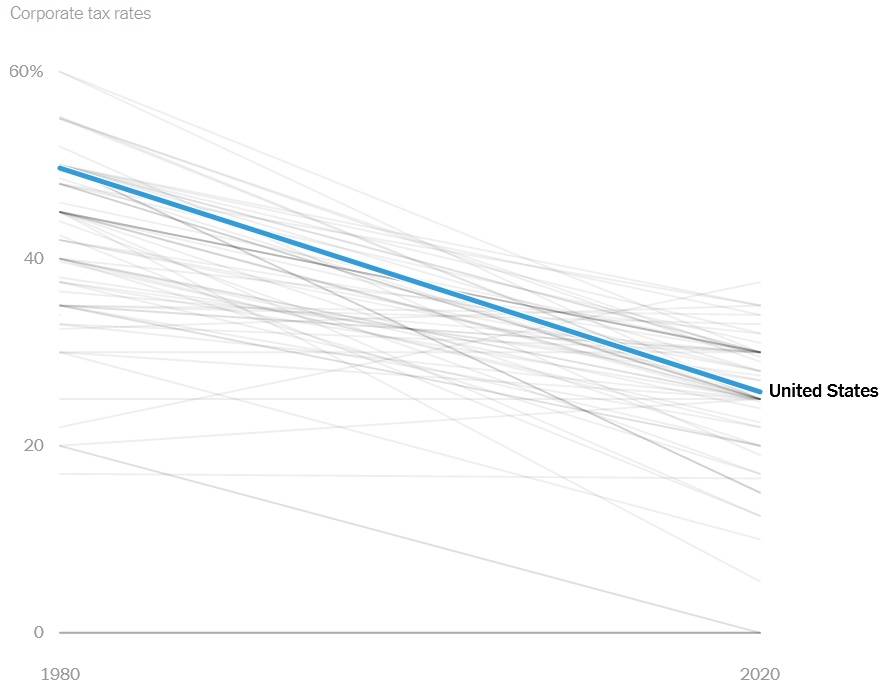

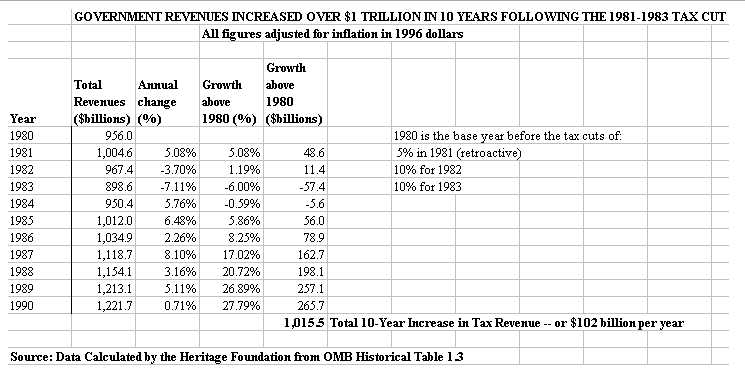


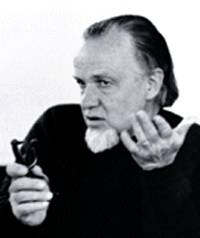







 Al Geiberger’s 59 At The Memphis Classic



 -Christ is outside the life
 -Interests are directed by self, often



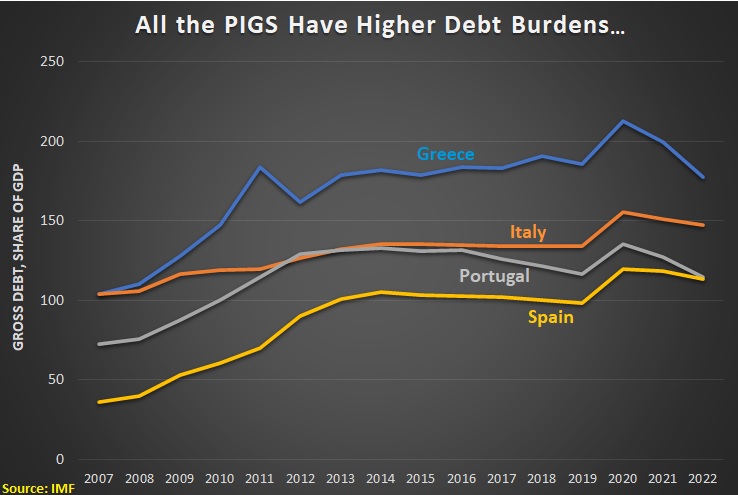









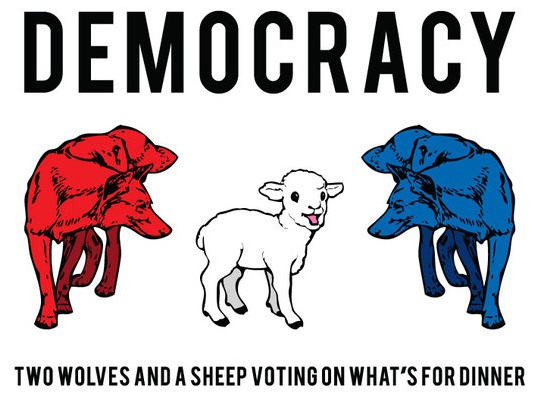









 The Daily Hatch