Monthly Archives: April 2019

BREAKING DOWN CARL SAGAN’S LOGIC ON ABORTION Part 13 “Acquiescing in the killing of any living creature, especially one that might later become a baby, is troublesome and painful” (My 1995 correspondence with Sagan)

The last few posts have dealt with material from Adrian Rogers and Francis Schaeffer, But today Bernard Nathanson testimony is given.
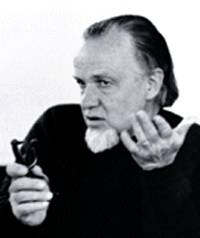
Image result for francis schaeffer

Francis Schaeffer and Adrian Rogers


Carl Sagan pictured below:

_________

Recently I have been revisiting my correspondence in 1995 with the famous astronomer Carl Sagan who I was introduced to when reading a book by Francis Schaeffer called HE IS THERE AND HE IS NOT SILENT written in 1968. 

Image result for francis schaeffer

Francis Schaeffer

I was blessed with the opportunity to correspond with Dr. Sagan, and in his December 5, 1995 letter Dr. Sagan went on to tell me that he was enclosing his article “The Question of Abortion: A Search for Answers”by Carl Sagan and Ann Druyan. I am going to respond to several points made in that article. Here is a portion of Sagan’s article (here is a link to the whole article):

Image result for carl sagan ann

Carl Sagan and Ann Druyan pictured above

 “The Question of Abortion: A Search for Answers”

by Carl Sagan and Ann Druyan

For the complete text, including illustrations, introductory quote, footnotes, and commentary on the reaction to the originally published article see Billions and Billions.

The issue had been decided years ago. The court had chosen the middle ground. You’d think the fight was over. Instead, there are mass rallies, bombings and intimidation, murders of workers at abortion clinics, arrests, intense lobbying, legislative drama, Congressional hearings, Supreme Court decisions, major political parties almost defining themselves on the issue, and clerics threatening politicians with perdition. Partisans fling accusations of hypocrisy and murder. The intent of the Constitution and the will of God are equally invoked. Doubtful arguments are trotted out as certitudes. The contending factions call on science to bolster their positions. Families are divided, husbands and wives agree not to discuss it, old friends are no longer speaking. Politicians check the latest polls to discover the dictates of their consciences. Amid all the shouting, it is hard for the adversaries to hear one another. Opinions are polarized. Minds are closed.


Is it wrong to abort a pregnancy? Always? Sometimes? Never? How do we decide? We wrote this article to understand better what the contending views are and to see if we ourselves could find a position that would satisfy us both. Is there no middle ground? We had to weigh the arguments of both sides for consistency and to pose test cases, some of which are purely hypothetical. If in some of these tests we seem to go too far, we ask the reader to be patient with us–we’re trying to stress the various positions to the breaking point to see their weaknesses and where they fail.

In contemplative moments, nearly everyone recognizes that the issue is not wholly one-sided. Many partisans of differing views, we find, feel some disquiet, some unease when confronting what’s behind the opposing arguments. (This is partly why such confrontations are avoided.) And the issue surely touches on deep questions: What are our responses to one another? Should we permit the state to intrude into the most intimate and personal aspects of our lives? Where are the boundaries of freedom? What does it mean to be human?

Of the many actual points of view, it is widely held–especially in the media, which rarely have the time or the inclination to make fine distinctions–that there are only two: “pro-choice” and “pro-life.” This is what the two principal warring camps like to call themselves, and that’s what we’ll call them here. In the simplest characterization, a pro-choicer would hold that the decision to abort a pregnancy is to be made only by the woman; the state has no right to interfere. And a pro-lifer would hold that, from the moment of conception, the embryo or fetus is alive; that this life imposes on us a moral obligation to preserve it; and that abortion is tantamount to murder. Both names–pro-choice and pro-life–were picked with an eye toward influencing those whose minds are not yet made up: Few people wish to be counted either as being against freedom of choice or as opposed to life. Indeed, freedom and life are two of our most cherished values, and here they seem to be in fundamental conflict.

Let’s consider these two absolutist positions in turn. A newborn baby is surely the same being it was just before birth. There ‘s good evidence that a late-term fetus responds to sound–including music, but especially its mother’s voice. It can suck its thumb or do a somersault. Occasionally, it generates adult brain-wave patterns. Some people claim to remember being born, or even the uterine environment. Perhaps there is thought in the womb. It’s hard to maintain that a transformation to full personhood happens abruptly at the moment of birth. Why, then, should it be murder to kill an infant the day after it was born but not the day before?

As a practical matter, this isn’t very important: Less than 1 percent of all tabulated abortions in the United States are listed in the last three months of pregnancy (and, on closer investigation, most such reports turn out to be due to miscarriage or miscalculation). But third-trimester abortions provide a test of the limits of the pro-choice point of view. Does a woman’s “innate right to control her own body” encompass the right to kill a near-term fetus who is, for all intents and purposes, identical to a newborn child?

We believe that many supporters of reproductive freedom are troubled at least occasionally by this question. But they are reluctant to raise it because it is the beginning of a slippery slope. If it is impermissible to abort a pregnancy in the ninth month, what about the eighth, seventh, sixth … ? Once we acknowledge that the state can interfere at any time in the pregnancy, doesn’t it follow that the state can interfere at all times?

Abortion and the slippery slope argument above

This conjures up the specter of predominantly male, predominantly affluent legislators telling poor women they must bear and raise alone children they cannot afford to bring up; forcing teenagers to bear children they are not emotionally prepared to deal with; saying to women who wish for a career that they must give up their dreams, stay home, and bring up babies; and, worst of all, condemning victims of rape and incest to carry and nurture the offspring of their assailants. Legislative prohibitions on abortion arouse the suspicion that their real intent is to control the independence and sexuality of women…

And yet, by consensus, all of us think it proper that there be prohibitions against, and penalties exacted for, murder. It would be a flimsy defense if the murderer pleads that this is just between him and his victim and none of the government’s business. If killing a fetus is truly killing a human being, is it not the duty of the state to prevent it? Indeed, one of the chief functions of government is to protect the weak from the strong.

If we do not oppose abortion at some stage of pregnancy, is there not a danger of dismissing an entire category of human beings as unworthy of our protection and respect? And isn’t that dismissal the hallmark of sexism, racism, nationalism, and religious fanaticism? Shouldn’t those dedicated to fighting such injustices be scrupulously careful not to embrace another?

Adrian Rogers’ sermon on animal rights refutes Sagan here

There is no right to life in any society on Earth today, nor has there been at any former time… : We raise farm animals for slaughter; destroy forests; pollute rivers and lakes until no fish can live there; kill deer and elk for sport, leopards for the pelts, and whales for fertilizer; entrap dolphins, gasping and writhing, in great tuna nets; club seal pups to death; and render a species extinct every day. All these beasts and vegetables are as alive as we. What is (allegedly) protected is not life, but human life.

Genesis 3 defines being human

And even with that protection, casual murder is an urban commonplace, and we wage “conventional” wars with tolls so terrible that we are, most of us, afraid to consider them very deeply… That protection, that right to life, eludes the 40,000 children under five who die on our planet each day from preventable starvation, dehydration, disease, and neglect.

Those who assert a “right to life” are for (at most) not just any kind of life, but for–particularly and uniquely—human life. So they too, like pro-choicers, must decide what distinguishes a human being from other animals and when, during gestation, the uniquely human qualities–whatever they are–emerge.

The Bible talks about the differences between humans and animals

Despite many claims to the contrary, life does not begin at conception: It is an unbroken chain that stretches back nearly to the origin of the Earth, 4.6 billion years ago. Nor does human life begin at conception: It is an unbroken chain dating back to the origin of our species, hundreds of thousands of years ago. Every human sperm and egg is, beyond the shadow of a doubt, alive. They are not human beings, of course. However, it could be argued that neither is a fertilized egg.

In some animals, an egg develops into a healthy adult without benefit of a sperm cell. But not, so far as we know, among humans. A sperm and an unfertilized egg jointly comprise the full genetic blueprint for a human being. Under certain circumstances, after fertilization, they can develop into a baby. But most fertilized eggs are spontaneously miscarried. Development into a baby is by no means guaranteed. Neither a sperm and egg separately, nor a fertilized egg, is more than a potential baby or a potential adult. So if a sperm and egg are as human as the fertilized egg produced by their union, and if it is murder to destroy a fertilized egg–despite the fact that it’s only potentially a baby–why isn’t it murder to destroy a sperm or an egg?

Hundreds of millions of sperm cells (top speed with tails lashing: five inches per hour) are produced in an average human ejaculation. A healthy young man can produce in a week or two enough spermatozoa to double the human population of the Earth. So is masturbation mass murder? How about nocturnal emissions or just plain sex? When the unfertilized egg is expelled each month, has someone died? Should we mourn all those spontaneous miscarriages? Many lower animals can be grown in a laboratory from a single body cell. Human cells can be cloned… In light of such cloning technology, would we be committing mass murder by destroying any potentially clonable cells? By shedding a drop of blood?


All human sperm and eggs are genetic halves of “potential” human beings. Should heroic efforts be made to save and preserve all of them, everywhere, because of this “potential”? Is failure to do so immoral or criminal? Of course, there’s a difference between taking a life and failing to save it. And there’s a big difference between the probability of survival of a sperm cell and that of a fertilized egg. But the absurdity of a corps of high-minded semen-preservers moves us to wonder whether a fertilized egg’s mere “potential” to become a baby really does make destroying it murder.

Opponents of abortion worry that, once abortion is permissible immediately after conception, no argument will restrict it at any later time in the pregnancy. Then, they fear, one day it will be permissible to murder a fetus that is unambiguously a human being. Both pro-choicers and pro-lifers (at least some of them) are pushed toward absolutist positions by parallel fears of the slippery slope.


Another slippery slope is reached by those pro-lifers who are willing to make an exception in the agonizing case of a pregnancy resulting from rape or incest. But why should the right to live depend on the circumstances of conception? If the same child were to result, can the state ordain life for the offspring of a lawful union but death for one conceived by force or coercion? How can this be just? And if exceptions are extended to such a fetus, why should they be withheld from any other fetus? This is part of the reason some pro-lifers adopt what many others consider the outrageous posture of opposing abortions under any and all circumstances–only excepting, perhaps, when the life of the mother is in danger.

By far the most common reason for abortion worldwide is birth control. So shouldn’t opponents of abortion be handing out contraceptives and teaching school children how to use them? That would be an effective way to reduce the number of abortions. Instead, the United States is far behind other nations in the development of safe and effective methods of birth control–and, in many cases, opposition to such research (and to sex education) has come from the same people who oppose abortions.continue on to Part 3

For the complete text, including illustrations, introductory quote, footnotes, and commentary on the reaction to the originally published article see Billions and Billions.

The attempt to find an ethically sound and unambiguous judgment on when, if ever, abortion is permissible has deep historical roots. Often, especially in Christian tradition, such attempts were connected with the question of when the soul enters the body–a matter not readily amenable to scientific investigation and an issue of controversy even among learned theologians. Ensoulment has been asserted to occur in the sperm before conception, at conception, at the time of “quickening” (when the mother is first able to feel the fetus stirring within her), and at birth. Or even later.

Different religions have different teachings. Among hunter-gatherers, there are usually no prohibitions against abortion, and it was common in ancient Greece and Rome. In contrast, the more severe Assyrians impaled women on stakes for attempting abortion. The Jewish Talmud teaches that the fetus is not a person and has no rights. The Old and New Testaments–rich in astonishingly detailed prohibitions on dress, diet, and permissible words–contain not a word specifically prohibiting abortion. The only passage that’s remotely relevant (Exodus 21:22) decrees that if there’s a fight and a woman bystander should accidentally be injured and made to miscarry, the assailant must pay a fine.

Neither St. Augustine nor St. Thomas Aquinas considered early-term abortion to be homicide (the latter on the grounds that the embryo doesn’t look human). This view was embraced by the Church in the Council of Vienne in 1312, and has never been repudiated. The Catholic Church’s first and long-standing collection of canon law (according to the leading historian of the Church’s teaching on abortion, John Connery, S.J.) held that abortion was homicide only after the fetus was already “formed”–roughly, the end of the first trimester.

But when sperm cells were examined in the seventeenth century by the first microscopes, they were thought to show a fully formed human being. An old idea of the homunculus was resuscitated–in which within each sperm cell was a fully formed tiny human, within whose testes were innumerable other homunculi, etc., ad infinitum. In part through this misinterpretation of scientific data, in 1869 abortion at any time for any reason became grounds for excommunication. It is surprising to most Catholics and others to discover that the date was not much earlier.

From colonial times to the nineteenth century, the choice in the United States was the woman’s until “quickening.” An abortion in the first or even second trimester was at worst a misdemeanor. Convictions were rarely sought and almost impossible to obtain, because they depended entirely on the woman’s own testimony of whether she had felt quickening, and because of the jury’s distaste for prosecuting a woman for exercising her right to choose. In 1800 there was not, so far as is known, a single statute in the United States concerning abortion. Advertisements for drugs to induce abortion could be found in virtually every newspaper and even in many church publications–although the language used was suitably euphemistic, if widely understood.

But by 1900, abortion had been banned at any time in pregnancy by every state in the Union, except when necessary to save the woman’s life. What happened to bring about so striking a reversal? Religion had little to do with it.Drastic economic and social conversions were turning this country from an agrarian to an urban-industrial society. America was in the process of changing from having one of the highest birthrates in the world to one of the lowest. Abortion certainly played a role and stimulated forces to suppress it.


One of the most significant of these forces was the medical profession. Up to the mid-nineteenth century, medicine was an uncertified, unsupervised business. Anyone could hang up a shingle and call himself (or herself) a doctor. With the rise of a new, university-educated medical elite, anxious to enhance the status and influence of physicians, the American Medical Association was formed. In its first decade, the AMA began lobbying against abortions performed by anyone except licensed physicians. New knowledge of embryology, the physicians said, had shown the fetus to be human even before quickening.

Their assault on abortion was motivated not by concern for the health of the woman but, they claimed, for the welfare of the fetus. You had to be a physician to know when abortion was morally justified, because the question depended on scientific and medical facts understood only by physicians. At the same time, women were effectively excluded from the medical schools, where such arcane knowledge could be acquired. So, as things worked out, women had almost nothing to say about terminating their own pregnancies. It was also up to the physician to decide if the pregnancy posed a threat to the woman, and it was entirely at his discretion to determine what was and was not a threat. For the rich woman, the threat might be a threat to her emotional tranquillity or even to her lifestyle. The poor woman was often forced to resort to the back alley or the coat hanger.

This was the law until the 1960s, when a coalition of individuals and organizations, the AMA now among them, sought to overturn it and to reinstate the more traditional values that were to be embodied in Roe v. Wade.continue on to Part 4

If you deliberately kill a human being, it’s called murder. If you deliberately kill a chimpanzee–biologically, our closest relative, sharing 99.6 percent of our active genes–whatever else it is, it’s not murder. To date, murder uniquely applies to killing human beings. Therefore, the question of when personhood (or, if we like, ensoulment) arises is key to the abortion debate. When does the fetus become human? When do distinct and characteristic human qualities emerge?

Section 8 Sperm journey to becoming Human 

We recognize that specifying a precise moment will overlook individual differences. Therefore, if we must draw a line, it ought to be drawn conservatively–that is, on the early side. There are people who object to having to set some numerical limit, and we share their disquiet; but if there is to be a law on this matter, and it is to effect some useful compromise between the two absolutist positions, it must specify, at least roughly, a time of transition to personhood.

Every one of us began from a dot. A fertilized egg is roughly the size of the period at the end of this sentence. The momentous meeting of sperm and egg generally occurs in one of the two fallopian tubes. One cell becomes two, two become four, and so on—an exponentiation of base-2 arithmetic. By the tenth day the fertilized egg has become a kind of hollow sphere wandering off to another realm: the womb. It destroys tissue in its path. It sucks blood from capillaries. It bathes itself in maternal blood, from which it extracts oxygen and nutrients. It establishes itself as a kind of parasite on the walls of the uterus.By the third week, around the time of the first missed menstrual period, the forming embryo is about 2 millimeters long and is developing various body parts. Only at this stage does it begin to be dependent on a rudimentary placenta. It looks a little like a segmented worm.By the end of the fourth week, it’s about 5 millimeters (about 1/5 inch) long. It’s recognizable now as a vertebrate, its tube-shaped heart is beginning to beat, something like the gill arches of a fish or an amphibian become conspicuous, and there is a pronounced tail. It looks rather like a newt or a tadpole. This is the end of the first month after conception.By the fifth week, the gross divisions of the brain can be distinguished. What will later develop into eyes are apparent, and little buds appear—on their way to becoming arms and legs.By the sixth week, the embryo is 13 millimeteres (about ½ inch) long. The eyes are still on the side of the head, as in most animals, and the reptilian face has connected slits where the mouth and nose eventually will be.By the end of the seventh week, the tail is almost gone, and sexual characteristics can be discerned (although both sexes look female). The face is mammalian but somewhat piglike.By the end of the eighth week, the face resembles that of a primate but is still not quite human. Most of the human body parts are present in their essentials. Some lower brain anatomy is well-developed. The fetus shows some reflex response to delicate stimulation.By the tenth week, the face has an unmistakably human cast. It is beginning to be possible to distinguish males from females. Nails and major bone structures are not apparent until the third month.By the fourth month, you can tell the face of one fetus from that of another. Quickening is most commonly felt in the fifth month. The bronchioles of the lungs do not begin developing until approximately the sixth month, the alveoli still later.

So, if only a person can be murdered, when does the fetus attain personhood? When its face becomes distinctly human, near the end of the first trimester? When the fetus becomes responsive to stimuli–again, at the end of the first trimester? When it becomes active enough to be felt as quickening, typically in the middle of the second trimester? When the lungs have reached a stage of development sufficient that the fetus might, just conceivably, be able to breathe on its own in the outside air?

The trouble with these particular developmental milestones is not just that they’re arbitrary. More troubling is the fact that none of them involves uniquely humancharacteristics–apart from the superficial matter of facial appearance. All animals respond to stimuli and move of their own volition. Large numbers are able to breathe. But that doesn’t stop us from slaughtering them by the billions. Reflexes and motion are not what make us human.

Section 9 Sagan’s conclusion based on arbitrary choice of the presence of thought by unborn baby

Other animals have advantages over us–in speed, strength, endurance, climbing or burrowing skills, camouflage, sight or smell or hearing, mastery of the air or water. Our one great advantage, the secret of our success, is thought–characteristically human thought. We are able to think things through, imagine events yet to occur, figure things out. That’s how we invented agriculture and civilization. Thought is our blessing and our curse, and it makes us who we are.

Thinking occurs, of course, in the brain–principally in the top layers of the convoluted “gray matter” called the cerebral cortex. The roughly 100 billion neurons in the brain constitute the material basis of thought. The neurons are connected to each other, and their linkups play a major role in what we experience as thinking. But large-scale linking up of neurons doesn’t begin until the 24th to 27th week of pregnancy–the sixth month.

By placing harmless electrodes on a subject’s head, scientists can measure the electrical activity produced by the network of neurons inside the skull. Different kinds of mental activity show different kinds of brain waves. But brain waves with regular patterns typical of adult human brains do not appear in the fetus until about the 30th week of pregnancy–near the beginning of the third trimester. Fetuses younger than this–however alive and active they may be–lack the necessary brain architecture. They cannot yet think.

Acquiescing in the killing of any living creature, especially one that might later become a baby, is troublesome and painful. But we’ve rejected the extremes of “always” and “never,” and this puts us–like it or not–on the slippery slope. If we are forced to choose a developmental criterion, then this is where we draw the line: when the beginning of characteristically human thinking becomes barely possible.

It is, in fact, a very conservative definition: Regular brain waves are rarely found in fetuses. More research would help… If we wanted to make the criterion still more stringent, to allow for occasional precocious fetal brain development, we might draw the line at six months. This, it so happens, is where the Supreme Court drew it in 1973–although for completely different reasons.

Its decision in the case of Roe v. Wade changed American law on abortion. It permits abortion at the request of the woman without restriction in the first trimester and, with some restrictions intended to protect her health, in the second trimester. It allows states to forbid abortion in the third trimester, except when there’s a serious threat to the life or health of the woman. In the 1989 Webster decision, the Supreme Court declined explicitly to overturn Roe v. Wade but in effect invited the 50 state legislatures to decide for themselves.

What was the reasoning in Roe v. Wade? There was no legal weight given to what happens to the children once they are born, or to the family. Instead, a woman’s right to reproductive freedom is protected, the court ruled, by constitutional guarantees of privacy. But that right is not unqualified. The woman’s guarantee of privacy and the fetus’s right to life must be weighed–and when the court did the weighing’ priority was given to privacy in the first trimester and to life in the third. The transition was decided not from any of the considerations we have been dealing with so far…–not when “ensoulment” occurs, not when the fetus takes on sufficient human characteristics to be protected by laws against murder. Instead, the criterion adopted was whether the fetus could live outside the mother. This is called “viability” and depends in part on the ability to breathe. The lungs are simply not developed, and the fetus cannot breathe–no matter how advanced an artificial lung it might be placed in—until about the 24th week, near the start of the sixth month. This is why Roe v. Wade permits the states to prohibit abortions in the last trimester. It’s a very pragmatic criterion.

If the fetus at a certain stage of gestation would be viable outside the womb, the argument goes, then the right of the fetus to life overrides the right of the woman to privacy. But just what does “viable” mean? Even a full-term newborn is not viable without a great deal of care and love. There was a time before incubators, only a few decades ago, when babies in their seventh month were unlikely to be viable. Would aborting in the seventh month have been permissible then? After the invention of incubators, did aborting pregnancies in the seventh month suddenly become immoral? What happens if, in the future, a new technology develops so that an artificial womb can sustain a fetus even before the sixth month by delivering oxygen and nutrients through the blood–as the mother does through the placenta and into the fetal blood system? We grant that this technology is unlikely to be developed soon or become available to many. But if it were available, does it then become immoral to abort earlier than the sixth month, when previously it was moral? A morality that depends on, and changes with, technology is a fragile morality; for some, it is also an unacceptable morality.

And why, exactly, should breathing (or kidney function, or the ability to resist disease) justify legal protection? If a fetus can be shown to think and feel but not be able to breathe, would it be all right to kill it? Do we value breathing more than thinking and feeling? Viability arguments cannot, it seems to us, coherently determine when abortions are permissible. Some other criterion is needed. Again, we offer for consideration the earliest onset of human thinking as that criterion.

Since, on average, fetal thinking occurs even later than fetal lung development, we find Roe v. Wade to be a good and prudent decision addressing a complex and difficult issue. With prohibitions on abortion in the last trimester–except in cases of grave medical necessity–it strikes a fair balance between the conflicting claims of freedom and life.What do you think? What have others said about Carl Sagan’s thoughts on 

End Of Sagan Excerpt 

Xxxxxxxxxxxxx 

One of my favorite economists is Dan Mitchell and recently he noted, “Wow. I guess doctors in the UK don’t have to take the Hippocratic Oath! A society like this is not going to last very long at all. The rot is pervasive and terminal.”

This comment by Mitchell was on his blog where the subject of infanticide came up and Mitchell was surprised that many of his readers jumped on the infanticide bandwagon. There are several reasons for this but the main reason is that many of Mitchell’s readers hold a mechanistic view of man. Man is the product not of creation by a personal God like our founding fathers believed but a product of the impersonal chance driven evolutionary process

Schaeffer and Koop in their film series took the first three episodes to look where a mechanistic view of life leads. 1. Abortion, 2. Infanticide and 3. Youth Euthanasia. What is acceptable killing after all?  Was Hitler wrong or not?  Was Jack Kevorkian right or not? (Kevorkian could have taken on that problem of lack of funding for social security and solved it fast!!!)

Here is an article below that discusses what Francis Schaefffer and Dr. C. Everette Koop had to say about the Hippocratic oath and how it is being used in modern times. (Schaeffer and Koop really did look at what was happening in the 1970’s and correctly predicted what measures medical science would take the future concerning these crucial issues.) Actually  Francis Schaeffer actually predicted that men like Jack Kevorkian would come long ago.  Take a look at this article below.

Right to Life vs. Sanctity of Life

Perhaps the most basic right that a human being possesses under the law of an organized society is the right to be born and to continue living. Much attention in recent times has been given to the right of a fetus (Latin for “little one”) to exist until the time of birth. One writer who should be commended for addressing some of the philosophical and theological issues pertaining to people with disabilities is Dr. Francis A. Schaeffer. However, his prime foci in the book he co-authored with Dr. C. Everett Koop, Whatever Happened to the Human Race?, were abortion, infanticide, and euthanasia and not issues specifically related to disability.

Within the scdpe of the abortion issue lies the matter of terminating a pregnancy if some irregularity is discovered in the fetus, thereby warding off the possibility of “burdening the parents and society” with a child with disabilities. The authors remind us that. . .

the graduates of American medical schools have traditionally taken the Hippocratic oath, which goes back more than two thousand years at the time of their commencement. The Declaration of Geneva (adopted in September 1948 by the General Assembly of the World Medical Organization and modeled closely on the Hippocratic oath) became used as the graduation oath by more and more medical schools. It includes, “I will maintain the utmost respect for human life; from the time of conception.” This concept for the preservation of human life has been the basis of the medical profession and society in general. It is significant that, when the University of Pittsburgh changed from the Hippocratic oath to the Declaration of Geneva in 1971, the students deleted “from the time of conception” from the clause beginning “I will maintain the utmost respect for human life.” The University of Toronto School of Medicine has also removed the phrase “from the time of conception” from the form of oath it now uses.4

Therefore it is not difficult for some to take the step from dismissing a fetus as being a viable life to destroying a fetus that has some irregularity. This may be done in the name of humaneness, believing that by destroying a,”nonlife” you have preserved the quality of other “valid” lives – in particular the quality of life of the parents and siblings. Furthermore, the argument may continue, “ought not the population at large be spared the financial burden of providing care for those potentially disabled children?”

Thus the question is posed: Does a child with disabilities have a right to life? Furthermore, does a fetus, for which medical experts have declared the possibility of being disabled, have any right to be protected from being killed? Necessarily, the law must address any issue pertaining to “rights;” but theologically if we debate the questions at hand on the grounds of our intrinsic or civil rights, we are approaching this subject from a wrong perspective. If we fight this battle on the grounds of rights, then what about the right of the mother to control what happens in her own body or the right of the family not to be unduly restricted by the (perhaps) relentless burden of daily care of a child with disabilities? Then what about the right of the population not to be encumbered with a heavier tax burden, higher insurance premiums, and the extra expense of architectural adjustments in its public buildings in order to accommodate the special needs of certain groups? When “your rights” infringe upon “my rights,” then the battle is truly engaged!

Theologically, the so-called “right to life” terminology is a misnomer. Who, pray tell, has a right to life? I don’t. You don’t. And neither does a person with disabilities. The Scriptures, rather, teach the sanctity of life in that all life is God-given. Life is a gift from God. Job declared, . . . the breath of the Almighty gives me life. (Job 33:4). The writer of Ecclesiastes wrote that all the days of life that a man lives. . . God has given him. . . (Ecclesiastes 5:18, 8:15). Deuteronomy 30:20 reads, For the Lord is your life, and he will give you many years in the land. . . Acts 17:28 says, For in him we live and move and have our being. Colossians 1:17 teaches that all things are held together by Him. James 4:14,15 gives us to understand that the continuance or end of our lives is subject to God’s will.

All life, then, being God-given, God-sustained, and ultimately God-terminated, belongs strictly to the province of God’s authority. If God has chosen to give life, to a person with disabilities or to a fetus who has possible disabilities, then who BUT GOD shall dare to take unto herself or himself the authority to end that life? Life, human life-all human life-belongs to God. In a sense He loans it as a trust, a sacred trust. He alone has the authority to give, withhold, sustain, and withdraw life. And so we address this issue of life on the grounds of its sacredness. not on rights, at least as far as theology is concerned.

——

.

Related posts:

Taking on Ark Times Bloggers on various issues Part F “Carl Sagan’s views on how God should try and contact us” includes film “The Basis for Human Dignity”

April 8, 2013 – 7:07 am

I have gone back and forth and back and forth with many liberals on the Arkansas Times Blog on many issues such as abortion, human rights, welfare, poverty, gun control  and issues dealing with popular culture. Here is another exchange I had with them a while back. My username at the Ark Times Blog is Saline […] By Everette Hatcher III | Posted in Francis SchaefferProlife | Edit | Comments (0)

Carl Sagan v. Nancy Pearcey

March 18, 2013 – 9:11 am

On March 17, 2013 at our worship service at Fellowship Bible Church, Ben Parkinson who is one of our teaching pastors spoke on Genesis 1. He spoke about an issue that I was very interested in. Ben started the sermon by reading the following scripture: Genesis 1-2:3 English Standard Version (ESV) The Creation of the […] By Everette Hatcher III | Posted in Adrian RogersAtheists ConfrontedCurrent Events | TaggedBen ParkinsonCarl Sagan | Edit | Comments (0)

Review of Carl Sagan book (Part 4 of series on Evolution)

May 24, 2012 – 1:47 am

Review of Carl Sagan book (Part 4 of series on Evolution) The Long War against God-Henry Morris, part 5 of 6 Uploaded by FLIPWORLDUPSIDEDOWN3 on Aug 30, 2010 http://www.icr.org/ http://store.icr.org/prodinfo.asp?number=BLOWA2http://store.icr.org/prodinfo.asp?number=BLOWASGhttp://www.fliptheworldupsidedown.com/blog _______________________ I got this from a blogger in April of 2008 concerning candidate Obama’s view on evolution: Q: York County was recently in the news […] By Everette Hatcher III | Posted in Atheists ConfrontedCurrent EventsPresident Obama | EditComments (0)

_

BREAKING DOWN CARL SAGAN’S LOGIC ON ABORTION Part 12 “This conjures up the specter of predominantly male, predominantly affluent legislators telling poor women they must bear and raise alone children they cannot afford to bring up” (My 1995 correspondence with Sagan)

_

Adrian Rogers


Carl Sagan pictured below:

_________

Recently I have been revisiting my correspondence in 1995 with the famous astronomer Carl Sagan who I was introduced to when reading a book by Francis Schaeffer called HE IS THERE AND HE IS NOT SILENT written in 1968. 

Image result for francis schaeffer

Francis Schaeffer

I was blessed with the opportunity to correspond with Dr. Sagan, and in his December 5, 1995 letter Dr. Sagan went on to tell me that he was enclosing his article “The Question of Abortion: A Search for Answers”by Carl Sagan and Ann Druyan. I am going to respond to several points made in that article. Here is a portion of Sagan’s article (here is a link to the whole article):

Image result for carl sagan ann

Carl Sagan and Ann Druyan pictured above

 “The Question of Abortion: A Search for Answers”

by Carl Sagan and Ann Druyan

For the complete text, including illustrations, introductory quote, footnotes, and commentary on the reaction to the originally published article see Billions and Billions.

The issue had been decided years ago. The court had chosen the middle ground. You’d think the fight was over. Instead, there are mass rallies, bombings and intimidation, murders of workers at abortion clinics, arrests, intense lobbying, legislative drama, Congressional hearings, Supreme Court decisions, major political parties almost defining themselves on the issue, and clerics threatening politicians with perdition. Partisans fling accusations of hypocrisy and murder. The intent of the Constitution and the will of God are equally invoked. Doubtful arguments are trotted out as certitudes. The contending factions call on science to bolster their positions. Families are divided, husbands and wives agree not to discuss it, old friends are no longer speaking. Politicians check the latest polls to discover the dictates of their consciences. Amid all the shouting, it is hard for the adversaries to hear one another. Opinions are polarized. Minds are closed.


Is it wrong to abort a pregnancy? Always? Sometimes? Never? How do we decide? We wrote this article to understand better what the contending views are and to see if we ourselves could find a position that would satisfy us both. Is there no middle ground? We had to weigh the arguments of both sides for consistency and to pose test cases, some of which are purely hypothetical. If in some of these tests we seem to go too far, we ask the reader to be patient with us–we’re trying to stress the various positions to the breaking point to see their weaknesses and where they fail.

In contemplative moments, nearly everyone recognizes that the issue is not wholly one-sided. Many partisans of differing views, we find, feel some disquiet, some unease when confronting what’s behind the opposing arguments. (This is partly why such confrontations are avoided.) And the issue surely touches on deep questions: What are our responses to one another? Should we permit the state to intrude into the most intimate and personal aspects of our lives? Where are the boundaries of freedom? What does it mean to be human?

Of the many actual points of view, it is widely held–especially in the media, which rarely have the time or the inclination to make fine distinctions–that there are only two: “pro-choice” and “pro-life.” This is what the two principal warring camps like to call themselves, and that’s what we’ll call them here. In the simplest characterization, a pro-choicer would hold that the decision to abort a pregnancy is to be made only by the woman; the state has no right to interfere. And a pro-lifer would hold that, from the moment of conception, the embryo or fetus is alive; that this life imposes on us a moral obligation to preserve it; and that abortion is tantamount to murder. Both names–pro-choice and pro-life–were picked with an eye toward influencing those whose minds are not yet made up: Few people wish to be counted either as being against freedom of choice or as opposed to life. Indeed, freedom and life are two of our most cherished values, and here they seem to be in fundamental conflict.

Let’s consider these two absolutist positions in turn. A newborn baby is surely the same being it was just before birth. There ‘s good evidence that a late-term fetus responds to sound–including music, but especially its mother’s voice. It can suck its thumb or do a somersault. Occasionally, it generates adult brain-wave patterns. Some people claim to remember being born, or even the uterine environment. Perhaps there is thought in the womb. It’s hard to maintain that a transformation to full personhood happens abruptly at the moment of birth. Why, then, should it be murder to kill an infant the day after it was born but not the day before?

As a practical matter, this isn’t very important: Less than 1 percent of all tabulated abortions in the United States are listed in the last three months of pregnancy (and, on closer investigation, most such reports turn out to be due to miscarriage or miscalculation). But third-trimester abortions provide a test of the limits of the pro-choice point of view. Does a woman’s “innate right to control her own body” encompass the right to kill a near-term fetus who is, for all intents and purposes, identical to a newborn child?

We believe that many supporters of reproductive freedom are troubled at least occasionally by this question. But they are reluctant to raise it because it is the beginning of a slippery slope. If it is impermissible to abort a pregnancy in the ninth month, what about the eighth, seventh, sixth … ? Once we acknowledge that the state can interfere at any time in the pregnancy, doesn’t it follow that the state can interfere at all times?

Abortion and the slippery slope argument above

This conjures up the specter of predominantly male, predominantly affluent legislators telling poor women they must bear and raise alone children they cannot afford to bring up; forcing teenagers to bear children they are not emotionally prepared to deal with; saying to women who wish for a career that they must give up their dreams, stay home, and bring up babies; and, worst of all, condemning victims of rape and incest to carry and nurture the offspring of their assailants. Legislative prohibitions on abortion arouse the suspicion that their real intent is to control the independence and sexuality of women…

And yet, by consensus, all of us think it proper that there be prohibitions against, and penalties exacted for, murder. It would be a flimsy defense if the murderer pleads that this is just between him and his victim and none of the government’s business. If killing a fetus is truly killing a human being, is it not the duty of the state to prevent it? Indeed, one of the chief functions of government is to protect the weak from the strong.

If we do not oppose abortion at some stage of pregnancy, is there not a danger of dismissing an entire category of human beings as unworthy of our protection and respect? And isn’t that dismissal the hallmark of sexism, racism, nationalism, and religious fanaticism? Shouldn’t those dedicated to fighting such injustices be scrupulously careful not to embrace another?

Why do we set humans above animals?

There is no right to life in any society on Earth today, nor has there been at any former time… : We raise farm animals for slaughter; destroy forests; pollute rivers and lakes until no fish can live there; kill deer and elk for sport, leopards for the pelts, and whales for fertilizer; entrap dolphins, gasping and writhing, in great tuna nets; club seal pups to death; and render a species extinct every day. All these beasts and vegetables are as alive as we. What is (allegedly) protected is not life, but human life.

Adrian Rogers sermon on the Bible and Animal Rights is a perfect answer to Sagan!!

And even with that protection, casual murder is an urban commonplace, and we wage “conventional” wars with tolls so terrible that we are, most of us, afraid to consider them very deeply… That protection, that right to life, eludes the 40,000 children under five who die on our planet each day from preventable starvation, dehydration, disease, and neglect.

Those who assert a “right to life” are for (at most) not just any kind of life, but for–particularly and uniquely—human life. So they too, like pro-choicers, must decide what distinguishes a human being from other animals and when, during gestation, the uniquely human qualities–whatever they are–emerge.

The Bible talks about the differences between humans and animals

Despite many claims to the contrary, life does not begin at conception: It is an unbroken chain that stretches back nearly to the origin of the Earth, 4.6 billion years ago. Nor does human life begin at conception: It is an unbroken chain dating back to the origin of our species, hundreds of thousands of years ago. Every human sperm and egg is, beyond the shadow of a doubt, alive. They are not human beings, of course. However, it could be argued that neither is a fertilized egg.

In some animals, an egg develops into a healthy adult without benefit of a sperm cell. But not, so far as we know, among humans. A sperm and an unfertilized egg jointly comprise the full genetic blueprint for a human being. Under certain circumstances, after fertilization, they can develop into a baby. But most fertilized eggs are spontaneously miscarried. Development into a baby is by no means guaranteed. Neither a sperm and egg separately, nor a fertilized egg, is more than a potential baby or a potential adult. So if a sperm and egg are as human as the fertilized egg produced by their union, and if it is murder to destroy a fertilized egg–despite the fact that it’s only potentially a baby–why isn’t it murder to destroy a sperm or an egg?

Hundreds of millions of sperm cells (top speed with tails lashing: five inches per hour) are produced in an average human ejaculation. A healthy young man can produce in a week or two enough spermatozoa to double the human population of the Earth. So is masturbation mass murder? How about nocturnal emissions or just plain sex? When the unfertilized egg is expelled each month, has someone died? Should we mourn all those spontaneous miscarriages? Many lower animals can be grown in a laboratory from a single body cell. Human cells can be cloned… In light of such cloning technology, would we be committing mass murder by destroying any potentially clonable cells? By shedding a drop of blood?

For the complete text, including illustrations, introductory quote, footnotes, and commentary on the reaction to the originally published article see Billions and Billions.

——

Adrian Rogers (1931-2005) I shared my correspondence with Carl Sagan with Dr Rogers and the fact that many of my letters to Sagan contained material from Rogers.

.

Carl Sagan “This conjures up the specter of predominantly male, predominantly affluent legislators telling poor women they must bear and raise alone children they cannot afford to bring up.” A popular argument is if these young women avoid having these “unwanted” children then we would have less child abuse, but really it comes down to our respect for life!!!

Image result for c. everett koop

220 × 278Images may be subject to copyright. Learn More

Child abuse has been rising dramatically in the last forty years.

In 1972 there were 60,000 reported child-abuse incidents in the U.S.  In
1976, the number had soared to over 500,000!  Child Abuse is now the fifth most frequent cause of death among children.  (Francis Shaeffer and Dr.  C.  Everett Koop, “Whatever Happened to the Human Race?”, Crossway Books, Westchester, IL.)

In the film and book Whatever Happened to the Human Race? you will see Dr. C. Everett Koop make this comment (in 1979):

.There are those who try and justify abortions by saying that abortions get rid of unwanted children and therefore will cut down on child abuse, but consider this, since 1973 there have been 6 million abortions in the USA and there are therefore 6 million fewer children than there would have been without the liberal abortion ruling and yet child abuse has increased in incidents year by year from that date.

Great article I ran across on the www.thevillagechurch.net website:

Sanctity of Life

Author: Jared Musgrove Category: Culture, Theology

Roe v. Wade legalized abortion in 1973.

Let’s move on, shall we?

But we haven’t. For 40 years the conversation remains irrepressible in our public policy discussion, elections, films, sitcoms, newspapers and coffee klatches. We can’t move on because the issue won’t go away. Our consciences, individual and corporate, can’t let it.

We’re still talking about the sanctity of life because the mere mention of it generates a moral friction on our human souls – souls fashioned after the Creator God who makes human beings distinctive among His created order.

It is this imago Dei – image of God – imbued to human beings (Gen. 1:26-27) that makes us human in the first place. This is the genesis of the biblical worldview: that God created and imprinted His image upon each person, giving dignity and value to every single human life despite its stage of development.

In this biblical understanding, to attack an unborn or any “image-bearer” is to attack the very image of the creator God (Gen. 9:6). Assaulting or enslaving another human being is nothing more or less than an attempt to eliminate the reminder that we are created by and accountable to the one true God.

James tells us we kill because we “desire and do not have” (James 4:1-4). These impulses are birthed and fueled by our Genesis 3 desire to put ourselves in the place of God where no such warrant exists. We do great evil when we use or destroy lives to suit our whims and warped worldviews.

So it stands to us – the redeemed – to pray, defend and cry out for the unborn and oppressed. These fragile image-bearers cannot speak to policies and procedures created by an increasing culture of death, a culture that ruthlessly places human desires on the throne of creation while negating the significance of human life.

Take heart that this Herod-like hatred of human babies and beings is not without precedent in the history of God’s people. Such evil has been faced before, and the Lord has shown a great light and preservation of life in the midst of such darkness.

Russell Moore writes in the March 2009 issue of Touchstone magazine:

The so-called culture of death around us now is no different from that of the past. The hostility to human babies is happening exactly the same way. The Prince of the Power of the Air excites evil passions. Satan uses Pharaoh’s lust for military stability that says, “I don’t want another king,” in exactly the same way he uses a Southern Baptist deacon’s lust for maintaining his reputation to get him to load his teenage daughter into a car and driver under the cover of night to a clinic in a nearby city so no one will ever know she was pregnant. The blood of children flows, but the problem is spiritual to the core.

Like Pharaoh and Herod, we refuse to allow another king to rule on the throne of our lives and will go to murderous lengths to maintain (perceived) control. The depraved human heart is on display for all the world to see in abortion, slavery and human trafficking. Life is given lip service only to be denied true stewardship. The care and defense of life we are to uphold as image-bearers requires a holy love, patience and sacrifice that can only come from outside ourselves in the form of a righteous King.

Our gracious God invited us into the act of creation itself when He said, “be fruitful and multiply” (Gen. 1:28). This is the decree of true “rights.” We are to pray toward and encourage the multiplication of life under God.

Our love of the Lord compels us to keep talking and praying for the sanctity of life to be realized fully by an unbelieving world that suppresses and destroys the image of its Creator. We are called to intercede as the prayerful and public voice for those lives in the balance, for those who are unable to speak up for themselves.

As we pray for the work of God in revealing the sanctity of life to our culture of death, I share with you one of my most resonating petitions: that by the time my 19-month-old son is an adult, abortion would be as alien to him as segregated restaurants for blacks and whites are to his daddy.

We will continue praying for the sanctity of life this week at Elder-led Prayer – 7 p.m., Wednesday (Jan. 25), at each campus.

Related posts:

Taking on Ark Times Bloggers on various issues Part F “Carl Sagan’s views on how God should try and contact us” includes film “The Basis for Human Dignity”

April 8, 2013 – 7:07 am

I have gone back and forth and back and forth with many liberals on the Arkansas Times Blog on many issues such as abortion, human rights, welfare, poverty, gun control  and issues dealing with popular culture. Here is another exchange I had with them a while back. My username at the Ark Times Blog is Saline […] By Everette Hatcher III | Posted in Francis SchaefferProlife | Edit | Comments (0)

Carl Sagan v. Nancy Pearcey

March 18, 2013 – 9:11 am

On March 17, 2013 at our worship service at Fellowship Bible Church, Ben Parkinson who is one of our teaching pastors spoke on Genesis 1. He spoke about an issue that I was very interested in. Ben started the sermon by reading the following scripture: Genesis 1-2:3 English Standard Version (ESV) The Creation of the […] By Everette Hatcher III | Posted in Adrian RogersAtheists ConfrontedCurrent Events | TaggedBen ParkinsonCarl Sagan | Edit | Comments (0)

Review of Carl Sagan book (Part 4 of series on Evolution)

May 24, 2012 – 1:47 am

Review of Carl Sagan book (Part 4 of series on Evolution) The Long War against God-Henry Morris, part 5 of 6 Uploaded by FLIPWORLDUPSIDEDOWN3 on Aug 30, 2010 http://www.icr.org/ http://store.icr.org/prodinfo.asp?number=BLOWA2http://store.icr.org/prodinfo.asp?number=BLOWASGhttp://www.fliptheworldupsidedown.com/blog _______________________ I got this from a blogger in April of 2008 concerning candidate Obama’s view on evolution: Q: York County was recently in the news […] By Everette Hatcher III | Posted in Atheists ConfrontedCurrent EventsPresident Obama | EditComments (0)

_

BREAKING DOWN CARL SAGAN’S LOGIC ON ABORTION Part 11 “If the fetus at a certain stage of gestation would be viable outside the womb, the argument goes, then the right of the fetus to life overrides the right of the woman to privacy” (My 1995 correspondence with Sagan)

The last few posts have dealt with material from Adrian Rogers and Francis Schaeffer. Today Francis Schaeffer takes center stage.

Image result for francis schaeffer

Francis Schaeffer and Adrian Rogers


Carl Sagan pictured below:

_________

Recently I have been revisiting my correspondence in 1995 with the famous astronomer Carl Sagan who I was introduced to when reading a book by Francis Schaeffer called HE IS THERE AND HE IS NOT SILENT written in 1968. 

Image result for francis schaeffer

Francis Schaeffer

I was blessed with the opportunity to correspond with Dr. Sagan, and in his December 5, 1995 letter Dr. Sagan went on to tell me that he was enclosing his article “The Question of Abortion: A Search for Answers”by Carl Sagan and Ann Druyan. I am going to respond to several points made in that article. Here is a portion of Sagan’s article (here is a link to the whole article):

Image result for carl sagan ann

Carl Sagan and Ann Druyan pictured above

 “The Question of Abortion: A Search for Answers”

by Carl Sagan and Ann Druyan

For the complete text, including illustrations, introductory quote, footnotes, and commentary on the reaction to the originally published article see Billions and Billions.

The issue had been decided years ago. The court had chosen the middle ground. You’d think the fight was over. Instead, there are mass rallies, bombings and intimidation, murders of workers at abortion clinics, arrests, intense lobbying, legislative drama, Congressional hearings, Supreme Court decisions, major political parties almost defining themselves on the issue, and clerics threatening politicians with perdition. Partisans fling accusations of hypocrisy and murder. The intent of the Constitution and the will of God are equally invoked. Doubtful arguments are trotted out as certitudes. The contending factions call on science to bolster their positions. Families are divided, husbands and wives agree not to discuss it, old friends are no longer speaking. Politicians check the latest polls to discover the dictates of their consciences. Amid all the shouting, it is hard for the adversaries to hear one another. Opinions are polarized. Minds are closed.


Is it wrong to abort a pregnancy? Always? Sometimes? Never? How do we decide? We wrote this article to understand better what the contending views are and to see if we ourselves could find a position that would satisfy us both. Is there no middle ground? We had to weigh the arguments of both sides for consistency and to pose test cases, some of which are purely hypothetical. If in some of these tests we seem to go too far, we ask the reader to be patient with us–we’re trying to stress the various positions to the breaking point to see their weaknesses and where they fail.

In contemplative moments, nearly everyone recognizes that the issue is not wholly one-sided. Many partisans of differing views, we find, feel some disquiet, some unease when confronting what’s behind the opposing arguments. (This is partly why such confrontations are avoided.) And the issue surely touches on deep questions: What are our responses to one another? Should we permit the state to intrude into the most intimate and personal aspects of our lives? Where are the boundaries of freedom? What does it mean to be human?

Of the many actual points of view, it is widely held–especially in the media, which rarely have the time or the inclination to make fine distinctions–that there are only two: “pro-choice” and “pro-life.” This is what the two principal warring camps like to call themselves, and that’s what we’ll call them here. In the simplest characterization, a pro-choicer would hold that the decision to abort a pregnancy is to be made only by the woman; the state has no right to interfere. And a pro-lifer would hold that, from the moment of conception, the embryo or fetus is alive; that this life imposes on us a moral obligation to preserve it; and that abortion is tantamount to murder. Both names–pro-choice and pro-life–were picked with an eye toward influencing those whose minds are not yet made up: Few people wish to be counted either as being against freedom of choice or as opposed to life. Indeed, freedom and life are two of our most cherished values, and here they seem to be in fundamental conflict.

Let’s consider these two absolutist positions in turn. A newborn baby is surely the same being it was just before birth. There ‘s good evidence that a late-term fetus responds to sound–including music, but especially its mother’s voice. It can suck its thumb or do a somersault. Occasionally, it generates adult brain-wave patterns. Some people claim to remember being born, or even the uterine environment. Perhaps there is thought in the womb. It’s hard to maintain that a transformation to full personhood happens abruptly at the moment of birth. Why, then, should it be murder to kill an infant the day after it was born but not the day before?

As a practical matter, this isn’t very important: Less than 1 percent of all tabulated abortions in the United States are listed in the last three months of pregnancy (and, on closer investigation, most such reports turn out to be due to miscarriage or miscalculation). But third-trimester abortions provide a test of the limits of the pro-choice point of view. Does a woman’s “innate right to control her own body” encompass the right to kill a near-term fetus who is, for all intents and purposes, identical to a newborn child?

We believe that many supporters of reproductive freedom are troubled at least occasionally by this question. But they are reluctant to raise it because it is the beginning of a slippery slope. If it is impermissible to abort a pregnancy in the ninth month, what about the eighth, seventh, sixth … ? Once we acknowledge that the state can interfere at any time in the pregnancy, doesn’t it follow that the state can interfere at all times?

Abortion and the slippery slope argument above

This conjures up the specter of predominantly male, predominantly affluent legislators telling poor women they must bear and raise alone children they cannot afford to bring up; forcing teenagers to bear children they are not emotionally prepared to deal with; saying to women who wish for a career that they must give up their dreams, stay home, and bring up babies; and, worst of all, condemning victims of rape and incest to carry and nurture the offspring of their assailants. Legislative prohibitions on abortion arouse the suspicion that their real intent is to control the independence and sexuality of women…

And yet, by consensus, all of us think it proper that there be prohibitions against, and penalties exacted for, murder. It would be a flimsy defense if the murderer pleads that this is just between him and his victim and none of the government’s business. If killing a fetus is truly killing a human being, is it not the duty of the state to prevent it? Indeed, one of the chief functions of government is to protect the weak from the strong.

If we do not oppose abortion at some stage of pregnancy, is there not a danger of dismissing an entire category of human beings as unworthy of our protection and respect? And isn’t that dismissal the hallmark of sexism, racism, nationalism, and religious fanaticism? Shouldn’t those dedicated to fighting such injustices be scrupulously careful not to embrace another?

Adrian Rogers’ sermon on animal rights refutes Sagan here

There is no right to life in any society on Earth today, nor has there been at any former time… : We raise farm animals for slaughter; destroy forests; pollute rivers and lakes until no fish can live there; kill deer and elk for sport, leopards for the pelts, and whales for fertilizer; entrap dolphins, gasping and writhing, in great tuna nets; club seal pups to death; and render a species extinct every day. All these beasts and vegetables are as alive as we. What is (allegedly) protected is not life, but human life.

Genesis 3 defines being human

And even with that protection, casual murder is an urban commonplace, and we wage “conventional” wars with tolls so terrible that we are, most of us, afraid to consider them very deeply… That protection, that right to life, eludes the 40,000 children under five who die on our planet each day from preventable starvation, dehydration, disease, and neglect.

Those who assert a “right to life” are for (at most) not just any kind of life, but for–particularly and uniquely—human life. So they too, like pro-choicers, must decide what distinguishes a human being from other animals and when, during gestation, the uniquely human qualities–whatever they are–emerge.

The Bible talks about the differences between humans and animals

Despite many claims to the contrary, life does not begin at conception: It is an unbroken chain that stretches back nearly to the origin of the Earth, 4.6 billion years ago. Nor does human life begin at conception: It is an unbroken chain dating back to the origin of our species, hundreds of thousands of years ago. Every human sperm and egg is, beyond the shadow of a doubt, alive. They are not human beings, of course. However, it could be argued that neither is a fertilized egg.

In some animals, an egg develops into a healthy adult without benefit of a sperm cell. But not, so far as we know, among humans. A sperm and an unfertilized egg jointly comprise the full genetic blueprint for a human being. Under certain circumstances, after fertilization, they can develop into a baby. But most fertilized eggs are spontaneously miscarried. Development into a baby is by no means guaranteed. Neither a sperm and egg separately, nor a fertilized egg, is more than a potential baby or a potential adult. So if a sperm and egg are as human as the fertilized egg produced by their union, and if it is murder to destroy a fertilized egg–despite the fact that it’s only potentially a baby–why isn’t it murder to destroy a sperm or an egg?

Hundreds of millions of sperm cells (top speed with tails lashing: five inches per hour) are produced in an average human ejaculation. A healthy young man can produce in a week or two enough spermatozoa to double the human population of the Earth. So is masturbation mass murder? How about nocturnal emissions or just plain sex? When the unfertilized egg is expelled each month, has someone died? Should we mourn all those spontaneous miscarriages? Many lower animals can be grown in a laboratory from a single body cell. Human cells can be cloned… In light of such cloning technology, would we be committing mass murder by destroying any potentially clonable cells? By shedding a drop of blood?


All human sperm and eggs are genetic halves of “potential” human beings. Should heroic efforts be made to save and preserve all of them, everywhere, because of this “potential”? Is failure to do so immoral or criminal? Of course, there’s a difference between taking a life and failing to save it. And there’s a big difference between the probability of survival of a sperm cell and that of a fertilized egg. But the absurdity of a corps of high-minded semen-preservers moves us to wonder whether a fertilized egg’s mere “potential” to become a baby really does make destroying it murder.

Opponents of abortion worry that, once abortion is permissible immediately after conception, no argument will restrict it at any later time in the pregnancy. Then, they fear, one day it will be permissible to murder a fetus that is unambiguously a human being. Both pro-choicers and pro-lifers (at least some of them) are pushed toward absolutist positions by parallel fears of the slippery slope.


Another slippery slope is reached by those pro-lifers who are willing to make an exception in the agonizing case of a pregnancy resulting from rape or incest. But why should the right to live depend on the circumstances of conception? If the same child were to result, can the state ordain life for the offspring of a lawful union but death for one conceived by force or coercion? How can this be just? And if exceptions are extended to such a fetus, why should they be withheld from any other fetus? This is part of the reason some pro-lifers adopt what many others consider the outrageous posture of opposing abortions under any and all circumstances–only excepting, perhaps, when the life of the mother is in danger.

By far the most common reason for abortion worldwide is birth control. So shouldn’t opponents of abortion be handing out contraceptives and teaching school children how to use them? That would be an effective way to reduce the number of abortions. Instead, the United States is far behind other nations in the development of safe and effective methods of birth control–and, in many cases, opposition to such research (and to sex education) has come from the same people who oppose abortions.continue on to Part 3

For the complete text, including illustrations, introductory quote, footnotes, and commentary on the reaction to the originally published article see Billions and Billions.

The attempt to find an ethically sound and unambiguous judgment on when, if ever, abortion is permissible has deep historical roots. Often, especially in Christian tradition, such attempts were connected with the question of when the soul enters the body–a matter not readily amenable to scientific investigation and an issue of controversy even among learned theologians. Ensoulment has been asserted to occur in the sperm before conception, at conception, at the time of “quickening” (when the mother is first able to feel the fetus stirring within her), and at birth. Or even later.

Different religions have different teachings. Among hunter-gatherers, there are usually no prohibitions against abortion, and it was common in ancient Greece and Rome. In contrast, the more severe Assyrians impaled women on stakes for attempting abortion. The Jewish Talmud teaches that the fetus is not a person and has no rights. The Old and New Testaments–rich in astonishingly detailed prohibitions on dress, diet, and permissible words–contain not a word specifically prohibiting abortion. The only passage that’s remotely relevant (Exodus 21:22) decrees that if there’s a fight and a woman bystander should accidentally be injured and made to miscarry, the assailant must pay a fine.

Neither St. Augustine nor St. Thomas Aquinas considered early-term abortion to be homicide (the latter on the grounds that the embryo doesn’t look human). This view was embraced by the Church in the Council of Vienne in 1312, and has never been repudiated. The Catholic Church’s first and long-standing collection of canon law (according to the leading historian of the Church’s teaching on abortion, John Connery, S.J.) held that abortion was homicide only after the fetus was already “formed”–roughly, the end of the first trimester.

But when sperm cells were examined in the seventeenth century by the first microscopes, they were thought to show a fully formed human being. An old idea of the homunculus was resuscitated–in which within each sperm cell was a fully formed tiny human, within whose testes were innumerable other homunculi, etc., ad infinitum. In part through this misinterpretation of scientific data, in 1869 abortion at any time for any reason became grounds for excommunication. It is surprising to most Catholics and others to discover that the date was not much earlier.

From colonial times to the nineteenth century, the choice in the United States was the woman’s until “quickening.” An abortion in the first or even second trimester was at worst a misdemeanor. Convictions were rarely sought and almost impossible to obtain, because they depended entirely on the woman’s own testimony of whether she had felt quickening, and because of the jury’s distaste for prosecuting a woman for exercising her right to choose. In 1800 there was not, so far as is known, a single statute in the United States concerning abortion. Advertisements for drugs to induce abortion could be found in virtually every newspaper and even in many church publications–although the language used was suitably euphemistic, if widely understood.

But by 1900, abortion had been banned at any time in pregnancy by every state in the Union, except when necessary to save the woman’s life. What happened to bring about so striking a reversal? Religion had little to do with it.Drastic economic and social conversions were turning this country from an agrarian to an urban-industrial society. America was in the process of changing from having one of the highest birthrates in the world to one of the lowest. Abortion certainly played a role and stimulated forces to suppress it.


One of the most significant of these forces was the medical profession. Up to the mid-nineteenth century, medicine was an uncertified, unsupervised business. Anyone could hang up a shingle and call himself (or herself) a doctor. With the rise of a new, university-educated medical elite, anxious to enhance the status and influence of physicians, the American Medical Association was formed. In its first decade, the AMA began lobbying against abortions performed by anyone except licensed physicians. New knowledge of embryology, the physicians said, had shown the fetus to be human even before quickening.

Their assault on abortion was motivated not by concern for the health of the woman but, they claimed, for the welfare of the fetus. You had to be a physician to know when abortion was morally justified, because the question depended on scientific and medical facts understood only by physicians. At the same time, women were effectively excluded from the medical schools, where such arcane knowledge could be acquired. So, as things worked out, women had almost nothing to say about terminating their own pregnancies. It was also up to the physician to decide if the pregnancy posed a threat to the woman, and it was entirely at his discretion to determine what was and was not a threat. For the rich woman, the threat might be a threat to her emotional tranquillity or even to her lifestyle. The poor woman was often forced to resort to the back alley or the coat hanger.

This was the law until the 1960s, when a coalition of individuals and organizations, the AMA now among them, sought to overturn it and to reinstate the more traditional values that were to be embodied in Roe v. Wade.continue on to Part 4

If you deliberately kill a human being, it’s called murder. If you deliberately kill a chimpanzee–biologically, our closest relative, sharing 99.6 percent of our active genes–whatever else it is, it’s not murder. To date, murder uniquely applies to killing human beings. Therefore, the question of when personhood (or, if we like, ensoulment) arises is key to the abortion debate. When does the fetus become human? When do distinct and characteristic human qualities emerge?

Section 8 Sperm journey to becoming Human 

We recognize that specifying a precise moment will overlook individual differences. Therefore, if we must draw a line, it ought to be drawn conservatively–that is, on the early side. There are people who object to having to set some numerical limit, and we share their disquiet; but if there is to be a law on this matter, and it is to effect some useful compromise between the two absolutist positions, it must specify, at least roughly, a time of transition to personhood.

Every one of us began from a dot. A fertilized egg is roughly the size of the period at the end of this sentence. The momentous meeting of sperm and egg generally occurs in one of the two fallopian tubes. One cell becomes two, two become four, and so on—an exponentiation of base-2 arithmetic. By the tenth day the fertilized egg has become a kind of hollow sphere wandering off to another realm: the womb. It destroys tissue in its path. It sucks blood from capillaries. It bathes itself in maternal blood, from which it extracts oxygen and nutrients. It establishes itself as a kind of parasite on the walls of the uterus.By the third week, around the time of the first missed menstrual period, the forming embryo is about 2 millimeters long and is developing various body parts. Only at this stage does it begin to be dependent on a rudimentary placenta. It looks a little like a segmented worm.By the end of the fourth week, it’s about 5 millimeters (about 1/5 inch) long. It’s recognizable now as a vertebrate, its tube-shaped heart is beginning to beat, something like the gill arches of a fish or an amphibian become conspicuous, and there is a pronounced tail. It looks rather like a newt or a tadpole. This is the end of the first month after conception.By the fifth week, the gross divisions of the brain can be distinguished. What will later develop into eyes are apparent, and little buds appear—on their way to becoming arms and legs.By the sixth week, the embryo is 13 millimeteres (about ½ inch) long. The eyes are still on the side of the head, as in most animals, and the reptilian face has connected slits where the mouth and nose eventually will be.By the end of the seventh week, the tail is almost gone, and sexual characteristics can be discerned (although both sexes look female). The face is mammalian but somewhat piglike.By the end of the eighth week, the face resembles that of a primate but is still not quite human. Most of the human body parts are present in their essentials. Some lower brain anatomy is well-developed. The fetus shows some reflex response to delicate stimulation.By the tenth week, the face has an unmistakably human cast. It is beginning to be possible to distinguish males from females. Nails and major bone structures are not apparent until the third month.By the fourth month, you can tell the face of one fetus from that of another. Quickening is most commonly felt in the fifth month. The bronchioles of the lungs do not begin developing until approximately the sixth month, the alveoli still later.

So, if only a person can be murdered, when does the fetus attain personhood? When its face becomes distinctly human, near the end of the first trimester? When the fetus becomes responsive to stimuli–again, at the end of the first trimester? When it becomes active enough to be felt as quickening, typically in the middle of the second trimester? When the lungs have reached a stage of development sufficient that the fetus might, just conceivably, be able to breathe on its own in the outside air?

The trouble with these particular developmental milestones is not just that they’re arbitrary. More troubling is the fact that none of them involves uniquely humancharacteristics–apart from the superficial matter of facial appearance. All animals respond to stimuli and move of their own volition. Large numbers are able to breathe. But that doesn’t stop us from slaughtering them by the billions. Reflexes and motion are not what make us human.

Section 9 Sagan’s conclusion based on arbitrary choice of the presence of thought by unborn baby

Other animals have advantages over us–in speed, strength, endurance, climbing or burrowing skills, camouflage, sight or smell or hearing, mastery of the air or water. Our one great advantage, the secret of our success, is thought–characteristically human thought. We are able to think things through, imagine events yet to occur, figure things out. That’s how we invented agriculture and civilization. Thought is our blessing and our curse, and it makes us who we are.

Thinking occurs, of course, in the brain–principally in the top layers of the convoluted “gray matter” called the cerebral cortex. The roughly 100 billion neurons in the brain constitute the material basis of thought. The neurons are connected to each other, and their linkups play a major role in what we experience as thinking. But large-scale linking up of neurons doesn’t begin until the 24th to 27th week of pregnancy–the sixth month.

By placing harmless electrodes on a subject’s head, scientists can measure the electrical activity produced by the network of neurons inside the skull. Different kinds of mental activity show different kinds of brain waves. But brain waves with regular patterns typical of adult human brains do not appear in the fetus until about the 30th week of pregnancy–near the beginning of the third trimester. Fetuses younger than this–however alive and active they may be–lack the necessary brain architecture. They cannot yet think.

Acquiescing in the killing of any living creature, especially one that might later become a baby, is troublesome and painful. But we’ve rejected the extremes of “always” and “never,” and this puts us–like it or not–on the slippery slope. If we are forced to choose a developmental criterion, then this is where we draw the line: when the beginning of characteristically human thinking becomes barely possible.

It is, in fact, a very conservative definition: Regular brain waves are rarely found in fetuses. More research would help… If we wanted to make the criterion still more stringent, to allow for occasional precocious fetal brain development, we might draw the line at six months. This, it so happens, is where the Supreme Court drew it in 1973–although for completely different reasons.

Its decision in the case of Roe v. Wade changed American law on abortion. It permits abortion at the request of the woman without restriction in the first trimester and, with some restrictions intended to protect her health, in the second trimester. It allows states to forbid abortion in the third trimester, except when there’s a serious threat to the life or health of the woman. In the 1989 Webster decision, the Supreme Court declined explicitly to overturn Roe v. Wade but in effect invited the 50 state legislatures to decide for themselves.

What was the reasoning in Roe v. Wade? There was no legal weight given to what happens to the children once they are born, or to the family. Instead, a woman’s right to reproductive freedom is protected, the court ruled, by constitutional guarantees of privacy. But that right is not unqualified. The woman’s guarantee of privacy and the fetus’s right to life must be weighed–and when the court did the weighing’ priority was given to privacy in the first trimester and to life in the third. The transition was decided not from any of the considerations we have been dealing with so far…–not when “ensoulment” occurs, not when the fetus takes on sufficient human characteristics to be protected by laws against murder. Instead, the criterion adopted was whether the fetus could live outside the mother. This is called “viability” and depends in part on the ability to breathe. The lungs are simply not developed, and the fetus cannot breathe–no matter how advanced an artificial lung it might be placed in—until about the 24th week, near the start of the sixth month. This is why Roe v. Wade permits the states to prohibit abortions in the last trimester. It’s a very pragmatic criterion.

If the fetus at a certain stage of gestation would be viable outside the womb, the argument goes, then the right of the fetus to life overrides the right of the woman to privacy. But just what does “viable” mean? Even a full-term newborn is not viable without a great deal of care and love. There was a time before incubators, only a few decades ago, when babies in their seventh month were unlikely to be viable. Would aborting in the seventh month have been permissible then? After the invention of incubators, did aborting pregnancies in the seventh month suddenly become immoral? What happens if, in the future, a new technology develops so that an artificial womb can sustain a fetus even before the sixth month by delivering oxygen and nutrients through the blood–as the mother does through the placenta and into the fetal blood system? We grant that this technology is unlikely to be developed soon or become available to many. But if it were available, does it then become immoral to abort earlier than the sixth month, when previously it was moral? A morality that depends on, and changes with, technology is a fragile morality; for some, it is also an unacceptable morality.

And why, exactly, should breathing (or kidney function, or the ability to resist disease) justify legal protection? If a fetus can be shown to think and feel but not be able to breathe, would it be all right to kill it? Do we value breathing more than thinking and feeling? Viability arguments cannot, it seems to us, coherently determine when abortions are permissible. Some other criterion is needed. Again, we offer for consideration the earliest onset of human thinking as that criterion.

Since, on average, fetal thinking occurs even later than fetal lung development, we find Roe v. Wade to be a good and prudent decision addressing a complex and difficult issue. With prohibitions on abortion in the last trimester–except in cases of grave medical necessity–it strikes a fair balance between the conflicting claims of freedom and life.What do you think? What have others said about Carl Sagan’s thoughts on 

End of Sagan Excerpt 

Xxxxxxxxxxxxx 

Carl Sagan asserted, “If the fetus at a certain stage of gestation would be viable outside the womb, the argument goes, then the right of the fetus to life overrides the right of the woman to privacy.”


Below we see that Francis Schaeffer points out that we are longer as a society concerned about when the unborn baby becomes a human, but just that that the mother’s selfish desires are met!!!!  Pt 1 of 2 Listen to this Important Message by Francis Schaeffer

Published on Sep 30, 2013

This message “A Christian Manifesto” was given in 1982 by the late Christian Philosopher Francis Schaeffer when he was age 70 at D. James Kennedy’s Corral Ridge Presbyterian Church.
Listen to this important message where Dr. Schaeffer says it is the duty of Christians to disobey the government when it comes in conflict with God’s laws. So many have misinterpreted Romans 13 to mean unconditional obedience to the state. When the state promotes an evil agenda and anti-Christian statues we must obey God rather than men. Acts
I used to watch James Kennedy preach from his TV pulpit with great delight in the 1980’s. Both of these men are gone to be with the Lord now. We need new Christian leaders to rise up in their stead.
To view Part 2 See Francis Schaeffer Lecture- Christian Manifesto Pt 2 of 2 video
The religious and political freedom’s we enjoy as Americans was based on the Bible and the legacy of the Reformation according to Francis Schaeffer. These freedoms will continue to diminish as we cast off the authority of Holy Scripture.
In public schools there is no other view of reality but that final reality is shaped by chance.
Likewise, public television gives us many things that we like culturally but so much of it is mere propaganda shaped by a humanistic world and life view.

_____________________________

Pt 2 -Listen to this Important Message by Francis Schaeffer

I was able to watch Francis Schaeffer deliver a speech on a book he wrote called “A Christian Manifesto” and I heard him in several interviews on it in 1981 and 1982. I listened with great interest since I also read that book over and over again. Below is a portion of one of Schaeffer’s talks  on a crucial subject that is very important today too.


A Christian Manifesto
by Dr. Francis A. Schaeffer
This address was delivered by the late Dr. Schaeffer in 1982 at the Coral Ridge Presbyterian Church, Fort Lauderdale, Florida. It is based on one of his books, which bears the same title.
Stalin,Mao,and Hitler versus our  view in the USA today of acceptable killing 
NEWSWEEK January 11 1982 HOW LIFE BEGINS THE BOMB CLAY
 
—–

The January 11 Newsweek has an article about the baby in the womb. The first 5 or 6 pages are marvelous. If you haven’t seen it, you should see if you can get that issue. It’s January 11 and about the first 5 or 6 pages show conclusively what every biologist has known all along, and that is that human life begins at conception. There is no other time for human life to begin, except at conception. Monkey life begins at conception. Donkey life begins at conception. And human life begins at conception. Biologically, there is no discussion — never should have been — from a scientific viewpoint. I am not speaking of religion now. And this 5 or 6 pages very carefully goes into the fact that human life begins at conception. But you flip the page and there is this big black headline, “But is it a person?” And I’ll read the last sentence, “The problem is not determining when actual human life begins, but when the value of that life begins to out weigh other considerations, such as the health or even the happiness of the mother.”
We are not just talking about the health of the mother (it’s a propaganda line), or even the happiness of the mother. Listen! Spell that out! It means that the mother, for her own hedonistic happiness — selfish happiness — can take human life by her choice, by law. Do you understand what I have said? By law, on the basis of her individual choice of what makes her happy. She can take what has been declared to be, in the first five pages [of the article], without any question, human life. In other words, they acknowledge that human life is there, but it is an open question as to whether it is not right to kill that human life if it makes the mother happy.
And basically that is no different than Stalin, Mao, or Hitler, killing who they killed for what they conceived to be the good of society. There is absolutely no line between the two statements — no absolute line, whatsoever. One follows along: Once that it is acknowledged that it is human life that is involved (and as I said, this issue of Newsweek shows conclusively that it is) the acceptance of death of human life in babies born or unborn, opens the door to the arbitrary taking of any human life. From then on, it’s purely arbitrary.
It was this view that opened the door to all that followed in Germany prior to Hitler. It’s an interesting fact here that the only Supreme Court in the Western World that has ruled against easy abortion is the West German Court. The reason they did it is because they knew, and it’s clear history, that this view of human life in the medical profession and the legal profession combined, before Hitler came on the scene, is what opened the way for everything that happened in Hitler’s Germany. And so, the German Supreme Court has voted against easy abortion because they know — they know very well where it leads.
 

‘Tales as wondrous as Homer’s’

As a follow-on from the Life Magazine cover I shared recently, here’s Joe Sobran:

Tone is the immediate expression of values, and the tone characteristic of abortion advocates is that of the sneer. And for a natural reason: their position is reductionist, value-denying. It intentionally minimizes the worth of the incipient human life; and let us bear in mind that for a long while it minimized the facts themselves. It is a prejudice, in the fundamental sense that it springs from the will in advance of any knowledge; it is not a conclusion from the available evidence, nor a perplexity caused by inordinate communion with complexities …

A very different tone was sounded by Newsweek in its January 11, 1982 cover story “How Life Begins.” Written by Sharon Begley, it began:

“If newborns could remember and speak, they would emerge from the womb carrying tales as wondrous as Homer’s. They would describe the fury of conception and the sinuous choreography of nerve cells, billions of them dancing pas de deux to make connections that infuse mere matter with consciousness. They would recount how the amorphous glob of an arm bud grows into the fine structure of fingers agile enough to play a polonaise. They would tell of cells swarming out of the nascent spinal cord to colonize far reaches of the embryo, helping to form face, head and glands. The explosion of such complexity and order — a heart that beats, legs that run and a brain powerful enough to contemplate its own origins –seems like a miracle. It is as if a single dab of white paint turned into the multicolored splendor of the Sistine ceiling.”

Miss Begley went on to speak of the abortion question as “scientifically unanswerable,” and yet she implicitly answered it herself, in her accents of stunned wonder. The very facts of fetal development, far from inducing value-free detachment, inspired her to remarkable eloquence.

Her whole article, though merely descriptive, was suffused with the reverence of a mind free of self-interest and absorbed by the unfolding reality before it. Reading it one felt that rare and sublime sensation of beholding, of sharing the intellect’s love of its object. “The five-week embryo, only one-third of an inch long, is a marvel of miniaturization: limb buds are sending out shoots whose dimples mark the nascent hands and feet, and the hindbrain has grown stalked eye cups.”

Stalked eye cups! This is not a “pretty” description, but an enthralled one, and it takes a certain nerve to insist, in the face of such data, that description has no bearing on prescription, or that the thing described is no more than a “blob of protoplasm.”

And we allow such things to be killed. They are destined to be men and women; they are what we once were. Is not our indifference to them, our official denial of our kinship with them, a judgment on ourselves?

As if to balance the undeniable import of Miss Begley’s article with a kind of moral disclaimer, Newsweek supplemented it with a shorter piece titled “But Is It a Person?”

“It is unquestionably alive,” wrote Jerry Adler, “a unique entity . . .” But, he continued, “The question is one for philosophers, not scientists; . . . the problem is not determining when ‘actual human life’ begins, but when the value of that life begins to outweigh other considerations, such as the health, or even the happiness, of the mother. And on that question, science is silent.”

From the heights to the depths. This was pretty near absurdity. Science, in the sense of physical analysis, is silent on every moral question, for the simple reason that science is not ethics.

We’ve got to recapture the capacity to conceive of the youngest members of the human family in the true and epic terms that Sharon Begley did in her Newsweek piece; in the sense of human beings emerging into the world, who though lacking autonomy and self sufficiency and independence for years upon years nonetheless have already are adventurers with “tales as wondrous as Homer’s.” Thinking in this way might help get the rest of us out of ourselves, and help get us thinking about more than our own ego and our own concerns and instead be content simply to be in the presence of the extraordinariness of others in the sense that C.S. Lewis invites us to think of others:

“There are no ordinary people. You have never talked to a mere mortal. Nations, cultures, arts, civilizations – these are mortal, and their life is to ours as the life of a gnat. But it is immortals whom we joke with, work with, marry, snub and exploit – immortal horrors or everlasting splendors. This does not mean that we are to be perpetually solemn. We must play. But our merriment must be of that kind (and it is, in fact, the merriest kind) which exists between people who have, from the outset, taken each other seriously – no flippancy, no superiority, no presumption.”

The Founding Fathers and the Right to Life

Jameson Taylor
Permission Granted

The Declaration of Independence draws a very clear line between sanity and insanity by proclaiming the existence of certain self-evident truths that all rational men should recognize: “We hold these truths to be self-evident, that all men are created equal, that they are endowed by their Creator with certain unalienable Rights, that among these are Life, Liberty and the pursuit of Happiness.”

A self-evident truth is, by definition, evident to anyone who is sane. Persons who do not accept that all human beings are endowed with an inalienable right to life—for example, the 82 percent of Americans who think abortion should be legal—are, by this definition, insane.

The right to life is inalienable because it is not of human, but of divine origin. Because man does not create himself, he cannot deprive himself of the primary goods that are inherent to human existence: life, freedom and happiness. Just as no government can deny its citizens these inalienable rights, neither can a man deprive himself of these rights. The “inalienable” right to life thus precludes abortion as well as suicide.2

A Closer Look at Roe

But what about Roe vs. Wade? Does a “penumbra,” or shadow, of the 14th Amendment guarantee a right to privacy that includes the right to an abortion?

The fact is, as Justice Byron White’s dissenting opinion in Roe vs. Wade concluded, there is “nothing in the language or history of the Constitution to support the Court’s judgement.” Indeed, just as the logical development of the Declaration’s recognition of man’s inherent liberty required federal intervention to abolish slavery, the Declaration’s acknowledgment of the inalienable right to life would seem to favor federal intervention to end abortion. 3

James Wilson’s “Lectures on Law,” given at what eventually was to become the University of Pennsylvania, clearly affirm that the right to life encompasses the unborn. Wilson was one of only six men to sign both the Declaration and the Constitution, and was a Supreme Court justice from 1789 to 1798. Recognized as “the most learned and profound legal scholar of his generation,” Wilson’s lectures were attended by President George Washington, Vice President John Adams, Secretary of State Thomas Jefferson and a “galaxy of other republican worthies.” For this reason, as constitutional scholar Walter Berns states, “Wilson, when speaking on the law, might be said to be speaking for the Founders generally.” So what do the Founders say about the right to life?

Wilson clearly answers this question: “With consistency, beautiful and undeviating, human life from its commencement to its close, is protected by the common law. In the contemplation of law, life begins when the infant is first able to stir in the womb. By the law, life is protected not only from immediate destruction, but from every degree of actual violence, and in some cases, from every degree of danger.”4

Given Wilson’s exegesis, one cannot doubt that the Founders recognized that unborn infants are owed the full protection of the law. The key question thus becomes the point at which the unborn fetus becomes an unborn child.

Wilson, in agreement with the limited medical jurisprudence of his time, assumed that life begins with the “quickening” of the infant in his mother’s womb. As taught by Aristotle, the quickening was the point at which the fetus was infused with a human, rational soul. John Bouvier’s Law Dictionary, first printed in 1839, defines the quickening as follows: “The motion of the foetus, when felt by the mother, is called quickening, and the mother is then said to be quick with child. This happens at different periods of pregnancy in different women, and in different circumstances, but most usually about the fifteenth or sixteenth week after conception….”

One of the sources of both Wilson’s and Bouvier’s opinion is William Blackstone’s widely read Commentaries on the Laws of England (1765-1769). Blackstone’s discussion of the quickening observes: “Life is the immediate gift of God, a right inherent by nature in every individual; and it begins in contemplation of law as soon as an infant is able to stir in the mother’s womb. For if a woman is quick with child, and by a potion, or otherwise, killeth it in her womb… this, though not murder, was by the ancient law homicide or manslaughter. But at present it is not looked upon in quite so atrocious a light, though it remains a very heinous misdemeanor…”

The ancient law referred to by Blackstone is best articulated by Henry Bracton (1216-1272), the renowned “Father of the Common Law.”As Roe reluctantly admits, Bracton categorized the abortion of a “formed or quickened” fetus as a form of homicide, “the slaying of man by man.” Wilson seems to agree with Bracton on this issue, and thus affirmed that the inalienable right to life applies just as much to unborn, quickened human beings as it does to any other human beings. The fact that Blackstone emphatically characterizes abortion as “a very heinous” crime suggests he may sympathize with the ancient law on this matter.

Needless to say, the Founders undoubtedly recognized that unborn infants older than 15 weeks possess a constitutionally protected and inalienable right to life. Given that, according to Planned Parenthood, at least 90 percent of all abortions occur in the first trimester, this conclusion seems almost irrelevant. To begin with, however, the obvious intentions of the Founders as well as the weight of the common law compel the Congress and the courts to prohibit abortion—for any reason—in the second and third trimesters. Abortions performed during these late stages are clearly murder—and cannot be justified by a penumbra of the 14th Amendment, the mother’s health or a woman’s “right to choose.”

Pro-abortionists assert that any restrictions on access to abortion in even the second and third trimesters are bound to result in the prohibition of abortion altogether. By the same logic, however, society would have no right to forbid any crime. The reason abortionists claim that women have an absolute right to an abortion at any time is because they recognize that even the right to an abortion during the first trimester is arbitrary. Douglas Kmiec, professor of constitutional law at the University of Notre Dame, discussed this point in his 22 April 1996 statement before the House Committee on the Judiciary. Kmiec’s analysis of internal Supreme Court memoranda related to Roe vs. Wade revealed that Justice Harry A. Blackmun, author of the Roe majority opinion, even admitted to his fellow justices that “you will observe that I have concluded that the end of the first trimester is critical. This is arbitrary, but perhaps any other selected point…is equally arbitrary…” (emphasis added).

What are we to make of this shocking statement? Perhaps the justices did not know that an infant’s heart begins beating at five weeks or that at eight weeks brain waves can be measured or that at 12 weeks the child can and does cry and sometimes sucks his thumb.

Abortion is legal today not because the justices did not know when life begins, but because the justices—as well as the 82 percent of Americans cited earlier—do not know what liberty is. For most Americans, liberty is the subjectively defined right to do whatever you can get away with. Sandra Day O’Connor memorialized this faulty conception of freedom in her 1992 Planned Parenthood vs. Casey decision, which claimed that “at the heart of liberty is the right to define one’s own concept of existence, of meaning, of the universe, and of the mystery of human life.”

America’s Founding Fathers would have condemned such an opinion as madness. Because both life and liberty are “endowments” or “gifts” from God, the proper exercise of liberty requires that man adhere to the “laws of God and Nature’s God” in the use of his freedom. When James Wilson stated that life begins with the infant’s “quickening,” he was not making an “arbitrary” decision as to who is human and who is not. Wilson’s opinion was based upon a reasonable assessment of the best scientific, legal and philosophical opinions available at the time.

Had Wilson and the Founders had access to the discoveries of modern biology, they certainly would have agreed that life begins at conception. Medical discoveries in the years following the American Revolution increasingly encouraged American and English lawmakers to come to this conclusion. In 1803, for example, England adopted a law known as Lord Ellenborough’s Act that made it a capital offense to “cause and procure the Miscarriage of any Woman quick with child.” The law established severe penalties for aborting infants in the first trimester as well: “…if any Person or Persons…shall procure to be used or employed, any Instrument or other Means whatsoever, with Intent thereby to cause or procure the Miscarriage of any Woman not being, or not being proved to be, quick with Child at the Time of administering…that then and in every such Case the Person or Persons so offending, their Counsellors, Aiders, and Abettors, knowing of and privy to such Offence, shall be and are hereby declared to be guilty of Felony, and shall be liable to be fined, imprisoned, set in and upon the Pillory, publickly or privately whipped. …”

Bouvier, citing Theodric and John Beck’s 1835 Elements of Medical Jurisprudence, himself questions the age-old idea of the quickening, noting that “physiologists, perhaps with reason, think that the child is a living being from the moment of conception.” More to the point, Bouvier’s entry, “Foeticide,” comments that “recently, this term has been applied to designate the act by which criminal abortion is procured.” Such scholarship soon bore fruit, with Maine, in 1840, becoming the first state to ban the abortion of infants “quick or not.”6

Subsequent federal and state laws banning abortion altogether were a logical development of the Founding Fathers’ absolute reverence for the self-evident and inalienable right to life. It is no accident that the Declaration, as written by Thomas Jefferson, characterizes the right to life as the first of those three foundational rights for the sake of which government itself is instituted. Where there is no guarantee of the right to life, legitimate political authority simply does not exist. Where there is no guarantee to life for both the weak and the strong, the rights to liberty and the pursuit of happiness for all are themselves at risk. The “New Freedom” heralded by the Supreme Court and other partisans of the Sexual Revolution has thus turned into nothing less than a new enslavement. Only when we as a nation return to our faith in the Creator who gives us life and liberty will we again be truly free.

Footnotes

1  “Our liberties do not come from charters; for these are only the declaration of pre-existing rights. They do not depend on parchments or seals, but come from the king of kings and the Lord of all the earth.” John Dickinson, Founding Father and author of the Articles of Confederation. [Back]

2  “Nobody can give more power than he has himself, and he that cannot take away his own life cannot give another power over it.” English philosopher John Locke, II Treatise, iv. [Back]

3  As recognized in Holy Trinity vs. U.S. (1892), the Declaration is part of the “organic” or “fundamental” law that provides the context within which the Constitution must be interpreted.[Back]

4  “Lectures on Law,” Ch. 12, p. 597 in The Works of James Wilson. ed. Robert G. McCloskey (1967).[Back]

5  Joseph Story, Supreme Court justice from 1811-1845, states that at the time of the Founding, “the common law of England [was] the fundamental law of all the Colonies.” See also Ex Parte Grossman, 267 U.S. 87, 108.[Back]

6  Justice Rehnquist’s dissent in Roe vs. Wade mentions that by the time the 14th Amendment was adopted in 1868, 36 states and territories had enacted abortion laws. The Maine statute of 1840 is referenced in Brian Young’s “A Brief Survey of U.S. Abortion Law Before the 1973 Decision.”[Back]

Francis Schaeffer’s prayer for us in USA

 Francis Schaeffer: “Whatever Happened to the Human Race” (Episode 1) ABORTION OF THE HUMAN RACE Published on Oct 6, 2012 by AdamMetropolis The 45 minute video above is from the film series created from Francis Schaeffer’s book “Whatever Happened to the Human Race?” with Dr. C. Everett Koop. This book  really helped develop my political views […]


Francis Schaeffer’s “How should we then live?” Video and outline of episode 10 “Final Choices” (Schaeffer Sundays)

E P I S O D E 1 0   Dr. Francis Schaeffer – Episode X – Final Choices 27 min FINAL CHOICES I. Authoritarianism the Only Humanistic Social Option One man or an elite giving authoritative arbitrary absolutes. A. Society is sole absolute in absence of other absolutes. B. But society has to be […]

Francis Schaeffer’s “How should we then live?” Video and outline of episode 9 “The Age of Personal Peace and Affluence” (Schaeffer Sundays)

E P I S O D E 9 Dr. Francis Schaeffer – Episode IX – The Age of Personal Peace and Affluence 27 min T h e Age of Personal Peace and Afflunce I. By the Early 1960s People Were Bombarded From Every Side by Modern Man’s Humanistic Thought II. Modern Form of Humanistic Thought Leads […]

Francis Schaeffer’s “How should we then live?” Video and outline of episode 8 “The Age of Fragmentation” (Schaeffer Sundays)

E P I S O D E 8 Dr. Francis Schaeffer – Episode VIII – The Age of Fragmentation 27 min I saw this film series in 1979 and it had a major impact on me. T h e Age of FRAGMENTATION I. Art As a Vehicle Of Modern Thought A. Impressionism (Monet, Renoir, Pissarro, Sisley, […]

Francis Schaeffer’s “How should we then live?” Video and outline of episode 7 “The Age of Non-Reason” (Schaeffer Sundays)

E P I S O D E 7 Dr. Francis Schaeffer – Episode VII – The Age of Non Reason I am thrilled to get this film series with you. I saw it first in 1979 and it had such a big impact on me. Today’s episode is where we see modern humanist man act […]

Francis Schaeffer’s “How should we then live?” Video and outline of episode 6 “The Scientific Age” (Schaeffer Sundays)

E P I S O D E 6 How Should We Then Live 6#1 Uploaded by NoMirrorHDDHrorriMoN on Oct 3, 2011 How Should We Then Live? Episode 6 of 12 ________ I am sharing with you a film series that I saw in 1979. In this film Francis Schaeffer asserted that was a shift in […]

Francis Schaeffer’s “How should we then live?” Video and outline of episode 5 “The Revolutionary Age” (Schaeffer Sundays)

E P I S O D E 5 How Should We Then Live? Episode 5: The Revolutionary Age I was impacted by this film series by Francis Schaeffer back in the 1970′s and I wanted to share it with you. Francis Schaeffer noted, “Reformation Did Not Bring Perfection. But gradually on basis of biblical teaching there […]

Francis Schaeffer’s “How should we then live?” Video and outline of episode 4 “The Reformation” (Schaeffer Sundays)

Dr. Francis Schaeffer – Episode IV – The Reformation 27 min I was impacted by this film series by Francis Schaeffer back in the 1970′s and I wanted to share it with you. Schaeffer makes three key points concerning the Reformation: “1. Erasmian Christian humanism rejected by Farel. 2. Bible gives needed answers not only as to […]

“Schaeffer Sundays” Francis Schaeffer’s “How should we then live?” Video and outline of episode 3 “The Renaissance”

Francis Schaeffer’s “How should we then live?” Video and outline of episode 3 “The Renaissance” Francis Schaeffer: “How Should We Then Live?” (Episode 3) THE RENAISSANCE I was impacted by this film series by Francis Schaeffer back in the 1970′s and I wanted to share it with you. Schaeffer really shows why we have so […]

Francis Schaeffer’s “How should we then live?” Video and outline of episode 2 “The Middle Ages” (Schaeffer Sundays)

  Francis Schaeffer: “How Should We Then Live?” (Episode 2) THE MIDDLE AGES I was impacted by this film series by Francis Schaeffer back in the 1970′s and I wanted to share it with you. Schaeffer points out that during this time period unfortunately we have the “Church’s deviation from early church’s teaching in regard […]

Francis Schaeffer’s “How should we then live?” Video and outline of episode 1 “The Roman Age” (Schaeffer Sundays)

Francis Schaeffer: “How Should We Then Live?” (Episode 1) THE ROMAN AGE   Today I am starting a series that really had a big impact on my life back in the 1970′s when I first saw it. There are ten parts and today is the first. Francis Schaeffer takes a look at Rome and why […]


Francis Schaeffer: “Whatever Happened to the Human Race” (Episode 5) TRUTH AND HISTORY

Francis Schaeffer: “Whatever Happened to the Human Race” (Episode 5) TRUTH AND HISTORY Published on Oct 7, 2012 by AdamMetropolis This crucial series is narrated by the late Dr. Francis Schaeffer and former Surgeon General Dr. C. Everett Koop. Today, choices are being made that undermine human rights at their most basic level. Practices once […]

Francis Schaeffer: “Whatever Happened to the Human Race” (Episode 4) THE BASIS FOR HUMAN DIGNITY

The opening song at the beginning of this episode is very insightful. Francis Schaeffer: “Whatever Happened to the Human Race” (Episode 4) THE BASIS FOR HUMAN DIGNITY Published on Oct 7, 2012 by AdamMetropolis This crucial series is narrated by the late Dr. Francis Schaeffer and former Surgeon General Dr. C. Everett Koop. Today, choices […]

Francis Schaeffer: “Whatever Happened to the Human Race” (Episode 3) DEATH BY SOMEONE’S CHOICE

Francis Schaeffer: “Whatever Happened to the Human Race” (Episode 3) DEATH BY SOMEONE’S CHOICE Published on Oct 6, 2012 by AdamMetropolis This crucial series is narrated by the late Dr. Francis Schaeffer and former Surgeon General Dr. C. Everett Koop. Today, choices are being made that undermine human rights at their most basic level. Practices […]

Francis Schaeffer: “Whatever Happened to the Human Race?” (Episode 2) SLAUGHTER OF THE INNOCENTS

Francis Schaeffer: “Whatever Happened to the Human Race?” (Episode 2) SLAUGHTER OF THE INNOCENTS Published on Oct 6, 2012 by AdamMetropolis This crucial series is narrated by the late Dr. Francis Schaeffer and former Surgeon General Dr. C. Everett Koop. Today, choices are being made that undermine human rights at their most basic level. Practices […]


Francis Schaeffer: “Whatever Happened to the Human Race” (Episode 1) ABORTION OF THE HUMAN RACE

It is not possible to know where the pro-life evangelicals are coming from unless you look at the work of the person who inspired them the most. That person was Francis Schaeffer.  I do care about economic issues but the pro-life issue is the most important to me. Several years ago Adrian Rogers (past president of […]

The following essay explores the role that Francis Schaeffer played in the rise of the pro-life movement. It examines the place of How Should We Then Live?, Whatever Happened to the Human Race?, and A Christian Manifesto in that process.

This essay below is worth the read. Schaeffer, Francis – “Francis Schaeffer and the Pro-Life Movement” [How Should We Then Live?, Whatever Happened to the Human Race?, A Christian Manifesto] Editor note: <p> </p> [The following essay explores the role that Francis Schaeffer played in the rise of the pro-life movement.  It examines the place of […]

Who was Francis Schaeffer? by Udo Middelmann

Great article on Schaeffer. Who was Dr. Francis A. Schaeffer? By Francis Schaeffer The unique contribution of Dr. Francis Schaeffer on a whole generation was the ability to communicate the truth of historic Biblical Christianity in a way that combined intellectual integrity with practical, loving care. This grew out of his extensive understanding of the Bible […]

——

.

Related posts:

Taking on Ark Times Bloggers on various issues Part F “Carl Sagan’s views on how God should try and contact us” includes film “The Basis for Human Dignity”

April 8, 2013 – 7:07 am

I have gone back and forth and back and forth with many liberals on the Arkansas Times Blog on many issues such as abortion, human rights, welfare, poverty, gun control  and issues dealing with popular culture. Here is another exchange I had with them a while back. My username at the Ark Times Blog is Saline […] By Everette Hatcher III | Posted in Francis SchaefferProlife | Edit | Comments (0)

Carl Sagan v. Nancy Pearcey

March 18, 2013 – 9:11 am

On March 17, 2013 at our worship service at Fellowship Bible Church, Ben Parkinson who is one of our teaching pastors spoke on Genesis 1. He spoke about an issue that I was very interested in. Ben started the sermon by reading the following scripture: Genesis 1-2:3 English Standard Version (ESV) The Creation of the […] By Everette Hatcher III | Posted in Adrian RogersAtheists ConfrontedCurrent Events | TaggedBen ParkinsonCarl Sagan | Edit | Comments (0)

Review of Carl Sagan book (Part 4 of series on Evolution)

May 24, 2012 – 1:47 am

Review of Carl Sagan book (Part 4 of series on Evolution) The Long War against God-Henry Morris, part 5 of 6 Uploaded by FLIPWORLDUPSIDEDOWN3 on Aug 30, 2010 http://www.icr.org/ http://store.icr.org/prodinfo.asp?number=BLOWA2http://store.icr.org/prodinfo.asp?number=BLOWASGhttp://www.fliptheworldupsidedown.com/blog _______________________ I got this from a blogger in April of 2008 concerning candidate Obama’s view on evolution: Q: York County was recently in the news […] By Everette Hatcher III | Posted in Atheists ConfrontedCurrent EventsPresident Obama | EditComments (0)

_

BREAKING DOWN CARL SAGAN’S LOGIC ON ABORTION Part 10 “For the rich woman, the threat might be a threat to her emotional tranquillity or even to her lifestyle” (My 1995 correspondence with Sagan) Adrian Rogers response, “Do I understand you to say that if somebody traumatizes you, you can eliminate them?”

The last few posts have dealt with material from Adrian Rogers and Francis Schaeffer, But today Bernard Nathanson testimony is given.


Image result for francis schaeffer

Francis Schaeffer and Adrian Rogers


Carl Sagan pictured below:

_________

Recently I have been revisiting my correspondence in 1995 with the famous astronomer Carl Sagan who I was introduced to when reading a book by Francis Schaeffer called HE IS THERE AND HE IS NOT SILENT written in 1968. 

Image result for francis schaeffer

Francis Schaeffer

I was blessed with the opportunity to correspond with Dr. Sagan, and in his December 5, 1995 letter Dr. Sagan went on to tell me that he was enclosing his article “The Question of Abortion: A Search for Answers”by Carl Sagan and Ann Druyan. I am going to respond to several points made in that article. Here is a portion of Sagan’s article (here is a link to the whole article):

Image result for carl sagan ann

Carl Sagan and Ann Druyan pictured above

 “The Question of Abortion: A Search for Answers”

by Carl Sagan and Ann Druyan

For the complete text, including illustrations, introductory quote, footnotes, and commentary on the reaction to the originally published article see Billions and Billions.

The issue had been decided years ago. The court had chosen the middle ground. You’d think the fight was over. Instead, there are mass rallies, bombings and intimidation, murders of workers at abortion clinics, arrests, intense lobbying, legislative drama, Congressional hearings, Supreme Court decisions, major political parties almost defining themselves on the issue, and clerics threatening politicians with perdition. Partisans fling accusations of hypocrisy and murder. The intent of the Constitution and the will of God are equally invoked. Doubtful arguments are trotted out as certitudes. The contending factions call on science to bolster their positions. Families are divided, husbands and wives agree not to discuss it, old friends are no longer speaking. Politicians check the latest polls to discover the dictates of their consciences. Amid all the shouting, it is hard for the adversaries to hear one another. Opinions are polarized. Minds are closed.


Is it wrong to abort a pregnancy? Always? Sometimes? Never? How do we decide? We wrote this article to understand better what the contending views are and to see if we ourselves could find a position that would satisfy us both. Is there no middle ground? We had to weigh the arguments of both sides for consistency and to pose test cases, some of which are purely hypothetical. If in some of these tests we seem to go too far, we ask the reader to be patient with us–we’re trying to stress the various positions to the breaking point to see their weaknesses and where they fail.

In contemplative moments, nearly everyone recognizes that the issue is not wholly one-sided. Many partisans of differing views, we find, feel some disquiet, some unease when confronting what’s behind the opposing arguments. (This is partly why such confrontations are avoided.) And the issue surely touches on deep questions: What are our responses to one another? Should we permit the state to intrude into the most intimate and personal aspects of our lives? Where are the boundaries of freedom? What does it mean to be human?

Of the many actual points of view, it is widely held–especially in the media, which rarely have the time or the inclination to make fine distinctions–that there are only two: “pro-choice” and “pro-life.” This is what the two principal warring camps like to call themselves, and that’s what we’ll call them here. In the simplest characterization, a pro-choicer would hold that the decision to abort a pregnancy is to be made only by the woman; the state has no right to interfere. And a pro-lifer would hold that, from the moment of conception, the embryo or fetus is alive; that this life imposes on us a moral obligation to preserve it; and that abortion is tantamount to murder. Both names–pro-choice and pro-life–were picked with an eye toward influencing those whose minds are not yet made up: Few people wish to be counted either as being against freedom of choice or as opposed to life. Indeed, freedom and life are two of our most cherished values, and here they seem to be in fundamental conflict.

Let’s consider these two absolutist positions in turn. A newborn baby is surely the same being it was just before birth. There ‘s good evidence that a late-term fetus responds to sound–including music, but especially its mother’s voice. It can suck its thumb or do a somersault. Occasionally, it generates adult brain-wave patterns. Some people claim to remember being born, or even the uterine environment. Perhaps there is thought in the womb. It’s hard to maintain that a transformation to full personhood happens abruptly at the moment of birth. Why, then, should it be murder to kill an infant the day after it was born but not the day before?

As a practical matter, this isn’t very important: Less than 1 percent of all tabulated abortions in the United States are listed in the last three months of pregnancy (and, on closer investigation, most such reports turn out to be due to miscarriage or miscalculation). But third-trimester abortions provide a test of the limits of the pro-choice point of view. Does a woman’s “innate right to control her own body” encompass the right to kill a near-term fetus who is, for all intents and purposes, identical to a newborn child?

We believe that many supporters of reproductive freedom are troubled at least occasionally by this question. But they are reluctant to raise it because it is the beginning of a slippery slope. If it is impermissible to abort a pregnancy in the ninth month, what about the eighth, seventh, sixth … ? Once we acknowledge that the state can interfere at any time in the pregnancy, doesn’t it follow that the state can interfere at all times?

Abortion and the slippery slope argument above

This conjures up the specter of predominantly male, predominantly affluent legislators telling poor women they must bear and raise alone children they cannot afford to bring up; forcing teenagers to bear children they are not emotionally prepared to deal with; saying to women who wish for a career that they must give up their dreams, stay home, and bring up babies; and, worst of all, condemning victims of rape and incest to carry and nurture the offspring of their assailants. Legislative prohibitions on abortion arouse the suspicion that their real intent is to control the independence and sexuality of women…

And yet, by consensus, all of us think it proper that there be prohibitions against, and penalties exacted for, murder. It would be a flimsy defense if the murderer pleads that this is just between him and his victim and none of the government’s business. If killing a fetus is truly killing a human being, is it not the duty of the state to prevent it? Indeed, one of the chief functions of government is to protect the weak from the strong.

If we do not oppose abortion at some stage of pregnancy, is there not a danger of dismissing an entire category of human beings as unworthy of our protection and respect? And isn’t that dismissal the hallmark of sexism, racism, nationalism, and religious fanaticism? Shouldn’t those dedicated to fighting such injustices be scrupulously careful not to embrace another?

Adrian Rogers’ sermon on animal rights refutes Sagan here

There is no right to life in any society on Earth today, nor has there been at any former time… : We raise farm animals for slaughter; destroy forests; pollute rivers and lakes until no fish can live there; kill deer and elk for sport, leopards for the pelts, and whales for fertilizer; entrap dolphins, gasping and writhing, in great tuna nets; club seal pups to death; and render a species extinct every day. All these beasts and vegetables are as alive as we. What is (allegedly) protected is not life, but human life.

Genesis 3 defines being human

And even with that protection, casual murder is an urban commonplace, and we wage “conventional” wars with tolls so terrible that we are, most of us, afraid to consider them very deeply… That protection, that right to life, eludes the 40,000 children under five who die on our planet each day from preventable starvation, dehydration, disease, and neglect.

Those who assert a “right to life” are for (at most) not just any kind of life, but for–particularly and uniquely—human life. So they too, like pro-choicers, must decide what distinguishes a human being from other animals and when, during gestation, the uniquely human qualities–whatever they are–emerge.

The Bible talks about the differences between humans and animals

Despite many claims to the contrary, life does not begin at conception: It is an unbroken chain that stretches back nearly to the origin of the Earth, 4.6 billion years ago. Nor does human life begin at conception: It is an unbroken chain dating back to the origin of our species, hundreds of thousands of years ago. Every human sperm and egg is, beyond the shadow of a doubt, alive. They are not human beings, of course. However, it could be argued that neither is a fertilized egg.

In some animals, an egg develops into a healthy adult without benefit of a sperm cell. But not, so far as we know, among humans. A sperm and an unfertilized egg jointly comprise the full genetic blueprint for a human being. Under certain circumstances, after fertilization, they can develop into a baby. But most fertilized eggs are spontaneously miscarried. Development into a baby is by no means guaranteed. Neither a sperm and egg separately, nor a fertilized egg, is more than a potential baby or a potential adult. So if a sperm and egg are as human as the fertilized egg produced by their union, and if it is murder to destroy a fertilized egg–despite the fact that it’s only potentially a baby–why isn’t it murder to destroy a sperm or an egg?

Hundreds of millions of sperm cells (top speed with tails lashing: five inches per hour) are produced in an average human ejaculation. A healthy young man can produce in a week or two enough spermatozoa to double the human population of the Earth. So is masturbation mass murder? How about nocturnal emissions or just plain sex? When the unfertilized egg is expelled each month, has someone died? Should we mourn all those spontaneous miscarriages? Many lower animals can be grown in a laboratory from a single body cell. Human cells can be cloned… In light of such cloning technology, would we be committing mass murder by destroying any potentially clonable cells? By shedding a drop of blood?


All human sperm and eggs are genetic halves of “potential” human beings. Should heroic efforts be made to save and preserve all of them, everywhere, because of this “potential”? Is failure to do so immoral or criminal? Of course, there’s a difference between taking a life and failing to save it. And there’s a big difference between the probability of survival of a sperm cell and that of a fertilized egg. But the absurdity of a corps of high-minded semen-preservers moves us to wonder whether a fertilized egg’s mere “potential” to become a baby really does make destroying it murder.

Opponents of abortion worry that, once abortion is permissible immediately after conception, no argument will restrict it at any later time in the pregnancy. Then, they fear, one day it will be permissible to murder a fetus that is unambiguously a human being. Both pro-choicers and pro-lifers (at least some of them) are pushed toward absolutist positions by parallel fears of the slippery slope.


Another slippery slope is reached by those pro-lifers who are willing to make an exception in the agonizing case of a pregnancy resulting from rape or incest. But why should the right to live depend on the circumstances of conception? If the same child were to result, can the state ordain life for the offspring of a lawful union but death for one conceived by force or coercion? How can this be just? And if exceptions are extended to such a fetus, why should they be withheld from any other fetus? This is part of the reason some pro-lifers adopt what many others consider the outrageous posture of opposing abortions under any and all circumstances–only excepting, perhaps, when the life of the mother is in danger.

By far the most common reason for abortion worldwide is birth control. So shouldn’t opponents of abortion be handing out contraceptives and teaching school children how to use them? That would be an effective way to reduce the number of abortions. Instead, the United States is far behind other nations in the development of safe and effective methods of birth control–and, in many cases, opposition to such research (and to sex education) has come from the same people who oppose abortions.continue on to Part 3

For the complete text, including illustrations, introductory quote, footnotes, and commentary on the reaction to the originally published article see Billions and Billions.

The attempt to find an ethically sound and unambiguous judgment on when, if ever, abortion is permissible has deep historical roots. Often, especially in Christian tradition, such attempts were connected with the question of when the soul enters the body–a matter not readily amenable to scientific investigation and an issue of controversy even among learned theologians. Ensoulment has been asserted to occur in the sperm before conception, at conception, at the time of “quickening” (when the mother is first able to feel the fetus stirring within her), and at birth. Or even later.

Different religions have different teachings. Among hunter-gatherers, there are usually no prohibitions against abortion, and it was common in ancient Greece and Rome. In contrast, the more severe Assyrians impaled women on stakes for attempting abortion. The Jewish Talmud teaches that the fetus is not a person and has no rights. The Old and New Testaments–rich in astonishingly detailed prohibitions on dress, diet, and permissible words–contain not a word specifically prohibiting abortion. The only passage that’s remotely relevant (Exodus 21:22) decrees that if there’s a fight and a woman bystander should accidentally be injured and made to miscarry, the assailant must pay a fine.

Neither St. Augustine nor St. Thomas Aquinas considered early-term abortion to be homicide (the latter on the grounds that the embryo doesn’t look human). This view was embraced by the Church in the Council of Vienne in 1312, and has never been repudiated. The Catholic Church’s first and long-standing collection of canon law (according to the leading historian of the Church’s teaching on abortion, John Connery, S.J.) held that abortion was homicide only after the fetus was already “formed”–roughly, the end of the first trimester.

But when sperm cells were examined in the seventeenth century by the first microscopes, they were thought to show a fully formed human being. An old idea of the homunculus was resuscitated–in which within each sperm cell was a fully formed tiny human, within whose testes were innumerable other homunculi, etc., ad infinitum. In part through this misinterpretation of scientific data, in 1869 abortion at any time for any reason became grounds for excommunication. It is surprising to most Catholics and others to discover that the date was not much earlier.

From colonial times to the nineteenth century, the choice in the United States was the woman’s until “quickening.” An abortion in the first or even second trimester was at worst a misdemeanor. Convictions were rarely sought and almost impossible to obtain, because they depended entirely on the woman’s own testimony of whether she had felt quickening, and because of the jury’s distaste for prosecuting a woman for exercising her right to choose. In 1800 there was not, so far as is known, a single statute in the United States concerning abortion. Advertisements for drugs to induce abortion could be found in virtually every newspaper and even in many church publications–although the language used was suitably euphemistic, if widely understood.

But by 1900, abortion had been banned at any time in pregnancy by every state in the Union, except when necessary to save the woman’s life. What happened to bring about so striking a reversal? Religion had little to do with it.Drastic economic and social conversions were turning this country from an agrarian to an urban-industrial society. America was in the process of changing from having one of the highest birthrates in the world to one of the lowest. Abortion certainly played a role and stimulated forces to suppress it.


One of the most significant of these forces was the medical profession. Up to the mid-nineteenth century, medicine was an uncertified, unsupervised business. Anyone could hang up a shingle and call himself (or herself) a doctor. With the rise of a new, university-educated medical elite, anxious to enhance the status and influence of physicians, the American Medical Association was formed. In its first decade, the AMA began lobbying against abortions performed by anyone except licensed physicians. New knowledge of embryology, the physicians said, had shown the fetus to be human even before quickening.

Their assault on abortion was motivated not by concern for the health of the woman but, they claimed, for the welfare of the fetus. You had to be a physician to know when abortion was morally justified, because the question depended on scientific and medical facts understood only by physicians. At the same time, women were effectively excluded from the medical schools, where such arcane knowledge could be acquired. So, as things worked out, women had almost nothing to say about terminating their own pregnancies. It was also up to the physician to decide if the pregnancy posed a threat to the woman, and it was entirely at his discretion to determine what was and was not a threat. For the rich woman, the threat might be a threat to her emotional tranquillity or even to her lifestyle. The poor woman was often forced to resort to the back alley or the coat hanger.

This was the law until the 1960s, when a coalition of individuals and organizations, the AMA now among them, sought to overturn it and to reinstate the more traditional values that were to be embodied in Roe v. Wade.continue on to Part 4

If you deliberately kill a human being, it’s called murder. If you deliberately kill a chimpanzee–biologically, our closest relative, sharing 99.6 percent of our active genes–whatever else it is, it’s not murder. To date, murder uniquely applies to killing human beings. Therefore, the question of when personhood (or, if we like, ensoulment) arises is key to the abortion debate. When does the fetus become human? When do distinct and characteristic human qualities emerge?

END of Excerpt of Sagan article 

——————-

ADRIAN ROGERS 

Here is an excerpt of a message from Adrian Rogers on DOES CHARACTER COUNT?

Here’s a final trait of leadership that God requires. A leader must protect the weak and the helpless.

In Proverbs 31:8-9, God says to King Lemuel, “Open thy mouth for the dumb in the cause of all such as are appointed to destruction. Open thy mouth, judge righteously, and plead the cause of the poor and needy.”

A president, or any leader, must speak up for those who can’t speak up for themselves, those who are about to be destroyed. When a president is inaugurated, he takes a pledge to defend the nation. There are many defenseless people in America today, and they’re depending on the government to defend them. The President should be standing up for the unborn, the most defenseless of all those who cannot speak for themselves.

I once testified in Washington before a Senate committee dealing with abortion. After I left the room there at the Capitol, a female lawyer met me in the hall. “You don’t understand,” she said. “You’re a man, so you don’t understand what a trauma it is to have an unwanted pregnancy.”

.

I said to her, “Do I understand you to say that if somebody traumatizes you, you can eliminate them? Because you’re traumatizing me right now. What if I were to put both my thumbs on your windpipe and strangle you right now? At least you could scream or run. But a baby in its mother’s womb can’t do either.”

She just turned and walked off. I’m sure she told someone, “That Baptist preacher said he was going to strangle me!” But I only said, “What if?”

Related posts:

Taking on Ark Times Bloggers on various issues Part F “Carl Sagan’s views on how God should try and contact us” includes film “The Basis for Human Dignity”

April 8, 2013 – 7:07 am

I have gone back and forth and back and forth with many liberals on the Arkansas Times Blog on many issues such as abortion, human rights, welfare, poverty, gun control  and issues dealing with popular culture. Here is another exchange I had with them a while back. My username at the Ark Times Blog is Saline […] By Everette Hatcher III | Posted in Francis SchaefferProlife | Edit | Comments (0)

Carl Sagan v. Nancy Pearcey

March 18, 2013 – 9:11 am

On March 17, 2013 at our worship service at Fellowship Bible Church, Ben Parkinson who is one of our teaching pastors spoke on Genesis 1. He spoke about an issue that I was very interested in. Ben started the sermon by reading the following scripture: Genesis 1-2:3 English Standard Version (ESV) The Creation of the […] By Everette Hatcher III | Posted in Adrian RogersAtheists ConfrontedCurrent Events | TaggedBen ParkinsonCarl Sagan | Edit | Comments (0)

Review of Carl Sagan book (Part 4 of series on Evolution)

May 24, 2012 – 1:47 am

Review of Carl Sagan book (Part 4 of series on Evolution) The Long War against God-Henry Morris, part 5 of 6 Uploaded by FLIPWORLDUPSIDEDOWN3 on Aug 30, 2010 http://www.icr.org/ http://store.icr.org/prodinfo.asp?number=BLOWA2http://store.icr.org/prodinfo.asp?number=BLOWASGhttp://www.fliptheworldupsidedown.com/blog _______________________ I got this from a blogger in April of 2008 concerning candidate Obama’s view on evolution: Q: York County was recently in the news […] By Everette Hatcher III | Posted in Atheists ConfrontedCurrent EventsPresident Obama | EditComments (0)

_

BREAKING DOWN CARL SAGAN’S LOGIC ON ABORTION Part 9 “A morality that depends on, and changes with, technology is a fragile morality” (My 1995 correspondence with Sagan)

The last few posts have dealt with material from Adrian Rogers and Francis Schaeffer, But today Bernard Nathanson testimony is given.

Image result for francis schaeffer

Francis Schaeffer and Adrian Rogers


Carl Sagan pictured below:

_________

Recently I have been revisiting my correspondence in 1995 with the famous astronomer Carl Sagan who I was introduced to when reading a book by Francis Schaeffer called HE IS THERE AND HE IS NOT SILENT written in 1968. 

Image result for francis schaeffer

Francis Schaeffer

I was blessed with the opportunity to correspond with Dr. Sagan, and in his December 5, 1995 letter Dr. Sagan went on to tell me that he was enclosing his article “The Question of Abortion: A Search for Answers”by Carl Sagan and Ann Druyan. I am going to respond to several points made in that article. Here is a portion of Sagan’s article (here is a link to the whole article):

Image result for carl sagan ann

Carl Sagan and Ann Druyan pictured above

 “The Question of Abortion: A Search for Answers”

by Carl Sagan and Ann Druyan

For the complete text, including illustrations, introductory quote, footnotes, and commentary on the reaction to the originally published article see Billions and Billions.

The issue had been decided years ago. The court had chosen the middle ground. You’d think the fight was over. Instead, there are mass rallies, bombings and intimidation, murders of workers at abortion clinics, arrests, intense lobbying, legislative drama, Congressional hearings, Supreme Court decisions, major political parties almost defining themselves on the issue, and clerics threatening politicians with perdition. Partisans fling accusations of hypocrisy and murder. The intent of the Constitution and the will of God are equally invoked. Doubtful arguments are trotted out as certitudes. The contending factions call on science to bolster their positions. Families are divided, husbands and wives agree not to discuss it, old friends are no longer speaking. Politicians check the latest polls to discover the dictates of their consciences. Amid all the shouting, it is hard for the adversaries to hear one another. Opinions are polarized. Minds are closed.


Is it wrong to abort a pregnancy? Always? Sometimes? Never? How do we decide? We wrote this article to understand better what the contending views are and to see if we ourselves could find a position that would satisfy us both. Is there no middle ground? We had to weigh the arguments of both sides for consistency and to pose test cases, some of which are purely hypothetical. If in some of these tests we seem to go too far, we ask the reader to be patient with us–we’re trying to stress the various positions to the breaking point to see their weaknesses and where they fail.

In contemplative moments, nearly everyone recognizes that the issue is not wholly one-sided. Many partisans of differing views, we find, feel some disquiet, some unease when confronting what’s behind the opposing arguments. (This is partly why such confrontations are avoided.) And the issue surely touches on deep questions: What are our responses to one another? Should we permit the state to intrude into the most intimate and personal aspects of our lives? Where are the boundaries of freedom? What does it mean to be human?

Of the many actual points of view, it is widely held–especially in the media, which rarely have the time or the inclination to make fine distinctions–that there are only two: “pro-choice” and “pro-life.” This is what the two principal warring camps like to call themselves, and that’s what we’ll call them here. In the simplest characterization, a pro-choicer would hold that the decision to abort a pregnancy is to be made only by the woman; the state has no right to interfere. And a pro-lifer would hold that, from the moment of conception, the embryo or fetus is alive; that this life imposes on us a moral obligation to preserve it; and that abortion is tantamount to murder. Both names–pro-choice and pro-life–were picked with an eye toward influencing those whose minds are not yet made up: Few people wish to be counted either as being against freedom of choice or as opposed to life. Indeed, freedom and life are two of our most cherished values, and here they seem to be in fundamental conflict.

Let’s consider these two absolutist positions in turn. A newborn baby is surely the same being it was just before birth. There ‘s good evidence that a late-term fetus responds to sound–including music, but especially its mother’s voice. It can suck its thumb or do a somersault. Occasionally, it generates adult brain-wave patterns. Some people claim to remember being born, or even the uterine environment. Perhaps there is thought in the womb. It’s hard to maintain that a transformation to full personhood happens abruptly at the moment of birth. Why, then, should it be murder to kill an infant the day after it was born but not the day before?

As a practical matter, this isn’t very important: Less than 1 percent of all tabulated abortions in the United States are listed in the last three months of pregnancy (and, on closer investigation, most such reports turn out to be due to miscarriage or miscalculation). But third-trimester abortions provide a test of the limits of the pro-choice point of view. Does a woman’s “innate right to control her own body” encompass the right to kill a near-term fetus who is, for all intents and purposes, identical to a newborn child?

We believe that many supporters of reproductive freedom are troubled at least occasionally by this question. But they are reluctant to raise it because it is the beginning of a slippery slope. If it is impermissible to abort a pregnancy in the ninth month, what about the eighth, seventh, sixth … ? Once we acknowledge that the state can interfere at any time in the pregnancy, doesn’t it follow that the state can interfere at all times?

Abortion and the slippery slope argument above

This conjures up the specter of predominantly male, predominantly affluent legislators telling poor women they must bear and raise alone children they cannot afford to bring up; forcing teenagers to bear children they are not emotionally prepared to deal with; saying to women who wish for a career that they must give up their dreams, stay home, and bring up babies; and, worst of all, condemning victims of rape and incest to carry and nurture the offspring of their assailants. Legislative prohibitions on abortion arouse the suspicion that their real intent is to control the independence and sexuality of women…

And yet, by consensus, all of us think it proper that there be prohibitions against, and penalties exacted for, murder. It would be a flimsy defense if the murderer pleads that this is just between him and his victim and none of the government’s business. If killing a fetus is truly killing a human being, is it not the duty of the state to prevent it? Indeed, one of the chief functions of government is to protect the weak from the strong.

If we do not oppose abortion at some stage of pregnancy, is there not a danger of dismissing an entire category of human beings as unworthy of our protection and respect? And isn’t that dismissal the hallmark of sexism, racism, nationalism, and religious fanaticism? Shouldn’t those dedicated to fighting such injustices be scrupulously careful not to embrace another?

Adrian Rogers’ sermon on animal rights refutes Sagan here

There is no right to life in any society on Earth today, nor has there been at any former time… : We raise farm animals for slaughter; destroy forests; pollute rivers and lakes until no fish can live there; kill deer and elk for sport, leopards for the pelts, and whales for fertilizer; entrap dolphins, gasping and writhing, in great tuna nets; club seal pups to death; and render a species extinct every day. All these beasts and vegetables are as alive as we. What is (allegedly) protected is not life, but human life.

Genesis 3 defines being human

And even with that protection, casual murder is an urban commonplace, and we wage “conventional” wars with tolls so terrible that we are, most of us, afraid to consider them very deeply… That protection, that right to life, eludes the 40,000 children under five who die on our planet each day from preventable starvation, dehydration, disease, and neglect.

Those who assert a “right to life” are for (at most) not just any kind of life, but for–particularly and uniquely—human life. So they too, like pro-choicers, must decide what distinguishes a human being from other animals and when, during gestation, the uniquely human qualities–whatever they are–emerge.

The Bible talks about the differences between humans and animals

Despite many claims to the contrary, life does not begin at conception: It is an unbroken chain that stretches back nearly to the origin of the Earth, 4.6 billion years ago. Nor does human life begin at conception: It is an unbroken chain dating back to the origin of our species, hundreds of thousands of years ago. Every human sperm and egg is, beyond the shadow of a doubt, alive. They are not human beings, of course. However, it could be argued that neither is a fertilized egg.

In some animals, an egg develops into a healthy adult without benefit of a sperm cell. But not, so far as we know, among humans. A sperm and an unfertilized egg jointly comprise the full genetic blueprint for a human being. Under certain circumstances, after fertilization, they can develop into a baby. But most fertilized eggs are spontaneously miscarried. Development into a baby is by no means guaranteed. Neither a sperm and egg separately, nor a fertilized egg, is more than a potential baby or a potential adult. So if a sperm and egg are as human as the fertilized egg produced by their union, and if it is murder to destroy a fertilized egg–despite the fact that it’s only potentially a baby–why isn’t it murder to destroy a sperm or an egg?

Hundreds of millions of sperm cells (top speed with tails lashing: five inches per hour) are produced in an average human ejaculation. A healthy young man can produce in a week or two enough spermatozoa to double the human population of the Earth. So is masturbation mass murder? How about nocturnal emissions or just plain sex? When the unfertilized egg is expelled each month, has someone died? Should we mourn all those spontaneous miscarriages? Many lower animals can be grown in a laboratory from a single body cell. Human cells can be cloned… In light of such cloning technology, would we be committing mass murder by destroying any potentially clonable cells? By shedding a drop of blood?


All human sperm and eggs are genetic halves of “potential” human beings. Should heroic efforts be made to save and preserve all of them, everywhere, because of this “potential”? Is failure to do so immoral or criminal? Of course, there’s a difference between taking a life and failing to save it. And there’s a big difference between the probability of survival of a sperm cell and that of a fertilized egg. But the absurdity of a corps of high-minded semen-preservers moves us to wonder whether a fertilized egg’s mere “potential” to become a baby really does make destroying it murder.

Opponents of abortion worry that, once abortion is permissible immediately after conception, no argument will restrict it at any later time in the pregnancy. Then, they fear, one day it will be permissible to murder a fetus that is unambiguously a human being. Both pro-choicers and pro-lifers (at least some of them) are pushed toward absolutist positions by parallel fears of the slippery slope.


Another slippery slope is reached by those pro-lifers who are willing to make an exception in the agonizing case of a pregnancy resulting from rape or incest. But why should the right to live depend on the circumstances of conception? If the same child were to result, can the state ordain life for the offspring of a lawful union but death for one conceived by force or coercion? How can this be just? And if exceptions are extended to such a fetus, why should they be withheld from any other fetus? This is part of the reason some pro-lifers adopt what many others consider the outrageous posture of opposing abortions under any and all circumstances–only excepting, perhaps, when the life of the mother is in danger.

By far the most common reason for abortion worldwide is birth control. So shouldn’t opponents of abortion be handing out contraceptives and teaching school children how to use them? That would be an effective way to reduce the number of abortions. Instead, the United States is far behind other nations in the development of safe and effective methods of birth control–and, in many cases, opposition to such research (and to sex education) has come from the same people who oppose abortions.continue on to Part 3

For the complete text, including illustrations, introductory quote, footnotes, and commentary on the reaction to the originally published article see Billions and Billions.

The attempt to find an ethically sound and unambiguous judgment on when, if ever, abortion is permissible has deep historical roots. Often, especially in Christian tradition, such attempts were connected with the question of when the soul enters the body–a matter not readily amenable to scientific investigation and an issue of controversy even among learned theologians. Ensoulment has been asserted to occur in the sperm before conception, at conception, at the time of “quickening” (when the mother is first able to feel the fetus stirring within her), and at birth. Or even later.

Different religions have different teachings. Among hunter-gatherers, there are usually no prohibitions against abortion, and it was common in ancient Greece and Rome. In contrast, the more severe Assyrians impaled women on stakes for attempting abortion. The Jewish Talmud teaches that the fetus is not a person and has no rights. The Old and New Testaments–rich in astonishingly detailed prohibitions on dress, diet, and permissible words–contain not a word specifically prohibiting abortion. The only passage that’s remotely relevant (Exodus 21:22) decrees that if there’s a fight and a woman bystander should accidentally be injured and made to miscarry, the assailant must pay a fine.

Neither St. Augustine nor St. Thomas Aquinas considered early-term abortion to be homicide (the latter on the grounds that the embryo doesn’t look human). This view was embraced by the Church in the Council of Vienne in 1312, and has never been repudiated. The Catholic Church’s first and long-standing collection of canon law (according to the leading historian of the Church’s teaching on abortion, John Connery, S.J.) held that abortion was homicide only after the fetus was already “formed”–roughly, the end of the first trimester.

But when sperm cells were examined in the seventeenth century by the first microscopes, they were thought to show a fully formed human being. An old idea of the homunculus was resuscitated–in which within each sperm cell was a fully formed tiny human, within whose testes were innumerable other homunculi, etc., ad infinitum. In part through this misinterpretation of scientific data, in 1869 abortion at any time for any reason became grounds for excommunication. It is surprising to most Catholics and others to discover that the date was not much earlier.

From colonial times to the nineteenth century, the choice in the United States was the woman’s until “quickening.” An abortion in the first or even second trimester was at worst a misdemeanor. Convictions were rarely sought and almost impossible to obtain, because they depended entirely on the woman’s own testimony of whether she had felt quickening, and because of the jury’s distaste for prosecuting a woman for exercising her right to choose. In 1800 there was not, so far as is known, a single statute in the United States concerning abortion. Advertisements for drugs to induce abortion could be found in virtually every newspaper and even in many church publications–although the language used was suitably euphemistic, if widely understood.

But by 1900, abortion had been banned at any time in pregnancy by every state in the Union, except when necessary to save the woman’s life. What happened to bring about so striking a reversal? Religion had little to do with it.Drastic economic and social conversions were turning this country from an agrarian to an urban-industrial society. America was in the process of changing from having one of the highest birthrates in the world to one of the lowest. Abortion certainly played a role and stimulated forces to suppress it.


One of the most significant of these forces was the medical profession. Up to the mid-nineteenth century, medicine was an uncertified, unsupervised business. Anyone could hang up a shingle and call himself (or herself) a doctor. With the rise of a new, university-educated medical elite, anxious to enhance the status and influence of physicians, the American Medical Association was formed. In its first decade, the AMA began lobbying against abortions performed by anyone except licensed physicians. New knowledge of embryology, the physicians said, had shown the fetus to be human even before quickening.

Their assault on abortion was motivated not by concern for the health of the woman but, they claimed, for the welfare of the fetus. You had to be a physician to know when abortion was morally justified, because the question depended on scientific and medical facts understood only by physicians. At the same time, women were effectively excluded from the medical schools, where such arcane knowledge could be acquired. So, as things worked out, women had almost nothing to say about terminating their own pregnancies. It was also up to the physician to decide if the pregnancy posed a threat to the woman, and it was entirely at his discretion to determine what was and was not a threat. For the rich woman, the threat might be a threat to her emotional tranquillity or even to her lifestyle. The poor woman was often forced to resort to the back alley or the coat hanger.

This was the law until the 1960s, when a coalition of individuals and organizations, the AMA now among them, sought to overturn it and to reinstate the more traditional values that were to be embodied in Roe v. Wade.continue on to Part 4

If you deliberately kill a human being, it’s called murder. If you deliberately kill a chimpanzee–biologically, our closest relative, sharing 99.6 percent of our active genes–whatever else it is, it’s not murder. To date, murder uniquely applies to killing human beings. Therefore, the question of when personhood (or, if we like, ensoulment) arises is key to the abortion debate. When does the fetus become human? When do distinct and characteristic human qualities emerge?

Section 8 Sperm journey to becoming Human 

We recognize that specifying a precise moment will overlook individual differences. Therefore, if we must draw a line, it ought to be drawn conservatively–that is, on the early side. There are people who object to having to set some numerical limit, and we share their disquiet; but if there is to be a law on this matter, and it is to effect some useful compromise between the two absolutist positions, it must specify, at least roughly, a time of transition to personhood.

Every one of us began from a dot. A fertilized egg is roughly the size of the period at the end of this sentence. The momentous meeting of sperm and egg generally occurs in one of the two fallopian tubes. One cell becomes two, two become four, and so on—an exponentiation of base-2 arithmetic. By the tenth day the fertilized egg has become a kind of hollow sphere wandering off to another realm: the womb. It destroys tissue in its path. It sucks blood from capillaries. It bathes itself in maternal blood, from which it extracts oxygen and nutrients. It establishes itself as a kind of parasite on the walls of the uterus.By the third week, around the time of the first missed menstrual period, the forming embryo is about 2 millimeters long and is developing various body parts. Only at this stage does it begin to be dependent on a rudimentary placenta. It looks a little like a segmented worm.By the end of the fourth week, it’s about 5 millimeters (about 1/5 inch) long. It’s recognizable now as a vertebrate, its tube-shaped heart is beginning to beat, something like the gill arches of a fish or an amphibian become conspicuous, and there is a pronounced tail. It looks rather like a newt or a tadpole. This is the end of the first month after conception.By the fifth week, the gross divisions of the brain can be distinguished. What will later develop into eyes are apparent, and little buds appear—on their way to becoming arms and legs.By the sixth week, the embryo is 13 millimeteres (about ½ inch) long. The eyes are still on the side of the head, as in most animals, and the reptilian face has connected slits where the mouth and nose eventually will be.By the end of the seventh week, the tail is almost gone, and sexual characteristics can be discerned (although both sexes look female). The face is mammalian but somewhat piglike.By the end of the eighth week, the face resembles that of a primate but is still not quite human. Most of the human body parts are present in their essentials. Some lower brain anatomy is well-developed. The fetus shows some reflex response to delicate stimulation.By the tenth week, the face has an unmistakably human cast. It is beginning to be possible to distinguish males from females. Nails and major bone structures are not apparent until the third month.By the fourth month, you can tell the face of one fetus from that of another. Quickening is most commonly felt in the fifth month. The bronchioles of the lungs do not begin developing until approximately the sixth month, the alveoli still later.

So, if only a person can be murdered, when does the fetus attain personhood? When its face becomes distinctly human, near the end of the first trimester? When the fetus becomes responsive to stimuli–again, at the end of the first trimester? When it becomes active enough to be felt as quickening, typically in the middle of the second trimester? When the lungs have reached a stage of development sufficient that the fetus might, just conceivably, be able to breathe on its own in the outside air?

The trouble with these particular developmental milestones is not just that they’re arbitrary. More troubling is the fact that none of them involves uniquely humancharacteristics–apart from the superficial matter of facial appearance. All animals respond to stimuli and move of their own volition. Large numbers are able to breathe. But that doesn’t stop us from slaughtering them by the billions. Reflexes and motion are not what make us human.

Section 9 Sagan’s conclusion based on arbitrary choice of the presence of thought by unborn baby

Other animals have advantages over us–in speed, strength, endurance, climbing or burrowing skills, camouflage, sight or smell or hearing, mastery of the air or water. Our one great advantage, the secret of our success, is thought–characteristically human thought. We are able to think things through, imagine events yet to occur, figure things out. That’s how we invented agriculture and civilization. Thought is our blessing and our curse, and it makes us who we are.

Thinking occurs, of course, in the brain–principally in the top layers of the convoluted “gray matter” called the cerebral cortex. The roughly 100 billion neurons in the brain constitute the material basis of thought. The neurons are connected to each other, and their linkups play a major role in what we experience as thinking. But large-scale linking up of neurons doesn’t begin until the 24th to 27th week of pregnancy–the sixth month.

By placing harmless electrodes on a subject’s head, scientists can measure the electrical activity produced by the network of neurons inside the skull. Different kinds of mental activity show different kinds of brain waves. But brain waves with regular patterns typical of adult human brains do not appear in the fetus until about the 30th week of pregnancy–near the beginning of the third trimester. Fetuses younger than this–however alive and active they may be–lack the necessary brain architecture. They cannot yet think.

Acquiescing in the killing of any living creature, especially one that might later become a baby, is troublesome and painful. But we’ve rejected the extremes of “always” and “never,” and this puts us–like it or not–on the slippery slope. If we are forced to choose a developmental criterion, then this is where we draw the line: when the beginning of characteristically human thinking becomes barely possible.

It is, in fact, a very conservative definition: Regular brain waves are rarely found in fetuses. More research would help… If we wanted to make the criterion still more stringent, to allow for occasional precocious fetal brain development, we might draw the line at six months. This, it so happens, is where the Supreme Court drew it in 1973–although for completely different reasons.

Its decision in the case of Roe v. Wade changed American law on abortion. It permits abortion at the request of the woman without restriction in the first trimester and, with some restrictions intended to protect her health, in the second trimester. It allows states to forbid abortion in the third trimester, except when there’s a serious threat to the life or health of the woman. In the 1989 Webster decision, the Supreme Court declined explicitly to overturn Roe v. Wade but in effect invited the 50 state legislatures to decide for themselves.

What was the reasoning in Roe v. Wade? There was no legal weight given to what happens to the children once they are born, or to the family. Instead, a woman’s right to reproductive freedom is protected, the court ruled, by constitutional guarantees of privacy. But that right is not unqualified. The woman’s guarantee of privacy and the fetus’s right to life must be weighed–and when the court did the weighing’ priority was given to privacy in the first trimester and to life in the third. The transition was decided not from any of the considerations we have been dealing with so far…–not when “ensoulment” occurs, not when the fetus takes on sufficient human characteristics to be protected by laws against murder. Instead, the criterion adopted was whether the fetus could live outside the mother. This is called “viability” and depends in part on the ability to breathe. The lungs are simply not developed, and the fetus cannot breathe–no matter how advanced an artificial lung it might be placed in—until about the 24th week, near the start of the sixth month. This is why Roe v. Wade permits the states to prohibit abortions in the last trimester. It’s a very pragmatic criterion.

If the fetus at a certain stage of gestation would be viable outside the womb, the argument goes, then the right of the fetus to life overrides the right of the woman to privacy. But just what does “viable” mean? Even a full-term newborn is not viable without a great deal of care and love. There was a time before incubators, only a few decades ago, when babies in their seventh month were unlikely to be viable. Would aborting in the seventh month have been permissible then? After the invention of incubators, did aborting pregnancies in the seventh month suddenly become immoral? What happens if, in the future, a new technology develops so that an artificial womb can sustain a fetus even before the sixth month by delivering oxygen and nutrients through the blood–as the mother does through the placenta and into the fetal blood system? We grant that this technology is unlikely to be developed soon or become available to many. But if it were available, does it then become immoral to abort earlier than the sixth month, when previously it was moral? A morality that depends on, and changes with, technology is a fragile morality; for some, it is also an unacceptable morality.

And why, exactly, should breathing (or kidney function, or the ability to resist disease) justify legal protection? If a fetus can be shown to think and feel but not be able to breathe, would it be all right to kill it? Do we value breathing more than thinking and feeling? Viability arguments cannot, it seems to us, coherently determine when abortions are permissible. Some other criterion is needed. Again, we offer for consideration the earliest onset of human thinking as that criterion.

Since, on average, fetal thinking occurs even later than fetal lung development, we find Roe v. Wade to be a good and prudent decision addressing a complex and difficult issue. With prohibitions on abortion in the last trimester–except in cases of grave medical necessity–it strikes a fair balance between the conflicting claims of freedom and life.What do you think? What have others said about Carl Sagan’s thoughts on 

——

Carl Sagan states in the above article, “A morality that depends on, and changes with, technology is a fragile morality” and this is challenged by Francis Schaeffer’s assertion, “If there are no absolutes by which to judge society, then society is absolute.” Francis Schaeffer, How Shall We Then Live? (Old Tappan NJ: Fleming H Revell Company, 1976), p. 224. 

It really comes down to your basis for morality and secular humanists like Sagan only have relativistic value systems that change constantly. 

____________________________________

photo

___________________________________________

Francis Schaeffer is a hero of mine and In the past I attempted to honor him with a series of posts on Sundays called “Schaeffer Sundays” which included his writings and clips from his film series. I have posted many times in the past using his material.

Philosopher and Theologian, Francis A. Schaeffer has argued, “If there are no absolutes by which to judge society, then society is absolute.” Francis Schaeffer, How Shall We Then Live? (Old Tappan NJ: Fleming H Revell Company, 1976), p. 224.

Al Mohler wrote the article ,”FIRST-PERSON: They indeed were prophetic,” Jan 29, 2004, and in this great article he noted:   .

“We stand today on the edge of a great abyss,” they wrote. “At this crucial moment choices are being made and thrust on us that will for many years to come affect the way people are treated. We want to try to help tip the scales on the side of those who believe that individuals are unique and special and have great dignity.”

This year marks the 25th anniversary of “Whatever Happened to the Human Race?” by Francis Schaeffer and C. Everett Koop. The anniversary serves to remind us just how unaware and unawake most evangelicals really were 25 years ago — and how prophetic the voices of Schaeffer and Koop were.

Whatever Happened to the Human Race? was both a book project and a film series, the fruit of an unusual collaboration between Francis Schaeffer, one of the truly significant figures of 20th-century evangelicalism, and C. Everett Koop, one of the nation’s most illustrious pediatric surgeons. They were an odd couple of sorts, but on the crucial issues of human dignity and the threat of what would later be called the “Culture of Death,” they were absolutely united.

Francis Schaeffer, who died in 1984, was nothing less than a 20th-century prophet. He was a genuine eccentric, given to wearing leather breeches and sporting a goatee — then quite unusual for anyone in the evangelical establishment. Then again, Schaeffer was never really a member of any establishment, and that is partly why a generation of questioning young people made their way to his Swiss study center known as L’Abri.

Big ideas were Schaeffer’s business — and the Christian worldview was his consistent framework. Long before most evangelicals even knew they had a worldview, Schaeffer was taking alternative worldviews apart and inculcating in his students a love for the architecture of Christian truth and the dignity of ideas.

Key figures on the evangelical left wrote Schaeffer off as a crank, and he returned the favor by denying that they were evangelicals at all. They complained that he did not follow their rules for scholarly publication. He pointed out that people actually read his books — and young people frustrated with cultural Christianity read his books by the thousands. They were looking for someone with ideas big enough for the age, relevant for the questions of the times, and based without compromise in Christian truth. Francis Schaeffer — knee pants and all — became a prophet for the age.

Dr. C. Everett Koop, on the other hand, is a paragon of the American establishment — a former surgeon-in-chief at the Children’s Hospital in Philadelphia and later surgeon general of the United States under President Reagan. In 1974 Koop catapulted to international attention by performing the first successful surgical separation of conjoined twins. A Presbyterian layman, Koop lives in quasi-retirement in Pennsylvania. His surgical procedures remain textbook cases for medical students today.

Whatever Happened to the Human Race? awakened American evangelicals to the anti-human technologies and ideologies that then threatened human dignity. Most urgently, the project put abortion unquestionably on the front burner of evangelical concern. The tenor of the times is seen in the fact that Schaeffer and Koop had to argue to evangelicals in the late 1970s that abortion was not just a “Catholic” issue. They taught many evangelicals a new and urgently needed vocabulary about embryo ethics, euthanasia and infanticide. They knew they were running out of time.

“Each era faces its own unique blend of problems,” they argued. “Our time is no exception. Those who regard individuals as expendable raw material — to be molded, exploited, and then discarded — do battle on many fronts with those who see each person as unique and special, worthwhile, and irreplaceable.”

Every age is marked by both the “thinkable” and the “unthinkable,” they asserted — and the “thinkable” of late-20th-century Western cultures was dangerously anti-human. The lessons of the century — with the Holocaust at its center — should be sufficient to drive the point home. The problem, as illustrated by those who worked in Hitler’s death camps, was the inevitable result of a loss of conscience and moral truth. They were “people just like all of us,” Koop and Schaeffer reminded. “We seem to be in danger of forgetting our seemingly unlimited capacities for evil, once boundaries to certain behavior are removed.”

By the last quarter of the century, life and death were treated as mere matters of choice. “The schizophrenic nature of our society became further evident as it became common practice for pediatricians to provide the maximum of resuscitative and supportive care in newborn intensive-care nurseries where premature infants were under their care — while obstetricians in the same medical centers were routinely destroying enormous numbers of unborn babies who were normal and frequently of larger size. Minors who could not legally purchase liquor and cigarettes could have an abortion-on-demand and without parental consent or knowledge.”

Schaeffer and Koop pointed to other examples of moral schizophrenia. Disabled persons were given new access to facilities and services in the name of human rights, while preborn infants diagnosed with the same disabilities were often aborted — with the advice that it would be “wrong” to bring such a baby into the world.

Long before the discovery of stem cells and calls for the use of human embryos for such experimentation, Schaeffer and Koop warned of attacks upon human life at its earliest stage. “Embryos ‘created’ in the biologist’s laboratory raise special questions because they have the potential for growth and development if planted in the womb. The disposal of these live embryos is a cause for ethical and moral concern.”

They also saw the specter of infanticide and euthanasia. Infanticide, including what is now called “partial-birth abortion,” is murder, they argued. “Infanticide is being practiced right now in this country, and the saddest thing about this is that it is being carried on by the very segment of the medical profession which has always stood in the role of advocate for the lives of children.” Long before the formal acceptance of euthanasia in countries like the Netherlands, Koop and Schaeffer saw the rise of a “duty to die” argument used against the old, the very sick and the unproductive. They rejected euthanasia in the case of a “so-called vegetative existence” and warned all humanity that disaster awaited a society that lusted for a “beautiful death.”

Abortion, infanticide, and euthanasia are not only questions for women and other relatives directly involved — nor are they the prerogatives of a few people who have thought through the wider ramifications,” they declared. “They are life-and-death issues that concern the whole human race equally and should be addressed as such.”

How did this happen? This embrace of an anti-human “humanism” could only be explained by the rejection of the Christian worldview. “Judeo-Christian teaching was never perfectly applied,” they acknowledged, “but it did lay a foundation for a high view of human life in concept and practice.” Through the inculcation of biblical values, “people viewed human life as unique — to be protected and loved — because each individual is made in the image of God.”

Two great enemies of truth were blamed for this loss of biblical truth — modern secularism and theological liberalism. The secularists insist on the imposition of a “humanism” that defines humanity in terms of productivity, arbitrary standards of beauty and health, and an inverted system of value. Theological liberalism, denying the truthfulness of the Bible, robs the church and the society of any solid authority. The biblical concept of humanity made in the image of God is treated as poetry rather than as truth. But, “if people are not made in the image of God, the pessimistic, realistic humanist is right: The human race is indeed an abnormal wart on the smooth face of a silent and meaningless universe.”

Everything else simply follows. “In this setting, abortion, infanticide, and euthanasia … are completely logical. Any person can be obliterated for what society at one moment thinks of as its own social or economic good.” Once human life and human dignity are devalued to this degree, recovery is extremely difficult — if not impossible.

The past 25 years has been a period of even more rapid technological and moral change. We now face threats to human dignity unimaginable just a quarter-century ago. We must now deal with the ethical challenges of embryo research, human cloning, the Human Genome Project and the rise of transhuman technologies. Even with many Christians aware and active on these issues, we are losing ground.

Francis Schaeffer and Everett Koop ended their book with a call for action. “If, in this last part of the twentieth century, the Christian community does not take a prolonged and vocal stand for the dignity of the individual and each person’s right to life — for the right of each person to be treated as created in the image of God, rather than as a collection of molecules with no unique value — we feel that as Christians we have failed the greatest moral test to be put before us in this century.”

In this new century, that warning is even more threatening and more urgent. The challenges of the 21st century are even greater than those faced in the century before. This should make us even more thankful for the prophetic witness of Francis Schaeffer and C. Everett Koop — and even more determined to contend for life. Humanity still stands on the brink of that abyss.
–30–
Adapted from the Crosswalk.com weblog of R. Albert Mohler Jr., president of Southern Baptist Theological Seminary in Louisville, Ky.

Xxxxxxxxxxxxx over

——

.

Related posts:

Taking on Ark Times Bloggers on various issues Part F “Carl Sagan’s views on how God should try and contact us” includes film “The Basis for Human Dignity”

April 8, 2013 – 7:07 am

I have gone back and forth and back and forth with many liberals on the Arkansas Times Blog on many issues such as abortion, human rights, welfare, poverty, gun control  and issues dealing with popular culture. Here is another exchange I had with them a while back. My username at the Ark Times Blog is Saline […] By Everette Hatcher III | Posted in Francis SchaefferProlife | Edit | Comments (0)

Carl Sagan v. Nancy Pearcey

March 18, 2013 – 9:11 am

On March 17, 2013 at our worship service at Fellowship Bible Church, Ben Parkinson who is one of our teaching pastors spoke on Genesis 1. He spoke about an issue that I was very interested in. Ben started the sermon by reading the following scripture: Genesis 1-2:3 English Standard Version (ESV) The Creation of the […] By Everette Hatcher III | Posted in Adrian RogersAtheists ConfrontedCurrent Events | TaggedBen ParkinsonCarl Sagan | Edit | Comments (0)

Review of Carl Sagan book (Part 4 of series on Evolution)

May 24, 2012 – 1:47 am

Review of Carl Sagan book (Part 4 of series on Evolution) The Long War against God-Henry Morris, part 5 of 6 Uploaded by FLIPWORLDUPSIDEDOWN3 on Aug 30, 2010 http://www.icr.org/ http://store.icr.org/prodinfo.asp?number=BLOWA2http://store.icr.org/prodinfo.asp?number=BLOWASGhttp://www.fliptheworldupsidedown.com/blog _______________________ I got this from a blogger in April of 2008 concerning candidate Obama’s view on evolution: Q: York County was recently in the news […] By Everette Hatcher III | Posted in Atheists ConfrontedCurrent EventsPresident Obama | EditComments (0)

_

FRANCIS SCHAEFFER ANALYZES ART AND CULTURE Part 264 MY 8 POSTCARDS IN 2017 FROM NEW ORLEANS TO HUGH HEFNER (PART 5) dated 2-5-17 Featured artist is Kimsooja

_

I started this series on my letters and postcards to Hugh Hefner back in September when I read of the passing of Mr. Hefner. There are many more to come. It is my view that he may have taken time to look at glance at one or two of them since these postcards were short and from one of Hef’s favorite cities!!!!

Image result for HUGH HEFNER NEW ORLEANS

Postcards from New Orleans Feb 5, 2017 Proverbs 5

——–

Image result for new orleans postcards mardi gras

  Hugh Hefner Playboy Mansion 16236 Charing Cross Road

Los Angeles, CA 90024   Feb 5, 2017 Dear Hugh   Reading a Proverb for every day of the month has been a practice of mine for a long time. Today is February 5. 2017 and I’m reading Proverbs 5 which is appropriate since I am spending a week in New Orleans this month. Here are verses 3-14:

The lips of a seductive woman are oh so sweet,
    her soft words are oh so smooth.
But it won’t be long before she’s gravel in your mouth,
    a pain in your gut, a wound in your heart.
She’s dancing down the primrose path to Death;
    she’s headed straight for Hell and taking you with her.
She hasn’t a clue about Real Life,
    about who she is or where she’s going.

7-14 So, my friend, listen closely;
    don’t treat my words casually.
Keep your distance from such a woman;
    absolutely stay out of her neighborhood.
You don’t want to squander your wonderful life,
    to waste your precious life among the hardhearted.
Why should you allow strangers to take advantage of you?
    Why be exploited by those who care nothing for you?
You don’t want to end your life full of regrets,
    nothing but sin and bones,
Saying, “Oh, why didn’t I do what they told me?
    Why did I reject a disciplined life?
Why didn’t I listen to my mentors,
    or take my teachers seriously?
My life is ruined!
    I haven’t one blessed thing to show for my life!”

Never Take Love for Granted

—-   There is hope!!! Check out John 3:16!!!   Best wishes, Everette Hatcher   Xx

____

Image result for francis schaeffer

These comments below are from Francis Schaeffer’ study on Ecclesiastes and they reminded me of Hugh Hefner who was the closest person to a modern day King Solomon and I was also reminded of a Hefner’s possible bitterness against women that started when he learned of his wife’s sexual betrayal of him in 1949. Below are Schaeffer’s comments followed by an article concerning what Hefner called “the most devastating moment in my life.” 

___________

If one would flee to alcohol, then surely one may choose sexual pursuits to flee to. Solomon looks in this area too.

Ecclesiastes 7:25-28

25 I directed my mind to know, to investigate and to seek wisdom and an explanation, and to know the evil of folly and the foolishness of madness. 26 And I discovered more bitter than death the woman whose heart is snares and nets, whose hands are chains. One who is pleasing to God will escape from her, but the sinner will be captured by her.

27 “Behold, I have discovered this,” says the Preacher, “adding one thing to another to find an explanation, 28 I have looked for other answers but have found none. I found one man in a thousand that I could respect, but not one woman. (Good News Translation on verse 28)

One can understand both Solomon’s expertness in this field and his bitterness.

I Kings 11:1-3 (New American Standard Bible) 

11 Now King Solomon loved many foreign women along with the daughter of Pharaoh: Moabite, Ammonite, Edomite, Sidonian, and Hittite women, from the nations concerning which the Lord had said to the sons of Israel, “You shall not associate with them, nor shall they associate with you, for they will surely turn your heart away after their gods.” Solomon held fast to these in love. He had seven hundred wives, princesses, and three hundred concubines, and his wives turned his heart away.

An expert but also the reason for his bitterness. Certainly there have been many men over the centuries who have daydreamed of Solomon’s wealth in this area [of women], but at the end it was sorry, not only sorry but nothing and less than nothing. The simple fact is that one can not know woman in the real sense by pursuing 1000 women. It is not possible. Woman is not found this way. All that is left in this setting if one were to pursue the meaning of life in this direction is this most bitter word found in Ecclesiastes 7:28, “I have looked for other answers but have found none. I found one man in a thousand that I could respect, but not one woman.” (Good News Translation on verse 28) He was searching in the wrong way. He was searching for the answer to life in the limited circle of that which is beautiful in itself but not an answer finally in sexual life. More than that he finally tried to find it in variety and he didn’t even touch one woman at the end.

372305.bin

The infidelity would forever skew his view on sexuality

  • Thursday 28 September 2017 11:47 BST

A man who became famous for his hedonism, Hugh Hefner claims to have slept with more than 1,000 women with a stable of girlfriends less than a third of his age.

But it turns out that the silk-robed, pipe-smoking Casanova’s Playboy lifestyle may have been sparked by the “devastating” betrayal of his first wife.

Hugh – who died yesterday age 91 – vowed to ‘save himself’ for childhood sweetheart Mildred ‘Millie’ Williams until they got married. But just days before their wedding, Williams revealed that she had slept with someone else.

“I had literally saved myself for my wife, but after we had sex she told me that she’d had an affair. That was the most devastating moment in my life,” Hefner once said.

Despite the revelation, the pair got married in 1949 and went on to have two children – daughter Christie Hefner, born in 1952, and son David, born three years later.

However, the betrayal loomed over their marriage and Williams gave her husband permission to sleep with other women; a decision that would forever skew his views on the institution and sexuality.

View image on Twitter

After 10 years the marriage came to an end but with the successful launch of Playboy in 1953, Hefner’s lavish and lecherous lifestyle was only just beginning.

The serial ladies’ man who became famed for hosting decadent parties at his luxurious Playboy Mansion, has dated a parade of high-profile women over the years…

_

Preventing Grace Podcast: Playboy, Pornography, and Jesus

October 1, 2017 Matt Kennedy Preventing Grace PodcastAnne Kennedy: The children and I are memorizing Ecclesiastes Chapter 12 this fall. I read it out on Thursday September 28th and it was if it was written for Hugh Hefner or for any person who goes throughout their life without thinking about their creator. The description of death is so interesting in Ecclesiastes 12. Solomon wrote the passage and his life looked to be as perfect as Hugh Hefner’s . Matt Kennedy:  If you had all the power in the world and all the money in the world what would you do? Solomon did whatever his heart desired. Few of us have the power or the means to do that but Solomon had both. Anne Kennedy: But the thing that Solomon regretted was that he wasn’t a peasant in a hut with his one wife. That is what he wished he could have had.

Matt Kennedy: 

What is better in life than to work with your hands and enjoy your food and the wife of your youth? That is what he wishes that he had, not the women, not the kingdom, not the riches, not the building projects. Everything he desired he got, but he was empty at the end, it was dust. It is not an inaccurate comparison to compare Hugh Hefner to King Solomon because at least in his pursuit of women Solomon probably outdid him, yet at the end Solomon came to repentance and not so sure about Hugh Hefner.

Anne Kennedy:

Solomon returned to the wisdom of his youth and it seems that Hugh Hefner never had any wisdom. He had nothing to go back to.

Matt Kennedy: 

Hefner was raised a Methodist though.

Anne Kennedy:

It seems that his parents did not communicate the substance of their faith to their son except to be ridged.

CELEBS

Playboy founder Hugh Hefner has died at the age of 91.

The American icon helped usher in the 1960s sexual revolution with his groundbreaking men’s magazine and built a business empire around his libertine lifestyle.

Hefner, once called the “prophet of pop hedonism”, peacefully passed away at his home, Playboy Enterprises confirmed.

  1. 29th July 1970: Hef and girlfriend Barbi Benton arrive at Heathrow Airport in his private jet, the “Big Bunny” during a grand tour of his empire.On board with him were Jet Bunnies dressed in all black wet-look uniforms, and they were met at the airport by British Bunnies.(Image: Daily Mirror)1 of 34  
  2. 27th September 1972: Playboy king Hugh Hefner pictured during a press conference at the Hilton Hotel.”I’m never going to grow up,” Hefner said in a CNN interview when he was 82.”Staying young is what it is all about for me. Holding on to the boy and long ago I decided that age really didn’t matter and as long as the ladies … feel the same way, that’s fine with me.”(Image: Daily Mirror)2 of 34
  3. 8th August 1971: Hef pictured at Heathrow Airport before his flight to Saint-Tropez.There to see him off was playmate Marilyn Cole. Also travelling with Hefner is Roman Polanski (left).(Image: Daily Mirror)3 of 34
  4. 26th September 1972: Hef, girlfriend Barbi Benton and Bunny Girls arrive at Heathrow Airport on the “Big Bunny”.Hefner was sometimes characterised as an oversexed Peter Pan as he kept a harem of young blondes that numbered as many as seven at his legendary Playboy Mansion.(Image: Daily Mirror)4 of 34   http://tpc.googlesyndication.com/safeframe/1-0-13/html/container.html
  5. 3rd September 1969: Hugh Hefner arriving at Gatwick Airport with his girlfriend Barbara (Barbi) Benton.(Image: Daily Herald)5 of 34
  6. 6th September 1969: Hef and Barbi in their travels again.(Image: Daily Herald)6 of 34
  7. 1966: Playboy Bunnies await Hef’s arrival at London Airport.He said his swinging lifestyle might have been a reaction to growing up in a repressed family where affection was rarely exhibited.His so-called stunted childhood led to a multi-million-dollar enterprise that centered on naked women but also espoused Hefner’s “Playboy philosophy” based on romance, style and the casting off of mainstream mores.(Image: Sunday Mirror)7 of 34  
  8. 20th February 1971: Hef on his Playboy Jet headed for chicago with, left to right, Marilyn Cole, Barbi Benton and, seated, Connie Kreski.Hef held legendary parties in his mansions – first in his native Chicago, then in Los Angeles’ exclusive Holmby Hills neighbourhood – where legions of male celebrities swarmed to mingle with beautiful young women.(Image: Sunday Mirror)8 of 34
  9. (Image: Sunday Mirror)9 of 34
  10. 25th June 1966: Hefner arrives at London Airport and is welcomed by fifty Playboy Bunnies.Hefner proved to be a genius at branding. The magazine’s rabbit silhouette became one of the best known logos in the world and the “bunny” waitresses in his Playboy nightclubs were instantly recognisable in their low-cut bathing suit-style uniforms with bow ties, puffy cotton tails and pert rabbit ears.(Image: Sunday Mirror)10 of 34  
  11. 1966: Playboy Bunnies wait to welcome Hef to London.”What I created came out of my own adolescent dreams of fantasies,” he told CNN. “I was trying to redefine what it meant to be a young, urban unattached male.”(Image: Sunday Mirror)11 of 34
  12. 25th June 1966: Hefner and his Bunny harem at London Airport.Hef, as he began calling himself in high school, also was a living logo for Playboy, presiding over his realm in silk pajamas and a smoking jacket while puffing on a pipe.(Image: Sunday Mirror)12 of 34
  13. 29th July 1970: Hef had a private DC9-30 jet, the “Big Bunny”.On board with him were Jet Bunnies dressed in all black wet-look uniforms, and they were met at the airport by British Bunnies.(Image: Daily Mirror)13 of 34

Featured artist is Kimsooja

Kimsooja was born in 1957 in Taegu, South Korea. She earned a BFA (1980) and MA (1984) from Hong-Ik University, Seoul. Kimsooja’s videos and installations blur the boundaries between aesthetics and transcendent experience through their use of repetitive actions, meditative practices, and serial forms. In many pieces, everyday actions—such as sewing or doing laundry—become two- and three-dimensional or performative activities. Central to her work is the “bottari,” a traditional Korean bed cover used to wrap and protect personal belongings, which Kimsooja transforms into a philosophical metaphor for structure and connection.

In videos that feature her in various personas (Needle Woman, Beggar Woman, Homeless Woman), she leads us to reflect on the human condition, offering open-ended perspectives through which she presents and questions reality. Using her own body, facing away from the camera, Kimsooja becomes a void; we literally see and respond through her. While striking for their vibrant color and density of imagery, Kimsooja’s works emphasize metaphysical changes within the artist-as-performer as well as the viewer.

Kimsooja has received the Anonymous Was a Woman Award (2002), among others, and has been an artist-in-residence at the World Trade Center, New York (1998); P.S.1 Contemporary Art Center, Long Island City (1992–93); and École Nationale Supérieure des Beaux-arts, Paris (1984). She has had major exhibitions at Los Angeles County Museum of Art (2009); Hirshhorn Museum and Sculpture Garden, Washington, DC (2008); Museo Nacional Centro de Arte Reina Sofía, Madrid (2006); Magasin 3, Stockholm Konsthall, Sweden (2006); Massachusetts Institute of Technology, List Visual Arts Center, Cambridge (2005); and other institutions. Kimsooja has participated in international exhibitions, including the Venice Biennale (2001, 2005, 2007); Yokohama Triennial (2005); and Whitney Biennial (2002). Kimsooja lives and works in New York.

Links:
Artist’s website

Related posts:

Ecclesiastes 2 — The Quest For Meaning and the failed examples of Howard Hughes and Hugh Hefner

June 27, 2013 – 12:49 am

Ecclesiastes 2-3 Published on Sep 19, 2012 Calvary Chapel Spring Valley | Sunday Evening | September 16, 2012 | Derek Neider _____________________________ I have written on the Book of Ecclesiastes and the subject of the meaning of our lives on several occasions on this blog. In this series on Ecclesiastes I hope to show how secular […] By Everette Hatcher III | Posted in Current Events | Edit | Comments (0)

FRANCIS SCHAEFFER ANALYZES ART AND CULTURE PART 162 A look at the BEATLES Breaking down the song ALL WE NEED IS LOVE Part C (Featured artist is Grace Slick)

May 4, 2017 – 1:40 am

 Is Love All You Need? Jesus v. Lennon Posted on January 19, 2011 by Jovan Payes 0 On June 25, 1967, the Beatles participated in the first worldwide TV special called “Our World”. During this special, the Beatles introduced “All You Need is Love”; one of their most famous and recognizable songs. In it, John Lennon […] By Everette Hatcher III | Posted in Francis Schaeffer | Edit | Comments (0)

FRANCIS SCHAEFFER ANALYZES ART AND CULTURE Part 158 THE BEATLES (breaking down the song WHY DON’T WE DO IT IN THE ROAD?) Photographer Bob Gomel featured today!

April 6, 2017 – 12:25 am

___________________ Something happened to the Beatles in their journey through the 1960’s and although they started off wanting only to hold their girlfriend’s hand it later evolved into wanting to smash all previous sexual standards. The Beatles: Why Don’t We Do It in the Road? _______ Beatle Ringo Starr, and his girlfriend, later his wife, […] By Everette Hatcher III | Posted in Current Events | Edit | Comments (0)

FRANCIS SCHAEFFER ANALYZES ART AND CULTURE PART 142 Marvin Minsky Part G (Featured artist is Red Grooms)

December 15, 2016 – 7:18 am

__________ Marvin Minsky __ I was sorry recently  to learn of the passing of one of the great scholars of our generation. I have written about Marvin Minsky several times before in this series and today I again look at a letter I wrote to him in the last couple of years. It is my […] By Everette Hatcher III | Posted in Adrian RogersFrancis Schaeffer | Edit | Comments (0)

FRANCIS SCHAEFFER ANALYZES ART AND CULTURE Part 118 THE BEATLES (Why was Tony Curtis on cover of SGT PEP?) (Feature on artist Jeffrey Gibson )

June 30, 2016 – 5:35 am

Why was Tony Curtis on the cover of SGT PEPPERS? I have no idea but if I had to hazard a guess I would say that probably it was because he was in the smash hit SOME LIKE IT HOT.  Above from the  movie SOME LIKE IT HOT __ __ Jojo was a man who […] By Everette Hatcher III | Posted in Current Events | Edit | Comments (0)

FRANCIS SCHAEFFER ANALYZES ART AND CULTURE Part 101 BEATLES,(MANY CHRISTIANS ATTACKED THE BEATLES WHILE FRANCIS SCHAEFFER STUDIED THEIR MUSIC! Part B) Artist featured today is Cartoonist Gahan Wilson

March 3, 2016 – 12:21 am

__ Francis Schaeffer did not shy away from appreciating the Beatles. In fact, SERGEANT PEPPER’S LONELY HEARTS CLUB BAND album was his favorite and he listened to it over and over. I am a big fan of Francis Schaeffer but there are detractors that attack him because he did not have all the degrees that they […] By Everette Hatcher III | Posted in Atheists ConfrontedFrancis Schaeffer | Edit | Comments (0)

10 YEARS AGO ADRIAN ROGERS WENT TO GLORY BUT HIS SERMONS ARE STILL SHARING CHRIST LOVE TODAY!!!

RESPONDING TO HARRY KROTO’S BRILLIANT RENOWNED ACADEMICS!! Part 153b Sir Bertrand Russell said “For beliefs based on faith, argument is useless,” yet Russell had a unconditional faith in an uniformity of natural causes in a closed system


Image result for bertrand russell

Bertrand Russell as a child.

Image result for bertrand russell

On November 21, 2014 I received a letter from Nobel Laureate Harry Kroto and it said:

…Please click on this URL http://vimeo.com/26991975

and you will hear what far smarter people than I have to say on this matter. I agree with them.

Harry Kroto

Image result for harry kroto

I have attempted to respond to all of Dr. Kroto’s friends arguments and I have posted my responses one per week for over a year now. Here are some of my earlier posts:

Arif Ahmed, Sir David AttenboroughMark Balaguer, Horace Barlow, Michael BatePatricia ChurchlandAaron CiechanoverNoam Chomsky,Alan DershowitzHubert Dreyfus, Bart Ehrman, Stephan FeuchtwangDavid Friend,  Riccardo GiacconiIvar Giaever , Roy GlauberRebecca GoldsteinDavid J. Gross,  Brian Greene, Susan GreenfieldStephen F Gudeman,  Alan Guth, Jonathan HaidtTheodor W. Hänsch, Brian Harrison,  Hermann HauserRoald Hoffmann,  Bruce HoodHerbert Huppert,  Gareth Stedman Jones, Steve JonesShelly KaganMichio Kaku,  Stuart Kauffman,  Lawrence KraussHarry Kroto, George LakoffElizabeth Loftus,  Alan MacfarlanePeter MillicanMarvin MinskyLeonard Mlodinow,  Yujin NagasawaAlva NoeDouglas Osheroff,  Jonathan Parry,  Saul PerlmutterHerman Philipse,  Carolyn PorcoRobert M. PriceLisa RandallLord Martin Rees,  Oliver Sacks, John SearleMarcus du SautoySimon SchafferJ. L. Schellenberg,   Lee Silver Peter Singer,  Walter Sinnott-ArmstrongRonald de Sousa, Victor StengerBarry Supple,   Leonard Susskind, Raymond TallisNeil deGrasse Tyson,  .Alexander Vilenkin, Sir John WalkerFrank WilczekSteven Weinberg, and  Lewis Wolpert,

In  the first video below in the 14th clip in this series are his words and I will be responding to them in the next few weeks since Sir Bertrand Russell is probably the most quoted skeptic of our time, unless it was someone like Carl Sagan or Antony Flew.  

50 Renowned Academics Speaking About God (Part 1)

Another 50 Renowned Academics Speaking About God (Part 2)

A Further 50 Renowned Academics Speaking About God (Part 3)

__

Quote from Bertrand Russell:

Q: Why are you not a Christian?

Russell: Because I see no evidence whatever for any of the Christian dogmas. I’ve examined all the stock arguments in favor of the existence of God, and none of them seem to me to be logically valid.

Q: Do you think there’s a practical reason for having a religious belief, for many people?

Russell: Well, there can’t be a practical reason for believing what isn’t true. That’s quite… at least, I rule it out as impossible. Either the thing is true, or it isn’t. If it is true, you should believe it, and if it isn’t, you shouldn’t. And if you can’t find out whether it’s true or whether it isn’t, you should suspend judgment. But you can’t… it seems to me a fundamental dishonesty and a fundamental treachery to intellectual integrity to hold a belief because you think it’s useful, and not because you think it’s true.

__

Image result for francis schaeffer
700 × 393Images may be subject to copyrightLearn More

Francis Schaeffer noted concerning the IMPLICIT FAITH of Bertrand Russell:

I was lecturing at the University of St. Andrews one night and someone put forth the question, “If Christianity is so clear and reasonable then why doesn’t Bertrand Russell then become a Christian? Is it because he hasn’t discovered theology?”

It wasn’t a matter of studying theology that was involved but rather that he had too much faith. I was surrounded by humanists and you could hear the gasps. Bertrand Russell and faith; Isn’t this the man of reason? I pointed out that this is a man of high orthodoxy who will hold his IMPLICIT FAITH on the basis of his presuppositions no matter how many times he has to zig and zag because it doesn’t conform to the facts.

You must understand what the term IMPLICIT FAITH  means. In the old Roman Catholic Church when someone who became a Roman Catholic they had to promise implicit faith. That meant that you not only had to believe everything that Roman Catholic Church taught then but also everything it would teach in the future. It seems to me this is the kind of faith that these people have in the uniformity of natural causes in a closed system and they have accepted it no matter what it leads them into. 

I think that these men are men of a high level of IMPLICIT FAITH in their own set of presuppositions. Paul said (in Romans Chapter One) they won’t carry it to it’s logical conclusion even though they hold a great deal of the truth and they have revolted and they have set up a series of universals in themselves which they won’t transgress no matter if they conform to the facts or not.

Here below is the Romans passage that Schaeffer is referring to and verse 19 refers to what Schaeffer calls “the mannishness of man” and verse 20 refers to Schaeffer’s other point which is “the universe and it’s form.”

Romans 1:18-20 Amplified Bible :

18 For God’s [holy] wrath and indignation are revealed from heaven against all ungodliness and unrighteousness of men, who in their wickedness repress and hinder the truth and make it inoperative. 19 For that which is known about God is evident to them and made plain in their inner consciousness, because God [Himself] has shown it to them. 20 For ever since the creation of the world His invisible nature and attributes, that is, His eternal power and divinity, have been made intelligible and clearly discernible in and through the things that have been made (His handiworks). So [men] are without excuse [altogether without any defense or justification].

We can actually see the two points makes playing themselves out in Bertrand Russell’s own life.

Image result for bertrand russell

[From a letter dated August 11, 1918 to Miss Rinder when Russell was 46]

It is quite true what you say, that you have never expressed yourself—but who has, that has anything to express? The things one says are all unsuccessful attempts to say something else—something that perhaps by its very nature cannot be said. I know that I have struggled all my life to say something that I never shall learn how to say. And it is the same with you. It is so with all who spend their lives in the quest of something elusive, and yet omnipresent, and at once subtle and infinite. One seeks it in music, and the sea, and sunsets; at times I have seemed very near it in crowds when I have been feeling strongly what they were feeling; one seeks it in love above all. But if one lets oneself imagine one has found it, some cruel irony is sure to come and show one that it is not really found.
The outcome is that one is a ghost, floating through the world without any real contact. Even when one feels nearest to other people, something in one seems obstinately to belong to God and to refuse to enter into any earthly communion—at least that is how I should express it if I thought there was a God. It is odd isn’t it? I care passionately for this world, and many things and people in it, and yet…what is it all? There must be something more important, one feels, though I don’t believe there is. I am haunted—some ghost, from some extra-mundane region, seems always trying to tell me something that I am to repeat to the world, but I cannot understand the message. But it is from listening to the ghost that one comes to feel oneself a ghost. I feel I shall find the truth on my deathbed and be surrounded by people too stupid to understand—fussing about medicines instead of searching for wisdom. Love and imagination mingled; that seems the main thing so far.

There was evidence during Bertrand Russell’s own life that indicated that the Bible was true and could be trusted.


There was an archaeologist by the name of William Mitchell Ramsay and he had written extensively about the accuracy of the Bible. The funny thing is that he started about skeptical about the Bible’s accuracy just like Bertrand Russell was. Francis Schaeffer discusses William Ramsay’s life below:

TRUTH AND HISTORY (chapter 5 of WHATEVER HAPPENED TO THE HUMAN RACE?, under footnotes #97 and #98)

A common assumption among liberal scholars is that because the Gospels are theologically motivated writings–which they are–they cannot also be historically accurate. In other words, because Luke, say (when he wrote the Book of Luke and the Book of Acts), was convinced of the deity of Christ, this influenced his work to the point where it ceased to be reliable as a historical account. The assumption that a writing cannot be both historical and theological is false.

The experience of the famous classical archaeologist Sir William Ramsay illustrates this well. When he began his pioneer work of exploration in Asia Minor, he accepted the view then current among the Tubingen scholars of his day that the Book of Acts was written long after the events in Paul’s life and was therefore historically inaccurate. However, his travels and discoveries increasingly forced upon his mind a totally different picture, and he became convinced that Acts was minutely accurate in many details which could be checked.

What is even more interesting is the way “liberal” modern scholars today deal with Ramsay’s discoveries and others like them. In the NEW TESTAMENT : THE HISTORY OF THE INVESTIGATION OF ITS PROBLEMS, the German scholar Werner G. Kummel made no reference at all to Ramsay. This provoked a protest from British and American scholars, whereupon in a subsequent edition Kummel responded. His response was revealing. He made it clear that it was his deliberate intention to leave Ramsay out of his work, since “Ramsay’s apologetic analysis of archaeology [in other words, relating it to the New Testament in a positive way] signified no methodologically essential advance for New Testament research.” This is a quite amazing assertion. Statements like these reveal the philosophic assumptions involved in much liberal scholarship.

A modern classical scholar, A.N.Sherwin-White, says about the Book of Acts: “For Acts the confirmation of historicity is overwhelming…Any attempt to reject its basic historicity, even in matters of detail, must not appear absurd. Roman historians have long taken this for granted.”

When we consider the pages of the New Testament, therefore, we must remember what it is we are looking at. The New Testament writers themselves make abundantly clear that they are giving an account of objectively true events.

(Under footnote #98)

Acts is a fairly full account of Paul’s journeys, starting in Pisidian Antioch and ending in Rome itself. The record is quite evidently that of an eyewitness of the events, in part at least. Throughout, however, it is the report of a meticulous historian. The narrative in the Book of Acts takes us back behind the missionary journeys to Paul’s famous conversion on the Damascus Road, and back further through the Day of Pentecost to the time when Jesus finally left His disciples and ascended to be with the Father.

But we must understand that the story begins earlier still, for Acts is quite explicitly the second part of a continuous narrative by the same author, Luke, which reaches back to the birth of Jesus.

Luke 2:1-7 New American Standard Bible (NASB)

Now in those days a decree went out from Caesar Augustus, that a census be taken of all [a]the inhabited earth. [b]This was the first census taken while[c]Quirinius was governor of Syria. And everyone was on his way to register for the census, each to his own city. Joseph also went up from Galilee, from the city of Nazareth, to Judea, to the city of David which is called Bethlehem, because he was of the house and family of David, in order to register along with Mary, who was engaged to him, and was with child. While they were there, the days were completed for her to give birth. And she gave birth to her firstborn son; and she wrapped Him in cloths, and laid Him in a [d]manger, because there was no room for them in the inn.

In the opening sentences of his Gospel, Luke states his reason for writing:

Luke 1:1-4 New American Standard Bible (NASB)

Inasmuch as many have undertaken to compile an account of the things[a]accomplished among us, just as they were handed down to us by those whofrom the beginning [b]were eyewitnesses and [c]servants of the [d]word, it seemed fitting for me as well, having [e]investigated everything carefully from the beginning, to write it out for you in consecutive order, most excellentTheophilus; so that you may know the exact truth about the things you have been [f]taught.

In Luke and Acts, therefore, we have something which purports to be an adequate history, something which Theophilus (or anyone) can rely on as its pages are read. This is not the language of “myths and fables,” and archaeological discoveries serve only to confirm this.

For example, it is now known that Luke’s references to the titles of officials encountered along the way are uniformly accurate. This was no mean achievement in those days, for they varied from place to place and from time to time in the same place. They were proconsuls in Corinth and Cyprus, asiarchs at Ephesus, politarches at Thessalonica, and protos or “first man” in Malta. Back in Palestine, Luke was careful to give Herod Antipas the correct title of tetrarch of Galilee. And so one. The details are precise.

The mention of Pontius Pilate as Roman governor of Judea has been confirmed recently by an inscription discovered at Caesarea, which was the Roman capital of that part of the Roman Empire. Although Pilate’s existence has been well known for the past 2000 years by those who have read the Bible, now his governorship has been clearly attested outside the Bible.

Sir William Mitchell Ramsay

Image result for sir william ramsay archaeologistTop NT Archaeological Finds
/Ronald Cram
1. The Delphi (Gallio) inscription – discovered 1905, now in Delphi Museum in
Greece – Fixed the date of Gallio’s service as proconsul as AD 51-52, providing a
way of dating the events in Acts 18:12-17 and much of Paul’s ministry.
http://www.kairos2.com/BL_Gallio.htm
2. Mummy Mask Fragment of Mark – to be
published soon and will be on display at
Museum of the Bible in Washington D.C. in
2017 – A pharaoh’s mummy mask is made of
gold but the average Egyptian mummy mask
was made of used papyrus. One mummy
mask has yielded a fragment of the Gospel of
Mark, expected to be the oldest known
fragment of the New Testament dated between AD 80-90. Mummy masks have
also yielded manuscripts of Homer that are much older than previously available.
http://www.livescience.com/49489-oldest-known-gospel-mummy-mask.html
3. Sergius Paulus inscription – discovered 1877 – Confirms the existence of Sergius
Paulus , proconsul of Cypress encountered by Paul in Acts 13:7.

Click to access 4.SERGIUS_PAULUS_INSCRIPTION.pdf

4. Politarch Inscription – British Museum –
Many skeptical scholars thought Luke made
up the term “politarch” used to describe the
leaders of Thessalonica in Acts 17. This
inscription confirmed the accuracy of Luke as
an historian. Some 32 “politarch”
inscriptions from Macedonia are now known.
http://bit.ly/PolitarchInscription
5. Lysanias Inscription – Many skeptical scholars thought Luke made a mistake in
writing ‘Lysanias tetrarch of Abilene’ in Luke 3:1 (around the beginning of John
the Baptist’s ministry in A.D. 27) because the only known Lysanias died in 36 B.C.
However an inscription (CIG. 4521) discovered at Abila was found reading
“Nymphias, freedman of Lysanias the tetrarch” dated to A.D. 14-29. Sir William M
Ramsay took this as strong evidence that Luke is correct.
http://bit.ly/1PnNJxr
2
6. Phrygian Altar Inscriptions – discovered in 1910 by William Mitchell Ramsay and
displayed in the Istanbul Archaeology Museum – In Acts 14, Luke writes that Paul
and Barnabus left Iconium and entered the region of Lycaonia. A century before
Luke, Cicero had written that Iconium was in the region of Lycaonia. This made
many scholars think Luke made a mistake – like saying someone left London and
entered England. The discovery of these inscriptions show the people of Iconium
did not speak the Lycaonian language but the Phrygian and Greek languages. This
discovery confirms the accuracy of Acts 14 and is one reason William Mitchell
Ramsay wrote that Luke “is a historian of the first rank” and “should be placed
along with the very greatest of historians.”
http://bit.ly/PhrygianAltar
7. Nazareth Inscription – Time and place of
discovery unknown – This inscription
became part of the private Froehner
Collection in 1878. In 1925, the Froehner
Collection became part of the Paris National
Library. More than 20 scholarly papers
were published on the inscription by 1932.
No scholar doubted the authenticity of the
inscription. It was seen as important
because it can be read as a special imperial
decree related to the apostles taking
Christ’s body from the grave. The inscription outlaws removing a body from a
tomb and calls for the death penalty. This is a very unusual law because while
people rob tombs of artifacts, no one robs a body from a tomb. The inscription
specifically mentions a seal on the tomb such as was placed on Jesus’s tomb.
http://bit.ly/NazarethInscription
8. Skeleton of Yehohanan – excavated by Vassilios Tzaferis in 1968 – Skeptics
claimed Romans tied criminals to the cross rather than used nails. Skeptics also
claim crucified criminals were buried in mass graves. This skeleton confirms the
Bible’s description of crucifixion by nails through the hands and feet and legs
broken below the knee. Now at the Israel Museum, this skeleton also confirms the
fact Romans sometimes allowed crucifixion victims to be buried honorably.
http://bit.ly/Yehohanan
9. Caiaphas Ossuary – discovered 1990 – This highly
ornate limestone bone box, appropriate for a man of
high standing, confirmed the existence of Caiaphas
the chief priest and chief antagonist of Jesus.
http://bit.ly/CaiaphasOssuary
10. Rylands Papyrus (P52) – discovered 1920 – This small fragment of the Gospel of
John (measures 3.5” x 2.5”) is the oldest universally accepted manuscript of the
3
NT. Its words describe Jesus’s trial before Pilate. It is dated to AD 125 and was
found near the Nile River, a long way from its place of composition in Ephesus.
https://en.wikipedia.org/wiki/Rylands_Library_Papyrus_P52
11. Bodmer Papyrus II (P66) – discovered 1952 –
Discovered in Egypt, it contains most of John’s
gospel dated from AD 150-200.
https://en.wikipedia.org/wiki/Papyrus_66
12. Chester Beatty Papyri – acquired 1931-35 – Three
papyri dating from AD 200 that contain most of the
NT.
http://bit.ly/BeattyPapyri
13. Codex Vaticanus – Vatican Library, first inventoried in 1481 – Dated to AD 325-
350 and contains a nearly complete Bible.
https://en.wikipedia.org/wiki/Codex_Vaticanus
14. Codex Sinaiticus – discovered 1859 – Codex contains nearly complete NT and over
half of the Old Testament (the earliest books of the Bible appear have been
damaged) dated to AD 350.
https://en.wikipedia.org/wiki/Codex_Sinaiticus
15. James Ossuary – made public in 2002 –
The Aramaic inscription, translated “James, son
of Joseph, brother of Jesus,” was controversial
because the last portion “brother of Jesus”
appeared to some experts to have been made
by a different hand causing some to think it
was a recent forgery. The Israeli Antiquities
Authority charged the owner, Oded Golan, with
forgery but lost the case. Patina shows the
entire inscription is ancient. Golan was
declared not guilty of forgery but was convicted of illegal trading in antiquities.
http://bit.ly/JamesOssuary
16. Uncensored Talmud (Cod. Hebr. 95) – manuscript is dated to 1343 A.D. and is
housed at the State Library at Munich – is thought to have been discovered in
France. It is the oldest nearly complete manuscript of the Babylonian Talmud
(this manuscript is sometimes called the Munich Talmud). The Talmud contains
the oral tradition of Judaism going back to the first century A.D. The uncensored
Talmud is a hostile witness to Jesus of Nazareth. It describes him as a teacher who
had disciples (five of them) and a healer and miracle-worker (although it claims
he did these works through sorcery). These are not Christian interpolations.
These descriptions closely match the statements of Jewish leaders in the gospels
4
in which they said Jesus cast out demons by “Beelzebul, prince of demons.” (Matt
12:24; Mark 3:22; Luke 11:15).
http://bit.ly/UncensoredTalmud
17. The Pilate Stone inscription – discovered
1961, now in Israel Museum – Inscription
reads “Pontius Pilate, Prefect of Judea”
confirming the existence and office of
Pilate. This find was highly valued at the
time of discovery because no other
evidence of Pilate was known at the time.
Since this time a number of Pilate coins
have been found. See #23 below.
http://bit.ly/PilotStoneInscription
18. Pool of Bethesda – discovered in 19th century – Described in the Gospel of John
has having five porticos, this unusual feature caused many skeptical scholars to
say the pool and the story of Jesus healing the paralytic were mythical. The
discovery of a pool with five porticos confirms John 5:2-9.
http://bit.ly/PoolOfBethesda
19. Pool of Siloam – discovered 2004 – A previously identified Pool of Siloam was
proven to be wrong by this discovery. Coins found at this level show the pool was
in use during the life of Jesus. This site is identified in John 9:1-11 as the place
where Jesus healed the blind man.
http://articles.latimes.com/2005/aug/09/science/sci-siloam9
20. Temple Warning Inscriptions – discovered in 1871 and 1938 – In Acts 21:28, Paul
was accused of bringing Greeks into the temple. Josephus wrote that an
inscription “forbade any foreigner to go in, under the pain of death” (Antiquities,
15:11:5) These inscriptions confirm that capital punishment was posted as the
penalty. The 1871 discovery is on display at the Istanbul Archaeology Museum.
The 1938 discovery is at the Israel Museum.
http://bit.ly/TempleWarningInscription
21. Nazareth House – Excavated in 2009 –
Some skeptics claimed Nazareth did not
exist during the time of Jesus. The Israel
Antiquities Authority announced they
found a Nazareth house with artifacts from
the first century. Nazareth was a small
village of maybe 50 houses in Jesus’s time.
Most likely, Jesus knew the people who
lived in this house.
http://bit.ly/SkepticalOfNazareth
http://bit.ly/NazarethHouse
5
22. Capernaum Synagogue – Excavation began in 1969 – Underneath a 4th century
synagogue is the 1st century synagogue visited by Jesus (Mark 1:21 & John 6:59).
http://bit.ly/CapernaumSynagogue
23. Sea of Galilee boat – Nof Ginosaur Museum –
Discovered 1986 near Tiberias, it measures
30 feet by 8 feet and capable of carrying 15
passengers. It is like the boat Jesus and his
disciples used to cross the Sea of Galilee.
Carbon 14 dating places the boat between
120 BC and AD 40.
http://bit.ly/GalileeBoat
24. Gergesa Found – Mark 5. Matthew 8, and
Luke 8 describe the healing of the demon-possessed man. The location appears in
different manuscripts as Gergesa, Gadara and Gerasa. This may be due to scribal
error. Gergesa (probably the original reading) was not well-known and scribes
were likely to substitute better known towns like Gadara and Gerasa. Gergesa
(modern day Kursi) is located on the other side of the lake from Galilee, has tombs
nearby, and a steep bank going toward the lake – all features used to describe the
location of the miracle. https://en.wikipedia.org/wiki/Gergesa
25. Erastus Inscription Stone – discovered in
Corinth in 1929 – The inscription reads
“Erastus in return for aedileship laid [this]
pavement at his own expense.” The stone
pavement was found near the large theater
in Corinth. The name Erastus is mentioned
several times in the New Testament. Many
historians think this is the same man.
Erastus is not a common name in
inscriptions in Corinth. Paul’s letter to the Romans was probably written in
Corinth in about 56/57 AD. Paul’s Erastus was a city official in Corinth (Romans
16:23).
https://en.wikipedia.org/wiki/Erastus_of_Corinth
26. Quirinius inscription – discovered by William
Mitchell Ramsay and J.G.C. Andersen in Antioch
in 1912 – Historians recognize that Quirinius
was governor of Syria when a census was
ordered in 6 AD, but this does not fit New
Testament chronology. Ramsay believes this
inscription shows Quirinius was also governor of
Syria from 10-7 B.C. One difficulty is that
Josephus wrote that Sentius Saturninus was
6
governor of Syria from 9-7 B.C. Also, Tertullian wrote that Jesus was born when
Saturnius was governor of Syria. Ramsay proposed that the authority of Quirinius
and Saturnius overlapped. Luke was apparently aware that Quirinius was
governor of Syria twice because Luke 2:32 reads “This was the first census taken
while Quirinius was governor of Syria.” This seems to indicate that Luke knew a
second census was taken when Quirinius was governor the second time in 6 A.D.
http://bit.ly/1LF4PE6
27. Pontius Pilate coins – British
Museum – Minted by Pilate, this
coin names his office as
“procurator.” On one side of the
coin is an image of Roman cultic
paraphernalia (a ladle) and on the
reverse side an image of a staff. It
was minted in the 17th year of the
reign of Tiberias – or AD 30-31 –
near the death and resurrection of Jesus.
http://bit.ly/PilateCoins
28. Freedom of Zion coin – discovered at the Temple Mount Sifting Project – This is a
bronze coin dating to the revolt against Rome (A.D. 66-70). It bears the Hebrew
phrase “Freedom of Zion.” This revolt against Rome led to the destruction of the
Temple and the city of Jerusalem and was predicted by Jesus in Matthew 24.
http://bit.ly/FreedomOfZionCoin
29. Roman Census Papyri – British Museum – This census took place in AD 104 and
was very similar to the census at the birth of Jesus described by Luke. It reads:
“Gaius Vibius Maximus, Prefect of Egypt: The census by household having begun,
it is essential that all those who are away from their nomes (districts) be
summoned to return to their own hearths so that they may perform the
customary business of registration…”
http://www.kchanson.com/ANCDOCS/greek/census.html
30. House of Peter in Capernaum – Discovered in 1968 by Virgilio Carbo – Between
1968 and 1986, Carbo led 19 digs of the site. Another four seasons of excavations
were led by Stanislao Loffreda. The first century home was buried beneath a
fourth century church, built to commemorate the site as holy. While slightly
larger than most, the first century home was simple. The site became more
important when excavators realized that the purpose of the building changed half
way through the first century. The main room of the house was completely
plastered over from floor to ceiling – a rarity at the time – shortly after the
resurrection of Jesus. Excavators believe the building began to function as an early
meeting place for Christians, an early church. According to gospel accounts, Jesus
performed miracles within these walls.
http://bit.ly/PeterHome
7
Quotes
Nelson Glueck writes: “It may be stated categorically that no archaeological
discovery has ever contraverted a biblical reference” and “Scores of archaeological
findings have been made which confirm in clear outline or exact detail historical
statements in the Bible.” (Rivers in the Desert: A History of the Negev, p. 31)
Jonathan L. Reed comments “The many archaeological discoveries relating to people,
places, or titles mentioned in Acts do lend credence to its historicity at one level;
many of the specific details in Acts are factual.” (The Harper Collins Visual Guide to the
New Testament: What Archaeology Reveals about the First Christians, p.100)
John McRay writes: “It should be remembered that only about two hundred sites out
of the approximately five thousand sites in the Holy Land have been excavated.”
(Archaeology and the New Testament, p.22)Image result for sir william ramsay archaeologist
William Mitchell Ramsay found the archaeological evidence compelling:

I may fairly claim to have entered on this investigation without prejudice in favour of the conclusions which I shall now seek to justify to the reader. On the contrary, I began with a mind unfavourable to it, for the ingenuity and apparent completeness of the Tübingen theory had at one time quite convinced me. It did not then lie in my line of life to investigate the subject minutely, but more recently I found myself brought into contact with the Book of Acts as an authority for the topography, antiquities and society of Asia Minor. It was gradually borne upon me that in various details the narrative showed marvelous truth. In fact, beginning with a fixed idea that the work was essentially a second century composition, and never relying on its evidence as trustworthy for first century conditions, I gradually came to find it a useful ally in some obscure and difficult investigations (Sir William Ramsay, St. Paul The Traveler and Roman Citizen. Grand Rapids, MI: Baker Book House, 1962, p. 36).

Image result for bertrand russell

__


Related posts:


RESPONDING TO HARRY KROTO’S BRILLIANT RENOWNED ACADEMICS!! Pausing to take a look at the life of HARRY KROTO Part C (Kroto’s admiration of Bertrand Russell examined)

Today we look at the 3rd letter in the Kroto correspondence and his admiration of Bertrand Russell. (Below The Nobel chemistry laureates Harold Kroto, Robert Curl and Richard Smalley) It is with sadness that I write this post having learned of the death of Sir Harold Kroto on April 30, 2016 at the age of […]

RESPONDING TO HARRY KROTO’S BRILLIANT RENOWNED ACADEMICS!! Part 52 The views of Hegel and Bertrand Russell influenced Gareth Stedman Jones of Cambridge!!

On November 21, 2014 I received a letter from Nobel Laureate Harry Kroto and it said: …Please click on this URL http://vimeo.com/26991975 and you will hear what far smarter people than I have to say on this matter. I agree with them. Harry Kroto _________________ Below you have picture of Dr. Harry Kroto:   Gareth Stedman […]

WOODY WEDNESDAY John Piippo makes the case that Bertrand Russell would have loved Woody Allen because they both were atheists who don’t deny the ramifications of atheism!!!

Top 10 Woody Allen Movies __________ John Piippo makes the case that Bertrand Russell would have loved Woody Allen because they both were  atheists who don’t deny the ramifications of atheism!!! Monday, August 06, 2012 (More On) Woody Allen’s Atheism As I wrote in a previous post, I like Woody Allen. I have long admired his […]

John Piippo makes the case that Bertrand Russell would have loved Woody Allen because they both were two atheists who don’t deny the ramifications of atheism!!!

______ Top 10 Woody Allen Movies PBS American Masters – Woody Allen A Documentary 01 PBS American Masters – Woody Allen A Documentary 02 __________ John Piippo makes the case that Bertrand Russell would have loved Woody Allen because they both were two atheists who don’t deny the ramifications of atheism!!! Monday, August 06, 2012 […]

Bertrand Russell v. Frederick Copleston debate transcript (Part 4)

THE MORAL ARGUMENT     BERTRAND RUSSELL But aren’t you now saying in effect, I mean by God whatever is good or the sum total of what is good — the system of what is good, and, therefore, when a young man loves anything that is good he is loving God. Is that what you’re […]

Bertrand Russell v. Frederick Copleston debate transcript (Part 3)

Great debate Fr. Frederick C. Copleston vs Bertrand Russell – Part 1 Uploaded by riversonthemoon on Jul 15, 2009 BBC Radio Third Programme Recording January 28, 1948. BBC Recording number T7324W. This is an excerpt from the full broadcast from cassette tape A303/5 Open University Course, Problems of Philosophy Units 7-8. Older than 50 years, […]

Bertrand Russell v. Frederick Copleston debate transcript and audio (Part 2)

Uploaded by riversonthemoon on Jul 15, 2009 BBC Radio Third Programme Recording January 28, 1948. BBC Recording number T7324W. This is an excerpt from the full broadcast from cassette tape A303/5 Open University Course, Problems of Philosophy Units 7-8. Older than 50 years, out of UK/BBC copyright. Pardon the hissy audio. It was recorded 51 […]

Bertrand Russell v. Frederick Copleston debate transcript and audio (Part 1)

Fr. Frederick C. Copleston vs Bertrand Russell – Part 1 Uploaded by riversonthemoon on Jul 15, 2009 BBC Radio Third Programme Recording January 28, 1948. BBC Recording number T7324W. This is an excerpt from the full broadcast from cassette tape A303/5 Open University Course, Problems of Philosophy Units 7-8. Older than 50 years, out of […]

Bertrand Russell v. Frederick Copleston debate transcript (Part 4)

THE MORAL ARGUMENT     BERTRAND RUSSELL But aren’t you now saying in effect, I mean by God whatever is good or the sum total of what is good — the system of what is good, and, therefore, when a young man loves anything that is good he is loving God. Is that what you’re […]

Bertrand Russell v. Frederick Copleston debate transcript (Part 3)

Fr. Frederick C. Copleston vs Bertrand Russell – Part 1 Uploaded by riversonthemoon on Jul 15, 2009 BBC Radio Third Programme Recording January 28, 1948. BBC Recording number T7324W. This is an excerpt from the full broadcast from cassette tape A303/5 Open University Course, Problems of Philosophy Units 7-8. Older than 50 years, out of […]

Music Monday My letter to Bill Wyman

________

____

x

___

_______________

December 31, 2015

Bill Wyman

Dear Bill,

Believe it or not I want to talk about you as a photographer first!!!

I live in Arkansas and I just can’t get enough of the CRYSTAL BRIDGES MUSEUM in Bentonville.  In 1981 I visited 20 European countries on a college trip and I was hooked on art.

Francis Schaeffer is one of my favorite writers and he was constantly talking about modern culture and art in his books and that really got me interested in finding out what it was all about.  Actually on my blog http://www.thedailyhatch.org I devote my blog every Thursday to the series called FRANCIS SCHAEFFER ANALYZES ART AND CULTURE  and I examine the work of a modern day artist.

You will notice below that your name is in bold type since I took a look at your work in one of my blog post. I would honored if you took time to look it over and let me know what your reaction is to how your life is presented in the blog post.  Here is an alphabetical list of those I have featured so far:

Marina AbramovicIda Applebroog,Matthew Barney, Aubrey Beardsley, Larry BellWallace BermanPeter BlakeDerek BoshierPauline BotyBrenda Bury,  Allora & Calzadilla,   Christo and Jeanne-Claude, Heinz Edelmann Olafur EliassonTracey EminJan Fabre, Makoto Fujimura, Hamish Fulton, Ellen GallaugherRyan GanderFrancoise GilotJohn Giorno, Rodney Graham,  Cai Guo-QiangBrion GysinJann HaworthArturo HerreraOliver HerringDavid Hockney, David Hooker,  Nancy HoltRoni HornPeter HowsonRobert Indiana, Jasper Johns, Martin KarplusMargaret KeaneMike Kelley, Peter KienJeff Koons Annie Leibovitz, John LennonRichard LinderSally MannKerry James MarshallTrey McCarley, Linda McCartney, Paul McCartneyPaul McCarthyJosiah McElhenyBarry McGee, Richard MerkinNicholas MonroYoko OnoTony Oursler,John OutterbridgeNam June PaikEduardo PaolozziGeorge PettyWilliam Pope L.Gerhard Richter, Anna Margaret Rose,  James RosenquistSusan RothenbergGeorges Rouault, Richard SerraShahzia Sikander, Raqub ShawThomas ShutteSaul SteinbergHiroshi SugimotoStuart SutcliffeMika Tajima,Richard TuttleLuc Tuymans, Alberto Vargas,  Banks Violett, H.C. Westermann,  Fred WilsonKrzysztof Wodiczko,Andrew WyethJamie Wyeth, Bill WymanDavid WynneAndrea Zittel,

I noticed that you knew Andy Warhol. Let me share with you some of what Francis Schaeffer wrote about Andy Warhol’s art and interviews:

The Observer June 12, 1966 does a big spread on Warhol. Andy is a mass communicator. Someone has described pop art as Dada plus Madison Avenue or commercialism and I think that is a good definition. Dada was started in Zurich and came along in modern art. Dada means nothing. The word “Dada” means rocking horse, but it was chosen by chance. The whole concept Dada is everything means nothing. Pop Art has been said to be the Dada concept put forth in modern commercialization.

Everything in his work is being leveled down to an universal monotony which he can always sell for $8000.00.

Andy Warhol says, “It stops you thinking about things. I wish I were a machine. I don’t want to be heard. I don’t want human emotions. I have never been touched by a painting. I don’t want to think. The world would be easier to live  in if we all were machines. It is nothing in the end anyway.”

_______________________________

(Francis Schaeffer pictured below)

Francis Schaeffer

Notice Andy Warhol’s words very closely concerning the time he takes to make his movies:

“It stops you thinking about things. I wish I were a machine. I don’t want to be heard. I don’t want human emotions. I have never been touched by a painting. I don’t want to think. The world would be easier to live  in if we all were machines. It is nothing in the end anyway.”

Francis Schaeffer said that modern man may say that we all are the results of chance plus time and there is no life beyond the grave but then people can’t live that way because of the “mannishness of man.” We all have significance and the ability to love and be loved and we have the ability of rational thought that distinguishes us from machines and animals and that indicates that we were man in the image of God.

YOU HAVE LOVED AND DEEP DOWN YOU KNOW THAT GOD PUT YOU ON THIS EARTH FOR A PURPOSE AND THAT IS WHY WE HAVE ART TO BEGIN WITH BECAUSE OF MAN’S CREATIVITY!!

Your music reminds me a lot about the Memphis Blues. I thought of your music when I heard the news today, “In 2 days, Mississippi River has risen 10 feet north of St. Louis.”

Everybody is now educating themselves on the great flood of 1927. The 1927 Great Mississippi Flood was the most destructive river flood in the history of the United States, causing over $400million in damages and killing 246 people in seven states and displaced 700,000 people.

My grandfather moved to Memphis in 1927 and he told me about this flood. There was a lady named Memphis Minnie and she wrote about this flood. I always heard that there was lots of great blues music that had come out of Memphis, but I always thought that was overstated and that the Blues was not a significant form of music. (Live and learn, the Blues music out of Memphis had a GREAT AFFECT ON MUSIC WORLDWIDE!!!)

However, at the same time I was listening to groups like Led Zeppelin and the ROLLING STONES, I had no idea that many of their songs were based on old Blues songs out of Memphis.

One of my favorite Led Zeppelin songs was “When the Levee breaks.” It was based on a song by Memphis Minnie.

There are many paths that people can take to deal with the Blues but the one found by many people in this area is to repent of their sins and embrace the gospel. Actually the answer to find meaning in life is found in putting your faith and trust in Jesus Christ. The Bible is true from cover to cover and can be trusted.

When I examine the Blues they are really an expression of one’s desperation to deal with the hard realities we face in life. Some seek escapism through alcohol or drugs. In fact, many famous Blues musicians have died from from addictions to drugs or alcohol!!

In the paper, “THE DECLINE OF TWENTIETH-CENTURY MAN” Francis Schaeffer asserted:

For some time, young people were fighting against their parents’ impoverished values of personal peace and affluence-whether their way of fighting was through Marcuse’s New Left or through taking drugs as an ideology. The young people wanted more to life than personal peace and affluence. They were right in their analysis of the problem, but they were mistaken in their solutions.

As the sixties drew to a close and the seventies began, probably more people were taking some form of drug, and at an ever-younger age. But taking drugs was no longer an ideology. That was finished. Drugs simply became the escape which they had been traditionally in many places in the past.

Francis Schaeffer concluded though that something happened that involved the ROLLING STONES that changed everything concerning taking drugs as an ideology:


AFTER WOODSTOCK TWO EVENTS "ENDED THE AGE OF INNOCENCE," 
to use the expression of Rolling Stone magazine. The FIRST 
occurred at Altamont, California, where the ROLLING STONES put 
on a festival and hired the Hell's Angels (for several barrels of 
beer) to police the grounds. Instead, the Hell's Angels killed 
people without any cause, and it was a bad scene indeed. But 
people thought maybe this was a fluke, maybe it was just 
California! IT TOOK A SECOND EVENT TO BE CONVINCING. 

On the Isle of Wight, 450,000 people assembled, and it was 
totally ugly. A number of people from L'Abri were there, and I 
know a man closely associated with the rock world who knows 
the organizer of this festival. Everyone agrees that the situation 
was just plain hideous. 

THUS, AFTER THESE TWO ROCK FESTIVALS THE PICTURE CHANGED. IT IS  
NOT THAT KIDS HAVE STOPPED TAKING DRUGS, FOR MORE ARE TAKING  
DRUGS ALL THE TIME. And what the eventual outcome will be is 
certainly unpredictable. I know that in many places, California 
for example, drugs are down through the high schools and on 
into the heads of ten- and eleven-year-olds. But drugs are not 
considered a philosophic expression anymore; among the very 
young they are just a peer group thing. It's like permissive 
sexuality. You have to sleep with a certain number of boys or 
you're not in; you have to take a certain kind of drug or you're 
not in. THE OPTIMISTIC IDEOLOGY HAS DIED.

I was curious what you thought of these assertions. Thank you for your time and keep up the good work on your music. I have enjoyed it a great deal .

Everette Hatcher, cell phone 501-920-5733, everettehatcher@gmail.com

PS: I enclosed a short tract called HAPPY HOUR since it tells you can have a true HAPPY HOUR with your kids or grand kids  today. Take them to church!!!

___

Related posts:

MUSIC MONDAY The song LITTLE ONE sung by Rebecca St. James in the film SARAH’S CHOICE

May 30, 2016 – 12:39 am

Little One – From the Film, “Sarah’s Choice” Rebecca St James on faith and values – theDove.us Sarah’s Choice Trailer Sarah’s Choice – Behind the Scenes Rebecca St. James on Sarah’s Choice – CBN.com Rebecca St James Interview on Real Videos Sarah’s Choice – The Proposal Sarahs Choice Pregnancy Test Sarahs Choice Crossroad Sarah’s Choice […]By Everette Hatcher III | Posted in Current Events | Edit | Comments (0)

MUSIC MONDAY Rebecca St James

May 23, 2016 – 12:13 am

Lion – Rebecca St. James I will praise You – Rebecca St James Rebecca St James 1995 TBN – Everything I Do Rebecca St. James & Rachel Scott “Blessed Be Your Name” Rebecca St. James From Wikipedia, the free encyclopedia Rebecca St. James St. James in 2007 Background information Birth name Rebecca Jean Smallbone Also […]By Everette Hatcher III | Posted in Current Events | Edit | Comments (0)

MUSIC MONDAY “Foster the People” Cubbie Fink married to Rebecca St. James who is one of my favorite Christian singers!!!

May 16, 2016 – 7:13 am

Foster The People – Pumped up Kicks Foster the People From Wikipedia, the free encyclopedia Foster the People Foster the People at the 2011 MuchMusic Video Awards, from left to right: Pontius, Foster, and Fink Background information Origin Los Angeles, California, U.S. Genres Indie pop alternative rock indietronica alternative dance neo-psychedelia[1] Years active 2009–present Labels […]By Everette Hatcher III | Posted in Current Events | Edit | Comments (0)

MUSIC MONDAY ‘Apple gave me advice’: Coldplay’s Chris Martin turned to 11-year-old daughter for words of wisdom ahead of Superbowl 50 By DAILYMAIL.COM REPORTER PUBLISHED: 00:58 EST, 2 February 2016

May 9, 2016 – 1:12 am

‘Apple gave me advice’: Coldplay’s Chris Martin turned to 11-year-old daughter for words of wisdom ahead of Superbowl 50 By DAILYMAIL.COM REPORTER PUBLISHED: 00:58 EST, 2 February 2016 | UPDATED: 17:20 EST, 2 February 2016 n Facebook They’ve sold 80 million records and been around for 20 years. But Coldplay’s lead singer Chris Martin, 38, […]By Everette Hatcher III | Posted in Current Events | Edit | Comments (0)

MUSIC MONDAY Chris Martin, Lead Singer of Coldplay: 5 Fast Facts You Need to Know Published 3:44 pm EDT, February 7, 2016

May 2, 2016 – 1:05 am

__________ Chris Martin, Lead Singer of Coldplay: 5 Fast Facts You Need to Know Published 3:44 pm EDT, February 7, 2016 Updated 3:44 pm EDT, February 7, 2016 Comment By Lauren Weigle 17.6k (Getty) Chris Martin has been the front-man of the band Coldplay for about 20 years, though the band changed its name a […]By Everette Hatcher III | Posted in Current Events | Edit | Comments (0)

MUSIC MONDAY Christian Rock Pioneer Larry Norman’s Songs Part 14

April 25, 2016 – 12:57 am

Christian Rock Pioneer Larry Norman’s Songs Part 14 I posted a lot in the past about my favorite Christian musicians such as Keith Green (I enjoyed reading Green’s monthly publications too), and 2nd Chapter of Acts and others. Today I wanted to talk about one of Larry Norman’s songs. David Rogers introduced me to Larry […]By Everette Hatcher III | Posted in Current Events | Edit | Comments (0)

MUSIC MONDAY Christian Rock Pioneer Larry Norman’s Songs Part 13

April 18, 2016 – 12:56 am

Christian Rock Pioneer Larry Norman’s Songs Part 13 I posted a lot in the past about my favorite Christian musicians such as Keith Green (I enjoyed reading Green’s monthly publications too), and 2nd Chapter of Acts and others. Today I wanted to talk about one of Larry Norman’s songs. David Rogers introduced me to Larry […]By Everette Hatcher III | Posted in Current Events | Edit | Comments (0)

MUSIC MONDAY Christian Rock Pioneer Larry Norman’s Songs Part 12

April 11, 2016 – 1:30 am

Christian Rock Pioneer Larry Norman’s Songs Part 12 I posted a lot in the past about my favorite Christian musicians such as Keith Green (I enjoyed reading Green’s monthly publications too), and 2nd Chapter of Acts and others. Today I wanted to talk about one of Larry Norman’s songs. David Rogers introduced me to Larry […]By Everette Hatcher III | Posted in Current Events | Edit | Comments (0)

MUSIC MONDAY Christian Rock Pioneer Larry Norman’s Songs Part 11

April 4, 2016 – 1:23 am

Christian Rock Pioneer Larry Norman’s Songs Part 11 I posted a lot in the past about my favorite Christian musicians such as Keith Green (I enjoyed reading Green’s monthly publications too), and 2nd Chapter of Acts and others. Today I wanted to talk about one of Larry Norman’s songs. David Rogers introduced me to Larry […]By Everette Hatcher III | Posted in Current Events | Edit | Comments (0)

MUSIC MONDAY Christian Rock Pioneer Larry Norman’s Songs Part 10 more on Album “Only Visiting This Planet”

March 28, 2016 – 1:22 am

Christian Rock Pioneer Larry Norman’s Songs Part 10 more on Album “Only Visiting This Planet” I posted a lot in the past about my favorite Christian musicians such as Keith Green (I enjoyed reading Green’s monthly publications too), and 2nd Chapter of Acts and others. Today I wanted to talk about one of Larry Norman’s […]By Everette Hatcher III | Posted in Current Events | Edit | Comments (0)

BREAKING DOWN CARL SAGAN’S LOGIC ON ABORTION Part 8. “New knowledge of embryology, the physicians said, had shown the fetus to be human even before quickening” (My 1995 correspondence with Sagan) Bernard Nathanson’s testimony

Eclipse of Reason: Live Abortion Documentary ~ Dr Bernard Nathanson


The last few posts have dealt with material from Adrian Rogers and Francis Schaeffer, But today Bernard Nathanson testimony is given.

Image result for francis schaeffer

Francis Schaeffer and Adrian Rogers


Carl Sagan pictured below:

_________

Recently I have been revisiting my correspondence in 1995 with the famous astronomer Carl Sagan who I had the privilege to correspond with in 1994, 1995 and 1996. In 1996 I had a chance to respond to his December 5, 1995 letter on January 10, 1996 and I never heard back from him again since his cancer returned and he passed away later in 1996. Below is what Carl Sagan wrote to me in his December 5, 1995 letter:

Thanks for your recent letter about evolution and abortion. The correlation is hardly one to one; there are evolutionists who are anti-abortion and anti-evolutionists who are pro-abortion.You argue that God exists because otherwise we could not understand the world in our consciousness. But if you think God is necessary to understand the world, then why do you not ask the next question of where God came from? And if you say “God was always here,” why not say that the universe was always here? On abortion, my views are contained in the enclosed article (Sagan, Carl and Ann Druyan {1990}, “The Question of Abortion,” Parade Magazine, April 22.)

I was introduced to when reading a book by Francis Schaeffer called HE IS THERE AND HE IS NOT SILENT written in 1968. 

Image result for francis schaeffer

Francis Schaeffer

I was blessed with the opportunity to correspond with Dr. Sagan, and in his December 5, 1995 letter Dr. Sagan went on to tell me that he was enclosing his article “The Question of Abortion: A Search for Answers”by Carl Sagan and Ann Druyan. I am going to respond to several points made in that article. Here is a portion of Sagan’s article (here is a link to the whole article):

Image result for adrian rogers
(both Adrian Rogers and Francis Schaeffer mentioned Carl Sagan in their books and that prompted me to write Sagan and expose him to their views.

__

_

Image result for carl sagan ann

Carl Sagan and Ann Druyan pictured above

 “The Question of Abortion: A Search for Answers”

by Carl Sagan and Ann Druyan

For the complete text, including illustrations, introductory quote, footnotes, and commentary on the reaction to the originally published article see Billions and Billions.

The issue had been decided years ago. The court had chosen the middle ground. You’d think the fight was over. Instead, there are mass rallies, bombings and intimidation, murders of workers at abortion clinics, arrests, intense lobbying, legislative drama, Congressional hearings, Supreme Court decisions, major political parties almost defining themselves on the issue, and clerics threatening politicians with perdition. Partisans fling accusations of hypocrisy and murder. The intent of the Constitution and the will of God are equally invoked. Doubtful arguments are trotted out as certitudes. The contending factions call on science to bolster their positions. Families are divided, husbands and wives agree not to discuss it, old friends are no longer speaking. Politicians check the latest polls to discover the dictates of their consciences. Amid all the shouting, it is hard for the adversaries to hear one another. Opinions are polarized. Minds are closed.


Is it wrong to abort a pregnancy? Always? Sometimes? Never? How do we decide? We wrote this article to understand better what the contending views are and to see if we ourselves could find a position that would satisfy us both. Is there no middle ground? We had to weigh the arguments of both sides for consistency and to pose test cases, some of which are purely hypothetical. If in some of these tests we seem to go too far, we ask the reader to be patient with us–we’re trying to stress the various positions to the breaking point to see their weaknesses and where they fail.

In contemplative moments, nearly everyone recognizes that the issue is not wholly one-sided. Many partisans of differing views, we find, feel some disquiet, some unease when confronting what’s behind the opposing arguments. (This is partly why such confrontations are avoided.) And the issue surely touches on deep questions: What are our responses to one another? Should we permit the state to intrude into the most intimate and personal aspects of our lives? Where are the boundaries of freedom? What does it mean to be human?

Of the many actual points of view, it is widely held–especially in the media, which rarely have the time or the inclination to make fine distinctions–that there are only two: “pro-choice” and “pro-life.” This is what the two principal warring camps like to call themselves, and that’s what we’ll call them here. In the simplest characterization, a pro-choicer would hold that the decision to abort a pregnancy is to be made only by the woman; the state has no right to interfere. And a pro-lifer would hold that, from the moment of conception, the embryo or fetus is alive; that this life imposes on us a moral obligation to preserve it; and that abortion is tantamount to murder. Both names–pro-choice and pro-life–were picked with an eye toward influencing those whose minds are not yet made up: Few people wish to be counted either as being against freedom of choice or as opposed to life. Indeed, freedom and life are two of our most cherished values, and here they seem to be in fundamental conflict.

Let’s consider these two absolutist positions in turn. A newborn baby is surely the same being it was just before birth. There ‘s good evidence that a late-term fetus responds to sound–including music, but especially its mother’s voice. It can suck its thumb or do a somersault. Occasionally, it generates adult brain-wave patterns. Some people claim to remember being born, or even the uterine environment. Perhaps there is thought in the womb. It’s hard to maintain that a transformation to full personhood happens abruptly at the moment of birth. Why, then, should it be murder to kill an infant the day after it was born but not the day before?

As a practical matter, this isn’t very important: Less than 1 percent of all tabulated abortions in the United States are listed in the last three months of pregnancy (and, on closer investigation, most such reports turn out to be due to miscarriage or miscalculation). But third-trimester abortions provide a test of the limits of the pro-choice point of view. Does a woman’s “innate right to control her own body” encompass the right to kill a near-term fetus who is, for all intents and purposes, identical to a newborn child?

We believe that many supporters of reproductive freedom are troubled at least occasionally by this question. But they are reluctant to raise it because it is the beginning of a slippery slope. If it is impermissible to abort a pregnancy in the ninth month, what about the eighth, seventh, sixth … ? Once we acknowledge that the state can interfere at any time in the pregnancy, doesn’t it follow that the state can interfere at all times?

Abortion and the slippery slope argument above

This conjures up the specter of predominantly male, predominantly affluent legislators telling poor women they must bear and raise alone children they cannot afford to bring up; forcing teenagers to bear children they are not emotionally prepared to deal with; saying to women who wish for a career that they must give up their dreams, stay home, and bring up babies; and, worst of all, condemning victims of rape and incest to carry and nurture the offspring of their assailants. Legislative prohibitions on abortion arouse the suspicion that their real intent is to control the independence and sexuality of women…

And yet, by consensus, all of us think it proper that there be prohibitions against, and penalties exacted for, murder. It would be a flimsy defense if the murderer pleads that this is just between him and his victim and none of the government’s business. If killing a fetus is truly killing a human being, is it not the duty of the state to prevent it? Indeed, one of the chief functions of government is to protect the weak from the strong.

If we do not oppose abortion at some stage of pregnancy, is there not a danger of dismissing an entire category of human beings as unworthy of our protection and respect? And isn’t that dismissal the hallmark of sexism, racism, nationalism, and religious fanaticism? Shouldn’t those dedicated to fighting such injustices be scrupulously careful not to embrace another?

Adrian Rogers’ sermon on animal rights refutes Sagan here

There is no right to life in any society on Earth today, nor has there been at any former time… : We raise farm animals for slaughter; destroy forests; pollute rivers and lakes until no fish can live there; kill deer and elk for sport, leopards for the pelts, and whales for fertilizer; entrap dolphins, gasping and writhing, in great tuna nets; club seal pups to death; and render a species extinct every day. All these beasts and vegetables are as alive as we. What is (allegedly) protected is not life, but human life.

Genesis 3 defines being human

And even with that protection, casual murder is an urban commonplace, and we wage “conventional” wars with tolls so terrible that we are, most of us, afraid to consider them very deeply… That protection, that right to life, eludes the 40,000 children under five who die on our planet each day from preventable starvation, dehydration, disease, and neglect.

Those who assert a “right to life” are for (at most) not just any kind of life, but for–particularly and uniquely—human life. So they too, like pro-choicers, must decide what distinguishes a human being from other animals and when, during gestation, the uniquely human qualities–whatever they are–emerge.

The Bible talks about the differences between humans and animals

Despite many claims to the contrary, life does not begin at conception: It is an unbroken chain that stretches back nearly to the origin of the Earth, 4.6 billion years ago. Nor does human life begin at conception: It is an unbroken chain dating back to the origin of our species, hundreds of thousands of years ago. Every human sperm and egg is, beyond the shadow of a doubt, alive. They are not human beings, of course. However, it could be argued that neither is a fertilized egg.

In some animals, an egg develops into a healthy adult without benefit of a sperm cell. But not, so far as we know, among humans. A sperm and an unfertilized egg jointly comprise the full genetic blueprint for a human being. Under certain circumstances, after fertilization, they can develop into a baby. But most fertilized eggs are spontaneously miscarried. Development into a baby is by no means guaranteed. Neither a sperm and egg separately, nor a fertilized egg, is more than a potential baby or a potential adult. So if a sperm and egg are as human as the fertilized egg produced by their union, and if it is murder to destroy a fertilized egg–despite the fact that it’s only potentially a baby–why isn’t it murder to destroy a sperm or an egg?

Hundreds of millions of sperm cells (top speed with tails lashing: five inches per hour) are produced in an average human ejaculation. A healthy young man can produce in a week or two enough spermatozoa to double the human population of the Earth. So is masturbation mass murder? How about nocturnal emissions or just plain sex? When the unfertilized egg is expelled each month, has someone died? Should we mourn all those spontaneous miscarriages? Many lower animals can be grown in a laboratory from a single body cell. Human cells can be cloned… In light of such cloning technology, would we be committing mass murder by destroying any potentially clonable cells? By shedding a drop of blood?


All human sperm and eggs are genetic halves of “potential” human beings. Should heroic efforts be made to save and preserve all of them, everywhere, because of this “potential”? Is failure to do so immoral or criminal? Of course, there’s a difference between taking a life and failing to save it. And there’s a big difference between the probability of survival of a sperm cell and that of a fertilized egg. But the absurdity of a corps of high-minded semen-preservers moves us to wonder whether a fertilized egg’s mere “potential” to become a baby really does make destroying it murder.

Opponents of abortion worry that, once abortion is permissible immediately after conception, no argument will restrict it at any later time in the pregnancy. Then, they fear, one day it will be permissible to murder a fetus that is unambiguously a human being. Both pro-choicers and pro-lifers (at least some of them) are pushed toward absolutist positions by parallel fears of the slippery slope.


Another slippery slope is reached by those pro-lifers who are willing to make an exception in the agonizing case of a pregnancy resulting from rape or incest. But why should the right to live depend on the circumstances of conception? If the same child were to result, can the state ordain life for the offspring of a lawful union but death for one conceived by force or coercion? How can this be just? And if exceptions are extended to such a fetus, why should they be withheld from any other fetus? This is part of the reason some pro-lifers adopt what many others consider the outrageous posture of opposing abortions under any and all circumstances–only excepting, perhaps, when the life of the mother is in danger.

By far the most common reason for abortion worldwide is birth control. So shouldn’t opponents of abortion be handing out contraceptives and teaching school children how to use them? That would be an effective way to reduce the number of abortions. Instead, the United States is far behind other nations in the development of safe and effective methods of birth control–and, in many cases, opposition to such research (and to sex education) has come from the same people who oppose abortions.continue on to Part 3

For the complete text, including illustrations, introductory quote, footnotes, and commentary on the reaction to the originally published article see Billions and Billions.

The attempt to find an ethically sound and unambiguous judgment on when, if ever, abortion is permissible has deep historical roots. Often, especially in Christian tradition, such attempts were connected with the question of when the soul enters the body–a matter not readily amenable to scientific investigation and an issue of controversy even among learned theologians. Ensoulment has been asserted to occur in the sperm before conception, at conception, at the time of “quickening” (when the mother is first able to feel the fetus stirring within her), and at birth. Or even later.

Different religions have different teachings. Among hunter-gatherers, there are usually no prohibitions against abortion, and it was common in ancient Greece and Rome. In contrast, the more severe Assyrians impaled women on stakes for attempting abortion. The Jewish Talmud teaches that the fetus is not a person and has no rights. The Old and New Testaments–rich in astonishingly detailed prohibitions on dress, diet, and permissible words–contain not a word specifically prohibiting abortion. The only passage that’s remotely relevant (Exodus 21:22) decrees that if there’s a fight and a woman bystander should accidentally be injured and made to miscarry, the assailant must pay a fine.

Neither St. Augustine nor St. Thomas Aquinas considered early-term abortion to be homicide (the latter on the grounds that the embryo doesn’t look human). This view was embraced by the Church in the Council of Vienne in 1312, and has never been repudiated. The Catholic Church’s first and long-standing collection of canon law (according to the leading historian of the Church’s teaching on abortion, John Connery, S.J.) held that abortion was homicide only after the fetus was already “formed”–roughly, the end of the first trimester.

But when sperm cells were examined in the seventeenth century by the first microscopes, they were thought to show a fully formed human being. An old idea of the homunculus was resuscitated–in which within each sperm cell was a fully formed tiny human, within whose testes were innumerable other homunculi, etc., ad infinitum. In part through this misinterpretation of scientific data, in 1869 abortion at any time for any reason became grounds for excommunication. It is surprising to most Catholics and others to discover that the date was not much earlier.

From colonial times to the nineteenth century, the choice in the United States was the woman’s until “quickening.” An abortion in the first or even second trimester was at worst a misdemeanor. Convictions were rarely sought and almost impossible to obtain, because they depended entirely on the woman’s own testimony of whether she had felt quickening, and because of the jury’s distaste for prosecuting a woman for exercising her right to choose. In 1800 there was not, so far as is known, a single statute in the United States concerning abortion. Advertisements for drugs to induce abortion could be found in virtually every newspaper and even in many church publications–although the language used was suitably euphemistic, if widely understood.

But by 1900, abortion had been banned at any time in pregnancy by every state in the Union, except when necessary to save the woman’s life. What happened to bring about so striking a reversal? Religion had little to do with it.Drastic economic and social conversions were turning this country from an agrarian to an urban-industrial society. America was in the process of changing from having one of the highest birthrates in the world to one of the lowest. Abortion certainly played a role and stimulated forces to suppress it.


One of the most significant of these forces was the medical profession. Up to the mid-nineteenth century, medicine was an uncertified, unsupervised business. Anyone could hang up a shingle and call himself (or herself) a doctor. With the rise of a new, university-educated medical elite, anxious to enhance the status and influence of physicians, the American Medical Association was formed. In its first decade, the AMA began lobbying against abortions performed by anyone except licensed physicians. New knowledge of embryology, the physicians said, had shown the fetus to be human even before quickening.

Their assault on abortion was motivated not by concern for the health of the woman but, they claimed, for the welfare of the fetus. You had to be a physician to know when abortion was morally justified, because the question depended on scientific and medical facts understood only by physicians. At the same time, women were effectively excluded from the medical schools, where such arcane knowledge could be acquired. So, as things worked out, women had almost nothing to say about terminating their own pregnancies. It was also up to the physician to decide if the pregnancy posed a threat to the woman, and it was entirely at his discretion to determine what was and was not a threat. For the rich woman, the threat might be a threat to her emotional tranquillity or even to her lifestyle. The poor woman was often forced to resort to the back alley or the coat hanger.

This was the law until the 1960s, when a coalition of individuals and organizations, the AMA now among them, sought to overturn it and to reinstate the more traditional values that were to be embodied in Roe v. Wade.continue on to Part 4

If you deliberately kill a human being, it’s called murder. If you deliberately kill a chimpanzee–biologically, our closest relative, sharing 99.6 percent of our active genes–whatever else it is, it’s not murder. To date, murder uniquely applies to killing human beings. Therefore, the question of when personhood (or, if we like, ensoulment) arises is key to the abortion debate. When does the fetus become human? When do distinct and characteristic human qualities emerge?

Evolving technology such as the ultrasound has shown that the unborn baby is alive (see article below about the former abortion doctor Bernard Nathanson)

——

A while back Sherwood  Haisty took my sons Hunter and Wilson to Grace Community Church in the Los Angeles area where Dr. John MacArthur is pastor. They attended both Sunday School and Worship.

I wanted to pass along a portion of the excellent article “Bernard Nathanson: A Life Transformed by the Truth about Abortion.”

LifeNews.com Note: Robert P. George is McCormick Professor of Jurisprudence and Director of the James Madison Program in American Ideals and Institutions at Princeton University. He is a member of the President’s Council on Bioethics and previously served on the United States Commission on Civil Rights. This article previously appeared in Public Discourse:

A man who made a career of death and lies became a hero for life and truth.

This morning in St. Patrick’s Cathedral, Archbishop Timothy Dolan will celebrate a Mass of Christian Burial for a giant of the pro-life movement: Dr. Bernard Nathanson.

Few people, if any, did more than Bernard Nathanson to undermine the right to life of unborn children by turning abortion from an unspeakable crime into a constitutionally protected liberty. Someday, when our law is reformed to honor the dignity and protect the right to life of every member of the human family, including children in the womb, historians will observe that few people did more than Bernard Nathanson to achieve that reversal.

Dr. Nathanson, the son of a distinguished medical practitioner and professor who specialized in obstetrics and gynecology, had his first involvement with abortion as a medical student at McGill University in Montreal. Having impregnated a girlfriend, he arranged and paid for her illegal abortion. Many years later, he would mark this episode as his “introductory excursion into the satanic world of abortion.”

In the meantime, however, Nathanson would become a nearly monomaniacal crusader for abortion and campaigner for its legalization. And he would himself become an abortionist.

By his own estimate, he presided over more than 60,000 abortions as Director of the Center for Reproductive and Sexual Health, personally instructed medical students and practitioners in the performance of about 15,000 more, and performed 5,000 abortions himself. In one of those abortions, he took the life of his own son or daughter–a child conceived with a girlfriend after he had established his medical practice. Writing with deep regret in his moving autobiography The Hand of God (1996), Nathanson confessed his own heartlessness in performing that abortion: “I swear to you, I had no feelings aside from the sense of accomplishment, the pride of expertise.”

_________________________________

Nathanson later in his life became a pro-life advocate.In 1985, Nathanson employed the new fetal imaging technology to produce a documentary film, “The Silent Scream,” which energized the pro-life movement and threw the pro-choice side onto the defensive by showing in graphic detail the killing of a twelve-week-old fetus in a suction abortion. Nathanson used the footage to describe the facts of fetal development and to make the case for the humanity and dignity of the child in the womb. At one point, viewers see the child draw back from the surgical instrument and open his mouth: “This,” Nathanson says in the narration, “is the silent scream of a child threatened imminently with extinction.” 

Publicity for “The Silent Scream” was provided by no less a figure than President Ronald Reagan, who showed the film in the White House and touted it in speeches.
The Silent Scream Part 1 – Abortion as Infanticide 

Dr. Bernard Nathanson’s classic video that shocked the world. He explains the procedure of a suction abortion, followed by an actual first trimester abortion as seen through ultrasound. The viewer can see the child’s pathetic attempts to escape the suction curette as her heart rate doubles, and a “silent scream” as her body is torn apart. A great tool to help people see why abortion is murder. The most important video on abortion ever made. This video changed opinion on abortion to many people.
Introduction by Dr. Bernard Nathanson, host. Describes the technology of ultrasound and how, for the first time ever, we can actually see inside the womb. Dr. Nathanson further describes the ultrasound technique and shows examples of babies in the womb. Three-dimensional depiction of the developing fetus, from 4 weeks through 28 weeks. Display and usage of the abortionists’ tools, plus video of an abortionist performing a suction abortion. Dr. Nathanson discusses the abortionist who agreed to allow this abortion to be filmed with ultrasound. The abortionist was quite skilled, having performed more than 10,000 abortions. We discover that the resulting ultrasound of his abortion so appalled him that he never again performed another abortion. The clip begins with an ultrasound of the fetus (girl) who is about to be aborted. The girl is moving in the womb; displays a heartbeat of 140 per minute; and is at times sucking her thumb. As the abortionist’s suction tip begins to invade the womb, the child rears and moves violently in an attempt to avoid the instrument. Her mouth is visibly open in a “silent scream.” The child’s heart rate speeds up dramatically (to 200 beats per minute) as she senses aggression. She moves violently away in a pathetic attempt to escape the instrument. The abortionist’s suction tip begins to rip the baby’s limbs from its body, ultimately leaving only her head in the uterus (too large to be pulled from the uterus in one piece). The abortionist attempts to crush her head with his forceps, allowing it to be removed. In an effort to “dehumanize” the procedure, the abortionist and anesthesiologist refer to the baby’s head as “number 1.” The abortionist crushes “number 1” with the forceps and removes it from the uterus. Abortion statistics are revealed, as well as who benefits from the enormously lucrative industry that has developed. Clinics are now franchised, and there is ample evidence that many are controlled by organized crime. Women are victims, too. They haven’t been told about the true nature of the unborn child or the facts about abortion procedures. Their wombs have been perforated, infected, destroyed, and sterilized. All as a result of an operation about which they they have had no true knowledge. Films like this must be made part of “informed consent.” NARAL (National Abortion Rights Action League) and Planned Parenthood are accused of a conspiracy of silence, of keeping women in the dark about the reality of abortion. Finally, Dr. Nathanson discusses his credentials. He is a former abortionist, having been the director of the largest clinic in the Western world

.

Related posts:

Taking on Ark Times Bloggers on various issues Part F “Carl Sagan’s views on how God should try and contact us” includes film “The Basis for Human Dignity”

April 8, 2013 – 7:07 am

I have gone back and forth and back and forth with many liberals on the Arkansas Times Blog on many issues such as abortion, human rights, welfare, poverty, gun control  and issues dealing with popular culture. Here is another exchange I had with them a while back. My username at the Ark Times Blog is Saline […] By Everette Hatcher III | Posted in Francis SchaefferProlife | Edit | Comments (0)

Carl Sagan v. Nancy Pearcey

March 18, 2013 – 9:11 am

On March 17, 2013 at our worship service at Fellowship Bible Church, Ben Parkinson who is one of our teaching pastors spoke on Genesis 1. He spoke about an issue that I was very interested in. Ben started the sermon by reading the following scripture: Genesis 1-2:3 English Standard Version (ESV) The Creation of the […] By Everette Hatcher III | Posted in Adrian RogersAtheists ConfrontedCurrent Events | TaggedBen ParkinsonCarl Sagan | Edit | Comments (0)

Review of Carl Sagan book (Part 4 of series on Evolution)

May 24, 2012 – 1:47 am

Review of Carl Sagan book (Part 4 of series on Evolution) The Long War against God-Henry Morris, part 5 of 6 Uploaded by FLIPWORLDUPSIDEDOWN3 on Aug 30, 2010 http://www.icr.org/ http://store.icr.org/prodinfo.asp?number=BLOWA2http://store.icr.org/prodinfo.asp?number=BLOWASGhttp://www.fliptheworldupsidedown.com/blog _______________________ I got this from a blogger in April of 2008 concerning candidate Obama’s view on evolution: Q: York County was recently in the news […] By Everette Hatcher III | Posted in Atheists ConfrontedCurrent EventsPresident Obama | EditComments (0)

_

BREAKING DOWN CARL SAGAN’S LOGIC ON ABORTION Part 7 “In 1800 there was not, so far as is known, a single statute in the United States concerning abortion“ (My 1995 correspondence with Sagan) Francis Schaeffer and the awakening of the modern pro-life movement

—-

—-

Whatever Happened To The Human Race? | Episode 1 | Abortion of the Human…

Carl Sagan may have been right about the absence of an active pro-life movement around 1800, but I would put forth the dramatic change occurring as the result of the publication of Francis Schaeffer’s books and films in the 1970’s especially. _

I was influenced by Francis Schaeffer’s books and films and Adrian Rogers’ sermons when I grew up. I want to make the point today that no one influenced the pro-life movement more than Francis Schaeffer!!! Sagan that I was coming from point of view especially because of my letter to him on 5-15-94 which I pointed to Sagan was the 10th anniversary of the passing of Francis Schaeffer.

Image result for francis schaeffer

Francis Schaeffer and Adrian Rogers


Carl Sagan pictured below:

_________

Recently I have been revisiting my correspondence in 1995 with the famous astronomer Carl Sagan who I was introduced to when reading a book by Francis Schaeffer called HE IS THERE AND HE IS NOT SILENT written in 1968. 

Image result for francis schaeffer

Francis Schaeffer

I was blessed with the opportunity to correspond with Dr. Sagan, and in his December 5, 1995 letter Dr. Sagan went on to tell me that he was enclosing his article “The Question of Abortion: A Search for Answers”by Carl Sagan and Ann Druyan. I am going to respond to several points made in that article. Here is a portion of Sagan’s article (here is a link to the whole article):

Image result for carl sagan ann

Carl Sagan and Ann Druyan pictured above

 “The Question of Abortion: A Search for Answers”

by Carl Sagan and Ann Druyan

For the complete text, including illustrations, introductory quote, footnotes, and commentary on the reaction to the originally published article see Billions and Billions.

The issue had been decided years ago. The court had chosen the middle ground. You’d think the fight was over. Instead, there are mass rallies, bombings and intimidation, murders of workers at abortion clinics, arrests, intense lobbying, legislative drama, Congressional hearings, Supreme Court decisions, major political parties almost defining themselves on the issue, and clerics threatening politicians with perdition. Partisans fling accusations of hypocrisy and murder. The intent of the Constitution and the will of God are equally invoked. Doubtful arguments are trotted out as certitudes. The contending factions call on science to bolster their positions. Families are divided, husbands and wives agree not to discuss it, old friends are no longer speaking. Politicians check the latest polls to discover the dictates of their consciences. Amid all the shouting, it is hard for the adversaries to hear one another. Opinions are polarized. Minds are closed.


Is it wrong to abort a pregnancy? Always? Sometimes? Never? How do we decide? We wrote this article to understand better what the contending views are and to see if we ourselves could find a position that would satisfy us both. Is there no middle ground? We had to weigh the arguments of both sides for consistency and to pose test cases, some of which are purely hypothetical. If in some of these tests we seem to go too far, we ask the reader to be patient with us–we’re trying to stress the various positions to the breaking point to see their weaknesses and where they fail.

In contemplative moments, nearly everyone recognizes that the issue is not wholly one-sided. Many partisans of differing views, we find, feel some disquiet, some unease when confronting what’s behind the opposing arguments. (This is partly why such confrontations are avoided.) And the issue surely touches on deep questions: What are our responses to one another? Should we permit the state to intrude into the most intimate and personal aspects of our lives? Where are the boundaries of freedom? What does it mean to be human?

Of the many actual points of view, it is widely held–especially in the media, which rarely have the time or the inclination to make fine distinctions–that there are only two: “pro-choice” and “pro-life.” This is what the two principal warring camps like to call themselves, and that’s what we’ll call them here. In the simplest characterization, a pro-choicer would hold that the decision to abort a pregnancy is to be made only by the woman; the state has no right to interfere. And a pro-lifer would hold that, from the moment of conception, the embryo or fetus is alive; that this life imposes on us a moral obligation to preserve it; and that abortion is tantamount to murder. Both names–pro-choice and pro-life–were picked with an eye toward influencing those whose minds are not yet made up: Few people wish to be counted either as being against freedom of choice or as opposed to life. Indeed, freedom and life are two of our most cherished values, and here they seem to be in fundamental conflict.

Let’s consider these two absolutist positions in turn. A newborn baby is surely the same being it was just before birth. There ‘s good evidence that a late-term fetus responds to sound–including music, but especially its mother’s voice. It can suck its thumb or do a somersault. Occasionally, it generates adult brain-wave patterns. Some people claim to remember being born, or even the uterine environment. Perhaps there is thought in the womb. It’s hard to maintain that a transformation to full personhood happens abruptly at the moment of birth. Why, then, should it be murder to kill an infant the day after it was born but not the day before?

As a practical matter, this isn’t very important: Less than 1 percent of all tabulated abortions in the United States are listed in the last three months of pregnancy (and, on closer investigation, most such reports turn out to be due to miscarriage or miscalculation). But third-trimester abortions provide a test of the limits of the pro-choice point of view. Does a woman’s “innate right to control her own body” encompass the right to kill a near-term fetus who is, for all intents and purposes, identical to a newborn child?

We believe that many supporters of reproductive freedom are troubled at least occasionally by this question. But they are reluctant to raise it because it is the beginning of a slippery slope. If it is impermissible to abort a pregnancy in the ninth month, what about the eighth, seventh, sixth … ? Once we acknowledge that the state can interfere at any time in the pregnancy, doesn’t it follow that the state can interfere at all times?

Abortion and the slippery slope argument above

This conjures up the specter of predominantly male, predominantly affluent legislators telling poor women they must bear and raise alone children they cannot afford to bring up; forcing teenagers to bear children they are not emotionally prepared to deal with; saying to women who wish for a career that they must give up their dreams, stay home, and bring up babies; and, worst of all, condemning victims of rape and incest to carry and nurture the offspring of their assailants. Legislative prohibitions on abortion arouse the suspicion that their real intent is to control the independence and sexuality of women…

And yet, by consensus, all of us think it proper that there be prohibitions against, and penalties exacted for, murder. It would be a flimsy defense if the murderer pleads that this is just between him and his victim and none of the government’s business. If killing a fetus is truly killing a human being, is it not the duty of the state to prevent it? Indeed, one of the chief functions of government is to protect the weak from the strong.

If we do not oppose abortion at some stage of pregnancy, is there not a danger of dismissing an entire category of human beings as unworthy of our protection and respect? And isn’t that dismissal the hallmark of sexism, racism, nationalism, and religious fanaticism? Shouldn’t those dedicated to fighting such injustices be scrupulously careful not to embrace another?

Adrian Rogers’ sermon on animal rights refutes Sagan here

There is no right to life in any society on Earth today, nor has there been at any former time… : We raise farm animals for slaughter; destroy forests; pollute rivers and lakes until no fish can live there; kill deer and elk for sport, leopards for the pelts, and whales for fertilizer; entrap dolphins, gasping and writhing, in great tuna nets; club seal pups to death; and render a species extinct every day. All these beasts and vegetables are as alive as we. What is (allegedly) protected is not life, but human life.

Genesis 3 defines being human

And even with that protection, casual murder is an urban commonplace, and we wage “conventional” wars with tolls so terrible that we are, most of us, afraid to consider them very deeply… That protection, that right to life, eludes the 40,000 children under five who die on our planet each day from preventable starvation, dehydration, disease, and neglect.

Those who assert a “right to life” are for (at most) not just any kind of life, but for–particularly and uniquely—human life. So they too, like pro-choicers, must decide what distinguishes a human being from other animals and when, during gestation, the uniquely human qualities–whatever they are–emerge.

The Bible talks about the differences between humans and animals

Despite many claims to the contrary, life does not begin at conception: It is an unbroken chain that stretches back nearly to the origin of the Earth, 4.6 billion years ago. Nor does human life begin at conception: It is an unbroken chain dating back to the origin of our species, hundreds of thousands of years ago. Every human sperm and egg is, beyond the shadow of a doubt, alive. They are not human beings, of course. However, it could be argued that neither is a fertilized egg.

In some animals, an egg develops into a healthy adult without benefit of a sperm cell. But not, so far as we know, among humans. A sperm and an unfertilized egg jointly comprise the full genetic blueprint for a human being. Under certain circumstances, after fertilization, they can develop into a baby. But most fertilized eggs are spontaneously miscarried. Development into a baby is by no means guaranteed. Neither a sperm and egg separately, nor a fertilized egg, is more than a potential baby or a potential adult. So if a sperm and egg are as human as the fertilized egg produced by their union, and if it is murder to destroy a fertilized egg–despite the fact that it’s only potentially a baby–why isn’t it murder to destroy a sperm or an egg?

Hundreds of millions of sperm cells (top speed with tails lashing: five inches per hour) are produced in an average human ejaculation. A healthy young man can produce in a week or two enough spermatozoa to double the human population of the Earth. So is masturbation mass murder? How about nocturnal emissions or just plain sex? When the unfertilized egg is expelled each month, has someone died? Should we mourn all those spontaneous miscarriages? Many lower animals can be grown in a laboratory from a single body cell. Human cells can be cloned… In light of such cloning technology, would we be committing mass murder by destroying any potentially clonable cells? By shedding a drop of blood?


All human sperm and eggs are genetic halves of “potential” human beings. Should heroic efforts be made to save and preserve all of them, everywhere, because of this “potential”? Is failure to do so immoral or criminal? Of course, there’s a difference between taking a life and failing to save it. And there’s a big difference between the probability of survival of a sperm cell and that of a fertilized egg. But the absurdity of a corps of high-minded semen-preservers moves us to wonder whether a fertilized egg’s mere “potential” to become a baby really does make destroying it murder.

Opponents of abortion worry that, once abortion is permissible immediately after conception, no argument will restrict it at any later time in the pregnancy. Then, they fear, one day it will be permissible to murder a fetus that is unambiguously a human being. Both pro-choicers and pro-lifers (at least some of them) are pushed toward absolutist positions by parallel fears of the slippery slope.


Another slippery slope is reached by those pro-lifers who are willing to make an exception in the agonizing case of a pregnancy resulting from rape or incest. But why should the right to live depend on the circumstances of conception? If the same child were to result, can the state ordain life for the offspring of a lawful union but death for one conceived by force or coercion? How can this be just? And if exceptions are extended to such a fetus, why should they be withheld from any other fetus? This is part of the reason some pro-lifers adopt what many others consider the outrageous posture of opposing abortions under any and all circumstances–only excepting, perhaps, when the life of the mother is in danger.

By far the most common reason for abortion worldwide is birth control. So shouldn’t opponents of abortion be handing out contraceptives and teaching school children how to use them? That would be an effective way to reduce the number of abortions. Instead, the United States is far behind other nations in the development of safe and effective methods of birth control–and, in many cases, opposition to such research (and to sex education) has come from the same people who oppose abortions.continue on to Part 3

For the complete text, including illustrations, introductory quote, footnotes, and commentary on the reaction to the originally published article see Billions and Billions.

The attempt to find an ethically sound and unambiguous judgment on when, if ever, abortion is permissible has deep historical roots. Often, especially in Christian tradition, such attempts were connected with the question of when the soul enters the body–a matter not readily amenable to scientific investigation and an issue of controversy even among learned theologians. Ensoulment has been asserted to occur in the sperm before conception, at conception, at the time of “quickening” (when the mother is first able to feel the fetus stirring within her), and at birth. Or even later.

Different religions have different teachings. Among hunter-gatherers, there are usually no prohibitions against abortion, and it was common in ancient Greece and Rome. In contrast, the more severe Assyrians impaled women on stakes for attempting abortion. The Jewish Talmud teaches that the fetus is not a person and has no rights. The Old and New Testaments–rich in astonishingly detailed prohibitions on dress, diet, and permissible words–contain not a word specifically prohibiting abortion. The only passage that’s remotely relevant (Exodus 21:22) decrees that if there’s a fight and a woman bystander should accidentally be injured and made to miscarry, the assailant must pay a fine.

Neither St. Augustine nor St. Thomas Aquinas considered early-term abortion to be homicide (the latter on the grounds that the embryo doesn’t look human). This view was embraced by the Church in the Council of Vienne in 1312, and has never been repudiated. The Catholic Church’s first and long-standing collection of canon law (according to the leading historian of the Church’s teaching on abortion, John Connery, S.J.) held that abortion was homicide only after the fetus was already “formed”–roughly, the end of the first trimester.

But when sperm cells were examined in the seventeenth century by the first microscopes, they were thought to show a fully formed human being. An old idea of the homunculus was resuscitated–in which within each sperm cell was a fully formed tiny human, within whose testes were innumerable other homunculi, etc., ad infinitum. In part through this misinterpretation of scientific data, in 1869 abortion at any time for any reason became grounds for excommunication. It is surprising to most Catholics and others to discover that the date was not much earlier.

From colonial times to the nineteenth century, the choice in the United States was the woman’s until “quickening.” An abortion in the first or even second trimester was at worst a misdemeanor. Convictions were rarely sought and almost impossible to obtain, because they depended entirely on the woman’s own testimony of whether she had felt quickening, and because of the jury’s distaste for prosecuting a woman for exercising her right to choose. In 1800 there was not, so far as is known, a single statute in the United States concerning abortion. Advertisements for drugs to induce abortion could be found in virtually every newspaper and even in many church publications–although the language used was suitably euphemistic, if widely understood.

I was curious why Sagan makes this point below and why he chose to send this article to me, but since I had sent him several letters  concerning abortion that included material from Francis Schaeffer this may be Sagan’s attempt to point out that today’s aggressive pro-life stand is a departure from the church’s historical position (see below)

But by 1900, abortion had been banned at any time in pregnancy by every state in the Union, except when necessary to save the woman’s life. What happened to bring about so striking a reversal? Religion had little to do with it.Drastic economic and social conversions were turning this country from an agrarian to an urban-industrial society. America was in the process of changing from having one of the highest birthrates in the world to one of the lowest. Abortion certainly played a role and stimulated forces to suppress it.

Francis Schaeffer more than any other person is responsible for the pro-life activism of today’s evangelicals 

—-


How the Evangelical Church Awoke to the Abortion Issue: The Convergent Labors of Harold O. J. Brown, Francis Schaeffer, and C. Everett Koop

ARTICLE BY   MARCH 2013
Editors’ Note: Dr. C. Everett Koop was a founding board member of the Alliance of Confessing Evangelicals. You can purchase this month’s featured resource, Classic Koop, which includes the essay referenced below, here.
 
With the news of C. Everett Koop’s death last week, we are given the occasion to return to a question raised only a few months ago by a blog post on CNN.com which provoked reactions far and wide. The question concerns exactly when and how evangelicals came to embrace the pro-life (or as it was known then, the right to life) position.
 
A week before the presidential election this past fall, Jonathan Dudley (author of Broken Words: The Abuse of Science and Faith in American Politics, 2011) surprised many people with his provocative blog piece for CNN entitled: “My Take: When evangelicals were pro-choice.”(1) Citing well-known statements in 1968 by Bruce Waltke printed in Christianity Today – and referring to the Southern Baptist Convention’s express endorsement of abortion in 1971 – Dudley concludes that evangelical faith did not and thus does not entail a pro-life position (Waltke later changed his position, a fact Dudley fails to mention). Rather, Dudley would have us believe that the rise of the pro-life movement in evangelicalism was a late addition rooted not in core convictions, but in power politics. 
 
In his first piece, Dudley claims it was Jerry Falwell who “spearheaded the reversal of opinion on abortion in the late 1970’s,”(2) a statement that does not bear the weight of scrutiny but conveniently served to shake the faith of wavering pro-life evangelicals days before they went to the voting booth. Several responded to Dudley, including Mark Galli at Christianity Today and Al Mohler on his blog, and Dudley quickly backtracked in a follow-up piece for The Huffington Postin which he acknowledged, though somewhat dismissively, the ‘right to life’ work of Francis Schaeffer and a group called The Christian Action Council prior to Falwell’s entrance on the political scene. Dudley discounts the impact of those early efforts, however, returning to his thesis that the evangelical church was slumbering on the abortion issue up to the time when, “[i]n 1980, Falwell used his unparalleled platform to change all that.”(3) 
 
It is true that the evangelical church was slumbering for several years after the Supreme Court handed down the Roe v. Wade decision. But it is not true that “Falwell changed all that.” Instead, Falwell and the several other figures who took the lead of the pro-life movement in the 1980s were standing on the shoulders of three men whose paths and voices converged for a brief period of time in the mid-to-late 1970s, forming a powerful trio that finally awoke the evangelical church to the necessity of speaking up for the unborn.
 
And this past week, with the death of C. Everett Koop, the last of these three figures went to be with the Lord. Preceding him were Francis Schaeffer (1912-1984) and Harold O. J. Brown (1933-2007). Together, Brown, Schaeffer, and Koop “successfully called evangelical leaders back from their flirtation with abortion,” writes Allan Carlson, the President of the Howard Center for Family, Religion, and Society. “These three men made opposition to abortion a defining characteristic of late twentieth-century Evangelicalism.”(4) 
 
Harold O. J. Brown
 
A Harvard-educated historian and theologian, Brown was working as the associate editor of Christianity Today when the Roe v. Wade ruling was announced. Harold Lindsell, then editor of Christianity Today, let Brown write the lead article in the magazine’s next issue, “Abortion and the Court” (CT, Feb. 16, 1973). In his response to Dudley last November, Galli quotes from this editorial denouncing the Roe decision and hails the piece as “one of the finer moments in CT history.” Unknown to readers, however, is that Brown was its author.(5)
 
Undeterred by initial and surprising indifference among evangelicals to abortion, in 1975 Brown became the editor of The Human Life Review, founded by James McFadden. No story of the nascence of the evangelical pro-life movement is complete without reference to the influence of this review, which early on included such illustrious contributors as William F. Buckley and Malcolm Muggeridge (and eventually Ronald Reagan).
 
Dudley mentions in his second piece the founding of The Christian Action Council in 1975 (which became the leading Protestant ‘right to life’ advocacy group on Capitol Hill), but he does not mention who founded it. Once again, Harold O. J. Brown was the tip of the spear. With meeting space provided by Billy Graham in Montreat, Brown met with C. Everett Koop for the initial planning meetings that led to the launch of the CAC in July, chaired by Brown. It is true that the early efforts of the CAC ran up against a brick wall of evangelical indifference (and even suspicion), but it was not from Falwell that help would arrive.
 
Francis Schaeffer
 
The story of how Brown met Schaeffer in 1961, and how Brown then arranged for the relatively unknown ‘man from Switzerland’ to come to Boston in 1964 to give the second annual ‘Christian Contemporary Thought’ lectures on Harvard’s campus, is a remarkable one that has been documented by both Barry Hankins (2008) and Colin Duriez (2008). As a result of this relationship, Schaeffer was introduced to the American evangelical scene and quickly achieved an unparalleled celebrity status that he would leverage to draw attention to the right to life issue. 
 
The film and lecture tour for How Shall We Then Live (1976) served to awaken many evangelicals to the roots and implications of their own core convictions, and concluded by connecting the right to life issue to those core convictions, as Schaeffer parsed the Supreme Court’s Roe decision in terms of his famous ‘line of despair’. This pro-life material was considered risky, and Francis Schaeffer took some persuading to include it, as his son Frank has recounted in his controversial memoir (2007). But an old friend of the Schaeffer family took notice and soon joined them in what would become the tipping-point of this story.
 
C. Everett Koop
 
A renowned pediatric surgeon in Philadelphia, Koop, who had recently come to Christ under the preaching of Donald Grey Barnhouse at Tenth Presbyterian, treated  the Schaeffer’s daughter, Priscilla, in 1948. Upon learning that they were to leave as missionaries for Switzerland in a few short months, Koop opened up about his own newfound faith, and a friendship was formed that would remain through the years.
 
Early on, Koop was convinced that “abortion amounted to taking a sacrosanct human life” (which explains his teaming up with Brown in 1975 to found The Christian Action Council). (6)
But on one Saturday in 1976, after spending the entire day operating successfully on three newborn babies that otherwise would have died, he sat in the hospital cafeteria with two of his colleagues and said: “You know, we have given over two hundred years of life to three individuals who together barely weighed ten pounds” to which one of his residents answered: “And while we were doing that, right next door in the university hospital they were cutting up perfect formed babies of the same size just because their mothers didn’t want them.”(7)
 
Koop says he knew then and there that, as a surgeon, he had to speak up more forcefully for the unborn. So he rose early the next morning and began to write, and by evening the next day had completed his 120-page treatise entitled The Right to Live; the Right to Die: Famous Pediatric Surgeon Speaks Out on Abortion and Mercy Killing. “I aimed the book primarily at Christian readers,” he recalls, “as I sought to awaken the evangelical community to a vital moral issue they were choosing to ignore.”(8)
 
Koop evidently kept Brown’s articles close at hand as he put his own thoughts to paper. He quotes from Brown more than from any other source (other than the Bible), often whole paragraphs at a time. Koop’s The Right to Live; the Right to Die would sell over 100,000 copies in the first year alone, and another 100,000 in the years that followed. 
 
After writing the book, Koop reconnected with the Schaeffers (father and son) to produce Whatever Happened to the Human Race? Released in 1979, Whatever Happened to the Human Race? did what no effort over the previous six years had succeeded in doing: it broke through. 
 
The Evangelical Embrace of the Pro-Life Position
 
Dr. Jean Garton, reviewing Whatever Happened to the Human Race? on the twenty-fifth anniversary of Roe, remembers, “As a result, there was a dramatic change in the abortion landscape. The powerful message of both the screen and printed versions of Whatever Happened to the Human Race? educated and energized an up-till-then largely uninvolved constituency-the Evangelicals.”(9)  Brown himself remembered with great appreciation the impact of Schaeffer’s and Koop’s joint efforts: “Shown in churches, schools, and homes around the country, [the film] so thoroughly aroused viewers that the term evangelical has come to be synonymous with anti-abortion.”(10)
 
In the years that followed, a ‘second generation’ would take the helm of pro-life advocacy, and we are familiar with their names: Jerry Falwell, James Dobson, Tim and Beverly LaHaye, and a host of others. And after their few years of potent convergence, Schaeffer, Brown, and Koop faced futures as different as their pasts. Schaeffer would die in 1982. Brown’s Christian Action Council, of which he remained chairman, would shift its primary focus to founding Gospel-centered crisis pregnancy care centers with remarkable results (the organization is now known as CareNet).(11) Upon his death in 2007, Brown was remembered in Christianity Today as one whose “most prominent work was helping form and intellectually arm the pro-life movement.”(12) As a reward for his pro-life efforts, Koop would be appointed by Reagan to be his Surgeon General in 1981, but pro-abortion advocates made Koop’s confirmation hearings so tortuous that he emerged less interested in being a figurehead for the pro-life movement, choosing instead to make campaigns against smoking and AIDS the hallmarks of his appointment. He is widely remembered as the most famous Surgeon General in modern memory.
 
Conclusion
 
Perhaps it is because none of these three carried the mantle of the pro-life movement in the 1980s and 1990s that we hear relatively little of them as pro-life champions today – except recently, when the last of them has departed from us. But it is reasonable to suppose that without Brown, Schaeffer, and Koop, there may not have been a pro-life movement in the 1980s at all, nor in the years that followed. And while it’s unlikely we’ll see any monuments in the near future singling out these three remarkable individuals, we would not only be forgetful, but truly ungrateful, if we did not remember their courageous efforts to speak up for those who cannot speak for themselves.
 
“Blessed are the dead which die in the Lord from henceforth: Yea, saith the Spirit, that they may rest from their labors; and their works do follow them” (Rev. 13:14).
 
Rev. Matthew S. Miller is the Senior Pastor of the Greenville Associate Reformed Presbyterian Church. He is currently working on a ThM at Erskine Theological Seminary.
 
NOTES:


4. Allan C. Carlson, Godly Seed: Evangelicals Confront Birth Control, 1873-1973 (New Brunswick: Transaction Publishers, 2011), 154.
 
 
6. Koop, Koop: The Memoirs, 333.
 
7. Koop, Koop: The Memoirs, 332-333.
 
8. Koop, Koop: The Memoirs, 334.
 
 
10. Brown, “Protestantism, America, and Divine Law,” 19.
 
11. This change in focus was largely attributed to the vision of Curt Young, who served as the Executive Director of the Christian Action Council from 1978-1987.
 
12. Susan Wunderlink, “Theologian Harold O. J. Brown Dies at 74,” http://www.christianitytoday.com/ct/2007/julyweb-only/128-13.0.html Last accessed November 23, 2012.
 

——

.

Related posts:

Taking on Ark Times Bloggers on various issues Part F “Carl Sagan’s views on how God should try and contact us” includes film “The Basis for Human Dignity”

April 8, 2013 – 7:07 am

I have gone back and forth and back and forth with many liberals on the Arkansas Times Blog on many issues such as abortion, human rights, welfare, poverty, gun control  and issues dealing with popular culture. Here is another exchange I had with them a while back. My username at the Ark Times Blog is Saline […] By Everette Hatcher III | Posted in Francis SchaefferProlife | Edit | Comments (0)

Carl Sagan v. Nancy Pearcey

March 18, 2013 – 9:11 am

On March 17, 2013 at our worship service at Fellowship Bible Church, Ben Parkinson who is one of our teaching pastors spoke on Genesis 1. He spoke about an issue that I was very interested in. Ben started the sermon by reading the following scripture: Genesis 1-2:3 English Standard Version (ESV) The Creation of the […] By Everette Hatcher III | Posted in Adrian RogersAtheists ConfrontedCurrent Events | TaggedBen ParkinsonCarl Sagan | Edit | Comments (0)

Review of Carl Sagan book (Part 4 of series on Evolution)

May 24, 2012 – 1:47 am

Review of Carl Sagan book (Part 4 of series on Evolution) The Long War against God-Henry Morris, part 5 of 6 Uploaded by FLIPWORLDUPSIDEDOWN3 on Aug 30, 2010 http://www.icr.org/ http://store.icr.org/prodinfo.asp?number=BLOWA2http://store.icr.org/prodinfo.asp?number=BLOWASGhttp://www.fliptheworldupsidedown.com/blog _______________________ I got this from a blogger in April of 2008 concerning candidate Obama’s view on evolution: Q: York County was recently in the news […] By Everette Hatcher III | Posted in Atheists ConfrontedCurrent EventsPresident Obama | EditComments (0)

_