From an economic perspective, too much government spending is harmful to economic performance because politicians and bureaucrats don’t have very good incentives to spend money wisely.
By contrast, there’s a bottom-line incentive in the private sector to use resources wisely. This generates the most prosperity for society because the only way to earn income in a free market is to produce goods and services that other people value.
That’s sort of a macro perspective.
From a micro perspective, when government allocates money, you can only make yourself better off by taking from others. In a market economy, you make yourself better off by serving others.
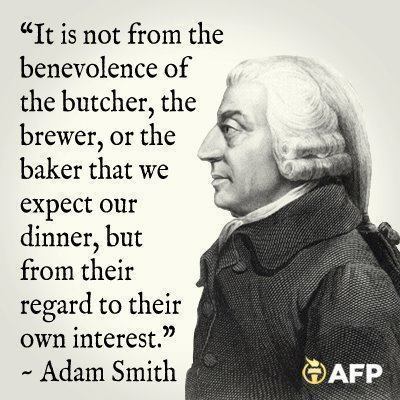
In other words,enlightened self interest (you can even call it “greed” if you prefer) is channeled productively in a free market system, as Adam Smith observed several hundred years ago.
Whoever put this together was quite clever to highlight the fact that people in the private sector generally buy in the top-left quadrant while people in government generally buy in the bottom-right quadrant.
And if you want to see the late Milton Friedman discuss this concept, here’s a video for your viewing pleasure.
Milton Friedman – The Four Ways to Spend Money
I’ll simply add a few observations. One of the reasons I often compare market-oriented nations and government-oriented nations is to highlight how countries are more likely to become prosperous when most resources are allocated by private decisions rather than political decisions.
Milton Friedman’s FREE TO CHOOSE “The Tyranny of Control” Transcript and Video (60 Minutes) In 1980 I read the book FREE TO CHOOSE by Milton Friedman and it really enlightened me a tremendous amount. I suggest checking out these episodes and transcripts of Milton Friedman’s film series FREE TO CHOOSE: “The Failure of Socialism” and […]
In 1980 I read the book FREE TO CHOOSE by Milton Friedman and it really enlightened me a tremendous amount. I suggest checking out these episodes and transcripts of Milton Friedman’s film series FREE TO CHOOSE: “The Failure of Socialism” and “What is wrong with our schools?” and “Created Equal” and From Cradle to Grave, […]
In 1980 I read the book FREE TO CHOOSE by Milton Friedman and it really enlightened me a tremendous amount. I suggest checking out these episodes and transcripts of Milton Friedman’s film series FREE TO CHOOSE: “The Failure of Socialism” and “What is wrong with our schools?” and “Created Equal” and From Cradle to Grave, […]
In 1980 I read the book FREE TO CHOOSE by Milton Friedman and it really enlightened me a tremendous amount. I suggest checking out these episodes and transcripts of Milton Friedman’s film series FREE TO CHOOSE: “The Failure of Socialism” and “What is wrong with our schools?” and “Created Equal” and From Cradle to Grave, […]
In 1980 I read the book FREE TO CHOOSE by Milton Friedman and it really enlightened me a tremendous amount. I suggest checking out these episodes and transcripts of Milton Friedman’s film series FREE TO CHOOSE: “The Failure of Socialism” and “What is wrong with our schools?” and “Created Equal” and From Cradle to Grave, […]
In 1980 I read the book FREE TO CHOOSE by Milton Friedman and it really enlightened me a tremendous amount. I suggest checking out these episodes and transcripts of Milton Friedman’s film series FREE TO CHOOSE: “The Failure of Socialism” and “What is wrong with our schools?” and “Created Equal” and From Cradle to Grave, […]
In 1980 I read the book FREE TO CHOOSE by Milton Friedman and it really enlightened me a tremendous amount. I suggest checking out these episodes and transcripts of Milton Friedman’s film series FREE TO CHOOSE: “The Failure of Socialism” and “What is wrong with our schools?” and “Created Equal” and From Cradle to Grave, […]
In 1980 I read the book FREE TO CHOOSE by Milton Friedman and it really enlightened me a tremendous amount. I suggest checking out these episodes and transcripts of Milton Friedman’s film series FREE TO CHOOSE: “The Failure of Socialism” and “What is wrong with our schools?” and “Created Equal” and From Cradle to Grave, […]
Open letter to President Obama (Part 654) (Emailed to White House on July 22, 2013) President Obama c/o The White House 1600 Pennsylvania Avenue NW Washington, DC 20500 Dear Mr. President, I know that you receive 20,000 letters a day and that you actually read 10 of them every day. I really do respect you […]
Open letter to President Obama (Part 650) (Emailed to White House on July 22, 2013) President Obama c/o The White House 1600 Pennsylvania Avenue NW Washington, DC 20500 Dear Mr. President, I know that you receive 20,000 letters a day and that you actually read 10 of them every day. I really do respect you […]
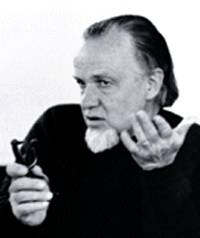
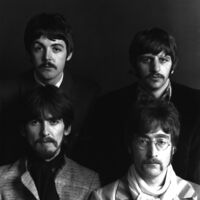
The Beatles are featured in this episode below by Francis Schaeffer:
The Beatles were looking for lasting satisfaction in their lives and their journey took them down many of the same paths that other young people of the 1960’s were taking INCLUDING THE PATH OF PSYCHEDELIC MUSIC AND FRAGMENTATION. No wonder in the video THE AGE OF NON-REASON Schaeffer noted, ” Sergeant Pepper’s Lonely Hearts Club Band…for a time it became the rallying cry for young people throughout the world. It expressed the essence of their lives, thoughts and their feelings.”
_____
Francis Schaeffer correctly noted:
In this flow there was also the period of psychedelic rock, an attempt to find this experience without drugs, by the use of a certain type of music. This was the period of the Beatles’ Revolver (1966) and Strawberry Fields Forever (1967). In the same period and in the same direction was Blonde on Blond (1966) by Bob Dylan….No great illustration could be found of the way these concepts were carried to the masses than “pop” music and especially the work of the BEATLES. The Beatles moved through several stages, including the concept of the drug and psychedelic approach. The psychedelic began with their records REVOLVER, STRAWBERRY FIELDS FOREVER, AND PENNY LANE. This was developed with great expertness in their record SERGEANT PEPPER’S LONELY HEARTS CLUB BAND in which psychedelic music, with open statements concerning drug-taking, was knowingly presented as a religious answer.
The song begins with a distinctive electric harpsichord intro played by producer George Martin. The harpsichord is joined by Lennon’s guitar (mimicking the harpsichord line) played through a Leslie speaker. Then vocals and bass guitar enter.
“Because” was one of few Beatles recordings to feature a Moog synthesiser, played by George Harrison. It appears in what Alan Pollack refers to as the “mini-bridge”,[2] and then again at the end of the song.
According to Lennon, the song’s close musical resemblance to the first movement of Ludwig van Beethoven‘s Moonlight Sonata was no coincidence: “Yoko was playing Beethoven’s ‘Moonlight Sonata’ on the piano … I said, ‘Can you play those chords backwards?’, and wrote ‘Because’ around them. The lyrics speak for themselves … No imagery, no obscure references.”[1][3]
With regard to the controversy Lennon initiated by citing Beethoven’s “Moonlight Sonata” as an inspiration, musicologist Walter Everett notes that “both arpeggiate triads and seventh chords in C♯ minorin the baritone range of a keyboard instrument at a slow tempo, move through the submediant to ♭II and approach viidim7/IV via a common tone.”[4] But while acknowledging the unusual shared harmonies, Dominic Pedler notes that the relationship is not the result of reversing the order of the chords as Lennon suggested.[5]
“Because” concludes with a vocal fade-out on D dim, which keeps listeners in suspense as they wait for the return to the home key of C♯ minor. Mellers states that: “causality is released and there is no before and no after: because that flat supertonic is a moment of revelation, it needs no resolution.”[6] The D dim chord (and its accompanying melodic F♮) lingers until they resolve into the opening Am7 chord of “You Never Give Me Your Money“.
Between us, we also created a backing track with John playing a riff on guitar, me duplicating every note on an electronic harpsichord, and Paul playing bass. Each note between the guitar and harpsichord had to be exactly together, and as I’m not the world’s greatest player in terms of timing, I would make more mistakes than John did, so we had Ringo playing a regular beat on hi-hat to us through our headphones.
The main recording session for “Because” was on 1 August 1969, with vocal overdubs on 4 August, and a double-tracked Moog synthesiser overdub by Harrison on 5 August.[8] As a result, this was the last song on the album to be committed to tape, although there were still overdubs for other incomplete songs. This approach took extensive rehearsal, and more than five hours of extremely focused recording, to capture correctly. McCartney and Harrison both said it was their favourite track on Abbey Road. “They knew they were doing something special,” said engineer Geoff Emerick, “and they were determined to get it right.” [9] Versions of the song without instrumentation can be found on 1996’s Anthology 3 and 2006’s Love. Both versions highlight the three-part harmony by Lennon, McCartney and Harrison, though the Love version is lengthened and includes overdubbed birdsong from “Across the Universe“.
Previously unseen footage of The Beatles shot during the making of a documentary about the Fab Four’s Magical Mystery Tour film has been made available .
Francis Schaeffer’s favorite album was SGT. PEPPER”S and he said of the album “Sergeant Pepper’s Lonely Hearts Club Band…for a time it became the rallying cry for young people throughout the world. It expressed the essence of their lives, thoughts and their feelings.” (at the 14 minute point in episode 7 of HOW SHOULD WE THEN LIVE? )
How Should We Then Live – Episode Seven – 07 – Portuguese Subtitles
John Baldessari, b. 1931
“Beethoven’s Trumpet (with Ear) Opus #132”, 2007
Foam, resin, aluminum, cold bronze, and electronics
John Baldessari’s Beethoven’s Trumpet (with Ear) Opus #132, 2007 is currently on view in Crystal Bridges’ 1940s to Now gallery. A popular artwork with children, the sculpture plays Beethoven when you clap or speak into the large ear-trumpet. Baldessari has created a huge body of work in many media over his career.
Today is Baldessari’s birthday; he was born June 17, 1931. I could write a pithy post about John Baldessari’s work and career, but I just don’t think there’s any better overview than the short video below, narrated by the inimitable Tom Waits.
Watch carefully and you’ll see Beethoven’s Trumpet (with Ear) Opus #132 in this video, as well as Baldessari’s cool Still Life app, which we are currently using in our interactive gallery adjacent to the American Encounters: The Simple Pleasures of Still Life exhibition.
“I guess a lot of it’s just lashing out, because I didn’t know how to be an artist, and all this time spent alone in the dark in these studios and importing my culture and constant questions. I’d say, ‘Well, why is this art? Why isn’t that art?'”
Synopsis
John Baldessari is renowned as a leading Californian Conceptual artist. Painting was important to his early work: when he emerged, in the early 1960s, he was working in a gestural style. But by the end of the decade he had begun to introduce text and pre-existing images, often doing so to create riddles that highlighted some of the unspoken assumptions of contemporary painting – as he once said, “I think when I’m doing art, I’m questioning how to do it.” And in the 1970s he abandoned painting altogether and made in a diverse range of media, though his interests generally centered on the photographic image. Conceptual art has shaped his interest in exploring how photographic images communicate, yet his work has little of the austerity usually associated with that style; instead he works with light humor, and with materials and motifs that also reflect the influence of Pop art. Baldessari has also been a famously influential teacher. His ideas, and his relaxed and innovative approach to teaching, have made an important impact on many, most notably the so-called Pictures Generation, whose blend of Pop and Conceptual art was prominent in the 1980s.
Key Ideas
Baldessari first began to move away from gestural painting when he started to work with materials from billboard posters. It prompted him to analyze how these very popular, public means of communication functioned, and it could be argued that his work ever since has done the same. He invariably works with pre-existing images, often arranging them in such a way as to suggest a narrative, yet the various means he employs to distort them – from cropping the images, to collaging them with unrelated images, to blocking out faces and objects with colored dots – all force us to ask how and what the image is communicating.
A crucial development in Baldessari’s work was the introduction of text to his paintings. It marked, for him, the realization that images and texts behave in similar ways – both using codes to convey their messages. Text began to disappear from his work in the early 1970s, and since then he has generally relied on collage, but his work has continued to operate with the same understanding of the coded character of images. Typically, he collages together apparently unrelated categories of image or motif, yet the result is to force us to recognize that those images often communicate similar messages.
On a visit to the Metropolitan Museum in New York in 1965, Baldessari was struck by the use of unpainted plaster to fill in missing shards of Greek vases. This prompted his interest in how images are effected by having portions removed or blotted out, and he has continued to explore this ever since. Often, the result of his alterations to photographs is to render them generic, suggesting to us that rather than capturing a special moment, or unusual event, photographs often communicate very standardized messages.
Most Important Art
I Am Making Art (1971)
In this video piece, Baldessari makes several arm movements, reciting the phrase, “I am making art,” after each gesture. Baldessari has always been conscious of the power of choice in artistic practice – like choosing to paint something red rather than blue, for example. Here, he carefully associates the choice of arm movements with the artistic choices that a painter or sculptor may make, concluding that choice is a form of art in itself. But he also confronts one of the fascinating problems that unpinned the work of many early Conceptual artists: how much can art be reduced and simplified before it stops being art at all? Baldessari offers no definitive answer, but he suggests that the gap between art and the ordinary, between art and life, may be imperceptible.
“Cutting Ribbon, Man In Wheelchair, Paintings (Version #2), 1988” shows John Baldessari’s signature technique, faces covered with colorful circles. The practice had its genesis when the artist idly stuck a price sticker on the face of someone pictured in a newspaper clipping.
Courtesy the artist/John Baldessari Studio
There are certain creations that have defined beauty for generations: Renoir’s pudgy, pink nude; Rothko’s brilliant blocks of color that seem to vibrate; Michelangelo’s naked young man in marble, with a slingshot on his shoulder.
In Venice, Calif., 81-year-old artist John Baldessari respects these definitions — and then turns them upside down. Baldessari is an icon in some art circles, especially in Southern California. Six-foot-seven, with long white hair and a beard, he’s been called “a towering figure.” Thoughtful and provocative, he has burned his own paintings, put colored dots over faces in photographs, and covered floors at the Los Angeles County Museum with a carpet of blue sky and puffy white clouds.
Lots of times, a Baldessari makes you smile, then go … “Huh?” In his sunny studio, the artist says he’s trying to slow us down, to look in new ways.
“You know, when you’re sitting in a dentist office or doctor’s office, and you look in a magazine and, and you go, ‘What was that?’ I would like people to have that feeling, you know, that, ‘Wait, what did I just see?’ ” Baldessari says with a laugh.
Like with the colored dots pasted onto photographs — they’re actually price stickers. Over the years he’d been collecting black-and-white news images — pictures of people at various civic occasions.
“I just got so tired of looking at these faces,” Baldessari says — faces of mayors shaking hands with firefighters, faces of local officials at ribbon-cutting ceremonies.
In 1985, in a fit of pique, Baldessari covered the faces with colored dots.
In 1970, John Baldessari burned everything he had painted between 1953 and 1966. “I said … ‘I don’t really need them.’ So I decided I’ll just destroy them.” After that, Baldessari turned to photography and sculpture.
Hedi Slimane/Courtesy the artist
“If you can’t see their face, you’re going to look at how they’re dressed, maybe their stance, their surroundings,” he explains. “You really do see that handshake. You know, it’s not about those guys, it’s about that handshake. It’s about cutting that ribbon.”
But aren’t the human faces the most interesting part? Why leave a viewer with only mundane objects — scissors and a piece of ribbon?
“Why do I leave it? Because I — I think you really sort of dig beneath the surface and you can see what that photograph is really about, what’s going on,” says Baldessari.
Michael Govan, director of the Los Angeles County Museum of Art (LACMA), understands.
“If you obliterate the face, then you begin to see the hands and the ribbon as full of meaning,” Govan says, “because no two ribbons, no two hands, no two ceremonies are the same.”
In Govan’s mind, that specific device — the colored dots — speaks to Baldessari’s technique more generally: “Sometimes he takes away the thing that’s most obvious in the center of your vision, forces you to look at everything else, almost for the first time, to make new sense of what you’re seeing.”
Govan calls Baldessari “one of the most influential artists working today,” a pioneer of “conceptual art,” where it’s the idea that counts — the idea in the artist’s head that becomes art in the heads of viewers as they try to puzzle it out.
LACMA curator Leslie Jones says Baldessari chews up the familiar and spits it out into something else.
“I’ve often thought of Baldessari’s work as kind of a surrealism for the media age, if that makes sense,” Jones says, “because he’s taking pre-existing imagery and reconfiguring it and creating new realities, or surrealities … from them.”
In 1970, Baldessari was painting in San Diego and, he says, getting nowhere. He had no gallery, no audience and no buyers for his pictures.
“And so I said, ‘Well, I’m just going to stop. I have them in my head. I don’t really need them,’ ” he says. “So I decided I’ll just destroy them.”
He took everything he’d painted from 1953 to 1966, found a mortuary and cremated all of it. Burned his body of work. Nine-and-a-half boxes of ashes later, he still has no regrets about losing any of them. It was a ritual act of purification. A farewell to the tradition of painting. And a rebirth for him. He turned to photography as his main medium of expression and communication — the modern medium, Baldessari believes.
“Pure Beauty,” shown here at the Metropolitan Museum of Art in New York in 2010, is one of John Baldessari’s many provocative “text paintings.”
Timothy A. Clary/AFP/Getty
He did save some “text paintings,” though. He was experimenting with using words in his work, and “Pure Beauty” is one example. Those two words, in black capital letters, on a painted white canvas. Jones, who curated a Baldessari show called “Pure Beauty,” says he was, again, trying to get us to think.
“What is pure beauty? And ultimately, pure beauty is a very subjective experience,” says Jones. “You know, it could be a painting by Rothko. It could be about color, it could be about a beautiful landscape. But ultimately, everyone’s notion of pure beauty is different. So, for me, this work is conveying that very idea, is that pure beauty is whatever you want to envision in your head.”
Govan says that from childhood on, we’re taught certain standards of beauty.
“You know something’s beautiful because somebody’s told you it’s beautiful, and so you’ll use that as the definition,” he says. “John’s trying to unmake that simple reference, that it’s beautiful because somebody else says it’s beautiful, and wants you to think about it. What are the constructs of beauty?”
So, just two simple words on a canvas … that can be pure beauty. It’s funny, this stuff. Makes you laugh — at first.
“I would say that John’s work possesses something like deep humor,” Govan reflects. “It’s funny, but … it leads you somewhere. It’s never a one-liner that ends there. It’s always based on some deep philosophy, consideration, reconsideration, way of seeing. It’s never just funny for the sake of being funny.”
Baldessari finds humor — in his work and in this world. Awhile ago, one of his text paintings sold for $4.4 million.
“You just have to laugh,” he says. “It’s my life. It’s what I do. … I suspect it’s, you know, by keeping my mind active, it’s keeping me, you know, alive.”
A smile, a farewell handshake, and John Baldessari gets back to work.
Related posts:
–
Francis Schaeffer’s favorite album was SGT. PEPPER”S and he said of the album “Sergeant Pepper’s Lonely Hearts Club Band…for a time it became the rallying cry for young people throughout the world. It expressed the essence of their lives, thoughts and their feelings.” (at the 14 minute point in episode 7 of HOW SHOULD WE THEN LIVE? )
How Should We Then Live – Episode Seven – 07 – Portuguese Subtitles
“Sergeant Pepper’s Lonely Hearts Club Band, became the rallying cry for young people throughout the world. It expressed the essence of their lives, thoughts and their feelings…” Francis Schaeffer (1912-1984). We take a look today at how the Beatles were featured in Schaeffer’s film. How Should We then Live Episode 7 small On You Tube […]
E P I S O D E 1 0 Dr. Francis Schaeffer – Episode X – Final Choices 27 min FINAL CHOICES I. Authoritarianism the Only Humanistic Social Option One man or an elite giving authoritative arbitrary absolutes. A. Society is sole absolute in absence of other absolutes. B. But society has to be […]
E P I S O D E 9 Dr. Francis Schaeffer – Episode IX – The Age of Personal Peace and Affluence 27 min T h e Age of Personal Peace and Afflunce I. By the Early 1960s People Were Bombarded From Every Side by Modern Man’s Humanistic Thought II. Modern Form of Humanistic Thought Leads […]
E P I S O D E 8 Dr. Francis Schaeffer – Episode VIII – The Age of Fragmentation 27 min I saw this film series in 1979 and it had a major impact on me. T h e Age of FRAGMENTATION I. Art As a Vehicle Of Modern Thought A. Impressionism (Monet, Renoir, Pissarro, Sisley, […]
E P I S O D E 7 Dr. Francis Schaeffer – Episode VII – The Age of Non Reason I am thrilled to get this film series with you. I saw it first in 1979 and it had such a big impact on me. Today’s episode is where we see modern humanist man act […]
E P I S O D E 6 How Should We Then Live 6#1 Uploaded by NoMirrorHDDHrorriMoN on Oct 3, 2011 How Should We Then Live? Episode 6 of 12 ________ I am sharing with you a film series that I saw in 1979. In this film Francis Schaeffer asserted that was a shift in […]
E P I S O D E 5 How Should We Then Live? Episode 5: The Revolutionary Age I was impacted by this film series by Francis Schaeffer back in the 1970′s and I wanted to share it with you. Francis Schaeffer noted, “Reformation Did Not Bring Perfection. But gradually on basis of biblical teaching there […]
Dr. Francis Schaeffer – Episode IV – The Reformation 27 min I was impacted by this film series by Francis Schaeffer back in the 1970′s and I wanted to share it with you. Schaeffer makes three key points concerning the Reformation: “1. Erasmian Christian humanism rejected by Farel. 2. Bible gives needed answers not only as to […]
Francis Schaeffer’s “How should we then live?” Video and outline of episode 3 “The Renaissance” Francis Schaeffer: “How Should We Then Live?” (Episode 3) THE RENAISSANCE I was impacted by this film series by Francis Schaeffer back in the 1970′s and I wanted to share it with you. Schaeffer really shows why we have so […]
Francis Schaeffer: “How Should We Then Live?” (Episode 2) THE MIDDLE AGES I was impacted by this film series by Francis Schaeffer back in the 1970′s and I wanted to share it with you. Schaeffer points out that during this time period unfortunately we have the “Church’s deviation from early church’s teaching in regard […]
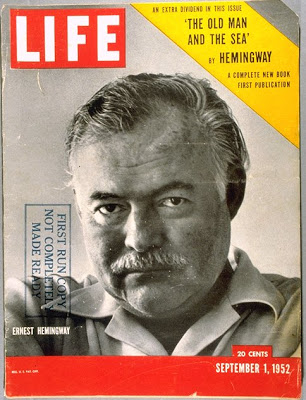
Summing up Hemingway is not as hard as I thought it was going to be. Hemingway was nihilistic in that he understood the problem of modern man UNDER THE SUN without God in the picture just like Solomon did in the Book of Ecclesiastes. MICHAEL NICHOLSON in the article below does a great job of evaluating Hemingway’s life in the light of Ecclesiastes. In fact, Hemingway named his book THE SUN ALSO RISES from the first chapter of Ecclesiastes and he seemed to be influenced by several of the verses from Ecclesiastes such as this example below:
“Happiness in intelligent people is the rarest thing I know” (Ernest Hemingway).
“For in much wisdom is much vexation, and he who increases knowledge increases sorrow” (Eccl. 2:18).
When this truth hit home with Hemingway then he drowned himself in his booze. Francis Schaeffer observed:
PAPA HEMINGWAY CAN FIND THE CHAMPAGNE OF PARIS SUFFICIENT FOR A TIME, BUT ONCE HE LEFT HIS YOUTH HE NEVER FOUND IT SUFFICIENT AGAIN. HE HAD A LIFETIME SPENT LOOKING BACK TO PARIS AND THAT CHAMPAGNEAND NEVER FINDING IT ENOUGH.
We live our lives bounded by those two mysteries, birth and death—our beginning and our end—and in between we stumble about in the dark, looking for the light, or at least for a good pair of existential shoes so we will not cut our feet quite so much on the sharp edges of Reality as we head for the Exit. What most of us find is ordinary life. The accidents of history have for now enclosed a space in which a wide swath of humanity—though not all of us, to be sure—experience ordinariness in the prosperity and pleasures of an industrialized and technologized world. With some effort, relative comfort and regular enjoyable experiences belong to us almost as a birthright. This is not necessarily bad. Go ahead, King Solomon said,
“Eat your food with gladness, and drink your wine with a joyful heart, for God has already approved what you do. Always be clothed in white, and always anoint your head with oil. Enjoy life with your wife, whom you love, all the days of this meaningless life that God has given you under the sun …” (Ecclesiastes 9:7-9).
You might as well enjoy yourself. Work hard, eat, drink, dress well, and make love with your wife while you can, “for in the realm of the dead, where you are going, there is neither working nor planning nor knowledge nor wisdom” (Ecclesiastes 9:10). Is Solomon sincerely offering helpful advice here, or is he just being ironic, to make a point? Duane Garrett, a Southern Baptist Old Testament scholar, says that Solomon “anticipates the existentialists” in their perception of the absurdities of life. Indeed, he does. From Kierkegaard and Nietzsche to Camus and Sartre, from Dostoevsky to Hemingway, the existential philosophers and writers explored as best they could the realms of absurdity and death, as Solomon had thousands of years before. In the 20th century, the mystery of sex was added to the Existentialist mix. But Solomon had been there first, too.
Solomon wrote the two most indigestible books of the Bible, Song of Songs andEcclesiastes. The former sings the delights of physical love between a man and a woman, replete with carnal metaphors and allusions—“your breasts are like two fawns.” The latter teaches that the course of this earthly life, shut up “under the sun,” is ultimately hebel—meaningless, futile, a chasing after the wind—since the prize and the glory for all who run the race is always the same—the silence of the grave. Sex and Death.
Sex, but Song of Songs is never tawdry or titillating. It is eros poetically restrained, a song of romantic love and consummation constrained within the boundaries of committed love and marriage. Constrained, yet still exuberant, and finally exultant: “Love is as strong as death, its passion intense as the grave. It burns like a blazing fire, like a mighty flame.” (Song of Songs 8:6). Yet even in the midst of celebration and the pledge that somehow love touches the eternal, comes the reminder that physical passion and intimacy, like everything else, is transitory; love may be strong but the grave is inexorable.
Death, but Ecclesiastes is never morbid or obsessive. It is down to earth reality, an unflinching look at the stamp of futility that death impresses on all merely earthly pursuits. Wealth, fame, ambition, achievement, pleasure; they never grant us immortality, they never gain eternity, they all blow away like dust in the wind. Who can argue with this logic? “Utterly meaningless! Everything is meaningless” (Ecclesiastes 1:2). And wisdom may be better than foolishness, but it still won’t stop time: “Like the fool, the wise man too must die!” (Ecclesiastes 2:16). Live long enough and life itself may lose its taste and turn to ashes in your mouth: “All things are wearisome, more than one can say. The eye is never satisfied with seeing, nor the ear with hearing.” Under the aspect of temporality everything eventually loses its shine: “There is nothing new under the sun.”
It’s certainly not Solomon’s fault, then, when the human race recycles the same game with each passing generation, expects different results, and yet is disappointed each time. Albert Camus, the French atheist existentialist, compared Man’s predicament to the Greek myth of Sisyphus, the man condemned by the gods to “ceaselessly rolling a rock to the top of a mountain, whence the stone would fall back of its own weight. They had thought with some reason that there is no more dreadful punishment than futile and hopeless labor.” Camus was right to make the comparison, but he was wrong to proclaim that this absurd labor can “take place in joy.” Maybe we can be happy for awhile; there is nothing wrong with enjoying the honest, innocent, and even passionate pleasures of our few days here on earth. But true joy? That’s not to be had “under the sun.” What’s the existential man, or woman, to do?
The existential approach to life, like sexuality and high explosives, has the capacity to do damage if not constrained and channeled. Yet, equally, it can both strip away the overburden of the debris of ordinary life, revealing the bare bedrock of human existence, and also create the space—the possibility—of true encounter and real relationship. Taken wrong, the existential sensibility can seem little more than “eat, drink, and be merry for tomorrow we die.” Yet taken right, it can say “enjoy the journey when you can, but do not lose sight of the destination, and never forget that an accounting is inevitably due: ‘For God will bring every deed into judgment, including every hidden thing, whether it is good or evil’ (Ecclesiastes 12:14).”
I use the term “existentialism” only as a convenience; there is no such philosophical system as Existentialism. On the one hand, an existential frame of mind will cordially distrust any sealed-off, overly structured system of thought, be it Platonism, Calvinism, Marxism, or Veganism. On the other hand, however, the idiot sing-song, the mindless chant often rising from the postmodern landscape—“What’s true for you isn’t true for me”— bestirs both concerned compassion and disgust, something like a mother or father’s reaction to baby puke. No, the chastened, constrained existentialist says, there really is Truth, hard as it may be to find and acknowledge, and sometimes the truth hurts very much. There are hard edges to Reality, and they will not bend or soften to suit your wishes.
No sealed-off “foolproof” system is adequate to actual human living. No “airtight” theology survives contact with real existence. But any journey requires a map, even if it’s only a set of mental way-points, and from where we get our maps makes a difference as to where we end up. This is particularly clear in the life, writing, and death of Ernest Hemingway.
As Hemingway-biographer, Michael Reynolds wrote, “Hemingway was existential long before the word was current.” This was true of Hemingway’s life as well as his writing. In fact, it is impossible for anyone to be existential in writing without being existential in life. Hemingway’s pas de trois with sex and death is well-known, but the core of his existential effort, personal as well as literary, was the quest for grace. Every Hemingway code hero—Nick Adams, Jake Barnes, Frederic Henry, Robert Jordan, Harry Morgan, Thomas Hudson, the matadors of Death in the Afternoon, the old fisherman Santiago—sought “grace under pressure,” a phrase Hemingway himself coined. This grace was cool-headedness in the midst of violence and chaos, resolve in the face of inevitable loss and failure, and poise at the approach of death. This was the grace Hemingway himself sought all his life and never gained.
But this is manufactured “grace,” cobbled together of equal parts worked-up courage and personal ritual. It is hard individual effort, reliance on character, and aesthetic self-making. It is works. There is actually no grace in this “grace.” It is spiritual only in a vague, attenuated sense and religious only abstractly, as a purely personal, subjective sacrament. Hemingway’s spiritual and religious views were deeply ambivalent. To call him a Believer would empty that term of solid meaning, but to call him an Atheist is just propaganda. Grasping atheists are fond of the quote from A Farewell to Arms: “All thinking men are atheists.” But this is not Hemingway, nor even his alter ego, Frederic Henry. It is a major in the Italian Army speaking, not the main, or even a particularly sympathetic, character. Just as well, or better, to quote Jake Barnes in The Sun Also Rises, “I’m pretty religious,” and then call Hemingway a saint. What is true is that religion and the question of God never go away throughout the entire Hemingway oeuvre. To miss this is the same error as missing Melville’s struggle with his own Calvinist demons and thinking Moby Dick is just a tale about hunting a whale.
Hemingway wrote eloquently and stylishly about human struggle and failure, loss and death, relationships, love and, yes, sex. But he was a man profoundly disappointed with life, which included his disappointment with religion, and his disappointment with God. Of Hemingway’s discouragement with the failure of Catholicism in particular to provide him comfort or assuage his sense of guilt, Hemingway scholar Kenneth Lynn wrote, “he … adopted a privately formed and far more pessimistic religious vision which stressed that human life was hopeless, that God was indifferent, and that the cosmos was a vast machine meaninglessly rolling on into eternity.” At the last, Hemingway despaired and took his own life.
That almost sounds like something Qohelet—Solomon as the Teacher—might have felt, and wrote, and done at the end of Ecclesiastes. After a rambling, personal disquisition on the meaninglessness of all human endeavor and achievement; after finding no lasting satisfaction from wine, women, and song; after seeing that “time and chance happen to us all”; and that death, the final disappointment, takes everyone, shouldn’t Solomon have ended up in the same place as Hemingway? But he did not. Why not? Because Solomon had a different map, a map not of his own self-making, and not a personal code of manly grace under pressure. Solomon’s map allowed him to admit defeat without despair. The map, of course wasTorah, the law and the commandments, and, most importantly in these circumstances, the instruction of the LORD, the covenant God of Israel.
Hemingway’s existentialism failed him because it ended as it began, with the assumptions of an indifferent God in an indifferent universe, and the sufficienc of the self. Hemingway, as accomplished a man and writer as he was, patched his worldview together only from the broken pieces of a difficult youth, the disaffection and disenchantment of the post-World War I generation, and the deep themes of alienation and abandonment that had already overtaken modernist literature. Solomon, too, tried his hand at personal worldview making. He not only made himself, he made an empire. And when in hishubris he turned away from the LORD, the God of Israel, he lived long enough to hear God tell him, “Since this is your attitude . . . I will most certainly tear the kingdom away from you” (1 Kings11:11).
Solomon’s existentialism showed him what Hemingway would also realize, that a man’s life “under the sun” is hebel—vapor—a chasing after the wind. But Solomon’s existential journey was also a return, to the God who alone gives meaning to life. I imagine, and I think it is consonant with Scripture, that Solomon wrote Ecclesiastes toward the end of his life. And I believe that, chastened and contrite, he was offering the broken pieces of his life back to God, who graciously accepted the offering. The last of Ecclesiastes is eloquently cautionary: “Remember your Creator while you are still young, before the days of despair come and the years draw near of which you will say, ‘I find no pleasure in any of this’ ” (Ecclesiastes 12:1); “Fear God and keep his commandments, for this is what being a man is all about” (Ecclesiastes 12:13). Maybe if Hemingway had listened to this he would have understood what true manhood is, and maybe he would have lived to find light beyond despair. Kenneth Lynn writes of Hemingway the art lover, that he was “deeply in love with the image of Jesus Christ crucified.” Perhaps even in his desolation, there was a part of Hemingway, deeply buried, that was in love with the real Jesus Christ crucified. Wouldn’t it be pretty to think so?
_
Midnight in Paris (2011) Scene: “What are you writing?”/’Hemingway’.
This series deals with the Book of Ecclesiastes and Woody Allen films. The first post dealt with MAGIC IN THE MOONLIGHT and it dealt with the fact that in the Book of Ecclesiastes Solomon does contend like Hobbes and Stanley that life is “nasty, brutish and short” and as a result has no meaning UNDER THE SUN.
The movie MIDNIGHT IN PARISoffers many of the same themes we see in Ecclesiastes. The second postlooked at the question: WAS THERE EVER A GOLDEN AGE AND DID THE MOST TALENTED UNIVERSAL MEN OF THAT TIME FIND TRUE SATISFACTION DURING IT?
In the third post in this series we discover in Ecclesiastes that man UNDER THE SUN finds himself caught in the never ending cycle of birth and death. The SURREALISTS make a leap into the area of nonreason in order to get out of this cycle and that is why the scene in MIDNIGHT IN PARIS with Salvador Dali, Man Ray, and Luis Bunuel works so well!!!! These surrealists look to the area of their dreams to find a meaning for their lives and their break with reality is only because they know that they can’t find a rational meaning in life without God in the picture.
The fourth post looks at the solution of WINE, WOMEN AND SONG and the fifthandsixth posts look at the solution T.S.Eliot found in the Christian Faith and how he left his fragmented message of pessimism behind. In theseventh post the SURREALISTS say that time and chance is all we have but how can that explain love or art and the hunger for God? The eighth post looks at the subject of DEATH both in Ecclesiastes and MIDNIGHT IN PARIS. In the ninth post we look at the nihilistic worldview of Woody Allen and why he keeps putting suicides into his films.
In the tenth post I show how Woody Allen pokes fun at the brilliant thinkers of this world and how King Solomon did the same thing 3000 years ago. In theeleventh postI point out how many of Woody Allen’s liberal political views come a lack of understanding of the sinful nature of man and where it originated. In thetwelfth post I look at the mannishness of man and vacuum in his heart that can only be satisfied by a relationship with God.
In the thirteenth postwe look at the life of Ernest Hemingway as pictured in MIDNIGHT AND PARIS and relate it to the change of outlook he had on life as the years passed. In the fourteenth post we look at Hemingway’s idea of Paris being a movable feast. The fifteenth andsixteenth posts both compare Hemingway’s statement, “Happiness in intelligent people is the rarest thing I know…” with Ecclesiastes 2:18 “For in much wisdom is much vexation, and he who increases knowledge increases sorrow.” The seventeenth post looks at these words Woody Allen put into Hemingway’s mouth, “We fear death because we feel that we haven’t loved well enough or loved at all.”
In MIDNIGHT IN PARIS Hemingway and Gil Pender talk about their literary idol Mark Twain and the eighteenth post is summed up nicely by Kris Hemphill‘swords, “Both Twain and [King Solomon in the Book of Ecclesiastes] voice questions our souls long to have answered: Where does one find enduring meaning, life purpose, and sustainable joy, and why do so few seem to find it? The nineteenth postlooks at the tension felt both in the life of Gil Pender (written by Woody Allen) in the movie MIDNIGHT IN PARIS and in Mark Twain’s life and that is when an atheist says he wants to scoff at the idea THAT WE WERE PUT HERE FOR A PURPOSE but he must stay face the reality of Ecclesiastes 3:11 that says “God has planted eternity in the heart of men…” and THAT CHANGES EVERYTHING! Therefore, the secular view that there is no such thing as love or purpose looks implausible. The twentieth post examines how Mark Twain discovered just like King Solomon in the Book of Ecclesiastes that there is no explanation for the suffering and injustice that occurs in life UNDER THE SUN. Solomon actually brought God back into the picture in the last chapter and he looked ABOVE THE SUN for the books to be balanced and for the tears to be wiped away.
The twenty-first post looks at the words of King Solomon, Woody Allen and Mark Twain that without God in the picture our lives UNDER THE SUN will accomplish nothing that lasts. The twenty-second postlooks at King Solomon’s experiment 3000 years that proved that luxuries can’t bring satisfaction to one’s life but we have seen this proven over and over through the ages. Mark Twain lampooned the rich in his book “The Gilded Age” and he discussed get rich quick fever, but Sam Clemens loved money and the comfort and luxuries it could buy. Likewise Scott Fitzgerald was very successful in the 1920’s after his publication of THE GREAT GATSBY and lived a lavish lifestyle until his death in 1940 as a result of alcoholism.
In the twenty-third postwe look at Mark Twain’s statement that people should either commit suicide or stay drunk if they are “demonstrably wise” and want to “keep their reasoning faculties.” We actually see this play out in the film MIDNIGHT IN PARIS with the character Zelda Fitzgerald. In the twenty-fourth, twenty-fifth and twenty-sixth posts I look at Mark Twain and the issue of racism. In MIDNIGHT IN PARIS we see the difference between the attitudes concerning race in 1925 Paris and the rest of the world.
The twenty-seventh and twenty-eighth posts are summing up Mark Twain. In the 29th post we ask did MIDNIGHT IN PARIS accurately portray Hemingway’s personality and outlook on life? and in the 30th postthe life and views of Hemingway are summed up.
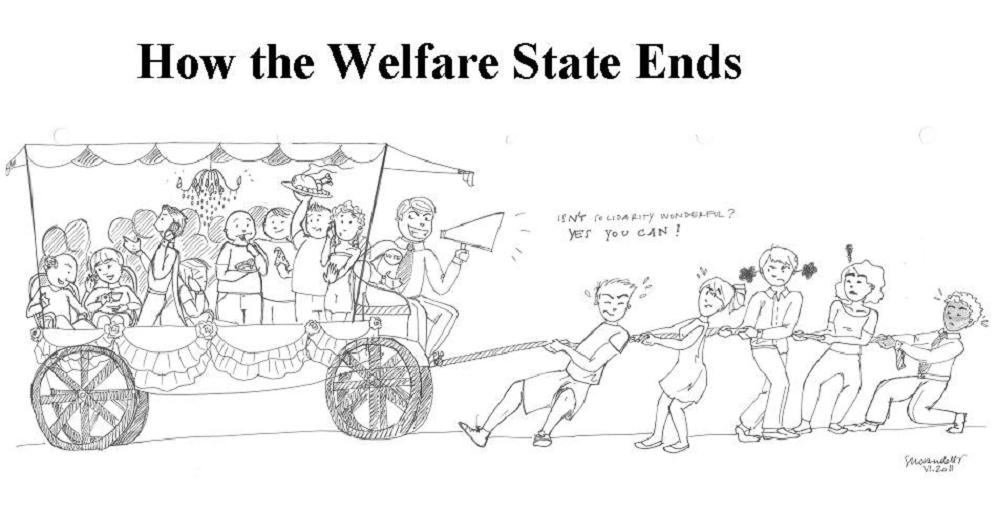
In my speeches, especially when talking about the fiscal crisis in Europe (or the future fiscal crisis in America), I often warn that the welfare state reaches a point-of-no-return when the number of people riding in the wagon begins to outnumber the number of people pulling the wagon.
To be more specific, if more than 50 percent of the population is dependent on government (employed in the bureaucracy, living off welfare, receiving pensions, etc), it becomes rather difficult to form a coalition to fix the mess. This may explain why Greek politicians have resisted significant reforms, even though the nation faces a fiscal death spiral.
But you don’t need me to explain this relationship. One of our Cato interns, Silvia Morandotti, used her artistic skills to create two images (click pictures for better resolution) that show what a welfare state looks like when it first begins and what it eventually becomes.
These images are remarkably accurate. The welfare state starts with small programs targeted at a handful of genuinely needy people. But as politicians figure out the electoral benefits of expanding programs and people figure out the that they can let others work on their behalf, the ratio of producers to consumers begins to worsen.
Then things get really interesting. Small nations such as Greece can rely on permanent bailouts from bigger countries and the IMF, but sooner or later, as larger nations begin to go bankrupt, that approach won’t be feasible.
I often conclude my speeches by joking with the audience that it’s time to stock up on canned goods, bottled water, and ammo. Many people, I’m finding, don’t think that line very funny.
___________________
The Department of Health and Human Services administers the huge and fast-growing Medicare and Medicaid programs. These programs fuel rising health costs, distort health markets, and are plagued by waste and fraud. The department also runs an array of other expensive subsidy programs, including Head Start, TANF, and LIHEAP. Growth in HHS spending is creating a federal financial crisis, and the 2010 health care law sadly makes the situation worse.
The department will spend $910 billion in 2011, or $7,710 for every U.S. household. It employs 68,000 workers and runs more than 420 subsidy programs.
Here are proposed reforms to save $81 billion annually in the short-run and prevent federal health costs from consuming a growing share of the economy in the long-run.
Downsize This!
Medicare Reforms. Medicare should be transformed into a system based on vouchers, individual savings, and competitive insurance markets.
Medicaid Reforms. Federal spending on low-income health care should be converted to block grants for the states.
TANF and Welfare Spending. Welfare reforms in 1996 created Temporary Assistance for Needy Families, but this sort of aid should be provided by private charities.
Head Start and Other Subsidies. HHS funds a vast array of other subsidy programs, many of which are wasteful and ineffective.
2010 Health Care Legislation. The law expanded Medicaid, added new taxes and subsidies, created new bureaucracies, and did little to reduce cost growth in health care.
“The government of the United States is a definite government, confined to specified objects. It is not like the state governments, whose powers are more general. Charity is no part of the legislative duty of the government.”
– James Madison. A paraphrase from Elliot’s Debates regarding a proposed subsidy bill, House of Representatives, January 10, 1794.
____________ Levin on Milton Friedman: ‘One Thing to Have Free Immigration to Jobs, Another for Welfare’ By Michael Morris | January 16, 2015 | 5:12 PM EST During his show on January 15, 2015, Nationally syndicated radio host Mark Levin recalled the famed economist Milton Friedman and explored an important reason why open immigration, despite […]
_____________________ Levin on Milton Friedman: ‘One Thing to Have Free Immigration to Jobs, Another for Welfare’ By Michael Morris | January 16, 2015 | 5:12 PM EST During his show on January 15, 2015, Nationally syndicated radio host Mark Levin recalled the famed economist Milton Friedman and explored an important reason why open immigration, despite […]
Open letter to President Obama (Part 691) Milton Friedman (Emailed to White House on 6-25-13.) President Obama c/o The White House 1600 Pennsylvania Avenue NW Washington, DC 20500 Dear Mr. President, I know that you receive 20,000 letters a day and that you actually read 10 of them every day. I really do respect you for trying to […]
Open letter to President Obama (Part 683) Milton Friedman (Emailed to White House on 6-25-13.) President Obama c/o The White House 1600 Pennsylvania Avenue NW Washington, DC 20500 Dear Mr. President, I know that you receive 20,000 letters a day and that you actually read 10 of them every day. I really do respect you for trying to […]
I have written about the tremendous increase in the food stamp program the last 9 years before and that means that both President Obama and Bush were guilty of not trying to slow down it’s growth. Furthermore, Republicans have been some of the biggest supporters of the food stamp program. Milton Friedman had a good […]
_____________________________________ Milton Friedman On Charlie Rose (Part One) The late Milton Friedman discusses economics and otherwise with Charlie Rose. _________________________________________ Milton Friedman: Life and ideas – Part 01 Milton Friedman: Life and ideas A brief biography of Milton Friedman _____________________________________ Stossel – “Free to Choose” (Milton Friedman) 1/6 6-10-10. pt.1 of 6. Stossel discusses Milton […]
I have written about the tremendous increase in the food stamp program the last 9 years before and that means that both President Obama and Bush were guilty of not trying to slow down it’s growth. Furthermore, Republicans have been some of the biggest supporters of the food stamp program. Milton Friedman had a […]
Milton Friedman did not favor free immigration with existing welfare state in USA Milton Friedman – Illegal Immigration – PT 2 Uploaded on Dec 18, 2009 (2 of 2) Professor Friedman fields a question on the dynamics of illegal immigration ________________ Heritage Responds to Senator Rubio on Immigration Study Amy Payne May 8, 2013 at […]
The best way to destroy the welfare trap is to put in Milton Friedman’s negative income tax. A Picture of How Redistribution Programs Trap the Less Fortunate in Lives of Dependency I wrote last year about the way in which welfare programs lead to very high implicit marginal tax rates on low-income people. More specifically, they […]
Testing Milton Friedman: Free Markets – Full Video Hong Kong and the Miracle of Compounding Long-Run Growth March 11, 2016 by Dan Mitchell Hong Kong is a truly remarkable jurisdiction. Can you name, after all, another government in the world that brags about how little it spends on redistribution programs andhow few people are dependent on […]

 That’s sort of a macro perspective.


:format(jpeg):mode_rgb():quality(40)/discogs-images/A-82730-1519052220-3776.jpeg.jpg)







 making, and not a personal code of manly grace under pressure. Solomon’s map allowed him to admit defeat without despair. The map, of course wasTorah, the


 The Daily Hatch