and you will hear what far smarter people than I have to say on this matter. I agree with them.
Harry Kroto
I have attempted to respond to all of Dr. Kroto’s friends arguments and I have posted my responses one per week for over a year now. Here are some of my earlier posts:
Sir Andrew Fielding HuxleyOMPRS (22 November 1917 – 30 May 2012) was a Nobel Prize-winning English physiologist and biophysicist.[1][2] He was born into the prominent Huxley family. After graduating from Westminster School in Central London, from where he won a scholarship to Trinity College, Cambridge, he joined Alan Lloyd Hodgkin to study nerve impulses. Their eventual discovery of the basis for propagation of nerve impulses (called an action potential) earned them the Nobel Prize in Physiology or Medicine in 1963. They made their discovery from the giant axon of the Atlantic squid. Soon after the outbreak of the Second World War, Huxley was recruited by the British Anti-Aircraft Command and later transferred to the Admiralty. After the war he resumed research at The University of Cambridge, where he developed interference microscopy that would be suitable for studying muscle fibres. In 1952 he was joined by a German physiologist Rolf Niedergerke. Together they discovered in 1954 the mechanism of muscle contraction, popularly called the “sliding filament theory“, which is the foundation of our modern understanding of muscle mechanics. In 1960 he became head of the Department of Physiology at University College London. He was elected a Fellow of theRoyal Society in 1955, and President in 1980. The Royal Society awarded him the Copley Medal in 1973 for his collective contributions to the understanding of nerve impulses and muscle contraction. He was conferred a Knight Bachelor by Queen Elizabeth II in 1974, and was appointed to the Order of Merit in 1983. He was a fellow of Trinity College, Cambridge, until his death.
Huxley was born in Hampstead, London, England, on 22 November 1917. He was the youngest son of the writer and editor Leonard Huxley by Leonard Huxley’s second wife Rosalind Bruce, and hence half-brother of the writer Aldous Huxley and fellow biologist Julian Huxley, and grandson of the biologist T. H. Huxley.
When he was about 12, Andrew and his brother David were given a lathe by their parents. Andrew soon became proficient at designing, making and assembling mechanical objects of all kinds, from wooden candle sticks to a working internal combustion engine. He used these practical skills throughout his career, building much of the specialized equipment he needed for his research. It was also in his early teens that he formed his lifelong interest in microscopy.[3]
Having entered Cambridge in 1935, Huxley graduated with a bachelor’s degree in 1938. In 1939, Alan Lloyd Hodgkin returned from the USA to take up a fellowship at Trinity College, and Huxley became one of his postgraduate students. Hodgkin was interested in the transmission of electrical signals along nerve fibres. Beginning in 1935 in Cambridge, he had made preliminary measurements on frog sciatic nerves suggesting that the accepted view of the nerve as a simple, elongated battery was flawed. Hodgkin invited Huxley to join him researching the problem. The work was experimentally challenging. One major problem was that the small size of most neurons made it extremely difficult to study them using the techniques of the time. They overcame this by working at the Marine Biological Association laboratory in Plymouth using the giant axon of the Atlantic squid (Loligo pealei), which have the largest neurons known. The experiments were still extremely challenging as the nerve impulses only last a fraction of a millisecond, during which time they needed to measure the changing electrical potential at different points along the nerve. Using equipment largely of their own construction and design, including one of the earliest applications of a technique of electrophysiology known as the voltage clamp, they were able to record ionic currents. In 1939, they jointly published a short paper in Nature reporting on the work done in Plymouth and announcing their achievement of recording action potentials from inside a nerve fibre.[6]
Then World War II broke out, and their research was abandoned. Huxley was recruited by the British Anti-Aircraft Command, where he worked on radar control of anti-aircraft guns. Later he was transferred to the Admiralty to do work on naval gunnery, and worked in a team led by Patrick Blackett. Hodgkin, meanwhile, was working on the development of radar at the Air Ministry. When he had a problem concerning a new type of gun sight, he contacted Huxley for advice. Huxley did a few sketches, borrowed a lathe and produced the necessary parts.
Huxley was elected to a research fellowship at Trinity College, Cambridge, in 1941. In 1946, with the war ended, he was able to take this up and to resume his collaboration with Hodgkin on understanding how nerves transmit signals. Continuing their work in Plymouth, they were, within six years, able to solve the problem using equipment they built themselves. The solution was that nerve impulses, or action potentials, do not travel down the core of the fiber, but rather along the outer membrane of the fiber as cascading waves of sodium ions diffusing inward on a rising pulse and potassium ions diffusing out on a falling edge of a pulse. In 1952, they published their theory of how action potentials are transmitted in a joint paper, in which they also describe one of the earliest computational models[7] in biochemistry. This model forms the basis of most of the models used in neurobiology during the following four decades.[8]
In 1952, having completed work on action potentials, Huxley was teaching physiology at Cambridge and became interested in another difficult, unsolved problem: how does muscle contract? To make progress on understanding the function of muscle, new ways of observing how the network of filaments behave during contraction were needed. Prior to the war, he had been working on a preliminary design for interference microscopy, which at the time he believed to be original, though it turned out to have been tried 50 years before and abandoned. He, however, was able to make interference microscopy work and to apply it to the problem of muscle contraction with great effect. He was able to view muscle contraction with greater precision than conventional microscopes, and to distinguish types of fiber more easily. By 1953, with the assistance of Rolf Niedergerke, he began to find the features of muscle movement. Around that time, Hugh Huxley and Jean Hanson came to a similar observation. Authored in pairs, their papers were simultaneously published in the 22 May 1954 issue of Nature.[9][10] Thus the four people introduced what is called the sliding filament theory of muscle contractions.[11] Huxley synthesized his findings, and the work of colleagues, into a detailed description of muscle structure and how muscle contraction occurs and generates force that he published in 1957.[12] In 1966 his team provided the proof of the theory, and has remained the basis of modern understanding of muscle physiology.[13]
Huxley held college and university posts in Cambridge until 1960, when he became head of the Department of Physiology at University College London. In 1963, he was jointly awarded the Nobel Prize in Physiology or Medicine for his part in discoveries concerning the ionic mechanisms of the nerve cell.[14] In 1969 he was appointed to a Royal Society Research Professorship, which he holds in the Department of Physiology at University College London.
In 1980, Huxley was elected as President of the Royal Society, a post he held until 1985. In his Presidential Address in 1981, he chose to defend the Darwinian explanation of evolution, as his ancestor, T. H. Huxley had in 1860. Whereas T. H. Huxley was defying the bishops of his day, Sir Andrew was countering new theories of periods of accelerated change. In 1983, he defended the Society’s decision to elect Margaret Thatcher as a fellow on the ground of her support for science even after 44 fellows had signed a letter of protest.
In 1984, he was elected Master of Trinity, succeeding his longtime collaborator, Sir Alan Hodgkin. His appointment broke the tradition that the office of Master of Trinity alternates between a scientist and an arts man. He was Master until 1990 and was fond of reminding interviewers that Trinity College had more Nobel Prize winners than did the whole of France. He maintained up to his death his position as a fellow at Trinity College, Cambridge, teaching inphysiology, natural sciences and medicine.[15] He was also a fellow of Imperial College London in 1980.[16]
From his experimental work with Hodgkin, Huxley developed a set of differential equations that provided a mathematical explanation for nerve impulses—the “action potential”. This work provided the foundation for all of the current work on voltage-sensitive membrane channels, which are responsible for the functioning of animal nervous systems. Quite separately, he developed the mathematical equations for the operation of myosin “cross-bridges” that generate the sliding forces between actin and myosin filaments, which cause the contraction of skeletal muscles. These equations presented an entirely new paradigm for understanding muscle contraction, which has been extended to provide understanding of almost all of the movements produced by cells above the level of bacteria. Together with the Swiss physiologist Robert Stämpfli, he evidenced the existence of saltatory conduction in myelinated nerve fibres.
Huxley, Alan Hodgkin and John Eccles jointly won the 1963 Nobel Prize in Physiology or Medicine “for their discoveries concerning the ionic mechanisms involved in excitation and inhibition in the peripheral and central portions of the nerve cell membrane”. Huxley and Hodgkin won the prize for experimental and mathematical work on the process of nerve action potentials, the electrical impulses that enable the activity of an organism to be coordinated by a central nervous system.[17] Eccles had made important discoveries on synaptic transmission.
In 1947, Huxley married Jocelyn “Richenda” Gammell (née Pease), the daughter of the geneticist Michael Pease (a son of Edward R. Pease) and his wife Helen Bowen Wedgwood, eldest daughter of the first Lord Wedgwood (see alsoDarwin-Wedgwood family). They had one son and five daughters – Janet Rachel Huxley (born 20 April 1948), Stewart Leonard Huxley (born 19 December 1949), Camilla Rosalind Huxley (born 12 March 1952), Eleanor Bruce Huxley (born 21 February 1959), Henrietta Catherine Huxley (born 25 December 1960), and Clare Marjory Pease Huxley (born 4 November 1962).
Huxley died on 30 May 2012. He was survived by his six children, grandchildren, and great-grandchildren. His wife Richenda, Lady Huxley died in 2003, aged 78. A funeral service was held in Trinity College Chapel on 13 June 2012, followed by a private cremation.[20]
Interview with Sir Andrew Huxley – part one
Interview with Sir Andrew Huxley, second part
Uploaded on Jan 2, 2012
An interview on the life and work of Sir Andrew Huxley, grand-son of T.H. Huxley, sometime Master of Trinity and Nobel Prize Winner.
Filmed on 7 November 2007 in his home.
All revenues to World Oral Literature Project
In the third video below in the 100th clip in this series are his words and my response is below them.
50 Renowned Academics Speaking About God (Part 1)
Another 50 Renowned Academics Speaking About God (Part 2
A Further 50 Renowned Academics Speaking About God (Part 3)
Andrew Huxley Quote:
Richenda (his late wife) was an agnostic as I am, a word invented by my grandfather (Thomas H. Huxley).
__________
One of my favorite messages by Adrian Rogers is called “WHO IS JESUS?”and he goes through the Old Testament and looks at the scriptures that describe the Messiah. I want to encourage you to listen to this audio message which I will send to anyone anywhere anytime. I have given thousands of these CD’s away over the years that contain this message and they all contain the following story from Adrian Rogers. Here is how the story goes:
Years ago Adrian Rogers counseled with a NASA scientist and his severely depressed wife. The wife pointed to her husband and said, “My problem is him.” She went on to explain that her husband was a drinker, a liar, and an adulterer. Dr. Rogers asked the man if he were a Christian. “No!” the man laughed. “I’m an atheist.”
“Really?” Dr. Rogers replied. “That means you’re someone who knows that God does not exist.”
“That’s right,” said the man.
“Would it be fair to say that you don’t know all there is to know in the universe?”
“Of course.”
“Would it be generous to say you know half of all there is to know?”
“Yes.”
“Wouldn’t it be possible that God’s existence might be in the half you don’t know?”
“Okay, but I don’t think He exists.”
“Well then, you’re not an atheist; you’re an agnostic. You’re a doubter.”
“Yes, and I’m a big one.”
“It doesn’t matter what size you are. I want to know what kind you are.”
“What kinds are there?”
“There are honest doubters and dishonest doubters. An honest doubter is willing to search out the truth and live by the results; a dishonest doubter doesn’t want to know the truth. He can’t find God for the same reason a thief can’t find a policeman.”
“I want to know the truth.”
“Would you like to prove that God exists?”
“It can’t be done.”
“It can be done. You’ve just been in the wrong laboratory. Jesus said, ‘If any man’s will is to do His will, he will know whether my teaching is from God or whether I am speaking on my own authority’ (John 7:17). I suggest you read one chapter of the book of John each day, but before you do, pray something like this, ‘God, I don’t know if You’re there, I don’t know if the Bible is true, I don’t know if Jesus is Your Son. But if You show me that You are there, that the Bible is true, and that Jesus is Your Son, then I will follow You. My will is to do your will.”
The man agreed. About three weeks later he returned to Dr. Rogers’s office and invited Jesus Christ to be his Savior and Lord.
Adrian Rogers is pictured below and Francis Schaeffer above.
Watching the film HOW SHOULD WE THEN LIVE? in 1979 impacted my life greatly
Francis Schaeffer in the film WHATEVER HAPPENED TO THE HUMAN RACE?
Francis and Edith Schaeffer
_______
On May 15, 1994 on the 10th anniversary of the passing of Francis Schaeffer I attempted to send a letter to almost every living Nobel Prize winner and I believe Dr. Andrew Huxley was probably among that group and here is a portion of that letter below:
I have enclosed a cassette tape by Adrian Rogers and it includes a story about Charles Darwin‘s journey from the position of theistic evolution to agnosticism. Here are the four bridges that Adrian Rogers says evolutionists can’t cross in the CD “Four Bridges that the Evolutionist Cannot Cross.” 1. The Origin of Life and the law of biogenesis. 2. The Fixity of the Species. 3.The Second Law of Thermodynamics. 4. The Non-Physical Properties Found in Creation.
In the first 3 minutes of the cassette tape is the hit song “Dust in the Wind.” Below I have given you some key points Francis Schaeffer makes about the experiment that Solomon undertakes in the book of Ecclesiastes to find satisfaction by looking into learning (1:16-18), laughter, ladies, luxuries, and liquor (2:1-3, 8, 10, 11), and labor (2:4-6, 18-20).
Schaeffer noted that Solomon took a look at the meaning of life on the basis of human life standing alone between birth and death “under the sun.” This phrase UNDER THE SUN appears over and over in Ecclesiastes. The Christian Scholar Ravi Zacharias noted, “The key to understanding the Book of Ecclesiastes is the term UNDER THE SUN — What that literally means is you lock God out of a closed system and you are left with only this world of Time plus Chance plus matter.”
Here the first 7 verses of Ecclesiastes followed by Schaeffer’s commentary on it:
The words of the Preacher, the son of David, king in Jerusalem. Vanity of vanities, says the Preacher, vanity of vanities! All is vanity. What does man gain by all the toil at which he toils under the sun? A generation goes, and a generation comes, but the earth remains forever. The sun rises, and the sun goes down, and hastens to the place where it rises. The wind blows to the south and goes around to the north; around and around goes the wind, and on its circuits the wind returns. All streams run to the sea, but the sea is not full; to the place where the streams flow, there they flow again.
Solomon is showing a high degree of comprehension of evaporation and the results of it. Seeing also in reality nothing changes. There is change but always in a set framework and that is cycle. You can relate this to the concepts of modern man. Ecclesiastes is the only pessimistic book in the Bible and that is because of the place where Solomon limits himself. He limits himself to the question of human life, life under the sun between birth and death and the answers this would give.
Solomon doesn’t place man outside of the cycle. Man doesn’t escape the cycle. Man is in the cycle. Birth and death and youth and old age.
There is no doubt in my mind that Solomon had the same experience in his life that I had as a younger man (at the age of 18 in 1930). I remember standing by the sea and the moon arose and it was copper and beauty. Then the moon did not look like a flat dish but a globe or a sphere since it was close to the horizon. One could feel the global shape of the earth too. Then it occurred to me that I could contemplate the interplay of the spheres and I was exalted because I thought I can look upon them with all their power, might, and size, but they could contempt nothing. Then came upon me a horror of great darkness because it suddenly occurred to me that although I could contemplate them and they could contemplate nothing yet they would continue to turn in ongoing cycles when I saw no more forever and I was crushed.
Let me show you some inescapable conclusions if you choose to live without God in the picture. Schaeffer noted that Solomon came to these same conclusions when he looked at life “under the sun.”
Death is the great equalizer (Eccl 3:20, “All go to the same place; all come from dust, and to dust all return.”)
Chance and time have determined the past, and they will determine the future. (Ecclesiastes 9:11-13 “I have seen something else under the sun: The race is not to the swift
or the battle to the strong, nor does food come to the wise or wealth to the brilliant or favor to the learned; but time and chance happen to them all. Moreover, no one knows when their hour will come: As fish are caught in a cruel net, or birds are taken in a snare, so people are trapped by evil times that fall unexpectedly upon them.”)
Power reigns in this life, and the scales are not balanced(Eccl 4:1; “Again I looked and saw all the oppression that was taking place under the sun: I saw the tears of the oppressed—
and they have no comforter; power was on the side of their oppressors— and they have no comforter.” 7:15 “In this meaningless life of mine I have seen both of these: the righteous perishing in their righteousness, and the wicked living long in their wickedness. ).
Nothing in life gives true satisfaction without God including knowledge (1:16-18), ladies and liquor (2:1-3, 8, 10, 11), and great building projects (2:4-6, 18-20).
There is no ultimate lasting meaning in life. (1:2)
By the way, the final chapter of Ecclesiastes finishes with Solomon emphasizing that serving God is the only proper response of man. Solomon looks above the sun and brings God back into the picture in the final chapter of the book in Ecclesiastes 12:13-14, “ Now all has been heard; here is the conclusion of the matter: Fear God and keep his commandments, for this is the whole duty of man. For God will bring every deed into judgment, including every hidden thing, whether it is good or evil.”
The answer to find meaning in life is found in putting your faith and trust in Jesus Christ. The Bible is true from cover to cover and can be trusted. In 1978 I heard the song “Dust in the Wind” by Kansas when it rose to #6 on the charts. That song told me that Kerry Livgren the writer of that song and a member of Kansas had come to the same conclusion that Solomon had and that “all was meaningless UNDER THE SUN,” and looking ABOVE THE SUN was the only option. I remember mentioning to my friends at church that we may soon see some members of Kansas become Christians because their search for the meaning of life had obviously come up empty even though they had risen from being an unknown band to the top of the music business and had all the wealth and fame that came with that.
Livgren wrote, “All we do, crumbles to the ground though we refuse to see, Dust in the Wind, All we are is dust in the wind, Don’t hang on, Nothing lasts forever but the Earth and Sky, It slips away, And all your money won’t another minute buy.”
Both Kerry Livgren and Dave Hope of Kansas became Christians eventually. Kerry Livgren first tried Eastern Religions and Dave Hope had to come out of a heavy drug addiction. I was shocked and elated to see their personal testimony on The 700 Club in 1981. Livgren lives in Topeka, Kansas today where he teaches “Diggers,” a Sunday school class at Topeka Bible Church. Hope is the head of Worship, Evangelism and Outreach at Immanuel Anglican Church in Destin, Florida.
______________ George Harrison Swears & Insults Paul and Yoko Lucy in the Sky with Diamonds- The Beatles The Beatles: I have dedicated several posts to this series on the Beatles and I don’t know when this series will end because Francis Schaeffer spent a lot of time listening to the Beatles and talking […]
The Beatles in a press conference after their Return from the USA Uploaded on Nov 29, 2010 The Beatles in a press conference after their Return from the USA. The Beatles: I have dedicated several posts to this series on the Beatles and I don’t know when this series will end because Francis […]
__________________ Beatles 1966 Last interview I have dedicated several posts to this series on the Beatles and I don’t know when this series will end because Francis Schaeffer spent a lot of time listening to the Beatles and talking and writing about them and their impact on the culture of the 1960’s. In this […]
_______________ The Beatles documentary || A Long and Winding Road || Episode 5 (This video discusses Stg. Pepper’s creation I have dedicated several posts to this series on the Beatles and I don’t know when this series will end because Francis Schaeffer spent a lot of time listening to the Beatles and talking and writing about […]
_______________ Francis Schaeffer pictured below: _____________________ I have included the 27 minute episode THE AGE OF NONREASON by Francis Schaeffer. In that video Schaeffer noted, ” Sergeant Pepper’s Lonely Hearts Club Band…for a time it became the rallying cry for young people throughout the world. It expressed the essence of their lives, thoughts and their feelings.” How Should […]
Crimes and Misdemeanors: A Discussion: Part 1 ___________________________________ Today I will answer the simple question: IS IT POSSIBLE TO BE AN OPTIMISTIC SECULAR HUMANIST THAT DOES NOT BELIEVE IN GOD OR AN AFTERLIFE? This question has been around for a long time and you can go back to the 19th century and read this same […]
____________________________________ Francis Schaeffer pictured below: __________ Francis Schaeffer has written extensively on art and culture spanning the last 2000years and here are some posts I have done on this subject before : Francis Schaeffer’s “How should we then live?” Video and outline of episode 10 “Final Choices” , episode 9 “The Age of Personal Peace and Affluence”, episode 8 […]
Love and Death [Woody Allen] – What if there is no God? [PL] ___________ _______________ How Should We then Live Episode 7 small (Age of Nonreason) #02 How Should We Then Live? (Promo Clip) Dr. Francis Schaeffer 10 Worldview and Truth Two Minute Warning: How Then Should We Live?: Francis Schaeffer at 100 Francis Schaeffer […]
___________________________________ Francis Schaeffer pictured below: ____________________________ Francis Schaeffer “BASIS FOR HUMAN DIGNITY” Whatever…HTTHR Dr. Francis schaeffer – The flow of Materialism(from Part 4 of Whatever happened to human race?) Dr. Francis Schaeffer – The Biblical flow of Truth & History (intro) Francis Schaeffer – The Biblical Flow of History & Truth (1) Dr. Francis Schaeffer […]
It is with sadness that I write this post having learned of the death of Sir Harold Kroto on April 30, 2016 at the age of 76. He was a scientist of remarkable abilities and a man of great humor too.
I did not know Harry Kroto personally but I did have the opportunity to correspond with him in 2014. I sent him a letter in the spring and two in the summer and he responded with an email on 9-18-16 and I thanked him for responding in an email and then he emailed me again and even sent me a letter on 11-21-14. In that 11-21-14 letter he referred me to the You Tube film series Renowned Academics Speaking About God which has over 300,000 views on You Tube and that prompted me on 11-29-14 to start my blog series RESPONDING TO HARRY KROTO’S BRILLIANT RENOWNED ACADEMICS!! Below are the links to the posts I have already done on previous Tuesdays in this series:
Harry Kroto discusses…The Claim of Bacteria in Space – Fred Hoyle – Scientific Observations
Harry Kroto talks for over an hour on Fred Hoyle and I actually wrote about Fred Hoyle to Prof. C.J. van Rijsbergen, c/o Dept of Computing Science, University of Glasgow after hearing a clip by Dr. van Rijsbergen.
In the last correspondence I had with Harry Koto was on November 21, 2014 and I received a letter from Nobel Laureate Harry Kroto and it said:
and you will hear what far smarter people than I have to say on this matter. I agree with them.
Harry Kroto
A Further 50 Renowned Academics Speaking About God (Part 3)
_____________________________
Interview of computer scientist Keith van Rijsbergen, pt. 1
Interview of the computer scientist, Keith van Rijsbergen, pt. 2
In the video series Renowned Academics Speaking About God which features 150 academics in three consecutive videos I found this quote from Prof. C.J. van Rijsbergen in the third video in the 110th clip. Here is the letter I wrote:
March 13, 2015
Prof. C.J. van Rijsbergen, c/o Dept of Computing Science, University of Glasgow,
Dear Dr. C.J. van Rijsbergen,
I just finished reading the online addition of the book Darwin, Francis ed. 1892. Charles Darwin: his life told in an autobiographical chapter, and in a selected series of his published letters [abridged edition]. London: John Murray. There are several points that Charles Darwin makes in this book that were very wise, honest, logical, shocking and some that were not so wise. The Christian Philosopher Francis Schaeffer once said of Darwin’s writings, “Darwin in his autobiography and in his letters showed that all through his life he never really came to a quietness concerning the possibility that chance really explained the situation of the biological world. You will find there is much material on this [from Darwin] extended over many many years that constantly he was wrestling with this problem.”
I really enjoyed listening to your interview by Alan Macfarlane. Dr. Macfarlane has done so many wonderful in-depth interviews and yours with him was very good too. I noticed that you were educated under Fred Hoyle at Cambridge and that you also were interested in Dostoyevsky at one time.
Another apologetic based on the human predicament may be found in the magnificent novels of the great nineteenth-century Russian writer Fyodor Dostoyevsky (1821–1881). (May I add that I think the obsession of contemporary evangelicals with the writings of authors like C. S. Lewis to the neglect of writers like Dostoyevsky is a great shame? Dostoyevsky is a far, far grander writer.) The problem that tortured Dostoyevsky was the problem of evil: how can a good and loving God exist when the world is filled with so much suffering and evil? Dostoyevsky presented this problem in his works so persuasively, so poignantly, that certain passages of his, notably “The Grand Inquisitor” section from his Brothers Karamazov, are often reprinted in anthologies as classic statements of the problem of evil. As a result, some people are under the impression that Dostoyevsky was himself an atheist and that the viewpoint of the Grand Inquisitor is his own.
Actually, he sought to carry through a two-pronged defense of theism in the face of the problem of evil. Positively, he argued that innocent suffering may perfect character and bring one into a closer relation with God. Negatively, he tried to show that if the existence of God is denied, then one is landed in complete moral relativism, so that no act, regardless how dreadful or heinous, can be condemned by the atheist. To live consistently with such a view of life is unthinkable and impossible. Hence, atheism is destructive of life and ends logically in suicide.
Dostoyevsky’s magnificent novels Crime and Punishment and The Brothers Karamazov powerfully illustrate these themes. In the former a young atheist, convinced of moral relativism, brutally murders an old woman. Though he knows that on his presuppositions he should not feel guilty, nevertheless he is consumed with guilt until he confesses his crime and gives his life to God. The latter novel is the story of four brothers, one of whom murders their father because his atheist brother Ivan had told him that moral absolutes do not exist. Unable to live with the consequences of his own philosophical system, Ivan suffers a mental collapse. The remaining two brothers, one of whom is unjustly accused of the parricide and the other a young Russian orthodox priest, find in what they suffer the perfection of their character and a nearness to God.
Dostoyevsky recognizes that his response to atheism constitutes no positive proof of Christianity. Indeed, he rejects that there could be such. Men demand of Christ that he furnish them “bread and circuses,” but he refuses to do so. The decision to follow Christ must be made in loneliness and anxiety. Each person must face for himself the anguish of a world without God and in the solitude of his own heart give himself to God in faith….Finally, let’s look at the problem of purpose in life. Unable to live in an impersonal universe in which everything is the product of blind chance, atheists sometimes begin to ascribe personality and motives to the physical processes themselves. It is a bizarre way of speaking and represents a leap from the lower to the upper story. For example, the brilliant Russian physicists Zeldovich and Novikov, in contemplating the properties of the universe, ask, why did “Nature” choose to create this sort of universe instead of another? “Nature” has obviously become a sort of God-substitute, filling the role and function of God. Francis Crick halfway through his book The Origin of the Genetic Code begins to spell nature with a capital N and elsewhere speaks of natural selection as being “clever” and as “thinking” of what it will do. Sir Fred Hoyle, the English astronomer, attributes to the universe itself the qualities of God. For Carl Sagan the “Cosmos,” which he always spelled with a capital letter, obviously fills the role of a God-substitute. Though these men profess not to believe in God, they smuggle in a God-substitute through the back door because they cannot bear to live in a universe in which everything is the chance result of impersonal forces…Modern man no longer has any right to that support, since he rejects God. But in order to live purposefully, he makes a leap of faith to affirm a reason for living.
___________
Here are a couple of more quotes from -Sir Fred Hoyle, atheist, and a prominent astrophysicist of the 20th century.
“If you stir up simple nonorganic molecules like water, ammonia, methane, carbon dioxide and hydrogen cyanide with almost any form of intense energy … some of the molecules reassemble themselves into amino acids … demonstrated … byStanley Miller and Harold Urey. The … building blocks of proteins can therefore be produced by natural means. But this is far from proving that life could have evolved in this way. No one has shown that the correct arrangements of amino acids, like the orderings in enzymes, can be produced by this method. …. A junkyard contains all the bits and pieces of a Boeing 747, dismembered and in disarray. A whirlwind happens to blow through the yard. What is the chance that after its passage a fully assembled 747, ready to fly, will be found standing there? So small as to be negligible, even if a tornado were to blow through enough junkyards to fill the whole Universe.” (Hoyle, F., “The Intelligent Universe,” Michael Joseph: London, 1983, pp.18-19).
“If one proceeds directly…in this matter, without being deflected by a fear of incurring the wrath of scientific opinion, one arrives at the conclusion that biomaterialists (life forms) with their amazing measure of order must be the outcome of intelligent design.”
Recently I noticed this comment by you:
Martin Rees said, “I am a non-believing Christian.” I thought yeah that is exactly quite close to what I am. In other words, I understand and I accept the culture that we have has come out of Christianity, but just because I accept it and go along with it and admire it actually, doesn’t mean to say that I have to also believe in God.
Just like Charles Darwin you have come out this Christian culture and this exact quote made me think of you when I read the book Charles Darwin: his life told in an autobiographical chapter, and in a selected series of his published lettersbecause of what Darwin said on this same issue of intelligent design.I am going to quote some of Charles Darwin’s own words and then include the comments of Francis Schaeffer on those words. I have also enclosed a CD with two messages from Adrian Rogers and Bill Elliff concerning Darwinism.
“It is impossible to answer your question briefly; and I am not sure that I could do so, even if I wrote at some length. But I may say that the impossibility of conceiving that this grand and wondrous universe, with our conscious selves, arose through chance, seems to me the chief argument for the existence of God; but whether this is an argument of real value, I have never been able to decide…Nor can I overlook the difficulty from the immense amount of suffering through the world.I am aware that if we admit a First Cause,the mind still craves to know whence it came, and how it arose.”
Francis Schaeffer noted:
What he is saying is if you say there is a first cause, then the mind says, “Where did this come from?” I think this is a bit old fashioned, with some of the modern thinkers, this would not have carry as much weight today as it did when Darwin expressed it. Jean Paul Sartre said it as well as anyone could possibly say it. The philosophic problem is that something is there and not nothing being there. No one has the luxury of beginning with nothing. Nobody I have ever read has put forth that everything came from nothing. I have never met such a person in all my reading,or all my discussion. If you are going to begin with nothing being there, it has to be nothing nothing, and it can’t be something nothing. When someone says they believe nothing is there, in reality they have already built in something there. The only question is do you begin with an impersonal something or a personal something. All human thought is shut up to these two possibilities. Either you begin with an impersonal and then have Darwin’s own dilemma which impersonal plus chance, now he didn’t bring in the amount of time that modern man would though. Modern man has brought in huge amounts of time into the equation as though that would make a difference because I have said many times that time can’t make a qualitative difference but only a quantitative difference. The dilemma is it is either God or chance. Now you find this intriguing thing in Darwin’s own situation, he can’t understand how chance could have produced these two great factors of the universe and its form and the mannishness of man.
“Another source of conviction in the existence of God, connected with the reason and not with the feelings, impresses me as having much more weight. This follows from the extreme difficulty or rather impossibility of conceiving this immense and wonderful universe, including man with his capacity of looking far backwards and far into futurity, as the result of blind chance or necessity. When thus reflecting, I feel compelled to look to a First Cause having an intelligent mind in some degree analogous to that of man; and I deserve to be called a Theist. This conclusion was strong in my mind about the time, as far as I can remember, when I wrote the Origin of Species, and it is since that time that it has very gradually, with many fluctuations, become weaker. But then arises the doubt…”
Francis Schaeffer commented:
On the basis of his reason he has to say there must be an intelligent mind, someone analogous to man. You couldn’t describe the God of the Bible better. That is man is made in God’s image and therefore, you know a great deal about God when you know something about man. What he is really saying here is that everything in my experience tells me it must be so, and my mind demands it is so. Not just these feelings he talked about earlier but his MIND demands it is so, but now how does he counter this? How does he escape this? Here is how he does it!!!
Charles Darwin went on to observe: “—can the mind of man, which has, as I fully believe, been developed from a mind as low as that possessed by the lowest animals, be trusted when it draws such grand conclusions?”
Francis Schaeffer asserted:
So he says my mind can only come to one conclusion, and that is there is a mind behind it all. However, the doubt comes because his mind has come from the lowest form of earthworm, so how can I trust my mind. But this is a joker isn’t it? Then how can you trust his mind to support such a theory as this? He proved too much. The fact that Darwin found it necessary to take such an escape shows the tremendous weight of Romans 1, that the only escape he can make is to say how can I trust my mind when I come from the lowest animal the earthworm? Obviously think of the grandeur of his concept, I don’t think it is true, but the grandeur of his concept, so what you find is that Darwin is presenting something here that is wrong I feel, but it is not nothing. It is a tremendously grand concept that he has put forward. So he is accepting the dictates of his mind to put forth a grand concept which he later can’t accept in this basic area with his reason, but he rejects what he could accept with his reason on this escape. It really doesn’t make sense. This is a tremendous demonstration of the weakness of his own position.
Darwin also noted, “I cannot pretend to throw the least light on such abstruse problems. The mystery of the beginning of all things is insoluble by us, and I for one must be content to remain an Agnostic.”
Francis Schaeffer remarked:
What a stupid reply and I didn’t say wicked. It just seems to me that here is 2 plus 2 equals 36 at this particular place.
Nevertheless you have expressed my inward conviction, though far more vividly and clearly than I could have done, that the Universe is not the result of chance.* But then with me the horrid doubt always arises whether the convictions of man’s mind, which has been developed from the mind of the lower animals, are of any value or at all trustworthy. Would any one trust in the convictions of a monkey’s mind, if there are any convictions in such a mind?
Francis Schaeffer observed:
Can you feel this man? He is in real agony. You can feel the whole of modern man in this tension with Darwin. My mind can’t accept that ultimate of chance, that the universe is a result of chance. He has said 3 or 4 times now that he can’t accept that it all happened by chance and then he will write someone else and say something different. How does he say this (about the mind of a monkey) and then put forth this grand theory? Wrong theory I feel but great just the same. Grand in the same way as when I look at many of the paintings today and I differ with their message but you must say the mark of the mannishness of man are one those paintings titanic-ally even though the message is wrong and this is the same with Darwin. But how can he say you can’t think, you come from a monkey’s mind, and you can’t trust a monkey’s mind, and you can’t trust a monkey’s conviction, so how can you trust me? Trust me here, but not there is what Darwin is saying. In other words it is very selective.
Now we are down to the last year of Darwin’s life.
* The Duke of Argyll (Good Words, April 1885, p. 244) has recorded a few words on this subject, spoken by my father in the last year of his life. “. . . in the course of that conversation I said to Mr. Darwin, with reference to some of his own remarkable works on the Fertilisation of Orchids, and upon The Earthworms,and various other observations he made of the wonderful contrivances for certain purposes in nature—I said it was impossible to look at these without seeing that they were the effect and the expression of mind. I shall never forget Mr. Darwin’s answer. He looked at me very hard and said, ‘Well, that often comes over me with overwhelming force; but at other times,’ and he shook his head vaguely, adding, ‘it seems to go away.'”
Francis Schaeffer summarized :
And this is the great Darwin, and it makes you cry inside. This is the great Darwin and he ends as a man in total tension.
Francis Schaeffer noted that in Darwin’s 1876 Autobiography that Darwin he is going to set forth two arguments for God in this and again you will find when he comes to the end of this that he is in tremendous tension. Darwin wrote,
At the present day the most usual argument for the existence of an intelligent God is drawn from the deep inward conviction and feelings which are experienced by most persons.Formerly I was led by feelings such as those just referred to (although I do not think that the religious sentiment was ever strongly developed in me), to the firm conviction of the existence of God and of the immortality of the soul. In my Journal I wrote that whilst standing in the midst of the grandeur of a Brazilian forest, ‘it is not possible to give an adequate idea of the higher feelings of wonder, admiration, and devotion which fill and elevate the mind.’ I well remember my conviction that there is more in man than the mere breath of his body; but now the grandest scenes would not cause any such convictions and feelings to rise in my mind. It may be truly said that I am like a man who has become colour-blind.
Francis Schaeffer remarked:
Now Darwin says when I look back and when I look at nature I came to the conclusion that man can not be just a fly! But now Darwin has moved from being a younger man to an older man and he has allowed his presuppositions to enter in to block his logic. These things at the end of his life he had no intellectual answer for. To block them out in favor of his theory. Remember the letter of his that said he had lost all aesthetic senses when he had got older and he had become a clod himself. Now interesting he says just the same thing, but not in relation to the arts, namely music, pictures, etc, but to nature itself. Darwin said, “But now the grandest scenes would not cause any such convictions and feelings to rise in my mind. It may be truly said that I am like a man who has become colour-blind…” So now you see that Darwin’s presuppositions have not only robbed him of the beauty of man’s creation in art, but now the universe. He can’t look at it now and see the beauty. The reason he can’t see the beauty is for a very, very , very simple reason: THE BEAUTY DRIVES HIM TO DISTRACTION. THIS IS WHERE MODERN MAN IS AND IT IS HELL. The art is hell because it reminds him of man and how great man is, and where does it fit in his system? It doesn’t. When he looks at nature and it’s beauty he is driven to the same distraction and so consequently you find what has built up inside him is a real death, not only the beauty of the artistic but the beauty of nature. He has no answer in his logic and he is left in tension. He dies and has become less than human because these two great things (such as any kind of art and the beauty of nature) that would make him human stand against his theory.
________________________
DO THESE WORDS OF DARWIN APPLY TO YOU TODAY? “I am like a man who has become colour-blind.”
Sir Fred Hoyle, at the British Academy of Science—a leading mathematician, a leading astronomer—shook up a lot of people in the scientific community, when he said this—listen: “We must now admit to ourselves that the probability of life arising by chance, by evolution, is the same probability as throwing six on a die 5 million consecutive times.” Now, get a die, and begin to throw it; and, if you can throw six, it’ll land on six 5 million times in a row—that’s the probability that life could arise by spontaneous generation. He went on to say—this is Sir Fred Hoyle: “Let us be scientifically honest with ourselves. The probability of having life arise to greater and greater complexity in organization by chance is the same probability of having a tornado tear through a junkyard and form a 747 on the other end.” What is this great scientist saying? That random and impersonal chance does not create complexity in design— that’s what he’s saying.
IF WE ARE LEFT WITH JUST THE MACHINE THEN WHAT IS THE FINAL CONCLUSION IF THERE WAS NO PERSONAL GOD THAT CREATED US? I sent you a CD that starts off with the song DUST IN THE WIND by Kerry Livgren of the group KANSAS which was a hit song in 1978 when it rose to #6 on the charts because so many people connected with the message of the song. It included these words, “All we do, crumbles to the ground though we refuse to see, Dust in the Wind, All we are is dust in the wind, Don’t hang on, Nothing lasts forever but the Earth and Sky, It slips away, And all your money won’t another minute buy.”
Kerry Livgren himself said that he wrote the song because he saw where man was without a personal God in the picture. Solomon pointed out in the Book of Ecclesiastes that those who believe that God doesn’t exist must accept three things. FIRST, death is the end and SECOND, chance and time are the only guiding forces in this life. FINALLY, power reigns in this life and the scales are never balanced. The Christian can face death and also confront the world knowing that it is not determined by chance and time alone and finally there is a judge who will balance the scales.
Both Kerry Livgren and the bass player Dave Hope of Kansas became Christians eventually. Kerry Livgren first tried Eastern Religions and Dave Hope had to come out of a heavy drug addiction. I was shocked and elated to see their personal testimony on The 700 Club in 1981 and that same interview can be seen on You Tube today. Livgren lives in Topeka, Kansas today where he teaches “Diggers,” a Sunday school class at Topeka Bible Church. DAVE HOPE is the head of Worship, Evangelism and Outreach at Immanuel Anglican Church in Destin, Florida.
About the film:
In 1973, six guys in a local band from America’s heartland began a journey that surpassed even their own wildest expectations, by achieving worldwide superstardom… watch the story unfold as the incredible story of the band KANSAS is told for the first time in the DVD Miracles Out of Nowhere.
I fully support the aims of the British Humanist Association and am happy to do what I can to further them as I feel they focus on some of the serious issues that confront us now and will continue to confront us in the 21 st century.
In these disturbing times in which the political leaders of the USA, UK and Germany (Blair, Bush and Merkel) as well as countless organisations, using massive financial resources, strive to drag us all back towards the mind-set in which the Dark Ages were mired, the Champions of the Enlightenment are the freethinking Humanists. The challenge is however to maintain our democratic secular values, firmly set in doubt and rational argument, but still remain tolerant and steadfast in interactions with those who seek to undermine these values.
On Religion and Ethics:
At no point do I ever remember taking religion very seriously or even feeling that the biblical stories were any different from fairy stories. Certainly none of it made any sense. By comparison the world in which I lived, though I might not always understand it in all aspects, always made a lot of sense. Nor did it make much sense that my friends were having a good time in a coffee bar on Saturday mornings while I was in schul singing in a language I could not understand. Once while my father and I were fasting, I remember my mother having some warm croissants – and did they smell good! I decided to have one too – ostensibly a heinous crime. I waited for a 10 ton “Monty Python” weight to fall on my head! It didn’t. Some would see this lack of retribution as proof of a merciful God (or that I was not really Jewish because my mother wasn’t), but I drew the logical (Occam’s razor) conclusion that there was “nothing” there. There are serious problems confronting society and a “humanitarian” God would not have allowed the unaccountable atrocities carried out in the name of any philosophy, religious or otherwise, to happen to anyone let alone to his/her/its chosen people. The desperate need we have for such organisations as Amnesty International has become, for me, one of the pieces of incontrovertible evidence that no divine ( mystical ) creator (other than the simple Laws of Nature) exists.}
The illogical excuses, involving concepts such as free will(!), convoluted into confusing arguments by clerics and other self-appointed guardians of universal morality, have always seemed to me to be just so much fancy (or actually clumsy) footwork devised to explain why the fascinating and beautifully elegant world I live in operates exactly the way one would expect it to in the absence of a mystical power. Of course the excuses have been honed and polished over millennia to retain a hold over those unwilling or unable to accept that, as a Croatian friend of mine once neatly put it, “When you’ve had it you’ve had it”.
… I have very serious personal problems when confronted by individuals, organisations and regimes which do not accept that these freedoms are fundamental human rights. I feel one must oppose those who claim that the “good” of the community must come before that of the individual – this claim is invariably used to justify oppression by the state. Furthermore there has never been any consensus on what the “good” of the community actually consists of, whereas for individuals there is little difficulty. Thus I am a supporter of Amnesty International, a humanist and an atheist. I believe in a secular, democratic society in which women and men have total equality, and individuals can pursue their lives as they wish, free of constraints – religious or otherwise. I feel that the difficult ethical and social problems which invariably arise must be solved, as best they can, by discussion and am opposed to the crude simplistic application of dogmatic rules invented in past millennia and ascribed to a plethora of mystical creators – or the latest invention; a single creator masquerading under a plethora of pseudonyms.” (From Les Prix Nobel, The Nobel Prizes 1996 , Editor Tore Frängsmyr, [Nobel Foundation], Stockholm, 1997 – see below.)
On accepting the BHA invitation to become “a Patron of Humanism”, he wrote: “I fully support the aims of the Association and am happy to do what I can to further them as I feel they focus on some of the serious issues that confront us now and will continue to confront us in the 21 st century.”
At the Starmus Festival 2015 I asked the gentleman next to me what evidence he would consider to convince himself that climate change might be a possibility. He said: “I’m not interested”. As Socrates said: “it is a sign of intelligence to consider arguments with which you don’t agree”
Some Efforts on saving Enlightened Humanitarian attitudes
In July 2001 Kroto was one of the signatories to a letter published in The Independent which urged the Government to reconsider its support for the expansion of maintained religious schools.
In March 2010 Kroto protested against the NAS (National Academy of Sciences) in the US hosting the Templeton Foundation’s infamous annual prize for ‘scientific’ research on the “spiritual dimension”. Kroto said, “For the National Academy of Sciences to get involved with an organisation like this is dangerous … The National Academy should look very carefully at what the majority of its members feel about the apparent legitimising of the scientific credentials of the Templeton Foundation.”
On November 21, 2014 I received a letter from Nobel Laureate Harry Kroto and it said: …Please click on this URL http://vimeo.com/26991975 and you will hear what far smarter people than I have to say on this matter. I agree with them. Harry Kroto I have attempted to respond to all of Dr. Kroto’s friends arguments […]
Communication at the The Royal Society Featuring: Professor Sir Harry Kroto, Alexei Leonov, Dr Richard Dawkins, Dr Brian May, Professor Stephen Hawking It is with sadness that I write this post having learned of the death of Sir Harold Kroto on April 30, 2016 at the age of 76. He was a scientist of […]
On November 21, 2014 I received a letter from Nobel Laureate Harry Kroto and it said: …Please click on this URL http://vimeo.com/26991975 and you will hear what far smarter people than I have to say on this matter. I agree with them. Harry Kroto Nick Gathergood, David-Birkett, Harry-Kroto I have attempted to respond to all of […]
(The Nobel chemistry laureates Harold Kroto, Robert Curl and Richard Smalley)
On November 21, 2014 I received a letter from Nobel Laureate Harry Kroto and it said: …Please click on this URL http://vimeo.com/26991975 and you will hear what far smarter people than I have to say on this matter. I agree with them. Harry Kroto I have attempted to respond to all of Dr. Kroto’s friends arguments […]
On November 21, 2014 I received a letter from Nobel Laureate Harry Kroto and it said: …Please click on this URL http://vimeo.com/26991975 and you will hear what far smarter people than I have to say on this matter. I agree with them. Harry Kroto I have attempted to respond to all of Dr. Kroto’s friends arguments […]
On November 21, 2014 I received a letter from Nobel Laureate Harry Kroto and it said: …Please click on this URL http://vimeo.com/26991975 and you will hear what far smarter people than I have to say on this matter. I agree with them. Harry Kroto Nick Gathergood, David-Birkett, Harry-Kroto I have attempted to respond to all of […]
On November 21, 2014 I received a letter from Nobel Laureate Harry Kroto and it said: …Please click on this URL http://vimeo.com/26991975 and you will hear what far smarter people than I have to say on this matter. I agree with them. Harry Kroto I have attempted to respond to all of Dr. Kroto’s friends arguments […]
(Margaret and Harry Kroto with students at Lindau 2005)
On November 21, 2014 I received a letter from Nobel Laureate Harry Kroto and it said: …Please click on this URL http://vimeo.com/26991975 and you will hear what far smarter people than I have to say on this matter. I agree with them. Harry Kroto Nick Gathergood, David-Birkett, Harry-Kroto I have attempted to respond to all of […]
On November 21, 2014 I received a letter from Nobel Laureate Harry Kroto and it said: …Please click on this URL http://vimeo.com/26991975 and you will hear what far smarter people than I have to say on this matter. I agree with them. Harry Kroto Nick Gathergood, David-Birkett, Harry-Kroto I have attempted to respond to all of […]
On November 21, 2014 I received a letter from Nobel Laureate Harry Kroto and it said: …Please click on this URL http://vimeo.com/26991975 and you will hear what far smarter people than I have to say on this matter. I agree with them. Harry Kroto I have attempted to respond to all of Dr. Kroto’s friends arguments […]
On November 21, 2014 I received a letter from Nobel Laureate Harry Kroto and it said: …Please click on this URL http://vimeo.com/26991975 and you will hear what far smarter people than I have to say on this matter. I agree with them. Harry Kroto I have attempted to respond to all of Dr. Kroto’s friends arguments […]
__ On November 21, 2014 I received a letter from Nobel Laureate Harry Kroto and it said: …Please click on this URL http://vimeo.com/26991975 and you will hear what far smarter people than I have to say on this matter. I agree with them. Harry Kroto I have attempted to respond to all of Dr. Kroto’s friends […]
On November 21, 2014 I received a letter from Nobel Laureate Harry Kroto and it said: …Please click on this URL http://vimeo.com/26991975 and you will hear what far smarter people than I have to say on this matter. I agree with them. Harry Kroto Sir Harry Kroto, FSU’s Francis Eppes Professor of Chemistry I […]
On November 21, 2014 I received a letter from Nobel Laureate Harry Kroto and it said: …Please click on this URL http://vimeo.com/26991975 and you will hear what far smarter people than I have to say on this matter. I agree with them. Harry Kroto I have attempted to respond to all of Dr. Kroto’s friends arguments […]
On November 21, 2014 I received a letter from Nobel Laureate Harry Kroto and it said: …Please click on this URL http://vimeo.com/26991975 and you will hear what far smarter people than I have to say on this matter. I agree with them. Harry Kroto Wikipedia notes: Mahzarin Banaji From Wikipedia, the free encyclopedia [hide]This article has […]
On November 21, 2014 I received a letter from Nobel Laureate Harry Kroto and it said: …Please click on this URL http://vimeo.com/26991975 and you will hear what far smarter people than I have to say on this matter. I agree with them. Harry Kroto Wikipedia notes: Anthony Clifford “A. C.” Grayling (/ˈɡreɪlɪŋ/; born 3 April 1949) […]
On November 21, 2014 I received a letter from Nobel Laureate Harry Kroto and it said: …Please click on this URL http://vimeo.com/26991975 and you will hear what far smarter people than I have to say on this matter. I agree with them. Harry Kroto _________________ Below you have picture of Dr. Harry Kroto: ______________ I have […]
On November 21, 2014 I received a letter from Nobel Laureate Harry Kroto and it said: …Please click on this URL http://vimeo.com/26991975 and you will hear what far smarter people than I have to say on this matter. I agree with them. Harry Kroto _________________ Below you have picture of Dr. Harry Kroto: ______________ I […]
On November 21, 2014 I received a letter from Nobel Laureate Harry Kroto and it said: …Please click on this URL http://vimeo.com/26991975 and you will hear what far smarter people than I have to say on this matter. I agree with them. Harry Kroto _________________ Below you have picture of Dr. Harry Kroto: ______________ I […]
_____ RESPONDING TO HARRY KROTO’S BRILLIANT RENOWNED ACADEMICS!! Part 69 On November 21, 2014 I received a letter from Nobel Laureate Harry Kroto and it said: …Please click on this URLhttp://vimeo.com/26991975 and you will hear what far smarter people than I have to say on this matter. I agree with them. Harry Kroto _________________ Below […]
_____ RESPONDING TO HARRY KROTO’S BRILLIANT RENOWNED ACADEMICS!! Part 68 On November 21, 2014 I received a letter from Nobel Laureate Harry Kroto and it said: …Please click on this URLhttp://vimeo.com/26991975 and you will hear what far smarter people than I have to say on this matter. I agree with them. Harry Kroto _________________ Below […]
___ On November 21, 2014 I received a letter from Nobel Laureate Harry Kroto and it said: …Please click on this URL http://vimeo.com/26991975 and you will hear what far smarter people than I have to say on this matter. I agree with them. Harry Kroto _________________ Below you have picture of Dr. Harry Kroto: ______________ I […]
_______ On November 21, 2014 I received a letter from Nobel Laureate Harry Kroto and it said: …Please click on this URL http://vimeo.com/26991975 and you will hear what far smarter people than I have to say on this matter. I agree with them. Harry Kroto _________________ Below you have picture of Dr. Harry Kroto: Professor Stephan […]
___ On November 21, 2014 I received a letter from Nobel Laureate Harry Kroto and it said: …Please click on this URL http://vimeo.com/26991975 and you will hear what far smarter people than I have to say on this matter. I agree with them. Harry Kroto _________________ Below you have picture of Dr. Harry Kroto: ______________ I […]
__ On November 21, 2014 I received a letter from Nobel Laureate Harry Kroto and it said: …Please click on this URL http://vimeo.com/26991975 and you will hear what far smarter people than I have to say on this matter. I agree with them. Harry Kroto _________________ Below you have picture of Dr. Harry Kroto: I have […]
On November 21, 2014 I received a letter from Nobel Laureate Harry Kroto and it said: …Please click on this URL http://vimeo.com/26991975 and you will hear what far smarter people than I have to say on this matter. I agree with them. Harry Kroto _________________ Below you have picture of Dr. Harry Kroto: ______________ I […]
On November 21, 2014 I received a letter from Nobel Laureate Harry Kroto and it said: …Please click on this URL http://vimeo.com/26991975 and you will hear what far smarter people than I have to say on this matter. I agree with them. Harry Kroto _________________ Below you have picture of Dr. Harry Kroto: ______________ Yujin […]
On November 21, 2014 I received a letter from Nobel Laureate Harry Kroto and it said: …Please click on this URL http://vimeo.com/26991975 and you will hear what far smarter people than I have to say on this matter. I agree with them. Harry Kroto _________________ Below you have picture of Dr. Harry Kroto: ______________ I have […]
On November 21, 2014 I received a letter from Nobel Laureate Harry Kroto and it said: …Please click on this URL http://vimeo.com/26991975 and you will hear what far smarter people than I have to say on this matter. I agree with them. Harry Kroto _________________ Below you have picture of Dr. Harry Kroto: ______________ I have […]
On November 21, 2014 I received a letter from Nobel Laureate Harry Kroto and it said: …Please click on this URL http://vimeo.com/26991975 and you will hear what far smarter people than I have to say on this matter. I agree with them. Harry Kroto _________________ Below you have picture of Dr. Harry Kroto: ______________ I have […]
It is with sadness that I write this post having learned of the death of Sir Harold Kroto on April 30, 2016 at the age of 76. He was a scientist of remarkable abilities and a man of great humor too.
I did not know Harry Kroto personally but I did have the opportunity to correspond with him in 2014. I sent him a letter in the spring and two in the summer and he responded with an email on 9-18-16 and I thanked him for responding in an email and then he emailed me again and even sent me a letter on 11-21-14. In that 11-21-14 letter he referred me to the You Tube film series Renowned Academics Speaking About God which has over 300,000 views on You Tube and that prompted me on 11-29-14 to start my blog series RESPONDING TO HARRY KROTO’S BRILLIANT RENOWNED ACADEMICS!! Below are the links to the posts I have already done on previous Tuesdays in this series:
You are a chemist but your first love is graphic design. Is there common ground?
There are very similar processes involved. In science we seek to discover the patterns that underpin the way the universe works and take great delight when we uncover them. For me one of the most satisfying revelations is the fact that the simple number sequence 1, 3, 5… which maps on to (1×2), (1×2 + 3×2), (1×2 + 3×2 + 5×2)… leads us to the periodic table whose rows consist of 2, 8, 18… elements. Thus the numeric sequence 1, 3, 5… underpins the whole of chemistry and biology, and thus all of life. I get a similar sort of cathartic satisfaction when I create an effective drawing or a clever logo.
You won a Nobel for the discovery of Buckminsterfullerenes. What are they?
C60 Buckminsterfullerene (aka “Buckyball”) is a closed cage pure carbon molecule in which the atoms are arranged in the 12 pentagon/20 hexagon soccerball pattern. It is the first member of a vast family of such stable cages. Its importance lies in its spontaneous self-assembly from a chaotic carbon atom plasma, which opened our eyes to the fundamental forces controlling self-assembly on a nanoscale. The fact that they were discovered in an experiment to simulate the conditions in red giant stars suggested to me that this molecule must exist in space. This was confirmed in July this year and it seems – amazingly – that there may be as much as one per cent of the interstellar carbon budget locked up in the form of C60. I named it after Buckminster Fuller because his geodesic domes were a crucial clue in conjecturing what the structure might be.
Why does science matter?
For me science is first and foremost the philosophical construct that the human race has developed to determine, as reliably as possible, what might be true, can be true and more importantly cannot be true. It requires of course infinite doubt and evidence to have any reasonable degree of certainty. Science is about Truth with a capital T, but whether or not it is involved in how we should behave is not obvious. I believe that humanity is our (the human race’s) greatest single achievement and I do not give the credit for the development of this wonderful attribute to any outside (mystical) entity. Indeed anyone who looks at nature with a discerning eye sees that there is precious little humanity to be seen in the way that the world works. How anyone can believe that an ALL-POWERFUL ENTITY, with even an iota of humanitarian sensitivity, could have created a living system that is so blatantly, intrinsically CANNIBALISTIC is beyond my belief.
What do you believe?
I am well aware that for many people belief in a mystical entity which cares about them is a crucial factor in their lives – perhaps even a life-saving one. There is an amazing gentleman, in Tallahassee where I live, who on his release after wrongful imprisonment for 25 years in a Florida jail said, “I thank God for this day.” Belief in a God enabled him to remain a remarkably decent human being in terrible circumstances. But it was science, i.e. DNA fingerprinting developed by Alec Jeffries at Leicester University, that got him out! I see religion as the Achilles heel of the human race and the major impediment to rational thinking. A moment’s clear thinking indicates that essentially no religion can be true. I am pretty hardline when it comes to criticising the ludicrous socio-political influence wielded by the vast global Church/Mosque/Synagogue/Temple conglomerate. It is the biggest business on the planet, bringing in untold funding from hordes of gullible people, many of them extremely poor. It is by far the biggest confidence trick of all time.
Your lecture is about the threats to science education. What threats? [Kroto gave the 2010 Bernal Lecture on Science and Society at Birkbeck College, London on 28 October]
The teaching of “How what is True can be recognised” should surely be the first and foremost aim of education and thus the dual doubt-based evidence-required assessment approach of science is the primary thing that should be taught. Faith-based schooling is obviously antagonistic to this and it is intellectually irresponsible and ethically invidious that the Government is using taxpayers’ money to create more faith schools. Those that claim that there is no conflict between science and religion are intellectually blind to the intrinsic orthogonality of these mutually opposed human constructs. There are a few scientists (not many good ones) who do not see a problem and it seems to me they suffer from some form of intellectual schizophrenia.
Harry Kroto is Francis Eppes Professor of Chemistry at Florida State University, and was awarded the Nobel Prize for Chemistry in 1996. He has set up two influential science education organisations: Vega and Geoset
__
Dr. Kroto asserted:
How anyone can believe that an ALL-POWERFUL ENTITY, with even an iota of humanitarian sensitivity, could have created a living system that is so blatantly, intrinsically CANNIBALISTIC is beyond my belief.
The answer to this is that we are now living in a fallen world. Genesis chapter 3 tells us that man rebelled against God and that the result was this fallen world. Many people in this series RENOWNED ACADEMICS SPEAK ABOUT GOD have mentioned this same issue. I have already responded to the problem of evil and suffering with my earlier responses to Rebecca Goldstein, David Attenborough, Alan Dershowitz, and Shelly Kagan. Below is the quote from Jonathan Perry and then my response to him:
Since the age of about 15 or 16 I have been an agnostic. In later years I converted from being an agnostic to a somewhat dogmatic atheist. I think my personal attitudes to religion were actually hardened by doing the Banaras Study (about death)…. A lot of the ideas that were underlying what people were saying were really rather deeply disturbing and frankly personally unpleasant. You would meet a man whose son had died in some tragic circumstances and the Priest would be going on about the fruits of Karma and so on. I found this personally unattractive.
Interview with Jonathan Parry, Part 1
Interview with Jonathan Parry, Part 2
Professor Jonathan Perry below:
Below is a letter I wrote recently to Dr. Parry:
(pictured below during interview with Alan MacFarlane:
February 15, 2015
Dear Dr. Parry,
I just finished reading the online addition of the book Darwin, Francis ed. 1892. Charles Darwin: his life told in an autobiographical chapter, and in a selected series of his published letters [abridged edition]. London: John Murray. There are several points that Charles Darwin makes in this book that were very wise, honest, logical, shocking and some that were not so wise. The Christian Philosopher Francis Schaeffer once said of Darwin’s writings, “Darwin in his autobiography and in his letters showed that all through his life he never really came to a quietness concerning the possibility that chance really explained the situation of the biological world. You will find there is much material on this [from Darwin] extended over many many years that constantly he was wrestling with this problem.”
Here is a quote I ran across recently from you in your wonderful in depth interview with Alan Macfarlane :
Since the age of about 15 or 16 I have been an agnostic. In later years I converted from being an agnostic to a somewhat dogmatic atheist. I think my personal attitudes to religion were actually hardened by doing the Banaras Study (about death)…. A lot of the ideas that were underlying what people were saying were really rather deeply disturbing and frankly personally unpleasant. You would meet a man whose son had died in some tragic circumstances and the Priest would be going on about the fruits of Karma and so on. I found this personally unattractive.
On February 15, 2015 at our church service at FELLOWSHIP BIBLE CHURCH in Little Rock, Arkansas, our teaching pastor Brandon Barnard told the story of my good friends Roger and Terrie Cheuvront and the tragic death of their 19 year daughter Danaea on April 15, 2007 in a traffic accident. Just like you I was at the Funeral Home when the minister came in that very day, but unlike you I found the words of the pastor as a great comfort. The sermon on 2-15-15 was about the time that Jesus wept at sight of his friend Lazarus’ tomb, and this 11th chapter of John had comforted Terrie Cheuvront because she knew that Jesus had felt the same pain that we have and he will eventually raise us too from the dead and her daughter Danaea is even now in heaven with Christ.
Rev Barnard actually read these words from Terri at our service: “God never intended us to experience sin and death, but sin brought about this consequence. I could be mad at death and all that it meant but the amazing thing was when I realized God’s plan then God took the anger and replaced it with His grace. It made me realize at a deeper level what God had truly done for me on the cross. He conquered sin and death for me. What amazing glorious hope he gives us. We live because He lives. Yes I am separated from my daughter now but there will be a glorious reunion.”
Let me make three points concerning the problem of evil and suffering.First, the problem of evil and suffering hit this world in a big way because of Adam and what happened in Genesis Chapter 3. Second, if there is no God then there is no way to distinguish good from evil and there will be no ultimate punishment for Hitler and Josef Mengele. (By the way Mengele never faced punishment and lived his long life out in peace.) Third. Christ came and suffered and will destroy all evil from this world eventually forever.
“I am sure you will excuse my writing at length, when I tell you that I have long been much out of health, and am now staying away from my home for rest. It is impossible to answer your question briefly; and I am not sure that I could do so, even if I wrote at some length. But I may say that the impossibility of conceiving that this grand and wondrous universe, with our conscious selves, arose through chance, seems to me the chief argument for the existence of God; but whether this is an argument of real value, I have never been able to decide…....Nor can I overlook the difficulty from the immense amount of suffering through the world.”
Francis Schaeffer observed:
This of course is a valid problem. The only answer to the problem of evil is the biblical answer of the fall. Darwin has a problem because he never had a high view of revelation, so he doesn’t have the answer any more than the liberal theologian has the answer. If you don’t have a space-time fall then you don’t have an answer to suffering. If you have a very, very significant man at the beginning, Darwin did not have that, but if you had a very significant, wonderful man at the beginning and can change history then the fall is the possible answer that can be given to Darwin’s 2nd argument.
“But passing over the endless beautiful adaptations which we everywhere meet with, it may be asked how can the generally beneficent arrangement of the world be accounted for? Some writers indeed are so much impressed with the amount of suffering in the world, that they doubt, if we look to all sentient beings, whether there is more of misery or of happiness; whether the world as a whole is a good or a bad one. According to my judgment happiness decidedly prevails, though this would be very difficult to prove.”
Francis Schaeffer commented:
We come now to a funny situation where Darwin is arguing there is more happiness than sorry in the world. In this I think he is right. What he is saying if you could have a balance of 51% of happiness then it would open the door to thinking God is good, but I would never argue this way because it is not 51% of happiness versus 49% of unhappiness in the universe but how could a good God make unhappiness at all. The answer is in the [space time fall in Genesis].
If the truth of this conclusion be granted, it harmonizes well with the effects which we might expect from natural selection. If all the individuals of any species were habitually to suffer to an extreme degree, they would neglect to propagate their kind; but we have no reason to believe that this has ever, or at least often occurred. Some other considerations, moreover, lead to the belief that all sentient begins have been formed so as to enjoy, as a general rule, happiness. Every one who believes, as I do, that all the corporeal and mental organs (excepting those which are neither advantageous nor disadvantageous to the possessor) of all beings have been developed through natural selection, or the survival of the fittest, together with use or habit, will admit that these organs have been formed so that their possessors may compete successfully with other beings, and thus increase in number.
Francis Schaeffer noted:
What he is saying here is that from his own view he needs to hold that suffering is less than happiness otherwise what would drive the creatures on toward natural selection. The Christian of course does not have this problem. The Christian says everything is in agony because the whole has been thrown out of joint and there has been an reordering of the universe because of the fall. We don’t have to find such a balance as he was grappling with here.
The sum of such pleasures as these, which are habitual or frequently recurrent, give, as I can hardly doubt, to most sentient beings an excess of happiness over misery, although many occasionally suffer much. Such suffering is quite compatible with the belief in Natural Selection, which is not perfect in its action, but tends only to render each species as successful as possible in the battle for life with other species, in wonderfully complex and changing circumstances.That there is much suffering in the world no one disputes. Some have attempted to explain this with reference to man by imagining that it serves for his moral improvement. But the number of men in the world is as nothing compared with that of all other sentient beings, and they often suffer greatly without any moral improvement. This very old argument from the existence of suffering against the existence of an intelligent First Cause seems to me a strong one; whereas, as just remarked, the presence of much suffering agrees well with the view that all organic beings have been developed through variation and natural selection.
Francis Schaeffer :
He has to argue this otherwise what drove the creatures on. He has to have a 51% or 52% happiness. Then he says what does this do to God. We would answer if there is no space time fall it makes God if He exists the devil, on the other hand with a space time fall you have another answer.
WITHOUT THE VIEW THAT THE GARDEN OF EDEN EXISTED OR IN THE EXISTENCE OF HEAVEN THEN YOUR ANALYSIS IS THE ONLY ONE THAT IS PROBABLE. FURTHERMORE, IF WE WERE NOT CREATED BY GOD THEN WE HAVE NO HOPE FOR OUR ETERNAL FUTURES. I sent you a CD that starts off with the song DUST IN THE WIND by Kerry Livgren of the group KANSAS which was a hit song in 1978 when it rose to #6 on the charts because so many people connected with the message of the song. It included these words, “All we do, crumbles to the ground though we refuse to see, Dust in the Wind, All we are is dust in the wind, Don’t hang on, Nothing lasts forever but the Earth and Sky, It slips away, And all your money won’t another minute buy.”
Kerry Livgren himself said that he wrote the song because he saw where man was without a personal God in the picture. Solomon pointed out in the Book of Ecclesiastes that those who believe that God doesn’t exist must accept three things. FIRST, death is the end and SECOND, chance and time are the only guiding forces in this life. FINALLY, power reigns in this life and the scales are never balanced. The Christian can face death and also confront the world knowing that it is not determined by chance and time alone and finally there is a judge who will balance the scales.
Both Kerry Livgren and the bass player Dave Hope of Kansas became Christians eventually. Kerry Livgren first tried Eastern Religions and Dave Hope had to come out of a heavy drug addiction. I was shocked and elated to see their personal testimony on The 700 Club in 1981 and that same interview can be seen on You Tube today. Livgren lives in Topeka, Kansas today where he teaches “Diggers,” a Sunday school class at Topeka Bible Church. DAVE HOPE is the head of Worship, Evangelism and Outreach at Immanuel Anglican Church in Destin, Florida.
About the film:
In 1973, six guys in a local band from America’s heartland began a journey that surpassed even their own wildest expectations, by achieving worldwide superstardom… watch the story unfold as the incredible story of the band KANSAS is told for the first time in the DVD Miracles Out of Nowhere.
_____________________________
Adrian Rogers on Darwinism
74. Sir Harold Kroto and Charles Harper Take Questions – Beyond Belief 2006
On November 21, 2014 I received a letter from Nobel Laureate Harry Kroto and it said: …Please click on this URL http://vimeo.com/26991975 and you will hear what far smarter people than I have to say on this matter. I agree with them. Harry Kroto I have attempted to respond to all of Dr. Kroto’s friends arguments […]
Communication at the The Royal Society Featuring: Professor Sir Harry Kroto, Alexei Leonov, Dr Richard Dawkins, Dr Brian May, Professor Stephen Hawking It is with sadness that I write this post having learned of the death of Sir Harold Kroto on April 30, 2016 at the age of 76. He was a scientist of […]
On November 21, 2014 I received a letter from Nobel Laureate Harry Kroto and it said: …Please click on this URL http://vimeo.com/26991975 and you will hear what far smarter people than I have to say on this matter. I agree with them. Harry Kroto Nick Gathergood, David-Birkett, Harry-Kroto I have attempted to respond to all of […]
(The Nobel chemistry laureates Harold Kroto, Robert Curl and Richard Smalley)
On November 21, 2014 I received a letter from Nobel Laureate Harry Kroto and it said: …Please click on this URL http://vimeo.com/26991975 and you will hear what far smarter people than I have to say on this matter. I agree with them. Harry Kroto I have attempted to respond to all of Dr. Kroto’s friends arguments […]
On November 21, 2014 I received a letter from Nobel Laureate Harry Kroto and it said: …Please click on this URL http://vimeo.com/26991975 and you will hear what far smarter people than I have to say on this matter. I agree with them. Harry Kroto I have attempted to respond to all of Dr. Kroto’s friends arguments […]
On November 21, 2014 I received a letter from Nobel Laureate Harry Kroto and it said: …Please click on this URL http://vimeo.com/26991975 and you will hear what far smarter people than I have to say on this matter. I agree with them. Harry Kroto Nick Gathergood, David-Birkett, Harry-Kroto I have attempted to respond to all of […]
On November 21, 2014 I received a letter from Nobel Laureate Harry Kroto and it said: …Please click on this URL http://vimeo.com/26991975 and you will hear what far smarter people than I have to say on this matter. I agree with them. Harry Kroto I have attempted to respond to all of Dr. Kroto’s friends arguments […]
(Margaret and Harry Kroto with students at Lindau 2005)
On November 21, 2014 I received a letter from Nobel Laureate Harry Kroto and it said: …Please click on this URL http://vimeo.com/26991975 and you will hear what far smarter people than I have to say on this matter. I agree with them. Harry Kroto Nick Gathergood, David-Birkett, Harry-Kroto I have attempted to respond to all of […]
On November 21, 2014 I received a letter from Nobel Laureate Harry Kroto and it said: …Please click on this URL http://vimeo.com/26991975 and you will hear what far smarter people than I have to say on this matter. I agree with them. Harry Kroto Nick Gathergood, David-Birkett, Harry-Kroto I have attempted to respond to all of […]
On November 21, 2014 I received a letter from Nobel Laureate Harry Kroto and it said: …Please click on this URL http://vimeo.com/26991975 and you will hear what far smarter people than I have to say on this matter. I agree with them. Harry Kroto I have attempted to respond to all of Dr. Kroto’s friends arguments […]
On November 21, 2014 I received a letter from Nobel Laureate Harry Kroto and it said: …Please click on this URL http://vimeo.com/26991975 and you will hear what far smarter people than I have to say on this matter. I agree with them. Harry Kroto I have attempted to respond to all of Dr. Kroto’s friends arguments […]
__ On November 21, 2014 I received a letter from Nobel Laureate Harry Kroto and it said: …Please click on this URL http://vimeo.com/26991975 and you will hear what far smarter people than I have to say on this matter. I agree with them. Harry Kroto I have attempted to respond to all of Dr. Kroto’s friends […]
On November 21, 2014 I received a letter from Nobel Laureate Harry Kroto and it said: …Please click on this URL http://vimeo.com/26991975 and you will hear what far smarter people than I have to say on this matter. I agree with them. Harry Kroto Sir Harry Kroto, FSU’s Francis Eppes Professor of Chemistry I […]
On November 21, 2014 I received a letter from Nobel Laureate Harry Kroto and it said: …Please click on this URL http://vimeo.com/26991975 and you will hear what far smarter people than I have to say on this matter. I agree with them. Harry Kroto I have attempted to respond to all of Dr. Kroto’s friends arguments […]
On November 21, 2014 I received a letter from Nobel Laureate Harry Kroto and it said: …Please click on this URL http://vimeo.com/26991975 and you will hear what far smarter people than I have to say on this matter. I agree with them. Harry Kroto Wikipedia notes: Mahzarin Banaji From Wikipedia, the free encyclopedia [hide]This article has […]
On November 21, 2014 I received a letter from Nobel Laureate Harry Kroto and it said: …Please click on this URL http://vimeo.com/26991975 and you will hear what far smarter people than I have to say on this matter. I agree with them. Harry Kroto Wikipedia notes: Anthony Clifford “A. C.” Grayling (/ˈɡreɪlɪŋ/; born 3 April 1949) […]
On November 21, 2014 I received a letter from Nobel Laureate Harry Kroto and it said: …Please click on this URL http://vimeo.com/26991975 and you will hear what far smarter people than I have to say on this matter. I agree with them. Harry Kroto _________________ Below you have picture of Dr. Harry Kroto: ______________ I have […]
On November 21, 2014 I received a letter from Nobel Laureate Harry Kroto and it said: …Please click on this URL http://vimeo.com/26991975 and you will hear what far smarter people than I have to say on this matter. I agree with them. Harry Kroto _________________ Below you have picture of Dr. Harry Kroto: ______________ I […]
On November 21, 2014 I received a letter from Nobel Laureate Harry Kroto and it said: …Please click on this URL http://vimeo.com/26991975 and you will hear what far smarter people than I have to say on this matter. I agree with them. Harry Kroto _________________ Below you have picture of Dr. Harry Kroto: ______________ I […]
_____ RESPONDING TO HARRY KROTO’S BRILLIANT RENOWNED ACADEMICS!! Part 69 On November 21, 2014 I received a letter from Nobel Laureate Harry Kroto and it said: …Please click on this URLhttp://vimeo.com/26991975 and you will hear what far smarter people than I have to say on this matter. I agree with them. Harry Kroto _________________ Below […]
_____ RESPONDING TO HARRY KROTO’S BRILLIANT RENOWNED ACADEMICS!! Part 68 On November 21, 2014 I received a letter from Nobel Laureate Harry Kroto and it said: …Please click on this URLhttp://vimeo.com/26991975 and you will hear what far smarter people than I have to say on this matter. I agree with them. Harry Kroto _________________ Below […]
___ On November 21, 2014 I received a letter from Nobel Laureate Harry Kroto and it said: …Please click on this URL http://vimeo.com/26991975 and you will hear what far smarter people than I have to say on this matter. I agree with them. Harry Kroto _________________ Below you have picture of Dr. Harry Kroto: ______________ I […]
_______ On November 21, 2014 I received a letter from Nobel Laureate Harry Kroto and it said: …Please click on this URL http://vimeo.com/26991975 and you will hear what far smarter people than I have to say on this matter. I agree with them. Harry Kroto _________________ Below you have picture of Dr. Harry Kroto: Professor Stephan […]
___ On November 21, 2014 I received a letter from Nobel Laureate Harry Kroto and it said: …Please click on this URL http://vimeo.com/26991975 and you will hear what far smarter people than I have to say on this matter. I agree with them. Harry Kroto _________________ Below you have picture of Dr. Harry Kroto: ______________ I […]
__ On November 21, 2014 I received a letter from Nobel Laureate Harry Kroto and it said: …Please click on this URL http://vimeo.com/26991975 and you will hear what far smarter people than I have to say on this matter. I agree with them. Harry Kroto _________________ Below you have picture of Dr. Harry Kroto: I have […]
On November 21, 2014 I received a letter from Nobel Laureate Harry Kroto and it said: …Please click on this URL http://vimeo.com/26991975 and you will hear what far smarter people than I have to say on this matter. I agree with them. Harry Kroto _________________ Below you have picture of Dr. Harry Kroto: ______________ I […]
On November 21, 2014 I received a letter from Nobel Laureate Harry Kroto and it said: …Please click on this URL http://vimeo.com/26991975 and you will hear what far smarter people than I have to say on this matter. I agree with them. Harry Kroto _________________ Below you have picture of Dr. Harry Kroto: ______________ Yujin […]
On November 21, 2014 I received a letter from Nobel Laureate Harry Kroto and it said: …Please click on this URL http://vimeo.com/26991975 and you will hear what far smarter people than I have to say on this matter. I agree with them. Harry Kroto _________________ Below you have picture of Dr. Harry Kroto: ______________ I have […]
On November 21, 2014 I received a letter from Nobel Laureate Harry Kroto and it said: …Please click on this URL http://vimeo.com/26991975 and you will hear what far smarter people than I have to say on this matter. I agree with them. Harry Kroto _________________ Below you have picture of Dr. Harry Kroto: ______________ I have […]
On November 21, 2014 I received a letter from Nobel Laureate Harry Kroto and it said: …Please click on this URL http://vimeo.com/26991975 and you will hear what far smarter people than I have to say on this matter. I agree with them. Harry Kroto _________________ Below you have picture of Dr. Harry Kroto: ______________ I have […]
and you will hear what far smarter people than I have to say on this matter. I agree with them.
Harry Kroto
I have attempted to respond to all of Dr. Kroto’s friends arguments and I have posted my responses one per week for over a year now. Here are some of my earlier posts:
Skinner has delivered lectures at the Christian Gauss Seminars in Criticism at Princeton (1980), the Carlyle Lectures at Oxford (1980), the Messenger Lectures at Cornell (1983), the Tanner Lectures on Human Values at Harvard(1984), the T. S. Eliot Memorial Lectures at Kent (1995), the Ford Lectures at Oxford (2003), the Clarendon Lectures at Oxford (2011), the Clark Lectures at Cambridge (2012), the Academia Sinica Lectures in Taiwan (2013) and the Spinoza Lectures at University of Amsterdam (2014).
Skinner was Distinguished Visiting Professor at Queen Mary, University of London for the 2007–2008 academic year, and has been Barber Beaumont Professor of the Humanities at Queen Mary since October 2008.[2] In 2014 he held the Spinoza Chair of Philosophy at the University of Amsterdam[3]
In the first video below in the 36th clip in this series are his words and my response is below them.
50 Renowned Academics Speaking About God (Part 1)
Another 50 Renowned Academics Speaking About God (Part 2
A Further 50 Renowned Academics Speaking About God (Part 3)
___
Interview of Professor Quentin Skinner – part 1
Uploaded on Jun 2, 2008
Interview with the Regius Professor of History at Cambridge University on his life and work in 2008. For a downloadable version and textual summary, please see http://www.alanmacfarlane.com
All revenues donated to World Oral Literature Project
Interview of Professor Quentin Skinner – part 2
__________
Below is a letter I sent to Dr. Skinner and in the letter I respond to his quote:
Bertrand Russell pictured below:
____
Francis Schaeffer (30 January 1912 – 15 May 1984[1]) and his wife Edith (November 3, 1914 – March 30, 2013)
James Watson (1928-) and Francis Crick (8 June 1916 – 28 July 2004)
Michael Polanyi, FRS[1] (11 March 1891 – 22 February 1976)
John Charles Polanyi, (born 23 January 1929)
___
John Scott Haldane (2 May 1860 – 14/15 March 1936)
Erwin Schrödinger (12 August 1887 – 4 January 1961)
Sir Peter Medawar ( 28 February 1915 – 2 October 1987)
Barry Commoner (May 28, 1917 – September 30, 2012)
Enjoy the pictures of an amazing life
Harry Kroto with his father above
Margaret with David and Stephen
leaving Liverpool for Canada 1964
Kroto and his wife, Margaret.
______________
July 16, 2016
Dr. Quentin Skinner, Professor of the Humanities, Queen Mary University of London,
Dear. Dr. Skinner,
I was very sad to learn of the passing of the great scientist Harry Kroto. Judging from comments of his close friends, Kroto was not only a great scientist but an even better man personally.
Tim Logan, chair of Chemistry and Biochemistry at Florida State: “What always brought out the best in Harry was his wife, Margaret. Margaret and Harry were always together, until the end of Harry’s life. She served as his business manager, scheduling his many speaking engagements around the world, organizing the travel, and supporting him in many, many ways. What I found so remarkable is that even after 57 years together, they were so obviously in love. Harry would include photos and sketches he made of her in his lectures, and he always acknowledged her as his moral compass.”
HAVE YOU EVER WONDERED WHY I WAS PROMPTED ORIGINALLY TO WRITE YOU? It was because Harry Kroto took the time in 2014 to correspond with me. After I wrote him in the spring and summer of 2014 he emailed me twice and then sent me a letter in November of 2014. In that letter he referred me to a film series Renowned Academics talk about God that featured your comments.
I have always been fascinated by brilliant individuals and recently I had the opportunity to come across a very interesting article by Michael Polanyi,LIFE TRANSCENDING PHYSICS AND CHEMISTRY, in the magazine CHEMICAL AND ENGINEERING NEWS, August 21, 1967, and I also got hold of a 1968 talk by Francis Schaeffer based on this article. ISN’T IT AMAZING THAT JUST LIKE KROTO’S FAMILY POLANYI HAD TO FLEE EUROPE BECAUSE OF HITLER’S INSANE GRUDGE AGAINST THE JEWS!!!!I know you don’t believe in God or the Devil but if anyone was demon-possessed it had to be Hitler.
Mechanisms, whether man-made or morphological, are boundary conditions harnessing the laws of in animate nature, being themselves irreducible to those laws. The pattern of organic bases in DNA which functions as a genetic code is a boundary condition irreducible to physics and chemistry. Further controlling principles of life may be represented as a hierarchy of boundary conditions extending, in the case of man, to consciousness and responsibility.
I am sending you this two CD’s of this talk because I thought you may find it very interesting. It includes references to not only James D. Watson, and Francis Crick but also Maurice Wilkins, Erwin Schrodinger, J.S. Haldane (his son was the famous J.B.S. Haldane), Peter Medawar, and Barry Commoner.
Adrian Rogers noted that Evolution has no answer for these three points:
1. The fossil record. Not only is the so-called missing link still missing, all of the transitional life forms so crucial to evolutionary theory are missing from the fossil record. There are thousands of missing links, not one!
2. The second law of thermodynamics. This law states that energy is winding down and that matter left to itself tends toward chaos and randomness, not greater organization and complexity. Evolution demands exactly the opposite process, which is observed nowhere in nature.
3. The origin of life. Evolution offers no answers to the origin of life. It simply pushes the question farther back in time, back to some primordial event in space or an act of spontaneous generation in which life simply sprang from nothing.
Let me start off by saying that this is not the first time that I have written you. Earlier I shared several letters of correspondence I had with Carl Sagan, and Antony Flew. Both men were strong believers in evolution as you are today. Instead of talking to you about their views today I wanted to discuss the views of Bertrand Russell since you are a big fan of his writings.
Your QUOTE from your interview with Alan Macfarlane:
I am an atheist; think that if we know anything it is that none of that could be true;
of course we may not know anything, so atheist is a bold word;
I'm a Richard Dawkins kind of atheist; there are two kinds,
the Marxists who think that though they are materialists
 what is interesting about religion in all forms is that it deformed very deep human yearnings
 and aspirations and that it is a very powerful route into trying to understand human psychology;
 another kind of atheist - David Hume or Bertrand Russell -
who mostly can't understand what these people are claiming, but in so far that I do it is obviously false,
and I am that kind of atheist, it just doesn't interest me at all;
On You Tube in the clip “Sir Harold Kroto – Beyond Belief 2008,” at the 14:35 mark Harry Kroto said, “As Bertrand Russell and really of course anytime I read anything [of his] I think it is fantastic and he said this about INTELLECTUAL INTEGRITY:
I mean by intellectual integrity the habit of deciding vexed questions in accordance with the evidence, or of leaving them undecided where the evidence is inconclusive.
— Bertrand Russell, “Can Religion Cure Our Troubles?” (1954)
While corresponding back and forth with Harry Kroto I did send this letter below that talked about Bertrand Russell and I wanted to share it with you:
To Harry Kroto, Dept of Chemistry and Biochemistry, c/o Florida State Univ,
6-26-14
Just the other day I sent you the CD called“Dust in the Wind, Darwin and Disbelief.” I know you may not have time to listen to the CD but on the first 2 1/2 minutes of that CD is the hit song “Dust in the Wind” by the rock group KANSAS and was written by Kerry Livgren in 1978. Would you be kind enough to read these words of that song given below and refute the idea that accepting naturalistic evolution with the exclusion of God must lead to the nihilistic message of the song! Or maybe you agree with Richard Dawkins and other scholars below?
DUST IN THE WIND:
I close my eyes only for a moment, and the moment’s gone
All my dreams pass before my eyes, a curiosity
Dust in the wind, all they are is dust in the wind
Same old song, just a drop of water in an endless sea
All we do crumbles to the ground, though we refuse to see
Dust in the wind, all we are is dust in the wind
Now, don’t hang on, nothing lasts forever but the earth and sky
It slips away, and all your money won’t another minute buy
_________________________________
Humans have always wondered about the meaning of life…life has no higher purpose than to perpetuate the survival of DNA…life has no design, no purpose, no evil and no good, nothing but blind pitiless indifference. —Richard Dawkins
______________
The vast majority of people believe there is a design or force in the universe; that it works outside the ordinary mechanics of cause and effect; that it is somehow responsible for both the visible and the moral order of the world. Modern biology has undermined this assumption…But beginning with Darwin, biology has undermined that tradition. Darwin in effect asserted that all living organisms had been created by a combination of chance and necessity–natural selection…First,God has no role in the physical world…Second,except for the laws of probability and cause and effect, there is no organizing principle in the world, and no purpose.(William B. Provine, “The End of Ethics?” in HARD CHOICES ( a magazine companion to the television series HARD CHOICES, Seattle: KCTS-TV, channel 9, University of Washington, 1980, pp. 2-3).
That Man is the product of causes which had no prevision of the end they were achieving; that his origin, his growth, his hopes and fears, his loves and his beliefs, are but the outcome of accidental collocations of atoms; …that all the labors of the ages, all the devotion, all the inspiration, all the noonday brightness of human genius, are destined to extinction in the vast death of the solar system, and that the whole temple of Man’s achievement must inevitably be buried beneath the debris of a universe in ruins—all these things, if not quite beyond dispute, are yet so nearly certain, that no philosophy which rejects them can hope to stand.Bertrand Russell
The British humanist H. J. Blackham (1903-2009) put it very plainly: “On humanist assumptions, life leads to nothing, and every pretense that it does not is a deceit. If there is a bridge over a gorge which spans only half the distance and ends in mid-air, and if the bridge is crowded with human beings pressing on, one after the other they fall into the abyss. The bridge leads nowhere, and those who are pressing forward to cross it are going nowhere….It does not matter where they think they are going, what preparations for the journey they may have made, how much they may be enjoying it all. The objection merely points out objectively that such a situation is a model of futility“( H. J. Blackham, et al., Objections to Humanism (Riverside, Connecticut: Greenwood Press, 1967).
I think you may be quoting Blackham out of context because I’ve heard Blackham speak, and read much of what he said, but Blackham has argued continuously that life is full of meaning; that there are points. The fact that one doesn’t believe in God does not deaden the appetite or the lust for living. On the contrary; great artists and scientists and poets and writers have affirmed the opposite.
I read the book FORBIDDEN FRUIT by Paul Kurtz and I had the opportunity to correspond with him but I still reject his view that optimistic humanism withstand the view of nihilism if one accepts there is no God. Christian philosopherR.C. Sproul put it best:
Nihilism has two traditional enemies–Theism and Naive Humanism. The theist contradicts the nihilist because the existence of God guarantees that ultimate meaning and significance of personal life and history. Naive Humanism is considered naive by the nihilist because it rhapsodizes–with no rational foundation–the dignity and significance of human life. The humanist declares that man is a cosmic accident whose origin was fortuitous and entrenched in meaningless insignificance. Yet in between the humanist mindlessly crusades for, defends, and celebrates the chimera of human dignity…Herein is the dilemma: Nihilism declares that nothing really matters ultimately…In my judgment, no philosophical treatise has ever surpassed or equaled the penetrating analysis of the ultimate question of meaning versus vanity that is found in the Book of Ecclesiastes.
________________
Kerry Livgren is the writer of the song “Dust in the Wind” and he said concerning that song in 1981 and then in 2006:
1981: “When I wrote “Dust in the Wind” I was writing about a yearning emptiness that I felt which millions of people identified with because the song was very popular.” 2006:“Dust In the Wind” was certainly the most well-known song, and the message was out of Ecclesiastes. I never ceased to be amazed at how the message resonates with people, from the time it came out through now. The message is true and we have to deal with it, plus the melody is memorable and very powerful. It disturbs me that there’s only part of the [Christian] story told in that song. It’s about someone yearning for some solution, but if you look at the entire body of my work, there’s a solution to the dilemma.”
Ecclesiastes reasons that chance and time have determined the past and will determine the future (9:11-13), and power reigns in this life and the scales are not balanced(4:1). Is that how you see the world? Solomon’s experiment was a search for meaning to life “under the sun.” Then in last few words in Ecclesiastes he looks above the sun and brings God back into the picture: “The conclusion, when all has been heard, is: Fear God and keep His commandments, because this applies to every person. For God will bring every act to judgment.”
In 2006 in the publication CROSSWALK Livgren noted:
Dust In the Wind” was certainly the most well-known song, and the message was out of Ecclesiastes. I never ceased to be amazed at how the message resonates with people, from the time it came out through now. The message is true and we have to deal with it, plus the melody is memorable and very powerful. It disturbs me that there’s only part of the [Christian] story told in that song. It’s about someone yearning for some solution, but if you look at the entire body of my work, there’s a solution to the dilemma.
__________
On 9-18-16 Dr. Kroto emailed twice:
Dear Everette
Thank you for your letter
re your question
“How does our life have any ultimate meaning”
I have no idea how others deal with this question
and do not even know whether it “means” anything
to ask such a question…I do not ask it of myself
re “ultimate meaning”
I give my own life “personal meaning” by doing “what I do”
that is all that matters to me
David Hume whom I consider to be a great philosopher said
“The life of man is of no greater importance to the universe than that of an oyster.”
….other good quotes for you here: http://www.goodreads.com/author/quotes/45726.David_Hume
The simple words of Dust in the wind…seems to makes sense to me
I do not need to analyse the words any more deeply
as I have said above…yes I agree with Myers re “my significance”
harry
PS NB
Thank you for writing to me but note that
I really am sorry that I have nothing more to say on any of the matters
which seem to interest you…
____
SECOND EMAIL from Dr. Kroto
Thank you
great story
I think we may see the good things the same way
but I do not gloss over the bad aspects of religiosity
but …some of the bad…cf ISIS
“With or without religion, you would have good people doing good things and evil people doing evil things. But for good people to do evil things, that takes religion.”
― Steven Weinberg
“Religion is an insult to human dignity. Without it you would have good people doing good things and evil people doing evil things.
But for good people to do evil things, that takes religion.”
― Steven Weinberg
______________ George Harrison Swears & Insults Paul and Yoko Lucy in the Sky with Diamonds- The Beatles The Beatles: I have dedicated several posts to this series on the Beatles and I don’t know when this series will end because Francis Schaeffer spent a lot of time listening to the Beatles and talking […]
The Beatles in a press conference after their Return from the USA Uploaded on Nov 29, 2010 The Beatles in a press conference after their Return from the USA. The Beatles: I have dedicated several posts to this series on the Beatles and I don’t know when this series will end because Francis […]
__________________ Beatles 1966 Last interview I have dedicated several posts to this series on the Beatles and I don’t know when this series will end because Francis Schaeffer spent a lot of time listening to the Beatles and talking and writing about them and their impact on the culture of the 1960’s. In this […]
_______________ The Beatles documentary || A Long and Winding Road || Episode 5 (This video discusses Stg. Pepper’s creation I have dedicated several posts to this series on the Beatles and I don’t know when this series will end because Francis Schaeffer spent a lot of time listening to the Beatles and talking and writing about […]
_______________ Francis Schaeffer pictured below: _____________________ I have included the 27 minute episode THE AGE OF NONREASON by Francis Schaeffer. In that video Schaeffer noted, ” Sergeant Pepper’s Lonely Hearts Club Band…for a time it became the rallying cry for young people throughout the world. It expressed the essence of their lives, thoughts and their feelings.” How Should […]
Crimes and Misdemeanors: A Discussion: Part 1 ___________________________________ Today I will answer the simple question: IS IT POSSIBLE TO BE AN OPTIMISTIC SECULAR HUMANIST THAT DOES NOT BELIEVE IN GOD OR AN AFTERLIFE? This question has been around for a long time and you can go back to the 19th century and read this same […]
____________________________________ Francis Schaeffer pictured below: __________ Francis Schaeffer has written extensively on art and culture spanning the last 2000years and here are some posts I have done on this subject before : Francis Schaeffer’s “How should we then live?” Video and outline of episode 10 “Final Choices” , episode 9 “The Age of Personal Peace and Affluence”, episode 8 […]
Love and Death [Woody Allen] – What if there is no God? [PL] ___________ _______________ How Should We then Live Episode 7 small (Age of Nonreason) #02 How Should We Then Live? (Promo Clip) Dr. Francis Schaeffer 10 Worldview and Truth Two Minute Warning: How Then Should We Live?: Francis Schaeffer at 100 Francis Schaeffer […]
___________________________________ Francis Schaeffer pictured below: ____________________________ Francis Schaeffer “BASIS FOR HUMAN DIGNITY” Whatever…HTTHR Dr. Francis schaeffer – The flow of Materialism(from Part 4 of Whatever happened to human race?) Dr. Francis Schaeffer – The Biblical flow of Truth & History (intro) Francis Schaeffer – The Biblical Flow of History & Truth (1) Dr. Francis Schaeffer […]
and you will hear what far smarter people than I have to say on this matter. I agree with them.
Harry Kroto
I have attempted to respond to all of Dr. Kroto’s friends arguments and I have posted my responses one per week for over a year now. Here are some of my earlier posts:
Paul Churchland (born October 21, 1942) is a Canadian philosopher noted for his studies in neurophilosophy and the philosophy of mind.[1] He is Professor Emeritus at the University of California, San Diego, where he held the Valtz Chair of Philosophy[2] and a joint appointment with the Cognitive Science Faculty and the Institute for Neural Computation.[3] He earned his Ph.D. from the University of Pittsburgh in 1969 under the direction of Wilfrid Sellars.[4] Churchland is the husband of philosopher Patricia Churchland, and it has been noted that, “Their work is so similar that they are sometimes discussed, in journals and books, as one person.”[5] He is also the father of two children, Mark and Anne Churchland, both of whom are neuroscientists.[6][7][8]
Professional career
Churchland began his professional career as an instructor at the University of Pittsburgh in 1969;[9] he also lectured at the University of Toronto from 1967-69.[10] In 1969, Churchland took a position at the University of Manitoba, where he would teach for fifteen years: as an assistant professor (1969–74) and associate professor (1974–79), and then as a full professor from 1979-1984.[11] Professor Churchland joined the Institute for Advanced Study in Princeton in 1982, staying as a member until 1983.[12] He joined the faculty at the University of California, San Diego in 1983, serving as Department Chair from 1986-1990.[13] He is a member of the Board of Trustees Moscow Center for Consciousness Studies of Philosophy Department, Moscow State University.[14]
Philosophical views
Along with his wife, Churchland is a major proponent of eliminative materialism, the belief that everyday mental concepts such as beliefs, feelings, and desires are part of a “folk psychology” of theoretical constructs without coherent definition, destined to simply be obviated by a thoroughly scientific understanding of human nature.
Just as modern science has discarded such notions as legends or witchcraft, Churchland maintains that a future, fully matured neuroscience is likely to have no need for “beliefs” (see propositional attitudes). In other words, he holds that beliefs are not ontologically real. Such concepts will not merely be reduced to more finely grained explanation and retained as useful proximate levels of description, but will be strictly eliminated as wholly lacking in correspondence to precise objective phenomena, such as activation patterns across neural networks. He points out that the history of science has seen many posits once considered real entities, such as phlogiston, caloric, the luminiferous ether, and vital forces, thus eliminated. In The Engine of Reason, The Seat of the Soul Churchland hypothesizes that consciousness might be explained in terms of a recurrent neural network with its hub in the intralaminar nucleus of the thalamus and feedback connections to all parts of the cortex. He says his proposal is probably mistaken in the neurological details, but on the right track in its use of recurrent neural networks to account for consciousness. This is notably a reductionist rather than eliminativist account of consciousness.
In the third video below in the 143rd clip in this series are his words and my response is below them.
50 Renowned Academics Speaking About God (Part 1)
Another 50 Renowned Academics Speaking About God (Part 2
A Further 50 Renowned Academics Speaking About God (Part 3)
Below is both a letter I wrote to Dr. Churchland back in 1994 and one I wrote him on July 9, 2016 and I respond to his quote in the second letter.
Adrian Rogers is pictured below and Francis Schaeffer above.
Watching the film HOW SHOULD WE THEN LIVE? in 1979 impacted my life greatly
Francis Schaeffer in the film WHATEVER HAPPENED TO THE HUMAN RACE?
Francis and Edith Schaeffer
_______
July 9, 2016
Dr. Paul Churchland, University of California San Diego,
Dear Dr. Churchland,
I would to do two things today.
FIRST, I wanted to respond to your quote from the You Tube series “Renowned Academics Speaking About God.”
SECOND, I would like to send you a portion of the letter I sent to you back in 1994.
YOUR QUOTE
If you think you already have the answer of truth whether scientific or moral and it is given to you from God, then you have a problem. You can no longer learn. Absolute truth is immutable and that is the most tragic thing of all. In order to buy needed authority [religions] have bought too much and it is self defeating. If you laws are infallible, if your laws are already perfect then you can’t possibly anything more from experience. Any creature that stops learning dies.
My first response is to challenge you to watch the WOODY ALLEN movie CRIMES AND MISDEMEANORS and just simply answer the question HOW CAN AN ATHEIST CONVINCE JUDAH NOT TO MURDER HIS TROUBLESOME MISTRESS?
Second let me just put before this short article that deals with the idea of an INFINITE REFERENCE POINT.
The beautiful Portland Head Lighthouse on the Maine coast.
It was the flash from this lighthouse I could see from the
balcony of my hotel in Ogunquit, far to the south.
No finite point has meaning without an infinite reference point.
Jean-Paul Sartre
I am the light of the world.
Jesus Christ (Matthew 5:14)
I stood outside on the deck of my hotel listening to the surf quietly lap the beach. It was a beautiful Maine evening, with stars blazing overhead and a gentle breeze blowing warm for early October. Out in the darkness my eyes traced a dim line of lights running along the shore of the peninsula that jutted far out to sea. Where the lights ended, I assumed, was lands end and where the open sea began. I was curious then, when I saw a light flash much farther out to sea. It didn’t take long to realize that the flash was from a lighthouse, which marked the true end of land. It was plain to me then how a lighthouse could make the difference between life and death to a ship sailing off the coast.
My friends and I had to laugh when
we saw this sign in Beijing, China,
north of the Forbidden City. It reminded
us all about the perilous journey of life.
A Point of Reference
As I thought about a ship sailing along the coast in rough waters without a reference point to warn it where it could run aground, it occurred to me how similar this is to navigating through life. Who could argue that life is not perilous? And how many lives have been shattered on the rocks of despair, meaninglessness, alcohol and drug addiction, bitterness, anxiety, etc.
How helpful it would be to have a point of reference to warn us of the dangers in life.
Even John-Paul Sartre (quoted above), a famous atheist existentialist, recognized that we finite human beings need an infinite reference point in order to have meaning. However, because Sartre didn’t believe there was an infinite reference point (God), he concluded that life is meaningless. “Man is absurd”, he said, “but he must grimly act as if he were not”. Sartre had worked through the implications of life without God, and his conclusion perfectly illustrates the hopelessness of the atheistic and secularist worldview.
The flash of the lighthouse interrupted my thoughts. Each time I saw it, I was amazed at how far out the shore really ran.
Worldview
All of us have worldviews that, consciously or unconsciously, guide us through life and affect our daily decisions…decisions that could move us closer to or farther away from dangers that could destroy our lives. Francis Schaeffer noted that our worldviews are based on “presuppositions” (1). For example, the presupposition that is championed at the secular university (and widely in our culture) today is the “uniformity of natural causes in a closed system”. Because, it is believed, the system is closed, then there can be nothing outside the system (i.e., God) and therefore, intervention from the outside (miracles or revelation from God) is impossible. With this presupposition, as Oxford mathematician John Lennox so eloquently stated, “we can’t even answer the simple questions of a child: Why am I here? What’s the meaning of life? And so on” (2). This is why Sartre, who believed in the closed system model, concluded that man is absurd.
If, on the other hand, you believe in the “uniformity of natural causes in an open system”, into which God can act, then revelation and miracles are entirely possible. We can receive answers to the simple questions of a child because there is a God who can speak into our system (such as through the Bible). He is our lighthouse.Then the statement by Jesus Christ that he is the light of the world (quoted above) makes sense.
View from my hotel balcony on the coast of Ogunquit, Maine.
At night I could see the Portland Head Lighthouse flashing in
the distance at the far right.
A North Star Francis Schaeffer went on to say that the Bible gives us an adequate reference point, a North Star for our lives in the infinite-personal God. God is infinite (and thus, provides us a needed infinite reference point), and at the same time personal. How was he personal? The apostle John wrote that God came into the world as a human, a person, whose name was Jesus Christ (3). Jesus reached out and touched the lepers (4), which everyone else was afraid to do because they didn’t want to catch leprosy! He restored the lame (5) and even brought the dead back to life (6). Its hard to imagine getting more personal than that. In fact, read the New Testament and you will learn of many broken lives that, when touched by him, were healed and restored. Truly his mission had profound implications for those whose lives had been shattered on the jagged rocks of life.
Amazingly, the good news for us is that Jesus is still at work, healing and restoring life to all who accept him! (7)
The lighthouse flashed again. Its no accident that Jesus described himself as the light of the world, or that John called him “the true light that gives light to everyone” (8).
It was getting late and I was growing tired. But I went back into my hotel room with a supernatural assurance that God was with me. As John wrote about Jesus: “The light shines in the darkness, and the darkness has not overcome it.” (9)
Footnotes:
(1) He is There He is not Silent, by Francis Schaeffer
(2) An interview with John Lennox, Professor Lennox discusses Christianity, atheism, and science
(3) John 1:1,14,17.
(4) Matthew 8:1-3.
(5) Mark 3:1-6.
(6) Mark 5:21-43; John 11:1-44.
(7) Romans 8:10-11.
(8) John 1:9.
(9) John 1:5.
You will notice in the above article that Francis Schaeffer is referenced. On May 15, 1994 on the 10th anniversary of the passing of Francis Schaeffer I sent a letter to you and here is a portion of that letter below:
I have enclosed a cassette tape by Adrian Rogers and it includes a story about Charles Darwin‘s journey from the position of theistic evolution to agnosticism. Here are the four bridges that Adrian Rogers says evolutionists can’t cross in the CD “Four Bridges that the Evolutionist Cannot Cross.” 1. The Origin of Life and the law of biogenesis. 2. The Fixity of the Species. 3.The Second Law of Thermodynamics. 4. The Non-Physical Properties Found in Creation.
In the first 3 minutes of the cassette tape is the hit song “Dust in the Wind.” Below I have given you some key points Francis Schaeffer makes about the experiment that Solomon undertakes in the book of Ecclesiastes to find satisfaction by looking into learning (1:16-18), laughter, ladies, luxuries, and liquor (2:1-3, 8, 10, 11), and labor (2:4-6, 18-20).
Schaeffer noted that Solomon took a look at the meaning of life on the basis of human life standing alone between birth and death “under the sun.” This phrase UNDER THE SUN appears over and over in Ecclesiastes. The Christian Scholar Ravi Zacharias noted, “The key to understanding the Book of Ecclesiastes is the term UNDER THE SUN — What that literally means is you lock God out of a closed system and you are left with only this world of Time plus Chance plus matter.”
Here the first 7 verses of Ecclesiastes followed by Schaeffer’s commentary on it:
The words of the Preacher, the son of David, king in Jerusalem. Vanity of vanities, says the Preacher, vanity of vanities! All is vanity. What does man gain by all the toil at which he toils under the sun? A generation goes, and a generation comes, but the earth remains forever. The sun rises, and the sun goes down, and hastens to the place where it rises. The wind blows to the south and goes around to the north; around and around goes the wind, and on its circuits the wind returns. All streams run to the sea, but the sea is not full; to the place where the streams flow, there they flow again.
Solomon is showing a high degree of comprehension of evaporation and the results of it. Seeing also in reality nothing changes. There is change but always in a set framework and that is cycle. You can relate this to the concepts of modern man. Ecclesiastes is the only pessimistic book in the Bible and that is because of the place where Solomon limits himself. He limits himself to the question of human life, life under the sun between birth and death and the answers this would give.
Solomon doesn’t place man outside of the cycle. Man doesn’t escape the cycle. Man is in the cycle. Birth and death and youth and old age.
There is no doubt in my mind that Solomon had the same experience in his life that I had as a younger man (at the age of 18 in 1930). I remember standing by the sea and the moon arose and it was copper and beauty. Then the moon did not look like a flat dish but a globe or a sphere since it was close to the horizon. One could feel the global shape of the earth too. Then it occurred to me that I could contemplate the interplay of the spheres and I was exalted because I thought I can look upon them with all their power, might, and size, but they could contempt nothing. Then came upon me a horror of great darkness because it suddenly occurred to me that although I could contemplate them and they could contemplate nothing yet they would continue to turn in ongoing cycles when I saw no more forever and I was crushed.
Let me show you some inescapable conclusions if you choose to live without God in the picture. Schaeffer noted that Solomon came to these same conclusions when he looked at life “under the sun.”
Death is the great equalizer (Eccl 3:20, “All go to the same place; all come from dust, and to dust all return.”)
Chance and time have determined the past, and they will determine the future. (Ecclesiastes 9:11-13 “I have seen something else under the sun: The race is not to the swift
or the battle to the strong, nor does food come to the wise or wealth to the brilliant or favor to the learned; but time and chance happen to them all. Moreover, no one knows when their hour will come: As fish are caught in a cruel net, or birds are taken in a snare, so people are trapped by evil times that fall unexpectedly upon them.”)
Power reigns in this life, and the scales are not balanced(Eccl 4:1; “Again I looked and saw all the oppression that was taking place under the sun: I saw the tears of the oppressed—
and they have no comforter; power was on the side of their oppressors— and they have no comforter.” 7:15 “In this meaningless life of mine I have seen both of these: the righteous perishing in their righteousness, and the wicked living long in their wickedness. ).
Nothing in life gives true satisfaction without God including knowledge (1:16-18), ladies and liquor (2:1-3, 8, 10, 11), and great building projects (2:4-6, 18-20).
There is no ultimate lasting meaning in life. (1:2)
By the way, the final chapter of Ecclesiastes finishes with Solomon emphasizing that serving God is the only proper response of man. Solomon looks above the sun and brings God back into the picture in the final chapter of the book in Ecclesiastes 12:13-14, “ Now all has been heard; here is the conclusion of the matter: Fear God and keep his commandments, for this is the whole duty of man. For God will bring every deed into judgment, including every hidden thing, whether it is good or evil.”
The answer to find meaning in life is found in putting your faith and trust in Jesus Christ. The Bible is true from cover to cover and can be trusted. In 1978 I heard the song “Dust in the Wind” by Kansas when it rose to #6 on the charts. That song told me that Kerry Livgren the writer of that song and a member of Kansas had come to the same conclusion that Solomon had and that “all was meaningless UNDER THE SUN,” and looking ABOVE THE SUN was the only option. I remember mentioning to my friends at church that we may soon see some members of Kansas become Christians because their search for the meaning of life had obviously come up empty even though they had risen from being an unknown band to the top of the music business and had all the wealth and fame that came with that.
Livgren wrote, “All we do, crumbles to the ground though we refuse to see, Dust in the Wind, All we are is dust in the wind, Don’t hang on, Nothing lasts forever but the Earth and Sky, It slips away, And all your money won’t another minute buy.”
Both Kerry Livgren and Dave Hope of Kansas became Christians eventually. Kerry Livgren first tried Eastern Religions and Dave Hope had to come out of a heavy drug addiction. I was shocked and elated to see their personal testimony on The 700 Club in 1981. Livgren lives in Topeka, Kansas today where he teaches “Diggers,” a Sunday school class at Topeka Bible Church. Hope is the head of Worship, Evangelism and Outreach at Immanuel Anglican Church in Destin, Florida.
Thank you Dr. Churchland for taking time to read this letter.
______________ George Harrison Swears & Insults Paul and Yoko Lucy in the Sky with Diamonds- The Beatles The Beatles: I have dedicated several posts to this series on the Beatles and I don’t know when this series will end because Francis Schaeffer spent a lot of time listening to the Beatles and talking […]
The Beatles in a press conference after their Return from the USA Uploaded on Nov 29, 2010 The Beatles in a press conference after their Return from the USA. The Beatles: I have dedicated several posts to this series on the Beatles and I don’t know when this series will end because Francis […]
__________________ Beatles 1966 Last interview I have dedicated several posts to this series on the Beatles and I don’t know when this series will end because Francis Schaeffer spent a lot of time listening to the Beatles and talking and writing about them and their impact on the culture of the 1960’s. In this […]
_______________ The Beatles documentary || A Long and Winding Road || Episode 5 (This video discusses Stg. Pepper’s creation I have dedicated several posts to this series on the Beatles and I don’t know when this series will end because Francis Schaeffer spent a lot of time listening to the Beatles and talking and writing about […]
_______________ Francis Schaeffer pictured below: _____________________ I have included the 27 minute episode THE AGE OF NONREASON by Francis Schaeffer. In that video Schaeffer noted, ” Sergeant Pepper’s Lonely Hearts Club Band…for a time it became the rallying cry for young people throughout the world. It expressed the essence of their lives, thoughts and their feelings.” How Should […]
Crimes and Misdemeanors: A Discussion: Part 1 ___________________________________ Today I will answer the simple question: IS IT POSSIBLE TO BE AN OPTIMISTIC SECULAR HUMANIST THAT DOES NOT BELIEVE IN GOD OR AN AFTERLIFE? This question has been around for a long time and you can go back to the 19th century and read this same […]
____________________________________ Francis Schaeffer pictured below: __________ Francis Schaeffer has written extensively on art and culture spanning the last 2000years and here are some posts I have done on this subject before : Francis Schaeffer’s “How should we then live?” Video and outline of episode 10 “Final Choices” , episode 9 “The Age of Personal Peace and Affluence”, episode 8 […]
Love and Death [Woody Allen] – What if there is no God? [PL] ___________ _______________ How Should We then Live Episode 7 small (Age of Nonreason) #02 How Should We Then Live? (Promo Clip) Dr. Francis Schaeffer 10 Worldview and Truth Two Minute Warning: How Then Should We Live?: Francis Schaeffer at 100 Francis Schaeffer […]
___________________________________ Francis Schaeffer pictured below: ____________________________ Francis Schaeffer “BASIS FOR HUMAN DIGNITY” Whatever…HTTHR Dr. Francis schaeffer – The flow of Materialism(from Part 4 of Whatever happened to human race?) Dr. Francis Schaeffer – The Biblical flow of Truth & History (intro) Francis Schaeffer – The Biblical Flow of History & Truth (1) Dr. Francis Schaeffer […]
and you will hear what far smarter people than I have to say on this matter. I agree with them.
Harry Kroto
I have attempted to respond to all of Dr. Kroto’s friends arguments and I have posted my responses one per week for over a year now. Here are some of my earlier posts:
Marcus was born in Montreal, Quebec, the son of Esther (née Cohen) and Myer Marcus. His interest in the sciences began at a young age. He excelled at mathematics at Baron Byng High School. He then studied at McGill University under Dr. Carl A. Winkler,[7] who had studied under Cyril Hinshelwood at the University of Oxford. At McGill, Marcus took more math courses than an average chemistry student, which would later aid him in creating his theory on electron transfer.[8]
Electron transfer is one of the simplest forms of a chemical reaction. It consists of one outer-sphere electron transfer between substances of the same atomic structure likewise to Marcus’s studies between bivalent and trivalent iron ions. Electron transfer may be one of the most basic forms of chemical reaction but without it life cannot exist. Electron transfer is used in all respiratory functions as well as photosynthesis. In the process of oxidizing food molecules, 2 hydrogen ions, 2 electrons, and an oxygen molecule react to make an exothermic reaction as well as H2O (water). Due to fact that electron transfer is such a broad, common, as well as essential reaction within nature, Marcus’s theory has become vital within the field of chemistry.
2H+ + 2e− + 1/2 O2 → H2O + heat
A type of chemical reaction linked to his many studies of electron transfer would be the transfer of an electron between metal ions in different states of oxidation. An example of this type of chemical reaction would be one between a bivalent and a trivalent iron ion in an aqueous solution. In Marcus’s time chemists were astonished at the slow rate in which this specific reaction took place. This attracted many chemists in the 1950s and is also what began Marcus’s interests in electron transfer. Marcus made many studies based on the principles that were found within this chemical reaction, and through his studies was able to create his famous Marcus theory. This theory gave way to new experimental programs that contributed to all branches within chemistry.[11]
Before receiving the Nobel Prize in 1992,[2] Marcus received the National Medal of Science in 1989,[12] the Irving Langmuir Award of the American Chemical Society in 1978,[13] the Willard Gibbs Award in 1988, the Theodore William Richards Award in 1990, the Pauling Medals in 1991, and the Remsen and Edgar Fahs Smith Awards in 1991, the Peter Debye Award of the American Chemical Society in 1988, the Robinson Award in 1982, the Centenary Medals of the Faraday Division of the Royal Society of Chemistry in 1988, Columbia University‘s Chandler Medal in 1983, Ohio State‘s William Lloyd Evans Award in 1990, the Wolf Prize in Chemistry in 1985 and the Hirschfelder Prize in Chemistry in 1993. Marcus has been a Member of the National Academy of Sciences since 1970, and a Member of the American Academy of Arts and Sciences since 1973.[13] He won the Wolf Prize in Chemistry in 1984.[14]
In the first video below in the 47th clip in this series are his words and my response is below them.
50 Renowned Academics Speaking About God (Part 1)
Another 50 Renowned Academics Speaking About God (Part 2
A Further 50 Renowned Academics Speaking About God (Part 3)
______
Below is a letter I sent to Dr. Marcus and I respond to his quote:
Enjoy the pictures of an amazing life
Harry Kroto with his father above
Margaret with David and Stephen
leaving Liverpool for Canada 1964
Kroto and his wife, Margaret.
______________
July 20, 2016
Dr. Rudolph A. Marcus, Chemistry Dept, Cal Tech,
Dear Dr. Marcus,
I was very sad to learn of the passing of the great scientist Harry Kroto. Judging from comments of his close friends, Kroto was not only a great scientist but an even better man personally.
Tim Logan, chair of Chemistry and Biochemistry at Florida State: “What always brought out the best in Harry was his wife, Margaret. Margaret and Harry were always together, until the end of Harry’s life. She served as his business manager, scheduling his many speaking engagements around the world, organizing the travel, and supporting him in many, many ways. What I found so remarkable is that even after 57 years together, they were so obviously in love. Harry would include photos and sketches he made of her in his lectures, and he always acknowledged her as his moral compass.”
HAVE YOU EVER WONDERED WHY I WAS PROMPTED ORIGINALLY TO WRITE YOU? It was because Harry Kroto took the time in 2014 to correspond with me. After I wrote him in the spring and summer of 2014 he emailed me twice and then sent me a letter in November of 2014. In that letter he referred me to a film series Renowned Academics talk about God that featured your comments.
Prof Rudolph A Marcus
Published on Jul 30, 2012
Transcription and spotting: Francesca Palummieri & Elena Irene Palumbo
Linguistic supervision: Francesca Bianchi (Università del Salento)
Scientific supervision: CarloAlberto Ratti (Università del Salento)
Video from: http://www.vega.org.uk/video/programm…
YOUR QUOTE FROM THE FILM ON THE VEGA WEBSITE WAS THIS: Rudolph Marcus
When my wife died I did see how comforting religion would be if you believed in an afterlife. But that is the way it is. I don’t know what makes some of us believe one thing and other people believe in something else, I haven’t found it and this is true in science also. Some people may feel they have to understand everything. I don’t feel that. I feel that eventually a lot more will be understood. It deals with the subject. It has nothing to do with religion. I believe that tackle certain problems, try to understand those, realize there are other problems that I just won’t be able to solve. I don’t have the expertise. Even if I did I may not be able to solve them, but I’m okay to live with that as long as I can find some problems that I feel excited about, that I know the experimental data and results are there and there has to an explanation. It is that fact actually which has driven us to formulate theories about those things.
Just like Kroto I have always been fascinated by brilliant individuals and recently I had the opportunity to come across a very interesting article by Michael Polanyi,LIFE TRANSCENDING PHYSICS AND CHEMISTRY, in the magazine CHEMICAL AND ENGINEERING NEWS, August 21, 1967, and I also got hold of a 1968 talk by Francis Schaeffer based on this article. ISN’T IT AMAZING THAT JUST LIKE KROTO’S FAMILY POLANYI HAD TO FLEE EUROPE BECAUSE OF HITLER’S INSANE GRUDGE AGAINST THE JEWS!!!!I know you don’t believe in God or the Devil but if anyone was demon-possessed it had to be Hitler.
Mechanisms, whether man-made or morphological, are boundary conditions harnessing the laws of in animate nature, being themselves irreducible to those laws. The pattern of organic bases in DNA which functions as a genetic code is a boundary condition irreducible to physics and chemistry. Further controlling principles of life may be represented as a hierarchy of boundary conditions extending, in the case of man, to consciousness and responsibility.
_
Francis Schaeffer (30 January 1912 – 15 May 1984[1]) and his wife Edith (November 3, 1914 – March 30, 2013)
James Watson (1928-) and Francis Crick (8 June 1916 – 28 July 2004)
Michael Polanyi, FRS[1] (11 March 1891 – 22 February 1976)
John Charles Polanyi, (born 23 January 1929)
I sent you earlier two CD’s of this talk because I thought you may find it very interesting. I was wondering if you had a chance to listen to them or if you can’t find them I would be glad to send them again to you. It includes references to not only James D. Watson, and Francis Crick but also Maurice Wilkins, Erwin Schrodinger, J.S. Haldane (his son was the famous J.B.S. Haldane), Peter Medawar, and Barry Commoner.
___
John Scott Haldane (2 May 1860 – 14/15 March 1936)
______________ George Harrison Swears & Insults Paul and Yoko Lucy in the Sky with Diamonds- The Beatles The Beatles: I have dedicated several posts to this series on the Beatles and I don’t know when this series will end because Francis Schaeffer spent a lot of time listening to the Beatles and talking […]
The Beatles in a press conference after their Return from the USA Uploaded on Nov 29, 2010 The Beatles in a press conference after their Return from the USA. The Beatles: I have dedicated several posts to this series on the Beatles and I don’t know when this series will end because Francis […]
__________________ Beatles 1966 Last interview I have dedicated several posts to this series on the Beatles and I don’t know when this series will end because Francis Schaeffer spent a lot of time listening to the Beatles and talking and writing about them and their impact on the culture of the 1960’s. In this […]
_______________ The Beatles documentary || A Long and Winding Road || Episode 5 (This video discusses Stg. Pepper’s creation I have dedicated several posts to this series on the Beatles and I don’t know when this series will end because Francis Schaeffer spent a lot of time listening to the Beatles and talking and writing about […]
_______________ Francis Schaeffer pictured below: _____________________ I have included the 27 minute episode THE AGE OF NONREASON by Francis Schaeffer. In that video Schaeffer noted, ” Sergeant Pepper’s Lonely Hearts Club Band…for a time it became the rallying cry for young people throughout the world. It expressed the essence of their lives, thoughts and their feelings.” How Should […]
Crimes and Misdemeanors: A Discussion: Part 1 ___________________________________ Today I will answer the simple question: IS IT POSSIBLE TO BE AN OPTIMISTIC SECULAR HUMANIST THAT DOES NOT BELIEVE IN GOD OR AN AFTERLIFE? This question has been around for a long time and you can go back to the 19th century and read this same […]
____________________________________ Francis Schaeffer pictured below: __________ Francis Schaeffer has written extensively on art and culture spanning the last 2000years and here are some posts I have done on this subject before : Francis Schaeffer’s “How should we then live?” Video and outline of episode 10 “Final Choices” , episode 9 “The Age of Personal Peace and Affluence”, episode 8 […]
Love and Death [Woody Allen] – What if there is no God? [PL] ___________ _______________ How Should We then Live Episode 7 small (Age of Nonreason) #02 How Should We Then Live? (Promo Clip) Dr. Francis Schaeffer 10 Worldview and Truth Two Minute Warning: How Then Should We Live?: Francis Schaeffer at 100 Francis Schaeffer […]
___________________________________ Francis Schaeffer pictured below: ____________________________ Francis Schaeffer “BASIS FOR HUMAN DIGNITY” Whatever…HTTHR Dr. Francis schaeffer – The flow of Materialism(from Part 4 of Whatever happened to human race?) Dr. Francis Schaeffer – The Biblical flow of Truth & History (intro) Francis Schaeffer – The Biblical Flow of History & Truth (1) Dr. Francis Schaeffer […]
and you will hear what far smarter people than I have to say on this matter. I agree with them.
Harry Kroto
I have attempted to respond to all of Dr. Kroto’s friends arguments and I have posted my responses one per week for over a year now. Here are some of my earlier posts:
In the third video below in the 125th clip in this series are his words and my response is below them.
50 Renowned Academics Speaking About God (Part 1)
Another 50 Renowned Academics Speaking About God (Part 2
A Further 50 Renowned Academics Speaking About God (Part 3)
QUOTE:
In short, explanation is a function of religion which I think was maximized in early religions in tribal societies which has decreased and even disappeared in recent times in some societies. So explanation I would suggest is an early function, maybe one of the original functions of religion.
Basically I don’t see this as a groundbreaking statement. It is my view that God created the world and Romans 1 tells us that everyone knows in their heart that God exists. Below is a letter I wrote to Dr. Diamond and I did mention in passing his quotation.
April 7, 2015
Dr. Jared Diamond, Department of Geography, University of California, Los Angeles,
Dear Dr. Diamond,
I saw you on the program CLOSER TO TRUTH and that is what me started reading your material. Let me start off by saying that this is not the first time that I have written you. Earlier I shared several letters of correspondence I had with Carl Sagan, and Antony Flew. Both men were strong believers in evolution as you are today. Instead of talking to you about their views today I wanted to discuss the views of you and Charles Darwin.
TWO THINGS MADE ME THINK OF YOU RECENTLY. On April 5, 2015 at the Fellowship Bible Church Easter morning service in Little Rock, Arkansas our pastor Mark Henry described DOUBTING THOMASand that description made me think of you. Moreover, your skeptical view towards Christianity reminds me ofCHARLES DARWIN’S growing doubts throughout his life on these same theological issues such as skepticism in reaction to the claims of the Bible!!!
I’m an evangelical Christian and you are a secularist but I am sure we can both agree with the apostle Paul when he said in First Corinthians 15 that if Christ did not rise from the dead then Christians are to be most pited!!!! I attended Easter services this week and this issue came up and Mark Henry asserted that there is plenty of evidence that indicates that the Bible is historically accurate. Did you know that CHARLES DARWIN thought about this very subject quite a lot?
I just finished reading the online addition of the book Darwin, Francis ed. 1892. Charles Darwin: his life told in an autobiographical chapter, and in a selected series of his published letters [abridged edition]. London: John Murray. There are several points that Charles Darwin makes in this book that were very wise, honest, logical, shocking and some that were not so wise. The Christian Philosopher Francis Schaeffer once said of Darwin’s writings, “Darwin in his autobiography and in his letters showed that all through his life he never really came to a quietness concerning the possibility that chance really explained the situation of the biological world. You will find there is much material on this [from Darwin] extended over many manufacturers years that constantly he was wrestling with this problem.”
I saw this QUOTE from you on You Tube:
In short, explanation is a function of religion which I think was maximized in early religions in tribal societies which has decreased and even disappeared in recent times in some societies. So explanation I would suggest is an early function, maybe one of the original functions of religion.
Quotes like this indicate to me that you are a DOUBTING THOMAS type. YOU MAY FIND IT INTERESTING THAT CHARLES DARWIN WAS ALSO INTERESTED IN THE HISTORICAL ASPECT OF THE BIBLE. When I read the book Charles Darwin: his life told in an autobiographical chapter, and in a selected series of his published letters, I also read a commentary on it by Francis Schaeffer and I wanted to both quote some of Charles Darwin’s own words to you and then include the comments of Francis Schaeffer on those words. I have also enclosed a CD with two messages from Adrian Rogers and Bill Elliff concerning Darwinism.
“But I was very unwilling to give up my belief; I feel sure of this, for I can well remember often and often inventing day-dreams of old letters between distinguished Romans, and manuscripts being discovered at Pompeii or elsewhere, which confirmed in the most striking manner all that was written in the Gospels.
Francis Schaeffer commented:
This is very sad. He lies on his bunk and the Beagle tosses and turns and he makes daydreams, and his dreams and hopes are that someone would find in Pompeii or some place like this, an old manuscript by a distinguished Roman that would put his stamp of authority on it, which would be able to show that Christ existed. This is undoubtedly what he is talking about. Darwin gave up this hope with great difficulty. I think he didn’t want to come to the position where his accepted presuppositions were driving him. He didn’t want to give it up, just as an older man he understood where it would lead and “man can do his duty.” Instinctively this of brains understood where this whole thing was going to eventually go…
SINCE CHARLES DARWIN’S DEATH WE NOW HAVE LOTS OF HISTORICAL RECORDS AND MUCH EVIDENCE FROM THE FIELD OF ARCHAEOLOGY THAT SHOW THE BIBLE IS HISTORICALLY ACCURATE.
**************TAKE TIME TO CONSIDER THIS EVIDENCE BELOW********************
Many times it has been alleged that the author of the Book of Danielwas from a later period but how did a later author know these 5 HISTORICAL FACTS? How did he know [1] that Belshazzar was ruling during the last few years of the Babylonian Empire when the name “Belshazzar” was lost to history until 1853 when it was uncovered in the monuments? [2] The author also knew that the Babylonians executed individuals by casting them into fire, and that the Persians threw the condemned to the lions. [3] He knew the practice in the 6th Century was to mention first the Medes, then the Persians and not the other way around. [4] Plus he knew the laws made by Persian kings could not be revoked and [5] he knew that in the sixth century B.C., Susa was in the province of Elam (Dan. 8:2). Of course, the Book of Daniel (2:37-42) clearly predicted the rise of the 4 world empires in the correct order of Babylon, Medo-Persia, Greece, and Rome.
a) That King Nebuchadnezzar of Babylon would destroy the mainland city of Tyre (26:7-8).
b) That many nations would rise up against Tyre. These nations would come like waves of the sea, one after another (26:3- 4).
c) That Tyre will be made like a flat rock (26:4, 14).
d) That fisherman will dry their nets there (26:5, 14).
e) That the rubble of the city would be cast into the sea (26:12).
f) That Tyre would never be rebuilt (26:14).
2. The setting
Tyre was a great city. It was one of the largest and most powerful cities of Phoenicia, which is modern day Lebanon.
It was well fortified. A great wall protected the city from land attacks while their world-renowned fleet protected them from attack by sea.
Tyre was a flourishing city during the time when Joshua led Israel into the Promised Land. King Hiram, who began his reign during the rule of David, offered David cedars from Tyre to build his palace. He also loaned David his artisans to craft parts of the great palace (1 Chron. 14:1). Hiram also helped Solomon build the Temple by floating cedars down the shoreline to be picked up and hauled to Jerusalem (2 Chron. 2:16). So Tyre was a great city, and both David and Solomon looked to it for aid.
B. The Fulfillment
1. The prophetic call
a) To Nebuchadnezzar
Not long after the prophecy given by Ezekiel, Nebuchadnezzar did exactly what had been predicted–he laid siege against the city in 585 B.C. For thirteen years Nebuchadnezzar cut off the flow of supplies into the city. In 537 B.C. he finally succeeded in breaking the gates down, but found the city almost empty.
During the thirteen-year siege, the people of Tyre moved all their possessions by ship to an island one-half mile offshore. So Nebuchadnezzar gained no plunder (Ezek. 29:17- 20). Although he destroyed the mainland city (Ezek. 26:8), the new city offshore continued to flourish for 250 years. The prophecy of Ezekiel 26:12–“they shall lay thy stones and thy timber and thy dust in the midst of the water”–remained unfulfilled.
b) To Alexander the Great
At age twenty-two, Alexander the Great came east conquering the known world with an army of between thirty and forty thousand men. Having defeated the Persians under Darius III, Alexander was on the march toward Egypt.
(1) The dilemma
Alexander arrived in the Phoenician territory and demanded that the cities open their gates to him. The citizens of Tyre refused, feeling they were secure on their island with their superior fleet.
(2) The decision
Realizing he did not have a fleet that could match Tyre’s, Alexander decided to build a causeway to the island using the ruins from the mainland city. It was about two hundred feet wide. The prophet said that the city would be thrown into the water, and that’s exactly what happened.
(3) The details
Arrian, a Greek historian, wrote about the overthrow of Tyre and how it was accomplished (The Campaigns of Alexander [New York: Penquin, 1958], pp. 132-43). The fortification of Tyre resembled Alcatraz. The city sat offshore like a rock with walls that came down to the edge of the water. Alexander set out to build the only means to approach the city–a land peninsula. Soldiers started pitching rubble into the water, leveling it off as they went so they could march on it. The water got deeper as they approached the island, and to make their task even more difficult, the people of Tyre bombarded them with missiles.
Werner Keller in The Bible as History tells us that to safeguard the operation, Alexander built mobile shields called “tortoises” (New York: Bantam, 1956], p. 361). Knowing that when they reached the city they would have to scale the walls, Alexander built “Hele-poleis,” which were mobile siege towers 160 foot high. The idea was to roll these structures across the causeway and push them up against the walls. A drawbridge on the front of the towers enabled the soldiers to march across the top of the walls and into the city.
Alexander’s men were under constant attack from people within the city and from the Tyrian navy. Realizing that he needed ships to defend his flanks, Alexander returned to the cities he had conquered and demanded their assistance. That fulfilled the prophecy that God “will cause many nations to come up against thee, as the sea causeth its waves to come up” (Ezek. 26:3).
(4) The destruction
Alexander’s plan succeeded. Eight thousand people were slain and thirty thousand were sold into slavery. It took Alexander seven months to conquer Tyre. The causeway he built can be seen to this day.
2. The prophetic result
How did Ezekiel know all those things would happen? The only explanation is he expressed the mind of God. Historian Philip Myers said, “Alexander the Great reduced it [Tyre] to ruins (332 B.C.). She recovered in a measure from this blow, but never regained the place she had previously held in the world. The larger part of the site … is now as bare as the top of a rock–a place where the fishermen that still frequent the spot spread their nets to dry” (General History for Colleges and High Schools [Boston: Ginn and Co., 1889], p. 55). That fulfills the prophecies of Ezekiel 26:4-5, 14. The island city was repopulated, later to be destroyed by the Moslems in A.D. 1281. However, God said the mainland city would never be rebuilt–and it never has. Jerusalem has been rebuilt many times but Tyre will never be rebuilt because a prophet in Babylon said twenty-five centuries ago, “Thou shalt be built no more” (Ezek. 26:14).
___________________
ANY HISTORIAN CAN HAVE ACCESS TO ALL OF THESE RECORDS. WHY NOT TAKE A FEW MOMENTS AND CHECK OUT THESE FACTS YOURSELF? As a secularist you believe that it is sad indeed that millions of Christians are hoping for heaven but no heaven is waiting for them. Paul took a close look at this issue too:
I Corinthians 15 asserts:
12 But if it is preached that Christ has been raised from the dead, how can some of you say that there is no resurrection of the dead?13 If there is no resurrection of the dead, then not even Christ has been raised.14 And if Christ has not been raised, our preaching is useless and so is your faith.15 More than that, we are then found to be false witnesses about God, for we have testified about God that he raised Christ from the dead. But he did not raise him if in fact the dead are not raised.16 For if the dead are not raised, then Christ has not been raised either.17 And if Christ has not been raised, your faith is futile; you are still in your sins.18 Then those also who have fallen asleep in Christ are lost.19 If only for this life we have hope in Christ, we are of all people most to be pitied.
I sent you a CD that starts off with the song DUST IN THE WIND by Kerry Livgren of the group KANSAS which was a hit song in 1978 when it rose to #6 on the charts because so many people connected with the message of the song. It included these words, “All we do, crumbles to the ground though we refuse to see, Dust in the Wind, All we are is dust in the wind, Don’t hang on, Nothing lasts forever but the Earth and Sky, It slips away, And all your money won’t another minute buy.”
Kerry Livgren himself said that he wrote the song because he saw where man was without a personal God in the picture. Solomon pointed out in the Book of Ecclesiastes that those who believe that God doesn’t exist must accept three things. FIRST, death is the end and SECOND, chance and time are the only guiding forces in this life. FINALLY, power reigns in this life and the scales are never balanced. The Christian can face death and also confront the world knowing that it is not determined by chance and time alone and finally there is a judge who will balance the scales.
Both Kerry Livgren and the bass player Dave Hope of Kansas became Christians eventually. Kerry Livgren first tried Eastern Religions and Dave Hope had to come out of a heavy drug addiction. I was shocked and elated to see their personal testimony on The 700 Club in 1981 and that same interview can be seen on You Tube today. Livgren lives in Topeka, Kansas today where he teaches “Diggers,” a Sunday school class at Topeka Bible Church. DAVE HOPE is the head of Worship, Evangelism and Outreach at Immanuel Anglican Church in Destin, Florida.
About the film:
In 1973, six guys in a local band from America’s heartland began a journey that surpassed even their own wildest expectations, by achieving worldwide superstardom… watch the story unfold as the incredible story of the band KANSAS is told for the first time in the DVD Miracles Out of Nowhere.
______________ George Harrison Swears & Insults Paul and Yoko Lucy in the Sky with Diamonds- The Beatles The Beatles: I have dedicated several posts to this series on the Beatles and I don’t know when this series will end because Francis Schaeffer spent a lot of time listening to the Beatles and talking […]
The Beatles in a press conference after their Return from the USA Uploaded on Nov 29, 2010 The Beatles in a press conference after their Return from the USA. The Beatles: I have dedicated several posts to this series on the Beatles and I don’t know when this series will end because Francis […]
__________________ Beatles 1966 Last interview I have dedicated several posts to this series on the Beatles and I don’t know when this series will end because Francis Schaeffer spent a lot of time listening to the Beatles and talking and writing about them and their impact on the culture of the 1960’s. In this […]
_______________ The Beatles documentary || A Long and Winding Road || Episode 5 (This video discusses Stg. Pepper’s creation I have dedicated several posts to this series on the Beatles and I don’t know when this series will end because Francis Schaeffer spent a lot of time listening to the Beatles and talking and writing about […]
_______________ Francis Schaeffer pictured below: _____________________ I have included the 27 minute episode THE AGE OF NONREASON by Francis Schaeffer. In that video Schaeffer noted, ” Sergeant Pepper’s Lonely Hearts Club Band…for a time it became the rallying cry for young people throughout the world. It expressed the essence of their lives, thoughts and their feelings.” How Should […]
Crimes and Misdemeanors: A Discussion: Part 1 ___________________________________ Today I will answer the simple question: IS IT POSSIBLE TO BE AN OPTIMISTIC SECULAR HUMANIST THAT DOES NOT BELIEVE IN GOD OR AN AFTERLIFE? This question has been around for a long time and you can go back to the 19th century and read this same […]
____________________________________ Francis Schaeffer pictured below: __________ Francis Schaeffer has written extensively on art and culture spanning the last 2000years and here are some posts I have done on this subject before : Francis Schaeffer’s “How should we then live?” Video and outline of episode 10 “Final Choices” , episode 9 “The Age of Personal Peace and Affluence”, episode 8 […]
Love and Death [Woody Allen] – What if there is no God? [PL] ___________ _______________ How Should We then Live Episode 7 small (Age of Nonreason) #02 How Should We Then Live? (Promo Clip) Dr. Francis Schaeffer 10 Worldview and Truth Two Minute Warning: How Then Should We Live?: Francis Schaeffer at 100 Francis Schaeffer […]
___________________________________ Francis Schaeffer pictured below: ____________________________ Francis Schaeffer “BASIS FOR HUMAN DIGNITY” Whatever…HTTHR Dr. Francis schaeffer – The flow of Materialism(from Part 4 of Whatever happened to human race?) Dr. Francis Schaeffer – The Biblical flow of Truth & History (intro) Francis Schaeffer – The Biblical Flow of History & Truth (1) Dr. Francis Schaeffer […]
and you will hear what far smarter people than I have to say on this matter. I agree with them.
Harry Kroto
I have attempted to respond to all of Dr. Kroto’s friends arguments and I have posted my responses one per week for over a year now. Here are some of my earlier posts:
I really starting following the work of Stephen Jay Gould and Niles Eldredge when I happened to watch the program DID DARWIN GET IT WRONG? on the show NOVA in 1981 on PBS. I was so taken with the show that I ordered the transcript. In this show the scientists attacked the evolution of the horse exhibit in the Museum of Natural History in New York City. The funny thing is the next day in college my professor brought up that very exhibit as proof of evolution and I was able to correct him and later provided him with the transcript of the program. Below are a few quotes from that program.
“It is, indeed, a very curious state of affairs, I think, that paleontologists have been insisting that their record is consistent with slow, steady, gradual evolution where I think that privately, they’ve known for over a hundred years that such is not the case. …It’s the only reason why they can correlate rocks with their fossils, for instance. …They’ve ignored the question completely.” (Eldredge, Niles, “Did Darwin Get It Wrong?” Nova (November 1, 1981), 22 p. 6.)
While I was on vacation last week my daughter and I went into NYC and one of the places we visited was the Museum of Natural History. As we were walking around, I couldn’t help but reflect that if Neo-Darwinians set out to self-consciously build a Neo-Darwinian Cathedral, it would be the Museum of Natural History.
Everywhere you looked the displays and exhibits put evolution and materialism front and center. It was almost as though the curators wanted to make absolutely sure that anyone entering into the building might have a chance to take in the materialist gospel – “from nothing, came everything, and to nothing, everything shall return.” This was glaringly apparent in displays like “The Hall of Human Origins” which supposedly traces
“the remarkable history of human evolution from our earliest ancestors millions of years ago to modern Homo sapiens.”
and the Hayden planetarium, which rather than giving us a view of the majesty of the universe as it is, instead takes visitors on a fantasy-land ride through the universe as the Neo-Darwinian faithful believe it was built (or more correctly, randomly assembled):
“The bottom half of the Hayden Sphere houses the Big Bang, where visitors will be transported to the beginning of time and space, experiencing a dramatic, multisensory re-creation of the first moments of the universe. From here, visitors continue on an awe-inspiring journey that chronicles the evolution of the universe by following the Harriet and Robert Heilbrunn Cosmic Pathway — a sloping walkway that takes them through 13 billion years of cosmic evolution.”
Even a display on the amazing history of the horse couldn’t help but highlight the supposed evolution of the horse from other creatures.
But what is never pointed out to the visitor are the gaps, the guesses, the blind-leaps, and the overwhelming mass of data that contradicts the totally outdated assumptions of the Neo-Darwinians. In short, the museum doesn’t let on that what it is really doing is pedaling a self-contradictory and increasingly intolerant faith. The Neo-Darwinians and the forces behind this God denying movement (Romans 1:18-32, Eph. 6:11) have a vested interest in not doing so. But pastors, elders, and parents have a responsibility to the lambs that Christ has entrusted to expose Neo-Darwinianism for what it is, because Neo-Darwinianism is not science, but a false faith that is as resistant to questioning and critique as the Roman church in the middle-ages ever was. The purpose of this post, therefore, is merely to point out a few of the more glaring errors in the Neo-Darwinian matrix and then recommend some good resources so that OSP pastors and elders might equip their congregations and be informed themselves.
First, lets deal with the theory of “phyletic gradualism.” Whether or not you know what that is, you can’t go into the American Museum of Natural History without seeing it in chart after chart of supposed chains that indicate how a presently living species developed from another earlier species. Usually, the chains are drawn by making connections between fossil animals that have similar features. A few species are found that resemble another species and then there are speculations that this is an “ancestor.” Scientifically, this is the equivalent of finding a Camaro in the junk yard at one level in a stack, and a Corvette beneath it and speculating that the Camaro developed from the Corvette based on functional similarities between the two.
If evolution were working according to the traditional hypothesis referred to as “phyletic gradualism”presupposed by Darwin, we would see an easily discernable pattern of chains in the fossil beds, as species clearly “mutated” into other species. This however is not what we find, and even evolutionary paleontologists are aware of it. For instance, the following quotes are from Niles Eldredge and Stephen J. Gould, both paleontologists and supporters of evolution:
“No wonder paleontologists shied away from evolution for so long. It seems never to happen. Assiduous collecting up cliff faces yields zigzags, minor oscillations, and the very occasional slight accumulation of changeover millions of years, at a rate too slow to really account for all the prodigious change that has occurred in evolutionary history. When we do see the introduction of evolutionary novelty, it usually shows up with a bang, and often with no firm evidence that the organisms did not evolve elsewhere! Evolution cannot forever be going on someplace else. Yet that’s how the fossil record has struck many a forlorn paleontologist looking to learn something about evolution.” (Eldredge, Reinventing Darwin: The Great Evolutionary Debate, 1996)
“It is, indeed, a very curious state of affairs, I think, that paleontologists have been insisting that their record is consistent with slow, steady, gradual evolution where I think that privately, they’ve known for over a hundred years that such is not the case.” (Eldredge, “Did Darwin Get It Wrong?” Nova 11/1/81))
“Paleontologists have paid an enormous price for Darwin’s argument. We fancy ourselves as the only true students of life’s history, yet to preserve our favored account of evolution by natural selection we view our data as so bad that we almost never see the very process we profess to study. …The history of most fossil species includes two features particularly inconsistent with gradualism: 1. Stasis. Most species exhibit no directional change during their tenure on earth. They appear in the fossil record looking much the same as when they disappear; morphological change I usually limited and directionless. 2. Sudden appearance. In any local area, a species does not arise gradually by the steady transformation of its ancestors; it appears all at once and ‘fully formed.’” (Gould, The Panda’s Thumb, 1980)
“Most families, orders, classes, and phyla appear rather suddenly in the fossil record, often without anatomically intermediate forms smoothly interlinking evolutionarily derived descendant taxa with their presumed ancestors.” (Eldredge, Macro-Evolutionary Dynamics: Species, Niches, and Adaptive Peaks, 1989)
Then there is the famous Cambrian Explosion, or what some scientists call “the Biological Big Bang”, that would be the death knell of phyletic gradualism if Neo-Darwinianism rested on data and not blind faith:
“The “Cambrian explosion” refers to the geologically sudden appearance of many new animal body plans about 530 million years ago. At this time, at least nineteen, and perhaps as many as thirty-five phyla of forty total (Meyer et al. 2003), made their first appearance on earth within a narrow five- to ten-million-year window of geologic time (Bowring et al. 1993, 1998a:1, 1998b:40; Kerr 1993; Monastersky 1993; Aris-Brosou & Yang 2003). Many new subphyla, between 32 and 48 of 56 total (Meyer et al. 2003), and classes of animals also arose at this time with representatives of these new higher taxa manifesting significant morphological innovations. The Cambrian explosion thus marked a major episode of morphogenesis in which many new and disparate organismal forms arose in a geologically brief period of time.
To say that the fauna of the Cambrian period appeared in a geologically sudden manner also implies the absence of clear transitional intermediate forms connecting Cambrian animals with simpler pre-Cambrian forms. And, indeed, in almost all cases, the Cambrian animals have no clear morphological antecedents in earlier Vendian or Precambrian fauna (Miklos 1993, Erwin et al. 1997:132, Steiner & Reitner 2001, Conway Morris 2003b:510, Valentine et al. 2003:519-520). Further, several recent discoveries and analyses suggest that these morphological gaps may not be merely an artifact of incomplete sampling of the fossil record (Foote 1997, Foote et al. 1999, Benton & Ayala 2003, Meyer et al. 2003), suggesting that the fossil record is at least approximately reliable (Conway Morris 2003b:505).” (Meyer, PROCEEDINGS OF THE BIOLOGICAL SOCIETY OF WASHINGTON, 117(2):213-239. 2004, “The origin of biological information and the higher taxonomic categories”)
What paleontologists like Gould and Eldredge have have realized is that rather than showing a gradual progress of one species to another, the fossil record shows not the development, but the existence of complex biological structures with no record of earlier “transitional” structures.
“Stepping way back and looking at too broad a scale, one might discern some sort of progress in life’s history. …But the pattern dissolves upon close inspection. Most structural complexity entered in a grand burst at the Cambrian explosion, and the history of Phanerozoic life since then has largely been a tale of endless variation upon a set Bauplane. We may discern a few ‘vectors’ of directional change – thickening and ornamentation of shells…–but these are scarcely the stuff of progress in its usual sense.” (Gould, “The Paradox of the First Tier: an Agenda for Paleobiology,” Paleobiology, 1985)
Regarding why Neo-Darwinians are so tied to theories that are actually disproved by the evidence, Gould (who was himself an anti-theist) noted in his famous essay “Darwinian Fundamentalism” the distressing fact that Neo-Darwinianism had been transformed from a Scientific theory into the new unshakable faith of the present age. He and his colleagues criticized the willingness of educational establishments to continue teaching portions of Darwinian evolution that had long since been scrapped, as well as their unwillingness to embrace modern theories such as the “wonderful monster” concept of change via simultaneous rapid mutations (Punctuated Equilibrium). In fact, although he held creationists in utter contempt, he too was embarassed by the tendency of text-book publishers to print pictures of hypothetical “transitional life forms” that no fossil evidence has ever uncovered and which are biologically untenable.
For instance, Gould and many other paleontologists were only too well aware that a structure in-between an arm and a wing that was actually neither, made for a life-form that even under the concept of “survival of the fitest” would be “deleted.” As most modern paleontologists point out, we have fossil arms and we have fossil wings, we have fossil arms and fossil flippers, but no transitional forms in between. They’ve generally given up on searching for biologically untenable “links” and because design and creation are immediately ruled out (materialism is after all the ruling philosophy in the academy) as possibilities, they have generated a series of increasingly bizarre and unlikely theories such as punctuated equilibrium which speculates that at some point a lizard gave birth to a bird, and said bird found another similar mutant and the bird species began. At some point you have to step back and scratch your head and say, “and we Christians are the kooks because we believe God made birds and lizards?”
So the fossil record far from proving Neo-Darwinianism actually does the opposite. Darwinians always assumed they would find “transitional life forms” showing the development of one species into another. They haven’t, and in fact, recent digs particularly in the Cambrian strata in China are showing that the classic Darwinian tree, which went from a single common ancestor to an increasing diversity of life is actually upside-down. As we’ve mentioned there was a sudden “explosion” of life in the Cambrian period, and much less diversity afterwards, in other words, there are fewer and fewer lifeforms as one goes up the tree, not more and more. The fossil record tells us that species became extinct, but it doesn’t tell us new ones evolved from the existing ones. All the assumptions, taken on faith, by Darwinian scientists in the 19th century have failed to pan out in the fossil record.
But even more damaging to the Neo-Darwinian faith are the advances in DNA research and Biochemistry, areas that Darwin had no knowledge of and which are proving antithetical to his theories. The discoveries in these fields are showing to the chagrin of Darwinians that there is no natural mechanism for ADDING information to the DNA sequence that would allow, for instance, for a change of species. What this means is that while we can tinker with DNA in a lab, “nature” simply doesn’t have a mechanism for changing DNA in the way that would allow for Flatworms to become Field Mice. It simply can’t be done, and it doesn’t matter how much time or mutation one posits.
Proteins are made up of long complex chains of organic chemicals called “amino acids”, various proteins are brought together to form structures within cells each of which has a highly complex role to play – they are in essence the “engines” of the cell, the composition of these amino acid chains is determined by the information contained in DNA. It is the DNA code that instructs the cellular machines that put together the Amino acid chains in what order they are to go. Nothing in Darwin’s theory can account for the creation of the information in DNA or, most importantly, how amino acids were assembled in the correct order to form proteins prior to the creation of DNA. Proteins cannot precede the DNA necessary to construct them and inorganic chemicals cannot create information.
Also, natural selection cannot occur without the driving force of life and death and thus “genetic favoritism” and gradual change. What this means is that prior to the existence of life-forms Neo-Darwinianism lacks an engine to drive it. Natural selection actually presumes the existence of at least cellular life-forms before it can operate. So it cannot explain the combination of organic chemicals or even their creation.
Thus the “Deus Ex Machina” that powers Neo-Darwinian theory, natural selection, cannot account for the formation of life from non-life or the formation of actual information. Which means that while Genesis 1-2 can account for the creation of life, Neo-Darwinianism cannot.
Obviously this is only a very brief sketch of the information out there, and I present it merely to hopefully whet your appetite for your own studies. The following are a few links which I hope will be of value to you as you train-up your own flock, there are many more I could list, but this should be enough to get you started.
Horse evolution prominently appears in textbooks as a supreme example of the evolution of one body style into another. All students remember the “horse series” sketches, tracing the development of a small browser named Hyracotherium (formerly known as Eohippus) with four toes on the front feet and three on the rear, into the large one-toed horse of today. Intermediate steps included the three-toed Mesohippus, a modified horse with one toe touching the ground; the one-toed Merychippus; Pliohippus, also with only one toe; and finally our modern horse, Equus, who along the way had acquired high-crowned molars and other adaptations.
Of course, modern horses exist in great variety, with many unusual adaptations that allow them to cope with widely varied environments. Numerous species are recognized, almost all of which are known to hybridize. Obviously, there is a great deal of latitude in horse characteristics. Furthermore, various strains can be bred to accentuate one trait, such as the tiny horses about as large as a dog. Horses display a great deal of adaptability.
Early evolutionary theories hypothesized progress in a direct line from one type to another, and fossils were displayed within that framework. In recent decades, this view of directed evolution has been generally disavowed, and no particular form is now considered to have been the goal of “non-directed” mutation and natural selection. Once free to examine the data without this “directed” overprint, evolutionary scientists were quick to recognize that changes among horses had been abundant, extensive, and unpredictable.
There are some things to note, however. During the same time period that some of the descendants of Hyracotheriumsupposedly developed into full-blown horses and elephants and other mammals, others persisted unchanged. It seems that evolution does not always change things–often it leaves them alone. Selection pressures that acted so strongly to produce major modifications in some life forms left others in stasis. Their fossils are found in the same strata intervals, so they must have lived in the same environment. Evolution apparently does not apply across the board. If a theory can accommodate any possibility, it is a weak concept indeed.
It is now acknowledged that horse evolution as recorded in the fossils follows no recognizable pattern, and that the evolutionary “tree” looks more like a multi-branching “bush.” The successive forms indicating straight-line evolution appear only in textbooks; they do not appear in the fossils. Sometimes fossils of different types that supposedly lived at different times appear together in the same strata layer. In Oregon, the three-toed grazer Neohipparion (very much like Merychippus) has been found with Pliohippus. In the Great Basin area, Pliohippus has been found with the three-toed Hipparion throughout the timeframe supposedly represented. Evolutionary scientists freely admit this situation–and to their credit often attempt to correct the misconceptions–but still the horse series appears in the textbooks.
Any three fossils can be placed in a line and an evolutionary story can be told about the transformation of one into the other. And a different story could be told if the fossils were arranged in a different order.
It is interesting to note that Hyracotherium was so named because its specimens looked similar to the hyrax. This little “rock badger” can be seen alive in many zoos, complete with an interpretive sign listing its varied evolutionary antecedents. It looks very, very different from a horse, but most of its reputed predecessors could possibly be true variants of the horse. If you took the tiny three-toed ones out of the line-up, then the fossils would fit the creation picture, showing variety within a created kind.
* Dr. Morris is President of the Institute for Creation Research.
Cite this article: Morris, J. 2008. The Mythical Horse Series. Acts & Facts. 37 (9): 13.
This article is about the paleontologist and science writer. For the science fiction writer, see Steven Gould. For the 19th century businessman, see Jay Gould.
Stephen Jay Gould
Born
September 10, 1941 Queens, New York, United States
Died
May 20, 2002 (aged 60) Manhattan, New York, United States
Gould’s most significant contribution to evolutionary biology was the theory of punctuated equilibrium, which he developed with Niles Eldredge in 1972.[2] The theory proposes that most evolution is characterized by long periods of evolutionary stability, which is infrequently punctuated by swift periods of branching evolution. The theory was contrasted against phyletic gradualism, the popular idea that evolutionary change is marked by a pattern of smooth and continuous change in the fossil record.[3]
Gould was known by the general public mainly from his 300 popular essays in the magazine Natural History,[5] and his books written for both the specialist and non-specialist. In April 2000, the US Library of Congress named him a “Living Legend“.[6]
Gould married artist Deborah Lee on October 3, 1965.[19] Gould met Lee while they were students together at Antioch College.[8] They had two sons, Jesse and Ethan, and were married for 30 years.[20] His second marriage in 1995 was to artist and sculptor Rhonda Roland Shearer.[19]
In the third video below in the 147th clip in this series are his words and my response is below them.
50 Renowned Academics Speaking About God (Part 1)
Another 50 Renowned Academics Speaking About God (Part 2
A Further 50 Renowned Academics Speaking About God (Part 3)
___
QUOTE by Stephen Jay Gould
“Whatever happened to the idea that we are a higher being put on the earth for a higher purpose and we are at the top of the evolutionary ladder?”
Defined by whom? If I were a bacteria I would be quite satisfied that I was dominating the planet. I have been here 3 1/2 billion years. There is more of me than there is of you. There is no way you can nuke me into oblivion. You humans can nuke yourselves and I will be here till the sun explodes and you won’t. The only difference is that as a bacteria I wouldn’t have the consciousness to imagine that but I don’t know why consciousness should be seen as any state of higher being especially if you use the evolutionist primary criterion of success measured by duration. I wouldn’t place any bets on consciousness assuring our long survival on this planet.
Consciousness is a big deal and it goes against the Dr. Gould’s argument here. The Bible says that humans were put here for a reason and that we were created in the image of God. Let me respond further by using the Fine Tuning Argument from Antony Flew.
The Fine Tuning Argument for the Existence of God from Antony Flew!
Imagine entering a hotel room on your next vacation. The CD player on the bedside table is softly playing a track from your favorite recording. The framed print over the bed is identical to the image that hangs over the fireplace at home. The room is scented with your favorite fragrance…You step over to the minibar, open the door, and stare in wonder at the contents. Your favorite beverage. Your favorite cookies and candy. Even the brand of bottled water you prefer…You notice the book on the desk: it’s the latest volume by your favorite author…
Chances are, with each new discovery about your hospitable new environment, you would be less inclined to think it has all a mere coincidence, right? You might wonder how the hotel managers acquired such detailed information about you. You might marvel at their meticulous preparation. You might even double-check what all this is going to cost you. But you would certainly be inclined to believe that someone knew you were coming. There Is A God (2007) p.113-4
I have more articles posted on my blog about the last few years of Antony Flew’s life than any other website in the world probably. The reason is very simple. I had the opportunity to correspond with Antony Flew back in the middle 90’s and he said that he had the opportunity to listen to several of the cassette tapes that I sent him with messages from Adrian Rogers and he also responded to several of the points I put in my letters that I got from Francis Schaeffer’s materials. The ironic thing was that I purchased the sermon IS THE BIBLE TRUE? originally from the Bellevue Baptist Church Bookstore in 1992 and in the same bookstore in 2008 I bought the book THERE IS A GOD by Antony Flew. Back in 1993 I decided to contact some of the top secular thinkers of our time and I got my initial list of individuals from those scholars that were mentioned in the works of both Francis Schaeffer and Adrian Rogers. Schaeffer had quoted Flew in his book ESCAPE FROM REASON. It was my opinion after reviewing the evidence that Antony Flew was the most influential atheistic philosopher of the 20th century.
On May 15, 1994 on the 10th anniversary of the passing of Francis Schaeffer I sent a letter to Stephen Jay Gould and here is a portion of that letter below:
I have enclosed a cassette tape by Adrian Rogers and it includes a story about Charles Darwin‘s journey from the position of theistic evolution to agnosticism. Here are the four bridges that Adrian Rogers says evolutionists can’t cross in the CD “Four Bridges that the Evolutionist Cannot Cross.” 1. The Origin of Life and the law of biogenesis. 2. The Fixity of the Species. 3.The Second Law of Thermodynamics. 4. The Non-Physical Properties Found in Creation.
Evolution Fact of Fiction Adrian Rogers (same message I put on cassette tape back in 1994)
Uploaded on Nov 13, 2011
The Theory of Evolution Destroyed!!
In the first 3 minutes of the cassette tape is the hit song “Dust in the Wind.” Below I have given you some key points Francis Schaeffer makes about the experiment that Solomon undertakes in the book of Ecclesiastes to find satisfaction by looking into learning (1:16-18), laughter, ladies, luxuries, and liquor (2:1-3, 8, 10, 11), and labor (2:4-6, 18-20).
Schaeffer noted that Solomon took a look at the meaning of life on the basis of human life standing alone between birth and death “under the sun.” This phrase UNDER THE SUN appears over and over in Ecclesiastes. The Christian Scholar Ravi Zacharias noted, “The key to understanding the Book of Ecclesiastes is the term UNDER THE SUN — What that literally means is you lock God out of a closed system and you are left with only this world of Time plus Chance plus matter.”
Here the first 7 verses of Ecclesiastes followed by Schaeffer’s commentary on it:
The words of the Preacher, the son of David, king in Jerusalem. Vanity of vanities, says the Preacher, vanity of vanities! All is vanity. What does man gain by all the toil at which he toils under the sun? A generation goes, and a generation comes, but the earth remains forever. The sun rises, and the sun goes down, and hastens to the place where it rises. The wind blows to the south and goes around to the north; around and around goes the wind, and on its circuits the wind returns. All streams run to the sea, but the sea is not full; to the place where the streams flow, there they flow again.
Solomon is showing a high degree of comprehension of evaporation and the results of it. Seeing also in reality nothing changes. There is change but always in a set framework and that is cycle. You can relate this to the concepts of modern man. Ecclesiastes is the only pessimistic book in the Bible and that is because of the place where Solomon limits himself. He limits himself to the question of human life, life under the sun between birth and death and the answers this would give.
Solomon doesn’t place man outside of the cycle. Man doesn’t escape the cycle. Man is in the cycle. Birth and death and youth and old age.
There is no doubt in my mind that Solomon had the same experience in his life that I had as a younger man (at the age of 18 in 1930). I remember standing by the sea and the moon arose and it was copper and beauty. Then the moon did not look like a flat dish but a globe or a sphere since it was close to the horizon. One could feel the global shape of the earth too. Then it occurred to me that I could contemplate the interplay of the spheres and I was exalted because I thought I can look upon them with all their power, might, and size, but they could contempt nothing. Then came upon me a horror of great darkness because it suddenly occurred to me that although I could contemplate them and they could contemplate nothing yet they would continue to turn in ongoing cycles when I saw no more forever and I was crushed.
That Man is the product of causes which had no prevision of the end they were achieving; that his origin, his growth, his hopes and fears, his loves and his beliefs, are but the outcome of accidental collocations of atoms; …that all the labors of the ages, all the devotion, all the inspiration, all the noonday brightness of human genius, are destined to extinction in the vast death of the solar system, and that the whole temple of Man’s achievement must inevitably be buried beneath the debris of a universe in ruins—all these things, if not quite beyond dispute, are yet so nearly certain, that no philosophy which rejects them can hope to stand.Bertrand Russell
The British humanist H. J. Blackham (1903-2009) put it very plainly: “On humanist assumptions, life leads to nothing, and every pretense that it does not is a deceit. If there is a bridge over a gorge which spans only half the distance and ends in mid-air, and if the bridge is crowded with human beings pressing on, one after the other they fall into the abyss. The bridge leads nowhere, and those who are pressing forward to cross it are going nowhere….It does not matter where they think they are going, what preparations for the journey they may have made, how much they may be enjoying it all. The objection merely points out objectively that such a situation is a model of futility“( H. J. Blackham, et al., Objections to Humanism (Riverside, Connecticut: Greenwood Press, 1967).
Let me show you some inescapable conclusions if you choose to live without God in the picture. Schaeffer noted that Solomon came to these same conclusions when he looked at life “under the sun.”
Death is the great equalizer (Eccl 3:20, “All go to the same place; all come from dust, and to dust all return.”)
Chance and time have determined the past, and they will determine the future. (Ecclesiastes 9:11-13 “I have seen something else under the sun: The race is not to the swift
or the battle to the strong, nor does food come to the wise or wealth to the brilliant or favor to the learned; but time and chance happen to them all. Moreover, no one knows when their hour will come: As fish are caught in a cruel net, or birds are taken in a snare, so people are trapped by evil times that fall unexpectedly upon them.”)
Power reigns in this life, and the scales are not balanced(Eccl 4:1; “Again I looked and saw all the oppression that was taking place under the sun: I saw the tears of the oppressed—
and they have no comforter; power was on the side of their oppressors— and they have no comforter.” 7:15 “In this meaningless life of mine I have seen both of these: the righteous perishing in their righteousness, and the wicked living long in their wickedness. ).
Nothing in life gives true satisfaction without God including knowledge (1:16-18), ladies and liquor (2:1-3, 8, 10, 11), and great building projects (2:4-6, 18-20).
There is no ultimate lasting meaning in life. (1:2)
By the way, the final chapter of Ecclesiastes finishes with Solomon emphasizing that serving God is the only proper response of man. Solomon looks above the sun and brings God back into the picture in the final chapter of the book in Ecclesiastes 12:13-14, “ Now all has been heard; here is the conclusion of the matter: Fear God and keep his commandments, for this is the whole duty of man. For God will bring every deed into judgment, including every hidden thing, whether it is good or evil.”
The answer to find meaning in life is found in putting your faith and trust in Jesus Christ. The Bible is true from cover to cover and can be trusted. In 1978 I heard the song “Dust in the Wind” by Kansas when it rose to #6 on the charts. That song told me that Kerry Livgren the writer of that song and a member of Kansas had come to the same conclusion that Solomon had and that “all was meaningless UNDER THE SUN,” and looking ABOVE THE SUN was the only option. I remember mentioning to my friends at church that we may soon see some members of Kansas become Christians because their search for the meaning of life had obviously come up empty even though they had risen from being an unknown band to the top of the music business and had all the wealth and fame that came with that.
Livgren wrote, “All we do, crumbles to the ground though we refuse to see, Dust in the Wind, All we are is dust in the wind, Don’t hang on, Nothing lasts forever but the Earth and Sky, It slips away, And all your money won’t another minute buy.”
Both Kerry Livgren and Dave Hope of Kansas became Christians eventually. Kerry Livgren first tried Eastern Religions and Dave Hope had to come out of a heavy drug addiction. I was shocked and elated to see their personal testimony on The 700 Club in 1981. Livgren lives in Topeka, Kansas today where he teaches “Diggers,” a Sunday school class at Topeka Bible Church. Hope is the head of Worship, Evangelism and Outreach at Immanuel Anglican Church in Destin, Florida.
__
Adrian Rogers is pictured below and Francis Schaeffer above.
Watching the film HOW SHOULD WE THEN LIVE? in 1979 impacted my life greatly
Francis Schaeffer in the film WHATEVER HAPPENED TO THE HUMAN RACE?
Francis and Edith Schaeffer
___
This might interest you that good friend in Little Rock Craig Carney had an uncle named Warren Carney and Warren was born in 1917 and he was the last living witness of the Scopes Monkey trial but he died in June of 2015. His father took him to the trial every day since they lived in Dayton and it was the biggest happening in the town’s history. Also I attended the funeral of Dr. Robert G. Lee (1886-1978) at Bellevue Baptist in Memphis and he is the minister who presided over William Jennings Bryan’s funeral in 1925. I have posted Dr. Lee’s most famous sermonPAYDAY SOME DAY on this blog and it continues to get lots of views everyday.
On January 5, 1982, Judge William R. Overton of the District Court in Little Rock handed down a decision holding that the Arkansas Act for Balanced Treatment of Creation-Science and Evolution-Science violates the establishment clause of the First Amendment, academic freedom, and due process, in McLean v. Arkansas Board of Education. The judge is one of more than 400 U.S. District Court judges, and another federal or state judge can reject Overton’s reasoning and reach an opposite result.
At the trial from December 7-17, 1981, many well-qualified creationist scientists appeared as expert witnesses. They gave outstanding scientific testimony, but the defense was not adequately prepared and did not do adequate questioning. (Neither ICR nor attorneys Bird and Whitehead were involved in the trial or discovery.) The news media grossly distorted their testimony. Part I of this article is a summary by Dr. Duane Gish, who was present during the trial, of the actual testimony given. Part II is a brief of the judge’s decision.
John Scopes:
I. WHAT ACTUALLY OCCURRED AT THE TRIAL
By Duane T. Gish, Ph.D.
The plaintiff’s first witnesses consisted of a group of theologians, philosophers and historians. Included were Father Francis Bruce Vawter, Prof. of Religious Studies, De Paul University, Chicago, Dr. George Marsden, Prof. of History, Calvin College, Grand Rapids; Rev. Kenneth Hicks, Methodist bishop, Little Rock; Dr. Langdon Gilkey, Prof. of Theology, School of Divinity, University of Chicago; Dr. Michael Ruse, Prof. of Philosophy, University of Guelph, Ontario; and Dr. Dorothy Nelkin, Prof. of Sociology, Cornell University, New York.
The testimony of this group of witnesses was directed towards linking creation science with Biblical Christianity. Marsden claimed that the Arkansas law gave this view preferential treatment. In cross-examination Nelkin admitted that evolution is based on an a priori assumption of no creator.
During cross-examination it was established that Ruse had published an article in which he had stated that Dr. Stephen Jay Gould (slated to be one of the plaintiff’s star witnesses) could not be a scientist because he was a Marxist. Ruse accused creationists of quoting out of context but then later quoted a portion of Gish’s book Evolution: The Fossils Say No flagrantly out of context.
The plaintiffs’ next group of witnesses included four scientists: Dr. Francisco Ayala, Prof. of Biology, University of California Davis; Dr. G. Brent Dalrymple, U.S. Geological Survey, Menlo Park, California; Dr. Stephen Jay Gould, Prof. of Geology, Harvard University; and Dr. Harold J. Morowitz, Prof. of Biophysics, Yale University. The purpose of this group of witnesses was to argue that creation had no scientific validity, and to describe evidence from science supporting evolution theory. Ayala cited evidence from molecular biology, Dalrymple cited radiometric dating, and Gould described evidence from geology and paleontology. Morowitz attacked the creationist’s use of the Second Law of Thermodynamics as evidence against evolution.
The plaintiffs’ final list of witnesses included several educators, who all claimed they could not implement the Arkansas law. Dr. William V. Mayer, Director of the Biological Science Curriculum Study, made the astounding statement that presenting an alternative interpretation of origins would confuse students and so should be avoided! All of the witnesses had apparently been coached by the ACLU staff of lawyers to maintain that they knew of no scientific evidence to support creation and that creation science was altogether religious.
The State’s first defense witness was Dr. Norman Geisler (Ph.D. in philosophy, Loyola U., Chicago), Prof. of Systematic Theology, Dallas Theological Seminary. To many, Geisler’s brilliant testimony destroyed much of the plaintiffs’ case. Citing much historical evidence, he established that belief in a creator does not necessarily involve religious worship or commitment, that the source of inspiration for a belief or proposition is independent of the evidence used to support the proposition, and that belief in creation is a logical inference based on valid evidence. In an attempt to discredit Geisler’s testimony, the ACLU lawyer quoted Geisler’s published belief that UFO’s were under the control of Satan. In most of the media this was headlined in order to mute the effect of Geisler’s testimony. Dr. Larry Parker, a professor in the Department of Curriculum and Instruction, Georgia State U., maintained that teaching the two models of origins would give students a valid choice, teaching them how to think rather than what to think.
The scientist witnesses for the state included Dr. W. Scot Morrow, Prof. of Biochemistry, Wofford College, Spartanburg, SC; Dr. Donald Chittick, a chemist engaged in biomass to energy conversion; Dr. Chandra Wickramasinghe, a mathematician-astronomer and Professor and Head of Department of Applied Mathematics, University College, Cardiff, Wales; Robert Gentry, a physicist at Oak Ridge National Laboratories; Dr. Wayne Frair, Prof. of Biology, The King’s College; Dr. Margaret Heider, Ph.D. in botany; Dr. Ariel Roth, Prof. of Biology, Geoscience Research Institute; and Dr. Harold Coffin, Prof. of Geology, Geoscience Research Institute.
Dr. Morrow, although an evolutionist and an agnostic, maintained that creationists actually look at more data than do evolutionists and that an inquiry approach involving multiple working hypotheses was a superior teaching method.
Dr. Wickramasinghe, one of England’s foremost scientists, also spoke for Sir Fred Hoyle, famous British astronomer with whom he has co-authored several books. Although both have long been identified as atheists, Wickramasinghe testified that they had concluded through a study of information science that the probability of an evolutionary origin of life was essentially zero—no greater than the probability that a tornado sweeping through a junkyard would assemble a Boeing 747! They also now disavow the Big Bang theory and the idea of biological evolution via mutations, both of which involve degradation of information. Prof. Wickramasinghe chided evolutionists for their arrogance and intolerance of creationist views.
Excellent testimony was given by zoologist Frair (taxonomic studies supporting creation), botanist Heider (botanical studies supporting separate origin of major plant groups), chemist Chittick (evidence for catastrophism and a young age), physicist Gentry (evidence from radiohaloes supporting a recent rapid creation), biologist Roth (studies on rapid coral growth), and geologist Coffin (paleontological evidence for creation and catastrophism).
From his decision it is obvious that Judge Overton (as well as most of the news media) completely ignored the scientific evidence presented by the defense witnesses while accepting without question evidence offered by the plaintiffs’ witnesses. Many remarks made by Judge Overton during the trial revealed his bias against the creationist side.
II. A BRIEF STATEMENT ON THE ARKANSAS DECISION
By John W. Whitehead, J.D.
The Arkansas district court gave a constitutionally erroneous and factually inaccurate opinion in McLean u. Arkansas Board of Education, No. 81-322 (E.D. Ark. Jan. 5, 1982). It is regrettable that the Arkansas defense did not adequately present or adequately support the strong constitutional arguments that could have been made in favor of balanced treatment of creation-science and evolution-science.
A. No Violation of Separation of Church & State. Teaching creation-science along with evolution-science does not violate separation of church and state. Creation-science can be presented solely in terms of scientific evidence and related inferences and without any religious concepts. The primary effect and purpose are to teach all of the scientific evidence on the subject of origins. See generally Bird, “Freedom of Religion and Science Instruction in Public Schools,” 87 Yale Law Journal 515,554-70 (1978); Bird, “Freedom from Establishment and Unneutrality in Public School Instruction,” 1979 Harvard Journal of Law & Public Policy 125, 165-74.
B. Constitutional Errors. (1) The Arkansas court is incorrect in stating that creation-science is Genesis (pp. 17, 19). Creation-science consists of scientific discussion rather than biblical discussion or concepts. Reference in public schools to a creator and consistency of public school curriculum with religion is permitted by the establishment clause under all U.S. Supreme Court precedents. (2) The court is also incorrect in saying “that creation science has no scientific merit or educational value as science” (pp. 32, 28). Examples of positive evidence are the abrupt appearance of complex life in the fossil record and the systematic gaps between fossil types. (3) The Arkansas court is incorrect in defining science as limited to “natural law,” and in contending that creation-science is not “explanatory,” “testable,” “tentative,” or “falsifiable” (p. 22). The scientific method cannot exclude evidence, and true science cannot define evidence away, on the basis of bias against the supranatural. Creation-science is as explanatory, testable, tentative, and falsifiable as evolution-science. (4) The opinion is incorrect in arguing that “[t]he two model approach of the creationists is simply a contrived dualism which has no scientific factual basis or legitimate educational purpose” (p. 20). That there are only two basic scientific explanations of origins is acknowledged by many evolutionist scientists, is required by logical analysis (the universe either always existed or was created, life either evolved or was created, etc.), and is strongly supported by educational research. (5) It is incorrect in stating that a balanced treatment requirement violates the academic freedom of students on the ground that teachers who despise creation-science will refuse to teach evolution-science and thereby will deprive students of “the cornerstone of modern biology” (p. 35). Presentation of all the scientific evidence on origins obviously expands rather than restricts students’ academic freedom, and any deprivation results from teachers’ choice rather than from a balanced treatment requirement. These constitutional issues will be discussed more fully in a forthcoming Impact article, and are treated exhaustively in the above legal articles.
C. Factual Inaccuracies. The Arkansas opinion also contains numerous factual errors, of which the following are only examples. (1) Paul Ellwanger in supporting model legislation was not “motivated by … desire to see the Biblical version of creation taught in the public schools” (p. 13), which he opposes, but instead to see all of the scientific evidence on origins taught. (2) “Creation from nothing … and subsequent destruction of the world by flood” is not “unique to Genesis” “among the many creation epics in human history” (P. 17), but in fact appears in most of them. (3) A “relatively recent inception” of the world and life does not mean “between 6,000 and 20,000 years because of the genealogy of the Old Testament” (p. 24), to which it has no relation, but a comparatively young age as opposed to the equally unspecific and variable old ages assumed by evolutionists.
III. THE LOUISIANA LITIGATION OVER CREATION-SCIENCE
The constitutionality of balanced treatment of creation-science and evolution-science is also being litigated in the U.S. District Court in Baton Rouge, Louisiana, in Keith v. Louisiana Department of Education (No. 81989B, filed Dec. 2, 1981). This lawsuit to declare the Louisiana Balanced Treatment Act constitutional was filed by Louisiana legislators, science professors, science teachers, and religious spokesmen (Catholic, Jewish, Muslim, and Agnostic) who are represented by attorneys Bird and Whitehead as special assistant attorneys general for Louisiana.
We are optimistic that the Louisiana lawsuit will result in a judicial opinion that public school instruction in creation-science is constitutional, directly contrary to the Arkansas decision, because it involves a different statute, new and different arguments and support, different expert witnesses, new and different scientific evidence, a different legislative purpose, and an adequate defense. Inquiries can be directed to the Creation Science Legal Defense Fund, P.O. Box 78312, Shreveport, LA 71107. (318) 226-9784.
Prof. Derek Ager of the University at Swansea, Wales, in Proc. Geol. Assoc. Vol. 87, p. 132 (1976) has stated
“It must be significant that nearly all the evolutionary stories I learned as a student, from Trueman’s Ostrea/Gryphea to Carruther’s Raphrentis delanouei, have now been ‘debunked.’ Similarly, my own experience of more than twenty years looking for evolutionary lineages among the Mesozoic Brachiopoda has proved them equally elusive.”
This admission by Prof. Ager (no friend of creationists) fits in very well with the title of this article—a significant part of the changing scene in evolutionary circles is the changing attitude of evolutionists concerning the fossil record—more and more are now admitting that the missing links are still missing, that they have little or no evidence for gradual change in the fossil record.
In his article in Natural History 86:22 (1977) entitled “The Return of Hopeful Monsters,” Stephen J. Gould, leading spokesman for evolutionists in the U.S. today, said that
“The fossil record with its abrupt transitions offers no support for gradual change…. “
“All paleontologists know that the fossil record contains precious little in the way of intermediate forms; transitions between major groups are characteristically abrupt.”
From an article published in Paleobiology, Vol. 3 (1977) by S.J. Gould and Niles Eldredge we find the following on p. 147:
“At the higher level of evolutionary transition between basic morphological designs, gradualism has always been in trouble, though it remains the ‘official’ position of most Western evolutionists. Smooth intermediates between Baupläne are almost impossible to construct, even in thought experiments; there is certainly no evidence for them in the fossil record (curious mosaics like Archaeopteryx do not count).” In his review of Steven Stanley’s bookMacroevolution by D.S. Woodruff (Science 208:716 (1980)), Woodruff says (I believe he is quoting Stanley):
“But fossil species remain unchanged throughout most of their history and the record fails to contain a single example of a significant transition.”
The clatter has become so loud that even the popular press has picked it up. Newsweek in an article entitled “Is Man a Subtle Accident?” published Nov. 3, 1980, stated
“The missing link between man and the apes, whose absence has comforted religious fundamentalists since the days of Darwin, is merely the most glamorous of a whole hierarchy of phantom creatures …. The more scientists have searched for the transitional forms that lie between species, the more they have been frustrated.”
Some evolutionists have come to realize that the fossil record is so bad relative to evolution theory that they want to avoid it entirely as support for evolution. Mark Ridley, a British evolutionist, tells us in his article published in New Scientist 90:832 (1981) that
“No real evolutionist, whether gradualist or punctuationist, uses the fossil record as evidence in favour of the theory of evolution as opposed to special creation.”
One might immediately wonder, then, where does Ridley believe we find all the marvelous evidence for the “fact of evolution?” Why, from the “observed evolution of species, from biogeography, and from the hierarchical structure of taxonomy,” Ridley tells us. He apparently disagrees with his fellow evolutionist and the most distinguished of all French zoologists, Pierre Grasse´ , who states in his book Evolution of Living Organisms (English translation, Academic Press, New York, 1977, p. 4):
“Naturalists must remember that the process of evolution is revealed only through fossil forms. A knowledge of paleontology is, therefore, a prerequisite; only paleontology can provide them with the evidence of evolution and reveal its course or mechanisms. Neither the examination of present beings, nor imagination, nor theories can serve as a substitute for paleontological documents.”
What Grasse´ says in his book is that biology offers us no help in our attempt to understand the mechanism of evolution. He says that evolution is a mystery about which little is, and perhaps can be, known. He says certainly mutations and natural selection cannot possibly provide that mechanism.
Many others in more recent times, in view of the growing knowledge that the fossil record produces no evidence for gradual change and that the gaps in the fossil record, particularly at the level of the higher categories, are systematic and almost always large, are now abandoning the neo-Darwinian theory of slow gradual change. Gould has said that as a general principle, neo-Darwinism is dead, although it is still textbook orthodoxy.
In his comments on a new mechanism for evolution postulated by Edward Wiley and Daniel Brooks, Roger Lewin (Science 217:1239-1240, 1982) says,
“Natural selection, a central feature of neo-Darwinism, is allowed for in Brooks and Wiley’s theory, but only as a minor influence. ‘It can affect survivorship’ says Brooks. ‘It can weed out some of the complexity and so slow down the information decay that results in speciation. It may have a stabilizing effect, but it does not promote speciation. It is not a creative force as many people have suggested.”‘
Let me point out first of all that all of this sounds familiar—it is the source that is astounding. The view just stated is precisely what has been said by creationists ever since Edward Blyth in 1830. Natural selection is a stabilizing force. It is not a creative force, the driving mechanism of evolution, which has been responsible for the conversion of one organism into another, all the way from amoeba to man. But now, notice who is saying this—evolutionists!
Even more, they are saying that natural selection is not only not the mechanism for evolution, it actually retards the evolutionary process. They say that natural selection slows down the information decay that results in speciation. That statement is absolutely astounding on two points.
First of all, their admission that natural selection not only is not the mechanism of evolution but actually acts contrary to evolution is most revealing. Secondly, that speciation, and thus evolution, occurs by the decay of information. Now that is really startling! We creationists have long pressed the point that the random processes supposedly at work in evolution cannot possibly account for the origin of new information required for increase in complexity and the generation of new functions and organs required by evolution. Evolutionists have, on the contrary, insisted that this was possible.
Now Wiley and Brooks are claiming that all of us were wrong, both creationists and evolutionists. Evolution, from the primordial single-celled organisms to the millions of present-day organisms, including man with his 30 trillion cells of over 200 varieties, including a three-pound human brain with twelve billion brain cells and 120 trillion connections, is the result of the decay of information!
Whatever anyone might think of that theory, certainly we can all recognize that they are rejecting Darwinism. As I have said earlier, many others are doing the same. Science Digest (Sept.-Oct. 1980, p. 55) had an article entitled “Was Darwin Wrong.?” The British Broadcasting Company produced a television program a year or two ago entitled “Did Darwin Get It Wrong?” Stephen J. Gould, Niles Eldredge, Steven Stanley and others have abandoned neo-Darwinism for what they call “punctuated equilibrium.” They suggest that what we see in the fossil record is that species abruptly appear, fully-formed. They remain virtually unchanged for the duration of their existence, up to ten million years or even more, and they then abruptly disappear and are replaced by other species that also abruptly appear fully formed with no evidence of transitional forms.
They suggest that the evolutionary transitions occur somewhere out in an isolated area on the periphery of the main population and that the transitions occur very rapidly in small populations. The change is so rapid and the numbers are so small, we are told, that there are no opportunities for fossilization of the transitional forms.
Let me point out, first of all, that this notion of punctuated equilibrium is no mechanism at all. It is simply a new scenario. They are saying that since we don’t find transitional forms, evolution could not have occurred slowly and gradually, so obviously, then, it must have occurred rapidly. How and why evolution occurs so rapidly, no one knows. As a matter of fact, the idea that multiplied millions of rapid bursts of evolution have occurred is contrary to the science of modern genetics. The genetic apparatus of a lizard, for example, is totally devoted to producing another lizard. The idea that by some random evolutionary process the genetic apparatus of a lizard could be rapidly reorganized to produce something really significantly different is clearly contrary to everything we know. Evolutionists simply have no mechanism for evolution.
Secondly, the notion of punctuated equilibrium doesn’t solve the really serious problem evolutionists have with the fossil record. In fact, it doesn’t even address that problem. The idea of punctuated equilibrium was invented to explain the lack of transitional forms between species. But that is not the real problem. The really serious problem is the absence of transitional forms between the higher categories, that is, between families, orders, classes and phyla. The total absence, for example, of transitional forms between invertebrates and the fishes, a vast gulf supposedly spanning 100 million years. We have no transitional forms between basic morphological designs, or what creationists call the created kinds.
Evolutionists find themselves in a most embarrassing position today. They can find neither the transitional forms in the fossil record that their theory demands nor can they find a mechanism to explain how the evolutionary process supposedly occurred. I am reminded of what Owl said in the Pogo comic strip. He said, “If we had some ham, we could have ham and eggs for breakfast—if we had some eggs!”
Certainly we are witnessing a changing scene in evolutionary circles today. They are finally admitting that the fossil record shows little or no evidence for gradual change (which is precisely what we must predict on the basis of creation). Many are now rejecting Darwinism and are suggesting radical new theories concerning the evolutionary process. But, almost all chorus in unison—evolution is a fact!
Isn’t that amazing! One hundred and twenty-years after Darwin the missing links are still missing, and that wonderful, marvelous Darwinian mechanism that was responsible for swinging the majority of scientists over to evolution is now becoming rapidly discredited. Yet, somehow, we are told, everyone knows that evolution is a fact! Colin Patterson, senior paleontologist at the British Museum of Natural History, said in a talk he gave at the American Museum of Natural History, November 5, 1981, that he now realizes that in accepting evolution he had moved from science into faith. In a recent BBC program Dr. Patterson stated that all we really have of the evolutionary phylogenetic tree are the tips of the branches. All else—the filling in of the trunk and of the branches—is simply story telling of one kind or another.
*Dr. Duane T. Gish is Vice President of the Institute for Creation Research.
______________ George Harrison Swears & Insults Paul and Yoko Lucy in the Sky with Diamonds- The Beatles The Beatles: I have dedicated several posts to this series on the Beatles and I don’t know when this series will end because Francis Schaeffer spent a lot of time listening to the Beatles and talking […]
The Beatles in a press conference after their Return from the USA Uploaded on Nov 29, 2010 The Beatles in a press conference after their Return from the USA. The Beatles: I have dedicated several posts to this series on the Beatles and I don’t know when this series will end because Francis […]
__________________ Beatles 1966 Last interview I have dedicated several posts to this series on the Beatles and I don’t know when this series will end because Francis Schaeffer spent a lot of time listening to the Beatles and talking and writing about them and their impact on the culture of the 1960’s. In this […]
_______________ The Beatles documentary || A Long and Winding Road || Episode 5 (This video discusses Stg. Pepper’s creation I have dedicated several posts to this series on the Beatles and I don’t know when this series will end because Francis Schaeffer spent a lot of time listening to the Beatles and talking and writing about […]
_______________ Francis Schaeffer pictured below: _____________________ I have included the 27 minute episode THE AGE OF NONREASON by Francis Schaeffer. In that video Schaeffer noted, ” Sergeant Pepper’s Lonely Hearts Club Band…for a time it became the rallying cry for young people throughout the world. It expressed the essence of their lives, thoughts and their feelings.” How Should […]
Crimes and Misdemeanors: A Discussion: Part 1 ___________________________________ Today I will answer the simple question: IS IT POSSIBLE TO BE AN OPTIMISTIC SECULAR HUMANIST THAT DOES NOT BELIEVE IN GOD OR AN AFTERLIFE? This question has been around for a long time and you can go back to the 19th century and read this same […]
____________________________________ Francis Schaeffer pictured below: __________ Francis Schaeffer has written extensively on art and culture spanning the last 2000years and here are some posts I have done on this subject before : Francis Schaeffer’s “How should we then live?” Video and outline of episode 10 “Final Choices” , episode 9 “The Age of Personal Peace and Affluence”, episode 8 […]
Love and Death [Woody Allen] – What if there is no God? [PL] ___________ _______________ How Should We then Live Episode 7 small (Age of Nonreason) #02 How Should We Then Live? (Promo Clip) Dr. Francis Schaeffer 10 Worldview and Truth Two Minute Warning: How Then Should We Live?: Francis Schaeffer at 100 Francis Schaeffer […]
___________________________________ Francis Schaeffer pictured below: ____________________________ Francis Schaeffer “BASIS FOR HUMAN DIGNITY” Whatever…HTTHR Dr. Francis schaeffer – The flow of Materialism(from Part 4 of Whatever happened to human race?) Dr. Francis Schaeffer – The Biblical flow of Truth & History (intro) Francis Schaeffer – The Biblical Flow of History & Truth (1) Dr. Francis Schaeffer […]
Dr. Kroto drew a distinction between the violence we see coming from Islam and the other peaceful religions and I wanted to discuss that today. Harry Kroto’s good friend Sam Harris rightly noted on Bill Maher’s show that liberals are still getting “agitated over the abortion clinic bombings that happened in 1984” but they are not upset at what is happening in the Muslim world right now!!!! There is really no comparison at all between Christianity and Islam concerning the areas of freedom of religion, freedom of press and political freedom.
Real Time with Bill Maher: Ben Affleck, Sam Harris and Bill Maher Debate Radical Islam (HBO)
Kroto’s 2nd email response on 9-18-14 with comment on ISIS:
Thank you
great story
I think we may see the good things the same way
but I do not gloss over the bad aspects of religiosity
but …some of the bad…cf ISIS
“With or without religion, you would have good people doing good things and evil people doing evil things. But for good people to do evil things, that takes religion.”
― Steven Weinberg
“Religion is an insult to human dignity. Without it you would have good people doing good things and evil people doing evil things.
But for good people to do evil things, that takes religion.”
― Steven Weinberg
I did not know Harry Kroto personally but I did have the opportunity to correspond with him in 2014. I sent him a letter in the spring and two in the summer and he responded with an email on 9-18-14 and I thanked him for responding in an email and then he emailed me again and even sent me a letter on 11-21-14. In that 11-21-14 letter he referred me to the You Tube film series Renowned Academics Speaking About God which has over 300,000 views on You Tube and that prompted me on 11-29-14 to start my blog series RESPONDING TO HARRY KROTO’S BRILLIANT RENOWNED ACADEMICS!! Below are the links to the posts I have already done on previous Tuesdays in this series:
Divine (f)law? (ft. Nobel Prize laureate Sir Harold Kroto)
___
In the You Tube videoDivine (f)law? (ft. Nobel Prize laureate Sir Harold Kroto) Kroto draws a distinction between Radical Muslims and those from other religions such as Christianity, Judaism, Buddhism and other peaceful religions that don’t seem to have violent segments. Kroto noted:
Christianity has evolved. The New Testament is not brutal as the Old Testament. In Buddhism this doesn’t occur. This extreme attitude does not seem to appear or in Judaism either. You see this in religions that want expand. The west should support the Arab countries and help them to solve this problem, but I don’t think they can. The separation of church and state is very difficult in Muslim countries if not impossible. It is blasphemous to change the Koran.
I agree with some of the points that Kroto makes here and I actually included some of these points in my letter to Dr. Ivar Giaever.
In the last correspondence I had with Harry Koto was on November 21, 2014 and I received a letter from Nobel Laureate Harry Kroto and it said:
and you will hear what far smarter people than I have to say on this matter. I agree with them.
Harry Kroto
In that video series which features 150 academics in three consecutive videos I found this quote from Ivar Giaever in the first video in the 28th clip:
Are you a religious person? “Absolutely not.” …Can you say more about that? “Well, you could say all sorts things about that and offend people maybe but the fact is I’m not religious and I don’t like religion and I think religion is to blame for a lot of the ills in this world.”
Nobel Prize Winning Physicist Dr. Ivar Giaever: ‘Global warming is a non-problem’ ‘I say this to Obama: Excuse me, Mr. President, but you’re wrong. Dead wrong.’
Dr. Ivar Giaever, a Nobel Prize-Winner for physics in 1973, declared his dissent on man-made global warming claims at a Nobel forum on July 1, 2015.
Giaever, a former professor at the School of Engineering and School of Science Rensselaer Polytechnic Institute, received the 1973 physics Nobel for his work on quantum tunneling. Giaever delivered his remarks at the 65th Nobel Laureate Conference in Lindau, Germany, which drew 65 recipients of the prize. Giaever is also featured in thenew documentary “Climate Hustle”, set for release in Fall 2015.
Giaever was one of President Obama’s key scientific supporters in 2008 when he joinedover 70 Nobel Science Laureates in endorsing Obama in an October 29, 2008 open letter. Giaever signed his name to the letter which read in part: “The country urgently needs a visionary leader…We are convinced that Senator Barack Obama is such a leader, and we urge you to join us in supporting him.”
But seven years after signing the letter, Giaever now mocks President Obama for warning that “no challenge poses a greater threat to future generations than climate change”. Giaever called it a “ridiculous statement.”
“That is what he said. That is a ridiculous statement,” Giaever explained.
_________________
I am glad that you don’t bow to peer pressure!!!!
In the popular You Tube video “Renowned Academics Speaking About God” you made the following statement:
Are you a religious person? “Absolutely not.” …Can you say more about that? “Well, you could say all sorts things about that and offend people maybe but the fact is I’m not religious and I don’t like religion and I think religion is to blame for a lot of the ills in this world.”
I would agree with you that many people have done evil things in the name of religion, and let me make a few points about that. My view is that of evangelical Christianity. The crusades were done by Catholics. However, the point could be made that atheists and those who hold their views have killed far more in the last 100 years than all the Catholics through all the centuries. Take a look at this article by Ravi Zacharias below.
One of the great blind spots of a philosophy that attempts to disavow God is its unwillingness to look into the face of the monster it has begotten and own up to being its creator. It is here that living without God meets its first insurmountable obstacle, the inability to escape the infinite reach of a moral law. Across scores of campuses in our world I have seen outraged students or faculty members waiting with predatorial glee to pounce upon religion, eager to make the oft-repeated but ill-understood charge: What about the thousands who have been killed in the name of religion?
The emotion-laden question is not nearly as troublesome to answer if the questioner first explains all the killing that has resulted from those who have lived without God, such as Hitler, Stalin, Mussolini, Mao, et al. The antitheist is quick to excoriate all religious belief by generically laying the blame at the door of all who claim to be religious, without distinction. By the same measure, why is there not an equal enthusiasm to distribute blame for violence engendered by some of the irreligious?
But the rub goes even deeper than that. The attackers of religion have forgotten that these large-scale slaughters at the hands of antitheists were the logical outworking of their God-denying philosophy. Contrastingly, the violence spawned by those who killed in the name of Christ would never have been sanctioned by the Christ of the Scriptures. Those who killed in the name of God were clearly self-serving politicizers of religion, an amalgam Christ ever resisted in His life and teaching. Their means and their message were in contradiction to the gospel. Atheism, on the other hand provides the logical basis for an autonomous, domineering will, expelling morality. Darwin himself predicted this slippery slope of violence if evolutionary theory were translated into a philosophy of life. Nietzche talked of the enshrouding darkness that had fallen over mankind–he saw its ramifications. The Russian novelist Fyodor Dostoevski repeatedly wrote of the hell that is let loose when man comes adrift from his Creators moorings and himself becomes god–he understood the consequences. Now, asproof positive, we witness our culture as a whole in a mindless drift toward lawlessness–we live with the inexorable result of autonomies in collision.
In case you fear that I am carrying this too far, I present the following for your consideration. It is not always easy in life to pinpoint moments that dramatically change you for the future. Sometimes, however, in retrospect we are able to look back upon such a moment and say, “For me, that was it.” Let me introduce you to one such experience for me.
A few years ago when I was speaking in Poland I was taken to the Nazi death camps of Auschwitz and Birkenau. I shall never be the same. Many, many times in silence I have reflected upon my first visit there, where the words of Hitler envisioning a generation of young people without a conscience are aptly hung on a wall, grimly reminding the visitor of the hell unleashed when his goal was realized.
I freed Germany from the stupid and degrading fallacies of conscience and morality…. We will train young people before whom the world will tremble. I want young people capable of violence–imperious, relentless and cruel.
On display for all to behold are thousands of pounds of women’s hair, retrieved and marketed as a commodity by the Nazi exterminators, architects of the final solution that sent multitudes to the gas ovens. The incredible reminders–from rooms filled with pictures of abused and castrated children to the toiletries and clothing that are stacked to the ceiling–cast an overwhelming pall of somberness upon the visitor.
That this was conceived and nurtured in the mind of the most educated nation at that time in history and brought forth on the soil that had also given birth to the Enlightenment almost defies belief. But it was atheism’s legitimate offspring. Man was beginning to live without God.
________
As a scientist you don’t accept anything on “blind faith” and I don’t blame you at all. Let me further respond with the words of Francis Schaeffer from his book HE IS THERE AND HE IS NOT SILENT (the chapter is entitled, “Is Propositional Revelation Nonsense?”
Of course, if the infinite uncreated Personal communicated to the finite created personal, he would not exhaust himself in his communication; but two things are clear here:
1. Even communication between once created person and another is not exhaustive, but that does not mean that for that reason it is not true.
2. If the uncreated Personal really cared for the created personal, it could not be thought unexpected for him to tell the created personal things of a propositional nature; otherwise as a finite being the created personal would have numerous things he could not know if he just began with himself as a limited, finite reference point. In such a case, there is no intrinsic reason why the uncreated Personal could communicate some vaguely true things, but could not communicate propositional truth concerning the world surrounding the created personal – for fun, let’s call that science. Or why he could not communicate propositional truth to the created personal concerning the sequence that followed the uncreated Personal making everything he made – let’s call thathistory. There is no reason we could think of why he could not tell these two types of propositional things truly. They would not be exhaustive; but could we think of any reason why they would not be true? The above is, of course, what the Bible claims for itself in regard to propositional revelation.
Recently I had the opportunity to come across a very interesting article by Michael Polanyi,LIFE TRANSCENDING PHYSICS AND CHEMISTRY, in the magazine CHEMICAL AND ENGINEERING NEWS, August 21, 1967, and I also got hold of a 1968 talk by Francis Schaeffer based on this article. Polanyi’s son John actually won the 1986 Nobel Prize for Chemistry. This article by Michael Polanyi concerns Francis Crick and James Watson and their discovery of DNA in 1953. Polanyi noted:
Mechanisms, whether man-made or morphological, are boundary conditions harnessing the laws of in animate nature, being themselves irreducible to those laws. The pattern of organic bases in DNA which functions as a genetic code is a boundary condition irreducible to physics and chemistry. Further controlling principles of life may be represented as a hierarchy of boundary conditions extending, in the case of man, to consciousness and responsibility.
I would like to send you a CD copy of this talk because I thought you may find it very interesting. It includes references to not only James D. Watson, and Francis Crick but also Maurice Wilkins, Erwin Schrodinger, J.S. Haldane (his son was the famous J.B.S. Haldane), Peter Medawar, and Barry Commoner. I WONDER IF YOU EVER HAD THE OPPORTUNITY TO RUN ACROSS THESE MEN OR ANY OF THEIR FORMER STUDENTS?
Below is a portion of the transcript from the CD and Michael Polanyi’s words are in italics while Francis Schaeffer’s words are not:
During the past 15 years, I have worked on these questions, achieving gradually stages of the argument presented in this paper. These are:
Machines are not formed by physical and chemical equilibration.
The functional terms needed for characterizing a machine cannot for defined in terms of physics and chemistry.
Polanyi is talking about specific machines but I would include the great cause and effect machine of the external universe that functions on a cause and effect basis. So if this is true of the watch, then you have to ask the same question about the total machine that Sartre points out that is there, and that is the cause and effect universe.Polanyi doesn’t touch on this and he doesn’t have an answer, and I know people who know him. Yet nevertheless he sees the situation exactly as it is. And I would point out what Alfred North Whitehead (1861–1947) and J. Robert Oppenheimer (1904–1967) said and that it needed a Christian consensus to produce modern science because it was the Christian consensus that gave the concept that the world being created by a reasonable God and that it could be found out and discovered by reason. So the modern science when it began with Copernicus and Galileo and all these men conceived that the cause and effect system of the universe would be there on the basis that it was created by a reasonable God, and that is Einstein’s big dilemma and that is why he became a mystic at the end of life…What Polanyi says here can be extended to the watch, and the bridge and the automobile but also to the big cause and effect universe.You have to give some kind of answer to this too and I would say this to Michael Polanyi if Iever have a chance to talk to him.You need another explanation too Polanyi.
3. No physical chemical topography will tell us that we have a machine before us and what its functions are.
In other words, if you only know the chemicals and the physics you don’t know if you have a machine. It may just be junk. So nobody in the world could tell if it was a machine from merely the “physical chemical-topography.” You have to look at the machineness of the machine to say it is a machine. You could take an automobile and smash it into a small piece of metal with a giant press and it would have the same properties of the automobile, but the automobile would have disappeared. The automobile-ness of the automobile is something else than the physical chemical-topography.
4. Such a topography can completely identify one particular specimen of a machine, but can tell us nothing about a class of machines.
5. And if we are asked how the same solid system can be subject to control by two independent principles, the answer is: The boundary conditions of the system are free of control by physics and can be controlled therefore by nonphysical, purely technical, principles.
In other words you have to explain the engineering by something other than merely physical principles and of course it is. You can’t explain the watchness of the watch merely by this. You can explain it on the basis of engineering principles in which the human mind conceives of a use for the machine and produces the machine. But notice where Polanyi is and that is in our argument of a need of personality in the universe though Polanyi doesn’t draw this final conclusion, though I thought that is the only explanation.
If you look at the watch a man has made it for the purpose of telling time. When you see the automobile a man has made it for the purpose of locomotion and the explanation of the difference is not in the chemical and physical properties but in the personality of a man to make these two different machines for two different purposes out of the same material. So what you are left here is the need of personality in the universe.
____
Thank you for your time. I know how busy you are and I want to thank you for taking the time to read this letter.
Sincerely,
Everette Hatcher,
P.O. Box 23416, Little Rock, AR 72221, United States, cell ph 501-920-5733, everettehatcher@gmail.com
The Bible and Archaeology – Is the Bible from God? (Kyle Butt 42 min)
Below is a piece of that evidence given by Francis Schaeffer concerning the accuracy of the Bible.
TRUTH AND HISTORY (chapter 5 of WHATEVER HAPPENED TO THE HUMAN RACE?, under footnote #96)
Now we should Now we should turn to one of the most spectacular of modern archaeological discoveries, Ebla. While digging on an extensive mound forty-four miles south of Aleppo in Syria in 1974/75, an Italian archaeological expedition came across another of the vast libraries to which we referred earlier. A small room within the palace suddenly yielded up a thousand tablets and fragments, while another not far away a further fourteen thousand. There lay row upon row, just where they had fallen from the burning wooden shelves when the palace was destroyed about 2250 B.C.
What secrets did these tablets reveal? Without wishing to seem unnecessarily repetitive, we can say immediately that Ebla represents yet another discovery from the ancient past which does not make it harder for us to believe the Bible, but quite the opposite. And remember, these tablets date from well before the time of Abraham. The implications of this discovery will not be exhausted by even the turn of this century. The translation and publication of such a vast number of tablets will take years and years. It is important to understand that the information we now have from Ebla does not bear directly upon the Bible. As far as has been discovered, there is no certain reference to individuals mentioned in the Bible, though many names are similar, for example, Ishmael, Israel, and so forth. Biblical place names like Megiddo, Hazor, Lachish are also referred to. What is clear, however, is that certain individuals outside the Bible who previously had been considered fictitious by the critical scholars, simply because of their antiquity, are now quite definitely historic characters.
For example, the Assyrian King Tudiya (approximately 2500 B.C.) had already been known from the Assyrian king list composed about 1000 B.C. His name appeared at the head of the list, but his reality was dismissed by many scholars as “free invention, or a corruption.” In fact, he was very much a real king of Ebla. Thus, the genealogical tradition of the earlier parts of the Assyrian king list has been vindicated. It preserves faithfully, over a period of 1,500 years, the memory of real, early people who were Assyrian rulers. What we must learn from this is that when we find similar material in the Old Testament, such as the genealogical list in Genesis 7 or the patriarchal stories, we should be careful not to reject them out of hand, as the scholars have so often done. We must remember that these ancient cultures were just as capable of recording their histories as we are.
The most important aspect of the Ebla discoveries is undoubtedly their language. This has been found to be ancient West-Semitic language to which such languages as Hebrew, Canaanite, Ugaritic, Aramaic, and Moabite are related. Thus we have now, for the first time, the whole “tradition” of West-Semitic language stretching over 2,500 years–something which was previously true only of Egyptian and Akkadian, to which Babylonian and Assyrian belong.
Up until quite recently, therefore, this meant that scholars could argue that many words which appeared in the Hebrew Old Testament were what they called “late.” What they meant by this was that these words indicated a much later authorship than the time stated by the text itself. It would be as if one of us pretended to write a sixteenth-century book using such modern words as AUTOMOBILE and COMPUTER. In the case of the Pentateuch, for example, this was one of the arguments which led some scholars to suggest that it was not Moses who wrote these books, as the Bible says, but anonymous scribes from approximately 1,000 years later. The discoveries at Ebla have shown that many of these words were not late, but very early. Here is yet another example of a claimed “scientific” approach that merely reflects the philosophical prejudices of the scholars involved.
Oftentimes people are not told about the archaeological discoveries that document the truths written in the Bible. We are told that science and the Bible disagree. But as is really the case: True science and the Bible do not contradict each other. We supply many short articles which show that archaeology confirms God’s Written Word, The Bible.
The below articles are excerpted from various Archaeological trade journals and publications including Light on Archaeology magazine, and Associates for Biblical Research.
Archaeology: The study of human antiquities – usually as
discovered by excavation. (Chambers English Dictionary)
Below we supply articles from the Associates for Biblical Research and Light on Archaeology to point the reader to the wealth of information that has literally been unearthed by the spades of patient, dedicated people which helps to confirm the historical accuracy of the Bible – God’s Word. Many sights exist in the lands mentioned in the Bible where artifacts of many kinds reveal the life and customs of the people who lived there many centuries earlier.
The Bible has been ridiculed and dismissed in recent times as inaccurate and unreliable. However, students of Biblical Archaeology have found that as the science of archaeology becomes more sophisticated, much more evidence is coming to light regularly that says just the opposite! Finds have been made that show us how historically accurate God’s Word really is.
For those of us who have been privileged to visit Israel – God’s Land, it is thrilling to look down and examine the shaft that Joab climbed up to take the city of Jebus (later Jerusalem) for King David.[2 Sam 5.7-9 : 1 Chron 11.5-7] It is exciting to wade through King Hezekiah’s tunnel, from the spring of Gihon to the pool of Siloam (Silwan). [2 Kings 20.20] It is fascinating to examine the actual scrolls found at Qumram by the Dead Sea and to walk around the Citadel of Jerusalem; the remains of Herod’s fortress palace where Christ was paraded, mocked and then condemned by Pilate.[ Luke 23.1-25] All of these places give us visible evidence of the accuracy of the Biblical record.
The following series of articles are only a small sample of the information available, but, hopefully, the object will be achieved to direct the reader to further studies of the deeper truths revealed in the Bible.
So with your Bible in hand, you are invited to examine the evidence to see whether the work of the archaeologist confirms or denies God’s Word.
NOTE: We supply the below articles with the gracious permission of Bible Archeology. They also provide a free magazine as well, the address for signing up for that is supplied at the end of this study.
TEL MARDIKH:Have you heard of the Empire of Ebla? It is not surprising if you have not – for modern history text books make no references to this kingdom, which existed from approximately 2,300 B.C. to 1,700 B.C.
In fact, only students of ancient Middle East history are likely to have come across the name of Ebla, and even then, only in passing – not realizing the extent and power of this empire which stretched around the shores of the eastern Mediterranean for nearly 600 years. Now the re-writing of our history books will again be necessary to fill the gaps in our knowledge of the past; for there has been a remarkable archaeological discovery in Syria between Aleppo and Damascus, on the site of Tel Mardikh.
On this site of a 4,000 year old fortification, perhaps the most remarkable ‘find’ of the century has been uncovered – 18,000 fired clay and rock tablets relating to the economy, administration and international dealings of this once great empire of Ebla.
Popular history of the third millennium B.C. is taught with little regard for the Biblical account of the customs, manners, social behavior and level of education of the people of this period.
Now for the first time it appears that there exists a record contemporary with the Biblical account of the times, and so different is the picture it reveals from that of accepted historical suppositions, that the linguist in charge of the tablets, Dr Pettinato, has claimed that this discovery calls for a fundamental revision of third millennium B.C. culture and history.
The tablets were discovered in some out-buildings of a palace situated within the vast fortifications around the top of the tel. Many of the buildings, due to their solid roofs of some two feet in thickness, are intact and free of debris. Most of the walls are plastered a gray-green color, with murals in good condition. The two rooms in which the tablets were discovered had been shelved with wood but, due to time and the weight of the tablets, this shelving had collapsed with some breakages; but the tablets, many containing 3,000 lines of cuneiform writing, are in readable condition.
The tablets tell of an ’empire’ and names many areas under the control of Ebla, such as Sinai, Assyria, Lebanon, Cyprus, Carchemish, Lachish, Gaza, Hazor and others. Bible students will readily recognize that many of these names appear in the Old Testament record and it is interesting to note that of the three languages of the tablets, an hitherto unknown tongue, closely resembling Hebrew is prevalent and many common names recorded by the people of Ebla are easily recognizable to Bible readers.
AB-RA-MU – (ABRAM)
E-SA-UM – (ESAU)
IS-MA-EL – (ISHMAEL)
IS-RA-EL – (ISRAEL)
MI-KA-EL – (MICHAEL)
MI-KA-YAH – (MICAIAH)
YE-RU-SA-LU-UM – (JERUSALEM)
Further, many common Ebla words are the same as Hebrew, such as ‘and’ (WA), ‘perfect’ (TAMMIN), ‘fall’ (NAPAL) and ‘good’ (TOB).
But perhaps most interesting of all are the quite extensive descriptions of the Creation and of the Flood, so often derided by modern historians.
The tablets are being translated and published and their contents will be invaluable in enlarging our understanding of the world of 2,000 BC; for they reveal a sophisticated system of international and civil law, including treaties of trade between Ebla and her neighbors within the framework of political agreements. These have been likened to the present-day Treaty of Rome between the EC members.
In addition, long lists of zoological, geographic and mathematical material have been found and there are weather forecasts in some meteorological texts. Records were made of visiting Mesopotamian scribes and mathematicians.
Proverbs and literary works are also preserved, including a set of bilingual tablets for the purpose of teaching translation, besides thousands of matching words. There seems no doubt that the tablets of Tel Mardikh contain the worlds oldest vocabulary lists – a source of no little consternation to students of ancient languages; for it is widely held that Biblical Hebrew is an evolved language, used during the first millennium BC Isaiah, the Hebrew prophet however, had indicated that his language was ‘the language of Canaan’, [Isaiah 19v18] and the Tel Mardikh tablets now support the Biblical reference – Hebrew has now to be recognized as one of the world’s oldest languages (and perhaps the language spoken by Noah, Canaan being the grandson of Noah through Ham). [ Genesis 10v6]
Interesting for Bible students is the fact that the Bible records that Abram, together with his father Terah, left the city of Ur in southern Mesopotamia to go into Canaan. They traveled as far as Haran and dwelt there. [Genesis 11v31,32] Haran was some 300 miles north east from the site at Tell Mardikh and appears to be named after Haran, Abram’s brother. [ Genesis 11v27 ] On his journey to Canaan, Abram in all probability, passed through Tel Mardikh, the then centre of trade and commerce, and of course, the language of Abram would be that of Ebla and of Canaan.
The other two languages written in cuneiform and discovered at Tel Mardikh are Sumerian and Akkadian. It had previously been assumed that the earliest cuneiform languages, were these two languages, developed in east and south Mesopotamia and the possibility that Syrian and Canaanite communications existed in cuneiform had been ruled out (with the exception of Ugaritic texts). But the Tel Mardikh tablets now reveal Sumerian scripts pre-dating those found in eastern Mesopotamia – throwing accepted theories of language origins to the winds. The Akkadian scripts found at Tel Mardikh refer mainly to the later period of the history of Ebla. One of the deities worshipped at Mardikh was Marduk or the Merodak of the Bible. It appears to be basically the same name as Nimrod, the ‘mighty hunter before the Lord’ mentioned in Genesis 10v9 Nimrod, who founded the city of Babel, appears to have been deified and the cult continued long after Ebla had ceased. The main consonants of Nimrod are M R D, hence:
N i M R o D
M a R D ikh
M e R o D ak
Tel Mardikh was then the place of worship for Mardikh.
The finds of Tel Mardikh and the Empire of Ebla, so far have only revealed confirmation of the scriptural narrative.
Real Time with Bill Maher: Ben Affleck, Sam Harris and Bill Maher Debate Radical Islam (HBO)
Sam Harris rightly noted on Bill Maher’s show that liberals are still getting “agitated over the abortion clinic bombings that happened in 1984” but they are not upset at what is happening in the Muslim world right now!!!! There is really no comparison at all between Christianity and Islam concerning the areas of freedom of religion, freedom of press and political freedom.
Last Friday night a rare dialogue/debate took place on American television. It was rare because it involved criticism of Islam, one of the many taboo subjects that are labeled “politically incorrect.” And it took place on the program “Real Time with Bill Maher,” a show not generally known for taking politically incorrect positions.
But on this night the host, Bill Maher, along with atheism-advocate Sam Harris, had a vigorous debate with Actor Ben Affleck, New York Times columnist Nicholas Kristof, and former Republican National Committee Chairman Michael Steele.
Bill Maher, a man of the left on virtually every issue, began by defending liberalism’s honor against liberal hypocrisy on the subject of Islam:
“Liberals need to stand up for liberal principles. … Liberal principles like freedom of speech, freedom to practice any religion you want without fear of violence, freedom to leave a religion, equality for women, equality for minorities including homosexuals — these are liberal principles that liberals applaud for [pointing to his audience], but then when you say in the Muslim world this is what’s lacking, then they get upset.”
Sam Harris then added:
“Liberals have really failed on the topic of theocracy. They’ll criticize … Christians; they’ll still get agitated over the abortion clinic bombing that happened in 1984, but when you talk about the treatment of women and homosexuals and free thinkers and public intellectuals in the Muslim world, I would argue that liberals have failed us. And the crucial point of confusion is that we have been sold this meme of ‘Islamophobia,’ where every criticism of the doctrine of Islam gets conflated with bigotry toward Muslims as people. That’s intellectually ridiculous.”
Ben Affleck and Nicholas Kristof — along with, sad to say, a former chairman of the Republican National Committee — would have none of that.
Affleck’s first response to the indictment of the liberal double standard was to ask Sam Harris: “Are you the person that understands the officially codified doctrine of Islam?”
To which Harris responded: “I’m actually well-educated on this topic.”
Affleck, presumably not desirous of comparing his knowledge of Islam with that of Harris, moved on: “You’re saying that Islamophobia is not a real thing?”
“It’s gross! It’s racist!” Affleck continued, in answer to his own question.
“It’s like saying, ‘I’m not your shifty Jew,'” comparing an antisemitic epithet to what Maher and Harris were saying.
To which Harris pointed out that there is no comparison between attacks on all members of a group and attacks on ideas: “We have to be able to criticize bad ideas. And Islam is the mother lode of bad ideas.”
That really set Affleck off.
“Jesus! It’s an ugly thing to say.”
This was classic leftist thinking. The question of whether an assertion is true is of little or no interest to the left. The question of concern to the left is whether something is politically incorrect.
Then the New York Times columnist, Kristof, offered his take:
“The picture you’re painting is to some extent true, but it is hugely incomplete. It is certain that plenty of fanatics and jihadis are Muslim, but [so are] the people who are standing up to them — Malala [the Pakistani 12-year-old shot and critically wounded by Islamists for attending school and advocating that other girls do so], Muhammad Ali Dadkhah in Iran, in prison for nine years for speaking up for Christians, [and] a friend that I had in Pakistan [who] was shot this year, Rashid Rahman, for defending people accused of apostasy.”
Kristof’s response is a frequent one. So it is worth responding to.
It is quite true that there are heroic Muslims who are fighting the Islamists throughout the Muslim world — and that some of them have been murdered for doing so. These people are moral giants. But their existence has nothing to do with the criticisms leveled by Maher and Harris, since they never said or implied that all Muslims are bad. There were heroic Germans who fought Hitler and the Nazis. Therefore what? If Kristof had been present when people criticized Germany’s values, would he have labeled them “Germanophobes?”
But it was later in the dialogue that Kristof expressed the most dishonest of the left’s arguments on this issue: “The great divide is not between Islam and the rest. It’s rather between the fundamentalists and the moderates in each faith.”
“In each faith,” Kristof?
Where, sir, are the Christian and Jewish jihadists? The only Jewish state in the world is one of the freest countries on earth, with protections for minority religions and women and homosexuals unknown anywhere in the Muslim world. And virtually every free country in the world is in the Christian world.
Presumably, these are just “ugly” facts.
This debate was valuable. Even more valuable would be if Maher and Harris came to realize that the death of Judeo-Christian values and their being supplanted by leftism is producing hundreds of millions of people who think like Ben Affleck and Nicholas Kristof.
Harry Kroto discussing climate change in 2011 in Stockholm.
Janwikifoto
Harry Kroto, Nobel laureate chemist, discoverer of the “bucky-ball” carbon molecule, and passionate defender of young science students, died on Saturday.*
Kroto was my champion. When I was 17 years old, I found his email online and asked him for help. I wanted to fight Louisiana’s creationism law, a law that allows public school science teachers to attack evolution. Kroto knew nothing about me, a high school student in Louisiana. “What’s your phone number?” he answered.
An hour later, he had called me to discuss creationist tactics, warning me they would lie about me and try to force me into fake compromises that would still weaken evolution and undo everything we were working for. “Never, ever, compromise on science,” he said. The next day, he circulated a letter that I’d written to dozens of other Nobel laureates, getting them to sign onto the cause too. Then Harry got in touch with Louisiana media and told them that “the lawmakers of Louisiana are a laughingstock as far as the scientific community is concerned.”
Kroto was never content to only change the world through his research. He understood that his success had given him an outsized megaphone, so he used it. He was a relentless fighter for the causes he believed in, from helping defend science to organizing a protest of Russia’s “gay propaganda” ban (which criminalized even acknowledging homosexuality in Russia) with his friend, actor Sir Ian McKellen. He consistently opposed anything, and everything, done by Rupert Murdoch, the conservative media magnate, summing up his problems with Murdoch to the New Zealand Herald: “He has no ethics whatsoever,” he said. “He’s politically influential and he has no real social responsibility.” Harry, on the other hand, knew his responsibilities deeply.
There was “just too much to do,” Harry said, the last time we spoke.
He had the world on his shoulders, especially when it came to science. He fought for increased funding for basic scientific research, and also against creationism—not just in Louisiana but also in his adopted state of Florida, where he was a professor at Florida State University in Tallahassee. He was always trying to teach young people how to better communicate science, from helping them internalize the basic facts to giving them tips on how to keep an audience.
And he was constantly bouncing ideas off the wall to find more compelling ways to show people evidence that would help them understand evolution and global warming rather than being a “smart-arse scientist” lecturing them. “I have been thinking about your tack as I give a lot of lectures and often address contentious issues,” he wrote me. “We must not be dictatorial … because U-turns are almost impossible for politicians.”
Who will be our champion, now?
A few weeks ago, my dad called me outside and pointed to a car with Florida plates parked outside our house. “That’s your sticker,” he said. There was a small blue computer-printed bumper sticker with a white Darwin Tree in the center. (The Darwin Tree comes from a sketch Darwin made in his notebooks of a tree as a metaphor that shows twists and turns as different species diverged and evolved from ancestral species throughout history. It’s an early phylogeny.)
But, really, it was Harry’s sticker. After the first time we spoke, he mailed me a box of books and several hundred of these stickers to pass out to Louisiana politicians. He’d designed them himself. (Graphic design was one of his hobbies.) Ever since, they’d decorated my cars, computers, and walls.
A Florida State University professor was visiting our neighbor. I ran outside with one of my own stickers. “How did you get that sticker?” I asked. “Do you know Harry Kroto?”
She was one of his friends, and she let me know that he had been on leave from Florida State—and that he had Lou Gehrig’s disease. “He’s doing well, though,” she said, “I’ll let him know I met you.”
I was going to email Kroto, too. I just wanted to tell him that people were still getting his message, and still proudly waving the flag of science, even in Louisiana. That we were still fighting for social responsibility and science. But, I didn’t. It got lost in the stack of other messages that needed to be sent. I thought there was more time.
Kroto wasn’t religious. He’s not out there watching over us. But, his life’s work is still with us, the science, and everything else. I wish there was one more chance to tell him how he inspired us.
We’re keeping the faith, Harry. For lack of any better words, we’re keeping the faith.
*Correction, May 5, 2016: An earlier version of this article misstated the date of Harry Kroto’s death as Monday. He died on Saturday. (Return.)
Over 50 public figures, including novelists, scientists, broadcasters, campaigners, authors and comedians have written to the Prime Minister challenging his statement on Britain as a Christian country. The letter was organised by the President of the British Humanist Association (BHA) Professor Jim Al-Khalili, theoretical physicist and science broadcaster.
Among those who have signed the letter are Philip Pullman, Ken Follett, Professor Alice Roberts and Sir Terry Pratchett.
‘We respect the Prime Minister’s right to his religious beliefs and the fact that they affect his own life as a politician. However, we wish to object to his repeated mischaracterising of our country as a ‘Christian country’ and the negative consequences for our politics and society that this view engenders.
‘Apart from in the narrow constitutional sense that we continue to have an established church, we are not a ‘Christian country’. Repeated surveys, polls, and studies show most of us as individuals are not Christian in our beliefs or our religious identities and at a social level, Britain has been shaped for the better by many pre-Christian, non-Christian, and post-Christian forces. We are a plural society with citizens with a range of perspectives and a largely non-religious society. To constantly claim otherwise fosters alienation and division in our society.
‘Although it is right to recognise the contribution made by many Christians to social action, it is wrong to try to exceptionalise their contribution when it is equalled by British people of different beliefs. It needlessly fuels enervating sectarian debates that are by and large absent from the lives of most British people, who – as polls show – do not want religions or religious identities to be actively prioritised by their elected government.’
Jim Al-Khalili, President of the British Humanist Association, commented, ‘As people who value reason and evidence in public policy and fairness and secularism in our political life we wrote this letter as a result not just of one recent speech and article but of a disturbing trend. Politicians have been speaking of our country as “a Christian country” with increasing frequency in the last few years. Not only is this inaccurate, I think it’s a wrong thing to do in a time when we need to be building a strong shared identity in an increasingly plural and non-religious society.’
Andrew Copson, Chief Executive of the BHA commented ‘Any politician or government that tried to make Christianity and Christian beliefs the foundation of British values or social morality would be building on seriously unstable foundations. Only a minority of people in Britain are practising Christians and over half of the population sees itself as non-religious according to repeated surveys. British people certainly don’t want to see religion have more influence in government – in a 2006 Ipsos MORI poll, “religious groups and leaders” actually topped the list of domestic groups that people said had too much influence on government.’
Commenting on the statistical case for claiming Britain is Christian, Mr Copson continued, ‘Most people in Britain do not have Christian beliefs, do not attend any sort of church, and do not describe themselves as Christians when asked if they have a religion and if so what it is. Reliable studies like the British Social Attitudes Survey show over 60% of people in Britain never attend a religious service, 57% say they are not Christian. Other polls and surveys show over 60% don’t share core Christian beliefs like the divinity and resurrection of Jesus.
‘Even the census, (which because it asks the flawed closed question, ‘What is your religion?’, gives an inflated figure and measures cultural attachment rather than religiosity) recorded a drop in the percentage of Christians in England and Wales between 2001 and 2011 from 72% to 59% of the population. The percentage saying they had no religion, even in the face of the biased question, went up from 15% to 25%.’
Notes
For further comment or information, please contact Pavan Dhaliwal, Head of Public Affairs at pavan@humanism.org.uk or on 0773 843 5059 or Andrew Copson, Chief Executive at andrew@humanism.org.uk or on 07855 380 633
Full list of signatories;
Professor Jim Al-Khalili, President of the BHA
Phillip Pullman, author
Dan Snow, historian and broadcaster
Tim Minchin, musician and writer
Dr Simon Singh, science writer
Ken Follett, novelist
Dr Adam Rutherford, broadcaster and science writer
Sir John Sulston FRS, Nobel Prize-winning scientist
Sir David Smith FRS FRSE, eminent botanist
Professor Jonathan Glover, philosopher
Professor Anthony Grayling, philosopher
Nick Ross, broadcaster
CJ De Mooi, actor and professional quizzer
Virginia Ironside, writer
Professor Steven Rose, scientist and writer
Natalie Haynes, comedian and writer
Peter Tatchell, human rights campaigner
Professor Raymond Tallis FMedSci, physician, philosopher and author
Dr Iolo ap Gwynn FRMS, scientist and mountaineer
Stephen Volk, screenwriter and author
Professor Steve Jones, Professor of Genetics, science writer and broadcaster
Sir Terry Pratchett OBE, fantasy fiction author, satirist
Dr Evan Harris, former Liberal Democrat Member of Parliament and Vice President of the BHA
Dr Richard Bartle, Professor of Computer Game Design
Sian Berry, Green campaigner, politician and author
Professor John A Lee, consultant histopathologist and Professor of Pathology
Professor Richard Norman, philosopher
Zoe Margolis, author
Joan Smith, journalist and author
Michael Gore, CVO CBE
Derek McAuley, General Assembly of Unitarian and Free Christian Churches
Lorraine Barratt, former member of the Welsh Assembly
Dr Susan Blackmore, writer and broadcaster
Dr Harry Stopes-Roe, Vice President of the BHA
Sir Geoffrey Bindman QC (Hon), human rights lawyer
Adele Anderson, actor and singer
Dr Helena Cronin, co-director, Centre for Philosophy of Natural and Social Science
Professor Alice Roberts, Professor of Public Engagement in Science, anatomist, author and broadcaster
Professor Chris French, Professor of Psychology, editor of The Skeptic
Sir Tom Blundell, scientist
Maureen Duffy, poet, playwright and novelist
Baroness Whitaker, Labour peer
Lord Avebury, Liberal Democrat peer
Richard Herring, writer and comedian
Martin Rowson, writer and cartoonist
Tony Hawks, comedian, writer, musician and philanthropist
Peter Cave, philosopher and author
Diane Munday, campaigner
Professor Norman MacLean, Emeritus Professor of Genetics, biologist
Sir Harold Kroto FRS, Nobel Prize winner, Professor of Chemistry
Sir Richard Dalton, former diplomat
Sir David Blatherwick, KCMG, OBE, diplomat and writer
Michael Rubenstein, writer and legal expert
Polly Toynbee, columnist and broadcaster
Lord O’Neill, Labour peer
Warren Lakin, entertainment producer and writer
Sir Jonathan Miller CBE, theatre and opera director, broadcaster and sculptor
Nicci Gerrard, novelist
David Nobbs, comedy writer and novelist
Robin Ince, stand-up comedian, writer and actor
Professor Richard Dawkins, evolutionary biologist and writer
The British Humanist Association is the national charity working on behalf of non-religious people who seek to live ethical and fulfilling lives on the basis of reason and humanity. It promotes a secular state and equal treatment in law and policy of everyone, regardless of religion or belief.
On November 21, 2014 I received a letter from Nobel Laureate Harry Kroto and it said: …Please click on this URL http://vimeo.com/26991975 and you will hear what far smarter people than I have to say on this matter. I agree with them. Harry Kroto I have attempted to respond to all of Dr. Kroto’s friends arguments […]
Communication at the The Royal Society Featuring: Professor Sir Harry Kroto, Alexei Leonov, Dr Richard Dawkins, Dr Brian May, Professor Stephen Hawking It is with sadness that I write this post having learned of the death of Sir Harold Kroto on April 30, 2016 at the age of 76. He was a scientist of […]
On November 21, 2014 I received a letter from Nobel Laureate Harry Kroto and it said: …Please click on this URL http://vimeo.com/26991975 and you will hear what far smarter people than I have to say on this matter. I agree with them. Harry Kroto Nick Gathergood, David-Birkett, Harry-Kroto I have attempted to respond to all of […]
(The Nobel chemistry laureates Harold Kroto, Robert Curl and Richard Smalley)
On November 21, 2014 I received a letter from Nobel Laureate Harry Kroto and it said: …Please click on this URL http://vimeo.com/26991975 and you will hear what far smarter people than I have to say on this matter. I agree with them. Harry Kroto I have attempted to respond to all of Dr. Kroto’s friends arguments […]
On November 21, 2014 I received a letter from Nobel Laureate Harry Kroto and it said: …Please click on this URL http://vimeo.com/26991975 and you will hear what far smarter people than I have to say on this matter. I agree with them. Harry Kroto I have attempted to respond to all of Dr. Kroto’s friends arguments […]
On November 21, 2014 I received a letter from Nobel Laureate Harry Kroto and it said: …Please click on this URL http://vimeo.com/26991975 and you will hear what far smarter people than I have to say on this matter. I agree with them. Harry Kroto Nick Gathergood, David-Birkett, Harry-Kroto I have attempted to respond to all of […]
On November 21, 2014 I received a letter from Nobel Laureate Harry Kroto and it said: …Please click on this URL http://vimeo.com/26991975 and you will hear what far smarter people than I have to say on this matter. I agree with them. Harry Kroto I have attempted to respond to all of Dr. Kroto’s friends arguments […]
(Margaret and Harry Kroto with students at Lindau 2005)
On November 21, 2014 I received a letter from Nobel Laureate Harry Kroto and it said: …Please click on this URL http://vimeo.com/26991975 and you will hear what far smarter people than I have to say on this matter. I agree with them. Harry Kroto Nick Gathergood, David-Birkett, Harry-Kroto I have attempted to respond to all of […]
On November 21, 2014 I received a letter from Nobel Laureate Harry Kroto and it said: …Please click on this URL http://vimeo.com/26991975 and you will hear what far smarter people than I have to say on this matter. I agree with them. Harry Kroto Nick Gathergood, David-Birkett, Harry-Kroto I have attempted to respond to all of […]
On November 21, 2014 I received a letter from Nobel Laureate Harry Kroto and it said: …Please click on this URL http://vimeo.com/26991975 and you will hear what far smarter people than I have to say on this matter. I agree with them. Harry Kroto I have attempted to respond to all of Dr. Kroto’s friends arguments […]
On November 21, 2014 I received a letter from Nobel Laureate Harry Kroto and it said: …Please click on this URL http://vimeo.com/26991975 and you will hear what far smarter people than I have to say on this matter. I agree with them. Harry Kroto I have attempted to respond to all of Dr. Kroto’s friends arguments […]
__ On November 21, 2014 I received a letter from Nobel Laureate Harry Kroto and it said: …Please click on this URL http://vimeo.com/26991975 and you will hear what far smarter people than I have to say on this matter. I agree with them. Harry Kroto I have attempted to respond to all of Dr. Kroto’s friends […]
On November 21, 2014 I received a letter from Nobel Laureate Harry Kroto and it said: …Please click on this URL http://vimeo.com/26991975 and you will hear what far smarter people than I have to say on this matter. I agree with them. Harry Kroto Sir Harry Kroto, FSU’s Francis Eppes Professor of Chemistry I […]
On November 21, 2014 I received a letter from Nobel Laureate Harry Kroto and it said: …Please click on this URL http://vimeo.com/26991975 and you will hear what far smarter people than I have to say on this matter. I agree with them. Harry Kroto I have attempted to respond to all of Dr. Kroto’s friends arguments […]
On November 21, 2014 I received a letter from Nobel Laureate Harry Kroto and it said: …Please click on this URL http://vimeo.com/26991975 and you will hear what far smarter people than I have to say on this matter. I agree with them. Harry Kroto Wikipedia notes: Mahzarin Banaji From Wikipedia, the free encyclopedia [hide]This article has […]
On November 21, 2014 I received a letter from Nobel Laureate Harry Kroto and it said: …Please click on this URL http://vimeo.com/26991975 and you will hear what far smarter people than I have to say on this matter. I agree with them. Harry Kroto Wikipedia notes: Anthony Clifford “A. C.” Grayling (/ˈɡreɪlɪŋ/; born 3 April 1949) […]
On November 21, 2014 I received a letter from Nobel Laureate Harry Kroto and it said: …Please click on this URL http://vimeo.com/26991975 and you will hear what far smarter people than I have to say on this matter. I agree with them. Harry Kroto _________________ Below you have picture of Dr. Harry Kroto: ______________ I have […]
On November 21, 2014 I received a letter from Nobel Laureate Harry Kroto and it said: …Please click on this URL http://vimeo.com/26991975 and you will hear what far smarter people than I have to say on this matter. I agree with them. Harry Kroto _________________ Below you have picture of Dr. Harry Kroto: ______________ I […]
On November 21, 2014 I received a letter from Nobel Laureate Harry Kroto and it said: …Please click on this URL http://vimeo.com/26991975 and you will hear what far smarter people than I have to say on this matter. I agree with them. Harry Kroto _________________ Below you have picture of Dr. Harry Kroto: ______________ I […]
_____ RESPONDING TO HARRY KROTO’S BRILLIANT RENOWNED ACADEMICS!! Part 69 On November 21, 2014 I received a letter from Nobel Laureate Harry Kroto and it said: …Please click on this URLhttp://vimeo.com/26991975 and you will hear what far smarter people than I have to say on this matter. I agree with them. Harry Kroto _________________ Below […]
_____ RESPONDING TO HARRY KROTO’S BRILLIANT RENOWNED ACADEMICS!! Part 68 On November 21, 2014 I received a letter from Nobel Laureate Harry Kroto and it said: …Please click on this URLhttp://vimeo.com/26991975 and you will hear what far smarter people than I have to say on this matter. I agree with them. Harry Kroto _________________ Below […]
___ On November 21, 2014 I received a letter from Nobel Laureate Harry Kroto and it said: …Please click on this URL http://vimeo.com/26991975 and you will hear what far smarter people than I have to say on this matter. I agree with them. Harry Kroto _________________ Below you have picture of Dr. Harry Kroto: ______________ I […]
_______ On November 21, 2014 I received a letter from Nobel Laureate Harry Kroto and it said: …Please click on this URL http://vimeo.com/26991975 and you will hear what far smarter people than I have to say on this matter. I agree with them. Harry Kroto _________________ Below you have picture of Dr. Harry Kroto: Professor Stephan […]
___ On November 21, 2014 I received a letter from Nobel Laureate Harry Kroto and it said: …Please click on this URL http://vimeo.com/26991975 and you will hear what far smarter people than I have to say on this matter. I agree with them. Harry Kroto _________________ Below you have picture of Dr. Harry Kroto: ______________ I […]
__ On November 21, 2014 I received a letter from Nobel Laureate Harry Kroto and it said: …Please click on this URL http://vimeo.com/26991975 and you will hear what far smarter people than I have to say on this matter. I agree with them. Harry Kroto _________________ Below you have picture of Dr. Harry Kroto: I have […]
On November 21, 2014 I received a letter from Nobel Laureate Harry Kroto and it said: …Please click on this URL http://vimeo.com/26991975 and you will hear what far smarter people than I have to say on this matter. I agree with them. Harry Kroto _________________ Below you have picture of Dr. Harry Kroto: ______________ I […]
On November 21, 2014 I received a letter from Nobel Laureate Harry Kroto and it said: …Please click on this URL http://vimeo.com/26991975 and you will hear what far smarter people than I have to say on this matter. I agree with them. Harry Kroto _________________ Below you have picture of Dr. Harry Kroto: ______________ Yujin […]
On November 21, 2014 I received a letter from Nobel Laureate Harry Kroto and it said: …Please click on this URL http://vimeo.com/26991975 and you will hear what far smarter people than I have to say on this matter. I agree with them. Harry Kroto _________________ Below you have picture of Dr. Harry Kroto: ______________ I have […]
On November 21, 2014 I received a letter from Nobel Laureate Harry Kroto and it said: …Please click on this URL http://vimeo.com/26991975 and you will hear what far smarter people than I have to say on this matter. I agree with them. Harry Kroto _________________ Below you have picture of Dr. Harry Kroto: ______________ I have […]
On November 21, 2014 I received a letter from Nobel Laureate Harry Kroto and it said: …Please click on this URL http://vimeo.com/26991975 and you will hear what far smarter people than I have to say on this matter. I agree with them. Harry Kroto _________________ Below you have picture of Dr. Harry Kroto: ______________ I have […]
and you will hear what far smarter people than I have to say on this matter. I agree with them.
Harry Kroto
I have attempted to respond to all of Dr. Kroto’s friends arguments and I have posted my responses one per week for over a year now. Here are some of my earlier posts:
There was disappointment. I would like for religion to be true. I would like for it to be true because I would like there to be immortality. I would like there to be rewards for those who have been virtuous, and punishments for those who have not been virtuous, especially those punishments to be good. There is no justice in this world and it would be good if there was some cosmic force that distributed justice in the proper way that it should be. It still is for me a constant source of irritation and pain that wicked people prosper and virtuous people don’t.
McGinn is best known for his work in the philosophy of mind, and in particular for what is known as new mysterianism, the idea that the human mind is not equipped to solve the problem of consciousness. He is the author of over 20 books on this and other areas of philosophy, including The Character of Mind (1982), The Problem of Consciousness (1991), Consciousness and Its Objects (2004), and The Meaning of Disgust (2011).[1]
Colin McGinn Why is There Anything At All
Colin McGinn on Consciousness
Uploaded on Dec 6, 2009
This video begins with McGinn briefly listing the range of philosophical approaches that have been taken to the “hard problem of consciousness”. As Michael Dooley points out, there are good reasons for a monist approach to “mind” and “consciousness” — both can be altered by physical agents: drugs, blows to the head, etc. As David Chalmers points out, we each are certain that we are individually conscious: a certainty that Descartes employed in “je pense, donc je suis”, or “cogito ergo sum”.
McGinn was born in West Hartlepool, a town in County Durham, England. Several of his relatives, including both grandfathers, were miners. His father, Joseph, left school to become a miner, but put himself through night school and became a building manager instead. McGinn was the eldest of three children, all sons. When he was three, the family moved to Gillingham, Kent, and eight years later to Blackpool, Lancashire. Having failed his 11-plus, he attended a technical school in Kent, then a secondary modern in Blackpool, but did well enough in his O-levels to be transferred to the local grammar school for his A-levels.[2]
In 1968 he began a degree in psychology at the University of Manchester, obtaining a first-class honours degree in 1971 and an MA in 1972, also in psychology.[1] He was admitted in 1972 to Jesus College, Oxford, at first to study for a Bachelor of Letters postgraduate degree, but he switched to the Bachelor of Philosophy (BPhil) postgraduate programme on the recommendation of his advisor, Michael R. Ayers. In 1973 he was awarded the university’s prestigious John Locke Prize in Mental Philosophy; one of the examiners was A.J. Ayer.[3] He received his BPhil in 1974, writing a thesis under the supervision of Michael Ayers and P. F. Strawson on the semantics of Donald Davidson.[4]
Colin McGinn Peter Singer – Morality Without God – Euthyphro Dilemma
Published on May 22, 2013
Many theists and nontheists alike are familiar with the “Euthyphro Dilemma,” so-called because a version of it was first formulated in Plato’s Dialogue Euthyphro. In this dialogue, Socrates poses the question: Is something good because it is pleasing to the gods, or is it pleasing to the gods because it is good? While Socrates (and Plato, of course) lived in a polytheistic culture, the question can easily be updated for a predominantly monotheistic culture: Is something good because it is pleasing to God, or is something pleasing to God because it is good?
How one answers this question has profound implications. On the first horn of the dilemma, we end up with Divine Command Theory, the notion that something is good because God commands it. This implies that the good is simply what God says it is. So if today God commands charity, mercy, and forgiveness, those things are good. But if tomorrow God commands rape, murder, and genocide, such atrocities would then become good. If God does not change his mind, we are just lucky.
If we take the other option, then what is good is good inherently, regardless of what God or anyone else happens to think. This would mean that there are standards of conduct according to which even God can be judged.
Some theists have tried to escape from this trap by claiming that God’s own nature is the standard of goodness. Thus God would never command atrocities because it would not conform to his nature, which can properly be described as good.
But this is an obvious confusion. We can simply reformulate the question: Is something good because it is in conformance with God’s nature, or do we say God’s nature is good based on some other standard? If the good simply refers to God’s nature, then again we can say that whatever is in God’s nature happens to be good. Were it in his nature to command atrocities, then the commission of atrocities would be good. If his nature does not condone such things, we are, again, simply lucky.
I just finished reading the online addition of the book Darwin, Francis ed. 1892. Charles Darwin: his life told in an autobiographical chapter, and in a selected series of his published letters [abridged edition]. London: John Murray. There are several points that Charles Darwin makes in this book that were very wise, honest, logical, shocking and some that were not so wise. The Christian Philosopher Francis Schaeffer once said of Darwin’s writings, “Darwin in his autobiography and in his letters showed that all through his life he never really came to a quietness concerning the possibility that chance really explained the situation of the biological world. You will find there is much material on this [from Darwin] extended over many many years that constantly he was wrestling with this problem.”
Suppose you take, as a moral principle, it’s wrong to steal. People say, “Why is that wrong? Why is it wrong to steal?” Answer – because God says it’s wrong to steal. God commanded that you should not steal. The point that Socrates makes in that dialogue is to say – how can God give this moral rule a foundation? Either the moral rule is, itself, intrinsically a sound moral rule or it can’t be given soundness and legitimacy from an external command.
Suppose for example we had the rule, “It’s right to murder.” Somebody said, “That’s not right! Murder is wrong!” And somebody replied, “But God SAYS it’s right to murder.” That doesn’t convince you that it’s right to murder. If God says that something is right which isn’t right, God’s wrong.
I got this quote from the You Tube series “Renowned Academics talk about God,” and I noticed that this is not the first time that you have chosen to speak on morality in a large TV platform like this. Wikipedia noted, “In 2004, Jonathan Miller wrote and presented a TV series on atheism entitled Atheism: A Rough History of Disbelief (more commonly referred to as Jonathan Miller’s Brief History of Disbelief) for BBC Four. I watched that complete series and did not see any reference to Antony Flew which I thought was strange. But more striking was this statement by you:
There was disappointment. I would like for religion to be true. I would like for it to be true because I would like there to be immortality. I would like there to be rewards for those who have been virtuous, and punishments for those who have not been virtuous, especially those punishments to be good. There is no justice in this world and it would be good if there was some cosmic force that distributed justice in the proper way that it should be. It still is for me a constant source of irritation and pain that wicked people prosper and virtuous people don’t.
“[in Christianity] there is a sufficient basis for morals. Nobody has ever discovered a way of having real “morals” without a moral absolute. If there is no moral absolute, we are left with hedonism (doing what I like) or some form of the social contract theory (what is best for society as a a hole is right). However, neither of these alternative corresponds to the moral motions that men have. Talk to people long enough and deeply enough, and you will find that they consider some things are really right and something are really wrong. Without absolutes, morals as morals cease to exist, and humanistic mean starting from himself is unable to find the absolute he needs. But because the God of the Bible is there, real morals exist. Within this framework I can say one action is right and another wrong, without talking nonsense.” 117
Instead of addressing the issue of which morality is right today, I just what to ask you why you think materialist anthropologists are not able to explain why humans always have a sense of moral motions? No tribe of people have ever been found without moral motions!!!!!
But now the grandest scenes would not cause any such convictions and feelings to rise in my mind. It may be truly said that I am like a man who has become colour-blindand the universal belief by men of the existence of redness makes my present loss of perception of not the least value as evidence. This argument would be a valid one if all men of all races had the same inward conviction of the existence of one God; but we know that this is very far from being the case. Therefore I cannot see that such inward convictions and feelings are of any weight as evidence of what really exists. The state of mind which grand scenes formerly excited in me, and which was intimately connected with a belief in God, did not essentially differ from that which is often called the sense of sublimity; and however difficult it may be to explain the genesis of this sense, it can hardly be advanced as an argument for the existence of God, any more than the powerful though vague and similar feelings excited by music.
Francis Schaeffer observed:
You notice that Darwin had already said he had lost his sense of music [appreciation]. However, he brings forth what I think is a false argument. I usually use it in the area of morality. I mention that materialistic anthropologists point out that different people have different moral [systems] and this is perfectly true, but what the materialist anthropologist can never point out is why man has a sense of moral motion and that is the problem here. Therefore, it is perfectly true that men have different concepts of God and different concepts of moral motion, but Darwin himself is not satisfied in his own position and WHERE DO THEY [MORAL MOTIONS] COME FROM AT ALL? So you are wrestling with the same dilemma here in this reference as you do in the area of all things human. For these men it is not the distinction that raises the problem, but it is the overwhelming factor of the existence of the humanness of man, the mannishness of man. The simple fact is he saw that you are shut up to either God or chance, and he said basically “I don’t see how it could be chance” and at the same time he looks at a mountain or listens to a piece of music it is a testimony that really chance isn’t sufficient enough. So gradually with the sensitivity of his own inborn self conscience he kills it. He deliberately kills the beauty so it doesn’t argue with his theory. Maybe I am being false to Darwin here. Who can say about Darwin’s subconscious thoughts? It seems to me though this is exactly the case. What you find is a man who can’t stand the argument of the external beauty and the mannishness of man so he just gives it up in this particular place.
I wanted to compliment you for your statement on Jonathan Miller’s series on Atheism. It was very honest and frank. Let me repeat it here again.
There was disappointment. I would like for religion to be true. I would like for it to be true because I would like there to be immortality. I would like there to be rewards for those who have been virtuous, and punishments for those who have not been virtuous, especially those punishments to be good. There is no justice in this world and it would be good if there was some cosmic force that distributed justice in the proper way that it should be. It still is for me a constant source of irritation and pain that wicked people prosper and virtuous people don’t.
Paul also shared your view that if there is no God then it would be very sad indeed. Here are his words:
I Corinthians 15 asserts:
12 But if it is preached that Christ has been raised from the dead, how can some of you say that there is no resurrection of the dead?13 If there is no resurrection of the dead, then not even Christ has been raised.14 And if Christ has not been raised, our preaching is useless and so is your faith.15 More than that, we are then found to be false witnesses about God, for we have testified about God that he raised Christ from the dead. But he did not raise him if in fact the dead are not raised.16 For if the dead are not raised, then Christ has not been raised either.17 And if Christ has not been raised, your faith is futile; you are still in your sins.18 Then those also who have fallen asleep in Christ are lost.19 If only for this life we have hope in Christ, we are of all people most to be pitied.
I sent you a CD that starts off with the song DUST IN THE WIND by Kerry Livgren of the group KANSAS which was a hit song in 1978 when it rose to #6 on the charts because so many people connected with the message of the song. It included these words, “All we do, crumbles to the ground though we refuse to see, Dust in the Wind, All we are is dust in the wind, Don’t hang on, Nothing lasts forever but the Earth and Sky, It slips away, And all your money won’t another minute buy.”
Kerry Livgren himself said that he wrote the song because he saw where man was without a personal God in the picture. Solomon pointed out in the Book of Ecclesiastes that those who believe that God doesn’t exist must accept three things. FIRST, death is the end and SECOND, chance and time are the only guiding forces in this life. FINALLY, power reigns in this life and the scales are never balanced. The Christian can face death and also confront the world knowing that it is not determined by chance and time alone and finally there is a judge who will balance the scales.
Both Kerry Livgren and the bass player Dave Hope of Kansas became Christians eventually. Kerry Livgren first tried Eastern Religions and Dave Hope had to come out of a heavy drug addiction. I was shocked and elated to see their personal testimony on The 700 Club in 1981 and that same interview can be seen on You Tube today. Livgren lives in Topeka, Kansas today where he teaches “Diggers,” a Sunday school class at Topeka Bible Church. DAVE HOPE is the head of Worship, Evangelism and Outreach at Immanuel Anglican Church in Destin, Florida.
About the film:
In 1973, six guys in a local band from America’s heartland began a journey that surpassed even their own wildest expectations, by achieving worldwide superstardom… watch the story unfold as the incredible story of the band KANSAS is told for the first time in the DVD Miracles Out of Nowhere.
______________ George Harrison Swears & Insults Paul and Yoko Lucy in the Sky with Diamonds- The Beatles The Beatles: I have dedicated several posts to this series on the Beatles and I don’t know when this series will end because Francis Schaeffer spent a lot of time listening to the Beatles and talking […]
The Beatles in a press conference after their Return from the USA Uploaded on Nov 29, 2010 The Beatles in a press conference after their Return from the USA. The Beatles: I have dedicated several posts to this series on the Beatles and I don’t know when this series will end because Francis […]
__________________ Beatles 1966 Last interview I have dedicated several posts to this series on the Beatles and I don’t know when this series will end because Francis Schaeffer spent a lot of time listening to the Beatles and talking and writing about them and their impact on the culture of the 1960’s. In this […]
_______________ The Beatles documentary || A Long and Winding Road || Episode 5 (This video discusses Stg. Pepper’s creation I have dedicated several posts to this series on the Beatles and I don’t know when this series will end because Francis Schaeffer spent a lot of time listening to the Beatles and talking and writing about […]
_______________ Francis Schaeffer pictured below: _____________________ I have included the 27 minute episode THE AGE OF NONREASON by Francis Schaeffer. In that video Schaeffer noted, ” Sergeant Pepper’s Lonely Hearts Club Band…for a time it became the rallying cry for young people throughout the world. It expressed the essence of their lives, thoughts and their feelings.” How Should […]
Crimes and Misdemeanors: A Discussion: Part 1 ___________________________________ Today I will answer the simple question: IS IT POSSIBLE TO BE AN OPTIMISTIC SECULAR HUMANIST THAT DOES NOT BELIEVE IN GOD OR AN AFTERLIFE? This question has been around for a long time and you can go back to the 19th century and read this same […]
____________________________________ Francis Schaeffer pictured below: __________ Francis Schaeffer has written extensively on art and culture spanning the last 2000years and here are some posts I have done on this subject before : Francis Schaeffer’s “How should we then live?” Video and outline of episode 10 “Final Choices” , episode 9 “The Age of Personal Peace and Affluence”, episode 8 […]
Love and Death [Woody Allen] – What if there is no God? [PL] ___________ _______________ How Should We then Live Episode 7 small (Age of Nonreason) #02 How Should We Then Live? (Promo Clip) Dr. Francis Schaeffer 10 Worldview and Truth Two Minute Warning: How Then Should We Live?: Francis Schaeffer at 100 Francis Schaeffer […]
___________________________________ Francis Schaeffer pictured below: ____________________________ Francis Schaeffer “BASIS FOR HUMAN DIGNITY” Whatever…HTTHR Dr. Francis schaeffer – The flow of Materialism(from Part 4 of Whatever happened to human race?) Dr. Francis Schaeffer – The Biblical flow of Truth & History (intro) Francis Schaeffer – The Biblical Flow of History & Truth (1) Dr. Francis Schaeffer […]

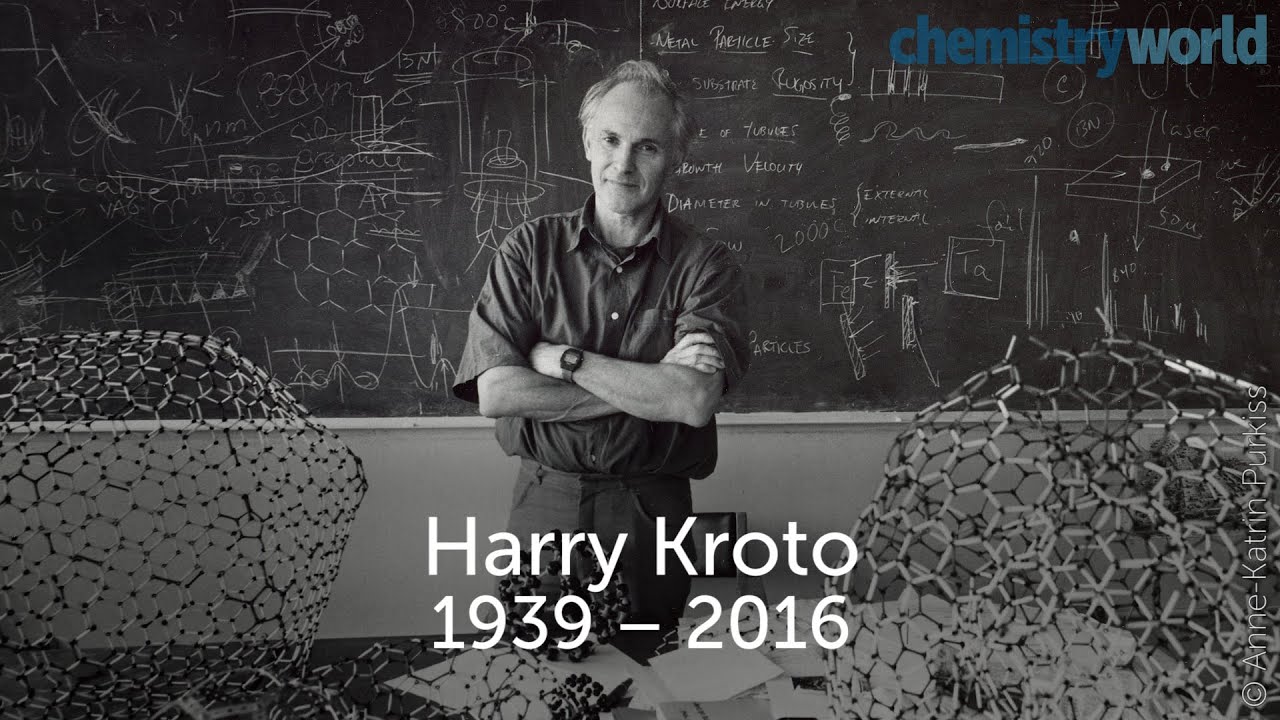





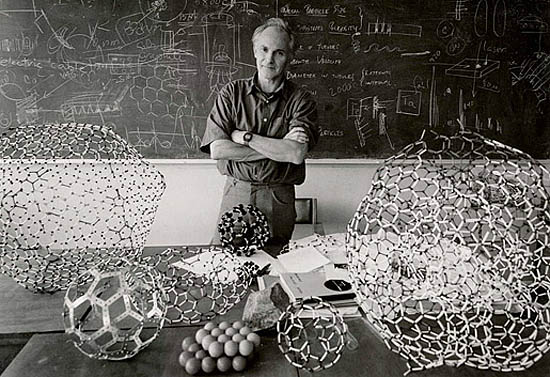


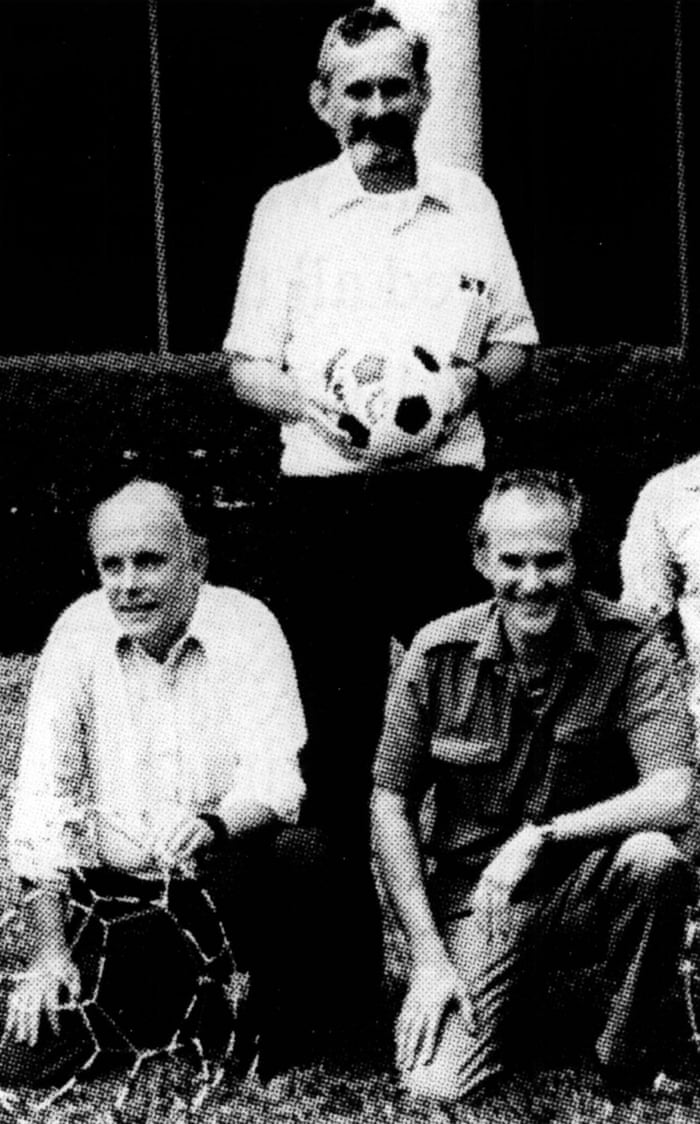


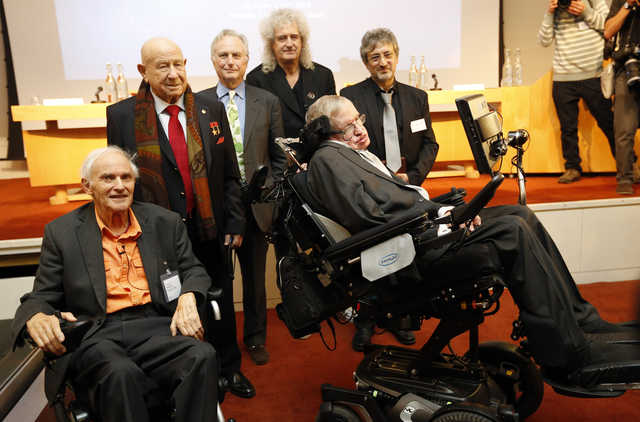

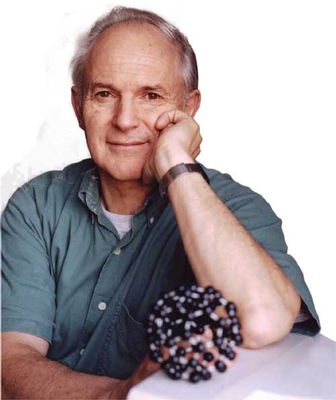 You are a chemist but your first love is graphic design. Is there common ground?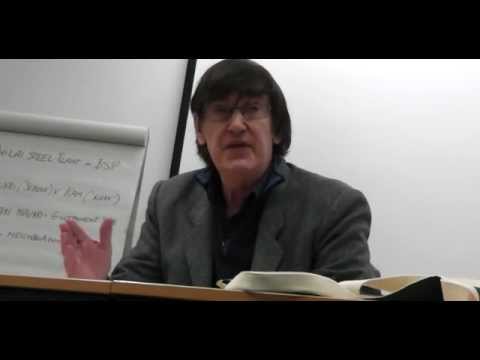
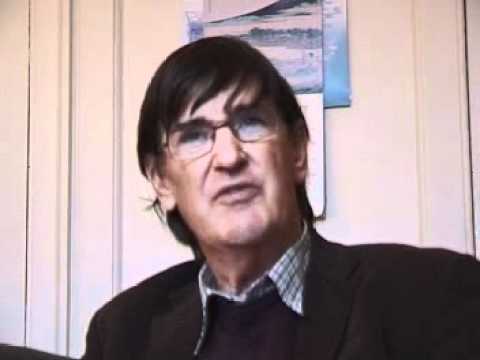

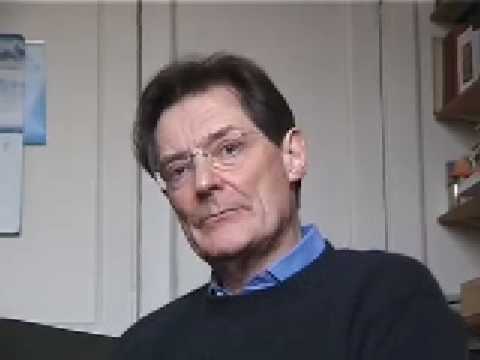
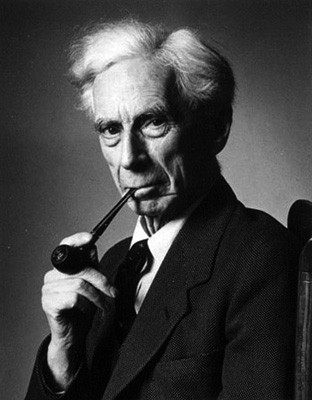


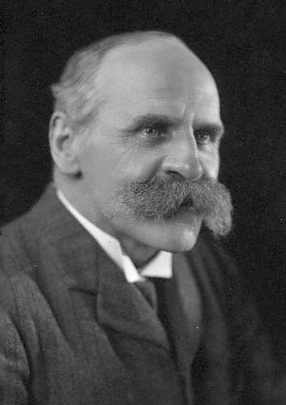


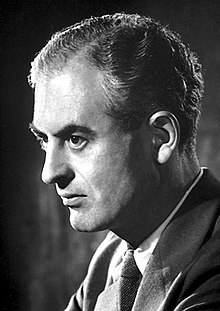







 There are some things to note, however. During the same time period that some of the descendants of Hyracotheriumsupposedly developed into full-blown horses and elephants and other mammals, others persisted unchanged. It seems that evolution does not always change things–often it leaves them alone. Selection pressures that acted so strongly to produce major modifications in some life forms left others in stasis. Their fossils are found in the same strata intervals, so they must have lived in the same environment. Evolution apparently does not apply across the board. If a theory can accommodate any possibility, it is a weak concept indeed.
.jpg)


 The Daily Hatch