Tag Archives: Horace Barlow

RESPONDING TO HARRY KROTO’S BRILLIANT RENOWNED ACADEMICS!! Seth Lloyd professor of mechanical engineering, MIT,  This is great if you want to believe that God made the laws of the universe so life could exist, but a more prosaic and less divine explanation is, “Oh, there are these different branches of the multiverse… and we just happen to in the ones where life can exist”

On November 21, 2014 I received a letter from Nobel Laureate Harry Kroto and it said:

…Please click on this URL http://vimeo.com/26991975

and you will hear what far smarter people than I have to say on this matter. I agree with them.

Harry Kroto

I have attempted to respond to all of Dr. Kroto’s friends arguments and I have posted my responses one per week for over a year now. Here are some of my earlier posts:

Arif Ahmed, Sir David AttenboroughMark Balaguer, Horace Barlow, Michael BatePatricia ChurchlandAaron CiechanoverNoam Chomsky,Alan DershowitzHubert Dreyfus, Bart Ehrman, Stephan FeuchtwangDavid Friend,  Riccardo GiacconiIvar Giaever , Roy GlauberRebecca GoldsteinDavid J. Gross,  Brian Greene, Susan GreenfieldStephen F Gudeman,  Alan Guth, Jonathan HaidtTheodor W. Hänsch, Brian Harrison,  Hermann HauserRoald Hoffmann,  Bruce HoodHerbert Huppert,  Gareth Stedman Jones, Steve JonesShelly KaganMichio Kaku,  Stuart Kauffman,  Lawrence KraussHarry Kroto, George LakoffElizabeth Loftus,  Alan MacfarlanePeter MillicanMarvin MinskyLeonard Mlodinow,  Yujin NagasawaAlva NoeDouglas Osheroff,  Jonathan Parry,  Saul PerlmutterHerman Philipse,  Carolyn PorcoRobert M. PriceLisa RandallLord Martin Rees,  Oliver Sacks, John SearleMarcus du SautoySimon SchafferJ. L. Schellenberg,   Lee Silver Peter Singer,  Walter Sinnott-ArmstrongRonald de Sousa, Victor StengerBarry Supple,   Leonard Susskind, Raymond TallisNeil deGrasse Tyson,  .Alexander Vilenkin, Sir John WalkerFrank WilczekSteven Weinberg, and  Lewis Wolpert,

Seth Lloyd

From Wikipedia, the free encyclopedia
Seth Lloyd
Seth Lloyd.jpg

Seth Lloyd in 2013
Born August 2, 1960 (age 54)
Residence United States
Nationality American
Fields Physicist
Institutions Massachusetts Institute of Technology
California Institute of Technology
Los Alamos National Laboratory
Santa Fe Institute
Alma mater Phillips Academy (1978)
Harvard College (A.B., 1982)
Cambridge University (M.Phil, 1984)
Rockefeller University (Ph.D., 1988)
Doctoral advisor Heinz Pagels
Doctoral students Daniel S. Abrams
Richard Joseph Nelson
Lin Tian
Known for Studying limits of computation
Programming the Universe

Seth Lloyd (born 1960) is a professor of mechanical engineering at the Massachusetts Institute of Technology. He refers to himself as a “quantum mechanic”.

His research area is the interplay of information with complex systems, especially quantum systems. He has performed seminal work in the fields of quantum computation and quantum communication, including proposing the first technologically feasible design for a quantum computer, demonstrating the viability of quantum analog computation, proving quantum analogs of Shannon’s noisy channel theorem, and designing novel methods for quantum error correction and noise reduction.

In  the second video below in the 87th clip in this series are his words and  my response is below them. 

50 Renowned Academics Speaking About God (Part 1)

Another 50 Renowned Academics Speaking About God (Part 2)

A Further 50 Renowned Academics Speaking About God (Part 3)

_________________________________

Below is my letter responding to Dr. Lloyd’s quote:

October 9, 2015

Dr. Seth Lloyd, Professor of Mechanical Engineering,  c/o Massachusetts Institute of Technology,

Dear Dr. Lloyd,

In the film series  Renowned Academics Speaking About God you made the following statement:

We have seen recently as we have gotten a much better grasp of the way the universe is put together and how universes might exist that the parameters of our universe of our universe things like values of fundamental coupling constance, appear at levels where it allows things like life to exist. Of course, this is great if you want to believe that God made the laws of the universe so life could exist, but a more prosaic and less divine explanation is, “Oh, there are these different branches of the multiverse… and we just happen to in the ones where life can exist.”

In an earlier letter I mentioned in passing the correspondence I had with Antony Flew and how he later left atheism behind about 9 years later after I corresponded with him in the 1990’s. Flew wrote about the Fine Tuning Argument in his last book. and here is a portion of it below:

__________

The Fine Tuning Argument for the Existence of God from Antony Flew!

Imagine entering a hotel room on your next vacation. The CD player on the bedside table is softly playing a track from your favorite recording. The framed print over the bed is identical to the image that hangs over the fireplace at home. The room is scented with your favorite fragrance…You step over to the minibar, open the door, and stare in wonder at the contents. Your favorite beverage. Your favorite cookies and candy. Even the brand of bottled water you prefer…You notice the book on the desk: it’s the latest volume by your favorite author…

Chances are, with each new discovery about your hospitable new environment, you would be less inclined to think it has all a mere coincidence, right? You might wonder how the hotel managers acquired such detailed information about you. You might marvel at their meticulous preparation. You might even double-check what all this is going to cost you. But you would certainly be inclined to believe that someone knew you were coming.      There Is A God  (2007)  p.113-4

_________

Does God Exist? by Brett Knukle of STAND TO REASON

In January of 2004, the atheist community was rocked by a major announcement. Antony Flew, probably the world’s most influential atheist of the last 50 years, publicly acknowledged his move from atheism to belief in God’s existence (he hasn’t embraced Christianity just yet, though). Let me give you some perspective. Flew’s announcement is equivalent to Billy Graham calling a press conference and telling the world he is leaving Christianity. Can you imagine the shock-waves throughout the Christian world?

So why did this life-long atheist ditch atheism? Flew said he “had to go where the evidence leads.” And what was that evidence? “I think that the most impressive arguments for God’s existence are those that are supported by recent scientific discoveries…I think the argument to Intelligent Design is enormously stronger than it was when I first met it.”

Whoa. Did you hear that? A really smart atheist was convinced by the scientific evidence for God’s existence. If only everyone could be as open-minded and honest as Flew. So what is Intelligent Design? And what evidence is he referring to?

Intelligent Design makes two basic claims: 1) Intelligent agents leave behind evidence or “fingerprints” and 2) in the natural world we have discovered those fingerprints. The first claim is uncontroversial.

Think about it. You’re an intelligent agent. Everywhere you go you leave behind evidence of your presence. It could be a note you wrote, clothes you left on the floor, or actual fingerprints you smudged on a sliding glass door. If someone enters a room after you and looks closely enough, they’ll find evidence you had been there. Likewise, when we investigate the natural world, we find Someone’s fingerprints. Here are two examples.

First, scientific discoveries of the last century provide strong evidence the universe exploded into existence in the Big Bang. Yes, I said the Big Bang. And no, if you accept the Big Bang it does not mean you accept evolution. This is an unfortunate myth Christians sometimes believe. If Big Bang evidence is persuasive to you, then you must also accept an old universe (approximately 12 billions years old). But some Christians think an old earth is necessarily connected to evolution. That’s nonsense. In fact, don’t get stuck on debates about the age of the earth. It’s more important that God created than when He created. Whether you think the earth is young or old, Christians on both sides can join forces against macroevolution.

The important thing about the Big Bang is it points to a beginning and therefore, to a Beginner or First Cause. If you heard a small bang in the room next door and asked your mom what caused it and she said it was nothing, would you be satisfied with her answer? Of course not. You’d check it out for yourself. You’d look for the cause of the small bang. Well, what’s true of small bangs is true of big bangs. The Big Bang implies a beginning and therefore, a Beginner. And no one fits that description better than God.

Second, recent scientific discoveries show our universe is finely tuned. This simply means there are certain details in the universe that had to be “just right” in order to produce life. For example, the gravitational force must be constant. The expansion rate of the universe must be constant. A life-sustaining solar system can have only one star. And on and on.

Scientists tell us there are more than 50 “just right” details in the universe that make life on planet earth possible. What are the chances of this happening? Really smart guys who calculate this stuff tell us there is a trillionth of a trillionth of a trillionth of a trillionth of a percent chance. In other words, there is no chance for chance. Instead, a finely tuned universe points to a Fine Tuner, God. These are just two examples of the evidence but we’ve got more. Biological information in DNA. Irreducible complexity at the molecular level. Earth’s special location in the universe. The more we discover about our universe, the more we see God’s fingerprints all around us.

_________

Recently I had the opportunity to come across a very interesting article by Michael Polanyi, LIFE TRANSCENDING PHYSICS AND CHEMISTRY, in the magazine CHEMICAL AND ENGINEERING NEWS, August 21, 1967, and I also got hold of a 1968 talk by Francis Schaeffer based on this article. Polanyi’s son John actually won the 1986 Nobel Prize for Chemistry. This article by Michael Polanyi concerns Francis Crick and James Watson and their discovery of DNA in 1953. Polanyi noted:

Mechanisms, whether man-made or morphological, are boundary conditions harnessing the laws of in
animate nature, being themselves irreducible to those laws. The pattern of organic bases in DNA which functions as a genetic code is a boundary condition irreducible to physics and chemistry. Further controlling principles of life may be represented as a hierarchy of boundary conditions extending, in the case of man, to consciousness and responsibility.

I would like to send you a CD copy of this talk because I thought you may find it very interesting. It includes references to not only James D. Watson, and Francis Crick but also  Maurice Wilkins, Erwin Schrodinger, J.S. Haldane (his son was the famous J.B.S. Haldane), Peter Medawar, and Barry Commoner. I WONDER IF YOU EVER HAD THE OPPORTUNITY TO RUN ACROSS THESE MEN OR ANY OF THEIR FORMER STUDENTS?

Below is a portion of the transcript from the CD and Michael Polanyi’s words are in italics while Francis Schaeffer’s words are not:

During the past 15 years, I have worked on these questions, achieving gradually stages of the argument presented in this paper. These are:

  1. Machines are not formed by physical and chemical equilibration. 
  2. The functional terms needed for characterizing a machine cannot for defined in terms of physics and chemistry. 

Polanyi is talking about specific machines but I would include the great cause and effect machine of the external universe that functions on a cause and effect basis. So if this is true of the watch,  then you have to ask the same question about the total machine that Sartre points out that is there, and that is the cause and effect universe. Polanyi doesn’t touch on this and he doesn’t have an answer, and I know people who know him. Yet nevertheless he sees the situation exactly as it is. And I would point out what  Alfred North Whitehead (1861–1947) and J. Robert Oppenheimer (1904–1967) said and that it needed a Christian consensus to produce modern science because it was the Christian consensus that gave the concept that the world being created by a reasonable God and that it could be found out and discovered by reason. So the modern science when it began with Copernicus and Galileo and all these men conceived that the cause and effect system of the universe would be there on the basis that it was created by a reasonable God, and that is Einstein’s big dilemma and that is why he became a mystic at the end of life…What Polanyi says here can be extended to the watch, and the bridge and the automobile but also to the big cause and effect universe. You have to give some kind of answer to this too and I would say this to Michael Polanyi if I ever have a chance to talk to him. You need another explanation too Polanyi.

3. No physical chemical topography will tell us that we have a machine before us and what its functions are. 

In other words, if you only know the chemicals and the physics you don’t know if you have a machine. It may just be junk. So nobody in the world could tell if it was a machine from merely the “physical chemical-topography.” You have to look at the machineness of the machine to say it is a machine. You could take an automobile and smash it into a small piece of metal with a giant press and it would have the same properties of the automobile, but the automobile would have disappeared. The automobile-ness of the automobile is something else than the physical chemical-topography.

4. Such a topography can completely identify one particular specimen of a machine, but can tell us nothing about a class of machines. 

5. And if we are asked how the same solid system can be subject to control by two independent principles, the answer is: The boundary conditions of the system are free of control by physics and can be controlled therefore by nonphysical, purely technical, principles. 

In other words you have to explain the engineering by something other than merely physical principles and of course it is. You can’t explain the watchness of the watch merely by this. You can explain it on the basis of engineering principles in which the human mind conceives of a use for the machine and produces the machine. But notice where Polanyi is and that is in our argument of a need of personality in the universe though Polanyi doesn’t draw this final conclusion, though I thought that is the only explanation.

If you look at the watch a man has made it for the purpose of telling time. When you see the automobile a man has made it for the purpose of locomotion and the explanation of the difference is not in the chemical and physical properties but in the personality of a man to make these two different machines for two different purposes out of the same material. So what you are left here is the need of personality in the universe.

Turn next to living things. Of the points that apply to machines the first point fails to apply to living beings. For it is not obviously clear that living things are not formed by mere physical-chemical equilibration. 

I would say “it is not obviously clear” but you don’t have any explanation. Polanyi is left without an argument of origin just as much as Crick and Watson at this point. Simply because Polanyi hasn’t taken the next logical step from his own argument. I’m sure if the apostle Paul was standing here talking to Polanyi he would cheer as against Crick and Watson and then he would say to Polanyi, “Why do you hold the truth in unrighteousness. Why don’t you carry it to it’s logical conclusion?” But never-mind in the argument with Crick and Madawar Polanyi’s argument cuts just as deeply even though he doesn’t take it to its logical conclusion.

And at this point, strangely enough, the discovery of DNA, which is so widely thought to prove that life is mere chemistry, provides the missing link for proving the contrary. 

When Crick and Watson turned up DNA they said now we have the winning piece but in reality Polanyi tips his hat and says no, thank you very much you have provided me the winning piece.

The theory of Crick and Watson, that four alternative substituents lining a DNA chain convey an amount of information approximating that of the total number of such possible configurations, amounts to saying that the particular alignment present in a DNA molecule is not determined by chemical forces.  

The fact that it is an information chain just shows that the chemical and physical properties of the DNA molecule chain does not explain it, because all these other factors Polanyi has mentioned enter in.

And the additional theory, that the information of a DNA molecule is embodied in the morphology of the corresponding offspring, assures us of the fact that this morphology is not the product of a chemical equililbration, but is designed by other than chemical forces. This is the step that my present paper adds to my earlier arguments. 

And you notice what he does here and it is intriguing. Polanyi uses the words “is designed by.” As soon as you do that you enter the note of personality. It is the same kind of thing as people suddenly slipping over and speaking of “nature producing” and nature doing this. In other words, personifying nature. This is another form of what I would call semantic mysticism. By using the words “designed by,” even though he hasn’t come to the conclusion of it all, of the personal beginning, yet nevertheless, the interesting thing is he is using personalized language. So in reality you have Polanyi himself with his great brain slipping over to semantic mysticism to remove the pressure on himself because “designed by” relates it to the engineering principle of the man making a machine, but who designed nature? This is left as a complete vacuum in Polanyi’s argument.

Turning back in the article and you will see Polanyi has done this a couple of times at important points. Back on page 57 we find Polanyi saying “They do not come into being by physical-chemical equilibration, but are shaped by man. They are shaped and designed for a specific purpose.” He is talking about the making of a machine and he right of course. You look at a watch and you know a man has made this watch in distinction to making the automobile with the same chemical and physical properties.

So that in reality if you are going to use “designed by” it carries back to the mentality that it is true when you look at the watch then why should you stop when you look at the total?

Again on page 64 he uses this type of terminology when he speaks of chance: “The question is whether or not the logical range of random mutations includes the formation of novel principles not definable in terms of physics and chemistry. It seems very unlikely that it does include it.” 

In other words, he says chance can’t. Then we come back to this thing on the computer by Murray Eden of MIT and it brings us back to the first lecture on CHANCE AND EVOLUTION in this series of two lectures and to Darwin himself who said, can I really believe that chance produced this? To the end of his life he kept on saying I can’t really accept it. I really can’t live with it even though it’s in my system and theory of evolution. Then Polanyi comes all around here and when he is done what he leaves you with is “designed by” and it is a semantic mysticism because who is doing the designing in this system? Who starts the whole thing if you can’t explain it by chemical and physical properties and chance?

If you can’t accept the impersonal plus time plus chance as producing it then what you are left with is a beginning with personality, just as you look at the watchness of the watch.

Polanyi has completely smashed Crick and Watson’s argument concerning DNA, but it still leaves Polanyi without a satisfactory answer and for that you would have to come to the Christian answer. Now in conclusion I will read straight through the introduction of the magazine because it is a strong summary of the case he has put forth:

DNA (deoxyribonucleic acid) may determine the boundary (the morphology) of a biological system. But the form and function of the resulting biological system cannot be explained by the laws governing its parts. An example of this principle may be found in administrative hierarchies. Here, a higher authority governs lower levels while relying on that autonomous workings of these lower levels. 

A similar irreducibility may be found in machines. Their design, shape, and operation are comprehensive features not due to physical and chemical forces. A description of a machine in physical and chemical terms would result in a topography of atoms and molecules unique to the subject. It could not identify the machine as belonging to a class of machines based on certain operational principles. 

Biological systems, like machines, have, therefore, functions and forms inexplicable by chemical and physical laws. The argument that the DNA molecule determines genetic processes in living systems does not indicate reducibility. A DNA molecule essentially transmits information to a developing cell. Similarly a book transmits information a book transmits information. But the  transmission of the information cannot be represented in terms of chemical and physical principles. In other words, the operation of the book is not reducible to chemical terms. Since DNA operates by transmission of (genetic) information, its function cannot be described by chemical laws either. 

The life process is essentially the development of a fertilized cell, as the result of information imparted by DNA. Transmission of this information is non-chemical and nonphysical, and is the controlling factor in the life process. The description of a chemical and physical laws which govern its atomic constituents. 

____

Thank you for your time. I know how busy you are and I want to thank you for taking the time to read this letter.

Sincerely,

Everette Hatcher,

P.O. Box 23416, Little Rock, AR 72221, United States, cell ph 501-920-5733, everettehatcher@gmail.com

________

Related posts:

FRANCIS SCHAEFFER ANALYZES ART AND CULTURE Part 53 THE BEATLES (Part E, Stg. Pepper’s and John Lennon’s search in 1967 for truth was through drugs, money, laughter, etc & similar to King Solomon’s, LOTS OF PICTURES OF JOHN AND CYNTHIA) (Feature on artist Yoko Ono)

The John Lennon and the Beatles really were on a long search for meaning and fulfillment in their lives  just like King Solomon did in the Book of Ecclesiastes. Solomon looked into learning (1:12-18, 2:12-17), laughter, ladies, luxuries, and liquor (2:1-2, 8, 10, 11), and labor (2:4-6, 18-20). He fount that without God in the picture all […]

FRANCIS SCHAEFFER ANALYZES ART AND CULTURE Part 52 THE BEATLES (Part D, There is evidence that the Beatles may have been exposed to Francis Schaeffer!!!) (Feature on artist Anna Margaret Rose Freeman )

______________   George Harrison Swears & Insults Paul and Yoko Lucy in the Sky with Diamonds- The Beatles The Beatles:   I have dedicated several posts to this series on the Beatles and I don’t know when this series will end because Francis Schaeffer spent a lot of time listening to the Beatles and talking […]

FRANCIS SCHAEFFER ANALYZES ART AND CULTURE Part 51 THE BEATLES (Part C, List of those on cover of Stg.Pepper’s ) (Feature on artist Raqib Shaw )

  The Beatles in a press conference after their Return from the USA Uploaded on Nov 29, 2010 The Beatles in a press conference after their Return from the USA. The Beatles:   I have dedicated several posts to this series on the Beatles and I don’t know when this series will end because Francis […]

FRANCIS SCHAEFFER ANALYZES ART AND CULTURE Part 50 THE BEATLES (Part B, The Psychedelic Music of the Beatles) (Feature on artist Peter Blake )

__________________   Beatles 1966 Last interview I have dedicated several posts to this series on the Beatles and I don’t know when this series will end because Francis Schaeffer spent a lot of time listening to the Beatles and talking and writing about them and their impact on the culture of the 1960’s. In this […]

FRANCIS SCHAEFFER ANALYZES ART AND CULTURE Part 49 THE BEATLES (Part A, The Meaning of Stg. Pepper’s Cover) (Feature on artist Mika Tajima)

_______________ The Beatles documentary || A Long and Winding Road || Episode 5 (This video discusses Stg. Pepper’s creation I have dedicated several posts to this series on the Beatles and I don’t know when this series will end because Francis Schaeffer spent a lot of time listening to the Beatles and talking and writing about […]

FRANCIS SCHAEFFER ANALYZES ART AND CULTURE PART 48 “BLOW UP” by Michelangelo Antonioni makes Philosophic Statement (Feature on artist Nancy Holt)

_______________ Francis Schaeffer pictured below: _____________________ I have included the 27 minute  episode THE AGE OF NONREASON by Francis Schaeffer. In that video Schaeffer noted,  ” Sergeant Pepper’s Lonely Hearts Club Band…for a time it became the rallying cry for young people throughout the world. It expressed the essence of their lives, thoughts and their feelings.” How Should […]

FRANCIS SCHAEFFER ANALYZES ART AND CULTURE Part 47 Woody Allen and Professor Levy and the death of “Optimistic Humanism” from the movie CRIMES AND MISDEMEANORS Plus Charles Darwin’s comments too!!! (Feature on artist Rodney Graham)

Crimes and Misdemeanors: A Discussion: Part 1 ___________________________________ Today I will answer the simple question: IS IT POSSIBLE TO BE AN OPTIMISTIC SECULAR HUMANIST THAT DOES NOT BELIEVE IN GOD OR AN AFTERLIFE? This question has been around for a long time and you can go back to the 19th century and read this same […]

FRANCIS SCHAEFFER ANALYZES ART AND CULTURE PART 46 Friedrich Nietzsche (Featured artist is Thomas Schütte)

____________________________________ Francis Schaeffer pictured below: __________ Francis Schaeffer has written extensively on art and culture spanning the last 2000years and here are some posts I have done on this subject before : Francis Schaeffer’s “How should we then live?” Video and outline of episode 10 “Final Choices” , episode 9 “The Age of Personal Peace and Affluence”, episode 8 […]

FRANCIS SCHAEFFER ANALYZES ART AND CULTURE Part 45 Woody Allen “Reason is Dead” (Feature on artists Allora & Calzadilla )

Love and Death [Woody Allen] – What if there is no God? [PL] ___________ _______________ How Should We then Live Episode 7 small (Age of Nonreason) #02 How Should We Then Live? (Promo Clip) Dr. Francis Schaeffer 10 Worldview and Truth Two Minute Warning: How Then Should We Live?: Francis Schaeffer at 100 Francis Schaeffer […]

FRANCIS SCHAEFFER ANALYZES ART AND CULTURE Part 44 The Book of Genesis (Featured artist is Trey McCarley )

___________________________________ Francis Schaeffer pictured below: ____________________________ Francis Schaeffer “BASIS FOR HUMAN DIGNITY” Whatever…HTTHR Dr. Francis schaeffer – The flow of Materialism(from Part 4 of Whatever happened to human race?) Dr. Francis Schaeffer – The Biblical flow of Truth & History (intro) Francis Schaeffer – The Biblical Flow of History & Truth (1) Dr. Francis Schaeffer […]

__

RESPONDING TO HARRY KROTO’S BRILLIANT RENOWNED ACADEMICS!! Colin McGinn, British Philosopher “How can God give this moral rule a foundation?  Either the moral rule is, itself, intrinsically a sound moral rule or it can’t be given soundness and legitimacy from an external command”


On November 21, 2014 I received a letter from Nobel Laureate Harry Kroto and it said:

…Please click on this URL http://vimeo.com/26991975

and you will hear what far smarter people than I have to say on this matter. I agree with them.

Harry Kroto

I have attempted to respond to all of Dr. Kroto’s friends arguments and I have posted my responses one per week for over a year now. Here are some of my earlier posts:

Arif AhmedHaroon Ahmed,  Jim Al-Khalili, Sir David AttenboroughMark Balaguer, Horace Barlow, Michael BateSir Patrick BatesonSimon Blackburn, Colin Blakemore, Ned BlockPascal BoyerPatricia ChurchlandAaron CiechanoverNoam Chomsky, Brian CoxPartha Dasgupta,  Alan Dershowitz, Frank DrakeHubert Dreyfus, John DunnBart Ehrman, Mark ElvinRichard Ernst, Stephan Feuchtwang, Robert FoleyDavid Friend,  Riccardo GiacconiIvar Giaever , Roy GlauberRebecca GoldsteinDavid J. Gross,  Brian Greene, Susan GreenfieldStephen F Gudeman,  Alan Guth, Jonathan HaidtTheodor W. Hänsch, Brian Harrison,  Stephen HawkingHermann Hauser, Robert HindeRoald Hoffmann,  Bruce HoodGerard ‘t HooftCaroline HumphreyNicholas Humphrey,  Herbert Huppert,  Gareth Stedman Jones, Steve JonesShelly KaganMichio Kaku,  Stuart KauffmanMasatoshi Koshiba,  Lawrence KraussHarry Kroto, George Lakoff,  Rodolfo LlinasElizabeth Loftus,  Alan MacfarlaneDan McKenzie,  Mahzarin BanajiPeter MillicanMarvin MinskyLeonard Mlodinow,  P.Z.Myers,   Yujin NagasawaAlva NoeDouglas Osheroff, David Parkin,  Jonathan Parry, Roger Penrose,  Saul PerlmutterHerman Philipse,  Carolyn PorcoRobert M. PriceVS RamachandranLisa RandallLord Martin ReesColin RenfrewAlison Richard,  C.J. van Rijsbergen,  Oliver Sacks, John SearleMarcus du SautoySimon SchafferJ. L. Schellenberg,   Lee Silver Peter Singer,  Walter Sinnott-ArmstrongRonald de Sousa, Victor StengerJohn SulstonBarry Supple,   Leonard Susskind, Raymond TallisMax TegmarkNeil deGrasse Tyson,  Martinus J. G. Veltman, Craig Venter.Alexander Vilenkin, Sir John Walker, James D. WatsonFrank WilczekSteven Weinberg, and  Lewis Wolpert,

BBC The Atheism Tapes – Colin McGinn – 1 of 6

Published on Apr 22, 2012

https://www.facebook.com/UkFreeThinki…

__________________________________________

At the 9:30 mark Colin McGinn says:

There was disappointment. I would like for religion to be true. I would like for it to be true because I would like there to be immortality. I would like there to be rewards for those who have been virtuous, and punishments for those who have not been virtuous, especially those punishments to be good. There is no justice in this world and it would be good if there was some cosmic force that distributed justice in the proper way that it should be. It still is for me a constant source of irritation and pain that wicked people prosper and virtuous people don’t.

Colin McGinn

From Wikipedia, the free encyclopedia
Colin McGinn
Born 10 March 1950
West Hartlepool, County Durham, England
Residence Miami, Florida
Education BA (Hons), psychology, University of Manchester (1971)
MA, psychology, University of Manchester (1972)
BPhil, philosophy, University of Oxford (1974)
Known for New mysterianism

Colin McGinn (born 10 March 1950) is a British philosopher. He has held teaching posts and professorships at University College London, the University of Oxford, Rutgers University and the University of Miami.[1]

McGinn is best known for his work in the philosophy of mind, and in particular for what is known as new mysterianism, the idea that the human mind is not equipped to solve the problem of consciousness. He is the author of over 20 books on this and other areas of philosophy, including The Character of Mind (1982), The Problem of Consciousness (1991), Consciousness and Its Objects (2004), and The Meaning of Disgust (2011).[1]

Colin McGinn Why is There Anything At All

Colin McGinn on Consciousness

Uploaded on Dec 6, 2009

This video begins with McGinn briefly listing the range of philosophical approaches that have been taken to the “hard problem of consciousness”. As Michael Dooley points out, there are good reasons for a monist approach to “mind” and “consciousness” — both can be altered by physical agents: drugs, blows to the head, etc. As David Chalmers points out, we each are certain that we are individually conscious: a certainty that Descartes employed in “je pense, donc je suis”, or “cogito ergo sum”.

Contents

Early life and education

McGinn was born in West Hartlepool, a town in County Durham, England. Several of his relatives, including both grandfathers, were miners. His father, Joseph, left school to become a miner, but put himself through night school and became a building manager instead. McGinn was the eldest of three children, all sons. When he was three, the family moved to Gillingham, Kent, and eight years later to Blackpool, Lancashire. Having failed his 11-plus, he attended a technical school in Kent, then a secondary modern in Blackpool, but did well enough in his O-levels to be transferred to the local grammar school for his A-levels.[2]

In 1968 he began a degree in psychology at the University of Manchester, obtaining a first-class honours degree in 1971 and an MA in 1972, also in psychology.[1] He was admitted in 1972 to Jesus College, Oxford, at first to study for a Bachelor of Letters postgraduate degree, but he switched to the Bachelor of Philosophy (BPhil) postgraduate programme on the recommendation of his advisor, Michael R. Ayers. In 1973 he was awarded the university’s prestigious John Locke Prize in Mental Philosophy; one of the examiners was A.J. Ayer.[3] He received his BPhil in 1974, writing a thesis under the supervision of Michael Ayers and P. F. Strawson on the semantics of Donald Davidson.[4]

Colin McGinn Peter Singer – Morality Without God – Euthyphro Dilemma

Published on May 22, 2013

Many theists and nontheists alike are familiar with the “Euthyphro Dilemma,” so-called because a version of it was first formulated in Plato’s Dialogue Euthyphro. In this dialogue, Socrates poses the question: Is something good because it is pleasing to the gods, or is it pleasing to the gods because it is good? While Socrates (and Plato, of course) lived in a polytheistic culture, the question can easily be updated for a predominantly monotheistic culture: Is something good because it is pleasing to God, or is something pleasing to God because it is good?

How one answers this question has profound implications. On the first horn of the dilemma, we end up with Divine Command Theory, the notion that something is good because God commands it. This implies that the good is simply what God says it is. So if today God commands charity, mercy, and forgiveness, those things are good. But if tomorrow God commands rape, murder, and genocide, such atrocities would then become good. If God does not change his mind, we are just lucky.

If we take the other option, then what is good is good inherently, regardless of what God or anyone else happens to think. This would mean that there are standards of conduct according to which even God can be judged.

Some theists have tried to escape from this trap by claiming that God’s own nature is the standard of goodness. Thus God would never command atrocities because it would not conform to his nature, which can properly be described as good.

But this is an obvious confusion. We can simply reformulate the question: Is something good because it is in conformance with God’s nature, or do we say God’s nature is good based on some other standard? If the good simply refers to God’s nature, then again we can say that whatever is in God’s nature happens to be good. Were it in his nature to command atrocities, then the commission of atrocities would be good. If his nature does not condone such things, we are, again, simply lucky.

______________________________________________

Teaching career

Posts

McGinn taught at University College London for 11 years, first as a lecturer in philosophy (1974–1984), then as reader (1984–1985). In 1985 he succeeded Gareth Evans as Wilde Reader in Mental Philosophy at the University of Oxford, a position he held until 1990. He held visiting professorships at the University of California, Los Angeles (1979), University of Bielefeld (1982), University of Southern California (1983), Rutgers University (1984), University of Helsinki (1986), City University of New York (1988) and Princeton University (1992). In 1990 he joined the philosophy department at Rutgers as a full professor, working alongside Jerry Fodor.[1] He stayed at Rutgers until 2005, joining the University of Miami in 2006 as Professor of Philosophy and Cooper Fellow.[1]

In  the first video below in the 21st clip in this series are his words and  my response is below them. 

50 Renowned Academics Speaking About God (Part 1)

Another 50 Renowned Academics Speaking About God (Part 2

A Further 50 Renowned Academics Speaking About God (Part 3)

Below is a letter I wrote to Dr. McGinn and I respond to his quote:

February 12, 2015

Dr. Colin McGinn

Dear Dr. McGinn,

As you can tell from reading this letter I am an evangelical Christian and I have made it a hobby of mine to correspond with scientists or academics like yourself over the last 25 years. Some of those who corresponded back with me have been  Ernest Mayr (1904-2005),, George Wald (1906-1997), Carl Sagan (1934-1996),  Robert Shapiro (1935-2011), Nicolaas Bloembergen (1920-),  Brian Charlesworth (1945-),  Francisco J. Ayala (1934-) Elliott Sober (1948-), Kevin Padian (1951-), Matt Cartmill (1943-) , Milton Fingerman (1928-), John J. Shea (1969-), , Michael A. Crawford (1938-), Paul Kurtz (1925-2012), Sol Gordon (1923-2008), Albert Ellis (1913-2007), Barbara Marie Tabler (1915-1996), Renate Vambery (1916-2005), Archie J. Bahm (1907-1996), Aron S “Gil” Martin ( 1910-1997), Matthew I. Spetter (1921-2012), H. J. Eysenck (1916-1997), Robert L. Erdmann (1929-2006), Mary Morain (1911-1999), Lloyd Morain (1917-2010),  Warren Allen Smith (1921-), Bette Chambers (1930-),  Gordon Stein (1941-1996) , Milton Friedman (1912-2006), John Hospers (1918-2011), Michael Martin (1932-).Harry Kroto (1939-), Marty E. Martin (1928-), Richard Rubenstein (1924-), James Terry McCollum (1936-), Edward O. WIlson (1929-), Lewis Wolpert (1929), Gerald Holton (1922-), Martin Rees (1942-), Alan Macfarlane (1941-),  Roald Hoffmann (1937-), Herbert Kroemer (1928-), Thomas H. Jukes (1906-1999), Glenn BranchGeoff Harcourt (1931-) and  Ray T. Cragun (1976-).  I would consider it an honor to add you to this very distinguished list. 

I just finished reading the online addition of the book Darwin, Francis ed. 1892. Charles Darwin: his life told in an autobiographical chapter, and in a selected series of his published letters [abridged edition]. London: John Murray. There are several points that Charles Darwin makes in this book that were very wise, honest, logical, shocking and some that were not so wise. The Christian Philosopher Francis Schaeffer once said of Darwin’s writings, “Darwin in his autobiography and in his letters showed that all through his life he never really came to a quietness concerning the possibility that chance really explained the situation of the biological world. You will find there is much material on this [from Darwin] extended over many many years that constantly he was wrestling with this problem.”

Recently I ran across the following quote from you::

Suppose you take, as a moral principle, it’s wrong to steal.  People say, “Why is that wrong?  Why is it wrong to steal?”  Answer – because God says it’s wrong to steal.  God commanded that you should not steal.  The point that Socrates makes in that dialogue is to say – how can God give this moral rule a foundation?  Either the moral rule is, itself, intrinsically a sound moral rule or it can’t be given soundness and legitimacy from an external command.

Suppose for example we had the rule, “It’s right to murder.”  Somebody said, “That’s not right!  Murder is wrong!”  And somebody replied, “But God SAYS it’s right to murder.”  That doesn’t convince you that it’s right to murder.  If God says that something is right which isn’t right, God’s wrong.

I got this quote from the You Tube series “Renowned Academics talk about God,” and I noticed that this is not the first time that you have chosen to speak on morality in a large TV platform like this.  Wikipedia noted, “In 2004, Jonathan Miller wrote and presented a TV series on atheism entitled Atheism: A Rough History of Disbelief (more commonly referred to as Jonathan Miller’s Brief History of Disbelief) for BBC Four. I watched that complete series and did not see any reference to Antony Flew which I thought was strange. But more striking was this statement by you:

There was disappointment. I would like for religion to be true. I would like for it to be true because I would like there to be immortality. I would like there to be rewards for those who have been virtuous, and punishments for those who have not been virtuous, especially those punishments to be good. There is no justice in this world and it would be good if there was some cosmic force that distributed justice in the proper way that it should be. It still is for me a constant source of irritation and pain that wicked people prosper and virtuous people don’t.

Francis Schaffer in his book THE GOD WHO IS THERE addresses these same issues:

“[in Christianity] there is a sufficient basis for morals. Nobody has ever discovered a way of having real “morals” without a moral absolute. If there is no moral absolute, we are left with hedonism (doing what I like) or some form of the social contract theory (what is best for society as a a hole is right). However, neither of these alternative corresponds to the moral motions that men have. Talk to people long enough and deeply enough, and you will find that they consider some things are really right and something are really wrong. Without absolutes, morals as morals cease to exist, and humanistic mean starting from himself is unable to find the absolute he needs. But because the God of the Bible is there, real morals exist. Within this framework I can say one action is right and another wrong, without talking nonsense.” 117

Instead of addressing the issue of which morality is right today, I just what to ask you why you think materialist anthropologists are not able to explain why humans always have a sense of moral motions? No tribe of people have ever been found without moral motions!!!!!

When I read the book  Charles Darwin: his life told in an autobiographical chapter, and in a selected series of his published letters, I also read  a commentary on it by Francis Schaeffer and I wanted to both  quote some of Charles Darwin’s own words to you and then include the comments of Francis Schaeffer on those words. I have also enclosed a CD with two messages from Adrian Rogers and Bill Elliff concerning Darwinism. THESE COMMENTS BY SCHAEFFER ON THE MORAL MOTIONS PROMPTED ME TO WRITE YOU TODAY. 

The passages which here follow are extracts, somewhat abbreviated, from a part of the Autobiography, written in 1876, in which my father gives the history of his religious views:—

CHARLES DARWIN’S WORDS:

But now the grandest scenes would not cause any such convictions  and feelings to rise in my mind. It may be truly said that I am like a man who has become colour-blind and the universal belief by men of the existence of redness makes my present loss of perception of not the least value as evidence. This argument would be a valid one if all men of all races had the same inward conviction of the existence of one God; but we know that this is very far from being the case. Therefore I cannot see that such inward convictions and feelings are of any weight as evidence of what really exists. The state of mind which grand scenes formerly excited in me, and which was intimately connected with a belief in God, did not essentially differ from that which is often called the sense of sublimity; and however difficult it may be to explain the genesis of this sense, it can hardly be advanced as an argument for the existence of God, any more than the powerful though vague and similar feelings excited by music.

Francis Schaeffer observed:

You notice that Darwin had already said he had lost his sense of music [appreciation]. However, he brings forth what I think is a false argument. I usually use it in the area of morality. I mention that materialistic anthropologists point out that different people have different moral [systems]  and this is perfectly true, but what the materialist anthropologist can never point out is why man has a sense of moral motion and that is the problem here. Therefore, it is perfectly true that men have different concepts of God and different concepts of moral motion, but Darwin himself is not satisfied in his own position and WHERE DO THEY [MORAL MOTIONS] COME FROM AT ALL? So you are wrestling with the same dilemma here in this reference as you do in the area of all things human. For these men it is not the distinction that raises the problem, but it is the overwhelming factor of the existence of the humanness of man, the mannishness of man. The simple fact is he saw that you are shut up to either God or chance, and he said basically “I don’t see how it could be chance” and at the same time he looks at a mountain or listens to a piece of music it is a testimony that really chance isn’t sufficient enough. So gradually with the sensitivity of his own inborn self conscience he kills it. He deliberately  kills the beauty so it doesn’t argue with his theory. Maybe I am being false to Darwin here. Who can say about Darwin’s subconscious thoughts? It seems to me though this is exactly the case. What you find is a man who can’t stand the argument of the external beauty and the mannishness of man so he just gives it up in this particular place.

I wanted to compliment you for your statement on Jonathan Miller’s series on Atheism. It was very honest and frank. Let me repeat it here again.

There was disappointment. I would like for religion to be true. I would like for it to be true because I would like there to be immortality. I would like there to be rewards for those who have been virtuous, and punishments for those who have not been virtuous, especially those punishments to be good. There is no justice in this world and it would be good if there was some cosmic force that distributed justice in the proper way that it should be. It still is for me a constant source of irritation and pain that wicked people prosper and virtuous people don’t.

Paul also shared your view that if there is no God then it would be very sad indeed. Here are his words:

I Corinthians 15 asserts:

12 But if it is preached that Christ has been raised from the dead, how can some of you say that there is no resurrection of the dead? 13 If there is no resurrection of the dead, then not even Christ has been raised. 14 And if Christ has not been raised, our preaching is useless and so is your faith. 15 More than that, we are then found to be false witnesses about God, for we have testified about God that he raised Christ from the dead. But he did not raise him if in fact the dead are not raised. 16 For if the dead are not raised, then Christ has not been raised either. 17 And if Christ has not been raised, your faith is futile; you are still in your sins. 18 Then those also who have fallen asleep in Christ are lost. 19 If only for this life we have hope in Christ, we are of all people most to be pitied.

I sent you a CD that starts off with the song DUST IN THE WIND by Kerry Livgren of the group KANSAS which was a hit song in 1978 when it rose to #6 on the charts because so many people connected with the message of the song. It included these words, “All we do, crumbles to the ground though we refuse to see, Dust in the Wind, All we are is dust in the wind, Don’t hang on, Nothing lasts forever but the Earth and Sky, It slips away, And all your money won’t another minute buy.”

Kerry Livgren himself said that he wrote the song because he saw where man was without a personal God in the picture. Solomon pointed out in the Book of Ecclesiastes that those who believe that God doesn’t exist must accept three things. FIRST, death is the end and SECOND, chance and time are the only guiding forces in this life.  FINALLY, power reigns in this life and the scales are never balanced. The Christian can  face death and also confront the world knowing that it is not determined by chance and time alone and finally there is a judge who will balance the scales.

Both Kerry Livgren and the bass player Dave Hope of Kansas became Christians eventually. Kerry Livgren first tried Eastern Religions and Dave Hope had to come out of a heavy drug addiction. I was shocked and elated to see their personal testimony on The 700 Club in 1981 and that same  interview can be seen on You Tube today. Livgren lives in Topeka, Kansas today where he teaches “Diggers,” a Sunday school class at Topeka Bible ChurchDAVE HOPE is the head of Worship, Evangelism and Outreach at Immanuel Anglican Church in Destin, Florida.

The answer to find meaning in life is found in putting your faith and trust in Jesus Christ. The Bible is true from cover to cover and can be trusted.

Thank you again for your time and I know how busy you are.

Everette Hatcher, everettehatcher@gmail.com, http://www.thedailyhatch.org, cell ph 501-920-5733, Box 23416, LittleRock, AR 72221, United States

Is the Bible historically accurate? Here are some of the posts I have done in the past on the subject: 1. The Babylonian Chronicleof Nebuchadnezzars Siege of Jerusalem2. Hezekiah’s Siloam Tunnel Inscription. 3. Taylor Prism (Sennacherib Hexagonal Prism)4. Biblical Cities Attested Archaeologically. 5. The Discovery of the Hittites6.Shishak Smiting His Captives7. Moabite Stone8Black Obelisk of Shalmaneser III9A Verification of places in Gospel of John and Book of Acts., 9B Discovery of Ebla Tablets10. Cyrus Cylinder11. Puru “The lot of Yahali” 9th Century B.C.E.12. The Uzziah Tablet Inscription13. The Pilate Inscription14. Caiaphas Ossuary14 B Pontius Pilate Part 214c. Three greatest American Archaeologists moved to accept Bible’s accuracy through archaeology.

You can hear DAVE HOPE and Kerry Livgren’s stories from this youtube link:

(part 1 ten minutes)

(part 2 ten minutes)

Kansas – Dust in the Wind (Official Video)

Uploaded on Nov 7, 2009

Pre-Order Miracles Out of Nowhere now at http://www.miraclesoutofnowhere.com

About the film:
In 1973, six guys in a local band from America’s heartland began a journey that surpassed even their own wildest expectations, by achieving worldwide superstardom… watch the story unfold as the incredible story of the band KANSAS is told for the first time in the DVD Miracles Out of Nowhere.

_____________________________

Adrian Rogers on Darwinism

Related posts:

FRANCIS SCHAEFFER ANALYZES ART AND CULTURE Part 52 THE BEATLES (Part D, There is evidence that the Beatles may have been exposed to Francis Schaeffer!!!) (Feature on artist Anna Margaret Rose Freeman )

______________   George Harrison Swears & Insults Paul and Yoko Lucy in the Sky with Diamonds- The Beatles The Beatles:   I have dedicated several posts to this series on the Beatles and I don’t know when this series will end because Francis Schaeffer spent a lot of time listening to the Beatles and talking […]

FRANCIS SCHAEFFER ANALYZES ART AND CULTURE Part 51 THE BEATLES (Part C, List of those on cover of Stg.Pepper’s ) (Feature on artist Raqib Shaw )

  The Beatles in a press conference after their Return from the USA Uploaded on Nov 29, 2010 The Beatles in a press conference after their Return from the USA. The Beatles:   I have dedicated several posts to this series on the Beatles and I don’t know when this series will end because Francis […]

FRANCIS SCHAEFFER ANALYZES ART AND CULTURE Part 50 THE BEATLES (Part B, The Psychedelic Music of the Beatles) (Feature on artist Peter Blake )

__________________   Beatles 1966 Last interview I have dedicated several posts to this series on the Beatles and I don’t know when this series will end because Francis Schaeffer spent a lot of time listening to the Beatles and talking and writing about them and their impact on the culture of the 1960’s. In this […]

FRANCIS SCHAEFFER ANALYZES ART AND CULTURE Part 49 THE BEATLES (Part A, The Meaning of Stg. Pepper’s Cover) (Feature on artist Mika Tajima)

_______________ The Beatles documentary || A Long and Winding Road || Episode 5 (This video discusses Stg. Pepper’s creation I have dedicated several posts to this series on the Beatles and I don’t know when this series will end because Francis Schaeffer spent a lot of time listening to the Beatles and talking and writing about […]

FRANCIS SCHAEFFER ANALYZES ART AND CULTURE PART 48 “BLOW UP” by Michelangelo Antonioni makes Philosophic Statement (Feature on artist Nancy Holt)

_______________ Francis Schaeffer pictured below: _____________________ I have included the 27 minute  episode THE AGE OF NONREASON by Francis Schaeffer. In that video Schaeffer noted,  ” Sergeant Pepper’s Lonely Hearts Club Band…for a time it became the rallying cry for young people throughout the world. It expressed the essence of their lives, thoughts and their feelings.” How Should […]

FRANCIS SCHAEFFER ANALYZES ART AND CULTURE Part 47 Woody Allen and Professor Levy and the death of “Optimistic Humanism” from the movie CRIMES AND MISDEMEANORS Plus Charles Darwin’s comments too!!! (Feature on artist Rodney Graham)

Crimes and Misdemeanors: A Discussion: Part 1 ___________________________________ Today I will answer the simple question: IS IT POSSIBLE TO BE AN OPTIMISTIC SECULAR HUMANIST THAT DOES NOT BELIEVE IN GOD OR AN AFTERLIFE? This question has been around for a long time and you can go back to the 19th century and read this same […]

FRANCIS SCHAEFFER ANALYZES ART AND CULTURE PART 46 Friedrich Nietzsche (Featured artist is Thomas Schütte)

____________________________________ Francis Schaeffer pictured below: __________ Francis Schaeffer has written extensively on art and culture spanning the last 2000years and here are some posts I have done on this subject before : Francis Schaeffer’s “How should we then live?” Video and outline of episode 10 “Final Choices” , episode 9 “The Age of Personal Peace and Affluence”, episode 8 […]

FRANCIS SCHAEFFER ANALYZES ART AND CULTURE Part 45 Woody Allen “Reason is Dead” (Feature on artists Allora & Calzadilla )

Love and Death [Woody Allen] – What if there is no God? [PL] ___________ _______________ How Should We then Live Episode 7 small (Age of Nonreason) #02 How Should We Then Live? (Promo Clip) Dr. Francis Schaeffer 10 Worldview and Truth Two Minute Warning: How Then Should We Live?: Francis Schaeffer at 100 Francis Schaeffer […]

FRANCIS SCHAEFFER ANALYZES ART AND CULTURE Part 44 The Book of Genesis (Featured artist is Trey McCarley )

___________________________________ Francis Schaeffer pictured below: ____________________________ Francis Schaeffer “BASIS FOR HUMAN DIGNITY” Whatever…HTTHR Dr. Francis schaeffer – The flow of Materialism(from Part 4 of Whatever happened to human race?) Dr. Francis Schaeffer – The Biblical flow of Truth & History (intro) Francis Schaeffer – The Biblical Flow of History & Truth (1) Dr. Francis Schaeffer […]

__

RESPONDING TO HARRY KROTO’S BRILLIANT RENOWNED ACADEMICS!! Peter Higgs, Nobel Prize winner in Physics, University of Edinburgh, “I certainly know a lot of scientists in my field who are believers and I accept that. I don’t happen to be one myself, but maybe that’s just more a matter of my family background than that there’s any fundamental difficulty about reconciling the two”


Continue reading

RESPONDING TO HARRY KROTO’S BRILLIANT RENOWNED ACADEMICS!! Ken Edwards, Leicester, Genetics Dept, “As a biologist, having lived through Darwinism and the DNA revolution, it is now so clear to me that EVOLUTION and natural selection is a perfectly adequate explanation for the diversity of living form that we have; they clearly all share the same kind of information system and metabolic system; I don’t see any need to invoke a GOD who is active…but I may be wrong”

On November 21, 2014 I received a letter from Nobel Laureate Harry Kroto and it said:

…Please click on this URL http://vimeo.com/26991975

and you will hear what far smarter people than I have to say on this matter. I agree with them.

Harry Kroto

I have attempted to respond to all of Dr. Kroto’s friends arguments and I have posted my responses one per week for over a year now. Here are some of my earlier posts:

Arif AhmedHaroon Ahmed,  Jim Al-Khalili, Sir David AttenboroughMark Balaguer, Horace Barlow, Michael BateSir Patrick BatesonSimon Blackburn, Colin Blakemore, Ned BlockPascal BoyerPatricia ChurchlandAaron CiechanoverNoam Chomsky, Brian CoxPartha Dasgupta,  Alan Dershowitz, Frank DrakeHubert Dreyfus, John DunnBart Ehrman, Mark ElvinRichard Ernst, Stephan Feuchtwang, Robert FoleyDavid Friend,  Riccardo GiacconiIvar Giaever , Roy GlauberRebecca GoldsteinDavid J. Gross,  Brian Greene, Susan GreenfieldStephen F Gudeman,  Alan Guth, Jonathan HaidtTheodor W. Hänsch, Brian Harrison,  Stephen HawkingHermann Hauser, Robert HindeRoald Hoffmann,  Bruce HoodGerard ‘t HooftCaroline HumphreyNicholas Humphrey,  Herbert Huppert,  Gareth Stedman Jones, Steve JonesShelly KaganMichio Kaku,  Stuart KauffmanMasatoshi Koshiba,  Lawrence KraussHarry Kroto, George Lakoff,  Rodolfo LlinasElizabeth Loftus,  Alan MacfarlaneDan McKenzie,  Mahzarin BanajiPeter MillicanMarvin MinskyLeonard Mlodinow,  P.Z.Myers,   Yujin NagasawaAlva NoeDouglas Osheroff, David Parkin,  Jonathan Parry, Roger Penrose,  Saul PerlmutterHerman Philipse,  Carolyn PorcoRobert M. PriceVS RamachandranLisa RandallLord Martin ReesColin RenfrewAlison Richard,  C.J. van Rijsbergen,  Oliver Sacks, John SearleMarcus du SautoySimon SchafferJ. L. Schellenberg,   Lee Silver Peter Singer,  Walter Sinnott-ArmstrongRonald de Sousa, Victor StengerJohn SulstonBarry Supple,   Leonard Susskind, Raymond TallisMax TegmarkNeil deGrasse Tyson,  Martinus J. G. Veltman, Craig Venter.Alexander Vilenkin, Sir John Walker, James D. WatsonFrank WilczekSteven Weinberg, and  Lewis Wolpert,

Ken Edwards is a former genetics lecturer at Cambridge, where he was Head of the Genetics Department and Secretary General to the Faculties, Dr Kenneth Edwards was Vice-Chancellor of the University from 1987 to 1999 and was also President of the Association of European Universities. The building that houses our School of Management bears his name.

In  the third video below in the 136th clip in this series are his words and  my response is below them. 

50 Renowned Academics Speaking About God (Part 1)

Another 50 Renowned Academics Speaking About God (Part 2

A Further 50 Renowned Academics Speaking About God (Part 3)

____

Below is my July 9, 2016 letter to Dr. Edwards and I address his quote in the letter.

Francis Schaeffer (30 January 1912 – 15 May 1984[1])  and his wife Edith  (November 3, 1914 – March 30, 2013)

James Watson (1928-) and Francis Crick  (8 June 1916 – 28 July 2004)

Michael Polanyi, FRS[1] (11 March 1891 – 22 February 1976)

John Charles Polanyi,  (born 23 January 1929)

___

John Scott Haldane (2 May 1860 – 14/15 March 1936)

J. B. S. Haldane
J. B. S. Haldane.jpg

Haldane in 1914

(5 November 1892 – 1 December 1964)

Maurice Wilkins (15 December 1916 – 5 October 2004)

Erwin Schrödinger (12 August 1887 – 4 January 1961)

Sir Peter Medawar ( 28 February 1915 – 2 October 1987)

Barry Commoner (May 28, 1917 – September 30, 2012)

Enjoy the pictures of an amazing life

dadnmeinboat jpg

Harry Kroto with his father above

Marg and Steve and David

Margaret with David and Stephen

Image21 (2)
leaving Liverpool for Canada 1964

Kroto and his wife, Margaret.

Kroto and his wife, Margaret.

______________

July 9, 2016

Professor Ken Edwards, Head of Genetics Department, The University of Leicester,

Dear Dr. Edwards,

I was very sad to learn of the passing of the great scientist Harry Kroto. Judging from comments of his close friends, Kroto was not only a great scientist but an even better man personally.

Tim Logan, chair of Chemistry and Biochemistry at Florida State“What always brought out the best in Harry was his wife, Margaret. Margaret and Harry were always together, until the end of Harry’s life. She served as his business manager, scheduling his many speaking engagements around the world, organizing the travel, and supporting him in many, many ways. What I found so remarkable is that even after 57 years together, they were so obviously in love. Harry would include photos and sketches he made of her in his lectures, and he always acknowledged her as his moral compass.” 

HAVE YOU EVER WONDERED WHY I WAS PROMPTED ORIGINALLY TO WRITE YOU? It was because Harry Kroto took the time in 2014 to correspond with me. After I wrote him in  the spring and summer of 2014 he emailed me twice and then sent me a letter in November of 2014. In that letter he referred me to a film series  Renowned Academics talk about God that featured your comments. 

I have always been fascinated by brilliant individuals and recently I had the opportunity to come across a very interesting article by Michael Polanyi, LIFE TRANSCENDING PHYSICS AND CHEMISTRY, in the magazine CHEMICAL AND ENGINEERING NEWS, August 21, 1967, and I also got hold of a 1968 talk by Francis Schaeffer based on this article. ISN’T IT AMAZING THAT JUST LIKE KROTO’S FAMILY POLANYI HAD TO FLEE EUROPE BECAUSE OF HITLER’S INSANE GRUDGE AGAINST THE JEWS!!!!I know you don’t believe in God or the Devil but if anyone was demon-possessed it had to be Hitler.

Polanyi’s son John actually won the 1986 Nobel Prize for Chemistry. This article by Michael Polanyi concerns Francis Crick and James Watson and their discovery of DNA in 1953. Polanyi noted:

Mechanisms, whether man-made or morphological, are boundary conditions harnessing the laws of in
animate nature, being themselves irreducible to those laws. The pattern of organic bases in DNA which functions as a genetic code is a boundary condition irreducible to physics and chemistry. Further controlling principles of life may be represented as a hierarchy of boundary conditions extending, in the case of man, to consciousness and responsibility.

I am sending you this two CD’s of this talk because I thought you may find it very interesting. It includes references to not only James D. Watson, and Francis Crick but also  Maurice Wilkins, Erwin Schrodinger, J.S. Haldane (his son was the famous J.B.S. Haldane), Peter Medawar, and Barry Commoner.

Adrian Rogers noted that Evolution has no answer for these three points:

1. The fossil record. Not only is the so-called missing link still missing, all of the transitional life forms so crucial to evolutionary theory are missing from the fossil record. There are thousands of missing links, not one!

2. The second law of thermodynamics. This law states that energy is winding down and that matter left to itself tends toward chaos and randomness, not greater organization and complexity. Evolution demands exactly the opposite process, which is observed nowhere in nature.

3. The origin of life. Evolution offers no answers to the origin of life. It simply pushes the question farther back in time, back to some primordial event in space or an act of spontaneous generation in which life simply sprang from nothing. 

Let me start off by saying that this is not the first time that I have written you. Earlier I shared several letters of correspondence I had with Carl Sagan, and Antony Flew. Both men were strong believers in evolution as you are today. Instead of talking to you about their views today I wanted to discuss the views of you and Charles Darwin. 

On April 5, 2015 at the Fellowship Bible Church Easter morning service in Little Rock, Arkansas our pastor Mark Henry described DOUBTING THOMAS and that description made me think of you.  Moreover, your skeptical view towards  Christianity reminds me of CHARLES DARWIN’S growing doubts throughout his life on these same theological issues such as skepticism in reaction to the claims of the Bible!!!

I’m an evangelical Christian and you are a secularist but I am sure we can both agree with the apostle Paul when he said in First Corinthians 15 that if Christ did not rise from the dead then Christians are to be most pited!!!! I attended Easter services this week and this issue came up and Mark Henry asserted that there is plenty of evidence that indicates that the Bible is historically accurate. Did you know that CHARLES DARWIN thought about this very subject quite a lot?

I just finished reading the online addition of the book Darwin, Francis ed. 1892. Charles Darwin: his life told in an autobiographical chapter, and in a selected series of his published letters [abridged edition]. London: John Murray. There are several points that Charles Darwin makes in this book that were very wise, honest, logical, shocking and some that were not so wise. The Christian Philosopher Francis Schaeffer once said of Darwin’s writings, “Darwin in his autobiography and in his letters showed that all through his life he never really came to a quietness concerning the possibility that chance really explained the situation of the biological world. You will find there is much material on this [from Darwin] extended over many manufacturers years that constantly he was wrestling with this problem.”

Your QUOTE from your interview with Alan Macfarlane: 

ON RELIGION,  I don’t have a belief; I hesitate to say I am an atheist as it sounds too positive and puts me in the Dawkins camp; my reasoning is that I don’t see anything in what we know about the universe and the way it operates any need to invoke anybody who changes things from time to time; once a rule had been set up it continued to operate for the last 13.7 billion years; as a biologist, having lived through Darwinism and the DNA revolution, it is now so clear to me that EVOLUTION and natural selection is a perfectly adequate explanation for the diversity of living form that we have; they clearly all share the same kind of information system and metabolic system; I don’t see any need to invoke a GOD who is active, nor have I had any direct personal experience which I could say was religious; how it was all set up, what created it in the first place, whether there are parallel universes, I don’t know, but I am not a believer; in my childhood I used to go to CHURCH; my parents came from different denominations, my mother was a Methodist and my father Church of England; they couldn’t agree on where to go to church so didn’t go very often, but insisted that I did; I was CONFIRMED and was a believer for a time; gradually came to my present views in my mid-twenties, but I may be wrong;

Quotes like this indicate to me that you are a DOUBTING THOMAS type. YOU MAY FIND IT INTERESTING THAT CHARLES DARWIN WAS ALSO INTERESTED IN THE HISTORICAL ASPECT OF THE BIBLE. When I read the book  Charles Darwin: his life told in an autobiographical chapter, and in a selected series of his published letters, I also read  a commentary on it by Francis Schaeffer and I wanted to both  quote some of Charles Darwin’s own words to you and then include the comments of Francis Schaeffer on those words. I have also enclosed a CD with two messages from Adrian Rogers and Bill Elliff concerning Darwinism.

Darwin, C. R. to Doedes, N. D.2 Apr 1873

“It is impossible to answer your question briefly; and I am not sure that I could do so, even if I wrote at some length. But I may say that the impossibility of conceiving that this grand and wondrous universe, with our conscious selves, arose through chance, seems to me the chief argument for the existence of God; but whether this is an argument of real value, I have never been able to decide…Nor can I overlook the difficulty from the immense amount of suffering through the world. I am aware that if we admit a First Cause, the mind still craves to know whence it came, and how it arose.”

Francis Schaeffer noted:

What he is saying is if you say there is a first cause, then the mind says, “Where did this come from?” I think this is a bit old fashioned, with some of the modern thinkers, this would not have carry as much weight today as it did when Darwin expressed it. Jean Paul Sartre said it as well as anyone could possibly say it. The philosophic problem is that something is there and not nothing being there. No one has the luxury of beginning with nothing. Nobody I have ever read has put forth that everything came from nothing. I have never met such a person in all my reading,or all my discussion. If you are going to begin with nothing being there, it has to be nothing nothing, and it can’t be something nothing. When someone says they believe nothing is there, in reality they have already built in something there. The only question is do you begin with an impersonal something or a personal something. All human thought is shut up to these two possibilities. Either you begin with an impersonal and then have Darwin’s own dilemma which impersonal plus chance, now he didn’t bring in the amount of time that modern man would though. Modern man has brought in huge amounts of time into the equation as though that would make a difference because I have said many times that time can’t make a qualitative difference but only a quantitative difference. The dilemma is it is either God or chance. Now you find this intriguing thing in Darwin’s own situation, he can’t understand how chance could have produced these two great factors of the universe and its form and the mannishness of man.

From Charles Darwin, Autobiography (1876), in The Life and Letters of Charles Darwin, ed. Francis Darwin, vol. 1 (London: John Murray, 1888), pp. 307 to 313.

“Another source of conviction in the existence of God, connected with the reason and not with the feelings, impresses me as having much more weight. This follows from the extreme difficulty or rather impossibility of conceiving this immense and wonderful universe, including man with his capacity of looking far backwards and far into futurity, as the result of blind chance or necessity. When thus reflecting, I feel compelled to look to a First Cause having an intelligent mind in some degree analogous to that of man; and I deserve to be called a Theist. This conclusion was strong in my mind about the time, as far as I can remember, when I wrote the Origin of Species, and it is since that time that it has very gradually, with many fluctuations, become weaker. But then arises the doubt…”

Francis Schaeffer commented:

On the basis of his reason he has to say there must be an intelligent mind, someone analogous to man. You couldn’t describe the God of the Bible better. That is man is made in God’s image  and therefore, you know a great deal about God when you know something about man. What he is really saying here is that everything in my experience tells me it must be so, and my mind demands it is so. Not just these feelings he talked about earlier but his MIND demands it is so, but now how does he counter this? How does he escape this? Here is how he does it!!!

Charles Darwin went on to observe:  —can the mind of man, which has, as I fully believe, been developed from a mind as low as that possessed by the lowest animals, be trusted when it draws such grand conclusions?”

Francis Schaeffer asserted:

So he says my mind can only come to one conclusion, and that is there is a mind behind it all. However, the doubt comes because his mind has come from the lowest form of earthworm, so how can I trust my mind. But this is a joker isn’t it?  Then how can you trust his mind to support such a theory as this? He proved too much. The fact that Darwin found it necessary to take such an escape shows the tremendous weight of Romans 1, that the only escape he can make is to say how can I trust my mind when I come from the lowest animal the earthworm? Obviously think of the grandeur of his concept, I don’t think it is true, but the grandeur of his concept, so what you find is that Darwin is presenting something here that is wrong I feel, but it is not nothing. It is a tremendously grand concept that he has put forward. So he is accepting the dictates of his mind to put forth a grand concept which he later can’t accept in this basic area with his reason, but he rejects what he could accept with his reason on this escape. It really doesn’t make sense. This is a tremendous demonstration of the weakness of his own position.

Darwin also noted, “I cannot pretend to throw the least light on such abstruse problems. The mystery of the beginning of all things is insoluble by us, and I for one must be content to remain an Agnostic.”

Francis Schaeffer remarked:

What a stupid reply and I didn’t say wicked. It just seems to me that here is 2 plus 2 equals 36 at this particular place.

Darwin, C. R. to Graham, William 3 July 1881

Nevertheless you have expressed my inward conviction, though far more vividly and clearly than I could have done, that the Universe is not the result of chance.* But then with me the horrid doubt always arises whether the convictions of man’s mind, which has been developed from the mind of the lower animals, are of any value or at all trustworthy. Would any one trust in the convictions of a monkey’s mind, if there are any convictions in such a mind?

Francis Schaeffer observed:

Can you feel this man? He is in real agony. You can feel the whole of modern man in this tension with Darwin. My mind can’t accept that ultimate of chance, that the universe is a result of chance. He has said 3 or 4 times now that he can’t accept that it all happened by chance and then he will write someone else and say something different. How does he say this (about the mind of a monkey) and then put forth this grand theory? Wrong theory I feel but great just the same. Grand in the same way as when I look at many of the paintings today and I differ with their message but you must say the mark of the mannishness of man are one those paintings titanic-ally even though the message is wrong and this is the same with Darwin.  But how can he say you can’t think, you come from a monkey’s mind, and you can’t trust a monkey’s mind, and you can’t trust a monkey’s conviction, so how can you trust me? Trust me here, but not there is what Darwin is saying. In other words it is very selective. 

Now we are down to the last year of Darwin’s life.

* The Duke of Argyll (Good Words, April 1885, p. 244) has recorded a few words on this subject, spoken by my father in the last year of his life. “. . . in the course of that conversation I said to Mr. Darwin, with reference to some of his own remarkable works on the Fertilisation of Orchids, and upon The Earthworms,and various other observations he made of the wonderful contrivances for certain purposes in nature—I said it was impossible to look at these without seeing that they were the effect and the expression of mind. I shall never forget Mr. Darwin’s answer. He looked at me very hard and said, ‘Well, that often comes over me with overwhelming force; but at other times,’ and he shook his head vaguely, adding, ‘it seems to go away.'”

Francis Schaeffer summarized :

And this is the great Darwin, and it makes you cry inside. This is the great Darwin and he ends as a man in total tension.

Francis Schaeffer noted that in Darwin’s 1876 Autobiography that Darwin he is going to set forth two arguments for God in this and again you will find when he comes to the end of this that he is in tremendous tension. Darwin wrote, 

At the present day the most usual argument for the existence of an intelligent God is drawn from the deep inward conviction and feelings which are experienced by most persons.Formerly I was led by feelings such as those just referred to (although I do not think that the religious sentiment was ever strongly developed in me), to the firm conviction of the existence of God and of the immortality of the soul. In my Journal I wrote that whilst standing in the midst of the grandeur of a Brazilian forest, ‘it is not possible to give an adequate idea of the higher feelings of wonder, admiration, and devotion which fill and elevate the mind.’ I well remember my conviction that there is more in man than the mere breath of his body; but now the grandest scenes would not cause any such convictions and feelings to rise in my mind. It may be truly said that I am like a man who has become colour-blind.

Francis Schaeffer remarked:

Now Darwin says when I look back and when I look at nature I came to the conclusion that man can not be just a fly! But now Darwin has moved from being a younger man to an older man and he has allowed his presuppositions to enter in to block his logic. These things at the end of his life he had no intellectual answer for. To block them out in favor of his theory. Remember the letter of his that said he had lost all aesthetic senses when he had got older and he had become a clod himself. Now interesting he says just the same thing, but not in relation to the arts, namely music, pictures, etc, but to nature itself. Darwin said, “But now the grandest scenes would not cause any such convictions  and feelings to rise in my mind. It may be truly said that I am like a man who has become colour-blind…” So now you see that Darwin’s presuppositions have not only robbed him of the beauty of man’s creation in art, but now the universe. He can’t look at it now and see the beauty. The reason he can’t see the beauty is for a very, very , very simple reason: THE BEAUTY DRIVES HIM TO DISTRACTION. THIS IS WHERE MODERN MAN IS AND IT IS HELL. The art is hell because it reminds him of man and how great man is, and where does it fit in his system? It doesn’t. When he looks at nature and it’s beauty he is driven to the same distraction and so consequently you find what has built up inside him is a real death, not  only the beauty of the artistic but the beauty of nature. He has no answer in his logic and he is left in tension.  He dies and has become less than human because these two great things (such as any kind of art and the beauty of  nature) that would make him human  stand against his theory.

________________________

DO THESE WORDS OF DARWIN APPLY TO YOU TODAY? “I am like a man who has become colour-blind.”  As a secularist you believe that it is sad indeed that millions of Christians are hoping for heaven but no heaven is waiting for them. Paul took a close look at this issue too. I Corinthians 15 asserts:

12 But if it is preached that Christ has been raised from the dead, how can some of you say that there is no resurrection of the dead?13 If there is no resurrection of the dead, then not even Christ has been raised. 14 And if Christ has not been raised, our preaching is useless and so is your faith. 15 More than that, we are then found to be false witnesses about God, for we have testified about God that he raised Christ from the dead. But he did not raise him if in fact the dead are not raised. 16 For if the dead are not raised, then Christ has not been raised either.17 And if Christ has not been raised, your faith is futile; you are still in your sins. 18 Then those also who have fallen asleep in Christ are lost. 19 If only for this life we have hope in Christ, we are of all people most to be pitied.

I sent you a CD that starts off with the song DUST IN THE WIND by Kerry Livgren of the group KANSAS which was a hit song in 1978 when it rose to #6 on the charts because so many people connected with the message of the song. It included these words, “All we do, crumbles to the ground though we refuse to see, Dust in the Wind, All we are is dust in the wind, Don’t hang on, Nothing lasts forever but the Earth and Sky, It slips away, And all your money won’t another minute buy.”

Kerry Livgren himself said that he wrote the song because he saw where man was without a personal God in the picture. Solomon pointed out in the Book of Ecclesiastes that those who believe that God doesn’t exist must accept three things. FIRST, death is the end and SECOND, chance and time are the only guiding forces in this life.  FINALLY, power reigns in this life and the scales are never balanced. The Christian can  face death and also confront the world knowing that it is not determined by chance and time alone and finally there is a judge who will balance the scales.

Both Kerry Livgren and the bass player Dave Hope of Kansas became Christians eventually. Kerry Livgren first tried Eastern Religions and Dave Hope had to come out of a heavy drug addiction. I was shocked and elated to see their personal testimony on The 700 Club in 1981 and that same  interview can be seen on You Tube today. Livgren lives in Topeka, Kansas today where he teaches “Diggers,” a Sunday school class at Topeka Bible ChurchDAVE HOPE is the head of Worship, Evangelism and Outreach at Immanuel Anglican Church in Destin, Florida.

The answer to find meaning in life is found in putting your faith and trust in Jesus Christ. The Bible is true from cover to cover and can be trusted.

Thank you again for your time and I know how busy you are.

Everette Hatcher, everettehatcher@gmail.com, http://www.thedailyhatch.org, cell ph 501-920-5733, Box 23416, LittleRock, AR 72221, United States

_______________________________________

Is the Bible historically accurate? Here are some of the posts I have done in the past on the subject: 1. The Babylonian Chronicleof Nebuchadnezzars Siege of Jerusalem2. Hezekiah’s Siloam Tunnel Inscription. 3. Taylor Prism (Sennacherib Hexagonal Prism)4. Biblical Cities Attested Archaeologically. 5. The Discovery of the Hittites6.Shishak Smiting His Captives7. Moabite Stone8Black Obelisk of Shalmaneser III9A Verification of places in Gospel of John and Book of Acts., 9B Discovery of Ebla Tablets10. Cyrus Cylinder11. Puru “The lot of Yahali” 9th Century B.C.E.12. The Uzziah Tablet Inscription13. The Pilate Inscription14. Caiaphas Ossuary14 B Pontius Pilate Part 214c. Three greatest American Archaeologists moved to accept Bible’s accuracy through archaeology.

Related posts:

FRANCIS SCHAEFFER ANALYZES ART AND CULTURE Part 52 THE BEATLES (Part D, There is evidence that the Beatles may have been exposed to Francis Schaeffer!!!) (Feature on artist Anna Margaret Rose Freeman )

______________   George Harrison Swears & Insults Paul and Yoko Lucy in the Sky with Diamonds- The Beatles The Beatles:   I have dedicated several posts to this series on the Beatles and I don’t know when this series will end because Francis Schaeffer spent a lot of time listening to the Beatles and talking […]

FRANCIS SCHAEFFER ANALYZES ART AND CULTURE Part 51 THE BEATLES (Part C, List of those on cover of Stg.Pepper’s ) (Feature on artist Raqib Shaw )

  The Beatles in a press conference after their Return from the USA Uploaded on Nov 29, 2010 The Beatles in a press conference after their Return from the USA. The Beatles:   I have dedicated several posts to this series on the Beatles and I don’t know when this series will end because Francis […]

FRANCIS SCHAEFFER ANALYZES ART AND CULTURE Part 50 THE BEATLES (Part B, The Psychedelic Music of the Beatles) (Feature on artist Peter Blake )

__________________   Beatles 1966 Last interview I have dedicated several posts to this series on the Beatles and I don’t know when this series will end because Francis Schaeffer spent a lot of time listening to the Beatles and talking and writing about them and their impact on the culture of the 1960’s. In this […]

FRANCIS SCHAEFFER ANALYZES ART AND CULTURE Part 49 THE BEATLES (Part A, The Meaning of Stg. Pepper’s Cover) (Feature on artist Mika Tajima)

_______________ The Beatles documentary || A Long and Winding Road || Episode 5 (This video discusses Stg. Pepper’s creation I have dedicated several posts to this series on the Beatles and I don’t know when this series will end because Francis Schaeffer spent a lot of time listening to the Beatles and talking and writing about […]

FRANCIS SCHAEFFER ANALYZES ART AND CULTURE PART 48 “BLOW UP” by Michelangelo Antonioni makes Philosophic Statement (Feature on artist Nancy Holt)

_______________ Francis Schaeffer pictured below: _____________________ I have included the 27 minute  episode THE AGE OF NONREASON by Francis Schaeffer. In that video Schaeffer noted,  ” Sergeant Pepper’s Lonely Hearts Club Band…for a time it became the rallying cry for young people throughout the world. It expressed the essence of their lives, thoughts and their feelings.” How Should […]

FRANCIS SCHAEFFER ANALYZES ART AND CULTURE Part 47 Woody Allen and Professor Levy and the death of “Optimistic Humanism” from the movie CRIMES AND MISDEMEANORS Plus Charles Darwin’s comments too!!! (Feature on artist Rodney Graham)

Crimes and Misdemeanors: A Discussion: Part 1 ___________________________________ Today I will answer the simple question: IS IT POSSIBLE TO BE AN OPTIMISTIC SECULAR HUMANIST THAT DOES NOT BELIEVE IN GOD OR AN AFTERLIFE? This question has been around for a long time and you can go back to the 19th century and read this same […]

FRANCIS SCHAEFFER ANALYZES ART AND CULTURE PART 46 Friedrich Nietzsche (Featured artist is Thomas Schütte)

____________________________________ Francis Schaeffer pictured below: __________ Francis Schaeffer has written extensively on art and culture spanning the last 2000years and here are some posts I have done on this subject before : Francis Schaeffer’s “How should we then live?” Video and outline of episode 10 “Final Choices” , episode 9 “The Age of Personal Peace and Affluence”, episode 8 […]

FRANCIS SCHAEFFER ANALYZES ART AND CULTURE Part 45 Woody Allen “Reason is Dead” (Feature on artists Allora & Calzadilla )

Love and Death [Woody Allen] – What if there is no God? [PL] ___________ _______________ How Should We then Live Episode 7 small (Age of Nonreason) #02 How Should We Then Live? (Promo Clip) Dr. Francis Schaeffer 10 Worldview and Truth Two Minute Warning: How Then Should We Live?: Francis Schaeffer at 100 Francis Schaeffer […]

FRANCIS SCHAEFFER ANALYZES ART AND CULTURE Part 44 The Book of Genesis (Featured artist is Trey McCarley )

___________________________________ Francis Schaeffer pictured below: ____________________________ Francis Schaeffer “BASIS FOR HUMAN DIGNITY” Whatever…HTTHR Dr. Francis schaeffer – The flow of Materialism(from Part 4 of Whatever happened to human race?) Dr. Francis Schaeffer – The Biblical flow of Truth & History (intro) Francis Schaeffer – The Biblical Flow of History & Truth (1) Dr. Francis Schaeffer […]

__

RESPONDING TO HARRY KROTO’S BRILLIANT RENOWNED ACADEMICS!! Louise Antony is UMass, Phil Dept, “Atheists if they commit themselves to justice, peace and the relief of suffering can only be doing so out of love for the good. Atheist have the opportunity to practice perfect piety”

Continue reading

RESPONDING TO HARRY KROTO’S BRILLIANT RENOWNED ACADEMICS!! Pausing to take a look at the life of HARRY KROTO Part F (Discussing his favorite book “THE DEMON-HAUNTED WORLD: Science as a Candle in the Dark by Carl Sagan”

It is with sadness that I write this post having learned of the death of Sir Harold Kroto on April 30, 2016 at the age of 76. He was a scientist of remarkable abilities and a man of great humor too. In this series  I posted the Memorial by Richard Dawkins for Dr. Kroto and I also looked at Kroto’s membership in CSICOP and his admiration for Bertrand Russell and his 2 emails he sent to me on 9-18-14.  Peter Coles, Head of the School of Mathematical and Physical Sciences at the University of Sussex gave an excellent tribute Dr. Kroto which I posted too.

I did not know Harry Kroto personally but I did have the opportunity to correspond with him in 2014. I sent him a letter in the spring and two in the summer and he responded with an email on 9-18-14 and I thanked him for responding in an email and then he emailed me again and even sent me a letter on 11-21-14. In that 11-21-14 letter he referred me to the You Tube film series Renowned Academics Speaking About God which has over 300,000 views on You Tube and that prompted me on 11-29-14 to start my blog series RESPONDING TO HARRY KROTO’S BRILLIANT RENOWNED ACADEMICS!! Below are the links to the posts I have already done on previous Tuesdays in this series:

Arif AhmedHaroon Ahmed,Sir David AttenboroughMark Balaguer, Horace Barlow, Michael BateSir Patrick Bateson,Patricia ChurchlandAaron CiechanoverNoam Chomsky,Alan DershowitzHubert Dreyfus, Bart Ehrman, Stephan FeuchtwangDavid Friend,  Riccardo GiacconiIvar Giaever , Roy GlauberRebecca GoldsteinDavid J. Gross,  Brian Greene, Susan GreenfieldStephen F Gudeman,  Alan Guth, Jonathan HaidtTheodor W. Hänsch, Brian Harrison,  Hermann HauserRoald Hoffmann,  Bruce HoodHerbert Huppert,  Gareth Stedman Jones, Steve JonesShelly KaganMichio Kaku,  Stuart Kauffman,  Lawrence KraussHarry Kroto, George LakoffElizabeth Loftus,  Alan MacfarlanePeter MillicanMarvin MinskyLeonard Mlodinow,  Yujin NagasawaAlva NoeDouglas Osheroff,  Jonathan Parry,  Saul PerlmutterHerman Philipse,  Carolyn PorcoRobert M. PriceLisa RandallLord Martin ReesAlison Richard,  Oliver Sacks, John SearleMarcus du SautoySimon SchafferJ. L. Schellenberg,   Lee Silver Peter Singer,  Walter Sinnott-ArmstrongRonald de Sousa, Victor StengerJohn SulstonBarry Supple,   Leonard Susskind, Raymond TallisNeil deGrasse Tyson,  C.J. van RijsbergenAlexander Vilenkin, Sir John WalkerFrank WilczekSteven Weinberg, and  Lewis Wolpert,

Sir Harold Kroto – Beyond Belief

Sir Harold Kroto is Francis Eppes Professor in the Department of Chemistry and Biochemistry at Florida State University. In 1996, he was awarded the Nobel Prize in Chemistry for the discovery of C60 Buckminsterfullerene.

Ignorance, irrationality and irresponsibility of concession to faith based programs, Templeton Prizes, creationism, intelligent design, books, TV, FoxTV, mega-churches, and banks undermine education, science, economics, executive, legislative and judicial branches of government.

(mega-churches benefit financially by borrowing from BOA:

1. Tax exempt initiative;

2. No tangible product offered;

3. No real risk;

4. The congregants – Bank of America customers,

5. no wealth creation

Sir Harold Kroto with models of C60 Buckminsterfullerene

Sir Harold Kroto – Beyond Belief  Conference 2008

39. Sir Harold Kroto – Beyond Belief 2008


__

In the video above Harry Kroto talks about the Carl Sagan’s book Demon Haunted World and here is the link to my review which is below:

THE DEMON-HAUNTED WORLD: Science as a Candle in the Dark by Carl Sagan. New York: Random House, 1995. 457 pages, extensive references, index. Hardcover; $25.95.
PSCF 48 (December 1996): 263.

Sagan is the David Duncan Professor of Astronomy and Space Sciences at Cornell University. He is author of many best sellers, including Cosmos, which became the most widely read science book ever published in the English language.

In this book Sagan discusses the claims of the paranormal and fringe-science. For instance, he examines closely such issues as astrology (p. 303), crop circles (p. 75), channelers (pp. 203-206), UFO abductees (pp. 185-186), faith-healing fakes (p. 229), and witch-hunting (p. 119). Readers of The Skeptical Inquirer will notice that Sagan’s approach is very similar.

Sagan writes:

The Committee for the Scientific Investigation of Claims of the Paranormal is an organization of scientists, academics, magicians, and others dedicated to skeptical scrutiny of emerging or full-blown pseudo-sciences. It was founded by the University of Buffalo philosopher Paul Kurtz in 1976. I’ve been affiliated with it since its beginning. Its acronym, CSICOP, is pronounced sci-cop C as if it’s an organization of scientists performing a police function  CSICOP publishes a bimonthly periodical called The Skeptical Inquirer. On the day it arrives, I take it home from the office and pore through its pages, wondering what new misunderstandings will be revealed (p. 299).

Sagan points out that in 1991 two pranksters in England admitted that they had been making crop figures for 15 years. They flattened the wheat with a heavy steel bar. Later on they used planks and ropes, but the media paid brief attention to the confession of these hoaxers. Why? Sagan concludes, ‘Demons sell; hoaxers are boring and in bad taste’ (p. 76).

Christians must admire Sagan’s commitment to critical thinking, logic, and freedom of thought. He takes on many subjects in this book, and the vast majority of his analysis is exceptional. However, his opinions on religious matters are affected by his devotion to scientism. Sagan believes only that which can be proved by science is true. He disputes psychologist Charles Tart’s assertion that scientism is‘dehumanizing, despiritualizing’ (p. 267). Sagan comments, ‘There is very little doubt that, in the everyday world, matter (and energy) exist. The evidence is all around us. In contrast, as I’ve mentioned earlier the evidence for something non-material called `spirit’ or `soul’ is very much in doubt’ (p. 267).

Science can only prove things about the physical world, and it cannot prove anything about the spiritual world. Does that mean that the mind and soul don’t exist? Of course not! First, we must realize that science is not the only way to truth. Even Sagan must admit that he must justify values like ‘be objective’ or ‘report data honestly’. Where do those values come from? They came from outside science, but they must be in place for science to work.

Sagan gives an illustration that contrasts physics and metaphysics. He shows that the physicist’s idea will have to be discarded if tests fail in the laboratory. Therefore, the main difference between physics and metaphysics is that the meta-physicist has no laboratory. This is a cute story, but can science answer the basic questions that underline all knowledge? Metaphysics is necessary for science to take place. It is not true that science is superior to metaphysics like Sagan would have us believe. The presuppositions of science can only be validated by philosophy. J. P. Moreland has correctly said, ‘The validation of science is a philosophical issue, not a scientific one, and any claim to the contrary will be a self-refuting philosophical claim’ (Scaling the Secular City, p. 197).

Second, the absence of scientific evidence for the soul does not mean the soul does not exist. Sagan himself states, ‘Absence of evidence is not evidence of absence’ (p. 213).

I was impressed with the way Sagan put his inner thoughts on the table. For instance, he comments, ‘Plainly, there’s something within me that’s ready to believe in life after death…If some good evidence for life after death was announced, I’d be eager to examine it; but it would have to be real scientific data, not mere anecdote’ (pp. 203-204). What kind of evidence is Sagan looking for? It certainly is not vague prophecies. He states, ‘Think of how many religions attempt to validate themselves with prophecy…Think of how many people rely on these prophecies, however vague, however unfulfilled, to support or prop up their beliefs…Yet has there ever been a religion with the prophetic accuracy and reliability of science? (p. 30). The answer to that question is yes. Christianity can point to very clear passages such as Isaiah 53 and Daniel 11 written hundreds of years before the events occurred.

While comparing science to religion, Sagan comments, ‘Science is far from a perfect instrument of knowledge. It’s just the best we have (pp. 27-28). Here Sagan is only half right. Science is imperfect, but it is not better than the Bible.’

The Demon-Haunted World is a thought-provoking book that I thoroughly enjoyed. Some of Sagan’s anti-Christian views come through, but on the whole, this book uses critical thinking and logic and applies them to the claims of the paranormal and fringe-science of our day.

Reviewed by Everette Hatcher III, P.O. Box 23416, Little Rock, AR 72221.

20th Century Humanism

The Twentieth Century – A Scientific and Secular Age

Society

The twentieth century saw a revulsion against war, partly because of the horrors of the first and second World Wars, and partly because the mass media make us aware of atrocities and suffering all over the world. Both world wars, and especially the Nazi genocide against the Jews, made many question their faith in a loving god. We still have wars and the threats of war, but the United Nations exists to encourage negotiation and resolution of conflict by other means, and to police international law on the conduct of war and on human rights. Generally, there has been greater awareness and spread of human rights and democracy in the twentieth century.

Because of their belief that this world is the only one we have and that human problems can only be solved by humans, humanists have often been very active social reformers. The early Ethical Societies set up Neighbourhood Guilds to undertake social and educational work in city slums, where it was much needed in the days before a welfare state. Most humanists believe in democracy, open government and human rights, and support action on world poverty and the environment. Some were and are pacifists, and many are active in charities and politics. Ethical societies came together as the Ethical Union, which in the 1960s became the British Humanist Association, its first director being Harold Blackham and its first President Julian Huxley. The English social scientist and academic, and founder member of the British Humanist Association, Baroness Barbara Wootton (1897-1988) became the first woman to chair the proceedings of the House of Lords. She always spoke up for humanist causes, especially on social policy.

Religion and philosophy

The twentieth century saw a decline in religious belief and an increase in secularisation in the developed world. Fewer people in Europe are actively religious and people are free to declare their disbelief in gods with little fear of reprisal or social disadvantage. Mobile populations and the mass media have made most parts of the world aware of a range of belief systems, and more liberal attitudes mean that people often feel free to choose a philosophy for themselves. The growth of studies such as anthropology, pioneered in Sir James Frazer’s exhaustive collection of myths and customs, showed religions as natural human creations, and encouraged a more tolerant attitude towards other cultures.

Few Christian intellectuals nowadays defend the literal truth of the Bible, but focus instead on its metaphorical truth and the exemplary life of Jesus. Religious beliefs have tended to evolve, casting some doubt in the minds of sceptics about what exactly Christians believe these days, or what they mean by “truth” or “God”. Theologians such as Teilhard de Chardin (1881-1955), Deitrich Bonhoeffer (1906-45), William James (1842-1910) and Paul Tillich (1886-1965), and developments such as liberation theology and the ideas of the Sea of Faith group, have done much to liberate academic Christian theology from religious dogma and to integrate secular and scientific ideas into Christianity. Many humanists today see little point in attacking beliefs that are no longer held except by a tiny minority of people.

On the other hand, there is still much popular conventional belief and there is a growing trend towards new religions and ideas, many of which are little more than superstition, and some of which are dangerous. In some countries there has been a growth in religious fundamentalism. Religion is still given special status and privileges in most countries, and non-religious people have often had to organise and campaign for their views to be heard.

Most twentieth century philosophers have worked on the assumption that morality is independent of religious faith e.g Sir Karl Popper, A J AyerG E Moore, Mary Warnock, Jean-Paul Sartre, Simone de Beauvoir, Wallace Matson, Antony Flew, Peter Singer, though it was still possible to cause a scandal in Britain by suggesting, as did Margaret Knight in a radio talk in the late 1950s, that morality and religion could usefully be separated.

Science

There have been huge developments in science and medicine which have affected people’s lives and the way they think. As more and more people around the word acquire education, understanding of science has become much more widespread, and once controversial ideas such as Darwin’s theories about evolution are generally accepted. Thanks to the relatively new sciences of sociology, anthropology and psychology, our understanding of human nature and society has developed rapidly. Many scientists were and are humanists. Some, such as Sir Arthur Keith (1866-1995), Scottish scientist and anthropologist J B S Haldane, Sigmund FreudSir Julian Huxley and John Maynard Smith did much in the 20th century to spread understanding of science, of human nature and of evolution. Albert Einstein, who worked out the theory of relativity, one of the greatest achievements of the human intellect. was essentially a humanist and an Honorary Associate of the Rationalist Press Association.

Scientific and medical progress has produced new ethical dilemmas, and traditional religious teachings have not always been able to rise to the challenge.

The arts

Despite continued laws against blasphemy, artists and intellectuals have increasingly challenged religious privilege and conventions. In the first half of this century, the Bloomsbury Group (which included J M Keynes, Virginia Woolf (1882-1941), Leonard Woolf, E M ForsterBetrand Russell) were an influential group of writers, academics and artists, who were heavily influenced by the ethical theories of G E Moore, which stressed the values of friendship and aesthetic experience. Writers such as Thomas Hardy, George Bernard Shaw, H G Wells, and Joseph Conrad, were well-known free-thinkers and the novelist Arnold Bennett (1867-1931) was an Honorary Associate of the Rationalist Press Association from 1916.

Modern atheists and humanists

Surveys indicate that at least a third of the population of Britain are agnostic or atheist, and about 36% of the population also share the positive moral values of humanism and the British Humanist Association. Amongst them are many well known people who support the aims and values of Humanism. The work of many of these people underlines the fact that you don’t need religion to be concerned about what is right and wrong.

Writers

The non-religious tradition of Humanism has survived through centuries of writers’ work, and the written word is still important in spreading positive views. Humanist writers include novelists Philip Pullman, Ian McEwan, Terry Pratchett, John Fowles, Arthur C Clarke, Kurt Vonnegut Jr, Iain Banks, Maureen Duffy, and Stephen Fry, and poets Seamus Heaney, Alan Brownjohn and Tony Harrison. The author Naomi Mitchison was an influential rationalist, and Isaac Asimov was President of the American Humanist Association for many years. Nobel Prize winner Octavio Paz was a lifelong humanist. Umberto Eco, Italian novelist and semiotician, is a member of the American Academy of Humanism. Gene Roddenberry, creator of Star Trek, was a humanist, as was writer, actor and raconteur Peter Ustinov. Novelist Salman Rushdie became an international cause celebre when he was the subject of a fatwa for offending Islam in his 1988 novel, Satanic Verses and spent many years in hiding in fear of his life.

Humanist journalists include Jonathan Meades, politician Roy Hattersley, and Sir Ludovic Kennedy (who is also a broadcaster, campaigner, and past President of the Voluntary Euthanasia Society, now Dignity in Dying). The well known “agony aunt” Claire Rayner was a writer, broadcaster and humanist. Previous BHA President Polly Toynbee is well-known as a columnist for The Guardian.

The visual arts, theatre and music

World-acclaimed sculptor Anish Kapoor supports Humanism, as does the art historian and former director of the National Gallery, Sir Michael Levey, who has written about Renaissance humanism, and painting during the Enlightenment. Painter Francis Bacon, generally considered one of the world’s most important post-war artists, challenged conventional religious imagery and had anti-clerical views.

Sir Michael Tippett the English composer, was an opponent of organised religion, and was a conscientious objector in the 1939-45 war. The well known director of plays and operas, Jonathan Miller, trained as a doctor and has retained an interest in medicine and psychology, for example, making television programmes about the human body and the history of atheism. Playwrights David Hare and Arthur Miller support Humanism, as do actors Steven Fry and Jane Asher. Harold Pinter and Vanessa Redgrave worked with the British Humanist Association in the 1960s, trying to reduce the religious bias in broadcasting, and to improve human rights.

Politicians and social activists

Politics is an important way of improving human rights and the quality of life, here and abroad. In India radicals like Nehru and M N Roy were humanists, supported in this country by activists such as MP and humanist Fenner Brockway. Many of the mid-20th century founders of international co-operative institutions – such as Brock Chisholm, Peter Ritchie Calder and John Boyd Orr were humanists. Well-known humanists in the period included Baroness Blackstone, Nick Brown, Frank Dobson, Michael Foot, Lord Peston, Ken Livingstone, and many other MPs and peers. The late Earl Russell, Lord Dormand, and Lord Jenkins of Putney were all members of the Parliamentary Humanist Group. Today, the All Party Parliamentary Humanist Group has over 100 members.

In Britain, humanist Sir Kenneth Clucas was chairman of the National Association of Citizens Advice Bureaux for many years, while Sir Lou Sherman chaired the Housing Corporation.

Internationally, humanists continue to work for progress in human rights and overseas aid. Humanist organisations exist worldwide, varying their concerns and activities according to the situation in their country. For example in the USA, humanists are in the forefront of opposing the erosion of the constitutional commitment to separation of church and state. Humanists such as Conor Cruise O’Brien are ambassadors for the UN and international relations. Humanist and Nobel Peace Prize winner Professor Joseph Rotblat was also an important campaigner for nuclear disarmament and world peace. The Russian leader Mikhael Gorbachev, who led the USSR out of Communism, is a humanist.

Scientists

From Aristotle and the ancient scientists in India and China onwards, scientists have been at the heart of the search for knowledge and truth without traditional ideas of god.

Writers and broadcasters on scientific topics, such as David Attenborough, Steven Pinker, Carl Sagan, and Richard Dawkins have done much to increase public understanding of science.

Today, there are many humanist biology professors such as Robin Dunbar  (evolutionary psychology and behavioural ecology), Richard Dawkins (Darwinian evolution), Sir Alec Jeffreys (genetic fingerprinting), Sir David Smith (symbiosis), Robert Hinde, Lewis Wolpert (embryology), Peter Goodfellow (biotechnology), Steven Rose (brain function), Steve Jones (genetics), Sir Hans Kornberg (biochemistry) and Sir Thomas Blundell (plant biotechnology); chemistry professors such as Peter Atkins (physical chemistry); Nobel Prize-winning scientists such as SIR HAROLD KROTO and Sir John Sulston; and eminent physicians and medical scientists such as Sir Anthony Epstein (who discovered viruses linked with herpes), Sir David Weatherall (blood disorders), Sir James Gowans (immunology and AIDS), Sir Kenneth Stuart (liver and cardiovascular disorders), and Sir Roy Calne (transplant surgery). The late Francis Crick, one of the discoverers of DNA, biologist John Maynard Smith, and Sir Richard Doll, epidemiologist and discoverer of the link between smoking and cancer, were all humanists.

Astronomers, mathematicians and physicists include the late Sir Hermann Bondi (former President of the British Humanist Association), Sir Michael Atiyah (former President of the Royal Society), Lord Flowers (atomic structure), Sir Roger Penrose (topology and relativity) and Sir Francis Graham-Smith (radio astronomy, and former Astronomer Royal).

Philosophers

Many philosophers reject traditional ideas of god. They continue the non-religious tradition in philosophy, which has thrived from ancient times, and was developed by great thinkers such as David Hume, the Utilitarians, A J Ayer and Bertrand Russell (read his Why I am not a Christian), Sir Isaiah Berlin, philosopher and historian of ideas, was a non-believer and a member of the American Academy of Humanism. Humanist academics today include Simon Blackburn, Peter Singer (perhaps the most widely read current writer on ethics), Richard Norman, A C Grayling and Sheila McLean (medical ethics and law). The British Humanist Association sponsors a Humanist Philosophers’ Group.

Academics

Historians such as Sir Keith Thomas have researched and written about human beliefs and attitudes. Humanist sociologists, anthropologists and psychologists such as Laurie Taylor, Richard Leakey, Lord Runciman, Professors Robert Hinde and Robin Dunbar have studied human behaviour and thinking, and contributed to our understanding of human development. Professor Bernard Crick (politics) was chosen to lead the Government’s work on Citizenship Education. The economist and Nobel prize winner Professor Amartya Sen is a humanist.

Read more about current Patrons of Humanism.

_____

dadnmeinboat jpg

Related posts:

RESPONDING TO HARRY KROTO’S BRILLIANT RENOWNED ACADEMICS!! John Dunn, political theorist, Cambridge, “I am interested in how religious belief works and what it has meant but it is not [my] belief”

On November 21, 2014 I received a letter from Nobel Laureate Harry Kroto and it said: …Please click on this URL http://vimeo.com/26991975 and you will hear what far smarter people than I have to say on this matter. I agree with them. Harry Kroto I have attempted to respond to all of Dr. Kroto’s friends arguments […]

RESPONDING TO HARRY KROTO’S BRILLIANT RENOWNED ACADEMICS!! Pausing to take a look at the life of HARRY KROTO Part A

Communication at the The Royal Society Featuring: Professor Sir Harry Kroto, Alexei Leonov, Dr Richard Dawkins, Dr Brian May, Professor Stephen Hawking   It is with sadness that I write this post having learned of the death of Sir Harold Kroto on April 30, 2016 at the age of 76. He was a scientist of […]

RESPONDING TO HARRY KROTO’S BRILLIANT RENOWNED ACADEMICS!! Haroon Ahmed, Physics Dept, Cambridge “I decided then as a thinking child that religion was not good for one”

On November 21, 2014 I received a letter from Nobel Laureate Harry Kroto and it said: …Please click on this URL http://vimeo.com/26991975 and you will hear what far smarter people than I have to say on this matter. I agree with them. Harry Kroto Nick Gathergood, David-Birkett, Harry-Kroto I have attempted to respond to all of […]

(The Nobel chemistry laureates Harold Kroto, Robert Curl and Richard Smalley)

RESPONDING TO HARRY KROTO’S RENOWNED ACADEMICS!! C.J. van Rijsbergen, Dept of Computing Science, University of Glasgow, “Martin Rees said, ‘I am a non-believing Christian.’ I thought yeah that is exactly quite close to what I am. In other words, I understand and I accept the culture that we have has come out of Christianity, but just because I accept it and go along with it and admire it actually, doesn’t mean to say that I have to also believe in God”  

On November 21, 2014 I received a letter from Nobel Laureate Harry Kroto and it said: …Please click on this URL http://vimeo.com/26991975 and you will hear what far smarter people than I have to say on this matter. I agree with them. Harry Kroto I have attempted to respond to all of Dr. Kroto’s friends arguments […]

RESPONDING TO HARRY KROTO’S BRILLIANT RENOWNED ACADEMICS!! Part 80 Alison Richard, Yale University, Professor of Anthropology, “I would classify myself as an agnostic. You can not  know enough to know that there is nothing you don’t understand…To sign up to a fully elaborated religious system of beliefs is something I can’t do.” 

On November 21, 2014 I received a letter from Nobel Laureate Harry Kroto and it said: …Please click on this URL http://vimeo.com/26991975 and you will hear what far smarter people than I have to say on this matter. I agree with them. Harry Kroto I have attempted to respond to all of Dr. Kroto’s friends arguments […]

(Kroto and his wife, Margaret)

RESPONDING TO HARRY KROTO’S BRILLIANT RENOWNED ACADEMICS!! Part 79 Sir Patrick Bateson, biologist and science writer, emeritus professor of ethology at Cambridge “Darwin’s response when he was asked whether he was an atheist was …I think agnostic, I’m actually an atheist when all is said and done, I really don’t believe in a God!”

On November 21, 2014 I received a letter from Nobel Laureate Harry Kroto and it said: …Please click on this URL http://vimeo.com/26991975 and you will hear what far smarter people than I have to say on this matter. I agree with them. Harry Kroto Nick Gathergood, David-Birkett, Harry-Kroto I have attempted to respond to all of […]

RESPONDING TO HARRY KROTO’S BRILLIANT RENOWNED ACADEMICS!! Part 78 John Sulston, University of Manchester, “All the religions are in conflict with each other”

On November 21, 2014 I received a letter from Nobel Laureate Harry Kroto and it said: …Please click on this URL http://vimeo.com/26991975 and you will hear what far smarter people than I have to say on this matter. I agree with them. Harry Kroto I have attempted to respond to all of Dr. Kroto’s friends arguments […]

(Margaret and Harry Kroto with students at Lindau 2005)

RESPONDING TO HARRY KROTO’S BRILLIANT RENOWNED ACADEMICS!! Part 77 Gareth Stedman Jones, Centre for History and Economics, Magdalene College, “I quite like the rituals of the Church of England, but I don’t believe in God and all that; my position was reinforced by reading Hegel, at school I did read Bertrand Russell’s explanation of why he was not a Christian”

On November 21, 2014 I received a letter from Nobel Laureate Harry Kroto and it said: …Please click on this URL http://vimeo.com/26991975 and you will hear what far smarter people than I have to say on this matter. I agree with them. Harry Kroto Nick Gathergood, David-Birkett, Harry-Kroto I have attempted to respond to all of […]

RESPONDING TO HARRY KROTO’S BRILLIANT RENOWNED ACADEMICS!! Part 76 Lisa Jardine, Historian, University of London, “I received no religious training of any sort from my family… we are a secular family…”

On November 21, 2014 I received a letter from Nobel Laureate Harry Kroto and it said: …Please click on this URL http://vimeo.com/26991975 and you will hear what far smarter people than I have to say on this matter. I agree with them. Harry Kroto Nick Gathergood, David-Birkett, Harry-Kroto I have attempted to respond to all of […]

RESPONDING TO HARRY KROTO’S BRILLIANT RENOWNED ACADEMICS!! Part 75 Roger Penrose, Oxford University, mathematical physicist, “I tend to call myself an atheist versus agnostic but that doesn’t mean that I don’t have doubts…[though I don’t think religions are correct]…particularly the Christian religion”

On November 21, 2014 I received a letter from Nobel Laureate Harry Kroto and it said: …Please click on this URL http://vimeo.com/26991975 and you will hear what far smarter people than I have to say on this matter. I agree with them. Harry Kroto I have attempted to respond to all of Dr. Kroto’s friends arguments […]

RESPONDING TO HARRY KROTO’S BRILLIANT RENOWNED ACADEMICS!! Steven Pinker, Professor of Psychology, Harvard, and proponent of DETERMINISM, “THE MIND IS THE PRODUCT OF THE BRAIN, THE BRAIN IS THE PRODUCT OF EVOLUTION, THERE IS NO NEED TO INVOKE AN IMMATERIAL SOUL in understanding how the mind works”

On November 21, 2014 I received a letter from Nobel Laureate Harry Kroto and it said: …Please click on this URL http://vimeo.com/26991975 and you will hear what far smarter people than I have to say on this matter. I agree with them. Harry Kroto I have attempted to respond to all of Dr. Kroto’s friends arguments […]

(With his son Stephen in Joshua Tree)

DSC00653

RESPONDING TO HARRY KROTO’S BRILLIANT RENOWNED ACADEMICS!! John Sulston, University of Manchester, “All the religions are in conflict with each other”

__ On November 21, 2014 I received a letter from Nobel Laureate Harry Kroto and it said: …Please click on this URL http://vimeo.com/26991975 and you will hear what far smarter people than I have to say on this matter. I agree with them. Harry Kroto I have attempted to respond to all of Dr. Kroto’s friends […]

RESPONDING TO HARRY KROTO’S BRILLIANT RENOWNED ACADEMICS!! Part 74 VS Ramachandran, neuroscientist UC San Diego, “Things like creativity may go up to a certain point in explaining (the brain) or you have to start saying the divine sparkle or something that we scientists don’t believe in, eventually the answer is yes, we are going to explain many different aspects by brain function”

  On November 21, 2014 I received a letter from Nobel Laureate Harry Kroto and it said: …Please click on this URL http://vimeo.com/26991975 and you will hear what far smarter people than I have to say on this matter. I agree with them. Harry Kroto Sir Harry Kroto, FSU’s Francis Eppes Professor of Chemistry   I […]

(Marg Kroto with two sons Stephen and David)

Marg and Steve and David

RESPONDING TO HARRY KROTO’S BRILLIANT RENOWNED ACADEMICS!! Roger Penrose, Oxford University, mathematical physicist, “I tend to call myself an atheist versus agnostic but that doesn’t mean that I don’t have doubts…[though I don’t think religions are correct]…particularly the Christian religion”

On November 21, 2014 I received a letter from Nobel Laureate Harry Kroto and it said: …Please click on this URL http://vimeo.com/26991975 and you will hear what far smarter people than I have to say on this matter. I agree with them. Harry Kroto I have attempted to respond to all of Dr. Kroto’s friends arguments […]

RESPONDING TO HARRY KROTO’S BRILLIANT RENOWNED ACADEMICS!! Part 73 Mahzarin Banaji, Harvard, “I was born into a Zoroastrian family, and I stopped believing roughly around the age of 8!”

On November 21, 2014 I received a letter from Nobel Laureate Harry Kroto and it said: …Please click on this URL http://vimeo.com/26991975 and you will hear what far smarter people than I have to say on this matter. I agree with them. Harry Kroto Wikipedia notes: Mahzarin Banaji From Wikipedia, the free encyclopedia [hide]This article has […]

(With Marg in 1964)

Image21 (2)

RESPONDING TO HARRY KROTO’S BRILLIANT RENOWNED ACADEMICS!! A.C.Grayling, Philosopher, “If you think that the reasons you have for believing in fairies are very poor reasons; that it is irrational to think that there are such things, then the belief in supernatural agencies in general is equally as irrational”

On November 21, 2014 I received a letter from Nobel Laureate Harry Kroto and it said: …Please click on this URL http://vimeo.com/26991975 and you will hear what far smarter people than I have to say on this matter. I agree with them. Harry Kroto Wikipedia notes: Anthony Clifford “A. C.” Grayling (/ˈɡreɪlɪŋ/; born 3 April 1949) […]

RESPONDING TO HARRY KROTO’S BRILLIANT RENOWNED ACADEMICS!! Part 72 Riccardo Giacconi, Nobel Prize-winning astrophysicist, Johns Hopkins University. ” Irrational thinking of any kind is very dangerous”

On November 21, 2014 I received a letter from Nobel Laureate Harry Kroto and it said: …Please click on this URL http://vimeo.com/26991975 and you will hear what far smarter people than I have to say on this matter. I agree with them. Harry Kroto _________________ Below you have picture of Dr. Harry Kroto: ______________ I have […]

RESPONDING TO HARRY KROTO’S BRILLIANT RENOWNED ACADEMICS!! Part 71 David Friend, Physics Dept, Cambridge, “If you believe that the truth lies in strange scrolls dug up from somewhere or another written by someone then there is no logical counter to that”

  On November 21, 2014 I received a letter from Nobel Laureate Harry Kroto and it said: …Please click on this URL http://vimeo.com/26991975 and you will hear what far smarter people than I have to say on this matter. I agree with them. Harry Kroto _________________ Below you have picture of Dr. Harry Kroto: ______________ I […]

RESPONDING TO HARRY KROTO’S BRILLIANT RENOWNED ACADEMICS!! Part 70 John Searle, Phil Dept, Berkeley, “I think religion is here to stay because it does satisfy [our] needs, but intellectually I don’t think you can justify it!”

  On November 21, 2014 I received a letter from Nobel Laureate Harry Kroto and it said: …Please click on this URL http://vimeo.com/26991975 and you will hear what far smarter people than I have to say on this matter. I agree with them. Harry Kroto _________________ Below you have picture of Dr. Harry Kroto: ______________ I […]

RESPONDING TO HARRY KROTO’S BRILLIANT RENOWNED ACADEMICS!! Part 69 George Lakoff, Cognitive Linguist, Berkeley, “So the soul doesn’t see, doesn’t think, doesn’t hear, doesn’t have emotions, or a personality. Okay, whose soul is it and what good is it?”

_____ RESPONDING TO HARRY KROTO’S BRILLIANT RENOWNED ACADEMICS!! Part 69 On November 21, 2014 I received a letter from Nobel Laureate Harry Kroto and it said: …Please click on this URLhttp://vimeo.com/26991975 and you will hear what far smarter people than I have to say on this matter. I agree with them. Harry Kroto _________________ Below […]

RESPONDING TO HARRY KROTO’S BRILLIANT RENOWNED ACADEMICS!! Part 68 Stephen F Gudeman, Anthropologist, MN “I say I am an agnostic…I don’t know how the universe started period!”

_____ RESPONDING TO HARRY KROTO’S BRILLIANT RENOWNED ACADEMICS!! Part 68 On November 21, 2014 I received a letter from Nobel Laureate Harry Kroto and it said: …Please click on this URLhttp://vimeo.com/26991975 and you will hear what far smarter people than I have to say on this matter. I agree with them. Harry Kroto _________________ Below […]

RESPONDING TO HARRY KROTO’S BRILLIANT RENOWNED ACADEMICS!! Part 67 Michio Kaku, Physics Dept, City College of New York, “Remarkable claims require remarkable proof”

___ On November 21, 2014 I received a letter from Nobel Laureate Harry Kroto and it said: …Please click on this URL http://vimeo.com/26991975 and you will hear what far smarter people than I have to say on this matter. I agree with them. Harry Kroto _________________ Below you have picture of Dr. Harry Kroto: ______________ I […]

RESPONDING TO HARRY KROTO’S BRILLIANT RENOWNED ACADEMICS!! Part 66 Stephan Feuchtwang, London School of Economics, “I am deeply respectful, as well as utterly sceptical, of what people say they have as their spiritual experience including what they say about God”

_______ On November 21, 2014 I received a letter from Nobel Laureate Harry Kroto and it said: …Please click on this URL http://vimeo.com/26991975 and you will hear what far smarter people than I have to say on this matter. I agree with them. Harry Kroto _________________ Below you have picture of Dr. Harry Kroto: Professor Stephan […]

RESPONDING TO HARRY KROTO’S BRILLIANT RENOWNED ACADEMICS!! Part 65 Alva Noe, Phil Dept, Berkeley, “It is certainly true that there is nothing that science is teaching us about how we are that supports different religious fables”

___ On November 21, 2014 I received a letter from Nobel Laureate Harry Kroto and it said: …Please click on this URL http://vimeo.com/26991975 and you will hear what far smarter people than I have to say on this matter. I agree with them. Harry Kroto _________________ Below you have picture of Dr. Harry Kroto: ______________ I […]

RESPONDING TO HARRY KROTO’S BRILLIANT RENOWNED ACADEMICS!! Part 64 Arif Ahmed Cambridge, “There are other examples in life where committing oneself means staking your life like flying on a plane to France tomorrow…These are precisely not cases where you should make a leap in the absence of evidence!”

__ On November 21, 2014 I received a letter from Nobel Laureate Harry Kroto and it said: …Please click on this URL http://vimeo.com/26991975 and you will hear what far smarter people than I have to say on this matter. I agree with them. Harry Kroto _________________ Below you have picture of Dr. Harry Kroto: I have […]

RESPONDING TO HARRY KROTO’S BRILLIANT RENOWNED ACADEMICS!! Part 63 Robert M. Price “The burden of proof is on the person who says that there was [a historical Jesus]”

  On November 21, 2014 I received a letter from Nobel Laureate Harry Kroto and it said: …Please click on this URL http://vimeo.com/26991975 and you will hear what far smarter people than I have to say on this matter. I agree with them. Harry Kroto _________________ Below you have picture of Dr. Harry Kroto: ______________ I […]

RESPONDING TO HARRY KROTO’S BRILLIANT RENOWNED ACADEMICS!! Part 62 Dr.Yujin Nagasawa of Birmingham “…why we don’t live in this kind of environment where we are not tempted to perform morally wrong?”

  On November 21, 2014 I received a letter from Nobel Laureate Harry Kroto and it said: …Please click on this URL http://vimeo.com/26991975 and you will hear what far smarter people than I have to say on this matter. I agree with them. Harry Kroto _________________ Below you have picture of Dr. Harry Kroto: ______________ Yujin […]

RESPONDING TO HARRY KROTO’S BRILLIANT RENOWNED ACADEMICS!! Riccardo Giacconi, Nobel Prize-winning astrophysicist, Johns Hopkins University. ” Irrational thinking of any kind is very dangerous”

On November 21, 2014 I received a letter from Nobel Laureate Harry Kroto and it said: …Please click on this URL http://vimeo.com/26991975 and you will hear what far smarter people than I have to say on this matter. I agree with them. Harry Kroto _________________ Below you have picture of Dr. Harry Kroto: ______________ I have […]

RESPONDING TO HARRY KROTO’S BRILLIANT RENOWNED ACADEMICS!! David Friend, Physics Dept, Cambridge, “If you believe that the truth lies in strange scrolls dug up from somewhere or another written by someone then there is no logical counter to that”

On November 21, 2014 I received a letter from Nobel Laureate Harry Kroto and it said: …Please click on this URL http://vimeo.com/26991975 and you will hear what far smarter people than I have to say on this matter. I agree with them. Harry Kroto _________________ Below you have picture of Dr. Harry Kroto: ______________ I have […]

RESPONDING TO HARRY KROTO’S BRILLIANT RENOWNED ACADEMICS!! John Searle, Phil Dept, Berkeley, “I think religion is here to stay because it does satisfy [our] needs, but intellectually I don’t think you can justify it!”

On November 21, 2014 I received a letter from Nobel Laureate Harry Kroto and it said: …Please click on this URL http://vimeo.com/26991975 and you will hear what far smarter people than I have to say on this matter. I agree with them. Harry Kroto _________________ Below you have picture of Dr. Harry Kroto: ______________ I have […]

__________

RESPONDING TO HARRY KROTO’S BRILLIANT RENOWNED ACADEMICS!! Chris Hann, Social Anthropologist, “I find extremely interesting but I can’t identify with any of it (religion and spirituality) myself”

On November 21, 2014 I received a letter from Nobel Laureate Harry Kroto and it said:

…Please click on this URL http://vimeo.com/26991975

and you will hear what far smarter people than I have to say on this matter. I agree with them.

Harry Kroto

I have attempted to respond to all of Dr. Kroto’s friends arguments and I have posted my responses one per week for over a year now. Here are some of my earlier posts:

Arif Ahmed, Sir David AttenboroughMark Balaguer, Horace Barlow, Michael BatePatricia ChurchlandAaron CiechanoverNoam Chomsky,Alan DershowitzHubert Dreyfus, Bart Ehrman, Stephan FeuchtwangDavid Friend,  Riccardo GiacconiIvar Giaever , Roy GlauberRebecca GoldsteinDavid J. Gross,  Brian Greene, Susan GreenfieldStephen F Gudeman,  Alan Guth, Jonathan HaidtTheodor W. Hänsch, Brian Harrison,  Hermann HauserRoald Hoffmann,  Bruce HoodHerbert Huppert,  Gareth Stedman Jones, Steve JonesShelly KaganMichio Kaku,  Stuart Kauffman,  Lawrence KraussHarry Kroto, George LakoffElizabeth Loftus,  Alan MacfarlanePeter MillicanMarvin MinskyLeonard Mlodinow,  Yujin NagasawaAlva NoeDouglas Osheroff,  Jonathan Parry,  Saul PerlmutterHerman Philipse,  Carolyn PorcoRobert M. PriceLisa RandallLord Martin Rees,  Oliver Sacks, John SearleMarcus du SautoySimon SchafferJ. L. Schellenberg,   Lee Silver Peter Singer,  Walter Sinnott-ArmstrongRonald de Sousa, Victor StengerBarry Supple,   Leonard Susskind, Raymond TallisNeil deGrasse Tyson,  .Alexander Vilenkin, Sir John WalkerFrank WilczekSteven Weinberg, and  Lewis Wolpert,

profile image for Prof Chris HannChris Hann (born in Cardiff in 1953) was Professor of Social Anthropology at the University of Kent between 1992 and 1999, when he was appointed as one of two founding Directors of the Max Planck Institute for Social Anthropology at Halle/Saale, Germany.He had previously taught anthropology at Cambridge University and had close links with UKC staff even before coming to Kent, especially with Paul Stirling, the first Professor of Sociology and Anthropology, who pioneered the anthropological study of modern Turkey. In addition to his own fieldwork in Anatolia, Hann has worked among Turkic speakers in Central Asia (Xinjiang, North-West China). Earlier projects took him to Hungary and Poland when these countries were still socialist. At the Max Planck Institute he heads a department which specializes in investigations of the postsocialist countries of the former Soviet bloc, and also of those East Asian countries which still describe themselves as socialist. Recent themes have included rural decollectivization, religion after communism, and the transformation of social security and kinship relations in the decentralized economies of “reform socialism”.Hann is an Editor of the European Journal of Sociology, a Fellow of the Berlin-Brandenburg Academy of Sciences, and Honorary Professor at the Martin Luther University, Halle-Wittenberg, and at the University of Leipzig.Professor Hann continues to collaborate with School of Anthropology and Conservation colleagues, particularly Dr Glenn Bowman.
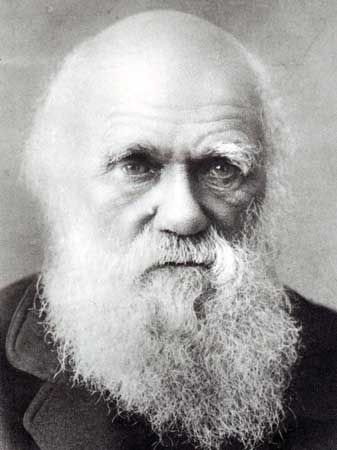
In  the second video below in the 96th clip in this series are his words and  my response is below them. 

50 Renowned Academics Speaking About God (Part 1)

Another 50 Renowned Academics Speaking About God (Part 2)

A Further 50 Renowned Academics Speaking About God (Part 3)

Below is my letter responding to Dr. Hann’s quotation:

________

Charles Darwin

Francis and Edith Schaeffer

Rock Band KANSAS

July 8, 2016


Dear Dr. Hahn,

Let me start off by saying that this is not the first time that I have written you. Last time I talked also about Charles Darwin but today I want to directly respond to a quote you made. I think you have exaggerated  if you truly think that you CAN’T IDENTIFY WITH belief in God. Charles Darwin  also struggled with the same issue.

I just finished reading the online addition of the book Darwin, Francis ed. 1892. Charles Darwin: his life told in an autobiographical chapter, and in a selected series of his published letters [abridged edition]. London: John Murray. There are several points that Charles Darwin makes in this book that were very wise, honest, logical, shocking and some that were not so wise. The Christian Philosopher Francis Schaeffer once said of Darwin’s writings, “Darwin in his autobiography and in his letters showed that all through his life he never really came to a quietness concerning the possibility that chance really explained the situation of the biological world. You will find there is much material on this [from Darwin] extended over many many years that constantly he was wrestling with this problem.”

Quote from you:

If I take religion seriously nowadays as I do leading a number of recent projects at this institute, it is very much as social scientist interested in what holds the communities together and also in some sense in the spiritual commitments that human beings are capable of, all of that I find extremely interesting but I can’t identify with any of it myself.

Now this quote is why I thought of you when I read the words of Charles Darwin. You talk about the culture where you come from and how hardly anyone believes in God, but that is not the way it is worldwide. THERE IS AN INNER MORAL CONSCIENCE IN EVERY PERSON THAT POINTS THEM TO GOD AND EVERYONE ACTS ON MORAL MOTIONS.

When I read the book  Charles Darwin: his life told in an autobiographical chapter, and in a selected series of his published letters, I also read  a commentary on it by Francis Schaeffer and I wanted to both  quote some of Charles Darwin’s own words to you and then include the comments of Francis Schaeffer on those words. I have also enclosed a CD with two messages from Adrian Rogers and Bill Elliff concerning Darwinism.

The passages which here follow are extracts, somewhat abbreviated, from a part of the Autobiography, written in 1876, in which my father (Charles, this book was put together by Francis Darwin) gives the history of his religious views:—

CHARLES DARWIN’S WORDS:

But now the grandest scenes would not cause any such convictions  and feelings to rise in my mind. It may be truly said that I am like a man who has become colour-blind and the universal belief by men of the existence of redness makes my present loss of perception of not the least value as evidence. This argument would be a valid one if all men of all races had the same inward conviction of the existence of one God; but we know that this is very far from being the case. Therefore I cannot see that such inward convictions and feelings are of any weight as evidence of what really exists. The state of mind which grand scenes formerly excited in me, and which was intimately connected with a belief in God, did not essentially differ from that which is often called the sense of sublimity; and however difficult it may be to explain the genesis of this sense, it can hardly be advanced as an argument for the existence of God, any more than the powerful though vague and similar feelings excited by music.

Francis Schaeffer observed:

You notice that Darwin had already said he had lost his sense of music [appreciation]. However, he brings forth what I think is a false argument. I usually use it in the area of morality. I mention that materialistic anthropologists point out that different people have different moral [systems]  and this is perfectly true, but what the materialist anthropologist can never point out is why man has a sense of moral motion and that is the problem here. Therefore, it is perfectly true that men have different concepts of God and different concepts of moral motion, but Darwin himself is not satisfied in his own position and WHERE DO THEY [MORAL MOTIONS] COME FROM AT ALL? So you are wrestling with the same dilemma here in this reference as you do in the area of all things human. For these men it is not the distinction that raises the problem, but it is the overwhelming factor of the existence of the humanness of man, the mannishness of man. The simple fact is he saw that you are shut up to either God or chance, and he said basically “I don’t see how it could be chance” and at the same time he looks at a mountain or listens to a piece of music it is a testimony that really chance isn’t sufficient enough. So gradually with the sensitivity of his own inborn self conscience he kills it. He deliberately  kills the beauty so it doesn’t argue with his theory. Maybe I am being false to Darwin here. Who can say about Darwin’s subconscious thoughts? It seems to me though this is exactly the case. What you find is a man who can’t stand the argument of the external beauty and the mannishness of man so he just gives it up in this particular place.

_________________

Let make 2 points here. First, the Bible teaches that everyone knows in their heart that God exists because of the beauty of God’s creation and the conscience that God has planted in everyone’s heart (Romans 1).

Second, all humans have moral motions.

 Francis Schaffer in his book THE GOD WHO IS THERE addresses these same issues:

“[in Christianity] there is a sufficient basis for morals. Nobody has ever discovered a way of having real “morals” without a moral absolute. If there is no moral absolute, we are left with hedonism (doing what I like) or some form of the social contract theory (what is best for society as a a hole is right). However, neither of these alternative corresponds to the moral motions that men have. Talk to people long enough and deeply enough, and you will find that they consider some things are really right and something are really wrong. Without absolutes, morals as morals cease to exist, and humanistic mean starting from himself is unable to find the absolute he needs. But because the God of the Bible is there, real morals exist. Within this framework I can say one action is right and another wrong, without talking nonsense.” 117

Now back to my first point, concerning ROMANS CHAPTER ONE. It has been found that when atheists are asked with a polygraph machine if they believe in God and  they so “NO” the polygraph indicates they are lying. Claude Brown actually tested this with over 15,000 job applicants over a long period of time in his trucking line during the 1970’s and most of the 1980’s.   

Romans 1:18-19 (Amplified Bible) ” For God’s wrath and indignation are revealed from heaven against all ungodliness and unrighteousness of men, who in their wickedness REPRESS and HINDER the truth and make it inoperative. For that which is KNOWN about God is EVIDENT to them and MADE PLAIN IN THEIR INNER CONSCIOUSNESS, because God  has SHOWN IT TO THEM,”(emphasis mine). At the 37 minute mark on the CD that I sent you today Adrian Rogers noted, “”There is no such thing anywhere on earth as a true atheist. If a man says he doesn’t believe in God, then he is lying. God has put his moral consciousness into every man’s heart, and a man has to try to kick his conscience to death to say he doesn’t believe in God.”

ROMANS CHAPTER ONE IS RIGHT WHEN IT SAYS THAT GOD PUT THAT CONSCIENCE IN EVERYONE’S HEART THAT BEARS WITNESS THAT HE CREATED THEM FOR A PURPOSE AND THAT IS WHY THE VAST MAJORITY OF PEOPLE IN THE WORLD ARE ATTEMPTING TO SEEK OUT GOD!!!!

As a secularist you believe that it is sad indeed that millions of Christians are hoping for heaven but no heaven is waiting for them. Paul took a close look at this issue too:

I Corinthians 15 asserts:

12 But if it is preached that Christ has been raised from the dead, how can some of you say that there is no resurrection of the dead? 13 If there is no resurrection of the dead, then not even Christ has been raised. 14 And if Christ has not been raised, our preaching is useless and so is your faith. 15 More than that, we are then found to be false witnesses about God, for we have testified about God that he raised Christ from the dead. But he did not raise him if in fact the dead are not raised. 16 For if the dead are not raised, then Christ has not been raised either. 17 And if Christ has not been raised, your faith is futile; you are still in your sins. 18 Then those also who have fallen asleep in Christ are lost. 19 If only for this life we have hope in Christ, we are of all people most to be pitied.

I sent you a CD that starts off with the song DUST IN THE WIND by Kerry Livgren of the group KANSAS which was a hit song in 1978 when it rose to #6 on the charts because so many people connected with the message of the song. It included these words, “All we do, crumbles to the ground though we refuse to see, Dust in the Wind, All we are is dust in the wind, Don’t hang on, Nothing lasts forever but the Earth and Sky, It slips away, And all your money won’t another minute buy.”

Kerry Livgren himself said that he wrote the song because he saw where man was without a personal God in the picture. Solomon pointed out in the Book of Ecclesiastes that those who believe that God doesn’t exist must accept three things. FIRST, death is the end and SECOND, chance and time are the only guiding forces in this life.  FINALLY, power reigns in this life and the scales are never balanced. The Christian can  face death and also confront the world knowing that it is not determined by chance and time alone and finally there is a judge who will balance the scales.

Both Kerry Livgren and the bass player Dave Hope of Kansas became Christians eventually. Kerry Livgren first tried Eastern Religions and Dave Hope had to come out of a heavy drug addiction. I was shocked and elated to see their personal testimony on The 700 Club in 1981 and that same  interview can be seen on You Tube today. Livgren lives in Topeka, Kansas today where he teaches “Diggers,” a Sunday school class at Topeka Bible ChurchDAVE HOPE is the head of Worship, Evangelism and Outreach at Immanuel Anglican Church in Destin, Florida.

The answer to find meaning in life is found in putting your faith and trust in Jesus Christ. The Bible is true from cover to cover and can be trusted.

Thank you again for your time and I know how busy you are.

Everette Hatcher, everettehatcher@gmail.com, http://www.thedailyhatch.org, cell ph 501-920-5733, Box 23416, LittleRock, AR 72221, United States

PS: Is the Bible historically accurate? Here are some of the posts I have done in the past on the subject: 1. The Babylonian Chronicleof Nebuchadnezzars Siege of Jerusalem2. Hezekiah’s Siloam Tunnel Inscription. 3. Taylor Prism (Sennacherib Hexagonal Prism)4. Biblical Cities Attested Archaeologically. 5. The Discovery of the Hittites6.Shishak Smiting His Captives7. Moabite Stone8Black Obelisk of Shalmaneser III9A Verification of places in Gospel of John and Book of Acts., 9B Discovery of Ebla Tablets10. Cyrus Cylinder11. Puru “The lot of Yahali” 9th Century B.C.E.12. The Uzziah Tablet Inscription13. The Pilate Inscription14. Caiaphas Ossuary14 B Pontius Pilate Part 214c. Three greatest American Archaeologists moved to accept Bible’s accuracy through archaeology.


Related posts:


FRANCIS SCHAEFFER ANALYZES ART AND CULTURE PART 48 “BLOW UP” by Michelangelo Antonioni makes Philosophic Statement (Feature on artist Nancy Holt)

_______________ Francis Schaeffer pictured below: _____________________ I have included the 27 minute  episode THE AGE OF NONREASON by Francis Schaeffer. In that video Schaeffer noted,  ” Sergeant Pepper’s Lonely Hearts Club Band…for a time it became the rallying cry for young people throughout the world. It expressed the essence of their lives, thoughts and their feelings.” How Should […]

FRANCIS SCHAEFFER ANALYZES ART AND CULTURE Part 47 Woody Allen and Professor Levy and the death of “Optimistic Humanism” from the movie CRIMES AND MISDEMEANORS Plus Charles Darwin’s comments too!!! (Feature on artist Rodney Graham)

Crimes and Misdemeanors: A Discussion: Part 1 ___________________________________ Today I will answer the simple question: IS IT POSSIBLE TO BE AN OPTIMISTIC SECULAR HUMANIST THAT DOES NOT BELIEVE IN GOD OR AN AFTERLIFE? This question has been around for a long time and you can go back to the 19th century and read this same […]

FRANCIS SCHAEFFER ANALYZES ART AND CULTURE PART 46 Friedrich Nietzsche (Featured artist is Thomas Schütte)

____________________________________ Francis Schaeffer pictured below: __________ Francis Schaeffer has written extensively on art and culture spanning the last 2000years and here are some posts I have done on this subject before : Francis Schaeffer’s “How should we then live?” Video and outline of episode 10 “Final Choices” , episode 9 “The Age of Personal Peace and Affluence”, episode 8 […]

FRANCIS SCHAEFFER ANALYZES ART AND CULTURE Part 45 Woody Allen “Reason is Dead” (Feature on artists Allora & Calzadilla )

Love and Death [Woody Allen] – What if there is no God? [PL] ___________ _______________ How Should We then Live Episode 7 small (Age of Nonreason) #02 How Should We Then Live? (Promo Clip) Dr. Francis Schaeffer 10 Worldview and Truth Two Minute Warning: How Then Should We Live?: Francis Schaeffer at 100 Francis Schaeffer […]

FRANCIS SCHAEFFER ANALYZES ART AND CULTURE Part 44 The Book of Genesis (Featured artist is Trey McCarley )

___________________________________ Francis Schaeffer pictured below: ____________________________ Francis Schaeffer “BASIS FOR HUMAN DIGNITY” Whatever…HTTHR Dr. Francis schaeffer – The flow of Materialism(from Part 4 of Whatever happened to human race?) Dr. Francis Schaeffer – The Biblical flow of Truth & History (intro) Francis Schaeffer – The Biblical Flow of History & Truth (1) Dr. Francis Schaeffer […]

RESPONDING TO HARRY KROTO’S BRILLIANT RENOWNED ACADEMICS!! Michael Mann, UCLA Anthropologist, “My mother was a very loving, warm person who I remember her getting extremely unhappy when I told her at the age of 13 I was an atheist but she was the core of the family”

RESPONDING TO HARRY KROTO’S BRILLIANT RENOWNED ACADEMICS!! Michael Mann, UCLA Anthropologist, “My mother was a very loving, warm person who I remember her getting extremely unhappy when I told her at the age of 13 I was an atheist but she was the core of the family”


Continue reading

RESPONDING TO HARRY KROTO’S BRILLIANT RENOWNED ACADEMICS!! Simon Blackburn, Phil Dept Cambridge, patron of the British Humanist Association, “I think science talks about the world as we have it and religion tries to talk about what lies behind or above it”


Continue reading

RESPONDING TO HARRY KROTO’S BRILLIANT RENOWNED ACADEMICS!! Richard Robert Ernst (born August 14, 1933) is a Swiss physical chemist and Nobel Laureate Kroto: WHEN I DIE IS THAT IT? Dr. Ernst: Of course. Kroto: THERE IS NO CREATIVE ENTITY WITH ANY INTEREST IN YOU? Dr. Ernst: No.


Continue reading