

-
Recent Posts
- FRIEDMAN FRIDAY Dan Mitchell: Milton Friedman was advocating what is sometimes referred to as “shareholder capitalism,” which is the notion that a company should strive to earn honest profits for its owners!
- FRANCIS SCHAEFFER ANALYZES ART AND CULTURE Part 557 My March 13, 2016 Letter to Hugh Hefner with quote from Ben Parkinson: There are only two things worth putting your time and life into and that is the WORD OF GOD and the SOULS OF PEOPLE. (Featured artist is Debo Eilers)
- FRANCIS SCHAEFFER ANALYZES ART AND CULTURE Part 556 Third letter I wrote to HUGH HEFNER (Where do we get our morals from?) Featured Artist is Stephanie Syjuco
- FRANCIS SCHAEFFER ANALYZES ART AND CULTURE Part 555 LETTER TO HUGH HEFNER “What does it all mean — if it has any meaning at all? But how can it all exist if it doesn’t have some kind of meaning?” Featured Artist is Assume Vivid Astro Focus
- FRANCIS SCHAEFFER ANALYZES ART AND CULTURE PART 554 My Correspondence with Edward O.Wilson from 1994 to 2021 My 4/21/17 letter to Dr.Wilson I quoted Francis Schaeffer: “Ecclesiastes is the only pessimistic book in the Bible and that is because of the place where Solomon limits himself.He limits himself to the question of human life, life UNDER THE SUN between birth and death and the answers this would give” FEATURED ARTIST IS DALÍ
-
Recent Comments
-
Archives
- December 2024
- November 2024
- October 2024
- September 2024
- August 2024
- July 2024
- June 2024
- May 2024
- April 2024
- March 2024
- February 2024
- January 2024
- December 2023
- November 2023
- October 2023
- September 2023
- August 2023
- July 2023
- June 2023
- May 2023
- April 2023
- March 2023
- February 2023
- January 2023
- December 2022
- November 2022
- October 2022
- September 2022
- August 2022
- July 2022
- June 2022
- May 2022
- April 2022
- March 2022
- February 2022
- January 2022
- December 2021
- November 2021
- October 2021
- September 2021
- August 2021
- July 2021
- June 2021
- May 2021
- April 2021
- March 2021
- February 2021
- January 2021
- December 2020
- November 2020
- October 2020
- September 2020
- August 2020
- July 2020
- June 2020
- May 2020
- April 2020
- March 2020
- February 2020
- January 2020
- December 2019
- November 2019
- October 2019
- September 2019
- August 2019
- July 2019
- June 2019
- May 2019
- April 2019
- March 2019
- February 2019
- January 2019
- December 2018
- November 2018
- October 2018
- September 2018
- August 2018
- July 2018
- June 2018
- May 2018
- April 2018
- March 2018
- February 2018
- January 2018
- December 2017
- November 2017
- October 2017
- September 2017
- August 2017
- July 2017
- June 2017
- May 2017
- April 2017
- March 2017
- February 2017
- January 2017
- December 2016
- November 2016
- October 2016
- September 2016
- August 2016
- July 2016
- June 2016
- May 2016
- April 2016
- March 2016
- February 2016
- January 2016
- December 2015
- November 2015
- October 2015
- September 2015
- August 2015
- July 2015
- June 2015
- May 2015
- April 2015
- March 2015
- February 2015
- January 2015
- December 2014
- November 2014
- October 2014
- September 2014
- August 2014
- July 2014
- June 2014
- May 2014
- April 2014
- March 2014
- February 2014
- January 2014
- December 2013
- November 2013
- October 2013
- September 2013
- August 2013
- July 2013
- June 2013
- May 2013
- April 2013
- March 2013
- February 2013
- January 2013
- December 2012
- November 2012
- October 2012
- September 2012
- August 2012
- July 2012
- June 2012
- May 2012
- April 2012
- March 2012
- February 2012
- January 2012
- December 2011
- November 2011
- October 2011
- September 2011
- August 2011
- July 2011
- June 2011
- May 2011
- April 2011
- March 2011
- February 2011
- January 2011
- December 2010
-
Categories
- Adrian Rogers
- Atheists Confronted
- Biblical Archaeology
- Bill Clinton
- Capital Punishment
- Cato Institute
- Current Events
- David Barton
- Economist Dan Mitchell
- Famous Arkansans
- Founding Fathers
- Francis Schaeffer
- Gun Control
- Healthcare
- Hillary Clinton
- Jason Tolbert
- Mike Huckabee
- Milton Friedman
- President Donald J. Trump
- President Donald Trump
- President Obama
- Prolife
- Ronald Reagan
- Social Security
- spending out of control
- Taxes
- Uncategorized
- Unconfirmed Quotes of Founders
- Vouchers
- War Heroes
- Woody Allen
-
Meta
Tag Archives: Brian Greene
RESPONDING TO HARRY KROTO’S BRILLIANT RENOWNED ACADEMICS!! Part 107 David Parkin, Anthropologist, Oxford, “I am a rationalist humanist or something. (Religion) gives a lot of comfort to some people so it must be tolerated”
On November 21, 2014 I received a letter from Nobel Laureate Harry Kroto and it said:
…Please click on this URL http://vimeo.com/26991975
and you will hear what far smarter people than I have to say on this matter. I agree with them.
Harry Kroto
Nick Gathergood, David-Birkett, Harry-Kroto
I have attempted to respond to all of Dr. Kroto’s friends arguments and I have posted my responses one per week for over a year now. Here are some of my earlier posts:
Arif Ahmed, Haroon Ahmed,Sir David Attenborough, Mark Balaguer, Horace Barlow, Michael Bate, Sir Patrick Bateson,Patricia Churchland, Aaron Ciechanover, Noam Chomsky,Alan Dershowitz, Hubert Dreyfus, Bart Ehrman, Stephan Feuchtwang, David Friend, Riccardo Giacconi, Ivar Giaever , Roy Glauber, Rebecca Goldstein, David J. Gross, Brian Greene, Susan Greenfield, Stephen F Gudeman, Alan Guth, Jonathan Haidt, Theodor W. Hänsch, Brian Harrison, Hermann Hauser, Roald Hoffmann, Bruce Hood, Herbert Huppert, Gareth Stedman Jones, Steve Jones, Shelly Kagan, Michio Kaku, Stuart Kauffman, Lawrence Krauss, Harry Kroto, George Lakoff, Elizabeth Loftus, Alan Macfarlane, Peter Millican, Marvin Minsky, Leonard Mlodinow, Yujin Nagasawa, Alva Noe, Douglas Osheroff, Jonathan Parry, Saul Perlmutter, Herman Philipse, Carolyn Porco, Robert M. Price, Lisa Randall, Lord Martin Rees, Alison Richard, Oliver Sacks, John Searle, Marcus du Sautoy, Simon Schaffer, J. L. Schellenberg, Lee Silver, Peter Singer, Walter Sinnott-Armstrong, Ronald de Sousa, Victor Stenger, John Sulston, Barry Supple, Leonard Susskind, Raymond Tallis, Neil deGrasse Tyson, C.J. van Rijsbergen, Alexander Vilenkin, Sir John Walker, Frank Wilczek, Steven Weinberg, and Lewis Wolpert,
In the second video below in the 74th clip in this series are his words and my response is below them.
50 Renowned Academics Speaking About God (Part 1)
Another 50 Renowned Academics Speaking About God (Part 2)
A Further 50 Renowned Academics Speaking About God (Part 3)
__________
Interview of David Parkin – part one
Uploaded on Sep 14, 2009
Interview of Professor David Parkin the anthropologist on 17th March 2009 by Alan Macfarlane. For a higher-quality, version with summary please see http://www.alanmacfarlane.com
Interview of David Parkin – part two
_______________________

David Parkin (1940- ) was from 1996 until 2008, when he retired, professor of social anthropology at the University of Oxford, fellow of All Souls College, and head of ISCA and the School of Anthropology and Museum Ethnography from 1996-2006. Before coming to Oxford, he was at the School of Oriental and African Studies, University of London, first as a student (1959-1964) and then as a member of faculty (1964-1996), becoming professor of African anthropology in 1982. He is now Emeritus Professor at Oxford and Honorary Fellow at the School of Oriental and African Studies. His early training included the study of Swahili and Bantu linguistics alongside anthropology, and this has stamped his long-standing interest in the role of language in social organisation in Africa and generally.
Parkin’s focus has been on East Africa where he has carried out a number of years’ fieldwork among different peoples and in different ecologies: the Luo of western Kenya, the Giriama of eastern Kenya, and Swahili-speakers in Zanzibar and Mombasa. He has studied the growth of ethnically mixed urban populations in Kampala, Uganda, where his interest in Luo first started, and in Nairobi, where he developed more fully his interest in Luo. Field research among the Giriama of Kenya began with a study of economic entrepreneurship, and continued into an analysis of the role of religion in pastoralism, agriculture and trade. Thereafter he concentrated on Islam among Swahili-speakers, extending this concern from the East African coast to the Hadhramaut, Oman and other areas of the Indian Ocean littoral. In later years he examined concepts of materiality, especially in relation to the human body, and became interested in the evolution of language.
He was chairman of the International African Institute and of the Association of Social Anthropologists, was elected fellow of the British Academy, and has sat on various bodies concerned with higher education and the social sciences, both in the UK and France, where he has also held various appointments, including visiting membership of the CNRS.
While continuing as Emeritus Professor at the Institute of Social and Cultural Anthropology at Oxford University, he has from 2009 been research professor at the Max Planck Institute for Religious and Ethnic Diversity in Goettingen, Germany, focusing on medical and sociolinguistic processes of diversification.
++++++++++++++++++++++
Below is a letter in which I respond to Dr. Parkin’s quote:
February 23, 2015
Dr. David Parkin, Professor Emeritus of Social Anthropology, University of Oxford, All Souls College, United Kingdom
Dear Dr. Parkin,
I took interest in a two hour interview that you gave to Alan Macfarlane and found on You Tube and I noticed that you had worked in the area of evolutionary psychology and the evolution of human social groups and the subject of evolution has interested me recently too. I also noticed that you had spent a considerable amount of time studying religions. As you can tell from reading this letter I am an evangelical Christian and I have made it a hobby of mine to correspond with scientists or academics like yourself over the last 25 years. Some of those who corresponded back with me have been Ernest Mayr (1904-2005),, George Wald (1906-1997), Carl Sagan (1934-1996), Robert Shapiro (1935-2011), Nicolaas Bloembergen (1920-), Brian Charlesworth (1945-), Francisco J. Ayala (1934-) Elliott Sober (1948-), Kevin Padian (1951-), Matt Cartmill (1943-) , Milton Fingerman (1928-), John J. Shea (1969-), , Michael A. Crawford (1938-), Paul Kurtz (1925-2012), Sol Gordon (1923-2008), Albert Ellis (1913-2007), Barbara Marie Tabler (1915-1996), Renate Vambery (1916-2005), Archie J. Bahm (1907-1996), Aron S “Gil” Martin ( 1910-1997), Matthew I. Spetter (1921-2012), H. J. Eysenck (1916-1997), Robert L. Erdmann (1929-2006), Mary Morain (1911-1999), Lloyd Morain (1917-2010), Warren Allen Smith (1921-), Bette Chambers (1930-), Gordon Stein (1941-1996) , Milton Friedman (1912-2006), John Hospers (1918-2011), Michael Martin (1932-).Harry Kroto (1939-), Marty E. Martin (1928-), Richard Rubenstein (1924-), James Terry McCollum (1936-), Edward O. WIlson (1929-), Lewis Wolpert (1929), Gerald Holton (1922-), Martin Rees (1942-), Alan Macfarlane (1941-), Roald Hoffmann (1937-), Herbert Kroemer (1928-), Thomas H. Jukes (1906-1999), Glenn Branch, Geoff Harcourt (1931-) and Ray T. Cragun (1976-). I would consider it an honor to add you to this very distinguished list.
I just finished reading the online addition of the book Darwin, Francis ed. 1892. Charles Darwin: his life told in an autobiographical chapter, and in a selected series of his published letters [abridged edition]. London: John Murray. There are several points that Charles Darwin makes in this book that were very wise, honest, logical, shocking and some that were not so wise. The Christian Philosopher Francis Schaeffer once said of Darwin’s writings, “Darwin in his autobiography and in his letters showed that all through his life he never really came to a quietness concerning the possibility that chance really explained the situation of the biological world. You will find there is much material on this [from Darwin] extended over many many years that constantly he was wrestling with this problem.”
Recently I ran across the following quote from you (in that interview with Alan Macfarlane I mentioned earlier, BTW Dr. Macfarlane does the best in-depth interviews by far):
I am a rationalist humanist or something. (Religion) gives a lot of comfort to some people so it must be tolerated.
I noticed that you have done a lot of work on the subject of religion in your academic studies and that that includes Islam too.
On February 21, 2015 I walked into the First Baptist Church Orlando Saturday evening service and wanted to get a seat up close. I saw that the third row was practically empty but once I got up front I realized that most of that row had been taped off and reserved but there was a few seats open at the end of the row. I sat down and then I noticed a few moments after the service started there were some people being escorted into the service and they sat next to me on this row. Little did I know that these were Coptic Christians who had recently moved from Egypt to Orlando. I got to visit with some of them after the service and told them I would praying for them and for their relatives back in Egypt.
David Uth delivered a wonderful message on I John 4 and he spent on extra time at the close of the service on verse 18, “There is no fear in love. But perfect love drives out fear, because fear has to do with punishment. The one who fears is not made perfect in love.” Then he put on this picture below:
A video released Sunday showed the beheading of 21 Egyptian Coptic Christians in Libya by ISIS militants.

Then Dr. Uth quoted from this passage below:
Acts 7:50-60English Standard Version (ESV)
50 Did not my hand make all these things?’
51 “You stiff-necked people, uncircumcised in heart and ears, you always resist the Holy Spirit. As your fathers did, so do you. 52 Which of the prophets did your fathers not persecute? And they killed those who announced beforehand the coming of the Righteous One, whom you have now betrayed and murdered,53 you who received the law as delivered by angels and did not keep it.”
The Stoning of Stephen
54 Now when they heard these things they were enraged, and they ground their teeth at him. 55 But he, full of the Holy Spirit, gazed into heaven and saw the glory of God, and Jesus standing at the right hand of God. 56 And he said, “Behold, I see the heavens opened, and the Son of Man standing at the right hand of God.” 57 But they cried out with a loud voice and stopped their ears and rushed together[a] at him. 58 Then they cast him out of the city and stoned him. And the witnesses laid down their garments at the feet of a young man named Saul. 59 And as they were stoning Stephen, he called out, “Lord Jesus, receive my spirit.” 60 And falling to his knees he cried out with a loud voice, “Lord, do not hold this sin against them.” And when he had said this, he fell asleep.
___________
Dr. Uth pointed out that Jesus stood up at the right hand of God to greet Stephen to heaven and Dr. Uth imagined that Jesus stood up to greet these 21 Coptic Christians home and then we all sang the song ALWAYS which is below and there was not a dry eye in the place!!!!
Always
My foes are many, they rise against me
But I will hold my ground
I will not fear the war, I will not fear the storm
My help is on the way, my help is on the way
Oh, my God, He will not delay
My refuge and strength always
I will not fear, His promise is true
My God will come through always, always
Trouble surrounds me, chaos abounding
My soul will rest in You
I will not fear the war, I will not fear the storm
My help is on the way, my help is on the way
Oh, my God, He will not delay
My refuge and strength always
I will not fear, His promise is true
My God will come through always, always
I lift my eyes up, my help comes from the Lord
I lift my eyes up, my help comes from the Lord
I lift my eyes up, my help comes from the Lord
I lift my eyes up, my help comes from the Lord
From You Lord, from You Lord
Oh, my God, He will not delay
My refuge and strength always
I will not fear, His promise is true
My God will come through always, always
Oh, my God, He will not delay
My refuge and strength always, always
________________________
DR PARKIN, YOU MAY BE STILL BE WONDERING WHY SO MANY PEOPLE ARE INVOLVED IN RELIGION: Let make 2 points here. First, the Bible teaches that everyone knows in their heart that God exists because of the beauty of God’s creation and the conscience that God has planted in everyone’s heart (Romans 1).
Second, all humans have moral motions.
Francis Schaffer in his book THE GOD WHO IS THERE addresses these same issues:
“[in Christianity] there is a sufficient basis for morals. Nobody has ever discovered a way of having real “morals” without a moral absolute. If there is no moral absolute, we are left with hedonism (doing what I like) or some form of the social contract theory (what is best for society as a a hole is right). However, neither of these alternative corresponds to the moral motions that men have. Talk to people long enough and deeply enough, and you will find that they consider some things are really right and something are really wrong. Without absolutes, morals as morals cease to exist, and humanistic mean starting from himself is unable to find the absolute he needs. But because the God of the Bible is there, real morals exist. Within this framework I can say one action is right and another wrong, without talking nonsense.” 117
Now back to my first point, concerning ROMANS CHAPTER ONE. It has been found that when atheists are asked with a polygraph machine if they believe in God and when they so “NO” the polygraph indicates they are lying. Claude Brown actually tested this with over 15,000 job applicants over a long period of time in his trucking line. ROMANS ONE IS RIGHT WHEN IT SAYS THAT GOD PUT THAT CONSCIENCE IN EVERYONE’S HEART THAT BEARS WITNESS THAT HE CREATED THEM FOR A PURPOSE AND THAT IS WHY THE VAST MAJORITY OF PEOPLE IN THE WORLD ARE ATTEMPTING TO SEEK OUT GOD!!!!
Instead of addressing the issue of which morality is right today, I just what to ask you why you think materialist anthropologists are not able to explain why humans always have a sense of moral motions? No tribe of people have ever been found without moral motions!!!!!
When I read the book Charles Darwin: his life told in an autobiographical chapter, and in a selected series of his published letters, I also read a commentary on it by Francis Schaeffer and I wanted to both quote some of Charles Darwin’s own words to you and then include the comments of Francis Schaeffer on those words. I have also enclosed a CD with two messages from Adrian Rogers and Bill Elliff concerning Darwinism. THESE COMMENTS BY SCHAEFFER ON THE MORAL MOTIONS PROMPTED ME TO WRITE YOU TODAY.
CHARLES DARWIN’S WORDS:
But now the grandest scenes would not cause any such convictions and feelings to rise in my mind. It may be truly said that I am like a man who has become colour-blind and the universal belief by men of the existence of redness makes my present loss of perception of not the least value as evidence. This argument would be a valid one if all men of all races had the same inward conviction of the existence of one God; but we know that this is very far from being the case. Therefore I cannot see that such inward convictions and feelings are of any weight as evidence of what really exists. The state of mind which grand scenes formerly excited in me, and which was intimately connected with a belief in God, did not essentially differ from that which is often called the sense of sublimity; and however difficult it may be to explain the genesis of this sense, it can hardly be advanced as an argument for the existence of God, any more than the powerful though vague and similar feelings excited by music.
Francis Schaeffer observed:
You notice that Darwin had already said he had lost his sense of music [appreciation]. However, he brings forth what I think is a false argument. I usually use it in the area of morality. I mention that materialistic anthropologists point out that different people have different moral [systems] and this is perfectly true, but what the materialist anthropologist can never point out is why man has a sense of moral motion and that is the problem here. Therefore, it is perfectly true that men have different concepts of God and different concepts of moral motion, but Darwin himself is not satisfied in his own position and WHERE DO THEY [MORAL MOTIONS] COME FROM AT ALL? So you are wrestling with the same dilemma here in this reference as you do in the area of all things human. For these men it is not the distinction that raises the problem, but it is the overwhelming factor of the existence of the humanness of man, the mannishness of man. The simple fact is he saw that you are shut up to either God or chance, and he said basically “I don’t see how it could be chance” and at the same time he looks at a mountain or listens to a piece of music it is a testimony that really chance isn’t sufficient enough. So gradually with the sensitivity of his own inborn self conscience he kills it. He deliberately kills the beauty so it doesn’t argue with his theory. Maybe I am being false to Darwin here. Who can say about Darwin’s subconscious thoughts? It seems to me though this is exactly the case. What you find is a man who can’t stand the argument of the external beauty and the mannishness of man so he just gives it up in this particular place.
As a secularist you believe that it is sad indeed that millions of Christians are hoping for heaven but no heaven is waiting for them. Paul took a close look at this issue too:
I Corinthians 15 asserts:
12 But if it is preached that Christ has been raised from the dead, how can some of you say that there is no resurrection of the dead? 13 If there is no resurrection of the dead, then not even Christ has been raised. 14 And if Christ has not been raised, our preaching is useless and so is your faith. 15 More than that, we are then found to be false witnesses about God, for we have testified about God that he raised Christ from the dead. But he did not raise him if in fact the dead are not raised. 16 For if the dead are not raised, then Christ has not been raised either. 17 And if Christ has not been raised, your faith is futile; you are still in your sins. 18 Then those also who have fallen asleep in Christ are lost. 19 If only for this life we have hope in Christ, we are of all people most to be pitied.
I sent you a CD that starts off with the song DUST IN THE WIND by Kerry Livgren of the group KANSAS which was a hit song in 1978 when it rose to #6 on the charts because so many people connected with the message of the song. It included these words, “All we do, crumbles to the ground though we refuse to see, Dust in the Wind, All we are is dust in the wind, Don’t hang on, Nothing lasts forever but the Earth and Sky, It slips away, And all your money won’t another minute buy.”
Kerry Livgren himself said that he wrote the song because he saw where man was without a personal God in the picture. Solomon pointed out in the Book of Ecclesiastes that those who believe that God doesn’t exist must accept three things. FIRST, death is the end and SECOND, chance and time are the only guiding forces in this life. FINALLY, power reigns in this life and the scales are never balanced. The Christian can face death and also confront the world knowing that it is not determined by chance and time alone and finally there is a judge who will balance the scales.
Both Kerry Livgren and the bass player Dave Hope of Kansas became Christians eventually. Kerry Livgren first tried Eastern Religions and Dave Hope had to come out of a heavy drug addiction. I was shocked and elated to see their personal testimony on The 700 Club in 1981 and that same interview can be seen on You Tube today. Livgren lives in Topeka, Kansas today where he teaches “Diggers,” a Sunday school class at Topeka Bible Church. DAVE HOPE is the head of Worship, Evangelism and Outreach at Immanuel Anglican Church in Destin, Florida.
The answer to find meaning in life is found in putting your faith and trust in Jesus Christ. The Bible is true from cover to cover and can be trusted.
Thank you again for your time and I know how busy you are.
Everette Hatcher, everettehatcher@gmail.com, http://www.thedailyhatch.org, cell ph 501-920-5733, Box 23416, LittleRock, AR 72221, United States
Is the Bible historically accurate? Here are some of the posts I have done in the past on the subject: 1. The Babylonian Chronicle, of Nebuchadnezzars Siege of Jerusalem, 2. Hezekiah’s Siloam Tunnel Inscription. 3. Taylor Prism (Sennacherib Hexagonal Prism), 4. Biblical Cities Attested Archaeologically. 5. The Discovery of the Hittites, 6.Shishak Smiting His Captives, 7. Moabite Stone, 8. Black Obelisk of Shalmaneser III, 9A Verification of places in Gospel of John and Book of Acts., 9B Discovery of Ebla Tablets. 10. Cyrus Cylinder, 11. Puru “The lot of Yahali” 9th Century B.C.E., 12. The Uzziah Tablet Inscription, 13. The Pilate Inscription, 14. Caiaphas Ossuary, 14 B Pontius Pilate Part 2, 14c. Three greatest American Archaeologists moved to accept Bible’s accuracy through archaeology.,
You can hear DAVE HOPE and Kerry Livgren’s stories from this youtube link:
(part 1 ten minutes)
(part 2 ten minutes)
Kansas – Dust in the Wind (Official Video)
Uploaded on Nov 7, 2009
Pre-Order Miracles Out of Nowhere now at http://www.miraclesoutofnowhere.com
About the film:
In 1973, six guys in a local band from America’s heartland began a journey that surpassed even their own wildest expectations, by achieving worldwide superstardom… watch the story unfold as the incredible story of the band KANSAS is told for the first time in the DVD Miracles Out of Nowhere.
_____________________________
Adrian Rogers on Darwinism
_________________
________
Related posts:
FRANCIS SCHAEFFER ANALYZES ART AND CULTURE Part 53 THE BEATLES (Part E, Stg. Pepper’s and John Lennon’s search in 1967 for truth was through drugs, money, laughter, etc & similar to King Solomon’s, LOTS OF PICTURES OF JOHN AND CYNTHIA) (Feature on artist Yoko Ono)
The John Lennon and the Beatles really were on a long search for meaning and fulfillment in their lives just like King Solomon did in the Book of Ecclesiastes. Solomon looked into learning (1:12-18, 2:12-17), laughter, ladies, luxuries, and liquor (2:1-2, 8, 10, 11), and labor (2:4-6, 18-20). He fount that without God in the picture all […]
FRANCIS SCHAEFFER ANALYZES ART AND CULTURE Part 52 THE BEATLES (Part D, There is evidence that the Beatles may have been exposed to Francis Schaeffer!!!) (Feature on artist Anna Margaret Rose Freeman )
______________ George Harrison Swears & Insults Paul and Yoko Lucy in the Sky with Diamonds- The Beatles The Beatles: I have dedicated several posts to this series on the Beatles and I don’t know when this series will end because Francis Schaeffer spent a lot of time listening to the Beatles and talking […]
FRANCIS SCHAEFFER ANALYZES ART AND CULTURE Part 51 THE BEATLES (Part C, List of those on cover of Stg.Pepper’s ) (Feature on artist Raqib Shaw )
The Beatles in a press conference after their Return from the USA Uploaded on Nov 29, 2010 The Beatles in a press conference after their Return from the USA. The Beatles: I have dedicated several posts to this series on the Beatles and I don’t know when this series will end because Francis […]
FRANCIS SCHAEFFER ANALYZES ART AND CULTURE Part 50 THE BEATLES (Part B, The Psychedelic Music of the Beatles) (Feature on artist Peter Blake )
__________________ Beatles 1966 Last interview I have dedicated several posts to this series on the Beatles and I don’t know when this series will end because Francis Schaeffer spent a lot of time listening to the Beatles and talking and writing about them and their impact on the culture of the 1960’s. In this […]
FRANCIS SCHAEFFER ANALYZES ART AND CULTURE Part 49 THE BEATLES (Part A, The Meaning of Stg. Pepper’s Cover) (Feature on artist Mika Tajima)
_______________ The Beatles documentary || A Long and Winding Road || Episode 5 (This video discusses Stg. Pepper’s creation I have dedicated several posts to this series on the Beatles and I don’t know when this series will end because Francis Schaeffer spent a lot of time listening to the Beatles and talking and writing about […]
FRANCIS SCHAEFFER ANALYZES ART AND CULTURE PART 48 “BLOW UP” by Michelangelo Antonioni makes Philosophic Statement (Feature on artist Nancy Holt)
_______________ Francis Schaeffer pictured below: _____________________ I have included the 27 minute episode THE AGE OF NONREASON by Francis Schaeffer. In that video Schaeffer noted, ” Sergeant Pepper’s Lonely Hearts Club Band…for a time it became the rallying cry for young people throughout the world. It expressed the essence of their lives, thoughts and their feelings.” How Should […]
FRANCIS SCHAEFFER ANALYZES ART AND CULTURE Part 47 Woody Allen and Professor Levy and the death of “Optimistic Humanism” from the movie CRIMES AND MISDEMEANORS Plus Charles Darwin’s comments too!!! (Feature on artist Rodney Graham)
Crimes and Misdemeanors: A Discussion: Part 1 ___________________________________ Today I will answer the simple question: IS IT POSSIBLE TO BE AN OPTIMISTIC SECULAR HUMANIST THAT DOES NOT BELIEVE IN GOD OR AN AFTERLIFE? This question has been around for a long time and you can go back to the 19th century and read this same […]
FRANCIS SCHAEFFER ANALYZES ART AND CULTURE PART 46 Friedrich Nietzsche (Featured artist is Thomas Schütte)
____________________________________ Francis Schaeffer pictured below: __________ Francis Schaeffer has written extensively on art and culture spanning the last 2000years and here are some posts I have done on this subject before : Francis Schaeffer’s “How should we then live?” Video and outline of episode 10 “Final Choices” , episode 9 “The Age of Personal Peace and Affluence”, episode 8 […]
FRANCIS SCHAEFFER ANALYZES ART AND CULTURE Part 45 Woody Allen “Reason is Dead” (Feature on artists Allora & Calzadilla )
Love and Death [Woody Allen] – What if there is no God? [PL] ___________ _______________ How Should We then Live Episode 7 small (Age of Nonreason) #02 How Should We Then Live? (Promo Clip) Dr. Francis Schaeffer 10 Worldview and Truth Two Minute Warning: How Then Should We Live?: Francis Schaeffer at 100 Francis Schaeffer […]
FRANCIS SCHAEFFER ANALYZES ART AND CULTURE Part 44 The Book of Genesis (Featured artist is Trey McCarley )
___________________________________ Francis Schaeffer pictured below: ____________________________ Francis Schaeffer “BASIS FOR HUMAN DIGNITY” Whatever…HTTHR Dr. Francis schaeffer – The flow of Materialism(from Part 4 of Whatever happened to human race?) Dr. Francis Schaeffer – The Biblical flow of Truth & History (intro) Francis Schaeffer – The Biblical Flow of History & Truth (1) Dr. Francis Schaeffer […]
__
RESPONDING TO HARRY KROTO’S BRILLIANT RENOWNED ACADEMICS!! Part 106 Chris Hann, Social Anthropologist, “I find extremely interesting but I can’t identify with any of it (religion and spirituality) myself”
On November 21, 2014 I received a letter from Nobel Laureate Harry Kroto and it said:
…Please click on this URL http://vimeo.com/26991975
and you will hear what far smarter people than I have to say on this matter. I agree with them.
Harry Kroto

I have attempted to respond to all of Dr. Kroto’s friends arguments and I have posted my responses one per week for over a year now. Here are some of my earlier posts:
Arif Ahmed, Sir David Attenborough, Mark Balaguer, Horace Barlow, Michael Bate, Patricia Churchland, Aaron Ciechanover, Noam Chomsky,Alan Dershowitz, Hubert Dreyfus, Bart Ehrman, Stephan Feuchtwang, David Friend, Riccardo Giacconi, Ivar Giaever , Roy Glauber, Rebecca Goldstein, David J. Gross, Brian Greene, Susan Greenfield, Stephen F Gudeman, Alan Guth, Jonathan Haidt, Theodor W. Hänsch, Brian Harrison, Hermann Hauser, Roald Hoffmann, Bruce Hood, Herbert Huppert, Gareth Stedman Jones, Steve Jones, Shelly Kagan, Michio Kaku, Stuart Kauffman, Lawrence Krauss, Harry Kroto, George Lakoff, Elizabeth Loftus, Alan Macfarlane, Peter Millican, Marvin Minsky, Leonard Mlodinow, Yujin Nagasawa, Alva Noe, Douglas Osheroff, Jonathan Parry, Saul Perlmutter, Herman Philipse, Carolyn Porco, Robert M. Price, Lisa Randall, Lord Martin Rees, Oliver Sacks, John Searle, Marcus du Sautoy, Simon Schaffer, J. L. Schellenberg, Lee Silver, Peter Singer, Walter Sinnott-Armstrong, Ronald de Sousa, Victor Stenger, Barry Supple, Leonard Susskind, Raymond Tallis, Neil deGrasse Tyson, .Alexander Vilenkin, Sir John Walker, Frank Wilczek, Steven Weinberg, and Lewis Wolpert,
 Chris Hann (born in Cardiff in 1953) was Professor of Social Anthropology at the University of Kent between 1992 and 1999, when he was appointed as one of two founding Directors of the Max Planck Institute for Social Anthropology at Halle/Saale, Germany.He had previously taught anthropology at Cambridge University and had close links with UKC staff even before coming to Kent, especially with Paul Stirling, the first Professor of Sociology and Anthropology, who pioneered the anthropological study of modern Turkey. In addition to his own fieldwork in Anatolia, Hann has worked among Turkic speakers in Central Asia (Xinjiang, North-West China). Earlier projects took him to Hungary and Poland when these countries were still socialist. At the Max Planck Institute he heads a department which specializes in investigations of the postsocialist countries of the former Soviet bloc, and also of those East Asian countries which still describe themselves as socialist. Recent themes have included rural decollectivization, religion after communism, and the transformation of social security and kinship relations in the decentralized economies of “reform socialism”.Hann is an Editor of the European Journal of Sociology, a Fellow of the Berlin-Brandenburg Academy of Sciences, and Honorary Professor at the Martin Luther University, Halle-Wittenberg, and at the University of Leipzig.Professor Hann continues to collaborate with School of Anthropology and Conservation colleagues, particularly Dr Glenn Bowman.
In the second video below in the 96th clip in this series are his words and my response is below them.
Below is my letter responding to Dr. Hann’s quotation:
________
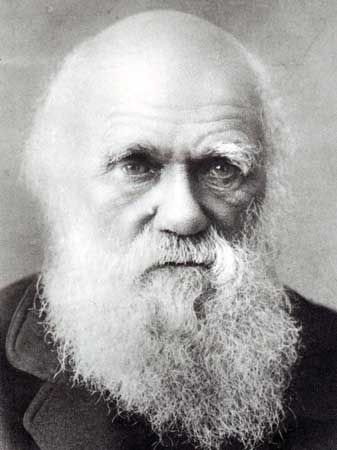
Charles Darwin

Francis and Edith Schaeffer

Rock Band KANSAS
July 8, 2016
Dear Dr. Hahn,
Let me start off by saying that this is not the first time that I have written you. Last time I talked also about Charles Darwin but today I want to directly respond to a quote you made. I think you have exaggerated if you truly think that you CAN’T IDENTIFY WITH belief in God. Charles Darwin also struggled with the same issue.
I just finished reading the online addition of the book Darwin, Francis ed. 1892. Charles Darwin: his life told in an autobiographical chapter, and in a selected series of his published letters [abridged edition]. London: John Murray. There are several points that Charles Darwin makes in this book that were very wise, honest, logical, shocking and some that were not so wise. The Christian Philosopher Francis Schaeffer once said of Darwin’s writings, “Darwin in his autobiography and in his letters showed that all through his life he never really came to a quietness concerning the possibility that chance really explained the situation of the biological world. You will find there is much material on this [from Darwin] extended over many many years that constantly he was wrestling with this problem.”
Quote from you:
If I take religion seriously nowadays as I do leading a number of recent projects at this institute, it is very much as social scientist interested in what holds the communities together and also in some sense in the spiritual commitments that human beings are capable of, all of that I find extremely interesting but I can’t identify with any of it myself.
Now this quote is why I thought of you when I read the words of Charles Darwin. You talk about the culture where you come from and how hardly anyone believes in God, but that is not the way it is worldwide. THERE IS AN INNER MORAL CONSCIENCE IN EVERY PERSON THAT POINTS THEM TO GOD AND EVERYONE ACTS ON MORAL MOTIONS.
When I read the book Charles Darwin: his life told in an autobiographical chapter, and in a selected series of his published letters, I also read a commentary on it by Francis Schaeffer and I wanted to both quote some of Charles Darwin’s own words to you and then include the comments of Francis Schaeffer on those words. I have also enclosed a CD with two messages from Adrian Rogers and Bill Elliff concerning Darwinism.
CHARLES DARWIN’S WORDS:
But now the grandest scenes would not cause any such convictions and feelings to rise in my mind. It may be truly said that I am like a man who has become colour-blind and the universal belief by men of the existence of redness makes my present loss of perception of not the least value as evidence. This argument would be a valid one if all men of all races had the same inward conviction of the existence of one God; but we know that this is very far from being the case. Therefore I cannot see that such inward convictions and feelings are of any weight as evidence of what really exists. The state of mind which grand scenes formerly excited in me, and which was intimately connected with a belief in God, did not essentially differ from that which is often called the sense of sublimity; and however difficult it may be to explain the genesis of this sense, it can hardly be advanced as an argument for the existence of God, any more than the powerful though vague and similar feelings excited by music.
Francis Schaeffer observed:
You notice that Darwin had already said he had lost his sense of music [appreciation]. However, he brings forth what I think is a false argument. I usually use it in the area of morality. I mention that materialistic anthropologists point out that different people have different moral [systems] and this is perfectly true, but what the materialist anthropologist can never point out is why man has a sense of moral motion and that is the problem here. Therefore, it is perfectly true that men have different concepts of God and different concepts of moral motion, but Darwin himself is not satisfied in his own position and WHERE DO THEY [MORAL MOTIONS] COME FROM AT ALL? So you are wrestling with the same dilemma here in this reference as you do in the area of all things human. For these men it is not the distinction that raises the problem, but it is the overwhelming factor of the existence of the humanness of man, the mannishness of man. The simple fact is he saw that you are shut up to either God or chance, and he said basically “I don’t see how it could be chance” and at the same time he looks at a mountain or listens to a piece of music it is a testimony that really chance isn’t sufficient enough. So gradually with the sensitivity of his own inborn self conscience he kills it. He deliberately kills the beauty so it doesn’t argue with his theory. Maybe I am being false to Darwin here. Who can say about Darwin’s subconscious thoughts? It seems to me though this is exactly the case. What you find is a man who can’t stand the argument of the external beauty and the mannishness of man so he just gives it up in this particular place.
_________________
Let make 2 points here. First, the Bible teaches that everyone knows in their heart that God exists because of the beauty of God’s creation and the conscience that God has planted in everyone’s heart (Romans 1).
Second, all humans have moral motions.
Francis Schaffer in his book THE GOD WHO IS THERE addresses these same issues:
“[in Christianity] there is a sufficient basis for morals. Nobody has ever discovered a way of having real “morals” without a moral absolute. If there is no moral absolute, we are left with hedonism (doing what I like) or some form of the social contract theory (what is best for society as a a hole is right). However, neither of these alternative corresponds to the moral motions that men have. Talk to people long enough and deeply enough, and you will find that they consider some things are really right and something are really wrong. Without absolutes, morals as morals cease to exist, and humanistic mean starting from himself is unable to find the absolute he needs. But because the God of the Bible is there, real morals exist. Within this framework I can say one action is right and another wrong, without talking nonsense.” 117
Romans 1:18-19 (Amplified Bible) ” For God’s wrath and indignation are revealed from heaven against all ungodliness and unrighteousness of men, who in their wickedness REPRESS and HINDER the truth and make it inoperative. For that which is KNOWN about God is EVIDENT to them and MADE PLAIN IN THEIR INNER CONSCIOUSNESS, because God has SHOWN IT TO THEM,”(emphasis mine). At the 37 minute mark on the CD that I sent you today Adrian Rogers noted, “”There is no such thing anywhere on earth as a true atheist. If a man says he doesn’t believe in God, then he is lying. God has put his moral consciousness into every man’s heart, and a man has to try to kick his conscience to death to say he doesn’t believe in God.”
ROMANS CHAPTER ONE IS RIGHT WHEN IT SAYS THAT GOD PUT THAT CONSCIENCE IN EVERYONE’S HEART THAT BEARS WITNESS THAT HE CREATED THEM FOR A PURPOSE AND THAT IS WHY THE VAST MAJORITY OF PEOPLE IN THE WORLD ARE ATTEMPTING TO SEEK OUT GOD!!!!
As a secularist you believe that it is sad indeed that millions of Christians are hoping for heaven but no heaven is waiting for them. Paul took a close look at this issue too:
I Corinthians 15 asserts:
12 But if it is preached that Christ has been raised from the dead, how can some of you say that there is no resurrection of the dead? 13 If there is no resurrection of the dead, then not even Christ has been raised. 14 And if Christ has not been raised, our preaching is useless and so is your faith. 15 More than that, we are then found to be false witnesses about God, for we have testified about God that he raised Christ from the dead. But he did not raise him if in fact the dead are not raised. 16 For if the dead are not raised, then Christ has not been raised either. 17 And if Christ has not been raised, your faith is futile; you are still in your sins. 18 Then those also who have fallen asleep in Christ are lost. 19 If only for this life we have hope in Christ, we are of all people most to be pitied.
I sent you a CD that starts off with the song DUST IN THE WIND by Kerry Livgren of the group KANSAS which was a hit song in 1978 when it rose to #6 on the charts because so many people connected with the message of the song. It included these words, “All we do, crumbles to the ground though we refuse to see, Dust in the Wind, All we are is dust in the wind, Don’t hang on, Nothing lasts forever but the Earth and Sky, It slips away, And all your money won’t another minute buy.”
Kerry Livgren himself said that he wrote the song because he saw where man was without a personal God in the picture. Solomon pointed out in the Book of Ecclesiastes that those who believe that God doesn’t exist must accept three things. FIRST, death is the end and SECOND, chance and time are the only guiding forces in this life. FINALLY, power reigns in this life and the scales are never balanced. The Christian can face death and also confront the world knowing that it is not determined by chance and time alone and finally there is a judge who will balance the scales.
Both Kerry Livgren and the bass player Dave Hope of Kansas became Christians eventually. Kerry Livgren first tried Eastern Religions and Dave Hope had to come out of a heavy drug addiction. I was shocked and elated to see their personal testimony on The 700 Club in 1981 and that same interview can be seen on You Tube today. Livgren lives in Topeka, Kansas today where he teaches “Diggers,” a Sunday school class at Topeka Bible Church. DAVE HOPE is the head of Worship, Evangelism and Outreach at Immanuel Anglican Church in Destin, Florida.
The answer to find meaning in life is found in putting your faith and trust in Jesus Christ. The Bible is true from cover to cover and can be trusted.
Thank you again for your time and I know how busy you are.
Everette Hatcher, everettehatcher@gmail.com, http://www.thedailyhatch.org, cell ph 501-920-5733, Box 23416, LittleRock, AR 72221, United States
PS: Is the Bible historically accurate? Here are some of the posts I have done in the past on the subject: 1. The Babylonian Chronicle, of Nebuchadnezzars Siege of Jerusalem, 2. Hezekiah’s Siloam Tunnel Inscription. 3. Taylor Prism (Sennacherib Hexagonal Prism), 4. Biblical Cities Attested Archaeologically. 5. The Discovery of the Hittites, 6.Shishak Smiting His Captives, 7. Moabite Stone, 8. Black Obelisk of Shalmaneser III, 9A Verification of places in Gospel of John and Book of Acts., 9B Discovery of Ebla Tablets. 10. Cyrus Cylinder, 11. Puru “The lot of Yahali” 9th Century B.C.E., 12. The Uzziah Tablet Inscription, 13. The Pilate Inscription, 14. Caiaphas Ossuary, 14 B Pontius Pilate Part 2, 14c. Three greatest American Archaeologists moved to accept Bible’s accuracy through archaeology.,
Related posts:
FRANCIS SCHAEFFER ANALYZES ART AND CULTURE PART 48 “BLOW UP” by Michelangelo Antonioni makes Philosophic Statement (Feature on artist Nancy Holt)
_______________ Francis Schaeffer pictured below: _____________________ I have included the 27 minute episode THE AGE OF NONREASON by Francis Schaeffer. In that video Schaeffer noted, ” Sergeant Pepper’s Lonely Hearts Club Band…for a time it became the rallying cry for young people throughout the world. It expressed the essence of their lives, thoughts and their feelings.” How Should […]
FRANCIS SCHAEFFER ANALYZES ART AND CULTURE Part 47 Woody Allen and Professor Levy and the death of “Optimistic Humanism” from the movie CRIMES AND MISDEMEANORS Plus Charles Darwin’s comments too!!! (Feature on artist Rodney Graham)
Crimes and Misdemeanors: A Discussion: Part 1 ___________________________________ Today I will answer the simple question: IS IT POSSIBLE TO BE AN OPTIMISTIC SECULAR HUMANIST THAT DOES NOT BELIEVE IN GOD OR AN AFTERLIFE? This question has been around for a long time and you can go back to the 19th century and read this same […]
FRANCIS SCHAEFFER ANALYZES ART AND CULTURE PART 46 Friedrich Nietzsche (Featured artist is Thomas Schütte)
____________________________________ Francis Schaeffer pictured below: __________ Francis Schaeffer has written extensively on art and culture spanning the last 2000years and here are some posts I have done on this subject before : Francis Schaeffer’s “How should we then live?” Video and outline of episode 10 “Final Choices” , episode 9 “The Age of Personal Peace and Affluence”, episode 8 […]
FRANCIS SCHAEFFER ANALYZES ART AND CULTURE Part 45 Woody Allen “Reason is Dead” (Feature on artists Allora & Calzadilla )
Love and Death [Woody Allen] – What if there is no God? [PL] ___________ _______________ How Should We then Live Episode 7 small (Age of Nonreason) #02 How Should We Then Live? (Promo Clip) Dr. Francis Schaeffer 10 Worldview and Truth Two Minute Warning: How Then Should We Live?: Francis Schaeffer at 100 Francis Schaeffer […]
FRANCIS SCHAEFFER ANALYZES ART AND CULTURE Part 44 The Book of Genesis (Featured artist is Trey McCarley )
___________________________________ Francis Schaeffer pictured below: ____________________________ Francis Schaeffer “BASIS FOR HUMAN DIGNITY” Whatever…HTTHR Dr. Francis schaeffer – The flow of Materialism(from Part 4 of Whatever happened to human race?) Dr. Francis Schaeffer – The Biblical flow of Truth & History (intro) Francis Schaeffer – The Biblical Flow of History & Truth (1) Dr. Francis Schaeffer […]
RESPONDING TO HARRY KROTO’S BRILLIANT RENOWNED ACADEMICS!! Part 105 Colin McGinn, British Philosopher “How can God give this moral rule a foundation? Either the moral rule is, itself, intrinsically a sound moral rule or it can’t be given soundness and legitimacy from an external command”
On November 21, 2014 I received a letter from Nobel Laureate Harry Kroto and it said:
…Please click on this URL http://vimeo.com/26991975
and you will hear what far smarter people than I have to say on this matter. I agree with them.
Harry Kroto
I have attempted to respond to all of Dr. Kroto’s friends arguments and I have posted my responses one per week for over a year now. Here are some of my earlier posts:
Arif Ahmed, Haroon Ahmed, Jim Al-Khalili, Sir David Attenborough, Mark Balaguer, Horace Barlow, Michael Bate, Sir Patrick Bateson, Simon Blackburn, Colin Blakemore, Ned Block, Pascal Boyer, Patricia Churchland, Aaron Ciechanover, Noam Chomsky, Brian Cox, Partha Dasgupta, Alan Dershowitz, Frank Drake, Hubert Dreyfus, John Dunn, Bart Ehrman, Mark Elvin, Richard Ernst, Stephan Feuchtwang, Robert Foley, David Friend, Riccardo Giacconi, Ivar Giaever , Roy Glauber, Rebecca Goldstein, David J. Gross, Brian Greene, Susan Greenfield, Stephen F Gudeman, Alan Guth, Jonathan Haidt, Theodor W. Hänsch, Brian Harrison, Stephen Hawking, Hermann Hauser, Robert Hinde, Roald Hoffmann, Bruce Hood, Gerard ‘t Hooft, Caroline Humphrey, Nicholas Humphrey, Herbert Huppert, Gareth Stedman Jones, Steve Jones, Shelly Kagan, Michio Kaku, Stuart Kauffman, Masatoshi Koshiba, Lawrence Krauss, Harry Kroto, George Lakoff, Rodolfo Llinas, Elizabeth Loftus, Alan Macfarlane, Dan McKenzie, Mahzarin Banaji, Peter Millican, Marvin Minsky, Leonard Mlodinow, P.Z.Myers, Yujin Nagasawa, Alva Noe, Douglas Osheroff, David Parkin, Jonathan Parry, Roger Penrose, Saul Perlmutter, Herman Philipse, Carolyn Porco, Robert M. Price, VS Ramachandran, Lisa Randall, Lord Martin Rees, Colin Renfrew, Alison Richard, C.J. van Rijsbergen, Oliver Sacks, John Searle, Marcus du Sautoy, Simon Schaffer, J. L. Schellenberg, Lee Silver, Peter Singer, Walter Sinnott-Armstrong, Ronald de Sousa, Victor Stenger, John Sulston, Barry Supple, Leonard Susskind, Raymond Tallis, Max Tegmark, Neil deGrasse Tyson, Martinus J. G. Veltman, Craig Venter, .Alexander Vilenkin, Sir John Walker, James D. Watson, Frank Wilczek, Steven Weinberg, and Lewis Wolpert,
Published on Apr 22, 2012
https://www.facebook.com/UkFreeThinki…
__________________________________________
At the 9:30 mark Colin McGinn says:
There was disappointment. I would like for religion to be true. I would like for it to be true because I would like there to be immortality. I would like there to be rewards for those who have been virtuous, and punishments for those who have not been virtuous, especially those punishments to be good. There is no justice in this world and it would be good if there was some cosmic force that distributed justice in the proper way that it should be. It still is for me a constant source of irritation and pain that wicked people prosper and virtuous people don’t.

Colin McGinn
From Wikipedia, the free encyclopedia
| Colin McGinn | |
|---|---|
| Born | 10 March 1950 West Hartlepool, County Durham, England |
| Residence | Miami, Florida |
| Education | BA (Hons), psychology, University of Manchester (1971) MA, psychology, University of Manchester (1972) BPhil, philosophy, University of Oxford (1974) |
| Known for | New mysterianism |
Colin McGinn (born 10 March 1950) is a British philosopher. He has held teaching posts and professorships at University College London, the University of Oxford, Rutgers University and the University of Miami.[1]
McGinn is best known for his work in the philosophy of mind, and in particular for what is known as new mysterianism, the idea that the human mind is not equipped to solve the problem of consciousness. He is the author of over 20 books on this and other areas of philosophy, including The Character of Mind (1982), The Problem of Consciousness (1991), Consciousness and Its Objects (2004), and The Meaning of Disgust (2011).[1]
Colin McGinn Why is There Anything At All
Colin McGinn on Consciousness
Uploaded on Dec 6, 2009
This video begins with McGinn briefly listing the range of philosophical approaches that have been taken to the “hard problem of consciousness”. As Michael Dooley points out, there are good reasons for a monist approach to “mind” and “consciousness” — both can be altered by physical agents: drugs, blows to the head, etc. As David Chalmers points out, we each are certain that we are individually conscious: a certainty that Descartes employed in “je pense, donc je suis”, or “cogito ergo sum”.
Contents
Early life and education
McGinn was born in West Hartlepool, a town in County Durham, England. Several of his relatives, including both grandfathers, were miners. His father, Joseph, left school to become a miner, but put himself through night school and became a building manager instead. McGinn was the eldest of three children, all sons. When he was three, the family moved to Gillingham, Kent, and eight years later to Blackpool, Lancashire. Having failed his 11-plus, he attended a technical school in Kent, then a secondary modern in Blackpool, but did well enough in his O-levels to be transferred to the local grammar school for his A-levels.[2]
In 1968 he began a degree in psychology at the University of Manchester, obtaining a first-class honours degree in 1971 and an MA in 1972, also in psychology.[1] He was admitted in 1972 to Jesus College, Oxford, at first to study for a Bachelor of Letters postgraduate degree, but he switched to the Bachelor of Philosophy (BPhil) postgraduate programme on the recommendation of his advisor, Michael R. Ayers. In 1973 he was awarded the university’s prestigious John Locke Prize in Mental Philosophy; one of the examiners was A.J. Ayer.[3] He received his BPhil in 1974, writing a thesis under the supervision of Michael Ayers and P. F. Strawson on the semantics of Donald Davidson.[4]
Colin McGinn Peter Singer – Morality Without God – Euthyphro Dilemma
Published on May 22, 2013
Many theists and nontheists alike are familiar with the “Euthyphro Dilemma,” so-called because a version of it was first formulated in Plato’s Dialogue Euthyphro. In this dialogue, Socrates poses the question: Is something good because it is pleasing to the gods, or is it pleasing to the gods because it is good? While Socrates (and Plato, of course) lived in a polytheistic culture, the question can easily be updated for a predominantly monotheistic culture: Is something good because it is pleasing to God, or is something pleasing to God because it is good?
How one answers this question has profound implications. On the first horn of the dilemma, we end up with Divine Command Theory, the notion that something is good because God commands it. This implies that the good is simply what God says it is. So if today God commands charity, mercy, and forgiveness, those things are good. But if tomorrow God commands rape, murder, and genocide, such atrocities would then become good. If God does not change his mind, we are just lucky.
If we take the other option, then what is good is good inherently, regardless of what God or anyone else happens to think. This would mean that there are standards of conduct according to which even God can be judged.
Some theists have tried to escape from this trap by claiming that God’s own nature is the standard of goodness. Thus God would never command atrocities because it would not conform to his nature, which can properly be described as good.
But this is an obvious confusion. We can simply reformulate the question: Is something good because it is in conformance with God’s nature, or do we say God’s nature is good based on some other standard? If the good simply refers to God’s nature, then again we can say that whatever is in God’s nature happens to be good. Were it in his nature to command atrocities, then the commission of atrocities would be good. If his nature does not condone such things, we are, again, simply lucky.
______________________________________________
Teaching career
Posts
McGinn taught at University College London for 11 years, first as a lecturer in philosophy (1974–1984), then as reader (1984–1985). In 1985 he succeeded Gareth Evans as Wilde Reader in Mental Philosophy at the University of Oxford, a position he held until 1990. He held visiting professorships at the University of California, Los Angeles (1979), University of Bielefeld (1982), University of Southern California (1983), Rutgers University (1984), University of Helsinki (1986), City University of New York (1988) and Princeton University (1992). In 1990 he joined the philosophy department at Rutgers as a full professor, working alongside Jerry Fodor.[1] He stayed at Rutgers until 2005, joining the University of Miami in 2006 as Professor of Philosophy and Cooper Fellow.[1]
In the first video below in the 21st clip in this series are his words and my response is below them.
50 Renowned Academics Speaking About God (Part 1)
Another 50 Renowned Academics Speaking About God (Part 2
A Further 50 Renowned Academics Speaking About God (Part 3)
Below is a letter I wrote to Dr. McGinn and I respond to his quote:
February 12, 2015
Dr. Colin McGinn
Dear Dr. McGinn,
As you can tell from reading this letter I am an evangelical Christian and I have made it a hobby of mine to correspond with scientists or academics like yourself over the last 25 years. Some of those who corresponded back with me have been Ernest Mayr (1904-2005),, George Wald (1906-1997), Carl Sagan (1934-1996), Robert Shapiro (1935-2011), Nicolaas Bloembergen (1920-), Brian Charlesworth (1945-), Francisco J. Ayala (1934-) Elliott Sober (1948-), Kevin Padian (1951-), Matt Cartmill (1943-) , Milton Fingerman (1928-), John J. Shea (1969-), , Michael A. Crawford (1938-), Paul Kurtz (1925-2012), Sol Gordon (1923-2008), Albert Ellis (1913-2007), Barbara Marie Tabler (1915-1996), Renate Vambery (1916-2005), Archie J. Bahm (1907-1996), Aron S “Gil” Martin ( 1910-1997), Matthew I. Spetter (1921-2012), H. J. Eysenck (1916-1997), Robert L. Erdmann (1929-2006), Mary Morain (1911-1999), Lloyd Morain (1917-2010), Warren Allen Smith (1921-), Bette Chambers (1930-), Gordon Stein (1941-1996) , Milton Friedman (1912-2006), John Hospers (1918-2011), Michael Martin (1932-).Harry Kroto (1939-), Marty E. Martin (1928-), Richard Rubenstein (1924-), James Terry McCollum (1936-), Edward O. WIlson (1929-), Lewis Wolpert (1929), Gerald Holton (1922-), Martin Rees (1942-), Alan Macfarlane (1941-), Roald Hoffmann (1937-), Herbert Kroemer (1928-), Thomas H. Jukes (1906-1999), Glenn Branch, Geoff Harcourt (1931-) and Ray T. Cragun (1976-). I would consider it an honor to add you to this very distinguished list.
I just finished reading the online addition of the book Darwin, Francis ed. 1892. Charles Darwin: his life told in an autobiographical chapter, and in a selected series of his published letters [abridged edition]. London: John Murray. There are several points that Charles Darwin makes in this book that were very wise, honest, logical, shocking and some that were not so wise. The Christian Philosopher Francis Schaeffer once said of Darwin’s writings, “Darwin in his autobiography and in his letters showed that all through his life he never really came to a quietness concerning the possibility that chance really explained the situation of the biological world. You will find there is much material on this [from Darwin] extended over many many years that constantly he was wrestling with this problem.”
Recently I ran across the following quote from you::
Suppose you take, as a moral principle, it’s wrong to steal. People say, “Why is that wrong? Why is it wrong to steal?” Answer – because God says it’s wrong to steal. God commanded that you should not steal. The point that Socrates makes in that dialogue is to say – how can God give this moral rule a foundation? Either the moral rule is, itself, intrinsically a sound moral rule or it can’t be given soundness and legitimacy from an external command.
Suppose for example we had the rule, “It’s right to murder.” Somebody said, “That’s not right! Murder is wrong!” And somebody replied, “But God SAYS it’s right to murder.” That doesn’t convince you that it’s right to murder. If God says that something is right which isn’t right, God’s wrong.
I got this quote from the You Tube series “Renowned Academics talk about God,” and I noticed that this is not the first time that you have chosen to speak on morality in a large TV platform like this. Wikipedia noted, “In 2004, Jonathan Miller wrote and presented a TV series on atheism entitled Atheism: A Rough History of Disbelief (more commonly referred to as Jonathan Miller’s Brief History of Disbelief) for BBC Four. I watched that complete series and did not see any reference to Antony Flew which I thought was strange. But more striking was this statement by you:
There was disappointment. I would like for religion to be true. I would like for it to be true because I would like there to be immortality. I would like there to be rewards for those who have been virtuous, and punishments for those who have not been virtuous, especially those punishments to be good. There is no justice in this world and it would be good if there was some cosmic force that distributed justice in the proper way that it should be. It still is for me a constant source of irritation and pain that wicked people prosper and virtuous people don’t.
Francis Schaffer in his book THE GOD WHO IS THERE addresses these same issues:
“[in Christianity] there is a sufficient basis for morals. Nobody has ever discovered a way of having real “morals” without a moral absolute. If there is no moral absolute, we are left with hedonism (doing what I like) or some form of the social contract theory (what is best for society as a a hole is right). However, neither of these alternative corresponds to the moral motions that men have. Talk to people long enough and deeply enough, and you will find that they consider some things are really right and something are really wrong. Without absolutes, morals as morals cease to exist, and humanistic mean starting from himself is unable to find the absolute he needs. But because the God of the Bible is there, real morals exist. Within this framework I can say one action is right and another wrong, without talking nonsense.” 117
Instead of addressing the issue of which morality is right today, I just what to ask you why you think materialist anthropologists are not able to explain why humans always have a sense of moral motions? No tribe of people have ever been found without moral motions!!!!!
When I read the book Charles Darwin: his life told in an autobiographical chapter, and in a selected series of his published letters, I also read a commentary on it by Francis Schaeffer and I wanted to both quote some of Charles Darwin’s own words to you and then include the comments of Francis Schaeffer on those words. I have also enclosed a CD with two messages from Adrian Rogers and Bill Elliff concerning Darwinism. THESE COMMENTS BY SCHAEFFER ON THE MORAL MOTIONS PROMPTED ME TO WRITE YOU TODAY.
CHARLES DARWIN’S WORDS:
But now the grandest scenes would not cause any such convictions and feelings to rise in my mind. It may be truly said that I am like a man who has become colour-blind and the universal belief by men of the existence of redness makes my present loss of perception of not the least value as evidence. This argument would be a valid one if all men of all races had the same inward conviction of the existence of one God; but we know that this is very far from being the case. Therefore I cannot see that such inward convictions and feelings are of any weight as evidence of what really exists. The state of mind which grand scenes formerly excited in me, and which was intimately connected with a belief in God, did not essentially differ from that which is often called the sense of sublimity; and however difficult it may be to explain the genesis of this sense, it can hardly be advanced as an argument for the existence of God, any more than the powerful though vague and similar feelings excited by music.
Francis Schaeffer observed:
You notice that Darwin had already said he had lost his sense of music [appreciation]. However, he brings forth what I think is a false argument. I usually use it in the area of morality. I mention that materialistic anthropologists point out that different people have different moral [systems] and this is perfectly true, but what the materialist anthropologist can never point out is why man has a sense of moral motion and that is the problem here. Therefore, it is perfectly true that men have different concepts of God and different concepts of moral motion, but Darwin himself is not satisfied in his own position and WHERE DO THEY [MORAL MOTIONS] COME FROM AT ALL? So you are wrestling with the same dilemma here in this reference as you do in the area of all things human. For these men it is not the distinction that raises the problem, but it is the overwhelming factor of the existence of the humanness of man, the mannishness of man. The simple fact is he saw that you are shut up to either God or chance, and he said basically “I don’t see how it could be chance” and at the same time he looks at a mountain or listens to a piece of music it is a testimony that really chance isn’t sufficient enough. So gradually with the sensitivity of his own inborn self conscience he kills it. He deliberately kills the beauty so it doesn’t argue with his theory. Maybe I am being false to Darwin here. Who can say about Darwin’s subconscious thoughts? It seems to me though this is exactly the case. What you find is a man who can’t stand the argument of the external beauty and the mannishness of man so he just gives it up in this particular place.
I wanted to compliment you for your statement on Jonathan Miller’s series on Atheism. It was very honest and frank. Let me repeat it here again.
There was disappointment. I would like for religion to be true. I would like for it to be true because I would like there to be immortality. I would like there to be rewards for those who have been virtuous, and punishments for those who have not been virtuous, especially those punishments to be good. There is no justice in this world and it would be good if there was some cosmic force that distributed justice in the proper way that it should be. It still is for me a constant source of irritation and pain that wicked people prosper and virtuous people don’t.
Paul also shared your view that if there is no God then it would be very sad indeed. Here are his words:
I Corinthians 15 asserts:
12 But if it is preached that Christ has been raised from the dead, how can some of you say that there is no resurrection of the dead? 13 If there is no resurrection of the dead, then not even Christ has been raised. 14 And if Christ has not been raised, our preaching is useless and so is your faith. 15 More than that, we are then found to be false witnesses about God, for we have testified about God that he raised Christ from the dead. But he did not raise him if in fact the dead are not raised. 16 For if the dead are not raised, then Christ has not been raised either. 17 And if Christ has not been raised, your faith is futile; you are still in your sins. 18 Then those also who have fallen asleep in Christ are lost. 19 If only for this life we have hope in Christ, we are of all people most to be pitied.
I sent you a CD that starts off with the song DUST IN THE WIND by Kerry Livgren of the group KANSAS which was a hit song in 1978 when it rose to #6 on the charts because so many people connected with the message of the song. It included these words, “All we do, crumbles to the ground though we refuse to see, Dust in the Wind, All we are is dust in the wind, Don’t hang on, Nothing lasts forever but the Earth and Sky, It slips away, And all your money won’t another minute buy.”
Kerry Livgren himself said that he wrote the song because he saw where man was without a personal God in the picture. Solomon pointed out in the Book of Ecclesiastes that those who believe that God doesn’t exist must accept three things. FIRST, death is the end and SECOND, chance and time are the only guiding forces in this life. FINALLY, power reigns in this life and the scales are never balanced. The Christian can face death and also confront the world knowing that it is not determined by chance and time alone and finally there is a judge who will balance the scales.
Both Kerry Livgren and the bass player Dave Hope of Kansas became Christians eventually. Kerry Livgren first tried Eastern Religions and Dave Hope had to come out of a heavy drug addiction. I was shocked and elated to see their personal testimony on The 700 Club in 1981 and that same interview can be seen on You Tube today. Livgren lives in Topeka, Kansas today where he teaches “Diggers,” a Sunday school class at Topeka Bible Church. DAVE HOPE is the head of Worship, Evangelism and Outreach at Immanuel Anglican Church in Destin, Florida.
The answer to find meaning in life is found in putting your faith and trust in Jesus Christ. The Bible is true from cover to cover and can be trusted.
Thank you again for your time and I know how busy you are.
Everette Hatcher, everettehatcher@gmail.com, http://www.thedailyhatch.org, cell ph 501-920-5733, Box 23416, LittleRock, AR 72221, United States
Is the Bible historically accurate? Here are some of the posts I have done in the past on the subject: 1. The Babylonian Chronicle, of Nebuchadnezzars Siege of Jerusalem, 2. Hezekiah’s Siloam Tunnel Inscription. 3. Taylor Prism (Sennacherib Hexagonal Prism), 4. Biblical Cities Attested Archaeologically. 5. The Discovery of the Hittites, 6.Shishak Smiting His Captives, 7. Moabite Stone, 8. Black Obelisk of Shalmaneser III, 9A Verification of places in Gospel of John and Book of Acts., 9B Discovery of Ebla Tablets. 10. Cyrus Cylinder, 11. Puru “The lot of Yahali” 9th Century B.C.E., 12. The Uzziah Tablet Inscription, 13. The Pilate Inscription, 14. Caiaphas Ossuary, 14 B Pontius Pilate Part 2, 14c. Three greatest American Archaeologists moved to accept Bible’s accuracy through archaeology.,
You can hear DAVE HOPE and Kerry Livgren’s stories from this youtube link:
(part 1 ten minutes)
(part 2 ten minutes)
Kansas – Dust in the Wind (Official Video)
Uploaded on Nov 7, 2009
Pre-Order Miracles Out of Nowhere now at http://www.miraclesoutofnowhere.com
About the film:
In 1973, six guys in a local band from America’s heartland began a journey that surpassed even their own wildest expectations, by achieving worldwide superstardom… watch the story unfold as the incredible story of the band KANSAS is told for the first time in the DVD Miracles Out of Nowhere.
_____________________________
Adrian Rogers on Darwinism
Related posts:
FRANCIS SCHAEFFER ANALYZES ART AND CULTURE Part 52 THE BEATLES (Part D, There is evidence that the Beatles may have been exposed to Francis Schaeffer!!!) (Feature on artist Anna Margaret Rose Freeman )
______________ George Harrison Swears & Insults Paul and Yoko Lucy in the Sky with Diamonds- The Beatles The Beatles: I have dedicated several posts to this series on the Beatles and I don’t know when this series will end because Francis Schaeffer spent a lot of time listening to the Beatles and talking […]
FRANCIS SCHAEFFER ANALYZES ART AND CULTURE Part 51 THE BEATLES (Part C, List of those on cover of Stg.Pepper’s ) (Feature on artist Raqib Shaw )
The Beatles in a press conference after their Return from the USA Uploaded on Nov 29, 2010 The Beatles in a press conference after their Return from the USA. The Beatles: I have dedicated several posts to this series on the Beatles and I don’t know when this series will end because Francis […]
FRANCIS SCHAEFFER ANALYZES ART AND CULTURE Part 50 THE BEATLES (Part B, The Psychedelic Music of the Beatles) (Feature on artist Peter Blake )
__________________ Beatles 1966 Last interview I have dedicated several posts to this series on the Beatles and I don’t know when this series will end because Francis Schaeffer spent a lot of time listening to the Beatles and talking and writing about them and their impact on the culture of the 1960’s. In this […]
FRANCIS SCHAEFFER ANALYZES ART AND CULTURE Part 49 THE BEATLES (Part A, The Meaning of Stg. Pepper’s Cover) (Feature on artist Mika Tajima)
_______________ The Beatles documentary || A Long and Winding Road || Episode 5 (This video discusses Stg. Pepper’s creation I have dedicated several posts to this series on the Beatles and I don’t know when this series will end because Francis Schaeffer spent a lot of time listening to the Beatles and talking and writing about […]
FRANCIS SCHAEFFER ANALYZES ART AND CULTURE PART 48 “BLOW UP” by Michelangelo Antonioni makes Philosophic Statement (Feature on artist Nancy Holt)
_______________ Francis Schaeffer pictured below: _____________________ I have included the 27 minute episode THE AGE OF NONREASON by Francis Schaeffer. In that video Schaeffer noted, ” Sergeant Pepper’s Lonely Hearts Club Band…for a time it became the rallying cry for young people throughout the world. It expressed the essence of their lives, thoughts and their feelings.” How Should […]
FRANCIS SCHAEFFER ANALYZES ART AND CULTURE Part 47 Woody Allen and Professor Levy and the death of “Optimistic Humanism” from the movie CRIMES AND MISDEMEANORS Plus Charles Darwin’s comments too!!! (Feature on artist Rodney Graham)
Crimes and Misdemeanors: A Discussion: Part 1 ___________________________________ Today I will answer the simple question: IS IT POSSIBLE TO BE AN OPTIMISTIC SECULAR HUMANIST THAT DOES NOT BELIEVE IN GOD OR AN AFTERLIFE? This question has been around for a long time and you can go back to the 19th century and read this same […]
FRANCIS SCHAEFFER ANALYZES ART AND CULTURE PART 46 Friedrich Nietzsche (Featured artist is Thomas Schütte)
____________________________________ Francis Schaeffer pictured below: __________ Francis Schaeffer has written extensively on art and culture spanning the last 2000years and here are some posts I have done on this subject before : Francis Schaeffer’s “How should we then live?” Video and outline of episode 10 “Final Choices” , episode 9 “The Age of Personal Peace and Affluence”, episode 8 […]
FRANCIS SCHAEFFER ANALYZES ART AND CULTURE Part 45 Woody Allen “Reason is Dead” (Feature on artists Allora & Calzadilla )
Love and Death [Woody Allen] – What if there is no God? [PL] ___________ _______________ How Should We then Live Episode 7 small (Age of Nonreason) #02 How Should We Then Live? (Promo Clip) Dr. Francis Schaeffer 10 Worldview and Truth Two Minute Warning: How Then Should We Live?: Francis Schaeffer at 100 Francis Schaeffer […]
FRANCIS SCHAEFFER ANALYZES ART AND CULTURE Part 44 The Book of Genesis (Featured artist is Trey McCarley )
___________________________________ Francis Schaeffer pictured below: ____________________________ Francis Schaeffer “BASIS FOR HUMAN DIGNITY” Whatever…HTTHR Dr. Francis schaeffer – The flow of Materialism(from Part 4 of Whatever happened to human race?) Dr. Francis Schaeffer – The Biblical flow of Truth & History (intro) Francis Schaeffer – The Biblical Flow of History & Truth (1) Dr. Francis Schaeffer […]
__
RESPONDING TO HARRY KROTO’S BRILLIANT RENOWNED ACADEMICS!! Part 104 Rodolfo Llinas neuroscientist NYU School of Medicine “I know that even those who believe in God deeply know that there is no possible way of discerning his existence. Measure something that tells me that God exists, anything”
On November 21, 2014 I received a letter from Nobel Laureate Harry Kroto and it said:
…Please click on this URL http://vimeo.com/26991975
and you will hear what far smarter people than I have to say on this matter. I agree with them.
Harry Kroto
Nick Gathergood, David-Birkett, Harry-Kroto
I have attempted to respond to all of Dr. Kroto’s friends arguments and I have posted my responses one per week for over a year now. Here are some of my earlier posts:
Arif Ahmed, Sir David Attenborough, Mark Balaguer, Horace Barlow, Michael Bate, Patricia Churchland, Aaron Ciechanover, Noam Chomsky,Alan Dershowitz, Hubert Dreyfus, Bart Ehrman, Stephan Feuchtwang, David Friend, Riccardo Giacconi, Ivar Giaever , Roy Glauber, Rebecca Goldstein, David J. Gross, Brian Greene, Susan Greenfield, Stephen F Gudeman, Alan Guth, Jonathan Haidt, Theodor W. Hänsch, Brian Harrison, Hermann Hauser, Roald Hoffmann, Bruce Hood, Herbert Huppert, Gareth Stedman Jones, Steve Jones, Shelly Kagan, Michio Kaku, Stuart Kauffman, Lawrence Krauss, Harry Kroto, George Lakoff, Elizabeth Loftus, Alan Macfarlane, Peter Millican, Marvin Minsky, Leonard Mlodinow, Yujin Nagasawa, Alva Noe, Douglas Osheroff, Jonathan Parry, Saul Perlmutter, Herman Philipse, Carolyn Porco, Robert M. Price, Lisa Randall, Lord Martin Rees, Oliver Sacks, John Searle, Marcus du Sautoy, Simon Schaffer, J. L. Schellenberg, Lee Silver, Peter Singer, Walter Sinnott-Armstrong, Ronald de Sousa, Victor Stenger, Barry Supple, Leonard Susskind, Raymond Tallis, Neil deGrasse Tyson, .Alexander Vilenkin, Sir John Walker, Frank Wilczek, Steven Weinberg, and Lewis Wolpert,
Rodolfo Llinás
From Wikipedia, the free encyclopedia
 |
|
| Rodolfo Llinás | |
|---|---|
 |
|
| Born | 16 December 1934 Bogotá, Colombia |
| Residence | New York City, New York, United States |
| Fields | Neuroscience |
| Institutions | NYU School of Medicine |
| Alma mater | Universidad Javeriana andAustralian National University |
| Known for | Physiology of the cerebellum, thethalamus, Thalamocortical dysrhythmia as well as for his pioneering work on the inferior olive, on the squid giant synapseand on humanmagnetoencephalography (MEG) |
| Neuropsychology |
|---|
| Mind and brain portal |
Rodolfo R. Llinás (Bogota, Colombia 16 December 1934) is a Colombian American neuroscientist. He is currently the Thomas and Suzanne Murphy Professor of Neuroscience and Chairman Emmeritus of the department of Physiology & Neuroscience at the NYU School of Medicine. He attended the Gimnasio Moderno school and received his MD from the Universidad Javeriana, Bogotáin 1959 and his PhD in 1965 from the Australian National University working under Sir John Eccles.[1] Llinás has published over 500 scientific articles.
Contents
[hide]
Early life[edit]
Llinás was born in Bogotá, Colombia. He went to the Gimnasio Moderno school in Bogotá and graduated as a medical doctor from the Pontifical Xavierian University.
Work[edit]
He has studied the electrophysiology of single neurons in the cerebellum, the thalamus, the cerebral cortex, the entorhinal cortex, the hippocampus, the vestibular system, the inferior olive and thespinal cord. He has studied synaptic transmitter release in the squid giant synapse. He has studied human brain function using magnetoencephalography (MEG) on the basis of which he introduced the concept of Thalamocortical dysrhythmia.[2]
Contributions[edit]
In the second video below in the 78th clip in this series are his words and my response is below them.
50 Renowned Academics Speaking About God (Part 1)
Another 50 Renowned Academics Speaking About God (Part 2)
A Further 50 Renowned Academics Speaking About God (Part 3)
_________________________________
Below is my letter to Dr. Rodolfo Llinas and my response to his quote:
6-6-16
Dr. Rodolfo Llinas, Professor of Neuroscience; University Professor; Department of Neuroscience and Physiology, NYU
Dear Dr. Llinas,
Back in 1981 I got to visit 20 European trips with 42 girls and 5 boys on a college trip for a copy of months. When I was in Rome or Athens I had 13 girls that would walk with me and when a foreign guy would approach them they would say that they were with me. I was a legend in those towns in Europe!!!! On that trip I met a good friend named Carlos and he was from Columbia, and he always was trying to get me to come visit him but I was afraid of dangers I had read about down there. He told he would meet me at the airport and escort around the country in the safe areas. I was reminded of that lately when I watched the hit TV show MODERN FAMILY because Gloria is from Columbia and she always joked about the safety in Columbia.
In the popular You Tube video “Renowned Academics Speaking About God” you made the following statement:
“I have no measure possible, I know that even those who believe in God deeply know that there is no possible way of discerning his existence. Measure something that tells me that God exists, anything. ARE WE SAYING THAT DISCERNMENT IS THE SAME THING AS MEASUREMENT? Yes, indeed, in this case for me it is…”
As a scientist you emphasis the need to have things confirmed through observational data. Have you taken time to really look at the historical claims of the Bible and if they are really accurate or not?
Let me respond with the words of Francis Schaeffer from his book HE IS THERE AND HE IS NOT SILENT (the chapter is entitled, “Is Propositional Revelation Nonsense?”
Of course, if the infinite uncreated Personal communicated to the finite created personal, he would not exhaust himself in his communication; but two things are clear here:
1. Even communication between once created person and another is not exhaustive, but that does not mean that for that reason it is not true.
2. If the uncreated Personal really cared for the created personal, it could not be thought unexpected for him to tell the created personal things of a propositional nature; otherwise as a finite being the created personal would have numerous things he could not know if he just began with himself as a limited, finite reference point. In such a case, there is no intrinsic reason why the uncreated Personal could communicate some vaguely true things, but could not communicate propositional truth concerning the world surrounding the created personal – for fun, let’s call that science. Or why he could not communicate propositional truth to the created personal concerning the sequence that followed the uncreated Personal making everything he made – let’s call that history. There is no reason we could think of why he could not tell these two types of propositional things truly. They would not be exhaustive; but could we think of any reason why they would not be true? The above is, of course, what the Bible claims for itself in regard to propositional revelation.
DOES THE BIBLE ERR IN THE AREA OF SCIENCE AND HISTORY? The Bible is true from cover to cover and can be trusted. Charles Darwin himself longed for evidence to come forward from the area of Biblical Archaeology but so much has advanced since Darwin wrote these words in the 19th century! Here are some of the posts I have done in the past on the subject and if you like you could just google these subjects: 1. The Babylonian Chronicle, of Nebuchadnezzars Siege of Jerusalem, 2. Hezekiah’s Siloam Tunnel Inscription.13. The Pilate Inscription, 14. Caiaphas Ossuary, 14 B Pontius Pilate Part 2, 14c. Three greatest American Archaeologists moved to accept Bible’s accuracy through archaeology.
Below is a piece of that evidence given by Francis Schaeffer concerning the accuracy of the Bible. TRUTH AND HISTORY (chapter 5 of WHATEVER HAPPENED TO THE HUMAN RACE?, under footnote #94)
We now take a jump back in time to the middle of the ninth century before Christ, that is, about 850 B.C. Most people have heard of Jezebel. She was the wife of Ahab, the king of the northern kingdom of Israel. Her wickedness has become so proverbial that we talk about someone as a “Jezebel.” She urged her husband to have Naboth killed, simply because Ahab had expressed his liking for a piece of land owned by Naboth, who would not sell it. The Bible tells us also that she introduced into Israel the worship of her homeland, the Baal worship of Tyre. This led to the opposition of Elijah the Prophet and to the famous conflict on Mount Carmel between Elijah and the priests of Baal.
.

‘The Woman at the Window’ – an ivory artifact from Samaria. Photo source.

© The Israel Museum, Jerusalem
MIRROR IMAGE. Because most seals were pressed into wet pottery or into small blobs of clay used to secure scrolls— serving much like a signature— symbols and letters were often carved in reverse. When stamped into the clay, the seal images and inscription would appear correctly. This photo of the Jezebel seal and its impression, or bulla, show the seal in reverse and in proper stance.
______
Here again one finds archaeological confirmations of what the Bible says. Take for example: “As for the other events of Ahab’s reign, including all he did, the palace he built and inlaid with ivory, and the cities he fortified, are they not written in the book of the annals of the kings of Israel?” (I Kings 22:39).
This is a very brief reference in the Bible to events which must have taken a long time: building projects which probably spanned decades. Archaeological excavations at the site of Samaria, the capital, reveal something of the former splendor of the royal citadel. Remnants of the “ivory house” were found and attracted special attention (Palestinian Archaeological Museum, Jerusalem). This appears to have been a treasure pavilion in which the walls and furnishings had been adorned with colored ivory work set with inlays giving a brilliant too, with the denunciations revealed by the prophet Amos:
“I will tear down the winter house along with the summer house; the houses adorned with ivory will be destroyed and the mansions will be demolished,” declares the Lord. (Amos 3:15)
Other archaeological confirmation exists for the time of Ahab. Excavations at Hazor and Megiddo have given evidence of the extent of fortifications carried out by Ahab. At Megiddo, in particular, Ahab’s works were very extensive including a large series of stables formerly assigned to Solomon’s time.
On the political front, Ahab had to contend with danger from the Aramacaus king of Syria who besieged Samaria, Ahab’s capital. Ben-hadad’s existence is attested by a stela (a column with writing on it) which has been discovered with his name written on it (Melquart Stela, Aleppo Museum, Syria). Again, a detail of history given in the Bible is shown to be correct.
The seal bears four letters (YZBL) interspersed around the images. Although scholars have long recognized the similarity of the inscription to the name Jezebel, they have usually refrained from making a connection to the infamous Queen Jezebel, Phoenician wife of the Israelite king Ahab. With the reconstruction of two additional letters (L’) in the damaged area at the top, however, author Marjo Korpel argues that the inscription originally read L’YZBL, or “(belonging) to Jezebel” and was in fact the personal seal of the Biblical queen.
Seal of Jezebel Identified Non-Technical – Sep 19, 2008 – by Bryant G. Wood PhD This article was first published in the Spring 2008 issue of Bible and Spade.
Jezebel was no doubt the wickedest woman in the Bible. In the book of Revelation her name was invoked in condemning a false prophetess in Thyatira who promoted sexual immorality and the eating of food sacrificed to idols (Rv 2:20). Even today the name is emblematic of a sinful, shameless woman. Jezebel means “where is his highness (=Baal)?” (Korpel 2008: 37). Baal was the great Canaanite storm and fertility god. Jezebel’s father Ethbaal, whose name means “with Baal” or “man of Baal,” was king of the Phoenicians (1 Kgs 16:31). The Jewish historian Josephus tells us that Ethbaal was formerly a priest of Ashtoreth, consort of Baal, who usurped the throne and reigned over Tyre and Sidon for 32 years (Contra Apionem i.18.123).
Opal seal with the name of Jezebel. The inscription and symbols on the seal make it highly likely that it was the official seal of the wicked woman of the Old Testament. She was a woman of power as indicated by her title “Queen Mother” (2 Kgs 10:13). Although Jezebel had her own seal to authenticate official correspondence, when she forged the letters to the elders and nobles of Jezreel in order do away with Naboth and seize his vineyard, she used Ahab’s seal rather than her own for maximum authority (1 Kgs 21:8).
In order to form a political alliance with the Phoenicians, Ahab, king of Israel (874–853 BC), married Baal-worshipping Jezebel (1 Kgs 16:31). “Urged on by Jezebel his wife” (1 Kgs 21:25), Ahab became a follower of Baal, and even erected a temple and altar to the pagan deity in Samaria (1 Kgs 16:32). He had the distinction of being the king who “did more to provoke the LORD, the God of Israel, to anger than did all the kings of Israel before him” (1 Kgs 16:33). Jezebel bore Ahab a son, Joram, who ruled Israel for 12 years from 852 to 841 BC, and she herself became a strong political figure bearing the title “Queen Mother” (2 Kgs 10:13).
 Baal the Canaanite storm god, also worshipped by the later Phoenicians. In his left hand he holds a spear which flashes lightning and in his right hand a mace. The relief, which dates to 1650–1500 BC, was found in a sanctuary in the Canaanite city of Ugarit, Syria, in 1932. It is now on display in the Louvre Museum in Paris.
Jezebel was zealous in her efforts to stamp out Yahwism and promote the worship of Baal. She mounted a campaign to kill the Lord’s prophets (1 Kgs 18:4, 13), while at the same time feeding 450 prophets of Baal and 400 prophets of Asherah, the Canaanite mother goddess and consort of El, at the royal table (1 Kgs 18:19). This led to a confrontation between Elijah and the prophets of Baal on Mt. Carmel, resulting in the extermination of the prophets of Baal (1 Kgs 18:16–40).
Jezebel also figures prominently in the account of the appropriation of Naboth’s vineyard. Naboth refused to sell his vineyard to greedy Ahab. Conniving Jezebel arranged to have false charges brought against Naboth, which resulted in his death (1 Kgs 21). When Ahab went to take possession of the vineyard, Elijah was there with a message from God:
“I am going to bring disaster on you. I will consume your descendants and cut off from Ahab every last male in Israel— slave or free…because you have provoked me to anger and have caused Israel to sin.” And also concerning Jezebel the LORD says: “Dogs will devour Jezebel by the wall of Jezreel” (1 Kgs 21:21–23).
Shortly thereafter Ahab was killed in a battle against the Arameans (1 Kgs 22:29–40). Twelve years later a prophet of the Lord anointed Jehu, a general in the Israelite army, king with the following charge:
You are to destroy the house of Ahab your master, and I will avenge the blood of my servants the prophets and the blood of all the LORD’s servants the prophets and the blood of all the LORD’s servants shed by Jezebel (2 Kgs 9:7).
 Statue of Elijah on Mt. Carmel memorializing Elijah’s encounter with Jezebel’s prophets. Elijah challenged the 450 prophets of Baal who ate at Jezebel’s table to a sacrifice cook-off: “you call on the name of your god and I will call on the name of the LORD. The god who answers by fire—he is God” (1 Kgs 18:24). Who do you think won? You can read the account in 1 Kings 18:16–40.
Jehu went on to wipe out Ahab’s descendants, including Jezebel’s son Joram. As the Lord had predicted through Elijah, Jezebel met a grisly end. Jehu went to the royal residence at Jezreel and found the Queen Mother, with her eyes painted and hair arranged, looking out a palace window. Jehu ordered her eunuchs to throw her out the window:
So they threw her down, and some of her blood spattered the wall and the horses as they trampled her underfoot. Jehu went in and ate and drank. “Take care of that cursed woman,” he said, “and bury her, for she was a king’s daughter.” But when they went out to bury her, they found nothing except her skull, her feet and her hands. They went back and told Jehu, who said, “This is the word of the LORD that he spoke through his servant Elijah the Tishbite: On the plot of ground at Jezreel dogs will devour Jezebel’s flesh” (2 Kgs 9:33–36).
In the early 1960s a seal was purchased on the antiquities market and donated to the Israel Museum in Jerusalem. The late Nahman Avigad, a leading Israeli paleographer (one who studies ancient writing), published an article about the seal in 1964. He suggested the name on the seal was possibly Jezebel, but there was a problem—the first letter of the name was missing. And so, little attention was paid to the seal and it languished in the Israel Museum for decades. Then, Dutch researcher Marjo Korpel (Associate Professor of Old Testament, Utrecht University, Utrecht, The Netherlands) became interested in it. Korpel was first drawn to the seal because of its imagery, but then became intrigued with the inscription. She noticed that a piece had broken off at the top and this could very well have been where the missing letter was originally located. She conjectured that there were initially two letters in the area of the break: a Hebrew lamed, or L, which stood for “(belonging) to” or “for,” and the missing first letter of Jezebel’s name.

Seal of Jezebel with missing letters restored. The top of the seal has been damaged and it is in this area that Old Testament scholar Marjo Korpel suggests that there were originally two letters: alamed, meaning “(belonging) to” and an aleph, the first letter of Jezebel’s name. The restored inscription would then read “(belonging) to Jezebel.” The seal is scheduled to go on display at the Israel Museum in Jerusalem in 2010 when renovation work at the museum is completed.
Apart from the inscription, there are other compelling reasons for identifying the seal as that of Jezebel. First, as Avigad observed, it is very fancy, suggestive of royalty. It is made of the gemstone opal and is larger than average, being 1.24 in (31 mm) from top to bottom (Avigad 1964: 274). Secondly, the form of the letters is Phoenician, or imitates Phoenician writing (Korpel 2008: 37). Thirdly, the seal is fi lled with common Egyptian symbols that were often used in Phoenicia in the ninth century BC and are suggestive of a queen. At the top is a crouching winged sphinx with a woman’s face, the body of a lioness and a female Isis/Hathor crown. To the left is an Egyptian ankh, the sign of life. In the lower register, below a winged disk, is an Egyptian style falcon, symbol of royalty in Egypt. On either side of the falcon is a uraeus, the cobra representation of Egyptian royalty worn on crowns. At the bottom left is a lotus, a symbol often associated with royal women. All of these icons taken together denote female royalty (Korpel 2008: 36–37).
Although 100% certainty cannot be attained, Korpel’s assessment of the evidence leads her to conclude, “I believe it is very likely that we have here the seal of the famous Queen Jezebel” (2008: 37). Bibliography Avigad, Nahman 1964 The Seal of Jezebel. Israel Exploration Journal 14: 274–76.
Korpel, Marjo C.A. 2008 Fit for a Queen: Jezebel’s Royal Seal. Biblical Archaeology Review 34.2: 32–37, 80.
Now the rest of the acts of Ahab, and all that he did, and the ivory house which he made, and all the cities that he built, are they not written in the book of the chronicles of the kings of Israel?
(The Bible, 1 Kings 22: 39)
According to the Old Testament, King Ahab was the seventh king of the northern kingdom of Israel since Jeroboam I, and reigned during the 9th century B.C. In the Old Testament, Ahab, along with his wife, Jezebel, gets a rather negative portrayal for the various things that they did, such as the worship of Baal.
According to the Old Testament, Ahab’s father, Omri, purchased the hill of Samaria and founded a city there: “In the thirty and first year of Asa king of Judah began Omri to reign over Israel, twelve years: six years reigned he in Tirzah. And he bought the hill Samaria of Shemer for two talents of silver, and built on the hill, and called the name of the city which he built, after the name of Shemer, owner of the hill, Samaria.” (The Bible, 1 Kings 16: 23-24)
It was on this hill that Ahab built his ‘ivory palace’. It is often pointed out that the existence of such a structure has been confirmed by archaeological evidence. However, it will be shown that this is not as straightforward as it seems, and that the phrase “Ivory Palace of King Ahab” is a rather problematic one. In 1932, the Joint Expedition to Samaria, located in present-day West Bank, discovered a large quantity of ivory objects and decorations (a total of 250 fragments were recorded) near the northern area of Samaria’s summit. This has led people, including the archaeologists, to believe that they have found King Ahab’s Ivory Palace.
There are two problems with this interpretation. The first problem involves the question of what is meant by an ‘ivory palace’. One may envision an ivory palace to be a building somehow constructed literally from ivory (that’s what I’d imagine anyway). After all, if King Ahab were to be depicted as a really wealthy king, this would be a pretty good way to do so. However, these fragments were probably once attached to wooden furniture. The ivories from Fort Shalmaneser in Nimrud, Iraq, may be seen as parallels to those found in Samaria. Of course, one might argue that an ‘ivory palace’ was a building that had lots of ivory-decorated furniture, or ivory carvings, rather than a structure built of ivory.
The bigger problem, however, is the fact that this structure was not even built by King Ahab. Based on the Kathleen Kenyon’s stratigraphic notes and summaries of the site, it seems that most of these ivory fragments date to the Hellenistic and Roman periods, several hundreds of years after the reign of King Ahab.
Although a structure containing ivory fragments was discovered by archaeologists, it was not King Ahab’s Ivory Palace. So, why was it identified as such then? Perhaps it was only natural that the Biblical reference produced an impulse to date these ivory fragments to the reign of King Ahab. The area where the ivories were found was also initially thought to be part of the royal palace (the large “palace” discovered to its west by the Harvard team in 1908-1910 was relegated to the status of a ‘supplementary building’). This view, however, was withdrawn in 1938, when the archaeologists realized that the walls of this building actually comprised only a section of a section of a second, inner enclosure wall, and that they could not “make a room or pavilion out of them.” By then, the damage was already done, and the ‘Ivory Palace of King Ahab’ is still regarded by some as having basis in archaeology.
If you think the score board is ‘Archaeology – 1, Bible – 0’, it isn’t quite as simple. Reliance on the Bible for the interpretation of archaeological evidence is very much like the reliance of any textual evidence. Although historical archaeology is said to be the “handmaiden to history”, it isn’t quite so. If you think archaeology’s here to support the textual evidence (of which history relies on), you’d better think again. I suppose, at the end of the day, one has to be critical of one’s sources, and not take the textual evidence at face value. Also, archaeologists ought to be careful with what they say, since there may be unforeseen repercussions, sometimes much worse than the misidentification of an ancient structure.
Featured image: An ivory plaque from Samaria depicting a lion attacking a bull. The lion symbolizes the sun, the bull the earth, the two creatures eternally warring for supremacy, with the lion better equipped to win. The plaque would have been attached to a screen or piece of furniture. Photo source. By Ḏḥwty
_____
21 APRIL, 2014 – 14:22DHWTY
The Ivory Palace of King Ahab
.

An artist’s impression of King Ahab, from the “Promptuarii Iconum Insigniorum”. Photo source: Wikimedia
King Ahab’s House of Ivory
Archaeologists haven’t found only Assyrian evidence for the existence of King Ahab. While excavating Samaria they have found indications of another biblical description connected to Ahab’s reign—his house of ivory. The Bible says of Ahab, “Now the rest of the acts of Ahab, and all that he did, the ivory house which he built and all the cities that he built, are they not written in the book of the chronicles of the kings of Israel?” (2 Kings 22:39).
Herschel Shanks, editor of Biblical Archaeology Review, writes: “An important ivory find from the Iron Age comes from Ahab’s capital in Samaria where over 500 ivory fragments were found … The Bible speaks of Ahab’s ‘house of ivory’ (1 Kings 22:39). Does this refer to the paneling of the walls or to the furnishings? To put the matter differently, did the ivory fragments found at Samaria decorate the walls of the building or the furniture? There is some evidence from Nimrud that a room in an Assyrian palace was, in fact, paneled with ivory veneer. Was this the case at Samaria? On the basis of the evidence at hand, it is difficult to tell.
“Whether paneling for the wall or decoration for furniture, the houses of ivory—based on a highly sophisticated Phoenician ivory industry—were for the Hebrew prophets symbols of social oppression and injustice; the ‘ivory houses’ [mentioned in Amos 3.15] were also evidence of participation in the barbarous pagan practices and heathen worship of Phoenicia. Based on the archaeological evidence, the prophets knew what they were talking about” ( Biblical Archaeology Review,September-October 1985, p. 46).
Thank you again for your time and I know how busy you are.
Everette Hatcher, everettehatcher@gmail.com, http://www.thedailyhatch.org, cell ph 501-920-5733, Box 23416, LittleRock, AR 72221
________
Related posts:
FRANCIS SCHAEFFER ANALYZES ART AND CULTURE Part 53 THE BEATLES (Part E, Stg. Pepper’s and John Lennon’s search in 1967 for truth was through drugs, money, laughter, etc & similar to King Solomon’s, LOTS OF PICTURES OF JOHN AND CYNTHIA) (Feature on artist Yoko Ono)
The John Lennon and the Beatles really were on a long search for meaning and fulfillment in their lives just like King Solomon did in the Book of Ecclesiastes. Solomon looked into learning (1:12-18, 2:12-17), laughter, ladies, luxuries, and liquor (2:1-2, 8, 10, 11), and labor (2:4-6, 18-20). He fount that without God in the picture all […]
FRANCIS SCHAEFFER ANALYZES ART AND CULTURE Part 52 THE BEATLES (Part D, There is evidence that the Beatles may have been exposed to Francis Schaeffer!!!) (Feature on artist Anna Margaret Rose Freeman )
______________ George Harrison Swears & Insults Paul and Yoko Lucy in the Sky with Diamonds- The Beatles The Beatles: I have dedicated several posts to this series on the Beatles and I don’t know when this series will end because Francis Schaeffer spent a lot of time listening to the Beatles and talking […]
FRANCIS SCHAEFFER ANALYZES ART AND CULTURE Part 51 THE BEATLES (Part C, List of those on cover of Stg.Pepper’s ) (Feature on artist Raqib Shaw )
The Beatles in a press conference after their Return from the USA Uploaded on Nov 29, 2010 The Beatles in a press conference after their Return from the USA. The Beatles: I have dedicated several posts to this series on the Beatles and I don’t know when this series will end because Francis […]
FRANCIS SCHAEFFER ANALYZES ART AND CULTURE Part 50 THE BEATLES (Part B, The Psychedelic Music of the Beatles) (Feature on artist Peter Blake )
__________________ Beatles 1966 Last interview I have dedicated several posts to this series on the Beatles and I don’t know when this series will end because Francis Schaeffer spent a lot of time listening to the Beatles and talking and writing about them and their impact on the culture of the 1960’s. In this […]
FRANCIS SCHAEFFER ANALYZES ART AND CULTURE Part 49 THE BEATLES (Part A, The Meaning of Stg. Pepper’s Cover) (Feature on artist Mika Tajima)
_______________ The Beatles documentary || A Long and Winding Road || Episode 5 (This video discusses Stg. Pepper’s creation I have dedicated several posts to this series on the Beatles and I don’t know when this series will end because Francis Schaeffer spent a lot of time listening to the Beatles and talking and writing about […]
FRANCIS SCHAEFFER ANALYZES ART AND CULTURE PART 48 “BLOW UP” by Michelangelo Antonioni makes Philosophic Statement (Feature on artist Nancy Holt)
_______________ Francis Schaeffer pictured below: _____________________ I have included the 27 minute episode THE AGE OF NONREASON by Francis Schaeffer. In that video Schaeffer noted, ” Sergeant Pepper’s Lonely Hearts Club Band…for a time it became the rallying cry for young people throughout the world. It expressed the essence of their lives, thoughts and their feelings.” How Should […]
FRANCIS SCHAEFFER ANALYZES ART AND CULTURE Part 47 Woody Allen and Professor Levy and the death of “Optimistic Humanism” from the movie CRIMES AND MISDEMEANORS Plus Charles Darwin’s comments too!!! (Feature on artist Rodney Graham)
Crimes and Misdemeanors: A Discussion: Part 1 ___________________________________ Today I will answer the simple question: IS IT POSSIBLE TO BE AN OPTIMISTIC SECULAR HUMANIST THAT DOES NOT BELIEVE IN GOD OR AN AFTERLIFE? This question has been around for a long time and you can go back to the 19th century and read this same […]
FRANCIS SCHAEFFER ANALYZES ART AND CULTURE PART 46 Friedrich Nietzsche (Featured artist is Thomas Schütte)
____________________________________ Francis Schaeffer pictured below: __________ Francis Schaeffer has written extensively on art and culture spanning the last 2000years and here are some posts I have done on this subject before : Francis Schaeffer’s “How should we then live?” Video and outline of episode 10 “Final Choices” , episode 9 “The Age of Personal Peace and Affluence”, episode 8 […]
FRANCIS SCHAEFFER ANALYZES ART AND CULTURE Part 45 Woody Allen “Reason is Dead” (Feature on artists Allora & Calzadilla )
Love and Death [Woody Allen] – What if there is no God? [PL] ___________ _______________ How Should We then Live Episode 7 small (Age of Nonreason) #02 How Should We Then Live? (Promo Clip) Dr. Francis Schaeffer 10 Worldview and Truth Two Minute Warning: How Then Should We Live?: Francis Schaeffer at 100 Francis Schaeffer […]
FRANCIS SCHAEFFER ANALYZES ART AND CULTURE Part 44 The Book of Genesis (Featured artist is Trey McCarley )
___________________________________ Francis Schaeffer pictured below: ____________________________ Francis Schaeffer “BASIS FOR HUMAN DIGNITY” Whatever…HTTHR Dr. Francis schaeffer – The flow of Materialism(from Part 4 of Whatever happened to human race?) Dr. Francis Schaeffer – The Biblical flow of Truth & History (intro) Francis Schaeffer – The Biblical Flow of History & Truth (1) Dr. Francis Schaeffer […]
__
RESPONDING TO HARRY KROTO’S BRILLIANT RENOWNED ACADEMICS!! Part 103 Craig Venter, “I believe the universe is far more wonderful than just assuming it was made by some higher power”
I read the book by Craig Venter called LIFE AT THE SPEED OF LIGHT: FROM THE DOUBLE HELIX TO THE DAWN OF DIGITAL LIFE and in that book on page 146 Venter wrote, “The future of biological research will be based to a great extent on the combination of computer science and synthetic biology. We can get a fascinating view of this future from a series of contests that culminate in a remarkable event that takes place each year in Cambridge, Massachusetts–A gathering of brilliant young minds that gives me great hope for the future. The International Genetically Engineered Machine (iGEM) competition invites high school and college students and entrepreneurs to shuffle a standard set of DNA subroutines into something new in a competition for a trophy…”
This statement of Dr. Venter assumes that EDUCATION IS THE ANSWER!!!
A man who has never gone to school may steal from a freight car; but if he has a university education, he may steal the whole railroad. Theodore Roosevelt
Humanity’s problem is not a lack of education but a moral problem.
Did you know that all atheists are not atheists because of intellectual problems? They’re atheists because of moral problems. You say, “But I know some brilliant people who are atheists.” Well, that may be so, but I know some brilliant people who are not. You say, “I know some foolish people who believe in God.” Well, I know everyone who doesn’t believe in God is foolish.
Later in the letter to Dr. Venter I expose the problems with OPTIMISTIC HUMANISM.
___________
On November 21, 2014 I received a letter from Nobel Laureate Harry Kroto and it said:
…Please click on this URL http://vimeo.com/26991975
and you will hear what far smarter people than I have to say on this matter. I agree with them.
Harry Kroto

I have attempted to respond to all of Dr. Kroto’s friends arguments and I have posted my responses one per week for over a year now. Here are some of my earlier posts:
Arif Ahmed, Sir David Attenborough, Mark Balaguer, Horace Barlow, Michael Bate, Patricia Churchland, Aaron Ciechanover, Noam Chomsky,Alan Dershowitz, Hubert Dreyfus, Bart Ehrman, Stephan Feuchtwang, David Friend, Riccardo Giacconi, Ivar Giaever , Roy Glauber, Rebecca Goldstein, David J. Gross, Brian Greene, Susan Greenfield, Stephen F Gudeman, Alan Guth, Jonathan Haidt, Theodor W. Hänsch, Brian Harrison, Hermann Hauser, Roald Hoffmann, Bruce Hood, Herbert Huppert, Gareth Stedman Jones, Steve Jones, Shelly Kagan, Michio Kaku, Stuart Kauffman, Lawrence Krauss, Harry Kroto, George Lakoff, Elizabeth Loftus, Alan Macfarlane, Peter Millican, Marvin Minsky, Leonard Mlodinow, Yujin Nagasawa, Alva Noe, Douglas Osheroff, Jonathan Parry, Saul Perlmutter, Herman Philipse, Carolyn Porco, Robert M. Price, Lisa Randall, Lord Martin Rees, Oliver Sacks, John Searle, Marcus du Sautoy, Simon Schaffer, J. L. Schellenberg, Lee Silver, Peter Singer, Walter Sinnott-Armstrong, Ronald de Sousa, Victor Stenger, Barry Supple, Leonard Susskind, Raymond Tallis, Neil deGrasse Tyson, .Alexander Vilenkin, Sir John Walker, Frank Wilczek, Steven Weinberg, and Lewis Wolpert,
Craig Venter
From Wikipedia, the free encyclopedia
| Craig Venter | |
|---|---|

Venter in 2007
|
|
| Born | John Craig Venter October 14, 1946 Salt Lake City, Utah, U.S. |
| Institutions | State University of New York at Buffalo National Institutes of Health J. Craig Venter Institute |
| Alma mater | University of California, San Diego |
| Known for | DNA Human genome Metagenomics Synthetic genomics Shotgun approach to genome sequencing |
| Notable awards | Gairdner Award (2002) Nierenberg Prize (2007) Kistler Prize (2008) ENI award (2008) Medal of Science (2008) Dickson Prize (2011) |
| Website J. Craig Venter Institute |
|
John Craig Venter (born October 14, 1946) is an American biochemist, geneticist, and entrepreneur. He is known for being one of the first to sequence the human genome[1] and the first to transfect a cell with a synthetic genome.[2][3] Venter founded Celera Genomics, The Institute for Genomic Research (TIGR) and the J. Craig Venter Institute (JCVI), and is now working at JCVI to create synthetic biological organisms. He was listed on Time magazine’s 2007 and 2008 Time 100 list of the most influential people in the world. In 2010, the British magazine New Statesman listed Craig Venter at 14th in the list of “The World’s 50 Most Influential Figures 2010”.[4] He is a member of the USA Science and Engineering Festival‘s Advisory Board.[5]
Early life and education[edit]
Venter was born in Salt Lake City, Utah, the son of Elizabeth and John Venter.[6] In his youth, he did not take his education seriously, preferring to spend his time on the water in boats or surfing.[7] According to his biography, A Life Decoded, he was said to never be a terribly engaged student, having Cs and Ds on his eighth-grade report cards.[8] He graduated from Mills High School in Millbrae, California.
Although he was against the Vietnam War,[9] Venter was drafted and enlisted in the United States Navy where he worked in the intensive-care ward of a field hospital.[10] While in Vietnam, he attempted suicide by swimming out to sea, but changed his mind more than a mile out.[11] Being confronted with wounded, maimed, and dying [marines] on a daily basis instilled in him a desire to study medicine[12] — although he later switched to biomedical research.
Venter began his college education at a community college, College of San Mateo in California, and later transferred to the University of California, San Diego, where he studied under biochemist Nathan O. Kaplan. He received a BS in biochemistry in 1972, and a PhD in physiology and pharmacology in 1975, both from UCSD.[13] He married former PhD candidate Barbara Rae.[14][15][16] After working as an associate professor, and later as full professor, at the State University of New York at Buffalo, he joined the National Institutes of Health in 1984.
In Buffalo, he divorced Dr. Rae-Venter and married his student, Claire M. Fraser,[15] remaining married to her until 2005.[17] In late 2008 he married Heather Kowalski.[18] They live in La Jolla outside San Diego, California where Venter gut-renovated a $6 million home.[18]
Venter is an atheist.[19]
Venter himself recognized his own ADHD behavior in his adolescence, and later found ADHD-linked genes in his own DNA.[20]
In the third video below in the 142nd clip in this series are his words and my response is below them.
50 Renowned Academics Speaking About God (Part 1)
Another 50 Renowned Academics Speaking About God (Part 2)
A Further 50 Renowned Academics Speaking About God (Part 3)
_________________________________
Below is the letter I wrote to respond to his quote:
February 23. 2015
Dr. J. Craig Venter, c/o The J. Craig Venter Institute,
Dear Dr. Venter,
I just finished reading the online addition of the book Darwin, Francis ed. 1892. Charles Darwin: his life told in an autobiographical chapter, and in a selected series of his published letters [abridged edition]. London: John Murray. There are several points that Charles Darwin makes in this book that were very wise, honest, logical, shocking and some that were not so wise. The Christian Philosopher Francis Schaeffer once said of Darwin’s writings, “Darwin in his autobiography and in his letters showed that all through his life he never really came to a quietness concerning the possibility that chance really explained the situation of the biological world. You will find there is much material on this [from Darwin] extended over many many years that constantly he was wrestling with this problem.”
A while back on the show 60 MINUTES I saw an interview of you with this exchange:
KROFT: “You know, I’ve asked two or three times, ‘Do you think you’re playing God?’ I mean, do you believe in God?”
VENTER: “No. I believe the universe is far more wonderful than just assuming it was made by some higher power. I think the fact that these cells are software-driven machines and that software is DNA and that truly the secret of life is writing software, is pretty miraculous. Just seeing that process in the simplest forms that we’re just witnessing is pretty stunning.”
You asserted that a world without God is “far more wonderful” than a world with a personal God who created it all and gave us the Bible. This is what I call evolutionary optimistic humanism and even in the 19th century Charles Darwin in his autobiography was touting the same product you are today!!!!
When I read the book Charles Darwin: his life told in an autobiographical chapter, and in a selected series of his published letters, I also read a commentary on it by Francis Schaeffer and I wanted to both quote some of Charles Darwin’s own words to you and then include the comments of Francis Schaeffer on those words. I have also enclosed a CD with two messages from Adrian Rogers and Bill Elliff concerning Darwinism.
“Believing as I do that man in the distant future will be a far more perfect creature than he now is,”
FRANCIS SCHAEFFER COMMENTED:
Now you have now the birth of Julian Huxley’s evolutionary optimistic humanism already stated by Darwin. Darwin now has a theory that man is going to be better. If you had lived at 1860 or 1890 and you said to Darwin, “By 1970 will man be better?” He certainly would have the hope that man would be better as Julian Huxley does today. Of course, I wonder what he would say if he lived in our day and saw what has been made of his own views in the direction of (the mass murder) Richard Speck (and deterministic thinking of today’s philosophers). I wonder what he would say. So you have the factor, already the dilemma in Darwin that I pointed out in Julian Huxley and that is evolutionary optimistic humanism rests always on tomorrow. You never have an argument from the present or the past for evolutionary optimistic humanism.
You can have evolutionary nihilism on the basis of the present and the past. Every time you have someone bringing in evolutionary optimistic humanism it is always based on what is going to be produced tomorrow. When is it coming? The years pass and is it coming? Arthur Koestler doesn’t think it is coming. He sees lots of problems here and puts forth for another solution.
DR. VENTER I NOTICED ON YOUR WEBSITE THAT YOU ARE FOUNDER OF CEO OF Human Longevity Inc (HLI), a San Diego-based genomics and cell therapy-based diagnostic and therapeutic company focused on extending the healthy, high performance human life span. Evidently you are concerned today like Darwin was in the 19th century not only about the length of one’s life but also about the longevity of the human race.
In Darwin’s 1876 Autobiography he noted:
“…it is an intolerable thought that he and all other sentient beings are doomed to complete annihilation after such long-continued slow progress. To those who fully admit the immortality of the human soul, the destruction of our world will not appear so dreadful.”
Francis Schaeffer commented:
Here you feel Marcel Proust and the dust of death is on everything today because the dust of death is on everything tomorrow. Here you have the dilemma of Nevil Shute’s ON THE BEACH. If it is true that all we have left is biological continuity and increased biological complexity, which is all we have left in Darwinism here, or with many of the modern philosophers, then you can’t stand Shute’s ON THE BEACH. Maybe tomorrow at noon human life may be wiped out. Darwin already feels the tension, because if human life is going to be wiped out tomorrow, what is it worth today? Darwin can’t stand the thought of death of all men. Charlie Chaplin when he heard there was no life on Mars said, “I’m lonely.”
You think of the Swedish Opera (ANIARA) that is pictured inside a spaceship. There was a group of men and women going into outer space and they had come to another planet and the singing inside the spaceship was normal opera music. Suddenly there was a big explosion and the world had blown up and these were the last people left, the only conscious people left, and the last scene is the spaceship is off course and it will never land, but will just sail out into outer space and that is the end of the plot. They say when it was shown in Stockholm the first time, the tough Swedes with all their modern mannishness, came out (after the opera was over) with hardly a word said, just complete silence.
Darwin already with his own position says he CAN’T STAND IT!! You can say, “Why can’t you stand it?” We would say to Darwin, “You were not made for this kind of thing. Man was made in the image of God. Your CAN’T- STAND- IT- NESS is screaming at you that your position is wrong. Why can’t you listen to yourself?”
You find all he is left here is biological continuity, and thus his feeling as well as his reason now is against his own theory, yet he holds it against the conclusions of his reason. Reason doesn’t make it hard to be a Christian. Darwin shows us the other way. He is holding his position against his reason.
____________
These words of Darwin ring in my ear, “…it is an intolerable thought that he and all other sentient beings are doomed to complete annihilation after such long-continued slow progress…” . Schaeffer rightly noted, “Maybe tomorrow at noon human life may be wiped out. Darwin already feels the tension, because if human life is going to be wiped out tomorrow, what is it worth today? Darwin can’t stand the thought of death of all men.” IN OTHER WORDS ALL WE ARE IS DUST IN THE WIND. I sent you a CD that starts off with the song DUST IN THE WIND by Kerry Livgren of the group KANSAS which was a hit song in 1978 when it rose to #6 on the charts because so many people connected with the message of the song. It included these words, “All we do, crumbles to the ground though we refuse to see, Dust in the Wind, All we are is dust in the wind, Don’t hang on, Nothing lasts forever but the Earth and Sky, It slips away, And all your money won’t another minute buy.”
Kerry Livgren himself said that he wrote the song because he saw where man was without a personal God in the picture. Solomon pointed out in the Book of Ecclesiastes that those who believe that God doesn’t exist must accept three things. FIRST, death is the end and SECOND, chance and time are the only guiding forces in this life. FINALLY, power reigns in this life and the scales are never balanced. The Christian can face death and also confront the world knowing that it is not determined by chance and time alone and finally there is a judge who will balance the scales.
Both Kerry Livgren and the bass player Dave Hope of Kansas became Christians eventually. Kerry Livgren first tried Eastern Religions and Dave Hope had to come out of a heavy drug addiction. I was shocked and elated to see their personal testimony on The 700 Club in 1981 and that same interview can be seen on You Tube today. Livgren lives in Topeka, Kansas today where he teaches “Diggers,” a Sunday school class at Topeka Bible Church. DAVE HOPE is the head of Worship, Evangelism and Outreach at Immanuel Anglican Church in Destin, Florida.
The answer to find meaning in life is found in putting your faith and trust in Jesus Christ. The Bible is true from cover to cover and can be trusted.
Thank you again for your time and I know how busy you are.
Everette Hatcher, everettehatcher@gmail.com, http://www.thedailyhatch.org, cell ph 501-920-5733, Box 23416, LittleRock, AR 72221, United States
You can hear DAVE HOPE and Kerry Livgren’s stories from this youtube link:
(part 1 ten minutes)
(part 2 ten minutes)
Kansas – Dust in the Wind (Official Video)
Uploaded on Nov 7, 2009
Pre-Order Miracles Out of Nowhere now at http://www.miraclesoutofnowhere.com
About the film:
In 1973, six guys in a local band from America’s heartland began a journey that surpassed even their own wildest expectations, by achieving worldwide superstardom… watch the story unfold as the incredible story of the band KANSAS is told for the first time in the DVD Miracles Out of Nowhere.
________
Related posts:
FRANCIS SCHAEFFER ANALYZES ART AND CULTURE Part 53 THE BEATLES (Part E, Stg. Pepper’s and John Lennon’s search in 1967 for truth was through drugs, money, laughter, etc & similar to King Solomon’s, LOTS OF PICTURES OF JOHN AND CYNTHIA) (Feature on artist Yoko Ono)
The John Lennon and the Beatles really were on a long search for meaning and fulfillment in their lives just like King Solomon did in the Book of Ecclesiastes. Solomon looked into learning (1:12-18, 2:12-17), laughter, ladies, luxuries, and liquor (2:1-2, 8, 10, 11), and labor (2:4-6, 18-20). He fount that without God in the picture all […]
FRANCIS SCHAEFFER ANALYZES ART AND CULTURE Part 52 THE BEATLES (Part D, There is evidence that the Beatles may have been exposed to Francis Schaeffer!!!) (Feature on artist Anna Margaret Rose Freeman )
______________ George Harrison Swears & Insults Paul and Yoko Lucy in the Sky with Diamonds- The Beatles The Beatles: I have dedicated several posts to this series on the Beatles and I don’t know when this series will end because Francis Schaeffer spent a lot of time listening to the Beatles and talking […]
FRANCIS SCHAEFFER ANALYZES ART AND CULTURE Part 51 THE BEATLES (Part C, List of those on cover of Stg.Pepper’s ) (Feature on artist Raqib Shaw )
The Beatles in a press conference after their Return from the USA Uploaded on Nov 29, 2010 The Beatles in a press conference after their Return from the USA. The Beatles: I have dedicated several posts to this series on the Beatles and I don’t know when this series will end because Francis […]
FRANCIS SCHAEFFER ANALYZES ART AND CULTURE Part 50 THE BEATLES (Part B, The Psychedelic Music of the Beatles) (Feature on artist Peter Blake )
__________________ Beatles 1966 Last interview I have dedicated several posts to this series on the Beatles and I don’t know when this series will end because Francis Schaeffer spent a lot of time listening to the Beatles and talking and writing about them and their impact on the culture of the 1960’s. In this […]
FRANCIS SCHAEFFER ANALYZES ART AND CULTURE Part 49 THE BEATLES (Part A, The Meaning of Stg. Pepper’s Cover) (Feature on artist Mika Tajima)
_______________ The Beatles documentary || A Long and Winding Road || Episode 5 (This video discusses Stg. Pepper’s creation I have dedicated several posts to this series on the Beatles and I don’t know when this series will end because Francis Schaeffer spent a lot of time listening to the Beatles and talking and writing about […]
FRANCIS SCHAEFFER ANALYZES ART AND CULTURE PART 48 “BLOW UP” by Michelangelo Antonioni makes Philosophic Statement (Feature on artist Nancy Holt)
_______________ Francis Schaeffer pictured below: _____________________ I have included the 27 minute episode THE AGE OF NONREASON by Francis Schaeffer. In that video Schaeffer noted, ” Sergeant Pepper’s Lonely Hearts Club Band…for a time it became the rallying cry for young people throughout the world. It expressed the essence of their lives, thoughts and their feelings.” How Should […]
FRANCIS SCHAEFFER ANALYZES ART AND CULTURE Part 47 Woody Allen and Professor Levy and the death of “Optimistic Humanism” from the movie CRIMES AND MISDEMEANORS Plus Charles Darwin’s comments too!!! (Feature on artist Rodney Graham)
Crimes and Misdemeanors: A Discussion: Part 1 ___________________________________ Today I will answer the simple question: IS IT POSSIBLE TO BE AN OPTIMISTIC SECULAR HUMANIST THAT DOES NOT BELIEVE IN GOD OR AN AFTERLIFE? This question has been around for a long time and you can go back to the 19th century and read this same […]
FRANCIS SCHAEFFER ANALYZES ART AND CULTURE PART 46 Friedrich Nietzsche (Featured artist is Thomas Schütte)
____________________________________ Francis Schaeffer pictured below: __________ Francis Schaeffer has written extensively on art and culture spanning the last 2000years and here are some posts I have done on this subject before : Francis Schaeffer’s “How should we then live?” Video and outline of episode 10 “Final Choices” , episode 9 “The Age of Personal Peace and Affluence”, episode 8 […]
FRANCIS SCHAEFFER ANALYZES ART AND CULTURE Part 45 Woody Allen “Reason is Dead” (Feature on artists Allora & Calzadilla )
Love and Death [Woody Allen] – What if there is no God? [PL] ___________ _______________ How Should We then Live Episode 7 small (Age of Nonreason) #02 How Should We Then Live? (Promo Clip) Dr. Francis Schaeffer 10 Worldview and Truth Two Minute Warning: How Then Should We Live?: Francis Schaeffer at 100 Francis Schaeffer […]
FRANCIS SCHAEFFER ANALYZES ART AND CULTURE Part 44 The Book of Genesis (Featured artist is Trey McCarley )
___________________________________ Francis Schaeffer pictured below: ____________________________ Francis Schaeffer “BASIS FOR HUMAN DIGNITY” Whatever…HTTHR Dr. Francis schaeffer – The flow of Materialism(from Part 4 of Whatever happened to human race?) Dr. Francis Schaeffer – The Biblical flow of Truth & History (intro) Francis Schaeffer – The Biblical Flow of History & Truth (1) Dr. Francis Schaeffer […]
__
___
RESPONDING TO HARRY KROTO’S BRILLIANT RENOWNED ACADEMICS!! Part 102 Ned Block, Philosophy Dept, NYU, “I hold open the door, I am not going to close the door on the need for something supernatural”
On November 21, 2014 I received a letter from Nobel Laureate Harry Kroto and it said:
…Please click on this URL http://vimeo.com/26991975
and you will hear what far smarter people than I have to say on this matter. I agree with them.
Harry Kroto

I have attempted to respond to all of Dr. Kroto’s friends arguments and I have posted my responses one per week for over a year now. Here are some of my earlier posts:
Arif Ahmed, Sir David Attenborough, Mark Balaguer, Horace Barlow, Michael Bate, Patricia Churchland, Aaron Ciechanover, Noam Chomsky,Alan Dershowitz, Hubert Dreyfus, Bart Ehrman, Stephan Feuchtwang, David Friend, Riccardo Giacconi, Ivar Giaever , Roy Glauber, Rebecca Goldstein, David J. Gross, Brian Greene, Susan Greenfield, Stephen F Gudeman, Alan Guth, Jonathan Haidt, Theodor W. Hänsch, Brian Harrison, Hermann Hauser, Roald Hoffmann, Bruce Hood, Herbert Huppert, Gareth Stedman Jones, Steve Jones, Shelly Kagan, Michio Kaku, Stuart Kauffman, Lawrence Krauss, Harry Kroto, George Lakoff, Elizabeth Loftus, Alan Macfarlane, Peter Millican, Marvin Minsky, Leonard Mlodinow, Yujin Nagasawa, Alva Noe, Douglas Osheroff, Jonathan Parry, Saul Perlmutter, Herman Philipse, Carolyn Porco, Robert M. Price, Lisa Randall, Lord Martin Rees, Oliver Sacks, John Searle, Marcus du Sautoy, Simon Schaffer, J. L. Schellenberg, Lee Silver, Peter Singer, Walter Sinnott-Armstrong, Ronald de Sousa, Victor Stenger, Barry Supple, Leonard Susskind, Raymond Tallis, Neil deGrasse Tyson, .Alexander Vilenkin, Sir John Walker, Frank Wilczek, Steven Weinberg, and Lewis Wolpert,

Ned Block
From Wikipedia, the free encyclopedia
| Ned Block | |
|---|---|
 |
|
| Born | 1942 Chicago |
| Era | 20th-century philosophy |
| Region | Western Philosophy |
| School | Analytic philosophy |
| Main interests | Philosophy of mind |
| Notable ideas | Blockhead |
| Influences | |
Ned Joel Block (born 1942) is an American philosopher working in the field of the philosophy of mind who has made important contributions to matters of consciousness and cognitive science. In 1971, he obtained hisPh.D. from Harvard University under Hilary Putnam. He went to Massachusetts Institute of Technology (MIT) as an assistant professor of philosophy (1971-1977), worked as associate professor of philosophy (1977-1983), professor of philosophy (1983-1996) and served as chair of the philosophy section (1989-1995). He has, since 1996, been a professor in the departments of philosophy and psychology and at the Center for Neural Science at New York University (NYU).
Block is noted for presenting the Blockhead argument against the Turing Test as a test of intelligence in a paper entitled Psychologism and Behaviorism (1981). He is also known for his criticism of functionalism, arguing that a system with the same functional states as a human is not necessarily conscious. In his more recent work on consciousness, he has made a distinction between phenomenal consciousness and access consciousness, where phenomenal consciousness consists of subjective experience and feelings and access consciousness consists of that information globally available in the cognitive system for the purposes of reasoning, speech and high-level action control. He has argued that access consciousness and phenomenal consciousness might not always coincide in human beings.
Block has been a judge at the Loebner Prize contest, a contest in the tradition of the Turing Test to determine whether a conversant is a computer or a human.
He is married to the developmental psychologist Susan Carey.
______________
In the first video below in the 17th clip in this series are his words and my response is below them.
50 Renowned Academics Speaking About God (Part 1)
Another 50 Renowned Academics Speaking About God (Part 2)
A Further 50 Renowned Academics Speaking About God (Part 3)
_________________________________
Below is my letter that responds to Dr. Block’s quote:
September 29, 2015
Dr.Ned Block, Department of Philosophy, New York University
Dear Dr. Block,
In the popular You Tube video “Renowned Academics Speaking About God” you made the following statement:
“I hold open the door, I am not going to close the door on the need for something supernatural, but I think we have no reason to believe in it now. All the progress we have made in explaining what appears to be something supernatural in natural terms leads me to optimistic that we can explain everything in natural terms.”
I AM REALLY IMPRESSED THAT YOU ARE A SECULAR MAN BUT YOU STILL ARE “HOLDING OPEN THE DOOR” TO CONSIDERING EVIDENCE THAT MAY LEAD YOU TO CONCLUDE THAT THE SUPERNATURAL DOES EXIST. Let me further respond with the words of Francis Schaeffer from his book HE IS THERE AND HE IS NOT SILENT (the chapter is entitled, “Is Propositional Revelation Nonsense?”
Of course, if the infinite uncreated Personal communicated to the finite created personal, he would not exhaust himself in his communication; but two things are clear here:
1. Even communication between once created person and another is not exhaustive, but that does not mean that for that reason it is not true.
2. If the uncreated Personal really cared for the created personal, it could not be thought unexpected for him to tell the created personal things of a propositional nature; otherwise as a finite being the created personal would have numerous things he could not know if he just began with himself as a limited, finite reference point. In such a case, there is no intrinsic reason why the uncreated Personal could communicate some vaguely true things, but could not communicate propositional truth concerning the world surrounding the created personal – for fun, let’s call that science. Or why he could not communicate propositional truth to the created personal concerning the sequence that followed the uncreated Personal making everything he made – let’s call that history. There is no reason we could think of why he could not tell these two types of propositional things truly. They would not be exhaustive; but could we think of any reason why they would not be true? The above is, of course, what the Bible claims for itself in regard to propositional revelation.
DOES THE BIBLE ERR IN THE AREA OF SCIENCE AND HISTORY? The Bible is true from cover to cover and can be trusted. Charles Darwin himself longed for evidence to come forward from the area of Biblical Archaeology but so much has advanced since Darwin wrote these words in the 19th century! Here are some of the posts I have done in the past on the subject and if you like you could just google these subjects: 1. The Babylonian Chronicle, of Nebuchadnezzars Siege of Jerusalem, 2. Hezekiah’s Siloam Tunnel Inscription.13. The Pilate Inscription, 14. Caiaphas Ossuary, 14 B Pontius Pilate Part 2, 14c. Three greatest American Archaeologists moved to accept Bible’s accuracy through archaeology.
Recently I had the opportunity to come across a very interesting article by Michael Polanyi, LIFE TRANSCENDING PHYSICS AND CHEMISTRY, in the magazine CHEMICAL AND ENGINEERING NEWS, August 21, 1967, and I also got hold of a 1968 talk by Francis Schaeffer based on this article. Polanyi’s son John actually won the 1986 Nobel Prize for Chemistry. This article by Michael Polanyi concerns Francis Crick and James Watson and their discovery of DNA in 1953. Polanyi noted:
Mechanisms, whether man-made or morphological, are boundary conditions harnessing the laws of in
animate nature, being themselves irreducible to those laws. The pattern of organic bases in DNA which functions as a genetic code is a boundary condition irreducible to physics and chemistry. Further controlling principles of life may be represented as a hierarchy of boundary conditions extending, in the case of man, to consciousness and responsibility.
I would like to send you a CD copy of this talk because I thought you may find it very interesting. It includes references to not only James D. Watson, and Francis Crick but also Maurice Wilkins, Erwin Schrodinger, J.S. Haldane (his son was the famous J.B.S. Haldane), Peter Medawar, and Barry Commoner. I WONDER IF YOU EVER HAD THE OPPORTUNITY TO RUN ACROSS THESE MEN OR ANY OF THEIR FORMER STUDENTS?
Below is a portion of the transcript from the CD and Michael Polanyi’s words are in italics while Francis Schaeffer’s words are not:
During the past 15 years, I have worked on these questions, achieving gradually stages of the argument presented in this paper. These are:
- Machines are not formed by physical and chemical equilibration.
- The functional terms needed for characterizing a machine cannot for defined in terms of physics and chemistry.
Polanyi is talking about specific machines but I would include the great cause and effect machine of the external universe that functions on a cause and effect basis. So if this is true of the watch, then you have to ask the same question about the total machine that Sartre points out that is there, and that is the cause and effect universe. Polanyi doesn’t touch on this and he doesn’t have an answer, and I know people who know him. Yet nevertheless he sees the situation exactly as it is. And I would point out what Alfred North Whitehead (1861–1947) and J. Robert Oppenheimer (1904–1967) said and that it needed a Christian consensus to produce modern science because it was the Christian consensus that gave the concept that the world being created by a reasonable God and that it could be found out and discovered by reason. So the modern science when it began with Copernicus and Galileo and all these men conceived that the cause and effect system of the universe would be there on the basis that it was created by a reasonable God, and that is Einstein’s big dilemma and that is why he became a mystic at the end of life…What Polanyi says here can be extended to the watch, and the bridge and the automobile but also to the big cause and effect universe. You have to give some kind of answer to this too and I would say this to Michael Polanyi if I ever have a chance to talk to him. You need another explanation too Polanyi.
3. No physical chemical topography will tell us that we have a machine before us and what its functions are.
In other words, if you only know the chemicals and the physics you don’t know if you have a machine. It may just be junk. So nobody in the world could tell if it was a machine from merely the “physical chemical-topography.” You have to look at the machineness of the machine to say it is a machine. You could take an automobile and smash it into a small piece of metal with a giant press and it would have the same properties of the automobile, but the automobile would have disappeared. The automobile-ness of the automobile is something else than the physical chemical-topography.
4. Such a topography can completely identify one particular specimen of a machine, but can tell us nothing about a class of machines.
5. And if we are asked how the same solid system can be subject to control by two independent principles, the answer is: The boundary conditions of the system are free of control by physics and can be controlled therefore by nonphysical, purely technical, principles.
In other words you have to explain the engineering by something other than merely physical principles and of course it is. You can’t explain the watchness of the watch merely by this. You can explain it on the basis of engineering principles in which the human mind conceives of a use for the machine and produces the machine. But notice where Polanyi is and that is in our argument of a need of personality in the universe though Polanyi doesn’t draw this final conclusion, though I thought that is the only explanation.
If you look at the watch a man has made it for the purpose of telling time. When you see the automobile a man has made it for the purpose of locomotion and the explanation of the difference is not in the chemical and physical properties but in the personality of a man to make these two different machines for two different purposes out of the same material. So what you are left here is the need of personality in the universe.
____
Thank you for your time. I know how busy you are and I want to thank you for taking the time to read this letter.
Sincerely,
Everette Hatcher,
P.O. Box 23416, Little Rock, AR 72221, United States, cell ph 501-920-5733, everettehatcher@gmail.com
________
Related posts:
FRANCIS SCHAEFFER ANALYZES ART AND CULTURE Part 53 THE BEATLES (Part E, Stg. Pepper’s and John Lennon’s search in 1967 for truth was through drugs, money, laughter, etc & similar to King Solomon’s, LOTS OF PICTURES OF JOHN AND CYNTHIA) (Feature on artist Yoko Ono)
The John Lennon and the Beatles really were on a long search for meaning and fulfillment in their lives just like King Solomon did in the Book of Ecclesiastes. Solomon looked into learning (1:12-18, 2:12-17), laughter, ladies, luxuries, and liquor (2:1-2, 8, 10, 11), and labor (2:4-6, 18-20). He fount that without God in the picture all […]
FRANCIS SCHAEFFER ANALYZES ART AND CULTURE Part 52 THE BEATLES (Part D, There is evidence that the Beatles may have been exposed to Francis Schaeffer!!!) (Feature on artist Anna Margaret Rose Freeman )
______________ George Harrison Swears & Insults Paul and Yoko Lucy in the Sky with Diamonds- The Beatles The Beatles: I have dedicated several posts to this series on the Beatles and I don’t know when this series will end because Francis Schaeffer spent a lot of time listening to the Beatles and talking […]
FRANCIS SCHAEFFER ANALYZES ART AND CULTURE Part 51 THE BEATLES (Part C, List of those on cover of Stg.Pepper’s ) (Feature on artist Raqib Shaw )
The Beatles in a press conference after their Return from the USA Uploaded on Nov 29, 2010 The Beatles in a press conference after their Return from the USA. The Beatles: I have dedicated several posts to this series on the Beatles and I don’t know when this series will end because Francis […]
FRANCIS SCHAEFFER ANALYZES ART AND CULTURE Part 50 THE BEATLES (Part B, The Psychedelic Music of the Beatles) (Feature on artist Peter Blake )
__________________ Beatles 1966 Last interview I have dedicated several posts to this series on the Beatles and I don’t know when this series will end because Francis Schaeffer spent a lot of time listening to the Beatles and talking and writing about them and their impact on the culture of the 1960’s. In this […]
FRANCIS SCHAEFFER ANALYZES ART AND CULTURE Part 49 THE BEATLES (Part A, The Meaning of Stg. Pepper’s Cover) (Feature on artist Mika Tajima)
_______________ The Beatles documentary || A Long and Winding Road || Episode 5 (This video discusses Stg. Pepper’s creation I have dedicated several posts to this series on the Beatles and I don’t know when this series will end because Francis Schaeffer spent a lot of time listening to the Beatles and talking and writing about […]
FRANCIS SCHAEFFER ANALYZES ART AND CULTURE PART 48 “BLOW UP” by Michelangelo Antonioni makes Philosophic Statement (Feature on artist Nancy Holt)
_______________ Francis Schaeffer pictured below: _____________________ I have included the 27 minute episode THE AGE OF NONREASON by Francis Schaeffer. In that video Schaeffer noted, ” Sergeant Pepper’s Lonely Hearts Club Band…for a time it became the rallying cry for young people throughout the world. It expressed the essence of their lives, thoughts and their feelings.” How Should […]
FRANCIS SCHAEFFER ANALYZES ART AND CULTURE Part 47 Woody Allen and Professor Levy and the death of “Optimistic Humanism” from the movie CRIMES AND MISDEMEANORS Plus Charles Darwin’s comments too!!! (Feature on artist Rodney Graham)
Crimes and Misdemeanors: A Discussion: Part 1 ___________________________________ Today I will answer the simple question: IS IT POSSIBLE TO BE AN OPTIMISTIC SECULAR HUMANIST THAT DOES NOT BELIEVE IN GOD OR AN AFTERLIFE? This question has been around for a long time and you can go back to the 19th century and read this same […]
FRANCIS SCHAEFFER ANALYZES ART AND CULTURE PART 46 Friedrich Nietzsche (Featured artist is Thomas Schütte)
____________________________________ Francis Schaeffer pictured below: __________ Francis Schaeffer has written extensively on art and culture spanning the last 2000years and here are some posts I have done on this subject before : Francis Schaeffer’s “How should we then live?” Video and outline of episode 10 “Final Choices” , episode 9 “The Age of Personal Peace and Affluence”, episode 8 […]
FRANCIS SCHAEFFER ANALYZES ART AND CULTURE Part 45 Woody Allen “Reason is Dead” (Feature on artists Allora & Calzadilla )
Love and Death [Woody Allen] – What if there is no God? [PL] ___________ _______________ How Should We then Live Episode 7 small (Age of Nonreason) #02 How Should We Then Live? (Promo Clip) Dr. Francis Schaeffer 10 Worldview and Truth Two Minute Warning: How Then Should We Live?: Francis Schaeffer at 100 Francis Schaeffer […]
FRANCIS SCHAEFFER ANALYZES ART AND CULTURE Part 44 The Book of Genesis (Featured artist is Trey McCarley )
___________________________________ Francis Schaeffer pictured below: ____________________________ Francis Schaeffer “BASIS FOR HUMAN DIGNITY” Whatever…HTTHR Dr. Francis schaeffer – The flow of Materialism(from Part 4 of Whatever happened to human race?) Dr. Francis Schaeffer – The Biblical flow of Truth & History (intro) Francis Schaeffer – The Biblical Flow of History & Truth (1) Dr. Francis Schaeffer […]
__
_
RESPONDING TO HARRY KROTO’S BRILLIANT RENOWNED ACADEMICS!! Part 101 Stephen Hawking theoretical physicist, Cambridge, “M-Theory doesn’t disprove God, but it does make him unnecessary. It predicts that the universe will be spontaneously created out of nothing without the need for a creator.”
On November 21, 2014 I received a letter from Nobel Laureate Harry Kroto and it said:
…Please click on this URL http://vimeo.com/26991975
and you will hear what far smarter people than I have to say on this matter. I agree with them.
Harry Kroto
Nick Gathergood, David-Birkett, Harry-Kroto
I have attempted to respond to all of Dr. Kroto’s friends arguments and I have posted my responses one per week for over a year now. Here are some of my earlier posts:
Arif Ahmed, Sir David Attenborough, Mark Balaguer, Horace Barlow, Michael Bate, Patricia Churchland, Aaron Ciechanover, Noam Chomsky,Alan Dershowitz, Hubert Dreyfus, Bart Ehrman, Stephan Feuchtwang, David Friend, Riccardo Giacconi, Ivar Giaever , Roy Glauber, Rebecca Goldstein, David J. Gross, Brian Greene, Susan Greenfield, Stephen F Gudeman, Alan Guth, Jonathan Haidt, Theodor W. Hänsch, Brian Harrison, Hermann Hauser, Roald Hoffmann, Bruce Hood, Herbert Huppert, Gareth Stedman Jones, Steve Jones, Shelly Kagan, Michio Kaku, Stuart Kauffman, Lawrence Krauss, Harry Kroto, George Lakoff, Elizabeth Loftus, Alan Macfarlane, Peter Millican, Marvin Minsky, Leonard Mlodinow, Yujin Nagasawa, Alva Noe, Douglas Osheroff, Jonathan Parry, Saul Perlmutter, Herman Philipse, Carolyn Porco, Robert M. Price, Lisa Randall, Lord Martin Rees, Oliver Sacks, John Searle, Marcus du Sautoy, Simon Schaffer, J. L. Schellenberg, Lee Silver, Peter Singer, Walter Sinnott-Armstrong, Ronald de Sousa, Victor Stenger, Barry Supple, Leonard Susskind, Raymond Tallis, Neil deGrasse Tyson, .Alexander Vilenkin, Sir John Walker, Frank Wilczek, Steven Weinberg, and Lewis Wolpert,
Stephen William Hawking, CH, CBE, FRS, FRSA ( i/ˈstiːvən ˈhɔːkɪŋ/; born 8 January 1942) is an English theoretical physicist, cosmologist, author and Director of Research at the Centre for Theoretical Cosmology within the University of Cambridge.[16][17] His scientific works include a collaboration with Roger Penrose on gravitational singularity theorems in the framework of general relativity, and the theoretical prediction that black holes emit radiation, often called Hawking radiation. Hawking was the first to set forth a theory of cosmology explained by a union of the general theory of relativity and quantum mechanics. He is a vigorous supporter of the many-worlds interpretation of quantum mechanics.[18][19]
He is an Honorary Fellow of the Royal Society of Arts, a lifetime member of the Pontifical Academy of Sciences, and a recipient of the Presidential Medal of Freedom, the highest civilian award in the United States. Hawking was the Lucasian Professor of Mathematics at the University of Cambridge between 1979 and 2009 and has achieved commercial success with works of popular science in which he discusses his own theories and cosmology in general; his book A Brief History of Time appeared on the British Sunday Times best-seller list for a record-breaking 237 weeks.
Hawking has a rare early-onset, slow-progressing form of amyotrophic lateral sclerosis (ALS), commonly known as motor neurone disease in the UK, that has gradually paralysed him over the decades.[20][21] He now communicates using a single cheek muscle attached to a speech-generating device. Hawking married twice and has three children.
| Stephen Hawking | |
|---|---|

Hawking at NASA, 1980s
|
|
| Born | Stephen William Hawking 8 January 1942 Oxford, England |
| Residence | United Kingdom |
| Nationality | British |
| Fields | |
| Institutions | |
| Alma mater |
|
| Thesis | Properties of Expanding Universes (1965[1]) |
| Doctoral advisor | Dennis Sciama[2] |
| Other academic advisors | Robert Berman[3] |
| Doctoral students | |
| Known for | |
|
|
|
| Spouse |
|
| Children |
|
| Website hawking.org.uk |
|
- Stephen Hawking
- 1942 births
- Living people
- Academics of the University of Cambridge
- Albert Einstein Medal recipients
- Alumni of Trinity Hall, Cambridge
- Alumni of University College, Oxford
- Commanders of the Order of the British Empire
- Cosmologists
- English astronomers
- English atheists
- English memoirists
- English people with disabilities
- English physicists
- English science writers
- Fellows of Gonville and Caius College, Cambridge
- Fellows of the Royal Society
- Fellows of the Royal Society of Arts
- Lucasian Professors of Mathematics
- Maxwell Medal and Prize recipients
- Members of the American Philosophical Society
- Members of the Department of Applied Mathematics and Theoretical Physics
- Members of the Order of the Companions of Honour
- Members of the Pontifical Academy of Sciences
- Members of the United States National Academy of Sciences
- Mental calculators
- People educated at St Albans High School for Girls
- People educated at St Albans School, Hertfordshire
- People from Oxford
- People from St Albans
- People with motor neurone disease
- People with tetraplegia
- Presidential Medal of Freedom recipients
- Project Steve
- Recipients of the Copley Medal
- Recipients of the Gold Medal of the Royal Astronomical Society
In the first video below in the 15th clip in this series are his words and my response is below them.
50 Renowned Academics Speaking About God (Part 1)
Another 50 Renowned Academics Speaking About God (Part 2)
A Further 50 Renowned Academics Speaking About God (Part 3)
_________________________________
Below is a letter I sent to Dr. Hawking and my response to his quote.
February 29, 2016
Dr. Stephen Hawking,
Cambridge
Dear Dr. Hawking,
In an earlier letter I told you how much I enjoyed the fine movie THE THEORY OF EVERYTHING. I really got some great insights into your life from that movie and it renewed my interest in your books and also You Tube clips.
In the popular You Tube video “Renowned Academics Speaking About God” you made the following statement:
“M-Theory doesn’t disprove God, but it does make him unnecessary. It predicts that the universe will be spontaneously created out of nothing without the need for a creator.” –Stephen Hawking, Cambridge theoretical physicist
Let me first respond with a portion of the article, “Why Stephen Hawking is Wrong About God Not Creating the Universe,”
So, Stephen Hawking wants us to believe that a nebulous set of theories, which cannot be confirmed through observational data, absolutely establishes that an infinite number of diverse universes exist, having been created from laws of physics that just happen to allow this. John Horgan, a fellow atheist, says that the popularity of M-theory is the result of “stubborn refusal of enthusiasts to abandon their faith.”(Cosmic Clowning: Stephen Hawking’s “new” theory of everything is the same old CRAP by John Horgan (Scientific American). ibid. “For more than two decades string theory has been the most popular candidate for the unified theory that Hawking envisioned 30 years ago. Yet this popularity stems not from the theory’s actual merits but rather from the lack of decent alternatives and the stubborn refusal of enthusiasts to abandon their faith.” ) Is it not more likely that a super-intelligent, powerful Being invented the laws of physics that produced the universe? Skeptics always ask, “Who created God?” Maybe they already have the answer to that question—Nothing! After all, they seem to think that nothing is a powerful force for creating things!
As a scientist you emphasis the need to have things confirmed through observational data. Have you taken time to really look at the historical claims of the Bible and if they are really accurate or not?
Let me respond further with the words of Francis Schaeffer from his book HE IS THERE AND HE IS NOT SILENT (the chapter is entitled, “Is Propositional Revelation Nonsense?”
Of course, if the infinite uncreated Personal communicated to the finite created personal, he would not exhaust himself in his communication; but two things are clear here:
1. Even communication between once created person and another is not exhaustive, but that does not mean that for that reason it is not true.
2. If the uncreated Personal really cared for the created personal, it could not be thought unexpected for him to tell the created personal things of a propositional nature; otherwise as a finite being the created personal would have numerous things he could not know if he just began with himself as a limited, finite reference point. In such a case, there is no intrinsic reason why the uncreated Personal could communicate some vaguely true things, but could not communicate propositional truth concerning the world surrounding the created personal – for fun, let’s call that science. Or why he could not communicate propositional truth to the created personal concerning the sequence that followed the uncreated Personal making everything he made – let’s call that history. There is no reason we could think of why he could not tell these two types of propositional things truly. They would not be exhaustive; but could we think of any reason why they would not be true? The above is, of course, what the Bible claims for itself in regard to propositional revelation.
DOES THE BIBLE ERR IN THE AREA OF SCIENCE AND HISTORY? The Bible is true from cover to cover and can be trusted. Charles Darwin himself longed for evidence to come forward from the area of Biblical Archaeology but so much has advanced since Darwin wrote these words in the 19th century! Here are some of the posts I have done in the past on the subject and if you like you could just google these subjects: 1. The Babylonian Chronicle, of Nebuchadnezzars Siege of Jerusalem, 2. Hezekiah’s Siloam Tunnel Inscription.13. The Pilate Inscription, 14. Caiaphas Ossuary, 14 B Pontius Pilate Part 2, 14c. Three greatest American Archaeologists moved to accept Bible’s accuracy through archaeology.
Below is a piece of that evidence given by Francis Schaeffer concerning the accuracy of the Bible.TRUTH AND HISTORY (chapter 5 of WHATEVER HAPPENED TO THE HUMAN RACE?, under footnote #95)Two things should be mentioned about the time of Moses in Old Testament history.
The form of the covenant made at Sinai has remarkable parallels with the covenant forms of other people at that time. (On covenants and parties to a treaty, the Louvre; and Treaty Tablet from Boghaz Koi (i.e., Hittite) in Turkey, Museum of Archaeology in Istanbul.) The covenant form at Sinai resembles just as the forms of letter writings of the first century after Christ (the types of introductions and greetings) are reflected in the letters of the apostles in the New Testament, it is not surprising to find the covenant form of the second millennium before Christ reflected in what occurred at Mount Sinai. God has always spoken to people within the culture of their time, which does not mean that God’s communication is limited by that culture. It is God’s communication but within the forms appropriate to the time.
The Pentateuch tells us that Moses led the Israelites up the east side of the Dead Sea after their long stay in the desert. There they encountered the hostile kingdom of Moab. We have firsthand evidence for the existence of this kingdom of Moab–contrary to what has been said by critical scholars who have denied the existence of Moab at this time. It can be found in a war scene from a temple at Luxor (Al Uqsor). This commemorates a victory by Ramses II over the Moabite nation at Batora (Luxor Temple, Egypt).
Also the definite presence of the Israelites in west Palestine (Canaan) no later than the end of the thirteenth century B.C. is attested by a victory stela of Pharaoh Merenptah (son and successor of Ramses II) to commemorate his victory over Libya (Israel Stela, Cairo Museum, no. 34025). In it he mentions his previous success in Canaan against Aschalon, Gize, Yenom, and Israel; hence there can be no doubt the nation of Israel was in existence at the latest by this time of approximately 1220 B.C. This is not to say it could not have been earlier, but it cannot be later than this date.
Thank you again for your time and I know how busy you are.
Everette Hatcher, everettehatcher@gmail.com, http://www.thedailyhatch.org, cell ph 501-920-5733, Box 23416, LittleRock, AR 72221
________
Related posts:
FRANCIS SCHAEFFER ANALYZES ART AND CULTURE Part 53 THE BEATLES (Part E, Stg. Pepper’s and John Lennon’s search in 1967 for truth was through drugs, money, laughter, etc & similar to King Solomon’s, LOTS OF PICTURES OF JOHN AND CYNTHIA) (Feature on artist Yoko Ono)
The John Lennon and the Beatles really were on a long search for meaning and fulfillment in their lives just like King Solomon did in the Book of Ecclesiastes. Solomon looked into learning (1:12-18, 2:12-17), laughter, ladies, luxuries, and liquor (2:1-2, 8, 10, 11), and labor (2:4-6, 18-20). He fount that without God in the picture all […]
FRANCIS SCHAEFFER ANALYZES ART AND CULTURE Part 52 THE BEATLES (Part D, There is evidence that the Beatles may have been exposed to Francis Schaeffer!!!) (Feature on artist Anna Margaret Rose Freeman )
______________ George Harrison Swears & Insults Paul and Yoko Lucy in the Sky with Diamonds- The Beatles The Beatles: I have dedicated several posts to this series on the Beatles and I don’t know when this series will end because Francis Schaeffer spent a lot of time listening to the Beatles and talking […]
FRANCIS SCHAEFFER ANALYZES ART AND CULTURE Part 51 THE BEATLES (Part C, List of those on cover of Stg.Pepper’s ) (Feature on artist Raqib Shaw )
The Beatles in a press conference after their Return from the USA Uploaded on Nov 29, 2010 The Beatles in a press conference after their Return from the USA. The Beatles: I have dedicated several posts to this series on the Beatles and I don’t know when this series will end because Francis […]
FRANCIS SCHAEFFER ANALYZES ART AND CULTURE Part 50 THE BEATLES (Part B, The Psychedelic Music of the Beatles) (Feature on artist Peter Blake )
__________________ Beatles 1966 Last interview I have dedicated several posts to this series on the Beatles and I don’t know when this series will end because Francis Schaeffer spent a lot of time listening to the Beatles and talking and writing about them and their impact on the culture of the 1960’s. In this […]
FRANCIS SCHAEFFER ANALYZES ART AND CULTURE Part 49 THE BEATLES (Part A, The Meaning of Stg. Pepper’s Cover) (Feature on artist Mika Tajima)
_______________ The Beatles documentary || A Long and Winding Road || Episode 5 (This video discusses Stg. Pepper’s creation I have dedicated several posts to this series on the Beatles and I don’t know when this series will end because Francis Schaeffer spent a lot of time listening to the Beatles and talking and writing about […]
FRANCIS SCHAEFFER ANALYZES ART AND CULTURE PART 48 “BLOW UP” by Michelangelo Antonioni makes Philosophic Statement (Feature on artist Nancy Holt)
_______________ Francis Schaeffer pictured below: _____________________ I have included the 27 minute episode THE AGE OF NONREASON by Francis Schaeffer. In that video Schaeffer noted, ” Sergeant Pepper’s Lonely Hearts Club Band…for a time it became the rallying cry for young people throughout the world. It expressed the essence of their lives, thoughts and their feelings.” How Should […]
FRANCIS SCHAEFFER ANALYZES ART AND CULTURE Part 47 Woody Allen and Professor Levy and the death of “Optimistic Humanism” from the movie CRIMES AND MISDEMEANORS Plus Charles Darwin’s comments too!!! (Feature on artist Rodney Graham)
Crimes and Misdemeanors: A Discussion: Part 1 ___________________________________ Today I will answer the simple question: IS IT POSSIBLE TO BE AN OPTIMISTIC SECULAR HUMANIST THAT DOES NOT BELIEVE IN GOD OR AN AFTERLIFE? This question has been around for a long time and you can go back to the 19th century and read this same […]
FRANCIS SCHAEFFER ANALYZES ART AND CULTURE PART 46 Friedrich Nietzsche (Featured artist is Thomas Schütte)
____________________________________ Francis Schaeffer pictured below: __________ Francis Schaeffer has written extensively on art and culture spanning the last 2000years and here are some posts I have done on this subject before : Francis Schaeffer’s “How should we then live?” Video and outline of episode 10 “Final Choices” , episode 9 “The Age of Personal Peace and Affluence”, episode 8 […]
FRANCIS SCHAEFFER ANALYZES ART AND CULTURE Part 45 Woody Allen “Reason is Dead” (Feature on artists Allora & Calzadilla )
Love and Death [Woody Allen] – What if there is no God? [PL] ___________ _______________ How Should We then Live Episode 7 small (Age of Nonreason) #02 How Should We Then Live? (Promo Clip) Dr. Francis Schaeffer 10 Worldview and Truth Two Minute Warning: How Then Should We Live?: Francis Schaeffer at 100 Francis Schaeffer […]
FRANCIS SCHAEFFER ANALYZES ART AND CULTURE Part 44 The Book of Genesis (Featured artist is Trey McCarley )
___________________________________ Francis Schaeffer pictured below: ____________________________ Francis Schaeffer “BASIS FOR HUMAN DIGNITY” Whatever…HTTHR Dr. Francis schaeffer – The flow of Materialism(from Part 4 of Whatever happened to human race?) Dr. Francis Schaeffer – The Biblical flow of Truth & History (intro) Francis Schaeffer – The Biblical Flow of History & Truth (1) Dr. Francis Schaeffer […]
__
RESPONDING TO HARRY KROTO’S BRILLIANT RENOWNED ACADEMICS!! Part 99 Robert Hinde, zoologist, Cambridge, “I was then a mild skeptical Christian but the man I was on lookout duty with was a passionate atheist and we talked for weeks and when we got to England, he was a Christian and I was an agnostic”
On November 21, 2014 I received a letter from Nobel Laureate Harry Kroto and it said:
…Please click on this URL http://vimeo.com/26991975
and you will hear what far smarter people than I have to say on this matter. I agree with them.
Harry Kroto
I have attempted to respond to all of Dr. Kroto’s friends arguments and I have posted my responses one per week for over a year now. Here are some of my earlier posts:
Arif Ahmed, Sir David Attenborough, Mark Balaguer, Horace Barlow, Michael Bate, Patricia Churchland, Aaron Ciechanover, Noam Chomsky,Alan Dershowitz, Hubert Dreyfus, Bart Ehrman, Stephan Feuchtwang, David Friend, Riccardo Giacconi, Ivar Giaever , Roy Glauber, Rebecca Goldstein, David J. Gross, Brian Greene, Susan Greenfield, Stephen F Gudeman, Alan Guth, Jonathan Haidt, Theodor W. Hänsch, Brian Harrison, Hermann Hauser, Roald Hoffmann, Bruce Hood, Herbert Huppert, Gareth Stedman Jones, Steve Jones, Shelly Kagan, Michio Kaku, Stuart Kauffman, Lawrence Krauss, Harry Kroto, George Lakoff, Elizabeth Loftus, Alan Macfarlane, Peter Millican, Marvin Minsky, Leonard Mlodinow, Yujin Nagasawa, Alva Noe, Douglas Osheroff, Jonathan Parry, Saul Perlmutter, Herman Philipse, Carolyn Porco, Robert M. Price, Lisa Randall, Lord Martin Rees, Oliver Sacks, John Searle, Marcus du Sautoy, Simon Schaffer, J. L. Schellenberg, Lee Silver, Peter Singer, Walter Sinnott-Armstrong, Ronald de Sousa, Victor Stenger, Barry Supple, Leonard Susskind, Raymond Tallis, Neil deGrasse Tyson, .Alexander Vilenkin, Sir John Walker, Frank Wilczek, Steven Weinberg, and Lewis Wolpert,

Dian Fossey below who was one of his students:

Robert Hinde
From Wikipedia, the free encyclopedia
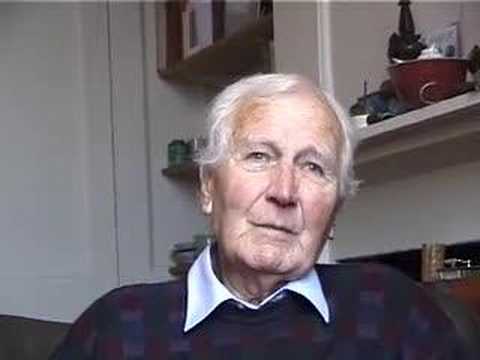
Jane Goodall was also one of students

| Robert Aubrey Hinde | |
|---|---|
| Born | 26 October 1923 Norwich, England |
| Nationality | United Kingdom |
| Fields | Zoology |
| Institutions | University of Cambridge |
| Alma mater | University of Cambridge University of Oxford |
| Notable awards | Frink Medal (1991) Royal Medal (1996) |
Robert Aubrey Hinde CBE FRS FBA /haɪnd/ (born 26 October 1923 in Norwich, England) is a British zoologist, the Emeritus Royal Society ResearchProfessor of Zoology at the University of Cambridge.[1]
Hinde was the master of St. John’s College, Cambridge in 1989-94.[2] He is the chair of British Pugwash. He studies “the application of biological and psychological data to understanding the bases of religion and ethics” and “eliminating the causes of war”.[3]
Hinde was educated at St. John’s College, Cambridge and at Balliol College, Oxford.
He is a distinguished supporter of the British Humanist Association.
Publications[edit]
- Animal behaviour: a synthesis of ethology and comparative psychology. 2nd ed. New York: McGraw-Hill, 1970. ISBN 0-07028-927-1
- Biological Bases of Human Social Behaviour (1974).[4]
- . “Can Nonhuman Primates Help Us Understand Human Behavior?”. In Smuts, B.B., Cheney, D.L., Seyfarth, R.M., Wrangham, R.W., Struhsaker, T.T. (eds). Primate Societies. Chicago & London: University of Chicago Press. pp. 413–420. ISBN 0-226-76715-9.
- Cooperation and prosocial behaviour (Ed. with Jo Groebel). Cambridge University Press, 1991. ISBN 0-521-39110-5
- The institution of war (Ed.). New York: St. Martin’s Press, 1992. ISBN 0-312-06611-2
- Relationships: a dialectical perspective. Hove, East Sussex: Psychological Press, 1997. ISBN 0-86377-706-6
- Why gods persist: a scientific approach to religion. London: Routledge, 1999. ISBN 0-415-20825-4
- Why good is good: the sources of morality. London: Routledge, 2002. ISBN 0-415-27752-3
- War, no more: eliminating conflict in the nuclear age (Ed. with Joseph Rotblat). London: Pluto Press, 2003. ISBN 0-7453-2192-5
- Van der Horst FCP; Van der Veer R; Van IJzendoorn MH (2007). “John Bowlby and ethology: An annotated interview with Robert Hinde”. Attachment & Human Development 9 (4): 321–335.doi:10.1080/14616730601149809. ISSN 1469-2988. PMID 17852051. Retrieved 2007-11-30. Cite uses deprecated parameter
|coauthors=(help)#
External links[edit]
- Robert Hinde interviewed by Alan Macfarlane 7 and 20 November 2007 (film)
- Listen to an oral history interview with Robert Hinde – a life story interview recorded for An Oral History of British Science at the British Library
| Academic offices | ||
|---|---|---|
| Preceded by Francis Harry Hinsley |
Master of St John’s College, Cambridge 1989–1994 |
Succeeded by Peter Goddard |
|
   |
This article about a British zoologist is a stub. You can help Wikipedia by expanding it. |
- Living people
- British zoologists
- Alumni of St John’s College, Cambridge
- Alumni of Balliol College, Oxford
- Fellows of the Royal Society
- Fellows of the British Academy
- Royal Medal winners
- 1923 births
- Masters of St John’s College, Cambridge
- Members of the United States National Academy of Sciences
- British zoologist stubs
In the second video below in the 99th clip in this series are his words and my response is below them.
50 Renowned Academics Speaking About God (Part 1)
Another 50 Renowned Academics Speaking About God (Part 2)
A Further 50 Renowned Academics Speaking About God (Part 3)
Interview of Robert Hinde – 2007 – part 1
Uploaded on Jan 22, 2008
Interview of the ethologist and sometime Master of St John’s College, Cambridge. For full downloadable version in higher quality, please see http://www.alanmacfarlane.com
All revenues to World Oral Literature Project
Interview of Robert Hinde – 2007 – part 2
Interview of Robert Hinde – 2007 – part 3
Below is a letter in which I respond to the quote from Dr. Hinde:
April 13, 2016
Professor Robert Hinde, Department of Zoology, University of Cambridge, United Kingdom,
Dear Dr. Hinde,
I have been simply amazed at the people over the years you have been associated with. Students such as Pat Bateson, Jane Goodall and Dian Fossey. Also you were around such famous people as Bill Thorpe, Danny Lehrman and Jay Rosenblatt, Gabriel Horn, Danny Lehrman and Jay Rosenblatt, and Frank Beach. And I was stunned that you got to write a paper with Ernst Mayr. I also had the honor of corresponding with him back in 1995.
Thank you for taking the time to give an interview to Dr. Alan MacFarlane. Dr. MacFarlane’s series of interviews have been so intriguing and yours was one of the best.
In the You Tube video “A Further 50 Renowned Academics Speaking About God (Part 2),” you asserted:
Later interest in religion was not influenced by work with YMCA at that time; called up and sent to Southern Rhodesia to train as a pilot; went on to flying training school and flew tiger moths; group of us were selected for Coastal Command and sent down to George in South Africa to train as a navigator; came home on a troop ship via South America; took months and months despite being on a fairly fast troop ship without an escort, having to keep watch for submarines; I was then a mild sceptical Christian but the man I was on lookout duty with was a passionate atheist; talked for weeks and weeks and when we got to England, he was a Christian and I was an agnostic;
If you are an agnostic/atheist and a humanist then what do you have to say about the negative view that many humanists have about the ultimate meaningless of life?
I know that you are active in the BRITISH HUMANIST ASSOCIATION so I thought this short letter may interest you.
H. J. Blackham was the founder of the BRITISH HUMANIST ASSOCIATION and he asserted:
“On humanist assumptions, life leads to nothing, and every pretense that it does not is a deceit. If there is a bridge over a gorge which spans only half the distance and ends in mid-air, and if the bridge is crowded with human beings pressing on, one after the other they fall into the abyss. The bridge leads nowhere, and those who are pressing forward to cross it are going nowhere….It does not matter where they think they are going, what preparations for the journey they may have made, how much they may be enjoying it all. The objection merely points out objectively that such a situation is a model of futility“( H. J. Blackham, et al., Objections to Humanism (Riverside, Connecticut: Greenwood Press, 1967).
On John Ankerberg’s show in 1986 there was a debate between Dr. Paul Kurtz, and Dr. Norman Geisler and when part of the above quote was read, Dr. Kurtz responded:
I think you may be quoting Blackham out of context because I’ve heard Blackham speak, and read much of what he said, but Blackham has argued continuously that life is full of meaning;
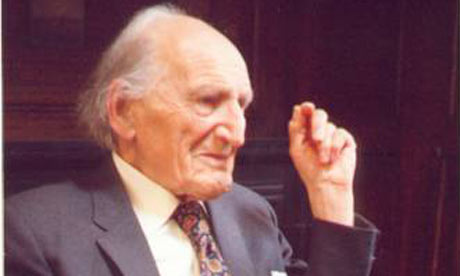
Harold J. Blackham (1903-2009)
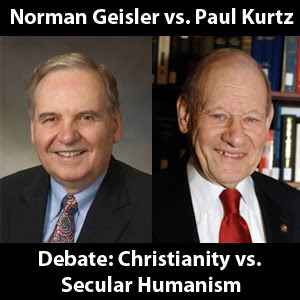
With that in mind I wanted to ask you what does the BRITISH HUMANIST ASSOCIATION have to offer in the area of meaning and values? Francis Schaeffer two months before he died said if he was talking to a gentleman he was sitting next to on an airplane about Christ he wouldn’t start off quoting Bible verses. Schaeffer asserted:
I would go back rather to their dilemma if they hold the modern worldview of the final reality only being energy, etc., I would start with that. I would begin as I stress in the book THE GOD WHO IS THERE about their own [humanist] prophets who really show where their view goes. For instance, Jacques Monod, Nobel Prize winner from France, in his book NECESSITY AND CHANCE said there is no way to tell the OUGHT from the IS. In other words, you live in a totally silent universe.
Francis Schaeffer (1912-1984)

Jacques Monod (1910-1976), Nobel Prize in Physiology or Medicine (1965)

The men like Monod and Sartre or whoever the man might know that is his [humanist] prophet and they point out quite properly and conclusively what life is like, not just that there is no meaningfulness in life but everyone according to modern man is just living out some kind of game plan. It may be knocking 1/10th of a second off a downhill ski run or making one more million dollars. But all you are doing is making a game plan within the mix of a meaningless situation. WOODY ALLEN exploits this very strongly in his films. He really lives it. I feel for that man, and he has expressed it so thoroughly in ANNIE HALL and MANHATTAN and so on.
According to the Humanist worldview Jacques Monod the universe is silent about values and therefore his good friend Woody Allendemonstrated this very fact so well in his 1989 movie CRIMES AND MISDEMEANORS. In other words, if we can’t get our values from the Bible then the answer is MIGHT MAKES RIGHT!!!!
I CHALLENGE YOU TO TAKE 90 MINUTES AND WATCH THE MOVIE “CRIMES AND MISDEMEANORS” AND THEN ANSWER THE QUESTION: “What reason is there that Judah should not have his mistress eliminated if there is no God and afterlife of judgment and rewards?”
CRIMES AND MISDEMEANORS was written and directed by Woody Allen

Judah has his mistress eliminated through his brother’s underworld connections
Anjelica Huston

__
King Solomon closed the Book of Ecclesiastes (Richard Dawkins’ favorite Book of the Bible) with these words, “The end of the matter; all has been heard. Fear God and keep his commandments, for this is the whole duty of man. For God will bring every deed into judgment, with[d] every secret thing, whether good or evil.” With that in mind I have enclosed a short booklet called THIS WAS YOUR LIFE!
In light of your work with monkeys I thought you would be interested in this article below:
Greg Koukl takes on Evolutionist Robert Wright and Monkey Morality in the article, “Monkey Morality: Can Evolution Explain Ethics? :”
Why Be a Good Boy Tomorrow?
This observation uncovers the most serious objection to the idea that evolution is adequate to explain morality. There is one question that can never be answered by any evolutionary assessment of ethics. The question is this: Why ought I be moral tomorrow?
One of the distinctives of morality is its “oughtness,” its moral incumbency. Assessments of mere behavior, however, are descriptive only. Since morality is essentially prescriptive–telling what should be the case, as opposed to what is the case–and since all evolutionary assessments of moral behavior are descriptive, then evolution cannot account for the most important thing that needs to be explained: morality’s “oughtness.”
The question that really needs to be answered is: “Why shouldn’t the chimp (or a human, for that matter) be selfish?” The evolutionary answer might be that when we’re selfish, we hurt the group. That answer, though, presumes another moral value: We ought to be concerned about the welfare of the group. Why should that concern us? Answer: If the group doesn’t survive, then the species doesn’t survive. But why should I care about the survival of the species?
Here’s the problem. All of these responses meant to explain morality ultimately depend on some prior moral notion to hold them together. It’s going to be hard to explain, on an evolutionary view of things why I should not be selfish, or steal, or rape, or even kill tomorrow without smuggling morality into the answer.
The evolutionary explanation disembowels morality, reducing it to mere descriptions of conduct. The best the Darwinist explanation can do–if it succeeds at all–is explain past behavior. It cannot inform future behavior. The essence of morality, though, is not description, but prescription.
Evolution may be an explanation for the existence of conduct we choose to call moral, but it gives no explanation why I should obey any moral rules in the future. If one countered that we have a moral obligation to evolve, then the game would be up, because if we have moral obligations prior to evolution, then evolution itself can’t be their source.
Evolutionists are Wrong about Ethics
Darwinists opt for an evolutionary explanation for morality without sufficient justification. In order to make their naturalistic explanation work, “morality” must reside in the genes. “Good,” beneficial tendencies can then be chosen by natural selection. Nature, through the mechanics of genetic chemistry, cultivates behaviors we call morality.
This creates two problems. First, evolution doesn’t explain what it’s meant to explain. It can only account for preprogrammed behavior, which doesn’t qualify as morality. Moral choices, by their nature, are made by free agents, not dictated by internal mechanics.
Secondly, the Darwinist explanation reduces morality to mere descriptions of behavior. The morality that evolution needs to account for, however, entails much more than conduct. Minimally, it involves motive and intent as well. Both are non-physical elements which can’t, even in principle, evolve in a Darwinian sense.
Further, this assessment of morality, being descriptive only, ignores the most fundamental moral question of all: Why should I be moral tomorrow? Evolution cannot answer that question. It can only attempt to describe why humans acted in a certain way in the past. Morality dictates what future behavior ought to be.
Evolution does not explain morality. Bongo is not a bad chimp, he’s just a chimp. No moral rules apply to him. Eat the banana, Bongo.
Thank you again for your time. I know how busy you are.
Everette Hatcher, everettehatcher@gmail.com, http://www.thedailyhatch.org, cell ph 501-920-5733, Box 23416, LittleRock, AR 72221
PS: Dr. Hinde you say that you are sure that Christianity is not true but have you investigated adequately? If someone is truly interested in investigating the Old Testament Scriptures then all they have to do is google some of the following posts I have featured and click on these links and the evidence is there showing that Christ is the Messiah predicted in the Old Testament. Here are some of my past posts on this subject, My correspondence with Daniel Bell and Irving Kristol about the rebirth of Israel!!!!, My personal visit with Bill Kristol on 7-18-14 in Hot Springs, Arkansas!!!!, Simon Schama’s lack of faith in Old Testament Prophecy, Who are the good guys: Hamas or Israel?, “A Jewish Doctor Speaks Out: Why I Believe that Jesus is the Jewish Messiah” written by Dr. Jack Sternberg (author of the book CHRISTIANITY: THE JEWISH ROOTS), and Jesus Christ in the Old Testament by Adrian Rogers,
Interview of Robert Hinde – 2007 – part 1
Uploaded on Jan 22, 2008
Interview of the ethologist and sometime Master of St John’s College, Cambridge. For full downloadable version in higher quality, please see http://www.alanmacfarlane.com
All revenues to World Oral Literature Project
Interview of Robert Hinde – 2007 – part 2
Interview of Robert Hinde – 2007 – part 3
_________________________________
________
Related posts:
FRANCIS SCHAEFFER ANALYZES ART AND CULTURE Part 53 THE BEATLES (Part E, Stg. Pepper’s and John Lennon’s search in 1967 for truth was through drugs, money, laughter, etc & similar to King Solomon’s, LOTS OF PICTURES OF JOHN AND CYNTHIA) (Feature on artist Yoko Ono)
The John Lennon and the Beatles really were on a long search for meaning and fulfillment in their lives just like King Solomon did in the Book of Ecclesiastes. Solomon looked into learning (1:12-18, 2:12-17), laughter, ladies, luxuries, and liquor (2:1-2, 8, 10, 11), and labor (2:4-6, 18-20). He fount that without God in the picture all […]
FRANCIS SCHAEFFER ANALYZES ART AND CULTURE Part 52 THE BEATLES (Part D, There is evidence that the Beatles may have been exposed to Francis Schaeffer!!!) (Feature on artist Anna Margaret Rose Freeman )
______________ George Harrison Swears & Insults Paul and Yoko Lucy in the Sky with Diamonds- The Beatles The Beatles: I have dedicated several posts to this series on the Beatles and I don’t know when this series will end because Francis Schaeffer spent a lot of time listening to the Beatles and talking […]
FRANCIS SCHAEFFER ANALYZES ART AND CULTURE Part 51 THE BEATLES (Part C, List of those on cover of Stg.Pepper’s ) (Feature on artist Raqib Shaw )
The Beatles in a press conference after their Return from the USA Uploaded on Nov 29, 2010 The Beatles in a press conference after their Return from the USA. The Beatles: I have dedicated several posts to this series on the Beatles and I don’t know when this series will end because Francis […]
FRANCIS SCHAEFFER ANALYZES ART AND CULTURE Part 50 THE BEATLES (Part B, The Psychedelic Music of the Beatles) (Feature on artist Peter Blake )
__________________ Beatles 1966 Last interview I have dedicated several posts to this series on the Beatles and I don’t know when this series will end because Francis Schaeffer spent a lot of time listening to the Beatles and talking and writing about them and their impact on the culture of the 1960’s. In this […]
FRANCIS SCHAEFFER ANALYZES ART AND CULTURE Part 49 THE BEATLES (Part A, The Meaning of Stg. Pepper’s Cover) (Feature on artist Mika Tajima)
_______________ The Beatles documentary || A Long and Winding Road || Episode 5 (This video discusses Stg. Pepper’s creation I have dedicated several posts to this series on the Beatles and I don’t know when this series will end because Francis Schaeffer spent a lot of time listening to the Beatles and talking and writing about […]
FRANCIS SCHAEFFER ANALYZES ART AND CULTURE PART 48 “BLOW UP” by Michelangelo Antonioni makes Philosophic Statement (Feature on artist Nancy Holt)
_______________ Francis Schaeffer pictured below: _____________________ I have included the 27 minute episode THE AGE OF NONREASON by Francis Schaeffer. In that video Schaeffer noted, ” Sergeant Pepper’s Lonely Hearts Club Band…for a time it became the rallying cry for young people throughout the world. It expressed the essence of their lives, thoughts and their feelings.” How Should […]
FRANCIS SCHAEFFER ANALYZES ART AND CULTURE Part 47 Woody Allen and Professor Levy and the death of “Optimistic Humanism” from the movie CRIMES AND MISDEMEANORS Plus Charles Darwin’s comments too!!! (Feature on artist Rodney Graham)
Crimes and Misdemeanors: A Discussion: Part 1 ___________________________________ Today I will answer the simple question: IS IT POSSIBLE TO BE AN OPTIMISTIC SECULAR HUMANIST THAT DOES NOT BELIEVE IN GOD OR AN AFTERLIFE? This question has been around for a long time and you can go back to the 19th century and read this same […]
FRANCIS SCHAEFFER ANALYZES ART AND CULTURE PART 46 Friedrich Nietzsche (Featured artist is Thomas Schütte)
____________________________________ Francis Schaeffer pictured below: __________ Francis Schaeffer has written extensively on art and culture spanning the last 2000years and here are some posts I have done on this subject before : Francis Schaeffer’s “How should we then live?” Video and outline of episode 10 “Final Choices” , episode 9 “The Age of Personal Peace and Affluence”, episode 8 […]
FRANCIS SCHAEFFER ANALYZES ART AND CULTURE Part 45 Woody Allen “Reason is Dead” (Feature on artists Allora & Calzadilla )
Love and Death [Woody Allen] – What if there is no God? [PL] ___________ _______________ How Should We then Live Episode 7 small (Age of Nonreason) #02 How Should We Then Live? (Promo Clip) Dr. Francis Schaeffer 10 Worldview and Truth Two Minute Warning: How Then Should We Live?: Francis Schaeffer at 100 Francis Schaeffer […]
FRANCIS SCHAEFFER ANALYZES ART AND CULTURE Part 44 The Book of Genesis (Featured artist is Trey McCarley )
___________________________________ Francis Schaeffer pictured below: ____________________________ Francis Schaeffer “BASIS FOR HUMAN DIGNITY” Whatever…HTTHR Dr. Francis schaeffer – The flow of Materialism(from Part 4 of Whatever happened to human race?) Dr. Francis Schaeffer – The Biblical flow of Truth & History (intro) Francis Schaeffer – The Biblical Flow of History & Truth (1) Dr. Francis Schaeffer […]
__


 The Daily Hatch