Woody Allen is 79 now, and he’s still working, still making movies of decent to marvelous quality every year, yet, one has to start wondering what he’ll be remembered most for when his time is done. It’s probably an obnoxious side effect of old age: existential evaluation. Amidst all the hype, legacy, and scandal surrounding Woody Allen as a brand-name writer, director, actor, neurotic, and potentially dubious family man, Allen above all has been a consummate joke maker. He’s just always been an incredibly funny guy.Listening to The Stand-Up Years 1964-1968 is a delightful timepiece and a fabulously constructed best-of portrait of Woody Allen.Stand-Up Years culls materials from Allen’s three albums in the ‘60s, along with previously unheard bits. The compilation’s a funny thing not just because of Allen’s sense of humor, but because Allen resisted doing stand-up for the longest time. Allen was only secondarily interested in stand-up; he’s admitted to always thinking of himself as a pure playwright. Yet, when he met with the likes of Jack Rollins and Charles Joffe, “the Rolls Royce of management,” as Allen brags in the album, he was provoked into being a comedian. Of course, Allen resisted at first and then went to work making the jokes with his typical nebbish fervor. Allen drops anecdotes about how Jack Rollins saw him as nothing but pure potential, the makings of a major star, and was incredibly supportive and willing to tap the comic’s unrealized gifts. Nice one, Rollins.Admittedly, much of The Stand-Up Years was already heard in the perfect 1999 collectionStandup. The last five tracks are just excerpts from Robert B. Weide’s phenomenal Woody Allen: A Documentary from 2012. Still, that doesn’t make Allen’s jokes any less funny or this package less intriguing. Everyone’s fully aware of his distinctly East Coast nasally aura, and it doesn’t jive with everyone. If you want shouty observations and Aziz Ansari-style parodies, there are hundreds of aggressive comedy podcasts out there right now ripe for the picking. If you want a shrewd, witty, and articulate misanthrope at the top of his game, then get in on this. Allen was not into the art of forbearance — he rushed through jokes with anxiously snide mastery.In a way, Stand-Up Years feels like the loving end of an era for certain comics: the Henny Youngman-style Catskill cats. The Borscht Belt punchliners. Woody Allen, while infatuated with the likes of Mort Sahl and Shelley Berman, brought his own take on comedy. He gave humor a new mode of personality-driven style. In Allen’s case, it was pure self-depreciation. Stand-Up Years gives us Allen talking about failed marriages (“Second Marriage”), his bumbling career (“The Vodka Ad”), his weird family (“My Grandfather”), and some of the finest awkward sexual encounters you’ll ever hear (“Vegas” tears down the house). But that’s not to say Allen doesn’t indulge in out-there scenarios about hypnosis or a sci-fi film about aliens in need of slacks. It’s like listening to and understanding the classical arts of telling a joke and having a voice. Woody’s presence was unmistakable. Still is. It becomes so amazingly clear while listening to this. The album takes on a complicated quality in how it plays the jokes, then ends with Allen’s self-evaluation of his live audience heyday. Still, and most importantly, the jokes play the rooms.Allen’s punchline summing up his artistic integrity losing out in the presence of money in his bit “The Vodka Ad” kills every time. “Down South” is still a blisteringly tense tale of Southern-fried phobias regarding the KKK and hangings, told tellingly by a Jewish, left-wing New Yorker, about a great, big mix-up when Allen dresses as a white ghost for a Halloween party and ends up at a Klan rally (“I must’a said ‘grits’ 50 times”). There’s even the “Lost Generation” bit here, which inspired Midnight in Paris many years later.Perhaps one of the funniest finds is over five minutes of mixed questions and answers he would do at the end of his sets. It’s the funniest and most telling part of the album. Allen talks about his “pro-Catholic pornographic musical” and his political status as a “registered pervert.” That last thing is an “independent party,” Allen nonplusses. During a show, a woman mortifyingly asks Allen if he’s ever “been picked up by a homosexual.” Allen coyly repeats the question, for clarity, then plainly replies, “No, sir.” Quintessential Allen: peerless, depraved, and self-conscious while getting the last, and best, laugh.Essential Tracks: “The Vodka Ad”, “Down South”, and “Vegas”____________
Woody Allen Stand Up Comic 1964 1968 19 My Marriage
I have spent alot of time talking about Woody Allen films on this blog and looking at his worldview. He has a hopeless, meaningless, nihilistic worldview that believes we are going to turn to dust and there is no afterlife. Even though he has this view he has taken the opportunity to look at the weaknesses of his own secular view. I salute him for doing that. That is why I have returned to his work over and over and presented my own Christian worldview as an alternative.
-INCLUDES ALL THREE LIVE STAND-UP ALBUMS RECORDED BETWEEN 1964-1968
-REMASTERED AND AVAILABLE ON CD AND DIGITALLY
-BONUS MATERIAL INCLUDES: AUDIENCE Q&A AND OVER 20 MINUTES OF AUDIO EXCERPTS FROM WOODY ALLEN: A DOCUMENTARY
____ Woody Allen’s past movies and the subject of the Meaning of Life examined!!! Out of the Past: Woody Allen, Nostalgia, the Meaning of Life, and Radio Days Kyle Turner Jul 25, 2014 Film, Twilight Time 1 Comment “I firmly believe, and I don’t say this as a criticism, that life is meaningless.” – Woody […]
Woody Allen Should Have Quoted Pascal: “Magic in the Moonlight” January 7, 2015 by Roger E. Olson 9 Comments Woody Allen Should Have Quoted Pascal: “Magic in the Moonlight” I am no Roger Ebert and don’t watch that many movies, but in my opinion, for what it’s worth, Woody Allen’s 2014 film “Magic in […]
______________ If anyone has read my blog for any length of time they know that I am the biggest Woody Allen fan of all time. No one except maybe Bergman has attacked the big questions in life as well as Woody Allen. Furthermore, Francis Schaeffer is my favorite Christian Philosopher and he spent a lot […]
___________ Woody Allen to make first TV series for Amazon Prime ‘I’m not sure where to begin,’ says 79-year-old Oscar-winner about his small screen debut, as streaming TV service seeks to gain march on rivals with exclusive content Comment: in signing Woody Allen, Amazon Prime has delivered a nuclear blast to the competition Woody […]
______________________ Woody Allen: “the whole thing is tragic” July 20, 2012 Mr. Allen, do you truly believe that happiness in life is impossible? This is my perspective and has always been my perspective on life. I have a very grim, pessimistic view of it. I always have since I was a little boy; it hasn’t […]
______________ Dr. Jack Graham Challenges Agnostic Woody Allen’s ‘Hopeless State of Mind’ BY NICOLA MENZIE , CHRISTIAN POST REPORTER August 23, 2013|4:51 pm Prolific Hollywood filmmaker and religious skeptic Woody Allen maintains in a recent interview that human life on earth is “just an accident” filled with “silly little moments,” and the “best you can […]
________ Woody Allen Should Have Quoted Pascal: “Magic in the Moonlight” January 7, 2015 by Roger E. Olson 9 Comments Woody Allen Should Have Quoted Pascal: “Magic in the Moonlight” I am no Roger Ebert and don’t watch that many movies, but in my opinion, for what it’s worth, Woody Allen’s 2014 film “Magic […]
___________ Woody Allen to make first TV series for Amazon Prime ‘I’m not sure where to begin,’ says 79-year-old Oscar-winner about his small screen debut, as streaming TV service seeks to gain march on rivals with exclusive content Comment: in signing Woody Allen, Amazon Prime has delivered a nuclear blast to the competition Woody Allen […]
If anyone has read my blog for any length of time they know that I am the biggest Woody Allen fan of all time. No one except maybe Bergman has attacked the big questions in life as well as Woody Allen. Furthermore, Francis Schaeffer is my favorite Christian Philosopher and he spent a lot of […]
_______ Woody Allen’s New Film Is Called ‘Irrational Man’ Posted on Friday, January 30th, 2015 by Angie Han 85 SHARES TwitterFacebook Woody Allen‘s latest film finally has a release date and a studio. Irrational Man will be distributed by Sony Pictures Classics, as were Allen’s last six films.Emma Stone, Joaquin Phoenix, Parker Posey, and Jamie […]
Black Mountain College was a phenomenal circumstance. The fact that so many artists of that level in their respective fields could organize and develop such an institution is unparalleled. Who would’ve thought that a small mountain town of western North Carolina would be their home, albeit for a short while.
SUSAN WEIL and ROBERT RAUSCHENBERG at Black Mountain College
__________’
______________
_____________
Susan Weil and Rauschenberg on their wedding day with members of their wedding party, Outer Island, Connecticut, June 1950
Black Mountain College; Black Mountain College Museum + Arts Center ; colleges ; experimental community ; Progressive education ; Progressives ; Bauhaus ; German immigration ; immigrants ; Marcel Breuer ; Walter Gropius ; John Andrew Rice ; Josef Albers ; Anni Albers ; Hazel Larsen Archer ; Buckminster Fuller ; Ruth Asawa ; Charles Olson ; Robert Rauschenberg ; Merce Cunningham ; John Cage ; Robert Creeley ; Jonathan Williams ; Franz Kline ; photography ; Appalachia ; education ; National Historical Register ; architecture ; farms ; farming ; craft ; art ; textiles ; weaving ; ceramics ; music ; social services ; social work ; schools ; sociology ;
Considered by many to be one of the most influential American artists due to his radical blending of materials and methods, Robert Rauschenberg was a crucial figure in the transition from Abstract Expressionism to later modern movements. One of the key Neo-Dada movement artists, his experimental approach expanded the traditional boundaries of art, opening up avenues of exploration for future artists. Although Rauschenberg was the enfant terrible of the art world in the 1950s, he was deeply respected and admired by his predecessors. Despite this admiration, he disagreed with many of their convictions and literally erased their precedent to move forward into new aesthetic territory that reiterated the earlier Dada inquiry into the definition of art.
ROBERT RAUSCHENBERG KEY IDEAS
Engaged in questioning the definition of a work of art and the role of the artist, Rauschenberg shifted from a conceptual outlook where the authentic mark of the brushstroke described the artist’s inner world towards a reflection on the contemporary world, where an interaction with popular media and mass-produced goods reflected a unique artistic vision.
Rauschenberg merged the realms of kitsch and fine art, employing both traditional media and found objects within his “combines” by inserting appropriated photographs and urban detritus amidst standard wall paintings.
Rauschenberg believed that painting related to “both art and life. Neither can be made.” Following from this belief, he created artworks that move between these realms in constant dialogue with the viewers and the surrounding world, as well as with art history.
Preferring to leave the interpretation of the works to his viewers, Rauschenberg allowed chance to determine the placement and combination of the different found images and objects in his artwork such that there were no predetermined arrangements or meanings embedded within the works.
Today is the birthday of Robert Rauschenberg, an artist who played a pivotal role in the development of American art after WWII.
This blog post, written by Museum President Don Bacigalupi, is excerpted from Crystal Bridges’ permanent collection catalog, Celebrating the American Spirit: Masterworks from Crystal Bridges Museum of American Art.
The art world of the late 1940s and early 1950s had been dominated by the grand gestures and larger-than-life personas of the abstract expressionists. Artists such as Jackson Pollock and Willem de Kooning created images in which their bold, expressive marks were understood to be records of their inner lives—painting as revelation. Younger artists like Rauschenberg and Jasper Johns attacked the cult of personality promulgated by the New York School. Juxtaposing the highly lauded gestural brushstroke with modes of representation drawn from mass culture, they challenged viewers to assess which manner of image making more effectively conveyed meaning. Rauschenberg and Johns are credited with both reviving an interest in dada and surrealism and with paving the way for the development of pop art in the 1960s.
Rauschenberg spent the 1950s experimenting with novel ways to narrow the gap between art and life, bringing commonplace images and materials into his work through methods including collage, assemblage, and transfer drawing. In 1962, he began to silkscreen photographic images into his compositions. The following year he produced Untitled, a painting dominated by an anonymous photograph of a contemporary urban street scene. Unlike Rauschenberg’s earlier assemblages and “combines,” in which the artist assembled multiple small images and objects into larger, fragmentary wholes, here a single black-and-white candid shot occupies the entire canvas. In contrast to Rauschenberg’s earlier picture-making techniques, silkscreen allowed the artist to render any given image in any given scale.
In Untitled, the enlarged, silkscreened snapshot serves as the ground onto which Rauschenberg applied additional layers of signification, including discrete passages of dripping paint, scumbled washes, stenciled letters of various sizes, and some apparent rubbings or erasures. Photographic and hand-drawn images become nearly indistinguishable. A “one way” street sign that is part of the photograph points at and is balanced by an upside-down cruciform shape drawn in graphite across the painted surface. A rectangular Coca-Cola sign in the upper right of the photograph is mirrored at left by an array of applied uppercase letters that suggest words (“Strange” or “X-change” or even “Sex Change”).
Confronted with the large, sign-filled photograph and hints of readable language, the viewer cannot help but search for narrative meaning. Yet the sheer number and diversity of marks and signs in the picture frustrate this enterprise, leading the viewer down a series of interpretive dead ends. A restless and prolific image maker, Rauschenberg created pleasingly composed and visually enticing works that rarely cohere into a traditional meaning or story. Ultimately, Rauschenberg succeeded in focusing his viewers’ attention on the complex interplay between art and life, opening up myriad possibilities for future generations of artists.
Studio Tour with Susan Weil
Published on Jan 13, 2015
Studio Tour with artist Susan Weil, recorded on videotape in 1997–part of the Black Mountain College Museum + Arts Center Oral History Project. Edited for the 2015 exhibition, poemumbles: 30 years of Susan Weil’s poem/images (Jan. 30 – May 23). http://www.blackmountaincollege.org/e…
Interview with Susan Weil
Published on Jan 29, 2015
Interview with artist Susan Weil, recorded in 2002 as part of the Black Mountain College Museum + Arts Center Oral History Project. Edited as part of the 2015 exhibition, poemumbles: 20 years of Susan Weil’s poem/images (Jan. 30 – May 23). http://www.blackmountaincollege.org/e…
Artist Interview: Susan Weil
Published on Apr 17, 2013
Susan Weil discusses her artistic process, including examples of her own work, and reflects on her childhood and influences in this Artist Interview.
This article relies largely or entirely upon a single source. Relevant discussion may be found on the talk page. Please help improve this article by introducing citations to additional sources.(November 2013)
Susan Weil (born 1930) is an American artist best known for her experimental three-dimensional paintings, which combine figurative illustration with explorations of movement and space.
In addition to creating painting and mixed media work, Weil has experimented with bookmaking and has produced artist’s books with Vincent Fitzgerald and Company since 1985. During a period of eleven years Weil experimented with etchings and handmade paper while also keeping a daily notebook of drawings inspired by the writings of James Joyce. Her exhibition, Ear’s Eye for James Joyce, was presented at Sundaram Tagore gallery in New York in 2003.
In 1954, after returning to New York, Johns met Robert Rauschenberg and they became long-term lovers. For a time they lived in the same building as Rachel Rosenthal.[3][4][5] In the same period he was strongly influenced by the gay couple Merce Cunningham (a choreographer) and John Cage (a composer).[6][7] Working together they explored the contemporary art scene, and began developing their ideas on art. In 1958, gallery owner Leo Castelli discovered Johns while visiting Rauschenberg‘s studio.[2] Castelli gave him his first solo show. It was here that Alfred Barr, the founding director of New York’s Museum of Modern Art, purchased four works from this show.[8] In 1963, Johns and Cage founded Foundation for Contemporary Performance Arts, now known as Foundation for Contemporary Arts in New York City.
Johns currently lives in Sharon, Connecticut, and on the Island of Saint Martin.[9] Until 2012, he lived in a rustic 1930s farmhouse with a glass-walled studio in Stony Point, New York. He first began visiting St. Martin in the late 1960s and bought the property there in 1972. The architect Philip Johnson is the principal designer of his home, a long, white, rectangular structure divided into three distinct sections.[10]
Left to right: John Cage, Merce Cunningham
and Robert Rauschenberg. London. 1964
Robert Rauschenberg & Jasper Johns – A relationship in three photographs
by ob
“Most critics agree that Johns and Rauschenberg’s finest work grew out of the period between 1954 and 1961, a time of intense emotional involvement during which they searched together for an alternative to Abstract Expressionist picturemaking. Rauschenberg once remarked of this moment “We gave each other permission…”
________________________
Flag, Encaustic, oil and collage on fabric mounted on plywood,1954-55 by Jasper Johns:
Below you will see commentary by Schaeffer on the art of Jasper Johns and the modern artists like him.
Schaeffer was the closest thing to a “man of sorrows” I have seen. He could not allow himself to be happy when most of the world was desperately lost and he knew why. He was the first Christian I found who could embrace faith and the despair of a lost humanity all at the same time. Though he had been found, he still knew what it was to be lost.
Schaeffer was the first Christian leader who taught me to weep over the world instead of judging it. Schaeffer modeled a caring and thoughtful engagement in the history of philosophy and its influence through movies, novels, plays, music, and art. Here was Schaeffer, teaching at Wheaton College about the existential dilemma expressed in Michelangelo Antonioni’s 1966 film, Blowup, when movies were still forbidden to students. He didn’t bat an eye. He ignored our legalism and went on teaching because he had been personally gripped by the desperation of such cultural statements.
Schaeffer taught his followers not to sneer at or dismiss the dissonance in modern art. He showed how these artists were merely expressing the outcome of the presuppositions of the modern era that did away with God and put all conclusions on a strictly human, rational level. Instead of shaking our heads at a depressing, dark, abstract work of art, the true Christian reaction should be to weep for the lost person who created it. Schaeffer was a rare Christian leader who advocated understanding and empathizing with non-Christians instead of taking issue with them.
In ART AND THE BIBLE Francis Schaeffer observed, “Modern art often flattens man out and speaks in great abstractions; But as Christians, we see things otherwise. Because God has created individual man in His own image and because God knows and is interested in the individual, individual man is worthy of our painting and of our writing!!”
Francis Schaeffer in his book ART AND THE BIBLE noted:
I am convinced that one of the reasons men spend millions making art museums is not just so that there will be something “aesthetic,” but because the art works in them are an expression of the mannishness of man himself. When I look at the pre-Colombian silver of African masks or ancient Chinese bronzes, not only do I see them as works of art, but I see them as expressions of the nature and character of humanity. As a man, in a certain way they are myself, and I see there the outworking of the creativity that is inherent in the nature of man.
Many modern artists, it seems to me, have forgotten the value that art has in itself. Much modern art is far too intellectual to be great art. I am thinking, for example, of such an artist as Jasper Johns. Many modern artists do not see the distinction between man and non-man, and it is a part of the lostness of modern man that they no longer see value in the work of art.
Charles Darwin’s view that man is no more than a product of chance of time is the major reason many people have come to believe that there is no real “distinction between man and non-man.” Darwin himself felt this tension. Recently I read the book Charles Darwin: his life told in an autobiographical chapter, and in a selected series of his published letters and I noticed that Darwin himself blamed his views of science for making him lose his aesthetic tastes and his enjoyment of the beauty of nature. Below are some quotes from Darwin and some comments on them from the Christian Philosopher Francis Schaeffer.
I have said that in one respect my mind has changed during the last twenty or thirty years. Up to the age of thirty, or beyond it, poetry of many kinds, such as the works of Milton, Gray, Byron, Wordsworth, Coleridge, and Shelley, gave me great pleasure, and even as a schoolboy I took intense delight in Shakespeare, especially in the historical plays. I have also said that formerly pictures gave me considerable, and music very great delight. But now for many years I cannot endure to read a line of poetry: I have tried lately to read Shakespeare, and found it so intolerably dull that it nauseated me. I have also almost lost my taste for pictures or music. Music generally sets me thinking too energetically on what I have been at work on, instead of giving me pleasure. I retain some taste for fine scenery, but it does not cause me the exquisite delight which it formerly did….
This curious and lamentable loss of the higher aesthetic tastes is all the odder, as books on history, biographies, and travels (independently of any scientific facts which they may contain), and essays on all sorts of subjects interest me as much as ever they did. My mind seems to have become a kind of machine for grinding general laws out of large collections of facts, but why this should have caused the atrophy of that part of the brain alone, on which the higher tastes depend, I cannot conceive. A man with a mind more highly organised or better constituted than mine, would not, I suppose, have thus suffered; and if I had to live my life again, I would have made a rule to read some poetry and listen to some music at least once every week; for perhaps the parts of my brain now atrophied would thus have been kept active through use. The loss of these tastes is a loss of happiness, and may possibly be injurious to the intellect, and more probably to the moral character, by enfeebling the emotional part of our nature.
Francis Schaeffer commented:
This is the old man Darwin writing at the end of his life. What he is saying here is the further he has gone on with his studies the more he has seen himself reduced to a machine as far as aesthetic things are concerned. I think this is crucial because as we go through this we find that his struggles and my sincere conviction is that he never came to the logical conclusion of his own position, but he nevertheless in the death of the higher qualities as he calls them, art, music, poetry, and so on, what he had happen to him was his own theory was producing this in his own self just as his theories a hundred years later have produced this in our culture. I don’t think you can hold the evolutionary position as he held it without becoming a machine. What has happened to Darwin personally is merely a forerunner to what occurred to the whole culture as it has fallen in this world of pure material, pure chance and later determinism. Here he is in a situation where his mannishness has suffered in the midst of his own position.
“It is impossible to answer your question briefly; and I am not sure that I could do so, even if I wrote at some length. But I may say that the impossibility of conceiving that this grand and wondrous universe, with our conscious selves, arose through chance, seems to me the chief argument for the existence of God; but whether this is an argument of real value, I have never been able to decide.”
Francis Schaeffer observed:
So he sees here exactly the same that I would labor and what Paul gives in Romans chapter one, and that is first this tremendous universe [and it’s form] and the second thing, the mannishness of man and the concept of this arising from chance is very difficult for him to come to accept and he is forced to leap into this, his own kind of Kierkegaardian leap, but he is forced to leap into this because of his presuppositions but when in reality the real world troubles him. He sees there is no third alternative. If you do not have the existence of God then you only have chance. In my own lectures I am constantly pointing out there are only two possibilities, either a personal God or this concept of the impersonal plus time plus chance and Darwin understood this . You will notice that he divides it into the same exact two points that Paul does in Romans chapter one into…
Here below is the Romans passage that Schaeffer is referring to and verse 19 refers to what Schaeffer calls “the mannishness of man” and verse 20 refers to Schaeffer’s other point which is “the universe and it’s form.”Romans 1:18-22Amplified Bible (AMP) 18 For God’s [holy] wrath and indignation are revealed from heaven against all ungodliness and unrighteousness of men, who in their wickedness repress and hinder the truth and make it inoperative. 19 For that which is known about God is evident to them and made plain in their inner consciousness, because God [Himself] has shown it to them. 20 For ever since the creation of the world His invisible nature and attributes, that is, His eternal power and divinity, have been made intelligible and clearly discernible in and through the things that have been made (His handiworks). So [men] are without excuse [altogether without any defense or justification], 21 Because when they knew and recognized Him as God, they did not honor andglorify Him as God or give Him thanks. But instead they became futile and godless in their thinking [with vain imaginings, foolish reasoning, and stupid speculations] and their senseless minds were darkened. 22 Claiming to be wise, they became fools [professing to be smart, they made simpletons of themselves].
Francis Schaeffer noted that in Darwin’s 1876 Autobiography that Darwin is going to set forth two arguments for God in this and again you will find when he comes to the end of this that he is in tremendous tension. Darwin wrote,
At the present day the most usual argument for the existence of an intelligent God is drawn from the deep inward conviction and feelings which are experienced by most persons.Formerly I was led by feelings such as those just referred to (although I do not think that the religious sentiment was ever strongly developed in me), to the firm conviction of the existence of God and of the immortality of the soul. In my Journal I wrote that whilst standing in the midst of the grandeur of a Brazilian forest, ‘it is not possible to give an adequate idea of the higher feelings of wonder, admiration, and devotion which fill and elevate the mind.’ I well remember my conviction that there is more in man than the mere breath of his body; but now the grandest scenes would not cause any such convictions and feelings to rise in my mind.It may be truly said that I am like a man who has become colour-blind.
Francis Schaeffer remarked:
Now Darwin says when I look back and when I look at nature I came to the conclusion that man can not be just a fly! But now Darwin has moved from being a younger man to an older man and he has allowed his presuppositions to enter in to block his logic. These things at the end of his life he had no intellectual answer for. To block them out in favor of his theory. Remember the letter of his that said he had lost all aesthetic senses when he had got older and he had become a clod himself. Now interesting he says just the same thing, but not in relation to the arts, namely music, pictures, etc, but to nature itself. Darwin said, “But now the grandest scenes would not cause any such convictions and feelings to rise in my mind. It may be truly said that I am like a man who has become colour-blind…” So now you see that Darwin’s presuppositions have not only robbed him of the beauty of man’s creation in art, but now the universe. He can’t look at it now and see the beauty. The reason he can’t see the beauty is for a very, very , very simple reason: THE BEAUTY DRIVES HIM TO DISTRACTION. THIS IS WHERE MODERN MAN IS AND IT IS HELL. The art is hell because it reminds him of man and how great man is, and where does it fit in his system? It doesn’t. When he looks at nature and it’s beauty he is driven to the same distraction and so consequently you find what has built up inside him is a real death, not only the beauty of the artistic but the beauty of nature. He has no answer in his logic and he is left in tension. He dies and has become less than human because these two great things (such as any kind of art and the beauty of nature) that would make him human stand against his theory.
Museum guests are sometimes surprised when they draw close to Jasper Johns’s monochromatic paintingAlphabets. From a distance it looks like a grid of rectangles painted in shades of gray. It’s not until the viewer draws close that the letter forms become visible in each block.
They might just as well all be question marks for some visitors.
What on earth was Johns trying to say with this work?
A close look reveals that the alphabet is repeated, over and over in sequence, from left to right, top to bottom, one letter per square. The letters are styled after those in common stencil patterns, but it’s clear they are painted by hand: some sharp, some almost dissolving into the background, but each letter lined up in regimented rows. In many boxes the paint is thick, the letters seeming almost pressed into the soft surface of the ground. In others the edges of the box are smeared, imprecise. And yet the overall effect is of a carefully drawn grid of meaningless type. Like old-fashioned rows of dull lead typesetters type: The painting seems full of the potential for meaning, but….what does it mean?
In the middle of the twentieth century, and led by the American Abstract Expressionists, art became increasingly removed from the practice of representation. While the Ab Ex painters eschewed making paintings that looked like somethingelse in favor of large gestures, drips, and splatters intended be spontaneous: to represent the interior emotional life of the artist; other painters sought to strip away all illusion in their work, insisting that a painting be a painting—color, shape, and line in paint on a flat canvas, independent of meaning. The critic Clement Greenberg wrote that “Content is to be dissolved so completely into form that the work of art…cannot be reduced in whole or in part to anything not itself.”
Artists like Johns began to question this approach, and to experiment with ways to create or imply meaning in their work. Johns is best known for his early FLAG PAINTINGS, which also provide a basis for understanding some of the ideas he was working with in Alphabets. Johns’ representations of the American flag were, indeed, flat paintings; yet they were also fraught with all the many levels and nuances of meaning that a symbol as powerful as a national flag can carry. The paintings were representations of a flag, yes, but also, like actual flags, the works were simply color on cloth: not just the symbol of the thing, but perhaps in a way the thing itself.
The alphabet painting works in a similar fashion. It is, without a doubt, a painting. The letters and the boxes that contain them are rendered in a highly “painterly” way, emphasizing the fact of the painting as a work of art—hand-crafted using daubs of thick paint on a flat surface. Yet the artist’s exclusive use of gray in the painting is a nod to the black-and-white of print—an oblique reference to the letters as type, not paint, as is the placement of each letter in a box like the lead type once used in printing.
Johns deliberately selected the alphabet as his subject because it is the basis for all our written language, the building blocks of print (there are those boxes again). And yet the shapes of the letters bear no meaning on their own. Without an understanding of the written code, the letters are just shapes (consider how lost English-language readers feel when faced with a line of Chinese characters, for example). The lines of letters make no words, and yet they are aligned in the familiar order we are taught as children, from a to z, left to right, top to bottom. It is possible to “read” the painting this way and make sense of it: Aha! It’s the alphabet! (Meaning!) This particular sequence of letters, like the stars and stripes of our flag, is heavily loaded with all the potential meanings the alphabet represents, from the simple phrases of Dick and Jane to Man’s Search for Meaning. And yet, each of the letters is just a letter, devoid of literal meaning.
So: Is Alphabets just a painting? A representation of a thing? Or a thing itself? In a way the painting really IS a big question mark: How do we glean meaning from a work of art?
Adrian Rogers on Darwinism and Time and Chance:
_______________
How Should We then Live Episode 7 small (Age of Nonreason)
#02 How Should We Then Live? (Promo Clip) Dr. Francis Schaeffer
10 Worldview and Truth
Two Minute Warning: How Then Should We Live?: Francis Schaeffer at 100
Francis Schaeffer “BASIS FOR HUMAN DIGNITY” Whatever…HTTHR
In the years immediately following World War II, Black Mountain College, an unaccredited school in rural Appalachia, became a vital hub of cultural innovation. Practically every major artistic figure of the mid-twentieth century spent some time there: Merce Cunningham, Ray Johnson, Franz Kline, Willem and Elaine de Kooning, Robert Motherwell, Robert Rauschenberg, Dorothea Rockburne, Aaron Siskind, Cy Twombly—the list goes on and on. Yet scholars have tended to view these artists’ time at the College as little more than prologue, a step on their way to greatness. With The Experimenters, Eva Díaz reveals the importance of Black Mountain College—and especially of three key teachers, Josef Albers, John Cage, and R. Buckminster Fuller—to be much greater than that.
Díaz’s focus is on experimentation. Albers, Cage, and Fuller, she shows, taught new models of art making that favored testing procedures rather than personal expression. These methodologies represented incipient directions for postwar art practice, elements of which would be sampled, and often wholly adopted, by Black Mountain students and subsequent practitioners. The resulting works, which interrelate art and life in a way that imbues these projects with crucial relevance, not only reconfigured the relationships among chance, order, and design—they helped redefine what artistic practice was, and could be, for future generations.
Offering a bold, compelling new angle on some of the most widely studied creative figures of modern times, The Experimenters does nothing less than rewrite the story of art in the mid-twentieth century.
“What links systems theorist and architect R. Buckminster Fuller with artistic innovators such as Josef Albers and John Cage? The answer is Black Mountain College, North Carolina. . . . As art historian Eva Díaz reveals in this engrossing study, their explorations in materials, form, chance, and indeterminacy were never less than electrifying. Her sympathetic portrait of Fuller as a utopian saving the world through geodesic geometry is particularly assured.”
Judith Rodenbeck, Sarah Lawrence College
“Terrific. Black Mountain College has long been a lodestone for those interested in alternative educational models and in artistic innovation. Nevertheless, the major historical literature on the College still rests on largely anecdotal histories, with a tendency to jaunty optimism in lieu of criticality. There is nothing quite like The Experimenters out there—not on Black Mountain College, not on art making, and not on pedagogy.”
Helen Molesworth, Museum of Contemporary Art, Los Angeles
“By parsing three different versions of experimentation—performed by Josef Albers, John Cage, and Buckminster Fuller—Díaz shows us how their individual efforts were part of a shared commitment to art’s capacity to reinvent the world, to alter how we see, experience, and shape it in our own image. In the name of experimentation each of the artists suspended, if only for a moment, the metrics of failure and success, and replaced them instead with the values of intellectual pleasure, expanded sensory experiences, and aesthetic innovation. While the book is undoubtedly a historical account of a particular time and place, it is also a road map for many paths that, while not taken, still remain open.”
Alexander Alberro, author of Conceptual Art and the Politics of Publicity
“In this highly evocative and well-executed study, Díaz explores the innovative pedagogical practices that were developed at Black Mountain College in its heyday. Respectful of the distinct teaching methods of the College’s most notable faculty, Diaz nonetheless finds a common experimental basis to the artworks and inventions produced by their students in the late 1940s and early 1950s. The Experimenters is nuanced, erudite, and intellectually wide-ranging. It will be essential reading for anyone interested in the development of mid-twentieth-century art in the United States.”
The Longest Ride
Directed by George Tillman, Jr.
20th Century Fox 4/15 Feature Film
PG-13 some sexuality, partial nudity, some war and sports action
Sophia Danko (Britt Robertson) is an art history major at Wake Forest University in North Carolina who goes to a rodeo with a sorority sister. There they thrill to the agility and strength of the bull riders, especially Luke Collins (Scott Eastwood), who is just back in the game after a year off due to injury. After a successful ride, he gives his hat to Sophia. Although she is attracted to him, she feels there is no point in meeting him again since she is graduating soon and has an internship in a Manhattan art gallery.
It’s not long, though, before Sophia follows the instincts of her heart and goes out on a date with Luke. He charms her with flowers and a moonlight lakeside picnic. He is a simple man who wants to keep the family ranch going while she yearns for the allure of the art world in New York City.
Not only is Luke a gentleman but he proves himself to be a hero when he rescues Ira Levinson (Alan Alda) from death in a crashed car. Sophia retrieves a box from the seat of the automobile. Delivering it to the old man at the hospital, she discovers it contains the letters he wrote to Ruth (Oona Chaplin), the love of his life.
Curious about their relationship and how they dealt with setbacks and obstacles, Sophia reads random letters aloud to Ira in hopes they will be healing and lift his spirits. Through flashbacks, we see the shy Ira (Jack Huston), the son of a Jewish tailor in 1940, swept away when first setting eyes on Ruth. He goes to war and returns home with a wound that prevents them from having children. Although he wants to break off the engagement since all she has ever wanted was a large family, they marry anyway. They draw closer together by making a decision to collect art. They take regular trips to Black Mountain College to purchase paintings by many different artists.
George Tillman, Jr. (Soul Food) directs this romantic melodrama about two parallel love stories by the prolific novelist Nicholas Sparks. As has been the case with other movies based on his bestselling books, we expect that many film critics will dismiss this one as trite, weepy, mawkish, escapist, overwrought, a tearjerker, and sentimental slop. But we liked it. We don’t recoil from either predictability or sentiment, and we’re not embarrassed to cry our way through a film’s ending.
Those who enjoy getting an emotional bath at the movies will understand and respect this one’s spiritual message that sacrifices are required to keep love alive in a long marriage. Husbands and wives have to do an elaborate dance of stepping aside to give their loved one what he or she wants. This often involves letting go of ideas, ideals, habits, and dreams we have clung to for years.
Is The Longest Ride formulaic? Yes. Does it contain many romantic cliches? Yes. But hidden away inside the melodrama is a message worth pondering: Give all you have to keep love alive.
Before his debut novel The Notebook, the ur-chick-lit text, sold for $1 million in 1995, Nicholas Sparks got by selling dental equipment and pharmaceuticals. Seventeen novels, 90 million copies, and 10 movies later, all in the grab-the-tissues category, Sparks can afford to follow his heart’s desires. In 2006, he founded a private school, the Epiphany School of Global Studies, whose graduates are “health-cognizant, emotionally intelligent, openly generous, deeply humble, visibly trustworthy, and profoundly honest.” Recently, he has taken to collecting art, with an eye toward what complements the decor of his palatial house and its private bowling alley in New Bern, North Carolina.
“That would match my home,” Sparks said recently, looking up at a Gerhard Richter pastoral at the Museum of Modern Art. Andy Warhol wouldn’t make the cut, neither would Edward Ruscha.
In his 20 years as a writer, Sparks, 49, has tried many permutations of the “love is the greatest gift of all” chestnut. He studied business in college, and wrote at night. He chose romance as his genre because he noticed, with a salesman’s eye, that there was room in the market. His novels, which promise “extraordinary journeys” and “extraordinary truths,” tend toward maximalism. Lovers, young and old, are pulled apart by doubt, secrecy, and illness, but once they let love in, they can receive “the greatest happiness—and pain” they’ll ever know.
And yet, each book needs new material. In The Longest Ride, Sparks’s 2013 flirtation with art-history fiction, which opens as a film on Friday, a couple in the 1940s begin buying paintings from a group of young artists from Black Mountain College in North Carolina. Decades later those artists are household names—de Kooning, Twombly, Rauschenberg—and the collection is worth more than Sparks’s own real-life fortune many times over. I had invited Sparks to MoMA for a morning tour with Eva Diaz, a professor of art history at Pratt, who recently published The Experimenters: Chance and Design at Black Mountain College, which describes the school as “a vital hub of cultural innovation.”
Amid the crush of school groups, Sparks, dressed in Levi’s and a red Burberry polo shirt, found Diaz, who reminded us that the college’s success sprang from tragedy: Bauhaus artists persecuted by the Nazis had fled to the States, helped establish the unaccredited school, and brought new energy to painting, design, and architecture in America.
To write the story of Ira and Ruth, the collectors in the book, Sparks designed his own crash course in Abstract Expressionism. “I’m certainly nowhere near as knowledgeable,” Sparks said, bowing his head toward Diaz. “I’m a kindergartner compared to a grad student.”
“Hey, I’m a professor,” said Diaz, who wore fading orange lipstick and wild curly hair. On the museum’s third floor, she pointed out four album covers that had circles and squares arranged in whimsical patterns, the work of Black Mountain instructor Josef Albers.
“So much of this is playing with repetition,” she said.
“You can say the same things about my novels,” Sparks said, echoing his critics. “It’s always a love story, it’s North Carolina, it’s a small town, a couple of likeable people.”
And, yet, he insists variations keep the books from feeling formulaic. “There are a few threads of familiarity, but you don’t know the period, you don’t know the age of the characters, you don’t know the dilemma, you don’t know whether it’s first person, third person, limited third person omniscient, some combination, you don’t know whether its going to be happy, sad, or bittersweet.”
Sparks spotted a Jackson Pollock and asked Diaz about the artist’s education. She said Pollock didn’t get an art degree before he established his studio in a barn on Long Island.
“I’m Jackson Pollock in the shed,” said Sparks, who majored in finance, his voice booming in the quiet gallery.
Diaz led Sparks to Willem de Kooning’s “Woman,” the first of a six-part series, which he painted after studying with Albers. Diaz explained that though the gestures on the canvas seem improvised and random, de Kooning spent months making the work. Sparks’s imagery—“in the distance, the banks of a small lake were dotted with cattle, smoky, blue-tipped mountains near the horizon framing the landscape like a postcard”—hews closer to Thomas Kinkade’s than de Kooning’s, but he saw similarities in their processes.
“When I’m creating something, I often know that a section is wrong,” Sparks said. He typically works at a brisk pace, six months per a novel, but a recent paragraph had taken 22 hours. “I sometimes wonder if de Kooning never got it quite right. That’s what I sense in the ‘Woman’ series: he looked at it, and says, ‘So much is right, but it’s not right.’”
In the lobby, Sparks paused to call his driver to take him the seven blocks to the Sherry-Netherland where he was staying. In addition to art, The Longest Ride involves a subplot about a handsome bull rider, played in the film by Scott Eastwood. Sparks had heard there was a bar equipped with a mechanical bull nearby, but declared a limit to his willingness to research his subject.
“I ain’t riding that bull,” he said.
Katia Bachko is the executive editor of The Atavist magazine, and a writer based in New York.
When Woody Allen won the Best Original Screenplay Oscar this year for writing Midnight in Paris, he set a record at age 76 as the oldest person to ever triumph in that category. Turns out, though, the inspiration for the movie came well before Allen’s twilight years: Jake Kroeger at The Nerdistdiscovered a stand-up routine Allen did as a young man where he basically describes much of the plot of Midnight in Paris, nearly 50 years before he actually made the movie. Comic time travel, Ernest Hemingway, Gertrude Stein, Scott and Zelda Fitzgerald … it’s all there, and it’s uncanny! Anybody know if the Woodman ever did any jokes about Copenhagen?
[13] Lost Generation — Woody Allen, Standup Comic: 1964-1968
_______________________
I have spent alot of time talking about Woody Allen films on this blog and looking at his worldview. He has a hopeless, meaningless, nihilistic worldview that believes we are going to turn to dust and there is no afterlife. Even though he has this view he has taken the opportunity to look at the weaknesses of his own secular view. I salute him for doing that. That is why I have returned to his work over and over and presented my own Christian worldview as an alternative.
-INCLUDES ALL THREE LIVE STAND-UP ALBUMS RECORDED BETWEEN 1964-1968
-REMASTERED AND AVAILABLE ON CD AND DIGITALLY
-BONUS MATERIAL INCLUDES: AUDIENCE Q&A AND OVER 20 MINUTES OF AUDIO EXCERPTS FROM WOODY ALLEN: A DOCUMENTARY
____ Woody Allen’s past movies and the subject of the Meaning of Life examined!!! Out of the Past: Woody Allen, Nostalgia, the Meaning of Life, and Radio Days Kyle Turner Jul 25, 2014 Film, Twilight Time 1 Comment “I firmly believe, and I don’t say this as a criticism, that life is meaningless.” – Woody […]
Woody Allen Should Have Quoted Pascal: “Magic in the Moonlight” January 7, 2015 by Roger E. Olson 9 Comments Woody Allen Should Have Quoted Pascal: “Magic in the Moonlight” I am no Roger Ebert and don’t watch that many movies, but in my opinion, for what it’s worth, Woody Allen’s 2014 film “Magic in […]
______________ If anyone has read my blog for any length of time they know that I am the biggest Woody Allen fan of all time. No one except maybe Bergman has attacked the big questions in life as well as Woody Allen. Furthermore, Francis Schaeffer is my favorite Christian Philosopher and he spent a lot […]
___________ Woody Allen to make first TV series for Amazon Prime ‘I’m not sure where to begin,’ says 79-year-old Oscar-winner about his small screen debut, as streaming TV service seeks to gain march on rivals with exclusive content Comment: in signing Woody Allen, Amazon Prime has delivered a nuclear blast to the competition Woody […]
______________________ Woody Allen: “the whole thing is tragic” July 20, 2012 Mr. Allen, do you truly believe that happiness in life is impossible? This is my perspective and has always been my perspective on life. I have a very grim, pessimistic view of it. I always have since I was a little boy; it hasn’t […]
______________ Dr. Jack Graham Challenges Agnostic Woody Allen’s ‘Hopeless State of Mind’ BY NICOLA MENZIE , CHRISTIAN POST REPORTER August 23, 2013|4:51 pm Prolific Hollywood filmmaker and religious skeptic Woody Allen maintains in a recent interview that human life on earth is “just an accident” filled with “silly little moments,” and the “best you can […]
________ Woody Allen Should Have Quoted Pascal: “Magic in the Moonlight” January 7, 2015 by Roger E. Olson 9 Comments Woody Allen Should Have Quoted Pascal: “Magic in the Moonlight” I am no Roger Ebert and don’t watch that many movies, but in my opinion, for what it’s worth, Woody Allen’s 2014 film “Magic […]
___________ Woody Allen to make first TV series for Amazon Prime ‘I’m not sure where to begin,’ says 79-year-old Oscar-winner about his small screen debut, as streaming TV service seeks to gain march on rivals with exclusive content Comment: in signing Woody Allen, Amazon Prime has delivered a nuclear blast to the competition Woody Allen […]
If anyone has read my blog for any length of time they know that I am the biggest Woody Allen fan of all time. No one except maybe Bergman has attacked the big questions in life as well as Woody Allen. Furthermore, Francis Schaeffer is my favorite Christian Philosopher and he spent a lot of […]
_______ Woody Allen’s New Film Is Called ‘Irrational Man’ Posted on Friday, January 30th, 2015 by Angie Han 85 SHARES TwitterFacebook Woody Allen‘s latest film finally has a release date and a studio. Irrational Man will be distributed by Sony Pictures Classics, as were Allen’s last six films.Emma Stone, Joaquin Phoenix, Parker Posey, and Jamie […]
Music video by Bill & Gloria Gaither performing Everybody Will Be Happy Over There (Live). (P) (C) 2012 Spring House Music Group. All rights reserved. Unauthorized reproduction is a violation of applicable laws. Manufactured by EMI Christian Music Group,
Camping in Canaan’s Land [Live]
Published on Jun 22, 2012
Music video by Dailey & Vincent performing Camping in Canaan’s Land (feat. Bill & Gloria Gaither) [Live]. (P) (C) 2012 Spring House Music Group. All rights reserved. Unauthorized reproduction is a violation of applicable laws. Manufactured by EMI Christian Music Group,
Just a Little While [Live]
Published on Dec 21, 2012
Music video by Bill & Gloria Gaither performing Just a Little While (feat. Guy Penrod, Rex Nelon, J.D. Sumner and Brock Speer) [Live]. (P) (C) 2012 Spring House Music Group. All rights reserved. Unauthorized reproduction is a violation of applicable laws. Manufactured by EMI Christian Music Group,
______________
Victory in Jesus [Live]
Published on Aug 2, 2012
Music video by Bill & Gloria Gaither performing Victory in Jesus (feat. Cynthia Clawson, Reggie Smith, Joy Gardner and Mike Allen) [Live]. (P) (C) 2012 Spring House Music Group. All rights reserved. Unauthorized reproduction is a violation of applicable laws. Manufactured by EMI Christian Music Group,
With the exception of his protégé, Albert E. Brumley, no other Arkansas figure contributed more to the development of the Southern gospel music genre than singer, songwriter, and publisher Eugene Monroe Bartlett Sr.
E. M. Bartlett was born on December 24, 1885, in the small community of Waynesville, Missouri, but he and his parents eventually relocated to Sebastian County, Arkansas. Educated at the Hall-Moody Institute in Martin, Tennessee, and William Jewell College in Liberty, Missouri, Bartlett received training as a music teacher.
In 1917, Bartlett married Joan Tatum; they had two children.
As an aspiring songwriter, Bartlett became an employee of the Central Music Company, a publisher of shape-note singing convention books based in Hartford (Sebastian County), which was owned by shape-note singing school instructor David Moore and songwriter Will M. Ramsey. Following Ramsey’s move to Little Rock (Pulaski County), Bartlett persuaded Moore and John A. McClung to partner with him in 1918 to establish the Hartford Music Company, one of Southern gospel’s first significant publishing companies. The company published some of Bartlett’s first compositions as well as other early Southern gospel songs, including McClung’s popular “Just a Rose Will Do.” From Hartford Music’s inception to 1935, Bartlett served as the company’s president, facilitating its expansion to include branch offices in other cities and states.
In addition to the Hartford Music Company’s music publishing interests, Bartlett established the Hartford Music Institute, a shape-note school, in 1921, and began publishing The Herald of Song, a monthly magazine covering the quartets Hartford sponsored to promote its products. Albert E. Brumley, the best-known Southern gospel songwriter of all time, attended the Hartford school in 1926 courtesy of Bartlett’s financial generosity. Bartlett mentored Brumley, published his first songs, and eventually employed him at Hartford Music.
A diverse songwriter, Bartlett penned singing convention favorites such as “Everybody Will Be Happy Over There” and “Just a Little While,” songs that were popularized by the leading gospel music quartets of the day, including Hovie Lister & the Statesmen, the Stamps Quartet, the Blackwood Brothers, and the Blue Ridge Quartet. In an era in which the exchange of music between white and black recording artists and writers generally benefitted white artists and black writers the most, Bartlett’s song “He Will Remember Me” was recorded by at least two important African-American gospel groups, the Sensational Nightingales and the Staple Singers, as well as black gospel legend Albertina Walker. Revealing his sense of humor, Bartlett also produced light-hearted fare such as “You Can’t Keep a Good Man Down” and “Take an Old Cold Tater and Wait,” a country music hit for Grand Ole Opry star Little Jimmy Dickens.
In 1939, a stroke rendered Bartlett partially paralyzed and unable to perform or travel. Amid such bleak circumstances, he wrote his final and most beloved song, “Victory in Jesus,” an optimistic number that has been sung by millions in worship services and recorded by gospel’s biggest names.
Bartlett died on January 25, 1941. He is buried at the Oak Hill Cemetery in Siloam Springs (Benton County). Posthumously, Bartlett was inducted into the Gospel Music Association’s Gospel Music Hall of Fame in Nashville, Tennessee, in 1973.
For additional information: Collins, Ace. Turn Your Radio On: The Stories Behind Gospel Music’s All-time Greatest Songs. Grand Rapids, MI: Zondervan, 1999.
Deller, David. “The Songbook Gospel Movement in Arkansas: E. M. Bartlett and the Hartford Music Company.” Arkansas Historical Quarterly 60 (Autumn 2001): 284–300.
Goff, James R., Jr. Close Harmony: A History of Southern Gospel. Chapel Hill: University of North Carolina Press, 2002.
The Poison – The All-American Rejects Avril Lavigne and Tyson Ritter from All American Rejects Talk Almost Alice The All-American Rejects – Dirty Little Secret Tyson Ritter, the leadsinger of the All-American Rejects has admitted that he was a jerk for the last couple of years when he lived a sexually impure life by sleeping […]
The Poison – The All-American Rejects Avril Lavigne and Tyson Ritter from All American Rejects Talk Almost Alice The All-American Rejects – Dirty Little Secret I got to see the All-American Rejects in concert on 12-13-12 in Little Rock and I have written about it several times already. Tyson Ritter, the leadsinger of the All-American […]
Katy Perry and the material from the Prism Album!!!! Part 4 Katy Perry On Bonnie McKee, John Mayer & New Album, “Prism” in 92.3 NOW Interview Published on Aug 13, 2013 Katy Perry talks to 92.3 NOW’s Ty Bentli in NYC about her new music, working with Bonnie McKee and not dating Robert Pattinson. __________________________ […]
Katy Perry and the material from the Prism Album!!!! Part 3 Katy Perry – Roar (Official) Last Friday Katy Perry and Russell Brand’s divorce rumors came true when Brand reportedly filed for divorce in Los Angeles citing, “irreconcilable differences.” TMZ met up with Perry’s father, Keith Hudson, as he was out shopping and when they […]
APOLOGETICS, THEN AND NOW Episode VII – The Age of Non Reason Dr. Schaeffer’s sweeping epic on the rise and decline of Western thought and Culture _______________________ I love the works of Francis Schaeffer and I have been on the internet reading several blogs that talk about Schaeffer’s work and the work below was […]
Katy Perry and the material from the Prism Album!!!! Part 2 Katy Perry, Britney Spears, Neil Patrick Harris Interviewed at ‘The Smurfs 2′ World premiere From Wikipedia: Katy Perry From Wikipedia, the free encyclopedia Jump to: navigation, search “Katy Hudson” redirects here. For the album, see Katy Hudson (album). For the Australian fashion designer, see […]
Katy Perry and the material from the Prism Album!!!! Part 1 Katy Perry – Roar (Official) Katy Perry on Her Strict Evangelical Upbringing: ‘I Didn’t Have a Childhood’ By Alison Matheson, Christian Post Correspondent May 5, 2011|2:37 am Pop star Katy Perry isn’t shy when it comes to flaunting her body and strutting her […]
GRACE UNPLUGGED Add To My Top 10 Prodigal Daughter Content +4 Quality None Light Moderate Heavy Language Violence Sex Nudity What the Ratings Mean 24 Release Date: October 04, 2013 Starring: AJ Michalka, James Denton, Kevin Pollak, Michael […]
Francis Schaeffer and, former Surgeon General, C. Everette Koop deal directly with the devaluing of human life and its results in our society. It did not take place in a vacuum. It is a direct result of a worldview that has rejected the doctrine of man being created in the image of God. Man as a product of the impersonal, plus time and chance has no sufficient basis for worth.
If man is not made in the image of God, nothing then stands in the way of inhumanity. There is no good reason why mankind should be perceived as special. Human life is cheapened. We can see this in many of the major issues being debated in our society today: abortion, infanticide, euthanasia, the increase of child abuse and violence of all kinds, pornography (and its particular kinds of violence as evidenced in sadomasochism), the routine torture of political prisoners in many parts of the world, the crime explosion, and the random violence which surrounds us.
(Francis A. Schaeffer and C. Everette Koop, Whatever Happened to the Human Race?, Ch. 1)
Some 25 years ago, I found out I was pregnant with our third child. My husband was much older than me; I was 34 at the time. I had a third-grader and a toddler. I worked in a demanding job, and was the primary breadwinner for the family. We contemplated abortion. My husband told me he’d support my decision, whatever it was. I chose to have my baby, and I’m grateful I did (though I damn surely had my tubes tied afterward).
That said — the important thing was that it was MY decision. Not my husband’s. Not my legislator’s. Not my doctor’s. Not my pastor’s. Not my neighbors nor my friends nor my employers. I did, in fact, feel like it was not the right thing for me to do. I would never presume to decide for another woman if it were or were not the right thing for HER to do.
I’ve also lost a child to miscarriage at 11 weeks. I cannot testify as to when “life begins,” but I can tell you that that fetus did not, to me, feel like a person. A potential person, perhaps, but not a person. Not a life. Not an individual. Yes, I know the scriptures that pro-life advocates quote in support of their position. I might feel a bit more inclined toward their position if they were as prone to, at the same time, obey scriptures just a few pages away which admonish them to feed the hungry, clothe the naked, care for the sick and the widowed and the orphans, and give to the poor. I’m also cognizant that the main pro-life argument comes from Paul, who was decidedly on the misogynistic side.
We have a lot more problems in our state than the tiny percentage of women who terminate unwanted pregnancies. Up to and including the problems that lead to a lot of those pregnancies. I wish our legislature were as interested in those issues.
Bluesyoucanuse, you obviously think that it was your decision and not your husband’s since a “34 year old woman” has a right to her own body. I AGREE WITH YOU THAT A 34 YEAR OLD WOMAN HAS A RIGHT TO HER OWN BODY!!!! By the way a 20 year old woman has a right to her own body and a 15 year old woman has a right to her own body and a 10 year old woman has a right to her own body and a 2 year old woman has a right to her own body and a 1 day old woman has a right to her own body and an unborn woman that has been in the womb for 8 months has a right to her own body and an unborn woman that has been in the womb for 5 months has a right to her own body and an unborn woman that has been in the womb for 1 month has a right to her own body and so on.
Therefore, when you choose abortion then you are killing your child which by the way you say you were glad that you had. Isn’t it great that your child has brought you so much joy in your life and how could imagine life without him or her?
“The battle to feed all of humanity is over. In the 1970s hundreds of millions of people will starve to death.”
That was Paul Ehrlich’s prediction in 1968. He was wrong then, and he’s still wrong now, as he touts his new paper warning that a cocktail of population growth, global warming, and starvation will lead to worldwide collapse of civilization unless severe measures are taken to reduce population around the globe. Ehrlich is a Stanford professor and the author of the 1968 book The Population Bomb.
Only the dates have changed in his predictions from his original book. The new paper, published by London’s Royal Society on January 9, warns of imminent mass death from calamities such as “sea-level rise, crop failures and violent storms”—yet the author says reducing the population is the key to preventing this population reduction.
Needless to say, his earlier predictions did not come true. But now he is back in the news for his latest doomsday prophecy, and more importantly, his proposed cure: We must “reduce the human population size” through providing “all sexually active human beings with modern contraception and backup abortion”— at taxpayer expense.
Much like his original predictions, the media are taking Ehrlich seriously. The Huffington Post frames his proposal for worldwide birth control and abortion as “timely”:
Wondering how to save the world? A Stanford University husband and wife team of population biologists has a suggestion: Empower women everywhere. Pretty revolutionary stuff, eh? According to Anne Ehrlich, senior research scientist, and Paul Ehrlich, Bing Professor of Population Studies and senior fellow at the Woods Institute for the Environment, giving women more power means lower population growth, which means less stress on resources. In light of the fact that we’re approaching a global population of 9 billion, their recommendations seem quite timely.
Now NBC and even Forbes have been giving Ehrlich coverage.
“Nobody, in my view, has the right to have 12 children or even three unless the second pregnancy is twins,” Ehrlich said in an interview with The Raw Story, a left-leaning website.
This is the same Paul Ehrlich who, with his colleagues (including John Holdren, who now works as President Obama’s science and technology advisor), lost a widely publicized bet with the late free-market economist and author Julian Simon.
Simon was skeptical of The Population Bomb’s predictions that world starvation and resource shortages would doom mankind in the ’70s and ’80s. Confident that market-driven technological advances would increase the number of resources available through efficiency and new finds faster than humans could consume them, he challenged Ehrlich to a wager: Pick any five resources over any period of time longer than a year, and they will be cheaper at the end of the period than at the beginning.
In 1980, Ehrlich picked chromium, copper, nickel, tin, and tungsten and bet they would cost more at the end of the decade. According to Wired magazine, “Between 1980 and 1990, the world’s population grew by more than 800 million, the largest increase in one decade in all of history. But by September 1990, without a single exception, the price of each of Ehrlich’s selected metals had fallen, and in some cases had dropped through the floor.”
But that does not matter to Ehrlich, who now contends, “[I]t’s crystal clear if we keep the populations of the rich growing, then the poor aren’t going to have a chance, and eventually, the descendants of the rich aren’t going to have a chance.”
As hundreds of thousands of pro-life activists remember the anniversary of Roe v. Wade and the 55 million babies aborted in the United States, it is unbelievably sad that people are joining Ehrlich’s chorus. Earlier this week, the famed British documentarian Sir David Attenborough launched into the following tirade:
We are a plague on the Earth. It’s coming home to roost over the next 50 years or so. It’s not just climate change; it’s sheer space, places to grow food for this enormous horde. Either we limit our population growth or the natural world will do it for us…
Little does it matter to people like Ehrlich and Attenborough that population control has usually been deeply rooted in eugenics, a science attempting to reduce “undesirable” populations, as Daniel Patrick Moloney has documented.
Nor does it seem to matter that attempts at population control have only resulted in outcomes such as China’s oppressive and coercive one-child policy, which, coupled with a cultural preference for boys, is not only decimating the country’s demographics, but causing the sex-selective abortion of millions of baby girls.
Fortunately, pro-life advocates succeeded yesterday in halting the Obama Administration’s attempt to include abortion in the list of rights protected by the United Nations. This week, we can hope they will continue to make progress toward protecting lives in the United States.
Francis Schaeffer: “Whatever Happened to the Human Race” (Episode 1) ABORTION OF THE HUMAN RACE Published on Oct 6, 2012 by AdamMetropolis The 45 minute video above is from the film series created from Francis Schaeffer’s book “Whatever Happened to the Human Race?” with Dr. C. Everett Koop. This book really helped develop my political views […]
E P I S O D E 1 0 Dr. Francis Schaeffer – Episode X – Final Choices 27 min FINAL CHOICES I. Authoritarianism the Only Humanistic Social Option One man or an elite giving authoritative arbitrary absolutes. A. Society is sole absolute in absence of other absolutes. B. But society has to be […]
E P I S O D E 9 Dr. Francis Schaeffer – Episode IX – The Age of Personal Peace and Affluence 27 min T h e Age of Personal Peace and Afflunce I. By the Early 1960s People Were Bombarded From Every Side by Modern Man’s Humanistic Thought II. Modern Form of Humanistic Thought Leads […]
E P I S O D E 8 Dr. Francis Schaeffer – Episode VIII – The Age of Fragmentation 27 min I saw this film series in 1979 and it had a major impact on me. T h e Age of FRAGMENTATION I. Art As a Vehicle Of Modern Thought A. Impressionism (Monet, Renoir, Pissarro, Sisley, […]
E P I S O D E 7 Dr. Francis Schaeffer – Episode VII – The Age of Non Reason I am thrilled to get this film series with you. I saw it first in 1979 and it had such a big impact on me. Today’s episode is where we see modern humanist man act […]
E P I S O D E 6 How Should We Then Live 6#1 Uploaded by NoMirrorHDDHrorriMoN on Oct 3, 2011 How Should We Then Live? Episode 6 of 12 ________ I am sharing with you a film series that I saw in 1979. In this film Francis Schaeffer asserted that was a shift in […]
E P I S O D E 5 How Should We Then Live? Episode 5: The Revolutionary Age I was impacted by this film series by Francis Schaeffer back in the 1970′s and I wanted to share it with you. Francis Schaeffer noted, “Reformation Did Not Bring Perfection. But gradually on basis of biblical teaching there […]
Dr. Francis Schaeffer – Episode IV – The Reformation 27 min I was impacted by this film series by Francis Schaeffer back in the 1970′s and I wanted to share it with you. Schaeffer makes three key points concerning the Reformation: “1. Erasmian Christian humanism rejected by Farel. 2. Bible gives needed answers not only as to […]
Francis Schaeffer’s “How should we then live?” Video and outline of episode 3 “The Renaissance” Francis Schaeffer: “How Should We Then Live?” (Episode 3) THE RENAISSANCE I was impacted by this film series by Francis Schaeffer back in the 1970′s and I wanted to share it with you. Schaeffer really shows why we have so […]
Francis Schaeffer: “How Should We Then Live?” (Episode 2) THE MIDDLE AGES I was impacted by this film series by Francis Schaeffer back in the 1970′s and I wanted to share it with you. Schaeffer points out that during this time period unfortunately we have the “Church’s deviation from early church’s teaching in regard […]
Francis Schaeffer: “How Should We Then Live?” (Episode 1) THE ROMAN AGE Today I am starting a series that really had a big impact on my life back in the 1970′s when I first saw it. There are ten parts and today is the first. Francis Schaeffer takes a look at Rome and why […]
Francis Schaeffer: “Whatever Happened to the Human Race” (Episode 5) TRUTH AND HISTORY Published on Oct 7, 2012 by AdamMetropolis This crucial series is narrated by the late Dr. Francis Schaeffer and former Surgeon General Dr. C. Everett Koop. Today, choices are being made that undermine human rights at their most basic level. Practices once […]
The opening song at the beginning of this episode is very insightful. Francis Schaeffer: “Whatever Happened to the Human Race” (Episode 4) THE BASIS FOR HUMAN DIGNITY Published on Oct 7, 2012 by AdamMetropolis This crucial series is narrated by the late Dr. Francis Schaeffer and former Surgeon General Dr. C. Everett Koop. Today, choices […]
Francis Schaeffer: “Whatever Happened to the Human Race” (Episode 3) DEATH BY SOMEONE’S CHOICE Published on Oct 6, 2012 by AdamMetropolis This crucial series is narrated by the late Dr. Francis Schaeffer and former Surgeon General Dr. C. Everett Koop. Today, choices are being made that undermine human rights at their most basic level. Practices […]
Francis Schaeffer: “Whatever Happened to the Human Race?” (Episode 2) SLAUGHTER OF THE INNOCENTS Published on Oct 6, 2012 by AdamMetropolis This crucial series is narrated by the late Dr. Francis Schaeffer and former Surgeon General Dr. C. Everett Koop. Today, choices are being made that undermine human rights at their most basic level. Practices […]
It is not possible to know where the pro-life evangelicals are coming from unless you look at the work of the person who inspired them the most. That person was Francis Schaeffer. I do care about economic issues but the pro-life issue is the most important to me. Several years ago Adrian Rogers (past president of […]
This essay below is worth the read. Schaeffer, Francis – “Francis Schaeffer and the Pro-Life Movement” [How Should We Then Live?, Whatever Happened to the Human Race?, A Christian Manifesto] Editor note: <p> </p> [The following essay explores the role that Francis Schaeffer played in the rise of the pro-life movement. It examines the place of […]
Great article on Schaeffer. Who was Dr. Francis A. Schaeffer? By Francis Schaeffer The unique contribution of Dr. Francis Schaeffer on a whole generation was the ability to communicate the truth of historic Biblical Christianity in a way that combined intellectual integrity with practical, loving care. This grew out of his extensive understanding of the Bible […]
Francis Schaeffer “BASIS FOR HUMAN DIGNITY” Whatever…HTTHR
Dr. Francis schaeffer – The flow of Materialism(from Part 4 of Whatever happened to human race?)
Dr. Francis Schaeffer – The Biblical flow of Truth & History (intro)
Francis Schaeffer – The Biblical Flow of History & Truth (1)
WHO DID FRANCIS SCHAEFFER INFLUENCE? Here are some key people listed below:
Theologians Harold O. J. Brown, David Wells, Os Guinness, Timothy George, John Warwick Montgomery, John Piper, Norm Geisler, Wayne Grudem and L. Russ Bush, founders of ministries including James Dobson, D. James Kennedy, Jerry Falwell, R. C. Sproul, Chuck Colson and Tim and Beverley LaHaye, denomination leaders including Paige Patterson, Richard Land and James Montgomery Boice, publishers including Lane Dennis ofCrossway Books and Terry Eastland of The Weekly Standard, writers including Cal Thomas and Frank Peretti, and political leaders including Ronald Reagan, James and Susan Baker, C. Everett Koop, Jack Kemp and Gary Bauer—
I can honestly say that, besides my parents and Jesus Christ, no individual has influenced me more than Francis A. Schaeffer, a pastor-theologian most consider to have been among the greatest evangelical voices, and perhaps even the most influential, of the twentieth century. But Francis Schaeffer and his wife, Edith, were also close friends of my missionary grandparents. For me the Francis and Edith Schaeffer who inspired a generation of evangelicals, myself included, with the importance of engaging the culture for Christ, were also the family friends who nursed my grandparents to health after returning to the United States emaciated following release from a Japanese prison in a Prisoner of War exchange during World War II.
That is the reason my grandmother, Bertha Byram, was one of the earliest and most faithful prayer partners of the work called “L’Abri” founded in Europe by the Schaeffers after the war. That is why my grandmother is twice mentioned in The Tapestry. And that is why the communion table in the chapel the Schaeffer’s built in Huemoz, Switzerland, is dedicated to my grandmother. But I did not know this connection until after I was drawn to Schaeffer’s books for my own reasons.
I first became aware of Schaeffer while a student in high school struggling with matters of faith and culture, and on reading his first book, Escape from Reason, I found him so keenly in tune with my questions I devoured nearly all he wrote as it was published. That was in the late 1960s and early 1970s when Western culture, and especially American culture, was in turmoil from so many others of my age rebelling against all authority and tradition. Then, like many others on discovering Schaeffer, I also traveled to the mountains of Switzerland to meet him, and ended staying several months trying to understand what was taking place and what it meant to be authentically Christian in a world fast becoming radically post-Christian.
I learned much from Schaeffer that has affected me ever since, but as much from his life as from his thought, as much from his demonstrating Christian love as from his defending biblical truth, as much from how he respected the value and dignity of everyone he met however small or great as from what I learned from his writing. Schaeffer is the one who taught me that truth is a reality we must live and not just believe, and that if Christians do not live God’s truth the world has every right to reject what we claim is right and true. And Schaeffer is the one who taught me, more by example than words, how Christians can and must stand for purity and holiness without ugliness or harshness and should weep for those pursuing what we abhor.
Francis Schaeffer influenced my decision to become a culturally astute moral influence in Washington, D.C., an effort that resulted in affecting a wide range of issues in public policy. Schaeffer influenced my role in leading the fight against normalizing treatment of homosexual behavior in the military services. Schaeffer influenced my running for Congress in 2000. Schaeffer influenced my vision to develop what is now the strongest program in the world for training evangelicals in biblically uncompromising yet culturally engaged Christian ethics. And Schaeffer has influenced the sort of books I write, all of which have been written to resource evangelical witness on moral issues contested in the culture.
But while Schaeffer had a deep and lasting impact on evangelicals of my generation, shaping the those who led the Jesus Movement, the Moral Majority, the drafting of the Chicago Statement on Biblical Inerrancy, the first Lausanne Congress on World Evangelization, the rediscovery of classical Christian education, the formation of Crisis Pregnancy Centers, the Southern Baptist conservative resurgence, and the movement of evangelicals into politics now labeled the Christian Right—and while Schaffer played the major role in launching evangelical efforts to engage the culture on issues ranging from legalized abortion, euthanasia, sexual immorality, environmental stewardship, denying gender roles, reclaiming the arts, and education reform—and while Schaeffer was a major influence on many who rose to positions of significant leadership including theologians Harold O. J. Brown, David Wells, Os Guinness, Timothy George, John Warwick Montgomery, John Piper, Norm Geisler, Wayne Grudem and L. Russ Bush, founders of ministries including James Dobson, D. James Kennedy, Jerry Falwell, R. C. Sproul, Chuck Colson and Tim and Beverley LaHaye, denomination leaders including Paige Patterson, Richard Land and James Montgomery Boice, publishers including Lane Dennis ofCrossway Books and Terry Eastland of The Weekly Standard, writers including Cal Thomas and Frank Peretti, and political leaders including Ronald Reagan, James and Susan Baker, C. Everett Koop, Jack Kemp and Gary Bauer—the legacy of Francis A. Schaeffer is now in danger of being forgotten by a new generation that hardly knows his name much less understands how much they owe to the extraordinary influence of this passionate yet humble prophet used of God to transform and reenergize so much of what they inherit.
Of course, the ways in which any culture challenges authentically Christian witness change over time, but what Schaeffer taught evangelicals about the lordship of Christ over all areas of life, the timeless relevance of objectively reliable truth, the inerrancy of God’s Word, the marred nobility of human nature, the beauty of creation, and the meaninglessness of pretending to live in a self-centered mechanistic universe will never change and are as vitally important for evangelicals today as they were when Schaeffer held forth among us.
It is therefore strategic and absolutely critical that evangelicals revisit, reaffirm, and if necessary rediscover the legacy of Francis A. Schaeffer, lest we forget what we had and lose the art of engaging the culture without accommodating ourselves to the culture, of defending truth without being ugly, of loving those we engage without compromising purity, and of fitting our message to changing circumstances without compromising its content for fear of rejection or desire merely to be accepted by others.
The entrusting of the personal books, letters and papers of Frances A. Schaeffer, by the Francis A. Schaeffer Foundation, to the L. Russ Bush Center for Faith and Culture at Southeastern Baptist Theological Seminary could not be more timely or important. I am most grateful to my colleague, Bruce Little, and to the Schaeffer family for their vision and generosity, and I am certain this one very significant action will play a key role in revitalizing evangelical witness in contemporary culture. I pray it will also serve to inspire, benefit and aid in equipping of a new generation eager to make a biblically grounded, authentically Christian difference in the world of today.
Daniel R. Heimbach is Senior Professor of Christian Ethics at Southeastern Baptist Theological Seminary.
Benjamin Pennington • 5 months ago
Thank you, professor. I only originally knew of Schaeffer through Piper’s “Pastor As Scholar” discussion. Recently when our church gave away our library books, I found The God Who Is There, Death In the City, and Genesis In Space and Time. I had those books on my shelf for a year l, but started reading the God Who Is There a couple of weeks ago. I absolutely fell in love with his thinking and understanding if man’s despair, need for a universal unifying truth, and the way Schaeffer opened up my eyes to famous artists and what they were trying to accomplish. (I knew of John Cage years ago and hated his music, but Schaeffer really made sense of him for me.) So I have decided to plow through everything else Schaeffer wrote.
By the way, I enjoyed this article of yours. I am a GGBTS student in California, possibly transferring my units to SEBTS online. I hope to have the privilege of taking a course with you.
By the way I have reblogged this fine article today on my blog.
I am Everette Hatcher and in the 1970’s and 1980’s I was a member of Bellevue Baptist in Memphis where Adrian Rogers was pastor and was a student at Evangelical Christian School from the 5th grade to the 12th grade where I was introduced to the books and films of Francis Schaeffer. At ECS my favorite teacher was Mark Brink who actually played both film series to us (WHATEVER HAPPENED TO THE HUMAN RACE? and HOW SHOULD WE THEN LIVE?) during our senior year and believe it or not after I graduated I would come back and join some of his future classes when the film was playing again because I couldn’t get enough of Schaeffer’s film series!!!!
During this time I was amazed at how many prominent figures in the world found their way into the works of both Adrian Rogers and Francis Schaeffer and I wondered what it would be like if these individuals were exposed to the Bible and the gospel. Therefore, over 20 years ago I began sending the messages of Adrian Rogers and portions of the works of Francis Schaeffer to many of the secular figures that they mentioned in their works. Let me give you some examples and tell you about some lessons that I have learned.
I have learned several things about atheists in the last 20 years while I have been corresponding with them. First, they know in their hearts that God exists and they can’t live as if God doesn’t exist, but they will still search in some way in their life for a greater meaning. Second, many atheists will take time out of their busy lives to examine the evidence that I present to them. Third, there is hope that they will change their views.
Let’s go over again a few points I made at the first of this post. My first point is backed up by Romans 1:18-19 (Amplified Bible) ” For God’s wrath and indignation are revealed from heaven against all ungodliness and unrighteousness of men, who in their wickedness REPRESSandHINDER the truth and make it inoperative. For that which is KNOWN about God is EVIDENT to them andMADE PLAIN IN THEIR INNER CONSCIOUSNESS, because God has SHOWN IT TO THEM,”(emphasis mine). I have discussed this many times on my blog and even have interacted with many atheists from CSICOP in the past. (I first heard this from my pastor Adrian Rogers back in the 1980’s.)
My second point is that many atheists will take the time to consider the evidence that I have presented to them and will respond. The late Adrian Rogers was my pastor at Bellevue Baptist when I grew up and I sent his sermon on evolution and another on the accuracy of the Bible to many atheists to listen to and many of them did. I also sent many of the arguments from Francis Schaeffer also.
Third, there is hope that an atheist will reconsider his or her position after examining more evidence. Twenty years I had the opportunity to correspond with two individuals that were regarded as two of the most famous atheists of the 20th Century, Antony Flew and Carl Sagan. I had read the books and seen the films of the Christian philosopher Francis Schaeffer and he had discussed the works of both of these men. I sent both of these gentlemen philosophical arguments from Schaeffer in these letters and in the first letter I sent a cassette tape of my pastor’s sermon IS THE BIBLE TRUE? You may have noticed in the news a few years that Antony Flew actually became a theist in 2004 and remained one until his death in 2010. Carl Sagan remained a skeptic until his dying day in 1996.Antony Flew wrote me back several times and in the June 1, 1994 letter he commented, “Thank you for sending me the IS THE BIBLE TRUE? tape to which I have just listened with great interest and, I trust, profit.” I later sent him Adrian Rogers’ sermon on evolution too.
The ironic thing is back in 2008 I visited the Bellevue Baptist Book Store and bought the book There Is A God – How the World’s Most Notorious Atheist Changed His Mind, by Antony Flew, and it is in this same store that I bought the message by Adrian Rogers in 1994 that I sent to Antony Flew. Although Antony Flew did not make a public profession of faith he did admit that the evidence for God’s existence was overwhelming to him in the last decade of his life. His experience has been used in a powerful way to tell others about Christ. Let me point out that while on airplane when I was reading this book a gentleman asked me about the book. I was glad to tell him the whole story about Adrian Rogers’ two messages that I sent to Dr. Flew and I gave him CD’s of the messages which I carry with me always. Then at McDonald’s at the Airport, a worker at McDonald’s asked me about the book and I gave him the same two messages from Adrian Rogers too.
Francis Schaeffer’s words would be quoted in many of these letters that I would send to famous skeptics and I would always include audio messages from Adrian Rogers. Perhaps Schaeffer’s most effective argument was concerning Romans 1 and how a person could say that he didn’t believe that the world had a purpose or meaning but he could not live that way in the world that God created and with the conscience that every person is born with.
Google “Adrian Rogers Francis Schaeffer” and the first 4 things that come up will be my blog posts concerning effort to reach these atheists. These two great men proved that the scriptures Hebrews 4:12 and Isaiah 55:11 are true, “For the word of God is alive and active. Sharper than any double-edged sword, it penetrates even to dividing soul and spirit, joints and marrow; it judges the thoughts and attitudes of the heart.” and “so is my word that goes out from my mouth: It will not return to me empty, but will accomplish what I desire and achieve the purpose for which I sent it.”
_____________ Jürgen Habermas Interview Uploaded on Feb 1, 2007 Rare video footage of Jurgen Habermas discussing some of his theories.http://soundcloud.com/st-hanshaugen Francis Schaeffer pictured below: ______________ Francis Schaeffer notes: At Berkeley the Free Speech Movement arose simultaneously with the hippie world of drugs. At first it was politically neither left nor right, but rather a […]
Bettina Aptheker pictured below: Moral Support: “One Dimensional Man” author Herbert Marcuse accompanies Bettina Aptheker, center, and Angela Davis’ mother, Sallye Davis, to Angela Davis’ 1972 trial in San Jose. Associated Press ___________________________________________________________________________ Francis Schaeffer has written extensively on art and culture spanning the last 2000years and here are some posts I have done on […]
_____________________ Francis Schaeffer pictured below: ____ Elston Gunn- Ballad of A Thin Man, Live Sheffield 1966 Francis Schaeffer has written extensively on art and culture spanning the last 2000 years and here are some posts I have done on this subject before : Francis Schaeffer’s “How should we then live?” Video and outline of episode 10 […]
______________ Just like tom thumb´s blues (no direction home) Francis Schaeffer has written extensively on art and culture spanning the last 2000 years and here are some posts I have done on this subject before : Francis Schaeffer’s “How should we then live?” Video and outline of episode 10 “Final Choices” , episode 9 “The Age of Personal […]
Bob Dylan – When You Gonna Wake Up Sermon – Tempe 1979 Published on Apr 28, 2012 Probably the most contentious show in Dylan’s long history of live performance. The between-song “raps” were a fixture of Dylan’s performances during his “Christian” period, but early during the Slow Train Coming tour, Dylan and his band encountered […]
How Should We Then Live? Episode 2 Part 2/2 RebelShutze· __________ Episode III – The Renaissance JasonUellCrank How Should We Then Live? Episode 3 Part 1/2 RebelShutze Published on Jun 4, 2012 The third part of Dr. Francis Schaeffer’s ten-part series based off of his book “How Should We Then Live?” This is Episode 3, […]
_______ Dr Provine is a very honest believer in Darwinism. He rightly draws the right conclusions about the implications of Darwinism. I have attacked optimistic humanism many times in the past and it seems that he has confirmed all I have said about it. Notice the film clip below and the quote that Francis Schaeffer […]
___________________________________________________________________________ Francis Schaeffer “BASIS FOR HUMAN DIGNITY” Whatever…HTTHR ___________________ Woody Allen on Ingmar Bergman and the death. Woody Allen et Marshall McLuhan : « If life were only like this! » What Makes Life Worth Living? – Answered by Woody Allen. ______________ Diane Keaton et Woody Allen What Makes Life Worth Living? _____________________________________________________________________________________________________________________________________ Dr. Francis Schaeffer – […]
___________ Francis Schaeffer pictured below: ____ Dr. Francis Schaeffer – Episode 8 – The Age of Fragmentation NoMirrorHDDHrorriMoN In the book HOW SHOULD WE THEN LIVE? Schaeffer notes: Especially in the sixties the major philosophic statements which received a wide hearing were made through films. These philosophic movies reached many more people than philosophic writings […]
In this post we are going to see that through the years humanist thought has encouraged artists like Michelangelo to think that the future was extremely bright versus the place today where many artist who hold the humanist and secular worldview are very pessimistic. In contrast to Michelangelo’s DAVID when humanist man thought he […]
________________ Dr. Francis Schaeffer – Episode VII – The Age of Non Reason Francis Schaeffer- How Should We Then Live? -8- The Age of Fragmentation Joseph Rozak·https://www.youtube.com/watch?v=LEmwy_dI2j0 ___________________________ ___________________________ ___________________ Miles Davis and Andy below: ______________________ Dali and Warhol below: ________- __________________ Francis Schaeffer with his son Franky pictured below. Francis and Edith (who passed away in 2013) opened L’ Abri in 1955 in Switzerland. How Should […]
_________ John, Yoko and Warhol pictured below: ________________________ The Clash meets Warhol: ______________________ ________________ ________ Andy Warhol and members of The Factory: Gerard Malanga, poet; Viva, actress; Paul Morrissey, director; Taylor Mead, actor; Brigid Polk, actress; Joe Dallesandro, actor; Andy Warhol, artist, New York, October 9, 1969 (picture below) _____________________ Francis Schaeffer “BASIS FOR […]
Recently I got to see this piece of art by Andy Warhol of Dolly Parton at Crystal Bridges Museum in Bentonville, Arkansas: Andy Warhol, Dolly Parton (1985) Synthetic polymer paint and silkscreen ink on canvas 42 x 42 in. (106.7 x 106.7 cm) ___________ Susan Anton, Sylvester Stallone and Andy Warhol pictured […]
How Should We Then Live The Age of Non Reason Scott87508 ____________________________________________________________________________________________________ Dr. Francis Schaeffer – Episode 8 – The Age of Fragmentation NoMirrorHDDHrorriMoN Francis Schaeffer pictured below: ___________ Francis Schaeffer has written extensively on art and culture spanning the last 2000 years and here are some posts I have done on this subject before : Francis Schaeffer’s “How should we then live?” Video and outline of episode 10 “Final Choices” , episode 9 […]
________ Today I am looking at Jacob Bronowski and his contribution to spreading the thought of Charles Darwin to a modern generation. The artist Ellen Gallagher is one of those in today’s modern generation that talks about how evolution is pictured in his art works. What are some of the observations that Francis Schaeffer makes concerning […]
Dr. Francis schaeffer – The flow of Materialism(from Part 4 of Whatever happened to human race?) Dr. Francis Schaeffer – The Biblical flow of Truth & History (intro) Francis Schaeffer – The Biblical Flow of History & Truth (1) Dr. Francis Schaeffer – The Biblical Flow of Truth […]
___________________________________________________________________________________________________________________________ Dr. Francis Schaeffer – Episode 8 – The Age of Fragmentation NoMirrorHDDHrorriMoN Francis Schaeffer has written extensively on art and culture spanning the last 2000 years and here are some posts I have done on this subject before : Francis Schaeffer’s “How should we then live?” Video and outline of episode 10 “Final Choices” , episode 9 “The Age of Personal Peace and Affluence”, episode 8 “The Age of Fragmentation”, episode 7 “The Age of […]
____________________________________ Dr. Francis Schaeffer – Episode 8 – The Age of Fragmentation NoMirrorHDDHrorriMoN ___________________ In ART AND THE BIBLE Francis Schaeffer observed, “Modern art often flattens man out and speaks in great abstractions; But as Christians, we see things otherwise. Because God has created individual man in His own image and because God knows and […]
__________________ Francis Schaeffer- How Should We Then Live? -8- The Age of Fragmentation Joseph Rozak· https://www.youtube.com/watch?v=LEmwy_dI2j0Alain Resnais Interview 1 ______________ Last Year in Marienbad (1961) Trailer ________________________ My Favorite Films: Last Year at Marienbad Movie Review – WillMLFilm Review ________________________ ____________________________ Alain Resnais, NYC, 12/12/80 _______________ Francis Schaeffer pictured below: _______________- Francis Schaeffer below […]
__________________ Today we are going to look at the philosopher Jean Paul Sartre and will feature the work of the artist David Hooker. Francis Schaeffer pictured below: _________________________________ Sunday, November 24, 2013 A Star to Steer By – Revised! The beautiful Portland Head Lighthouse on the Maine coast. It was the flash from this lighthouse I […]
________________ Dr. Francis Schaeffer – Episode 3 – The Renaissance NoMirrorHDDHrorriMoN How Should We Then Live (Dr. Francis Schaeffer) Excerpt from Part 3 Eric Holmberg https://www.youtube.com/watch?v=qTa9BE2LNZM _________________________ Christians used to be the ones who were responsible for the best art in the culture. Will there ever be a day that happens again? […]
_________________ Francis Schaeffer has written extensively on art and culture spanning the last 2000 years and here are some posts I have done on this subject before : Francis Schaeffer’s “How should we then live?” Video and outline of episode 10 “Final Choices” , episode 9 “The Age of Personal Peace and Affluence”, episode 8 “The Age of Fragmentation”, episode 7 “The Age of Non-Reason” , episode 6 “The Scientific Age” , episode 5 “The Revolutionary Age” , episode 4 “The Reformation”, episode 3 […]
FRANCIS SCHAEFFER ANALYZES ART AND CULTURE Part 4 ( Schaeffer and H.R. Rookmaaker worked together well!!! (Feature on artist Mike Kelley Part B ) Dr. Francis Schaeffer – Episode 3 – The Renaissance NoMirrorHDDHrorriMoN __________ Episode III – The Renaissance JasonUellCrank How Should We Then Live (Dr. Francis Schaeffer) Excerpt from Part 3 Eric […]
___________________ ____________________________________________________________________________________________________ Dr. Francis Schaeffer – Episode 8 – The Age of Fragmentation NoMirrorHDDHrorriMoN Dr. Francis Schaeffer – Episode VII – The Age of Non Reason Dr. Francis Schaeffer examines the Age of Non-Reason and he mentions the work of Paul Gauguin. Paul Gauguin October 12, 2012 by theempireoffilms Paul Gauguin was born in Paris, France, on June […]
__________________________ Dr. Francis Schaeffer – Episode 8 – The Age of Fragmentation NoMirrorHDDHrorriMoN Today I am posting my second post in this series that includes over 50 modern artists that have made a splash. Last time it was Tracey Emin of England and today it is Peter Howson of Scotland. Howson has overcome alcoholism in […]
__________________ Francis Schaeffer pictured below: _______________- I want to make two points today. First, Greg Koukl has rightly noted that the nudity of a ten year old girl in the art of Robert Mapplethorpe is not defensible, and it demonstrates where our culture is morally. It the same place morally where Rome was 2000 years […]
BRIAN LAMB, HOST: Dr. Milton Friedman, why did you choose or why did they ask you to write the introduction to the F. A. Hayek Road to Freedom 50th anniversary . . .
FRIEDMAN: Road to Serfdom.
LAMB: Yes, that’s your title on your book. Why did you do it?
FRIEDMAN: The reason they asked me was very clear, because Hayek and I had been associated for a very long time, in particular in an organization called the Mont Pelerin Society that he founded. The charter meeting was in 1947 in Switzerland. Hans Morgenthau, who was a professor at the University of Chicago when I was there, a political scientist, when I came back from the meeting, he asked me where I had been, and I told him that I had been to a meeting that had been called by Hayek to try to bring together the believers in a free, open society and enable them to have some interchange, one with another. He said, “Oh, a meeting of the veterans of the wars of the 19th century!” I thought that was a wonderful description of the Mont Pelerin Society. Well, Hayek and I worked together in the Mont Pelerin Society and we were fostering essentially the same set of ideas. His Road to Serfdom book, the one you have there, which was published 50 years ago, was really an amazing event when it came out. It’s very hard to remember now what the attitude was in 1944-45. Throughout the Western world, the movement was toward centralization, planning, government control. That movement had started already before World War II. It started, really with the Fabian Society back in the late 19th century-George Bernard Shaw, the Webbs and so on. But the war itself and the fact that in war you do have to have an enormous amount of government control greatly strengthened the idea that after the war what you needed was to have a rational, planned, organized, centralized society and that you had to get rid of the wastes of competition. That was the atmosphere. Those of us who didn’t agree believed in what we would call a liberal society, a free society — 19th century liberalism. There were quite a number of us in the United States and in Britain, but in the rest of the world they were very isolated, indeed. Hayek’s idea was to bring them together and enable them to get comfort and encouragement from one another without having to look around to see who was trying to stab them in the back, which was the situation in their home countries.
LAMB: The New York Times put on the op-ed page your introduction to this edition. Do you know why they did that? What got their attention?
FRIEDMAN: I can’t answer that. You’d have to ask the people at the New York Times. On the whole, they have in the past not been very favorable to these ideas — quite the contrary — but they’ve been changing. About two or three years ago, they published — they’ve turned many an op-ed piece from me, which I subsequently published in the Wall Street Journal or somewhere else. But a couple of years ago, they did publish an op-ed piece from me about the situation after the fall of the Berlin Wall, in which my thesis was a very simple one. Everybody agrees, as a result of the experience in the West, that socialism has been a failure. Everybody agrees that capitalism has been a success, that wherever you have had an improvement in the conditions of the ordinary people over any lengthy time, it’s been in a capitalist society, and yet everybody is extending socialism. After the fall of the Berlin Wall, there were no summits in Washington about how we cut down government. The lesson from the fall of the Berlin Wall was that we have too extensive a government and we ought to cut it down. Everybody agrees, but yet wherever you go, we have to extend socialism. The summit in Washington was about how you enable government to get more revenue in order for government to be more important, which is exactly the opposite. So socialism guides our behavior in strict contrast to what we believe to be the facts of the world.
LAMB: Let me ask you a little bit more about Friedrich Hayek. Who was he?
FRIEDMAN: Fritz Hayek was an economist. He was born in Vienna. He started his professional career in Vienna. In the late 1920s, some people in Britain at the London School of Economics were very greatly impressed with the book he had written and with the work he had done, and they invited him to come to the London School. At a relatively young age, he became a professor at the London School of Economics. He spent the 30s and most of the 40s there. Early in the 1950s, he left London and came to the University of Chicago where he was a professor for about 10 years, and then he went back to Germany. He essentially retired to the University of Freiberg in Germany.
LAMB: How long has he been dead?
FRIEDMAN: He’s been dead about two years now, I think. He lived to be 90, and he has an enormous list of books and articles and so on he has published. The Road to Serfdom, the one we’re showing here, was a sort of manifesto and a call to arms to prevent the accumulation of a totalitarian state. One of the interesting things about that book is whom it’s dedicated to. It’s dedicated “to the socialists of all parties,” because the thesis of the book is that socialism is paving the way toward totalitarianism and that Socialist Russia, at the time, is not different from Nazi Germany. Indeed, it was national socialism — that’s where “nazi” comes from. This was a kind of manifesto and had a very unexpected effect. It was turned down by several publishers in the United States before the University of Chicago published it, and both in Britain and the United States, it created something of a sensation. It was a best-seller. The Reader’s Digest published a condensation of it and distributed 600,000 copies. You had a big argument raising about people who were damning it as reactionary against all the good things of the world and people who were praising it and showing what the real status was. It’s a book well worth reading by anybody because there’s a very subtle analysis of why it is that well-meaning people who intend only to improve the lot of their fellows tend to favor courses of action which have exactly the opposite effect. I think from my point of view the most interesting chapter in that book is one labeled “Why the Worst Get on Top.” It’s, in a way, another example of the famous statement of Lord Acton that “power corrupts and absolute power corrupts absolutely.”
LAMB: Lord Acton’s quoted several times in the book.
FRIEDMAN: Oh, sure. Lord Acton was a great defender of a free society. The way the worst rise to the top is that if you’re given power and you have to exercise it, you are driven by that necessity to do things that many people really would object to doing. Only those people who are willing to behave in a public capacity differently than they would behave in their private capacity are ever going to make it to the top.
LAMB: Who was Lord Acton? G: Lord Acton was an English Catholic who was a great historian. He was a professor at Oxford. He had a named professorship, which I’ve forgotten. He wrote A History of Liberty, which was very famous and very important. He also was very much involved — this has nothing to do with this, really — in the dispute within the Catholic church about the infallibility of the pope. What do they call it when they call one of these . . .
LAMB: Encyclical?
FRIEDMAN: It’s a meeting which establishes a policy.
LAMB: Like Vatican II?
FRIEDMAN: Right. One of those in the end of the 19th century was the one at which they declared the doctrine of the infallibility of the pope, and he fought very hard against that because he was a believer in liberty and freedom and tolerance and did not believe that you should declare any man to be infallible.
LAMB: Why is it that so many conservatives today will cite you but also cite Hayek?
FRIEDMAN: Because, as I said in that introduction, over the years I’ve gone around and asked people who had shifted from a belief in central government and socialism and what today goes by the name of liberalism what led them to shift, what led them to an understanding that that was a wrong road. Over and over again, the answer has been The Road to Serfdom.
LAMB: You wrote an introduction in 1971?
FRIEDMAN: I wrote an introduction to a German edition 25 years ago. It was the 25th anniversary. My introduction here is primarily the same one. It’s just as applicable now as it was then. The really troublesome thing is what I mentioned earlier. Everybody is persuaded that socialism is a failure, and yet in practice we keep moving down the socialist road. When Hayek’s book was published in 1944 — or let’s take not 44, but take 46 or 50 just after the end of the war — government was much smaller in the United States than it is today. If I remember the numbers, government spending at all levels, for federal, state and local, was about 25 percent of the national income. Today it’s 45 percent. That doesn’t allow for the effect, not of spending, but of regulations — the Clean Air Act, the Aid to Disabilities Act and so on — so that, in fact, we are more than half socialist today; that is, more than half of the total output of the country is being distributed in a way that is determined by the government. That’s the regulations. We pride ourselves on being a free society and having a great deal of liberty. We do, compared to many countries of the world. But just consider the limitations on our freedom. You can’t choose what profession to go into. You can’t become a lawyer just because you want to become a lawyer. You have to get approval from the government. You have to get a license. That’s true for beauticians; it’s true for plumbers. It’s true in New York City and most big cities for taxicab drivers. There are enormous limitations on what we can do, and this goes much beyond the direct economic sphere. Consider the question of freedom of speech. During the 1950s, 60s and 70s when there was a big problem of inflation, the government was making a big push about selling savings bonds. They were a gyp. The amount you paid for the savings bond you would never get back in purchasing power. If you held a savings bond for 25 years, at the end of the time when you turned it in, not only was the purchasing power because of inflation less than it had been, but to add insult to injury, you had to pay a tax on the so-called income from it. At the same time, leading bankers would join in advertisements in the newspapers telling everybody to buy savings bonds. I went around and asked bank presidents that I knew why they did that. I asked them first, “Do you buy savings bonds for yourself?” “Oh, no.” “Is it a good investment?” “No.” “Why do you tell the public it is?” “Because the Treasury wouldn’t like it if we didn’t.” They’re not free to speak. I know from experience — I happen to be opposed to tenure in universities. But the only academics who are free to speak that way are people who have permanent tenure and on the verge of retirement. If you look at it from that point of view, there are enormous restrictions on what we can do and say, all imposed by the government. That doesn’t count the loss of freedom from the fact that they take money away from hard-working, productive people who are producing this national income and give it to people who are out of work, who are on welfare, or in prisons for that matter. It doesn’t include the corruption in our personal property rights that arises through the attempt to prohibit drugs, which has led to tremendous invasions on our liberty. You can have a drug enforcement person come to your door and knock on you because some unknown person has said you’re dealing with drugs. There are many absolutely heartbreaking cases of innocent people whose rights have been violated in this way, whose property has been taken away and who have been unable to regain it. I’m a very old man, and I was graduated from high school in 1928. That’s a long time ago. Now, if you look at the situation in 1928, we were much poorer in terms of physical goods. We didn’t have microwave, we didn’t have washing machines — you can go down the line. There’s no question that we’re enormously wealthier today in that sense and enormously have a higher standard of living from that point of view. On the other hand, we were safer, more secure, freer in 1928 than we are now. As of that time, government was spending something like 10 to 15 percent of the national income; the private sector, 85 to 90. Today, government controls over half the national income and private enterprise controls only the rest. Where have all these good things come from? Can you name any of those additions to our well-being that have come from government? It wasn’t government that produced the microwave. It wasn’t government that produced the improved automobiles. It wasn’t government that produced computers that led to the information age. On the other hand, consider our problems. Our major problems are not economic. Our major problems are social. Our major problems are the underclass in the center cities, the development of crime so that today we’re much less safe than we were when I graduated high school. We have much less feeling of security, much less optimism about what the future’s going to be like, and all of the problems have been produced but government. Consider the schools. The quality of schooling I got in a public high school in 1928 was almost surely a great deal higher than you can get in any but a small number of schools now. You have the dropouts, you have the decline in scores on SAT and the like. Why? Because education is the most socialized industry in the United States. Ninety percent of our kids are in public schools, ten percent in private, and education is a completely centralized, socialized system, and it behaves just the way every other socialized system does. It produces a low-quality output, benefits a small number of people — currently mostly those who are associated with the National Education Association, the American Federation of Teachers — and does a great deal of harm to a lot of people.
LAMB: Let me ask you about your own beginning. Where were you born?
FRIEDMAN: I was born in Brooklyn, but I had sense enough to move out when I was 13 months old.
LAMB: What did your parents do then?
FRIEDMAN: My parents moved to Rahway, N.J., and they were small-scale businessmen who never had an income and by today’s standard would have exceeded the poverty standard. They moved to Rahway, N.J., where they at first had a small textile factory, and then that wasn’t very successful and so they opened a small retail store and that was the source of their income.
LAMB: What influence did they have on what you decided to do for college?
FRIEDMAN: Very little, except for the fact that they encouraged me to want to go to college. As it happened, my father died before I had graduated from high school. I had three sisters and myself. I was the youngest, and I was the only one of the four who went to college.
LAMB: Where did you go?
FRIEDMAN: Rutgers University.
LAMB: A state school.
FRIEDMAN: No, at that time it was not. Rutgers is a very old institution that was established before the Revolution by the Dutch Reform Church, and at the time I went to it, it was really entirely a private school. Only subsequently was it converted into one of the mega state universities.
LAMB: What did you study?
FRIEDMAN: Hold on. However, I was able to go to it because of an action of the state. The state of New Jersey at that time offered scholarships on a competitive basis. Had a series of exams, and the people who succeeded in those exams and who could demonstrate financial need received free tuition at Rutgers. It was because of that that I was able to go to Rutgers. Now, the tragedy. At the time, that was a very valuable thing. The tragedy is that the state of New Jersey in their new incarnation now has a similar program, but the qualification for getting a scholarship is below average academic quality. It’s a program to raise the lesser qualified. It typifies what’s happened in our society. Instead of emphasizing strengthening the opportunities open to the able, we have tended increasingly to shift into a state of victims in which the emphasis is on raising the people at the bottom. Now, no social progress has ever come from the bottom up. It’s always come from the top small number pulling up the society as a whole and raising it.
LAMB: When did you first get into economics?
FRIEDMAN: I went to Rutgers and I did a joint major at the time in economics and mathematics.
LAMB: Why did you pick it? Do you remember?
FRIEDMAN: No. I liked mathematics and I was good at mathematics and I wanted to be able to earn an income. I may say, I worked my way through school, of course. I earned my own income. I wanted to be able to earn an income. As an innocent youth, the only way I knew that you could use mathematics to earn an income was in actuarial work for insurance companies, and so that was my initial objective. How I got into economics, I don’t know, but somehow or other I did get into economics. Now, by the time I graduated in 1932, the situation was very different. We were in the midst of the worst depression we’ve ever had. The major problems of the country were economic, and it’s natural that I would have been interested. As it happened, I was very lucky. When I graduated in 32, I was able to get the offer of two tuition scholarships, one from Brown University in applied mathematics and one from University of Chicago in economics, and it’s easy to know why I took the economics at that time.
LAMB: How many books have you written?
FRIEDMAN: Oh, I don’t know, 15.
LAMB: The best seller?
FRIEDMAN: The best seller is undoubtedly Free To Choose, which was written by myself and my wife. It was based on the TV program of the same title. It was a 10-part TV program that was shown in 1980 on PBS. In reverse of the usual procedure, the TV program wasn’t based on the book; the book was based on the TV program, because I insisted that I was not going to talk to a written script for the TV program but I was just going to talk. Then from the transcript of the TV program, we developed the book. It’s undoubtedly the best seller, although the other you have there, Capitalism and Freedom — again, this is a very interesting contrast. That back was published in 1963. At the time it was published, it was so out of favor, so much outside the intellectual atmosphere of the time that it was not reviewed in any major paper or magazine, other than the Economist in London. It was not reviewed by the New York Times, by the then Herald Tribune, Time, Newsweek. None of them reviewed it, and yet over the subsequent 30 years, it has sold something like a half a million copies.
LAMB: The tie you have on . . .
FRIEDMAN: That’s Adam Smith’s tie.
LAMB: Adam Smith comes up in all your books.
FRIEDMAN: Oh, of course. Adam Smith was the founder of modern economics.
LAMB: When did he live?
FRIEDMAN: In the 18th century. Adam Smith’s great book The Wealth of Nations was published in 1776, the same year as the Declaration of Independence.
LAMB: When did you first read it?
FRIEDMAN: In college as an undergraduate.
LAMB: Is he the guy who’s most important in your education?
FRIEDMAN: Well, that’s very hard to say. He certainly had a major influence on all of us, but after all, I think the influence when you get an education comes from people who are living people, not from books. Books influence you. There’s no doubt about it. They make a great difference. But the person who is probably most important in my education — there are several. One is Arthur Burns, who was subsequently chairman of the Federal Reserve System and so on. He was at Rutgers, and he taught me as an undergraduate and he was really my mentor for a large part of my professional career. I owe a great deal to Arthur. But then I went to the University of Chicago and there was a group of teachers at the University of Chicago — Jacob Viner, Frank Knight, Henry Simons — who played a major influence in shaping my views and attitudes.
LAMB: When did you think you had enough independent thought to start writing books like Free to Choose and Capitalism and Freedom?
FRIEDMAN: That was very late. Up until that point, prior to that, my writings were scientific. See, these books give a misleading impression of my publications. Most of my publications are technical, scientific, economic publications, which really do not have any great interest to the public at large. That’s a best-seller, Free to Choose, but there’s no question that the most influential book I’ve written is not Free to Choose, but a book that sold probably one-twentieth as many, 5 percent as many copies, namely A Monetary History of the United States, which I wrote jointly with Anna Schwartz. So I really had a fairly large body of technical economic literature before I started writing on public policy.
Milton Friedman The Power of the Market 5-5 How can we have personal freedom without economic freedom? That is why I don’t understand why socialists who value individual freedoms want to take away our economic freedoms. I wanted to share this info below with you from Milton Friedman who has influenced me greatly over […]
Open letter to President Obama (Part 578) (Emailed to White House on 6-10-13.) President Obama c/o The White House 1600 Pennsylvania Avenue NW Washington, DC 20500 Dear Mr. President, I know that you receive 20,000 letters a day and that you actually read 10 of them every day. I really do respect you for trying to get […]
Milton Friedman The Power of the Market 4-5 How can we have personal freedom without economic freedom? That is why I don’t understand why socialists who value individual freedoms want to take away our economic freedoms. I wanted to share this info below with you from Milton Friedman who has influenced me greatly over the […]
Milton Friedman The Power of the Market 3-5 How can we have personal freedom without economic freedom? That is why I don’t understand why socialists who value individual freedoms want to take away our economic freedoms. I wanted to share this info below with you from Milton Friedman who has influenced me greatly over the […]
Milton Friedman The Power of the Market 2-5 How can we have personal freedom without economic freedom? That is why I don’t understand why socialists who value individual freedoms want to take away our economic freedoms. I wanted to share this info below with you from Milton Friedman who has influenced me greatly over the […]
Milton Friedman The Power of the Market 1-5 How can we have personal freedom without economic freedom? That is why I don’t understand why socialists who value individual freedoms want to take away our economic freedoms. I wanted to share this info below with you from Milton Friedman who has influenced me greatly over the […]
Milton Friedman: Free To Choose – The Failure Of Socialism With Ronald Reagan (Full) Published on Mar 19, 2012 by NoNationalityNeeded Milton Friedman’s writings affected me greatly when I first discovered them and I wanted to share with you. Abstract: Ronald Reagan introduces this program, and traces a line from Adam Smith’s “The Wealth of […]
Milton Friedman: Free To Choose – The Failure Of Socialism With Ronald Reagan (Full) Published on Mar 19, 2012 by NoNationalityNeeded Milton Friedman’s writings affected me greatly when I first discovered them and I wanted to share with you. Abstract: Ronald Reagan introduces this program, and traces a line from Adam Smith’s “The Wealth of […]
In 1980 I read the book FREE TO CHOOSE by Milton Friedman and it really enlightened me a tremendous amount. I suggest checking out these episodes and transcripts of Milton Friedman’s film series FREE TO CHOOSE: “The Failure of Socialism” and “What is wrong with our schools?” and “Created Equal” and From Cradle to Grave, […]
Friedman on Reagan Uploaded by YAFTV on Aug 19, 2009 Nobel Laureate Dr. Milton Friedman discusses the principles of Ronald Reagan during this talk for students at Young America’s Foundation’s 25th annual National Conservative Student Conference _______________ Passing the Balanced Budget Amendment would be what the founding fathers would have wanted. Look at what my […]
In 1980 I read the book FREE TO CHOOSE by Milton Friedman and it really enlightened me a tremendous amount. I suggest checking out these episodes and transcripts of Milton Friedman’s film series FREE TO CHOOSE: “The Failure of Socialism” and “What is wrong with our schools?” and “Created Equal” and From Cradle to Grave, […]
In 1980 I read the book FREE TO CHOOSE by Milton Friedman and it really enlightened me a tremendous amount. I suggest checking out these episodes and transcripts of Milton Friedman’s film series FREE TO CHOOSE: “The Failure of Socialism” and “The Anatomy of a Crisis” and “What is wrong with our schools?” and “Created […]
In 1980 I read the book FREE TO CHOOSE by Milton Friedman and it really enlightened me a tremendous amount. I suggest checking out these episodes and transcripts of Milton Friedman’s film series FREE TO CHOOSE: “The Failure of Socialism” and “The Anatomy of a Crisis” and “What is wrong with our schools?” and “Created […]
In 1980 I read the book FREE TO CHOOSE by Milton Friedman and it really enlightened me a tremendous amount. I suggest checking out these episodes and transcripts of Milton Friedman’s film series FREE TO CHOOSE: “The Failure of Socialism” and “The Anatomy of a Crisis” and “What is wrong with our schools?” and “Created […]
Bob Chitester Discusses Milton Friedman and ‘Free to Choose’ Published on Jul 30, 2012 by LibertarianismDotOrg “There are very few people over the generations who have ideas that are sufficiently original to materially alter the direction of civilization. Milton is one of those very few people.” That is how former Federal Reserve Chairman Alan Greenspan […]
published Tuesday, July 31st, 2012 Chattanooga Times Free Press Milton Friedman at 100 Milton Friedman Photo by Associated Press /Chattanooga Times Free Press. enlarge photo One hundred years ago today, the most powerful defender of economic liberty in American history was born in Brooklyn to poor Jewish immigrants. Though he stood barely five […]
FREE TO CHOOSE “Who protects the worker?” Video and Transcript Part 3 of 7 In 1980 I read the book FREE TO CHOOSE by Milton Friedman and it really enlightened me a tremendous amount. I suggest checking out these episodes and transcripts of Milton Friedman’s film series FREE TO CHOOSE: “The Failure of Socialism” and […]
Before Woody Allen became the prolific director responsible for such classics as Manhattan and Annie Hall, he was a well-received stand-up. During his tenure as an in-demand touring comedian, he released three albums: 1964’s Woody Allen, 1965’s Volume 2, and 1968’s The Third Woody Allen Album.On January 13th, Allen’s entire discography is being reissued in a new commemorative box set. The Stand Up Years: 1964-1968 spans two discs and also includes exclusive material and bonus interviews taken from 2012’s Woody Allen: A Documentary.As a preview of the release, Allen has unveiled an exclusive audio excerpt from the film. In the clip, he fondly remembers his days as a comedian and offers up fascinating anecdotes about his longtime touring managers, Jack Rollins and Charles Joffe. Listen to the excerpt at EW.com.The Stand Up Years: 1964-1968 Tracklist:Disc 1 – Recorded Live at Mr. Kelly’s, Chicago, March 1964:
01. Private Life
02. Brooklyn
03. The Army
04. Pets
05. My Grandfather
06. My Marriage
07. Bullet In My Breast Pocket
08. N.Y.U.
09. A Love Story
10. The Police
11. Down South
12. Summing UpDisc 2 – Recorded Live at The Shadows, Washington D.C., April 1965:
13. The Moose
14. Kidnapped
15. Unhappy Childhood
16. The Science Fiction Film
17. Eggs Benedict
18. Oral Contraception
19. European Trip
20. The Lost GenerationDisc 2 – Recorded Live at Eugene’s, San Francisco, August 1968:
21. The Vodka Ad
22. Vegas
23. Second Marriage
24. The Great Renaldo
25. Mechanical Objects
26. Questions and AnswersBonus Material – A Decade of Stand Up: Audio excerpts from Woody Allen: A Documentary
27. Mort Sahl – Changed the History of Comedy
28. The Rolls Royce of Management
29. Loyalty
30. The New Comic
31. The Village_____________
Woody Allen Stand Up Comic 1964 1968 18 My Grandfather
I have spent alot of time talking about Woody Allen films on this blog and looking at his worldview. He has a hopeless, meaningless, nihilistic worldview that believes we are going to turn to dust and there is no afterlife. Even though he has this view he has taken the opportunity to look at the weaknesses of his own secular view. I salute him for doing that. That is why I have returned to his work over and over and presented my own Christian worldview as an alternative.
-INCLUDES ALL THREE LIVE STAND-UP ALBUMS RECORDED BETWEEN 1964-1968
-REMASTERED AND AVAILABLE ON CD AND DIGITALLY
-BONUS MATERIAL INCLUDES: AUDIENCE Q&A AND OVER 20 MINUTES OF AUDIO EXCERPTS FROM WOODY ALLEN: A DOCUMENTARY
____ Woody Allen’s past movies and the subject of the Meaning of Life examined!!! Out of the Past: Woody Allen, Nostalgia, the Meaning of Life, and Radio Days Kyle Turner Jul 25, 2014 Film, Twilight Time 1 Comment “I firmly believe, and I don’t say this as a criticism, that life is meaningless.” – Woody […]
Woody Allen Should Have Quoted Pascal: “Magic in the Moonlight” January 7, 2015 by Roger E. Olson 9 Comments Woody Allen Should Have Quoted Pascal: “Magic in the Moonlight” I am no Roger Ebert and don’t watch that many movies, but in my opinion, for what it’s worth, Woody Allen’s 2014 film “Magic in […]
______________ If anyone has read my blog for any length of time they know that I am the biggest Woody Allen fan of all time. No one except maybe Bergman has attacked the big questions in life as well as Woody Allen. Furthermore, Francis Schaeffer is my favorite Christian Philosopher and he spent a lot […]
___________ Woody Allen to make first TV series for Amazon Prime ‘I’m not sure where to begin,’ says 79-year-old Oscar-winner about his small screen debut, as streaming TV service seeks to gain march on rivals with exclusive content Comment: in signing Woody Allen, Amazon Prime has delivered a nuclear blast to the competition Woody […]
______________________ Woody Allen: “the whole thing is tragic” July 20, 2012 Mr. Allen, do you truly believe that happiness in life is impossible? This is my perspective and has always been my perspective on life. I have a very grim, pessimistic view of it. I always have since I was a little boy; it hasn’t […]
______________ Dr. Jack Graham Challenges Agnostic Woody Allen’s ‘Hopeless State of Mind’ BY NICOLA MENZIE , CHRISTIAN POST REPORTER August 23, 2013|4:51 pm Prolific Hollywood filmmaker and religious skeptic Woody Allen maintains in a recent interview that human life on earth is “just an accident” filled with “silly little moments,” and the “best you can […]
________ Woody Allen Should Have Quoted Pascal: “Magic in the Moonlight” January 7, 2015 by Roger E. Olson 9 Comments Woody Allen Should Have Quoted Pascal: “Magic in the Moonlight” I am no Roger Ebert and don’t watch that many movies, but in my opinion, for what it’s worth, Woody Allen’s 2014 film “Magic […]
___________ Woody Allen to make first TV series for Amazon Prime ‘I’m not sure where to begin,’ says 79-year-old Oscar-winner about his small screen debut, as streaming TV service seeks to gain march on rivals with exclusive content Comment: in signing Woody Allen, Amazon Prime has delivered a nuclear blast to the competition Woody Allen […]
If anyone has read my blog for any length of time they know that I am the biggest Woody Allen fan of all time. No one except maybe Bergman has attacked the big questions in life as well as Woody Allen. Furthermore, Francis Schaeffer is my favorite Christian Philosopher and he spent a lot of […]
_______ Woody Allen’s New Film Is Called ‘Irrational Man’ Posted on Friday, January 30th, 2015 by Angie Han 85 SHARES TwitterFacebook Woody Allen‘s latest film finally has a release date and a studio. Irrational Man will be distributed by Sony Pictures Classics, as were Allen’s last six films.Emma Stone, Joaquin Phoenix, Parker Posey, and Jamie […]
I have dedicated several posts to this series on the Beatles and I don’t know when this series will end because Francis Schaeffer spent a lot of time listening to the Beatles and talking and writing about them and their impact on the culture of the 1960’s. In this series we have looked at several areas in life where the Beatles looked for meaning and hope but also we have examined some of the lives of those writers, artists, poets, painters, scientists, athletes, models, actors, religious leaders, musicians, comedians, and philosophers that were put on the cover of Sergeant Pepper’s Lonely Hearts Club Band album. We have discovered that many of these individuals on the cover have even taken a Kierkegaardian leap into the area of nonreason in order to find meaning for their lives and that is the reason I have included the 27 minute episode THE AGE OF NONREASON by Francis Schaeffer. In that video Schaeffer noted, ” Sergeant Pepper’s Lonely Hearts Club Band…for a time it became the rallying cry for young people throughout the world. It expressed the essence of their lives, thoughts and their feelings.”
Sergeant Pepper’s Lonely Hearts Club Band Albumreally did look at every potential answer to meaning in life and to as many people as the Beatles could imagine had the answers to life’s big questions. One of the persons on the cover did have access to those answers and I am saving that person for last in this series on the Beatles.
How Should We then Live Episode 7 small (Age of Nonreason)
.
___________________
The Beatles are featured in this episode below by Francis Schaeffer and in this episode Schaeffer noted, “Impossible tension between autonomous freedom and autonomous reason [is the result of the ] conclusion that the universe and people are a part of the total cosmic machine.” Therefore, people turned to relativism and also they leaped into the area of non-reason. If all we have is this time plus chance impersonal universe then what hope is there for the future?
How Should We then Live Episode 7 small (Age of Nonreason)
Here is a commentary I got off the internet concerning what Schaeffer had to say about the Beatles and Relativism.
The Third and Fourth Steps: Music and the General CultureBeginning his exposition with classical music, Schaeffer starts by identifying Debussy as the entry point into modern thought for music, but then quickly turns to musique concrete, which he sees as the very embodiment of all that modernity stands for in its deconstruction of sound. His prime example of this phenomena is recorded in “Premiere Panorama de Musique Concrete”, a piece composed by Pierre Henry, in which a recorded voice moves from complete randomness towards greater organization only to then degenerate into incoherent noise again. Commenting on this metaphor, Schaeffer says, “There can be no other terminus when antithesis dies, when relativism is born and when the possibility of finding any universal which would make sense of the particulars is denied.” …He next quickly covers the playwright John Osborne and poet Dylan Thomas, from whom he quotes the unfinished Elegy. He identifies both of these men as being in the grips of a modernity induced uncertainty and despair.Shaeffer finishes with a more lengthy discussion on pop culture, including the Beatles and Bergman, whose films actively promoted existentialism, with the exception of the nihilistic film, “The Silence“, which Schaeffer states lacked any meaning or rational connection between the individual scenes. Of the Beatles, Schaeffer points to Sergeant Pepper’s Lonely Hearts Club Band as the epitome of psychedelic mysticism and “total art”, which sought to subtly conform all of the elements of production into a cohesive message. Schaeffer concludes that it was these cultural forces that have brought society to its current state of relativism and ultimate meaninglessness, and which continue to push it towards even greater depths of nihilism. Edited by the sad clown, 22 July 2010 – 03:25 AM.
I laugh, yet the joke is on me.
____________
“Christians must not let the world defile them. If the world sees us as conforming to its standards and its relativism, it will not listen to what we say. It will have no reason to.”
Francis A. Schaeffer
In his book THE GOD WHO IS THERE Schaeffer writes:
No great illustration could be found of the way these concepts were carried to the masses than “pop” music and especially the work of the BEATLES. The Beatles moved through several stages, including the concept of the drug and psychedelic approach. The psychedelic began with their records REVOLVER, STRAWBERRY FIELDS FOREVER, AND PENNY LANE. This was developed with great expertness in their record SERGEANT PEPPER’S LONELY HEARTS CLUB BAND in which psychedelic music, with open statements concering drugtaking, was knowingly presented as a religious answer. The religious form was the same vague panthemism which predominates much of the new mystical thought today. One indeed does not have to understand in a clear way the modern monolithic thought in order to be infiltrated by it. SERGEANT PEPPER’S LONELY HEARTS CLUB BAND was an ideal example of the manipulating power of the new forms of “total art.” This concept of total art increases the infiltrating power of the message involved. This is used in the Theatre of the Absurd, the Marshall McLuhan type of television program, the new cinema and the new dance with someone like Merce Cunningham. The Beatles used this in SERGEANT PEPPER’S LONELY HEARTS CLUB BAND by making the whole record one unit so the whole is to be listened to as a unit and makes one thrust, rather than the songs being only something individually. In this record the words, the syntax, the music, and the unity of the way the individual songs were arranged form a unity of infiltration.
Those were the days of the ferment of the 1960’s. Two things must be said about their results in the 1980’s. First, we do not understand the 1980’s if we do not understand that our culture went through these conscious wrestlings and expressions of the 1960’s. Second, most people do not understandably think of all this now, but the results are very much still at work in our culture.
Our culture is largely marked by relativism and ultimate meaninglessness, and when many in the 1960’s “join the system” they do so because they have nothing worth fighting for.
Take a look at the relativism found in this song below and also you will notice the words “we are all one” which implies that we are all joined together with the impersonal time plus chance universe. You can find this also taught in the Beatles song THE WALRUS.
Within You Without You- The Beatles
Uploaded on Jan 19, 2009
Within You Without You
The Beatles
Sgt. Pepper’s
We were talking-about the space between us all And the people-who hide themselves behind a wall of illusion
Never glimpse the truth-then it’s far too late-when they pass away.
We were talking-about the love we all could share-when we find it
To try our best to hold it there-with our love
With our love-we could save the world-if they only knew.
Try to realise it’s all within yourself
No-one else can make you change
And to see you’re really only very small,
And life flows within you and without you.
We were talking-about the love that’s gone so cold and the people,
Who gain the world and lose their soul-
They don’t know-they can’t see-are you one of them?
When you’ve seen beyond yourself-then you may find, peace of mind,
Is waiting there-
And the time will come when you see we’re all one, and life flows on within you and without you
How Should We then Live Episode 7 small (Age of Nonreason)
In the episode above AGE OF NONREASON and also in the episode AGE OF FRAGMENTATION Schaeffer looks also at the issue of the cinema and who it had to say about reality and relativism. Here is what a commentary said about Schaeffer’s analysis:
The cinema gives, if anything, an even more powerful presentation of the new framework of thinking. It pictures life as a tragic joke, with no exit for man. As Francis Schaeffer has written: “The gifted cinema producers of today, Bergman, Fellini, Antonini, Slesinger, the avant-garde cinema men in Paris, or the Double Neos in Italy, all have basically the same message.” The message is that man is trapped in a meaningless void. He is thrown up by chance in a universe without meaning. In some of the earlier efforts by some of these film makers, there was an attempt to show that man could try to create his own meaning. For example, you can escape the void in which you are trapped by going into the world of dreams. But the trouble with this is that you then have no way to prove it. To use the terms of Schaeffer, you have either content without meaning (the real world) or meaning without content (the dream world). So, again, there is no genuine gain in this attempt by man to create meaning. This was brilliantly shown in the film entitled Juliet of the Spirits. This is the way Schaeffer puts it:
A student in Manchester [England] told me that he was going to see Juliet of the Spirits for the third time to try to work out what was real and what was fantasy in the film. I had not seen it then but I saw it later in a small art theatre in London. Had I seen it before I would have told him not to bother. One could go ten thousand times and never figure it out. It is deliberately made to prevent the viewer from distinguishing between objective reality and fantasy. There are no categories. One does not know what is real, or illusion, or psychological or insanity.
Another film that may be compared with this is Belle de Jour. As another commentator describes it: “Most audiences will not find anything visually shocking about Belle de Jour. They will find instead a cumulative mystery: What is really happening and what is not? The film continues switching back and forth between Severine’s real and fantasy worlds so smoothly that after a while it becomes impossible to say which is which. There is no way of knowing and this seems to be the point of the film with which Bunuel says he is winding up his 40 year career. Fantasy, he seems to be saying, is nothing but the human dimension of reality that makes life tolerable, and sometimes even fun.”
J.I.PACKER WROTE OF SCHAEFFER, “His communicative style wasnot that of a cautious academic who labors for exhaustive coverage and dispassionate objectivity. It was rather that of an impassioned thinker who paints his vision of eternal truth in bold strokes and stark contrasts.Yet it is a fact that MANY YOUNG THINKERS AND ARTISTS…HAVE FOUND SCHAEFFER’S ANALYSES A LIFELINE TO SANITY WITHOUT WHICH THEY COULD NOT HAVE GONE ON LIVING.”
Francis Schaeffer in Art and the Bible noted, “Many modern artists, it seems to me, have forgotten the value that art has in itself. Much modern art is far too intellectual to be great art. Many modern artists seem not to see the distinction between man and non-man, and it is a part of the lostness of modern man that they no longer see value in the work of art as a work of art.”
Many modern artists are left in this point of desperation that Schaeffer points out and it reminds me of the despair that Solomon speaks of in Ecclesiastes. Christian scholar Ravi Zacharias has noted, “The key to understanding the Book of Ecclesiastes is the term ‘under the sun.’ What that literally means is you lock God out of a closed system, and you are left with only this world of time plus chance plus matter.” THIS IS EXACT POINT SCHAEFFER SAYS SECULAR ARTISTS ARE PAINTING FROM TODAY BECAUSE THEY BELIEVED ARE A RESULT OF MINDLESS CHANCE.
Sgt. Pepper’s Lonely Hearts Club Band – The Beatles
Published on Apr 25, 2013
Sgt. Pepper’s Lonely Hearts Club Band / With A Little Help From My Friends
“Sgt. Pepper’s Lonely Hearts Club Band” 1967
The Beatles- A Day in the Life
Uploaded on Aug 24, 2009
A Day in the Life is a song by the English rock band The Beatles written by John Lennon and Paul McCartney, based on an original idea by Lennon. It is the final track on the group’s 1967 album Sgt. Pepper’s Lonely Hearts Club Band. Since its original album release, “A Day in the Life” has been released as a B-side, and also on various compilation albums. It has been covered by other artists including The Fall, Bobby Darin, Sting, Neil Young, Jeff Beck, The Bee Gees, Mae and since 2008, by Paul McCartney in his live performances. Rolling Stone magazine ranked it the 26th greatest song of all time.
There is some dispute about the inspiration for the first verse. Many believe that it was written with regard to the death of Tara Browne, the 21-year-old heir to the Guinness fortune and close friend of Lennon and McCartney, who had crashed his Lotus Elan on 18 December 1966 when a Volkswagen pulled out of a side street into his path in Redcliffe Gardens, Earls Court. In numerous interviews, Lennon claimed this was the verse’s prime inspiration. However, George Martin adamantly claims that it is a drug reference (as is the line “I’d love to turn you on” and other passages from the song) and while writing the lyrics John and Paul were imagining a stoned politician who had stopped at a set of traffic lights.
The description of the accident in “A Day in the Life” was not a literal description of Browne’s fatal accident. Lennon said, “I didn’t copy the accident. Tara didn’t blow his mind out, but it was in my mind when I was writing that verse. The details of the accident in the song — not noticing traffic lights and a crowd forming at the scene — were similarly part of the fiction.”
The final verse was inspired by an article in the Daily Mail in January 1967 regarding a substantial number of potholes in Blackburn, a town in Lancashire. However, he had a problem with the words of the final verse, not being able to think of how to connect “Now they know how many holes it takes to” and “the Albert Hall”. His friend Terry Doran suggested that they would “fill” the Albert Hall.
McCartney provided the middle section of the song, a short piano piece he had been working on independently, with lyrics about a commuter whose uneventful morning routine leads him to drift off into a reverie. He had written the piece as a wistful recollection of his younger years, which included riding the bus to school, smoking and going to class. The line “I’d love to turn you on”, which concludes both verse sections, was, according to Lennon, also contributed by McCartney; Lennon said “I had the bulk of the song and the words, but he contributed this little lick floating around in his head that he couldn’t use for anything.”
Lucy in the Sky with Diamonds- The Beatles
Uploaded on Jan 18, 2009
Lucy in the Sky with Diamonds
The Beatles
Sgt Peppers Lonely Hearts Club Band
Lyrics
Picture yourself in a boat on a river,
With tangerine trees and marmalade skies
Somebody calls you, you answer quite slowly,
A girl with kaleidoscope eyes.
Cellophane flowers of yellow and green,
Towering over your head.
Look for the girl with the sun in her eyes,
And she’s gone.
Lucy in the sky with diamonds.
Follow her down to a bridge by a fountain
Where rocking horse people eat marshmellow pies,
Everyone smiles as you drift past the flowers,
That grow so incredibly high.
Newspaper taxis appear on the shore,
Waiting to take you away.
Climb in the back with your head in the clouds,
And you’re gone.
Lucy in the sky with diamonds,
Picture yourself on a train in a station,
With plasticine porters with looking glass ties,
Suddenly someone is there at the turnstyle,
The girl with the kaleidoscope eyes.
Sgt. Pepper’s Lonely Hearts Club Band Vocal Complete
The Beatles are featured in this episode below by Francis Schaeffer and in this episode Schaeffer noted, “Impossible tension between autonomous freedom and autonomous reasons conclusion that the universe and people are a part of the total cosmic machine.” Therefore, people turned to relativism and also they leaped into the area of non-reason. If all we have is this time plus chance impersonal universe then what hope is there for the future?
Joaquin Alberto Vargas y Chávez
9 February 1896 Arequipa, Peru
Died
30 December 1982 (aged 86)
Nationality
Peruvian
Known for
Painter
Alberto Vargas (9 February 1896 – 30 December 1982) was a noted Peruvianpainter of pin-up girls. He is often considered one of the most famous of the pin-up artists. Numerous Vargas paintings have sold and continue to sell for hundreds of thousands of dollars.
Born in Arequipa, Peru, Joaquin Alberto Vargas y Chávez moved to the United States in 1916 after studying art in Europe in Zurich and Geneva prior to World War I. While he was in Europe he came upon the French magazine La Vie Parisienne, with a cover by Raphael Kirchner, which he said was a great influence on his work. He was the son of noted Peruvian photographer Max T. Vargas.[1] His early career included work as an artist for the Ziegfeld Follies and for many Hollywood studios. Vargas’ most famous piece of film work was that for the 1933 film The Sin of Nora Moran, which shows a near-naked Zita Johann in a pose of desperation. The poster is frequently named one of the greatest movie posters ever made.[2] He became famous in the 1940s as the creator of iconic World War-II era pin-ups for Esquiremagazine known as “Vargas Girls.” The nose art of many American and Allied World War IIaircraft were inspired and adapted from these Esquire pin-ups, as well those of George Petty, and other artists.
In 2004, Hugh Hefner, the founder and Editor-in-Chief of Playboy, who had previously worked for Esquire, wrote that “The US Post Office attempted to put Esquire out of business in the 1940s by taking away its second-class mailing permit. The Feds objected, most especially, to the cartoons and the pin-up art of Alberto Vargas. Esquire prevailed in the case that went to the Supreme Court, but the magazine dropped the cartoons just to be on the safe side”.[3] A legal dispute with Esquire over the use of the name “Varga” resulted in a judgement against Vargas and he struggled financially until the 1960s when Playboymagazine began to use his work as “Vargas Girls.” His career flourished and he had major exhibitions of his work all over the world.
Vargas artistic work, paintings and color drawings, were periodically featured in some issues of Playboy magazine in the 1960s and 1970s.
The death of his wife Anna Mae in 1974 left him devastated and he stopped painting. Not only was Anna Mae his wife, but she was his model and his business manager. The publication of his autobiography in 1978 renewed interest in his work and brought him partially out of his self-imposed retirement to do a few works, such as album covers for The Cars (Candy-O, 1979) and Bernadette Peters (Bernardette Peters, 1980;Now Playing, 1981). He died of a stroke on 30 December 1982, at the age of 86.
Many of Vargas’ works from his period with Esquire are now held by the Spencer Museum of Art at the University of Kansas, which was given those works in 1980 along with a large body of other art from the magazine.[4]
At the December 2003 Christies auction of Playboy archives, the 1967 Vargas painting “Trick or Treat” sold for $71,600.[5]
His work was typically a combination of watercolor and airbrush. His mastery of the airbrush is acknowledged by the fact that the highest achievement in the community of airbrush artistry is the Vargas Award, awarded annually by Airbrush Action Magazine. Despite always using figure models, his images would often portray elegantly dressed, semi-nude to nude women of idealized proportions. Vargas’ artistic trait would be slender fingers and toes, with nails often painted red.
Vargas is widely regarded as one of the finest artists in his genre. He also served as a judge for the Miss Universe beauty contest from 1956 to 1958.[6]
E P I S O D E 1 0 Dr. Francis Schaeffer – Episode X – Final Choices 27 min FINAL CHOICES I. Authoritarianism the Only Humanistic Social Option One man or an elite giving authoritative arbitrary absolutes. A. Society is sole absolute in absence of other absolutes. B. But society has to be […]
E P I S O D E 9 Dr. Francis Schaeffer – Episode IX – The Age of Personal Peace and Affluence 27 min T h e Age of Personal Peace and Afflunce I. By the Early 1960s People Were Bombarded From Every Side by Modern Man’s Humanistic Thought II. Modern Form of Humanistic Thought Leads […]
E P I S O D E 8 Dr. Francis Schaeffer – Episode VIII – The Age of Fragmentation 27 min I saw this film series in 1979 and it had a major impact on me. T h e Age of FRAGMENTATION I. Art As a Vehicle Of Modern Thought A. Impressionism (Monet, Renoir, Pissarro, Sisley, […]
E P I S O D E 7 Dr. Francis Schaeffer – Episode VII – The Age of Non Reason I am thrilled to get this film series with you. I saw it first in 1979 and it had such a big impact on me. Today’s episode is where we see modern humanist man act […]
E P I S O D E 6 How Should We Then Live 6#1 Uploaded by NoMirrorHDDHrorriMoN on Oct 3, 2011 How Should We Then Live? Episode 6 of 12 ________ I am sharing with you a film series that I saw in 1979. In this film Francis Schaeffer asserted that was a shift in […]
E P I S O D E 5 How Should We Then Live? Episode 5: The Revolutionary Age I was impacted by this film series by Francis Schaeffer back in the 1970′s and I wanted to share it with you. Francis Schaeffer noted, “Reformation Did Not Bring Perfection. But gradually on basis of biblical teaching there […]
Dr. Francis Schaeffer – Episode IV – The Reformation 27 min I was impacted by this film series by Francis Schaeffer back in the 1970′s and I wanted to share it with you. Schaeffer makes three key points concerning the Reformation: “1. Erasmian Christian humanism rejected by Farel. 2. Bible gives needed answers not only as to […]
Francis Schaeffer’s “How should we then live?” Video and outline of episode 3 “The Renaissance” Francis Schaeffer: “How Should We Then Live?” (Episode 3) THE RENAISSANCE I was impacted by this film series by Francis Schaeffer back in the 1970′s and I wanted to share it with you. Schaeffer really shows why we have so […]
Francis Schaeffer: “How Should We Then Live?” (Episode 2) THE MIDDLE AGES I was impacted by this film series by Francis Schaeffer back in the 1970′s and I wanted to share it with you. Schaeffer points out that during this time period unfortunately we have the “Church’s deviation from early church’s teaching in regard […]
Francis Schaeffer: “How Should We Then Live?” (Episode 1) THE ROMAN AGE Today I am starting a series that really had a big impact on my life back in the 1970′s when I first saw it. There are ten parts and today is the first. Francis Schaeffer takes a look at Rome and why […]
In the liner notes for Woody Allen: The Stand-Up Years 1964-1968, longtime director and producer Robert B. Weide (Curb Your Enthusiasm) waxes nostalgic about the halcyon days of 1960s stand-up, a time when George Carlin, Joan Rivers and Bill Cosby all converged on the New York comedy scene. Weide himself had learned more about Allen’s stand-up career when he produced and directed the 2012 PBS special Woody Allen: A Documentary.
“Between sets,” Weide writes, “Woody and Bill Cosby would often stroll the neighborhood together until it was time for each of them to return to their respective venues for their next performance. Imagine that.”
As I listened to the three stand-up albums included in this collection, I did imagine that. I couldn’t help but imagine it given the recent volley of sexual abuse allegations lodged against Cosby and the ongoing conversation around Allen’salleged abuse of his then-partner Mia Farrow’s adopted daughter Dylan. And as I pictured Cosby and Allen peacefully traipsing through Greenwich Village—Cosby allegedly already assaulting women at the time, Allen still decades away from his own abuse allegations, not to mention his controversial marriage to Farrow’s adopted daughter Soon Yi-Previn—I wondered why Weide would choose this image to introduce Woody Allen’s illustrious stand-up career.
Then I remembered Weide’s all-too-vigorous defense of Allen’s gentlemanly honor last January and everything became clear. This collection is intended for a world where art can be separated from the artist and where craft trumps all else.
For those familiar with Allen’s craft, the excerpts from his stand-up career collected on The Stand-Up Years depict the incubation of his film persona. He starts his routine by saying that he wants to talk about his “private life” but his performances are anything but straightforwardly confessional. Instead, his act is equal parts carefully rehearsed neurotic anecdotes—he jokes that he “used to steal second base, and feel guilty and go back” when he was “captain of the latent paranoid softball team”—and laconic two-liners: “I was involved in an extremely good example of oral contraception two weeks ago. I asked a girl to go to bed with me, and she said ‘No.’” His middle-class Jewish background is also a recurring theme, as found in a rapidly escalating yarn about mistaking Klansmen for Halloween partygoers or in a quip about being hired as the “Show Jew” at a Madison Avenue advertising agency before being fired “because I took off too many Jewish holidays.” Woody Allen may have left stand-up behind but he took this nebbish persona with him.
His delivery, too, is classic Woody Allen. As he embarks on each new anecdote, he gulps with trepidation, as if oxygen is a liquid that must be swallowed down before he can venture to speak. Once he gets started, however, he delivers his stories as if they are poems, picking up the pace with the liberal use of enjambment: “I did not marry the first girl I fell in love with because there was a tremendous religious conflict / At the time. She was an atheist and I was an agnostic. We didn’t know which religion not to bring the children up in.” After listening to two hours of Allen’s stand-up, I can report that the throughlines between his classic routines and, say, his character Alvy Singer’s opening monologue in Annie Hall are remarkably clear.
But as generative as this character type would become for Allen, its earlier incarnation could be something of a bully in a way that resonates alarmingly with the barely disguised contempt he displayed for Mia Farrow in his New York Times op-ed last year. During his stand-up career, Allen joked so vociferously about his first ex-wife Harlene Rosen—whom he married when he was 19 and she was 16—that she once sued him for defamation of character. Yes, his joke about spending money on a divorce rather than a vacation because “the vacation in Bermuda’s over in two weeks but a divorce is something that you’d always have” produces one of the collection’s biggest laughs. But apart from that, Allen digs into Rosen with such relish that he quickly crosses the line from classic divorce schtick into genuine cruelty, as typified by this particularly egregious sexual assault joke:
“[My ex-wife] lives on the upper west side of Manhattan, and she was coming home late at night, and she was violated. That’s how they put it in the New York papers: ‘She was violated.’ And they asked me to comment on it, and I said ‘Knowing my ex-wife, it probably was not a moving violation.’”
When Allen performed this joke on The Dick Cavett Show, Cavett laughed enthusiastically and the audience erupted in unwavering applause. The joke is already uncomfortable in audio form but on television, the whole scene drips with the same sort of smug 1960s chauvinism that still lurks underneath the put-upon facades of many Allen protagonists.
And Allen’s frequent digs at the woman he terms “the dread Mrs. Allen” only compound the jarring effect of his fabricated stories about, for example, taking a moose to a costume party. These are classic zany 60s-style bits that, to ears like mine, which were raised on Silverman and Seinfeld, sound more like a friend narrating a Saturday Night Live skit than a performer on a stage. As Weide observes in the liner notes, they are “extremely visual stories” that put “a movie in your head.” In contrast to Allen’s flights of fancy, the heart of contemporary stand-up is its honesty or, at least, the pretension to it. We expect today’s comics to tell us stories that sound grounded, even if most or all of the details are embellished. For me, adjusting to the absurdism of Allen’s era would be less of an ask if I could still sense an underlying integrity. Weide calls Allen’s stories “roller coaster[s]” but roller coasters require a certain degree of trust in the ride operator. And after all that has happened in Allen’s life, it’s hard to return to that place of trust.
Fifty years ago as they rambled around Manhattan, Allen and Cosby were at the start of promising careers in comedy. Both men have since led tumultuous personal lives, one more privately than the other, but their respective careers are ending on different notes. Netflix recently cancelled Bill Cosby’s special while Amazon has justannounced a new Woody Allen series. The details of what happened between Allen and Dylan Farrow are still inconclusive and they seem as difficult to ascertain today as they did in the 90s. But, to me, Allen’s questionable reputation is more than just a footnote to a retroactive consideration of his stand-up career. His relentless bullying of his once-teenage bride hardly encourages me to do otherwise.
In 2015, it’s hard to stomach outrageous tall tales from a man who may have been telling them for most of his adult life. Here’s a sentence that was just as true during his stand-up career as it is today: When Woody Allen wants to talk to you about his “private life,” it’s impossible to know whether or not he is telling the truth.
Samantha Allen is the Internet’s premier alpaca enthusiast as well as a Daily Beast contributor. Follow her on Twitter.
____
Woody Allen Stand Up Comic 1964 1968 22 A Love Story
I have spent alot of time talking about Woody Allen films on this blog and looking at his worldview. He has a hopeless, meaningless, nihilistic worldview that believes we are going to turn to dust and there is no afterlife. Even though he has this view he has taken the opportunity to look at the weaknesses of his own secular view. I salute him for doing that. That is why I have returned to his work over and over and presented my own Christian worldview as an alternative.
-INCLUDES ALL THREE LIVE STAND-UP ALBUMS RECORDED BETWEEN 1964-1968
-REMASTERED AND AVAILABLE ON CD AND DIGITALLY
-BONUS MATERIAL INCLUDES: AUDIENCE Q&A AND OVER 20 MINUTES OF AUDIO EXCERPTS FROM WOODY ALLEN: A DOCUMENTARY
____ Woody Allen’s past movies and the subject of the Meaning of Life examined!!! Out of the Past: Woody Allen, Nostalgia, the Meaning of Life, and Radio Days Kyle Turner Jul 25, 2014 Film, Twilight Time 1 Comment “I firmly believe, and I don’t say this as a criticism, that life is meaningless.” – Woody […]
Woody Allen Should Have Quoted Pascal: “Magic in the Moonlight” January 7, 2015 by Roger E. Olson 9 Comments Woody Allen Should Have Quoted Pascal: “Magic in the Moonlight” I am no Roger Ebert and don’t watch that many movies, but in my opinion, for what it’s worth, Woody Allen’s 2014 film “Magic in […]
______________ If anyone has read my blog for any length of time they know that I am the biggest Woody Allen fan of all time. No one except maybe Bergman has attacked the big questions in life as well as Woody Allen. Furthermore, Francis Schaeffer is my favorite Christian Philosopher and he spent a lot […]
___________ Woody Allen to make first TV series for Amazon Prime ‘I’m not sure where to begin,’ says 79-year-old Oscar-winner about his small screen debut, as streaming TV service seeks to gain march on rivals with exclusive content Comment: in signing Woody Allen, Amazon Prime has delivered a nuclear blast to the competition Woody […]
______________________ Woody Allen: “the whole thing is tragic” July 20, 2012 Mr. Allen, do you truly believe that happiness in life is impossible? This is my perspective and has always been my perspective on life. I have a very grim, pessimistic view of it. I always have since I was a little boy; it hasn’t […]
______________ Dr. Jack Graham Challenges Agnostic Woody Allen’s ‘Hopeless State of Mind’ BY NICOLA MENZIE , CHRISTIAN POST REPORTER August 23, 2013|4:51 pm Prolific Hollywood filmmaker and religious skeptic Woody Allen maintains in a recent interview that human life on earth is “just an accident” filled with “silly little moments,” and the “best you can […]
________ Woody Allen Should Have Quoted Pascal: “Magic in the Moonlight” January 7, 2015 by Roger E. Olson 9 Comments Woody Allen Should Have Quoted Pascal: “Magic in the Moonlight” I am no Roger Ebert and don’t watch that many movies, but in my opinion, for what it’s worth, Woody Allen’s 2014 film “Magic […]
___________ Woody Allen to make first TV series for Amazon Prime ‘I’m not sure where to begin,’ says 79-year-old Oscar-winner about his small screen debut, as streaming TV service seeks to gain march on rivals with exclusive content Comment: in signing Woody Allen, Amazon Prime has delivered a nuclear blast to the competition Woody Allen […]
If anyone has read my blog for any length of time they know that I am the biggest Woody Allen fan of all time. No one except maybe Bergman has attacked the big questions in life as well as Woody Allen. Furthermore, Francis Schaeffer is my favorite Christian Philosopher and he spent a lot of […]
_______ Woody Allen’s New Film Is Called ‘Irrational Man’ Posted on Friday, January 30th, 2015 by Angie Han 85 SHARES TwitterFacebook Woody Allen‘s latest film finally has a release date and a studio. Irrational Man will be distributed by Sony Pictures Classics, as were Allen’s last six films.Emma Stone, Joaquin Phoenix, Parker Posey, and Jamie […]

 B+
B+
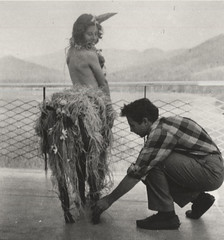



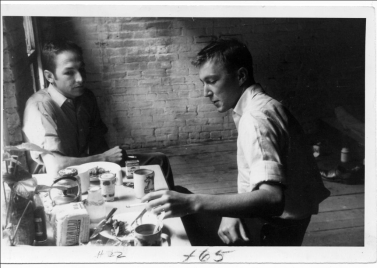
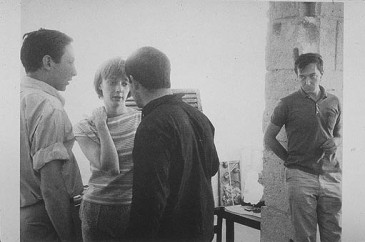


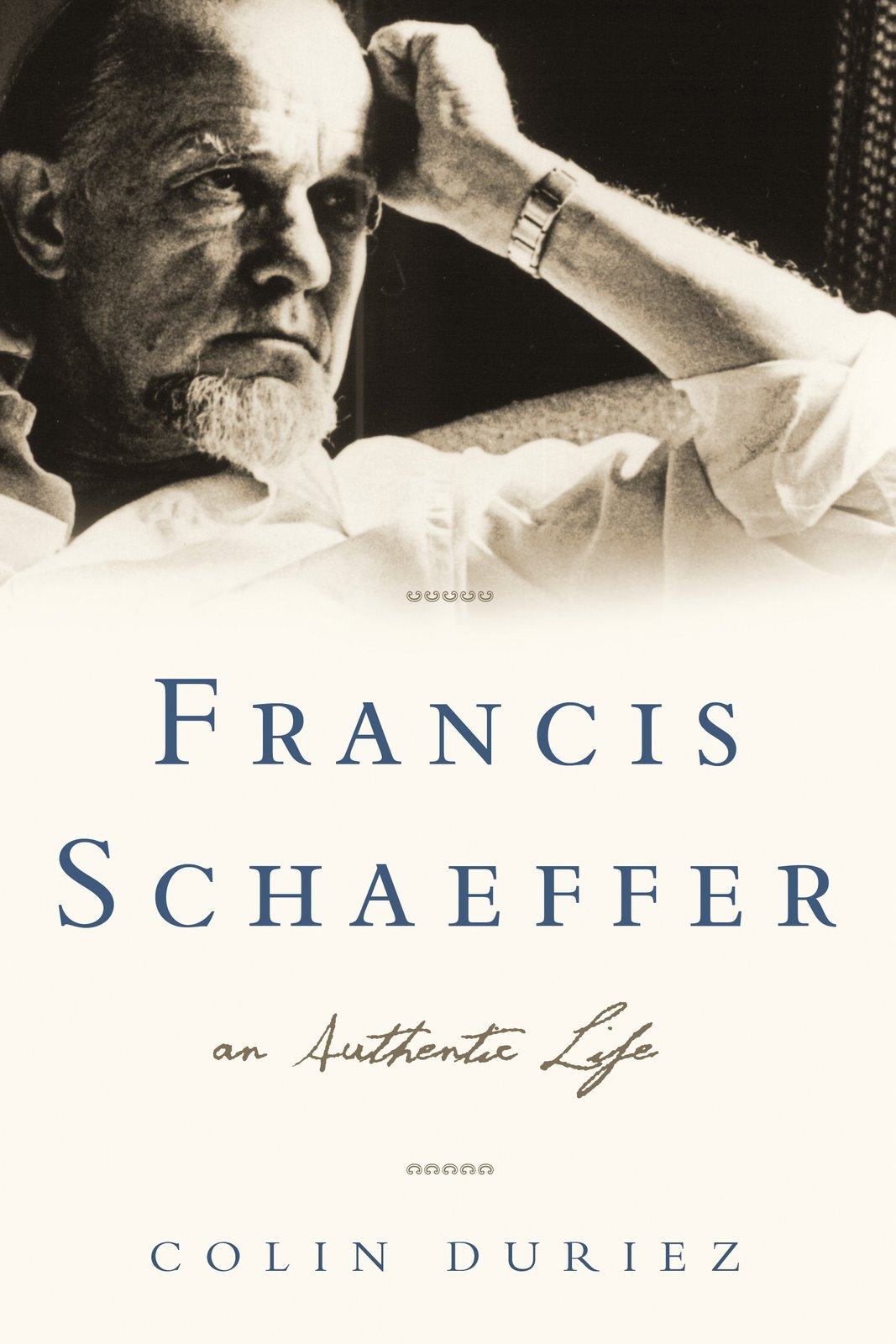


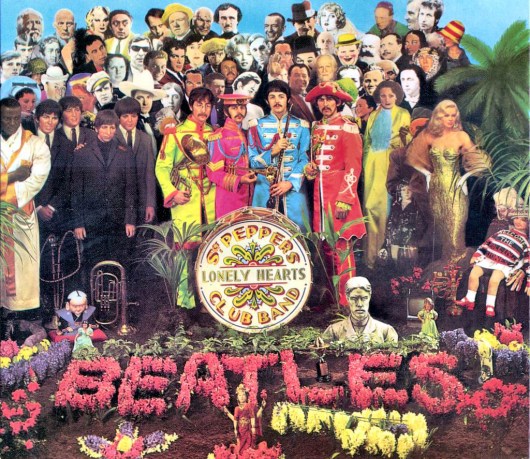


Thank you, professor. I only originally knew of Schaeffer through Piper’s “Pastor As Scholar” discussion. Recently when our church gave away our library books, I found The God Who Is There, Death In the City, and Genesis In Space and Time. I had those books on my shelf for a year l, but started reading the God Who Is There a couple of weeks ago. I absolutely fell in love with his thinking and understanding if man’s despair, need for a universal unifying truth, and the way Schaeffer opened up my eyes to famous artists and what they were trying to accomplish. (I knew of John Cage years ago and hated his music, but Schaeffer really made sense of him for me.) So I have decided to plow through everything else Schaeffer wrote.
By the way, I enjoyed this article of yours. I am a GGBTS student in California, possibly transferring my units to SEBTS online. I hope to have the privilege of taking a course with you.
Your comment is awaiting moderation.
By the way I have reblogged this fine article today on my blog.
I am Everette Hatcher and in the 1970’s and 1980’s I was a member of Bellevue Baptist in Memphis where Adrian Rogers was pastor and was a student at Evangelical Christian School from the 5th grade to the 12th grade where I was introduced to the books and films of Francis Schaeffer. At ECS my favorite teacher was Mark Brink who actually played both film series to us (WHATEVER HAPPENED TO THE HUMAN RACE? and HOW SHOULD WE THEN LIVE?) during our senior year and believe it or not after I graduated I would come back and join some of his future classes when the film was playing again because I couldn’t get enough of Schaeffer’s film series!!!!
During this time I was amazed at how many prominent figures in the world found their way into the works of both Adrian Rogers and Francis Schaeffer and I wondered what it would be like if these individuals were exposed to the Bible and the gospel. Therefore, over 20 years ago I began sending the messages of Adrian Rogers and portions of the works of Francis Schaeffer to many of the secular figures that they mentioned in their works. Let me give you some examples and tell you about some lessons that I have learned.
I have learned several things about atheists in the last 20 years while I have been corresponding with them. First, they know in their hearts that God exists and they can’t live as if God doesn’t exist, but they will still search in some way in their life for a greater meaning. Second, many atheists will take time out of their busy lives to examine the evidence that I present to them. Third, there is hope that they will change their views.
Let’s go over again a few points I made at the first of this post. My first point is backed up by Romans 1:18-19 (Amplified Bible) ” For God’s wrath and indignation are revealed from heaven against all ungodliness and unrighteousness of men, who in their wickedness REPRESS and HINDER the truth and make it inoperative. For that which is KNOWN about God is EVIDENT to them and MADE PLAIN IN THEIR INNER CONSCIOUSNESS, because God has SHOWN IT TO THEM,”(emphasis mine). I have discussed this many times on my blog and even have interacted with many atheists from CSICOP in the past. (I first heard this from my pastor Adrian Rogers back in the 1980’s.)
My second point is that many atheists will take the time to consider the evidence that I have presented to them and will respond. The late Adrian Rogers was my pastor at Bellevue Baptist when I grew up and I sent his sermon on evolution and another on the accuracy of the Bible to many atheists to listen to and many of them did. I also sent many of the arguments from Francis Schaeffer also.
Francis Schaeffer’s words would be quoted in many of these letters that I would send to famous skeptics and I would always include audio messages from Adrian Rogers. Perhaps Schaeffer’s most effective argument was concerning Romans 1 and how a person could say that he didn’t believe that the world had a purpose or meaning but he could not live that way in the world that God created and with the conscience that every person is born with.
Google “Adrian Rogers Francis Schaeffer” and the first 4 things that come up will be my blog posts concerning effort to reach these atheists. These two great men proved that the scriptures Hebrews 4:12 and Isaiah 55:11 are true, “For the word of God is alive and active. Sharper than any double-edged sword, it penetrates even to dividing soul and spirit, joints and marrow; it judges the thoughts and attitudes of the heart.” and “so is my word that goes out from my mouth: It will not return to me empty, but will accomplish what I desire and achieve the purpose for which I sent it.”