I truly believe that many of the problems we have today in the USA are due to the advancement of humanism in the last few decades in our society. Ronald Reagan appointed the evangelical Dr. C. Everett Koop to the position of Surgeon General in his administration. He partnered with Dr. Francis Schaeffer in making the video below. It is very valuable information for Christians to have. Actually I have included a video below that includes comments from him on this subject.
Francis Schaeffer: “Whatever Happened to the Human Race” Part 2
Olphart you wrote a well thought out post. In it you noted, “Even I can see that you jump to a huge conclusion when you draw the line by saying that abortion is murder. The Bible doesn’t tell you that.”
______________
Is abortion murder according to the Bible. Let’s take just a few verses.
For you created my inmost being; you knit me together in my mother’s womb. I praise you because I am fearfully and wonderfully made; your works are wonderful, I know that full well. My frame was not hidden from you when I was made in the secret place. When I was woven together in the depths of the earth, your eyes saw my unformed body. All the days ordained for me were written in your book before one of them came to be.
Psalm 139:13-16
________
Sue Bohlin of Probe Ministries has asserted:
Sometimes you will hear a pro-choice argument that says the Bible does not put the same value on the life of the unborn as on infants, citing an Old Testament passage on personal injury law. Exodus 21:22-25 gives two penalties if fighting men hit a pregnant woman. The first penalty was a fine, and some people conclude from this that an unborn baby doesn’t have the same value as a born child. But that penalty was for a situation where nothing serious happened. If there was serious injury, the offender was severely punished with the same injury he inflicted. If the mother or baby died, the offender was to be put to death. This actually shows very eloquently how valuable God considers both the mother and her unborn baby.
Al Mohler talked about Americans’ sense of right and wrong and how everything is turned upside down now while viewing the results of the Gosnell Trial:
What the pro-abortion movement fears most is that Americans will pause to consider what this trial really means. It means that Dr. Gosnell would not be on trial for murder if he had killed those three babies while inside their mother’s body. His murder convictions have everything to do with the fact that the abortions were “botched” and the babies were accidentally born alive. Had the abortions been “successful” — even up to the last hours of pregnancy — Dr. Gosnell might have been charged with performing a late-term abortion, but not of murder.
And, speaking of late-term abortions, the abortion rights movement is against all legal restrictions on those as well. They insist on a woman’s unfettered right to an abortion up to the moment of birth.
Even more chillingly, a Planned Parenthood representative recently told a committee of the Florida legislature that even a baby born alive after a failed abortion should have its life or death decided only by its mother and her doctor.
This is America. A nation that has legalized murder in the womb and that now finds itself staring at what abortion really represents. Human dignity cannot survive in a society that insists that a baby inside the womb has no right to live while that same baby, just seconds later, is a murder victim. Respect for human life cannot endure when a baby inside the womb is just a fetus, but when moved only a few centimeters is a full citizen.
The body parts of babies presented as evidence in the Gosnell trial are routinely discarded as “medical waste” outside your local abortion clinic.
What the Gosnell trial revealed is not the exceptional gruesomeness of a single clinic in Philadelphia. It reveals the truth that all Americans are, by our laws, complicit in Dr. Gosnell’s evil. The real scandal is not just the babies murdered outside the womb, but the millions aborted legally — torn apart by blades, suctioned out as waste, poisoned unto death by drugs.
The trial of Dr. Kermit Gosnell revealed the truth about this homicidal doctor and his house of horrors, but it also revealed the moral house of mirrors behind which America hides. Dr. Gosnell is not alone in having the blood of babies on his hands.
Part 1 of 2 Gianna Jessen, abortion survivor speaks at Queen’s Hall, Parliament House, Victoria. Australia – on the eve of the debate to decriminalize abortion in Victoria.
Gianna’s visit was sponsored by the Ad Hoc Interfaith Committee.
Gianna Jessen is an abortion survivor. She was intervewed on Fox’s Hannity and Colmes, where she shared her personal story and also commented on Obama’s voting record. As an Illinois state senator, four times he voted “no” on the Illinois Born-Alive Infant Defined Act, which would protect babies born alive after failed abortions.
There is a lively discussion at the end about whether or not Obama, by his vote, was in fact denying born babies (abortion survivors now outside the womb), the right to live.Pay attention especially to Alan Combs who tries to defend his pro-life liberal president.
Sean Hannity show with Gianna Jessen
Did you see how difficult it was for Alan Combs to defend his liberal president from the charge of infanticide.Logically there is no escape but he tried the best he could. President Obama was so intent on protecting Roe v Wade that he had to endorse a form of infanticide in order to protect Roe v Wade.
Liberals must acknowledge that hospitals are required to save lives. However, if a hospital is paid to perform an abortion and they botch the job then they must turn from trying to snuff out a life to trying to save it again. How ironic.
Part 2 of 2 Gianna Jessen, abortion survivor speaks at Queen’s Hall.
Many in the world today are taking a long look at the abortion industry because of the May 14, 2013 guilty verdict and life term penalty handed down by a jury (which included 9 out of 12 pro-choice jurors) to Dr. Kermit Gosnell. During this time of reflection I wanted to put forth some of the […]
Many in the world today are taking a long look at the abortion industry because of the May 14, 2013 guilty verdict and life term penalty handed down by a jury (which included 9 out of 12 pro-choice jurors) to Dr. Kermit Gosnell. During this time of reflection I wanted to put forth some of the […]
Many in the world today are taking a long look at the abortion industry because of the May 14, 2013 guilty verdict and life term penalty handed down by a jury (which included 9 out of 12 pro-choice jurors) to Dr. Kermit Gosnell. During this time of reflection I wanted to put forth some of the […]
Many in the world today are taking a long look at the abortion industry because of the May 14, 2013 guilty verdict and life term penalty handed down by a jury (which included 9 out of 12 pro-choice jurors) to Dr. Kermit Gosnell. During this time of reflection I wanted to put forth some of the […]
Many in the world today are taking a long look at the abortion industry because of the May 14, 2013 guilty verdict and life term penalty handed down by a jury (which included 9 out of 12 pro-choice jurors) to Dr. Kermit Gosnell. During this time of reflection I wanted to put forth some of the […]
Many in the world today are taking a long look at the abortion industry because of the May 14, 2013 guilty verdict and life term penalty handed down by a jury (which included 9 out of 12 pro-choice jurors) to Dr. Kermit Gosnell. During this time of reflection I wanted to put forth some of the […]
Many in the world today are taking a long look at the abortion industry because of the May 14, 2013 guilty verdict and life term penalty handed down by a jury (which included 9 out of 12 pro-choice jurors) to Dr. Kermit Gosnell. During this time of reflection I wanted to put forth some of the […]
Many in the world today are taking a long look at the abortion industry because of the May 14, 2013 guilty verdict and life term penalty handed down by a jury (which included 9 out of 12 pro-choice jurors) to Dr. Kermit Gosnell. During this time of reflection I wanted to put forth some of the […]
Many in the world today are taking a long look at the abortion industry because of the May 14, 2013 guilty verdict and life term penalty handed down by a jury (which included 9 out of 12 pro-choice jurors) to Dr. Kermit Gosnell. During this time of reflection I wanted to put forth some of the […]
Many in the world today are taking a long look at the abortion industry because of the May 14, 2013 guilty verdict and life term penalty handed down by a jury (which included 9 out of 12 pro-choice jurors) to Dr. Kermit Gosnell. During this time of reflection I wanted to put forth some of the […]
Many in the world today are taking a long look at the abortion industry because of the May 14, 2013 guilty verdict and life term penalty handed down by a jury (which included 9 out of 12 pro-choice jurors) to Dr. Kermit Gosnell. During this time of reflection I wanted to put forth some of the […]
Many in the world today are taking a long look at the abortion industry because of the May 14, 2013 guilty verdict and life term penalty handed down by a jury (which included 9 out of 12 pro-choice jurors) to Dr. Kermit Gosnell. During this time of reflection I wanted to put forth some of the […]
Many in the world today are taking a long look at the abortion industry because of the May 14, 2013 guilty verdict and life term penalty handed down by a jury (which included 9 out of 12 pro-choice jurors) to Dr. Kermit Gosnell. During this time of reflection I wanted to put forth some of the […]
Many in the world today are taking a long look at the abortion industry because of the May 14, 2013 guilty verdict and life term penalty handed down by a jury (which included 9 out of 12 pro-choice jurors) to Dr. Kermit Gosnell. During this time of reflection I wanted to put forth some of the […]
Many in the world today are taking a long look at the abortion industry because of the May 14, 2013 guilty verdict and life term penalty handed down by a jury (which included 9 out of 12 pro-choice jurors) to Dr. Kermit Gosnell. During this time of reflection I wanted to put forth some of the […]
Many in the world today are taking a long look at the abortion industry because of the May 14, 2013 guilty verdict and life term penalty handed down by a jury (which included 9 out of 12 pro-choice jurors) to Dr. Kermit Gosnell. During this time of reflection I wanted to put forth some of the […]
Francis Schaeffer: “Whatever Happened to the Human Race” (Episode 1) ABORTION OF THE HUMAN RACE Published on Oct 6, 2012 by AdamMetropolis ________________ What a great article below: Dr. Alveda King: Guilty Gosnell Verdict May Spark More Justice for Women and Babies Contact: Eugene Vigil, King for America, 470-244-3302 PHILADELPHIA, May 13, 2013 /Christian Newswire/ […]
Many in the world today are taking a long look at the abortion industry because of the May 14, 2013 guilty verdict and life term penalty handed down by a jury (which included 9 out of 12 pro-choice jurors) to Dr. Kermit Gosnell. During this time of reflection I wanted to put forth some of the […]
Francis Schaeffer: “Whatever Happened to the Human Race” (Episode 1) ABORTION OF THE HUMAN RACE Published on Oct 6, 2012 by AdamMetropolis ________________ May 14, 2013 Murdered Thousands, Convicted for Three: The Kermit Gosnell Verdict By Drew Belsky Read more: http://www.americanthinker.com/2013/05/murdered_thousands_convicted_for_three_the_kermit_gosnell_verdict.html#ixzz2TMstLk1c Follow us: @AmericanThinker on Twitter | AmericanThinker on FacebookPhiladelphia abortionist Kermit Gosnell was convicted […]
Many in the world today are taking a long look at the abortion industry because of the May 14, 2013 guilty verdict and life term penalty handed down by a jury (which included 9 out of 12 pro-choice jurors) to Dr. Kermit Gosnell. During this time of reflection I wanted to put forth some of the […]
Francis Schaeffer: “Whatever Happened to the Human Race” (Episode 1) ABORTION OF THE HUMAN RACE Published on Oct 6, 2012 by AdamMetropolis ________________ A Verdict Doesn’t End the Gosnell Story By: Chairman Reince Priebus (Diary) | May 13th, 2013 at 03:27 PM | 28 RESIZE: AAA The horrors that unfolded in the clinic of Dr. […]
Many in the world today are taking a long look at the abortion industry because of the May 14, 2013 guilty verdict and life term penalty handed down by a jury (which included 9 out of 12 pro-choice jurors) to Dr. Kermit Gosnell. During this time of reflection I wanted to put forth some of the […]
Francis Schaeffer: “Whatever Happened to the Human Race” (Episode 1) ABORTION OF THE HUMAN RACE Published on Oct 6, 2012 by AdamMetropolis ________________ All-American Horror Story: Top 10 Kermit Gosnell Trial Revelations by Kristan Hawkins | Washington, DC | LifeNews.com | 4/12/13 3:38 PM Since so many in the media have failed/refused to report on […]
Many in the world today are taking a long look at the abortion industry because of the May 14, 2013 guilty verdict and life term penalty handed down by a jury (which included 9 out of 12 pro-choice jurors) to Dr. Kermit Gosnell. During this time of reflection I wanted to put forth some of the […]
Francis Schaeffer: “Whatever Happened to the Human Race” (Episode 1) ABORTION OF THE HUMAN RACE Published on Oct 6, 2012 by AdamMetropolis _____________ Tony Perkins: Gosnell Trial – FOX News Published on May 13, 2013 Tony Perkins: Gosnell Trial – FOX News ________________ Hey Obama, Kermit Gosnell Is What a Real War on Women Looks Like […]
Many in the world today are taking a long look at the abortion industry because of the May 14, 2013 guilty verdict and life term penalty handed down by a jury (which included 9 out of 12 pro-choice jurors) to Dr. Kermit Gosnell. During this time of reflection I wanted to put forth some of the […]
Francis Schaeffer: “Whatever Happened to the Human Race” (Episode 1) ABORTION OF THE HUMAN RACE Published on Oct 6, 2012 by AdamMetropolis ___ _____________ Tony Perkins: Gosnell Trial – FOX News Published on May 13, 2013 Tony Perkins: Gosnell Trial – FOX News ________________ Family Research Council Praises Jury for Bringing Justice to Victims of Abortionist […]
Many in the world today are taking a long look at the abortion industry because of the May 14, 2013 guilty verdict and life term penalty handed down by a jury (which included 9 out of 12 pro-choice jurors) to Dr. Kermit Gosnell. During this time of reflection I wanted to put forth some of the […]
Many in the world today are taking a long look at the abortion industry because of the May 14, 2013 guilty verdict and life term penalty handed down by a jury (which included 9 out of 12 pro-choice jurors) to Dr. Kermit Gosnell. During this time of reflection I wanted to put forth some of the […]
Francis Schaeffer: “Whatever Happened to the Human Race” (Episode 1) ABORTION OF THE HUMAN RACE Published on Oct 6, 2012 by AdamMetropolis ________________ _____________ Tony Perkins: Gosnell Trial – FOX News Published on May 13, 2013 Tony Perkins: Gosnell Trial – FOX News ________________ Kermit Gosnell and the Logic of “Pro-Choice” by Matthew J. Franck within […]
Many in the world today are taking a long look at the abortion industry because of the May 14, 2013 guilty verdict and life term penalty handed down by a jury (which included 9 out of 12 pro-choice jurors) to Dr. Kermit Gosnell. During this time of reflection I wanted to put forth some of the […]
Many in the world today are taking a long look at the abortion industry because of the May 14, 2013 guilty verdict and life term penalty handed down by a jury (which included 9 out of 12 pro-choice jurors) to Dr. Kermit Gosnell. During this time of reflection I wanted to put forth some of the […]
Francis Schaeffer: “Whatever Happened to the Human Race” (Episode 1) ABORTION OF THE HUMAN RACE Published on Oct 6, 2012 by AdamMetropolis ________________ Fr. Pavone: Right to choose must yield to right to life STATEN ISLAND, NY — Father Frank Pavone, National Director of Priests for Life, had the following comment on the verdict in […]
Many in the world today are taking a long look at the abortion industry because of the May 14, 2013 guilty verdict and life term penalty handed down by a jury (which included 9 out of 12 pro-choice jurors) to Dr. Kermit Gosnell. During this time of reflection I wanted to put forth some of the […]
Francis Schaeffer: “Whatever Happened to the Human Race” (Episode 1) ABORTION OF THE HUMAN RACE Published on Oct 6, 2012 by AdamMetropolis ________________ The truth of abortion … the hope for Gosnell’s repentance A conviction in the murder trial of Philadelphia abortionist Kermit Gosnell has boosted the efforts of pro-lifers to demonstrate what abortion really […]
The Selfishness of Chris Evert Part 2 (Includes videos and Pictures) _________________________________ _____________________ _______________________ __________________________ Tennis – Wimbledon 1974 [ Official Film ] – 05/05 Published on May 1, 2012 John Newcombe, Ken Rosewall, Bjor Borg, Jimmy Connors, Cris Evert… ___________________ Jimmy Connors Reflects Published on May 13, 2013 Jimmy Connors visits “SportsCenter” to discuss his memoir, […]
George Harrison – Awaiting On You All (Backing Track – Early Take)
George Harrison – ‘Awaiting On You All’ – Original Audio
Francis Schaeffer in his book HOW SHOULD WE THEN LIVE? gives us some insight into a possible answer to that question WHY WAS DRUG-TAKING AND EASTERN RELIGIONS SO POPULAR IN THE 1960’s IN USA?
The younger people and the older ones tried drug taking but then turned to the eastern religions. Both drugs and the eastern religions seek truth inside one’s own head, a negation of reason. The central reason of the popularity of eastern religions in the west is a hope for a nonrational meaning to life and values. The reason the young people turn to eastern religion is simply the fact as we have said and that is that man having moved into the area of nonreason could put anything up there and the heart of the eastern religions is a denial of reason just exactly as the idealistic drug taking was. So the turning to the eastern religions today fits exactly into the modern existential methodology, the existential thinking of modern man, of trying to find some optimistic hope in the area of nonreason when he has given up hope on a humanistic basis of finding any kind of unifying answer to life, any meaning to life in the answer of reason.
An article called “Holy Wars” was based on Francis Schaeffer’s writings primarily and it noted:
Then came the Beatles. John Lennon had declared that his group was more popular than Jesus. But they weren’t willing to stop there. They sought to supplant the true God with everything false. After the rock icons returned from India they brought with them not only the music of the Hindu guruRavi Shankar, but also his religion as taught by the Maharishi Mahesh Yogi. They were so impressed with that guru’s Transcendental Meditation woo woo that they just had to convert the whole Western World to it. The counterculturalists took it all in, hook line and sinker.
On the way home from work one afternoon I listened to the George Harrison song Awaiting on You All that I had copied along with other songs by this artist from his album All Things Must Pass. Hearing this song after so many years (it was on a CD that I had lost and just found again) was an interesting experience, and as often happens when you unearth some part of your past and compare it with your present, I heard it almost with fresh ears. I am not the same person that I was then. I was in my twenties when I followed George Harrison both musically and spiritually. Though the Eastern religious views he espoused most of his public life were similar to mine at that age, it didn’t take long for me to outgrow them. ‘Outgrow’ is not exactly the right word, though. I didn’t really outgrow them. You could say I traded them in, new lamps for old. I never struck a better deal.
Still, listening to the song I was amazed just how spot on he was in much of what he was saying. I can still relate to almost all of it. I don’t think that either of us, George or I, was aware of the fuzzy thinking that made us combine devotion and belief in Krishna and Jesus without noticing the two aren’t the same. I’m not talking about doctrinal or religious differences. Hinduism and Christianity are distinct religions, granted, but anyone who believes in God knows, ‘God is God. There is no thing you can compare to God. God is God.’ We tend to believe that at best other religions are wrong in the details but right in the big picture. This may be true, but no one can say so without denying his faith community. In youth, I think we were bored with dogmatic strongholds, and wanted the freedom to meet God on our terms, not according to those of our ancestors. How little did we understand that ‘the ancestors in stone armor calling for loyalty untrue’ seeking ‘to make a zigzag of the arrow’s flight’ were doing no such thing.
No, they knew that the shortest path between two points is rarely a straight line, though arrows may fly to their mark, being projectiles aimed at a target. Unfortunately people are not projectiles, and our destination is not really a target, no matter how much we wish we could hit the bullseye. We are beings fashioned in the Divine image and likeness. We live in more than three, more even than four, dimensions, and the paths we tread cannot be traced, planned or prophesied by mortal logic or the magic of music. They are no more than mere beginnings, our thoughts and feelings, before we bump into the aweful reality which we glibly like to call ‘God.’ Meet Him on our terms? Hardly possible, unless He allows it, and only as a sign that He is there, hidden behind our wall, waiting for us to…
No, that is also just what we glibly like to think, as George Harrison sings in his song…
You don’t need no love in You don’t need no bed pan You don’t need a horoscope or a microscope To see the mess that you’re in If you open up your heart You will know what I mean We’ve been polluted so long Now here’s a way for you to get clean
By chanting the names of the Lord, and you’ll be free The Lord is awaiting on you all to awaken and see…
You don’t need no passport And you don’t need no visas You don’t need to designate or to emigrate Before you can see Jesus If you open up your heart You’ll see he’s right there Always was and will be He’ll relieve you of your cares
You don’t need no church house And you don’t need no Temple You don’t need no rosary beads or them books to read To see that you have fallen If you open up your heart You will know what I mean We’ve been kept down so long Someone’s thinking that we’re all green
… The Lord is awaiting on you all to awaken and see By chanting the names of the Lord, and you’ll be free
I purposely left out the stanza about the pope owning controlling interest in General Motors and not being qualified to quote us anything but the Stock Exchange. This is childish talk and hatchets all the good things he has to say. This, I find, is true of youthful thinkers in every generation. It’s true of otherwise noble and idealistic youth today. It was true of me as a Vietnam War draft resister. We ‘let the cat out of the bag’ about ourselves when we pounce on anyone, especially an authority figure we don’t approve of, and show that, however pure we think our motives, however lofty our ideals, we’re still no better than the fallen heroes we no longer believe in. What George Harrison says in this song I still agree with. Where I have a problem, is what he proposes as a solution to the mess we find ourselves in. As much as I enjoyed chanting Hare Krishna, it didn’t save me, or the world, and it never will.
But the rest is, amazingly, true, as I have found out in the intervening years. The words about Jesus are almost straight out of the Bible. The words about churches and temples, the same. Somebody went to Sunday School as a child. Yes, you’re right. I did.
I know that for sure, and guess what?It stuck. What started out as an incomprehensible religious upbringing somehow became comprehensible when it finally collided with what I was made for.
Yes, my parachute failed to open, and the earth received my bruised and broken body. I was alive for just a moment, just long enough for me to realize I was about to die. Then His gentle hands slipped under my head and shoulders as He lifted me up from what should have been my grave. He had already been there, aeons before I came to birth or leapt to my unintended death. No, this did not literally happen. I’ve never used a parachute. But His hands are real.
Awaiting on You All, a great song,
but He is waiting only from our point of view.
On His side, we are either already with Him, or without Him.
MUSIC MONDAY Rolling Stones New Album Part 8 Rolling Stones – Hoo Doo Blues Blue & Lonesome is the album any Rolling Stones fan would have wished for – review 9 Comments Evergreen: The Rolling Stones perform in Cuba earlier this year CREDIT: REX FEATURES Neil McCormick, music critic 22 NOVEMBER 2016 • 12:19PM The Rolling […]
MUSIC MONDAY Rolling Stones New Album Part 7 Rolling Stones – Everybody Knows About My Good Thing The Rolling Stones Alexis Petridis’s album of the week The Rolling Stones: Blue & Lonesome review – more alive than they’ve sounded for years 4/5stars Mick Jagger’s voice and harmonica drive an album of blues covers that returns […]
MUSIC MONDAY Rolling Stones New Album Part 6 Rolling Stones – Just Like I Treat You Music Review: ‘Blue & Lonesome’ by the Rolling Stones By Gregory Katz | AP November 29 The Rolling Stones, “Blue & Lonesome” (Interscope) It shouldn’t be a surprise, really, but still it’s a bit startling to hear just how well […]
MUSIC MONDAY Rolling Stones New Album Part 5 Rolling Stones – Everybody Knows About My Good Thing Review: The Rolling Stones make blues magic on ‘Blue & Lonesome’ Maeve McDermott , USATODAY6:07 p.m. EST November 30, 2016 (Photo: Frazer Harrison, Getty Images) Before the Rolling Stones were rock icons, before its members turned into sex […]
MUSIC MONDAY Rolling Stones New Album Part 4 Rolling Stones – Little Rain Rolling Stones, ‘Blue & Lonesome’: Album Review By Michael Gallucci November 30, 2016 1:34 PM Read More: Rolling Stones, ‘Blue & Lonesome’: Album Review | http://ultimateclassicrock.com/rolling-stones-blue-lonesome-review/?trackback=tsmclip The Rolling Stones were never really a thinking band. A shrewd one, for sure, […]
MUSIC MONDAY Rolling Stones New Album Part 3 The Rolling Stones Mick Jagger chats about new album “Blue & Lonesome” on BBC Breakfast 02 Dec 2016 Rolling Stones – I Gotta Go Rolling Stones – ‘Blue & Lonesome’ Review Barry Nicolson 12:52 pm – Dec 2, 2016 57shares The Stones sound their youngest […]
_____________ Carpenters Close To You Karen Carpenter’s tragic story Karen Carpenter’s velvet voice charmed millions in the 70s… but behind the wholesome image she was in turmoil. Desperate to look slim on stage – and above all desperate to please the domineering mother who preferred her brother – she became the first celebrity victim of […]
carpenters -We’ve Only Just Begun The Carpenters – Yesterday Once More (INCLUDES LYRICS) The Carpenters – There’s a kind of hush The Carpenters – Greatest Hits Related posts: MUSIC MONDAY Paul McCartney Mull Of Kintyre November 13, 2016 – 10:29 am Paul McCartney Mull Of Kintyre-Original Video-HQ Uploaded on Nov 25, 2011 Paul McCartney Mull Of […]
Before the Rolling Stones were rock icons, before its members turned into sex symbols and their sound inspired a generation of imitators, they were a blues cover band. Taking their name from Muddy Waters’ Rollin’ Stone and launching their career 50 years ago with ramshackle covers of blues tracks, the backbone of the band’s bones-rattling rock ‘n’ roll has always been their chosen genre’s more soulful predecessor.
But with the group’s first studio album in 11 years, Blue & Lonesome (*** out of four, out Friday), the blues isn’t just the subtext in their songs. Instead of offering a collection of original music, which they still promise to be working on, Mick Jaggerand company covered 12 blues songs from the ’50s, ’60s and ’70s, going the route Bob Dylan most recently explored with his 2015 Frank Sinatra cover album Shadows in the Night.
But unlike other straightforward covers albums, which are often more exciting in theory than in self-indulgent practice, the songs on Blue & Lonesome are a homecoming for the Stones, as they cover blues greats like Waters, Willie Dixon and other artists whose songs the band cut their teeth on.
USA TODAY
Step inside the Rolling Stones’ career-spanning ‘Exhibitionism’
As the Stones have explained in interviews, Blue & Lonesome wasn’t the album the band originally set out to record. While they were in the studio recording new material, they started riffing on a few old blues songs to warm up — and had so much fun, they blew out their jam sessions into an entire collection of songs.
Buoyed by this enthusiasm, the album sounds like the best kind of passion project. Blue & Lonesome proves to be a brilliant vehicle to reintroduce the band, a high-water mark in the Stones’ later era, making the case that they’re as eternally youthful as ever.
And in more aspects than one, Blue & Lonesome is an album of teachers learning from their students. Over the past few decades, rock revivalists like Jack White have built careers imitating the Stones, and in turn, Blue & Lonesome buzzes with the noisy production quality you’d hear on a newcomer’s garage-rock demo. Similar to many of his peers, Jagger’s voice has colored slightly with age; but when muddied with distortion, his haggard yowls are electrifying.
As always, Jagger is the center of attention here, and he clearly enjoys playing the role of tortured bluesman, from the crashing title track to the stripped-down Little Rain. The album’s plodding moments linger a little too long on his wailing performances; more enjoyable are the team efforts, as Keith Richards and Ronnie Wood trade rough-and-tumble riffs on the rollicking Ride ‘Em on Down and I Gotta Go, with Jagger winking at the band’s mischievous streak on their deft Howlin’ Wolfcover Commit a Crime.
USA TODAY
That was no Oldchella: Rolling Stones, Bob Dylan show why time is on their side at Desert Trip
Yes, it’s still a collection of covers, and some Stones fans may not be thrilled about their detour away from recording new songs. But for every stellar classic-rock comeback album, there are five duds, the Stones’ 2005 effort A Bigger Bang among them. The freewheeling vigor of Blue & Lonesome suggests that their new material will have a newly heightened pulse.
In a way, Blue & Lonesome feels like a cosmic gift to Stones fans; after conquering rock ‘n’ roll, the genre’s elder statesmen return to the songs that taught them how to play music in the first place.
Paul McCartney Mull Of Kintyre-Original Video-HQ Uploaded on Nov 25, 2011 Paul McCartney Mull Of Kintyre Lyric Mull of kintyre Oh mist rolling in from the sea, My desire is always to be here Oh mull of kintyre Far have I traveled and much have I seen Dark distant mountains with valleys of green. Past […]
__ Paul McCartney – Wonderful Christmas Time Wonderful Christmastime From Wikipedia, the free encyclopedia “Wonderful Christmastime” Single by Paul McCartney B-side “Rudolph the Red-Nosed Reggae” Released 16 November 1979 Format 7-inch 45 rpm Recorded 30 August 1979, Lower Gate Farm, Sussex Genre Christmas pop rock synthrock Length 3:45 Label Parlophone Columbia Writer(s) Paul McCartney Producer(s) Paul […]
__ Bob Dylan Press Conference 1965 Part 2 This is a tribute to Keith Green who died 32 years ago today!!! On July 28, 1983 I was sitting by the radio when CBS radio news came on and gave the shocking news that Keith Green had been killed by an airplane crash in Texas with […]
Bob Dylan Press Conference 1965 Part 1 ___ Bob Dylan played on one of Keith Green’s last albums and on the 6:19 min mark of part 5 it shows Bob Dylan: The Keith Green Story pt 5/7 The Keith Green Story pt 3/7 Keith Green had a major impact on me back in 1978 […]
________ Quinton Aaron of “The Blindside” talks “Greater” and the faith and character of Brandon Burlsworth Published on Oct 28, 2015 Quinton Aaron, star of “The Blindside”, discusses why he is so proud to be a part of “Greater”, and talks about the faith and character of Brandon Burlsworth, the greatest walk-on in college football […]
MUSIC MONDAY “Foreigner Top 10 Songs” Part 3 Top 10 Foreigner Songs By Matt Wardlaw Elsa, Getty Images ‘Waiting for a Girl Like You’ From: ‘4’ (1981) Mick Jones calls “Waiting” the “song that wrote itself,” telling Classic Rock that he felt like the “conduit” for the track and that “something was coming down through […]
MUSIC MONDAY “Foreigner Top 10 Songs” Part 2 Top 10 Foreigner Songs By Matt Wardlaw Elsa, Getty Images 7 ‘Feels Like the First Time’ From: ‘Foreigner’ (1977) “Feels Like the First Time” is a pretty genius name for your first single, and it certainly paid plenty of dividends for Foreigner, striking the Top Five. For […]
__ MUSIC MONDAY “Foreigner Top 10 Songs” Part 1 Top 10 Foreigner Songs By Matt Wardlaw Elsa, Getty Images Read More: Top 10 Foreigner Songs | http://ultimateclassicrock.com/top-10-foreigner-songs/?trackback=tsmclipForeigner‘s lone remaining founding member, guitarist Mick Jones, has been at the helm of the legendary American rock group since 1976. But if you’ve seen the band […]
__ Glen Campbell’s Greatest Hits Compilation – Complete Set Related posts: MUSIC MONDAY Washed Out: ‘I wish I could have a 9 to 5 life’ Ernest Greene’s debut album confirms his place at the forefront of the chillwave scene. So why is he so worried? August 22, 2016 – 12:36 am _ Washed Out – Life […]
_ Washed Out – Life Of Leisure (Full Album) | HD Washed Out: ‘I wish I could have a 9 to 5 life’ Ernest Greene’s debut album confirms his place at the forefront of the chillwave scene. So why is he so worried? Ernest Greene, aka Washed Out: ‘At no point was I actively […]
and you will hear what far smarter people than I have to say on this matter. I agree with them.
Harry Kroto
I have attempted to respond to all of Dr. Kroto’s friends arguments and I have posted my responses one per week for over a year now. Here are some of my earlier posts:
Alan Dundes with a wooden Norwegian statue of a tale called “Squeezing the Stone”
Alan Dundes (September 8, 1934 – March 30, 2005)[1] was a folklorist at the University of California, Berkeley. His work was said to have been central to establishing the study of folklore as an academic discipline.[citation needed]He wrote 12 books, both academic and popular, and edited or co-wrote two dozen more.[2] One of his most notable articles was called “Seeing is Believing” in which he indicated that Americans value the sense of sight more than the other senses.
He introduced the concept “allomotif” (coined in an analogy with “allomorph“, to complement the concept of “motifeme” (cf. “morpheme“) introduced by Kenneth L. Pike) as concept to be used in the analysis of the structures of folktales in terms of motifs identified in them.[3][4]
Dundes attended Yale University, where he studied English[1] and met his wife Carolyn. Sure that he would be drafted upon completion of his studies, Dundes joined the ROTC and trained to become a naval communications officer. When it turned out that the ship he was to be posted to, stationed in the Bay of Naples, already had a communications officer, Dundes asked what else that ship might need, not wanting to give up such a choice assignment. He then spent two years maintaining artillery guns on a ship in the Mediterranean. Upon completion of his service, Dundes attended Indiana University to pursue a Ph.D in folklore. At Indiana, he studied under the father of American Folklore, Richard Dorson.[1] He quickly established himself as a force to be reckoned with in the field of folkloristics. He completed his degree very quickly and went on to a teaching position at the University of Kansas where he stayed for only a year before being offered a position in the University of California, Berkeley anthropology department teaching folklore. Dundes held this position for 42 years, until his death in 2005.
Alan Dundes was an engaging lecturer, his Introduction to Folklore course attracting many students. In this course, students were introduced to the many various forms of folklore, from myth, legend, and folktale to proverbs and riddles to jokes, games, and folkspeech (slang), to folk belief and foodways. The final project for this course required that each student collect, identify, and analyze 40 items of folklore. All of this material (about 500,000 items) is housed and cataloged in the Berkeley Folklore Archives. Dundes also taught undergraduate courses in American folklore, and psychoanalytic approaches to folklore (his favorite approach) in addition to graduate seminars on the history of folkloristics, from an international perspective, and the history and progression of folklore theory.
Dundes was also a great supporter of the New Student Orientation Program at UC Berkeley (CalSO). He frequently gave the opening address during summer orientation programs, whetting students’ appetites about the type of instruction they might receive at the University. These addresses were littered with jokes and stories which were a trademark of Dundes’ lectures in his popular anthropology class and were a favorite of both in-coming students and the orientation staff alike.[citation needed]
Strongly opinionated, Dundes was not at all averse to the controversy that his theories often generated. He dealt frequently with folklore as an expression of unconscious desires and anxieties and was of the opinion that if people reacted strongly to what he had to say, he had probably hit a nerve and was probably on to something. Some of his more controversial work involved examining the New Testament and the Qur’an as folklore.[5] However, of all his articles, the one that earned him death threats was “Into the Endzone for a Touchdown”, an exploration of the homoerotic subtext inherent in the terminology and rituals surrounding American football.[6] In 1980, Dundes was invited to give the presidential address at the American Folklore Society annual meeting.[7] His presentation, later published as a monograph titled “Life is Like a Chicken Coop Ladder”, uses folkspeech, customs, material culture, and so forth seeking to demonstrate an anal-erotic fixation of German national character.[6] Reaction to this paper was incredibly strong[6] and because of it, Dundes declined to attend the AFS annual meeting for the next 20 years.[citation needed] When he finally did attend again, in 2004, he again gave a plenary address, this time taking his fellow folklorists to task for being weak on theory. In his opinion, the presentation of data, no matter how thorough, is useless without the development and application of theory to that data. It is not enough to simply collect, one must do something with what one has collected.[8] In 2012, linguist Anatol Stefanowitsch credited Dundes with having given rise to a still prevalent “stereotype about Germany as a culture enamored with excretion”, but called his monograph “unstructured, poorly argued and flimsily sourced” and “methodologically flawed because he only looked for evidence supporting his theory, and not – as even a folklorist should – for evidence against his theory”.[9]
Dundes fiercely defended the importance of the discipline of folkloristics throughout his career. Towards the end of his life, he received an envelope containing a check from a former student, which he asked his wife to open. She read the figure out as $1,000. In fact, the check was for $1,000,000. This money allowed Dundes to endow the university with a Distinguished Professorship in Folkloristics, thereby ensuring that upon his retirement folklore would not be abandoned in the department.[10]
The former student and benefactor wished to remain anonymous. Apparently he or she called the university prior to the donation to find out if Dundes was still teaching, or as Dundes told it, “to see if I was still alive.” The student mentioned that he or she intended to send a check, but Dundes said he was not sure the student would follow through.
The check was made out to the university, Dundes said, but with instructions that he could use it in any manner he saw fit.
“I could just take all my students to Fiji and have one hell of a party,” he said.
The professor instead decided to invest it in the study of folklore. The money funds a Distinguished Professorship of Folkloristics and helps fund the university’s folklore archives and provides grants for folklore students.[11]
Shortly before his death, Dundes was interviewed by filmmaker Brian Flemming for his documentary, The God Who Wasn’t There. He prominently recounted Lord Raglan’s 22-point scale from his 1936 book The Hero, in which he ranks figures possessing similar divine attributions.[12] An extended interview[13] is on the DVD version of the documentary.
Former fundamentalist Christian Brian Flemming places the core concepts of his former religion under the microscope in a documentary that attempts to do for religion what Morgan Spurlock’s Super Size Me did for the fast-food industry. In his bold quest to seek answers to the difficult questions that few are willing to pose, Flemming is joined by Deconstructing Jesus author Robert M. Price, renowned historian Richard Carrier, and The End of Faith author Sam Harris.
From the ignorance of many contemporary Christians as to the origin of their religion to the striking similarities between Jesus Christ and the deities worshipped by ancient pagan cults and the Christian obsession with blood and violence, this faith-shaking documentary explores the many mysteries of the Christian faith as never before.
This documentary argues the “mythicist” case in the historical Jesus debate. This position says that Jesus of Nazareth wasn’t a real person but a fiction based on Jewish scriptures and mystery religions of the Roman Empire. It doesn’t make sense to talk about a “real” Jesus — there
Before the term folkloristics can be fully understood, it is necessary to understand that the terms folk and lore are defined in many different ways. While some use the word folk to mean only peasants or remote cultures, the folklorist Alan Dundes (1934–2005) of the University of California at Berkeley calls this definition a “misguided and narrow concept of the folk as the illiterate in a literate society” (Devolutionary Premise, 13).
Dundes is often credited with the promotion of folkloristics as a term denoting a specific field of academic study and applies instead what he calls a “modern” flexible social definition for folk: two or more persons who have any trait in common and express their shared identity through traditions. Dundes explains this point best in his essay, The Devolutionary Premise in Folklore Theory (1969):
“A folk or peasant society is but one example of a ‘folk’ in the folkloristic sense. Any group of people sharing a common linking factor, e.g., an urban group such as a labor union, can and does have folklore. ‘Folk’ is a flexible concept which can refer to a nation as in American folklore or to a single family. The critical issue in defining ‘folk’ is: what groups in fact have traditions?” (emphasis in the original, see footnote 34, 13)
With this expanded social definition of folk, a wider view of the material considered to be folklore also emerged that includes, as William Wilson points out, “things people make with words (verbal lore), things they make with their hands (material lore), and things they make with their actions (customary lore)” (2006, 85).
Another implication of this broader defining of the term folk, according to Dundes, is that folkloristic work is interpretative and scientific rather than descriptive or devoted solely to folklore preservation. In the 1978 collection of his academic work, Essays in Folkloristics, Dundes declares in his preface, “Folkloristics is the scientific study of folklore just as linguistics is the scientific study of language. [. . .] It implies a rigorous intellectual discipline with some attempt to apply theory and method to the materials of folklore” (vii). In other words, Dundes advocates the use of folkloristics as the preferred term for the academic discipline devoted to the study of folklore.
According to Dundes, folkloristic work will probably continue to be important in the future. Dundes writes, “folklore is a universal: there has always been folklore and in all likelihood there will always be folklore. As long as humans interact and in the course of so doing employ traditional forms of communication, folklorists will continue to have golden opportunities to study folklore” (Devolutionary Premise, 19). According to folklorist William A. Wilson, “the study of folklore, therefore, is not just a pleasant pastime useful primarily for whiling away idle moments. Rather, it is centrally and crucially important in our attempts to understand our own behavior and that of our fellow human beings” (2006, 203).
(1968). “The Number Three in American Culture.” In Alan Dundes (ed.), Every Man His Way: Readings in Cultural Anthropology. Englewood Cliffs, New Jersey: Prentice-Hall.
Alan Dundes comment in the You Tube film series Another 50 Renowned Academics Speaking About God (Part 2):
“I found the best evidence for my own research was going to Christian bookstores. There were all these books about apparent contradictions in the Bible, seeming inconsistencies, books and books of these things…and that gave me all the evidence I needed….They were my research assistants, these people who were trying to reconcile…”
MY RESPONSE:
Alan Dundes was keen on pointing out inconsistencies in the Bible as compared to actual history and the BOOK OF DANIEL has been a prime target. However, I have found that many of the critics have had to backtrack some on some key issues. Take a look below:
Farrell Till has asserted that reputable Bible scholars believe that the book of Daniel was not written by an individual named Daniel during the sixth century B.C. (TSR, Vol 4.3, p. 12). These scholars hold that the writer lived in the time of the Maccabees, and his “purpose was to give his countrymen reason to believe that centuries earlier a prophet of Yahweh had foreseen the rise of the Seleucid Empire and had predicted the triumph of the Maccabean struggle for independence against Antiochus Epiphanes” (TSR, Vol. 7.3, p. 3). William Sierichs, Jr. also takes this position in his article, “Daniel in the Historians’ Den” (TSR, Vol. 7.4, p.8). Sierichs comments, “Daniel can’t get Babylonian history straight, but he does pretty well by the Hellenistic era. Obviously, whoever wrote the book was a very solid citizen of the 2nd century B.C.E., whose `prophecies’ were wholly retroactive.”
Both Till and Sierichs have been influenced by biblical scholars who have embraced the higher critical views of the 1800’s. However, most people have overlooked the fact that these same scholars have made several admissions which are damaging to their Maccabean thesis.
The first admission concerns the conservative’s view that Rome is the fourth kingdom identified in Daniel’s prophecy. Till states the critic’s logic: “A flaw in this interpretation is the obvious fact that the writer of Daniel considered the median and Persian kingdoms to be separate empires, because he had the Neo-Babylonian empire falling to `Darius the Mede’ (5:30-31). This is historically inaccurate (just one of many historical inaccuracies in the book of Daniel), because reliable records of the time indicate that Cyrus the Great captured Babylon and ended the Neo-Babylonian kingdom. Nevertheless, the writer of Daniel told of a reign under “Darius the Mede: that preceded the reign of the Persian king, Cyrus the Great (6:28; 10:1). So if the writer believed that the Neo-Babylonian Empire fell to the Medes and then the Medes fell to the Persians, then the fourth kingdom in Daniel’s interpretation would have been Alexander’s Hellenistic empire” (TSR, Vol. 4.3, p. 12).
Notice that Till bases his conclusion on the “obvious fact that the writer of Daniel considered the Median and Persian kingdoms to be separate empires….” However, the famous Bible critic, Dr. Samuel Driver, admitted, “In the book of Daniel the `Medes and Persians’ are, it is true, sometimes represented as united (Daniel 5:28; 6:8, 12, 15, cf. 8:20)” (The Book of Daniel: Cambridge Bible for Schools and Colleges, Cambridge: University Press, 1900, p. 29). Conservative scholar Stephen Miller comments: “Such an admission seems fatal to Driver’s position, for if the author was aware at one point that the two nations were united into one empire, he certainly would not have construed them as separate both physically and chronologically elsewhere in the same book” (Daniel: The New American Commentary, Nashville, TN, Broadman and Holman Publishers, 1994, p. 95).
Moreover, in Daniel 5:28, the word peres has the same consonants (only the consonants were written in ancient Aramaic and Hebrew scripts) as the Aramaic term translated “Persians” and likely was a paronomasia (a word play) hinting that the division of the kingdom would be accomplished by the Persian armies. Bible critic Norman W. Porteous admits this hints at “the victory of Persia over Babylon” (Daniel, The Old Testament Library, Philadelphia: Westminster, 1965, p. 81). Furthermore, the Bible critic John A. Montgomery agrees (“A Critical and Exegetical Commentary on the Book of Daniel,” International Critical Commentary, T. and T. Clark, Edinburgh, 1979, p. 263).
Arthur Jeffrey claims the author assumed from his reading of Old Testament prophecies (Isaiah 13:17; 21:2, and Jeremiah 51:11, 28) that the Medes conquered Babylon before the Persians (Arthur Jeffrey, “The Book of Daniel,” Interpreter’s Bible, Nashville: Abingdon, 1956, p. 434). However, Isaiah 21:2 blows this theory out of the water, because it speaks of Elam and Media as the joint-conquerors of Babylon. The critic H. H. Rowley admits: “This was doubtless written after Cyrus, king of Anshan, in southwest Elam, had brought the rest of Elam under his sway, when to the Hebrew observer it appeared likely that these two powers might unite in the destruction of Babylon. And since Elam is mentioned first, it is possible that the passage dates from a time after the absorption of Media by Cyrus” (H. H. Rowley, Darius the Mede and the Four World Empires in the Book of Daniel, 1935; reprint, Cardiff: University of Wales, 1964, p. 58).
Till correctly notes that the writer of Daniel had “Darius the Mede” conquering Babylon, but nowhere does the writer state that Darius was “the king of the Medes” or the “king of Media.” Dr. Robert H. Pfeiffer of Harvard University admitted the author of Daniel was “a very learned man” and “a sage” (Robert H. Pfeiffer, Introduction to the Old Testament, New York: Harper and Brothers, 1948, p. 757), but Pfeiffer must have assumed that this “sage” had never read 2 Chronicles 36:20 where it is said that the Jews were servants to Nebuchadnezzar “and his sons until the reign of the kingdom of Persia.” Clearly this indicates that the Persian reign came immediately after the Babylonian reign.
The second admission concerns the madness of Nebuchadnezzar in Daniel chapter four. William Sierichs, Jr., states that “the story of Nebuchadnezzar’s insanity may be a reference to a bout of insanity or lengthy depression in Nabonidus, who apparently was very unpopular in Babylon…” (TSR, Vol. 7.4, p. 8). This is the position held by many modern critical scholars today. Conservatives prefer a different explanation. Stephen Miller comments: “Some scholars have deemed this chapter primarily a fictional account, likely derived from the same source as the so-called `prayer of Nabonidus’ (4QPrBab), an Aramaic fragment discovered at Qumran in 1952 (D. N. Freedman, “The Prayer of Nabonidus,” Bulletin of the American Schools of Oriental Research, Vol. 145, 1957, pp. 31-32). Though affinities exist between Daniel 4 and the “Prayer of Nabonidus,” they are far outweighed by the differences (e.g., name of the king, nature of the illness, and location). It seems reasonable to categorize the Nabonidus story as a distorted version or a later application of the biblical narrative” (p. 145).
Nevertheless, the critics insist there is no hint in the historical record that indicates it was Nebuchadnezzar with this strange case of madness that resulted in a seven-year absence. R. H. Pfeiffer called Daniel chapter four an “unhistorical tale,” and “a confused reminiscence of the years when Nabonidus spent at Tema in Arabia” (p. 758). Norman W. Porteous states, “indeed there is no record of Nebuchadnezzar’s having had leave of absence from his royal duties on account of insanity” (p. 70). However, later on the same page Porteous admits that fellow Bible critics Bevan, Montgomery, Bentzen, and Jeffrey have recorded such a story. Abydenus’s account is preserved by Eusebius (Praeparatio Evangelica, 9.41.1) and is reproduced by John A. Montgomery (p. 221).
Abydenus says that in the last days of Nebuchadnezzar, the king was “possessed by some god or other” while in his palace, and announced the coming of a Persian mule (i.e., Cyrus), who would bring the people into slavery. Then says Abydenus, “He, when he had uttered this prediction, immediately disappeared” (Praeparatio Evangelica, 9.41.1). Surely Porteous is wrong to admit the existence of this story by the historian Abydenus, and at the same time insist that “there is no record of Nebuchadnezzar’s having had leave of absence from his royal duties…”
The third and fourth admissions concern linguistic arguments. Farrell Till asserts: “Bible fundamentalists like to think that Daniel was written in the sixth century B. C., shortly after the events that the book closes with during the reign of Cyrus the Great, who had conquered Babylon in 539 B.C. Few reputable Bible scholars, however, would fix the date that early, because the book exhibits signs of a much later authorship. Scholars cite the writer’s obvious confusion about political events of the time that a contemporary would have surely been familiar with, the linguistic style (especially the section written in Aramaic), and other factors too numerous to discuss in detail as evidence that the book was written at the extreme end of the Old Testament period (no sooner than the second century)” (TSR, Vol. 4.3, p. 13).
Dr. Samuel Driver also made much of the Aramaic of the Book of Daniel. he stated, “The Aramaic of Daniel (which is all but identical with that of Ezra) is a Western Aramaic dialect, of the type spoken in and about Palestine” (p. 59 of the introduction of Driver’s commentary on Daniel), and he went on to suggest that archaeology had confirmed this. However, Jeffrey admits that the Aramaic in the Book of Daniel “cannot be pressed as evidence for a particular date, for it is that type of Aramaic which grew up for official use in the chancelleries and came to be widely used in the ancient Near East” (p. 349). Jeffrey cites more recent discoveries of fifth-century Aramaic texts that totally discredit Driver’s view (Franz Rosenthal, Die Aramaistische Forschung, [Leiden: E. J. Brill, 1939] pp. 66-71).
Till has highly recommended Jeffrey’s work on Daniel (TSR, Vol. 7.3, p. 3, and Vol 7.4, p. 8). According to Till, Jeffrey’s material “gives a detailed analysis of the Book of Daniel to show, first of all, that it was not written by its namesake who allegedly lived in Babylon during the captivity, but by an unknown author during the time of the Seleucid Empire, which arose from the partitioning of Alexander’s kingdom after his death” (TSR, Vol. 7.3, p. 3). Does Jeffrey’s work accomplish this feat? Let’s look at a couple of popular arguments that he uses.
The fourth admission by the critics concerns the term “Chaldeans.” Jeffrey argues: “The use of the word kasdim (Chaldeans), not in the proper ethnic sense which it has, for example, in Jeremiah, but to mean a caste of wise men, points to a time when the word was commonly used for a class of priestly astrologers, diviners, or magicians, a sense the word has in the pages of Strabo or Diodorus Siculus, who wrote in the first century B.C. (p. 349).
Dr. Driver agrees that the argument concerning the use of the term “Chaldeans” is very convincing. So much that he places it first in the list of his three strongest arguments that show that the book of Daniel was composed in Palestine “during the persecution of Antiochus Epiphanes” (pp. 47-56 of the Introduction).
How strong is this argument? On page 12 of Driver’s commentary, Driver himself takes exceptions to some of the assertions made by Jeffrey. Driver admits that in Daniel 5:30, and 9:1 the author of the book of Daniel did use the ethnic sense of the word “Chaldeans.” Then on the same page Driver admits this term “Chaldeans” is found “in Herodotus (Herodotus, Histories, 1.181-183, c. 440 B.C.), and is common afterwards in the classical writers” (p. 12). Furthermore, Driver also admits that evidence indicates that such a group of wise men as pictured in the book of Daniel did exist as a group as early as 2000 B.C. (p. 14).
Francis Schaeffer summarized Driver’s argument: “Remember this is his first strong argument. he is going to take the book of Daniel and throw away its historical date on the basis of these `so-called’ strong arguments. Now we have defined this question in regard to the term “Chaldeans.” The writer knew the ethnic sense. This group did exist from a long time before. About 90 years later everybody acknowledges that the word was used in this sense to the wise men. And so he is going to throw away the book of Daniel and its dating and all that it means on the basis that this specific group of wise men, who were well known from long before and afterwards, were not called this term in this 90-year span (530 B.C. to 440 B.C.). Now, once you word it this way, it doesn’t look so strong” (Francis Schaeffer’s five part series, Dr. Driver’s Criticism of the Book of Daniel, tape #2).
Is it any wonder that the bible critic J.J. Collins admits that the author’s use of the term “Chaldeans” cannot be used to date his material (Daniel, Hermeneia, Minneapolis: Fortress, 1994, pp. 137-138). In fact, Jeffrey makes a similar error in his commentary on Daniel 10:1. He states: “Cyrus is here called `king of Persia.’ This may be merely a statement of fact, for he was king of Persia, but if it is meant as an official title, it is an anachronism in the mouth of Daniel. The title ‘king of Persia’, was Hellenistic usage and not the usage of the Achaemenid kings at this time” (p. 500).
Jeffrey overlooked the fact that Robert Dick Wilson contradicted this view expressly with what he found in the tablets of the Persian period (Robert Dick Wilson, “The Title `King of Persia’ in the Scriptures,” The Princeton Theological Review, Vol. 15, 1917, pp. 90-145). Wilson commented: “It is evident therefore, that there are thirty-eight distinct extra-biblical instances of the use of this title from 545 to about 400 B.C.; and that these instances are found in twenty different works by nineteen different persons (p. 100).”
This argument of Jeffrey’s is completely put to flight concerning Daniel 10:1. It shows how much many of these scholars continue to repeat the same old arguments. No doubt, Jeffrey had read this argument in Driver’s commentary (p. 152), but he had failed to read the refutation provided by Wilson seventeen years later. I must admit that I have just repeated the arguments of others on occasion without taking a closer look at both sides of the argument…. there are two other issues in chapter 5 that I will press, and they both concern Belshazzar. In the article “Daniel in the Historians’ Den,” William Sierichs, Jr., states that Belshazzar was not the “son” of Nebuchadnezzar, and “Belshazzar was not the ruler as the Book of Daniel claims, and he was never king” (TSR, Vol. 7.4, p. 8).
These are two of the most common arguments used against the book of Daniel, but even the radical critic, Dr. Philip R. Davies has admitted that both are “weak arguments” (Philip R. Davies, Daniel, Sheffield: JSOT Press, 1985, p. 31). He stated: “Critical commentaries, especially around the turn of the century, made much of the fact that Belshazzar was neither a son of Nebuchadnezzar, nor king of Babylon. This is still sometimes repeated as a charge against the historicity of Daniel, and resisted by conservative scholars. But it has been clear since 1924 (J.A. Montgomery, Daniel, International Critical Commentary, Edinburgh: T. and T. Clark, New York: C. Scribner’s Sons, 1927, pp. 66-67) that although Nabonidus was the last king of the Neo-Babylonian dynasty, Belshazzar was effectively ruling Babylon. In this respect, then, Daniel is correct. The literal meaning of son should not be pressed” (pp. 30-31).
I call Davies a radical critic because he refuses to accept the archaeological evidence that indicates that king David existed (Philip R. Davies, “`House of David’ built on Sand,” Biblical Archaeology Review, July/August 1994, pp. 54-55), and more recently he suggested that Hezekiah’s tunnel was not dug by Hezekiah’s men when the Bible claims, but was constructed centuries later. However, several eminent archaeologists put this reinterpretation to rest (“Defusing Pseudo-Scholarship,” Biblical Archaeology Review, March/April 1997, pp. 41-50). For Davies to concede anything, it must really be self-evident. Therefore, I put forth his admissions as especially meaningful. Furthermore, Davies does not accept the same view that Till and Sierichs do concerning the date of the authorship of the first six chapters of Daniel.
In the 19th century the consensus among Bible critics was that all of the chapters of Daniel were written in Palestine during the 2nd century B.C. However, in the 20th century most of the critics admit the first six chapters could have been written as early as the 6th century B.C. in Babylon. Philip R. Davies comments, “According to nearly every modern commentator, the tales of chapter 1-6 are originally products of a Jewish community in a Gentile environment” (Philip R. Davies, “Eschatology in the Book of Daniel,” Journal for the Study of the Old Testament, Vol. 17, 1980, p. 33).
Could it be that the archaeological, linguistic, and historical evidence concerning Daniel will lead next century’s critics to consider the traditional theological view? This reminds me of an amazing quote from the astronomer Dr. Robert Jastrow: “For the scientist who has lived by his faith in the power of reason, the story ends like a bad dream. He has scaled the mountains of ignorance; he is about to conquer the highest peak; as he pulls himself over the final rock, he is greeted by a band of theologians who have been sitting there for centuries” (Robert Jastrow, God and the Astronomers, New York: Warner Books, 1978, p. 111).
(Everette Hatcher III, P. O. Box 23416, Little Rock, AR 72221)
The John Lennon and the Beatles really were on a long search for meaning and fulfillment in their lives just like King Solomon did in the Book of Ecclesiastes. Solomon looked into learning (1:12-18, 2:12-17), laughter, ladies, luxuries, and liquor (2:1-2, 8, 10, 11), and labor (2:4-6, 18-20). He fount that without God in the picture all […]
______________ George Harrison Swears & Insults Paul and Yoko Lucy in the Sky with Diamonds- The Beatles The Beatles: I have dedicated several posts to this series on the Beatles and I don’t know when this series will end because Francis Schaeffer spent a lot of time listening to the Beatles and talking […]
The Beatles in a press conference after their Return from the USA Uploaded on Nov 29, 2010 The Beatles in a press conference after their Return from the USA. The Beatles: I have dedicated several posts to this series on the Beatles and I don’t know when this series will end because Francis […]
__________________ Beatles 1966 Last interview I have dedicated several posts to this series on the Beatles and I don’t know when this series will end because Francis Schaeffer spent a lot of time listening to the Beatles and talking and writing about them and their impact on the culture of the 1960’s. In this […]
_______________ The Beatles documentary || A Long and Winding Road || Episode 5 (This video discusses Stg. Pepper’s creation I have dedicated several posts to this series on the Beatles and I don’t know when this series will end because Francis Schaeffer spent a lot of time listening to the Beatles and talking and writing about […]
_______________ Francis Schaeffer pictured below: _____________________ I have included the 27 minute episode THE AGE OF NONREASON by Francis Schaeffer. In that video Schaeffer noted, ” Sergeant Pepper’s Lonely Hearts Club Band…for a time it became the rallying cry for young people throughout the world. It expressed the essence of their lives, thoughts and their feelings.” How Should […]
Crimes and Misdemeanors: A Discussion: Part 1 ___________________________________ Today I will answer the simple question: IS IT POSSIBLE TO BE AN OPTIMISTIC SECULAR HUMANIST THAT DOES NOT BELIEVE IN GOD OR AN AFTERLIFE? This question has been around for a long time and you can go back to the 19th century and read this same […]
____________________________________ Francis Schaeffer pictured below: __________ Francis Schaeffer has written extensively on art and culture spanning the last 2000years and here are some posts I have done on this subject before : Francis Schaeffer’s “How should we then live?” Video and outline of episode 10 “Final Choices” , episode 9 “The Age of Personal Peace and Affluence”, episode 8 […]
Love and Death [Woody Allen] – What if there is no God? [PL] ___________ _______________ How Should We then Live Episode 7 small (Age of Nonreason) #02 How Should We Then Live? (Promo Clip) Dr. Francis Schaeffer 10 Worldview and Truth Two Minute Warning: How Then Should We Live?: Francis Schaeffer at 100 Francis Schaeffer […]
___________________________________ Francis Schaeffer pictured below: ____________________________ Francis Schaeffer “BASIS FOR HUMAN DIGNITY” Whatever…HTTHR Dr. Francis schaeffer – The flow of Materialism(from Part 4 of Whatever happened to human race?) Dr. Francis Schaeffer – The Biblical flow of Truth & History (intro) Francis Schaeffer – The Biblical Flow of History & Truth (1) Dr. Francis Schaeffer […]
and you will hear what far smarter people than I have to say on this matter. I agree with them.
Harry Kroto
I have attempted to respond to all of Dr. Kroto’s friends arguments and I have posted my responses one per week for over a year now. Here are some of my earlier posts:
Max Ferdinand PerutzOMCHCBEFRS (19 May 1914 – 6 February 2002)[1] was an Austrian-born Britishmolecular biologist, who shared the 1962 Nobel Prize for Chemistry with John Kendrew, for their studies of the structures of hemoglobin and myoglobin. He went on to win the Royal Medal of the Royal Society in 1971 and the Copley Medal in 1979. At Cambridge he founded and chaired (1962–79) The Medical Research CouncilLaboratory of Molecular Biology, fourteen of whose scientists have won Nobel Prizes. Perutz’s contributions to molecular biology in Cambridge are documented in The History of the University of Cambridge: Volume 4 (1870 to 1990) published by the Cambridge University Press in 1992.
Perutz was born in Vienna, the son of Adele “Dely” (Goldschmidt) and Hugo Perutz, a textile manufacturer.[2][3] His parents were Jewish by ancestry, but had baptized Perutz in the Catholic religion.[4][5][6] Although Perutz rejected religion and was an atheist in his later years, he was against offending others for their religious beliefs.[7][8]
His parents hoped that he would become a lawyer, but he became interested in chemistry while at school. Overcoming his parents’ objections he enrolled as a chemistry undergraduate at the University of Vienna and completed his degree in 1936. Made aware by lecturer Fritz von Wessely of the advances being undertaken at the University of Cambridge into biochemistry by a team led by Gowland Hopkins, he asked Professor Marks who was soon to visit Cambridge to make inquiries to Hopkins about whether there would be a place for him. However Marks forgot. However he had visited J.D. Bernal, who was looking for a research student to assist him with studies into X-ray crystallography.[9] Perutz was dismayed as he knew nothing about the subject. Marks countered by saying that he would soon learn. Bernal accepted him as a research student in his crystallography research group at Cavendish Laboratory. His father had deposited ₤500 with his London agent to support him. He learnt quickly. Bernal encouraged him to use the X-ray diffraction method to study the structure of proteins. As protein crystals were difficult to obtain he used horse haemoglobin crystals, and began his doctoral thesis on its structure. Haemoglobin was a subject which was to occupy him for most of his professional career. He completed his PhD. under William Lawrence Bragg.
Rejected by Kings and St John’s colleges he applied to and became a member of Peterhouse, on the basis that it served the best food. He was elected an Honorary Fellow of Peterhouse in 1962. He took a keen interest in the Junior Members, and was a regular and popular speaker at the Kelvin Club, the College’s scientific society.
When Hitler took over Austria in 1938 Perutz’s parents managed to escape to Switzerland, but lost all of their money. As a result, Perutz lost their financial support. With his ability to ski, experience in mountaineering since childhood and his knowledge of crystals Perutz was accepted as a member of a three-man team to study the conversion of snow into ice in Swiss glaciers in the summer of 1938. His resulting article for the Proceedings of the Royal Society made him known as an expert on glaciers.[10]
Lawrence Bragg who was head of the Professor of Experimental Physics at Cavendish, thought that Perutz’s research into haemoglobin had promise and encouraged him to apply for a grant from the Rockefeller Foundation to continue his research. The application was accepted in January 1939 and with the money Perutz was able to bring his parents from Switzerland in March 1939 to England.[10]
On the outbreak of World War II Perutz was rounded up along with other persons of German or Austrian background, and sent to Newfoundland (on orders from Winston Churchill).[11] After being interned for several months he returned to Cambridge. Because of his previous research into the changes in the arrangement of the crystals in the different layers of a glacier before the War he was asked for advice on whether if a battalion of commandos were landed in Norway, could they be hidden in shelters under glaciers. His knowledge on the subject of ice then lead to him in 1942 being recruited for Project Habakkuk. This was a secret project to build an ice platform in mid-Atlantic, which could be used to refuel aircraft. To that end he investigated the recently invented mixture of ice and woodpulp known as pykrete. He carried out early experiments on pykrete in a secret location underneath Smithfield Meat Market in the City of London.
After the War he returned briefly to glaciology. He demonstrated how glaciers flow.[12][13][14][15][16]
In 1947 Perutz, with the support of Professor Bragg was successful in obtaining support from the Medical Research Council (MRC) to undertake research into the molecular structure of biological systems. This financial support allowed him to establish the Molecular Biology Unit at the Cavendish Laboratory.[17] Perutz’s new unit attracted researchers who realized that the field of molecular biology had great promise, among them was Francis Crick in 1949 and James D. Watson in 1951.
In 1953 Perutz showed that diffracted X-rays from protein crystals could be phased by comparing the patterns from crystals of the protein with and without heavy atoms attached. In 1959 he employed this method to determine the molecular structure of the protein hemoglobin, which transports oxygen in the blood.[citation needed] This work resulted in his sharing with John Kendrew the 1962 Nobel Prize for Chemistry. Nowadays the molecular structures of several thousand proteins are determined by X-ray crystallography every year.
After 1959, Perutz and his colleagues went on to determine the structure of oxy- and deoxy- hemoglobin at high resolution. As a result, in 1970, he was at last able to suggest how it works as a molecular machine: how it switches between its deoxygenated and its oxygenated states, in turn triggering the uptake of oxygen and then its release to the muscles and other organs. Further work over the next two decades refined and corroborated the proposed mechanism. In addition Perutz studied the structural changes in a number of hemoglobin diseases and how these might affect oxygen binding. He hoped that the molecule could be made to function as a drug receptor and that it would be possible to inhibit or reverse the genetic errors such as those that occur in sickle cell anemia. A further interest was the variation of the hemoglobin molecule from species to species to suit differing habitats and patterns of behavior. In his final years Perutz turned to the study of changes in protein structures implicated in Huntington and other neurodegenerative diseases. He demonstrated that the onset of Huntington disease is related to the number of glutamine repeats as they bind to form what he called a polar zipper.[18]
Perutz with his wife Gisela at the 1962 Nobel ball
During the early 1950s, while Watson and Crick were determining the structure of deoxyribonucleic acid (DNA), they made use of unpublished X-ray diffraction images taken by Rosalind Franklin, shown at meetings and shared with them by Maurice Wilkins, and of Franklin’s preliminary account of her detailed analysis of the X-ray images included in an unpublished 1952 progress report for the King’s College laboratory of Sir John Randall. Randall and others eventually criticized the manner in which Perutz gave a copy of this report to Watson and Crick.
It is debatable whether Watson and Crick should have been granted access to Franklin’s results without her knowledge or permission, and before she had a chance to publish a detailed analysis of the content of her unpublished progress report. It is also not clear how important the content of that report had been for Watson and Crick’s modeling. In an effort to clarify this issue, Perutz later published the report, arguing that it included nothing that Franklin had not said in a talk she gave in late 1951, which Watson had attended. Perutz also added that the report was addressed to an MRC committee created in order to “establish contact between the different groups of people working for the Council”. Randall’s and Perutz’s labs were both funded by the MRC.
In his later years, Perutz was a regular reviewer/essayist for The New York Review of Books on biomedical subjects. Many of these essays are reprinted in his 1998 book I wish I had made you angry earlier.[19] In August 1985 The New Yorker also published his account tiled “That Was the War: Enemy Alien” of his experiences as an internee during World War 2. Perutz’s flair for writing was a late development. His relative Leo Perutz, a distinguished writer, told Max when he was a boy that he would never be a writer, an unwarranted judgement, as demonstrated by Perutz’s remarkable letters written as an undergraduate. They are published in What a Time I Am Having: Selected Letters of Max Perutz. Perutz was delighted to win the Lewis Thomas Prize for Writing about Science in 1997.
Perutz attacked the theories of philosophers Sir Karl Popper and Thomas Kuhn and biologist Richard Dawkins in a lecture given at Cambridge on ‘Living Molecules’ in 1994. He criticised Popper’s notion that science progresses through a process of hypothesis formation and refutation, saying that hypotheses are not necessarily the basis of scientific research and, in molecular biology at least, they are not necessarily subject to revision either. For Perutz, Kuhn’s notion that science advances in paradigm shifts that are subject to social and cultural pressures is an unfair representation of modern science.
These criticisms extended to scientists who attack religion, in particular to Richard Dawkins. Statements which offend religious faith were for Perutz tactless and simply damage the reputation of science. They are of quite a different order to criticism of the demonstrably false theory of creationism. He concluded that “even if we do not believe in God, we should try to live as though we did.”[20]
Within days of the 11 September attacks in 2001, Perutz wrote to British Prime Minister Tony Blair, appealing to him not to respond with military force: “I am alarmed by the American cries for vengeance and concerned that President Bush’s retaliation will lead to the death of thousands more innocent people, driving us into a world of escalating terror and counter-terror. I do hope that you can use your restraining influence to prevent this happening.”[21]
In 1942, Perutz married Gisela Clara Mathilde Peiser (1915-2005), a medical photographer. They had two children, Vivien (b. 1944), an art historian; and Robin (b. 1949), a professor of Chemistry at the University of York. Gisela was a refugee from Germany (she was a Protestant whose own father had been born Jewish).[23]
He was cremated on 12 February 2002 at Cambridge Crematorium (Cambridgeshire) and his ashes interred with his parents Hugo Perutz and Dely Perutz in the Parish of the Ascension Burial Ground in Cambridge.[24] His wife was cremated on 28 December 2005 and her ashes were interred in the same grave.
1962. Proteins and Nucleic Acids: Structure and Function. Amsterdam and London. Elsevier
1989. Is Science Necessary? Essays on science and scientists. London. Barrie and Jenkins. ISBN 0-7126-2123-7
1990. Mechanisms of Cooperativity and Allosteric Regulation in Proteins. Cambridge. Cambridge University PressISBN 0-521-38648-9
1992. Protein Structure : New Approaches to Disease and Therapy. New York. Freeman (ISBN 0-7167-7021-0)
1997. Science is Not a Quiet Life : Unravelling the Atomic Mechanism of Haemoglobin. Singapore. World Scientific. ISBN 981-02-3057-5
2002. I Wish I’d Made You Angry Earlier.Cold Spring Harbor, New York. Cold Spring Harbor Laboratory Press. ISBN 978-0-87969-674-0
2009. What a Time I Am Having: Selected Letters of Max Perutz edited by Vivien Perutz. Cold Spring Harbor, New York. Cold Spring Harbor Laboratory Press. ISBN 978-0-87969-864-5
In the second video below in the 77th clip in this series are his words and my response is below them.
50 Renowned Academics Speaking About God (Part 1)
Another 50 Renowned Academics Speaking About God (Part 2)
A Further 50 Renowned Academics Speaking About God (Part 3)
________
Max Perutz asserted: “….we should fight creationism and when asked say we don’t believe in religion. I don’t think we should upset those people who do, who are a very large number of reasonable and decent people.”
Sometimes people like Max Perutz get mad at people like Richard Dawkins but I see where Dawkins is coming from because he feels strongly about what he feels is the truth.
Let me respond with three points.
FIRST, Christ commands us Christians to tell everyone about the gospel because there is a day of Judgment coming.
Matthew 24:14: “And this gospel of the kingdom will be preached in all the world as a witness to all the nations, and then the end will come.”
Revelation 14:6-7:“Then I saw another angel flying in the midst of heaven, having the everlasting gospel to preach to those who dwell on the earth—to every nation, tribe, tongue, and people— saying with a loud voice, ‘Fear God and give glory to Him, for the hour of His judgment has come; and worship Him who made heaven and earth, the sea and springs of water.’”
My former pastor at Bellevue Baptist Church, Adrian Rogers in his sermon A PLACE CALLED HELL noted:
The late, great Dr. Robert G. Lee, who was the pastor of this church, said this, and I wrote it down, he said, ”I know some people call the preacher who stands squarely upon the teaching of Christ and his apostles narrow, harsh, cruel.” then he said, ”as to being narrow, I have no desire to any broader than was Jesus. As to being cruel, is it cruel to tell a man the truth? Is a man to be called cruel who declares the whole counsel of God and points out to men their danger? Is it cruel to arouse sleeping people to the fact that the house is on fire? Is it cruel to jerk a blind man away from the rattlesnake in the coil? Is it cruel to declare to people the deadliness of disease and tell them which medicine to take?” and then dr. Lee said this; he said, ”I had rather be called cruel for being kind, than to be called kind for being cruel.”
The cruelest thing a man could do would be to fail to warn people about what the bible has to say about hell. To speak sneeringly, disparagingly about a preacher who believes in hell, to ridicule a preacher who warns of hell would be the same as to ridicule a doctor who warns of cancer. It’s not a pleasant subject, but it is a fact. And I’m going to tell you, dear friend, that the idea of hell is ridiculed today. And, I know why it is ridiculed today, because people don’t like the idea and they try to laugh it away. You can laugh your way into hell, but you can’t laugh your way out once you’re there.
THIRD, without God in the picture everything is permitted. Woody Allen demonstrated this brilliantly in his 1989 film CRIMES AND MISDEMEANORS. I bring this up because I read this below:
“All is lawful.”
– Fyodor Dostoevsky, The Brothers Karamazov
“Viper will eat viper, and it would serve them both right!”
– Fyodor Dostoevsky, The Brothers Karamazov
“If you were to destroy in mankind the belief in immortality, not only love but every living force maintaining the life of the world would at once be dried up. Moreover, nothing then would be immoral; everything would be lawful, even cannibalism.”
– Fyodor Dostoevsky, The Brothers Karamazov
Julian Huxley evidently agreed with Perutz because Huxley also wrote, “God does not in fact exist, but act as if He does!” Woody Allen addressed the same point in his movie CRIMES AND MISDEMEANORS and I have written this same subject over and over and over again on this blog.
In both the East and the West, however, there are attempts to relieve the tension of seeming to be nothing, while in fact being something very real – a person in a real world which has a definite form. On the materialist side, Sir Julian Huxley (1887-1975) has clarified the dilemma by acknowledging, though he was an atheist, that somehow or other – against all that one might expect – a person functions better if he acts as though God exists. “So,” the argument goes, “God does not in fact exist, but act as if He does!” As observed by the Norwegian playwright Henrik Ibsen (1828-1906) in The Wild Duck: “Rob the average man of his life-illusion, and you rob him of his happiness at the same stroke.” In other words, according to Huxley, you can function properly only if you live your whole life upon a lie. You act as if God exists, which to the materialist is false. At first this sounds like a feasible solution for relieving the tension produced by a materialist world-view. However, a moment’s reflection shows what a terrible solution it is. You will find no deeper despair than this for a sensitive person. This is no optimistic, happy, reasonable, brilliant answer. It is darkness and death. Another way the tension is relieved is through the theory of evolution, the idea that by chance there is an increasing advance. People are given an impression of progress – up from the primeval slime and the amoeba, up through the evolutionary chain, with life developing by chance from the simple carbon molecule to the complex, right up to the pinnacle, mankind. This is not the place to discuss evolutionary theory, but it surprises us how readily people accept it, even on the scientific side, as if it had no problems. There are problems, even if these are not commonly realized or discussed.89 The primary point we are interested in, however, is not evolution itself but the illusion of “progress” which has been granted by it. By chance, this amazing complexity called “man” has been generated out of the slime. So, of course, there is progress! By this argument people are led into imagining that the whole of reality does have purpose even if, as we have said, there is no way that it really can have purpose within the humanistic world-view. Evolution makes men and women feel superior and at the top of the pile, but in the materialistic framework, the whole of reality is meaningless; the concept of “higher” means nothing. Even if, within the humanist world-view, people are more complex than plants and animals, both “higher” and “lower” have no meanings. We are left with everything being sad and absurd. Thus, the concept of progress is an illusion. Only some form of mystical jump will allow us to accept that personality comes from impersonality.90 No one has offered to explain, let alone demonstrate it to be feasible, how the impersonal plus time plus chance can give personality. We are distracted by a flourish of words – and, lo, personality has appeared out of a hat. Imagine a universe made up of only liquids and solids, one containing no free gases. A fish is swimming in this universe. This fish, quite naturally, is conformed to its environment so that it is able to exist quite happily. Let us suppose, then, that by blind chance (as the evolutionists would have us believe) this fish developed lungs as it continued swimming in this universe without any gases. The fish would no longer be able to function and to fulfill its position as a fish. Would it then be “higher” or “lower” in its new state with lungs? Obviously it would be lower, for it would drown. In the same way, if a person has been kicked up from the impersonal by chance, those things that make him a person – hope of purpose and significance, love, notions of morality and rationality and beauty – are ultimately unfulfillable and are thus meaningless. In such a situation, is man higher or lower? Mankind would then be the lowest creature on the scale, the least conforming to what reality is. Thus we see how hopeless is the illusion of meaning or purpose as derived from evolutionary thought.
______
Why Woody Allen’s movie CRIMES AND MISDEMEANORS blows Perutz and Huxley comments out of the water!!!
“Existential subjects to me are still the only subjects worth dealing with. I don’t think that one can aim more deeply than at the so-called existential themes, the spiritual themes.” WOODY ALLEN
Evangelical Chuck Colson has observed that it used to be true that most Americans knew the Bible. Evangelists could simply call on them to repent and return. But today, most people lack understanding of biblical terms or concepts. Colson recommends that we first attempt to find common ground to engage people’s attention. That then may open a door to discuss spiritual matters.
Woody Allen’s 1989 movie, CRIMES AND MISDEMEANORS , is an excellent icebreaker concerning the need of God while making decisions in the area of personal morality. In this film, Allen attacks his own atheistic view of morality. Martin Landau plays a Jewish eye doctor named Judah Rosenthal raised by a religious father who always told him, “The eyes of God are always upon you.” However, Judah later concludes that God doesn’t exist. He has his mistress (played in the film by Anjelica Huston) murdered because she continually threatened to blow the whistle on his past questionable, probably illegal, business activities. She also attempted to break up Judah ‘s respectable marriage by going public with their two-year affair. Judah struggles with his conscience throughout the remainder of the movie. He continues to be haunted by his father’s words: “The eyes of God are always upon you.” This is a very scary phrase to a young boy, Judah observes. He often wondered how penetrating God’s eyes are.
Later in the film, Judah reflects on the conversation his religious father had with Judah ‘s unbelieving Aunt May at the dinner table many years ago:
“Come on Sol, open your eyes. Six million Jews burned to death by the Nazis, and they got away with it because might makes right,” says aunt May
Sol replies, “May, how did they get away with it?”
Judah asks, “If a man kills, then what?”
Sol responds to his son, “Then in one way or another he will be punished.”
Aunt May comments, “I say if he can do it and get away with it and he chooses not to be bothered by the ethics, then he is home free.”
Judah ‘s final conclusion was that might did make right. He observed that one day, because of this conclusion, he woke up and the cloud of guilt was gone. He was, as his aunt said, “home free.”
Woody Allen has exposed a weakness in his own humanistic view that God is not necessary as a basis for good ethics. There must be an enforcement factor in order to convince Judah not to resort to murder. Otherwise, it is fully to Judah ‘s advantage to remove this troublesome woman from his life.
The Bible tells us, “{God} has also set eternity in the hearts of men…” (Ecclesiastes 3:11 NIV). The secularist calls this an illusion, but the Bible tells us that the idea that we will survive the grave was planted in everyone’s heart by God Himself. Romans 1:19-21 tells us that God has instilled a conscience in everyone that points each of them to Him and tells them what is right and wrong (also Romans 2:14 -15).
It’s no wonder, then, that one of Allen’s fellow humanists would comment, “Certain moral truths — such as do not kill, do not steal, and do not lie — do have a special status of being not just ‘mere opinion’ but bulwarks of humanitarian action. I have no intention of saying, ‘I think Hitler was wrong.’ Hitler WAS wrong.” (Gloria Leitner, “A Perspective on Belief,” THE HUMANIST, May/June 1997, pp. 38-39)
Here Leitner is reasoning from her God-given conscience and not from humanist philosophy. It wasn’t long before she received criticism. Humanist Abigail Ann Martin responded, “Neither am I an advocate of Hitler; however, by whose criteria is he evil?” (THE HUMANIST, September/October 1997, p. 2)
The secularist can only give incomplete answers to these questions: How could you have convinced Judah not to kill? On what basis could you convince Judah it was wrong for him to murder?
As Christians, we would agree with Judah ‘s father that “The eyes of God are always upon us.” Proverbs 5:21 asserts, “For the ways of man are before the eyes of the Lord, and He ponders all his paths.” Revelation 20:12 states, “…And the dead were judged (sentenced) by what they had done (their whole way of feeling and acting, their aims and endeavors) in accordance with what was recorded in the books” (Amplified Version). The Bible is revealed truth from God. It is the basis for our morality. Judah inherited the Jewish ethical values of the Ten Commandments from his father, but, through years of life as a skeptic, his standards had been lowered. Finally, we discover that Judah ‘s secular version of morality does not resemble his father’s biblically-based morality.
Woody Allen’s CRIMES AND MISDEMEANORS forces unbelievers to grapple with the logical conclusions of a purely secular morality. It opens a door for Christians to find common ground with those whom they attempt to share Christ; we all have to deal with personal morality issues. However, the secularist has no basis for asserting that Judah is wrong.
Larry King actually mentioned on his show, LARRY KING LIVE, that Chuck Colson had discussed the movie CRIMES AND MISDEMEANORS with him. Colson asked King if life was just a Darwinian struggle where the ruthless come out on top. Colson continued, “When we do wrong, is that our only choice? Either live tormented by guilt, or else kill our conscience and live like beasts?” (BREAKPOINT COMMENTARY, “Finding Common Ground,” September 14, 1993)
Later, Colson noted that discussing the movie CRIMES AND MISDEMEANORS with King presented the perfect opportunity to tell him about Christ’s atoning work on the cross. Colson believes the Lord is working on Larry King. How about your neighbors? Is there a way you can use a movie to find common ground with your lost friends and then talk to them about spiritual matters?
(Caution: CRIMES AND MISDEMEANORS is rated PG-13. It does include some adult themes.)
Adrian Rogers is pictured below and Francis Schaeffer above.
Watching the film HOW SHOULD WE THEN LIVE? in 1979 impacted my life greatly
Francis Schaeffer in the film WHATEVER HAPPENED TO THE HUMAN RACE?
Francis and Edith Schaeffer
_______
On May 15, 1994 on the 10th anniversary of the passing of Francis Schaeffer I attempted to send a letter to almost every living Nobel Prize winner and I believe Dr. Max Perutz was probably among that group and here is a portion of that letter below:
I have enclosed a cassette tape by Adrian Rogers and it includes a story about Charles Darwin‘s journey from the position of theistic evolution to agnosticism. Here are the four bridges that Adrian Rogers says evolutionists can’t cross in the CD “Four Bridges that the Evolutionist Cannot Cross.” 1. The Origin of Life and the law of biogenesis. 2. The Fixity of the Species. 3.The Second Law of Thermodynamics. 4. The Non-Physical Properties Found in Creation.
Evolution Fact of Fiction Adrian Rogers (same message I put on cassette tape back in 1994)
Uploaded on Nov 13, 2011
The Theory of Evolution Destroyed!!
In the first 3 minutes of the cassette tape is the hit song “Dust in the Wind.” Below I have given you some key points Francis Schaeffer makes about the experiment that Solomon undertakes in the book of Ecclesiastes to find satisfaction by looking into learning (1:16-18), laughter, ladies, luxuries, and liquor (2:1-3, 8, 10, 11), and labor (2:4-6, 18-20).
Schaeffer noted that Solomon took a look at the meaning of life on the basis of human life standing alone between birth and death “under the sun.” This phrase UNDER THE SUN appears over and over in Ecclesiastes. The Christian Scholar Ravi Zacharias noted, “The key to understanding the Book of Ecclesiastes is the term UNDER THE SUN — What that literally means is you lock God out of a closed system and you are left with only this world of Time plus Chance plus matter.”
Here the first 7 verses of Ecclesiastes followed by Schaeffer’s commentary on it:
The words of the Preacher, the son of David, king in Jerusalem. Vanity of vanities, says the Preacher, vanity of vanities! All is vanity. What does man gain by all the toil at which he toils under the sun? A generation goes, and a generation comes, but the earth remains forever. The sun rises, and the sun goes down, and hastens to the place where it rises. The wind blows to the south and goes around to the north; around and around goes the wind, and on its circuits the wind returns. All streams run to the sea, but the sea is not full; to the place where the streams flow, there they flow again.
Solomon is showing a high degree of comprehension of evaporation and the results of it. Seeing also in reality nothing changes. There is change but always in a set framework and that is cycle. You can relate this to the concepts of modern man. Ecclesiastes is the only pessimistic book in the Bible and that is because of the place where Solomon limits himself. He limits himself to the question of human life, life under the sun between birth and death and the answers this would give.
Solomon doesn’t place man outside of the cycle. Man doesn’t escape the cycle. Man is in the cycle. Birth and death and youth and old age.
There is no doubt in my mind that Solomon had the same experience in his life that I had as a younger man (at the age of 18 in 1930). I remember standing by the sea and the moon arose and it was copper and beauty. Then the moon did not look like a flat dish but a globe or a sphere since it was close to the horizon. One could feel the global shape of the earth too. Then it occurred to me that I could contemplate the interplay of the spheres and I was exalted because I thought I can look upon them with all their power, might, and size, but they could contempt nothing. Then came upon me a horror of great darkness because it suddenly occurred to me that although I could contemplate them and they could contemplate nothing yet they would continue to turn in ongoing cycles when I saw no more forever and I was crushed.
Let me show you some inescapable conclusions if you choose to live without God in the picture. Schaeffer noted that Solomon came to these same conclusions when he looked at life “under the sun.”
Death is the great equalizer (Eccl 3:20, “All go to the same place; all come from dust, and to dust all return.”)
Chance and time have determined the past, and they will determine the future. (Ecclesiastes 9:11-13 “I have seen something else under the sun: The race is not to the swift
or the battle to the strong, nor does food come to the wise or wealth to the brilliant or favor to the learned; but time and chance happen to them all. Moreover, no one knows when their hour will come: As fish are caught in a cruel net, or birds are taken in a snare, so people are trapped by evil times that fall unexpectedly upon them.”)
Power reigns in this life, and the scales are not balanced(Eccl 4:1; “Again I looked and saw all the oppression that was taking place under the sun: I saw the tears of the oppressed—
and they have no comforter; power was on the side of their oppressors— and they have no comforter.” 7:15 “In this meaningless life of mine I have seen both of these: the righteous perishing in their righteousness, and the wicked living long in their wickedness. ).
Nothing in life gives true satisfaction without God including knowledge (1:16-18), ladies and liquor (2:1-3, 8, 10, 11), and great building projects (2:4-6, 18-20).
There is no ultimate lasting meaning in life. (1:2)
By the way, the final chapter of Ecclesiastes finishes with Solomon emphasizing that serving God is the only proper response of man. Solomon looks above the sun and brings God back into the picture in the final chapter of the book in Ecclesiastes 12:13-14, “ Now all has been heard; here is the conclusion of the matter: Fear God and keep his commandments, for this is the whole duty of man. For God will bring every deed into judgment, including every hidden thing, whether it is good or evil.”
The answer to find meaning in life is found in putting your faith and trust in Jesus Christ. The Bible is true from cover to cover and can be trusted. In 1978 I heard the song “Dust in the Wind” by Kansas when it rose to #6 on the charts. That song told me that Kerry Livgren the writer of that song and a member of Kansas had come to the same conclusion that Solomon had and that “all was meaningless UNDER THE SUN,” and looking ABOVE THE SUN was the only option. I remember mentioning to my friends at church that we may soon see some members of Kansas become Christians because their search for the meaning of life had obviously come up empty even though they had risen from being an unknown band to the top of the music business and had all the wealth and fame that came with that.
Livgren wrote, “All we do, crumbles to the ground though we refuse to see, Dust in the Wind, All we are is dust in the wind, Don’t hang on, Nothing lasts forever but the Earth and Sky, It slips away, And all your money won’t another minute buy.”
Both Kerry Livgren and Dave Hope of Kansas became Christians eventually. Kerry Livgren first tried Eastern Religions and Dave Hope had to come out of a heavy drug addiction. I was shocked and elated to see their personal testimony on The 700 Club in 1981. Livgren lives in Topeka, Kansas today where he teaches “Diggers,” a Sunday school class at Topeka Bible Church. Hope is the head of Worship, Evangelism and Outreach at Immanuel Anglican Church in Destin, Florida.
The John Lennon and the Beatles really were on a long search for meaning and fulfillment in their lives just like King Solomon did in the Book of Ecclesiastes. Solomon looked into learning (1:12-18, 2:12-17), laughter, ladies, luxuries, and liquor (2:1-2, 8, 10, 11), and labor (2:4-6, 18-20). He fount that without God in the picture all […]
______________ George Harrison Swears & Insults Paul and Yoko Lucy in the Sky with Diamonds- The Beatles The Beatles: I have dedicated several posts to this series on the Beatles and I don’t know when this series will end because Francis Schaeffer spent a lot of time listening to the Beatles and talking […]
The Beatles in a press conference after their Return from the USA Uploaded on Nov 29, 2010 The Beatles in a press conference after their Return from the USA. The Beatles: I have dedicated several posts to this series on the Beatles and I don’t know when this series will end because Francis […]
__________________ Beatles 1966 Last interview I have dedicated several posts to this series on the Beatles and I don’t know when this series will end because Francis Schaeffer spent a lot of time listening to the Beatles and talking and writing about them and their impact on the culture of the 1960’s. In this […]
_______________ The Beatles documentary || A Long and Winding Road || Episode 5 (This video discusses Stg. Pepper’s creation I have dedicated several posts to this series on the Beatles and I don’t know when this series will end because Francis Schaeffer spent a lot of time listening to the Beatles and talking and writing about […]
_______________ Francis Schaeffer pictured below: _____________________ I have included the 27 minute episode THE AGE OF NONREASON by Francis Schaeffer. In that video Schaeffer noted, ” Sergeant Pepper’s Lonely Hearts Club Band…for a time it became the rallying cry for young people throughout the world. It expressed the essence of their lives, thoughts and their feelings.” How Should […]
Crimes and Misdemeanors: A Discussion: Part 1 ___________________________________ Today I will answer the simple question: IS IT POSSIBLE TO BE AN OPTIMISTIC SECULAR HUMANIST THAT DOES NOT BELIEVE IN GOD OR AN AFTERLIFE? This question has been around for a long time and you can go back to the 19th century and read this same […]
____________________________________ Francis Schaeffer pictured below: __________ Francis Schaeffer has written extensively on art and culture spanning the last 2000years and here are some posts I have done on this subject before : Francis Schaeffer’s “How should we then live?” Video and outline of episode 10 “Final Choices” , episode 9 “The Age of Personal Peace and Affluence”, episode 8 […]
Love and Death [Woody Allen] – What if there is no God? [PL] ___________ _______________ How Should We then Live Episode 7 small (Age of Nonreason) #02 How Should We Then Live? (Promo Clip) Dr. Francis Schaeffer 10 Worldview and Truth Two Minute Warning: How Then Should We Live?: Francis Schaeffer at 100 Francis Schaeffer […]
___________________________________ Francis Schaeffer pictured below: ____________________________ Francis Schaeffer “BASIS FOR HUMAN DIGNITY” Whatever…HTTHR Dr. Francis schaeffer – The flow of Materialism(from Part 4 of Whatever happened to human race?) Dr. Francis Schaeffer – The Biblical flow of Truth & History (intro) Francis Schaeffer – The Biblical Flow of History & Truth (1) Dr. Francis Schaeffer […]
You don’t need no love in
You don’t need no bed pan
You don’t need a horoscope or a microscope
The see the mess that you’re in
If you open up your heart
You will know what I mean
We’ve been polluted so long
Now here’s a way for you to get clean
By chanting the names of the Lord and you’ll be free
The Lord is awaiting on you all to awaken and see
Chanting the names of the Lord and you’ll be free
The Lord is awaiting on you all to awaken and see
You don’t need no passport
And you don’t need no visas
You don’t need to designate or to emigrate
Before you can see Jesus
If you open up your heart
You’ll see he’s right there
Always was and will be
He’ll relieve you of your cares
In contrast to Biblical Christianity, Eastern Mysticism does not believe in a personal God but instead some pantheistic God that is not personal.
Francis Schaeffer in his book HOW SHOULD WE THEN LIVE? (page 191 Vol 5) asserted:
But this finally brings them to the place where the word GOD merely becomes the word GOD, and no certain content can be put into it. In this many of the established theologians are in the same position as George Harrison (1943-) (the former Beatles guitarist) when he wrote MY SWEET LORD (1970). Many people thought he had come to Christianity. But listen to the words in the background: “Krishna, Krishna, Krishna.” Krishna is one Hindu name for God. This song expressed no content, just a feeling of religious experience. To Harrison, the words were equal: Christ or Krishna. Actually, neither the word used nor its content was of importance.
Together with the advent of the “drug Age” was the increased interest in the West in the religious experience of Hinduism and Buddhism. Schaeffer tells us that: “This grasping for a nonrational meaning to life and values is the central reason that these Eastern religions are so popular in the West today.” Drugs and Eastern religions came like a flood into the Western world. They became the way that people chose to find meaning and values in life. By themselves or together, drugs and Eastern religion became the way that people searched inside themselves for ultimate truth.
Along with drugs and Eastern religions there has been a remarkable increase “of the occult appearing as an upper-story hope.” As modern man searches for answers it “many moderns would rather have demons than be left with the idea that everything in the universe is only one big machine.” For many people having the “occult in the upper story of nonreason in the hope of having meaning” is better than leaving the upper story of nonreason empty. For them horror or the macabre are more acceptable than the idea that they are just a machine.
What does George Harrison have in common with Paul of Tarsus? Oddly enough, a similar message. I used to really love rock and roll, but due to my transformation through Christ I haven’t really been able to appreciate it on the same level as I used to. Recently I tried to listen to one of my formerly favorite bands, but realized that almost 90% of their songs offended my new belief system to such an extent that they were rendered pretty much unlistenable because I found myself arguing with the singer in my head the whole time. However, the Holy Spirit knows me well. One day, while I was commuting to work and listening to an audio Bible of Romans, my mind was suddenly taken over by a song I hadn’t heard in years. The song was “Awaiting on You All” by George Harrison. Right away I tried to push it aside because George was a follower of eastern mysticism, and much of his work was influenced by that. However, I couldn’t shake the song, and instead the Holy Spirit started overlaying the lyrics with what I was listening to in Romans and…it lined up…surprisingly well. If you don’t want your mind poisoned by rock and roll lyrics, I understand; so turn back now and read another article or something. But if you’re curious to see what the Holy Spirit spoke to my heart through something already ingrained in my mind, then read on and see that God can indeed speak to us through unexpected means.
Alright, since this topic is based around lyrics, let’s mix up the format a little and examine said lyrics carefully while still not trying to break them up too much.
George Harrison
You don’t need no love in, You don’t need no bed pan. You don’t need a horoscope or a microscope To see the mess that you’re in. If you open up your heart, You’ll know what I mean. We’ve been polluted so long, Now here’s a way for you to get clean.
For people who don’t know some of the background behind the opening, the lyrics can be a little difficult to understand. Fellow former Beatles member John Lennon had protested against war by staying in bed with his wife for several days. He called this protest a “love in.” Clearly, if you’re stuck in bed for days on end, you’ll need a bed pan. So there’s the background. Alright, anyway, this lines up with the beginning of Romans 10. Paul writes,
Brothers, my heart’s desire and prayer to God for the Israelites is that they may be saved. For I can testify about them that they are zealous for God, but their zeal is not based on knowledge. Since they did not know the righteousness that comes from God and sought to establish their own, they did not submit to God’s righteousness (Romans 10:1-3).
Paul notes in his opening of the chapter that the Israelites’ hearts are in the right place in trying to bring goodness to the world. However, they are in error because they are trying to do so without God. In the same way, George criticizes John’s “love in” protest because although he’s doing something with a good mindset, he’s going about it in the wrong way; “You don’t need a love in or a bed pan or anything like that.” Rather, Paul reminds us that “Christ is the end of the law so that there may be righteousness for everyone who believes” (Romans 10:4). By completing the Law, Jesus made it so that there is no longer a need for works in order to achieve a relationship with God. Our goodness doesn’t bring us closer to God; rather his righteousness covers us and helps us to become better people. Therefore, the Israelites, though shining in works, lacked the most important element in their lives, which was a relationship to Jesus Christ. In the song, George goes on to say that “You don’t need a horoscope or a microscope to see the mess that you’re in.” Paul conveys exactly this message as he continues on in Romans 10:6-8,
But the righteousness that is by faith says: “Do not say in your heart, ‘Who will ascend into heaven?’” (that is, to bring Christ down) “or ‘Who will descend into the deep?’” (that is, to bring Christ up from the dead). But what does it say? “The word is near you; it is in your mouth and in your heart,” that is, the word of faith we are proclaiming…
It doesn’t take a rocket scientist to figure out that things are messed up, both outside and in our lives. We don’t need to search the heavens to realize it, nor do we need to look closely at the ground to realize it. Between the Holy Spirit tugging at our hearts, the devil accusing us, and the news reports on the TV, we all know things are messed up outside and at home. And stuff being messed up isn’t anything new. George says, “We’ve been polluted so long,” but Paul comes right out and says that things on earth have been messed up since the beginning,
Therefore, just as sin entered the world through one man, and death through sin, and in this way death came to all men, because all sinned- for before the law was given, sin was in the world. But sin is not taken into account when there is not law. Nevertheless, death reigned from the time of Adam to the time of Moses, even over those who did not sin by breaking a command, as did Adam, who was a pattern of the one to come (Romans 5:12-14).
Ever since Adam disobeyed God, sin and death have been in the world, messing things up through a great number of ways. How are we ever to get clean after being polluted by death and sin for such a long time? Paul writes,
For if, by the trespass of the one man, death reigned through that one man, how much more will those who receive God’s abundant provision of grace and the gift of righteousness reign in the life through the one man, Jesus Christ.
Consequently, just as the result of one trespass was condemnation for all men, so also the result of one act of righteousness was justification that brings life for all men. For just as through the disobedience of the one man the many were made sinners, so also through the obedience of the one man the many will be made righteous (Romans 5:17-19).
Since we were hopelessly lost through the sin of Adam and all of our personal sins, we were separated from God and ultimately doomed. However, the Lord provided a way for us to be made clean through his son, Jesus Christ.
Alright, now we start to wander into heretical territory.
By chanting the names of the lord and you’ll be free, The lord is awaiting on you all to awaken and see. Chanting the name of the lord and you’ll be free, The lord is awaiting on you all to awaken and see.
The chorus is the only part of the song that isn’t entirely on par with Paul’s teachings. However, even while being off, George isn’t too far off of probably the most important message in all of Romans. Mr. Harrison says that to be cleaned of the filth of the world we should chant the names of the “lord.” Now for George this was part of his meditation, to literally chant the names of his god. However, for us, we have one God in three parts, Father, Son, and Holy Spirit. Paul tells us that through the name of Jesus we can find salvation from our sins,
…That if you confess with your mouth, “Jesus is Lord,” and believe in your heart that God raised him from the dead, you will be saved. For it is with your heart that you believe and are justified, and it is with your mouth that you confess and are saved (Romans 10:9-10).
Paul of Tarsus
If you’re wondering if I’m cutting something out with the ellipsis, I’m not. The NIV Bible puts verse 8 (which we read earlier) and verse 9 as one sentence separated by a colon. Anyway, Paul tells us that the only way to salvation is to confess the name of Jesus as Lord while believing it in your heart. So the vocal aspect is important to our salvation. Another note is that George tells us that we should open up our hearts (he says it in the first verse), and that’s exactly what Paul is preaching that we do. We should open our hearts to Christ and his Holy Spirit and let them work in our lives as we profess our devotion to God.
Pretty cool how God can move a nonbeliever to do his work through art, isn’t it? But that’s just the first verse, there’s more ahead.
You don’t need no passport, And you don’t need no visas. You don’t need to designate or to emigrate Before you can see Jesus. If you open up your heart, You’ll see he’s right there. Always was and will be, He’ll relieve you of your cares.
By chanting the names of the lord and you’ll be free, The lord is awaiting on you all to awaken and see. Chanting the names of the lord and you’ll be free, The lord is awaiting on you all to awaken and see.
Holy crap, Jesus shows up! Before you start thinking that George was some sort of bastion of Christianity, take note that he was of the belief that Jesus, Buddha, and one of the Indian religious figures were all the same people and that a relationship with the Lord can be attained through any of these means- a popular but unscriptural (and dangerous) concept. However, his personal beliefs aside, George did hit the message of salvation on the head. Paul writes in Romans 10:12-13, “For there is no difference between Jew and Gentile- the same Lord is Lord of all and richly blesses all who call on him, for ‘Everyone who calls on the name of the Lord will be saved.’” No matter whom you are, where you’re from, or what your background is, the Lord’s arms are open to you to receive his forgiveness, grace, and to open a relationship with you. This is all made possible through the sacrifice of Jesus on a cross oh so long ago. “Wait, if it was long ago, how can I still be saved?” George and Scripture both tell us that Jesus has always been, and always will be. Check out Hebrews 13:8, “Jesus Christ is the same yesterday and today and forever.” Even Jesus, when confronted with his place in time by unbelievers explained that he has and always will be. We read in John 8:58, “’I tell you the truth,’ Jesus answered, ‘before Abraham was born, I am!’” Not only is Christ beyond the limits of time and his salvation unburdened by location, for those in Christ, Jesus is able to dwell within his believers. Paul writes in Colossians 1:27, “To them God has chosen to make known among the Gentiles the glorious riches of this mystery, which is Christ in you, the hope of glory.” And so we find just as Paul and George told us, by calling on the name of Jesus we will be saved.
Truly I tell you, God is reaching out to everyone, every way that he can. He knows that not everyone is going to come to church to listen to a pastor. Therefore, the Lord works in other ways to get the message of Christ to people, in order to soften their hearts and prepare them for when they do hear the Gospel proper. Paul reminds us in Romans 11:33,
Oh the depth of the riches of the wisdom and knowledge of God! How unsearchable his judgments, And his paths beyond tracing out!
As such, if you seek out God, you will find him. Granted, his message isn’t everywhere (as I’ve already said, much of the music I used to listen to has been rendered unlistenable), but when you least expect it, Jesus shows up.
You don’t need no church house, And you don’t need no temple. You don’t need to rosary beats or those books to read To see that you have fallen. If you open up your heart, You will know what I mean. We’ve been kept down so long, Someone’s thinking that we’re all green.
It doesn’t take listening to a pastor to know that our world is in trouble. We can clearly see that what we have now doesn’t match up with our Almighty Creator. Paul reminds us of this when he writes,
The wrath of God is being revealed from heaven against all the godlessness and wickedness of men who suppress the truth by their wickedness, since what may be known about God is plain to them, because God has made it plain to them. For since the creation of the world God’s invisible qualities- his eternal power and divine nature- have been clearly seen, being understood from what has been made, so that men are without excuse (Romans 1:18-20).
Everyone knows in their heart that there is a God. People may doubt, and people may deny; but the truth is that at some point or another, all of us realize that existence isn’t without a creator. It’s not a far jump from there to recognize that humanity with its wars, vices, slavery, and cruelty doesn’t really match up with whatever created the beautiful mountains, seas, and skies. However, because we don’t like the idea of a perfect God that we have no control over, we’ve spent thousands of years rejecting him in favor of false Gods that we can see, touch, and throw away if need be. Paul continues,
For although they knew God, they neither glorified him as God nor gave thanks to him, but their thinking became futile and their foolish hearts were darkened. Although they claimed to be wise, they became fools and exchanged the glory of the immortal God for images made to look like mortal man and birds and animals and reptiles (Romans 1:21-23).
It’s gotten to the point now where we’re so apt to disassociate ourselves from God that we’ve hidden behind evolution and taught our children that they’re related to the lizards on the ground and the grass in the field because supposedly millions of years ago we all came from some lucky pond scum that gained life somehow. And if we can’t differentiate ourselves from the greenery and the fauna that surround us, then what is to keep us from acting like animals?
Has this been mind-blowing so far? If not, sorry. I dunno, the Holy Spirit totally wowed me while he strung this together, even more so because I had only been able to remember the first verse at the time, and then as it turns out the rest of the song fits very well too. Alright, the last bit of the song can get a little confusing, but let’s see what we can do with it.
And while the Pope owns 51% of General Motors, And the stock exchange is the only thing he’s qualified to quote us. The lord is awaiting on you all to awaken and see, By chanting the names of the lord and you’ll be free.
For his last verse, George Harrison takes a stab at the pope of his day. Now I have no information as to the accuracy of this statement. However, in Romans Paul reminds us that our religious leaders, even the Pope himself really don’t have a right to judge people. Neither do you have a right to judge your neighbor (or to judge the Pope for that matter, George). The Bible tells us in Romans 2:1-3,
You, therefore, have no excuse, you who pass judgment on someone else, for at whatever point you judge the other, you are condemning yourself, because you who pass judgment do the same things. Now we know that God’s judgment against those who do such things is based on truth. So when you, a mere man, pass judgment on them and yet do the same things, do you think you will escape God’s judgment?
Paul goes on to remind us that rather than condemn others for their conduct, we should follow God’s method. He writes in Romans 2:4, “Or do you show contempt for the riches of his kindness, tolerance and patience, not realizing that God’s kindness leads you towards repentance?” God’s goal is to bring us to freedom through Christ, and he does so through his love and grace even while we are in sin. We too should look with mercy and kindness towards others even as they stumble along the path. Pray for those in sin, don’t yell or throw rocks at them or something like that.
Jesus of Nazareth
Jesus says in John 8:36, “So if the Son sets you free, you will be free indeed.” By calling on the Lord Jesus, you will be set free from sin and death and enter into a relationship with Christ. George Harrison wasn’t too far off in his song, “Awaiting on You All.” Do you think that it is wrong to make a non-Christian’s song Christian? Well, Paul has it covered, “We demolish arguments and every pretention that sets itself up against the knowledge of God, and we take captive every thought to make it obedient to Christ” (2 Corinthians 10:5). We take every thought captive in order to subjugate it to Christ. Heck, Paul even quoted a heathen poem and aimed it towards God when he was in Athens. The Bible records Paul in Acts 17:28, “’For in him we live and move and have our being.’ As some of your own poets have said, ‘We are his offspring.’” For those of you already in Christ: hold tightly to him. Hold on so tightly to Jesus that nothing in your life escapes the filter of the Holy Spirit, so that you can see God at work through all things. And for those of you who have not yet accepted Jesus in your life, find your freedom through him today; for the Lord is awaiting on you all to awaken and see that by calling on the name of the Lord and you’ll be free.
MUSIC MONDAY Rolling Stones New Album Part 8 Rolling Stones – Hoo Doo Blues Blue & Lonesome is the album any Rolling Stones fan would have wished for – review 9 Comments Evergreen: The Rolling Stones perform in Cuba earlier this year CREDIT: REX FEATURES Neil McCormick, music critic 22 NOVEMBER 2016 • 12:19PM The Rolling […]
MUSIC MONDAY Rolling Stones New Album Part 7 Rolling Stones – Everybody Knows About My Good Thing The Rolling Stones Alexis Petridis’s album of the week The Rolling Stones: Blue & Lonesome review – more alive than they’ve sounded for years 4/5stars Mick Jagger’s voice and harmonica drive an album of blues covers that returns […]
MUSIC MONDAY Rolling Stones New Album Part 6 Rolling Stones – Just Like I Treat You Music Review: ‘Blue & Lonesome’ by the Rolling Stones By Gregory Katz | AP November 29 The Rolling Stones, “Blue & Lonesome” (Interscope) It shouldn’t be a surprise, really, but still it’s a bit startling to hear just how well […]
MUSIC MONDAY Rolling Stones New Album Part 5 Rolling Stones – Everybody Knows About My Good Thing Review: The Rolling Stones make blues magic on ‘Blue & Lonesome’ Maeve McDermott , USATODAY6:07 p.m. EST November 30, 2016 (Photo: Frazer Harrison, Getty Images) Before the Rolling Stones were rock icons, before its members turned into sex […]
MUSIC MONDAY Rolling Stones New Album Part 4 Rolling Stones – Little Rain Rolling Stones, ‘Blue & Lonesome’: Album Review By Michael Gallucci November 30, 2016 1:34 PM Read More: Rolling Stones, ‘Blue & Lonesome’: Album Review | http://ultimateclassicrock.com/rolling-stones-blue-lonesome-review/?trackback=tsmclip The Rolling Stones were never really a thinking band. A shrewd one, for sure, […]
MUSIC MONDAY Rolling Stones New Album Part 3 The Rolling Stones Mick Jagger chats about new album “Blue & Lonesome” on BBC Breakfast 02 Dec 2016 Rolling Stones – I Gotta Go Rolling Stones – ‘Blue & Lonesome’ Review Barry Nicolson 12:52 pm – Dec 2, 2016 57shares The Stones sound their youngest […]
_____________ Carpenters Close To You Karen Carpenter’s tragic story Karen Carpenter’s velvet voice charmed millions in the 70s… but behind the wholesome image she was in turmoil. Desperate to look slim on stage – and above all desperate to please the domineering mother who preferred her brother – she became the first celebrity victim of […]
carpenters -We’ve Only Just Begun The Carpenters – Yesterday Once More (INCLUDES LYRICS) The Carpenters – There’s a kind of hush The Carpenters – Greatest Hits Related posts: MUSIC MONDAY Paul McCartney Mull Of Kintyre November 13, 2016 – 10:29 am Paul McCartney Mull Of Kintyre-Original Video-HQ Uploaded on Nov 25, 2011 Paul McCartney Mull Of […]
During the election, Donald Trump promised a big package of infrastructure spending, twice as much new spending as Hillary Clinton was proposing.
During his victory speech the night of the election, he doubled down on this approach, promising that more infrastructure spending would be one his first priorities.
This sounds like bad news for advocates of limited government. And it may turn out to be bad news. Though if you look at what the Trump campaign actually proposed, there’s a lot of wiggle room.
I will work with Congress to introduce the following broader legislative measures and fight for their passage within the first 100 days of my Administration: …American Energy & Infrastructure Act. Leverages public-private partnerships, and private investments through tax incentives, to spur $1 trillion in infrastructure investment over 10 years. It is revenue neutral.
In other words, it’s possible that President-Elect Trump might give us an Obama-style stimulus scheme. Or he may take a radically different approach by removing roadblocks that hinder more private-sector involvement.
And my colleague Chris Edwards points out that the private sector already does most of the heavy lifting when it comes to infrastructure spending.
Hillary Clinton says that “we are dramatically underinvesting” in infrastructure and she promises a large increase in federal spending. Donald Trump is promising to spend twice as much as Clinton. …But more federal spending is the wrong way to go. …let’s look at some data. There is no hard definition of “infrastructure,” but one broad measure is gross fixed investment in the BEA national accounts. …The first thing to note is that private investment at about $3 trillion was six times larger than combined federal, state, and local government nondefense investment of $472 billion. Private investment in pipelines, broadband, refineries, factories, cell towers, and other items greatly exceeds government investment in schools, highways, prisons, and the like. …if policymakers want to boost infrastructure spending, they should reduce barriers to private investment.
This is very helpful and interesting data. And one of the obvious conclusions is that the types of infrastructure that historically are the responsibility of the private sector (pipelines, cell towers, etc) are handled much more efficiently than those (highways, mass transit, etc) that have been monopolized by governments.
Trump presumably intends his infrastructure plan to focus on the latter type of infrastructure, so let’s consider three simple rules to help guide an effective approach for transportation.
1. More private-sector involvement
A key principle for good infrastructure policy is to harness the efficiency of the private sector.
Why? Because, as Lawrence McQuillan of the Independent Institute argues, governments naturally are inefficient and incompetent at building and managing infrastructure.
Government authorities view maintenance solely as a cost, rather than as an investment that can increase future revenues. As a result, roads remain riddled with potholes, bridges crumble, airports are overcrowded, water is contaminated, and we have classrooms with mold and falling ceilings. Moreover, without a profit motive, repairs are seldom done in a timely manner or at lowest cost. Instead of assets being owned and controlled by people who understand the economics of the industry and have the technical knowledge to operate and repair them efficiently, politicians (the majority of whom appear to be lawyers these days) and bureaucrats control them. This guarantees waste, inefficiency and cronyism, such as the greenlighting of white-elephant projects that are driven by politics rather than economics.
But there is some good news.
Chris Edwards explains that the private sector is taking a larger role.
Before the 20th century, for example, more than 2,000 turnpike companies in America built more than 10,000 miles of toll roads. And up until the mid-20th century, most urban rail and bus services were private. With respect to railroads, the federal government subsidized some of the railroads to the West, but most U.S. rail mileage in the 19th century was in the East, and it was generally unsubsidized. The takeover of private infrastructure by governments here and abroad in the 20th century caused many problems. Fortunately, most governments have reversed course in recent decades and started to hand back infrastructure to the private sector. …Short of full privatization, many countries have partly privatized portions of their infrastructure through public-private partnerships (“PPPs” or “P3s”). PPPs differ from traditional government contracting by shifting various elements of financing, management, maintenance, operations, and project risks to the private sector. …Unfortunately, the United States “has lagged behind Australia and Europe in privatization of infrastructure such as roads, bridges and tunnels,” notes the OECD. More than one fifth of infrastructure spending in Britain and Portugal is now through the PPP process, so this has become a normal way of doing business in some countries. Canada is also a leader in using PPP for major infrastructure projects.
…the Department of Transportation should be dismantled for the simple reason that we’ll get better roads at lower cost with the federalist approach of returning responsibility to state and local governments. …Washington involvement is a recipe for pork and corruption. Lawmakers in Congress – including Republicans – get on the Transportation Committees precisely because they can buy votes and raise campaign cash by diverting taxpayer money to friends and cronies. …the federal budget is mostly a scam where endless streams of money are shifted back and forth in leaky buckets. This scam is great for insiders and bad news for taxpayers. Washington involvement necessarily means another layer of costly bureaucracy. And this is not a trivial issues since the Department of Transportation is infamous for overpaid bureaucrats.
For a more detailed explanation, Professor Edward Glaeser of Harvard has some devastating analysis in an article for City Journal.
The most pressing problem with federal infrastructure spending is that it is hard to keep it from going to the wrong places. We seem to have spent more in the places that already had short commutes and less in the places with the most need. Federal transportation spending follows highway-apportionment formulas that have long favored places with lots of land but not so many people. …Low-density areas are remarkably well-endowed with senators per capita, of course, and they unsurprisingly get a disproportionate share of spending from any nationwide program. Redirecting tax dollars across jurisdictions is rarely fair—and it isn’t right, either, that poorer, lower-density regions should subsidize New York’s subway and airports. Washington’s involvement also distorts infrastructure planning by favoring pet projects. The Recovery Act set aside $8 billion for high-speed rail, for instance, despite the fact that such projects would never be appropriate for most of moderate-density America. California was lured down the high-speed hole with Washington support… Detroit’s infamous People Mover Monorail would never have been built without federal aid. Alaska’s $400 million Gravina Island bridge to nowhere was a particularly notorious example of how Congress abuses transportation investment. As the Office of Management and Budget noted, during the Bush years, highway funding was “not based on need or performance and has been heavily earmarked.”
3. Sensible cost-benefit analysis
Our third principle is that infrastructure should only be built if it makes sense. In other words, do the benefits exceed the costs?
In the private sector, the profit motive automatically generates that type of calculation.
With government, that effort becomes much more challenging.
Professor Michael Boskin at Stanford explains the problem in a column for the Wall Street Journal.
…a huge pot of additional money earmarked for infrastructure, on top of the recently passed $305 billion five-year highway bill, is sure to unleash a mad scramble in Congress to secure funds for the home turf. The logrolling and pork will get ugly without far tighter cost-benefit tests and oversight. …Most federal infrastructure spending is done by sending funds to state and local governments. For highway programs, the ratio is usually 80% federal, 20% state and local. But that means every local district has an incentive to press the federal authorities to fund projects with poor national returns. We all remember Alaska’s infamous “bridge to nowhere.” In other words, if a local government is putting up only 20% of the funds, it needs the benefits to its own citizens to be only 21% of the total national cost. Yet every state and every locality has potential infrastructure needs that it would like the rest of the country to pay for. That leads to the misallocation of federal funds and infrastructure projects that benefit the few at the cost of the many. …taxpayers generally don’t notice all the fiscal cross-hauling, sending their money to Washington to be sent back in leaky buckets to local jurisdictions. Since we all reside in a state and locality, it’s an inefficient negative sum game with complex cross-subsidies. If these local projects are so good, why aren’t citizens willing to finance the projects locally?
And don’t forget government infrastructure always is more expensive – sometimes far more expensive – than politicians first promise. Chris Edwards has the details.
Federal infrastructure projects often suffer from large cost overruns. Highway projects, energy projects, airport projects, and air traffic control projects have ended up costing far more than promised. When both federal and state governments are involved in infrastructure, it reduces accountability. That was one of the problems with the federally backed Big Dig highway project in Boston, which exploded in cost to five times the original estimate. U.S. and foreign studies have found that privately financed infrastructure projects are less likely to have cost overruns.
The challenge, of course, is getting governments to produce honest cost-benefit analysis. Bureaucrats respond to the people who control their jobs and control their pay. So if politicians want to squander more money, it’s quite likely that bureaucrats will concoct the numbers needed to justify the expansion of government.
To cite a high-profile example, I caught the IMF making up numbers to justify infrastructure boondoggles, even though that politically driven analysis contradicted the work of the bureaucracy’s professional economists.
Let’s finish with two additional points.
First, advocates of more infrastructure spending act like there’s some national crisis.
But if this is true, why does the United States get relatively high scores from the World Economic Forum?
Second, let’s consider the example of Japan. That nation has been stuck in a multi-decade period of stagnation, with very little expectation of an economic turnaround. But if infrastructure spending was some sort of elixir, that economy should be booming.
…a look at ailing Japan, which has spent over $6.3 trillion since 1981 on truly impressive bridges and bullet trains, suggests infrastructure isn’t always a cure for economic woes.
The bottom line is that Donald Trump should not follow the business-as-usual approach of simply dumping more money into a system that almost always produces poor results.
P.P.S. I wrote two years ago about the guy in England who built a private road to help drivers avoid lengthy delays caused by poor government planning. We have an even more…um…interesting example from Russia of how the private sector can take over when the government founders.
Gangs smuggling goods into Russia have secretly repaired a road on the Belarussian border in order to boost business, the TASS news agency reported Monday. Smugglers have transformed the gravel track in the Smolensk region in order to help their heavy goods vehicles traveling on the route, said Alexander Laznenko from the Smolensk region border agency. The criminal groups have widened and raised the road and added additional turning points, he said. The road, which connects Moscow to the Belarussian capital of Minsk, is known to be used by smugglers wishing to avoid official customs posts.
This is like a libertarian fantasy. The private sector builds a road to help entrepreneurs avoid trade taxes. What’s not to love? And unlike the libertarian sex fantasy or my 1992 debate fantasy, it’s actually true!
Free to Choose: Part 1 of 10 The Power of the Market (Featuring Milton Friedman) Free to Choose Part 2: The Tyranny of Control (Featuring Milton Friedman Free to Choose Part 4: From Cradle to Grave Featuring Milton Friedman Mark J. Perry@Mark_J_Perry July 30, 2016 10:46 am | AEIdeas Happy 104th birthday, Milton Friedman Tomorrow […]
Free to Choose: Part 1 of 10 The Power of the Market (Featuring Milton Friedman) Free to Choose Part 2: The Tyranny of Control (Featuring Milton Friedman Free to Choose Part 4: From Cradle to Grave Featuring Milton Friedman Free to Choose Part 5: Created Equal Featuring Milton Friedman Champion of Liberty by Stephen Moore […]
Free to Choose: Part 1 of 10 The Power of the Market (Featuring Milton Friedman) Free to Choose Part 2: The Tyranny of Control (Featuring Milton Friedman Socialism, RIP Tottering European economies prove again the Keynesian model is a failure By Stephen Moore – – Sunday, July 12, 2015 ANALYSIS/OPINION: A few years ago, the […]
Free to Choose: Part 1 of 10 The Power of the Market (Featuring Milton Friedman) What Would Milton Friedman Say? Immigration opponents often try to claim the famed economist as an ally. They’re mistaken. By STEPHEN MOORE Updated May 29, 2013 8:31 p.m. ET One of the fascinating sideshows of the immigration debate within the […]
__ Obama loves the death tax but listen to what Milton Friedman had to say about it!!! Milton Friedman Redistribution of Wealth and the Death Tax ___________ The Obama Administration’s Assault on the Rule of Law September 6, 2016 by Dan Mitchell What’s the worst development in economic policy of the Obama years? The faux stimulus […]
Milton Friedman – Should Higher Education Be Subsidized? Published on Aug 14, 2013 Professor Friedman leads a roundtable discussion with students. http://www.LibertyPen.com Hillary Is Wrong: Subsidies for Higher Education Are the Problem, not the Solution August 24, 2016 by Dan Mitchell “So many bad ideas, so little time.” That’s my attitude about Hillary Clinton. She proposes […]
Milton Friedman – A Conversation On Minimum Wage Published on Oct 4, 2013 A debate on whether the minimum wage hurts or helps the working class. http://www.LibertyPen.com Is Anybody Shocked that Higher Minimum Wage Mandates Are Resulting in Fewer Jobs? August 25, 2016 by Dan Mitchell While economists are famous for their disagreements (and their incompetent […]
Milton Friedman on Medical Care (Full Lecture) Another Grim Reminder that Obamacare Has Made Healthcare More Expensive August 29, 2016 by Dan Mitchell Way back in 2009, some folks on the left shared a chart showing that national expenditures on healthcare compared to life expectancy. This comparison was not favorable to the United States, which easily […]
__________ Cato Institute scholar Dan Mitchell is right about Greece and the fate of socialism: Two Pictures that Perfectly Capture the Rise and Fall of the Welfare State July 15, 2011 by Dan Mitchell In my speeches, especially when talking about the fiscal crisis in Europe (or the future fiscal crisis in America), I often […]
Milton Friedman on Donahue Show in 1979 Milton Friedman has the two solutions to the Black Teenage Unemployment Problem!!! The solutions would be first to lower the Minimum Wage Amount and second give students the opportunity to have vouchers so their parents can put them in the best schools when they start in the kindergarten […]
I was sad to learn of the passing of Martin Gardner in 2010. I really enjoyed reading his articles in SCIENTIFIC AMERICAN. I did send him a letter but it was never answered.
Martin Gardner: 1914-2010 Chris French mourns the passing of Martin Gardner, a prolific writer and populariser of mathematics, and one of the most influential figures in scepticism Martin Gardner Martin Gardner’s uncompromising attacks on fringe science and New Age ideas delighted his admirers and enraged his detractors.
Photograph: Konrad Jacobs, Erlangen/Creative Commons
Chris French
Tuesday 25 May 2010 07.39 EDT Last modified on Wednesday 10 February 2016 10.38 EST
Share on LinkedIn Share on Google+
Shares
0
Save for later
I woke up on Sunday morning to some very sad news. Martin Gardner had died the previous day at the age of 95.
Gardner’s life was not only long but extraordinarily productive. He was a polymath and a gifted writer, publishing more than 70 books in his long career as well as innumerable magazine and newspaper articles. His wide range of interests included recreational mathematics, pseudoscience, scepticism, magic, religion, philosophy and literature. He will be mourned by many hundreds of thousands around the world.
It is no exaggeration to describe Gardner as one of the most influential figures in scepticism. In 1976 he was a founding member of the Committee for the Scientific Investigation of Claims of the Paranormal (CSICOP; now known as the Committee for Skeptical Inquiry, CSI).
Sign up to our Bookmarks newsletter
Read more
His sceptical credentials were already well established by that time. Back in 1952 he had published his seminal analysis of the nature of pseudoscience, Fads and Fallacies in the Name of Science. In this classic work, which is still well worth reading, he demolished a wide range of pseudoscientific claims to the total satisfaction of any reader with an iota of critical intelligence. His targets covered a very wide range including UFOs, creationism, Atlantis, scientology, Rudolf Steiner, dowsing, reincarnation, and Wilhelm Reich – to name but a few. It is, of course, slightly depressing to realise just how contemporary this book still sounds.
Gardner’s uncompromising attacks on fringe science and New Age ideas delighted his admirers and enraged his detractors for many decades. From 1983 to 2002, he contributed a regular column to the Skeptical Inquirer magazine under the title “Notes of a fringe watcher” and published several more sceptical books including Science: Good, Bad and Bogus and Order and Surprise.
His interests were by no means limited to science and mathematics, however, and he found time to write many acclaimed books of literary criticism. The most successful of these is probably his annotated versions of the Alice stories (available in several versions including The Annotated Alice: The Definitive Edition). Gardner and Lewis Carroll had a huge amount in common: a passion for mathematics and logical puzzles, a love of conjuring, and a curious and playful intellect that delighted in wordplay and whimsy.
Advertisement
Little wonder then that the Annotated Alice books are such a joy to read, as Gardner explains the literary references, solves the puzzles and unravels the clever puns in the most loved of Carroll’s offerings. I can still remember my delight at being presented with so many translations of the famous Jabberwocky nonsense poem, “‘Twas brillig and the slithy toves …”
He also produced annotated versions of several other classic works including G. K. Chesterton’s The Innocence of Father Brown and The Man Who Was Thursday and poems such as The Rime of the Ancient Mariner and The Night Before Christmas. He even wrote fictional works, including the semi-autobiographical novel The Flight of Peter Fromm.
He will probably be best remembered as the man who made maths fun in a way that no one else had ever quite managed before. This was no doubt partly because he never took a maths course beyond high school. Indeed, it is said that he struggled to learn calculus. But what he did have was a fascination with puzzles and magic tricks and a wonderful ability to communicate and share his enthusiasm, which eventually led to his writing a recreational mathematics column for Scientific American that ran for 25 years.
Many collections of his perplexing and intriguing brain-teasers were published under such titles as Mathematical Carnival and Mathematical Circus. For many people, including me, these books were a first introduction to the playful and creative mind of Mr Gardner.
In light of the above, his views on religion may come as a surprise. Unlike most sceptics, he was neither an atheist nor an agnostic. Instead he described himself as “a philosophical theist”. He was critical of organised religion but he believed in God. This belief, he felt, depended entirely upon faith and could never be proved or disproved by science and logic. He did not believe that God intervenes directly in the world to perform miracles or that God communicates directly with human beings, but he believed that human beings live happier lives through faith and prayer.
Like hundreds of thousands of other fans throughout the world, although I never met Gardner, I am sure I would have liked him if I had. By all accounts he was a shy man who did not enjoy appearing in public. I feel I know something of him through his books and I mourn his passing. However, his loss will obviously be felt so much more keenly by those who did have a close personal relationship with him. James Randi, himself a towering figure within scepticism, is one such person. I leave you with his words:
My world is a little darker…
Martin Gardner has died. I have dreaded to type those words, and Martin would not have wanted to know that I’m so devastated at what I knew – day to day – had to happen very soon. I’m glad to report that his passing was painless and quick. That man was one of my giants, a very long-time friend of some 50 years or so. He was a delight, a very bright spot in my firmament, one to whom I could always turn to with a question or an idea, with any strange notion I could invent, and with any complaint or comment I could come up with.
I never had an angry word with Martin. Never. It was all laughs and smiles, all the best of everything.
Forgive me for writing this without any editing. It’s just as it occurs to me. I can’t quite picture my world without him, and just yesterday I printed up a new set of mailing labels for him, plus stationery, which didn’t get mailed. For the last few years I supplied him with that small favor, assuring him that he should notify me when he ran out, but he never did, because he thought it was too much trouble for me. Only when I received a letter from him last week that was hand-addressed, did I know that it was time for another shipment to Oklahoma.
He was such a good man, a productive and useful member of our society, and I can anticipate the international reaction to his passing. His books – so many of them – remain to remind us of his contributions to us all. His last one was dedicated to me, and I am just so proud of that fact, so very proud…
It will take a while, but Martin would want me to get on with my life, so I will.
It’s tough…
Randi
Chris French (Twitter @chriscfrench) is a professor of psychology at Goldsmiths, University of London, where he heads the Anomalistic Psychology Research Unit. He edits the The Skeptic
XXXXXXX
Martin Gardner Communications Award
___
On May 15, 1994 on the 10th anniversary of the passing of Francis Schaeffer I sent a letter to Martin Gardner and here is a portion of that letter below:
I have enclosed a cassette tape by Adrian Rogers and it includes a story about Charles Darwin‘s journey from the position of theistic evolution to agnosticism. Here are the four bridges that Adrian Rogers says evolutionists can’t cross in the CD “Four Bridges that the Evolutionist Cannot Cross.” 1. The Origin of Life and the law of biogenesis. 2. The Fixity of the Species. 3.The Second Law of Thermodynamics. 4. The Non-Physical Properties Found in Creation.
In the first 3 minutes of the cassette tape is the hit song “Dust in the Wind.” Below I have given you some key points Francis Schaeffer makes about the experiment that Solomon undertakes in the book of Ecclesiastes to find satisfaction by looking into learning (1:16-18), laughter, ladies, luxuries, and liquor (2:1-3, 8, 10, 11), and labor (2:4-6, 18-20).
Schaeffer noted that Solomon took a look at the meaning of life on the basis of human life standing alone between birth and death “under the sun.” This phrase UNDER THE SUN appears over and over in Ecclesiastes. The Christian Scholar Ravi Zacharias noted, “The key to understanding the Book of Ecclesiastes is the term UNDER THE SUN — What that literally means is you lock God out of a closed system and you are left with only this world of Time plus Chance plus matter.”
Here the first 7 verses of Ecclesiastes followed by Schaeffer’s commentary on it:
The words of the Preacher, the son of David, king in Jerusalem. Vanity of vanities, says the Preacher, vanity of vanities! All is vanity. What does man gain by all the toil at which he toils under the sun? A generation goes, and a generation comes, but the earth remains forever. The sun rises, and the sun goes down, and hastens to the place where it rises. The wind blows to the south and goes around to the north; around and around goes the wind, and on its circuits the wind returns. All streams run to the sea, but the sea is not full; to the place where the streams flow, there they flow again.
Solomon is showing a high degree of comprehension of evaporation and the results of it. Seeing also in reality nothing changes. There is change but always in a set framework and that is cycle. You can relate this to the concepts of modern man. Ecclesiastes is the only pessimistic book in the Bible and that is because of the place where Solomon limits himself. He limits himself to the question of human life, life under the sun between birth and death and the answers this would give.
Solomon doesn’t place man outside of the cycle. Man doesn’t escape the cycle. Man is in the cycle. Birth and death and youth and old age.
There is no doubt in my mind that Solomon had the same experience in his life that I had as a younger man (at the age of 18 in 1930). I remember standing by the sea and the moon arose and it was copper and beauty. Then the moon did not look like a flat dish but a globe or a sphere since it was close to the horizon. One could feel the global shape of the earth too. Then it occurred to me that I could contemplate the interplay of the spheres and I was exalted because I thought I can look upon them with all their power, might, and size, but they could contempt nothing. Then came upon me a horror of great darkness because it suddenly occurred to me that although I could contemplate them and they could contemplate nothing yet they would continue to turn in ongoing cycles when I saw no more forever and I was crushed.
Let me show you some inescapable conclusions if you choose to live without God in the picture. Schaeffer noted that Solomon came to these same conclusions when he looked at life “under the sun.”
Death is the great equalizer (Eccl 3:20, “All go to the same place; all come from dust, and to dust all return.”)
Chance and time have determined the past, and they will determine the future. (Ecclesiastes 9:11-13 “I have seen something else under the sun: The race is not to the swift
or the battle to the strong, nor does food come to the wise or wealth to the brilliant or favor to the learned; but time and chance happen to them all. Moreover, no one knows when their hour will come: As fish are caught in a cruel net, or birds are taken in a snare, so people are trapped by evil times that fall unexpectedly upon them.”)
Power reigns in this life, and the scales are not balanced(Eccl 4:1; “Again I looked and saw all the oppression that was taking place under the sun: I saw the tears of the oppressed—
and they have no comforter; power was on the side of their oppressors— and they have no comforter.” 7:15 “In this meaningless life of mine I have seen both of these: the righteous perishing in their righteousness, and the wicked living long in their wickedness. ).
Nothing in life gives true satisfaction without God including knowledge (1:16-18), ladies and liquor (2:1-3, 8, 10, 11), and great building projects (2:4-6, 18-20).
There is no ultimate lasting meaning in life. (1:2)
By the way, the final chapter of Ecclesiastes finishes with Solomon emphasizing that serving God is the only proper response of man. Solomon looks above the sun and brings God back into the picture in the final chapter of the book in Ecclesiastes 12:13-14, “ Now all has been heard; here is the conclusion of the matter: Fear God and keep his commandments, for this is the whole duty of man. For God will bring every deed into judgment, including every hidden thing, whether it is good or evil.”
The answer to find meaning in life is found in putting your faith and trust in Jesus Christ. The Bible is true from cover to cover and can be trusted. In 1978 I heard the song “Dust in the Wind” by Kansas when it rose to #6 on the charts. That song told me that Kerry Livgren the writer of that song and a member of Kansas had come to the same conclusion that Solomon had and that “all was meaningless UNDER THE SUN,” and looking ABOVE THE SUN was the only option. I remember mentioning to my friends at church that we may soon see some members of Kansas become Christians because their search for the meaning of life had obviously come up empty even though they had risen from being an unknown band to the top of the music business and had all the wealth and fame that came with that.
Livgren wrote, “All we do, crumbles to the ground though we refuse to see, Dust in the Wind, All we are is dust in the wind, Don’t hang on, Nothing lasts forever but the Earth and Sky, It slips away, And all your money won’t another minute buy.”
Both Kerry Livgren and Dave Hope of Kansas became Christians eventually. Kerry Livgren first tried Eastern Religions and Dave Hope had to come out of a heavy drug addiction. I was shocked and elated to see their personal testimony on The 700 Club in 1981. Livgren lives in Topeka, Kansas today where he teaches “Diggers,” a Sunday school class at Topeka Bible Church. Hope is the head of Worship, Evangelism and Outreach at Immanuel Anglican Church in Destin, Florida.
Kerry Livgren/Dave Hope: 700 Club Interview (Kansas) Part 1
__
Uploaded on May 16, 2008
This is part 1 of a 2 part interview featuring Kerry Livgren and Dave Hope of Kansas on the 700 Club discussing their faith.
Kerry Livgren/Dave Hope: 700 Club Interview (Kansas) Part 2
_______
__
Adrian Rogers is pictured below and Francis Schaeffer above.
Watching the film HOW SHOULD WE THEN LIVE? in 1979 impacted my life greatly
Francis Schaeffer in the film WHATEVER HAPPENED TO THE HUMAN RACE?
Riley was born at Norwood, London, the daughter of a businessman. Her childhood was spent in Cornwall and Lincolnshire. She studied at Goldsmiths’ College from 1949 to 1952, and at the Royal College of Art from 1952 to 1955. She began painting figure subjects in a semi-impressionist manner, then changed to pointillism around 1958, mainly producing landscapes. In 1960 she evolved a style in which she explored the dynamic potentialities of optical phenomena. These so-called ‘Op-art‘ pieces, such as Fall, 1963 (Tate Gallery T00616), produce a disorienting physical effect on the eye.
Riley taught children for two years before joining the Loughborough School of Art, where she initiated a basic design course in 1959. She then taught at Hornsey School of Art, and from 1962 at Croydon School of Art. She worked for the J. Walter Thompson Group advertising agency from 1960, but gave up teaching and advertising agency work in 1963-4.
Group shows include Young Contemporaries, London, 1955; Diversion, South London Art Gallery 1958; an Arts Council Touring Exhibition, 1962; Tooth’s Critics Choice Exhibition, selected by Edward Lucie-Smith, 1963; John Moores’ Exhibition, Liverpool, 1963; The New Generation, Whitechapel Gallery 1964; Movement, Hanover Gallery, London, 1964; Painting and Sculpture of a Decade 1954-1964, Tate Gallery, 1964; and Op Art, touring Ireland in 1967. Her numerous European and American exhibitions include The Sixties Collection Revisited, Aldrich Museum of Contemporary Art, Ridgefield, Connecticut, 1978.
Riley was awarded the AICA Critics Prize in 1963 and also that year a John Moores’, Liverpool Open Section prize. In 1964 she was awarded a Peter Stuyvesant Foundation Travel bursary to the USA. In 1968 she won an International Painting Prize at the Venice Biennale.
Her first solo exhibition was held at Gallery One in 1962 with a second solo show the following year. Other solo shows were held at Nottingham University, 1963; Richard Feigen Gallery, New York and Feigen Palmer Gallery, Los Angeles, 1965; Museum of Modern Art, New York, with US tour, 1966; Venice Biennale, British Pavilion (with Phillip King), 1968; Hayward Gallery, London, 1971; National Gallery, Prague, 1971; Hayward Gallery and Kunsthalle Nuremberg, 1992; Kettle’s Yard, Cambridge, 1995; and Waddington Galleries, London, 1996.
Further reading:
Robert Kudielka (ed.), Bridget Riley: Dialogues on Art, introduction by Richard Shone, London 1995
Bridget Louise RileyCHCBE (born 24 April 1931 in Norwood, London) is an English painter who is one of the foremost exponents of Op art.[1] She currently lives and works in London, Cornwall and the Vaucluse in France.[2]
Riley was born in London in 1931. Her father, John Fisher Riley, originally from Yorkshire, was a printer. Her grandfather was an officer in the Army. In 1938 he relocated the printing business, together with his family, to Lincolnshire.[3]
At the beginning of World War II Riley’s father was mobilised from the Honourable Artillery Company and sent to the Far East. Bridget Riley, together with her mother and sister Sally, moved to a cottage in Cornwall.[4] The cottage, not far from the sea near Padstow, was shared with an aunt who was a former student at Goldsmiths’ College, London. Primary education came in the form of irregular talks and lectures by non-qualified or retired teachers.[5] She attended Cheltenham Ladies’ College (1946–1948) and then studied art at Goldsmiths College (1949–52), and later at the Royal College of Art (1952–55).[6] There her fellow students included artists Peter Blake, Geoffrey Harcourt (the retired painter, also noted for his many well known chair designs) and Frank Auerbach. In 1955 Riley graduated with a BA degree.
Between 1956 and 1958 she nursed her father, who had been involved in a serious car crash, and herself suffered a breakdown. After this she worked in a glassware shop and also, for a while, taught children. She eventually joined the J. Walter Thompson advertising agency, as an illustrator, where she worked part-time until 1962. The large Whitechapel Gallery exhibition of Jackson Pollock, in the winter of 1958, was to have a major impact on her.[5]
Her early work was figurative with a semi-impressionist style. Between 1958 and 1959 her work at the advertising agency showed her adoption of a style of painting based on the pointillist technique.[7] Around 1960 she began to develop her signature Op Art style consisting of black and white geometric patterns that explore the dynamism of sight and produce a disorienting effect on the eye.[6] In the summer of 1960 she toured Italy with mentor Maurice de Sausmarez, and the two visited the Venice Biennale with its large exhibition of Futurist works.[5]
In 1961, with partner Peter Sedgley, she visited the Vaucluse plateau in the South of France, and acquired a derelict farm which would eventually be transformed into a studio. Back in London, in the spring of 1962, Riley was given her first solo exhibition, by Victor Musgrave of Studio One.[5]
In 1968 Riley, with Peter Sedgley and the journalist Peter Townsend, created the artists’ organisation SPACE (Space Provision Artistic Cultural and Educational), with the goal of providing artists large and affordable studio space.[8][9]
It was during this time that Riley began to paint the black and white works for which she is best known. They present a great variety of geometric forms that produce sensations of movement or colour. In the early 1960s, her works were said to induce sensation in viewers as varied as seasick and sky diving. From 1961 to 1964 she worked with the contrast of black and white, occasionally introducing tonal scales of grey. Works in this style comprised her first 1962 solo show at Musgrave’s Gallery One, as well as numerous subsequent shows. For example, in Fall, a single perpendiculars curve is repeated to create a field of varying optical frequencies.[11] Visually, these works relate to many concerns of the period: a perceived need for audience participation (this relates them to the Happenings, for which the period is famous), challenges to the notion of the mind-body duality which led Aldous Huxley to experiment with hallucinogenic drugs[citation needed]; concerns with a tension between a scientific future which might be very beneficial or might lead to a nuclear war; and fears about the loss of genuine individual experience in a Brave New World.[12] Her paintings have, since 1961, been executed by assistants from her own endlessly edited studies.[4]
Shadow Play, 1990, oil on canvas
Riley began investigating colour in 1967, the year in which she produced her first stripe painting.[13] Following a major retrospective in the early 1970s, Riley began travelling extensively. After a trip to Egypt in the early 1980s, where she was inspired by colourful hieroglyphicdecoration, Riley began to explore colour and contrast.[14] In some works, lines of colour are used to create a shimmering effect, while in others the canvas is filled with tessellating patterns. Typical of these later colourful works is Shadow Play.
In many works since this period, Riley has employed others to paint the pieces, while she concentrates on the actual design of her work[15]Some are titled after particular dates, others after specific locations (for instance, Les Bassacs, the village near Saint-Saturnin-lès-Apt in the south of France where Riley has a studio).[16]
Following a visit to Egypt in 1980–81 Riley created colours in what she called her ‘Egyptian palette’[17] and produced works such as the Kaand Ra series, which capture the spirit of the country, ancient and modern, and reflect the colours of the Egyptian landscape.[7] Invoking the sensorial memory of her travels, the paintings produced between 1980 and 1985 exhibit Riley’s free reconstruction of the restricted chromatic palette discovered abroad. In 1983 for the first time in fifteen years, Riley returned to Venice to once again study the paintings that form the basis of European colourism. Towards the end of the 1980s Riley’s work underwent a dramatic change with the reintroduction of the diagonal in the form of a sequence of parallelograms used to disrupt and animate the vertical stripes that had characterised her previous paintings.[18] In Delos (1983), for example, blue, turquoise, and emerald hues alternate with rich yellows, reds and white.[19]
Over the course of her career, Riley has created murals for major art institutions, including the Tate, the Musée d’Art Moderne de la Ville de Paris and the National Gallery, but none were permanent. In 2014, the Imperial College Healthcare Charity Art Collection commissioned the artist to make a permanent 56-meter mural, her first for 27 years, for St Mary’s Hospital, London; the work was installed on the 10th floor of the hospital’s Queen Elizabeth Queen Mother Wing, joining two others for the 8th and 9th floors completed by Riley more than 20 years earlier.[20]
Riley made the following comments regarding artistic work in her lecture Painting Now, 23rd William Townsend Memorial Lecture, Slade School of Fine Art, London, 26 November 1996:[21][22]
Beckett interprets Proust as being convinced that such a text cannot be created or invented but can only be discovered within the artist himself, and that it is, as it were, almost a law of his own nature. It is his most precious possession, and, as Proust explains, the source of his innermost happiness. However, as can be seen from the practice of the great artists, although the text may be strong and durable and able to support a lifetime’s work, it cannot be taken for granted and there is no guarantee of permanent possession. It may be mislaid or even lost, and retrieval is very difficult. It may lie dormant, and be discovered late in life after a long struggle, as with Mondrian or Proust himself. Why it should be that some people have this sort of text while others do not, and what ‘meaning’ it has, is not something which lends itself to argument. Nor is it up to the artist to decide how important it is, or what value it has for other people. To ascertain this is perhaps beyond even the capacities of an artist’s own time.
Riley has written on artists from Nicolas Poussin to Bruce Nauman. She co-curated “Piet Mondrian: From Nature to Abstraction” (with Sean Rainbird) at the Tate Gallery in 1996.[23] Alongside art historian Robert Kudielka, Riley also served as curator of the 2002 exhibition “Paul Klee: The Nature of Creation”, an exhibition at the Hayward Gallery in London.[24] In 2010, she curated an artists choice show at the National Gallery in London, choosing large figure paintings by Titian, Veronese, El Greco, Rubens, Poussin, and Paul Cézanne.[25][26]
The Courtauld Gallery‘s 2015–2016 exhibition “Bridget Riley: Learning from Seurat” showed how Riley’s style was influenced by George Seurat.
In 1965, Riley exhibited in the Museum of Modern Art in New York City show, The Responsive Eye (created by curator William C. Seitz); the exhibition which first drew worldwide attention to her work and the Op Art movement. Her painting Current, 1964, was reproduced on the cover of the show’s catalogue. Riley became increasingly disillusioned, however, with the exploitation of her art for commercial purposes, discovering that in the USA there was no copyright protection for artists. The first US copyright legislation was eventually passed, following an independent initiative by New York artists, in 1967.[5]
She participated in documentas IV (1968) and VI (1977). In 1968, Riley represented Great Britain in the Venice Biennale, where she was the first British contemporary painter, and the first woman, to be awarded the International Prize for painting.[13] Her disciplined work lost ground to the assertive gestures of the Neo-Expressionists in the 1980s, but a 1999 show at theSerpentine Gallery of her early paintings triggered a resurgence of interest in her optical experiments. “Bridget Riley: Reconnaissance”, an exhibition of paintings from the 1960s and 1970s, was presented at Dia:Chelsea in 2000. In 2001, she participated in Site Santa Fe,[27] and in 2003 the Tate Britain organised a major Riley retrospective. In 2005 her work was featured at Gallery Oldham.[28] Between November 2010 and May 2011 her exhibition “Paintings and Related Work” was presented at the National Gallery, London.
In June and July 2014 the retrospective show “Bridget Riley: The Stripe Paintings 1961–2014” was presented at the David Zwirner Gallery in London.[29][30] In July and August 2015 the retrospective show “Bridget Riley: The Curve Paintings 1961–2014” was presented at the De La Warr Pavilion in Bexhill-on-Sea.[31] From September 2015 to January 2016, the Courtauld Gallery presented “Bridget Riley: Learning from Seurat” in London, illustrating how Georges Seurat‘s pointillist work The Bridge at Courbevoie influenced her towards abstract painting.[32] In November 2015, the exhibition Bridget Riley opened at David Zwirner in New York. The show features paintings and works on paper by the artist from 1981 to present; the fully illustrated catalogue features an essay by the art historian Richard Shiff and biographical notes compiled by Robert Kudielka.[33]
Artists who have acknowledged Riley’s influence on their work include Ross Bleckner, Philip Taaffe, and Diana Thater.[citation needed] In 2013, Riley claimed that a wall-sized, black-and-white checkerboard work by Tobias Rehberger plagiarised her painting Movement of Squares and asked for it to be removed from display at the Berlin State Library‘s reading room.[36]
Riley has been given honorary doctorates by Oxford (1993) and Cambridge (1995). In 2003, she was awarded the Praemium Imperiale,[37] and in 1998 she became one of only 65 Companions of Honour in Britain. As a board member of the National Gallery in the 1980s, she blocked Margaret Thatcher‘s plan to give an adjoining piece of property over to developers and thus helped ensure the eventual construction of the museum’s Sainsbury Wing.[4]Riley has also received the international prize for painting at the 1968 Venice Biennale, the Kaiserring of the city of Goslar in 2009 and the 12th Rubens Prize of Siegen in 2012.[38] Also in 2012, she became the first woman to receive the Sikkens Prize, the Dutch art prize recognising the use of colour.[39]
In 2006, her Untitled (Diagonal Curve) (1966), a black-and-white canvas of dizzying curves, was bought by Jeffrey Deitch at Sotheby’s for $2.1 million, nearly three times its $730,000 high estimate and also a record for the artist.[40] In February 2008, the artist’s dotted canvas Static 2 (1966) brought £1,476,500 ($2.9 million), far exceeding its £900,000 ($1.8 million) high estimate, at Christie’s in London.[41]Chant 2 (1967), part of the trio shown in the Venice Biennale, went to a private American collector for £2,561,250 ($5.1 million), in July 2008, at Sotheby’s.[42]
Riley is represented in London by Karsten Schubert who has been her main agent since 1990,[43] as well as by David Zwirner in London and New York, Max Hetzler in Paris and Berlin, and Green on Red Gallery in Dublin.
Bridget Riley: The Stripe Paintings 1961–2014 (New York: David Zwirner Books, 2014). Texts by Robert Kudielka, Paul Moorhouse, and Richard Shiff. ISBN 9780989980975[44]
Bridget Riley: The Stripe Paintings 1961–2012 (London: Ridinghouse; Berlin: Holzwarth Publications and Galerie Max Hetzler, 2013). Texts by John Elderfield, Robert Kudielka and Paul Moorhouse.[45]
Bridget Riley: Works 1960–1966 (London: Ridinghouse, 2012). Bridget Riley in conversation with David Sylvester (1967) and with Maurice de Sausmarez (1967).
Bridget Riley: Complete Prints 1962–2012 (London: Ridinghouse, 2012). Essays by Lynn MacRitchie and Craig Hartley; edited by Karsten Schubert.
The Eye’s Mind: Bridget Riley. Collected Writings 1965–1999 (London: Thames & Hudson, Serpentine Gallery and De Montfort University, 1999). Includes conversations with Alex Farquharson, Mel Gooding, Vanya Kewley, Robert Kudielka, and David Thompson. Edited by Robert Kudielka.
Bridget Riley: Paintings from the 60s and 70s (London: Serpentine Gallery, 1999). With texts by Lisa Corrin, Robert Kudielka, and Frances Spalding.
Bridget Riley: Selected Paintings 1961–1999 (Düsseldorf: Kunstverein für die Rheinlande und Westfalen; Ostfildern: Cantz Publishers, 1999). With texts by Michael Krajewski, Robert Kudielka, Bridget Riley, Raimund Stecker, and conversations with Ernst H. Gombrich and Michael Craig-Martin.
Bridget Riley: Works 1961–1998 (Kendal, Cumbria: Abbot Hall Art Gallery and Museum, 1998). A conversation with Isabel Carlisle.
Bridget Riley: Dialogues on Art (London: Zwemmer, 1995). Conversations with Michael Craig-Martin, Andrew Graham Dixon, Ernst H. Gombrich, Neil MacGregor, and Bryan Robertson. Edited by Robert Kudielka and with an introduction by Richard Shone.
Bridget Riley: Paintings and Related Work (London: National Gallery Company Limited, 2010). Text by Colin Wiggins, Michael Bracewell, Marla Prather and Robert Kudielka. ISBN 978 1 85709 497 8.
________ H. J. Blackham H. J. Blackham, (31 March 1903 – 23 January 2009), was a leading and widely respected British humanist for most of his life. As a young man he worked in farming and as a teacher. He found his niche as a leader in the Ethical Union, which he steadfastly […]
H.J.Blackham pictured below: I had to pleasure of corresponding with Paul Kurtz in the 1990’s and he like H. J. Blackham firmly believed that religion was needed to have a basis for morals. At H. J. Blackham’s funeral in 2009 these words were read from Paul Kurtz: Paul Kurtz Founder and Chair, Prometheus Books and the […]
H. J. Blackham pictured below: On May 15, 1994 on the 10th anniversary of the passing of Francis Schaeffer I sent a letter to H.J. Blackham and here is a portion of that letter below: I have enclosed a cassette tape by Adrian Rogers and it includes a story about Charles Darwin‘s journey from […]
I featured the artwork of Ellsworth Kelly on my blog both on November 23, 2015 and December 17, 2015. Also I mailed him a letter on November 23, 2015, but I never heard back from him. Unfortunately he died on December 27, 2015 at the age of 92. Who were the artists who influenced […]
__ I featured the artwork of Ellsworth Kelly on my blog both on November 23, 2015 and December 17, 2015. Also I mailed him a letter on November 23, 2015, but I never heard back from him. Unfortunately he died on December 27, 2015 at the age of 92. Who were the […]
Andy, Ellsworth Kelly, Richard Koshalek and unidentified guest, 1980s I featured the artwork of Ellsworth Kelly on my blog both on November 23, 2015 and December 17, 2015. Also I mailed him a letter on November 23, 2015, but I never heard back from him. Unfortunately he died on December 27, 2015 at the age […]
How Should We Then Live – Episode 8 – The Age of Fragmentation I featured the artwork of Ellsworth Kelly on my blog both on November 23, 2015 and December 17, 2015. Also I mailed him a letter on November 23, 2015, but I never heard back from him. Unfortunately he died on December […]
Today I am bringing this series on William Provine to an end. Will Provine’s work was cited by Francis Schaeffer in his book WHATEVER HAPPENED TO THE HUMAN RACE? I noted: I was sad to learn of Dr. Provine’s death. William Ball “Will” Provine (February 19, 1942 – September 1, 2015) He grew up an […]
___ Setting the record straight was Will Provine’s widow Gail when she stated, “[Will] did not believe in an ULTIMATE meaning in life (i.e. God’s plan), but he did believe in proximate meaning (i.e. relationships with people — friendship and especially LOVE🙂 ). So one’s existence is ultimately senseless and useless, but certainly not to those […]
I was sad when I learned of Will Provine’s death. He was a very engaging speaker on the subject of Darwinism and I think he correctly realized what the full ramifications are when accepting evolution. This is the fourth post I have done on Dr. Provine and the previous ones are these links, 1st, 2nd […]
Submitted by Henry Vyner-Brooks on Mon, 21/10/2013 – 22:14
Escape from Reason (in 7 minutes)
Summary of Francis Schaeffer’s classic book by Henry Vyner-Brooks
This book became something of a classic in its day, and students should be encouraged to dialogue it even now – or perhaps especially now. Some thought it was a reworking of Dutch Philosopher Herman Dooyeweerd’s ‘Twilight of Western Civilisation’, but Schaeffer said that it was not, that this was his own thesis, though no doubt he was influenced by his friend Hans Rookmaaker who taught with and admired Dooyeweerd and his work. I found this helped me a great deal, and though the scholarship may not be totally sound (see my footnote with R.C. Sproul’s comments), and probably not at all helped by my hatched job in this summary, it is nevertheless really very helpful, short book to buy and enjoy.
Thomas Aquinas opened the discussion of, or perhaps we should say, the division between Grace over Nature. Grace is the collective word he used to describe all things of the spiritual realm; prayer, priesthood, preaching, heaven, angels etc. Nature was the word he used to sum up all that was physical, of this world; us, our work, our sex lives, our dinners, our bodies, things outside of ecclesiastical existence.
This artificial division was first given by the Greeks, and later articulated greatly by Plato and Aristotle (who, incidentally passed it on through Islamic and Christian Sciencific writing).
Aquinas theorised that there were links between Nature and Grace, but with what justification could his scholastic construct give to support the hunch?
From here on in the centuries would see a great struggle between the supposedly upper realm of Grace (ie those things of heaven and spiritual nature) and the lower realm of Nature (those things of earth and flesh), forever trying to unite these two seemingly incompatible elements whose dividing lines we see even now ruuning through every society, every enterprise, and even our own souls.
Aquinas’ blunder was that he believed that even though man’s will was fallen, that his intellect was left untouched by the fall. (*This might be too simplistic an analysis, see comments by R. C. Sproul in the footnotes.)
This is why he believed that an autonomous science (what they called Natural theology) could be studied independent of the scriptures and independantly arrive at the truth. for when you separate elements of the Nature (and all its particulars, like work, washing up and science) from those unseen spiritual things labelled Grace, you make a de-sacralised Frankenstein of ordinary things. The supposedly lower things are cut off from the whole, they become ugly, unclean, without meaning. The great struggle then (as now with the modern evolutionist who has also bought into this dicotomy) is to escape the pointlessness of everyday life; as nihilism beckons at every corner.
The Arts: When his contemporaries Cimabue and Giotto started to paint nature as nature and not just symbolic elements we can see similar understandings permeating the arts. It also influenced the writing of Dante, Boccaccio and Petrarch. Petrarch started a neo-platonic school in Florence and a century later Platonism was the dominant philosophical force in that city.
Women and freedom – In his 1860 book ‘The Civilisation of the Renaissance in Italy,’ Jacob Burckhardt goes to great lengths to show that the type of freedom experienced by women was at the expense of morality. The Lyric Poets had given Renaissance man that romantic notion of ideal love but the novelists and comic poets of the day affirmed the sensuality of love, often opting for straight pornography. This duality (again of Nature and Grace where it affects relationships) is seen somewhat in Dante, who fell into an idealized love at first sight with one woman (whom he loved all his life thereafter,) but then married and fathered children with another.
We can see two centuries later that Leonardo da Vinci was also victim of these false ‘Aquinas-Greek’ divisions within reality. The great 20th century Italian philosopher Giovanni Gentile said that Leonardo died in despondency because he could not (through his art or mathematics) form a unity between Grace and Nature; the Universal and the Particulars, what is now called a unified field of knowledge.
What the bible gives is not exhaustive truth per se but what Schaeffer began to call, ‘true truth’; that is, it gives statements about the nature of God, of man, of sin, and an account of what it calls creation. If these are true and accepted, then a man has a perfectly consistent understanding of both Grace and Nature. The God who actually exists just happens to be a God that even in himself perfectly demonstrates the bridge between Grace and Nature, between the universal and the particular, for this God is both personal and infinite. Without this unlikely combination there would be no answer. And so it is the biblically minded man, not the modern or post-modern man, who has found the link between these two realms and so has a unified field of knowledge. He did not get to this place on his own, by rationalism but by revelation.
Aquinas and scholasticism established a tragectory of thought that would inadvertently unleash an autonomous and seductive humanism. But in reality there is, not was ever, any part of the world that was ever autonomous from God, indeed there was no part of fallen man that was not in some way fallen; that in him ‘that is his flesh there dwelleth no good thing’. But far from binding the hands of artists and scientists, this correct view gave them freedom to be channelled within set boundaries.
Stagnation of autonomous humanism; For those who tried to set up their shop without a biblical unity, there was a different story. A river without banks becomes a swamp and so the familiar pattern of stagnation and meaninglessness permeated the history of art, literature and philosophy after this time. It would start by the triumphal realm of nature swallowing up the realm of grace (i.e. science trumping and demystifying theological suppositions), which we might see as the long march of modernity. One can remember the words of T.H. Huxley here as he says something like, ‘in any encounter you may mention between religion and science, I have never known anything but that religion has been defeated.’
The enlightenment rephrased a secularised concept of grace to something more immediate; something they called (and we call) freedom. For now, in many of their minds at least, there was no definite God, for them nature had eaten up grace altogether. And yet, as histoy shows, no man can live without at least definition for that ‘eternity in their hearts’ talked of in the bible. Man’s great fear of ‘non-being’ is a tell tale sign of this, but in truth he can never be nothing, and therein is perhaps both his tragedy but also where we are apt to see his uniqueness and beauty – if we know how to read it. Zen Buddism says that‘man enters the water and causes no ripple’ but the bible says he causes ripples that never end.
But back to this point of a change from Grace to freedom or Liberty. The 18th century is so shot through with this that the notion of freedom, whether from monarchy or tyranny or superstitions would be the watchword, even in biblical circles. The American patriot Henry Martin in his famous ‘give me liberty or give me death’ speech, called their quest, one of sacred liberty. In one sense we can see between the Renaissance and our own time, the clash between two versions of freedom, that of freedom from God or freedom from sin. If a man allowed God to free him from sin, he could have freedom elsewhere too. To acccept the infinite-yet-personal God as the the true God is to accept his definition of us and the world in which we lived. That we are not just part of the machine of nature, you were endowed with inalienable dignity and privilege over creation as stewards, as sons and daughters. It is in this spirit that Christianity gave the world the scientific revolution.
J. Robert Oppenheimer was not a Christian but he said that Christianity was needed to birth modern science. Francis Bacon (1561-1626) in his book Novum Organum Scientiarum said, ‘man by the fall fell at the same time from his state of innocence and from his dominion over nature. Both of these losses, however, can even in this life be in some part repaired; the former by religion and faith, the latter by the arts and sciences.’
But then having made the conquest and subsequently explored the supposed freedoms that the autonomy finally gave men, it became apparent that a Promethean fire that had been unleashed. The artists of the twentieth century like Picasso and Gauguin were not slow to despair as Leonardo had four centuries before. Could they ever escape what Timothy Leary called this ‘fake-prop-set world’?Bernstein tried to do something similar with his Kaddish symphony, that is help people access the now lost area we have called grace and liberty. If this sounds strange then do not forget that men will try almost anything to escape the despair and deadness of living with the worldview as modern men have made it, (what Pink floyd calls being ‘comfortably numb’). Some like writers Henry Martin and Terry Southern tried to even use Pornographic writing to shake men out of that deadness, in the hopes that they could get ‘toward the ethics of a golden age’.
The Theatre of the Absurb was another contender, their method was to do anything in the first place to wake up the audience from their deadness, and then when they had your full attention they would shout it in anyway possible, ‘there is nothing their you bourgeois twit!’ After that you would be fed some mystic mumbo Jumbo; whether it was watered down Marcel Duchamp, or psychedelic music or similar.
And so you can see the mess we are in, for modern man did not just kill God for themselves and their children, no, that would be too simple. For when we shut out God we also lost the basis for love (swallowed by modern psychology), morality (swallowed by evolution), freedom (swallowed by the social sciences), significance or any other dignity once assumed for man. Even the basis for establishing knowledge (what is called epistemology) was now eroded. How could we even know whether anything was true or false, and even if we did why would that matter now we were just meat computers, cosmic blips in a deterministic machine called planet earth?
The Existentialists – These are the poets, philosophers and theologians who articulated a new way for men to escape the despair of modernity. Some would claim that it started with Kierdegard, a young Christian Dane who, while revolting against the state church of his day, emphasized the need for personal, existential, experiential religion, much like the pietist and holiness movements had done. Though his opening thrust would be taken on by theologians of the twentieth century like Karl Barth or Tillich, it is important to see that their pursuit of a unity of knowledge was not always a biblical one. Barth for example would say that the Bible was not true at various points but that did not matter for it was meant to be spiritual truth or religious truth (not necessarily historic or scientific truth). But this compromise with, what we have called ‘Nature’, was to operate within a flawed framework. (Schaeffer visited Barth in Lausanne, and carried on a correspondence with him, which was quite bitter from Barth’s final letter.) The Christian existentialist does not have a biblical unity based on revelation. It is a vegetarian substitute for biblical truth.. T.H. Huxley prophesied in 1890 that there would come a time when Christians would remove all content from their faith and that then, ‘no longer in contact with truth of any kind; faith stands now and forever proudly inaccessible from the attacks from the infidel.’
The world of secular philosophers were also keen to grasp at these last straws too offered by the existentialist approach. Sartre admitted that all was meaningless and so the great object for a man must therefore be to, by an act of the will, to authenticate himself. By asserting your will in a meaningless world there was value for Sartre although he was not able to provide a reason why that act of will should not be wicked as well as good. Jaspers was a psychologist said that all that was really left for you authenticating your existence was, what he called, ‘the final experience’. This experience could not be predicted or planned, it just came. Some who tried suicide, others drugs. Aldous Huxley made a contribution here writing of the ‘first order experience’ where he said we could initiate the experience by using LSD, which many did.
If God is dead, then man is dead too. The modern materialist has only achieved unity (if unity you can call it, which it is not) by allowing mere nature to swallow up everything that was once unique and noble in man. The half hearted rebellion of post-modernity against this bleak mindset was essentially a non-rational backing-away from the inevitable precipice offered to men by an autonomous rationality. This they did after seeing the end game in the early 20th century; the death camps, the gulag, the perfect scientific dictatorships, the new ethics in action – 100 million dead from Communism alone, another 60 million because of Nazism. Here was the cold reality of a world without God, without absolutes, where the fit survive, where might is right. After the wars, eugenics and the other ugly realities of rational science were played down, but the suppositions kept. In this way I think that the wars were a wake up call to examine the Enlightenment foundations of late modern civilization but few were prepared to listen. Some perhaps have backed away from the precipice all the way to God in repentance but the mass still hovered, their heads telling them to obey Nietzsche and their hearts irrationally clinging to an empty version of Christianity, or their drugs, dream catchers and crystals.
* Footnote The theologian R. C. Sproul comments on the above, ‘Thomas Aquinas responded to the Aristotelianism of the medieval Muslim philosophers by replacing double truths with the concept of mixed articles, distinguishing nature and grace (not dividing them, as many of his critics allege). Aquinas said that there are certain truths that can be known through special revelation that are not discerned from investigation of the natural world, while at the same time there are certain truths learned from the study of nature that are not found, for example, in the Bible. One does not find the circulatory system of the human body clearly set forth in Scripture. What Aquinas was saying was that there are certain truths that are mixed articles, truths that can be known either from the Bible or by a study of nature. Among those mixed articles, he included the knowledge of the existence of a Creator.
_ _ ‘Escape from Reason’ in 7 minutes Submitted by Henry Vyner-Brooks on Mon, 21/10/2013 – 22:14 Escape from Reason (in 7 minutes) Summary of Francis Schaeffer’s classic book by Henry Vyner-Brooks This book became something of a classic in its day, and students should be encouraged to dialogue it even now – or perhaps […]
____________ How Should We then Live Episode 7 small (Age of Nonreason) #02 How Should We Then Live? (Promo Clip) Dr. Francis Schaeffer 10 Worldview and Truth Two Minute Warning: How Then Should We Live?: Francis Schaeffer at 100 Francis Schaeffer Whatever Happened to the Human Race (Episode 1) ABORTION Francis Schaeffer “BASIS FOR HUMAN […]
_______________ Book Report: Escape from Reason by Francis A. Schaeffer (1968) Episode VII – The Age of Non Reason ____________________ Dr. Schaeffer’s sweeping epic on the rise and decline of Western thought and Culture _______________________ I love the works of Francis Schaeffer and I have been on the internet reading several blogs that talk about […]
The Infinite-Personal God: Thoughts from Francis Schaeffer’s Escape from Reason by Mark Peach The Scientific Age Uploaded by NoMirrorHDDHrorriMoN on Oct 3, 2011 _______________ Episode VII – The Age of Non Reason ____________________ Dr. Schaeffer’s sweeping epic on the rise and decline of Western thought and Culture _______________________ I love the works of Francis Schaeffer and I […]
Book Report: Escape from Reason by Francis A. Schaeffer (1968) Episode VII – The Age of Non Reason ____________________ Dr. Schaeffer’s sweeping epic on the rise and decline of Western thought and Culture _______________________ I love the works of Francis Schaeffer and I have been on the internet reading several blogs that talk about Schaeffer’s […]
The Infinite-Personal God: Thoughts from Francis Schaeffer’s Escape from Reason by Mark Peach _______________ Episode VII – The Age of Non Reason ____________________ Dr. Schaeffer’s sweeping epic on the rise and decline of Western thought and Culture _______________________ I love the works of Francis Schaeffer and I have been on the internet reading several blogs […]
Harry Kroto pictured below: _________________ On November 21, 2014 I received a letter from Nobel Laureate Harry Kroto and it said: …Please click on this URL http://vimeo.com/26991975 and you will hear what far smarter people than I have to say on this matter. I agree with them. Harry Kroto _____________ Massimo Pigliucci From Wikipedia, […]
_ Harry Kroto pictured below: _________________ On November 21, 2014 I received a letter from Nobel Laureate Harry Kroto and it said: …Please click on this URL http://vimeo.com/26991975 and you will hear what far smarter people than I have to say on this matter. I agree with them. Harry Kroto _____________ Massimo Pigliucci From Wikipedia, […]
__ On November 21, 2014 I received a letter from Nobel Laureate Harry Kroto and it said: …Please click on this URL http://vimeo.com/26991975 and you will hear what far smarter people than I have to say on this matter. I agree with them. Harry Kroto I have attempted to respond to all of Dr. Kroto’s friends […]
__ On November 21, 2014 I received a letter from Nobel Laureate Harry Kroto and it said: …Please click on this URL http://vimeo.com/26991975 and you will hear what far smarter people than I have to say on this matter. I agree with them. Harry Kroto I have attempted to respond to all of Dr. Kroto’s […]
Friends have often asked me about my interest in the films of Woody Allen: Why is a Catholic priest such an ardent admirer of the work of an avowed atheist, an artist who time and again has insisted on the world’s absurdity? My answer is simple: Because of the themes he presents and the cinematic skill with which he presents them, Allen has no equal among contemporary filmmakers.
His very personal films deal with ultimate questions, and they often include a character who is a spokesperson for Allen’s own bleak outlook. That outlook has something in common with the existentialist thought of Albert Camus. I sometimes think of Allen as “Camus as Comedian.”
When an opportunity to interview Allen recently came my way, I leapt at it. As a long-time admirer of his work I was already familiar with his general outlook, but I was still surprised at the extreme language he used to describe the pointlessness of human existence. He told me, “Human experience is a brutal experience to me…an agonizing, meaningless experience, with some oases, delight, some charm and peace, but these are just small oases. Overall it’s a brutal, terrible experience.”
In recent years Allen’s absurdist vision has become more obvious in his films. In Whatever Works(2009), Allen’s alter ego, Boris (Larry David), periodically addresses the viewer to explain that when you look at the big picture you see clearly that human reason is inadequate, that life is meaningless, and that all we can do is rely on “whatever works”—whatever helps us survive. InMatch Point (2005), one of the most explicitly atheistic films ever made by an American, the protagonist murders his pregnant mistress and a bystander whose death he views as “collateral damage.” He explains to their ghosts that there is no justice in the universe because there is no Intelligence directing it. If there were no God, surely Allen’s extreme pessimism—and the extreme language in which he expresses it—would be right on target.
A few years ago my friend Antonio Monda put together a book of interviews (Do You Believe?) in which he asked eighteen celebrities two questions: Do you believe in God? Do you believe there is a life beyond the grave? Amazingly, some readers couldn’t understand why he was so interested in these two questions. But what two questions could be more important? One’s answer to them ought to influence one’s outlook on everything. Woody Allen sees that clearly.
Still, I was somewhat saddened by Allen’s lack of appreciation for his own creative output. I understand that in an absurd world, art, even great art, is little consolation. In talking about his work, Allen told me, “The only thing I can do is my little gift and do it the best I can…. [L]ife is horrible, but it’s not relentlessly black from wire to wire. You can sit down and hear a Mozart symphony, you can watch the Marx Brothers and this will give you a pleasant escape for a while and that is about the best that you can do.”
When I hear Woody trivialize his films as “small oases,” I think of another genius, Sigmund Freud, who spent his life trying to free people from their distress, even though, as a determinist, he didn’t believe that people were ever really free. Sometimes genius succeeds beyond the terms of its own ambition. Woody Allen’s films are much more than mere distractions on life’s journey: they are brilliant, often beautiful explorations of our fragile human condition. They are shot through with moments of grace, in spite of themselves.
Read Fr. Lauder’s whole interview with Woody Allen: Whatever Works
__________
In my opinion Woody Allen’s best movie is CRIMES AND MISDEMEANORS!!!!
Crimes and Misdemeanors 1989 Woody Allen
Woody Allen Crimes and Misdemeanors Nihilism Nietzsche’s Death of God
Irrational Man Official Trailer #1 (2015) – Emma Stone, Joaquin Phoenix Movie HD Woody Allen, Emma Stone and the cast of Irrational Man in Cannes Cannes Update: The Lobster, Irrational Man ‘Irrational Man’ Review ‘Irrational Man’ Review: Woody Allen & Joaquin Phoenix Make Perfect Pair by Pete Hammond May 19, 2015 6:29pm I am here at […]
Review of Woody Allen’s latest movie IRRATIONAL MAN Part 6 Irrational Man Official Trailer #1 (2015) – Emma Stone, Joaquin Phoenix Movie HD Woody Allen, Emma Stone and the cast of Irrational Man in Cannes Cannes Update: The Lobster, Irrational Man Cannes review: Woody Allen’s ‘Irrational Man’ taps into a main vein BY JORDAN HOFFMANMay […]
Irrational Man Official Trailer #1 (2015) – Emma Stone, Joaquin Phoenix Movie HD Cannes 2015 – IRRATIONAL MAN by Woody ALLEN (Press conference) Irrational Man: Woody Allen’s Tale of Existentialism and Perfect Murder June 29, 2015 by EmanuelLevy Leave a Comment In his 45th feature, Woody Allen joins a long list of distinguished filmmakers, headed […]
Irrational Man Official Trailer #1 (2015) – Emma Stone, Joaquin Phoenix Movie HD Woody Allen, Emma Stone and the cast of Irrational Man in Cannes ‘Irrational Man’ Review Cannes Review: Woody Allen’s ‘Irrational Man’ Will Keep Fans Happy By Eric Kohn | IndiewireMay 15, 2015 at 7:15AM Joaquin Phoenix and Emma Stone star in Allen’s […]
Irrational Man Official Trailer #1 (2015) – Emma Stone, Joaquin Phoenix Movie HD Woody Allen, Emma Stone and the cast of Irrational Man in Cannes CANNES FILM FESTIVAL MAY 15, 2015 1:13 PM Emma Stone Shines in Woody Allen’s Surprising Irrational Man Courtesy of the Cannes Film Festival It’s not the icky professor-student romantic comedy […]
Irrational Man Official Trailer #1 (2015) – Emma Stone, Joaquin Phoenix Movie HD Irrational Man: Is It Any Good? (Cannes 2015) The Existential Classic Behind Woody Allen’s “Irrational Man” by Matthew Becklo Filed under Movies 42 Comments Irrational Man, the 45th film from the prolific Woody Allen, starts Joaquin Phoenix as Abe Lucas, a philosophy […]
Irrational Man Official Trailer #1 (2015) – Emma Stone, Joaquin Phoenix Movie HD Cannes 2015 – IRRATIONAL MAN by Woody ALLEN (Press conference) Cannes presents: Woody Allen’s ‘Irrational Man’ (Red Carpet) Cannes Review: An Irrational Man MAY 15TH, 2015 SASHA STONE BEST DIRECTOR, BEST PICTURE, CANNES FILM FESTIVAL, FEATURED, REVIEWS Woody Allen in Familiar Territory […]
Irrational Man Official Trailer #1 (2015) – Emma Stone, Joaquin Phoenix Movie HD Cannes 2015 – IRRATIONAL MAN by Woody ALLEN (Press conference) Irrational Man: Woody Allen’s Tale of Existentialism and Perfect Murder June 29, 2015 by EmanuelLevy Leave a Comment In his 45th feature, Woody Allen joins a long list of distinguished filmmakers, headed […]
Woody Allen Stand Up Comic 1964 1968 12 European Trip A Conversation with Woody Allen Expert Robert Weide Mike Ragogna: So what is this fascination you’ve got with comedians? Robert Weide: I remember being a kid and seeing the last couple of years of The Ed Sullivan Show, the Johnny Carson era of The […]
Woody Allen Stand Up Comic 1964 1968 24 Down South Woody Allen’s Stand-Up Memories New album is most complete anthology yet of the comedian’s nightclub performances ENLARGE Woody Allen in the 1965 Variety show ‘The Woody Allen Show,’ above. The new album, right. REX FEATURES/ASSOCIATED PRESS By DON STEINBERG Jan. 8, 2015 3:10 p.m. […]


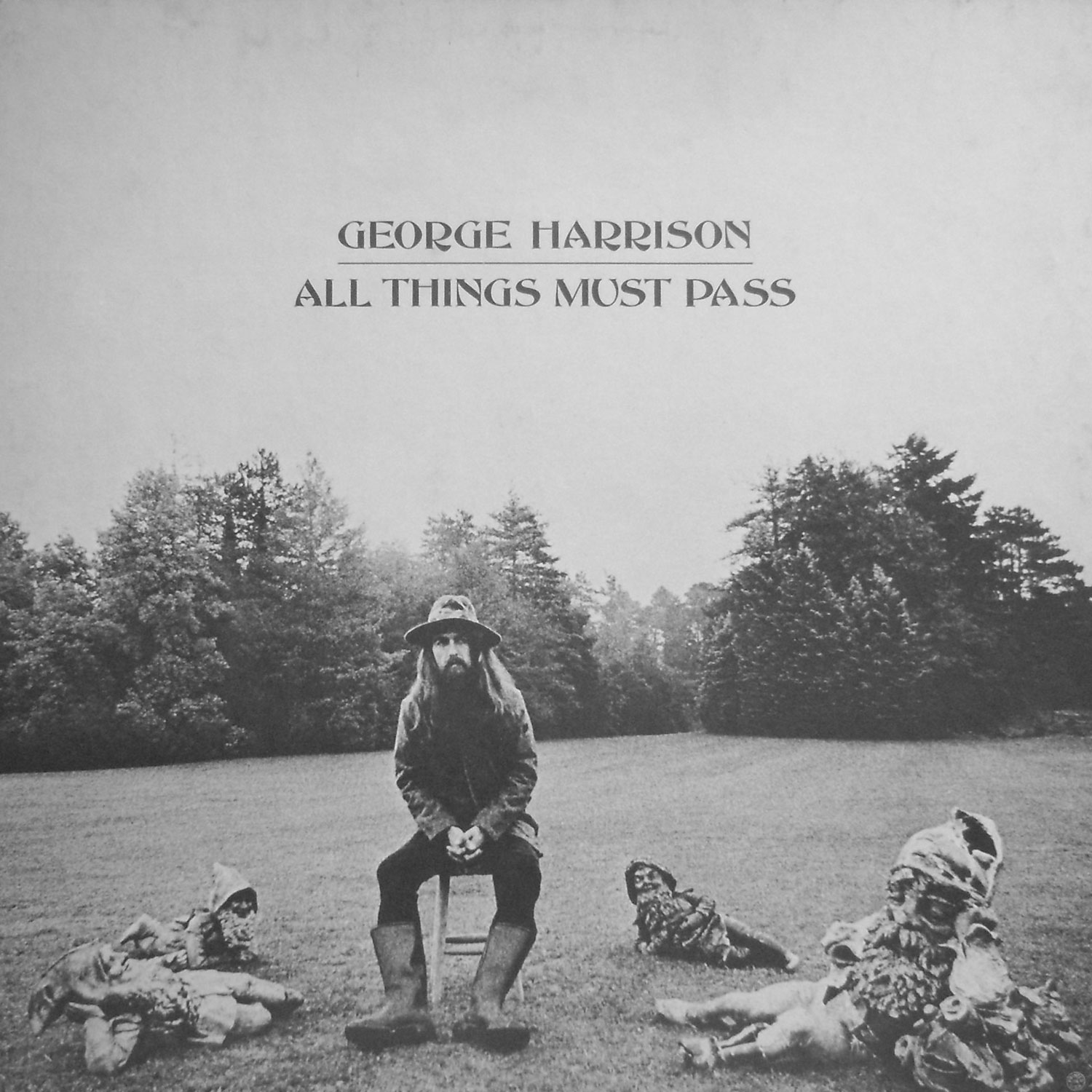

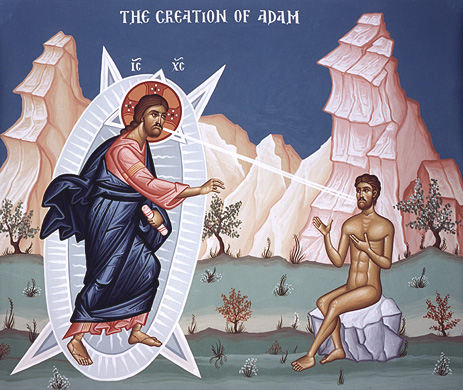
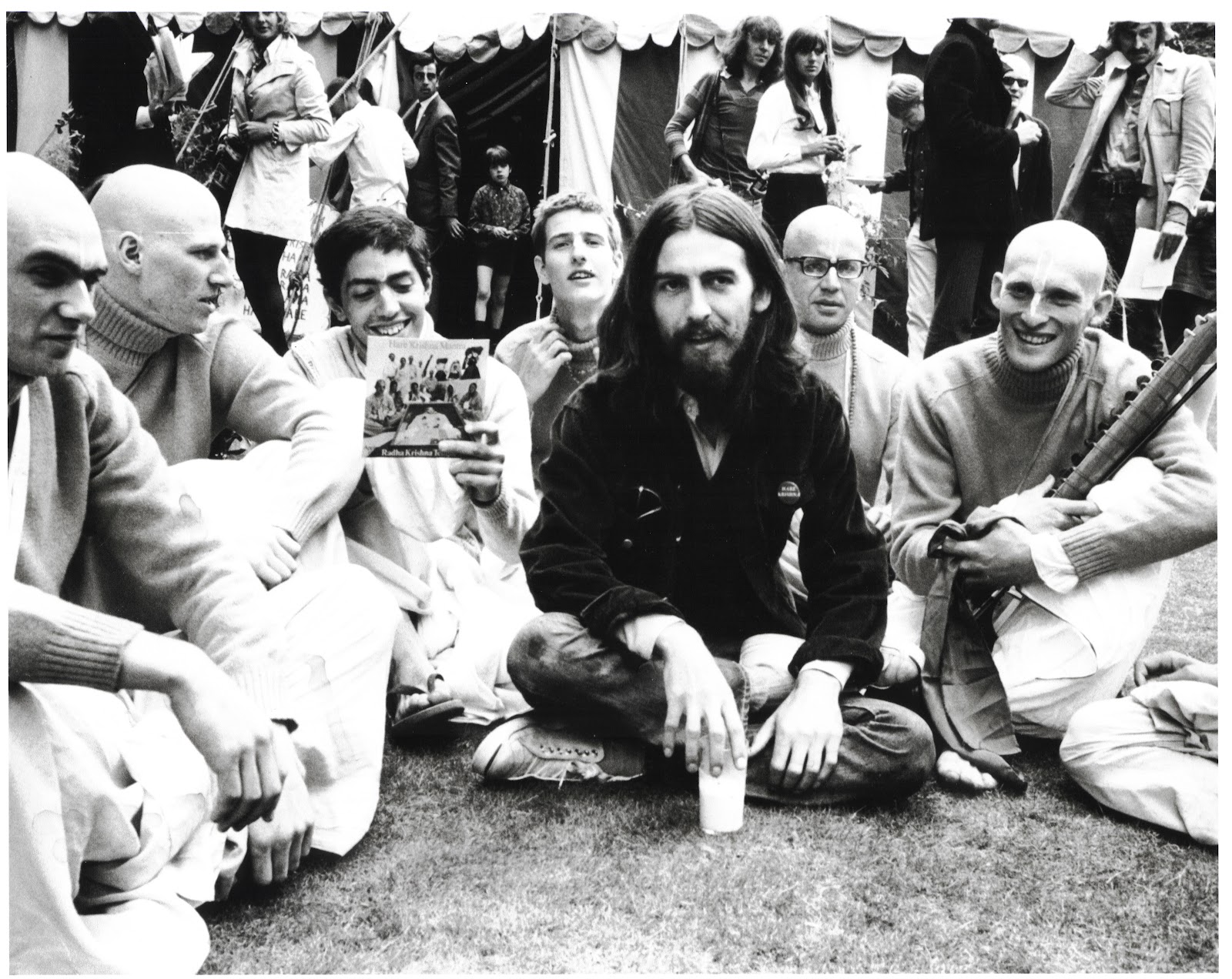


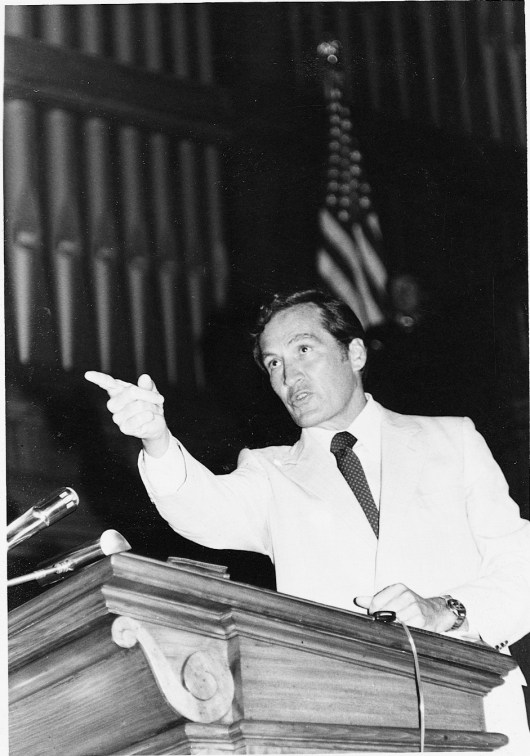

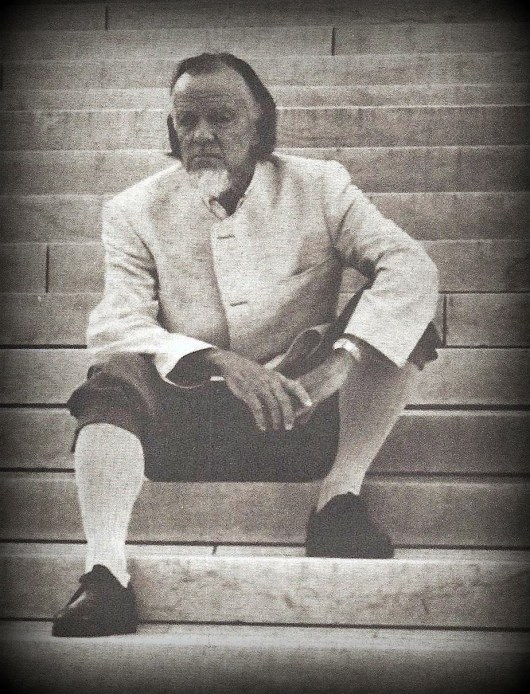


 …let’s look at some data. There is no hard definition of “infrastructure,” but one broad measure is gross fixed investment in the BEA national accounts. …The first thing to note is that private investment at about $3 trillion was six times larger than combined federal, state, and local government nondefense investment of $472 billion. Private investment in pipelines, broadband, refineries, factories, cell towers, and other items greatly exceeds government investment in schools, highways, prisons, and the like. …if policymakers want to boost infrastructure spending, they should reduce barriers to private investment.

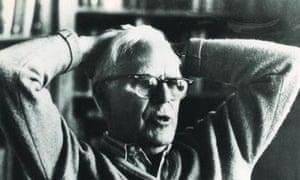


 Friends have often asked me about my interest in the films of Woody Allen: Why is a Catholic priest such an ardent admirer of the work of an avowed atheist, an artist who time and again has insisted on the world’s absurdity? My answer is simple: Because of the themes he presents and the cinematic skill with which he presents them, Allen has no equal among contemporary filmmakers.


