In the 1960’s there was a generation that took drugs because philosophically they thought it was leading to an answer, but then when the violence entered in at the Rolling Stones Altamont concert in 1970 when a person was stabbed to death, the age of innocence ended. What is left at this point? More drugs were used but only to kill the pain. Where do people turn for answers at this point? In the song ROCKS OFF it appears that the Rolling Stones moved to their hopes to the night when they are dreaming. It seems that excessive sex does nothing to satisfy a person (see the song I CAN’T GET NO SATISFACTION too).
Rolling Stones – Rocks Off (1972)
Oh yeah
I hear you talking when I’m on the street
Your mouth don’t move but I can hear you speak
What’s the matter with the boy?
He don’t come around no more
Is he checking out for sure?
Is he gonna close the door on me?
I’m always hearing voices on the street
I want to shout, but I can’t hardly speak
I was making love last night
To a dancer friend of mine
I can’t seem to stay in step
‘Cause she come ev’ry time that she pirouettes over me
And I only get my rocks off while I’m dreaming
I only get my rocks off while I’m sleeping
I’m zipping through the days at lightning speed
Plug in, flush out and fire the f@$kin’ feed
Heading for the overload
Splattered on the dirty road
Kick me like you’ve kicked before
I can’t even feel the pain no more
But I only get my rocks off while I’m dreaming
(only get them off)
I only get my rocks off while I’m sleeping
(only get them off)
I feel so hypnotized, can’t describe the scene
Its all mesmerized all that inside me
The sunshine bores the daylights out of me
Chasing shadows moonlight mystery
Headed for the overload
Splattered on the dirty road
Kick me like you’ve kicked before
I can’t even feel the pain no more
But I only get my rocks off while I’m dreaming
(only get them off, get them off)
I only get my rocks off while I’m sleeping
(only get them off, get them off)
General CommentTo me this song is at once celebratory and miserable & jaded.
The singer of the song has led a life of such excess that things that were once great fun now just don't do anything for him. In fact he's so jaded that even things that used to cause him pain don't make him feel anything anymore.
His only escape, his only way of getting any kind of 'satisfaction' is to escape into his dreams, into sleep.
God, what a horrible thing to have happen to you. And yet, somehow the song, the music, seems so celebratory, maybe ironically so. I dunno, it's a really great song though, pretty mature thinking.
At about the same time as the Berkeley Free Speech Move-
ment came a heavy participation in drugs. The beats had not
been deeply into drugs the way the hippies were. But soon
after 1964 the drug scene became the hallmark of young
people.
The philosophic basis for the drug scene came from Aldous
Huxley's concept that, since, for the rationalist, reason is not
taking us anywhere, we should look for a final experience, one
that can be produced "on call," one that we do not need to
wait for. The drug scene, in other words, was at first an ideol-
ogy, an ideology that had very practical consequences. Some of
us at L'Abri have cried over the young people who have blown
their minds. But many of them thought, like Alan Watts, Gary
Snyder, Alan Ginsberg and Timothy Leary, that if you could
simply turn everyone on, there would be an answer to man's
longings. It wasn't just the far-out freaks who suggested that
you could put drugs in the drinking water and turn on a whole
city so that the "pigs" and the kids would all have flowers in
their hair. In those days it really was an optimistic ideological
concept.

So two things have to be said here. FIRST, the young people's
analysis of culture was right, and, SECOND, they really thought
they had an answer to the problem. Up through Woodstock
(1969) the YOUNG PEOPLE WERE OPTIMISTIC CONCERNING DRUGS--
BEING THE IDEOLOGICAL ANSWER. The desire for community and
togetherness that was the impetus for Woodstock was not wrong, of course. God has made us in his own image, and he
means for us to be in a strong horizontal relationship with each
other. While Christianity appeals and applies to the individual,
it is not individualistic. God means for us to have community.
There are really two orthodoxies: an orthodoxy of doctrine
and an orthodoxy of community, and both go together. So the
longing for community in Woodstock was right. But the path
was wrong.

AFTER WOODSTOCK TWO EVENTS "ENDED THE AGE OF INNOCENCE,"
to use the expression of Rolling Stone magazine. The FIRST
occurred at Altamont, California, where the ROLLING STONES put
on a festival and hired the Hell's Angels (for several barrels of
beer) to police the grounds. Instead, the Hell's Angels killed
people without any cause, and it was a bad scene indeed. But
people thought maybe this was a fluke, maybe it was just
California! IT TOOK A SECOND EVENT TO BE CONVINCING.

On the Isle of Wight, 450,000 people assembled, and it was
totally ugly. A number of people from L'Abri were there, and I
know a man closely associated with the rock world who knows
the organizer of this festival. Everyone agrees that the situation
was just plain hideous.

THUS, AFTER THESE TWO ROCK FESTIVALS THE PICTURE CHANGED. IT IS
NOT THAT KIDS HAVE STOPPED TAKING DRUGS, FOR MORE ARE TAKING
DRUGS ALL THE TIME. And what the eventual outcome will be is
certainly unpredictable. I know that in many places, California
for example, drugs are down through the high schools and on
into the heads of ten- and eleven-year-olds. But drugs are not
considered a philosophic expression anymore; among the very
young they are just a peer group thing. It's like permissive
sexuality. You have to sleep with a certain number of boys or
you're not in; you have to take a certain kind of drug or you're
not in. THE OPTIMISTIC IDEOLOGY HAS DIED.
Michael Ray Charles was born in 1967 in Lafayette, Louisiana, and graduated from McNeese State University in Lake Charles, Louisiana, in 1985. In college, he studied advertising design and illustration, eventually moving to painting, his preferred medium. Charles also received an MFA degree from the University of Houston in 1993. His graphically styled paintings investigate racial stereotypes drawn from a history of American advertising, product packaging, billboards, radio jingles, and television commercials.
Charles draws comparisons between Sambo, Mammy, and minstrel images of an earlier era and contemporary mass-media portrayals of black youths, celebrities, and athletes—images he sees as a constant in the American subconscious. “Stereotypes have evolved,” he notes. “I’m trying to deal with present and past stereotypes in the context of today’s society.” Caricatures of African-American experience, such as Aunt Jemima, are represented in Charles’s work as ordinary depictions of blackness, yet are stripped of the benign aura that lends them an often-unquestioned appearance of truth. Charles says, “Aunt Jemima is just an image, but it almost automatically becomes a real person for many people, in their minds. But there’s a difference between these images and real humans.” In each of his paintings, notions of beauty, ugliness, nostalgia, and violence emerge and converge, reminding us that we cannot divorce ourselves from a past that has led us to where we are, who we have become, and how we are portrayed. Charles lives in Texas and teaches at the University of Texas at Austin.
_ Rolling Stones 1972 Exile On Main Street full album Exile on Main St From Wikipedia, the free encyclopedia Exile on Main St Studio album by The Rolling Stones Released 12 May 1972 Recorded October 1970, June 1971 – March 1972 Studio Olympic Studios, London; Nellcôte, France; Sunset Sound Recorders, Los Angeles Genre Rock and […]
_ Rolling Stones 1971 Sticky Fingers full album Sticky Fingers From Wikipedia, the free encyclopedia This article is about The Rolling Stones album. For other uses, see Sticky Fingers (disambiguation). Sticky Fingers Studio album by The Rolling Stones Released 23 April 1971 Recorded 2–4 December 1969, Muscle Shoals Sound Studio, Sheffield, Alabama; 17 February, March – May, […]
_ Rolling Stones 1969 Let It Bleed full album Let It Bleed From Wikipedia, the free encyclopedia This article is about the 1969 album by The Rolling Stones. For other uses, see Let It Bleed (disambiguation). Let It Bleed Studio album by The Rolling Stones Released 5 December 1969 Recorded November 1968, February–July, October-November 1969 […]
_ Rolling Stones 1968 Beggars Banquet full album Beggars Banquet From Wikipedia, the free encyclopedia This article is about the Rolling Stones album. For the record label, see Beggars Banquet Records. For the story collection by Ian Rankin, see Beggars Banquet (book). Beggars Banquet Studio album by The Rolling Stones Released 6 December 1968 Recorded […]
_ Rolling Stones 1967 Between The Buttons US full album Between the Buttons From Wikipedia, the free encyclopedia Between the Buttons Studio album by The Rolling Stones Released 20 January 1967 Recorded 3–11 August, 8–26 November, and 13 December 1966 Genre Rock pop psychedelic rock Length 38:51 Language English Label Decca Producer Andrew Loog Oldham […]
_ Mother’s Little Helper The Rolling Stones Aftermath (The Rolling Stones album) From Wikipedia, the free encyclopedia Aftermath Studio album by The Rolling Stones Released 15 April 1966 Recorded 3–8 December 1965, 6–9 March 1966 Studio RCA Studios, Hollywood, California Genre Rock, pop Length 53:20 Label Decca (UK) Producer Andrew Loog Oldham The Rolling Stones British chronology […]
Rolling Stones 1965 December’s Children And Everybody’s full album December’s Children (And Everybody’s) From Wikipedia, the free encyclopedia December’s Children (And Everybody’s) Studio album by The Rolling Stones Released 4 December 1965 (United States) Recorded 5–6 September 1965, except “You Better Move On”: 8 August 1963, “Look What You’ve Done”: 11 June 1964, “Route 66” […]
__ The Rolling Stones “Satisfaction” Live 1965 (Reelin’ In The Years Archives) Rolling Stones – Gotta Get Away I’m Free – The Rolling Stones Out of Our Heads From Wikipedia, the free encyclopedia For the Sheryl Crow song, see Out of Our Heads (song). Out of Our Heads Studio album by The Rolling Stones Released […]
the rolling stones – what a shame – stereo edit Rolling Stones – Heart Of Stone The Rolling Stones- Off the Hook (TAMI Show) Rolling Stones – “Little Red Rooster.” 1965 the rolling stones – down the road apiece – stereo edit The Rolling Stones, Now! From Wikipedia, the free encyclopedia The Rolling […]
The Rolling Stones – No. 2 [1965] Published on Apr 14, 2016 Support us : http://bit.ly/1NveQuH 0:00 Everybody Needs Somebody To Love (Version 1) 5:04 Down Home Girl 9:18 You Can’t Catch Me 12:58 Time Is On My Side (Version 2) 15:58 What A Shame 19:05 Grown Up Wrong 21:11 Down The Road Apiece 24:07 […]
This is the third portion of my 5-15-94 letter to Stephen Jay Gould and last week I posted the second portion and next week I will post the fourth portion.
SECTION #2 If there is no Afterlife, how can there be any lasting meaning to our lives?Should people be asking themselves these types of Questions???
Albert Camus:The fundamental question about life is meaning, anything else is secondary and until that question of meaning is dealt with I really cannot for what the answers are for the other queries.George H. Smith – Religions are successful, not because they provide the correct answers, but because they ask important questions—Questions that concern every human being. What is the nature of the universe? Is there a purpose, or plan, to human existence? …PESSIMISM FROM AGNOSTICS?Nathaniel Brandon: But twentieth-century philosophy has almost totally backed off from the responsibility of offering such a vision or addressing itself to the kind of questions human beings struggle with in the course of their existence. Twentieth-century philosophy typically scorns system building. The problems to which it addresses itself grow smaller and smaller and more and more remote from human experience. At their philosophical conferences and conventions, philosophers explicitly acknowledge that they have nothing of practical value to offer anyone. This is not my accusation; they announce it themselves.During the same period of history, the twentieth century, orthodox religion has lost more and more of its hold over people’s minds and lives. It is perceived as more and more irrelevant. Its demise as a cultural force really began with the Renaissance and has been declining ever since.But the need for answers persists. The need for values by which to guide our lives remains unabated. The hunger for intelligibility is as strong as it ever was. The world around us is more and more confusing, more and more frightening; the need to understand it cries out in anguish.The ENCYCLPEDIA OF PHILOSOPHY on page 471 “When Fred Hoyle in his book THE NATURE OF THE UNIVERSE turns to what he calls ‘the deeper issues’ and remarks that we find ourselves in a ‘dreadful situation’ in which there is ‘scarcely a clue as to whether our existence has ourselves in a ‘dreadful situation’ in which there is ‘scarcely a clue as to whether our existence has any real significance.’ He is using the word ‘significance’ in this comic sense.”
On Sunday April 11, 1920 in Chicago there was a debate on this question: Has life any meaning? The following 3 quotes were taken from that meeting:Percy Ward -How can life have any meaning at all, when all living things, along with the world on which they live, are doomed to destruction? What meaning can there be to life, when its dominant law is age-long and world-wide struggle for existence? What possible meaning can there be to life, when the chief experience of living things is suffering and pain? Percy Ward – “To what end is comic evolution moving? All this life which rises, step by step, from moneron to main is impotent effort; the road to nowhere. Imagine an artist devoting his entire life to the painting of a wonderful picture; and then, when his picture is completed, tearing it to ribbons, what could be the meaning of such a painter’s behavior? Arthur J. Balfour – “Man, so far as natural science by itself is able to teach us, is no longer the final cause of the universe, the heaven-descended heir of all the ages. His very existence is an accident, history a brief and transitory episode in the life of one of the meanest of the planets…Man will go down into the pit, and all his thoughts will perish, the uneasy consciousness, which in this obscure corner has for a long space broken the contented silence of the universe, will be at rest. Matter will know itself no longer. Imperishable monuments and immortal deeds, death itself, will be as though they had never been.”SHOULD TRUE HUMANISTS BE OPTIMISTS OR NIHILISTS?????????Paul Kurtz –
220 × 323Images may be subject to copyright. Learn More
“The universe is neutral, indifferent to man’s existential yearnings. But we instinctively discover life, experience its throb, its excitement, its attraction. Life is here to be lived, enjoyed, suffered, and endured…Again–one cannot ‘prove’ this normative principle to everyone’s satisfaction. Living beings tend instinctively to maintain themselves and to reproduce beyond ultimate justification. It is a brute fact of our contingent natures; It is an instinctive desire to live.”
220 × 330Images may be subject to copyright. Learn More
J.P. Moreland – “2 Objections to optimistic humanism: #1 There is no rational justification for choosing it over nihilism. As far as rationality is concerned, it has nothing to offer over nihilism. Therefore, optimistic humanism suffers from some of the same objections we raised against nihilism. Kurtz himself admits that the ultimate values of humanism are incapable of rational justification!!!!!! #2 Optimistic Humanism really answers the question of the meaning of life in the negative, just as nihilism does. For the optimistic humanist life has no objective value or purpose; It offers only subjective satisfaction, one should think long and hard before embracing such a horrible view. If there is a decent case that life has objective value and purpose, then such a case should be given as good a hearing as possible.
R.C. Sproul:Nihilism has two traditional enemies–Theism and Naive Humanism. The theist contradicts the nihilist because the existence of God guarantees that ultimate meaning and significance of personal life and history. Naive Humanism is considered naive by the nihilist because it rhapsodizes–with no rational foundation–the dignity and significance of human life. The humanist declares that man is a cosmic accident whose origin was fortuitous and entrenched in meaningless insignificance. Yet in between the humanist mindlessly crusades for, defends, and celebrates the chimera of human dignity…Herein is the dilemma: Nihilism declares that nothing really matters ultimately…In my judgment, no philosophical treatise has ever surpassed or equaled the penetrating analysis of the ultimate question of meaning versus vanity that is found in the Book of Ecclesiastes
PAGE 4
J. Kerby Anderson– “The cynicism and skepticism in the arts, politics, commerce, and the media all testify to the futility of trying to find wisdom and meaning in a world without wisdom based on ‘the Fear of the Lord’ is folly.
1200 × 628Images may be subject to copyright. Learn More
Ravi Zacharias – “Having killed God, the atheist is left with no reason for being, no morality to espouse, no meaning to life and no hope beyond the grave.”Arthur Ashe – (born in 1943, won U.S.Open in 1968, and Wimbledon in 1975) “If I am just remembered as an exceptional tennis player then my life really was not much.”The next two quotes by Kai Nielson and the next quote by J.P. Moreland were taken from a debate held at Ole Miss on March 24, 1988. This debate was later published by Prometheus Books by the title DOES GOD EXIST? Does death ultimately take away the love we feel for others?Kai Nielson – “If you love someone, whether there is a God or not, that love can go on. It remains intact. It might even be more intact, because if death ends it all, the love relationships between people in life are all the more precious because that is all there is in that respect. So that’s perfectly intact, God or no God. Indeed, as I have just argued, it may even become more important.”
220 × 305Images may be subject to copyright. Learn More
Clarence Darrow – “I love my friends, but they all must come to a tragic end. Death is more terrible the more one is attached to things in the world.” Do we need a lasting purpose to our lives?Kai Nielson – “There are all those intentions, purposes, goals, and the like that you can figure out and can have. They are what John Rawls called life plans. You can have all these purposes in life even though there is no purpose to life. So life doesn’t become meaningless and pointless if you were not made for a purpose.”
200 × 238Images may be subject to copyright. Learn More
Francis Schaeffer – “The struggle for modern man is to begin with himself and find a meaning in life. Not just plans in life. It is nothing to have plans in life. Anybody can find plans in life. A child can fill up his time with plans of building tomorrow’s sand castle when today’s have been washed away. There is a difference between finding plans in life and purpose.”J.P.Moreland – “James Rachels says that we don’t need purpose in the sense of an over arching objective purpose to life, but we can have purpose in life, as Nielson says. And he means by that ‘subjective satisfaction,’ things that we find worthwhile to us. Now if this is true, what’s the difference, let’s say between becoming a doctor and feeding the poor and sitting around pinching heads off rats or being a Sisyphus and pushing a rock up and down a hill, or giving your time to flipping tiddlywinks? There is no difference since each of these options could be satisfying and worthwhile to someone.”Marvin Kohl – (Taken from an article in FREE INQUIRY, Spring 81 issue, article entitled, “The Meaning of Life and belief in God” ) “….Belief in beneficent providence is untrue. It is untrue because there is no evidence to warrant the claim that there is a benevolent force behind nature. Not only does the secular humanist deny that we have knowledge about a friend behind the universe; He also denies that we have knowledge about divine or cosmic purpose. The argument in its essential form is simple and, I believe, decisive. Purposes can only be correctly assigned to sentient beings; And since man does not have knowledge that God or other sentient beings govern the universe, He cannot on a cognitive level maintain that the universe has any purpose…The facts also indicate that many, like lady Katharine (Bertrand Russell’s Christian daughter who was quoted earlier in the article), are given insight about the meaning of life, about the chief end of human living, when they believe God makes a disclosure about his own nature and purpose and gently embraces them in his absolute love. In short, it appears to be true that belief in God has had and still has the power to give comfort and consolation to millions of devout believers. Largely because of this, two important claims cannot be easily, if at all, dismissed. They are: (1) that in addition to other basic human needs, there is a need for psychological security, which includes the need to believe in God, or at least believe that the cosmos is guided by a loving purpose; and (2) that this need is often successfully met if a man genuinely recognizes that his goal for living is in, and given to him by, God.”Aldous Huxley – “Science does not retain the sovereignty over metaphysical pronouncements…Science does not have the right to give to me my reason for being and my definition for existence, but I am going to take science’s view because I want this world not to have meaning because it frees me to my own erotic and political desires.”
In 1980, the then-governor of the State of Arkansas, one Bill Clinton, was thrown out of office after just one term. Chastened, Mr. Clinton mended his fences and regained office in 1982, a position he held until 10 years later when he was elected President of the United States of America. The governor during the interregnum was a man whose unsuitability for office was equalled only by his surprise at gaining it. He had no hesitation in signing into law a bill that demanded that the children of the state be taught, in their biology classes, what its supporters referred to by the oxymoron “Scientific Creationism,” and what is better known to the rest of us as the unfiltered, early chapters of the book of Genesis—six days of creation, 6,000 years ago, Adam and Eve miraculously up from the mud, and a worldwide flood a few years later when God grew disappointed with the product.
At once the American Civil Liberties Union (ACLU) sprang into action, challenging the validity of this law. It would be hard to imagine a more direct and blatant violation of the U.S. Constitution’s separation of church and state. Genesis had to be shown to be religion and not science.
At the same time, the alternative world picture—the world picture that claims that organisms including humans are the end products of a long slow process of evolution—had to be shown to be science. But, who could speak for science at this time? One person above all stood out on everybody’s list: Stephen Jay Gould of Harvard University.
Prof. Gould was a provocative and much-regarded paleontologist. At the same time, he was one of the best-known science writers in America. Every month, a whole generation of readers eagerly took up the magazine Natural History, turning to Prof. Gould’s column “This view of life,” ready to be amazed, amused, annoyed, and above all appreciative of his fascinating disquisitions on the world of organisms around us.
There was no one better able to explain evolutionary thinking and to defend the scientific approach. Thus it was that, at the end of 1981, Prof. Gould flew south to Arkansas to testify for the ACLU. And thus it was that I forged a friendship with one of the most remarkable people I have ever been privileged to know, for I too was a witness in Arkansas against the Creationist law, for the ACLU. At the time I was a professor of history and philosophy of science at the University of Guelph in Guelph, Ont., and, like Prof. Gould, I also had been called to testify on behalf of the science that we both loved.
Steve Gould died earlier this week of cancer at his home in Manhattan. His last book, a collection of essays, was published at the beginning of this month. I Have Landed uses as its title a comment made in the diary of Prof. Gould’s immigrant grandfather, on arriving in 1904 at Ellis Island. Now, it refers poignantly to Stephen Jay Gould’s own life as his pen is laid down for the very last time. More precisely, as his manual typewriter, on which he composed everything, falls silent.
But what a flight. As a scientist, Prof. Gould is best known for the theory of “punctuated equilibrium,” formulated by him and his student Niles Eldredge. The theory is based on the claim that the history of life is not one of smooth unbroken change, progressing always in an orderly and controlled matter, but is rather one of continency and sharp breaks, as life moves in jumps from one form to another.
With this, Prof. Gould also mounted a decades-long attack on the dominant evolutionary theory of Charles Darwin, that supposes that natural selection is the main cause of change and that the result is the highly adapted nature of all organisms. Again and again Prof. Gould challenged this view, arguing in his most notorious essay that much of life has no function, no purpose, and is at best a by-product of other forces, as are the functionless areas at the tops of columns in medieval churches—”spandrels” that simply are, without intent or end.
Earlier this year, Prof. Gould published his magnum opus The Structure of Evolutionary Theory, in which he gave a full and detailed defence of his thinking. Moving from history to science, from science to literature, from literature to religion, and then back from religion to history, he laid out his vision of the history of life and of its causal processes. Whether or not this vision endures, no one can deny the synthetic grasp of the author and the greatness of his imagination and intent.
But there are many good and even great scientists. For me, what made Stephen Jay Gould a man above the ordinary was his ability to take science and to explain it to regular people. In person, he could be difficult and at times uncomfortably arrogant. Too often, he lost patience with questioners. But when writing, he was a man transformed. Never a hint of condescension. Never a hint of triviality. Never a hint of false modesty or trying to impress because he was an important man, more talented than most.
Prof. Gould would take an object or an idea and draw it out, turn it over, cut it into parts, rebuild it, and all the time explain and connect and instruct. Why is the zebra striped, and is it a white animal with black stripes or a black animal with white stripes—and who cares and why? How do animals (and plants, for that matter) go from A to B? Flying, walking, swimming, floating on air, slithering on the ground, swinging through the trees, and more. But why did they never invent the most efficient mode of transport of all, the wheel? (Or did they?) What was the Jesuit paleontologist Pierre Teilhard de Chardin up to at the time of the Piltdown Hoax? Could it be that one of the most revered figures of the 20th century was himself involved in the greatest fraud of the century? (You can imagine the squawks that that particular column brought on!) And so the ideas flowed forth and excited all who turned to his pages.
What made Prof. Gould one of the most important cultural figures of our time was that he never wrote on anything—starting with the snails on which he wrote his doctoral dissertation—without showing his deep moral concerns. For him, there was no sterile distinction between fact and value. The practice of science for Steve Gould was a truly moral enterprise—using our talents to make out the nature of reality—and the product of science was likewise a force for good or ill. Throughout his life, he fought against racism and sexism and every other vile “ism” in the book.
Born into a totally secular Jewish family, he had no formal faith, but for me he was the epitome of the truly religious man. He would appreciate the irony—he knew more of the New Testament than most Christians—if I (a fellow non-believer) say that Stephen Jay Gould was the servant who used his talents wisely and found favour with his Lord.
I do not want to end on a pompous or formal or sad manner, for above all else Steve Gould was fun. By the end of the third day of the Arkansas Creation Trial, it was clear that the ACLU and its evolutionists were on the way to a smashing victory. We started to relax, and that night at dinner we dined well and not particularly wisely.
An angelic junior member of the law firm that was advising us broke into the beautiful hymn, Amazing Grace. Prof. Gould was a keen singer of oratorio and no voice was louder than his. We came to the line that speaks of worshipping God for 10,000 years. An idea a little too close for comfort. We drew to embarrassed silence, looking at each other. Then we started to laugh. It was a good moment.
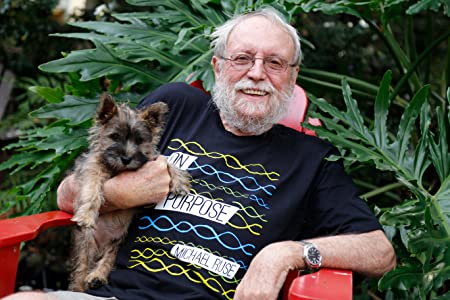
Michael Ruse is Lucyle T. Werkmeister Professor of Philosophy at Florida State University. Previously, he was professor of history and philosophy of science at Ontario’s Guelph University.
222 × 304Images may be subject to copyright. Learn More
‘Eminent biologist hits back at the creationists who “hijacked” his theory for their own ends’.
So says the headline of an article by Steve Connor, Science Editor in The Independent(UK), April 9, 2002, referring to the imminent release of Professor Stephen Jay Gould’s new book, a 1,400 page treatise called The Structure of Evolutionary Theory.1 Gould is a high-profile professor of zoology from Harvard University, well-known for promoting the controversial view that the fossil record contradicts the slow-and-gradual transformation idea of classical Darwinism. More recently, he has become more famous for revealing Darwin’s Real Message, but at the same time trying to pacify ‘religious’ people by asserting that religion and science have ‘non-overlapping magisteria’ (NOMA).2 The following quotes are from Connor’s article.
‘Professor Gould accuses creationists of having exploited the sometimes bitter dispute between him and his fellow Darwinists …’
I guess we’re ‘guilty as charged’ on this one. It seems that Gould would have it that only evolutionists be permitted to use the arguments of evolutionists. Only those ‘in the club’ can legitimately discuss these things, it would appear.
Ever since Darwin, evolutionists have almost universally maintained that the supposed change from one basic type of organism to another occurred slowly, gradually, in tiny steps. The fossils did not support this idea, and Darwin blamed incompleteness of the record. Others repeated this excuse, right up to the present day, including Richard Dawkins, the ‘archbishop of atheism’ at Oxford University in the UK.3
Gould and Niles Eldredge, a former student of Gould, actually faced up to the fossil record and decided it did not support the gradualist dogma.4 They argued strongly against some of the classical claims of gradual transformation. In doing this they were inadvertently agreeing with creationists. Naturally, creationists used their admissions.
In 1977 Gould wrote,
‘The extreme rarity of transitional forms in the fossil record persists as the trade secret of paleontology. … to preserve our favored account of evolution by natural selection we view our data as so bad that we never see the very process we profess to study.’5
In 1980 Gould said,
‘The absence of fossil evidence for intermediary stages between major transitions in organic design, indeed our inability, even in our imagination, to construct functional intermediates in many cases, has been a persistent and nagging problem for gradualistic accounts of evolution.’6
It would be difficult to find franker admissions to the lack of evidence for gradual transitions in the fossil record.
Now it is a powerful and legitimate debating tactic, employed by all, to use the admissions of ‘hostile witnesses’. Clearly, Gould is not a creationist and has no sympathies whatsoever with us. He appeared on behalf of the evolutionary thought police, the ACLU (which incongruously contains the word ‘liberties’ in its title), at the 1981 trial over the teaching of origins in schools in Arkansas. Both he and Eldredge have used quite intemperate, insulting language in referring to creationists, especially since 1981. See a refutation of Eldredge’s latest anti-creationist foray.
We make no apology for using the admissions of evolutionists about the true nature of the fossil record. Other evolutionists have also admitted the problems. See, for example, Are there any Transitional Fossils?
‘Professor Gould says creationists have unwittingly misinterpreted or deliberately misquoted his work…’
Recognizing the non-gradualist nature of the fossil record, in 1972 Gould and Eldredge published a radical new theory of evolution that supposedly fitted the observations of the fossil record. They described the fossil record as representing long periods of equilibriumor stasis (things staying much the same), which are punctuated by the relatively sudden appearance of new forms. Hence they dubbed their new theory ‘punctuated equilibrium’ (PE). Fossils showing transitions from one form to another are missing, and to establish the need for the new theory of evolution, Gould and Eldredge argued very forcibly against supposed examples of gradual change in the fossils. For example, Eldredge had studied trilobites at length, looking for the classical gradual transformations, but without success—one of the many dead ends that evolutionary thinking has led to. (Nor did he solve the problem of how possibly the most sophisticated eye of all time could have evolved supposedly right at the beginning of complex animal life—see Trilobite Technology.)
Of course Gould and Eldredge are wedded to materialist philosophy (and self-servingly make this a defining characteristic of ‘science’—see The rules of the game), so the data cannot for them mean that evolution did not occur. It’s ‘a fact’.
They reasoned that evolution must have happened in such a way that transitional fossils are absent or very rare. They proposed that the changes must have occurred in small populations and relatively rapidly. The latter has to be understood in terms of the supposed mega-years of the evolutionary view—that is, the changes occurred over thousands of years, which, compared to the hundreds of millions of years of the fossil record, is a ‘rapid’ change. This new theory supposedly accounted for the origin of new species; it was claimed to not be about the origin of radically different body plans (such as phyla). Nevertheless, if PE and its proposed mechanisms are an accurate description of the basic mode of operation of evolution, as Eldredge and Gould originally argued, then it must also account for the origin of basic body plans, because evolution supposedly accounts for all the variation in living things. However, on several occasions Gould has suggested that some basically different mechanism must operate to account for fundamentally different body plans.
In this regard Gould spoke favourably of the ideas of Richard Goldschmidt,7 a German palaeontologist from the mid-1900s who also faced up to the lack of transitional fossils, and listed a number of complex structures that couldn’t have been built by small advantageous steps. Goldschmidt agonized over the big picture of the fossil record—where the major categories of living things, the phyla, appear fully formed, without any evidence of a graded series of transitions from some common ancestor of all. Goldschmidt proposed a ‘hopeful monster’ theory, where the major body plans were seen as arising suddenly, by some sort of macromutation. This was popularly portrayed as being like a bird emerging out of a reptile egg—a ‘hopeful monster’ theory.
Undoubtedly some creationists have misconstrued Gould’s work, conflating Gould’s writings on speciation and macroevolution, and then characterizing PE as a ‘hopeful monster’ theory. But some evolutionists have ‘misunderstood’ Gould too. Maybe this is not surprising, since Gould’s article had the term in its title, and he said:
‘I do, however, predict that during the next decade Goldschmidt will be largely vindicated in the world of evolutionary biology.’
However, I know of no mainstream creationists deliberately misquoting his work; that is something else. Evolutionists often make these sweeping claims, without substantiation.
For a detailed review of Gould and Eldredge’s PE, and how it has fared, see ‘Punctuated Equilibrium: Come of Age?’, originally published in TJ (the in-depth journal of Creation). This will demonstrate to any fair-minded reader that we have not misconstrued or deliberately misquoted Gould’s work.
‘”I had no premonition about the hubbub that punctuated equilibrium would generate,” Professor Gould said. Some “absurdly-hyped popular accounts” proclaimed the death of Darwinism, with punctuated equilibrium as the primary assassin, he says.
‘“Our theory became the public symbol and stalking horse for all debate within evolutionary theory. Moreover, since popular impression now falsely linked the supposed ‘trouble’ within evolutionary theory to the rise of creationism, some intemperate colleagues began to blame Eldredge and me for the growing strength of creationism.”
“Thus, we stood falsely accused by some colleagues both for dishonestly exaggerating our theory to proclaim the death of Darwin (presumably for our own cynical quest for fame), and for unwittingly fostering the scourge of creationism as well,” he said.
‘Not every scientist, however, would agree that Professor Gould was innocent in the dispute…’
Perhaps this explains the vitriolic denunciations of creationists since the 1981 Arkansas trial—Gould endeavouring to close ranks with other materialists, to repair the breach, to prove that he is just as caustic in his criticism of creationists as any of his colleagues in a competition to be ‘more anti-creationist than thou’. There is nothing like a common enemy to bring solidarity.
Gould protests about popular accounts that used PE to proclaim the death of Darwinism, but these accounts often simply reflected the enthusiasm Gould portrayed for his ideas on PE as an alternative to standard Darwinism. He was indeed proclaiming the death of orthodox (neo-) Darwinism. In recent years Gould and Eldredge have moderated their claims from PE being a new theory to replace gradualism to being an additional concept to be added to the grab bag of evolutionary tools used to ‘explain’ all and sundry observations. Evolutionist Levinton recognized this change, saying in response to Gould and Eldredge’s review of PE8 published in 1993:
‘Gould and Eldredge have devolved their claims of punctuation from an “alternative” to being “complementary” [to gradualism].’9
Also, Ernst Mayr, whom Gould critiqued as a representative of gradualism, dismissed Gould’s ideas as merely a variant of his own theory of allopatric speciation (i.e. geographical isolation leading to reproductive isolation).
The addition of PE to the evolutionist’s tool kit makes evolution even more untestable than ever as a pretender to be a scientific theory. Darwin predicted gradualism in the fossils. After 110 years of pretending that the fossils would be found, evolutionists were forced by Gould and Eldredge (mainly) to face up to the evidence. The transitional fossils had not been found. This contradicted the most basic prediction of Darwinism. It should have meant the death of the idea, if it were truly a scientific theory. However, Darwinism is part of the atheist / materialist worldview. Richard Dawkins, a vigorous critic of Gould, said that Darwinism made atheism intellectually respectable.10 On this point they undoubtedly agree. Karl Popper, the philosopher of science, said, ‘Darwinism is not a testable scientific theory, but a metaphysical [i.e., religious] research programme…’.11 As a well-known current philosopher of science, Michael Ruse, said,
‘Evolution is promoted by its practitioners as more than mere science. Evolution is promulgated as an ideology, a secular religion—a full-fledged alternative to Christianity, with meaning and morality. … Evolution is a religion. This was true of evolution in the beginning, and it is true of evolution still today.… Evolution therefore came into being as a kind of secular ideology, an explicit substitute for Christianity.’12
This is especially significant because Ruse had also testified with the ACLU in the same trial as Gould, and at that time dismissed the idea that evolution was religion.
Consequently, Darwinism will not die while ever there are atheists wanting to be ‘intellectually respectable’. Darwinism / evolution has come to mean simply ‘naturalistic (that is, Creator-less) origins theory’. Since in the minds of Dawkins, Gould and co. there is no Creator in the real world, then ‘evolution’ (naturalism) is a fact.
Gould and Eldredge provided an escape route from the evidence against the normal gradualist concept of evolution—PE. As they said in their 1993 review, they gave ‘theoretical space’ to stasis and abrupt appearance. Long argued by creationists as evidence against evolution, stasis and abrupt appearance now became the evidence forevolution by PE! So how can evolution be refuted in the minds of its proponents? It can’t. If a series of fossils showing transformation can be found,13then this is claimed as evidence for ‘evolution’ (gradualism), but if such cannot be found, then this is also claimed as evidence for ‘evolution’ (PE). ‘Heads we [evolutionists] win; tails you [creationists] lose’!
Gould’s writings have encouraged many creationists. It’s nice that stasis and abrupt appearance, the actual data of the fossils, have been given ‘theoretical space’ by a prominent evolutionist. If it were not for the growth of the modern creation movement, many other evolutionists might have joined with Gould and Eldredge in facing up to the data. Initially some did, such as Vrba and Stanley. That’s much less likely since 1981. Darwinian fundamentalists like Dawkins (a non-paleontologist) continue to refuse to allow the fossil evidence to speak. As a biologist, Dawkins made his reputation on just-so story-telling for the slow-and-gradual neo-Darwinian myth. He probably also realizes that the information problem in living things is difficult enough to solve in neo-Darwinism, but it would be impossible with PE, so he fights the fossil experts such as Gould who would rock the boat (see also this critique of Dawkins’ attempt to solve the information problem).
It seems that the real data of the fossils has once again been pushed into the background. It just fits the Creation / Flood teaching of the Bible too well.
Gould provides nothing original in this idea—18th century ‘Enlightenment’ philosophers such as Immanuel Kant and Jean-Jacques Rousseau argued that religion and science were two separate domains that must be kept apart. Return to text.
Eldredge, N. and Gould, S.J., Punctuated equilibria: an alternative to phyletic gradualism. In: Models in Paleobiology, T.J.M. Schopf (ed.), Freeman, Cooper and Co., San Francisco, pp. 82–115, 1972. Return to text.
Gould, S.J., Evolution’ erratic pace. Natural History 86(5):14, 1977. Return to text.
Gould, S.J., Is a new and general theory of evolution emerging? Paleobiology 6:119–130 (p.127), 1980. Return to text.
For example, Gould, S.J., The return of hopeful monsters. Natural History 86(6):22–30, 1977. Return to text.
Gould, S.J., and Eldredge, N., Punctuated equilibrium comes of age. Nature 366:223–227, 1993. Return to text.
Levinton, J., Scientific correspondence. Nature 368:407, 1994. Return to text.
On this point alone it is strange indeed that various bishops in the Anglican Church in England have sided with the atheist Dawkins in advocating the teaching of evolution only to children in schools in the U.K. Do these bishops want the education system to turn out atheists? Return to text.
Popper, K., Unended Quest p.151, 1976 (Fontana, Collins, Glasgow). Return to text.
Michael Ruse, professor of philosophy and zoology at the University of Guelph, Canada (National Post, May 13, 2000, pp. B1,B3,B7). Return to text.
Some transitional series of fossils are expected in creationist thinking, as animals and plants adapt to different environments in the post-Flood world, but the transformations seen will be limited to within the created kind, or ‘baramin’, e.g. horses. Transformations between major categories in design will not be found. Return to text.
Judge William Overton handed down a decision on January 5, 1982, giving a clear, specific definition of science as a basis for ruling that creation science is religion and is simply not science.[1] The ruling was not binding on schools outside the Eastern District of Arkansas but had considerable influence on subsequent rulings on the teaching of creationism.[2]
Arkansas did not appeal the decision and it was not until the 1987 case of Edwards v. Aguillard,[3]which dealt with a similar law passed by the State of Louisiana, that teaching “creation science” was ruled unconstitutional by the Supreme Court, making that determination applicable nationwide.[4]
Act 590 had been put forward by a Christian fundamentalist on the basis of a request from the Greater Little Rock Evangelical Fellowship for the introduction of legislation based on a “model act” prepared using material from the Institute for Creation Research. It was opposed by many religious organizations and other groups.
The Reverend Nathan Porter, individually and as father and next friend of Joel Randolph Porter;
The Reverend George W. Gunn, minister of the Pulaski Heights Presbyterian Church in Little Rock;
Dr. Richard B. Hardie, Jr., minister of the Westover Hills Presbyterian Church in Little Rock;
The Reverend Earl B. Carter, minister of the United Methodist Church, and program director of the North Arkansas Conference of the United Methodist Church;
The Reverend George Panner, minister of the United Methodist Church, and program director of the Little Rock Conference of the United Methodist church;
The defendants were the Arkansas Board of Education and its members, in their official capacity, the director of the Department of Education, in his official capacity, and the State Textbooks and Instructional materials Selecting Committee. The Pulaski County Special School District and its directors and superintendent were named in the original complaint but were voluntarily dismissed by plaintiffs at the pre-trial conference on October 1, 1981.
Various state laws prohibiting teaching of evolution had been introduced in the 1920s. They were challenged in 1968 at Epperson v. Arkansas which ruled that “The law’s effort was confined to an attempt to blot out a particular theory because of its supposed conflict with the Biblical account, literally read. Plainly, the law is contrary to the mandate of the First, and in violation of the Fourteenth Amendment to the Constitution.”[7] The creationist movement turned to promoting teaching creationism in school science classes as equal to evolutionary theory.
Arkansas Act 590 of 1981, entitled the “Balanced Treatment for Creation Science and Evolution Science Act,” mandated that “creation science” be given equal time in public schools with evolution.
Creation science was defined as follows: “Creation science means the scientific evidences for creation and inferences from those evidences. Creation science includes the scientific evidences and related inferences that indicate:
Sudden creation of the universe, energy and life from nothing;
Evolution science was defined as follows: “Evolution-science” means the scientific evidences for evolution and inferences from those scientific evidences. Evolution-science includes the scientific evidences and related inferences that indicate:
Judge William Overton‘s ruling handed down on January 5, 1982, concluded that “creation-science” as defined in Arkansas Act 590 “is simply not science”. The judgment defined the essential characteristics of science as being:
Overton found that “creation science” failed to meet these essential characteristics for these reasons:
Sudden creation “from nothing” is not science because it depends upon a supernatural intervention which is not guided by natural law, is not explanatory by reference to natural law, is not testable and is not falsifiable;
“insufficiency of mutation and natural selection” is an incomplete negative generalization;
“changes only within fixed limits of originally created kinds” fails as there is no scientific definition of “kinds”, the assertion appears to be an effort to establish outer limits of changes within species but there is no scientific explanation for these limits which is guided by natural law and the limitations, whatever they are, cannot be explained by natural law;
“separate ancestry of man and apes” is a bald assertion which explains nothing and refers to no scientific fact or theory;
Catastrophism and any kind of Genesis Flood depend upon supernatural intervention, and cannot be explained by natural law;
“Relatively recent inception” has no scientific meaning, is not the product of natural law; not explainable by natural law; nor is it tentative;
No recognized scientific journal has published an article espousing the creation science theory as described in the Act, and though some witnesses suggested that the scientific community was “close-minded” and so had not accepted the arguments, no witness produced a scientific article for which publication has been refused, and suggestions of censorship were not credible;
A scientific theory must be tentative and always subject to revision or abandonment in light of facts that are inconsistent with, or falsify, the theory. A theory that is by its own terms dogmatic, absolutist, and never subject to revision is not a scientific theory;
While anybody is free to approach a scientific inquiry in any fashion they choose, they cannot properly describe the methodology as scientific, if they start with the conclusion and refuse to change it regardless of the evidence developed during the course of the investigation.
The creationists’ methods do not take data, weigh it against the opposing scientific data, and thereafter reach the conclusions stated in [the Act] Instead, they take the literal wording of the Book of Genesis and attempt to find scientific support for it. The Act took a two-model approach to teaching identical to the approach put forward by the Institute for Creation Research, which assumes only two explanations for the origins of life and existence of man, plants and animals: it was either the work of a creator or it was not. Creationists take this to mean that all scientific evidence which fails to support the theory of evolution is necessarily scientific evidence in support of creationism. The judgment found this to be simply a contrived dualism which has no scientific factual basis or legitimate educational purpose.
The judge concluded that “the Act was passed with the specific purpose by the General Assembly of advancing religion,” and that it violated the First Amendment’s Establishment Clause.
The test that Overton developed on the basis of Michael Ruse‘s testimony was later criticized by the philosopher of science Larry Laudan who argued that rather than call Creation Science “non-science” it would have been more cogent to show that it was “bad science”.[8]Chandra Wickramasinghe was the single scientist testifying for the defense of creationism.[9] He hypothesized on panspermia and on “the possibility of high intelligence in the Universe and of many increasing levels of intelligence converging toward a God as an ideal limit.” [10]
^ Frank Spencer, ed. (1996). History of Physical Anthropology: An Encyclopedia (Garland Reference Library of Social Science) (illustrated ed.). Routledge. p. 297. ISBN978-0-8153-0490-6.
Overton, W. R. (1985). “Memorandum opinion of United States District judge William R. Overton in McLean v. Arkansas, 5 January 1982″. In Gilkey, L. Creationism on trial. New York: Harper & Row.
Additional Copy of Transcripts—another site providing a copy of the surviving portions of the transcript, including 71 additional pages (Part 1, Part 2) not available on the other site.
and you will hear what far smarter people than I have to say on this matter. I agree with them.
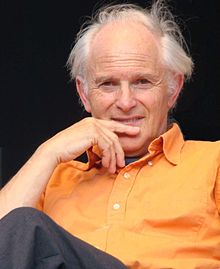
Harry Kroto
__
(Harry Kroto pictured below)
Stephen Jay Gould is the scholar I will look at today. In the third video below in the 147th clip in this series are his words “If I were a bacteria I would be quite satisfied that I was dominating the planet…I don’t know why consciousness should be seen as any state of higher being especially if you use the evolutionist primary criterion of success measured by duration” and I have responded directly to this quote in any earlier post.
50 Renowned Academics Speaking About God (Part 1)
Another 50 Renowned Academics Speaking About God (Part 2)
A Further 50 Renowned Academics Speaking About God (Part 3)
This is the third part of the letter to Stephen Jay Gould, but the second part was posted last week on my blog and the fourth will posted next week.
_I have read over 40 autobiographies by ROCKERS and it seems to me that almost every one of those books can be reduced to 4 points. Once fame hit me then I became hooked on drugs. Next I became an alcoholic (or may have been hooked on both at same time). Thirdly, I chased the skirts and thought happiness would be found through more sex with more women. Finally, in my old age I have found being faithful to my wife and getting over addictions has led to happiness like I never knew before. (Almost every autobiography I have read from rockers has these points in it although Steven Tyler is still chasing the skirts!!).
January 1, 2018
Paul Stanley
Dear Paul
I really enjoyed reading your autobiography recently, FACE THE MUSIC and it caused me to get on the internet and look some more about your life and I ran across this picture of you and Andy Warhol at the famous Studio 54 nightclub.
I live in Arkansas and I just can’t get enough of the CRYSTAL BRIDGES MUSEUM in Bentonville. In 1981 I visited 20 European countries on a college trip and I was hooked on art.
Francis Schaeffer is one of my favorite writers and he was constantly talking about modern culture and art in his books and that really got me interested in finding out what it was all about. Actually on my blog http://www.thedailyhatch.org I devote my blog every Thursday to the series called FRANCIS SCHAEFFER ANALYZES ART AND CULTURE and I examine the work of a modern day artist.
Here is an alphabetical list of those I have featured so far:
Since you knew Andy Warhol. Let me share with you some of what Francis Schaeffer wrote about Andy Warhol’s art and interviews:
The Observer June 12, 1966 does a big spread on Warhol. Andy is a mass communicator. Someone has described pop art as Dada plus Madison Avenue or commercialism and I think that is a good definition. Dada was started in Zurich and came along in modern art. Dada means nothing. The word “Dada” means rocking horse, but it was chosen by chance. The whole concept Dada is everything means nothing. Pop Art has been said to be the Dada concept put forth in modern commercialization.
Everything in his work is being leveled down to an universal monotony which he can always sell for $8000.00.
Andy Warhol says, “It stops you thinking about things. I wish I were a machine. I don’t want to be heard. I don’t want human emotions. I have never been touched by a painting. I don’t want to think. The world would be easier to live in if we all were machines. It is nothing in the end anyway.”
Notice Andy Warhol’s words very closely concerning the time he takes to make his movies:
“It stops you thinking about things. I wish I were a machine. I don’t want to be heard. I don’t want human emotions. I have never been touched by a painting. I don’t want to think. The world would be easier to live in if we all were machines. It is nothing in the end anyway.”
Francis Schaeffer said that modern man may say that we all are the results of chance plus time and there is no life beyond the grave but then people can’t live that way because of the “mannishness of man.” We all have significance and the ability to love and be loved and we have the ability of rational thought that distinguishes us from machines and animals and that indicates that we were man in the image of God.
YOU HAVE LOVED AND DEEP DOWN YOU KNOW THAT GOD PUT YOU ON THIS EARTH FOR A PURPOSE AND THAT IS WHY WE HAVE ART TO BEGIN WITH BECAUSE OF MAN’S CREATIVITY!!
In your autobiography you point out what types of music have influenced yours. A lot of the great groups of the 1960’s came from Memphis and of course the blues did!!!!!
Your music reminds me a lot about the Memphis Blues. I thought of your music when I heard the news a while back, “In 2 days, Mississippi River has risen 10 feet north of St. Louis.”
Everybody is now educating themselves on the great flood of 1927. The 1927 Great Mississippi Flood was the most destructive river flood in the history of the United States, causing over $400million in damages and killing 246 people in seven states and displaced 700,000 people.
My grandfather moved to Memphis in 1927 and he told me about this flood. There was a lady named Memphis Minnie and she wrote about this flood. I always heard that there was lots of great blues music that had come out of Memphis, but I always thought that was overstated and that the Blues was not a significant form of music. (Live and learn, the Blues music out of Memphis had a GREAT AFFECT ON MUSIC WORLDWIDE!!!)
However, at the same time I was listening to groups like Led Zeppelin and the ROLLING STONES, I had no idea that many of their songs were based on old Blues songs out of Memphis.
One of my favorite Led Zeppelin songs was “When the Levee breaks.” It was based on a song by Memphis Minnie.
When I examine the Blues they are really an expression of one’s desperation to deal with the hard realities we face in life. Some seek escapism through alcohol or drugs. In fact, many famous Blues musicians have died from from addictions to drugs or alcohol!!
Then we attended the European conference in Belgium and we first flew to Paris and rode in the back of a truck across France to Belgium. My good David Rogers and I were the only ones from the Bellevue Baptist youth group to go with OM that summer to go on missions in Europe. David went to Austria and I went to Manchester, England. David later served several years with OM.
Also during our trip David’s father was elected President of the Southern Baptist Convention. I was sitting next to David when he took the call from his father that he had decided to place his name into the election.
It was a key time in the Southern Baptist Convention. When Dr. Rogers decided not to run for a second term in the summer of 1980 it was Bailey Smith who answered the call.
______
300 × 169Images may be subject to copyright. Learn More
________
340 × 230Images may be subject to copyright. Learn More
Sandy’s brother Tom Elliff pastored First Baptist Church in Dell City after Bailey did.
Ron with Tom Elliff, pastor of First Baptist Church Dell City, OK, three weeks before Ron’s homegoing
1758 × 1154Images may be subject to copyright. Learn More
Sandy’s brother Bill Elliff is pastor at Summit Church in North Little Rock, Arkansas
(L-R) Bill Elliff, Tom Elliff, Michael Catt, Ken Jenkins, Mark Bearden, Tally Wilgis
1000 × 667Images may be subject to copyright. Learn More
Son Steven Smith pastor of Immanuel Baptist in Little Rock, Arkansas
700 × 467Images may be subject to copyright. Learn More
Josh Smith pastor in Texas
400 × 266Images may be subject to copyright. Learn More
Ron with the late Dr. Adrian Rogers, pastor of Bellevue Baptist Church in Memphis, TN
634 × 496Images may be subject to copyright. Learn More
Francis and Edith Schaeffer pictured below:
_____________
Milton and Rose Friedman pictured with Ronald Reagan:
My heroes in 1980 were the economist Milton Friedman, the doctor C. Everett Koop, the politician Ronald Reagan, the Christian philosopher Francis Schaeffer, the evangelist Billy Graham, and my pastor Adrian Rogers. I have been amazed at how many of these men knew each other.
I only had once chance to correspond with Milton Friedman and he quickly answered my letter. It was a question concerning my favorite christian philosopher Francis Schaeffer. I had read inthe 1981 printing of The Tapestry: the Life and Times of Francis and Edith Schaeffer on page 644 that Edith mentioned “that the KUP SHOW (ran byIrv Kupcinet ) in Chicago, a talk show Francis was on twice, once with the economist Milton Friedman, whith whom he still has a good correspondence.” I asked in a letter in the late 1990’s if Friedman remembered the content of any of that correspondence and he said he did not. Although I had an immense appreciation for Milton Friedman’s economic views sadly he took his agnostic views with him till his death in 2004.
JUDY GARLAND IRV KUPCINET Kup’s Show 1967
Published on Dec 3, 2013
1969 edit of Judy Garland’s 1967 appearance on Chicago based “Kup’s Show.”
_________________________________
The closest connection I have had to Francis Schaeffer personally was that my mother once met his good friend Audrey W. Johnson (1907-84) who was the founder of BIBLE STUDY FELLOWSHIP. My mother worked for Maryann Frazier who was the longtime Bible Study Fellowship teacher in Memphis.
Miss Johnson showed Mrs Frazier a picture of her hugging Francis and Edith Schaeffer and since she was taller than both of them she called them “my two small friends.”
__________
Dr. C. Everett Koop was picked by Ronald Reagan to be Surgeon General (pictured below)
___________
__________________
After being elected President of the Southern Baptist Convention in 1979, Adrian Rogers met with Presidents Jimmy Carter and Ronald Reagan.
____
________________
This was the average sanctuary crowd when I was growing up at Bellevue Baptist in Memphis. Now take what you see and multiply it by three, because they had three morning services. This photo was taken sometime in the early 1980’s
___________________
On 3-16-15 I found the first linkbetween my spiritual heroes: Adrian Rogers and Francis Schaeffer!!!!! In this article below I read these words:
“If Schaeffer had still been alive, we would have had him come,” Richard Land said. He noted that Schaeffer was “close” to Adrian Rogers and “admired” by Bailey Smith, two conservative SBC presidents. Edith Schaeffer and Patterson’s wife Dorothy were close friends and travelled together in the early 1980s speaking on the importance of the home.
My family joined Bellevue Baptist in 1975 and every summer our pastor Adrian Rogers would come back from the annual Southern Baptist Convention meeting in June and he would share on the following Wednesday night about some of the troubling things that were happening in the Southern Baptist Seminaries because of the leftward swing in the theology. I knew that this was a big issue with him and I knew that Francis Schaeffer had fought the same battle in his seminary days 40 years earlier. HOWEVER, I DID NOT KNOW THAT THEY KNEW IT EACH OTHER AT THIS TIME IN THE 1970’S!!!!!!!
The same time in the 1970’s and 1980’s that I was a member of Bellevue Baptist in Memphis where Adrian Rogers was pastor, I also was a student at Evangelical Christian School from the 5th grade to the 12th grade where I was introduced to the books and films of Francis Schaeffer. At ECS my favorite teacher was Mark Brink who actually played both film series to us (WHATEVER HAPPENED TO THE HUMAN RACE? and HOW SHOULD WE THEN LIVE?) during our senior year and believe it or not after I graduated I would come back and join some of his future classes when the film was playing again because I couldn’t get enough of Schaeffer’s film series!!!!
During this time I was amazed at how many prominent figures in the world found their way into the works of both Adrian Rogers and Francis Schaeffer and I wondered what it would be like if these individuals were exposed to the Bible and the gospel. Therefore, over 20 years ago I began sending the messages of Adrian Rogers and portions of the works of Francis Schaeffer to many of the secular figures that they mentioned in their works. Let me give you some examples and tell you about some lessons that I have learned.
I have learned several things about atheists in the last 20 years while I have been corresponding with them. FIRST, they know in their hearts that God exists and they can’t live as if God doesn’t exist, but they will still search in some way in their life for a greater meaning. SECOND, many atheists will take time out of their busy lives to examine the evidence that I present to them. THIRD, there is hope that they will change their views.
Let’s go over again a few points I made at the first of this post. My FIRST point is backed up by Romans 1:18-19 (Amplified Bible) ” For God’s wrath and indignation are revealed from heaven against all ungodliness and unrighteousness of men, who in their wickedness REPRESS and HINDER the truth and make it inoperative. For that which is KNOWN about God is EVIDENT to them and MADE PLAIN IN THEIR INNER CONSCIOUSNESS, because God has SHOWN IT TO THEM,”(emphasis mine). I have discussed this many times on my blog and even have interacted with many atheists from CSICOP in the past. (I first heard this from my pastor Adrian Rogers back in the 1980’s.)
My SECOND point is that many atheists will take the time to consider the evidence that I have presented to them and will respond. The late Adrian Rogers was my pastor at Bellevue Baptist when I grew up and I sent his sermon on evolution and another on the accuracy of the Bible to many atheists to listen to and many of them did. I also sent many of the arguments from Francis Schaeffer also.
Many of these scholars have taken the time to respond back to me in the last 20 years and some of the names included are Ernest Mayr (1904-2005), George Wald (1906-1997), Carl Sagan (1934-1996), Robert Shapiro (1935-2011), Nicolaas Bloembergen (1920-), Brian Charlesworth (1945-), Francisco J. Ayala (1934-) Elliott Sober (1948-), Kevin Padian (1951-), Matt Cartmill (1943-) , Milton Fingerman (1928-), John J. Shea (1969-), , Michael A. Crawford (1938-), (Paul Kurtz (1925-2012), Sol Gordon (1923-2008), Albert Ellis (1913-2007), Barbara Marie Tabler (1915-1996), Renate Vambery (1916-2005), Archie J. Bahm (1907-1996), Aron S “Gil” Martin ( 1910-1997), Matthew I. Spetter (1921-2012), H. J. Eysenck (1916-1997), Robert L. Erdmann (1929-2006), Mary Morain (1911-1999), Lloyd Morain (1917-2010), Warren Allen Smith (1921-), Bette Chambers (1930-), Gordon Stein (1941-1996) , Milton Friedman (1912-2006), John Hospers (1918-2011), and Michael Martin (1932-).
THIRD, there is hope that an atheist will reconsider his or her position after examining more evidence. Twenty years I had the opportunity to correspond with two individuals that were regarded as two of the most famous atheists of the 20th Century, Antony Flew and Carl Sagan. I had read the books and seen the films of the Christian philosopher Francis Schaeffer and he had discussed the works of both of these men. I sent both of these gentlemen philosophical arguments from Schaeffer in these letters and in the first letter I sent a cassette tape of my pastor’s sermon IS THE BIBLE TRUE? You may have noticed in the news a few years that Antony Flew actually became a theist in 2004 and remained one until his death in 2010. Carl Sagan remained a skeptic until his dying day in 1996.Antony Flew wrote me back several times and in the June 1, 1994 letter he commented, “Thank you for sending me the IS THE BIBLE TRUE? tape to which I have just listened with great interest and, I trust, profit.” I later sent him Adrian Rogers’ sermon on evolution too. The ironic thing is back in 2008 I visited the Bellevue Baptist Book Store and bought the book There Is A God – How the World’s Most Notorious Atheist Changed His Mind, by Antony Flew, and it is in this same store that I bought the message by Adrian Rogers in 1994 that I sent to Antony Flew. Although Antony Flew did not make a public profession of faith he did admit that the evidence for God’s existence was overwhelming to him in the last decade of his life. His experience has been used in a powerful way to tell others about Christ. Let me point out that while on airplane when I was reading this book a gentleman asked me about the book. I was glad to tell him the whole story about Adrian Rogers’ two messages that I sent to Dr. Flew and I gave him CD’s of the messages which I carry with me always. Then at McDonald’s at the Airport, a worker at McDonald’s asked me about the book and I gave him the same two messages from Adrian Rogers too.
Francis Schaeffer’s words would be quoted in many of these letters that I would send to famous skeptics and I would always include audio messages from Adrian Rogers. Perhaps Schaeffer’s most effective argument was concerning Romans 1 and how a person could say that he didn’t believe that the world had a purpose or meaning but he could not live that way in the world that God created and with the conscience that every person is born with.
Google “Adrian Rogers Francis Schaeffer” and the first 8 things that come up will be my blog posts concerning effort to reach these atheists. These two great men proved that the scriptures Hebrews 4:12 and Isaiah 55:11 are true, “For the word of God is alive and active. Sharper than any double-edged sword, it penetrates even to dividing soul and spirit, joints and marrow; it judges the thoughts and attitudes of the heart.” and “so is my word that goes out from my mouth: It will not return to me empty, but will accomplish what I desire and achieve the purpose for which I sent it.”
I noticed from audio tapes in the 1960’s that Francis Schaeffer was a close friends with former Southern Baptist Seminary Professor Clark Pinnock from New Orleans. My friend Sherwood Haisty actually got to hear Clark Pinnock speak in 1999 although Dr. Pinnock did take a liberal shift later in his life.
NASHVILLE (BP) — The late Francis Schaeffer was known to pick up the phone during the early years of the Southern Baptist Convention’s conservative resurgence. Paige Patterson knew to expect a call from Schaeffer around Christmas with the question, “You’re not growing weary in well-doing are you?”
Francis Schaeffer & the SBC
Patterson, a leader in the movement to return the SBC to a high view of Scripture, would reply, “No, Dr. Schaeffer. I’m under fire, but I’m doing fine. And I’m trusting the Lord and proceeding on.”
To some it may seem strange that an international Presbyterian apologist and analyst of pop culture would take such interest in a Baptist controversy over biblical inerrancy.
But to Schaeffer it made perfect sense.
He believed churches were acquiescing to the world, abandoning their belief that the Bible is without error in everything it said. A watered-down theology left the SBC with decreased power to battle cultural evils. To Schaeffer the convention was the last major American denomination with hope for reversing this “great evangelical disaster,” as he put it.
Thirty years after Schaeffer’s death, Baptist leaders still remember how he took time from his speaking, writing and filmmaking schedule to quietly encourage Patterson; Paul Pressler, a judge from Texas with whom Patterson worked closely during the conservative resurgence; Adrian Rogers, a Memphis pastor who served three terms SBC president; and others.
By the early 1990s, conservatives had elected an unbroken string of convention presidents and moved in position to shift the balance of power on all convention boards and committees from the theologically moderate establishment. But at the time of Schaeffer’s annual calls, the outcome of the controversy was still in doubt.
“I strongly suspect that he was afraid I would not hold strong,” Patterson, now president of Southwestern Baptist Theological Seminary in Texas, told Baptist Press. “He had seen so many people fold up under pressure that he assumed we probably would too. So he would call and ask for a report.”
A worldwide ministry
Schaeffer was born in 1912 in Germantown, Pa., and was saved at age 18 through a combination of personal Bible reading and attending a tent revival meeting. Within months of his conversion he felt called to vocational ministry and eventually enrolled at Westminster Theological Seminary in Philadelphia, where he studied New Testament under J. Gresham Machen and apologetics under Cornelius Val Til.
Schaeffer withdrew from Westminster before he graduated to attend the more fundamentalist-leaning Faith Theological Seminary in Wilmington, Del. In keeping with early 20th-century fundamentalism, Schaeffer emphasized separation from the world and personal holiness. Among the practices he opposed were theater attendance and dancing. Schaeffer retained his fundamentalist commitments through 10 years of pastoring in the U.S. and then service as a Presbyterian missionary in Europe.
In the early 1950s, however, a crisis of faith led Schaeffer and his wife Edith to begin engaging culture with the Gospel rather than shunning it. They founded a retreat center in Switzerland called L’Abri — French for “the shelter” — where he studied culture from a Christian perspective and engaged young people with the claims of Christ.
L’Abri grew and was featured in TIME magazine in 1960. Soon Schaeffer emerged as a popular author and speaker, explaining how western civilization had departed from a Judeo-Christian worldview and setting forth Christianity as the only solution to societal ills.
Schaeffer “wakened the cultural consciousness of the evangelical community,” Bruce Little, director of the Francis Schaeffer Collection at Southeastern Baptist Theological Seminary, told BP. The Schaeffer Collection includes all of the apologist’s personal papers and has been digitized by the North Carolina seminary.
“He thought that man’s dilemma was that man was fighting against the evil of the day, but he wasn’t winning,” Little, who also serves as senior professor of philosophy at Southeastern, said. “Schaeffer thought the answer to this is found in the Scriptures.”
From a Christian worldview perspective, Schaeffer wrote and spoke about such topics as the environment, abortion, art, literature, music, intellectual history and denominational decline. In the 1970s and 1980s, audiences packed auditoriums across America to hear him speak. He died of cancer in 1984.
Southern Baptist connections
Schaeffer’s interest in engaging culture made him particularly appealing to Southern Baptist conservatives. He helped provide them with a “battle plan” to fight cultural evils and what they perceived as theological drift in their denomination, Richard Land, president of Southern Evangelical Seminary, told BP.
“The one thing I heard growing up in Southern Baptist churches that was just plain wrong went something like this,” Land, former president of the Ethics & Religious Liberty Commission, said. “We’re Southern Baptist. That means we don’t get involved in anything controversial. We just preach the Gospel.”
As a corrective to that notion, Schaeffer “made it very clear to us that the Bible is true seven days a week, 24 hours a day and its truth is to be applied to every area of life,” Land said.
Along with theologian Carl F.H. Henry, Schaeffer was the key intellectual influence on leaders of the conservative resurgence, Land said. When conservatives started to be elected as the executives of Baptist institutions, Henry spoke at Land’s inauguration at the Christian Life Commission (the ERLC’s precursor), R. Albert Mohler Jr.’s at Southern Baptist Theological Seminary in Kentucky and Timothy George’s at Beeson Divinity School in Alabama.
“If Schaeffer had still been alive, we would have had him come,” Land said. He noted that Schaeffer was “close” to Rogers and “admired” by Bailey Smith, two conservative SBC presidents. Edith Schaeffer and Patterson’s wife Dorothy were close friends and travelled together in the early 1980s speaking on the importance of the home.
Clark Pinnock, a former New Orleans Baptist Theological Seminary professor who mentored conservative resurgence leaders before taking a leftward theological turn in his own thinking, served on Schaeffer’s staff at L’Abri.
Another Southern Baptist to feel Schaeffer’s personal influence was James Parker, professor of worldview and culture at Southern Seminary. After reading works by Schaeffer and spending two months at L’Abri during his doctoral studies at Basel University in Switzerland, Parker decided he wanted to open a center for evangelism and discipleship like Schaeffer’s.
In 1992 Parker founded the Trinity Institute, a nonprofit study and retreat center near Waco, Texas, where he tutors individuals in the Christian faith and hosts conferences exploring the integration of Christianity to all areas of life.
Schaeffer was “a paradigm for the engagement of the mind for the faith, and so that was quite inspirational and encouraging to me,” Parker told BP.
Pro-life issues
The pro-life cause was one area in which Schaeffer strongly influenced evangelicals, including Southern Baptists. With his book and accompanying film series “Whatever Happened to the Human Race?” — coauthored with C. Everett Koop, who went on to become U.S. surgeon general — Schaeffer helped convince Southern Baptists that they had to protest abortion.
In a 1979 interview with BP editor Art Toalston, then-religion editor of the Jackson Daily News in Mississippi, Schaeffer said the Supreme Court’s 1973 Roe v. Wade ruling legalizing abortion was “completely arbitrary medically” in its assumption that “a human being is a person at one moment and not another.”
He added that the ruling “doesn’t conform to past rulings at all. It invalidated the abortion laws of almost every state in the union. In all these states, the people as a whole felt that abortion was wrong. But the Supreme Court says it’s right.
“Not having a Christian absolute that says the Supreme Court’s ruling is wrong because it breaks the ethic God has revealed, people took what the law says to be right,” Schaeffer said.
Prominent Southern Baptist conservatives, including W.A. Criswell of First Baptist Church in Dallas and Carl Henry, were not always pro-life, Land explained, but shifted their views as they saw the massive loss of life caused by abortion — a tragedy that Schaeffer highlighted.
Whatever Happened to the Human Race? was and is “devastating” to the abortion movement, Land said. “How anybody can read that book and not be motivated to take part in pro-life marches is beyond me.”
Finishing well
Little of Southeastern Seminary understands firsthand why Schaeffer was so influential. He remembers listening to him speak at Liberty University in April 1984, the month before he died. By that time Schaeffer was so weak that he was living on milkshakes and sometimes had to be carried to speaking engagements on a stretcher.
During a question-and-answer session, one student “stood to his feet and said, ‘Dr. Schaeffer, it seems to me that the church is in the 10th round. It’s bloody. It’s beaten. It’s on its knees. Is there any hope we can win?'” Little recounted.
“I can see Schaeffer now,” Little continued. “He leaned forward, brought the mic to his mouth and said, ‘Son, if you do it to win, you’ve lost already.'” Whether they win or lose, Christians fight the culture wars, Schaeffer said, “because our risen Lord has commanded us.”David Roach is chief national correspondent for Baptist Press, the Southern Baptist Convention’s news service.Get Baptist Press headlines and breaking news on Twitter (@BaptistPress), Facebook (Facebook.com/BaptistPress) and in your email (baptistpress.com/SubscribeBP).__________Pictured below Dr. C. Everett Koop and Billy Graham
______________
Ronald Reagan with Billy Graham:
_______________
The Bible and Archaeology – Is the Bible from God? (Kyle Butt 42 min)
Adrian Rogers on Darwinism
How Should We Then Live?: The Rise and Decline of Western Thought and Culture (2 hrs)
Francis Schaeffer “BASIS FOR HUMAN DIGNITY” Whatever…HTTHR
Francis Schaeffer Whatever Happened to the Human Race (Episode 1) ABORTION
Dr. Francis schaeffer – The flow of Materialism(from Part 4 of Whatever happened to human race?)
Dr. Francis Schaeffer – The Biblical flow of Truth & History (intro)
___________ What a blessing to be a member of Bellevue Baptist from 1975 to 1983 and participate in many of those years in the Bellevue Baptist Singing Christmas Tree. Jim Whitmire always did a great job of planning and directing and Adrian Rogers always did a super job with the short concise presentation of the […]By Everette Hatcher III | Posted in Adrian Rogers, Current Events | Tagged Adrian Rogers, Jim Whitmire | Edit | Comments (0)
In today’s news you will read about Kirk Cameron taking on the atheist Stephen Hawking over some recent assertions he made concerning the existence of heaven. Back in December of 1995 I had the opportunity to correspond with Carl Sagan about a year before his untimely death. Sarah Anne Hughes in her article,”Kirk Cameron criticizes […]By Everette Hatcher III | Posted in Atheists Confronted | Edit | Comments (2)
“Goo goo ga joob” Where did this phrase in the song I AM THE WALRUS come from? In the blog post, “I Am the Walrus,” I read these words, “Some people speculate that Lennon got these lines from James Joyce’s long poem, Finnegans Wake.”
Like Edgar Allan Poe, James Joyce was in the grips of alcoholism for most of his life and in this same song Lennon sang, “Seen them kicking Edgar Allan Poe.” Poe died in 1949 as a drunk. As a drunk he probably got kicked around the street as others tried to rob him of whatever belongings he had. Alcoholism and being addicted to drugs are very similar and in the song I AM THE WALRUS we have many references to drugs. When I think of both James Joyce and Edgar Allan Poe the Bible passage that comes to mind is Proverbs 23:29-35.
29 Who hath woe? who hath sorrow? who hath contentions? who hath babbling? who hath wounds without cause? who hath redness of eyes?
30 They that tarry long at the wine; they that go to seek mixed wine.
31 Look not thou upon the wine when it is red, when it giveth his colour in the cup, when it moveth itself aright.
32 At the last it biteth like a serpent, and stingeth like an adder.
“See how they run like pigs from a gun, see how they fly / I’m crying”
Quick ThoughtIn an interview with Playboy magazine, John Lennon said that this line and the one before it were inspired by two different acid trips.
Deep Thought“The first line was written on one acid trip one weekend. The second line was written on the next acid trip the next weekend, and it was filled in after I met Yoko.” Just as The Beatles were the defining music group of the 1960s, acid (LCD) was the defining drug. The drug induces an altered state of perception in its users, causing distortions in physical, sensory, visual, audio, and thought processes. People sometimes feel colors and hear shapes, becoming almost synesthetic. Fixed objects seem to move or ripple, looking around causes sights to blur or leave a trail (tracers), and dull objects sparkle and shine. Some users claim to have intense religious experiences while tripping on acid. Others say that they enter other dimensions or relive their own birth.
LSD was invented accidentally by a Swedish chemist looking for a blood stimulant. It has since been used experimentally in psychotherapy to bring out repressed memories. The drug has also been used by doctors to elevate patients to a new level of self-awareness, allowing them to recognize problems that they previously denied, such as alcoholism. Although LSD was at first legal for use, it has now been banned in the US and other countries. Of course, that didn’t stop The Beatles and many other young people in the sixties and seventies from experimenting with the drug for recreational purposes. The Beatles openly admit that many of their songs were written at least in part while under the influence of LSD.
“Goo goo ga joob”
Quick ThoughtSome people speculate that Lennon got these lines from James Joyce’s long poem, Finnegans Wake, while others see them as pure gibberish.
Deep Thought James Joyce was a modernist Irish writer who was famous for his works A Portrait of the Artist as a Young Man, Ulysses, andDubliners. Some Joyce/Beatles fans have suggested (rather dubiously in our view) that “goo goo ga job” comes from part 557.7 of Finnegans Wake:
Here’s the excerpt from Finnegans Wake… watch out for that famous “googoo goosth” or you’ll miss it:
cramp for Hemself and Co, Esquara, or them four hoarsemen on
their apolkaloops, Norreys, Soothbys, Yates and Welks, and,
galorybit of the sanes in hevel, there was a crick up the stirkiss
and when she ruz the cankle to see, galohery, downand she went
on her knees to blessersef that were knogging together like milk-
juggles as if it was the wrake of the hapspurus or old Kong
Gander O’Toole of the Mountains or his googoo goosth she
seein, sliving off over the sawdust lobby out ofthe backroom, wan
ter, that was everywans in turruns, in his honeymoon trim, holding
up his fingerhals, with the clookey in his fisstball, tocher of davy’s,
tocher of ivileagh, for her to whisht, you sowbelly, and the
whites of his pious eyebulbs swering her to silence and coort;
In our view, the odds that John Lennon actually intended his line as a shout-out to these two obscure words in the middle of this one very long sentence in the middle of a very long and challenging experimental novel are somewhere between slim and none. But it would be kinda cool, if true!
“See how they fly like Lucy in the Sky”
Quick ThoughtThis is, of course, a nod to another Beatles hit, “Lucy in the Sky with Diamonds,” from the groundbreaking album Sgt. Pepper’s Lonely Hearts Club Band, released a few months before “I Am the Walrus” in 1967.
Deep Thought“Lucy in the Sky with Diamonds” is among the most famous of all Beatles songs. Although many fans claim that it is a song about acid (the initials spell out LSD), Lennon told an interviewer that the song is actually inspired by a drawing his son Julian brought home from grammar school:
LENNON: “My son Julian came in one day with a picture he painted about a school friend of his named Lucy. He had sketched in some stars in the sky and called it ‘Lucy in the Sky with Diamonds.’ Simple.”
INTERVIEWER: “The other images in the song weren’t drug-inspired?”
LENNON: “The images were from ‘Alice in Wonderland.’ It was Alice in the boat. She is buying an egg and it turns into Humpty Dumpty. The woman serving in the shop turns into a sheep and the next minute they are rowing in a rowing boat somewhere and I was visualizing that. There was also the image of the female who would someday come save me—a ‘girl with kaleidoscope eyes’ who would come out of the sky. It turned out to be Yoko, though I hadn’t met Yoko yet. So maybe it should be ‘Yoko in the Sky with Diamonds.'”
The two Lewis Carroll classics (Alice in Wonderland and Through the Looking Glass) were John Lennon’s favorite books of all time. It’s really not surprising that imagery from both books pops up constantly in his songs. Both “I Am the Walrus” and “Lucy in the Sky with Diamonds” draw heavily from Carroll’s writings. Even more interesting is that Lennon repeats the Humpty Dumpty/Eggman imagery in both songs. Drug-inspired or not, it certainly seems that Lewis Carroll was very much on Lennon’s mind when he penned these lyrics.
The real Lucy who inspired the song, Lucy Richardson, came out to the press 40 years after the song was written explaining that she was, in fact, the girl behind the immortal ballad. Evidently, Julian Lennon had a crush on her in grammar school and actually dedicated several art pieces to her, including the famous picture of the girl surrounded by a starry sky.
“Semolina Pilchard”
Quick ThoughtThis is a reference to Detective Sergeant Norman Pilcher, head of the Scotland Yard Drugs Unit. He was the most-feared drug agent in Britain in the 1960s and had an obsessive craving for the spotlight. Arresting a Beatle on pot charges is a quick way to get your name in many, many newspapers.
Deep ThoughtSergeant Norman Pilcher was the head of one of Britain’s police drug squads in the late sixties. Pilcher wanted to be famous, so he hatched a plan to go after the members of the Beatles one by one. He started with the man he suspected did the most drugs, John Lennon. Lennon and Yoko Ono were tipped off that John was on Pilcher’s hit list, but it was too late. Their flat was stormed by officer/canine units. They were arrested for possession of cannabis resin and obstructing the search warrant. John was told that Yoko, who was pregnant, would be let off the hook if he pleaded guilty. So he did so and they were released. Tragically, Yoko had to be immediately rushed to the hospital, where she had a miscarriage. John later told the press that the whole thing was set up by Pilcher as a media ploy for good photo ops. The news stations were at the flat before the police even got there! When John pleaded guilty, Pilcher told him, ”Well, we’ve got it now. So it’s nothing personal …” The picture on the back of the jacket of the album Unfinished Music No. 2 — Life with the Lions is of John and Yoko as they were being dragged out of the police station. Lennon also explained that Jimi Hendrix, who’d owned the same flat before them, had left piles of drugs when he moved out. John had tried to clean up the drugs when he found out about the raid. Apparently, he wasn’t quite thorough enough, hence the incriminating resin.
“Seen them kicking Edgar Allan Poe”
Quick ThoughtEdgar Allan Poe was a very famous American writer of short stories and poetry who lived during the 1800s. He was well-known for his dark, penetratingly creepy tales.
Adrian Rogers in his sermon THE BATTLE OF THE BOTTLE notes the following:
There is the sorrow factor. There’s also the contention factor. Verse 29 says, “Who has contention?” Now, the word contention means warfare, disagreement, strife, enmity. Anybody who has done any counseling, or anybody who has lived in this world of ours, knows that voice that comes out of the mouth of the bottle. Strife comes from the bottle. Arguments come from the bottle. Violence comes from the bottle. Murder comes from the bottle. As a matter of fact, Time Magazine reported that one-half of all murders are alcohol related, one half of all murders are alcohol related. Eighty percent according to statisticians, eighty percent of all crime is alcohol involved, eighty percent of all crime.
A former ambassador and congressman, Claire Booth Luce, writing on crime in U.S. News and World Report said this, “Assuming that the present growth rate of crime, alcoholism, drug taking, and commercial sex persist in 1996, America by then will be the most drunken, drug-soaked, sex-ridden, and criminal society on earth.” And yet we’re spending $600 million a year telling people, “Just drink it, drink it, drink it.”
There is the contention factor, then there’s the foolishness factor. Look again in verse 29. “Who hath babbling?” What does this babbling refer to? Have you ever listened to a drunk talk? Wouldn’t it be good if you could just video tape people and make them watch themselves later on? Wouldn’t they be ashamed of their babbling? Shakespeare said, “What fools men are to put that in their mouths that which will steal their brains away.” The foolishness factor, nothing else, just the sheer foolishness of it.
But there’s the mutilation and death factor. Look in verse 29. “Who hath wounds without a cause?” Now, pay attention. This year in America, 200,000 Americans will die as the direct result of beverage alcohol. Did that register? Did that register? Two hundred thousand will have wounds without a cause, 200,000. Now you think for a moment. We talk about the atomic bomb, and we have those people who are trying to ban the bomb and the anti-nuclear movement and so forth. We dropped those bombs on Nagasaki. We dropped those bombs or that bomb on Hiroshima. In Hiroshima, 80,000 died; 80,000 Japanese died in Hiroshima. Nagasaki, 35,000 died. Well, I want to tell you, we have the equivalent of two Hiroshimas and one Nagasaki every year in America, every year. I mean, we’re still talking about what that bomb did. I’m telling you every year in America and the bomb that’s dropped on us, we still promote it. We still laugh about it. We still drink it. It’s still featured on television.
Now, listen, people demonstrate against the Vietnam War. They said, “Well, we lost so many American boys.” In 9 years, do you know how many boys we lost? Fifty seven thousand boys, tragic indeed, in nine years, and every one of them precious to God and precious to us. But I want to tell you at the same period of time when 57,000 lost their lives in Vietnam, 2 million lost their lives here at home from King Alcohol. Where is Jane Fonda when we really need her? Huh? Where is Ralph Nader? I’d love to see Ralph Nader get on the alcohol kick, wouldn’t you? Huh? Where are these people? I mean, I’m talking about 2 million people in nine years whose lives are snuffed out. Who has wounds without cause? This year 50,000 will die in traffic-related automobile accidents, about fifty thousand fatalities. One-half of those will be alcohol-related.
Now, dear friend, if there was something else that were doing this, there’d be telethons and talkathons and radiothons and there would be societies against it. Politicians would run on a platform to do something against it, but we don’t do anything about it, no. Because we’re deceived thereby. “Wine is a mocker, strong drink is raging, and whosoever is deceived thereby is not wise.” Did you know that this week, as in every week, 400 Americans will die, 400 Americans will die because of alcohol, this week. Now, that’s about as many as can fly on a 747, a great big airplane. Suppose every week in America a 747 went down with four hundred people on it. Do you think somebody would organize to do something about it? I mean, every week a 747, there goes another one, and 400 more, 400 more killed. We don’t do a thing about it. We don’t do a thing about it. I mean, I want to tell you, the liquor people have sold us a bill of goods, haven’t they?
I want to tell you, the breweries, they are racking it in; they are bringing it in. There is the destruction factor, rules without a cause. I’ll tell you there’s another factor when we’re talking about the misery of the bottle, it’s the mental anguish factor. Verse 29 speaks of redness of eyes. He’s talking there about weeping. He’s talking there about anguish. He’s talking there about sorrow – unmitigated horror and sorrow come. These people are doing this to have a good time. Friend, when I have a good time I want to know about it the next day. I don’t want to have red eyes. The Bible says, “The blessing of the Lord, it maketh full and bringeth no sorrow with it.” May I give you a loose translation? I can have a good time being a Christian without a hangover. “The blessing of the Lord, it maketh full and addeth no sorrow with it.” Red eyes, white liver, dark brown breath, a yellow streak, a blue outlook.
There is the sorrow factor, the mental anguish factor, then there’s the health factor. Look again if you will in verses 31 and 32 of this chapter. “Look not thou upon the wine; when it is red it giveth its color in the cup, when it moves itself aright.” Look in verse 32, “At the last it biteth like a serpent and stings like an adder.” Now, what’s so bad about the serpent’s bite? He’s just got little teeth. What’s so bad about it? It’s what’s in the serpent’s bite, which is what? Poison, poison. Have you ever thought about the word intoxicated? Have you ever thought about that word? Do you know what toxic is? Do you know what toxic means? What? What is toxic? Poison! So if a man is intoxicated, he is what? Poisoned. You see, what people are doing is poisoning themselves. When a man is drunk he is poisoning himself. Have you ever thought why a man throws up when he gets drunk?
Because it’s poison, he’s got more sense in his stomach than he has in his head. His stomach says, “Hey, that’s poison, that’s poison.” He’s poisoning himself. I mean, we’re selling poison. It’s a narcotic. It affects the liver. It affects the heart. It affects the mind. It affects the muscles. It affects the digestion. People are literally poisoning themselves, and it is a major health factor in the United States.
Now, there are people who tell us alcoholism is a disease. No, it’s a sickness, not a disease. So, what’s the difference? Friend, we’re not in the habit of putting diseases in the bottles and advertising them and selling them across the counter and so forth. No, man, he’s sick, he is very sick, but dear friend, don’t call it a disease. It’s not like diphtheria. It’s not like polio. It’s not like some other kind of a disease. No, no, no, no, it is a sickness but it is a self-inflicted sickness that a person has poisoned himself, he has poisoned himself. “It bites like a serpent, it stings like an adder” – there’s the misery factor and yet, we’re told to drink it.
There’s the health factor. There’s the immorality factor. Look if you will in verse 33. “Thine eyes shall behold strange women.” Now, what does he mean by strange women? Does it mean she’s funny looking? No, no, no, no, look in verse 27. “For a whore is a deep ditch and a strange women is a narrow pit.” He’s talking about immorality. When a person drinks, restraint is taken away. Somebody made this little couplet, this little poem, Audrey Nash, I believe: Candy is dandy, but liquor is quicker. Do you know what he meant by that? If you want to seduce a woman, use liquor. We all know that liquor removes restraint. Do you know what the brewer will say? The brewer and the beer barren and the distiller will say, “Now look, we don’t cause people to steal. We don’t cause people to kill. We don’t cause people to be reckless. We don’t cause people to commit immorality. We don’t cause that, alcohol doesn’t cause that, that was already in them.” I couldn’t agree more.
But you see, God has given something called restraint that is built into us. It is the alcohol that removes that restraint. It is the alcohol that removes and blurs the distinction between that which is right and that which is wrong and numbs that part of the brain and the conscience so that people will do that. But they ought to have restraints against them, to not do it, so they will kill and rape and maim and murder and steal and lie. The immorality factor. God only knows the homes that have been broken because of the immorality that has been brought about by someone whose inhibitions have been broken down through this thing called liquor.
(Francis Schaeffer below)
Francis Schaeffer while discussing THE BOOK OF ECCLESIASTES and Solomon’s view of life UNDER THE SUN noted that alcohol does not bring satisfaction to people and he uses Ernest Hemingway as an example:
In Ecclesiastes 1:8 he drives this home when he states, “All things are wearisome; Man is not able to tell it. The eye is not satisfied with seeing, Nor is the ear filled with hearing.” Solomon is stating here the fact that there is no final satisfaction because you don’t get to the end of the thing. THERE IS NO FINAL SATISFACTION. This is related to Leonardo da Vinci’s similar search for universals and then meaning in life.
In Ecclesiastes 5:11 Solomon again pursues this theme, “When good things increase, those who consume them increase. So what is the advantage to their owners except to look on?” Doesn’t that sound modern? It is as modern as this evening. Solomon here is stating the fact there is no reaching completion in anything and this is the reason there is no final satisfaction. There is simply no place to stop. It is impossible when laying up wealth for oneself when to stop. It is impossible to have the satisfaction of completion. What do you do and the answer is to get drunk and this was not thought of in the RUBAIYAT OF OMAR KAHAYYAM:
Ecclesiastes 2:1-3
I said to myself, “Come now, I will test you with pleasure. So enjoy yourself.” And behold, it too was futility.2 I said of laughter, “It is madness,” and of pleasure, “What does it accomplish?”3 I explored with my mind how to stimulate my body with wine while my mind was guiding me wisely, and how to take hold of folly, until I could see what good there is for the sons of men to do under heaven the few years of their lives.
You know, my Friends, with what a brave Carouse I made a Second Marriage in my house; Divorced old barren Reason from my Bed, And took the Daughter of the Vine to Spouse.
from the Rubaiyat of Omar Khayyam (Translation by Edward Fitzgerald)
A perfectly good philosophy coming out of Islam, but Solomon is not the first man that thought of it nor the last. In light of what has been presented by Solomon is the solution just to get intoxicated and black the think out? So many people have taken to alcohol and the dope which so often follows in our day. This approach is incomplete, temporary and immature. Papa Hemingway can find the champagne of Paris sufficient for a time, but one he left his youth he never found it sufficient again. He had a lifetime spent looking back to Paris and that champagne and never finding it enough. It is no solution and Solomon says so too.
James Joyce is hiding in the Beatles’ Sgt Pepper album cover!
Whose is the face hiding below Bob Dylan?
It’s James Joyce! Apparently, in the original test photos for the shoot captured the images at different angles, and you can see his whole face (bottom right).
Francis Schaeffer’s favorite album was SGT. PEPPER”S and he said of the album “Sergeant Pepper’s Lonely Hearts Club Band…for a time it became the rallying cry for young people throughout the world. It expressed the essence of their lives, thoughts and their feelings.” (at the 14 minute point in episode 7 of HOW SHOULD WE THEN LIVE? )
How Should We Then Live – Episode Seven – 07 – Portuguese Subtitles
Jeffrey with his picture of the front at Looe in Cornwall
Lancashire rock star Jeffrey Hammond is back home and about to reveal his hidden talent for art. But first, he spoke exclusively to Barbara Waite
Pleasure Beach Ramp is titled Shellfish Jeans: Evolution in Revolution
For a man who has played the world’s biggest venues as bass guitarist with 1970s prog rock giants Jethro Tull, Jeffrey Hammond is a surprisingly private man. In his second career as an artist he has studiously avoided the limelight and only close friends and relatives have ever seen his paintings – until now.
Lancashire Life was given an exclusive interview and the chance to see his works ahead of his first ever exhibition, to be held on the Fylde this month. It fulfils a promise to his late partner Tess who wanted him to share his distinctive paintings with a wider audience.
It is another important milestone in Jeffrey’s life. Born is Blackpool, he has come back to Lancashire where he grew up in a boarding house run by his parents in the shadow of the famous Tower.
He lived the rock star life from 1971-1975 and it all started with a chance encounter at Blackpool Grammar School. A fellow student, Ian Anderson, who had never spoken to him before said: ‘You look like a musician? What do you play?’ It was the start of a friendship that survives to this day.
The Lowry Centre is titled The bridge across communities
Ian and another student John Evans wanted to form a group and invited Jeffrey to go with them to see Johnny Breeze and the Atlantics at their local youth club. Watching as the bass player was being mobbed by girls, Jeffrey agreed to be the be group’s bass guitarist despite having no musical training. So it was music, not art, that became the consuming passion during his last years at school.
The group – then known as The Blades – practised in the front room of at John’s mother’s home. ‘We made a horrible racket but in time we progressed from the youth club to doing gigs at workingmen’s clubs in Fleetwood and throughout the Fylde eventually going further afield to Nottingham, Newcastle and Manchester,’ said Jeffrey.
With the repetition of the repertoire the early excitement waned for Jeffrey and he re-took Art A level and joined an art foundation course at Blackpool Tech while his friends kept playing and moved to London.
His tutor suggested he do a painting course, so to apply for college he had to produce a work as part of his portfolio. His picture of a midwife holding a newly-born baby was, in his words, ‘not good’ and, even after it was improved a bit by his tutor, it was still rejected. That meant he could stay in Blackpool. ‘I was thrilled to bits that I would be able stay.’
This view of Bowness is actually titled Queuing for relaxation
From an early age, Jeffrey knew he wanted to express himself but had no real idea how to go about it. Luck was on his side and he took up a place at Central St Martins College in London when one of the students dropped out.
Still feeling unsure about the move, he was persuaded by his tutor to go but ‘felt like a fish out of water’ for almost all of the three-year course. ‘The other 19 student already felt themselves to be artists, but I had no sense of direction and learned mostly from a fellow student who is still a good friend to this day.
‘It was not an auspicious start to a career, but during the last six months I felt I was getting somewhere – had found the “something” I was looking for. But what to do next?’
Fate intervened again. After failing an interview to get on a Royal Academy course and with Ian and John’s band – now called Jethro Tull – started taking off, they asked him to house-sit and do some decorating – painting of a different kind – while they toured in America.
On their return he was told: ‘You’re joining the band.’ So within a couple of months he found himself working on the hit album Aqualung and touring Scandinavia. ‘I thought I might last a month, but they were all good musicians and helped me through.’
Adopting the name Hammond-Hammond as a joke – adding in his mother’s surname before she married – he started wearing a black and white striped suit and played a matching guitar – his trademark look and a feature of staged performances of the album, Thick as a Brick.
‘It was fabulously exciting touring the world and I enjoyed it for five years, but inside I knew I wanted to paint – to learn to paint.And that’s what I have been doing all these years. Learning.
‘That stage of my life ended abruptly. I just blurted it out at a business meeting that I was leaving with no previous intention of saying it. It wasn’t the best way to handle it, but the band accepted my decision and moved on.’
By this time Jeffrey had married Mahmaz, an Iranian princess distantly related to the Shah of Persia, and the best friend of Ian Anderson’s wife. Together they set up home in Gloucestershire in a beautiful house with land which Jeffrey developed over the happy years they spent there.
He started painting, though his first attempt at a watercolour of the local view was abandoned. Initially, 90 per cent of his time was spent on the 11 acres of gardens but gradually art took the lion’s share of his time.
The couple travelled extensively, to Iran, Europe and America all documented in Jeffrey’s detailed paintings to give a narrative to their trips.
‘It took me a long while to get used to the slower pace of life after the hectic days of the band. Getting close to nature helped, but I wanted to centre myself and I knew I had to begin the long struggle to learn to paint something meaningful.
‘I started with still life where you have absolute control over everything. I was in the very fortunate position of not having to sell my works so I could develop my ideas exactly how I wanted to. I was very privileged.
‘I had to work hard to achieve the painting style I now have. I didn’t have natural talent and I wanted – still want – each painting to be a challenge, to seize a special moment, to tell a story.
Mahmaz, who came to this country to study at boarding school, was interested in the arts, but more theatre and literature and from their base they were ideally place to visit the RSC in Stratford, theatre in Malvern and Bristol, and Welsh National Opera in Cardiff.
Her untimely death and their son’s decision to move to London forced Jeffrey into another big decision. The house they’d both loved was too big for one – it was time to uproot and start again. ‘It was a huge wrench to leave, but I knew I had to do it.’
He had missed living by the seaside, so travelled from Bognor Regis around the coast right up to Anglesey to try and find a home that felt right, but without success. That is until he returned to the Fylde coast he had loved as a boy, setting up home near to his mother.
Painting in his studio, Jeffrey uses photographs of subjects he has taken which suggest a storyline to him. ‘The photographs are essentially an aide-memoire being unable to paint on the spot for the months it takes me to complete each painting.
‘At a certain point the real painting takes over and I no longer look at the photographs, as the picture is well on the way to becoming an autonomous entity and happily has a life of its own.
‘Each picture I paint demands a fresh approach. It is a matter of instinct and feeling to try to achieve what I want, technical aspects being subservient to that. I don’t take myself too seriously, but I do take painting seriously and hope some of the intended humour is seen.’ A good example of that is the fact he often paints himself in the crowd. Look closely and you might spot him.
‘To use a musical analogy I have been trying to write symphonies or operas rather than three-minute songs; a desire to have the space and time to give to a full narrative,’ he added.
While the painting has been an ever-present in his life there have been reminders of the rock stars days. Seven years ago group leader Ian Anderson travelled to Blackpool to unveil a plaque presented by the Performing Rights Society for Music, commemorating the debut gig of his first band The Blades.
Jeffrey, joined by early fans, attended the ceremony as the plaque was unveiled at Holy Family Church Hall, Links Road, North Shore – life coming full circle.
It was a poignant evening for Jeffrey who had found happiness with a new partner Tess, and his assured paintings show an impressive mastery that he would have hardly imagined during those early music days.
She pressed Jeffrey to organise a public showing of his work as she felt people should see his paintings, but unfortunately she died before the exhibition was organised.
It is her legacy that a small selection of his work is now going on show at the Fylde Gallery in Lytham Booths from November 3 for four weeks. He’s called it ‘All the world’s a stage’ a quote from Shakespeare’s As You Like It. He is certainly a man who has played many parts in his time.
Tull factfile
Ian Anderson, flautist and songwriter, lives in the south of England and is still recording and touring under his own name.
John Evan (correct), keyboards, had his own construction company after he left the band and now lives in Australia.
Barrie Barlow, drummer, worked with Robert Plant and Jimmy page after the band broke up and is still involved in music.
Jeffrey played on Aqualung (1971),Thick as a Brick and Living in the Past (1972), A Passion Play (1973), War Child (1974), Minstrel in the Gallery (1975)
Jeffrey Hammond (born 30 July 1946) sometimes credited as Jeffrey Hammond-Hammond, is an artist, musician, and former bass guitar player for the progressive rock band Jethro Tull.[1]
Hammond adopted the name “Hammond-Hammond” as a joke, since both his father’s name and mother’s maiden name were the same.[2] He also joked in interviews that his mother defiantly chose to keep her maiden name, just like Eleanor Roosevelt.
One of several band members from Blackpool, England, he met band leader Ian Anderson in school when he was 17 years old, eventually joining a band with Anderson and future Jethro Tull members John Evan and Barriemore Barlow. After leaving Grammar School, he opted to study painting rather than continue with music, but he was convinced to join Jethro Tull in January 1971. Before joining the band as a performer, Hammond appears to have spent much time with the band in the background. Ian Anderson wrote songs about his friend’s idiosyncrasies, of which the best known are “A Song for Jeffrey” (This Was), “Jeffrey Goes to Leicester Square” (Stand Up) and “For Michael Collins, Jeffrey and Me” (Benefit). Introducing the first song, in the days before Hammond joined the band, Anderson would portray him in slightly condescending terms as someone with emotional problems who lost his way easily, as described in the first line of the song. His eventual appearance as a band member, therefore, was something of a surprise.[citation needed] Hammond is also namechecked in the lyrics of the Benefit track, “Inside”.
Hammond is credited with creating the “claghorn”, a hybrid instrument. He took the mouthpiece and bell from a toy saxophone and attached them to the body of a flute. The result can be heard on the track “Dharma for One” on the album This Was.
During the time of Tull’s dramatic stage costumes, Jeffrey started wearing a black and white striped suit and played a matching bass guitar, and this became his trademark and a feature of Tull’s Thick as a Brick stage performance. Hammond narrated the surreal piece “The Story of the Hare Who Lost His Spectacles” on the album A Passion Play, and the related short film. He also received credit, along with Anderson and John Evan, for writing the piece.
Hammond burned the suit in December 1975 upon his departure from the band.[3] According to Ian Anderson’s sleevenotes for the 2002 reissue of Tull’s Minstrel in the Gallery, Hammond “returned to his first love, painting, and put down his bass guitar, never to play again.”[4] Hammond’s replacement as bass player was John Glascock, a professional musician.
He made one last attempt to re-join Jethro Tull in the mid-80’s, as told by Ian Anderson during Alan Freeman’s Friday Rock Show in March 1988, while providing comments for the broadcast of Tull’s show at Hammersmith Odeon which Capital Radio was airing. According to Anderson, “Jeffrey was almost about to re-join the band”, but despite one audition being made with the band, the bass player declared himself unable to play the rather difficult music of Jethro Tull and decided to give up.
Hammond attended Jethro Tull’s 25th anniversary reunion party in 1994. He participated in an interview, along with Ian Anderson and Martin Barre, that was featured as a bonus track on the 1997 reissue of Thick as a Brick.
This is the second portion of my 5-15-94 letter to Stephen Jay Gould and last week I posted the first portion and next week I will post the third portion.
SECTION #1 Evolution is discussed by these scholars: H.G.Wells, Antony Flew, Neal Gillespie, Carl Sagan, Richard Dawkins, Joseph McCabe, Louis Russell, Leo Hickey, Francis Crick, Michael Ruse, Norman D. Newell, Robert C. Cowen, Jeremy Rifkin, Francis Schaeffer, H.J.Blackham, Paul Churchland, J.W.Burrow, Douglas Futuyma, William Provine, and Bertrand Russell!!!!____________________
__ I am trying in this letter to show that the following statements are true and can not be refuted logically.
.1. Theistic evolution is not rational
.2. Evolution has been considered a fact by the vast majority of leading scholars worldwide for many years now.
3. There has been a drift from belief to agnosticism caused by science in recent years
..4. The vast majority of leading scientists today do not consider creationism scientific.
5. There are philosophical implications of Darwinism.——————
‘If all the animals and man had been evolved in this ascendant manner, then there had been no first parents, no Eden, and no Fall. And if there had been no fall, then the entire historical fabric of Christianity, the story of the first sin and the reason for an atonement, upon which the current teaching based Christian emotion and morality, collapsed like a house of cards.’—
–Antony Flew pictured below:
Antony FlewRegister
Antony Flew ”It is obviously impossible to square any evolutionary account of the origin of the species with a substantially literal reading of the first chapters of Genesis.”
2.Evolution has been considered a fact by the vast majority of leading scholars worldwide for many years now.—-
Humanist Manifesto II (1973): Science affirms that the human species is an emergence from natural evolutionary forces.— (Paul Kurtz [below] put the Humanist Manifesto II together and I had the opportunity to read his book FORBIDDEN FRUIT and to correspond with him.)
Neal Gillespie “Darwin’s rejection of special creation was part of the transformation of biology into a positive science, one committed to thoroughly naturalistic explanations based on material causes and the uniformity of nature.”
(Carl Sagan pictured below was quoted in Francis Schaeffer’s first book in 1968 and many times by Adrian Rogers and I result I began reading his books myself out of a curiosity.)
—-
——
Carl Sagan asserts: ”Evolution is fact, not a theory.”
Lee Dembart of the Los Angeles Times commenting on the book by Richard Dawkins called “The Blind Watchmaker”:The book cuts through the nonsense about the origin of life and leaves it for dead….He demonstrates beyond a shadow of a doubt that evolution is the only possible explanation for the world we see around us. In this work Dawkins refutes the argument that the complexity of life cannot be random, this implying a designer or creator.—-
Richard Dawkins in 1976, around the time he published his first best-selling book. Credit: Terry Smith/The LIFE Images Collection/Getty
Joseph McCabe in a debate with George Mccready Price: Something over 50 years ago a great man of science launched the doctrine of evolution upon the world. Generation by generation , decade by decade, scientific men have fought out that issue. I say that there is not an university professor in the world today who does not emphatically endorse the doctrine of evolution ….100 years ago, in the days of Lamarck and Darwin, men looked across that broad river and there was nothing between (man and ape)….Now we men of the Stone Age carrying us nearer to the ape; the pilot down man, and one or two others, going as far again in the direction of the ape.—-Louis S Russell, director, Royal Ontario Museum, It’s completely false to say that there’s a lacking of transitional forms. We have plenty of them —-more than sometimes we can deal with.—-Leo Hickey, former director, Yale Peabody Museum, There are myriad transitional forms. There’s really no problem finding them.—-
250 × 275Images may be subject to copyright. Learn More
Francis Crick: The ultimate aim of the modern movement in biology is, in fact, to explain all biology in terms of physics and chemistry.—-
3. There has been a drift from belief to agnosticism caused by science in recent years———————- Dr Huston Smith: One reason education undoes belief (in God) is it’s teaching of evolution; Darwin’s own drift from orthodoxy to agnosticism was symptomatic.—-
Asa Gray
(Darwin’s longest running and most significant exchange of correspondence dealing with the subjects of design in nature and religious belief was with the Harvard botanist Asa Gray..The entire extant correspondence, consisting of about 300 letters written between 1854 and 1881.)
Asa Gray (1810-1888), a Harvard professor of botony was a supporter of theistic evolution. He tried to persuade Darwin to adopt the position of theistic evolution. Darwin quickly struck down Gray’s argument, “The view that each variation has been providentially arranged seems to me to make natural selection entirely superfluous, and indeed takes the whole case of the appearance of new species out of the range of science. — (Charles Darwin below)
Charles Darwin
Charles Darwin (1809–1882)
—Michael Denton “ today it is perhaps the Darwinian view of nature more than any other that is responsible for the agnostic and sceptical outlook of the twentieth century…(It is) a theory that literally changed the world.”
PAGE 2
Vincent Sarich in a debate with Mr Gish said, “As far as I am concerned it was not God that created man, but quite clearly and obviously man that in ultimate example of his overwhelming pride created an omnipotent God in his own idealized image of himself and in doing so thought to make himself all powerful and independent of any laws but those of his own making.”—
–4. Leading scientists worldwide today do not believe creationism is scientific.
Michael Ruse – “And, I learnt what a hollow sham modern day creationism really is : crude, dogmatic, biblical literal-ism masquerading as genuine science.”
Norman D. Newell
American Museum of Natural History
January 27, 1909 – April 18, 2005
Norman D. Newell – “Finally I should like to define the word science, and explain why scientific creationism cannot be included in its definition. Science is characterized by the willingness of an investigator to follow evidence wherever it leads.”
Robert C. Cowen– It is this many-faceted on-going science story that should be told in public school biology courses. Creationists want those courses to include the possibility of – and the “scientific” evidence for – a creator as well. There is no such “scientific” evidence. The concept of a supernatural creator is inherently religious. It has no place in a science class.
(Jeremy Rifkin below)
Jeremy Rifkin – “Evolutionary theory has been enshrined as the centerpiece of our educational system, and elaborate walls have been erected around it to protect it from unnecessary abuse.”
5. There are philosophical implications of Darwinism.Francis Schaeffer in his book WHATEVER HAPPENED TO THE HUMAN RACE? co-authored by C. Everett Koop in 1979 said this, “Humanism: 1. Rejects the doctrine of creation. 2. Therefore rejects the idea that there is anything stable or ‘given’ about human nature. 3. Sees human nature as part of a long, unfolding process of development in which everything is changing. 4. Casts around for some solution to the problem of despair that this determinist-evolutionist vision induces…
The humanist H. J. Blackham has expressed this with a dramatic illustration: “On humanist assumptions, life leads to nothing, and every pretense that it does not is a deceit. If there is a bridge over a gorge which spans only half the distance and ends in mid-air, and if the bridge is crowded with human beings pressing on, one after the other they fall into the abyss. The bridge leads nowhere, and those who are pressing forward to cross it are going nowhere….It does not matter where they think they are going, what preparations for the journey they may have made, how much they may be enjoying it all. The objection merely points out objectively that such a situation is a model of futility“( H. J. Blackham, et al., Objections to Humanism (Riverside, Connecticut: Greenwood Press, 1967). Mr. Schaeffer comments, “One does not have to be highly educated to understand this. It follows directly from the starting point of the humanists’ position, namely, that everything is just matter. That is, that which has exited forever and in ever is only some form of matter or energy, and everything in our world now is this and only this in a more or less complex form.”
“Paul Churchland – “The important point about the standard evolutionary story is that the human species and all of its features are the wholly physical outcome of a purely physical process. If this is the correct account of our origin, then there seems neither need nor room to fit any nonphysical substances or properties into our theoretical accounts of ourselves. We are creatures of matter.”
J.W.Burrow – “Nature, according to Darwin, was the product of blind chance and a blind struggle, and man a lonely, intelligent mutation, scrambling with the brutes for his sustenance. To some the sense of loss was irrevocable; It was as if an umbilical cord had been cut, and men found themselves part of a cold passionless universe.”
200 × 284Images may be subject to copyright. Learn More
Douglas Futuyma – “Whether people are explicitly religious or not they tend to imagine that humans are in some sense the center of the universe. And what evolution does is to remove humans from the center of the universe. We are just one product of a very long historical process that has given rise to an enormous amount of organisms, and we are just one of them. So in one sense there is nothing special about us.”
William B. Provine (Photo by Donald Dewsbury).
William B. Provine in “The End of Ethics?” article in HARD CHOICES (a magazine companion to the television series HARD CHOICES) wrote:Even though it is often asserted that science is fully compatible with our Judeo-Christian tradition, in fact it is not… To be sure, even in antiquity, the mechanistic view of life–that chance was responsible for the shape of the world– had a few adherents. But belief in overarching order was dominant; it can be seen as easily in such scientists as Newton, Harvey, and Einstein as in the theologians Augustine, Luther, and Tillich. But beginning with Darwin, biology has undermined that tradition. Darwin in effect asserted that all living organisms had been created by a combination of chance and necessity–natural selection.In the twentieth century, this view of life has been reinforced by a whole series of discoveries…Mind is the only remaining frontier, but it would be shortsighted to doubt that it can, one day, be duplicated in the form of thinking robots or analyzed in terms of the chemistry and electricity of the brain. The extreme mechanic view of life, which every new discovery in biology tends to confirm, has certain implications. First, God has no role in the physical world…Second, except for the laws of probability and cause and effect, there is no organizing principle in the world, and no purpose.
Bertrand Russell – “That Man is the product of causes which had no prevision of the end they were achieving; that his origin, his growth, his hopes and fears, his loves and his beliefs, are but the outcome of accidental collocations of atoms; that no fire, no heroism, no intensity of thought and feeling, can preserve an individual life beyond the grave; that all the labours of the ages, all the devotion, all the inspiration, all the noonday brightness of human genius, are destined to extinction in the vast death of the solar system, and that the whole temple of Man’s achievement must inevitably be buried beneath the débris of a universe in ruins—all these things, if not quite beyond dispute, are yet so nearly certain, that no philosophy which rejects them can hope to stand. Only within the scaffolding of these truths, only on the firm foundation of unyielding despair, can the soul’s habitation henceforth be safely built.”(Bertrand Russell, Free Man’s Worship)
Debate: Darwinism: Science or Naturalistic Philosophy? Phillip Johnson v…
Profesor Stephen Jay Gould, who has died of cancer aged 60, was an unlikely figure to have been canonised in his lifetime by the US Congress, which named him as one of America’s “living legends”.
A palaeontologist, he was based for most of his life at the museum of comparative zoology (MCZ) at Harvard, where, since 1982, he had been Alexander Agassiz professor of zoology. But he was best known to the public through his unbroken sequence of 300 monthly essays in Natural History magazine, which began in 1974 and ended only last year; they were republished in a seemingly unending stream of books, translated into dozens of languages and bought by their hundreds of thousands.
2280 × 2966Images may be subject to copyright.Learn More
A stylish writer, Gould characterised each essay by deriving a seemingly abstruse point in natural history or palaeontology via a sideways look at a novel, a building, or, often, a reference to his lifelong enthusiasm for baseball. He once illuminated the peculiar evolutionary phenomenon in which more recently evolved species within a family group steadily decrease in size by comparing it to how the manufacturers of Hershey bars avoided price rises by making the bars smaller while keeping the costs the same.
As a scientific essayist, Gould’s only peers were “Darwin’s bulldog”, Thomas Huxley, in the 19th century and JBS Haldane in the 1930s and 40s. The comparison with Haldane is apt in two further ways; both made fundamental contributions to evolutionary theory, and both were politically engaged both within science and in the broader political arena. Gould’s critique of the pseudoscience of claims concerning the inheritance of intelligence, developed in one of his best-known books, The Mismeasure Of Man (1981), became a major source for anti-racist campaigners.
But Gould was no mere word-spinner; as a major public intellectual and powerful public speaker, he could be seen at demonstrations and on picket lines, especially during the 1960s and 70s. This was the birth of what became known as the radical science movement (Science for the People), initially in response to the Vietnam war. The movement, and Gould along with it, later became embroiled in the cultural fights that raged around the publication, in 1975, of EO Wilson’s Sociobiology, the forerunner to today’s evolutionary psychology, and seen by many as offering a scientific validation for social inequalities in class, gender and race.
Some saw this as a specifically Harvard-based battle, as Gould occupied the MCZ basement and his colleague, and sometimes co-author, Richard Lewontin, the first floor – with Wilson sandwiched between them on the ground floor. Wilson became distinctly uneasy when entering the elevator in case he might have to confront Gould, Lewontin or any of their student supporters.
However, for Gould the issues were never just about politics, but also about a different view of the mechanisms and processes of evolution, a view that reached its clearest expression in his last and greatest book, The Structure Of Evolutionary Theory – at more than 1,400 pages, the greatest in every sense – which was published only last month.
Advertisement
This is the most comprehensive statement of Gould’s Darwinian revisionism, a revisionism that began in graduate school when he and fellow student Niles Eldredge developed their critique of one of Darwin’s central theses, that of gradual evolutionary change. To the concern of his many friends and supporters, who had argued that speciation was likely to occur by abrupt transitions, Darwin had insisted that “nature does not make leaps”.
Gould and Eldredge re-addressed this question, pointing out that the fossil record was one of millions of years of stasis, punctuated by relatively brief periods of rapid change – hence punctuated equilibrium. To Gould’s fury, as a loyal child of Darwin, the theory was misappropriated by creationists, whom he attacked with characteristic vigour. However, in one of his most recent books, Rocks Of Ages (1999), he attempted to come to terms with a religion more reconciled to science, reversing the proposition of rendering unto Caesar by allowing religion its independent domain.
But punctuated equilibrium made many traditional evolutionists unhappy too; they saw it as evidence of Gould’s alleged Marxism – revolution rather than evolution.
Orthodox biologists also tended to resent the insouciance with which Gould upstaged them. Lecturing at the Royal Society, in London in the 1970s, he treated the assembled grandees to an account of the architecture of the San Marco cathedral, in Venice, in order to make the point that many seemingly adaptive features of an organism are, in fact, the byproducts of more fundamental structural constraints. The mosaic-filled spaces (spandrels) between the arches on which the dome stands may look as if they were planned, but they are merely space-fillers, albeit ones put to artistic and religious use.
Many features of an organism (its phenotype) may also be structural spandrels, others may be “exaptations” – another term coined by Gould, with Elizabeth Vrba, to describe features arising in one context but subsequently put to a different use. Feathers, originally evolved as a heat regulatory device among the reptilian ancestors of today’s birds, are a good example. But to evolutionists, who believed every feature of an organism was honed by what Darwin called “nature’s continuous scrutiny”, this claim, and the style in which it was delivered, was heretical.
The intellectual’s development from radical young Turk to mature senior academic is traditionally that from iconoclasm to conventional wisdom. Not so Steve Gould. The Structure Of Evolutionary Theory is a robust and formidable defence of his key contributions to Darwinian revisionism. Evolution is not a la carte, but structurally constrained; not all phenotypic features are adaptive, but may instead be spandrels or exaptations – or even contingent accidents, like the asteroid collision believed to have wiped out the dinosaurs, thus making space for mammals and ultimately humans.
Advertisement
Wind the tape of history back, Gould insists, allow it to free-run forward again, and it is, in the highest degree, unlikely that the same species will evolve. Chance is crucial, and there is nothing inherently progressive about evolution – no drive to perfection, complexity or intelligent life.
Above all, he argues, natural selection works at many levels. Because genetics has come to dominate much of the life sciences, for many biologists organisms have become almost irrelevant, save as instruments serving the purposes of their genes – splendidly encapsulated in Richard Dawkins’ famous description of humans as “lumbering robots” – the gene’s way of making copies of itself. Evolution itself has come to be defined as a change in gene frequency in a population.
By contrast, Gould argues for a hierarchical view; that evolution works on genes, genomes, cell lineages and, especially, on species. Ignoring speciation, he says, is like playing Hamlet without the prince. This is the central theoretical issue underlying all the polemics that characterise what have come to be known as the “Darwin wars”, pitting Gould against Dawkins as his principal adversary, although in reality – and to the chagrin of creationists – both are children of Darwin, and agree on far more than they disagree.
Cutting-edge researchers are often ignorant of their own science’s history. Perhaps it was because he was a palaeontologist that Gould returned so often in his writing to the history of his own subject. His was not the sort of whiggish, anecdotal approach by which senior scientists tend to ossify the progression from past obscurity to present clarity, but a deeper attempt to understand the twists and turns of theory and evidence, which ensure that even our present-day knowledge is provisional, and like life itself, historically constrained.
850 × 500Images may be subject to copyright.Learn More
Born in Queens, New York, and educated through the city’s superb public school system, Gould trained as a geologist at Antioch College, Ohio, took a doctorate in palaeontology at Columbia University, New York, in 1967, and spent a brief period at Leeds University before moving to Harvard.
In 1982, he was diagnosed with mesothelioma, rumoured to have been precipitated by the asbestos lining of the specimen cabinets in the MCZ basement. The disease has a median survival time of eight months; as Gould later wrote, he was committed to being one of those who survived long enough to help show that statistic medians are not means, after all. The 20 years before cancer finally caught up with him were packed with more than most public intellectuals and scientists can hope to achieve in a lifetime, and a small galaxy of prizes.
He was married twice, and is survived by his former wife Deborah, their sons Jesse and Ethan, his second wife Rhonda, and his stepchildren, Jade and London.
370 × 370Images may be subject to copyright.Learn More
Steve Jones writes: The world of snail genetics has lost its leading light. Not, perhaps, how most obituarists will celebrate him, but true nevertheless. Gould was, like Darwin, a working scientist; an accumulator of facts, in his case about the snails, live or fossilised, of the Bahamas. However, and again like Darwin, he became most celebrated not for his own research, but for his interpretation of the facts gathered by others.
Evolutionists have the bitter feeling that theirs is the only science left in which it is possible to become famous just for having an opinion. Their field (or at least the public’s image of it) is filled with people with strongly-held views who have never done an honest day’s work in their lives, whether in a rainforest or a laboratory. Gould was not like that. He may not have spent five years on the Beagle, but he passed many uncomfortable summers kicking through bushes or scraping away at lumps of rock.
Whatever its merits, his famous theory of punctuated equilibrium – evolution by jerks, as its critics called it; Gould responded with taunts about evolution by creeps – gave the then slothful post-Darwinian giant a kick, just when and where it needed it. Biology was forced to remind itself that many evolutionary questions had been forgotten, and entered an era of intense debate.
In the view of most (but not all) in the field, the answer was refreshingly conventional: Darwin was, in the end, right, and the problems raised by Gould could be solved without toppling the great Victorian from his ped- estal. Gould, needless to say, did not agree.
Scientifically, he was – in the eyes of us “creeps” at least – a failure, but a heroic one, in the sense that Columbus failed to find India. In science, failures can be heroes, too – think of Newton after relativity; and to the public, Gould was the hero. He fought the creationists, joked about baseball, and wrote some of the finest of all science essays. Although sometimes visited by the curse of orotundity, he kept it up to the end.
The last time I met him, we talked snails, and now that the chance to do so again has gone, it is time to summarise his life. To most people, he was punctuationist, populariser or polemicist; to biologists, he earned that most rare and coveted title, that of his great predecessor, Darwin: naturalist.
· Stephen Jay Gould, palaeontologist, born September 10 1941; died May 20 2002
360 × 360Images may be subject to copyright.Learn More
and you will hear what far smarter people than I have to say on this matter. I agree with them.
Harry Kroto
__
(Harry Kroto pictured below)
Stephen Jay Gould is the scholar I will look at today. In the third video below in the 147th clip in this series are his words “If I were a bacteria I would be quite satisfied that I was dominating the planet…I don’t know why consciousness should be seen as any state of higher being especially if you use the evolutionist primary criterion of success measured by duration” and I have responded directly to this quote in any earlier post.
50 Renowned Academics Speaking About God (Part 1)
Another 50 Renowned Academics Speaking About God (Part 2)
A Further 50 Renowned Academics Speaking About God (Part 3)
I have gone back and forth and back and forth with many liberals on the Arkansas Times Blog on many issues such as abortion, human rights, welfare, poverty, gun control and issues dealing with popular culture. Here is another exchange I had with them a while back. My username at the Ark Times Blog is Saline […] By Everette Hatcher III | Posted in Francis Schaeffer, Prolife | Edit | Comments (0)
__________________ Beatles 1966 Last interview I have dedicated several posts to this series on the Beatles and I don’t know when this series will end because Francis Schaeffer spent a lot of time listening to the Beatles and talking and writing about them and their impact on the culture of the 1960’s. In this […]By Everette Hatcher III | Posted in Francis Schaeffer | Tagged George Harrison, John Lennon, Paul MacCartney, Peter Blake, Ringo Starr | Edit | Comments (1)
_______________ The Beatles documentary || A Long and Winding Road || Episode 5 (This video discusses Stg. Pepper’s creation I have dedicated several posts to this series on the Beatles and I don’t know when this series will end because Francis Schaeffer spent a lot of time listening to the Beatles and talking and writing about […]By Everette Hatcher III | Posted in Francis Schaeffer | Tagged Beatles, Mika Tajima | Edit|Comments (0)
_______________ Francis Schaeffer pictured below: _____________________ I have included the 27 minute episode THE AGE OF NONREASON by Francis Schaeffer. In that video Schaeffer noted, ” Sergeant Pepper’s Lonely Hearts Club Band…for a time it became the rallying cry for young people throughout the world. It expressed the essence of their lives, thoughts and their feelings.” How Should […]By Everette Hatcher III | Posted in Francis Schaeffer | Tagged Blow Up, David Hemmings,Michelangelo Antonioni, Nancy Holt, Sarah Miles., Vanessa Redgrave | Edit |Comments (0)
Crimes and Misdemeanors: A Discussion: Part 1 ___________________________________ Today I will answer the simple question: IS IT POSSIBLE TO BE AN OPTIMISTIC SECULAR HUMANIST THAT DOES NOT BELIEVE IN GOD OR AN AFTERLIFE? This question has been around for a long time and you can go back to the 19th century and read this same […]By Everette Hatcher III | Posted in Francis Schaeffer, Woody Allen | Tagged alan alda, Anjelica Huston, mia farrow, Sam Waterston | Edit | Comments (0)
240 × 240Images may be subject to copyright. Learn More
Kansas
380 × 280Images may be subject to copyright. Learn More
Letters to Mick Fleetwood
_
–
-I have read over 40 autobiographies by ROCKERS and it seems to me that almost every one of those books can be reduced to 4 points. Once fame hit me then I became hooked on drugs. Next I became an alcoholic (or may have been hooked on both at same time). Thirdly, I chased the skirts and thought happiness would be found through more sex with more women. Finally, in my old age I have found being faithful to my wife and getting over addictions has led to happiness like I never knew before. (Almost every autobiography I have read from rockers has these points in it although Steven Tyler is still chasing the skirts!!).
_
April 30, 2018
Mick Fleetwood
Dear Mick,
I read your autobiography PLAY ON and I came across the passage that I found very interesting:
Living on the road help keep me from facing the cold hard facts of life, I was dire straights financially, I wasn’t doing my job as a father to my daughters and the band that bore my name was in flux. I didn’t worry if no one showed up for the Zoo shows because in my mind if I was playing I HAD A PURPOSE. My band however was embarrassed for me.
I know that you have been searching your whole life for the meaning of life and the secret of satisfaction and with the help of King Solomon and Kerry Livgren of the rock group KANSAS I wanted to pass along their conclusions.
I thought of you recently when I listened to a cassette tape of a sermon by Dan Jarrell of FELLOWSHIP BIBLE CHURCH in Little Rock entitled THE PLEASURE IS MINE on ECCLESIASTES 2:1-26 (4-21-96). It was hard for me to obtain a cassette tape player but I searched through my attic and found one hidden away.
As you know the Book of Ecclesiastes was written by King Solomon at the end of his life and he was discussing LIFE UNDER THE SUN. I think it is easy to compare your life to Solomon since you both are pursuing satisfaction in this life UNDER THE SUN without God in the picture.
Francis Schaeffer noted that Solomon took a look at the meaning of life on the basis of human life standing alone between birth and death “under the sun.” This phrase UNDER THE SUN appears over and over in Ecclesiastes. The Christian Scholar Ravi Zacharias noted, “The key to understanding the Book of Ecclesiastes is the term UNDER THE SUN — What that literally means is you lock God out of a closed system and you are left with only this world of Time plus Chance plus matter.”
Here is a portion of the sermon by Dan Jarrell below:
You and I grew up with Mick Jagger singing “I CAN’T GET NO SATISFACTION.” You think of the lyrics of that song and what Jagger and the ROLLING STONES did. They summarized this philosophy that no matter how hard I tried, no matter how hard I seek it, no matter what I attempt to do, no matter which avenue I go down, there is no personal satisfaction in it for me. Personal satisfaction eludes me because I try and I try and I try but I can’t get no, no, no, no, hey, hey , hey. I just can’t get no satisfaction.
That is the idea Mick Jagger and the rest of the ROLLING STONES and an entire generation that cut it’s teeth on rock and roll never got past the frustration of that song. We tried, and we tried and we tried. We tried DRUGS, and ALCOHOL. We tried SEX in a permissive moral society. We tried EDUCATION. We tried CORPORATE ACHIEVEMENT. We tried MATERIAL DECADENCE. We tried EMPIRE BUILDING. We have even tried HUMANISTIC SPIRITUALITY. We tried anything that would move us toward satisfaction, but the result of it all is no lasting satisfaction. Even our greatest pleasures lose their luster. Life is a vapor!!!! GONE WITH THE WIND!!!
I suppose the wisdom of ECCLESIASTES could have been the inspiration for the ROLLING STONES song that marked our generation if it were not for one significant detail. You see Solomon tried and he tried and he tried but the conclusion of his song was I FOUND THE KEY TO SATISFACTION. All the things he tried didn’t get him there but those experiences led him full circle to a conclusion that he began his reign with and apparently he ended with as well.
I really believe if MICK JAGGER or if any of us for that matter would listen to Solomon’s wisdom he will teach us a different song to sing, a new chorus that will mark a new generation. Solomon will show us the key to satisfaction and he warns us of counterfeits. This is the way to go but beware of this that the vapors of life are there and pursue that and you will be CHASING THE WIND.
WHAT WAS SOLOMON’S ANSWER? Ecclesiastes chapter 2 gives us that answer. This chapter is a discussion of life’s frustrations. Let me start with the conclusion of chapter 2 and then we will go back and look at life’s frustrating moves toward that conclusion.
Ecclesiastes 2:24-25 New American Standard Bible (NASB)
24 There is nothing better for a man than to eat and drink and tell himself that his labor is good. This also I have seen that it is from the hand of God. 25 For who can eat and who can have enjoyment without Him?
There is some disagreement on the translation of this particular phrase “There is nothing better for a man” The NEW AMERICAN STANDARD BIBLE translates it as a comparison. The idea is if you think of all the good things that a man could enjoy there is nothing better for a man or a woman than to eat or to drink and tell themselves their labor is good. In other words, it is good for us.
The Hebrew seems to indicate we may want to translate it this way. “There is nothing in a man to eat and drink and tell himself his labor is good.” In other words, IT IS IMPOSSIBLE FOR US, FOR THAT IS FROM THE HAND OF GOD. In other words, it is either a comparison or a simple statement. Either way this is the sense of the passage.
Either way you translate it, it says nothing is so good for us other than a satisfied life but nothing is as impossible for us because it is not in us to be satisfied for who can eat and enjoy life without him? The answer is NOBODY CAN!!!! So you come down to the idea that if one seeks satisfaction they will never find it. In fact, every pleasure will be fleeting and can not be sustained, BUT IF ONE SEEKS GOD THEN ONE FINDS SATISFACTION. That is my sermon in a nutshell. That is the conclusion.
__
Just like Dan Jarrell I also loved the song I CAN’T GET NO SATISFACTION by the Rolling Stones. Then in 1978 I heard the song “Dust in the Wind” by Kansas when it rose to #6 on the charts. That song told me that Kerry Livgren the writer of that song and a member of Kansas had come to the same conclusion that both Solomon and the ROLLING STONES had. I remember mentioning to my friends at church that we may soon see some members of Kansas become Christians because their search for the meaning of life had obviously come up empty even though they had risen from being an unknown band to the top of the music business and had all the wealth and fame that came with that. Furthermore, Solomon realized death comes to everyone and there must be something more.
Livgren wrote:
“All we do, crumbles to the ground though we refuse to see, Dust in the Wind, All we are is dust in the wind, Don’t hang on, Nothing lasts forever but the Earth and Sky, It slips away, And all your money won’t another minute buy.”
Take a minute and compare Kerry Livgren’s words to that of the late British humanist H.J. Blackham:
“On humanist assumptions, life leads to nothing, and every pretense that it does not is a deceit. If there is a bridge over a gorge which spans only half the distance and ends in mid-air, and if the bridge is crowded with human beings pressing on, one after the other they fall into the abyss. The bridge leads nowhere, and those who are pressing forward to cross it are going nowhere….It does not matter where they think they are going, what preparations for the journey they may have made, how much they may be enjoying it all. The objection merely points out objectively that such a situation is a model of futility“( H. J. Blackham, et al., Objections to Humanism (Riverside, Connecticut: Greenwood Press, 1967).
_____________________________________
Both Kerry Livgren and the bass player DAVE HOPE of Kansas became Christians eventually. Kerry Livgren first tried Eastern Religions and DAVE HOPE had to come out of a heavy drug addiction. I was shocked and elated to see their personal testimony on The 700 Club in 1981 and that same interview can be seen on youtube today. Livgren lives in Topeka, Kansas today where he teaches “Diggers,” a Sunday school class at Topeka Bible Church. DAVE HOPE is the head of Worship, Evangelism and Outreach at Immanuel Anglican Church in Destin, Florida.
Those who reject God must accept three realities of their life UNDER THE SUN according to Solomon. FIRST, death is the end and SECOND, chance and time are the only guiding forces in this life. FINALLY, power reigns in this life and the scales are never balanced. In contrast, Dave Hope and Kerry Livgren believe death is not the end and the Christian can face death and also confront the world knowing that it is not determined by chance and time alone and finally there is a judge who will balance the scales.
Solomon’s experiment was a search for meaning to life “UNDER THE SUN.” Then in last few words in the Book of Ecclesiastes he looks above the sun and brings God back into the picture: “The conclusion, when all has been heard, is: Fear God and keep His commandments, because this applies to every person. For God will bring every act to judgment, everything which is hidden, whether it is good or evil.”
Little One – From the Film, “Sarah’s Choice” Rebecca St James on faith and values – theDove.us Sarah’s Choice Trailer Sarah’s Choice – Behind the Scenes Rebecca St. James on Sarah’s Choice – CBN.com Rebecca St James Interview on Real Videos Sarah’s Choice – The Proposal Sarahs Choice Pregnancy Test Sarahs Choice Crossroad Sarah’s Choice […]By Everette Hatcher III | Posted in Current Events | Edit | Comments (0)
Lion – Rebecca St. James I will praise You – Rebecca St James Rebecca St James 1995 TBN – Everything I Do Rebecca St. James & Rachel Scott “Blessed Be Your Name” Rebecca St. James From Wikipedia, the free encyclopedia Rebecca St. James St. James in 2007 Background information Birth name Rebecca Jean Smallbone Also […]By Everette Hatcher III | Posted in Current Events | Edit | Comments (0)
Foster The People – Pumped up Kicks Foster the People From Wikipedia, the free encyclopedia Foster the People Foster the People at the 2011 MuchMusic Video Awards, from left to right: Pontius, Foster, and Fink Background information Origin Los Angeles, California, U.S. Genres Indie pop alternative rock indietronica alternative dance neo-psychedelia[1] Years active 2009–present Labels […]By Everette Hatcher III | Posted in Current Events | Edit | Comments (0)
‘Apple gave me advice’: Coldplay’s Chris Martin turned to 11-year-old daughter for words of wisdom ahead of Superbowl 50 By DAILYMAIL.COM REPORTER PUBLISHED: 00:58 EST, 2 February 2016 | UPDATED: 17:20 EST, 2 February 2016 n Facebook They’ve sold 80 million records and been around for 20 years. But Coldplay’s lead singer Chris Martin, 38, […]By Everette Hatcher III | Posted in Current Events | Edit | Comments (0)
__________ Chris Martin, Lead Singer of Coldplay: 5 Fast Facts You Need to Know Published 3:44 pm EDT, February 7, 2016 Updated 3:44 pm EDT, February 7, 2016 Comment By Lauren Weigle 17.6k (Getty) Chris Martin has been the front-man of the band Coldplay for about 20 years, though the band changed its name a […]By Everette Hatcher III | Posted in Current Events | Edit | Comments (0)
Christian Rock Pioneer Larry Norman’s Songs Part 14 I posted a lot in the past about my favorite Christian musicians such as Keith Green (I enjoyed reading Green’s monthly publications too), and 2nd Chapter of Acts and others. Today I wanted to talk about one of Larry Norman’s songs. David Rogers introduced me to Larry […]By Everette Hatcher III | Posted in Current Events | Edit | Comments (0)
Christian Rock Pioneer Larry Norman’s Songs Part 13 I posted a lot in the past about my favorite Christian musicians such as Keith Green (I enjoyed reading Green’s monthly publications too), and 2nd Chapter of Acts and others. Today I wanted to talk about one of Larry Norman’s songs. David Rogers introduced me to Larry […]By Everette Hatcher III | Posted in Current Events | Edit | Comments (0)
Christian Rock Pioneer Larry Norman’s Songs Part 12 I posted a lot in the past about my favorite Christian musicians such as Keith Green (I enjoyed reading Green’s monthly publications too), and 2nd Chapter of Acts and others. Today I wanted to talk about one of Larry Norman’s songs. David Rogers introduced me to Larry […]By Everette Hatcher III | Posted in Current Events | Edit | Comments (0)
Christian Rock Pioneer Larry Norman’s Songs Part 11 I posted a lot in the past about my favorite Christian musicians such as Keith Green (I enjoyed reading Green’s monthly publications too), and 2nd Chapter of Acts and others. Today I wanted to talk about one of Larry Norman’s songs. David Rogers introduced me to Larry […]By Everette Hatcher III | Posted in Current Events | Edit | Comments (0)
Christian Rock Pioneer Larry Norman’s Songs Part 10 more on Album “Only Visiting This Planet” I posted a lot in the past about my favorite Christian musicians such as Keith Green (I enjoyed reading Green’s monthly publications too), and 2nd Chapter of Acts and others. Today I wanted to talk about one of Larry Norman’s […]By Everette Hatcher III | Posted in Current Events | Edit | Comments (0)
News outlets are reporting that an artist has portrayed actress Angelina Jolie as the Virgin Mary. The following analysis by philosopher-theologian Francis Schaeffer of Fouquet’s The Red Virgin provides background on the worldview dimension of this use of Marian imagery and on the modern problem of art divorced from meaning.
* Masaccio: “It is crucial to notice that with Masaccio [1401-1428?] and the others up to this point,” writes Schaeffer, “art could still have moved toward either a biblical or a nonbiblical concept of nature and the particulars (that is, the individual things, including the individual man). Up to this time it could have gone either way.” * Nature’s Proper Place: “It was good that nature was given a proper place. And there could have continued an emphasis on real people in a real world which God has made — with the particulars, the individual things, important because God made the whole world. Masaccio . . . pictured Adam and Eve as the Bible portrays them — as real people in a real world. Or at this point humanism could take over, with its emphasis on things being autonomous.” * Dilemma of Humanism: “Immediately after Masaccio, the die was cast and the movement went in this direction. Man made himself increasingly independent and autonomous, and with this came an increasing loss of anything which gave meaning, either to the individual things in the world or to man. With this we see the dilemma of humanism which is still with us today.” * Fouquet’s Red Virgin: “This position and its dilemma is strikingly shown in a shift in art. In France, one sees this with Fouquet (c. 1416-1480) in his painting The Red Virgin (1450?).” * King’s Mistress: “The world red refers to the overall color used in part of the picture. The girl was shown with one breast exposed, and everybody who knew the situation knew that this was a picture of the king’s mistress, Anges Sorel.” * Not the Madonna: “Was this the Madonna about to feed her baby? No, the painting might be titled The Red Virgin, but the girl was the king’s mistress; and when one looked at the painting one could see what the king’s mistress’s breast looked like.” * Mary as a Real Person: “Prior to this time, Mary was considered very high and holy. Earlier she was considered so much above normal people that she was painted as a symbol. When in the Renaissance Mary was painted as a real person, this was an advance over the representations of Mary in the earlier age, because the Bible tells us that Mary was a real girl and that the baby Jesus was a real baby.”
* Where Has All the Meaning Gone? “But now not only was the king’s mistress painted as Mary with all of the holiness removed, but the meaning, too, was being destroyed. As first it might have seemed that only the religious aspect was threatened. But, as we can see in retrospect, gradually the threat spread to all of knowledge and all of life.” * Beyond Meaningless Mary: “All meaning to all individual things or particulars was removed. Things were being made autonomous, and there was nothing to which to related them or to give them meaning.”
Joan Jonas was born in 1936 in New York. A pioneer of performance and video art, Jonas works in video, installation, sculpture, and drawing, often collaborating with musicians and dancers to realize improvisational works that are equally at home in the museum gallery and on the theatrical stage. Drawing on mythic stories from various cultures, Jonas invests texts from the past with the politics of the present.
By wearing masks in some works, and drawing while performing on stage in others, she disrupts the conventions of theatrical storytelling to emphasize potent symbols and critical self-awareness. From masquerading in disguise before the camera to turning mirrors on the audience, she turns doubling and reflection into metaphors for the tenuous divide between subjective and objective vision, and the loss of fixed identities.
Joan Jonas received a BA from Mount Holyoke College (1958), attended the School of the Museum of Fine Arts, Boston (1958-61), and received an MFA from Columbia University (1965). She is a professor emerita at MIT.
Among her many honors are awards from Anonymous Was A Woman (1998); the Rockefeller Foundation (1990); American Film Institute’s Maya Deren Award for Video (1989); Guggenheim Foundation (1976); and the National Endowment for the Arts (1974). Jonas has had major exhibitions at Kulturhuset Stadsteatern, Stockholm (2013); Contemporary Arts Museum Houston (2013); Documenta (2002, 2013); Performa (2013); The Kitchen (2012); Bergen Kunsthall (2011); Museum of Modern Art, New York (2010); Venice Biennale (2009); Dia:Beacon (2006); Museo Nacional Centro de Arte Reina Sofia (2006); Jeu de Paume (2005); Renaissance Society (2004); Tate Modern (2004); Queens Museum of Art (2003); Taipei Biennial (2002); and Dia Center for the Arts (2000), among others. Joan Jonas lives and works in New York and Nova Scotia, Canada.
1103 × 793Images may be subject to copyright.Learn More
The first portion of my 5-15-94 letter to Stephen Jay Gould and next week I will have the second part.
On May 15, 1994 on the 10th anniversary of the passing of Francis Schaeffer I mailed the following letter to Stephen Jay Gould.
Could you take 3 minutes and attempt to refute the nihilistic message of the song (DUST IN THE WIND) which appears at the beginning of the enclosed audio tape followed by Adrian Rogers sermon FOUR BRIDGES THE EVOLUTIONIST CAN NOT CROSS.
Back in 1980 I watched the series COSMOS and on May 5, 1994 I again sat down to watch it again. In this letter today I will tell you of 3 GENTLEMEN who contemplated the world around them. The first one is an evolutionist by the name of Carl Sagan. Mr. Sagan is what I would call a humanist full of optimism.
The second man also sought to contemplate the world around him and this man was King Solomon of Israel. In the Book of Ecclesiastes, Solomon limits himself to the question of human life lived “under the sun” between birth and death and what answers this would give (that is exactly what Mr. Sagan has done in COSMOS).It is this belief that life is only between birth and death that eventually causes Solomon to embrace nihilism. In the first few words of Ecclesiastes he observes the continual cycles of the earth and makes some very interesting conclusions”…to search for understanding about everything in the universe.”
The third man I want to mention is Francis Schaeffer who I believe was the greatest Christian philosopher of the 20th century. However, when he was a young agnostic many years ago he also had an experience similar to King Solomon’s when he contemplated the world and universe around him.contemplated the world and the universe around him.CARL SAGAN:”Our contemplations of the Cosmos stir us. There is a tingling in the spine, a catch in the voice, a faint sensation as if a distant memory of falling from a great height. We know we are approaching the grandest of mysteries.”KING SOLOMON: Ecclesiastes 1:2-11;3:18-19 (Living Bible): 2 In my opinion, nothing is worthwhile; everything is futile. 3-7 For what does a man get for all his hard work?Generations come and go, but it makes no difference.[b] The sun rises and sets and hurries around to rise again. The wind blows south and north, here and there, twisting back and forth, getting nowhere.* The rivers run into the sea, but the sea is never full, and the water returns again to the rivers and flows again to the sea . .everything is unutterably weary and tiresome. No matter how much we see, we are never satisfied; no matter how much we hear, we are not content. History merely repeats itself…For men and animals both breathe the same air, and both die. So mankind has no real advantage over the beasts; what an absurdity!—-What Solomon said ties into this following statement by evolutionist Douglas Futuyma – “Whether people are explicitly religious or not they tend to imagine that humans are in some sense the center of the universe. And what evolution does is to remove humans from the center of the universe. We are just one product of a very long historical process that has given rise to an enormous amount of organisms, and we are just one of them. So in one sense there is nothing special about us.”
———-FRANCIS SCHAEFFER: There is no doubt in my mind that Solomon had the same experience in his life that I had as a younger man (at the age of 18 in 1930). I remember standing by the sea and the moon arose and it was copper and beauty. Then the moon did not look like a flat dish but a globe or a sphere since it was close to the horizon. One could feel the global shape of the earth too. Then it occurred to me that I could contemplate the interplay of the spheres and I was exalted because I thought I can look upon them with all their power, might, and size, but they could contempt nothing. Then came upon me a horror of great darkness because it suddenly occurred to me that although I could contemplate them and they could contemplate nothing yet they would continue to turn in ongoing cycles when I saw no more forever and I was crushed.
__________________PAGE 1 B
Solomon died 3000 years ago and Francis Schaeffer passed away on May 15, 1984 exactly 10 years ago.I firmly believe Solomon was correct when he said in Ecclesiastes 7:2 “It is better to spend your time at funerals than at festivals. For you are going to die, and it is a good thing to think about it while there is time.”Suppose that you to learn that you only had just one year to live—the number of your days would be 365. What would you do with the precious few days that remained to you? With death stalking you, you would have little interest in trivial subjects and would instead be concerned with essentials. I know that is what I did when I was bed ridden in a hospital in Memphis at age 15. I was told that I may not live. My thoughts turned to spiritual things. Thank you for your time.Sincerely,Everette Hatcher III, 13900 Cottontail lane, ALEXANDER, AR 72002, TIME MAGAZINE May 28, 1984:DIED, Francis Schaeffer, 72. Christian theologian and a leading scholar of evangelical Protestantism; of cancer; in Rochester, Minn. Schaeffer, a Philadelphia-born Presbyterian, and his wife in 1955 founded L’Abri (French for ‘the shelter’), a chalet in the Swiss Alps known among students and intellectuals for a reasoned rather than emotional approach to religious counseling. His 23 philosophical books include the bestseller How Should We Then Live? (1976).” (January 30, 1912-May 15, 1985)
Adrian Rogers is pictured below and Francis Schaeffer above.
Watching the film HOW SHOULD WE THEN LIVE? in 1979 impacted my life greatly
Francis Schaeffer in the film WHATEVER HAPPENED TO THE HUMAN RACE?
and you will hear what far smarter people than I have to say on this matter. I agree with them.
Harry Kroto
__
(Harry Kroto pictured below)
I have attempted to respond to all of Dr. Kroto’s friends arguments and I have posted my responses one per week for over a year now. Here are some of my earlier posts:
I never met Stephen Jay Gould, though I did attend a lecture he gave two years ago. Still, that hour explained many of the opinions I’d heard of him: love, hate, joy, envy, and respect. Like a lot of people who make a difference, Gould was a study in contrasts. You also had to wonder whether he ran according to a different clock than the rest of us. The campy cliché 24/7 didn’t apply to Gould—he could not have fit so much in a 24-hour day and a 60-year life. Gould was first and forem
Jun 10, 2002
BARRY PALEVITZ
1I never met Stephen Jay Gould, though I did attend a lecture he gave two years ago. Still, that hour explained many of the opinions I’d heard of him: love, hate, joy, envy, and respect. Like a lot of people who make a difference, Gould was a study in contrasts. You also had to wonder whether he ran according to a different clock than the rest of us. The campy cliché 24/7 didn’t apply to Gould—he could not have fit so much in a 24-hour day and a 60-year life.
Gould was first and foremost a scientist. His immediate research area, the evolution of land snails, might seem quaint to some, but his impact transcended those bounds. Most scientists, and others as well, knew him as a bold thinker and synthesizer unafraid to ruffle feathers, particularly with his Punctuated Equilibrium hypothesis. Together with Niles Eldredge of the American Museum of Natural History, Gould tried to explain why species suddenly change in the fossil record. The jumps were real rather than illusory, they argued, and not the product of poor preservation of intermediate forms. Searching for such forms was pointless because they don’t exist. Instead, much of evolution is characterized by static periods in which organisms don’t change, interspersed with rapid speciation events.
Published in 1972, the hypothesis pitted Gould against gradualists adhering to traditional Darwinian explanations. It may seem more like a molehill than a mountain now, but at the time debate over the idea was pretty heated. “It was shocking in ’72,” says evolutionary ecologist Massimo Pigliucci of the University of Tennessee in Knoxville. “It sparked a lot of papers,” and that’s why “it was one of the most important papers of the 20th century,” he concludes.
Whether change happens gradually or in fits depends on what you define as fast in geological terms. We now know that species can dramatically adapt to environmental changes in just a few years. Male guppies rapidly resume bright coloration for sexual display once predation pressure disappears and standing out is advantageous. By virtue of molecular genetics and developmental biology, we also know that one or a few mutations in major regulatory genes generate major changes in body form. It works in plants as well as animals—just one inactivated gene changes a bilaterally symmetrical flower into a radial one.
In a way, Gould prefaced such advances. You also see Gould’s insight on evolution and development in his books, The Panda’s Thumb and Ontogeny and Phylogeny. Pigliucci considers the latter Gould’s “most important contribution. It was one of those books that changes a field.” With Elizabeth Vrba, Gould coined the term exaptation to explain how evolution reuses parts and processes to invent new ones.
Like a lot of people who shake things up, Gould had his detractors, including evolutionary adaptationists and gradualists. Still, while “there are good reasons to question some of his contributions, several of my colleagues went overboard,” admits Pigliucci.
Just last March, Gould summed up what he’d learned about evolution—and synthesized still more—in The Structure of Evolutionary Theory. Despite flaws, Gould’s 1,433-page tome is “a magnificent summary of a quarter century of influential thinking and a major publishing event in evolutionary biology,” concluded Mark Ridley in a New York Times review.
Science Popularizer
Gould had another, very public side. Along with Carl Sagan, he was one of the 20th century’s leading spokespeople and popularizers of science. While Sagan often made The Johnny Carson Show his venue, Gould reached young people in cartoon form on The Simpsons. Over the course of 28 years, he authored 300 essays in Natural History, with assorted forays into Discover and elsewhere. Unlike Sagan, Gould made it into the National Academy of Sciences despite his public persona. “I was inspired by his popular writings,” says Pigliucci, who does his own share of communicating with the public about evolution. “How many scientists bother to do that stuff?”
Gould had many strengths as a writer, but what garnered so many fans was his impeccable prose and incredible mix of metaphor, baseball, art, and literature. In a forthcoming analysis of Gould’s 300 Natural History essays in the journal Social Studies of Science, Michael Shermer, publisher of Skeptic Magazine, documented 53 mentions of the Bible, 21 of Gilbert and Sullivan (a Gould favorite), 19 of Shakespeare, and eight of Alexander Pope. He also found 16 Latin phrases, nine in French, six in German, and one in Italian. Adds Shermer, “73% contain a significant historical element.” It’s no surprise that Gould was as much a favorite on the humanities side of American campuses as in science labs.
Gould’s writing was anthologized for freshmen English courses, notes Hugh Ruppersburg, professor of English and associate dean of Arts and Sciences at the University of Georgia in Athens. “His essays … were excellent examples of nonfiction prose.” Ruppersburg thinks Gould was better than science writers who aren’t professional scientists. “There was something about the way he expressed concepts that made it clear he learned them himself,” he says.
One of the people who anthologized Gould’s work is Penn State English professor John Selzer. “He was a very gifted individual, cosmopolitan in his allusions and metaphors—a lot of fun to read,” he says. Selzer picked Spandrels of San Marco, coauthored by Gould and Harvard colleague Richard Lewontin, as a prime example. Another reason Selzer thinks Gould was a hit in the humanities was his “strong argumentative edge and a real sense of voice” in taking sides on issues such as sociobiology.
Opinions are split, however, on how good a writer Gould really was, at least later in life. Pigliucci won’t argue about Gould’s early work, but thinks his writing style became “baroque.” There were so many metaphors and diversions, it was hard to follow where he was going. At one point in Gould’s Rocks of Ages, which elaborated on his nonoverlapping magisteria argument for distinguishing science and religion, I almost screamed, “No!” after reading what seemed like the hundredth use of the word exegesis.
From my point of view, Gould was at his best in explaining the history, philosophy, and methods of science to a public that, despite his best efforts, is still woefully ignorant of the subjects. “Half the book was history,” marvels Pigliucci of Ontogeny and Phylogeny. “Scientists have a stupid tendency to ignore history,” he says, but not Gould. Maybe his training in paleontology made history an obvious tool. Opines Shermer, “As a historian and philosopher of science, Gould was intensely interested in the interaction between individual scientists and their cultures.”
Creationism Wars
Perhaps nowhere save human cloning does science conflict with culture as does evolution with fundamentalist religion. Gould “was a public scientist,” says Barbara Forrest, a historian at Southeastern Louisiana University in Hammond who studies creationism. Forrest appreciated Gould’s willingness to stand up for evolution in public school science curricula. Unlike many of his evolutionist colleagues, Gould thought the battle worth fighting. He even testified in the famous McLean v. Arkansas Board of Education case. Federal judge William Overton in part used Gould’s testimony in 1982 to outlaw equal time for so-called scientific creationism in Arkansas schools. It wasn’t easy for Gould, whose words and ideas were often misrepresented by creationists. “He was prone to comments that can easily be extracted from text and taken to mean exactly the opposite of what he meant,” says Elizabeth Craig of Kansas Citizens for Science.
When creationism mutated into its latest incarnation, ‘intelligent design theory,’ about 10 years ago, Gould again pitched in, for example, with his book Rocks of Ages and a Time magazine commentary on the Kansas School Board decision to remove evolution from state science standards. Michigan State University philosopher Robert Pennock used two of Gould’s essays in a recent, mammoth point-counterpoint analysis of intelligent design. Says Forrest, “A person as important in science as he was thought it worthwhile to get involved. He lent his reputation to get the attention of the media. He did what I wish more scientists would do.”
Pugnacious, or Obnoxious?
Gould was a fascinating, complex character who had weaknesses as well as strengths, including a reputation for arrogance. Many scientists still resent the rough treatment Gould and Lewontin gave soft-spoken biologist E.O. Wilson, father of the sociobiology field, back in the 1970s. The word around Harvard Yard, at least among some students, was that Gould was arrogant. Still, his classes filled. In a touching letter to the New York Times on May 22, a student in Gould’s history of life class paid tribute, calling Gould’s teaching: “a tour de force that Harvard students may not see the likes of any time soon.”
My Two Cents
Will Rogers once said of an American president, “He puts his pants on one leg at a time,” meaning he’s only human. The question is, do we hold Gould’s personal failings so important that they distort the sum of his life in science and society? The answer is no. When all is said and done, Gould made a big difference. With the death of Carl Sagan in 1996, and now Stephen Jay Gould, science is much the poorer, given that so many of its practitioners shy away from making their work accessible to the public.
On the bright side, for the first time, more than 50% of Americans agree that humans evolved from simpler animals, according to a recent National Science Board survey. We still have great science popularizers, such as E.O. Wilson and Jared Diamond. And more have come out of the ivory closet, witness testimony and articles about biotechnology and cloning. Still, we’ll miss YOU, Steve.Barry A. Palevitz (palevitz@dogwood.botany.uga.edu) is a contributing editor.
1986: The internationally-acclaimed artist, Robert Rauschenberg, with paleontologist and evolutionary biologist, Stephen Jay Gould during the American Academy of Achievement’s 25th-anniversary Summit at historic Mount Vernon, Virginia; 1987: Awards Council member Dr. Stephen Jay Gould presents the Academy of Achievement’s Golden Plate Award to Dr. Jane Goodall at the Banquet of the Golden Plate gala ceremonies in Scottsdale, Arizona.
Stephen Jay Gould is the scholar I will look at today.In the third video below in the 147th clip in this series are his words “If I were a bacteria I would be quite satisfied that I was dominating the planet…I don’t know why consciousness should be seen as any state of higher being especially if you use the evolutionist primary criterion of success measured by duration” and I have responded directly to this quote in any earlier post.
50 Renowned Academics Speaking About God (Part 1)
Another 50 Renowned Academics Speaking About God (Part 2)
A Further 50 Renowned Academics Speaking About God (Part 3)
In 1978 I heard the song “Dust in the Wind” by Kansas when it rose to #6 on the charts. That song told me that Kerry Livgren the writer of that song and a member of Kansas had come to the same conclusion that Solomon had. I remember mentioning to my friends at church that we may soon see some members of Kansas become Christians because their search for the meaning of life had obviously come up empty even though they had risen from being an unknown band to the top of the music business and had all the wealth and fame that came with that. Furthermore, Solomon realized death comes to everyone and there must be something more.
(This is the reason I put the 3 minute song DUST IN THE WIND at the beginning of the audio cassette tape I sent to these atheists on May 15, 1994!!!)
Livgren wrote:
“All we do, crumbles to the ground though we refuse to see, Dust in the Wind, All we are is dust in the wind, Don’t hang on, Nothing lasts forever but the Earth and Sky, It slips away, And all your money won’t another minute buy.”
Take a minute and compare Kerry Livgren’s words to that of the late British humanist H.J. Blackham:
“On humanist assumptions, life leads to nothing, and every pretense that it does not is a deceit. If there is a bridge over a gorge which spans only half the distance and ends in mid-air, and if the bridge is crowded with human beings pressing on, one after the other they fall into the abyss. The bridge leads nowhere, and those who are pressing forward to cross it are going nowhere….It does not matter where they think they are going, what preparations for the journey they may have made, how much they may be enjoying it all. The objection merely points out objectively that such a situation is a model of futility“( H. J. Blackham, et al., Objections to Humanism (Riverside, Connecticut: Greenwood Press, 1967).
_____________________________________
Both Kerry Livgren and the bass player DAVE HOPE of Kansas became Christians eventually. Kerry Livgren first tried Eastern Religions and DAVE HOPE had to come out of a heavy drug addiction. I was shocked and elated to see their personal testimony on The 700 Club in 1981 and that same interview can be seen on youtube today. Livgren lives in Topeka, Kansas today where he teaches “Diggers,” a Sunday school class at Topeka Bible Church. DAVE HOPE is the head of Worship, Evangelism and Outreach at Immanuel Anglican Church in Destin, Florida.
_
Kerry Livgren/Dave Hope: 700 Club Interview (Kansas) Part 2
__________________ Beatles 1966 Last interview I have dedicated several posts to this series on the Beatles and I don’t know when this series will end because Francis Schaeffer spent a lot of time listening to the Beatles and talking and writing about them and their impact on the culture of the 1960’s. In this […]By Everette Hatcher III | Posted in Francis Schaeffer | Tagged George Harrison, John Lennon, Paul MacCartney, Peter Blake, Ringo Starr | Edit | Comments (1)
_______________ The Beatles documentary || A Long and Winding Road || Episode 5 (This video discusses Stg. Pepper’s creation I have dedicated several posts to this series on the Beatles and I don’t know when this series will end because Francis Schaeffer spent a lot of time listening to the Beatles and talking and writing about […]By Everette Hatcher III | Posted in Francis Schaeffer | Tagged Beatles, Mika Tajima | Edit|Comments (0)
_______________ Francis Schaeffer pictured below: _____________________ I have included the 27 minute episode THE AGE OF NONREASON by Francis Schaeffer. In that video Schaeffer noted, ” Sergeant Pepper’s Lonely Hearts Club Band…for a time it became the rallying cry for young people throughout the world. It expressed the essence of their lives, thoughts and their feelings.” How Should […]By Everette Hatcher III | Posted in Francis Schaeffer | Tagged Blow Up, David Hemmings,Michelangelo Antonioni, Nancy Holt, Sarah Miles., Vanessa Redgrave | Edit |Comments (0)
Crimes and Misdemeanors: A Discussion: Part 1 ___________________________________ Today I will answer the simple question: IS IT POSSIBLE TO BE AN OPTIMISTIC SECULAR HUMANIST THAT DOES NOT BELIEVE IN GOD OR AN AFTERLIFE? This question has been around for a long time and you can go back to the 19th century and read this same […]By Everette Hatcher III | Posted in Francis Schaeffer, Woody Allen | Tagged alan alda, Anjelica Huston, mia farrow, Sam Waterston | Edit | Comments (0)
Love and Death [Woody Allen] – What if there is no God? [PL] ___________ _______________ How Should We then Live Episode 7 small (Age of Nonreason) #02 How Should We Then Live? (Promo Clip) Dr. Francis Schaeffer 10 Worldview and Truth Two Minute Warning: How Then Should We Live?: Francis Schaeffer at 100 Francis Schaeffer […]By Everette Hatcher III | Posted in Francis Schaeffer, Woody Allen | Tagged Allora & Calzadilla |Edit| Comments (0)
___________________________________ Francis Schaeffer pictured below: ____________________________ Francis Schaeffer “BASIS FOR HUMAN DIGNITY” Whatever…HTTHR Dr. Francis schaeffer – The flow of Materialism(from Part 4 of Whatever happened to human race?) Dr. Francis Schaeffer – The Biblical flow of Truth & History (intro) Francis Schaeffer – The Biblical Flow of History & Truth (1) Dr. Francis Schaeffer […]By Everette Hatcher III | Posted in Francis Schaeffer | Tagged Trey McCarley | Edit | Comments (0)
____ I have read over 40 autobiographies by ROCKERS and it seems to me that almost every one of those books can be reduced to 4 points. Once fame hit me then I became hooked on drugs. Next I became an alcoholic (or may have been hooked on both at same time). Thirdly, I chased the skirts and thought happiness would be found through more sex with more women. Finally, in my old age I have found being faithful to my wife and getting over addictions has led to happiness like I never knew before. (Almost every autobiography I have read from rockers has these points in it although Steven Tyler is still chasing the skirts!!). Paul was a playboy early on when with the Beatles but he settled down when he met Linda. Paul has not written an autobiography but I highly recommend the book PAUL MCCARTNEY: THE LIFE by Philip Norman.
_
March 8, 2016
Paul McCartney
Dear Paul,
I was so pumped up to read this morning about you having a concert in Little Rock on April 30th and I plan to buy tickets and go see you in person and I thought I would never get to do that in my whole lifetime. I got a big kick out of taking my family to see Ringo at Orange Beach, Alabama on July 4th, 2012. It was a great show. In fact, I have been so focused on the Beatles in recent years that I have done over a year worth of weekly posts on my blog http://www.thedailyhatch.org ever Thursday entitled FRANCIS SCHAEFFER ANALYZES ART AND CULTURE and posts 49 to 101 have been about the Beatles with more to come. In fact, if you google the words FRANCIS SCHAEFFER BEATLES you the first 10 items that pop up will be links to my blog posts on Thursdays about the Beatles and what Francis Schaeffer had to say about them.
Melanie Coe ran away from home in 1967 when she was 15. Paul McCartney read about her in the papers and wrote ‘She’s Leaving Home’ for Sgt.Pepper’s. Melanie didn’t know Paul’s song was about her, but actually, the two did meet earlier, when Paul was the judge and Melanie a contestant in Ready Steady Go!
The subtitles are produced live for The One Show, so some seconds late and with a few mistakes.
Melanie’s first moment of fame, receiving a prize from Paul McCartney for miming to Brenda Lee on Ready Steady Go! in 1963
Melanie in 2008
She’s Leaving Home The Beatles Sgt. Pepper’s
Wednesday morning at five o’clock as the day begins Silently closing her bedroom door Leaving the note that she hoped would say more She goes downstairs to the kitchen clutching her hankerchief Quietly turing the backdoor key Stepping outside she is free. She (We gave her most of our lives) is leaving (Sacraficed most of our lives) home (We gave her everything money could buy) She’s leaving home after living alone For so many years. Bye, bye Father snores as his wife gets into her dressing gown Picks up the letter that’s lying there Standing alone at the top of the stairs She breaks down and cries to her husband Daddy our baby’s gone. Why would she treat us so thoughtlessly How could she do this to me. She (We never though of ourselves) Is leaving (Never a thought for ourselves) home (We struggled hard all our lives to get by) She’s leaving home after living alone For so many years. Bye, bye Friday morning at nine o’clock she is far away Waiting to keep the appointment she made Meeting a man from the motor trade. She What did we do that was wrong Is having We didn’t know it was wrong Fun Fun is the one thing that money can’t buy Something inside that was always denied For so many years. Bye, Bye She’s leaving home bye bye
Why is she leaving home? Francis Schaeffer noted on pages 15-17 in volume 4 of THE COMPLETE WORKS OF FRANCIS SCHAEFFER from the original book “The Church at the end of the 20th Century” the reason she left and it was because of the bankruptcy of the materialistic views of her parents. Schaeffer points that for many years there was one message that the media was promoting and that was since we now believe in the “UNIFORMITY OF NATURAL CAUSES IN A CLOSED SYSTEM we are left with only the impersonal plus time plus chance.” Schaeffer continued:What is taught is that there is no final truth, no meaning, no absolutes, that it is only that we have not found truth and meaning, but that they do not exist. The student and the common man may not be able to analyze it, but day after day, day after day, they are being battered by this concept. We have now had several generations exposed to this and we must not be blind to the fact that it is being excepted increasingly.In contrast, this way of thinking has not had as much influence on the middle class. Many of these keep thinking in the old way as a memory of the time before the Christian base was lost in this post-Christian world. However, the majority in the middle-class have no real basis for their values since so many have given up the Christian viewpoint. They just function on the “memory.” This is why so many young people have felt that the middle class is ugly.They feel middle-class people are plastic, ugly and plastic because they try to tell others what to do on the basis of their own values but with no ground for those values.They have no base and they have no clear categories for their choices of right and wrong. Their choices tend to turn on what is for their material benefit. Take for example the fact faculty members who cheered when the student revolt struck against the administration and who immediately began to howl when the students started to burn up faculty manuscripts. They have no categories to say this is right and that is wrong. Many such people still hang on to their old values by memory but they have no base for them at all. A few years ago John Gardner head of the urban coalition spoke in Washington to a group of student leaders. His topic was on restoring values in our culture. When he finished there was a dead silence then finally one man from Harvard stood up and in a moment of brilliance asked, “Sir upon what base do you build your values?” I have never felt more sorry for anybody in my life. He simply looked down and said, “I do not know.” I had spoken that same day about what I was writing in the first part of this book. It was almost too good an illustration of my lecture. Here was a man appealing to the young people for a return to values but he is offering nothing to build on. man who was trying to tell his hearers not to drop out and yet giving no reason why they should not. Functioning only on a dim memory, these are the parents who have turned off their children when their children ask why and how. When their children crying out, “Yours is a plastic culture.” They are silent. We had the response so beautifully stated in the 1960s in the Beatles’ Sergeant Pepper’s song “She is leaving home.” “We gave her everything money could buy.” This is the only answer many parents can give.They are bothered about what they read in the newspapers concerning the way the country and the culture are going. When they read of the pornographic plays, see pornographic films on TV, they are distressed. They have a vague unhappiness about it, feel threatened by all of it and yet have no base upon which to found their judgments. And tragically such people are everywhere. They constitute the largest body in our culture-northern Europe, Britain, and also in America and other countries as well. They are a majority-what is called for a time the “silent majority”–but they are weak as water. They are people who like the old ways because they are pleasant memories, because they give what to them is a comfortable way to live but they have no basis for their values. Education for example is excepted and pressed upon their children as the only thinkable thing to pursue. Success is starting the child at the earliest possible age and then within the least possible years he is obtaining a Masters or PhD degree. Yet if the child asks why?, the only answers are first because it gives social status and then because statistics show that if you have a university or college education you will make more money. There is no base for real values are even the why of a real education.
________
When you think about the song SHE’S LEAVING HOME, you must come to the conclusion that the Beatles knew exactly what was going through the young person’s mind in the 1960’s. No wonder in the video THE AGE OF NON-REASON (which is on You Tube under the title HOW SHOULD WE THEN LIVE? EPISODE 7) Schaeffer noted, ” Sergeant Pepper’s Lonely Hearts Club Band…for a time it became the rallying cry for young people throughout the world. It expressed the essence of their lives, thoughts and their feelings.”
Little One – From the Film, “Sarah’s Choice” Rebecca St James on faith and values – theDove.us Sarah’s Choice Trailer Sarah’s Choice – Behind the Scenes Rebecca St. James on Sarah’s Choice – CBN.com Rebecca St James Interview on Real Videos Sarah’s Choice – The Proposal Sarahs Choice Pregnancy Test Sarahs Choice Crossroad Sarah’s Choice […]By Everette Hatcher III | Posted in Current Events | Edit | Comments (0)
Lion – Rebecca St. James I will praise You – Rebecca St James Rebecca St James 1995 TBN – Everything I Do Rebecca St. James & Rachel Scott “Blessed Be Your Name” Rebecca St. James From Wikipedia, the free encyclopedia Rebecca St. James St. James in 2007 Background information Birth name Rebecca Jean Smallbone Also […]By Everette Hatcher III | Posted in Current Events | Edit | Comments (0)
Foster The People – Pumped up Kicks Foster the People From Wikipedia, the free encyclopedia Foster the People Foster the People at the 2011 MuchMusic Video Awards, from left to right: Pontius, Foster, and Fink Background information Origin Los Angeles, California, U.S. Genres Indie pop alternative rock indietronica alternative dance neo-psychedelia[1] Years active 2009–present Labels […]By Everette Hatcher III | Posted in Current Events | Edit | Comments (0)
‘Apple gave me advice’: Coldplay’s Chris Martin turned to 11-year-old daughter for words of wisdom ahead of Superbowl 50 By DAILYMAIL.COM REPORTER PUBLISHED: 00:58 EST, 2 February 2016 | UPDATED: 17:20 EST, 2 February 2016 n Facebook They’ve sold 80 million records and been around for 20 years. But Coldplay’s lead singer Chris Martin, 38, […]By Everette Hatcher III | Posted in Current Events | Edit | Comments (0)
__________ Chris Martin, Lead Singer of Coldplay: 5 Fast Facts You Need to Know Published 3:44 pm EDT, February 7, 2016 Updated 3:44 pm EDT, February 7, 2016 Comment By Lauren Weigle 17.6k (Getty) Chris Martin has been the front-man of the band Coldplay for about 20 years, though the band changed its name a […]By Everette Hatcher III | Posted in Current Events | Edit | Comments (0)
Christian Rock Pioneer Larry Norman’s Songs Part 14 I posted a lot in the past about my favorite Christian musicians such as Keith Green (I enjoyed reading Green’s monthly publications too), and 2nd Chapter of Acts and others. Today I wanted to talk about one of Larry Norman’s songs. David Rogers introduced me to Larry […]By Everette Hatcher III | Posted in Current Events | Edit | Comments (0)
Christian Rock Pioneer Larry Norman’s Songs Part 13 I posted a lot in the past about my favorite Christian musicians such as Keith Green (I enjoyed reading Green’s monthly publications too), and 2nd Chapter of Acts and others. Today I wanted to talk about one of Larry Norman’s songs. David Rogers introduced me to Larry […]By Everette Hatcher III | Posted in Current Events | Edit | Comments (0)
Christian Rock Pioneer Larry Norman’s Songs Part 12 I posted a lot in the past about my favorite Christian musicians such as Keith Green (I enjoyed reading Green’s monthly publications too), and 2nd Chapter of Acts and others. Today I wanted to talk about one of Larry Norman’s songs. David Rogers introduced me to Larry […]By Everette Hatcher III | Posted in Current Events | Edit | Comments (0)
Christian Rock Pioneer Larry Norman’s Songs Part 11 I posted a lot in the past about my favorite Christian musicians such as Keith Green (I enjoyed reading Green’s monthly publications too), and 2nd Chapter of Acts and others. Today I wanted to talk about one of Larry Norman’s songs. David Rogers introduced me to Larry […]By Everette Hatcher III | Posted in Current Events | Edit | Comments (0)
Christian Rock Pioneer Larry Norman’s Songs Part 10 more on Album “Only Visiting This Planet” I posted a lot in the past about my favorite Christian musicians such as Keith Green (I enjoyed reading Green’s monthly publications too), and 2nd Chapter of Acts and others. Today I wanted to talk about one of Larry Norman’s […]By Everette Hatcher III | Posted in Current Events | Edit | Comments (0)


Francis A. Schaeffer wrote something about the ROLLING STONES:


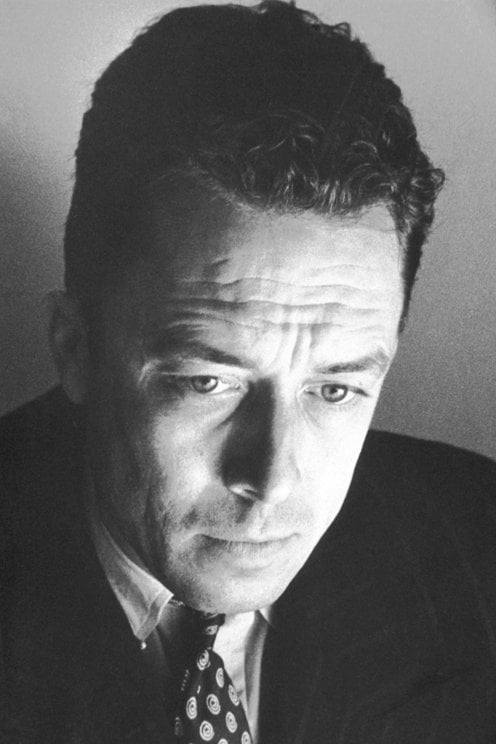




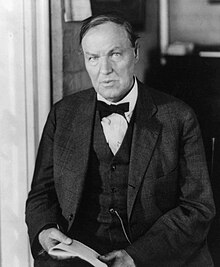
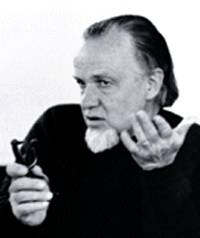
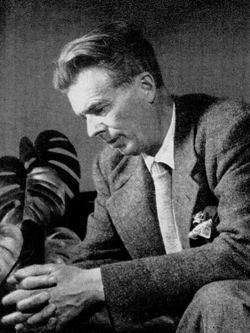


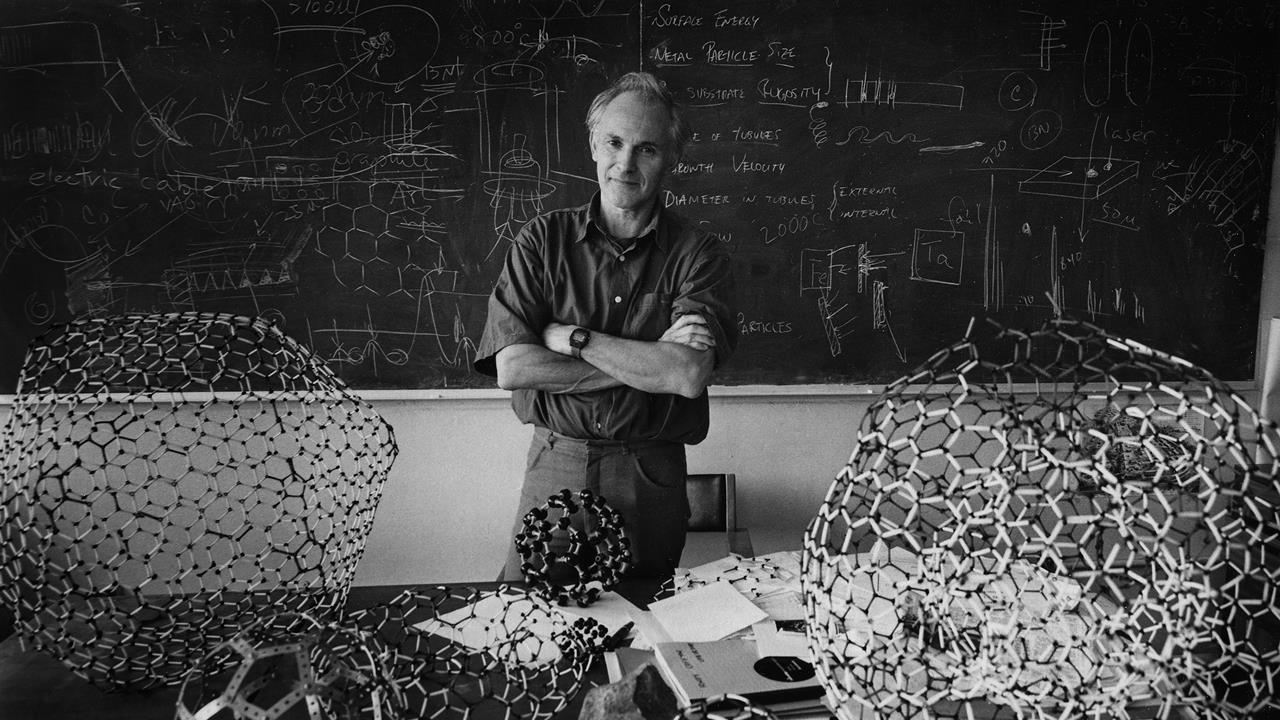
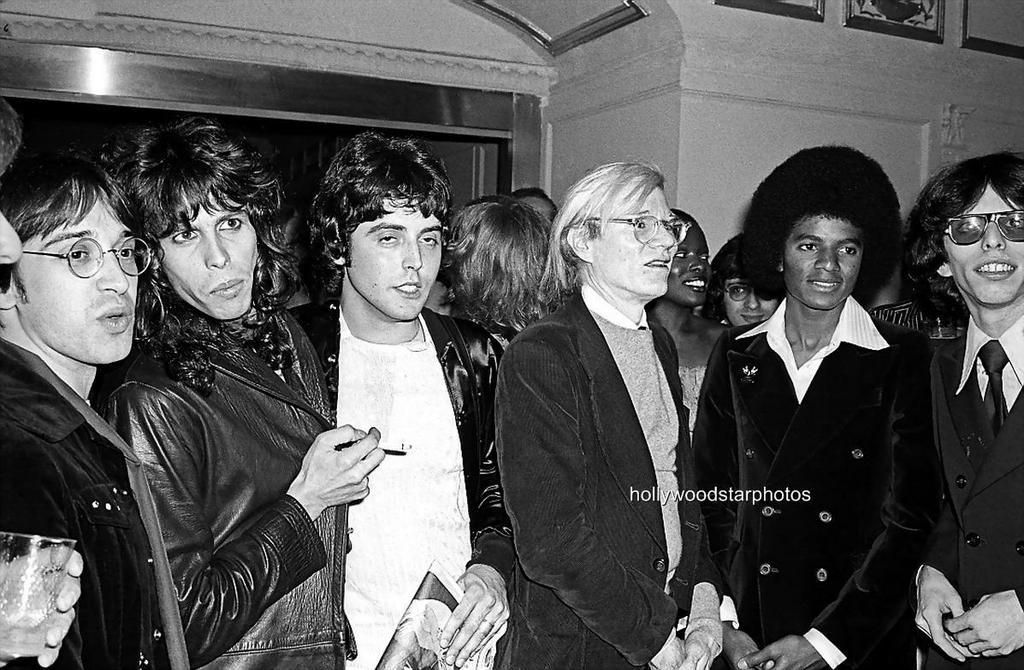


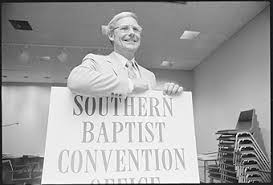







:format(jpeg):mode_rgb():quality(40)/discogs-images/A-82730-1519052220-3776.jpeg.jpg)

 Pleasure Beach Ramp is titled Shellfish Jeans: Evolution in Revolution
 The Lowry Centre is titled The bridge across communities
 This view of Bowness is actually titled Queuing for relaxation
.jpg)