My question to the pro-abortionist who would not directly kill a newborn baby the minute it is born is this, “Would you have killed it a minute before that or a minute before that or a minute before that or a minute before that?” You can see what I am getting at. At what minute does an unborn baby cease to be worthless and become a person entitled to the right to life and legal protection?
Dr. Francis Schaeffer: Whatever Happened to the Human Race Episode 1 ABORTION
For L’Abri, the brainchild of 20th-century giant Francis Schaeffer, turning 50 is an opportunity to celebrate and revive what is golden in its unique approach to evangelism
Half a century ago, an American pastor named Francis Schaeffer opened his home in Switzerland to anyone who was struggling with the basic questions of life. It was the beginning of L’Abri, a word meaning “shelter.” Over the years, student backpackers, troubled atheists, and thoughtful Christians found their way to this chalet in the Alps. Here they met biblical truth, explained not only with a sophistication that was then rare in evangelicalism-but lived out.
Many who trekked the Alpine hillsides to L’Abri became Christians and learned how to engage their cultures and to apply their faith to all of life. Two generations on, the influence of Francis and Edith Schaeffer and the ministry of L’Abri is evident among evangelical Christians everywhere in their approach not only to evangelism and the church but also to the sciences, arts, business, and politics.
Schaeffer died of cancer in 1984. But L’Abri continues with branches all over the world: in Australia, Germany, the Netherlands, Sweden, England, Korea, Canada, and two in the United States (in Southborough, Mass., and Rochester, Minn.). These centers for training in Christian philosophy are the legacy of a man who-according to long-time associate and founder of the Francis Schaeffer Institute Jerram Barrs-never considered himself a theologian or philosopher, but simply a pastor and an evangelist.
Schaeffer became a Christian when he was 17, after reading the Bible from beginning to end and finding that it gave answers to questions he struggled with. He studied at Faith Seminary and pastored churches in Delaware, Pennsylvania, and St. Louis.
In St. Louis, Schaeffer and his wife Edith started a ministry, Children for Christ. At the same time, conflicts and schisms in the Presbyterian Church forced him to defend a high view of Scripture against liberal theology. He started the International Council of Christian Churches to counter the World Council of Churches. This took him to Europe, where he settled in Switzerland in 1948.
But L’Abri had its genesis in a spiritual crisis that engulfed Schaeffer in 1950-1951. Depressed by church politics and power struggles, Schaeffer wrestled with the question: “How could people stand for truth and purity and God’s holiness without ugliness and harshness?” He became dissatisfied, too, with his own failures to live out the faith as the Bible describes it, according to Mr. Barrs.
Schaeffer felt these problems so deeply that he began to question whether Christianity, if it has so little effect, could be true. Once again, as he did when he was 17, he plunged into Bible reading in search of answers. He found them, becoming convinced that not only salvation but sanctification and the whole of the Christian’s life are by faith. “The sun came out again,” he said, and he found “a new song in my heart.”
Now, in addition to holding Bible studies in the Schaeffer home and working with children, the Schaeffers began discussion groups for their teenage daughters and friends to hear their questions and to tell about the Bible’s answers.
On June 5, 1955, the Schaeffers drew up a plan to turn their home into a place where people could come to work out their problems and to practice “true spirituality.” Without finances and with no assurance that they would be allowed to stay in Switzerland, the Schaeffers purchased property in Huemoz, a rural village high in the mountains with a spectacular view of the Alps.
Ranald Macaulay, a student at Cambridge who became involved with the Schaeffers in the early days (and later married their daughter Susan), said the founding of L’Abri was consistent with its organizing principle: to live in constant dependence on the grace of God. At a March 11-13 Jubilee for L’Abri Fellowship at the America’s Center in St. Louis, Mr. Macaulay said the Schaeffers resolved to do no advertising for workers, no marketing to attract newcomers, no fundraising, and no planning-principles in stark contrast to most other ministries.
The Schaeffers saw L’Abri as a unique experiment-they did not necessarily recommend this radical dependence on God’s providence as a pattern for other ministries-but the needs always were met. Concerned with reaching individuals, the Schaeffers were content with small numbers. Over time, however, the effect of their work multiplied. Over 1,000 L’Abri alumni attended the jubilee celebration, an event that was equal parts conference and family reunion.
Os Guinness, Harold O.J. Brown, and Chuck Colson-all major evangelical thinkers who were shaped by L’Abri-gave addresses. Screenwriter Brian Godawa, who wrote To End All Wars, gave a workshop on transforming Hollywood. Theologian and cultural critic Vishal Mangalwadi, from India, talked about his upcoming television documentary series on the impact of the Bible, The Book of the Millennium. Book tables overflowed with titles by L’Abri Alumni.
Workshops focused on the various facets of “The Central Themes of L’Abri,” “Transforming All of Life,” and “True Spirituality.” The evenings closed with classical music concerts.
But unlike most idea-packed conferences, the program also scheduled in time for fellowship: an hour and a half devoted to lunch; 30 minutes between sessions; free afternoons and early evenings so people had time to talk. People who had grown close in the Christian community of L’Abri but who had not seen each other for decades hugged and laughed and resumed their conversations. Family members recalled the early days. Mr. Macaulay said the Schaeffers cleared out the furniture, set up chairs, and made elaborate preparations in their chalet, while Schaeffer, wearing a black suit, preached a brilliant sermon-all for three people. Mr. Macaulay remembers thinking, “Oh, if everybody could hear this!” In those days, he said, it was exciting when 10 people showed up at L’Abri.
At first Schaeffer resisted taping the lectures, fearing it would spoil his spontaneity. But one day his daughter Susan surreptitiously hid in an ivy plant a microphone attached to her portable cassette player. The tapes circulated in student groups in England, creating a demand for more tapes and a steady supply of L’Abri pilgrims. Eventually, he turned some of his lectures into books.
More and more people-students, hippies, homosexual priests, drug addicts, and other wanderers trying to “find themselves”-sought out this “shelter” in the mountains. Some stayed for a few weeks, others for several months. By the 1970s, several hundred might be there at a time, staying in chalets built on the expanding property above a switchback mountain road.
Schaeffer exchanged his American preacher’s black suit for lederhosen and a walking stick. He engaged visitors in personal discussions fed also by the growing number of L’Abri workers who joined in the ministry. Visitors took part in the life of the community, eating meals together, doing physical labor, studying the Bible, prizing deep conversations, and walking in the mountains. This remains the pattern today in the L’Abri branches around the world, except that Schaeffer is heard only on tape.
In the course of 50 years, according to Larry Snyder, director of Rochester L’Abri, no one knows how many people went through L’Abri. No one kept records. What mattered then-and is evident now (see sidebar)-is that L’Abri was a life-changing experience.
Schaeffer persuaded nonbelievers to face up to the contradictions in their own worldviews by revealing their inability to account for what is most important in life (love, beauty, meaning). He would, as he described it, “take the roof off,” bringing the nonbeliever almost to the point of despair, to acknowledge his lost condition. Then he applied the gospel of Christ. While conversant in the theology of Kuyper, Dooyeweerd, and Van Til, Schaeffer was captive only to the worldview set forth in the Bible-God’s good creation, man’s fall into sin and its consequences, the redemption through Christ-which he said accords with reality in all of its dimensions. Nonbelievers cannot bring themselves to be completely consistent with their own presuppositions, an inconsistency that is a result of common grace. “Thus, illogically,” he wrote in 1948, “men have in their accepted worldviews various amounts of that which is ours. But, illogical though it may be, it is there and we can appeal to it.”
Even with hostile visitors, Mr. Barrs said, Schaeffer “had an acute sense of people’s brokenness and fallenness,” and “thus would treat them with compassion.”
Out of those encounters grew a body of written work: Escape from Reason (1968), True Spirituality (1971), and He Is There and He Is Not Silent (1972). Schaeffer developed extraordinarily fruitful concepts: how human beings need both “form and freedom”; how people today compartmentalize their lives into a meaningless objective “lower story” (the realm of science and fact) and a mystical, nonrational “upper story” of subjectivity and emotion (which becomes the realm of religion, aesthetics, and morality); how human beings are sinful and broken due to the Fall, yet how at the same time human beings have an intrinsic value and dignity, bearing the image of God.
Those concepts-fueled by practical discussions and communal living at L’Abri-quickly gathered public momentum. Before L’Abri, many conservative Protestants had no problem with legalizing abortion, considering it a Catholic issue and responding out of a knee-jerk anti-Catholicism. But the Schaeffers showed that abortion-along with the growing acceptance of euthanasia and the coming genetic engineering-constitutes a horrible assault on all that it means to be human. With the book and video series How Should We Then Live? (1976) and Whatever Happened to the Human Race? (1979), Schaeffer’s ideas spread to a broader audience. With A Christian Manifesto (1981), he called evangelicals to the fight against abortion and to political activism to reverse what he saw as the trend toward both moral anarchy and political tyranny.
Such an extended ministry was a partnership with Schaeffer’s wife. “If time allowed, a whole seminar could be devoted to the work of Edith Schaeffer,” author and L’Abri alum Os Guinness told the jubilee crowd. Health problems, including a deteriorating esophagus, prevented Schaeffer’s wife Edith, 92, from attending the St. Louis jubilee. Always an active part of L’Abri and an author herself, she is currently in a Swiss hospital. There, according to Udo Middleman, husband to Schaeffer daughter Debbie, the family is battling the very dangers Schaeffer described as family members insist on active treatment and care for Mrs. Schaeffer against a European medical establishment that is content to withhold treatment and to allow her simply to die.
Those struggles only emphasize that, in many ways, the culture of relativism, irrationalism, and self-centeredness that Schaeffer anticipated is here. “Postmodernists are so focused on I, me, myself that they have trouble focusing on any thing beyond themselves,” said L’Abri Australia leader Frank Stootman. And yet, he said, the Schaeffer method of taking people with their presuppositions to their logical conclusions and showing the superiority of a biblical worldview is still effective.
Per Staffan Johansson, of L’Abri in Sweden, told WORLD that seekers today are less philosophical than they were in the 1960s. Instead of wrestling with questions about the meaning of life and other objective truth, they are more preoccupied with problems of relationships and the meaning of their jobs and professions. “We do more in Sweden with vocation,” he said. “And yet, this is what L’Abri has always done,” relating faith to all of life.
Mr. Guinness said that “the genius of Schaeffer’s apologetics has yet to be fully unwrapped.” When asked about reaching the culture, Mr. Guinness said that one of Schaeffer’s great insights is that we have to reach not cultures but individuals. Each individual has his or her own questions, personal struggles, and moral brokenness. Schaeffer took them all seriously, addressing people one by one, while giving them-sometimes for the first time-a sense of belonging to a community.
Many approaches to evangelism and church growth today are impersonal, relying on manipulative formulas and the techniques of mass marketing and consumerism. L’Abri honors the dignity and the distinct spiritual needs of each individual. Many evangelicals think Christianity needs to be dumbed down and made easier to make it attractive to people today. L’Abri teaches that Christianity has substance and depth, that it has something to offer to thoughtful, educated people, and that-undiluted-biblical Christianity can change their lives.
Fifty years later, evangelicalism once again faces the problem of being negative or ineffectual, worldly, or out of touch. L’Abri remains.
Francis Schaeffer: “Whatever Happened to the Human Race” (Episode 1) ABORTION OF THE HUMAN RACE Published on Oct 6, 2012 by AdamMetropolis The 45 minute video above is from the film series created from Francis Schaeffer’s book “Whatever Happened to the Human Race?” with Dr. C. Everett Koop. This book really helped develop my political views […]
E P I S O D E 1 0 Dr. Francis Schaeffer – Episode X – Final Choices 27 min FINAL CHOICES I. Authoritarianism the Only Humanistic Social Option One man or an elite giving authoritative arbitrary absolutes. A. Society is sole absolute in absence of other absolutes. B. But society has to be […]
E P I S O D E 9 Dr. Francis Schaeffer – Episode IX – The Age of Personal Peace and Affluence 27 min T h e Age of Personal Peace and Afflunce I. By the Early 1960s People Were Bombarded From Every Side by Modern Man’s Humanistic Thought II. Modern Form of Humanistic Thought Leads […]
E P I S O D E 8 Dr. Francis Schaeffer – Episode VIII – The Age of Fragmentation 27 min I saw this film series in 1979 and it had a major impact on me. T h e Age of FRAGMENTATION I. Art As a Vehicle Of Modern Thought A. Impressionism (Monet, Renoir, Pissarro, Sisley, […]
E P I S O D E 7 Dr. Francis Schaeffer – Episode VII – The Age of Non Reason I am thrilled to get this film series with you. I saw it first in 1979 and it had such a big impact on me. Today’s episode is where we see modern humanist man act […]
E P I S O D E 6 How Should We Then Live 6#1 Uploaded by NoMirrorHDDHrorriMoN on Oct 3, 2011 How Should We Then Live? Episode 6 of 12 ________ I am sharing with you a film series that I saw in 1979. In this film Francis Schaeffer asserted that was a shift in […]
E P I S O D E 5 How Should We Then Live? Episode 5: The Revolutionary Age I was impacted by this film series by Francis Schaeffer back in the 1970′s and I wanted to share it with you. Francis Schaeffer noted, “Reformation Did Not Bring Perfection. But gradually on basis of biblical teaching there […]
Dr. Francis Schaeffer – Episode IV – The Reformation 27 min I was impacted by this film series by Francis Schaeffer back in the 1970′s and I wanted to share it with you. Schaeffer makes three key points concerning the Reformation: “1. Erasmian Christian humanism rejected by Farel. 2. Bible gives needed answers not only as to […]
Francis Schaeffer’s “How should we then live?” Video and outline of episode 3 “The Renaissance” Francis Schaeffer: “How Should We Then Live?” (Episode 3) THE RENAISSANCE I was impacted by this film series by Francis Schaeffer back in the 1970′s and I wanted to share it with you. Schaeffer really shows why we have so […]
Francis Schaeffer: “How Should We Then Live?” (Episode 2) THE MIDDLE AGES I was impacted by this film series by Francis Schaeffer back in the 1970′s and I wanted to share it with you. Schaeffer points out that during this time period unfortunately we have the “Church’s deviation from early church’s teaching in regard […]
Francis Schaeffer: “How Should We Then Live?” (Episode 1) THE ROMAN AGE Today I am starting a series that really had a big impact on my life back in the 1970′s when I first saw it. There are ten parts and today is the first. Francis Schaeffer takes a look at Rome and why […]
Francis Schaeffer: “Whatever Happened to the Human Race” (Episode 5) TRUTH AND HISTORY Published on Oct 7, 2012 by AdamMetropolis This crucial series is narrated by the late Dr. Francis Schaeffer and former Surgeon General Dr. C. Everett Koop. Today, choices are being made that undermine human rights at their most basic level. Practices once […]
The opening song at the beginning of this episode is very insightful. Francis Schaeffer: “Whatever Happened to the Human Race” (Episode 4) THE BASIS FOR HUMAN DIGNITY Published on Oct 7, 2012 by AdamMetropolis This crucial series is narrated by the late Dr. Francis Schaeffer and former Surgeon General Dr. C. Everett Koop. Today, choices […]
Francis Schaeffer: “Whatever Happened to the Human Race” (Episode 3) DEATH BY SOMEONE’S CHOICE Published on Oct 6, 2012 by AdamMetropolis This crucial series is narrated by the late Dr. Francis Schaeffer and former Surgeon General Dr. C. Everett Koop. Today, choices are being made that undermine human rights at their most basic level. Practices […]
Francis Schaeffer: “Whatever Happened to the Human Race?” (Episode 2) SLAUGHTER OF THE INNOCENTS Published on Oct 6, 2012 by AdamMetropolis This crucial series is narrated by the late Dr. Francis Schaeffer and former Surgeon General Dr. C. Everett Koop. Today, choices are being made that undermine human rights at their most basic level. Practices […]
It is not possible to know where the pro-life evangelicals are coming from unless you look at the work of the person who inspired them the most. That person was Francis Schaeffer. I do care about economic issues but the pro-life issue is the most important to me. Several years ago Adrian Rogers (past president of […]
This essay below is worth the read. Schaeffer, Francis – “Francis Schaeffer and the Pro-Life Movement” [How Should We Then Live?, Whatever Happened to the Human Race?, A Christian Manifesto] Editor note: <p> </p> [The following essay explores the role that Francis Schaeffer played in the rise of the pro-life movement. It examines the place of […]
Great article on Schaeffer. Who was Dr. Francis A. Schaeffer? By Francis Schaeffer The unique contribution of Dr. Francis Schaeffer on a whole generation was the ability to communicate the truth of historic Biblical Christianity in a way that combined intellectual integrity with practical, loving care. This grew out of his extensive understanding of the Bible […]
Francis Schaeffer: Whatever Happened to the Human Race Episode 1 ABORTION
프란시스 쉐퍼 – 그러면 우리는 어떻게 살 것인가 introduction (Episode 1)
How Should We then Live Episode 7 small (Age of Nonreason)
#02 How Should We Then Live? (Promo Clip) Dr. Francis Schaeffer
The clip above is from episode 9 THE AGE OF PERSONAL PEACE AND AFFLUENCE
10 Worldview and Truth
In above clip Schaeffer quotes Paul’s speech in Greece from Romans 1 (from Episode FINAL CHOICES)
Two Minute Warning: How Then Should We Live?: Francis Schaeffer at 100
A Christian Manifesto Francis Schaeffer
Published on Dec 18, 2012
A video important to today. The man was very wise in the ways of God. And of government. Hope you enjoy a good solis teaching from the past. The truth never gets old.
Francis Schaeffer “BASIS FOR HUMAN DIGNITY” Whatever…HTTHR
I read lots of Francis Schaeffer and Dr. C. Everett Koop’s books and watched their films in the late 1970’s and early 1980’s as did Keith and Melody Green. Below Melody Green quotes some of this same material that was used by Schaeffer and Koop in their film series WHATEVER HAPPENED TO HUMAN RACE?
Dr. Francis schaeffer – The flow of Materialism(from Part 4 of Whatever happened to human race?)
Dr. Francis Schaeffer – The Biblical flow of Truth & History (intro)
Francis Schaeffer – The Biblical Flow of History & Truth (1)
Dr. Francis Schaeffer – The Biblical Flow of Truth & History (part 2)
Hopefully this list of things you can do will be a real help as you seek the Lord about how you can stand with Him against abortion. If you haven’t already read “Abortion: Attitudes For Action”, please read it. It’s not only important to find out what to do, but also the attitude of heart in which to do it.
“Sometimes the intensity of God’s truth revealed through the Newsletter is difficult for us to hear, and such is the case with your past and present stand on abortion. Up until this point, all we’ve done is sit back and complain. This just doesn’t cut it any more. We know the Lord would have us do something, but we’ve never had the guts. We just can’t sit idly by. Babies are dying NOW!!
“Please send whatever information you have on anti-abortion strategy. We want to be involved as those who love the Lord Jesus and, like Him, are grieved by the effects of sin on the innocent gifts of His love.”
-Michael Henry, Reynoldsburg, OH
Pray
Your first impulse might be to skip over this one and get to the reallypractical things you can do, but you’ll be making a big mistake. Any good done in the name of the Lord must be done in the strength and the absolute direction of the Spirit of God. God honors the prayers of the saints today as He has from the very beginning. Only eternity will tell what humble and earnest prayer has done to rock kingdoms. Make it a point to intercede for the innocent babies and the young women considering abortion. Pray for all in authority – and that men and women of God will be elected at all levels of leadership. Also, pray that any godless officials in public leadership will either have a change of heart or that God will remove them from their positions.
Offer Practical Assistance
“If a brother or sister is without clothing and in need of daily food, and one of you says to them, ‘Go in peace, be warmed and be filled,’ and yet you do not give them what is necessary for their body, what use is that?” (James 2:15-16. NASB)
Just telling a girl not to abort her baby isn’t enough. You need to give her an alternative. Check with your local problem pregnancy center and see what you can do to help. There are always basic things needed such as housing for the girls, finances, maternity and baby clothes, electrical, carpentry, or maintenance work, etc. Volunteer some time to their Hot-Line or do some office work. Donate your services. You may be able to offer valuable assistance through your business or profession – you’d be surprised how many different needs there are!
“I’ve always been concerned about the issue of abortion, but I never got involved. Then I got a copy of your tract. Nothing, but nothing could have prepared me for the picture inside. I cried, l got angry, and I resolved then and there to get involved and help in whatever way I could.
“My husband is supporting me and we’re preparing to take one or two unwed mothers into our home. Thank you! If it wasn’t for you, I may never have gotten involved.”
-Katrine DeFever, Santa Rosa, CA
Inform Other Christians
If your church or fellowship isn’t already involved, approach your pastor about some sort of awareness program. You can use literature, video tapes, slides, or invite speakers in. You’d be amazed how many church kids wind up in abortion clinics, and sometimes it’s their pastor or parents who actually send them there. See if you can give a presentation to your church or Sunday School class. Ask God for the opportunity and He will open the doors.
Every church or fellowship should have homes and people available to help unwed mothers.
Inform the General Public
Ask the Lord for some creative ways to open people’s eyes to the realities of abortion, and the alternatives available. Buy billboard space, run newspaper ads, write articles or “letters to the editor,” give speeches, write songs, inform your school.
“Just a note to thank you for your abortion tracts! When my Health Education professor announced a debate on abortion, a friend gave me the tracts to use. And use them I did! I was the only one able to give names, numbers, dates and stick to them!” -Lisa Silver, Winchester, VA
Distribute Literature
“We were able to distribute approximately 18,000 tracts on abortion in two days, through picket lines at abortion clinics and at road-blocks at major intersections of our city. Our greatest blessing was seeing 20-30 girls change their minds about getting an abortion, some even received the Lord!! -Teresa Everett, Pensacola, FL
You can distribute tracts at clinics, hospitals, doctors’ offices, schools, and libraries. You can even leave them in public restrooms! The idea is to get the word out.
You can blitz your city! You can organize your friends or fellowship to place one or both of our tracts on abortion into every home in your area. We helped distribute the tract “Children – Things We Throw Away?” to almost every home in Tyler, Texas, population 70,000. It was done in one full day with about 250 volunteers. The city was divided into sections and each section leader had group leaders under him. The section leaders provided transportation and patrolled their areas while the tracts were being distributed. The group leaders had a map of the city with their area clearly designated. The streets in each section were divided among those in his group and they went out in two’s. It’s not legal to put tracts in mail boxes, but it’s okay to slip them under a door, affix them to a doorknob, or slide them between the door and a screen door. Since the main purpose is getting information into each home, this doesn’t involve sharing personally with individuals (except as the Lord leads), since this can be quite time consuming. The response to this action has been tremendous and we really feel it is a worthwhile endeavor. Other groups have done this in their cities as well.
Write Letters
Let your representatives in Congress know how you feel. This is something anyone can do and it’s very important. For every letter received inWashington, DC, they figure thousands of people feel the same way. If there’s one thing that most politicians really stand up and notice, it’s votes.
Sidewalk Assistance
“Thank you so much for sending the tracts `Children – Things We Throw Away?’ We’ve been doing street counseling in front of an abortion clinic downtown. In six weeks, 16 girls have changed their minds. We only go on Saturday as that’s the heaviest day at the clinic, but hopefully we’ll be able to free up some more people to go more often.” -Debbie Strahan, Chicago, IL
Sidewalk counseling is talking with the girls as they are going in and out of the abortion clinics. This can be very effective, and we’ve heard many great reports about women changing their minds.
When you’re speaking with a girl, it’s important that you gain her trust. It’s best not to carry signs or wear buttons, etc., since this may scare her away. Don’t walk up and tell her you are “pro-life,” because that could mean to her that you’re only interested in her baby, and not her problem. The only way you’re going to save the child is through the mother. She probably feels frightened, confused, and backed into a corner, and the reason she’s come to the clinic in the first place is because of her problem. She needs to know you care about her, and are there to help her. (And you need to be sure you do love and care about her!) Many women aren’t really sure abortion is the right thing, but most of them don’t know the other options available.
So how do you start? Arm yourself with the love of Jesus and the holiness of the Holy Spirit, and walk up to the girl and start talking with her in a loving, non-condemning way. Ask her if she’s going to the clinic, if she’s just getting a pregnancy test, or is scheduled for an abortion. Remember that most clinics never inform girls about the baby’s development, and she probably thinks her baby is just “a wad of tissue.” You can show her some photos of what her baby looks like in the womb, and let her know the child inside her is just that – a child. Be friendly, and be yourself. Don’t fall into the trap of using a bunch of pat phrases or nice “Christian clichés.” Let her know you understand she’s in a tight spot, but having an abortion will only make things worse.
See if you can get her to put off going to the clinic… maybe ask her to go have a soda or something, so you can discuss her problems. What you need is love, concern, some knowledge of the facts, some good material with you and a “stick in there” attitude. Speak gently, ask questions, and show an interest in her as a whole person. If there’s a local problem pregnancy center in your area, suggestthat she call there, or take her there yourself.
If a girl does go into the clinic, that doesn’t mean it’s all over. Often she’ll go in and read the material, and think over what you’ve said. So when she comes out, ask her what happened, and if she made a decision. Be sure you get her phone number, and contact her the very next day.
See if there’s any sort of help she needs. Offer her specific assistance, because she might not know what to ask for, or might be too embarrassed to ask. You should have a loving home available where a girl, who may have other problems, could stay. Open your home or find someone else to open theirs.
Even if she does have the abortion, she needs to know you still care for her. Some sidewalk counselors will tell the girl that she’ll probably need counseling after her abortion, and ask if they could please be the ones to counsel her. Now more than ever she needs a friend, and she’s in desperate need of the Lord Jesus in her life. Welcome her to your local fellowship, and offer her a ride.
Talk To Your Doctor
See what kind of stand your physician takes on abortion – if he’s in favor of it, ask the Lord to give you the right words to minister truth. Women, ask your gynecologist if he does abortions or refers patients to abortion clinics. Many women quit patronizing those doctors who support abortion if, after talking to them, they’re unwilling to change their views. If you do change doctors, be sure to tell him exactly why you’re doing so. However, don’t forget your attitude of love in this.
If your doctor is against abortion, encourage him to get involved – doctors can have a powerful influence on other physicians and the community in general. He may also be willing to donate some of his services to a pregnant girl, or help out at a pro-life center.
Reach Out To the Abortion Doctors
People are not our enemies. God loves the doctors who perform abortions just as much as He loves the tiny babies they kill. The Scriptures command us that if a man is caught in any trespass, we are to restore him in a spirit of gentleness. (Gal. 6:1) Pray about how you can minister to these men and women. They are hurting, too. Of the thousands of letters we’ve received and hundreds of articles we’ve read, we’ve only heard of one abortion doctor ever getting saved. Now, maybe there have been others, but we haven’t heard of any. Perhaps you can meet with them, take them out to lunch, show them that you care.
Ask God for creative ways to reach out. Pray that the Holy Spirit will continue to work on their hearts and consciences. Remember – murder is not “the unpardonable sin.” Although the doctors, nurses, and clinic staff do bear an incredible weight of responsibility, their involvement with abortions isn’t what will send them to hell – it’s whether or not they yield their hearts to the love of Jesus. Let God use you to show them that love.
Picketing
Picketing is an area where the attitude of the heart is of utmost importance. It can be done in an effective way, or it can be something that is destructive to the cause of Christ. If you feel led in this area, seek the Lord as to exactly what He’d have you do. Remember, we do not fight against flesh and blood, and we cannot overcome the enemy in a spirit of bitterness, arrogance, or self-righteousness
Picketing serves two important purposes 1) It brings the whole issue of abortion to the attention of the public 2) It’s a definite deterrent to abortion doctors – economically, because it cuts down their business, and personally, because most doctors don’t want their other patients to know they perform abortions. We have heard of clinics that were shut down and doctors who stopped doing abortions because of picketing.
Count the cost before you begin. If you start out with brash statements of what you are going to accomplish, but within a week all your volunteers have given up, you may find that you have actually weakened the cause you were working for. (Luke 14:28-30)
You also need to be ready for the opposition you will most likely encounter. Picketing is bad for the abortion clinic’s business, and the owner will probably do all he can to have you stopped. However, as long as you picket legally, and avoid slander or libel, your rights to picket are protected by the First Amendment.
We suggest that you try to make a personal appointment to talk with the doctor before you begin to take action against his clinic. Share your heart with him or her in a loving, humble way. Let him know that you don’t hate him, and aren’t “out to get him.” Explain why you feel abortion is wrong, and why you are willing to take whatever action is necessary to see it stopped.
Basic Picketing Guidelines
Don’t picket alone.
Be sure you understand the laws of your city regarding trespassing and private vs. public property. Never trespass on clinic property, or picket in front of other people’s property. Stay on the sidewalk, and don’t step on the curb.
Don’t block the driveway. Never attempt to physically stop someone from entering a clinic. Never block pedestrians on the sidewalk.
Don’t lay picket signs on clinic property or nearby property. Don’t litter.
Don’t engage in conversation with any heckler or counter-picketer. Under no circumstances touch or threaten to touch any heckler or counter-picketer.
If the police should come by, please be courteous and follow their instructions to the letter.
Be sure to carry some good literature to pass out.
Be thoughtful about what you write on your signs. Think back to before you knew the Lord. How would you have felt if someone walked up and down in front of your house with a sign saying, “Susan is a fornicator” or “John is an adulterer”? It would have let your neighbors know what you were doing, but it probably only would have made you angry – we doubt it would have changed your heart. So before you put your signs together, seek God about what they should say.
If you should run into any legal problems, you can contact The Rutherford Institute, Box 510, Manassis, VA 22110, (703)396-0100. This is a group of attorneys committed to give free legal defense to picketers and others involved in abortion action.
Get Into the Schools
“I’m an eighth grade student, and in science class we read a pamphlet called `Children-Things We Throw Away?’ As we read about the five commonly used techniques I started to cry and didn’t stop until we left for another class. One boy laughed at me, and kept laughing all through the period. Every time I see a picture of an aborted baby I cry. To just think that the babies have no defense to fight against it. “Tell me, what I can do to help because I can’t stand it any more. There should be a law against abortion and make the abortion clinics illegal. All my friends are behind me and we’ll do what we can.” -Rosemarie Trausch, Parma, OH
One of our staff members recently had an opportunity to talk about abortion in a local high school health class. To her amazement, there was almost no understanding among the students as to what an abortion really involved, what an unborn child was like, or how many abortions are performed each year. These young people are the potential abortion customers of tomorrow – and many of them are current customers today! Much of our efforts need to be directed towards educating them about the realities of abortion.
In order to be able to speak or bring a presentation to a class or a whole assembly, try to have a Christian teacher or student bring you onto campus. One ministry we know of has different students approach their health teachers and ask if they can bring someone in to talk about abortion. Many times you can get directly into class that way, avoiding a bunch of red tape. You will have a much better chance of getting into the schools through students or teachers than if you just come on your own from the outside.
Take along some good literature to pass out to the students and teachers, so that they have something to take home with them. Ask the kids questions, and get them involved in the discussion. Let them know the alternatives to abortion. Be sure to leave your name and address, or the name of your local problem pregnancy center.
Start A Problem Pregnancy Center – You Don’t Need To Be A Doctor!!
If you don’t know of a local problem pregnancy center, we encourage you to consider starting one! Believe it or not, it isn’t a difficult thing to organize. There are many young women who find themselves in a situation where they don’t know if they’re pregnant or not. Right now the majority of free pregnancy tests are offered at abortion clinics. This is because once the girls are in there, it’s not hard to convince them to pay for an abortion. The abortion clinics make it sound as if it’s just an easy thing – no more difficult than having a tooth pulled. But we know that many of these young women are scarred for life, both physically and emotionally, after having an abortion.
A Christian-based problem pregnancy center can offer free early pregnancy tests, and then have wonderful opportunities to talk with the girls. Tests can be purchased for about 60 cents or less each, and a center can be started in a couple of rooms in an office building or in a home where there is a private entrance. Advertising is done in local papers, phone books, etc., but without stating the “pro-life” thrust of the center. The girl who is coming for her free test can be reached with an alternative to abortion if she finds the test is positive.
“Living Alternatives” is one ministry that approaches this whole area from an entirely Christian perspective. They are working in several cities around the country, and their strategy includes problem pregnancy centers, homes for unwed mothers, and education programs for both the Christian and secular community. The strength of their work is that they seek to minister to each individual as a whole person, and their primary focus is on winning them with the loving kindness of Jesus. If you are interested in beginning a problem pregnancy center or an unwed mothers’ home, we highly recommend that you contact them. They are in the process of compiling an extensive manual on the “how to’s” of crisis centers. They also run training schools specifically for anyone wanting to get involved in this area. (On some occasions, they’ve even flown out to a city to help a group get started.) For more information you can write directly to them: Living Alternatives, Box 4600, Tyler, TX75712, (903) 581-2891.
Tools To Help You Reach Out
Books
The Least of These by CurtYoung, Moody Press, Chicago
Justice For The Unborn by Judge Randall Hekman, Servant Books, Box 8617, Ann Arbor, MI 48107
Whatever Happened to the Human Race? by C. Everett Koop, MD, and Francis A. Schaeffer, Fleming H. Revell Co.
Abortion and the Conscience of the Nation by Ronald Reagan, Thomas Nelson Publishers
Abortion – Questions & Answers by Dr. & Mrs. J. C. Willke, Hayes Publishing Co., Inc., 6304 Hamilton Ave., Cincinnati, OH 45224
Abortion: The American Holocaust by Kent Kelly, Calvary Press, 400 S. Bennett St., Southern Pines, NC 28387
A Child Is Born by Lennart Nilsson, Dell Publishing Co.
When You Were Formed In Secret/Abortion In America (Booklet with photos, very helpful in counseling, first copy is free, quantities at 60¢ & lower; also in Spanish) Intercessors for America, Box 1289, Elyria, OH 44036
Who Broke The Baby by Jean Staker Gorton, Bethany Press, 6820 Auto Club, Minneapolis, MN 55438
Film and Video
Silent Scream by Dr. Bernard Nathanson, American Portrait Films, 1695 W. Crescent Ave., Suite 500, Anaheim, CA 92801
“All that is necessary for the triumph of evil is for good men to do nothing.” -Edmond Burke
I’ve been a Christian for several years now, yet I still come across attitudes or ways of thinking that need a renewing touch from God. Voting was one of those areas. My thoughts on voting have always been apathetic at best, and becoming a Christian didn’t make them any better. In the not-so-distant past I’ve thought things like, “Well, I’ll just trust the Lord to put His people into office. What difference will only one vote make anyway?” I see now that thoughts like this are not only apathetic… they are dangerous.
Jesus told us we are to be the salt (preservative) of the earth. Have we become content to just sit in our comfortable little “shakers” instead of flowing freely to influence society around us? We need to be involved. Not only for the sake of the Lord, but for the sake of our nation as well. “The good influence of godly citizens causes a city to prosper.” (Proverbs 11:11)
Voting is a privilege that is taken very lightly by many people in this nation. If you think that the decisions in this country are being made by the majority of the people, you’re wrong. The decisions are made by the majority of the people who TAKE THE TIME TO VOTE!
I believe God wants all of us to take part in the continual shaping of this country. As citizens, our failure to vote cancels out our voice, and therefore, our choice. To give up our freedom to have a godly influence is a grave mistake. One day we may wake up to find that many freedoms we’ve taken for granted are gone… and that is not an irrational or unfounded statement.
The issues facing our nation today are the most crucial in history since slavery: abortion, homosexual rights, family and parental rights, pornography, and Christian educational freedom, to name a few. Watch the news, read the newspapers and magazines, and above all, pray. Find out all you can about the issues and how everyone involved feels about them. Ask God for wisdom. “Find some capable, godly, honest men who hate bribes, and… let these men be responsible to serve the people with justice at all times.” (Exodus 18:21-22)
Register And Vote!!
If you aren’t registered, do so. Encourage your Christian friends to register and challenge them to fulfill their voting responsibility. It’s possible in many areas to obtain mail-in voter registration cards. You can pass these out at church, school, or work. Then get out there and VOTE! Many people register with good intentions, but never make it to the polls. This nation was first declared to be “One nation under God.” Let’s do all that we can to see that it is. “For the wicked shall not rule the godly, lest the godly be forced to do wrong.” (Psalm 125:3)
Except where otherwise noted, all Scriptures are quoted from the Living Bible, 1971 Tyndale House Publishers. Scripture quotations marked NASB are from the New American Standard Bible, The Lockman Foundation, 1977.
The Presidential Biblical Scorecard is a non-partisan magazine that documents the major presidential and vice-presidential candidates’ stands on biblical, family, and moral issues, as well as the stands of congressman, governors, and their challengers. Write: Scorecard, 214 Massachusetts Avenue N. E., suite 120, Washington, DC 20002, (202) 543-4220. $2.95 each, (postage and handling included). Available at all times, updated and published every two years.
I have debated with Ark Times Bloggers many times in the past on many different subjects. Abortion is probably the most often debated subject and I have noticed that many pro-life individuals are now surfacing on the Arkansas Times Blog. Here are some examples. Arhogfan501 asserted: This is the beginning of the end for recreational abortion […]
I have debated with Ark Times Bloggers many times in the past on many different subjects. Abortion is probably the most often debated subject and I have noticed that many pro-life individuals are now surfacing on the Arkansas Times Blog. Here are some examples. Arhogfan501 asserted: This is the beginning of the end for recreational abortion […]
I have debated with Ark Times Bloggers many times in the past on many different subjects. Abortion is probably the most often debated subject and I have noticed that many pro-life individuals are now surfacing on the Arkansas Times Blog. Here are some examples. Arhogfan501 asserted: This is the beginning of the end for recreational […]
I have debated with Ark Times Bloggers many times in the past on many different subjects. Abortion is probably the most often debated subject and I have noticed that many pro-life individuals are now surfacing on the Arkansas Times Blog. Here are some examples. Arhogfan501 asserted: This is the beginning of the end for recreational abortion […]
In the film series “WHATEVER HAPPENED TO THE HUMAN RACE?” the arguments are presented against abortion (Episode 1), infanticide (Episode 2), euthenasia (Episode 3), and then there is a discussion of the Christian versus Humanist worldview concerning the issue of “the basis for human dignity” in Episode 4 and then in the last episode a close […]
I have debated with Ark Times Bloggers many times in the past on many different subjects. Abortion is probably the most often debated subject and I have noticed that many pro-life individuals are now surfacing on the Arkansas Times Blog. Here are some examples. Arhogfan501 asserted: This is the beginning of the end for recreational abortion […]
I have debated with Ark Times Bloggers many times in the past on many different subjects. Abortion is probably the most often debated subject and I have noticed that many pro-life individuals are now surfacing on the Arkansas Times Blog. Here are some examples. Arhogfan501 asserted: This is the beginning of the end for recreational abortion […]
Francis Schaeffer loved the Beatles’ music and his son said:
My father’s favorite contemporary music was Bob Dylan songs and later Beatles’ SERGEANT PEPPER’S which he listened to ENDLESSLY and DISCUSSED AVIDLY and sang along with in his terrible off-key voice upon occasion.
When I’m Sixty-Four- The Beatles
The Beatles first radio interview (10/27/1962)
Published on Mar 3, 2013
The Beatles (John Lennon, Paul McCartney, George Harrison and Ringo Starr) with Monty Lister at their first radio interview, 27 October 1962. Before their fourth and final live appearance at the Hulme Hall in Birkenhead, The Beatles recorded a radio interview for Radio Clatterbridge. It’s the first surviving spoken-word interview.
Francis Schaeffer holding up the album Sergeant Pepper’s Lonely Hearts Club Band below in his film series HOW SHOULD WE THEN LIVE?
What are some of the main points made by Schaeffer concerning the Beatles? I hope to answer that today in a different way. I wanted to try and relate the points that Schaeffer made concerning the Beatles and relate them to our culture today. Furthermore, I wanted to take some of these same points that Schaeffer has made and show how this message could be used to relate to other people and tell them about Christ. Relating to the culture and then showing how the Biblical Worldview applies was Francis Schaeffer’s specialty. Maybe the fact that it was so apparent that the Beatles were searching for the meaning in life in so many places was the main reason that Schaeffer spent so much time analyzing them or maybe part of the reason was Schaeffer just loved their music! In the review of the Book “Sham Pearls For Real Swine” FRANKY SCHAEFFER BY ROWLAND CROUCHER AND OTHERS ⋅ NOVEMBER 25, 2004, Franky Schaeffer is quoted as saying:
My parents [Francis and Edith Schaeffer] protected me as best they could, not from art or hard questions, but from mediocrity. That is why we had so few contemnporary or fundamentalist books in the house. … That is why my parents never played contemporary Christian music of the gospel variety. … My father’s favourite contemporary music was Bob Dylan songs like “Route 66″ and later the Beatles’ “Sergeant Pepper’s” which he listened to endlessly and discussed avidly and sang along with in his terrible off-key voice upon occasion. p.8
I have dedicated several posts to this series on the Beatles and I don’t know when this series will end because Francis Schaeffer spent a lot of time listening to the Beatles and talking and writing about them and their impact on the culture of the 1960’s. In this series we have looked at several areas in life where the Beatles looked for meaning and hope but also we have examined some of the lives of those writers, artists, poets, painters, scientists, athletes, models, actors, religious leaders, musicians, comedians, and philosophers that were put on the cover of Sergeant Pepper’s Lonely Hearts Club Band album. We have discovered that many of these individuals on the cover have even taken a Kierkegaardian leap into the area of nonreason in order to find meaning for their lives and that is the reason I have included the 27 minute episode THE AGE OF NONREASON by Francis Schaeffer. In that video Schaeffer noted, ” Sergeant Pepper’s Lonely Hearts Club Band…for a time it became the rallying cry for young people throughout the world.”
One of those young people who joined in that “rallying cry for young people throughout the world” was Carolyn Porco.
________________
Beyond Belief: Carolyn Porco On Science & Religion, Part 1
Uploaded on Dec 4, 2006
At the Beyond Belief conference, astronomer Carolyn Porco describes the spirituality inherent in the scientific view of the Universe.
________________
Dr. Carolyn Porco is the leader of the Cassini Imaging Science team and the Director of the Cassini Imaging Central Laboratory for Operations (CICLOPS) at the Space Science Institute in Boulder,
_______
Wikipedia notes Carolyn C. Porco (born March 6, 1953) is an American planetary scientist known for her work in the exploration of the outer solar system, beginning with her imaging work on the Voyager missions to Jupiter,Saturn, Uranus, and Neptune in the 1980s. She leads the imaging science team on the Cassini mission currently in orbit around Saturn.[1] She is also an imaging scientist on the New Horizons[2] mission launched to Pluto on January 19, 2006. She is an expert on planetary rings and the Saturnian moon, Enceladus…
A frequent public speaker, Porco has given two popular lectures at TED[8][9] as well as the opening speech for Pangea Day, a May 2008 global broadcast coordinated from six cities around the world, in which she described the cosmic context for human existence.[10] Porco has also won a number of awards and honors for her contributions to science and the public sphere; for instance, in 2009, New Statesman named her as one of ‘The 50 People Who Matter Today.’[11] In 2010 she was awarded the Carl Sagan Medal, presented by the American Astronomical Society for Excellence in the Communication of Science to the Public.[12] And in 2012, she was named one of the 25 most influential people in space by Time magazine.[13]
Porco speaks frequently on the Cassini mission and planetary exploration in general, and has appeared at renowned conferences such as PopTech 2005[32] and TED (2007, 2009).[8][9] She attended and was a speaker at the Beyond Belief symposium on November 2006.[33][34]
Porco’s 2007 TED talk, “The Human Journey,” detailed two major areas of discovery made by the Cassini mission: the exploration of the Saturnian moons Titan and Enceladus. In her introductory remarks, Porco explained:
So the journey back to Saturn is really part of, and is also a metaphor for, a much larger human voyage.
In describing the environment of Titan, with its molecular nitrogen atmosphere suffused with organic compounds, Porco invited her audience to imagine the scene on the moon’s surface:
Stop and think for a minute. Try to imagine what the surface of Titan might look like. It’s dark: high noon on Titan is as dark as deep Earth twilight on the Earth. It’s cold, it’s eerie, it’s misty, it might be raining, and you are standing on the shores of Lake Michigan brimming with paint thinner.
That is the view that we had of the surface of Titan before we got there with Cassini. And I can tell you that what we have found on Titan, though not the same in detail, is every bit as fascinating as that story is, and for us, for Cassini people, it has been like a Jules Verne adventure come true.
After describing various features discovered on Titan by Cassini, and presenting the historic first photograph of Titan’s surface by the Huygens lander, Porco went on to describe Enceladus and the jets of “fine icy particles” which erupt from the moon’s southern pole:
…we have arrived at the conclusion that these jets may, they may, be erupting from pockets of liquid water near, under the surface of Enceladus. So we have, possibly, liquid water, organic materials and excess heat. In other words we have possibly stumbled upon the holy grail of modern-day planetary exploration, or in other words an environment that is potentially suitable for living organisms. And I don’t think I need to tell you that the discovery of life elsewhere in our Solar system, whether it be on Enceladus or elsewhere, would have enormous cultural and scientific implications. Because if we could demonstrate that genesis had occurred – not once but twice, independently, in our Solar system – then that means by inference it has occurred a staggering number of times throughout our Universe in its 13.7 billion year history.
_______________
Porco is fascinated by the 1960s and The Beatles and has, at times, incorporated references to The Beatles and their music into her presentations, writings, and press releases. The first color image released by Cassini to the public was an image of Jupiter, taken during Cassini’s approach to the giant planet and released on October 9, 2000 to honor John Lennon’s 60th birthday.[59] In 2006, she produced and directed a brief 8-minute movie of 64 of Cassini’s most spectacular images,[60] put to the music of the Beatles, in honor of Paul McCartney’s 64th birthday. And in 2007, she produced a poster showing 64 scenes from Saturn.[61][62]
Porco is also interested in dance and fascinated with Michael Jackson. In August 2010, she won a Michael Jackson costume/dance contest held in Boulder, Colorado.[63]
Quotes of Porco’s were used in the production of “The Poetry of Reality (An Anthem for Science)”, “A Wave of Reason”, “Children of Africa (The Story of Us)”, and “Onward to the Edge!” by Symphony of Science.
Carolyn (at right) re-enacting the famous Beatles photograph at Abbey Road with the other members of the Cassini Imaging Team.
“It seemed to me, if there were any answers to be found at all, they were going to be found in the facts, and understanding the greater theater in which human life has unfolded. And I was right about that. Being a scientist, and staring immensity and eternity in the face every day is about as meaningful I think, and grand and awe-inspiring as it gets. We, especially we astronomers, confront the big questions of wonder every day and the answers to these questions in the aggregate have produced, and this is absolutely with no hype,…the greatest story every told. And there isn’t a religion, I think, that can offer anything better. And as Jules Verne said, reality provides us with facts so romantic that imagination itself could add nothing to them.”
Below is a letter I recently wrote to Dr. Porco challenging her views on evolution while including a lot of details about her favorite rock group.
________________________________
Francis Schaeffer 1912-1984
__________
March 26, 2015
Dear Dr. Porco,
YOU HAVE SAID that religions use the conceptional device “that people need to feel connected to something greater than they are and this is the idea that God is omnipotent, omniscient and immortal and He made me in his image and through that connection to find meaning and purpose and ultimately to find they too will be immortal and the issue is that people fear death. I THINK THE SAME SPIRITUAL FULFILLMENT THAT PEOPLE FIND IN RELIGION CAN BE FOUND IN SCIENCE.”
There are many ways to respond to that but I am going to do it in a very lengthy but entertainingly way I hope. I read a lot of your material and wanted to talk to about two passions in your life. Francis Schaeffer talked about the views of the Beatles and Charles Darwin a lot and since you have taken an interest in music and science I thought you would be interested in these thoughts of Schaeffer. Another interesting thing about Charles Darwin is that he left the Christian faith of his youth just like you did.
“Sgt. Pepper’s” became my personal sound track of liberation back then…Genie, my wife of 44 years… grew up in the Bay Area and as a teen had the distinction of seeing the Beatles three times (!) live and the Rolling Stones four times (!) live.
Meanwhile, I was growing up in Switzerland in a mission(L’Abri Fellowship), and my “almost famous” rock-n-roll high point came when I got a job helping with theLed Zeppelin’slight show at the Montreux Jazz/rock festival.I met Jimmy Page and noticed he was reading one of my dad’s first books, ESCAPE FROM REASON. (No kidding.)
This was back in the days when Dad was a sort of hippie guru for Jesus catering to Beats, hippies and dropouts hitching across Europe.Eric Claptonhad given Page the book as it turned out. I was trying to be “cool” that day on the light show crew… and I wasn’t too pleased to find my brief escape into the rock world from the world of my Dad’s evangelical mission was no escape from my God-world at all. He’d been giving lectures on Bob Dylan, and drug guru Timothy Leary had been a guest at L’Abri. And now I got to briefly “hang out with the band” and Dad got there first, or at least one of his books did! Sheesh! It’s hard to be cool!
On the front cover are all the famous “Lonely Hearts” of the world who also could not find answers to life with reason and rationality, resorting to the existential leap into the dark (e.g ., Marlene Dietrich, Carl Jung, W.C. Fields, Bob Dylan, Marilyn Monroe, Sigmund Freud, Aleister Crowley, Edgar Allan Poe, Karl Marx, Oscar Wilde, Marlon Brando, Stan Laurel and Oliver Hardy, Lenny Bruce). They are all viewing the burial scene of the Beatles, which, in the framework we are using here, represents the passing of idealistic innocence and the failure to find a rational answer and meaning to life, an answer to love, purpose, significance and morals.They instead were leaping into the irrational, whether it was by drugs, the occult, suicide, or the bizarre.
William Lane Craig observed that BERTRAND RUSSELL wrotethat we must build our lives upon “the firm foundation of unyielding despair.” and also that Francis Schaeffer noted:
Modern man resides in a two-story universe. In the lower story is the finite world without God; here life is absurd, as we have seen. In the upper story are meaning, value, and purpose. Now modern man lives in the lower story because he believes there is no God.But he cannot live happily in such an absurd world; therefore, he continually makes leaps of faith into the upper story to affirm meaning, value, and purpose, even though he has no right to, since he does not believe in God. Modern man is totally inconsistent when he makes this leap, because these values cannot exist without God, and man in his lower story does not have God.
Charles Darwin had a very interesting reaction late in his life to the possibility that we live in an absurd universe and that was he blamed science for causing him to lose his aesthetic tastes and I read that in his biography ( Charles Darwin: his life told in an autobiographical chapter, and in a selected series of his published letters.). I am going to quote some of Charles Darwin’s own words and then include the comments of Francis Schaeffer on those words. I have also enclosed a CD with two messages from Adrian Rogers and Bill Elliff concerning Darwinism.
“I have said that in one respect my mind has changed during the last twenty or thirty years. Up to the age of thirty, or beyond it, poetry of many kinds, such as the works of Milton, Gray, Byron, Wordsworth, Coleridge, and Shelley, gave me great pleasure, I have also said that formerly pictures gave me considerable, and music very great delight. But now for many years I cannot endure to read a line of poetry: I have tried lately to read Shakespeare, and found it so intolerably dull that it nauseated me. I have also almost lost my taste for pictures or music. Music generally sets me thinking too energetically on what I have been at work on, instead of giving me pleasure. I retain some taste for fine scenery, but it does not cause me the exquisite delight which it formerly did….My mind seems to have become a kind of machine for grinding general laws out of large collections of facts, but why this should have caused the atrophy of that part of the brain alone, on which the higher tastes depend, I cannot conceive….The loss of these tastes is a loss of happiness, and may possibly be injurious to the intellect, and more probably to the moral character, by enfeebling the emotional part of our nature.”
Francis Schaeffer commented:
This is the old man Darwin writing at the end of his life.What he is saying here is the further he has gone on with his studies the more he has seen himself reduced to a machine as far as aesthetic things are concerned.I think this is crucial because as we go through this we find that his struggles and my sincere conviction is that he never came to the logical conclusion of his own position, but he nevertheless in the death of the higher qualities as he calls them, art, music, poetry, and so on, what he had happen to him was his own theory was producing this in his own self just as his theories a hundred years later have produced this in our culture.
Unlike Darwin many people today still hang on to their love of music and the arts. Schaeffer points out in his book The God Who Is There, pages 68-69, “The very ‘mannishness’ of man refuses to live in the logic of the position to which his humanism and rationalism have brought him. To say that I am only a machine is one thing; to live consistently as if this were true is quite another…Every truly modern man is forced to accept some sort of leap in theory or practice, because the pressure of his own humanity demands it. He can say what he will concerning what he himself is; but no matter what he says he is, he is still a man.”
YOU SAID that “I think we can replace the God concept…it is just a matter of developing a socially appealing way to get the word out to everybody. That brings me to religion and whether or not if anything doing with scientific inquiry could ever offer the social embrace that religious organizations do.” At this point you suggested showing the young people what “Awe and Wonder” knowledge of the universe can give. That reminds me of this next letter from Charles Darwin.
Francis Schaeffer noted thatin Darwin’s 1876 Autobiography that Darwin he is going to set forth two arguments for God in this and again you will find when he comes to the end of this that he is in tremendous tension. Darwin wrote,
“At the present day the most usual argument for the existence of an intelligent God is drawn from the deep inward conviction and feelings which are experienced by most persons.Formerly I was led by feelings such as those just referred to, …to the firm conviction of the existence of God and of the immortality of the soul. In my Journal I wrote that whilst standing in the midst of the grandeur of a Brazilian forest, ‘it is not possible to give an adequate idea of the higher feelings of wonder, admiration, and devotion which fill and elevate the mind.’ I well remember my conviction that there is more in man than the mere breath of his body; but now the grandest scenes would not cause any such convictions and feelings to rise in my mind. It may be truly said that I am like a man who has become COLOUR-BLIND.”
Francis Schaeffer remarked:
Now Darwin says when I look back andwhen I look at nature I came to the conclusion that man can not be just a fly!But now Darwin has moved from being a younger man to an older man and he has allowed his presuppositions to enter in to block his logic, these things at the end of his life he had no intellectual answer for. To block them out in favor of his theory. Remember the letter of his that said he had lost all aesthetic senses when he had got older and he had become a clod himself. Now interesting he says just the same thing, but not in relation to the arts, namely music, pictures, etc, but to nature itself. Darwin said,“But now the grandest scenes would not cause any such convictions and feelings to rise in my mind. It may be truly said that I am like a man who has become colour-blind…”So now you see that Darwin‘s presuppositions have not only robbed him of the beauty of man’s creation in art, but now the universe. He can’t look at it now and see the beauty.The reason he can’t see the beauty is for a very, very , very simple reason:THE BEAUTY DRIVES HIM TO DISTRACTION. THIS IS WHERE MODERN MAN IS AND IT IS HELL. The art is hell because it reminds him of man and how great man is, and where does it fit in his system? It doesn’t. When he looks at nature and it’s beauty he is driven to the same distraction and so consequently you find what has built up inside him is a real death, not only the beauty of the artistic but the beauty of nature. He has no answer in his logic and he is left in tension. He dies and has become less than human because thesetwo great things (such as any kind of art and the beauty of nature)that would make him human stand against his theory.
Schaeffer later asserted, “We cannot deal with people like human beings, we cannot deal with them on the high level of true humanity, unless we really know their origin-who they are. God tells man who he is. God tells us that He created man in His image. So man is something wonderful.” (Escape from Reason: A Penetrating Analysis of Trends in Modern Thought)
Many young people turned to Eastern Religions in the 1960’s and 1970’s. Francis Schaeffer asserted, “But this finally brings them to the place where the word GOD merely becomes the word GOD, and no certain content can be put into it. In this many of the established theologians are in the same position asGeorge Harrison (1943-) (the former Beatles guitarist)when he wrote MY SWEET LORD (1970). Many people thought he had come to Christianity. But listen to the words in the background: “Krishna, Krishna, Krishna.” Krishna is one Hindu name for God. This song expressed no content, just a feeling of religious experience. To Harrison, the words were equal: Christ or Krishna. Actually, neither the word used nor its content was of importance,” HOW SHOULD WE THEN LIVE? (page 191 Vol 5).
________
In the film series HOW SHOULD WE THEN LIVE? Francis Schaeffer shows the Beatles visiting Maharishi Mahesh Yogi in India.
Within You Without You- The Beatles
Uploaded on Jan 19, 2009
Within You Without You
The Beatles
Sgt. Pepper’s
We were talking-about the space between us all
And the people-who hide themselves behind a wall of illusion
Never glimpse the truth-then it’s far too late-when they pass away.
We were talking-about the love we all could share-when we find it
To try our best to hold it there-with our love
With our love-we could save the world-if they only knew.
Try to realise it’s all within yourself
No-one else can make you change
And to see you’re really only very small,
And life flows within you and without you.
We were talking-about the love that’s gone so cold and the people,
Who gain the world and lose their soul-
They don’t know-they can’t see-are you one of them?
When you’ve seen beyond yourself-then you may find, peace of mind,
Is waiting there-
And the time will come when you see
we’re all one, and life flows on within you and without you
“Mr. Darwin…considers that the theory of Evolution is quite compatible with the belief in a God; but that you must remember that different persons have different definitions of what they mean by God.”
Francis Schaeffer commented:
You find a great confusion in Darwin‘s writings although there is a general structure in them. Here he says the word “God” is alright but you find later what he doesn’t take is a personal God. Of course, what you open is the whole modern linguistics concerning the word “God.” is God a pantheistic God? What kind of God is God? Darwin says there is nothing incompatible with the word “God.”
Besides looking to Eastern Religions the Beatles tried to escape from reason by turning to drugs.In the book HOW SHOULD WE THEN LIVE?, Schaeffer observed,“This emphasis onhallucinogenic drugsbrought with it many rock groups–for example, Cream, Jefferson Airplane, Grateful Dead, Incredible String Band, Pink Floyd, and Jimi Hendrix. Most of their work was from 1965-1968.The Beatles’ SERGEANT PEPPER’S LONELY HEART S CLUB BAND (1967) also fits here.This disc is a total unity, not just an isolated series of individual songs, and for a time it became the rallying cry for young people throughout the world. As a whole, this music was the vehicle to carry the drug culture and the mentality which went with it across frontiers which were almost impassible by other means of communication.”
When the Beatles released their album Sgt. Pepper’s Lonely Hearts Club Band in the late spring of 1967,fans and critics alike were quick to find references to drugs throughout the LP. The album’s deliriously decorated jacket featured marijuana plants in the garden behind which the Beatles stood. The lyrics of With a Little Help from My Friends, Lovely Rita, and A Day in the Life all referred to marijuana, mentioning getting “high” and taking “some tea,” as well a desire to “turn you on.” And tuned-in listeners easily connected the feelings, sensations, and visions people typically experience while on hallucinogenic drugs to the dreamlike imagery of Lucy in the Sky with Diamonds. Some clever listeners even pointed out that the song’s title shares the initials of the hallucinogen LSD (lysergic acid diethylamide).
The Beatles had no doubt contributed to the perception that Sgt. Pepper was indeed a piece of hippie propaganda for hallucinogenic partying. Around the time the album was released, Paul McCartney revealed in a Life magazine interview that he had been using marijuana and LSD. McCartney even went on to extol the virtues of LSD, claiming that it had brought him closer to God and would yield world peace if only politicians would try it. Soon after, John Lennon, George Harrison, and the Beatles’ manager Brian Epstein also admitted that they had used LSD. Later that summer, the Beatles endorsed the legalization of marijuana by signing their names to a full-page advertisement in the London Times.
Despite these public proclamations about his drug use, John Lennon steadfastly denied that Lucy in the Sky with Diamonds was about drugs. Lennon instead consistently claimed that the song was a response to a picture painted by his almost four-year-old son Julian. The oft-repeated story goes that Julian had brought the picture home from school and told his father that it was of his friend, Lucy, who was up in the sky with diamonds. Lennon’s mind had then wandered toward the Lewis Carroll books Alice in Wonderland and Through the Looking-Glass that he had long admired and recently been re-reading. Lucy in the Sky with Diamonds was born when Lennon took images from Julian’s picture and combined them with elements of Carroll’s stories and poems.
A third explanation for the song’s meaning and origin was provided by Lennon many years after it was written, just a few weeks before he was killed. While reflecting on each of the songs in his discography, Lennon said this about Lucy in the Sky with Diamonds:
“There was also the image of the female who would someday come save me—a “girl with kaleidoscope eyes” who would come out of the sky. It turned out to be Yoko, though I hadn’t met Yoko yet. . . . The imagery was Alice in the boat. And also the image of this female who would come and save me—this secret love that was going to come one day. So it turned out to be Yoko, though, and I hadn’t met Yoko then. But she was my imaginary girl that we all have.”
Despite the fact that some people do not think that LUCY IN THE SKY WITH DIAMONDS was about drugs, the fact remains that it was probably considered so through the years by most drug users!!!!!!
The Beatles documentary || A Long and Winding Road || Episode 5 (This video discusses Stg. Pepper’s creation
SERGEANT PEPPER’S LONELY HEART S CLUB BAND not only dealt with drugs but also with death. In the TELEGRAPH in Nicky Browne’s obit it was noted that “Paul McCartney told interviewers that he took LSD for the first time with Tara Browne.” Wikipedia records, “The HonourableTara Browne (4 March 1945 – 18 December 1966) was a young Londonsocialite and heir to the Guinness fortune and was the son of Dominick Browne, 4th Baron Oranmore and Browne, a member of the House of Lords since 1927 who later became famous for having served in that house longer than any other peer…According to some sources, Tara was the inspiration for the Beatles song “A Day in the Life“. He sat in on the making of the Beatles record ‘Revolver’.
On 17 January 1967 John Lennon, a friend of Browne’s, was composing music at his piano whilst idly reading London’s Daily Mail and happened upon the news of the coroner’s verdict into Browne’s death. He worked the story into the song “A Day in the Life“, later released on the album Sgt. Pepper’s Lonely Hearts Club Band. The second verse features the following lines:
He blew his mind out in a car, He didn’t notice that the lights had changed, A crowd of people stood and stared, They’d seen his face before, Nobody was really sure, If he was from the House of Lords.
According to Lennon, in his 1980 interview with Playboy magazine, “I was reading the paper one day and I noticed two stories. One was the Guinness heir who killed himself in a car. That was the main headline story. He died in London in a car crash.”
A side note about Tara Browne is that in Paris his social circle was the likes of Samuel Beckett, Salvador Dali, and Jean Cocteau. Samuel Beckett had a lot to say on this issue of man’s significance as William Lane Craig has noted:
If each individual person passes out of existence when he dies, then what ultimate meaning can be given to his life? Does it really matter whether he ever existed at all? It might be said that his life was important because it influenced others or affected the course of history. But this shows only a relative significance to his life, not an ultimate significance. His life may be important relative to certain other events, but what is the ultimate significance of any of those events? If all the events are meaningless, then what can be the ultimate significance of influencing any of them? Ultimately it makes no difference.
This is the horror of modern man: because he ends in nothing, he is nothing.
Twentieth-century man came to understand this. Read WAITING FOR GODOT bySamuel Beckett. During this entire play two men carry on trivial conversation while waiting for a third man to arrive, who never does. Our lives are like that, BECKETT IS SAYING: WE JUST KILL TIME WAITING–FOR WHAT, WE DON’T KNOW. In a tragic portrayal of man, Beckett wrote another play in which the curtain opens revealing a stage littered with junk. For thirty long seconds, the audience sits and stares in silence at that junk. Then the curtain closes. That’s all.
French existentialistsJean-Paul SartreandAlbert Camusunderstood this, too. Sartre portrayed life in his play No Exit as hell—the final line of the play are the words of resignation, “Well, let’s get on with it.” Hence, Sartre writes elsewhere of the “nausea” of existence. Man, he says, is adrift in a boat without a rudder on an endless sea. Camus, too, saw life as absurd. At the end of his brief novel The Stranger, Camus’s hero discovers in a flash of insight that the universe has no meaning and there is no God to give it one. The French biochemistJacques Monodseemed to echo those sentiments when he wrote in his work Chance and Necessity, “Man finally knows he is alone in the indifferent immensity of the universe.”
Thus, if there is no God, then life itself becomes meaningless. Man and the universe are without ultimate significance.
IN LIGHT OF THESE STATEMENTS BY SARTRE, CAMUS, BECKETT, and MONAD HOW CAN YOU STILL ASSERT THE FOLLOWING:
“It is possible to regard death as a natural event and even perhaps a wondrous state that takes place in the wonderful story in what we see around us in the universe. That can be taught to be a comforting thought. We know exactly what it is like to be dead because it is exactly the same state we were in before we were born.”
IN SPITE OF ALL THIS MANY SECULARISTS HAVE ADOPTED WHAT I CALL “EVOLUTIONARY OPTIMISTIC HUMANISM” and even in the 19th century Charles Darwin in his autobiography was touting THE SAME PRODUCT AS I SEE YOU ARE TODAY!!!
“It seemed to me, if there were any answers to be found at all, they were going to be found in the facts, and understanding the greater theater in which human life has unfolded. And I was right about that. Being a scientist, and staring immensity and eternity in the face every day is about as meaningful I think, and grand and awe-inspiring as it gets. We, especially we astronomers, confront the big questions of wonder every day and the answers to these questions in the aggregate have produced, and this is absolutely with no hype,…the greatest story every told. And there isn’t a religion, I think, that can offer anything better. And as Jules Verne said, reality provides us with facts so romantic that imagination itself could add nothing to them.”
YOUR QUOTE DEMONSTRATES WHAT I CALL “OPTIMISTIC HUMANISM.” It is truly a “romantic” point of view of secularism.
“Believing as I do that man in the distant future will be a far more perfect creature than he now is,”
FRANCIS SCHAEFFER COMMENTED:
Now you have now the birth of Julian Huxley’s evolutionary optimistic humanism already stated by Darwin. Darwin now has a theory that man is going to be better. If you had lived at 1860 or 1890 and you said to Darwin, “By 1970 will man be better?” He certainly would have the hope that man would be better as Julian Huxley does today. Of course, I wonder what he would say if he lived in our day and saw what has been made of his own views in the direction of (the mass murder) Richard Speck (and deterministic thinking of today’s philosophers). I wonder what he would say. So you have the factor, already the dilemma in Darwin that I pointed out in Julian Huxley and that is evolutionary optimistic humanism rests always on tomorrow. You never have an argument from the present or the past for evolutionary optimistic humanism.
You can have evolutionary nihilism on the basis of the present and the past. Every time you have someone bringing in evolutionary optimistic humanism it is always based on what is going to be produced tomorrow. When is it coming? The years pass and is it coming? Arthur Koestler doesn’t think it is coming. He sees lots of problems here and puts forth for another solution.
WHAT EVOLUTIONISTS LIKE YOURSELF ARE LEFT WITH IS ONLY THE HOPE OF “biological continuity and increased biological complexity” AS DARWIN AND SCHAEFFER POINT OUT BELOW. YOU HAVE SAID CONCERNING “Enceladus, “That was tremendously exciting to find, because not only do we think there’s liquid water there, not only is there an enormous amount of excess heat, but we also have organic materials. That, I mean, that is the trifecta that we’re looking for, the three main ingredients for a habitable zone.”
Why are you searching so hard for intelligent life? The answer is pretty clear. We were created in God’s image and we will feel empty until we reunite with him. YOU SAID IT YOURSELF AND I QUOTED IT IN THIS LETTER ALREADY and that is you as a secularist are competing with this view that God created in his own image for a special purpose. The message of the movie CONTACT is basically about mankind trying to reach out to other beings so we can ask them the big questions. The scientist Blaise Pascal summarized it up best when he said, “There is a God shaped vacuum in the heart of every man which cannot be filled by any created thing, but only by God, the Creator, made known through Jesus.” Just today I heard this radio commentary from Eric Metaxas on the SETI PROGRAM.
It’s been fifty years and E.T. still hasn’t called. So maybe it’s time we give him a call? Although some don’t think that’s such a great idea.
When we step out at night and look up at the stars, we can’t help wondering: Is there someone else out there? And if there is, would these extraterrestrials be benign and curious like the musical aliens in “Close Encounters of the Third Kind,” or would they be malicious and hostile like the Klingons of “Star Trek”?
Well, ever since stargazer Frank Drake conducted his first scan of the heavens in 1960, that’s the question he and other scientists have been asking. Drake, the chairman emeritus of the Search for Extraterrestrial Intelligence or SETI, was one of the first to point a radio telescope toward space and listen for the tell-tale signals of intelligent life.
Like astronomer and “Cosmos” host Carl Sagan, Drake developed an equation for estimating the number of civilizations on other planets in our galaxy. And like Sagan’s estimates, his were astronomical: Billions of planets should have life, he reasoned, and of those, millions ought to have evolved intelligent beings. And so the researchers at SETI turned their radio dishes skyward, and listened.
Of course, as I write in my book “Miracles,”Carl Sagan (and hence Drake) got it wrong. The probability for life is astronomical all right—astronomically IM-probable, since we now know there are more than 150 absolutely-necessary and rare conditions that must be met to sustain life. So it’s no wonder that instead of a cacophony of radio signals from intelligent life somewhere out there, all we’re hearing is the silence of the stars.
But some scientists insist that just because we haven’t heard from E.T. doesn’t mean he’s not out there. So now they’re proposing a radical new strategy. It’s called “Active SETI,” and as Joel Achenbach explains in The Washington Post, its goal would be to “boldly announce our presence and try to get the conversation started.”
Rather than just listening for signals from space, scientists would beam messages at stars that they considered good candidates for life and they’d wait for potential civilizations orbiting those stars to respond. Maybe within a few hundred years, we would finally discover we aren’t alone in the universe.
But not everyone likes that idea. A petition signed by 28 influential scientists warns of the potential danger of Active SETI. They’ve seen the movie, or the movies, I should say, and they know it doesn’t end well for us earthlings. Their concern is whether these ETI’s will be benign or hostile: good point.
Frank Drake himself thinks Active SETI is a waste of time. We’ve been leaking radio signals into space since before the days of “I Love Lucy,” he points out. Anyone in our galactic neighborhood with an antenna already knows we’re here.
Hearing all of this talk of aliens, I can’t help but think of Walker Percey’s brilliant book, “Lost in the Cosmos.” In it, he observes that the more we learn about the universe, the lonelier we become. And he’s right. Even the most rational scientists have poured untold treasure, time, and talent into the hunt for extraterrestrial neighbors—with nothing to reward their efforts.
One thing we do know, we humans long to know we’re not alone. And the good news, as Christians know, is that we’re not! We aren’t “lost in the cosmos,” but we are the centerpiece of a grand plan that culminated in a visitation by Someone from beyond our universe.
“…it is an intolerable thought that he and all other sentient beings are doomed to complete annihilation after such long-continued slow progress. To those who fully admit the immortality of the human soul, the destruction of our world will not appear so dreadful.”
Francis Schaeffer commented:
Here you feel Marcel Proust and the dust of death is on everything today because the dust of death is on everything tomorrow. Here you have the dilemma of Nevil Shute’sON THE BEACH.If it is true that all we have left is biological continuity and increased biological complexity, which is all we have left in Darwinism here, or with many of the modern philosophers, then you can’t stand Shute’sON THE BEACH.Maybe tomorrow at noon human life may be wiped out. Darwin already feels the tension, because if human life is going to be wiped out tomorrow, what is it worth today? Darwin can’t stand the thought of death of all men.Charlie Chaplinwhen he heard there was no life on Mars said, “I’m lonely.”
You think of the Swedish Opera (ANIARA) that is pictured inside a spaceship. There was a group of men and women going into outer space and they had come to another planet and the singing inside the spaceship was normal opera music. Suddenly there was a big explosion and the world had blown up and these were the last people left, the only conscious people left, and the last scene is the spaceship is off course and it will never land, but will just sail out into outer space and that is the end of the plot. They say when it was shown in Stockholm the first time, the tough Swedes with all their modern mannishness, came out (after the opera was over) with hardly a word said, just complete silence.
Darwin already with his own position says he CAN’T STAND IT!! You can say, “Why can’t you stand it?” We would say to Darwin, “You were not made for this kind of thing. Man was made in the image of God. Your CAN’T- STAND- IT- NESS is screaming at you that your position is wrong. Why can’t you listen to yourself?”
You find all he is left here is biological continuity, and thus his feeling as well as his reason now is against his own theory, yet he holds it against the conclusions of his reason. Reason doesn’t make it hard to be a Christian. Darwin shows us the other way. He is holding his position against his reason.
These words of Darwin ring in my ear, “…it is an intolerable thought that he and all other sentient beings are doomed to complete annihilation after such long-continued slow progress…” . Schaeffer rightly noted, “Maybe tomorrow at noon human life may be wiped out. Darwin already feels the tension, because if human life is going to be wiped out tomorrow, what is it worth today? Darwin can’t stand the thought of death of all men.”IN OTHER WORDS ALL WE ARE IS DUST IN THE WIND. I sent you a CD that starts off with the song DUST IN THE WIND by Kerry Livgren of the group KANSAS which was a hit song in 1978 when it rose to #6 on the charts because so many people connected with the message of the song. It included these words, “All we do, crumbles to the ground though we refuse to see, Dust in the Wind, All we are is dust in the wind, Don’t hang on, Nothing lasts forever but the Earth and Sky, It slips away, And all your money won’t another minute buy.”
Kerry Livgren himself said that he wrote the song because he saw where man was without a personal God in the picture. Solomon pointed out in the Book of Ecclesiastes that those who believe that God doesn’t exist must accept three things. FIRST, death is the end. SECOND, chance and time are the only guiding forces in this life. FINALLY, power reigns in this life and the scales are never balanced. The Christian can face death and also confront the world knowing that it is not determined by chance and time alone and finally there is a judge who will balance the scales.
_____________
Kansas, circa 1973 (Phil Ehart, Kerry Livgren, Steve Walsh, Rich Williams, Robby Steinhardt, Dave Hope) (photo credit: DON HUNSTEIN)
____________________________________________
BothKerry Livgren and the bass player Dave Hope of Kansas became Christians eventually. Kerry Livgren first tried Eastern Religions and Dave Hope had to come out of a heavy drug addiction. I was shocked and elated to see their personal testimony on The 700 Club in 1981 and that same interview can be seen on You Tube today. Livgren lives in Topeka, Kansas today where he teaches “Diggers,” a Sunday school class at Topeka Bible Church. DAVE HOPE is the head of Worship, Evangelism and Outreach at Immanuel Anglican Church in Destin, Florida.
(Aldous Huxley, pictured above, was an English literary author who is renowned for his novel,Brave New World, which was published in 1931. Apart from writing novels, he also wrote a few travel books, poems, plays and several essays on religion, art and sociology)
HOW DID THE BEATLES SEARCH END UP AND WHY WAS ALDOUS HUXLEY PUT ON THE COVER OF “SERGEANT PEPPER’S LONELY HEART S CLUB BAND”? Below is an excerpt from Francis A. Schaeffer‘s 1972 paper on the trends seen in secular society concerning drug use:
The philosophic basis for the drug scene came from ALDOUS HUXLEY'S
concept that, since, for the rationalist, reason is not
taking us anywhere, we should look for a final experience, one
that can be produced "on call," one that we do not need to
wait for. The drug scene, in other words, was at first an ideol-
ogy, an ideology that had very practical consequences. Some of
us at L'Abri have cried over the young people who have blown
their minds. But many of them thought, like Alan Watts, Gary
Snyder, Alan Ginsberg and Timothy Leary, that if you could
simply turn everyone on, there would be an answer to man's
longings. It wasn't just the far-out freaks who suggested that
you could put drugs in the drinking water and turn on a whole
city so that the "pigs" and the kids would all have flowers in
their hair. In those days it really was an optimistic ideological
concept...
The Beatles are a sort of test case.First they were just a
rock group, then they took to drugs and expressed that in such
songs as Sergeant Pepper's Lonely Hearts Club Band. When
drugs didn't pan out, when they saw what was happening in
Haight-Ashbury, they turned to the psychedelic sounds of
Straivberry Fields, and then went further into Eastern religiousexperiences. But that, too, did not work out, and they wound
up their career as a group by making The Yellow Submarine.
When they made this movie, some people said, "The Beatles
are coming back." But of course that was not the case. It was
really 'the sad end of their ideological search as a group. It's
interesting that Erich Segal, the man who wrote the film script
for THE YELLOW SUBMARINE, then wrote LOVE STORY.
About the film:
In 1973, six guys in a local band from America’s heartland began a journey that surpassed even their own wildest expectations, by achieving worldwide superstardom… watch the story unfold as the incredible story of the band KANSAS is told for the first time in the DVD Miracles Out of Nowhere.
___________________
Strawberry Fields Forever is not only mentioned by Schaeffer above but also in this article below.
September 19, 2011
By Elvis Costello
My absolute favorite albums are Rubber Soul and Revolver. On both records you can hear references to other music — R&B, Dylan, psychedelia — but it’s not done in a way that is obvious or dates the records. When you picked up Revolver, you knew it was something different. Heck, they are wearing sunglasses indoors in the picture on the back of the cover and not even looking at the camera . . . and the music was so strange and yet so vivid. If I had to pick a favorite song from those albums, it would be “And Your Bird Can Sing” . . . no, “Girl” . . . no, “For No One” . . . and so on, and so on. . . .
Their breakup album, Let It Be, contains songs both gorgeous and jagged. I suppose ambition and human frailty creeps into every group, but they delivered some incredible performances. I remember going to Leicester Square and seeing the film of Let It Be in 1970. I left with a melancholy feeling.
beatles – in my life
Uploaded on Nov 8, 2007
beatles former wives/girlfriends
this is my first video, thanks for watching,please comment 😉
5
‘In My Life’
Hulton Archive/Getty Images
Writers: Lennon-McCartney Recorded: October 18 and 22, 1965 Released: December 6, 1965 Not released as a single
‘In My Life” represented a crucial breakthrough for John Lennon — as well as a creative struggle. The song began with a question: During a March 1964 interview with Lennon, journalist Kenneth Allsop asked why he hadn’t written more lyrics about his life and experiences. “I had a sort of professional songwriter’s attitude to writing pop songs,” Lennon said to Rolling Stone in 1970. “I would write [books like] In His Own Write, to express my personal emotions. I’d have a separate songwriting John Lennon who wrote songs for the meat market. I didn’t consider them to have any depth at all. They were just a joke.”
Taking Allsop’s critique to heart, Lennon wrote a long poem about people and places from his past, touching on Liverpool landmarks like Penny Lane, Strawberry Field and Menlove Avenue. “I had a complete set of lyrics after struggling with a journalistic version of a trip downtown on a bus, naming every sight,” he said. When he read the poem later, though, “it was the most boring ‘What I Did on My Holidays’ song, and it wasn’t working. But then I laid back, and these lyrics started coming to me about the places I remember.”
What happened next is a dispute that will never be resolved. “In My Life” is one of only a handful of Lennon-McCartney songs where the two strongly disagreed over who wrote what: According to Lennon, “The whole lyrics were already written before Paul even heard it. His contribution melodically was the harmony and the middle eight.” According to McCartney, Lennon basically had the first verse done. At one of their writing sessions at Lennon’s Weybridge estate, the two painstakingly rewrote the lyrics, making them less specific and more universal. (Some of Lennon’s lines, like his reference to the late Stu Sutcliffe, the Beatles’ former bassist, in “some are dead and some are living,” remained.) McCartney also says he wrote the melody on Lennon’s Mellotron, inspired by Smokey Robinson, as well as the gentle opening guitar figure.
Regardless of its true authorship, “In My Life” represented Lennon’s evolution as an artist. “I started being me about the songs, not writing them objectively, but subjectively,” Lennon said. “I think it was Dylan who helped me realize that — not by any discussion or anything, but by hearing his work.” The Beatles were huge Dylan fans by early 1964, playingThe Freewheelin’ Bob Dylan nonstop in between gigs. When Dylan visited the Beatles in New York that August, he famously introduced them to marijuana. (He thought the Beatles were already pot smokers, having misheard the lyrics “I can’t hide” in “I Want to Hold Your Hand” as “I get high.”) Dylan and pot would be the great twin influences that led the Beatles out of their moptop period and on to their first masterpiece, Rubber Soul.
Before that album, “We were just writing songs à la the Everly Brothers and Buddy Holly,” Lennon said, “pop songs with no more thought to them than that.” He rightly called “In My Life” “my first real, major piece of work. Up until then, it had all been glib and throwaway.”
Appears On:Rubber Soul
The Beatles – Yesterday (Live)
4
‘Yesterday’
Leslie Lee/Express/Getty Images
Main Writer: McCartney Recorded: June 14 and 17, 1965 Released: September 13, 1965 11 weeks; no. 1
The tune that would go on to become the most covered song in history began as something called “Scrambled Eggs.” It also began in a dream.
“It fell out of bed,” Paul McCartney once said about the origins of “Yesterday.” “I had a piano by my bedside, and I must have dreamed it, because I tumbled out of bed and put my hands on the piano keys and I had a tune in my head. It was just all there, a complete thing. I couldn’t believe it. It came too easy.”
In fact, it was so fully formed that he was sure he must have unconsciously plagiarized a melody he’d heard somewhere else. So for months he allowed the unpolished song to sit on the shelf, occasionally strumming a few bars for George Martin or Ringo Starr and asking, “Is this like something?”
Martin recalled McCartney playing him the song as far back as January 1964, before the Beatles even landed in America. McCartney’s own recollection has him writing the tune later, but regardless, John Lennon confirmed that the song “was around for months and months before we finally completed it.”
For a long time, McCartney couldn’t get past the placeholder words “Scrambled eggs/Oh, my baby, how I love your legs.” He finished the actual lyrics on a holiday with his girlfriend, actress Jane Asher, creating a frank poem of regret that he has called “the most complete song I have ever written.”
Recording the track was more challenging. As Martin explained, “It wasn’t a three-guitars-and-drums kind of song. I said, ‘Put down guitar and voice just to begin with, Paul, and then we’ll see what we can do with it.'” After trying several different approaches, including one with Lennon on the organ, Martin made an unorthodox suggestion. “I said, ‘What about having a string accompaniment, you know, fairly tastefully done?’ Paul said, ‘Yuk! I don’t want any of that Mantovani rubbish. I don’t want any of that syrupy stuff.’ Then I thought back to my classical days, and I said, ‘Well, what about a string quartet, then?'”
McCartney still wasn’t convinced. “I said, ‘Are you kidding?'” he recalled. “‘This is a rock group!’ I hated the idea. [Martin] said, ‘Well, let’s just try it, and if you hate it, we can just wipe it and go back to you and the guitar.’ So I sat at the piano and worked out the arrangements with him, and we did it, and, of course, we liked it.”
The recording captures the Beatles’ inventive spirit, opening the door to a willingness to experiment with new sounds. “Yesterday” signaled to the world that the Beatles — and rock & roll — had made a sudden leap from brash adolescence to literate maturity.
After the session, Martin took manager Brian Epstein aside and quietly suggested that since none of the other Beatles contributed to the track, perhaps the song should be issued as a Paul McCartney solo record. Epstein’s response, according to Martin, was, “This is the Beatles — we don’t differentiate.” Meanwhile, the group was still unsure about “Yesterday” and didn’t release it as a single in the U.K. “We were a little embarrassed by it,” McCartney said. “We were a rock & roll band.”
“Yesterday” quickly went to Number One in the U.S. (It was one of a half-dozen tracks Capitol left off the American version of the Help! soundtrack and was released as a single instead.) It is the most popular song in the Beatles’ catalog, recorded more than 2,500 times — by everyone from Ray Charles and Elvis Presley to Frank Sinatra and Daffy Duck — a fact that did not necessarily sit well with Lennon, who had nothing to do with it. Lennon once joked, “I go to restaurants and the groups always play ‘Yesterday.’ I even signed a guy’s violin in Spain after he played us ‘Yesterday.’ He couldn’t understand that I didn’t write the song. But I guess he couldn’t have gone from table to table playing ‘I Am the Walrus.'”
Appears On:Help!
The Beatles “Strawberry Fields Forever” (Music Video 1967)
3
‘Strawberry Fields Forever’
David Redfern/Redferns
Main Writer: Lennon Recorded: November 24, 28 and 29, December 8, 9, 15, 21 and 22, 1966 Released: February 13, 1967 9 weeks; no. 8
John Lennon wrote “Strawberry Fields Forever” in September 1966 in Spain, where he was making the film How I Won the War. Alone, with no Beatles business for the first time in years, he found himself free to reach deep for inspiration, going back to childhood memories. As Lennon told Rolling Stone in 1968, “We were trying to write about Liverpool, and I just listed all the nice-sounding names arbitrarily. But I have visions of Strawberry Fields. . . . Because Strawberry Fields is just anywhere you want to go.” Strawberry Field (Lennon added the “s”) was a Liverpool children’s home near where Lennon grew up with his Aunt Mimi. When he was young, Lennon, who had been abandoned by both his parents, would climb over the wall of the orphanage and play in its wild gardens.
“I was hip in kindergarten,” Lennon explained in 1980. “I was different all my life. The second verse goes, ‘No one I think is in my tree.’ Well, I was too shy and self-doubting. Nobody seems to be as hip as me is what I was saying. Therefore, I must be crazy or a genius — ‘I mean it must be high or low,’ the next line. There was something wrong with me, I thought, because I seemed to see things other people didn’t see.”
After finishing the song on a Spanish beach, Lennon returned to England and played it for the rest of the band. As engineer Geoff Emerick recalled, “There was a moment of stunned silence, broken by Paul, who in a quiet, respectful tone said simply, ‘That is absolutely brilliant.'” At that point, it was an acoustic-guitar ballad, reminiscent of Bob Dylan’s “It’s All Over Now, Baby Blue.” But in the studio, it became a whole new thing, as the Beatles experimented with it for days. Having retired from touring earlier that year, they were free to record at their leisure, cutting dozens of takes in the next two weeks. McCartney composed the intro on a Mellotron, a primitive synthesizer.
Lennon wanted to keep the first part from one take (Take 26) and the second part from another, recorded the previous week (Take 7) — despite the fact that they were in different keys and tempos. Producer George Martin accomplished this by slightly speeding up one take and slowing down the other. The manipulation of time and key only added to the brooding, ghostly feeling of Lennon’s vocals, giving the entire song an aura of surreal timelessness. The finished take ends with a fragment of a long jam session, in which Lennon says “cranberry sauce”: Paul Is Dead freaks believed he was saying, “I buried Paul.”
“Strawberry Fields” was the first track cut during the Sgt. Pepper sessions. The innovative studio techniques the Beatles employed recording it and McCartney’s “Penny Lane,” another childhood memory of a Liverpool landmark, heralded the band’s new direction — as did the acid-inspired reverie in the lyrics of both songs. The tracks were to be centerpieces of the Beatles’ greatest album, but under pressure by EMI to produce a new single (it had been six months since their last 45), they released both songs in February 1967 as a double A side. Martin later regretted the decision to remove the tracks from Sgt. Pepper as “the biggest mistake of my career.”
Growing up “was scary because there was nobody to relate to,” Lennon once said. Strawberry Field the place (which closed in 2005) represented those haunting childhood visions. With “Strawberry Fields” the song, he conquered them forever.
Design is more complex than art. There is good-good design, bad-good design, good-bad design, and bad-bad design. Art is just art.
The British youth of the 1960s were familiar with the mordant style of cartoonists like Gerald Scarfe and Ralph Steadman, who propagated their anti-establishment satire in Private eye, and later with the absurd animations of Terry Gilliam in the BBC television series Monty Python’s Flying Circus. This revolutionary imagery of swinging Britain was the real pop-art of the times, rather than the elite works of artists such as David Hockney and R B Kitaj. As the artistic director of The Yellow Submarine, Heinz Edelmann helped to make the Beatles famous but his name is less well known today.
Edelmann was born in Czechoslovakia in 1934. After studying at the Düsseldorf Art Academy he became a successful illustrator, drawing satirical cartoons for the German newspaper Frankfurter Allgemeine Zeitung. He began his career as a designer of theatre posters and provided cover illustrations for the youth magazine twenand also schule magazine. Illustrations from the latter, shown below, are strangely reminiscent of the cartoons of Edward Lear. Magazine production in the 1960s was relatively primitive and relied on the kind of typographical tricks used by Edelmann in the Sophia Loren poster below.
Cinema Poster, 1964
He also illustrated children’s books, an example of which is shown below, which also has a 19th Century flavour with the swift cross hatching and the dynamism of the striding figure.
Children’s book illustration
During the 1950s Edelman worked in advertising, with the Cologne agency Putz, and also as a teacher, which was his main occupation during the later years of his life. He lived and worked in several countries, including Germany, England and the Netherlands. In the 1960s, he became involved in developing the story for the Beatles’ film Yellow Submarine and created the drawing style and many characters used in the animated film. A drawing of the Fab Four in the design stage is shown below.
Visiting the Tate Gallery one day, the producer of The Yellow Submarine, Al Brodax and Brian Epstein had been impressed by the colours in Turner’s Burial at Sea, and this helped to overcome Epstein’s resistance to appointing Edelmann artistic director, as he was an artist capable of realising such a vision. Although a chain smoker, Edelmann insisted that he had never taken LSD and that his knowledge of psychedelic experience was second hand. Despite this, his colourful creations became the visual signature of the drug enthused generation of the 1960s. There was clearly a political element as well, epitomised by the Blue Meanies, who so presciently anticipated the cruel regime of Margaret Thatcher, who became Prime Minister a decade or so later and put an end to the joyful era ushered in by the Beatles. The flying glove, based on the US flag, was a symbol of puritanism and a wonderful evocation of the US imperialism of the Vietnam War.
Yellow Submarine character, Blue Meanie
Heinz Edelmann, drawings of fantastic creatures.
Yellow Submarine poster featuring Edelmann’s many creations
Heinz Edelmann, magazine illustration
works was the design of Curro, the mascot for the 1992 Seville World Fair.
Edelmann was a professor at the State Academy of Art and Design at Stuttgart until 1999, when he became professor of illustration at the State Academy of Fine Arts in Stuttgart. He recorded his own experience as an art student as follows:
When I was a student, my teacher impressed on me the obligation to pass on the Wings of Art, across the Gulf of Centuries! But seriously: it took many years to perfect my stand-up-comedy-act, and I needed a captive audience.
He also designed the cover for the German edition of Lord of the Rings, and did illustrations for an edition of Kenneth Graham’s Wind in the willows.
Jeremy Hillary Boob Phd, Yellow Submarine character
Heinz Edelmann died of heart disease and kidney failure on July 21, 2009, aged 75.
Tony Thomas was born in England in 1939, and is a retired bureaucrat living in Brisbane, Australia. He has an Australian wife, two adult daughters, a dog and a cat. He holds a degree in economics from the University of Queensland. His interests are catholic, and include: philosophy, writing fiction, poetry, and blogging.
Black Mountain College was a phenomenal circumstance. The fact that so many artists of that level in their respective fields could organize and develop such an institution is unparalleled. Who would’ve thought that a small mountain town of western North Carolina would be their home, albeit for a short while.
SUSAN WEIL and ROBERT RAUSCHENBERG at Black Mountain College
__________’
______________
_____________
Susan Weil and Rauschenberg on their wedding day with members of their wedding party, Outer Island, Connecticut, June 1950
Black Mountain College; Black Mountain College Museum + Arts Center ; colleges ; experimental community ; Progressive education ; Progressives ; Bauhaus ; German immigration ; immigrants ; Marcel Breuer ; Walter Gropius ; John Andrew Rice ; Josef Albers ; Anni Albers ; Hazel Larsen Archer ; Buckminster Fuller ; Ruth Asawa ; Charles Olson ; Robert Rauschenberg ; Merce Cunningham ; John Cage ; Robert Creeley ; Jonathan Williams ; Franz Kline ; photography ; Appalachia ; education ; National Historical Register ; architecture ; farms ; farming ; craft ; art ; textiles ; weaving ; ceramics ; music ; social services ; social work ; schools ; sociology ;
Considered by many to be one of the most influential American artists due to his radical blending of materials and methods, Robert Rauschenberg was a crucial figure in the transition from Abstract Expressionism to later modern movements. One of the key Neo-Dada movement artists, his experimental approach expanded the traditional boundaries of art, opening up avenues of exploration for future artists. Although Rauschenberg was the enfant terrible of the art world in the 1950s, he was deeply respected and admired by his predecessors. Despite this admiration, he disagreed with many of their convictions and literally erased their precedent to move forward into new aesthetic territory that reiterated the earlier Dada inquiry into the definition of art.
ROBERT RAUSCHENBERG KEY IDEAS
Engaged in questioning the definition of a work of art and the role of the artist, Rauschenberg shifted from a conceptual outlook where the authentic mark of the brushstroke described the artist’s inner world towards a reflection on the contemporary world, where an interaction with popular media and mass-produced goods reflected a unique artistic vision.
Rauschenberg merged the realms of kitsch and fine art, employing both traditional media and found objects within his “combines” by inserting appropriated photographs and urban detritus amidst standard wall paintings.
Rauschenberg believed that painting related to “both art and life. Neither can be made.” Following from this belief, he created artworks that move between these realms in constant dialogue with the viewers and the surrounding world, as well as with art history.
Preferring to leave the interpretation of the works to his viewers, Rauschenberg allowed chance to determine the placement and combination of the different found images and objects in his artwork such that there were no predetermined arrangements or meanings embedded within the works.
Today is the birthday of Robert Rauschenberg, an artist who played a pivotal role in the development of American art after WWII.
This blog post, written by Museum President Don Bacigalupi, is excerpted from Crystal Bridges’ permanent collection catalog, Celebrating the American Spirit: Masterworks from Crystal Bridges Museum of American Art.
The art world of the late 1940s and early 1950s had been dominated by the grand gestures and larger-than-life personas of the abstract expressionists. Artists such as Jackson Pollock and Willem de Kooning created images in which their bold, expressive marks were understood to be records of their inner lives—painting as revelation. Younger artists like Rauschenberg and Jasper Johns attacked the cult of personality promulgated by the New York School. Juxtaposing the highly lauded gestural brushstroke with modes of representation drawn from mass culture, they challenged viewers to assess which manner of image making more effectively conveyed meaning. Rauschenberg and Johns are credited with both reviving an interest in dada and surrealism and with paving the way for the development of pop art in the 1960s.
Rauschenberg spent the 1950s experimenting with novel ways to narrow the gap between art and life, bringing commonplace images and materials into his work through methods including collage, assemblage, and transfer drawing. In 1962, he began to silkscreen photographic images into his compositions. The following year he produced Untitled, a painting dominated by an anonymous photograph of a contemporary urban street scene. Unlike Rauschenberg’s earlier assemblages and “combines,” in which the artist assembled multiple small images and objects into larger, fragmentary wholes, here a single black-and-white candid shot occupies the entire canvas. In contrast to Rauschenberg’s earlier picture-making techniques, silkscreen allowed the artist to render any given image in any given scale.
In Untitled, the enlarged, silkscreened snapshot serves as the ground onto which Rauschenberg applied additional layers of signification, including discrete passages of dripping paint, scumbled washes, stenciled letters of various sizes, and some apparent rubbings or erasures. Photographic and hand-drawn images become nearly indistinguishable. A “one way” street sign that is part of the photograph points at and is balanced by an upside-down cruciform shape drawn in graphite across the painted surface. A rectangular Coca-Cola sign in the upper right of the photograph is mirrored at left by an array of applied uppercase letters that suggest words (“Strange” or “X-change” or even “Sex Change”).
Confronted with the large, sign-filled photograph and hints of readable language, the viewer cannot help but search for narrative meaning. Yet the sheer number and diversity of marks and signs in the picture frustrate this enterprise, leading the viewer down a series of interpretive dead ends. A restless and prolific image maker, Rauschenberg created pleasingly composed and visually enticing works that rarely cohere into a traditional meaning or story. Ultimately, Rauschenberg succeeded in focusing his viewers’ attention on the complex interplay between art and life, opening up myriad possibilities for future generations of artists.
Studio Tour with Susan Weil
Published on Jan 13, 2015
Studio Tour with artist Susan Weil, recorded on videotape in 1997–part of the Black Mountain College Museum + Arts Center Oral History Project. Edited for the 2015 exhibition, poemumbles: 30 years of Susan Weil’s poem/images (Jan. 30 – May 23). http://www.blackmountaincollege.org/e…
Interview with Susan Weil
Published on Jan 29, 2015
Interview with artist Susan Weil, recorded in 2002 as part of the Black Mountain College Museum + Arts Center Oral History Project. Edited as part of the 2015 exhibition, poemumbles: 20 years of Susan Weil’s poem/images (Jan. 30 – May 23). http://www.blackmountaincollege.org/e…
Artist Interview: Susan Weil
Published on Apr 17, 2013
Susan Weil discusses her artistic process, including examples of her own work, and reflects on her childhood and influences in this Artist Interview.
This article relies largely or entirely upon a single source. Relevant discussion may be found on the talk page. Please help improve this article by introducing citations to additional sources.(November 2013)
Susan Weil (born 1930) is an American artist best known for her experimental three-dimensional paintings, which combine figurative illustration with explorations of movement and space.
In addition to creating painting and mixed media work, Weil has experimented with bookmaking and has produced artist’s books with Vincent Fitzgerald and Company since 1985. During a period of eleven years Weil experimented with etchings and handmade paper while also keeping a daily notebook of drawings inspired by the writings of James Joyce. Her exhibition, Ear’s Eye for James Joyce, was presented at Sundaram Tagore gallery in New York in 2003.
In 1954, after returning to New York, Johns met Robert Rauschenberg and they became long-term lovers. For a time they lived in the same building as Rachel Rosenthal.[3][4][5] In the same period he was strongly influenced by the gay couple Merce Cunningham (a choreographer) and John Cage (a composer).[6][7] Working together they explored the contemporary art scene, and began developing their ideas on art. In 1958, gallery owner Leo Castelli discovered Johns while visiting Rauschenberg‘s studio.[2] Castelli gave him his first solo show. It was here that Alfred Barr, the founding director of New York’s Museum of Modern Art, purchased four works from this show.[8] In 1963, Johns and Cage founded Foundation for Contemporary Performance Arts, now known as Foundation for Contemporary Arts in New York City.
Johns currently lives in Sharon, Connecticut, and on the Island of Saint Martin.[9] Until 2012, he lived in a rustic 1930s farmhouse with a glass-walled studio in Stony Point, New York. He first began visiting St. Martin in the late 1960s and bought the property there in 1972. The architect Philip Johnson is the principal designer of his home, a long, white, rectangular structure divided into three distinct sections.[10]
Left to right: John Cage, Merce Cunningham
and Robert Rauschenberg. London. 1964
Robert Rauschenberg & Jasper Johns – A relationship in three photographs
by ob
“Most critics agree that Johns and Rauschenberg’s finest work grew out of the period between 1954 and 1961, a time of intense emotional involvement during which they searched together for an alternative to Abstract Expressionist picturemaking. Rauschenberg once remarked of this moment “We gave each other permission…”
________________________
Flag, Encaustic, oil and collage on fabric mounted on plywood,1954-55 by Jasper Johns:
Below you will see commentary by Schaeffer on the art of Jasper Johns and the modern artists like him.
Schaeffer was the closest thing to a “man of sorrows” I have seen. He could not allow himself to be happy when most of the world was desperately lost and he knew why. He was the first Christian I found who could embrace faith and the despair of a lost humanity all at the same time. Though he had been found, he still knew what it was to be lost.
Schaeffer was the first Christian leader who taught me to weep over the world instead of judging it. Schaeffer modeled a caring and thoughtful engagement in the history of philosophy and its influence through movies, novels, plays, music, and art. Here was Schaeffer, teaching at Wheaton College about the existential dilemma expressed in Michelangelo Antonioni’s 1966 film, Blowup, when movies were still forbidden to students. He didn’t bat an eye. He ignored our legalism and went on teaching because he had been personally gripped by the desperation of such cultural statements.
Schaeffer taught his followers not to sneer at or dismiss the dissonance in modern art. He showed how these artists were merely expressing the outcome of the presuppositions of the modern era that did away with God and put all conclusions on a strictly human, rational level. Instead of shaking our heads at a depressing, dark, abstract work of art, the true Christian reaction should be to weep for the lost person who created it. Schaeffer was a rare Christian leader who advocated understanding and empathizing with non-Christians instead of taking issue with them.
In ART AND THE BIBLE Francis Schaeffer observed, “Modern art often flattens man out and speaks in great abstractions; But as Christians, we see things otherwise. Because God has created individual man in His own image and because God knows and is interested in the individual, individual man is worthy of our painting and of our writing!!”
Francis Schaeffer in his book ART AND THE BIBLE noted:
I am convinced that one of the reasons men spend millions making art museums is not just so that there will be something “aesthetic,” but because the art works in them are an expression of the mannishness of man himself. When I look at the pre-Colombian silver of African masks or ancient Chinese bronzes, not only do I see them as works of art, but I see them as expressions of the nature and character of humanity. As a man, in a certain way they are myself, and I see there the outworking of the creativity that is inherent in the nature of man.
Many modern artists, it seems to me, have forgotten the value that art has in itself. Much modern art is far too intellectual to be great art. I am thinking, for example, of such an artist as Jasper Johns. Many modern artists do not see the distinction between man and non-man, and it is a part of the lostness of modern man that they no longer see value in the work of art.
Charles Darwin’s view that man is no more than a product of chance of time is the major reason many people have come to believe that there is no real “distinction between man and non-man.” Darwin himself felt this tension. Recently I read the book Charles Darwin: his life told in an autobiographical chapter, and in a selected series of his published letters and I noticed that Darwin himself blamed his views of science for making him lose his aesthetic tastes and his enjoyment of the beauty of nature. Below are some quotes from Darwin and some comments on them from the Christian Philosopher Francis Schaeffer.
I have said that in one respect my mind has changed during the last twenty or thirty years. Up to the age of thirty, or beyond it, poetry of many kinds, such as the works of Milton, Gray, Byron, Wordsworth, Coleridge, and Shelley, gave me great pleasure, and even as a schoolboy I took intense delight in Shakespeare, especially in the historical plays. I have also said that formerly pictures gave me considerable, and music very great delight. But now for many years I cannot endure to read a line of poetry: I have tried lately to read Shakespeare, and found it so intolerably dull that it nauseated me. I have also almost lost my taste for pictures or music. Music generally sets me thinking too energetically on what I have been at work on, instead of giving me pleasure. I retain some taste for fine scenery, but it does not cause me the exquisite delight which it formerly did….
This curious and lamentable loss of the higher aesthetic tastes is all the odder, as books on history, biographies, and travels (independently of any scientific facts which they may contain), and essays on all sorts of subjects interest me as much as ever they did. My mind seems to have become a kind of machine for grinding general laws out of large collections of facts, but why this should have caused the atrophy of that part of the brain alone, on which the higher tastes depend, I cannot conceive. A man with a mind more highly organised or better constituted than mine, would not, I suppose, have thus suffered; and if I had to live my life again, I would have made a rule to read some poetry and listen to some music at least once every week; for perhaps the parts of my brain now atrophied would thus have been kept active through use. The loss of these tastes is a loss of happiness, and may possibly be injurious to the intellect, and more probably to the moral character, by enfeebling the emotional part of our nature.
Francis Schaeffer commented:
This is the old man Darwin writing at the end of his life. What he is saying here is the further he has gone on with his studies the more he has seen himself reduced to a machine as far as aesthetic things are concerned. I think this is crucial because as we go through this we find that his struggles and my sincere conviction is that he never came to the logical conclusion of his own position, but he nevertheless in the death of the higher qualities as he calls them, art, music, poetry, and so on, what he had happen to him was his own theory was producing this in his own self just as his theories a hundred years later have produced this in our culture. I don’t think you can hold the evolutionary position as he held it without becoming a machine. What has happened to Darwin personally is merely a forerunner to what occurred to the whole culture as it has fallen in this world of pure material, pure chance and later determinism. Here he is in a situation where his mannishness has suffered in the midst of his own position.
“It is impossible to answer your question briefly; and I am not sure that I could do so, even if I wrote at some length. But I may say that the impossibility of conceiving that this grand and wondrous universe, with our conscious selves, arose through chance, seems to me the chief argument for the existence of God; but whether this is an argument of real value, I have never been able to decide.”
Francis Schaeffer observed:
So he sees here exactly the same that I would labor and what Paul gives in Romans chapter one, and that is first this tremendous universe [and it’s form] and the second thing, the mannishness of man and the concept of this arising from chance is very difficult for him to come to accept and he is forced to leap into this, his own kind of Kierkegaardian leap, but he is forced to leap into this because of his presuppositions but when in reality the real world troubles him. He sees there is no third alternative. If you do not have the existence of God then you only have chance. In my own lectures I am constantly pointing out there are only two possibilities, either a personal God or this concept of the impersonal plus time plus chance and Darwin understood this . You will notice that he divides it into the same exact two points that Paul does in Romans chapter one into…
Here below is the Romans passage that Schaeffer is referring to and verse 19 refers to what Schaeffer calls “the mannishness of man” and verse 20 refers to Schaeffer’s other point which is “the universe and it’s form.”Romans 1:18-22Amplified Bible (AMP) 18 For God’s [holy] wrath and indignation are revealed from heaven against all ungodliness and unrighteousness of men, who in their wickedness repress and hinder the truth and make it inoperative. 19 For that which is known about God is evident to them and made plain in their inner consciousness, because God [Himself] has shown it to them. 20 For ever since the creation of the world His invisible nature and attributes, that is, His eternal power and divinity, have been made intelligible and clearly discernible in and through the things that have been made (His handiworks). So [men] are without excuse [altogether without any defense or justification], 21 Because when they knew and recognized Him as God, they did not honor andglorify Him as God or give Him thanks. But instead they became futile and godless in their thinking [with vain imaginings, foolish reasoning, and stupid speculations] and their senseless minds were darkened. 22 Claiming to be wise, they became fools [professing to be smart, they made simpletons of themselves].
Francis Schaeffer noted that in Darwin’s 1876 Autobiography that Darwin is going to set forth two arguments for God in this and again you will find when he comes to the end of this that he is in tremendous tension. Darwin wrote,
At the present day the most usual argument for the existence of an intelligent God is drawn from the deep inward conviction and feelings which are experienced by most persons.Formerly I was led by feelings such as those just referred to (although I do not think that the religious sentiment was ever strongly developed in me), to the firm conviction of the existence of God and of the immortality of the soul. In my Journal I wrote that whilst standing in the midst of the grandeur of a Brazilian forest, ‘it is not possible to give an adequate idea of the higher feelings of wonder, admiration, and devotion which fill and elevate the mind.’ I well remember my conviction that there is more in man than the mere breath of his body; but now the grandest scenes would not cause any such convictions and feelings to rise in my mind.It may be truly said that I am like a man who has become colour-blind.
Francis Schaeffer remarked:
Now Darwin says when I look back and when I look at nature I came to the conclusion that man can not be just a fly! But now Darwin has moved from being a younger man to an older man and he has allowed his presuppositions to enter in to block his logic. These things at the end of his life he had no intellectual answer for. To block them out in favor of his theory. Remember the letter of his that said he had lost all aesthetic senses when he had got older and he had become a clod himself. Now interesting he says just the same thing, but not in relation to the arts, namely music, pictures, etc, but to nature itself. Darwin said, “But now the grandest scenes would not cause any such convictions and feelings to rise in my mind. It may be truly said that I am like a man who has become colour-blind…” So now you see that Darwin’s presuppositions have not only robbed him of the beauty of man’s creation in art, but now the universe. He can’t look at it now and see the beauty. The reason he can’t see the beauty is for a very, very , very simple reason: THE BEAUTY DRIVES HIM TO DISTRACTION. THIS IS WHERE MODERN MAN IS AND IT IS HELL. The art is hell because it reminds him of man and how great man is, and where does it fit in his system? It doesn’t. When he looks at nature and it’s beauty he is driven to the same distraction and so consequently you find what has built up inside him is a real death, not only the beauty of the artistic but the beauty of nature. He has no answer in his logic and he is left in tension. He dies and has become less than human because these two great things (such as any kind of art and the beauty of nature) that would make him human stand against his theory.
Museum guests are sometimes surprised when they draw close to Jasper Johns’s monochromatic paintingAlphabets. From a distance it looks like a grid of rectangles painted in shades of gray. It’s not until the viewer draws close that the letter forms become visible in each block.
They might just as well all be question marks for some visitors.
What on earth was Johns trying to say with this work?
A close look reveals that the alphabet is repeated, over and over in sequence, from left to right, top to bottom, one letter per square. The letters are styled after those in common stencil patterns, but it’s clear they are painted by hand: some sharp, some almost dissolving into the background, but each letter lined up in regimented rows. In many boxes the paint is thick, the letters seeming almost pressed into the soft surface of the ground. In others the edges of the box are smeared, imprecise. And yet the overall effect is of a carefully drawn grid of meaningless type. Like old-fashioned rows of dull lead typesetters type: The painting seems full of the potential for meaning, but….what does it mean?
In the middle of the twentieth century, and led by the American Abstract Expressionists, art became increasingly removed from the practice of representation. While the Ab Ex painters eschewed making paintings that looked like somethingelse in favor of large gestures, drips, and splatters intended be spontaneous: to represent the interior emotional life of the artist; other painters sought to strip away all illusion in their work, insisting that a painting be a painting—color, shape, and line in paint on a flat canvas, independent of meaning. The critic Clement Greenberg wrote that “Content is to be dissolved so completely into form that the work of art…cannot be reduced in whole or in part to anything not itself.”
Artists like Johns began to question this approach, and to experiment with ways to create or imply meaning in their work. Johns is best known for his early FLAG PAINTINGS, which also provide a basis for understanding some of the ideas he was working with in Alphabets. Johns’ representations of the American flag were, indeed, flat paintings; yet they were also fraught with all the many levels and nuances of meaning that a symbol as powerful as a national flag can carry. The paintings were representations of a flag, yes, but also, like actual flags, the works were simply color on cloth: not just the symbol of the thing, but perhaps in a way the thing itself.
The alphabet painting works in a similar fashion. It is, without a doubt, a painting. The letters and the boxes that contain them are rendered in a highly “painterly” way, emphasizing the fact of the painting as a work of art—hand-crafted using daubs of thick paint on a flat surface. Yet the artist’s exclusive use of gray in the painting is a nod to the black-and-white of print—an oblique reference to the letters as type, not paint, as is the placement of each letter in a box like the lead type once used in printing.
Johns deliberately selected the alphabet as his subject because it is the basis for all our written language, the building blocks of print (there are those boxes again). And yet the shapes of the letters bear no meaning on their own. Without an understanding of the written code, the letters are just shapes (consider how lost English-language readers feel when faced with a line of Chinese characters, for example). The lines of letters make no words, and yet they are aligned in the familiar order we are taught as children, from a to z, left to right, top to bottom. It is possible to “read” the painting this way and make sense of it: Aha! It’s the alphabet! (Meaning!) This particular sequence of letters, like the stars and stripes of our flag, is heavily loaded with all the potential meanings the alphabet represents, from the simple phrases of Dick and Jane to Man’s Search for Meaning. And yet, each of the letters is just a letter, devoid of literal meaning.
So: Is Alphabets just a painting? A representation of a thing? Or a thing itself? In a way the painting really IS a big question mark: How do we glean meaning from a work of art?
Adrian Rogers on Darwinism and Time and Chance:
_______________
How Should We then Live Episode 7 small (Age of Nonreason)
#02 How Should We Then Live? (Promo Clip) Dr. Francis Schaeffer
10 Worldview and Truth
Two Minute Warning: How Then Should We Live?: Francis Schaeffer at 100
Francis Schaeffer “BASIS FOR HUMAN DIGNITY” Whatever…HTTHR
In the years immediately following World War II, Black Mountain College, an unaccredited school in rural Appalachia, became a vital hub of cultural innovation. Practically every major artistic figure of the mid-twentieth century spent some time there: Merce Cunningham, Ray Johnson, Franz Kline, Willem and Elaine de Kooning, Robert Motherwell, Robert Rauschenberg, Dorothea Rockburne, Aaron Siskind, Cy Twombly—the list goes on and on. Yet scholars have tended to view these artists’ time at the College as little more than prologue, a step on their way to greatness. With The Experimenters, Eva Díaz reveals the importance of Black Mountain College—and especially of three key teachers, Josef Albers, John Cage, and R. Buckminster Fuller—to be much greater than that.
Díaz’s focus is on experimentation. Albers, Cage, and Fuller, she shows, taught new models of art making that favored testing procedures rather than personal expression. These methodologies represented incipient directions for postwar art practice, elements of which would be sampled, and often wholly adopted, by Black Mountain students and subsequent practitioners. The resulting works, which interrelate art and life in a way that imbues these projects with crucial relevance, not only reconfigured the relationships among chance, order, and design—they helped redefine what artistic practice was, and could be, for future generations.
Offering a bold, compelling new angle on some of the most widely studied creative figures of modern times, The Experimenters does nothing less than rewrite the story of art in the mid-twentieth century.
“What links systems theorist and architect R. Buckminster Fuller with artistic innovators such as Josef Albers and John Cage? The answer is Black Mountain College, North Carolina. . . . As art historian Eva Díaz reveals in this engrossing study, their explorations in materials, form, chance, and indeterminacy were never less than electrifying. Her sympathetic portrait of Fuller as a utopian saving the world through geodesic geometry is particularly assured.”
Judith Rodenbeck, Sarah Lawrence College
“Terrific. Black Mountain College has long been a lodestone for those interested in alternative educational models and in artistic innovation. Nevertheless, the major historical literature on the College still rests on largely anecdotal histories, with a tendency to jaunty optimism in lieu of criticality. There is nothing quite like The Experimenters out there—not on Black Mountain College, not on art making, and not on pedagogy.”
Helen Molesworth, Museum of Contemporary Art, Los Angeles
“By parsing three different versions of experimentation—performed by Josef Albers, John Cage, and Buckminster Fuller—Díaz shows us how their individual efforts were part of a shared commitment to art’s capacity to reinvent the world, to alter how we see, experience, and shape it in our own image. In the name of experimentation each of the artists suspended, if only for a moment, the metrics of failure and success, and replaced them instead with the values of intellectual pleasure, expanded sensory experiences, and aesthetic innovation. While the book is undoubtedly a historical account of a particular time and place, it is also a road map for many paths that, while not taken, still remain open.”
Alexander Alberro, author of Conceptual Art and the Politics of Publicity
“In this highly evocative and well-executed study, Díaz explores the innovative pedagogical practices that were developed at Black Mountain College in its heyday. Respectful of the distinct teaching methods of the College’s most notable faculty, Diaz nonetheless finds a common experimental basis to the artworks and inventions produced by their students in the late 1940s and early 1950s. The Experimenters is nuanced, erudite, and intellectually wide-ranging. It will be essential reading for anyone interested in the development of mid-twentieth-century art in the United States.”
The Longest Ride
Directed by George Tillman, Jr.
20th Century Fox 4/15 Feature Film
PG-13 some sexuality, partial nudity, some war and sports action
Sophia Danko (Britt Robertson) is an art history major at Wake Forest University in North Carolina who goes to a rodeo with a sorority sister. There they thrill to the agility and strength of the bull riders, especially Luke Collins (Scott Eastwood), who is just back in the game after a year off due to injury. After a successful ride, he gives his hat to Sophia. Although she is attracted to him, she feels there is no point in meeting him again since she is graduating soon and has an internship in a Manhattan art gallery.
It’s not long, though, before Sophia follows the instincts of her heart and goes out on a date with Luke. He charms her with flowers and a moonlight lakeside picnic. He is a simple man who wants to keep the family ranch going while she yearns for the allure of the art world in New York City.
Not only is Luke a gentleman but he proves himself to be a hero when he rescues Ira Levinson (Alan Alda) from death in a crashed car. Sophia retrieves a box from the seat of the automobile. Delivering it to the old man at the hospital, she discovers it contains the letters he wrote to Ruth (Oona Chaplin), the love of his life.
Curious about their relationship and how they dealt with setbacks and obstacles, Sophia reads random letters aloud to Ira in hopes they will be healing and lift his spirits. Through flashbacks, we see the shy Ira (Jack Huston), the son of a Jewish tailor in 1940, swept away when first setting eyes on Ruth. He goes to war and returns home with a wound that prevents them from having children. Although he wants to break off the engagement since all she has ever wanted was a large family, they marry anyway. They draw closer together by making a decision to collect art. They take regular trips to Black Mountain College to purchase paintings by many different artists.
George Tillman, Jr. (Soul Food) directs this romantic melodrama about two parallel love stories by the prolific novelist Nicholas Sparks. As has been the case with other movies based on his bestselling books, we expect that many film critics will dismiss this one as trite, weepy, mawkish, escapist, overwrought, a tearjerker, and sentimental slop. But we liked it. We don’t recoil from either predictability or sentiment, and we’re not embarrassed to cry our way through a film’s ending.
Those who enjoy getting an emotional bath at the movies will understand and respect this one’s spiritual message that sacrifices are required to keep love alive in a long marriage. Husbands and wives have to do an elaborate dance of stepping aside to give their loved one what he or she wants. This often involves letting go of ideas, ideals, habits, and dreams we have clung to for years.
Is The Longest Ride formulaic? Yes. Does it contain many romantic cliches? Yes. But hidden away inside the melodrama is a message worth pondering: Give all you have to keep love alive.
Before his debut novel The Notebook, the ur-chick-lit text, sold for $1 million in 1995, Nicholas Sparks got by selling dental equipment and pharmaceuticals. Seventeen novels, 90 million copies, and 10 movies later, all in the grab-the-tissues category, Sparks can afford to follow his heart’s desires. In 2006, he founded a private school, the Epiphany School of Global Studies, whose graduates are “health-cognizant, emotionally intelligent, openly generous, deeply humble, visibly trustworthy, and profoundly honest.” Recently, he has taken to collecting art, with an eye toward what complements the decor of his palatial house and its private bowling alley in New Bern, North Carolina.
“That would match my home,” Sparks said recently, looking up at a Gerhard Richter pastoral at the Museum of Modern Art. Andy Warhol wouldn’t make the cut, neither would Edward Ruscha.
In his 20 years as a writer, Sparks, 49, has tried many permutations of the “love is the greatest gift of all” chestnut. He studied business in college, and wrote at night. He chose romance as his genre because he noticed, with a salesman’s eye, that there was room in the market. His novels, which promise “extraordinary journeys” and “extraordinary truths,” tend toward maximalism. Lovers, young and old, are pulled apart by doubt, secrecy, and illness, but once they let love in, they can receive “the greatest happiness—and pain” they’ll ever know.
And yet, each book needs new material. In The Longest Ride, Sparks’s 2013 flirtation with art-history fiction, which opens as a film on Friday, a couple in the 1940s begin buying paintings from a group of young artists from Black Mountain College in North Carolina. Decades later those artists are household names—de Kooning, Twombly, Rauschenberg—and the collection is worth more than Sparks’s own real-life fortune many times over. I had invited Sparks to MoMA for a morning tour with Eva Diaz, a professor of art history at Pratt, who recently published The Experimenters: Chance and Design at Black Mountain College, which describes the school as “a vital hub of cultural innovation.”
Amid the crush of school groups, Sparks, dressed in Levi’s and a red Burberry polo shirt, found Diaz, who reminded us that the college’s success sprang from tragedy: Bauhaus artists persecuted by the Nazis had fled to the States, helped establish the unaccredited school, and brought new energy to painting, design, and architecture in America.
To write the story of Ira and Ruth, the collectors in the book, Sparks designed his own crash course in Abstract Expressionism. “I’m certainly nowhere near as knowledgeable,” Sparks said, bowing his head toward Diaz. “I’m a kindergartner compared to a grad student.”
“Hey, I’m a professor,” said Diaz, who wore fading orange lipstick and wild curly hair. On the museum’s third floor, she pointed out four album covers that had circles and squares arranged in whimsical patterns, the work of Black Mountain instructor Josef Albers.
“So much of this is playing with repetition,” she said.
“You can say the same things about my novels,” Sparks said, echoing his critics. “It’s always a love story, it’s North Carolina, it’s a small town, a couple of likeable people.”
And, yet, he insists variations keep the books from feeling formulaic. “There are a few threads of familiarity, but you don’t know the period, you don’t know the age of the characters, you don’t know the dilemma, you don’t know whether it’s first person, third person, limited third person omniscient, some combination, you don’t know whether its going to be happy, sad, or bittersweet.”
Sparks spotted a Jackson Pollock and asked Diaz about the artist’s education. She said Pollock didn’t get an art degree before he established his studio in a barn on Long Island.
“I’m Jackson Pollock in the shed,” said Sparks, who majored in finance, his voice booming in the quiet gallery.
Diaz led Sparks to Willem de Kooning’s “Woman,” the first of a six-part series, which he painted after studying with Albers. Diaz explained that though the gestures on the canvas seem improvised and random, de Kooning spent months making the work. Sparks’s imagery—“in the distance, the banks of a small lake were dotted with cattle, smoky, blue-tipped mountains near the horizon framing the landscape like a postcard”—hews closer to Thomas Kinkade’s than de Kooning’s, but he saw similarities in their processes.
“When I’m creating something, I often know that a section is wrong,” Sparks said. He typically works at a brisk pace, six months per a novel, but a recent paragraph had taken 22 hours. “I sometimes wonder if de Kooning never got it quite right. That’s what I sense in the ‘Woman’ series: he looked at it, and says, ‘So much is right, but it’s not right.’”
In the lobby, Sparks paused to call his driver to take him the seven blocks to the Sherry-Netherland where he was staying. In addition to art, The Longest Ride involves a subplot about a handsome bull rider, played in the film by Scott Eastwood. Sparks had heard there was a bar equipped with a mechanical bull nearby, but declared a limit to his willingness to research his subject.
“I ain’t riding that bull,” he said.
Katia Bachko is the executive editor of The Atavist magazine, and a writer based in New York.
Francis Schaeffer and, former Surgeon General, C. Everette Koop deal directly with the devaluing of human life and its results in our society. It did not take place in a vacuum. It is a direct result of a worldview that has rejected the doctrine of man being created in the image of God. Man as a product of the impersonal, plus time and chance has no sufficient basis for worth.
If man is not made in the image of God, nothing then stands in the way of inhumanity. There is no good reason why mankind should be perceived as special. Human life is cheapened. We can see this in many of the major issues being debated in our society today: abortion, infanticide, euthanasia, the increase of child abuse and violence of all kinds, pornography (and its particular kinds of violence as evidenced in sadomasochism), the routine torture of political prisoners in many parts of the world, the crime explosion, and the random violence which surrounds us.
(Francis A. Schaeffer and C. Everette Koop, Whatever Happened to the Human Race?, Ch. 1)
Some 25 years ago, I found out I was pregnant with our third child. My husband was much older than me; I was 34 at the time. I had a third-grader and a toddler. I worked in a demanding job, and was the primary breadwinner for the family. We contemplated abortion. My husband told me he’d support my decision, whatever it was. I chose to have my baby, and I’m grateful I did (though I damn surely had my tubes tied afterward).
That said — the important thing was that it was MY decision. Not my husband’s. Not my legislator’s. Not my doctor’s. Not my pastor’s. Not my neighbors nor my friends nor my employers. I did, in fact, feel like it was not the right thing for me to do. I would never presume to decide for another woman if it were or were not the right thing for HER to do.
I’ve also lost a child to miscarriage at 11 weeks. I cannot testify as to when “life begins,” but I can tell you that that fetus did not, to me, feel like a person. A potential person, perhaps, but not a person. Not a life. Not an individual. Yes, I know the scriptures that pro-life advocates quote in support of their position. I might feel a bit more inclined toward their position if they were as prone to, at the same time, obey scriptures just a few pages away which admonish them to feed the hungry, clothe the naked, care for the sick and the widowed and the orphans, and give to the poor. I’m also cognizant that the main pro-life argument comes from Paul, who was decidedly on the misogynistic side.
We have a lot more problems in our state than the tiny percentage of women who terminate unwanted pregnancies. Up to and including the problems that lead to a lot of those pregnancies. I wish our legislature were as interested in those issues.
Bluesyoucanuse, you obviously think that it was your decision and not your husband’s since a “34 year old woman” has a right to her own body. I AGREE WITH YOU THAT A 34 YEAR OLD WOMAN HAS A RIGHT TO HER OWN BODY!!!! By the way a 20 year old woman has a right to her own body and a 15 year old woman has a right to her own body and a 10 year old woman has a right to her own body and a 2 year old woman has a right to her own body and a 1 day old woman has a right to her own body and an unborn woman that has been in the womb for 8 months has a right to her own body and an unborn woman that has been in the womb for 5 months has a right to her own body and an unborn woman that has been in the womb for 1 month has a right to her own body and so on.
Therefore, when you choose abortion then you are killing your child which by the way you say you were glad that you had. Isn’t it great that your child has brought you so much joy in your life and how could imagine life without him or her?
“The battle to feed all of humanity is over. In the 1970s hundreds of millions of people will starve to death.”
That was Paul Ehrlich’s prediction in 1968. He was wrong then, and he’s still wrong now, as he touts his new paper warning that a cocktail of population growth, global warming, and starvation will lead to worldwide collapse of civilization unless severe measures are taken to reduce population around the globe. Ehrlich is a Stanford professor and the author of the 1968 book The Population Bomb.
Only the dates have changed in his predictions from his original book. The new paper, published by London’s Royal Society on January 9, warns of imminent mass death from calamities such as “sea-level rise, crop failures and violent storms”—yet the author says reducing the population is the key to preventing this population reduction.
Needless to say, his earlier predictions did not come true. But now he is back in the news for his latest doomsday prophecy, and more importantly, his proposed cure: We must “reduce the human population size” through providing “all sexually active human beings with modern contraception and backup abortion”— at taxpayer expense.
Much like his original predictions, the media are taking Ehrlich seriously. The Huffington Post frames his proposal for worldwide birth control and abortion as “timely”:
Wondering how to save the world? A Stanford University husband and wife team of population biologists has a suggestion: Empower women everywhere. Pretty revolutionary stuff, eh? According to Anne Ehrlich, senior research scientist, and Paul Ehrlich, Bing Professor of Population Studies and senior fellow at the Woods Institute for the Environment, giving women more power means lower population growth, which means less stress on resources. In light of the fact that we’re approaching a global population of 9 billion, their recommendations seem quite timely.
Now NBC and even Forbes have been giving Ehrlich coverage.
“Nobody, in my view, has the right to have 12 children or even three unless the second pregnancy is twins,” Ehrlich said in an interview with The Raw Story, a left-leaning website.
This is the same Paul Ehrlich who, with his colleagues (including John Holdren, who now works as President Obama’s science and technology advisor), lost a widely publicized bet with the late free-market economist and author Julian Simon.
Simon was skeptical of The Population Bomb’s predictions that world starvation and resource shortages would doom mankind in the ’70s and ’80s. Confident that market-driven technological advances would increase the number of resources available through efficiency and new finds faster than humans could consume them, he challenged Ehrlich to a wager: Pick any five resources over any period of time longer than a year, and they will be cheaper at the end of the period than at the beginning.
In 1980, Ehrlich picked chromium, copper, nickel, tin, and tungsten and bet they would cost more at the end of the decade. According to Wired magazine, “Between 1980 and 1990, the world’s population grew by more than 800 million, the largest increase in one decade in all of history. But by September 1990, without a single exception, the price of each of Ehrlich’s selected metals had fallen, and in some cases had dropped through the floor.”
But that does not matter to Ehrlich, who now contends, “[I]t’s crystal clear if we keep the populations of the rich growing, then the poor aren’t going to have a chance, and eventually, the descendants of the rich aren’t going to have a chance.”
As hundreds of thousands of pro-life activists remember the anniversary of Roe v. Wade and the 55 million babies aborted in the United States, it is unbelievably sad that people are joining Ehrlich’s chorus. Earlier this week, the famed British documentarian Sir David Attenborough launched into the following tirade:
We are a plague on the Earth. It’s coming home to roost over the next 50 years or so. It’s not just climate change; it’s sheer space, places to grow food for this enormous horde. Either we limit our population growth or the natural world will do it for us…
Little does it matter to people like Ehrlich and Attenborough that population control has usually been deeply rooted in eugenics, a science attempting to reduce “undesirable” populations, as Daniel Patrick Moloney has documented.
Nor does it seem to matter that attempts at population control have only resulted in outcomes such as China’s oppressive and coercive one-child policy, which, coupled with a cultural preference for boys, is not only decimating the country’s demographics, but causing the sex-selective abortion of millions of baby girls.
Fortunately, pro-life advocates succeeded yesterday in halting the Obama Administration’s attempt to include abortion in the list of rights protected by the United Nations. This week, we can hope they will continue to make progress toward protecting lives in the United States.
Francis Schaeffer: “Whatever Happened to the Human Race” (Episode 1) ABORTION OF THE HUMAN RACE Published on Oct 6, 2012 by AdamMetropolis The 45 minute video above is from the film series created from Francis Schaeffer’s book “Whatever Happened to the Human Race?” with Dr. C. Everett Koop. This book really helped develop my political views […]
E P I S O D E 1 0 Dr. Francis Schaeffer – Episode X – Final Choices 27 min FINAL CHOICES I. Authoritarianism the Only Humanistic Social Option One man or an elite giving authoritative arbitrary absolutes. A. Society is sole absolute in absence of other absolutes. B. But society has to be […]
E P I S O D E 9 Dr. Francis Schaeffer – Episode IX – The Age of Personal Peace and Affluence 27 min T h e Age of Personal Peace and Afflunce I. By the Early 1960s People Were Bombarded From Every Side by Modern Man’s Humanistic Thought II. Modern Form of Humanistic Thought Leads […]
E P I S O D E 8 Dr. Francis Schaeffer – Episode VIII – The Age of Fragmentation 27 min I saw this film series in 1979 and it had a major impact on me. T h e Age of FRAGMENTATION I. Art As a Vehicle Of Modern Thought A. Impressionism (Monet, Renoir, Pissarro, Sisley, […]
E P I S O D E 7 Dr. Francis Schaeffer – Episode VII – The Age of Non Reason I am thrilled to get this film series with you. I saw it first in 1979 and it had such a big impact on me. Today’s episode is where we see modern humanist man act […]
E P I S O D E 6 How Should We Then Live 6#1 Uploaded by NoMirrorHDDHrorriMoN on Oct 3, 2011 How Should We Then Live? Episode 6 of 12 ________ I am sharing with you a film series that I saw in 1979. In this film Francis Schaeffer asserted that was a shift in […]
E P I S O D E 5 How Should We Then Live? Episode 5: The Revolutionary Age I was impacted by this film series by Francis Schaeffer back in the 1970′s and I wanted to share it with you. Francis Schaeffer noted, “Reformation Did Not Bring Perfection. But gradually on basis of biblical teaching there […]
Dr. Francis Schaeffer – Episode IV – The Reformation 27 min I was impacted by this film series by Francis Schaeffer back in the 1970′s and I wanted to share it with you. Schaeffer makes three key points concerning the Reformation: “1. Erasmian Christian humanism rejected by Farel. 2. Bible gives needed answers not only as to […]
Francis Schaeffer’s “How should we then live?” Video and outline of episode 3 “The Renaissance” Francis Schaeffer: “How Should We Then Live?” (Episode 3) THE RENAISSANCE I was impacted by this film series by Francis Schaeffer back in the 1970′s and I wanted to share it with you. Schaeffer really shows why we have so […]
Francis Schaeffer: “How Should We Then Live?” (Episode 2) THE MIDDLE AGES I was impacted by this film series by Francis Schaeffer back in the 1970′s and I wanted to share it with you. Schaeffer points out that during this time period unfortunately we have the “Church’s deviation from early church’s teaching in regard […]
Francis Schaeffer: “How Should We Then Live?” (Episode 1) THE ROMAN AGE Today I am starting a series that really had a big impact on my life back in the 1970′s when I first saw it. There are ten parts and today is the first. Francis Schaeffer takes a look at Rome and why […]
Francis Schaeffer: “Whatever Happened to the Human Race” (Episode 5) TRUTH AND HISTORY Published on Oct 7, 2012 by AdamMetropolis This crucial series is narrated by the late Dr. Francis Schaeffer and former Surgeon General Dr. C. Everett Koop. Today, choices are being made that undermine human rights at their most basic level. Practices once […]
The opening song at the beginning of this episode is very insightful. Francis Schaeffer: “Whatever Happened to the Human Race” (Episode 4) THE BASIS FOR HUMAN DIGNITY Published on Oct 7, 2012 by AdamMetropolis This crucial series is narrated by the late Dr. Francis Schaeffer and former Surgeon General Dr. C. Everett Koop. Today, choices […]
Francis Schaeffer: “Whatever Happened to the Human Race” (Episode 3) DEATH BY SOMEONE’S CHOICE Published on Oct 6, 2012 by AdamMetropolis This crucial series is narrated by the late Dr. Francis Schaeffer and former Surgeon General Dr. C. Everett Koop. Today, choices are being made that undermine human rights at their most basic level. Practices […]
Francis Schaeffer: “Whatever Happened to the Human Race?” (Episode 2) SLAUGHTER OF THE INNOCENTS Published on Oct 6, 2012 by AdamMetropolis This crucial series is narrated by the late Dr. Francis Schaeffer and former Surgeon General Dr. C. Everett Koop. Today, choices are being made that undermine human rights at their most basic level. Practices […]
It is not possible to know where the pro-life evangelicals are coming from unless you look at the work of the person who inspired them the most. That person was Francis Schaeffer. I do care about economic issues but the pro-life issue is the most important to me. Several years ago Adrian Rogers (past president of […]
This essay below is worth the read. Schaeffer, Francis – “Francis Schaeffer and the Pro-Life Movement” [How Should We Then Live?, Whatever Happened to the Human Race?, A Christian Manifesto] Editor note: <p> </p> [The following essay explores the role that Francis Schaeffer played in the rise of the pro-life movement. It examines the place of […]
Great article on Schaeffer. Who was Dr. Francis A. Schaeffer? By Francis Schaeffer The unique contribution of Dr. Francis Schaeffer on a whole generation was the ability to communicate the truth of historic Biblical Christianity in a way that combined intellectual integrity with practical, loving care. This grew out of his extensive understanding of the Bible […]
Francis Schaeffer “BASIS FOR HUMAN DIGNITY” Whatever…HTTHR
Dr. Francis schaeffer – The flow of Materialism(from Part 4 of Whatever happened to human race?)
Dr. Francis Schaeffer – The Biblical flow of Truth & History (intro)
Francis Schaeffer – The Biblical Flow of History & Truth (1)
WHO DID FRANCIS SCHAEFFER INFLUENCE? Here are some key people listed below:
Theologians Harold O. J. Brown, David Wells, Os Guinness, Timothy George, John Warwick Montgomery, John Piper, Norm Geisler, Wayne Grudem and L. Russ Bush, founders of ministries including James Dobson, D. James Kennedy, Jerry Falwell, R. C. Sproul, Chuck Colson and Tim and Beverley LaHaye, denomination leaders including Paige Patterson, Richard Land and James Montgomery Boice, publishers including Lane Dennis ofCrossway Books and Terry Eastland of The Weekly Standard, writers including Cal Thomas and Frank Peretti, and political leaders including Ronald Reagan, James and Susan Baker, C. Everett Koop, Jack Kemp and Gary Bauer—
I can honestly say that, besides my parents and Jesus Christ, no individual has influenced me more than Francis A. Schaeffer, a pastor-theologian most consider to have been among the greatest evangelical voices, and perhaps even the most influential, of the twentieth century. But Francis Schaeffer and his wife, Edith, were also close friends of my missionary grandparents. For me the Francis and Edith Schaeffer who inspired a generation of evangelicals, myself included, with the importance of engaging the culture for Christ, were also the family friends who nursed my grandparents to health after returning to the United States emaciated following release from a Japanese prison in a Prisoner of War exchange during World War II.
That is the reason my grandmother, Bertha Byram, was one of the earliest and most faithful prayer partners of the work called “L’Abri” founded in Europe by the Schaeffers after the war. That is why my grandmother is twice mentioned in The Tapestry. And that is why the communion table in the chapel the Schaeffer’s built in Huemoz, Switzerland, is dedicated to my grandmother. But I did not know this connection until after I was drawn to Schaeffer’s books for my own reasons.
I first became aware of Schaeffer while a student in high school struggling with matters of faith and culture, and on reading his first book, Escape from Reason, I found him so keenly in tune with my questions I devoured nearly all he wrote as it was published. That was in the late 1960s and early 1970s when Western culture, and especially American culture, was in turmoil from so many others of my age rebelling against all authority and tradition. Then, like many others on discovering Schaeffer, I also traveled to the mountains of Switzerland to meet him, and ended staying several months trying to understand what was taking place and what it meant to be authentically Christian in a world fast becoming radically post-Christian.
I learned much from Schaeffer that has affected me ever since, but as much from his life as from his thought, as much from his demonstrating Christian love as from his defending biblical truth, as much from how he respected the value and dignity of everyone he met however small or great as from what I learned from his writing. Schaeffer is the one who taught me that truth is a reality we must live and not just believe, and that if Christians do not live God’s truth the world has every right to reject what we claim is right and true. And Schaeffer is the one who taught me, more by example than words, how Christians can and must stand for purity and holiness without ugliness or harshness and should weep for those pursuing what we abhor.
Francis Schaeffer influenced my decision to become a culturally astute moral influence in Washington, D.C., an effort that resulted in affecting a wide range of issues in public policy. Schaeffer influenced my role in leading the fight against normalizing treatment of homosexual behavior in the military services. Schaeffer influenced my running for Congress in 2000. Schaeffer influenced my vision to develop what is now the strongest program in the world for training evangelicals in biblically uncompromising yet culturally engaged Christian ethics. And Schaeffer has influenced the sort of books I write, all of which have been written to resource evangelical witness on moral issues contested in the culture.
But while Schaeffer had a deep and lasting impact on evangelicals of my generation, shaping the those who led the Jesus Movement, the Moral Majority, the drafting of the Chicago Statement on Biblical Inerrancy, the first Lausanne Congress on World Evangelization, the rediscovery of classical Christian education, the formation of Crisis Pregnancy Centers, the Southern Baptist conservative resurgence, and the movement of evangelicals into politics now labeled the Christian Right—and while Schaffer played the major role in launching evangelical efforts to engage the culture on issues ranging from legalized abortion, euthanasia, sexual immorality, environmental stewardship, denying gender roles, reclaiming the arts, and education reform—and while Schaeffer was a major influence on many who rose to positions of significant leadership including theologians Harold O. J. Brown, David Wells, Os Guinness, Timothy George, John Warwick Montgomery, John Piper, Norm Geisler, Wayne Grudem and L. Russ Bush, founders of ministries including James Dobson, D. James Kennedy, Jerry Falwell, R. C. Sproul, Chuck Colson and Tim and Beverley LaHaye, denomination leaders including Paige Patterson, Richard Land and James Montgomery Boice, publishers including Lane Dennis ofCrossway Books and Terry Eastland of The Weekly Standard, writers including Cal Thomas and Frank Peretti, and political leaders including Ronald Reagan, James and Susan Baker, C. Everett Koop, Jack Kemp and Gary Bauer—the legacy of Francis A. Schaeffer is now in danger of being forgotten by a new generation that hardly knows his name much less understands how much they owe to the extraordinary influence of this passionate yet humble prophet used of God to transform and reenergize so much of what they inherit.
Of course, the ways in which any culture challenges authentically Christian witness change over time, but what Schaeffer taught evangelicals about the lordship of Christ over all areas of life, the timeless relevance of objectively reliable truth, the inerrancy of God’s Word, the marred nobility of human nature, the beauty of creation, and the meaninglessness of pretending to live in a self-centered mechanistic universe will never change and are as vitally important for evangelicals today as they were when Schaeffer held forth among us.
It is therefore strategic and absolutely critical that evangelicals revisit, reaffirm, and if necessary rediscover the legacy of Francis A. Schaeffer, lest we forget what we had and lose the art of engaging the culture without accommodating ourselves to the culture, of defending truth without being ugly, of loving those we engage without compromising purity, and of fitting our message to changing circumstances without compromising its content for fear of rejection or desire merely to be accepted by others.
The entrusting of the personal books, letters and papers of Frances A. Schaeffer, by the Francis A. Schaeffer Foundation, to the L. Russ Bush Center for Faith and Culture at Southeastern Baptist Theological Seminary could not be more timely or important. I am most grateful to my colleague, Bruce Little, and to the Schaeffer family for their vision and generosity, and I am certain this one very significant action will play a key role in revitalizing evangelical witness in contemporary culture. I pray it will also serve to inspire, benefit and aid in equipping of a new generation eager to make a biblically grounded, authentically Christian difference in the world of today.
Daniel R. Heimbach is Senior Professor of Christian Ethics at Southeastern Baptist Theological Seminary.
Benjamin Pennington • 5 months ago
Thank you, professor. I only originally knew of Schaeffer through Piper’s “Pastor As Scholar” discussion. Recently when our church gave away our library books, I found The God Who Is There, Death In the City, and Genesis In Space and Time. I had those books on my shelf for a year l, but started reading the God Who Is There a couple of weeks ago. I absolutely fell in love with his thinking and understanding if man’s despair, need for a universal unifying truth, and the way Schaeffer opened up my eyes to famous artists and what they were trying to accomplish. (I knew of John Cage years ago and hated his music, but Schaeffer really made sense of him for me.) So I have decided to plow through everything else Schaeffer wrote.
By the way, I enjoyed this article of yours. I am a GGBTS student in California, possibly transferring my units to SEBTS online. I hope to have the privilege of taking a course with you.
By the way I have reblogged this fine article today on my blog.
I am Everette Hatcher and in the 1970’s and 1980’s I was a member of Bellevue Baptist in Memphis where Adrian Rogers was pastor and was a student at Evangelical Christian School from the 5th grade to the 12th grade where I was introduced to the books and films of Francis Schaeffer. At ECS my favorite teacher was Mark Brink who actually played both film series to us (WHATEVER HAPPENED TO THE HUMAN RACE? and HOW SHOULD WE THEN LIVE?) during our senior year and believe it or not after I graduated I would come back and join some of his future classes when the film was playing again because I couldn’t get enough of Schaeffer’s film series!!!!
During this time I was amazed at how many prominent figures in the world found their way into the works of both Adrian Rogers and Francis Schaeffer and I wondered what it would be like if these individuals were exposed to the Bible and the gospel. Therefore, over 20 years ago I began sending the messages of Adrian Rogers and portions of the works of Francis Schaeffer to many of the secular figures that they mentioned in their works. Let me give you some examples and tell you about some lessons that I have learned.
I have learned several things about atheists in the last 20 years while I have been corresponding with them. First, they know in their hearts that God exists and they can’t live as if God doesn’t exist, but they will still search in some way in their life for a greater meaning. Second, many atheists will take time out of their busy lives to examine the evidence that I present to them. Third, there is hope that they will change their views.
Let’s go over again a few points I made at the first of this post. My first point is backed up by Romans 1:18-19 (Amplified Bible) ” For God’s wrath and indignation are revealed from heaven against all ungodliness and unrighteousness of men, who in their wickedness REPRESSandHINDER the truth and make it inoperative. For that which is KNOWN about God is EVIDENT to them andMADE PLAIN IN THEIR INNER CONSCIOUSNESS, because God has SHOWN IT TO THEM,”(emphasis mine). I have discussed this many times on my blog and even have interacted with many atheists from CSICOP in the past. (I first heard this from my pastor Adrian Rogers back in the 1980’s.)
My second point is that many atheists will take the time to consider the evidence that I have presented to them and will respond. The late Adrian Rogers was my pastor at Bellevue Baptist when I grew up and I sent his sermon on evolution and another on the accuracy of the Bible to many atheists to listen to and many of them did. I also sent many of the arguments from Francis Schaeffer also.
Third, there is hope that an atheist will reconsider his or her position after examining more evidence. Twenty years I had the opportunity to correspond with two individuals that were regarded as two of the most famous atheists of the 20th Century, Antony Flew and Carl Sagan. I had read the books and seen the films of the Christian philosopher Francis Schaeffer and he had discussed the works of both of these men. I sent both of these gentlemen philosophical arguments from Schaeffer in these letters and in the first letter I sent a cassette tape of my pastor’s sermon IS THE BIBLE TRUE? You may have noticed in the news a few years that Antony Flew actually became a theist in 2004 and remained one until his death in 2010. Carl Sagan remained a skeptic until his dying day in 1996.Antony Flew wrote me back several times and in the June 1, 1994 letter he commented, “Thank you for sending me the IS THE BIBLE TRUE? tape to which I have just listened with great interest and, I trust, profit.” I later sent him Adrian Rogers’ sermon on evolution too.
The ironic thing is back in 2008 I visited the Bellevue Baptist Book Store and bought the book There Is A God – How the World’s Most Notorious Atheist Changed His Mind, by Antony Flew, and it is in this same store that I bought the message by Adrian Rogers in 1994 that I sent to Antony Flew. Although Antony Flew did not make a public profession of faith he did admit that the evidence for God’s existence was overwhelming to him in the last decade of his life. His experience has been used in a powerful way to tell others about Christ. Let me point out that while on airplane when I was reading this book a gentleman asked me about the book. I was glad to tell him the whole story about Adrian Rogers’ two messages that I sent to Dr. Flew and I gave him CD’s of the messages which I carry with me always. Then at McDonald’s at the Airport, a worker at McDonald’s asked me about the book and I gave him the same two messages from Adrian Rogers too.
Francis Schaeffer’s words would be quoted in many of these letters that I would send to famous skeptics and I would always include audio messages from Adrian Rogers. Perhaps Schaeffer’s most effective argument was concerning Romans 1 and how a person could say that he didn’t believe that the world had a purpose or meaning but he could not live that way in the world that God created and with the conscience that every person is born with.
Google “Adrian Rogers Francis Schaeffer” and the first 4 things that come up will be my blog posts concerning effort to reach these atheists. These two great men proved that the scriptures Hebrews 4:12 and Isaiah 55:11 are true, “For the word of God is alive and active. Sharper than any double-edged sword, it penetrates even to dividing soul and spirit, joints and marrow; it judges the thoughts and attitudes of the heart.” and “so is my word that goes out from my mouth: It will not return to me empty, but will accomplish what I desire and achieve the purpose for which I sent it.”
_____________ Jürgen Habermas Interview Uploaded on Feb 1, 2007 Rare video footage of Jurgen Habermas discussing some of his theories.http://soundcloud.com/st-hanshaugen Francis Schaeffer pictured below: ______________ Francis Schaeffer notes: At Berkeley the Free Speech Movement arose simultaneously with the hippie world of drugs. At first it was politically neither left nor right, but rather a […]
Bettina Aptheker pictured below: Moral Support: “One Dimensional Man” author Herbert Marcuse accompanies Bettina Aptheker, center, and Angela Davis’ mother, Sallye Davis, to Angela Davis’ 1972 trial in San Jose. Associated Press ___________________________________________________________________________ Francis Schaeffer has written extensively on art and culture spanning the last 2000years and here are some posts I have done on […]
_____________________ Francis Schaeffer pictured below: ____ Elston Gunn- Ballad of A Thin Man, Live Sheffield 1966 Francis Schaeffer has written extensively on art and culture spanning the last 2000 years and here are some posts I have done on this subject before : Francis Schaeffer’s “How should we then live?” Video and outline of episode 10 […]
______________ Just like tom thumb´s blues (no direction home) Francis Schaeffer has written extensively on art and culture spanning the last 2000 years and here are some posts I have done on this subject before : Francis Schaeffer’s “How should we then live?” Video and outline of episode 10 “Final Choices” , episode 9 “The Age of Personal […]
Bob Dylan – When You Gonna Wake Up Sermon – Tempe 1979 Published on Apr 28, 2012 Probably the most contentious show in Dylan’s long history of live performance. The between-song “raps” were a fixture of Dylan’s performances during his “Christian” period, but early during the Slow Train Coming tour, Dylan and his band encountered […]
How Should We Then Live? Episode 2 Part 2/2 RebelShutze· __________ Episode III – The Renaissance JasonUellCrank How Should We Then Live? Episode 3 Part 1/2 RebelShutze Published on Jun 4, 2012 The third part of Dr. Francis Schaeffer’s ten-part series based off of his book “How Should We Then Live?” This is Episode 3, […]
_______ Dr Provine is a very honest believer in Darwinism. He rightly draws the right conclusions about the implications of Darwinism. I have attacked optimistic humanism many times in the past and it seems that he has confirmed all I have said about it. Notice the film clip below and the quote that Francis Schaeffer […]
___________________________________________________________________________ Francis Schaeffer “BASIS FOR HUMAN DIGNITY” Whatever…HTTHR ___________________ Woody Allen on Ingmar Bergman and the death. Woody Allen et Marshall McLuhan : « If life were only like this! » What Makes Life Worth Living? – Answered by Woody Allen. ______________ Diane Keaton et Woody Allen What Makes Life Worth Living? _____________________________________________________________________________________________________________________________________ Dr. Francis Schaeffer – […]
___________ Francis Schaeffer pictured below: ____ Dr. Francis Schaeffer – Episode 8 – The Age of Fragmentation NoMirrorHDDHrorriMoN In the book HOW SHOULD WE THEN LIVE? Schaeffer notes: Especially in the sixties the major philosophic statements which received a wide hearing were made through films. These philosophic movies reached many more people than philosophic writings […]
In this post we are going to see that through the years humanist thought has encouraged artists like Michelangelo to think that the future was extremely bright versus the place today where many artist who hold the humanist and secular worldview are very pessimistic. In contrast to Michelangelo’s DAVID when humanist man thought he […]
________________ Dr. Francis Schaeffer – Episode VII – The Age of Non Reason Francis Schaeffer- How Should We Then Live? -8- The Age of Fragmentation Joseph Rozak·https://www.youtube.com/watch?v=LEmwy_dI2j0 ___________________________ ___________________________ ___________________ Miles Davis and Andy below: ______________________ Dali and Warhol below: ________- __________________ Francis Schaeffer with his son Franky pictured below. Francis and Edith (who passed away in 2013) opened L’ Abri in 1955 in Switzerland. How Should […]
_________ John, Yoko and Warhol pictured below: ________________________ The Clash meets Warhol: ______________________ ________________ ________ Andy Warhol and members of The Factory: Gerard Malanga, poet; Viva, actress; Paul Morrissey, director; Taylor Mead, actor; Brigid Polk, actress; Joe Dallesandro, actor; Andy Warhol, artist, New York, October 9, 1969 (picture below) _____________________ Francis Schaeffer “BASIS FOR […]
Recently I got to see this piece of art by Andy Warhol of Dolly Parton at Crystal Bridges Museum in Bentonville, Arkansas: Andy Warhol, Dolly Parton (1985) Synthetic polymer paint and silkscreen ink on canvas 42 x 42 in. (106.7 x 106.7 cm) ___________ Susan Anton, Sylvester Stallone and Andy Warhol pictured […]
How Should We Then Live The Age of Non Reason Scott87508 ____________________________________________________________________________________________________ Dr. Francis Schaeffer – Episode 8 – The Age of Fragmentation NoMirrorHDDHrorriMoN Francis Schaeffer pictured below: ___________ Francis Schaeffer has written extensively on art and culture spanning the last 2000 years and here are some posts I have done on this subject before : Francis Schaeffer’s “How should we then live?” Video and outline of episode 10 “Final Choices” , episode 9 […]
________ Today I am looking at Jacob Bronowski and his contribution to spreading the thought of Charles Darwin to a modern generation. The artist Ellen Gallagher is one of those in today’s modern generation that talks about how evolution is pictured in his art works. What are some of the observations that Francis Schaeffer makes concerning […]
Dr. Francis schaeffer – The flow of Materialism(from Part 4 of Whatever happened to human race?) Dr. Francis Schaeffer – The Biblical flow of Truth & History (intro) Francis Schaeffer – The Biblical Flow of History & Truth (1) Dr. Francis Schaeffer – The Biblical Flow of Truth […]
___________________________________________________________________________________________________________________________ Dr. Francis Schaeffer – Episode 8 – The Age of Fragmentation NoMirrorHDDHrorriMoN Francis Schaeffer has written extensively on art and culture spanning the last 2000 years and here are some posts I have done on this subject before : Francis Schaeffer’s “How should we then live?” Video and outline of episode 10 “Final Choices” , episode 9 “The Age of Personal Peace and Affluence”, episode 8 “The Age of Fragmentation”, episode 7 “The Age of […]
____________________________________ Dr. Francis Schaeffer – Episode 8 – The Age of Fragmentation NoMirrorHDDHrorriMoN ___________________ In ART AND THE BIBLE Francis Schaeffer observed, “Modern art often flattens man out and speaks in great abstractions; But as Christians, we see things otherwise. Because God has created individual man in His own image and because God knows and […]
__________________ Francis Schaeffer- How Should We Then Live? -8- The Age of Fragmentation Joseph Rozak· https://www.youtube.com/watch?v=LEmwy_dI2j0Alain Resnais Interview 1 ______________ Last Year in Marienbad (1961) Trailer ________________________ My Favorite Films: Last Year at Marienbad Movie Review – WillMLFilm Review ________________________ ____________________________ Alain Resnais, NYC, 12/12/80 _______________ Francis Schaeffer pictured below: _______________- Francis Schaeffer below […]
__________________ Today we are going to look at the philosopher Jean Paul Sartre and will feature the work of the artist David Hooker. Francis Schaeffer pictured below: _________________________________ Sunday, November 24, 2013 A Star to Steer By – Revised! The beautiful Portland Head Lighthouse on the Maine coast. It was the flash from this lighthouse I […]
________________ Dr. Francis Schaeffer – Episode 3 – The Renaissance NoMirrorHDDHrorriMoN How Should We Then Live (Dr. Francis Schaeffer) Excerpt from Part 3 Eric Holmberg https://www.youtube.com/watch?v=qTa9BE2LNZM _________________________ Christians used to be the ones who were responsible for the best art in the culture. Will there ever be a day that happens again? […]
_________________ Francis Schaeffer has written extensively on art and culture spanning the last 2000 years and here are some posts I have done on this subject before : Francis Schaeffer’s “How should we then live?” Video and outline of episode 10 “Final Choices” , episode 9 “The Age of Personal Peace and Affluence”, episode 8 “The Age of Fragmentation”, episode 7 “The Age of Non-Reason” , episode 6 “The Scientific Age” , episode 5 “The Revolutionary Age” , episode 4 “The Reformation”, episode 3 […]
FRANCIS SCHAEFFER ANALYZES ART AND CULTURE Part 4 ( Schaeffer and H.R. Rookmaaker worked together well!!! (Feature on artist Mike Kelley Part B ) Dr. Francis Schaeffer – Episode 3 – The Renaissance NoMirrorHDDHrorriMoN __________ Episode III – The Renaissance JasonUellCrank How Should We Then Live (Dr. Francis Schaeffer) Excerpt from Part 3 Eric […]
___________________ ____________________________________________________________________________________________________ Dr. Francis Schaeffer – Episode 8 – The Age of Fragmentation NoMirrorHDDHrorriMoN Dr. Francis Schaeffer – Episode VII – The Age of Non Reason Dr. Francis Schaeffer examines the Age of Non-Reason and he mentions the work of Paul Gauguin. Paul Gauguin October 12, 2012 by theempireoffilms Paul Gauguin was born in Paris, France, on June […]
__________________________ Dr. Francis Schaeffer – Episode 8 – The Age of Fragmentation NoMirrorHDDHrorriMoN Today I am posting my second post in this series that includes over 50 modern artists that have made a splash. Last time it was Tracey Emin of England and today it is Peter Howson of Scotland. Howson has overcome alcoholism in […]
__________________ Francis Schaeffer pictured below: _______________- I want to make two points today. First, Greg Koukl has rightly noted that the nudity of a ten year old girl in the art of Robert Mapplethorpe is not defensible, and it demonstrates where our culture is morally. It the same place morally where Rome was 2000 years […]
I have dedicated several posts to this series on the Beatles and I don’t know when this series will end because Francis Schaeffer spent a lot of time listening to the Beatles and talking and writing about them and their impact on the culture of the 1960’s. In this series we have looked at several areas in life where the Beatles looked for meaning and hope but also we have examined some of the lives of those writers, artists, poets, painters, scientists, athletes, models, actors, religious leaders, musicians, comedians, and philosophers that were put on the cover of Sergeant Pepper’s Lonely Hearts Club Band album. We have discovered that many of these individuals on the cover have even taken a Kierkegaardian leap into the area of nonreason in order to find meaning for their lives and that is the reason I have included the 27 minute episode THE AGE OF NONREASON by Francis Schaeffer. In that video Schaeffer noted, ” Sergeant Pepper’s Lonely Hearts Club Band…for a time it became the rallying cry for young people throughout the world. It expressed the essence of their lives, thoughts and their feelings.”
Sergeant Pepper’s Lonely Hearts Club Band Albumreally did look at every potential answer to meaning in life and to as many people as the Beatles could imagine had the answers to life’s big questions. One of the persons on the cover did have access to those answers and I am saving that person for last in this series on the Beatles.
How Should We then Live Episode 7 small (Age of Nonreason)
.
___________________
The Beatles are featured in this episode below by Francis Schaeffer and in this episode Schaeffer noted, “Impossible tension between autonomous freedom and autonomous reason [is the result of the ] conclusion that the universe and people are a part of the total cosmic machine.” Therefore, people turned to relativism and also they leaped into the area of non-reason. If all we have is this time plus chance impersonal universe then what hope is there for the future?
How Should We then Live Episode 7 small (Age of Nonreason)
Here is a commentary I got off the internet concerning what Schaeffer had to say about the Beatles and Relativism.
The Third and Fourth Steps: Music and the General CultureBeginning his exposition with classical music, Schaeffer starts by identifying Debussy as the entry point into modern thought for music, but then quickly turns to musique concrete, which he sees as the very embodiment of all that modernity stands for in its deconstruction of sound. His prime example of this phenomena is recorded in “Premiere Panorama de Musique Concrete”, a piece composed by Pierre Henry, in which a recorded voice moves from complete randomness towards greater organization only to then degenerate into incoherent noise again. Commenting on this metaphor, Schaeffer says, “There can be no other terminus when antithesis dies, when relativism is born and when the possibility of finding any universal which would make sense of the particulars is denied.” …He next quickly covers the playwright John Osborne and poet Dylan Thomas, from whom he quotes the unfinished Elegy. He identifies both of these men as being in the grips of a modernity induced uncertainty and despair.Shaeffer finishes with a more lengthy discussion on pop culture, including the Beatles and Bergman, whose films actively promoted existentialism, with the exception of the nihilistic film, “The Silence“, which Schaeffer states lacked any meaning or rational connection between the individual scenes. Of the Beatles, Schaeffer points to Sergeant Pepper’s Lonely Hearts Club Band as the epitome of psychedelic mysticism and “total art”, which sought to subtly conform all of the elements of production into a cohesive message. Schaeffer concludes that it was these cultural forces that have brought society to its current state of relativism and ultimate meaninglessness, and which continue to push it towards even greater depths of nihilism. Edited by the sad clown, 22 July 2010 – 03:25 AM.
I laugh, yet the joke is on me.
____________
“Christians must not let the world defile them. If the world sees us as conforming to its standards and its relativism, it will not listen to what we say. It will have no reason to.”
Francis A. Schaeffer
In his book THE GOD WHO IS THERE Schaeffer writes:
No great illustration could be found of the way these concepts were carried to the masses than “pop” music and especially the work of the BEATLES. The Beatles moved through several stages, including the concept of the drug and psychedelic approach. The psychedelic began with their records REVOLVER, STRAWBERRY FIELDS FOREVER, AND PENNY LANE. This was developed with great expertness in their record SERGEANT PEPPER’S LONELY HEARTS CLUB BAND in which psychedelic music, with open statements concering drugtaking, was knowingly presented as a religious answer. The religious form was the same vague panthemism which predominates much of the new mystical thought today. One indeed does not have to understand in a clear way the modern monolithic thought in order to be infiltrated by it. SERGEANT PEPPER’S LONELY HEARTS CLUB BAND was an ideal example of the manipulating power of the new forms of “total art.” This concept of total art increases the infiltrating power of the message involved. This is used in the Theatre of the Absurd, the Marshall McLuhan type of television program, the new cinema and the new dance with someone like Merce Cunningham. The Beatles used this in SERGEANT PEPPER’S LONELY HEARTS CLUB BAND by making the whole record one unit so the whole is to be listened to as a unit and makes one thrust, rather than the songs being only something individually. In this record the words, the syntax, the music, and the unity of the way the individual songs were arranged form a unity of infiltration.
Those were the days of the ferment of the 1960’s. Two things must be said about their results in the 1980’s. First, we do not understand the 1980’s if we do not understand that our culture went through these conscious wrestlings and expressions of the 1960’s. Second, most people do not understandably think of all this now, but the results are very much still at work in our culture.
Our culture is largely marked by relativism and ultimate meaninglessness, and when many in the 1960’s “join the system” they do so because they have nothing worth fighting for.
Take a look at the relativism found in this song below and also you will notice the words “we are all one” which implies that we are all joined together with the impersonal time plus chance universe. You can find this also taught in the Beatles song THE WALRUS.
Within You Without You- The Beatles
Uploaded on Jan 19, 2009
Within You Without You
The Beatles
Sgt. Pepper’s
We were talking-about the space between us all And the people-who hide themselves behind a wall of illusion
Never glimpse the truth-then it’s far too late-when they pass away.
We were talking-about the love we all could share-when we find it
To try our best to hold it there-with our love
With our love-we could save the world-if they only knew.
Try to realise it’s all within yourself
No-one else can make you change
And to see you’re really only very small,
And life flows within you and without you.
We were talking-about the love that’s gone so cold and the people,
Who gain the world and lose their soul-
They don’t know-they can’t see-are you one of them?
When you’ve seen beyond yourself-then you may find, peace of mind,
Is waiting there-
And the time will come when you see we’re all one, and life flows on within you and without you
How Should We then Live Episode 7 small (Age of Nonreason)
In the episode above AGE OF NONREASON and also in the episode AGE OF FRAGMENTATION Schaeffer looks also at the issue of the cinema and who it had to say about reality and relativism. Here is what a commentary said about Schaeffer’s analysis:
The cinema gives, if anything, an even more powerful presentation of the new framework of thinking. It pictures life as a tragic joke, with no exit for man. As Francis Schaeffer has written: “The gifted cinema producers of today, Bergman, Fellini, Antonini, Slesinger, the avant-garde cinema men in Paris, or the Double Neos in Italy, all have basically the same message.” The message is that man is trapped in a meaningless void. He is thrown up by chance in a universe without meaning. In some of the earlier efforts by some of these film makers, there was an attempt to show that man could try to create his own meaning. For example, you can escape the void in which you are trapped by going into the world of dreams. But the trouble with this is that you then have no way to prove it. To use the terms of Schaeffer, you have either content without meaning (the real world) or meaning without content (the dream world). So, again, there is no genuine gain in this attempt by man to create meaning. This was brilliantly shown in the film entitled Juliet of the Spirits. This is the way Schaeffer puts it:
A student in Manchester [England] told me that he was going to see Juliet of the Spirits for the third time to try to work out what was real and what was fantasy in the film. I had not seen it then but I saw it later in a small art theatre in London. Had I seen it before I would have told him not to bother. One could go ten thousand times and never figure it out. It is deliberately made to prevent the viewer from distinguishing between objective reality and fantasy. There are no categories. One does not know what is real, or illusion, or psychological or insanity.
Another film that may be compared with this is Belle de Jour. As another commentator describes it: “Most audiences will not find anything visually shocking about Belle de Jour. They will find instead a cumulative mystery: What is really happening and what is not? The film continues switching back and forth between Severine’s real and fantasy worlds so smoothly that after a while it becomes impossible to say which is which. There is no way of knowing and this seems to be the point of the film with which Bunuel says he is winding up his 40 year career. Fantasy, he seems to be saying, is nothing but the human dimension of reality that makes life tolerable, and sometimes even fun.”
J.I.PACKER WROTE OF SCHAEFFER, “His communicative style wasnot that of a cautious academic who labors for exhaustive coverage and dispassionate objectivity. It was rather that of an impassioned thinker who paints his vision of eternal truth in bold strokes and stark contrasts.Yet it is a fact that MANY YOUNG THINKERS AND ARTISTS…HAVE FOUND SCHAEFFER’S ANALYSES A LIFELINE TO SANITY WITHOUT WHICH THEY COULD NOT HAVE GONE ON LIVING.”
Francis Schaeffer in Art and the Bible noted, “Many modern artists, it seems to me, have forgotten the value that art has in itself. Much modern art is far too intellectual to be great art. Many modern artists seem not to see the distinction between man and non-man, and it is a part of the lostness of modern man that they no longer see value in the work of art as a work of art.”
Many modern artists are left in this point of desperation that Schaeffer points out and it reminds me of the despair that Solomon speaks of in Ecclesiastes. Christian scholar Ravi Zacharias has noted, “The key to understanding the Book of Ecclesiastes is the term ‘under the sun.’ What that literally means is you lock God out of a closed system, and you are left with only this world of time plus chance plus matter.” THIS IS EXACT POINT SCHAEFFER SAYS SECULAR ARTISTS ARE PAINTING FROM TODAY BECAUSE THEY BELIEVED ARE A RESULT OF MINDLESS CHANCE.
Sgt. Pepper’s Lonely Hearts Club Band – The Beatles
Published on Apr 25, 2013
Sgt. Pepper’s Lonely Hearts Club Band / With A Little Help From My Friends
“Sgt. Pepper’s Lonely Hearts Club Band” 1967
The Beatles- A Day in the Life
Uploaded on Aug 24, 2009
A Day in the Life is a song by the English rock band The Beatles written by John Lennon and Paul McCartney, based on an original idea by Lennon. It is the final track on the group’s 1967 album Sgt. Pepper’s Lonely Hearts Club Band. Since its original album release, “A Day in the Life” has been released as a B-side, and also on various compilation albums. It has been covered by other artists including The Fall, Bobby Darin, Sting, Neil Young, Jeff Beck, The Bee Gees, Mae and since 2008, by Paul McCartney in his live performances. Rolling Stone magazine ranked it the 26th greatest song of all time.
There is some dispute about the inspiration for the first verse. Many believe that it was written with regard to the death of Tara Browne, the 21-year-old heir to the Guinness fortune and close friend of Lennon and McCartney, who had crashed his Lotus Elan on 18 December 1966 when a Volkswagen pulled out of a side street into his path in Redcliffe Gardens, Earls Court. In numerous interviews, Lennon claimed this was the verse’s prime inspiration. However, George Martin adamantly claims that it is a drug reference (as is the line “I’d love to turn you on” and other passages from the song) and while writing the lyrics John and Paul were imagining a stoned politician who had stopped at a set of traffic lights.
The description of the accident in “A Day in the Life” was not a literal description of Browne’s fatal accident. Lennon said, “I didn’t copy the accident. Tara didn’t blow his mind out, but it was in my mind when I was writing that verse. The details of the accident in the song — not noticing traffic lights and a crowd forming at the scene — were similarly part of the fiction.”
The final verse was inspired by an article in the Daily Mail in January 1967 regarding a substantial number of potholes in Blackburn, a town in Lancashire. However, he had a problem with the words of the final verse, not being able to think of how to connect “Now they know how many holes it takes to” and “the Albert Hall”. His friend Terry Doran suggested that they would “fill” the Albert Hall.
McCartney provided the middle section of the song, a short piano piece he had been working on independently, with lyrics about a commuter whose uneventful morning routine leads him to drift off into a reverie. He had written the piece as a wistful recollection of his younger years, which included riding the bus to school, smoking and going to class. The line “I’d love to turn you on”, which concludes both verse sections, was, according to Lennon, also contributed by McCartney; Lennon said “I had the bulk of the song and the words, but he contributed this little lick floating around in his head that he couldn’t use for anything.”
Lucy in the Sky with Diamonds- The Beatles
Uploaded on Jan 18, 2009
Lucy in the Sky with Diamonds
The Beatles
Sgt Peppers Lonely Hearts Club Band
Lyrics
Picture yourself in a boat on a river,
With tangerine trees and marmalade skies
Somebody calls you, you answer quite slowly,
A girl with kaleidoscope eyes.
Cellophane flowers of yellow and green,
Towering over your head.
Look for the girl with the sun in her eyes,
And she’s gone.
Lucy in the sky with diamonds.
Follow her down to a bridge by a fountain
Where rocking horse people eat marshmellow pies,
Everyone smiles as you drift past the flowers,
That grow so incredibly high.
Newspaper taxis appear on the shore,
Waiting to take you away.
Climb in the back with your head in the clouds,
And you’re gone.
Lucy in the sky with diamonds,
Picture yourself on a train in a station,
With plasticine porters with looking glass ties,
Suddenly someone is there at the turnstyle,
The girl with the kaleidoscope eyes.
Sgt. Pepper’s Lonely Hearts Club Band Vocal Complete
The Beatles are featured in this episode below by Francis Schaeffer and in this episode Schaeffer noted, “Impossible tension between autonomous freedom and autonomous reasons conclusion that the universe and people are a part of the total cosmic machine.” Therefore, people turned to relativism and also they leaped into the area of non-reason. If all we have is this time plus chance impersonal universe then what hope is there for the future?
Joaquin Alberto Vargas y Chávez
9 February 1896 Arequipa, Peru
Died
30 December 1982 (aged 86)
Nationality
Peruvian
Known for
Painter
Alberto Vargas (9 February 1896 – 30 December 1982) was a noted Peruvianpainter of pin-up girls. He is often considered one of the most famous of the pin-up artists. Numerous Vargas paintings have sold and continue to sell for hundreds of thousands of dollars.
Born in Arequipa, Peru, Joaquin Alberto Vargas y Chávez moved to the United States in 1916 after studying art in Europe in Zurich and Geneva prior to World War I. While he was in Europe he came upon the French magazine La Vie Parisienne, with a cover by Raphael Kirchner, which he said was a great influence on his work. He was the son of noted Peruvian photographer Max T. Vargas.[1] His early career included work as an artist for the Ziegfeld Follies and for many Hollywood studios. Vargas’ most famous piece of film work was that for the 1933 film The Sin of Nora Moran, which shows a near-naked Zita Johann in a pose of desperation. The poster is frequently named one of the greatest movie posters ever made.[2] He became famous in the 1940s as the creator of iconic World War-II era pin-ups for Esquiremagazine known as “Vargas Girls.” The nose art of many American and Allied World War IIaircraft were inspired and adapted from these Esquire pin-ups, as well those of George Petty, and other artists.
In 2004, Hugh Hefner, the founder and Editor-in-Chief of Playboy, who had previously worked for Esquire, wrote that “The US Post Office attempted to put Esquire out of business in the 1940s by taking away its second-class mailing permit. The Feds objected, most especially, to the cartoons and the pin-up art of Alberto Vargas. Esquire prevailed in the case that went to the Supreme Court, but the magazine dropped the cartoons just to be on the safe side”.[3] A legal dispute with Esquire over the use of the name “Varga” resulted in a judgement against Vargas and he struggled financially until the 1960s when Playboymagazine began to use his work as “Vargas Girls.” His career flourished and he had major exhibitions of his work all over the world.
Vargas artistic work, paintings and color drawings, were periodically featured in some issues of Playboy magazine in the 1960s and 1970s.
The death of his wife Anna Mae in 1974 left him devastated and he stopped painting. Not only was Anna Mae his wife, but she was his model and his business manager. The publication of his autobiography in 1978 renewed interest in his work and brought him partially out of his self-imposed retirement to do a few works, such as album covers for The Cars (Candy-O, 1979) and Bernadette Peters (Bernardette Peters, 1980;Now Playing, 1981). He died of a stroke on 30 December 1982, at the age of 86.
Many of Vargas’ works from his period with Esquire are now held by the Spencer Museum of Art at the University of Kansas, which was given those works in 1980 along with a large body of other art from the magazine.[4]
At the December 2003 Christies auction of Playboy archives, the 1967 Vargas painting “Trick or Treat” sold for $71,600.[5]
His work was typically a combination of watercolor and airbrush. His mastery of the airbrush is acknowledged by the fact that the highest achievement in the community of airbrush artistry is the Vargas Award, awarded annually by Airbrush Action Magazine. Despite always using figure models, his images would often portray elegantly dressed, semi-nude to nude women of idealized proportions. Vargas’ artistic trait would be slender fingers and toes, with nails often painted red.
Vargas is widely regarded as one of the finest artists in his genre. He also served as a judge for the Miss Universe beauty contest from 1956 to 1958.[6]
E P I S O D E 1 0 Dr. Francis Schaeffer – Episode X – Final Choices 27 min FINAL CHOICES I. Authoritarianism the Only Humanistic Social Option One man or an elite giving authoritative arbitrary absolutes. A. Society is sole absolute in absence of other absolutes. B. But society has to be […]
E P I S O D E 9 Dr. Francis Schaeffer – Episode IX – The Age of Personal Peace and Affluence 27 min T h e Age of Personal Peace and Afflunce I. By the Early 1960s People Were Bombarded From Every Side by Modern Man’s Humanistic Thought II. Modern Form of Humanistic Thought Leads […]
E P I S O D E 8 Dr. Francis Schaeffer – Episode VIII – The Age of Fragmentation 27 min I saw this film series in 1979 and it had a major impact on me. T h e Age of FRAGMENTATION I. Art As a Vehicle Of Modern Thought A. Impressionism (Monet, Renoir, Pissarro, Sisley, […]
E P I S O D E 7 Dr. Francis Schaeffer – Episode VII – The Age of Non Reason I am thrilled to get this film series with you. I saw it first in 1979 and it had such a big impact on me. Today’s episode is where we see modern humanist man act […]
E P I S O D E 6 How Should We Then Live 6#1 Uploaded by NoMirrorHDDHrorriMoN on Oct 3, 2011 How Should We Then Live? Episode 6 of 12 ________ I am sharing with you a film series that I saw in 1979. In this film Francis Schaeffer asserted that was a shift in […]
E P I S O D E 5 How Should We Then Live? Episode 5: The Revolutionary Age I was impacted by this film series by Francis Schaeffer back in the 1970′s and I wanted to share it with you. Francis Schaeffer noted, “Reformation Did Not Bring Perfection. But gradually on basis of biblical teaching there […]
Dr. Francis Schaeffer – Episode IV – The Reformation 27 min I was impacted by this film series by Francis Schaeffer back in the 1970′s and I wanted to share it with you. Schaeffer makes three key points concerning the Reformation: “1. Erasmian Christian humanism rejected by Farel. 2. Bible gives needed answers not only as to […]
Francis Schaeffer’s “How should we then live?” Video and outline of episode 3 “The Renaissance” Francis Schaeffer: “How Should We Then Live?” (Episode 3) THE RENAISSANCE I was impacted by this film series by Francis Schaeffer back in the 1970′s and I wanted to share it with you. Schaeffer really shows why we have so […]
Francis Schaeffer: “How Should We Then Live?” (Episode 2) THE MIDDLE AGES I was impacted by this film series by Francis Schaeffer back in the 1970′s and I wanted to share it with you. Schaeffer points out that during this time period unfortunately we have the “Church’s deviation from early church’s teaching in regard […]
Francis Schaeffer: “How Should We Then Live?” (Episode 1) THE ROMAN AGE Today I am starting a series that really had a big impact on my life back in the 1970′s when I first saw it. There are ten parts and today is the first. Francis Schaeffer takes a look at Rome and why […]
The story for The Longest Ride really began when I learned about Black Mountain College. I had been struggling to find something that excited me for my next novel when I came across a reference to the college online. I was, to understate it, greatly captivated: that an isolated college in my home state of North Carolina was so influential to the American art scene seemed so unlikely that I began researching the school immediately. Thinking about all that happened during the school’s 25-odd years in operation—World War II included—seemed so ripe with possibility. Soon enough, Ira’s character came into my mind and The Longest Ride began coming together.
Then, because Ira and his wife, Ruth, were such a wonderful example of enduring love, I wanted to find a perfect counterpoint as an example of new love. And that’s how I came up with Luke and Sophia. Sophia was created to resonate with my college-aged fans, and Luke is really the quintessential All-American guy. I had never been to a Professional Bull Riding event, but there are so many ranches throughout North Carolina, it just seemed to make sense that he would be a bullrider.
Fully Awake: Black Mountain College-John Cage Excerpt
Black Mountain College
Uploaded on Apr 18, 2011
Class Project on Black Mountain College for American Literature
The pretty coed doesn’t want to go, doesn’t see herself “as a rodeo gal.” But her sorority sisters insist she ogle the “easy on the eyes” cowboys with them.
He rides a bull, falls off and loses his hat. She picks it up as he dusts himself off. Her blue eyes lock with his blue eyes.
“Keep it,” he grins, and she pokes the dirt and sawdust with the toe of her cowgirl boot to show she’s interested.
Welcome to Nicholas Sparks world. Welcome to “The Longest Ride.”
Clint Eastwood’s son Scott stars as laconic Luke, an archetypal Sparks hero — quiet, brave, courtly. Britt Robertson, earning “next big thing” buzz thanks to her role in the upcoming “Tomorrowland,” is Sophia Danko, the Wake Forest University art history major about to graduate, but about to find herself distracted by the handsome, fatalistic rodeo cowboy.
It’s not a question of if he’ll get hurt, he drawls, “it’s when, and how hard.”
Their old-fashioned first date ends with him rescuing an old man (Alan Alda) from a car wreck. She recovers the men’s precious box of mementos — a Purple Heart, old love letters. And in reading those to the old man in the hospital, she and Luke learn of a great love of the past and what it takes to achieve such a love — in Nicholas Sparks world.
It does no good to over-think the corn served up in this fantasy land, but when you flash back to 1940, you’re telling us the man in the hospital is 93-95 years old. And driving. And he’s not living in Florida. Alan Alda, who as aged-Ira twinkles and pretty much steals the picture, doesn’t suggest that. Luke is bull-riding to save the family ranch in “Walkerton, N.C.” Walkertown, N.C., between Winston-Salem, where Wake Forest is located, and Greensboro, where the World War II love story of Ruth (Oona Chaplin) and Ira (Jack Huston) is set, is not exactly known as cattle country, ranch country or a bull-riding training ground.
But if it’s not set in N.C., how is Sparks going to get his young lovers to the beaches of Carolina? Without the beach, there is no “beach novel.” Director George Tillman Jr., who did the very fine “Notorious” Biggy Smalls bio-pic, manages stunningly real bull riding scenes, and gives his winsome young stars plenty of room to shine, though neither rises above dull. Chaplin and Huston set off a few sparks in the flashbacks, which touch on North Carolina’s exalted place in the world of contemporary art, thanks to famed Black Mountain College. But the moment that first letter is opened and its trite, moony expressions of love and pointless (in a love letter) pages of exposition are narrated, the movie turns Sparks insipid.
Consistent? The man’s a broken record, an LP on a crackly old record player in the high fructose corn syrup corner of Carolina. Near the beach. Bulls are optional.
In this video below at 13:00 Anderson talks about John Cage:
[ARTS 315] Robert Rauschenberg and Jasper Johns – Jon Anderson
Published on Apr 5, 2012
Contemporary Art Trends [ARTS 315], Jon Anderson
Working in the Gap Between Art and Life: Robert Rauschenberg and Jasper John
September 23, 2011
In The Ocean – A Film About The Classical Avant Garde
Published on Feb 2, 2013
Philip Glass, Frank Zappa, John Cage, Steve Reich and others
In today’s post, I will be summarizing Francis Schaeffer’s discussion on mysticism as it affected music and art. Recall that mysticism is the third level below the line of despair. The line of despair refers to the rejection of the existence of absolutes, such as truth. This way of thinking is the natural byproduct of atheism. If the universe is not God’s universe, but instead it is random material happenings, then there can be no absolutes. Truth would be relative, right and wrong would be concepts of nonsense, and all existence would be without meaning and purpose. Many people bought into this, but it proved impossible to live out. As humans made in the image of God, we live according to absolutes, we cannot separate ourselves from them, and we intrinsically know that everything has meaning and purpose. We know things are not random. Our very lives depend on the universe being stable and predictable rather than random and chaotic. So those who still chose to embrace the irrationality of their atheism had to find a way to live with absolutes even though they believed such absolutes were not real.
Nihilism gave way to dichotomy, which allowed people to pick whatever truth they wanted to believe in, while at the same time understanding that it is nothing more than a preference based on one’s leap of faith. Well, this dichotomy was not good enough for some, and so mysticism was the next result. Mysticism was this idea that there is some sort of absolute, but it is unknowable. All attempts to define and explain it are inadequate and therefore are equally valid expressions of the truth. Mysticism became necessary because most people could not deal with the idea of reality being meaningless.
By this point of reading my posts, I hope you can see that each major thinker that has been introduced has a different explanation of what this mystical absolute is. It is no different with music. Schaeffer focuses in on John Cage (1912-1992). He was so committed to the idea that the universe is random, that he saw that randomness as the mystical absolute. He did whatever he could to make his music random too. He would compose his music after flipping coins thousands of times. Eventually the methods became more sophisticated than this, but the result was the same – music that made little sense to the ears. Cage believed that the “truth” of chance can best be communicated through chance methods coming forth in his music. Well, sometimes when his music was played, rather than offering applause, the audience hissed and booed. Why? It is rather simple. In our heart of hearts, we know that the universe is not meaningless and it is not random. It is designed with intelligent purpose. We were designed with intelligent purpose, and given that we ourselves are designed along with everything else in nature, anything we create must be intelligently designed too. Cage’s randomly designed music was not pleasing to our ears. If chance is the true mystical reality, then chance should be able to communicate to us, but it cannot. Why? Because the ultimate reality is not chance! The fact that his music was aesthetically worthless should have caused him to reject his own presuppositions of randomness, but instead he pressed on and continued to produce utter nonsense. Consider this one more example of an atheist claiming to believe the evidence, but then ignores the largest pieces of evidence that stare him right in the face.
An interesting point to note about Cage is that like all other atheists that claimed there are no absolutes, he could not apply this belief consistently. To his credit, he did apply his philosophy to his craft of music. In that sense, he was consistent. However, he eventually became a mushroom enthusiast. He would wander the forest and study mushrooms diligently to where he became a very well informed amateur mycologist. He had a large library just on mushrooms, and knew that many were deadly and poisonous. He is quoted as saying, “I became aware that if I approached mushrooms in the spirit of my chance operations, I would die shortly. So I decided that I would not approach them in this way.” In other words, he could not apply what he believed to be the truth of the universe to the simple hobby of picking mushrooms. If he picked mushrooms randomly, he would be dead in a few days. With his life on the line, he practiced mycology as though there were absolutes, meaning is real, and intelligent care must be taken with each mushroom. This is just one more proof that that Cage’s atheistic assumptions were wrong. The fact that people booed his music because it was random, and the fact that he would not randomly pick mushrooms because his life was at stake both demonstrate the impossibility of living according to his assumptions. These were two screaming realities that should have caused him to reject his folly, and seek the real truth.
The painter Jackson Pollock (1912-1956) also decided to use the “mystical absolute” of chance to direct his painting. He is famous for laying canvases on the floor, and allowing paint to randomly drip on them. Because of the atheistic philosophical message that lied behind the ugly drip paintings, many saw this as brilliant. But at the end of the day, very few people’s eyes actually crave to stare at random drops of paint on a canvas. When artists buy into thought below the line of despair, this is the type of thing that happens. The artists of the Renaissance painted their worldview, which was fairly biblical. Painting, sculpture, and architecture were ways to communicate the biblical stories and truth to the masses. Well, these atheist artists that live below the line of despair choose to communicate their belief and story with these bizarre paintings that are sore on the eyes.
Perhaps it is noteworthy that we can stare for hours at paintings that reflect the biblical worldview. We can appreciate their beauty and we intrinsically appreciate the order and design behind them. Yet, when it comes to the “religious/philosophical” message of the atheist artists, we can only bare to look for a short time. We cannot appreciate disjointed chaotic expressions. Maybe this is simply one more reality screaming in the face of such artists, and yet it is a reality they choose to suppress. We are what the Bible says we are, and this is why we appreciate art and music consistent with the biblical worldview of order and design. If we were really products of chance, then we should be able to enjoy these “chance-based” artistic productions. Since we are made in the image of God, we cannot enjoy these things. Instead, we can only mourn for the tortured souls that put such chaos on canvas. Sadly, Jackson Pollock became entirely hopeless after he exhausted what could be done in art with his “chance” method. In 1956, he committed suicide. This is the frustration that comes from trying to consistently live as though the Bible is not true. Most forms of mysticism falsely help people avoid the despair, but Pollock was able to find no such relief.
In terms of literature, we can return to Henry Miller (1891-1980) of whom I wrote of before. He originally intended to use his gift of writing to destroying meaning in general, especially with regard to sex. So he wrote extremely dirty things meant to defile the mind and trivialize meaning where it mattered greatly. Yet, later in life, he changed his position. In fact, if one were not a careful reader, they might assume he became a Christian. He started using Christian words, biblical imagery, and he certainly became focused on spiritual matters. He even quoted Scripture. Like Salvador Dali, he saw spiritual significance in the dematerialization of matter into energy. He began to believe the ultimate reality was certainly spiritual, and that meaning does in fact exist. However, his faith was in pantheism. He believed the universe itself is the divine reality, and we are just part of it. Individual man does not matter, but we are just one small part of the whole. As I said in previous posts, this is not too far off from Eastern Hinduism. Francsis Schaeffer sums up Miller by writing, “He is doing the same as Salvador Dali and the new theologians—namely, using Christians symbols to give an illusion of meaning to an impersonal world which has no real place for man.”
Sadly, this mysticism did not spare theology. Just like dichotomy infiltrated theology after it captured the other disciplines, so too did mysticism. Next time I will focus on what Schaeffer calls the new theology.
How the artist’s seemingly simple paintings inspired one of the most challenging compositions of the 20th century
White Painting (seven panel) (1951) by Robert Rauschenberg
Artistic influence tends to travel down the generations, from senior practitioner to novice. Yet, on occasions, it can run the other way, such as when the American painter and sculptor Robert Rauschenberg met the avant-garde composer John Cage.
As author Catherine Craft explains in our Phaidon Focus title dedicated to Rauschenberg, Cage first met the painter and sculptor in May 1951, during the artist’s debut solo exhibition, at the Betty Parsons Gallery in New York. Cage was in his late thirties, and well established within the field of avant-garde music; Rauschenberg, thirteen years his junior, was just starting out.
Nevertheless, it was the spirited innovation of the painter that most closely influenced the composer. In particular, Cage was taken with Rauschenberg’s White Paintings. In our survey of post-war art, Painting Beyond Pollock, author Morgan Falconer describes this seminal series of five, paneled works, which date from 1951, as being “painted on canvas in a smooth, unmodulated white, and structured in a sequence that includes one, two, three, four and seven panels.”
John Cage in his Model A car at Black Mountain College. Photo by Robert Rauschenberg
In Falconer’s mind, the abstract works should be seen less as works in the high, spiritrual register of Abstract Expressionism, and more as simple communication tools – an idea developed by Josef Albers, Rauschenberg’s tutor at the innovative, interdisciplinary arts institution, the Black Mountain College, where Rauschenberg studied 1948 – 49.
Whatever the influence, it was on returning to Black Mountain College in the spring and summer of 1952, that Cage and Rauschenberg’s creative relationship, which developed around these White Paintings, truly flourished. The remote college already had a reputation for artistic freedom and the breaking down of boundaries, having had Albert Einstein serve on its board of directors, and Buckminster Fuller teach classes.
Robert Rauscenberg, self portrait of the artist with his work
In Black Mountain’s liberal campus during the balmier months of 1952, Cage looked to Rauschenberg’s canvases to inform his ideas about how art should engage with the intrusions of the natural world. As Craft explains, “Cage was astonished by the White Paintings, which showed him how artists could work with, rather than against, the ever-changing nature of their surroundings.”
The score for John Cage’s 4’33
Falconer picks up the point in his book, where he writes: “Cage used the White Paintings as a backdrop for one of his concerts Theater Piece #1 (1952), and he later said that they were an important inspiration for his most famous composition, 4’33” (1952), an entirely silent piece in which the sound comes not from the pianist, but principally from the ambient noise of the concert auditorium.”
This idea of an artwork as a kind of backdrop for the world, was something Cage first recognized in Rauschenberg’s paintings.
“Cage viewed the White Paintings less as images that projected the artist’s expression, than backdrops against which the flux of the world might stand out, an understanding that he arrived at through his appreciation of Henri Bergson and Zen Buddhism. ‘The White Paintings were airports for the lights, shadows, and [dust] particles,’ Cage said. Rauschenberg would never immerse himself in these ideas with the same enthusiasm as his mentor, but Cage was important in shaping his outlook in these early years.”
Indeed, Falconer suggests that one of Rauschenberg’s best-known forms, his ‘combines’ – or hybrids of painting, sculpture and college, were first developed for Cage, in response to a prop request to accompanying the performance of the composer’s 1954 work, Minutiae.
Canyon (1959) by Robert Rauschenberg, one of the artist’s famous combines
Even if this debt can’t be firmly established, the pair certainly collaborated on another notable, fine art work. In Automobile Tire Print (1953), Rauschenberg got Cage to drive a car, its tyre covered in black house paint, over sheets of paper Rauschenberg had glued together.
Rauschenberg said that Cage was the only driver in Manhattan willing to collaborate on such an unusual scheme. Perhaps this is a suitably flip comment to accompany so brisk a work. When asked if the work is a little like a musical stave, the artist demurred, preferring to compare it to a Tibetan prayer scroll. Yet, Cage drove over Rauschenberg’s scroll in the very same Model A Ford that he had carried him to Black Mountain College in a few years earlier; and doesn’t this single track bring to mind a little something of Cage’s featureless score for 4’33” – the silent work that’s never quite rid of the world’s noise?
Automobile Tire Print (1953) by Robert Rauschenberg
Díaz’s focus is on experimentation. [Josef] Albers, [John] Cage, and [Buckminster] Fuller, she shows, taught new models of art making that favored testing procedures rather than personal expression. These methodologies represented incipient directions for postwar art practice, elements of which would be sampled, and often wholly adopted, by Black Mountain students and subsequent practitioners. The resulting works, which interrelate art and life in a way that imbues these projects with crucial relevance, not only reconfigured the relationships among chance, order, and design—they helped redefine what artistic practice was, and could be, for future generations.
At top: Kenneth Snelson, R. Buckminster Fuller’s Dome, Demonstration of Strength, Black Mountain College, 1949. More on the event, which took place on February 12, at Cabinet.
Chance Conversations: An Interview with Merce Cunningham and John Cage
Uploaded on Jul 27, 2009
In the spring of 1981, during a residency at the Walker Art Center in Minneapolis, Minnesota, choreographer Merce Cunningham and composer John Cage sat down to discuss their work and artistic process. As frequent collaborators, Cage and Cunningham pioneered a new framework of performance. Their novel approach allowed for mediums to exist independently, or rather cohabitate, within a performance, thus abandoning the co-dependent model of dance and music. Cage and Cunningham go on to discuss the methodology and motivations behind chance operations, a term used to describe artistic decisions based on unpredictability. Wanting to free himself of his likes and dislikes, Cage describes how Zen Buddhism influenced his work, leading him to use tools of chance. These new methods, adopted by both Cunningham and Cage, overturned a whole foundation of thought around music, movement, and the process of creating art.
What is John Cage trying to demonstrate with his music? Here are comments from two bloggers that take a look at what Cage is trying to put forth.
____________________________
DESCRIBING THE STORM CHAPTER FOUR If there is no God, there can be no meaning for man except that which he creates for himself. Modern music
has expressed this concept in a most powerful way. One might well say that the history of modern music is the
story of man’s failure to attain to anything solid or permanent as he has sought to create his own meaning. We
look, then, at Modern Music…At this point we will quote from a European writer. He is discussing the work of a well-known symphonic composer, Mr. John Cage. Here it will become clear that the
new framework of thinking does indeed explain some of the strange “happenings” in great concert halls of the
world. The power of art to communicate ideas and emotions to organize life into meaningful patterns, and to realize universal truths through the self-expressed individuality of the artist are only three of the assumptions that Cage challenges.In place of a self-expressive art created by the imagination, tastes, and desires of the artist, Cage proposes an art, born of chance and indeterminacy. Back in the Chinese culture long ago the Chinese had worked out a system of tossing coins or yarrow sticks by means of which the spirits would speak. The complicated method which they developed made
sure that the person doing the tossing would not allow his own personality to intervene. Self expression
was eliminated so that the spirits could speak.
Cage picks up this same system and uses it. He too seeks to get rid of any individual expression in his
music. But there is a very great difference. As far as Cage is concerned there is nobody there to speak. There is only an impersonal universe speaking through blind chance.
Cage began to compose his music through the tossing of coins. It is said that for some of his pieces lasting
only twenty minutes he has tossed the coin thousands of times. This is pure chance, but apparently not pure enough, he wanted still more chance. So he devised a mechanical conductor. It was a machine working on cams, the motion of which cannot be determined ahead of time, and the musicians just followed this. Or, as an alternative to this, sometimes he employed two conductors who could not see each
other, both conducting simultaneously; anything, in fact, to produce pure chance. But in Cage’s universe nothing comes through in the music except noise and confusion or total silence.
There is a story that once, after the musicians had played Cage’s total chance music, as he was bowing
to acknowledge the applause, there was a noise behind him. He thought it sounded like steam escaping
from somewhere, but then to his dismay realized it was the musicians behind him who were hissing. Often his works have been booed. However, when the audience members boo at him they are, if they are modern men, in reality booing the logical conclusion of their own position as it strikes their ears in music.
We might add that one of the “compositions” of John Cage is called “Silence.” It consists of precisely that: four
and a half minutes of total silence! One could almost laugh, if it were not so sad—and serious. But it is. When
man rejects God, and God’s word revelation to man, he ends up here—doomed to silence. For what can man say
(musically, or in any other way) in a universe that has no meaning? When man refuses to think—and speak — God’s thoughts after Him, he is consigned to this predicament.
_____________
John Cage at Black Mountain College pictured on right.
In The God Who Is There, Francis Schaeffer refers to the American composer John Cage who believes that the universe is impersonal by nature and that it originated only through pure chance. In an attempt to live consistently with this personal philosophy, Cage composes all of his music by various chance agencies. He uses, among other things, the tossing of coins and the rolling of dice to make sure that no personal element enters into the final product. The result is music that has no form, no structure and, for the most part, no appeal. Though Cage’s professional life accurately reflects his belief in a universe that has no order, his personal life does not, for his favorite pastime is mycology, the collecting of mushrooms, and because of the potentially lethal results of picking a wrong mushroom, he cannot approach it on a purely by-chance basis. Concerning that, he states: “I became aware that if I approached mushrooms in the spirit of my chance operations, I would die shortly.” John Cage “believes” one thing, but practices another. In doing so, he is an example of the person described in Romans 1:18 who “suppresses the truth of God,” for when faced with the certainty of order in the universe, he still clings to his theory of randomness.
______________
How Should We then Live Episode 7 small (Age of Nonreason)
#02 How Should We Then Live? (Promo Clip) Dr. Francis Schaeffer
10 Worldview and Truth
Two Minute Warning: How Then Should We Live?: Francis Schaeffer at 100
Francis Schaeffer “BASIS FOR HUMAN DIGNITY” Whatever…HTTHR
The occasion of the 2011 ReVIEWING BMC 3 conference sponsored by the Black Mountain College Museum + Arts Center and the University of North Carolina at Asheville was an opportunity for a first-thinking specifically about John Cage and Black Mountain College. This initial effort is to bring together basic information: when was he there, what did he accomplish while there, and the nature of his influence on the college and vice versa.
The extensive Black Mountain collections of the North Carolina Department of Cultural Resources, North Carolina State Archives, Western Regional Branch at Oteen, North Carolina are referenced as NCSA and the title of the individual collection.
At Black Mountain College in the summer of 1948, there was a rare coming together of kindred spirits in an environment receptive to interaction, experimentation, and a lively, imaginative exchange of ideas. The associations formed that summer were to be the catalyst for an expanding community of artists whose lives were inextricably interwoven through personal relationships, shared ideals and interests, and collaborations. The summer was to alter not only the artists’ lives but also the course of the arts in the United States in the Twentieth Century and beyond. This community of artists was not so much a circle as it was a magnetic field of forces within which there were many interlocking centers of energy. There were interactions, conflicts, connections, disconnections, attractions and repulsions.
Josef Albers critiquing student work. Left to right: Frances Kuntz,
Hope Stephens (Foote), Lisa Jalowetz (Aronson), Bela Martin, Elizabeth Brett (Hamlin).
Courtesy NCSA, Black Mountain College Papers.
To understand the dynamics of the Black Mountain community in the summer of 1948, one must look back to the college’s founding ideals and the evolution of the community over time. The college founders knew from the beginning that the arts would be at the center of college life and the curriculum. They could not, however, have imagined when they brought Josef and Anni Albers from Germany in November 1933 that this single action would alter the history and influence of the college. A dynamic fusion of American Progressivism, as represented by the founders, and European Modernism, as represented by the refugee artists, was to be the catalyst for the evolution of a unique community. From American Progressivism, there was a sense of pioneering and naiveté, respect for manual work, and the integration of living and learning through community; from European Modernism, experimentation in the arts and a dynamic relationship to the past as it informs the present. In addition, the Alberses, along with the other refugee teachers, reinforced the founders’ idea that the practice of the arts should be central to the learning process. They brought an acceptance of the arts as an integral and necessary part of a culture, a respect for disciplined study, and a high professional standard. Their presence was a corrective to the emphasis on self-expression as an end in itself which so often characterized the Progressive Education movement.
The Black Mountain community as it evolved integrated studies with work on the farm and grounds maintenance, concerts and drama performances, parties, hikes in the mountains and other activities. The college was owned and administered by the faculty, and students and faculty served on the many committees that ran the college. Energies that might otherwise have been dispersed had the college been close to a major cultural center were concentrated and focused inward. Through the special summer sessions in the arts, the first of which was held in 1944, the college became known as a community-based learning environment receptive to exploration of new ideas and art forms.
John Cage and Merce Cunningham first visited Black Mountain in the spring of 1948. At the time there were eighty-six students. The G.I.s, who were older and more mature, were less willing to submit to authority than the younger students and eager to get on with their education. Their presence had re-energized the college. Josef Albers had returned reluctantly to teach and organize the summer session after a year-and- a-half’s sabbatical during which he had been able to concentrate on his painting. Ilya Bolotowsky, who had taught when Albers was away, remained for the 1948 spring term. Music was taught by two European refugees, Charlotte Schlesinger, composer and pianist, and Erwin Bodky, harpsichordist and clavichordist. Arthur Penn was student-teacher in drama. M.C. Richards taught reading and writing. There were workshops in printing, woodworking, weaving and bookbinding as well as classes in history, Latin, German, French, Russian, economics, business, social sciences, mathematics, chemistry, physics and farming.
In 1948, John Cage was experiencing a period of critical acceptance, if not one of financial success. On the West Coast he had been able to make a living composing music for dance using both conventional instruments and ones of his own devising. In the spring of 1942, he moved to New York. There his immersion into Eastern music and philosophies had led him to texts such as those of Ananda K. Coomaraswamy and the lectures of Dr. D.T. Suzuki at Columbia University. In Virgil Thomson he had found a sympathetic critic for performances of his music. His composition The Seasons, commissioned by Lincoln Kirstein and performed at the Ziegfield Theatre in New York on May 23, 1947, had been well-received as had a 1946 performance by Maro Ajemian of sections of his incomplete Sonatas and Interludes for prepared piano. Cage’s marriage had ended, and he and Merce Cunningham had formed their life-long partnership. In 1946 he had moved into an apartment at 326 Monroe Street which was to house other colleagues including members of the expanding Black Mountain community.
In the spring of 1948, Cunningham’s situation was more tenuous than that of Cage. After six years as a soloist with the Martha Graham Dance Company, he had left to focus on his own choreography and independent dance. He had worked with different dancers including Katherine Litz and Jean Erdman and had begun to explore unconventional concepts. A review of the April 1948 visit noted that Cunningham and Cage worked together yet separately, having determined that dance andthe rhythm of accompanying music are not interdependent.[i]
In April 1948, Black Mountain College was the first stop on a two-person tour. Cunningham danced and gave classes; Cage gave the first complete performance of his Sonatas and Interludes for prepared piano. As he prepared the piano in the dining hall, students and faculty stopped to watch the process and discuss what he was doing. After the performance, everyone gathered in the community house for coffee and questions with the artists. The review concluded: “The current of creative energy since their visit has illuminated the college both in creation and response.”[ii]
In lieu of an honorarium which the college could not afford, faculty and students, enchanted by their performances and by their persona, filled their car with gifts of food and art work. From Chicago Cage wrote to Josef and Anni Albers:
“You were so friendly and Black Mountain was so good to be at, and the last minute gestures and gifts brought us a kind of ecstasy (the heads among the eggs were discovered near the summit of the Smokies where the mists made everything gently awe-inspiring. – you were as generous as they)….
“[F]or the most part this trip seems tending always toward what is beautiful and meaningful, and I can only say that we feel we were profoundly lucky to spend some days with you…. Being in New York without leaving it for so long had made me believe that only within each one of us singly can what we require come about, but now at Black Mountain and again with the Trappists I see that people can work still together. We have only ‘to imitate nature in her manner of operation’….
“We love the gifts you gave us, but especially loved being with you….’”[iii]
Cage and Cunningham were invited back for the summer session.
The now-legendary 1948 summer session organized by Josef Albers was the result of both careful planning and fortuitous circumstance. Cage and Cunningham arrived as planned. Their friend Richard Lippold, not wanting to be left out, volunteered to live with his family in their hearse, if only he could be there. The college found housing and offered an appointment as sculptor-in-residence. Peter Grippe was the official sculpture teacher. Mark Tobey, possibly recommended to Albers by Cage, cancelled at the last minute as did architect Bertrand Goldberg. Willem de Kooning, discouraged by his first one-person show at Egan Gallery at which nothing sold, agreed to replace Tobey. Goldberg recommended Buckminster Fuller. Other summer faculty and lecturers included Beatrice Pitney Lamb, Isaac Rosenfeld, Beaumont Newhall, Winslow Ames, and Edgar Kaufmann, Jr. Students included Hazel Larsen Archer, Ruth Asawa, Lili Blumenau, Etta Mandelbaum (Deikman), Gustave Falk, James Leo Herlihy, Warren Jennerjahn, Elizabeth Schmitt Jennerjahn, Ray Johnson, Albert Lanier, Lore Kadden (Lindenfeld), Harry Noland, Kenneth Noland, Mary Phelan Outten, Warren Outten, Pat Passlof, Arthur Penn, Oli Sihvonen, Sewell Sillman, Kenneth Snelson, Paul Williams, and Vera Baker Williams.
Elaine de Kooning recalled Willem de Kooning’s first reaction on entering the rustic unkempt grounds: “‘I feel like turning around and going home’.” Reassured by Albers’ warm welcome: “Ach so, the de Koonings,” they remained. “The school activities engulfed us like a warm breeze.” [iv] Guest faculty were not told what or how to teach. For some the freedom was disconcerting; others saw it as an opportunity to undertake projects which in a different setting would have required scrutiny by sponsors, advance publicity and extensive funding. They taught their current passion, projects on which they were working at that time. Thus, the students had the benefit of the excitement and uncertainty that comes with new learning.
Buckminster Fuller and students.
Supine Dome with model in foreground. Summer 1948.
Beaumont Newhall, photographer. Courtesy Scheinbaum & Russek Ltd.
Buckminster Fuller, described by Kenneth Snelson as “a summer substitute for a legitimate architect,”[v] arrived a couple of weeks after the session started with his trailer of intriguing models. He captivated and confounded the audience with his first very long lecture. Snelson recalled that he was “absolutely hypnotized and electrified”,[vi] and Lippold that it was “like meeting Zoroaster speaking Islamic.”[vii] Fuller’s project for the summer was to construct his first geodesic dome of Venetian blind strips, christened in good humor the “Supine Dome” when it failed to rise.
John Cage playing for the Satie Festival. Clemens Kalischer, photographer. Courtesy Kalischer.
Erik Satie’s Ruse of Medusa (Le piège de Mĕduse) with Buckminster Fuller as the Baron Meduse, William Shrauger as Astolfo, Elaine de Kooning as Frisette and Merce Cunningham as Jonas, a costly Mechanical Monkey. Clemens Kalischer, photographer. Courtesy Kalischer.
Cage conducted an Amateur Festival of the Music of Erik Satie. He gave twenty-five half-hour after-dinner concerts performed at times on the grand piano in the dining hall and at times on the upright in his house while the audience sat outside in the grass. The culmination was a performance of Satie’s Ruse of Medusa (Le piège de Mĕduse).
The Satie concerts might have been experienced simply as a delightful after-dinner entertainment had Cage not stated in his lecture “Defense of Satie” “immediately and unequivocally [that] Beethoven was in error [in his definition of harmony as the basic structural element of music composition], and his influence, which has been as extensive as it is lamentable, has been deadening to the art of music.”[viii] He offered as remedy Webern and Satie’s perception of time lengths as the basic structural component. Erwin Bodky, who was concurrent with the Satie Festival sponsoring a series of concerts of the music of Beethoven, took exception, and soon the entire community was lined up on one side or the other. The crisis was finally resolved by a duel with one side armed with Wiener schnitzel and the other with crêpe suzette (certainly only semblances thereof).
Cage played the piano for a dance concert by Merce Cunningham, Louise Lippold and Sara Hamill on August 20. Three of the pieces by Cage were composed that summer: In a Landscape, choreographed and danced by Louise Lippold; Suite for Toy Piano with a dance A Diversion choreographed and danced by Cunningham, Sara Hamill and Louise Lippold; and Orestes with choreography by Merce Cunningham. Dream, composed in New York, was choreographed and performed by Cunningham. Also included in the concert wereTotem Ancestor (1942) and Root of an Unfocus (1944).[ix]
For Cage the friendships forged in the summer of 1948 were to be the fulcrum of a community of artists who were to be critical to his career. Between Fuller and Cage, both “inventors of genius,”[x] an immediate bond was forged, one that was not dependent on physical presence or collaboration. It was enough for each to know that the other was out there somewhere. Ray Johnson and Richard Lippold fell in love, and both moved into the Monroe Street building.
David Tudor and M.C. Richards at Black Mountain College.
Mary Ann Fretz Giusti, photographer.
Although it has been suggested that the three-year interval between 1948 and Cage’s return to the college in the summer of 1952 was a consequence of lingering hostility over the Beethoven-Satie controversy, there was, in fact, a close relationship between Cage and Black Mountain during this period. At the end of the summer, Albers wrote to Cage, “How can we thank you appropriately for all you did for us this summer? Therefore I say only, God Bless you.”[xi] Bodky resigned at the end of the 1949 summer session. In 1950 Cage dedicated his Six Melodies for Violin and Keyboard to Josef and Anni Albers. On August 12, 1950 Cage’sString Quartet in Four Parts received its first performance by the Summer Session String Quartet led by Vollmer Hetherington, who replaced Bodky on the faculty. On August 18, 1951, David Tudor performed Cage’s Music of Changes, Part 1.
On the recommendation of Cunningham, Katherine Litz taught dance, and Cage recommended the composer Lou Harrison. After M.C. Richards left in 1951 to live with David Tudor in New York, she returned for summer sessions and retained close contact with both the college and Charles Olson, the commanding personality there after his return in the summer of 1951.
Cage’s three-year absence from Black Mountain was undoubtedly a consequence of other obligations and activities. His Sonatas and Interludes had its New York premiere in 1949. It resulted in a Guggenheim Fellowship for Cage and a trip to Europe where he completed his collection of Satie scores. In New York he had formed a friendship with Morton Feldman and had discovered the I Chingwhich led to his use of chance operations as a method of composition. Whereas in 1948 Cage was enjoying a period of critical acceptance, by 1952 when he returned to Black Mountain for a second summer, he was receiving scathing reviews and had been abandoned by many of his peers.
After the 1948 summer there were essentially two parallel Black Mountains, the North Carolina community whose members often spent their long winter break in New York and those who lived in New York and who were at the college for shorter teaching assignments or as visitors. Many had never been at Black Mountain at the same time. They met at parties, events such as concerts and exhibition openings, at The Club, and in passing on the street. Between 1948 and Cage’s return in 1952, his Black Mountain community had expanded to include other Black Mountain students: lighting director Nick Cernovich, psychologist and artist Irwin Kremin, and artists Robert Rauschenberg and Susan Weil, who had enrolled at Black Mountain in the fall of 1948. Although it often is assumed that Rauschenberg and Cage met at Black Mountain, it was probably on the 1948-49 winter break in New York that they first met.
Cage returned to Black Mountain for the 1952 summer session. Guest faculty included Franz Kline and Jack Tworkov in art, Cunningham in dance, and, of course, Cage in music. Sewell ‘Si’ Sillman, a former Albers student, returned to teach color. Drawing was taught by Charles Oscar, Katherine Litz’s husband. Karen Karnes and David Weinrib taught ceramics. Lou Harrison, who had received a Guggenheim fellowship to work on his opera Rapunzel,was resident composer, and Stefan Wolpe, who was to replace Harrison in the fall, taught music. David Tudor gave concerts.
Cage’s proposed curriculum was to have students work on hisWilliams Mix, a composition of electronic music for which former Black Mountain student Paul Williams had provided funding. The composition required the tedious cutting and splicing of tape according to a score created by Cage from chance operations. The students were not interested, and Cage subsequently recalled that the most significant teaching at Black Mountain took place in the animated and extended conversations in the dining hall.
College dining hall and auditorium.
NCSA, Black Mountain College Papers.
Despite his lack of students, for Cage the summer was significant. Robert Rauschenberg had returned in the summer of 1951 with Cy Twombly and remained through the 1952 summer. His all-white paintings which Cage first viewed that summer were inspiration for his reputation-breaking silent piece 4’33” which is dedicated to Black Mountain student Irwin Kremin and which was first performed by David Tudor on August 29, 1952 at the Maverick Concert Hall in Woodstock. New York. In addition, one of Cage’sHaiku was published by Lou Harrison’s Black Mountain College Music Press on September 1, 1952.[xii]
On August 9, David Tudor performed Cage’s Music of Changes, and on August 12, his Two Pastorales and Water Music (August 12, 1952). A small program printed on tissue paper and glued to a program for the August 9 performance announces a second Black Mountain performance of the Sonatas and Interludes.
In August Cage staged Theater Piece #1 (Black Mountain Piece), which subsequently came to be known as the first “happening.” Undoubtedly the Light Sound Movement Workshop taught by Warren ‘Pete’ Jennerjahn from 1949-51, theater performances directed by Wesley Huss, and Charles Olson’s interest in ritual as an alternative to conventional theater had created an environment receptive to Cage’s ideas. Another influence was Antonin Artaud’sThe Theatre and Its Double (Grove Press, 1958) which M.C. Richards was translating in New York and reading to the community as she worked. Cage recalled that it was from Artaud that he determined that action and text need not be interdependent. The seats were placed in four triangles with wide aisles between. Cage noted that, unlike the theater-in-the-round where action takes place only in the center, in the “happening” action occurred in the center, the aisles and around the audience.[xiii] The “script” for the performance assigned time slots determined by chance operations to different participants including Cage, Cunningham, M.C. Richards, Charles Olson, Robert Rauschenberg, and David Tudor. As has been noted in numerous sources, memories vary according to just who did what and where it occurred. This disparity in accounts is a reflection both of the fact that each person had a different view of the event and of an assumed-insignificance of the performance at that time.
Cunningham taught both at Black Mountain and at the Burnsville School of Fine Arts, a project of The Woman’s College of the University of North Carolina (University of North Carolina at Greensboro) in nearby Burnsville, North Carolina. Among his Black Mountain students that summer were Viola Farber, who was to become a principal dancer with the Merce Cunningham Dance Company; Timothy LaFarge, who danced briefly with the company; and Harvey Lichtenstein. As executive director of the Brooklyn Academy of Music from 1967-99, Lichtenstein invited emerging and experimental artists including Cage and Cunningham for performances. At Burnsville, Cunningham choreographed a performance of Brigadoon and performed the role of Harry Beaton. The musical was performed at The Parkway Playhouse on August 15-16,18-19. Cage was listed as faculty in publications, but it is not clear whether or what he taught. On July 28 he performed hisSonatas and Interludes there.
The 1953 summer was the last big summer program at Black Mountain. Cage visited although he did not teach. The focus for the summer was on ceramics with Peter Voulkos, Warren Mackenzie and Daniel Rhodes as teachers. Painting was taught by Esteban Vicente. Stefan Wolpe organized a series of concerts with Irma Wolpe, Josef Marx, Seymour Barab, Rudolph Benetsky, and Abraham Miskind. Merce Cunningham returned for a third summer with a group of dancers with whom he had been working in New York. He designates that summer of intense choreography, rehearsal and performance as the founding of the Merce Cunningham Dance Company. Tudor performed Cages’s Music for Piano 4-19 (May 1953) in July at the “Waterfront Auditorium.”
In the fall, faced with a diminishing faculty, student body and income, the college abandoned the lower campus including the Studies Building, the dining hall, and the dormitories and moved into faculty cottages. In New York the Monroe Street “Bozza Mansion” which had provided Cage and friends and collaborators with cheap rent in the company of friends and peers was being demolished. He along with other Black Mountain students and faculty needed inexpensive housing and craved the sense of community they had experienced both at Black Mountain and in the Monroe Street building. Paul Williams, who had received an inheritance from his father, and his wife Vera Baker Williams suggested they form a Black-Mountain-like community within commuting distance of New York City in a natural environment similar to that of the college. The Gatehill Cooperative Community — “The Land” — was formed in 1954 with John Cage, David Tudor, M.C. Richards, David Weinrib, Karen Karnes, Vera Baker Wiliams and Paul Williams as founding members. Musician Patsy Lynch Wood, who was married to LaNoue Davenport, and Betsy Weinrib Williams, Paul Williams second wife and David Weinrib’s sister, were part of the community. Stanley VanDerBeek had a dome studio there.
Stan Vanderbeek studio at The Land.
Mary Emma Harris, photographer.
Cage’s influence on Black Mountain was significant. It was his recommendation of Lou Harrison in 1952 that assured a role for the most vanguard music at the college. On his visits David Tudor performed music by Arnold Schoenberg, Morton Feldman, Stefan Wolpe, Anton Webern, Henry Cowell, Pierre Boulez, Christian Wolff, Lou Harrison, and, of course, John Cage. Although Cage had few students, his comment that the most important teaching took place in the dining hall captures the essential Black Mountain. One can only imagine the lively and challenging exchange of ideas and the undocumented impact of these conversations on the work of the participants.
The influence of Black Mountain College on John Cage was profound. At the college he came into contact with individuals who were to be his physical, intellectual and spiritual community for the remainder of his life. Some were to be close friends and collaborators; with others he was to have more peripheral associations. The Land, where he lived from 1954 until he moved back into New York City, provided him with an extended family celebrating holidays, birthdays and other occasions. At a point in his career when he became increasing alienated from his peers, this community of kindred spirits was a critical support. Black Mountain College was for Cage and others a touchstone, a shared bond, and an instant act of recognition and inclusion.
[i]Black Mountain College Bulletin, Vol. 6, No. 4 (May 1948).
[iii] John Cage to Josef and Anni Albers, Spring 1948. Courtesy of the Josef & Anni Albers Foundation, Bethany, Connecticut and the John Cage Trust. Cage and Cunningham visited a Trappist monastery, probably The Abbey of Gethsemani near Bardston, Kentucky, after leaving Black Mountain.
[iv] Elaine de Kooning, “De Kooning Memories: Starting Out in the 1940s, a Personal Account,” Vogue, No. 3921 (December 1983):352,394.
[v] Snelson interview by Mary Emma Harris, 25 May 1972, NCSA, Black Mountain College Research Project Papers.
[vii] Richard Lippold interview by Mary Emma Harris, NCSA, Black Mountain College Research Project Papers.
[viii] John Cage, “Defense of Satie,” in John Cage, ed. Richard Kostelanetz (New York: Praeger, 1970):81.
[ix] The website www.johncageinfo.com (which no longer is online (2013)) noted that the score for Experiences II has a mention of Black Mountain. There is no known record of its having been performed there.
[x] “Inventor of genius” was the phrase used by Arnold Schoenberg to describe Cage’s musical gifts.
[xi] Josef Albers to John Cage, 7 September 1948, NCSA, Black Mountain College Papers.
[xii] The text for the Haiku reads “Autography by the composer. Editor, Lou Harrison. Designer and / printer, Carroll Williams. Printed with Bauer Futura types / and a zink [sic] line cut on Omi-V for the envelopes and Kochi / for the mnsic [sic] at the Black Mountain College Music Press, Black / Mountain College, Black Mountain, North Carolina, in the / first edition of three-hundred on the first of September, 1952.”
In a news cycle driven by the latest quotes from Rick Perry, Barack Obama, and Mitt Romney, you would not expect to see Francis Schaeffer popping up on the daily ticker. The American expatriate, wearer-of-knickers, connoisseur of Swiss cosmopolitanism, and, above all, philosophically minded Calvinist public intellectual once made national headlines, to be sure. But suddenly he has returned, posthumously torturing the public square with supposed plans of a Christian political takeover, a master-strategy foiled in his day yet rising again in the phoenix of Michelle Bachmann’s presidential campaign.
Bad history and considerable ink-spilling aside, all this prompts a question: did Schaeffer ever really leave? A controversy recently erupted in the Twittersphere over this very matter. Alan Jacobs, one of evangelicalism’s most astute scholars, wrote in response to the aforementioned claims of Schaeffer-inspired dominionism, that he could not recall hearing the L’Abri founder’s name mentioned in 25 years of teaching in Christian academic institutions. Once one acknowledged that Schaeffer inspired evangelicals to engage ideas and appreciate art, Jacobs suggested that one had to concede that the man was no longer necessary.
Surely, Jacobs was right to suggest (implicitly) that the idea that Schaeffer’s work even now rouses hordes of evangelicals to attempt political takeover is ridiculous. But was Schaeffer’s influence really as circumscribed as suggested?
The Man and His Work
First things first: Schaeffer is unparalleled in evangelical history. There is no one who prefigures him and no one who now perfectly emulates him. Born in 1912, Schaeffer was raised in a Protestant home and came to faith in 1930. He studied and moved in fundamentalist circles in the 1930s and 40s and was influenced early on by famed controversialist Carl McIntire. Schaeffer moved to Europe in 1948 to conduct missionary work among children. Warming quickly to the physical beauty and intellectual spirit of Switzerland, Schaeffer and his wife, Edith, established L’Abri, a shelter-turned-community-turned-waystation, in 1955.
Through a variety of unusual encounters with spiritual pilgrims, Schaeffer soon earned a reputation as an evangelical guru, one to whom skeptics or struggling Christians could go for all-night conversation that led in many cases to personal transformation. The salon-like discussions were often taped and subsequently distributed throughout the world by Schaeffer devotees as a cycle developed: more guests distributing more tapes led to more guests. Schaeffer became something of an evangelical celebrity, with stories circulating throughout evangelicalism of visits from the son of President Gerald Ford, the children of Billy Graham, and counter-cultural mystic Timothy Leary.
In the mid-50s, Schaeffer began venturing back across the pond to lecture in the United States at schools like Harvard, MIT, Wheaton, Calvin, and many more, electrifying his audiences even as he provoked them. His talks ranged over Western philosophy and theology and held his audiences spellbound. The apologist knew how not to over-conclude, to leave his hearers on the edge of a rhetorical precipice. According to Baylor historian Barry Hankins, in a 1968 Wheaton College address, Schaeffer ended on a dime:
There is death in the city; there’s death in the city; there’s death in the city.
He then sat down. Those who believe in the cultivation of searing oratory will find ample means of growth in the Schaefferian corpus.
Hankins suggests that the two major tenets of Schaeffer’s speaking (and his broader program) were these: (1) Christianity is logically non-contradictory and (2) a system in which one can live consistently. Perhaps we could add a third: the living God reached out to a suffering world to offer it hope and salvation. Amid generous and wide-ranging engagement with major intellectual and cultural voices, Schaeffer propounded these themes in texts like He Is There and Is Not Silent, The God Who Is There, and Escape from Reason. His apologetic approach was presuppositional, but Schaeffer did not believe that this view abnegated understanding of and even affection for the non-Christian world. He practiced a rough-and-ready brand of cultural engagement but famously said that a Christian studies the world “with tears.” For Schaeffer, the intellectual life of the public Christian had intrinsic value even as it was, of necessity, missiological. One studied to understand, then set out to engage and persuade.
Schaeffer in Contemporary Evangelical Life
We cannot fully reconstruct the sweeping events, the great struggles and victories, of the evangelical icon in this piece. Such has been attempted, with a good deal of success, by two recent biographies, the first by British writer Colin Duriez entitled Francis Schaeffer: An Authentic Life (Crossway, 2008), the second by Hankins entitled Francis Schaeffer and the Shaping of Evangelical America(Eerdmans, 2009). These books—one popular, the other academic (but each valuable for either audience)—suggest by way of mere existence that Francis Schaeffer is an important figure for the contemporary evangelical movement. The same goes for prior works by authors including Lane Dennis, Scott Burson and Jerry Walls, and Christopher Catherwood. In 2008, Christianity Today published a cover story on L’Abri, noting by way of title that it was “Not Your Father’s L’Abri.” Whatever one of thinks of him—whether savant or kook—Schaeffer’s name is still on our lips.
Schaeffer’s legacy lives on in institutional form at Covenant Theological Seminary, which houses the Francis A. Schaeffer Institute. Headed by academic Jerram Barrs, a disciple of the apologist, the institute offers an annual lectureship, colloquia, and a fellows program that has drawn some of the brightest evangelical minds. Led by Bruce Little, the L. Russ Bush Center for Faith and Culture at Southeastern Baptist Theological Seminary recently acquired the Schaeffer papers and held a major conference in Schaeffer’s honor. The World Journalism Institute, affiliated with prominent evangelical writer Marvin Olasky, has a Francis Schaeffer Chair of Apologetics.
Prominent evangelical leaders and theologians who count (or counted) themselves deeply influenced by Schaeffer include William Brown, president of Cedarville University; David Wells of Gordon-Conwell Theological Seminary; William Edgar of Westminster Theological Seminary; James Sire of the University of Missouri; Harold O. J. Brown, late of Trinity Evangelical Divinity School; Lane Dennis of Crossway Books; Os Guinness; Udo Middleman; Barrs; Douglas Wilson; and Nancy Pearcey. Schaeffer’s books—and books about Schaeffer—are assigned reading at a wide range of evangelical schools, including TEDS (I read Hankins’s text in a doctoral seminar), The Southern Baptist Theological Seminary (several of Schaeffer’s works were assigned in my systematic theology classes taught by Al Mohler), Covenant Theological Seminary, Biola University, Southeastern Seminary, and many others. L’Abri shelters operate in 11 locations around the world and have grown in the last several decades, even if the movement seems in places to have distanced itself from Schaeffer (there is little about him on the L’Abri website, a quixotic reality).
Though he has won his eternal reward, Schaeffer’s ideas continue to animate Christians adhering to the conservative tradition, whether his defense of inerrancy, his care for the unborn, his love for art, film, and literature, or his belief in “true truth.” His 27 books continue to find an international audience. The “worldview thinking” that Schaeffer and other figures such as Carl F. H. Henry championed and popularized has essentially won the day as the dominant intellectual approach of evangelicalism, whether in the basement of the home-school consortium or the cavernous halls of the top-tier Christian university. Popular speakers and apologists like Chuck Colson, Josh McDowell, James Dobson, and Ravi Zacharias all promote this theocentric integration of intellectual and spiritual concerns, even if none of them has followed true Schaefferian suit and adopted knickers or a walking stick.
Schaeffer’s effect on evangelicalism, whether academic or popular, extends widely enough that it is difficult in the final analysis to quantify his influence. The number of pastors, scholars, missionaries, and other leaders affected by Francis Schaeffer number in the thousands, to be sure. Many of them frequent this site; some of them owe their love for theology and cultural engagement to Schaeffer, and others may credit their very salvation to him.
Conclusion
Was Schaeffer necessary? Is he relevant beyond a basic apprehension of the importance of ideas and art? Does his legacy endure and spread in our day? The answer to all three of these questions seems to be a decisive yes. Schaeffer was not a perfect man to his wife or family. He was not and did not present himself as an academic scholar, so one can find holes or mischaracterizations in his work. H did not seem to have a strong doctrine of the local church. He is not appreciated or even known by all evangelicals. Despite his flaws and the passage of time, however, we can conclude that Francis Schaeffer was a brilliant apologist who helped midcentury evangelicals by pioneering worldview thinking, cultural engagement, and robustly theological outreach to intellectuals, artists, and others whom Christians struggled to evangelize. He is worth studying, reading, and appreciating.
D. A. Carson has engaged the life and thought of Schaeffer with nuance. His work offers a fitting conclusion to our brief tour of the significance of the apologist: “In the aeons to come, there will be hundreds, perhaps thousands, of redeemed men and women who will rise up and call him blessed for helping them to escape from various intellectual and moral quagmires.” May that number only increase.
MARLON BRANDO was on the cover of Sgt. Pepper’s probably because of this one quote from the 1953 film “THE WILD ONE” : “What are you rebelling against, Johnny?”, he answers “Whaddaya got?”
The Beatles: Revolution (live)
Published on Sep 5, 2013
I have dedicated several posts to this series on the Beatles and I don’t know when this series will end because Francis Schaeffer spent a lot of time listening to the Beatles and talking and writing about them and their impact on the culture of the 1960’s. In this series we have looked at several areas in life where the Beatles looked for meaning and hope but also we have examined some of the lives of those writers, artists, poets, painters, scientists, athletes, models, actors, religious leaders, musicians, comedians, and philosophers that were put on the cover of Sergeant Pepper’s Lonely Hearts Club Band album. We have discovered that many of these individuals on the cover have even taken a Kierkegaardian leap into the area of nonreason in order to find meaning for their lives and that is the reason I have included the 27 minute episode THE AGE OF NONREASON by Francis Schaeffer. In that video Schaeffer noted, ” Sergeant Pepper’s Lonely Hearts Club Band…for a time it became the rallying cry for young people throughout the world. It expressed the essence of their lives, thoughts and their feelings.”
Sergeant Pepper’s Lonely Hearts Club Band Albumreally did look at every potential answer to meaning in life and to as many people as the Beatles could imagine had the answers to life’s big questions. One of the persons on the cover did have access to those answers and I am saving that person for last in this series on the Beatles.
How Should We then Live Episode 7 small (Age of Nonreason)
The legendary actor’s turn as a rebellious biker in 1953’s The Wild One was a touchstone for ‘50s teenagers like the Beatles, perhaps even more than they consciously knew. The group named itself in honor of Buddy Holly’s Crickets—but in the Beatles Anthology documentary, McCartney recounts seeing The Wild One again several years ago and noticing for the first time that one of the movie’s motorcycle gangs is called “The Beetles.”
____________
QUOTE FROM THE FILM “THE WILD ONE” : “What are you rebelling against, Johnny?”, he answers “Whaddaya got?”
________
FRANCIS SCHAEFFER asserted, ” Sergeant Pepper’s Lonely Hearts Club Band…for a time it became the rallying cry for young people throughout the world.”
Why did Francis Schaeffer spend so much time talking about the Beatles? Schaeffer knew the impact they had a such large amount of young people. That is why I have spent so much time talking about them too on my blog. What was the difference in the message given to young people in the 1960’s versus the earlier decades? That question is easy to answer. Yes, many young people did rebel in the 1960’s but some of them have come back to serve the Lord as Ken has in the story told below:
When I was 13 years old I got three gifts that I recall for Christmas. A thick dark blue sweater, a large package of underwear, and a Bible. The tradition in the Pullen household forty-eight years ago was to open gifts on Christmas Eve. After a special supper. Something we rarely got to eat because of the cost.
Then my parents would drag it out as I, as the oldest, and my two sisters were antsy in anticipation of what gifts we were going to get. They were never extravagant — we weren’t those kind of people. My parents did the best they could. My mother stayed at home and took care of the house and us three children, and my father worked as a mailman.
After supper, after everything had to be cleaned, washed and put away — and there was no automatic dishwasher. I washed the dishes and my sister next in age dried them. Then we all put them away where they belonged. My mother attended to cleaning up the stove and putting away any leftovers.
Then, once enough time had passed according to my parents, we were permitted to begin opening gifts. We’d sort them out, each person handing something to someone else until all the gifts were near the person they were for. My parents would usually instruct us as to which one to save for last, as it was the special one they had picked out for us that particular year. And we always saved the one they said to open last to be the last.
There was no TV blaring. No cell phones to constantly check the illuminated little screens of. Christmas carols played on an old console stereo. 33 and 1/3 rpm round sheets of black vinyl. Tennessee Ernie Ford, LP’S which contained various singing artists, Elvis Presley, Messiah by the Mormon Tabernacle Choir, Perry Como, Nat King Cole — of course, Andy Williams, and many compilation LP’S consisting of themes and various recording artists.
After we opened our gifts, which usually consisted of between three to five wrapped boxes each year, and we had thanked our parents, and we had cleaned up all the wrapping paper, ribbons, and bows, we would spend some time with what we received while my mother prepared my favorite part of the night, which was to set out a wonderful munchies snack table. A really nice one. Again, with some foods we only got to eat on Christmas Eve. There was always a platter of really fine lunchmeats — when the quality was so much better than it is these days, and that isn’t just nostalgia talking — and all sorts of wonderful savory and sweet things to eat.
We’d gather around the table when my mother announced everything was set — and she always made everything from scratch as far as deserts, or savory hot dishes on the table. No frozen, pre-made, heat ‘n serve, thaw ‘n serve, oh let’s pop it in the microwave gross and disgusting modern-day foods. No. Everything made by hand, in house — scratch made.
It was wonderful.
My father would pray aloud once we were all seated, and we’d calmly and quietly begin to reach and gather and ask for the foods we wanted to eat. It was one night of the year when the family had wonderful conversation around the table and we laughed a lot.
On December 25th, 1966, when I was 13 years old, the last gift I was handed and told to open last was a Bible.
On the presentation page it read: Presented to Kenneth Pullen by Mother and Dad, Date 12-25-66.
It was a compact yet hefty wonderful Bible. Published by Christian Herald Association, The Authorized King James Version — The Holy Bible containing the old and new testaments translated out of the original tongues and with the former translations diligently compared and revised.
It contained sixty-four “Master Art” Illustrations. Wonderful Old World Master prints made from original paintings by some of the worlds most talented artists. Events not usually thought of, preached about, or spoken of in these times — events such as; The Creation of Light, by Martin — Noah Derided by Ham, by Lumi — Ester Entertains Ahasuerus, by Franck — The Cup Found in Benjamin’s Sack, by Bacchiacca — and on and on with a total of sixty-four wonderful master art illustrations.
On the first inside blank page my father wrote;
“What doth the Lord, thy God require of thee, but to fear the Lord thy God, to walk in all His ways, and to love Him, and to serve the Lord thy God with all thy heart and with all thy soul, to keep the commandments of the Lord and His statutes, which I command thee this day for thy good.”
Moses counseling Israel — Deuteronomy 10: 12-13
In 1966 as a thirteen-year old American kid I was spending most of my time listening to The Beatles “Revolver” album which was released in August of that year. And as much modern music as I could ingest.
John Lennon, Paul McCartney, George Harrison, and Ringo Starr in 1966
Revolver album cover
I was beginning to rebel. To be totally enamored of and drawn in by modern American culture. And at that time in history culture was literally exploding. I worked part-time babysitting the next door neighbor’s baby, I did that every single weekend as the next door neighbor’s were young — in their early 20’s for the wife, late 20’s for the husband — and a number of days throughout the week I walked to the nearby stables of another neighbor and cleaned horse stalls, re-strawed the stalls, feed the horses — they owned a number of horses themselves and also boarded over 20 horses — and I got paid .50 cents an hour to do this job. Got paid more per hour babysitting.
So I had my own pocket money all the time as a young kid of 13.
No allowance. My parents were truly taken aback and dumbfounded to hear of other kids actually being paid by their parents!
I grew up very strict. My parents became very conservative fundamentalist believers when I was around six years old. We did not have a TV. No Christmas tree — because it was pagan [and it truly is pagan and has absolutely nothing to do with the birth, life, death, teachings, or resurrection of God come to earth in the form of man, Jesus the Lord and Saviour].
But I was rebelling. Big time. The times they were a changin’.
War in Vietnam. Burgeoning of New Age thought and ideas going from the dormant seed stage to taking root and exploding in growth and influence.
Loosening or mores and morals. The sexual revolution was in full bore mode.
Young people were gathering, coming together in a theme, and doing something a lot different than recent young people had participated in. Violence increased. The cry was for peace and there was no peace [and there never will be and anyone who thinks there will be is totally delusional].
The times they were a changin’.
And when I unwrapped that Holy Bible as my last gift, my special gift — I totally forget what I had asked for that I thought I needed so much and wanted more than anything [within reason, we were not like the children of today who give no thought to economy or cost and only what they want no matter what] but when I unwrapped that Holy Bible my heart fell and I was sorely disappointed.
We were already going to church 2 times a week. All day on Sunday’s and all evening long on Wednesday’s. Except for my mother’s immediate family relatives [none of whom belonged to the church my parents did, although my mothers mom did belong to the same church], and the neighbor’s next door, and people from my parents church we didn’t see or visit anyone else. And the people we visited the most were people from my parents church. All the time.
So my heart dropped. I didn’t want a Bible! What was I going to do with a Bible!
And my father was so thrilled he had bought me this Bible, and he made sure he said, “Open the cover and read the first page, what I wrote to you on the first blank page!”
And I did.
Gee, thanks, dad.
I was listening to the sounds of the revolution unfolding each day — The Beatles, The Rolling Stones, The Who, Jefferson Airplane, Frank Zappa and the Mothers of Invention, Bob Dylan, and Jimi Hendrix had just released his first single in the UK.
I wasn’t interested in reading a Bible.
I was already sitting through Bible class prior to Sunday morning services, and then we’d go upstairs and have the first Sunday service. Songs would be sung — no rock band. No organ. No piano. The congregation sang. Period. And a minister would get up and preach for at least 30 to 40 minutes, sometimes longer, and then after the minister preached in English more songs would be sung, and then a different minister would get up and preach in either Hungarian, or Serbian, or German.
There were a lot of immigrants and folk’s from the Old World, Europe at my parents church.
For the past few days I had my mind pricked regarding that Bible I received on December 25th, 1966, and what my father had inscribed on the first blank page.
I didn’t know why that Bible was on my mind, but it was. It would come into my thoughts about 2, sometimes 3 times a day.
I had no idea where it was. I knew I still possessed it, but did not know its whereabouts.
I was checking one of the bookshelves late tonight — looking for a food / cookbook one of my instructors from when I was enrolled in culinary school has written. I wanted to make sure of the title and subject, as I am in the process of taking an online cooking course which she just happens to be teaching.
And I looked to the stack of books I knew hers was in, and on top of the stack was a Bible. A Bible of my wife’s, which she never reads [a topic for an entire series of articles, but we will not venture there at this point] and seeing that Bible made me look to my left, where I know other Bibles are on the bookshelf. Bibles I had acquired over the years, long, long ago, but I no longer reference of use them because of their particular translations, which I no longer desire to read and do not believe to be good translations.
And there, there right in the middle of the stack of about 5 Bibles I saw the old, beaten, tattered, covered in places with black electrical tape Bible my mother and father gave me that Christmas Eve 48 years ago.
And I refilled my iced green tea — which I brew myself by the gallon — and I pulled that old Bible from its place and set it on the kitchen counter, and I just opened it up and it opened to 1 Corinthians 9. And I began reading 2 verses I had underlined [for there came a time I no longer viewed that Bible with disdain, and a few years later, like when I was about 21, 22 years old I began to read that Bible and began to underline passages which I believed were important to underline at the time.]
This is what was underlined;
Know ye not that they which run in a race run all, but one receiveth the prize? So run, that ye may obtain. And every man that striveth for the mastery is temperate in all things. Now they do it to obtain a corruptible crown; but we an incorruptible.
I therefore so run, not as uncertainly; so fight I, not as one that beateth the air: But I keep under my body and bring it into subjection: lest that by any means, when I have preached to others, I myself should be a castaway.
Apostle Paul writing to the church in Corinth — 1 Corinthians 9: 23-27
And these God-breathed inerrant words struck my heart.
I need, we all need to run the race to win, to obtain the incorruptible crown. But in so doing we must be temperate in all things, as an example. Not in following rules or living as a robot — to be holy because God and Jesus Christ are holy and we are to live and strive to be pleasing and acceptable unto Them, and if we desire to get closer to Them we cannot have any part of the world and its sin, because God our Father and Jesus Christ our Lord and Saviour can have no part of sin. Our sin repels Them. Our obedience and love and abiding by their instruction attracts.
And if we do not bring ourselves into subjection, bring our bodies, our hearts, our minds under control and subjection to the ways and instruction of the Lord our God, and we tell others of God? And Jesus? And the way? Yet we do not abide by such and we are not in subjection? Then we are to be cast away. Period. Inerrant word of God.
I also looked through that old Bible I received as my special gift on 12-25-66 and read some of the things I inscribed on the many blank front pages. About 99% of what is inscribed are Bible verses which struck me to the point of rewriting them in the front of this Bible by my own hand.
But there are two things said, or written by men of that time. Christian men at that time. And this is what I inscribed on 2 of those once blank front pages;
“Christians must not let the world defile them. If the world sees us as conforming to its standards and its relativism, it will not listen to what we say. It will have no reason to.”
Francis A. Schaeffer
The gift of that wonderful, now creased and torn and leather cover cracked Bible of 48 years ago is the greatest gift I could receive this night.
I realize I have not been living the word. I have been lax. I have lived in error. I have not been living as I preach. I have not been living as I ought according the to inerrant word of God. There is no excuse and to make any only leads me to more ruin and being cast away! I need, as a great thirst of a man parched, I need the Living Water of the word of God! More and more, and to live it! Not merely read it!
And I must allow the Spirit of God to dominate — DOMINATE — in the rightful role in my heart, in my mind, in my life. So I am not cast away, and I can live as the true salt of the earth, enhancing the true word of God, spreading its true purifying flavor! And that I must be a light unto the world, separate of and from this world, a peculiar person, a true disciple of Yeshua, Jesus the Lord, Messiah, and Saviour, so that those I come in contact with can see the light within me — and thus glorify the Father!
It may have taken a while.
But I finally got here.
Both my parents are dead in the flesh, but thank you mom, and thank you dad. You knew the perfect gift I needed for my life, in order to truly have LIFE! I must now surrender and allow the Spirit of God to work in me to be how the Lord needs to form me, hone me, sharpen me, mold me, cast me, fire me, refine me — so that I am not, and cannot be confused as being of this world. Seeing that I live a life pleasing to God, so that I am not castaway, and so that I win the race and receive the incorruptible crown!
If Ken was 13 in 1966 then he is coming up in the next couple of years on his 64th birthday. He should appreciate this song from the Beatles:
When I’m Sixty-Four- The Beatles
Uploaded on Jan 22, 2009
When I’m Sixty-Four
The Beatles
Sgt. Pepper’s
Lyrics
When I get older losing my hair,
Many years from now,
Will you still be sending me a valentine
Birthday greetings bottle of wine?
If I’d been out till quarter to three
Would you lock the door,
Will you still need me, will you still feed me,
When I’m sixty-four?
oo oo oo oo oo oo oo oooo
You’ll be older too, (ah ah ah ah ah)
And if you say the word,
I could stay with you.
I could be handy mending a fuse
When your lights have gone.
You can knit a sweater by the fireside
[ Find more Lyrics at http://www.mp3lyrics.org/aK ]
Sunday mornings go for a ride.
Doing the garden, digging the weeds,
Who could ask for more?
Will you still need me, will you still feed me,
When I’m sixty-four?
Every summer we can rent a cottage
In the Isle of Wight, if it’s not too dear
We shall scrimp and save
Grandchildren on your knee
Vera, Chuck, and Dave
Send me a postcard, drop me a line,
Stating point of view.
Indicate precisely what you mean to say
Yours sincerely, Wasting Away.
Give me your answer, fill in a form
Mine for evermore
Will you still need me, will you still feed me,
When I’m sixty-four?
At the height of the Beatles’ youth and fame, an artist imagined what the Fab Four would look like “When [They’re] Sixty-Four.” Unfortunately only two of them made it to age 64, as George Harrison and John Lennon died at the ages of 58 and 40, respectively.
The artist got it right, kind of. George Harrison looks like a conquistador and Paul McCartney is more trim in real life. John Lennon resembles a circus ringmaster while Ringo’s facial hair looks less than desirable. Poor Ringo, he’s had more than oneunfortunate moustache moment but he’s never attempted the absolute disaster that is known as the soul patch.
What do you think?
Imagined:
Reality:
H/T to Retronaut for the image.
_____________________________
How Should We then Live Episode 7 small (Age of Nonreason)
J.I.PACKER WROTE OF SCHAEFFER, “His communicative style wasnot that of a cautious academic who labors for exhaustive coverage and dispassionate objectivity. It was rather that of an impassioned thinker who paints his vision of eternal truth in bold strokes and stark contrasts.Yet it is a fact that MANY YOUNG THINKERS AND ARTISTS…HAVE FOUND SCHAEFFER’S ANALYSES A LIFELINE TO SANITY WITHOUT WHICH THEY COULD NOT HAVE GONE ON LIVING.”
Francis Schaeffer in Art and the Bible noted, “Many modern artists, it seems to me, have forgotten the value that art has in itself. Much modern art is far too intellectual to be great art. Many modern artists seem not to see the distinction between man and non-man, and it is a part of the lostness of modern man that they no longer see value in the work of art as a work of art.”
Many modern artists are left in this point of desperation that Schaeffer points out and it reminds me of the despair that Solomon speaks of in Ecclesiastes. Christian scholar Ravi Zacharias has noted, “The key to understanding the Book of Ecclesiastes is the term ‘under the sun.’ What that literally means is you lock God out of a closed system, and you are left with only this world of time plus chance plus matter.” THIS IS EXACT POINT SCHAEFFER SAYS SECULAR ARTISTS ARE PAINTING FROM TODAY BECAUSE THEY BELIEVED ARE A RESULT OF MINDLESS CHANCE.
The Beatles are featured in this episode below and Schaeffer noted, ” Sergeant Pepper’s Lonely Hearts Club Band…for a time it became the rallying cry for young people throughout the world.”
How Should We then Live Episode 7 small (Age of Nonreason)
Sgt. Pepper’s Lonely Hearts Club Band – The Beatles
Published on Apr 25, 2013
Sgt. Pepper’s Lonely Hearts Club Band / With A Little Help From My Friends
“Sgt. Pepper’s Lonely Hearts Club Band” 1967
The Beatles- A Day in the Life
Uploaded on Aug 24, 2009
A Day in the Life is a song by the English rock band The Beatles written by John Lennon and Paul McCartney, based on an original idea by Lennon. It is the final track on the group’s 1967 album Sgt. Pepper’s Lonely Hearts Club Band. Since its original album release, “A Day in the Life” has been released as a B-side, and also on various compilation albums. It has been covered by other artists including The Fall, Bobby Darin, Sting, Neil Young, Jeff Beck, The Bee Gees, Mae and since 2008, by Paul McCartney in his live performances. Rolling Stone magazine ranked it the 26th greatest song of all time.
There is some dispute about the inspiration for the first verse. Many believe that it was written with regard to the death of Tara Browne, the 21-year-old heir to the Guinness fortune and close friend of Lennon and McCartney, who had crashed his Lotus Elan on 18 December 1966 when a Volkswagen pulled out of a side street into his path in Redcliffe Gardens, Earls Court. In numerous interviews, Lennon claimed this was the verse’s prime inspiration. However, George Martin adamantly claims that it is a drug reference (as is the line “I’d love to turn you on” and other passages from the song) and while writing the lyrics John and Paul were imagining a stoned politician who had stopped at a set of traffic lights.
The description of the accident in “A Day in the Life” was not a literal description of Browne’s fatal accident. Lennon said, “I didn’t copy the accident. Tara didn’t blow his mind out, but it was in my mind when I was writing that verse. The details of the accident in the song — not noticing traffic lights and a crowd forming at the scene — were similarly part of the fiction.”
The final verse was inspired by an article in the Daily Mail in January 1967 regarding a substantial number of potholes in Blackburn, a town in Lancashire. However, he had a problem with the words of the final verse, not being able to think of how to connect “Now they know how many holes it takes to” and “the Albert Hall”. His friend Terry Doran suggested that they would “fill” the Albert Hall.
McCartney provided the middle section of the song, a short piano piece he had been working on independently, with lyrics about a commuter whose uneventful morning routine leads him to drift off into a reverie. He had written the piece as a wistful recollection of his younger years, which included riding the bus to school, smoking and going to class. The line “I’d love to turn you on”, which concludes both verse sections, was, according to Lennon, also contributed by McCartney; Lennon said “I had the bulk of the song and the words, but he contributed this little lick floating around in his head that he couldn’t use for anything.”
Lucy in the Sky with Diamonds- The Beatles
_____________
Sgt. Pepper’s Lonely Hearts Club Band Vocal Complete
My absolute favorite albums are Rubber Soul and Revolver. On both records you can hear references to other music — R&B, Dylan, psychedelia — but it’s not done in a way that is obvious or dates the records. When you picked up Revolver, you knew it was something different. Heck, they are wearing sunglasses indoors in the picture on the back of the cover and not even looking at the camera . . . and the music was so strange and yet so vivid. If I had to pick a favorite song from those albums, it would be “And Your Bird Can Sing” . . . no, “Girl” . . . no, “For No One” . . . and so on, and so on. . . .
Their breakup album, Let It Be, contains songs both gorgeous and jagged. I suppose ambition and human frailty creeps into every group, but they delivered some incredible performances. I remember going to Leicester Square and seeing the film of Let It Be in 1970. I left with a melancholy feeling.
The Beatles Helter Skelter
Uploaded on Aug 2, 2007
A picture of the beatles with the song helter skelter.
Charles Manson – The man who killed the 60’ies (Documentary)
Charles Manson Helter Skelter 1969-2013
52
‘Helter Skelter’
Mark and Colleen Hayward/Getty Images
Main Writer: McCartney Recorded: July 18, September 9
and 10, 1968 Released: November 25, 1968 Not released as a single
With the raucous “Helter Skelter,” the Beatles set out to beat a heavy band at its own game. McCartney had taken issue with a review of the Who’s 1967 single “I Can See for Miles” that referred to the song as “a marathon epic of swearing cymbals and cursing guitars.” “It wasn’t rough [or full of] screaming,” he said of the song. “So I thought, ‘We’ll do one like that, then.'”
The Beatles recorded “Helter Skelter” on a night when, as engineer Brian Gibson recalled, “they were completely out of their heads.” Lennon played out-of-tune bass and saxophone, and Starr was serious when he screamed, “I’ve got blisters on my fingers!”
Despite its association with Charles Manson — “Helter Skelter” was written in blood at the site of one of the Manson Family murders — the title has an innocent meaning: A “helter skelter” is a playground slide. “I was using the symbol as a ride from the top to the bottom — the rise and fall of the Roman Empire,” McCartney said. “This was the demise, the going down.”
The Beatles – Live at the Grugahalle Essen, 25 June 1966
Bravo Beatles Blitztournee in Germany 1966
51
‘If I Needed Someone’
K & K Ulf Kruger OHG/Redferns
Writer: Harrison Recorded: October 16 and 18, 1965 Released: June 20, 1966 Not released as a single
This twangy jewel was the result of a remarkable exchange of influences between the Beatles and one of their favorite new bands, L.A.’s psychedelic folkies the Byrds. When guitarist Roger McGuinn saw Harrison playing a cherry-red Rickenbacker 360/12 guitar in A Hard Day’s Night, he recalled, “I took my acoustic [12-string] and five-string banjo down to the music store and traded them in for an electric 12-string.” Lennon and McCartney attended one of the Byrds’ first British shows in early 1965, and that August, on a day off from their U.S. tour, McCartney and Harrison attended a Byrds recording session in L.A.
Two months later, Harrison paid McGuinn the ultimate compliment with “If I Needed Someone,” a striking blend of cool dismissal and crystalline riffing adapted from McGuinn’s lead lick in “The Bells of Rhymney,” from the Byrds’ debut album, Mr. Tambourine Man. “George was very open about it,” says McGuinn, who was then going by his given name, Jim. “He sent [the record] to us in advance and said, ‘This is for Jim’ — because of that lick.”
Appears On:Rubber Soul
Paul McCartney & Wings – Got To Get You Into My Life [‘1979]
Uploaded on Mar 7, 2008
This concert took place on 29th december ‘1979 in London…it was charity concert intended to help pour people in Kampuchea
The Beatles – Got To Get You Into My Life
THE BEATLES
LYRICS:
I was alone, I took a ride,
I didn’t know what I would find there
Another road where maybe I could see another kind of mind there
Ooh, then I suddenly see you,
Ooh, did I tell you I need you
Every single day of my life
You didn’t run, you didn’t lie
You knew I wanted just to hold you
Had you gone, you knew in time, we’d meet again
For I had told you
Ooh, you were meant to be near me
Ooh, and I want you hear me
Say we’ll be together every day
Got to get you into my life
What can I do, what can I be,
When I’m with you I want to stay there
If I’m true I’ll never leave
And if I do I know the way there
Ooh, then I suddenly see you,
Ooh, did I tell you I need you
Every single day of my life
Got to get you into my life
Got to get you into my life
I was alone, I took a ride,
I didn’t know what I would find there
Another road where maybe I could see another kind of mind there
Then suddenly I see you,
Did I tell you I need you
Every single day…
Artist; The Beatles
Album: Revolver
Year: 1966
Song: Got To Get You Into My Life
50
‘Got to Get You Into My Life’
Keystone/Getty Images
Main Writer: McCartney Recorded: April 7, 8 and 11, May 18, June 17, 1966 Released: August 8, 1966 Not released as a single
A drug song masquerading as a love song, “Got to Get You Into My Life” was written after McCartney’s first experiments with marijuana. “It’s actually an ode to pot,” he explained, “like someone else might write an ode to chocolate or a good claret.”
Lennon described the song as the Beatles “doing our Tamla/Motown bit.” But at first, “Got to Get You Into My Life” was an acoustic number. An early take (available on Anthology 2) has McCartney singing in falsetto where the brass eventually shows up in the chorus.
The horns were a remnant of the band’s idea to record Revolver in Memphis. They had long emulated the bass and drum sounds found on American soul records, so they recruited guitarist Steve Cropper of Booker T. and the MG’s to produce and dispatched Brian Epstein to scout potential recording locations. All the studios wanted an exorbitant fee to host the Beatles, so they ended up back at Abbey Road.
Appears On:Revolver
The Beatles – The Night Before
Uploaded on Dec 12, 2009
“The Night Before” scene from the Beatles “Help!” movie.
49
‘The Night Before’
Fiona Adams/Redferns
Main Writer: McCartney Recorded: February 17, 1965 Released: August 13, 1965 Not released as a single
For any other band, a pop gem as magnificent as “The Night Before” would have turned into a career-making hit single, if not the foundation of a legend. But for the Beatles, it was just another great album track, slipping through the cracks as they sped from A Hard Day’s Night through Help! on their way to Rubber Soul. The band was writing and cutting masterpieces faster than fans could even absorb them.
The band’s love of Motown was never more apparent, resulting in a hard-driving twist number that could have passed for prime Marvin Gaye at his most uptempo. In his double-tracked lead vocal, McCartney yowls about a lover’s betrayal, while Lennon plays a rollicking electric-piano riff. “That sound was one of the best [we] had got on record,” said McCartney.
In the movie Help!, the Beatles perform the song on England’s Salisbury Plain, in the shadow of Stonehenge. Harrison mimes the terse, stabbing guitar solo — but it was McCartney who played it on the record.
Wallace Berman (1926–1976) was born in Staten Island, New York, and moved to Los Angeles as a child. He enrolled at the Jepson Art Institute and at Chouinard Art Institute, but did not finish studies at either; instead he became entrenched in the city’s jazz and Beat scenes. In 1949 he began to make assemblage sculptures. He showed these at the Ferus Gallery in 1957, but the exhibition was closed prematurely by the L.A. Police Department’s vice squad. Disheartened, Berman moved his family to the Bay Area, where he established the makeshift Semina Gallery and continued his loose-leaf magazine Semina, before returning to L.A. in 1961. In 1964, Berman began to make Verifax collages, embarking on a path that he would follow for over a decade, until his death in Topanga Canyon in 1976.
________________
Wallace Berman (Los Angeles artist) Most of my discoveries are from a few years ago so to have so many additions within one week is remarkable progress. We may succeed in tracking down some (hopefully all) of the others but they are surely becoming more difficult? Oddly enough, I am more confident of finding the more obscure images, like the Petty Girls, than those of legendary figures such as Marilyn Monroe. That could take a while
Jim’s close-up of this part of the cover includes the best views so far of Aldous Huxley (to the left of Dylan Thomas), Wallace Berman (next to Tony Curtis) and, beside him, Tommy Handley (with cap) and Dr. David Livingstone (moustache). Below them are the partially-obscured Tyrone Power and the equally-elusive Larry Bell:
Wallace Berman (February 18, 1926 – February 18, 1976) was an American visual and assemblage artist. He has been called the “father” of assemblage art[1] and a “crucial figure in the history of postwar California art”.[2]
Wallace Berman was born in Staten Island, New York in 1926. In the 1930s his family moved to Boyle Heights, Los Angeles.[3] Berman was discharged from high school for gambling in the early 1940s and became involved in the West Coast jazz scene. Berman wrote a song with Jimmy Witherspoon.[4] He attended classes at Jepson Art Institute and Chouinard Art Institute in the 1940s. For a few years from 1949 he worked in a factoryfinished furniture. It was at the factory where he began creating sculptures from wood scraps. This led to him becoming a full-time artist by the early 1950s, and an involvement in the Beat Movement. He moved from Los Angeles to San Francisco in late 1957 where he mostly focused on his magazine Semina, which consisted of poetry, photographs, texts, drawings and images assembled by Berman. In 1961 he came back to L.A., then moved to Topanga Canyon in 1965. He started creating his series of Verifax Collages in 1963 or 1964.[1] Director Dennis Hopper, a collector of Berman’s work, gave Berman a small role in his 1968 film Easy Rider.[5] He produced work until his sudden death in a car accident caused by a drunk driver,[6] in 1976.[1] Interestingly, Berman had said to his mother as a child he would die on his 50th birthday, and indeed he did die February 18, 1976…his fiftieth birthday. ref. Lost and Found California, Four decades of assemblage art, Corcoran, Wayne, Pence, 1988 pg.119.
“His art embodied the kind of interdisciplinary leanings and interests that, in time, would come to help characterize the Beat movement as a whole.”
-Andy Brumer[4]
Berman has been called the “father” of assemblage art. He created “Verifax collages”, which consist of photocopies of images from magazines and newspapers, mounted onto a flat surface in a collage fashion, mixed with occasional solid areas of acrylic paint .[1] Berman would use a Verifax photocopy machine (Kodak) to make copies of the images which he would often juxtapose in a grid format. Berman sought influence in not only those of his Beat circle, but in Surrealism and Dada as well as the Kabbalah.[4] The influence of Kabbalah and Jewish mysticism is seen in his collages and other works such as his later inscriptions in-situ in Hebrew letters, and his only film, Aleph, a silent film that explores life, death, politics, and pop culture.[7] His involvement with the jazz scene allowed him opportunities to work with jazz musicians, creating bebop album covers for Charlie Parker.[8]
Wallace Berman and other artists with 2 undercover Vice Squad officers, looking at Wally Hedrick‘s sculptureSunflower (1952), during the now-famous LAPD obscenity arrest at Ferus Gallery in 1957.
In 1957 Wallace had his first exhibition of his artworks at the newly opened Ferus Gallery in Los Angeles. His friends were the curators/owners of the Gallery, Ed Kienholz andWalter Hopps. After the opening the L.A. vice squad got a telephone tip from an anonymous caller and during the raid they found what was deemed to be a pornographic image by Cameron Parsons entitled “Peyote Vision”[9] at the bottom of one of Wallace’s assemblage works. He would later be convicted of displaying lewd & obscene materials. At the summation in the courtroom Wallace wrote on the blackboard “There is no justice, only revenge” [10] His actor friend Dean Stockwell would pay the $150.00 fine. That would be the last public gallery show for Wallace.
Glicksman et al. Wallace Berman: Retrospective. Otis Art Institute Gallery, Los Angeles. Los Angeles: Fellows of Contemporary Art (1978).
Support the Revolution. Institute of Contemporary Art, Amsterdam. New York: Distributed Art Publishers (1992). ISBN 90-800968-3-0
Sophie Dannenmüller: “In Fac Simile Veritas, les Verifax Collages de Wallace Berman,” Les Cahiers du Musée national d’art moderne, Editions du Centre Pompidou, Paris, n° 92, summer 2005, p. 130-143
Fredman, Stephen and Michael Duncan. Semina Culture: Wallace Berman & His Circle. Santa Monica: Santa Monica Museum of Art (2005). ISBN 1-933045-10-8
Amidst the car culture and surf culture of Los Angeles, Wallace Berman lived a more rustic, Beat vibed existence, zigzagging from Topanga to Beverly Glen to Larkspur and San Francisco. His body of works contains sculpture, photography, film to early forms of mail-art. His interest in mysticism, and in the power of typography as symbols, can be seen in the Kabbalah imagery layered into his work:
In 1957, Berman had his first gallery show at the Ferus Gallery in Los Angeles. After two weeks it was shut down for alleged obscenity, and the artist was arrested by the LAPD. In his subsequent career Berman avoided the formal confines of the art world. In 1955 he created a pioneering mail art publication called SEMINA, and in 1960 he opened the Semina Gallery on a houseboat near his home in Larkspur, California.
E P I S O D E 1 0 Dr. Francis Schaeffer – Episode X – Final Choices 27 min FINAL CHOICES I. Authoritarianism the Only Humanistic Social Option One man or an elite giving authoritative arbitrary absolutes. A. Society is sole absolute in absence of other absolutes. B. But society has to be […]
E P I S O D E 9 Dr. Francis Schaeffer – Episode IX – The Age of Personal Peace and Affluence 27 min T h e Age of Personal Peace and Afflunce I. By the Early 1960s People Were Bombarded From Every Side by Modern Man’s Humanistic Thought II. Modern Form of Humanistic Thought Leads […]
E P I S O D E 8 Dr. Francis Schaeffer – Episode VIII – The Age of Fragmentation 27 min I saw this film series in 1979 and it had a major impact on me. T h e Age of FRAGMENTATION I. Art As a Vehicle Of Modern Thought A. Impressionism (Monet, Renoir, Pissarro, Sisley, […]
E P I S O D E 7 Dr. Francis Schaeffer – Episode VII – The Age of Non Reason I am thrilled to get this film series with you. I saw it first in 1979 and it had such a big impact on me. Today’s episode is where we see modern humanist man act […]
E P I S O D E 6 How Should We Then Live 6#1 Uploaded by NoMirrorHDDHrorriMoN on Oct 3, 2011 How Should We Then Live? Episode 6 of 12 ________ I am sharing with you a film series that I saw in 1979. In this film Francis Schaeffer asserted that was a shift in […]
E P I S O D E 5 How Should We Then Live? Episode 5: The Revolutionary Age I was impacted by this film series by Francis Schaeffer back in the 1970′s and I wanted to share it with you. Francis Schaeffer noted, “Reformation Did Not Bring Perfection. But gradually on basis of biblical teaching there […]
Dr. Francis Schaeffer – Episode IV – The Reformation 27 min I was impacted by this film series by Francis Schaeffer back in the 1970′s and I wanted to share it with you. Schaeffer makes three key points concerning the Reformation: “1. Erasmian Christian humanism rejected by Farel. 2. Bible gives needed answers not only as to […]
Francis Schaeffer’s “How should we then live?” Video and outline of episode 3 “The Renaissance” Francis Schaeffer: “How Should We Then Live?” (Episode 3) THE RENAISSANCE I was impacted by this film series by Francis Schaeffer back in the 1970′s and I wanted to share it with you. Schaeffer really shows why we have so […]
Francis Schaeffer: “How Should We Then Live?” (Episode 2) THE MIDDLE AGES I was impacted by this film series by Francis Schaeffer back in the 1970′s and I wanted to share it with you. Schaeffer points out that during this time period unfortunately we have the “Church’s deviation from early church’s teaching in regard […]
Francis Schaeffer: “How Should We Then Live?” (Episode 1) THE ROMAN AGE Today I am starting a series that really had a big impact on my life back in the 1970′s when I first saw it. There are ten parts and today is the first. Francis Schaeffer takes a look at Rome and why […]

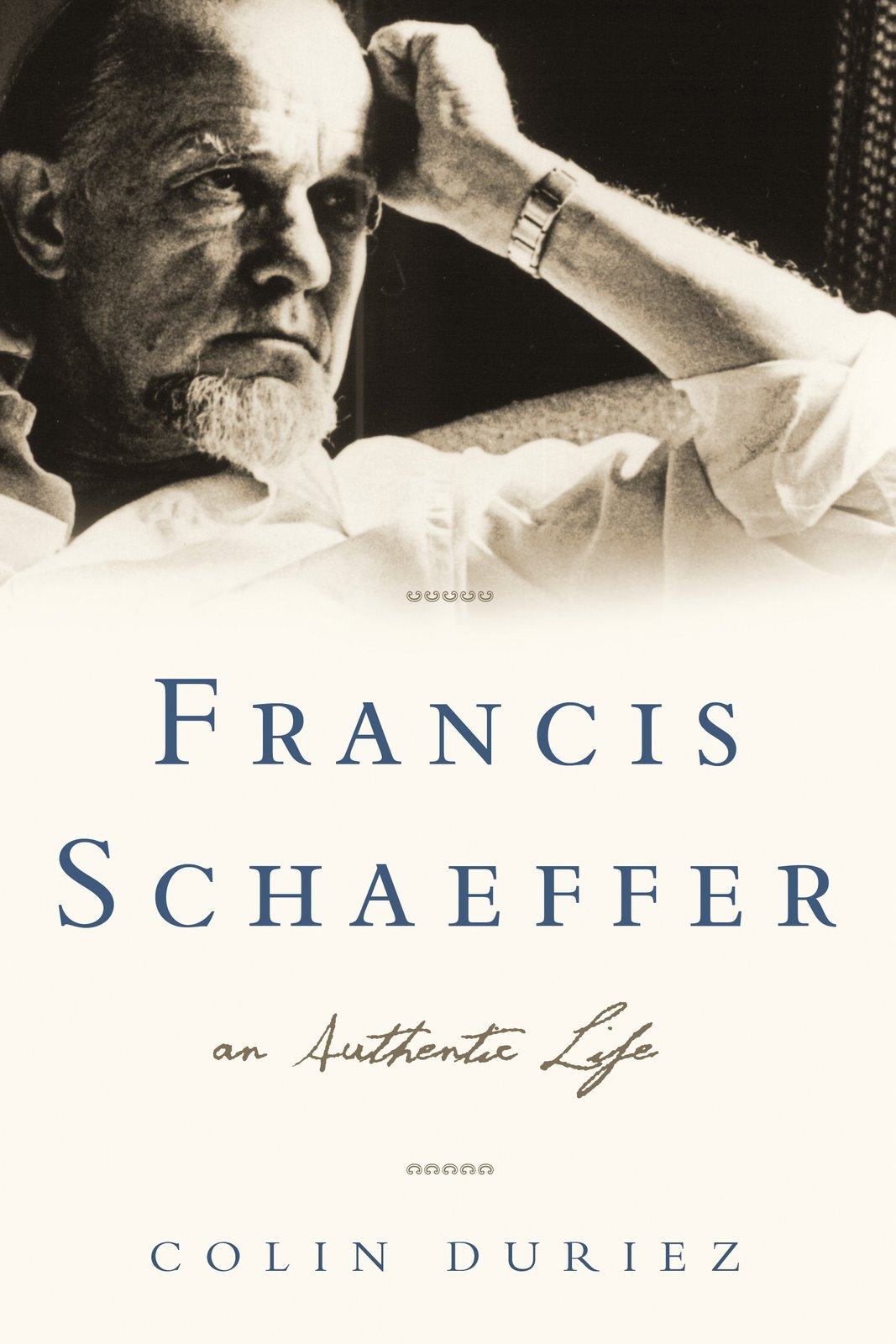 Francis Schaeffer
 Hopefully this list of things you can do will be a real help as you seek the Lord about how you can stand with Him against abortion. If you haven’t already read “Abortion: Attitudes For Action”, please read it. It’s not only important to find out what to do, but also the attitude of heart in which to do it.
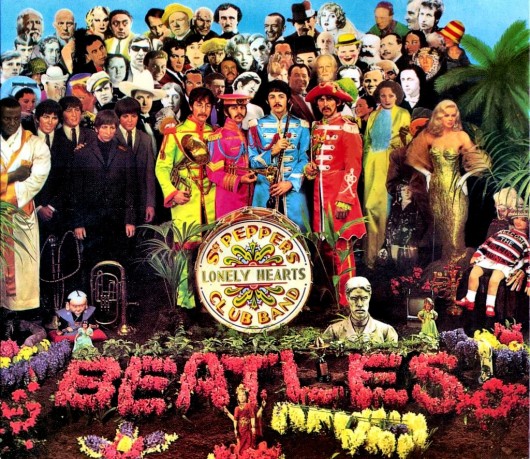



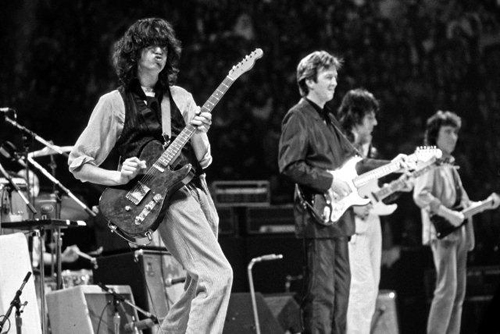


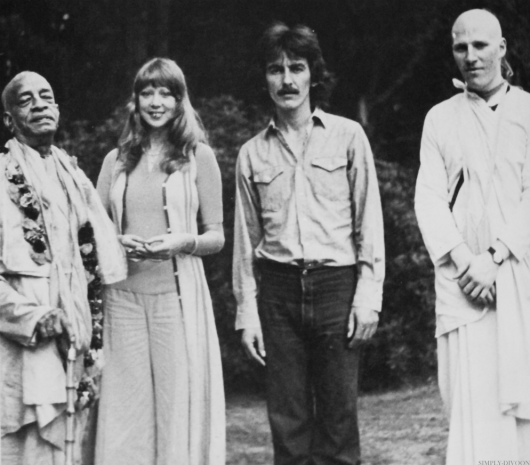


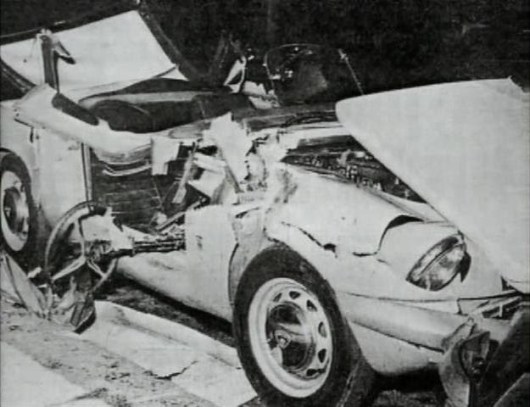
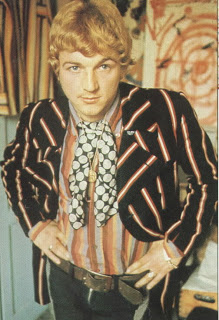
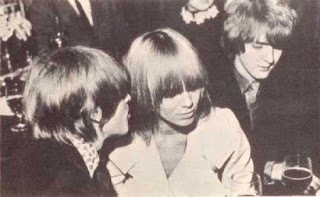



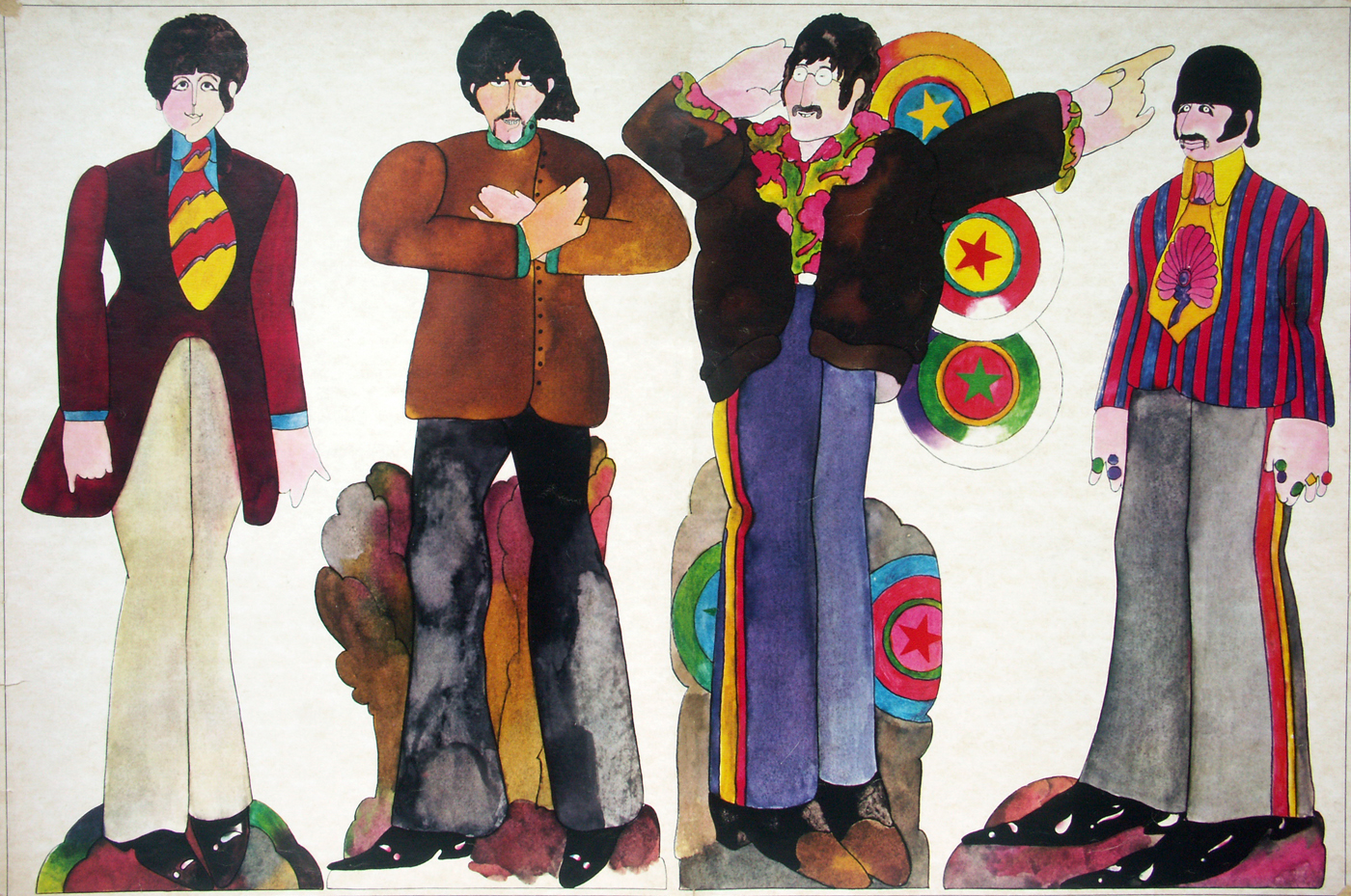

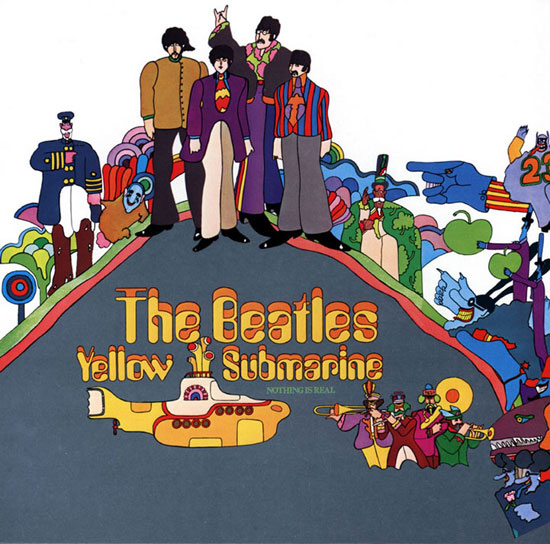










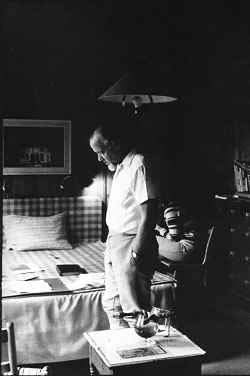
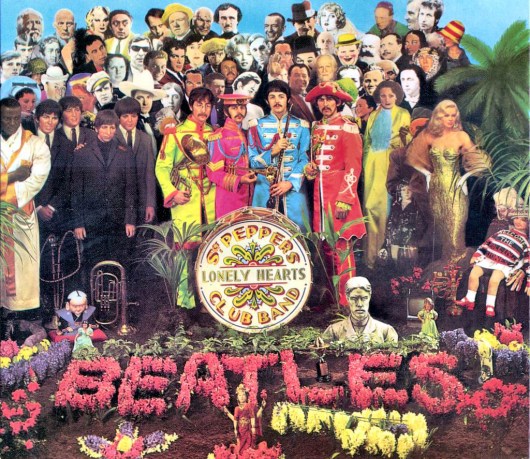


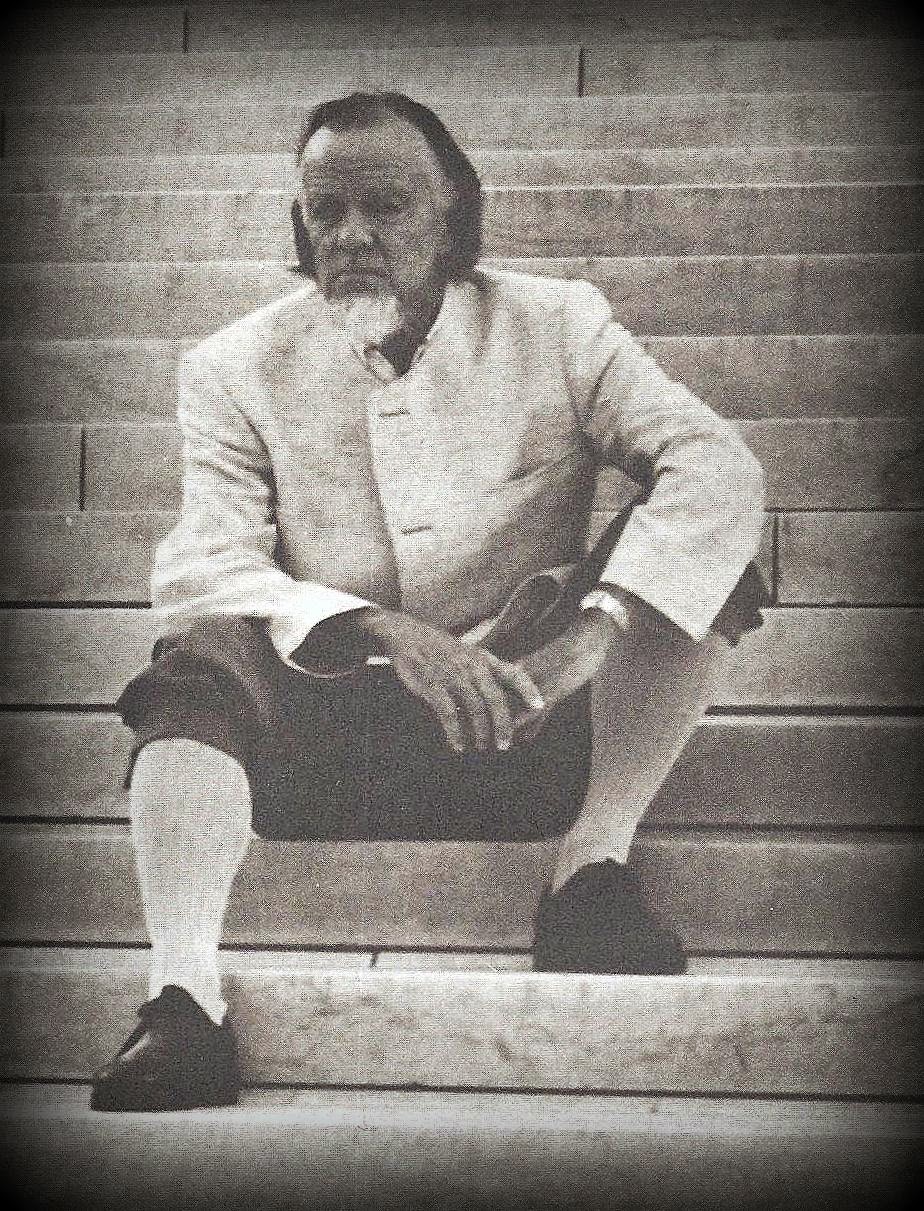


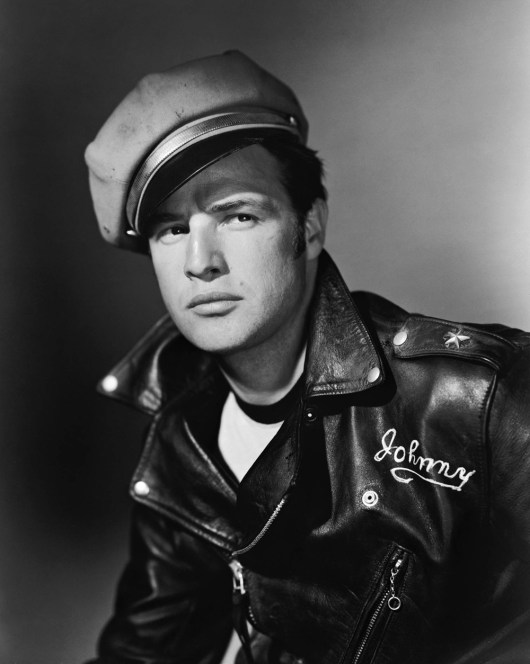


 The Daily Hatch

Thank you, professor. I only originally knew of Schaeffer through Piper’s “Pastor As Scholar” discussion. Recently when our church gave away our library books, I found The God Who Is There, Death In the City, and Genesis In Space and Time. I had those books on my shelf for a year l, but started reading the God Who Is There a couple of weeks ago. I absolutely fell in love with his thinking and understanding if man’s despair, need for a universal unifying truth, and the way Schaeffer opened up my eyes to famous artists and what they were trying to accomplish. (I knew of John Cage years ago and hated his music, but Schaeffer really made sense of him for me.) So I have decided to plow through everything else Schaeffer wrote.
By the way, I enjoyed this article of yours. I am a GGBTS student in California, possibly transferring my units to SEBTS online. I hope to have the privilege of taking a course with you.
Your comment is awaiting moderation.
By the way I have reblogged this fine article today on my blog.
I am Everette Hatcher and in the 1970’s and 1980’s I was a member of Bellevue Baptist in Memphis where Adrian Rogers was pastor and was a student at Evangelical Christian School from the 5th grade to the 12th grade where I was introduced to the books and films of Francis Schaeffer. At ECS my favorite teacher was Mark Brink who actually played both film series to us (WHATEVER HAPPENED TO THE HUMAN RACE? and HOW SHOULD WE THEN LIVE?) during our senior year and believe it or not after I graduated I would come back and join some of his future classes when the film was playing again because I couldn’t get enough of Schaeffer’s film series!!!!
During this time I was amazed at how many prominent figures in the world found their way into the works of both Adrian Rogers and Francis Schaeffer and I wondered what it would be like if these individuals were exposed to the Bible and the gospel. Therefore, over 20 years ago I began sending the messages of Adrian Rogers and portions of the works of Francis Schaeffer to many of the secular figures that they mentioned in their works. Let me give you some examples and tell you about some lessons that I have learned.
I have learned several things about atheists in the last 20 years while I have been corresponding with them. First, they know in their hearts that God exists and they can’t live as if God doesn’t exist, but they will still search in some way in their life for a greater meaning. Second, many atheists will take time out of their busy lives to examine the evidence that I present to them. Third, there is hope that they will change their views.
Let’s go over again a few points I made at the first of this post. My first point is backed up by Romans 1:18-19 (Amplified Bible) ” For God’s wrath and indignation are revealed from heaven against all ungodliness and unrighteousness of men, who in their wickedness REPRESS and HINDER the truth and make it inoperative. For that which is KNOWN about God is EVIDENT to them and MADE PLAIN IN THEIR INNER CONSCIOUSNESS, because God has SHOWN IT TO THEM,”(emphasis mine). I have discussed this many times on my blog and even have interacted with many atheists from CSICOP in the past. (I first heard this from my pastor Adrian Rogers back in the 1980’s.)
My second point is that many atheists will take the time to consider the evidence that I have presented to them and will respond. The late Adrian Rogers was my pastor at Bellevue Baptist when I grew up and I sent his sermon on evolution and another on the accuracy of the Bible to many atheists to listen to and many of them did. I also sent many of the arguments from Francis Schaeffer also.
Francis Schaeffer’s words would be quoted in many of these letters that I would send to famous skeptics and I would always include audio messages from Adrian Rogers. Perhaps Schaeffer’s most effective argument was concerning Romans 1 and how a person could say that he didn’t believe that the world had a purpose or meaning but he could not live that way in the world that God created and with the conscience that every person is born with.
Google “Adrian Rogers Francis Schaeffer” and the first 4 things that come up will be my blog posts concerning effort to reach these atheists. These two great men proved that the scriptures Hebrews 4:12 and Isaiah 55:11 are true, “For the word of God is alive and active. Sharper than any double-edged sword, it penetrates even to dividing soul and spirit, joints and marrow; it judges the thoughts and attitudes of the heart.” and “so is my word that goes out from my mouth: It will not return to me empty, but will accomplish what I desire and achieve the purpose for which I sent it.”