Monthly Archives: February 2022

EXCLUSIVE: Rand Paul Encourages Truckers to Come to America and ‘Clog Cities Up’ 

—-

EXCLUSIVE: Rand Paul Encourages Truckers to Come to America and ‘Clog Cities Up’

 width=

“Civil disobedience is a time-honored tradition in our country,'” Sen. Rand Paul tells The Daily Signal, “from slavery to civil rights, you name it.” (Photo: The Daily Signal)

Sen. Rand Paul of Kentucky is “all for” trucker convoys coming to the United States.

The Republican senator discussed the Canadian “Freedom Convoy” during a Thursday interview with The Daily Signal following an NBC News report that a similar trucker convoy may form for this weekend’s Super Bowl in Los Angeles–and potentially come to Washington, D.C., for the State of the Union address in early March. 

“I’m all for it,” Paul said. “Civil disobedience is a time-honored tradition in our country, from slavery to civil rights, you name it. Peaceful protest, clog things up, make people think about the mandates.”

“And some of this, we started,” he added. “We put [COVID-19] mandates on truckers coming across the border from Canada so then they put mandates on, and the truckers are annoyed. They’re riding in a cab by themselves, most of them for eight, 10-hour long hauls, and they just want to do what they want to do. It’s their own business.”

That’s the way health care used to be, Paul said, noting that health care decisions used to be “your own business” between an individual and his doctor. 

“I hope the truckers do come to America,” he said, asked how he thinks Washington would handle such a convoy.

“It’d be great, but the thing is, it wouldn’t shut the city down because the government workers haven’t come to work in two years anyway,” Paul added. “I don’t know if it’ll affect D.C. It’d be a nice change. We’d actually have some traffic.” 

Paul criticized House Speaker Nancy Pelosi for closing down the United States Capitol for “God knows what reason,” pointing out that both in-person office work and tourism have dwindled in the nation’s capital.  

“I hope they clog up cities,” the Kentucky Republican said of the truckers. “And we’re seeing a break in the dam now. Several Democratic governors are finally sort of relinquishing.”

“What they’re finding is, moms and dads are upset about this,” the senator added. “They’re not just Republican. Everybody’s upset about this. They’re annoyed that their little kids have to be in a mask.”

But the realities of masking and other pandemic restrictions are beginning to break through, Paul said:

Even CNN, you got the Dr. Fauci acolyte, that woman’s like, ‘Oh, facial masks are now just simply decorations.’ She’s admitting the truth. That’s what they’ve been the whole time, but she’s finally admitting it. So even people who only watch CNN are finally getting the understanding that the masks don’t work and they’re starting to push back too.

Have an opinion about this article? To sound off, please email letters@DailySignal.com and we’ll consider publishing your edited remarks in our regular “We Hear You” feature. Remember to include the url or headline of the article plus your name and town and/or state.


XXXXXX

The Honorable Representative Fred Upton of Michigan Washington D.C.

Dear Representative Fred Upton, 

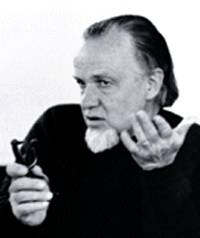
I noticed that you are a pro-life representative that has a long record of standing up for unborn babies! It was in the 1970’s when I was first introduced to the works of Francis Schaeffer and Dr. C. Everett Koop and I wanted to commend their writings and films to you.

I recently read about your pro-life record:

Voted YES on making it a crime to harm a fetus during another crime.

Vote to pass a bill that would make it a criminal offense to harm or kill a fetus during the commission of a violent crime. The measure would set criminal penalties, the same as those that would apply if harm or death happened to the pregnant woman, for those who harm a fetus. It is not required that the individual have prior knowledge of the pregnancy or intent to harm the fetus. This bill prohibits the death penalty from being imposed for such an offense. The bill states that its provisions should not be interpreted to apply a woman’s actions with respect to her pregnancy.

Reference: Unborn Victims of Violence Act; Bill HR 1997 ; vote number 2004-31 on Feb 26, 2004

Voted YES on banning partial-birth abortion except to save mother’s life.

Partial-Birth Abortion Ban Act of 2003: Vote to pass a bill banning a medical procedure, which is commonly known as “partial-birth” abortion. The procedure would be allowed only in cases in which a women’s life is in danger, not for cases where a women’s health is in danger. Those who performed this procedure, would face fines and up to two years in prison, the women to whom this procedure is performed on are not held criminally liable.

Reference: Bill sponsored by Santorum, R-PA; Bill S.3 ; vote number 2003-530 on Oct 2, 2003

It seems you have a grudge against President Trump while our freedoms under President Biden are being taken away. I recommend to you the article below:

The January 6 Insurrection Hoax

 • Volume 50, Number 9 • Roger Kimball

Roger Kimball
Editor and Publisher, The New Criterion

Mr. Kimball concludes his article with these words: 

That’s one melancholy lesson of the January 6 insurrection hoax: that America is fast mutating from a republic, in which individual liberty is paramount, into an oligarchy, in which conformity is increasingly demanded and enforced.

Another lesson was perfectly expressed by Donald Trump when he reflected on the unremitting tsunami of hostility that he faced as President. “They’re after you,” he more than once told his supporters. “I’m just in the way.”


Bingo.

You can google and get Roger Kimball article “The January 6 Insurrection Hoax”

NOW WHAT DID YOU DO TO TURN YOUR BACK ON OUR LIBERTY AND PERPETUATE THE HOAX THAT JANUARY 6TH WAS AN INSURRECTION? Read below!! 

9 Republicans voted to hold Trump aide Bannon in contempt of Congress


There were a few Republicans Thursday who surprised observers when they voted in support of holding former Trump adviser Steve Bannon in contempt of Congress and referring him to the Justice Department for criminal prosecution.

Prior to the vote, four Republicans were considered a lock to approve the criminal referral, according to Capitol Hill sources: Reps. Liz Cheney of Wyoming, Adam Kinzinger of Illinois, Fred Upton of Michigan and Anthony Gonzalez of Ohio.


Cheney and Kinzinger are on the House select committee investigating the Jan. 6 insurrection at the U.S. Capitol, and have for months stood alone as the only two House Republicans willing to speak out against former President Donald Trump’s continued lies about the 2020 election. They were the only two House Republicans to vote for the formation of the select committee on June 30.

House Speaker Nancy Pelosi formed the select committee after Republicans rejected a bipartisan commission that would have been evenly split between five Democrats and five Republicans. Only 35 Republicans voted for that measure when itpassed the House of Representatives, and it was defeated by a GOP filibuster in the Senate.

WASHINGTON, DC - JULY 27:  (L-R) Rep. Jamie Raskin (D-MD), Rep. Liz Cheney (R-WY) and Rep. Adam Kinzinger (R-IL) arrive for the House Select Committee hearing investigating the January 6 attack on the U.S. Capitol on July 27, 2021 at the Canon House Office Building in Washington, DC. Members of law enforcement will testify about the attack by supporters of former President Donald Trump on the U.S. Capitol. According to authorities, about 140 police officers were injured when they were trampled, had objects thrown at them, and sprayed with chemical irritants during the insurrection. (Photo by Drew Angerer/Getty Images)


More

Upton has served in the House for more than three decades, since 1987, and will face a primary challenge next year because of his willingness to stand up to Trump.

Gonzalez is retiring from Congress next year, after only four years in the House. “While my desire to build a fuller family life is at the heart of my decision, it is also true that the current state of our politics, especially many of the toxic dynamics inside our own party, is a significant factor in my decision,” Gonzalez said in September when heannounced he would not seek another term.


The remaining five Republicans included three who voted for impeachment — Peter Meijer of Michigan, John Katko of New York and Jaime Herrera Beutler of Washington — and two House Republicans who did not vote to impeach Trump: Nancy Mace of South Carolina and Brian Fitzpatrick of Pennsylvania.

FROM TUCKER CARLSON SHOW OF SEPTEMBER 24, 2021:

Now, we’ve watched this happen all this year in real time, we’re living through distorted history as we watch the offense of January 6th described by everyone. Here is how the media describe what happened that day that day.

(BEGIN VIDEO CLIP)

TARA SETMAYER, CNN POLITICAL COMMENTATOR: That day will be another day that lives in infamy in American History similar to Pearl Harbor and 9/11.

SEN. CHUCK SCHUMER (D-NY): We can now add January 6, 2021 to that very short list of dates in American History that will live forever in infamy.

JOE BIDEN (D), PRESIDENT OF THE UNITED STATES: The worst attack on our democracy since the Civil War.

ANDERSON COOPER, CNN HOST: A hundred and fifty days since the worst single act of political violence since the Civil War.

CHRIS HAYES, MSNBC HOST: The worst attack on American democracy arguably probably since the Civil War.

Do you realize that Americans rights are being taken away from them and would you like an example? I am going to quote Mr. Kimball again.  You can google and get Roger Kimball article “The January 6 Insurrection Hoax”

Trump seems never to have discerned what a viper’s nest our politics has become for anyone who is not a paid-up member of The Club. 

Maybe Trump understands this now. I have no insight into that question. I am pretty confident, though, that the 74 plus million people who voted for him understand it deeply. It’s another reason that The Club should be wary of celebrating its victory too expansively. 

Friedrich Hayek took one of the two epigraphs for his book, The Road to Serfdom, from the philosopher David Hume. “It is seldom,” Hume wrote, “that liberty of any kind is lost all at once.” Much as I admire Hume, I wonder whether he got this quite right. Sometimes, I would argue, liberty is erased almost instantaneously.

I’d be willing to wager that Joseph Hackett, confronted with Hume’s observation, would express similar doubts. I would be happy to ask Mr. Hackett myself, but he is inaccessible. If the ironically titled “Department of Justice” has its way, he will be inaccessible for a long, long time—perhaps as long as 20 years. 

Joseph Hackett, you see, is a 51-year-old Trump supporter and member of an organization called the Oath Keepers, a group whose members have pledged to “defend the Constitution against all enemies foreign and domestic.” The FBI does not like the Oath Keepers—agents arrested its leader in January and have picked up many other members in the months since. Hackett traveled to Washington from his home in Florida to join the January 6 rally. According to court documents, he entered the Capitol at 2:45 that afternoon and left some nine minutes later, at 2:54. The next day, he went home. On May 28, he was apprehended by the FBI and indicted on a long list of charges, including conspiracy, obstruction of an official proceeding, destruction of government property, and illegally entering a restricted building. 

As far as I have been able to determine, no evidence of Hackett destroying property has come to light. According to his wife, it is not even clear that he entered the Capitol. But he certainly was in the environs. He was a member of the Oath Keepers. He was a supporter of Donald Trump. Therefore, he must be neutralized.

Joseph Hackett is only one of hundreds of citizens who have beenbranded as “domestic terrorists” trying to “overthrow the government” and who are now languishing, in appalling conditions, jailed as political prisoners of an angry state apparat.

—-

I want to recommend to you a video on YOU TUBE that runs 28 minutes and 39 seconds by Francis Schaeffer entitled because it discusses the founding of our nation and what the FOUNDERS believed: 

How Should We Then Live | Season 1 | Episode 5 | The Revolutionary Age


Thank you for your time, and again I want to thank you for your support of the unborn little babies!

Sincerely,

Everette Hatcher, 13900 Cottontail Lane, AR 72002, cell 501-920-5733, everettehatcher@gmail.com, http://www.thedailyhatch.org

——————————————————————————————

——

Dr. Francis schaeffer How Should We Then Live | Season 1 | Episode 5 | The Revolutionary Age


– Whatever happened to human race? PART 1 Co-authored by Francis Schaeffer and Dr. C. Everett Koop)

C. Everett Koop
C. Everett Koop, 1980s.jpg
 
13th Surgeon General of the United States
In office
January 21, 1982 – October 1, 1989

Dr. Francis Schaeffer – Whatever Happened To The Human Race? | Episode 2 | Slaughter of the Innocents

Francis Schaeffer – Whatever Happened To The Human Race? | Episode 3 | Death by Someone’s Choice

Mr. Hentoff with the clarinetist Edmond Hall in 1948 at the Savoy, a club in Boston.

Dr. Francis Schaeffer – Whatever Happened To The Human Race? | Episode 4 | The Basis for Human Dignity 

Image<img class=”i-amphtml-blurry-placeholder” src=”data:;base64,Edith Schaeffer with her husband, Francis Schaeffer, in 1970 in Switzerland, where they founded L’Abri, a Christian commune.

________________

______________________

March 23, 2021

President Biden c/o The White House 1600 Pennsylvania Avenue NW Washington, DC 20500

Dear Mr. President,

I really do respect you for trying to get a pulse on what is going on out here. I know that you don’t agree with my pro-life views but I wanted to challenge you as a fellow Christian to re-examine your pro-choice view. Although we are both Christians and have the Bible as the basis for our moral views, I did want you to take a close look at the views of the pro-life atheist Nat Hentoff too.  Hentoff became convinced of the pro-life view because of secular evidence that shows that the unborn child is human. I would ask you to consider his evidence and then of course reverse your views on abortion.

___________________

The pro-life atheist Nat Hentoff wrote a fine article below I wanted to share with you.

Nat Hentoff is an atheist, but he became a pro-life activist because of the scientific evidence that shows that the unborn child is a distinct and separate human being and even has a separate DNA. His perspective is a very intriguing one that I thought you would be interested in. I have shared before many   cases (Bernard Nathanson, Donald Trump, Paul Greenberg, Kathy Ireland)    when other high profile pro-choice leaders have changed their views and this is just another case like those. I have contacted the White House over and over concerning this issue and have even received responses. I am hopeful that people will stop and look even in a secular way (if they are not believers) at this abortion debate and see that the unborn child is deserving of our protection.That is why the writings of Nat Hentoff of the Cato Institute are so crucial.

In the film series “WHATEVER HAPPENED TO THE HUMAN RACE?” the arguments are presented  against abortion (Episode 1),  infanticide (Episode 2),   euthanasia (Episode 3), and then there is a discussion of the Christian versus Humanist worldview concerning the issue of “the basis for human dignity” in Episode 4 and then in the last episode a close look at the truth claims of the Bible.

Francis Schaeffer

__________________________

I truly believe that many of the problems we have today in the USA are due to the advancement of humanism in the last few decades in our society. Ronald Reagan appointed the evangelical Dr. C. Everett Koop to the position of Surgeon General in his administration. He partnered with Dr. Francis Schaeffer in making the video below. It is very valuable information for Christians to have.  Actually I have included a video below that includes comments from him on this subject.

Francis Schaeffer Whatever Happened to the Human Race (Episode 1) ABORTION

_____________________________________


Dr. Francis schaeffer – from Part 5 of Whatever happened to human race?) Whatever Happened To The Human Race? | Episode 5 | Truth and History

Dr. Francis Schaeffer – A Christian Manifesto – Dr. Francis Schaeffer Lecture

Francis Schaeffer – A 700 Club Special! ~ Francis Schaeffer 1982

Dr. Francis Schaeffer – 1984 SOUNDWORD LABRI CONFERENCE VIDEO – Q&A With Francis & Edith Schaeffer

________________

Jewish World Review June 12, 2006/ 16 Sivan, 5766


Insisting on life

http://www.NewsandOpinion.com | A longtime friend of mine is married to a doctor who also performs abortions. At the dinner table one recent evening, their 9-year-old son — having heard a word whose meaning he didn’t know — asked, “What is an abortion?” His mother, choosing her words carefully, described the procedure in simple terms.

“But,” said her son, “that means killing the baby.” The mother then explained that there are certain months during which an abortion cannot be performed, with very few exceptions. The 9-year-old shook his head. “But,” he said, “it doesn’t matter what month. It still means killing the babies.”

Hearing the story, I wished it could be repeated to the justices of the Supreme Court, in the hope that at least five of them might act on this 9-year-old’s clarity of thought and vision.

The boy’s spontaneous insistence on the primacy of life also reminded me of a powerful pro-life speaker and writer who, many years ago, helped me become a pro-lifer. He was a preacher, a black preacher. He said: “There are those who argue that the right to privacy is of a higher order than the right to life.

“That,” he continued, “was the premise of slavery. You could not protest the existence or treatment of slaves on the plantation because that was private and therefore out of your right to be concerned.”

This passionate reverend used to warn: “Don’t let the pro-choicers convince you that a fetus isn’t a human being. That’s how the whites dehumanized us … The first step was to distort the image of us as human beings in order to justify what they wanted to do — and not even feel they’d done anything wrong.”

That preacher was Jesse Jackson. Later, he decided to run for the presidency — and it was a credible campaign that many found inspiring in its focus on what still had to be done on civil rights. But Jackson had by now become “pro-choice” — much to the appreciation of most of those in the liberal base.

The last time I saw Jackson was years later, on a train from Washington to New York. I told him of a man nominated, but not yet confirmed, to a seat on a federal circuit court of appeals. This candidate was a strong supporter of capital punishment — which both the Rev. Jackson and I oppose, since it involves the irreversible taking of a human life by the state.

I asked Jackson if he would hold a press conference in Washington, criticizing the nomination, and he said he would. The reverend was true to his word; the press conference took place; but that nominee was confirmed to the federal circuit court. However, I appreciated Jackson’s effort.

On that train, I also told Jackson that I’d been quoting — in articles, and in talks with various groups — from his compelling pro-life statements. I asked him if he’d had any second thoughts on his reversal of those views.

Usually quick to respond to any challenge that he is not consistent in his positions, Jackson paused, and seemed somewhat disquieted at my question. Then he said to me, “I’ll get back to you on that.” I still patiently await what he has to say.

As time goes on, my deepening concern with the consequences of abortion is that its validation by the Supreme Court, as a constitutional practice, helps support the convictions of those who, in other controversies — euthanasia, assisted suicide and the “futility doctrine” by certain hospital ethics committees — believe that there are lives not worth continuing.

Around the time of my conversation with Jackson on the train, I attended a conference on euthanasia at Clark College in Worcester, Mass. There, I met Derek Humphry, the founder of the Hemlock Society, and already known internationally as a key proponent of the “death with dignity” movement.

He told me that for some years in this country, he had considerable difficulty getting his views about assisted suicide and, as he sees it, compassionate euthanasia into the American press.

“But then,” Humphry told me, “a wonderful thing happened. It opened all the doors for me.”

“What was that wonderful thing?” I asked.

“Roe v. Wade,” he answered.

The devaluing of human life — as the 9-year-old at the dinner table put it more vividly — did not end with making abortion legal, and therefore, to some people, moral. The word “baby” does not appear in Roe v. Wade — let alone the word “killing.”

And so, the termination of “lives not worth living” goes on.


______________________

Thank you so much for your time. I know how valuable it is. I also appreciate the fine family that you have and your commitment as a father and a husband. Now after presenting the secular approach of Nat Hentoff I wanted to make some comments concerning our shared Christian faith.  I  respect you for putting your faith in Christ for your eternal life. I am pleading to you on the basis of the Bible to please review your religious views concerning abortion. It was the Bible that caused the abolition movement of the 1800’s and it also was the basis for Martin Luther King’s movement for civil rights and it also is the basis for recognizing the unborn children.

Sincerely,

Everette Hatcher III, 13900 Cottontail Lane, Alexander, AR 72002, ph 501-920-5733,

Related posts:

Al Mohler on Kermit Gosnell’s abortion practice

Francis Schaeffer: “Whatever Happened to the Human Race” (Episode 1) ABORTION OF THE HUMAN RACE Published on Oct 6, 2012 by AdamMetropolis ________________ Picture of Francis Schaeffer and his wife Edith from the 1930′s above. I was sad to read about Edith passing away on Easter weekend in 2013. I wanted to pass along this fine […]

Taking on Ark Times Bloggers on various issues Part U “Do men have a say in the abortion debate?” (includes the film SLAUGHTER OF THE INNOCENTS and editorial cartoon)

I have gone back and forth and back and forth with many liberals on the Arkansas Times Blog on many issues such as abortion, human rights, welfare, poverty, gun control  and issues dealing with popular culture. Here is another exchange I had with them a while back. My username at the Ark Times Blog is Saline […]

Taking on Ark Times Bloggers on various issues Part T “Abortion is a dirty business” (includes video “Truth and History” and editorial cartoon)

I have gone back and forth and back and forth with many liberals on the Arkansas Times Blog on many issues such as abortion, human rights, welfare, poverty, gun control  and issues dealing with popular culture. Here is another exchange I had with them a while back. My username at the Ark Times Blog is Saline […]

“Sanctity of Life Saturday” Abortion supporters lying in order to further their clause? Window to the Womb (includes video ABORTION OF THE HUMAN RACE)

It is truly sad to me that liberals will lie in order to attack good Christian people like state senator Jason Rapert of Conway, Arkansas because he headed a group of pro-life senators that got a pro-life bill through the Arkansas State Senate the last week of January in 2013. I have gone back and […]

Taking on Ark Times Bloggers on various issues Part D “If you can’t afford a child can you abort?”Francis Schaeffer Quotes part 4 includes the film ABORTION OF THE HUMAN RACE) (editorial cartoon)

I have gone back and forth and back and forth with many liberals on the Arkansas Times Blog on many issues such as abortion, human rights, welfare, poverty, gun control  and issues dealing with popular culture. Here is another exchange I had with them a while back. My username at the Ark Times Blog is Saline […]

Taking on Ark Times Bloggers on various issues Part C “Abortion” (Francis Schaeffer Quotes part 3 includes the film SLAUGHTER OF THE INNOCENTS) (editorial cartoon)

I have gone back and forth and back and forth with many liberals on the Arkansas Times Blog on many issues such as abortion, human rights, welfare, poverty, gun control  and issues dealing with popular culture. Here is another exchange I had with them a while back. My username at the Ark Times Blog is Saline […]

Taking on Ark Times Bloggers on various issues Part B “Gendercide” (Francis Schaeffer Quotes Part 2 includes the film ABORTION OF THE HUMAN RACE) (editorial cartoon)

I have gone back and forth and back and forth with many liberals on the Arkansas Times Blog on many issues such as abortion, human rights, welfare, poverty, gun control  and issues dealing with popular culture. Here is another exchange I had with them a while back. My username at the Ark Times Blog is Saline […]


SANCTITY OF LIFE SATURDAY “AngryOldWoman” blogger argues that she has no regrets about past abortion

Sometimes you can see evidences in someone’s life of how content they really are. I saw  something like that on 2-8-13 when I confronted a blogger that goes by the name “AngryOldWoman” on the Arkansas Times Blog. See below. Leadership Crisis in America Published on Jul 11, 2012 Picture of Adrian Rogers above from 1970′s […]


“Sanctity of Life Saturday” The Church Awakens: Whatever Happened to the Human Race? (includes the video ABORTION OF THE HUMAN RACE)

In the film series “WHATEVER HAPPENED TO THE HUMAN RACE?” the arguments are presented  against abortion (Episode 1),  infanticide (Episode 2),   euthenasia (Episode 3), and then there is a discussion of the Christian versus Humanist worldview concerning the issue of “the basis for human dignity” in Episode 4 and then in the last episode a close […]

Taking on Ark Times Bloggers on various issues Part H “Are humans special?” includes film ABORTION OF THE HUMAN RACE) Reagan: ” To diminish the value of one category of human life is to diminish us all”

I have gone back and forth and back and forth with many liberals on the Arkansas Times Blog on many issues such as abortion, human rights, welfare, poverty, gun control  and issues dealing with popular culture. Here is another exchange I had with them a while back. My username at the Ark Times Blog is Saline […]

Taking on Ark Times Bloggers on various issues Part G “How do moral nonabsolutists come up with what is right?” includes the film “ABORTION OF THE HUMAN RACE”)

I have gone back and forth and back and forth with many liberals on the Arkansas Times Blog on many issues such as abortion, human rights, welfare, poverty, gun control  and issues dealing with popular culture. Here is another exchange I had with them a while back. My username at the Ark Times Blog is Saline […]

Taking on Ark Times Bloggers on various issues Part E “Moral absolutes and abortion” Francis Schaeffer Quotes part 5(includes the film SLAUGHTER OF THE INNOCENTS) (editorial cartoon)

I have gone back and forth and back and forth with many liberals on the Arkansas Times Blog on many issues such as abortion, human rights, welfare, poverty, gun control  and issues dealing with popular culture. Here is another exchange I had with them a while back. My username at the Ark Times Blog is Saline […]

Francis Schaeffer’s “How should we then live?” Video and outline of episode 10 “Final Choices” (Schaeffer Sundays)

E P I S O D E 1 0   Dr. Francis Schaeffer – Episode X – Final Choices 27 min FINAL CHOICES I. Authoritarianism the Only Humanistic Social Option One man or an elite giving authoritative arbitrary absolutes. A. Society is sole absolute in absence of other absolutes. B. But society has to be […]

Francis Schaeffer’s “How should we then live?” Video and outline of episode 9 “The Age of Personal Peace and Affluence” (Schaeffer Sundays)

E P I S O D E 9 Dr. Francis Schaeffer – Episode IX – The Age of Personal Peace and Affluence 27 min T h e Age of Personal Peace and Afflunce I. By the Early 1960s People Were Bombarded From Every Side by Modern Man’s Humanistic Thought II. Modern Form of Humanistic Thought Leads […]

Francis Schaeffer’s “How should we then live?” Video and outline of episode 8 “The Age of Fragmentation” (Schaeffer Sundays)

E P I S O D E 8 Dr. Francis Schaeffer – Episode VIII – The Age of Fragmentation 27 min I saw this film series in 1979 and it had a major impact on me. T h e Age of FRAGMENTATION I. Art As a Vehicle Of Modern Thought A. Impressionism (Monet, Renoir, Pissarro, Sisley, […]

Francis Schaeffer’s “How should we then live?” Video and outline of episode 7 “The Age of Non-Reason” (Schaeffer Sundays)

E P I S O D E 7 Dr. Francis Schaeffer – Episode VII – The Age of Non Reason I am thrilled to get this film series with you. I saw it first in 1979 and it had such a big impact on me. Today’s episode is where we see modern humanist man act […]

Francis Schaeffer’s “How should we then live?” Video and outline of episode 6 “The Scientific Age” (Schaeffer Sundays)

E P I S O D E 6 How Should We Then Live 6#1 Uploaded by NoMirrorHDDHrorriMoN on Oct 3, 2011 How Should We Then Live? Episode 6 of 12 ________ I am sharing with you a film series that I saw in 1979. In this film Francis Schaeffer asserted that was a shift in […]

Francis Schaeffer’s “How should we then live?” Video and outline of episode 5 “The Revolutionary Age” (Schaeffer Sundays)

E P I S O D E 5 How Should We Then Live? Episode 5: The Revolutionary Age I was impacted by this film series by Francis Schaeffer back in the 1970′s and I wanted to share it with you. Francis Schaeffer noted, “Reformation Did Not Bring Perfection. But gradually on basis of biblical teaching there […]

Francis Schaeffer’s “How should we then live?” Video and outline of episode 4 “The Reformation” (Schaeffer Sundays)

Dr. Francis Schaeffer – Episode IV – The Reformation 27 min I was impacted by this film series by Francis Schaeffer back in the 1970′s and I wanted to share it with you. Schaeffer makes three key points concerning the Reformation: “1. Erasmian Christian humanism rejected by Farel. 2. Bible gives needed answers not only as to […]

“Schaeffer Sundays” Francis Schaeffer’s “How should we then live?” Video and outline of episode 3 “The Renaissance”

Francis Schaeffer’s “How should we then live?” Video and outline of episode 3 “The Renaissance” Francis Schaeffer: “How Should We Then Live?” (Episode 3) THE RENAISSANCE I was impacted by this film series by Francis Schaeffer back in the 1970′s and I wanted to share it with you. Schaeffer really shows why we have so […]

Francis Schaeffer’s “How should we then live?” Video and outline of episode 2 “The Middle Ages” (Schaeffer Sundays)

  Francis Schaeffer: “How Should We Then Live?” (Episode 2) THE MIDDLE AGES I was impacted by this film series by Francis Schaeffer back in the 1970′s and I wanted to share it with you. Schaeffer points out that during this time period unfortunately we have the “Church’s deviation from early church’s teaching in regard […]

Francis Schaeffer’s “How should we then live?” Video and outline of episode 1 “The Roman Age” (Schaeffer Sundays)

Francis Schaeffer: “How Should We Then Live?” (Episode 1) THE ROMAN AGE   Today I am starting a series that really had a big impact on my life back in the 1970′s when I first saw it. There are ten parts and today is the first. Francis Schaeffer takes a look at Rome and why […]

By Everette Hatcher III | Posted in Francis Schaeffer | Edit | Comments (0)

What Is the Freedom Convoy? Trucker Protests in Canada Explained 

—-

Hundreds of trucks and other vehicles, organized under the Freedom Convoy 2022 banner, have clogged up traffic in Ottawa’s core.

Hundreds of trucks and other vehicles, organized under the Freedom Convoy 2022 banner, have clogged up traffic in Ottawa’s core.SPENCER PLATT/GETTY IMAGES


What Is the Freedom Convoy? Trucker Protests in Canada Explained

Economic blockades and other demonstrations form in opposition to the country’s Covid-19 restrictions and vaccine mandates


Since late January, downtown Ottawa has served as a parking lot for up to 500 heavy-duty trucks, pickup trucks and other vehicles, operated by individuals who say they are fed up with the social restrictions and vaccine mandates meant to contain the spread of Covid-19.

Some of the vehicles are adorned with Canadian flags, along with signs and slogans demanding their rights under the country’s constitution be restored—among them, the right to decline to get vaccinated for Covid-19—and that rules be abolished requiring vaccination to either work, travel or eat at the local pub. The convoy, organized under the Freedom Convoy 2022 banner, has clogged up traffic in the city’s core, forced some businesses to shut their doors, and disrupted residents’ daily lives. Tens of thousands of supporters have gathered near the country’s parliament on consecutive weekends to show their support.

Ottawa Mayor Jim Watson has requested an additional 1,800 law-enforcement officers from the Canadian government to help “quell the insurrection” in the capital. Ottawa’s police force employs 1,200 officers. “We must do everything in our power to take back the streets of Ottawa,” Mr. Watson said in a Feb. 7 letter to Prime Minister Justin Trudeau.

What is the Freedom Convoy and why are people protesting in Canada?

Protest organizers are operating under the banner Freedom Convoy 2022. According to a statement posted to their Facebook page, a small team of western Canadian truckers, family members and friends decided in mid-January to launch the protest, with truckers and supporters converging in the capital in a peaceful protest. The group said the number of trucks headed to Ottawa was in the 50,000 range. Police put the current figure at about 500.

The group’s goal is to compel all levels of government in Canada to repeal vaccine mandates—including one that applied to truckers as of Jan. 15—and other social restrictions, such as a ban on unvaccinated people from going to restaurants, bars and gyms. “Freedom is constantly at war with those who want to limit it, and it must be defended,” the statement said.

Protesters in the convoy say they are fed up with the social restrictions and vaccine mandates meant to contain the spread of Covid-19.

PHOTO: JUSTIN TANG/THE CANADIAN PRESS/ASSOCIATED PRESS

A spokeswoman and fundraiser for the group, Tamara Lich, said demonstrators “would not stay a day longer than necessary. Our departure will be based on the prime minister doing what is right.” Mr. Trudeau’s Liberal government implemented vaccine mandates affecting truckers—both Canada and the U.S. require truckers to be fully vaccinated to enter their countries—and would-be travelers on flights originating in Canada and long-distance passenger rail service.

How are the government and police responding to the protests?

Jim Watson, Ottawa’s mayor, declared a state of emergency in the city, effective Feb 6. The declaration doesn’t give the mayor or police any special powers, such as imposing a curfew. Rather, the move is an administrative step, which allows the city to enter into formal talks with the federal and provincial government for additional help—such as the request for 1,800 more officers.

Ottawa police shifted into a more aggressive modea week into the protest. As of Feb. 9, Ottawa police said they have made 23 arrests and issued 1,300 fines for violations such as excessive horn honking, public consumption of alcohol, and the use of fireworks. Police have also confiscated thousands of liters of fuel gathered by protesters, and warned of arrests for people trying to enter the main demonstration zone with fuel for trucks.

Ottawa’s mayor has requested additional law-enforcement officers from the Canadian government to respond to the protest.

PHOTO: LARS HAGBERG/REUTERS

Mr. Trudeau, along with other federal officials, have ruled out both heeding the protesters demands and entering in talks with the group. Mr. Trudeau has referred to the protesters as a “small fringe minority of people” who hold “unacceptable views that do not represent the views of Canadians who have been there for each other” during the pandemic.

Lawyers acting on behalf of an Ottawa resident succeeded this week in persuading a province of Ontario court to issue an order banning truckers from blaring their air horns. That order, issued Feb. 7, is valid for 10 days. Residents say incessant honking has disrupted their sleeping patterns and ability to work from home.

Who is supporting the Freedom Convoy?

Some lawmakers with Canada’s main political opposition, the Conservative Party, have expressed sympathy with the protesters’ cause. “Regardless of political stripe, we all want an end to the demonstrations, and we all want an end to the restrictions,” said Candice Bergen, Conservative interim leader. She’s called on protesters to remain peaceful and denounce any acts of hate. On the first days of the protest, images emerged of Confederate flags and banners with swastikas among the throngs of protesters—earning a stern rebuke from Mr. Trudeau and others.

The group’s goal is to compel all levels of government in Canada to repeal vaccine mandates and other social restrictions.

PHOTO: SPENCER PLATT/GETTY IMAGES

Among the truckers’ most vocal supporters is former President Donald Trump. Mr. Trump said ina statement on Feb. 4 that the convoy was “peacefully protesting the harsh policies” put forward by Mr. Trudeau, who he referred to as a “far left lunatic…who has destroyed Canada with insane Covid mandates.” Mr. Trump added that protesters would be free to communicate with each other on a social media platform he plans to launch.

Sen. Ted Cruz (R., Texas) tweeted his support for the protesters involved in the convoy on Feb. 6, saying, “They’re defending Canada, America, and they’re standing up for freedom!”


The protest group had raised over $10 million via the crowdfunding website GoFundMe, with proceeds, they said, to be distributed to protesters to cover the cost of fuel to drive to Ottawa and other expenses, such as accommodation and food. On Feb. 4, GoFundMe shut down the organizer’s money-raising drive, adding it would distribute refunds to donors. “We now have evidence from law enforcement that the previously peaceful demonstration has become an occupation, with police reports of violence and other unlawful activity,” GoFundMe said in a statement.

Organizers have since shifted to another crowdfunding website, GiveSendGo. As of Feb. 9, the protest group has raised nearly $8 million, with a goal of raising $16 million.


What is happening on the Ambassador Bridge?

A group of protesters, some saying they were inspired by the demonstration in Ottawa, was able to briefly shut down the Ambassador Bridge, a major trade corridor that connects Detroit with Canada. As of Feb. 8, some traffic from Canada can use the bridge to get to the U.S., whereas U.S. trucks and vehicles are unable to enter Canada via the corridor. Most commercial vehicles are diverting north to the Blue Water Bridge, which crosses the St. Clair River and is roughly 66 miles north of Detroit.

The economic ramifications were almost immediate. Detroit-based auto makers have scaled back production in the U.S. and Canada and temporarily sent employees home because of parts shortages caused by the protest at the bridge. 

The U.S. Department of Transportation has estimated that 30% of two-way trade between the U.S. and Canada—about $600 billion annually—is shipped on trucks over that bridge. “If they can stop traffic in Windsor-Detroit, what does this mean for” other key trade corridors, said Dennis Darby, president of the Canadian Manufacturers and Exporters.

Another group of truckers has also disrupted traffic at a border crossing between Montana and western Canada.

This article may be updated.

Write to Paul Vieira at Paul.Vieira@wsj.com


XXXXXXX


The Honorable Representative Anthony Gonzalez of Ohio,  Washington D.C.

Dear Representative Anthony Gonzalez, 

I noticed that you are a pro-life representative that has a long record of standing up for unborn babies! It was in the 1970’s when I was first introduced to the works of Francis Schaeffer and Dr. C. Everett Koop and I wanted to commend their writings and films to you.

I recently read about your impressive pro-life record:

Life begins at conception; endorsed by Ohio Right to Life

As the only candidate in this race that has been endorsed by Ohio Right to Life, I believe that life begins at conception and that all efforts must be made to protect the lives of the unborn. God’s greatest gift to this world is the life of a child, and I will work alongside anyone who is committed to the cause of life.

Source: 2018 OH-16 House campaign website AnthonyGonzalez.com , May 12, 2020

Pro-life, according to PVS survey.

Gonzalez opposes the PVS survey question on abortion rights

Project Vote Smart inferred whether candidates agree or disagree with the statement, ‘Abortion: Do you generally support pro-choice or pro-life legislation?’ PVS self-description: “The Political Courage Test provides voters with positions on key issues. Historically, candidates have failed to complete our test due to the advice they receive from their advisors and out of fear of negative attack ads.”

Source: PVS Survey 18PVS-1 on Aug 1, 2018

Sponsored bill to protect infant survivors of abortion.

Gonzalez co-sponsored Born-Alive Abortion Survivors Protection Act

S.311/H.R.962: Born-Alive Abortion Survivors Protection Act: Congress finds the following:

  • If an abortion results in the live birth of an infant, the infant is a legal person for all purposes under the laws of the United States, and entitled to all the protections of such laws.
  • (2) Any infant born alive after an abortion or within a hospital, clinic, or other facility has the same claim to the protection of the law that would arise for any newborn, or for any person who comes to a hospital, clinic, or other facility for screening and treatment or otherwise becomes a patient within its care.
  • In the case of an attempted abortion that results in a child born alive, any health care practitioner present at the time the child is born alive shall exercise the same degree of professional skill, care, and diligence to preserve the life and health of the child as a reasonably diligent and conscientious health care practitioner would render to any other child born alive at the same gestational age.

It seems you have a grudge against President Trump while our freedoms under President Biden are being taken away. I recommend to you the article below:

The January 6 Insurrection Hoax

 • Volume 50, Number 9 • Roger Kimball

Roger Kimball
Editor and Publisher, The New Criterion

Mr. Kimball concludes his article with these words: 

That’s one melancholy lesson of the January 6 insurrection hoax: that America is fast mutating from a republic, in which individual liberty is paramount, into an oligarchy, in which conformity is increasingly demanded and enforced.

Another lesson was perfectly expressed by Donald Trump when he reflected on the unremitting tsunami of hostility that he faced as President. “They’re after you,” he more than once told his supporters. “I’m just in the way.”


Bingo.

Let me recommend that you read this letter below from Senator Ron Johnson and his colleagues:

Sen. Johnson and Colleagues Request Answers from DOJ on Unequal Application of Justice to Protestors


WASHINGTON — U.S. Sen. Ron Johnson (R-Wis.), along with senators Tommy Tuberville (R-Ala.), Mike Lee (R-Utah), Rick Scott (R-Fla.), and Ted Cruz (R-Texas), sent a letter on Monday to Attorney General Merrick Garland requesting information on the unequal application of justice between the individuals who breached the Capitol on Jan. 6, and those involved in the unrest during the spring and summer of 2020. The senators sent 18 questions to the attorney general on what steps the DOJ has taken to prosecute individuals who committed crimes during both events, and requested a response by June 21.

“Americans have the constitutional right to peaceably assemble and petition the government for a redress of grievances,” the senators wrote. “This constitutional right should be cherished and protected. Violence, property damage, and vandalism of any kind should not be tolerated and individuals that break the law should be prosecuted. However, the potential unequal administration of justice with respect to certain protestors is particularly concerning.”


The full text of the letter can be found here and below.


June 7, 2021 

The Honorable Merrick B. Garland

Attorney General

U.S. Department of Justice

950 Pennsylvania Avenue, NW

Washington, DC 20530


Dear Attorney General Garland:

The U.S. Department of Justice (DOJ) is currently dedicating enormous resources and manpower to investigating and prosecuting the criminals who breached the U.S. Capitol on January 6, 2021. We fully support and appreciate the efforts by the DOJ and its federal, state and local law enforcement partners to hold those responsible fully accountable.

We join all Americans in the expectation that the DOJ’s response to the events of January 6 will result in rightful criminal prosecutions and accountability.  As you are aware, the mission of the DOJ is, among other things, to ensure fair and impartial administration of justice for all Americans.  Today, we write to request information about our concerns regarding potential unequal justice administered in response to other recent instances of mass unrest, destruction, and loss of life throughout the United States. 

During the spring and summer of 2020, individuals used peaceful protests across the country to engage in rioting and other crimes that resulted in loss of life, injuries to law enforcement officers, and significant property damage.[1]  A federal court house in Portland, Oregon, has been effectively under siege for months.[2]  Property destruction stemming from the 2020 social justice protests throughout the country will reportedly result in at least $1 billion to $2 billion in paid insurance claims.[3] 

                In June 2020, the DOJ reportedly compiled the following information regarding last year’s unrest:

  • “One federal officer [was] killed, 147 federal officers [were] injured and 600 local officers [were] injured around the country during the protests, frequently from projectiles.”[4]
  • According to the Bureau of Alcohol, Tobacco, Firearms and Explosives (ATF), “since the start of the unrest there has been 81 Federal Firearms License burglaries of an estimated loss of 1,116 firearms; 876 reported arsons; 76 explosive incidents; and 46 ATF arrests[.]”[5]

Despite these numerous examples of violence occurring during these protests, it appears that individuals charged with committing crimes at these events may benefit from infrequent prosecutions and minimal, if any, penalties.  According to a recent article, “prosecutors have approved deals in at least half a dozen federal felony cases arising from clashes between protesters and law enforcement in Oregon last summer. The arrangements — known as deferred resolution agreements — will leave the defendants with a clean criminal record if they stay out of trouble for a period of time and complete a modest amount of community service, according to defense attorneys and court records.”[6]       

                DOJ’s apparent unwillingness to punish these individuals who allegedly committed crimes during the spring and summer 2020 protests stands in stark contrast to the harsher treatment of the individuals charged in connection with the January 6, 2021 breach of the U.S. Capitol Building in Washington, D.C.  To date, DOJ has charged 510 individuals stemming from Capitol breach.[7]  DOJ maintains and updates a webpage that lists the defendants charged with crimes committed at the Capitol.  This database includes information such as the defendant’s name, charge(s), case number, case documents, location of arrest, case status, and informs readers when the entry was last updated.[8]  No such database exists for alleged perpetrators of crimes associated with the spring and summer 2020 protests.  It is unclear whether any defendants charged with crimes in connection with the Capitol breach have received deferred resolution agreements.

Americans have the constitutional right to peaceably assemble and petition the government for a redress of grievances.  This constitutional right should be cherished and protected.  Violence, property damage, and vandalism of any kind should not be tolerated and individuals that break the law should be prosecuted.  However, the potential unequal administration of justice with respect to certain protestors is particularly concerning.  In order to assist Congress in conducting its oversight work, we respectfully request answers to the following questions by June 21, 2021:  

Spring and Summer 2020 Unrest:

  1. Did federal law enforcement utilize geolocation data from defendants’ cell phones to track protestors associated with the unrest in the spring and summer of 2020?  If so, how many times and for which locations/riots?  
  1. How many individuals who may have committed crimes associated with protests in the spring and summer of 2020 were arrested by law enforcement using pre-dawn raids and SWAT teams?
  1. How many individuals were incarcerated for allegedly committing crimes associated with protests in the spring and summer of 2020? 
  1. How many of these individuals are or were placed in solitary confinement?  What was the average amount of consecutive days such individuals were in solitary confinement?
  1. How many of these individuals have been released on bail?
  1. How many of these individuals were released on their own recognizance or without being required to post bond?
  1. How many of these individuals were offered deferred resolution agreements?[9]
  1. How many DOJ prosecutors were assigned to work on cases involving defendants who allegedly committed crimes associated with protests in the spring and summer of 2020?
  1. How many FBI personnel were assigned to work on cases involving defendants who allegedly committed crimes associated with protests in the spring and summer of 2020?

January 6, 2021 U.S. Capitol Breach:

  1. Did federal law enforcement utilize geolocation data from defendants’ cell phones to track protestors associated with the January 6, 2021 protests and Capitol breach?  If so, how many times and how many additional arrests resulted from law enforcement utilizing geolocation information?
  2. How many individuals who may have committed crimes associated with the Capitol breach were arrested by law enforcement using pre-dawn raids and SWAT teams?
  1. How many individuals are incarcerated for allegedly committing crimes associated with the Capitol breach?
  1. How many of these individuals are or were placed in solitary confinement?  What was the average amount of consecutive days such individuals were in solitary confinement?
  1. How many of these individuals have been released on bail?
  1. How many of these individuals have been released on their own recognizance or without being required to post bond?
  1. How many of these individuals were offered deferred resolution agreements?
  1. How many DOJ prosecutors have been assigned to work on cases involving defendants who allegedly committed crimes associated with the Capitol breach?
  1. How many FBI personnel were assigned to work on cases involving defendants who allegedly committed crimes associated with the Capitol breach?

Sincerely,


Ron Johnson

United States Senator


Tommy Tuberville

United States Senator


Mike Lee                                                            

United States Senator


Rick Scott

United States Senator


Ted Cruz

United States Senator


###


[1] Jennifer Kingson, Exclusive: $1 billion-plus riot damage is most expensive in insurance history, Axios, Sept. 16, 2020, https://www.axios.com/riots-cost-property-damage-276c9bcc-a455-4067-b06a-66f9db4cea9c.html.

[2] Conrad Wilson and Jonathan Levinson, Protesters, federal officers clash outside Portland’s courthouse Thursday, OPB, Mar. 12, 2021, https://www.opb.org/article/2021/03/12/protesters-vandalize-portlands-federal-courthouse-again/.

[3] Jennifer Kingson, Exclusive: $1 billion-plus riot damage is most expensive in insurance history, Axios, Sept. 16, 2020, https://www.axios.com/riots-cost-property-damage-276c9bcc-a455-4067-b06a-66f9db4cea9c.html.

[5] Id.

[6] Josh Gerstein, Leniency for defendants in Portland clashes could affect Capitol riot cases, Politico, Apr. 14, 2021, https://www.politico.com/news/2021/04/14/portland-capitol-riot-cases-481346.

[7] Madison Hall et al., 493 people have been charged in the Capitol insurrection so far. This searchable table shows them all., Insider, accessed June 4, 2021, https://www.insider.com/all-the-us-capitol-pro-trump-riot-arrests-charges-names-2021-1.

[8] Capitol Breach Cases, U.S. Dep’t of Justice, accessed May 21, 2021, https://www.justice.gov/usao-dc/capitol-breach-cases?combine=&order=title&sort=asc.

[9] Josh Gerstein, Leniency for defendants in Portland clashes could affect Capitol riot cases, Politico, Apr. 14, 2021, https://www.politico.com/news/2021/04/14/portland-capitol-riot-cases-481346.

You can google and get Roger Kimball article “The January 6 Insurrection Hoax”

NOW WHAT DID YOU DO TO TURN YOUR BACK ON OUR LIBERTY AND PERPETUATE THE HOAX THAT JANUARY 6TH WAS AN INSURRECTION? Read below!! 

9 Republicans voted to hold Trump aide Bannon in contempt of Congress


There were a few Republicans Thursday who surprised observers when they voted in support of holding former Trump adviser Steve Bannon in contempt of Congress and referring him to the Justice Department for criminal prosecution.

Prior to the vote, four Republicans were considered a lock to approve the criminal referral, according to Capitol Hill sources: Reps. Liz Cheney of Wyoming, Adam Kinzinger of Illinois, Fred Upton of Michigan and Anthony Gonzalez of Ohio.


Cheney and Kinzinger are on the House select committee investigating the Jan. 6 insurrection at the U.S. Capitol, and have for months stood alone as the only two House Republicans willing to speak out against former President Donald Trump’s continued lies about the 2020 election. They were the only two House Republicans to vote for the formation of the select committee on June 30.

House Speaker Nancy Pelosi formed the select committee after Republicans rejected a bipartisan commission that would have been evenly split between five Democrats and five Republicans. Only 35 Republicans voted for that measure when itpassed the House of Representatives, and it was defeated by a GOP filibuster in the Senate.

WASHINGTON, DC - JULY 27:  (L-R) Rep. Jamie Raskin (D-MD), Rep. Liz Cheney (R-WY) and Rep. Adam Kinzinger (R-IL) arrive for the House Select Committee hearing investigating the January 6 attack on the U.S. Capitol on July 27, 2021 at the Canon House Office Building in Washington, DC. Members of law enforcement will testify about the attack by supporters of former President Donald Trump on the U.S. Capitol. According to authorities, about 140 police officers were injured when they were trampled, had objects thrown at them, and sprayed with chemical irritants during the insurrection. (Photo by Drew Angerer/Getty Images)


More

Upton has served in the House for more than three decades, since 1987, and will face a primary challenge next year because of his willingness to stand up to Trump.

Gonzalez is retiring from Congress next year, after only four years in the House. “While my desire to build a fuller family life is at the heart of my decision, it is also true that the current state of our politics, especially many of the toxic dynamics inside our own party, is a significant factor in my decision,” Gonzalez said in September when heannounced he would not seek another term.


The remaining five Republicans included three who voted for impeachment — Peter Meijer of Michigan, John Katko of New York and Jaime Herrera Beutler of Washington — and two House Republicans who did not vote to impeach Trump: Nancy Mace of South Carolina and Brian Fitzpatrick of Pennsylvania.

Do you realize that Americans rights are being taken away from them and would you like an example? I am going to quote Mr. Kimball again.  You can google and get Roger Kimball article “The January 6 Insurrection Hoax”

Trump seems never to have discerned what a viper’s nest our politics has become for anyone who is not a paid-up member of The Club. 

Maybe Trump understands this now. I have no insight into that question. I am pretty confident, though, that the 74 plus million people who voted for him understand it deeply. It’s another reason that The Club should be wary of celebrating its victory too expansively. 

Friedrich Hayek took one of the two epigraphs for his book, The Road to Serfdom, from the philosopher David Hume. “It is seldom,” Hume wrote, “that liberty of any kind is lost all at once.” Much as I admire Hume, I wonder whether he got this quite right. Sometimes, I would argue, liberty is erased almost instantaneously.

I’d be willing to wager that Joseph Hackett, confronted with Hume’s observation, would express similar doubts. I would be happy to ask Mr. Hackett myself, but he is inaccessible. If the ironically titled “Department of Justice” has its way, he will be inaccessible for a long, long time—perhaps as long as 20 years. 

Joseph Hackett, you see, is a 51-year-old Trump supporter and member of an organization called the Oath Keepers, a group whose members have pledged to “defend the Constitution against all enemies foreign and domestic.” The FBI does not like the Oath Keepers—agents arrested its leader in January and have picked up many other members in the months since. Hackett traveled to Washington from his home in Florida to join the January 6 rally. According to court documents, he entered the Capitol at 2:45 that afternoon and left some nine minutes later, at 2:54. The next day, he went home. On May 28, he was apprehended by the FBI and indicted on a long list of charges, including conspiracy, obstruction of an official proceeding, destruction of government property, and illegally entering a restricted building. 

As far as I have been able to determine, no evidence of Hackett destroying property has come to light. According to his wife, it is not even clear that he entered the Capitol. But he certainly was in the environs. He was a member of the Oath Keepers. He was a supporter of Donald Trump. Therefore, he must be neutralized.

Joseph Hackett is only one of hundreds of citizens who have beenbranded as “domestic terrorists” trying to “overthrow the government” and who are now languishing, in appalling conditions, jailed as political prisoners of an angry state apparat.

—-

I want to recommend to you a video on YOU TUBE that runs 28 minutes and 39 seconds by Francis Schaeffer entitled because it discusses the founding of our nation and what the FOUNDERS believed: 

How Should We Then Live | Season 1 | Episode 5 | The Revolutionary Age


Thank you for your time, and again I want to thank you for your support of the unborn little babies!

Sincerely,

Everette Hatcher, 13900 Cottontail Lane, AR 72002, cell 501-920-5733, everettehatcher@gmail.com, http://www.thedailyhatch.org

——————————————————————————————

——

Dr. Francis schaeffer How Should We Then Live | Season 1 | Episode 5 | The Revolutionary Age


– Whatever happened to human race? PART 1 Co-authored by Francis Schaeffer and Dr. C. Everett Koop)

C. Everett Koop
C. Everett Koop, 1980s.jpg
 
13th Surgeon General of the United States
In office
January 21, 1982 – October 1, 1989

Dr. Francis Schaeffer – Whatever Happened To The Human Race? | Episode 2 | Slaughter of the Innocents

Francis Schaeffer – Whatever Happened To The Human Race? | Episode 3 | Death by Someone’s Choice

Mr. Hentoff with the clarinetist Edmond Hall in 1948 at the Savoy, a club in Boston.

Dr. Francis Schaeffer – Whatever Happened To The Human Race? | Episode 4 | The Basis for Human Dignity 

Image<img class=”i-amphtml-blurry-placeholder” src=”data:;base64,Edith Schaeffer with her husband, Francis Schaeffer, in 1970 in Switzerland, where they founded L’Abri, a Christian commune.

________________

______________________

March 23, 2021

President Biden c/o The White House 1600 Pennsylvania Avenue NW Washington, DC 20500

Dear Mr. President,

I really do respect you for trying to get a pulse on what is going on out here. I know that you don’t agree with my pro-life views but I wanted to challenge you as a fellow Christian to re-examine your pro-choice view. Although we are both Christians and have the Bible as the basis for our moral views, I did want you to take a close look at the views of the pro-life atheist Nat Hentoff too.  Hentoff became convinced of the pro-life view because of secular evidence that shows that the unborn child is human. I would ask you to consider his evidence and then of course reverse your views on abortion.

___________________

The pro-life atheist Nat Hentoff wrote a fine article below I wanted to share with you.

Nat Hentoff is an atheist, but he became a pro-life activist because of the scientific evidence that shows that the unborn child is a distinct and separate human being and even has a separate DNA. His perspective is a very intriguing one that I thought you would be interested in. I have shared before many   cases (Bernard Nathanson, Donald Trump, Paul Greenberg, Kathy Ireland)    when other high profile pro-choice leaders have changed their views and this is just another case like those. I have contacted the White House over and over concerning this issue and have even received responses. I am hopeful that people will stop and look even in a secular way (if they are not believers) at this abortion debate and see that the unborn child is deserving of our protection.That is why the writings of Nat Hentoff of the Cato Institute are so crucial.

In the film series “WHATEVER HAPPENED TO THE HUMAN RACE?” the arguments are presented  against abortion (Episode 1),  infanticide (Episode 2),   euthanasia (Episode 3), and then there is a discussion of the Christian versus Humanist worldview concerning the issue of “the basis for human dignity” in Episode 4 and then in the last episode a close look at the truth claims of the Bible.

Francis Schaeffer

__________________________

I truly believe that many of the problems we have today in the USA are due to the advancement of humanism in the last few decades in our society. Ronald Reagan appointed the evangelical Dr. C. Everett Koop to the position of Surgeon General in his administration. He partnered with Dr. Francis Schaeffer in making the video below. It is very valuable information for Christians to have.  Actually I have included a video below that includes comments from him on this subject.

Francis Schaeffer Whatever Happened to the Human Race (Episode 1) ABORTION

_____________________________________


Dr. Francis schaeffer – from Part 5 of Whatever happened to human race?) Whatever Happened To The Human Race? | Episode 5 | Truth and History

Dr. Francis Schaeffer – A Christian Manifesto – Dr. Francis Schaeffer Lecture

Francis Schaeffer – A 700 Club Special! ~ Francis Schaeffer 1982

Dr. Francis Schaeffer – 1984 SOUNDWORD LABRI CONFERENCE VIDEO – Q&A With Francis & Edith Schaeffer

________________

Jewish World Review June 12, 2006/ 16 Sivan, 5766


Insisting on life

http://www.NewsandOpinion.com | A longtime friend of mine is married to a doctor who also performs abortions. At the dinner table one recent evening, their 9-year-old son — having heard a word whose meaning he didn’t know — asked, “What is an abortion?” His mother, choosing her words carefully, described the procedure in simple terms.

“But,” said her son, “that means killing the baby.” The mother then explained that there are certain months during which an abortion cannot be performed, with very few exceptions. The 9-year-old shook his head. “But,” he said, “it doesn’t matter what month. It still means killing the babies.”

Hearing the story, I wished it could be repeated to the justices of the Supreme Court, in the hope that at least five of them might act on this 9-year-old’s clarity of thought and vision.

The boy’s spontaneous insistence on the primacy of life also reminded me of a powerful pro-life speaker and writer who, many years ago, helped me become a pro-lifer. He was a preacher, a black preacher. He said: “There are those who argue that the right to privacy is of a higher order than the right to life.

“That,” he continued, “was the premise of slavery. You could not protest the existence or treatment of slaves on the plantation because that was private and therefore out of your right to be concerned.”

This passionate reverend used to warn: “Don’t let the pro-choicers convince you that a fetus isn’t a human being. That’s how the whites dehumanized us … The first step was to distort the image of us as human beings in order to justify what they wanted to do — and not even feel they’d done anything wrong.”

That preacher was Jesse Jackson. Later, he decided to run for the presidency — and it was a credible campaign that many found inspiring in its focus on what still had to be done on civil rights. But Jackson had by now become “pro-choice” — much to the appreciation of most of those in the liberal base.

The last time I saw Jackson was years later, on a train from Washington to New York. I told him of a man nominated, but not yet confirmed, to a seat on a federal circuit court of appeals. This candidate was a strong supporter of capital punishment — which both the Rev. Jackson and I oppose, since it involves the irreversible taking of a human life by the state.

I asked Jackson if he would hold a press conference in Washington, criticizing the nomination, and he said he would. The reverend was true to his word; the press conference took place; but that nominee was confirmed to the federal circuit court. However, I appreciated Jackson’s effort.

On that train, I also told Jackson that I’d been quoting — in articles, and in talks with various groups — from his compelling pro-life statements. I asked him if he’d had any second thoughts on his reversal of those views.

Usually quick to respond to any challenge that he is not consistent in his positions, Jackson paused, and seemed somewhat disquieted at my question. Then he said to me, “I’ll get back to you on that.” I still patiently await what he has to say.

As time goes on, my deepening concern with the consequences of abortion is that its validation by the Supreme Court, as a constitutional practice, helps support the convictions of those who, in other controversies — euthanasia, assisted suicide and the “futility doctrine” by certain hospital ethics committees — believe that there are lives not worth continuing.

Around the time of my conversation with Jackson on the train, I attended a conference on euthanasia at Clark College in Worcester, Mass. There, I met Derek Humphry, the founder of the Hemlock Society, and already known internationally as a key proponent of the “death with dignity” movement.

He told me that for some years in this country, he had considerable difficulty getting his views about assisted suicide and, as he sees it, compassionate euthanasia into the American press.

“But then,” Humphry told me, “a wonderful thing happened. It opened all the doors for me.”

“What was that wonderful thing?” I asked.

“Roe v. Wade,” he answered.

The devaluing of human life — as the 9-year-old at the dinner table put it more vividly — did not end with making abortion legal, and therefore, to some people, moral. The word “baby” does not appear in Roe v. Wade — let alone the word “killing.”

And so, the termination of “lives not worth living” goes on.


______________________

Thank you so much for your time. I know how valuable it is. I also appreciate the fine family that you have and your commitment as a father and a husband. Now after presenting the secular approach of Nat Hentoff I wanted to make some comments concerning our shared Christian faith.  I  respect you for putting your faith in Christ for your eternal life. I am pleading to you on the basis of the Bible to please review your religious views concerning abortion. It was the Bible that caused the abolition movement of the 1800’s and it also was the basis for Martin Luther King’s movement for civil rights and it also is the basis for recognizing the unborn children.

Sincerely,

Everette Hatcher III, 13900 Cottontail Lane, Alexander, AR 72002, ph 501-920-5733,

Related posts:

Al Mohler on Kermit Gosnell’s abortion practice

Francis Schaeffer: “Whatever Happened to the Human Race” (Episode 1) ABORTION OF THE HUMAN RACE Published on Oct 6, 2012 by AdamMetropolis ________________ Picture of Francis Schaeffer and his wife Edith from the 1930′s above. I was sad to read about Edith passing away on Easter weekend in 2013. I wanted to pass along this fine […]

Taking on Ark Times Bloggers on various issues Part U “Do men have a say in the abortion debate?” (includes the film SLAUGHTER OF THE INNOCENTS and editorial cartoon)

I have gone back and forth and back and forth with many liberals on the Arkansas Times Blog on many issues such as abortion, human rights, welfare, poverty, gun control  and issues dealing with popular culture. Here is another exchange I had with them a while back. My username at the Ark Times Blog is Saline […]

Taking on Ark Times Bloggers on various issues Part T “Abortion is a dirty business” (includes video “Truth and History” and editorial cartoon)

I have gone back and forth and back and forth with many liberals on the Arkansas Times Blog on many issues such as abortion, human rights, welfare, poverty, gun control  and issues dealing with popular culture. Here is another exchange I had with them a while back. My username at the Ark Times Blog is Saline […]

“Sanctity of Life Saturday” Abortion supporters lying in order to further their clause? Window to the Womb (includes video ABORTION OF THE HUMAN RACE)

It is truly sad to me that liberals will lie in order to attack good Christian people like state senator Jason Rapert of Conway, Arkansas because he headed a group of pro-life senators that got a pro-life bill through the Arkansas State Senate the last week of January in 2013. I have gone back and […]

Taking on Ark Times Bloggers on various issues Part D “If you can’t afford a child can you abort?”Francis Schaeffer Quotes part 4 includes the film ABORTION OF THE HUMAN RACE) (editorial cartoon)

I have gone back and forth and back and forth with many liberals on the Arkansas Times Blog on many issues such as abortion, human rights, welfare, poverty, gun control  and issues dealing with popular culture. Here is another exchange I had with them a while back. My username at the Ark Times Blog is Saline […]

Taking on Ark Times Bloggers on various issues Part C “Abortion” (Francis Schaeffer Quotes part 3 includes the film SLAUGHTER OF THE INNOCENTS) (editorial cartoon)

I have gone back and forth and back and forth with many liberals on the Arkansas Times Blog on many issues such as abortion, human rights, welfare, poverty, gun control  and issues dealing with popular culture. Here is another exchange I had with them a while back. My username at the Ark Times Blog is Saline […]

Taking on Ark Times Bloggers on various issues Part B “Gendercide” (Francis Schaeffer Quotes Part 2 includes the film ABORTION OF THE HUMAN RACE) (editorial cartoon)

I have gone back and forth and back and forth with many liberals on the Arkansas Times Blog on many issues such as abortion, human rights, welfare, poverty, gun control  and issues dealing with popular culture. Here is another exchange I had with them a while back. My username at the Ark Times Blog is Saline […]


SANCTITY OF LIFE SATURDAY “AngryOldWoman” blogger argues that she has no regrets about past abortion

Sometimes you can see evidences in someone’s life of how content they really are. I saw  something like that on 2-8-13 when I confronted a blogger that goes by the name “AngryOldWoman” on the Arkansas Times Blog. See below. Leadership Crisis in America Published on Jul 11, 2012 Picture of Adrian Rogers above from 1970′s […]


“Sanctity of Life Saturday” The Church Awakens: Whatever Happened to the Human Race? (includes the video ABORTION OF THE HUMAN RACE)

In the film series “WHATEVER HAPPENED TO THE HUMAN RACE?” the arguments are presented  against abortion (Episode 1),  infanticide (Episode 2),   euthenasia (Episode 3), and then there is a discussion of the Christian versus Humanist worldview concerning the issue of “the basis for human dignity” in Episode 4 and then in the last episode a close […]

Taking on Ark Times Bloggers on various issues Part H “Are humans special?” includes film ABORTION OF THE HUMAN RACE) Reagan: ” To diminish the value of one category of human life is to diminish us all”

I have gone back and forth and back and forth with many liberals on the Arkansas Times Blog on many issues such as abortion, human rights, welfare, poverty, gun control  and issues dealing with popular culture. Here is another exchange I had with them a while back. My username at the Ark Times Blog is Saline […]

Taking on Ark Times Bloggers on various issues Part G “How do moral nonabsolutists come up with what is right?” includes the film “ABORTION OF THE HUMAN RACE”)

I have gone back and forth and back and forth with many liberals on the Arkansas Times Blog on many issues such as abortion, human rights, welfare, poverty, gun control  and issues dealing with popular culture. Here is another exchange I had with them a while back. My username at the Ark Times Blog is Saline […]

Taking on Ark Times Bloggers on various issues Part E “Moral absolutes and abortion” Francis Schaeffer Quotes part 5(includes the film SLAUGHTER OF THE INNOCENTS) (editorial cartoon)

I have gone back and forth and back and forth with many liberals on the Arkansas Times Blog on many issues such as abortion, human rights, welfare, poverty, gun control  and issues dealing with popular culture. Here is another exchange I had with them a while back. My username at the Ark Times Blog is Saline […]

Francis Schaeffer’s “How should we then live?” Video and outline of episode 10 “Final Choices” (Schaeffer Sundays)

E P I S O D E 1 0   Dr. Francis Schaeffer – Episode X – Final Choices 27 min FINAL CHOICES I. Authoritarianism the Only Humanistic Social Option One man or an elite giving authoritative arbitrary absolutes. A. Society is sole absolute in absence of other absolutes. B. But society has to be […]

Francis Schaeffer’s “How should we then live?” Video and outline of episode 9 “The Age of Personal Peace and Affluence” (Schaeffer Sundays)

E P I S O D E 9 Dr. Francis Schaeffer – Episode IX – The Age of Personal Peace and Affluence 27 min T h e Age of Personal Peace and Afflunce I. By the Early 1960s People Were Bombarded From Every Side by Modern Man’s Humanistic Thought II. Modern Form of Humanistic Thought Leads […]

Francis Schaeffer’s “How should we then live?” Video and outline of episode 8 “The Age of Fragmentation” (Schaeffer Sundays)

E P I S O D E 8 Dr. Francis Schaeffer – Episode VIII – The Age of Fragmentation 27 min I saw this film series in 1979 and it had a major impact on me. T h e Age of FRAGMENTATION I. Art As a Vehicle Of Modern Thought A. Impressionism (Monet, Renoir, Pissarro, Sisley, […]

Francis Schaeffer’s “How should we then live?” Video and outline of episode 7 “The Age of Non-Reason” (Schaeffer Sundays)

E P I S O D E 7 Dr. Francis Schaeffer – Episode VII – The Age of Non Reason I am thrilled to get this film series with you. I saw it first in 1979 and it had such a big impact on me. Today’s episode is where we see modern humanist man act […]

Francis Schaeffer’s “How should we then live?” Video and outline of episode 6 “The Scientific Age” (Schaeffer Sundays)

E P I S O D E 6 How Should We Then Live 6#1 Uploaded by NoMirrorHDDHrorriMoN on Oct 3, 2011 How Should We Then Live? Episode 6 of 12 ________ I am sharing with you a film series that I saw in 1979. In this film Francis Schaeffer asserted that was a shift in […]

Francis Schaeffer’s “How should we then live?” Video and outline of episode 5 “The Revolutionary Age” (Schaeffer Sundays)

E P I S O D E 5 How Should We Then Live? Episode 5: The Revolutionary Age I was impacted by this film series by Francis Schaeffer back in the 1970′s and I wanted to share it with you. Francis Schaeffer noted, “Reformation Did Not Bring Perfection. But gradually on basis of biblical teaching there […]

Francis Schaeffer’s “How should we then live?” Video and outline of episode 4 “The Reformation” (Schaeffer Sundays)

Dr. Francis Schaeffer – Episode IV – The Reformation 27 min I was impacted by this film series by Francis Schaeffer back in the 1970′s and I wanted to share it with you. Schaeffer makes three key points concerning the Reformation: “1. Erasmian Christian humanism rejected by Farel. 2. Bible gives needed answers not only as to […]

“Schaeffer Sundays” Francis Schaeffer’s “How should we then live?” Video and outline of episode 3 “The Renaissance”

Francis Schaeffer’s “How should we then live?” Video and outline of episode 3 “The Renaissance” Francis Schaeffer: “How Should We Then Live?” (Episode 3) THE RENAISSANCE I was impacted by this film series by Francis Schaeffer back in the 1970′s and I wanted to share it with you. Schaeffer really shows why we have so […]

Francis Schaeffer’s “How should we then live?” Video and outline of episode 2 “The Middle Ages” (Schaeffer Sundays)

  Francis Schaeffer: “How Should We Then Live?” (Episode 2) THE MIDDLE AGES I was impacted by this film series by Francis Schaeffer back in the 1970′s and I wanted to share it with you. Schaeffer points out that during this time period unfortunately we have the “Church’s deviation from early church’s teaching in regard […]

Francis Schaeffer’s “How should we then live?” Video and outline of episode 1 “The Roman Age” (Schaeffer Sundays)

Francis Schaeffer: “How Should We Then Live?” (Episode 1) THE ROMAN AGE   Today I am starting a series that really had a big impact on my life back in the 1970′s when I first saw it. There are ten parts and today is the first. Francis Schaeffer takes a look at Rome and why […]

By Everette Hatcher III | Posted in Francis Schaeffer | Edit | Comments (0)

February 11, 2022 READING A PROVERB A DAY ( PROVERBS 11) Proverbs 11:1 “Dishonest scales are an abomination to the Lord, but a just weight is His delight” John Hagee “God’s truth is not on a sliding scale; His values never change. What He considered sin in the Garden of Eden is still sin today”

John Hagee Devotional 5th October 2020 Today’s Message

Scripture: Dishonest scales are an abomination to the Lord, but a just weight is His delight – Proverbs 11:1

God detests dishonest scales; they cause rage and disgust to burn within Him. Why?

Dishonest scales give privilege to some and abuse others when “the Lord is the Maker of us all” (Proverbs 22:2). They appear balanced, but someone has manipulated the dial to give them the appearance of a truth they do not possess.

We must use scales of truth, but whose truth? Whose scales will give every person a fair assessment? God’s truth is not on a sliding scale; His values never change. What He considered sin in the Garden of Eden is still sin today.

The weight required to balance the scales of unrighteousness has not changed. The measure of its cost has not changed; the wages of sin is still death. Sin and death hang in the balance, and the weight remains the same: without the shedding of blood, there is no remission of sin (Hebrews 9:22).

The scales that bring balance to our lives must be large enough to manage the weight of the issues of our day. The scales must be accurate enough to ensure that every person, tribe, tongue, culture, and nation are treated and valued equally. They must be true enough to withstand the deception and corruption of our society – of a culture that bends, stretches, and buries the truth. A just weight is the delight of the Lord.

Today’s Blessing:

May the Lord bless you and keep you. May the Lord make His face to shine upon you and be gracious unto you and give you His peace. Give thanks for the blood of Christ that has justified you and brought balance to your life!

Proverbs 11New Living Translation

11 The Lord detests the use of dishonest scales,
    but he delights in accurate weights.

Pride leads to disgrace,
    but with humility comes wisdom.

Honesty guides good people;
    dishonesty destroys treacherous people.

Riches won’t help on the day of judgment,
    but right living can save you from death.

The godly are directed by honesty;
    the wicked fall beneath their load of sin.

The godliness of good people rescues them;
    the ambition of treacherous people traps them.

When the wicked die, their hopes die with them,
    for they rely on their own feeble strength.

The godly are rescued from trouble,
    and it falls on the wicked instead.

With their words, the godless destroy their friends,
    but knowledge will rescue the righteous.

10 The whole city celebrates when the godly succeed;
    they shout for joy when the wicked die.

11 Upright citizens are good for a city and make it prosper,
    but the talk of the wicked tears it apart.

12 It is foolish to belittle one’s neighbor;
    a sensible person keeps quiet.

13 A gossip goes around telling secrets,
    but those who are trustworthy can keep a confidence.

14 Without wise leadership, a nation falls;
    there is safety in having many advisers.

15 There’s danger in putting up security for a stranger’s debt;
    it’s safer not to guarantee another person’s debt.

16 A gracious woman gains respect,
    but ruthless men gain only wealth.

17 Your kindness will reward you,
    but your cruelty will destroy you.

18 Evil people get rich for the moment,
    but the reward of the godly will last.

19 Godly people find life;
    evil people find death.

20 The Lord detests people with crooked hearts,
    but he delights in those with integrity.

21 Evil people will surely be punished,
    but the children of the godly will go free.

22 A beautiful woman who lacks discretion
    is like a gold ring in a pig’s snout.

23 The godly can look forward to a reward,
    while the wicked can expect only judgment.

24 Give freely and become more wealthy;
    be stingy and lose everything.

25 The generous will prosper;
    those who refresh others will themselves be refreshed.

26 People curse those who hoard their grain,
    but they bless the one who sells in time of need.

27 If you search for good, you will find favor;
    but if you search for evil, it will find you!

28 Trust in your money and down you go!
    But the godly flourish like leaves in spring.

29 Those who bring trouble on their families inherit the wind.
    The fool will be a servant to the wise.

30 The seeds of good deeds become a tree of life;
    a wise person wins friends.[a]

31 If the righteous are rewarded here on earth,
    what will happen to wicked sinners?[b]

Proverbs 11 New Living Translation

Related posts:

Seeing Jesus in Proverbs, Ecclesiastes, and Job

July 16, 2013 – 1:28 am

Ecclesiastes 8-10 | Still Searching After All These Years Published on Oct 9, 2012 Calvary Chapel Spring Valley | Sunday Evening | October 7, 2012 | Pastor Derek Neider _______________________ Ecclesiastes 11-12 | Solomon Finds His Way Published on Oct 30, 2012 Calvary Chapel Spring Valley | Sunday Evening | October 28, 2012 | Pastor Derek Neider […]

By Everette Hatcher III | Posted in Current Events | Edit|Comments (0)

John MacArthur on Proverbs (Part 10) Summing up Proverbs study

May 30, 2013 – 1:06 am

Over and over in Proverbs you hear the words “fear the Lord.” In fact, some of he references are Proverbs 1:7, 29; 2:5; 8:13; 9:10;14:26,27; 15:16 and many more. Below is a sermon by John MacArthur from the Book of Luke on 3 reasons we should fear the Lord. (I have posted John MacArthur’s amazing […]

By Everette Hatcher III | Posted in Adrian RogersCurrent Events | Edit|Comments (0)

John MacArthur on Proverbs (Part 9) “Love your neighbor”

May 28, 2013 – 1:23 am

Over and over in Proverbs you hear the words “fear the Lord.” In fact, some of he references are Proverbs 1:7, 29; 2:5; 8:13; 9:10;14:26,27; 15:16 and many more. Below is a sermon by John MacArthur from the Book of Luke on 3 reasons we should fear the Lord. (I have posted John MacArthur’s amazing […]

By Everette Hatcher III | Posted in Adrian RogersCurrent Events | Edit|Comments (0)

John MacArthur on Proverbs (Part 8) “Manage your money”

May 23, 2013 – 1:35 am

Over and over in Proverbs you hear the words “fear the Lord.” In fact, some of he references are Proverbs 1:7, 29; 2:5; 8:13; 9:10;14:26,27; 15:16 and many more. Below is a sermon by John MacArthur from the Book of Luke on 3 reasons we should fear the Lord. (I have posted John MacArthur’s amazing […]

By Everette Hatcher III | Posted in Adrian RogersCurrent Events | Edit|Comments (0)

John MacArthur on Proverbs (Part 7) “Pursue your work”

May 21, 2013 – 1:05 am

Over and over in Proverbs you hear the words “fear the Lord.” In fact, some of he references are Proverbs 1:7, 29; 2:5; 8:13; 9:10;14:26,27; 15:16 and many more. Below is a sermon by John MacArthur from the Book of Luke on 3 reasons we should fear the Lord. (I have posted John MacArthur’s amazing […]

By Everette Hatcher III | Posted in Adrian RogersCurrent Events | Edit|Comments (0)

John MacArthur on Proverbs (Part 6) “Enjoy your wife and watch your words”

May 16, 2013 – 1:23 am

Over and over in Proverbs you hear the words “fear the Lord.” In fact, some of he references are Proverbs 1:7, 29; 2:5; 8:13; 9:10;14:26,27; 15:16 and many more. Below is a sermon by John MacArthur from the Book of Luke on 3 reasons we should fear the Lord. (I have posted John MacArthur’s amazing […]

By Everette Hatcher III | Posted in Adrian RogersCurrent Events |Tagged Gene BartowJohn Wooden | Edit|Comments (0)

John MacArthur on Proverbs (Part 5) “Control your body”

May 14, 2013 – 1:44 am

Over and over in Proverbs you hear the words “fear the Lord.” In fact, some of he references are Proverbs 1:7, 29; 2:5; 8:13; 9:10;14:26,27; 15:16 and many more. Below is a sermon by John MacArthur from the Book of Luke on 3 reasons we should fear the Lord. (I have posted John MacArthur’s amazing […]

By Everette Hatcher III | Posted in Adrian RogersCurrent Events | Edit|Comments (0)

John MacArthur on Proverbs (Part 4) “Bad company corrupts…”

May 9, 2013 – 1:10 am

Over and over in Proverbs you hear the words “fear the Lord.” In fact, some of he references are Proverbs 1:7, 29; 2:5; 8:13; 9:10;14:26,27; 15:16 and many more. Below is a sermon by John MacArthur from the Book of Luke on 3 reasons we should fear the Lord. (I have posted John MacArthur’s amazing […]

By Everette Hatcher III | Posted in Adrian RogersCurrent Events | Edit|Comments (0)

John MacArthur on Proverbs (Part 3) “Guard your mind and obey your parents!!”

May 7, 2013 – 1:43 am

Over and over in Proverbs you hear the words “fear the Lord.” In fact, some of he references are Proverbs 1:7, 29; 2:5; 8:13; 9:10;14:26,27; 15:16 and many more. Below is a sermon by John MacArthur from the Book of Luke on 3 reasons we should fear the Lord. It is tough to guard your […]

By Everette Hatcher III | Posted in Adrian RogersCurrent Events | Edit|Comments (0)

John MacArthur on Proverbs (Part 2) What does it mean to fear the Lord?

May 2, 2013 – 1:13 am

Over and over in Proverbs you hear the words “fear the Lord.” In fact, some of he references are Proverbs 1:7, 29; 2:5; 8:13; 9:10;14:26,27; 15:16 and many more. Below is a sermon by John MacArthur from the Book of Luke on 3 reasons we should fear the Lord. What does it mean to fear […]

By Everette Hatcher III | Posted in Current EventsUncategorized | Edit|Comments (0)

The Wisdom of Solomon and the Book of Ecclesiastes

July 8, 2013 – 12:01 am

Ecclesiastes 6-8 | Solomon Turns Over a New Leaf Published on Oct 2, 2012 Calvary Chapel Spring Valley | Sunday Evening | September 30, 2012 | Pastor Derek Neider _____________________ I have written on the Book of Ecclesiastes and the subject of the meaning of our lives on several occasions on this blog. In this series on Ecclesiastes I […]

By Everette Hatcher III | Posted in Current Events | Edit|Comments (0)

Why is Solomon so depressed in Ecclesiastes? by Brent Cunningham

July 3, 2013 – 7:00 am

Ecclesiastes 1 Published on Sep 4, 2012 Calvary Chapel Spring Valley | Sunday Evening | September 2, 2012 | Pastor Derek Neider _____________________ I have written on the Book of Ecclesiastes and the subject of the meaning of our lives on several occasions on this blog. In this series on Ecclesiastes I hope to show how […]

By Everette Hatcher III | Posted in Current Events | Edit|Comments (0)

Robert Leroe on Ecclesiastes (Mentions Thomas Aquinas, Princess Diana, Mother Teresa, King Solomon, King Rehoboam, Eugene Peterson, Chuck Swindoll, and John Newton.)

June 19, 2013 – 1:30 am

Ecclesiastes 1 Published on Sep 4, 2012 Calvary Chapel Spring Valley | Sunday Evening | September 2, 2012 | Pastor Derek Neider _____________________ I have written on the Book of Ecclesiastes and the subject of the meaning of our lives on several occasions on this blog. In this series on Ecclesiastes I hope to show how […]

By Everette Hatcher III | Posted in Current Events | Edit|Comments (0)

Solomon was the author of Ecclesiastes

June 11, 2013 – 1:55 am

Ecclesiastes 8-10 | Still Searching After All These Years Published on Oct 9, 2012 Calvary Chapel Spring Valley | Sunday Evening | October 7, 2012 | Pastor Derek Neider _______________________ Ecclesiastes 11-12 | Solomon Finds His Way Published on Oct 30, 2012 Calvary Chapel Spring Valley | Sunday Evening | October 28, 2012 | Pastor Derek Neider […]

By Everette Hatcher III | Posted in Current Events | Edit|Comments (0)

Ecclesiastes: Solomon with Life in the Fast Lane

June 3, 2013 – 1:19 am

Ecclesiastes 6-8 | Solomon Turns Over a New Leaf Published on Oct 2, 2012 Calvary Chapel Spring Valley | Sunday Evening | September 30, 2012 | Pastor Derek Neider _____________________ I have written on the Book of Ecclesiastes and the subject of the meaning of our lives on several occasions on this blog. In this series […]

By Everette Hatcher III | Posted in Current Events | Edit|Comments (0)

Ecclesiastes a scathing and self-deprecating attack on hedonism and secular humanism by Solomon

May 31, 2013 – 1:17 am

Ecclesiastes 4-6 | Solomon’s Dissatisfaction Published on Sep 24, 2012 Calvary Chapel Spring Valley | Sunday Evening | September 23, 2012 | Pastor Derek Neider ___________________ I have written on the Book of Ecclesiastes and the subject of the meaning of our lives on several occasions on this blog. In this series on Ecclesiastes I hope […]

By Everette Hatcher III | Posted in Current Events | Edit|Comments (0)

Solomon was right in his cynicism–unless……unless there is a God who created us and cares about us

May 22, 2013 – 1:34 am

Ecclesiastes 8-10 | Still Searching After All These Years Published on Oct 9, 2012 Calvary Chapel Spring Valley | Sunday Evening | October 7, 2012 | Pastor Derek Neider _______________________ Ecclesiastes 11-12 | Solomon Finds His Way Published on Oct 30, 2012 Calvary Chapel Spring Valley | Sunday Evening | October 28, 2012 | Pastor Derek Neider […]

By Everette Hatcher III | Posted in Current Events | Edit|Comments (0)

The Humanist takes on Solomon and the Book of Ecclesiastes

May 20, 2013 – 1:13 pm

Ecclesiastes 8-10 | Still Searching After All These Years Published on Oct 9, 2012 Calvary Chapel Spring Valley | Sunday Evening | October 7, 2012 | Pastor Derek Neider _______________________ Ecclesiastes 11-12 | Solomon Finds His Way Published on Oct 30, 2012 Calvary Chapel Spring Valley | Sunday Evening | October 28, 2012 | Pastor Derek Neider […]

By Everette Hatcher III | Posted in Current Events | Edit|Comments (0)

Tom Brady , Coldplay, Kansas, Solomon and the search for satisfaction (part 3)

December 23, 2011 – 11:12 am

Tom Brady “More than this…” Uploaded by EdenWorshipCenter on Jan 22, 2008 EWC sermon illustration showing a clip from the 2005 Tom Brady 60 minutes interview. _______________________ Tom Brady ESPN Interview Tom Brady has famous wife earned over 76 million dollars last year. However, has Brady found lasting satifaction in his life? It does not […]

By Everette Hatcher III | Posted in Current Events | Edit|Comments (0)

Adrian Rogers on gambling

July 18, 2013 – 12:44 am

Adrian Rogers: How to Be a Child of a Happy Mother Published on Nov 13, 2012 Series: Fortifying Your Family (To read along turn on the annotations.) Adrian Rogers looks at the 5th commandment and the relationship of motherhood in the commandment to honor your father and mother, because the faith that doesn’t begin at home, […]

By Everette Hatcher III | Posted in Adrian RogersCurrent Events | Edit|Comments (0)

Book of Ecclesiastes

July 17, 2013 – 1:40 am

Ecclesiastes 1 Published on Sep 4, 2012 Calvary Chapel Spring Valley | Sunday Evening | September 2, 2012 | Pastor Derek Neider _____________________ I have written on the Book of Ecclesiastes and the subject of the meaning of our lives on several occasions on this blog. In this series on Ecclesiastes I hope to show how secular humanist man […]

By Everette Hatcher III | Posted in Current Events | Edit|Comments (0)

Adrian Rogers: Are fathers necessary?

July 16, 2013 – 12:43 am

Adrian Rogers – How to Cultivate a Marriage Another great article from Adrian Rogers. Are fathers necessary? “Artificial insemination is the ideal method of producing a pregnancy, and a lesbian partner should have the same parenting rights accorded historically to biological fathers.” Quoted from the United Nations Fourth World Conference on Women, summer of 1995. […]

By Everette Hatcher III | Posted in Adrian RogersCurrent Events | Edit|Comments (0)

Tom Brady, Coldplay, Kansas, Solomon and the search for satisfaction (part 2)

December 22, 2011 – 11:56 am

Tom Brady “More than this…” Uploaded by EdenWorshipCenter on Jan 22, 2008 EWC sermon illustration showing a clip from the 2005 Tom Brady 60 minutes interview. To Download this video copy the URL to http://www.vixy.net ________________ Obviously from the video clip above, Tom Brady has realized that even though he has won many Super Bowls […]

By Everette Hatcher III | Posted in Current Events | Edit |Comments (0)

February 10, 2022 READING A PROVERB A DAY (PROVERBS 10) John MacArthur on Proverbs “Pursue your work” (Also Adrian Rogers: God’s Grace in the Workplace) Chapter 10 verse 4, “Poor is he who works with a negligent hand but the hand of the diligent makes rich. He who gathers in summer is a son who acts wisely. But he who sleeps in harvest is a son who acts shamefully. Teach your son to work and to plan ahead in his work.”

Adrian Rogers sermon GOD’S GRACE IN THE WORKPLACE really helped me 30 years ago and here is the link to that sermon.

Proverbs 10 New Living Translation

The Proverbs of Solomon

10 The proverbs of Solomon:

A wise child[a] brings joy to a father;
    a foolish child brings grief to a mother.

Tainted wealth has no lasting value,
    but right living can save your life.

The Lord will not let the godly go hungry,
    but he refuses to satisfy the craving of the wicked.

Lazy people are soon poor;
    hard workers get rich.

A wise youth harvests in the summer,
    but one who sleeps during harvest is a disgrace.

The godly are showered with blessings;
    the words of the wicked conceal violent intentions.

We have happy memories of the godly,
    but the name of a wicked person rots away.

The wise are glad to be instructed,
    but babbling fools fall flat on their faces.

People with integrity walk safely,
    but those who follow crooked paths will be exposed.

10 People who wink at wrong cause trouble,
    but a bold reproof promotes peace.[b]

11 The words of the godly are a life-giving fountain;
    the words of the wicked conceal violent intentions.

12 Hatred stirs up quarrels,
    but love makes up for all offenses.

13 Wise words come from the lips of people with understanding,
    but those lacking sense will be beaten with a rod.

14 Wise people treasure knowledge,
    but the babbling of a fool invites disaster.

15 The wealth of the rich is their fortress;
    the poverty of the poor is their destruction.

16 The earnings of the godly enhance their lives,
    but evil people squander their money on sin.

17 People who accept discipline are on the pathway to life,
    but those who ignore correction will go astray.

18 Hiding hatred makes you a liar;
    slandering others makes you a fool.

19 Too much talk leads to sin.
    Be sensible and keep your mouth shut.

20 The words of the godly are like sterling silver;
    the heart of a fool is worthless.

21 The words of the godly encourage many,
    but fools are destroyed by their lack of common sense.

22 The blessing of the Lord makes a person rich,
    and he adds no sorrow with it.

23 Doing wrong is fun for a fool,
    but living wisely brings pleasure to the sensible.

24 The fears of the wicked will be fulfilled;
    the hopes of the godly will be granted.

25 When the storms of life come, the wicked are whirled away,
    but the godly have a lasting foundation.

26 Lazy people irritate their employers,
    like vinegar to the teeth or smoke in the eyes.

27 Fear of the Lord lengthens one’s life,
    but the years of the wicked are cut short.

28 The hopes of the godly result in happiness,
    but the expectations of the wicked come to nothing.

29 The way of the Lord is a stronghold to those with integrity,
    but it destroys the wicked.

30 The godly will never be disturbed,
    but the wicked will be removed from the land.

31 The mouth of the godly person gives wise advice,
    but the tongue that deceives will be cut off.

32 The lips of the godly speak helpful words,
    but the mouth of the wicked speaks perverse words.

Over and over in Proverbs you hear the words “fear the Lord.” In fact, some of he references are Proverbs 1:7, 29; 2:5; 8:13; 9:10;14:26,27; 15:16 and many more. Below is a sermon by John MacArthur from the Book of Luke on 3 reasons we should fear the Lord. (I have posted John MacArthur’s amazing sermon on the fulfillment of Old Testament scripture before on my blog.)

PART 7 of Proverbs series

I remember like yesterday when I first heard my former pastor Adrian Rogers first preach on the topic “God’s Grace in the Workplace.” That was the first time in his first 35 years of ministry that he had dedicated a complete message to the subject of how a Christian should look at his secular job.

Rogers noted, “Does work have eternal significance? Daniel may have wondered the same thing, as he was handling taxation, public relations, law enforcement, building projects, meetings and diplomacy. But yet he served God continually (see Daniel 6:16 and 20).”

Daniel 6:16-20

The Message (MSG)

16 The king caved in and ordered Daniel brought and thrown into the lions’ den. But he said to Daniel, “Your God, to whom you are so loyal, is going to get you out of this.”

17 A stone slab was placed over the opening of the den. The king sealed the cover with his signet ring and the signet rings of all his nobles, fixing Daniel’s fate.

18 The king then went back to his palace. He refused supper. He couldn’t sleep. He spent the night fasting.

19-20 At daybreak the king got up and hurried to the lions’ den. As he approached the den, he called out anxiously, “Daniel, servant of the living God, has your God, whom you serve so loyally, saved you from the lions?”

___________

It is during this time that Daniel became my favorite Bible character and I have spent lots of time studying about him.

John MacArthur

I remember hearing Dr. Adrian Rogers say that if he had to do it over again he would read from Proverbs every day to his kids. They turned out to be great kids and they were raised right. Nevertheless, if he had to do it over again he thought a more emphasis on Proverbs is the way to go. That is why I am spending so much time in Proverbs with my kids today.

John MacArthur does a great job on Proverbs and here is a portion of his sermon on Proverbs.

Number eight. Teach your sons…”Son, pursue your work…pursue your work.” Teach your boys how to work, father, by word and example. Look at the ant, he says in chapter 6, he’s giving this lesson to his son…Son, go to the ant, in verse 6 in chapter 6, and look at this ant, observe her ways and be wise, which having no chief officer or ruler. The first thing you want to do is teach your children how to work without a boss around, even an ant does that. Now your children will work if you stand there with a whip. But the issue is…will they if you won’t? Because they’re going to have to in life. And they also need to be taught how to plan ahead. The ant even knows to prepare her food in the summer anticipating the coming winter. She gathers her provision in the harvest. Teach them to work. How long will you lie down, O lazy son? When will you arise from your sleep? Get your children up. And they’ll say…a little sleep, a little slumber, a little folding of the hands to rest. Sure. And your poverty will come in like a vagabond and your need like an armed man.

You’re going to make yourself poor if you don’t learn how to work. Teach them to pursue work. A sluggard is a lazy man. He’s just an ordinary man really, with too many excuses, too many refusals, too many postponements. According to Proverbs the lazy man will suffer hunger, poverty, failure. Why? Because he sleeps through the harvest. He wants but he won’t work. He loves sleep, is glued to his bed and will follow worthless pursuits trying to get rich quick. On the other hand, the man who pursues his work earns a good living, has plenty of food, is rewarded for his effort and earns respect even before kings…it says in chapter 22 verse 29. Teach your sons to pursue their work…so very important.

Chapter 10 verse 4, “Poor is he who works with a negligent hand but the hand of the diligent makes rich. He who gathers in summer is a son who acts wisely. But he who sleeps in harvest is a son who acts shamefully. Teach your son to work and to plan ahead in his work.”

___________

Adrian Rogers: God’s Grace in the Workplace [#1019] (Audio)

https://youtu.be/UQFmuJ3MkVw

God’s Grace In the Workplace

In all labour there is profit: but the talk of the lips tendeth only to penury.
Proverbs 14:23

So many people wake up in the morning, take a shower, scald their throat with a cup of coffee because they’re running a little late, fight traffic, and get to work. Then, they come home, take a couple of aspirin, watch the evening news, perhaps discuss a few things with a roommate or spouse, maybe putter around the house or yard a little bit, then go to bed.

Now, I’m not saying they don’t love and serve God, perhaps they do. But most of these people think the only time they serve God is when they get off work! They end up giving their prime time to the employer and their leftovers to God!
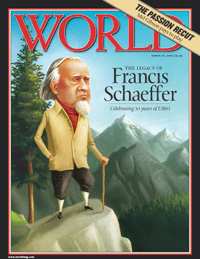
Jesus said, “No man can serve two masters: for either he will hate the one, and love the other; or else he will hold to the one, and despise the other. Ye cannot serve God and mammon” (Matthew 6:24). I call this split-level living.

You may think there’s nothing exciting about you or your job, but God takes ordinary people and He gives them extraordinary power to do extraordinary things for His glory!

Your job may be putting hub caps on tires. You may be keying data at a computer. You may be digging ditches or washing dishes. You may be doing one of a myriad of what you think are mundane things. But I want to tell you, if you are a Christian, your work is to be the temple of your devotion and the platform of your witness. Every Christian is a minister doing full-time Christian service.

The Sacredness of Everday Work

Your job does not become sacred when you become a minister, missionary, or a staff member of a Christian organization! Every job, if it is done in the power of the Holy Spirit, is a sacred job. Every one!

Let’s look at someone who lived this out from the Word of God – his name was Daniel. In the book of Daniel, we learn that he was taken captive by Nebuchadnezzar and carried to Babylon from Israel. There, he found a secular job as a government bureaucrat (see Daniel 8:27). The government trained him, then pressed him into service.

In this ordinary line of work, Daniel served the Lord Jesus. When Daniel was thrown into the lions’ den because he refused to bow to another god, King Nebuchadnezzar and many others came to believe in our Almighty God.

If you work in the name of Jesus, unto His glory, and in the power of the Holy Spirit, you will receive the same reward for doing that job that I receive for doing my job. God knows about you and is watching you. Every Christian, wherever he serves, is in full-time Christian work.

The SERVICE of Everday Work

Does work have eternal significance? Daniel may have wondered the same thing, as he was handling taxation, public relations, law enforcement, building projects, meetings and diplomacy. But yet he served God continually (see Daniel 6:16 and 20).

Even the home of Jesus was the cottage of a workingman. And whether He was mending plows or mending souls, Jesus was doing the work of God because people need houses to live in and furniture to sit on.

If you know you’re serving the Lord, that’ll put dignity in whatever you are doing: running a machine, greasing automobiles, typing letters, carrying mail, painting houses, digging ditches, cutting yards. Tell the Lord, “I’m doing it for You! And I’ll do it with all my might! As much as any missionary or preacher or evangelist!” That kind of attitude will put a spring in your step.

Simply said, God wants His people to prosper wherever He plants them. You are a priest of God, a minister of God, and in full-time Christian service, and if that doesn’t ring your bell, your clapper’s broken.

Remember, God uses ordinary people to do extraordinary things. Ephesians 3:20 promises that, “God is able to do exceeding abundantly above all that we ask or think, according to the power that worketh in us.”


This article is taken from a sermon by Adrian Rogers

One final question: WHAT DOES THIS VERSE MEAN?

Proverbs 14:23

Amplified Bible (AMP)

23 In all labor there is profit, but idle talk leads only to poverty.

The Message (MSG)

23 Hard work always pays off;
mere talk puts no bread on the table.

FRANCIS SCHAEFFER ANALYZES ART AND CULTURE Part 410 “The Robin Lane Fox assertion is absurd concerning Isaiah 53 and why you as an educated man can fall into the trap of believing that just reminds me of Romans chapter 1!!!” (Schaeffer v. Richard Dawkins) Featured Artist is Edvard Munch

_

Bill Maher and Richard Dawkins

Image result for richard dawkins obama

__

Image result for francis schaeffer

__

Image result for richard dawkins peter singer

__

Image result for francis schaeffer

Francis and Edith Schaeffer at their home in Switzerland with some visiting friends

__

Image result for richard dawkins young

Schaeffer with his wife Edith in Switzerland.


Image result for john lennox and richard dawkins

Richard Dawkins and John Lennox

_

DawkinsWard

_

Image result for francis schaeffer c. everett koop whatever happened to human race?

_

Dawkins, Hitchens, Dennett, Harris 

Image result for four horsemen richard dawkins

Canary Islands 2014: Harold Kroto and Richard Dawkins

Image result for harry kroto richard dawkins

__

Francis Schaeffer pictured below:

The Basis of Human Dignity by Francis Schaeffer

Richard Dawkins, founder of the Richard Dawkins Foundation for Reason and Science. Credit: Don Arnold Getty Images

Francis Schaeffer in 1984

Christian Manifesto by Francis Schaeffer

Francis Schaeffer in 1982

—-

Whatever Happened to the Human Race? Episode 1

Image result for richard dawkins brief candle in the dark

Garik Israelian, Stephen Hawking, Alexey Leonov, Brian May, Richard Dawkins and Harry Kroto

—-


February 18, 2019 

Richard Dawkins c/o Richard Dawkins Foundation,
Washington, DC 20005

Dear Mr. Dawkins,

i have enjoyed reading about a dozen of your books and some of the most intriguing were The God DelusionAn Appetite for Wonder: The Making of a Scientist, and Brief Candle in the Dark: My Life in Science.

I wanted to comment on something you tweeted on August 22, 2019:

Kathleen Ferrier’s rendering of Handel’s “He was despiséd” is sublime.

Robin Lane Fox (The Unauthorized Version) suggests that “The Suffering Servant” (the “He” to whom Isaiah’s poem refers) meant the Jewish captives in Babylon, not a single individual.

The Robin Lane Fox assertion is absurd concerning Isaiah 53 and why you as an educated man can fall into the trap of believing that just reminds me of Romans chapter 1. Why don’t you take the time to examine Zechariah 12 and Psalms 22 and see how accurate they are too!!!

The Suffering Servant and Isaiah 53: A Conversation with Darrell Bock

APRIL 5, 2012  | Matt Smethurst 

Isaiah 53 is a towering presence in the landscape of Old Testament messianic expectation. The substantial new book The Gospel According to Isaiah 53: Encountering the Suffering Servant in Jewish and Christian Theology (Kregel, 2012) [Table of Contents] explores the biblical, theological, and evangelistic significance of this well-known chapter.

Co-edited by Darrell Bock, research professor of New Testament studies at Dallas Theological Seminary, and Mitch Glaser, president of Chosen People Ministries, this volume “presents the redemptive work of the Messiah to the Jewish community, exploring issues of atonement and redemption” in light of Isaiah 53. And in addition to providing “unparalleled help in preparing Bible studies and sermons,” the book is bound to prove useful as “supplemental reading for classes on Isaiah, the Prophets, and Jewish evangelism.”

I corresponded with Bock about the significance of the passage on which his new volume is based.

What biblical passages and traditions is Isaiah 53 drawing on? How does it connect to the rest of the Old Testament?

Isaiah 53 is unique in the Old Testament in portraying an individual who suffers for sin by making reference to a guilt offering (Isa. 53:10; see Lev. 5:14-6:7 [=5:14-26]) and who does so after being rejected by his own people (“esteemed him stricken” [Isa. 53:3-4]), much like a leper was to be separated from his people (see the reference to the deformity he was perceived to have; cf. Isa. 52:14, 53:2). Isaiah 53 draws on texts that picture sacrifice for sin, the move to ritual purity, and the image of a leper rejected. The passage also, along with Psalm 118:26, pictures a move from rejection to exaltation that the New Testament uses to describe how Jesus fulfilled God’s plan. Most people know about Isaiah 53, but I think Psalm 118 in this role is not as appreciated.

Did Isaiah consciously anticipate the Messiah?

His text anticipates a decisive delivering figure of the end who suffers and then is exalted. We call such a figure messianic, even though Isaiah does not use that specific term, because the role and timing now fits. In context, Isaiah’s remarks look ultimately to the decisive deliverance of God’s salvation of his people, even though there are elements of his picture of the Servant in other texts (Isaiah 42:1-4; 19:1-6; 50:4-9; 61:1-3) that portray a prophetic figure (Isa. 61) or that point to the role of Israel as the Servant (Isa. 49).

At the end of Isaiah, the individual servant takes on the role that Israel as a nation failed to achieve. Nonetheless, the Servant in Isaiah 53 cannot be the people or the remnant, because he is said to be cut off from the people (Isa 53:8) and is said to die for our sins and iniquities (Isa 53:5, 11). This cannot be the nation, because how can the Servant be cut off from himself? In addition, he is a righteous sufferer. That cannot be the nation, as Isaiah has portrayed the nation as being in sin (just look at Isaiah 58).

Christian readers today directly link the servant to Jesus on the cross. Who did Isaiah and his first readers have in mind?

Isaiah describes a suffering figure who dies for the sins of those who reject him and then is exalted by God. No specific name for this person is given other than to call him the Servant of God. His role is simply described. Jesus fits the portrait. Outside of Jesus himself, the New Testament says this in several texts (Rom. 15:21; 1 Pet. 2:21-25; Matt. 8:17; Acts 8:32-33). There are even more allusions to the passage. In Paul alone, one can mention allusions in Romans 15:21; 1 Corinthians 2:9; Romans 10:16; Romans 4:25; 1 Corinthians 5:7; 15:3; and Romans 5:19.

Did Jesus understand himself to be fulfilling Isaiah 53? If so, what’s the biblical evidence?

Yes, Jesus described his mission as involving his being a ransom for many in Mark 10:45. At the Last Supper, Jesus mentions dying for many, using the language of this text. He also speaks of being reckoned with criminals as the Isaiah text describes (Isaiah 53:11-12; Mark 14:22-25; Matthew 26:26-29; Luke 22:37). So the idea of being the Servant comes from him. Jesus also cited Isaiah 61:1-2 in Luke 4:18-19, which is a text most tie to Isaiah’s servant imagery. Jesus declared that he fulfilled the mission of this text of bringing the gospel to those in need of it.

You contribute a chapter on “Isaiah 53 in the Book of Acts.” What is the function of Isaiah 53 in Acts?

It shows Jesus died an unjust death as Isaiah predicted. He also died without fighting the charges. This actually fits how Luke 23 and the Passion narrative portrays Jesus’ death. Six times in Luke 23 Jesus is said to be innocent of any crime worthy of death. Yet the injustice is that despite Pilate’s recognition of this, Jesus is put to death. I think this dimension of the use of Isaiah 53 often goes unnoticed and is underappreciated. The injustice of Jesus’ death is prevalent also in the preaching of Acts, as Jesus was put to death although God had attested to his position (Acts 2:24-26; 10: 38, 40-42).

What are some common evangelical misunderstandings about Isaiah 53?

We do not appreciate how much of this chapter Jesus fulfills. We might see a verse or two, but the entire passage summarizes Jesus’ death and the reaction that produced it. All this comes some 700 years before Jesus was born! That makes Isaiah 53 quite an unusual text. That is why we wrote about it.

Below is a piece of that evidence given by Francis Schaeffer concerning the accuracy of the Bible.

TRUTH AND HISTORY (chapter 5 of WHATEVER HAPPENED TO THE HUMAN RACE?, under footnotes #97 and #98)

A common assumption among liberal scholars is that because the Gospels are theologically motivated writings–which they are–they cannot also be historically accurate. In other words, because Luke, say (when he wrote the Book of Luke and the Book of Acts), was convinced of the deity of Christ, this influenced his work to the point where it ceased to be reliable as a historical account. The assumption that a writing cannot be both historical and theological is false.

The experience of the famous classical archaeologist Sir William Ramsay illustrates this well. When he began his pioneer work of exploration in Asia Minor, he accepted the view then current among the Tubingen scholars of his day that the Book of Acts was written long after the events in Paul’s life and was therefore historically inaccurate. However, his travels and discoveries increasingly forced upon his mind a totally different picture, and he became convinced that Acts was minutely accurate in many details which could be checked.

What is even more interesting is the way “liberal” modern scholars today deal with Ramsay’s discoveries and others like them. In the NEW TESTAMENT : THE HISTORY OF THE INVESTIGATION OF ITS PROBLEMS, the German scholar Werner G. Kummel made no reference at all to Ramsay. This provoked a protest from British and American scholars, whereupon in a subsequent edition Kummel responded. His response was revealing. He made it clear that it was his deliberate intention to leave Ramsay out of his work, since “Ramsay’s apologetic analysis of archaeology [in other words, relating it to the New Testament in a positive way] signified no methodologically essential advance for New Testament research.” This is a quite amazing assertion. Statements like these reveal the philosophic assumptions involved in much liberal scholarship.

A modern classical scholar, A.N.Sherwin-White, says about the Book of Acts: “For Acts the confirmation of historicity is overwhelming…Any attempt to reject its basic historicity, even in matters of detail, must not appear absurd. Roman historians have long taken this for granted.”

When we consider the pages of the New Testament, therefore, we must remember what it is we are looking at. The New Testament writers themselves make abundantly clear that they are giving an account of objectively true events.

(Under footnote #98)

Acts is a fairly full account of Paul’s journeys, starting in Pisidian Antioch and ending in Rome itself. The record is quite evidently that of an eyewitness of the events, in part at least. Throughout, however, it is the report of a meticulous historian. The narrative in the Book of Acts takes us back behind the missionary journeys to Paul’s famous conversion on the Damascus Road, and back further through the Day of Pentecost to the time when Jesus finally left His disciples and ascended to be with the Father.

But we must understand that the story begins earlier still, for Acts is quite explicitly the second part of a continuous narrative by the same author, Luke, which reaches back to the birth of Jesus.

Luke 2:1-7 New American Standard Bible (NASB)

2 Now in those days a decree went out from Caesar Augustus, that a census be taken of all [a]the inhabited earth. [b]This was the first census taken while[c]Quirinius was governor of Syria. And everyone was on his way to register for the census, each to his own city. Joseph also went up from Galilee, from the city of Nazareth, to Judea, to the city of David which is called Bethlehem, because he was of the house and family of David, in order to register along with Mary, who was engaged to him, and was with child. While they were there, the days were completed for her to give birth. And she gave birth to her firstborn son; and she wrapped Him in cloths, and laid Him in a [d]manger, because there was no room for them in the inn.

In the opening sentences of his Gospel, Luke states his reason for writing:

Luke 1:1-4 New American Standard Bible (NASB)

1 Inasmuch as many have undertaken to compile an account of the things[a]accomplished among us, just as they were handed down to us by those whofrom the beginning [b]were eyewitnesses and [c]servants of the [d]word, it seemed fitting for me as well, having [e]investigated everything carefully from the beginning, to write it out for you in consecutive order, most excellentTheophilus; so that you may know the exact truth about the things you have been [f]taught.

In Luke and Acts, therefore, we have something which purports to be an adequate history, something which Theophilus (or anyone) can rely on as its pages are read. This is not the language of “myths and fables,” and archaeological discoveries serve only to confirm this.

For example, it is now known that Luke’s references to the titles of officials encountered along the way are uniformly accurate. This was no mean achievement in those days, for they varied from place to place and from time to time in the same place. They were proconsuls in Corinth and Cyprus, asiarchs at Ephesus, politarches at Thessalonica, and protos or “first man” in Malta. Back in Palestine, Luke was careful to give Herod Antipas the correct title of tetrarch of Galilee. And so one. The details are precise.

The mention of Pontius Pilate as Roman governor of Judea has been confirmed recently by an inscription discovered at Caesarea, which was the Roman capital of that part of the Roman Empire. Although Pilate’s existence has been well known for the past 2000 years by those who have read the Bible, now his governorship has been clearly attested outside the Bible.

The answer to find meaning in life is found in putting your faith and trust in Jesus Christ. The Bible is true from cover to cover and can be trusted.

Thank you again for your time and I know how busy you are.

Everette Hatcher, everettehatcher@gmail.comhttp://www.thedailyhatch.org, cell ph 501-920-5733, Box 23416, LittleRock, AR 72221, United States

—-

—-

—-

Featured artist is Edvard Munch

________

Edvard Munch

From Wikipedia, the free encyclopedia    

Jump to navigationJump to search For the 1974 film, see Edvard Munch (film).

Edvard Munch
  Munch in an undated photo
Born12 December 1863   ÅdalsbrukLøtenUnited Kingdoms of Sweden and Norway
Died23 January 1944 (aged 80)   OsloNorway
NationalityNorwegian
Known forPainting and graphic artist
Notable work The Scream Madonna The Sick Child
MovementExpressionismSymbolism
About this sound

Edvard Munch (/mʊŋk/;[1] Norwegian: [ˈɛdvɑʈ ˈmʊŋk] (listen); 12 December 1863 – 23 January 1944) was a Norwegian painter, whose best known work, The Scream, has become one of the most iconic images of world art.

His childhood was overshadowed by illness, bereavement and the dread of inheriting a mental condition that ran in the family. Studying at the Royal School of Art and Design in Kristiania (today’s Oslo), Munch began to live a bohemian life under the influence of nihilist Hans Jæger, who urged him to paint his own emotional and psychological state (‘soul painting’). From this would presently emerge his distinctive style.

Travel brought new influences and new outlets. In Paris, he learned much from Paul GauguinVincent van Gogh and Henri de Toulouse-Lautrec, especially their use of colour. In Berlin, he met Swedish dramatist August Strindberg, whom he painted, as he embarked on his major canon The Frieze of Life, depicting a series of deeply-felt themes such as love, anxiety, jealousy and betrayal, steeped in atmosphere.

But it was back in Kristiania that his legendary work The Scream was conceived. According to Munch, he was out walking at sunset, when he ‘heard the enormous, infinite scream of nature’. That agonised face is widely identified with the angst of modern man. Between 1893 and 1910, he made two painted versions and two in pastels, as well as a number of prints. One of the pastels would eventually command the fourth highest nominal price paid for a painting at auction.

As his fame and wealth grew, his emotional state remained as insecure as ever. He briefly considered marriage, but could not commit himself. A breakdown in 1908 forced him to give up heavy drinking, and he was cheered by his increasing acceptance by the people of Kristiania and exposure in the city’s museums. His later years were spent working in peace and privacy. Although his works were banned in Nazi Germany, most of them survived World War II, ensuring him a secure legacy.

Contents

Life[edit]

Childhood[edit]

Edvard Munch was born in a farmhouse in the village of Ådalsbruk in LøtenUnited Kingdoms of Sweden and Norway, to Laura Catherine Bjølstad and Christian Munch, the son of a priest. Christian was a doctor and medical officer who married Laura, a woman half his age, in 1861. Edvard had an elder sister, Johanne Sophie, and three younger siblings: Peter Andreas, Laura Catherine, and Inger Marie. Laura was artistically talented and may have encouraged Edvard and Sophie. Edvard was related to painter Jacob Munch and to historian Peter Andreas Munch.[2]

The family moved to Christiania (renamed Kristiania in 1877, and now Oslo) in 1864 when Christian Munch was appointed medical officer at Akershus Fortress. Edvard’s mother died of tuberculosis in 1868, as did Munch’s favorite sister Johanne Sophie in 1877.[3] After their mother’s death, the Munch siblings were raised by their father and by their aunt Karen. Often ill for much of the winters and kept out of school, Edvard would draw to keep himself occupied. He was tutored by his school mates and his aunt. Christian Munch also instructed his son in history and literature, and entertained the children with vivid ghost-stories and the tales of American writer Edgar Allan Poe.[4]

As Edvard remembered it, Christian’s positive behavior toward his children was overshadowed by his morbid pietism. Munch wrote, “My father was temperamentally nervous and obsessively religious—to the point of psychoneurosis. From him I inherited the seeds of madness. The angels of fear, sorrow, and death stood by my side since the day I was born.”[5] Christian reprimanded his children by telling them that their mother was looking down from heaven and grieving over their misbehavior. The oppressive religious milieu, Edvard’s poor health, and the vivid ghost stories helped inspire his macabre visions and nightmares; the boy felt that death was constantly advancing on him.[6] One of Munch’s younger sisters, Laura, was diagnosed with mental illness at an early age. Of the five siblings, only Andreas married, but he died a few months after the wedding. Munch would later write, “I inherited two of mankind’s most frightful enemies—the heritage of consumption and insanity.”[7]

Christian Munch’s military pay was very low, and his attempts to develop a private side practice failed, keeping his family in genteel but perennial poverty.[3] They moved frequently from one cheap flat to another. Munch’s early drawings and watercolors depicted these interiors, and the individual objects, such as medicine bottles and drawing implements, plus some landscapes. By his teens, art dominated Munch’s interests.[8] At thirteen, Munch had his first exposure to other artists at the newly formed Art Association, where he admired the work of the Norwegian landscape school. He returned to copy the paintings, and soon he began to paint in oils.[9]

Studies and influences[edit]

Self-Portrait with Skeleton Arm, 1895

In 1879, Munch enrolled in a technical college to study engineering, where he excelled in physics, chemistry and math. He learned scaled and perspective drawing, but frequent illnesses interrupted his studies.[10] The following year, much to his father’s disappointment, Munch left the college determined to become a painter. His father viewed art as an “unholy trade”, and his neighbors reacted bitterly and sent him anonymous letters.[11] In contrast to his father’s rabid pietism, Munch adopted an undogmatic stance toward art. He wrote his goal in his diary: “in my art I attempt to explain life and its meaning to myself.”[10]

In 1881, Munch enrolled at the Royal School of Art and Design of Kristiania, one of whose founders was his distant relative Jacob Munch. His teachers were sculptor Julius Middelthun and the naturalistic painter Christian Krohg.[12]That year, Munch demonstrated his quick absorption of his figure training at the Academy in his first portraits, including one of his father and his first self-portrait. In 1883, Munch took part in his first public exhibition and shared a studio with other students.[13] His full-length portrait of Karl Jensen-Hjell, a notorious bohemian-about-town, earned a critic’s dismissive response: “It is impressionism carried to the extreme. It is a travesty of art.”[14] Munch’s nude paintings from this period survive only in sketches, except for Standing Nude (1887). They may have been confiscated by his father.[15]

During these early years, Munch experimented with many styles, including Naturalism and Impressionism. Some early works are reminiscent of Manet. Many of these attempts brought him unfavorable criticism from the press and garnered him constant rebukes by his father, who nonetheless provided him with small sums for living expenses.[14] At one point, however, Munch’s father, perhaps swayed by the negative opinion of Munch’s cousin Edvard Diriks (an established, traditional painter), destroyed at least one painting (likely a nude) and refused to advance any more money for art supplies.[16]

Munch also received his father’s ire for his relationship with Hans Jæger, the local nihilist who lived by the code “a passion to destroy is also a creative passion” and who advocated suicide as the ultimate way to freedom.[17] Munch came under his malevolent, anti-establishment spell. “My ideas developed under the influence of the bohemians or rather under Hans Jæger. Many people have mistakenly claimed that my ideas were formed under the influence of Strindberg and the Germans…but that is wrong. They had already been formed by then.”[18] At that time, contrary to many of the other bohemians, Munch was still respectful of women, as well as reserved and well-mannered, but he began to give in to the binge drinking and brawling of his circle. He was unsettled by the sexual revolution going on at the time and by the independent women around him. He later turned cynical concerning sexual matters, expressed not only in his behavior and his art, but in his writings as well, an example being a long poem called The City of Free Love.[19] Still dependent on his family for many of his meals, Munch’s relationship with his father remained tense over concerns about his bohemian life.

After numerous experiments, Munch concluded that the Impressionist idiom did not allow sufficient expression. He found it superficial and too akin to scientific experimentation. He felt a need to go deeper and explore situations brimming with emotional content and expressive energy. Under Jæger’s commandment that Munch should “write his life”, meaning that Munch should explore his own emotional and psychological state, the young artist began a period of reflection and self-examination, recording his thoughts in his “soul’s diary”.[20] This deeper perspective helped move him to a new view of his art. He wrote that his painting The Sick Child (1886), based on his sister’s death, was his first “soul painting”, his first break from Impressionism. The painting received a negative response from critics and from his family, and caused another “violent outburst of moral indignation” from the community.[21]

Only his friend Christian Krohg defended him:

He paints, or rather regards, things in a way that is different from that of other artists. He sees only the essential, and that, naturally, is all he paints. For this reason Munch’s pictures are as a rule “not complete”, as people are so delighted to discover for themselves. Oh, yes, they are complete. His complete handiwork. Art is complete once the artist has really said everything that was on his mind, and this is precisely the advantage Munch has over painters of the other generation, that he really knows how to show us what he has felt, and what has gripped him, and to this he subordinates everything else.[22]

Munch continued to employ a variety of brushstroke techniques and color palettes throughout the 1880s and early 1890s, as he struggled to define his style.[23] His idiom continued to veer between naturalistic, as seen in Portrait of Hans Jæger, and impressionistic, as in Rue Lafayette. His Inger On the Beach (1889), which caused another storm of confusion and controversy, hints at the simplified forms, heavy outlines, sharp contrasts, and emotional content of his mature style to come.[24] He began to carefully calculate his compositions to create tension and emotion. While stylistically influenced by the Post-Impressionists, what evolved was a subject matter which was symbolist in content, depicting a state of mind rather than an external reality. In 1889, Munch presented his first one-man show of nearly all his works to date. The recognition it received led to a two-year state scholarship to study in Paris under French painter Léon Bonnat.[25]

Munch seems to have been an early critic of photography as an art form, and remarked that it “will never compete with the brush and the palette, until such time as photographs can be taken in Heaven or Hell!”[26]

Munch’s younger sister Laura was the subject of his 1899 interior Melancholy: Laura. Amanda O’Neill says of the work, “In this heated claustrophobic scene Munch not only portrays Laura’s tragedy, but his own dread of the madness he might have inherited.”[27]

Paris[edit]

Munch arrived in Paris during the festivities of the Exposition Universelle (1889) and roomed with two fellow Norwegian artists. His picture Morning (1884) was displayed at the Norwegian pavilion.[28] He spent his mornings at Bonnat’s busy studio (which included live female models) and afternoons at the exhibition, galleries, and museums (where students were expected to make copies as a way of learning technique and observation).[29] Munch recorded little enthusiasm for Bonnat’s drawing lessons—”It tires and bores me—it’s numbing”—but enjoyed the master’s commentary during museum trips.[30][31]

Munch was enthralled by the vast display of modern European art, including the works of three artists who would prove influential: Paul GauguinVincent van Gogh, and Henri de Toulouse-Lautrec—all notable for how they used color to convey emotion.[31] Munch was particularly inspired by Gauguin’s “reaction against realism” and his credo that “art was human work and not an imitation of Nature”, a belief earlier stated by Whistler.[32] As one of his Berlin friends said later of Munch, “he need not make his way to Tahiti to see and experience the primitive in human nature. He carries his own Tahiti within him.”[33] Influenced by Gauguin, as well as the etchings of German artist Max Klinger, Munch experimented with prints as a medium to create graphic versions of his works. In 1896 he created his first woodcuts—a medium that proved ideal to Munch’s symbolic imagery.[34] Together with his contemporary Nikolai Astrup, Munch is considered an innovator of the woodcut medium in Norway.[35]

In December 1889 his father died, leaving Munch’s family destitute. He returned home and arranged a large loan from a wealthy Norwegian collector when wealthy relatives failed to help, and assumed financial responsibility for his family from then on.[36] Christian’s death depressed him and he was plagued by suicidal thoughts: “I live with the dead—my mother, my sister, my grandfather, my father…Kill yourself and then it’s over. Why live?”[37] Munch’s paintings of the following year included sketchy tavern scenes and a series of bright cityscapes in which he experimented with the pointillist style of Georges Seurat.[38]

Berlin[edit]

Melancholy, 1891, oil, pencil and crayon on canvas, 73 × 101 cm, Munch Museum, Oslo

Munch in 1902, in the garden of his patron Dr. Max Linde in Lübeck; in the background is a cast of Auguste Rodin‘s sculpture Iron Era.

By 1892, Munch formulated his characteristic, and original, Synthetist aesthetic, as seen in Melancholy (1891), in which color is the symbol-laden element. Considered by the artist and journalist Christian Krohg as the first Symbolistpainting by a Norwegian artist, Melancholy was exhibited in 1891 at the Autumn Exhibition in Oslo.[39] In 1892, Adelsteen Normann, on behalf of the Union of Berlin Artists, invited Munch to exhibit at its November exhibition,[40] the society’s first one-man exhibition. However, his paintings evoked bitter controversy (dubbed “The Munch Affair”), and after one week the exhibition closed.[40] Munch was pleased with the “great commotion”, and wrote in a letter: “Never have I had such an amusing time—it’s incredible that something as innocent as painting should have created such a stir.”[41]

In Berlin, Munch became involved in an international circle of writers, artists and critics, including the Swedish dramatist and leading intellectual August Strindberg, whom he painted in 1892. He also met Danish writer and painter Holger Drachmann, whom he painted in 1898. Drachmann was 17 years Munch’s senior and a drinking companion at Zum schwarzen Ferkel in 1893–94.[42] In 1894 Drachmann wrote of Munch: “He struggles hard. Good luck with your struggles, lonely Norwegian.” [43]

During his four years in Berlin, Munch sketched out most of the ideas that would comprise his major work, The Frieze of Life, first designed for book illustration but later expressed in paintings.[44] He sold little, but made some income from charging entrance fees to view his controversial paintings.[45] Already, Munch was showing a reluctance to part with his paintings, which he termed his “children”.

His other paintings, including casino scenes, show a simplification of form and detail which marked his early mature style.[46] Munch also began to favor a shallow pictorial space and a minimal backdrop for his frontal figures. Since poses were chosen to produce the most convincing images of states of mind and psychological conditions, as in Ashes, the figures impart a monumental, static quality. Munch’s figures appear to play roles on a theatre stage (Death in the Sick-Room), whose pantomime of fixed postures signify various emotions; since each character embodies a single psychological dimension, as in The Scream, Munch’s men and women began to appear more symbolic than realistic. He wrote, “No longer should interiors be painted, people reading and women knitting: there would be living people, breathing and feeling, suffering and loving.”[47]

The Scream[edit]

Main article: The Scream

The Scream (1893)

The Scream exists in four versions: two pastels (1893 and 1895) and two paintings (1893 and 1910). There are also several lithographs of The Scream (1895 and later).

The 1895 pastel sold at auction on 2 May 2012 for US$119,922,500, including commission.[48] It is the most colorful of the versions[49] and is distinctive for the downward-looking stance of one of its background figures. It is also the only version not held by a Norwegian museum.

The 1893 version was stolen from the National Gallery in Oslo in 1994 and recovered. The 1910 painting was stolen in 2004 from The Munch Museum in Oslo, but recovered in 2006 with limited damage.

The Scream is Munch’s most famous work, and one of the most recognizable paintings in all art. It has been widely interpreted as representing the universal anxiety of modern man.[47] Painted with broad bands of garish color and highly simplified forms, and employing a high viewpoint, it reduces the agonized figure to a garbed skull in the throes of an emotional crisis.

With this painting, Munch met his stated goal of “the study of the soul, that is to say the study of my own self”.[50] Munch wrote of how the painting came to be: “I was walking down the road with two friends when the sun set; suddenly, the sky turned as red as blood. I stopped and leaned against the fence, feeling unspeakably tired. Tongues of fire and blood stretched over the bluish black fjord. My friends went on walking, while I lagged behind, shivering with fear. Then I heard the enormous, infinite scream of nature.”[51] He later described the personal anguish behind the painting, “for several years I was almost mad… You know my picture, ‘The Scream?’ I was stretched to the limit—nature was screaming in my blood… After that I gave up hope ever of being able to love again.”[52]

In summing up the painting’s effects, author Martha Tedeschi has stated:

Whistler’s Mother, Wood’s American Gothic, Leonardo da Vinci’s Mona Lisa and Edvard Munch’s The Scream have all achieved something that most paintings—regardless of their art historical importance, beauty, or monetary value—have not: they communicate a specific meaning almost immediately to almost every viewer. These few works have successfully made the transition from the elite realm of the museum visitor to the enormous venue of popular culture.[53]

Frieze of Life—A Poem about Life, Love and Death[edit]

In December 1893, Unter den Linden in Berlin was the location of an exhibition of Munch’s work, showing, among other pieces, six paintings entitled Study for a Series: Love. This began a cycle he later called the Frieze of Life—A Poem about Life, Love and DeathFrieze of Life motifs, such as The Storm and Moonlight, are steeped in atmosphere. Other motifs illuminate the nocturnal side of love, such as Rose and Amelie and Vampire. In Death in the Sickroom, the subject is the death of his sister Sophie, which he re-worked in many future variations. The dramatic focus of the painting, portraying his entire family, is dispersed in the separate and disconnected figures of sorrow. In 1894, he enlarged the spectrum of motifs by adding AnxietyAshesMadonna and Women in Three Stages (from innocence to old age).[54]

Around the start of the 20th century, Munch worked to finish the “Frieze”. He painted a number of pictures, several of them in bigger format and to some extent featuring the Art Nouveau aesthetics of the time. He made a wooden frame with carved reliefs for the large painting Metabolism (1898), initially called Adam and Eve. This work reveals Munch’s preoccupation with the “fall of man” and his pessimistic philosophy of love. Motifs such as The Empty Cross and Golgotha (both c. 1900) reflect a metaphysical orientation, and also reflect Munch’s pietistic upbringing. The entire Frieze was shown for the first time at the secessionist exhibition in Berlin in 1902.[55]

“The Frieze of Life” themes recur throughout Munch’s work but he especially focused on them in the mid-1890s. In sketches, paintings, pastels and prints, he tapped the depths of his feelings to examine his major motifs: the stages of life, the femme fatale, the hopelessness of love, anxiety, infidelity, jealousy, sexual humiliation, and separation in life and death.[56] These themes are expressed in paintings such as The Sick Child (1885), Love and Pain (retitled Vampire; 1893–94), Ashes (1894), and The Bridge. The latter shows limp figures with featureless or hidden faces, over which loom the threatening shapes of heavy trees and brooding houses. Munch portrayed women either as frail, innocent sufferers (see Puberty and Love and Pain) or as the cause of great longing, jealousy and despair (see SeparationJealousy, and Ashes).

Munch often uses shadows and rings of color around his figures to emphasize an aura of fear, menace, anxiety, or sexual intensity.[57] These paintings have been interpreted as reflections of the artist’s sexual anxieties, though it could also be argued that they represent his turbulent relationship with love itself and his general pessimism regarding human existence.[58] Many of these sketches and paintings were done in several versions, such as MadonnaHands and Puberty, and also transcribed as wood-block prints and lithographs. Munch hated to part with his paintings because he thought of his work as a single body of expression. So to capitalize on his production and make some income, he turned to graphic arts to reproduce many of his most famous paintings, including those in this series.[59]Munch admitted to the personal goals of his work but he also offered his art to a wider purpose, “My art is really a voluntary confession and an attempt to explain to myself my relationship with life—it is, therefore, actually a sort of egoism, but I am constantly hoping that through this I can help others achieve clarity.”[60]

While attracting strongly negative reactions, in the 1890s Munch began to receive some understanding of his artistic goals, as one critic wrote, “With ruthless contempt for form, clarity, elegance, wholeness, and realism, he paints with intuitive strength of talent the most subtle visions of the soul.”[61] One of his great supporters in Berlin was Walther Rathenau, later the German foreign minister, who strongly contributed to his success.

Paris, Berlin and Kristiania[edit]

The Sick Child (1907)

In 1896, Munch moved to Paris, where he focused on graphic representations of his Frieze of Life themes. He further developed his woodcut and lithographic technique. Munch’s Self-Portrait with Skeleton Arm (1895) is done with an etching needle-and-ink method also used by Paul Klee.[62] Munch also produced multi-colored versions of The Sick Childconcerning tuberculosis, which sold well, as well as several nudes and multiple versions of Kiss(1892).[62] Many of the Parisian critics still considered Munch’s work “violent and brutal” but his exhibitions received serious attention and good attendance.[63] His financial situation improved considerably and in 1897, Munch bought himself a summer house facing the fjords of Kristiania, a small fisherman’s cabin built in the late 18th century, in the small town of Åsgårdstrand in Norway. He dubbed this home the “Happy House” and returned here almost every summer for the next 20 years.[64] It was this place he missed when he was abroad and when he felt depressed and exhausted. “To walk in Åsgårdstrand is like walking among my paintings—I get so inspired to paint when I am here”.

Harald Nørregaard (painted by Munch in 1899, National Gallery) was one of Munch’s closest friends since adolescence, adviser and lawyer[65]

In 1897 Munch returned to Kristiania, where he also received grudging acceptance—one critic wrote, “A fair number of these pictures have been exhibited before. In my opinion these improve on acquaintance.”[64] In 1899, Munch began an intimate relationship with Tulla Larsen, a “liberated” upper-class woman. They traveled to Italy together and upon returning, Munch began another fertile period in his art, which included landscapes and his final painting in “The Frieze of Life” series, The Dance of Life (1899).[66] Larsen was eager for marriage, and Munch begged off. His drinking and poor health reinforced his fears, as he wrote in the third person: “Ever since he was a child he had hated marriage. His sick and nervous home had given him the feeling that he had no right to get married.”[67] Munch almost gave in to Tulla, but fled from her in 1900, also turning away from her considerable fortune, and moved to Berlin.[67] His Girls on the Jetty, created in eighteen different versions, demonstrated the theme of feminine youth without negative connotations.[59] In 1902, he displayed his works thematically at the hall of the Berlin Secession, producing “a symphonic effect—it made a great stir—a lot of antagonism—and a lot of approval.”[68] The Berlin critics were beginning to appreciate Munch’s work even though the public still found his work alien and strange.

The good press coverage gained Munch the attention of influential patrons Albert Kollman and Max Linde. He described the turn of events in his diary, “After twenty years of struggle and misery forces of good finally come to my aid in Germany—and a bright door opens up for me.”[69] However, despite this positive change, Munch’s self-destructive and erratic behavior involved him first with a violent quarrel with another artist, then with an accidental shooting in the presence of Tulla Larsen, who had returned for a brief reconciliation, which injured two of his fingers. Munch later sawed a self-portrait depicting him and Larsen in half as a consequence of the shooting and subsequent events.[70] She finally left him and married a younger colleague of Munch. Munch took this as a betrayal, and he dwelled on the humiliation for some time to come, channeling some of the bitterness into new paintings.[71] His paintings Still Life (The Murderess) and The Death of Marat I, done in 1906–07, clearly reference the shooting incident and the emotional after effects.[72]

In 1903–04, Munch exhibited in Paris where the coming Fauvists, famous for their boldly false colors, likely saw his works and might have found inspiration in them. When the Fauves held their own exhibit in 1906, Munch was invited and displayed his works with theirs.[73] After studying the sculpture of Rodin, Munch may have experimented with plasticine as an aid to design, but he produced little sculpture.[74] During this time, Munch received many commissions for portraits and prints which improved his usually precarious financial condition.[75] In 1906, he painted the screen for an Ibsen play in the small Kammerspiele Theatre located in Berlin’s Deutsches Theater, in which the Frieze of Life was hung. The theatre’s director Max Reinhardt later sold it; it is now in the Berlin Nationalgalerie.[76] After an earlier period of landscapes, in 1907 he turned his attention again to human figures and situations.[77]

Breakdown and recovery[edit]

Munch in 1933

In the autumn of 1908, Munch’s anxiety, compounded by excessive drinking and brawling, had become acute. As he later wrote, “My condition was verging on madness—it was touch and go.”[78] Subject to hallucinations and feelings of persecution, he entered the clinic of Daniel Jacobson. The therapy Munch received for the next eight months included diet and “electrification” (a treatment then fashionable for nervous conditions, not to be confused with electroconvulsive therapy).[79] Munch’s stay in hospital stabilized his personality, and after returning to Norway in 1909, his work became more colorful and less pessimistic. Further brightening his mood, the general public of Kristiania finally warmed to his work, and museums began to purchase his paintings. He was made a Knight of the Royal Order of St. Olav “for services in art”.[80] His first American exhibit was in 1912 in New York.[81]

As part of his recovery, Dr. Jacobson advised Munch to only socialize with good friends and avoid drinking in public. Munch followed this advice and in the process produced several full-length portraits of high quality of friends and patrons—honest portrayals devoid of flattery.[82] He also created landscapes and scenes of people at work and play, using a new optimistic style—broad, loose brushstrokes of vibrant color with frequent use of white space and rare use of black—with only occasional references to his morbid themes. With more income, Munch was able to buy several properties giving him new vistas for his art and he was finally able to provide for his family.[83]

The outbreak of World War I found Munch with divided loyalties, as he stated, “All my friends are German but it is France that I love.”[84] In the 1930s, his German patrons, many Jewish, lost their fortunes and some their lives during the rise of the Nazi movement.[85] Munch found Norwegian printers to substitute for the Germans who had been printing his graphic work.[86] Given his poor health history, during 1918 Munch felt himself lucky to have survived a bout of the Spanish flu, the worldwide pandemic of that year.[87]

Later years[edit]

Munch’s grave at the Cemetery of Our Saviour, Oslo

Munch spent most of his last two decades in solitude at his nearly self-sufficient estate in Ekely, at Skøyen, Oslo.[88] Many of his late paintings celebrate farm life, including several in which he used his work horse “Rousseau” as a model.[89] Without any effort, Munch attracted a steady stream of female models, whom he painted as the subjects of numerous nude paintings. He likely had sexual relationships with some of them.[90] Munch occasionally left his home to paint murals on commission, including those done for the Freia chocolate factory.[91]

To the end of his life, Munch continued to paint unsparing self-portraits, adding to his self-searching cycle of his life and his unflinching series of takes on his emotional and physical states. In the 1930s and 1940s, the Nazis labeled Munch’s work “degenerate art” (along with that of PicassoKleeMatisseGauguin and many other modern artists) and removed his 82 works from German museums.[92] Adolf Hitler announced in 1937, “For all we care, those prehistoric Stone Age culture barbarians and art-stutterers can return to the caves of their ancestors and there can apply their primitive international scratching.”[93]

In 1940, the Germans invaded Norway and the Nazi party took over the government. Munch was 76 years old. With nearly an entire collection of his art in the second floor of his house, Munch lived in fear of a Nazi confiscation. Seventy-one of the paintings previously taken by the Nazis had been returned to Norway through purchase by collectors (the other eleven were never recovered), including The Scream and The Sick Child, and they too were hidden from the Nazis.[94]

Munch died in his house at Ekely near Oslo on 23 January 1944, about a month after his 80th birthday. His Nazi-orchestrated funeral suggested to Norwegians that he was a Nazi sympathizer, a kind of appropriation of the independent artist.[95] The city of Oslo bought the Ekely estate from Munch’s heirs in 1946; his house was demolished in May 1960.[96]

Legacy[edit]

Munch Museum, Oslo

Munch Museum, Oslo

From my rotting body,
flowers shall grow
and I am in them
and that is eternity.

Edvard Munch[97]

When Munch died, his remaining works were bequeathed to the city of Oslo, which built the Munch Museum at Tøyen (it opened in 1963). The museum holds a collection of approximately 1,100 paintings, 4,500 drawings, and 18,000 prints, the broadest collection of his works in the world.[98] The Munch Museum serves as Munch’s official estate,[98] and has been active in responding to copyright infringements, as well as clearing copyright for the work, such as the appearance of Munch’s The Scream in a 2006 M&M’s advertising campaign.[99] The U.S. copyright representative for the Munch Museum and the Estate of Edvard Munch is the Artists Rights Society.[100]

Munch’s art was highly personalized and he did little teaching. His “private” symbolism was far more personal than that of other Symbolist painters such as Gustave Moreau and James Ensor. Munch was still highly influential, particularly with the German Expressionists, who followed his philosophy, “I do not believe in the art which is not the compulsive result of Man’s urge to open his heart.”[47] Many of his paintings, including The Scream, have universal appeal in addition to their highly personal meaning.

Munch’s works are now represented in numerous major museums and galleries in Norway and abroad. His cabin, “the Happy House”, was given to the municipality of Åsgårdstrand in 1944; it serves as a small Munch Museum. The inventory has been maintained exactly as he left it.

One version of The Scream was stolen from the National Gallery in 1994. In 2004, another version of The Scream, along with one of Madonna, was stolen from the Munch Museum in a daring daylight robbery. All were eventually recovered, but the paintings stolen in the 2004 robbery were extensively damaged. They have been meticulously restored and are on display again. Three Munch works were stolen from the Hotel Refsnes Gods in 2005; they were shortly recovered, although one of the works was damaged during the robbery.[101]

In October 2006, the color woodcut Two people. The lonely (To mennesker. De ensomme) set a new record for his prints when it was sold at an auction in Oslo for 8.1 million kroner (US$1.27 million). It also set a record for the highest price paid in auction in Norway.[102] On 3 November 2008, the painting Vampire set a new record for his paintings when it was sold for US$38,162,000 at Sotheby’s New York.

Munch’s image appears on the Norwegian 1,000-kroner note, along with pictures inspired by his artwork.[103]

In February 2012, a major Munch exhibition, Edvard Munch. The Modern Eye, opened at the Schirn Kunsthalle Frankfurt; the exhibition was opened by Mette-Marit, Crown Princess of Norway.[104][105]

In May 2012, The Scream sold for US$119.9 million, and is the second most expensive artwork ever sold at an open auction. (It was surpassed in November 2013 by Three Studies of Lucian Freud, which sold for US$142.4 million).[106]

In 2013, four of Munch’s paintings were depicted in a series of stamps by the Norwegian postal service, to commemorate in 2014 the 150th anniversary of his birth.[107]

On 14 November 2016 a version of Munch’s The Girls on the Bridge sold for US$54.5 million at Sotheby’s, New York, making it the second highest price achieved for one of his paintings.[108]

In April 2019, the British Museum is hosting a new exhibition, Edvard Munch: Love and Angst, which will comprise 83 artworks and include a rare original print of The Scream.[109]

University Aula[edit]

The Aula featuring History (left), The Sun (front), Alma Mater (right), smaller paintings on corners

In 1911 the final competition for the decoration of the large walls of the University of Oslo Aula (assembly hall) was held between Munch and Emanuel Vigeland. The episode is known as the “Aula controversy”. In 1914 Munch was finally commissioned to decorate the Aula and the work was completed in 1916. This major work in Norwegian monumental painting includes 11 paintings covering 223 m2 (2,400 sq ft). The SunHistory and Alma Mater are the key works in this sequence. Munch declared: “I wanted the decorations to form a complete and independent world of ideas, and I wanted their visual expression to be both distinctively Norwegian and universally human.” In 2014 it was suggested that the Aula paintings have a value of at least 500 million kroner.[110][111]

Major works[edit]

Life by Munch, at the Rådhuset (City Hall) in Oslo. The room is called The Munch room Main article: List of paintings by Edvard Munch

  • 1885–86: The Sick Child
  • 1892: Evening on Karl Johan
  • 1893: The Scream
  • 1894: Ashes
  • 1894–95: Madonna
  • 1895: Puberty
  • 1895: Self-Portrait with Burning Cigarette
  • 1895: Death in the Sickroom
  • 1899–1900: The Dance of Life
  • 1899–1900: The Dead Mother
  • 1903: Village in Moonlight
  • 1940–42: Self Portrait: Between Clock and Bed

—-

Related posts:

RESPONDING TO HARRY KROTO’S BRILLIANT RENOWNED ACADEMICS!! Part 48 Nobel Prize Winner and Global Warming Denier Ivar Giaever “I think religion is to blame for a lot of the ills in this world!”

October 20, 2015 – 5:20 am

  On November 21, 2014 I received a letter from Nobel Laureate Harry Kroto and it said: …Please click on this URL http://vimeo.com/26991975 and you will hear what far smarter people than I have to say on this matter. I agree with them. Harry Kroto _________________ Below you have picture of 1996 Chemistry Nobel Prize Winner […]

FRANCIS SCHAEFFER ANALYZES ART AND CULTURE PART 78 THE BEATLES (Breaking down the song TOMORROW NEVER KNOWS) Featured musical artist is Stuart Gerber

September 24, 2015 – 5:42 am

The Beatles were “inspired by the musique concrète of German composer and early electronic music pioneer Karlheinz Stockhausen…”  as SCOTT THILL has asserted. Francis Schaeffer noted that ideas of  “Non-resolution” and “Fragmentation” came down German and French streams with the influence of Beethoven’s last Quartets and then the influence of Debussy and later Schoenberg’s non-resolution which is in total contrast […]

RESPONDING TO HARRY KROTO’S BRILLIANT RENOWNED ACADEMICS!! Part 42 Peter Singer, Professor of Bioethics at Princeton University, THE PROBLEM OF EVIL

September 8, 2015 – 5:10 am

  _______ On November 21, 2014 I received a letter from Nobel Laureate Harry Kroto and it said: …Please click on this URL http://vimeo.com/26991975 and you will hear what far smarter people than I have to say on this matter. I agree with them. Harry Kroto _________________ Below you have picture of 1996 Chemistry Nobel Prize […]

RESPONDING TO HARRY KROTO’S BRILLIANT RENOWNED ACADEMICS!! Bart Ehrman “Why should one think that God performed the miracle of inspiring the words in the first place if He didn’t perform the miracle of preserving the words?”

September 2, 2015 – 8:42 am

On November 21, 2014 I received a letter from Nobel Laureate Harry Kroto and it said: …Please click on this URL http://vimeo.com/26991975 and you will hear what far smarter people than I have to say on this matter. I agree with them. Harry Kroto ____________________ Below you have picture of 1996 Chemistry Nobel Prize Winner Dr. […]

February 9, 2022 READING A PROVERB A DAY (PROVERBS 9) Adrian Rogers Fathers Who Teach Their Children to Be Wise Proverbs 9:8 “So don’t bother correcting mockers, they will only hare you…”

Proverbs 9 New Living Translation

Proverbs 9New Living Translation

Wisdom has built her house;
    she has carved its seven columns.
She has prepared a great banquet,
    mixed the wines, and set the table.
She has sent her servants to invite everyone to come.
    She calls out from the heights overlooking the city.
“Come in with me,” she urges the simple.
    To those who lack good judgment, she says,
“Come, eat my food,
    and drink the wine I have mixed.
Leave your simple ways behind, and begin to live;
    learn to use good judgment.”

Anyone who rebukes a mocker will get an insult in return.
    Anyone who corrects the wicked will get hurt.
So don’t bother correcting mockers;
    they will only hate you.
But correct the wise,
    and they will love you.
Instruct the wise,
    and they will be even wiser.
Teach the righteous,
    and they will learn even more.

10 Fear of the Lord is the foundation of wisdom.
    Knowledge of the Holy One results in good judgment.

11 Wisdom will multiply your days
    and add years to your life.
12 If you become wise, you will be the one to benefit.
    If you scorn wisdom, you will be the one to suffer.

Folly Calls for a Hearing

13 The woman named Folly is brash.
    She is ignorant and doesn’t know it.
14 She sits in her doorway
    on the heights overlooking the city.
15 She calls out to men going by
    who are minding their own business.
16 “Come in with me,” she urges the simple.
    To those who lack good judgment, she says,
17 “Stolen water is refreshing;
    food eaten in secret tastes the best!”
18 But little do they know that the dead are there.
    Her guests are in the depths of the grave.[a]

Fathers Who Teach Their Children to Be Wise

Love Worth Finding

Adrian Rogers

The Book of Proverbs

Why do some children adore their fathers and others hate them? What makes the difference? Sometimes children are caught up in the mistakes and mindset of fathers who won’t do what they should to guide them into a safe, secure haven. The fathers’ own pride and arrogance make shipwreck both of their own lives and their children’s. It doesn’t have to be this way.

The Proverbs instruct us in wisdom, judgment, and equity. A wise person will listen, and learn. Wisdom cries out in the streets (See Proverbs 1:20-22.), asking how long the simple (immature) will remain gullible, scorners mock, and fools hate knowledge?

A child isn’t born a scoffer or a fool. A long road leads to the evolution of a fool.

Children need your guidance and protection.

They’re easily molded.

Children’s minds and hearts are naïve, innocent, easily shaped.

They lack understanding.  

A child must be guided from innocence into wisdom and maturity.

They can be quickly led into error. 

Because of their innocence, they’ll believe anything. They can be tricked and misled; they’re living in constant danger. (See Proverbs 13:15; 22:3.)

Older children need godly correction.

Little children aren’t scorners yet. But heads up, dads: if you don’t guide them, they’ll take the next step, becoming the scoffers, the smart-alecky kids, the teenage cynics, the mockers at the university.

They’ll defy instruction. (See Proverbs 1:22.)

Scorners will fire back. (See Proverbs 9:8.) They won’t listen. It’s like talking to a brick wall—they’ll tune you out.

They’ll despise what’s good and godly. (See Proverbs 15:12.)

Scoffers never ask you for help. When you try to correct them, they’ll look at you with scorn and hatred.

They’re on a track for destruction. (See Proverbs 13:13.)

If they laugh at the Word of God, they might laugh their way right into Hell.

But there’s hope; they can still be reclaimed.

Catch them before they self-destruct.

If not restrained by parents, a scorner becomes what the Bible designates “a fool”—immovable, rebellious, arrogant, and wicked.

A fool rejects wisdom. (See Proverbs 1:22,15:14.)

He ridicules righteousness. (See Proverbs 14:9.)

He rejects reproof. (See Proverbs 17:10.)

Don’t even try. He won’t hear you.

He rejoices in iniquity. (See Proverbs 15:21.)

His perverted moral sense calls good evil and evil good. His heart is hardened, his conscience is seared, and his mind is defiled.

Little children begin life innocent and open. But Dad, if they’re not rescued when they become scorners or smart alecks, they’ll become fools on a fast track to Hell.

America is in serious trouble. Secular humanists captured our public schools, making them their “Sunday School” for humanism, purging any vestige of Christianity. In light of this, how can you father a wise child, not a fool? With modern culture fighting you, you must gear up for this battle.

Seven ways to father wise children:

1. Expound truth.

Saturate them in Proverbs, the Ten Commandments, the Beatitudes—basic truths. It’s your responsibility (See Deuteronomy 6:6-9.) to teach these to your children and grandchildren. Help them memorize. Get the Word into their hearts early.

The battle is for the mind. As the child thinks, so is he.

2. Expose sin.

Children need to see sin is exposed and consequences fall on the scorner. (See Proverbs 21:11.) Your child must see the repercussions of sin. (See Proverbs 19:25.)

3. Expel scorners. 

Don’t let them hang around with scorners and fools. Children succumb to peer pressure. Help them select their friends. Open your house to good friends. Make your home the headquarters for fun. But if there’s a scorner, smart aleck, or fool, be firm. Say, “Son, there’s the sidewalk.” (See Proverbs 22:10.)

    A verse for early memorization:

   “He who walks with wise men will be wise, but the companion of fools will be destroyed” (Proverbs 13:20).

4. Express love.

Delight in your children! Don’t be negative. (See Proverbs 3:12.) Words can hurt. Learn to listen. Try to see life from their point of view. They’re facing things you never faced.

5. Be gentle.

The one characteristic I’ve seen in all dads whose children love and follow them is gentleness. They want a strong dad, but they want him to be gentle! Touch, hug, give them non-verbal affection.

6. Be transparent.

Let them know your fears, failures, joys and goals. They know you’re not perfect; they don’t want you to be a phony.

7. Be available.

Make it a priority: be available to your child.

If you feel inadequate—so do I. None of us has what it takes to be this kind of dad. That’s why we need Jesus.

We must have Christ in our hearts! The Christian life isn’t difficult, it’s impossible. Only one can do it, and that’s Jesus.

But He will do it, in us and through us, if we’ll let Him. The best thing you can do for your children is to love God will all your heart.

To read more on this topic, click here.

Related posts:

Seeing Jesus in Proverbs, Ecclesiastes, and Job

July 16, 2013 – 1:28 am

Ecclesiastes 8-10 | Still Searching After All These Years Published on Oct 9, 2012 Calvary Chapel Spring Valley | Sunday Evening | October 7, 2012 | Pastor Derek Neider _______________________ Ecclesiastes 11-12 | Solomon Finds His Way Published on Oct 30, 2012 Calvary Chapel Spring Valley | Sunday Evening | October 28, 2012 | Pastor Derek Neider […]By Everette Hatcher III | Posted in Current Events | Edit | Comments (0)

John MacArthur on Proverbs (Part 10) Summing up Proverbs study

May 30, 2013 – 1:06 am

Over and over in Proverbs you hear the words “fear the Lord.” In fact, some of he references are Proverbs 1:7, 29; 2:5; 8:13; 9:10;14:26,27; 15:16 and many more. Below is a sermon by John MacArthur from the Book of Luke on 3 reasons we should fear the Lord. (I have posted John MacArthur’s amazing […]By Everette Hatcher III | Posted in Adrian RogersCurrent Events | Edit | Comments (0)

John MacArthur on Proverbs (Part 9) “Love your neighbor”

May 28, 2013 – 1:23 am

Over and over in Proverbs you hear the words “fear the Lord.” In fact, some of he references are Proverbs 1:7, 29; 2:5; 8:13; 9:10;14:26,27; 15:16 and many more. Below is a sermon by John MacArthur from the Book of Luke on 3 reasons we should fear the Lord. (I have posted John MacArthur’s amazing […]By Everette Hatcher III | Posted in Adrian RogersCurrent Events | Edit | Comments (0)

John MacArthur on Proverbs (Part 8) “Manage your money”

May 23, 2013 – 1:35 am

Over and over in Proverbs you hear the words “fear the Lord.” In fact, some of he references are Proverbs 1:7, 29; 2:5; 8:13; 9:10;14:26,27; 15:16 and many more. Below is a sermon by John MacArthur from the Book of Luke on 3 reasons we should fear the Lord. (I have posted John MacArthur’s amazing […]By Everette Hatcher III | Posted in Adrian RogersCurrent Events | Edit | Comments (0)

John MacArthur on Proverbs (Part 7) “Pursue your work”

May 21, 2013 – 1:05 am

Over and over in Proverbs you hear the words “fear the Lord.” In fact, some of he references are Proverbs 1:7, 29; 2:5; 8:13; 9:10;14:26,27; 15:16 and many more. Below is a sermon by John MacArthur from the Book of Luke on 3 reasons we should fear the Lord. (I have posted John MacArthur’s amazing […]By Everette Hatcher III | Posted in Adrian RogersCurrent Events | Edit | Comments (0)

John MacArthur on Proverbs (Part 6) “Enjoy your wife and watch your words”

May 16, 2013 – 1:23 am

Over and over in Proverbs you hear the words “fear the Lord.” In fact, some of he references are Proverbs 1:7, 29; 2:5; 8:13; 9:10;14:26,27; 15:16 and many more. Below is a sermon by John MacArthur from the Book of Luke on 3 reasons we should fear the Lord. (I have posted John MacArthur’s amazing […]By Everette Hatcher III | Posted in Adrian RogersCurrent Events | Tagged Gene BartowJohn Wooden | Edit | Comments (0)

John MacArthur on Proverbs (Part 5) “Control your body”

May 14, 2013 – 1:44 am

Over and over in Proverbs you hear the words “fear the Lord.” In fact, some of he references are Proverbs 1:7, 29; 2:5; 8:13; 9:10;14:26,27; 15:16 and many more. Below is a sermon by John MacArthur from the Book of Luke on 3 reasons we should fear the Lord. (I have posted John MacArthur’s amazing […]By Everette Hatcher III | Posted in Adrian RogersCurrent Events | Edit | Comments (0)

John MacArthur on Proverbs (Part 4) “Bad company corrupts…”

May 9, 2013 – 1:10 am

Over and over in Proverbs you hear the words “fear the Lord.” In fact, some of he references are Proverbs 1:7, 29; 2:5; 8:13; 9:10;14:26,27; 15:16 and many more. Below is a sermon by John MacArthur from the Book of Luke on 3 reasons we should fear the Lord. (I have posted John MacArthur’s amazing […]By Everette Hatcher III | Posted in Adrian RogersCurrent Events | Edit | Comments (0)

John MacArthur on Proverbs (Part 3) “Guard your mind and obey your parents!!”

May 7, 2013 – 1:43 am

Over and over in Proverbs you hear the words “fear the Lord.” In fact, some of he references are Proverbs 1:7, 29; 2:5; 8:13; 9:10;14:26,27; 15:16 and many more. Below is a sermon by John MacArthur from the Book of Luke on 3 reasons we should fear the Lord. It is tough to guard your […]By Everette Hatcher III | Posted in Adrian RogersCurrent Events | Edit | Comments (0)

John MacArthur on Proverbs (Part 2) What does it mean to fear the Lord?

May 2, 2013 – 1:13 am

Over and over in Proverbs you hear the words “fear the Lord.” In fact, some of he references are Proverbs 1:7, 29; 2:5; 8:13; 9:10;14:26,27; 15:16 and many more. Below is a sermon by John MacArthur from the Book of Luke on 3 reasons we should fear the Lord. What does it mean to fear […]By Everette Hatcher III | Posted in Current EventsUncategorized | Edit | Comments (0)

The Wisdom of Solomon and the Book of Ecclesiastes

July 8, 2013 – 12:01 am

Ecclesiastes 6-8 | Solomon Turns Over a New Leaf Published on Oct 2, 2012 Calvary Chapel Spring Valley | Sunday Evening | September 30, 2012 | Pastor Derek Neider _____________________ I have written on the Book of Ecclesiastes and the subject of the meaning of our lives on several occasions on this blog. In this series on Ecclesiastes I […]By Everette Hatcher III | Posted in Current Events | Edit | Comments (0)

Why is Solomon so depressed in Ecclesiastes? by Brent Cunningham

July 3, 2013 – 7:00 am

Ecclesiastes 1 Published on Sep 4, 2012 Calvary Chapel Spring Valley | Sunday Evening | September 2, 2012 | Pastor Derek Neider _____________________ I have written on the Book of Ecclesiastes and the subject of the meaning of our lives on several occasions on this blog. In this series on Ecclesiastes I hope to show how […]By Everette Hatcher III | Posted in Current Events | Edit | Comments (0)

Robert Leroe on Ecclesiastes (Mentions Thomas Aquinas, Princess Diana, Mother Teresa, King Solomon, King Rehoboam, Eugene Peterson, Chuck Swindoll, and John Newton.)

June 19, 2013 – 1:30 am

Ecclesiastes 1 Published on Sep 4, 2012 Calvary Chapel Spring Valley | Sunday Evening | September 2, 2012 | Pastor Derek Neider _____________________ I have written on the Book of Ecclesiastes and the subject of the meaning of our lives on several occasions on this blog. In this series on Ecclesiastes I hope to show how […]By Everette Hatcher III | Posted in Current Events | Edit | Comments (0)

Solomon was the author of Ecclesiastes

June 11, 2013 – 1:55 am

Ecclesiastes 8-10 | Still Searching After All These Years Published on Oct 9, 2012 Calvary Chapel Spring Valley | Sunday Evening | October 7, 2012 | Pastor Derek Neider _______________________ Ecclesiastes 11-12 | Solomon Finds His Way Published on Oct 30, 2012 Calvary Chapel Spring Valley | Sunday Evening | October 28, 2012 | Pastor Derek Neider […]By Everette Hatcher III | Posted in Current Events | Edit | Comments (0)

Ecclesiastes: Solomon with Life in the Fast Lane

June 3, 2013 – 1:19 am

Ecclesiastes 6-8 | Solomon Turns Over a New Leaf Published on Oct 2, 2012 Calvary Chapel Spring Valley | Sunday Evening | September 30, 2012 | Pastor Derek Neider _____________________ I have written on the Book of Ecclesiastes and the subject of the meaning of our lives on several occasions on this blog. In this series […]By Everette Hatcher III | Posted in Current Events | Edit | Comments (0)

Ecclesiastes a scathing and self-deprecating attack on hedonism and secular humanism by Solomon

May 31, 2013 – 1:17 am

Ecclesiastes 4-6 | Solomon’s Dissatisfaction Published on Sep 24, 2012 Calvary Chapel Spring Valley | Sunday Evening | September 23, 2012 | Pastor Derek Neider ___________________ I have written on the Book of Ecclesiastes and the subject of the meaning of our lives on several occasions on this blog. In this series on Ecclesiastes I hope […]By Everette Hatcher III | Posted in Current Events | Edit | Comments (0)

Solomon was right in his cynicism–unless……unless there is a God who created us and cares about us

May 22, 2013 – 1:34 am

Ecclesiastes 8-10 | Still Searching After All These Years Published on Oct 9, 2012 Calvary Chapel Spring Valley | Sunday Evening | October 7, 2012 | Pastor Derek Neider _______________________ Ecclesiastes 11-12 | Solomon Finds His Way Published on Oct 30, 2012 Calvary Chapel Spring Valley | Sunday Evening | October 28, 2012 | Pastor Derek Neider […]By Everette Hatcher III | Posted in Current Events | Edit | Comments (0)

The Humanist takes on Solomon and the Book of Ecclesiastes

May 20, 2013 – 1:13 pm

Ecclesiastes 8-10 | Still Searching After All These Years Published on Oct 9, 2012 Calvary Chapel Spring Valley | Sunday Evening | October 7, 2012 | Pastor Derek Neider _______________________ Ecclesiastes 11-12 | Solomon Finds His Way Published on Oct 30, 2012 Calvary Chapel Spring Valley | Sunday Evening | October 28, 2012 | Pastor Derek Neider […]By Everette Hatcher III | Posted in Current Events | Edit | Comments (0)

Tom Brady , Coldplay, Kansas, Solomon and the search for satisfaction (part 3)

December 23, 2011 – 11:12 am

Tom Brady “More than this…” Uploaded by EdenWorshipCenter on Jan 22, 2008 EWC sermon illustration showing a clip from the 2005 Tom Brady 60 minutes interview. _______________________ Tom Brady ESPN Interview Tom Brady has famous wife earned over 76 million dollars last year. However, has Brady found lasting satifaction in his life? It does not […]By Everette Hatcher III | Posted in Current Events | Edit | Comments (0)

Adrian Rogers on gambling

July 18, 2013 – 12:44 am

Adrian Rogers: How to Be a Child of a Happy Mother Published on Nov 13, 2012 Series: Fortifying Your Family (To read along turn on the annotations.) Adrian Rogers looks at the 5th commandment and the relationship of motherhood in the commandment to honor your father and mother, because the faith that doesn’t begin at home, […]By Everette Hatcher III | Posted in Adrian RogersCurrent Events | Edit | Comments (0)

Book of Ecclesiastes

July 17, 2013 – 1:40 am

Ecclesiastes 1 Published on Sep 4, 2012 Calvary Chapel Spring Valley | Sunday Evening | September 2, 2012 | Pastor Derek Neider _____________________ I have written on the Book of Ecclesiastes and the subject of the meaning of our lives on several occasions on this blog. In this series on Ecclesiastes I hope to show how secular humanist man […]By Everette Hatcher III | Posted in Current Events | Edit | Comments (0)

Adrian Rogers: Are fathers necessary?

July 16, 2013 – 12:43 am

Adrian Rogers – How to Cultivate a Marriage Another great article from Adrian Rogers. Are fathers necessary? “Artificial insemination is the ideal method of producing a pregnancy, and a lesbian partner should have the same parenting rights accorded historically to biological fathers.” Quoted from the United Nations Fourth World Conference on Women, summer of 1995. […]By Everette Hatcher III | Posted in Adrian RogersCurrent Events | Edit | Comments (0)

Tom Brady, Coldplay, Kansas, Solomon and the search for satisfaction (part 2)

December 22, 2011 – 11:56 am

Tom Brady “More than this…” Uploaded by EdenWorshipCenter on Jan 22, 2008 EWC sermon illustration showing a clip from the 2005 Tom Brady 60 minutes interview. To Download this video copy the URL to http://www.vixy.net ________________ Obviously from the video clip above, Tom Brady has realized that even though he has won many Super Bowls […]

AFTER LIFE 3 Review and Open Letter to Ricky Gervais Part 25 Ken: What are you gonna be, then? What about a hillock? James: No. I can’t believe that’s your idea for me! You’re supposed to be my agent. But to suggest that you cover me in mud in public? (Making James play a hillock or a hill reminds me of Samuel Beckett’s nihilistic play BREATH!!!)

Every First and Last Line in After Life | Netflix

—-

After Life TV Show on Netflix: canceled or renewed?

World Exclusive: After Life Season 3: The First few Minutes

After Life | Season 3 Official Trailer | Netflix

episodes will be released on January 14th.

Just Three Things. Written for #Afterlife by Ricky Gervais and Andy Burrows

After Life – Season 3 Episode 5 Recap & Review

14/01/2022 by Greg Wheeler

Emma’s Choice

Episode 5 of After Life Season 3 begins with Tony and Lenny reflecting on how unfair life is. Specifically, how an old lady has been conned by a man posing as a salesman. Despite the “Made In Britain” tattoo across his forehead, this poor lady is none the wiser, admitting she had £500 saved up in her biscuit tin… which he’s stolen.

On the way back to the office from her house, Tony stops by a charity shop and picks up a chess set, intending to play with his “dad” at the care home. The thing is, it’s also Emma’s birthday, which surprises Tony when he finds out. Having not actually bought her anything, he decides to do the next best thing – and take her out for drinks.

Meanwhile, the meeting for the Tambury Fair continues. Things immediately take a turn for the worst when Ken admits he’s got James a gig on The Undateables. The thing is, he needs to pretend to be disabled to get it.

James obviously isn’t happy and makes his feelings felt, while Colleen quietly writes everything down. When Brian volunteers himself to be on the show, laughs ensue.

At the Tambury Gazette, Tony is encouraged to take out the life insurance money he’s been sitting on. Even if he doesn’t spend it, as long as he’s got it then the greedy insurance companies won’t have it, which is infinitely better.

June and Anne both give him some sound advice about this, encouraging him to find something that will help make him genuinely happy.

Tony heads out playing squash with Matt but things take a nasty turn when the latter clutches his chest in pain. Suspecting a heart attack, he’s rushed to hospital.

When he regains consciousness, Matt bemoans his bad luck and how he could have a weaker heart than Tony. The thing is, it all comes down to mindset and Tony can sense that Matt is keeping everything pent-up inside, which is doing him no favours.

Tony encourages him to stop worrying though. He also takes a dig at Matt’s sporting prowess. He even calls him a woman too, continuing the hilarious rapport between the two.

Tony eventually heads out for a drink with Emma. She breaks everything down, knowing that Tony is still in love with Lisa and things between them may not work out the way she wants. Tony admits he wants her to be happy, which only makes things easier for Emma to admit she bumped into an old flame earlier in the episode, Jack.

Tony encourages the pair to hook up; he wants her to be happy, which the pair toast to inside this quiet, depressing pub as the episode comes to a close.


The Episode Review

After Life returns with another chapter that echoes a more reflective state for all of our characters. James starts to question his life, and whether he’ll ever become an actor, while Tony tries to find his purpose post-Lisa. Of course, that’s easier said than done and it certainly leaves him in a difficult spot, unsure what to do with his life.

The subplots involving Brian and Pat has fallen flat this season though, while Coleen has disappeared into the shadows for much of this season, despite what looked to be a bright opening.

Kath however, has had a nice arc, while Tony’s closer bond with Matthew allows for a much more intimate and touching one to ones between the pair to ensue. This has arguably been one of the better parts of this third season so far.

Either way though, everything is set up nicely for a conclusive third season to bow things out on a high.


After Life TV Show on Netflix: canceled or renewed?

February 7, 2022
Ricky Gervais

London, W1F 0LE
UK

Dear Ricky,

Ken: Now, we need a volunteer to stand in the stocks, and you get pelted with tomatoes and rotten eggs and stuff like that. 

James. No. I’m not doing it.

Ken: It’s for charity. 

James: Yeah, but anyone can do that. I’m a skilled performer.

Ken:Oh bless. Right, skilled performer, what are you gonna be, then? It’s gotta be something classic from hundreds of years ago. Uh… What about a hillock? Perfect. 

James: What’s a hillock? It’s like an old-fashioned thing, isn’t it? I don’t know. 

Ken: Like a little hill. 

James: How can I be a hill? 

Ken: Well, we lay you down, we cover you in mud and turf… Put some little flowers on. Put some little lovely flowers around you. It’ll look lovely. And then people will go by and go, “Oh, look, it’s a hillock!” 

James: I’m not gonna be a [crappy] hillock! 

Ken: Language! 

James: No. No, no, I can’t believe that’s your idea for me! You’re supposed to be my agent. I know you can’t get me real work. I mean, that’s obviously out of the question. But to suggest that you cover me in mud in public? Unbelievable. 

Ken: Sorry you had to hear that, everyone. He’s like a wild bull at the minute. 

June: He’s… He’s constipated. 

These ideas Ken has for James reminds me of Samuel Beckett’s plays!!! Especially the play BREATH!! The review of that play below notes:

Beckett wrote a play on the back of a postcard. Breathopens with a baby’s first cry and an inhaled breath. The lights come up on a stage littered with random junk. The breath and the light pause for five seconds, then the lights go down again, the breath exhales, and the play ends with another baby cry. The whole thing takes around 35 to 40 seconds.

Shortest play

The Generalist

 The Generalist

2 years ago

Samuel Beckett wrote one of the shortest performed plays in the world on the back of a postcard. The first staging still managed to mess it up.

Oh! Calcutta! was an off-Broadway (and then on-Broadway) revue that saw huge popularity for at least two reasons: 1. it was playfully experimental and avant-garde, and 2. there was a lot of nudity and every sketch was about sex. The creator of the revue, Kenneth Tynan, asked Beckett to write a play for it, promising that his contribution would be anonymous.

Beckett wrote a play on the back of a postcard. Breathopens with a baby’s first cry and an inhaled breath. The lights come up on a stage littered with random junk. The breath and the light pause for five seconds, then the lights go down again, the breath exhales, and the play ends with another baby cry. The whole thing takes around 35 to 40 seconds.

Tynan was the first to put this play on the stage, as part of Oh! Calcutta! But in keeping with the titillating nature of the revue he included some nude figures amongst the random junk on the stage. Beckett, severely pissed off at this betrayal of his artistic vision, called Tynan a liar. I imagine that Beckett was also unhappy about the fact that when the script was published it wasn’t anonymous at all.

Anyway, Beckett withdrew his permission to use Breath in the revue, and it went on to get its own staging and also a filmed version by Damien Hirst. You can watch it below if you really want – at least it won’t take long.


The Absurdity of Life without God

William Lane Craig

Read Waiting for Godot by Samuel Beckett. During this entire play two men carry on trivial conversation while waiting for a third man to arrive, who never does. Our lives are like that, Beckett is saying; we just kill time waiting—for what, we don’t know. In a tragic portrayal of man, Beckett wrote another play in which the curtain opens revealing a stage littered with junk. For thirty long seconds, the audience sits and stares in silence at that junk. Then the curtain closes. That’s all.

French existentialists Jean-Paul Sartre and Albert Camus understood this, too. Sartre portrayed life in his play No Exit as hell—the final line of the play are the words of resignation, “Well, let’s get on with it.” Hence, Sartre writes elsewhere of the “nausea” of existence. Camus, too, saw life as absurd. At the end of his brief novel The Stranger, Camus’s hero discovers in a flash of insight that the universe has no meaning and there is no God to give it one.

Thus, if there is no God, then life itself becomes meaningless. Man and the universe are without ultimate significance.

No Ultimate Value Without Immortality and God

If life ends at the grave, then it makes no difference whether one has lived as a Stalin or as a saint. Since one’s destiny is ultimately unrelated to one’s behavior, you may as well just live as you please. As Dostoyevsky put it: “If there is no immortality then all things are permitted.” On this basis, a writer like Ayn Rand is absolutely correct to praise the virtues of selfishness. Live totally for self; no one holds you accountable! Indeed, it would be foolish to do anything else, for life is too short to jeopardize it by acting out of anything but pure self-interest. Sacrifice for another person would be stupid. Kai Nielsen, an atheist philosopher who attempts to defend the viability of ethics without God, in the end admits,

We have not been able to show that reason requires the moral point of view, or that all really rational persons, unhoodwinked by myth or ideology, need not be individual egoists or classical amoralists. Reason doesn’t decide here. The picture I have painted for you is not a pleasant one. Reflection on it depresses me . . . . Pure practical reason, even with a good knowledge of the facts, will not take you to morality. [1]

But the problem becomes even worse. For, regardless of immortality, if there is no God, then there can be no objective standards of right and wrong. All we are confronted with is, in Jean-Paul Sartre’s words, the bare, valueless fact of existence. Moral values are either just expressions of personal taste or the by-products of socio-biological evolution and conditioning. In a world without God, who is to say which values are right and which are wrong? Who is to judge that the values of Adolf Hitler are inferior to those of a saint? The concept of morality loses all meaning in a universe without God. As one contemporary atheistic ethicist points out, “to say that something is wrong because . . . it is forbidden by God, is . . . perfectly understandable to anyone who believes in a law-giving God. But to say that something is wrong . . . even though no God exists to forbid it, is not understandable. . . .” “The concept of moral obligation [is] unintelligible apart from the idea of God. The words remain but their meaning is gone.” [2] In a world without God, there can be no objective right and wrong, only our culturally and personally relative, subjective judgments. This means that it is impossible to condemn war, oppression, or crime as evil. Nor can one praise brotherhood, equality, and love as good. For in a universe without God, good and evil do not exist—there is only the bare valueless fact of existence, and there is no one to say you are right and I am wrong.

No Ultimate Purpose Without Immortality and God

If death stands with open arms at the end of life’s trail, then what is the goal of life? Is it all for nothing? Is there no reason for life? And what of the universe? Is it utterly pointless? If its destiny is a cold grave in the recesses of outer space the answer must be, yes—it is pointless. There is no goal no purpose for the universe. The litter of a dead universe will just go on expanding and expanding—forever.

And what of man? Is there no purpose at all for the human race? Or will it simply peter out someday lost in the oblivion of an indifferent universe? The English writer H. G. Wells foresaw such a prospect. In his novel The Time Machine Wells’s time traveler journeys far into the future to discover the destiny of man. All he finds is a dead earth, save for a few lichens and moss, orbiting a gigantic red sun. The only sounds are the rush of the wind and the gentle ripple of the sea. “Beyond these lifeless sounds,” writes Wells, “the world was silent. Silent? It would be hard to convey the stillness of it. All the sounds of man, the bleating of sheep, the cries of birds, the hum of insects, the stir that makes the background of our lives—all that was over.” [3] And so Wells’s time traveler returned. But to what?—to merely an earlier point on the purposeless rush toward oblivion. When as a non-Christian I first read Wells’s book, I thought, “No, no! It can’t end that way!” But if there is no God, it will end that way, like it or not. This is reality in a universe without God: there is no hope; there is no purpose.

What is true of mankind as a whole is true of each of us individually: we are here to no purpose. If there is no God, then our life is not qualitatively different from that of a dog. As the ancient writer of Ecclesiastes put it: “The fate of the sons of men and the fate of beasts is the same. As one dies so dies the other; indeed, they all have the same breath and there is no advantage for man over beast, for all is vanity. All go to the same place. All come from the dust and all return to the dust” (Eccles 3:19-20). In this book, which reads more like a piece of modern existentialist literature than a book of the Bible, the writer shows the futility of pleasure, wealth, education, political fame, and honor in a life doomed to end in death. His verdict? “Vanity of vanities! All is vanity” (1:2). If life ends at the grave, then we have no ultimate purpose for living.

But more than that: even if it did not end in death, without God life would still be without purpose. For man and the universe would then be simple accidents of chance, thrust into existence for no reason. Without God the universe is the result of a cosmic accident, a chance explosion. There is no reason for which it exists. As for man, he is a freak of nature— a blind product of matter plus time plus chance. Man is just a lump of slime that evolved rationality. As one philosopher has put it: “Human life is mounted upon a subhuman pedestal and must shift for itself alone in the heart of a silent and mindless universe.” [4]

What is true of the universe and of the human race is also true of us as individuals. If God does not exist, then you are just a miscarriage of nature, thrust into a purposeless universe to live a purposeless life.

So if God does not exist, that means that man and the universe exist to no purpose—since the end of everything is death—and that they came to be for no purpose, since they are only blind products of chance. In short, life is utterly without reason.

Do you understand the gravity of the alternatives before us? For if God exists, then there is hope for man. But if God does not exist, then all we are left with is despair. Do you understand why the question of God’s existence is so vital to man? As one writer has aptly put it, “If God is dead, then man is dead, too.”

Unfortunately, the mass of mankind do not realize this fact. They continue on as though nothing has changed. I’m reminded of Nietzsche’s story of the madman who in the early morning hours burst into the marketplace, lantern in hand, crying, “I seek God! I seek God!” Since many of those standing about did not believe in God, he provoked much laughter. “Did God get lost?” they taunted him. “Or is he hiding? Or maybe he has gone on a voyage or emigrated!” Thus they yelled and laughed. Then, writes Nietzsche, the madman turned in their midst and pierced them with his eyes

‘Whither is God?’ he cried, ‘I shall tell you. We have killed him—you and I. All of us are his murderers. But how have we done this? How were we able to drink up the sea? Who gave us the sponge to wipe away the entire horizon? What did we do when we unchained this earth from its sun? Whither is it moving now? Away from all suns? Are we not plunging continually? Backward, sideward, forward, in all directions? Is there any up or down left? Are we not straying as through an infinite nothing? Do we not feel the breath of empty space? Has it not become colder? Is not night and more night coming on all the while? Must not lanterns be lit in the morning? Do we not hear anything yet of the noise of the gravediggers who are burying God? . . . God is dead. . . . And we have killed him. How shall we, the murderers of all murderers, comfort ourselves? [5]

The crowd stared at the madman in silence and astonishment. At last he dashed his lantern to the ground. “I have come too early,” he said. “This tremendous event is still on its way—it has not yet reached the ears of man.” Men did not yet truly comprehend the consequences of what they had done in killing God. But Nietzsche predicted that someday people would realize the implications of their atheism; and this realization would usher in an age of nihilism—the destruction of all meaning and value in life.

Most people still do not reflect on the consequences of atheism and so, like the crowd in the marketplace, go unknowingly on their way. But when we realize, as did Nietzsche, what atheism implies, then his question presses hard upon us: how shall we, the murderers of all murderers, comfort ourselves?

The Bible has fulfilled prophecy in it, and 53 historical notable people in the Bible have been confirmed through archaeological evidence! Also there is compelling evidence that the Bible contains sound medical principles that clearly predate their more recent discovery by thousands of years. The accuracy of the Bible has been confirmed by archaeology over and over in the past and one of the amazing finds was in 1948 when the Dead Sea Scrolls had copies from every Old Testament Book except Esther! One of the most powerful recent discoveries involved the bones of the high priest Caiaphas who questioned Christ in 30 AD. In 1838 American biblical scholar Edward Robinson shook up the archaeological world by discovering Hezekiah’s Tunnel mentioned in the Bible. There is meaning in life available to anyone who will put their faith in Christ, and peace can’t be found in a GuruWhy not take a few minutes and just read the short chapter of Psalms 22 that was written hundreds of years before the Romans even invented the practice of Crucifixion. 1000 years BC the Jews had the practice of stoning people but we read in this chapter a graphic description of Christ dying on the cross.

The answer to find meaning in life is found in putting your faith and trust in Jesus Christ. The Bible is true from cover to cover and can be trusted.

Thanks for your time.

Sincerely,

Everette Hatcher, everettehatcher@gmail.comhttp://www.thedailyhatch.org, cell ph 501-920-5733, 13900 Cottontail Lane, Alexander, AR 72002


Taking on Ark Times Bloggers on various issues Part I “Old Testament Bible Prophecy” includes the film TRUTH AND HISTORY and article ” Jane Roe became pro-life”

April 12, 2013 – 5:45 am

I have gone back and forth and back and forth with many liberals on the Arkansas Times Blog on many issues such as abortion, human rights, welfare, poverty, gun control  and issues dealing with popular culture. Here is another exchange I had with them a while back. My username at the Ark Times Blog is Saline […]By Everette Hatcher III | Posted in Biblical ArchaeologyFrancis SchaefferProlife | Edit|Comments (0)

John MacArthur on fulfilled prophecy from the Bible Part 2

August 8, 2013 – 1:28 am

I have posted many of the sermons by John MacArthur. He is a great bible teacher and this sermon below is another great message. His series on the Book of Proverbs was outstanding too.  I also have posted several of the visits MacArthur made to Larry King’s Show. One of two most popular posts I […]By Everette Hatcher III | Posted in Adrian RogersCurrent Events | Edit|Comments (0)

John MacArthur on fulfilled prophecy from the Bible Part 1

August 6, 2013 – 1:24 am

I have posted many of the sermons by John MacArthur. He is a great bible teacher and this sermon below is another great message. His series on the Book of Proverbs was outstanding too.  I also have posted several of the visits MacArthur made to Larry King’s Show. One of two most popular posts I […]By Everette Hatcher III | Posted in Adrian RogersCurrent Events |Tagged Bible Prophecyjohn macarthur | Edit|Comments (0)

John MacArthur: Fulfilled prophecy in the Bible? (Ezekiel 26-28 and the story of Tyre, video clips)

April 5, 2012 – 10:39 am

Prophecy–The Biblical Prophesy About Tyre.mp4 Uploaded by TruthIsLife7 on Dec 5, 2010 A short summary of the prophecy about Tyre and it’s precise fulfillment. Go to this link and watch the whole series for the amazing fulfillment from secular sources. http://www.youtube.com/watch?v=qvt4mDZUefo________________ John MacArthur on the amazing fulfilled prophecy on Tyre and how it was fulfilled […]By Everette Hatcher III | Posted in Biblical Archaeology | Edit|Comments (1)

John MacArthur on the Bible and Science (Part 2)

August 1, 2013 – 12:10 am

John MacArthur on the Bible and Science (Part 2) I have posted many of the sermons by John MacArthur. He is a great bible teacher and this sermon below is another great message. His series on the Book of Proverbs was outstanding too.  I also have posted several of the visits MacArthur made to Larry […]By Everette Hatcher III | Posted in Current Events | Edit|Comments (0)

John MacArthur on the Bible and Science (Part 1)

July 30, 2013 – 1:32 am

John MacArthur on the Bible and Science (Part 1) I have posted many of the sermons by John MacArthur. He is a great bible teacher and this sermon below is another great message. His series on the Book of Proverbs was outstanding too.  I also have posted several of the visits MacArthur made to Larry […]By Everette Hatcher III | Posted in Current Events | Edit|Comments (0)

Adrian Rogers: “Why I believe the Bible is true”

July 9, 2013 – 8:38 am

Adrian Rogers – How you can be certain the Bible is the word of God Great article by Adrian Rogers. What evidence is there that the Bible is in fact God’s Word? I want to give you five reasons to affirm the Bible is the Word of God. First, I believe the Bible is the […]By Everette Hatcher III | Posted in Adrian RogersBiblical Archaeology | Edit|Comments (0)

The Old Testament is Filled with Fulfilled Prophecy by Jim Wallace

June 24, 2013 – 9:47 am

Is there any evidence the Bible is true? Articles By PleaseConvinceMe Apologetics Radio The Old Testament is Filled with Fulfilled Prophecy Jim Wallace A Simple Litmus Test There are many ways to verify the reliability of scripture from both internal evidences of transmission and agreement, to external confirmation through archeology and science. But perhaps the […]By Everette Hatcher III | Posted in Biblical ArchaeologyCurrent Events | Edit|Comments (0)

Taking on Ark Times Bloggers on various issues Part M “Old Testament prophecy fulfilled?”Part 3(includes film DEATH BY SOMEONE’S CHOICE)

April 19, 2013 – 1:52 am

  I have gone back and forth and back and forth with many liberals on the Arkansas Times Blog on many issues such as abortion, human rights, welfare, poverty, gun control  and issues dealing with popular culture. Here is another exchange I had with them a while back. My username at the Ark Times Blog is […]By Everette Hatcher III | Posted in Francis SchaefferProlife | Edit|Comments (0)

Evidence for the Bible

March 27, 2013 – 9:43 pm

Here is some very convincing evidence that points to the view that the Bible is historically accurate. Archaeological and External Evidence for the Bible Archeology consistently confirms the Bible! Archaeology and the Old Testament Ebla tablets—discovered in 1970s in Northern Syria. Documents written on clay tablets from around 2300 B.C. demonstrate that personal and place […]By Everette Hatcher III | Posted in Biblical Archaeology | E

On Saturday April 18, 2020 at 6pm in London and noon in Arkansas, I had a chance to ask Ricky Gervais a question on his Twitter Live broadcast which was  “Is Tony a Nihilist?” At the 20:51 mark Ricky answers my question. Below is the video:

Ricky Gervais 25/07/2021 Facebook Live at 28:29 mark Ricky answers my question about Sam Harris

February 8, 2022 READING A PROVERB A DAY (PROVERBS 8) King Solomon on Wisdom (Verses listed by Adrian Warnock) series on King Solomon’s words Proverbs chapters 8, 13, 15 and 16

Proverbs 8 New Living Translation

Wisdom has built her house;
    she has carved its seven columns.
She has prepared a great banquet,
    mixed the wines, and set the table.
She has sent her servants to invite everyone to come.
    She calls out from the heights overlooking the city.
“Come in with me,” she urges the simple.
    To those who lack good judgment, she says,
“Come, eat my food,
    and drink the wine I have mixed.
Leave your simple ways behind, and begin to live;
    learn to use good judgment.”

Anyone who rebukes a mocker will get an insult in return.
    Anyone who corrects the wicked will get hurt.
So don’t bother correcting mockers;
    they will only hate you.
But correct the wise,
    and they will love you.
Instruct the wise,
    and they will be even wiser.
Teach the righteous,
    and they will learn even more.

10 Fear of the Lord is the foundation of wisdom.
    Knowledge of the Holy One results in good judgment.

11 Wisdom will multiply your days
    and add years to your life.
12 If you become wise, you will be the one to benefit.
    If you scorn wisdom, you will be the one to suffer.

Folly Calls for a Hearing

13 The woman named Folly is brash.
    She is ignorant and doesn’t know it.
14 She sits in her doorway
    on the heights overlooking the city.
15 She calls out to men going by
    who are minding their own business.
16 “Come in with me,” she urges the simple.
    To those who lack good judgment, she says,
17 “Stolen water is refreshing;
    food eaten in secret tastes the best!”
18 But little do they know that the dead are there.
    Her guests are in the depths of the grave.[a]

Book of Proverbs: Part I, Pastor Bob Rice (Northeast Bible Church) 10.21.12 (Proverbs 1)

Published on Oct 30, 2012

Part I in Sermon Series the “Book of Proverbs”. Delivered by Sr. Pastor Bob Rice.
Northeast Bible Church, Plano TX
http://www.northeastbiblechurch.com

___________________________

King Solomon on Wisdom (Verses listed by Adrian Warnock)

Read below and these answer these easy questions with the scripture reference and answer:

1.Is it hard for people to hear the voice of wisdom?

2. What healthy fear leads to wisdom?

3. What are some of the advantages of wisdom?

___________

If a person was paid $10,000.00 every morning to wake up and read a chapter in the Book of Proverbs then would the money or the wisdom you receive from God’s word be worth more?

Prov 8:11
for wisdom is better than jewels, and all that you may desire cannot compare with her.

Prov 16:16
How much better to get wisdom than gold! To get understanding is to be chosen rather than silver.

_______________________

WHO DO YOU HANG OUT WITH? ARE THEY VERY WISE?

Prov 13:20
Whoever walks with the wise becomes wise, but the companion of fools will suffer harm.

Prov 15:12
A scoffer does not like to be reproved; he will not go to the wise.

____________________

Where do you get wisdom from?

Prov 1:7
The fear of the Lord is the beginning of knowledge; fools despise wisdom and instruction.

________________________________________________________________________________________

Is it hard for people to hear the voice of wisdom? Apparently it is very hard because many people do not want to listen to the voice of wisdom.  It may be because these fools think they are wise already or maybe they don’t want to submit to God’s leadership in their lives and they love their sin? However, the wise person will be glad to be reproved.

Prov 1:20
Wisdom cries aloud in the street, in the markets she raises her voice;

Prov 3:7
Be not wise in your own eyes; fear the Lord, and turn away from evil.

Prov 9:8
Do not reprove a scoffer, or he will hate you; reprove a wise man, and he will love you.

Prov 10:8
The wise of heart will receive commandments, but a babbling fool will come to ruin.

Prov 13:10
By insolence comes nothing but strife, but with those who take advice is wisdom.

____________________

Once a person becomes wise then they should be willing to tell other souls about the source of wisdom. How many of your friends need wisdom?

Prov 11:30
The fruit of the righteous is a tree of life, and whoever captures souls is wise.

Prov 13:14
The teaching of the wise is a fountain of life, that one may turn away from the snares of death.

_____________________________

What are some of the advantages of walking in wisdom?

Prov 2:7
he stores up sound wisdom for the upright; he is a shield to those who walk in integrity,

Prov 3:35
The wise will inherit honor, but fools get disgrace.

Prov 24:14
Know that wisdom is such to your soul; if you find it, there will be a future, and your hope will not be cut off.

_________________________

Rejecting wisdom will take a person down a very hard road.

Prov 10:13
On the lips of him who has understanding, wisdom is found, but a rod is for the back of him who lacks sense.

______________________

PROVERBS – Get wisdom! Get Understanding!

People often say that common sense is not common. Last Sunday Tope began a sermon series at my church. His sermon is available online and forms a fantastic introduction to this amazing book of the Bible. The audio of this sermon is available online.To me, it seems that as well as simply reading the book through, this book lends itself well to collecting verses together by subject. I have had some fun using my Logos Bible Software to do just this with the book of Proverbs, and thought I would share some of the results of my searches here. So to begin with, here is what Proverbs says about wisdom . . .Wisdom in ProverbsProv 1:2
To know wisdom and instruction, to understand words of insight,Prov 1:3
to receive instruction in wise dealing, in righteousness, justice, and equity;Prov 1:5
Let the wise hear and increase in learning, and the one who understands obtain guidance,Prov 1:6
to understand a proverb and a saying, the words of the wise and their riddles.Prov 1:7
The fear of the Lord is the beginning of knowledge; fools despise wisdom and instruction.Prov 1:20
Wisdom cries aloud in the street, in the markets she raises her voice;

Prov 2:2
making your ear attentive to wisdom and inclining your heart to understanding;

Prov 2:6
For the Lord gives wisdom; from his mouth come knowledge and understanding;

Prov 2:7
he stores up sound wisdom for the upright; he is a shield to those who walk in integrity,

Prov 2:10
for wisdom will come into your heart, and knowledge will be pleasant to your soul;

Prov 3:7
Be not wise in your own eyes; fear the Lord, and turn away from evil.

Prov 3:13
Blessed is the one who finds wisdom, and the one who gets understanding,

Prov 3:19
The Lord by wisdom founded the earth; by understanding he established the heavens;

Prov 3:21
My son, do not lose sight of these— keep sound wisdom and discretion,

Prov 3:35
The wise will inherit honor, but fools get disgrace.

Prov 4:5
Get wisdom; get insight; do not forget, and do not turn away from the words of my mouth.

Prov 4:7
The beginning of wisdom is this: Get wisdom, and whatever you get, get insight.

Prov 4:11
I have taught you the way of wisdom; I have led you in the paths of uprightness.

Prov 5:1
My son, be attentive to my wisdom; incline your ear to my understanding,

Prov 6:6
Go to the ant, O sluggard; consider her ways, and be wise.

Prov 7:4
Say to wisdom, “You are my sister,” and call insight your intimate friend,

Prov 8:1
Does not wisdom call ? Does not understanding raise her voice?

Prov 8:11
for wisdom is better than jewels, and all that you may desire cannot compare with her.

Prov 8:12
“I, wisdom, dwell with prudence, and I find knowledge and discretion.

Prov 8:14
I have counsel and sound wisdom; I have insight; I have strength.

Prov 8:33
Hear instruction and be wise, and do not neglect it.

Prov 9:1
Wisdom has built her house; she has hewn her seven pillars.

Prov 9:8
Do not reprove a scoffer, or he will hate you; reprove a wise man, and he will love you.

Prov 9:9
Give instruction to a wise man, and he will be still wiser; teach a righteous man, and he will increase in learning.

Prov 9:10
The fear of the Lord is the beginning of wisdom, and the knowledge of the Holy One is insight.

Prov 9:12
If you are wise, you are wise for yourself; if you scoff, you alone will bear it.

Prov 10:1
The proverbs of Solomon. A wise son makes a glad father, but a foolish son is a sorrow to his mother.

Prov 10:8
The wise of heart will receive commandments, but a babbling fool will come to ruin.

Prov 10:13
On the lips of him who has understanding, wisdom is found, but a rod is for the back of him who lacks sense.

Prov 10:14
The wise lay up knowledge, but the mouth of a fool brings ruin near.

Prov 10:23
Doing wrong is like a joke to a fool, but wisdom is pleasure to a man of understanding.

Prov 10:31
The mouth of the righteous brings forth wisdom, but the perverse tongue will be cut off.

Prov 11:2
When pride comes, then comes disgrace, but with the humble is wisdom.

Prov 11:29
Whoever troubles his own household will inherit the wind, and the fool will be servant to the wise of heart.

Prov 11:30
The fruit of the righteous is a tree of life, and whoever captures souls is wise.

Prov 12:15
The way of a fool is right in his own eyes, but a wise man listens to advice.

Prov 12:18
There is one whose rash words are like sword thrusts, but the tongue of the wise brings healing.

Prov 13:1
A wise son hears his father’s instruction, but a scoffer does not listen to rebuke.

Prov 13:10
By insolence comes nothing but strife, but with those who take advice is wisdom.

Prov 13:14
The teaching of the wise is a fountain of life, that one may turn away from the snares of death.

Prov 13:20
Whoever walks with the wise becomes wise, but the companion of fools will suffer harm.

Prov 14:3
By the mouth of a fool comes a rod for his back, but the lips of the wise will preserve them.

Prov 14:6
A scoffer seeks wisdom in vain, but knowledge is easy for a man of understanding.

Prov 14:8
The wisdom of the prudent is to discern his way, but the folly of fools is deceiving.

Prov 14:16
One who is wise is cautious and turns away from evil, but a fool is reckless and careless.

Prov 14:24
The crown of the wise is their wealth, but the folly of fools brings folly.

Prov 14:33
Wisdom rests in the heart of a man of understanding, but it makes itself known even in the midst of fools.

Prov 14:35
A servant who deals wisely has the king’s favor, but his wrath falls on one who acts shamefully.

Prov 15:2
The tongue of the wise commends knowledge, but the mouths of fools pour out folly.

Prov 15:7
The lips of the wise spread knowledge; not so the hearts of fools.

Prov 15:12
A scoffer does not like to be reproved; he will not go to the wise.

Prov 15:20
A wise son makes a glad father, but a foolish man despises his mother.

Prov 15:31
The ear that listens to life-giving reproof will dwell among the wise.

Prov 15:33
The fear of the Lord is instruction in wisdom, and humility comes before honor.

Prov 16:14
A king’s wrath is a messenger of death, and a wise man will appease it.

Prov 16:16
How much better to get wisdom than gold! To get understanding is to be chosen rather than silver.

Prov 16:21
The wise of heart is called discerning, and sweetness of speech increases persuasiveness.

Prov 16:23
The heart of the wise makes his speech judicious and adds persuasiveness to his lips.

Prov 17:2
A servant who deals wisely will rule over a son who acts shamefully and will share the inheritance as one of the brothers.

Prov 17:16
Why should a fool have money in his hand to buy wisdom when he has no sense?

Prov 17:24
The discerning sets his face toward wisdom, but the eyes of a fool are on the ends of the earth.

Prov 17:28
Even a fool who keeps silent is considered wise; when he closes his lips, he is deem
ed intelligent.

Prov 18:4
The words of a man’s mouth are deep waters; the fountain of wisdom is a bubbling brook.

Prov 18:15
An intelligent heart acquires knowledge, and the ear of the wise seeks knowledge.

Prov 19:20
Listen to advice and accept instruction, that you may gain wisdom in the future.

Prov 20:1
Wine is a mocker, strong drink a brawler, and whoever is led astray by it is not wise.

Prov 20:18
Plans are established by counsel; by wise guidance wage war.

Prov 20:26
A wise king winnows the wicked and drives the wheel over them.

Prov 21:11
When a scoffer is punished, the simple becomes wise; when a wise man is instructed, he gains knowledge.

Prov 21:20
Precious treasure and oil are in a wise man’s dwelling, but a foolish man devours it.

Prov 21:22
A wise man scales the city of the mighty and brings down the stronghold in which they trust.

Prov 21:30
No wisdom, no understanding, no counsel can avail against the Lord.

Prov 22:17
Incline your ear, and hear the words of the wise, and apply your heart to my knowledge,

Prov 23:15
My son, if your heart is wise, my heart too will be glad.

Prov 23:19
Hear, my son, and be wise, and direct your heart in the way.

Prov 23:23
Buy truth, and do not sell it; buy wisdom, instruction, and understanding.

Prov 23:24
The father of the righteous will greatly rejoice; he who fathers a wise son will be glad in him.

Prov 24:3
By wisdom a house is built, and by understanding it is established;

Prov 24:5
A wise man is full of strength, and a man of knowledge enhances his might,

Prov 24:6
for by wise guidance you can wage your war, and in abundance of counselors there is victory.

Prov 24:7
Wisdom is too high for a fool; in the gate he does not open his mouth.

Prov 24:14
Know that wisdom is such to your soul; if you find it, there will be a future, and your hope will not be cut off.

Prov 24:23
These also are sayings of the wise. Partiality in judging is not good.

Prov 25:12
Like a gold ring or an ornament of gold is a wise reprover to a listening ear.

Prov 26:5
Answer a fool according to his folly, lest he be wise in his own eyes.

Prov 26:12
Do you see a man who is wise in his own eyes? There is more hope for a fool than for him.

Prov 27:11
Be wise, my son, and make my heart glad, that I may answer him who reproaches me.

Prov 28:11
A rich man is wise in his own eyes, but a poor man who has understanding will find him out.

Prov 28:26
Whoever trusts in his own mind is a fool, but he who walks in wisdom will be delivered.

Prov 29:3
He who loves wisdom makes his father glad, but a companion of prostitutes squanders his wealth.

Prov 29:8
Scoffers set a city aflame, but the wise turn away wrath.

Prov 29:9
If a wise man has an argument with a fool, the fool only rages and laughs, and there is no quiet.

Prov 29:11
A fool gives full vent to his spirit, but a wise man quietly holds it back.

Prov 29:15
The rod and reproof give wisdom, but a child left to himself brings shame to his mother.

Prov 30:3
I have not learned wisdom, nor have I knowledge of the Holy One.

Prov 30:24
Four things on earth are small, but they are exceedingly wise:

Prov 31:26
She opens her mouth with wisdom, and the teaching of kindness is on her tongue.

You may also like –

Related posts:

Seeing Jesus in Proverbs, Ecclesiastes, and Job

Ecclesiastes 8-10 | Still Searching After All These Years Published on Oct 9, 2012 Calvary Chapel Spring Valley | Sunday Evening | October 7, 2012 | Pastor Derek Neider _______________________ Ecclesiastes 11-12 | Solomon Finds His Way Published on Oct 30, 2012 Calvary Chapel Spring Valley | Sunday Evening | October 28, 2012 | Pastor Derek Neider […]

John MacArthur on Proverbs (Part 10) Summing up Proverbs study

Over and over in Proverbs you hear the words “fear the Lord.” In fact, some of he references are Proverbs 1:7, 29; 2:5; 8:13; 9:10;14:26,27; 15:16 and many more. Below is a sermon by John MacArthur from the Book of Luke on 3 reasons we should fear the Lord. (I have posted John MacArthur’s amazing […]

John MacArthur on Proverbs (Part 9) “Love your neighbor”

Over and over in Proverbs you hear the words “fear the Lord.” In fact, some of he references are Proverbs 1:7, 29; 2:5; 8:13; 9:10;14:26,27; 15:16 and many more. Below is a sermon by John MacArthur from the Book of Luke on 3 reasons we should fear the Lord. (I have posted John MacArthur’s amazing […]

John MacArthur on Proverbs (Part 8) “Manage your money”

Over and over in Proverbs you hear the words “fear the Lord.” In fact, some of he references are Proverbs 1:7, 29; 2:5; 8:13; 9:10;14:26,27; 15:16 and many more. Below is a sermon by John MacArthur from the Book of Luke on 3 reasons we should fear the Lord. (I have posted John MacArthur’s amazing […]

John MacArthur on Proverbs (Part 7) “Pursue your work”

Over and over in Proverbs you hear the words “fear the Lord.” In fact, some of he references are Proverbs 1:7, 29; 2:5; 8:13; 9:10;14:26,27; 15:16 and many more. Below is a sermon by John MacArthur from the Book of Luke on 3 reasons we should fear the Lord. (I have posted John MacArthur’s amazing […]

John MacArthur on Proverbs (Part 6) “Enjoy your wife and watch your words”

Over and over in Proverbs you hear the words “fear the Lord.” In fact, some of he references are Proverbs 1:7, 29; 2:5; 8:13; 9:10;14:26,27; 15:16 and many more. Below is a sermon by John MacArthur from the Book of Luke on 3 reasons we should fear the Lord. (I have posted John MacArthur’s amazing […]

John MacArthur on Proverbs (Part 5) “Control your body”

Over and over in Proverbs you hear the words “fear the Lord.” In fact, some of he references are Proverbs 1:7, 29; 2:5; 8:13; 9:10;14:26,27; 15:16 and many more. Below is a sermon by John MacArthur from the Book of Luke on 3 reasons we should fear the Lord. (I have posted John MacArthur’s amazing […]

John MacArthur on Proverbs (Part 4) “Bad company corrupts…”

Over and over in Proverbs you hear the words “fear the Lord.” In fact, some of he references are Proverbs 1:7, 29; 2:5; 8:13; 9:10;14:26,27; 15:16 and many more. Below is a sermon by John MacArthur from the Book of Luke on 3 reasons we should fear the Lord. (I have posted John MacArthur’s amazing […]

John MacArthur on Proverbs (Part 3) “Guard your mind and obey your parents!!”

Over and over in Proverbs you hear the words “fear the Lord.” In fact, some of he references are Proverbs 1:7, 29; 2:5; 8:13; 9:10;14:26,27; 15:16 and many more. Below is a sermon by John MacArthur from the Book of Luke on 3 reasons we should fear the Lord. It is tough to guard your […]

John MacArthur on Proverbs (Part 2) What does it mean to fear the Lord?

Over and over in Proverbs you hear the words “fear the Lord.” In fact, some of he references are Proverbs 1:7, 29; 2:5; 8:13; 9:10;14:26,27; 15:16 and many more. Below is a sermon by John MacArthur from the Book of Luke on 3 reasons we should fear the Lord. What does it mean to fear […]

The Wisdom of Solomon and the Book of Ecclesiastes

Ecclesiastes 6-8 | Solomon Turns Over a New Leaf Published on Oct 2, 2012 Calvary Chapel Spring Valley | Sunday Evening | September 30, 2012 | Pastor Derek Neider _____________________ I have written on the Book of Ecclesiastes and the subject of the meaning of our lives on several occasions on this blog. In this series on Ecclesiastes I […]

Why is Solomon so depressed in Ecclesiastes? by Brent Cunningham

Ecclesiastes 1 Published on Sep 4, 2012 Calvary Chapel Spring Valley | Sunday Evening | September 2, 2012 | Pastor Derek Neider _____________________ I have written on the Book of Ecclesiastes and the subject of the meaning of our lives on several occasions on this blog. In this series on Ecclesiastes I hope to show how […]

Robert Leroe on Ecclesiastes (Mentions Thomas Aquinas, Princess Diana, Mother Teresa, King Solomon, King Rehoboam, Eugene Peterson, Chuck Swindoll, and John Newton.)

Ecclesiastes 1 Published on Sep 4, 2012 Calvary Chapel Spring Valley | Sunday Evening | September 2, 2012 | Pastor Derek Neider _____________________ I have written on the Book of Ecclesiastes and the subject of the meaning of our lives on several occasions on this blog. In this series on Ecclesiastes I hope to show how […]

Solomon was the author of Ecclesiastes

Ecclesiastes 8-10 | Still Searching After All These Years Published on Oct 9, 2012 Calvary Chapel Spring Valley | Sunday Evening | October 7, 2012 | Pastor Derek Neider _______________________ Ecclesiastes 11-12 | Solomon Finds His Way Published on Oct 30, 2012 Calvary Chapel Spring Valley | Sunday Evening | October 28, 2012 | Pastor Derek Neider […]

Ecclesiastes: Solomon with Life in the Fast Lane

Ecclesiastes 6-8 | Solomon Turns Over a New Leaf Published on Oct 2, 2012 Calvary Chapel Spring Valley | Sunday Evening | September 30, 2012 | Pastor Derek Neider _____________________ I have written on the Book of Ecclesiastes and the subject of the meaning of our lives on several occasions on this blog. In this series […]

Ecclesiastes a scathing and self-deprecating attack on hedonism and secular humanism by Solomon

Ecclesiastes 4-6 | Solomon’s Dissatisfaction Published on Sep 24, 2012 Calvary Chapel Spring Valley | Sunday Evening | September 23, 2012 | Pastor Derek Neider ___________________ I have written on the Book of Ecclesiastes and the subject of the meaning of our lives on several occasions on this blog. In this series on Ecclesiastes I hope […]

Solomon was right in his cynicism–unless……unless there is a God who created us and cares about us

Ecclesiastes 8-10 | Still Searching After All These Years Published on Oct 9, 2012 Calvary Chapel Spring Valley | Sunday Evening | October 7, 2012 | Pastor Derek Neider _______________________ Ecclesiastes 11-12 | Solomon Finds His Way Published on Oct 30, 2012 Calvary Chapel Spring Valley | Sunday Evening | October 28, 2012 | Pastor Derek Neider […]

The Humanist takes on Solomon and the Book of Ecclesiastes

Ecclesiastes 8-10 | Still Searching After All These Years Published on Oct 9, 2012 Calvary Chapel Spring Valley | Sunday Evening | October 7, 2012 | Pastor Derek Neider _______________________ Ecclesiastes 11-12 | Solomon Finds His Way Published on Oct 30, 2012 Calvary Chapel Spring Valley | Sunday Evening | October 28, 2012 | Pastor Derek Neider […]

Tom Brady , Coldplay, Kansas, Solomon and the search for satisfaction (part 3)

Tom Brady “More than this…” Uploaded by EdenWorshipCenter on Jan 22, 2008 EWC sermon illustration showing a clip from the 2005 Tom Brady 60 minutes interview. _______________________ Tom Brady ESPN Interview Tom Brady has famous wife earned over 76 million dollars last year. However, has Brady found lasting satifaction in his life? It does not […]

Tom Brady, Coldplay, Kansas, Solomon and the search for satisfaction (part 2)

Tom Brady “More than this…” Uploaded by EdenWorshipCenter on Jan 22, 2008 EWC sermon illustration showing a clip from the 2005 Tom Brady 60 minutes interview. To Download this video copy the URL to http://www.vixy.net ________________ Obviously from the video clip above, Tom Brady has realized that even though he has won many Super Bowls […]

By Everette Hatcher III | Posted in Current Events | Edit | Comments (0)

RESPONDING TO HARRY KROTO’S BRILLIANT RENOWNED ACADEMICS!! Part 167B PAUSING to look at the life of John Raymond Smythies (July 6, 2017 letter to Dr. Smythies about several of his friends in the book A LIFE DECODED by J. Craig Venter)

I was saddened to learn of the passing of Dr. John Raymond Smythies on January 28, 2019 in La Jolla, CA,  and I wanted to spend time on several posts concentrating on him. I have several tributes, but the best I read can be found at this link.

______

CRAIG VENTER, JOHN SULSTON, FRANCIS COLLINS, HAMILTON SMITH AND JEAN WEISSENBACH

Image result for john sulston craig venter

XXXXXXXXXXX

Image result for francis schaeffer

Francis Schaeffer above

Image result for charles darwin

Charles Darwin

Image result for adrian rogers

Adrian Rogers

Image result for hamilton smith

Hamilton Smith above, and Craig Venter with Smith below

Image result for Craig venter hamilton smith

__

July 6, 2017

John Raymond Smythies, Center for Brain and Cognition,
La Jolla, CA 92093-0109

Dear Dr. Smythies,

I recently enjoyed reading about several of your friends in the book A LIFE DECODED BY J. Craig Venter. Venter talks about those  who were involved with the Wellcome Trust, the Sanger Centre,  Celera Genomics and the National Institutes of Health because  they all were involved in the Human Genome Project. Venter started off the book with a quote from someone you hold in high esteem.

We must, however, acknowledge, as it seems to me, that man with
all his noble qualities . . . still bears in his bodily frame the indelible
stamp of his lowly origin.
—Charles Darwin

Did you know that Charles Darwin struggled his whole life attempting to get to a place where he was at peace with the idea that all this was a result of just time and chance, but he never was satisfied on that point.

Another person mentioned in that book is Ham Smith and I actually had the opportunity to correspond with him back in 1994 when I sent him a recorded message, and I have enclosed the letter Smith wrote back to me in 1994. Did you know that Ham Smith’s son is an evangelical? On the tenth anniversary of Francis Schaeffer’s passing, May 15, 1994, I sent out to several hundred prominent skeptics an evangelistic letter that told about Schaeffer’s life. This same letter included the audio recording entitled “Dust, Darwin, and Disbelief,” by Adrian Rogers and Bill Elliff. That recording started off with the song DUST IN THE WIND by the group KANSAS for the simple reason that if we  accept that we are the result of chance then all we are is DUST IN THE WIND.

Let start off by quoting Francis Schaeffer from his talk In the spring of 1968 which centered on the Autobiography of Charles Darwin:

Darwin in his autobiography  Darwin, Francis ed. 1892. Charles Darwin: his life told in an autobiographical chapter, and in a selected series of his published letters [abridged edition]. London: John Murray, and in his letters showed that all through his life he NEVER really came to a QUIETNESS concerning the possibility that chance really explained the situation of the biological world. You will find there is much material on this [from Darwin] extended over many many years that constantly he was wrestling with this problem. Darwin never came to a place of satisfaction. You have philosophically ONLY TWO possible beginnings. The first would be a PERSONAL beginning and the other would be an IMPERSONEL beginning plus time plus CHANCE. There is no other possible alternative except the alternative that everything comes out of nothing and that has to be a total nothing and that has to be a total nothing without mass, energy or motion existing. No one holds this last view because it is unthinkable. Darwin understood this and therefore until his death he was uncomfortable with the idea of CHANCE producing the biological variation. 

  Darwin, C. R. to Graham, William 3 July 1881:

Nevertheless you have EXPRESSED MY INWARD CONVICTION, though far more vividly and clearly than I could have done, that the Universe is NOT THE RESULT OF CHANCE.* But THEN with me the HORRID DOUBT ALWAYS ARISES whether the convictions of man’s mind, which has been developed from the mind of the lower animals, are of any value or at all trustworthy. Would any one trust in the convictions of a monkey’s mind, if there are any convictions in such a mind?

Francis Schaeffer comments:

Can you feel this man? He is in real agony. You can feel the whole of modern man in this tension with Darwin. My mind can’t accept that ultimate of chance, that the universe is a result of chance. He has said 3 or 4 times now that he can’t accept that it all happened by chance and then he will write someone else and say something different. How does he say this (about the mind of a monkey) and then put forth this grand theory? Wrong theory I feel but great just the same. Grand in the same way as when I look at many of the paintings today and I differ with their message but you must say the mark of the mannishness of man are one those paintings titanic-ally even though the message is wrong and this is the same with Darwin.  But how can he say you can’t think, you come from a monkey’s mind, and you can’t trust a monkey’s mind, and you can’t trust a monkey’s conviction, so how can you trust me? Trust me here, but not there is what Darwin is saying. In other words it is very selective. 

Evidently Darwin was telling his friends that he was an agnostic and that he did not think that God had anything to do with it but it was all left to the hands of chance. Is that the way you are reading this?

The answer to find meaning in life is found in putting your faith and trust in Jesus Christ. The Bible is true from cover to cover and can be trusted. The world is not a result of blind chance, but we all were put here for a purpose by God. If you want to investigate the evidence concerning the accuracy of the Bible then I suggest you read Psalms 22 which was written about a thousand years before the crucifixion events it described. Furthermore, when King David wrote those words the practice of stoning was the primary way of executing someone in Israel.

Sincerely,

Everette Hatcher, everettehatcher@gmail.com, http://www.thedailyhatch.org, cell ph 501-920-5733, Box 23416, LittleRock, AR 72221, United States

On November 21, 2014 I received a letter from Nobel Laureate Harry Kroto and it said:

…Please click on this URL http://vimeo.com/26991975

and you will hear what far smarter people than I have to say on this matter. I agree with them.

Harry Kroto

Nick Gathergood, David-Birkett, Harry-Kroto

I have attempted to respond to all of Dr. Kroto’s friends arguments and I have posted my responses one per week for over a year now. Here are some of my earlier posts:

Arif Ahmed, Sir David AttenboroughMark Balaguer, Horace Barlow, Michael BatePatricia ChurchlandAaron CiechanoverNoam Chomsky,Alan DershowitzHubert Dreyfus, Bart Ehrman, Stephan FeuchtwangDavid Friend,  Riccardo GiacconiIvar Giaever , Roy GlauberRebecca GoldsteinDavid J. Gross,  Brian Greene, Susan GreenfieldStephen F Gudeman,  Alan Guth, Jonathan HaidtTheodor W. Hänsch, Brian Harrison,  Hermann HauserRoald Hoffmann,  Bruce HoodHerbert Huppert,  Gareth Stedman Jones, Steve JonesShelly KaganMichio Kaku,  Stuart Kauffman,  Lawrence KraussHarry Kroto, George LakoffElizabeth Loftus,  Alan MacfarlanePeter MillicanMarvin MinskyLeonard Mlodinow,  Yujin NagasawaAlva NoeDouglas Osheroff,  Jonathan Parry,  Saul PerlmutterHerman Philipse,  Carolyn PorcoRobert M. PriceLisa RandallLord Martin Rees,  Oliver Sacks, John SearleMarcus du SautoySimon SchafferJ. L. Schellenberg,   Lee Silver Peter Singer,  Walter Sinnott-ArmstrongRonald de Sousa, Victor StengerBarry Supple,   Leonard Susskind, Raymond TallisNeil deGrasse Tyson,  .Alexander Vilenkin, Sir John WalkerFrank WilczekSteven Weinberg, and  Lewis Wolpert,

In  the second video below in the 95th clip in this series are his words but today I just wanted to pause and look at this life. 

Quote from Dr. John Raymond Smythies

I would like to describe how mescaline works. These hallucination drugs have a very specific action in two ways. Number 1 they produce fantastic visual hallucinations. These are described by the people who have them (most of them are down to earth scientists such as MacDonald Critchley) as being more beautiful than anything they have ever seen in normal art. Some of these people have the sort of experience as union with God, mystical experiences and so on.

50 Renowned Academics Speaking About God (Part 1)

Another 50 Renowned Academics Speaking About God (Part 2)

A Further 50 Renowned Academics Speaking About God (Part 3)

__

Related posts:

FRANCIS SCHAEFFER ANALYZES ART AND CULTURE Part 53 THE BEATLES (Part E, Stg. Pepper’s and John Lennon’s search in 1967 for truth was through drugs, money, laughter, etc & similar to King Solomon’s, LOTS OF PICTURES OF JOHN AND CYNTHIA) (Feature on artist Yoko Ono)

The John Lennon and the Beatles really were on a long search for meaning and fulfillment in their lives  just like King Solomon did in the Book of Ecclesiastes. Solomon looked into learning (1:12-18, 2:12-17), laughter, ladies, luxuries, and liquor (2:1-2, 8, 10, 11), and labor (2:4-6, 18-20). He fount that without God in the picture all […]

FRANCIS SCHAEFFER ANALYZES ART AND CULTURE Part 52 THE BEATLES (Part D, There is evidence that the Beatles may have been exposed to Francis Schaeffer!!!) (Feature on artist Anna Margaret Rose Freeman )

______________   George Harrison Swears & Insults Paul and Yoko Lucy in the Sky with Diamonds- The Beatles The Beatles:   I have dedicated several posts to this series on the Beatles and I don’t know when this series will end because Francis Schaeffer spent a lot of time listening to the Beatles and talking […]

FRANCIS SCHAEFFER ANALYZES ART AND CULTURE Part 51 THE BEATLES (Part C, List of those on cover of Stg.Pepper’s ) (Feature on artist Raqib Shaw )

  The Beatles in a press conference after their Return from the USA Uploaded on Nov 29, 2010 The Beatles in a press conference after their Return from the USA. The Beatles:   I have dedicated several posts to this series on the Beatles and I don’t know when this series will end because Francis […]

FRANCIS SCHAEFFER ANALYZES ART AND CULTURE Part 50 THE BEATLES (Part B, The Psychedelic Music of the Beatles) (Feature on artist Peter Blake )

__________________   Beatles 1966 Last interview I have dedicated several posts to this series on the Beatles and I don’t know when this series will end because Francis Schaeffer spent a lot of time listening to the Beatles and talking and writing about them and their impact on the culture of the 1960’s. In this […]

FRANCIS SCHAEFFER ANALYZES ART AND CULTURE Part 49 THE BEATLES (Part A, The Meaning of Stg. Pepper’s Cover) (Feature on artist Mika Tajima)

_______________ The Beatles documentary || A Long and Winding Road || Episode 5 (This video discusses Stg. Pepper’s creation I have dedicated several posts to this series on the Beatles and I don’t know when this series will end because Francis Schaeffer spent a lot of time listening to the Beatles and talking and writing about […]

FRANCIS SCHAEFFER ANALYZES ART AND CULTURE PART 48 “BLOW UP” by Michelangelo Antonioni makes Philosophic Statement (Feature on artist Nancy Holt)

_______________ Francis Schaeffer pictured below: _____________________ I have included the 27 minute  episode THE AGE OF NONREASON by Francis Schaeffer. In that video Schaeffer noted,  ” Sergeant Pepper’s Lonely Hearts Club Band…for a time it became the rallying cry for young people throughout the world. It expressed the essence of their lives, thoughts and their feelings.” How Should […]

FRANCIS SCHAEFFER ANALYZES ART AND CULTURE Part 47 Woody Allen and Professor Levy and the death of “Optimistic Humanism” from the movie CRIMES AND MISDEMEANORS Plus Charles Darwin’s comments too!!! (Feature on artist Rodney Graham)

Crimes and Misdemeanors: A Discussion: Part 1 ___________________________________ Today I will answer the simple question: IS IT POSSIBLE TO BE AN OPTIMISTIC SECULAR HUMANIST THAT DOES NOT BELIEVE IN GOD OR AN AFTERLIFE? This question has been around for a long time and you can go back to the 19th century and read this same […]

FRANCIS SCHAEFFER ANALYZES ART AND CULTURE PART 46 Friedrich Nietzsche (Featured artist is Thomas Schütte)

____________________________________ Francis Schaeffer pictured below: __________ Francis Schaeffer has written extensively on art and culture spanning the last 2000years and here are some posts I have done on this subject before : Francis Schaeffer’s “How should we then live?” Video and outline of episode 10 “Final Choices” , episode 9 “The Age of Personal Peace and Affluence”, episode 8 […]

FRANCIS SCHAEFFER ANALYZES ART AND CULTURE Part 45 Woody Allen “Reason is Dead” (Feature on artists Allora & Calzadilla )

Love and Death [Woody Allen] – What if there is no God? [PL] ___________ _______________ How Should We then Live Episode 7 small (Age of Nonreason) #02 How Should We Then Live? (Promo Clip) Dr. Francis Schaeffer 10 Worldview and Truth Two Minute Warning: How Then Should We Live?: Francis Schaeffer at 100 Francis Schaeffer […]

FRANCIS SCHAEFFER ANALYZES ART AND CULTURE Part 44 The Book of Genesis (Featured artist is Trey McCarley )

___________________________________ Francis Schaeffer pictured below: ____________________________ Francis Schaeffer “BASIS FOR HUMAN DIGNITY” Whatever…HTTHR Dr. Francis schaeffer – The flow of Materialism(from Part 4 of Whatever happened to human race?) Dr. Francis Schaeffer – The Biblical flow of Truth & History (intro) Francis Schaeffer – The Biblical Flow of History & Truth (1) Dr. Francis Schaeffer […]

____________

____

__

AFTER LIFE 3 Review and Open Letter to Ricky Gervais Part 24 Tony: “Dr. Barnaby leaned back on his leather office chair, thoughtful. He was worried about a patient who had the worst brain tumor he had ever seen. There was a knock at the door. ‘Come in,’ said Dr. Barnaby. The door opened to reveal Nurse Cindy, the most attractive nurse in the hospital.” Obviously. “‘Oh sorry,’ she said. ‘The ladies changing rooms are out of order, so I wondered if I could change here, as you’re a doctor.’ ‘Of course,’ said Dr. Barnaby. ‘I’m a surgeon, so a naked female body isn’t the same as it would be to the average red-blooded male.’”

After Life Season 3 Netflix Series Review

After Life TV Show on Netflix: canceled or renewed?

—-

After Life TV Show on Netflix: canceled or renewed?

World Exclusive: After Life Season 3: The First few Minutes

After Life | Season 3 Official Trailer | Netflix

episodes will be released on January 14th.

Just Three Things. Written for #Afterlife by Ricky Gervais and Andy Burrows

After Life TV Show on Netflix: canceled or renewed?

February 6, 2022

Ricky Gervais

London, W1F 0LE
UK

Dear Ricky,


Tony: “Dr. Barnaby leaned back on his leather office chair, thoughtful. He was worried about a patient who had the worst brain tumor he had ever seen. There was a knock at the door. ‘Come in,’ said Dr. Barnaby. The door opened to reveal Nurse Cindy, the most attractive nurse in the hospital.” Obviously. “‘Oh sorry,’ she said. ‘The ladies changing rooms are out of order, so I wondered if I could change here, as you’re a doctor.’ ‘Of course,’ said Dr. Barnaby. ‘I’m a surgeon, so a naked female body isn’t the same as it would be to the average red-blooded male.’” I can’t read any more. 

Valerie: Read it. 


Tony: No, you read it. 

Valerie: Oh God. “Nurse Cindy starts to slowly undress. She was sexy as hell, and she notices Dr. Barnaby looking at her differently than he would if he was operating on her.” ( laughs ) Valerie: “‘Do I look well, Doctor?’ ‘I’ll say,’ said Dr. Barnaby. ‘Think you’d better check my pulse, Nurse.’”


Francis Schaefer indicated Ecclesiastes is truly the book of modern man because modern humanist man’s philosophy has brought him to the nihilistic conclusion that all is vanity and meaninglessness. This appears to be the place that the atheist Tony Johnson has landed and many of the characters around Tony have come to pessimistic conclusions about life too, though they have searched for satisfaction and meaning in life by pursuing ladiesluxurieslearninglaborliquor, and laughter.

In episode 2 of season 2 we learn that Lenny is a ladies man: 

Sandy: You seem happy having a family. 
Lenny: Yeah with one woman. 

Sandy: Were you a bit of a ladies man?

Lenny: Big time. Oh yeah. I was a late starter so I had a lot of catching up to do. I didn’t really start playing the field till my twenties. 

Sandy: Oh, Okay. 
Lenny: I was quite shy in my teens. Wasn’t always this cool I guess. 

Sandy: No?

Lenny: I used to be sort of odd looking. 
Tony: [Shoot] me!

Lenny: I don’t know but I remember the ugly duckling being quite inspirational. 
Tony: That is the one who is a weird little duckling and all the other ducks are taking a piss out of it and when it grows up it is not a duck at all, but a big 200 lb human slug that works in a local free newspaper?

Lenny: Yeah that is the one. 
Tony: Play the field $&@$ hell!

3,000 years King Solomon like Lenny thought the meaning of life was to be found in the pursuit of bedding the most ladies possible. 

Ecclesiastes 2:8-10The Message (MSG)

I piled up silver and gold,
        loot from kings and kingdoms.
I gathered a chorus of singers to entertain me with song,
    and—most exquisite of all pleasures—
    voluptuous maidens for my bed.

9-10 Oh, how I prospered! I left all my predecessors in Jerusalem far behind, left them behind in the dust. What’s more, I kept a clear head through it all. Everything I wanted I took—I never said no to myself. I gave in to every impulse, held back nothing. I sucked the marrow of pleasure out of every task—my reward to myself for a hard day’s work!

1 Kings 11:1-3 English Standard Version (ESV)

11 Now King Solomon loved many foreign women, along with the daughter of Pharaoh: Moabite, Ammonite, Edomite, Sidonian, and Hittite women, from the nations concerning which the Lord had said to the people of Israel, “You shall not enter into marriage with them, neither shall they with you, for surely they will turn away your heart after their gods.” Solomon clung to these in love. He had 700 wives, who were princesses, and 300 concubines. And his wives turned away his heart.

Francis Schaeffer noted: 

An expert but also the reason for his bitterness. Certainly there have been many men over the centuries who have daydreamed of Solomon’s wealth in this area [of women], but at the end it was sorrow, not only sorrow, but nothing and less than nothing. The simple fact is that one can not know woman in the real sense by pursuing 1000 women. It is not possible. Woman is not found this way. All that is left in this setting if one were to pursue the meaning of life in this direction is this most bitter word found in Ecclesiastes 7:28, “I have looked for other answers but have found none. I found one man in a thousand that I could respect, but not one woman.” (Good News Translation on verse 28) He was searching in the wrong way. He was searching for the answer to life in the limited circle of that which is beautiful in itself but not an answer finally in sexual life. More than that he finally tried to find it in variety and he didn’t even touch one woman at the end.

King Solomon in Ecclesiastes 2:11 sums up his search for meaning in the area of the Sexual Revolution with these words, “…behold, all was vanity and a striving after wind, and there was nothing to be gained under the sun.”

Francis Schaeffer observed concerning Solomon, “You can not know woman but knowing 1000 women.”

How about America’s most well known playboy the late Hugh Hefner? Schaeffer said that Hefner’s goal with the “playboy mentality is just to smash the puritanical ethnic.” About 30 years ago my pastor, Adrian Rogers of Bellevue Baptist Church in Memphis, Tennessee noticed an article where Hugh Hefner said he would be willing to trade all of his riches for the experience of just falling in love with one girl of his dreams and getting married. Rogers went on to say that the playboy lifestyle was bankrupt of lasting satisfaction and that God’s plan of marriage was best. In fact, the Book of Ecclesiastes shows that Solomon came to the conclusion that nothing in life gives true satisfaction without God including knowledge (1:16-18), ladies and liquor (2:1-3, 8, 10, 11), and great building projects (2:4-6, 18-20). You can only find a lasting meaning to your life by looking above the sun and bring God back into the picture. I have written on the Book of Ecclesiastes and the subject of the meaning of our lives on several occasions on this blog. In this series on Ecclesiastes I hope to show how secular humanist man can not hope to find a lasting meaning to his life in a closed system without bringing God back into the picture. This is the same exact case with Solomon in the Book of Ecclesiastes.

Solomon’s experiment was a search for meaning to life “under the sun.” Then in last few words in the Book of Ecclesiastes he looks above the sun and brings God back into the picture: “The conclusion, when all has been heard, is: Fear God and keep His commandments, because this applies to every person. For God will bring every act to judgment, everything which is hidden, whether it is good or evil.”

Did Solomon really write the Book of Ecclesiastes and for that matter did anything in the Bible actually happen in history? Take a look at some evidence from Francis Schaeffer and Dr. C. Everett Koop below. 

TRUTH AND HISTORY (chapter 5 of WHATEVER HAPPENED TO THE HUMAN RACE?, under footnote #94)

So the story goes on. We have stopped at only a few incidents in the sweep back to the year 1000 B.C. What we hope has emerged from this is a sense of the historical reliability of the Bible’s text. When the Bible refers to historical incidents, it is speaking about the same sort of “history” that historians examine elsewhere in other cultures and periods. This borne out by the fact that some of the incidents, some of the individuals, and some of the places have been confirmed by archaeological discoveries in the past hundred years has swept away the possibility of a naive skepticism about the Bible’s history. And what is particularly striking is that the tide has built up concerning the time before the year 1000 B.C. Our knowledge about the years 2500 B.C. to 1000 B.C. has vastly increased through discoveries sometimes of whole libraries and even of hitherto unknown people and languages.

There was a time, for example, when the Hittite people, referred to in the early parts of the Bible, were treated as fictitious by critical scholars. Then came the discoveries after 1906 at Boghaz Koi (Boghaz-koy) which not only gave us the certainty of their existence but stacks of details from their own archives!

The answer to find meaning in life is found in putting your faith and trust in Jesus Christ. The Bible is true from cover to cover and can be trusted.

Thanks for your time.

Sincerely,

Everette Hatcher, everettehatcher@gmail.comhttp://www.thedailyhatch.org, cell ph 501-920-5733, 13900 Cottontail Lane, Alexander, AR 72002


Taking on Ark Times Bloggers on various issues Part I “Old Testament Bible Prophecy” includes the film TRUTH AND HISTORY and article ” Jane Roe became pro-life”

April 12, 2013 – 5:45 am

I have gone back and forth and back and forth with many liberals on the Arkansas Times Blog on many issues such as abortion, human rights, welfare, poverty, gun control  and issues dealing with popular culture. Here is another exchange I had with them a while back. My username at the Ark Times Blog is Saline […]By Everette Hatcher III | Posted in Biblical ArchaeologyFrancis SchaefferProlife | Edit|Comments (0)

John MacArthur on fulfilled prophecy from the Bible Part 2

August 8, 2013 – 1:28 am

I have posted many of the sermons by John MacArthur. He is a great bible teacher and this sermon below is another great message. His series on the Book of Proverbs was outstanding too.  I also have posted several of the visits MacArthur made to Larry King’s Show. One of two most popular posts I […]By Everette Hatcher III | Posted in Adrian RogersCurrent Events | Edit|Comments (0)

John MacArthur on fulfilled prophecy from the Bible Part 1

August 6, 2013 – 1:24 am

I have posted many of the sermons by John MacArthur. He is a great bible teacher and this sermon below is another great message. His series on the Book of Proverbs was outstanding too.  I also have posted several of the visits MacArthur made to Larry King’s Show. One of two most popular posts I […]By Everette Hatcher III | Posted in Adrian RogersCurrent Events |Tagged Bible Prophecyjohn macarthur | Edit|Comments (0)

John MacArthur: Fulfilled prophecy in the Bible? (Ezekiel 26-28 and the story of Tyre, video clips)

April 5, 2012 – 10:39 am

Prophecy–The Biblical Prophesy About Tyre.mp4 Uploaded by TruthIsLife7 on Dec 5, 2010 A short summary of the prophecy about Tyre and it’s precise fulfillment. Go to this link and watch the whole series for the amazing fulfillment from secular sources. http://www.youtube.com/watch?v=qvt4mDZUefo________________ John MacArthur on the amazing fulfilled prophecy on Tyre and how it was fulfilled […]By Everette Hatcher III | Posted in Biblical Archaeology | Edit|Comments (1)

John MacArthur on the Bible and Science (Part 2)

August 1, 2013 – 12:10 am

John MacArthur on the Bible and Science (Part 2) I have posted many of the sermons by John MacArthur. He is a great bible teacher and this sermon below is another great message. His series on the Book of Proverbs was outstanding too.  I also have posted several of the visits MacArthur made to Larry […]By Everette Hatcher III | Posted in Current Events | Edit|Comments (0)

John MacArthur on the Bible and Science (Part 1)

July 30, 2013 – 1:32 am

John MacArthur on the Bible and Science (Part 1) I have posted many of the sermons by John MacArthur. He is a great bible teacher and this sermon below is another great message. His series on the Book of Proverbs was outstanding too.  I also have posted several of the visits MacArthur made to Larry […]By Everette Hatcher III | Posted in Current Events | Edit|Comments (0)

Adrian Rogers: “Why I believe the Bible is true”

July 9, 2013 – 8:38 am

Adrian Rogers – How you can be certain the Bible is the word of God Great article by Adrian Rogers. What evidence is there that the Bible is in fact God’s Word? I want to give you five reasons to affirm the Bible is the Word of God. First, I believe the Bible is the […]By Everette Hatcher III | Posted in Adrian RogersBiblical Archaeology | Edit|Comments (0)

The Old Testament is Filled with Fulfilled Prophecy by Jim Wallace

June 24, 2013 – 9:47 am

Is there any evidence the Bible is true? Articles By PleaseConvinceMe Apologetics Radio The Old Testament is Filled with Fulfilled Prophecy Jim Wallace A Simple Litmus Test There are many ways to verify the reliability of scripture from both internal evidences of transmission and agreement, to external confirmation through archeology and science. But perhaps the […]By Everette Hatcher III | Posted in Biblical ArchaeologyCurrent Events | Edit|Comments (0)

Taking on Ark Times Bloggers on various issues Part M “Old Testament prophecy fulfilled?”Part 3(includes film DEATH BY SOMEONE’S CHOICE)

April 19, 2013 – 1:52 am

  I have gone back and forth and back and forth with many liberals on the Arkansas Times Blog on many issues such as abortion, human rights, welfare, poverty, gun control  and issues dealing with popular culture. Here is another exchange I had with them a while back. My username at the Ark Times Blog is […]By Everette Hatcher III | Posted in Francis SchaefferProlife | Edit|Comments (0)

Evidence for the Bible

March 27, 2013 – 9:43 pm

Here is some very convincing evidence that points to the view that the Bible is historically accurate. Archaeological and External Evidence for the Bible Archeology consistently confirms the Bible! Archaeology and the Old Testament Ebla tablets—discovered in 1970s in Northern Syria. Documents written on clay tablets from around 2300 B.C. demonstrate that personal and place […]By Everette Hatcher III | Posted in Biblical Archaeology | E

On Saturday April 18, 2020 at 6pm in London and noon in Arkansas, I had a chance to ask Ricky Gervais a question on his Twitter Live broadcast which was  “Is Tony a Nihilist?” At the 20:51 mark Ricky answers my question. Below is the video:

Ricky Gervais 25/07/2021 Facebook Live at 28:29 mark Ricky answers my question about Sam Harris