This crucial series is narrated by the late Dr. Francis Schaeffer and former Surgeon General Dr. C. Everett Koop. Today, choices are being made that undermine human rights at their most basic level. Practices once considered unthinkable are now acceptable – abortion, infanticide and euthanasia. The destruction of human life, young and old, is being sanctioned on an ever-increasing scale by the medical profession, by the courts, by parents and by silent Christians. The five episodes in this series examine the sanctity of life as a social, moral and spiritual issue which the Christian must not ignore. The conclusion presents the Christian alternative as the only real solution to man’s problems.
_____________________________
I have gone back and forth with Ark Times liberal bloggers on the issue of abortion, but I am going to try something new. I am going to respond with logical and rational reasons the pro-life view is true. All of this material is from a paper by Scott Klusendorf called FIVE BAD WAYS TO ARGUE ABOUT ABORTION .
You have the Saline idiocy which is life begins at conception. Well, on one level, that is true, but it is not a life, it is not a human so there is a point where, morally, abortion is not a problem.
Then there are the idiots and murderers who claim that a fetus is not a baby. If it is not a baby, it is not a Life worthy of consideration. To some of them, an elective abortion at the 8th month is no moral problem, which is a giant and repugnant LIE.
To say life begins at conception is a lie.
To say a fetus, even though eight months old, is not a life is another lie, too.
Steven E, you have written some very wise things on this blog many times before but I have differ with you on one short point from what you just said. These are your exact words:
“You have the Saline idiocy which is life begins at conception. Well, on one level, that is true, but it is not a life, it is not a human so there is a point where, morally, abortion is not a problem.”
Pro-life advocates contend that elective abortion unjustly takes the life of a defenseless human being. This simplifies the abortion controversy by focusing public attention on just one question: Is the unborn a member of the human family? If so, killing him or her to benefit others is a serious moral wrong. Conversely, if the unborn are not human, elective abortion requires no more justification than having a tooth pulled.
Scientifically, we know that from the earliest stages of development, the unborn are distinct, living, and whole human beings. Leading embryology textbooks confirm this.1 Prior to advocating elective abortion, former Planned Parenthood President Dr. Alan Guttmacher was perplexed that anyone, much less a medical doctor, would question these basic scientific facts. “This all seems so simple and evident that it is difficult to picture a time when it wasn’t part of the common knowledge,” he wrote in his bookLife in the Making.2
Philosophically, there is no morally significant difference between the embryo you once were and the adult you are today. Differences of size, level of development, environment, and degree of dependency are not relevant in the way that abortion advocates need them to be. The simple acronymSLEDcan be used to illustrate these non-essential differences:3
Size: True, embryos are smaller than newborns and adults, but why is that relevant? Do we really want to say that large people are more valuable than small ones? Men are generally larger than women, but that doesn’t mean they deserve more rights. Size doesn’t equal value.
Level of development: True, embryos and fetuses are less developed than you and I. But again, why is this relevant? Four year-old girls are less developed than 14 year-old ones. Should older children have more rights than their younger siblings? Some people say that the immediate capacity for self-awareness and a desire to go on living makes one valuable. But if that is true, newborns do not qualify as valuable human beings. Infants do not acquire distinct self-awareness and memory until several monthsafter birth.4(Best case scenario, infants acquire limited self-awareness three months after birth, when the synapse connections increase from 56 trillion to 1,000 trillion.) As abortion advocate and philosopher Dean Stretton writes, “Any plausible pro-choice theory will have to deny newborns a full right to life. That’s counterintuitive.”5
Environment: Where you are has no bearing onwhoyou are. Does your value change when you cross the street or roll over in bed? If not, how can a journey of eight inches down the birth-canal suddenly change the essential nature of the unborn from non-human to human? If the unborn are not already valuable human beings, merely changing their location can’t make them so.
Degree of Dependency: If viability bestows human value, then all those who depend on insulin or kidney medication are not valuable and we may kill them. Conjoined twins who share blood type and bodily systems also have no right to life.
In short, although humans differ immensely with respect to talents, accomplishments, and degrees of development, they are nonetheless equal (and valuable) because they all have the same human nature.
FOOTNOTES:
1 See T.W. Sadler, Langman’s Embryology, 5th ed. (Philadelphia: W.B. Saunders, 1993) p. 3; Keith L. Moore, The Developing Human: Clinically Oriented Embryology (Toronto: B.C. Decker, 1988) p. 2; O’Rahilly, Ronand and Muller, Pabiola, Human Embryology and Teratology, 2nd ed. (New York: Wiley-Liss, 1996) pp. 8, 29. See also Maureen L. Condic, “Life: Defining the Beginning by the End,” First Things, May 2003.
2 A. Guttmacher, Life in the Making: the Story of Human Procreation (New York: Viking Press, 1933) p. 3
3 SLED test initially developed by Stephen Schwarz but modified significantly and explained here by Scott Klusendorf. Stephen Schwarz, The Moral Question of Abortion (Chicago: Loyola University Press, 1990) pp. 17-18.
4 Conor Liston & Jerome Kagan, “Brain Development: Memory Enhancement in Early Childhood,” Nature 419, 896 (2002). See also O’Rahilly, Ronand and Muller, Pabiola, Human Embryology and Teratology, 2nd ed. (New York: Wiley-Liss, 1996) p. 8.
Saline, I appreciate the very informative answer, but the beginning stages of the embryo, even these decorated folks have to admit, cannot live outside the uterine wall. You can have a 3 month premature birth survive because it is, undeniably, a living person.
That undeniable scientific line kind of defeats the extremes of both sides.
I make no mistake. There is a time when the choice belongs exclusively to the pregnant woman. There is also a time when a contentious woman knows that she is killing a living being and should give it proper thought, rather than dismissing this living human life as ‘just’ a fetus.
Yes the unborn baby that is only 3 months along can not live outside the womb because this child must depend on the mother for food. Steven E you are correct about that but what about that logic being used on the 3 month old baby that is dependent on the mother and father to provide food? What if a child requires insulin to live? Should we say the child is not worthy of life because of the dependence on a drug to live?
Yes the younger unborn baby is smaller at 13 weeks than 39 weeks but is a 4 year old young girl not a child worthy of life because she is not mature in every way like a 18 year old girl is?
I have gone back and forth and back and forth with many liberals on the Arkansas Times Blog on many issues such as abortion, human rights, welfare, poverty, gun control and issues dealing with popular culture. Here is another exchange I had with them a while back. My username at the Ark Times Blog is Saline […]
I have gone back and forth and back and forth with many liberals on the Arkansas Times Blog on many issues such as abortion, human rights, welfare, poverty, gun control and issues dealing with popular culture. Here is another exchange I had with them a while back. My username at the Ark Times Blog is Saline […]
I have gone back and forth and back and forth with many liberals on the Arkansas Times Blog on many issues such as abortion, human rights, welfare, poverty, gun control and issues dealing with popular culture. Here is another exchange I had with them a while back. My username at the Ark Times Blog is Saline […]
I have gone back and forth and back and forth with many liberals on the Arkansas Times Blog on many issues such as abortion, human rights, welfare, poverty, gun control and issues dealing with popular culture. Here is another exchange I had with them a while back. My username at the Ark Times Blog is […]
I have gone back and forth and back and forth with many liberals on the Arkansas Times Blog on many issues such as abortion, human rights, welfare, poverty, gun control and issues dealing with popular culture. Here is another exchange I had with them a while back. My username at the Ark Times Blog is Saline […]
I have gone back and forth and back and forth with many liberals on the Arkansas Times Blog on many issues such as abortion, human rights, welfare, poverty, gun control and issues dealing with popular culture. Here is another exchange I had with them a while back. My username at the Ark Times Blog is Saline […]
I have gone back and forth and back and forth with many liberals on the Arkansas Times Blog on many issues such as abortion, human rights, welfare, poverty, gun control and issues dealing with popular culture. Here is another exchange I had with them a while back. My username at the Ark Times Blog is Saline […]
I have gone back and forth and back and forth with many liberals on the Arkansas Times Blog on many issues such as abortion, human rights, welfare, poverty, gun control and issues dealing with popular culture. Here is another exchange I had with them a while back. My username at the Ark Times Blog is […]
I have gone back and forth and back and forth with many liberals on the Arkansas Times Blog on many issues such as abortion, human rights, welfare, poverty, gun control and issues dealing with popular culture. Here is another exchange I had with them a while back. My username at the Ark Times Blog is Saline […]
I have gone back and forth and back and forth with many liberals on the Arkansas Times Blog on many issues such as abortion, human rights, welfare, poverty, gun control and issues dealing with popular culture. Here is another exchange I had with them a while back. My username at the Ark Times Blog is Saline […]
I have gone back and forth and back and forth with many liberals on the Arkansas Times Blog on many issues such as abortion, human rights, welfare, poverty, gun control and issues dealing with popular culture. Here is another exchange I had with them a while back. My username at the Ark Times Blog is Saline […]
I have gone back and forth and back and forth with many liberals on the Arkansas Times Blog on many issues such as abortion, human rights, welfare, poverty, gun control and issues dealing with popular culture. Here is another exchange I had with them a while back. My username at the Ark Times Blog is Saline […]
I have gone back and forth and back and forth with many liberals on the Arkansas Times Blog on many issues such as abortion, human rights, welfare, poverty, gun control and issues dealing with popular culture. Here is another exchange I had with them a while back. My username at the Ark Times Blog is Saline […]
I have gone back and forth and back and forth with many liberals on the Arkansas Times Blog on many issues such as abortion, human rights, welfare, poverty, gun control and issues dealing with popular culture. Here is another exchange I had with them a while back. My username at the Ark Times Blog is Saline […]
I have gone back and forth and back and forth with many liberals on the Arkansas Times Blog on many issues such as abortion, human rights, welfare, poverty, gun control and issues dealing with popular culture. Here is another exchange I had with them a while back. My username at the Ark Times Blog is Saline […]
I have gone back and forth and back and forth with many liberals on the Arkansas Times Blog on many issues such as abortion, human rights, welfare, poverty, gun control and issues dealing with popular culture. Here is another exchange I had with them a while back. My username at the Ark Times Blog is Saline […]
I have gone back and forth and back and forth with many liberals on the Arkansas Times Blog on many issues such as abortion, human rights, welfare, poverty, gun control and issues dealing with popular culture. Here is another exchange I had with them a while back. My username at the Ark Times Blog is Saline […]
I have gone back and forth and back and forth with many liberals on the Arkansas Times Blog on many issues such as abortion, human rights, welfare, poverty, gun control and issues dealing with popular culture. Here is another exchange I had with them a while back. My username at the Ark Times Blog is Saline […]
I have gone back and forth and back and forth with many liberals on the Arkansas Times Blog on many issues such as abortion, human rights, welfare, poverty, gun control and issues dealing with popular culture. Here is another exchange I had with them a while back. My username at the Ark Times Blog is Saline […]
I have gone back and forth and back and forth with many liberals on the Arkansas Times Blog on many issues such as abortion, human rights, welfare, poverty, gun control and issues dealing with popular culture. Here is another exchange I had with them a while back. My username at the Ark Times Blog is Saline […]
Max Brantley of the Arkansas Times Blog reprinted a story of a 38 year old later telling her story. She got an abortion when she was 23 for just selfish reasons. The lady identified herself as a Christian. As a response to this I posted the following on 2-8-13 on the Arkansas Times Blog: You […]
Dr Richard Land discusses abortion and slavery – 10/14/2004 – part 3 The best pro-life film I have ever seen below by Francis Schaeffer and Dr. C. Everett Koop “Whatever happened to the human race?” Over the years I have taken on the Ark Times liberal bloggers over and over and over concerning the issue […]
The best pro-life film I have ever seen below by Francis Schaeffer and Dr. C. Everett Koop “Whatever happened to the human race?” Francis Schaeffer pictured above._________ The 45 minute video above is from the film series created from Francis Schaeffer’s book “Whatever Happened to the Human Race?” with Dr. C. Everett Koop. This book really […]
The best pro-life film I have ever seen below by Francis Schaeffer and Dr. C. Everett Koop “Whatever happened to the human race?” Over the years I have taken on the Ark Times liberal bloggers over and over and over concerning the issue of abortion. I asked over and over again for one liberal blogger […]
Francis Schaeffer pictured above._________ The best pro-life film I have ever seen below by Francis Schaeffer and Dr. C. Everett Koop “Whatever happened to the human race?” Over the years I have taken on the Ark Times liberal bloggers over and over and over concerning the issue of abortion. I asked over and over again […]
The best pro-life film I have ever seen below by Francis Schaeffer and Dr. C. Everett Koop “Whatever happened to the human race?” On 1-24-13 I took on the child abuse argument put forth by Ark Times Blogger “Deathbyinches,” and the day before I pointed out that because the unborn baby has all the genetic code […]
PHOTO BY STATON BREIDENTHAL from Pro-life march in Little Rock on 1-20-13. Tim Tebow on pro-life super bowl commercial. Over the years I have taken on the Ark Times liberal bloggers over and over and over concerning the issue of abortion. Here is another encounter below. On January 22, 2013 (on the 40th anniversary of the […]
Dr Richard Land discusses abortion and slavery – 10/14/2004 – part 3 The best pro-life film I have ever seen below by Francis Schaeffer and Dr. C. Everett Koop “Whatever happened to the human race?” Over the years I have taken on the Ark Times liberal bloggers over and over and over concerning the issue […]
The Arkansas Times blogger going by the username “Sound Policy” asserted, “…you do know there is a slight difference between fetal tissue and babies, don’t you? Don’t you?” My response was taken from the material below: Science Matters: Former supermodel Kathy Ireland tells Mike Huckabee about how she became pro-life after reading what the science books […]
I wrote a response to an article on abortion on the Arkansas Times Blog and it generated more hate than enlightenment from the liberals on the blog. However, there was a few thoughtful responses. One is from spunkrat who really did identify the real issue. WHEN DOES A HUMAN LIFE BEGIN? _______________________________________ Posted by spunkrat […]
Superbowl commercial with Tim Tebow and Mom. The Arkansas Times article, “Putting the fetus first: Pro-lifers keep up attack on access, but pro-choice advocates fend off the end to abortion right” by Leslie Newell Peacock is very lengthy but I want to deal with all of it in this new series. click to enlarge ROSE MIMMS: […]
The Arkansas Times article, “Putting the fetus first: Pro-lifers keep up attack on access, but pro-choice advocates fend off the end to abortion right” by Leslie Newell Peacock is very lengthy but I want to deal with all of it in this new series. click to enlarge ROSE MIMMS: Arkansas Right to Life director unswayed by […]
I have gone back and forth with Ark Times liberal bloggers on the issue of abortion, but I am going to try something new. I am going to respond with logical and rational reasons the pro-life view is true. All of this material is from a paper by Scott Klusendorf called FIVE BAD WAYS TO ARGUE ABOUT ABORTION .
On 2-8-13 on the Ark Times Blog the person using the username “Venessa,” wrote, ” Well, Saline, I am NOT A CHRISTIAN and you don’t get to force your beliefs on me.”
“Feels Like the First Time” is a pretty genius name for your first single, and it certainly paid plenty of dividends for Foreigner, striking the Top Five. For Jones, it simply signified a new beginning as he had gotten married, moved to America and started what would become a very successful rock ‘n’ roll band.
‘Urgent’
From: ‘4’ (1981)
“Urgent,” which is No. 6 on our list of the Top 10 Foreigner Songs, oozes with gobs of machismo on every level, from the way Jones’ guitar struts at odds with the backbeat from Dennis Elliott to the muscular sax solo from Motown’s Junior Walker. Due to the perfectionism of Jones and producer Mutt Lange, Walker’s solo was pieced together from multiple takes.
‘Cold as Ice’
From: ‘Foreigner’ (1977)
Hearing the famous piano beginning of “Cold as Ice,” it’s hard now to believe that the song was initially released in some territories as the B-side to “Feels Like the First Time.” It was much too good to languish in obscurity, however, and when it was finally issued as an A-side, it charted at No. 6, the second of three Top 20 singles from the band’s self-titled debut.
Best known for many years as the lead vocalist of the iconic rock band Foreigner, Lou Gramm (born Louis Andrew Grammatico on May 2, 1950) also co-wrote with guitarist and record producer Mick Jones such hits as “I Want to Know What Love Is,” “Double Vision,” “Head Games,” “Hot Blooded,” “Juke Box Hero,” “Say You Will” and “That Was Yesterday.”
Gramm also had a successful solo career with the critically acclaimed album Ready or Not, and in 2009, the Lou Gramm Band released their self-titled album of Christian Rock. The music legend was diagnosed in April 1997 with a rare type of brain tumor called a craniopharyngioma and was told that it was inoperable. Miraculously, Gramm found a doctor in Boston who performed laser surgery on these types of tumors, and the procedure saved his life.
“The last words spoken by the chairperson were, ‘If it were up to me, Foreigner would never be inducted.’ And, so far, we never have. I’m not sure what prompted this meeting. The two of them probably should have just left it alone until it happened, but since they made such a big deal of it, you can be sure we’ll never be a part of that now.”
Now his rise to international stardom in the 1970s and 1980s from working class roots in Rochester, New York, and his life in the music industry with all the trappings of fame including faith to overcome his addictions are documented in Gramm’s new autobiography, Juke Box Hero: My Five Decades in Rock ‘n’ Roll.
Melissa Parker (Smashing Interviews Magazine): Lou, it’s a pleasure to speak with you again. Do you remember when we talked back in 2009?
Lou Gramm: Of course, I do.
Melissa Parker (Smashing Interviews Magazine): Well, that resulted in a fairly famous interview garnering several million reads with the story of how Mick (Jones) tried to cheat you out of royalties for the song, “I Want to Know What Love Is.” By the way, thanks for sourcing our magazine in your book.
Lou Gramm: Oh, my pleasure and great to talk to you again.
Melissa Parker (Smashing Interviews Magazine): When you and Mick co-wrote songs, why was it sometimes one-sided on his part as far as splitting the pie equally?
Lou Gramm: I think that when the band first started, there was much more give and take between Mick and myself. When we co-wrote a song, we actually co-wrote it, and we each had input. As time went by, he seemed to want to more or less set the course exactly where each song should go and how it should end up. He co-produced most of the albums. It used to be that the content of the song as we created it had both of our personalities in it, but as time went on, he wanted to dominate that end of the creative process also.
Melissa Parker (Smashing Interviews Magazine): Was “White Lie” one of the last songs you two wrote together?
Lou Gramm: Yes.
Melissa Parker (Smashing Interviews Magazine): You both wrote the words?
Lou Gramm: We both had input on numerous parts of the song.
Melissa Parker (Smashing Interviews Magazine): Congratulations on being inducted into the Rochester Music Hall of Fame. I know that has special meaning to you because that’s where it all began. That’s when you aspired to be a juke box hero.
Lou Gramm: (laughs) Yes.
Melissa Parker (Smashing Interviews Magazine): That’s also great about you and Mick being inducted into the Songwriter Hall of Fame this summer. When you called to congratulate him after a silence between you two that spanned 10 years, were you nervous?
Lou Gramm: I was nervous making the call and started to break the ice, but his responses were very warm and friendly, and I think we started off on the right foot again.
Melissa Parker (Smashing Interviews Magazine): Since you’re performing a couple of songs together, will there be rehearsals?
Lou Gramm: Yeah, we will be rehearsing at least the day before the show.
Melissa Parker (Smashing Interviews Magazine): Would you like to clear the air with him at that time?
Lou Gramm: I’ll feel that one out because I wouldn’t want to try and clear things up and then end up making it worse. I would use my better judgment on that and just wait. If the moment was right, maybe I’ll say something.
Melissa Parker (Smashing Interviews Magazine): Mick has recently suffered some health issues.
Lou Gramm: He had a throat tumor, and I believe he had a heart bypass. Those are very serious things.
Melissa Parker (Smashing Interviews Magazine): Yes, they are. I truly enjoyed the book.
Lou Gramm: Thank you.
Melissa Parker (Smashing Interviews Magazine): What prompted you to tell your story now?
Lou Gramm: I’d been thinking about it for a few years, and I wasn’t sure that I had an interesting enough story, but after talking to my co-writer Scott Pitoniak who’s a sports writer, he assured me that there were enough interesting stories and anecdotes, and that it was a good premise for a book. So we began.
Melissa Parker (Smashing Interviews Magazine): The book mostly recounts the music and your days with Black Sheep and Foreigner, but no “sexcapades,” which is unusual for a memoir. Would you like to tell me one of those stories now?
Lou Gramm: You know what, Melissa, I have to leave something for the movie (laughs). And, I’m only being funny saying that. No movie in the works. But I better not. What’s funny to me may rile somebody else up, so I think I’ll let sleeping dogs lie as they say.
Melissa Parker (Smashing Interviews Magazine): Lou, what was the very first thing you thought of when you were given the death sentence after the tumor diagnosis?
Lou Gramm: I felt I needed to get deep into prayer.
Melissa Parker (Smashing Interviews Magazine): No bucket list?
Lou Gramm: I honestly couldn’t think of one at the time, and there was nobody I had to necessarily make amends to or repair a relationship with. It was mostly work on my own soul, you know?
Melissa Parker (Smashing Interviews Magazine): Of course. The album Head Games was banned in Boston …
Lou Gramm: And a whole slew of stations in the Bible Belt.
Melissa Parker (Smashing Interviews Magazine): Was it for the song “Seventeen?”
Lou Gramm: It was actually more for “Dirty White Boy.” They felt it was racist, and then they thought the Head Games album cover was way over the line of good taste.
Melissa Parker (Smashing Interviews Magazine): What was the inspiration behind “Woman in Black?”
Lou Gramm: Mick is the one who initiated the song, and he told me that it was inspired by a Bette Davis movie. I couldn’t tell you which one, but it was one of the films where she played a real dark character.
Melissa Parker (Smashing Interviews Magazine): Have you had any contact with Mutt Lange since the album4?
Lou Gramm: I have actually had no contact with Mutt Lange. He’s a pretty private person even when we were doing the album. I think he’s just one of those guys that does his work and rides off into the sunset.
Melissa Parker (Smashing Interviews Magazine): I don’t believe you mentioned your younger brother, Richard, in the book. I know there were conflicts. Have the two of you reconciled?
Lou Gramm: No … nope. We have not reconciled, and I don’t see that happening in the near future.
Melissa Parker (Smashing Interviews Magazine): That’s a shame.
Lou Gramm: It’s a real shame. My poor parents passed away in 2003. They would be rolling over in their graves if they knew about his comeuppances.
Melissa Parker (Smashing Interviews Magazine): You asserted that Richard stole money from you, correct?
Lou Gramm: Yes, on one of the tours in Europe that I did. It was just me singing with an orchestra, and I asked him to come along. It was just an unbelievable nightmare. He sued me. I didn’t sue him. I fired him from the band, and he put a lawsuit against me.
Melissa Parker (Smashing Interviews Magazine): What was the outcome?
Lou Gramm: He actually won (laughs).
Melissa Parker (Smashing Interviews Magazine): Looking back now on your entire music career, would you go back and change anything if you had the chance?
Lou Gramm: That’s an interesting question. I don’t know. I think if I could change anything, I would be a little smarter with my health and would try to stay clear of some bad habits instead of succumbing to them.
Melissa Parker (Smashing Interviews Magazine): Would you have healed quicker if you hadn’t gone back on tour with Foreigner a few months after the brain surgery?
Lou Gramm: Yes.
Melissa Parker (Smashing Interviews Magazine): Are you currently on tour?
Lou Gramm: My band plays weekends. We’ll go out on a Friday, Saturday and Sunday. We do have some shows booked, but we have a couple of weeks off.
Melissa Parker (Smashing Interviews Magazine): Do you sing Foreigner songs?
Lou Gramm: Maybe an old Beatles song, too.
Melissa Parker (Smashing Interviews Magazine): Since Mick owns the trademark of Foreigner, has he ever said anything negative to you about performing those songs?
Lou Gramm: No, he’s never said anything about that. But when I would be working, and the promoters of the show would bill the show as “Lou Gramm of Foreigner,” Mick did send a “cease and desist” from his attorneys and made sure they told me I had to advertise it a different way because I’m not “of Foreigner” anymore.
It had to be “Formerly of Foreigner” or some little petty thing like that. So he sent a “cease and desist” from his attorneys that I had to change the way I was advertising myself or suffer a lawsuit from him. That was about 7 or 8 years ago.
Melissa Parker (Smashing Interviews Magazine): Why isn’t Foreigner in the Rock and Roll Hall of Fame?
Lou Gramm: This is what I’ve heard. At a time when some of our peers were being inducted, and for some reason we were not, I heard that Mick and Foreigner’s manager went to the Hall and spoke to the chairperson there to find out why we hadn’t been nominated or inducted. I guess they got into a heated argument.
The last words spoken by the chairperson were, “If it were up to me, Foreigner would never be inducted.” And, so far, we never have. I’m not sure what prompted this meeting. The two of them probably should have just left it alone until it happened, but since they made such a big deal of it, you can be sure we’ll never be a part of that now.
Melissa Parker (Smashing Interviews Magazine): When we last spoke, Lou, you told me that you had developed diabetes and sleep apnea. How is your health now?
Lou Gramm: Obviously I still have both of those, but it’s under control, and I’m feeling good. I’ve lost about 65 pounds, and I’m working out 4 days a week with a trainer. I’m on a pretty rigid diet, and I feel great.
Melissa Parker (Smashing Interviews Magazine): Glad to hear that. Is it still day-to-day for you fighting the addiction?
Lou Gramm: No, it’s not. I try and put myself out of the way of temptation, but I can honestly say I don’t even think about it anymore. I’ve crossed those old times, you know? I don’t crave those things anymore.
Melissa Parker (Smashing Interviews Magazine): Are your twins, Natalie and Joe, still interested in music?
Lou Gramm: They certainly are and in sports, too. Natalie was on the junior varsity volleyball team, and Joe was the quarterback of the varsity football team. They’re both doing good. Joe and I officially measured our height about 3 weeks ago, and he’s taller than me by about a half an inch. That was a huge victory for him (laughs).
Melissa Parker (Smashing Interviews Magazine): Last question, Lou. How do you think audiences react today when they see a group called Foreigner that is basically unrecognizable?
Lou Gramm: I think there’s probably like a turnover in audiences, and they may be watching the new Foreigner and see nothing particularly wrong with that and think that those were the people that actually made those records. I think at a certain age, many people stop going to concerts, so maybe our original true fans who knowthe difference … it doesn’t mean anything to them anymore. They don’t go to concerts. The younger people that go to concerts don’t know the difference and don’t care.
__ Glen Campbell’s Greatest Hits Compilation – Complete Set Related posts: MUSIC MONDAY Washed Out: ‘I wish I could have a 9 to 5 life’ Ernest Greene’s debut album confirms his place at the forefront of the chillwave scene. So why is he so worried? August 22, 2016 – 12:36 am _ Washed Out – Life […]
_ Washed Out – Life Of Leisure (Full Album) | HD Washed Out: ‘I wish I could have a 9 to 5 life’ Ernest Greene’s debut album confirms his place at the forefront of the chillwave scene. So why is he so worried? Ernest Greene, aka Washed Out: ‘At no point was I actively […]
__ Washed Out – Within and Without (Full Album) Washed Out’s Ernest Greene Finds Fulfillment in 9-to-5 Grind, ‘Portlandia’ Fame Laura Ferreiro Live Nation•August 27, 2014 On Monday, Sept. 1 at 7:45 p.m. PT/10:45 p.m. ET, Yahoo Live will live stream Washed Out’s concert from First Avenue in Minneapolis. Tune in HERE to watch! Anyone […]
__ Washed Out – Feel it all around Washed Out From Wikipedia, the free encyclopedia “Ernest Greene” redirects here. For the member of the Little Rock Nine, see Ernest Green. This article is about the musician. For the film, see Washed Out (film). Washed Out Washed Out performing in October 2009 Background information Birth name […]
Jimi Hendrix & Cream – Sunshine Of Your Love Jimi Hendrix & Eric Clapton Jimi Hendrix & Mick Jagger Jimi Hendrix & Keith Richards Jimi Hendrix & Brian Jones Jimi Hendrix & Janis Joplin Jimi Hendrix with Cream & Pink Floyd Even “Legends” want to meet a “Legend” Jimi Hendrix: ‘You never told me he […]
JIMI HENDRIX : FINAL INTERVIEW . Uploaded on Feb 5, 2011 Jimi Hendrix being interviewed in England just seven days before his death . September 11th 1970 Hear Jimi Hendrix’s Final Interview from September 11, 1970 Posted 02/24/2015 by Damian Fanelli On September 11, 1970, NME’s Keith Allston interviewed Jimi Hendrix in England. The interview […]
Chas Chandler mentored Jimi Hendrix!!! The History of Jimi Hendrix and Chas Chandler’s Split By Dave Swanson December 2, 2015 10:24 AM Read More: The History of Jimi Hendrix and Chas Chandler’s Split |http://ultimateclassicrock.com/chas-chandler-leaves-jimi-hendrix/?trackback=tsmclipSHARE TWEET EMAIL EMAIL REDDIT Express, Hulton Archive, Getty Images After leaving the Animals in mid 1966, bassist Chas Chandler […]
Dan Peek -All Things Are Possible Dan Peek Testimony America – Lonely People Dan Peek From Wikipedia, the free encyclopedia Dan Peek Peek performs on the AVRO show TopPop in 1972. Background information Birth name Daniel Milton Peek Born November 1, 1950 Panama City, Florida Died July 24, 2011 (aged 60) Farmington, Missouri Genres Folk […]
______ Chuck Girard Band “Sometimes Alleluia” 1979 Published on Apr 24, 2015 Recently unearthed video of Chuck Girard Band performing the song “Sometimes Alleluia” from Chuck’s 1977 album, “Chuck Girard”. Performance is at Calvary Chapel, Costa Mesa, CA circa 1979. Personnel: Jon Linn, electric guit., Larry Myers, rhythm guit, , Terry Clark, keyboards, Jay Truax, […]
Calvin Harris – Feel So Close Related posts: MUSICC MONDAY My two favorite songs from Harry Nilsson!!! June 20, 2016 – 12:09 am Harry Nilsson – Everybody’s Talkin’ (1969) Harry Nilsson – Without You 1972 (HD) Harry Nilsson From Wikipedia, the free encyclopedia For the Swedish footballer, see Harry Nilsson (footballer). Harry Nilsson Nilsson in 1974 […]
I’ve explained many times that an economy’s wealth and output depend on thequantity and quality of labor and capital and how effectively those two factors of production are combined.
Let’s look today on the labor portion of that formula. And since I’ve alreadyexpressed my concerns about the quantity of labor that is being productively utilized, now let’s focus on the quality of labor. In other words, we’ll look at the degree to which the workforce has the skills, knowledge, and ethics to be productive.
This is why education is very important, but also why we have big reasons to be concerned in the United States. Consider, for instance, the late Andrew Coulson’s famous (and discouraging) chart. It shows that politicians routinely increase the amount of money that’s being spent (on a per-student basis, American schools get more funding than any other nation), yet student test scores are both mediocre and flat.
But that’s just part of the story. We also have the national disgrace of substandard education for minority communities.
Here’s some of what Walter Williams wrote about the scandalous failure of government schools to produce quality education for minority children.
According to the National Assessment of Educational Progress, sometimes called the Nation’s Report Card, nationally, most black 12th-graders’ test scores are either basic or below basic in reading, writing, math and science. “Below basic” is the score received when a student is unable to demonstrate even partial mastery of knowledge and skills fundamental for proficient work at his grade level. “Basic” indicates only partial mastery. Put another way, the average black 12th-grader has the academic achievement level of the average white seventh- or eighth-grader. …In terms of public policy, what to do? …Many black parents want a better education and safer schools for their children. The way to deliver on that desire is to offer parents alternatives to poorly performing and unsafe public schools. Expansion of charter schools is one way to provide choice. The problem is that charter school waiting lists number in the tens of thousands. In Philadelphia, for example, there are 22,000 families on charter school waiting lists. Charter school advocates estimate that nationally, over 1 million parents are on charter school waiting lists.
The above excerpt from Walter’s column is scandalous.
The excerpt that follows is nauseating.
The National Education Association and its political and civil rights organization handmaidens preach that we should improve, not abandon, public schools. Such a position is callous deceit, for many of them have abandoned public schools. Let’s look at it. Nationwide, about 12 percent of parents have their children enrolled in private schools. In Chicago, 44 percent of public-school teachers have their own children enrolled in private schools. In Philadelphia, it’s also 44 percent. In Baltimore, it’s 35 percent, and in San Francisco, it’s 34 percent. That ought to tell us something. …Politicians who fight against school choice behave the way teachers do. Fifty-two percent of the members of the Congressional Black Caucus who have school-age children have them enrolled in private schools.
By the way, what happens when ordinary black children have a chance to escape the government’s monopoly school system?
Thomas Sowell has opined on the amazingly positive results that occur when black children have this opportunity.
We keep hearing that “black lives matter,” but they seem to matter only when that helps politicians to get votes… What about black success? Does that matter? Apparently not so much. We have heard a lot about black students failing to meet academic standards. So you might think that it would be front-page news when…ghetto schools not only meet, but exceed, the academic standards of schools in more upscale communities. …Only 39 percent of all students in New York state schools who were tested recently scored at the “proficient” level in math, but 100 percent of the students at the Crown Heights Success Academy school scored at that level in math. Blacks and Hispanics are 90 percent of the students in the Crown Heights Success Academy. The Success Academy schools in general ranked in the top 2 percent in English and in the top 1 percent in math. …Black students in these Success Academy schools reached the “proficient” level more than twice as often as black students in the regular public schools. What makes this all the more amazing is that these charter schools are typically located in the same ghettos or barrios where other blacks or Hispanics are failing miserably on the same tests. More than that, successful charter schools are often physically housed in the very same buildings as the unsuccessful public schools.
But Prof. Sowell echoes the point Prof. Williams made about poor children being trapped in bad schools because of limits on school choice.
If black success was considered half as newsworthy as black failures, such facts would be headline news — and people who have the real interests of black and other minority students at heart would be asking, “Wow! How can we get more kids into these charter schools?” …minority parents have already taken notice. More than 43,000 families are on waiting lists to get their children into charter schools. But admission is by lottery, and far more have to be turned away than can be admitted. Why? Because the teachers’ unions are opposed to charter schools — and they give big bucks to politicians, who in turn put obstacles and restrictions on the expansion of charter schools. …If you want to understand this crazy and unconscionable situation, just follow the money and follow the votes. Black success is a threat to political empires and to a whole social vision behind those empires. That social vision has politicians like Bill de Blasio and Hillary Clinton cast in the role of rescuers and protectors of blacks.
Notwithstanding everything written up to this point, the purpose of today’s column isn’t to argue in favor of school choice.
But I want to focus instead on the question of why school choice hasn’t become the civil rights issue of the 21st century. And to be even more specific, I want to explorethe scandalous decision by some people at the NAACP to betray black children.
The Wall Street Journal opined about this topic today.
The outfit that helped end segregation in public education now works to trap poor and minority kids in dysfunctional schools. Last month the National Association for the Advancement of Colored People introduced a resolution at its national convention in Cincinnati calling for a moratorium on charter schools… The resolution must be formally adopted at a board meeting later this year.
Here’s some very relevant data.
Some 28% of charter-school students are black, which is almost double the figure for traditional public schools. A report last year from Stanford’s Center for Research on Education Outcomes found that across 41 urban areas black students in charters gained on average 36 extra days in math learning a year and 26 in reading… Black students in poverty notched 59 more days in math. This is the definition of “advancement.” …A 2013 poll of black voters in four southern states by the Black Alliance for Educational Options found that at least 85% agreed that “government should provide parents with as many choices as possible.” …Another sign of support is the hundreds of thousands of black students nationwide who sign up for lotteries for a seat at a charter.
The conclusion is very unflattering.
The group’s real motive is following orders from its teacher-union patrons. …The National Education Association dropped $100,000 in 2014 for a partnership with the NAACP.
Jason Russell of the Washington Examiner was similarly scathing about the NAACP’s actions.
One of the few education reforms that has actually succeeded in helping African-American students get a better education is school choice, especially the growth of public charter schools. So it didn’t make much sense, to put it kindly, when the NAACP approved a resolution calling for a moratorium on new charter schools. …Jacqueline Cooper, president of the Black Alliance for Educational Options, told theWashington Examiner that…”The fact that the NAACP wants a national moratorium on charter schools, many of which offer a high-quality education to low-income and working-class black children, is inexplicable,”…Shavar Jeffries, president of Democrats for Education Reform, also criticized the NAACP in a statement. “The public charter school moratorium put forward at this year’s NAACP convention does a disservice to communities of color,” Jeffries said. …Steve Perry, founder and head of Capital Preparatory Schools,…said the national group is “out of touch even with their own chapters … This is more proof that the NAACP has been mortgaged by the teachers union and they keep paying y’all to say what they want to say.”
Since this has been a depressing topic, let’s end with an uplifting video from Reason TV about the success of various models of charter schools.
How To End Poverty in the South Bronx
P.S. Even though I’m not partisan, I understand that coalition politics are important. Reagan, for instance, had his three-legged stool of small-government libertarians, social conservatives, and military/foreign policy hawks. All three groups were united in the belief that their respective goals could be advanced by Reagan, even if they bickered with each other about the relative importance of various issues and occasionally had fights with each other (one of my first battles in Washington was advocating for a sequester during Reagan’s second term over the objections of the hawks, a battle that was repeated back in 2013).
With this in mind (and especially since the teacher unions bring a lot of campaign money to the table), I definitely understand why Democratic politicians are willing to sacrifice the interests of black families and their children by opposing education reform. I even partially understand why the NAACP feels pressure to accommodate the demands of teacher unions (and I fully understand, from the perspective of coalition politics, why the NAACP made absurd accusations against the Tea Party).
But surely there must be a point where coalition politics has to take second place and the interests of black families should be in first place (an issue addressed inanother great video from Reason).
P.P.S. Some folks on the left are willing to break ranks. Jonathan Alter wrote aboutcharter schools for the Daily Beast. Here are some excerpts.
…the backlash against education reform among liberals who should know better has been disheartening. …the top quintile of charters—the highly effective ones run by experienced and widely-respected charter operators—not only beat traditional public schools serving students in the same demographic cohorts, they often outperform them by 20, 30, or even 50 points on many metrics.
He cites New Orleans as an example.
New Orleans is a good example of where charters, which now educate 95 percent of New Orleans public school students, are working. A decade ago, New Orleans had the worst schools in the country…The results in New Orleans are impressive. Over the last decade, graduation rates have surged from 54 percent to 73 percent, and college enrollment after graduation from 37 percent to 59 percent. (There’s also a new emphasis on helping those who attend college to complete it.) Before Katrina, 62 percent of schools were failing. Today, it’s 6 percent. The biggest beneficiaries have been African-American children, who make up 85 percent of New Orleans enrollment. The high school graduation rate nationally for black students is 59 percent. In New Orleans, it’s 65 percent, which is also much higher than the state average. Test scores are still low overall, but thousands more African-American students are taking the ACTs and doing better on them.
And even Newark.
In Newark, where 25 percent of students attend charter schools, the percentage of African-Americans choosing charters is closer to 50 percent in some grade levels. Contrary to the claim that charters succeed only by “skimming” or “creaming” the students from more stable and middle-class families, Newark’s charters enroll a higher percentage of poor students than district schools.CREDO numbers show Newark charter school students gaining the equivalent of more than five months per year in performance in reading and math—a huge advantage over their counterparts in district schools. The percentage of black students in Newark who are doing better than the state average for African-Americans has more than doubled.
Open letter to President Obama (Part 581) (Emailed to White House on 6-25-13.) President Obama c/o The White House 1600 Pennsylvania Avenue NW Washington, DC 20500 Dear Mr. President, I know that you receive 20,000 letters a day and that you actually read 10 of them every day. I really do respect you for trying to get […]
Public schools need more competition and vouchers is the answer. Related posts: Powerful Evidence for School Choice April 22, 2013 by Dan Mitchell I expressed pessimism a few days ago about the possibility of replacing the corrupt internal revenue code with a flat tax. Either now or in the future. But that’s an exception to my […]
Milton Friedman – Public Schools / Voucher System Published on May 9, 2012 by BasicEconomics The Machine: The Truth Behind Teachers Unions Published on Sep 4, 2012 by ReasonTV America’s public education system is failing. We’re spending more money on education but not getting better results for our children. That’s because the machine that runs […]
(This letter was mailed before Oct 25, 2012.) President Obama c/o The White House 1600 Pennsylvania Avenue NW Washington, DC 20500 Dear Mr. President, I know that you receive 20,000 letters a day and that you actually read 10 of them every day. I really do respect you for trying to get a pulse on […]
The Machine: The Truth Behind Teachers Unions Published on Sep 4, 2012 by ReasonTV America’s public education system is failing. We’re spending more money on education but not getting better results for our children. That’s because the machine that runs the K-12 education system isn’t designed to produce better schools. It’s designed to produce more […]
The Machine: The Truth Behind Teachers Unions Published on Sep 4, 2012 by ReasonTV America’s public education system is failing. We’re spending more money on education but not getting better results for our children. That’s because the machine that runs the K-12 education system isn’t designed to produce better schools. It’s designed to produce more […]
I have always favored the voucher system to create more competition between schools. Ryan Makes Case for School Choice Lindsey Burke October 25, 2012 at 12:00 pm House Budget Committee chairman Paul Ryan (R–WI) made a strong case yesterday for the need to ensure that every child in America has the opportunity to attend a […]
Introducing the ‘Obama Rule’ Posted by Neal McCluskey In his latest weekly radio address, President Obama featured what will no doubt be a mainstay of his reelection campaign: the “Buffett Rule,” which says that rich people should pay at least the same tax rate as middle-class folks. It’s named after mega-investor Warren Buffett, who famously declared […]
John Brummett in his article, “A new civil rights struggle in Little Rock?” Arkansas News Burea, August 25, 2011, asserted the main role vouchers should have is “providing new models for regular public schools to emulate, not about replacing regular public schools.” The Heritage Foundation cares nothing about saving the public schools. If the public […]
On the Arkansas Times Blog the person using the username “Jake da Snake” noted, “Friedman also railed long and hard for school vouchers to be adopted, to little avail…” (June 11, 2011). Milton Friedman firmly believed, “competition is a way in which both public and private schools can be required to satisfy their customers.” Here […]
I was sad to learn of Dr. Provine’s death. William Ball “Will” Provine (February 19, 1942 – September 1, 2015) He grew up an evangelical in Tennessee which is the state that I grew up in, but when confronted by evolution he gave up his former beliefs in the Bible and embraced his new secular worldview. I was introduced to his work by the book WHATEVER HAPPENED TO THE HUMAN RACE? by Francis Schaeffer and C. Everett Koop in 1979. I contacted Dr. Provine twice and one time I included a link to this post below that I did on him on June 12, 2014.
Dr Provine is a very honest believer in Darwinism. He rightly draws the right conclusions about the implications of Darwinism. I have attacked optimistic humanism many times in the past and it seems that he has confirmed all I have said about it.
I am not a proponent of determinism, but Will Provine was.
Editor’s note: Though saddened by the occasion, Evolution News is gratified to welcome the godfather of the modern ID movement, Phillip E. Johnson, Professor of Law Emeritus at the University of California, Berkeley School of Law and author of Darwin on Trial and other books. He is Program Advisor to Discovery Institute’s Center for Science & Culture. Look here for Professor Johnson’s articles, reviews of his books, and multimedia files of his interviews and lectures.
I have just learned that Will Provine has died. I am sad to hear that, as I had hoped to see him again. After he retired several years ago, he contacted me to see if I would welcome a visit if he and his wife got to California. I gave him a warm affirmative, but it never happened.
Will Provine was one of those rare people with a strong viewpoint who is still willing to imagine that there is an opposing view that is worth hearing. He taught evolutionary science for much of his career at Cornell University and believed that evolution tells us that we have no need for God and that none of us has free will, but that our actions and lives are determined by our genes and our experiences. He even gave an introductory lecture to entering freshmen expressing this way of thinking about the world.
Nonetheless, he welcomed me into his classroom on a number of occasions to present a very different way of understanding the world. Some years, he even had his students read my book Darwin on Trial. He would certainly try to tear my arguments to shreds with the students, but at least he let them hear a different viewpoint. It is highly unusual for a professor of evolution to even admit that there is a different way of thinking, except among a few backwoods Bible-thumpers. Provine always treated me with respect, and never tried to marginalize me as a “literal-minded creationist.”
We enjoyed each other’s company, perhaps because we understood that we had a lot in common. We had come to our differing understandings honestly and with careful study, rather than because of what we had been told by others or because of peer pressure.
One of the most popular of my videos is of a debate held at Stanford between Provine and me. I never used technology in my talks, relying on my voice and my arguments. Provine liked technology and had many visuals with his presentation. Whenever I made a statement he disagreed with and it was his turn, he would bring out “the bull,” indicating that what I had said was all wrong.
Over the course of the debate, this began to wear on people. My wife noticed that one woman, who clearly agreed with Provine, began to waver as she realized he wasn’t making coherent arguments, but was essentially name-calling. This video has been seen and discussed widely and has helped our cause.
Despite the fact that he had different views from my own, Provine was a friend and, in his own way, helped me by emphasizing the right issues, rather than hiding them.
Image: Will Provine, 1994, debating Phillip Johnson at Stanford University.
________
Dr. Johnson correctly summed up Dr. Provine’s views with these words, “believed that evolution tells us that we have no need for God and that none of us has free will, but that our actions and lives are determined by our genes and our experiences.” I have been able to correspond with a proponent of determinism by the name of Christof Koch and below is one of the letters I wrote to him.
I was raised as a Roman Catholic and I think a lot about it. Certainly it’s difficult to reconcile some of these ideas with a classical Roman Catholic doctrine of a really independent actor, and this relates to the question we haven’t talked about, the question of free will and volition; but neuroscience, of course, like all of science, throws some doubts on that, some “water” on the idea that I can really truly act like the unmoved mover, the uncaused cause. Because how would that be? If I can truly act independent, that means that something happens without there being any something happening before, and how is that supposed to work in real life? So, those are issues I’m profoundly interested in, to reconcile, to come to a single understanding of everything in the universe, including things outside the universe.
____________
If you believe that man is a product of blind chance plus time then I can see how you can believe in determinism. However, the Bible says otherwise.
“The Biblical position is clear — man cannot be explained as totally determined and conditioned — a position that built the concept of the dignity of man. People today are trying to hang on to the dignity of man, and they do not know how to because they have lost the truth that man is made in the image of God. He was an unprogrammed man, a significant man in a significant history, and he could change history.”
Today I writing concerning an issue that was very dear to your mentor Francis Crick also and it is the subject of Determinism. I just finished reading the online addition of the book Darwin, Francis ed. 1892. Charles Darwin: his life told in an autobiographical chapter, and in a selected series of his published letters [abridged edition]. London: John Murray. There are several points that Charles Darwin makes in this book that were very wise, honest, logical, shocking and some that were not so wise. The Christian Philosopher Francis Schaeffer once said of Darwin’s writings, “Darwin in his autobiography and in his letters showed that all through his life he never really came to a quietness concerning the possibility that chance really explained the situation of the biological world. You will find there is much material on this [from Darwin] extended over many many years that constantly he was wrestling with this problem.”
Recently I noticed this comment by you:
I was raised as a Roman Catholic and I think a lot about it. Certainly it’s difficult to reconcile some of these ideas with a classical Roman Catholic doctrine of a really independent actor, and this relates to the question we haven’t talked about, the question of free will and volition; but neuroscience, of course, like all of science, throws some doubts on that, some “water” on the idea that I can really truly act like the unmoved mover, the uncaused cause. Because how would that be? If I can truly act independent, that means that something happens without there being any something happening before, and how is that supposed to work in real life? So, those are issues I’m profoundly interested in, to reconcile, to come to a single understanding of everything in the universe, including things outside the universe.
This quote from you made me think of you when I read the book Charles Darwin: his life told in an autobiographical chapter, and in a selected series of his published lettersbecause of what Darwin said the phrase MAN MUST DO HIS DUTY.I am going to quote some of Charles Darwin’s own words and then include the comments of Francis Schaeffer on those words. I have also enclosed a CD with two messages from Adrian Rogers and Bill Elliff concerning Darwinism.
I am sure you will excuse my writing at length, when I tell you that I have long been much out of health, and am now staying away from my home for rest.It is impossible to answer your question briefly; and I am not sure that I could do so, even if I wrote at some length. But I may say that the impossibility of conceiving that this grand and wondrous universe, with our conscious selves, arose through chance, seems to me the chief argument for the existence of God; but whether this is an argument of real value, I have never been able to decide…….Nor can I overlook the difficulty from the immense amount of suffering through the world. I am, also, induced to defer to a certain extent to the judgment of the many able men who have fully believed in God; but here again I see how poor an argument this is. The safest conclusion seems to me that the whole subject is beyond the scope of man’s intellect;but man can do his duty.”
Francis Schaeffer commented:
What he is saying is that at this point I have no answer. You find Darwin already in a modern hell. On his own position ruling out an answer but yet not being able to live without an answer. What he (Darwin) is saying is that at this point I have no answer, but the interesting thing is he puts a semicolon after that and then says, “but man can do his duty.” Darwin understands, he is a brilliant man, what he has said undercuts all duty and all morals. So he adds as a faith sentence, “but man can do his duty.” It doesn’t fit really, but he adds it because he sees that he must say this because otherwise what happens to man? You can switch on further down the road and Darwin would be appalled to see where his own position has been taken, through Freud and Deterministic psychology. Modern Man has a dilemma because the word “duty” doesn’t have a meaning anymore. (Determinism: The doctrine that human action is not free, but results from such causes as psychological and chemical makeup which render free-will an illusion.)
You will remember the thing I have quoted to you about Richard Speck and the psychologists who would stand in the evolutionary stream of Freud. Let me read to you from Newsweek September 25, 1967, a review of the book by Marvin Ziporyn BORN TO RAISE HELL interestingly enough printed by Groth Press, which is this psychologist’s analysis of Richard Speck in Chicago who killed these nurses in Chicago. It runs like this:
Ziporyn who lost his post at Chicago for publishing his work with Speck, diagnosed his patient as a man unable to control himself as a result of his own medical and emotional past. You weren’t any more responsible for what you did than a man is responsible for sneezing. he said to Speck at one point. That is Zoporyn’s biggest problem which is convincing Speck there is no difference in a sneeze and eight murders. Ziporyn admits he is a strict determinist and he is an adherent to Freud’s dictum that biology is destiny. He advocates rehabilitation. Determinists strive to change or regulate conditions rather than men but to avoid such tragedies as Richard Speck the scope of change it requires staggers the imagination.
The bigger dilemma is that man disappears. Who is hurt? The eight nurses are hurt, including their pain, terror and their sexual violation and it becomes nothing, zero in this type of analysis. Society has a terrible problem because there is no right and wrong in society, and that will deal with Darwin’s words “but man can do his duty” because those who take Darwin’s theory and extend it have eradicated the possibility of the word “duty.” …Darwin I think senses this but he doesn’t know how to handle it.
In Chapter 7, “THE MAN WITHOUT THE BIBLE,” of the book DEATH IN THE CITY, Schaeffer writes concerning Richard Speck and “Determinism”:
This view raises three serious questions. First of all, what about the nurses who were killed, some of them in a very violent fashion? These must then be written off. With this kind of explanation they become zero. Second, what about society? Society and the problems of ordering it also are written off. In such a situation, order in society is merely like a big machine dealing on a machine level with little machines. Third, what about Speck himself? The psychologist’s explanation does the most harm to him, for as a man he disappears. He simply becomes a flow of consciousness. He, too, becomes a zero.
In our generation there is a constant tendency to explain sin lightly and think that such an explanation is more humanitarian. But it is not. It decreases the importance and significance of man. Consequently, we can be glad for the sake of man that the Bible’s explanation is so emphatic. Paul repeats it in verse 25: “They exchanged the truth about God for a lie and worshipped and served the creature [that which has been created] rather than the Creator.” This is the second of the three repetitions.
Paul was thinking of the gods of silver and stone and also the worship of the universe or any part of it. He says men have made such gods rather than worshipping the living God. Even on the basis of what they know themselves to be, they should have known better. Isaiah said 700 years before, ‘Aren’t you silly to make gods that are less than yourself. You must carry them; they don’t carry you. Now isn’t it silly to make an integration point that is less than you yourself are.’ Paul used precisely the same argument on Mars Hill. Men who refuse to bow before God take the facts concerning the universe and man, push these facts through their own presuppositional grid, fail to carry their thinking to a reasonable conclusion, and so are faced with an overwhelming lie. Idols of stone are obvious lies because they are less than man, but so are non-Christian presuppositions such as the idea of the total uniformity of natural cause and effect in a closed system, the final explanation of the impersonal plus time plus chance, which ultimately makes man only a machine.
__________________
Below is the larger biblical passage of scripture that Schaeffer was referring to in Chapter 7, “THE MAN WITHOUT THE BIBLE,” of the book DEATH IN THE CITY:
Romans 1:18-32New American Standard Bible (NASB)
Unbelief and Its Consequences
18 For the wrath of God is revealed from heaven against all ungodliness and unrighteousness of men who suppress the truth in unrighteousness,19 becausethat which is known about God is evident within them; for God made it evident to them.20 For since the creation of the world His invisible attributes, His eternal power and divine nature, have been clearly seen, being understood through what has been made, so that they are without excuse.21 For even though they knew God, they did not honor Him as God or give thanks, but they became futile in their speculations, and their foolish heart was darkened.22 Professing to be wise, they became fools,23 and exchanged the glory of the incorruptible God for an image in the form of corruptible man and of birds and four-footed animals and crawling creatures.
24 Therefore God gave them over in the lusts of their hearts to impurity, so that their bodies would be dishonored among them.25 For they exchanged the truth of God for a lie, and worshiped and served the creature rather than the Creator, who is blessed forever. Amen.
26 For this reason God gave them over to degrading passions; for their women exchanged the natural function for that which is unnatural,27 and in the same way also the men abandoned the natural function of the woman and burned in their desire toward one another, men with men committing indecent acts and receiving in their own persons the due penalty of their error.
28 And just as they did not see fit to acknowledge God any longer, God gave them over to a depraved mind, to do those things which are not proper,29 being filled with all unrighteousness, wickedness, greed, evil; full of envy, murder, strife, deceit, malice; they are gossips,30 slanderers, haters of God, insolent, arrogant, boastful, inventors of evil, disobedient to parents,31 without understanding, untrustworthy, unloving, unmerciful;32 and although they know the ordinance of God, that those who practice such things are worthy of death, they not only do the same, but also give hearty approval to those who practice them.
In a remote corner of the universe, on a small blue planet gravitating around a humdrum sun in the outer districts of the Milky Way, organisms arose from the primordial mud and ooze in an epic struggle for survival that spanned aeons. Despite all evidence to the contrary, these bipedal creatures thought of themselves as extraordinarily privileged, occupying a unique place in a cosmos of a trillion trillion stars. Conceited as they were, they believed that they, and only they, could escape the iron law of cause and effect that governs everything. They could do this by virtue of something they called free will, which allowed them to do things without any material reason.
Can you truly act freely? The question of free will is no mere philosophical banter; it engages people in a way that few other metaphysical questions do. It is the bedrock of society’s notions of responsibility, praise and blame. Ultimately it is about the degree of control you exert over your life.
Let’s say you are living with a loving and lovely spouse. A chance meeting with a stranger turns this life utterly upside down. You begin talking for hours on the phone, you share your innermost secrets, you start an affaire de coeur. You realize perfectly well that this is all wrong from an ethical point of view; it will wreak havoc with many lives, with no guarantee of a happy and productive future. Yet something in you yearns for change.
Such gut-churning choices confront you with the question of how much say you really have in the matter. You feel that you could, in principle, break off the affair. Despite many attempts, you somehow never manage to do so.
In my thoughts on these matters of free will, I neglect millennia of learned philosophical debates and focus on what physics, neurobiology and psychology have to say, for they have provided partial answers to this ancient conundrum.
Shades of Freedom I recently served on a jury in United States District Court in Los Angeles. The defendant was a heavily tattooed member of a street gang that smuggled and sold drugs. He was charged with murdering a fellow gang member with two shots to the head.
As the background to the crime was laid out by law enforcement, relatives, and present and past gang members—some of them testifying while handcuffed, shackled and dressed in bright orange prison jumpsuits—I thought about the individual and societal forces that had shaped the defendant. Did he ever have a choice? Did his violent upbringing make it inevitable that he would kill? Fortunately, the jury was not called on to answer these irresolvable questions or to determine his punishment. We only had to decide, beyond a reasonable doubt, whether he was guilty as charged, whether he had shot a particular person at a particular place and time. And this we did.
_________________
You can see easily why your comments reminded me of the Richard Speck case and Schaeffer’s comments concerning Darwin and Freud.
Modern determinists have not presented only abstract theories. Rather, there have been two practical results. First, and most important, as their ideas about what people are have been increasingly accepted, people consciously or unconsciously have opened themselves to being treated as machines and treating other people as machines. Second, each theory of determinism has carried with it a method of manipulation. So even though many — even most — people may reject the concept that man is totally a product of psychological, sociological, or chemical conditioning, manipulation by these methods is still very much a live possibility. In fact, these techniques are all at the disposal of of authoritation states, and they are in some degree already being used.
Naturalism takes for granted the following tenets:
Nature is all there is.
All reality is comprised of or rooted in matter.
There is no supernatural—no Creator, no miracles, no souls,
no angels, no life after death.
Science becomes the only (or best) means of knowledge.
__________________
What is the answer to the problem of DETERMINISM? It is found in the Biblical view that the Bible is true and there was a place named THE GARDEN OF EDEN and the fact that God did create this world and it was not created by impersonal chance plus time.
The historic Christian position is that man’s dilemma has a moral cause. God, being nondetermined, created man as a nondetermined person. This is a difficult idea for anyone thinking in twentieth-century terms because most twentieth-century thinking sees man as determined. He is determined either by chemical factors, as the Marquis de Sade held and Francis Crick is trying to prove, or by psychological factors, as Freud and others have suggested, or by sociological factors, such as B.F. Skinner holds. In these cases, or as a result of a fusion of them, man is considered to be programmed. If this is the case, then man is not the tremendous thing the Bible says he is, made in the image of God as a personality who can make a free first choice. Because God created a true universe outside of himself (or as an extension of his essence), there is a true history which exists, man as created in God’s image is therefore a significant man in a significant history, who can choose to obey the commandments of God and love him, or revolt against him.
THE CRUX OF THE ISSUE IS DID MAN HAVE A CHOICE AND IS MAN RESPONSIBLE FOR HIS CHOICES?
REMEMBER THAT GREAT PASSAGE FROM ROMANS CHAPTER ONE THAT I QUOTED EARLIER IN THIS LETTER AND DARWIN’S WORDS IN THE APRIL 2, 1873 LETTER TO Doedes, N. D.?
Darwin noted, “It is impossible to answer your question briefly; and I am not sure that I could do so, even if I wrote at some length. But I may say that the impossibility of conceiving that this grand and wondrous universe, with our conscious selves, arose through chance, seems to me the chief argument for the existence of God; but whether this is an argument of real value, I have never been able to decide……”
Franicis Schaeffer observed:
So he sees here exactly the same that I would labor and what Paul gives in Romans chapter one, and that is first this tremendous universe [and it’s form] and the second thing, the mannishness of man and the concept of this arising from chance is very difficult for him to come to accept… You will notice that he divides it into the same exact two points that Paul does in Romans chapter one into and that Carl Gustav Jung (1875-1961) will in the problem of existence, the external universe, and man and his consciousness. Paul points out there are these two steps that man is confronted with, what I would call two things in the real world. The universe and it’s form and I usually quote Jean Paul Sartre here, and Sartre says the basic philosophic problem is that something is there rather than nothing is there and I then I add at the point the very thing that Darwin feels and that is it isn’t a bare universe that is out there, it is an universe in a specific form. I always bring in Einstein and the uniformity of the form of the universe and that it is constructed as a well formulated word puzzle or you have Carl Gustav Jung who says two things cut across a man’s will that he can not truly be autonomous, the external world and what Carl Gustav Jung would call his “collected unconsciousness.” It is the thing that churns up out of man, the mannishness of man. Darwin understood way back here this is a real problem. So he says “the impossibility of conceiving that this grand and wondrous universe,” part one, the real world, the external universe, and part two “with our conscious selves arose through chance” and then he goes on and says this is not “an argument of real value.”
Francis Schaeffer noted that in Darwin’s 1876 Autobiography that Darwin he is going to set forth two arguments for God in this and again you will find when he comes to the end of this that he is in tremendous tension. Darwin wrote,
At the present day the most usual argument for the existence of an intelligent God is drawn from the deep inward conviction and feelings which are experienced by most persons.Formerly I was led by feelings such as those just referred to (although I do not think that the religious sentiment was ever strongly developed in me), to the firm conviction of the existence of God and of the immortality of the soul. In my Journal I wrote that whilst standing in the midst of the grandeur of a Brazilian forest, ‘it is not possible to give an adequate idea of the higher feelings of wonder, admiration, and devotion which fill and elevate the mind.’ I well remember my conviction that there is more in man than the mere breath of his body; but now the grandest scenes would not cause any such convictions and feelings to rise in my mind. It may be truly said that I am like a man who has become colour-blind.
Francis Schaeffer remarked:
Now Darwin says when I look back and when I look at nature I came to the conclusion that man can not be just a fly! But now Darwin has moved from being a younger man to an older man and he has allowed his presuppositions to enter in to block his logic. These things at the end of his life he had no intellectual answer for. To block them out in favor of his theory. Remember the letter of his that said he had lost all aesthetic senses when he had got older and he had become a clod himself. Now interesting he says just the same thing, but not in relation to the arts, namely music, pictures, etc, but to nature itself. Darwin said, “But now the grandest scenes would not cause any such convictions and feelings to rise in my mind. It may be truly said that I am like a man who has become colour-blind…” So now you see that Darwin’s presuppositions have not only robbed him of the beauty of man’s creation in art, but now the universe. He can’t look at it now and see the beauty. The reason he can’t see the beauty is for a very, very , very simple reason: THE BEAUTY DRIVES HIM TO DISTRACTION. THIS IS WHERE MODERN MAN IS AND IT IS HELL. The art is hell because it reminds him of man and how great man is, and where does it fit in his system? It doesn’t. When he looks at nature and it’s beauty he is driven to the same distraction and so consequently you find what has built up inside him is a real death, not only the beauty of the artistic but the beauty of nature. He has no answer in his logic and he is left in tension. He dies and has become less than human because these two great things (such as any kind of art and the beauty of nature) that would make him human stand against his theory.
________________________
Dr. Koch can you still look at God’s beautiful creation and say that it just appears to be the work of an intellect? If so then you like Darwin can say, “I am like a man who has become colour-blind.”
_______________________________________
IF WE ARE LEFT WITH JUST THE MACHINE THEN WHAT IS THE FINAL CONCLUSION IF THERE WAS NO PERSONAL GOD THAT CREATED US? I sent you a CD that starts off with the song DUST IN THE WIND by Kerry Livgren of the group KANSAS which was a hit song in 1978 when it rose to #6 on the charts because so many people connected with the message of the song. It included these words, “All we do, crumbles to the ground though we refuse to see, Dust in the Wind, All we are is dust in the wind, Don’t hang on, Nothing lasts forever but the Earth and Sky, It slips away, And all your money won’t another minute buy.”
Kerry Livgren himself said that he wrote the song because he saw where man was without a personal God in the picture. Solomon pointed out in the Book of Ecclesiastes that those who believe that God doesn’t exist must accept three things. FIRST, death is the end and SECOND, chance and time are the only guiding forces in this life. FINALLY, power reigns in this life and the scales are never balanced. The Christian can face death and also confront the world knowing that it is not determined by chance and time alone and finally there is a judge who will balance the scales.
Both Kerry Livgren and the bass player Dave Hope of Kansas became Christians eventually. Kerry Livgren first tried Eastern Religions and Dave Hope had to come out of a heavy drug addiction. I was shocked and elated to see their personal testimony on The 700 Club in 1981 and that same interview can be seen on You Tube today. Livgren lives in Topeka, Kansas today where he teaches “Diggers,” a Sunday school class at Topeka Bible Church. DAVE HOPE is the head of Worship, Evangelism and Outreach at Immanuel Anglican Church in Destin, Florida.
About the film:
In 1973, six guys in a local band from America’s heartland began a journey that surpassed even their own wildest expectations, by achieving worldwide superstardom… watch the story unfold as the incredible story of the band KANSAS is told for the first time in the DVD Miracles Out of Nowhere.
Pierre Soulages is born December 24, 1919 in Rodez.
Very young he was attracted by the Romanesque art and prehistory.He began painting in this isolated province that have not penetrated the contemporary artistic trends.
At 18, he went to Paris to prepare the professorship of drawing and the entrance examination to the higher National School of Fine Arts.There is accepted but convinced of the poor education they are receiving immediately refuses to enter and leaves for Rodez.During this short stay in Paris he frequented the Louvre, he saw exhibitions of Cézanne and Picasso which are for him revelations.
Mobilized in 1940, he will be demobilized in 1941. occupied Paris, he went to Montpellier and regularly attends the Musée Fabre.
Montpellier in turn occupied, began for him a period of hiding to escape the STO during which he no longer paints.
It was not until 1946 that he can devote all his time to painting.He then settled in the Paris suburbs.His paintings where black dominates are abstract and dark.They are immediately noticed as they differ from the semi-figurative painting and colorful post-war.
He finds a studio in Paris, rue Schoelcher, near Montparnasse.In 1948 he participated in exhibitions in Paris and Europe, including “Französische abstrakte malerei” in several German museums.It is by far the youngest of this small group of painters where the first masters of abstract art are, Kupka, Domela, Herbin, etc.The poster is made with one of his black and white paintings.
1949 personal exhibition in Paris, Lydia Conti gallery and group exhibitions in New York, London, Sao Paulo and Copenhagen.
From 1949 to 1952, achieving three ballets and theater sets.First engravings in etching the Lacourière workshop.
Other group exhibitions in New York then travel several American museums.This is the case of “Advancing french art” (1951), the “Younger European Artists’ Guggenheim Museum (1953) and” The New Decade “, Museum of Modern Art (1955).
He exhibited regularly at the Kootz Gallery, New York, and later at the Galerie de France, Paris.
By the early 50s, works acquired by the Phillips Gallery, Washington, the Guggenheim Museum and the Museum of Modern Art, New York, the Tate Gallery, London, the National Museum of Modern Art, Paris, the Museu de arte moderna, Rio de Janeiro, etc … Today, Pierre Soulages is represented in more than 110 museums on all continents with over 230 paintings.
1960 first retrospective exhibitions in museums in Hanover, Essen, Zurich, The Hague.
1966-1968, several new retrospective devoted to his work including the Museum of Fine Arts, Houston (1966), where for the first time he “tends” his canvases with steel cables, between floor and ceiling.In 1968 he created a ceramic wall with Mégard workshop for a building in Pittsburgh.
In 1979 he exhibited at MNAM – Centre Georges Pompidou his first single pigment paints based on the reflection of light by the black surface finish.This nascent pictorial light of the difference between two obscurities carries a great emotional power and great potential for development, it would later call “black light” and “outrenoir”.
From 1987 to 1994, he produced the 104 windows in the abbey of Conques.
Between 1994 and 1998, 3 volumes of the publication of the catalog raisonné “Soulages, complete works: paintings,” by Pierre Encrevé, Seuil, Paris.
Other works have appeared where rhythm, space and light are born violent contacts of black and white on the entire surface of the canvas, another pictorial light.
Attached to his homeland, Soulages consents in 2005 with his wife Colette, an exceptional donation to the Community of agglomeration of Grand Rodez: 500 pieces, all of engravings (etchings, lithographs, serigraphs) preparatory work for windows of Conques, paintings on canvas and paper (a single set, including gouache, inks and walnut husk), documentation, books, photographs, films, correspondence …
In December 2012, Pierre Soulages and his wife make a new donation to the Grand Rodez Urban Community: 14 new paintings covering the period from 1946 to 1986. A donation estimated then at 6.8 million euros which allows the museum Ruthénois to host almost all painter works on very few periods in the largest collection of Soulages in the world.
The Soulages museum in Rodez was inaugurated in May 2014 with the opening of the first exhibition “Outrenoir in Europe, museums and foundations.”
In 2007, the Fabre Museum in Montpellier devotes a room to present the donation made by the artist to the city.This donation includes 20 paintings from 1951 to 2006 including the major works of the 1960s, two great outrenoir 1970s and several large polyptychs.
On the occasion of its 90th anniversary, the Centre Pompidou presents in October 2009 the largest retrospective ever devoted to a living artist with the Centre since the early 1980s, with more than 2000 m2 of exhibition space.Despite three weeks of closure due to staff strike, exposure receives 502,000 visitors, ranking fourth in the most popular exhibitions in the history of the Centre Pompidou.Meanwhile, the Louvre exhibits the same year a painting by the artist 300 × 236 cm, dated 9 July 2000, in the Salon Carré of the Denon wing.
He is the favorite painter of his peers, French artists.
Pierre Soulages, “Peinture 130.2 x 162.5 cm, 27 juillet 1956” (1956) (all images courtesy Dominique Lévy and Galerie Perrotin)
On the third floor of the Pierre Soulages show currently on view at Dominique Lévy gallery, viewers will discover paintings from the 1950s and 60s. Some are small and others medium-scale. In each case, they are typically dense in their structure, but given to a more inadvertent openness than most of his recent work. These earlier paintings contain overlapping black and umber brushwork at vertical, horizontal, and diagonal angles, holding forth shimmers of light – discreet underpinnings of ochre and yellow – peering between constructed sections. While the boldness of the artist’s strokes is present, they have little to do with action painting. They are neither expressionist nor endowed solely through the immediacy of their painterly application. Rather they appear definitive in their positioning and precise in their execution. They are the kind of paintings that made an impression on important New York curators, such as James Johnson Sweeny, and gallerists, including Betty Parsons, Sidney Janis, and Samuel Kootz in the late forties and early fifties. For many, Pierre Soulages was regarded as the Parisian counterpart to the abstract expressionists in New York. The only problem was that the French audience, in general, appeared less interested in his work than the Americans.
Soulages’s paintings were then, and still are, given to sections more than a holistic intake. The early works suggest a more symbolic aspect than those presently included on the first and second floors on the walls of Galerie Perrotin and Dominique Lévy. Whereas earlier works, such as “Peinture 146 x 97 cm, 10 janvier 1951” and “Peinture 195 x 130 cm, mai 1953,” respectively in the collections of MoMA and the Guggenheim, suggest a kind of contradiction between form and space, between the gesture and the surface, between the support and its interior. These painterly ideas were closer to Soulages than the more metaphorical interpretations of being an expression of post-World War II trauma where hope lingers in the crevices between the charred remnants (a popular interpretation that Soulages attempted to discourage).
Pierre Soulages, “Peinture 157 x 222 cm, 6 avril 2013” (2013)
The surfaces in the recent work from 2013–14 reveals more literal variations of black pigment, often utilizing an uncompromising matt underpainting as a support for glossy black on top; or, alternatively, light refracting from severe cuts into a hardened density of pigment, unequaled in works associated with subsequent modes of pastiche used in some overworked paintings associated with painters of The New York School in the turbulent late fifties. By 1979, Soulages had shifted his emphasis by moving away from former juxtapositions toward a more formally ordered surface, yet still latent with energy through his ability to discover light emanating from various angles, reminiscent in some way to the play of light on dark found in an extraordinary brick loggia designed by Josef Albers on the campus of Rochester Institute of Technology (destroyed 2001). However, the focus on the presence of light continues in the paintings of Soulages to be borne from the blackness as made evident in the paintings of the last two years.
The most recent paintings constitute a latent subterfuge, whereby the light bounces rhythmically from one panel to another within a single painting Three of these are hung off the walls as they are suspended with thin wire to hold them in place in the open space of the galleries. Some paintings reveal a rough-edged contour over a smoothly chiseled surface. The affect reeks with a kind of abdominal essence, a respite from the normative facture found in earlier paintings. The assertion of light in Soulages’s resilient paintings is remarkable in its immediacy, given that the work not only exalts a heightened sensory elegance, but a clearly anchored youthful appearance. They are not at all the works of a retiring artist, but appear to have been made through the strength of accurate perception, thereby suggesting equivalence between the color black the truth of absence. They are paintings that offer substance to the way we perceive light. The pigment literally emit light by refracting off the surface, a point of view closer to Eastern Taoism than to the traditions of Western painting that began in medieval times.
Pierre Soulages, “Peinture 175 x 222 cm, 23 mai 2013” (2013)
The concurrent showing of work by Soulages at Dominique Lévy and Galerie Perrotin is his first exhibition in New York since 2005, nearly a decade ago. The previous exhibitions were also concurrent, then shown at the Robert Miller Gallery and at Hain Chanin Fine Art. On that occasion, which I believed important, I did an interview with Soulages in which we discussed the emergence of his work independent of any direct influences either in Paris or New York, suggesting that he was a kind of renegade painter in spite of the efforts of a few French gallerists and writers to help him. What made him a renegade was his commitment to the color black, which I believe he understood as a color.
Before 2005, Soulages had not shown in New York since the mid-1970s, which constituted a breath of thirty years. Yet, in spite of the intervals of his relevance to New York, his presence here remains central to the history of the advance in abstract painting shared between the European continent and the United States. Stated succinctly in a talk given by critic Brooks Adams at the opening of this masterfully executed exhibition on Madison Avenue, “This show is a proposal about Post-War abstraction.” Adams’ point is that a reevaluation concerning the painting exalted in this era where silent linkages appear between the two continents is well in order. Soulages is a central figure within this revisionist history, given the highly esteemed, renegade painter that he continues to be.
Pierre Soulagescontinues at Dominique Lévy and Galerie Perrotin (909 Madison Avenue, Upper East Side, Manhattan) through June 27.
I have gone back and forth and back and forth with many liberals on the Arkansas Times Blog on many issues such as abortion, human rights, welfare, poverty, gun control and issues dealing with popular culture. Here is another exchange I had with them a while back. My username at the Ark Times Blog is Saline […]
I have posted many of the sermons by John MacArthur. He is a great bible teacher and this sermon below is another great message. His series on the Book of Proverbs was outstanding too. I also have posted several of the visits MacArthur made to Larry King’s Show. One of two most popular posts I […]
I have posted many of the sermons by John MacArthur. He is a great bible teacher and this sermon below is another great message. His series on the Book of Proverbs was outstanding too. I also have posted several of the visits MacArthur made to Larry King’s Show. One of two most popular posts I […]
Prophecy–The Biblical Prophesy About Tyre.mp4 Uploaded by TruthIsLife7 on Dec 5, 2010 A short summary of the prophecy about Tyre and it’s precise fulfillment. Go to this link and watch the whole series for the amazing fulfillment from secular sources. http://www.youtube.com/watch?v=qvt4mDZUefo ________________ John MacArthur on the amazing fulfilled prophecy on Tyre and how it was fulfilled […]
John MacArthur on the Bible and Science (Part 2) I have posted many of the sermons by John MacArthur. He is a great bible teacher and this sermon below is another great message. His series on the Book of Proverbs was outstanding too. I also have posted several of the visits MacArthur made to Larry […]
John MacArthur on the Bible and Science (Part 1) I have posted many of the sermons by John MacArthur. He is a great bible teacher and this sermon below is another great message. His series on the Book of Proverbs was outstanding too. I also have posted several of the visits MacArthur made to Larry […]
Adrian Rogers – How you can be certain the Bible is the word of God Great article by Adrian Rogers. What evidence is there that the Bible is in fact God’s Word? I want to give you five reasons to affirm the Bible is the Word of God. First, I believe the Bible is the […]
Is there any evidence the Bible is true? Articles By PleaseConvinceMe Apologetics Radio The Old Testament is Filled with Fulfilled Prophecy Jim Wallace A Simple Litmus Test There are many ways to verify the reliability of scripture from both internal evidences of transmission and agreement, to external confirmation through archeology and science. But perhaps the […]
I have gone back and forth and back and forth with many liberals on the Arkansas Times Blog on many issues such as abortion, human rights, welfare, poverty, gun control and issues dealing with popular culture. Here is another exchange I had with them a while back. My username at the Ark Times Blog is […]
Here is some very convincing evidence that points to the view that the Bible is historically accurate. Archaeological and External Evidence for the Bible Archeology consistently confirms the Bible! Archaeology and the Old Testament Ebla tablets—discovered in 1970s in Northern Syria. Documents written on clay tablets from around 2300 B.C. demonstrate that personal and place […]
In other words, the United States is becoming a place where clear and neutral rules are being replaced by arbitrary and capricious government power. And this is not a trivial matter. Issues related to the rule of law account for 20 percent of a nation’s grade – the same level of importance as fiscal policy.
In another worrisome development, the United States only ranked #19 as of 2014 in a global ranking of how well nations maintain the rule of law.
And it appears the Obama Administration wants to go out with a bang.
The Wall Street Journalopines on a new regulatory scheme from the Treasury Department to boost the death tax burden by arbitrarily inflating the value of certain assets.
…before President Obama leaves office, his Treasury Department is rushing to implement a de facto increase in the federal estate tax. Since Congress does not agree that the Internal Revenue Service should suck more cash out of family firms, Treasury Secretary Jack Lew is up to his usual tricks, trashing established interpretations of tax law to bypass the legislative branch. Not even Mr. Lew has the gall to claim he can raise the federal death-tax rate of 40% without congressional approval. So the game here is to contrive ways to expose more of the value—or imagined value—of an estate to IRS revenue collectors. Last month Mr. Lew’s Treasury announced a proposed rule to close what it calls an estate and gift tax “loophole.” Until now, the IRS permitted realistic values for portions of closely held corporations and partnerships. …consider a minority stake with limited rights in a family business. While the business as a whole may have considerable value, how much would an investor be willing to pay for a small, illiquid piece of a private business that she can’t control? The typical answer is not much. On the other hand, the investor might pay handsomely for a controlling interest. The IRS has long recognized this reality and has allowed the discounting of interests in closely held businesses to more closely reflect what they could fetch on the open market, rather than simply assigning a percentage of a firm’s overall estimated value.
In other words, Obama’s Treasury Department wants to force heirs to pay tax on what they think an asset is worth rather than what it would fetch on the open market.
This regulatory scheme – if ultimately successful – will make a bad tax even worse.
And it also will be bad for the economy.
…what seems like a reasonable interpretation to some looks like a wasted revenue opportunity to the Obama Treasury. …As always, Mr. Lew and Treasury are happy to seize more wealth from the private economy. …But voters may ask how much economic destruction is acceptable in the name of such fairness. …the tax clearly encourages people to consume now rather than invest in the future. This means lower GDP over time and fewer opportunities for the poor, some of whom might want to work for family businesses. The Tax Foundation reckons that the economy would be 0.8% larger over a decade without the estate tax.
Here’s another example.
The Obama Administration has been shaking down banks for money because of supposed misdeeds leading up the government-caused financial crisis.
The various fines may of may not be legitimate, but what’s really troubling is that a big chunk of the money is then being steered to left-wing groups. Many of which are seeking to impact the political process.
Andy Koenig of Freedom Partners has a column in the Wall Street Journal with some of the unseemly details.
The administration’s multiyear campaign against the banking industry has quietly steered money to organizations and politicians who are working to ensure liberal policy and political victories at every level of government. The conduit for this funding is the Residential Mortgage-Backed Securities Working Group, a coalition of federal and state regulators and prosecutors created in 2012 to “identify, investigate, and prosecute instances of wrongdoing” in the residential mortgage-backed securities market. In conjunction with the Justice Department, the RMBS Working Group has reached multibillion-dollar settlements with essentially every major bank in America. …Combined, the banks must divert well over $11 billion into “consumer relief,” which is supposed to benefit homeowners harmed during the Great Recession. …a substantial portion is allocated to private, nonprofit organizations drawn from a federally approved list. Some groups on the list—Catholic Charities, for instance—are relatively nonpolitical. Others—La Raza, the National Urban League, the National Community Reinvestment Coalition and more—are anything but. This is a handout to the administration’s allies. Many of these groups engage in voter registration, community organizing and lobbying on liberal policy priorities at every level of government. They also provide grants to other liberal groups not eligible for payouts under the settlements. …The settlements also give banks a financial incentive to fund these groups. Most of the deals give double credit or more against the settlement amount for every dollar in “donations.”
Needless to say, diverting money to political allies sounds like the kind of chicanery you’d find in a banana republic, not an advanced western society.
But it gets worse.
Here’s another Wall Street Journaleditorial on an additional bit of regulatory/tax overreach by the Treasury Department. It deals with the Obama Administration trying to stop “inversions” by unilaterally changing the rules in ways that will hamper sensible business practices for all multinational companies.
The Treasury Secretary…wants to prevent “earnings stripping,” in which companies allegedly make loans from their overseas businesses to their U.S. subsidiaries to minimize taxes. The feds succeeded in destroying the proposed merger of Pfizer and Allergan. But we warned in April that the Treasury plan would be “ugly for everybody,” imposing new costs and paperwork burdens on companies that never had any intention of moving overseas or stripping earnings. And sure enough, from small S corps all the way to Exxon, the afflicted have been explaining how the new rules will make it more expensive and difficult to do even routine business functions like cash management. …the banks hate this rule too. By limiting their ability to move money across borders to meet customer demand and respond to market stress, it could force them to violate other regulations, or worse. A July letter from Citigroup, Bank of America and J.P. Morgan Chase to Treasury officials warned the rules could make “financial services groups more fragile in times of financial stress, thereby creating risk to the financial stability of the United States.” …If Mr. Lew were reasonable, he’d drop this misguided assault on American business and work with lawmakers to craft a corporate tax reform that ensures U.S. companies never want to leave the U.S.
A report in the New York Times highlighted some of the legal issues involved in this issue.
The U.S. Chamber of Commerce filed a lawsuit on Thursday to block new rules issued by the Obama administration that prevent American corporations from merging with foreign-based companies and moving their headquarters abroad to save on taxes. The business group, along with the Texas Association of Business, filed the lawsuit in federal court in Austin, Tex., saying the administration was overstepping its authority in issuing the rules. …“If the defendants’ rule is permitted to stand, it is not just mergers that will suffer — it is the rule of law, and the certainty and stability required for effective commerce, markets and economic growth, that are truly threatened by the defendants’ unauthorized and unlawful action,” the plaintiffs said in their filing. …“Although it might seem esoteric, this action is a clear case of federal executive branch officers and agencies bypassing Congress and short-circuiting legislative debate over a hotly contested issue,” the lawsuit says.
Ugh. At least Hillary Clinton is proposing to change the law in pursuit of bad policy on inversions. Obama just waves his magic wand.
Let’s wrap up by refocusing on why the rule of law is a fundamental building block of a free society. Back in 2014, I shared a very good video from Learn Liberty about the importance of the rule of law.
That video is a compelling explanation of why it is good to have clear rules, along with limits on the arbitrary power of government officials.
Indeed, it’s probably no exaggeration to assert that rule of law is the greatest contribution of western civilization.
Here’s a movie clip (courtesy of FEE) that makes this point.
Based on the Obama Administration’s unilateral and capricious actions, maybe a new movie should be made about the rise and decline of western civilization.
P.S. On the topic of Obama and movies, here’s some humor to offset today’s dismal topic.
_______________ Killing the Death Tax is the best way to go!!! Want an Economic Boost? Let’s Kill the Death Tax Rachel Greszler / October 13, 2014 / 11 comments 169 208 Time to kill the death tax? (Photo: Getty Images) COMMENTARY BY Rachel Greszler Rachel Greszler is a senior policy analyst in economics and entitlements […]
(Emailed to White House on 1-9-13.) President Obama c/o The White House 1600 Pennsylvania Avenue NW Washington, DC 20500 Dear Mr. President, I know that you receive 20,000 letters a day and that you actually read 10 of them every day. I really do respect you for trying to get a pulse on what is […]
The death tax discourages saving and investing. The only Good Death Tax Is a Dead Death Tax January 5, 2013 by Dan Mitchell Just before the end of the year, I shared some fascinating research about people dying quicker or living longer when there are changes in the death tax. Sort of the ultimate Laffer Curve […]
Dan Mitchell notes, “To make matters worse, the United States also has one of the most onerous death taxes in the world.” I just don’t understand why a person has to pay a death tax when he dies. If a person is a very talented pianist is he allowed to pass that teaching and skill […]
____ Milton Friedman – The Negative Income Tax The Conservative Case for a Guaranteed Basic Income NOAH GORDON AUG 6, 2014 Creating a wage floor is an effective way to fight poverty—and it would reduce government spending and intrusion. Swiss backers of a minimum income spread out coins in Bern. Denis Balibouse/Reuters Last week, my […]
_________________ Milton Friedman – The Negative Income Tax The Conservative Case for a Guaranteed Basic Income NOAH GORDON AUG 6, 2014 Creating a wage floor is an effective way to fight poverty—and it would reduce government spending and intrusion. Swiss backers of a minimum income spread out coins in Bern. Denis Balibouse/Reuters Last week, my […]
___________ Science Increasingly Makes the Case for God The odds of life existing on another planet grow ever longer. Intelligent design, anyone? ENLARGE CORBIS By ERIC METAXAS Dec. 25, 2014 4:56 p.m. ET 7247 COMMENTS In 1966 Time magazine ran a cover story asking: Is God Dead? Many have accepted the cultural narrative that he’s […]
In 1980 I read the book FREE TO CHOOSE by Milton Friedman and it really enlightened me a tremendous amount. I suggest checking out these episodes and transcripts of Milton Friedman’s film series FREE TO CHOOSE: “The Failure of Socialism” and “What is wrong with our schools?” and “Created Equal” and From Cradle to Grave, […]
Open letter to President Obama (Part 720) (Emailed to White House on 6-25-13.) President Obama c/o The White House 1600 Pennsylvania Avenue NW Washington, DC 20500 Dear Mr. President, I know that you receive 20,000 letters a day and that you actually read 10 of them every day. I really do respect you for trying to get […]
Open letter to President Obama (Part 688) (Emailed to White House on July 29, 2013) President Obama c/o The White House 1600 Pennsylvania Avenue NW Washington, DC 20500 Dear Mr. President, I know that you receive 20,000 letters a day and that you actually read 10 of them every day. I really do respect you […]
Woody Allen has been making films for more than 50 years but “Cafe Society” is not one of his better efforts. In Woody’s first film, “What’s New Pussycat” in 1965, the studio tampered with it and he resolved to have absolute control over all his projects from then on. Somebody should have been looking over his shoulder on this one as “Cafe” simply lacks energy and vitality, the hallmark of his better work.
The movie, set in the 1930s, features Jesse Eisenberg (“The Social Network”) as Bobby Dorfman, a Bronx native, who decides Hollywood would be a place better suited to his talents. Bobby arrives in Los Angeles and contacts his uncle, Phil Stern, played by Steve Carell (“The Office”), a movie mogul and “agent to the stars,” who Bobby hopes will help get his career off the ground. Carell’s character is supposed to be “larger than life,” a charismatic mover and shaker. In fact, he’s a boring egotist who constantly drops the names of his clients like so many bon mots at a French writers guild. Ginger Rogers, Gary Cooper, Fred Astaire, Bette Davis and Joel McCrae, just to mention a few stars from that era, are relationships that shape and define Phil’s world and are indeed his raison d’etre.
Phil avoids Bobby for weeks but finally takes pity on his nephew and hires him to perform “trivial errands” and Bobby, ingratiating to a fault, makes the most of them. Phil’s secretary, Vonnie (Kirsten Stewart, “Twilight” saga), ends up squiring Bobby around the Hollywood scene and takes a genuine interest in his progress.
Without revealing too much, a love triangle develops with Bobby eventually looking from the outside in, so he returns to New York—alone. Woody’s movies are often set in Manhattan, which he always treats with great affection, and he usually features a nebbish protagonist who plays the roles Woody played when he was younger. Now 80, he finds actors like Eisenberg to fill in as his alter ego, and their personas are almost identical in every picture.
Another common characteristic is his penchant for throwing in gangsters when necessary to flesh out his plots. “Cafe” has one in the person of Bobby’s other uncle, Ben (Corey Stoll), who complicates the proceedings by causing “cranial separation” to people who offend him or his family. Throw in a couple of pregnancies and you have a Woody Allen formula. In this case, however, it turns into a mess.
Besides being so lanquid, Woody miscasts Kirsten Stewart as Bobby’s first love when his second love interest, played by the fetching Blake Lively (“The Shallows”), would have been a much better choice.
Woody serves as the narrator, although he’s not in the movie. Toward the end, he quotes Socrates saying that “an unexamined life is not worth living.” Woody adds: “but an examined one is no bargain.” That’s exactly how I felt about “Cafe”: too much thought went into it for such little result.
“CAFÉ SOCIETY” AND “LIFE, ANIMATED” REVIEWS Woody Allen’s newest film, and a documentary about how a boy with autism connected with Disney movies. By Anthony Lane Jesse Eisenberg and Kristen Stewart in Woody Allen’s new movie.ILLUSTRATION BY BEN KIRCHNER The new Woody Allen film, “Café Society,” is set in the nineteen-thirties—you know, that far-off land […]
‘Cafe Society’ review: Kristen Stewart, Jesse Eisenberg enliven otherwise dull nostalgia by Michael PhillipsContact Reporter Chicago Tribune July 7, 2016 There’s not much to “Cafe Society,” but for a while now Woody Allen has been getting by with not much happening at the keyboard. Thanks to the warm, glowing light lavished on the film by cinematographer Vittorio […]
CAFE SOCIETY – Red Carpet – EV – Cannes 2016 ‘Café Society’: Designing 1930s Hollywood for Woody Allen The new film, with Jesse Eisenberg and Kristen Stewart, is full of lavish set designs By DON STEINBERG Updated July 6, 2016 7:11 p.m. ET 3 COMMENTS Re-creating opulent 1930s Hollywood and post-Prohibition New York for Woody […]
Woody Allen on Retiring and Childhood Memories / Cannes 2016 Café Society Published on Jun 4, 2016 Short clip from an interview with Woody Allen in occasion of the world premiere of his film “Café Society” at the Cannes film festival 2016. ‘Cafe Society’: Cannes Review 5:09 AM PDT 5/11/2016 by Todd McCarthy Woody Allen’s […]
New cast interview Café Society in Cannes Published on May 24, 2016 Subscribe on my Channel :* Cannes Film Review: ‘Café Society’ Owen Gleiberman Chief Film Critic @OwenGleiberman Editions: Subscribe Today! Film TV Digital Contenders Video Dirt Jobs More Sign In Home Film Reviews Cannes Film Review: ‘Café Society’ Owen Gleiberman Chief Film Critic @OwenGleiberman […]
Both Solomon in Ecclesiastes and Picasso in his painting had an obsession with the issue of their impending death!!! Picasso in the movie MIDNIGHT IN PARIS Pablo Picasso: Self-portrait Facing Death (1972) Does anyone not know the name Picasso? Based on sales of his works at auctions, he holds the title of top ranked […]
Picasso was a genius as a painter but he deliberately painted his secular worldview of fragmentation on his canvas but he could not live with the loss of humanness and he reverted back at crucial points and painted those he loved with all his genius and with all their humanness!!! Gertrude Stein (Kathy Bates) and […]
Just like Solomon in Ecclesiastes Picasso’s women mostly considered suicide or accepted nihilism and Woody Allen alludes to this in MIDNIGHT IN PARIS when Adriana tells her own story: GIL PENDER: No, you do! How long have you been dating Picasso?My God, did I just say that?Pardon?I don’t mean to…I didn’t meanto pry…. Were you born in […]
_ Just like Solomon Picasso slept with many women. Solomon actually slept with over 1000 women ( Eccl 2:8, I Kings 11:3), and both men ended their lives bitter against all women. Pablo Picasso: Midnight in Paris Woody Allen made it known that his pessimistic view on life started at a young age when he […]
_ Summing up Hemingway is not as hard as I thought it was going to be. Hemingway was nihilistic in that he understood the problem of modern man UNDER THE SUN without God in the picture just like Solomon did in the Book of Ecclesiastes. MICHAEL NICHOLSON in the article below does a great job of […]
and you will hear what far smarter people than I have to say on this matter. I agree with them.
Harry Kroto
Nick Gathergood, David-Birkett, Harry-Kroto
I have attempted to respond to all of Dr. Kroto’s friends arguments and I have posted my responses one per week for over a year now. Here are some of my earlier posts:
Elvin, the only child of (Herbert) Lionel Elvin and Mona Bedortha Dutton, grew up in Cambridge; attended The Dragon School; and matriculated as an undergraduate at King’s College, Cambridge. He held posts at the University of Glasgow and at St, Antony’s College, Oxford.
He is noted for his high level equilibrium trap theory to explain why an industrial revolution happened in Europe but not in China, despite the fact that the state of scientific knowledge was far more advanced in China much earlier than in Europe. Essentially, Elvin proposed that pre-industrial production methods were extremely efficient in China, which obviated much of the economic pressure for scientific progress. At the same time, a philosophical shift occurred, where Taoism was gradually replaced by Confucianism as the dominant intellectual paradigm, and moral philosophy and the development of rigid social organization became more important than scientific inquiry among intellectuals.
In the third video below in the 133rd clip in this series are his words and my response is below them.
50 Renowned Academics Speaking About God (Part 1)
Another 50 Renowned Academics Speaking About God (Part 2)
A Further 50 Renowned Academics Speaking About God (Part 3)
_________________________________
Below is my letter in which I respond to Dr. Elvin’s quote:
May 24, 2016
Professor John Mark Elvin,
Dear Dr. Elvin,
I know that your father was active in the BRITISH HUMANIST ASSOCIATION and that he was longtime friends with H.J. Blackham. Blackham was the founder of the BRITISH HUMANIST ASSOCIATION and he asserted:
“On humanist assumptions, life leads to nothing, and every pretense that it does not is a deceit. If there is a bridge over a gorge which spans only half the distance and ends in mid-air, and if the bridge is crowded with human beings pressing on, one after the other they fall into the abyss. The bridge leads nowhere, and those who are pressing forward to cross it are going nowhere….It does not matter where they think they are going, what preparations for the journey they may have made, how much they may be enjoying it all. The objection merely points out objectively that such a situation is a model of futility“( H. J. Blackham, et al., Objections to Humanism (Riverside, Connecticut: Greenwood Press, 1967).
On John Ankerberg’s show in 1986 there was a debate between Dr. Paul Kurtz, and Dr. Norman Geisler and when part of the above quote was read, Dr. Kurtz responded:
I think you may be quoting Blackham out of context because I’ve heard Blackham speak, and read much of what he said, but Blackham has argued continuously that life is full of meaning;
I just finished reading the online addition of the book Darwin, Francis ed. 1892. Charles Darwin: his life told in an autobiographical chapter, and in a selected series of his published letters [abridged edition]. London: John Murray. There are several points that Charles Darwin makes in this book that were very wise, honest, logical, shocking and some that were not so wise. The Christian Philosopher Francis Schaeffer once said of Darwin’s writings, “Darwin in his autobiography and in his letters showed that all through his life he never really came to a quietness concerning the possibility that chance really explained the situation of the biological world. You will find there is much material on this [from Darwin] extended over many many years that constantly he was wrestling with this problem.”
Huxley, a lifelong internationalist with a concern for education, got involved in the creation of the United Nations Educational, Scientific and Cultural Organization (UNESCO), and became the organization’s first Director-General in 1946. His term of office, six years in the Charter, was cut down to two years at the behest of the USA delegation.[15] The reasons are not known for sure, but his left-wing tendencies and humanism were likely factors. In a fortnight he dashed off a 60-page booklet on the purpose and philosophy of UNESCO, eventually printed and issued as an official document. There were, however, many conservative opponents of his scientific humanism. His idea of restraining population growth with birth control was anathema to both the Catholic Church and the Comintern/Cominform. In its first few years UNESCO was dynamic and broke new ground; since Huxley it has become larger, more bureaucratic and stable.[16][17] The personal and social side of the years in Paris are well described by his wife.[18]
I was curious if either your father or you got to meet Julian Huxley?
Recently I ran across this quote from you from that excellent in-depth interview you did with Alan Macfarlane :
I was puzzled by the fact that I was told nonsense, not just something I might not agree with, but nonsense. This was nonsense, and the contrast fascinated me and I was already about age eleven and in some way you could say someone who took as his guide Bertrand Russell’s work that was accessible to me beginning with his popular essays.
You mentioned in your quote the Nobel Prize winner Bertrand Russell. Like you I have read much of his material concerning the existence of God. One quote really stands out to me and here it is:
That Man is the product of causes which had no prevision of the end they were achieving; that his origin, his growth, his hopes and fears, his loves and his beliefs, are but the outcome of accidental collocations of atoms; …that all the labors of the ages, all the devotion, all the inspiration, all the noonday brightness of human genius, are destined to extinction in the vast death of the solar system, and that the whole temple of Man’s achievement must inevitably be buried beneath the debris of a universe in ruins—all these things, if not quite beyond dispute, are yet so nearly certain, that no philosophy which rejects them can hope to stand. Bertrand Russell
This nihilistic quote seems to go against what he saying at other times in his life and that was he advocated evolutionary optimistic humanism and even in the 19th century Charles Darwin in his autobiography was touting the same product then!!!!!
“Believing as I do that man in the distant future will be a far more perfect creature than he now is,”
Francis Schaeffer (1912-1984) pictured below
Bertrand Russell (18 May 1872 – 2 February 1970) pictured below
__
__
Charles Darwin
T. H. Huxley with Julian in 1893
Julian and Aldous Huxley
FRANCIS SCHAEFFER COMMENTED:
Now you have now the birth of Julian Huxley’s evolutionary optimistic humanism already stated by Darwin. Darwin now has a theory that man is going to be better. If you had lived at 1860 or 1890 and you said to Darwin, “By 1970 will man be better?” He certainly would have the hope that man would be better as Julian Huxley does today. Of course, I wonder what he would say if he lived in our day and saw what has been made of his own views in the direction of (the mass murder) Richard Speck (and deterministic thinking of today’s philosophers). I wonder what he would say. So you have the factor, already the dilemma in Darwin that I pointed out in Julian Huxley and that is evolutionary optimistic humanism rests always on tomorrow. You never have an argument from the present or the past for evolutionary optimistic humanism.
You can have evolutionary nihilism on the basis of the present and the past. Every time you have someone bringing in evolutionary optimistic humanism it is always based on what is going to be produced tomorrow. When is it coming? The years pass and is it coming? Arthur Koestler doesn’t think it is coming. He sees lots of problems here and puts forth for another solution.
“…it is an intolerable thought that he and all other sentient beings are doomed to complete annihilation after such long-continued slow progress. To those who fully admit the immortality of the human soul, the destruction of our world will not appear so dreadful.”
Francis Schaeffer commented:
Here you feel Marcel Proust and the dust of death is on everything today because the dust of death is on everything tomorrow. Here you have the dilemma of Nevil Shute’s ON THE BEACH. If it is true that all we have left is biological continuity and increased biological complexity, which is all we have left in Darwinism here, or with many of the modern philosophers, then you can’t stand Shute’s ON THE BEACH. Maybe tomorrow at noon human life may be wiped out. Darwin already feels the tension, because if human life is going to be wiped out tomorrow, what is it worth today? Darwin can’t stand the thought of death of all men. Charlie Chaplin when he heard there was no life on Mars said, “I’m lonely.”
You think of the Swedish Opera (ANIARA) that is pictured inside a spaceship. There was a group of men and women going into outer space and they had come to another planet and the singing inside the spaceship was normal opera music. Suddenly there was a big explosion and the world had blown up and these were the last people left, the only conscious people left, and the last scene is the spaceship is off course and it will never land, but will just sail out into outer space and that is the end of the plot. They say when it was shown in Stockholm the first time, the tough Swedes with all their modern mannishness, came out (after the opera was over) with hardly a word said, just complete silence.
Darwin already with his own position says he CAN’T STAND IT!! You can say, “Why can’t you stand it?” We would say to Darwin, “You were not made for this kind of thing. Man was made in the image of God. Your CAN’T- STAND- IT- NESS is screaming at you that your position is wrong. Why can’t you listen to yourself?”
You find all he is left here is biological continuity, and thus his feeling as well as his reason now is against his own theory, yet he holds it against the conclusions of his reason. Reason doesn’t make it hard to be a Christian. Darwin shows us the other way. He is holding his position against his reason.
____________
These words of Darwin ring in my ear, “…it is an intolerable thought that he and all other sentient beings are doomed to complete annihilation after such long-continued slow progress…” . Schaeffer rightly noted, “Maybe tomorrow at noon human life may be wiped out. Darwin already feels the tension, because if human life is going to be wiped out tomorrow, what is it worth today? Darwin can’t stand the thought of death of all men.” IN OTHER WORDS ALL WE ARE IS DUST IN THE WIND. I sent you a CD that starts off with the song DUST IN THE WIND by Kerry Livgren of the group KANSAS which was a hit song in 1978 when it rose to #6 on the charts because so many people connected with the message of the song. It included these words, “All we do, crumbles to the ground though we refuse to see, Dust in the Wind, All we are is dust in the wind, Don’t hang on, Nothing lasts forever but the Earth and Sky, It slips away, And all your money won’t another minute buy.”
Kerry Livgren himself said that he wrote the song because he saw where man was without a personal God in the picture. Solomon pointed out in the Book of Ecclesiastes that those who believe that God doesn’t exist must accept three things. FIRST, death is the end and SECOND, chance and time are the only guiding forces in this life. FINALLY, power reigns in this life and the scales are never balanced. The Christian can face death and also confront the world knowing that it is not determined by chance and time alone and finally there is a judge who will balance the scales.
Both Kerry Livgren and the bass player Dave Hope of Kansas became Christians eventually. Kerry Livgren first tried Eastern Religions and Dave Hope had to come out of a heavy drug addiction. I was shocked and elated to see their personal testimony on The 700 Club in 1981 and that same interview can be seen on You Tube today. Livgren lives in Topeka, Kansas today where he teaches “Diggers,” a Sunday school class at Topeka Bible Church. DAVE HOPE is the head of Worship, Evangelism and Outreach at Immanuel Anglican Church in Destin, Florida.
About the film:
In 1973, six guys in a local band from America’s heartland began a journey that surpassed even their own wildest expectations, by achieving worldwide superstardom… watch the story unfold as the incredible story of the band KANSAS is told for the first time in the DVD Miracles Out of Nowhere.
The John Lennon and the Beatles really were on a long search for meaning and fulfillment in their lives just like King Solomon did in the Book of Ecclesiastes. Solomon looked into learning (1:12-18, 2:12-17), laughter, ladies, luxuries, and liquor (2:1-2, 8, 10, 11), and labor (2:4-6, 18-20). He fount that without God in the picture all […]
______________ George Harrison Swears & Insults Paul and Yoko Lucy in the Sky with Diamonds- The Beatles The Beatles: I have dedicated several posts to this series on the Beatles and I don’t know when this series will end because Francis Schaeffer spent a lot of time listening to the Beatles and talking […]
The Beatles in a press conference after their Return from the USA Uploaded on Nov 29, 2010 The Beatles in a press conference after their Return from the USA. The Beatles: I have dedicated several posts to this series on the Beatles and I don’t know when this series will end because Francis […]
__________________ Beatles 1966 Last interview I have dedicated several posts to this series on the Beatles and I don’t know when this series will end because Francis Schaeffer spent a lot of time listening to the Beatles and talking and writing about them and their impact on the culture of the 1960’s. In this […]
_______________ The Beatles documentary || A Long and Winding Road || Episode 5 (This video discusses Stg. Pepper’s creation I have dedicated several posts to this series on the Beatles and I don’t know when this series will end because Francis Schaeffer spent a lot of time listening to the Beatles and talking and writing about […]
_______________ Francis Schaeffer pictured below: _____________________ I have included the 27 minute episode THE AGE OF NONREASON by Francis Schaeffer. In that video Schaeffer noted, ” Sergeant Pepper’s Lonely Hearts Club Band…for a time it became the rallying cry for young people throughout the world. It expressed the essence of their lives, thoughts and their feelings.” How Should […]
Crimes and Misdemeanors: A Discussion: Part 1 ___________________________________ Today I will answer the simple question: IS IT POSSIBLE TO BE AN OPTIMISTIC SECULAR HUMANIST THAT DOES NOT BELIEVE IN GOD OR AN AFTERLIFE? This question has been around for a long time and you can go back to the 19th century and read this same […]
____________________________________ Francis Schaeffer pictured below: __________ Francis Schaeffer has written extensively on art and culture spanning the last 2000years and here are some posts I have done on this subject before : Francis Schaeffer’s “How should we then live?” Video and outline of episode 10 “Final Choices” , episode 9 “The Age of Personal Peace and Affluence”, episode 8 […]
Love and Death [Woody Allen] – What if there is no God? [PL] ___________ _______________ How Should We then Live Episode 7 small (Age of Nonreason) #02 How Should We Then Live? (Promo Clip) Dr. Francis Schaeffer 10 Worldview and Truth Two Minute Warning: How Then Should We Live?: Francis Schaeffer at 100 Francis Schaeffer […]
___________________________________ Francis Schaeffer pictured below: ____________________________ Francis Schaeffer “BASIS FOR HUMAN DIGNITY” Whatever…HTTHR Dr. Francis schaeffer – The flow of Materialism(from Part 4 of Whatever happened to human race?) Dr. Francis Schaeffer – The Biblical flow of Truth & History (intro) Francis Schaeffer – The Biblical Flow of History & Truth (1) Dr. Francis Schaeffer […]
I just wanted to note that I have spoken on the phone several times and corresponded with Dr. Paul D. Simmons who is very much pro-choice. (He is quoted in the article below.) He actually helped me write an article to submit to Americans United for the Separation of Church and State back in the 1996 when Rob Boston had stepped over the linewith his“poetic license.” Boston later admitted to me on the phone he did not think that David Barton had fabricated quotes and then attributed them to the founders although his article “Consumer Alert” did imply that Bartondid. In “Consumer Alert,” these words appeared in bold print: “Mything in action: David Barton’s ‘Questionable Quotes.'”Professor Fritz Detweiler of Adrian College’s religion and philosophy department respondedto this controversy in his weekly column stating that Barton “made up quotes and attributed them to James Madison, Patrick Henry, George Washington, Benjamin Franklin, and other leading Americans…. Barton’s fabricating quotes to serve his purpose is particularly disturbing on two fronts. First, Barton was not content to let the record speak for itself because it didn’t say quite what he wanted it to say. Second, the fraudulent construction of quotes poses a particular problem for [historians] seeking to verify their accuracy.”I greatly appreciated the help that Dr. Paul D. Simmons gave me in trying to set the record straight even though he does not agree with me on various other subjects such as abortion.
Anti Abortion Pro-Life Training Video by Scott Klusendorf Part 4 of 4
Dr Francis Schaeffer – Whatever Happened to the Human Race – Episode 1
_________________
This crucial series is narrated by the late Dr. Francis Schaeffer and former Surgeon General Dr. C. Everett Koop. Today, choices are being made that undermine human rights at their most basic level. Practices once considered unthinkable are now acceptable – abortion, infanticide and euthanasia. The destruction of human life, young and old, is being sanctioned on an ever-increasing scale by the medical profession, by the courts, by parents and by silent Christians. The five episodes in this series examine the sanctity of life as a social, moral and spiritual issue which the Christian must not ignore. The conclusion presents the Christian alternative as the only real solution to man’s problems.
_____________________________
I have gone back and forth with Ark Times liberal bloggers on the issue of abortion, but I am going to try something new. I am going to respond with logical and rational reasons the pro-life view is true. All of this material is from a paper by Scott Klusendorf called FIVE BAD WAYS TO ARGUE ABOUT ABORTION .
On 2-8-13 on the Ark Times Blog the person using the username “Venessa,” wrote, ” Well, Saline, I am NOT A CHRISTIAN and you don’t get to force your beliefs on me.”
A student at a Southern California college said this to me after I made a case for the pro-life position in her sociology class. She was in effect saying, “Morality is relative; it’s up to me to decide what is right and wrong.” We call thismoral relativism, the belief that there are no objective standards of right and wrong, only personal preferences. Therefore, we should tolerate other views as being equal to our own.
But as Greg Koukl and Francis Beckwith point out, relativism is seriously flawed for at least three reasons.8First, it is self-refuting. That is to say, it cannot live by its own rules. Second, relativists cannot reasonably say that anything is wrong, including intolerance. Third, it is impossible to live as a relativist.
1) Relativism is self-refuting—it commits intellectual suicide. The student said it was wrong for me to force my views on others, but she could not live with her own rule. Although our dialogue was pleasant, she clearly tried to force her views on me.9
Student:You made some good points in your talk, but you shouldn’t force your morality on me or anyone else who wants an abortion. It’s our choice, isn’t it?
Me:Are you saying I’m wrong?
Student:I’m not sure. What do you mean?
Me:Well, you think I’m wrong, don’t you? If not, why are you correcting me? And if so, then you’re forcing your morality on me, aren’t you?
Student:No, I just want to know why you are telling people what they can and cannot do with their lives.
Me:Are you saying I shouldn’t do that? That it’s wrong? If so, then why are you telling me what I can and cannot do? Why are you forcing your morality on me?
Student(regrouping):I’m confused. Look, the simple fact is that pro-choicers are not forcing women to have abortions, but you want to force women to be mothers. If you don’t like abortion, don’t have one. But you shouldn’t force your beliefs on others. All I am saying is that pro-life people should be tolerant of other views.
Me:Is that your view?
Student:Yes.
Me:Why are you forcing it on me? That’s not very tolerant, is it?
Student:What do you mean? I think women should have a choice and you don’t. It’s your view that’s intolerant, wouldn’t you say?
Me:Okay, so you think I’m wrong. What is it you want pro-lifers like me to do?
Student:You should let women decide for themselves and tolerate other views.
Me:Tell me, what exactly do pro-choicers believe?
Student:We believe everyone should decide for themselves and tolerate other views.
Me:So you are demanding that pro-lifers become pro-choicers?
Student:What? No way.
Me:With all due respect, here’s what I hear you saying. Unless I agree with you, you will not tolerate my view. Privately, you’ll let me think whatever I want, but you don’t want me to act as if my view is true. It seems you think tolerance is a virtueif and only if people agree with you.
Put succinctly, her argument for tolerance was in fact a patronizing form of intolerance. She spoke of moral neutrality, but tried to force her own views on me.
I once read an editorial in theToronto Starthat was similarly intolerant of pro-life advocates. While decrying the “single-minded moral supremacism” of those who call abortion killing, journalist Michele Landsberg writes:
Will no priest or minister publicly resolve to stop the indoctrination of youth to view abortion as murder? Is none ashamed of the blood-drenched holocaust vocabulary used so cynically (and anti-semitically) to whip up fervor for the crusade? Where are the outspoken cries of conscience by bishops and cardinals who should be appalled by the evidence of links between anti-abortion fanatics and far-right militias, neo Nazis, and white supremacists? Is there no religious leader who regrets his church’s role in feeding this blind frenzy? Will none of them repent of their excesses, will none call a halt to their sickeningly manipulative campaigns of “precious little feet,” their fake “documentaries” about screaming fetuses? You’d think that the world had enough lessons in the dangers of hate speech.
Like hers? It doesn’t seem to trouble Ms. Landsberg that her own vitriolic rhetoric could incite abortion advocates to commit acts of violence against pro-lifers. She continues:
It was the unbridled hate speech of fundamentalist fanatics in Israel who spurred on the “devout” murder of then-Prime Minister Yitzhak Rabin….We’ve seen how homophobic rantings from right-wing American leaders, notably the Senate republican leader, led to escalating gay bashings, culminating in the heart- wrenching death of Matthew Shepherd in Wyoming….Denominational schools [should] begin to teach respect for the laws of our pluralistic society, rather than preaching single-minded moral supremacism.10
Again, like her own?
Notice what is going on here. She decries “moral supremacism,” but says that anyone who disagrees with her view on abortion is an indoctrinator of youth, a fanatic, an anti-Semite, a neo-Nazi, a white supremacist, a manipulator of facts, a purveyor of hate speech, homophobic, a gay-basher, a religious bully, responsible for the death of Matthew Shepherd, and finally, a fundamentalist fanatic like those who murdered Yitzhak Rabin.
One can hardly imagine a finer piece of self-refuting rhetoric—all, of course, in the name of tolerance.
Sometimes the demand for tolerance is laughable. While driving my sons to a baseball game at Dodger Stadium, a young woman in a white pickup truck began tailgating me. Visibly angered by a pro-life sticker on my rear window, she stayed on my bumper for a mile or so. Finally, she pulled beside me and extended a certain part of her anatomy skyward as she passed. She then cut in front of me. At that moment, I noticed a bumper sticker on her truck. It said, “Celebrate Diversity.” The message was clear: In a pluralistic society, we should tolerate other views. Ironically, the driver saw no contradiction between her unwillingness to tolerate (or celebrate)mypoint of view and her bumper sticker that said we should tolerateallpoints of view. That is what I mean when I say that relativism is self-refuting.
Are pro-choice claims for moral neutrality self-refuting?
On a more sophisticated level, we often hear that society should confer a large degree of liberty by not legislating on controversial moral issues for which there is no consensus, especially if those issues incite deep division. Abortion, the argument goes, is a divisive and controversial issue. Therefore, it should be left to personal choice. But this view is itself controversial. Do we have a consensus that we should not legislate on controversial matters? Moreover, slavery and racism were controversial and divisive issues. Are we to conclude that it was wrong to legislate against them? The fact that people disagree is no reason to suppose that nobody is correct.
Paul D. Simmons,meanwhile, writes that pro-lifers are guilty of “speculative metaphysics” whenever they claim that the unborn are persons from conception. (Metaphysics has to do with the ultimate grounding or reality of things such as, What makes humans valuable in the first place? And where do rights come from?) For Simmons, metaphysical claims for the pro-life view are ultimately “religious” in nature and for that reason, they have no place in public policy. If you think the early fetus is a subject of rights, you are entitled to your own religious view, but you can’t force that speculative opinion on others who disagree. When it comes to religion and metaphysics, the state should remain neutral and allow abortion until the fetus acquires viability (i.e., the ability to live independent of the mother).
Simmons’s view, however, is self-refuting. As Beckwith points out, the nature of the abortion debate is such that all positions on abortion presuppose a metaphysical view of human value, and for this reason, the pro-choice position Simmons defends is not entitled to a privileged philosophical standing in our legal framework.11At issue is not which view of abortion has metaphysical underpinnings and which does not, but which metaphysical view of human value is correct, pro-life or abortion-choice?
The pro-life view is that humans are intrinsically valuable in virtue of the kind of thing they are. True, they differ immensely with respect to talents, accomplishments, and degrees of development, but they are nonetheless equal because they all have the same human nature. Their right to life comes to be when they come to be (conception). Simmons’s own abortion-choice view is that humans have value (and hence, rights) not in virtue of the kind of thing they are, but only because of an acquired property such as self-awareness or viability.12 Because the early fetus lacks the immediate capacity for these things, it is not a person with rights. Notice that Simmons is doing the abstract work of metaphysics. That is, he is using philosophical reflection to defend a disputed view of human persons.13 Hence, Simmons’s attempt to disqualify the pro-life view from public policy based on its alleged metaphysical underpinnings works equally well to disqualify his own view.
2) It is impossible for a moral relativist to say that anything is wrong, including intolerance. If morals are relative, then who are you to say that I should be tolerant? Perhaps my individual morality says intolerance is just fine. Why, then, should I allow anyone to force tolerance on me as a virtue if my preference is intolerance?
The truth is, a moral relativist cannot legitimately say that anything is wrong or truly evil. My colleague Greg Koukl once challenged a relativist with this question. “Do you think it is wrong to torture babies for fun?” She paused, then replied, “Well, I wouldn’t want to do that to my baby.” Greg responded, “That’s not what I asked you. I didn’t ask if youlikedtorturing babies for fun, I asked if it waswrongto torture babies for fun.” The relativist was caught and she knew it. She chuckled and went on to another subject.
If it is up to us to decide right and wrong, then there is no difference between Mother Theresa and Adolph Hitler. They just had different preferences. Mother Theresa liked to help people and Hitler liked to kill them. Who are we to judge?
3) It is impossible to live as a moral relativist. As C.S. Lewis points out, a person who claims there is no objective morality will complain if you break a promise or cut in line.14 And if you steal his stereo, he will protest loudly. If I were a crook, I would reply to the relativist, “Do you think stealing stereos is wrong? Well, that’s just your view. My morality says it’s perfectly acceptable. Who are you to force your views on me?” Simply put, moral relativists inevitably make moral judgements. They espouse a view they cannot live with.
I think you are starting to get the picture. Relativism is not tolerant of other views. In fact, it tries to suppress them. To cite one more example, during the 2001 winter semester, pro-life students at the University of North Carolina displayed 20 large panels (each 6 feet by 13 feet) depicting the grisly reality of abortion. Known as the Genocide Awareness Project (GAP—see http://www.abortionno.org), these pictures have been displayed at over 100 universities nationwide. Though invited to do so, pro-abortion students at UNC refused to participate in a structured public debate, but demanded instead that campus police forcibly remove the display. One pro-abortion student, Marcus Harvey, insisted the display was intolerant, ignorant, and must be removed.
I wrote a reply to Mr. Harvey that was posted (in part) onThe Daily Tar Heelwebsite:15
Marcus Harvey’s comments about the Genocide Awareness Project are typical of today’s so-called pro-choicers. Instead of refuting the pro-life argument that it’s wrong to kill members of the human family simply because they are in the way and cannot defend themselves, he chastises the campus police for not suppressing ideas that he personally disagrees with. This is very intolerant of him. His message couldn’t be clearer: Agree with me or else. Unfortunately, Mr. Harvey has no clue about the true meaning of tolerance. Classical tolerance means that I defend your right to speak even if I disagree with your argument. In fact, the very concept of tolerance presupposes that I think you are wrong. Otherwise, I am not tolerating you; I am agreeing with you! For Mr. Harvey, tolerance means something very different. It means this: Agree with me or I will call upon the police power of the state to suppress your ideas. There is a name this and it’s not tolerance: It’s called fascism. Thankfully, the university knew better and the pro-life display went forward despite attempts to censor it. Hey, Mr. Harvey: Please don’t force your morality on the rest of us.
Moral relativism is expressed one other way: “I’m personally opposed to abortion, but I still think it should be legal.” When people say this, I ask a simple question to clarify things. I askwhythey personally oppose abortion.16Invariably they reply: “We oppose it because it kills a human baby.” At that point, I merely repeat back their words. “Let me see if I got this straight. You oppose abortion because it kills babies, but you think it should be legal to kill babies?” Would these same people argue that while they personally opposed slavery, they would not protest if a neighbor wanted to own one? This was precisely what Stephen Douglas did during his debates with Abraham Lincoln.17 That argument did not work with slavery and it will not work with abortion.
Greg Koukl suggests this tactic: The next time somebody says that “you shouldn’t force your morality on me,” respond with only two words: “Why not?” Any answer given will be an example of that person forcing his morality on you!18
1 See T.W. Sadler,Langman’s Embryology, 5th ed. (Philadelphia: W.B. Saunders, 1993) p. 3; Keith L. Moore,The Developing Human: Clinically Oriented Embryology(Toronto: B.C. Decker, 1988) p. 2; O’Rahilly, Ronand and Muller, Pabiola,Human Embryology and Teratology,2nd ed. (New York: Wiley-Liss, 1996) pp. 8, 29. See also Maureen L. Condic, “Life: Defining the Beginning by the End,”First Things, May 2003.
2 A. Guttmacher,Life in the Making: the Story of Human Procreation(New York: Viking Press, 1933) p. 3
3 SLED test initially developed by Stephen Schwarz but modified significantly and explained here by Scott Klusendorf. Stephen Schwarz,The Moral Question of Abortion(Chicago: Loyola University Press, 1990) pp. 17-18.
4 Conor Liston & Jerome Kagan, “Brain Development: Memory Enhancement in Early Childhood,”Nature419, 896 (2002). See also O’Rahilly, Ronand and Muller, Pabiola,Human Embryology and Teratology,2nd ed. (New York: Wiley-Liss, 1996) p. 8.
5 Correspondence between Scott Klusendorf and Dean Stretton, October 2002. While I do not share Stretton’s views, I admire his candor. Stretton goes on to argue that the pro-life view that zygotes have a right to life is equally counterintuitive. I disagree. While it’s counterintuitive at first pass, it’s really a naive intuition that easily changes when informed with the facts (like the scientific and philosophic ones noted above). This isn’t on par with the counterintuitiveness of killing a newborn.
6Gregory Koukl,Ten Bad Arguments against Religion(audio cassette). Order at 1-800-2-REASON.
7 Illustration is taken from Koukl, “Bad Arguments Against Religion.” www.str.org
8 For a full refutation of relativism, see Greg Koukl and Francis Beckwith,Relativism: Feet Firmly Planted in Mid-Air (Grand Rapids: Baker, 1998). The authors discuss relativism’s seven fatal flaws.
9 In this dialogue, I used language and questioning techniques taught by Koukl and Beckwith inRelativism. Note: The tone you set for these types of exchanges should be polite and calm, never combative.
16 Greg Koukl teaches this kind of questioning inTactics in Defending the Faith(1-800-2-REASON)
17The Lincoln Douglas Debates,ed. R.W. Johannsen (New York: Oxford University Press, 1965) p. 27. See alsoThe Collected Works of Abraham Lincoln,ed. Roy P. Basler (New Brunswick: Rutgers University Press, 1953), vol. III, pp. 256-7. Cited in Hadley Arkes,First Things: An Inquiry into the First Principles of Morals and Justice(Princeton: Princeton University Press, 1986) p. 24.
18 Francis J. Beckwith and Gregory Koukl develop several tactics like this in,Relativism: Feet Firmly Planted in Mid-Air(Grand Rapids: Baker, 1998). See also Koukl’s “Tactics in Defending the Faith” available from Stand to Reason.
I have gone back and forth and back and forth with many liberals on the Arkansas Times Blog on many issues such as abortion, human rights, welfare, poverty, gun control and issues dealing with popular culture. Here is another exchange I had with them a while back. My username at the Ark Times Blog is Saline […]
I have gone back and forth and back and forth with many liberals on the Arkansas Times Blog on many issues such as abortion, human rights, welfare, poverty, gun control and issues dealing with popular culture. Here is another exchange I had with them a while back. My username at the Ark Times Blog is Saline […]
I have gone back and forth and back and forth with many liberals on the Arkansas Times Blog on many issues such as abortion, human rights, welfare, poverty, gun control and issues dealing with popular culture. Here is another exchange I had with them a while back. My username at the Ark Times Blog is Saline […]
I have gone back and forth and back and forth with many liberals on the Arkansas Times Blog on many issues such as abortion, human rights, welfare, poverty, gun control and issues dealing with popular culture. Here is another exchange I had with them a while back. My username at the Ark Times Blog is […]
I have gone back and forth and back and forth with many liberals on the Arkansas Times Blog on many issues such as abortion, human rights, welfare, poverty, gun control and issues dealing with popular culture. Here is another exchange I had with them a while back. My username at the Ark Times Blog is Saline […]
I have gone back and forth and back and forth with many liberals on the Arkansas Times Blog on many issues such as abortion, human rights, welfare, poverty, gun control and issues dealing with popular culture. Here is another exchange I had with them a while back. My username at the Ark Times Blog is Saline […]
I have gone back and forth and back and forth with many liberals on the Arkansas Times Blog on many issues such as abortion, human rights, welfare, poverty, gun control and issues dealing with popular culture. Here is another exchange I had with them a while back. My username at the Ark Times Blog is Saline […]
I have gone back and forth and back and forth with many liberals on the Arkansas Times Blog on many issues such as abortion, human rights, welfare, poverty, gun control and issues dealing with popular culture. Here is another exchange I had with them a while back. My username at the Ark Times Blog is […]
I have gone back and forth and back and forth with many liberals on the Arkansas Times Blog on many issues such as abortion, human rights, welfare, poverty, gun control and issues dealing with popular culture. Here is another exchange I had with them a while back. My username at the Ark Times Blog is Saline […]
I have gone back and forth and back and forth with many liberals on the Arkansas Times Blog on many issues such as abortion, human rights, welfare, poverty, gun control and issues dealing with popular culture. Here is another exchange I had with them a while back. My username at the Ark Times Blog is Saline […]
I have gone back and forth and back and forth with many liberals on the Arkansas Times Blog on many issues such as abortion, human rights, welfare, poverty, gun control and issues dealing with popular culture. Here is another exchange I had with them a while back. My username at the Ark Times Blog is Saline […]
I have gone back and forth and back and forth with many liberals on the Arkansas Times Blog on many issues such as abortion, human rights, welfare, poverty, gun control and issues dealing with popular culture. Here is another exchange I had with them a while back. My username at the Ark Times Blog is Saline […]
I have gone back and forth and back and forth with many liberals on the Arkansas Times Blog on many issues such as abortion, human rights, welfare, poverty, gun control and issues dealing with popular culture. Here is another exchange I had with them a while back. My username at the Ark Times Blog is Saline […]
I have gone back and forth and back and forth with many liberals on the Arkansas Times Blog on many issues such as abortion, human rights, welfare, poverty, gun control and issues dealing with popular culture. Here is another exchange I had with them a while back. My username at the Ark Times Blog is Saline […]
I have gone back and forth and back and forth with many liberals on the Arkansas Times Blog on many issues such as abortion, human rights, welfare, poverty, gun control and issues dealing with popular culture. Here is another exchange I had with them a while back. My username at the Ark Times Blog is Saline […]
I have gone back and forth and back and forth with many liberals on the Arkansas Times Blog on many issues such as abortion, human rights, welfare, poverty, gun control and issues dealing with popular culture. Here is another exchange I had with them a while back. My username at the Ark Times Blog is Saline […]
I have gone back and forth and back and forth with many liberals on the Arkansas Times Blog on many issues such as abortion, human rights, welfare, poverty, gun control and issues dealing with popular culture. Here is another exchange I had with them a while back. My username at the Ark Times Blog is Saline […]
I have gone back and forth and back and forth with many liberals on the Arkansas Times Blog on many issues such as abortion, human rights, welfare, poverty, gun control and issues dealing with popular culture. Here is another exchange I had with them a while back. My username at the Ark Times Blog is Saline […]
I have gone back and forth and back and forth with many liberals on the Arkansas Times Blog on many issues such as abortion, human rights, welfare, poverty, gun control and issues dealing with popular culture. Here is another exchange I had with them a while back. My username at the Ark Times Blog is Saline […]
I have gone back and forth and back and forth with many liberals on the Arkansas Times Blog on many issues such as abortion, human rights, welfare, poverty, gun control and issues dealing with popular culture. Here is another exchange I had with them a while back. My username at the Ark Times Blog is Saline […]
Max Brantley of the Arkansas Times Blog reprinted a story of a 38 year old later telling her story. She got an abortion when she was 23 for just selfish reasons. The lady identified herself as a Christian. As a response to this I posted the following on 2-8-13 on the Arkansas Times Blog: You […]
Dr Richard Land discusses abortion and slavery – 10/14/2004 – part 3 The best pro-life film I have ever seen below by Francis Schaeffer and Dr. C. Everett Koop “Whatever happened to the human race?” Over the years I have taken on the Ark Times liberal bloggers over and over and over concerning the issue […]
The best pro-life film I have ever seen below by Francis Schaeffer and Dr. C. Everett Koop “Whatever happened to the human race?” Francis Schaeffer pictured above._________ The 45 minute video above is from the film series created from Francis Schaeffer’s book “Whatever Happened to the Human Race?” with Dr. C. Everett Koop. This book really […]
The best pro-life film I have ever seen below by Francis Schaeffer and Dr. C. Everett Koop “Whatever happened to the human race?” Over the years I have taken on the Ark Times liberal bloggers over and over and over concerning the issue of abortion. I asked over and over again for one liberal blogger […]
Francis Schaeffer pictured above._________ The best pro-life film I have ever seen below by Francis Schaeffer and Dr. C. Everett Koop “Whatever happened to the human race?” Over the years I have taken on the Ark Times liberal bloggers over and over and over concerning the issue of abortion. I asked over and over again […]
The best pro-life film I have ever seen below by Francis Schaeffer and Dr. C. Everett Koop “Whatever happened to the human race?” On 1-24-13 I took on the child abuse argument put forth by Ark Times Blogger “Deathbyinches,” and the day before I pointed out that because the unborn baby has all the genetic code […]
PHOTO BY STATON BREIDENTHAL from Pro-life march in Little Rock on 1-20-13. Tim Tebow on pro-life super bowl commercial. Over the years I have taken on the Ark Times liberal bloggers over and over and over concerning the issue of abortion. Here is another encounter below. On January 22, 2013 (on the 40th anniversary of the […]
Dr Richard Land discusses abortion and slavery – 10/14/2004 – part 3 The best pro-life film I have ever seen below by Francis Schaeffer and Dr. C. Everett Koop “Whatever happened to the human race?” Over the years I have taken on the Ark Times liberal bloggers over and over and over concerning the issue […]
The Arkansas Times blogger going by the username “Sound Policy” asserted, “…you do know there is a slight difference between fetal tissue and babies, don’t you? Don’t you?” My response was taken from the material below: Science Matters: Former supermodel Kathy Ireland tells Mike Huckabee about how she became pro-life after reading what the science books […]
I wrote a response to an article on abortion on the Arkansas Times Blog and it generated more hate than enlightenment from the liberals on the blog. However, there was a few thoughtful responses. One is from spunkrat who really did identify the real issue. WHEN DOES A HUMAN LIFE BEGIN? _______________________________________ Posted by spunkrat […]
Superbowl commercial with Tim Tebow and Mom. The Arkansas Times article, “Putting the fetus first: Pro-lifers keep up attack on access, but pro-choice advocates fend off the end to abortion right” by Leslie Newell Peacock is very lengthy but I want to deal with all of it in this new series. click to enlarge ROSE MIMMS: […]
The Arkansas Times article, “Putting the fetus first: Pro-lifers keep up attack on access, but pro-choice advocates fend off the end to abortion right” by Leslie Newell Peacock is very lengthy but I want to deal with all of it in this new series. click to enlarge ROSE MIMMS: Arkansas Right to Life director unswayed by […]
Foreigner‘s lone remaining founding member, guitarist Mick Jones, has been at the helm of the legendary American rock group since 1976. But if you’ve seen the band lately, it seems like they’re just getting started, with Jones putting together a turbo-charged version of the group, which has been fronted by Kelly Hansen since 2005. But even though 2009’s Can’t Slow Down proved that they still had the goods to make a damn fine Foreigner album, it’s their chart-reigning period from 1977-84 with Lou Gramm as the lead singer, that make up the songs on our list of the Top 10 Foreigner Songs.
10
‘Night Life’
From: ‘4’ (1981)
Our list of the Top 10 Foreigner Songs begins with this album track, which drew simple inspiration from the hookers that were hanging out outside New York’s Electric Lady studios where the band was hard at work on ‘4.” Hearing Lou Gramm singing about getting “caught up in the action” suggests that some members of the band just might have taken advantage of “those bad girls hanging around.”
‘Blue Morning, Blue Day’
From: ‘Double Vision’ (1978)
The tangled relationship depicted in “Blue Morning, Blue Day” is very clearly reaching its breaking point and Gramm delivers the final kiss-off to his apparently soon to be ex-lover, telling her “Well, honey don’t telephone / ‘Cause I won’t be alone / I need someone to make me feel better.” Or to put it another way, here’s a quarter, call someone who cares.
‘Head Games’
From: ‘Head Games’ (1979)
“Head Games” remains as one of the best lasting artifacts of the Jones/Gramm partnership, a song that can usually be found in the second slot of Foreigner’s modern-day setlist. A soaring opening riff from Jones leads into urgent lyrical communication from Gramm, who struggles to figure out and face the true mental reality of his fractious relationship.
Let’s talk about the conversion of a rockstar. Lou Gramm spent 26 years as the front man of the famous rock band “Foreigner”. He is the voice behind the great classics “I wanna know what love is” (1984) and “Waiting for a girl like you” (1981), two of the most succesful singles in the 80’s, which respectively ranked the #1 and #2 in the chart music position all around the world.
But there’s more than meets the eye, and not everyhting was sucess for this amazing singer. As years went by, his life would experince ups and downs, but more deeply than many of us. It’s so true that in his life “there’s been heartache and pain“, but there’s also been hope and faith that he eventually found in Christianity.
This time, I’m sharing the transcription of a conversation that Scott Ross from CBN held in an interview with Lou Gramm, in which he shares the experiences that changed him radically. He openly talks about his struggles, and he speaks sincerely about his feelings, telling us how he got this new faith that helped him to overcame the most difficult and troubled times of his life.
Scott: At a point of your life, when you were extremely succesful, did you bind to the whole rock n’roll scene… you know, sex, drugs and rock n’roll? Were you living that stuff?
Lou Gramm: “Yes, I was… all of it. Thought I grew up in a good solid family background, I honestly felt that drugs and alcohol were changing me into a person ― or had changed me into a person ― that I didn’t recognize anymore”.
Scott: How did that happen?
Lou Gramm: “I think it was more like when I came to New York. It was prevalent. And most of the guys of the band kept different hours. I was used to be operating in the morning and in bed by midnight. When we would record, a lot of times we would begin recording at about 5 or near 6 pm, and work until 4 or 5 of the next morning. At that time my sensibilities were not clear anymore, and just would begin to… be one of the guys.”
Scott: How were you feeling?
Lou Gramm: “I could feel myself changing inside in a negative way. It was just party after party and it became very habitual. When I tried to stop, I was very surprised that what was fun before, became something that I absolutely needed, and at that point I knew that it was way past the recreational and I began to really dislike the person that I had become.”
Scott: Did you had all the trappings of success and what you wanted?
Lou Gramm: “What I thought I needed. And I needed more of the same.”
Scott: More success?
Lou Gramm: “And everyhting I was in.”
Scott: So how did you finally realize that this reality wasn’t really for you…?
Foreigner performed in the Madison Square Garden,
at the Atlantic Records 40th Anniversary
a 13-hours New York concert on May 14, 1988.
Lou [nodding his head]: “At the end of an afterparty, after a showparty, and I knew my wife and children would be expecting me, but, at number one, I could’t drive myself, nor did I wanna have them see me like that. So I stayed the night in Manhattan and grappled with the person I had become.”
Scott: What did you see?
Lou: “Something that I didn’t like, I didn’t like and didn’t respect and I saw the possibility of my own demise. It was in this huge, posh hotel room that I got down on my knees asking for God’s help to heal me and help me to get rid myself of this horrible addiction. I just started praying, because I knew there wasn’t anybody in the world that could help me.”
Scott: Did you know how to pray?
Lou: “I think I just started talking to God, it wasn’t necessary a prayer in a pre-fabicated form. It was a conversation.”
Scott: Saying…?
Lou Gramm: “That I didn’t want to be in this position and that I really believed that that lifestyle had the better of me and that I couldn’t walk away from it on my own, that I needed it, more than it needed me; and I prayed for the strenght and the sense to break the chains.”
The Hazelden Foundation in Minessota
Scott: What happened?
Lou: “The next morning I called a place that a friend have told me about, called ‘Hazelden’ in Minnesota, and went to rehab. I didn’t know for what was it but it was a good facility and there was a pastor as part of the rehab to re-connect with God. That’s where I became a Christian. I received Jesus that moment.”
Scott: Did you prayed, “Jesus Christ, come into my life”?
Lou: “Yes, I was asked if I was sure about it. I definitely did it because that’s what I wanted for a long time and it was an option that He was offering to me.”
Scott: Did you tell your bandmates?
Lou: “Not right away, but when I returned in the next tour months later, nothing in the band had changed. They said they were all thrilled that I had cleaned myself up. After a show, as usual, we were driving on the bus to the next city, and the cocaine lines and the joints came out, and I let them know that I wouldn’t be doing that with them anymore.”
Scott: And the response was?
Lou: “ ―‘What in the world’s wrong with you?’―”
Scott: About your relationship with Jesus, how did your bandmates received that?
Lou: “Most of them were pretty angry, because making the desition changed me from the old.It kept for, I’m saying, about another seven or eight years, but there were more and more breaks between tours and the next album, in which I was heavily involved in the melody and the lyrics, started having inferences to God.”
In 1990, Lou had departed from the band (which is one of the “breaks between” tours he talks about). Later he rejoined and in the next Foreigner album, “Mr. Moonlight”, he clearly expressed some glimpses of a new faith who was putting down roots in his music composition:
Lou:“Totally. We had a young girl who was a singer, and whenever we would have shows coming up, we would have at end of each show about one week, and she would find a real talented and soulfull choir; and when we would perform alive, the choir would come on stage and sing that song with us. And it would bring the house down every time.
They were always Christian choirs, baptist, sometimes white, sometimes black, sometimes mixed, but the point is that they would sing the song with a soulfull feeling, to me there was no doubt what the song was about.
I remember when we were recording the song a friend of Mick Jones came in, and he was a representative for a small gospel group of New Jersey. He suggested that we should use a choir for that song, and suggested a choir that he was involved in, the ‘New Jersey Mass Choir‘. They came in, and before they sang, they made a big circle and hold their hands and said the Lord’s prayer while we were in the control room. When they started singing, it was just changed!, it changed the meaning of the song. The song was big enough in its lyrics, that when the choir was put on it, kind of got a double meaning, so that it could be about a person and his God, you know.”
Just after collaborating in Petra’s album “Petra Praise 2: We Need Jesus”, in 1997, some juncture hit when Gramm was diagnosed with a rare type of brain tumor called a “craniopharyngioma”. Fortunately, it was benign, but the complex surgery to remove it actually threatened, not only the singer’s career, but his very life as well.
Lou: “I got intense headaches when I would wake up in the morning. I didn’t know why that was coming. Also I would call my mom and dad who have had the same phone number over 20 years and I couldn’t remember the last four numbers. That started to really scare me. I would see people at the grocery store who I had known for 10 or 15 years and couldn’t remember their name. The doctor recommended that I would go for an MRI [Magnetic resonance imaging], and they found a tumor in the frontal lobe of my brain about the size of an egg that had tentacles wrapped around my optic nerve and my pituitary glandand. They determined that it had been growing in me since birth. I thought I was in a bad dream, really. I just couldn’t figure out”
Scott: Was it operable?
Lou: “Some told that it was so big that they knew they couldn’t operate, other said that it’d be extremely difficult and they didn’t hope a lot of hope of success. I went back to home, thinking that I was going to die.
One night I was watching a segment about a doctor in Boston, who is provider of laser surgery that he was using to operate brain tumors that were considered “inappropriate”. They gave a phone number, and I was on the phone early the next morning, I talked to his assistant and told her what my prognostic was and she told me that there was a cancellation on Thursday and that I should come to Boston that very day. It was Tuesday.”
Scott: They didn’t give you so much time to think a lot…
Lou: “And I did. Thursday morning about 4:30 am, they were wheeling me into the operating room and they had the drip in my to put me under. I was praying to God that if He wanted to take me, I was ready. I didn’t pray for Him to let me live; I prayed that He may do His will. The operation took 19 hours but the tumor was successfully removed. I was very happy to be alive.”
The operation’s effects and the heavy medication caused Lou’s weight to balloon from 145
pounds to 260 in a year. He would lose his train of thought, fall asleep in the middle of conversations and get aptia. He had three car crashes after falling asleep at the wheel.
Scott: How long did it take you to get back on stage?
Lou: “The operation was in April and I was performing in August. I shouldn’t have been anywhere near a stage, however, I was told by management that Foreigner had commitments and that I needed to get on the road. I knew it was way to early. I couldn’t remember the words to any of the songs. They all had to be written down in big marker pens and taped to the floor because I couldn’t figured out all the words, I lost key words. When the band would take the stage, I could see people gone and the reviews were like ‘what happened to Lou?, it’s like he’s taking too much pasta’”
Scott: In the middle of all that, was there desilutionment?
Lou: “A little bit. I thought that when the operation was over, there would be a recovering, but it took at least 4 and half or 5 years to start feeling any better. I felt that God was testing me. At 2001 and 2002 , I would wake up in the morning feeling more tired that I went to bed at night.”
Scott: What happened to the marriage?
Lou: “Over. Lost. She told I wasn’t the man she fell in love with. When the mariage ended and we went to court, it was really obvious that I was uncapable of seeing my two little twins much, cause I could barely take care of myself.”
Scott: What happened to your brothers and friends?
Lou: “My brothers and friends were good, I had a lot of people visiting me and helping me, cooking for me as a child in bed.”
Scott: When did it change?
Lou: “About 2002, I just noticed that litle by little my conciousness and my thoughts were coming to me more naturally and I was feeling better. I was told that maybe my creativity would have been damaged by the operation, but I realized that I was still able to create and compose music.”
Lou’s faith in God, not only has endured after his battle with the brain tumour and his troubled times;
It also has kept him hopeful, and it has been growing as a mustard tree,
even to the extent that he has decided to dedicate an essential part of his carreer
to compose praises to The Lord
Lou remained with Foreigner for years, but he finally parted ways in 2003. Since leaving Foreigner, Gramm’s health would continue to improve. He has lost half the weight he gained after the operation, and in 2009, he decided to start a new Christian musical project called “The Lou Gramm Band”.
Lou: “I had thought a lot about making a Christian rock album, not a trade back to payback the Lord for letting me live, but I have a God-given talent, and I felt and wanted to honour Him by using it for Him.
Right before my dad passed away in 2002, he had just got the three Gramm brothers in the room, and said that it was mom’s and his hope that someday the boys would do something together.
https://youtube.googleapis.com/v/HzACd1AFhX8&source=udsEven though my brothers and my friends believe in God they were not sure about what I wanted to do. But they jumped on board and as soon as we started writing songs and they heard the lyrics and the powerful music, they were moved. They really loved it now.”
During the late and early decade 2000, Lou has been performing Foreigner songs with his new band.
Though it has not became famous in the market due to the lack of advertising, his Christian music album remains as one of the most powerful testimonies of his commitment and faith.
The God-given talent of this rock-legend is very strong and alive, and his music continues to be promising. With electric guitars, rhythmic drumming, fresh melodies, complex guitar solos, keyboard accompaniment, soothing backing vocals, and sense of conviction in the high-pitched voice behind; the songs in the album “The Lou Gramma Band” is conveys high-quality music, great compositions, and powerful Christian messages. Take the lyrics of this, his latest album, into account:
In “You Saved Me“, Lou recapitulates the moment of his conversion:
“With my feet firmly planted on the shores of sin
I was lost, and afraid
For into the sorrow I was livin’ in
I felt down, and I prayed
I found trouble, and sorrow
had taken hold on me
Trouble and anguish
Please deliver me!
YOU saved me!
I was all alone, and the time was right
YOU saved me!
Shine the light of the day in the darkest night
YOU saved me!
I was all alone, and the time was right
YOU saved me!
I can close my eyes, but I still see the light
Free ourselves from who we are
I can’t do it alone
I let you know how I feel
…
I never lose heart
I pray for, my Lord, to give me hope
Cos’ dark days and winding roads
It’s all I’ve known
YOU saved me!
I was all alone, and the time was right
YOU saved me!
Shine the light of the day in the darkest night
YOU saved me!
I was all alone, and the time was right
YOU saved me!
I can close my eyes, but I still see the light
and when I lost myself
You took my hand
I found trouble, and sorrow
had taken hold on me
Trouble, and anguish
Please, deliver me!
…
I live by my faith
my faith
Now I call upon my Lord
To save me
To save me”
In “Willing To Forgive” (a powerful, precious and inspiring song!), Lou celebrates God’s forviness:
“Called me out from my darkness, to learn the secrets of my soul
Uncertain of my first step, I’ve gotta search until I know
In my desperation, it’s the life that I have lived
I can feel my vindication, but You’re willing to forgive!
You’re willing to forgive! You’re willing to forgive!
You’re willing to forgive!
Rise up and follow, my faith is not in vain!
In my time of reflection, please be standing in the rain
You give understanding!
And I get what I deserve!
Oh LORD!
It’s YOU!
that I serve!
You’re willing to forgive! You’re willing to forgive!
You’re willing to forgive!
In “I Wanna Testify”, Lou raises up his voice saying that “he just want to testify” what God’s love has made in his life:
“Friends, inquisitive friends, are asking what’s come over me
A change, there’s been a change, it‘s so plain for everyone to see
Love won’t get on me and it took me by surprise
Happiness is all around me
You can even see it in my eyes,
yeah, yeah, yeah
I just wanna testify what Your love has done for me!
I just wanna testify what Your love has done for me,
yeah, yeah, yeah!
It might be… a mighty long way
a mighty long way, a mighty long way
Once I was a halo man, and with your lonely heart it dwell
The love came sneaking up on me, and brought a light to an empty shell
Well, I heard so many times before that love can’t be so bad
I just got to tell you now!
That it’s the best LOVE I’ve ever had,
hey, yeah, yeah!
I just wanna testify what Your love has done for me!
I just wanna testify what Your love has done for me!
yeah, yeah, yeah!
hmmm… Precious!
sure been precious to me!
hhhhmmm… Precious!
sure been precious to me,
yeah, yeah, yeah!
I just wanna testify what Your love has done for me!
I just wanna testify what Your love has done for me!
yeah, yeah, yeah!
In “Made to be broken” (a very vigorous song), Lou declares
“I’m a man with a mission, in the very heart of darkness
at the edge of existance…
I’ve got a heart, that’s made to be broken
The harder I try, to hold on to my Lord Oh yeah!…
You gave me resistance…
Can we still make from his to be at the edge of existance…
I’ve got a heart, that’s made to be broken
The harder I try, to hold on to my Lord
I’ve got a heart, that’s made to be broken
The harder I try, to hold on to my Lord
I cast all my chains until nothing remains
Only my Faith in You Lord
Now You know where I’ve been
Lost in the every end But it’s all in Your hands, my Lord…”
The album also includes an excellent and sweet version of Billy Preston’s “That’s The Way God Planned It“, in which Lou sings at the top of his lungs and with a strong voice:
“Why can’t we be humble, like the good Lord said?
He promised to exalt us! for love is the way!
How men be so greedy when there’s so much left?
All things are God given! and they all have been blessed!
That’s the way!
God planned it!
That’s the way!
God wants it to be!
Didn’t He?
Well, that’s the way!
God planned it
That’s the way!
God wants it to be!
for you and me!
Yeah, yeah, yeah, yeah, yeah!
Let not your heart be troubled,
Let mourning sobbing cease;
Learn to help one another!
And live in perfect peace!
If we just be humble, like the Good Lord said!
He promised to exalt us, for LOVE is the way!
That’s the way!
God planned it!
That’s the way!
God wants it to be!
doesn’t He?
You better believe me!: that’s the way!
God planned it!
That’s the way!
God wants it to be,
for you and me
that’s the way, all right,
come on! come on! come on!
I hope you get this message! and where you won’t others will
You don’t understand me, but I’ll love you still!
That’s the way!
God planned it!
That’s the way!
God wants it to be!
You better believe me!: that’s the way!
God planned it!
That’s the way!
God wants it to be!
In “Baptized by Fire” (a very rockish song), Lou sings:
“All the things I cannot see, when no one is watching me I caught site Heaven, and the streets of Gold
It’s gonna take some time, it won’t happen over night;
but the hearts of darkness, will appear in plain sight, plain sight!
The voice of my prayers…! He can hear me anywhere!
Baptized by fire,
caught up on this high wire
Now feel my blood run cold,
Oh Lord heal my wounded soul!
…
There will be no dispair! He can hear me anywhere!”
In “Redeemer” (another rockish song)
“I don’t look at things the way I used to
My whole desires have lost their gains
Through the doorway of love
There’s a threshold of pain
Redeemer, gotta get it in the light
Redeemer, now You better put yourself in the fight”
In “Rattle Yer Bones”, he shouts:
“Something’s missing in our day
I’ve got a heart and a spirit
…
The circumstances out of control
I was a fugitive, a vagabond,
and I walked this salty earth
I’m not a held slave of this world
I’ve got to get the strength that I need
Rattle Yer Bones
Walk on stone
…
I‘ve been redeemed,
this new life in me
and you will see The Truth
when You look in His eyes
Rattle Yer Bones
Walk on stone…
Rattle Yer Bones
Seven times a day“
In “Single Vision”, Lou call his nation to turn to God again:
“Is the way of this cold world
I keep my distance
and the days full of darkness
I give my resistance
Any kept secret, will come to light
Just because I feel it, It don’t make it right
But I know who’ll be there!
In the light of a single vision
One nation under God
In the light of a single vision
In the visible,
Our country will have gone
Turn my eyes from the darkness
and those that seek my soul
Let, my Lord, mighty Truth
Shine, light, more than than gold
In my desperation, and the end of my pride
even if it’s painful, it’s always on my side
And I know You’ll be there
In the light of a single vision
One nation under God
In the light of a single vision
In the visible,
Our country will have gone…
Don’t take our Lord from the classrooms
Please let us say our prayers of thanks
And when we pledge to our country
I know that without Him
we will never be free
In the light of a single vision
One nation under God
In the light of a single vision
In the visible,
Our country will have gone“
In the track “Our Lord Never Fails“, Lou sings about God’s fidelity:
“Our Lord never fails,
He heals the broken hearted
Our Lord never fails
now that’s His only way
Our Lord never fails,
He’s Truth and He’s wisdom,
Our Lord never fails
Lights up our darkest day
My heart is wounded withn me,
Love is just beyond my reach
I come out from the darkness
I hear the words that You teach
Our Lord never fails,
He heals the broken hearted
Our Lord never fails
now that’s His only way
Our Lord never fails,
He’s Truth and He’s wisdom,
Our Lord never fails
Lights up our darkest day
Our Lord never fails,
He will liberate your soul
Our Lord never fails
If you walk by faith alone,
Our Lord never fails
He’s got this single vision,
Our Lord never fails
Our Lord never fails“
Lou composed a hard-rock worship song called “So Great!”:
“SO great, SO great, is Our LORD!
SO great, SO great, is Our LORD!
The fire in my heart, is already kindled and burning
I take hold of His words, that God sends me,
His truth and His mercy!
SO great, SO great, is Our LORD!
SO great, SO great, is Our LORD!
(My faith is my Lord)
When there is no way, to satisfy the longing of my soul
Well, it’s then that I pray to my Lord
my rock and my fortress!
…Well I’ve made my decision
And that’s all I need!
(Just then, after a guitar solo in the same song,
a chorus of children voices retake verses from Foreigner’s song “Real World“):
…lay me down to sleep
I pray the Lord my soul to keep
and If I die before I wakeI pray The LORD my soul to take
I pray The LORD my soul to take!
SO great, SO great! SO greatis Our LORD!
SO great, SO great! SO greatis Our LORD!
My LORD!…”
In an interview on july 2013, Lou remembers the time where he passed through health problem. He reflects and says it was a nightmare, but one that “I guess it was in God’s time that he was gonna bring me some glimpse of normalcy and little peace in my llife, you know, and the fog did lifted and I started thinking a lot clear and I actually that I was getting better. ” He discusses how it was an honor to be inducted to the “Songwriters Hall of Fame” in 2013, and the possibility of performing again together with Mick Jones; something that –at this time– have already happened a couple of times. Wearing a cross on his neck, he told with a smile that he is now on his third marriage and his wife is expecting.
__ Glen Campbell’s Greatest Hits Compilation – Complete Set Related posts: MUSIC MONDAY Washed Out: ‘I wish I could have a 9 to 5 life’ Ernest Greene’s debut album confirms his place at the forefront of the chillwave scene. So why is he so worried? August 22, 2016 – 12:36 am _ Washed Out – Life […]
_ Washed Out – Life Of Leisure (Full Album) | HD Washed Out: ‘I wish I could have a 9 to 5 life’ Ernest Greene’s debut album confirms his place at the forefront of the chillwave scene. So why is he so worried? Ernest Greene, aka Washed Out: ‘At no point was I actively […]
__ Washed Out – Within and Without (Full Album) Washed Out’s Ernest Greene Finds Fulfillment in 9-to-5 Grind, ‘Portlandia’ Fame Laura Ferreiro Live Nation•August 27, 2014 On Monday, Sept. 1 at 7:45 p.m. PT/10:45 p.m. ET, Yahoo Live will live stream Washed Out’s concert from First Avenue in Minneapolis. Tune in HERE to watch! Anyone […]
__ Washed Out – Feel it all around Washed Out From Wikipedia, the free encyclopedia “Ernest Greene” redirects here. For the member of the Little Rock Nine, see Ernest Green. This article is about the musician. For the film, see Washed Out (film). Washed Out Washed Out performing in October 2009 Background information Birth name […]
Jimi Hendrix & Cream – Sunshine Of Your Love Jimi Hendrix & Eric Clapton Jimi Hendrix & Mick Jagger Jimi Hendrix & Keith Richards Jimi Hendrix & Brian Jones Jimi Hendrix & Janis Joplin Jimi Hendrix with Cream & Pink Floyd Even “Legends” want to meet a “Legend” Jimi Hendrix: ‘You never told me he […]
JIMI HENDRIX : FINAL INTERVIEW . Uploaded on Feb 5, 2011 Jimi Hendrix being interviewed in England just seven days before his death . September 11th 1970 Hear Jimi Hendrix’s Final Interview from September 11, 1970 Posted 02/24/2015 by Damian Fanelli On September 11, 1970, NME’s Keith Allston interviewed Jimi Hendrix in England. The interview […]
Chas Chandler mentored Jimi Hendrix!!! The History of Jimi Hendrix and Chas Chandler’s Split By Dave Swanson December 2, 2015 10:24 AM Read More: The History of Jimi Hendrix and Chas Chandler’s Split |http://ultimateclassicrock.com/chas-chandler-leaves-jimi-hendrix/?trackback=tsmclipSHARE TWEET EMAIL EMAIL REDDIT Express, Hulton Archive, Getty Images After leaving the Animals in mid 1966, bassist Chas Chandler […]
Dan Peek -All Things Are Possible Dan Peek Testimony America – Lonely People Dan Peek From Wikipedia, the free encyclopedia Dan Peek Peek performs on the AVRO show TopPop in 1972. Background information Birth name Daniel Milton Peek Born November 1, 1950 Panama City, Florida Died July 24, 2011 (aged 60) Farmington, Missouri Genres Folk […]
______ Chuck Girard Band “Sometimes Alleluia” 1979 Published on Apr 24, 2015 Recently unearthed video of Chuck Girard Band performing the song “Sometimes Alleluia” from Chuck’s 1977 album, “Chuck Girard”. Performance is at Calvary Chapel, Costa Mesa, CA circa 1979. Personnel: Jon Linn, electric guit., Larry Myers, rhythm guit, , Terry Clark, keyboards, Jay Truax, […]
Calvin Harris – Feel So Close Related posts: MUSICC MONDAY My two favorite songs from Harry Nilsson!!! June 20, 2016 – 12:09 am Harry Nilsson – Everybody’s Talkin’ (1969) Harry Nilsson – Without You 1972 (HD) Harry Nilsson From Wikipedia, the free encyclopedia For the Swedish footballer, see Harry Nilsson (footballer). Harry Nilsson Nilsson in 1974 […]
This article was published August 30, 2016 at 5:45 a.m.
Herm Edwards has no problem with San Francisco 49ers quarterback Colin Kaepernick refusing to stand for the national anthem.
He does want Kaepernick to be informed if he’s serious about his viewpoint, though.
Kaepernick did not stand for the anthem before Friday’s NFL preseason game against the Green Bay Packers at Levi’s Stadium in Santa Clara, Calif. While he did not stand for the anthem in the 49ers’ two previous exhibition games, Friday was the first time reporters noticed him, as he was in full uniform.
Edwards, a former NFL cornerback with the Philadelphia Eagles, Los Angeles Rams and Atlanta Falcons and head coach with the New York Jets (2001-2005) and Kansas City Chiefs (2006-2008), spoke at the Little Rock Touchdown Club on Monday. He said if he were still coaching and had Kaepernick on his team, he would tell him there are a lot of eyeballs on him.
“The first thing I’d tell him is that it’s not so much the flag,” said Edwards, 62, whose father was a Master Sergeant in the U.S. Army and served in World War II. “If you really understand what the flag represents, it represents all the good in this country. Don’t be mad at the flag, because it has nothing to do with the social issues. If we would live by the credence of what the flag says, we would actually live in a country that’s pretty unique to live in. We wouldn’t have all these social issues.
“But he’s making a stand, which is fine. But I would tell him this: Make sure you’re educated on the situation. Make sure you have solutions when people ask you questions. If you have no solutions, it doesn’t matter if you take a stand. What are the solutions? What are you going to do in your community?”
Kaepernick, 28, explained his reasons for not standing for the anthem to NFL Network reporter Steve Wyche on Friday.
“I am not going to stand up to show pride in a flag for a country that oppresses black people and people of color,” Kaepernick told Wyche. “To me, this is bigger than football and it would be selfish on my part to look the other way. There are bodies in the street and people getting paid leave and getting away with murder.”
Since leaving the coaching ranks, Edwards has been an NFL analyst on ESPN.
One of the biggest storylines this preseason has been the Dallas Cowboys’ quarterback situation. Veteran Tony Romo is reported to be out 6-10 weeks because of a compression fracture to the L1 vertebra in his back. Romo suffered the injury in Thursday’s preseason game against the Seattle Seahawks.
Rookie Dak Prescott, who was drafted from Mississippi State in the fourth round, is expected to start for Dallas. Prescott has completed 39 of 50 passes for 454 yards and 5 touchdowns in 3 preseason games.
Edwards said the Cowboys are comfortable with Prescott.
“They’ve got a young guy who they feel pretty comfortable about,” Edwards said. “You lighten the load on him. You’re going to be limited at what you ask him to do from the line of scrimmage and game-planning. You’re going to play to the strength, where I think it’s on the move some. The offensive line will be a key factor in helping a young guy.
“I think as they continue to watch Tony and what his development is, I think that will tell a lot about where he’s going. Will they have to go get a veteran guy? With Dak, they have a chance. With veteran guys, [Jason] Witten, Dez Bryant, the offensive linemen, they like him. They think he has it. But here’s the critical part: They’re basically giving the ball to two rookies. A runner [Ezekiel Elliott] and a quarterback. That’s unique.”
Other highlights from Monday’s Touchdown Club luncheon:
• Edwards on the popularity of football at the high school, college and professional levels: “I think it’s really taken America by storm, especially over the past five years. It’s the become the passion of America. I grew up in an era where baseball was our game. I think, now, football has done it.”
• On meeting the late Muhammad Ali: “He told me, ‘Bet on yourself.’ From that point, I bet on myself throughout my career.”
• On former Ouachita Baptist and Dallas Cowboys safety Cliff Harris: “He’s a Hall of Famer. There’s no doubt about that.”
• On the state of America in 2016: “People in America don’t huddle up anymore. There are many voices talking and not enough listening.”
• Edwards’ advice on goals: “A goal without a plan is a wish.”
• On children and role models: “The most powerful thing that you can give your kids is your last name. Parents should be a kid’s role model.”
Sports on 08/30/2016
Print Headline: Edwards to 49ers QB Kaepernick: Have a solution
I went to 12 of the Little Rock Touchdown Club Lunches this year and I enjoyed George Schroeder’s talk the most!!! Coach Kevin Kelley (L) of the Pulaski Academy and USA Today writer Goerge Schroeder FWAA president George Schroeder presents the Grantland Rice Trophy to Florida coach Urban Meyer. (Photo: Alex Gort/Orange Bowl) Little Rock […]
______ Tony Bua told some funny stories at LITTLE ROCK TOUCHDOWN CLUB!!!! Little Rock Touchdown Club – November 16, 2015 Tony Bua is shown in this photo. Bua definitely enjoyed his ride with Razorbacks Share on facebookShare on twitterMore Sharing Services0 By Jeremy Muck This article was published November 17, 2015 at 3:28 a.m. […]
______ Brown: It takes a different kind of coach at Texas Share on facebookShare on twitterMore Sharing Services0 By Jeremy Muck This article was published today at 3:14 a.m. Being the head football coach at the University of Texas is no small task. Ask Mack Brown, who was in charge of the Longhorns’ football program […]
_________ Cowboys VP: Don’t be surprised if we change quarterbacks <p>Cowboys vice president Stephen Jones</p> By SportsDayDFW.com Follow @SportsDayDFW websports@dallasnews.com Staff Published: 12 October 2015 05:33 PM Updated: 12 October 2015 10:46 PM Cowboys vice president Stephen Jones spoke at the Little Rock Touchdown Club on Monday. Some highlights via @LRTouchdownClub and â@chase_shannon : On […]
___________ Jones: Cowboys studying options Share on facebookShare on twitterMore Sharing Services1 By Jeremy Muck This article was published today at 3:03 a.m. PHOTO BY MELISSA GERRITS Dallas Cowboys COO Stephen Jones reacts to comments by Rex Nelson before addressing the Little Rock Touchdown Club October 12, 2015 at Embassy Suites. Comments aAFont Size It […]
___________ Stephen Jones did a great job at the Little Rock Touchdown Club today and he told a lot of stories about his dad and Father Tribou of Catholic High of Little Rock. Little Rock Touchdown Club – October 12, 2015 Streamed live on Oct 12, 2015 Stephen Jones speaks to the Touchdown Club _______________ […]
___________ Jay Barker mentioned his wife Sara Evans several times in his talk at Little Rock Touchdown Club so I have included some of her musical videos and more about their relationship below. Little Rock Touchdown Club – October 5, 2015 Streamed live on Oct 5, 2015 Jay Barker speaks to the Touchdown Club _____________________ […]
______________ Jay Barker said that coach Gene Stallings emphasized the THIRD WEEKEND IN OCTOBER series with the Vols when he was the coach at Bama and sure enough those 4 games that Barker started in came down to the wire. Bama tying in 93 and winning the other 3. In 91 Bama won over #8 […]
Jay Barker explained at the Little Rock Touchdown Club what the word CHAMPIONS meant to him and it all started with being Christ-centered and that is the “C” in CHAMPIONS. Barker warned against being self-centered or morality-centered. Little Rock Touchdown Club – October 5, 2015 Streamed live on Oct 5, 2015 Jay Barker speaks to […]
Jay Barker said Sabin will motivate Bama players by saying, “Hogs went into Knoxville and knocked off Vols and now they believe they can come in here and knock us off too!!!!” Little Rock trip not first for Barker By Jeremy Muck This article was published today at 3:11 a.m. Comments aAFont Size PHOTO BY […]













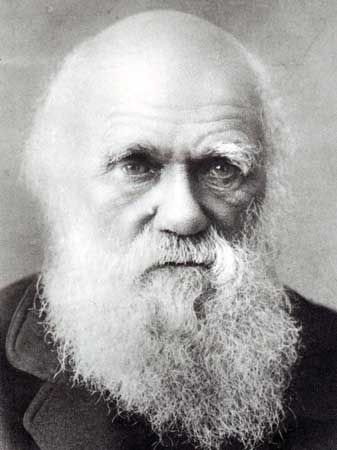 _
_








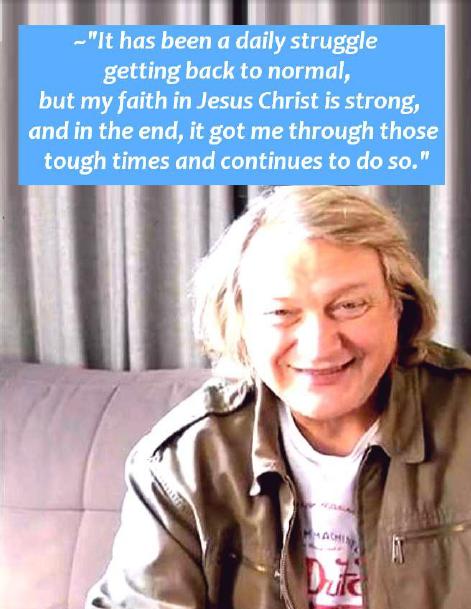


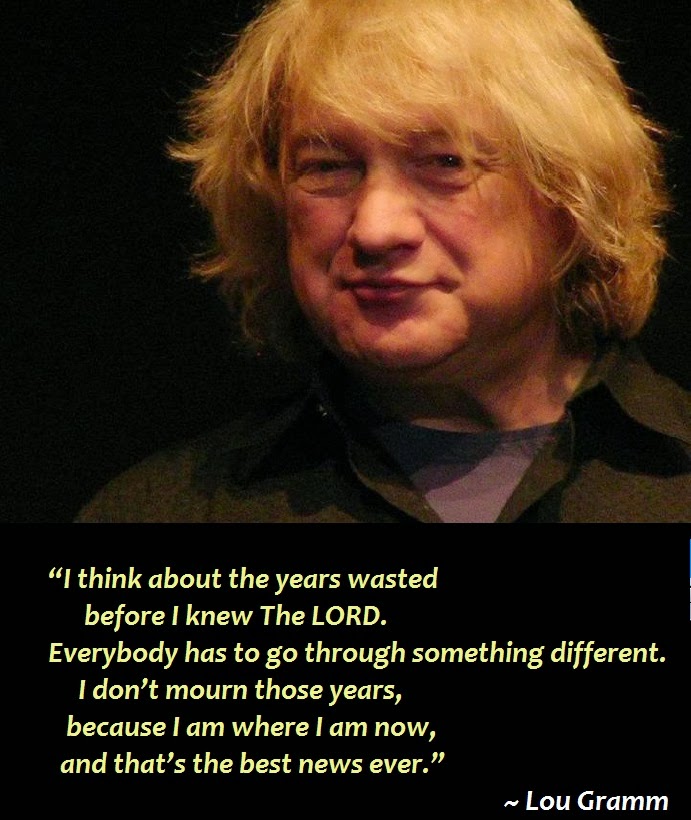


 The Daily Hatch