Monthly Archives: April 2016

“Woody Wednesday” ECCLESIASTES AND WOODY ALLEN’S FILMS: SOLOMON “WOULD GOT ALONG WELL WITH WOODY!” (Part 23 MIDNIGHT IN PARIS Part V Ernest Hemingway 11th part Gil Pender,”Mark Twain is my favorite author” Mark Twain on the subject of suicide )

_

Mark Twain said people should either commit suicide or stay drunk if they are “demonstrably wise” and want to “keep their reasoning faculties.” We actually see this play out in the film MIDNIGHT IN PARIS with the character Zelda Fitzgerald.
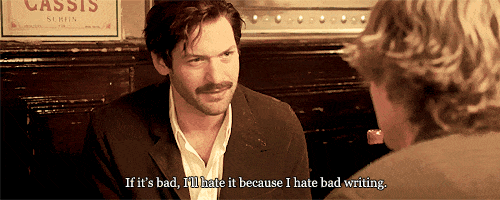
HEMINGWAY:You like Mark Twain?

SCOTT FITZGERALD: I’m going to find Zelda.I don’t like the thoughtof her with that Spaniard.

GIL PENDER:May I?

HEMINGWAY:Yeah,

GIL PENDER:I’m actually a huge Mark Twain fan.I think you can even make the case that all modern American literature comes from Huckleberry Finn.-
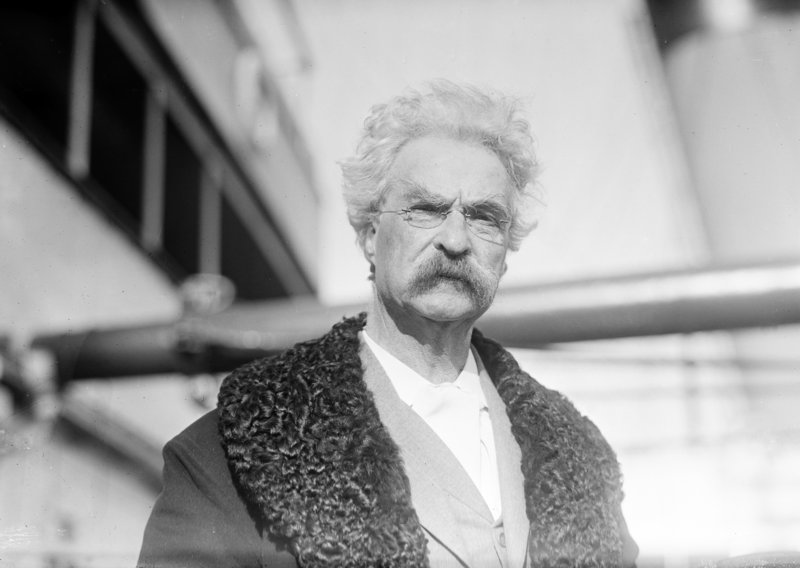
This picture above of Mark Twain was reportedly taken in 1898 and that same year he wrote in his notebook, “Of the demonstrably wise there are but two: those who commit suicide, & those who keep their reasoning faculties atrophied with drink.” Now observe that in the film MIDNIGHT IN PARIS Zelda Fitzgerald also explores staying drunk and then later in the film attempts suicide.

ZELDA FITZGERALD: I know I can be one of the great writers of musical lyrics- not that I can write melodies, and I try,and then I hear the songs he writes, and then I realize: I’ll never write a great lyric,- and MY TALENT REALLY LIES IN DRINKING.-

SCOTT FITZGERALD: Sure does.

Later in MIDNIGHT IN PARIS we find Zelda attempting to jump in the Seine river and end her life.
 GIL PENDER:God, is that who I think it is?
ADRIANA: What is she doing here,staring into the water?Oh my God! Zelda, what are you doing?!- Please?
ZELDA: I don’t want to live!-
ADRIANA: Stop!- What is it?-
ZELDA: Scott and that beautiful countess.They were– It was so obvious they were whispering about me,and the more they drank, the more he fell in love with her!
GIL PENDER: He…Scott loves only you.- I can tell you that with absolute certainty.-
ZELDA: No.- He’s tired of me!-
GIL PENDER: You’re wrong. You’re wrong. I know.-
ZELDA: How?-
GIL PENDER: Trust me. I know.- Sometimes you get a feel for people, and I get…-
ZELDA: My skin hurts!-
ADRIANA: What do you mean?-
ZELDA: I don’t wanna…I hate the way I look!
ADRIANA:Don’t do that!-
GIL PENDER: Here. Take this.-
ZELDA:What is this?
GIL PENDER: It’s a Valium. It’llmake you feel better.-
ADRIANA:You carry medicine?-
GIL PENDER: No, not normally.It’s just since I’ve been engaged to Inez,I’ve been having panic attacks, but I’msure they’ll subside after the wedding.
ADRIANA: I’ve never heard of Valium. What is this?
GIL PENDER:It’s the…pill of the future.
 __

Mark Twain on Suicide

In the Ken Burns film on Mark Twain at 35 min mark of part 1 are these words:

For two months my sole occupation was avoiding acquaintances; for during that time I did not earn a penny, or buy an article of any kind, or pay my board. I became a very adept at “slinking.” I slunk from back street to back street, I slunk away from approaching faces that looked familiar, I slunk to my meals, ate them humbly and with a mute apology for every mouthful I robbed my generous landlady of, and at midnight, after wanderings that were but slinkings away from cheerfulness and light, I slunk to my bed. I felt meaner, and lowlier and more despicable than the worms. During all this time I had but one piece of money—a silver ten cent piece—and I held to it and would not spend it on any account, lest the consciousness coming strong upon me that I was entirely penniless, might suggest suicide. I had pawned every thing but the clothes I had on; so I clung to my dime desperately, till it was smooth with handling. (Roughing It, chapter 59)

Nothing seemed to work out for him. One day he put a revolver to his head and almost pulled the trigger. Many times I have been sorry I did not succeed he later said, but I was never ashamed of having tried.

IMAX: Mark Twain’s America

https://www.youtube.com/watch?v=b0WioOn8Tkw

SUICIDE

You see, the lightning refuses to strike me — that is where the defect is. We have to do our own striking, as Barney Bernato did. But nobody ever gets the courage till he goes crazy.
– Letter to Henry Rogers, 16 June 1897 Suicide is the only sane thing the young or old ever do in this life.
– quoted in Mark Twain: God’ s Fool, Hamlin HillUnfortunately none of us can see far ahead; prophecy is not for us. Hence the paucity of suicides.
– “Which Was the Dream?”
Ad art


But we are all insane, anyway…The suicides seem to be the only sane people.
– Mark Twain’s Notebook, #40, (Jan. 1897-July 1900)

Of the demonstrably wise there are but two: those who commit suicide, & those who keep their reasoning faculties atrophied with drink.
– Notebook, 1898

I do see that there is an argument against suicide: the grief of the worshipers left behind, the awful famine in their hearts, these are too costly terms for the release.
– Letter to William Dean Howells, 13 July 1889

Olivia, Sam and Clara

I would not be a party to that last and meanest unkindness, treachery to a would-be suicide. My sympathies have been with the suicides for many, many years. I am always glad when the suicide succeeds in his undertaking. I always feel a genuine pain in my heart, a genuine grief, a genuine pity, when some scoundrel stays the suicide’s hand and compels him to continue his life.
Autobiography of Mark Twain, Vol. 2 (2013), p. 45-46. Dictated 11 April 1906.

Mark Twain Adventures of Tom Sawyer and Huckleberry Finn Biography Documentary Film

https://www.youtube.com/watch?v=KcD1W3CNqTE

Mark Twain Documentary (1963)

Biography of Mark Twain (1835 1910)

https://www.youtube.com/watch?v=S2Tl3dV0w8c

Woody Allen on Life and Death (A Scene From Hannah And Her Sisters)

Scene from HANNAH AND HER SISTERS:

Mickey: One day about a month ago, I really hit bottom. Ya know I just felt that in a Godless universe I didn’t wanna go on living. Now I happen to own this rifle, which I loaded believe it or not, and pressed it to my forehead. And I remember thinking, I’m gonna kill myself. Then I thought, what if I’m wrong, what if there is a God. I mean, after all nobody really knows that. Then I thought no, ya know maybe is not good enough, I want certainty or nothing. And I remember very clearly, the clock was ticking, and I was sitting there frozen with the gun to my head, debating whether to shoot.

[gun fires]

Mickey: All of a sudden the gun went off. I had been so tense my finger squeezed the trigger inadvertantly. But I was perspiring so much the gun had slid off my forehead and missed me. Suddenly neighbors were pounding on the door, and I dunno the whole scene was just pandemonium. I ran to the door, I didn’t know what to say. I was embarrassed and confused and my mind was racing a mile a minute. And I just knew one thing I had to get out of that house, I had to just get out in the fresh air and clear my head. I remember very clearly I walked the streets, I walked and I walked I didn’t know what was going through my mind, it all seemed so violent and unreal to me. I wandered for a long time on the upper west side, it must have been hours. My feet hurt, my head was pounding, and I had to sit down I went into a movie house. I didn’t know what was playing or anything I just needed a moment to gather my thoughts and be logical and put the world back into rational perspective. And I went upstairs to the balcony, and I sat down, and the movie was a film that I’d seen many times in my life since I was a kid, and I always loved it. I’m watching these people up on the screen and I started getting hooked on the film. I started to feel, how can you even think of killing yourself, I mean isn’t it so stupid. Look at all the people up there on the screen, they’re real funny, and what if the worst is true. What if there is no God and you only go around once and that’s it. Well, ya know, don’t you wanna be part of the experience? You know, what the hell it’s not all a drag. And I’m thinking to myself, Jeez, I should stop ruining my life searching for answers I’m never gonna get, and just enjoy it while it lasts. And after who knows, I mean maybe there is something, nobody really knows. I know maybe is a very slim reed to hang your whole life on, but that’s the best we have. And then I started to sit back, and I actually began to enjoy myself.

Francis Schaeffer “BASIS FOR HUMAN DIGNITY” Whatever…HTTHR

Francis Schaeffer pictured below:

_________________

How Should We then Live Episode 7 small (Age of Nonreason)

https://www.youtube.com/watch?v=ygzh713TQn8

The Atheist can only come to the conclusion of despair according to Ecclesiastes,but humans always try to go to the area of non-reason for meaning in their lives instead of turning to God!

In the following post Dustin Shramek notes:

Francis Schaeffer illustrates this problem well. He says that we live in a two story universe. On the first story the world is finite without God. This is what Sartre, Russell, and Nietzsche describe. Life here is absurd, with no meaning or purpose. On the second story life has meaning, value, and purpose. This is the story with God. Modern man resides on the first floor because he believes there is no God. But as we have shown, he cannot live there happily, so he makes a leap of faith to the second story where there is meaning and purpose. The problem is that this leap is unjustified because of his disbelief in God. Man cannot live consistently and happily knowing life is meaningless.

Atheism and Death: Why the atheist must face death with despair


By Dustin Shramek


The title of this paper may catch some off guard. You or someone you know might be an atheist and you feel as though you have no despair when contemplating your death. I don’t doubt that there are many atheist that, in fact, have no despair over death. But, for the atheist to live without despair, they must do so inconsistently. In my paper, I will show why it is logically inconsistent for an atheist to live and face death with happiness.

To do this I want to present two major arguments. The first is from the theist point of view that life is meaningless without God and thus death is hopeless. This is derived from two of the world’s top philosophers, William Lane Craig and Ravi Zacharias (both are theists). It should be noted that this argument will be supplemented with the thoughts of several respected atheistic philosophers so one does not think they are being biased.

https://www.youtube.com/watch?v=CcyY3xEzPWc

(Thomas Nagel above)

The second part of the paper will show why death is a necessary evil within the atheistic world view. To demonstrate this I will be drawing from the works of a major contemporary, atheist philosopher, Thomas Nagel. Both arguments are convincing by themselves, but I hope to show that with the two of them together, it is even more compelling to believe that the atheist must face death with despair. I don’t doubt that many atheist have been able to boldly face death without fear, but I do believe that they were being inconsistent in their world view.
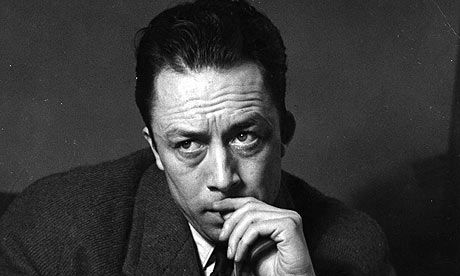
Albert Camus said that death is philosophy’s only problem. That is quite the statement. Not only is death a problem, but a it is a large one. Why is death such a problem for someone like Camus? He was an atheist and I will attempt to show that death is a problem for all atheists.

Atheism cannot offer any comfort in the face of death. You see, everything we do includes some kind of hope. However, what kind of hope can the atheist give in the face of death? One may say that death is the final freeing of all desires and thus is good. Or that one can have hope in death if they are suffering. These really are just false hopes that I hopefully will clearly show.

After the death of his friend, Arthur Hallam, Alfred, Lord Tennyson composed his poem, “In Memorium”. This poem show the struggle he had as he wrestled with grief and the question of what ultimate power manages the fate of man. It shows the struggle he had between his realization of the consequences of his choice between atheism and God. I will quote a lengthy excerpt to feel the full impact.

Thine are these orbs of light and shade
Thou madest Life in man and brute;
Thou madest death; and Lo, thy foot
Is on the skull which thou hast made.

Are God and Nature then at strife
That Nature lends such evil dreams?
So careful of the type she seems
So careless of the single life,…

“So careful of the type?” but no.
From scarped cliff and quarried stone
She cries a thousand types are gone;
I care for nothing, all shall go.

“Thou makest thine appeal to me
I bring to life, I bring to death;
The spirit does but mean the breath:
I know no more.” And he, shall he,

Man her last work who seem’d so fair
Such splendid purpose in his eyes,
Who rolI’d the psalm to wintry skies,
Who built him fanes of fruitless prayers,

Who trusted God was love indeed
And love creation’s final law–
Tho’ Nature, red in tooth and claw
With ravine, shrieked against his creed-

Who loved, who suffer’d countless ills
Who battled for the True, the Just,
Be blown about the desert dust,
Or seal’d within the iron hills?

No more? A monster then, a dream.
A discord. Dragons of the prime
That tear each other in their slime,
Were mellow music match’d with him.

O life as futile, then, as frail!
O for thy voice to soothe and bless
What hope of answer, or redress?
Behind the veil, behind the veil.[1]

Atheism has parented this offspring, and it is her legitimate child–with no mind to look back to for his origin, no law to turn to for guidance, no meaning to cling to for life, and no hope for the future. This is the shattered visage of atheism. It has the stare of death, looking into the barren desert of emptiness and hopelessness. Thus, the Nietzschean dogma, which dawned with the lantern being smashed to the ground, now ends in the darkness of the grave.[2]

Is this true? Is there no hope in atheism? Is there no meaning in a world without God? William Lane Craig offers a resounding yes.

Craig argues that if God doesn’t exist, then man and the universe are doomed to die. There is no hope of immortality. Our lives are but an infinitesimally small point that appears and then vanishes forever.
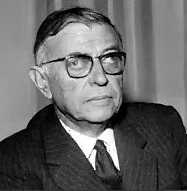
Jean-Paul Sartre affirmed that death is not-threatening provided we view it in the third person. It isn’t until we face the first person, “I am going to die,my death,” that death becomes threatening. Most, though, never assume first person attitudes during their life. So the question arises, “Why is my death so threatening?”

This is because within an atheistic world view there can be no meaning or purpose. I’m sure that many will be quick to disagree with me because they are an atheist or know an atheist who does ascribe meaning and purpose to their lives. But is this consistent within the atheistic world view? I don’t think so.

If everything is doomed to go out of existence, can there be any ultimate significance? If we are inevitably faced with nonexistence can our lives have any ultimate significance?

Influencing others or influencing history doesn’t give your life ultimate significance. It only gives it relative significance. Your life is important relative to certain events, but there is no ultimate significance to those events if all will die. Ultimately, your life makes no difference.

Even the universe is doomed to die (due to the Second Law of Thermodynamics). So what ultimate difference would it make if the universe never came to exist at all if it is doomed to become dead?

Mankind is thus no more significant than a swarm of mosquitos or a barnyard of pigs, for their end is all the same. The same blind cosmic process that coughed them up in the first place will eventually swallow them all again.[3]

If one’s destiny is the grave, what ultimate purpose is their for life? The same is true of the universe. If it is doomed to become a forever expanding pile of useless debris, what purpose is there for the universe? To what end is the world or man in existence? There can be no hope, no purpose.

What is true of mankind is true of individuals as well. So there can be no purpose in any individual’s life. My life wouldn’t be qualitatively different than the life of a dog. This thought is expressed by the writer of Ecclesiastes, “The fate of the sons of men and the fate of beasts is the same. As one dies so dies the other; indeed, they all have the same breath and there is no advantage for man over beast, for all is vanity. All go to the same place. All come from the dust and all return to the dust” (Ecc 3:19-20).

(King Solomon wrote Ecclesiastes at the end of his life)

The universe and man are cosmic accidents. There is no reason for our existence. Man is a cosmic orphan.

Without God the universe is the result of a cosmic accident, a chance explosion. There is no reason for which it exist. As for man, he is a freak of nature–a blind product of matter plus time plus chance. Man is just a lump of slime that evolved into rationality. There is no more purpose in life for the human race than for a species of insect; for both are the result of the blind interaction of chance and necessity.[4]

If we are only cosmic accidents, how can there be any meaning in our lives? If this is true, which it is in an atheistic world view, our lives are for nothing. It would not matter in the slightest bit if I ever existed. This is why the atheist, if honest and consistent, must face death with despair. Their life is for nothing. Once they are gone, they are gone forever.

Friedrich Nietzsche admitted that with the end of Christianity comes nihilism, which is the “denial of the existence of any basis for knowledge or truth; the general rejection of customary beliefs in morality, religion, etc.; the belief that there is no meaning or purpose in existence.” In “The Will to Power”, Nietzsche says this,

What I relate is the history of the next two centuries. I describe what is coming, what can no longer come differently: the advent of nihilism.. ..Our whole European culture is moving for some time now, with a tortured tension that is growing form decade to decade, as toward a catastrophe: restlessly, violently, headlong, like a river that wants to reach the end, that no longer reflects, that is afraid to reflect.[5]
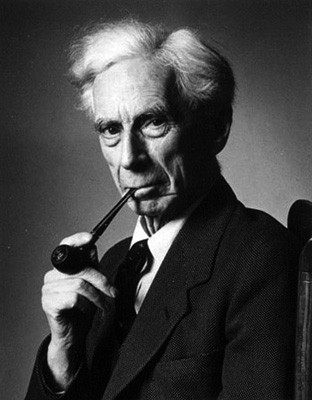
Bertrand Russell, a famous atheistic philosopher, even admits that life is purposeless. I quote him at length,

That Man is the product of causes which had no prevision of the end they were achieving; that his origin, his growth, his hopes and fears, his loves and his beliefs, are but the outcome of accidental collocations of atoms; that no fire, no heroism, no intensity of thought and feeling, can preserve an individual life beyond the grave; that all the labours of the ages, all the devotion, all the inspiration, all the noonday brightness of human genius, are destined to extinction in the vast death of the solar system, and that the whole temple of Man’s achievement must inevitably be buried beneath the debris of a universe in ruins–all these things, if not quite beyound dispute, are yet so nearly certain, that no philosophy which rejects them can hope to stand. Only within the scaffolding of these truths, only on the firm foundation of unyielding despair, can the soul’s habitation henceforth be safely built.[6]

“Only on the firm foundation of unyielding despair,”? What can be placed on such a foundation?

Even Jean-Paul Sartre affirms the absurdity of life when he says, “Being is without reason, without cause, and without necessity. The very definition of being release its original contingency to us.”[7]

Three of the most important atheistic philosophers, Nietzsche, Russell, and Sartre, all admitted that apart from God life is meaningless and absurd. So how do people live happily with this world view? They live inconsistently. For if one lives consistently, he is unable to live happily.

Francis Schaeffer illustrates this problem well. He says that we live in a two story universe. On the first story the world is finite without God. This is what Sartre, Russell, and Nietzsche describe. Life here is absurd, with no meaning or purpose. On the second story life has meaning, value, and purpose. This is the story with God. Modern man resides on the first floor because he believes there is no God. But as we have shown, he cannot live there happily, so he makes a leap of faith to the second story where there is meaning and purpose. The problem is that this leap is unjustified because of his disbelief in God. Man cannot live consistently and happily knowing life is meaningless.

Of course, atheists don’t want to live in this kind of a predicament so they attempt to ascribe meaning to life and value to death. Walter Kaufmann does this in his book, Existentialism. Religion. and Death. The last chapter is entitled, “Death Without Dread”. He quotes several poems from a span of 150 years by poets from many different countries. He shows that death is commonly viewed without fear and he hypothesizes that death is only feared as a result of the impact of Christianity on culture. One of the poems quoted is by Matthias Claudius (1740-1815), it is entitled “Death and the Maiden,” and was eventually set to music by Franz Schubert.

(Matthias Claudius pictured below)

Death and the Maiden

The maiden:
Oh, go away, please go,
Wild monster, made of bone!
I am still young; Oh, no!
Oh, please leave me alone!

Death:
Give me your hand, my fair and lovely child!
A friend I am and bring no harm.
Be of good cheer, I am not wild,
You shalt sleep gently in my arm.[8]

He goes on to quote Nietzsche from Twilight of the Idols, “To die proudly when it is no longer possible to live proudly. Death freely chosen, death at the right time, brightly and cheerfully accomplished amid children and witnesses.”[9]

Nietzsche saw death as the ultimate liberation. He even emphasises the desire he has to freely choose when he dies. Kaufmann affirms this when he says, “We should also give up the unseemly Christian teachings about suicide and accept it as a dignified and decent way of ending our lives.”[10]

When Sartre, who agreed with Nietzsche, was asked why he didn’t commit suicide, he replied by saying that he didn’t want to use his freedom to take away his freedom. This is an absurd solution though, because they say that freedom is the problem with its aimlessness, pain, and despair.

Kaufmann argues that if we live life richly and not expect to live long lives then when we die we can combat the hopelessness of death because we won’t feel cheated or won’t feel as though we need more time. The problem lies in the fact thay kaufmann makes the jump to the second story. He wants to ascribe meaning to a richly lived life, which I’ve shown can’t be done in a God-less universe. When he says that one won’t feel as though they’ve been deprived of time when they die is wishful thinking. One of his contemporaries, Thomas Nagel (an atheist) shows the falsity in this thinking.

Nagel begins his discussion of death with this statement, “If death is the unequivocal and permanent end of our existence, the question arises whether it is a bad thing to die.”[11]

He argues that if life is all we have, then its loss is the greatest loss we can encounter. Nagel’s goal is to see whether death is in itself an evil, how great of an evil it is, and what kind of evil it is.

If death is an evil, it is because of the loss of life and not the state of being dead, or nonexistant. Some say that dying is the the real evil. But Nagel points out that he wouldn’t really object to dying if it wasn’t followed by death. He says,

If we are to make sense of the view that to die is bad, it must be on the ground that life is a good and death is the corresponding deprivation or loss, bad not because of any positive features but because of the desirability of what it removes.[12]

There are three objections that many have raised about the proposition that death is an evil. 1) One may doubt that there are any evils which solely consist in the deprivation or absence of possible good, particularly when one doesn’t mind the deprivation (because they don’t exist). What you don’t know, can’t hurt you. 2) How is the supposed misfortune assigned to the subject? So long as one exists, he isn’t dead, and once he dies he no longer exist. So there can be no time when death, if it is a misfortune, can be ascribed to the subject. 3) Finally, the asymmetry of our attitudes towards our posthumous and prenatel nonexistence. Why can we view the eternity after our death as bad, but not the eternity before our birth?

He illustrates the errors of the first two objections with a simple illustration that is analogous to death. Imagine an intelligent man being reduced to the mental condition of a content infant. Even though he is content, we pity him. Yet, he doesn’t realize this tragedy, for he is a content infant. Does the phrase, “What we don’t know doesn’t hurt us,” apply to him? If so why do we pity him? Second, it isn’t the content infant who is unfortunate, rather, it is the intelligent adult who has been reduced to this condition.

We shouldn’t and don’t focus on the content infant, instead we consider the person he was and the person he could be now. So his reduction to this state and the premature ending of his adult development is a catastrophe. Just as death is a catastrophe.

What about the problem of our asymmetrical attitudes towards our posthumous and prenatel nonexisetence?

Lucretius was the one who first pointed this out. He recognized that no one finds it disturbing to contemplate the eternity before their birth, which really is the same as the eternity after their death. Thus, it is irrational to fear death.

Nagel disagrees, he argues that the time after death is the time in which nonexistence deprives a person. “Any death entails the loss of some life.”[14] So the eternity after death isn’t the same as the eternity before birth, because one is deprived of life. Some may argue then, that one is deprived of life before birth as well because they could have been born earlier. But Nagel shows the fallacy of this thinking by pointing out that if one is born any earlier (except a few weeks premature), they would not be the same person. So it doesn’t entail the loss of any life. Lucretius, and any one who agrees with him, is wrong in thinking that it is irrational to fear death on the basis that we aren’t bothered by our prenatel eternity.

Life makes known to us the goods of which death deprives us. Death, no matter when it happens deprives us of some continuation of life. While it is tragic for a 17 year old to die, it is just as tragic for a 90 year old to die because both are deprived of life and the good that comes with it.

Viewed in this way, death, no matter how inevitable, is an abrupt cancellation of indefinitely extensive possible goods. Normality seems to have nothing to do with it, for the fact that we will all inevitably die in a few score years cannot by itself imply that it would not be good to live longer. Suppose that we were all inevitably going to die in agony — physical agony lasting six months. Would inevitability make that prospect any less unpleasant? And why should it be different for a deprivation?[14]

Not many atheists are as consistent as Thomas Nagal when they speak on death. Kaufmann says he can face death without hopelessness because he lives richly and that gives meaning to his life. But what kind of meaning is it? If Kaufmann never existed, what ultimate difference would it make? None. If the atheists faces this honestly, how can he view death with anything but despair?

As shown in these two extended arguments, death apart from God cannot be faced with anything but fear and despair if one is to live consistently within their atheistic world view. The only way an atheist can face death without despair is by ascribing ultimate meaning to their life, which is a jump to the second story and is completely inconsistent with atheism.

Certainly it doesn’t follow, then, that theism is true simply because the atheist must face death with despair. If the atheist is right we must follow the instructions of Bertrand Russell and build our lives on the “firm foundation of unyielding despair.” We must look for the truth and then logically structure our lives accordingly. Obtaining hope from religion for the sake of hope, when that religion is not true, is simply obtaining false hope. False hope is no hope at all.

That is why it is crucial to examine our world views to see if they are logically consistent and correspond to reality. It does one no good to put faith and hope into a god who doesn’t exist. However, if a god does exist, we must put our faith and hope into the right one.

We’ve seen that within the atheistic world view there can be no meaning or purpose and this leads to hopelessness. The atheist must choose whether he wants to live consistently or happily. For as long as he is an atheist, he can’t do both.

Notes1. Alfred, Lord Tennyson, In Memorium, (The Macmillan Company: New York, NY, 1906), pp.83-85, 55: 4-5; 56: 1-7.
2. Ravi Zacharias, A Shattered Visage: The Real Face of Atheism. (Baker Books: Grand Rapids, Ml, 1990), p. 105.
3. William Lane Craig, Reasonable Faith: Christian Truth and Apologetics, (Crossway Books: Wheaton, IL, 1984), p. 59.
4. Craig, p.63.
5. Friedrich Nietzsche, “The Will to Power,” trans. W. kaufmann, in <i?existentialism from=”” dostoyevsky=”” to=”” sartre<=”” i=””>, (The World Publishing Company: Cleveland, OH, 1956), pp. 109-110.
6. Bertrand Russell, Mysticism and Logic. (W.W. Norton and Company, Inc.: New York, NY, 1929), pp. 47-49.
7. Jean-Paul Sartre, Being and Nothingness, (Philosophical Library: New York, NY, 1956), p.537.
8. Matthias Claudius, Death and the Maiden. Quoted in Walter kaufmann, Existentialism, Religion and Death (New American Library: New York, NY, 1976), p.228.
9. Friedrich Nietzsche, Twilight of the Idols. Quoted in Walter Kaufmann, Existentialism, Religion, and Death. (New American Library: New York, NY, 1976), p.237.
10. Walter kaufmann, Existentialism, Religion, and Death. (New American Library: New York, NY, 1976), p. 248.
11. Thomas Nagel, Mortal Questions. (Cambridge University Press: Cambridge, 1979), p.1.
12. Nagel, p.4.
13. Nagel, p.7.
14. Nagel, p.10.

Conversations at Noon – A Conversation with “Mark Twain”

(photo credit)

King Solomon in Ecclesiastes painted a dismal situation for modern man in life UNDER THE SUN  and many modern artists, poets, and philosophers have agreed.  Kerry Livgren of the rock group KANSAS wrote the  hit song DUST IN THE WIND in 1978 and  put his faith in Christ.

(Kerry Livgren)

In 2006 in the publication CROSSWALK Livgren noted:

Dust In the Wind” was certainly the most well-known song, and the message was out of Ecclesiastes. I never ceased to be amazed at how the message resonates with people, from the time it came out through now. The message is true and we have to deal with it, plus the melody is memorable and very powerful. It disturbs me that there’s only part of the [Christian] story told in that song. It’s about someone yearning for some solution, but if you look at the entire body of my work, there’s a solution to the dilemma.

This series deals with the Book of Ecclesiastes and Woody Allen films.  The first post  dealt with MAGIC IN THE MOONLIGHT and it dealt with the fact that in the Book of Ecclesiastes Solomon does contend like Hobbes  and Stanley that life is “nasty, brutish and short” and as a result has no meaning UNDER THE SUN.

The movie MIDNIGHT IN PARIS offers many of the same themes we see in Ecclesiastes. The second post looked at the question: WAS THERE EVER AGOLDEN AGE AND DID THE MOST TALENTED UNIVERSAL MEN OF THAT TIME FIND TRUE SATISFACTION DURING IT?

In the third post in this series we discover in Ecclesiastes that man UNDER THE SUN finds himself caught in the never ending cycle of birth and death. The SURREALISTS make a leap into the area of nonreason in order to get out of this cycle and that is why the scene in MIDNIGHT IN PARIS with Salvador Dali, Man Ray, and Luis Bunuel works so well!!!! These surrealists look to the area of their dreams to find a meaning for their lives and their break with reality is  only because they know that they can’t find a rational meaning in life without God in the picture.

The fourth post looks at the solution of WINE, WOMEN AND SONG and the fifth and sixth posts look at the solution T.S.Eliot found in the Christian Faith and how he left his fragmented message of pessimism behind. In the seventh post the SURREALISTS say that time and chance is all we have but how can that explain love or art and the hunger for God? The eighth  post looks at the subject of DEATH both in Ecclesiastes and MIDNIGHT IN PARIS. In the ninth post we look at the nihilistic worldview of Woody Allen and why he keeps putting suicides into his films.

In the tenth post I show how Woody Allen pokes fun at the brilliant thinkers of this world and how King Solomon did the same thing 3000 years ago. In the eleventh post I point out how many of Woody Allen’s liberal political views come a lack of understanding of the sinful nature of man and where it originated. In the twelfth post I look at the mannishness of man and vacuum in his heart that can only be satisfied by a relationship with God.

In the thirteenth post we look at the life of Ernest Hemingway as pictured in MIDNIGHT AND PARIS and relate it to the change of outlook he had on life as the years passed. In the fourteenth post we look at Hemingway’s idea of Paris being a movable  feast. The fifteenth and sixteenth posts both compare Hemingway’s statement, “Happiness in intelligent people is the rarest thing I know…”  with Ecclesiastes 2:18 “For in much wisdom is much vexation, and he who increases knowledge increases sorrow.” The seventeenth post looks at these words Woody Allen put into Hemingway’s mouth,  “We fear death because we feel that we haven’t loved well enough or loved at all.”

In MIDNIGHT IN PARIS Hemingway and Gil Pender talk about their literary idol Mark Twain and the eighteenth post is summed up nicely by Kris Hemphill‘swords, “Both Twain and [King Solomon in the Book of Ecclesiastes] voice questions our souls long to have answered: Where does one find enduring meaning, life purpose, and sustainable joy, and why do so few seem to find it? The nineteenth post looks at the tension felt both in the life of Gil Pender (written by Woody Allen) in the movie MIDNIGHT IN PARIS and in Mark Twain’s life and that is when an atheist says he wants to scoff at the idea THAT WE WERE PUT HERE FOR A PURPOSE but he must stay face the reality of  Ecclesiastes 3:11 that says “God has planted eternity in the heart of men…” and  THAT CHANGES EVERYTHING! Therefore, the secular view that there is no such thing as love or purpose looks implausible. The twentieth post examines how Mark Twain discovered just like King Solomon in the Book of Ecclesiastes that there is no explanation  for the suffering and injustice that occurs in life UNDER THE SUN. Solomon actually brought God back into the picture in the last chapter and he looked  ABOVE THE SUN for the books to be balanced and for the tears to be wiped away.

The twenty-first post looks at the words of King Solomon, Woody Allen and Mark Twain that without God in the picture our lives UNDER THE SUN will accomplish nothing that lasts. The twenty-second post looks at King Solomon’s experiment 3000 years that proved that luxuries can’t bring satisfaction to one’s life but we have seen this proven over and over through the ages. Mark Twain lampooned the rich in his book “The Gilded Age” and he discussed  get rich quick fever, but Sam Clemens loved money and the comfort and luxuries it could buy. Likewise Scott Fitzgerald  was very successful in the 1920’s after his publication of THE GREAT GATSBY and lived a lavish lifestyle until his death in 1940 as a result of alcoholism. In the twenty-third post we look at Mark Twain’s statement that people should either commit suicide or stay drunk if they are “demonstrably wise” and want to “keep their reasoning faculties.” We actually see this play out in the film MIDNIGHT IN PARIS with the character Zelda Fitzgerald.

How Should We then Live Episode 7 small (Age of Nonreason)

https://www.youtube.com/watch?v=ygzh713TQn8

#02 How Should We Then Live? (Promo Clip) Dr. Francis Schaeffer

The clip above is from episode 9 THE AGE OF PERSONAL PEACE AND AFFLUENCE

10 Worldview and Truth

In above clip Schaeffer quotes Paul’s speech in Greece from Romans 1 (from Episode FINAL CHOICES)

Two Minute Warning: How Then Should We Live?: Francis Schaeffer at 100

A Christian Manifesto Francis Schaeffer

__________________________

The Characters referenced in Woody Allen’s “Midnight in Paris” (Part 15, Luis Bunuel)
The Characters referenced in Woody Allen’s “Midnight in Paris” (Part 9, Georges Braque)
The Characters referenced in Woody Allen’s “Midnight in Paris” (Part 5 Juan Belmonte)
The characters referenced in Woody Allen’s movie “Midnight in Paris” (Part 23,Adriana, fictional mistress of Picasso)
The characters referenced in Woody Allen’s “Midnight in Paris” (Part 11, Rodin)The Characters referenced in Woody Allen’s “Midnight in Paris” (Part 29, Pablo Picasso)The Characters referenced in Woody Allen’s “Midnight in Paris” (Part 13, Amedeo Modigliani)

The Characters referenced in Woody Allen’s “Midnight in Paris” (Part 14, Henri Matisse)
Characters referenced in Woody Allen’s movie “Midnight in Paris” (Part 35, Recap of historical figures, Notre Dame Cathedral and Cult of Reason)

The Characters referenced in Woody Allen’s “Midnight in Paris” (Part 3 Scott and Zelda Fitzgerald)
The Characters referenced in Woody Allen’s “Midnight in Paris” (Part 10 Salvador Dali)

The characters referenced in Woody Allen’s “Midnight in Paris” (Part 12, Gabrielle “Coco” Chanel)

Related posts:

I love the movie “Midnight in Paris” by Woody Allen and I have done over 30 posts on the historical characters mentioned in the film. Take a look below:

“Midnight in Paris” one of Woody Allen’s biggest movie hits in recent years, July 18, 2011 – 6:00 am

(Part 32, Jean-Paul Sartre)July 10, 2011 – 5:53 am

 (Part 29, Pablo Picasso) July 7, 2011 – 4:33 am

(Part 28,Van Gogh) July 6, 2011 – 4:03 am

(Part 27, Man Ray) July 5, 2011 – 4:49 am

(Part 26,James Joyce) July 4, 2011 – 5:55 am

(Part 25, T.S.Elliot) July 3, 2011 – 4:46 am

(Part 24, Djuna Barnes) July 2, 2011 – 7:28 am

(Part 23,Adriana, fictional mistress of Picasso) July 1, 2011 – 12:28 am

(Part 22, Silvia Beach and the Shakespeare and Company Bookstore) June 30, 2011 – 12:58 am

(Part 21,Versailles and the French Revolution) June 29, 2011 – 5:34 am

(Part 16, Josephine Baker) June 24, 2011 – 5:18 am

(Part 15, Luis Bunuel) June 23, 2011 – 5:37 am

Related posts:

A list of the most viewed posts on the historical characters mentioned in the movie “Midnight in Paris”

Characters referenced in Woody Allen’s movie “Midnight in Paris” (Part 38,Alcoholism and great writers and artists)

The characters referenced in Woody Allen’s movie “Midnight in Paris” (Part 36, Alice B. Toklas, Woody Allen on the meaning of life)

Characters referenced in Woody Allen’s movie “Midnight in Paris” (Part 35, Recap of historical figures, Notre Dame Cathedral and Cult of Reason)

The characters referenced in Woody Allen’s movie “Midnight in Paris” (Part 34, Simone de Beauvoir)

The characters referenced in Woody Allen’s movie “Midnight in Paris” (Part 33,Cezanne)

The characters referenced in Woody Allen’s movie “Midnight in Paris” (Part 32, Jean-Paul Sartre)

The characters referenced in Woody Allen’s movie “Midnight in Paris” (Part 31, Jean Cocteau)

The characters referenced in Woody Allen’s movie “Midnight in Paris” (Part 30, Albert Camus)

The Characters referenced in Woody Allen’s “Midnight in Paris” (Part 29, Pablo Picasso)

The Characters referenced in Woody Allen’s “Midnight in Paris” (Part 8, Henri Toulouse Lautrec)

The Characters referenced in Woody Allen’s “Midnight in Paris” (Part 7 Paul Gauguin)

The Characters referenced in Woody Allen’s “Midnight in Paris” (Part 6 Gertrude Stein)

The Characters referenced in Woody Allen’s “Midnight in Paris” (Part 5 Juan Belmonte)

RESPONDING TO HARRY KROTO’S BRILLIANT RENOWNED ACADEMICS!! Part 73 Mahzarin Banaji, Harvard, “I was born into a Zoroastrian family, and I stopped believing roughly around the age of 8!”

On November 21, 2014 I received a letter from Nobel Laureate Harry Kroto and it said:

…Please click on this URL http://vimeo.com/26991975

and you will hear what far smarter people than I have to say on this matter. I agree with them.

Harry Kroto

Wikipedia notes:

Mahzarin Banaji

From Wikipedia, the free encyclopedia
Mahzarin Rustum Banaji
Born 1956
Fields Social psychology
Institutions Yale University, Harvard University
Alma mater Osmania University, Ohio State University
Known for Implicit Association Test

Mahzarin Rustum Banaji (born 1956)[1] is an American social psychologist at Harvard University.

Education and Career[edit]

She was born and raised in Secunderabad where she attended St. Ann’s High School. Her B.A. is from Nizam College and her M.A. in Psychology from Osmania University in Hyderabad. In 1986, Banaji received a Ph.D. from Ohio State University, and was an NIH postdoctoral fellow at University of Washington. From 1986-2001 she taught at Yale University, where she was Reuben Post Halleck Professor of Psychology. In 2001, she moved to Harvard University as Richard Clarke Cabot Professor of Social Ethics in the Department of Psychology. She also served as the first Carol K. Pforzheimer Professor at the Radcliffe Institute for Advanced Study from 2002-2008. In 2005, Banaji was elected fellow of the Society of Experimental Psychologists. She was elected a Fellow of the American Academy of Arts and Sciences in 2008.[1] In 2009 was named Herbert A. Simon Fellow[2] of the American Academy of Political and Social Science.

I have attempted to respond to all of Dr. Kroto’s friends arguments and I have posted my responses one per week for over a year now. Here are some of my earlier posts:

Arif Ahmed, Sir David AttenboroughMark Balaguer, Patricia ChurchlandAaron CiechanoverNoam Chomsky,Alan DershowitzHubert Dreyfus, Bart Ehrman, Stephan FeuchtwangDavid Friend,  Riccardo GiacconiIvar Giaever , Roy GlauberRebecca GoldsteinDavid J. Gross,  Brian Greene, Susan GreenfieldStephen F Gudeman,  Alan Guth, Jonathan HaidtHermann HauserRoald Hoffmann,  Bruce HoodHerbert Huppert,  Gareth Stedman JonesShelly KaganMichio Kaku,  Stuart Kauffman, George Lakoff,  Lawrence KraussHarry Kroto, Elizabeth Loftus,  Alan MacfarlanePeter MillicanMarvin MinskyLeonard Mlodinow,  Yujin NagasawaAlva NoeDouglas Osheroff,   Saul PerlmutterHerman Philipse,  Robert M. PriceLisa RandallLord Martin Rees,  Oliver Sacks, John SearleMarcus du SautoySimon SchafferJ. L. Schellenberg,   Lee Silver Peter Singer,  Walter Sinnott-ArmstrongRonald de Sousa, Victor StengerBarry Supple,   Leonard Susskind, Raymond TallisNeil deGrasse Tyson,  .Alexander Vilenkin, Sir John WalkerFrank WilczekSteven Weinberg, and  Lewis Wolpert,

In  the second video below in the 65th clip in this series are her words and  my response is below them. 

50 Renowned Academics Speaking About God (Part 1)

Another 50 Renowned Academics Speaking About God (Part 2)

A Further 50 Renowned Academics Speaking About God (Part 3)

Brandon Barnard of Fellowship Bible Church Little Rock

Below is my response:

 April 11, 2016
Dr. Mahzarin Banaji
Department of Psychology, Harvard University
Cambridge, Massachusetts 02138Dear Dr. Banaji,

I am in the process of posting a  response on my blog to your comments on the film series RENOWNED ACADEMICS SPEAKING ABOUT GOD (which received over 300,000 hits on You Tube). In that film you made this comment, “I was born into a Zoroastrian family. I stopped believing roughly around the age of 8 and by 12 I had written my personal essay that hasn’t changed much the last several decades.”

Maybe we can agree on one thing. If Jesus Christ did rise from the grave then that changes everything. I wanted to share with you some of the things that transpired at our Easter service and then present you some evidence for you to consider.

Sometimes a song will just minister to a person in a special way and I wanted to share with you a song called FOREVER and it can be found on You Tube sung by Kari Jobe and here are the lyrics:

The moon and stars they wept
The morning sun was dead
The Savior of the world was fallen
His body on the cross
His blood poured out for us
The weight of every curse upon Him

One final breath He gave
As heaven looked away
The Son of God was laid in darkness
A battle in the grave
The war on death was waged
The power of hell forever broken

The ground began to shake
The stone was rolled away
His perfect love would not be overcome
Now death where is your sting?
Our resurrected King
Has rendered you defeated

[Chorus]
(Now) Forever He is glorified
Forever He is lifted high
(And) Forever He is risen
He is alive, He is alive

Songwriters
Johnson, Michael Edwin

We sang that song at our Easter service.

On Easter morning March 27, 2016 at FELLOWSHIP BIBLE CHURCH our teaching pastor Brandon Barnard delivered the message THIS CHANGES EVERYTHING based on I Corinthians chapter 15 and I wanted to share a portion of that sermon with you today.

This day is the day that changes everything. The resurrection changes everything and that is why we are gathered here today to celebrate the resurrection of our Lord Jesus Christ because it changes everything.

Some of you are going to be blown away by the opportunity before you this Easter morning because the resurrection of Jesus Christ stands at the very heart of Christianity. If what we we are gathered here to celebrate did not happen then people need to pity us as believers.  They need to feel sorry for you and me more than anyone on earth because we have set our hopes firmly on a lie.

But if the resurrection really did happen, then we need to repent and we need to believe in Jesus and we need to rejoice that we have hope in this life and the life to come. 

Paul wrote this to the believers in Corinth.

1 Corinthians 15:3-6, 13-21 English Standard Version (ESV)

3 For I delivered to you as of first importance what I also received: that Christ died for our sins in accordance with the Scriptures, that he was buried, that he was raised on the third day in accordance with the Scriptures, and that he appeared to Cephas, then to the twelve. Then he appeared to more than five hundred brothers at one time, most of whom are still alive, though some have fallen asleep.

13 But if there is no resurrection of the dead, then not even Christ has been raised. 14 And if Christ has not been raised, then our preaching is in vain and your faith is in vain. 15 We are even found to be misrepresenting God, because we testified about God that he raised Christ, whom he did not raise if it is true that the dead are not raised.16 For if the dead are not raised, not even Christ has been raised. 17 And if Christ has not been raised, your faith is futile and you are still in your sins. 18 Then those also who have fallen asleep in Christ have perished.19 If in Christ we have hope[a] in this life only, we are of all people most to be pitied.

20 But in fact Christ has been raised from the dead, the firstfruits of those who have fallen asleep. 21 For as by a man came death, by a man has come also the resurrection of the dead.

_____

If Christ hasn’t been raised then these facts are true:

  1. PREACHING AND FAITH ARE IN VAIN.
  2. WE ARE FALSE WITNESSES
  3. WE ARE STILL IN OUR SINS.
  4. THOSE WHO DIED IN FAITH ARE STILL DEAD
  5. WE ARE TO BE PITIED MORE THAN ANYONE ELSE IN THE WORLD.

Verse 20 says, “but Christ has been raised!!! Therefore, these things are true:

  1. Our faith is significant, valuable and eternal.
  2. we are truth tellers!!
  3. we are forgiven of our sins.
  4. death is not our final stop.
  5. don’t pity us but join us in believing in Jesus Christ.

________________

You said above that you do not believe in an afterlife. However, would you agree that if the Bible is correct in regards to history then Jesus did rise from the grave? Let’s take a closer look at evidence concerning the accuracy of the Bible.

Surgeon General C. Everett Koop

Francis Schaeffer

I know that you highly respected Surgeon General C. Everett Koop and he co-authored with Francis Schaeffer the book WHATEVER HAPPENED TO THE HUMAN RACE? Below is a piece of evidence from that book.

__

Consider, too, the threat in the entire Middle East from the power of Assyria. In 853 B.C. King Shalmaneser III of Assyria came west from the region of the Euphrates River, only to be successfully repulsed by a determined alliance of all the states in that area of the Battle of Qarqar. Shalmaneser’s record gives details of the alliance. In these he includes Ahab, who he tells us put 2000 chariots and 10,000 infantry into the battle. However, after Ahab’s death, Samaria was no longer strong enough to retain control, and Moab under King Mesha declared its independence, as II Kings 3:4,5 makes clear:

Now Mesha king of Moab was a sheep breeder, and he had to deliver to the king of Israel 100,000 lambs and the wool of 100,000 rams. But when Ahab died, the king of Moab rebelled against the king of Israel.

The famous Moabite (Mesha) Stone, now in the Louvre, bears an inscription which testifies to Mesha’s reality and of his success in throwing off the yoke of Israel. This is an inscribed black basalt stela, about four feet high, two feet wide, and several inches thick.

Ahab’s line did not last long and was brutally overthrown by a man called Jehu. As one walks toward the Assyrian section in the British Museum, one of the first exhibits to be seen is the famous Black Obelisk. This stands about six feet high and was discovered at Nimrud (Calah) near the Assyrian capital at Nineveh. It describes how King Shalmeneser III compelled Jehu to submit to his authority and to pay him tribute. Here one can see a representation of the kneeling figure of either Jehu or his envoy before the Assyrian king. The inscription tells of Jehu’s submission: “The tribute of Jehu, son of Omri: I received from him silver, gold, a golden bowl, a golden vase with pointed bottom, golden tumblers, golden buckets, tin, a staff for a king and purukhti fruits.”

Jehu is referred to by the Assyrian records as a son of Omri, not because he was literally his son, but because he was on the throne which had been occupied previously by the house of Omri. This event took place about 841 B.C.

Putting them all together, these archaeological records show not only the existence historically of the people and events recorded in the Bible but the great accuracy of the details involved.

___

Thanks for your time.

Sincerely,

Everette Hatcher, everettehatcher@gmail.com, http://www.thedailyhatch.org, cell ph 501-920-5733, Box 23416, LittleRock, AR 72221


Moabite (Mesha) Stone

Kari Jobe – Forever (Live)

_________________________________

Related posts:

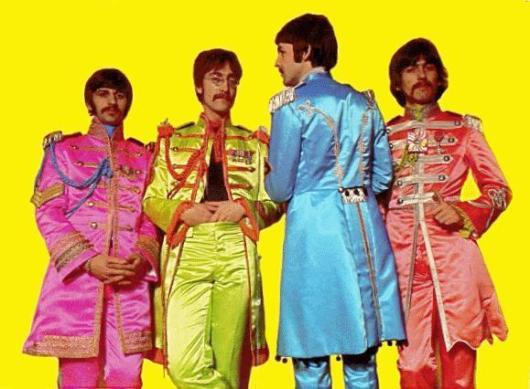
FRANCIS SCHAEFFER ANALYZES ART AND CULTURE Part 53 THE BEATLES (Part E, Stg. Pepper’s and John Lennon’s search in 1967 for truth was through drugs, money, laughter, etc & similar to King Solomon’s, LOTS OF PICTURES OF JOHN AND CYNTHIA) (Feature on artist Yoko Ono)

The John Lennon and the Beatles really were on a long search for meaning and fulfillment in their lives  just like King Solomon did in the Book of Ecclesiastes. Solomon looked into learning (1:12-18, 2:12-17), laughter, ladies, luxuries, and liquor (2:1-2, 8, 10, 11), and labor (2:4-6, 18-20). He fount that without God in the picture all […]

FRANCIS SCHAEFFER ANALYZES ART AND CULTURE Part 52 THE BEATLES (Part D, There is evidence that the Beatles may have been exposed to Francis Schaeffer!!!) (Feature on artist Anna Margaret Rose Freeman )

______________   George Harrison Swears & Insults Paul and Yoko Lucy in the Sky with Diamonds- The Beatles The Beatles:   I have dedicated several posts to this series on the Beatles and I don’t know when this series will end because Francis Schaeffer spent a lot of time listening to the Beatles and talking […]

FRANCIS SCHAEFFER ANALYZES ART AND CULTURE Part 51 THE BEATLES (Part C, List of those on cover of Stg.Pepper’s ) (Feature on artist Raqib Shaw )

  The Beatles in a press conference after their Return from the USA Uploaded on Nov 29, 2010 The Beatles in a press conference after their Return from the USA. The Beatles:   I have dedicated several posts to this series on the Beatles and I don’t know when this series will end because Francis […]

FRANCIS SCHAEFFER ANALYZES ART AND CULTURE Part 50 THE BEATLES (Part B, The Psychedelic Music of the Beatles) (Feature on artist Peter Blake )

__________________   Beatles 1966 Last interview I have dedicated several posts to this series on the Beatles and I don’t know when this series will end because Francis Schaeffer spent a lot of time listening to the Beatles and talking and writing about them and their impact on the culture of the 1960’s. In this […]

FRANCIS SCHAEFFER ANALYZES ART AND CULTURE Part 49 THE BEATLES (Part A, The Meaning of Stg. Pepper’s Cover) (Feature on artist Mika Tajima)

_______________ The Beatles documentary || A Long and Winding Road || Episode 5 (This video discusses Stg. Pepper’s creation I have dedicated several posts to this series on the Beatles and I don’t know when this series will end because Francis Schaeffer spent a lot of time listening to the Beatles and talking and writing about […]

FRANCIS SCHAEFFER ANALYZES ART AND CULTURE PART 48 “BLOW UP” by Michelangelo Antonioni makes Philosophic Statement (Feature on artist Nancy Holt)

_______________ Francis Schaeffer pictured below: _____________________ I have included the 27 minute  episode THE AGE OF NONREASON by Francis Schaeffer. In that video Schaeffer noted,  ” Sergeant Pepper’s Lonely Hearts Club Band…for a time it became the rallying cry for young people throughout the world. It expressed the essence of their lives, thoughts and their feelings.” How Should […]

FRANCIS SCHAEFFER ANALYZES ART AND CULTURE Part 47 Woody Allen and Professor Levy and the death of “Optimistic Humanism” from the movie CRIMES AND MISDEMEANORS Plus Charles Darwin’s comments too!!! (Feature on artist Rodney Graham)

Crimes and Misdemeanors: A Discussion: Part 1 ___________________________________ Today I will answer the simple question: IS IT POSSIBLE TO BE AN OPTIMISTIC SECULAR HUMANIST THAT DOES NOT BELIEVE IN GOD OR AN AFTERLIFE? This question has been around for a long time and you can go back to the 19th century and read this same […]

FRANCIS SCHAEFFER ANALYZES ART AND CULTURE PART 46 Friedrich Nietzsche (Featured artist is Thomas Schütte)

____________________________________ Francis Schaeffer pictured below: __________ Francis Schaeffer has written extensively on art and culture spanning the last 2000years and here are some posts I have done on this subject before : Francis Schaeffer’s “How should we then live?” Video and outline of episode 10 “Final Choices” , episode 9 “The Age of Personal Peace and Affluence”, episode 8 […]

FRANCIS SCHAEFFER ANALYZES ART AND CULTURE Part 45 Woody Allen “Reason is Dead” (Feature on artists Allora & Calzadilla )

Love and Death [Woody Allen] – What if there is no God? [PL] ___________ _______________ How Should We then Live Episode 7 small (Age of Nonreason) #02 How Should We Then Live? (Promo Clip) Dr. Francis Schaeffer 10 Worldview and Truth Two Minute Warning: How Then Should We Live?: Francis Schaeffer at 100 Francis Schaeffer […]

FRANCIS SCHAEFFER ANALYZES ART AND CULTURE Part 44 The Book of Genesis (Featured artist is Trey McCarley )

___________________________________ Francis Schaeffer pictured below: ____________________________ Francis Schaeffer “BASIS FOR HUMAN DIGNITY” Whatever…HTTHR Dr. Francis schaeffer – The flow of Materialism(from Part 4 of Whatever happened to human race?) Dr. Francis Schaeffer – The Biblical flow of Truth & History (intro) Francis Schaeffer – The Biblical Flow of History & Truth (1) Dr. Francis Schaeffer […]

__


___________

MUSIC MONDAY Christian Rock Pioneer Larry Norman’s Songs Part 12

Christian Rock Pioneer Larry Norman’s Songs Part 12

I posted a lot in the past about my favorite Christian musicians such as Keith Green (I enjoyed reading Green’s monthly publications too), and 2nd Chapter of Acts and others. Today I wanted to talk about one of Larry Norman’s songs. David Rogers introduced me to Larry Norman’s music in the 1970’s and his album IN ANOTHER LAND came out in 1976 and sold an enormous amount of copies for a Christian record back then.


1. Only Visiting This Planet – Larry Norman

ONLY VISITING THIS PLANET

Larry Norman

Prophet…scoundrel…poet…thief…comedian…clown…rock star…fallen star…

A living, breathing contradiction in terms, Larry Norman passed away on February 24th, 2008 at the age of 60. I attended the funeral, arriving late and “listening” to it from outside the doors of a Church near Salem, Or.

*          *          *          *

Larry Norman: “Song For A Small Circle Of Friends” Music Video*

As with the Stonehill review I will not dwell on that part of the story. There have been plenty of others that have written extensively on the subject. But I do want to note the opening line of this review and reinforce that those things which have  made Norman such an important and lasting figure in Christian music are not only the positives but the negatives as well.

His life would be filled with failed marriages and friendships. No artist ever recorded more than two albums with Norman and most left frustrated, jaded and angry. The rift between Stonehill and Norman lasted decades and much has been written on this and a controversial and decidedly one-sided documentary, “Fallen Angel” has been produced. Anyone with the interest and an internet connection can research the gory details I will avoid here. My point is that his life was both wonderful and tragic and both cannot be denied.

This album would prove to be a major influence on many young people and future Christian musicians. The honesty, well produced rock would break down many doors currently boarded shut. Though not a “heavy” record musically it still contained a serious rock vibe and socially significant content.

The following nationally album is what many, the present writer included, spelled the end or Norman’s artistic zenith. “Something New Under the Son” could really be considered a 4th album in the series, but “trilogy” just sounds more artistically satisfying. Also released on Solid Rock and distributed by Word records, the album would serve as the “heaviest” of Norman’s studio releases. This is a blues record through and through. Although recorded in 1977 it would also not see the light of day until 1981. This too would become a common problem of Norman’s both for himself and for the artists he was associated with, most notable Randy Stonehill and Daniel Amos.

It should be noted that there were several releases between “In Another Land” and “Something New” but were either generally unavailable (Starstrom), parody albums (Streams of White Light) or live albums (Israel Tapes and Roll Away the Stone). In fact “Israel Tapes” was recorded several years earlier (1975). Another album was a single that expanded into an album called “The Tune.”


Larry Norman – The Tune Jesus Fest 8-13-1983


This would also begin a frustrating history of Norman releasing poorly recorded live albums and albums of re-hashed demos, reworked song and compilations under different names. “Something New” would also mark the end of Norman’s national distribution agreements and all but one release would be exclusive to Norman’s Solid Rock or Phydeaux labels, primarily through mail order. I could discuss a majority of those albums but I’m not sure wordpress has enough bandwith.

“Something New” is often overlooked and that is a shame. As mentioned above, the album is a lesson in blues writing. Nearly every song would be considered a blues tune and Norman excels here. “Born to Be Unlucky” just flat-out rocks and Jon Linn gets to show off here. “Watch What You’re Doing” is hysterical and remained a Norman live favorite for years to come. Linn’s guitar and Norman’s harmonica trade-off some amazingly aggressive riffs.

Norman, who apparently had a lot of nightmares, recorded three songs with a numbered “Nightmare” title, but the best one is here. But the song that steals the show is the closing rocking romp, “Let The Tape Keep Rolling.” Though he would write several songs “reinventing” his history, this would be the best one and serve as a great lesson in how to write a great rockin’ blues song!

Norman would spend the 1980’s releasing two albums a year, though most would be poorly recorded live albums, anthologies and rehashed “favorites” with different arrangements and differing results in quality. There are a couple albums of note though.

“Letter of the Law” and “Labor of Love” would both be pretty decent pop rock records and probably deserved some national distribution. These were studio projects that contained several quality Norman tracks. I was able to obtain “test pressings” of those two albums and convince KYMS to play a few of the songs. they became pretty good hits and I contacted Larry to carry them at my store. Eventually a few independent distribution companies picked up the albums. Several of those songs would eventually be released on the album “Quiet Night” under the name Larry Norman and the Young Lions. One stand out is a cover of the late Tom Howard’s “Shine Your Light.”

Two last albums I wanted to point out are “Home at Last” and “Stranded in Babylon.” The first album was originally released by Norman as double album, but the Benson Company worked out a deal to create of single album release of what was felt were the best songs. This would mark the first time in a decade that Norman’s music would receive national distribution from a major Christian Record company. It would also mark the first album of primarily all new material during that same time period. It was also one of the first albums to be released on CD.

The album would be uneven, but it was hoped that it would bring Norman back into the public’s mind. It really never accomplished it as Christian radio was lukewarm and the buyers of Christian music were a whole new generation of people primarily unfamiliar with Norman.

“Stranded” was probably Norman’s best work after “Something New” and is worth picking up. Produced by his brother Charly, it marked a return to both social commentary as well as spiritual themes. Most importantly it showed Norman could still write new music that was powerful and compelling and that he could still rock. “God Part 3″ is worth the price of admission! Lacking any real quality distribution it too went mostly unnoticed.

Norman’s music and ministry would influence probably the widest variety of musicians of any other Christian artists. Fans include the previously mentioned Paul McCartney, Cliff Richard, Van Morrison, John Mellancamp, Pete Townsend, U2, the Pixies and Sarah Brendel. There have been over 300 covers of Norman’s songs recorded included even by the likes of Sammy Davis Jr.


LARRY NORMAN AND CLIFF RICHARD (RARE)

In Christian Music the list of artists who are fans would be too long to mention. He influenced everyone from Geoff Moore to DC Talk. There have been two tribute albums to Norman, including a “dance remix” compilation called “Remix This Planet.”


1978 Prolife Pamphlet from Keith Green’s ministry has saved the lives of many babies!!!!

Francis Schaeffer Whatever Happened to the Human Race (Episode 1) ABORTION _____________________________________ 1978 Prolife Pamphlet from Keith Green’s ministry has saved the lives of many babies!!!! Francis Schaeffer “BASIS FOR HUMAN DIGNITY” Whatever…HTTHR Dr. Francis schaeffer – The flow of Materialism(from Part 4 of Whatever happened to human race?) Dr. Francis Schaeffer – The Biblical […]

Tribute to Keith Green who died 32 years ago today!!!

This is a tribute to Keith Green who died 32 years ago today!!! On July 28, 1983 I was sitting by the radio when CBS radio news came on and gave the shocking news that Keith Green had been killed by an airplane crash in Texas with two of his children. 7 months later I […]

“Music Monday” My favorite Christian music artist of all time is Keith Green.

My favorite Christian music artist of all time is Keith Green. Sunday, May 5, 2013 You Are Celled To Go – Keith Green Keith Green – (talks about) Jesus Commands Us To Go! (live) Uploaded on May 26, 2008 Keith Green talks about “Jesus Commands Us To Go!” live at Jesus West Coast ’82 You can find […]

MUSIC MONDAY:Keith Green Story, and the song that sums up his life (Part 10)

To me this song below sums up Keith Green’s life best. 2nd Chapter of Acts – Make My Life A Prayer to You Make my life a prayer to You I want to do what You want me to No empty words and no white lies No token prayers, no compromise I want to shine […]

MUSIC MONDAY:Keith Green Story (Part 9)

Keith Green – Easter Song (live) Uploaded by monum on May 25, 2008 Keith Green performing “Easter Song” live from The Daisy Club — LA (1982) ____________________________ Keith Green was a great song writer and performer.  Here is his story below: The Lord had taken Keith from concerts of 20 or less — to stadiums […]

MUSIC MONDAY:Keith Green Story, includes my favorite song (Part 8)

Keith Green – Asleep In The Light Uploaded by keithyhuntington on Jul 23, 2006 keith green performing Asleep In The Light at Jesus West Coast 1982 __________________________ Keith Green was a great song writer and performer and the video clip above includes my favorite Keith Green song. Here is his story below: “I repent of […]

Keith Green’s article “Grumbling and Complaining–So You Wanna Go Back to Egypt?” (Part 4)

Keith Green – So You Wanna Go Back To Egypt (live) Uploaded by monum on May 25, 2008 Keith Green performing “So You Wanna Go Back To Egypt” live at West Coast 1980 ____________ This song really shows Keith’s humor, but it really has great message. Keith also had a great newsletter that went out […]

Keith Green’s article “Grumbling and Complaining–So You Wanna Go Back to Egypt?” (Part 3)

Keith Green – So You Wanna Go Back To Egypt (live) Uploaded by monum on May 25, 2008 Keith Green performing “So You Wanna Go Back To Egypt” live at West Coast 1980 ____________ This song really shows Keith’s humor, but it really has great message. Keith also had a great newsletter that went out […]

MUSIC MONDAY:Keith Green Story (Part 7)

Keith Green – Your Love Broke Through Here is something I got off the internet and this website has lots of Keith’s great songs: Keith Green: His Music, Ministry, and Legacy My mom hung up the phone and broke into tears. She had just heard the news of Keith Green’s death. I was only ten […]

Keith Green’s article “Grumbling and Complaining–So You Wanna Go Back to Egypt?” (Part 2)

Keith Green – So You Wanna Go Back To Egypt (live) Uploaded by monum on May 25, 2008 Keith Green performing “So You Wanna Go Back To Egypt” live at West Coast 1980 ____________ This song really shows Keith’s humor, but it really has great message. Keith also had a great newsletter that went out […]

RESPONDING TO HARRY KROTO’S BRILLIANT RENOWNED ACADEMICS!! A.C.Grayling, Philosopher, “If you think that the reasons you have for believing in fairies are very poor reasons; that it is irrational to think that there are such things, then the belief in supernatural agencies in general is equally as irrational”

On November 21, 2014 I received a letter from Nobel Laureate Harry Kroto and it said:

…Please click on this URL http://vimeo.com/26991975

and you will hear what far smarter people than I have to say on this matter. I agree with them.

Harry Kroto

Wikipedia notes:

Anthony CliffordA. C.Grayling (/ˈɡrlɪŋ/; born 3 April 1949) is a British philosopher. In 2011 he founded and became the first Master of New College of the Humanities, an independent undergraduate college in London. Until June 2011, he was Professor of Philosophy at Birkbeck, University of London, where he taught from 1991. He is also a supernumerary fellow of St Anne’s College, Oxford.

Grayling is the author of about 30 books on philosophy, including The Refutation of Scepticism (1985), The Future of Moral Values (1997), The Meaning of Things (2001), The Good Book (2011), and The God Argument (2013). He is a Trustee of the London Library, a Fellow of the Royal Society of Literature and a Fellow of the Royal Society of Arts.[1]

He is a director and contributor at Prospect Magazine, as well as a Vice President of the British Humanist Association. His main academic interests lie inepistemology, metaphysics and philosophical logic.[1] He has described himself as “a man of the left” and is associated in Britain with the new atheismmovement,[2] and is sometimes described as the ‘Fifth Horseman of New Atheism’.[3] He appears in the British media discussing philosophy.

https://www.youtube.com/watch?v=b0YwiLM69F8

A. C. Grayling
AC Grayling.jpg

Master of the New College of the Humanities
Assumed office
2011
Personal details
Born Anthony Clifford Grayling
3 April 1949 (age 67)
Luanshya, Northern Rhodesia
Nationality British
Spouse(s) Katie Hickman
Children One son, two daughters
Residence London, England
Education BA (Sussex), BA (London), MA (Sussex), DPhil (Oxon)
Alma mater University of Sussex
University of London external programme
Magdalen College, Oxford
Occupation Philosopher
Signature
Website www.acgrayling.com

I have attempted to respond to all of Dr. Kroto’s friends arguments and I have posted my responses one per week for over a year now. Here are some of my earlier posts:

Arif Ahmed, Sir David AttenboroughMark Balaguer, Patricia ChurchlandAaron CiechanoverNoam Chomsky,Alan DershowitzHubert Dreyfus, Bart Ehrman, Stephan FeuchtwangDavid Friend,  Riccardo GiacconiIvar Giaever , Roy GlauberRebecca GoldsteinDavid J. Gross,  Brian Greene, Susan GreenfieldStephen F Gudeman,  Alan Guth, Jonathan HaidtHermann HauserRoald Hoffmann,  Bruce HoodHerbert Huppert,  Gareth Stedman JonesShelly KaganMichio Kaku,  Stuart Kauffman, George Lakoff,  Lawrence KraussHarry Kroto, Elizabeth Loftus,  Alan MacfarlanePeter MillicanMarvin MinskyLeonard Mlodinow,  Yujin NagasawaAlva NoeDouglas Osheroff,   Saul PerlmutterHerman Philipse,  Robert M. PriceLisa RandallLord Martin Rees,  Oliver Sacks, John SearleMarcus du SautoySimon SchafferJ. L. Schellenberg,   Lee Silver Peter Singer,  Walter Sinnott-ArmstrongRonald de Sousa, Victor StengerBarry Supple,   Leonard Susskind, Raymond TallisNeil deGrasse Tyson,  .Alexander Vilenkin, Sir John WalkerFrank WilczekSteven Weinberg, and  Lewis Wolpert,

In  the first video below in the 27th clip in this series are his words and  my response is below them. 

50 Renowned Academics Speaking About God (Part 1)

Another 50 Renowned Academics Speaking About God (Part 2)

A Further 50 Renowned Academics Speaking About God (Part 3)

_________________________________

Below is the letter I wrote to Dr. Grayling responding to his quote.

September 29, 2015

Dr. A.C.Grayling, New College of Humanities,  London, United Kingdom

Dear Dr. Grayling,

In the popular You Tube video “Renowned Academics Speaking About God” you made the following statement:

The question at stake here is one of rationality. The intellectual respectability of a claim there are gods, say the gods of Olympus or the gods of Hinduism, or one God, say the God of Christianity seem to me to be exactly on a par with the intellectual respectability that there are fairies in your garden. I am not being trite. The belief in fairies was very widespread and very well attested right up until the late nineteenth century. Indeed people believed that fairies were much more present in their lives than god was because when things went missing, like your shoe laces or a teaspoon, it was because the little imps had made off with them. So the comparison here is not a ridiculous one. And if you think that the reasons you have for believing in fairies are very poor reasons; that it is irrational to think that there are such things, then the belief in supernatural agencies in general is equally as irrational. So agnostics, who think there is much chance that there might be such entities as that there might not be such entities, fall foul of this stricture.

EVERY PERSON HAS TO JUDGE FOR THEMSELVES IF THERE IS GOOD AND SUFFICIENT REASONS FOR BELIEVING THE HISTORICAL CLAIMS IN THE BIBLE AND I HAVE SOME FOR YOU TO CONSIDER.  Let me further respond with the words of Francis Schaeffer from his book HE IS THERE AND HE IS NOT SILENT (the chapter is entitled, “Is Propositional Revelation Nonsense?”

Of course, if the infinite uncreated Personal communicated to the finite created personal, he would not exhaust himself in his communication; but two things are clear here:
 
1. Even communication between once created person and another is not exhaustive, but that does not mean that for that reason it is not true. 
 
2. If the uncreated Personal really cared for the created personal, it could not be thought unexpected for him to tell the created personal things of a propositional nature; otherwise as a finite being the created personal would have numerous things he could not know if he just began with himself as a limited, finite reference point. In such a case, there is no intrinsic reason why the uncreated Personal could communicate some vaguely true things, but could not communicate propositional truth concerning the world surrounding the created personal – for fun, let’s call that science. Or why he could not communicate propositional truth to the created personal concerning the sequence that followed the uncreated Personal making everything he made – let’s call that history. There is no reason we could think of why he could not tell these two types of propositional things truly. They would not be exhaustive; but could we think of any reason why they would not be true? The above is, of course, what the Bible claims for itself in regard to propositional revelation.
DOES THE BIBLE ERR IN THE AREA OF SCIENCE AND HISTORY? The Bible is true from cover to cover and can be trusted. Charles Darwin himself longed for evidence to come forward from the area of  Biblical Archaeology  but so much has  advanced  since Darwin wrote these words in the 19th century! Here are some of the posts I have done in the past on the subject and if you like you could just google these subjects: 1. The Babylonian Chronicleof Nebuchadnezzars Siege of Jerusalem, 2. Hezekiah’s Siloam Tunnel Inscription.13. The Pilate Inscription14. Caiaphas Ossuary14 B Pontius Pilate Part 214c. Three greatest American Archaeologists moved to accept Bible’s accuracy through archaeology.

Recently I had the opportunity to come across a very interesting article by Michael Polanyi, LIFE TRANSCENDING PHYSICS AND CHEMISTRY, in the magazine CHEMICAL AND ENGINEERING NEWS, August 21, 1967, and I also got hold of a 1968 talk by Francis Schaeffer based on this article. Polanyi’s son John actually won the 1986 Nobel Prize for Chemistry. This article by Michael Polanyi concerns Francis Crick and James Watson and their discovery of DNA in 1953. Polanyi noted:

Mechanisms, whether man-made or morphological, are boundary conditions harnessing the laws of in
animate nature, being themselves irreducible to those laws. The pattern of organic bases in DNA which functions as a genetic code is a boundary condition irreducible to physics and chemistry. Further controlling principles of life may be represented as a hierarchy of boundary conditions extending, in the case of man, to consciousness and responsibility.

I would like to send you a CD copy of this talk because I thought you may find it very interesting. It includes references to not only James D. Watson, and Francis Crick but also  Maurice Wilkins, Erwin Schrodinger, J.S. Haldane (his son was the famous J.B.S. Haldane), Peter Medawar, and Barry Commoner. I WONDER IF YOU EVER HAD THE OPPORTUNITY TO RUN ACROSS THESE MEN OR ANY OF THEIR FORMER STUDENTS?

Below is a portion of the transcript from the CD and Michael Polanyi’s words are in italics while Francis Schaeffer’s words are not:

During the past 15 years, I have worked on these questions, achieving gradually stages of the argument presented in this paper. These are:

  1. Machines are not formed by physical and chemical equilibration. 
  2. The functional terms needed for characterizing a machine cannot for defined in terms of physics and chemistry. 

Polanyi is talking about specific machines but I would include the great cause and effect machine of the external universe that functions on a cause and effect basis. So if this is true of the watch,  then you have to ask the same question about the total machine that Sartre points out that is there, and that is the cause and effect universe. Polanyi doesn’t touch on this and he doesn’t have an answer, and I know people who know him. Yet nevertheless he sees the situation exactly as it is. And I would point out what  Alfred North Whitehead (1861–1947) and J. Robert Oppenheimer (1904–1967) said and that it needed a Christian consensus to produce modern science because it was the Christian consensus that gave the concept that the world being created by a reasonable God and that it could be found out and discovered by reason. So the modern science when it began with Copernicus and Galileo and all these men conceived that the cause and effect system of the universe would be there on the basis that it was created by a reasonable God, and that is Einstein’s big dilemma and that is why he became a mystic at the end of life…What Polanyi says here can be extended to the watch, and the bridge and the automobile but also to the big cause and effect universe. You have to give some kind of answer to this too and I would say this to Michael Polanyi if I ever have a chance to talk to him. You need another explanation too Polanyi.

3. No physical chemical topography will tell us that we have a machine before us and what its functions are. 

In other words, if you only know the chemicals and the physics you don’t know if you have a machine. It may just be junk. So nobody in the world could tell if it was a machine from merely the “physical chemical-topography.” You have to look at the machineness of the machine to say it is a machine. You could take an automobile and smash it into a small piece of metal with a giant press and it would have the same properties of the automobile, but the automobile would have disappeared. The automobile-ness of the automobile is something else than the physical chemical-topography.

4. Such a topography can completely identify one particular specimen of a machine, but can tell us nothing about a class of machines. 

5. And if we are asked how the same solid system can be subject to control by two independent principles, the answer is: The boundary conditions of the system are free of control by physics and can be controlled therefore by nonphysical, purely technical, principles. 

In other words you have to explain the engineering by something other than merely physical principles and of course it is. You can’t explain the watchness of the watch merely by this. You can explain it on the basis of engineering principles in which the human mind conceives of a use for the machine and produces the machine. But notice where Polanyi is and that is in our argument of a need of personality in the universe though Polanyi doesn’t draw this final conclusion, though I thought that is the only explanation.

If you look at the watch a man has made it for the purpose of telling time. When you see the automobile a man has made it for the purpose of locomotion and the explanation of the difference is not in the chemical and physical properties but in the personality of a man to make these two different machines for two different purposes out of the same material. So what you are left here is the need of personality in the universe.

____

Thank you for your time. I know how busy you are and I want to thank you for taking the time to read this letter.

Sincerely,

Everette Hatcher,

P.O. Box 23416, Little Rock, AR 72221, United States, cell ph 501-920-5733, everettehatcher@gmail.com

________

Related posts:

FRANCIS SCHAEFFER ANALYZES ART AND CULTURE Part 53 THE BEATLES (Part E, Stg. Pepper’s and John Lennon’s search in 1967 for truth was through drugs, money, laughter, etc & similar to King Solomon’s, LOTS OF PICTURES OF JOHN AND CYNTHIA) (Feature on artist Yoko Ono)

The John Lennon and the Beatles really were on a long search for meaning and fulfillment in their lives  just like King Solomon did in the Book of Ecclesiastes. Solomon looked into learning (1:12-18, 2:12-17), laughter, ladies, luxuries, and liquor (2:1-2, 8, 10, 11), and labor (2:4-6, 18-20). He fount that without God in the picture all […]

FRANCIS SCHAEFFER ANALYZES ART AND CULTURE Part 52 THE BEATLES (Part D, There is evidence that the Beatles may have been exposed to Francis Schaeffer!!!) (Feature on artist Anna Margaret Rose Freeman )

______________   George Harrison Swears & Insults Paul and Yoko Lucy in the Sky with Diamonds- The Beatles The Beatles:   I have dedicated several posts to this series on the Beatles and I don’t know when this series will end because Francis Schaeffer spent a lot of time listening to the Beatles and talking […]

FRANCIS SCHAEFFER ANALYZES ART AND CULTURE Part 51 THE BEATLES (Part C, List of those on cover of Stg.Pepper’s ) (Feature on artist Raqib Shaw )

  The Beatles in a press conference after their Return from the USA Uploaded on Nov 29, 2010 The Beatles in a press conference after their Return from the USA. The Beatles:   I have dedicated several posts to this series on the Beatles and I don’t know when this series will end because Francis […]

FRANCIS SCHAEFFER ANALYZES ART AND CULTURE Part 50 THE BEATLES (Part B, The Psychedelic Music of the Beatles) (Feature on artist Peter Blake )

__________________   Beatles 1966 Last interview I have dedicated several posts to this series on the Beatles and I don’t know when this series will end because Francis Schaeffer spent a lot of time listening to the Beatles and talking and writing about them and their impact on the culture of the 1960’s. In this […]

FRANCIS SCHAEFFER ANALYZES ART AND CULTURE Part 49 THE BEATLES (Part A, The Meaning of Stg. Pepper’s Cover) (Feature on artist Mika Tajima)

_______________ The Beatles documentary || A Long and Winding Road || Episode 5 (This video discusses Stg. Pepper’s creation I have dedicated several posts to this series on the Beatles and I don’t know when this series will end because Francis Schaeffer spent a lot of time listening to the Beatles and talking and writing about […]

FRANCIS SCHAEFFER ANALYZES ART AND CULTURE PART 48 “BLOW UP” by Michelangelo Antonioni makes Philosophic Statement (Feature on artist Nancy Holt)

_______________ Francis Schaeffer pictured below: _____________________ I have included the 27 minute  episode THE AGE OF NONREASON by Francis Schaeffer. In that video Schaeffer noted,  ” Sergeant Pepper’s Lonely Hearts Club Band…for a time it became the rallying cry for young people throughout the world. It expressed the essence of their lives, thoughts and their feelings.” How Should […]

FRANCIS SCHAEFFER ANALYZES ART AND CULTURE Part 47 Woody Allen and Professor Levy and the death of “Optimistic Humanism” from the movie CRIMES AND MISDEMEANORS Plus Charles Darwin’s comments too!!! (Feature on artist Rodney Graham)

Crimes and Misdemeanors: A Discussion: Part 1 ___________________________________ Today I will answer the simple question: IS IT POSSIBLE TO BE AN OPTIMISTIC SECULAR HUMANIST THAT DOES NOT BELIEVE IN GOD OR AN AFTERLIFE? This question has been around for a long time and you can go back to the 19th century and read this same […]

FRANCIS SCHAEFFER ANALYZES ART AND CULTURE PART 46 Friedrich Nietzsche (Featured artist is Thomas Schütte)

____________________________________ Francis Schaeffer pictured below: __________ Francis Schaeffer has written extensively on art and culture spanning the last 2000years and here are some posts I have done on this subject before : Francis Schaeffer’s “How should we then live?” Video and outline of episode 10 “Final Choices” , episode 9 “The Age of Personal Peace and Affluence”, episode 8 […]

FRANCIS SCHAEFFER ANALYZES ART AND CULTURE Part 45 Woody Allen “Reason is Dead” (Feature on artists Allora & Calzadilla )

Love and Death [Woody Allen] – What if there is no God? [PL] ___________ _______________ How Should We then Live Episode 7 small (Age of Nonreason) #02 How Should We Then Live? (Promo Clip) Dr. Francis Schaeffer 10 Worldview and Truth Two Minute Warning: How Then Should We Live?: Francis Schaeffer at 100 Francis Schaeffer […]

FRANCIS SCHAEFFER ANALYZES ART AND CULTURE Part 44 The Book of Genesis (Featured artist is Trey McCarley )

___________________________________ Francis Schaeffer pictured below: ____________________________ Francis Schaeffer “BASIS FOR HUMAN DIGNITY” Whatever…HTTHR Dr. Francis schaeffer – The flow of Materialism(from Part 4 of Whatever happened to human race?) Dr. Francis Schaeffer – The Biblical flow of Truth & History (intro) Francis Schaeffer – The Biblical Flow of History & Truth (1) Dr. Francis Schaeffer […]

__

FRIEDMAN FRIDAY Transcript of Milton Friedman speech from 1991


Best quote from the speech below:

However, the point that impresses me now and that I want to emphasize is that the problem is not only for them but for us. They have as much to teach us as we have to teach them. What was their problem under communism? Too big, too intrusive, too powerful a government. I ask you, what is our problem in the United States today? We have a relatively free system. This is a great country and has a great deal of freedom, but we are losing our freedom. We are living on our capital in considerable measure. This country was built up during 150 years and more in which government played a very small role. As late as 1929, total government spending in the United States never exceeded about 12% of the national incomeabout the same fraction as in Hong Kong in recent years. Federal government spending was about 3 to 4% of the national income except at the time of the Civil War and World War I. Half of that went for the military and half for everything else. State and local governments spent about twice as much. Again, local governments spent more than state governments. In the period between then and now, the situation has changed drastically. Total government spending, as I said, is 43% of national income, and twothirds of that is federal.

Moreover, in addition to what government spends directly, it exercises extensive control over the deals that people can make in the private market. It prevents you f rom buyi ng sugar in the cheapest market; it forces you to pay twice the world price for sugar. It forces enterprises to meet all sorts of requirements about wages, hours, antipollution standards, and so on and on. Many of these may be good, but they are government dictation of how the resources shall be used. To put it in one word that should be familiar to us by now, it is socialist.

____________

“Economic Freedom, Human Freedom, Political Freedom”

by Milton Friedman

Delivered November 1, 1991


Introduction of Milton Friedman by Charles W. Baird, Director.

In 1963 I was an undergraduate economics major in a private university in Massachusetts. In a small seminar class I was assigned to read a new book by Milton Friedman, Capitalism & Freedom, and a 1958 book by John Kenneth Galbraith, The Affluent Society, which expressed contrary views. My task was to write an essay defending Galbraith against Friedman. I got an “A” on that assignment.

But, in the fullness of time, I made my way to UCLA and the tutelage of Armen Alchian. I came to appreciate the wisdom of Milton Friedman. Moreover, judging from a lecture Galbraith gave at Berkeley just last month, even he is beginning to see the light.

Professor Friedman won the Nobel Prize in economics in 1976 “for his achievements in the fields of consumption analysis, monetary history and theory, and for his demonstration of the complexity of stabilization policy.”

He was the Paul Snowden Russell Distinguished Service Professor of Economics at the University of Chicago from 1962 1977. He is now the Emeritus holder of that chair. Since 1977, he has been a Senior Research Fellow at the Hoover Institu tion.

Professor Friedman was the founder, and chief proponent of the Chicago School of monetary economicsaka., monetarism. I can recall during the 1960s that the great debate in macroeconomics, set off by Friedman & Schwartz’ monumental Monetary History of the U.S., was between the Keynesians and the Monetarists. Which was more stable: the Keynesian multiplier or, as Friedman would have it, the velocity of circulation of money? Most economists today would agree that Friedman and company had the better arguments and the better evidence.

Professor Friedman is one of the most versatile members of the profession. His 1953 article, “The Methodology of Positive Economics,” is still required reading in almost every class in economic theory. It is the starting point for all discussions of what separates good economics from bad economics. In addition to methodology and macroeconomics, he has made significant contributions in the areas of economic history, statistics, international finance, risk and insurance, and microeconomic theory. He is one of the most cited economists of the latter half of the twentieth century.

Professor Friedman is a founding member and a past president of the Mont Pelerin Societyan international organization of individuals who share a dedication to the principles of free markets and limited government. Without doubt, Milton Friedman is the best known, and most widely respected, freemarket economist in the entire world.

The three books which he coauthored with Rose Friedman, are among the best nontechnical defenses of economic freedom, human freedom, and political freedom ever written by anyone. Capitalism & Freedom (1962) set forth the case for market liberalism at a time when almost everyone accepted the premises of the welfare and regulatorystate as beyond reproach. Free to Choose (1980), was the best selling nonfiction book in the United States for the year 1980, and it was translated into most major languages. It was based on a tenpart television series of the same name. Tyranny of the Status auo (1984) was also complemented by a threepart television series of the same name in which Milton Friedman discussed a broad range of topics with seven university students of widely varying views.

Milton Friedman is one of the most influential economists of the twentieth century. He is unsurpassed as an academic teacher, formidable as a debater, persuasive as a public policy analyst, and pathbreaking as a scholar and scientist. There simply could not be a more appropriate person to deliver the Smith Center Inaugural Lecture.

Please join me in welcoming Professor Milton Friedman.

Charles W. Baird, Director


ECONOMIC FREEDOM, HUMAN FREEDOM, POLITICAL FREEDOM, Address by Milton Friedman.

I appreciate that very much, Chuck, but I don’t want you to give these good people the impression that Ken Galbraith is all bad. Rose and I were in India in the early 1960s when he was ambassador to India. I wrote Ken to see if I could visit him when we went to New Delhi. He wrote back inviting us to lunch at the embassy, adding that, as I knew, he didn’t agree with my ideas but they would do less harm in India than anywhere else he could think of.

In 1962, when our book Capitalism and Freedom was published, the general intellectual climate of opinion was very differ ent than it has since become. That book was not reviewed by a single major publication in the United States; not by Newsweek or Time, the New York Times or any other major newspaper. It was reviewed only in professional economic journals and in The Economistof London. It sold fewer than 10,000 copies in the first yearafterpublication, but since then it has sold well over half a million copies without any reviews whatsoever.

The situation was very different in 1980, as Chuck indicated, when our Free to Choose appeared. The difference was not because Free to Choose is a better book; it is not. In fact, l believe that Capitalism and Freedom is a better book. The differ ence was because the climate of opinion had changed. In the 1950s and 1960s, socialist thinking was dominant; those of us who rejected that view were regarded as fringe eccentrics. Since then, there has been a reaction against such socialist thinking and a recognition of the importance of private enterprise and of private property. Unfortunately, as I shall note later, the reaction has been more in the climate of opinion than in practice. Talk and rhetoric have been one thing; actual practice has been very different.

What I want to talk about tonight is the relationship among economic freedom, human freedom, and political freedom. In Capitalism and Freedom, I wrote: “Historical evidence speaks with a single voice on the relation between political freedom and a free market. I know of no example in time or place of a society that has been marked by a large measure of political freedom that has not also used something comparable to a free market to organize the bulk of economic activity” (p. 9). I went on to point out that “History suggests only that capitalism is a necessary condition for political freedom. Clearly it is not a sufficient condition” (p. 10).

Both of those statements remain valid today, thirty years later. Over the centuries many nonfree societies have relied on capitalism and yet have enjoyed neither human nor political freedom. Ancient Greece was fundamentally a capitalist society, but it had slaves. The U.S. South before the Civil War is another example of a society with slaves that relied predominantly on private property. Currently, South Africa has relied predominantly on private markets and private enterprise, yet it has not been a free society. Many Latin American countries are in the same position. They have been ruled by an oligarchy, and yet they have employed primarily private markets. So it is clear that capitalism is not a sufficient condition for human or political freedom, though it is a necessary condition.

While experience has not contradicted the statements I made, it has persuaded me that the dichotomy I stressed between economic freedom and political freedom is too simple. Even at this broad level, l am persuaded that it is important to con sider a trichotomy: economic freedom, human freedom, and political freedom.

The example that persuaded me that the relationship was less simple than the one I had sketched in Capitalism and Freedom is Hong Kong as it developed in the 1950s and especially as it has developed in the period since CapitalismandFreedomwaswritten. Hong Kong has beenthough unfortunately as the Mainland communist regime takes over it will not remainone of the freest, if not the freest, of countries in the world in every respect but one. Hong Kong has had an extraordinary degree of economic freedom: no tariffs and no import or export quotas, except as we in our wisdom have forced such quotas on Hong Kong in order to protect our industries from its efficiency. (It is truly absurd for the United States to force Hong Kong to limit the output of textiles so that our textile industry will not be bothered. That is no way for a great nation to behave.) Taxes have been very low, 10 to 12% of the national income. (In the United States today, government spending is 43% of the national income.) There are few regulations on business, no price controls, no wage controls.

Hong Kong’s completely free economy has achieved marvels. Here is a place with no resources except a magnificent harbor, a small piece of land, an island offs peninsula, a population of 500,000afterWorldWar 11 that has grown to a population close to six millionover ten times as large and at the same time, the standard of life has multiplied more than fourfold. It has been one of the most rapidly growing countries in the world, a remarkable example of what free markets can do if left unre stricted. I may say that Hong Kong is not a place where most of us would want to live. It is not a place where most of the people there want to live. It is very crowded; it is a very small area. If other places would take them, the people would love to go. However, the remarkable thing is that under such adverse circumstances they have done so well.

In addition to economic freedom, Hong Kong has a great deal of human freedom. I have visited many times and I have never seen any evidence of suppression of freedom of speech, freedom of the press, or any other human freedom that we regard as important.

However, in one respect Hong Kong has no freedom whatsoever. It has no political freedom. The Chinese who fled to Hong Kong were not free people. They were refugees from the communist regime and they themselves had been citizens of a regime that was very far from a free society. They did not choose freedom; it was imposed on them. It was imposed on them by outside forces. Hong Kong was governed by officials of the British Colonial Office, not by selfchosen representatives. In the past couple of years, in trying to persuade the world that Britain has not done a dastardly deed in turning Hong Kong over to the communists, the British administration has tried to institute a legislative council and to give some evidence of political representation. However, in general, over the whole of that period, there has been essentially no direct political representa tion.

That brings out an enormous paradox, the one that as I said caused me to rethink the relationship among different kinds of freedom. The British colonies that were given their political freedom after World War II have for the most part destroyed the other freedoms. Similarly, at the very time officials of the British Colonial Office were imposing economic freedom on Hong Kong, at home in Britain a socialist government was imposing socialism on Britain. Perhaps they sent the backward people out to Hong Kong to get rid of them. It shows how complex the relationship is between economic freedom and political freedom, and human freedom and political freedom. Indeed, it suggests that while economic freedom facilitates political freedom, political freedom, once established, has a tendency to destroy economic freedom.

Consider the example that I believe is most fascinating, India. It was given its political freedom by Britain over forty years ago. It has continued, with rare exceptions, to be a political democracy. It has continued to be a country where people are governed by representatives chosen at the ballot box, but it has had very little economic freedom and very limited human freedom. On the economic side, it has had extensive controls over exports and imports, over foreign exchange, over prices, over wages. There have been some reforms in the past year or so, but until recently you could not establish any kind of enterprise without getting a license from the government. The effect of such centralized control of the economy has been that the standard of life for the great bulk of the Indians is no higher today than it was forty years ago when India was given its political freedom.

The situation is even more extreme if you consider that Hong Kong, which I started with, got zero foreign aid during its growth. India has been a major recipient; it got some $55 billion of foreign aid over the past forty years. It is tempting to say that India failed to grow despite foreign aid. I believe that it was the other way: in part, India failed to grow because of foreign aid. Foreign aid provided the resources that enabled the government to impose the kind of economic policies it did.

What is true for India is true much more broadly. Foreign aid has done far more harm to the countries we have given it to than it has done good. Why? Because in every case, foreign aid has strengthened governments that were already too power ful. Mozambique, Tanzania, and many another African country testify to the same effect as India.

To come back to Hong Kong, the only reason it did not get its political freedom is because the local people did not want political freedom. They knew very well that that meant the Chinese communists would take them over. In a curious way, the existence of the Chinese communistgovernment was the major protection of the economic and human freedoms that Hong Kong enjoyed. Quite a paradoxical situation.

Hong Kong is by no means unique. Wherever the market plays a significant role, whether you have political freedom or not, human freedoms are more widespread and more extensive than where the market does not play any role. The totalitarian countries completely suppressed the market and atso had the least human freedom.

Another fascinating example that brings out the complexity of the situation is Chile. Chile, as you know, was first taken over by Salvador Allende and a socialist group. Allende came into power as a result of an election in which no one of the three major parties was able to get a majority, and subsequent political maneuvering, along with his promise to abide by the constitution. No sooner in office, however, than he reneged on his promise and proceeded to try to convert Chile into a fullfledged communist state. The important thing for my purpose is what happened after Allende’s policies provoked the military to overthrow him and set up a military junta led by General Pinochet to run the country.

Almost all military juntas are adverse to economicfreedom for obvious reasons. The military is organized from the top down: the general tells the colonel, the colonel tells the captain, the captain tells the lieutenant, and so on. A market economy is organized from the bottom up: the consumer tells the retailer, the retailer tells the wholesaler, the wholesaler tells the pro ducer, and the producer delivers. The principles underlying a military organization are precisely the reverse of those underly ing a market organization.

Pinochet and the military in Chile were led to adopt freemarket principles after they took over only because they did not have any other choice. They tried for a while to have military officers run the economy. However, inflation doubled in the first eight or nine months of their regime. When rates of inflation reached 700 to 1,000% they had to do something. By accident, the only group of economists in Chile who were not tainted by a connection with the Allende socialists were the socalled Chicago boys. They were called Chicago boys because they consisted almost entirely of economists who had studied at the University of Chicago and had received their Ph.D. degrees at the University of Chicago. They were untainted because the University of Chicago was almost the only institution in the United States at the time in which the economics department had a strong group of freemarket economists. So in desperation Pinochet turned to them.

I have nothing good to say about the political regime that Pinochet imposed. It was a terrible political regime. The real miracle of Chile is not how well it has done economically; the real miracle of Chile is that a military junta was willing to go against its principles and support a freemarket regime designed by principled believers in a free market. The results were spectacular. Inflation came down sharply. After a transitory period of recession and low output that is unavoidable in the course of reversing a strong inflation, output started to expand, and ever since, the Chilean economy has performed better than any other South American economy.

The economic development and the recovery produced by economic freedom in turn promoted the public’s desire for a greater degree of political freedom exactly what happened, if I may jump from one continent to another, in China after 1976 when the regime introduced a greater measure of economic freedom in one sector of the economy, agriculture, with great success. That, too, generated pressure for more political freedom and was one of the major factors underlying the dissatisfaction that led to Tiananmen Square.

In Chile, the drive for political freedom, that was generated by ecoriomic freedom and the resulting economic success, ultimately resulted in a referendum that introduced political democracy. Now, at long last, Chile has all three things: political freedom, human freedom and economic freedom. Chile will continue to be an interesting experiment to watch to see whetheritcan keep all three orwhether, nowthat it has politicalfreedom,that political freedom will tend to be used to destroy or reduce economic freedom.

In order to understand the paradox that economic freedom produces political freedom but political freedom may destroy economic freedom, it is important to recognize that free private markets have a far broader meaning than the usual restric tion to narrowly economic transactions. Literally, a market is simply a place where people meet, where people get together to make deals with one another. Every country has a market. At its most extreme totalitarian stage Russia had a market. But there are different kinds of markets. A private market is one in which the people making deals are making them either on their own behalf or as agents for identifiable individuals rather than as agents of governments. In the Russian market, the market existed and deals were being made all over the lot, but people were dealing with one another not on their own behalf, not as representatives for other identifiable individuals, but supposedly as agents for the government, for the public at large. A private market is very different from a government market. In a strictly private market, all the deals are between individu als acting in their own interest or as agents for other identifiable individuals.

Finally, you can have a private market, but it may or may not be a free market. The question is whether all the deals are strictly voluntary. In a free private market, all the deals are strictly voluntary. Many of the cases of private markets that I cited before were not cases of free private markets. You have a private market in many of the Latin American countries, but they are not free private markets. You have a private market in India, but it is not a free private market because many voluntary deals are not permitted. An individual can deal with anotherto exchange a good or service only if he has the permission of the government. I may say a completely free private market exists nowhere in the world. Hong Kong is perhaps the closest approximation to it. However, almost everywhere what you have, at best, is a partly free, largely hampered, private market.

A free private market is a mechanism for achieving voluntary cooperation among people. It applies to any human activity, not simply to economic transactions. We are speaking a language. Where did that language come from? Did some government entity construct the language and instruct people to use it? Was there some government commission that developed the rules of grammar? No, the language we speak developed through a free private market. People communicated with one another, they wanted to talk with one another, the words they used gradually came to be one thing rather than another, and the gram mar came to be one thing rather than another entirely as a result of free voluntary exchange.

Take another example, science. How did we develop the complicated structure of physics, economics, what will you? Again, it was developed and continues to develop as a result of a free private market in which scientists communicate with one another, exchange information with one another, because both parties to any exchange want to benefit.

A characteristic feature of a free private market is that all parties to a transaction believe that they are going to be better off by that transaction. It is not a zero sum game in which some can benefit only at the expense of others. It is a situation in which everybody thinks he is going to be better off.

A free private market is a mechanism for enabling a complex structure of cooperation to arise as an unintended consequence of Adam Smith’s invisible hand, without any deliberate design. A f ree private market involves the absence of coercion. People deal with one another voluntarily, not because somebody tells them to or forces them to. It does not follow that the people who engage in these deals like one another, or know one another, or have any interest in one another. They may hate one another. Everyone of us, everyday without recognizing it, engages in deals with people all over the world whom we do not know and who do not know us. No super planning agency is telling them to produce something for us. They may be of a different religion, a different color, a different race. The farmer who grows wheat is not interested in whether it is going to be bought by somebody who is black or white, somebody who is Catholic or Protestant; and the person who buys the wheat is not concerned about whether the person who grew it was white or black, Catholic or Protestant. So the essence of a free private market is that it is a situation in which everybody deals with one another because he or she believes he or she will be better off.

The essence of human freedom as of afree private market, is freedom of people to make their own decisions so long as they do not prevent anybody else from doing the same thing. That makes clear, l think, why free private markets are so closely related to human freedom. It is the only mechanism that permits a complex interrelated society to be organized from the bottom up rather than the top down. However, it also makes clear why free societies are so rare. Free societies restrain power. They make it very hard for bad people to do harm, but they also make it very hard for good people to do good. Implicitly or explicitly, most opponents of freedom believe that they know what is good for other people better than other people know for themselves, and they want the power to make people do what is really good for them.

The recent absolutely remarkable phenomenon of the collapse of communism in Eastern Europe raises in acute form the issues that we have been discussing. There is much talk in those countries about moving to a free market, but so far very limited success. In the past, free markets have developed in all sorts of waysout of feudalism, out of military juntas, out of autocracyand mostly they have developed by accident rather than by design. It was a pure accident that Hong Kong achieved a free market. Insofar as anyone designed it, it was the colonial officials who were sent there; but it was a pure accident that they were favorable to, or at least not hostile to, a free market. It was an accident that a free market developed in the United States, nothing natural about it. We might very well have gone down a very different road. We started to go down a very different road in the 1830s when there was widespread governmental activity in the building of canals, in the building of tollways, and the taking over of banksthere were state banks in Ohio, lilinois, and so on. What happened is that in the Panic of 1837 they all went broke, and that destroyed people’s belief that the way to run a country was by government. That had a great deal to do with the subsequent widespread belief that small government was the best government.

While free societies have developed by accident in many different ways, there is so far no example of a totalitarian country that has successfully converted to a free society. That is why what is going on in Eastern Europe is so exciting. We are witnessing something that we have not seen before. We know and they know what needs to be done. It is very simple. I tell the people in Eastern Europe when I see them that I can tell them what to do in three words: privatize, privatize, privatize. The problem is to have the political will to do so, and to do so promptly. It is going to be exciting to see whether they can do so.

However, the point that impresses me now and that I want to emphasize is that the problem is not only for them but for us. They have as much to teach us as we have to teach them. What was their problem under communism? Too big, too intrusive, too powerful a government. I ask you, what is our problem in the United States today? We have a relatively free system. This is a great country and has a great deal of freedom, but we are losing our freedom. We are living on our capital in considerable measure. This country was built up during 150 years and more in which government played a very small role. As late as 1929, total government spending in the United States never exceeded about 12% of the national incomeabout the same fraction as in Hong Kong in recent years. Federal government spending was about 3 to 4% of the national income except at the time of the Civil War and World War I. Half of that went for the military and half for everything else. State and local governments spent about twice as much. Again, local governments spent more than state governments. In the period between then and now, the situation has changed drastically. Total government spending, as I said, is 43% of national income, and twothirds of that is federal.

Moreover, in addition to what government spends directly, it exercises extensive control over the deals that people can make in the private market. It prevents you f rom buyi ng sugar in the cheapest market; it forces you to pay twice the world price for sugar. It forces enterprises to meet all sorts of requirements about wages, hours, antipollution standards, and so on and on. Many of these may be good, but they are government dictation of how the resources shall be used. To put it in one word that should be familiar to us by now, it is socialist.

The United States today is more than 50% socialist in terms of the fraction of our resources that are controlled by the govern ment. Fortunately, socialism is so inefficient that it does not control 50% of our lives. Fortunately, most of that is wasted. People worry about government waste; I don’t. I just shudder at what would happen to freedom in this country if the govern ment were efficient in spending our money. The really fascinating thing is that our private sector has been so effective, so efficient, that it has been able to produce a standard of life that is the envy of the rest of the world on the basis of less than half the resources available to all of us.

The major problems that face this country all derive from too much socialism. If you consider our educational system at the elementary and secondary level, government spending per pupil has more than tripled over the past thirty years in real terms after allowing for inflation, yet test scores keep declining, dropout rates are high, and functional illiteracy is widespread. Why should that be a surprise? Schooling at the elementary and secondary level is the largest socialist enterprise in the United States next to the military. Now why should we be better at socialism than the Russians? In fact, they ought to be better; they have had more practice at it. If you consider medical care, which is another major problem now, total spending on medical care has gone from 4% of the national income to 13%, and more than half of that increase has been in the form of government

spending. Costs have multiplied and it is reasonably clear that output has not gone up in anything like the same ratio. Our automobile industry can produce all the cars anybody wants to drive and is prepared to pay for. They do not seem to have any difficulty, but our government cannot produce the roads for us to drive on. The aviation industry can produce the planes, the airlines can get the pilots, but the government somehow cannot provide the landing strips and the air traffic controllers. I challenge anybody to name a major problem in the United States that does not derive from excessive govern ment.

Crime has been going up, our prisons are overcrowded, our inner cities are becoming unlivable all as a consequence of good intentions gone awry, the good intentions in this case being to prevent the misuse of drugs. The results: very little if any reduction in the use of drugs but a great many innocent victims. The harm which is being done by that program is far greater than any conceivable good. And the harm is not being done only at home. What business do we have destroying other countries such as Colombia because we cannot enforce our laws?

It is hard to be optimistic about how successful we can be in preserving our relatively free system. The collapse of the com munist states in Eastern Europe was the occasion for a great deal of selfcongratulation on our part. It introduced an element of complacency and smugness. We all said, ” Oh my, how good we are! See, we must be doing everything right.” But we did not learn the lesson that they had to teach us, and that lesson is that government has very real functions, but if it wanders beyond those functions and goes too far, it tends to destroy human and economic freedom.

I am nonetheless a longterm optimist. I believe that the United States is a great country and that our problems do not arise from the people as such. They arise from the structure of our government. We are being misgoverned in all these areas but not because of bad motives or bad people. The people who run our government are the same kind of people as the people outside it. We mislead ourselves if we think we are going to correct the situation by electing the right people to government. We will elect the right people and when they get to Washington they will do the wrong things. You and I would; I am not saying that there is anything special about them.

The important point is that we in our private lives and they in their governmental livesareall moved by the same incentive: topromote ourown selfinterest. ArmenAlchianonce made averyimportantcomment. He said, “You know, there is one thing you can trust everybody to do. You can trust everybody to put his interest above yours.” That goes for those of us in the private sector; that goes for people in the government sector. The difference between the two is not in the people; it is not in the incentives. It is in what it is in the selfinterest for different people to do. In the private economy, so long as we keep a free private market, one party to a deal can only benefit if the other party also benefits. There is no way in which you can satisfy your needs at the expense of somebody else. In the government market, there is another recourse. If you start a program that is a failure and you are in the private market, the only way you can keep it going is by digging into your own pocket. That is your bottom line. However, if you are in the government, you have another recourse. With perfectly good intentions and good will nobody likes to say “I was wrong”you can say, “Oh, the only reason it is a failure is because we haven’t done enough. The only reason the drug program is a failure is because we haven’t spent enough money on it.” And it does not have to be your own money. You have a very different bottom line. If you are persuasive enough, or if you have enough control over power, you can increase spending on your program at the expense of the taxpayer. That is why a private project that is a failure is closed down while a government project that is a failure is expanded.

The only way we are really going to change things is by changing the political structure. The most hopeful thing I see on that side is the great public pressure at the moment for term limits. That would be a truly fundamental change.

I want to close on a slightly optimistic note. About 200 years ago, an English newspaper wrote: “There are 775,300,000 people in the World. Of these, arbitrary governments command 741,800,000 and the free ones … Only 33 1/2 million… On the whole, slaves are three and twenty times more numerous than men enjoying, in any tolerable degree, the rights of human nature” [cited in Forrest McDonald, Novus Ordo Seclorum (Lawrence: University Press of Kansas, 1985), p.9]. I know of no such precise estimate for the present, but I made a rough estimate on the basis of the freedom surveys of Freedom House. I estimate that, while slaves still greatly outnumber free people, the ratio has fallen in the past two centuries from 23 to 1 to about 3 to 1. We are still very far from our goal of a completely free world, but, on the scale of historical time, that is amazing progressmore in the past two centuries than in the prior two millennia. Let’s hope and work to make sure that that keeps up. Thank you.

Related posts:

“Friedman Friday” Milton Friedman – Power of Choice (Biography) Part 3

Milton Friedman – Power of Choice (Biography) Part 3 Published on May 21, 2012 by BasicEconomics Tribute to Milton Friedman English Pages, 8. 9. 2008 Dear colleagues, dear friends, (1) It is a great honor for me to be asked to say a few words to this distinguished and very knowledgeable audience about one of our greatest […]

“Friedman Friday” Milton Friedman – Power of Choice (Biography) Part 2

Milton Friedman – Power of Choice (Biography) Part 2 Published on May 21, 2012 by BasicEconomics My Tribute to Milton Friedman: The Little Giant of Free Market Economics By: admin- 11/17/2006 09:49 AM RESIZE: AAA  Milton Friedman, the intellectual architect of the free-market reforms of the post-World War II era, was a dear friend. I […]

“Friedman Friday” Milton Friedman – Power of Choice – Biography (Part 1)

Milton Friedman – Power of Choice – Biography (Part 1) Published on May 20, 2012 by BasicEconomics   David R. Henderson The Pursuit of Happiness ~ Milton Friedman: A Personal Tribute May 2007 • Volume: 57 • Issue: 4 David Henderson (davidrhenderson1950@gmail.com) is a research fellow with the Hoover Institution and an economics professor at […]

Milton Friedman’s Chicago Boys started the Chilean Miracle and it is still helping ordinary people today!!!

Milton Friedman and Chile – The Power of Choice Uploaded on May 13, 2011 In this excerpt from Free To Choose Network’s “The Power of Choice (2006)”, we set the record straight on Milton Friedman’s dealings with Chile — including training the Chicago Boys and his meeting with Augusto Pinochet. Was the tremendous prosperity unleashed […]

Margaret Thatcher admired Milton Friedman

RARE Friedman Footage – On Keys to Reagan and Thatcher’s Success Margaret Thatcher and Milton Friedman were two of my heroes. Thatcher praises Friedman, her freedom fighter By George Jones, Political Editor 12:01AM GMT 17 Nov 2006 A tireless champion of the free market Let’s not get misty eyed over the Friedman legacy Milton Friedman, […]

Milton Friedman and Chile an update

Milton Friedman was a great economist and a fine speaker. ___________________ I have written before about Milton Friedman’s influence on the economy of Chile. Now I saw this fine article below from http://www.heritage.org  and below that article I have included an article from the Wall Street Journal that talks about Milton Friedman’s influence on Chile. I […]

“Friedman Friday” Milton Friedman explains negative income tax to William F. Buckley in 1968

December 06, 2011 03:54 PM Milton Friedman Explains The Negative Income Tax – 1968 0 comments By Gordonskene enlarge Milton Friedman and friends.DOWNLOADS: 36 PLAYS: 35 Embed   The age-old question of Taxes. In the early 1960′s Economist Milton Friedman adopted an idea hatched in England in the 1950′s regarding a Negative Income Tax, to […]

Milton Friedman admired Margaret Thatcher

RARE Friedman Footage – On Keys to Reagan and Thatcher’s Success Margaret Thatcher and Milton Friedman were two of my heroes. Milton Friedman on How Francois Mitterrand (and Failed Lefty Economics) Helped Re-elect Margaret Thatcher Matt Welch|Apr. 10, 2013 9:37 am Yesterday I wrote a column about how Margaret Thatcher liberated Western Europe from the […]

Milton Friedman had a solution to today’s welfare mentality!!!

  I have written about the tremendous increase in the food stamp program the last 9 years before and that means that both President Obama and Bush were guilty of not trying to slow down it’s growth. Furthermore, Republicans have been some of the biggest supporters of the food stamp program. Milton Friedman had a […]

“Friedman Friday” Milton Friedman on “Firing Line” in 1968

Milton Friedman, Ronald Reagan And William F. Buckley Jr. Peter Robinson, 12.12.08, 12:01 AM EST In a time of crisis, don’t forget what they had to say. As the federal deficit surpasses $1 trillion, Congress debates a bailout for the Detroit automakers and President-elect Barack Obama draws up plans for a vast new stimulus package, […]

By Everette Hatcher III | Posted in Milton Friedman | Edit | Comments (0)

FRANCIS SCHAEFFER ANALYZES ART AND CULTURE PART 106 A look at the BEATLES as featured in 7th episode of Francis Schaeffer film HOW SHOULD WE THEN LIVE? Part D “Imagine there’s no heaven” (Artist featured today is Allen Jones)

 _

The Beatles broke up on April 10, 1970 and just a few weeks later in May of 1970 John Lennon finished up his song IMAGINE. That song summed up the GOD IS DEAD movement of the 1960’s with the words “Imagine there’s no heaven, It’s easy if you try.”

In the film HOW SHOULD WE THEN LIVE? Episode 7 Francis Schaeffer noted concerning the generation of youth of the 1960’s, “This record,  Sergeant Pepper’s Lonely Hearts Club Band, became the rallying cry for young people throughout the world. It expressed the essence of their lives, thoughts and their feelings.”

It was during the 1960’s that the GOD IS DEAD MOVEMENT really got going strong and just a few weeks after the breakup of the Beatles their former leader John Lennon put this view into the song IMAGINE.

Is there a God or is the world just one big machine shaped by chance? It is my view that the Beatles suffered from an inferior complex when it came to book learning though they all were bright individuals. Maybe that is the reason they included the most brilliant man of the 20th century (Albert Einstein) on the  cover of SERGEANT PEPPER’S LONELY HEARTS CLUB BAND album. John Lennon never did believe the theory of evolution but the growth of secular thinking and the general acceptance of the GOD IS DEAD movement in the 1960’s led many to buy into the view that we are all basically machines developed by chance and there is no grand designer. Francis Schaeffer rightly noted, “Humanist man has no place for a personal God, but there is also no place for man’s significance as man and no place for love, no place for freedom.”

John Lennon did later sing these words below:

Imagine there’s no heaven
It’s easy if you try
No hell below us
Above us only sky
Imagine all the people
Living for today…
Imagine there’s no countries
It isn’t hard to do
Nothing to kill or die for
And no religion too
Imagine all the people
Living life in peace…
This indicates that he did hold the secular GOD IS DEAD view at least when he finished recording the song in May of 1970 (the month following the breakup of the Beatles).

John Lennon – Imagine HD

“Imagine”
Single by John Lennon
from the album Imagine
B-side
Released 11 October 1971
Format
Recorded
Genre
Length 3:03
Label Apple
Writer(s) John Lennon
Producer(s)
Certification
John Lennon US singles chronology
Power to the People
(1971)
Imagine” /
It’s So Hard
(1971)
Happy Xmas (War Is Over)
(1971)
John Lennon UK singles chronology
Stand by Me
(1975)
Imagine” / “Working Class Hero”
(1975)

The Beatles – 51 Years Ago Today – All You Need is Love

All You Need Is Love

https://www.youtube.com/watch?v=IheGgu-sPVw

(Beatles playing the song REVOLUTION pictured above)

If the GOD IS DEAD crowd of the 1960’s is right then the  world is just one big machine shaped by chance and what are some of the conclusions that can be drawn from that?

Francis Schaeffer in HOW SHOULD WE THEN LIVE? Episode 7 asserted:

There is one man who well understood the logical conclusion of the deification of nature, Marquis de Sade. “If nature is all then ‘what is’ is right and nothing more can be said….As nature has made us (the men) the strongest we can do with her (the woman) whatever we please.” The inevitable result was his cruelty to women. Thus there was no basis for either morals or law…Humanist man beginning only from himself has concluded that he is only a machine. Humanist man has no place for a personal God, but there is also no place for man’s significance as man and no place for love, no place for freedom.

In other words, if we get our values from nature then the answer is MIGHT MAKES RIGHT!!!! Woody Allen has demonstrated this in his 1989 movie CRIMES AND MISDEMEANORS.

Geoffrey Rush plays the Marquis de Sade and Kate Winslet as Madeleine in the film ‘Quills’.

Dan Guinn posted on his blog at http://www.francisschaefferstudies.org concerning the Nazis and evolution: As Schaeffer points out, “…these ideas helped produce an even more far-reaching yet logical conclusion: the Nazi movement in Germany. Heinrich Himmler (1900-1945), leader of the Gestapo, stated that the law of nature must take its course in the survival of the fittest. The result was the gas chambers. Hitler stated numerous times that Christianity and its notion of charity should be “replaced by the ethic of strength over weakness.” Surely many factors were involved in the rise of National Socialism in Germany. For example, the Christian consensus had largely been lost by the undermining from a rationalistic philosophy and a romantic pantheism on the secular side, and a liberal theology (which was an adoption of rationalism in theological terminology) in the universities and many of the churches. Thus biblical Christianity was no longer giving the consensus for German society. After World War I came political and economic chaos and a flood of moral permissiveness in Germany. Thus, many factors created the situation. But in that setting the theory of the survival of the fittest sanctioned what occurred. ” 

(Heinrich Himmler pictured below) 

The Beatles – A Day In The Life

Tony Bartolucci’s Outline of HOW SHALL WE THEN LIVE? by  Francis Schaeffer,  Began: June, 2006 | Finished November: 2006

VII. Chapter Seven: The Rise of Modern Science

A. The Scientific Revolution

The Scientific Revolution came at the same time as the High Renaissance and the Reformation. According to Schaeffer, we can date the rise of modern science with Copernicus (1475-1543). The Scientific Revolution was almost exclusively a western phenomenon. The east (China, Islam, etc.) did have some contributions, but they were limited by their adherence to Aristotelian logic and Neoplatonism. It was at Oxford that scholars first attacked Aquinas’ philosophy based on Aristotle; this was in the 13 c. th

(J. Robert Oppenheimer pictured above with Albert Einstein)

(Pictured above is Alfred North Whitehead.  While he is widely recognized for his collaborative work with Bertrand Russell on the Principia Mathematica, he also made highly innovative contributions to philosophy, especially in the area of process metaphysics.)

1. Christianity and Science

Both Alfred North Whitehead (d. 1947) and J. Robert Oppenheimer (d. 1967) maintained that modern science was born out of a Christian worldview. Apparently, neither man was a Christian. Whitehead wrote that Christianity is the mother of science because of “the medieval insistence on the rationality of God” (page 157). General consistent observations about nature were only reliable because they were based upon a rational and consistent God (cf. pages 158-59).

(Pictured below J. Robert Oppenheimer in 1944)

a. Francis Bacon (1561-1626)

Bacon could be called the major prophet of the Scientific Revolution Bacon believed in, and studied the Bible. For Bacon and these early scientists, science was not autonomous (as it is today).

b. Note the List of Christians who were Leaders in the  Scientific Revolution Listed by Schaeffer on Pages 159-161

B. Christianity and Changing Worldviews of Science

1. Einstein’s Theory of Relativity

Some try to support a worldview of relativity on the basis of Einstein. But Einstein’s theory is based on the assumption that everywhere in the universe light travels at the same speed in a vacuum. “Nothing is less relative philosophically than the theory of relativity” (page 162). As Einstein once quipped, “I cannot believe that God plays dice with the cosmos.”

2. Werner Heisenberg’s Theory of Uncertainty or the Indeterminacy Principle

This principle has to do with a certain area of observation, specifically the location of an object and its velocity. A physicist cannot have an accurate observation of both the location of colliding atoms and their velocity. ISW the quantum theory does not support randomness. All of these things are based on the premise of a consistent, orderly universe (cf. page 162).

C. Benefits of the Christian Worldview

1. Gave a Foundation to the Observations of Science – There is a Fixed Uniformity

2. Man Can Endeavor to Learn Scientific Truth by way of Reason (man can reason because he is created in the image of God)

3. A Christian Base Meant that the World was Worth Learning About (nature reflects the handiwork of God, not the taboos of pantheistic deities)

4. There was no Inconsistency or Conflict Between the Bible and Science

D. Other Worldviews in Contrast Then and Now

1. Note that the Greeks, Moslems and the Chinese Lost Interest in Science

The Chinese, for example, never had the confidence that the laws ofthe universe could be understood since there was no assurance that a God more rational than ourselves had instituted such knowledge.

2. The Christian Uniformity of Natural Causes in an Open System

The early Christian scientists that were foundational to the Scientific Revolution upheld uniformity in an open system. God has made a cause and effect universe. But the universe is open (not closed) and God and man are outside of the uniformity of natural causes. “In other words, all that exists is not a part of a total cosmic machine” (page 164). The cause and effect universe may be changed in its direction by God or by man (of course, God is ultimately sovereign over man). This makes place for the importance of God as well as man in the cosmos.

The Beatles – Revolution

Francis Schaeffer in his book HOW SHOULD WE THEN LIVE? noted:

But we may ask, “Isn’t science now in a new stage, one in which the concept of an orderly universe is passe?” It is often said that relativity as a philosophy as a world-view, is supported by Albert Einstein’s (1879-1955) theory of relativity. But this is mistaken because Einstein’s theory of relativity assumes that everywhere in the universe light travels at a constant speed in a vacuum. In other words, we must say with the utmost force that nothing is less relative philosophically than the theory of relativity. Einstein himself stood implacably against any such application of his concepts. We can think of his often quoted words from the London Observer of April 5, 1964: ‘I cannot believe that God plays dice with the cosmos.’”

___

Quoting further from Francis Schaeffer in HOW SHOULD WE THEN LIVE? Episode 7:

MAN IS ONLY A MACHINE, BUT THE MEN WHO HOLD THIS POSITION COULD NOT AND CAN NOT LIVE LIKE MACHINES. If they could then modern man would not have his tensions either in his intellectual position or in his life, but he can’t. So they must leap away from reason to try to find something that gives meaning to their lives, to life itself, even though to do so they deny their reason.

Once this is done any type of thing could be put there. Because in the area of nonreason, reason gives no basis for a choice. This is the hallmark of modern man. How did it happen? It happened because proud humanist man, though he was finite, insisted in beginning only from himself and only from what he could learn and not from other knowledge, he did not succeed….Aldous Huxley the English philosopher and writer proposed drugs as a solution. We should, he said, give healthy people drugs and they can then find truth inside their own heads. All that was left for Aldous Huxley and those who followed him was truth inside a person’s own head. With Huxley’s idea, what began with the existential philosophers – man’s individual subjectivity attempting to give order as well as meaning, in contrast to order being shaped by what is objective or external to oneself – came to its logical conclusion. Truth is in one’s own head. The ideal of objective truth was gone.

 With A Little Help From My Friends

https://www.youtube.com/watch?v=awBy_K30Pe8

The drug culture and the mentality that went with it had it’s own vehicle that crossed the frontiers of the world which were otherwise almost impassible by other means of communication. This record,  Sergeant Pepper’s Lonely Hearts Club Band, became the rallying cry for young people throughout the world. It expressed the essence of their lives, thoughts and their feelings. Later came psychedelic rock an attempt to find this experience without drugs. The younger people and the older ones tried drug taking but then turned to the eastern religions. Both drugs and the eastern religions seek truth inside one’s own head, a negation of reason. The central reason of the popularity of eastern religions in the west is a hope for a nonrational meaning to life and values.

__

How Should We then Live Episode 7 small

A Christian Manifesto Francis Schaeffer

Published on Dec 18, 2012

A video important to today. The man was very wise in the ways of God. And of government. Hope you enjoy a good solis teaching from the past. The truth never gets old.

______________

Francis Schaeffer pictured below:

_________________

Francis Schaeffer “BASIS FOR HUMAN DIGNITY” Whatever…HTTHR

Francis Schaeffer ended HOW SHOULD WE THEN LIVE? Episode 7 with these words:

When we think of Christ of course we think of his substitutionary death upon the cross when he who claimed to be God died in a substitutionary way and as such his death had infinite value and as we accept  that gift raising the empty hands of faith with no humanistic elements we have that which is real life and that is being in relationship to the infinite personal God who is there and being in a personal relationship to Him. But Christ brings life in another way that is not as often clearly thought about perhaps. He connects himself with what the Bible teaches in his teaching and as such he is a prophet as well as a savior. It is upon the basis of what he taught  and the Bible teaches because he himself wraps these together that we have life instead of death in the sense of having some knowledge that is more than men can have from himself, beginning from himself alone. Both of these elements are the place where Christ gives us life.  

Francis Schaeffer on pages 178 to 179 of volume 1 THE GOD WHO IS THERE asserted:

I do not believe that there is a leap of faith needed; there are good and sufficient reasons to know why Christianity is true–and more than that, that is the Bible’s insistence. The Bible’s emphasis is that there are good and sufficient reasons to know Christianity is true, so much so that we are disobedient and guilty if we do not believe it.

The Christian system (what is taught in the whole Bible) is a unity of thought. Christianity is not just a lot of bits and pieces–there is a beginning and an end, a whole system of truth, and this system is the only system that will stand up to all the questions that are presented to us as we face the reality of existence. Some of the other systems answer some of the questions but leave others unanswered. I believe it is only Christianity that gives the answers to all the crucial questions.

What are those questions? The questions are those which are presented to us as we face the reality of existence. God shuts us up to reality. We cannot escape the reality of what is, no matter what we say we believe or think.

This reality of which I speak falls into two parts: the fact that the universe truly exists and it has form, and then what I would call the “mannishness” of man--which is my own term for meaning that man is unique. People have certain qualities that must be explained.

(Sartre pictured below)

God has shut up all people to these things, and I always like to go back to the statement of Jean-Paul Sartre, though he had no answer for his own statement, and that is that the basic philosophic question is that something is there. Things do exist, and this demands an explanation for their existence. I would then go beyond Sartre’s statement to one by Albert Einstein. Einstein said that the most amazing thing about the universe is that we can know something truly about it. In other words, it has a form that is comprehensible, even though we cannot exhaust it. And then I would say beyond that–no matter what people say they are, they are what they are, that is, man is unique as made in the image of God. Any system of thought, to be taken seriously, has to at least try to explain these two great phenomena of the universe and man. In other words, we are talking about objective truth related to reality and not just something within our own heads.

Now I would like to add a corollary to this: in WHATEVER HAPPENED TO THE HUMAN RACE?, and especially the extensive notes of the fifth chapter, there is a third thing and that is the way the Bible measures up to history. Once we say that, this is very exciting. It is very exciting because other religions are not founded in history, they are “out there” somewhere, or you can think of them as inside of your own head–whichever way you are looking at it. On the other hand, the Bible claims to be rooted in history. Whether we are considering the history of the Old Testament, whether we are considering the history of Christ, including the resurrection, or Paul’s journeys, it is insisted on as real history. So now we have three interwoven parts. Usually I have dealt with the twentieth-century person, but the third is also there. We have to face the reality of the universe and its having an existence and having a form. We have to face the reality in the uniqueness of man. We are able to discuss the fact that the Bible is rooted in history.

Francis Schaeffer has correctly argued:

The universe was created by an infinite personal God and He brought it into existence by spoken word and made man in His own image. When man tries to reduce [philosophically in a materialistic point of view] himself to less than this [less than being made in the image of God] he will always fail and he will always be willing to make these impossible leaps into the area of nonreason even though they don’t give an answer simply because that isn’t what he is. He himself testifies that this infinite personal God, the God of the Old and New Testament is there. 

Instead of making a leap into the area of nonreason the better choice would be to investigate the claims that the Bible is a historically accurate book and that God created the universe and reached out to humankind with the Bible. Below is a piece of that evidence given by Francis Schaeffer concerning the accuracy of the Bible.

TRUTH AND HISTORY (chapter 5 of WHATEVER HAPPENED TO THE HUMAN RACE?, under footnote #96)

(SEEN BELOW) Wikipedia notes: The Mesha Stele (also known as the “Moabite Stone”) is a stele (inscribed stone) set up around 840 BCE by King Mesha of Moab (a kingdom located in modernJordan). Mesha tells how Kemosh, the God of Moab, had been angry with his people and had allowed them to be subjugated to Israel, but at length Kemosh returned and assisted Mesha to throw off the yoke of Israel and restore the lands of Moab. Mesha describes his many building projects.[1]

We should take one last step back into the history of the Old Testament. In the previous note we looked first at the Dead Sea Scrolls, dating to around 100 B.C. Then we went back to the period of the Late Monarchy and looked first at the siege of Hezekiah in Jerusalem by Sennacherib in 701 B.C. and also at the last years of Judah down to about 600 B.C. Then we went further back to about 850 B.C., to Ahab and Jezebel, the ivory house, the Black Obelisk, the Moabite Stone and so on–then back again to about 950 B.C., to the time of Solomon and his son Rehoboam and the campaign by Shishak, the Egyptian pharaoh.

(the Black Obelisk pictured below)

This should have built up in our minds a vivid impression of the historic reliability of the biblical text, including even the seemingly obscure details such as the ration tablets in Babylon. We saw, in other words, not only that the Bible gives us a marvelous world view that ties in with the nature of reality and answers the basic problems which philosophers have asked down through the centuries, but also that the Bible is completely reliable, EVEN ON THE HISTORICAL LEVEL.

The previous notes looked back to the time of Moses and Joshua, the escape from Egypt, and the settlement in Canaan. Now we will go back further–back as far as Genesis 12, near the beginning of the Bible.

Do we find that the narrative fades away to a never-never land of myths and legends? By no means. For we have to remind ourselves that although Genesis 12 deals with events a long time ago from our moment of history (about 2000 B.C. or a bit later), the civilized world was already not just old but ancient when Abram/Abraham left “Ur of the Chaldeans” (see Genesis 11:31).

Ur itself was excavated some fifty years ago. In the British Museum, for example, one can see the magnificent contents of a royal burial chamber from Ur. This includes a gold headdress still in position about the head of a queen who died in Ur about 2500 B.C. It has also been possible to reconstruct from archaeological remains what the streets and buildings must have been like at the time.

Like Ur, the rest of the world of the patriarchs (that is, of Abraham, Isaac, and Jacob) was firm reality. Such places as Haran, where Abraham went first, have been discovered. So has Shechem from this time, with its Canaanite stone walls, which are still standing, and its temple.

Genesis 12:5-9New American Standard Bible (NASB)

Abram took Sarai his wife and Lot his nephew, and all their possessions which they had accumulated, and the [a]persons which they had acquired in Haran, and they [b]set out for the land of Canaan; thus they came to the land of Canaan. Abram passed through the land as far as the site of Shechem, to the[c]oak of Moreh. Now the Canaanite was then in the land. The Lord appeared to Abram and said, “To your [d]descendants I will give this land.” So he built an altar there to the Lord who had appeared to him. Then he proceeded from there to the mountain on the east of Bethel, and pitched his tent, with Bethel on the west and Ai on the east; and there he built an altar to the Lord andcalled upon the name of the Lord. Abram journeyed on, continuing toward the[e]Negev.

Haran and Shechem may be unfamiliar names to us but the Negrev (or Negeb) is a name we have all read frequently in the news accounts of our own day. 

(Below is a painting of Abraham’s departure by József Molnár)

Negev Nuclear Research Center – Israel

The Negev – Israel’s Desert

Featured artist today is Allen Jones

Allen Jones (artist)

From Wikipedia, the free encyclopedia
Allen Jones
Born 1 September 1937 (age 78)
Southampton, England
Nationality British
Education Royal College of Art
Alma mater Hornsey College of Art
Known for Sculptor, painter, artist, educator
Notable work Life Class (1968)
Chair (1969)
The Tango (1984)
Style Abstract expressionism
Movement Pop art
Awards Prix des Jeunes Artistes (1963)

Allen Jones RA (born 1 September 1937) is a British pop artist best known for his paintings, sculptures, and lithography. He was awarded the Prix des Jeunes Artistes at the 1963 Paris Biennale. He is a Senior Academician at the Royal Academy of Arts.

Jones has taught at the Hochschule für bildende Künste Hamburg, the University of South Florida, the University of California, the Banff Center School of Fine Arts in Canada, and the Berlin University of the Arts. His works reside in a number of collections; including the Tate, the Museum Ludwig, the Warwick Arts Centre and the Hirshhorn Museum.[1] His best known work Hatstand, Table and Chair, involving fibreglass “fetish” mannequins, debuted to protests in 1970.

Early life and education[edit]

“For my generation anyone who wanted to cut the mustard had to reckon withAbstract Expressionism…. I’ve never wanted to show the struggle involved in the making of the work, and to make it part of the painting the way it is with Pollock orde Kooning. That’s just not me; constitutionally I couldn’t abandon the figure. But I had to find a new way of doing it. Abstract Expressionism had swept everything away. You couldn’t go back to representing the figure through some moribund visual language.”
— Allen Jones in a 2014 interview[2]

Jones was born in the English city of Southampton on 1 September 1937. The son of a Welsh factory worker, he was raised in the west London district of Ealing,[2] and in his youth attended Ealing County Grammar School for Boys.[citation needed] Jones had an interest in art from an early age. In 1955, he began studying painting and lithography at Hornsey College of Art in London, where he would graduate in 1959.[2] At the time the teaching method at Hornsey was based on Paul Klee‘sPedagogical Sketchbook from the 1930s. While a student at Hornsey, Jones travelled to Paris and the French region ofProvence, and was particularly influenced by the art of Robert Delaunay.[3] He also attended a Jackson Pollock show at theWhitechapel Gallery in 1958, and according to Jones, “for me it was outside any known frame of reference. The scale, the ambition, the freedom. I felt like suing my teachers for not telling me what was happening in the world.”[2] He afterwards travelled to see the Musie Fernand Léger in the French commune of Biot,[3] and in 1959 he left Hornsey to begin attending the Royal College of Art.[4]

As one of the first British pop artists, Jones produced increasingly unique paintings and prints in the late 1950s and early 1960s, and in particular enjoyed combining different visual languages to expose the historical constructions underlying them.[5] According to Jones, about his early ambitions, “I wanted to kick over the traces of what was considered acceptable in art. I wanted to find a new language for representation… to get away from the idea that figurative art was romantic, that it wasn’t tough.”[2] He was part of a unique generation of students at the Royal College, among which his fellow students were R. B. Kitaj, Peter Phillips, David Hockney, and Derek Boshier, but was expelled from the Royal College of Art in 1960, at the end of his first year.[6] Explained by Mark Hudson in The Telegraph many years later, “horrified at the new developments brewing among their younger students, the college’s academic old guard decided to make an example of someone. They chose Jones.”[2] Dismayed, Jones signed up for a teacher training course and returned to his studies at Hornsey College of Art in 1960, graduating the following year.[4][7]

Art career[edit]

Early teaching and exhibits (1961–63)[edit]

Despite his expulsion from the Royal College, in January 1961 Jones’ work was included in the Young Contemporaries 1961 exhibit. The annual Royal Society of British Artists exhibition was described in the press as “the exhibition that launched British pop art,”[2] Young Contemporaries helped expose England to the art of Jones, David Hockney, R. B. Kitaj, Billy Apple, Derek Boshier, Joe Tilson, Patrick Caulfield, and Peter Blake, all of whom were variously influenced by American Pop.[8] Among his works, Jones entered several paintings of London buses on shaped canvases, which were afterwards put on display at the London West End gallery Arthur Tooth & Sons. One of the gallery’s directors then introduced Jones to the work of American pop artists such as Andy Warhol, Roy Lichtenstein and Claes Oldenburg, which proved inspirational to Jones.[2] In 1961, he took a job teaching lithography at Croydon College of Art in London, where he would remain until 1963. Around this time, Jones was influenced by the works of writers such as Friedrich Nietzsche, Sigmund Freud, and Carl Jung.[3] According to Jones, his 1963 painting Hermaphrodite, depicting “fused male/female couples as metaphors of the creative act,” draws from both Freud and Nietzsche.[4] In 1963, Jones was awarded the Prix des Jeunes Artistes at the Paris Biennale.[3] The following year, Jones and other Nouveau réalisme and pop artists such as Peter Phillips and Pauline Boty were featured in documentaries by Belgian director Jean Antoine, Evelyne Axell‘s husband.[9]

Travel in United States and abroad (1964–69)[edit]

“[In New York City Jones] found a scene dominated by the ideas of the influential critic Clement Greenberg: that the essence of painting lay in the flatness of the canvas, in hard edges, in the painting as object. Jones wanted to create a new kind of art that conformed to those principles… but which retained the human figure. He found the imagery that would allow him to do that in the seedy bookshops of Times Square.”
Mark Hudson[2]

Intrigued by the “toughness” of American pop art, Jones moved to Manhattan in 1964 and took a studio at the Chelsea Hotel. In New York City, Jones recollects learning to “present what you were saying as clearly as possible,” and he developed an interest in making his images tangible.[2] For the year Jones remained in the city, he “discovered a rich fund of imagery in sexually motivated popular illustration of the 1940s and 1950s.”[4] According to Jones, about his art of the time:

Fetishism and the transgressive world produced images that I liked because they were dangerous. They were about personal obsessions. They stood outside the accepted canons of artistic expression and they suggested new ways of depicting the figure that weren’t dressed up for public consumption.”[2]

Among other projects at the time, Jones “worked on a three-dimensional illusionism with obvious erotic components.”[3] When Jones’ close friend Peter Phillips came to New York on a Harkness Fellowshipin 1964, for two years they spent much of their time travelling together throughout the United States.[3] Jones’ style continued to develop, and his 1966 painting Perfect Match “made explicit [his] previously subdued eroticism, adopting a precise linear style as a means of emphasizing tactility.”[4]

Prints by Jones (top left and bottom right corners) were included on the “multiples” prints by the xartcollection in the late 1960s.

In 1967, Jones’ work along with the works of artists such as Piero Gilardi and David Hockney were included in an exhibition for the wedding of Guglielmo Achille Cavellini‘s daughter.[10] The following year, when the xartcollection exhibition series was created in Zürich, Switzerland, Jones and artists such as Max Bill, Getulio Alviani, and Richard Hamilton were among the first to be included in the company’s “multiples.” Until it dissolved a few years later, the company’s philosophy was to make contemporary art available to a large public by industrially producing three-dimensional “multiples,” with several artists’ work included on each.[11] Jones was a guest lecturer at the Hochschule für bildende Künste Hamburg in Germany from 1968 to 1970, and in 1969 was also a visiting professor at the University of South Florida.[3] His 1968 set of prints, Life Class, was among his first works to incorporate elements of sculpture. Each print is made of two halves, the bottom being a realistic pair of women’s legs in tights, while the upper halves are drawn in a 1940s fetishist graphic style representing “the secret face of British male desire in the gloomy post-war years.”[5] About his further experimentation with sculpture, Jones has stated that “I spent so much time giving my figures that grabbable quality, I thought, why don’t I make them in three dimensions?”[2]

Hatstand, Table and Chair (1970)[edit]

“When I looked at what other avant-garde artists were doing with the figure there was always a kind of prop, something that let the viewer off the hook, that told them ‘this is a work of art’. I wanted to make a figure that was devoid of those props. There was an idea I’d seen in an adult comic strip where a person was used as a table, and that set off a whole host of resonances.”
— Allen Jones[2]

While living in the London neighbourhood of Chelsea in the late 1960s, Jones began working in sculpture.[12] His fibreglass sculpture Chair, which was completed in 1969, marked the start of a series of “life-size images of women as furniture with fetishist and sado-masochist overtones.”[4] The first three sculptures were each sculpted from Jones’ drawings, with Jones overseeing professional sculptor as he produced the figures in clay. The three female figures were then cast in plaster by a company that specialised in producing shop mannequins. Each of the original three figures was produced in an edition of six.[13]

External video
TateShots: Allen Jones, Tate Gallery

Jones first group of erotic fibreglass sculptures, of a Hatstand, Table and Chair gained international attention when exhibited in 1970. The works were met with strong protests for perceived misogyny, which succeeded in making Jones a “cultural hot potato”.[5] Laura Mulvey writing for Spare Rib magazine suggested the sculptures was inspired by latent castration anxiety. Almost a decade later, when they were put on display at the Institute of Contemporary Arts in 1978, they were attacked with stink bombs. Eight years later, on International Women’s Day, Chair was damaged by paint stripper while exhibited at the Tate.[6] According to art historian and curator, Marco Livingstone, writing in 2004: “More than three decades later, these works still carry a powerful emotive charge, ensnaring every viewer’s psychology and sexual outlook regardless of age, gender or experience.”[14]

The severe reaction from the art world, feminists, and the mainstream press after the sculptures’ debut would limit Jones’ exhibition career in England over the next several decades. When asked about their effect on his career, Jones was quoted stating “it’s collateral damage. I wanted to offend the canons of accepted worth in art. I found the perfect image to do that, and it’s an accident of history that these works coincided with the arrival of militant feminism.”[2] Roman Polanski, Elton John and Gunter Sachs all owned a piece at one stage, with one of the sets selling at auction in 2012 for £2.6 million. The sculptures have also been referenced in Stanley Kubrick‘s 1971 film A Clockwork Orange.[6]

Maîtresse and teaching (1973–1980s)[edit]

Taikoo Place, Hong Kong, showing HK Quarry Bay, Tong Chong Street, Allen Jones’ sculpture City Shadow I Security, pictured in 2009.

Jones, photographer Brian Duffy, and air brush specialist Philip Castle were commissioned to collaborate on the annual and often salacious Pirelli calendar in 1973, resulting in a unique edition that Clive James would later jokingly call “the only Pirelli Calendar that nobody bothered to look at twice”.[15] In 1973, Jones spent time as a guest lecturer at the University of California, Los Angeles, and after visiting Japan in 1974, the following year he toured Canada.[3] Jones designed Barbet Schroeder‘s 1975 film Maîtresse.[3] Starring Bulle Ogier as the professional dominatrix Ariane and Gérard Depardieu as her obsessed lover, the film provoked controversy in the United Kingdom because of its graphic depictions of sado-masochism.[16]

Dancers by Allen Jones, Hay’s Galleria in March 2011

By the mid 1970s, he was again focusing on canvas and painting, and among his notable works at this time were Santa Monica Shores in 1977.[4] Now at the Tate, the work was painted while he was a guest lecturer at the University of California, Los Angeles in 1977, and later that summer he was a visiting director of studies in drawing and painting in Alberta, Canada, at theBanff Center School of Fine Arts. Known for only very occasionally taking on commissions, Jones was commissioned to design a hoarding for Fogal, a hosiery manufacturer, at Basel station in 1978. The Walker Art Gallery in Liverpool held a large retrospective exhibition on his work in 1979, and the exhibit later travelled to the Serpentine Gallery in London. Continuing to travel, he was invited by the Berlin University of the Arts to be a guest professor from 1982 to 1983.[3] By that time, he had largely returned to “a playful stylisation in figure sculptures,” including The Tango in 1984, a life-size dancing couple made from steel plate.[4] In 1986, his work was included in the Venice Biennale‘s Art e Scienza exhibition, alongside artists such as Brian Eno and Tony Cragg,[citation needed] and that year he was elected as a Royal Academician by the Royal Academy.[17] Opened in 1987, Birch and Conran was the first art gallery in Soho, and their inaugural show featured British Pop artists such as Jones, Sir Peter Blake, Richard Hamilton, and Clive Barker.[citation needed] From 1990 to 1999, he served as a trustee at the British Museum, and in 2000 became an Emeritus Trustee.[18]

He has works held by the Cass Sculpture Foundation. One of which, the outdoor sculpture Temple from 1998, was

a response to the artifice of cultivated landscape… Jones sought to make a sculpture which used that artifice to distort scale and distance and to manipulate our perception of space. Jones’s interest derived from eighteenth-century landscape architects, who did this when introducing decorative buildings and follies into their schemes.[7]

Also, with the figure at top of the structure Jones uses “colour to introduce the notion of movement in the figure, with the alternate arms of yellow and green in diagonally opposing positions.”[19]

Recent exhibitions and holdings (2000s)[edit]

Sculpture by Jones, designed with Whitaker Malem.

Sculpture by Jones at Georgsplatz Hanover in Germany.

Jones continued his artistic activity into the 2000s, and among other projects he incorporated leatherwork by Whitaker Malem.[20] In recent years, Jones has increasingly become known for his large steel sculptures, many of which are abstract in nature and feature intertwining figures. A number of them were displayed in an outdoor exhibit in May 2015 at the Art in the Park event held by Lake Zurich.[21] His work is also included in a number of public and private art collections; three of his paintings are in the collection of the Centro de Arte Moderna of the Gulbenkian Foundation in Lisbon,[22] and he has pieces in the Ingram Collection of Modern British Art.[23]

In 2007, he was awarded an honorary Doctorate of Arts from Southampton Solent University.[18] He has had solo exhibitions at the Wetterling Teo Gallery in Stockholm and the Serge Sorokko Gallery. His works featured in the Pop Art Portraits show at the National Portrait Gallery in London, and had a dedicated room of watercolours, drawing and paintings at the Tate Britain. In 2008, he was given a dedicated watercolour room at the Royal Academy of Arts. In April 2013, his work was included in a major exhibition at the National Museum of Wales in Cardiff, titled Pop and Abstract, alongside work by artists like Peter Blake and Bridget Riley.[24] A parody of Jones Chair sculpture was part of a collection exhibited under the name Allen Jones Remake at the Venus Over Manhattan Gallery in New York in 2013.[25] An example of Jones’ 1969 Chair sculpture (as well as over fifty other works) remains at the Tate, which was acquired in 2014.[4][13] In November 2014, a retrospective on Jones opened at the Royal Academy of Arts, running until January 2015 in London.[26][27]

Artistic style and influences[edit]

Associated with the British Pop art movement of the late 1960s,[5] Jones is known for his work with lithography, painting, drawing, and sculpture. The Cass Sculpture Foundation wrote about Jones’ work that “on a flat canvas, painted forms appear sculptural and his three-dimensional works are painterly. He uses colour to describe form, at times with graphic precision, or conversely with an energy and freedom of gesture which is close to direct expression. Similar developments are evident in his printmaking.”[7] The Tate has described his output in lithography as “prolific,” writing that it “proved an appropriate medium for his graphic flair.”[4] Artists and pop fashion designers such as Alexander McQueen, Issey Miyake and Richard Nicoll have cited Jones as an influence on their own styles.[26]

Jones is known for incorporating erotic imagery into his works, including rubber fetishism and BDSM, and this sexuality has often been a focus of both art critics and the press.[20] Mark Hudson wrote in 2014 that Jones’ “subjects have included musicians, dancers and London buses, but in the popular perception his name is irrevocably linked to his peerlessly kinky fetish women, whether in two or three dimensions, with their machined surfaces and blank expressions – images that are as emblematic of classic British pop art as Peter Blake‘s Beatles paintings or Hockney‘s swimming pools.”[2] In a review on Jones’ career, Richard Dorment wrote in November 2014 that “you could argue that Jones’s work isn’t really about women; it’s about men and how they look at and think about women. Men use various strategies to neutralise or control desire. One is to fetishise the female body…[while] another is for the man to appropriate it.”[28]

Dorment further explains himself by writing that

turn to Jones’s paintings, and you see that he explores the theme of men transformed into women again and again. A man dancing with a woman becomes inextricably fused into her body; another trades trousers and brogues for stockings and heels, as he walks from one edge of the canvas to the other…

Dorment further opines that “the paintings… show men and women in sexual situations, but they are joyous and liberated and self-indulgent in a way that the lugubrious mannequins aren’t.”[28] Wrote Catrin Davies for Twin Factory in November 2014 about the show,

Jones’ paintings provide a little counterbalance to the implied misogyny of his sculptures. In these colourfully kitsch scenes he paints about power-play with cross-dressing inferences, of the dominate female, the submissive male, of the animalistic rituals of mating and the delicate interplay of coupling represented in the form of dance.[27]

Personal life[edit]

Jones lives and works in Oxfordshire, England.[2]

Categories:

BRITISH POP ART PIONEERS

This autumn Christie’s auction house will be showcasing the Pioneers of British Pop Art in the first UK exhibition devoted to these international innovators since a touring show from Germany visited York in 1976. We’re taking the opportunity to introduce some of the fantastic early British pop artists, whose achievements have often been overlooked.

Christie’s head of postwar and contemporary art Frances Outred has said that early British pop art is crying out for serious appraisal, “What’s really interesting here is that it’s not like the British were second – they were the first. Britain invented the term Pop Art and it is now a global phenomenon which is known principally as an American phenomenon.”

The Christie’s exhibition, titled ‘Britain Went Pop!’, will show how British artists went on to influence the big American pop artists such as Andy Warhol and Roy Lichtenstein, “As the Americans became more and more popular and strong it seems the Brits became a bit more shy and went more esoteric”, Outred explained.

Christie’s have been working with living artists such as Peter Blake and Allen Jones and the families of other artists to showcase over 70 works, many of which have not been since the 1960s, if at all. One of the earliest works will be a 1948 proto-pop art collage by Eduardo Paolozzi. Whilst the British pop artists were mostly men, the exhibition will also feature the work of two women artists, Jann Haworth and Pauline Boty, who were both innovators of the international movement.

Here’s an introduction to some of the renowned and lesser known British artists who led the way in the cutting-edge exploration of the paradoxical imagery of popular culture. Meet the forgotten women, the father, the godfather and the king of Pop Art…

RICHARD HAMILTON

Richard Hamilton is regarded by many as the father of Pop Art. His best known work was his 1956 collage ‘Just What is it That Makes Today’s Homes so Different, so Appealing?’, considered by some historians to mark the birth of the pop art movement.

Hamilton is credited with coining the phrase ‘pop art’ itself. In words dating from 1957, that are seen as prescient of the likes of Andy Warhol and Damien Hirst, he wrote, “Pop art is popular (designed for a mass audience), transient (short term solution), expandable (easily forgotten), low cost, mass produced, young (aimed at youth), witty, sexy, gimmicky, glamorous, big business.”

Hamilton hung out with the musicians of the Sixties; his silkscreen ‘Swingeing London’ shows Mick Jagger in the back of a police car and Paul McCartney asked him to design The Beatles’ ‘White Album’ sleeve. René Magritte andMarcel Duchamp were among his close friends and David Hockney and Peter Blake were among those he taught and influenced.

PETER BLAKE

During the late 1950s, Peter Blake became one of the best known pioneers of British pop art. Studying at the Royal College of Art (1953-7), he was placed in the centre of Swinging London and came into contact with the leading figures of popular culture.

He came to wider public attention when, along with Pauline Boty, Derek Boshier and Peter Philips, he featured in Ken Russell’s ‘Monitor’ film on pop art, ‘Pop Goes the Easel’ (broadcast on the BBC in 1962). Blake’s art captured the effervescent and optimistic ethos of the sixties and reflected his fascination with icons and the ephemera of popular culture.

The ‘Godfather of Pop Art’ is best known for co-creating the sleeve design for the Beatle’s ‘Sgt. Pepper’s Lonely Hearts Club Band’ with fellow pop art pioneer Jan Howarth. Still creating exceptional artwork today, he continues to explore the beauty to be found in everyday objects.

GERALD LAING

Gerald Laing loomed large in the British pop art movement, helping to define the 1960s with huge canvases based on newspaper photographs of famous models, astronauts and film stars. His portrait of Brigitte Bardot is one of his most famous works.

Laing’s earliest pop art pieces presented young starlets or bikini-clad beauties bursting with sex appeal, capturing the excitement and exuberance of the 1960s. His work frequently commented on current events, such as the painting ‘Souvenir’ (1962), a response to the Cuban missile crisis which used a 3D effect allowing the viewer to see Khruschev from one side and Kennedy from the other.

At the end of his third year at St Martin’s (1963) he spent the summer in New York, having been given introductions to Andy Warhol, Roy Lichtenstein, James Rosenquist and Robert Indiana, all of whom were still on the brink of fame. Indiana employed him as a studio assistant and Andy Warhol became a friend and lifelong influence.

ALLEN JONES

Allen Jones is one of the most renowned British pop sculptors. While living in New York (1964-5) he discovered a rich fund of imagery in the sexually motivated popular illustrations of the 1940s and 1950s. Henceforth, in paintings such as ‘Perfect Match’, he made explicit previously subdued eroticism. The full extent of his Pop sensibility emerged in sexually provocative fibreglass sculptures such as ‘Chair’ (1969), life-size images of women as furniture with fetishist and sado-masochist overtones.

In the late 1950s Jones studied at the Royal College of Art with David Hockney and R.B.Kitaj. He credits Richard Hamilton, Eduardo Paolozzi and the writer Lawrence Alloway for introducing him to new ways of thinking about representation. Living on the Kings Road in the 60s and 70s he witnessed the liberation of the body and socio-political situation that followed the austerity of the post war years. These things fed into his artwork and with the passage of time his sculptures now encapsulate the spirit of swinging London.

PAULINE BOTY

Pauline Boty was a founder of British pop art and the only female painter in the British wing of the movement. She has been described by the Independent as “the heartbreaker of the Sixties art scene.” In 1959, she entered the Royal College of Art (a year ahead of Boshier, David Hockney and Allen Jones).

Boty, who died in 1966 aged just 28, was a key player in the frenetic Swinging London social scene; she was reportedly loved by countless men including Peter Blake, she escorted Bob Dylan around London on his first visit to Britain, and was a dancer on ‘Ready Steady Go!’. Her work was, in the pop art manner, uncompromising, sensational, gaudy, and frequently explicitly sexual. Her rebellious art, combined with her free-spirited lifestyle, made her a herald of 1970s feminism.

JANN HAWORTH

Although Jann Haworth is an American born artist she spent many years living in England, moving to London in 1961 to study art history at the Courtauld Institute of Art and studio art at the Slade. She experimented with sewn and stuffed soft sculptures which often contained specific references to American culture, for examples her dummies of Mae West and Shirley Temple. Her use of soft materials was unprecedented at the time and she soon became an innovative leading figure of the British pop art movement.

Haworth married Peter Blake, with whom she created the iconic album cover design of The Beatles’ ‘Sgt Pepper’s Lonely Hearts Club Band’. The original concept was to have The Beatles dressed in their new “Northern brass band” uniforms appearing at an official ceremony in a park. For the great crowd gathered at this imaginary event, John Lennon, Paul McCartney, and George Harrison, as well as Haworth and Blake all submitted a list of characters they wanted to see in attendance. Blake and Haworth then pasted life-size, black-and-white photographs of all the approved characters onto hardboard, which Haworth subsequently hand-tinted. Haworth also added several cloth dummies to the assembly, including one of her “Old Lady” figures and a Shirley Temple doll who wears a ‘Welcome The Rolling Stones’ sweater. Inspired by the municipal flower-clock in Hammersmith, West London, Haworth came up with the idea of writing out the name of the band in civic flower-bed lettering.

JOE TILSON

The Telegraph has declared Joe Tilson “the forgotten king of British pop art” He was one of the first in the group of young art stars to have a highly successful show in the Swinging Sixties (1961). “I was famous before the Beatles and Hockney,” Tilson says.

Following national service, he studied alongside Frank Auerback, Leon Kossoff and Peter Blake at the Royal College of Art. Part of the gilded circle, he made lasting friendships with Blake and David Hockney. He responded quickly to the emergence of pop art, adapting his earlier, highly formalised abstract language to the creation of objects reminiscent of children’s toys in their construction, bold colours and schematised imagery.

‘Britain Went Pop!’ will also be showcasing work by David Hockney, R.B. Kitaj, Colin Self, Clive Barker, Derek Boshier, Antony Donaldson, Jann Haworth, Nicholas Monro, Eduardo Paolozzi, Peter Phillips and Richard Smith.

_______________

Related posts:
FRANCIS SCHAEFFER ANALYZES ART AND CULTURE Part 67 THE BEATLES (Part Q, RICHES AND LUXURIES NEVER SATISFIED THE BEATLES! ) (Feature on artist Derek Boshier )

_____________ The Beatles were looking for lasting satisfaction in their lives and their journey took them down many of the same paths that other young people of the 1960’s were taking. No wonder in the video THE AGE OF NON-REASON Schaeffer noted,  ” Sergeant Pepper’s Lonely Hearts Club Band…for a time it became the rallying cry for young people throughout […]

FRANCIS SCHAEFFER ANALYZES ART AND CULTURE Part 66 THE BEATLES (Part P, The Beatles’ best song ever is A DAY IN THE LIFE which in on Sgt Pepper’s!) (Feature on artist and clothes designer Manuel Cuevas )

  SGT. PEPPER’S LONELY HEARTS CLUB BAND ALBUM was the Beatles’ finest work and in my view it had their best song of all-time in it. The revolutionary song was A DAY IN THE LIFE which both showed the common place part of everyday life and also the sudden unexpected side of life.  The shocking […]

FRANCIS SCHAEFFER ANALYZES ART AND CULTURE Part 65 THE BEATLES (Part O, The 1960’s SEXUAL REVOLUTION was on the cover of Sgt. Pepper’s!) (Featured artist is Pauline Boty)

_ The Beatles wrote a lot about girls!!!!!! The Beatles – I Want To Hold your Hand [HD] The Beatles – ‘You got to hide your love away’ music video Uploaded on Nov 6, 2007 The Beatles – ‘You got to hide your love away’ music video. The Beatles – Twist and Shout [live] THE […]

FRANCIS SCHAEFFER ANALYZES ART AND CULTURE Part 64 THE BEATLES (Part P The Meaning of Stg. Pepper’s song SHE’S LEAVING HOME according to Schaeffer!!!!) (Featured artist Stuart Sutcliffe)

__________ Melanie Coe – She’s Leaving Home – The Beatles Uploaded on Nov 25, 2010 Melanie Coe ran away from home in 1967 when she was 15. Paul McCartney read about her in the papers and wrote ‘She’s Leaving Home’ for Sgt.Pepper’s. Melanie didn’t know Paul’s song was about her, but actually, the two did […]

FRANCIS SCHAEFFER ANALYZES ART AND CULTURE Part 63 THE BEATLES (Part O , BECAUSE THE BEATLES LOVED HUMOR IT IS FITTING THAT 6 COMEDIANS MADE IT ON THE COVER OF “SGT. PEPPER’S”!) (Feature on artist H.C. Westermann )

__________________ A Funny Press Interview of The Beatles in The US (1964) Funny Pictures of The Beatles Published on Oct 23, 2012 funny moments i took from the beatles movie; A Hard Days Night ___________________ Scene from Help! The Beatles Funny Clips and Outtakes (Part 1) The Beatles * Wildcat* (funny) Uploaded on Mar 20, […]

FRANCIS SCHAEFFER ANALYZES ART AND CULTURE Part 62 THE BEATLES (Part N The last 4 people alive from cover of Stg. Pepper’s and the reason Bob Dylan was put on the cover!) (Feature on artist Larry Bell)

_____________________ Great article on Dylan and Sergeant Pepper’s Lonely Hearts Club Band Cover: A famous album by the fab four – The Beatles – is “Sergeant peppers lonely hearts club band“. The album itself is one of the must influential albums of all time. New recording techniques and experiments with different styles of music made this […]

FRANCIS SCHAEFFER ANALYZES ART AND CULTURE Part 61 THE BEATLES (Part M, Why was Karl Marx on the cover of Stg. Pepper’s?) (Feature on artist George Petty)

__________________________ Beatles 1966 Last interview 69 THE BEATLES TWO OF US As a university student, Karl Marx (1818-1883) joined a movement known as the Young Hegelians, who strongly criticized the political and cultural establishments of the day. He became a journalist, and the radical nature of his writings would eventually get him expelled by the […]

FRANCIS SCHAEFFER ANALYZES ART AND CULTURE Part 60 THE BEATLES (Part L, Why was Aleister Crowley on the cover of Stg. Pepper’s?) (Feature on artist Jann Haworth )

____________ Aleister Crowley on cover of Stg. Pepper’s: _______________ I have dedicated several posts to this series on the Beatles and I don’t know when this series will end because Francis Schaeffer spent a lot of time listening to the Beatles and talking and writing about them and their impact on the culture of the 1960’s. […]

FRANCIS SCHAEFFER ANALYZES ART AND CULTURE Part 59 THE BEATLES (Part K, Advocating drugs was reason Aldous Huxley was on cover of Stg. Pepper’s) (Feature on artist Aubrey Beardsley)

(HD) Paul McCartney & Ringo Starr – With a Little Help From My Friends (Live) John Lennon The Final Interview BBC Radio 1 December 6th 1980 A young Aldous Huxley pictured below: _______   Much attention in this post is given to the songs LUCY IN THE SKY WITH DIAMONDS and TOMORROW NEVER KNOWS which […]

FRANCIS SCHAEFFER ANALYZES ART AND CULTURE Part 58 THE BEATLES (Part J, Why was Carl Gustav Jung on the cover of Stg. Pepper’s?) (Feature on artist Richard Merkin)

____

“Woody Wednesday” ECCLESIASTES AND WOODY ALLEN’S FILMS: SOLOMON “WOULD GOT ALONG WELL WITH WOODY!” (Part 22 MIDNIGHT IN PARIS Part U Ernest Hemingway 10th part Gil Pender said, “I’m actually a huge Mark Twain fan!” Mark Twain and the paradox of writing THE GILDED AGE )

King Solomon’s experiment 3000 years proved that luxuries can’t bring satisfaction to one’s life but we have seen this proven over and over through the ages. Mark Twain lampooned the rich in his book “The Gilded Age” and he discussed the age of corrupt politics and get rich quick fever, but Sam Clemens loved money and the comfort and luxuries it could buy. Likewise Scott Fitzgerald  was very successful in the 1920’s after his publication of THE GREAT GATSBY and lived a lavish lifestyle in Paris, the  French Riviera, and later Hollywood until his death in 1940 as a result of alcoholism and his wife Zelda died in a mental institution later in the 1940’s.

https://www.youtube.com/watch?v=JABOZpoBYQE&ebc=ANyPxKp6e2o6WQqQ0304oDzh6aNHaB7TewodyZvjHA5MT6-jnnXcFO1xHMLlqVbN6dOZM2NRYJBiZie5z9ZEWXtaDIwsktp0Aw

Tom Hiddleston as Scott Fitzgerald in Midnight in Paris

midnight in paris – Fitzgeralds and Hemingway

F. Scott Fitzgerald
F Scott Fitzgerald 1921.jpg

Photograph of F. Scott Fitzgerald c. 1921, appearing in “The World’s Work” (June 1921 issue)
Born Francis Scott Key Fitzgerald
September 24, 1896
St. Paul, Minnesota, U.S.
Died December 21, 1940 (aged 44)
Hollywood, California, U.S.
Resting place Saint Mary’s Cemetery
Occupation Novelist, short story writer
Nationality American
Education Princeton University (no degree)
Period 1920–40
Spouse Zelda Sayre (m. 1920–40)
Children Frances Scott Fitzgerald

Signature

Mark Twain Documentary (1963)

HEMINGWAY:You like Mark Twain?

GIL PENDER:I’m actually a huge Mark Twain fan.I think you can even make the case that all modern American literature comes from Huckleberry Finn.-

Samuel Clemens at home with his family, Hartford, CT.


Mark Twain house in Hartford on Pinterest | Mark Twain, Connecticut and House


Mark Twain at age 50 had it all. In the documentary by Ken Burns about Mark Twain the narrator notes, “Twenty years earlier he had contemplated suicide but when he turned 50 years old he had a lovely wife, and three children and was the best known writer in America.”

Mark Twain wrote at this time, “I am out of the woods. It seems like everything I touch turns to gold. I’m frightened at the proportions of my prosperity.”

However, even though Twain had reached such financial success he hungered for more. Below is a portion of a review of the Ken Burns film on Twain.

Ken Burns’ Mark Twain: a not quite unflinching portrait

By James Brewer
9 February 2002

Ron Powers, a writer who was raised in Clemens’ hometown of Hannibal, Missouri, is Burns’ most often quoted source. He is the author of Tom and Huck Don’t Live Here Anymore: Childhood and Murder in the Heart of America, as well as a biography of Twain. He makes reference to the enigma of Samuel Clemens and Mark Twain. He makes an interesting comment on the origin of the name, “Mark Twain.” Mississippi Riverboat pilots required constant soundings of the depth of the water in order to navigate. One fathom, or six feet, was “half twain,” and a depth of two fathoms was regarded as safe water, known as “mark twain.” Powers notes that “mark twain” is the point at which the safe and the dangerous meet. According to Powers, this is where Mark Twain’s writing is situated: on the “edge of safety and danger.”

Powers later argues for a split between the personalities of Samuel Clemens and Mark Twain. He calls Twain an “untamable rogue, a barely restrainable id that Sam could let out of the bottle … but sometimes he came out when Sam least expected it.” At best this is a bit overstated. At worst it becomes one in a series of psychologically-oriented schemas which serve to cast doubt on the validity of Twain’s later, more critical writings. This emerges in the second installment of the series.

Of course there is an enormous contradiction in Mark Twain’s life and career. The literary and financial success Twain enjoyed allowed him to live the life of the socially elite. He married into wealth and even though his wife was in many ways enlightened, she was conventional in other ways and religious. At the same time it can’t be denied that Olivia— “Livy”—did everything she could to create the conditions in which Twain could write his masterpiece,Huckleberry Finn.

When Huckleberry Finn was released it was a huge success. Twain’s popularity grew even more. Of his situation, he later said, “I am out of the woods. It seems like everything I touch turns to gold. I’m frightened at the proportions of my prosperity.” This leads into the portentous introduction to the second part of the series, as the narrator ominously declaims that Clemens could not have imagined “in his wildest nightmares” the extent of the personal tragedies he would face.

Maudlin view of Clemens’ personal life

Huckleberry Finn is at the center of Mark Twain’s creative life. Its place in the American literary pantheon was, and still is, beyond dispute. Its publication was the high point both of Clemens’ literary career and his personal life. His family’s wealth and health seemed assured. He was never happier. Burns’ documentary makes the point that this period marked a watershed for Mark Twain. First, he seemed to become infected with the same “get-rich-quick fever” that he lampooned in The Gilded Age. He invested recklessly and injudiciously in schemes that became an ever-increasing drain on his family’s savings. He had to seek bankruptcy protection in 1894.

__________________

In the Book of Ecclesiastes Solomon was searching for meaning in life in what I call the 6 big L words  He looked into  learning (1:16-18), laughter, ladies, luxuries,  and liquor (2:1-3, 8, 10, 11), and labor (2:4-6, 18-20). King Solomon  found luxury to be “vanity and a striving after the wind.”

Ecclesiastes 2:4-11 English Standard Version (ESV)

I made great works. I built houses and planted vineyards for myself. I made myself gardens and parks, and planted in them all kinds of fruit trees. I made myself pools from which to water the forest of growing trees. I bought male and female slaves, and had slaves who were born in my house. I had also great possessions of herds and flocks, more than any who had been before me in Jerusalem. 8 I also gathered for myself silver and gold and the treasure of kings and provinces. I got singers, both men and women, and many concubines,[a]the delight of the sons of man.

So I became great and surpassed all who were before me in Jerusalem. Also my wisdom remained with me. 10 And whatever my eyes desired I did not keep from them. I kept my heart from no pleasure, for my heart found pleasure in all my toil, and this was my reward for all my toil. 11 Then I considered all that my hands had done and the toil I had expended in doing it, and behold, all was vanity and a striving after wind, and there was nothing to be gained under the sun.

Biography of Mark Twain (1835 1910)

https://www.youtube.com/watch?v=S2Tl3dV0w8c

Francis Schaeffer noted that Solomon in the Book of Ecclesiastes took a look at the meaning of life on the basis of human life standing alone between birth and death “under the sun.” This phrase UNDER THE SUN appears over and over in Ecclesiastes. The Christian Scholar Ravi Zacharias noted, “The key to understanding the Book of Ecclesiastes is the term UNDER THE SUN — What that literally means is you lock God out of a closed system and you are left with only this world of Time plus Chance plus matter.” 

Solomon’s experiment was a search for meaning to life “under the sun.” Then in last few words in the Book of Ecclesiastes he looks above the sun and brings God back into the picture: “The conclusion, when all has been heard, is: Fear God and keep His commandments, because this applies to every person. For God will bring every act to judgment, everything which is hidden, whether it is good or evil.”

IMAX: Mark Twain’s America

https://www.youtube.com/watch?v=b0WioOn8Tkw

Mark Twain at his "Stormfield" home in Redding.

Mark Twain at his “Stormfield” home in Redding.


Mark Twain Adventures of Tom Sawyer and Huckleberry Finn Biography Documentary Film

https://www.youtube.com/watch?v=KcD1W3CNqTE

In MIDNIGHT IN PARIS Hemingway and Gil Pender talk about their literary idol Mark Twain and the eighteenth post is summed up nicely by Kris Hemphill‘swords, “Both Twain and [King Solomon in the Book of Ecclesiastes] voice questions our souls long to have answered: Where does one find enduring meaning, life purpose, and sustainable joy, and why do so few seem to find it?

This series deals with the Book of Ecclesiastes and Woody Allen films.  The first post  dealt with MAGIC IN THE MOONLIGHT and it dealt with the fact that in the Book of Ecclesiastes Solomon does contend like Hobbes  and Stanley that life is “nasty, brutish and short” and as a result has no meaning UNDER THE SUN.

The movie MIDNIGHT IN PARIS offers many of the same themes we see in Ecclesiastes. The second post looked at the question: WAS THERE EVER AGOLDEN AGE AND DID THE MOST TALENTED UNIVERSAL MEN OF THAT TIME FIND TRUE SATISFACTION DURING IT?

In the third post in this series we discover in Ecclesiastes that man UNDER THE SUN finds himself caught in the never ending cycle of birth and death. The SURREALISTS make a leap into the area of nonreason in order to get out of this cycle and that is why the scene in MIDNIGHT IN PARIS with Salvador Dali, Man Ray, and Luis Bunuel works so well!!!! These surrealists look to the area of their dreams to find a meaning for their lives and their break with reality is  only because they know that they can’t find a rational meaning in life without God in the picture.

The fourth post looks at the solution of WINE, WOMEN AND SONG and the fifth and sixth posts look at the solution T.S.Eliot found in the Christian Faith and how he left his fragmented message of pessimism behind. In the seventh post the SURREALISTS say that time and chance is all we have but how can that explain love or art and the hunger for God? The eighth  post looks at the subject of DEATH both in Ecclesiastes and MIDNIGHT IN PARIS. In the ninth post we look at the nihilistic worldview of Woody Allen and why he keeps putting suicides into his films.

In the tenth post I show how Woody Allen pokes fun at the brilliant thinkers of this world and how King Solomon did the same thing 3000 years ago. In the eleventh post I point out how many of Woody Allen’s liberal political views come a lack of understanding of the sinful nature of man and where it originated. In the twelfth post I look at the mannishness of man and vacuum in his heart that can only be satisfied by a relationship with God.

In the thirteenth post we look at the life of Ernest Hemingway as pictured in MIDNIGHT AND PARIS and relate it to the change of outlook he had on life as the years passed. In the fourteenth post we look at Hemingway’s idea of Paris being a movable  feast. The fifteenth and sixteenth posts both compare Hemingway’s statement, “Happiness in intelligent people is the rarest thing I know…”  with Ecclesiastes 2:18 “For in much wisdom is much vexation, and he who increases knowledge increases sorrow.” The seventeenth post looks at these words Woody Allen put into Hemingway’s mouth,  “We fear death because we feel that we haven’t loved well enough or loved at all.”

In MIDNIGHT IN PARIS Hemingway and Gil Pender talk about their literary idol Mark Twain and the eighteenth post is summed up nicely by Kris Hemphill‘swords, “Both Twain and [King Solomon in the Book of Ecclesiastes] voice questions our souls long to have answered: Where does one find enduring meaning, life purpose, and sustainable joy, and why do so few seem to find it? The nineteenth post looks at the tension felt both in the life of Gil Pender (written by Woody Allen) in the movie MIDNIGHT IN PARIS and in Mark Twain’s life and that is when an atheist says he wants to scoff at the idea THAT WE WERE PUT HERE FOR A PURPOSE but he must stay face the reality of  Ecclesiastes 3:11 that says “God has planted eternity in the heart of men…” and  THAT CHANGES EVERYTHING! Therefore, the secular view that there is no such thing as love or purpose looks implausible. The twentieth post examines how Mark Twain discovered just like King Solomon in the Book of Ecclesiastes that there is no explanation  for the suffering and injustice that occurs in life UNDER THE SUN. Solomon actually brought God back into the picture in the last chapter and he looked  ABOVE THE SUN for the books to be balanced and for the tears to be wiped away.

The twenty-first post looks at the words of King Solomon, Woody Allen and Mark Twain that without God in the picture our lives UNDER THE SUN will accomplish nothing that lasts. The twenty-second post looks at King Solomon’s experiment 3000 years that proved that luxuries can’t bring satisfaction to one’s life but we have seen this proven over and over through the ages. Mark Twain lampooned the rich in his book “The Gilded Age” and he discussed  get rich quick fever, but Sam Clemens loved money and the comfort and luxuries it could buy. Likewise Scott Fitzgerald  was very successful in the 1920’s after his publication of THE GREAT GATSBY and lived a lavish lifestyle until his death in 1940 as a result of alcoholism.

Conversations at Noon – A Conversation with “Mark Twain”


Related posts:

____________

The Characters referenced in Woody Allen’s “Midnight in Paris” (Part 15, Luis Bunuel)
The Characters referenced in Woody Allen’s “Midnight in Paris” (Part 9, Georges Braque)
The Characters referenced in Woody Allen’s “Midnight in Paris” (Part 5 Juan Belmonte)
The characters referenced in Woody Allen’s movie “Midnight in Paris” (Part 23,Adriana, fictional mistress of Picasso)
The characters referenced in Woody Allen’s “Midnight in Paris” (Part 11, Rodin)The Characters referenced in Woody Allen’s “Midnight in Paris” (Part 29, Pablo Picasso)The Characters referenced in Woody Allen’s “Midnight in Paris” (Part 13, Amedeo Modigliani)

The Characters referenced in Woody Allen’s “Midnight in Paris” (Part 14, Henri Matisse)
Characters referenced in Woody Allen’s movie “Midnight in Paris” (Part 35, Recap of historical figures, Notre Dame Cathedral and Cult of Reason)

The Characters referenced in Woody Allen’s “Midnight in Paris” (Part 3 Scott and Zelda Fitzgerald)
The Characters referenced in Woody Allen’s “Midnight in Paris” (Part 10 Salvador Dali)

The characters referenced in Woody Allen’s “Midnight in Paris” (Part 12, Gabrielle “Coco” Chanel)

Related posts:

I love the movie “Midnight in Paris” by Woody Allen and I have done over 30 posts on the historical characters mentioned in the film. Take a look below:

“Midnight in Paris” one of Woody Allen’s biggest movie hits in recent years, July 18, 2011 – 6:00 am

(Part 32, Jean-Paul Sartre)July 10, 2011 – 5:53 am

 (Part 29, Pablo Picasso) July 7, 2011 – 4:33 am

(Part 28,Van Gogh) July 6, 2011 – 4:03 am

(Part 27, Man Ray) July 5, 2011 – 4:49 am

(Part 26,James Joyce) July 4, 2011 – 5:55 am

(Part 25, T.S.Elliot) July 3, 2011 – 4:46 am

(Part 24, Djuna Barnes) July 2, 2011 – 7:28 am

(Part 23,Adriana, fictional mistress of Picasso) July 1, 2011 – 12:28 am

(Part 22, Silvia Beach and the Shakespeare and Company Bookstore) June 30, 2011 – 12:58 am

(Part 21,Versailles and the French Revolution) June 29, 2011 – 5:34 am

(Part 16, Josephine Baker) June 24, 2011 – 5:18 am

(Part 15, Luis Bunuel) June 23, 2011 – 5:37 am

Related posts:

A list of the most viewed posts on the historical characters mentioned in the movie “Midnight in Paris”

Characters referenced in Woody Allen’s movie “Midnight in Paris” (Part 38,Alcoholism and great writers and artists)

The characters referenced in Woody Allen’s movie “Midnight in Paris” (Part 36, Alice B. Toklas, Woody Allen on the meaning of life)

Characters referenced in Woody Allen’s movie “Midnight in Paris” (Part 35, Recap of historical figures, Notre Dame Cathedral and Cult of Reason)

The characters referenced in Woody Allen’s movie “Midnight in Paris” (Part 34, Simone de Beauvoir)

The characters referenced in Woody Allen’s movie “Midnight in Paris” (Part 33,Cezanne)

The characters referenced in Woody Allen’s movie “Midnight in Paris” (Part 32, Jean-Paul Sartre)

The characters referenced in Woody Allen’s movie “Midnight in Paris” (Part 31, Jean Cocteau)

The characters referenced in Woody Allen’s movie “Midnight in Paris” (Part 30, Albert Camus)

The Characters referenced in Woody Allen’s “Midnight in Paris” (Part 29, Pablo Picasso)

The Characters referenced in Woody Allen’s “Midnight in Paris” (Part 8, Henri Toulouse Lautrec)

The Characters referenced in Woody Allen’s “Midnight in Paris” (Part 7 Paul Gauguin)

The Characters referenced in Woody Allen’s “Midnight in Paris” (Part 6 Gertrude Stein)

The Characters referenced in Woody Allen’s “Midnight in Paris” (Part 5 Juan Belmonte)

RESPONDING TO HARRY KROTO’S BRILLIANT RENOWNED ACADEMICS!! Part 72 Riccardo Giacconi, Nobel Prize-winning astrophysicist, Johns Hopkins University. ” Irrational thinking of any kind is very dangerous”

On November 21, 2014 I received a letter from Nobel Laureate Harry Kroto and it said:

…Please click on this URL http://vimeo.com/26991975

and you will hear what far smarter people than I have to say on this matter. I agree with them.

Harry Kroto

_________________

Below you have picture of Dr. Harry Kroto:

______________

I have attempted to respond to all of Dr. Kroto’s friends arguments and I have posted my responses one per week for over a year now. Here are some of my earlier posts:

Sir David AttenboroughMark Balaguer, Patricia ChurchlandAaron CiechanoverNoam Chomsky,Alan DershowitzHubert Dreyfus, Bart EhrmanIvar Giaever , Roy GlauberRebecca GoldsteinDavid J. Gross,  Brian Greene, Susan GreenfieldAlan Guth, Jonathan HaidtHermann HauserRoald Hoffmann,  Bruce HoodHerbert Huppert,  Gareth Stedman JonesShelly KaganStuart Kauffman,  Lawrence KraussHarry Kroto, Elizabeth Loftus,  Alan MacfarlanePeter MillicanMarvin MinskyLeonard Mlodinow,  Yujin NagasawaDouglas Osheroff,   Saul PerlmutterHerman Philipse,  Robert M. PriceLisa RandallLord Martin Rees,  Oliver SacksMarcus du SautoySimon SchafferJ. L. Schellenberg,   Lee Silver Peter Singer,  Walter Sinnott-ArmstrongRonald de Sousa, Victor StengerBarry Supple,   Leonard Susskind, Raymond TallisNeil deGrasse Tyson,  .Alexander Vilenkin, Sir John WalkerFrank WilczekSteven Weinberg, and  Lewis Wolpert,

____________________________

Riccardo Giacconi

From Wikipedia, the free encyclopedia
Riccardo Giacconi
RiccardoGiacconi.jpg

National Medal of Science award ceremony, 2003
Born October 6, 1931 (age 83)
Genoa, Italy
Residence United States
Nationality Italy
United States
Fields Physics
Institutions Johns Hopkins University
Chandra X-ray Observatory
Alma mater University of Milan
Doctoral advisor
Doctoral students
Known for Astrophysics
Notable awards Elliott Cresson Medal (1980)
Dannie Heineman Prize for Astrophysics (1981)
Nobel Prize in Physics (2002)

Riccardo Giacconi (born October 6, 1931) is an American Nobel Prize-winning astrophysicist who laid the foundations of X-ray astronomy. He is currently a professor at the Johns Hopkins University.

In  the first video below in the 16th clip in this series are his words and  my response is below them. 

50 Renowned Academics Speaking About God (Part 1)

Another 50 Renowned Academics Speaking About God (Part 2)

A Further 50 Renowned Academics Speaking About God (Part 3)

Quote from Dr. Giacconi:

” Irrational thinking of any kind is very dangerous, …I wish that with the progress of science we could inject a little bit more rationality in the world. But in that sense we have failed. ”

Below is the letter I sent to Dr. Giacconi:

December 25, 2014

Dr. Riccardo Giacconi, c/o Johns Hopkins University,
Department of Physics & Astronomy, Baltimore, MD

Dear Dr. Giacconi,

I love the town of Baltimore. “The Star-Spangled Banner” is the national anthem of the United States. The lyrics come from “Defence of Fort M’Henry”, a poem written in 1814 by the 35-year-old lawyer and amateur poet Francis Scott Key after witnessing the bombardment of Fort McHenry by British ships of the Royal Navy in the Chesapeake Bay during the Battle of Fort McHenry in the War of 1812. My sons and I got to visit Fort McHenry back in 1996 in Baltimore, and we loved our tour.

Also I have done a lot of posts on my blog on William Foxwell Albright (from John Hopkins) who was the greatest biblical archaeologist of all time because of his knowledge of pottery.  One of the posts I did was entitled, “14c. Three greatest American Archaeologists moved to accept Bible’s accuracy through archaeology.” The final reason that I love your town so much is because of the nickname you chose for the NFL team in Baltimore which is tied into Edgar Allan Poe and that of course is the Ravens!!!!

Recently I ran across this quote from you, ” Irrational thinking of any kind is very dangerous, …I wish that with the progress of science we could inject a little bit more rationality in the world. But in that sense we have failed. ”

On November 21, 2014 I received a letter from Nobel Laureate Harry Kroto  who I have been corresponding with and it said:

…Please click on this URL http://vimeo.com/26991975

and you will hear what far smarter people than I have to say on this matter. I agree with them.

Harry Kroto

__________________________

There are 3 videos in this series and they have statements by 150 academics and scientists and I saw that you were featured in this film series. I have been responding to some of the statements concerning God and I plan on responding to what you have said on this issue too.

Now on to the other topics I wanted to discuss with you today. I wanted to write you today for two reasons. First, do you believe that evangelicals should have a place at the table when it comes to science even though we believe in a personal Creator?  Second, I wanted to point out some scientific evidence that caused Antony Flew to switch from an atheist (as you are now) to a theist. Twenty years I had the opportunity to correspond with two individuals that were regarded as two of the most famous atheists of the 20th Century, Antony Flew and Carl Sagan. (I have enclosed some of those letters between us.) I had read the books and seen the films of the Christian philosopher Francis Schaeffer and he had discussed the works of both of these men. I sent both of these gentlemen philosophical arguments from Schaeffer in these letters and in the first letter I sent a cassette tape of my pastor’s sermon IS THE BIBLE TRUE? (CD is enclosed also.) You may have noticed in the news a few years ago that Antony Flew actually became a theist in 2004 and remained one until his death in 2010. Carl Sagan remained a skeptic until his dying day in 1996.

You will notice in the enclosed letter from June 1, 1994 that Dr. Flew commented, “Thank you for sending me the IS THE BIBLE TRUE? tape to which I have just listened with great interest and, I trust, profit.” It would be a great honor for me if you would take time and drop me a note and let me know what your reaction is to this same message.

In 1994 and 1995 I had the opportunity to correspond with the famous evolutionist Dr. Ernst Mayr of Harvard. He stated in his letter of 10-3-94, “Owing to your ideological commitments, it is only natural that you cannot accept the cogency of the scientific evidence. However, to a person such as myself without such commitments, the story of the gradual evolution of life as reconstructed by chemists and molecular biologists is totally convincing.”

I responded by pointing out three points. First, Scientific Naturalism is atheistic by definition. Second, many great scientists of the past were Christians, and that did not disqualify their observations and discoveries. Third, the fact that evolution is true does not rule out God’s existence (Harvard’s own Owen Gingerich and many others such as Francis Collins hold to a Creator and evolution).

Let me just spend some time on my second point. Francis Schaeffer in his book “HOW SHOULD WE THEN LIVE?” stated that according to Alfred North Whitehead and J. Robert Oppenheimer, both renowned philosophers and scientists of our era (but not Christians themselves), modern science was born out of the Christian world view. Whitehead said that Christianity is the “mother of science” because of the insistence on the rationality of God. In the article, “Christianity and Technological Advance – The Astonishing Connection,” by T. V. Varughese, Ph.D, he observed:

Without question, “technology” has now become the new magic word in place of the word “science.” Since technology represents the practical applications of science, it is clearly consumer-oriented. Herein is bright economic promise to all who can provide technology.

In terms of technology, our present world can be divided into at least three groups: countries that are strong providers of technology, both original and improved; countries that are mass producers because of cheaper labor; and countries that are mostly consumers. Without a doubt, being in the position of “originating” superior technology should be a goal for any major country. The difficult question, however, is “how.”

An obvious place to start suggests itself. Why not begin with the countries that have established themselves as strong originators of technology and see if there is a common thread between them? The western nations, after the Renaissance and the Reformation of the 16th century, offer a ready example. Any book on the history of inventions, such as the Guinness Book of Answers, will reveal that the vast majority of scientific inventions have originated in Europe (including Britain) and the USA since the dawn of the 17th century. What led to the fast technological advances in the European countries and North America around that time?

The answer is that something happened which set the stage for science and technology to emerge with full force. Strange as it may seem, that event was the return to Biblical Christianity in these countries.

The Epistemological Foundation of Technology

According to Alfred North Whitehead and J. Robert Oppenheimer, both renowned philosophers and scientists of our era (but not Christians themselves), modern science was born out of the Christian world view. Whitehead said that Christianity is the “mother of science” because of the insistence on the rationality of God.[1] Entomologist Stanley Beck,though not a Christian himself, acknowledged the corner-stone premises of science which the Judeo-Christian world view offers: “The first of the unprovable premises on which science has been based is the belief that the world is real and the human mind is capable of knowing its real nature. The second and best-known postulate underlying the structure of scientific knowledge is that of cause and effect. The third basic scientific premise is that nature is unified.”[2] In other words, the epistemological foundation of technology has been the Judeo-Christian world view presented in the Bible…

Perhaps the most obvious affirmation that Biblical Christianity and science are friends and not foes comes from the fact that most of the early scientists after the Renaissance were also strong believers in the Bible as the authoritative source of knowledge concerning the origin of the universe and man’s place in it.[4] The book of Genesis, the opening book of the Bible, presents the distinctly Judeo-Christian world view of a personal Creator God behind the origin and sustenance of the universe (Genesis 1:1Colossians 1:17; etc.).

Among the early scientists of note who held the Biblical creationist world view are Blaise Pascal (1623-1662), Sir Isaac Newton (1642-1727), and Samuel Morse (1791-1872) – what motivated them was a confidence in the “rationality” behind the universe and the “goodness” of the material world. The creation account in Genesis presents an intelligent, purposeful Creator, who, after completing the creation work, declared it to be very good (Genesis 1:31). That assures us that the physical universe operates under reliable laws which may be discovered by the intelligent mind and used in practical applications. The confidence in the divinely pronounced goodness of the material world removed any reluctance concerning the development of material things for the betterment of life in this world. The spiritual world and the material world can work together in harmony.

 References –

  1. Francis A. Schaeffer: How Should We Then Live (Revell, 1976), p. 132.
  2. Henry M. Morris, Biblical Basis for Modern Science (Baker, 1991), p. 30.
  3. Schaeffer, p. 131.
  4. Henry M. Morris, Men of Science, Men of God (Master Books, CA, 1988), 107 pp.

_____________

Henry Morris pointed out:

Many of these great scientists of the past were before Darwin, but not all of them. However, all of them were acquainted with secular philosophies and some were in fact opponents of Darwinism (Agassiz, Pasteur, Lord Kelvin, Maxwell, Dawson, Virchow, Fabre, Fleming, etc). Many of them believed in the inspiration and authority of the Bible, as well as in the deity and saving work of Jesus Christ. They believed that God had supernaturally created all things, each with its own complex structure for its own unique purpose. They believed that, as scientists, they were “thinking God’s thoughts after Him,” learning to understand and control the laws and processes of nature for God’s glory and man’s good. They believed and practiced science in exactly the same way that modern creationist scientists do.

And somehow this attitude did not hinder them in their commitment to the “scientific method.” In fact one of them, Sir Francis Bacon, is credited with formulating and establishing the scientific method! They seem also to have been able to maintain a proper “scientific attitude,” for it was these men (Newton, Pasteur, Linnaeus, Faraday, Pascal, Lord Kelvin, Maxwell, Kepler, etc.) whose researches and analyses led to the very laws and concepts of science which brought about our modern scientific age…. 

To illustrate the caliber and significance of these great scientists of the past, Tables I and II have been prepared. These tabulations are not complete lists, of course, but at least are representative and they do point up the absurdity of modern assertions that no true scientist can be a creationist and Bible-believing Christian.

Table I lists the creationist “fathers” of many significant branches of modern science. Table II lists the creationist scientists responsible for various vital inventions, discoveries, and other contributions to mankind. These identifications are to some degree oversimplified, of course, for even in the early days of science every new development involved a number of other scientists, before and after. Nevertheless, in each instance, a strong case can be made for attributing the chief responsibility to the creationist scientist indicated. At the very least, his contribution was critically important and thus supports our contention that belief in creation and the Bible helps, rather than hinders, scientific discovery.

_______________

My relatives live 3 miles from Spring Hill, Tennessee. When the new General Motors plant opened there I got to go see it. What if I had said, “The assembly line created a beautiful Saturn automobile!” Hopefully, some would have corrected me by responding, “The assembly line did not create the automobile. It was first designed by the General Motors engineers in Detroit.” ASSUMING EVOLUTION IS TRUE, IT WOULD STILL ONLY BE THE MECHANISM. DOES EVOLUTION ACCOUNT FOR THE DESIGNER?

Thank you again for your time and I know how busy you are.

Everette Hatcher, everettehatcher@gmail.com, http://www.thedailyhatch.org, cell ph 501-920-5733, Box 23416, LittleRock, AR 72221

_________________________________

________

Related posts:

FRANCIS SCHAEFFER ANALYZES ART AND CULTURE Part 53 THE BEATLES (Part E, Stg. Pepper’s and John Lennon’s search in 1967 for truth was through drugs, money, laughter, etc & similar to King Solomon’s, LOTS OF PICTURES OF JOHN AND CYNTHIA) (Feature on artist Yoko Ono)

The John Lennon and the Beatles really were on a long search for meaning and fulfillment in their lives  just like King Solomon did in the Book of Ecclesiastes. Solomon looked into learning (1:12-18, 2:12-17), laughter, ladies, luxuries, and liquor (2:1-2, 8, 10, 11), and labor (2:4-6, 18-20). He fount that without God in the picture all […]

FRANCIS SCHAEFFER ANALYZES ART AND CULTURE Part 52 THE BEATLES (Part D, There is evidence that the Beatles may have been exposed to Francis Schaeffer!!!) (Feature on artist Anna Margaret Rose Freeman )

______________   George Harrison Swears & Insults Paul and Yoko Lucy in the Sky with Diamonds- The Beatles The Beatles:   I have dedicated several posts to this series on the Beatles and I don’t know when this series will end because Francis Schaeffer spent a lot of time listening to the Beatles and talking […]

FRANCIS SCHAEFFER ANALYZES ART AND CULTURE Part 51 THE BEATLES (Part C, List of those on cover of Stg.Pepper’s ) (Feature on artist Raqib Shaw )

  The Beatles in a press conference after their Return from the USA Uploaded on Nov 29, 2010 The Beatles in a press conference after their Return from the USA. The Beatles:   I have dedicated several posts to this series on the Beatles and I don’t know when this series will end because Francis […]

FRANCIS SCHAEFFER ANALYZES ART AND CULTURE Part 50 THE BEATLES (Part B, The Psychedelic Music of the Beatles) (Feature on artist Peter Blake )

__________________   Beatles 1966 Last interview I have dedicated several posts to this series on the Beatles and I don’t know when this series will end because Francis Schaeffer spent a lot of time listening to the Beatles and talking and writing about them and their impact on the culture of the 1960’s. In this […]

FRANCIS SCHAEFFER ANALYZES ART AND CULTURE Part 49 THE BEATLES (Part A, The Meaning of Stg. Pepper’s Cover) (Feature on artist Mika Tajima)

_______________ The Beatles documentary || A Long and Winding Road || Episode 5 (This video discusses Stg. Pepper’s creation I have dedicated several posts to this series on the Beatles and I don’t know when this series will end because Francis Schaeffer spent a lot of time listening to the Beatles and talking and writing about […]

FRANCIS SCHAEFFER ANALYZES ART AND CULTURE PART 48 “BLOW UP” by Michelangelo Antonioni makes Philosophic Statement (Feature on artist Nancy Holt)

_______________ Francis Schaeffer pictured below: _____________________ I have included the 27 minute  episode THE AGE OF NONREASON by Francis Schaeffer. In that video Schaeffer noted,  ” Sergeant Pepper’s Lonely Hearts Club Band…for a time it became the rallying cry for young people throughout the world. It expressed the essence of their lives, thoughts and their feelings.” How Should […]

FRANCIS SCHAEFFER ANALYZES ART AND CULTURE Part 47 Woody Allen and Professor Levy and the death of “Optimistic Humanism” from the movie CRIMES AND MISDEMEANORS Plus Charles Darwin’s comments too!!! (Feature on artist Rodney Graham)

Crimes and Misdemeanors: A Discussion: Part 1 ___________________________________ Today I will answer the simple question: IS IT POSSIBLE TO BE AN OPTIMISTIC SECULAR HUMANIST THAT DOES NOT BELIEVE IN GOD OR AN AFTERLIFE? This question has been around for a long time and you can go back to the 19th century and read this same […]

FRANCIS SCHAEFFER ANALYZES ART AND CULTURE PART 46 Friedrich Nietzsche (Featured artist is Thomas Schütte)

____________________________________ Francis Schaeffer pictured below: __________ Francis Schaeffer has written extensively on art and culture spanning the last 2000years and here are some posts I have done on this subject before : Francis Schaeffer’s “How should we then live?” Video and outline of episode 10 “Final Choices” , episode 9 “The Age of Personal Peace and Affluence”, episode 8 […]

FRANCIS SCHAEFFER ANALYZES ART AND CULTURE Part 45 Woody Allen “Reason is Dead” (Feature on artists Allora & Calzadilla )

Love and Death [Woody Allen] – What if there is no God? [PL] ___________ _______________ How Should We then Live Episode 7 small (Age of Nonreason) #02 How Should We Then Live? (Promo Clip) Dr. Francis Schaeffer 10 Worldview and Truth Two Minute Warning: How Then Should We Live?: Francis Schaeffer at 100 Francis Schaeffer […]

FRANCIS SCHAEFFER ANALYZES ART AND CULTURE Part 44 The Book of Genesis (Featured artist is Trey McCarley )

___________________________________ Francis Schaeffer pictured below: ____________________________ Francis Schaeffer “BASIS FOR HUMAN DIGNITY” Whatever…HTTHR Dr. Francis schaeffer – The flow of Materialism(from Part 4 of Whatever happened to human race?) Dr. Francis Schaeffer – The Biblical flow of Truth & History (intro) Francis Schaeffer – The Biblical Flow of History & Truth (1) Dr. Francis Schaeffer […]

__

“Truth Tuesday” Ark Times blogger gets abortion for selfish reasons, Schaeffer points out that abortion is being performed for own hedonistic happiness reasons today” (includes film ABORTION OF THE HUMAN RACE)

Ark Times blogger gets abortion for selfish reasons, Schaeffer points out that abortion is being performed for own hedonistic happiness reasons today” (includes film ABORTION OF THE HUMAN RACE)

Max Brantley of the Arkansas Times Blog reprinted a story of a 38 year old later telling his story. She got an abortion when she was 23 for just selfish reasons. The lady identified herself as a Christian.

As a response to this I posted the following on 2-8-13 on the Arkansas Times Blog:

You are right about many people getting abortions have been Christians.
From the website Lifewatch.org this is testimony from Cindy Evans:

In 1973 I was a middle-class, single, 23-year-old college student. After a “one night stand,” I learned that I was pregnant. There was no one to whom I could turn. Alone, I went to the university medical center and had a D&C abortion. Afterwards, I walked home—again, alone…

A year later, despite precautions, I was pregnant again. My boyfriend wanted nothing to do with the whole situation, so he gave me half the abortion fee. I drove myself to a clinic an hour away, had the abortion, and drove home alone. That was the end of the relationship with that man. And that was the end of my problem, I thought.

In 1976 I married and settled in another state. We joined a United Methodist church, and I became active in its UMW. At a UMW meeting in the early 1980s, during a discussion of abortion, I admitted, even bragged about, my two abortions. I did not mention any details, or that my thoughts and feelings were eating away at my insides.

Months later, I shared my experiences of abortion – and the pain, guilt, and fears they caused – with a friend. I was convinced that God hated me and would punish me with no more children. My friend listened and cared. In the midst of many tears, we prayed for God’s forgiveness. And forgiveness came. I remember that moment as if it happened yesterday.

From personal experience, I know that abortion virtually guarantees the “devastating damage” our Social Principles say we want to avoid.

If I were the only woman to experience these consequences of abortion, then my testimony could be ignored. Unfortunately, there are millions of women, like me, who have had abortions and who have suffered similar, or worse, consequences. Even Planned Parenthood’s Alan Guttmacher Institute admits that 90% of the women who have had abortions would not have done so if they had believed they had another option. All women who face unplanned pregnancies need people who will care about them and their long-term welfare. As followers of Jesus Christ, as The United Methodist Church, we can and we should love them both.

The person using the username “arhogfan501” stated, “Pathetic! Got to love the selfishness. This baby will wreck my career and social plans. I’ll just go have it sucked out. Good thing our mothers took on the responsibility when they got pregnant or none of us would be here. That’s what’s wrong with society today, no one takes responsibility for their actions.”

The person using the username “Couldn’t be better” responded, “arhogfan, no one, NO ONE, has mentioned anything about abortion related to career.”

Arhogfan501 responded:

@couldn’t be better. She mentions the word “job” twice, you’re right, I’m sure her JOB (career) had no influence. You’re a pathetic individual when you feel abortion is just another form of birth control, equal to buying a box of condoms at Wal-Mart. You say “the State has shown no interest in helping families”. Are you one of those worthless parents who teach your kids to rely on the “State” for their every need? When this bill becomes law, maybe it will force people like you to take responsibility for your actions and have to endure the consequences of such actions. Sorry, if I’m not sympathetic to the I’m only 23, my mommy is going to kill me and I just got my first job crap. Back at you, how about you take take vacuum hose you love so much and stick it where the sun doesn’t shine!

I had to get into the discussion at this point and here is what I said:

“Arhogfan501” brought up the subject of selfishness. That reminds me of a story about Hillary Clinton, who I admit probably will be our next president. I got this off of Doug Lawrence’s blog:

Hillary Clinton’s encounter with Mother Teresa began, it just so happens, at the National Prayer Breakfast, way back in 1994. That year, the keynoter was a special guest: Mother Teresa. Nearly 3,000 packed a huge room. Near the dais were the president and first lady—the Clintons.

Unlike in typical years, where the keynoter sits among the assembled waiting for others to finish speaking, Mother Teresa appeared from behind a curtain only when called to the platform, and then slowly hunched toward the microphone. She began talking about Jesus and John the Baptist in their wombs, about their mothers, and how the “unborn child” in the womb of Elizabeth—John—leapt with joy, heralding the arrival of Christ as Mary neared Elizabeth, a moment known as “The Visitation.”

Mother Teresa next spoke of love, of selfishness, of a lack of love for the unborn—and a lack of want of the unborn because of selfishness. Then, the gentle sister made this elite group uncomfortable: “But I feel that the greatest destroyer of peace today is abortion, because Jesus said, ‘If you receive a little child, you receive me.’ So every abortion is the denial of receiving Jesus.”

After an awkward silence, the entire ballroom erupted in a standing ovation that seemed to last minutes. It felt even longer to the embarrassed Clintons (and Al and Tipper Gore), who remained seated and did not clap.

Undeterred by the Clintons’ coldness, the tiny, aged lady was only warming up. Abortion was, said Mother, “really a war against the child, and I hate the killing of the innocent child, murder by the mother herself. And if we accept that the mother can kill even her own child, how can we tell other people not to kill one another? … This is why the greatest destroyer of love and peace is abortion.”

Francis Schaeffer said concerning abortion and the selfish reasons it is performed the following:

The January 11 Newsweek has an article about the baby in the womb. The first 5 or 6 pages are marvelous. If you haven’t seen it, you should see if you can get that issue. It’s January 11 and about the first 5 or 6 pages show conclusively what every biologist has known all along, and that is that human life begins at conception. There is no other time for human life to begin, except at conception. Monkey life begins at conception. Donkey life begins at conception. And human life begins at conception. Biologically, there is no discussion — never should have been — from a scientific viewpoint. I am not speaking of religion now. And this 5 or 6 pages very carefully goes into the fact that human life begins at conception. But you flip the page and there is this big black headline, “But is it a person?” And I’ll read the last sentence, “The problem is not determining when actual human life begins, but when the value of that life begins to out weigh other considerations, such as the health or even the happiness of the mother.”
We are not just talking about the health of the mother (it’s a propaganda line), or even the happiness of the mother. Listen! Spell that out! It means that the mother, for her own hedonistic happiness — selfish happiness — can take human life by her choice, by law. Do you understand what I have said? By law, on the basis of her individual choice of what makes her happy. She can take what has been declared to be, in the first five pages [of the article], without any question, human life. In other words, they acknowledge that human life is there, but it is an open question as to whether it is not right to kill that human life if it makes the mother happy.

Dr. C. Everett Koop is pictured above.

Francis Schaeffer: “Whatever Happened to the Human Race” (Episode 1) ABORTION OF THE HUMAN RACE

Published on Oct 6, 2012 by

____________

Great  quotes from “Whatever happened to the human race?”  by Francis Schaeffer and Dr. C. Everett Koop (from the shelter website):.

Summary


Francis Schaeffer and, former Surgeon General, C. Everette Koop deal directly with the devaluing of human life and its results in our society. It did not take place in a vacuum. It is a direct result of a worldview that has rejected the doctrine of man being created in the image of God. Man as a product of the impersonal, plus time and chance has no sufficient basis for worth.

In our time, humanism has replaced Christianity as the consensus of the west. This has had many results, not the least of which is to change people’s view of themselves and their attitudes toward other human beings. Here is how the change came about. Having rejected God, humanistic scientists, philosophers and professors began to teach that only what can be mathematically measured is real and that all reality is like a machine. Man is only one part of the larger cosmic machine. Man is more complicated than the machines people make, but is still a machine, nevertheless.
(Francis A. Schaeffer and C. Everette Koop, Whatever Happened to the Human Race?, Ch. 1)

Josh Shepherd

January 24, 2013 at 3:33 pm

January 22 marked the 40th sobering anniversary of the Supreme Court’s Roe v. Wade decision, which legalized abortion-on-demand nationwide. Now, many Americans are looking closer at the trends surrounding the practice of abortion.

Today, half of all abortions are performed on minority women, according to the latest official figures published by the Centers for Disease Control and Prevention.

(article continues below chart)

Since the 1970s, the share of abortions performed on white women in America has decreased by 24 percent, while the share performed on African American women has increased by 34 percent. And while African Americans are 13 percent of the population, they account for over 42 percent of the abortions.

After 40 years of our nation devaluing life, our leaders in Washington should advocate policies that would allow each new life to flourish to its full potential.

You can listen to this Family Facts radio feature here. Radio stations interested in airing the daily Family Facts Radio Feature can learn more here. Family Facts charts are also delivered weekly in Heritage’s Culture Watch e-newsletter.

Related posts:

Taking on Ark Times bloggers about abortion on the 40th anniversary date of Roe v. Wade (Part 7) “Poverty not good reason for abortion, why not give up for adoption?”

Dr Richard Land discusses abortion and slavery – 10/14/2004 – part 3 The best pro-life film I have ever seen below by Francis Schaeffer and Dr. C. Everett Koop “Whatever happened to the human race?” Over the years I have taken on the Ark Times liberal bloggers over and over and over concerning the issue […]

Taking on Ark Times bloggers about abortion on the 40th anniversary date of Roe v. Wade (Part 6) For many pro-abortionists ” …the problem is not determining when actual human life begins, but when the value of that life begins to out weigh other considerations”

The best pro-life film I have ever seen below by Francis Schaeffer and Dr. C. Everett Koop “Whatever happened to the human race?” Francis Schaeffer pictured above._________ The 45 minute video above is from the film series created from Francis Schaeffer’s book “Whatever Happened to the Human Race?” with Dr. C. Everett Koop. This book  really […]

Taking on Ark Times bloggers about abortion on the 40th anniversary date of Roe v. Wade (Part 5) “Slavery issue compared to rights of unborn child”

The best pro-life film I have ever seen below by Francis Schaeffer and Dr. C. Everett Koop “Whatever happened to the human race?” Over the years I have taken on the Ark Times liberal bloggers over and over and over concerning the issue of abortion. I asked over and over again for one liberal blogger […]

Taking on Ark Times bloggers about abortion on the 40th anniversary date of Roe v. Wade (Part 4) “How do pro-lifers react to the movie THE CIDER HOUSE RULES?”

Francis Schaeffer pictured above._________ The best pro-life film I have ever seen below by Francis Schaeffer and Dr. C. Everett Koop “Whatever happened to the human race?” Over the years I have taken on the Ark Times liberal bloggers over and over and over concerning the issue of abortion. I asked over and over again […]

Taking on Ark Times bloggers about abortion on the 40th anniversary date of Roe v. Wade (Part 3) “What should be the punishment for abortion doctors?”

The best pro-life film I have ever seen below by Francis Schaeffer and Dr. C. Everett Koop “Whatever happened to the human race?” On 1-24-13 I took on the child abuse argument put forth by Ark Times Blogger “Deathbyinches,” and the day before I pointed out that because the unborn baby has all the genetic code […]

Taking on Ark Times bloggers about abortion on the 40th anniversary date of Roe v. Wade (Part 2) “The pro-abortion child abuse argument destroyed here”

PHOTO BY STATON BREIDENTHAL from Pro-life march in Little Rock on 1-20-13. Tim Tebow on pro-life super bowl commercial. Over the years I have taken on the Ark Times liberal bloggers over and over and over concerning the issue of abortion. Here is another encounter below. On January 22, 2013 (on the 40th anniversary of the […]

Taking on Ark Times bloggers about abortion on the 40th anniversary date of Roe v. Wade (Part 1)

Dr Richard Land discusses abortion and slavery – 10/14/2004 – part 3 The best pro-life film I have ever seen below by Francis Schaeffer and Dr. C. Everett Koop “Whatever happened to the human race?” Over the years I have taken on the Ark Times liberal bloggers over and over and over concerning the issue […]

MUSIC MONDAY Christian Rock Pioneer Larry Norman’s Songs Part 11

Christian Rock Pioneer Larry Norman’s Songs Part 11

I posted a lot in the past about my favorite Christian musicians such as Keith Green (I enjoyed reading Green’s monthly publications too), and 2nd Chapter of Acts and others. Today I wanted to talk about one of Larry Norman’s songs. David Rogers introduced me to Larry Norman’s music in the 1970’s and his album IN ANOTHER LAND came out in 1976 and sold an enormous amount of copies for a Christian record back then.


1. Only Visiting This Planet – Larry Norman

ONLY VISITING THIS PLANET

Larry Norman

Prophet…scoundrel…poet…thief…comedian…clown…rock star…fallen star…

A living, breathing contradiction in terms, Larry Norman passed away on February 24th, 2008 at the age of 60. I attended the funeral, arriving late and “listening” to it from outside the doors of a Church near Salem, Or.

*          *          *          *

UFO, The Sun Began to Rain, Six Sixty Six, One Way and Hymn to the Last generation would continue Norman’s popular “Second Coming” theme complete with Beast, Antichrist and Rapture.The reworked “Why Don’t You Look Into Jesus” edits out the references to sex and sexually transmitted diseases the original included in 1972. “Righteous Rocker #3″ is a very short (chorus only) a capella reworking of the song from “Only Visiting This Planet.” I heard once that a second version was supposedly removed from “So Long Ago the Garden.”

Larry Norman – 1983 – UFO


Six Sixty-Six – Larry Norman

“Shot Down” would prove to be his defense against detractor who believed he had forsaken the Gospel message on the previous album.

I’ve been shot down, talked about
Some people scandalize my name,
But here I am, talkin’ ’bout Jesus just the same.

I’ve been knocked down, kicked around
But like a moth drawn to the flame,
Here I am, talkin’ ’bout Jesus just the same.

I’ve been rebuked for the things I’ve said,
For the songs I’ve written and the life I’ve led.
They say they don’t understand me, well I’m not surprised,
Because you can’t see nothing when you close your eyes.

The album does credit Dudley on piano and John Michael Talbot on Banjo. But I wanted to note here that much of Norman and even Stonehill’s early work was greatly enhanced by guitarist Jon Linn. His work is much unheralded and he deserved much more respect. I know little about Jon but did read that he had passed away in the late 80’s or early 90’s.

One last song point out is “Song For a Small Circle of Friends.” The song is a list of artists the Norman counted as acquaintances and friends. It served as an evangelical call to these musicians.

With Clapton on guitar, and Charlie on the drums.
McCartney on the Hoffner bass with blisters on his thumbs.

Dear Bobby watch your fears all hide
And disappear while love inside starts growing,
You’re older but less colder
Than the jokes and folks you spent your childhood snowing.

And someone died for all your friends
But even better yet, he lives again.
And if this song does not make sense to you,
I hope His spirit slips on through, He loves you.

One stinging verse in hindsight is in regards to then good friend Randy Stonehill.

And love to you sir Stonehill,
Armed with your axe full gallop on your amp.
You’re crazy and you know it,
But I love you as we both crawl toward the lamp


1978 Prolife Pamphlet from Keith Green’s ministry has saved the lives of many babies!!!!

Francis Schaeffer Whatever Happened to the Human Race (Episode 1) ABORTION _____________________________________ 1978 Prolife Pamphlet from Keith Green’s ministry has saved the lives of many babies!!!! Francis Schaeffer “BASIS FOR HUMAN DIGNITY” Whatever…HTTHR Dr. Francis schaeffer – The flow of Materialism(from Part 4 of Whatever happened to human race?) Dr. Francis Schaeffer – The Biblical […]

Tribute to Keith Green who died 32 years ago today!!!

This is a tribute to Keith Green who died 32 years ago today!!! On July 28, 1983 I was sitting by the radio when CBS radio news came on and gave the shocking news that Keith Green had been killed by an airplane crash in Texas with two of his children. 7 months later I […]

“Music Monday” My favorite Christian music artist of all time is Keith Green.

My favorite Christian music artist of all time is Keith Green. Sunday, May 5, 2013 You Are Celled To Go – Keith Green Keith Green – (talks about) Jesus Commands Us To Go! (live) Uploaded on May 26, 2008 Keith Green talks about “Jesus Commands Us To Go!” live at Jesus West Coast ’82 You can find […]

MUSIC MONDAY:Keith Green Story, and the song that sums up his life (Part 10)

To me this song below sums up Keith Green’s life best. 2nd Chapter of Acts – Make My Life A Prayer to You Make my life a prayer to You I want to do what You want me to No empty words and no white lies No token prayers, no compromise I want to shine […]

MUSIC MONDAY:Keith Green Story (Part 9)

Keith Green – Easter Song (live) Uploaded by monum on May 25, 2008 Keith Green performing “Easter Song” live from The Daisy Club — LA (1982) ____________________________ Keith Green was a great song writer and performer.  Here is his story below: The Lord had taken Keith from concerts of 20 or less — to stadiums […]

MUSIC MONDAY:Keith Green Story, includes my favorite song (Part 8)

Keith Green – Asleep In The Light Uploaded by keithyhuntington on Jul 23, 2006 keith green performing Asleep In The Light at Jesus West Coast 1982 __________________________ Keith Green was a great song writer and performer and the video clip above includes my favorite Keith Green song. Here is his story below: “I repent of […]

Keith Green’s article “Grumbling and Complaining–So You Wanna Go Back to Egypt?” (Part 4)

Keith Green – So You Wanna Go Back To Egypt (live) Uploaded by monum on May 25, 2008 Keith Green performing “So You Wanna Go Back To Egypt” live at West Coast 1980 ____________ This song really shows Keith’s humor, but it really has great message. Keith also had a great newsletter that went out […]

Keith Green’s article “Grumbling and Complaining–So You Wanna Go Back to Egypt?” (Part 3)

Keith Green – So You Wanna Go Back To Egypt (live) Uploaded by monum on May 25, 2008 Keith Green performing “So You Wanna Go Back To Egypt” live at West Coast 1980 ____________ This song really shows Keith’s humor, but it really has great message. Keith also had a great newsletter that went out […]

MUSIC MONDAY:Keith Green Story (Part 7)

Keith Green – Your Love Broke Through Here is something I got off the internet and this website has lots of Keith’s great songs: Keith Green: His Music, Ministry, and Legacy My mom hung up the phone and broke into tears. She had just heard the news of Keith Green’s death. I was only ten […]

Keith Green’s article “Grumbling and Complaining–So You Wanna Go Back to Egypt?” (Part 2)

Keith Green – So You Wanna Go Back To Egypt (live) Uploaded by monum on May 25, 2008 Keith Green performing “So You Wanna Go Back To Egypt” live at West Coast 1980 ____________ This song really shows Keith’s humor, but it really has great message. Keith also had a great newsletter that went out […]