Monthly Archives: October 2015

“Truth Tuesday” Taking on Ark Times Bloggers on the “Absurdity of Life without God!!” Part 15 (Robert Lewis of Men’s Fraternity suggested too many are focused on things that will pass away and not on making an eternal difference in others lives)

Is the Bible historically accurate? Here are some of the posts I have done in the past on the subject: 1. The Babylonian Chronicleof Nebuchadnezzars Siege of Jerusalem2. Hezekiah’s Siloam Tunnel Inscription. 3. Taylor Prism (Sennacherib Hexagonal Prism)4. Biblical Cities Attested Archaeologically. 5. The Discovery of the Hittites6.Shishak Smiting His Captives7. Moabite Stone8Black Obelisk of Shalmaneser III9A Verification of places in Gospel of John and Book of Acts., 9B Discovery of Ebla Tablets10. Cyrus Cylinder11. Puru “The lot of Yahali” 9th Century B.C.E.12. The Uzziah Tablet Inscription13. The Pilate Inscription14. Caiaphas Ossuary14 B Pontius Pilate Part 214c. Three greatest American Archaeologists moved to accept Bible’s accuracy through archaeology.

The Bible and Archaeology – Is the Bible from God? (Kyle Butt 42 min)

There Is A Difference Between Absolute and Objective Moral Values

Published on Dec 6, 2012

For more resources visit: http://www.reasonablefaith.org

The Bethinking National Apologetics Day Conference: “Countering the New Atheism” took place during the UK Reasonable Faith Tour in October 2011. Christian academics William Lane Craig, John Lennox, Peter J Williams and Gary Habermas lead 600 people in training on how to defend and proclaim the credibility of Christianity against the growing tide of secularism and New Atheist popular thought in western society.

In this session, William Lane Craig delivers his critique of Richard Dawkins’ objections to arguments for the existence of God, followed by questions and answers from the audience. In this clip, Dr Craig addresses a question about objective moral values and distinguishes them from absolute moral values.

Dr. Francis Schaeffer – The Biblical Flow of Truth & History (part 2)

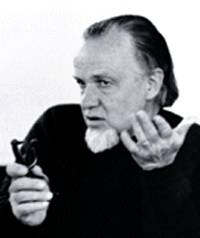
Francis Schaeffer pictured below:

______________________________

_________________

Life without God in the picture is absurdity!!!. That was the view of King Solomon when he wrote the Book of Ecclesiastes 3000 years ago and it is the view of many of the modern philosophers todayModern man has tried to come up with a lasting meaning for life without God in the picture (life under the sun), but it is not possible. Without the infinite-personal God of the Bible to reveal moral absolutes then man is left to embrace moral relativism. In a time plus chance universe man is reduced to a machine and can not find a place for values such as love. Both of Francis Schaeffer’s film series have tackled these subjects and he shows how this is reflected in the arts.

Here are some posts I have done on the series “HOW SHOULD WE THEN LIVE? : Francis Schaeffer’s “How should we then live?” Video and outline of episode 10 “Final Choices” episode 9 “The Age of Personal Peace and Affluence”episode 8 “The Age of Fragmentation”episode 7 “The Age of Non-Reason” episode 6 “The Scientific Age”  episode 5 “The Revolutionary Age” episode 4 “The Reformation” episode 3 “The Renaissance”episode 2 “The Middle Ages,”, and  episode 1 “The Roman Age,” .

In the film series “WHATEVER HAPPENED TO THE HUMAN RACE?” the arguments are presented  against abortion (Episode 1),  infanticide (Episode 2),   euthenasia (Episode 3), and then there is a discussion of the Christian versus Humanist worldview concerning the issue of “the basis for human dignity” in Episode 4 and then in the last episode a close look at the truth claims of the Bible.

I have discussed many subjects with my liberal friends over at the Ark Times Blog in the past and I have taken them on now on the subject of the absurdity of life without God in the picture. Most of my responses included quotes from William Lane Craig’s book THE ABSURDITY OF LIFE WITHOUT GOD.  Here is the result of one of those encounters from June of 2013:

DeathByInches asserted, “You are doomed to die Saline, get used to it.”

It is funny that you said that last night I was at church and heard Ecclesiastes 7:2 read,
“It is better to go to a house of mourning than to go to a house of feasting, for death is the destiny of everyone; the living should take this to heart.”

Robert Lewis the founder of “Men’s Fraternity” quoted this verse last night at Fellowship Bible Church in a meeting I attended. He noted that many people spend so much time on their careers that it is very interesting that usually the things mentioned at their funerals have very little to do with how much they accomplished in their careers but what impact they had on close friends and family members. Lewis suggested that many are out of balance today because they are focused on things that will pass away and not on making an eternal difference in others lives.

I THINK THAT ROBERT LEWIS IS RIGHT ABOUT THE IMPORTANCE OF MAKING AN ETERNAL IMPACT, BUT IF YOU, DEATHBYINCHES, ARE RIGHT ABOUT DEATH BEING THE ABSOLUTE END THEN WHO CARES HOW WE ACT IN THIS LIFE.

On this subject William Lane Craig noted:

If life ends at the grave, then it makes no difference whether one has lived as a Stalin or as a saint. Since one’s destiny is ultimately unrelated to one’s behavior, you may as well just live as you please. As Dostoyevsky put it: “If there is no immortality, then all things are permitted.” On this basis, a writer like Ayn Rand is absolutely correct to praise the virtues of selfishness. Live totally for self; no one holds you accountable! Indeed, it would be foolish to do anything else, for life is too short to jeopardize it by acting out of anything but pure self-interest. Sacrifice for another person would be stupid. Kai Nielsen, an atheist philosopher who attempts to defend the viability of ethics without God, in the end admits,

We have not been able to show that reason requires the moral point of view, or that all really rational persons, unhoodwinked by myth or ideology, need not be individual egoists or classical amoralists. Reason doesn’t decide here. The picture I have painted for you is not a pleasant one. Reflection on it depresses me…. Pure practical reason, even with a good knowledge of the facts, will not take you to morality.8

But the problem becomes even worse. For, regardless of immortality, if there is no God, then any basis for objective standards of right and wrong seems to have evaporated. All we are confronted with is, in Jean-Paul Sartre’s words, the bare, valueless fact of existence. Moral values are either just expressions of personal taste or the by-products of socio-biological evolution and conditioning. In the words of one humanist philosopher, “The moral principles that govern our behavior are rooted in habit and custom, feeling and fashion.”9 In a world without God, who is to say which actions are right and which are wrong? Who is to judge that the values of Adolf Hitler are inferior to those of a saint? The concept of morality loses all meaning in a universe without God. As one contemporary atheistic ethicist points out, “To say that something is wrong because … it is forbidden by God, is … perfectly understandable to anyone who believes in a law-giving God. But to say that something is wrong … even though no God exists to forbid it, is not understandable….” “The concept of moral obligation [is] unintelligible apart from the idea of God. The words remain but their meaning is gone.”10 In a world without a divine lawgiver, there can be no objective right and wrong, only our culturally and personally relative, subjective judgments. This means that it is impossible to condemn war, oppression, or crime as evil. Nor can one praise brotherhood, equality, and love as good. For in a universe without God, good and evil do not exist—there is only the bare valueless fact of existence, and there is no one to say that you are right and I am wrong.

Related posts:

Francis Schaeffer’s “How should we then live?” Video and outline of episode 10 “Final Choices” (Schaeffer Sundays)

E P I S O D E 1 0   Dr. Francis Schaeffer – Episode X – Final Choices 27 min FINAL CHOICES I. Authoritarianism the Only Humanistic Social Option One man or an elite giving authoritative arbitrary absolutes. A. Society is sole absolute in absence of other absolutes. B. But society has to be […]

Francis Schaeffer’s “How should we then live?” Video and outline of episode 9 “The Age of Personal Peace and Affluence” (Schaeffer Sundays)

E P I S O D E 9 Dr. Francis Schaeffer – Episode IX – The Age of Personal Peace and Affluence 27 min T h e Age of Personal Peace and Afflunce I. By the Early 1960s People Were Bombarded From Every Side by Modern Man’s Humanistic Thought II. Modern Form of Humanistic Thought Leads […]

Francis Schaeffer’s “How should we then live?” Video and outline of episode 8 “The Age of Fragmentation” (Schaeffer Sundays)

E P I S O D E 8 Dr. Francis Schaeffer – Episode VIII – The Age of Fragmentation 27 min I saw this film series in 1979 and it had a major impact on me. T h e Age of FRAGMENTATION I. Art As a Vehicle Of Modern Thought A. Impressionism (Monet, Renoir, Pissarro, Sisley, […]

Francis Schaeffer’s “How should we then live?” Video and outline of episode 7 “The Age of Non-Reason” (Schaeffer Sundays)

E P I S O D E 7 Dr. Francis Schaeffer – Episode VII – The Age of Non Reason I am thrilled to get this film series with you. I saw it first in 1979 and it had such a big impact on me. Today’s episode is where we see modern humanist man act […]

Francis Schaeffer’s “How should we then live?” Video and outline of episode 6 “The Scientific Age” (Schaeffer Sundays)

E P I S O D E 6 How Should We Then Live 6#1 Uploaded by NoMirrorHDDHrorriMoN on Oct 3, 2011 How Should We Then Live? Episode 6 of 12 ________ I am sharing with you a film series that I saw in 1979. In this film Francis Schaeffer asserted that was a shift in […]

Francis Schaeffer’s “How should we then live?” Video and outline of episode 5 “The Revolutionary Age” (Schaeffer Sundays)

E P I S O D E 5 How Should We Then Live? Episode 5: The Revolutionary Age I was impacted by this film series by Francis Schaeffer back in the 1970′s and I wanted to share it with you. Francis Schaeffer noted, “Reformation Did Not Bring Perfection. But gradually on basis of biblical teaching there […]

Francis Schaeffer’s “How should we then live?” Video and outline of episode 4 “The Reformation” (Schaeffer Sundays)

Dr. Francis Schaeffer – Episode IV – The Reformation 27 min I was impacted by this film series by Francis Schaeffer back in the 1970′s and I wanted to share it with you. Schaeffer makes three key points concerning the Reformation: “1. Erasmian Christian humanism rejected by Farel. 2. Bible gives needed answers not only as to […]

“Schaeffer Sundays” Francis Schaeffer’s “How should we then live?” Video and outline of episode 3 “The Renaissance”

Francis Schaeffer’s “How should we then live?” Video and outline of episode 3 “The Renaissance” Francis Schaeffer: “How Should We Then Live?” (Episode 3) THE RENAISSANCE I was impacted by this film series by Francis Schaeffer back in the 1970′s and I wanted to share it with you. Schaeffer really shows why we have so […]

Francis Schaeffer’s “How should we then live?” Video and outline of episode 2 “The Middle Ages” (Schaeffer Sundays)

  Francis Schaeffer: “How Should We Then Live?” (Episode 2) THE MIDDLE AGES I was impacted by this film series by Francis Schaeffer back in the 1970′s and I wanted to share it with you. Schaeffer points out that during this time period unfortunately we have the “Church’s deviation from early church’s teaching in regard […]

Francis Schaeffer’s “How should we then live?” Video and outline of episode 1 “The Roman Age” (Schaeffer Sundays)

Francis Schaeffer: “How Should We Then Live?” (Episode 1) THE ROMAN AGE   Today I am starting a series that really had a big impact on my life back in the 1970′s when I first saw it. There are ten parts and today is the first. Francis Schaeffer takes a look at Rome and why […]

Francis Schaeffer: “Whatever Happened to the Human Race” (Episode 5) TRUTH AND HISTORY

Francis Schaeffer: “Whatever Happened to the Human Race” (Episode 5) TRUTH AND HISTORY Published on Oct 7, 2012 by AdamMetropolis This crucial series is narrated by the late Dr. Francis Schaeffer and former Surgeon General Dr. C. Everett Koop. Today, choices are being made that undermine human rights at their most basic level. Practices once […]

Francis Schaeffer: “Whatever Happened to the Human Race” (Episode 4) THE BASIS FOR HUMAN DIGNITY

The opening song at the beginning of this episode is very insightful. Francis Schaeffer: “Whatever Happened to the Human Race” (Episode 4) THE BASIS FOR HUMAN DIGNITY Published on Oct 7, 2012 by AdamMetropolis This crucial series is narrated by the late Dr. Francis Schaeffer and former Surgeon General Dr. C. Everett Koop. Today, choices […]

Francis Schaeffer: “Whatever Happened to the Human Race” (Episode 3) DEATH BY SOMEONE’S CHOICE

Francis Schaeffer: “Whatever Happened to the Human Race” (Episode 3) DEATH BY SOMEONE’S CHOICE Published on Oct 6, 2012 by AdamMetropolis This crucial series is narrated by the late Dr. Francis Schaeffer and former Surgeon General Dr. C. Everett Koop. Today, choices are being made that undermine human rights at their most basic level. Practices […]

Francis Schaeffer: “Whatever Happened to the Human Race?” (Episode 2) SLAUGHTER OF THE INNOCENTS

Francis Schaeffer: “Whatever Happened to the Human Race?” (Episode 2) SLAUGHTER OF THE INNOCENTS Published on Oct 6, 2012 by AdamMetropolis This crucial series is narrated by the late Dr. Francis Schaeffer and former Surgeon General Dr. C. Everett Koop. Today, choices are being made that undermine human rights at their most basic level. Practices […]

Francis Schaeffer: “Whatever Happened to the Human Race” (Episode 1) ABORTION OF THE HUMAN RACE

It is not possible to know where the pro-life evangelicals are coming from unless you look at the work of the person who inspired them the most. That person was Francis Schaeffer.  I do care about economic issues but the pro-life issue is the most important to me. Several years ago Adrian Rogers (past president of […]

Ecclesiastes, Purpose, Meaning, and the Necessity of God by Suiwen Liang (Quotes Will Durant, Madalyn Murray O’Hair, Stephen Jay Gould,Richard Dawkins, Jean-Paul Sartre,Bertrand Russell, Leo Tolstoy, Loren Eiseley,Aldous Huxley, G.K. Chesterton, Ravi Zacharias, and C.S. Lewis.)

Ecclesiastes 2-3 Published on Sep 19, 2012 Calvary Chapel Spring Valley | Sunday Evening | September 16, 2012 | Derek Neider _____________________________ I have written on the Book of Ecclesiastes and the subject of the meaning of our lives on several occasions on this blog. In this series on Ecclesiastes I hope to show how secular […]

Robert Leroe on Ecclesiastes (Mentions Thomas Aquinas, Princess Diana, Mother Teresa, King Solomon, King Rehoboam, Eugene Peterson, Chuck Swindoll, and John Newton.)

Ecclesiastes 1 Published on Sep 4, 2012 Calvary Chapel Spring Valley | Sunday Evening | September 2, 2012 | Pastor Derek Neider _____________________ I have written on the Book of Ecclesiastes and the subject of the meaning of our lives on several occasions on this blog. In this series on Ecclesiastes I hope to show how […]

Super Bowl, Black Eyed Peas, and the Meaning of Life and Ecclesiastes

Ecclesiastes 8-10 | Still Searching After All These Years Published on Oct 9, 2012 Calvary Chapel Spring Valley | Sunday Evening | October 7, 2012 | Pastor Derek Neider _______________________ Ecclesiastes 11-12 | Solomon Finds His Way Published on Oct 30, 2012 Calvary Chapel Spring Valley | Sunday Evening | October 28, 2012 | Pastor Derek Neider […]

By Everette Hatcher III | Posted in Current Events | Edit | Comments (0)

STEPHEN JONES OF DALLAS COWBOYS SPEAKS AT LITTLE ROCK TOUCHDOWN CLUB PART 1

___________

Stephen Jones did a great job at the Little Rock Touchdown Club today and he told a lot of stories about his dad and  Father Tribou of Catholic High of Little Rock.

Little Rock Touchdown Club – October 12, 2015

Streamed live on Oct 12, 2015

Stephen Jones speaks to the Touchdown Club

_______________

NFL execs, alumnus give $10 million to Catholic High

Gift announced Oct. 10 is largest in the history of Little Rock all-boys school

PUBLISHED: OCTOBER 17, 2013

– See more at: http://www.arkansas-catholic.org/news/article/3641/NFL-execs-alumnus-give-10-million-to-Catholic-High#sthash.yVXGQ49U.dpuf

DWAIN HEBDA
Members of the Catholic High senior class sing the alma mater following the announcement by Jerry Jones of a $10 million donation to the capital fund.

– See more at: http://www.arkansas-catholic.org/news/article/3641/NFL-execs-alumnus-give-10-million-to-Catholic-High#sthash.yVXGQ49U.dpuf

Walking out of the Catholic High School locker rooms en route to practice, three freshmen football players turned a corner and came face to face with a white-haired man briskly descending the stairs in a well-cut navy suit. As they stopped to let the man pass, their eyes widened in recognition of Jerry Jones, owner of the Dallas Cowboys.

“How ya, doin,” Jones asked nonchalantly to the boys frozen speechless in their places.

It wasn’t the first audience Jones had surprised on his Oct. 10 visit to Little Rock. Earlier in the afternoon, before an audience of the senior class, faculty, staff, guests and a throng of local media, Jones announced a contribution in the amount of nearly $10 million was being made by the Gene and Jerry Jones Family Charities of Dallas, San Francisco 49ers co-chairmen and former co-owners Denise and John York and an anonymous Catholic High alumnus, in support of the school’s capital campaign.

“Nobody lives a life of all highs, but this is a high,” Jerry Jones said, his eyes welling with tears. “My family and I get to do something in the name of and for someone that we love.”

That someone is the late Msgr. George Tribou who served as Catholic High School rector and principal for 35 years. Jones’ sons, Jerry Jr. and Stephen, and his son-in-law, Shy Anderson, graduated from the school in the 1980s and each shared a story of their encounters with Msgr. Tribou in their brief remarks. All said his impact on their lives was indelible.

“He was right more times than most,” Jerry Jones Jr. said. “He stressed it was not about feeling good but being good.”

Stephen and Jerry Jones were visibly emotional and struggled to maintain their composure during their remarks. Stephen Jones remarked, “Next to my dad, Father Tribou was like, father 1A. We love him and we miss him.”

Jerry Jones, when asked if he could say one thing to his friend, who died in 2001 and for whom he served as pallbearer, said, “I hope we’re doing a little bit to make you proud.”

Members of the York family were unable to attend the event, but John York, class of 1967, said in a statement, “This capital campaign will help ensure that the same quality education and experience I received will be passed down to more generations to come. Just being a part of the Catholic High history and tradition is an honor.”

York, a CHS Alumnus of the Year, donated $500,000 for the math and science building at CHS in 1999.

The Jones and York contributions match an earlier commitment from the anonymous alumnus with the three packaged as a collective gift. It is the largest donation in the school’s history and effectively meets the campaign goal just 14 months after it was announced. However, the new gift includes a matching component that, if maximized, provides an opportunity for donors to exceed its $15 million target. Any new gifts made between April 2013 and April 2016 are eligible to be matched.

As Steve Straessle, CHS principal summarized, “This gift gets us near the goal line, but we are not finished yet. We still have work to do to meet and exceed our goal.”

Jerry Jones wasted no time pounding a bully pulpit for raising the additional funds. At the alumni dinner later that evening, Jones turned capital campaign evangelizer, urging the 1,000-plus in attendance to step up to the plate and help push the campaign past the original goal.

Calling himself “a soldier for Catholic High,” he said he wanted his to be “one of hundreds, even thousands,” of contributions to the campaign.

The capital campaign supports renovations to the school for technology, mechanical systems and classroom upgrades. It is the first major renovation since the current school was built in 1950. New windows, Roy Davis Athletic Field and track, and the updated cafeteria and gymnasium have all already been completed as part of the project.

Following a whirlwind day, Straessle expressed gratitude for all who had contributed thus far to help the school complete the renovations. He said the ability of the school to attract such participation demonstrates the enduring quality of Catholic High.

“You cannot sell a bad product,” he said. “If you believe in what you have and share that belief among your closest stakeholders to the wider community, there is no goal that is insurmountable. Everyone and anyone who walks onto the Catholic High campus, I think, knows instantly what we believe.”

– See more at: http://www.arkansas-catholic.org/news/article/3641/NFL-execs-alumnus-give-10-million-to-Catholic-High#sthash.yVXGQ49U.dpuf

Related posts:

Nortre Dame’s Weis was one of the best speakers we have had at the Little Rock Touchdown Club!!!

________ I really enjoyed listening to Charlie Weis on Tuesday. Nortre Dame’s Weis was one of the best speakers we have had at the Little Rock Touchdown Club!!! Little Rock Touchdown Club – September 8, 2015 Weis adapts to life away from football Share on facebookShare on twitterMore Sharing Services2 By Jeremy Muck This article […]

Little Rock Touchdown Club – August 31, 2015 with Felix Jones and Peyton Hillis

___   Little Rock Touchdown Club – August 31, 2015 Felix Jones, Peyton Hillis talk to LR Touchdown Club Share on facebookShare on twitterMore Sharing Services0 By Brandon Riddle This article was published today at 1:38 p.m. Two former Arkansas running backs spoke to the Little Rock Touchdown Club on Monday, telling stories of their […]

Bret Bielema at Little Rock Touchdown Club entertained the sellout crowd of more than 700 with humor and homespun stories!

_________ Streamed live on Aug 24, 2015 Bret Bielema speaks to the Touchdown Club ____________ Bret Bielema is first speaker in 2015https://cm.g.doubleclick.net/push?client=ca-pub-4836457508486497&srn=gdnBy Harry King Arkansas News Bureau King: Bielema Draws, Keeps Big Crowd – See more at: http://arkansasnews.com/harry-king/king-bielema-draws-keeps-big-crowd#sthash.ipmj1pOi.dpuf — Working out before 8 a.m. Monday, a regular at the neighborhood gym planned to […]

Video of Bret Bielema’s great speech at Little Rock Touchdown Club on August 24, 2015!!!

_________ Streamed live on Aug 24, 2015 Bret Bielema speaks to the Touchdown Club ____________ Bielema speaks to sold-out crowd at LR Touchdown Club Share on facebookShare on twitterMore Sharing Services3 By Brandon Riddle This article was published today at 12:53 p.m. Arkansas coach Bret Bielema addressed a sold-out meeting of the Little Rock Touchdown […]

2015 LITTLE ROCK TOUCHDOWN CLUB SPEAKERS INCLUDE Bret Bielema, Peyton Hillis, Felix Jones,Charlie Weis, Tim Brown, Jeff Long, Heath Shuler, Jay Barker, Stephen Jones, Mack Brown, Blake Anderson, Tony Bua, and George Schroeder!

_______________________ Bret Bielema is first speaker in 2015 George Schroeder — USA Today is the last speaker of the year In an earlier post I praised David Bazzel for the job he did putting together another great lineup of speakers for the Little Rock Touchdown Club in 2015 and today I want to take a look […]

DAVID BAZZEL COMES UP WITH ANOTHER GREAT LINEUP OF SPEAKERS FOR 2015 at LITTLE ROCK TOUCHDOWN CLUB!!!!!

________________ David Bazzel pictured below: I have written about my past visits to the Little Rock Touchdown Club many times and I have been amazed at the quality of the speakers. One of my favorite was  Phillip Fulmer, but Frank Broyles was probably my favorite, and  Paul Finebaum, Mike Slive, Willie Roaf,Randy White, Howard Schnellenberger, John Robinson, […]

Shawn Andrews at Little Rock Touchdown Club

Andrews supports athletes Share on facebook Share on twitter More Sharing Services0 By Jeff Halpern This article was published November 25, 2014 at 2:37 a.m. PHOTO BY JEFF HALPERN Former Arkansas offensive lineman Shawn Andrews was the guest at the Little Rock Touchdown Club on Nov. 24, 2014. Comments aAFont Size It’s been 11 years […]

Rocket Ismail does a great job at Little Rock Touchdown Club (with Video of full event)

_______ Little Rock Touchdown Club – November 3, 2014 I really enjoyed the stories that Rocket told about Lou Holtz. I noticed another big crowd today at the lunch when I looked around at the audience. Lou told Rocket to make the play Share on facebookShare on twitterMore Sharing Services0 By Jeremy Muck This article […]

SEC Network Analyst Dari Nowkah said at the Little Rock Touchdown Club that those outside the SEC say the conference is overrated but that obviously is not true!

________ SEC Network Analyst Dari Nowkah said at the Little Rock Touchdown Club that those outside the SEC say the conference is overrated but that obviously is not true!!!! With SEC teams winning seven consecutive national championships in 2006-2012 and having at least one team in each of the past eight BCS Championship Games, Nowkah […]

Lee Roy Jordan does a great job at Little Rock Touchdown Club!!!

___________ Little Rock Touchdown Club – October 6 2014 This is what the Arkansas Democrat-Gazette had to say about Lee Roy: After last season, Alabama lost a three-year starter at quarterback, AJ McCarron, who led the Crimson Tide to national championships after the 2011 and 2012 seasons, and was a fifth-round draft pick of the […]

______________

THE ARTISTS, POETS and PROFESSORS of BLACK MOUNTAIN COLLEGE (the college featured in the film THE LONGEST RIDE) Part 23 James Bishop (artist)

I fell in love with the story of Black Mountain College and I have done posts on many of the people associated with the college such as  Anni Albers, Josef Albers, Donald Alter, Sylvia Ashby, James BishopJohn Cage,   Willem de Kooning (featured  in 3 posts)Ted Dreier, Ted Dreier Jr. Robert DuncanJorge Fick, Walter Gropius, Heinrich Jalowetz, Pete Jennerjahn, Wassily Kandinsky,   Karen Karnes,  Martha KingIrwin Kremen, Charles OlsonCharles Perrow, Robert Rauschenber,  M.C.Richards, Dorothea Rockburne,  Xanti Schawinsky, Claude Stoller Bill TreichlerSusan Weil,  David Weinrib,  and Vera B. Williams

Guided Tour of James Bishop with the artist, September 5, 2014

_____________

Nicholas Sparks Talks Adapting ‘The Longest Ride’ to the Screen

The Longest Ride Official Trailer #1 (2015) – Britt Robertson Movie HD

______

My first post in this series was on the composer John Cage and my second post was on Susan Weil and Robert Rauschenberg who were good friend of CageThe third post in this series was on Jorge Fick. Earlier we noted that  Fick was a student at Black Mountain College and an artist that lived in New York and he lent a suit to the famous poet Dylan Thomas and Thomas died in that suit.

The fourth post in this series is on the artist  Xanti Schawinsky and he had a great influence on John Cage who  later taught at Black Mountain College. Schawinsky taught at Black Mountain College from 1936-1938 and Cage right after World War II. In the fifth post I discuss David Weinrib and his wife Karen Karnes who were good friends with John Cage and they all lived in the same community. In the 6th post I focus on Vera B. William and she attended Black Mountain College where she met her first husband Paul and they later  co-founded the Gate Hill Cooperative Community and Vera served as a teacher for the community from 1953-70. John Cage and several others from Black Mountain College also lived in the Community with them during the 1950’s. In the 7th post I look at the life and work of M.C.Richards who also was part of the Gate Hill Cooperative Community and Black Mountain College.

In the 8th post I look at book the life of   Anni Albers who is  perhaps the best known textile artist of the 20th century and at Paul Klee who was one  of her teachers at Bauhaus. In the 9th post the experience of Bill Treichler in the years of 1947-1949  is examined at Black Mountain College. In 1988, Martha and Bill started The Crooked Lake Review, a local history journal and Bill passed away in 2008 at age 84.

In the 10th post I look at the art of Irwin Kremen who studied at Black Mountain College in 1946-47 and there Kremen spent his time focused on writing and the literature classes given by the poet M. C. Richards. In the 11th post I discuss the fact that Josef Albers led the procession of dozens of Bauhaus faculty and students to Black Mountain.

In the 12th post I feature Wassily Kandinsky (1866-1944) who was featured in the film THE LONGEST RIDE and the film showed Kandinsky teaching at BLACK MOUNTAIN COLLEGE which was not true according to my research. Evidently he was invited but he had to decline because of his busy schedule but many of his associates at BRAUHAUS did teach there. In the 13th post I look at the writings of the communist Charles Perrow. 

Willem de Kooning was such a major figure in the art world and because of that I have dedicated the 14th15th and 16th posts in this series on him. Paul McCartney got interested in art through his friendship with Willem because Linda’s father had him as a client. Willem was a  part of New York School of Abstract expressionism or Action painting, others included Jackson Pollock, Elaine de Kooning, Lee Krasner, Franz Kline, Arshile Gorky, Mark Rothko, Hans Hofmann, Adolph Gottlieb, Anne Ryan, Robert Motherwell, Philip Guston, Clyfford Still, and Richard Pousette-Dart.

In the 17th post I look at the founder Ted Dreier and his strength as a fundraiser that make the dream of Black Mountain College possible. In the 18th post I look at the life of the famous San Francisco poet Robert Duncan who was both a student at Black Mountain College in 1933 and a professor in 1956. In the 19th post I look at the composer Heinrich Jalowetz who starting teaching at Black Mountain College in 1938 and he was one of  Arnold Schoenberg‘s seven ‘Dead Friends’ (the others being Berg, Webern, Alexander Zemlinsky, Franz Schreker, Karl Kraus and Adolf Loos). In the 20th post I look at the amazing life of Walter Gropius, educator, architect and founder of the Bauhaus.

In the 21st post I look at the life of the playwright Sylvia Ashby, and in the 22nd post I look at the work of the poet Charles Olson who in 1951, Olson became a visiting professor at Black Mountain College in North Carolina, working and studying here beside artists such as John Cage and Robert Creeley.[2] 

In the 23rd post is about the popular artist James Bishop who attended Black Mountain College towards the end of its existence.

James Bishop – Walkthrough led by Carter Ratcliff – September 27, 2014

David Zwirner is pleased to present an exhibition of paintings by American artist James Bishop, on view at the gallery’s 537 West 20th Street location. The exhibition will include works spanning the artist’s prolific career and will present several large paintings on canvas from the 1960s to the early 1980s, as well as small-scale paintings on paper, to which Bishop turned exclusively in 1986 and continues to produce today. Providing a rare opportunity to view the artist’s work, the show will be his first solo presentation in New York since 1987.

Throughout his career, Bishop has engaged European and American traditions of post-War abstraction while developing a subtle, poetic, and highly unique visual language of his own. Alternating between—and at times interweaving—painting and drawing, Bishop’s works explore the ambiguities and paradoxes of material opacity and transparency, flatness and spatiality, as well as linear tectonics and loosely composed forms. Privileging the nuanced and expressive qualities of color and scale, Bishop’s luminous works have been described by American poet and art critic John Ashbery as “half architecture, half air.”1

In the early 1960s, Bishop developed the vocabulary of color and form that would characterize his paintings on canvas for over twenty years: a reduced but rich palette, the employment of subtle architectonic abstractions, and a consistently large, square format that reinforces the viewer’s sense of scale and space. Included in the exhibition are Having, 1970; State, 1972; and Maintenant, 1981, which demonstrate Bishop’s ability to render form, dimensionality, and light through the sensitive and seemingly effortless layering of paint. By overlapping thin but radiant veils of monochrome color, Bishop creates discrete geometric frameworks that suggest doors, windows, cubes, or, as the artist describes, an uncertain scaffolding. In works such as Early, 1967, and Untitled (Bank), 1974, Bishop juxtaposes contrasting fields of white and color to produce simple but evocative abstract compositions.

Related to but distinct from his works on canvas, Bishop’s paintings on paper retain similarly monochrome palettes, while differing in their intimate scale and at times irregularly-shaped support. Devoting himself exclusively to this medium in 1986, Bishop was motivated by the idea that “writing with the hand rather than with the arm” might allow him “to make something… more personal, subjective, and possibly original.”2 In these delicately-rendered works, the traces of Bishop’s hand preserve their charge of personal and emotional resonance, achieving a grand inner scale and restrained monumentality.

Born in 1927 in Neosho, Missouri, Bishop studied painting at Washington University, St. Louis, Missouri, and Black Mountain College, North Carolina, and art history at Columbia University, New York, before traveling to Europe in 1957 and settling in Blévy, France. His work has been the subject of major museum exhibitions: in 1993-94, James Bishop, Paintings and Works on Paper traveled from the Kunstmuseum Winterthur, Switzerland, to the Galerie national de Jeu de Paume, Paris, and the Westfälisches Landesmuseum, Münster; and in 2007-08, James Bishop. Malerie auf Papier/Paintings on Paper traveled from the Staatliche Graphische Sammlung München, Munich, to the Josef Albers Museum Quadrat Bottrop, Germany, and The Art Institute of Chicago.

Bishop’s work can be found in important public and private collections throughout the United States and Europe, including The Art Institute of Chicago; Australian National Gallery, Canberra; Brooklyn Museum of Art, New York; Grey Art Gallery & Study Center, New York University Art Collection, New York; Musée de Grenoble; Musée d’Art Moderne de la Ville de Paris; The Museum of Modern Art, New York; Centre Georges Pompidou, Paris; Louisiana Museum of Modern Art, Humlebæk, Denmark; ARCO Foundation, Madrid; Staatliche Graphische Sammlung München, Munich; San Francisco Museum of Modern Art; Tel Aviv Museum; Kunstmuseum Winterthur; and Kunsthaus Zürich, among others. This is his first exhibition at David Zwirner.

1John Ashbery, “The American Painter James Bishop,” in Dieter Schwarz and Alfred Pacquement, eds., James Bishop: Paintings and Works on Paper (Düsseldorf: Richter Verlag, 1993), p. 109.
2“Artists should never be seen nor heard,” James Bishop in conversation with Dieter Schwarz, in ibid., p. 36
For all press inquiries and to RSVP to the September 6 guided tour and press preview, contact
Kim Donica +1 212 727 2070 kim@davidzwirner.com

Above: Having, 1970. Oil on canvas. 77 x 77 inches (195.6 x 195.6 cm). © 2014 James Bishop

JAMES BISHOP's photo.
From Wikipedia, the free encyclopedia
James Bishop
Born October 7, 1927 (age 87)[1]
Neosho, Missouri, United States[1]
Nationality United States
Education Syracuse University (1950)
Washington University in St. Louis (1954)
Black Mountain College (1953)[1]
Alma mater Columbia University (1956)[1]
Style Painting
Movement Abstract expressionism

James Bishop (born 1927) was an Americanpainter.

Life[edit]

Bishop was born in Neosho, Missouri.[2] He attended college and worked in New York, New York before moving to Paris, France in 1958. Currently, he works in Blevy, France.[1]

Notable exhibitions[edit]

Notable collections[edit]

References[edit]

  1. ^ Jump up to:a b c d e f g h “James Bishop”. Annemarie Verna Gallery. Retrieved 26 July 2015.
  2. Jump up^ “Bishop, James”. Union List of Artist Names Online. Getty. Retrieved 26 July 2015.
  3. Jump up^ “James Bishop”. Explore Modern Art. San Francisco Museum of Modern Art. Retrieved 26 July 2015.
  4. Jump up^ “Untitled, 1980”. Collections. Art Institute Chicago. Retrieved 26 July 2015.
  5. Jump up^ “Untitled”. The Collection. Museum of Modern Art. Retrieved 26 July 2015.

BISJA0024 Other Colors 1965

I have been waiting to see a large selection of James Bishop’s paintings since the mid-1970s, ever since reading John Ashbery’s appraisal in a secondhand copy of Art News Annual 1966: “It is a shame that Bishop’s paintings, partly owing to his personal aloofness, seem destined for neglect in both New York and Paris, for he is one of the great original American painters of his generation.”

Who was this artist that Ashbery thought so highly of? My curiosity was further piqued when the only other substantial mention of him that I could find was by another poet and art critic, Carter Ratcliff. From various pieces Ashbery wrote, I learned that Bishop had gone to Black Mountain College in 1953, where he studied with Esteban Vicente, and that he liked the work of Robert Motherwell. In 1957 he went to Paris and didn’t return to New York until 1966, ostensibly missing a close-up view of the rise of Pop Art, Color Field painting and Minimalism, the whole caboodle of postwar American painting. Which is not to say that he didn’t know, care about or see American art, particularly by the Abstract Expressionists. Nor did his self-imposed exile in Paris prevent him from traveling to Italy and closely studying the work of artists as diverse as Cosimo Tura and Lorenzo Lotto. He also saw work by artists such as Frank Stella and Ellsworth Kelly in Paris.

At the same time, Ashbery, who lived in Paris during these years, seems to have been the only American critic of the period to champion Bishop. Was he right? Or was this one of those enthusiasms that poets are known to have that is better left forgotten? The fact that Ashbery wrote about Bishop again in 1979, when he was a critic for New York, suggests he didn’t harbor any reservations about his original assessment.

BISJA0026 Untitled 1962 1963

After seeing James Bishop, which is currently on view at David Zwirner (September 6–October 25, 2014), I would urge anyone who cares about what an artist can do with paint to go and immerse themselves in this beautiful, sensitive, astringent exhibition of eleven mostly square, human-scaled paintings in oil and four small works (all are less than six inches in height and width), done in oil and crayon on paper. The paintings were completed between 1962-63 and 1986, while the four works on paper are from 2012. Whether large or small, the works invite the viewer to look closely and to linger over them, to be absorbed by the full range of their subtle synthesis of structure, light and disintegration.

Born in Neosho, Missouri, in 1927, Bishop belongs to the generation that includes Joan Mitchell (1925–1992) and Helen Frankenthaler (1928–2011). While he has expressed his admiration for their work, and, like them, was influenced by Abstract Expressionism, he clearly went his own way. Even though I hadn’t seen any of Bishop’s work, Ashbery’s recounting of his refusal to align himself with any of the styles of the times, from Minimalism and Color Field painting to Pop Art and Painterly Realism, got my attention. If anything, he seems to have learned from the various strains of postwar abstract art without being caught up in their ideologies.

BISJA0006 Closed 1974

As Ashbery observed, “Bishop has always been a Minimalist, but a sensitive one: the stripping down is obviously a decision of the heart, not the head.” (New York, May 21, 1979.) A deeply responsive contrarian who never aligned himself with any established aesthetic agenda or critical doctrine, Bishop rejected the certainty of Frank Stella’s dictum, “What you see is what you see,” and its denial of contradiction and doubt, in favor of ambiguity, particularly regarding the relationship between surface and space, and between form and dispersion. Furthermore, in “Artists should never be seen nor heard,” a 1993 conversation with Dieter Schwartz, Bishop states: “I never could do a kind of sixties painting in the Greenbergian sense, and I was a failure at it…” How wonderful! Bishop seems never to have fretted over the fact he could not and did not fit in. For many obvious reasons, I find this immensely heartening.

A number of paintings in the Zwirner exhibition suggests that Bishop disagreed fundamentally with Clement Greenberg, who believed that painting resists three-dimensionality and illusionism. While Bishop has said that he learned from Frankenthaler, he has never been a purist who either privileged one technique over another or strived for pure opticality. In addition, he liked ochers and browns, which he characterized as “inexpensive earth colors,” because they were “impure,” and had “associations to earth, blood, wine, shit etc.”

BISJA0003-State-1972

While Bishop’s list of associations suggests that he is a symbolist and, in that regard, allied with Motherwell, I think this would constitute a misunderstanding. What Bishop’s work does so powerfully and originally is hold a wide gamut of visual contradictions and ambiguities in tight proximity: the paintings blossom out of the various irresolvable conflicts that he sets in motion. Moreover, unlike many of the artists working in the wake of Abstract Expressionism, he didn’t believe that feelings, however inchoate, are superfluous to painting. Rather, he believed painting was a language that the viewer had to learn how to read; he wasn’t interested in delivering something the viewers already knew.

In “State” (1972), a glowing monochromatic square with tonalities falling somewhere among earth red, rust and dried blood, Bishop divides the top half of the painting into vertical and horizontal bands, which frame eight squares. Placed in the upper half, and held in place by the physical edges of the painting’s top and flanking sides, the ghostly bands float above a subtly inflected surface that we look at, as well as into, unable to settle comfortably in either domain. Moving between illusionism and surface, the space seems to expand and contract. Both the bands and the surface keep changing. Moreover, in certain areas, the washes of paint become a field in which a few pulverized particles are visible. Paint becomes becomes both a dried puddle and a disembodied light. “State” embodies a world where defining terms such as surface and illusionism, form and formlessness become hazy. Everything, the painting quietly underscores, is fleeting, a mirage. It seems to me that Bishop connects this visual experience to his philosophical understanding of reality and change.

BISJA0004 Maintenant 1981

Within the square format of “Maintenant” (1981), which is French for “now,” or the eternal and changing present, a steeple-like structure rises up from the painting’s bottom edge, slowly distinguishing itself from the gray wall of paint. Is the structure solid, made of light, or both? What about the paint surrounding the structure? Is it solid, made of air, or both? It seems to be both a solid object and a mirage, an architectural detail and a ghost. It is this duality that I find compelling and challenging. Is reality both a fleeting mirage and something graspable? What about the body, with its blood and shit? Is this too a mirage? A briefly inhabited form that time will soon scatter?

James Bishop continues at David Zwirner (537 West 20th Street, Chelsea, Manhattan) through October 25.

JAMES BISHOP with Alex Bacon & Barbara Rose

James Bishop met with Alex Bacon and longtime friend Barbara Rose in New York for only the third interview he has given in his over 60-year career. An exhibition of work from the early 1960s through the present is on view at David Zwirner through October 25.

Photo by Thomas Cugini. Courtesy of Annemarie Verna Galerie.

Barbara Rose: The 1960s and ’70s was a moment when there was very serious, analytic painting in which people were doing very subtle work—often in close-valued colors, and acknowledging the material quality of the canvas, but in a different way than the people favored by Clement Greenberg. The sensibility in Paris was different. There were brilliant critics there like your friend Marcelin Pleynet and Hubert Damisch.

I lived through that period in Paris when James was involved with what was going on—with other people, artists, critics, galleries. At the time, there were new legitimate things happening in Paris—something I can’t say today—for example, Supports/Surfaces and the magazine Tel Quel, and Larry Rubin’s Galerie Lawrence that then became Galerie Ileana Sonnabend. I think there is a connection between your work and Supports/Surfaces, which is having a renaissance now. Is that true, James?

Alex Bacon: They certainly liked your work. For example, Louis Cane wrote several essays on it for Peinture cahiers théoriques.

James Bishop: I didn’t actually have anything to do with those Supports/Surfaces people. I think about three of them are interesting artists: Daniel Dezeuze, Claude Viallat, and certainly Pierre Buraglio, who has a wonderful color sense and makes strange little things. Claude has a big show in Montpellier now, and he’s still going on repeating this endless form.

My first show was at Lucien Durand which was kind of spaced like a railroad car. The paintings couldn’t be very big and they weren’t anyway. My second show was at the famed Galerie Lawrence. Very much against his brother, William Rubin, and Greenberg’s everything, Larry showed both Joan Mitchell and me.

Rose: It was courageous of Larry to show your work, since his brother Bill was a card-carrying Greenbergian at the time. And Greenberg, maybe he didn’t know you? Because he didn’t say anything bad, but I don’t think he said anything at all about your work.

Bishop: There was a Spanish collector who had a number of my paintings, and who also had paintings by Morris Louis, Kenneth Noland, and others. So he had some say. Greenberg was happy to have lunch with him, of course. And he tried to get Greenberg interested in my work. Greenberg said something so off that I’ve never forgotten it: “He’s much too influenced by Agnes Martin.” [Laughter.] It was just a way of putting it down, getting rid of it.

There was one dealer I worked with quite closely who, like Greenberg, was not very interested in sculpture. He was passionate about painting and color, and he thought the way into the future was Matisse’s cutouts.

Bacon: It seems that you also had a strong response to Matisse’s cutouts.

Bishop: I never got over the show of the blue nudes that I saw in Paris in the 1960s. It’s very clear to me that Matisse dominates his century.

Rose: I see a dialogue with Matisse, but then it pushes in another direction with these earth tones, which, of course, Matisse would never have used. And I think that’s your real dialogue: you’re talking to Matisse. Or are you talking to anybody else?

Bishop: I would never dare interrupt Matisse, but I was telling Alex earlier about the people that I knew like Ad Reinhardt and Robert Motherwell, and how they loved to talk. Pontificating is more like it. [Laughter.]

Rose: Oh, God. Especially Motherwell. I think the central aspect of your work, outside of the drawing, is the luminosity.

Bishop: Which is very possible with oil painting.

Bacon: We were talking before about your process, which seems to be more akin to something like glazing, perhaps, than to pouring.

Bishop: They have to be stretched, and they have to be flat on the floor, or I can’t work with my very liquid paint. It’s never poured, I prep a tin in which I mix up a couple of tubes of oil paint with a lot of turpentine, a lot or a little less depending on what I want to do. If I want it to look a little thicker or if I want it to look a little… There’s one painting here that’s quite hysterical, the brown one with the bars and squares, “State” (1972). I made about 18 paintings like that because there are a lot of different things you can do within those parameters.

Bacon: It seems clear now, having learned a bit more about how you make them, that you must be able to allow for more gradation as you move the paint around, after you apply it?

Bishop: Yes, “State” has the most movement.

Bacon: Is it the movement that creates the different values in those passages in “State”?

Bishop: It’s picking up a stretched canvas that has, say, a square or a bar of very wet paint, very liquid paint. But, the important thing is what they look like, it’s not the technique. That’s just a way of getting to something that I found interesting.

Rose: Did you find anything in New York before you left for Paris?

Bishop: Well, I had seen three or four things that I found very interesting just before I left New York in the late 1950s. And one was Joan Mitchell, one was Helen Frankenthaler, and the other was Cy Twombly. And Twombly was a real shock for me, and Kimber Smith. But I could never just throw things around like that.

Bacon: Can you tell us something about your student years?

Bishop: You know, as a student, we would wait every month for ARTnews to arrive. There was nothing else except the Magazine of Art with Robert Goldwater. I was a student from ’51 through ’54 at Washington University in St. Louis and we would also see things at the University of Illinois at Urbana-Champaign. Then I met somebody at Black Mountain who said, “Why don’t you come?” That college was falling apart so rapidly you could just go.

Rose: Who were the other people at Black Mountain while you were there?

Bishop: Well, let’s see. The only one I still see is Dorothea Rockburne. There were about six or seven painting students. I don’t know what happened to all the others. The one thing that was so good about this last year was that Stefan Wolpe was there, the composer. John Cage was there. David Tudor would play a concert on Saturday night. Pierre Boulez had sent John his piano sonata, which was only about a month old. I had no idea at the time what I had gotten into.

Rose: Did you ever have a figurative phase?

Bishop: I don’t know. I think so much is figurative. It’s hard to divide a line—except that little painting in there, “Untitled” (1962-3) who owns it also asked me, “Did you ever make figurative paintings?” And I said, “Well, I think there’s a table and chair in your painting.” [Laughter.]

Rose: Did you draw from the figure?

Bishop: Oh, that was the best thing about Washington University. We drew and drew and drew.

Rose: I think if you see it, you feel it, and that’s what’s lacking today.

Bishop: It’s essential.

Rose: Did you feel the situation in Paris, while you were there, was different from New York?

Bishop: There were a number of great intellectual figures still alive in those days in Paris. Georges Bataille and Samuel Beckett and Michel Foucault. But they weren’t interested in painting.

James Bishop. “State,” 1972. Oil on canvas, 72 × 72 1/8″. Copyright 2014 James Bishop. Courtesy of David Zwirner, New York/London.

Rose: They were interested in ideas.

Bishop: And the other thing that was probably important was that a number of travelling shows arrived two or three years after there had been a great resistance in Paris to American art. The first one was the show that everyone assumed was theC.I.A., about the superiority of American Abstract Expressionism. It was the first chance for people to see this work that they’d all been hearing about, or that they’d seen reproductions of, or occasionally one work would turn up in a group show somewhere. Then after that there was a Newman show, and there was a Reinhardt show, and there was a Rothko show, a Franz Kline show. I always had a postcard of Motherwell’s “Voyage” up on my wall, wherever I was. Because you know you could look at Motherwell, and you could look at Bradley Walker Tomlin, and go out and try to do something. But what could you do with Reinhardt, Newman, Rothko? Nothing. You could admire it but students couldn’t try to find something to do with it.

Rose: Bradley Walker Tomlin is someone who really needs to be brought into focus because he’s a great, great painter. But he died so young! He made a very bad career decision, he died [laughs]. Do you paint every day?

Bishop: No. But I do something. Mostly there are the paintings on paper. The works on paper have more “action” than the bigger paintings, ironically. But I’ve been making more little collages lately. There was a whole group in Chicago, but otherwise, they only get reproduced a little bit here and there. I had four in Basel this year. When I was living on Lispenard Street there was a print shop downstairs a couple of doors along, and they would throw out the most wonderful things in their dumpster. I found this whole stack of cards. At times I got to something interesting, where I tried out a color, or something like that, or made a scribble of some kind, and I’d paste it on here and it got to the point where there were about 20-some works. Over the years I probably took out about four that didn’t seem to be right. But the others are all still together.

Bacon: It seems that even though you experimented in a wide range of ways of working, both early on and maybe even now within the constraints of the medium of drawing, there was nonetheless this tightening of formal parameters, beginning in the mid-’60s when you were able to buy 194 centimeter-wide lengths of canvas. For a time, that enabled a certain kind of focus. When you decided to make works on 194-centimeter square canvases, you started producing paintings that mostly have window or ladder-like forms. So, whereas you had been experimenting a lot before, what exactly excited you about narrowing and focusing things in that time?

Bishop: Well, sometimes when someone says it looks like a house, or a window, I say, “It’s a horizontal, a vertical, and a diagonal.” And then if they say, “Oh, there’s a vertical crossing a horizontal,” then I say, “well, maybe it’s a little house!” [Laughs.] Everything comes from somewhere, but people don’t always realize it. You look at a painting years later and think, “that must have been… I must have seen…” Usually in my case, it’s having seen something. I can make a list of about a hundred influences.

Bacon: How do you see your paintings functioning? What is the role of having these structural armatures, like the horizontal and vertical bars?

Bishop: I say I either want them or need them. I can’t get by without them in a way. I think you ask yourself, “What can I do on a large square canvas, or on a small piece of paper that might be interesting?”—first of all for yourself, and in the end hopefully for somebody else, too.

Bacon: In the mid-to-late-’60s, when these large square paintings with pseudo-architectural forms were well underway, you were in New York a lot more, and you showed most often with Fischbach. In a way, this groups you with the other people who showed there, many of whom, like Robert Mangold and Jo Baer, were of a minimal or conceptualist bent. This placed you as part of a broader conversation about painting and reduced form. Did you feel that when you were in New York you were in an active conversation with those people and those ideas?

Bishop: The first show in New York was 1966 at Fischbach because John Ashbery, who I knew in Paris, had written about my work, and he had told Donald Droll, who then saw them. He came around and said, “In September, I’m going to be working at this gallery on 57th Street with a woman named Marilyn Fischbach. Would you like to be shown in the gallery?” That was the first show, which was in December ’66, so that’s how I got to New York. I don’t think I ever would have otherwise. I came out for that show and I found New York very interesting. Sylvia and Bob Mangold are still good friends. But mostly, there was a lot of music and Susi Bloch, an art historian friend who died young, and I went to performances maybe two or three times a week. A lot of small groups were playing new music by new people. New York was very interesting in the ’60s and the ’70s, but then it began to slow down.

Rose: Getting back to the part of Alex’s question about your relationship to Minimal and Conceptual art, I may be wrong, but I don’t think you start with a concept?

Bishop: With the large paintings I have an idea that I want to try to do this and that.

Rose: What was this “this and that” that you wanted to do?

Bishop: Well, it would be a certain color, or colors next to one another.

Bacon: It seems like essentially you’re experimenting with different ways of playing out a vocabulary? Like in “Untitled (Bank)” (1974) you play with the primed white as an active color.

Bishop: The reason that part of the painting only comes up that high, is because it’s not a bank like Credit Suisse, it’s bank like dirt, like a riverbank. There’s some red sort of leaking out of that part of the painting.

Bacon: We were talking earlier today about how, since the whites in your work are not painted, by you at least, since the canvas comes to you from the manufacturer already primed with that white ground, and then you didn’t paint the top, but you painted the bottom half, it functions almost literally like a bank, right? Because, even though you’re using very thin paint, it’s more built-up than the white ground. In the same way that you create those crossbeam forms in a painting like “Early” (1967) by making ridges as you push and move the paint around, it creates this kind of very subtle, but nonetheless material, difference. And it creates a spatial effect where the white, even though it’s not receding endlessly into space, it’s nonetheless quite literally just behind the painted passages.

Bishop: It’s awfully hard to get it to go behind, it’s so strong optically, but you know sometimes I want it to be fairly nicely done, so I would draw my very wet brush along this way but if you push it the other way, it will look torn, and I think that goes back to Esteban Vicente’s collages, and Motherwell’s, too. And I always liked that look. There’s also something about the kind of flatness, and shiny look of that canvas with only one coat of primer, that you can make things look a little bit like paper.

Bacon: I thought it was stunning the way you allow that primer to have that luminosity, but it’s kind of contained. You talk a lot about wanting the viewer to get up close to the work, and there’s obviously so much detail, and so much happening in that kind of intimate engagement.

Rose: Intimacy is a very good word. Barnett Newman for example talked about wanting the viewer to have an intimate experience with the work.

Bacon: Is that why you chose the human scale of the 194-centimeter square?

Bishop: Yes, and I really do think that they should be looked at up close.

Bacon: Looking at the work up close I felt like it was similar to how with certain people—they’re great on first encounter, but when you learn their quirks  things go to a whole new level. Your paintings really open up in this kind of way when you spend time with them.

Bishop: [Laughs.] These rooms at David Zwirner, in addition to being really nice shapes and sizes, also change during the day. We were putting the paintings up in the morning, and when we came back in the afternoon I saw some things that I hadn’t seen before. I like that very much.

Bacon: When I saw the show, I couldn’t leave. Because somehow every time I thought I’d seen it all, gotten all the paintings had to offer—even in the best way—at just that instant they would slyly let slip something new. They have a very interesting personality. They’re very much reserved, and they’re certainly not shouting at you but, nonetheless, they like to keep on talking if you’re willing to listen carefully.

Rose: There you go, and there he is! I’ve always said, “If it’s authentic art, the artist and the work are the same.” The problem arises when an artist wills something because they want it to be liked or whatever, it doesn’t work. In the end you can only paint yourself. Did you have any kind of relationship with Reinhardt?

Bishop: Well I met him and he asked me to come and see him and I did. We sat and talked at that huge window in his studio that looks out toward Washington Square.

Installation view, James Bishop, David Zwirner, New York, 2014. © 2014 James Bishop; courtesy of David Zwirner, New York/London.

Rose: I used to visit Ad a lot myself. In his work, there is a sense of the emerging form, which is not in a field. His work doesn’t create foreground/background disjunctions either. I feel there’s some kind of a relationship with your work.

Bacon: What’s interesting is that we’re talking about looking from up close and I think Reinhardt is actually the only one of those artists whose work is not meant to be looked at from up close. Even though there’s a certain pleasure to investigating their velvety surfaces.

Rose: Right! You have to sit back and wait for the form to emerge.

Bacon: Exactly, that’s why he would install barriers and things like that, in part to protect them but also in part because to see them unfold, you had to be at a distance, they didn’t work if you had your nose in them. He created a certain intimacy in distance and I think the intimacy of your paintings, James, is of a very similar nature. I think the David Zwirner galleries work really well at fostering that sense of intimate contact with your paintings.

Bishop: They’re wonderful spaces!

Rose: I think there’s one other point, and it’s really important and that is about intimacy, and impact, and time. The thing Greenberg wanted was the “one shot painting” you got right away. Great, you get it right away and then what? Meditative paintings take time to experience. I see you as a meditative painter, Ad was a meditative painter for example. Now, however, people don’t want to spend the time it takes to experience the work. I think perhaps now European time is very different from American time.

Bishop: Yes.

Bacon: Do you feel the act of making is meditative? Would you agree with Barbara’s statement? That the act of making, the time, the working out of the work is meditative for you?

Bishop: Perhaps not meditation in the strict sense of the word, but something very close. But I don’t know if I would call it “meditative.”

Rose: They certainly don’t look labored. They don’t look too worked over.

Bishop: No, because you wouldn’t do that with most of the paintings. With the large ones, I knew pretty much what I wanted to do and then it either turned out or it didn’t, and some of it was more interesting. At any rate it might take about a day or two but with the works on paper, sometimes I come back months later, and put on a little something more, and that’s what I like about them.

Bacon: But on that general note, it seems interesting to me to read your recollection of this conversation with Annette Michelson, about your first show, where she said that you were not interested in materials. You answered, “I’m interested in them insofar as I try to eliminate them.” But then, seeing the paintings, I think Molly Warnock is the only one who has noticed that you often leave in things like the paintbrush’s bristles, if they fall off, even the marks made when the paint splashes are left as is. It’s like, even if you’re trying to kind of get rid of the materiality of certain things, you leave in the materiality of any “accidents.”

Bishop: Well that’s basically what life is. My life is just a series. Everyday you can fall down stairs, or whatever.

Rose: Don’t do that! [Laughs.]

Bacon: Barbara, maybe you see what I mean here in “Closed” (1974)? This painting works kind of like a Reinhardt, with close-valued tones that cause the forms to emerge slowly over time. And then this one, “Untitled (Bank)” you can look at in an instant, but it has this undercoat of paint that comes through with close looking. So they both have this temporal unfolding for me, in time and through color, but they’re very differently achieved.

Rose: “Closed” reminds me of things that Marc Devade was doing around the same time. It’s really very beautiful. It’s almost as if the white comes forward, which is really strange.

Bishop: People have said that about Marc and me, but I don’t see it. In terms of the white in the paintings, I purposefully chose the off-white wall color for this show because I’m quite hysterical about white walls. I don’t think you can see anything on a white wall. And so I told them to take a big tin of off-white and put in some raw umber. I think it stays behind the paintings very nicely, especially when they’ve got the white in them. It just stays there, and you don’t have to fight it. You wouldn’t look at paintings in a snowstorm! We’re here at noon, and I think I see more in this today. It seems to be a very good time. The forms in this painting, “State” are still closed, but it’s more open than it was. It lets me see the divisions.

Bacon: Do you prefer that the divisions be more visible?

Bishop: Well I don’t want to make a monochrome! I don’t want to make a square that’s all one thing. The most important thing is finding some way to divide up the surface that is interesting, and you’d be surprised how much you can get out of this kind of thing, putting it this way and that way. That’s why there are so many that are made like that, 18 altogether.

Bacon: What I was trying to get at is that it seems like when you got to the 194-centimeter square canvas, then you had this idea that you could explore very similar imagery in multiple works.

Bishop: The roll, you know, is 194 centimeters wide. And then I made the square. Even then, the early paintings are sometimes rectangles, either vertical, but more often horizontal. But I didn’t realize that the square was a good idea until I stretched it, and then I realized what it was.

Bacon: Because this is also how you were making them, with this proximity, this arm-length distance, right? This kind of interaction with the canvas as you’re laying down the paint, and then moving it to see what painterly effects you can achieve. So that must have been exciting, after having done such a variety of work, isolating certain things that could be worked through in these more subtle variations, right?

Bishop: The exciting part was when you were trying to do the parts in the middle of the canvas and not fall in. That was exciting! It’s usually two squares that come together, like in “State.” But “Closed” is different in that way, they overlap in the middle. I think it’s the only one that was that way.

Bacon: You only would paint two coats of paint, right? There’s only two coats of paint on the paintings. They’re not highly worked or anything.

Bishop: That’s enough. You just need the undercoat and the overcoat.

Rose: This was painted on the floor? That was the way Helen Frankenthaler and many of the color field painters—and, of course, Pollock—worked.

Bishop: Yes, I couldn’t do it otherwise.

Bacon: How do you feel about people saying that these square forms reference something like the structure behind them? Like the stretcher?

Bishop: The reading of them as referential to the paintings’ material structure is really off, and if they think it looks like a door or something, what does it matter?

Bacon: You prefer that to the structural reading?

Bishop: Well, the stretcher bars are only about that wide [gestures], if people look at the back, they would find that the band I painted is not as wide as the stretcher bar. The best thing that people could say is: “What does it look like? It looks like a painting.” Art is art is art.

Rose: So why did you stop making large paintings?

Bishop: Because I found it more interesting to work smaller on paper. I just lost interest in doing the sort of things that I did before. I can go on working at my speed on paper for as long as possible. Someone asked if I was working, and I said not very much, but I don’t worry about it, I just do what I feel like doing.

Bacon: So the works on paper haven’t ever inspired you to work something out in a painting? You never thought, “Oh, this is an idea that I could work out on canvas?” It’s enough to just work it out on paper?

Bishop: Yes, I do sometimes think that this work on paper might make a good painting. But the more I thought about it, the less I was convinced that it was necessary. That it should just be what it was—a work on paper.

Bacon: Here you leave in the fallen bristles from your brush. These little accidents give the painting a particular life and personality.

Bishop: I like the mistakes. There are a lot of mistakes in that very disheveled one, “Other Colors” (1965). It looks like something awful has happened and it’s coming up out of the sewer.

Bacon: It’s easy to walk quickly by these paintings and not get anything, they aren’t going to reach out and shout at you. You have to come to them, but if you do, there’s a lot to get out of them.

Rose: I agree, there’s a lot to see if you take the time to look. What happens now is that American culture has become so technological and if you don’t get it in 30 seconds, it’s over. And that’s a real problem.

Bishop: I hope it’s not very antisocial, but I don’t really feel that I should be trying to make things as easy as possible. I like to make it a little difficult.

CONTRIBUTORS

Alex BaconALEX BACON is a critic, curator, scholar based in New York. Most recently, with Harrison Tenzer, he curatedCorrespondences: Ad Reinhardt at 100.

Barbara RoseBARBARA ROSE is an art historian and curator who lives in New York and Madrid, Spain.

________________

Related posts:

THE ARTISTS, POETS and PROFESSORS of BLACK MOUNTAIN COLLEGE (the college featured in the film THE LONGEST RIDE) Part 22 Poet Charles Olson, friend of Ezra Pound

THE ARTISTS, POETS and PROFESSORS of BLACK MOUNTAIN COLLEGE (the college featured in the film THE LONGEST RIDE) Part 21 Sylvia Ashby playwright

THE ARTISTS, POETS and PROFESSORS of BLACK MOUNTAIN COLLEGE (the college featured in the film THE LONGEST RIDE) Part 20 Walter Gropius, Bauhaus,

THE ARTISTS, POETS and PROFESSORS of BLACK MOUNTAIN COLLEGE (the college featured in the film THE LONGEST RIDE) Part 19 composer Heinrich Jalowetz, student of Arnold Schoenberg

THE ARTISTS, POETS and PROFESSORS of BLACK MOUNTAIN COLLEGE (the college featured in the film THE LONGEST RIDE) Part 18 Robert Duncan

THE ARTISTS, POETS and PROFESSORS of BLACK MOUNTAIN COLLEGE (the college featured in the film THE LONGEST RIDE) Part 17 Ted Dreier, Black Mountain College Co-founder

THE ARTISTS, POETS and PROFESSORS of BLACK MOUNTAIN COLLEGE (the college featured in the film THE LONGEST RIDE) Part 16 Willem de Kooning (Part C)

THE ARTISTS, POETS and PROFESSORS of BLACK MOUNTAIN COLLEGE (the college featured in the film THE LONGEST RIDE) Part 15 Willem de Kooning (Part B)

THE ARTISTS, POETS and PROFESSORS of BLACK MOUNTAIN COLLEGE (the college featured in the film THE LONGEST RIDE) Part 14 Willem de Kooning (Part A)

THE ARTISTS, POETS and PROFESSORS of BLACK MOUNTAIN COLLEGE (the college featured in the film THE LONGEST RIDE) Part 13 Charles Perrow (MARXIST)

THE ARTISTS, POETS and PROFESSORS of BLACK MOUNTAIN COLLEGE (the college featured in the film THE LONGEST RIDE) Part 2 SUSAN WEIL and ROBERT RAUSCHENBERG

THE ARTISTS, POETS and PROFESSORS of BLACK MOUNTAIN COLLEGE (the college featured in the film THE LONGEST RIDE) Part 1 John Cage

________________

Milton Friedman at 90 Thomas Sowell July 25, 2002

Milton Friedman at 90 Thomas Sowell July 25, 2002

__________

Frances Fox Piven vs. Milton Friedman, Thomas Sowell

Uploaded on Jan 25, 2011

In this clip from the 1980 Free To Choose, socialist Frances Fox Piven tangles with Milton Friedman and Thomas Sowell. We thought this would be interesting in light of the dustup between The New York Times and Fox News (Glenn Beck) on the subject of Piven.

Check out our Facebook page here: https://www.facebook.com/FreeToChoose…

Visit our media website to find other programs here: http://freetochoosemedia.org/index.php

Connect with us on Twitter here: https://twitter.com/FreeToChooseNet

Learn more about our company here: http://freetochoosenetwork.org/

Shop for related products here: http://www.freetochoose.net/

Stream from FreeToChoose.TV here: http://freetochoose.tv/

Milton Friedman at 90

Thomas Sowell | Jul 25, 2002

Milton Friedman’s 90th birthday on July 31st provides an occasion to think back on his role as the pre-eminent economist of the 20th century. To those of us who were privileged to be his students, he also stands out as a great teacher.

When I was a graduate student at the University of Chicago, back in 1959, one day I was waiting outside Professor Friedman’s office when another graduate student passed by. He noticed my exam paper on my lap and exclaimed: “You got a B?”

“Yes,” I said. “Is that bad?”

“There were only two B’s in the whole class,” he replied.

“How many A’s?” I asked.

“There were no A’s!”

Today, this kind of grading might be considered to represent a “tough love” philosophy of teaching. I don’t know about love, but it was certainly tough.

Professor Friedman also did not let students arrive late at his lectures and distract the class by their entrance. Once I arrived a couple of minutes late for class and had to turn around and go back to the dormitory.

All the way back, I thought about the fact that I would be held responsible for what was said in that lecture, even though I never heard it. Thereafter, I was always in my seat when Milton Friedman walked in to give his lecture.

On a term paper, I wrote that either (a) this would happen or (b) that would happen. Professor Friedman wrote in the margin: “Or (c) your analysis is wrong.”

“Where was my analysis wrong?” I asked him.

“I didn’t say your analysis was wrong,” he replied. “I just wanted you to keep that possibility in mind.”

Perhaps the best way to summarize all this is to say that Milton Friedman is a wonderful human being — especially outside the classroom. It has been a much greater pleasure to listen to his lectures in later years, after I was no longer going to be quizzed on them, and a special pleasure to appear on a couple of television programs with him and to meet him on social occasions.

Milton Friedman’s enduring legacy will long outlast the memories of his students and extends beyond the field of economics. John Maynard Keynes was the reigning demi-god among economists when Friedman’s career began, and Friedman himself was at first a follower of Keynesian doctrines and liberal politics.

Yet no one did more to dismantle both Keynesian economics and liberal welfare-state thinking. As late as the 1950s, those with the prevailing Keynesian orthodoxy were still able to depict Milton Friedman as a fringe figure, clinging to an outmoded way of thinking. But the intellectual power of his ideas, the fortitude with which he persevered, and the ever more apparent failures of Keynesian analyses and policies, began to change all that, even before Professor Friedman was awarded the Nobel Prize in economics in 1976.

A towering intellect seldom goes together with practical wisdom, or perhaps even common sense. However, Milton Friedman not only excelled in the scholarly journals but also on the television screen, presenting the basics of economics in a way that the general public could understand.

His mini-series “Free to Choose” was a classic that made economic principles clear to all with living examples. His good nature and good humor also came through in a way that attracted and held an audience.

Although Friedrich Hayek launched the first major challenge to the prevailing thinking behind the welfare state and socialism with his 1944 book “The Road to Serfdom,” Milton Friedman became the dominant intellectual force among those who turned back the leftward tide in what had seemed to be the wave of the future.

Without Milton Friedman’s role in changing the minds of so many Americans, it is hard to imagine how Ronald Reagan could have been elected president.

Nor was Friedman’s influence confined to the United States. His ideas reached around the world, not only among economists, but also in political circles which began to understand why left-wing ideas that sounded so good produced results that were so bad.

Milton Friedman rates a 21-gun salute on his birthday. Or perhaps a 90-gun salute would be more appropriate.

Milton Friedman – A Conversation On Minimum Wage


Milton Friedman’s Free to Choose (1980), episode 3 – Anatomy of a Crisis. part 1

Milton Friedman on Donahue – 1979

Uploaded on Aug 26, 2009

Dr. Milton Friedman, Nobel Laureate, promoting “Free to Choose” on the show Donahue.

Milton Friedman: There’s No Such Thing as a Free Lunch

______________


Milton Friedman on Hayek’s “Road to Serfdom” 1994 Interview 1 of 2

Milton Friedman on Hayek’s “Road to Serfdom” 1994 Interview 2 of 2

Milton Friedman The Power of the Market 2-5

____________

Milton Friedman on Self-Interest and the Profit Motive 1of2

Milton Friedman on Self-Interest and the Profit Motive 2of2

__________

Milton Friedman The Power of the Market 1-5

 _____

Milton Friedman – The Negative Income Tax

Related posts:

“The Power of the Market” episode of Free to Choose in 1990 by Milton Friedman (Part 1)

Milton Friedman The Power of the Market 1-5 How can we have personal freedom without economic freedom? That is why I don’t understand why socialists who value individual freedoms want to take away our economic freedoms.  I wanted to share this info below with you from Milton Friedman who has influenced me greatly over the […]

“Friedman Friday,” EPISODE “The Failure of Socialism” of Free to Choose in 1990 by Milton Friedman (Part 1)

Milton Friedman: Free To Choose – The Failure Of Socialism With Ronald Reagan (Full) Published on Mar 19, 2012 by NoNationalityNeeded Milton Friedman’s writings affected me greatly when I first discovered them and I wanted to share with you. We must not head down the path of socialism like Greece has done. Abstract: Ronald Reagan […]

________________

“Friedman Friday” (“Free to Choose” episode 3 – Anatomy of a Crisis. part 3 of 7)

Worse still, America’s depression was to become worldwide because of what lies behind these doors. This is the vault of the Federal Reserve Bank of New York. Inside is the largest horde of gold in the world. Because the world was on a gold standard in 1929, these vaults, where the U.S. gold was stored, […]

“Friedman Friday” (Part 16) (“Free to Choose” episode 3 – Anatomy of a Crisis. part 2 of 7)

  George Eccles: Well, then we called all our employees together. And we told them to be at the bank at their place at 8:00 a.m. and just act as if nothing was happening, just have a smile on their face, if they could, and me too. And we have four savings windows and we […]

“Friedman Friday” (“Free to Choose” episode 3 – Anatomy of a Crisis. part 1of 7)

Milton Friedman’s Free to Choose (1980), episode 3 – Anatomy of a Crisis. part 1 FREE TO CHOOSE: Anatomy of Crisis Friedman Delancy Street in New York’s lower east side, hardly one of the city’s best known sites, yet what happened in this street nearly 50 years ago continues to effect all of us today. […]

By Everette Hatcher III | Also posted in Current Events | Edit | Comments (0)

____________________________

_____________


________________________________________________

_____________________________________________

Friedman Friday” Free to Choose by Milton Friedman: Episode “What is wrong with our schools?” (Part 3 of transcript and video)

Friedman Friday” Free to Choose by Milton Friedman: Episode “What is wrong with our schools?” (Part 3 of transcript and video) Here is the video clip and transcript of the film series FREE TO CHOOSE episode “What is wrong with our schools?” Part 3 of 6.   Volume 6 – What’s Wrong with our Schools Transcript: If it […]

Friedman Friday” Free to Choose by Milton Friedman: Episode “What is wrong with our schools?” (Part 2 of transcript and video)

Here is the video clip and transcript of the film series FREE TO CHOOSE episode “What is wrong with our schools?” Part 2 of 6.   Volume 6 – What’s Wrong with our Schools Transcript: Groups of concerned parents and teachers decided to do something about it. They used private funds to take over empty stores and they […]

By Everette Hatcher III | Also posted in Vouchers | Edit | Comments (1)

Friedman Friday” Free to Choose by Milton Friedman: Episode “What is wrong with our schools?” (Part 1 of transcript and video)

Here is the video clip and transcript of the film series FREE TO CHOOSE episode “What is wrong with our schools?” Part 1 of 6.   Volume 6 – What’s Wrong with our Schools Transcript: Friedman: These youngsters are beginning another day at one of America’s public schools, Hyde Park High School in Boston. What happens when […]

By Everette Hatcher III | Also posted in Vouchers | Tagged , , , , | Edit | Comments (0)

Friedman Friday” Free to Choose by Milton Friedman: Episode “Created Equal” (Part 3 of transcript and video)

Friedman Friday” Free to Choose by Milton Friedman: Episode “Created Equal” (Part 3 of transcript and video) Liberals like President Obama want to shoot for an equality of outcome. That system does not work. In fact, our free society allows for the closest gap between the wealthy and the poor. Unlike other countries where free enterprise and other […]

Free to Choose by Milton Friedman: Episode “Created Equal” (Part 2 of transcript and video)

Free to Choose by Milton Friedman: Episode “Created Equal” (Part 2 of transcript and video) Liberals like President Obama want to shoot for an equality of outcome. That system does not work. In fact, our free society allows for the closest gap between the wealthy and the poor. Unlike other countries where free enterprise and other freedoms are […]

Free to Choose by Milton Friedman: Episode “Created Equal” (Part 1 of transcript and video)

 Milton Friedman and Ronald Reagan Liberals like President Obama (and John Brummett) want to shoot for an equality of outcome. That system does not work. In fact, our free society allows for the closest gap between the wealthy and the poor. Unlike other countries where free enterprise and other freedoms are not present.  This is a seven part series. […]

Milton Friedman Friday: (“Free to Choose” episode 4 – From Cradle to Grave, Part 3 of 7)

 I am currently going through his film series “Free to Choose” which is one the most powerful film series I have ever seen. PART 3 OF 7 Worse still, America’s depression was to become worldwide because of what lies behind these doors. This is the vault of the Federal Reserve Bank of New York. Inside […]

By Everette Hatcher III | Edit | Comments (0)

Milton Friedman Friday:(“Free to Choose” episode 4 – From Cradle to Grave, Part 2 of 7)

 I am currently going through his film series “Free to Choose” which is one the most powerful film series I have ever seen. For the past 7 years Maureen Ramsey has had to buy food and clothes for her family out of a government handout. For the whole of that time, her husband, Steve, hasn’t […]

Friedman Friday:(“Free to Choose” episode 4 – From Cradle to Grave, Part 1 of 7)

Friedman Friday:(“Free to Choose” episode 4 – From Cradle to Grave, Part 1 of 7) Volume 4 – From Cradle to Grave Abstract: Since the Depression years of the 1930s, there has been almost continuous expansion of governmental efforts to provide for people’s welfare. First, there was a tremendous expansion of public works. The Social Security Act […]

By Everette Hatcher III | Edit | Comments (0)

“Friedman Friday” (“Free to Choose” episode 1 – Power of the Market. part 3 of 7)

  _________________________   Pt3  Nowadays there’s a considerable amount of traffic at this border. People cross a little more freely than they use to. Many people from Hong Kong trade in China and the market has helped bring the two countries closer together, but the barriers between them are still very real. On this side […]

“Friedman Friday” (“Free to Choose” episode 1 – Power of the Market. part 2 of 7)

  Aside from its harbor, the only other important resource of Hong Kong is people __ over 4_ million of them. Like America a century ago, Hong Kong in the past few decades has been a haven for people who sought the freedom to make the most of their own abilities. Many of them are […]

“Friedman Friday” (“Free to Choose” episode 1 – Power of the Market. part 1of 7)

“FREE TO CHOOSE” 1: The Power of the Market (Milton Friedman) Free to Choose ^ | 1980 | Milton Friedman Posted on Monday, July 17, 2006 4:20:46 PM by Choose Ye This Day FREE TO CHOOSE: The Power of the Market Friedman: Once all of this was a swamp, covered with forest. The Canarce Indians […]

By Everette Hatcher III | Posted in Current Events, Milton Friedman | Edit | Comments (0)

“Friedman Friday,” EPISODE “The Failure of Socialism” of Free to Choose in 1990 by Milton Friedman (Part 1)

Milton Friedman: Free To Choose – The Failure Of Socialism With Ronald Reagan (Full) Published on Mar 19, 2012 by NoNationalityNeeded Milton Friedman’s writings affected me greatly when I first discovered them and I wanted to share with you. We must not head down the path of socialism like Greece has done. Abstract: Ronald Reagan […]

By Everette Hatcher III | Posted in Milton FriedmanPresident Obama | Edit | Comments (1)

MUSIC MONDAY The Staple Singers Part 2

The Staple Singers Part 2

Uncloudy Day – The Staple Singers (1956)


The Staple Singers Perform “Respect Yourself” and “I’ll Take You There” at the 1999 Inductions

Published on Apr 1, 2013


The Staple Singers perform “Respect Yourself” and “I’ll Take You There” at the 1999 Hall of Fame Induction Ceremony, when they were inducted into the Hall of Fame.

The Staple Singers


From Wikipedia, the free encyclopedia


Jump to: navigation, search


The Staple Singers
Staple Singers on Soul Train.jpg

The Staple Singers with Soul Train host Don Cornelius in 1974.
Background information
Origin Chicago, Illinois, United States
Genres Soul, Gospel, Blues, R&B, Funk, Pop
Years active 1948–1994
Labels United Records, Vee-Jay Records, Checker Records, Riverside Records, Epic Records, Stax Records, Columbia, Curtom, United Artists, Warner Bros.
Associated acts Curtis Mayfield, Steve Cropper, Booker T & the MG’s The Ross Singers
Past members Roebuck “Pops” Staples
Cleotha Staples
Pervis Staples
Yvonne Staples
Mavis Staples


The Staple Singers were an American gospel, soul, and R&B singing group. Roebuck “Pops” Staples (1914–2000), the patriarch of the family, formed the group with his children Cleotha (1934–2013), Pervis (b. 1935), Yvonne (b. 1936), and Mavis (b. 1939). They are best known for their 1970s hits “Respect Yourself“, “I’ll Take You There“, “If You’re Ready (Come Go with Me)“, and “Let’s Do It Again“.


History


The family began appearing in Chicago-area churches in 1948, and signed their first professional contract in 1952.[1] During their early career they recorded in an acoustic gospel-folk style with various labels: United Records, Vee-Jay Records (their “Uncloudy Day” and “Will The Circle Be Unbroken” were best sellers), Checker Records, Riverside Records, and then Epic Records in 1965. While the family surname is “Staples”, the group used the singular form for its name, resulting in the group’s name being “The Staple Singers”.


It was on Epic that the Staple Singers began moving into mainstream pop markets, with “Why (Am I Treated So Bad)” and “For What It’s Worth” (Stephen Stills) in 1967. In 1968, the Staple Singers signed to Stax Records and released two albums with Steve Cropper and Booker T & the MG’sSoul Folk in Action and We’ll Get Over. By 1970, Al Bell had become producer, and with Engineer Terry Manning, the family began recording at the famed Muscle Shoals Sound Studio, and Memphis’ Ardent Studios, moving in a more funk and soul direction.


The first Stax hit was “Heavy Makes You Happy (Sha-Na-Boom Boom)”. Their 1971 recording of “Respect Yourself“, written by Luther Ingram and Mack Rice, peaked at #2 on the R&B charts and was a #12 pop hit as well. The song’s theme of self-empowerment had universal appeal, released in the period immediately following the intense American civil rights movement of the 1960s. In 1972, the group had a huge #1 hit in the United States with “I’ll Take You There“. It topped both pop and R&B charts. “If You’re Ready (Come Go With Me)” would become another big hit, reaching #9 pop and #1 on the R&B chart in 1973.


Then, after Stax’s bankruptcy in 1975, they signed to Curtis Mayfield‘s label, Curtom Records, and released “Let’s Do It Again“, produced by Mayfield; the song became their second #1 pop hit in the US and the album also. In 1976, they collaborated with The Band for their film The Last Waltz, performing on the song “The Weight” (which The Staple Singers had previously covered on their first Stax album). However, they were not able to regain their momentum, releasing only occasional minor hits. Their 1984 album Turning Point featured their final Top 40 hit, a cover of Talking Heads‘ “Slippery People” (which also reached the Top 5 on the Dance chart). In 1994, they again performed the song “The Weight” with Country music artist Marty Stuart for MCA Nashville‘s Rhythm, Country and Blues compilation, somewhat re-establishing an audience. The song “Respect Yourself” was used by Spike Lee in the soundtrack to his movie Crooklyn, made in 1994.


In 1999, the group was inducted into the Rock and Roll Hall of Fame. Pops Staples died of complications from a concussion suffered in December 2000. In 2005, the group was awarded the Grammy Lifetime Achievement Award. Mavis Staples has continued to carry on the family tradition and continues to add her vocal talents to both the projects of other artists and her own solo ventures. Cleotha Staples died in Chicago on February 21, 2013, after suffering from Alzheimer’s disease for over a decade.[2]


Use In Other Media


I’ll Take You There” was used as the opening song (the shower scene) in the first episode of the Netflix series Orange Is The New Black.


UK Artist Star Slinger sampled their song, “Let’s Do It Again” in the remix, “Mornin'” in 2010.


Discography


Charted albums


Year Title Peak chart positions Record label
US
[3]
US
R&B

[3]
CAN
[4]
1971 The Staple Swingers 117 9 Stax
1972 Be Altitude: Respect Yourself 19 3 72
1973 Be What You Are 102 13
1974 City in the Sky 125 13
1975 Let’s Do It Again 20 1 87 Curtom
1976 Pass It On 155 20 Warner Bros.
1977 Family Tree 58
1978 Unlock Your Mind 34
1984 Turning Point 43 Private I
“—” denotes releases that did not chart or were not released.


Charted singles


Year Title Peak chart positions
US
[3]
US
R&B

[3]
CAN
[4]
UK
[5]
1967 “Why? (Am I Treated So Bad)” 95
For What It’s Worth 66
1970 “Love Is Plentiful” 31
1971 “Heavy Makes You Happy (Sha-Na-Boom Boom)” 27 6 60
“You’ve Got to Earn It” 97 11
Respect Yourself 12 2 17
1972 I’ll Take You There 1 1 21 30
“This World” 38 6 85
1973 “Oh La De Da” 33 4
“Be What You Are” 66 18
If You’re Ready (Come Go with Me) 9 1 79 34
1974 Touch a Hand, Make a Friend 23 3 33
“City in the Sky” 79 4
“My Main Man” 76 18
1975 Let’s Do It Again 1 1 7
1976 “New Orleans” 70 4 84
“Love Me, Love Me, Love Me” 11
1977 “Sweeter Than the Sweet” 52
“See a Little Further (Than My Bed)” 77
1978 I Honestly Love You 68
“Unlock Your Mind” 16
1979 “Chica Boom” 82
1984 “H-A-T-E (Don’t Live Here Anymore)” 46
“Slippery People” 109 22 78
“This Is Our Night” 50
1985 “Are You Ready?” 39
“Nobody Can Make It on Their Own” 89
“—” denotes releases that did not chart or were not released.


References


External links


Related posts:

MUSIC MONDAY:Keith Green Story, and the song that sums up his life (Part 10)

To me this song below sums up Keith Green’s life best. 2nd Chapter of Acts – Make My Life A Prayer to You Make my life a prayer to You I want to do what You want me to No empty words and no white lies No token prayers, no compromise I want to shine […]

MUSIC MONDAY:Keith Green Story (Part 9)

Keith Green – Easter Song (live) Uploaded by monum on May 25, 2008 Keith Green performing “Easter Song” live from The Daisy Club — LA (1982) ____________________________ Keith Green was a great song writer and performer.  Here is his story below: The Lord had taken Keith from concerts of 20 or less — to stadiums […]

MUSIC MONDAY:Keith Green Story, includes my favorite song (Part 8)

Keith Green – Asleep In The Light Uploaded by keithyhuntington on Jul 23, 2006 keith green performing Asleep In The Light at Jesus West Coast 1982 __________________________ Keith Green was a great song writer and performer and the video clip above includes my favorite Keith Green song. Here is his story below: “I repent of […]

MUSIC MONDAY:Keith Green Story (Part 7)

Keith Green – Your Love Broke Through Here is something I got off the internet and this website has lots of Keith’s great songs: Keith Green: His Music, Ministry, and Legacy My mom hung up the phone and broke into tears. She had just heard the news of Keith Green’s death. I was only ten […]

“Music Monday” Coldplay the documentary with pictures and videos (Part 2)

Coldplay Max Masters – Part 3 of 7 Here is message from Highfield church where Will Champion grew up going to church. do all religions lead to God? “It doesn’t matter what you believe as long as you’re sincere.” It’s said that all the religions in the world could be wrong, but only one can […]

“Music Monday” Coldplay the documentary with pictures and videos (Part 1)

Coldplay Max Masters – Part 1 of 7 Uploaded on May 6, 2009 The ASTRA Award winning music documentary – Max Masters Coldplay – was voted MOST OUTSTANDING MUSIC PROGRAM for 2009. Sarah Linton Productions and The Post Box produced the Max Masters documentary to coincide with the album release of ‘Viva la Vida’. __________ […]

“Music Monday” The Killers

The Killers – Human The Killers – Read My Mind The Killers – All These Things That I’ve Done The Killers – Spaceman I have really enjoyed the music of The Killers band. The Killers From Wikipedia, the free encyclopedia Jump to: navigation, search Not to be confused with The Kills. For other uses, see […]

“Music Monday” Skillet is a Christian Heavy Metal Band from Memphis Part 3

Skillet – Awake and Alive Uploaded on Sep 27, 2010 I really have enjoyed reading about this band from Memphis. Skillet (band) From Wikipedia, the free encyclopedia Jump to: navigation, search Skillet Skillet performing at a promotional acoustic show in Denton, TX in 2006 Background information Origin Memphis, Tennessee, U.S. Genres Rock,[1] Christian rock/metal,[2][3] alternative […]

“Music Monday” Skillet is a Christian Heavy Metal Band from Memphis Part 2

Visit http://www.skillet.com for more information. Skillet – Hero (Video) Uploaded on Jun 28, 2010 © 2009 WMG no description available ____________ Great band from Memphis and I heard about them in the 1990′s but until today I had not looked into what they were doing. Here is an earlier post I did on them linked […]

“Music Monday” Skillet is a Christian Heavy Metal Band from Memphis Part 1

Skillet – Monster (Video) Uploaded on Oct 2, 2009 © 2009 WMG Monster (Video) A good friend of our family told us back in the 1990′s that her cousin was part of a new group called Skillet and we had no idea that the group would grow into such a big national hit. The song […]

By Everette Hatcher III | Posted in Current Events | Edit | Comments (0)

“Schaeffer Sunday” Debating Kermit Gosnell Trial, Abortion and infanticide with Ark Times Bloggers Part 6

____

C. Everett Koop, 1980s.jpg
Surgeon General of the United States
In office
January 21, 1982 – October 1, 1989
President Ronald Reagan
George H. W. Bush
Francis Schaeffer
Francis Schaeffer.jpg

Founder of the L’Abri community
Born Francis August Schaeffer
January 30, 1912

Died May 15, 1984 (aged 72)

I truly believe that many of the problems we have today in the USA are due to the advancement of humanism in the last few decades in our society. Ronald Reagan appointed the evangelical Dr. C. Everett Koop to the position of Surgeon General in his administration. He partnered with Dr. Francis Schaeffer in making the video below. It is very valuable information for Christians to have.  Actually I have included a video below that includes comments from him on this subject.

Dr. Francis Schaeffer: Whatever Happened to the Human Race Episode 1 ABORTION

Dr. Francis schaeffer – The flow of Materialism(from Part 4 of Whatever happened to human race?)

Dr. Francis Schaeffer – The Biblical flow of Truth & History (intro)

Francis Schaeffer – The Biblical Flow of History & Truth (1)

Dr. Francis Schaeffer – The Biblical Flow of Truth & History (part 2)

Francis Schaeffer “BASIS FOR HUMAN DIGNITY” Whatever…HTTHR

I have gone back and forth and back and forth with many liberals on the Arkansas Times Blog on many issues such as abortionhuman rightswelfarepovertygun control  and issues dealing with popular culture . This time around I have discussed morality with the Ark Times Bloggers and particularly the trial of the abortionist Dr. Kermit Gosnell and through that we discuss infanticide, abortion and even partial birth abortion. Here are some of my favorite past posts on the subject of Gosnell: ,Abby Johnson comments on Dr. Gosnell’s guilty verdict, Does President Obama care about Kermit Gosnell verdict?Dr. Gosnell Trial mostly ignored by mediaKermit Gosnell is guilty of same crimes of abortion clinics are says Jennifer MasonDenny Burk: Is Dr. Gosnell the usual case or not?, Pro-life Groups thrilled with Kermit Gosnell guilty verdict,  Reactions to Dr. Gosnell guilty verdict from pro-life leaders,  Kermit Gosnell and Planned Parenthood supporting infanticide?, Owen Strachan on Dr. Gosnell Trial, Al Mohler on Kermit Gosnell’s abortion practice, Finally we get justice for Dr. Kermit Gosnell .

In July of 2013 I went back and forth with several bloggers from the Ark Times Blog concerning Dr. Kermit Gosnell’s abortion practice and his trial which had finished up in the middle of May:

NAMECALLING IS ALWAYS THE EASY WAY OUT. ATTACKING LOGICAL ARGUMENTS IS MUCH MORE DIFFICULT!!!

Vanessa suggested that I don’t have a place at the table in this debate about abortion because I am a man.

Arguments do not have genders and there were 9 men on the Supreme Court that decided the Roe v. Wade case if I remember correctly. Does that make that decision bad law?

Can only Generals who fought in wars discuss the morality of war? Attacking me personally may get you lots of “likes” on the Ark Times Blog but how about attacking the logic of my pro-life arguments?

Matthew Everhard is the Senior Pastor of Faith Evangelical Presbyterian Church in Brooksville, Florida. Here are some of her observations about the Gosnell trial and I would love to get your response to her logical conclusions.

1. Gosnell exposed the true horrors of abortion.
2. The power of conservative social media.
3. Our existing laws are in serious need of revision.
Roe vs. Wade made the rubric of dividing pregnancy into trimesters the universal language of our medical system. Unfortunately, most states’ abortion laws are governed by medical science and knowledge that is decades old. Today, premature children are able to live outside the womb weeks–or even months–earlier than they were in the 1970′s. A child that was considered “viable” then, may be viable much earlier today.

Although I consider life to begin at the moment of conception, (as do most serious Bible-believing Christians), even those who do not share our conviction must now reckon with the fact that a baby is clearly alive–by any medical, philosophical, or theological standard–long before 39-weeks.

That this is the case cannot seriously be disputed by any rational thinker. Today’s 3D ultrasound technology is a major player in convincing our society of the true miracle of life in the womb.

4. These horrible acts are likely to be much more widespread than we are ready to admit.
Already–just a week later–there are allegations of another case in Texas that may be even worse than the Gosnell case. The practice of “snipping” live-born children was apparently not restricted to an obscure location in inner-city Philly, as many would have us believe. The reports of one Dr. Douglas Karpen are rumored to be more despicable than Gosnell, if that is even possible. This case, if reports by observers and witnesses are to be believed, also includes the decapitation of infant children.

5. The failure of federal and state governments to regulate the entire industry of abortion providers is a disgrace.
Gosnell got away with his murderous rampage for years, decades even. No regulator would touch his so called “medical” practice. Sadly, he was never brought down by the incidents and reports related to infanticide; it was drug charges that eventually brought investigators looking. Our societal reluctance to regulate abortion providers because it seems to violate a “right” to abortion-on-demand is heinous indeed.

http://whitefieldsprayer.blogspot.com/2013…

Related posts:

GBCSUMC on Gosnell: What’s abortion got to do with it? #UMC

Many in the world today are taking a long look at the abortion industry because of the May 14, 2013 guilty verdict and life term penalty handed down by a jury (which included 9 out of 12 pro-choice jurors)  to Dr. Kermit Gosnell. During this time of reflection I wanted to put forth some of the […]

Kermit Gosnell and the irony of the coat hanger back alley argument

Many in the world today are taking a long look at the abortion industry because of the May 14, 2013 guilty verdict and life term penalty handed down by a jury (which included 9 out of 12 pro-choice jurors)  to Dr. Kermit Gosnell. During this time of reflection I wanted to put forth some of the […]

History’s Jury Is Out: Has Gosnell Rocked Our Conscience?

Many in the world today are taking a long look at the abortion industry because of the May 14, 2013 guilty verdict and life term penalty handed down by a jury (which included 9 out of 12 pro-choice jurors)  to Dr. Kermit Gosnell. During this time of reflection I wanted to put forth some of the […]

Evangelical Blogger Lists Eight Reasons the Media Are Ignoring the Gosnell Murder Trial

Many in the world today are taking a long look at the abortion industry because of the May 14, 2013 guilty verdict and life term penalty handed down by a jury (which included 9 out of 12 pro-choice jurors)  to Dr. Kermit Gosnell. During this time of reflection I wanted to put forth some of the […]

Cornerstone Executive Ashley Pratte on Gosnell Trial Verdict

Many in the world today are taking a long look at the abortion industry because of the May 14, 2013 guilty verdict and life term penalty handed down by a jury (which included 9 out of 12 pro-choice jurors)  to Dr. Kermit Gosnell. During this time of reflection I wanted to put forth some of the […]

Dr. Gosnell Trial ignored for a while by mainstream media

Many in the world today are taking a long look at the abortion industry because of the May 14, 2013 guilty verdict and life term penalty handed down by a jury (which included 9 out of 12 pro-choice jurors)  to Dr. Kermit Gosnell. During this time of reflection I wanted to put forth some of the […]

ANALYSIS: Will the Kermit Gosnell verdict change the abortion debate?

Many in the world today are taking a long look at the abortion industry because of the May 14, 2013 guilty verdict and life term penalty handed down by a jury (which included 9 out of 12 pro-choice jurors)  to Dr. Kermit Gosnell. During this time of reflection I wanted to put forth some of the […]

What’s So Bad About Kermit Gosnell?

Many in the world today are taking a long look at the abortion industry because of the May 14, 2013 guilty verdict and life term penalty handed down by a jury (which included 9 out of 12 pro-choice jurors)  to Dr. Kermit Gosnell. During this time of reflection I wanted to put forth some of the […]

Kermit Gosnell and the Gospel

Many in the world today are taking a long look at the abortion industry because of the May 14, 2013 guilty verdict and life term penalty handed down by a jury (which included 9 out of 12 pro-choice jurors)  to Dr. Kermit Gosnell. During this time of reflection I wanted to put forth some of the […]

VIDEO: Kermit Gosnell killings like ‘weeding your garden’

Many in the world today are taking a long look at the abortion industry because of the May 14, 2013 guilty verdict and life term penalty handed down by a jury (which included 9 out of 12 pro-choice jurors)  to Dr. Kermit Gosnell. During this time of reflection I wanted to put forth some of the […]

Gosnell: The Silence is Deafening

Many in the world today are taking a long look at the abortion industry because of the May 14, 2013 guilty verdict and life term penalty handed down by a jury (which included 9 out of 12 pro-choice jurors)  to Dr. Kermit Gosnell. During this time of reflection I wanted to put forth some of the […]

Five Thoughts on the Gosnell Conviction

Many in the world today are taking a long look at the abortion industry because of the May 14, 2013 guilty verdict and life term penalty handed down by a jury (which included 9 out of 12 pro-choice jurors)  to Dr. Kermit Gosnell. During this time of reflection I wanted to put forth some of the […]

Implications of the Kermit Gosnell Verdict

Many in the world today are taking a long look at the abortion industry because of the May 14, 2013 guilty verdict and life term penalty handed down by a jury (which included 9 out of 12 pro-choice jurors)  to Dr. Kermit Gosnell. During this time of reflection I wanted to put forth some of the […]

Godly comments on Dr. Kermit Gosnell

Many in the world today are taking a long look at the abortion industry because of the May 14, 2013 guilty verdict and life term penalty handed down by a jury (which included 9 out of 12 pro-choice jurors)  to Dr. Kermit Gosnell. During this time of reflection I wanted to put forth some of the […]

Dr. Gosnell Trial has prompted closer look at Albuquerque abortion clinic

Many in the world today are taking a long look at the abortion industry because of the May 14, 2013 guilty verdict and life term penalty handed down by a jury (which included 9 out of 12 pro-choice jurors)  to Dr. Kermit Gosnell. During this time of reflection I wanted to put forth some of the […]

Why won’t President Obama comment on Dr. Gosnell Trial?

Many in the world today are taking a long look at the abortion industry because of the May 14, 2013 guilty verdict and life term penalty handed down by a jury (which included 9 out of 12 pro-choice jurors)  to Dr. Kermit Gosnell. During this time of reflection I wanted to put forth some of the […]

Dr. Alveda King reacts to guilty verdict of Kermit Gosnell

Francis Schaeffer: “Whatever Happened to the Human Race” (Episode 1) ABORTION OF THE HUMAN RACE Published on Oct 6, 2012 by AdamMetropolis ________________ What a great article below: Dr. Alveda King: Guilty Gosnell Verdict May Spark More Justice for Women and Babies Contact: Eugene Vigil, King for America, 470-244-3302 PHILADELPHIA, May 13, 2013 /Christian Newswire/ […]

Kristen Hatten: Dr. Gosnell guilty verdict, but what about the rest?

Many in the world today are taking a long look at the abortion industry because of the May 14, 2013 guilty verdict and life term penalty handed down by a jury (which included 9 out of 12 pro-choice jurors)  to Dr. Kermit Gosnell. During this time of reflection I wanted to put forth some of the […]

Lila Rose of Live Action comments on Kermit Gosnell guilty verdict

Francis Schaeffer: “Whatever Happened to the Human Race” (Episode 1) ABORTION OF THE HUMAN RACE Published on Oct 6, 2012 by AdamMetropolis ________________ May 14, 2013 Murdered Thousands, Convicted for Three: The Kermit Gosnell Verdict By Drew Belsky Read more: http://www.americanthinker.com/2013/05/murdered_thousands_convicted_for_three_the_kermit_gosnell_verdict.html#ixzz2TMstLk1c Follow us: @AmericanThinker on Twitter | AmericanThinker on FacebookPhiladelphia abortionist Kermit Gosnell was convicted […]

Gerard M. Nadal: Dr. Gosnell Guilty, but now what?

Many in the world today are taking a long look at the abortion industry because of the May 14, 2013 guilty verdict and life term penalty handed down by a jury (which included 9 out of 12 pro-choice jurors)  to Dr. Kermit Gosnell. During this time of reflection I wanted to put forth some of the […]

Reince Priebus on Kermit Gosnell guilty verdict

Francis Schaeffer: “Whatever Happened to the Human Race” (Episode 1) ABORTION OF THE HUMAN RACE Published on Oct 6, 2012 by AdamMetropolis ________________ A Verdict Doesn’t End the Gosnell Story By: Chairman Reince Priebus (Diary)  |  May 13th, 2013 at 03:27 PM  |  28 RESIZE: AAA The horrors that unfolded in the clinic of Dr. […]

Kirsten Powers of USA Today on Dr. Gosnell Trial

Many in the world today are taking a long look at the abortion industry because of the May 14, 2013 guilty verdict and life term penalty handed down by a jury (which included 9 out of 12 pro-choice jurors)  to Dr. Kermit Gosnell. During this time of reflection I wanted to put forth some of the […]

Top 10 Revelations of Kermit Gosnell Trial

Francis Schaeffer: “Whatever Happened to the Human Race” (Episode 1) ABORTION OF THE HUMAN RACE Published on Oct 6, 2012 by AdamMetropolis ________________ All-American Horror Story: Top 10 Kermit Gosnell Trial Revelations by Kristan Hawkins | Washington, DC | LifeNews.com | 4/12/13 3:38 PM Since so many in the media have failed/refused to report on […]

Denny Burk: We have to learn from Dr. Gosnell’s Crimes

Many in the world today are taking a long look at the abortion industry because of the May 14, 2013 guilty verdict and life term penalty handed down by a jury (which included 9 out of 12 pro-choice jurors)  to Dr. Kermit Gosnell. During this time of reflection I wanted to put forth some of the […]

Tony Perkins on Kermit Gosnell Trial

Francis Schaeffer: “Whatever Happened to the Human Race” (Episode 1) ABORTION OF THE HUMAN RACE Published on Oct 6, 2012 by AdamMetropolis _____________ Tony Perkins: Gosnell Trial – FOX News Published on May 13, 2013 Tony Perkins: Gosnell Trial – FOX News ________________ Hey Obama, Kermit Gosnell Is What a Real War on Women Looks Like […]

Ross Douthat of NY Times on Dr. Gosnell

Many in the world today are taking a long look at the abortion industry because of the May 14, 2013 guilty verdict and life term penalty handed down by a jury (which included 9 out of 12 pro-choice jurors)  to Dr. Kermit Gosnell. During this time of reflection I wanted to put forth some of the […]

Family Research Council happy with Kermit Gosnell Guilty Verdict

Francis Schaeffer: “Whatever Happened to the Human Race” (Episode 1) ABORTION OF THE HUMAN RACE Published on Oct 6, 2012 by AdamMetropolis ___ _____________ Tony Perkins: Gosnell Trial – FOX News Published on May 13, 2013 Tony Perkins: Gosnell Trial – FOX News ________________ Family Research Council Praises Jury for Bringing Justice to Victims of Abortionist […]

Peter Jones on Infanticide and Dr. Gosnell

Many in the world today are taking a long look at the abortion industry because of the May 14, 2013 guilty verdict and life term penalty handed down by a jury (which included 9 out of 12 pro-choice jurors)  to Dr. Kermit Gosnell. During this time of reflection I wanted to put forth some of the […]

Is Dr. Gosnell a “one-of-a-kind anomaly”?

Many in the world today are taking a long look at the abortion industry because of the May 14, 2013 guilty verdict and life term penalty handed down by a jury (which included 9 out of 12 pro-choice jurors)  to Dr. Kermit Gosnell. During this time of reflection I wanted to put forth some of the […]

Kermit Gosnell and the Logic of “Pro-Choice”

Francis Schaeffer: “Whatever Happened to the Human Race” (Episode 1) ABORTION OF THE HUMAN RACE Published on Oct 6, 2012 by AdamMetropolis ________________ _____________ Tony Perkins: Gosnell Trial – FOX News Published on May 13, 2013 Tony Perkins: Gosnell Trial – FOX News ________________ Kermit Gosnell and the Logic of “Pro-Choice” by  Matthew J. Franck within […]

______________________

Do New York late term abortionists need more attention like Dr. Gosnell did?

Many in the world today are taking a long look at the abortion industry because of the May 14, 2013 guilty verdict and life term penalty handed down by a jury (which included 9 out of 12 pro-choice jurors)  to Dr. Kermit Gosnell. During this time of reflection I wanted to put forth some of the […]

Dr. Gosnell Trial has prompted Texas authorities to take closer look a Houston abortionist

Many in the world today are taking a long look at the abortion industry because of the May 14, 2013 guilty verdict and life term penalty handed down by a jury (which included 9 out of 12 pro-choice jurors)  to Dr. Kermit Gosnell. During this time of reflection I wanted to put forth some of the […]

Father Frank Pavone reacts to Kermit Gosnell guilty verdict

Francis Schaeffer: “Whatever Happened to the Human Race” (Episode 1) ABORTION OF THE HUMAN RACE Published on Oct 6, 2012 by AdamMetropolis ________________ Fr. Pavone: Right to choose must yield to right to life STATEN ISLAND, NY — Father Frank Pavone, National Director of Priests for Life, had the following comment on the verdict in […]

NAF reacts to Dr. Gosnell guilty verdict

Many in the world today are taking a long look at the abortion industry because of the May 14, 2013 guilty verdict and life term penalty handed down by a jury (which included 9 out of 12 pro-choice jurors)  to Dr. Kermit Gosnell. During this time of reflection I wanted to put forth some of the […]

Hope for Kermit Gosnell’s repentance?

Francis Schaeffer: “Whatever Happened to the Human Race” (Episode 1) ABORTION OF THE HUMAN RACE Published on Oct 6, 2012 by AdamMetropolis ________________ The truth of abortion … the hope for Gosnell’s repentance A conviction in the murder trial of Philadelphia abortionist Kermit Gosnell has boosted the efforts of pro-lifers to demonstrate what abortion really […]

The Selfishness of Chris Evert Part 5 (Includes videos and Pictures)

The Selfishness of Chris Evert Part 2 (Includes videos and Pictures) _________________________________ _____________________ _______________________ __________________________ Tennis – Wimbledon 1974 [ Official Film ] – 05/05 Published on May 1, 2012 John Newcombe, Ken Rosewall, Bjor Borg, Jimmy Connors, Cris Evert… ___________________ Jimmy Connors Reflects Published on May 13, 2013 Jimmy Connors visits “SportsCenter” to discuss his memoir, […]

By Everette Hatcher III | Posted in Current Events, Francis Schaeffer, Prolife | Tagged , | Edit | Comments (0)

SANCTITY OF LIFE SATURDAY Pro-life Pamphlet “CHILDREN THINGS WE THROW AWAY?” was influenced by Koop and Schaeffer

Pro-life Pamphlet  “CHILDREN THINGS WE THROW AWAY?” was influenced by Koop and Schaeffer

Francis Schaeffer “BASIS FOR HUMAN DIGNITY” Whatever…HTTHR

I read lots of Francis Schaeffer and Dr. C. Everett Koop’s books and watched their films in the late 1970’s and early 1980’s as did Keith and Melody Green. Below Melody Green quotes some of this same material that was used by Schaeffer and Koop in their film series WHATEVER HAPPENED TO HUMAN RACE?

Dr. Francis schaeffer – The flow of Materialism(from Part 4 of Whatever happened to human race?)

Dr. Francis Schaeffer – The Biblical flow of Truth & History (intro)

Francis Schaeffer – The Biblical Flow of History & Truth (1)

Dr. Francis Schaeffer – The Biblical Flow of Truth & History (part 2)

CHILDREN THINGS WE THROW AWAY? By Melody Green 


“Shall I give my firstborn for my transgression, the fruit of my body for the sin of my soul?”  Micah 6:7

Abortion has become the most common surgical procedure in America.* Over 99% of all U.S. abortions have nothing to do with the life or health of the woman—they are done simply because of her desire for convenience, absence of distress, and her so-called happiness. 1 Doctors perform over 1.3 million abortions per year in the United States alone… that’s one for every two live births. 2 Abortion has become so frequent, that population experts say that it has become, in effect, a new form of birth control. But abortion should not be confused with birth control, which prevents a new life from beginning—abortion destroys that new life once it has already begun. Of the women having them, 66% are unmarried, 20% are teenagers,3 and 47% are “repeat” customers.**4

Abortion…An Easy Alternative?

In this age of convenience, abortion is being presented as a “quick and easy” way to get rid of an annoying problem. When women seek advice, most professional abortion counselors just don’t tell them the truth concerning what they are about to do to their child and to themselves. First of all, abortion is a major surgical procedure which can result in serious complications­—it is not as “safe” as we are led to believe. Statistics show that after a legal abortion, a woman faces increased possibilities of future miscarriages, tubal pregnancies, premature births, sterility, and severe and long-lasting emotional disturbances.

I have personally received many letters from women who must face the fact that they will never be able to have children due to infections and complications from a supposedly safe abortion they have had in the past. Instead of being told this, their fears are made to seem silly—the whole procedure is whitewashed. “Why, it’s so simple, ” they say, “like removing an unsightly wart from your body. Now you’re pregnant . . .now you’re not! Just rest a day and you’ll feel fine!”

When Does Life Begin?

Just when does an unborn baby become a “real person”? Science tells us that when the 23 chromosomes of the sperm unite with the ovum’s 23 chromosomes, a new 46 chromosome cell is formed. When this process (fertilization) is complete, a new human being exists. This cell is a complete genetic package programmed for development into a mature adult. Nothing will be added except time and nutrition. It’s been medically proven that the baby’s heart starts beating from 14-28 days after conception (usually before the mother even knows she’s pregnant), and by the 30th day almost every organ has started to form! He moves his arms and legs by six weeks and by 43 days his brain waves can be read. By eight weeks the baby has his very own fingerprints, he can urinate, make a strong fist, and he can feel pain. Each stage of development from fertilization to old age is merely a maturing of what is entirely there at the start.

Abortion Techniques

The following are the most commonly known abortion techniques:


Dilation and Curettage (D & C)

The cervix is dilated with a series of instruments to allow the insertion of a curette, or sharp scraping instrument, into the uterus. The developing child is then cut into pieces and scraped from the uterine wall. Bleeding is usually profuse. A nurse must then reassemble the parts to make sure the uterus is empty, otherwise infection will set in.


Suction Curettage (Vacuum Aspiration)

The cervix is dilated as in a D & C, then a tube is inserted into the uterus and connected to a strong suction apparatus. The vacuum is so powerful that the baby is torn to bits and sucked into a jar.


Dilation and Evacuation (D & E)

At 12 to 20 weeks, a seaweed-based substance is inserted into the cervix causing dilation. The next day forceps with sharp metal teeth are inserted and parts of the baby’s body are torn away and removed piece by piece. At this age the head is usually too large to be removed whole, and must be crushed and drained before taken out. D & Es are promoted by abortion advocates because, unlike other second trimester methods, they insure the baby’s death.


Partial Birth Abortion

Performed  20 weeks and later, this procedure involves the breech delivery of the child.  When all but the head is delivered, “the surgeon then forces the scissors into the base of the skull.  Having safely entered the skull, he spreads the scissors to enlarge the opening. The surgeon removes the scissors and introduces a suction catheter into this hole and evacuates the skull contents.”***


Saline Injection

Used after 16 weeks (four months) when enough fluid has accumulated. A long needle is inserted through the mother’s abdomen into the baby’s sac. Some fluid is removed and a strong salt solution is injected. The helpless baby swallows this poison and suffers severely. He kicks and jerks violently as he is literally being burned alive. It takes over an hour for the baby to die­—his outer layer of skin is completely burned off. Within 24 hours, labor will usually set in and the mother will give birth to a dead baby. (Quite frequently these babies are born alive. They are usually left unattended to die. However, a few who have survived the ordeal—due to the mercy of the hospital staff—have later been adopted.)


Hysterotomy or Caesarean

Used mainly in the last three months of pregnancy, the womb is entered by surgery through the wall of the abdomen. The tiny baby is removed and allowed to die by neglect or sometimes killed by a direct act.


Prostaglandin Chemical

This form of abortion uses chemicals developed by the Upjohn Pharmaceutical Co. which cause the uterus to contract intensely, pushing out the developing baby. The contractions are so abnormally severe that babies have even been decapitated. Many, however, have also been born alive. The side effects to the mother are many—a number have even died from cardiac arrest when the compounds were injected.

Hypocritic Oath?

“I will give no deadly medicine to anyone if asked, nor suggest such counsel, and in like manner, I will not give to a woman a pessary to produce abortion.”

This statement is part of the Hippocratic Oath which doctors have taken for centuries as a moral standard governing their work as physicians. In recent years, it has been changed to read, “I will do nothing that is illegal.” (This new oath would have been appropriate in Nazi Germany, where the doctors who helped to kill Jews were well within the limits of the law.)

Dr. John Szenens, age 36, has this to say: “You have to become a bit schizophrenic. In one room you encourage the patient that the slight irregularity of the fetal heart is not important—that she is going to have a fine, healthy baby. Then in the next room you assure another woman, on whom you just did a saline abortion, that it’s good that the heart is already irregular . . .she has nothing to worry about, she is not going to have a live baby.” Dr. Szenens continues, “At the beginning we were doing abortions on smaller fetuses… and the kicking and heartbeat did not manifest itself as much. I think if I had started with 24-weekers right off the bat, I would have had a much greater conflict in my own mind if this was the same as murder or not. But since we started off slowly with 15-16 weekers, the fetus just never got consideration. Then gradually, the whole range of cases started to become larger. All of a sudden, one noticed that at the time of the saline infusion, there was a lot of activity in the uterus.

It wasn’t fluid currents. It was obviously the fetus being distressed by swallowing the salt solution and kicking violently through the death trauma. You can either face it, or turn around and say it’s uterine contractions. That, however, would be repressing, since as a doctor you obviously know that it is not. Now whether you admit this to the patient is another matter. Her distress by unwanted pregnancy is to me the primary consideration, ahead of any possible consideration for the fetus. We just have to face it. Somebody has to do it. And unfortunately, we are the executioners in this instance.”8

Susan Lindstrom, M.S.W., age 27, puts it this way: “I am having a lot of difficulty with my feelings about late abortions—and all the pain that’s there so much of the time after the baby is moving. So one day, in a need to arrive at a measure of clarity, I went into the room where they keep the fetuses before burning them. They were next to the garbage cans in paper buckets, like the take-home chicken kind. I looked inside the bucket in front of me. There was a small naked person in there, floating in a bloody liquid.

He was purple with bruises and his face had the agonized tautness of one forced to die too soon. I then took off the lids of all the buckets and with a pair of forceps lifted each fetus out by an arm or a leg—leaving, as I returned them, an additional bruise on their acid-soaked bodies. Finally, I lifted out a very large fetus and read the label—Mother’s name:  C. Atkins; Doctor’s name: Saul Marcus; Sex of the item: Male; Time of gestation: 24 weeks (six months). I remembered Miss Atkins. She was 17—a very pretty blond girl. So, this was Master Atkins—to be burned tomorrow—for the sake of his mother.”9

A Hardening Of The Heart

Then there’s the unnamed doctor who shared on a radio show that after he performed his first abortion, he became so violently ill that he thought he would die. He went through weeks of depression and thought of suicide. He said, “The first time I felt like a murderer, but I did it again and again and again, and now, 20 years later, I am facing what happened to me as a doctor and as a human being. Sure, I got hard. Sure, the money was important. And oh, it was an easy thing, once I had taken this step—to see these women as animals and these babies as just tissue.”10

It’s important to note that all three of these people, in spite of how distressed they were with what they were doing, did not stop. Why? The Bible explains it as a searing of the conscience —a hardening of the heart. It happens when you repeatedly refuse to listen to that small voice inside that keeps telling you “something isn’t right.” If you keep rationalizing and turning it off, one day you’ll wake up and guess what . . . it’s gone! Your first reaction may be to breathe a sigh of relief, but you should instead weep bitter tears of sorrow, because a part of your conscience, a part of your communication with God, has just died —and It may never come back again!

What Does God Have To Say?

God makes it clear that these tiny packages of humanity are fully human. “Now the word of the Lord came to me saying, ‘Before I formed you in the womb, I knew you, and before you were born I consecrated you; I have appointed you a prophet to the nations.'” (Jer. 1:4-5)

God knew Jeremiah when he was in his mother’s belly; God sanctified him and ordained him to be a prophet. If by an abortion, the baby should have been killed, it would have been Jeremiah who was killed. Jeremiah’s mother would not have known his name, but God had already named him. His mother would not have known he was potentially a mighty prophet of God, but God had so planned it, and would have felt the loss.

The Bible tells us that John the Baptist was: “filled with the Holy Spirit, while yet in his mother’s womb.” (Luke 1:15 ) God sent His angel to Zacharias to tell him that his wife would bear a son, and even told him what his name was to be. He was told that “. . .many will rejoice at his birth—for he will be great in the sight of the Lord.” (Luke 1:11-17 )

It seems like God knew John quite well and that He had a distinct purpose for his life on earth… a purpose for him and him alone to fulfill.

Last but certainly not least, the angel Gabriel announced to Mary,

“Behold, you will conceive in your womb and bear a son, and you shall name Him Jesus. He will be great, and will be called the Son of the Most High… and His Kingdom will have no end.” (Luke 1:31-33)

And so you see, God doesn’t wait until a baby moves or becomes completely ready for life outside his mother, before He knows him, loves him, and recognizes him as a tiny human being… so why should we?

Let’s Count The Cost

So where do we go from here? Nazi Germany enacted a law permitting the extermination of “useless” members of society. Now we have the same pattern emerging in which a whole category of people, unloved and unborn, are being senselessly slaughtered. What is the next class of humanity to be destroyed? Will it be the aged, the handicapped, the mentally retarded?

God defends the unborn, the innocent, the one who cannot speak for himself… that tiny individual who will never again be duplicated in all of human history!

Only God has the right to bring the innocent home to Himself. (Deut. 32:39) Only He has the right to open or close wombs. But man has taken matters into his own hands. Mothers with their selfish excuses and doctors with their sharp instruments are playing God!

I caution them to think twice because God is not pleased. In fact, He is grieved to the depths of His heart by the mutilation of these beloved children! He says in His word, “Do not kill the innocent… for I will not acquit the guilty.” (Exodus 23:7) We cannot break God’s laws without suffering the consequences! We deceive ourselves if we think He does not see.

“The eyes of the Lord are in every place, beholding the evil and the good.” (Proverbs 15:3)

The Myth Of The “Unwanted Child”

One of the most frequently heard excuses of the “pro-choice” groups is, “It would be unfair to bring another ‘unwanted child’ into the world.” Actually, there is no such thing. Once a baby is born it will never be unwanted because of the extreme shortage of newborn babies available for adoption. It is obviously not the child’s happiness and well-being that is of utmost concern here. . .but that of the parents.

If you are about to make the fatal mistake of ending a life given as a gift of God (Psalm 127:3), then I beg you to reconsider. Please don’t do something that you will regret for the rest of your life. Don’t destroy something that isn’t yours. That baby belongs to God, even though it may be in your womb. If you do not feel equipped to raise a baby at this time, I urge you to take another look at the situation… maybe there is a way… pray about it. If you still feel that this is an impossibility—then BE A GIVER, NOT A TAKER.

The Gift Of Life

There are many families who have been waiting and desperately praying for years for the chance to adopt a child. Your child may be the answer to their prayers! Adoption is a reasonable and caring thing to do if you don’t feel you can keep your baby. If you are unable to raise your child yourself, then you have the chance to give the greatest possible gift of all—the gift of life! In fact, you can give it twice… once to your baby and then, if you decide, again to a hopeful family somewhere. You can be a life-giver, or you can commit a crime that will remain on your conscience for the rest of your life! ABORTION IS MURDER—and no matter what anyone tells you, you will not “just forget about it”

You may feel cornered… like things are hopeless, and I want you to know that I am in no way insensitive to your situation or think that your problems are trivial. I simply say that abortion is not the answer. God commands us not to murder (Exodus 20:13), and going against Him will only make matters much worse. Everyone you know may be telling you you’d be a fool to have this baby—but they don’t have to live with the guilt and pain of murder… you do. That baby is half yours no matter who the father is. The choice is yours. But don’t forget, you are responsible to God for your actions—and after reading this, you certainly are not ignorant of the facts. You will be held accountable for your decision… I earnestly pray that you make the right one. Even though I don’t know you, Jesus does, and we both love you (and your baby) very, very much!

Your friend,

If you are pregnant and need help, please call CareNet at 1-800-395-HELP. Remember… God loves you and your baby too!

To share pamphlets with others.

Click here to read other articles and find a local pregnancy center.

*          Warren M. Hern, Abortion Practices, Preface
**        Alan Guttmacher, Institute http://www.agi-usa.org

***      Dr. Martin Haskell, M.D. “Dilation and Extraction for Late Second Trimester  Abortion, “ Presented at the National Abortion Federation Risk Seminar,  September 13, 1992.

  1. Irvin M. Cushner, M.D., M.P.H., testimony, U.S. Senate Committee on the Judiciary (The Hatch Hearings), 97th Congress, First Session, 1983, p. 158.
  2. Scientific American, June 1981, p. 88; Jet, March 19, 1981. p. 6.
  3. Newsweek, Jan 14, 1985, p. 24.
  4. Newsweek, June 5, 1978, p. 39.
  5. Handbook on Abortion, Dr. and Mrs. J.C. Wilke, Hayes Publishing Co.,   Cincinnati, Oh.©1979, pp. 89-97.  Also visit David Reardon and the Elliott Institute, 222.afterabortion.org.
  6. Voice for the Unborn, Fremont, CA, June-Aug, 1979.  Also Handbook on Abortion.
  7. Abortion in America, Gary Bergel with C. Everett Coop, M.D. Surgeon General of the U.S., p.11, published by Intercesssors for America, Box 4477, Leesburg, VA 20177
  8. Dr. Magda Denes, “Performing Abortions,” Commentary, Oct 1976, pp. 35-7.
  9. Ibid.
  10. The Murder of the Helpless Unborn…Abortion, by John Rice, D.D., Litt., D., Murfreesboro, TN. Sword of the Lord Publishers, p. 31.

©1979, 2001 Last Days Ministries. All rights reserved.


Melody Green is President and co-founder of Last Days Ministries.  She is

probably most loved for the songs she’s written. “There Is A Redeemer” is found in church hymn books around the world, and reports of it being sung in villages in Africa and Asia are plentiful. She has also composed many other standards including, “Make My Life A Prayer To You,” “You Are The One,” Rushing Wind,” and “The Lord Is My Shepherd.”

Melody ‘s life is an adventure that just keeps unfolding. Besides writing songs she is also known internationally as an author and a minister. She is fearless when it comes to tackling difficult issues and bold in her travels. She has been to over 30 nations to speak at retreats, conferences, and church services… as well ministering to men and women in prisons, refugee camps, remote villages, leper colonies, underground churches, and those living in war zones.

Her best selling book, “No Compromise. The Life Story of Keith Green” has become a must-read classic, translated into numerous languages. Melody’s “ministry articles” are distributed as LDM WiseTracts by the multi-millions, especially her groundbreaking Pro-Life message, “Children Things We Throw Away” which at last count, 10 years ago, over 20 million had been distributed.

Melody Green, 3/20/2012

Related posts:

“Schaeffer Sunday” Abortion debating with Ark Times Bloggers Part 12 “Is there a biological reason to be pro-life?” and the article “How Francis Schaeffer shaped Michele Bachman’s pro-life views” (includes the film TRUTH AND HISTORY and editorial cartoon)

I have debated with Ark Times Bloggers many times in the past on many different subjects. Abortion is probably the most often debated subject and I have noticed that many pro-life individuals are now surfacing on the Arkansas Times Blog.  Here are some examples. Arhogfan501 asserted: This is the beginning of the end for recreational abortion […]

“Schaeffer Sunday” Abortion debating with Ark Times Bloggers Part 9 “Remembering Francis Schaeffer: On The Occasion of His 100th Birthday of Jan 30, 2012 by Don Sweeting” (includes video THE BASIS FOR HUMAN DIGNITY and editorial cartoon)

I have debated with Ark Times Bloggers many times in the past on many different subjects. Abortion is probably the most often debated subject and I have noticed that many pro-life individuals are now surfacing on the Arkansas Times Blog.  Here are some examples. Arhogfan501 asserted: This is the beginning of the end for recreational abortion […]

“Sanctity of Life Saturday” Abortion debating with Ark Times Bloggers Part 12 “Is there a biological reason to be pro-life?” and the article “How Francis Schaeffer shaped Michele Bachman’s pro-life views” (includes the film TRUTH AND HISTORY and editorial cartoon)

  I have debated with Ark Times Bloggers many times in the past on many different subjects. Abortion is probably the most often debated subject and I have noticed that many pro-life individuals are now surfacing on the Arkansas Times Blog.  Here are some examples. Arhogfan501 asserted: This is the beginning of the end for recreational […]

“Sanctity of Life Saturday” Abortion debating with Ark Times Bloggers Part 9 “Remembering Francis Schaeffer: On The Occasion of His 100th Birthday of Jan 30, 2012 by Don Sweeting” (includes video THE BASIS FOR HUMAN DIGNITY and editorial cartoon)

I have debated with Ark Times Bloggers many times in the past on many different subjects. Abortion is probably the most often debated subject and I have noticed that many pro-life individuals are now surfacing on the Arkansas Times Blog.  Here are some examples. Arhogfan501 asserted: This is the beginning of the end for recreational abortion […]

“Schaeffer Sunday” Francis Schaeffer and Dr. C. Everett Koop asked Reagan to issue pro-life proclamation in 1983 (includes video ABORTION OF THE HUMAN RACE)

In the film series “WHATEVER HAPPENED TO THE HUMAN RACE?” the arguments are presented  against abortion (Episode 1),  infanticide (Episode 2),   euthenasia (Episode 3), and then there is a discussion of the Christian versus Humanist worldview concerning the issue of “the basis for human dignity” in Episode 4 and then in the last episode a close […]

Abortion debating with Ark Times Bloggers Part 12 “Is there a biological reason to be pro-life?” and the article “How Francis Schaeffer shaped Michele Bachman’s pro-life views” (includes the film TRUTH AND HISTORY and editorial cartoon)

I have debated with Ark Times Bloggers many times in the past on many different subjects. Abortion is probably the most often debated subject and I have noticed that many pro-life individuals are now surfacing on the Arkansas Times Blog.  Here are some examples. Arhogfan501 asserted: This is the beginning of the end for recreational abortion […]

Abortion debating with Ark Times Bloggers Part 9 “Remembering Francis Schaeffer: On The Occasion of His 100th Birthday of Jan 30, 2012 by Don Sweeting” (includes video THE BASIS FOR HUMAN DIGNITY and editorial cartoon)

I have debated with Ark Times Bloggers many times in the past on many different subjects. Abortion is probably the most often debated subject and I have noticed that many pro-life individuals are now surfacing on the Arkansas Times Blog.  Here are some examples. Arhogfan501 asserted: This is the beginning of the end for recreational abortion […]

Open letter to President Obama (Part 437) Taking on Ark Times Bloggers on various issues Part E “Moral absolutes and abortion” Francis Schaeffer Quotes part 5(includes the film SLAUGHTER OF THE INNOCENTS) (editorial cartoon)

Jay Barker speaks to Little Rock Touchdown Club on 10-5-15 PART 4

___________

Jay Barker mentioned his wife Sara Evans several times in his talk at Little Rock Touchdown Club so I have included some of her musical videos and more about their relationship below.

Little Rock Touchdown Club – October 5, 2015

Streamed live on Oct 5, 2015

Jay Barker speaks to the Touchdown Club

_____________________

Sara Evans – A Little Bit Stronger

Sara Evans – You’ll Always Be My Baby

Sara Evans Marries Her Football Hero
Sara Evans and Jay Barker
JON KOPALOFF/FILMMAGIC

UPDATED 06/15/2008 AT 04:45 PM EDT

ORIGINALLY PUBLISHED 06/14/2008 AT 11:00 PM EDT

Country star Sara Evans married former University of Alabama quarterback Jay Barker Saturday evening in an outdoor ceremony at a Franklin, Tenn., farm near Evans’s home, PEOPLE reports exclusively.

Evans’s son Avery, 8, walked his mother down the aisle, preceded by her two daughters, Olivia, 5, and Audrey, 3. The couple’s seven children (Barker has four from his previous marriage) sat on quilts during the ceremony and were the only attendants. They collectively gave their parents away.

The short ceremony featured Nashville songwriter Marcus Hummon, a close friend of Evans’s, singing “God Bless the Broken Road,” the Rascal Flatts hit he cowrote – a song that the couple says has deep meaning for their relationship. Christian minister Joe Beam, who was responsible for introducing the couple last fall, performed the ceremony.

Evans, 37, wore an ivory silk taffeta Vera Wang gown with a halter neck and Barker, 35, wore a Dolce and Gabbana suit. The black-and-white affair (guests were requested to wear black) was accented with hints of yellow roses, and the sophisticated décor was given a down-home twist with a menu catered by Constant Craving featuring Southern fried chicken, country-style pole beans, biscuits and macaroni and cheese.

“It was really very elegant, but Sara wanted it to feel like you were at her house,” says friend and wedding planner Traci Phillips of The Perfect Party.

The bride and groom had their first dance to Chris Brown’s “With You” and the 145 guests – including Sheryl Crow – boogied beneath a canopy of strung lights to a collection of R&B and pop hits spun by a deejay.

Evans met Barker, the host of a morning sports radio show in Birmingham, Ala., through Beam when each had turned to the minister for support after their respective divorces last year.

“He was our own personal matchmaker,” laughs Evans, who says that Beam made both of them promise – before they even met one another – that they would let him officiate at their wedding. “I think God told Joe to get us together.”

They were engaged in March. “It was hard for me to believe he was real and that he loves me the way he loves me,” Evans tells PEOPLE. “I thank God many times a day for bringing me Jay.”

Sara Evans – My Heart Can’t Tell You No


Related posts:

Nortre Dame’s Weis was one of the best speakers we have had at the Little Rock Touchdown Club!!!

________ I really enjoyed listening to Charlie Weis on Tuesday. Nortre Dame’s Weis was one of the best speakers we have had at the Little Rock Touchdown Club!!! Little Rock Touchdown Club – September 8, 2015 Weis adapts to life away from football Share on facebookShare on twitterMore Sharing Services2 By Jeremy Muck This article […]

Little Rock Touchdown Club – August 31, 2015 with Felix Jones and Peyton Hillis

___   Little Rock Touchdown Club – August 31, 2015 Felix Jones, Peyton Hillis talk to LR Touchdown Club Share on facebookShare on twitterMore Sharing Services0 By Brandon Riddle This article was published today at 1:38 p.m. Two former Arkansas running backs spoke to the Little Rock Touchdown Club on Monday, telling stories of their […]

Bret Bielema at Little Rock Touchdown Club entertained the sellout crowd of more than 700 with humor and homespun stories!

_________ Streamed live on Aug 24, 2015 Bret Bielema speaks to the Touchdown Club ____________ Bret Bielema is first speaker in 2015https://cm.g.doubleclick.net/push?client=ca-pub-4836457508486497&srn=gdnBy Harry King Arkansas News Bureau King: Bielema Draws, Keeps Big Crowd – See more at: http://arkansasnews.com/harry-king/king-bielema-draws-keeps-big-crowd#sthash.ipmj1pOi.dpuf — Working out before 8 a.m. Monday, a regular at the neighborhood gym planned to […]

Video of Bret Bielema’s great speech at Little Rock Touchdown Club on August 24, 2015!!!

_________ Streamed live on Aug 24, 2015 Bret Bielema speaks to the Touchdown Club ____________ Bielema speaks to sold-out crowd at LR Touchdown Club Share on facebookShare on twitterMore Sharing Services3 By Brandon Riddle This article was published today at 12:53 p.m. Arkansas coach Bret Bielema addressed a sold-out meeting of the Little Rock Touchdown […]

2015 LITTLE ROCK TOUCHDOWN CLUB SPEAKERS INCLUDE Bret Bielema, Peyton Hillis, Felix Jones,Charlie Weis, Tim Brown, Jeff Long, Heath Shuler, Jay Barker, Stephen Jones, Mack Brown, Blake Anderson, Tony Bua, and George Schroeder!

_______________________ Bret Bielema is first speaker in 2015 George Schroeder — USA Today is the last speaker of the year In an earlier post I praised David Bazzel for the job he did putting together another great lineup of speakers for the Little Rock Touchdown Club in 2015 and today I want to take a look […]

DAVID BAZZEL COMES UP WITH ANOTHER GREAT LINEUP OF SPEAKERS FOR 2015 at LITTLE ROCK TOUCHDOWN CLUB!!!!!

________________ David Bazzel pictured below: I have written about my past visits to the Little Rock Touchdown Club many times and I have been amazed at the quality of the speakers. One of my favorite was  Phillip Fulmer, but Frank Broyles was probably my favorite, and  Paul Finebaum, Mike Slive, Willie Roaf,Randy White, Howard Schnellenberger, John Robinson, […]

Shawn Andrews at Little Rock Touchdown Club

Andrews supports athletes Share on facebook Share on twitter More Sharing Services0 By Jeff Halpern This article was published November 25, 2014 at 2:37 a.m. PHOTO BY JEFF HALPERN Former Arkansas offensive lineman Shawn Andrews was the guest at the Little Rock Touchdown Club on Nov. 24, 2014. Comments aAFont Size It’s been 11 years […]

Rocket Ismail does a great job at Little Rock Touchdown Club (with Video of full event)

_______ Little Rock Touchdown Club – November 3, 2014 I really enjoyed the stories that Rocket told about Lou Holtz. I noticed another big crowd today at the lunch when I looked around at the audience. Lou told Rocket to make the play Share on facebookShare on twitterMore Sharing Services0 By Jeremy Muck This article […]

SEC Network Analyst Dari Nowkah said at the Little Rock Touchdown Club that those outside the SEC say the conference is overrated but that obviously is not true!

________ SEC Network Analyst Dari Nowkah said at the Little Rock Touchdown Club that those outside the SEC say the conference is overrated but that obviously is not true!!!! With SEC teams winning seven consecutive national championships in 2006-2012 and having at least one team in each of the past eight BCS Championship Games, Nowkah […]

Lee Roy Jordan does a great job at Little Rock Touchdown Club!!!

___________ Little Rock Touchdown Club – October 6 2014 This is what the Arkansas Democrat-Gazette had to say about Lee Roy: After last season, Alabama lost a three-year starter at quarterback, AJ McCarron, who led the Crimson Tide to national championships after the 2011 and 2012 seasons, and was a fifth-round draft pick of the […]

______________

FRIEDMAN FRIDAY Milton Friedman’s 7 Most Notable Quotes Rob Nikolewski July 31, 2014

______________________

Milton Friedman’s 7 Most Notable Quotes

Harry Truman once complained he wanted to find a one-handed economist because he was tired of asking a direct question of those on his economic team, only to have them say, “On the one hand … but on the other hand.”

If there was one hand that noted economist Milton Friedman favored, it was the “invisible hand” of the free market.

Today marks the 102nd anniversary of Friedman’s birth. He died in 2006, but during his long career Friedman won over admirers and drove left-of-center critics crazy with his direct and eloquent defense of capitalism.

Friedman won the Nobel Prize in economics in 1976. But perhaps his greatest influence was nudging people who otherwise may have had little interest in the “dismal science” of economics to look at the world through a new set of eyes and question their assumptions.

Here’s a look at some of Friedman’s most notable quotes:

  1. “The most important single central fact about a free market is that no exchange takes place unless both parties benefit.”
  2. “Most economic fallacies derive from the tendency to assume that there is a fixed pie, that one party can gain only at the expense of another.”
  3. “A society that puts equality before freedom will get neither. A society that puts freedom before equality will get a high degree of both.”
  4. “When everybody owns something, nobody owns it, and nobody has a direct interest in maintaining or improving its condition. That is why buildings in the Soviet Union—like public housing in the United States—look decrepit within a year or two of their construction…”
  5. “Concentrated power is not rendered harmless by the good intentions of those who create it.”
  6. “One of the great mistakes is to judge policies and programs by their intentions rather than their results.”
  7. “If you put the federal government in charge of the Sahara Desert, in five years there’d be a shortage of sand.”

Read more on Watchdog.org.

Rob Nikolewski

@Watchdogorg

Rob Nikolewski is a reporter for Watchdog.org, a national network of investigative reporters covering waste, fraud and abuse in government. Watchdog.org is a project of the nonprofit Franklin Center for Government & Public Integrity.

“Friedman Friday” EPISODE “The Failure of Socialism” of Free to Choose in 1990 by Milton Friedman (Part 5)

Milton Friedman: Free To Choose – The Failure Of Socialism With Ronald Reagan (Full) Published on Mar 19, 2012 by NoNationalityNeeded Milton Friedman’s writings affected me greatly when I first discovered them and I wanted to share with you. Abstract: Ronald Reagan introduces this program, and traces a line from Adam Smith’s “The Wealth of […]

“Friedman Friday” EPISODE “The Failure of Socialism” of Free to Choose in 1990 by Milton Friedman (Part 4)

Milton Friedman: Free To Choose – The Failure Of Socialism With Ronald Reagan (Full) Published on Mar 19, 2012 by NoNationalityNeeded Milton Friedman’s writings affected me greatly when I first discovered them and I wanted to share with you. Abstract: Ronald Reagan introduces this program, and traces a line from Adam Smith’s “The Wealth of […]

“Friedman Friday” EPISODE “The Failure of Socialism” of Free to Choose in 1990 by Milton Friedman (Part 3)

_________________

FRANCIS SCHAEFFER ANALYZES ART AND CULTURE Part 80 THE BEATLES (breaking down the song “Lucy in the Sky with Diamonds” ) (Featured artist is Saul Steinberg)

John Lennon was writing about a drug trip when he wrote the song LUCY IN THE SKY WITH DIAMONDS and Paul later confirmed that many years later. Francis Schaeffer correctly noted that the Beatles’ album Sgt. Pepper’s brought the message of drugs and Eastern Religion to the masses like no other means of communication could. Today we will take a closer look at the song LUCY IN THE SKY WITH DIAMONDS.

John Lennon Explaining Lucy in the Sky with Diamonds

John Lennon said that LUCY IN THE SKY WITH DIAMONDS had nothing to do with drugs. Seriously? Notice below the final conclusion of this article released a few months ago is that the song was about LSD.

Lucy in the Sky… with a GCSE: Famous Beatles song said to be based on LSD trip to feature on syllabus

  • Lucy in the Sky with Diamonds – was believed to have been based on acid trip
  • Song will be examined by pupils to see how it shaped contemporary music
  • It’s the first time an exam board has introduced study of The Beatles songs

Teenagers will examine the Beatles song Lucy In The Sky with Diamonds as part of a new ‘spiced up’ syllabus for GCSE music.

The track, which is said to be based on an LSD drug trip, will be examined by 14 to 16-year-olds to see how it helped shape contemporary music.

Exam board AQA said two other Beatles tracks will form part of the syllabus – both from the 1967 album Sergeant Pepper’s Lonely Hearts Club Band.

Lucy In The Sky with Diamonds, along with two other tracks from the 1967 album Sergeant Pepper’s Lonely Hearts Club Band, will appear on the new GCSE music syllabus 

Lucy In The Sky with Diamonds, along with two other tracks from the 1967 album Sergeant Pepper’s Lonely Hearts Club Band, will appear on the new GCSE music syllabus

This is the first time an exam board has introduced study of the Fab Four, and the songs With a Little Help from My Friends and Within You, Without You will also feature.

The board said pupils will be asked to look at ‘various aspects which make up the songs’, including ‘melody, harmony, structure, rhythm and the meaning behind the music and lyrics’.

The new course will also allow pupils to DJ or sing songs by pop singers including Beyoncé as part of the performance section of the qualification.

Seb Ross, who leads AQA’s music department, said: ‘Pop music began in this country with The Beatles in the swinging sixties, so what better band to look to for the study of contemporary music than the Fab Four.

‘We’ve chosen The Beatles because John, Paul, Ringo and George helped to define popular music and the iconic Sergeant Pepper album has taken on a life of its own, so it’s an exciting addition to AQA’s music GCSE.’

This is the first time an exam board has introduced study of the Fab Four, and the songs With a Little Help from My Friends and Within You, Without You will also feature

This is the first time an exam board has introduced study of the Fab Four, and the songs With a Little Help from My Friends and Within You, Without You will also feature

Pupils will be given more freedom to perform pieces they are most interested in – from modern pop music to Puccini’s Nessun Dorma.

Those performing DJ sets will be asked to demonstrate technical skills including ‘scratching’, which produces different sounds by moving a vinyl record back and forth on a turntable.

They can use vinyl, CDs or a laptop for their performance.

The GCSE revamp comes after a major overhaul of exams by the previous government which was designed to toughen up qualifications.

AQA’s music GCSE is split into three sections – understanding music, performing and composing.

Guitarist Carlos Santana’s Supernatural is also included in the course as well as works by composers Haydn and Copland.

LUCY IN THE SKY WITH DIAMONDS… AND THE LINK WITH LSD

When the psychedelic song was released on 1967 album Sgt. Pepper’s Lonely Hearts Club Band, listeners and the media speculated it was a thinly disguised paean to the drug LSD, based on the first letters of Lucy, sky and diamonds.

But Lennon always disputed that notion, even though he was known to experiment with drugs. Lennon said he did not realize until later the title contained those letters in sequence.

A British woman named Lucy Vodden, (pictured) revealed in 2007 that she had been the source of the song

A British woman named Lucy Vodden, (pictured) revealed in 2007 that she had been the source of the song

As Lennon and others have explained it, the inspiration came from his son, Julian, who was then a child and drew a picture of his classmate Lucy. Julian Lennon is said to have showed the painting to his father and told him, ‘That’s Lucy in the sky with diamonds.’

A British woman named Lucy Vodden, whose maiden name was O’Donnell, revealed in 2007 that she had been the source of the song. She died in 2009.

Despite the explanation of the song’s origins, the debate about its ties to LSD has persisted, in part due to the song’s swooning melody and strange lyrics.

AQA said it has submitted the qualification to exams regulator Ofqual for accreditation.

Sergeant Pepper’s Lonely Hearts Club Band took 129 days to record and was an immediate commercial and critical success.

‘Lucy in the Sky with Diamonds’, which describes a magical land ‘with tangerine trees and marmalade skies’, was written by John Lennon.

Lennon said his son, Julian, inspired the song with a nursery school drawing he called ‘Lucy — in the sky with diamonds’.

However, shortly after the song’s release, speculation arose that the first letter of each of the title’s nouns intentionally spelled LSD.

Lennon denied this, but the BBC banned the song and Paul McCartney later admitted that the song was about the hallucinogenic drug.

THE BEATLES & DRUGS

John Lennon’s Acid Trip On The Abbey Road Roof

On the 21st of March 1967, a short way into the session for “Getting Better” off Sgt Pepper’s Lonely Hearts Club Band, John Lennon announced he was feeling ill and was taken onto the roof of Abbey Road Studios for some fresh air by George Martin.Abbey_Road_RoofGeorge Martin recalls,

“I was aware of them smoking pot, but I wasn’t aware that they did anything serious. In fact, I was so innocent that I actually took John up to the roof when he was having an LSD trip, not knowing what it was. If I’d known it was LSD, the roof would have been the last place I would have taken him.  He was in the studio and I was in the control room, and he said he wasn’t feeling too good. So I said, ‘Come up here,’ and asked George and Paul to go on overdubbing the voice. ‘I’ll take John out for a breath of fresh air,’ I said, but of course I couldn’t take him out the front because there were 500 screaming kids who’d have torn him apart,. So the only place I could take him to get fresh air was the roof. It was a wonderful starry night, and John went to the edge, which was a parapet about 18 inches high, and looked up at the stars and said, ‘Aren’t they fantastic?’ Of course, to him I suppose they would have been especially fantastic. At the time they just looked like stars to me.”

In 1970 John Lennon recounted the incident:

“I never took [LSD] in the studio. Once I did, actually. I thought I was taking some uppers and I was not in the state of handling it. I took it and I suddenly got so scared on the mike. I said, ‘What is it? I feel ill.’ I thought I felt ill and I thought I was going cracked. I said I must go and get some air. They all took me upstairs on the roof, andGeorge Martin was looking at me funny, and then it dawned on me that I must have taken some acid. I said, ‘Well, I can’t go on. You’ll have to do it and I’ll just stay and watch.’ I got very nervous just watching them all , and I kept saying, ‘Is this all right?’ They had all been very kind and they said, ‘Yes, it’s all right.’ I said, ‘Are you sure it’s all right?’ They carried on making the record.

John Lennon
Rolling Stone, 1970

Beatles – “Lucy In the Sky With Diamonds” Lost Jeremy Verse

The Beatles – Lucy in the Sky with Diamonds (Lyrics)

Published on May 29, 2012

Despite the “rumored” drug references to this song, it’s still a classic song. Off their legendary 1967 album Sgt Peppers Lonely Hearts Club Band.

John Lennon (RIP 1940 – 1980) – piano, lead guitar, double-tracked lead vocal
Paul McCartney – lowrey organ, bass, harmony vocal
George Harrison (RIP 1943 – 2001) – acoustic guitar, tambura, sitar
Ringo Starr – drums, maracas

Lyrics:

Picture yourself in a boat on a river
With tangerine trees and marmalade skies
Somebody calls you, you answer quite slowly
A girl with kaleidoscope eyes

Cellophane flowers of yellow and green
Towering over your head
Look for the girl with the sun in her eyes
And she’s gone

Lucy in the sky with diamonds
Lucy in the sky with diamonds, ah

Follow her down to a bridge by a fountain
Where rocking horse people eat marshmallow pies
Everyone smiles as you drift past the flowers
That grow so incredibly high

Newspaper taxies appear on the shore
Waiting to take you away
Climb in the back with your head in the clouds
And you’re gone

Lucy in the sky with diamonds
Lucy in the sky with diamonds, ah

Picture yourself on a train in a station
With plasticine porters with looking glass ties
Suddenly someone is there at the turnstile
The girl with kaleidoscope eyes

Lucy in the sky with diamonds
Lucy in the sky with diamonds, ah

Lucy in the sky with diamonds
Lucy in the sky with diamonds, ah

Lucy in the sky with diamonds

Lucy in the Sky with Diamonds

From Wikipedia, the free encyclopedia
This article is about The Beatles’ song. For the comic book character “Lucy in the Sky”, see Karolina Dean. For the Glee television episode, see Tina in the Sky with Diamonds.
“Lucy in the Sky with Diamonds”
Lucy in the Sky with Diamonds - The Beatles.jpeg

The 1996 US jukebox single release of the song, backed with “When I’m 64
Song by the Beatles from the album Sgt. Pepper’s Lonely Hearts Club Band
Released 1 June 1967
Recorded 1 March 1967
EMI Studios, London
Genre Psychedelic rock
Length 3:28
Label Parlophone R6022
Writer Lennon–McCartney
Producer George Martin
Sgt. Pepper’s Lonely Hearts Club Bandtrack listing

Lucy in the Sky with Diamonds” is a song written primarily by John Lennon and credited to Lennon–McCartney,[1] for the Beatles‘ 1967 album Sgt. Pepper’s Lonely Hearts Club Band.[2]

Lennon’s son Julian inspired the song with a nursery school drawing he called “Lucy—in the sky with diamonds”. Shortly after the song’s release, speculation arose that the first letter of each of the title nouns intentionally spelled LSD.[3] Lennon consistently denied this,[3][4] insisting the song was inspired by Lewis Carroll’s Alice In Wonderland books,[3] a claim repeatedly confirmed by Paul McCartney.[5][6][7]

Despite persistent rumors, the song was never officially banned by the BBC,[8][9][10][11] and aired contemporaneously on BBC Radio at least once, on 20 May 1967.[12]

Legacy[edit]

The song has the distinction of being the first Beatles recording to be referenced by the group themselves: the second verse of Lennon’s “I Am the Walrus“, released on Magical Mystery Tour at the end of 1967, contains the lyric “see how they fly, like Lucy in the sky, see how they run…”

In November 1967 John Fred and his Playboy Band released a parody/tribute song called “Judy in Disguise (With Glasses)[40] which topped the US Billboard Hot 100 chart for two weeks and reached the number one spot in a number of other countries around the world.[41]

The Dream Theater song “Octavarium” contains three song names:

Sailing on the seven seize the day tripper diem’s ready
Jack the ripper Owens Wilson Phillips and my supper’s ready
Lucy in the sky with diamond Dave’s not here I come to save the
day…

Pink Floyd namechecks “Lucy in the sky” on “Let There Be More Light“, the opening song on A Saucerful of Secrets (1968). The lyrics are by Roger Waters.

The name of the German band Tangerine Dream was inspired by the line “tangerine trees and marmalade skies”.[42]

It was played by the Grateful Dead from 1993, and subsequently played by The Dead.

Porcupine Tree‘s debut album On the Sunday of Life released in 1991 features the song “Footprints” directly referring to the song. Its chorus contains the lyrics: “tangerine trees and marmalade skies! And plasticine porters with looking-glass ties!”[citation needed]

A 3.2-million-year-old, 40% complete fossil skeleton of an Australopithecus afarensis specimen discovered in 1974 was named “Lucy” because the Beatles song was being played loudly and repeatedly on a tape recorder in the camp. The phrase “Lucy in the skies” became “Lucy in disguise” to the anthropologists, because they initially did not understand the impact of their discovery.[43]

The White dwarf star BPM 37093, which contains a core of crystallised carbon roughly 4000 km in diameter, is informally named “Lucy” as a tribute to the Beatles song.[44]

One of the main characters of Hiro Mashima‘s manga Fairy Tail, Lucy Heartfilia, takes her name from the song.[45]

Jim Carrey‘s character in the film Mr. Popper’s Penguins uses the first two lines of the song as a sales pitch to describe the establishment that his company plans on building to take the place of an old restaurant.

In the 2001 film I Am Sam, Sam (Sean Penn) names his daughter (Dakota Fanning) “Lucy Diamond Dawson” after the song. Beatles song covers and references are prominent throughout the film.

In Angela Robinson‘s short movie D.E.B.S., one of the main characters is named Lucy in the Sky. In the feature film, D.E.B.S., based on the short, the character is named Lucy Diamond.

The song “La Fee Verte” by British rock band Kasabian contains the lyric “I see Lucy in the sky, Telling me I’m high.”

The Swedish rock band Royal Republic mentioned “Lucy in the sky” in their song “Full Steam Spacemachine”: “I love to lie with Lucy in the sky, no one can ever know”.

In Veronica Maggio‘s song “Jag kommer“, the second line of the song says “I’m Lucy in the Sky, I’m high above the clouds.”

The lyrics of the song often become a mondegreen; for example, the line “The girl with kaleidoscope eyes” becomes “A girl with colitis goes by.”[46][47]

 ______________________________

SONGFACTS.COM reported:

  • The “Lucy” who inspired this song was Lucy O’Donnell (later Lucy Vodden), who was a classmate of John’s son Julian Lennon when he was enrolled at the private Heath House School, in Weybridge, Surrey. It was in a 1975 interview that Lennon said “Julian came in one day with a picture about a school friend of his named Lucy. He had sketched in some stars in the sky and called it Lucy In The Sky With Diamonds.”

    The identity of the real Lucy was confirmed by Julian in 2009 when she died of complications from Lupus. Lennon re-connected with her after she appeared on a BBC broadcast where she stated: “I remember Julian and I both doing pictures on a double-sided easel, throwing paint at each other, much to the horror of the classroom attendant… Julian had painted a picture and on that particular day his father turned up with the chauffeur to pick him up from school.”

    Confusion over who was the real Lucy was fueled by a June 15, 2005 Daily Mailarticle that claimed the “Lucy” was Lucy Richardson, who grew up to become a successful movie art director on films such as 2000’s Chocolat and 2004’s The Life And Death Of Peter Sellers. Richardson died in June 2005 at the age of 47 of breast cancer.

  • Many people thought this was about drugs, since the letters “LSD” are prominent in the title, and John Lennon, who wrote it, was known to drop acid. In 1971 Lennon told Rolling Stone that he swore that he had no idea that the song’s initials spelt L.S.D. He added: “I didn’t even see it on the label. I didn’t look at the initials. I don’t look – I mean I never play things backwards. I listened to it as I made it. It’s like there will be things on this one, if you fiddle about with it. I don’t know what they are. Every time after that though I would look at the titles to see what it said, and usually they never said anything.”

    Paul McCartney would later say it was “pretty obvious” that this song was inspired by LSD.

  • The images Lennon used in the song were inspired by the imagery in the book Alice In Wonderland.
  • George Harrison played a tambura on this. It’s an Indian instrument similar to a sitar that makes a droning noise. He had been studying with Indian musician Ravi Shankar, who is the father of Norah Jones.
  • This was banned by the BBC (British Broadcasting Company) for what they thought were drug references.
  • In 1974, this was a #1 hit for Elton John. Lennon sang and played guitar on his version, but reportedly forgot some of the chords and needed Davey Johnston, Elton John’s guitarist, to help him out. Lennon made a surprise appearance in Elton’s Thanksgiving concert in New York and performed 3 songs, which proved to be his last public performance. (thanks, Ivan – Dallas, TX)
  • Actor William Shatner, who played Captain Kirk on Star Trek, covered this in his dramatic, spoken-word style. In at least one poll, this version was voted the worst Beatles cover of all time.
  • In 1974, Johanson and Gray named the 3-million-year-old Australopithecus fossil skeleton they discovered (the oldest ever found) Lucy, after this song because it was playing on the radio when Johanson and his team were celebrating the discovery back at camp. (thanks, Martuuuu – Capital Federal, Argentina)
  • Lennon said “The girl with kaleidoscope eyes” turned out to be Yoko.
  • During the media controversy over this song in June of 1967, Paul McCartney admitted to a reporter that the band did experiment with LSD. (thanks, Adrian – Wilmington, DE)
  • In 2004, McCartney addressed the issue of drugs in an interview with the Daily Mirror newspaper: “‘Day Tripper,’ that’s one about acid. ‘Lucy In The Sky,’ that’s pretty obvious. There are others that make subtle hints about drugs, but it’s easy to overestimate the influence of drugs on The Beatles’ music. Just about everyone was doing drugs in one form or another, and we were no different, but the writing was too important for us to mess it up by getting off our heads all the time.”
  • A group called John Fred and his Playboy Band had a #1 hit in 1968 with “Judy In Disguise (with Glasses),” a song that was a parody of this.
  • In the Anthology one of the Beatles referred to being on LSD as like seeing through a kaleidoscope. Although Lennon denied this is about drugs, it does refer to “The girl with kaleidoscope eyes.” (thanks, delirium trigger – new brunswick, NY)
  • This song is very distinctive musically. It’s in 3 different keys and uses 2 different beats. (thanks, Bertrand – Paris, France)
  • Lennon admitted to British journalist Ray Connolly in an interview around the time of the break-up of the Beatles that he didn’t think he sang this song very well. “I was so nervous I couldn’t sing,” he said, “but I like the lyrics.”
  • In 2004 the Harvard-Smithsonian Center for Astrophysics announced the discovery of the universe’s largest known diamond, white dwarf star BPM 37093. Astronomers gave the star the catchier name of “Lucy” from this song.
  • The Flaming Lips covered this as part of their track-for-track tribute to the Sgt. Pepper album, With a Little Help from My Fwends. Their version of this song features Miley Cyrus. Frontman Wayne Coyne told NME: “On my birthday, Miley Cyrus tweeted me ‘Happy Birthday.’ I texted back ‘Let’s do something together.’ So we swapped numbers and soon found ourselves in the same studio. I’ve been around people in the same position to her and they are not fun. She’s badass, and she does things with enthusiasm and love.”
  • _____________________
  • Another fine article I read on this subject is Lucy in the Mind of Lennon: An Empirical Analysis of Lucy in the Sky with Diamonds,” March 10, 2014//in , , /by

In his book HOW SHOULD WE THEN LIVE? Francis Schaeffer noted:

This emphasis on hallucinogenic drugs brought with it many rock groups–for example, Cream, Jefferson Airplane, Grateful Dead, Incredible String Band, Pink Floyd, and Jimi Hendrix. Most of their work was from 1965-1958. The Beatles’Sergeant Pepper’s Lonely Hearts Club Band (1967) also fits here. This disc is a total unity, not just an isolated series of individual songs, and for a time it became the rallying cry for young people throughout the world. As a whole, this music was the vehicle to carry the drug culture and the mentality which went with it across frontiers which were almost impassible by other means of communication.

Here is a good review of the episode 016 HSWTL The Age of Non-Reason of HOW SHOULD WE THEN LIVE?, December 23, 2007:

Together with the advent of the “drug Age” was the increased interest in the West in  the religious experience of Hinduism and Buddhism. Schaeffer tells us that: “This grasping for a nonrational meaning to life and values is the central reason that these Eastern religions are so popular in the West today.”  Drugs and Eastern religions came like a flood into the Western world.  They became the way that people chose to find meaning and values in life.  By themselves or together, drugs and Eastern religion became the way that people searched inside themselves for ultimate truth.

Along with drugs and Eastern religions there has been a remarkable increase “of the occult appearing as an upper-story hope.”  As modern man searches for answers it “many moderns would rather have demons than be left with the idea that everything in the universe is only one big machine.”  For many people having the “occult in the upper story of nonreason in the hope of having meaning” is better than leaving the upper story of nonreason empty. For them horror or the macabre are more acceptable than the idea that they are just a machine.

Francis Schaeffer has correctly argued:

The universe was created by an infinite personal God and He brought it into existence by spoken word and made man in His own image. When man tries to reduce [philosophically in a materialistic point of view] himself to less than this [less than being made in the image of God] he will always fail and he will always be willing to make these impossible leaps into the area of nonreason even though they don’t give an answer simply because that isn’t what he is. He himself testifies that this infinite personal God, the God of the Old and New Testament is there. 

Instead of making a leap into the area of nonreason the better choice would be to investigate the claims that the Bible is a historically accurate book and that God created the universe and reached out to humankind with the Bible. Below is a piece of that evidence given by Francis Schaeffer concerning the accuracy of the Bible.

TRUTH AND HISTORY (chapter 5 of WHATEVER HAPPENED TO THE HUMAN RACE?, under footnotes #97 and #98)

A common assumption among liberal scholars is that because the Gospels are theologically motivated writings–which they are–they cannot also be historically accurate. In other words, because Luke, say (when he wrote the Book of Luke and the Book of Acts), was convinced of the deity of Christ, this influenced his work to the point where it ceased to be reliable as a historical account. The assumption that a writing cannot be both historical and theological is false.

The experience of the famous classical archaeologist Sir William Ramsay illustrates this well. When he began his pioneer work of exploration in Asia Minor, he accepted the view then current among the Tubingen scholars of his day that the Book of Acts was written long after the events in Paul’s life and was therefore historically inaccurate. However, his travels and discoveries increasingly forced upon his mind a totally different picture, and he became convinced that Acts was minutely accurate in many details which could be checked.

What is even more interesting is the way “liberal” modern scholars today deal with Ramsay’s discoveries and others like them. In the NEW TESTAMENT : THE HISTORY OF THE INVESTIGATION OF ITS PROBLEMS, the German scholar Werner G. Kummel made no reference at all to Ramsay. This provoked a protest from British and American scholars, whereupon in a subsequent edition Kummel responded. His response was revealing. He made it clear that it was his deliberate intention to leave Ramsay out of his work, since “Ramsay’s apologetic analysis of archaeology [in other words, relating it to the New Testament in a positive way] signified no methodologically essential advance for New Testament research.” This is a quite amazing assertion. Statements like these reveal the philosophic assumptions involved in much liberal scholarship.

A modern classical scholar, A.N.Sherwin-White, says about the Book of Acts: “For Acts the confirmation of historicity is overwhelming…Any attempt to reject its basic historicity, even in matters of detail, must not appear absurd. Roman historians have long taken this for granted.”

When we consider the pages of the New Testament, therefore, we must remember what it is we are looking at. The New Testament writers themselves make abundantly clear that they are giving an account of objectively true events.

(Under footnote #98)

Acts is a fairly full account of Paul’s journeys, starting in Pisidian Antioch and ending in Rome itself. The record is quite evidently that of an eyewitness of the events, in part at least. Throughout, however, it is the report of a meticulous historian. The narrative in the Book of Acts takes us back behind the missionary journeys to Paul’s famous conversion on the Damascus Road, and back further through the Day of Pentecost to the time when Jesus finally left His disciples and ascended to be with the Father.

But we must understand that the story begins earlier still, for Acts is quite explicitly the second part of a continuous narrative by the same author, Luke, which reaches back to the birth of Jesus.

Luke 2:1-7 New American Standard Bible (NASB)

Now in those days a decree went out from Caesar Augustus, that a census be taken of all [a]the inhabited earth. [b]This was the first census taken while[c]Quirinius was governor of Syria. And everyone was on his way to register for the census, each to his own city. Joseph also went up from Galilee, from the city of Nazareth, to Judea, to the city of David which is called Bethlehem, because he was of the house and family of David, in order to register along with Mary, who was engaged to him, and was with child. While they were there, the days were completed for her to give birth. And she gave birth to her firstborn son; and she wrapped Him in cloths, and laid Him in a [d]manger, because there was no room for them in the inn.

In the opening sentences of his Gospel, Luke states his reason for writing:

Luke 1:1-4 New American Standard Bible (NASB)

Inasmuch as many have undertaken to compile an account of the things[a]accomplished among us, just as they were handed down to us by those whofrom the beginning [b]were eyewitnesses and [c]servants of the [d]word, it seemed fitting for me as well, having [e]investigated everything carefully from the beginning, to write it out for you in consecutive order, most excellentTheophilus; so that you may know the exact truth about the things you have been [f]taught.

In Luke and Acts, therefore, we have something which purports to be an adequate history, something which Theophilus (or anyone) can rely on as its pages are read. This is not the language of “myths and fables,” and archaeological discoveries serve only to confirm this.

For example, it is now known that Luke’s references to the titles of officials encountered along the way are uniformly accurate. This was no mean achievement in those days, for they varied from place to place and from time to time in the same place. They were proconsuls in Corinth and Cyprus, asiarchs at Ephesus, politarches at Thessalonica, and protos or “first man” in Malta. Back in Palestine, Luke was careful to give Herod Antipas the correct title of tetrarch of Galilee. And so one. The details are precise.

The mention of Pontius Pilate as Roman governor of Judea has been confirmed recently by an inscription discovered at Caesarea, which was the Roman capital of that part of the Roman Empire. Although Pilate’s existence has been well known for the past 2000 years by those who have read the Bible, now his governorship has been clearly attested outside the Bible.

Top Ten Biblical Discoveries in Archaeology – #6 Pontius Pilate Inscription

This post is a continuation of our Top Ten Biblical Discoveries in Archaeology series. To see the complete series please click here.

Pilate’s Role

Who is Jesus? You and I are sitting down in the Credo House, enjoying a delicious Luther Latte. We’re talking about the important questions of life and I lean forward asking you that simple question, “Who is Jesus?” What do you think about him? Is He everything the Bible communicates? Did He actually live, die for the sins of humanity, and rise from the dead? Do you consider Him your Lord? Is He the ultimate King of the Jews? Is He the King of Kings? These are important questions for all of mankind to consider.

One man, according to the Bible, was uniquely called upon to wrestle with the identity of Jesus. His name: Pontius Pilate. Pilate was the Prefect (governor) of the Roman province of Judea from 26-36 AD. The Jewish high priests at the time were unable to legally sentence a man to death. Most of the leading Jews wanted Jesus killed. In order for Jesus to be killed the death sentence had to be carried out under Roman law. The Jewish leaders needed Pontius Pilate to condemn Jesus to death. Early one morning a mob drives Jesus to Pilate. Pilate becomes responsible for deciding the fate of Jesus.

John 18 describes the scene:

So Pilate entered his headquarters again and called Jesus and said to him, “Are you the King of the Jews?” Jesus answered, “Do you say this of your own accord, or did others say it to you about me?” Pilate answered, “Am I a Jew? Your own nation and the chief priests have delivered you over to me. What have you done?” Jesus answered, “My kingdom is not of this world. If my kingdom were of this world, my servants would have been fighting, that I might not be delivered over to the Jews. But my kingdom is not from the world.” Then Pilate said to him, “So you are a king?” Jesus answered, “You say that I am a king. For this purpose I was born and for this purpose I have come into the world – to bear witness to the truth. Everyone who is of the truth listens to my voice.” Pilate said to him, “What is truth?” (John 18:33-38)

Wow, what an amazing dialogue. Jesus forces Pilate to wrestle with his identity. Where does the conversation go from here? Pilate tells the crowd he believes Jesus to be innocent. The crowd finds a loop-hole in the system asking for a criminal, Barabbas, to be released from prison and for Jesus to be found guilty. Pilate appeases the crowd by sending Jesus away to be flogged. After experiencing the horror of flogging, the Bible tells us Jesus is sent back to Pilate. Pilate and Jesus have another conversation described in John 19:

He entered his headquarters again and said to Jesus, “Where are you from?” But Jesus gave him no answer. So Pilate said to him, “You will not speak to me? Do you not know that I have authority to release you and authority to crucify you?” Jesus answered him, “You would have no authority over me at all unless it had been given you from above. Therefore he who delivered me over to you has the greater sin.” (John 19:9-11)

Jesus speaks with determined clarity. Pilate continues to move in the direction of releasing Jesus. Those seeking the death of Jesus cry out to Pilate, “If you release this man, you are not Caesar’s friend. Everyone who makes himself a king opposes Caesar. (John 19:12)” Pilate eventually gives in and agrees to have Jesus crucified. Interestingly, the Bible explains, Pilate places on sign of the cross of Jesus which read, “Jesus of Nazareth, the King of the Jews.”

Pilate Outside the Bible

What we know about Pontius Pilate comes primarily from the Bible. Three men named Tacitus, Josephus and Philo all lived around the time of Jesus and mention Pilate in their writings.

Tacitus writes:

To dispel the rumor, Nero substituted as culprits, and treated with the most extreme punishments, some people, popularly known as Christians, whose disgraceful activities were notorious. The originator of that name, Christus, had been executed when Tiberius was emperor, by order of the procurator Pontius Pilatus. But the deadly cult, though checked for a time, was now breaking out again not only in Judea, the birthplace of this evil, but even throughout Rome, where all the nasty and disgusting ideas from all over the world pour in and find a ready following.

Josephus writes:

About this time there lived Jesus, a wise man, for he was a performer of wonderful deeds, a teacher of such men as are happy to accept the truth. He won over many of the Jews and many of the Gentiles. When Pilate, at the suggestion of the leading men among us, had condemned him to the cross, those who had loved him at the first did not forsake him; and the tribe of Christians, so named from him, are not extinct to this day.

Philo, more than the other men, speaks to the character of Pilate. He explains Pilate as, “a man of inflexible, stubborn and cruel disposition.” Philo explains several situations where Pilate provokes and is cruel to the Jewish people. The Bible and these three men speak plainly about Pilate, the world of Pontius Pilate, and the man from Nazareth whom He sentenced to be crucified. Pontius Pilate is seen by Tacitus, Philo and Josephus as the real governor of Judea and the real man who sentenced Jesus to be crucified.

Discovery

In 1961 the archaeological world was taken back to the first century Roman province of Judea. A group of archaeologists, led by Dr. Antonio Frova were excavating an ancient Roman theater near Caesarea Maritima. Caesarea was a leading city in the first century located on the Mediterranean Sea. A limestone block was found there with a surprising inscription. The inscription, on three lines, reads:

…]S TIBERIVM
…PON]TIVS PILATVS
…PRAEF]ECTVS IVDA[EA]

The inscription is believed to be part of a larger inscription dedicating a temple in Caesarea to the emperor Tiberius. The inscription clearly states, “Pontius Pilate, Prefect of Judea.” The inscription is significant on several levels.

Significance

It makes sense for Pilate to be dedicating a temple in Caesarea Maritima. The prefect usually lived in Caesarea and only went to Jerusalem for special purposes. An inscription of Pilate found in Caesarea fits with the first century world described in the Bible.

The dating of the inscription, in connection with its mention of Tiberius (42 BC-37AD) places the governor Pontius Pilate at the same place and time as the Bible’s information about Jesus.

As with the Caiaphas Ossuary mentioned in a previous post, the vast significance of the Pilate Inscription is attached to the significance of the crucifixion of Jesus. The inscription does not prove the conversations between Pilate and Jesus. The inscription does not prove Pilate condemned Jesus to be crucified. The inscription does not prove the forgiveness of mankind’s sin through the death of Christ. The inscription does, however, support the historical reliability of the cross, as with the Caiaphas Ossuary, by supporting the existence of one of its central characters.

What do you think? Do you find the Pilate Inscription to be a significant discovery in archaeology? Join the conversation by commenting on the post. In the next post we look again at crucifixion from a completely different perspective.

Archaeology Verifies the Bible as God’s Word

Sir William Ramsay

Defends the New Testament

Chapter 2

Sir William Ramsay, an atheist and the son of atheists, tried to disprove the Bible. He was a wealthy person who had graduated from the prestigious University of Oxford. Like Albright, Ramsay studied under the famous liberal German historical school in the mid-nineteenth century. Esteemed for its scholarship, this school also taught that the New Testament was not a historical document. As an anti-Semitic move, this would totally eradicate the Nation of Israel from history.

With this premise, Ramsay devoted his whole life to archaeology and determined that he would disprove the Bible.

He set out for the Holy Land and decided to disprove the book of Acts. After 25 or more years (he had released book after book during this time), he was incredibly impressed by the accuracy of Luke in his writings finally declaring that ‘Luke is a historian of the first rank; not merely are his statements of fact trustworthy’ . . . ‘this author should be placed along with the very greatest of historians’ . . . ‘Luke’s history is unsurpassed in respect of its trustworthiness.’

Luke’s accuracy is demonstrated by the fact that he names key historical figures in the correct time sequence as well as correct titles to government officials in various areas: Thessalonica, politarchs; Ephesus, temple wardens; Cyprus, proconsul; and Malta, the first man of the island. The two books, the Gospel of Luke and book of Acts, that Luke has authored remain accurate documents of history. Ramsay stated, “This author [Luke] should be placed along with the very greatest of historians.”

Finally, in one of his books Ramsay shocked the entire intellectual world by declaring himself to be a Christian. Numerous other archaeologists have had similar experiences. Having set out to show the Bible false, they themselves have been proven false and, as a consequence, have accepted Christ as Lord.

In an outstanding academic career, Ramsay was honored with doctorates from nine universities and eventually knighted for his contributions to modern scholarship. Several of his works on New Testament history are considered classics. When confronted with the evidence of years of travel and study, Sir William Ramsay learned what many others before him and since have been forced to acknowledge: When we objectively examine the evidence for the Bible’s accuracy and veracity, the only conclusion we can reach is that the Bible is true.

Later Archaeologists Confirm Ramsay

New Testament Higher Criticism Archaeology Verifies the Bible
Luke 3:1

In Luke’s announcement of Jesus’ public ministry (Luke 3:1), he mentions,“Lysanius tetrarch of Abilene.”

Scholars questioned Luke’s credibility since the only Lysanius known for centuries was a ruler of Chalcis who ruled from 40-36 B.C. However, an inscription dating to be in the time of Tiberius, who ruled from 14-37 A.D., was found recording a temple dedication which namesLysanius as the “tetrarch of Abila” near Damascus. This matches well with Luke’s account.
Acts 18:12-17

In Acts 18:12-17, Paul was brought before Gallio, the proconsul of Achaea.

At  Delphi an inscription of a letter from Emperor Claudius was discovered. In  it  he states,  “Lucius Junios Gallio,  my  friend, and the proconsul of Achaia . . .”

Historians date the inscription to 52 A.D., which corresponds to the time of the apostle’s stay in 51.

Acts 19:22 and
Romans 16:23
In Acts 19:22 and Romans 16:23, Erastus, a coworker of Paul, is named the Corinthian city treasurer.
Archaeologists excavating a Corinthian theatre in 1928 discovered an inscription. It reads,“Erastus in return for his aedilship laid the pavement at his own expense.”

The pavement was laid in 50 A.D. The designation of treasurer describes the work of a Corinthian aedile.

Acts 28:7

In Acts 28:7, Luke gives Plubius, the chief man on the island of Malta, the title, “first man of the island.”

Scholars questioned this strange title and deemed it unhistorical. Inscriptions have recently been discovered on the island that indeed givesPlubius the title of “first man.”

In all, Luke names thirty-two countries, fifty-four cities, and nine islands without error.

100 Greatest Beatles Songs

September 19, 2011

By Elvis Costello

My absolute favorite albums are Rubber Soul and Revolver. On both records you can hear references to other music — R&B, Dylan, psychedelia — but it’s not done in a way that is obvious or dates the records. When you picked up Revolver, you knew it was something different. Heck, they are wearing sunglasses indoors in the picture on the back of the cover and not even looking at the camera . . . and the music was so strange and yet so vivid. If I had to pick a favorite song from those albums, it would be “And Your Bird Can Sing” . . . no, “Girl” . . . no, “For No One” . . . and so on, and so on. . . .

Their breakup album, Let It Be, contains songs both gorgeous and jagged. I suppose ambition and human frailty creeps into every group, but they delivered some incredible performances. I remember going to Leicester Square and seeing the film of Let It Be in 1970. I left with a melancholy feeling.

55

‘Taxman’

the beatles 100 greatest songs
Michael Ochs Archives/Getty Images

Writer: Harrison
Recorded: April 20-22, 1966
Released: August 8, 1966
Not released as a single

McCartney played the screeching-raga guitar solo, and Lennon contributed to the lyrics. But in its pithy cynicism, “Taxman” was strictly Harrison’s, a contagious blast of angry guitar rock. His slap at Her Majesty’s Government landed the prized position on Revolver: Side One, Track One.

“‘Taxman’ was when I first realized that even though we had started earning money, we were actually giving most of it away in taxes,” Harrison later wrote. “The government’s taking over 90 percent of all our money,” Starr once complained. “We’re left with one-ninth of a pound.”

“Taxman” represents a crucial link between the guitar-driven clang of the Beatles’ 1963-65 sound and the emerging splendor of the group’s experiments in psychedelia. The song is skeleton funk — Harrison’s choppy fuzz-toned guitar chords moving against an R&B dance beat, but the extra hours he and engineer Geoff Emerick spent on guitar tone onRevolver foreshadowed Harrison’s intense plunge into Indian music and the sitar on later songs such as “Within You Without You” and “The Inner Light.”

Appears On: Revolver

Saul Steinberg is the featured artist today and Lennon’s drawings were similar to his!!

_____

Untitled, 1948

Untitled, 1948.
Ink on paper, 14 1/4 x 11 1/4″.
Beinecke Rare Book and Manuscript Library, Yale University.

LIFE AND WORK
Saul Steinberg (1914-1999) was one of America’s most beloved artists, renowned for the covers and drawings that appeared in The New Yorker for nearly six decades and for the drawings, paintings, prints, collages, and sculptures exhibited internationally in galleries and museums. Steinberg’s art, equally at home on magazine pages and gallery walls, cannot be confined to a single category or movement. He was a modernist without portfolio, constantly crossing boundaries into uncharted visual territory. In View of the World from 9th Avenue,his famous 1976 New Yorker cover, a map delineates not real space but the mental geography of Manhattanites. In other Steinbergian transitions, fingerprints become mug shots or landscapes; graph or ledger paper doubles as the facade of an office building; words, numbers, and punctuation marks come to life as messengers of doubt, fear, or exuberance; sheet music lines glide into violin strings, record grooves, the grain of a wood table, and the smile of a cat.

Through such shifts of meaning from one passage to the next, Steinberg’s line comments on its own transformative nature. In a deceptively simple 1948 drawing, an artist (Steinberg himself) traces a large spiral. But as the spiral moves downward, it metamorphoses into a left foot, then a right foot, then the profile of a body, until finally reaching the hand holding the pen that draws the line.

This emblem of a draftsman in the act of generating himself and his line epitomizes a fundamental principle of Saul Steinberg’s work: his art is about the ways artists make art. Steinberg did not represent what he saw; rather, he depicted people, places, and even numbers or words in styles borrowed from other art, high and low, past and present. In his pictorial imagination, the very artifice of style, of images already processed through art, became the means to explore social and political systems, human foibles, geography, architecture, language and, of course, art itself.

Saul Steinberg was born in Romania in 1914. In 1933, after a year studying philosophy at the University of Bucharest, he enrolled in the Politecnico in Milan as an architecture student, graduating in 1940. The precision of architectural drafting taught him the potential of a spare two-dimensional line to describe a complex three-dimensional form. During the 1930s, Steinberg applied this lesson to the cartoons he began publishing in Milan for the twice-weekly humor newspaper Bertoldo. The incisive wit of these images would distinguish much of his art, long after he abandoned the strict cartoon format. By 1940, Steinberg’s drawings were appearing in Lifemagazine and Harper’s Bazaar. The following year, anti-Jewish racial laws in Fascist Italy forced him to flee. While in Santo Domingo in 1941 awaiting a US visa, he started publishing regularly in The New Yorker.

Steinberg’s association with The New Yorker continued for almost sixty years, resulting in nearly 90 covers and more than 1,200 drawings that elevate the language of popular graphics to the realm of fine art (many of these images are now available on www.newyorkerstore.com). His career in the art world kept pace with his work for The New Yorker and other magazines. Steinberg’s first one-artist exhibition was held in 1943 at the Wakefield Gallery, New York. Three years later, he was among the “Fourteen Americans” in a landmark show at The Museum of Modern Art, his works exhibited alongside those of Arshile Gorky, Isamu Noguchi, and Robert Motherwell. Three major New York galleries have represented Steinberg, beginning with Betty Parsons and Sidney Janis and, since 1982, The Pace Gallery (www.thepacegallery.com). To date, more than eighty solo shows of his art have been mounted in galleries and museums throughout America and Europe, including a retrospective at the Whitney Museum of American Art (1978) and another at IVAM, the Institute for Modern Art in Valencia, Spain (2002). In 2006, “Steinberg: Illuminations,” the first comprehensive look at his career, set off on an eight-stop tour of the US and Europe. A traveling ambassador for American postwar art, Steinberg created one section of the Children’s Labyrinth mural at the 1954 Milan Triennial and a panoramic collage entitled The Americans for the US Pavilion at the 1958 Brussels World’s Fair. At the Galerie Maeght in Paris in 1966, he collaged the walls with Le Masque.

The works in Le Masque evolved from Steinberg’s famous “masks”: brown-paper cut-outs or paper bags on which he drew all manner of faces to disguise himself and his friends, and then had the motley characters photographed by Inge Morath, alone or in groups, in a variety of interior and outdoor settings (www.ingemorath.org). The idea of disguise is central to Steinberg’s art. In the world as he saw it, everyone wears a mask, whether real or metaphorical. People invent personas through clothing, hairstyles, furniture, and posture; cities define themselves by their architecture, nations by their icons.

Steinberg likened these masquerades to the stylistic mannerisms of art. A style, after all, whether Cubism or Madison Avenue advertising, Pop Art or primitivism, converts reality into pictorial artifice. The use of style to lay bare cultural fictions pervades Steinberg’s work. Majestic Art Deco mountains loom behind the plain rendering of a small Wyoming town, revealing the grandiloquent self-image of the American West. InGeorgetown Cuisine, style sends an enigmatic message about the circumscribed concerns of suburban wives: on a magazine reproduction of five women opening boxes (probably an advertisement for kitchenware), Steinberg drew over the faces in a cartoon style and turned the object of their attention into a primitivistic sculpture. The battle of the sexes becomes a graphic stand-off between male-speak geometry and feminine Art Nouveau flourishes. Steinberg appropriated the bold letters of billboards in an untitled work of 1971, but misnamed the colors in the words “BLUE” and “RED,” “YELLOW” and “GREEN” to signal the duplicitous address of advertising promotions. Paris is reduced to the flowery curves of an Art Nouveau Métro station and triangular-plan buildings that mark out wishfully broadened and empty vistas. With no cars in sight and pedestrians confined to the sidewalks, Steinberg’s Paris emerges as an idealized city seen through its urban architectural styles. Style and content are coincident in Las Vegas, crayoned in a casino’s garish hues and frenetic barrage of forms. The gambling woman, nearly all head and pocketbook, hits the jackpot at a slot machine. Her prize, however, is not money or chips but geometric shapes, while the symbols on the machine are as juvenile as the dream of instant riches. The multiplicity of graphic styles can also carry meaning, as in Canal Street, where the congestion of one of New York’s busiest thoroughfares becomes a congestion of linear modes–scribbled cars and stick-figure crowds flanked by spiky, pseudo-Cubist architectural implosions; in the background, a pair of ominous, heavily cross-hatched skyscrapers close off the street.

In another work, a 1964 drawing of a living room populated by different graphic motifs, Steinberg himself described the expressive potential of found styles. The drawing depicts “a conversation between people….A very hard outside with a soft inside sits on a straight-backed chair talking to a fuzzy spiral. On the sofa there is a boring labyrinth speaking to a hysterical line, a giggling, jittery bit of calligraphy. Then there is a dialogue between concentric circles and a spiral. The concentric circles represent the frozen, prudent people, the porcupine and turtle people. The spiral can look like a series of concentric circles….But actually the essence of spirals is different from the essence of concentric circles.”

Steinberg worked in a wide range of media, often packing several into a single image. Traditional media abound–ink, pencil, charcoal, crayon, watercolor, oil, and gouache–as do novel devices. He designed rubber stamps of people, birds, horsemen, and crocodiles, imprinting his compositions with their reiterative forms as well as with official-looking but purposely unreadable rubber-stamp seals. In Steinberg’s art, handwriting takes on the character of a drawing medium: he invented an elegant, but again unreadable, calligraphy with which he manufactured “documents”–fake certificates, diplomas, passports, and licenses whose illegibility deprives officialdom of its self-proclaimed authority. Although he primarily drew on paper, Steinberg also turned photographs into drawing surfaces, inking wheels below a shot of a bread loaf and, above it, a horizon dotted with houses and a gas station: a baked car speeding down an American highway. In the early 1950s, he drew on objects or entire rooms and had a photographer document the results, as in the empty bathroom whose tub he filled with a lounging woman.

It is not surprising that Steinberg’s first forays into sculpture were three-dimensional comments on the draftsman’s work. The wood Drawing Tables of the 1970s comprise arrangements of hand-carved, eye-fooling simulations of pens, pencils, brushes, rulers, sketchbooks, and seals. And if drawing tables and their implements can be carved, they can also be drawn. The pristine ink and pencil abstraction of 1969 with an artist (right) seated at a drawing table is not about the Cubism it emulates. Cubism, Steinberg tells us, is just one of many styles in which you can draw–and through which you can think.

Steinberg defined drawing as “a way of reasoning on paper,” and he remained committed to the act of drawing in an era dominated by large-scale painting and sculpture. Throughout his long career, he used drawing to think about the semantics of art, reconfiguring stylistic signs into a new language suited to the fabricated temper of modern life. He was, as the title of one of his books has it, the “inspector,” seeing through every false front, every pretense. Sometimes with affection, sometimes with irony, but always with virtuoso mastery, Saul Steinberg peeled back the carefully wrought masks of 20th-century civilization.

I Do, I Have, I Am, 1971

I Do, I Have, I Am, 1971.
Ink, marker pens, ballpoint pen, crayon, gouache, watercolor, and collage on paper, 22 3/4 x 14″.
Cover drawing for The New Yorker, July 31, 1971.
The Art Institute of Chicago; Gift of The Saul Steinberg Foundation.

Mask, 1959-65.

Mask, 1959-65.
Mixed media on brown paper bag, 14 1/2 x 7 3/4″.
The Art Institute of Chicago; Gift of The Saul Steinberg Foundation.

_____________

Image result for sergent peppers album cover

Francis Schaeffer’s favorite album was SGT. PEPPER”S and he said of the album “Sergeant Pepper’s Lonely Hearts Club Band…for a time it became the rallying cry for young people throughout the world. It expressed the essence of their lives, thoughts and their feelings.”  (at the 14 minute point in episode 7 of HOW SHOULD WE THEN LIVE? ) 

Image result for francis schaeffer how should we then live

How Should We Then Live – Episode Seven – 07 – Portuguese Subtitles

Francis Schaeffer

Image result for francis schaeffer

______

FRANCIS SCHAEFFER ANALYZES ART AND CULTURE PART 202 the BEATLES’ last song FREE AS A BIRD (Featured artist is Susan Weil )

February 15, 2018 – 1:45 am

FRANCIS SCHAEFFER ANALYZES ART AND CULTURE Part 200 George Harrison song HERE ME LORD (Featured artist is Karl Schmidt-Rottluff )

FRANCIS SCHAEFFER ANALYZES ART AND CULTURE PART 184 the BEATLES’ song REAL LOVE (Featured artist is David Hammonds )

FRANCIS SCHAEFFER ANALYZES ART AND CULTURE Part 170 George Harrison and his song MY SWEET LORD (Featured artist is Bruce Herman )

FRANCIS SCHAEFFER ANALYZES ART AND CULTURE Part 168 George Harrison’s song AWAITING ON YOU ALL Part B (Featured artist is Michelle Mackey )

FRANCIS SCHAEFFER ANALYZES ART AND CULTURE Part 167 George Harrison’s song AWAITING ON YOU Part A (Artist featured is Paul Martin)

RESPONDING TO HARRY KROTO’S BRILLIANT RENOWNED ACADEMICS!! Part 133 Louise Antony is UMass, Phil Dept, “Atheists if they commit themselves to justice, peace and the relief of suffering can only be doing so out of love for the good. Atheist have the opportunity to practice perfect piety”

FRANCIS SCHAEFFER ANALYZES ART AND CULTURE Part 166 George Harrison’s song ART OF DYING (Featured artist is Joel Sheesley )

FRANCIS SCHAEFFER ANALYZES ART AND CULTURE Part 165 George Harrison’s view that many roads lead to Heaven (Featured artist is Tim Lowly)

FRANCIS SCHAEFFER ANALYZES ART AND CULTURE Part 164 THE BEATLES Edgar Allan Poe (Featured artist is Christopher Wool)

PART 163 BEATLES Breaking down the song LONG AND WINDING ROAD (Featured artist is Charles Lutyens )

FRANCIS SCHAEFFER ANALYZES ART AND CULTURE PART 162 A look at the BEATLES Breaking down the song ALL WE NEED IS LOVE Part C (Featured artist is Grace Slick)

PART 161 A look at the BEATLES Breaking down the song ALL WE NEED IS LOVE Part B (Featured artist is Francis Hoyland )


FRANCIS SCHAEFFER ANALYZES ART AND CULTURE PART 160 A look at the BEATLES Breaking down the song ALL WE NEED IS LOVE Part A (Featured artist is Shirazeh Houshiary)

FRANCIS SCHAEFFER ANALYZES ART AND CULTURE Part 159 BEATLES, Soccer player Albert Stubbins made it on SGT. PEP’S because he was sport hero (Artist featured is Richard Land)

FRANCIS SCHAEFFER ANALYZES ART AND CULTURE Part 158 THE BEATLES (breaking down the song WHY DON’T WE DO IT IN THE ROAD?) Photographer Bob Gomel featured today!

FRANCIS SCHAEFFER ANALYZES ART AND CULTURE Part 118 THE BEATLES (Why was Tony Curtis on cover of SGT PEP?) (Feature on artist Jeffrey Gibson )

FRANCIS SCHAEFFER ANALYZES ART AND CULTURE Part 117 THE BEATLES, Breaking down the song WITHIN YOU WITHOUT YOU Part B (Featured artist is Emma Amos )

______________