Monthly Archives: June 2015

THE ARTISTS, POETS and PROFESSORS of BLACK MOUNTAIN COLLEGE (the college featured in the film THE LONGEST RIDE) Part 9 BILL TREICHLER REMEMBERS BLACK MOUNTAIN COLLEGE

_______________

Again today we take a look at the movie “The Longest Ride” which visits the Black Mountain College in North Carolina which existed from 1933 to 1957 and it birthed many of the top artists of the 20th Century. In this series we will be looking at the history of the College and the artists, poets and professors that taught there. This includes a distinguished list of  individuals who visited the college and at times gave public lectures.

The Longest Ride Official Trailer #1 (2015) – Britt Robertson Movie HD
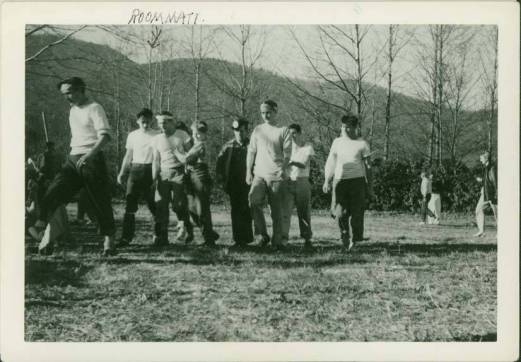
BILL TREICHLER REMEMBERS BLACK MOUNTAIN COLLEGE

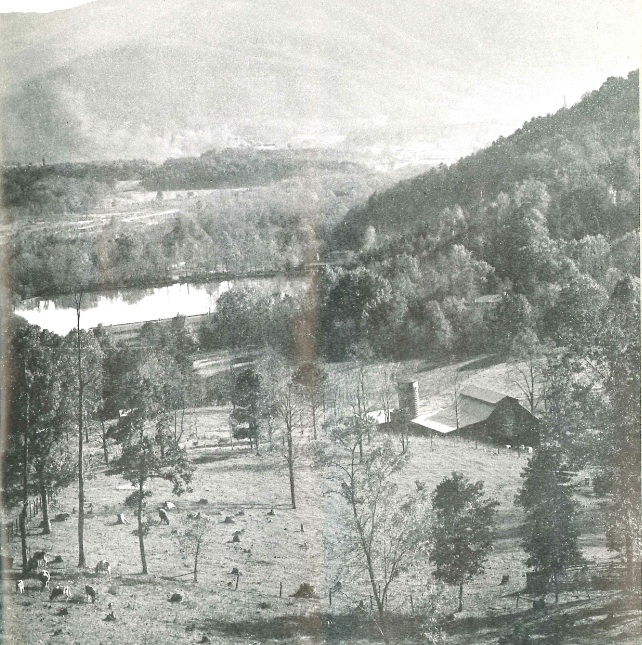
When I first arrived with my parents at Black Mountain College in late summer of 1947 to begin school for the fall term, the school entrance looked weedy and the grounds were grown up with long grass. We had traveled from Iowa across beautiful Illinois, Indiana, Ohio, and Kentucky, and driven into the scenic mountains of Tennessee and North Carolina to the site of this college, already famous as an art school, where the property looked ignored and neglected.

We drove up the roadway past the dining hall then along the lake and parked our car near several others close to the entrance deck of the Studies Building. The first person to greet us was M.C. Richards who was getting into a car. She introduced herself in a very friendly way—my parents liked her immediately—, and she directed us to follow a path that led across a footbridge above a narrow wooded gorge to a building that contained the college office. We walked there and made arrangements to stay overnight in the guest room upstairs in the same building.

Undoubtedly, I told a person in the office that I had come as a new student. We must have walked around, looked into some of the buildings, and eaten our supper in the dining hall, but I don’t remember doing any of these things, because I was dismayed by the appearance of the school—this wasn’t the small rural experimental college I had expected. I was already homesick and ready to drive back to Iowa with my parents. Mother and Dad tried to cheer me up. “You should give the place a try,” they said. “Maybe you can cut the grass and weeds.”

My parents had moved with my sister and me in 1928 —  from living in Cedar Rapids and from my father’s law partnership with his father — to a rundown farm. They had fixed up the farm house by their own efforts and with very little money. Some of that money my mother had made by selling her hooked rug patterns, stenciled in color onto burlap. Their farming endeavors barely earned enough to pay taxes and interest. Together they cleared away brush and picked up trash. We gardened to raise food for ourselves. Mother canned tomatoes on a wood-fired cook stove, dried sweet corn in the sun, baked bread from home-grown wheat, and even made her own soap. My father built fences; tended livestock, learned to milk a goat, then a cow; raised hay, corn, oats and wheat; and put up buildings from salvaged materials.

They both worked to make our house livable and beautiful with paint and wallpaper. I can remember Mother painting a woodland scene with a Japanese tea house in the distance on the walls of the dining room using fresh cut birch boughs as a guide.

Both of my parent’s fathers had been farm boys and gave my folks much encouragement. City friends of my mother and dad were skeptical about my folk’s move to the country with two small children. Family and city acquaintances remained curious and came often on weekends to our farm to see how Esther and Bill were doing and were amazed by their accomplishments.

Going to Black Mountain wasn’t my first time away from home. I had been in the Army Air Force for 27 months, part of that time as a crewman on a B17 bomber based in England. Before that, just out of high school, I had taken a summer session of introductory engineering at Iowa State College and then worked half a year for the Corps of Engineers before I was drafted. After the war I had gone for one term to Iowa State, this time to take agronomy, forestry and animal husbandry courses.

In the early 1940s our family had become very interested in organic farming. We read J.I. Rodale’sOrganic Gardening Magazine, articles and books by Louis Bromfield, Edward Faulkner and Albert Howard. While I was in England, stationed at Great Ashfield in East Anglia, I saw in an Ipswich bookstore The Living Soil by E. B. Balfour displayed alongside Faulkner’s Plowman’s Folly which I had read. Louis Bromfield’s introduction to Faulkner’s book had helped make it a best-seller. I bought The Living Soil and discovered from a map inside, that the farm where the author, Eve Balfour, was comparing organic, chemical and mixed farming practices was only a few miles from our airbase.

I soon bicycled to the Haughley farm to see for myself. Fortunately, the first person I met when I arrived at Newbells Farm was Eve Balfour. She was too busy that day to give me a tour of the farm, but she invited me to return later at a more convenient time when she could show me around. When I came back another day, we walked over the whole farm and she showed me that it was divided into three sections: one managed with livestock and compost, one with commercial chemical fertilizers, and one using a combination of practices. After that visit I was a frequent visitor and even stayed overnight. Lady Eve always wore working clothes when I saw her and was busy with farm work. She was a niece of A. J. Balfour, prime minister of the U.K. (1902 – 1905).

While still in England, whenever I was in a bookstore, I looked for books on farming. To help me out, Lady Eve suggested titles and even ordered books from her publisher for me. I read them, and ordered copies for other people after the war when I was home.

Just after the war, our family heard of the decentralist movement in this country and we went to conferences organized by Mildred Loomis featuring the ideas of Ralph Borsodi about rural homestead living. At these meetings we heard speakers on organic gardening, whole nutrition, home production, and we met other people who lived in the country, produced their own food and shelter, and practiced crafts such as weaving. I remember being very impressed by a home-loomed suit worn by a man at one of these conferences. I was determined to learn all I could to live a self-sufficient life.

My mother read Milton Wend’s book How to Live in the Country Without Farming. In the book he described his life style and stressed home-production, and in a chapter toward the end of the book, Wend even listed colleges where a homesteading family might send their children. Black Mountain College was listed along with Berea and Bennington. Berea College might have been more appropriate for my interests, but Berea didn’t often accept students outside five southern states. So I applied to Black Mountain and was accepted.

The morning following our arrival my parents drove off, and I stayed. I was assigned a study in the Studies Building. I went to classes and chose to take Natasha Goldowski’s chemistry course. I wanted to gain a scientific understanding of how organically raised foods could provide better nutrition. I also chose to take the beginning weaving class taught by Trude Guermonprez because learning to weave was a principal reason for my choosing to attend Black Mountain College. I also enrolled in Max Dehn’s “Geometry for Artists” and Mrs. Jalowetz’s evening activity on bookbinding.

Of course, I soon visited the farm and became acquainted with Ray Trayer who taught classes in rural sociology and ran the farm which produced milk and eggs for the school kitchen and some vegetables for the summer session. Ray let me use the tractor and field mower to cut grass and weeds along the road edges and the lawn areas near the entrance. Next, I mowed the flat plots on either side of the Studies Building and along the library. Mrs. Rice approved of mowing the tall weeds and her son Frank, who taught linguistics and German, rode the dump rake to gather the cut grass into windrows so it could be picked up and hauled to the farm yard.

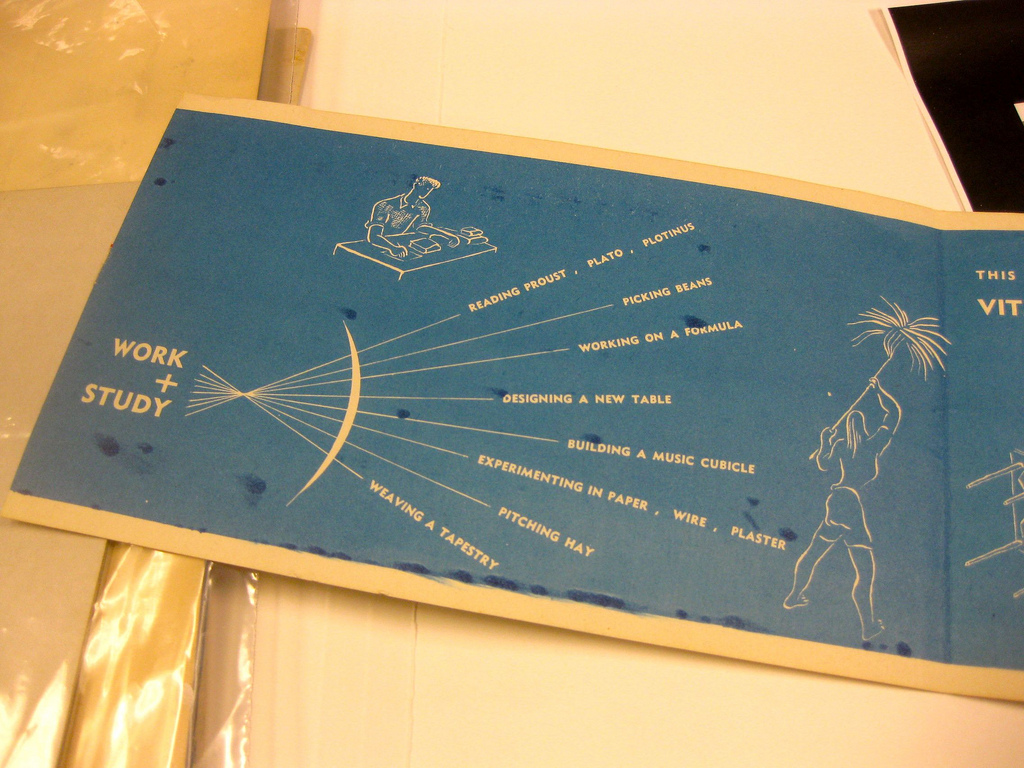
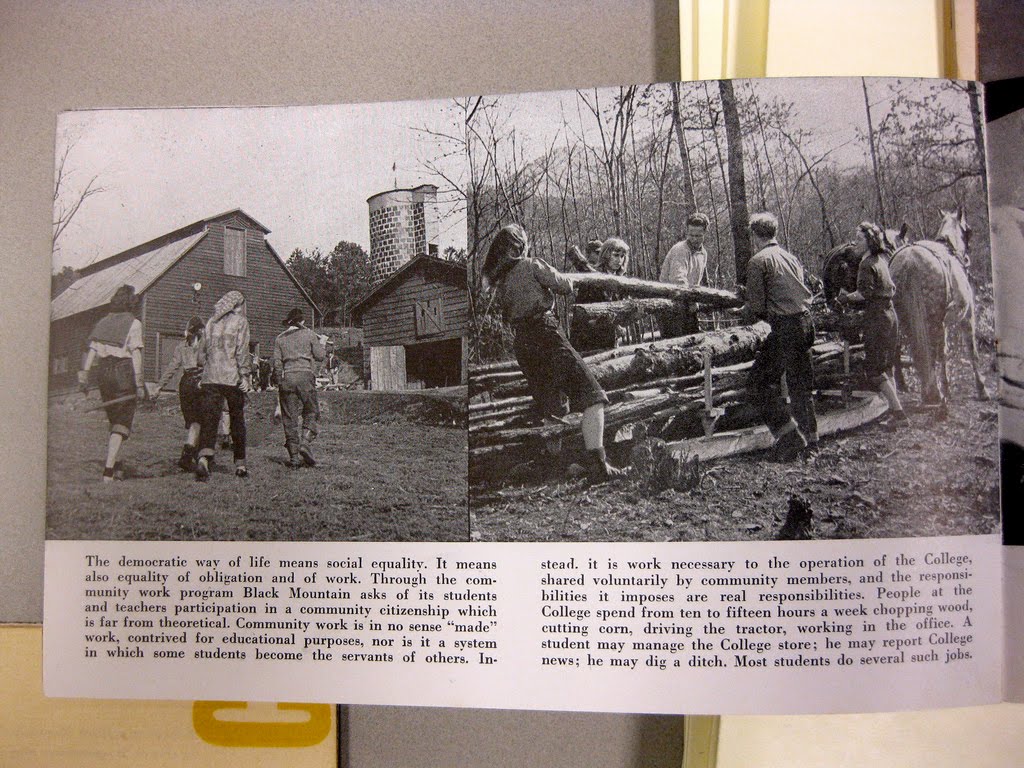
About this time the group that administered school affairs assigned me the work-coordinator job. My responsibility was to make up lists of student names for the different jobs such as washing dishes, trimming brush along foot paths, and unloading coal from a railroad car. All of us students were supposed to be involved in some way with work necessary to operate the school. Some students found special jobs for themselves, and some of the faculty may have had special projects for the school. I remember that Ted Dreier and Ted Rondthaler were always visible setting an enthusiastic example working with students outdoors to clean up trash or examine the reels of fire hose, and indoors filling in with a crew to wash dishes.

Every year in the fall, the college bought a full rail car of coal for winter heating. Unloading the gondola meant picking up and throwing chunks of coal over the side of the car into a truck parked alongside. When the truck body was full, it was driven to the school and unloaded into a storage dump by the Studies Building or into a coal bin behind the kitchen. Crews of students with the help and encouragement of Rondy and Ted Dreier heaved the coal from the rail car into a truck. It was a dirty job, but it took only about a day. Once we had thrown out enough chunks of coal to get to the bottom of the car, a shovel could be used to scoop the smaller pieces into the truck.

I remember one morning, when we were waiting in the truck in front of the girl’s dormitory for every one to get aboard, one girl came down the dormitory steps and started to climb into the truck wearing a beautiful and expensive sweater. Several other girls said to her, “You can’t wear that; it will be ruined.” She got something else to wear and came along to help. Picking up sooty lumps of coal was work she had never imagined.

The student body was made up of somewhat distinct groups. There were the art students, students mostly interested in academic studies, and those that took the more general college courses combined with art classes and craft activities. Students came from New York City, Chicago, St. Louis and San Francisco and others from smaller places in New England, the Midwest, and from Southern States. Many of the students who were there my first year did not return the next year, but there was a sizeable increase in the number of students the second year. The faculty was constantly shifting and this affected student enrollment. When Albers was there, students came for his courses. There were strong factions within the faculty, and power would shift from one faction to another when certain members left or returned.

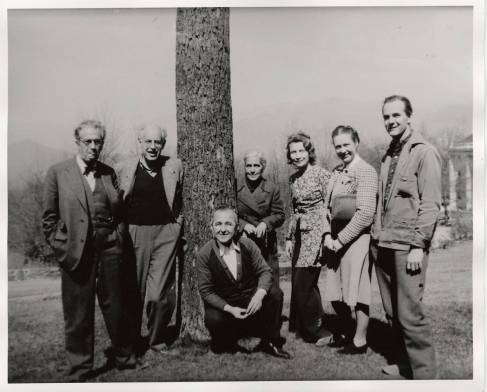
The faculty lived in the large old lodges from the time of the Lake Eden resort, in apartments in the office building, in the dormitories, and one in the Studies Building, and in several newer houses. Those who didn’t eat in the dining hall came to the kitchen at lunch and supper time and took prepared food home to eat. Occasionally some ate dinner in the dining room. The evening dinner was supposed to be a dress-up time. Saturday night dinner was often followed by a performance or by Mr. Bodky playing Viennese waltzes for several hours. He played with great gusto. Ted Dreier was one of the star performers, and would at times rapidly draw or dash his partner across the floor. He was spectacular. Ted Dreier Jr. was a good waltzer, too. Donald Alter and Misi Ginesi seemed to be a natural dancing couple and Delores Fullman and Bob Raushenberg were a great dancing pair. Dolores also gave classes in jitterbugging. There were regular classes in modern dance given by Betty Jennerjahn in the dining room. Saturday night was a great affair. Mr. Bodky would exhaust himself at the piano. He taught music at the school and was a regular performer on the harpsichord, broadcasting from an Asheville radio station. The Bodkys lived in the stone house across the road from the dining hall. Mrs. Bodky looked after the arrangements for student laundry.

Luckily for me, Natasha Goldowski had come to teach science at Black Mountain. I told Natasha at the beginning of her chemistry course that I wanted to better understand a scientific basis for organic farming. She was agreeable to my purpose, but, she told me, it would require considerable preliminary study. I would need to start at the beginning to be familiar with chemical processes. The first day of class she wrote out a page full of simple chemical equations for me to solve and she explained how to do the exercise. We went on from there through basic chemistry, organic chemistry and began bio-chemistry. I could not have found a better teacher nor one more responsive to a student’s interest.

Natasha always considered herself to be a physicist and I remember she would say to us, “You need to know physics to understand chemistry, we will have to have a physics class.” And, “You do pretty well at arithmetic, but we need to have a mathematics class.” And she would set up another class or tutorial to move us along.

Natasha had come to this country as an expert on corrosion chemistry and had been a consultant, I understood, to the Manhattan Project at the end of the Second World War. She had met the big names in physics and she had personal opinions of their merits and personalities and would express them to us. She was well read on the developing ideas in the physical world. I remember how excited she was when she read Norbert Wiener’s new book (then) on cybernetics. She would come up to one of us and say, “I just read something amazing.” And then go on to explain it to us novices.

Natasha decided that we should send for a new chemistry text by Linus Pauling in which he detailed his theory of atomic bonding as an explanation of chemical behavior. Pauling changed the study of chemistry from memorization of discovered reactions to an understanding of why substances did or did not react. (Pauling at this time was getting a lot of publicity for his anti-war stance.) Linus Pauling went on into the field of biochemistry, studying the importance of the essential nutrients, the vitamins, especially Vitamin C. His work continues today in the Linus Pauling Institute at Oregon State University. Linus Pauling’s elementary chemistry book made chemistry understandable for me and his later work fulfilled what I wanted to know about the relationship of good husbandry to nutrition and healthy plants, animals, and humans.

Natasha’s choice of a text for our organic chemistry study was by a French husband and wife team. Natasha always favored the French. Understandably, it was her preferred language because she had spent a lot of time living in France. Born in Moscow, she moved to Paris for schooling. She told us that she had earned a Ph.D. in physics and another in chemistry and an engineering degree at the University of Paris, and had never gone a day to school. She had to work to support herself and her mother who came on to Paris in a short time to look after her. Natasha worked at a job during the day, bought notes of the lectures, studied them at night, passed the examinations, and was awarded the degrees. She worked on chemical corrosion projects for the French air ministry, and was in the Resistance during the war.

Natasha was a wonderfully enthusiastic teacher, always delighted when a student grasped a concept or she caught some nuance herself. “For-mi-dab-la!” she would exclaim. Natasha used a blackboard like a note pad to chalk up equations or notes, and had a board in her office/study in the apartment where she and her mother lived in the back of the office building. My intellectual life at Black Mountain for the 2 years I was there was mostly taken up studying with Natasha.

Madame Goldowski always had her students come to her apartment for their French lessons. They would meet in her living room. She had more students than any other teacher at Black Mountain but she wasn’t paid. She didn’t complain.

Every time Madame saw me going to or coming from Natasha’s office she would say, “When are you going to learn Francais? Eet is not difficult; you already know all of those words ending in t-i-o-n.” Because I didn’t come for her French lessons, she would wag her finger scoldingly, but smile at me. Madame knew that I had lived on a farm and worked then at the college farm. She would say, “Work with ze clods; become like ze clods.” She did tell us marvelous stories of her youth when she went to functions in the Kremlin. “The doorways into the ballroom are very low. Everyone has to stoop to enter. That is so one or two armed men could defend the entrance from invaders.” Madame was very short. Did she have to stoop under the lintels?

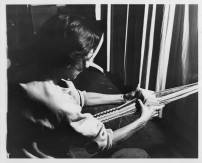
Since one of my reasons for coming to Black Mountain was to learn to weave, I entered a beginning weaving class taught by Trude Guermonprez. Each student was assigned a loom in the weaving gallery on the bottom floor of the Studies Building. We could spend as much time as we wished working on “our” loom. Some people seemed always to be there weaving. Willie Joseph, a long-time student and weaver at BMC, worked on a large double-warp-beam loom trying out patterns for upholstery fabrics. With that loom he could form corduroy type weaves. Willie used only black and white thread in the true Albers fashion. I got to know Willie pretty well: we visited in the weaving room, we were room mates in the dormitory, we had both been in the war, he was in one of Natasha’s classes with me, ate at the same table in the kitchen, and I even rode home with him once as far as Cincinnati where he lived. Willie came to see us later in Iowa.

Anni Albers occasionally did some weaving in the gallery. I remember that she brought back wool garments from South America; some had been fashioned before Columbus’s voyage. Lore Kadden  Lindenfeld probably spent more time than anyone in the gallery. She wove place mats which the weaving department sold, I think, in gift shops.

Trude did have class time with us beginners when she explained the different weaves: plain, twill, satin, mock leno. She taught us how to diagram weave patterns on graph paper. She showed us how to make up a warp, install it on a loom and place the correct thread through a heddle and tie it to a stick fastened to the cloth beam. Our class went on a trip to Burlington Mills where we saw a large room filled with many looms turning out parachute cloth. All of us in the class were impressed by the finger dexterity of a pleasant woman in another room who was knotting with a simple motion of her forefinger against her thumb two threads, one from a new roll of warp to the corresponding thread of an old warp that was still running through the heddles in frames from a loom. She took time to show us how easy it was, but I couldn’t make the knot.

On the same trip we went to a hosiery mill and saw nylon hose being formed on steam-heated aluminum leg forms. Knitted white stockings were pulled over the legs and patted into place then pulled off as shapely hose. We thought the oscillating leg forms looked like a scene from “Ballet Mechanique.” Sometimes a run would appear, but the women running the machine deftly picked at the apparent run and it disappeared. Lorna Blaine Howard arranged through her father for our excursion of the mill. She and her husband Tasker Howard, a former student who was teaching at the college, came along on the trip.

I haven’t done any weaving since my days at Black Mountain and so haven’t fulfilled my early ambition to weave for home production. I realize that purchasing ready-made clothing is far more efficient use of my time. However, my daughter and daughter-in-law are skilled spinners and we have an old, large-frame loom acquired in Vermont which my daughter set up and used at one time when we lived at a boarding school in Vermont. The girls don’t spin, knit or weave anymore either. I do have hundreds of pounds of shorn wool from a small flock of Romney sheep.

Yet, in the late 1940s, weavers at Biltmore Industries in Asheville were turning out fine hand-loomed woolens and tailoring them into men’s suits. We went there and saw cloth being hand woven, then taken outdoors to be shrunk and dried in sunlight. Later my father bought one of the Biltmore suits by mail, and he was very pleased with the suit he received. I wonder if Biltmore Industries is still in business.

Beautiful bed coverlets were woven 150 years ago by independent weavers in this country. I wish now that the school had had a loom set up with a Jacquard or barrel attachment to weave intricately patterned coverlets and I could have seen or had the experience of weaving a coverlet with intricate patterns including names and dates.

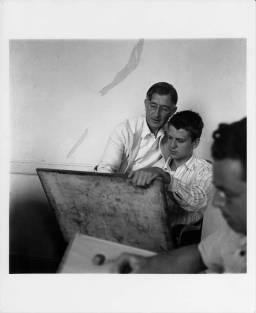
The other course I took my first year was Max Dehn’s “Geometry for Artists.” Dr. Dehn introduced us to points, lines, planes and solids; cones sectioned into circles, ellipses, parabolas, and hyperbolas; spheres and regular polyhedrons. He showed us that any two lines drawn from opposite ends of the diameter forming a semi circle will always meet the arc at a 90 degree angle. He drew on the chalkboard geometric relationships such as the Pythagorean Theorem. Professor Dehn told us the 25 prime numbers from 1 to 100, and then asked us, as an assignment, to find as many as we could above 100. He told us about Fibonacci’s Number and its relationship to the “Golden Mean” of the Greeks, and to volutes so commonly observable in nature. He considered our grade school learning lax in that we hadn’t memorized the squares to 25. To remedy our insufficiency, he taught us a simple way to compute squares.

Max Dehn and his wife Toni lived up the road to the farm in a small house. They took part in community meetings and often ate in the dining room. He was then corresponding with former colleagues in Munich and was concerned with the meager amount of food they had to eat. Max wanted the school to send them money, but the school was very hard-up. An arrangement was worked out, however, and Harry Holl prepared his famous Spanish rice casserole for all of us to eat in place of a regular meal and the saving in food expense was sent to Munich.

For an evening activity I went to Mrs. Jalowetz’s bookbinding class. She taught us how to rebind badly worn books from the library by showing us how to take a sewn book completely apart, make necessary repairs, and then reassemble the book. We learned how to fix pages with tears using paste along the torn edges, not cellophane tape. We sewed sets of pages, signatures, as we assembled them in a bookbinder’s rack, then clamped them tightly together and glued a strip of mesh fabric along the spine. The board covers were replaced if they had bent corners or worn coverings. When the covers were ready, the book core was placed in the middle between the two sides and the edges of the binding fabric pasted to the cover boards. Lastly, end papers were cut and pasted on the inside of the cover to hide the binding fabric and make everything neat.

Mrs. Jalowetz also taught us to make covered portfolios and boxes for holding photographs or letters. She not only showed us how to do the work but she also always applauded our efforts.

I remember Mrs. Jalowetz telling us that when she was young in Europe, a household would have enough bed sheets for the whole time of winter because people didn’t launder in cold weather. Sheets stayed on a bed for a week. The top hem of a sheet had button holes for a row of buttons across the top of the upper blanket. The sheet was folded over the blanket edge and was held in place by the buttons. Bookbinding class was always a pleasant evening time for me.

Mrs. Jalowetz taught voice. I think she had been an opera singer in Prague. Dolores Fullman was Mrs. Jalowetz’s principal student that year at BMC.

Printing class was another activity that I enjoyed. Frank Rice and Jim Tite had fixed up a print shop where we could learn to set and justify type. We practiced picking pieces of type from a case and placing each one in a composing stick which holds the type pieces in alignment. Thin strips of copper or brass were placed between letters and word spacers to make each line equal in length. From the composing stick we learned to slide the type carefully onto a flat stone. When we had enough set for the job we placed a chase around it and locked the type tightly in place so all could be mounted in the press.

Jim and Frank showed us how to ink the rollers of the Kluge press and how to stand erect before the press and safely reach into the open press to remove the printed paper and place a fresh sheet against the clips before the press closed against type bed. Jim Tite spent a lot of time in the shop printing brochures and forms for the college. The print shop used only two type faces: Bodoni, a serifed type, and Futura, a non-serifed type family.

During my second year, I took a biology course. It was first taught by an older woman who had retired from missionary work in China and lived then in Black Mountain. I don’t remember her name but she was a lively and entertaining teacher. Part way through the year she turned the class over to a former student of hers, a young Chinese woman, Mrs. Tsui, who was competent but less conversational than our first instructor.

I took first-year German that year from Frank Rice. It was a course in conversational German. “Meine name ist Wilhelm Treichler. Wo ist das bahnhof? Danke sehr.” Frank was an enthusiastic teacher and we students enjoyed “conversing” in class. He was reading Arnold Toynbee at the time, so we heard a good deal from the complete version of A Study of History, not the Somervell condensation I later read. At the time, he was learning Arabic and later went off to Saudi Arabia to teach the language there to employees of the Arabian-American Oil Company.

Frank was the pride of his mother, Nell Rice, who had been at the school from its earliest days and seemed to have a story about anyone who was ever connected to the school. She often told us about the years at Blue Ridge Seminary: how reasonable the rent was but what a burden it was to completely pack up everything when the owners, the YMCA, needed the building for conferences in the summer. Mrs. Rice was delighted to have Frank teaching at Black Mountain College. Her daughter, Mary, came to visit frequently. Frank did go to visit his father John Rice occasionally.

Nell Rice was a sister of Frank Aydelotte, president of Swarthmore. Her father had held an important position at the University of Nebraska when she was a girl. Mrs. Rice may have liked me because I came from Iowa, a state neighboring Nebraska. I was in the library, Mrs. Rice’s territory, the first time I gathered enough nerve to speak to Miss Martha Rittenhouse. Nell Rice always promoted our friendship, invited Martha and me to a tea party at her apartment, and later sent birth presents for our children. Perhaps, she knew well that the most important function of a college is to bring couples together.

Martha had come in 1948-49, the second year that I was there. She came from a farm on Maryland’s Eastern Shore. Our rural background gave us an affinity even before we found many common interests. We often studied together and went on many hikes with other students and with 12-year-old John Corkran, who liked Martha, and nearly always walked right between us.

The very first week of my time at BMC, John’s mother, Mrs. Corkran, invited me with other students to one of her wonderful get-acquainted suppers. Her husband David Corkran taught history and had been at the North Shore Country Day School out of Chicago. I think the Corkrans had attracted a sizeable Chicago contingent to Black Mountain. Their two school-age boys, David and John, mixed a lot with the students.

The Corkrans took me and other students and their boys on a weekend camping trip to Roan Mountain. We hiked over much of the treeless mountain top that had large clumps of rhododendron sprinkled over the fairly level top, and we boys talked of what a marvelous resort site it would make with room enough for a landing strip. Such an idea would be avoided today with all the concern for wild areas, but we had exuberant fun planning.

The Rondthaler family occupied the other half of the house where the Corkrans lived. Theodore Rondthaler (always Rondy) taught English and was the business manager of the college. Mrs. Rondthaler was the office manager and oversaw the kitchen. I think she also taught business classes. Mrs. Rondy was a busy and capable person. She had gone to Sweetbriar. Rondy’s father was president of Salem College in Winston-Salem and a bishop, I believe, in the Moravian Church. The Rondthalers celebrated a Moravian Christmas with putzes of the nativity scene. They had a home on Ocracoke Island, the only 2-story house on the island. The family frequently talked of Ocracoke and went there whenever they could. Bobbie Rondthaler was a popular student at BMC. Their son, Howard, was around a lot and was a student at the University of North Carolina at Chapel Hill. I remember visiting his room there along with Howard, Manvel Schauffler, and Ed Adamy. We were driving the school’s weapons carrier truck pulling a large single-axle trailer on a trip to pick up surplus property, principally a new dishwasher for the kitchen, at a naval station somewhere farther east in North Carolina.

The Rondthalers took Howard and Bernie Karp and me, and probably some others, on a wonderful weekend trip to the Great Smoky Mountains National Park. We slept overnight in a lean-to shelter along the Appalachian Trail. I will always remember Rondy imparting fatherly advice to us boys, “If you get cold at night, you need to get up and urinate.” We went to Gatlinburg and also stopped along the road to see a small grist mill that had a homemade turbine called a tub-wheel to gain energy from a tumbling mountain stream. It was fashioned from a tree trunk. The vertical turbine shaft extended through a platform above and rotated the bottom buhrstone of the mill. Grains poured through the center hole of the upper stationary buhrstone were ground into meal between the two buhrs. Seeing such primitive engineering was inspiring—a great part of a memorable trip.

At another time a group of us walked from the college up the valley to the ridge and then followed the Blue Ridge Parkway some miles to the top of Mt. Mitchell. I think Rondy and Howard suggested this hike at dinner time one evening and a number of us went along with them. Someone drove there, probably Mrs. Rondy, and brought us back in a car. As I remember, it was a 40-mile round trip by automobile.

Later, Ray Trayer invited me to go with his rural sociology class on a field trip to the Tennessee Valley Authority dams in North Carolina and eastern Tennessee. The curious part of that trip was our reversed reactions: the class probably approved of government projects like the TVA, but they were upset that so many valley farms had been flooded by the dams. I was always opposed to government projects, against the TVA concept, but I was thrilled by the engineering of the dams and the massive electric generators. We were all appalled that a project of the United States Government would have separate drinking fountains for “Colored” and “White.”

One of the favorite hikes at the school was to go up the side of the mountain to the saddle where you could see in the distance fountains of water aerating at the Asheville water-treatment plant. We walked up through an old abandoned orchard. Some said it was from moon-shining days, probably not, but there were trees that had wonderful apples. We carried all we could down to eat between meals.

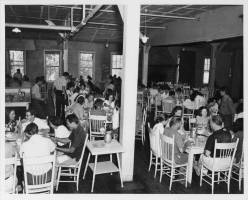
The food at Black Mountain must have out-classed the fare of any other college in the country. George Williams was a wonder with meat pies and casseroles. Everyone enjoyed his great dishes. George hovered around the stoves and work tables. Mrs. Rice remembered that George at one time experimented with food coloring to serve brighter entrees. After all, BMC was recognized primarily as an art school. So what’s wrong with culinary color studies.

His wife Cornelia was always there in front of the two coal-fired stoves. For breakfast she placed trays of sliced bread in the ovens, and in a short time pulled them out to turn the slices, then shoved them back for a half-minute or so before pulling the trays out and shaking the toast onto a tray. Cornelia always grasped the hot trays with a large dry towel. The smoke puffed out from the oven; Cornelia wiped her eyes and face free from smoke and perspiration and stuck in another tray. She prepared bacon the same way.

For breakfast there were always eggs, bacon, toast and fresh-cooked oat meal and grapefruit and raw milk from the farm. Malrey Few cooked with George and Cornelia. One morning when I dished out a bowl of steaming oatmeal for myself and stood idly stirring the pot she looked at me disapprovingly and I asked, “What’s the matter?” “You’ll make it gummy by stirring.” Her oatmeal was always flaky, and I was ruining it. I have never stirred oatmeal since. Her grandson Alvin came to visit occasionally and played with the faculty children and talked with the students.

Ben Sneed was another fixture of the kitchen. He was general handyman and I believe took care of the fires in the main buildings. Howard Rondy liked to say that he was the only person at the school who could go to Black Mountain or Asheville for supplies and, without a written list, bring back everything he went to get. Ben didn’t talk much; he drove a Crosley car.

My sister came from Bennington for her 1948 winter work term to help in the kitchen. Ann worked for Mrs. Rondy and did odd cooking jobs. One of her successes was baking sour, leathery apricots, the school had received from the government as surplus food, into a delicious apricot torte dessert.

The cooks got Sunday evening off. Everyone made their own meals from set-out bread, cheese, lettuce and other fixings. Oftentimes we got together to have a picnic or a party Sunday afternoons or evenings. I remember that Susie Schauffler and Harry Weitzer found an enameled chamber pot. They cleaned it up and we ate soup heated in it, feeling very daring.

Generally the students got along with each other. I don’t remember any student quarrels. Some students kept to themselves and their own interests. Occasionally former students came back. Alex Reed who had built the Quiet House arrived in a little British sports car that barely cleared the road ruts, and Henry Adams came a couple of times from the University of North Carolina.

Black Mountain had regular visitors, and occasional visitors. Every winter Dr. William Morse Cole came after Christmas for some weeks and audited the books of the college. He was retired from Harvard, I think, where he had been head of the School of Accounting. During his stay, Professor Cole held an evening Shakespeare class in his room in the office building.

A frequent Sunday afternoon visitor was Dr. Cooley from Black Mountain. He was one of the local well-wishers for the school, and he would bring friends in his car and cruise up the roadway through the college and back down again at a speed of only several miles an hour. He came to examine me when I had been sick for several days. Mrs. Trayer thought I should have the doctor look at me and stay in a room in their farmhouse. I got well in good time.

Nathan Rosen from Princeton was a frequent visitor. He came to visit Natasha and they talked physics and probably Princeton politics. He had taught at Black Mountain earlier. His wife came in the summer for a week and played in a stringed-instrument music group.

John Cage and Merce Cunningham came. I remember watching John Cage put rubber erasers and other things between the strings of the concert grand in the dining room one afternoon for a performance that night. He wasn’t pretentious about fixing the piano. There were other notables who came, celebrities in the art and literary world, but only names to me. There was one woman who amused some of us students because she always wore a stole as though it were a performance. I can’t remember her name.

I remember that Marguerite Wildenhain came and spoke about making pots. She told us that it wasn’t woman’s work; you had to be strong to handle the clay. She looked to be entirely capable in every way to be a potter.

Ralph Borsodi came at Ray Trayer’s invitation and spoke one evening about his ideas of living in the country as a part of a three-generation family, where every person would have an opportunity and ample time to develop their full talents. I was pleased to see that Mr. Borsodi did win over the interest of many students who at first were put off by their concept of the isolation and drudgery of rural living. He patiently, without condescending, answered objections and made an economic case for self-sufficient country life. Borsodi had lived his early life in NYC and had been an economist at Macys. Years earlier in the thirties he had visited Black Mountain.

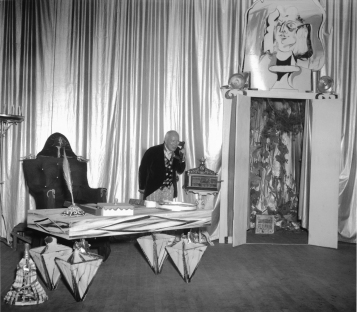
Buckminster Fuller came with a small house trailer the first time I saw him at the school. He brought models of geodesic domes and tetrahedrons and talked about all his ideas. I was eager to see Bucky Fuller because I had read of him and his Dymaxion car some years before. Natasha got him to come back for the 1949 summer session and he brought a group of boys with him who worked setting up displays and projects. Fuller liked to give long lectures for his disciples. He did have a lot of novel ideas. Kenneth Snelson was a student at BMC who designed tensile structures and was very interested in Fuller’s engineering designs.

When Fuller came for the summer session, his wife came down, too. I remember one afternoon when she was having tea with my mother she told us that she had had a house of her own design built before Bucky did. She said, well, my father was an architect. Mrs. Fuller was pleasant company. So was Mr. Fuller, and he entered into all activities enthusiastically.

There were several exciting times at the college. One afternoon a rain in the valley above the school sent torrents down in amounts that isolated the cottage where the cooks lived. Fortunately, the rain stopped and the water level fell in about an hour and no one was hurt.

The night the chemistry laboratory burned I was sleeping in the Brown Cottage next door to the lab. Kenneth Snelson, Donald Droll and I roomed there together. I was awakened by the glaring light from the flames just outside the window in my room. Rondy had coached us always in case of fire to first sound the alarm on the big triangular fire gong near the kitchen and dining hall, and second to dash to the hose shed by the Studies Building to get the Siamese-twin fitting with two valves that was necessary to connect the smaller hoses with nozzles to the larger hose that ran from the hydrants. We got the “Y” with the twin valves, and students kept water on the shingle walls of the Brown Cottage. The laboratory was too far gone to stop and I was sure that the cottage would burn with all of my clothing and possessions, but it didn’t, thanks to those who played water continually on the roof and walls.

In 1949, my parents made plans to come to Black Mountain to help the school. My mother did come and worked to brighten up the dormitories. We made milk paint using skim milk from the dairy and dry colors, mostly umbers and siennas, bought at a hardware store in Asheville that sold dyes in bulk. We also took the dining room chairs with sagging and broken seats to a farmer craftsman near Hendersonville who redid the seats with oak splints he made himself. The man showed us how he split thin strips from a small white oak tree. He told us he performed regularly on an Asheville radio station and then sang for us the day we were there. This farmer craftsman fashioned beautiful chairs without any glue. I have always regretted that I didn’t buy for myself some of his delicate but sturdy ladder backs for sale in the same Asheville hardware store. His name, I cannot recall. I expected to see him in the Foxfire books but didn’t.

A local carpenter, Mr. Elkins, built roomy bunks in the boy’s dormitory and did other carpentry jobs. For awhile there was activity to improve student accommodations; then the money gave out. N.O. Pittenger who had been business manager, I think at Swarthmore, came down to straighten out finances but that didn’t happen.

My dad remembered that Bucky Fuller was on hand when we left to say goodbye. Nell Rice’s daughter Mary and her husband were there at the time, and they insisted that we stay in their apartment near Washington on our way to visit Martha’s family on the Eastern Shore of Maryland.

My feelings about Black Mountain College at the time of leaving were not too different from my dismay at the unkempt appearance of the school when I first arrived. At my departure, I was disillusioned because the vision of a school where everyone was free to explore aptitudes, improve talents, try ideas and work without imposed requirements and restrictions was disintegrating because of personality conflicts. Was the college only an artificial, dependent, fractionated and transplanted urban culture? Too bad that in the beautiful southern highland setting, the school couldn’t have become self-supporting, adaptive, inventive, comprehensive. Perhaps like Ralph Borsodi’s dream, a School of Living.

I have come to realize that I probably gained more from the two years I spent at Black Mountain College than any other person who ever went to the college. First, and most importantly for me, it led to my meeting Martha Rittenhouse who can do anything and everything so well—she taught me how to be a better parent, she provided our family good nutrition even before she became a dietitian, she showed us all how to create a beautiful home, and she is a complete partner in all of our interests and activities. There was also my great educational experience of learning so much from courses and from the friendship of the faculty, and from the experience of living at Black Mountain College.

© William Treichler, 2004. Printed with permission. All rights reserved.

March 2004

XXXXXXXXXXXXXXXXXX

Great article


       William Edmund Treichler  


Date
of birth:
July 24, 1924
Profession:
Farmer


Student

1947-48
1948-49
Staff
1949 Spring Semester
INTERNAL LINKSMartha Treichler
Treichler CottageRecent issues of  TheCrooked Lake Review.

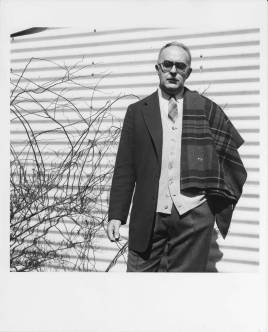
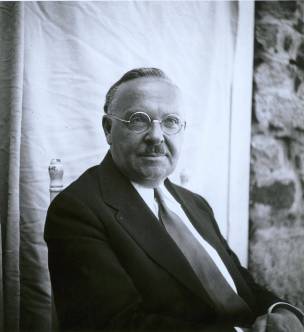
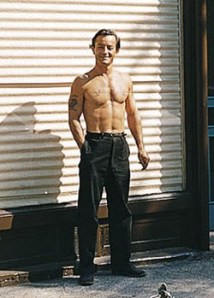
Bill Treichler was born in Cedar Rapids, Iowa, and moved with his parents in 1928 to a farm near Troy Mills, 24 miles north of Cedar Rapids. On graduation from high school, he took a three-month, defense-training course in engineering at Iowa State College at Ames. He then worked for the Corps of Engineers at Rock Island, Illinois, until he was drafted. Bill entered the army in September 1943, and in early 1945 was a B-17 bomber crewman stationed at Great Ashfield in East Anglia, UK. He returned home in November 1945, and took agronomy, forestry and animal husbandry courses at Iowa State College in the spring of 1946.

Bill’s mother first read about Black Mountain College in Milton Wend’s How to Live in the Country Without Farming (1944, Doubleday, Doran & Co., Garden City, New York) in which several schools, including Black Mountain, were mentioned. She encouraged Bill to apply, and he was accepted for the 1947 fall term.

On his arrival, Bill, whose parents had driven him from Iowa to Black Mountain, was dismayed by the unkempt appearance of the grounds and would have returned to Iowa had his parents not insisted that he give the college a try. Ray Trayer, who ran the college farm, willingly let Bill use the farm tractor and mower to cut weeds along the entrance road and around the Studies Building and library areas. A few people objected to the grooming, but when Albers, who was on a sabbatical returned for a visit, he gave the project his stamp of approval.

Shortly after his arrival, Bill was appointed student work coordinator. He was responsible for scheduling students with their choice of work-program jobs. In the spring of 1949 he was a staff member, responsible for grounds maintenance and other projects. Bill’s sister, Ann, came down from Bennington College in January 1948 for her winter work term and did various jobs.

On their farm in Iowa, the Treichler family was interested in organic farming and in the decentrist, rural, self-sufficient, three-generation-family life-style promoted by Ralph Borsodi. While Bill was stationed in England, he visited the Haughley research project where organic culture was compared to chemical farming practices. At Black Mountain he enrolled in Natasha Goldowski’s introductory chemistry class and continued in her physics and organic chemistry courses. She supported his desire to learn more about biochemical reactions related to soil fertility and plant and animal nutrition.

At a decentralist conference, Bill had been very impressed by a man who wore a homespun suit he had woven, and Black Mountain’s weaving curriculum had been an attraction for him. He enrolled in Trude Guermonprez’s weaving class and was provided with a loom for practice and experiment. The class visited Burlington Mills, and Biltmore Industries near Asheville. He also took Max Dehn’s “Mathematics for Artists,” Johanna Jalowetz’s bookbinding lessons, and Frank Rice’s German class, among others.

The Treichler parents remained enthusiastic supporters of the Black Mountain College ideal. In 1949 his mother joined him at the college to help with various projects. His father planned to join them later. By the end of the 1949 summer, however, there was little money for improvements, and when his father arrived, the family returned to the Iowa farm. Bill recalled that although he was disillusioned with Black Mountain College when he left, his classes, camping trips with faculty and many happy experiences with other students and staff were a balancing factor. He met his future wife, Martha Rittenhouse, also from a farming family, and they were married in April, 1950.

For fifteen years the Treichlers practiced their ideas about organic farming and decentralized living in a three-generation family setting. They settled on his parents’ farm where Bill, with his father, designed and built their home, a cottage using boards sawn from logs from the farm, purchased plywood, and cement. They salvaged bricks for a chimney and stone for flooring. Martha helped dig holes for footings, peel poles, and paint walls and shelves. Their five children—Rachel, Joe, George, Barbara and John—were born on the farm. In 1954, Martha and Bill organized a three-day Homesteaders Conference in the village of Troy Mills. Ralph Borsodi came and talked on living the good life. Other experienced conferees presented demonstrations on good nutrition, clothing, and owner-built rammed earth and concrete home construction.

By the 1960s a new dam was proposed on the Wapsipinicon River that would flood and force abandonment of the farm. Martha and Bill needed more income than farming, sawmilling, selling farm-produced whole wheat flour, fresh sweet corn and garden vegetables, and doing odd jobs to provide for their family of five growing children. They applied to teach organic gardening at small, private farm-based boarding schools and were offered a position at Colorado Rocky Mountain School. In 1966 they moved their family to CRMS near Carbondale, Colorado, where they farmed and gardened for the school. Two years later they moved to another rural, college-preparatory, boarding school, The Mountain School, at Vershire, Vermont, where, in addition to farming and gardening activities, Martha taught French and English and Bill taught science courses.

In the summer of 1975 the Treichlers moved to a farm they had bought in 1971 near Hammondsport, New York. In addition to homemaking, Martha worked as a food service director and a consulting dietitian at local hospitals and nursing homes to earn necessary money. Bill restored their 1830s farmhouse and farmed their 87 acres. They still raise much of the food they eat, heat with wood, and do their own construction.

The Treichlers presently live on the Hammondsport farm. Although their children hold jobs, four live at home or nearby, continuing the practice of multi-generational continuity and interdependency. Their daughter, Rachel, a lawyer advocates for the Green Party; John is an electrical engineer; Joe, a farmer and private contractor; George, a mechanical engineer; and Barbara, a lawyer, a homemaker who homeschools her her children in Tokyo.

In 1988, Martha and Bill started The Crooked Lake Review, a local history journal. The first 100 issues appeared monthly. Presently, it is published quarterly.

_________________________________

Related posts:

FRANCIS SCHAEFFER ANALYZES ART AND CULTURE Part 55 THE BEATLES (Part G, The Beatles and Rebellion) (Feature on artist Wallace Berman )

FRANCIS SCHAEFFER ANALYZES ART AND CULTURE Part 54 THE BEATLES (Part F, Sgt Pepper’s & Eastern Religion) (Feature on artist Richard Lindner )

FRANCIS SCHAEFFER ANALYZES ART AND CULTURE Part 53 THE BEATLES (Part E, Stg. Pepper’s and John Lennon’s search in 1967 for truth was through drugs, money, laughter, etc & similar to King Solomon’s, LOTS OF PICTURES OF JOHN AND CYNTHIA) (Feature on artist Yoko Ono)

FRANCIS SCHAEFFER ANALYZES ART AND CULTURE Part 52 THE BEATLES (Part D, There is evidence that the Beatles may have been exposed to Francis Schaeffer!!!) (Feature on artist Anna Margaret Rose Freeman )

Milton Friedman demolishes Obama’s equal pay argument Apr. 18, 2014 12:06pm Benjamin Weingarten

____

Milton Friedman demolishes Obama’s equal pay argument

Related posts:

“Friedman Friday” Milton Friedman – Power of Choice (Biography) Part 3

Milton Friedman – Power of Choice (Biography) Part 3 Published on May 21, 2012 by BasicEconomics Tribute to Milton Friedman English Pages, 8. 9. 2008 Dear colleagues, dear friends, (1) It is a great honor for me to be asked to say a few words to this distinguished and very knowledgeable audience about one of our greatest […]

“Friedman Friday” Milton Friedman – Power of Choice (Biography) Part 2

Milton Friedman – Power of Choice (Biography) Part 2 Published on May 21, 2012 by BasicEconomics My Tribute to Milton Friedman: The Little Giant of Free Market Economics By: admin- 11/17/2006 09:49 AM RESIZE: AAA  Milton Friedman, the intellectual architect of the free-market reforms of the post-World War II era, was a dear friend. I […]

“Friedman Friday” Milton Friedman – Power of Choice – Biography (Part 1)

Milton Friedman – Power of Choice – Biography (Part 1) Published on May 20, 2012 by BasicEconomics   David R. Henderson The Pursuit of Happiness ~ Milton Friedman: A Personal Tribute May 2007 • Volume: 57 • Issue: 4 David Henderson (davidrhenderson1950@gmail.com) is a research fellow with the Hoover Institution and an economics professor at […]

Milton Friedman’s Chicago Boys started the Chilean Miracle and it is still helping ordinary people today!!!

Milton Friedman and Chile – The Power of Choice Uploaded on May 13, 2011 In this excerpt from Free To Choose Network’s “The Power of Choice (2006)”, we set the record straight on Milton Friedman’s dealings with Chile — including training the Chicago Boys and his meeting with Augusto Pinochet. Was the tremendous prosperity unleashed […]

Margaret Thatcher admired Milton Friedman

RARE Friedman Footage – On Keys to Reagan and Thatcher’s Success Margaret Thatcher and Milton Friedman were two of my heroes. Thatcher praises Friedman, her freedom fighter By George Jones, Political Editor 12:01AM GMT 17 Nov 2006 A tireless champion of the free market Let’s not get misty eyed over the Friedman legacy Milton Friedman, […]

Milton Friedman and Chile an update

Milton Friedman was a great economist and a fine speaker. ___________________ I have written before about Milton Friedman’s influence on the economy of Chile. Now I saw this fine article below from http://www.heritage.org  and below that article I have included an article from the Wall Street Journal that talks about Milton Friedman’s influence on Chile. I […]

“Friedman Friday” Milton Friedman explains negative income tax to William F. Buckley in 1968

December 06, 2011 03:54 PM Milton Friedman Explains The Negative Income Tax – 1968 0 comments By Gordonskene enlarge Milton Friedman and friends.DOWNLOADS: 36 PLAYS: 35 Embed   The age-old question of Taxes. In the early 1960′s Economist Milton Friedman adopted an idea hatched in England in the 1950′s regarding a Negative Income Tax, to […]

Milton Friedman admired Margaret Thatcher

RARE Friedman Footage – On Keys to Reagan and Thatcher’s Success Margaret Thatcher and Milton Friedman were two of my heroes. Milton Friedman on How Francois Mitterrand (and Failed Lefty Economics) Helped Re-elect Margaret Thatcher Matt Welch|Apr. 10, 2013 9:37 am Yesterday I wrote a column about how Margaret Thatcher liberated Western Europe from the […]

Milton Friedman had a solution to today’s welfare mentality!!!

  I have written about the tremendous increase in the food stamp program the last 9 years before and that means that both President Obama and Bush were guilty of not trying to slow down it’s growth. Furthermore, Republicans have been some of the biggest supporters of the food stamp program. Milton Friedman had a […]

MUSIC MONDAY Cole Porter’s song’s “My Heart Belongs to Daddy”

________

_______

Cole Porter’s song’s “My Heart Belongs to Daddy”

My Heart Belongs To Daddy

Uploaded on Jun 20, 2010

Mary Martin became popular on Broadway and received attention in the national media singing “My Heart Belongs to Daddy”. “Mary stopped the show with “My Heart Belongs to Daddy”. With that one song in the second act, she became a star ‘overnight’.”[4] Martin reprised the song in Night and Day, (the Hollywood “biographical” movie about Porter) during the film in an audition as herself for Porter (Cary Grant).

__________________

My Heart Belongs to Daddy

From Wikipedia, the free encyclopedia
Jump to: navigation, search

My Heart Belongs to Daddy” is a song written by Cole Porter, for the 1938 musical Leave It to Me! which premiered on Nov 9, 1938. It was originally performed by Mary Martin who played Dolly Winslow, the young “protégée” of a rich newspaper publisher.[1]

In the original context, Dolly is stranded at a Siberian railway station, wearing only a fur coat, and performs a striptease while singing the song. Surrounded by eager Siberian men, she says that since she has met “daddy”, she will flirt with other men, but won’t “follow through”. “Daddy” is her newspaperman sugar daddy, introduced with the words, “I’ve come to care, for such a sweet millionaire”.

Later versions

Martin sang it again in the 1940 movie Love Thy Neighbor. Again she wears a fur coat, but the setting is a show within a show and the act is more conventional as she wears an evening gown beneath the fur. The words to the introduction are altered, the innuendoes being toned down. Her best-known movie performance is in the 1946 Cole Porter biopic Night and Day in which she plays herself. The film recreates Martin’s audition then segues into her performance in the original Siberian context. She again performs the striptease, discarding her muff and then the fur coat, while mustashioed Siberian men follow her every move, eventually fainting when she removes her coat to reveal a skimpy figure-hugging costume beneath.[2]

In Britain, the song was a hit for Pat Kirkwood who performed it in the 1938 revue Black Velvet. This led to her being dubbed “Britain’s first wartime star”.[3] The song was thereafter associated with her.[4]

Marilyn Monroe sings the song in the film Let’s Make Love (1960). The introduction is completely changed. She introduces herself as “Lolita”, who is not allowed to “play with boys”. A verse is added in which she invites a boy “to cook up a fine enchilada”. The lines do not conform to the rhyme scheme of the rest of the song, but have been used by many other performers since. Anna Nicole Smith recorded a virtual copy of the Monroe version in 1997.

Lyrical and musical features

Rhyming with “daddy” is difficult but Porter characteristically managed it well.[5]  One clever rhyme is

If I invite
A boy some night
To dine on my fine Finnan haddie,
I just adore
His asking for more,
But my heart belongs to daddy.

Finnan haddie is smoked fish, and this is one of many innuendoes which appear throughout the song. Sophie Tucker famously advised Mary Martin to deliver such sexy lines while looking towards heaven. Mary Martin’s stage persona was quite innocent and so the contrast between her naive manner and the suggestive lyrics accompanied by the provocative striptease made her performance a huge success.[6] Brooks Atkinson, the critic of the New York Times, wrote that Martin’s “mock innocence makes My Heart Belongs to Daddy the bawdy ballad of the season”.[7]

The original version contains four verses, all of which play on idiosyncratic rhymes with “daddy”. The first refers to a game of golf during which she might “make a play for the caddy”. The second is about the finnan haddie. The third tells of wearing green with a “Paddy” on St Patrick’s day. The final verse is about a varsity football match where one might meet a “strong under-graddy”. In the original version she ends up saying that her daddy might “spank” her if she was “bad”.

Referring to the melody, especially the passage of “da da da da”s, Oscar Levant described it as “one of the most Yiddish tunes ever written” despite the fact that “Cole Porter’s genetic background was completely alien to any Jewishness.”[8]

Notable recordings

Notes

  1. ^ Inc, Time (Dec 19, 1938), “Mary Martin is Broadway’s newest song star”, LIFE: 29
  2. ^ Roy Hemming (1999-03), The melody lingers on: the great songwriters and their movie musicals, ISBN 978-1-55704-380-1
  3. ^ Actress Pat Kirkwood dies at 86, BBC, 2007-12-26, retrieved 2010-05-19
  4. ^ Colin Larkin (1995), The Guinness Encyclopedia of Popular Music, p. 2328, ISBN 978-0-85112-662-3
  5. ^ Pamela Phillips Oland (2001-06-01), The art of writing great lyrics, p. 50, ISBN 978-1-58115-093-3
  6. ^ Ethan Mordden (1988-06-23), Broadway Babies: The People Who Made the American Musical, p. 220, ISBN 978-0-19-505425-5
  7. ^ Ronald L. Davis, Mary Martin, Broadway legend, University of Oklahoma Press, 2008, p.42.
  8. ^ Oscar Levant, The Unimportance of Being Oscar, Pocket Books 1969 (reprint of G.P. Putnam 1968), p. 32. ISBN 0-671-77104-3.
  9. ^ Marc Shell (2005-06-15), Stutter, p. 292, ISBN 978-0-674-01937-9

Related posts:

Cole Porter “Let’s Do it, Let’s Fall in Love” in the movie MIDNIGHT IN PARIS

Cole Porter “Let’s Do it, Let’s Fall in Love” in the movie MIDNIGHT IN PARIS Midnight in Paris – Let’s Do It Let’s do it : Cole Porter.( Midnight in Paris ) Celebrate Wikipedia Loves Libraries at your institution in October/November. Let’s Do It, Let’s Fall in Love From Wikipedia, the free encyclopedia Jump to: […]

The Characters referenced in Woody Allen’s “Midnight in Paris” (Part 2 Cole Porter)

The song used in “Midnight in Paris” I am going through the famous characters that Woody Allen presents in his excellent movie “Midnight in Paris.”  By the way, I know that some of you are wondering how many posts I will have before I am finished. Right now I have plans to look at Fitzgerald, Heminingway, Juan […]

By Everette Hatcher III | Posted in Current Events | Edit | Comments (0)

“Schaeffer Sunday” Great article on Francis Schaeffer

Francis Schaeffer: Whatever Happened to the Human Race Episode 1 ABORTION

프란시스 쉐퍼 – 그러면 우리는 어떻게 살 것인가 introduction (Episode 1)

How Should We then Live Episode 7 small (Age of Nonreason)

#02 How Should We Then Live? (Promo Clip) Dr. Francis Schaeffer

The clip above is from episode 9 THE AGE OF PERSONAL PEACE AND AFFLUENCE

10 Worldview and Truth

In above clip Schaeffer quotes Paul’s speech in Greece from Romans 1 (from Episode FINAL CHOICES)

Two Minute Warning: How Then Should We Live?: Francis Schaeffer at 100

A Christian Manifesto Francis Schaeffer

Published on Dec 18, 2012

A video important to today. The man was very wise in the ways of God. And of government. Hope you enjoy a good solis teaching from the past. The truth never gets old.

Great article.

Owen Strachan|5:30 AM CT

Everything But the Knickers: The Enduring Significance of Francis Schaeffer

Everything But the Knickers: The Enduring Significance of Francis Schaeffer avatar

In a news cycle driven by the latest quotes from Rick Perry, Barack Obama, and Mitt Romney, you would not expect to see Francis Schaeffer popping up on the daily ticker. The American expatriate, wearer-of-knickers, connoisseur of Swiss cosmopolitanism, and, above all, philosophically minded Calvinist public intellectual once made national headlines, to be sure. But suddenly he has returned, posthumously torturing the public square with supposed plans of a Christian political takeover, a master-strategy foiled in his day yet rising again in the phoenix of Michelle Bachmann’s presidential campaign.

Bad history and considerable ink-spilling aside, all this prompts a question: did Schaeffer ever really leave? A controversy recently erupted in the Twittersphere over this very matter. Alan Jacobs, one of evangelicalism’s most astute scholars, wrote in response to the aforementioned claims of Schaeffer-inspired dominionism, that he could not recall hearing the L’Abri founder’s name mentioned in 25 years of teaching in Christian academic institutions. Once one acknowledged that Schaeffer inspired evangelicals to engage ideas and appreciate art, Jacobs suggested that one had to concede that the man was no longer necessary.

Surely, Jacobs was right to suggest (implicitly) that the idea that Schaeffer’s work even now rouses hordes of evangelicals to attempt political takeover is ridiculous. But was Schaeffer’s influence really as circumscribed as suggested?

The Man and His Work

First things first: Schaeffer is unparalleled in evangelical history. There is no one who prefigures him and no one who now perfectly emulates him. Born in 1912, Schaeffer was raised in a Protestant home and came to faith in 1930. He studied and moved in fundamentalist circles in the 1930s and 40s and was influenced early on by famed controversialist Carl McIntire. Schaeffer moved to Europe in 1948 to conduct missionary work among children. Warming quickly to the physical beauty and intellectual spirit of Switzerland, Schaeffer and his wife, Edith, established L’Abri, a shelter-turned-community-turned-waystation, in 1955.

Through a variety of unusual encounters with spiritual pilgrims, Schaeffer soon earned a reputation as an evangelical guru, one to whom skeptics or struggling Christians could go for all-night conversation that led in many cases to personal transformation. The salon-like discussions were often taped and subsequently distributed throughout the world by Schaeffer devotees as a cycle developed: more guests distributing more tapes led to more guests. Schaeffer became something of an evangelical celebrity, with stories circulating throughout evangelicalism of visits from the son of President Gerald Ford, the children of Billy Graham, and counter-cultural mystic Timothy Leary.

In the mid-50s, Schaeffer began venturing back across the pond to lecture in the United States at schools like Harvard, MIT, Wheaton, Calvin, and many more, electrifying his audiences even as he provoked them. His talks ranged over Western philosophy and theology and held his audiences spellbound. The apologist knew how not to over-conclude, to leave his hearers on the edge of a rhetorical precipice. According to Baylor historian Barry Hankins, in a 1968 Wheaton College address, Schaeffer ended on a dime:

There is death in the city; there’s death in the city; there’s death in the city.

He then sat down. Those who believe in the cultivation of searing oratory will find ample means of growth in the Schaefferian corpus.

Hankins suggests that the two major tenets of Schaeffer’s speaking (and his broader program) were these: (1) Christianity is logically non-contradictory and (2) a system in which one can live consistently. Perhaps we could add a third: the living God reached out to a suffering world to offer it hope and salvation. Amid generous and wide-ranging engagement with major intellectual and cultural voices, Schaeffer propounded these themes in texts like He Is There and Is Not Silent, The God Who Is There, and Escape from Reason. His apologetic approach was presuppositional, but Schaeffer did not believe that this view abnegated understanding of and even affection for the non-Christian world. He practiced a rough-and-ready brand of cultural engagement but famously said that a Christian studies the world “with tears.” For Schaeffer, the intellectual life of the public Christian had intrinsic value even as it was, of necessity, missiological. One studied to understand, then set out to engage and persuade.

Schaeffer in Contemporary Evangelical Life

We cannot fully reconstruct the sweeping events, the great struggles and victories, of the evangelical icon in this piece. Such has been attempted, with a good deal of success, by two recent biographies, the first by British writer Colin Duriez entitled Francis Schaeffer: An Authentic Life (Crossway, 2008), the second by Hankins entitled Francis Schaeffer and the Shaping of Evangelical America (Eerdmans, 2009). These books—one popular, the other academic (but each valuable for either audience)—suggest by way of mere existence that Francis Schaeffer is an important figure for the contemporary evangelical movement. The same goes for prior works by authors including Lane Dennis, Scott Burson and Jerry Walls, and Christopher Catherwood. In 2008, Christianity Today published a cover story on L’Abri, noting by way of title that it was “Not Your Father’s L’Abri.” Whatever one of thinks of him—whether savant or kook—Schaeffer’s name is still on our lips.

Schaeffer’s legacy lives on in institutional form at Covenant Theological Seminary, which houses the Francis A. Schaeffer Institute. Headed by academic Jerram Barrs, a disciple of the apologist, the institute offers an annual lectureship, colloquia, and a fellows program that has drawn some of the brightest evangelical minds. Led by Bruce Little, the L. Russ Bush Center for Faith and Culture at Southeastern Baptist Theological Seminary recently acquired the Schaeffer papers and held a major conference in Schaeffer’s honor. The World Journalism Institute, affiliated with prominent evangelical writer Marvin Olasky, has a Francis Schaeffer Chair of Apologetics.

Prominent evangelical leaders and theologians who count (or counted) themselves deeply influenced by Schaeffer include William Brown, president of Cedarville University; David Wells of Gordon-Conwell Theological Seminary; William Edgar of Westminster Theological Seminary; James Sire of the University of Missouri; Harold O. J. Brown, late of Trinity Evangelical Divinity School; Lane Dennis of Crossway Books; Os Guinness; Udo Middleman; Barrs; Douglas Wilson; and Nancy Pearcey. Schaeffer’s books—and books about Schaeffer—are assigned reading at a wide range of evangelical schools, including TEDS (I read Hankins’s text in a doctoral seminar), The Southern Baptist Theological Seminary (several of Schaeffer’s works were assigned in my systematic theology classes taught by Al Mohler), Covenant Theological Seminary, Biola University, Southeastern Seminary, and many others. L’Abri shelters operate in 11 locations around the world and have grown in the last several decades, even if the movement seems in places to have distanced itself from Schaeffer (there is little about him on the L’Abri website, a quixotic reality).

Though he has won his eternal reward, Schaeffer’s ideas continue to animate Christians adhering to the conservative tradition, whether his defense of inerrancy, his care for the unborn, his love for art, film, and literature, or his belief in “true truth.” His 27 books continue to find an international audience. The “worldview thinking” that Schaeffer and other figures such as Carl F. H. Henry championed and popularized has essentially won the day as the dominant intellectual approach of evangelicalism, whether in the basement of the home-school consortium or the cavernous halls of the top-tier Christian university. Popular speakers and apologists like Chuck Colson, Josh McDowell, James Dobson, and Ravi Zacharias all promote this theocentric integration of intellectual and spiritual concerns, even if none of them has followed true Schaefferian suit and adopted knickers or a walking stick.

Schaeffer’s effect on evangelicalism, whether academic or popular, extends widely enough that it is difficult in the final analysis to quantify his influence. The number of pastors, scholars, missionaries, and other leaders affected by Francis Schaeffer number in the thousands, to be sure. Many of them frequent this site; some of them owe their love for theology and cultural engagement to Schaeffer, and others may credit their very salvation to him.

Conclusion

Was Schaeffer necessary? Is he relevant beyond a basic apprehension of the importance of ideas and art? Does his legacy endure and spread in our day? The answer to all three of these questions seems to be a decisive yes. Schaeffer was not a perfect man to his wife or family. He was not and did not present himself as an academic scholar, so one can find holes or mischaracterizations in his work. H did not seem to have a strong doctrine of the local church. He is not appreciated or even known by all evangelicals. Despite his flaws and the passage of time, however, we can conclude that Francis Schaeffer was a brilliant apologist who helped midcentury evangelicals by pioneering worldview thinking, cultural engagement, and robustly theological outreach to intellectuals, artists, and others whom Christians struggled to evangelize. He is worth studying, reading, and appreciating.

D. A. Carson has engaged the life and thought of Schaeffer with nuance. His work offers a fitting conclusion to our brief tour of the significance of the apologist: “In the aeons to come, there will be hundreds, perhaps thousands, of redeemed men and women who will rise up and call him blessed for helping them to escape from various intellectual and moral quagmires.” May that number only increase.

Owen Strachan is assistant professor of Christian theology and church history at Boyce College and executive director of the Council on Biblical Manhood & Womanhood. He blogs at Thought Life and is the co-author of the The Essential Edwards Collection.

SANCTITY OF LIFE SATURDAY How Francis Schaeffer Influenced Me by Daniel R. Heimbach

How Francis Schaeffer Influenced Me

by Daniel R. Heimbach

I can honestly say that, besides my parents and Jesus Christ, no individual has influenced me more than Francis A. Schaeffer, a pastor-theologian most consider to have been among the greatest evangelical voices, and perhaps even the most influential, of the twentieth century. But Francis Schaeffer and his wife, Edith, were also close friends of my missionary grandparents. For me the Francis and Edith Schaeffer who inspired a generation of evangelicals, myself included, with the importance of engaging the culture for Christ, were also the family friends who nursed my grandparents to health after returning to the United States emaciated following release from a Japanese prison in a Prisoner of War exchange during World War II.

That is the reason my grandmother, Bertha Byram, was one of the earliest and most faithful prayer partners of the work called “L’Abri” founded in Europe by the Schaeffers after the war. That is why my grandmother is twice mentioned in The Tapestry. And that is why the communion table in the chapel the Schaeffer’s built in Huemoz, Switzerland, is dedicated to my grandmother. But I did not know this connection until after I was drawn to Schaeffer’s books for my own reasons.

schaefferheimbach001

I first became aware of Schaeffer while a student in high school struggling with matters of faith and culture, and on reading his first book, Escape from Reason, I found him so keenly in tune with my questions I devoured nearly all he wrote as it was published. That was in the late 1960s and early 1970s when Western culture, and especially American culture, was in turmoil from so many others of my age rebelling against all authority and tradition. Then, like many others on discovering Schaeffer, I also traveled to the mountains of Switzerland to meet him, and ended staying several months trying to understand what was taking place and what it meant to be authentically Christian in a world fast becoming radically post-Christian.

I learned much from Schaeffer that has affected me ever since, but as much from his life as from his thought, as much from his demonstrating Christian love as from his defending biblical truth, as much from how he respected the value and dignity of everyone he met however small or great as from what I learned from his writing. Schaeffer is the one who taught me that truth is a reality we must live and not just believe, and that if Christians do not live God’s truth the world has every right to reject what we claim is right and true. And Schaeffer is the one who taught me, more by example than words, how Christians can and must stand for purity and holiness without ugliness or harshness and should weep for those pursuing what we abhor.

Schaeffer’s many books, especially The Mark of the Christian, Pollution and the Death of Man, How Should We Then Live?, Whatever Happened to the Human Race?, and A Christian Manifesto, were instrumental in forming what has become for me a strong sense of calling or mission in the world, which is to promote God’s truth in a culture that is rejecting it, and doing so especially as it concerns resisting moral anarchy and political tyranny.

Francis Schaeffer influenced my decision to become a culturally astute moral influence in Washington, D.C., an effort that resulted in affecting a wide range of issues in public policy. Schaeffer influenced my role in leading the fight against normalizing treatment of homosexual behavior in the military services. Schaeffer influenced my running for Congress in 2000. Schaeffer influenced my vision to develop what is now the strongest program in the world for training evangelicals in biblically uncompromising yet culturally engaged Christian ethics. And Schaeffer has influenced the sort of books I write, all of which have been written to resource evangelical witness on moral issues contested in the culture.

But while Schaeffer had a deep and lasting impact on evangelicals of my generation, shaping the those who led the Jesus Movement, the Moral Majority, the drafting of the Chicago Statement on Biblical Inerrancy, the first Lausanne Congress on World Evangelization, the rediscovery of classical Christian education, the formation of Crisis Pregnancy Centers, the Southern Baptist conservative resurgence, and the movement of evangelicals into politics now labeled the Christian Right—and while Schaffer played the major role in launching evangelical efforts to engage the culture on issues ranging from legalized abortion, euthanasia, sexual immorality, environmental stewardship, denying gender roles, reclaiming the arts, and education reform—and while Schaeffer was a major influence on many who rose to positions of significant leadership including theologians Harold O. J. Brown, David Wells, Os Guinness, Timothy George, John Warwick Montgomery, John Piper, Norm Geisler, Wayne Grudem and L. Russ Bush, founders of ministries including James Dobson, D. James Kennedy, Jerry Falwell, R. C. Sproul, Chuck Colson and Tim and Beverley LaHaye, denomination leaders including Paige Patterson, Richard Land and James Montgomery Boice, publishers including Lane Dennis ofCrossway Books and Terry Eastland of The Weekly Standard, writers including Cal Thomas and Frank Peretti, and political leaders including Ronald Reagan, James and Susan Baker, C. Everett Koop, Jack Kemp and Gary Bauer—the legacy of Francis A. Schaeffer is now in danger of being forgotten by a new generation that hardly knows his name much less understands how much they owe to the extraordinary influence of this passionate yet humble prophet used of God to transform and reenergize so much of what they inherit.

Of course, the ways in which any culture challenges authentically Christian witness change over time, but what Schaeffer taught evangelicals about the lordship of Christ over all areas of life, the timeless relevance of objectively reliable truth, the inerrancy of God’s Word, the marred nobility of human nature, the beauty of creation, and the meaninglessness of pretending to live in a self-centered mechanistic universe will never change and are as vitally important for evangelicals today as they were when Schaeffer held forth among us.

It is therefore strategic and absolutely critical that evangelicals revisit, reaffirm, and if necessary rediscover the legacy of Francis A. Schaeffer, lest we forget what we had and lose the art of engaging the culture without accommodating ourselves to the culture, of defending truth without being ugly, of loving those we engage without compromising purity, and of fitting our message to changing circumstances without compromising its content for fear of rejection or desire merely to be accepted by others.

The entrusting of the personal books, letters and papers of Frances A. Schaeffer, by the Francis A. Schaeffer Foundation, to the L. Russ Bush Center for Faith and Culture at Southeastern Baptist Theological Seminary could not be more timely or important. I am most grateful to my colleague, Bruce Little, and to the Schaeffer family for their vision and generosity, and I am certain this one very significant action will play a key role in revitalizing evangelical witness in contemporary culture. I pray it will also serve to inspire, benefit and aid in equipping of a new generation eager to make a biblically grounded, authentically Christian difference in the world of today.

Daniel R. Heimbach is Senior Professor of Christian Ethics at Southeastern Baptist Theological Seminary.

  1. Benjamin Pennington   •  5 months ago

    Thank you, professor. I only originally knew of Schaeffer through Piper’s “Pastor As Scholar” discussion. Recently when our church gave away our library books, I found The God Who Is There, Death In the City, and Genesis In Space and Time. I had those books on my shelf for a year l, but started reading the God Who Is There a couple of weeks ago. I absolutely fell in love with his thinking and understanding if man’s despair, need for a universal unifying truth, and the way Schaeffer opened up my eyes to famous artists and what they were trying to accomplish. (I knew of John Cage years ago and hated his music, but Schaeffer really made sense of him for me.) So I have decided to plow through everything else Schaeffer wrote.

    By the way, I enjoyed this article of yours. I am a GGBTS student in California, possibly transferring my units to SEBTS online. I hope to have the privilege of taking a course with you.

  2. Everette Hatcher   •  about 4 hours ago

    Your comment is awaiting moderation.

    By the way I have reblogged this fine article today on my blog.

    I am Everette Hatcher and in the 1970’s and 1980’s I was a member of Bellevue Baptist in Memphis where Adrian Rogers was pastor and was a student at Evangelical Christian School from the 5th grade to the 12th grade where I was introduced to the books and films of Francis Schaeffer. At ECS my favorite teacher was Mark Brink who actually played both film series to us (WHATEVER HAPPENED TO THE HUMAN RACE? and HOW SHOULD WE THEN LIVE?) during our senior year and believe it or not after I graduated I would come back and join some of his future classes when the film was playing again because I couldn’t get enough of Schaeffer’s film series!!!!

    During this time I was amazed at how many prominent figures in the world found their way into the works of both Adrian Rogers and Francis Schaeffer and I wondered what it would be like if these individuals were exposed to the Bible and the gospel. Therefore, over 20 years ago I began sending the messages of Adrian Rogers and portions of the works of Francis Schaeffer to many of the secular figures that they mentioned in their works. Let me give you some examples and tell you about some lessons that I have learned.

    I have learned several things about atheists in the last 20 years while I have been corresponding with them. First, they know in their hearts that God exists and they can’t live as if God doesn’t exist, but they will still search in some way in their life for a greater meaningSecond, many atheists will take time out of their busy lives to examine the evidence that I present to them. Third, there is hope that they will change their views.

    Let’s go over again a few points I made at the first of this post.  My first point is backed up by  Romans 1:18-19 (Amplified Bible) ” For God’s wrath and indignation are revealed from heaven against all ungodliness and unrighteousness of men, who in their wickedness REPRESS and HINDER the truth and make it inoperative. For that which is KNOWN about God is EVIDENT to them and MADE PLAIN IN THEIR INNER CONSCIOUSNESS, because God  has SHOWN IT TO THEM,”(emphasis mine). I have discussed this many times on my blog and even have interacted with many atheists from CSICOP in the past. (I first heard this from my pastor Adrian Rogers back in the 1980’s.)

    My second point is that many atheists will take the time to consider the evidence that I have presented to them and will respond. The late Adrian Rogers was my pastor at Bellevue Baptist when I grew up and I sent his sermon on evolution and another on the accuracy of the Bible to many atheists to listen to and many of them did. I also sent many of the arguments from Francis Schaeffer also.

    Many of these scholars have taken the time to respond back to me in the last 20 years and some of the names  included are  Ernest Mayr (1904-2005), George Wald (1906-1997), Carl Sagan (1934-1996),  Robert Shapiro (1935-2011), Nicolaas Bloembergen (1920-),  Brian Charlesworth (1945-),  Francisco J. Ayala (1934-) Elliott Sober (1948-), Kevin Padian (1951-), Matt Cartmill (1943-) , Milton Fingerman (1928-), John J. Shea (1969-), , Michael A. Crawford (1938-), (Paul Kurtz (1925-2012), Sol Gordon (1923-2008), Albert Ellis (1913-2007), Barbara Marie Tabler (1915-1996), Renate Vambery (1916-2005), Archie J. Bahm (1907-1996), Aron S “Gil” Martin ( 1910-1997), Matthew I. Spetter (1921-2012), H. J. Eysenck (1916-1997), Robert L. Erdmann (1929-2006), Mary Morain (1911-1999), Lloyd Morain (1917-2010),  Warren Allen Smith (1921-), Bette Chambers (1930-),  Gordon Stein (1941-1996) , Milton Friedman (1912-2006), John Hospers (1918-2011), and Michael Martin (1932-).
    Third, there is hope that an atheist will reconsider his or her position after examining more evidence. Twenty years I had the opportunity to correspond with two individuals that were regarded as two of the most famous atheists of the 20th Century, Antony Flew and Carl Sagan.  I had read the books and seen the films of the Christian philosopher Francis Schaeffer and he had discussed the works of both of these men. I sent both of these gentlemen philosophical arguments from Schaeffer in these letters and in the first letter I sent a cassette tape of my pastor’s sermon IS THE BIBLE TRUE? You may have noticed in the news a few years that Antony Flew actually became a theist in 2004 and remained one until his death in 2010. Carl Sagan remained a skeptic until his dying day in 1996.Antony Flew wrote me back several times and in the  June 1, 1994 letter he  commented, “Thank you for sending me the IS THE BIBLE TRUE? tape to which I have just listened with great interest and, I trust, profit.” I later sent him Adrian Rogers’ sermon on evolution too. 
     The ironic thing is back in 2008 I visited the Bellevue Baptist Book Store and bought the book There Is A God – How the World’s Most Notorious Atheist Changed His Mind, by Antony Flew, and it is in this same store that I bought the message by Adrian Rogers in 1994 that I sent to Antony Flew. Although Antony Flew did not make a public profession of faith he did admit that the evidence for God’s existence was overwhelming to him in the last decade of his life. His experience has been used in a powerful way to tell  others about Christ. Let me point out that while on airplane when I was reading this book a gentleman asked me about the book. I was glad to tell him the whole story about Adrian Rogers’ two messages that I sent to Dr. Flew and I gave him CD’s of the messages which I carry with me always. Then at McDonald’s at the Airport, a worker at McDonald’s asked me about the book and I gave him the same two messages from Adrian Rogers too.

    Francis Schaeffer’s words would be quoted in many of these letters that I would send to famous skeptics and I would always include audio messages from Adrian Rogers. Perhaps Schaeffer’s most effective argument was concerning Romans 1 and how a person could say that he didn’t believe that the world had a purpose or meaning but he could not live that way in the world that God created and with the conscience that every person is born with.

    Google “Adrian Rogers Francis Schaeffer” and the first 4 things that come up will be my blog posts concerning effort to reach these atheists. These two great men proved that the scriptures Hebrews 4:12 and Isaiah 55:11 are true, “For the word of God is alive and active. Sharper than any double-edged sword, it penetrates even to dividing soul and spirit, joints and marrow; it judges the thoughts and attitudes of the heart.” and “so is my word that goes out from my mouth: It will not return to me empty, but will accomplish what I desire and achieve the purpose for which I sent it.”

Related posts:

FRANCIS SCHAEFFER ANALYZES ART AND CULTURE Part 27 Jurgen Habermas (Featured artist is Hiroshi Sugimoto)

_____________ Jürgen Habermas Interview Uploaded on Feb 1, 2007 Rare video footage of Jurgen Habermas discussing some of his theories.http://soundcloud.com/st-hanshaugen Francis Schaeffer pictured below: ______________ Francis Schaeffer notes: At Berkeley the Free Speech Movement arose simultaneously with the hippie world of drugs. At first it was politically neither left nor right, but rather a […]

FRANCIS SCHAEFFER ANALYZES ART AND CULTURE Part 26 Bettina Aptheker (Featured artist is Krzysztof Wodiczko)

Bettina Aptheker pictured below: Moral Support: “One Dimensional Man” author Herbert Marcuse accompanies Bettina Aptheker, center, and Angela Davis’ mother, Sallye Davis, to Angela Davis’ 1972 trial in San Jose. Associated Press ___________________________________________________________________________ Francis Schaeffer has written extensively on art and culture spanning the last 2000years and here are some posts I have done on […]

FRANCIS SCHAEFFER ANALYZES ART AND CULTURE Part 25 BOB DYLAN (Part C) Francis Schaeffer comments on Bob Dylan’s song “Ballad of a Thin Man” and the disconnect between the young generation of the 60’s and their parents’ generation (Feature on artist Fred Wilson)

_____________________ Francis Schaeffer pictured below: ____ Elston Gunn- Ballad of A Thin Man, Live Sheffield 1966 Francis Schaeffer has written extensively on art and culture spanning the last 2000 years and here are some posts I have done on this subject before : Francis Schaeffer’s “How should we then live?” Video and outline of episode 10 […]

FRANCIS SCHAEFFER ANALYZES ART AND CULTURE Part 24 BOB DYLAN (Part B) Francis Schaeffer comments on Bob Dylan’s words from HIGHWAY 61 REVISITED!! (Feature on artist Susan Rothenberg)

______________ Just like tom thumb´s blues (no direction home) Francis Schaeffer has written extensively on art and culture spanning the last 2000 years and here are some posts I have done on this subject before : Francis Schaeffer’s “How should we then live?” Video and outline of episode 10 “Final Choices” , episode 9 “The Age of Personal […]

FRANCIS SCHAEFFER ANALYZES ART AND CULTURE Part 23 BOB DYLAN (Part A) (Feature on artist Josiah McElheny)Francis Schaeffer on the proper place of rebellion with comments by Bob Dylan and Samuel Rutherford

Bob Dylan – When You Gonna Wake Up Sermon – Tempe 1979 Published on Apr 28, 2012 Probably the most contentious show in Dylan’s long history of live performance. The between-song “raps” were a fixture of Dylan’s performances during his “Christian” period, but early during the Slow Train Coming tour, Dylan and his band encountered […]

FRANCIS SCHAEFFER ANALYZES ART AND CULTURE Part 22 “The School of Athens by Raphael” (Feature on the artist Sally Mann)

How Should We Then Live? Episode 2 Part 2/2 RebelShutze· __________ Episode III – The Renaissance JasonUellCrank How Should We Then Live? Episode 3 Part 1/2 RebelShutze Published on Jun 4, 2012 The third part of Dr. Francis Schaeffer’s ten-part series based off of his book “How Should We Then Live?” This is Episode 3, […]

FRANCIS SCHAEFFER ANALYZES ART AND CULTURE Part 21 William B. Provine (Feature on artist Andrea Zittel)

_______ Dr Provine is a very honest believer in Darwinism. He rightly draws the right conclusions about the implications of Darwinism. I have attacked optimistic humanism many times in the past and it seems that he has confirmed all I have said about it. Notice the film clip below and the quote that Francis Schaeffer […]

FRANCIS SCHAEFFER ANALYZES ART AND CULTURE Part 20 Woody Allen and Materialistic Humanism: The World-View of Our Era (Feature on artist Ida Applebroog)

___________________________________________________________________________ Francis Schaeffer “BASIS FOR HUMAN DIGNITY” Whatever…HTTHR ___________________ Woody Allen on Ingmar Bergman and the death. Woody Allen et Marshall McLuhan : « If life were only like this! » What Makes Life Worth Living? – Answered by Woody Allen. ______________ Diane Keaton et Woody Allen What Makes Life Worth Living? _____________________________________________________________________________________________________________________________________ Dr. Francis Schaeffer – […]

FRANCIS SCHAEFFER ANALYZES ART AND CULTURE Part 19 Movie Director Luis Bunuel (Feature on artist Oliver Herring)

___________ Francis Schaeffer pictured below: ____ Dr. Francis Schaeffer – Episode 8 – The Age of Fragmentation NoMirrorHDDHrorriMoN In the book HOW SHOULD WE THEN LIVE? Schaeffer notes: Especially in the sixties the major philosophic statements which received a wide hearing were made through films. These philosophic movies reached many more people than philosophic writings […]

FRANCIS SCHAEFFER ANALYZES ART AND CULTURE Part 18 “Michelangelo’s DAVID is the statement of what humanistic man saw himself as being tomorrow” (Feature on artist Paul McCarthy)

In this post we are going to see that through the years  humanist thought has encouraged artists like Michelangelo to think that the future was extremely bright versus the place today where many artist who hold the humanist and secular worldview are very pessimistic.   In contrast to Michelangelo’s DAVID when humanist man thought he […]

FRIEDMAN FRIDAY Government spending did not get us out of the great depression but screwing up the money supply got us into it as Milton Friedman has stated!!!

___________

Free to Choose Part 3: Anatomy of a Crisis (Featuring Milton Friedman)

Uploaded on Dec 20, 2010

Government spending did not get us out of the great depression but screwing up the money supply got us into it as Milton Friedman has stated!!!

JANUARY 14, 2009 7:09PM

Did the New Deal ‘Help’?

While Barack Obama’s economics team hammers out its $800 billion fiscal stimulus plan, the commentariat is battling over the effectiveness of what some consider the prototype stimulus package, the New Deal.* The suppressed (and problematic) conclusion to all this punditry seems to be: Because government spending under the New Deal helped/didn’t helpto end the Great Depression, the Obama stimulus plan will/won’t help to end the current recession.

One of the opening salvos was this exchange between George Will (anti-New Deal) and Paul Krugman (pro). More recently, New York Times editorial board member Adam Cohen (pro) wrote this column, responding to an op-ed by former Business Week bureau chief Andrew Wilson (anti) in the Wall Street Journal.

So who’s right? Did New Deal government spending “help,” as Cohen puts it?

To answer that, we first have to define Cohen’s term — what would it mean to say that government spending under the New Deal “helped”? Two possibilities come to mind:

  • New Deal spending boosted consumption, thereby increasing production, reducing unemployment, and ending the Depression.
  • New Deal spending aided people who would have otherwise been destitute during the Depression.

The first sense considers the New Deal as a stimulus program to revive the economy; the second considers it as a welfare program to aid the poor. The two notions are far from equivalent. My reading of the literature suggests that the New Deal did little as an economic stimulus, but it did provide welfare benefits.

The figure below sketches U.S. GDP and government spending (all levels) for the Great Depression era. The wildly fluctuating GDP line clearly marks the Great Contraction of 1929-1932, the Recession within the Depression of 1937–1938, and the return of GDP to pre-crash levels in 1940. In contrast, government spending has only a very mild upward slope over the period (until the 1941 ramping-up for World War II). In 1930, the second year of Herbert Hoover’s administration, government spending totaled $10 billion; at the height of the New Deal spending boom in 1936, government spending reached $13.1 billion. (In comparison, that rate of government spending growth is just below the average for the entire post-WWII era.) This raises the question of whether there was much New Deal fiscal stimulus at all.

figure-14

We get a somewhat different view if we consider the federal budget surplus/deficit. Much of the benefit of fiscal stimulus is supposed to come from the fact that it’s deficit spending. In essence, government borrowing moves future consumption to the present and hopefully boosts the economy to a permanently higher level. As the figure below shows, the federal government dramatically ramped up deficit spending in the last year of Hoover’s administration, as tax receipts sagged and Hoover enacted his own emergency programs. FDR continued the borrowing to fund components of the New Deal.

However, this borrowing was not dramatic by today’s standards. As a share of GDP, the New Deal deficit peaked at 5.4 percent of GDP ($3.6 billion) in 1934; in dollar terms, it peaked at $5.1 billion (4.3 percent of GDP) in 1936. In contrast, President-elect Obama recently announced that he expects “trillion-dollar deficits for years to come,” even without the $800 billion stimulus package that his administration is preparing. With a U.S. GDP of roughly $13.8 trillion, the Obama-projected deficit (not counting the stimulus package) represents 7.2 percent of GDP.

Does the New Deal experience thus suggest that, when it comes to fiscal stimulus, just a little bit can have large effects? Interestingly, economic research suggests the opposite. Long before she was named chair of Obama’s Council of Economic Advisers, Christina Romer wrote a short paper for the Journal of Economic History titled “What Ended the Great Depression?” The paper provides empirical evidence that FDR’s fiscal policy provided little stimulus during the Great Depression. As shown in the figure below (reproduced from Romer’s article), the results of the New Deal’s fiscal stimulus (solid line) were little different from what she projects would have resulted from “normal fiscal policy” (dotted line). Both the deficit spending and the multiplier effect from that spending were too small to budge GDP.

What did end the Great Depression? Romer argues that another FDR policy — doubling the fixed exchange rate for the dollar relative to gold — did the trick, though the New Dealers seem to have lucked into that result rather than planned it. The rate change worked as a monetary stimulus, inducing large gold flows into the United States, where they could now buy twice as many dollars. That buttressed bank deposits and increased bank willingness to lend, encouraging investment. The lending resulted in a sharp increase in the money supply, pushing against the Depression’s price deflation and encouraging consumption. From the moment the exchange rate changed, the United States began to climb out of the Depression — albeit slowly; more slowly than many other countries.

Romer’s explanation dovetails with Milton Friedman and Anna Schwartz’s work on the root cause of the Depression: the Federal Reserve’s sharp reduction of the money supply in the late 1920s, in order to moderate the stock market boom and return the United States to the pre-WWI dollar-gold exchange rate. It also dovetails with evidence that other nations’ recoveries from the Great Contraction began soon after they abandoned efforts to return their currencies to pre-war gold exchange rates. My reading of the economic literature indicates that the “monetary policy did it” thesis has been generally accepted by economic historians (contra Cohen’s graf 9).

So it was FDR’s monetary policy that ended the Great Depression, not such New Deal initiatives as the WPA, the CCC, NIRA, and the rest of the alphabet soup. This follows the findings of a later paper that Romer co-authored with husband David Romer on U.S. recessions in the post-WWII era, which found that monetary stimulus proved superior to discretionary fiscal stimulus in restoring the economy.

What, then, to make of our warring pundits? In the fight between Krugman and Will over the stimulatory effects of the New Deal, it seems that opposing sides can both be wrong. Will was incorrect to argue that economic conditions grew worse during the New Deal era — conditions did improve, albeit slowly, and were temporarily reversed by the Recession within the Depression. Krugman, on the other hand, was wrong to argue that FDR’s fiscal stimulus helped to remedy the Depression and that only the large fiscal stimulus of WWII ended the Depression — in fact, GDP had returned to pre-Crash trend (as calculated by Romer) by 1940. And both mischaracterize the 1937–1938 Recession in the Depression. Although federal deficit spending did decrease along with the economy, the recession appears to have been largely the product of onerous new banking regulations that weakened the monetary stimulus (a point that today’s eager-to-regulate Congress should bear in mind).

Concerning Wilson and Cohen, Wilson goes too far in claiming that FDR (and Hoover) “were jointly responsible for turning a panic into the worst depression of modern times.” If anyone merits that distinction, it is the Federal Reserve for its pre-Crash contractionary monetary policy. Cohen is wrong to claim that “as a matter of economics … F.D.R’s spending programs did help the economy.” However, he does have a point that the various New Deal jobs programs provided income for many people who would have otherwise been destitute. As indicated in the figure below, at their height, the programs provided “emergency jobs” to just over 40 percent of laborers who likely would have otherwise been jobless. As state unemployment insurance and federal safety net programs largely did not exist at the time of the Crash, the New Deal jobs programs were likely a godsend for those who got the jobs (though they did little for the millions more who didn’t). Today, however, several government programs provide income and other benefits to the jobless and the poor, so the welfare benefits of the New Deal do not need to be replicated.

Where does all of this leave us in evaluating policy responses to the current recession?

First, the economic history of the New Deal and the rest of the 20th century raises serious doubts about the effectiveness of discretionary fiscal stimulus packages in reversing an economic downturn. Monetary stimulus has a far better track record (which is not to say that we shouldn’t have concerns about such policy — but that is a discussion for another blog post). And though there is no longer a fixed gold exchange rate for the dollar and the Fed has dropped nominal short-term interest rates to near zero, the Fed has other monetary weapons that it can use to fight this recession. Second, the helpful welfare benefits of the New Deal are now carried out automatically by other government programs.

This leaves us with an important question that has so far gone unasked by the commentariat: Given the above, is $800 billion in new government deficit spending worthwhile?

* As Tyler Cowen points out, it’s wrong to think of the New Deal as a comprehensive, unified set of fiscal initiatives; FDR tried many different policies, and sometimes changed approaches, to fight the Depression.

Related posts:

Milton Friedman rightly pointed out that the crisis of the Great Depression was not a failure of the free market system but of government and Dan Mitchell concurs!!!

___________ Milton Friedman rightly pointed out that the crisis of the Great Depression was  not a failure of the free market system but of government and Dan Mitchell concurs!!! Statist Policy and the Great Depression September 17, 2014 by Dan Mitchell It’s difficult to promote good economic policy when some policy makers have a deeply flawed […]

“Friedman Friday” Milton Friedman: Great Depression was not produced by private enterprise

Milton Friedman – The Great Depression Myth Uploaded by LibertyPen on Mar 25, 2010 Milton Friedman explodes the myth that the Great Depression was produced by a failure of private enterprise. _______________ Milton Friedman is right about the cause of the Great Depression. Ivan Pongracic Jr. The Great Depression According to Milton Friedman The Great […]

FRIEDMAN FRIDAY “The Tyranny of Control” in Milton Friedman’s FREE TO CHOOSE Part 3 of 7 (Transcript and Video) “When anyone complains about unfair competition, consumers beware, That is really a cry for special privilege always at the expense of the consumer”

In 1980 I read the book FREE TO CHOOSE by Milton Friedman and it really enlightened me a tremendous amount.  I suggest checking out these episodes and transcripts of Milton Friedman’s film series FREE TO CHOOSE: “The Failure of Socialism” and “What is wrong with our schools?”  and “Created Equal”  and  From Cradle to Grave, […]

Open letter to President Obama (Part 693) “How to Cure Inflation” in Milton Friedman’s FREE TO CHOOSE Part 3 of 7 “Inflation is just like alcoholism, in both cases when you start drinking or when you start printing too much money, the good effects come first, the bad effects only come later”

Open letter to President Obama (Part 693) (Emailed to White House on July 29, 2013) President Obama c/o The White House 1600 Pennsylvania Avenue NW Washington, DC 20500 Dear Mr. President, I know that you receive 20,000 letters a day and that you actually read 10 of them every day. I really do respect you […]

Open letter to President Obama (Part 692) “How to Cure Inflation” in Milton Friedman’s FREE TO CHOOSE Part 2 of 7 “Many a political leader has been tempted to turn to wage and price controls despite their repeated failure in practice. On this subject they never seem to learn. But some lessons may be learned”

Open letter to President Obama (Part 692) (Emailed to White House on July 29, 2013) President Obama c/o The White House 1600 Pennsylvania Avenue NW Washington, DC 20500 Dear Mr. President, I know that you receive 20,000 letters a day and that you actually read 10 of them every day. I really do respect you […]

FRIEDMAN FRIDAY “The Tyranny of Control” in Milton Friedman’s FREE TO CHOOSE Part 2 of 7 (Transcript and Video) “As always, economic freedom promotes human freedom”

In 1980 I read the book FREE TO CHOOSE by Milton Friedman and it really enlightened me a tremendous amount.  I suggest checking out these episodes and transcripts of Milton Friedman’s film series FREE TO CHOOSE: “The Failure of Socialism” and “What is wrong with our schools?”  and “Created Equal”  and  From Cradle to Grave, […]

Open letter to President Obama (Part 688) “How to Cure Inflation” in Milton Friedman’s FREE TO CHOOSE Part 1 of 7 Taxation without representation: Getting knocked up to higher tax brackets because of inflation!!!!

Open letter to President Obama (Part 688) (Emailed to White House on July 29, 2013) President Obama c/o The White House 1600 Pennsylvania Avenue NW Washington, DC 20500 Dear Mr. President, I know that you receive 20,000 letters a day and that you actually read 10 of them every day. I really do respect you […]

FRIEDMAN FRIDAY “The Tyranny of Control” Milton Friedman’s FREE TO CHOOSE Part 1 of 7 (Transcript and Video) “Adam Smith’s… key idea was that self-interest could produce an orderly society benefiting everybody, It was as though there were an invisible hand at work”

In 1980 I read the book FREE TO CHOOSE by Milton Friedman and it really enlightened me a tremendous amount.  I suggest checking out these episodes and transcripts of Milton Friedman’s film series FREE TO CHOOSE: “The Failure of Socialism” and “What is wrong with our schools?”  and “Created Equal”  and  From Cradle to Grave, […]

Open letter to President Obama (Part 684) “How to Stay Free” in Milton Friedman’s FREE TO CHOOSE Part 7 of 7 “I believe that there is a strong enough component of freedom in our society that we will be able to preserve it, that we’re going to turn this trend back, that we are going to cut government down to size, we’re going to lay the ground work for a resurgence for a, a flowering, of that diversity which has been the real product of our free society”

Open letter to President Obama (Part 684) (Emailed to White House on July 29, 2013) President Obama c/o The White House 1600 Pennsylvania Avenue NW Washington, DC 20500 Dear Mr. President, I know that you receive 20,000 letters a day and that you actually read 10 of them every day. I really do respect you […]

Open letter to President Obama (Part 680) “How to Stay Free” in Milton Friedman’s FREE TO CHOOSE Part 6 of 7 “If you compare the conditions of people in a place like Singapore with the conditions of people in a place like Red China, or for that matter, Indonesia, you will see that the economic freedom is a very important component of total freedom”

Open letter to President Obama (Part 680) (Emailed to White House on July 29, 2013) President Obama c/o The White House 1600 Pennsylvania Avenue NW Washington, DC 20500 Dear Mr. President, I know that you receive 20,000 letters a day and that you actually read 10 of them every day. I really do respect you […]

FRANCIS SCHAEFFER ANALYZES ART AND CULTURE Part 63 THE BEATLES (Part O , BECAUSE THE BEATLES LOVED HUMOR IT IS FITTING THAT 6 COMEDIANS MADE IT ON THE COVER OF “SGT. PEPPER’S”!) (Feature on artist H.C. Westermann )

__________________

Why are there 6 comedians on the cover of Stg. Pepper’s? They are  Lenny Bruce, Oliver Hardy,  Stan Laurel, W.C. Fields, Tommy Handley, and  Max Miller. In this post I will look at the reason these 6 gentlemen were put on the cover.

A Funny Press Interview of The Beatles in The US (1964)

Funny Pictures of The Beatles

Published on Oct 23, 2012

funny moments i took from the beatles movie; A Hard Days Night

___________________

Scene from Help!

The Beatles Funny Clips and Outtakes (Part 1)

The Beatles * Wildcat* (funny)

Uploaded on Mar 20, 2008

again, some of the most funny/interesting pictures of the Beatles, under the song Wildcat by Ratatat, you’ll see who is the wildcat

________________________________

During this long series on the Beatles it has become quite evident that there were reasons why certain writers, artists, poets, painters, scientists, athletes, models, actors,  religious leaders, musicians, comedians, and philosophers were put on the cover of Sergeant Pepper’s Lonely Hearts Club Band and that is the Beatles had made it to the top of the world but they were still searching for purpose and lasting meaning for their lives. They felt they were in the same boat as those pictured on the cover and so they called it appropriately Sergeant Pepper’s Lonely Hearts Club Band.  In his article “Philosophy and its Effect on Society  Robert A. Sungenis, notes that all these individuals “are all viewing the burial scene of the Beatles, which, in the framework we are using here, represents the passing of idealistic innocence and the failure to find a rational answer and meaning to life, an answer to love, purpose, significance and morals. They instead were leaping into the irrational, whether it was by drugs, the occult, suicide, or the bizarre.”

We have discovered that many of these individuals on the cover have even taken a Kierkegaardian leap into the area of nonreason in order to find meaning for their lives and that is the reason I have included the 27 minute  episode THE AGE OF NONREASON by Francis Schaeffer. In that video Schaeffer noted,  ” Sergeant Pepper’s Lonely Hearts Club Band…for a time it became the rallying cry for young people throughout the world. It expressed the essence of their lives, thoughts and their feelings.”

How Should We then Live Episode 7 small (Age of Nonreason)

the making of sgt. pepper’s lonely hearts club band

Published on Apr 29, 2013

compiled video of The making of sgt. peppers lonely hearts club band from maccalennon.

________________________

(Actually it has come to my attention that Jann Haworth and her husband Peter Blake picked out the specific comedians that appeared on the cover and that none of the Beatles had any comedians on their lists.) 

Paul McCartney said at the 16:45 mark in the above video concerning the cover of Sgt. Pepper’s:

Everything about the album will be imagined from the perspective of these people. It doesn’t have to be us. It doesn’t have to be the kind of song you want to write. It can be the kind of song they would like to write.

What Paul was saying is very simple. There was a calculated effort to put  people on the cover of Sgt. Pepper’s Lonely Hearts Club Band Album for certain reasons and they wanted to address their concerns in the music. It is easy to see from the videos and pictures at the beginning of this post that the Beatles loved humor and I think they wanted to probe deeper into the subject of comedy in order to see if it unlocked the door of true meaning in life.  The song GOOD MORNING GOOD MORNING is filled with humor at the end of the song. Wikipedia noted:

Good Morning Good Morning” is a song written by John Lennon[3] (credited to Lennon–McCartney) and recorded by the Beatles, featured on their 1967 album Sgt. Pepper’s Lonely Hearts Club Band. Inspiration for the song came to Lennon from a television commercial for Kellogg‘s Corn Flakes.[3] Another reference to contemporary television was the lyric “It’s time for tea and Meet the Wife“, referring to the BBC sitcom.[4]

Why are there 6 comedians on the cover of Stg. Pepper’s? They are  Lenny Bruce, Oliver Hardy,  Stan Laurel, W.C. Fields, Tommy Handley, and  Max Miller. (Wikipedia noted also that Germán Valdés “Tin Tan”, Mexican comedian, was originally intended to appear on the cover, but at the last moment he declined and instead he gave the Metepec tree of life seen in the picture after Ringo Starr accepted the offer.)

Just like King Solomon in the Book of Ecclesiastes the Beatles were looking for any place they could find a possible meaning for their lives and LAUGHTER was one of the places they looked. The Beatles loved laughing. Just look at all of their movies  and many of their interviews too.

Did the Beatles find a lasting satisfaction in their search in the area of LAUGHTER? King Solomon was the wisest king who ever lived and he wrote in Ecclesiastes 2:2,  “I said of laughter, “It is foolishness;” and of mirth, “What does it accomplish?” (2:2).  I recently wrote the famous stand-up comic Doug Stanhope concerning what Solomon had to say about his search for the meaning of life and below is that letter. In the letter I also reveal Solomon’s final conclusion which is found at the end of the Book of Ecclesiastes.  After that you will find information on all the comedians that were picked to be on the cover of Stg. Pepper’s.

Doug Stanhope on John Stossel

December 22, 2014

Dear Mr. Stanhope,

Like you I am a great admirer of John Stossell, Milton Friedman and Dan Mitchell of the Cato Institute. I blog about these guys often at http://www.thedailyhatch.org. Since my son Hunter has been trying his hand at stand up, I also have been going to a lot of comedy clubs lately.

Hunter is always using  just original material from his own life and that involves the constant study of life itself. The absurdities inside life are always being carefully examined.

Since I have lived and worked in Little Rock many years, I used to run into Bill Clinton quite a lot in downtown Little Rock. It was quite remarkable to me when he chose to emphasize that the small town of  Hope was his home town even though he had only lived there 3 or 4 years. Of course, he did so because of the power of the word “HOPE.”  I wanted to talk to you about three men and the subject of nihilism: You are the first man and the 2nd is the Bass player DAVE HOPE of the 1970’s rock band Kansas and King Solomon of Israel who wrote Richard Dawkins’ favorite book of the Bible which is Ecclesiastes. There is a thread of nihilism that can be compared in these three men’s stories. Ironically, nihilism is the opposite of HOPE and two of these guys have the word HOPE in their names. 

Ten Sacred Cows Destroyed By Doug Stanhope

dougstanhope

From sex to religion, nothing’s off-topic for the fearless comedian. Posted December 12th, 2012, 1:12 PM by 

Last year, on Louis C.K.’s breakout hit series “Louie,” Doug Stanhope played Eddie, an old friend and peer of Louie’s who hadn’t found any success in comedy, nor any happiness in life. Sharing Louie’s low tolerance for bull$#!@, Eddie confided in him that he was just passing through town on his way to Boston, where he would do his final show before killing himself. Every argument Louie tries to muster to convince him otherwise is quickly and brutally shot down, and eventually, he has to just acquiesce to Eddie’s intentions and bid him farewell. With a strong performance from both men, they destroyed the common wisdom that suicide should never be a viable option.

The more viscerally affecting part of that episode is that Eddie doesn’t seem all that far removed from Stanhope himself, aside from the quality of his comedy. Stanhope’s stage persona is a nihilistic man who has to blind himself on alcohol and drugs to enjoy any small part of the bleak, unending hellscape of existence, but as he often says, he’s funnier when he’s drunk, which means he’s not blinding himself at all.

________________________________________________

Obviously you have already arrived at the nihilistic conclusion that many other atheists have reached in the past.
The late Christian philosopher Francis Schaeffer sums up where the secular worldview has brought modern man:

So some humanists act as if they have a great advantage over Christians. They act as if the advance of science and technology and a better understanding of history (through such concepts as the evolutionary theory) have all made the idea of God and Creation quite ridiculous.
This superior attitude, however, is strange because one of the most striking developments in the last half-century is the growth of a profound pessimism among both the well-educated and less-educated people. The thinkers in our society have been admitting for a long time that they have no final answers at all.
Take Woody Allen, for example. Most people know his as a comedian, but he has thought through where mankind stands after the “religious answers” have been abandoned. In an article in Esquire (May 1977), he says that man is left with:
… alienation, loneliness [and] emptiness verging on madness…. The fundamental thing behind all motivation and all activity is the constant struggle against annihilation and against death. It’s absolutely stupefying in its terror, and it renders anyone’s accomplishments meaningless. As Camus wrote, it’s not only that he (the individual) dies, or that man (as a whole) dies, but that you struggle to do a work of art that will last and then you realize that the universe itself is not going to exist after a period of time. Until those issues are resolved within each person – religiously or psychologically or existentially – the social and political issues will never be resolved, except in a slapdash way.
Allen sums up his view in his film Annie Hall with these words: “Life is divided into the horrible and the miserable.”
Many would like to dismiss this sort of statement as coming from one who is merely a pessimist by temperament, one who sees life without the benefit of a sense of humor. Woody Allen does not allow us that luxury. He speaks as a human being who has simply looked life in the face and has the courage to say what he sees. If there is no personal God, nothing beyond what our eyes can see and our hands can touch, then Woody Allen is right: life is both meaningless and terrifying. As the famous artist Paul Gauguin wrote on his last painting shortly before he tried to commit suicide: “Whence come we? What are we? Whither do we go?” The answers are nowhere, nothing, and nowhere. The humanist H. J. Blackham has expressed this with a dramatic illustration:

On humanist assumptions, life leads to nothing, and every pretense that it does not is a deceit.79

One does not have to be highly educated to understand this. It follows directly from the starting point of the humanists’ position, namely, that everything is just matter. That is, that which has existed forever and ever is only some form of matter or energy, and everything in our world now is this and only this in a more or less complex form.

__________________
To sum up Schaeffer is saying, “If man has been kicked up out of that which is only impersonal by chance , then those things that make him man-hope of purpose and significance, love, motions of morality and rationality, beauty and verbal communication-are ultimately unfulfillable and thus meaningless.” (Francis Schaeffer in THE GOD WHO IS THERE)
HAS COMEDY PROVIDED YOU ANY ANSWERS? 3000 years ago Solomon pursued six “L” words in his search for the meaning of life and probing the area of LAUGHTER was one of his first places to start. In Ecclesiastes 2:2 he starts this quest but he concludes it is not productive to be laughing the whole time and not considering the serious issues of life. “I said of laughter, “It is foolishness;” and of mirth, “What does it accomplish?” (2:2).   Then Solomon  asserted the nihilistic statement in Ecclesiastes 2:17: “So I hated life, because the work that is done under the sun was grievous to me. All of it is meaningless, a chasing after the wind.”

In the Book of Ecclesiastes what are all of the 6 “L” words that Solomon looked into? He looked into  learning (1:16-18), laughter, ladies, luxuries,  and liquor (2:1-3, 8, 10, 11), and labor (2:4-6, 18-20). IRONICALLY, YOU HAVE MADE ALL SIX OF THESE BUTTS OF YOUR NIHILISTIC JOKES!!!

Schaeffer noted that Solomon took a look at the meaning of life on the basis of human life standing alone between birth and death “under the sun.” This phrase UNDER THE SUN appears over and over in Ecclesiastes. The Christian Scholar Ravi Zacharias noted, “The key to understanding the Book of Ecclesiastes is the term UNDER THE SUN — What that literally means is you lock God out of a closed system and you are left with only this world of Time plus Chance plus matter.” This puts him in the same place that you find yourself. 

You are an atheist and you have a naturalistic materialistic worldview, and this short book of Ecclesiastes should interest you because the wisest man who ever lived in the position of King of Israel came to THREE CONCLUSIONS that will affect you.

FIRST, chance and time have determined the past, and they will determine the future.  (Ecclesiastes 9:11-13)

These two verses below  take the 3 elements mentioned in a naturalistic materialistic worldview (time, chance and matter) and so that is all the unbeliever can find “under the sun” without God in the picture. You will notice that these are the three elements that evolutionists point to also.

Ecclesiastes 9:11-12 is following: I have seen something else under the sun: The race is not to the swift or the battle to the strong, nor does food come to the wise or wealth to the brilliant or favor to the learned; but time and chance happen to them all. Moreover, no one knows when their hour will come: As fish are caught in a cruel net, or birds are taken in a snare, so people are trapped by evil times that fall unexpectedly upon them.

SECOND, Death is the great equalizer (Eccl 3:20, “All go to the same place; all come from dust, and to dust all return.”)

THIRD, Power reigns in this life, and the scales are not balanced(Eccl 4:1, 8:15)

Ecclesiastes 4:1-2: “Next I turned my attention to all the outrageous violence that takes place on this planet—the tears of the victims, no one to comfort them; the iron grip of oppressors, no one to rescue the victims from them.” Ecclesiastes 8:14; “ Here’s something that happens all the time and makes no sense at all: Good people get what’s coming to the wicked, and bad people get what’s coming to the good. I tell you, this makes no sense. It’s smoke.”

Solomon had all the resources in the world and he found himself searching for meaning in life and trying to come up with answers concerning the afterlife. However, it seems every door he tries to open is locked. Today men try to find satisfaction in learning, liquor, ladies, luxuries, laughter, and labor and that is exactly what Solomon tried to do too.  None of those were able to “fill the God-sized vacuum in his heart” (quote from famous mathematician and philosopher Blaise Pascal). You have to wait to the last chapter in Ecclesiastes to find what Solomon’s final conclusion is.

In 1978 I heard the song “Dust in the Wind” by Kansas when it rose to #6 on the charts. That song told me that Kerry Livgren the writer of that song and a member of Kansas had come to the same conclusion that Solomon had. I remember mentioning to my friends at church that we may soon see some members of Kansas become Christians because their search for the meaning of life had obviously come up empty even though they had risen from being an unknown band to the top of the music business and had all the wealth and fame that came with that. Furthermore, Solomon realized death comes to everyone and there must be something more.

Livgren wrote:

All we do, crumbles to the ground though we refuse to see, Dust in the Wind, All we are is dust in the wind, Don’t hang on, Nothing lasts forever but the Earth and Sky, It slips away, And all your money won’t another minute buy.”

Take a minute and compare Kerry Livgren’s words to that of the late British humanist H.J. Blackham:

On humanist assumptions, life leads to nothing, and every pretense that it does not is a deceit. If there is a bridge over a gorge which spans only half the distance and ends in mid-air, and if the bridge is crowded with human beings pressing on, one after the other they fall into the abyss. The bridge leads nowhere, and those who are pressing forward to cross it are going nowhere….It does not matter where they think they are going, what preparations for the journey they may have made, how much they may be enjoying it all. The objection merely points out objectively that such a situation is a model of futility“( H. J. Blackham, et al., Objections to Humanism (Riverside, Connecticut: Greenwood Press, 1967).

_____________________________________

Both Kerry Livgren and the bass player DAVE HOPE of Kansas became Christians eventually. Kerry Livgren first tried Eastern Religions and DAVE HOPE had to come out of a heavy drug addiction. I was shocked and elated to see their personal testimony on The 700 Club in 1981 and that same  interview can be seen on youtube today. Livgren lives in Topeka, Kansas today where he teaches “Diggers,” a Sunday school class at Topeka Bible ChurchDAVE HOPE is the head of Worship, Evangelism and Outreach at Immanuel Anglican Church in Destin, Florida. IT IS TRULY IRONIC THAT TWO MEN WITH THE WORD “HOPE” IN THEIR NAMES HAVE SUCH DIFFERENT APPROACHES TO THE 3 PROBLEMS THAT MAN MUST FACE IN ECCLESIASTES.

YOU believe  three things. FIRST, death is the end and SECOND, chance and time are the only guiding forces in this life.  FINALLY, power reigns in this life and the scales are never balanced. In contrast, DAVE HOPE believes death is not the end and the Christian can  face death and also confront the world knowing that it is not determined by chance and time alone and finally there is a judge who will balance the scales.

Solomon’s experiment was a search for meaning to life “under the sun.” Then in last few words in the Book of Ecclesiastes he looks above the sun and brings God back into the picture: “The conclusion, when all has been heard, is: Fear God and keep His commandments, because this applies to every person. For God will bring every act to judgment, everything which is hidden, whether it is good or evil.”

The answer to find meaning in life is found in putting your faith and trust in Jesus Christ. The Bible is true from cover to cover and can be trusted.

I wanted to accomplish two things today. First, I wanted to point out to you that if you stay with the atheistic humanist worldview then the nihilism that you embrace is the only logical conclusion to come to. Second, I wanted to point out some scientific evidence that caused Antony Flew to switch from an atheist (as you are now) to a theist. Twenty years I had the opportunity to correspond with two individuals that were regarded as two of the most famous atheists of the 20th Century, Antony Flew and Carl Sagan. (I have enclosed some of those letters between us.) I had read the books and seen the films of the Christian philosopher Francis Schaeffer and he had discussed the works of both of these men. I sent both of these gentlemen philosophical arguments from Schaeffer in these letters and in the first letter I sent a cassette tape of my pastor’s sermon IS THE BIBLE TRUE? (CD is enclosed also.) You may have noticed in the news a few years ago that Antony Flew actually became a theist in 2004 and remained one until his death in 2010. Carl Sagan remained a skeptic until his dying day in 1996.

You will notice in the enclosed letter from June 1, 1994 that Dr. Flew commented, “Thank you for sending me the IS THE BIBLE TRUE? tape to which I have just listened with great interest and, I trust, profit.” It would be a great honor for me if you would take time and drop me a note and let me know what your reaction is to this same message.

Thank you again for your time and I know how busy you are.

Everette Hatcher, everettehatcher@gmail.com, http://www.thedailyhatch.org, cell ph 501-920-5733, Box 23416, LittleRock, AR 72221

_______________________________________________________

Is the Bible historically accurate? Here are some of the posts I have done in the past on the subject: 1. The Babylonian Chronicleof Nebuchadnezzars Siege of Jerusalem2. Hezekiah’s Siloam Tunnel Inscription. 3. Taylor Prism (Sennacherib Hexagonal Prism)4. Biblical Cities Attested Archaeologically. 5. The Discovery of the Hittites6.Shishak Smiting His Captives7. Moabite Stone8Black Obelisk of Shalmaneser III9A Verification of places in Gospel of John and Book of Acts., 9B Discovery of Ebla Tablets10. Cyrus Cylinder11. Puru “The lot of Yahali” 9th Century B.C.E.12. The Uzziah Tablet Inscription13. The Pilate Inscription14. Caiaphas Ossuary14 B Pontius Pilate Part 214c. Three greatest American Archaeologists moved to accept Bible’s accuracy through archaeology.

You can hear DAVE HOPE and Kerry Livgren’s stories from this youtube link:

(part 1 ten minutes)

(part 2 ten minutes)

Kansas – Dust In The Wind

Uploaded on Nov 7, 2009

Music video by Kansas performing Dust In The Wind. (c) 2004 Sony Music Entertainment Inc.

Today we look at the comedians featured on the cover of Stg. Pepper’s.  Below is Stan Laurel with the black hat and Oliver Hardy with the yellow hat.

________________

ITMA (Film Extract 1943) Tommy Handley

Uploaded on Jul 22, 2010

Tommy Handley in an extract from the 1943 featrure film ITMA (It’s That Man Again)
More info to follow soon

Jim’s close-up of this part of the cover includes the best views so far of Aldous Huxley (to the left of Dylan Thomas), Wallace Berman (next to Tony Curtis) and, beside him, Tommy Handley (with cap) and Dr. David Livingstone (moustache). Below them are the partially-obscured Tyrone Power and the equally-elusive Larry Bell:

Tommy Handley

From Wikipedia, the free encyclopedia
Tommy Handley
Tommy Handley.jpg
Born Thomas Reginald Handley
17 January 1892
Toxteth Park, Liverpool,Lancashire, England, UK
Died 9 January 1949 (aged 56)
London, England, UK
Cause of death
Cerebral haemorrhage
Occupation Comedian

The British comedian Tommy Handley rehearses with actors from his ITMA show and the Royal Marines band during a visit to the Home Fleet at Scapa Flow, January 1944

Thomas Reginald “Tommy” Handley (17 January 1892 – 9 January 1949) was a British comedian, mainly known for the BBC radio programme ITMA (“It’s That Man Again”). He was born at Toxteth Park,Liverpool in Lancashire.

He served with a kite balloon section of the Royal Naval Air Service during World War I and went on to work in variety, and in the infancy of radio became known as a regular broadcaster. He worked with people such as Arthur Askey and Bob Monkhouse, and wrote many radio scripts, but it is the BBC comedy series ITMA for which he is best known, and which itself became known for a number of catchphrases, some of which entered popular vocabulary.[1] He later starred in the ITMA film in 1942 and in Time Flies in 1944.[2]

In later years, he suffered with high blood pressure, the result of his driving commitment to ITMA, and died suddenly on 9 January 1949 from a brain haemorrhage, eight days before his 57th birthday. He was cremated and his ashes placed in the rhododenron bed at Golders Green Crematorium.

In a eulogy at his memorial service at St Paul’s Cathedral, the Bishop of London, John W.C. Wand, said that “[h]e was one whose genius transmuted the copper of our common experience into the gold of exquisite foolery. His raillery was without cynicism, and his satire without malice”.[3]


W.C. Fields: Behind The Laughter (Part 1/2)

Published on Apr 18, 2015

A documentary on W.C. Fields from 1994 that aired on the biography channel. Narrated by Peter Graves.

It is entertaining and informative, but the conflict with Fields and his father is overstressed and not exactly accurate. Mr. Dukenfield did indeed see his son perform and they had already reconciled by the time The Great Man was in his early 20’s.

W.C. Fields: Behind The Laughter (Part 2/2)

___________________

Lenny Bruce on Stg. Pepper’s cover:

Beatle Brunch Remembers
Lenny Bruce
A famous comedian once said, “Lenny Bruce’s legacy is freedom of speech and telling it as it is, getting your life and putting it out on the table, telling everyone about it.”

“I rode with him in a taxi once, only for a mile and a half. Seemed like it took a couple of months” – Bob Dylan

“Lenny Bruce died from an overdose of police” – Phil Spector

Lenny Bruce is one of the celebrities immortalized on the cover of Sgt. Pepper’s Lonely Hearts Club Band and when we received a call from Lenny’s daughter, Kitty, to help promote her project, “Lenny’s House”, we thought … how neat is this?

Lenny Bruce was the mentor of many comics and celebrities who began their entertainment career during the 50s and 60s. He was extremely controversial for his time (and who wasn’t during the 60s?). It wasn’t until many years later when George Carlin was able to publicize similar “LB material.” He was the only person ever granted a posthumous pardon in New York state’s history. Governor Pataki claimed his act was “a declaration of New York’s commitment to upholding the First Amendment.”

So we tip our hat to Kitty Bruce and hope a few Brunchers might bid on a few items up for auction October 13, 2009. We know Yoko donated something special of John’s. And please, Let It Be known that any one appearing on any of our favorite Beatles albums is a friend of ours.

For more about Lenny’s House go to www.LennyBruceOfficial.com

Stg. Pepper’s was released on  June 1, 1967, which was 10 months after the death of Lenny Bruce from a drug overdose. As a  comedian Lenny Bruce was a leading  satiristsocial commentatormember of the Beat GenerationFree speech activist, and he an advocate of the Sexual revolution as seen in these videos below with Hugh Hefner.

Ask Hef Anything: On Lenny Bruce

Lenny Bruce on Playboy’s Penthouse (Part 1)

Uploaded on Mar 8, 2010

Lenny Bruce’s Incisive Ramblings
Playboy’s Penthouse TV Show
Airdate: October 24, 1959

Lenny Bruce – The difference between men & women

Laurel and Hardy: Living Famously. Part 1.

Uploaded on Dec 27, 2009

BBC documentary from November 2003.

Featuring contributions from Lucille Hardy, Marvin Hatley, Simon Louvish, John McCabe, Spike Milligan, Glenn Mitchell, Hal Roach, Norman Wisdom.

Laurel and Hardy: Living Famously. Part 2.

Laurel and Hardy: Living Famously. Part 3.

Laurel and Hardy: Living Famously. Part 4.

Laurel and Hardy: Living Famously. Part 5.

Laurel and Hardy: Living Famously. Part 6.

Laurel and Hardy: Living Famously. Part 7.

Laurel & Hardy – European Tour 1947 (Video Compilation Montage – England, France, Sweden)

Last footage from Laurel & Hardy ever! In 1956!

Laurel & Hardy – Great Guns

friday, february 24, 2006

Who’s That Guy? – “Hollywood Steps Out”

Cartoons from the 30s and 40s often contain caricatures of celebrities of those times. While some of the caricatured stars are easily recognizable still today, other may look rather obscure.
The series of posts that I start today will help you identify all the caricatured people from various cartoons.
The first cartoon will be Tex Avery’s “Hollywood Steps Out“, so let’s begin!

Cary Grant


Johnny Weissmuller


The Three Stooges (Curly Howard, Larry Fine and Moe Howard)

Oliver Hardy

____________

Max Miller – 40 minutes BBC Documentary

Published on Jun 27, 2014

Max Miller – 40 minutes BBC Documentary 1989 – I Like the Girls Who Do – written and presented by Gerald Scarfe

Thomas Henry Sargent (21 November 1894 — 7 May 1963), best known by his stage name Max Miller and also known as ‘The Cheeky Chappie’, was a British front-cloth[1] comedian who was probably the greatest stand-up comedian of his generation.[2] He made films, toured in revues and music hall, and sang and recorded songs, some of which he wrote. He was known for his flamboyant suits, his wicked charm, and his risqué jokes which often got him into trouble with the censors.

Max Miller

Uploaded on Apr 29, 2009

The great British comedian Max Miller performing his signature song ‘Mary From The Dairy’ (from the film ‘Hoots Mon’ 1940).

Max Miller (comedian)

From Wikipedia, the free encyclopedia
For other people named Max Miller, see Max Miller (disambiguation).
Max Miller
Max Miller statue.JPG

Bronze statue of Miller at the
Pavilion Gardens, Brighton
Birth name Thomas Henry Sargent
Born 21 November 1894
Hereford Street, Brighton, Sussex
Died 7 May 1963 (aged 68)
25 Burlington Street, Brighton,Sussex
Genres Blue comedy
Spouse Frances Kathleen Marsh
Website maxmiller.org

Thomas Henry Sargent (21 November 1894 – 7 May 1963), best known by his stage name Max Miller and also known as ‘The Cheeky Chappie’, was a British comedian who was widely regarded as the greatest stand-up comedian of his generation.[1] He made films, toured in revues and music hall, and sang and recorded songs, some of which he wrote. He was known for his flamboyant suits, his wicked charm, and his risqué jokes which often got him into trouble with the censors.

Biography[edit]

Early years[edit]

Miller was born as Thomas Henry Sargent on 21 November 1894 in Hereford Street, Kemptown, Brighton, Sussex.

In 1932 he made his first recording, Confessions of a Cheeky Chappie, on the Broadcast Twelve Records label. After this initial success, he was wooed by HMV and made a number of records for them. In 1953 he changed to Philips and then to Pye.

Miller was given a cameo role in the film The Good Companions. In it he played the part of a music publisher selling a song to a pianist, played by John Gielgud.[12] Although he was not credited for his role, his three-minute debut was impressive, got him noticed and led to his making a further 13 films working up from small parts to starring roles. Considered his best film, Educated Evans (1936), which was based on an Edgar Wallace story and filmed by Warner Bros., has been lost. His last but one film wasHoots Mon! (1940). He played the part of a southern English comedian called Harry Hawkins. In the film there is a scene in which Harry Hawkins appears on the stage in a variety theatre. The act is Miller’s, and the sequence is the only one in existence giving us an idea of his stage act. It is invariably included in any documentary made about him.

Stardom[edit]

Commemorative plaque at 160 Marine Parade, Brighton (2006)

Miller’s act on a variety bill usually lasted between 20 and 30 minutes. It would begin with the orchestra playing his signature tune, Mary from the Dairy. A spotlight aimed on the curtain by the wings would anticipate his appearance. There would be excitement in the audience. He would sometimes wait for up to 10 seconds until he appeared leading to resounding applause, walk to the microphone and just stand there in his costume, a gloriously colourful suit with plus-fours, a kipper tie, trilby and co-respondent shoes and wait for the laughter to begin.[13]

Although Miller’s material was risqué, he never swore on stage and disapproved of those who did. He used double entendre and when telling a joke would often leave out the last word or words for the audience to complete.

His act would be punctuated by songs, sentimental songs like My Old Mum or comic songs such as Twin Sisters. Sometimes he would accompany himself on guitar or entertain with a soft shoe shuffle. He wrote and co-wrote a number of songs.

He was very much a Southern English comedian. He preferred being booked in theatres in London or the south, so he could return to his beloved Brighton after a show. But in 1932 he embarked on his only overseas tour, when he sailed to Cape Town to appear in Johannesburg and Pretoria, South Africa.[14]

After a number of years as a solo act in variety, he appeared in George Black’s wartime revue Haw Haw! at the Holborn Empire from December 1939 to July 1940. George Black’s next revue Apple Sauce opened in August 1940 at the Holborn Empire co-starring Vera Lynn. After the theatre was bombed, the show transferred to the London Palladium where it ran until November 1941.[15] After that Miller was back touring in variety and broke all records as the highest paid variety artist, earning £1,025 in a single week at the Coventry Hippodrome in February, 1943.[16]

In 1947, he topped the bill in Bernard Delfont presents International Variety at the London Casino. In his review of the show, Lionel Hale, theatre critic of the Daily Mail, described Miller as the “Gold of the music hall”.[17]

______________________________

September 19, 2011

By Elvis Costello

My absolute favorite albums are Rubber Soul and Revolver. On both records you can hear references to other music — R&B, Dylan, psychedelia — but it’s not done in a way that is obvious or dates the records. When you picked up Revolver, you knew it was something different. Heck, they are wearing sunglasses indoors in the picture on the back of the cover and not even looking at the camera . . . and the music was so strange and yet so vivid. If I had to pick a favorite song from those albums, it would be “And Your Bird Can Sing” . . . no, “Girl” . . . no, “For No One” . . . and so on, and so on. . . .

Their breakup album, Let It Be, contains songs both gorgeous and jagged. I suppose ambition and human frailty creeps into every group, but they delivered some incredible performances. I remember going to Leicester Square and seeing the film of Let It Be in 1970. I left with a melancholy feeling.

12

‘Norwegian Wood (This Bird Has Flown)’

the beatles 100 greatest songs
Daily Express/Archive Photos/Getty Images

Writers: Lennon-McCartney
Recorded: October 12 and 21, 1965
Released: December 6, 1965
Not released as a single

“Norwegian Wood” had a timeless rock & roll inspiration: sex. As Lennon put it bluntly, “I was trying to write about an affair without letting me wife know I was writing about an affair. I was writing from my experiences, girls’ flats, things like that.” Graced by Harrison’s sitar, “Norwegian Wood” was a huge step forward for the Beatles, continuing their move into more introspective songwriting influenced by Bob Dylan.

Lennon begins with a couplet that flips the usual rock & roll bravado: “I once had a girl/Or should I say, she once had me.” He recounts a late-night fling with a worldly urban woman, one who lives in her own pad, has her own career and invites gentlemen up for wine. She is very different from the love interests in early Beatles’ songs.

As McCartney later explained, it was popular for Swinging London girls to decorate their homes with Norwegian pine. “So it was a little parody really on those kinds of girls who when you’d go to their flat there would be a lot of Norwegian wood,” he told biographer Barry Miles. “It was pine really, cheap pine. But it’s not as good a title, ‘Cheap Pine,’ baby.”

Even if it’s a tale of a fling with a mod groupie, it’s a strikingly adult one, from the London milieu to the way Lennon spends the night at her place (and wakes up in the bathtub). Lennon is the one who gets pursued and seduced, sitting nervously on her rug until she announces, “It’s time for bed.” Given all the oblique wordplay, Cynthia Lennon was hardly the only listener puzzled. When he wakes up alone the next morning, he lights a fire — does that mean he burns the girl’s house down? Lennon never revealed the solution to this mystery; McCartney has endorsed the arson theory.

Although Lennon claimed in 1980 that “Norwegian Wood” was “my song completely,” he told Rolling Stone a decade earlier that “Paul helped with the middle eight, to give credit where it’s due.” According to McCartney, Lennon came to him with just a first verse: “That was all he had, no title, no nothing.”

Harrison’s sitar debut was the song’s most distinctive feature — yet it came from a moment of spontaneous studio experimentation. As Lennon told Rolling Stone in 1970, “George had just got the sitar, and I said, ‘Could you play this piece?’ . . . He was not sure whether he could play it yet, because he hadn’t done much on the sitar, but he was willing to have a go.”

Harrison first spotted the sitar on the set of the band’s second movie, Help!, where Indian musicians were playing Beatles covers in a restaurant scene. Intrigued, he bought a sitar and “messed around” with it, eventually studying with sitar master Ravi Shankar. Harrison also became interested in Eastern religion and philosophy, which would become a lifelong pursuit.

Looking back in the 1990s, Harrison described the sitar on “Norwegian Wood” as “very rudimentary. I didn’t know how to tune it properly, and it was a very cheap sitar to begin with.” But “that was the environment in the band,” he pointed out, “everybody was very open to bringing in new ideas. We were listening to all sorts of things — Stockhausen, avant-garde — and most of it made its way onto our records.”

“Norwegian Wood” was swiftly recognized as a creative breakthrough. Brian Jones paid tribute with his sitar riff in the Rolling Stones’ “Paint It, Black,” and Dylan did a sly parody on Blonde on Blonde, “4th Time Around,” which he played for Lennon in person. “I was very paranoid about that,” Lennon confessed to Rolling Stone in 1968. He was already sensitive because the other Beatles were “taking the mickey out of him” for copying Dylan, and he was afraid Dylan was ridiculing him with “4th Time Around.” “He said, ‘What do you think?’ I said I didn’t like it.” Although Lennon said he later appreciated the song, he did stop wearing his peaked “Dylan cap.”

Appears On: Rubber Soul


11

‘A Hard Day’s Night’

the beatles 100 greatest songs
Keystone/Getty Images

Main Writer: Lennon
Recorded: April 16, 1964
Released: June 26, 1964
13 weeks; no. 1

“A Hard Day’s Night” opens with the most famous chord in all of rock & roll: a radiant burst of 12-string guitar evoking the chaos and euphoria of Beatlemania at its height. The sunlight in that chord, the exhilaration of the Beatles’ performance and the title’s sigh of exhaustion make “A Hard Day’s Night” a movie in itself, a compact documentary of the Beatles’ meteoric rise.

“In those days, the beginnings and endings of songs were things I tended to organize,” said George Martin. “We needed something striking, to be a sudden jerk into the song.” At the session, Lennon played around with some fingerings for the opening chord. “It was by chance that he struck the right one,” said Martin. “We knew it when we heard it.” (In a February 2001 interview, Harrison said the chord is an “F with a G on top, but you’ll have to ask Paul about the bass note to get the proper story.” McCartney played a high D.)

The title came from a throwaway crack from Starr. “We were working all day and then into the night,” he recalled, “[and] I came out thinking it was still day and said, ‘It’s been a hard day,’ and noticing it was dark, ‘ . . . ‘s night!'” When Lennon passed the remark on to director Richard Lester, it instantly became the film’s title. All they had to do was write a song to go with it. “John and I were always looking for titles,” said McCartney. “Once you’ve got a good title, you are halfway there. With ‘A Hard Day’s Night,’ you’ve almost captured them.”

Lennon wrote the song the night before the session — he scrawled the lyrics on the back of a birthday card for his son, Julian, who had just turned one — and the group cut it in a breakneck three hours. The biggest issue was Harrison’s solo: A take that surfaced on a bootleg in the 1980s features him fumbling over his strings, losing his timing and missing notes. But by the time the session wrapped at 10 that night, he had sculpted one of his most memorable solos — a sterling upward run played twice and capped with a circular flourish, with the church-bell chime of his guitar echoed on piano by Martin. “George would spend a lot of time working out solos,” said Geoff Emerick. “Everything was a little bit harder for him, nothing quite came easily.”

Harrison also played the striking fade-out, a ringing guitar arpeggio that was also a Martin inspiration. “Again, that’s film writing,” Martin said. “I was stressing to them the importance of making the song fit, not actually finishing it but dangling on so that you’re into the next mood.”

Appears On: A Hard Day’s Night

10

‘While My Guitar Gently Weeps’

the beatles 100 greatest songs
Michael Ochs Archives/Getty Images

Writer: Harrison
Recorded: September 5 and 6, 1968
Released: November 25, 1968
Not released as a single

The lyrics for “While My Guitar Gently Weeps,” George Harrison’s first truly great Beatles song, began as an accident — but a deliberate one. Harrison composed most of the music during the Beatles’ February-April 1968 trip to Rishikesh, India, but wrote its words after the band returned to England. Inspired by the relativism principle of the I Ching, Harrison pulled a book off a shelf in his parents’ house, opened it to an arbitrary page and wrote a lyric around the first words he saw, which turned out to be the phrase “gently weeps.” (Its source might have been Coates Kinney’s much-anthologized 1849 poem “Rain on the Roof,” which includes the lines “And the melancholy darkness/Gently weeps in rainy tears.”)

Even though the band had recorded Harrison songs on six previous albums, the guitarist still had trouble getting John Lennon and Paul McCartney to take his contributions seriously. Lennon, for his part, later noted that “there was an embarrassing period where [George’s] songs weren’t that good and nobody wanted to say anything, but we all worked on them.”

The initial studio recording of “While My Guitar Gently Weeps,” from July 25th, 1968 (later included on Anthology 3), was a subdued, nearly solo acoustic piece with an extra verse at the end, very much along the lines of Harrison’s original demo. A second version, with the full band (Lennon playing organ), was recorded on August 16th and September 3rd and 5th; it eventually incorporated tape-speed trickery, maracas and a backward guitar solo that never quite yielded the “weeping” sound Harrison was looking for.

Producer George Martin had left for a monthlong vacation before the band began working on a third, electric version on September 5th, with Lennon on lead guitar and Ringo Starr contributing a heavy, lurching rhythm. That arrangement didn’t quite come together, either. “They weren’t taking it seriously,” Harrison later remembered. “I went home that night thinking, ‘Well, that’s a shame,’ because I knew the song was pretty good.”

The next day, Harrison was giving Eric Clapton a ride from Surrey into London, when Harrison figured out how to make his bandmates focus on “While My Guitar Gently Weeps”: He asked the Cream guitarist to play on it. Clapton initially declined. “‘Nobody [else] ever plays on Beatles records,'” Harrison recalled Clapton arguing. But Harrison replied, “Look, it’s my song. I want you to play on it.” (A few months earlier, Clapton had joined Harrison, McCartney and Starr to record Jackie Lomax’s version of the Harrison composition “Sour Milk Sea.”)

With the famous guest in the studio, the other Beatles got down to business — McCartney’s harmonies sound particularly inspired. As Harrison put it, “It’s interesting to see how nicely people behave when you bring a guest in, because they don’t really want everybody to know that they’re so bitchy.” Clapton’s flickering filigrees and spectacular, lyrical solo brought the whole thing together, and it was finished that night. “It’s lovely, plaintive,” Mick Jagger told Rolling Stone in 2002. “Only a guitar player could write that. I love that song.”

Clapton became one of Harrison’s closest friends — as well as his potential replacement. When Harrison briefly quit the Beatles during the Let It Be sessions, Lennon’s response was to snap, “If he doesn’t come back by Tuesday, we’ll just get Clapton.”

Appears On: The Beatles

9

‘Come Together’

the beatles 100 greatest songs
Express/Express/Getty Images

Main Writer: Lennon
Recorded: July 21-23, 25, 29 and 30, 1969
Released: October 1, 1969
16 weeks; no. 1

“Come Together” originated as a campaign slogan for Timothy Leary, who was running for governor of California against Ronald Reagan in the 1970 election. The LSD guru and his wife, Rosemary, were invited to Montreal for John Lennon and Yoko Ono’s “Bed-In” in June 1969, and they sang along on the recording of “Give Peace a Chance” (and were given a shout-out in the lyrics). Lennon asked Leary if there was anything he could do to help his candidacy.

“The Learys wanted me to write them a campaign song,” Lennon told Rolling Stone, “and their slogan was ‘Come together.'” He knocked out what he called “a chant-along thing,” and Leary took the demo tape home and aired it on some radio stations.

But Lennon decided that he wanted to do something else with the lyric he had started, rather than finish the Leary campaign song. “I never got around to it, and I ended up writing ‘Come Together’ instead,” he said. When he brought his new song in for the Abbey Road sessions, it was much faster than the final version and more obviously modeled on Chuck Berry’s “You Can’t Catch Me” — the opening line, “Here come old flat-top,” is a direct lift from Berry’s 1956 recording. (Shortly after the release of Abbey Road, Berry’s publisher charged the Beatles with copyright infringement; the case was settled in 1973, with Lennon agreeing to record three songs owned by the company — two Berry songs on the Rock ‘n’ Roll album and Lee Dorsey’s “Ya Ya” on Walls and Bridges.)

Paul McCartney had a few suggestions for how to improve the song, as he recalled in The Beatles Anthology: “I said, ‘Let’s slow it down with a swampy bass-and-drums vibe.’ I came up with a bass line, and it all flowed from there.” Lennon said that the “over me” break at the end of the chorus began as an Elvis parody. The lyrics are a rapid-fire pileup of puns, in-jokes and what he called “gobbledygook” that he made up in the studio. The message was clear when he cried out at the end of the second verse, “One thing I can tell you is you got to be free.” But for Lennon, the hypnotic rhythm was the most important thing: “It was a funky record — it’s one of my favorite Beatles tracks. It’s funky, it’s bluesy, and I’m singing it pretty well.”

After the antagonism of Let It Be, it was almost impossible to imagine the band returning to this sort of creative collaboration. “If I had to pick one song that showed the four disparate talents of the boys and the ways they combined to make a great sound, I would choose ‘Come Together,'” George Martin said. “The original song is good, and with John’s voice it’s better. Then Paul has this idea for this great little riff. And Ringo hears that and does a drum thing that fits in, and that establishes a pattern that John leapt upon and did the [“shoot me”] part. And then there’s George’s guitar at the end. The four of them became much, much better than the individual components.”

“Come Together” was the final flicker of this rejuvenated spirit: It was the last song all four Beatles cut together.

Appears On: Abbey Road


8

‘Let It Be’

the beatles 100 greatest songs
Max Scheler – K & K/Redferns/Getty Images

Main Writer: McCartney
Recorded: January 25, 26 and 31, April 30, 1969; January 4, 1970
Released: March 11, 1970
14 weeks; no. 1

Channeling the church-born soul of Aretha Franklin, Paul McCartney started writing “Let It Be” in 1968, during the White Album sessions. (Aretha’s cover of the song was released before the Beatles’ version.) McCartney’s opening lines — “When I find myself in times of trouble/Mother Mary comes to me” — were based on a dream in which his own late mother, Mary, offered solace, assuring him that everything would turn out fine. “I’m not sure if she used the words ‘Let it be,'” McCartney said, “but that was the gist of her advice.”

At that point, the Beatles were in their own time of trouble. A month of on-camera rehearsal and live recording had been intended to energize the bandmates and return them to their beat-combo roots. (They had pushed George Martin into the background: “I don’t want any of your production shit,” John Lennon told him. “We want this to be an honest album.”) Instead, it was a miserable experience, during which the petty arguments of previous albums turned into open hostility. Lennon wasn’t crazy about “Let It Be”; he poked fun at the song’s earnestness in the studio, asking, “Are we supposed to giggle in the solo?” But the band worked for days on the song, recording the basic track at Apple Studios on January 31st, 1969.

After wrapping up the filmed sessions that day, the Beatles turned a mountain of tapes over to engineer Glyn Johns to assemble into an album, tentatively titled Get Back. George Harrison didn’t like his solo on the version of “Let It Be” that Johns picked, so he replaced his part with a new take, in which his guitar was run through a rotating Leslie organ speaker. That solo, with its distinctive warbling tone, ended up on the single.

At the beginning of 1970 — almost a year after the initial recording — McCartney, Harrison and Starr convened to do touch-up work on a few songs from a year earlier, including “Let It Be.” (Lennon, who had effectively quit the Beatles after the recording of Abbey Road, was in Denmark with Yoko Ono.) McCartney replaced John’s bass part with his own, Harrison recorded another guitar solo (the one used on the album mix), a brass section scored by Martin was added, and Harrison and Paul and Linda McCartney sang backup vocals.

Lennon had been impressed with producer Phil Spector’s work on his “Instant Karma!” single, and in March 1970, he and Beatles manager Allen Klein called in Spector to work on the January 1969 tapes. “He was given the shittiest load of badly recorded shit with a lousy feeling to it ever, and he made something out of it,” said Lennon. Spector did the LP mix of the title track (after the single had already been released) and is credited with producing it, although it’s mixed from the same tape as the single. McCartney later declared that Spector’s version “sounded terrible.”

Johns said he preferred his spare mix of the song, the one done before “Spector puked all over it.” Spector called the atmosphere between band members a “war zone” and felt he’d done the best he could under the circumstances. “If it’s shitty, I’m going to get blamed for it,” he said. “If it’s a success, it’s the Beatles.”

“Let It Be” was released on March 11th, 1970. A month later, on April 10th, McCartney took the occasion of the release of his first solo album to announce that the Beatles had broken up.

Appears On: Let It Be and Past Masters


 H. C. Westermann is the featured artist today:

H.C. Westermann

H.C.Westermann’s art below:

______________

rod sounds condition

In the pictures there’s a couple of images I particularly enjoyed. Like (above)H.C. Westerman‘s ‘A Human Condition (1964)’: a small closet in the shape of a crucifix, that looks like a coffin, with a lid that despite the hinges and a doorknob, by construction, is impossible to open.

H.C. Westermann
American Death Ship on the Equator
1972
at the Museum of Contemporary Art, Chicago plate glass, copper, amaranth (purpleheart), pine, plywood, solder, putty and brass
ca. 14 x 37 x 13 in.
The Henry and Gilda Buchbinder Family Collection, Chicago

H. C. Westermann

From Wikipedia, the free encyclopedia
H. C. Westermann
Born December 11, 1922
Los Angeles, California
Died November 3, 1981 (aged 58)
Danbury, Connecticut
Nationality American
Education School of the Art Institute of Chicago
Known for Printmaking, Sculpture

Nouveau Rat Trap by H. C. Westermann, 1965, birch plywood, rosewood, metal, rubber bumpers,Honolulu Museum of Art

H. C. Westermann (Horace Clifford “Cliff” Westermann) (December 11, 1922 – November 3, 1981) was an American printmaker and sculptor whose art constituted a scathing commentary on militarism andmaterialism. His sculptures frequently incorporated traditional carpentry and marquetry techniques.

Biography[edit]

Westermann worked in logging camps as a rail worker in the Pacific Northwest. During World War II he served as a gunner in the U.S. Marine Corps on the aircraft carrier USS Enterprise, witnessing numerous kamikaze attacks and the sinking of several ships. He toured the Far East as an acrobat with the United Service Organization, and enrolled in The School of the Art Institute of Chicago in 1947.

In 1950, Westermann re-enlisted in the Marines for service in the Korean War. After his discharge, he returned to The School of the Art Institute of Chicago and completed his studies in fine art. The psychological effects of his wartime experiences were an underlying theme in his work.

Working as a handyman as a young adult and noticing little interest in quality workmanship on the part of his clients, Westermann took to making objects at home for his own satisfaction.[1]

In 1967, he was one of the celebrities featured on the cover of the Beatles‘ album, Sgt. Pepper’s Lonely Hearts Club Band.

Westermann resisted providing interpretation of his works of art. In one interview, when asked what an object meant, Westermann replied “It puzzles me too.”[2]

He was given a retrospective at the Whitney Museum of American Art in 1978.

The Beatles albums : Mysteries and Secrets 1/4

Beatles -Sgt. Pepper’s- album cover Mysteries and Secrets 1/4 : Pascal Gauthier
PhotobucketThe Beatles’ album Sgt. Pepper’s Lonely Hearts Club Band is one of the best selling albums in the world with over 32 million copies sold. It was officially released in 1967 and not without controversy.  I guess they used that controversy as a tool for popularity. Here are two quotes I found about controversy ; Seldes, Gilbert ; “All great ideas are controversial, or have been at one time.” Hazlitt, William ; “When a thing ceases to be a subject of controversy, it ceases to be a subject of interest.” The Sgt. Pepper’s album cover is no exception to controversy and mystery. Its filled with hidden messages and secrets. Everything was carefully calculated and placed strategically to create the myth it now is.

Every personalities on the cover were people the Beatles admired as their personal heroes. They also said they would of liked to have all these people in the audience : ” I asked them to make lists of people they would like to have in the audience at this imaginary concert.” Peter Blake (designed the cover).

For the part 1 of my study I will show you who all these personalities are. I’ve numbered each of them to make it easier for you.

Top row :

(1) Sri Yukteswar Giri (Hindu guru), (2) Aleister Crowley (occultist), (3) Mae West(actress), (4) Lenny Bruce (comedian), (5) Karlheinz Stockhausen (composer), (6) W. C. Fields (comedian/actor),(7) Carl Gustav Jung (psychiatrist), (8) Edgar Allan Poe (writer), (9) Fred Astaire (actor/dancer), (10) Richard Merkin (artist), (11) The Vargas Girl (by artist Alberto Vargas), (12) Huntz Hall (actor), (13) Simon Rodia (designer and builder of the Watts Towers), (14) Bob Dylan (singer/songwriter)

Second row:

(15) Aubrey Beardsley (illustrator), (16) Sir Robert Peel (19th century British Prime Minister), (17) Aldous Huxley (writer), (18) Dylan Thomas (poet), (19) Terry Southern(writer), (20) Dion (singer), (21) Tony Curtis (actor), (22) Wallace Berman (artist), (23)Tommy Handley (comedian), (24) Marilyn Monroe (actress), (25) William S. Burroughs(writer), (26) Sri Mahavatar Babaji (Hindu guru), (27) Stan Laurel (actor/comedian), (28)Richard Lindner (artist), (29) Oliver Hardy (actor/comedian), (30) Karl Marx (political philosopher), (31) H. G. Wells (writer), (32) Sri Paramahansa Yogananda (Hindu guru),

(33)Either Sigmund Freud (psychiatrist) according to wikipedia or James Joyce according to many – (barely visible) ; (update)Thanks to Sergey (RimS) the mysterie is solved, the person is in fact James Joyce as you can se below.

(34) Anonymous (hairdresser’s wax dummy)

Third row: (35) Stuart Sutcliffe (artist/former Beatle), (36) Anonymous (hairdresser’s wax dummy), (37) Max Miller (comedian), (38) A “Petty Girl” (by artist George Petty), (39)Marlon Brando (actor), (40) Tom Mix (actor), (41) Oscar Wilde (writer), (42) Tyrone Power(actor), (43) Larry Bell (artist), (44) Dr. David Livingstone (missionary/explorer), (45)Johnny Weissmuller (Olympic swimmer/Tarzan actor), (46) Stephen Crane (writer) – barely visible ;

Photobucket

(47) Issy Bonn (comedian), (48) George Bernard Shaw (playwright), (49)H. C. Westermann (sculptor), (50) Albert Stubbins (football player), (51) Sri Lahiri Mahasaya(guru), (52) Lewis Carroll (writer), (53) T. E. Lawrence (“Lawrence of Arabia”),

Front row: (54) Wax model of Sonny Liston (boxer), (55) A “Petty Girl” (by George Petty), (56) Wax model of George Harrison, (57) Wax model of John Lennon,(58) Shirley Temple (child actress) – barely visible;

Photobucket

(59) Wax model of Ringo Starr, (60) Wax model of Paul McCartney, (61) Albert Einstein(physicist) – Hidden behind ;

Photobucket

(62) John Lennon, (63) Ringo Starr, (64) Paul McCartney, (65)George Harrison, (66)Bobby Breen (singer), (67) Marlene Dietrich (actress/singer), (68) Legionnaire from theOrder of the Buffalos, (69) Diana Dors (actress), (70) (Shirley Temple Again. So now you are familiar with the personalities on the album cover. Remember everyone is there because they are heroes for the Beatles, so maybe you want to really check in to these people. Try to figure out why each is considered as such.

On my next post ( part 2 of this study) I will talk about the people who were originally suposed to appear on the cover, and were eventually cut out for number of reasons. And we will cover the hidden images and other mysteries of this fascinating album.

Till then Good day folks !

Pascal Gauthier

_______________________

Related posts:

Francis Schaeffer’s “How should we then live?” Video and outline of episode 4 “The Reformation” (Schaeffer Sundays)

“Schaeffer Sundays” Francis Schaeffer’s “How should we then live?” Video and outline of episode 3 “The Renaissance”

Francis Schaeffer’s “How should we then live?” Video and outline of episode 2 “The Middle Ages” (Schaeffer Sundays)

Francis Schaeffer’s “How should we then live?” Video and outline of episode 1 “The Roman Age” (Schaeffer Sundays)

WOODY WEDNESDAY Woody Allen: The Stand-Up Years 1964-1968 (Part 6)


Woody Allen Stand Up Comic 1964 1968 11 Oral Contraception


Woody Allen – The Stand-Up Years 1964-1968

ON JANUARY 08, 2015, 11:00PM
woodyallen-thestandupyearsB+
RELEASE DATE
JANUARY 13, 2015
LABEL
RAZOR & TIE
FORMATS
DIGITAL, VINYL, CD
Woody Allen is 79 now, and he’s still working, still making movies of decent to marvelous quality every year, yet, one has to start wondering what he’ll be remembered most for when his time is done. It’s probably an obnoxious side effect of old age: existential evaluation. Amidst all the hype, legacy, and scandal surrounding Woody Allen as a brand-name writer, director, actor, neurotic, and potentially dubious family man, Allen above all has been a consummate joke maker. He’s just always been an incredibly funny guy.Listening to The Stand-Up Years 1964-1968 is a delightful timepiece and a fabulously constructed best-of portrait of Woody Allen.Stand-Up Years culls materials from Allen’s three albums in the ‘60s, along with previously unheard bits. The compilation’s a funny thing not just because of Allen’s sense of humor, but because Allen resisted doing stand-up for the longest time. Allen was only secondarily interested in stand-up; he’s admitted to always thinking of himself as a pure playwright. Yet, when he met with the likes of Jack Rollins and Charles Joffe, “the Rolls Royce of management,” as Allen brags in the album, he was provoked into being a comedian. Of course, Allen resisted at first and then went to work making the jokes with his typical nebbish fervor. Allen drops anecdotes about how Jack Rollins saw him as nothing but pure potential, the makings of a major star, and was incredibly supportive and willing to tap the comic’s unrealized gifts. Nice one, Rollins.Admittedly, much of The Stand-Up Years was already heard in the perfect 1999 collectionStandup. The last five tracks are just excerpts from Robert B. Weide’s phenomenal Woody Allen: A Documentary from 2012. Still, that doesn’t make Allen’s jokes any less funny or this package less intriguing. Everyone’s fully aware of his distinctly East Coast nasally aura, and it doesn’t jive with everyone. If you want shouty observations and Aziz Ansari-style parodies, there are hundreds of aggressive comedy podcasts out there right now ripe for the picking. If you want a shrewd, witty, and articulate misanthrope at the top of his game, then get in on this. Allen was not into the art of forbearance — he rushed through jokes with anxiously snide mastery.In a way, Stand-Up Years feels like the loving end of an era for certain comics: the Henny Youngman-style Catskill cats. The Borscht Belt punchliners. Woody Allen, while infatuated with the likes of Mort Sahl and Shelley Berman, brought his own take on comedy. He gave humor a new mode of personality-driven style. In Allen’s case, it was pure self-depreciation. Stand-Up Years gives us Allen talking about failed marriages (“Second Marriage”), his bumbling career (“The Vodka Ad”), his weird family (“My Grandfather”), and some of the finest awkward sexual encounters you’ll ever hear (“Vegas” tears down the house).  But that’s not to say Allen doesn’t indulge in out-there scenarios about hypnosis or a sci-fi film about aliens in need of slacks. It’s like listening to and understanding the classical arts of telling a joke and having a voice. Woody’s presence was unmistakable. Still is. It becomes so amazingly clear while listening to this. The album takes on a complicated quality in how it plays the jokes, then ends with Allen’s self-evaluation of his live audience heyday. Still, and most importantly, the jokes play the rooms.Allen’s punchline summing up his artistic integrity losing out in the presence of money in his bit “The Vodka Ad” kills every time. “Down South” is still a blisteringly tense tale of Southern-fried phobias regarding the KKK and hangings, told tellingly by a Jewish, left-wing New Yorker, about a great, big mix-up when Allen dresses as a white ghost for a Halloween party and ends up at a Klan rally (“I must’a said ‘grits’ 50 times”). There’s even the “Lost Generation” bit here, which inspired Midnight in Paris many years later.Perhaps one of the funniest finds is over five minutes of mixed questions and answers he would do at the end of his sets. It’s the funniest and most telling part of the album. Allen talks about his “pro-Catholic pornographic musical” and his political status as a “registered pervert.” That last thing is an “independent party,” Allen nonplusses. During a show, a woman mortifyingly asks Allen if he’s ever “been picked up by a homosexual.” Allen coyly repeats the question, for clarity, then plainly replies, “No, sir.” Quintessential Allen: peerless, depraved, and self-conscious while getting the last, and best, laugh.Essential Tracks: “The Vodka Ad”, “Down South”, and “Vegas”____________

Woody Allen Stand Up Comic 1964 1968 19 My Marriage

I have spent alot of time talking about Woody Allen films on this blog and looking at his worldview. He has a hopelessmeaningless, nihilistic worldview that believes we are going to turn to dust and there is no afterlife. Even though he has this view he has taken the opportunity to look at the weaknesses of his own secular view. I salute him for doing that. That is why I have returned to his work over and over and presented my own Christian worldview as an alternative.

My interest in Woody Allen is so great that I have a “Woody Wednesday” on my blog www.thedailyhatch.org every week. Also I have done over 30 posts on the historical characters mentioned in his film “Midnight in Paris.” (Salvador DaliErnest Hemingway,T.S.Elliot,  Cole Porter,Paul Gauguin,  Luis Bunuel, and Pablo Picassowere just a few of the characters.)

Woody Allen – “The New Comic” from The Stand-Up Years

Published on Dec 4, 2014

Woody Allen – “The Stand-Up Years” Available January 13, 2015. Pre-order on Amazon: http://www.amazon.com/The-Stand-Up-Ye…

-INCLUDES ALL THREE LIVE STAND-UP ALBUMS RECORDED BETWEEN 1964-1968
-REMASTERED AND AVAILABLE ON CD AND DIGITALLY
-BONUS MATERIAL INCLUDES: AUDIENCE Q&A AND OVER 20 MINUTES OF AUDIO EXCERPTS FROM WOODY ALLEN: A DOCUMENTARY

______________________

Related posts:

WOODY WEDNESDAY Woody Allen’s past movies and the subject of the Meaning of Life examined by Kyle Turner

____ Woody Allen’s past movies and the subject of the Meaning of Life examined!!! Out of the Past: Woody Allen, Nostalgia, the Meaning of Life, and Radio Days Kyle Turner Jul 25, 2014 Film, Twilight Time 1 Comment “I firmly believe, and I don’t say this as a criticism, that life is meaningless.” – Woody […]

WOODY WEDNESDAY Woody Allen Should Have Quoted Pascal: “Magic in the Moonlight” January 7, 2015 by Roger E. Olson 9 Comments

Woody Allen Should Have Quoted Pascal: “Magic in the Moonlight” January 7, 2015 by Roger E. Olson 9 Comments Woody Allen Should Have Quoted Pascal: “Magic in the Moonlight”   I am no Roger Ebert and don’t watch that many movies, but in my opinion, for what it’s worth, Woody Allen’s 2014 film “Magic in […]

WOODY WEDNESDAY My letter to Woody Allen’s Sister!!!!

______________ If anyone has read my blog for any length of time they know that I am the biggest Woody Allen fan of all time. No one except maybe Bergman has attacked the big questions in life as well as Woody Allen. Furthermore, Francis Schaeffer is my favorite Christian Philosopher and he spent a lot […]

Woody Allen to make first TV series for Amazon Prime

  ___________ Woody Allen to make first TV series for Amazon Prime ‘I’m not sure where to begin,’ says 79-year-old Oscar-winner about his small screen debut, as streaming TV service seeks to gain march on rivals with exclusive content Comment: in signing Woody Allen, Amazon Prime has delivered a nuclear blast to the competition Woody […]

Woody Allen: “the whole thing is tragic” July 20, 2012

______________________ Woody Allen: “the whole thing is tragic” July 20, 2012 Mr. Allen, do you truly believe that happiness in life is impossible? This is my perspective and has always been my perspective on life. I have a very grim, pessimistic view of it. I always have since I was a little boy; it hasn’t […]

WOODY WEDNESDAY Dr. Jack Graham Challenges Agnostic Woody Allen’s ‘Hopeless State of Mind’ BY NICOLA MENZIE , CHRISTIAN POST REPORTER August 23, 2013|4:51 pm

______________ Dr. Jack Graham Challenges Agnostic Woody Allen’s ‘Hopeless State of Mind’ BY NICOLA MENZIE , CHRISTIAN POST REPORTER August 23, 2013|4:51 pm Prolific Hollywood filmmaker and religious skeptic Woody Allen maintains in a recent interview that human life on earth is “just an accident” filled with “silly little moments,” and the “best you can […]

WOODY WEDNESDAY Woody Allen Should Have Quoted Pascal: “Magic in the Moonlight” January 7, 2015 by Roger E. Olson 9 Comments

________ Woody Allen Should Have Quoted Pascal: “Magic in the Moonlight” January 7, 2015 by Roger E. Olson 9 Comments Woody Allen Should Have Quoted Pascal: “Magic in the Moonlight”   I am no Roger Ebert and don’t watch that many movies, but in my opinion, for what it’s worth, Woody Allen’s 2014 film “Magic […]

WOODY WEDNESDAY Woody Allen to make first TV series for Amazon Prime

___________ Woody Allen to make first TV series for Amazon Prime ‘I’m not sure where to begin,’ says 79-year-old Oscar-winner about his small screen debut, as streaming TV service seeks to gain march on rivals with exclusive content Comment: in signing Woody Allen, Amazon Prime has delivered a nuclear blast to the competition Woody Allen […]

My letter to Woody Allen’s Sister!!!

If anyone has read my blog for any length of time they know that I am the biggest Woody Allen fan of all time. No one except maybe Bergman has attacked the big questions in life as well as Woody Allen. Furthermore, Francis Schaeffer is my favorite Christian Philosopher and he spent a lot of […]

WOODY WEDNESDAY Woody Allen‘s latest film finally has a release date and a studio. Irrational Man will be distributed by Sony Pictures Classics,

_______ Woody Allen’s New Film Is Called ‘Irrational Man’ Posted on Friday, January 30th, 2015 by Angie Han 85 SHARES TwitterFacebook Woody Allen‘s latest film finally has a release date and a studio. Irrational Man will be distributed by Sony Pictures Classics, as were Allen’s last six films.Emma Stone, Joaquin Phoenix, Parker Posey, and Jamie […]


______________

RESPONDING TO HARRY KROTO’S BRILLIANT RENOWNED ACADEMICS!! Part 29 (Dr. Barry Supple, Economist at Cambridge, SHOULD JEWS CONSIDER THE OLD TESTAMENT PROPHECIES AND THEIR ACCURACY?)

________________

Painting of Dr. Barry Supple:

Professor Barry Supple, Master (1984–1993)

Below is a very good interview of the Economist Dr. Barry Supple of Cambridge conducted by Dr. Alan Macfarlane. Dr. Supple was taught by  Jack Fisher (1908-1988). Harold Joseph Laski ( 1893 – 1950). Wikipedia notes that Laski’s main political role came as a writer and lecturer on every topic of concern to the left, including socialism, capitalism, working conditions, eugenics, woman suffrage, imperialism, decolonisation, disarmament, human rights, worker education, and Zionism.

Picture of Barry Supple below:

Barry Supple – Emeritus Professor of Economic History, University of Cambridge, and a former Director of the Leverhulme Trust

Interview with Barry Supple, Part 1 of 2

Published on Feb 19, 2013

Barry Supple interviewed by Alan Macfarlane 3rd July 2010.

All revenues are donated to the World Oral Literature Project: http://www.oralliterature.org/

For a full, higher quality, downloadable version, please see http://www.alanmacfarlane.com

Interview with Barry Supple, Part 2 of 2

On November 21, 2014 I received a letter from Nobel Laureate Harry Kroto and it said:

…Please click on this URL http://vimeo.com/26991975

and you will hear what far smarter people than I have to say on this matter. I agree with them.

Harry Kroto

_________

Dr. Harry Kroto is the 1996 Chemistry Nobel Prize Winner and he is seen the photo below:

________________________________________________

There are 3 videos in this series and they have statements by 150 academics and scientists and I hope to respond to all of them. Wikipedia notes  Barry Emanuel Supple, CBE, FBA (born 27 October 1930, Hackney, London), is Emeritus Professor of Economic History, University of Cambridge, and a former Director of the Leverhulme Trust. He is the father of theatre and opera director Tim Supple.

The comments of Dr. Supple are found on the second video below in the 93rd clip and below I have the written transcript of his comments and my response.

50 Renowned Academics Speaking About God (Part 1)

Another 50 Renowned Academics Speaking About God (Part 2)

A Further 50 Renowned Academics Speaking About God (Part 3)

_______________

I grew up at Bellevue Baptist Church under the leadership of our pastor Adrian Rogers and I read many books by the Evangelical Philosopher Francis Schaeffer and have had the opportunity to contact many of the evolutionists or humanistic academics that they have mentioned in their works. Many of these scholars have taken the time to respond back to me in the last 20 years and some of the names  included are  Ernest Mayr (1904-2005), George Wald (1906-1997), Carl Sagan (1934-1996),  Robert Shapiro (1935-2011), Nicolaas Bloembergen (1920-),  Brian Charlesworth (1945-),  Francisco J. Ayala (1934-) Elliott Sober (1948-), Kevin Padian (1951-), Matt Cartmill (1943-) , Milton Fingerman (1928-), John J. Shea (1969-), , Michael A. Crawford (1938-), Paul Kurtz (1925-2012), Sol Gordon (1923-2008), Albert Ellis (1913-2007), Barbara Marie Tabler (1915-1996), Renate Vambery (1916-2005), Archie J. Bahm (1907-1996), Aron S “Gil” Martin ( 1910-1997), Matthew I. Spetter (1921-2012), H. J. Eysenck (1916-1997), Robert L. Erdmann (1929-2006), Mary Morain (1911-1999), Lloyd Morain (1917-2010),  Warren Allen Smith (1921-), Bette Chambers (1930-),  Gordon Stein (1941-1996) , Milton Friedman (1912-2006), John Hospers (1918-2011), Michael Martin (1932-).Harry Kroto (1939-), Marty E. Martin (1928-), Richard Rubenstein (1924-), James Terry McCollum (1936-), Edward O. WIlson (1929-), Lewis Wolpert (1929), Gerald Holton (1922-),  Martin Rees (1942-), Roald Hoffmann (1937-), and  Ray T. Cragun (1976-).

_________________

Quote  Barry Supple

Quite early on, encouraged by my father, I was sceptical, but never would have dreamt of not being Bar Mitzvahed because that is what happened in that community; the only Hebrew that I ever learned was in order to read the section of the law which was relevant to the timing of the ceremony; I never went to the synagogue again, and walked out of my brother’s Bar Mitzvah because I had a soccer match; over the years I have never dissociated myself from the Jewish background but never felt that I wanted to be identified as a religious Jew; the only times I have been back to a synagogue is for weddings.

10:43:17 An early memory that I have is of my mother falling off a roundabout on holiday somewhere, probably at Walton on the Naze; I think the reason that it is powerful is that at that time I had mixed feelings about it; I think she must have done something that I didn’t like because I was both anguished and slightly pleased about what I took to be a punishment; I have a memory, which is obviously not true, of her flying through the air; I can’t identify when that was but it would have been before the Second World War, probably about 1937-8; there is a haziness because I also have other memories; I do remember the time that I first learnt that death was inevitable because an aunt, a sibling of my mother’s, informed me; I must have been six or seven and was devastated by it and my parents were very upset, and they berated this aunt, Frances; that memory was quite strong, both because of the incident and seeing my parents’ reaction and defensiveness towards me; I have other memories, mostly concerned with this rather riotous family of siblings who lived together in the same house.

__________________

SHOULD JEWS CONSIDER THE OLD TESTAMENT PROPHECIES AND THEIR ACCURACY?

As a Jew, Barry Supple of all people should know that following the Bible’s command to find the Messiah and worship him is the main instruction of the Old Testament, and I am going to make the case that the prophecies of the Old Testament should not be discarded and many of them have already been fulfilled in history. Let’s look at one of them.

HOW COULD A PROPHET IN THE OLD TESTAMENT PREDICT EVENTS THAT TOOK PLACE HUNDREDS OF YEARS LATER?

I  have been amazed at the prophecies in the Bible that have been fulfilled in history, and also many of the historical details in the Bible have been confirmed by archaeology too. One of the most amazing is the prediction that the Jews would be brought back and settle in Jerusalem again. Another prophecy in Psalms 22 describes messiah dying on a cross  almost 1000 years before the Romans came up with this type of punishment.

Many times it has been alleged that the author of the Book of Daniel was from a later period but how did a later author know these 5 HISTORICAL FACTS? How did he know [1] that Belshazzar was ruling during the last few years of the Babylonian Empire when the name “Belshazzar” was lost to history until 1853 when it was uncovered in the monuments? [2] The author also knew that the Babylonians executed individuals by casting them into fire, and that the Persians threw the condemned to the lions. [3] He knew  the practice in the 6th Century was to mention first the Medes, then the Persians and not the other way around. [4] Plus he knew the laws made by Persian kings could not be revoked and [5] he knew that in the sixth century B.C., Susa was in the province of Elam (Dan. 8:2).

One of the top 10 posts on my blog on this next subject concerning Tyre.   John MacArthur went through every detail of the prophecy concerning Tyre and how history shows the Bible prophecy was correct.  Carl Sagan said he had taken a look at Old Testament prophecy and it did not impress him because it was too vague.

HOW CAN ANYONE SAY THAT THIS FOLLOWING PROPHECY CONCERNING TYRE IS “TOO VAGUE?”

Photo of John MacArthur

Biblical Inspiration Validated By Prophecy, Part 1 (Selected Scriptures) John MacArthur

Here is the transcript:

Let’s look at some illustrations of this. Ezekiel chapter 26…Ezekiel chapter 26, I’m going to move rapidly so that we can cover a few of these prophecies. A lot of these I have some notes in the footnotes in the MacArthur Study Bible that will help fill out the things that I don’t have time to say. You can check those sources and others in the commentaries written on these various prophetic books. But for us, we’ll get a good idea of the amazing fulfillment of these prophecies. Ezekiel chapter 26 through chapter 28 and even some comments in chapter 9 are prophecies against a city named Tyre…T-y-r-e. These are prophecies against a city named Tyre. It is identified in the second verse, mentioned there Tyre, verse 2. Now the prophecies start in verse 3, “Behold, I am against you, O Tyre. I will bring up many nations against you as the sea brings up its waves, nation after nation after nation hitting against Tyre like waves hitting against the shore.” And here come the details. “They will destroy the walls of Tyre and break down her towers and I will scrape her debris from her and make her a bare rock. She will be a place for the spreading of nets in the midst of the sea for I have spoken, declares the Lord God, and she will become spoil for the nations.” Go down to verse 8. “He will slay your daughters on the mainland with the sword and He will make siege walls against you, cast up a mound against you and raise up a large shield against you.” Go down to verse 12, “They will make a spoil of your riches, a prey of your merchandise, break down your walls, destroy your pleasant houses, throw your stones and your timbers and your debris into the water.” Verse 14, “I will make you a bare rock. You will be a place for the spreading of nets. You will be built no more for I, the Lord, have spoken declares the Lord God.” Verse 21, “I shall bring terrors on you and you will be no more. Thou you will be sought, you will never be found again, declares the Lord God.”

Now the elements of this prophecy are really very, very detailed. The prophecy says the mainland city of Tyre will be destroyed. The prophecy says many nations will rise against Tyre, they’ll come successively, not all at once collectively together as one force but like waves, one after another. It says that the rubble of that city will be thrown into the water. It says that Tyre will become like a bare flat rock. It says that fishermen shall dry their nets there. It says Tyre will never be rebuilt again. And there are even other details that I read you about casting a siege and breaking down the walls of that place.

Now you have to understand that when Ezekiel makes this prophecy, you’re not talking about some small town here. You’re talking about one of the greatest cities in the ancient world, the great Phoenician seaport of Tyre and the Phoenicians were one of the most advanced civilizations in ancient times and they were the sailors. They were the ones who sailed the Mediterranean. They were the great traders of the world, the greatest sailors in the world history, the greatest navigators in ancient times. They were the foremost explorers of their day and they were therefore great colonizers.

You find a ruler named Hiram I who controlled the Phoenician world, Phoenicia. This city under his reign, this city of Tyre was fortified with a wall, according to history, 150 feet high, fifteen feet thick. It had a very capable fleet. It was flourishing when Joshua led Israel into the promised land. In fact, Hiram began his reign eight years before Solomon, overlapping David’s reign. David sought help from Hiram when David wanted to build his palace and he got artisans and cedars from Hiram to help with the palace. Hiram later aided Solomon when Solomon set out to build the temple by sending cedars down, the cedars of Lebanon.

But this prophecy was given that this great city would be destroyed with all this detail laid out. Three years after the prophecy…three years…Nebuchadnezzar, the king of Babylon, laid a siege against the city of Tyre. It lasted from 585 to 573, thirteen years of siege against this city. Finally after thirteen years of being surrounded by the forces of Babylon and Nebuchadnezzar and having their supplies cut off, they finally surrendered to the terms and the first part of the prophecy was fulfilled because Nebuchadnezzar immediately broke down all the walls and broke down all the towers, verse 4, destroying the walls, breaking down all the towers. That made the city indefensible. That was not an unusual thing for conquerors to do, but you can imagine it was a serious enterprise. It doesn’t mean you have to break down the entire wall, but you had to render it ineffective by putting massive holes in it at the appropriate places.


Upon arriving, however, he was shocked to find no spoils which was a great disappointment to a conqueror because the people had used their superb fleet to remove everything of value far away, at least far enough away to an island about a half mile off shore. They had just continually over those years been shuttling everything of value off shore. By the way, in the twenty-ninth chapter of Ezekiel verses 17 to 20, Ezekiel says that the Babylonians would get no plunder and they did not get any plunder. So the mainland city was destroyed, it was flattened, it was nothing but rubble, basically. The island city then flourished a half mile off shore. It remained a powerful city, by the way, for 250 years. That was the new city of Tyre.

While during those 250 years the timbers and the stones remained in ruins on the shore for that whole duration. All the prophecy then was not fulfilled, only a portion of it was fulfilled. In the ordinary course of events, those ruins would have become a tell, t-e-l-l, a mound, such as archaeologists find and dig into as the wind-swept dirts cover over the centuries, they bury the rubble of the city. And surely when parts of the wall fell, eventually all the wall fell and normally would have been buried under a tell to be discovered long time later by archaeologists. No one, no one at all would go to the monumental effort of throwing all that debris into the water, but that is exactly what this Scripture says. Verse 12, “They will break down the walls, destroy the pleasant houses, throw your stones and your timbers and your debris into the water.” Why would anybody do that? Why would you cart down debris and throw it into the water? Well for 250 years nobody did that, it wasn’t fulfilled. Then along came Alexander the Great. Alexander the Great, at this time, is age 24, he is bent on conquering the world. He has come on his way east. He has an infantry we are told that numbers about 33 thousand men and he has about 15 thousand in his calvary and he is on his way to establish his great world empire. He has just defeated the Persians under Darius III at the battle of Isis in the year 333. He is on his march now to the east and toward Egypt. He wants to conquer the great Egyptian society. In order to get to Egypt, he has to make a bend around the eastern part of the Mediterranean and come down the coast. He comes in to Phoenicia which is now the land of Israel, basically. He calls on the Phoenician cities to open their gates to him and to supply him all the supplies that he needs. And, of course, the first place that he stops as he starts south is that northernmost place called Tyre. He sent word to the Tyrenians of what he wanted and they sent word back and said, “We’re not giving you anything.”

And so, Alexander was upset. And you don’t want to get Alexander the Great upset. It’s amazing the lengths that that man would go to achieve the satisfaction of his own agenda. He had no fleet, he had no ships. How in the world was he going to get what he needed from Tyre which was a half mile off shore? Answer? He saw all the debris that had been lying there for 250 years and to make a long story short, he built a causeway all the way to the island…at least two thousand feet long. And we are told by historians and we can see it because it’s still there in part today, at least 200 feet wide across the strait separating the old and the new. Arian, the Greek historian, has written in his book, History of Alexander in India how this was accomplished. And he gives all kinds of fascinating details.


Tyre had become fortified like Alcatraz, surrounded by powerful walls that went right down to the edge of the sea. Really a very impregnable place. So Alexander knew that if he was going to conquer them, he couldn’t just go pull up to the wall in ships, he could build ships relatively…that was a relative possibility, but he could only get up to a wall he couldn’t get across, so he decided that he would need to build a land peninsula and move massive machines that were very tall with flip-down bridges that he could set on the top of the wall to walk right in to the city. The work went well at first, until the water started getting deeper and deeper and as the water got deeper, the project moved slower and all the people in Tyre stood on the wall and threw boulders at his army, trying to build their causeway.

They stopped the work in order to protect their lives, this only made him more angry. And so he decided that he would build a great shield called a tortoise, for obvious reasons, and that he would hold up the shield. You remember in the passage that I just read you, there is reference made that there would be raised up, in verse 8, a large shield against you. You find that in history. They actually tried to shield the workers from the stones that were being thrown on them. Meanwhile, Alexander’s engineers were on the shore building monster towers called Heliopolis…Heliopolis, a hundred and sixty-feet high, twenty stories high. And they held at the top light artillery and men. Highest towers, by the way, ever used in the history of war. High above the city walls, they would just roll them across the causeway when it was finished, drop down the cause…the bridge and march into the city. They were basically resisted and resisted and resisted, raids from the people of Tyre, everything they could do to stop them, it all was for not. In the end, even using some ships that he acquired, he collected the navies from all the local places he could go. He got help from places like Sidon and Biblis(?) and Rhodes and Malous(?) and Lycia and Macedon and Cyprus and he got enough ships to move out into the deep water and continue his building.

Seven months it took him, seven months. At the end of seven months, these monstrous towers rolled across that causeway, flipped down the bridges, went into the city. Eight thousand were slain in the battle, seven thousand were executed military style, thirty thousand were sold as slaves to replenish the treasuries of Alexander. Philip Myer the historian says, “Alexander the Great reduced Tyre to ruins in 332, or 333 B.C. She recovered in a measure but never to the place she previously held in the world. The once great city is now as bare…writes this historian…as the top of a rock and is a place where fishermen dry their nets.”

By the way, that island city was repopulated and later restored…destroyed by the Muslims, 1281. The Muslims came, conquering in the name of Allah. But the main city has never been rebuilt and that is consistent with verse 21, “You will never be found again,” declares the Lord God. There’s a little village out there on that island. It’s in the news in modern times. There’s a place where the Israelis have retaliated against refugee camps in past years. Jerusalem has been rebuilt, just for information sake, seventeen times…seventeen times. Twenty-five centuries ago a Jewish prophet in exile in Babylon was told by God that the city of Tyre would never be rebuilt, and it never has. Today you can’t even find a ruin on that site.


And frankly, that’s astounding to me because the location is staggeringly beautiful, one of the most beautiful spots along the Mediterranean. There’s a fresh water spring there that has been measured some years ago that produces a flow of ten million gallons of water a day, enough for a large city. Never been rebuilt. Some mathematicians got a hold of this prophecy, took all of the little parts of this prophecy, put them all together and said, “The probability that this could all happen by chance is one in seventy-five million.” That’s probably conservative. Amos weighed in on the destruction of Tyre. Turn to Amos chapter 1 verse 9, “Thus says the Lord, for three transgressions of Tyre and for four, I will not revoke its punishment because they delivered up an entire population to Edom and did not remember the covenant of brotherhood, so I will send fire upon the wall of Tyre and it will consume her citadels.” And we know historically that Tyre was literally burned by the missiles of Nebuchadnezzar. In the original attack, Tyre was burned by missiles, fiery arrows fired by the forces of Nebuchadnezzar in the thirteen-year siege.

This is an amazing Scripture until you understand that God wrote this and God told the prophet what the prophet never could have known because God knows exactly what’s going to happen because God is in charge of exactly what’s going to happen. In the ninth chapter of Zechariah there is more against Tyre, verse 2, there is a word of the Lord against this land, Tyre and Sidon. And then in verse 3, “Tyre build herself a fortress, piled up silver like dust and gold like the mire of the streets,” and that was because the Phoenicians out of Tyre were doing this trade all over the Mediterranean area. Also they were trading with the east because the goods coming from the east would come through there to go to the Mediterranean. They were trading with the south, people coming up from Egypt and those coming down from the north, so that they were very, very wealthy. “Behold…says verse 4…the Lord will dispossess her, cast her wealth into the sea. She will be consumed with fire.” Again Zechariah noted what was true in the raid or the siege of Nebuchadnezzar that the city was set on fire. Other cities in Phoenicia that became later known as Philistine cities, Ashkelon, Gaza, Ekron, these cities also, including Ashdod in verse 6, would be a part of the prophecy as well.

Going further down the course…the coast, it’s Gaza, Ekron, Ashkelon, Ashdod, they’re all going to be captured. They all were captured. And of the five great cities, the only one left out of the prophecy because it was a little bit inland was the city of Gath…the city of Gath.

Josephus, the great historian, records for us in immense detail, and you can read Josephus’ history how all these components came to pass. The success of Alexander’s evasion of Syria and Palestine in the fourth century is known history in all its detail. He absorbed Syria. Tyre was obliterated. Her commerce destroyed to the amazement of her neighbors. Interestingly enough, not only was Gath spared in all of this, but another city was spared, the city of Sidon…Sidon did not share the same fate as Tyre.

Let’s go back to the twenty-eighth chapter of Ezekiel and look at the city of Sidon. Twin cities, twenty miles north of Tyre is the city in ancient times called Sidon. Now apparently Sidon was the center of Baal worship, the worship of Ashteroth and Tammuz, the capital city, you could say, of idolatry. It had been founded and back in Genesis 10 by one of the sons of Canaan, Genesis chapter 10 verse 15. Now look at 28:22 and let’s just see what the Bible says is going to happen to Sidon. Now it says, “The Lord God, behold, I am against you, O Sidon. I shall be glorified in your midst. Then they will know that I am the Lord when I execute judgments in her and I shall manifest My holiness in her, for I shall send pestilence to her and blood to her streets and the wounded shall fall in her midst by the sword upon her on every side, then they will know that I am the Lord.”


Three things to point out…blood in the streets, swords everywhere and no ultimate destruction. Unlike Tyre, there’s no statement that this city would not survive and today you can go there and find Sidon flourishing as the seaport city of Saida. But you won’t find Tyre.

In 351 B.C. the city was ruled by Persia and it revolted and the Persian army besieged it, 351 B.C. When all hope of saving the city was gone, forty thousand citizens chose rather to die than submit to Persian vengeance. So what they did? They shut themselves up in their houses, set their houses on fire and died in the flames. It was a horrific way to die. But the city was rebuilt again and again and again and re-conquered again and again. Floyd Hamilton says, “Blood has flowed in the streets over and over but the city stayed in existence and stands today as a monument to fulfilled prophecy. It was taken three times by the Crusaders, three times by the Muslims, all by the sword. In 1840 it was bombarded by the combined fleets of England, France and Turkey. No human eye could have seen how in the future this city would be in a bloodbath induced by swords, but would never be extinct when one twenty miles down the coast would be extinct.” But we aren’t surprised because God knows the truth. One writer says, “No well accredited prophecy is found in any other book or even oral tradition now existing or that has ever been existing in the world.” You can’t find in any religious book in the world a well-attested and accurate fulfilled prophecy. The Bible is always exactly correct about everything.

Maybe I have time for one more. Ezekiel chapter 30, since we’re having such a great time doing this. This one, chapter 30, Ezekiel chapter 30, let’s go down to verse 13. And this is Egypt, not Tennessee, just for some of you. “Thus says the Lord God, I will also destroy the idols and make the images cease from Memphis and there will no longer be a prince in the land of Egypt and I will put fear in the land of Egypt, I will make Pathros desolate, set a fire in Zoan, and execute judgments on Thebes and I will pour out My wrath on Sin…with an upper case S, proper name…the stronghold of Egypt and I will also cut off the multitude of Thebes…”now we could stop at that point.

What does this say? It says about Memphis that the idols in Memphis will be destroyed. That’s unmistakable. “I will destroy the idols and make the images cease from Memphis.” It says Thebes will be destroyed, judgments will be executed on Thebes and the multitude will be cut off. That means they will be killed. Thebes destroyed and its population killed. And then that most interesting statement, “That there will no longer be…in verse 13…a prince in the land of Egypt.” No more native ruler in Egypt.

Now let’s start with Memphis. It was a very ancient and a very important place for the origins of religious worship in Egypt. It was regarded as a very sacred place because of its original religious beginning. It was the capital of what was called middle Egypt and it was the stronghold of religion and therefore the stronghold of idols. And God said it would be destroyed and its idols in particular would be destroyed. And that is exactly what happened to Memphis. The historian Herodotus records that Cambyses did that and he did that by first attacking the city called Sin, verse 15, the stronghold of Egypt, verse 15, “I’ll pour out My wrath on Sin, the stronghold of Egypt.” It was called Pelusium, the Greek term for it. It was the key to Egypt. It was the stronghold, and if you could break through at that point, you could conquer. Herodotus says that’s where Cambyses came in and launched his attach which was successful.


Now the Egyptians were hopeless idolaters. In fact, they mummified cats. They mummified cats…you know about the holy cows in India, well they had holy cats and holy dogs and particularly cats were of interest to them because they had a cat goddess, Ugastet…Ugastet, the cat goddess and all the cats and they were all urchin cats, not domesticated cats. They all were basically the protectors of her honor, so they mummified cats when they died.

Well, Cambyses was pretty shrewd. They also worshiped dogs and so when he launched his attack against Pelusium, he launched it with a whole bunch of cats and dogs. And his army came following the cats and following the dogs. And because the animals were held to be so sacred in Egypt so that no Egyptian would use any weapon against those animals, he came in and won his victory. He slew Apis, the sacred cow and he began to destroy the idols and destroyed them all in Memphis. Memphis disappeared. It began at this point to disappear, its idols disappeared with it. Today archaeologists don’t know where Memphis was. Likely it was the second largest city in Egypt and they can’t find it.

I’ve been there, to that site, on one of my trips to Egypt. And I was absolutely fascinated to hear from the guide that there in that region although they do not know exactly where the city was, there in that region they have discovered ancient statutes buried face down in the sand that they date before Moses and after. And they find these statues with the face buried in the sand and the back rotted out. The Bible said that the idols of Memphis would be struck down, history says that’s exactly what happened.

Then there were to be judgments on Thebes, according to verse 14. Cambyses, this Persian, invaded Egypt, brought destruction on Thebes, burning their temples, destroying all their statutes, but Thebes recovered for a while. Second blow came a century before Christ, 89 B.C. A siege was laid on Thebes for three years and when Thebes fell on that time in 89 B.C., it fell into complete oblivion. It was flattened, nothing left, fulfilling prophecy. Its people were killed, never returned. And again it was an amazing city. History says 66 feet was the height of the wall and 24 feet was the width.

When the Bible says something is going to happen, it’s exactly what happens…exactly what happens. God judged that land from the top to the bottom, from Sin all the way to Thebes, top to bottom, and destroyed its idols.

The final prediction was that there would no longer be a prince in the land of Egypt. That would be the son of an Egyptian king. That has been fulfilled. From 350 B.C. and on Egypt has never had an Egyptian as a ruler. The famous rulers that you think about, Sadat, Abdulnasser, familiar names, neither of them was an Egyptian. They’ll never have an Egyptian ruler, Scripture is accurate about that.

Well there are many more such prophecies but I will save them for next time. Fascinating, isn’t it? The Word of God stands. Believe me, the critics would love to dismantle the Scripture on the basis of these things, but they cannot do that. History confirms the truthfulness of the Word of God. Let’s pray.

What a blessing and an encouragement it is to our hearts, Lord, to see the Word of God be vindicated by history. Amazing things to think about, but why would we be surprised, this is Your truth and You are God and You are omniscient and You cannot err. We thank You that Your Word has stood the test of scrutiny through the centuries and it still stands firm, accurate. And if it can be trusted in these things, it can be trusted in all that it affirms and declares and teaches and commands and prophesies. And indeed, what You have said will happen has happened and what You have said is yet to happen will happen, just as surely, just as precisely, just as accurately. Your character is at stake and You are the God of truth who knows all things, even the end from the beginning and You can tell us about the things that have not yet happened. We thank You that Your Word is so trustworthy. We trust it spiritually and believing it place our life and our eternity in Your hands, and we do it with joy and confidence because Your Word is true. And we thank You from the depths of our being for giving us this truth, in Christ’s name. Amen.

The Bible and Archaeology – Is the Bible from God? (Kyle Butt 42 min)

Dr. Wolpert, you want some evidence that indicates that the Bible is true? Here is a good place to start and that is taking a closer look at the archaeology of the Old Testament times. Is the Bible historically accurate? Here are some of the posts I have done in the past on the subject: 1. The Babylonian Chronicleof Nebuchadnezzars Siege of Jerusalem2. Hezekiah’s Siloam Tunnel Inscription. 3. Taylor Prism (Sennacherib Hexagonal Prism)4. Biblical Cities Attested Archaeologically. 5. The Discovery of the Hittites6.Shishak Smiting His Captives7. Moabite Stone8Black Obelisk of Shalmaneser III9A Verification of places in Gospel of John and Book of Acts., 9B Discovery of Ebla Tablets10. Cyrus Cylinder11. Puru “The lot of Yahali” 9th Century B.C.E.12. The Uzziah Tablet Inscription13. The Pilate Inscription14. Caiaphas Ossuary14 B Pontius Pilate Part 214c. Three greatest American Archaeologists moved to accept Bible’s accuracy through archaeology.

Related posts:

RESPONDING TO HARRY KROTO’S BRILLIANT RENOWNED ACADEMICS!! (PART 9, Lord Martin Rees, cosmologist and astrophysicist at Cambridge, ANY EVIDENCE TO BACK UP RELIGIOUS DOGMAS? )

RESPONDING TO HARRY KROTO’S BRILLIANT RENOWNED ACADEMICS!! (PART 8 Dr. Alan Dershowitz, Harvard, and the problem of evil)

RESPONDING TO HARRY KROTO’S BRILLIANT RENOWNED ACADEMICS!! (Dr. Lewis Wolpert, Emeritus Professor of Biology, University College London, DOES SCIENCE GO AGAINST HIS PRO-CHOICE VIEW?)

RESPONDING TO HARRY KROTO’S BRILLIANT RENOWNED ACADEMICS!! (Nobel Laureate Dr. Aaron Ciechanover, Does he think that HITLER GOT OFF HOOK OR NOT? )

RESPONDING TO HARRY KROTO’S BRILLIANT RENOWNED ACADEMICS!! (Dr. Leonard Mlodinow , Professor of Physics, Cal Tech, CAN SCIENCE CONFLICT WITH RELIGIOUS BELIEF AND STILL BOTH BE TRUE? )

RESPONDING TO HARRY KROTO’S BRILLIANT RENOWNED ACADEMICS!! (Dr. Herbert Huppert, Professor of Theoretical Geophysics, Cambridge University, IS MAINTAINING THE FAITH JUST MAINTAINING THE CULTURE? )

RESPONDING TO HARRY KROTO’S BRILLIANT RENOWNED ACADEMICS!! (PART 7 Professor Leonard Susskind, Physics Dept Stanford)

RESPONDING TO HARRY KROTO’S BRILLIANT RENOWNED ACADEMICS!! (PART 6 Professor Alan Macfarlane, Anthropologist and Historian, Cambridge and the issue of HELL)

RESPONDING TO HARRY KROTO’S BRILLIANT RENOWNED ACADEMICS!! (PART 5 Saul Perlmutter, Nobel Laureate, Astrophysicist at the University of California )

RESPONDING TO HARRY KROTO’S BRILLIANT RENOWNED ACADEMICS!! Today Dr. Stuart Kauffman!!!!

FRANCIS SCHAEFFER ANALYZES ART AND CULTURE Part 41 Sarvepalli Radhakrishnan (Featured artist is Marina Abramović)

FRANCIS SCHAEFFER ANALYZES ART AND CULTURE Part 40 Timothy Leary (Featured artist is Margaret Keane)

FRANCIS SCHAEFFER ANALYZES ART AND CULTURE Part 39 Tom Wolfe (Featured artist is Richard Serra)

FRANCIS SCHAEFFER ANALYZES ART AND CULTURE Part 38 Woody Allen and Albert Camus “There is but one truly serious philosophical problem, and that is suicide” (Feature on artist Hamish Fulton Photographer )

FRANCIS SCHAEFFER ANALYZES ART AND CULTURE Part 37 Mahatma Gandhi and “Relieving the Tension in the East” (Feature on artist Luc Tuymans)

FRANCIS SCHAEFFER ANALYZES ART AND CULTURE Part 36 Julian Huxley:”God does not in fact exist, but act as if He does!” (Feature on artist Barry McGee)

FRANCIS SCHAEFFER ANALYZES ART AND CULTURE Part 35 Robert M. Pirsig (Feature on artist Kerry James Marshall)

FRANCIS SCHAEFFER ANALYZES ART AND CULTURE Part 34 Aleksandr Solzhenitsyn (Feature on artist Shahzia Sikander)

FRANCIS SCHAEFFER ANALYZES ART AND CULTURE Part 33 Aldous Huxley (Feature on artist Matthew Barney )

FRANCIS SCHAEFFER ANALYZES ART AND CULTURE Part 32 Steven Weinberg and Woody Allen and “The Meaningless of All Things” (Feature on photographer Martin Karplus )

FRANCIS SCHAEFFER ANALYZES ART AND CULTURE Part 31 David Hume and “How do we know we know?” (Feature on artist William Pope L. )

FRANCIS SCHAEFFER ANALYZES ART AND CULTURE Part 30 Rene Descartes and “How do we know we know?” (Feature on artist Olafur Eliasson)

FRANCIS SCHAEFFER ANALYZES ART AND CULTURE Part 29 W.H. Thorpe and “The Search for an Adequate World-View: A Question of Method” (Feature on artist Jeff Koons)

FRANCIS SCHAEFFER ANALYZES ART AND CULTURE Part 28 Woody Allen and “The Mannishness of Man” (Feature on artist Ryan Gander)

FRANCIS SCHAEFFER ANALYZES ART AND CULTURE Part 27 Jurgen Habermas (Featured artist is Hiroshi Sugimoto)

FRANCIS SCHAEFFER ANALYZES ART AND CULTURE Part 26 Bettina Aptheker (Featured artist is Krzysztof Wodiczko)

FRANCIS SCHAEFFER ANALYZES ART AND CULTURE Part 25 BOB DYLAN (Part C) Francis Schaeffer comments on Bob Dylan’s song “Ballad of a Thin Man” and the disconnect between the young generation of the 60’s and their parents’ generation (Feature on artist Fred Wilson)

FRANCIS SCHAEFFER ANALYZES ART AND CULTURE Part 24 BOB DYLAN (Part B) Francis Schaeffer comments on Bob Dylan’s words from HIGHWAY 61 REVISITED!! (Feature on artist Susan Rothenberg)

FRANCIS SCHAEFFER ANALYZES ART AND CULTURE Part 23 BOB DYLAN (Part A) (Feature on artist Josiah McElheny)Francis Schaeffer on the proper place of rebellion with comments by Bob Dylan and Samuel Rutherford

FRANCIS SCHAEFFER ANALYZES ART AND CULTURE Part 22 “The School of Athens by Raphael” (Feature on the artist Sally Mann)

FRANCIS SCHAEFFER ANALYZES ART AND CULTURE Part 21 William B. Provine (Feature on artist Andrea Zittel)

FRANCIS SCHAEFFER ANALYZES ART AND CULTURE Part 20 Woody Allen and Materialistic Humanism: The World-View of Our Era (Feature on artist Ida Applebroog)

FRANCIS SCHAEFFER ANALYZES ART AND CULTURE Part 19 Movie Director Luis Bunuel (Feature on artist Oliver Herring)

FRANCIS SCHAEFFER ANALYZES ART AND CULTURE Part 18 “Michelangelo’s DAVID is the statement of what humanistic man saw himself as being tomorrow” (Feature on artist Paul McCarthy)

FRANCIS SCHAEFFER ANALYZES ART AND CULTURE Part 17 Francis Schaeffer discusses quotes of Andy Warhol from “The Observer June 12, 1966″ Part C (Feature on artist David Hockney plus many pictures of Warhol with famous friends)

FRANCIS SCHAEFFER ANALYZES ART AND CULTURE Part 16 Francis Schaeffer discusses quotes of Andy Warhol from “The Observer June 12, 1966″ Part B (Feature on artist James Rosenquist plus many pictures of Warhol with famous friends)

FRANCIS SCHAEFFER ANALYZES ART AND CULTURE Part 15 Francis Schaeffer discusses quotes of Andy Warhol from “The Observer June 12, 1966″ Part A (Feature on artist Robert Indiana plus many pictures of Warhol with famous friends)

FRANCIS SCHAEFFER ANALYZES ART AND CULTURE Part 14 David Friedrich Strauss (Feature on artist Roni Horn )

FRANCIS SCHAEFFER ANALYZES ART AND CULTURE Part 13 Jacob Bronowski and Materialistic Humanism: The World-View of Our Era (Feature on artist Ellen Gallagher )

FRANCIS SCHAEFFER ANALYZES ART AND CULTURE Part 12 H.J.Blackham and Materialistic Humanism: The World-View of Our Era (Feature on artist Arturo Herrera)

FRANCIS SCHAEFFER ANALYZES ART AND CULTURE Part 11 Thomas Aquinas and his Effect on Art and HOW SHOULD WE THEN LIVE? Episode 2: THE MIDDLES AGES (Feature on artist Tony Oursler )

FRANCIS SCHAEFFER ANALYZES ART AND CULTURE Part 10 David Douglas Duncan (Feature on artist Georges Rouault )

FRANCIS SCHAEFFER ANALYZES ART AND CULTURE Part 9 Jasper Johns (Feature on artist Cai Guo-Qiang )

FRANCIS SCHAEFFER ANALYZES ART AND CULTURE Part 8 “The Last Year at Marienbad” by Alain Resnais (Feature on artist Richard Tuttle and his return to the faith of his youth)

FRANCIS SCHAEFFER ANALYZES ART AND CULTURE Part 7 Jean Paul Sartre (Feature on artist David Hooker )

FRANCIS SCHAEFFER ANALYZES ART AND CULTURE Part 6 The Adoration of the Lamb by Jan Van Eyck which was saved by MONUMENT MEN IN WW2 (Feature on artist Makoto Fujimura)

FRANCIS SCHAEFFER ANALYZES ART AND CULTURE Part 5 John Cage (Feature on artist Gerhard Richter)

FRANCIS SCHAEFFER ANALYZES ART AND CULTURE Part 4 ( Schaeffer and H.R. Rookmaaker worked together well!!! (Feature on artist Mike Kelley Part B )

FRANCIS SCHAEFFER ANALYZES ART AND CULTURE Part 3 PAUL GAUGUIN’S 3 QUESTIONS: “Where do we come from? What art we? Where are we going? and his conclusion was a suicide attempt” (Feature on artist Mike Kelley Part A)

FRANCIS SCHAEFFER ANALYZES ART AND CULTURE Part 2 “A look at how modern art was born by discussing Monet, Renoir, Pissaro, Sisley, Degas,Cezanne, Van Gogh, Gauguin, Seurat, and Picasso” (Feature on artist Peter Howson)

FRANCIS SCHAEFFER ANALYZES ART AND CULTURE Part 1 HOW SHOULD WE THEN LIVE? “The Roman Age” (Feature on artist Tracey Emin)

_________________

THE ARTISTS, POETS and PROFESSORS of BLACK MOUNTAIN COLLEGE (the college featured in the film THE LONGEST RIDE) Part 8 artists Anni Albers and her teacher Paul Klee

_______________________

Again today we take a look at the movie “The Longest Ride” which visits the Black Mountain College in North Carolina which existed from 1933 to 1957 and it birthed many of the top artists of the 20th Century. In this series we will be looking at the history of the College and the artists, poets and professors that taught there. This includes a distinguished list of  individuals who visited the college and at times gave public lectures.

The Longest Ride Official Trailer #1 (2015) – Britt Robertson Movie HD

Movie Review: The Longest Ride

Updated: Friday, April 10, 2015 | Ryan Painter

(KUTV) The Longest Ride
2.5 out of 5 Stars
Director: George Tillman Jr.
Starring: Scott Eastwood, Britt Robertson, Alan Alda
Genre: Drama, Romance
Rated: PG-13 for some sexuality, partial nudity, and some war and sports action
Recommended To: Nicholas Sparks devotees only.

Synopsis: Sophia, a young woman about to graduate from college and move to New York for an internship, falls for Luke, a stubborn bull rider who on their first date pulls Ira, an elderly man from a burning vehicle.  Sophia befriends Ira while he is in hospital and entertains him by reading old letters that Ira wrote to his now-deceased wife.

Review: The Longest Ride is a fairly ambitious tale from the mind of Nicholas Sparks as it takes place in both modern times and in and around World War II. It tells two love stories; one about a Jewish couple in flashbacks and a cowboy and an art student in the present. The flashbacks come via a box full of letters that Ira, a shopkeeper, wrote to his love interest Ruth, a great admirer of contemporary art, throughout their lives together (it’s more romantic than Ira keeping a journal). Ira and Sophie have their hardships (the story was better told when it was a film called Up) that somewhat mirror the budding romance between Like and Sophia (she likes art; he doesn’t think much of it). All of this is an excuse for Sparks to reference Black Mountain College, a progressive liberal arts school that was established in 1933 and later shut down in 1957. It’s a nice nod to the art community, but it lacks any sort of depth and feels like Sparks’ attempt to dress the scenery with something new so he can essentially tell the same story he always tells without completely repeating himself. He does at least hint at some of the anti-Semitism that Ira and Ruth faced, but he doesn’t address it head on. Maybe Sparks realized that he isn’t the right person to handle heavier issues.
Had Sparks focused entirely on Ira and Ruth The Longest Ride might have been a solid film. Sadly, the film is more interested in the cheesy romance between an often-shirtless cowboy and the not-so-mousey art student. It’s as cheesy and cliché packed as you’d expect and while this might appease Sparks’ core audience; it does absolutely nothing for those looking for a film that presents romance in a realistic light.

________________________

Bauhaus: Art as Life – Talk: An Insider’s Glimpse of Bauhaus Lfe

Published on May 16, 2012

Nicolas Fox Weber, Director of the Josef and Anni Albers Foundation, explores day-to-day life at the Bauhaus: the personal relationships, the struggles and even the scandals. Showing little-known images of Bauhauslers frolicking on the beach, sitting around a samovar, parading at costume parties, and even feigning lovers’ duels, Weber sets the enjoyment and challenges of Bauhaus life in context.

Part of Bauhaus: Art as Life (3 May – 12 Aug) at Barbican Art Gallery. Find out more – http://bit.ly/mBAT3e

______________________

Josef and Anni Albers, lifelong artistic adventurers, were among the leading pioneers of twentieth-century modernism.

Black Mountain College

Uploaded on Apr 18, 2011

Class Project on Black Mountain College for American Literature

_____________

Anni Albers in her weaving studio at Black Mountain College, 1937. Photograph by Helen M. Post

Josef and Anni Albers at Black Mountain College, 1938 photograph by Theodore Dreier

Drawing class of Josef Albers at Black Mountain College: Left to right: Harriett Engelhardt, Bela Martin, Lisa Jalowetz Aronson (stooping), Josef Albers, Robert de Niro, Martha McMillan, Eunice Schifris, Claude Stoller. Photo courtesy North Carolina State

J.B. Neumann art collector pictured below:

Teaching a student at Black Mountain College

It has been my practice on this blog to cover some of the top artists of the past and today and that is why I am doing  this current series on Black Mountain College (1933-1955). Here are some links to some to some of the past posts I have done on other artists: Marina AbramovicIda Applebroog,  Matthew Barney,  Allora & Calzadilla,   Christo and Jeanne-Claude Olafur EliassonTracey EminJan Fabre, Makoto Fujimura, Hamish Fulton, Ellen GallaugherRyan Gander, John Giorno,  Cai Guo-QiangArturo HerreraOliver HerringDavid Hockney, David HookerRoni HornPeter HowsonRobert Indiana, Jasper Johns, Martin KarplusMargaret KeaneMike KelleyJeff KoonsSally MannKerry James MarshallTrey McCarley,   Paul McCarthyJosiah McElhenyBarry McGeeTony OurslerWilliam Pope L.Gerhard RichterJames RosenquistSusan RothenbergGeorges Rouault, Richard SerraShahzia SikanderHiroshi SugimotoRichard TuttleLuc TuymansBanks ViolettFred WilsonKrzysztof WodiczkoAndrea Zittel,

My first post in this series was on the composer John Cage and my second post was on Susan Weil and Robert Rauschenberg who were good friend of CageThe third post in this series was on Jorge Fick. Earlier we noted that  Fick was a student at Black Mountain College and an artist that lived in New York and he lent a suit to the famous poet Dylan Thomas and Thomas died in that suit.

The fourth post in this series is on the artist  Xanti Schawinsky and he had a great influence on John Cage who  later taught at Black Mountain College. Schawinsky taught at Black Mountain College from 1936-1938 and Cage right after World War II. In the fifth post I discuss David Weinrib and his wife Karen Karnes who were good friends with John Cage and they all lived in the same community. In the 6th post I focus on Vera B. William and she attended Black Mountain College where she met her first husband Paul and they later  co-founded the Gate Hill Cooperative Community and Vera served as a teacher for the community from 1953-70. John Cage and several others from Black Mountain College also lived in the Community with them during the 1950’s. In the 7th post I look at the life and work of M.C.Richards who also was part of the Gate Hill Cooperative Community and Black Mountain College.

In the 8th post I look at book the life of   Anni Albers who is  perhaps the best known textile artist of the 20th century and at Paul Klee who was one  of her teachers at Bauhaus.

____________

Anni Albers

From Wikipedia, the free encyclopedia
Anni Albers
Anni Albers.jpg
Born Annelise Else Frieda Fleischmann
June 12, 1899
Berlin, Germany
Died May 9, 1994 (aged 94)
Orange, Connecticut, United States
Nationality German American
Education Bauhaus
Known for Textiles
Graphic design
Website
http://www.albersfoundation.org

Annelise Albers (née Fleischmann) (June 12, 1899 – May 9, 1994)[1] was an American textile artist and printmaker. She is perhaps the best known textile artist of the 20th century.

Life[edit]

Albers was born Annelise Else Frieda Fleischmann in Berlin of Jewish descent. Her mother was from an aristocratic family in the publishing industry and her father was a furnituremaker. Even in her childhood, she was intrigued by art and the visual world. She painted during her youth and studied under impressionist artist, Martin Brandenburg, from 1916 to 1919, but was very discouraged from continuing after a meeting with artist Oskar Kokoschka, who upon seeing a portrait of hers asked her sharply “Why do you paint?” She eventually decided to attend art school, even though the challenges for art students were often great and the living conditions harsh. Such a lifestyle sharply contrasted the affluent and comfortable living that she had been used to. Albers attended the Kunstgewerbeschule in Hamburg for only two months in 1920, though eventually made her way to the Bauhaus at Weimar in April 1922.

The Bauhaus in Dessau, Germany

At Walter Gropius‘s Bauhaus she began her first year under Georg Muche and then Johannes Itten. Women were barred from certain disciplines taught at the school, especially architecture, and during her second year, unable to get into a glass workshop with future husband Josef Albers, Anni Albers deferred reluctantly to weaving. With her instructor Gunta Stölzl, however, Albers soon learned to love weaving’s tactile construction challenges.

In 1925 Anni and Josef Albers, the latter having rapidly become a “Junior Master” at the Bauhaus, were married. The school moved to Dessau that year, and a new focus on production rather than craft at the Bauhaus prompted Albers to develop many functionally unique textiles combining properties of light reflection, sound absorption, durability, and minimized wrinkling and warping tendencies. She had several of her designs published and received contracts for wall hangings. For a time Albers was a student of Paul Klee, and after Gropius left Dessau in 1928 Josef and Anni Albers moved into the teaching quarters next to both the Klees and the Kandinskys. During this time, the Albers began their lifelong habit of travelling extensively: first through Italy, Spain, and the Canaries.

The Bauhaus at Dessau was closed in 1932 under pressure from the Nazi party and moved briefly to Berlin, permanently closing a year later in August 1933. Anni and Joseph Albers were invited by Philip Johnson to teach at the experimental Black Mountain College in North Carolina, arriving stateside in November 1933. Both taught at Black Mountain until 1949. During these years Anni Albers’s design work, including weavings, were shown throughout the US. Albers wrote and published many articles on design. In 1949, Anni Albers became the first designer to have a one-person exhibition at the Museum of Modern Art in New York City. Albers’s design exhibition at MoMA began in the fall and then toured the US from 1951 until 1953, establishing her as one of the most important designers of the day. During these years, she also made many trips to Mexico and throughout the Americas, and became an avid collector of pre-Columbian artwork.

After leaving Black Mountain in 1949, Anni moved with her husband to Connecticut, and set up a studio in her home. After being commissioned by Gropius to design a variety of bedspreads and other textiles for Harvard, and following the MoMA exhibition, Albers spent the 1950s working on mass-producible fabric patterns, creating the majority of her “pictorial” weavings, and publishing a half-dozen articles and a collection of her writings,On Designing. In 1963, while at the Tamarind Lithography Workshop in Los Angeles with Josef for a lecture of his, Anni Albers was invited to experiment with print media. She grew immediately fond of the technique, and thereafter gave up most of her time to lithography and screen printing. She was invited back as a fellow to Tamarind in 1964, wrote an article for Britannica in 1963, and then expanded on it for her second book, On Weaving, published in 1965. Her design work and writings on design helped establish Design History as a serious area of academic study.

In 1976, Anni Albers had two major exhibitions in Germany, and a handful of exhibitions of her design work, over the next two decades, receiving a half-dozen honorary doctorates and lifetime achievement awards during this time as well, including the second American Craft Council Gold Medal for “uncompromising excellence” in 1980. She continued to travel to Latin America and Europe, to design and to make prints, and to lecture until her death on May 9, 1994, in Connecticut. Josef Albers, who had served as the chair of the design department at Yale, after the artists had moved from Black Mountain to Connecticut, in 1949, had predeceased her in 1976.

In 1971, the Albers founded the Josef and Anni Albers Foundation,[2] a not-for-profit organization they hoped would further “the revelation and evocation of vision through art.” Today, this organization not only serves as the office Estate of both Josef Albersand Anni Albers, but also supports exhibitions and publications focused on Albers works. The official Foundation building is located in Bethany, Connecticut, and “includes a central research and archival storage center to accommodate the Foundation’s art collections, library and archives, and offices, as well as residence studios for visiting artists.”[3] The U.S. copyright representative for the Josef and Anni Albers Foundation is the Artists Rights Society.[4] The Josef and Anni Albers Foundation is represented for unique work by The Pace Gallery, New York, and Waddington Galleries, London, and for editioned work by Alan Cristea Gallery, London.

Albers was inducted into the Connecticut Women’s Hall of Fame in 1994.[5]

Artwork[edit]

Albers was a designer who worked primarily in textiles and, late in life, with print media. She produced numerous designs in ink washes for her textiles, and occasionally experimented with jewelry design. Her woven works include many wall hangings, curtains and bedspreads, mounted “pictorial” images, and mass-produced yard material. Her weavings are often constructed of both traditional and industrial materials, not hesitating to combine jute, paper, and cellophane, for instance, to startlingly sublime effect.

Bibliography[edit]

By Anni Albers[edit]

  • On Designing. The Pellango Press, New Haven, CT, 1959. Second edition, Wesleyan University Press, Middletown, CT, 1962. First paperback edition, Wesleyan University Press, 1971 (ISBN 0-8195-3024-7).
  • On Weaving. Wesleyan University Press, Middletown, CT, 1965.

On Anni Albers[edit]

See also[edit]

External links[edit]

REHABILITATING MATERIALS: HARDWARE JEWELRY BY ALEX REED AND ANNI ALBERS

The Black Mountain College’s location at Lake Eden near Asheville, North Carolina, physically isolated from metropolitan or cultural centers, generated a specific intensity of life. Unusually, faculty and students lived on campus and ate together in the dining hall. Neither faculty members nor students abandoned campus on weekends. On the contrary, entertainment during the weekends, like parties attended by both students and faculty, played a vital role in community life. (1) Such an environment allowed the formation of intense relationships between students and teachers, leading to the creation of outstanding collective artwork, such as Anni Albers’s and Alex Reed’s hardware jewelry.

Black Mountain student Alexander (William) Reed developed a close relationship to the Albers during the time he spent at the college. Mary Emma Harris considered him a surrogate son (2), which is also reflected in the close cooperation between Josef Albers and Reed. When Josef Albers was granted a sabbatical for the year 1940-41, Reed who had graduated in art in the spring of 1940, agreed to work as an art teacher in his absence. When Albers returned, Reed remained at the college until the summer of 1942 to work as his assistant.

As a student Reed attended Josef Albers’s design course, exploring the correlation between form and material. Through combinative exercises Albers made his students discover the “discrepancy between the physical fact and the psychic effect” (sic!) (3) of object’s surfaces when juxtaposed, modifying their perception of the materials. Reed, for example, let glass marbles appear soft by placing them in a moss-covered piece of wood. Albers design course, influencing Reed profoundly, gave the latter a new understanding of both the possibilities of combining different materials and the intrinsic quality of materials. Albers and his wife Anni valued materials for their visual effect, considering a pebble as precious as a diamond. (4)

Demonstrating that there is no hegemony among objects, Anni Albers and Alex Reed created a collection of jewelry made of washers, screws, angles, colored jacks etc. spotted in hardware stores and Five & Dime shops. They produced hardware necklaces by, for example, attaching paper clips to a sink strainer, which in turn was linked by two paper clips to a key chain or hanging bobby pins from a metal-plated ball-link chain. (5) Regarding household objects as jewelry, they invented a sort of anti-luxury jewelry, proposing a new definition of value:

From the beginning we were quite conscious of our attempt not to discriminate between materials, not to attach to them the conventional values of preciousness or commonness. In breaking through the traditional valuation we felt this to be an attempt to rehabilitate materials. We felt that our experiments perhaps could help to point out the merely transient value we attach to things, though we believe them to be permanent. (6)

The idea of working with everyday objects and composing them to jewelry was developed throughout the process by experimenting with materials, comparable to Josef Albers teaching methods:

It was not started with any clear knowledge of its possible inferences. Like any other work that has not been tried before, it took on form only by being tried. We knew the direction in which we wanted to go but not where we would end. (7)

The first stimulus to work with the world as found was given by Reed’s and Albers’s visits of archaeological excavations at the temple of Monte Alban in Mexico. The pieces of jewelry exposed there comprised gold, pearls, rock-crystal, but also shells and pebbles. But not the materials themselves exerted fascination for Albers and Reed, but rather their unusual combinations. According to Albers the compositions of precious and everyday materials emerged through a process of experimenting with the combination and interaction of materials. (8)

We saw silver beads and remembering Monte Albán combination of rock-crystal and gold, we combined onyx with silver. We made variations of this first combination and later, back in the States, we looked for materials to use. In the 5 & 10 cents stores we discovered the beauty of washers and bobbypins: Enchanted we stood before kitchen-sink stoppers and glass insulators, picture hooks and erasers. The art of Monte Albán had given us the freedom to see things detached from their use, as pure materials, worth being turned into precious objects. (9)

Due to their lack of knowledge about goldsmithery or “even the simplest metal work or stone polishing” (10) Reed and Albers used given materials as elements and linked them to a piece of jewelry, instead of reshaping them or making all parts fit a given whole.

Reed’s and Albers’s jewelry attracted America-wide interest. First exhibited in 1941 at Willard Gallery in New York City, it was shown several times in the United States such as at the MoMa exhibition “Modern Handmade Jewelry” in 1946. (11)

Notwithstanding their succesful cooperation, other projects of Albers and Reed are not known. One reason for this could be the death of Alexander Reed in 1965, rendering impossible any future projects. It is, however, more likely that it was the special, intensive atmosphere at Black Mountain College that allowed such a fruitful cooperation. Certainly, not all of the relationships between teachers and students turned out to work so well and happened to be on an equal footing, demonstrated by Buckminster Fuller and Kenneth Snelson’s quarrel about the autorship of “Early X Piece”. Regardless of whether it worked out or not, the particular environment at Black Mountain College, the close knit community of students and faculty, fostered such collaborations in the first place, which at another college, where students and faculty would have lived in a more seperated way, would not have been possible at all.

By Verena Kittel

1 See Harris, Mary W.: The arts at Black Mountain College, (Cambridge: MIT Press, 1998) 47.
2 Ibid. 76
3 Josef Albers in interview with Phelan Outten, cited by ibid. 78
4 Ibid. 78
5 See Benfey, Christopher: Red Brick Black Mountain White Clay. Reflection on Art, Familiy & Survival, (New York: Penguin Books, 2012) 133.
6 Anni Albers: “On Jewelry”, Talk at Black Mountain College, March 25, 1942, accessed March 25, 2015,http://albersfoundation.org/teaching/anni-albers/lectures/
7 Ibid.
8 Benfey 134.
9 Albers: “On Jewelry”.
10 Ibid.
11 See exhibition press release published on September 18, 1946, accessed March 25, 2015:http://www.moma.org/momaorg/shared//pdfs/docs/press_archives/1064/releases/MOMA_1946-1947_0047_1946-09-16_46916-45.pdf?2010

_____________

Interview with Anni Albers
Conducted by Sevim Fesci
At New Haven, Connecticut
July 5, 1968

Preface

The following oral history transcript is the result of a tape-recorded interview with Anni Albers on July 5, 1968. The interview took place in New Haven, Connecticut, and was conducted by Sevim Fesci for the Archives of American Art, Smithsonian Institution.

Interview

SEVIM FESCI: SEVIM FESCI
ANNI ALBERS: MRS. JOSEF ALBERS (ANNI ALBERS)

SEVIM FESCI: Mrs. Albers, the first question I would like to ask you is when did your interest in weaving start?

ANNI ALBERS: Well, it really started when I first went to the Bauhaus at Weimar in 1922. I had been to an art school and an applied arts school in Germany, which I felt were very unsatisfactory. And also I was at that time interested in painting and I felt that the tremendous freedom of the painter was scaring me and I was looking for some way to find my way a little more securely. But I didn’t know how. And when I got to the Bauhaus I found that every student who entered there had first to go through a preliminary course and then choose one of the workshops. And I wasn’t at all interested in those workshops really. Because the metal workshop I felt was painful to the hands. The woodworking workshop was so terribly hard, lifting lumber and so on. The wall painting I couldn’t stand. I’d be standing on a ladder and getting all dirty every day. In the distance I saw my husband in the glass workshop, in the stained glass workshop. And I thought that was rather intriguing. The material and the men working and him in the distance there, you see. And I was told that there wasn’t a chance to get into that workshop because there were so very few chances to execute a stained glass window. And there was one man that was already there; that was all. So the only thing that was open to me was the weaving workshop. And I thought that was rather sissy.

SEVIM FESCI: You never did weaving before?

ANNI ALBERS: No, no.

SEVIM FESCI: This was before the Bauhaus?

ANNI ALBERS: No, there was this weaving workshop. I didn’t like the idea at all in the beginning because I thought weaving is sissy, just these threads. And there was a very inefficient lady, old lady, sort of the needlework kind of type, who taught it. And I wasn’t a bit interested. But the only way of staying at that place was to join that workshop. And I did. And once I got started I got rather intrigued with the possibilities there. And, as I have mentioned in this little magazine here, . . .

SEVIM FESCI: Yes.

ANNI ALBERS: . . . I’ll show you an article. There — there is this very mistaken idea that there really was an organized course teaching the student at that time. Early there wasn’t. And, as I have written in that article, what I learned I learned from my co-students. But I got more and more intrigued with it and gradually found it very satisfying and very . . . .

SEVIM FESCI: More secure in a way?

ANNI ALBERS: Yes. I felt that the limitations and the discipline of the craft gave me this kind of like a railing. I had to work within a certain possibility, possibly break through, you know.

SEVIM FESCI: Yes.

ANNI ALBERS: And I find today that, if the New York scene people would stick to or turn to a craft, it would save their soul. Because they are, I think, in this really hopeless situation of constantly searching their inners and not finding a way to something that is really satisfactory. They splatter and they spit and they do heavens knows what and try to be awfully original. And the results to my mind are very awful things that you have one look at and wouldn’t look again or turn away sometimes even in disgust. And I have this very what you call today “square” idea that art is something that makes you breathe with a different kind of happiness.

[Mr. Albers’ voice fleetingly on the tape: How is it going?]

SEVIM FESCI: Very good.

ANNI ALBERS: And I find art is something that gives you something that you need for your life. Just as religion is something that you need even if you constantly find it denied today.

SEVIM FESCI: Are you religious yourself, Mrs. Albers?

ANNI ALBERS: Well, not in any organized way. But there is something I think that everybody believes in whether they deny it or not.

SEVIM FESCI: So you would say that . . . ?

ANNI ALBERS: And they are searching for something. And I feel that art is this something that goes beyond that what you need in your daily doings in a sense.

SEVIM FESCI: Yes. To be above all this daily . . . .

ANNI ALBERS: Well, I find that Pop art or Dada have tried to get away from this fine art barrier in a very healthy way, maybe. But that still it’s only breaking away to find . . . to free yourself for a new way of doing things, but that very often it’s not an end in itself.

SEVIM FESCI: Yes. Would you say . . . ?

ANNI ALBERS: What am I saying? I have to think. I’d better . . . . Sometimes one talks more easily than one thinks.

SEVIM FESCI: But would you say that an artist needs some discipline?

ANNI ALBERS: Yes. Very much so. And I find that a craft gives somebody who is trying to find his way a kind of discipline. And this discipline was driven in earlier periods through the technique that was necessary for a painter to learn. In the Renaissance they had to grind their paints, they had to prepare their canvas or wood panels. And they were very limited really in the handling of the material. While today you buy the paint in any paint store and squeeze it and the panels come readymade and there is nothing that teaches you the care that materials demand.

SEVIM FESCI: The love of materials.

ANNI ALBERS: And it produces this too great quickness, I think.

SEVIM FESCI: Yes. Not enough consideration involving the work . . . .

ANNI ALBERS: Yes. Yes. That’s it. When the painter or the weaver or someone has to prepare the material, you learn what the material tells you and what the technique tells you. While today . . . .

SEVIM FESCI: There’s a sort of dialogue between you and the material.

ANNI ALBERS: And that frees you from this too-conscious searching of your soul which very often turns just into this kind of intestinal painting. It frees you and gets you away from a too-subjective way of work. And I think that art should be something that can last above the 30 years that Duchamp puts on a work of art. I don’t believe in that.

SEVIM FESCI: Yes, I understand. But although, as you said, that it frees you from the subjective . . . .

ANNI ALBERS: From the too-subjective. You can’t avoid being subjective. But a kind of objectifying happens when you have to concentrate on the demands of the materials and the technique.

SEVIM FESCI: Yes.

ANNI ALBERS: And I find that healthy and not limiting. And I still think that it really might be the salvation for many of those who dabble so easily in the too-readily-available materials.

SEVIM FESCI: Yes. I understand now. If I understand correctly, Klee was your teacher?

ANNI ALBERS: Well, in a very limited way. I admire Klee very much. But what I learned from him I learned from looking at his pictures. Because as a teacher he was not very effective. I sat in a class which he gave to the weaving students and I think I only attended perhaps three of the classes. Klee was so concerned with his own work. He would walk into the room, go up to the blackboard, turn his back to the class, and start to explain something that he probably thought was of concern to those listening to him. But he probably didn’t know at all where each of us there was in his own development, in his own concern, in his own searching. I’m sure there were some students who had more direct contact with him. But I didn’t have it at all. On the other hand, I find that he probably had more influence on my work and my thinking by just looking at what he did with a line or a dot or a brush stroke and I tried in a way to find my way in my own material and my own craft discipline.

SEVIM FESCI: I understand that imagery never interested you very much?

ANNI ALBERS: You mean by that representational work?

SEVIM FESCI: Yes, representational.

ANNI ALBERS: No. No, not really. Because of this what I just said I was trying to build something out of dots, out of lines, out of a structure built of those elemental elements and not the transposition into an idea, into a literary idea.

SEVIM FESCI: Yes. It was more abstract idea.

ANNI ALBERS: Not the cat or the sunset but a building out of that what was available to me in the elemental form of thread, and loom operation, et cetera.

SEVIM FESCI: Yes. And what about the colors. Mrs. Albers?
ANNI ALBERS: Yes. Color. That is an interesting thing because color of course involves you in an emotional sense far beyond line and . . . .

SEVIM FESCI: Squares and dots.

ANNI ALBERS: Yes. On the other hand, in concentrating on what the weaving materials told you color was almost interfering with this because the roughness, the smoothness, the gloss, et cetera, comes out clearer if you are not concerned with additional color, but if you stick to just what this character of the material was. And therefore, I find that colors in weaving have not the first place, like with a proper painter, but only as a secondary one. And if you think of working for industrial production, as I have done to a small degree, a curtain that you build should be — I don’t know — transparent, or opaque, folding easily, washable, and so on, and you can have it in blue or red or green in the end, which is further concern, but is not the one out of which to build the main character of the material. You see?

SEVIM FESCI: Yes, I understand. But, looking at your work, you are interested very much also in color. I mean the different, you know . . . ?

ANNI ALBERS: Yes. I was concerned for a while with working for industrial production, material production . . . .

SEVIM FESCI: Yes.

ANNI ALBERS: And there I tried to concentrate on the utility of the material and I think I quoted there in my article that little sentence that Klee once said: “Textiles are serving objects.”

SEVIM FESCI: Yes.

ANNI ALBERS: And I tried to develop this serving quality to the best I could so that upholstery material would be really suited to upholstering, that drapery material would drape well, et cetera. And then I tried very much to avoid in those serving objects, in this utility material, the personal handwriting, the subjective work. Because I thought that it’s very disturbing to come into a room and immediately say, “Ah, this is Mr. X doing this.” I find that this kind of — well, “expression” is such a bad word — but this personal expression should be reserved for a concentrated form, which is art, to my mind. So in my own work I try to separate very clearly the utilitarian objective work from that what I think of as in the direction of art. And there color of course comes in. Do you see?

SEVIM FESCI: Yes, I understand now. Yes. You just said that you did some designing for industrial design?

ANNI ALBERS: Yes.

SEVIM FESCI: Do you enjoy doing it? Or do you feel . . . ?

ANNI ALBERS: To a degree, yes. It is really interesting to concentrate like an architect has to concentrate on the functioning of a house, so I enjoyed concentrating on what that specific material demanded. I developed a series of wall covering materials, which at the time I did it was non-existent really. And I tried to make them so that they were partly even light reflecting, that they could be brushed off, that they could be fixed straight and easily on the wall without pulling into different shapes, you know. So a specific task sets you a very interesting way of dealing with your choice of material, with your technique, and so on. On the other hand, I was concerned also with — well what one usually thinks of as art. And I tried to work something in that direction. Although, as I told you before we started taping this, I find this great problem that people are so inclined to think of textiles always in this useful sense. They want to sit on it; they want to wear it. And they don’t like to think of it as something that might hang on the wall and have the qualities that a painting or a sculpture has, that you turn to it again and again and that it might possibly last for centuries, as some of the ancient Peruvian things have.

SEVIM FESCI: You just mentioned Peruvian textiles. If we look at the history of weaving, which epoch are you most attracted to?

ANNI ALBERS: Well, I admire the pre-Columbian, the Peruvian textiles more than any other cultures. And I think I’m not the only one who thinks of those textiles as the highest textile culture in the world. Because, although the Coptic period has beautiful examples of textiles, it is technically much more limited and also in the inventiveness within the scope of weaving. It’s much more limited than the Peruvian materials which have a tremendous range and go far beyond in technique what we today can do.

SEVIM FESCI: And what about Western traditional weaving?

ANNI ALBERS: You mean European?

SEVIM FESCI: European, yes.

ANNI ALBERS: Well, of course there are beautiful Renaissance materials and so on and, well, mainly also the Gobelin tapestries of the Renaissance. The earlier medieval tapestries are very beautiful.

SEVIM FESCI: Maybe for you they have this sense of symbolism?

ANNI ALBERS: Yes. This is a great period, too. Well, it soon slipped into the area of painting that Raphael’s tapestries are not as good as paintings by Raphael and not as good as weaving. They missed this specific character that a textile might have.

SEVIM FESCI: Yes. Before we leave the Bauhaus, because we were still there — I would like to ask you what is this creative atmosphere of the Bauhaus?

ANNI ALBERS: This is what I mentioned there in the article — well, the Bauhaus today is thought of always as a school, a very adventurous and interesting one, to which you went and were taught something; that it was a readymade spirit. But when I got there in 1922, that wasn’t true at all. It was in a great muddle and there was a great searching going on from all sides. And people like Klee and Kandinsky weren’t recognized as the great masters. They were starting to find their way. And this kind of general searching was very exciting. And in my little articles this is what I called the creative vacuum. But the word “education” was never mentioned. And the people we think of as the great masters — Klee and Kandinsky –– they weren’t available for questions. They were the great silent ones who talked among themselves maybe, but never to small little students like me. But we knew that what the Academy was doing was wrong and it was exciting that you knew you had the freedom to try out something. And that was fine. But, as I say, it wasn’t that you went there and were taking something home from there. You were a contributor.

SEVIM FESCI: It was more a kind of laboratory.

ANNI ALBERS: Yes, from all sides. Everybody tried his best and we didn’t know in which direction we were going. Because there was nothing. You only knew that what there was in other schools or academies was wrong and didn’t satisfy.

SEVIM FESCI: That something new had to be done.

ANNI ALBERS: There was a need for doing something new but what it looked like nobody knew.

SEVIM FESCI: Yes. But in relation — I’m not sure now what it said — but wasn’t there also a relationship with industry?

ANNI ALBERS: Not in the early years. This idea of industry gradually developed and it really came on much stronger after Gropius left. Because, in the early years, there was a dabbling in a kind of romantic handicraft where you made beautiful pillowcases which — well, you couldn’t wash them, perhaps you couldn’t sit on them. And these tablecloths in very brilliant and bright colors. But this wasn’t what was suited for industry. They couldn’t make it in a hundred different threads and colors and so on. And also it wasn’t satisfying because it was an over-subjectifying of something that wasn’t worth it. When you have a tablecloth that is so active you can’t put a plate on that tablecloth, you can’t put a vase with flowers on it, it was far too dominating. And we only very gradually turned to this what I explained to you coming with this very excellent sentence from Klee to these “serving objects.”

SEVIM FESCI: Yes. And then you left the Bauhaus, I think, with your husband in the Thirties?

ANNI ALBERS: Well, no, I left the weaving workshop earlier because they had a teacher there and there was really no place for me. And I had developed something for which I got the Bauhaus diploma. Which was a rather interesting kind of work because it was something very different from what you usually think that textiles can do. The Director of the Bauhaus who followed Gropius was Hannes Meyer. And he was building a large school, a kind of union school, and in the auditorium there was an echo.

SEVIM FESCI: An echo?

ANNI ALBERS: Yes, when you spoke it sounded back. You see?

SEVIM FESCI: Oh, yes, yes.

ANNI ALBERS: And he asked me if I could think of a way of subduing this echo, if we could make a textile that would be suitable. The usual solution at that time, in the 20’s, was that you put velvet on the walls. The little fibers absorbed the sound. And, of course, if the velvet was to be at all practical in a room used by hundreds of people so very often it would have to be a dark color. Otherwise you could see all the marks of fingerprints and so on. A light color just wouldn’t work there. And I had an idea that if I made a surface that was made out of a kind of cellophane — and cellophane just was coming as a new material. We had been in Florence, Italy and I had bought a little crocheted cap made of this material. And I unraveled it and used it for a first attempt to make a surface for a material that could be put on the wall, and this velvet quality of absorption I put in an interesting construction into the back of this material. So it had on the surface a light-reflecting quality and in the back the sound-absorbing quality. And this went into production. I don’t think it was produced on machines. But it was produced in workshops that made yard goods. And it was used for this auditorium. And it worked. And I think in this little pamphlet that I gave you there is a photo of it because at that time we were very intrigued by scientific angles to various problems. And the Zeiss Icon Works in Germany made a kind of analysis of how the light-reflecting surface worked when light fell on the surface at different angles.

SEVIM FESCI: I see. The relation of light with the material?

ANNI ALBERS: Yes. And a light-reflecting material was something completely new at that time, as was a sound-absorbing material that had a light surface. So this was quite an intriguing kind of textile engineering.

SEVIM FESCI: That’s interesting. I didn’t know that.

ANNI ALBERS: Yes. You asked me if utilitarian materials are that interesting. Well, this was a very interesting task, you see. It led me then to other materials for wall coverings, which I mentioned just now. And also, for instance, I made for architectural use when the idea of a textile exhibition came up that the Museum of Modern Art was giving me, I made a series . . . .

SEVIM FESCI: When was this?

ANNI ALBERS: That was I think 1949 or thereabouts. I made a series of space dividers which was also a conception at that point — it probably was in existence but was quite unusual. And I thought that architects might, well, make use of materials separating between rooms instead of always the rigid walls. And so I made a series of seven or eight, I believe, different materials in different opaquenesses. You could look through at this very open one with 4-inch spaces between. In my book on Designing there’s a photo of it which shows that material. And on the other hand I made one that is quite opaque but again of a quality that can be brushed off if you can’t send it, like a piece of silk, to the cleaner’s — or that the moths would get into.

SEVIM FESCI: So when you left the Bauhaus . . . ?

ANNI ALBERS: Yes — how did I get onto my sound-absorbing material? I left when I was given this diploma. But I had come to the end there. And I did freelancing at home in Dessau. And in 1933, of course, my husband and I . . . .

SEVIM FESCI: You came to the United States.
ANNI ALBERS: First the Bauhaus was shifted to Berlin for a very ineffective short period. Funds ran out. And the Nazis and so on. And in 1933 we both were asked to come to Black Mountain College which was a small pioneering college in North Carolina.

SEVIM FESCI: Yes. Before we talk about that I just want to ask you how many years did you spend at the Bauhaus altogether?

ANNI ALBERS: From 1922 to 1928 or 1929 or something like that. I can’t quite remember any more.

SEVIM FESCI: Yes. And were you doing free lance at the same time? Or were you just a student?

ANNI ALBERS: Well, I was a student for many years, until my diploma. But I did those wall hangings which I showed you just now, which only now really get recognition. Which is 40 years later. They weren’t really liked very much. What was liked was a much more romantic kind of thing.

SEVIM FESCI: Now we’ve just talked about your work. I would like to ask you do you really sense there’s a very different style between what you did at the Bauhaus and what you’re doing now, for instance, where the line is much more . . . ?

ANNI ALBERS: Not really. Well, like everybody has a period of development. Those which I showed you are — although they may look very simple — are technically very intricate. They are two-ply weaving. That is something that is in handweaving very rarely done today. And so from technical considerations various ideas developed. I see no real break, although the things may look different.

SEVIM FESCI: I see. In the looks.

ANNI ALBERS: There is no break. When I left the Bauhaus I stopped doing this.

SEVIM FESCI: No, I mean I was thinking of the whole period of your work.

ANNI ALBERS: Well, as a whole period of the work you can say — and I mentioned that to you also — that I am less interested in areas and more interested in the voice of the single thread. On the other hand, in the work that I showed you also just now — the silk screen prints that I’m doing — there I am turning back again to areas playing against each other in colors. Which is of course related to a different technique. Every technique brings up a different kind of demand on the use of the element.

SEVIM FESCI: Yes. And then you came to Black Mountain?

ANNI ALBERS: To Black Mountain College. During the start and rise of the Hitler period we received a letter at Berlin which said, “Will you consider coming to Black Mountain College? It’s a pioneering adventure.” And when we came to that point we both said, “That’s our place.” And it turned out to be a very interesting place because it gave us a freedom to build up our own work. Josef built up his whole teaching there and his whole color work which has nothing to do with anything we had left behind in Europe. I built up a weaving workshop and got into teaching and developed teaching methods that . . . .

SEVIM FESCI: What is your method of teaching? How do you . . . ?

ANNI ALBERS: Well, maybe it’s an exaggerated term to call it “method” at all. But I tried to put my students at the point of zero. I tried to have them imagine, let’s say, that they are in a desert in Peru, no clothing, no nothing, no pottery even at at that time (it has been now proved that archaeologically textiles have come before pottery), and to imagine themselves at the beach with nothing. And what do you do? There are these fish at the Humboldt Current, marvelous fish swimming by, the best in the world in fact, because of the cold current there. And it’s hot and windy. So what do you do? You wear the skin of some kind of animal maybe to protect yourself from too much sun or maybe the wind occasionally. And you want a roof over something and so on. And how do you gradually come to realize what a textile can be? And we start at that point. And I let them use anything, grasses, and I don’t know what. And let them also imagine what did they use at that point. Did they take the skin of fish and cut it into strips possibly to make longitudinal elements out of which they could knot something together to catch the fish? And get carrying materials in that way.

SEVIM FESCI: Quite a bit of imagination there.

ANNI ALBERS: Exactly. Absolutely inventing something. And gradually then we invented looms out of sticks and so on. And the Peruvian back strap loom. And once they understand these basic elements, that the Peruvian back strap loom has embedded in it everything that a high power machine loom today has. And they understand it in a completely different sense than walking into a factory and seeing these things operate because they know what is necessary and what kind of inventions have occurred in the course of history. Well, this is a very rough way of doing it. So it goes back to imagination and invention.

SEVIM FESCI: Yes. And how many years did you teach there?
ANNI ALBERS: How long? Well, we were there for 16 years. And I continued here in a free lance way. And you develop those ideas. Because I don’t think I started that way in Black Mountain. I think I started with the loom and so on. And in my two books you will find various developments of some of these ideas and how I went about it and how I developed it. So I have been working in these three areas: utilitarian fabrics, teaching, and the things in the direction of art.

SEVIM FESCI: That’s very interesting. I would like to ask you, today, — is weaving fashionable?

ANNI ALBERS: No, no. And I think also that the invention of new knitting machines comes much closer to what we need today. That is shaped fabrics for wearing. While the Peruvians had shaped fabrics in weaving and worked them in very intricate ways, but we wouldn’t think of wearing underwear woven out of heavier material and the shaping would be very difficult and awkward, while the knitting process perhaps does it now already, and probably more in the future. So weaving I think is probably a dying art in a way. Although you wouldn’t believe it seeing the millions of yards of material that are produced today. But perhaps less for wear than for interiors and so on.

SEVIM FESCI: And what would be for you a definition of weaving if somebody asked you? What does it require? A lot of discipline maybe?

ANNI ALBERS: Well, that is vague because anything needs that. I think it is closest to architecture because it is a building up out of a single element, to building a whole out of single elements.

SEVIM FESCI: Yes, I understand. Yes, it is closer to architecture than painting or sculpture.

ANNI ALBERS: Yes, because you are building up something. While painting is applied on to something. Sculpture uses a given material. But, on the other hand, sculptors today are welding very much; they are building again something out of elements. So there is an interpenetration in the various fields really.

SEVIM FESCI: Well, thank you very much, Mrs. Albers. I enjoyed it very much.

ANNI ALBERS: Not at all.

[END OF INTERVIEW]

____________________

I found the Bauhaus movement very interesting and the article above even noted:

The leading role of the Bauhaus, such as Walter Gropius, Oskar Schlemmer, Laszlo Moholy-Nagy, Xanti Schawinsky, Paul Klee, Wasily Kandinsky experimented synthesis among human, space and machine not only in their own area, but also on the stage. They believed that their research about mechanical and abstract stage design, costume, doll, dance, humorous movement, light and sound could even make a change of the modern human body and mind.

What exactly were some of these artists attempting to do and why does this statement finish with the bold assertion “could even make a change of the modern human body and mind”?

Let me tell you what  Wasily Kandinsky (who was seen in the film THE LONGEST RIDE) and Paul Klee were attempting to do. They wanted to make a connection with art and find a word of direction from art for their lives. They were secular men so they were not looking for any spiritual direction from a personal God. However, the Bible clearly notes that God exists and we all know He is there. Romans Chapter one asserts, “For that which is KNOWN about God is EVIDENT to them and MADE PLAIN IN THEIR INNER CONSCIOUSNESS, because God  has SHOWN IT TO THEM…” (Romans 1:19).

Every person has this inner conscious that is screaming at them that God exists and that is why so many of the sensitive men involved in art have been looking for a message to break forth. Here we see something similar with the life and quest of the artist Paul Klee. I read on January 15, 2007 the blog post “Strolling Through Modern Art,” and I wanted to share a portion of that post:

This particular drawing came to mind while I was looking at the Art Institute of Chicago’s website and I came across some artwork by Joan Miro, who is exhibited at AIC. Vee Mack’s drawings generally demonstrate better draughtsmanship than this drawing displays but I thought that the concept was amusing and the implied commentary worth considering. Are you a fan of Joan Miro, Piet Mondrian, Paul Klee, Jackson Pollock, Willem De Kooning and Vasily Kandinsky?What does this elderly gentleman think of his stroll through the paramecium of the artworld? Francis Schaeffer noted in “The God Who is There” that Paul Klee and similar artists, introduced the idea of artwork generated in a manner similar to how a Ouija Board generates words from outside the artist’s conscious intent. Schaeffer observed that Klee “hopes that somehow art will find a meaning, not because there is a spirit there to guide the hand, but because through it the universe will speak even though it is impersonal in its basic structure.” [page 90] Why would an impersonal universe have something to say? What does meaninglessness have to communicate? Schaeffer explains that “these men will not accept the only explanation which can fit the facts of their own experience, they have become metaphysical magicians. No one has presented an idea, let alone demonstrated it to be feasible, to explain how the impersonal beginning, plus time, plus chance, can give personality . . . As a result, either the thinker must say man is dead, because personality is a mirage; or else he must hang his reason on a hook outside the door and cross the threshold into the leap of faith which is the new level of despair.” [page 115]Vee Mack’s sketch demonstrates the paradox of an average man viewing images, which represent the nonsense of Dadaism and chaos. It is the overeducated who will look at something that is inherently meaningless and try to find deep meaning in it, while the average man sees it and observes with reasonable common sense that this or that is an absurd waste of time.By the way, while it may appear as though I am favoring one artist for these posts, I am not receiving the variety of artwork that I had hoped for from other artists and I happen to have ample access to much of Vee Mack’s unpublished portfolio. Therefore, until I receive other artwork, I will have to rely on what I have on hand.

Posted by at 4:35 PM
Paul Klee
__________

Michael Gaumnitz : Paul Klee The Silence of the Angel (2005)

Published on Aug 17, 2013

PAUL KLEE: THE SILENCE OF THE ANGEL is a visual journey into the work of a major painter of the 20th century by Michael Gaumnitz, an award-winning documentarian of artists and sculptors. Like Kandinsky and Delaunay, Klee revolutionized the traditional concepts of composition and color.


THE 5 BEST ARTISTS OF THE ‘20S

From a his­tor­i­cal point of view the twen­ties were quite tumul­tuous, the polit­i­cal con­di­tions that would bring to the out­break of World War II just a decade later were start­ing to build up. The world was destroyed by the war, a period of re-construction and renewal started and Amer­ica was seen as an exam­ple of growth that then col­lapsed after the cri­sis of 1929. On the artis­tic front the new con­ti­nent was gear­ing towards a return to real­ist ten­den­cies, many artists had been let down by the new avant-garde move­ments. In Europe abstrac­tion­ism took hold, the idea was to declare a new method of aes­thetic con­cep­tion that wasn’t based on a loyal rep­e­ti­tion of objects to por­tray. This con­cept would be car­ried on espe­cially by Bauhaus dur­ing these years for what con­cerns fig­u­ra­tive art, and applied arts and archi­tec­ture as well. The Twen­ties are also the years of Sur­re­al­ism, a direct con­se­quence of Dadaism, born thanks to the impor­tance that Bre­ton gave to dreams and the sub­con­scious in mod­ern cul­ture. Let’s go through these steps that are full of events and charged with artis­tic pro­duc­tions through the 5 best artists from the ‘20s.

I 5 migliori artisti anni 20 - Piet Mondrian Piet Mon­drian ( 1872–1944 )
In 1917 he founded the group “De Stijl” along with Theo van Does­burg and Bart van der Leck. Even if his style was fairly tra­di­tional, fig­u­ra­tive and nat­u­ral­is­tic at first, at a cer­tain point of his career the artist turned his style towards a sort of geo­met­ric min­i­mal­ism fol­low­ing sev­eral inspir­ing exter­nal influ­ences. His per­sonal philo­soph­i­cal and spir­i­tual stud­ies were impor­tant for his work, observ­ing Picasso and Braque he reached a per­sonal geo­met­ric style enriched by a more and more impor­tant min­i­mal­ist vein. His paint­ings, often imi­tated and triv­i­al­ized, are com­posed of areas that are almost always painted with homoge­nous blues, reds, yel­lows and framed with a black line that became thicker as the artist took aware­ness of his style. It’s a mis­take to call Mondrian’s works “non –rep­re­sen­ta­tive”, instead they are the result of a care­ful study and per­sonal research.
I 5 migliori artisti anni 20 - Josef Albers Josef Albers ( 1888–1976 )
He was a Ger­man painter and the­o­reti­cian of abstract art.
The art­works that set him apart from oth­ers are char­ac­ter­ized by geo­met­ric forms that are evenly filled with pri­mary col­ors and that aren’t nec­es­sar­ily cre­ated on tra­di­tional sup­ports, in fact the artist often uses glass sup­ports through which he can con­tin­u­ously change the artwork’s visual per­cep­tion. He was also a pas­sion­ate and cre­ative paint­ing teacher, for Bauhaus, which he joined in 1920. A care­ful the­o­reti­cian of abstract art, he was engaged in stud­ies on per­cep­tion through the cre­ation and obser­va­tion of ambigu­ous geome­tries and on their poten­tial evoca­tive qualities.
I 5 migliori artisti anni 20 - Paul Klee Paul Klee ( 1879–1940 )
An all-around artist, Klee loves music and poetry but espe­cially paint­ing, which he con­sid­ers the high­est form of art. A son of two musi­cians, for him music rep­re­sents an impor­tant and fun­da­men­tal means of artis­tic inspi­ra­tion. As much as he is con­sid­ered an abstract artist, abstrac­tion­ism is not his only approach to art, he thought that art shouldn’t rep­re­sent real­ity, but that it should be a con­ver­sa­tion around and on real­ity. In fact his vision of the real world pro­duced art­works in which real­ity is altered, evanes­cent, dis­solved, a per­sonal rep­re­sen­ta­tion that cre­ates a wide range of sup­ports. His paint­ings are free, care­free, play­ful, almost as if they were the result of a child’s inno­cent hand. He was an enthu­si­as­tic paint­ing teacher, a pas­sion­ate the­o­reti­cian of abstrac­tion­ism and in 1911 he founded «Der Blaue Reiter» along with Alfred Kubin, August Macke, Wass­ily Kandin­skij and Franz Marc.
I 5 migliori artisti anni 20 - Salvador Dalì Sal­vador Dalì ( 1904–1989 )
Dalì is one of the main rep­re­sen­ta­tives of the sur­re­al­ist move­ment, a per­sona with a ver­sa­tile and eccen­tric char­ac­ter, with a lack of a sense of mea­sure, besides paint­ing, dur­ing his artis­tic career, he worked in sev­eral fields such as cin­ema, sculp­ture and writ­ing, the­atre and design. He was a skill­ful drawer, an extrav­a­gant man with a lively imag­i­na­tion. He declared that his art­works were inspired by Renais­sance tech­niques and they are full of sym­bol­ism, for him paint­ing is a way of show­ing his most sub­con­scious impulses and desires. His is a hal­lu­ci­na­tory art rich with evoca­tive images and arti­fi­cial scenes in which he often faces the theme of para­noia. Very often his behav­iors at the lim­its of decency had peo­ple pay­ing atten­tion to him rather than his art.
I 5 migliori artisti anni 20 - Man Ray Man Ray ( 1890–1976 )
Emmanuel Rad­nit­sky is Man Ray’s real name. Since he was a child he loved paint­ing and graphic rep­re­sen­ta­tion, but he’s known espe­cially for his great abil­ity in pho­tograph­ing, in fact he became the offi­cial pho­tog­ra­pher of the sur­re­al­ist move­ment. An artist with a multi-faceted per­son­al­ity, he was a pas­sion­ate inven­tor of the most var­ied objects, so strange and absurd that they could be defined as sculp­tures. Thanks to his friend­ship with Duchamp he came into con­tact with the Amer­i­can Dadaist move­ment, he rev­o­lu­tion­ized the art of pho­tograph­ing invent­ing a new tech­nique called “Rayo­g­ra­phy”, which con­sists in putting objects between the light source and th


Gropius with Béla Bartók and Paul Klee in 1927

Practitioners at Black Mountain College

Willem de Kooning http://www.biography.com/people/willem-de-kooning-9270057

(1904-1997) Abstract Expressionist Painter, Sculptor

http://www.tate.org.uk/art/artists/willem-de-kooning-1433

Elaine de Kooning http://www.theartstory.org/artist-de-kooning-elaine.htm

(1918-1989) artist, art critic, portraitist and teacher.

Robert Rauschenberg Dmitri Kasterine

(1925-2008) Painter, sculptor, printmaker, photographer and performance artist

http://www.tate.org.uk/art/artists/robert-rauschenberg-1815

Cy Twombly American painter Cy Twombly at the Louvre museum in Paris. Twombly has died aged 83. Photograph: Christophe Ena/AP

(1928-2011) Painter, draughtsman, printmaker, sculptor.

http://www.tate.org.uk/art/artists/cy-twombly-2079

John Cage photo: Susan Schwartzenberg

(1912-1992) composer, philosopher, poet, music theorist, artist, printmaker.

http://www.last.fm/music/John+Cage

Buckminster Fuller Buckminster Fuller at Black Mountain College with models of geodesic domes, 1949 © Buckminster Fuller Institute

(1895-1983) Philosopher, designer, architect, artist, engineer, entrepreneur, author, mathematician, teacher and inventor

http://designmuseum.org/design/r-buckminster-fuller

Annie Albers © 1947 Nancy Newhall. © 2003 The Estate of Beaumont Newhall and Nancy Newhall, Courtesy of Scheinbaum and Russek Ltd., Santa Fe, New Mexico

(1899- 1994) textile designer, weaver, writer and printmaker

http://www.albersfoundation.org/Albers.php?inc=Introduction

Mary C Richards blackmtnbarb.blogspot.com

(1916-1999) Poet, Potter and writer

http://en.wikipedia.org/wiki/M._C._Richards

SATURDAY, JULY 02, 2011

a ten-day trip to north carolina

sarah, siena, and i recently returned from a ten-day trip to north carolina. we stayed mostly in hickory, where sarah’s friend and college roommate pattie, her husband dan, and their daughters kenzie and maya live. good times for all, including the girls.
for three days, i bolted to nearby asheville. with help from a USF faculty development fund award, i was able to spend time with the black mountain college museum + arts center collection at ramsey library at the university of north carolina asheville.
black mountain college, or BMC, was a small liberal arts college that existed between 1933 – 1957 in the blue ridge mountains in western north carolina. the focus of black mountain college was the education of the whole human being.for its time – and for our times – black mountain college was massively experimental. faculty owned the university. all students, faculty, and faculty families lived on campus, where they ate together in the dining hall and danced together on saturday nights. there were no grades. classes were not mandatory but once enrolled, students – as well as professor – were expected to be fully prepared and participatory. at the center of the curriculum was arts because arts encourage students to focus, create, engage, and cooperate. students were included in nearly all meetings and committees, even those responsible for faculty hiring and firing. the responsibilities of running the college were shared by all.i am especially interested in BMC’s work program. black mountain college combined formal studies and physical labor. in between classes and coursework, students – and sometimes faculty – cleared the hillside for pasture, waited tables in the dining room, maintained campus roads, hauled coal, dug ditches, collected field stones for masonry work, served and cleared four o’clock tea, and, miraculously, designed and built a building.
my main interest is the farm on black mountain college. in particular, i am interested in the history of the farm and its changing role within the college and its work program. i am interested in the farm work – who taught the skills? who organized the teams? who did the work? i am also interested in the farm’s output – what was grown? which animals were raised? who got the food? and finally, i am interested in how the farm was used as a creative and collaborate space for student and faculty learning.


black mountain college is primarily known and remembered for the remarkable faculty, visiting faculty, and students it attracted. a partial list includes josef and anni albers, ruth asawa, john cage, robert creeley, merce cunningham, willem and elaine de kooning, buckminster fuller, alfred kazin, jacob lawrence, charles olson, arthur penn, robert rauschenberg, and m.c. richards. new and important things happened here – bucky fuller would attempt his first geodesic dome, john cage would stage the world’s first “happening,” and merce cunningham would form his dance company.

because of this, black mountain college has received plenty of attention. there’s martin duberman’s black mountain college: an exploration in community and mary emma harris’ the arts at black mountain college. there’s cathryn davis and neeley house’s documentary fully awake: black mountain college and the black mountain college project. and then there’s the über archive, the black mountain college collection at the state archives in raleigh, north carolina.

after three days in asheville, i said thanks to sally klipp, special collections librarian at ramsey library, and drove back to hickory. then, pattie, dan, kenzie, maya, sarah, siena, and i drove to blowing rock for a few days in a log cabin in the mountains. fun, watermelon, and good food were had by all.


before we left, i asked pattie when the best times are to visit north carolina. “april and october,” she answered without hesitation. thinking of my sabbatical a year from now, i said, “cool – we’ll be back then.”

Related posts:

FRANCIS SCHAEFFER ANALYZES ART AND CULTURE Part 55 THE BEATLES (Part G, The Beatles and Rebellion) (Feature on artist Wallace Berman )

FRANCIS SCHAEFFER ANALYZES ART AND CULTURE Part 54 THE BEATLES (Part F, Sgt Pepper’s & Eastern Religion) (Feature on artist Richard Lindner )

FRANCIS SCHAEFFER ANALYZES ART AND CULTURE Part 53 THE BEATLES (Part E, Stg. Pepper’s and John Lennon’s search in 1967 for truth was through drugs, money, laughter, etc & similar to King Solomon’s, LOTS OF PICTURES OF JOHN AND CYNTHIA) (Feature on artist Yoko Ono)

FRANCIS SCHAEFFER ANALYZES ART AND CULTURE Part 52 THE BEATLES (Part D, There is evidence that the Beatles may have been exposed to Francis Schaeffer!!!) (Feature on artist Anna Margaret Rose Freeman )

FRANCIS SCHAEFFER ANALYZES ART AND CULTURE Part 51 THE BEATLES (Part C, List of those on cover of Stg.Pepper’s ) (Feature on artist Raqib Shaw )

FRANCIS SCHAEFFER ANALYZES ART AND CULTURE Part 50 THE BEATLES (Part B, The Psychedelic Music of the Beatles) (Feature on artist Peter Blake )

FRANCIS SCHAEFFER ANALYZES ART AND CULTURE Part 49 THE BEATLES (Part A, The Meaning of Stg. Pepper’s Cover) (Feature on artist Mika Tajima)

FRANCIS SCHAEFFER ANALYZES ART AND CULTURE PART 48 “BLOW UP” by Michelangelo Antonioni makes Philosophic Statement (Feature on artist Nancy Holt)

FRANCIS SCHAEFFER ANALYZES ART AND CULTURE Part 47 Woody Allen and Professor Levy and the death of “Optimistic Humanism” from the movie CRIMES AND MISDEMEANORS Plus Charles Darwin’s comments too!!! (Feature on artist Rodney Graham)

FRANCIS SCHAEFFER ANALYZES ART AND CULTURE PART 46 Friedrich Nietzsche (Featured artist is Thomas Schütte)

RESPONDING TO HARRY KROTO’S BRILLIANT RENOWNED ACADEMICS!! Part 21 (Dr. Lawrence Krauss, theoretical physicist and cosmologist at Arizona State, “…most scientists don’t think enough about God…There’s no evidence that we need any supernatural hand of God”)

RESPONDING TO HARRY KROTO’S BRILLIANT RENOWNED ACADEMICS!! PART 20 (Carolyn Porco, director of CICLOPS, Like Darwin she gave up her Christianity because of Evolution & is obsessed both with the Beatles & the thought that the human race may end!!)

RESPONDING TO HARRY KROTO’S BRILLIANT RENOWNED ACADEMICS!! PART 19 ( Sir John Walker, Nobel Prize Winner in Chemistry, Like Darwin he gave up his Christianity with great difficulty )

RESPONDING TO HARRY KROTO’S BRILLIANT RENOWNED ACADEMICS!! PART 18 (Brian Harrison, Historian, Oxford University, Charles Darwin also wrestled with the issue of Biblical Archaeology and the accuracy of the Bible)

March 24, 2015 – 12:57 am

_____________