
On November 21, 2014 I received a letter from Nobel Laureate Harry Kroto and it said:
…Please click on this URL http://vimeo.com/26991975
and you will hear what far smarter people than I have to say on this matter. I agree with them.
Harry Kroto

I have attempted to respond to all of Dr. Kroto’s friends arguments and I have posted my responses one per week for over a year now. Here are some of my earlier posts:
Arif Ahmed, Haroon Ahmed, Jim Al-Khalili, Sir David Attenborough, Mark Balaguer, Horace Barlow, Michael Bate, Sir Patrick Bateson, Simon Blackburn, Colin Blakemore, Ned Block, Pascal Boyer, Patricia Churchland, Aaron Ciechanover, Noam Chomsky, Brian Cox, Partha Dasgupta, Alan Dershowitz, Frank Drake, Hubert Dreyfus, John Dunn, Bart Ehrman, Mark Elvin, Richard Ernst, Stephan Feuchtwang, Robert Foley, David Friend, Riccardo Giacconi, Ivar Giaever , Roy Glauber, Rebecca Goldstein, David J. Gross, Brian Greene, Susan Greenfield, Stephen F Gudeman, Alan Guth, Jonathan Haidt, Theodor W. Hänsch, Brian Harrison, Stephen Hawking, Hermann Hauser, Robert Hinde, Roald Hoffmann, Bruce Hood, Gerard ‘t Hooft, Caroline Humphrey, Nicholas Humphrey, Herbert Huppert, Gareth Stedman Jones, Steve Jones, Shelly Kagan, Michio Kaku, Stuart Kauffman, Masatoshi Koshiba, Lawrence Krauss, Harry Kroto, George Lakoff, Rodolfo Llinas, Elizabeth Loftus, Alan Macfarlane, Dan McKenzie, Mahzarin Banaji, Peter Millican, Marvin Minsky, Leonard Mlodinow, P.Z.Myers, Yujin Nagasawa, Alva Noe, Douglas Osheroff, David Parkin, Jonathan Parry, Roger Penrose, Saul Perlmutter, Herman Philipse, Carolyn Porco, Robert M. Price, VS Ramachandran, Lisa Randall, Lord Martin Rees, Colin Renfrew, Alison Richard, C.J. van Rijsbergen, Oliver Sacks, John Searle, Marcus du Sautoy, Simon Schaffer, J. L. Schellenberg, Lee Silver, Peter Singer, Walter Sinnott-Armstrong, Ronald de Sousa, Victor Stenger, John Sulston, Barry Supple, Leonard Susskind, Raymond Tallis, Max Tegmark, Neil deGrasse Tyson, Martinus J. G. Veltman, Craig Venter, .Alexander Vilenkin, Sir John Walker, James D. Watson, Frank Wilczek, Steven Weinberg, and Lewis Wolpert,
I really starting following the work of Stephen Jay Gould and Niles Eldredge when I happened to watch the program DID DARWIN GET IT WRONG? on the show NOVA in 1981 on PBS. I was so taken with the show that I ordered the transcript. In this show the scientists attacked the evolution of the horse exhibit in the Museum of Natural History in New York City. The funny thing is the next day in college my professor brought up that very exhibit as proof of evolution and I was able to correct him and later provided him with the transcript of the program. Below are a few quotes from that program.
“It is, indeed, a very curious state of affairs, I think, that paleontologists have been insisting that their record is consistent with slow, steady, gradual evolution where I think that privately, they’ve known for over a hundred years that such is not the case. …It’s the only reason why they can correlate rocks with their fossils, for instance. …They’ve ignored the question completely.” (Eldredge, Niles, “Did Darwin Get It Wrong?” Nova (November 1, 1981), 22 p. 6.)
Refuting the Neo-Darwinian Faith
 While I was on vacation last week my daughter and I went into NYC and one of the places we visited was the Museum of Natural History. As we were walking around, I couldn’t help but reflect that if Neo-Darwinians set out to self-consciously build a Neo-Darwinian Cathedral, it would be the Museum of Natural History.
Everywhere you looked the displays and exhibits put evolution and materialism front and center. It was almost as though the curators wanted to make absolutely sure that anyone entering into the building might have a chance to take in the materialist gospel – “from nothing, came everything, and to nothing, everything shall return.” This was glaringly apparent in displays like “The Hall of Human Origins” which supposedly traces
“the remarkable history of human evolution from our earliest ancestors millions of years ago to modern Homo sapiens.”
and the Hayden planetarium, which rather than giving us a view of the majesty of the universe as it is, instead takes visitors on a fantasy-land ride through the universe as the Neo-Darwinian faithful believe it was built (or more correctly, randomly assembled):
“The bottom half of the Hayden Sphere houses the Big Bang, where visitors will be transported to the beginning of time and space, experiencing a dramatic, multisensory re-creation of the first moments of the universe. From here, visitors continue on an awe-inspiring journey that chronicles the evolution of the universe by following the Harriet and Robert Heilbrunn Cosmic Pathway — a sloping walkway that takes them through 13 billion years of cosmic evolution.”
Even a display on the amazing history of the horse couldn’t help but highlight the supposed evolution of the horse from other creatures.
But what is never pointed out to the visitor are the gaps, the guesses, the blind-leaps, and the overwhelming mass of data that contradicts the totally outdated assumptions of the Neo-Darwinians. In short, the museum doesn’t let on that what it is really doing is pedaling a self-contradictory and increasingly intolerant faith. The Neo-Darwinians and the forces behind this God denying movement (Romans 1:18-32, Eph. 6:11) have a vested interest in not doing so. But pastors, elders, and parents have a responsibility to the lambs that Christ has entrusted to expose Neo-Darwinianism for what it is, because Neo-Darwinianism is not science, but a false faith that is as resistant to questioning and critique as the Roman church in the middle-ages ever was. The purpose of this post, therefore, is merely to point out a few of the more glaring errors in the Neo-Darwinian matrix and then recommend some good resources so that OSP pastors and elders might equip their congregations and be informed themselves.
First, lets deal with the theory of “phyletic gradualism.” Whether or not you know what that is, you can’t go into the American Museum of Natural History without seeing it in chart after chart of supposed chains that indicate how a presently living species developed from another earlier species. Usually, the chains are drawn by making connections between fossil animals that have similar features. A few species are found that resemble another species and then there are speculations that this is an “ancestor.” Scientifically, this is the equivalent of finding a Camaro in the junk yard at one level in a stack, and a Corvette beneath it and speculating that the Camaro developed from the Corvette based on functional similarities between the two.
If evolution were working according to the traditional hypothesis referred to as “phyletic gradualism”presupposed by Darwin, we would see an easily discernable pattern of chains in the fossil beds, as species clearly “mutated” into other species. This however is not what we find, and even evolutionary paleontologists are aware of it. For instance, the following quotes are from Niles Eldredge and Stephen J. Gould, both paleontologists and supporters of evolution:
“No wonder paleontologists shied away from evolution for so long. It seems never to happen. Assiduous collecting up cliff faces yields zigzags, minor oscillations, and the very occasional slight accumulation of changeover millions of years, at a rate too slow to really account for all the prodigious change that has occurred in evolutionary history. When we do see the introduction of evolutionary novelty, it usually shows up with a bang, and often with no firm evidence that the organisms did not evolve elsewhere! Evolution cannot forever be going on someplace else. Yet that’s how the fossil record has struck many a forlorn paleontologist looking to learn something about evolution.” (Eldredge, Reinventing Darwin: The Great Evolutionary Debate, 1996)
“It is, indeed, a very curious state of affairs, I think, that paleontologists have been insisting that their record is consistent with slow, steady, gradual evolution where I think that privately, they’ve known for over a hundred years that such is not the case.” (Eldredge, “Did Darwin Get It Wrong?” Nova 11/1/81))
“Paleontologists have paid an enormous price for Darwin’s argument. We fancy ourselves as the only true students of life’s history, yet to preserve our favored account of evolution by natural selection we view our data as so bad that we almost never see the very process we profess to study. …The history of most fossil species includes two features particularly inconsistent with gradualism: 1. Stasis. Most species exhibit no directional change during their tenure on earth. They appear in the fossil record looking much the same as when they disappear; morphological change I usually limited and directionless. 2. Sudden appearance. In any local area, a species does not arise gradually by the steady transformation of its ancestors; it appears all at once and ‘fully formed.’” (Gould, The Panda’s Thumb, 1980)
“Most families, orders, classes, and phyla appear rather suddenly in the fossil record, often without anatomically intermediate forms smoothly interlinking evolutionarily derived descendant taxa with their presumed ancestors.” (Eldredge, Macro-Evolutionary Dynamics: Species, Niches, and Adaptive Peaks, 1989)
Then there is the famous Cambrian Explosion, or what some scientists call “the Biological Big Bang”, that would be the death knell of phyletic gradualism if Neo-Darwinianism rested on data and not blind faith:
“The “Cambrian explosion” refers to the geologically sudden appearance of many new animal body plans about 530 million years ago. At this time, at least nineteen, and perhaps as many as thirty-five phyla of forty total (Meyer et al. 2003), made their first appearance on earth within a narrow five- to ten-million-year window of geologic time (Bowring et al. 1993, 1998a:1, 1998b:40; Kerr 1993; Monastersky 1993; Aris-Brosou & Yang 2003). Many new subphyla, between 32 and 48 of 56 total (Meyer et al. 2003), and classes of animals also arose at this time with representatives of these new higher taxa manifesting significant morphological innovations. The Cambrian explosion thus marked a major episode of morphogenesis in which many new and disparate organismal forms arose in a geologically brief period of time.
To say that the fauna of the Cambrian period appeared in a geologically sudden manner also implies the absence of clear transitional intermediate forms connecting Cambrian animals with simpler pre-Cambrian forms. And, indeed, in almost all cases, the Cambrian animals have no clear morphological antecedents in earlier Vendian or Precambrian fauna (Miklos 1993, Erwin et al. 1997:132, Steiner & Reitner 2001, Conway Morris 2003b:510, Valentine et al. 2003:519-520). Further, several recent discoveries and analyses suggest that these morphological gaps may not be merely an artifact of incomplete sampling of the fossil record (Foote 1997, Foote et al. 1999, Benton & Ayala 2003, Meyer et al. 2003), suggesting that the fossil record is at least approximately reliable (Conway Morris 2003b:505).” (Meyer, PROCEEDINGS OF THE BIOLOGICAL SOCIETY OF WASHINGTON, 117(2):213-239. 2004, “The origin of biological information and the higher taxonomic categories”)
What paleontologists like Gould and Eldredge have have realized is that rather than showing a gradual progress of one species to another, the fossil record shows not the development, but the existence of complex biological structures with no record of earlier “transitional” structures.
“Stepping way back and looking at too broad a scale, one might discern some sort of progress in life’s history. …But the pattern dissolves upon close inspection. Most structural complexity entered in a grand burst at the Cambrian explosion, and the history of Phanerozoic life since then has largely been a tale of endless variation upon a set Bauplane. We may discern a few ‘vectors’ of directional change – thickening and ornamentation of shells…–but these are scarcely the stuff of progress in its usual sense.” (Gould, “The Paradox of the First Tier: an Agenda for Paleobiology,” Paleobiology, 1985)
Regarding why Neo-Darwinians are so tied to theories that are actually disproved by the evidence, Gould (who was himself an anti-theist) noted in his famous essay “Darwinian Fundamentalism” the distressing fact that Neo-Darwinianism had been transformed from a Scientific theory into the new unshakable faith of the present age. He and his colleagues criticized the willingness of educational establishments to continue teaching portions of Darwinian evolution that had long since been scrapped, as well as their unwillingness to embrace modern theories such as the “wonderful monster” concept of change via simultaneous rapid mutations (Punctuated Equilibrium). In fact, although he held creationists in utter contempt, he too was embarassed by the tendency of text-book publishers to print pictures of hypothetical “transitional life forms” that no fossil evidence has ever uncovered and which are biologically untenable.
For instance, Gould and many other paleontologists were only too well aware that a structure in-between an arm and a wing that was actually neither, made for a life-form that even under the concept of “survival of the fitest” would be “deleted.” As most modern paleontologists point out, we have fossil arms and we have fossil wings, we have fossil arms and fossil flippers, but no transitional forms in between. They’ve generally given up on searching for biologically untenable “links” and because design and creation are immediately ruled out (materialism is after all the ruling philosophy in the academy) as possibilities, they have generated a series of increasingly bizarre and unlikely theories such as punctuated equilibrium which speculates that at some point a lizard gave birth to a bird, and said bird found another similar mutant and the bird species began. At some point you have to step back and scratch your head and say, “and we Christians are the kooks because we believe God made birds and lizards?”
So the fossil record far from proving Neo-Darwinianism actually does the opposite. Darwinians always assumed they would find “transitional life forms” showing the development of one species into another. They haven’t, and in fact, recent digs particularly in the Cambrian strata in China are showing that the classic Darwinian tree, which went from a single common ancestor to an increasing diversity of life is actually upside-down. As we’ve mentioned there was a sudden “explosion” of life in the Cambrian period, and much less diversity afterwards, in other words, there are fewer and fewer lifeforms as one goes up the tree, not more and more. The fossil record tells us that species became extinct, but it doesn’t tell us new ones evolved from the existing ones. All the assumptions, taken on faith, by Darwinian scientists in the 19th century have failed to pan out in the fossil record.
But even more damaging to the Neo-Darwinian faith are the advances in DNA research and Biochemistry, areas that Darwin had no knowledge of and which are proving antithetical to his theories. The discoveries in these fields are showing to the chagrin of Darwinians that there is no natural mechanism for ADDING information to the DNA sequence that would allow, for instance, for a change of species. What this means is that while we can tinker with DNA in a lab, “nature” simply doesn’t have a mechanism for changing DNA in the way that would allow for Flatworms to become Field Mice. It simply can’t be done, and it doesn’t matter how much time or mutation one posits.
Proteins are made up of long complex chains of organic chemicals called “amino acids”, various proteins are brought together to form structures within cells each of which has a highly complex role to play – they are in essence the “engines” of the cell, the composition of these amino acid chains is determined by the information contained in DNA. It is the DNA code that instructs the cellular machines that put together the Amino acid chains in what order they are to go. Nothing in Darwin’s theory can account for the creation of the information in DNA or, most importantly, how amino acids were assembled in the correct order to form proteins prior to the creation of DNA. Proteins cannot precede the DNA necessary to construct them and inorganic chemicals cannot create information.
Also, natural selection cannot occur without the driving force of life and death and thus “genetic favoritism” and gradual change. What this means is that prior to the existence of life-forms Neo-Darwinianism lacks an engine to drive it. Natural selection actually presumes the existence of at least cellular life-forms before it can operate. So it cannot explain the combination of organic chemicals or even their creation.
Thus the “Deus Ex Machina” that powers Neo-Darwinian theory, natural selection, cannot account for the formation of life from non-life or the formation of actual information. Which means that while Genesis 1-2 can account for the creation of life, Neo-Darwinianism cannot.
Obviously this is only a very brief sketch of the information out there, and I present it merely to hopefully whet your appetite for your own studies. The following are a few links which I hope will be of value to you as you train-up your own flock, there are many more I could list, but this should be enough to get you started.
The Mythical Horse Series
by John D. Morris, Ph.D. *
Horse evolution prominently appears in textbooks as a supreme example of the evolution of one body style into another. All students remember the “horse series” sketches, tracing the development of a small browser named Hyracotherium (formerly known as Eohippus) with four toes on the front feet and three on the rear, into the large one-toed horse of today. Intermediate steps included the three-toed Mesohippus, a modified horse with one toe touching the ground; the one-toed Merychippus; Pliohippus, also with only one toe; and finally our modern horse, Equus, who along the way had acquired high-crowned molars and other adaptations.
Of course, modern horses exist in great variety, with many unusual adaptations that allow them to cope with widely varied environments. Numerous species are recognized, almost all of which are known to hybridize. Obviously, there is a great deal of latitude in horse characteristics. Furthermore, various strains can be bred to accentuate one trait, such as the tiny horses about as large as a dog. Horses display a great deal of adaptability.
Early evolutionary theories hypothesized progress in a direct line from one type to another, and fossils were displayed within that framework. In recent decades, this view of directed evolution has been generally disavowed, and no particular form is now considered to have been the goal of “non-directed” mutation and natural selection. Once free to examine the data without this “directed” overprint, evolutionary scientists were quick to recognize that changes among horses had been abundant, extensive, and unpredictable.
 There are some things to note, however. During the same time period that some of the descendants of Hyracotheriumsupposedly developed into full-blown horses and elephants and other mammals, others persisted unchanged. It seems that evolution does not always change things–often it leaves them alone. Selection pressures that acted so strongly to produce major modifications in some life forms left others in stasis. Their fossils are found in the same strata intervals, so they must have lived in the same environment. Evolution apparently does not apply across the board. If a theory can accommodate any possibility, it is a weak concept indeed.
It is now acknowledged that horse evolution as recorded in the fossils follows no recognizable pattern, and that the evolutionary “tree” looks more like a multi-branching “bush.” The successive forms indicating straight-line evolution appear only in textbooks; they do not appear in the fossils. Sometimes fossils of different types that supposedly lived at different times appear together in the same strata layer. In Oregon, the three-toed grazer Neohipparion (very much like Merychippus) has been found with Pliohippus. In the Great Basin area, Pliohippus has been found with the three-toed Hipparion throughout the timeframe supposedly represented. Evolutionary scientists freely admit this situation–and to their credit often attempt to correct the misconceptions–but still the horse series appears in the textbooks.
Any three fossils can be placed in a line and an evolutionary story can be told about the transformation of one into the other. And a different story could be told if the fossils were arranged in a different order.
It is interesting to note that Hyracotherium was so named because its specimens looked similar to the hyrax. This little “rock badger” can be seen alive in many zoos, complete with an interpretive sign listing its varied evolutionary antecedents. It looks very, very different from a horse, but most of its reputed predecessors could possibly be true variants of the horse. If you took the tiny three-toed ones out of the line-up, then the fossils would fit the creation picture, showing variety within a created kind.
* Dr. Morris is President of the Institute for Creation Research.
Cite this article: Morris, J. 2008. The Mythical Horse Series. Acts & Facts. 37 (9): 13.
Stephen Jay Gould
.jpg)

Stephen Jay Gould (/ɡuːld/; September 10, 1941 – May 20, 2002) was an American paleontologist, evolutionary biologist, and historian of science. He was also one of the most influential and widely read writers of popular science of his generation.[1] Gould spent most of his career teaching at Harvard University and working at the American Museum of Natural History in New York. In 1996 Gould was also hired as the Vincent Astor Visiting Research Professor of Biology at New York University, where he divided his time teaching there and at Harvard.
Gould’s most significant contribution to evolutionary biology was the theory of punctuated equilibrium, which he developed with Niles Eldredge in 1972.[2] The theory proposes that most evolution is characterized by long periods of evolutionary stability, which is infrequently punctuated by swift periods of branching evolution. The theory was contrasted against phyletic gradualism, the popular idea that evolutionary change is marked by a pattern of smooth and continuous change in the fossil record.[3]
Most of Gould’s empirical research was based on the land snail genera Poecilozonites and Cerion. He also contributed to evolutionary developmental biology, and has received wide praise for his book Ontogeny and Phylogeny. In evolutionary theory he opposed strict selectionism, sociobiology as applied to humans, andevolutionary psychology. He campaigned against creationism and proposed that science and religion should be considered two distinct fields (or “magisteria“) whose authorities do not overlap.[4]
Gould was known by the general public mainly from his 300 popular essays in the magazine Natural History,[5] and his books written for both the specialist and non-specialist. In April 2000, the US Library of Congress named him a “Living Legend“.[6]
Marriage and family[edit]
Gould married artist Deborah Lee on October 3, 1965.[19] Gould met Lee while they were students together at Antioch College.[8] They had two sons, Jesse and Ethan, and were married for 30 years.[20] His second marriage in 1995 was to artist and sculptor Rhonda Roland Shearer.[19]
In the third video below in the 147th clip in this series are his words and my response is below them.
50 Renowned Academics Speaking About God (Part 1)
Another 50 Renowned Academics Speaking About God (Part 2
A Further 50 Renowned Academics Speaking About God (Part 3)
___

QUOTE by Stephen Jay Gould
“Whatever happened to the idea that we are a higher being put on the earth for a higher purpose and we are at the top of the evolutionary ladder?”
Defined by whom? If I were a bacteria I would be quite satisfied that I was dominating the planet. I have been here 3 1/2 billion years. There is more of me than there is of you. There is no way you can nuke me into oblivion. You humans can nuke yourselves and I will be here till the sun explodes and you won’t. The only difference is that as a bacteria I wouldn’t have the consciousness to imagine that but I don’t know why consciousness should be seen as any state of higher being especially if you use the evolutionist primary criterion of success measured by duration. I wouldn’t place any bets on consciousness assuring our long survival on this planet.
Consciousness is a big deal and it goes against the Dr. Gould’s argument here. The Bible says that humans were put here for a reason and that we were created in the image of God. Let me respond further by using the Fine Tuning Argument from Antony Flew.
The Fine Tuning Argument for the Existence of God from Antony Flew!
Imagine entering a hotel room on your next vacation. The CD player on the bedside table is softly playing a track from your favorite recording. The framed print over the bed is identical to the image that hangs over the fireplace at home. The room is scented with your favorite fragrance…You step over to the minibar, open the door, and stare in wonder at the contents. Your favorite beverage. Your favorite cookies and candy. Even the brand of bottled water you prefer…You notice the book on the desk: it’s the latest volume by your favorite author…
Chances are, with each new discovery about your hospitable new environment, you would be less inclined to think it has all a mere coincidence, right? You might wonder how the hotel managers acquired such detailed information about you. You might marvel at their meticulous preparation. You might even double-check what all this is going to cost you. But you would certainly be inclined to believe that someone knew you were coming. There Is A God (2007) p.113-4
I have more articles posted on my blog about the last few years of Antony Flew’s life than any other website in the world probably. The reason is very simple. I had the opportunity to correspond with Antony Flew back in the middle 90’s and he said that he had the opportunity to listen to several of the cassette tapes that I sent him with messages from Adrian Rogers and he also responded to several of the points I put in my letters that I got from Francis Schaeffer’s materials. The ironic thing was that I purchased the sermon IS THE BIBLE TRUE? originally from the Bellevue Baptist Church Bookstore in 1992 and in the same bookstore in 2008 I bought the book THERE IS A GOD by Antony Flew. Back in 1993 I decided to contact some of the top secular thinkers of our time and I got my initial list of individuals from those scholars that were mentioned in the works of both Francis Schaeffer and Adrian Rogers. Schaeffer had quoted Flew in his book ESCAPE FROM REASON. It was my opinion after reviewing the evidence that Antony Flew was the most influential atheistic philosopher of the 20th century.
On May 15, 1994 on the 10th anniversary of the passing of Francis Schaeffer I sent a letter to Stephen Jay Gould and here is a portion of that letter below:
I have enclosed a cassette tape by Adrian Rogers and it includes a story about Charles Darwin‘s journey from the position of theistic evolution to agnosticism. Here are the four bridges that Adrian Rogers says evolutionists can’t cross in the CD “Four Bridges that the Evolutionist Cannot Cross.” 1. The Origin of Life and the law of biogenesis. 2. The Fixity of the Species. 3.The Second Law of Thermodynamics. 4. The Non-Physical Properties Found in Creation.
Evolution Fact of Fiction Adrian Rogers (same message I put on cassette tape back in 1994)
The Theory of Evolution Destroyed!!
In the first 3 minutes of the cassette tape is the hit song “Dust in the Wind.” Below I have given you some key points Francis Schaeffer makes about the experiment that Solomon undertakes in the book of Ecclesiastes to find satisfaction by looking into learning (1:16-18), laughter, ladies, luxuries, and liquor (2:1-3, 8, 10, 11), and labor (2:4-6, 18-20).
Schaeffer noted that Solomon took a look at the meaning of life on the basis of human life standing alone between birth and death “under the sun.” This phrase UNDER THE SUN appears over and over in Ecclesiastes. The Christian Scholar Ravi Zacharias noted, “The key to understanding the Book of Ecclesiastes is the term UNDER THE SUN — What that literally means is you lock God out of a closed system and you are left with only this world of Time plus Chance plus matter.”
Here the first 7 verses of Ecclesiastes followed by Schaeffer’s commentary on it:
The words of the Preacher, the son of David, king in Jerusalem. Vanity of vanities, says the Preacher, vanity of vanities! All is vanity. What does man gain by all the toil at which he toils under the sun? A generation goes, and a generation comes, but the earth remains forever. The sun rises, and the sun goes down, and hastens to the place where it rises. The wind blows to the south and goes around to the north; around and around goes the wind, and on its circuits the wind returns. All streams run to the sea, but the sea is not full; to the place where the streams flow, there they flow again.
Solomon is showing a high degree of comprehension of evaporation and the results of it. Seeing also in reality nothing changes. There is change but always in a set framework and that is cycle. You can relate this to the concepts of modern man. Ecclesiastes is the only pessimistic book in the Bible and that is because of the place where Solomon limits himself. He limits himself to the question of human life, life under the sun between birth and death and the answers this would give.
Solomon doesn’t place man outside of the cycle. Man doesn’t escape the cycle. Man is in the cycle. Birth and death and youth and old age.
There is no doubt in my mind that Solomon had the same experience in his life that I had as a younger man (at the age of 18 in 1930). I remember standing by the sea and the moon arose and it was copper and beauty. Then the moon did not look like a flat dish but a globe or a sphere since it was close to the horizon. One could feel the global shape of the earth too. Then it occurred to me that I could contemplate the interplay of the spheres and I was exalted because I thought I can look upon them with all their power, might, and size, but they could contempt nothing. Then came upon me a horror of great darkness because it suddenly occurred to me that although I could contemplate them and they could contemplate nothing yet they would continue to turn in ongoing cycles when I saw no more forever and I was crushed.
That Man is the product of causes which had no prevision of the end they were achieving; that his origin, his growth, his hopes and fears, his loves and his beliefs, are but the outcome of accidental collocations of atoms; …that all the labors of the ages, all the devotion, all the inspiration, all the noonday brightness of human genius, are destined to extinction in the vast death of the solar system, and that the whole temple of Man’s achievement must inevitably be buried beneath the debris of a universe in ruins—all these things, if not quite beyond dispute, are yet so nearly certain, that no philosophy which rejects them can hope to stand. Bertrand Russell
The British humanist H. J. Blackham (1903-2009) put it very plainly: “On humanist assumptions, life leads to nothing, and every pretense that it does not is a deceit. If there is a bridge over a gorge which spans only half the distance and ends in mid-air, and if the bridge is crowded with human beings pressing on, one after the other they fall into the abyss. The bridge leads nowhere, and those who are pressing forward to cross it are going nowhere….It does not matter where they think they are going, what preparations for the journey they may have made, how much they may be enjoying it all. The objection merely points out objectively that such a situation is a model of futility“( H. J. Blackham, et al., Objections to Humanism (Riverside, Connecticut: Greenwood Press, 1967).
Let me show you some inescapable conclusions if you choose to live without God in the picture. Schaeffer noted that Solomon came to these same conclusions when he looked at life “under the sun.”
- Death is the great equalizer (Eccl 3:20, “All go to the same place; all come from dust, and to dust all return.”)
- Chance and time have determined the past, and they will determine the future. (Ecclesiastes 9:11-13 “I have seen something else under the sun: The race is not to the swift
or the battle to the strong, nor does food come to the wise or wealth to the brilliant or favor to the learned; but time and chance happen to them all. Moreover, no one knows when their hour will come: As fish are caught in a cruel net, or birds are taken in a snare, so people are trapped by evil times that fall unexpectedly upon them.”) - Power reigns in this life, and the scales are not balanced(Eccl 4:1; “Again I looked and saw all the oppression that was taking place under the sun: I saw the tears of the oppressed—
and they have no comforter; power was on the side of their oppressors— and they have no comforter.” 7:15 “In this meaningless life of mine I have seen both of these: the righteous perishing in their righteousness, and the wicked living long in their wickedness. ). - Nothing in life gives true satisfaction without God including knowledge (1:16-18), ladies and liquor (2:1-3, 8, 10, 11), and great building projects (2:4-6, 18-20).
- There is no ultimate lasting meaning in life. (1:2)
By the way, the final chapter of Ecclesiastes finishes with Solomon emphasizing that serving God is the only proper response of man. Solomon looks above the sun and brings God back into the picture in the final chapter of the book in Ecclesiastes 12:13-14, “ Now all has been heard; here is the conclusion of the matter: Fear God and keep his commandments, for this is the whole duty of man. For God will bring every deed into judgment, including every hidden thing, whether it is good or evil.”
The answer to find meaning in life is found in putting your faith and trust in Jesus Christ. The Bible is true from cover to cover and can be trusted. In 1978 I heard the song “Dust in the Wind” by Kansas when it rose to #6 on the charts. That song told me that Kerry Livgren the writer of that song and a member of Kansas had come to the same conclusion that Solomon had and that “all was meaningless UNDER THE SUN,” and looking ABOVE THE SUN was the only option. I remember mentioning to my friends at church that we may soon see some members of Kansas become Christians because their search for the meaning of life had obviously come up empty even though they had risen from being an unknown band to the top of the music business and had all the wealth and fame that came with that.
Livgren wrote, “All we do, crumbles to the ground though we refuse to see, Dust in the Wind, All we are is dust in the wind, Don’t hang on, Nothing lasts forever but the Earth and Sky, It slips away, And all your money won’t another minute buy.”
Both Kerry Livgren and Dave Hope of Kansas became Christians eventually. Kerry Livgren first tried Eastern Religions and Dave Hope had to come out of a heavy drug addiction. I was shocked and elated to see their personal testimony on The 700 Club in 1981. Livgren lives in Topeka, Kansas today where he teaches “Diggers,” a Sunday school class at Topeka Bible Church. Hope is the head of Worship, Evangelism and Outreach at Immanuel Anglican Church in Destin, Florida.
__

Adrian Rogers is pictured below and Francis Schaeffer above.
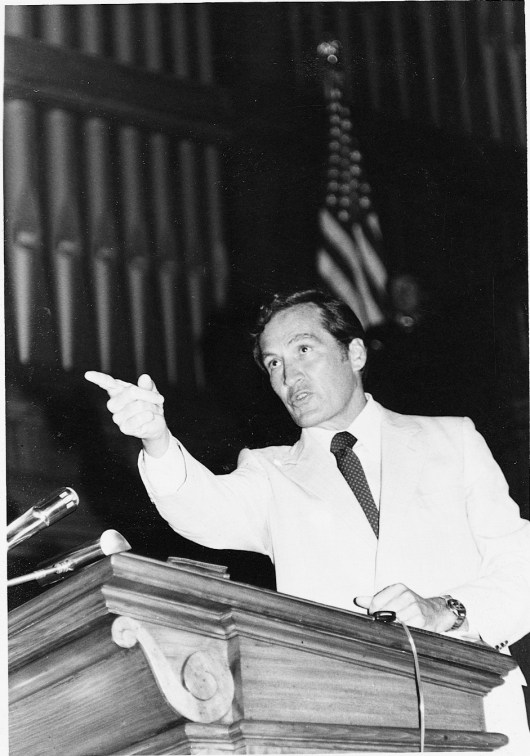
Watching the film HOW SHOULD WE THEN LIVE? in 1979 impacted my life greatly

Francis Schaeffer in the film WHATEVER HAPPENED TO THE HUMAN RACE?
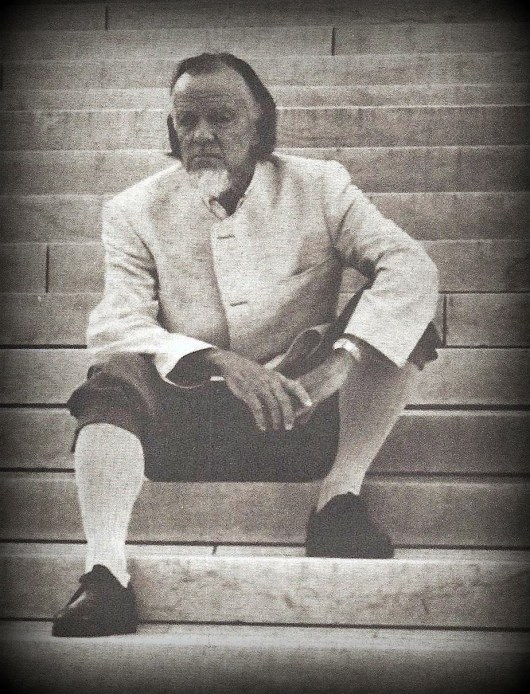
Francis and Edith Schaeffer

This might interest you that good friend in Little Rock Craig Carney had an uncle named Warren Carney and Warren was born in 1917 and he was the last living witness of the Scopes Monkey trial but he died in June of 2015. His father took him to the trial every day since they lived in Dayton and it was the biggest happening in the town’s history. Also I attended the funeral of Dr. Robert G. Lee (1886-1978) at Bellevue Baptist in Memphis and he is the minister who presided over William Jennings Bryan’s funeral in 1925. I have posted Dr. Lee’s most famous sermonPAYDAY SOME DAY on this blog and it continues to get lots of views everyday.
(William Jennings Bryan)

(Dr. Robert G. Lee )

_______________________________

Judge William Ray Overton, circa 1960s.

http://www.discovery.org/f/121
The Arkansas Decision on Creation-Science
by Duane Gish, Ph.D.
On January 5, 1982, Judge William R. Overton of the District Court in Little Rock handed down a decision holding that the Arkansas Act for Balanced Treatment of Creation-Science and Evolution-Science violates the establishment clause of the First Amendment, academic freedom, and due process, in McLean v. Arkansas Board of Education. The judge is one of more than 400 U.S. District Court judges, and another federal or state judge can reject Overton’s reasoning and reach an opposite result.
At the trial from December 7-17, 1981, many well-qualified creationist scientists appeared as expert witnesses. They gave outstanding scientific testimony, but the defense was not adequately prepared and did not do adequate questioning. (Neither ICR nor attorneys Bird and Whitehead were involved in the trial or discovery.) The news media grossly distorted their testimony. Part I of this article is a summary by Dr. Duane Gish, who was present during the trial, of the actual testimony given. Part II is a brief of the judge’s decision.
John Scopes:

I. WHAT ACTUALLY OCCURRED AT THE TRIAL
By Duane T. Gish, Ph.D.
The plaintiff’s first witnesses consisted of a group of theologians, philosophers and historians. Included were Father Francis Bruce Vawter, Prof. of Religious Studies, De Paul University, Chicago, Dr. George Marsden, Prof. of History, Calvin College, Grand Rapids; Rev. Kenneth Hicks, Methodist bishop, Little Rock; Dr. Langdon Gilkey, Prof. of Theology, School of Divinity, University of Chicago; Dr. Michael Ruse, Prof. of Philosophy, University of Guelph, Ontario; and Dr. Dorothy Nelkin, Prof. of Sociology, Cornell University, New York.
The testimony of this group of witnesses was directed towards linking creation science with Biblical Christianity. Marsden claimed that the Arkansas law gave this view preferential treatment. In cross-examination Nelkin admitted that evolution is based on an a priori assumption of no creator.
During cross-examination it was established that Ruse had published an article in which he had stated that Dr. Stephen Jay Gould (slated to be one of the plaintiff’s star witnesses) could not be a scientist because he was a Marxist. Ruse accused creationists of quoting out of context but then later quoted a portion of Gish’s book Evolution: The Fossils Say No flagrantly out of context.
The plaintiffs’ next group of witnesses included four scientists: Dr. Francisco Ayala, Prof. of Biology, University of California Davis; Dr. G. Brent Dalrymple, U.S. Geological Survey, Menlo Park, California; Dr. Stephen Jay Gould, Prof. of Geology, Harvard University; and Dr. Harold J. Morowitz, Prof. of Biophysics, Yale University. The purpose of this group of witnesses was to argue that creation had no scientific validity, and to describe evidence from science supporting evolution theory. Ayala cited evidence from molecular biology, Dalrymple cited radiometric dating, and Gould described evidence from geology and paleontology. Morowitz attacked the creationist’s use of the Second Law of Thermodynamics as evidence against evolution.
The plaintiffs’ final list of witnesses included several educators, who all claimed they could not implement the Arkansas law. Dr. William V. Mayer, Director of the Biological Science Curriculum Study, made the astounding statement that presenting an alternative interpretation of origins would confuse students and so should be avoided! All of the witnesses had apparently been coached by the ACLU staff of lawyers to maintain that they knew of no scientific evidence to support creation and that creation science was altogether religious.
The State’s first defense witness was Dr. Norman Geisler (Ph.D. in philosophy, Loyola U., Chicago), Prof. of Systematic Theology, Dallas Theological Seminary. To many, Geisler’s brilliant testimony destroyed much of the plaintiffs’ case. Citing much historical evidence, he established that belief in a creator does not necessarily involve religious worship or commitment, that the source of inspiration for a belief or proposition is independent of the evidence used to support the proposition, and that belief in creation is a logical inference based on valid evidence. In an attempt to discredit Geisler’s testimony, the ACLU lawyer quoted Geisler’s published belief that UFO’s were under the control of Satan. In most of the media this was headlined in order to mute the effect of Geisler’s testimony. Dr. Larry Parker, a professor in the Department of Curriculum and Instruction, Georgia State U., maintained that teaching the two models of origins would give students a valid choice, teaching them how to think rather than what to think.
The scientist witnesses for the state included Dr. W. Scot Morrow, Prof. of Biochemistry, Wofford College, Spartanburg, SC; Dr. Donald Chittick, a chemist engaged in biomass to energy conversion; Dr. Chandra Wickramasinghe, a mathematician-astronomer and Professor and Head of Department of Applied Mathematics, University College, Cardiff, Wales; Robert Gentry, a physicist at Oak Ridge National Laboratories; Dr. Wayne Frair, Prof. of Biology, The King’s College; Dr. Margaret Heider, Ph.D. in botany; Dr. Ariel Roth, Prof. of Biology, Geoscience Research Institute; and Dr. Harold Coffin, Prof. of Geology, Geoscience Research Institute.
Dr. Morrow, although an evolutionist and an agnostic, maintained that creationists actually look at more data than do evolutionists and that an inquiry approach involving multiple working hypotheses was a superior teaching method.
Dr. Wickramasinghe, one of England’s foremost scientists, also spoke for Sir Fred Hoyle, famous British astronomer with whom he has co-authored several books. Although both have long been identified as atheists, Wickramasinghe testified that they had concluded through a study of information science that the probability of an evolutionary origin of life was essentially zero—no greater than the probability that a tornado sweeping through a junkyard would assemble a Boeing 747! They also now disavow the Big Bang theory and the idea of biological evolution via mutations, both of which involve degradation of information. Prof. Wickramasinghe chided evolutionists for their arrogance and intolerance of creationist views.
Excellent testimony was given by zoologist Frair (taxonomic studies supporting creation), botanist Heider (botanical studies supporting separate origin of major plant groups), chemist Chittick (evidence for catastrophism and a young age), physicist Gentry (evidence from radiohaloes supporting a recent rapid creation), biologist Roth (studies on rapid coral growth), and geologist Coffin (paleontological evidence for creation and catastrophism).
From his decision it is obvious that Judge Overton (as well as most of the news media) completely ignored the scientific evidence presented by the defense witnesses while accepting without question evidence offered by the plaintiffs’ witnesses. Many remarks made by Judge Overton during the trial revealed his bias against the creationist side.
II. A BRIEF STATEMENT ON THE ARKANSAS DECISION
By John W. Whitehead, J.D.
The Arkansas district court gave a constitutionally erroneous and factually inaccurate opinion in McLean u. Arkansas Board of Education, No. 81-322 (E.D. Ark. Jan. 5, 1982). It is regrettable that the Arkansas defense did not adequately present or adequately support the strong constitutional arguments that could have been made in favor of balanced treatment of creation-science and evolution-science.
A. No Violation of Separation of Church & State. Teaching creation-science along with evolution-science does not violate separation of church and state. Creation-science can be presented solely in terms of scientific evidence and related inferences and without any religious concepts. The primary effect and purpose are to teach all of the scientific evidence on the subject of origins. See generally Bird, “Freedom of Religion and Science Instruction in Public Schools,” 87 Yale Law Journal 515,554-70 (1978); Bird, “Freedom from Establishment and Unneutrality in Public School Instruction,” 1979 Harvard Journal of Law & Public Policy 125, 165-74.
B. Constitutional Errors. (1) The Arkansas court is incorrect in stating that creation-science is Genesis (pp. 17, 19). Creation-science consists of scientific discussion rather than biblical discussion or concepts. Reference in public schools to a creator and consistency of public school curriculum with religion is permitted by the establishment clause under all U.S. Supreme Court precedents. (2) The court is also incorrect in saying “that creation science has no scientific merit or educational value as science” (pp. 32, 28). Examples of positive evidence are the abrupt appearance of complex life in the fossil record and the systematic gaps between fossil types. (3) The Arkansas court is incorrect in defining science as limited to “natural law,” and in contending that creation-science is not “explanatory,” “testable,” “tentative,” or “falsifiable” (p. 22). The scientific method cannot exclude evidence, and true science cannot define evidence away, on the basis of bias against the supranatural. Creation-science is as explanatory, testable, tentative, and falsifiable as evolution-science. (4) The opinion is incorrect in arguing that “[t]he two model approach of the creationists is simply a contrived dualism which has no scientific factual basis or legitimate educational purpose” (p. 20). That there are only two basic scientific explanations of origins is acknowledged by many evolutionist scientists, is required by logical analysis (the universe either always existed or was created, life either evolved or was created, etc.), and is strongly supported by educational research. (5) It is incorrect in stating that a balanced treatment requirement violates the academic freedom of students on the ground that teachers who despise creation-science will refuse to teach evolution-science and thereby will deprive students of “the cornerstone of modern biology” (p. 35). Presentation of all the scientific evidence on origins obviously expands rather than restricts students’ academic freedom, and any deprivation results from teachers’ choice rather than from a balanced treatment requirement. These constitutional issues will be discussed more fully in a forthcoming Impact article, and are treated exhaustively in the above legal articles.
C. Factual Inaccuracies. The Arkansas opinion also contains numerous factual errors, of which the following are only examples. (1) Paul Ellwanger in supporting model legislation was not “motivated by … desire to see the Biblical version of creation taught in the public schools” (p. 13), which he opposes, but instead to see all of the scientific evidence on origins taught. (2) “Creation from nothing … and subsequent destruction of the world by flood” is not “unique to Genesis” “among the many creation epics in human history” (P. 17), but in fact appears in most of them. (3) A “relatively recent inception” of the world and life does not mean “between 6,000 and 20,000 years because of the genealogy of the Old Testament” (p. 24), to which it has no relation, but a comparatively young age as opposed to the equally unspecific and variable old ages assumed by evolutionists.
III. THE LOUISIANA LITIGATION OVER CREATION-SCIENCE
The constitutionality of balanced treatment of creation-science and evolution-science is also being litigated in the U.S. District Court in Baton Rouge, Louisiana, in Keith v. Louisiana Department of Education (No. 81989B, filed Dec. 2, 1981). This lawsuit to declare the Louisiana Balanced Treatment Act constitutional was filed by Louisiana legislators, science professors, science teachers, and religious spokesmen (Catholic, Jewish, Muslim, and Agnostic) who are represented by attorneys Bird and Whitehead as special assistant attorneys general for Louisiana.
We are optimistic that the Louisiana lawsuit will result in a judicial opinion that public school instruction in creation-science is constitutional, directly contrary to the Arkansas decision, because it involves a different statute, new and different arguments and support, different expert witnesses, new and different scientific evidence, a different legislative purpose, and an adequate defense. Inquiries can be directed to the Creation Science Legal Defense Fund, P.O. Box 78312, Shreveport, LA 71107. (318) 226-9784.
Cite this article: Duane Gish, Ph.D. 1982. The Arkansas Decision on Creation-Science. Acts & Facts. 11 (3).
Evolution: The Changing Scene
by Duane Gish, Ph.D.
Prof. Derek Ager of the University at Swansea, Wales, in Proc. Geol. Assoc. Vol. 87, p. 132 (1976) has stated
“It must be significant that nearly all the evolutionary stories I learned as a student, from Trueman’s Ostrea/Gryphea to Carruther’s Raphrentis delanouei, have now been ‘debunked.’ Similarly, my own experience of more than twenty years looking for evolutionary lineages among the Mesozoic Brachiopoda has proved them equally elusive.”
This admission by Prof. Ager (no friend of creationists) fits in very well with the title of this article—a significant part of the changing scene in evolutionary circles is the changing attitude of evolutionists concerning the fossil record—more and more are now admitting that the missing links are still missing, that they have little or no evidence for gradual change in the fossil record.
In his article in Natural History 86:22 (1977) entitled “The Return of Hopeful Monsters,” Stephen J. Gould, leading spokesman for evolutionists in the U.S. today, said that
“The fossil record with its abrupt transitions offers no support for gradual change…. “
“All paleontologists know that the fossil record contains precious little in the way of intermediate forms; transitions between major groups are characteristically abrupt.”
From an article published in Paleobiology, Vol. 3 (1977) by S.J. Gould and Niles Eldredge we find the following on p. 147:
“At the higher level of evolutionary transition between basic morphological designs, gradualism has always been in trouble, though it remains the ‘official’ position of most Western evolutionists. Smooth intermediates between Baupläne are almost impossible to construct, even in thought experiments; there is certainly no evidence for them in the fossil record (curious mosaics like Archaeopteryx do not count).” In his review of Steven Stanley’s bookMacroevolution by D.S. Woodruff (Science 208:716 (1980)), Woodruff says (I believe he is quoting Stanley):
“But fossil species remain unchanged throughout most of their history and the record fails to contain a single example of a significant transition.”
The clatter has become so loud that even the popular press has picked it up. Newsweek in an article entitled “Is Man a Subtle Accident?” published Nov. 3, 1980, stated
“The missing link between man and the apes, whose absence has comforted religious fundamentalists since the days of Darwin, is merely the most glamorous of a whole hierarchy of phantom creatures …. The more scientists have searched for the transitional forms that lie between species, the more they have been frustrated.”
Some evolutionists have come to realize that the fossil record is so bad relative to evolution theory that they want to avoid it entirely as support for evolution. Mark Ridley, a British evolutionist, tells us in his article published in New Scientist 90:832 (1981) that
“No real evolutionist, whether gradualist or punctuationist, uses the fossil record as evidence in favour of the theory of evolution as opposed to special creation.”
One might immediately wonder, then, where does Ridley believe we find all the marvelous evidence for the “fact of evolution?” Why, from the “observed evolution of species, from biogeography, and from the hierarchical structure of taxonomy,” Ridley tells us. He apparently disagrees with his fellow evolutionist and the most distinguished of all French zoologists, Pierre Grasse´ , who states in his book Evolution of Living Organisms (English translation, Academic Press, New York, 1977, p. 4):
“Naturalists must remember that the process of evolution is revealed only through fossil forms. A knowledge of paleontology is, therefore, a prerequisite; only paleontology can provide them with the evidence of evolution and reveal its course or mechanisms. Neither the examination of present beings, nor imagination, nor theories can serve as a substitute for paleontological documents.”
What Grasse´ says in his book is that biology offers us no help in our attempt to understand the mechanism of evolution. He says that evolution is a mystery about which little is, and perhaps can be, known. He says certainly mutations and natural selection cannot possibly provide that mechanism.
Many others in more recent times, in view of the growing knowledge that the fossil record produces no evidence for gradual change and that the gaps in the fossil record, particularly at the level of the higher categories, are systematic and almost always large, are now abandoning the neo-Darwinian theory of slow gradual change. Gould has said that as a general principle, neo-Darwinism is dead, although it is still textbook orthodoxy.
In his comments on a new mechanism for evolution postulated by Edward Wiley and Daniel Brooks, Roger Lewin (Science 217:1239-1240, 1982) says,
“Natural selection, a central feature of neo-Darwinism, is allowed for in Brooks and Wiley’s theory, but only as a minor influence. ‘It can affect survivorship’ says Brooks. ‘It can weed out some of the complexity and so slow down the information decay that results in speciation. It may have a stabilizing effect, but it does not promote speciation. It is not a creative force as many people have suggested.”‘
Let me point out first of all that all of this sounds familiar—it is the source that is astounding. The view just stated is precisely what has been said by creationists ever since Edward Blyth in 1830. Natural selection is a stabilizing force. It is not a creative force, the driving mechanism of evolution, which has been responsible for the conversion of one organism into another, all the way from amoeba to man. But now, notice who is saying this—evolutionists!
Even more, they are saying that natural selection is not only not the mechanism for evolution, it actually retards the evolutionary process. They say that natural selection slows down the information decay that results in speciation. That statement is absolutely astounding on two points.
First of all, their admission that natural selection not only is not the mechanism of evolution but actually acts contrary to evolution is most revealing. Secondly, that speciation, and thus evolution, occurs by the decay of information. Now that is really startling! We creationists have long pressed the point that the random processes supposedly at work in evolution cannot possibly account for the origin of new information required for increase in complexity and the generation of new functions and organs required by evolution. Evolutionists have, on the contrary, insisted that this was possible.
Now Wiley and Brooks are claiming that all of us were wrong, both creationists and evolutionists. Evolution, from the primordial single-celled organisms to the millions of present-day organisms, including man with his 30 trillion cells of over 200 varieties, including a three-pound human brain with twelve billion brain cells and 120 trillion connections, is the result of the decay of information!
Whatever anyone might think of that theory, certainly we can all recognize that they are rejecting Darwinism. As I have said earlier, many others are doing the same. Science Digest (Sept.-Oct. 1980, p. 55) had an article entitled “Was Darwin Wrong.?” The British Broadcasting Company produced a television program a year or two ago entitled “Did Darwin Get It Wrong?” Stephen J. Gould, Niles Eldredge, Steven Stanley and others have abandoned neo-Darwinism for what they call “punctuated equilibrium.” They suggest that what we see in the fossil record is that species abruptly appear, fully-formed. They remain virtually unchanged for the duration of their existence, up to ten million years or even more, and they then abruptly disappear and are replaced by other species that also abruptly appear fully formed with no evidence of transitional forms.
They suggest that the evolutionary transitions occur somewhere out in an isolated area on the periphery of the main population and that the transitions occur very rapidly in small populations. The change is so rapid and the numbers are so small, we are told, that there are no opportunities for fossilization of the transitional forms.
Let me point out, first of all, that this notion of punctuated equilibrium is no mechanism at all. It is simply a new scenario. They are saying that since we don’t find transitional forms, evolution could not have occurred slowly and gradually, so obviously, then, it must have occurred rapidly. How and why evolution occurs so rapidly, no one knows. As a matter of fact, the idea that multiplied millions of rapid bursts of evolution have occurred is contrary to the science of modern genetics. The genetic apparatus of a lizard, for example, is totally devoted to producing another lizard. The idea that by some random evolutionary process the genetic apparatus of a lizard could be rapidly reorganized to produce something really significantly different is clearly contrary to everything we know. Evolutionists simply have no mechanism for evolution.
Secondly, the notion of punctuated equilibrium doesn’t solve the really serious problem evolutionists have with the fossil record. In fact, it doesn’t even address that problem. The idea of punctuated equilibrium was invented to explain the lack of transitional forms between species. But that is not the real problem. The really serious problem is the absence of transitional forms between the higher categories, that is, between families, orders, classes and phyla. The total absence, for example, of transitional forms between invertebrates and the fishes, a vast gulf supposedly spanning 100 million years. We have no transitional forms between basic morphological designs, or what creationists call the created kinds.
Evolutionists find themselves in a most embarrassing position today. They can find neither the transitional forms in the fossil record that their theory demands nor can they find a mechanism to explain how the evolutionary process supposedly occurred. I am reminded of what Owl said in the Pogo comic strip. He said, “If we had some ham, we could have ham and eggs for breakfast—if we had some eggs!”
Certainly we are witnessing a changing scene in evolutionary circles today. They are finally admitting that the fossil record shows little or no evidence for gradual change (which is precisely what we must predict on the basis of creation). Many are now rejecting Darwinism and are suggesting radical new theories concerning the evolutionary process. But, almost all chorus in unison—evolution is a fact!
Isn’t that amazing! One hundred and twenty-years after Darwin the missing links are still missing, and that wonderful, marvelous Darwinian mechanism that was responsible for swinging the majority of scientists over to evolution is now becoming rapidly discredited. Yet, somehow, we are told, everyone knows that evolution is a fact! Colin Patterson, senior paleontologist at the British Museum of Natural History, said in a talk he gave at the American Museum of Natural History, November 5, 1981, that he now realizes that in accepting evolution he had moved from science into faith. In a recent BBC program Dr. Patterson stated that all we really have of the evolutionary phylogenetic tree are the tips of the branches. All else—the filling in of the trunk and of the branches—is simply story telling of one kind or another.
*Dr. Duane T. Gish is Vice President of the Institute for Creation Research.
Cite this article: Duane Gish, Ph.D. 1984. Evolution: The Changing Scene. Acts & Facts. 13 (10).
Related posts:
FRANCIS SCHAEFFER ANALYZES ART AND CULTURE Part 52 THE BEATLES (Part D, There is evidence that the Beatles may have been exposed to Francis Schaeffer!!!) (Feature on artist Anna Margaret Rose Freeman )
______________ George Harrison Swears & Insults Paul and Yoko Lucy in the Sky with Diamonds- The Beatles The Beatles: I have dedicated several posts to this series on the Beatles and I don’t know when this series will end because Francis Schaeffer spent a lot of time listening to the Beatles and talking […]
FRANCIS SCHAEFFER ANALYZES ART AND CULTURE Part 51 THE BEATLES (Part C, List of those on cover of Stg.Pepper’s ) (Feature on artist Raqib Shaw )
The Beatles in a press conference after their Return from the USA Uploaded on Nov 29, 2010 The Beatles in a press conference after their Return from the USA. The Beatles: I have dedicated several posts to this series on the Beatles and I don’t know when this series will end because Francis […]
FRANCIS SCHAEFFER ANALYZES ART AND CULTURE Part 50 THE BEATLES (Part B, The Psychedelic Music of the Beatles) (Feature on artist Peter Blake )
__________________ Beatles 1966 Last interview I have dedicated several posts to this series on the Beatles and I don’t know when this series will end because Francis Schaeffer spent a lot of time listening to the Beatles and talking and writing about them and their impact on the culture of the 1960’s. In this […]
FRANCIS SCHAEFFER ANALYZES ART AND CULTURE Part 49 THE BEATLES (Part A, The Meaning of Stg. Pepper’s Cover) (Feature on artist Mika Tajima)
_______________ The Beatles documentary || A Long and Winding Road || Episode 5 (This video discusses Stg. Pepper’s creation I have dedicated several posts to this series on the Beatles and I don’t know when this series will end because Francis Schaeffer spent a lot of time listening to the Beatles and talking and writing about […]
FRANCIS SCHAEFFER ANALYZES ART AND CULTURE PART 48 “BLOW UP” by Michelangelo Antonioni makes Philosophic Statement (Feature on artist Nancy Holt)
_______________ Francis Schaeffer pictured below: _____________________ I have included the 27 minute episode THE AGE OF NONREASON by Francis Schaeffer. In that video Schaeffer noted, ” Sergeant Pepper’s Lonely Hearts Club Band…for a time it became the rallying cry for young people throughout the world. It expressed the essence of their lives, thoughts and their feelings.” How Should […]
FRANCIS SCHAEFFER ANALYZES ART AND CULTURE Part 47 Woody Allen and Professor Levy and the death of “Optimistic Humanism” from the movie CRIMES AND MISDEMEANORS Plus Charles Darwin’s comments too!!! (Feature on artist Rodney Graham)
Crimes and Misdemeanors: A Discussion: Part 1 ___________________________________ Today I will answer the simple question: IS IT POSSIBLE TO BE AN OPTIMISTIC SECULAR HUMANIST THAT DOES NOT BELIEVE IN GOD OR AN AFTERLIFE? This question has been around for a long time and you can go back to the 19th century and read this same […]
FRANCIS SCHAEFFER ANALYZES ART AND CULTURE PART 46 Friedrich Nietzsche (Featured artist is Thomas Schütte)
____________________________________ Francis Schaeffer pictured below: __________ Francis Schaeffer has written extensively on art and culture spanning the last 2000years and here are some posts I have done on this subject before : Francis Schaeffer’s “How should we then live?” Video and outline of episode 10 “Final Choices” , episode 9 “The Age of Personal Peace and Affluence”, episode 8 […]
FRANCIS SCHAEFFER ANALYZES ART AND CULTURE Part 45 Woody Allen “Reason is Dead” (Feature on artists Allora & Calzadilla )
Love and Death [Woody Allen] – What if there is no God? [PL] ___________ _______________ How Should We then Live Episode 7 small (Age of Nonreason) #02 How Should We Then Live? (Promo Clip) Dr. Francis Schaeffer 10 Worldview and Truth Two Minute Warning: How Then Should We Live?: Francis Schaeffer at 100 Francis Schaeffer […]
FRANCIS SCHAEFFER ANALYZES ART AND CULTURE Part 44 The Book of Genesis (Featured artist is Trey McCarley )
___________________________________ Francis Schaeffer pictured below: ____________________________ Francis Schaeffer “BASIS FOR HUMAN DIGNITY” Whatever…HTTHR Dr. Francis schaeffer – The flow of Materialism(from Part 4 of Whatever happened to human race?) Dr. Francis Schaeffer – The Biblical flow of Truth & History (intro) Francis Schaeffer – The Biblical Flow of History & Truth (1) Dr. Francis Schaeffer […]
__






 The Daily Hatch