Tag Archives: Carolyn Porco

RESPONDING TO HARRY KROTO’S BRILLIANT RENOWNED ACADEMICS!! Part 110 John Dunn, political theorist, Cambridge, “I am interested in how religious belief works and what it has meant but it is not [my] belief”

On November 21, 2014 I received a letter from Nobel Laureate Harry Kroto and it said:

…Please click on this URL http://vimeo.com/26991975

and you will hear what far smarter people than I have to say on this matter. I agree with them.

Harry Kroto


I have attempted to respond to all of Dr. Kroto’s friends arguments and I have posted my responses one per week for over a year now. Here are some of my earlier posts:

Arif Ahmed, Sir David AttenboroughMark Balaguer, Patricia ChurchlandAaron CiechanoverNoam Chomsky,Alan DershowitzHubert Dreyfus, Bart Ehrman, Stephan FeuchtwangDavid Friend,  Riccardo GiacconiIvar Giaever , Roy GlauberRebecca GoldsteinDavid J. Gross,  Brian Greene, Susan GreenfieldStephen F Gudeman,  Alan Guth, Jonathan HaidtHermann HauserRoald Hoffmann,  Bruce HoodHerbert Huppert,  Gareth Stedman JonesShelly KaganMichio Kaku,  Stuart Kauffman, George Lakoff,  Lawrence KraussHarry Kroto, Elizabeth Loftus,  Alan MacfarlanePeter MillicanMarvin MinskyLeonard Mlodinow,  Yujin NagasawaAlva NoeDouglas Osheroff,   Saul PerlmutterHerman Philipse,  Robert M. PriceLisa RandallLord Martin Rees,  Oliver Sacks, John SearleMarcus du SautoySimon SchafferJ. L. Schellenberg,   Lee Silver Peter Singer,  Walter Sinnott-ArmstrongRonald de Sousa, Victor StengerBarry Supple,   Leonard Susskind, Raymond TallisNeil deGrasse Tyson,  .Alexander Vilenkin, Sir John WalkerFrank WilczekSteven Weinberg, and  Lewis Wolpert,

Professor John Dunn FBA

Professor John Dunn

John Dunn (political theorist)

From Wikipedia, the free encyclopedia
For other people of the same name, see John Dunn (disambiguation).

John Montfort Dunn (born 9 September 1940) is emeritus Professor of Political Theory at King’s College, Cambridge, and Visiting Professor in the Graduate School of Social Sciences and Humanities at Chiba University, Japan.

Biography[edit]

The son of Colonel Henry George Montfort Dunn and Catherine Mary (née Kinloch), Dunn was educated at Winchester and Millfield. He read history at King’s College, Cambridge and was briefly (1965–1966) a fellow of Jesus College, Cambridge. He was also Harkness Fellow at Harvard University [1], and since 1966 of King’s College, Cambridge. A lecturer in political science at Cambridge University 1972-77, Dunn became reader in politics 1977-87, and has been professor of political theory since 1987.

Dunn has been married four times: to Susan Deborah, née Fyvel (1965; divorced 1971); Judy, née Pace (1973; divorced 1987); Ruth Scurr (1997; divorced 2013); and Anastasia Piliavsky (2014—).

In  the third video below in the 140th clip in this series are his words and  my response is below them. 

50 Renowned Academics Speaking About God (Part 1)

Another 50 Renowned Academics Speaking About God (Part 2)

A Further 50 Renowned Academics Speaking About God (Part 3)

Interview of John Dunn, part 1, 2008


Below is my response to Dr. Dunn’s quote:

April 12, 2016

Professor John Dunn, University of Cambridge, The Department of Politics and International Studies,

Dear Dr. Dunn,

Thank you for agreeing to give Alan MacFarlane an interview. I think I have watched almost all of the interviews he has ever done and that is over 100 by now. I have even gone back and watched many of them over and over. I actually did a post on my blog about  Alan Macfarlane.

I just finished reading the online addition of the book Darwin, Francis ed. 1892. Charles Darwin: his life told in an autobiographical chapter, and in a selected series of his published letters [abridged edition]. London: John Murray. There are several points that Charles Darwin makes in this book that were very wise, honest, logical, shocking and some that were not so wise. The Christian Philosopher Francis Schaeffer once said of Darwin’s writings, “Darwin in his autobiography and in his letters showed that all through his life he never really came to a quietness concerning the possibility that chance really explained the situation of the biological world. You will find there is much material on this [from Darwin] extended over many many years that constantly he was wrestling with this problem.”

Here is a quote I ran across recently from you in your wonderful in depth interview with Alan Macfarlane :

“If I wasn’t thinking about it then I would say that I am an atheist, but it might be better to say I am an extremely robustly agnostic agnostic. I like David Hume. If I think about it, it doesn’t make any sense. I am interested in how religious belief works and what it has meant and I take it very seriously. It is not a belief that I could conceive of sharing because it would have to remove my entire structure of which I believe things.”

 ——–

Let make 2 points here. First, the Bible teaches that everyone knows in their heart that God exists because of the beauty of God’s creation and the conscience that God has planted in everyone’s heart (Romans 1).

Second, all humans have moral motions.

 Francis Schaffer in his book THE GOD WHO IS THERE addresses these same issues:

“[in Christianity] there is a sufficient basis for morals. Nobody has ever discovered a way of having real “morals” without a moral absolute. If there is no moral absolute, we are left with hedonism (doing what I like) or some form of the social contract theory (what is best for society as a a hole is right). However, neither of these alternative corresponds to the moral motions that men have. Talk to people long enough and deeply enough, and you will find that they consider some things are really right and something are really wrong. Without absolutes, morals as morals cease to exist, and humanistic mean starting from himself is unable to find the absolute he needs. But because the God of the Bible is there, real morals exist. Within this framework I can say one action is right and another wrong, without talking nonsense.” 117

Now back to my first point, concerning ROMANS CHAPTER ONE. It has been found that when atheists are asked with a polygraph machine if they believe in God and  they so “NO” the polygraph indicates they are lying. Claude Brown actually tested this with over 15,000 job applicants over a long period of time in his trucking line during the 1970’s and most of the 1980’s.   

Romans 1:18-19 (Amplified Bible) ” For God’s wrath and indignation are revealed from heaven against all ungodliness and unrighteousness of men, who in their wickedness REPRESS and HINDER the truth and make it inoperative. For that which is KNOWN about God is EVIDENT to them and MADE PLAIN IN THEIR INNER CONSCIOUSNESS, because God  has SHOWN IT TO THEM,”(emphasis mine). At the 37 minute mark on the CD that I sent you today Adrian Rogers noted, “”There is no such thing anywhere on earth as a true atheist. If a man says he doesn’t believe in God, then he is lying. God has put his moral consciousness into every man’s heart, and a man has to try to kick his conscience to death to say he doesn’t believe in God.”

ROMANS CHAPTER ONE IS RIGHT WHEN IT SAYS THAT GOD PUT THAT CONSCIENCE IN EVERYONE’S HEART THAT BEARS WITNESS THAT HE CREATED THEM FOR A PURPOSE AND THAT IS WHY THE VAST MAJORITY OF PEOPLE IN THE WORLD ARE ATTEMPTING TO SEEK OUT GOD!!!!

Instead of addressing the issue of which morality is right today, I just what to ask you why you think materialist anthropologists are not able to explain why humans always have a sense of moral motions? No tribe of people have ever been found without moral motions!!!!!

When I read the book  Charles Darwin: his life told in an autobiographical chapter, and in a selected series of his published letters, I also read  a commentary on it by Francis Schaeffer and I wanted to both  quote some of Charles Darwin’s own words to you and then include the comments of Francis Schaeffer on those words. I have also enclosed a CD with two messages from Adrian Rogers and Bill Elliff concerning Darwinism. THESE COMMENTS BY SCHAEFFER ON THE MORAL MOTIONS PROMPTED ME TO WRITE YOU TODAY. 

The passages which here follow are extracts, somewhat abbreviated, from a part of the Autobiography, written in 1876, in which my father gives the history of his religious views:—

CHARLES DARWIN’S WORDS:

But now the grandest scenes would not cause any such convictions  and feelings to rise in my mind. It may be truly said that I am like a man who has become colour-blind and the universal belief by men of the existence of redness makes my present loss of perception of not the least value as evidence. This argument would be a valid one if all men of all races had the same inward conviction of the existence of one God; but we know that this is very far from being the case. Therefore I cannot see that such inward convictions and feelings are of any weight as evidence of what really exists. The state of mind which grand scenes formerly excited in me, and which was intimately connected with a belief in God, did not essentially differ from that which is often called the sense of sublimity; and however difficult it may be to explain the genesis of this sense, it can hardly be advanced as an argument for the existence of God, any more than the powerful though vague and similar feelings excited by music.

Francis Schaeffer observed:

You notice that Darwin had already said he had lost his sense of music [appreciation]. However, he brings forth what I think is a false argument. I usually use it in the area of morality. I mention that materialistic anthropologists point out that different people have different moral [systems]  and this is perfectly true, but what the materialist anthropologist can never point out is why man has a sense of moral motion and that is the problem here. Therefore, it is perfectly true that men have different concepts of God and different concepts of moral motion, but Darwin himself is not satisfied in his own position and WHERE DO THEY [MORAL MOTIONS] COME FROM AT ALL? So you are wrestling with the same dilemma here in this reference as you do in the area of all things human. For these men it is not the distinction that raises the problem, but it is the overwhelming factor of the existence of the humanness of man, the mannishness of man. The simple fact is he saw that you are shut up to either God or chance, and he said basically “I don’t see how it could be chance” and at the same time he looks at a mountain or listens to a piece of music it is a testimony that really chance isn’t sufficient enough. So gradually with the sensitivity of his own inborn self conscience he kills it. He deliberately  kills the beauty so it doesn’t argue with his theory. Maybe I am being false to Darwin here. Who can say about Darwin’s subconscious thoughts? It seems to me though this is exactly the case. What you find is a man who can’t stand the argument of the external beauty and the mannishness of man so he just gives it up in this particular place.


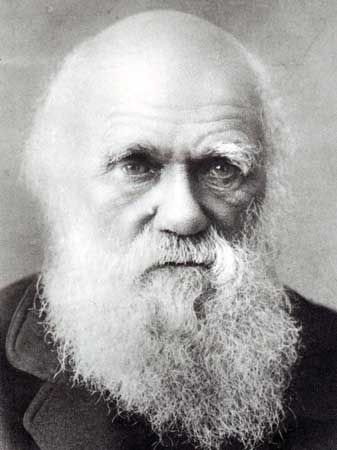
Charles Darwin

Francis Schaeffer

As a secularist you believe that it is sad indeed that millions of Christians are hoping for heaven but no heaven is waiting for them. Paul took a close look at this issue too:

I Corinthians 15 asserts:

12 But if it is preached that Christ has been raised from the dead, how can some of you say that there is no resurrection of the dead? 13 If there is no resurrection of the dead, then not even Christ has been raised. 14 And if Christ has not been raised, our preaching is useless and so is your faith. 15 More than that, we are then found to be false witnesses about God, for we have testified about God that he raised Christ from the dead. But he did not raise him if in fact the dead are not raised. 16 For if the dead are not raised, then Christ has not been raised either. 17 And if Christ has not been raised, your faith is futile; you are still in your sins. 18 Then those also who have fallen asleep in Christ are lost. 19 If only for this life we have hope in Christ, we are of all people most to be pitied.

I sent you a CD that starts off with the song DUST IN THE WIND by Kerry Livgren of the group KANSAS which was a hit song in 1978 when it rose to #6 on the charts because so many people connected with the message of the song. It included these words, “All we do, crumbles to the ground though we refuse to see, Dust in the Wind, All we are is dust in the wind, Don’t hang on, Nothing lasts forever but the Earth and Sky, It slips away, And all your money won’t another minute buy.”

Kerry Livgren himself said that he wrote the song because he saw where man was without a personal God in the picture. Solomon pointed out in the Book of Ecclesiastes that those who believe that God doesn’t exist must accept three things. FIRST, death is the end and SECOND, chance and time are the only guiding forces in this life.  FINALLY, power reigns in this life and the scales are never balanced. The Christian can  face death and also confront the world knowing that it is not determined by chance and time alone and finally there is a judge who will balance the scales.

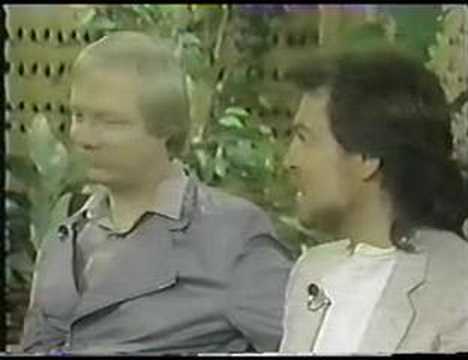
Both Kerry Livgren and the bass player Dave Hope of Kansas became Christians eventually. Kerry Livgren first tried Eastern Religions and Dave Hope had to come out of a heavy drug addiction. I was shocked and elated to see their personal testimony on The 700 Club in 1981 and that same  interview can be seen on You Tube today. Livgren lives in Topeka, Kansas today where he teaches “Diggers,” a Sunday school class at Topeka Bible ChurchDAVE HOPE is the head of Worship, Evangelism and Outreach at Immanuel Anglican Church in Destin, Florida.


Kerry Livgren of the rock group KANSAS and writer of the song DUST IN THE WIND
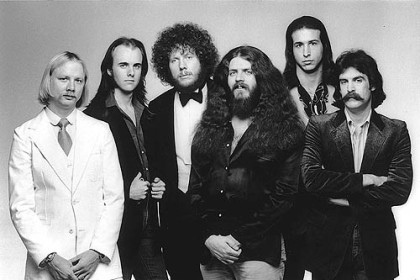
Kansas in the 1970s, from left: Kerry Livgren, Phil Ehart, Rich Williams, Robby Steinhardt, Steve Walsh and Dave Hope.

The answer to find meaning in life is found in putting your faith and trust in Jesus Christ. The Bible is true from cover to cover and can be trusted.

Thank you again for your time and I know how busy you are.

Everette Hatcher, everettehatcher@gmail.com, http://www.thedailyhatch.org, cell ph 501-920-5733, Box 23416, LittleRock, AR 72221, United States

Is the Bible historically accurate? Here are some of the posts I have done in the past on the subject and they can be googled: 1. The Babylonian Chronicleof Nebuchadnezzars Siege of Jerusalem2. Hezekiah’s Siloam Tunnel Inscription. 3. Taylor Prism (Sennacherib Hexagonal Prism)4. Biblical Cities Attested Archaeologically. 5. The Discovery of the Hittites6.Shishak Smiting His Captives7. Moabite Stone8Black Obelisk of Shalmaneser III9A Verification of places in Gospel of John and Book of Acts., 9B Discovery of Ebla Tablets10. Cyrus Cylinder11. Puru “The lot of Yahali” 9th Century B.C.E.12. The Uzziah Tablet Inscription13. The Pilate Inscription14. Caiaphas Ossuary14 B Pontius Pilate Part 214c. Three greatest American Archaeologists moved to accept Bible’s accuracy through archaeology.

You can hear DAVE HOPE and Kerry Livgren’s stories from this youtube link:

(part 1 ten minutes)

(part 2 ten minutes)

Kansas – Dust in the Wind (Official Video)

Uploaded on Nov 7, 2009

Pre-Order Miracles Out of Nowhere now at http://www.miraclesoutofnowhere.com

About the film:
In 1973, six guys in a local band from America’s heartland began a journey that surpassed even their own wildest expectations, by achieving worldwide superstardom… watch the story unfold as the incredible story of the band KANSAS is told for the first time in the DVD Miracles Out of Nowhere.

_____________________________

Adrian Rogers on Darwinism

Interview of John Dunn, part 2, 2008

_________________________________________

Related posts:

FRANCIS SCHAEFFER ANALYZES ART AND CULTURE Part 53 THE BEATLES (Part E, Stg. Pepper’s and John Lennon’s search in 1967 for truth was through drugs, money, laughter, etc & similar to King Solomon’s, LOTS OF PICTURES OF JOHN AND CYNTHIA) (Feature on artist Yoko Ono)

The John Lennon and the Beatles really were on a long search for meaning and fulfillment in their lives  just like King Solomon did in the Book of Ecclesiastes. Solomon looked into learning (1:12-18, 2:12-17), laughter, ladies, luxuries, and liquor (2:1-2, 8, 10, 11), and labor (2:4-6, 18-20). He fount that without God in the picture all […]

FRANCIS SCHAEFFER ANALYZES ART AND CULTURE Part 52 THE BEATLES (Part D, There is evidence that the Beatles may have been exposed to Francis Schaeffer!!!) (Feature on artist Anna Margaret Rose Freeman )

______________   George Harrison Swears & Insults Paul and Yoko Lucy in the Sky with Diamonds- The Beatles The Beatles:   I have dedicated several posts to this series on the Beatles and I don’t know when this series will end because Francis Schaeffer spent a lot of time listening to the Beatles and talking […]

FRANCIS SCHAEFFER ANALYZES ART AND CULTURE Part 51 THE BEATLES (Part C, List of those on cover of Stg.Pepper’s ) (Feature on artist Raqib Shaw )

  The Beatles in a press conference after their Return from the USA Uploaded on Nov 29, 2010 The Beatles in a press conference after their Return from the USA. The Beatles:   I have dedicated several posts to this series on the Beatles and I don’t know when this series will end because Francis […]

FRANCIS SCHAEFFER ANALYZES ART AND CULTURE Part 50 THE BEATLES (Part B, The Psychedelic Music of the Beatles) (Feature on artist Peter Blake )

__________________   Beatles 1966 Last interview I have dedicated several posts to this series on the Beatles and I don’t know when this series will end because Francis Schaeffer spent a lot of time listening to the Beatles and talking and writing about them and their impact on the culture of the 1960’s. In this […]

FRANCIS SCHAEFFER ANALYZES ART AND CULTURE Part 49 THE BEATLES (Part A, The Meaning of Stg. Pepper’s Cover) (Feature on artist Mika Tajima)

_______________ The Beatles documentary || A Long and Winding Road || Episode 5 (This video discusses Stg. Pepper’s creation I have dedicated several posts to this series on the Beatles and I don’t know when this series will end because Francis Schaeffer spent a lot of time listening to the Beatles and talking and writing about […]

FRANCIS SCHAEFFER ANALYZES ART AND CULTURE PART 48 “BLOW UP” by Michelangelo Antonioni makes Philosophic Statement (Feature on artist Nancy Holt)

_______________ Francis Schaeffer pictured below: _____________________ I have included the 27 minute  episode THE AGE OF NONREASON by Francis Schaeffer. In that video Schaeffer noted,  ” Sergeant Pepper’s Lonely Hearts Club Band…for a time it became the rallying cry for young people throughout the world. It expressed the essence of their lives, thoughts and their feelings.” How Should […]

FRANCIS SCHAEFFER ANALYZES ART AND CULTURE Part 47 Woody Allen and Professor Levy and the death of “Optimistic Humanism” from the movie CRIMES AND MISDEMEANORS Plus Charles Darwin’s comments too!!! (Feature on artist Rodney Graham)

Crimes and Misdemeanors: A Discussion: Part 1 ___________________________________ Today I will answer the simple question: IS IT POSSIBLE TO BE AN OPTIMISTIC SECULAR HUMANIST THAT DOES NOT BELIEVE IN GOD OR AN AFTERLIFE? This question has been around for a long time and you can go back to the 19th century and read this same […]

FRANCIS SCHAEFFER ANALYZES ART AND CULTURE PART 46 Friedrich Nietzsche (Featured artist is Thomas Schütte)

____________________________________ Francis Schaeffer pictured below: __________ Francis Schaeffer has written extensively on art and culture spanning the last 2000years and here are some posts I have done on this subject before : Francis Schaeffer’s “How should we then live?” Video and outline of episode 10 “Final Choices” , episode 9 “The Age of Personal Peace and Affluence”, episode 8 […]

FRANCIS SCHAEFFER ANALYZES ART AND CULTURE Part 45 Woody Allen “Reason is Dead” (Feature on artists Allora & Calzadilla )

Love and Death [Woody Allen] – What if there is no God? [PL] ___________ _______________ How Should We then Live Episode 7 small (Age of Nonreason) #02 How Should We Then Live? (Promo Clip) Dr. Francis Schaeffer 10 Worldview and Truth Two Minute Warning: How Then Should We Live?: Francis Schaeffer at 100 Francis Schaeffer […]

FRANCIS SCHAEFFER ANALYZES ART AND CULTURE Part 44 The Book of Genesis (Featured artist is Trey McCarley )

___________________________________ Francis Schaeffer pictured below: ____________________________ Francis Schaeffer “BASIS FOR HUMAN DIGNITY” Whatever…HTTHR Dr. Francis schaeffer – The flow of Materialism(from Part 4 of Whatever happened to human race?) Dr. Francis Schaeffer – The Biblical flow of Truth & History (intro) Francis Schaeffer – The Biblical Flow of History & Truth (1) Dr. Francis Schaeffer […]

__

RESPONDING TO HARRY KROTO’S BRILLIANT RENOWNED ACADEMICS! Sean Carroll, cosmologist and physics professor at California Institute of Technology, “Darwin to a good extent undercut “DESIGN ARGUMENT]”


On November 21, 2014 I received a letter from Nobel Laureate Harry Kroto and it said:

…Please click on this URL http://vimeo.com/26991975

and you will hear what far smarter people than I have to say on this matter. I agree with them.

Harry Kroto

I have attempted to respond to all of Dr. Kroto’s friends arguments and I have posted my responses one per week for over a year now. Here are some of my earlier posts:

Arif AhmedHaroon Ahmed,  Jim Al-Khalili, Louise Antony, Sir David AttenboroughMark Balaguer, Horace Barlow, Michael BateSir Patrick BatesonSimon Blackburn, Colin Blakemore, Ned BlockPascal BoyerPatricia ChurchlandAaron CiechanoverNoam Chomsky, Brian CoxPartha Dasgupta,  Alan Dershowitz, Frank DrakeHubert Dreyfus, John Dunn, Ken EdwardsBart Ehrman, Mark ElvinRichard Ernst, Stephan Feuchtwang, Robert FoleyDavid Friend,  Riccardo GiacconiIvar Giaever , Roy GlauberRebecca GoldsteinDavid J. Gross,  Brian Greene, Susan Greenfield, Stephen Jay GouldStephen F Gudeman,  Alan Guth, Jonathan Haidt, Chris Hann,  Theodor W. Hänsch, Brian Harrison,  Stephen HawkingHermann Hauser, Peter HiggsRobert HindeRoald Hoffmann,  Bruce HoodGerard ‘t HooftCaroline HumphreyNicholas Humphrey,  Herbert Huppert,  Sir Andrew Fielding HuxleyGareth Stedman Jones, Steve JonesShelly KaganMichio Kaku,  Stuart KauffmanMasatoshi Koshiba,  Lawrence KraussHarry Kroto, George Lakoff,  Rodolfo Llinas, Seth Lloyd,  Elizabeth Loftus,  Alan Macfarlane, Colin McGinnDan McKenzie,  Mahzarin Banaji, Michael MannPeter MillicanMarvin MinskyLeonard Mlodinow,  P.Z.Myers,   Yujin NagasawaAlva NoeDouglas Osheroff, David Parkin,  Jonathan Parry, Roger Penrose,  Saul PerlmutterHerman Philipse,  Carolyn PorcoRobert M. PriceVS RamachandranLisa RandallLord Martin ReesColin RenfrewAlison Richard,  C.J. van Rijsbergen,  Oliver Sacks, John SearleMarcus du SautoySimon SchafferJ. L. Schellenberg,   Lee Silver Peter Singer,  Walter Sinnott-ArmstrongRonald de Sousa, Victor StengerJohn SulstonBarry Supple,   Leonard Susskind, Raymond TallisMax Tegmark, Michael Tooley,  Neil deGrasse Tyson,  Martinus J. G. Veltman, Craig Venter.Alexander Vilenkin, Sir John Walker, James D. WatsonFrank WilczekSteven Weinberg, and  Lewis Wolpert,

Sean M. Carroll

From Wikipedia, the free encyclopedia
For the biologist, see Sean B. Carroll.
Sean M. Carroll
Seanmcarroll2.jpg

Sean Carroll
Born 5 October 1966 (age 50)
Philadelphia, Pennsylvania
Residence Los Angeles, California
Citizenship United States
Nationality American
Fields Physics, cosmology, astrophysics, general relativity
Institutions California Institute of Technology
Alma mater
Thesis Cosmological Consequences of Topological and Geometric Phenomena in Field Theories (1993)
Doctoral advisor George B. Field
Doctoral students Ignacy Sawicki, Eugene Lim, Mark Hoffman, Jennifer Chen, Heywood Tam, Lotty Ackerman, Kimberly Boddy
Known for Dark electromagnetism
Influences Albert Einstein, Ludwig Boltzmann, Richard Feynman
Notable awards Andrew Gemant Award (2014)
Spouse Jennifer Ouellette
Website
www.preposterousuniverse.com

Sean Michael Carroll (/ˈkærəl/; born 5 October 1966) is a cosmologist and physics professor specializing in dark energy and general relativity. He is a research professor in the Department of Physics at the California Institute of Technology.[1] He has been a contributor to the physics blog Cosmic Variance, and has published in scientific journals and magazines such as Nature, The New York Times, Sky & Telescope, and New Scientist.

He has appeared on the History Channel’s The Universe, Science Channel’s Through the Wormhole with Morgan Freeman, and Comedy Central’s The Colbert Report. Carroll is the author of Spacetime And Geometry, a graduate-level textbook in general relativity, and has also recorded lectures for The Great Courses on cosmology, the physics of time, and the Higgs boson.[2] He is also the author of three popular books: one on the arrow of time entitled From Eternity to Here, one on the Higgs boson entitled The Particle at the End of the Universe, and one on science and philosophy entitled The Big Picture: On the Origins of Life, Meaning, and the Universe Itself.

Career

Carroll received his PhD in astronomy and astrophysics in 1993 from Harvard University, where his advisor was George B. Field. His dissertation‘s title is “Cosmological Consequences of Topological and Geometric Phenomena in Field Theories“. He worked as a postdoctoral researcher at the Massachusetts Institute of Technology and Kavli Institute for Theoretical Physics at the University of California, Santa Barbara, and as an assistant professor at the University of Chicago until 2006 when he was denied tenure.[3] He is now a research professor at Caltech.

His most-cited work, “Is Cosmic Speed-Up Due To New Gravitational Physics?”, was written with Vikram Duvvuri, Mark Trodden, and Michael Turner. With over 1,000 citations, it helped pioneer the study of f(R) gravity in cosmology.[4]

In 2010, Carroll was elected as a fellow of the American Physical Society, for “contributions to a wide variety of subjects in cosmology, relativity, and quantum field theory, especially ideas for cosmic acceleration, as well as contributions to undergraduate, graduate, and public science education”.[5] In 2014 he was awarded the Andrew Gemant Award, a prize given by the American Institute of Physics for “significant contributions to the cultural, artistic or humanistic dimension of physics.”[6] In 2015 he was awarded a Guggenheim Fellowship.[7]

Personal life

Carroll is married to Jennifer Ouellette, a science writer and the former director of the Science & Entertainment Exchange.[8]

Research

Carroll has worked on a number of topics in theoretical cosmology, field theory, and gravitation theory. His research papers include models of, and experimental constraints on, violations of Lorentz invariance; the appearance of closed timelike curves in general relativity; varieties of topological defects in field theory; and cosmological dynamics of extra spacetime dimensions. In recent years he has written extensively on models of dark energy and its interactions with ordinary matter and dark matter, as well as modifications of general relativity in cosmology.

Carroll has also worked on the arrow of time problem. He and Jennifer Chen posit that the Big Bang is not a unique occurrence as a result of all of the matter and energy in the universe originating in a singularity at the beginning of time, but rather one of many cosmic inflation events resulting from quantum fluctuations of vacuum energy in a cold De Sitter space. Carroll and Chen claim that the universe is infinitely old, but never reaches thermodynamic equilibrium as entropy increases continuously without limit due to the decreasing matter and energy density attributable to recurrent cosmic inflation. They assert that the universe is “statistically time-symmetric” insofar as it contains equal progressions of time “both forward and backward”.[9][10][11] Some of his work has been on violations of fundamental symmetries, the physics of dark energy, modifications of general relativity, and the arrow of time. Recently he started focusing on issues at the foundations of cosmology, statistical mechanics, quantum mechanics, and complexity.

Views on religion

Carroll is an atheist. He turned down an invitation to speak at a conference sponsored by the John Templeton Foundation, on the grounds that he did not want to appear to be supporting a reconciliation between science and religion.[12] In 2004, he and Shadi Bartsch taught an undergraduate course title at the University of Chicago on the history of atheism. In 2012 he organized the workshop “Moving Naturalism Forward”, which brought together scientists and philosophers to discuss issues associated with a naturalistic worldview. His article, “Does the Universe Need God?” in The Blackwell Companion to Science and Christianity develops the claim that science no longer needs to posit a divine being to explain the existence of the universe. The article generated significant attention when it was discussed on The Huffington Post.[13] His 2016 book The big picture on the origins of life meaning and the universe itself develops the philosophy of poetic naturalism.

Carroll occasionally takes part in formal debates or discussions with theists. In 2012, Carroll teamed up with Michael Shermer to debate with Ian Hutchinson of MIT and author Dinesh D’Souza at Caltech in an event titled “The Great Debate: Has Science Refuted Religion?”[14] In 2014, Carroll debated with Christian apologist William Lane Craig as part of the Greer-Heard Forum in New Orleans. The topic for the debate was “The Existence of God in Light of Contemporary Cosmology”. Carroll received an “Emperor Has No Clothes” award at the Freedom From Religion Foundation Annual National Convention in October 2014.[15]

 ____

In  the second video below in the 81st clip in this series are his words and  my response is below them. 

50 Renowned Academics Speaking About God (Part 1)

Another 50 Renowned Academics Speaking About God (Part 2)

A Further 50 Renowned Academics Speaking About God (Part 3)

________

Below is the letter I wrote to Dr. Carroll with the quote from him and my response to it.

Image result for charles darwin
Darwin age 30
Image result for charles darwin
Darwin in midlife

_________

December 25, 2016

Dr. Sean M. Carroll, Pasadena ,

Dear Dr. Carroll,

I just finished reading the online addition of the book Darwin, Francis ed. 1892. Charles Darwin: his life told in an autobiographical chapter, and in a selected series of his published letters [abridged edition]. London: John Murray. There are several points that Charles Darwin makes in this book that were very wise, honest, logical, shocking and some that were not so wise. The Christian Philosopher Francis Schaeffer once said of Darwin’s writings, “Darwin in his autobiography and in his letters showed that all through his life he never really came to a quietness concerning the possibility that chance really explained the situation of the biological world. You will find there is much material on this [from Darwin] extended over many many years that constantly he was wrestling with this problem.”

Recently I noticed this comment by you Dr Carroll from the popular You Tube video ANOTHER 50 RENOWNED ACADEMICS SPEAKING ABOUT GOD (Part 2): 

Aristotle would tell you things like if you have an object and you want it to be in motion. You have to keep pushing it because if you stop, it stops. And Aristotle was right. It stopped if I stopped pushing it.

Physicists like to make fun of Aristotle these days but he was right in the context he was talking about.  So if you believe about fundamental stuff in the world, motion only exists when something is pushing it, then you can imagine that these kinds of arguments make sense that the fact that we see things moving in the universe despite the fact the motion requires a mover makes you believe that there must be some prime mover out there behind the whole thing. Then comes along Galileo and Newton and they saw actually if you think about it carefully the natural status for objects is uniform motion. Its just because of friction dissipation and other annoying features of the world that we see things stop

At a fundamental level things want to keep moving and unless you act upon them they will remain in uniform motion.This notion conservation of momentum completely underminded the sort of metaphysical reasoning behind the arguments for the first cause and prime-mover and things like that , and you can actually see the impact on the theological literature,  once they invented Newtonian mechanics, arguments for the existence of God changed their focus from prime-movers, first cause arguments from contingency to the argument from design. They started inventing machines and they said, “It looks like a machine and maybe there is a machinist and so forth.” Then Darwin to a good extent undercut that argument and we are still living in the aftermath of that.

These words of yours made me think about Darwin’s own words which I want to discuss with you in this letter:

They started inventing machines and they said, “It looks like a machine and maybe there is a machinist and so forth.” Then Darwin to a good extent undercut that argument and we are still living in the aftermath of that.

I thought of you recently when I read the book Charles Darwin: his life told in an autobiographical chapter, and in a selected series of his published letters because of what Darwin said on this same issue of intelligent design. I am going to quote some of Charles Darwin’s own words and then include the comments of Francis Schaeffer on those words. Earlier I had sent you  CD with two messages from Adrian Rogers and Bill Elliff concerning Darwinism. If you don’t have the CD let me know and I will be glad to send you another one.

Darwin, C. R. to Doedes, N. D.2 Apr 1873

“It is impossible to answer your question briefly; and I am not sure that I could do so, even if I wrote at some length. But I may say that the impossibility of conceiving that this grand and wondrous universe, with our conscious selves, arose through chance, seems to me the chief argument for the existence of God; but whether this is an argument of real value, I have never been able to decide…Nor can I overlook the difficulty from the immense amount of suffering through the world. I am aware that if we admit a First Cause, the mind still craves to know whence it came, and how it arose.”

Francis Schaeffer noted:

What he is saying is if you say there is a first cause, then the mind says, “Where did this come from?” I think this is a bit old fashioned, with some of the modern thinkers, this would not have carry as much weight today as it did when Darwin expressed it. Jean Paul Sartre said it as well as anyone could possibly say it. The philosophic problem is that something is there and not nothing being there. No one has the luxury of beginning with nothing. Nobody I have ever read has put forth that everything came from nothing. I have never met such a person in all my reading,or all my discussion. If you are going to begin with nothing being there, it has to be nothing nothing, and it can’t be something nothing. When someone says they believe nothing is there, in reality they have already built in something there. The only question is do you begin with an impersonal something or a personal something. All human thought is shut up to these two possibilities. Either you begin with an impersonal and then have Darwin’s own dilemma which impersonal plus chance, now he didn’t bring in the amount of time that modern man would though. Modern man has brought in huge amounts of time into the equation as though that would make a difference because I have said many times that time can’t make a qualitative difference but only a quantitative difference. The dilemma is it is either God or chance. Now you find this intriguing thing in Darwin’s own situation, he can’t understand how chance could have produced these two great factors of the universe and its form and the mannishness of man.

From Charles Darwin, Autobiography (1876), in The Life and Letters of Charles Darwin, ed. Francis Darwin, vol. 1 (London: John Murray, 1888), pp. 307 to 313.

“Another source of conviction in the existence of God, connected with the reason and not with the feelings, impresses me as having much more weight. This follows from the extreme difficulty or rather impossibility of conceiving this immense and wonderful universe, including man with his capacity of looking far backwards and far into futurity, as the result of blind chance or necessity. When thus reflecting, I feel compelled to look to a First Cause having an intelligent mind in some degree analogous to that of man; and I deserve to be called a Theist. This conclusion was strong in my mind about the time, as far as I can remember, when I wrote the Origin of Species, and it is since that time that it has very gradually, with many fluctuations, become weaker. But then arises the doubt…”

Francis Schaeffer commented:

On the basis of his reason he has to say there must be an intelligent mind, someone analogous to man. You couldn’t describe the God of the Bible better. That is man is made in God’s image  and therefore, you know a great deal about God when you know something about man. What he is really saying here is that everything in my experience tells me it must be so, and my mind demands it is so. Not just these feelings he talked about earlier but his MIND demands it is so, but now how does he counter this? How does he escape this? Here is how he does it!!!

Charles Darwin went on to observe:  —can the mind of man, which has, as I fully believe, been developed from a mind as low as that possessed by the lowest animals, be trusted when it draws such grand conclusions?”

Francis Schaeffer asserted:

So he says my mind can only come to one conclusion, and that is there is a mind behind it all. However, the doubt comes because his mind has come from the lowest form of earthworm, so how can I trust my mind. But this is a joker isn’t it?  Then how can you trust his mind to support such a theory as this? He proved too much. The fact that Darwin found it necessary to take such an escape shows the tremendous weight of Romans 1, that the only escape he can make is to say how can I trust my mind when I come from the lowest animal the earthworm? Obviously think of the grandeur of his concept, I don’t think it is true, but the grandeur of his concept, so what you find is that Darwin is presenting something here that is wrong I feel, but it is not nothing. It is a tremendously grand concept that he has put forward. So he is accepting the dictates of his mind to put forth a grand concept which he later can’t accept in this basic area with his reason, but he rejects what he could accept with his reason on this escape. It really doesn’t make sense. This is a tremendous demonstration of the weakness of his own position.

Darwin also noted, “I cannot pretend to throw the least light on such abstruse problems. The mystery of the beginning of all things is insoluble by us, and I for one must be content to remain an Agnostic.”

Francis Schaeffer remarked:

What a stupid reply and I didn’t say wicked. It just seems to me that here is 2 plus 2 equals 36 at this particular place.

Darwin, C. R. to Graham, William 3 July 1881

Nevertheless you have expressed my inward conviction, though far more vividly and clearly than I could have done, that the Universe is not the result of chance.* But then with me the horrid doubt always arises whether the convictions of man’s mind, which has been developed from the mind of the lower animals, are of any value or at all trustworthy. Would any one trust in the convictions of a monkey’s mind, if there are any convictions in such a mind?

Francis Schaeffer observed:

Can you feel this man? He is in real agony. You can feel the whole of modern man in this tension with Darwin. My mind can’t accept that ultimate of chance, that the universe is a result of chance. He has said 3 or 4 times now that he can’t accept that it all happened by chance and then he will write someone else and say something different. How does he say this (about the mind of a monkey) and then put forth this grand theory? Wrong theory I feel but great just the same. Grand in the same way as when I look at many of the paintings today and I differ with their message but you must say the mark of the mannishness of man are one those paintings titanic-ally even though the message is wrong and this is the same with Darwin.  But how can he say you can’t think, you come from a monkey’s mind, and you can’t trust a monkey’s mind, and you can’t trust a monkey’s conviction, so how can you trust me? Trust me here, but not there is what Darwin is saying. In other words it is very selective. 

Now we are down to the last year of Darwin’s life.

* The Duke of Argyll (Good Words, April 1885, p. 244) has recorded a few words on this subject, spoken by my father in the last year of his life. “. . . in the course of that conversation I said to Mr. Darwin, with reference to some of his own remarkable works on the Fertilisation of Orchids, and upon The Earthworms,and various other observations he made of the wonderful contrivances for certain purposes in nature—I said it was impossible to look at these without seeing that they were the effect and the expression of mind. I shall never forget Mr. Darwin’s answer. He looked at me very hard and said, ‘Well, that often comes over me with overwhelming force; but at other times,’ and he shook his head vaguely, adding, ‘it seems to go away.'”

Francis Schaeffer summarized :

And this is the great Darwin, and it makes you cry inside. This is the great Darwin and he ends as a man in total tension.

Francis Schaeffer noted that in Darwin’s 1876 Autobiography that Darwin he is going to set forth two arguments for God in this and again you will find when he comes to the end of this that he is in tremendous tension. Darwin wrote, 

At the present day the most usual argument for the existence of an intelligent God is drawn from the deep inward conviction and feelings which are experienced by most persons.Formerly I was led by feelings such as those just referred to (although I do not think that the religious sentiment was ever strongly developed in me), to the firm conviction of the existence of God and of the immortality of the soul. In my Journal I wrote that whilst standing in the midst of the grandeur of a Brazilian forest, ‘it is not possible to give an adequate idea of the higher feelings of wonder, admiration, and devotion which fill and elevate the mind.’ I well remember my conviction that there is more in man than the mere breath of his body; but now the grandest scenes would not cause any such convictions and feelings to rise in my mind. It may be truly said that I am like a man who has become colour-blind.

Francis Schaeffer remarked:

Now Darwin says when I look back and when I look at nature I came to the conclusion that man can not be just a fly! But now Darwin has moved from being a younger man to an older man and he has allowed his presuppositions to enter in to block his logic. These things at the end of his life he had no intellectual answer for. To block them out in favor of his theory. Remember the letter of his that said he had lost all aesthetic senses when he had got older and he had become a clod himself. Now interesting he says just the same thing, but not in relation to the arts, namely music, pictures, etc, but to nature itself. Darwin said, “But now the grandest scenes would not cause any such convictions  and feelings to rise in my mind. It may be truly said that I am like a man who has become colour-blind…” So now you see that Darwin’s presuppositions have not only robbed him of the beauty of man’s creation in art, but now the universe. He can’t look at it now and see the beauty. The reason he can’t see the beauty is for a very, very , very simple reason: THE BEAUTY DRIVES HIM TO DISTRACTION. THIS IS WHERE MODERN MAN IS AND IT IS HELL. The art is hell because it reminds him of man and how great man is, and where does it fit in his system? It doesn’t. When he looks at nature and it’s beauty he is driven to the same distraction and so consequently you find what has built up inside him is a real death, not  only the beauty of the artistic but the beauty of nature. He has no answer in his logic and he is left in tension.  He dies and has become less than human because these two great things (such as any kind of art and the beauty of  nature) that would make him human  stand against his theory.

Image result for charles darwin
Darwin close to the end of his life
Image result for francis schaeffer
Francis Schaeffer pictured above

________________________

Dr. Carroll can you still look at God’s beautiful creation and say that it just appears to be the work of an intellect? If so then you like Darwin  can say, “I am like a man who has become colour-blind.”

_______________________________________

IF WE ARE LEFT WITH JUST THE MACHINE THEN WHAT IS THE FINAL CONCLUSION IF THERE WAS NO PERSONAL GOD THAT CREATED US? The CD I sent you earlier starts off with the song DUST IN THE WIND by Kerry Livgren of the group KANSAS which was a hit song in 1978 when it rose to #6 on the charts because so many people connected with the message of the song. It included these words, “All we do, crumbles to the ground though we refuse to see, Dust in the Wind, All we are is dust in the wind, Don’t hang on, Nothing lasts forever but the Earth and Sky, It slips away, And all your money won’t another minute buy.”

Image result for kerry livgren dave hope 700 club
Kerry Livgren and Dave Hope on 700 Club

Image result for kerry livgren

Kerry Livgren of Kansas is on left in picture and Dave Hope is on the right

Kerry Livgren himself said that he wrote the song because he saw where man was without a personal God in the picture. Solomon pointed out in the Book of Ecclesiastes that those who believe that God doesn’t exist must accept three things. FIRST, death is the end and SECOND, chance and time are the only guiding forces in this life.  FINALLY, power reigns in this life and the scales are never balanced. The Christian can  face death and also confront the world knowing that it is not determined by chance and time alone and finally there is a judge who will balance the scales.

Both Kerry Livgren and the bass player Dave Hope of Kansas became Christians eventually. Kerry Livgren first tried Eastern Religions and Dave Hope had to come out of a heavy drug addiction. I was shocked and elated to see their personal testimony on The 700 Club in 1981 and that same  interview can be seen on You Tube today. Livgren lives in Topeka, Kansas today where he teaches “Diggers,” a Sunday school class at Topeka Bible ChurchDAVE HOPE is the head of Worship, Evangelism and Outreach at Immanuel Anglican Church in Destin, Florida.

The answer to find meaning in life is found in putting your faith and trust in Jesus Christ. The Bible is true from cover to cover and can be trusted.

Thank you again for your time and I know how busy you are.

Everette Hatcher, everettehatcher@gmail.com, http://www.thedailyhatch.org, cell ph 501-920-5733, Box 23416, LittleRock, AR 72221, United States

Is the Bible historically accurate? Here are some of the posts I have done in the past on the subject and you can google them: 1. The Babylonian Chronicleof Nebuchadnezzars Siege of Jerusalem2. Hezekiah’s Siloam Tunnel Inscription. 3. Taylor Prism (Sennacherib Hexagonal Prism)4. Biblical Cities Attested Archaeologically. 5. The Discovery of the Hittites6.Shishak Smiting His Captives7. Moabite Stone8Black Obelisk of Shalmaneser III9A Verification of places in Gospel of John and Book of Acts., 9B Discovery of Ebla Tablets10. Cyrus Cylinder11. Puru “The lot of Yahali” 9th Century B.C.E.12. The Uzziah Tablet Inscription13. The Pilate Inscription14. Caiaphas Ossuary14 B Pontius Pilate Part 214c. Three greatest American Archaeologists moved to accept Bible’s accuracy through archaeology.

You can hear DAVE HOPE and Kerry Livgren’s stories from this youtube link:

(part 1 ten minutes)

(part 2 ten minutes)

Kansas – Dust in the Wind (Official Video)

Uploaded on Nov 7, 2009

Pre-Order Miracles Out of Nowhere now at http://www.miraclesoutofnowhere.com

About the film:
In 1973, six guys in a local band from America’s heartland began a journey that surpassed even their own wildest expectations, by achieving worldwide superstardom… watch the story unfold as the incredible story of the band KANSAS is told for the first time in the DVD Miracles Out of Nowhere.

_____________________________

Adrian Rogers on Darwinism

Related posts:

FRANCIS SCHAEFFER ANALYZES ART AND CULTURE Part 53 THE BEATLES (Part E, Stg. Pepper’s and John Lennon’s search in 1967 for truth was through drugs, money, laughter, etc & similar to King Solomon’s, LOTS OF PICTURES OF JOHN AND CYNTHIA) (Feature on artist Yoko Ono)

The John Lennon and the Beatles really were on a long search for meaning and fulfillment in their lives  just like King Solomon did in the Book of Ecclesiastes. Solomon looked into learning (1:12-18, 2:12-17), laughter, ladies, luxuries, and liquor (2:1-2, 8, 10, 11), and labor (2:4-6, 18-20). He fount that without God in the picture all […]

FRANCIS SCHAEFFER ANALYZES ART AND CULTURE Part 52 THE BEATLES (Part D, There is evidence that the Beatles may have been exposed to Francis Schaeffer!!!) (Feature on artist Anna Margaret Rose Freeman )

______________   George Harrison Swears & Insults Paul and Yoko Lucy in the Sky with Diamonds- The Beatles The Beatles:   I have dedicated several posts to this series on the Beatles and I don’t know when this series will end because Francis Schaeffer spent a lot of time listening to the Beatles and talking […]

FRANCIS SCHAEFFER ANALYZES ART AND CULTURE Part 51 THE BEATLES (Part C, List of those on cover of Stg.Pepper’s ) (Feature on artist Raqib Shaw )

  The Beatles in a press conference after their Return from the USA Uploaded on Nov 29, 2010 The Beatles in a press conference after their Return from the USA. The Beatles:   I have dedicated several posts to this series on the Beatles and I don’t know when this series will end because Francis […]

FRANCIS SCHAEFFER ANALYZES ART AND CULTURE Part 50 THE BEATLES (Part B, The Psychedelic Music of the Beatles) (Feature on artist Peter Blake )

__________________   Beatles 1966 Last interview I have dedicated several posts to this series on the Beatles and I don’t know when this series will end because Francis Schaeffer spent a lot of time listening to the Beatles and talking and writing about them and their impact on the culture of the 1960’s. In this […]

FRANCIS SCHAEFFER ANALYZES ART AND CULTURE Part 49 THE BEATLES (Part A, The Meaning of Stg. Pepper’s Cover) (Feature on artist Mika Tajima)

_______________ The Beatles documentary || A Long and Winding Road || Episode 5 (This video discusses Stg. Pepper’s creation I have dedicated several posts to this series on the Beatles and I don’t know when this series will end because Francis Schaeffer spent a lot of time listening to the Beatles and talking and writing about […]

FRANCIS SCHAEFFER ANALYZES ART AND CULTURE PART 48 “BLOW UP” by Michelangelo Antonioni makes Philosophic Statement (Feature on artist Nancy Holt)

_______________ Francis Schaeffer pictured below: _____________________ I have included the 27 minute  episode THE AGE OF NONREASON by Francis Schaeffer. In that video Schaeffer noted,  ” Sergeant Pepper’s Lonely Hearts Club Band…for a time it became the rallying cry for young people throughout the world. It expressed the essence of their lives, thoughts and their feelings.” How Should […]

FRANCIS SCHAEFFER ANALYZES ART AND CULTURE Part 47 Woody Allen and Professor Levy and the death of “Optimistic Humanism” from the movie CRIMES AND MISDEMEANORS Plus Charles Darwin’s comments too!!! (Feature on artist Rodney Graham)

Crimes and Misdemeanors: A Discussion: Part 1 ___________________________________ Today I will answer the simple question: IS IT POSSIBLE TO BE AN OPTIMISTIC SECULAR HUMANIST THAT DOES NOT BELIEVE IN GOD OR AN AFTERLIFE? This question has been around for a long time and you can go back to the 19th century and read this same […]

FRANCIS SCHAEFFER ANALYZES ART AND CULTURE PART 46 Friedrich Nietzsche (Featured artist is Thomas Schütte)

____________________________________ Francis Schaeffer pictured below: __________ Francis Schaeffer has written extensively on art and culture spanning the last 2000years and here are some posts I have done on this subject before : Francis Schaeffer’s “How should we then live?” Video and outline of episode 10 “Final Choices” , episode 9 “The Age of Personal Peace and Affluence”, episode 8 […]

FRANCIS SCHAEFFER ANALYZES ART AND CULTURE Part 45 Woody Allen “Reason is Dead” (Feature on artists Allora & Calzadilla )

Love and Death [Woody Allen] – What if there is no God? [PL] ___________ _______________ How Should We then Live Episode 7 small (Age of Nonreason) #02 How Should We Then Live? (Promo Clip) Dr. Francis Schaeffer 10 Worldview and Truth Two Minute Warning: How Then Should We Live?: Francis Schaeffer at 100 Francis Schaeffer […]

FRANCIS SCHAEFFER ANALYZES ART AND CULTURE Part 44 The Book of Genesis (Featured artist is Trey McCarley )

___________________________________ Francis Schaeffer pictured below: ____________________________ Francis Schaeffer “BASIS FOR HUMAN DIGNITY” Whatever…HTTHR Dr. Francis schaeffer – The flow of Materialism(from Part 4 of Whatever happened to human race?) Dr. Francis Schaeffer – The Biblical flow of Truth & History (intro) Francis Schaeffer – The Biblical Flow of History & Truth (1) Dr. Francis Schaeffer […]

_____

RESPONDING TO HARRY KROTO’S BRILLIANT RENOWNED ACADEMICS!! Part 109 Peter Higgs, Nobel Prize winner in Physics, University of Edinburgh, “I certainly know a lot of scientists in my field who are believers and I accept that. I don’t happen to be one myself, but maybe that’s just more a matter of my family background than that there’s any fundamental difficulty about reconciling the two”


Continue reading

RESPONDING TO HARRY KROTO’S BRILLIANT RENOWNED ACADEMICS!! Part 108 Jim Al-Khalili, physicist, University of Surrey: Certainly in the United Kingdom half if not more than half of the population are not religious. If you pointed out to them what humanism stood for they would say, “Yes I would subscribe to that.”

Continue reading

RESPONDING TO HARRY KROTO’S BRILLIANT RENOWNED ACADEMICS!! Part 107 David Parkin, Anthropologist, Oxford, “I am a rationalist humanist or something. (Religion) gives a lot of comfort to some people so it must be tolerated”


On November 21, 2014 I received a letter from Nobel Laureate Harry Kroto and it said:

…Please click on this URL http://vimeo.com/26991975

and you will hear what far smarter people than I have to say on this matter. I agree with them.

Harry Kroto

Nick Gathergood, David-Birkett, Harry-Kroto

I have attempted to respond to all of Dr. Kroto’s friends arguments and I have posted my responses one per week for over a year now. Here are some of my earlier posts:

Arif AhmedHaroon Ahmed,Sir David AttenboroughMark Balaguer, Horace Barlow, Michael BateSir Patrick Bateson,Patricia ChurchlandAaron CiechanoverNoam Chomsky,Alan DershowitzHubert Dreyfus, Bart Ehrman, Stephan FeuchtwangDavid Friend,  Riccardo GiacconiIvar Giaever , Roy GlauberRebecca GoldsteinDavid J. Gross,  Brian Greene, Susan GreenfieldStephen F Gudeman,  Alan Guth, Jonathan HaidtTheodor W. Hänsch, Brian Harrison,  Hermann HauserRoald Hoffmann,  Bruce HoodHerbert Huppert,  Gareth Stedman Jones, Steve JonesShelly KaganMichio Kaku,  Stuart Kauffman,  Lawrence KraussHarry Kroto, George LakoffElizabeth Loftus,  Alan MacfarlanePeter MillicanMarvin MinskyLeonard Mlodinow,  Yujin NagasawaAlva NoeDouglas Osheroff,  Jonathan Parry,  Saul PerlmutterHerman Philipse,  Carolyn PorcoRobert M. PriceLisa RandallLord Martin ReesAlison Richard,  Oliver Sacks, John SearleMarcus du SautoySimon SchafferJ. L. Schellenberg,   Lee Silver Peter Singer,  Walter Sinnott-ArmstrongRonald de Sousa, Victor StengerJohn SulstonBarry Supple,   Leonard Susskind, Raymond TallisNeil deGrasse Tyson,  C.J. van RijsbergenAlexander Vilenkin, Sir John WalkerFrank WilczekSteven Weinberg, and  Lewis Wolpert,

In  the second video below in the 74th clip in this series are his words and  my response is below them. 

50 Renowned Academics Speaking About God (Part 1)

Another 50 Renowned Academics Speaking About God (Part 2)

A Further 50 Renowned Academics Speaking About God (Part 3)

__________

Interview of David Parkin – part one

Uploaded on Sep 14, 2009

Interview of Professor David Parkin the anthropologist on 17th March 2009 by Alan Macfarlane. For a higher-quality, version with summary please see http://www.alanmacfarlane.com

Interview of David Parkin – part two


_______________________

David Parkin (1940- ) was from 1996 until 2008, when he retired, professor of social anthropology at the University of Oxford, fellow of All Souls College, and head of ISCA and the School of Anthropology and Museum Ethnography from 1996-2006. Before coming to Oxford, he was at the School of Oriental and African Studies, University of London, first as a student  (1959-1964) and then as a member of faculty (1964-1996), becoming professor of African anthropology in 1982. He is now Emeritus Professor at Oxford and Honorary Fellow at the School of Oriental and African Studies.  His early training included the study of Swahili and Bantu linguistics alongside anthropology, and this has stamped his long-standing interest in the role of language in social organisation in Africa and generally.

Parkin’s focus has been on East Africa where he has carried out a number of years’ fieldwork among different peoples and in different ecologies: the Luo of western Kenya, the Giriama of eastern Kenya, and Swahili-speakers in Zanzibar and Mombasa. He has studied the growth of ethnically mixed urban populations in Kampala, Uganda, where his interest in Luo first started, and in Nairobi, where he developed more fully his interest in Luo. Field research among the Giriama of Kenya began with a study of economic entrepreneurship, and continued into an analysis of the role of religion in pastoralism, agriculture and trade. Thereafter he concentrated on Islam among Swahili-speakers, extending this concern from the East African coast to the Hadhramaut, Oman and other areas of the Indian Ocean littoral. In later years he examined concepts of materiality, especially in relation to the human body, and became interested in the evolution of language.

He was chairman of the International African Institute and of the Association of Social Anthropologists, was elected fellow of the British Academy, and has sat on various bodies concerned with higher education and the social sciences, both in the UK and France, where he has also held various appointments, including visiting membership of the CNRS.

While continuing as Emeritus Professor at the Institute of Social and Cultural Anthropology at Oxford University, he has from 2009 been research professor at the Max Planck Institute for Religious and Ethnic Diversity in Goettingen, Germany, focusing on medical and sociolinguistic processes of diversification.

++++++++++++++++++++++

Below is a letter in which I respond to Dr. Parkin’s quote:

February 23, 2015

Dr. David Parkin, Professor Emeritus of Social Anthropology, University of Oxford, All Souls College, United Kingdom

Dear Dr. Parkin,

I  took interest in a two hour interview that you gave to Alan Macfarlane and found on You Tube and I noticed that you had worked in the area of evolutionary psychology and the evolution of human social groups and the subject of evolution has interested me recently too. I also noticed that you had spent a considerable amount of time studying religions. As you can tell from reading this letter I am an evangelical Christian and I have made it a hobby of mine to correspond with scientists or academics like yourself over the last 25 years. Some of those who corresponded back with me have been  Ernest Mayr (1904-2005),, George Wald (1906-1997), Carl Sagan (1934-1996),  Robert Shapiro (1935-2011), Nicolaas Bloembergen (1920-),  Brian Charlesworth (1945-),  Francisco J. Ayala (1934-) Elliott Sober (1948-), Kevin Padian (1951-), Matt Cartmill (1943-) , Milton Fingerman (1928-), John J. Shea (1969-), , Michael A. Crawford (1938-), Paul Kurtz (1925-2012), Sol Gordon (1923-2008), Albert Ellis (1913-2007), Barbara Marie Tabler (1915-1996), Renate Vambery (1916-2005), Archie J. Bahm (1907-1996), Aron S “Gil” Martin ( 1910-1997), Matthew I. Spetter (1921-2012), H. J. Eysenck (1916-1997), Robert L. Erdmann (1929-2006), Mary Morain (1911-1999), Lloyd Morain (1917-2010),  Warren Allen Smith (1921-), Bette Chambers (1930-),  Gordon Stein (1941-1996) , Milton Friedman (1912-2006), John Hospers (1918-2011), Michael Martin (1932-).Harry Kroto (1939-), Marty E. Martin (1928-), Richard Rubenstein (1924-), James Terry McCollum (1936-), Edward O. WIlson (1929-), Lewis Wolpert (1929), Gerald Holton (1922-), Martin Rees (1942-), Alan Macfarlane (1941-),  Roald Hoffmann (1937-), Herbert Kroemer (1928-), Thomas H. Jukes (1906-1999), Glenn BranchGeoff Harcourt (1931-) and  Ray T. Cragun (1976-).  I would consider it an honor to add you to this very distinguished list. 

I just finished reading the online addition of the book Darwin, Francis ed. 1892. Charles Darwin: his life told in an autobiographical chapter, and in a selected series of his published letters [abridged edition]. London: John Murray. There are several points that Charles Darwin makes in this book that were very wise, honest, logical, shocking and some that were not so wise. The Christian Philosopher Francis Schaeffer once said of Darwin’s writings, “Darwin in his autobiography and in his letters showed that all through his life he never really came to a quietness concerning the possibility that chance really explained the situation of the biological world. You will find there is much material on this [from Darwin] extended over many many years that constantly he was wrestling with this problem.”

Recently I ran across the following quote from you (in that interview with Alan Macfarlane I mentioned earlier, BTW Dr. Macfarlane does the best in-depth interviews by far):

I am a rationalist humanist or something. (Religion) gives a lot of comfort to some people so it must be tolerated. 

I noticed that you have done a lot of work on the subject of religion in your academic studies and that that includes Islam too. 

On February 21, 2015 I walked into the First Baptist Church Orlando Saturday evening service and wanted to get a seat up close. I saw that the third row was practically empty but once I got up front I realized that most of that row had been taped off and reserved but there was a few seats open at the end of the row. I sat down and then I noticed a few moments after the service started there were some people being escorted into the service and they sat next to me on this row. Little did I know that these were Coptic Christians who had recently moved from Egypt to Orlando. I got to visit with some of them after the service and told them I would praying for them and for their relatives back in Egypt.

David Uth delivered a wonderful message on I John 4 and he spent on extra time at the close of the service on verse 18, “There is no fear in love. But perfect love drives out fear, because fear has to do with punishment. The one who fears is not made perfect in love.” Then he put on this picture below:

A video released Sunday showed the beheading of 21 Egyptian Coptic Christians in Libya by ISIS militants.

Then Dr. Uth quoted from this passage below:

Acts 7:50-60English Standard Version (ESV)

50 Did not my hand make all these things?’

51 “You stiff-necked people, uncircumcised in heart and ears, you always resist the Holy Spirit. As your fathers did, so do you. 52 Which of the prophets did your fathers not persecute? And they killed those who announced beforehand the coming of the Righteous One, whom you have now betrayed and murdered,53 you who received the law as delivered by angels and did not keep it.”

The Stoning of Stephen

54 Now when they heard these things they were enraged, and they ground their teeth at him. 55 But he, full of the Holy Spirit, gazed into heaven and saw the glory of God, and Jesus standing at the right hand of God. 56 And he said, “Behold, I see the heavens opened, and the Son of Man standing at the right hand of God.” 57 But they cried out with a loud voice and stopped their ears and rushed together[a] at him. 58 Then they cast him out of the city and stoned him. And the witnesses laid down their garments at the feet of a young man named Saul. 59 And as they were stoning Stephen, he called out, “Lord Jesus, receive my spirit.” 60 And falling to his knees he cried out with a loud voice, “Lord, do not hold this sin against them.” And when he had said this, he fell asleep.

___________

Dr. Uth pointed out that Jesus stood up at the right hand of God to greet Stephen to heaven and Dr. Uth imagined that Jesus stood up to greet these 21 Coptic Christians home and then we all sang the song ALWAYS which is below and there was not a dry eye in the place!!!!

Always 

My foes are many, they rise against me
But I will hold my ground
I will not fear the war, I will not fear the storm
My help is on the way, my help is on the way

Oh, my God, He will not delay
My refuge and strength always
I will not fear, His promise is true
My God will come through always, always

Trouble surrounds me, chaos abounding
My soul will rest in You
I will not fear the war, I will not fear the storm
My help is on the way, my help is on the way

Oh, my God, He will not delay
My refuge and strength always
I will not fear, His promise is true
My God will come through always, always

I lift my eyes up, my help comes from the Lord
From You Lord, from You Lord

Oh, my God, He will not delay
My refuge and strength always
I will not fear, His promise is true
My God will come through always, always

Oh, my God, He will not delay
My refuge and strength always, always

________________________

 DR PARKIN, YOU MAY BE STILL BE WONDERING WHY SO MANY PEOPLE ARE INVOLVED IN RELIGION: Let make 2 points here. First, the Bible teaches that everyone knows in their heart that God exists because of the beauty of God’s creation and the conscience that God has planted in everyone’s heart (Romans 1).

Second, all humans have moral motions.

 Francis Schaffer in his book THE GOD WHO IS THERE addresses these same issues:

“[in Christianity] there is a sufficient basis for morals. Nobody has ever discovered a way of having real “morals” without a moral absolute. If there is no moral absolute, we are left with hedonism (doing what I like) or some form of the social contract theory (what is best for society as a a hole is right). However, neither of these alternative corresponds to the moral motions that men have. Talk to people long enough and deeply enough, and you will find that they consider some things are really right and something are really wrong. Without absolutes, morals as morals cease to exist, and humanistic mean starting from himself is unable to find the absolute he needs. But because the God of the Bible is there, real morals exist. Within this framework I can say one action is right and another wrong, without talking nonsense.” 117

Now back to my first point, concerning ROMANS CHAPTER ONE. It has been found that when atheists are asked with a polygraph machine if they believe in God and when they so “NO” the polygraph indicates they are lying. Claude Brown actually tested this with over 15,000 job applicants over a long period of time in his trucking line.  ROMANS ONE IS RIGHT WHEN IT SAYS THAT GOD PUT THAT CONSCIENCE IN EVERYONE’S HEART THAT BEARS WITNESS THAT HE CREATED THEM FOR A PURPOSE AND THAT IS WHY THE VAST MAJORITY OF PEOPLE IN THE WORLD ARE ATTEMPTING TO SEEK OUT GOD!!!!

Instead of addressing the issue of which morality is right today, I just what to ask you why you think materialist anthropologists are not able to explain why humans always have a sense of moral motions? No tribe of people have ever been found without moral motions!!!!!

When I read the book  Charles Darwin: his life told in an autobiographical chapter, and in a selected series of his published letters, I also read  a commentary on it by Francis Schaeffer and I wanted to both  quote some of Charles Darwin’s own words to you and then include the comments of Francis Schaeffer on those words. I have also enclosed a CD with two messages from Adrian Rogers and Bill Elliff concerning Darwinism. THESE COMMENTS BY SCHAEFFER ON THE MORAL MOTIONS PROMPTED ME TO WRITE YOU TODAY. 

The passages which here follow are extracts, somewhat abbreviated, from a part of the Autobiography, written in 1876, in which my father gives the history of his religious views:—

CHARLES DARWIN’S WORDS:

But now the grandest scenes would not cause any such convictions  and feelings to rise in my mind. It may be truly said that I am like a man who has become colour-blind and the universal belief by men of the existence of redness makes my present loss of perception of not the least value as evidence. This argument would be a valid one if all men of all races had the same inward conviction of the existence of one God; but we know that this is very far from being the case. Therefore I cannot see that such inward convictions and feelings are of any weight as evidence of what really exists. The state of mind which grand scenes formerly excited in me, and which was intimately connected with a belief in God, did not essentially differ from that which is often called the sense of sublimity; and however difficult it may be to explain the genesis of this sense, it can hardly be advanced as an argument for the existence of God, any more than the powerful though vague and similar feelings excited by music.

Francis Schaeffer observed:

You notice that Darwin had already said he had lost his sense of music [appreciation]. However, he brings forth what I think is a false argument. I usually use it in the area of morality. I mention that materialistic anthropologists point out that different people have different moral [systems]  and this is perfectly true, but what the materialist anthropologist can never point out is why man has a sense of moral motion and that is the problem here. Therefore, it is perfectly true that men have different concepts of God and different concepts of moral motion, but Darwin himself is not satisfied in his own position and WHERE DO THEY [MORAL MOTIONS] COME FROM AT ALL? So you are wrestling with the same dilemma here in this reference as you do in the area of all things human. For these men it is not the distinction that raises the problem, but it is the overwhelming factor of the existence of the humanness of man, the mannishness of man. The simple fact is he saw that you are shut up to either God or chance, and he said basically “I don’t see how it could be chance” and at the same time he looks at a mountain or listens to a piece of music it is a testimony that really chance isn’t sufficient enough. So gradually with the sensitivity of his own inborn self conscience he kills it. He deliberately  kills the beauty so it doesn’t argue with his theory. Maybe I am being false to Darwin here. Who can say about Darwin’s subconscious thoughts? It seems to me though this is exactly the case. What you find is a man who can’t stand the argument of the external beauty and the mannishness of man so he just gives it up in this particular place.

As a secularist you believe that it is sad indeed that millions of Christians are hoping for heaven but no heaven is waiting for them. Paul took a close look at this issue too:

I Corinthians 15 asserts:

12 But if it is preached that Christ has been raised from the dead, how can some of you say that there is no resurrection of the dead? 13 If there is no resurrection of the dead, then not even Christ has been raised. 14 And if Christ has not been raised, our preaching is useless and so is your faith. 15 More than that, we are then found to be false witnesses about God, for we have testified about God that he raised Christ from the dead. But he did not raise him if in fact the dead are not raised. 16 For if the dead are not raised, then Christ has not been raised either. 17 And if Christ has not been raised, your faith is futile; you are still in your sins. 18 Then those also who have fallen asleep in Christ are lost. 19 If only for this life we have hope in Christ, we are of all people most to be pitied.

I sent you a CD that starts off with the song DUST IN THE WIND by Kerry Livgren of the group KANSAS which was a hit song in 1978 when it rose to #6 on the charts because so many people connected with the message of the song. It included these words, “All we do, crumbles to the ground though we refuse to see, Dust in the Wind, All we are is dust in the wind, Don’t hang on, Nothing lasts forever but the Earth and Sky, It slips away, And all your money won’t another minute buy.”

Kerry Livgren himself said that he wrote the song because he saw where man was without a personal God in the picture. Solomon pointed out in the Book of Ecclesiastes that those who believe that God doesn’t exist must accept three things. FIRST, death is the end and SECOND, chance and time are the only guiding forces in this life.  FINALLY, power reigns in this life and the scales are never balanced. The Christian can  face death and also confront the world knowing that it is not determined by chance and time alone and finally there is a judge who will balance the scales.

Both Kerry Livgren and the bass player Dave Hope of Kansas became Christians eventually. Kerry Livgren first tried Eastern Religions and Dave Hope had to come out of a heavy drug addiction. I was shocked and elated to see their personal testimony on The 700 Club in 1981 and that same  interview can be seen on You Tube today. Livgren lives in Topeka, Kansas today where he teaches “Diggers,” a Sunday school class at Topeka Bible ChurchDAVE HOPE is the head of Worship, Evangelism and Outreach at Immanuel Anglican Church in Destin, Florida.

The answer to find meaning in life is found in putting your faith and trust in Jesus Christ. The Bible is true from cover to cover and can be trusted.

Thank you again for your time and I know how busy you are.

Everette Hatcher, everettehatcher@gmail.com, http://www.thedailyhatch.org, cell ph 501-920-5733, Box 23416, LittleRock, AR 72221, United States

Is the Bible historically accurate? Here are some of the posts I have done in the past on the subject: 1. The Babylonian Chronicleof Nebuchadnezzars Siege of Jerusalem2. Hezekiah’s Siloam Tunnel Inscription. 3. Taylor Prism (Sennacherib Hexagonal Prism)4. Biblical Cities Attested Archaeologically. 5. The Discovery of the Hittites6.Shishak Smiting His Captives7. Moabite Stone8Black Obelisk of Shalmaneser III9A Verification of places in Gospel of John and Book of Acts., 9B Discovery of Ebla Tablets10. Cyrus Cylinder11. Puru “The lot of Yahali” 9th Century B.C.E.12. The Uzziah Tablet Inscription13. The Pilate Inscription14. Caiaphas Ossuary14 B Pontius Pilate Part 214c. Three greatest American Archaeologists moved to accept Bible’s accuracy through archaeology.

You can hear DAVE HOPE and Kerry Livgren’s stories from this youtube link:

(part 1 ten minutes)

(part 2 ten minutes)

Kansas – Dust in the Wind (Official Video)

Uploaded on Nov 7, 2009

Pre-Order Miracles Out of Nowhere now at http://www.miraclesoutofnowhere.com

About the film:
In 1973, six guys in a local band from America’s heartland began a journey that surpassed even their own wildest expectations, by achieving worldwide superstardom… watch the story unfold as the incredible story of the band KANSAS is told for the first time in the DVD Miracles Out of Nowhere.

_____________________________

Adrian Rogers on Darwinism

_________________

________

Related posts:

FRANCIS SCHAEFFER ANALYZES ART AND CULTURE Part 53 THE BEATLES (Part E, Stg. Pepper’s and John Lennon’s search in 1967 for truth was through drugs, money, laughter, etc & similar to King Solomon’s, LOTS OF PICTURES OF JOHN AND CYNTHIA) (Feature on artist Yoko Ono)

The John Lennon and the Beatles really were on a long search for meaning and fulfillment in their lives  just like King Solomon did in the Book of Ecclesiastes. Solomon looked into learning (1:12-18, 2:12-17), laughter, ladies, luxuries, and liquor (2:1-2, 8, 10, 11), and labor (2:4-6, 18-20). He fount that without God in the picture all […]

FRANCIS SCHAEFFER ANALYZES ART AND CULTURE Part 52 THE BEATLES (Part D, There is evidence that the Beatles may have been exposed to Francis Schaeffer!!!) (Feature on artist Anna Margaret Rose Freeman )

______________   George Harrison Swears & Insults Paul and Yoko Lucy in the Sky with Diamonds- The Beatles The Beatles:   I have dedicated several posts to this series on the Beatles and I don’t know when this series will end because Francis Schaeffer spent a lot of time listening to the Beatles and talking […]

FRANCIS SCHAEFFER ANALYZES ART AND CULTURE Part 51 THE BEATLES (Part C, List of those on cover of Stg.Pepper’s ) (Feature on artist Raqib Shaw )

  The Beatles in a press conference after their Return from the USA Uploaded on Nov 29, 2010 The Beatles in a press conference after their Return from the USA. The Beatles:   I have dedicated several posts to this series on the Beatles and I don’t know when this series will end because Francis […]

FRANCIS SCHAEFFER ANALYZES ART AND CULTURE Part 50 THE BEATLES (Part B, The Psychedelic Music of the Beatles) (Feature on artist Peter Blake )

__________________   Beatles 1966 Last interview I have dedicated several posts to this series on the Beatles and I don’t know when this series will end because Francis Schaeffer spent a lot of time listening to the Beatles and talking and writing about them and their impact on the culture of the 1960’s. In this […]

FRANCIS SCHAEFFER ANALYZES ART AND CULTURE Part 49 THE BEATLES (Part A, The Meaning of Stg. Pepper’s Cover) (Feature on artist Mika Tajima)

_______________ The Beatles documentary || A Long and Winding Road || Episode 5 (This video discusses Stg. Pepper’s creation I have dedicated several posts to this series on the Beatles and I don’t know when this series will end because Francis Schaeffer spent a lot of time listening to the Beatles and talking and writing about […]

FRANCIS SCHAEFFER ANALYZES ART AND CULTURE PART 48 “BLOW UP” by Michelangelo Antonioni makes Philosophic Statement (Feature on artist Nancy Holt)

_______________ Francis Schaeffer pictured below: _____________________ I have included the 27 minute  episode THE AGE OF NONREASON by Francis Schaeffer. In that video Schaeffer noted,  ” Sergeant Pepper’s Lonely Hearts Club Band…for a time it became the rallying cry for young people throughout the world. It expressed the essence of their lives, thoughts and their feelings.” How Should […]

FRANCIS SCHAEFFER ANALYZES ART AND CULTURE Part 47 Woody Allen and Professor Levy and the death of “Optimistic Humanism” from the movie CRIMES AND MISDEMEANORS Plus Charles Darwin’s comments too!!! (Feature on artist Rodney Graham)

Crimes and Misdemeanors: A Discussion: Part 1 ___________________________________ Today I will answer the simple question: IS IT POSSIBLE TO BE AN OPTIMISTIC SECULAR HUMANIST THAT DOES NOT BELIEVE IN GOD OR AN AFTERLIFE? This question has been around for a long time and you can go back to the 19th century and read this same […]

FRANCIS SCHAEFFER ANALYZES ART AND CULTURE PART 46 Friedrich Nietzsche (Featured artist is Thomas Schütte)

____________________________________ Francis Schaeffer pictured below: __________ Francis Schaeffer has written extensively on art and culture spanning the last 2000years and here are some posts I have done on this subject before : Francis Schaeffer’s “How should we then live?” Video and outline of episode 10 “Final Choices” , episode 9 “The Age of Personal Peace and Affluence”, episode 8 […]

FRANCIS SCHAEFFER ANALYZES ART AND CULTURE Part 45 Woody Allen “Reason is Dead” (Feature on artists Allora & Calzadilla )

Love and Death [Woody Allen] – What if there is no God? [PL] ___________ _______________ How Should We then Live Episode 7 small (Age of Nonreason) #02 How Should We Then Live? (Promo Clip) Dr. Francis Schaeffer 10 Worldview and Truth Two Minute Warning: How Then Should We Live?: Francis Schaeffer at 100 Francis Schaeffer […]

FRANCIS SCHAEFFER ANALYZES ART AND CULTURE Part 44 The Book of Genesis (Featured artist is Trey McCarley )

___________________________________ Francis Schaeffer pictured below: ____________________________ Francis Schaeffer “BASIS FOR HUMAN DIGNITY” Whatever…HTTHR Dr. Francis schaeffer – The flow of Materialism(from Part 4 of Whatever happened to human race?) Dr. Francis Schaeffer – The Biblical flow of Truth & History (intro) Francis Schaeffer – The Biblical Flow of History & Truth (1) Dr. Francis Schaeffer […]

__

RESPONDING TO HARRY KROTO’S BRILLIANT RENOWNED ACADEMICS!! Part 106 Chris Hann, Social Anthropologist, “I find extremely interesting but I can’t identify with any of it (religion and spirituality) myself”

On November 21, 2014 I received a letter from Nobel Laureate Harry Kroto and it said:

…Please click on this URL http://vimeo.com/26991975

and you will hear what far smarter people than I have to say on this matter. I agree with them.

Harry Kroto

I have attempted to respond to all of Dr. Kroto’s friends arguments and I have posted my responses one per week for over a year now. Here are some of my earlier posts:

Arif Ahmed, Sir David AttenboroughMark Balaguer, Horace Barlow, Michael BatePatricia ChurchlandAaron CiechanoverNoam Chomsky,Alan DershowitzHubert Dreyfus, Bart Ehrman, Stephan FeuchtwangDavid Friend,  Riccardo GiacconiIvar Giaever , Roy GlauberRebecca GoldsteinDavid J. Gross,  Brian Greene, Susan GreenfieldStephen F Gudeman,  Alan Guth, Jonathan HaidtTheodor W. Hänsch, Brian Harrison,  Hermann HauserRoald Hoffmann,  Bruce HoodHerbert Huppert,  Gareth Stedman Jones, Steve JonesShelly KaganMichio Kaku,  Stuart Kauffman,  Lawrence KraussHarry Kroto, George LakoffElizabeth Loftus,  Alan MacfarlanePeter MillicanMarvin MinskyLeonard Mlodinow,  Yujin NagasawaAlva NoeDouglas Osheroff,  Jonathan Parry,  Saul PerlmutterHerman Philipse,  Carolyn PorcoRobert M. PriceLisa RandallLord Martin Rees,  Oliver Sacks, John SearleMarcus du SautoySimon SchafferJ. L. Schellenberg,   Lee Silver Peter Singer,  Walter Sinnott-ArmstrongRonald de Sousa, Victor StengerBarry Supple,   Leonard Susskind, Raymond TallisNeil deGrasse Tyson,  .Alexander Vilenkin, Sir John WalkerFrank WilczekSteven Weinberg, and  Lewis Wolpert,

profile image for Prof Chris HannChris Hann (born in Cardiff in 1953) was Professor of Social Anthropology at the University of Kent between 1992 and 1999, when he was appointed as one of two founding Directors of the Max Planck Institute for Social Anthropology at Halle/Saale, Germany.He had previously taught anthropology at Cambridge University and had close links with UKC staff even before coming to Kent, especially with Paul Stirling, the first Professor of Sociology and Anthropology, who pioneered the anthropological study of modern Turkey. In addition to his own fieldwork in Anatolia, Hann has worked among Turkic speakers in Central Asia (Xinjiang, North-West China). Earlier projects took him to Hungary and Poland when these countries were still socialist. At the Max Planck Institute he heads a department which specializes in investigations of the postsocialist countries of the former Soviet bloc, and also of those East Asian countries which still describe themselves as socialist. Recent themes have included rural decollectivization, religion after communism, and the transformation of social security and kinship relations in the decentralized economies of “reform socialism”.Hann is an Editor of the European Journal of Sociology, a Fellow of the Berlin-Brandenburg Academy of Sciences, and Honorary Professor at the Martin Luther University, Halle-Wittenberg, and at the University of Leipzig.Professor Hann continues to collaborate with School of Anthropology and Conservation colleagues, particularly Dr Glenn Bowman.

In  the second video below in the 96th clip in this series are his words and  my response is below them. 


Below is my letter responding to Dr. Hann’s quotation:

________

Charles Darwin

Francis and Edith Schaeffer

Rock Band KANSAS

July 8, 2016

Dear Dr. Hahn,

Let me start off by saying that this is not the first time that I have written you. Last time I talked also about Charles Darwin but today I want to directly respond to a quote you made. I think you have exaggerated  if you truly think that you CAN’T IDENTIFY WITH belief in God. Charles Darwin  also struggled with the same issue.

I just finished reading the online addition of the book Darwin, Francis ed. 1892. Charles Darwin: his life told in an autobiographical chapter, and in a selected series of his published letters [abridged edition]. London: John Murray. There are several points that Charles Darwin makes in this book that were very wise, honest, logical, shocking and some that were not so wise. The Christian Philosopher Francis Schaeffer once said of Darwin’s writings, “Darwin in his autobiography and in his letters showed that all through his life he never really came to a quietness concerning the possibility that chance really explained the situation of the biological world. You will find there is much material on this [from Darwin] extended over many many years that constantly he was wrestling with this problem.”

Quote from you:

If I take religion seriously nowadays as I do leading a number of recent projects at this institute, it is very much as social scientist interested in what holds the communities together and also in some sense in the spiritual commitments that human beings are capable of, all of that I find extremely interesting but I can’t identify with any of it myself.

Now this quote is why I thought of you when I read the words of Charles Darwin. You talk about the culture where you come from and how hardly anyone believes in God, but that is not the way it is worldwide. THERE IS AN INNER MORAL CONSCIENCE IN EVERY PERSON THAT POINTS THEM TO GOD AND EVERYONE ACTS ON MORAL MOTIONS.

When I read the book  Charles Darwin: his life told in an autobiographical chapter, and in a selected series of his published letters, I also read  a commentary on it by Francis Schaeffer and I wanted to both  quote some of Charles Darwin’s own words to you and then include the comments of Francis Schaeffer on those words. I have also enclosed a CD with two messages from Adrian Rogers and Bill Elliff concerning Darwinism.

The passages which here follow are extracts, somewhat abbreviated, from a part of the Autobiography, written in 1876, in which my father (Charles, this book was put together by Francis Darwin) gives the history of his religious views:—

CHARLES DARWIN’S WORDS:

But now the grandest scenes would not cause any such convictions  and feelings to rise in my mind. It may be truly said that I am like a man who has become colour-blind and the universal belief by men of the existence of redness makes my present loss of perception of not the least value as evidence. This argument would be a valid one if all men of all races had the same inward conviction of the existence of one God; but we know that this is very far from being the case. Therefore I cannot see that such inward convictions and feelings are of any weight as evidence of what really exists. The state of mind which grand scenes formerly excited in me, and which was intimately connected with a belief in God, did not essentially differ from that which is often called the sense of sublimity; and however difficult it may be to explain the genesis of this sense, it can hardly be advanced as an argument for the existence of God, any more than the powerful though vague and similar feelings excited by music.

Francis Schaeffer observed:

You notice that Darwin had already said he had lost his sense of music [appreciation]. However, he brings forth what I think is a false argument. I usually use it in the area of morality. I mention that materialistic anthropologists point out that different people have different moral [systems]  and this is perfectly true, but what the materialist anthropologist can never point out is why man has a sense of moral motion and that is the problem here. Therefore, it is perfectly true that men have different concepts of God and different concepts of moral motion, but Darwin himself is not satisfied in his own position and WHERE DO THEY [MORAL MOTIONS] COME FROM AT ALL? So you are wrestling with the same dilemma here in this reference as you do in the area of all things human. For these men it is not the distinction that raises the problem, but it is the overwhelming factor of the existence of the humanness of man, the mannishness of man. The simple fact is he saw that you are shut up to either God or chance, and he said basically “I don’t see how it could be chance” and at the same time he looks at a mountain or listens to a piece of music it is a testimony that really chance isn’t sufficient enough. So gradually with the sensitivity of his own inborn self conscience he kills it. He deliberately  kills the beauty so it doesn’t argue with his theory. Maybe I am being false to Darwin here. Who can say about Darwin’s subconscious thoughts? It seems to me though this is exactly the case. What you find is a man who can’t stand the argument of the external beauty and the mannishness of man so he just gives it up in this particular place.

_________________

Let make 2 points here. First, the Bible teaches that everyone knows in their heart that God exists because of the beauty of God’s creation and the conscience that God has planted in everyone’s heart (Romans 1).

Second, all humans have moral motions.

 Francis Schaffer in his book THE GOD WHO IS THERE addresses these same issues:

“[in Christianity] there is a sufficient basis for morals. Nobody has ever discovered a way of having real “morals” without a moral absolute. If there is no moral absolute, we are left with hedonism (doing what I like) or some form of the social contract theory (what is best for society as a a hole is right). However, neither of these alternative corresponds to the moral motions that men have. Talk to people long enough and deeply enough, and you will find that they consider some things are really right and something are really wrong. Without absolutes, morals as morals cease to exist, and humanistic mean starting from himself is unable to find the absolute he needs. But because the God of the Bible is there, real morals exist. Within this framework I can say one action is right and another wrong, without talking nonsense.” 117

Now back to my first point, concerning ROMANS CHAPTER ONE. It has been found that when atheists are asked with a polygraph machine if they believe in God and  they so “NO” the polygraph indicates they are lying. Claude Brown actually tested this with over 15,000 job applicants over a long period of time in his trucking line during the 1970’s and most of the 1980’s.   

Romans 1:18-19 (Amplified Bible) ” For God’s wrath and indignation are revealed from heaven against all ungodliness and unrighteousness of men, who in their wickedness REPRESS and HINDER the truth and make it inoperative. For that which is KNOWN about God is EVIDENT to them and MADE PLAIN IN THEIR INNER CONSCIOUSNESS, because God  has SHOWN IT TO THEM,”(emphasis mine). At the 37 minute mark on the CD that I sent you today Adrian Rogers noted, “”There is no such thing anywhere on earth as a true atheist. If a man says he doesn’t believe in God, then he is lying. God has put his moral consciousness into every man’s heart, and a man has to try to kick his conscience to death to say he doesn’t believe in God.”

ROMANS CHAPTER ONE IS RIGHT WHEN IT SAYS THAT GOD PUT THAT CONSCIENCE IN EVERYONE’S HEART THAT BEARS WITNESS THAT HE CREATED THEM FOR A PURPOSE AND THAT IS WHY THE VAST MAJORITY OF PEOPLE IN THE WORLD ARE ATTEMPTING TO SEEK OUT GOD!!!!

As a secularist you believe that it is sad indeed that millions of Christians are hoping for heaven but no heaven is waiting for them. Paul took a close look at this issue too:

I Corinthians 15 asserts:

12 But if it is preached that Christ has been raised from the dead, how can some of you say that there is no resurrection of the dead? 13 If there is no resurrection of the dead, then not even Christ has been raised. 14 And if Christ has not been raised, our preaching is useless and so is your faith. 15 More than that, we are then found to be false witnesses about God, for we have testified about God that he raised Christ from the dead. But he did not raise him if in fact the dead are not raised. 16 For if the dead are not raised, then Christ has not been raised either. 17 And if Christ has not been raised, your faith is futile; you are still in your sins. 18 Then those also who have fallen asleep in Christ are lost. 19 If only for this life we have hope in Christ, we are of all people most to be pitied.

I sent you a CD that starts off with the song DUST IN THE WIND by Kerry Livgren of the group KANSAS which was a hit song in 1978 when it rose to #6 on the charts because so many people connected with the message of the song. It included these words, “All we do, crumbles to the ground though we refuse to see, Dust in the Wind, All we are is dust in the wind, Don’t hang on, Nothing lasts forever but the Earth and Sky, It slips away, And all your money won’t another minute buy.”

Kerry Livgren himself said that he wrote the song because he saw where man was without a personal God in the picture. Solomon pointed out in the Book of Ecclesiastes that those who believe that God doesn’t exist must accept three things. FIRST, death is the end and SECOND, chance and time are the only guiding forces in this life.  FINALLY, power reigns in this life and the scales are never balanced. The Christian can  face death and also confront the world knowing that it is not determined by chance and time alone and finally there is a judge who will balance the scales.

Both Kerry Livgren and the bass player Dave Hope of Kansas became Christians eventually. Kerry Livgren first tried Eastern Religions and Dave Hope had to come out of a heavy drug addiction. I was shocked and elated to see their personal testimony on The 700 Club in 1981 and that same  interview can be seen on You Tube today. Livgren lives in Topeka, Kansas today where he teaches “Diggers,” a Sunday school class at Topeka Bible ChurchDAVE HOPE is the head of Worship, Evangelism and Outreach at Immanuel Anglican Church in Destin, Florida.

The answer to find meaning in life is found in putting your faith and trust in Jesus Christ. The Bible is true from cover to cover and can be trusted.

Thank you again for your time and I know how busy you are.

Everette Hatcher, everettehatcher@gmail.com, http://www.thedailyhatch.org, cell ph 501-920-5733, Box 23416, LittleRock, AR 72221, United States

PS: Is the Bible historically accurate? Here are some of the posts I have done in the past on the subject: 1. The Babylonian Chronicleof Nebuchadnezzars Siege of Jerusalem2. Hezekiah’s Siloam Tunnel Inscription. 3. Taylor Prism (Sennacherib Hexagonal Prism)4. Biblical Cities Attested Archaeologically. 5. The Discovery of the Hittites6.Shishak Smiting His Captives7. Moabite Stone8Black Obelisk of Shalmaneser III9A Verification of places in Gospel of John and Book of Acts., 9B Discovery of Ebla Tablets10. Cyrus Cylinder11. Puru “The lot of Yahali” 9th Century B.C.E.12. The Uzziah Tablet Inscription13. The Pilate Inscription14. Caiaphas Ossuary14 B Pontius Pilate Part 214c. Three greatest American Archaeologists moved to accept Bible’s accuracy through archaeology.

Related posts:

FRANCIS SCHAEFFER ANALYZES ART AND CULTURE PART 48 “BLOW UP” by Michelangelo Antonioni makes Philosophic Statement (Feature on artist Nancy Holt)

_______________ Francis Schaeffer pictured below: _____________________ I have included the 27 minute  episode THE AGE OF NONREASON by Francis Schaeffer. In that video Schaeffer noted,  ” Sergeant Pepper’s Lonely Hearts Club Band…for a time it became the rallying cry for young people throughout the world. It expressed the essence of their lives, thoughts and their feelings.” How Should […]

FRANCIS SCHAEFFER ANALYZES ART AND CULTURE Part 47 Woody Allen and Professor Levy and the death of “Optimistic Humanism” from the movie CRIMES AND MISDEMEANORS Plus Charles Darwin’s comments too!!! (Feature on artist Rodney Graham)

Crimes and Misdemeanors: A Discussion: Part 1 ___________________________________ Today I will answer the simple question: IS IT POSSIBLE TO BE AN OPTIMISTIC SECULAR HUMANIST THAT DOES NOT BELIEVE IN GOD OR AN AFTERLIFE? This question has been around for a long time and you can go back to the 19th century and read this same […]

FRANCIS SCHAEFFER ANALYZES ART AND CULTURE PART 46 Friedrich Nietzsche (Featured artist is Thomas Schütte)

____________________________________ Francis Schaeffer pictured below: __________ Francis Schaeffer has written extensively on art and culture spanning the last 2000years and here are some posts I have done on this subject before : Francis Schaeffer’s “How should we then live?” Video and outline of episode 10 “Final Choices” , episode 9 “The Age of Personal Peace and Affluence”, episode 8 […]

FRANCIS SCHAEFFER ANALYZES ART AND CULTURE Part 45 Woody Allen “Reason is Dead” (Feature on artists Allora & Calzadilla )

Love and Death [Woody Allen] – What if there is no God? [PL] ___________ _______________ How Should We then Live Episode 7 small (Age of Nonreason) #02 How Should We Then Live? (Promo Clip) Dr. Francis Schaeffer 10 Worldview and Truth Two Minute Warning: How Then Should We Live?: Francis Schaeffer at 100 Francis Schaeffer […]

FRANCIS SCHAEFFER ANALYZES ART AND CULTURE Part 44 The Book of Genesis (Featured artist is Trey McCarley )

___________________________________ Francis Schaeffer pictured below: ____________________________ Francis Schaeffer “BASIS FOR HUMAN DIGNITY” Whatever…HTTHR Dr. Francis schaeffer – The flow of Materialism(from Part 4 of Whatever happened to human race?) Dr. Francis Schaeffer – The Biblical flow of Truth & History (intro) Francis Schaeffer – The Biblical Flow of History & Truth (1) Dr. Francis Schaeffer […]

RESPONDING TO HARRY KROTO’S BRILLIANT RENOWNED ACADEMICS!! Part 105 Colin McGinn, British Philosopher “How can God give this moral rule a foundation? Either the moral rule is, itself, intrinsically a sound moral rule or it can’t be given soundness and legitimacy from an external command”


On November 21, 2014 I received a letter from Nobel Laureate Harry Kroto and it said:

…Please click on this URL http://vimeo.com/26991975

and you will hear what far smarter people than I have to say on this matter. I agree with them.

Harry Kroto

I have attempted to respond to all of Dr. Kroto’s friends arguments and I have posted my responses one per week for over a year now. Here are some of my earlier posts:

Arif AhmedHaroon Ahmed,  Jim Al-Khalili, Sir David AttenboroughMark Balaguer, Horace Barlow, Michael BateSir Patrick BatesonSimon Blackburn, Colin Blakemore, Ned BlockPascal BoyerPatricia ChurchlandAaron CiechanoverNoam Chomsky, Brian CoxPartha Dasgupta,  Alan Dershowitz, Frank DrakeHubert Dreyfus, John DunnBart Ehrman, Mark ElvinRichard Ernst, Stephan Feuchtwang, Robert FoleyDavid Friend,  Riccardo GiacconiIvar Giaever , Roy GlauberRebecca GoldsteinDavid J. Gross,  Brian Greene, Susan GreenfieldStephen F Gudeman,  Alan Guth, Jonathan HaidtTheodor W. Hänsch, Brian Harrison,  Stephen HawkingHermann Hauser, Robert HindeRoald Hoffmann,  Bruce HoodGerard ‘t HooftCaroline HumphreyNicholas Humphrey,  Herbert Huppert,  Gareth Stedman Jones, Steve JonesShelly KaganMichio Kaku,  Stuart KauffmanMasatoshi Koshiba,  Lawrence KraussHarry Kroto, George Lakoff,  Rodolfo LlinasElizabeth Loftus,  Alan MacfarlaneDan McKenzie,  Mahzarin BanajiPeter MillicanMarvin MinskyLeonard Mlodinow,  P.Z.Myers,   Yujin NagasawaAlva NoeDouglas Osheroff, David Parkin,  Jonathan Parry, Roger Penrose,  Saul PerlmutterHerman Philipse,  Carolyn PorcoRobert M. PriceVS RamachandranLisa RandallLord Martin ReesColin RenfrewAlison Richard,  C.J. van Rijsbergen,  Oliver Sacks, John SearleMarcus du SautoySimon SchafferJ. L. Schellenberg,   Lee Silver Peter Singer,  Walter Sinnott-ArmstrongRonald de Sousa, Victor StengerJohn SulstonBarry Supple,   Leonard Susskind, Raymond TallisMax TegmarkNeil deGrasse Tyson,  Martinus J. G. Veltman, Craig Venter.Alexander Vilenkin, Sir John Walker, James D. WatsonFrank WilczekSteven Weinberg, and  Lewis Wolpert,

BBC The Atheism Tapes – Colin McGinn – 1 of 6

Published on Apr 22, 2012

https://www.facebook.com/UkFreeThinki…

__________________________________________

At the 9:30 mark Colin McGinn says:

There was disappointment. I would like for religion to be true. I would like for it to be true because I would like there to be immortality. I would like there to be rewards for those who have been virtuous, and punishments for those who have not been virtuous, especially those punishments to be good. There is no justice in this world and it would be good if there was some cosmic force that distributed justice in the proper way that it should be. It still is for me a constant source of irritation and pain that wicked people prosper and virtuous people don’t.

Colin McGinn

From Wikipedia, the free encyclopedia
Colin McGinn
Born 10 March 1950
West Hartlepool, County Durham, England
Residence Miami, Florida
Education BA (Hons), psychology, University of Manchester (1971)
MA, psychology, University of Manchester (1972)
BPhil, philosophy, University of Oxford (1974)
Known for New mysterianism

Colin McGinn (born 10 March 1950) is a British philosopher. He has held teaching posts and professorships at University College London, the University of Oxford, Rutgers University and the University of Miami.[1]

McGinn is best known for his work in the philosophy of mind, and in particular for what is known as new mysterianism, the idea that the human mind is not equipped to solve the problem of consciousness. He is the author of over 20 books on this and other areas of philosophy, including The Character of Mind (1982), The Problem of Consciousness (1991), Consciousness and Its Objects (2004), and The Meaning of Disgust (2011).[1]

Colin McGinn Why is There Anything At All

Colin McGinn on Consciousness

Uploaded on Dec 6, 2009

This video begins with McGinn briefly listing the range of philosophical approaches that have been taken to the “hard problem of consciousness”. As Michael Dooley points out, there are good reasons for a monist approach to “mind” and “consciousness” — both can be altered by physical agents: drugs, blows to the head, etc. As David Chalmers points out, we each are certain that we are individually conscious: a certainty that Descartes employed in “je pense, donc je suis”, or “cogito ergo sum”.

Contents

Early life and education

McGinn was born in West Hartlepool, a town in County Durham, England. Several of his relatives, including both grandfathers, were miners. His father, Joseph, left school to become a miner, but put himself through night school and became a building manager instead. McGinn was the eldest of three children, all sons. When he was three, the family moved to Gillingham, Kent, and eight years later to Blackpool, Lancashire. Having failed his 11-plus, he attended a technical school in Kent, then a secondary modern in Blackpool, but did well enough in his O-levels to be transferred to the local grammar school for his A-levels.[2]

In 1968 he began a degree in psychology at the University of Manchester, obtaining a first-class honours degree in 1971 and an MA in 1972, also in psychology.[1] He was admitted in 1972 to Jesus College, Oxford, at first to study for a Bachelor of Letters postgraduate degree, but he switched to the Bachelor of Philosophy (BPhil) postgraduate programme on the recommendation of his advisor, Michael R. Ayers. In 1973 he was awarded the university’s prestigious John Locke Prize in Mental Philosophy; one of the examiners was A.J. Ayer.[3] He received his BPhil in 1974, writing a thesis under the supervision of Michael Ayers and P. F. Strawson on the semantics of Donald Davidson.[4]

Colin McGinn Peter Singer – Morality Without God – Euthyphro Dilemma

Published on May 22, 2013

Many theists and nontheists alike are familiar with the “Euthyphro Dilemma,” so-called because a version of it was first formulated in Plato’s Dialogue Euthyphro. In this dialogue, Socrates poses the question: Is something good because it is pleasing to the gods, or is it pleasing to the gods because it is good? While Socrates (and Plato, of course) lived in a polytheistic culture, the question can easily be updated for a predominantly monotheistic culture: Is something good because it is pleasing to God, or is something pleasing to God because it is good?

How one answers this question has profound implications. On the first horn of the dilemma, we end up with Divine Command Theory, the notion that something is good because God commands it. This implies that the good is simply what God says it is. So if today God commands charity, mercy, and forgiveness, those things are good. But if tomorrow God commands rape, murder, and genocide, such atrocities would then become good. If God does not change his mind, we are just lucky.

If we take the other option, then what is good is good inherently, regardless of what God or anyone else happens to think. This would mean that there are standards of conduct according to which even God can be judged.

Some theists have tried to escape from this trap by claiming that God’s own nature is the standard of goodness. Thus God would never command atrocities because it would not conform to his nature, which can properly be described as good.

But this is an obvious confusion. We can simply reformulate the question: Is something good because it is in conformance with God’s nature, or do we say God’s nature is good based on some other standard? If the good simply refers to God’s nature, then again we can say that whatever is in God’s nature happens to be good. Were it in his nature to command atrocities, then the commission of atrocities would be good. If his nature does not condone such things, we are, again, simply lucky.

______________________________________________

Teaching career

Posts

McGinn taught at University College London for 11 years, first as a lecturer in philosophy (1974–1984), then as reader (1984–1985). In 1985 he succeeded Gareth Evans as Wilde Reader in Mental Philosophy at the University of Oxford, a position he held until 1990. He held visiting professorships at the University of California, Los Angeles (1979), University of Bielefeld (1982), University of Southern California (1983), Rutgers University (1984), University of Helsinki (1986), City University of New York (1988) and Princeton University (1992). In 1990 he joined the philosophy department at Rutgers as a full professor, working alongside Jerry Fodor.[1] He stayed at Rutgers until 2005, joining the University of Miami in 2006 as Professor of Philosophy and Cooper Fellow.[1]

In  the first video below in the 21st clip in this series are his words and  my response is below them. 

50 Renowned Academics Speaking About God (Part 1)

Another 50 Renowned Academics Speaking About God (Part 2

A Further 50 Renowned Academics Speaking About God (Part 3)

Below is a letter I wrote to Dr. McGinn and I respond to his quote:

February 12, 2015

Dr. Colin McGinn

Dear Dr. McGinn,

As you can tell from reading this letter I am an evangelical Christian and I have made it a hobby of mine to correspond with scientists or academics like yourself over the last 25 years. Some of those who corresponded back with me have been  Ernest Mayr (1904-2005),, George Wald (1906-1997), Carl Sagan (1934-1996),  Robert Shapiro (1935-2011), Nicolaas Bloembergen (1920-),  Brian Charlesworth (1945-),  Francisco J. Ayala (1934-) Elliott Sober (1948-), Kevin Padian (1951-), Matt Cartmill (1943-) , Milton Fingerman (1928-), John J. Shea (1969-), , Michael A. Crawford (1938-), Paul Kurtz (1925-2012), Sol Gordon (1923-2008), Albert Ellis (1913-2007), Barbara Marie Tabler (1915-1996), Renate Vambery (1916-2005), Archie J. Bahm (1907-1996), Aron S “Gil” Martin ( 1910-1997), Matthew I. Spetter (1921-2012), H. J. Eysenck (1916-1997), Robert L. Erdmann (1929-2006), Mary Morain (1911-1999), Lloyd Morain (1917-2010),  Warren Allen Smith (1921-), Bette Chambers (1930-),  Gordon Stein (1941-1996) , Milton Friedman (1912-2006), John Hospers (1918-2011), Michael Martin (1932-).Harry Kroto (1939-), Marty E. Martin (1928-), Richard Rubenstein (1924-), James Terry McCollum (1936-), Edward O. WIlson (1929-), Lewis Wolpert (1929), Gerald Holton (1922-), Martin Rees (1942-), Alan Macfarlane (1941-),  Roald Hoffmann (1937-), Herbert Kroemer (1928-), Thomas H. Jukes (1906-1999), Glenn BranchGeoff Harcourt (1931-) and  Ray T. Cragun (1976-).  I would consider it an honor to add you to this very distinguished list. 

I just finished reading the online addition of the book Darwin, Francis ed. 1892. Charles Darwin: his life told in an autobiographical chapter, and in a selected series of his published letters [abridged edition]. London: John Murray. There are several points that Charles Darwin makes in this book that were very wise, honest, logical, shocking and some that were not so wise. The Christian Philosopher Francis Schaeffer once said of Darwin’s writings, “Darwin in his autobiography and in his letters showed that all through his life he never really came to a quietness concerning the possibility that chance really explained the situation of the biological world. You will find there is much material on this [from Darwin] extended over many many years that constantly he was wrestling with this problem.”

Recently I ran across the following quote from you::

Suppose you take, as a moral principle, it’s wrong to steal.  People say, “Why is that wrong?  Why is it wrong to steal?”  Answer – because God says it’s wrong to steal.  God commanded that you should not steal.  The point that Socrates makes in that dialogue is to say – how can God give this moral rule a foundation?  Either the moral rule is, itself, intrinsically a sound moral rule or it can’t be given soundness and legitimacy from an external command.

Suppose for example we had the rule, “It’s right to murder.”  Somebody said, “That’s not right!  Murder is wrong!”  And somebody replied, “But God SAYS it’s right to murder.”  That doesn’t convince you that it’s right to murder.  If God says that something is right which isn’t right, God’s wrong.

I got this quote from the You Tube series “Renowned Academics talk about God,” and I noticed that this is not the first time that you have chosen to speak on morality in a large TV platform like this.  Wikipedia noted, “In 2004, Jonathan Miller wrote and presented a TV series on atheism entitled Atheism: A Rough History of Disbelief (more commonly referred to as Jonathan Miller’s Brief History of Disbelief) for BBC Four. I watched that complete series and did not see any reference to Antony Flew which I thought was strange. But more striking was this statement by you:

There was disappointment. I would like for religion to be true. I would like for it to be true because I would like there to be immortality. I would like there to be rewards for those who have been virtuous, and punishments for those who have not been virtuous, especially those punishments to be good. There is no justice in this world and it would be good if there was some cosmic force that distributed justice in the proper way that it should be. It still is for me a constant source of irritation and pain that wicked people prosper and virtuous people don’t.

Francis Schaffer in his book THE GOD WHO IS THERE addresses these same issues:

“[in Christianity] there is a sufficient basis for morals. Nobody has ever discovered a way of having real “morals” without a moral absolute. If there is no moral absolute, we are left with hedonism (doing what I like) or some form of the social contract theory (what is best for society as a a hole is right). However, neither of these alternative corresponds to the moral motions that men have. Talk to people long enough and deeply enough, and you will find that they consider some things are really right and something are really wrong. Without absolutes, morals as morals cease to exist, and humanistic mean starting from himself is unable to find the absolute he needs. But because the God of the Bible is there, real morals exist. Within this framework I can say one action is right and another wrong, without talking nonsense.” 117

Instead of addressing the issue of which morality is right today, I just what to ask you why you think materialist anthropologists are not able to explain why humans always have a sense of moral motions? No tribe of people have ever been found without moral motions!!!!!

When I read the book  Charles Darwin: his life told in an autobiographical chapter, and in a selected series of his published letters, I also read  a commentary on it by Francis Schaeffer and I wanted to both  quote some of Charles Darwin’s own words to you and then include the comments of Francis Schaeffer on those words. I have also enclosed a CD with two messages from Adrian Rogers and Bill Elliff concerning Darwinism. THESE COMMENTS BY SCHAEFFER ON THE MORAL MOTIONS PROMPTED ME TO WRITE YOU TODAY. 

The passages which here follow are extracts, somewhat abbreviated, from a part of the Autobiography, written in 1876, in which my father gives the history of his religious views:—

CHARLES DARWIN’S WORDS:

But now the grandest scenes would not cause any such convictions  and feelings to rise in my mind. It may be truly said that I am like a man who has become colour-blind and the universal belief by men of the existence of redness makes my present loss of perception of not the least value as evidence. This argument would be a valid one if all men of all races had the same inward conviction of the existence of one God; but we know that this is very far from being the case. Therefore I cannot see that such inward convictions and feelings are of any weight as evidence of what really exists. The state of mind which grand scenes formerly excited in me, and which was intimately connected with a belief in God, did not essentially differ from that which is often called the sense of sublimity; and however difficult it may be to explain the genesis of this sense, it can hardly be advanced as an argument for the existence of God, any more than the powerful though vague and similar feelings excited by music.

Francis Schaeffer observed:

You notice that Darwin had already said he had lost his sense of music [appreciation]. However, he brings forth what I think is a false argument. I usually use it in the area of morality. I mention that materialistic anthropologists point out that different people have different moral [systems]  and this is perfectly true, but what the materialist anthropologist can never point out is why man has a sense of moral motion and that is the problem here. Therefore, it is perfectly true that men have different concepts of God and different concepts of moral motion, but Darwin himself is not satisfied in his own position and WHERE DO THEY [MORAL MOTIONS] COME FROM AT ALL? So you are wrestling with the same dilemma here in this reference as you do in the area of all things human. For these men it is not the distinction that raises the problem, but it is the overwhelming factor of the existence of the humanness of man, the mannishness of man. The simple fact is he saw that you are shut up to either God or chance, and he said basically “I don’t see how it could be chance” and at the same time he looks at a mountain or listens to a piece of music it is a testimony that really chance isn’t sufficient enough. So gradually with the sensitivity of his own inborn self conscience he kills it. He deliberately  kills the beauty so it doesn’t argue with his theory. Maybe I am being false to Darwin here. Who can say about Darwin’s subconscious thoughts? It seems to me though this is exactly the case. What you find is a man who can’t stand the argument of the external beauty and the mannishness of man so he just gives it up in this particular place.

I wanted to compliment you for your statement on Jonathan Miller’s series on Atheism. It was very honest and frank. Let me repeat it here again.

There was disappointment. I would like for religion to be true. I would like for it to be true because I would like there to be immortality. I would like there to be rewards for those who have been virtuous, and punishments for those who have not been virtuous, especially those punishments to be good. There is no justice in this world and it would be good if there was some cosmic force that distributed justice in the proper way that it should be. It still is for me a constant source of irritation and pain that wicked people prosper and virtuous people don’t.

Paul also shared your view that if there is no God then it would be very sad indeed. Here are his words:

I Corinthians 15 asserts:

12 But if it is preached that Christ has been raised from the dead, how can some of you say that there is no resurrection of the dead? 13 If there is no resurrection of the dead, then not even Christ has been raised. 14 And if Christ has not been raised, our preaching is useless and so is your faith. 15 More than that, we are then found to be false witnesses about God, for we have testified about God that he raised Christ from the dead. But he did not raise him if in fact the dead are not raised. 16 For if the dead are not raised, then Christ has not been raised either. 17 And if Christ has not been raised, your faith is futile; you are still in your sins. 18 Then those also who have fallen asleep in Christ are lost. 19 If only for this life we have hope in Christ, we are of all people most to be pitied.

I sent you a CD that starts off with the song DUST IN THE WIND by Kerry Livgren of the group KANSAS which was a hit song in 1978 when it rose to #6 on the charts because so many people connected with the message of the song. It included these words, “All we do, crumbles to the ground though we refuse to see, Dust in the Wind, All we are is dust in the wind, Don’t hang on, Nothing lasts forever but the Earth and Sky, It slips away, And all your money won’t another minute buy.”

Kerry Livgren himself said that he wrote the song because he saw where man was without a personal God in the picture. Solomon pointed out in the Book of Ecclesiastes that those who believe that God doesn’t exist must accept three things. FIRST, death is the end and SECOND, chance and time are the only guiding forces in this life.  FINALLY, power reigns in this life and the scales are never balanced. The Christian can  face death and also confront the world knowing that it is not determined by chance and time alone and finally there is a judge who will balance the scales.

Both Kerry Livgren and the bass player Dave Hope of Kansas became Christians eventually. Kerry Livgren first tried Eastern Religions and Dave Hope had to come out of a heavy drug addiction. I was shocked and elated to see their personal testimony on The 700 Club in 1981 and that same  interview can be seen on You Tube today. Livgren lives in Topeka, Kansas today where he teaches “Diggers,” a Sunday school class at Topeka Bible ChurchDAVE HOPE is the head of Worship, Evangelism and Outreach at Immanuel Anglican Church in Destin, Florida.

The answer to find meaning in life is found in putting your faith and trust in Jesus Christ. The Bible is true from cover to cover and can be trusted.

Thank you again for your time and I know how busy you are.

Everette Hatcher, everettehatcher@gmail.com, http://www.thedailyhatch.org, cell ph 501-920-5733, Box 23416, LittleRock, AR 72221, United States

Is the Bible historically accurate? Here are some of the posts I have done in the past on the subject: 1. The Babylonian Chronicleof Nebuchadnezzars Siege of Jerusalem2. Hezekiah’s Siloam Tunnel Inscription. 3. Taylor Prism (Sennacherib Hexagonal Prism)4. Biblical Cities Attested Archaeologically. 5. The Discovery of the Hittites6.Shishak Smiting His Captives7. Moabite Stone8Black Obelisk of Shalmaneser III9A Verification of places in Gospel of John and Book of Acts., 9B Discovery of Ebla Tablets10. Cyrus Cylinder11. Puru “The lot of Yahali” 9th Century B.C.E.12. The Uzziah Tablet Inscription13. The Pilate Inscription14. Caiaphas Ossuary14 B Pontius Pilate Part 214c. Three greatest American Archaeologists moved to accept Bible’s accuracy through archaeology.

You can hear DAVE HOPE and Kerry Livgren’s stories from this youtube link:

(part 1 ten minutes)

(part 2 ten minutes)

Kansas – Dust in the Wind (Official Video)

Uploaded on Nov 7, 2009

Pre-Order Miracles Out of Nowhere now at http://www.miraclesoutofnowhere.com

About the film:
In 1973, six guys in a local band from America’s heartland began a journey that surpassed even their own wildest expectations, by achieving worldwide superstardom… watch the story unfold as the incredible story of the band KANSAS is told for the first time in the DVD Miracles Out of Nowhere.

_____________________________

Adrian Rogers on Darwinism

Related posts:

FRANCIS SCHAEFFER ANALYZES ART AND CULTURE Part 52 THE BEATLES (Part D, There is evidence that the Beatles may have been exposed to Francis Schaeffer!!!) (Feature on artist Anna Margaret Rose Freeman )

______________   George Harrison Swears & Insults Paul and Yoko Lucy in the Sky with Diamonds- The Beatles The Beatles:   I have dedicated several posts to this series on the Beatles and I don’t know when this series will end because Francis Schaeffer spent a lot of time listening to the Beatles and talking […]

FRANCIS SCHAEFFER ANALYZES ART AND CULTURE Part 51 THE BEATLES (Part C, List of those on cover of Stg.Pepper’s ) (Feature on artist Raqib Shaw )

  The Beatles in a press conference after their Return from the USA Uploaded on Nov 29, 2010 The Beatles in a press conference after their Return from the USA. The Beatles:   I have dedicated several posts to this series on the Beatles and I don’t know when this series will end because Francis […]

FRANCIS SCHAEFFER ANALYZES ART AND CULTURE Part 50 THE BEATLES (Part B, The Psychedelic Music of the Beatles) (Feature on artist Peter Blake )

__________________   Beatles 1966 Last interview I have dedicated several posts to this series on the Beatles and I don’t know when this series will end because Francis Schaeffer spent a lot of time listening to the Beatles and talking and writing about them and their impact on the culture of the 1960’s. In this […]

FRANCIS SCHAEFFER ANALYZES ART AND CULTURE Part 49 THE BEATLES (Part A, The Meaning of Stg. Pepper’s Cover) (Feature on artist Mika Tajima)

_______________ The Beatles documentary || A Long and Winding Road || Episode 5 (This video discusses Stg. Pepper’s creation I have dedicated several posts to this series on the Beatles and I don’t know when this series will end because Francis Schaeffer spent a lot of time listening to the Beatles and talking and writing about […]

FRANCIS SCHAEFFER ANALYZES ART AND CULTURE PART 48 “BLOW UP” by Michelangelo Antonioni makes Philosophic Statement (Feature on artist Nancy Holt)

_______________ Francis Schaeffer pictured below: _____________________ I have included the 27 minute  episode THE AGE OF NONREASON by Francis Schaeffer. In that video Schaeffer noted,  ” Sergeant Pepper’s Lonely Hearts Club Band…for a time it became the rallying cry for young people throughout the world. It expressed the essence of their lives, thoughts and their feelings.” How Should […]

FRANCIS SCHAEFFER ANALYZES ART AND CULTURE Part 47 Woody Allen and Professor Levy and the death of “Optimistic Humanism” from the movie CRIMES AND MISDEMEANORS Plus Charles Darwin’s comments too!!! (Feature on artist Rodney Graham)

Crimes and Misdemeanors: A Discussion: Part 1 ___________________________________ Today I will answer the simple question: IS IT POSSIBLE TO BE AN OPTIMISTIC SECULAR HUMANIST THAT DOES NOT BELIEVE IN GOD OR AN AFTERLIFE? This question has been around for a long time and you can go back to the 19th century and read this same […]

FRANCIS SCHAEFFER ANALYZES ART AND CULTURE PART 46 Friedrich Nietzsche (Featured artist is Thomas Schütte)

____________________________________ Francis Schaeffer pictured below: __________ Francis Schaeffer has written extensively on art and culture spanning the last 2000years and here are some posts I have done on this subject before : Francis Schaeffer’s “How should we then live?” Video and outline of episode 10 “Final Choices” , episode 9 “The Age of Personal Peace and Affluence”, episode 8 […]

FRANCIS SCHAEFFER ANALYZES ART AND CULTURE Part 45 Woody Allen “Reason is Dead” (Feature on artists Allora & Calzadilla )

Love and Death [Woody Allen] – What if there is no God? [PL] ___________ _______________ How Should We then Live Episode 7 small (Age of Nonreason) #02 How Should We Then Live? (Promo Clip) Dr. Francis Schaeffer 10 Worldview and Truth Two Minute Warning: How Then Should We Live?: Francis Schaeffer at 100 Francis Schaeffer […]

FRANCIS SCHAEFFER ANALYZES ART AND CULTURE Part 44 The Book of Genesis (Featured artist is Trey McCarley )

___________________________________ Francis Schaeffer pictured below: ____________________________ Francis Schaeffer “BASIS FOR HUMAN DIGNITY” Whatever…HTTHR Dr. Francis schaeffer – The flow of Materialism(from Part 4 of Whatever happened to human race?) Dr. Francis Schaeffer – The Biblical flow of Truth & History (intro) Francis Schaeffer – The Biblical Flow of History & Truth (1) Dr. Francis Schaeffer […]

__
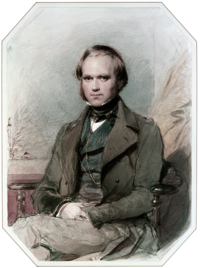
RESPONDING TO HARRY KROTO’S BRILLIANT RENOWNED ACADEMICS!! Part 104 Rodolfo Llinas  neuroscientist NYU School of Medicine  “I know that even those who believe in God deeply know that there is no possible way of discerning his existence. Measure something that tells me that God exists, anything”


On November 21, 2014 I received a letter from Nobel Laureate Harry Kroto and it said:

…Please click on this URL http://vimeo.com/26991975

and you will hear what far smarter people than I have to say on this matter. I agree with them.

Harry Kroto

Nick Gathergood, David-Birkett, Harry-Kroto

I have attempted to respond to all of Dr. Kroto’s friends arguments and I have posted my responses one per week for over a year now. Here are some of my earlier posts:

Arif Ahmed, Sir David AttenboroughMark Balaguer, Horace Barlow, Michael BatePatricia ChurchlandAaron CiechanoverNoam Chomsky,Alan DershowitzHubert Dreyfus, Bart Ehrman, Stephan FeuchtwangDavid Friend,  Riccardo GiacconiIvar Giaever , Roy GlauberRebecca GoldsteinDavid J. Gross,  Brian Greene, Susan GreenfieldStephen F Gudeman,  Alan Guth, Jonathan HaidtTheodor W. Hänsch, Brian Harrison,  Hermann HauserRoald Hoffmann,  Bruce HoodHerbert Huppert,  Gareth Stedman Jones, Steve JonesShelly KaganMichio Kaku,  Stuart Kauffman,  Lawrence KraussHarry Kroto, George LakoffElizabeth Loftus,  Alan MacfarlanePeter MillicanMarvin MinskyLeonard Mlodinow,  Yujin NagasawaAlva NoeDouglas Osheroff,  Jonathan Parry,  Saul PerlmutterHerman Philipse,  Carolyn PorcoRobert M. PriceLisa RandallLord Martin Rees,  Oliver Sacks, John SearleMarcus du SautoySimon SchafferJ. L. Schellenberg,   Lee Silver Peter Singer,  Walter Sinnott-ArmstrongRonald de Sousa, Victor StengerBarry Supple,   Leonard Susskind, Raymond TallisNeil deGrasse Tyson,  .Alexander Vilenkin, Sir John WalkerFrank WilczekSteven Weinberg, and  Lewis Wolpert,

Rodolfo Llinás

From Wikipedia, the free encyclopedia
Rodolfo Llinás
Rodolfo Llinás in 2010.png
Born 16 December 1934
Bogotá, Colombia
Residence New York City, New York, United States
Fields Neuroscience
Institutions NYU School of Medicine
Alma mater Universidad Javeriana andAustralian National University
Known for Physiology of the cerebellum, thethalamus, Thalamocortical dysrhythmia as well as for his pioneering work on the inferior olive, on the squid giant synapseand on humanmagnetoencephalography (MEG)

Rodolfo R. Llinás (Bogota, Colombia 16 December 1934) is a Colombian American neuroscientist. He is currently the Thomas and Suzanne Murphy Professor of Neuroscience and Chairman Emmeritus of the department of Physiology & Neuroscience at the NYU School of Medicine. He attended the Gimnasio Moderno school and received his MD from the Universidad Javeriana, Bogotáin 1959 and his PhD in 1965 from the Australian National University working under Sir John Eccles.[1] Llinás has published over 500 scientific articles.

Early life[edit]

Llinás was born in Bogotá, Colombia. He went to the Gimnasio Moderno school in Bogotá and graduated as a medical doctor from the Pontifical Xavierian University.

Work[edit]

He has studied the electrophysiology of single neurons in the cerebellum, the thalamus, the cerebral cortex, the entorhinal cortex, the hippocampus, the vestibular system, the inferior olive and thespinal cord. He has studied synaptic transmitter release in the squid giant synapse. He has studied human brain function using magnetoencephalography (MEG) on the basis of which he introduced the concept of Thalamocortical dysrhythmia.[2]

Contributions[edit]

In  the second video below in the 78th clip in this series are his words and  my response is below them. 

50 Renowned Academics Speaking About God (Part 1)

Another 50 Renowned Academics Speaking About God (Part 2)

A Further 50 Renowned Academics Speaking About God (Part 3)

_________________________________

Below is my letter to Dr. Rodolfo Llinas and my response to his quote:

6-6-16

Dr. Rodolfo Llinas, Professor of Neuroscience; University Professor; Department of Neuroscience and Physiology, NYU

Dear Dr. Llinas,

Back in 1981 I got to visit 20 European trips with 42 girls and 5 boys on a college trip for a copy of months. When  I was in Rome or Athens I had 13 girls that would walk with me and when  a foreign guy would approach them they would say that they were with me. I was a legend in  those towns in  Europe!!!! On that trip I met a good friend named Carlos and he was from Columbia, and he always was trying to get me to come visit him but I was afraid of dangers I had read about down there. He told he would meet me at the airport and escort around the country in the safe areas. I was reminded of that lately when I watched the hit TV show MODERN FAMILY because Gloria is from Columbia and she always joked about the safety in Columbia.

In the popular You Tube video “Renowned Academics Speaking About God” you made the following statement:

“I have no measure possible,  I know that even those who believe in God deeply know that there is no possible way of discerning his existence. Measure something that tells me that God exists, anything. ARE WE SAYING THAT DISCERNMENT IS THE SAME THING AS MEASUREMENT? Yes, indeed, in this case for me it is…”

As a scientist you emphasis the need to have things confirmed through observational data. Have you taken time to really look at the historical claims of the Bible and if they are really accurate or not?

Let me respond  with the words of Francis Schaeffer from his book HE IS THERE AND HE IS NOT SILENT (the chapter is entitled, “Is Propositional Revelation Nonsense?”

Of course, if the infinite uncreated Personal communicated to the finite created personal, he would not exhaust himself in his communication; but two things are clear here:
 
1. Even communication between once created person and another is not exhaustive, but that does not mean that for that reason it is not true. 
 
2. If the uncreated Personal really cared for the created personal, it could not be thought unexpected for him to tell the created personal things of a propositional nature; otherwise as a finite being the created personal would have numerous things he could not know if he just began with himself as a limited, finite reference point. In such a case, there is no intrinsic reason why the uncreated Personal could communicate some vaguely true things, but could not communicate propositional truth concerning the world surrounding the created personal – for fun, let’s call that science. Or why he could not communicate propositional truth to the created personal concerning the sequence that followed the uncreated Personal making everything he made – let’s call that history. There is no reason we could think of why he could not tell these two types of propositional things truly. They would not be exhaustive; but could we think of any reason why they would not be true? The above is, of course, what the Bible claims for itself in regard to propositional revelation.
DOES THE BIBLE ERR IN THE AREA OF SCIENCE AND HISTORY? The Bible is true from cover to cover and can be trusted. Charles Darwin himself longed for evidence to come forward from the area of  Biblical Archaeology  but so much has  advanced  since Darwin wrote these words in the 19th century! Here are some of the posts I have done in the past on the subject and if you like you could just google these subjects: 1. The Babylonian Chronicleof Nebuchadnezzars Siege of Jerusalem, 2. Hezekiah’s Siloam Tunnel Inscription.13. The Pilate Inscription14. Caiaphas Ossuary14 B Pontius Pilate Part 214c. Three greatest American Archaeologists moved to accept Bible’s accuracy through archaeology.

Below is a piece of that evidence given by Francis Schaeffer concerning the accuracy of the Bible. TRUTH AND HISTORY (chapter 5 of WHATEVER HAPPENED TO THE HUMAN RACE?, under footnote #94)

We now take a jump back in time to the middle of the ninth century before Christ, that is, about 850 B.C. Most people have heard of Jezebel. She was the wife of Ahab, the king of the northern kingdom of Israel. Her wickedness has become so proverbial that we talk about someone as a “Jezebel.” She urged her husband to have Naboth killed, simply because Ahab had expressed his liking for a piece of land owned by Naboth, who would not sell it. The Bible tells us also that she introduced into Israel the worship of her homeland, the Baal worship of Tyre. This led to the opposition of Elijah the Prophet and to the famous conflict on Mount Carmel between Elijah and the priests of Baal.

.

‘The Woman at the Window’ – an ivory artifact

‘The Woman at the Window’ – an ivory artifact from Samaria. Photo source.

© The Israel Museum, Jerusalem
MIRROR IMAGE. Because most seals were pressed into wet pottery or into small blobs of clay used to secure scrolls— serving much like a signature— symbols and letters were often carved in reverse. When stamped into the clay, the seal images and inscription would appear correctly. This photo of the Jezebel seal and its impression, or bulla, show the seal in reverse and in proper stance.

______

Here again one finds archaeological confirmations of what the Bible says. Take for example: “As for the other events of Ahab’s reign, including all he did, the palace he built and inlaid with ivory, and the cities he fortified, are they not written in the book of the annals of the kings of Israel?” (I Kings 22:39).

This is a very brief reference in the Bible to events which must have taken a long time: building projects which probably spanned decades. Archaeological excavations at the site of Samaria, the capital, reveal something of the former splendor of the royal citadel. Remnants of the “ivory house” were found and attracted special attention (Palestinian Archaeological Museum, Jerusalem). This appears to have been a treasure pavilion in which the walls and furnishings had been adorned with colored ivory work set with inlays giving a brilliant too, with the denunciations revealed by the prophet Amos:

“I will tear down the winter house along with the summer house; the houses adorned with ivory will be destroyed and the mansions will be demolished,” declares the Lord. (Amos 3:15)

Other archaeological confirmation exists for the time of Ahab. Excavations at Hazor and Megiddo have given evidence of  the extent of fortifications carried out by Ahab. At Megiddo, in particular, Ahab’s works were very extensive including a large series of stables formerly assigned to Solomon’s time.

On the political front, Ahab had to contend with danger from the Aramacaus king of Syria who besieged Samaria, Ahab’s capital. Ben-hadad’s existence is attested by a stela (a column with writing on it) which has been discovered with his name written on it (Melquart Stela, Aleppo Museum, Syria). Again, a detail of history given in the Bible is shown to be correct.

The seal bears four letters (YZBL) interspersed around the images. Although scholars have long recognized the similarity of the inscription to the name Jezebel, they have usually refrained from making a connection to the infamous Queen Jezebel, Phoenician wife of the Israelite king Ahab. With the reconstruction of two additional letters (L’) in the damaged area at the top, however, author Marjo Korpel argues that the inscription originally read L’YZBL, or “(belonging) to Jezebel” and was in fact the personal seal of the Biblical queen.

Seal of Jezebel Identified Non-Technical – Sep 19, 2008 – by Bryant G. Wood PhD This article was first published in the Spring 2008 issue of Bible and Spade.

Jezebel was no doubt the wickedest woman in the Bible. In the book of Revelation her name was invoked in condemning a false prophetess in Thyatira who promoted sexual immorality and the eating of food sacrificed to idols (Rv 2:20). Even today the name is emblematic of a sinful, shameless woman. Jezebel means “where is his highness (=Baal)?” (Korpel 2008: 37). Baal was the great  Canaanite storm and fertility god. Jezebel’s father Ethbaal, whose name means “with Baal” or “man of Baal,” was king of the  Phoenicians (1 Kgs 16:31). The Jewish historian Josephus tells us that Ethbaal was formerly a priest of Ashtoreth, consort of Baal, who  usurped the throne and reigned over Tyre and Sidon for 32 years (Contra Apionem i.18.123).


Opal seal with the name of Jezebel. The inscription and symbols on the seal make it highly likely that it was the official seal of the wicked woman of the Old Testament. She was a woman of power as indicated by her title “Queen Mother” (2 Kgs 10:13). Although Jezebel had her own seal to authenticate official correspondence, when she forged the letters to the elders and nobles of Jezreel in order do away with Naboth and seize his vineyard, she used Ahab’s seal rather than her own for maximum authority (1 Kgs 21:8).

In order to form a political alliance with the Phoenicians, Ahab, king of Israel (874–853 BC), married Baal-worshipping Jezebel (1 Kgs  16:31). “Urged on by Jezebel his wife” (1 Kgs 21:25), Ahab became a follower of Baal, and even erected a temple and altar to the pagan  deity in Samaria (1 Kgs 16:32). He had the distinction of being the king who “did more to provoke the LORD, the God of Israel, to anger  than did all the kings of Israel before him” (1 Kgs 16:33). Jezebel bore Ahab a son, Joram, who ruled Israel for 12 years from 852 to 841 BC, and she herself became a strong political figure bearing the title “Queen Mother” (2 Kgs 10:13).

Baal the Canaanite storm god, also worshipped by the later Phoenicians. In his left hand he holds a spear which flashes lightning and in his right hand a mace. The relief, which dates to 1650–1500 BC, was found in a sanctuary in the Canaanite city of Ugarit, Syria, in 1932. It is now on display in the Louvre Museum in Paris.

Jezebel was zealous in her efforts to stamp out Yahwism and promote the worship of Baal. She mounted a campaign to kill the Lord’s prophets (1 Kgs 18:4, 13), while at the same time feeding 450 prophets of Baal and 400 prophets of Asherah, the Canaanite mother goddess and consort of El, at the royal table (1 Kgs 18:19). This led to a confrontation between Elijah and the prophets of Baal on Mt. Carmel, resulting in the extermination of the prophets of Baal (1 Kgs 18:16–40).

Jezebel also figures prominently in the account of the appropriation of Naboth’s vineyard. Naboth refused to sell his vineyard to greedy Ahab. Conniving Jezebel arranged to have false charges brought against Naboth, which resulted in his death (1 Kgs 21). When Ahab went to take possession of the vineyard, Elijah was there with a message from God:

“I am going to bring disaster on you. I will consume your descendants and cut off from Ahab every last male in Israel— slave or free…because you have provoked me to anger and have caused Israel to sin.” And also concerning Jezebel the LORD says: “Dogs will devour Jezebel by the wall of Jezreel” (1 Kgs 21:21–23).

Shortly thereafter Ahab was killed in a battle against the Arameans (1 Kgs 22:29–40). Twelve years later a prophet of the Lord anointed Jehu, a general in the Israelite army, king with the following charge:

You are to destroy the house of Ahab your master, and I will avenge the blood of my servants the prophets and the blood of all the LORD’s servants the prophets and the blood of all the LORD’s servants shed by Jezebel (2 Kgs 9:7).

Statue of Elijah on Mt. Carmel memorializing Elijah’s encounter with Jezebel’s prophets. Elijah challenged the 450 prophets of Baal who ate at Jezebel’s table to a sacrifice cook-off: “you call on the name of your god and I will call on the name of the LORD. The god who answers by fire—he is God” (1 Kgs 18:24). Who do you think won? You can read the account in 1 Kings 18:16–40.

Jehu went on to wipe out Ahab’s descendants, including Jezebel’s son Joram. As the Lord had predicted through Elijah, Jezebel met a grisly end. Jehu went to the royal residence at Jezreel and found the Queen Mother, with her eyes painted and hair arranged, looking out a palace window. Jehu ordered her eunuchs to throw her out the window:

So they threw her down, and some of her blood spattered the wall and the horses as they trampled her underfoot. Jehu went in and ate and drank. “Take care of that cursed woman,” he said, “and bury her, for she was a king’s daughter.” But when they went out to bury her, they found nothing except her skull, her feet and her hands. They went back and told Jehu, who said, “This is the word of the LORD that he spoke through his servant Elijah the Tishbite: On the plot of ground at Jezreel dogs will devour Jezebel’s flesh” (2 Kgs 9:33–36).

In the early 1960s a seal was purchased on the antiquities market and donated to the Israel Museum in Jerusalem. The late Nahman Avigad, a leading Israeli paleographer (one who studies ancient writing), published an article about the seal in 1964. He suggested the name on the seal was possibly Jezebel, but there was a problem—the first letter of the name was missing. And so, little attention was paid to the seal and it languished in the Israel Museum for decades. Then, Dutch researcher Marjo Korpel (Associate Professor of Old Testament, Utrecht University, Utrecht, The Netherlands) became interested in it. Korpel was first drawn to the seal because of its imagery, but then became intrigued with the inscription. She noticed that a piece had broken off at the top and this could very well have been where the missing letter was originally located. She conjectured that there were initially two letters in the area of the break: a Hebrew lamed, or L, which stood for “(belonging) to” or “for,” and the missing first letter of Jezebel’s name.

Seal of Jezebel with missing letters restored. The top of the seal has been damaged and it is in this area that Old Testament scholar Marjo Korpel suggests that there were originally two letters: alamed, meaning “(belonging) to” and an aleph, the first letter of Jezebel’s name. The restored inscription would then read “(belonging) to Jezebel.” The seal is scheduled to go on display at the Israel Museum in Jerusalem in 2010 when renovation work at the museum is completed.

Apart from the inscription, there are other compelling reasons for identifying the seal as that of Jezebel. First, as Avigad observed, it is very fancy, suggestive of royalty. It is made of the gemstone opal and is larger than average, being 1.24 in (31 mm) from top to bottom (Avigad 1964: 274). Secondly, the form of the letters is Phoenician, or imitates Phoenician writing (Korpel 2008: 37). Thirdly, the seal is fi lled with common Egyptian symbols that were often used in Phoenicia in the ninth century BC and are suggestive of a queen. At the top is a crouching winged sphinx with a woman’s face, the body of a lioness and a female Isis/Hathor crown. To the left is an Egyptian ankh, the sign of life. In the lower register, below a winged disk, is an Egyptian style falcon, symbol of royalty in Egypt. On either side of the falcon is a uraeus, the cobra representation of Egyptian royalty worn on crowns. At the bottom left is a lotus, a symbol often associated with royal women. All of these icons taken together denote female royalty (Korpel 2008: 36–37).

Although 100% certainty cannot be attained, Korpel’s assessment of the evidence leads her to conclude, “I believe it is very likely that we have here the seal of the famous Queen Jezebel” (2008: 37). Bibliography Avigad, Nahman 1964 The Seal of Jezebel. Israel Exploration Journal 14: 274–76.
Korpel, Marjo C.A. 2008 Fit for a Queen: Jezebel’s Royal Seal. Biblical Archaeology Review 34.2: 32–37, 80.

The Ivory Palace of King Ahab

Now the rest of the acts of Ahab, and all that he did, and the ivory house which he made, and all the cities that he built, are they not written in the book of the chronicles of the kings of Israel?
(The Bible, 1 Kings 22: 39)

According to the Old Testament, King Ahab was the seventh king of the northern kingdom of Israel since Jeroboam I, and reigned during the 9th century B.C. In the Old Testament, Ahab, along with his wife, Jezebel, gets a rather negative portrayal for the various things that they did, such as the worship of Baal.

According to the Old Testament, Ahab’s father, Omri, purchased the hill of Samaria and founded a city there: “In the thirty and first year of Asa king of Judah began Omri to reign over Israel, twelve years: six years reigned he in Tirzah. And he bought the hill Samaria of Shemer for two talents of silver, and built on the hill, and called the name of the city which he built, after the name of Shemer, owner of the hill, Samaria.” (The Bible, 1 Kings 16: 23-24)

It was on this hill that Ahab built his ‘ivory palace’. It is often pointed out that the existence of such a structure has been confirmed by archaeological evidence. However, it will be shown that this is not as straightforward as it seems, and that the phrase “Ivory Palace of King Ahab” is a rather problematic one. In 1932, the Joint Expedition to Samaria, located in present-day West Bank, discovered a large quantity of ivory objects and decorations (a total of 250 fragments were recorded) near the northern area of Samaria’s summit. This has led people, including the archaeologists, to believe that they have found King Ahab’s Ivory Palace.

There are two problems with this interpretation. The first problem involves the question of what is meant by an ‘ivory palace’. One may envision an ivory palace to be a building somehow constructed literally from ivory (that’s what I’d imagine anyway). After all, if King Ahab were to be depicted as a really wealthy king, this would be a pretty good way to do so. However, these fragments were probably once attached to wooden furniture. The ivories from Fort Shalmaneser in Nimrud, Iraq, may be seen as parallels to those found in Samaria. Of course, one might argue that an ‘ivory palace’ was a building that had lots of ivory-decorated furniture, or ivory carvings, rather than a structure built of ivory. 

The bigger problem, however, is the fact that this structure was not even built by King Ahab. Based on the Kathleen Kenyon’s stratigraphic notes and summaries of the site, it seems that most of these ivory fragments date to the Hellenistic and Roman periods, several hundreds of years after the reign of King Ahab.

Although a structure containing ivory fragments was discovered by archaeologists, it was not King Ahab’s Ivory Palace. So, why was it identified as such then? Perhaps it was only natural that the Biblical reference produced an impulse to date these ivory fragments to the reign of King Ahab. The area where the ivories were found was also initially thought to be part of the royal palace (the large “palace” discovered to its west by the Harvard team in 1908-1910 was relegated to the status of a ‘supplementary building’). This view, however, was withdrawn in 1938, when the archaeologists realized that the walls of this building actually comprised only a section of a section of a second, inner enclosure wall, and that they could not “make a room or pavilion out of them.” By then, the damage was already done, and the ‘Ivory Palace of King Ahab’ is still regarded by some as having basis in archaeology.

If you think the score board is ‘Archaeology – 1, Bible – 0’, it isn’t quite as simple. Reliance on the Bible for the interpretation of archaeological evidence is very much like the reliance of any textual evidence. Although historical archaeology is said to be the “handmaiden to history”, it isn’t quite so. If you think archaeology’s here to support the textual evidence (of which history relies on), you’d better think again. I suppose, at the end of the day, one has to be critical of one’s sources, and not take the textual evidence at face value. Also, archaeologists ought to be careful with what they say, since there may be unforeseen repercussions, sometimes much worse than the misidentification of an ancient structure.

Featured image: An ivory plaque from Samaria depicting a lion attacking a bull. The lion symbolizes the sun, the bull the earth, the two creatures eternally warring for supremacy, with the lion better equipped to win. The plaque would have been attached to a screen or piece of furniture. Photo sourceBy Ḏḥwty

_____

The Ivory Palace of King Ahab

The Ivory Palace of King Ahab

.

King Ahab

An artist’s impression of King Ahab, from the “Promptuarii Iconum Insigniorum”.  Photo source: Wikimedia

King Ahab’s House of Ivory

Archaeologists haven’t found only Assyrian evidence for the existence of King Ahab. While excavating Samaria they have found indications of another biblical description connected to Ahab’s reign—his house of ivory. The Bible says of Ahab, “Now the rest of the acts of Ahab, and all that he did, the ivory house which he built and all the cities that he built, are they not written in the book of the chronicles of the kings of Israel?” (2 Kings 22:39).

Herschel Shanks, editor of Biblical Archaeology Review, writes: “An important ivory find from the Iron Age comes from Ahab’s capital in Samaria where over 500 ivory fragments were found … The Bible speaks of Ahab’s ‘house of ivory’ (1 Kings 22:39). Does this refer to the paneling of the walls or to the furnishings? To put the matter differently, did the ivory fragments found at Samaria decorate the walls of the building or the furniture? There is some evidence from Nimrud that a room in an Assyrian palace was, in fact, paneled with ivory veneer. Was this the case at Samaria? On the basis of the evidence at hand, it is difficult to tell.

“Whether paneling for the wall or decoration for furniture, the houses of ivory—based on a highly sophisticated Phoenician ivory industry—were for the Hebrew prophets symbols of social oppression and injustice; the ‘ivory houses’ [mentioned in Amos 3.15] were also evidence of participation in the barbarous pagan practices and heathen worship of Phoenicia. Based on the archaeological evidence, the prophets knew what they were talking about” ( Biblical Archaeology Review,September-October 1985, p. 46).

Thank you again for your time and I know how busy you are.

Everette Hatcher, everettehatcher@gmail.com, http://www.thedailyhatch.org, cell ph 501-920-5733, Box 23416, LittleRock, AR 72221

________

Related posts:

FRANCIS SCHAEFFER ANALYZES ART AND CULTURE Part 53 THE BEATLES (Part E, Stg. Pepper’s and John Lennon’s search in 1967 for truth was through drugs, money, laughter, etc & similar to King Solomon’s, LOTS OF PICTURES OF JOHN AND CYNTHIA) (Feature on artist Yoko Ono)

The John Lennon and the Beatles really were on a long search for meaning and fulfillment in their lives  just like King Solomon did in the Book of Ecclesiastes. Solomon looked into learning (1:12-18, 2:12-17), laughter, ladies, luxuries, and liquor (2:1-2, 8, 10, 11), and labor (2:4-6, 18-20). He fount that without God in the picture all […]

FRANCIS SCHAEFFER ANALYZES ART AND CULTURE Part 52 THE BEATLES (Part D, There is evidence that the Beatles may have been exposed to Francis Schaeffer!!!) (Feature on artist Anna Margaret Rose Freeman )

______________   George Harrison Swears & Insults Paul and Yoko Lucy in the Sky with Diamonds- The Beatles The Beatles:   I have dedicated several posts to this series on the Beatles and I don’t know when this series will end because Francis Schaeffer spent a lot of time listening to the Beatles and talking […]

FRANCIS SCHAEFFER ANALYZES ART AND CULTURE Part 51 THE BEATLES (Part C, List of those on cover of Stg.Pepper’s ) (Feature on artist Raqib Shaw )

  The Beatles in a press conference after their Return from the USA Uploaded on Nov 29, 2010 The Beatles in a press conference after their Return from the USA. The Beatles:   I have dedicated several posts to this series on the Beatles and I don’t know when this series will end because Francis […]

FRANCIS SCHAEFFER ANALYZES ART AND CULTURE Part 50 THE BEATLES (Part B, The Psychedelic Music of the Beatles) (Feature on artist Peter Blake )

__________________   Beatles 1966 Last interview I have dedicated several posts to this series on the Beatles and I don’t know when this series will end because Francis Schaeffer spent a lot of time listening to the Beatles and talking and writing about them and their impact on the culture of the 1960’s. In this […]

FRANCIS SCHAEFFER ANALYZES ART AND CULTURE Part 49 THE BEATLES (Part A, The Meaning of Stg. Pepper’s Cover) (Feature on artist Mika Tajima)

_______________ The Beatles documentary || A Long and Winding Road || Episode 5 (This video discusses Stg. Pepper’s creation I have dedicated several posts to this series on the Beatles and I don’t know when this series will end because Francis Schaeffer spent a lot of time listening to the Beatles and talking and writing about […]

FRANCIS SCHAEFFER ANALYZES ART AND CULTURE PART 48 “BLOW UP” by Michelangelo Antonioni makes Philosophic Statement (Feature on artist Nancy Holt)

_______________ Francis Schaeffer pictured below: _____________________ I have included the 27 minute  episode THE AGE OF NONREASON by Francis Schaeffer. In that video Schaeffer noted,  ” Sergeant Pepper’s Lonely Hearts Club Band…for a time it became the rallying cry for young people throughout the world. It expressed the essence of their lives, thoughts and their feelings.” How Should […]

FRANCIS SCHAEFFER ANALYZES ART AND CULTURE Part 47 Woody Allen and Professor Levy and the death of “Optimistic Humanism” from the movie CRIMES AND MISDEMEANORS Plus Charles Darwin’s comments too!!! (Feature on artist Rodney Graham)

Crimes and Misdemeanors: A Discussion: Part 1 ___________________________________ Today I will answer the simple question: IS IT POSSIBLE TO BE AN OPTIMISTIC SECULAR HUMANIST THAT DOES NOT BELIEVE IN GOD OR AN AFTERLIFE? This question has been around for a long time and you can go back to the 19th century and read this same […]

FRANCIS SCHAEFFER ANALYZES ART AND CULTURE PART 46 Friedrich Nietzsche (Featured artist is Thomas Schütte)

____________________________________ Francis Schaeffer pictured below: __________ Francis Schaeffer has written extensively on art and culture spanning the last 2000years and here are some posts I have done on this subject before : Francis Schaeffer’s “How should we then live?” Video and outline of episode 10 “Final Choices” , episode 9 “The Age of Personal Peace and Affluence”, episode 8 […]

FRANCIS SCHAEFFER ANALYZES ART AND CULTURE Part 45 Woody Allen “Reason is Dead” (Feature on artists Allora & Calzadilla )

Love and Death [Woody Allen] – What if there is no God? [PL] ___________ _______________ How Should We then Live Episode 7 small (Age of Nonreason) #02 How Should We Then Live? (Promo Clip) Dr. Francis Schaeffer 10 Worldview and Truth Two Minute Warning: How Then Should We Live?: Francis Schaeffer at 100 Francis Schaeffer […]

FRANCIS SCHAEFFER ANALYZES ART AND CULTURE Part 44 The Book of Genesis (Featured artist is Trey McCarley )

___________________________________ Francis Schaeffer pictured below: ____________________________ Francis Schaeffer “BASIS FOR HUMAN DIGNITY” Whatever…HTTHR Dr. Francis schaeffer – The flow of Materialism(from Part 4 of Whatever happened to human race?) Dr. Francis Schaeffer – The Biblical flow of Truth & History (intro) Francis Schaeffer – The Biblical Flow of History & Truth (1) Dr. Francis Schaeffer […]

__
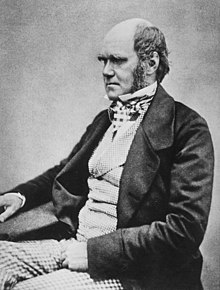
RESPONDING TO HARRY KROTO’S BRILLIANT RENOWNED ACADEMICS!! Part 103 Craig Venter,   “I believe the universe is far more wonderful than just assuming it was made by some higher power”

I read the book by Craig Venter called LIFE AT THE SPEED OF LIGHT: FROM THE DOUBLE HELIX TO THE DAWN OF DIGITAL LIFE and in that book  on page 146 Venter wrote, “The future of biological research will be based to a great extent on the combination of computer science and synthetic biology.  We can get a fascinating view of this future from a series of contests that culminate in a remarkable event that takes place each year in Cambridge, Massachusetts–A gathering of brilliant young minds that gives me great hope for the future.  The International Genetically Engineered Machine (iGEM) competition invites high school and college students and entrepreneurs to shuffle a standard set of DNA subroutines into something new in a competition for a trophy…”

This statement of Dr. Venter assumes that EDUCATION IS THE ANSWER!!!

A man who has never gone to school may steal from a freight car; but if he has a university education, he may steal the whole railroad. Theodore Roosevelt

Humanity’s problem  is  not a lack of education but a moral problem.

Adrian Rogers:

Did you know that all atheists are not atheists because of intellectual problems? They’re atheists because of moral problems. You say, “But I know some brilliant people who are atheists.” Well, that may be so, but I know some brilliant people who are not. You say, “I know some foolish people who believe in God.” Well, I know everyone who doesn’t believe in God is foolish.

Later in the letter to Dr. Venter I expose the problems with OPTIMISTIC HUMANISM.

___________

On November 21, 2014 I received a letter from Nobel Laureate Harry Kroto and it said:

…Please click on this URL http://vimeo.com/26991975

and you will hear what far smarter people than I have to say on this matter. I agree with them.

Harry Kroto

I have attempted to respond to all of Dr. Kroto’s friends arguments and I have posted my responses one per week for over a year now. Here are some of my earlier posts:

Arif Ahmed, Sir David AttenboroughMark Balaguer, Horace Barlow, Michael BatePatricia ChurchlandAaron CiechanoverNoam Chomsky,Alan DershowitzHubert Dreyfus, Bart Ehrman, Stephan FeuchtwangDavid Friend,  Riccardo GiacconiIvar Giaever , Roy GlauberRebecca GoldsteinDavid J. Gross,  Brian Greene, Susan GreenfieldStephen F Gudeman,  Alan Guth, Jonathan HaidtTheodor W. Hänsch, Brian Harrison,  Hermann HauserRoald Hoffmann,  Bruce HoodHerbert Huppert,  Gareth Stedman Jones, Steve JonesShelly KaganMichio Kaku,  Stuart Kauffman,  Lawrence KraussHarry Kroto, George LakoffElizabeth Loftus,  Alan MacfarlanePeter MillicanMarvin MinskyLeonard Mlodinow,  Yujin NagasawaAlva NoeDouglas Osheroff,  Jonathan Parry,  Saul PerlmutterHerman Philipse,  Carolyn PorcoRobert M. PriceLisa RandallLord Martin Rees,  Oliver Sacks, John SearleMarcus du SautoySimon SchafferJ. L. Schellenberg,   Lee Silver Peter Singer,  Walter Sinnott-ArmstrongRonald de Sousa, Victor StengerBarry Supple,   Leonard Susskind, Raymond TallisNeil deGrasse Tyson,  .Alexander Vilenkin, Sir John WalkerFrank WilczekSteven Weinberg, and  Lewis Wolpert,

Craig Venter

From Wikipedia, the free encyclopedia
Craig Venter
Craigventer2.jpg

Venter in 2007
Born John Craig Venter
October 14, 1946 (age 68)
Salt Lake City, Utah, U.S.
Institutions State University of New York at Buffalo
National Institutes of Health
J. Craig Venter Institute
Alma mater University of California, San Diego
Known for DNA
Human genome
Metagenomics
Synthetic genomics
Shotgun approach to genome sequencing
Notable awards Gairdner Award (2002)
Nierenberg Prize (2007)
Kistler Prize (2008)
ENI award (2008)
Medal of Science (2008)
Dickson Prize (2011)
Website
J. Craig Venter Institute

John Craig Venter (born October 14, 1946) is an American biochemist, geneticist, and entrepreneur. He is known for being one of the first to sequence the human genome[1] and the first to transfect a cell with a synthetic genome.[2][3] Venter founded Celera Genomics, The Institute for Genomic Research (TIGR) and the J. Craig Venter Institute (JCVI), and is now working at JCVI to create synthetic biological organisms. He was listed on Time magazine’s 2007 and 2008 Time 100 list of the most influential people in the world. In 2010, the British magazine New Statesman listed Craig Venter at 14th in the list of “The World’s 50 Most Influential Figures 2010”.[4] He is a member of the USA Science and Engineering Festival‘s Advisory Board.[5]

Early life and education[edit]

Venter was born in Salt Lake City, Utah, the son of Elizabeth and John Venter.[6] In his youth, he did not take his education seriously, preferring to spend his time on the water in boats or surfing.[7] According to his biography, A Life Decoded, he was said to never be a terribly engaged student, having Cs and Ds on his eighth-grade report cards.[8] He graduated from Mills High School in Millbrae, California.

Although he was against the Vietnam War,[9] Venter was drafted and enlisted in the United States Navy where he worked in the intensive-care ward of a field hospital.[10] While in Vietnam, he attempted suicide by swimming out to sea, but changed his mind more than a mile out.[11] Being confronted with wounded, maimed, and dying [marines] on a daily basis instilled in him a desire to study medicine[12] — although he later switched to biomedical research.

Venter began his college education at a community college, College of San Mateo in California, and later transferred to the University of California, San Diego, where he studied under biochemist Nathan O. Kaplan. He received a BS in biochemistry in 1972, and a PhD in physiology and pharmacology in 1975, both from UCSD.[13] He married former PhD candidate Barbara Rae.[14][15][16] After working as an associate professor, and later as full professor, at the State University of New York at Buffalo, he joined the National Institutes of Health in 1984.

In Buffalo, he divorced Dr. Rae-Venter and married his student, Claire M. Fraser,[15] remaining married to her until 2005.[17] In late 2008 he married Heather Kowalski.[18] They live in La Jolla outside San Diego, California where Venter gut-renovated a $6 million home.[18]

Venter is an atheist.[19]

Venter himself recognized his own ADHD behavior in his adolescence, and later found ADHD-linked genes in his own DNA.[20]

In  the third video below in the 142nd clip in this series are his words and  my response is below them. 

50 Renowned Academics Speaking About God (Part 1)

Another 50 Renowned Academics Speaking About God (Part 2)

A Further 50 Renowned Academics Speaking About God (Part 3)

_________________________________

Below is the letter I wrote to respond to his quote:

February 23. 2015

Dr. J. Craig Venter, c/o The J. Craig Venter Institute,

Dear Dr. Venter,

I just finished reading the online addition of the book Darwin, Francis ed. 1892. Charles Darwin: his life told in an autobiographical chapter, and in a selected series of his published letters [abridged edition]. London: John Murray. There are several points that Charles Darwin makes in this book that were very wise, honest, logical, shocking and some that were not so wise. The Christian Philosopher Francis Schaeffer once said of Darwin’s writings, “Darwin in his autobiography and in his letters showed that all through his life he never really came to a quietness concerning the possibility that chance really explained the situation of the biological world. You will find there is much material on this [from Darwin] extended over many many years that constantly he was wrestling with this problem.”

A while back on the show 60 MINUTES I saw an interview of you with this exchange:

KROFT: “You know, I’ve asked two or three times, ‘Do you think you’re playing God?’ I mean, do you believe in God?”

VENTER: “No. I believe the universe is far more wonderful than just assuming it was made by some higher power. I think the fact that these cells are software-driven machines and that software is DNA and that truly the secret of life is writing software, is pretty miraculous. Just seeing that process in the simplest forms that we’re just witnessing is pretty stunning.”

You asserted that a world without God is “far more wonderful” than a world with a personal God who created it all and gave us the Bible. This is what I call evolutionary optimistic humanism and even in the 19th century Charles Darwin in his autobiography was touting the same product you are today!!!!

When I read the book  Charles Darwin: his life told in an autobiographical chapter, and in a selected series of his published letters, I also read  a commentary on it by Francis Schaeffer and I wanted to both  quote some of Charles Darwin’s own words to you and then include the comments of Francis Schaeffer on those words. I have also enclosed a CD with two messages from Adrian Rogers and Bill Elliff concerning Darwinism.

The passages which here follow are extracts, somewhat abbreviated, from a part of CHARLES DARWIN’S Autobiography, written in 1876, in which my father gives the history of his religious views:—

“Believing as I do that man in the distant future will be a far more perfect creature than he now is,”

FRANCIS SCHAEFFER COMMENTED:

Now you have now the birth of Julian Huxley’s evolutionary optimistic humanism already stated by Darwin. Darwin now has a theory that man is going to be better. If you had lived at 1860 or 1890 and you said to Darwin, “By 1970 will man be better?” He certainly would have the hope that man would be better as Julian Huxley does today. Of course, I wonder what he would say if he lived in our day and saw what has been made of his own views in the direction of (the mass murder) Richard Speck (and deterministic thinking of today’s philosophers). I wonder what he would say. So you have the factor, already the dilemma in Darwin that I pointed out in Julian Huxley and that is evolutionary optimistic humanism rests always on tomorrow. You never have an argument from the present or the past for evolutionary optimistic humanism.

You can have evolutionary nihilism on the basis of the present and the past. Every time you have someone bringing in evolutionary optimistic humanism it is always based on what is going to be produced tomorrow. When is it coming? The years pass and is it coming? Arthur Koestler doesn’t think it is coming. He sees lots of problems here and puts forth for another solution.

DR. VENTER I NOTICED ON YOUR WEBSITE THAT YOU ARE FOUNDER OF CEO OF Human Longevity Inc (HLI), a San Diego-based genomics and cell therapy-based diagnostic and therapeutic company focused on extending the healthy, high performance human life span. Evidently you are concerned today like Darwin was in the 19th century not only about the length of one’s life but also about the longevity of the human race.

In Darwin’s 1876 Autobiography he noted:

“…it is an intolerable thought that he and all other sentient beings are doomed to complete annihilation after such long-continued slow progress. To those who fully admit the immortality of the human soul, the destruction of our world will not appear so dreadful.”

Francis Schaeffer commented:

Here you feel Marcel Proust and the dust of death is on everything today because the dust of death is on everything tomorrow. Here you have the dilemma of Nevil Shute’s ON THE BEACH. If it is true that all we have left is biological continuity and increased biological complexity, which is all we have left in Darwinism here, or with many of the modern philosophers, then you can’t stand Shute’s ON THE BEACH. Maybe tomorrow at noon human life may be wiped out. Darwin already feels the tension, because if human life is going to be wiped out tomorrow, what is it worth today? Darwin can’t stand the thought of death of all men. Charlie Chaplin when he heard there was no life on Mars said, “I’m lonely.”

You think of the Swedish Opera (ANIARA) that is pictured inside a spaceship. There was a group of men and women going into outer space and they had come to another planet and the singing inside the spaceship was normal opera music. Suddenly there was a big explosion and the world had blown up and these were the last people left, the only conscious people left, and the last scene is the spaceship is off course and it will never land, but will just sail out into outer space and that is the end of the plot. They say when it was shown in Stockholm the first time, the tough Swedes with all their modern  mannishness, came out (after the opera was over) with hardly a word said, just complete silence.

Darwin already with his own position says he CAN’T STAND IT!! You can say, “Why can’t you stand it?” We would say to Darwin, “You were not made for this kind of thing. Man was made in the image of God. Your CAN’T- STAND- IT- NESS is screaming at you that your position is wrong. Why can’t you listen to yourself?”

You find all he is left here is biological continuity, and thus his feeling as well as his reason now is against his own theory, yet he holds it against the conclusions of his reason. Reason doesn’t make it hard to be a Christian. Darwin shows us the other way. He is holding his position against his reason.

____________

These words of Darwin ring in my ear, “…it is an intolerable thought that he and all other sentient beings are doomed to complete annihilation after such long-continued slow progress…” . Schaeffer rightly noted, “Maybe tomorrow at noon human life may be wiped out. Darwin already feels the tension, because if human life is going to be wiped out tomorrow, what is it worth today? Darwin can’t stand the thought of death of all men.” IN OTHER WORDS ALL WE ARE IS DUST IN THE WIND.  I sent you a CD that starts off with the song DUST IN THE WIND by Kerry Livgren of the group KANSAS which was a hit song in 1978 when it rose to #6 on the charts because so many people connected with the message of the song. It included these words, “All we do, crumbles to the ground though we refuse to see, Dust in the Wind, All we are is dust in the wind, Don’t hang on, Nothing lasts forever but the Earth and Sky, It slips away, And all your money won’t another minute buy.”

Kerry Livgren himself said that he wrote the song because he saw where man was without a personal God in the picture. Solomon pointed out in the Book of Ecclesiastes that those who believe that God doesn’t exist must accept three things. FIRST, death is the end and SECOND, chance and time are the only guiding forces in this life.  FINALLY, power reigns in this life and the scales are never balanced. The Christian can  face death and also confront the world knowing that it is not determined by chance and time alone and finally there is a judge who will balance the scales.

Both Kerry Livgren and the bass player Dave Hope of Kansas became Christians eventually. Kerry Livgren first tried Eastern Religions and Dave Hope had to come out of a heavy drug addiction. I was shocked and elated to see their personal testimony on The 700 Club in 1981 and that same  interview can be seen on You Tube today. Livgren lives in Topeka, Kansas today where he teaches “Diggers,” a Sunday school class at Topeka Bible ChurchDAVE HOPE is the head of Worship, Evangelism and Outreach at Immanuel Anglican Church in Destin, Florida.

The answer to find meaning in life is found in putting your faith and trust in Jesus Christ. The Bible is true from cover to cover and can be trusted.

Thank you again for your time and I know how busy you are.

Everette Hatcher, everettehatcher@gmail.com, http://www.thedailyhatch.org, cell ph 501-920-5733, Box 23416, LittleRock, AR 72221, United States


You can hear DAVE HOPE and Kerry Livgren’s stories from this youtube link:

(part 1 ten minutes)

(part 2 ten minutes)

Kansas – Dust in the Wind (Official Video)

Uploaded on Nov 7, 2009

Pre-Order Miracles Out of Nowhere now at http://www.miraclesoutofnowhere.com

About the film:
In 1973, six guys in a local band from America’s heartland began a journey that surpassed even their own wildest expectations, by achieving worldwide superstardom… watch the story unfold as the incredible story of the band KANSAS is told for the first time in the DVD Miracles Out of Nowhere.

________

Related posts:

FRANCIS SCHAEFFER ANALYZES ART AND CULTURE Part 53 THE BEATLES (Part E, Stg. Pepper’s and John Lennon’s search in 1967 for truth was through drugs, money, laughter, etc & similar to King Solomon’s, LOTS OF PICTURES OF JOHN AND CYNTHIA) (Feature on artist Yoko Ono)

The John Lennon and the Beatles really were on a long search for meaning and fulfillment in their lives  just like King Solomon did in the Book of Ecclesiastes. Solomon looked into learning (1:12-18, 2:12-17), laughter, ladies, luxuries, and liquor (2:1-2, 8, 10, 11), and labor (2:4-6, 18-20). He fount that without God in the picture all […]

FRANCIS SCHAEFFER ANALYZES ART AND CULTURE Part 52 THE BEATLES (Part D, There is evidence that the Beatles may have been exposed to Francis Schaeffer!!!) (Feature on artist Anna Margaret Rose Freeman )

______________   George Harrison Swears & Insults Paul and Yoko Lucy in the Sky with Diamonds- The Beatles The Beatles:   I have dedicated several posts to this series on the Beatles and I don’t know when this series will end because Francis Schaeffer spent a lot of time listening to the Beatles and talking […]

FRANCIS SCHAEFFER ANALYZES ART AND CULTURE Part 51 THE BEATLES (Part C, List of those on cover of Stg.Pepper’s ) (Feature on artist Raqib Shaw )

  The Beatles in a press conference after their Return from the USA Uploaded on Nov 29, 2010 The Beatles in a press conference after their Return from the USA. The Beatles:   I have dedicated several posts to this series on the Beatles and I don’t know when this series will end because Francis […]

FRANCIS SCHAEFFER ANALYZES ART AND CULTURE Part 50 THE BEATLES (Part B, The Psychedelic Music of the Beatles) (Feature on artist Peter Blake )

__________________   Beatles 1966 Last interview I have dedicated several posts to this series on the Beatles and I don’t know when this series will end because Francis Schaeffer spent a lot of time listening to the Beatles and talking and writing about them and their impact on the culture of the 1960’s. In this […]

FRANCIS SCHAEFFER ANALYZES ART AND CULTURE Part 49 THE BEATLES (Part A, The Meaning of Stg. Pepper’s Cover) (Feature on artist Mika Tajima)

_______________ The Beatles documentary || A Long and Winding Road || Episode 5 (This video discusses Stg. Pepper’s creation I have dedicated several posts to this series on the Beatles and I don’t know when this series will end because Francis Schaeffer spent a lot of time listening to the Beatles and talking and writing about […]

FRANCIS SCHAEFFER ANALYZES ART AND CULTURE PART 48 “BLOW UP” by Michelangelo Antonioni makes Philosophic Statement (Feature on artist Nancy Holt)

_______________ Francis Schaeffer pictured below: _____________________ I have included the 27 minute  episode THE AGE OF NONREASON by Francis Schaeffer. In that video Schaeffer noted,  ” Sergeant Pepper’s Lonely Hearts Club Band…for a time it became the rallying cry for young people throughout the world. It expressed the essence of their lives, thoughts and their feelings.” How Should […]

FRANCIS SCHAEFFER ANALYZES ART AND CULTURE Part 47 Woody Allen and Professor Levy and the death of “Optimistic Humanism” from the movie CRIMES AND MISDEMEANORS Plus Charles Darwin’s comments too!!! (Feature on artist Rodney Graham)

Crimes and Misdemeanors: A Discussion: Part 1 ___________________________________ Today I will answer the simple question: IS IT POSSIBLE TO BE AN OPTIMISTIC SECULAR HUMANIST THAT DOES NOT BELIEVE IN GOD OR AN AFTERLIFE? This question has been around for a long time and you can go back to the 19th century and read this same […]

FRANCIS SCHAEFFER ANALYZES ART AND CULTURE PART 46 Friedrich Nietzsche (Featured artist is Thomas Schütte)

____________________________________ Francis Schaeffer pictured below: __________ Francis Schaeffer has written extensively on art and culture spanning the last 2000years and here are some posts I have done on this subject before : Francis Schaeffer’s “How should we then live?” Video and outline of episode 10 “Final Choices” , episode 9 “The Age of Personal Peace and Affluence”, episode 8 […]

FRANCIS SCHAEFFER ANALYZES ART AND CULTURE Part 45 Woody Allen “Reason is Dead” (Feature on artists Allora & Calzadilla )

Love and Death [Woody Allen] – What if there is no God? [PL] ___________ _______________ How Should We then Live Episode 7 small (Age of Nonreason) #02 How Should We Then Live? (Promo Clip) Dr. Francis Schaeffer 10 Worldview and Truth Two Minute Warning: How Then Should We Live?: Francis Schaeffer at 100 Francis Schaeffer […]

FRANCIS SCHAEFFER ANALYZES ART AND CULTURE Part 44 The Book of Genesis (Featured artist is Trey McCarley )

___________________________________ Francis Schaeffer pictured below: ____________________________ Francis Schaeffer “BASIS FOR HUMAN DIGNITY” Whatever…HTTHR Dr. Francis schaeffer – The flow of Materialism(from Part 4 of Whatever happened to human race?) Dr. Francis Schaeffer – The Biblical flow of Truth & History (intro) Francis Schaeffer – The Biblical Flow of History & Truth (1) Dr. Francis Schaeffer […]

__

___

RESPONDING TO HARRY KROTO’S BRILLIANT RENOWNED ACADEMICS!! Part 102 Ned Block, Philosophy Dept, NYU, “I hold open the door, I am not going to close the door on the need for something supernatural”


On November 21, 2014 I received a letter from Nobel Laureate Harry Kroto and it said:

…Please click on this URL http://vimeo.com/26991975

and you will hear what far smarter people than I have to say on this matter. I agree with them.

Harry Kroto


I have attempted to respond to all of Dr. Kroto’s friends arguments and I have posted my responses one per week for over a year now. Here are some of my earlier posts:

Arif Ahmed, Sir David AttenboroughMark Balaguer, Horace Barlow, Michael BatePatricia ChurchlandAaron CiechanoverNoam Chomsky,Alan DershowitzHubert Dreyfus, Bart Ehrman, Stephan FeuchtwangDavid Friend,  Riccardo GiacconiIvar Giaever , Roy GlauberRebecca GoldsteinDavid J. Gross,  Brian Greene, Susan GreenfieldStephen F Gudeman,  Alan Guth, Jonathan HaidtTheodor W. Hänsch, Brian Harrison,  Hermann HauserRoald Hoffmann,  Bruce HoodHerbert Huppert,  Gareth Stedman Jones, Steve JonesShelly KaganMichio Kaku,  Stuart Kauffman,  Lawrence KraussHarry Kroto, George LakoffElizabeth Loftus,  Alan MacfarlanePeter MillicanMarvin MinskyLeonard Mlodinow,  Yujin NagasawaAlva NoeDouglas Osheroff,  Jonathan Parry,  Saul PerlmutterHerman Philipse,  Carolyn PorcoRobert M. PriceLisa RandallLord Martin Rees,  Oliver Sacks, John SearleMarcus du SautoySimon SchafferJ. L. Schellenberg,   Lee Silver Peter Singer,  Walter Sinnott-ArmstrongRonald de Sousa, Victor StengerBarry Supple,   Leonard Susskind, Raymond TallisNeil deGrasse Tyson,  .Alexander Vilenkin, Sir John WalkerFrank WilczekSteven Weinberg, and  Lewis Wolpert,

Ned Block

From Wikipedia, the free encyclopedia
Ned Block
Large ned.block.jpg
Born 1942
Chicago
Era 20th-century philosophy
Region Western Philosophy
School Analytic philosophy
Main interests Philosophy of mind
Notable ideas Blockhead
Influences

Ned Joel Block (born 1942) is an American philosopher working in the field of the philosophy of mind who has made important contributions to matters of consciousness and cognitive science. In 1971, he obtained hisPh.D. from Harvard University under Hilary Putnam. He went to Massachusetts Institute of Technology (MIT) as an assistant professor of philosophy (1971-1977), worked as associate professor of philosophy (1977-1983), professor of philosophy (1983-1996) and served as chair of the philosophy section (1989-1995). He has, since 1996, been a professor in the departments of philosophy and psychology and at the Center for Neural Science at New York University (NYU).

Block is noted for presenting the Blockhead argument against the Turing Test as a test of intelligence in a paper entitled Psychologism and Behaviorism (1981). He is also known for his criticism of functionalism, arguing that a system with the same functional states as a human is not necessarily conscious. In his more recent work on consciousness, he has made a distinction between phenomenal consciousness and access consciousness, where phenomenal consciousness consists of subjective experience and feelings and access consciousness consists of that information globally available in the cognitive system for the purposes of reasoning, speech and high-level action control. He has argued that access consciousness and phenomenal consciousness might not always coincide in human beings.

Block has been a judge at the Loebner Prize contest, a contest in the tradition of the Turing Test to determine whether a conversant is a computer or a human.

He is married to the developmental psychologist Susan Carey.

______________

In  the first video below in the 17th clip in this series are his words and  my response is below them. 

50 Renowned Academics Speaking About God (Part 1)

Another 50 Renowned Academics Speaking About God (Part 2)

A Further 50 Renowned Academics Speaking About God (Part 3)

_________________________________

Below is my letter that responds to Dr. Block’s quote:

September 29, 2015

Dr.Ned Block, Department of Philosophy, New York University

Dear Dr. Block,

In the popular You Tube video “Renowned Academics Speaking About God” you made the following statement:

“I hold open the door, I am not going to close the door on the need for something supernatural, but I think we have no reason to believe in it now. All the progress we have made in explaining  what appears to be something supernatural in natural terms leads me to optimistic that we can explain everything in natural terms.”

I AM REALLY IMPRESSED THAT YOU ARE A SECULAR MAN BUT YOU STILL ARE “HOLDING OPEN THE DOOR” TO CONSIDERING EVIDENCE THAT MAY LEAD YOU TO CONCLUDE THAT THE SUPERNATURAL DOES EXIST. Let me further respond with the words of Francis Schaeffer from his book HE IS THERE AND HE IS NOT SILENT (the chapter is entitled, “Is Propositional Revelation Nonsense?”

Of course, if the infinite uncreated Personal communicated to the finite created personal, he would not exhaust himself in his communication; but two things are clear here:
 
1. Even communication between once created person and another is not exhaustive, but that does not mean that for that reason it is not true. 
 
2. If the uncreated Personal really cared for the created personal, it could not be thought unexpected for him to tell the created personal things of a propositional nature; otherwise as a finite being the created personal would have numerous things he could not know if he just began with himself as a limited, finite reference point. In such a case, there is no intrinsic reason why the uncreated Personal could communicate some vaguely true things, but could not communicate propositional truth concerning the world surrounding the created personal – for fun, let’s call that science. Or why he could not communicate propositional truth to the created personal concerning the sequence that followed the uncreated Personal making everything he made – let’s call that history. There is no reason we could think of why he could not tell these two types of propositional things truly. They would not be exhaustive; but could we think of any reason why they would not be true? The above is, of course, what the Bible claims for itself in regard to propositional revelation.
DOES THE BIBLE ERR IN THE AREA OF SCIENCE AND HISTORY? The Bible is true from cover to cover and can be trusted. Charles Darwin himself longed for evidence to come forward from the area of  Biblical Archaeology  but so much has  advanced  since Darwin wrote these words in the 19th century! Here are some of the posts I have done in the past on the subject and if you like you could just google these subjects: 1. The Babylonian Chronicleof Nebuchadnezzars Siege of Jerusalem, 2. Hezekiah’s Siloam Tunnel Inscription.13. The Pilate Inscription14. Caiaphas Ossuary14 B Pontius Pilate Part 214c. Three greatest American Archaeologists moved to accept Bible’s accuracy through archaeology.

Recently I had the opportunity to come across a very interesting article by Michael Polanyi, LIFE TRANSCENDING PHYSICS AND CHEMISTRY, in the magazine CHEMICAL AND ENGINEERING NEWS, August 21, 1967, and I also got hold of a 1968 talk by Francis Schaeffer based on this article. Polanyi’s son John actually won the 1986 Nobel Prize for Chemistry. This article by Michael Polanyi concerns Francis Crick and James Watson and their discovery of DNA in 1953. Polanyi noted:

Mechanisms, whether man-made or morphological, are boundary conditions harnessing the laws of in
animate nature, being themselves irreducible to those laws. The pattern of organic bases in DNA which functions as a genetic code is a boundary condition irreducible to physics and chemistry. Further controlling principles of life may be represented as a hierarchy of boundary conditions extending, in the case of man, to consciousness and responsibility.

I would like to send you a CD copy of this talk because I thought you may find it very interesting. It includes references to not only James D. Watson, and Francis Crick but also  Maurice Wilkins, Erwin Schrodinger, J.S. Haldane (his son was the famous J.B.S. Haldane), Peter Medawar, and Barry Commoner. I WONDER IF YOU EVER HAD THE OPPORTUNITY TO RUN ACROSS THESE MEN OR ANY OF THEIR FORMER STUDENTS?

Below is a portion of the transcript from the CD and Michael Polanyi’s words are in italics while Francis Schaeffer’s words are not:

During the past 15 years, I have worked on these questions, achieving gradually stages of the argument presented in this paper. These are:

  1. Machines are not formed by physical and chemical equilibration. 
  2. The functional terms needed for characterizing a machine cannot for defined in terms of physics and chemistry. 

Polanyi is talking about specific machines but I would include the great cause and effect machine of the external universe that functions on a cause and effect basis. So if this is true of the watch,  then you have to ask the same question about the total machine that Sartre points out that is there, and that is the cause and effect universe. Polanyi doesn’t touch on this and he doesn’t have an answer, and I know people who know him. Yet nevertheless he sees the situation exactly as it is. And I would point out what  Alfred North Whitehead (1861–1947) and J. Robert Oppenheimer (1904–1967) said and that it needed a Christian consensus to produce modern science because it was the Christian consensus that gave the concept that the world being created by a reasonable God and that it could be found out and discovered by reason. So the modern science when it began with Copernicus and Galileo and all these men conceived that the cause and effect system of the universe would be there on the basis that it was created by a reasonable God, and that is Einstein’s big dilemma and that is why he became a mystic at the end of life…What Polanyi says here can be extended to the watch, and the bridge and the automobile but also to the big cause and effect universe. You have to give some kind of answer to this too and I would say this to Michael Polanyi if I ever have a chance to talk to him. You need another explanation too Polanyi.

3. No physical chemical topography will tell us that we have a machine before us and what its functions are. 

In other words, if you only know the chemicals and the physics you don’t know if you have a machine. It may just be junk. So nobody in the world could tell if it was a machine from merely the “physical chemical-topography.” You have to look at the machineness of the machine to say it is a machine. You could take an automobile and smash it into a small piece of metal with a giant press and it would have the same properties of the automobile, but the automobile would have disappeared. The automobile-ness of the automobile is something else than the physical chemical-topography.

4. Such a topography can completely identify one particular specimen of a machine, but can tell us nothing about a class of machines. 

5. And if we are asked how the same solid system can be subject to control by two independent principles, the answer is: The boundary conditions of the system are free of control by physics and can be controlled therefore by nonphysical, purely technical, principles. 

In other words you have to explain the engineering by something other than merely physical principles and of course it is. You can’t explain the watchness of the watch merely by this. You can explain it on the basis of engineering principles in which the human mind conceives of a use for the machine and produces the machine. But notice where Polanyi is and that is in our argument of a need of personality in the universe though Polanyi doesn’t draw this final conclusion, though I thought that is the only explanation.

If you look at the watch a man has made it for the purpose of telling time. When you see the automobile a man has made it for the purpose of locomotion and the explanation of the difference is not in the chemical and physical properties but in the personality of a man to make these two different machines for two different purposes out of the same material. So what you are left here is the need of personality in the universe.

____

Thank you for your time. I know how busy you are and I want to thank you for taking the time to read this letter.

Sincerely,

Everette Hatcher,

P.O. Box 23416, Little Rock, AR 72221, United States, cell ph 501-920-5733, everettehatcher@gmail.com

________

Related posts:

FRANCIS SCHAEFFER ANALYZES ART AND CULTURE Part 53 THE BEATLES (Part E, Stg. Pepper’s and John Lennon’s search in 1967 for truth was through drugs, money, laughter, etc & similar to King Solomon’s, LOTS OF PICTURES OF JOHN AND CYNTHIA) (Feature on artist Yoko Ono)

The John Lennon and the Beatles really were on a long search for meaning and fulfillment in their lives  just like King Solomon did in the Book of Ecclesiastes. Solomon looked into learning (1:12-18, 2:12-17), laughter, ladies, luxuries, and liquor (2:1-2, 8, 10, 11), and labor (2:4-6, 18-20). He fount that without God in the picture all […]

FRANCIS SCHAEFFER ANALYZES ART AND CULTURE Part 52 THE BEATLES (Part D, There is evidence that the Beatles may have been exposed to Francis Schaeffer!!!) (Feature on artist Anna Margaret Rose Freeman )

______________   George Harrison Swears & Insults Paul and Yoko Lucy in the Sky with Diamonds- The Beatles The Beatles:   I have dedicated several posts to this series on the Beatles and I don’t know when this series will end because Francis Schaeffer spent a lot of time listening to the Beatles and talking […]

FRANCIS SCHAEFFER ANALYZES ART AND CULTURE Part 51 THE BEATLES (Part C, List of those on cover of Stg.Pepper’s ) (Feature on artist Raqib Shaw )

  The Beatles in a press conference after their Return from the USA Uploaded on Nov 29, 2010 The Beatles in a press conference after their Return from the USA. The Beatles:   I have dedicated several posts to this series on the Beatles and I don’t know when this series will end because Francis […]

FRANCIS SCHAEFFER ANALYZES ART AND CULTURE Part 50 THE BEATLES (Part B, The Psychedelic Music of the Beatles) (Feature on artist Peter Blake )

__________________   Beatles 1966 Last interview I have dedicated several posts to this series on the Beatles and I don’t know when this series will end because Francis Schaeffer spent a lot of time listening to the Beatles and talking and writing about them and their impact on the culture of the 1960’s. In this […]

FRANCIS SCHAEFFER ANALYZES ART AND CULTURE Part 49 THE BEATLES (Part A, The Meaning of Stg. Pepper’s Cover) (Feature on artist Mika Tajima)

_______________ The Beatles documentary || A Long and Winding Road || Episode 5 (This video discusses Stg. Pepper’s creation I have dedicated several posts to this series on the Beatles and I don’t know when this series will end because Francis Schaeffer spent a lot of time listening to the Beatles and talking and writing about […]

FRANCIS SCHAEFFER ANALYZES ART AND CULTURE PART 48 “BLOW UP” by Michelangelo Antonioni makes Philosophic Statement (Feature on artist Nancy Holt)

_______________ Francis Schaeffer pictured below: _____________________ I have included the 27 minute  episode THE AGE OF NONREASON by Francis Schaeffer. In that video Schaeffer noted,  ” Sergeant Pepper’s Lonely Hearts Club Band…for a time it became the rallying cry for young people throughout the world. It expressed the essence of their lives, thoughts and their feelings.” How Should […]

FRANCIS SCHAEFFER ANALYZES ART AND CULTURE Part 47 Woody Allen and Professor Levy and the death of “Optimistic Humanism” from the movie CRIMES AND MISDEMEANORS Plus Charles Darwin’s comments too!!! (Feature on artist Rodney Graham)

Crimes and Misdemeanors: A Discussion: Part 1 ___________________________________ Today I will answer the simple question: IS IT POSSIBLE TO BE AN OPTIMISTIC SECULAR HUMANIST THAT DOES NOT BELIEVE IN GOD OR AN AFTERLIFE? This question has been around for a long time and you can go back to the 19th century and read this same […]

FRANCIS SCHAEFFER ANALYZES ART AND CULTURE PART 46 Friedrich Nietzsche (Featured artist is Thomas Schütte)

____________________________________ Francis Schaeffer pictured below: __________ Francis Schaeffer has written extensively on art and culture spanning the last 2000years and here are some posts I have done on this subject before : Francis Schaeffer’s “How should we then live?” Video and outline of episode 10 “Final Choices” , episode 9 “The Age of Personal Peace and Affluence”, episode 8 […]

FRANCIS SCHAEFFER ANALYZES ART AND CULTURE Part 45 Woody Allen “Reason is Dead” (Feature on artists Allora & Calzadilla )

Love and Death [Woody Allen] – What if there is no God? [PL] ___________ _______________ How Should We then Live Episode 7 small (Age of Nonreason) #02 How Should We Then Live? (Promo Clip) Dr. Francis Schaeffer 10 Worldview and Truth Two Minute Warning: How Then Should We Live?: Francis Schaeffer at 100 Francis Schaeffer […]

FRANCIS SCHAEFFER ANALYZES ART AND CULTURE Part 44 The Book of Genesis (Featured artist is Trey McCarley )

___________________________________ Francis Schaeffer pictured below: ____________________________ Francis Schaeffer “BASIS FOR HUMAN DIGNITY” Whatever…HTTHR Dr. Francis schaeffer – The flow of Materialism(from Part 4 of Whatever happened to human race?) Dr. Francis Schaeffer – The Biblical flow of Truth & History (intro) Francis Schaeffer – The Biblical Flow of History & Truth (1) Dr. Francis Schaeffer […]

__

_