From the reassuring chug of Woody Allen’s trademark trad jazz score toJesse Eisenberg’s disconcertingly accurate channelling of the director’s jittery introspection, this handsome, nostalgia-sodden romance feels rather familiar. But just when you are about to dismiss the picture as pure cappuccino froth, the bittersweet bite kicks in. It’s not in the same league as Allen’s finest work, but nor is it a honking misfire like Magic in the Moonlight.
Eisenberg plays Bobby Dorfman, the son of a Bronx jeweller who decides to try his luck in Hollywood. His one industry connection, his uncle Phil (Steve Carell), is a high-powered agent who takes a liking to his nephew. It’s through Uncle Phil that Bobby meets Vonnie (Kristen Stewart), Phil’s secretary. Bobby is smitten, but Vonnie tactfully keeps him at arm’s length until, dumped by her boyfriend, she turns to him for comfort. The 1930s setting – Hollywood and New York are sketched with crisp, immaculately tailored art deco lines – is one of the film’s main assets. Allen increasingly seems more at ease with a story that pays tribute to a past era of cinema than one that is wholly contemporary. Another plus is Stewart, whose low-key naturalism draws us in and brings Vonnie to the very heart of the film. However, in contrast to the effortlessly elegant backdrop, a Bronx-accented narration is gratingly crude and unnecessary – like dipping a donut into a perfectly mixed martini.
Café Society Official International Trailer #1 (2016) – Jesse Eisenberg, Kristen Stewart Movie HD
“CAFÉ SOCIETY” AND “LIFE, ANIMATED” REVIEWS Woody Allen’s newest film, and a documentary about how a boy with autism connected with Disney movies. By Anthony Lane Jesse Eisenberg and Kristen Stewart in Woody Allen’s new movie.ILLUSTRATION BY BEN KIRCHNER The new Woody Allen film, “Café Society,” is set in the nineteen-thirties—you know, that far-off land […]
‘Cafe Society’ review: Kristen Stewart, Jesse Eisenberg enliven otherwise dull nostalgia by Michael PhillipsContact Reporter Chicago Tribune July 7, 2016 There’s not much to “Cafe Society,” but for a while now Woody Allen has been getting by with not much happening at the keyboard. Thanks to the warm, glowing light lavished on the film by cinematographer Vittorio […]
CAFE SOCIETY – Red Carpet – EV – Cannes 2016 ‘Café Society’: Designing 1930s Hollywood for Woody Allen The new film, with Jesse Eisenberg and Kristen Stewart, is full of lavish set designs By DON STEINBERG Updated July 6, 2016 7:11 p.m. ET 3 COMMENTS Re-creating opulent 1930s Hollywood and post-Prohibition New York for Woody […]
Woody Allen on Retiring and Childhood Memories / Cannes 2016 Café Society Published on Jun 4, 2016 Short clip from an interview with Woody Allen in occasion of the world premiere of his film “Café Society” at the Cannes film festival 2016. ‘Cafe Society’: Cannes Review 5:09 AM PDT 5/11/2016 by Todd McCarthy Woody Allen’s […]
New cast interview Café Society in Cannes Published on May 24, 2016 Subscribe on my Channel :* Cannes Film Review: ‘Café Society’ Owen Gleiberman Chief Film Critic @OwenGleiberman Editions: Subscribe Today! Film TV Digital Contenders Video Dirt Jobs More Sign In Home Film Reviews Cannes Film Review: ‘Café Society’ Owen Gleiberman Chief Film Critic @OwenGleiberman […]
Both Solomon in Ecclesiastes and Picasso in his painting had an obsession with the issue of their impending death!!! Picasso in the movie MIDNIGHT IN PARIS Pablo Picasso: Self-portrait Facing Death (1972) Does anyone not know the name Picasso? Based on sales of his works at auctions, he holds the title of top ranked […]
Picasso was a genius as a painter but he deliberately painted his secular worldview of fragmentation on his canvas but he could not live with the loss of humanness and he reverted back at crucial points and painted those he loved with all his genius and with all their humanness!!! Gertrude Stein (Kathy Bates) and […]
Just like Solomon in Ecclesiastes Picasso’s women mostly considered suicide or accepted nihilism and Woody Allen alludes to this in MIDNIGHT IN PARIS when Adriana tells her own story: GIL PENDER: No, you do! How long have you been dating Picasso?My God, did I just say that?Pardon?I don’t mean to…I didn’t meanto pry…. Were you born in […]
_ Just like Solomon Picasso slept with many women. Solomon actually slept with over 1000 women ( Eccl 2:8, I Kings 11:3), and both men ended their lives bitter against all women. Pablo Picasso: Midnight in Paris Woody Allen made it known that his pessimistic view on life started at a young age when he […]
_ Summing up Hemingway is not as hard as I thought it was going to be. Hemingway was nihilistic in that he understood the problem of modern man UNDER THE SUN without God in the picture just like Solomon did in the Book of Ecclesiastes. MICHAEL NICHOLSON in the article below does a great job of […]
Tomorrow (Sunday) is Milton Friedman’s birthday — he was born on July 31 in 1912 and would have been 104 years old today. Unfortunately, Milton died on November 16, 2006 when he was 94 years old. In an editorial in the Wall Street Journal following Professor Friedman’s death, they reported his loss with the same tribute Milton used when Ronald Reagan died, saying “few people in human history have contributed more to the achievement of human freedom.” In honor of his legacy and birthday, here are 20 of my favorite Milton Friedman quotes:
1. There is nothing as permanent as a temporary government program.
2. Inflation is always and everywhere a monetary phenomenon.
3. Inflation is caused by too much money chasing after too few goods.
4. Sloppy writing reflects sloppy thinking.
5. All learning is ultimately self-learning.
6. I’m in favor of legalizing drugs. According to my values system, if people want to kill themselves, they have every right to do so. Most of the harm that comes from drugs is because they are illegal.
7. Nobody spends somebody else’s money as carefully as he spends his own. Nobody uses somebodyelse’s resources as carefully as he uses his own. So if you want efficiency and effectiveness, if you want knowledge to be properly utilized, you have to do it through the means of private property.
8. The government solution to a problem is usually as bad as the problem.
9. The Great Depression, like most other periods of severe unemployment, was produced by government mismanagement rather than by any inherent instability of the private economy.
10. The high rate of unemployment among teenagers, and especially black teenagers, is both a scandal and a serious source of social unrest. Yet it is largely a result of minimum wage laws. We regard the minimum wage law as one of the most, if not the most, anti-black laws on the statute books.
11. Industrial progress, mechanical improvement, all of the great wonders of the modern era have meant relatively little to the wealthy. The rich in Ancient Greece would have benefited hardly at all from modern plumbing: running servants replaced running water. Television and radio? The patricians of Rome could enjoy the leading musicians and actors in their home, could have the leading actors as domestic retainers. Ready-to-wear clothing, supermarkets — all these and many other modern developments would have added little to their life. The great achievements of Western capitalism have redounded primarily to the benefit of the ordinary person. These achievements have made available to the masses conveniences and amenities that were previously the exclusive prerogative of the rich and powerful.
12. President Kennedy said, “Ask not what your country can do for you — ask what you can do for your country.”… Neither half of that statement expresses a relation between the citizen and his government that is worthy of the ideals of free men in a free society. “What your country can do for you” implies that the government is the patron, the citizen the ward. “What you can do for your country” assumes that the government is the master, the citizen the servant.
13. On the difference between public vs. private education: “Try talking French with someone who studied it in public school. Then with a Berlitz graduate.”
14. ‘Fair’ is in the eye of the beholder; ‘free’ is the verdict of the market. The word ‘free’ is used three times in the Declaration of Independence and once in the First Amendment to the Constitution, along with ‘freedom.’ The word ‘fair’ is not used in either of our founding documents.
15. What most people really object to when they object to a free market is that it is so hard for them to shape it to their own will. The market gives people what the people want instead of what other people think they ought to want. At the bottom of many criticisms of the market economy is really lack of belief in freedom itself.
16. The great achievements of civilization have not come from government bureaus. Einstein didn’t construct his theory under order from a bureaucrat. Henry Ford didn’t revolutionize the automobile industry that way. In the only cases in which the masses have escaped from grinding poverty, the only cases in recorded history are where they’ve had capitalism and largely free trade. If you want to know where the masses are worst off, it’s exactly in the kinds of societies that depart from that, so that the record of history is absolutely crystal clear: that there is no alternative way so far discovered of improving the lot of the ordinary people that can hold a candle to the productive activities that are unleashed by a free enterprise system.
17. The problem of social organization is how to set up an arrangement under which greed will do the least harm; capitalism is that kind of a system.
18. With some notable exceptions, businessmen favor free enterprise in general but are opposed to it when it comes to themselves.
19. The case for prohibiting drugs is exactly as strong and as weak as the case for prohibiting people from overeating.
20. The government has no more right to tell me what goes into my mouth [including illegal drugs] than it has to tell me what comes out of my mouth.
Bonus 1: You’ll find a great collection here of more than 30 Milton Friedman videos (the “Milton Friedman Speaks” lectures) on a variety of topics including “What is America?”, “Is Capitalism Humane?”, free trade, energy policy, the role of government in a free society, education and vouchers, the rights of workers, consumer protection, equality and freedom, and the future of our free society.
Bonus 2: Below are some graphics created by AEI’s Olivier Ballou to honor Friedman’s birthday:
Milton Friedman on Donahue Show in 1979 Milton Friedman has the two solutions to the Black Teenage Unemployment Problem!!! The solutions would be first to lower the Minimum Wage Amount and second give students the opportunity to have vouchers so their parents can put them in the best schools when they start in the kindergarten […]
__ Obama loves the death tax but listen to what Milton Friedman had to say about it!!! Milton Friedman Redistribution of Wealth and the Death Tax ___________ The Obama Administration’s Assault on the Rule of Law September 6, 2016 by Dan Mitchell What’s the worst development in economic policy of the Obama years? The faux stimulus […]
_ Milton Friedman – Should Higher Education Be Subsidized? Published on Aug 14, 2013 Professor Friedman leads a roundtable discussion with students.http://www.LibertyPen.com Hillary Is Wrong: Subsidies for Higher Education Are the Problem, not the Solution August 24, 2016 by Dan Mitchell “So many bad ideas, so little time.” That’s my attitude about Hillary Clinton. She […]
__ Milton Friedman – A Conversation On Minimum Wage Published on Oct 4, 2013 A debate on whether the minimum wage hurts or helps the working class.http://www.LibertyPen.com Is Anybody Shocked that Higher Minimum Wage Mandates Are Resulting in Fewer Jobs? August 25, 2016 by Dan Mitchell While economists are famous for their disagreements (and […]
_ Milton Friedman on Medical Care (Full Lecture) Another Grim Reminder that Obamacare Has Made Healthcare More Expensive August 29, 2016 by Dan Mitchell Way back in 2009, some folks on the left shared a chart showing that national expenditures on healthcare compared to life expectancy. This comparison was not favorable to the United States, which […]
_ Milton Friedman on Immigration Part 2 Milton Friedman – Illegal Immigration – PT 1 Milton Friedman – Illegal Immigration – PT 2 _- Immigration and the Welfare State April 4, 2010 by Dan Mitchell My previous post dealing with whether citizenship should be automatic for babies born to illegals generated a lot of commentary, so […]
_ Milton Friedman – Illegal Immigration – PT 1 Milton Friedman – Illegal Immigration – PT 2 Milton Friedman stated , “you can’t have free immigration and a welfare state.” Below Dan Mitchell links back to this quote in one of his earlier posts: A Plan for Open Borders that Anti-Amnesty Folks Can Support August 18, […]
_ Milton Friedman on Immigration Part 2 Milton Friedman – Illegal Immigration – PT 1 Milton Friedman – Illegal Immigration – PT 2 _- Immigration and the Welfare State April 4, 2010 by Dan Mitchell My previous post dealing with whether citizenship should be automatic for babies born to illegals generated a lot of commentary, […]
_ Milton Friedman – Illegal Immigration – PT 1 Milton Friedman – Illegal Immigration – PT 2 Milton Friedman stated , “you can’t have free immigration and a welfare state.” Below Dan Mitchell links back to this quote in one of his earlier posts: A Plan for Open Borders that Anti-Amnesty Folks Can Support […]
Milton Friedman and Dan Mitchell on the Post Office!!! Ep. 10 – How to Stay Free [3/7]. Milton Friedman’s Free to Choose (1980) Pat Brennan became something of a celebrity in 1978 because she was delivering mail in competition with the United States Post Office. With her husband she set up business in a basement […]
Neal McDonough was born on February 13, 1966 in Dorchester, Massachusetts, to Catherine (Bushe) and Frank McDonough, motel owners who were born in Ireland. He grew up in Barnstable, Massachusetts, graduated from Barnstable High School, and attended Syracuse University. He was a member of the Sigma Chi Fraternity and graduated with a Bachelor’s degree in Fine Arts in 1988. McDonough frequently appeared as Captain Laser, inspiring young students to bring their studies to completion. Fron there, he trained for a short time at the London Academy of Music and Dramatic Art. McDonough has made many television and film appearances since 1991, including Star Trek: First Contact, Minority Report, Timeline, Walking Tall, The Guardian and Flags of Our Fathers. His most recent television appearances include Band of Brothers, Boomtown, Desperate Housewives,Medical Investigation, Tin Man and Justified.
Chris Severio
(Brandon Burlsworth)
Born in Louisiana, Christopher Severio was immersed in acting and performing at a very young age. He appeared alongside his brother in several of his fathers, Tony Severio, short films. Having a severe case of the acting bug, Christopher enhanced his craft with extensive training with some of New Orleans best acting coaches. After several small part and film appearances including stunt work, Chris appeared in his father film, Rugaru, as the supporting character Blake. The film stars Randall Oliver and Joe Estevez.
Next came a supporting role as the Beer Knight in Fox Digital Studio’s series, Suit Up, directed by Christopher Leone and starring Marc Evan Jackson and Barry Corbin. The series was a success and Fox launched another season bringing Christopher back in the now popular character, the Beer Knight.
Nick Searcy
(The Farmer)
In the summer of 1996, Searcy produced, directed and acted in his first independent feature, Carolina Low. Searcy’s other film credits include the blockbustersNell, The Fugitive, Cast Away, Head of State,Runaway Jury, and The Ugly Truth. He broke onto the scene as the villain Frank Bennett in Universal’sFried Green Tomatoes. Searcy is a veteran of several television series. He had a recurring role on ABC’sThunder Alley was a series regular on CBS’ American Gothic UPN’s “7 Days” (1998-2001) and ABC’sRodney (2004-2006) and has guest starred on Boston Legal, CSI: Crime Scene Investigation, and The West Wing, among others. He has also starred in several movies-of-the-week, including In the Best of Families: Marriage, Pride & Madness, Stolen Innocence all for CBS. Searcy was a series regular on HBO’s From the Earth to the Moon. Searcy’s theatre credits include several Off-Broadway plays and regional/stock productions of “Guys and Dolls,” “Cabaret” and “Jesus Christ Superstar.” Searcy is married to the actress Leslie Riley and has 2 lovely children, one in college and one in the third grade.
Leslie Easterbrook
(Barbara)
Leslie Easterbrook is known for her roles in The Devil’s Rejects (2005), Police Academy (1984) andHalloween (2007). She serves on the board of the National Law Enforcement Officers Memorial Fund, and supports a number of children’s charities including Girls, Inc., The Sunshine Kids and Variety Children’s Charities. She is married to Dan Wilcox.
Quinton Aaron
(Coach Aaron) – Cameo
Quinton Aaron was born in the Bronx, New York City. He was raised in Augusta, Georgia, by his mother, the late Laura Aaron, who wrote the book “Leave Me Alone” under the name L. A. Aaron. From an early age, Quinton has been singing. When he was nine years old, he was baptized and joined the church choir where he was a mute singer. His acting debut began with the Christmas Play. Quinton’s film debut started with Michel Gondry’s ‘Be Kind Rewind’ starring Jack Black and Mos Def. Other appearances such as ‘Fighting’ with Channing Tatum and co-starred in a NYU short film called Mr. Brooklyn. Actor best known for his work starring in Oscar nominated film The Blind Side, since then has done numerous guest star roles in shows like Law&Order SVU, One Tree Hill, Harry’s Law etc… Now Aaron is producing his first feature that he’ll also star in as well called Touch and Go which is a drama suspense story. Quinton is also co-writing a love story which he will also be starring in.
Quinton Aaron of “The Blindside” talks “Greater” and the faith and character of Brandon Burlsworth
Published on Oct 28, 2015
Quinton Aaron, star of “The Blindside”, discusses why he is so proud to be a part of “Greater”, and talks about the faith and character of Brandon Burlsworth, the greatest walk-on in college football history. “Greater” is Brandon’s story.
FIRST LOOK – “Greater” movie review
Razorbacks Remember Legend With Award
Uploaded on Aug 23, 2010
The Brandon Burlsworth Award will honor the former hog’s memory and help walk on hogs succeed.
________________
Greater: Official Trailer – Old #2
Brandon Burlsworth
Uploaded on Aug 31, 2011
Brandon was a walk on turned All American at the University of Arkansas. He was drafted by the Indianapolis Colts and 11 days later was tragically killed in a car accident. The Brandon Burlsworth Foundation was founded in his name and has several programs: The Burls Kids program takes underprivileged children to all Arkansas Razorback and Indianapolis Colts home games. The BBF in partnership with Walmart provides eye care to 14,000 pre-K thru 12th grade students whose working families are trying, but still cannot afford extras like eye care and do not qualify for state funded programs. We hold football camps each year in Harrison and Little Rock and we have several football scholarship and awards including the Burlsworth Trophy, a national award given out to the most outstanding Division One college football player who began his career as a walk-on.
First Person video of Joplin MO tornado 5/22/11 The video i took while at Fastrip on east 20th street. We huddled in the back of the store until the glass got sucked out , then ran into the walk in storage fridge. Sorry for the lack of visuals but the audio is pretty telling of […]
God On Trial Uploaded on Jan 8, 2012 God on Trial is a 2008 BBC/WGBH Boston television play written by Frank Cottrell Boyce, starring Antony Sher, Rupert Graves and Jack Shepherd. The play takes place in Auschwitz during World War II. The Jewish prisoners put God on trial in absentia for abandoning the Jewish […]
On November 21, 2014 I received a letter from Nobel Laureate Harry Kroto and it said: …Please click on this URL http://vimeo.com/26991975 and you will hear what far smarter people than I have to say on this matter. I agree with them. Harry Kroto _________________ Below you have picture of Dr. Harry Kroto: ____________ Debate […]
On November 21, 2014 I received a letter from Nobel Laureate Harry Kroto and it said: …Please click on this URL http://vimeo.com/26991975 and you will hear what far smarter people than I have to say on this matter. I agree with them. Harry Kroto _________________ Below you have picture of Dr. Harry Kroto: ____________ Debate […]
______ Francis Schaeffer “BASIS FOR HUMAN DIGNITY” Whatever…HTTHR The Roots of Hitler’s Evil by Richard Weikart Professor of History California State Univ., Stanislaus [This essay first appeared in Books and Culture: A Christian Review (Mar./Apr. 2001): 18-21] What shaped the life of the man who today is the symbol of evil and brutality, but who […]
Peter May rightly notes, “Peter Singer is arguably the most famous and influential modern philosopher, offering the most radical challenge to traditional Judeo-Christian values.” Francis Schaeffer “BASIS FOR HUMAN DIGNITY” Whatever…HTTHR Dr. Francis Schaeffer: Whatever Happened to the Human Race Episode 1 ABORTION Published on Jan 10, 2015 Whatever Happened to the Human Race? Abortion […]
On November 21, 2014 I received a letter from Nobel Laureate Harry Kroto and it said: …Please click on this URL http://vimeo.com/26991975 and you will hear what far smarter people than I have to say on this matter. I agree with them. Harry Kroto _________________ Below you have picture of 1996 Chemistry Nobel Prize Winner Dr. […]
Quinton Aaron of “The Blindside” talks “Greater” and the faith and character of Brandon Burlsworth
Published on Oct 28, 2015
Quinton Aaron, star of “The Blindside”, discusses why he is so proud to be a part of “Greater”, and talks about the faith and character of Brandon Burlsworth, the greatest walk-on in college football history. “Greater” is Brandon’s story.
Two decades ago, Brandon Burlsworth, an offensive lineman from the small town of Harrison in northern Arkansas, began his journey as the most remarkable walk-on player in college football history. After redshirting as a freshman in 1994, he earned a scholarship the following season and starting spot before developing into one of the best lineman in the nation. Burlsworth was a First-Team All-American in 1998, the Razorbacks’ first such player in nine years.
He was tragically killed in a car accident the following year, shortly after being selected in the third round of the 1999 NFL Draft by the Indianapolis Colts, ending a life of happiness, perseverance and integrity.
Since his death, the Brandon Burlsworth Foundation has created dozens of programs, scholarships and events to support “the physical and spiritual needs of children, in particular those children who have limited opportunities.”
He has also been the subject of numerous newspaper and magazine articles, television segments and a 2001 book, Through theEyes of a Champion: The Brandon Burlsworth Story, by Jeff Kinley. Burlsworth’s story will now hit the big screen with a feature film.
Greater stars Christopher Severio (Burlsworth), Neal McDonough and Nick Searcy and is set to hit theaters on Jan. 29. Here’s a look at the trailer:
FIRST LOOK – “Greater” movie review
Razorbacks Remember Legend With Award
Uploaded on Aug 23, 2010
The Brandon Burlsworth Award will honor the former hog’s memory and help walk on hogs succeed.
________________
Greater: Official Trailer – Old #2
Brandon Burlsworth
Uploaded on Aug 31, 2011
Brandon was a walk on turned All American at the University of Arkansas. He was drafted by the Indianapolis Colts and 11 days later was tragically killed in a car accident. The Brandon Burlsworth Foundation was founded in his name and has several programs: The Burls Kids program takes underprivileged children to all Arkansas Razorback and Indianapolis Colts home games. The BBF in partnership with Walmart provides eye care to 14,000 pre-K thru 12th grade students whose working families are trying, but still cannot afford extras like eye care and do not qualify for state funded programs. We hold football camps each year in Harrison and Little Rock and we have several football scholarship and awards including the Burlsworth Trophy, a national award given out to the most outstanding Division One college football player who began his career as a walk-on.
First Person video of Joplin MO tornado 5/22/11 The video i took while at Fastrip on east 20th street. We huddled in the back of the store until the glass got sucked out , then ran into the walk in storage fridge. Sorry for the lack of visuals but the audio is pretty telling of […]
God On Trial Uploaded on Jan 8, 2012 God on Trial is a 2008 BBC/WGBH Boston television play written by Frank Cottrell Boyce, starring Antony Sher, Rupert Graves and Jack Shepherd. The play takes place in Auschwitz during World War II. The Jewish prisoners put God on trial in absentia for abandoning the Jewish […]
On November 21, 2014 I received a letter from Nobel Laureate Harry Kroto and it said: …Please click on this URL http://vimeo.com/26991975 and you will hear what far smarter people than I have to say on this matter. I agree with them. Harry Kroto _________________ Below you have picture of Dr. Harry Kroto: ____________ Debate […]
On November 21, 2014 I received a letter from Nobel Laureate Harry Kroto and it said: …Please click on this URL http://vimeo.com/26991975 and you will hear what far smarter people than I have to say on this matter. I agree with them. Harry Kroto _________________ Below you have picture of Dr. Harry Kroto: ____________ Debate […]
______ Francis Schaeffer “BASIS FOR HUMAN DIGNITY” Whatever…HTTHR The Roots of Hitler’s Evil by Richard Weikart Professor of History California State Univ., Stanislaus [This essay first appeared in Books and Culture: A Christian Review (Mar./Apr. 2001): 18-21] What shaped the life of the man who today is the symbol of evil and brutality, but who […]
Peter May rightly notes, “Peter Singer is arguably the most famous and influential modern philosopher, offering the most radical challenge to traditional Judeo-Christian values.” Francis Schaeffer “BASIS FOR HUMAN DIGNITY” Whatever…HTTHR Dr. Francis Schaeffer: Whatever Happened to the Human Race Episode 1 ABORTION Published on Jan 10, 2015 Whatever Happened to the Human Race? Abortion […]
On November 21, 2014 I received a letter from Nobel Laureate Harry Kroto and it said: …Please click on this URL http://vimeo.com/26991975 and you will hear what far smarter people than I have to say on this matter. I agree with them. Harry Kroto _________________ Below you have picture of 1996 Chemistry Nobel Prize Winner Dr. […]
Trump Economic Adviser Stephen Moore VS. Liberal Economist Paul Krugman – August 7, 2016
I attended a dinner and heard Stephen Moore of the Heritage Foundation speak about Trump and I got a chance to ask a question about Moore’s 2013 article on Milton Friedman’s view on Immigration and you can read that article here at this link.
Stephen Moore, an economist with the Heritage Foundation and a top economic advisor for Donald Trump, said Tuesday that Arkansas should get serious about reducing its income tax.
Moore spoke for about an hour Tuesday night on taxes and Trump at a dinner hosted by the Advance Arkansas Institute.
Moore said:
I keep coming back to this state because there are nine states without an income tax. My mission is to make Arkansas the 10th state without an income tax. By the way those nine states without and income tax, they’re dramatically outgrowing the states with high tax rates.
You aren’t going to get much economic benefit (from cutting the income tax rate on the low-end) it’s better than doing nothing, but you’ve got to bring all of the income tax rates down especially the highest tax rates. Most of the business owners and small business owners pay the individual income tax rate. Why would you want small businesses to pay a 6.9 percent rate? That’s an abomination. Let’s get the highest individual income tax rate lowered and eventually to zero.
Arkansas currently has the highest top individual income tax rate, as compared to its bordering states. Tennessee and Texas have no income tax.
Moore also detailed Republican presidential candidate Donald Trump’s economic agenda. Moore said:
We have an amazing economic program. We put together a great tax plan. It’s a supply-side tax rate reduction plan. It cuts the business tax for all businesses to 15 percent from as high as 40 percent. We think that’s just going to be a magnet for jobs. We are going to have a massive deregulation. I told Trump.. The first thing we’re going to do is put an executive order on your desk that repeals this so-called Clean Power Plan. That’s the bill that would put tens of thousands of coal miners throughout this country out of work.
He’s a businessman and he does know how regulation affects business. Most people in Washington (D.C.) don’t. We’re going to repeal the Clean Power Plan. We’re going to repeal most, if not all, of Obamacare.
Moore, who said Trump wasn’t his first choice to be the Presidential nominee, described Trump as someone who would be a “disruptor” of the status quo in Washington D.C. This is why some in the Republican Party and the conservative movement are still not actively supporting his candidacy, according to Moore. Moore said:
He is going to disrupt Washington D.C. and I believe that’s a very good thing. Some of the political consultants, lobbyists, pollsters and political insiders…they’re terrified of Trump. The reason there is such a ferocious anti-Trump movement inside of the conservative movement is because frankly…they don’t really care about middle class people. They just care about themselves. A lot of these people…they’d do better professionally if Hillary won instead of Trump. So a lot of this is… we don’t just need a shakeup in the Democratic Party. We need one in the Republican Party as well.
Will Trump defeat Hillary Clinton? Will he “disrupt Washington?” Stay tuned.
Milton Friedman – Public Schools / Voucher System __ The NAACP’s Shameful Betrayal of Black Kids September 1, 2016 by Dan Mitchell I’ve explained many times that an economy’s wealth and output depend on thequantity and quality of labor and capital and how effectively those two factors of production are combined. Let’s look today on the […]
_ Milton Friedman on Immigration Part 2 Milton Friedman – Illegal Immigration – PT 1 Milton Friedman – Illegal Immigration – PT 2 _- Immigration and the Welfare State April 4, 2010 by Dan Mitchell My previous post dealing with whether citizenship should be automatic for babies born to illegals generated a lot of commentary, so […]
_ Milton Friedman – Illegal Immigration – PT 1 Milton Friedman – Illegal Immigration – PT 2 Milton Friedman stated , “you can’t have free immigration and a welfare state.” Below Dan Mitchell links back to this quote in one of his earlier posts: A Plan for Open Borders that Anti-Amnesty Folks Can Support August 18, […]
_ Milton Friedman on Immigration Part 2 Milton Friedman – Illegal Immigration – PT 1 Milton Friedman – Illegal Immigration – PT 2 _- Immigration and the Welfare State April 4, 2010 by Dan Mitchell My previous post dealing with whether citizenship should be automatic for babies born to illegals generated a lot of commentary, […]
_ Milton Friedman – Illegal Immigration – PT 1 Milton Friedman – Illegal Immigration – PT 2 Milton Friedman stated , “you can’t have free immigration and a welfare state.” Below Dan Mitchell links back to this quote in one of his earlier posts: A Plan for Open Borders that Anti-Amnesty Folks Can Support […]
Dr. Walter Williams Highlights from – Testing Milton Friedman Milton Friedman PBS Free to Choose 1980 Vol 8 of 10 Who Protects the Worker The Left’s Inequality Fixation Is Economically Foolish and Politically Impotent April 22, 2015 by Dan Mitchell I don’t understand the left’s myopic fixation on income inequality. If they genuinely care about the […]
__ Milton Friedman – The Four Ways to Spend Money What establishments are you most unsatisfied with? Probably government organizations like Dept of Motor Vehicles or Public Schools because there is no profit motive and they are not careful in the way they spend our money. Three Cheers for Profits and Free Markets April 7, 2015 […]
Dan Mitchell on Milton Friedman and Adam Smith’s perspective on spending other people’s money!!! Milton Friedman, Adam Smith, and Other People’s Money May 8, 2016 by Dan Mitchell From an economic perspective, too much government spending is harmful to economic performance because politicians and bureaucrats don’t have very good incentives to spend money wisely. More specifically, […]
Dan Mitchell on Milton Friedman and Adam Smith’s perspective on spending other people’s money!!! Milton Friedman, Adam Smith, and Other People’s Money May 8, 2016 by Dan Mitchell From an economic perspective, too much government spending is harmful to economic performance because politicians and bureaucrats don’t have very good incentives to spend money wisely. More specifically, […]
__ Milton Friedman – The Four Ways to Spend Money What establishments are you most unsatisfied with? Probably government organizations like Dept of Motor Vehicles or Public Schools because there is no profit motive and they are not careful in the way they spend our money. Three Cheers for Profits and Free Markets April 7, […]
In my speeches, especially when talking about the fiscal crisis in Europe (or the future fiscal crisis in America), I often warn that the welfare state reaches a point-of-no-return when the number of people riding in the wagon begins to outnumber the number of people pulling the wagon.
To be more specific, if more than 50 percent of the population is dependent on government (employed in the bureaucracy, living off welfare, receiving pensions, etc), it becomes rather difficult to form a coalition to fix the mess. This may explain why Greek politicians have resisted significant reforms, even though the nation faces a fiscal death spiral.
But you don’t need me to explain this relationship. One of our Cato interns, Silvia Morandotti, used her artistic skills to create two images (click pictures for better resolution) that show what a welfare state looks like when it first begins and what it eventually becomes.
These images are remarkably accurate. The welfare state starts with small programs targeted at a handful of genuinely needy people. But as politicians figure out the electoral benefits of expanding programs and people figure out the that they can let others work on their behalf, the ratio of producers to consumers begins to worsen.
Then things get really interesting. Small nations such as Greece can rely on permanent bailouts from bigger countries and the IMF, but sooner or later, as larger nations begin to go bankrupt, that approach won’t be feasible.
I often conclude my speeches by joking with the audience that it’s time to stock up on canned goods, bottled water, and ammo. Many people, I’m finding, don’t think that line very funny.
___________________
The Department of Health and Human Services administers the huge and fast-growing Medicare and Medicaid programs. These programs fuel rising health costs, distort health markets, and are plagued by waste and fraud. The department also runs an array of other expensive subsidy programs, including Head Start, TANF, and LIHEAP. Growth in HHS spending is creating a federal financial crisis, and the 2010 health care law sadly makes the situation worse.
The department will spend $910 billion in 2011, or $7,710 for every U.S. household. It employs 68,000 workers and runs more than 420 subsidy programs.
Here are proposed reforms to save $81 billion annually in the short-run and prevent federal health costs from consuming a growing share of the economy in the long-run.
Downsize This!
Medicare Reforms. Medicare should be transformed into a system based on vouchers, individual savings, and competitive insurance markets.
Medicaid Reforms. Federal spending on low-income health care should be converted to block grants for the states.
TANF and Welfare Spending. Welfare reforms in 1996 created Temporary Assistance for Needy Families, but this sort of aid should be provided by private charities.
Head Start and Other Subsidies. HHS funds a vast array of other subsidy programs, many of which are wasteful and ineffective.
2010 Health Care Legislation. The law expanded Medicaid, added new taxes and subsidies, created new bureaucracies, and did little to reduce cost growth in health care.
“The government of the United States is a definite government, confined to specified objects. It is not like the state governments, whose powers are more general. Charity is no part of the legislative duty of the government.”
– James Madison. A paraphrase from Elliot’s Debates regarding a proposed subsidy bill, House of Representatives, January 10, 1794.
____________ Levin on Milton Friedman: ‘One Thing to Have Free Immigration to Jobs, Another for Welfare’ By Michael Morris | January 16, 2015 | 5:12 PM EST During his show on January 15, 2015, Nationally syndicated radio host Mark Levin recalled the famed economist Milton Friedman and explored an important reason why open immigration, despite […]
_____________________ Levin on Milton Friedman: ‘One Thing to Have Free Immigration to Jobs, Another for Welfare’ By Michael Morris | January 16, 2015 | 5:12 PM EST During his show on January 15, 2015, Nationally syndicated radio host Mark Levin recalled the famed economist Milton Friedman and explored an important reason why open immigration, despite […]
Open letter to President Obama (Part 691) Milton Friedman (Emailed to White House on 6-25-13.) President Obama c/o The White House 1600 Pennsylvania Avenue NW Washington, DC 20500 Dear Mr. President, I know that you receive 20,000 letters a day and that you actually read 10 of them every day. I really do respect you for trying to […]
Open letter to President Obama (Part 683) Milton Friedman (Emailed to White House on 6-25-13.) President Obama c/o The White House 1600 Pennsylvania Avenue NW Washington, DC 20500 Dear Mr. President, I know that you receive 20,000 letters a day and that you actually read 10 of them every day. I really do respect you for trying to […]
I have written about the tremendous increase in the food stamp program the last 9 years before and that means that both President Obama and Bush were guilty of not trying to slow down it’s growth. Furthermore, Republicans have been some of the biggest supporters of the food stamp program. Milton Friedman had a good […]
_____________________________________ Milton Friedman On Charlie Rose (Part One) The late Milton Friedman discusses economics and otherwise with Charlie Rose. _________________________________________ Milton Friedman: Life and ideas – Part 01 Milton Friedman: Life and ideas A brief biography of Milton Friedman _____________________________________ Stossel – “Free to Choose” (Milton Friedman) 1/6 6-10-10. pt.1 of 6. Stossel discusses Milton […]
I have written about the tremendous increase in the food stamp program the last 9 years before and that means that both President Obama and Bush were guilty of not trying to slow down it’s growth. Furthermore, Republicans have been some of the biggest supporters of the food stamp program. Milton Friedman had a […]
Milton Friedman did not favor free immigration with existing welfare state in USA Milton Friedman – Illegal Immigration – PT 2 Uploaded on Dec 18, 2009 (2 of 2) Professor Friedman fields a question on the dynamics of illegal immigration ________________ Heritage Responds to Senator Rubio on Immigration Study Amy Payne May 8, 2013 at […]
The best way to destroy the welfare trap is to put in Milton Friedman’s negative income tax. A Picture of How Redistribution Programs Trap the Less Fortunate in Lives of Dependency I wrote last year about the way in which welfare programs lead to very high implicit marginal tax rates on low-income people. More specifically, they […]
Testing Milton Friedman: Free Markets – Full Video Hong Kong and the Miracle of Compounding Long-Run Growth March 11, 2016 by Dan Mitchell Hong Kong is a truly remarkable jurisdiction. Can you name, after all, another government in the world that brags about how little it spends on redistribution programs andhow few people are dependent on […]
Host Loren Tepper talks with Marty Burlsworth, Executive Director of the Brandon Burlsworth Foundation, about the Football Camp coming to FS Garrison Stadium in Harrison on June 10th and 11th. For information and to register go to http://www.brandonburlsworth.org.
As an entertainment journalist, I’ve spoken to actor Neal McDonough for different projects since the 1990s. He hit big playing the heroic Buck Compton in HBO’s “Band of Brothers” in 2001 — and became Compton’s friend, seeing him the last time shortly before his death in 2012 — and since then, he’s been mostly known for playing villains.
With his bleached-blond hair (first acquired to play Compton) and ice-blue eyes, McDonough makes an intimidating presence on screen — including a recent memorable turn as the drug kingpin/psycho-killer Quarles in FX’s “Justified” — but in person, it’s a different story.
He’s a family man, married with five children, a devout Catholic and a political conservative. All those things should ensure that he never works in Hollywood, but the opposite is true. McDonough recently relocated his family to Vancouver, Canada, and is hard at work on “Arrow,” “The Flash” and other comic-book dramas from executive producer Greg Berlanti.
But those five kids probably couldn’t watch very much of what their father has done — until now.
On Friday, Aug. 26, “Greater” is released in theaters across America. It’s based on the real-life story of Brandon Burlsworth, a “walk on” (meaning no athletic scholarship) who landed on the University of Arkansas Razorbacks football team. Deemed too short and out of shape for the NFL, Burlsworth, bolstered by his Christian faith and a fierce work ethic, distinguished himself on the field and was drafted by the Indianapolis Colts.
But, 11 days after being drafted, and before he signed his contract, Burlsworth (played by Christopher Severio) was killed in a car accident. This brought on a crisis of faith for his older brother, Marty (McDonough), who essentially raised him.
The state of Arkansas was also shaken, trying to understand how such misfortune could strike someone who appeared to be a devoted Christian and all-around good guy.
Calling “Greater” a “one-note sermon,” Variety unfortunately wasn’t impressed with the movie, saying:
Given Burlsworth’s piousness, Hunt and co-writer David Reindl use his untimely passing as a means of addressing a core spiritual conundrum: If God exists, how can He allow decent “Pilgrim’s Progress”-reading people like Burlsworth to perish so young? They tackle that query via Burlsworth’s much-older brother Marty (Neal McDonough), who, on the cusp of his sibling’s funeral, struggles to understand why awful things happen to the innocent and righteous. As with the religious comments strewn throughout “Greater,” this framing device is handled with maximum exposition and minimal grace. Its ham-fistedness is compounded by Marty’s prolonged conversation with a wood-whittling stranger (Nick Searcy) whose declarations about the universe’s “pitiless indifference” and the “howling abyss” that awaits those after death speaks to his oh-so-obvious Satanic nature.
Burlsworth’s straight-and-narrow course to gridiron glory is recounted in flashbacks that unfailingly cast him as a flawless servant of the Lord, an indefatigable and selfless worker, and an aw-shucks good guy. As embodied by newcomer Chris Severio, Burlsworth is a friendly giant with enormous black-rimmed glasses (think Drew Carey by way of Clark Kent) who ignores insults and never gets discouraged, to the point that even his drunken lout of a father (Michael Parks) can’t shake his confidence.
The true story of the late Arkansas Razorbacks football hero Brandon Burlsworth is an underdog saga to rival “Rudy,” and while the modest Burlsworth biopic “Greater” doesn’t have that film’s inspirational spark, the indie drama is just sweet enough and slick enough to appeal to pigskin fans and Christian family audiences.
A fine cast helps. Neal McDonough (who also co-produced) plays Brandon’s older brother Marty, who raises him in lieu of their absentee alcoholic father (the always-excellent Michael Parks). Nick Searcy plays a mysterious figure Marty talks to about God during Brandon’s funeral, as the film’s framing device.
But, McDonough liked it. As he told me, calling in during a family outing to a Vancouver mall:
It really came down to a letter that was sent to me by the writers and the producers. They said, ‘We really want you go be this guy, because if anyone could pull off the Jimmy Stewart/”It’s a Wonderful Life”-type of character for this piece, it’s Neal McDonough. I’m like, “OK, well, why do you say that?” They said, “Well, we saw you in ‘Justified.’” I’m like, “How does ‘Justified’ get to Jimmy Stewart in ‘It’s a Wonderful Life’? He goes, “Well, I saw all the different levels of your performance, and I thought you were the perfect guy for this movie.” I said, “All right.”
[My wife] Ruve and I read the script. I said, “I want to be an executive producer on this, so I can really bring it home and get the right people attached, bring in some friends and make this something special.”
“I’ve been in so many films and so many TV shows, this one, for some reason, right when I read it at the beginning, was near and dear to my heart. Me being the ultimate Catholic boy, I finally got to do something about faith. You never get to do something about faith. In general, I’m playing the bad guy in so many things.”
When you get to do a piece where it questions faith and what life is really all about — I’ve wanted to do that for a while, and this came long. I was like, “Oh, boy, this is such a great piece for me and my family,” that I jumped right in. We kicked some serious butt on this one.
To make this thing come home true and strong and really show how amazing Brandon was, and how amazing his life was, and Marty’s life also, what Marty did, it was really a great time of my life. I’m so proud of this movie.
If you wondered why I wasn’t coy about revealing that Brandon dies, it’s because “Greater” begins there. Said McDonough:
The reason I loved the piece so much, everyone through Arkansas, and everyone who’s seen the movie, knows that Brandon dies right at the very beginning. I love that it wasn’t, “Here’s his life; and then he died.” It was, “He’s dead, and how do you deal with it?,” when everyone says, “He’s in a better place.”
Marty certainly didn’t have Brandon’s faith. He had faith, but no one had faith as strong as Brandon Burlsworth. The kid was incredible. For everyone to say, “Hey, he’s in a better place, don’t worry about it,” Marty is like, “What the heck are you talking about? The greatest thing in my life is gone.”
He really was his son, when you think about it. … That’s what the whole movie was about, for me, as Marty: “How do you deal with the death of someone that, to you, is so perfect”?
With my five kids, and my beautiful wife, Ruve, I’m think, “Oh gosh, what would that be like?” For some reason, Marty Burlsworth not only became stronger because of it, he became better. … If there’s a heroic, John Wayne guy on this planet, it’s Marty Burlsworth. I’m not kidding. That guy is unbelievable, and I got to play him.”
Quinton Aaron of “The Blindside” talks “Greater” and the faith and character of Brandon Burlsworth
Published on Oct 28, 2015
Quinton Aaron, star of “The Blindside”, discusses why he is so proud to be a part of “Greater”, and talks about the faith and character of Brandon Burlsworth, the greatest walk-on in college football history. “Greater” is Brandon’s story.
FIRST LOOK – “Greater” movie review
Razorbacks Remember Legend With Award
Uploaded on Aug 23, 2010
The Brandon Burlsworth Award will honor the former hog’s memory and help walk on hogs succeed.
Brandon was a walk on turned All American at the University of Arkansas. He was drafted by the Indianapolis Colts and 11 days later was tragically killed in a car accident. The Brandon Burlsworth Foundation was founded in his name and has several programs: The Burls Kids program takes underprivileged children to all Arkansas Razorback and Indianapolis Colts home games. The BBF in partnership with Walmart provides eye care to 14,000 pre-K thru 12th grade students whose working families are trying, but still cannot afford extras like eye care and do not qualify for state funded programs. We hold football camps each year in Harrison and Little Rock and we have several football scholarship and awards including the Burlsworth Trophy, a national award given out to the most outstanding Division One college football player who began his career as a walk-on.
First Person video of Joplin MO tornado 5/22/11 The video i took while at Fastrip on east 20th street. We huddled in the back of the store until the glass got sucked out , then ran into the walk in storage fridge. Sorry for the lack of visuals but the audio is pretty telling of […]
God On Trial Uploaded on Jan 8, 2012 God on Trial is a 2008 BBC/WGBH Boston television play written by Frank Cottrell Boyce, starring Antony Sher, Rupert Graves and Jack Shepherd. The play takes place in Auschwitz during World War II. The Jewish prisoners put God on trial in absentia for abandoning the Jewish […]
On November 21, 2014 I received a letter from Nobel Laureate Harry Kroto and it said: …Please click on this URL http://vimeo.com/26991975 and you will hear what far smarter people than I have to say on this matter. I agree with them. Harry Kroto _________________ Below you have picture of Dr. Harry Kroto: ____________ Debate […]
On November 21, 2014 I received a letter from Nobel Laureate Harry Kroto and it said: …Please click on this URL http://vimeo.com/26991975 and you will hear what far smarter people than I have to say on this matter. I agree with them. Harry Kroto _________________ Below you have picture of Dr. Harry Kroto: ____________ Debate […]
______ Francis Schaeffer “BASIS FOR HUMAN DIGNITY” Whatever…HTTHR The Roots of Hitler’s Evil by Richard Weikart Professor of History California State Univ., Stanislaus [This essay first appeared in Books and Culture: A Christian Review (Mar./Apr. 2001): 18-21] What shaped the life of the man who today is the symbol of evil and brutality, but who […]
Peter May rightly notes, “Peter Singer is arguably the most famous and influential modern philosopher, offering the most radical challenge to traditional Judeo-Christian values.” Francis Schaeffer “BASIS FOR HUMAN DIGNITY” Whatever…HTTHR Dr. Francis Schaeffer: Whatever Happened to the Human Race Episode 1 ABORTION Published on Jan 10, 2015 Whatever Happened to the Human Race? Abortion […]
On November 21, 2014 I received a letter from Nobel Laureate Harry Kroto and it said: …Please click on this URL http://vimeo.com/26991975 and you will hear what far smarter people than I have to say on this matter. I agree with them. Harry Kroto _________________ Below you have picture of 1996 Chemistry Nobel Prize Winner Dr. […]
Andy, Ellsworth Kelly, Richard Koshalek and unidentified guest, 1980s
I featured the artwork of Ellsworth Kelly on my blog both on November 23, 2015 and December 17, 2015. Also I mailed him a letter on November 23, 2015, but I never heard back from him. Unfortunately he died on December 27, 2015 at the age of 92.
BELOW IS MY LETTER TO ELLSWORTH KELLY:
November 23, 2015
Ellsworth Kelly c/o Ellsworth Kelly Foundation, Spencertown, NY
Dear Mr. Kelly,
I live in Arkansas and I just can’t get enough of the CRYSTAL BRIDGES MUSEUM in Bentonville. In 1981 I visited 20 European countries on a college trip and I was hooked on art. I later discovered that two men I had read a lot about were friends of yours HANS ARP and JOHN CAGE. More on that later.
Francis Schaeffer is one of my favorite writers and he was constantly talking about modern culture and art in his books and that really got me interested in finding out what it was all about. Actually on my blog http://www.thedailyhatch.org I devote my blog every Thursday to the series called FRANCIS SCHAEFFER ANALYZES ART AND CULTURE and I examine the work of a modern day artist.
You will notice below that your name is in bold type since I took a look at your work in one of my blog post. I would honored if you took time to look it over and let me know what your reaction is to how your life is presented in the blog post. Here is an alphabetical list of those I have featured so far:
DO YOU CONSIDER YOURSELF INFLUENCED BY ANY OF THESE ARTISTS?
I wanted to encourage you to go to You Tube and take a look at Francis Schaeffer’s 26 minute film How Should We Then Live – Episode 8 – The Age of Fragmentation that has been posted recently by Eduardo Miller. This film starts with the impressionists and goes through the modern day artists of the 1960’s (the film was made in 1976). I would love to hear your reaction to it.
How Should We Then Live – Episode 8 – The Age of Fragmentation
It was while in Paris that Kelly met Dada artist Jean Arp (1950), and this was to have continued and strong impact on his work.Following Arp’s example, Kelly began to explore the laws of “chance and random selection” in his own work. Kelly used a cooler, more detached, near lyrical form of large-scale abstract painting, allowing this chance selection of color and pattern to bring life to his paintings. The formal composition, at that time, was created on a predetermined grid structure. When Kelly returned to the United States in 1954, he moved to New York where he became one of the chief proponents of hard-edged abstraction. As early as 1950, Kelly had made sculptural relief works, but it was not until the end of that decade that his free-standing compositions were created. As he became celebrated for his large-scale monochromatic canvases, Kelly continued to pursue sculptural projects over the following years.
I recently read this quote from YOU:
My collages are only ideas for things much larger – things to cover walls. In fact all the things that I have done I would like to see much larger. I am not interested in painting as it has been accepted for so long – to hang on walls of houses as pictures. To hell with pictures – they should be the wall – even better – on the outside wall – of large buildings. Or stood up outside as billboards or a kind of modern ‘icon’. We must make our art like the Egyptians, the Chinese & the African and the Island primitives – with their relation to life. It should meet the eye direct.
In a letter to John Cage, 4 September 1950; as quoted in “Ellsworth Kelly, a Retrospective”, ed. Diane Waldman, Guggenheim museum, New York 1997, p. 11
(John Cage pictured above)
Since you were good friends with John Cage and since you were influenced by Jean (Hans) Arp to explore the laws of CHANCE AND RANDOM SELECTION I wanted to include this next portion from the writings of Francis Schaeffer concerning Hans Arp and John Cage and it is taken from the book HOW SHOULD WE THEN LIVE?:
Hans Arp (1887-1966), an Alsatian sculptor, wrote a poem which appeared in the final issue of the magazine De Stijl (The Style) which was published by the De Stijl group of artists led by Piet Mondrian and Theo van Doesburg. Mondrian (1872-1944) was the best-known artist of this school. He was not of the Dada school which accepted and portrayed absurdity. Rather, Mondrian was hoping to paint the absolute. Hand Arp, however, was a Dadaist artist connected with De Stijl. His power “Für Theo Van Doesburg,” translated from German reads:
the head downward
the legs upward
he tumbles into the bottomless
from whence he came
he has no more honour in his body
he bites no more bite of any short meal
he answers no greeting
and is not proud when being adored
the head downward
the legs upward
he tumbles into the bottomless
from whence he came
like a dish covered with hair
like a four-legged sucking chair
like a deaf echotrunk
half full half empty
the head downward
the legs upward
he tumbles into the bottomless
from whence he came
Dada carried to its logical conclusion the notion of all having come about by chance; the result was the final absurdity of everything, including humanity.
The man who perhaps most clearly and consciously showed this understanding of the resulting absurdity fo all things was Marcel Duchamp (1887-1969). He carried the concept of fragmentation further in Nude Descending a Staircase(1912), one version of which is now in the Philadelphia Museum of Art–a painting in which the human disappeared completely. The chance and fragmented concept of what is led to the devaluation and absurdity of all things. All one was left with was a fragmented view of a life which is absurd in all its parts. Duchamp realized that the absurdity of all things includes the absurdity of art itself. His “ready-mades” were any object near at hand, which he simply signed. It could be a bicycle wheel or a urinal. Thus art itself was declared absurd.
Francis Schaeffer in his book HOW SHOULD WE THEN LIVE? noted on pages 200-203:
Jackson Pollock (1912-1956) is perhaps the clearest example in the United States of painting deliberately in order to make the statements that all is chance. He placed canvases horizontally on the floor and dripped paint on them from suspended cans swinging over them. Thus, his paintings were a product of chance. But wait a minute! Is there not an order in the lines of paint on his canvases? Yes, because it was not really chance shaping his canvases! The universe is not a random universe; it has order. Therefore, as the dripping paint from the swinging cans moved over the canvases, the lines of paint were following the order of the universe itself. The universe is not what these painters said it is.
John Cage provides perhaps the clearest example of what is involved in the shift of music. Cage believed the universe is a universe of chance. He tried carrying this out with great consistency. For example, at times he flipped coins to decide what the music should be. At other times he erected a machine that led an orchestra by chance motions so that the orchestra would not know what was coming next. Thus there was no order. Or again, he placed two conductors leading the same orchestra, separated from each other by a partition, so that what resulted was utter confusion. There is a close tie-in again to painting; in 1947 Cage made a composition he called MUSIC FOR MARCEL DUCHAMP. But the sound produced by his music was composed only of silence (interrupted only by random environmental sounds), but as soon as he used his chance methods sheer noise was the outcome.
But Cage also showed that one cannot live on such a base, that the chance concept of the universe does not fit the universe as it is. Cage is an expert in mycology, the science of mushrooms. And he himself said, “I became aware that if I approached mushrooms in the spirit of my chance operation, I would die shortly.” Mushroom picking must be carefully discriminative. His theory of the universe does not fit the universe that exists.
All of this music by chance, which results in noise, makes a strange contrast to the airplanes sitting in our airports or slicing through our skies. An airplane is carefully formed; it is orderly (and many would also think it beautiful). This is in sharp contrast to the intellectualized art which states that the universe is chance. Why is the airplane carefully formed and orderly, and what Cage produced utter noise? Simply because an airplane must fit the orderly flow lines of the universe if it is to fly!
New York, 1982, 25th Anniversary Lunch of Castelli Gallery at The Odeon. Standing left – right: Ellsworth Kelly, Dan Flavin, Joseph Kosuth, Richard Serra, Lawerence Weiner, Nassos Daphnis, Jasper Johns, Claes Oldenberg, Salvatore Scarpitta, Richard Artschwager, Mia Westerlund Roosen, Cletus Johnson, Keith Sonnier Seated left – right: Andy Warhol, Robert Rauschenberg, Leo Castelli, Ed Ruscha, James Rosenquist, Robert Barry. Photo: Hans Namuth
We must realize that there is no vehicle which displays the glory of God and the wonder of God as Creator as clearly as the practice of the humanities. By the humanities I mean the results of human endeavor in the area of intellectual matters and in what we usually call art. We must realize that art doesn’t have to be a gospel tract to be right. “Art as art” is right – though it can be misused -and it is right because art is a reflection of God’s creativity, an evidence that we are made in the image of God.
We must not think that because man has revolted against God and needs Christ as his Savior that his revolt has totally eradicated the marks of his being made in the image of God. It doesn’t matter who a materialist says he is – he is who he is, and he is made in the image of God. He bears some marks of being made in the image of God. No matter how far away from God these people are or how destructive they are in their teachings about the nature of man, they are still made in God’s image, whether they believe it or not.
The Bible teaches that we all know that God exists and has made us in his image and if we deny that then we are suppressing the knowledge of our conscience in unrighteousness. Romans 1:18-19 (Amplified Bible) ” For God’s wrath and indignation are revealed from heaven against all ungodliness and unrighteousness of men, who in their wickedness REPRESSandHINDER the truth and make it inoperative. For that which is KNOWN about God is EVIDENT to them andMADE PLAIN IN THEIR INNER CONSCIOUSNESS, because God has SHOWN IT TO THEM,”(emphasis mine).
I have enclosed a short tract called THIS WAS YOUR LIFE and I hope you will take a few moments and read it.
Thank you again for your time and I know how busy you are.
Art Green was born in Frankfort, Indiana. He came to Chicago to attend the School of the Art Institute, and graduated from there in 1965. In 1966, Green participated in the first Hairy Who exhibition organized by Don Baum at the Hyde Park Art Center. This show introduced six graduates of the Art Institute: Green, Suellen Rocca, Gladys Nilsson, Jim Nutt, Karl Wirsum, and Jim Falconer. Over the next three years, this same group would exhibit together in Chicago, New York, San Francisco, and Washington, D.C., both inspiring and popularizing the Chicago art movement that came to be known as Imagism.
Green also participated in two of three Phalanx shows at the Illinois Institute of Technology in 1965, as well as the 1968 Chicago & Vicinity Exhibition at the Art Institute and a three-person show at Allan Frumkin Gallery (the other artists were Ray Siemanowski and Jordan Davies). In 1969, at exactly the point that Imagism was lifting off and gaining wider exposure outside of Chicago, Green accepted a position teaching in Canada, and he moved away permanently. In spite of not living here, Green continued to have a presence in Chicago through his affiliation with Phyllis Kind Gallery, with whom he showed regularly in the ’70s and ’80s. He was, in this way, sort of a shadow member of the Chicago Imagists, a historical figure and at the same time an active member of the scene.
Like many of his Imagist colleagues, Green’s paintings are highly complex compositions characterized by a dazzling use of color and a graphic sensibility drawn from popular culture. Throughout his career, he has been a master manipulator of space. In his early work, this manifested itself in surreal scenes populated by enigmatic men, curious buildings, and monumental foodstuffs. Layers of depth are indicated and complicated by piles of word bubbles and images of splitting zippers or parting curtains. Green’s later paintings are increasingly dense, with layer upon layer of bands of color woven in front of or behind finely rendered landscapes of cities or bridges. These paintings become engrossing visual puzzles for the viewer, who is simultaneously drawn into their hyper-realistic landscapes and confounded by their impossible architecture.
Green’s more recent exhibitions include his 2005 retrospective at the Kitchener-Waterloo Art Gallery in Kitchener, Ontario, a 2008 solo show at the Stride Gallery in Calgary, Alberta, and a solo exhibition at the CUE Foundation in New York in 2009. His work is in the collections of the Art Institute, the Museum of Contemporary Art Chicago, the National Gallery of Canada, the Museum Moderner Kunst in Vienna, and the Smart Museum of Art at the University of Chicago.
Art Green Standard Deviations
2011
oil on canvas on MDF
46 1/4 x 34 inches
Art Green Willful Representation
2011
oil on canvas on MDF
54 x 46 inches
Art Green Hang Time
2010
oil on canvas on MDF
83 x 40 1/2 inches
Art Green Same Difference
2009
oil on canvas over MDF
48 1/2 x 43 inches
Art Green Panic Stop
2009
oil on canvas over MDF
48 x 48 inches
Art Green Turning Point
1983
oil on canvas
60 x 33 inches
Art Green Pressure Points
1977
oil on canvas
29 x 43 inches
Art Green with Gladys Nilsson.
Photograph by Jim Nutt
Art Green Dire Straits
1979
oil on canvas over plywood
36 1/2 x 44 inches
Art Green was born in Frankfort, Indiana. He came to Chicago to attend the School of the Art Institute, and graduated from there in 1965. In 1966, Green participated in the first Hairy Who exhibition organized by Don Baum at the Hyde Park Art Center. This show introduced six graduates of the Art Institute: Green, Suellen Rocca, Gladys Nilsson, Jim Nutt, Karl Wirsum, and Jim Falconer. Over the next three years, this same group would exhibit together in Chicago, New York, San Francisco, and Washington, D.C., both inspiring and popularizing the Chicago art movement that came to be known as Imagism.
Green also participated in two of three Phalanx shows at the Illinois Institute of Technology in 1965, as well as the 1968 Chicago & Vicinity Exhibition at the Art Institute and a three-person show at Allan Frumkin Gallery (the other artists were Ray Siemanowski and Jordan Davies). In 1969, at exactly the point that Imagism was lifting off and gaining wider exposure outside of Chicago, Green accepted a position teaching in Canada, and he moved away permanently. In spite of not living here, Green continued to have a presence in Chicago through his affiliation with Phyllis Kind Gallery, with whom he showed regularly in the ’70s and ’80s. He was, in this way, sort of a shadow member of the Chicago Imagists, a historical figure and at the same time an active member of the scene.
Like many of his Imagist colleagues, Green’s paintings are highly complex compositions characterized by a dazzling use of color and a graphic sensibility drawn from popular culture. Throughout his career, he has been a master manipulator of space. In his early work, this manifested itself in surreal scenes populated by enigmatic men, curious buildings, and monumental foodstuffs. Layers of depth are indicated and complicated by piles of word bubbles and images of splitting zippers or parting curtains. Green’s later paintings are increasingly dense, with layer upon layer of bands of color woven in front of or behind finely rendered landscapes of cities or bridges. These paintings become engrossing visual puzzles for the viewer, who is simultaneously drawn into their hyper-realistic landscapes and confounded by their impossible architecture.
Green’s more recent exhibitions include his 2005 retrospective at the Kitchener-Waterloo Art Gallery in Kitchener, Ontario, a 2008 solo show at the Stride Gallery in Calgary, Alberta, and a solo exhibition at the CUE Foundation in New York in 2009. His work is in the collections of the Art Institute, the Museum of Contemporary Art Chicago, the National Gallery of Canada, the Museum Moderner Kunst in Vienna, and the Smart Museum of Art at the University of Chicago.
Arthur Green (born 1941) is an American professor and painter. Green was a member of the Chicago artistic group, The Hairy Who in the 1960s, a member of the University of Waterloo’s faculty for over 30 years and has been an influential painter for over 40 years.
Green first came to prominence in 1966, when he joined five other recent Art Institute graduates for the first of a series of group exhibitions called The Hairy Who at a series of shows at Chicago’s Hyde Park Art Center. The strange name reflected the trend in monikers for rock groups of the time. The other members of the group were James Falconer, Gladys Nilsson, Jim Nutt, Suellen Rocca, and Karl Wirsum. Their work was known for its coarseness and vulgarity. It stood in contrast to the sleek and urban work by Manhattan artists at the time, namely Andy Warhol and James Rosenquist.
Between 1966 and 1967 Green worked at various Chicago public schools teaching seventh grade art. Between 1967 and 1968 he worked at Chicago City College as an Instructor. Green taught basic design, interior design, and art history. The following year he moved to Kendall College of Art and Design, Evanston, Illinois to assume a position as the Chair of the Fine Arts Department. There he taught studio and art history courses.
In 1969, Green married Natalie (also a graduate of the Art Institute of Chicago), whose Art Institute education in pattern and fabric design became a strong influence on his work. He also accepted a teaching position at the Nova Scotia College of Art and Design University as an Assistant Professor.
In 1976, he moved and this time to Stratford, Ontario to teach at the University of Waterloo. While at UW, he served two terms as Chair of the Fine Arts Department; 1988–1991 and 2000-2002.
In 2005, the Kitchener-Waterloo Art Gallery hosted Heavy Weather: Art Green Retrospective in collaboration with theUniversity of Waterloo Art Gallery. This exhibition brought together 50 of Green’s pieces, loaned from the artist and several private and public collectors in the United States and Canada, as a comprehensive survey of his 40 year career. Gary Michael Dault created a soft cover book with the same Heavy Weather title. The book contains photographs of the 50 pieces, commentary, and resource images which had inspired Green.
In 2006, the University of Waterloo gave him emeritus status. Green is married with two children, Catherine and Nicholas. As of 2006, Green lived with his wife in Stratford, Ontario.
In the introduction to Heavy Weather, Green writes in the early days, “I aspired to make paintings that were awkward and monstrous, boring and familiar.”
In the mid-1980s, Green was interested in the Necker Cube. He wrote, “I was intrigued by the possibilities of simultaneously representing all sides of a rotating cube. I incorporated tiling patterns of unfolded cubes along with the hypercube in my work.”
Of his more recent work, Green wrote, “I have been trying to make layered paintings that take a long time to “see”. I want to encourage the viewer to be conscious of the (usually unconscious) process of the interpretation and construction of images in the mind.”
Since 1968, Green’s work has been the subject of over 25 solo exhibitions, including nine at Phyllis Kind Gallery (1974, 1976, 1978, 1979, 1980, 1981, 1983, 1986, Chicago and New York), three at Bau-Xi Gallery (1974, 1979, and 1983, Vancouver and Toronto), and one at Corbett vs. Dempsey (2011, Chicago). His work has also been featured in more than 120 group exhibitions, including Personal Torment–Human Response (1969, Whitney Museum of American Art); Who Chicago (1981, Camden Art Center, London); 12 Chicago Artists (National Collection of Fine Arts, Smithsonian Institution); and Chicago Imagists (2011, Madison Museum of Contemporary Art, Wisconsin). In 2005, the Kitchener-Waterloo Art Gallery, Ontario mounted Heavy Weather, the artist’s first career retrospective. In early 2009, the CUE Art Foundation, New York hosted a solo exhibition of Green’s work, curated by Jim Nutt.
Green’s paintings are featured in the collections of major museums around the world, including: the Art Institute of Chicago; the Smart Museum of Art, the University of Chicago; the Madison Museum of Contemporary Art, Wisconsin; the Museum Moderner Kunst, Vienna; the Museum of Contemporary Art, Chicago; the National Gallery of Canada, Ottawa; the Pennsylvania Academy of the Fine Arts, Philadelphia; the Smithsonian American Art Museum; and the Yale University Art Gallery, New Haven, Connecticut.
One would think that the young people of the 1960’s thought little of death but is that true? The most successful song on the SGT PEPPER’S album was about the sudden death of a close friend and the album cover was pictured in front of a burial scene. Francis Schaeffer’s favorite album was SGT. […]
_________ I think it is revolutionary for a 18 year old Paul McCartney to write a song about an old person nearing death. This demonstrates that the Beatles did really think about the process of life and its challenges from birth to day in a complete way and the possible answer. Solomon does that too […]
_____________ Karlheinz Stockhausen was friends with both Lennon and McCartney and he influenced some of their music. Today we will take a close look at his music and his views and at some of the songs of the Beatles that he influenced. Dr. Francis Schaeffer: How Should We Then Live? Episode 9 (Promo Clip) […]
Mia and Prudence Farrow both joined the Beatles in their trip to India to check out Eastern Religions. Francis Schaeffer noted, ” The younger people and the older ones tried drug taking but then turned to the eastern religions. Both drugs and the eastern religions seek truth inside one’s own head, a negation of reason. […]
Dylan Thomas was included on SGT PEPPER’S cover because of words like this, “Too proud to cry, too frail to check the tears, And caught between two nights, blindness and death.” Francis Schaeffer noted: This is sensitivity crying out in darkness. But it is not mere emotion; the problem is not on this […]
John Lennon was writing about a drug trip when he wrote the song LUCY IN THE SKY WITH DIAMONDS and Paul later confirmed that many years later. Francis Schaeffer correctly noted that the Beatles’ album Sgt. Pepper’s brought the message of drugs and Eastern Religion to the masses like no other means of communication could. Today […]
______________ Why was William S. Burroughs put on the cover of Sgt. Pepper’s Lonely Hearts Club Band? Burroughs was challenging the norms of the 1960’s but at the same time he was like the Beatles in that he was also searching for values and he never found the solution. (In the last post in this […]
The Beatles were “inspired by the musique concrète of German composer and early electronic music pioneer Karlheinz Stockhausen…” as SCOTT THILL has asserted. Francis Schaeffer noted that ideas of “Non-resolution” and “Fragmentation” came down German and French streams with the influence of Beethoven’s last Quartets and then the influence of Debussy and later Schoenberg’s non-resolution which is in total contrast […]
It was the famous atheist Bertrand Russell who pointed out to Paul McCartney early on that the Beatles needed to bring more attention to the Vietnam war protests and Paul promptly went back to the group and reported Russell’s advice. We will take a closer look at some of Russell’s views and break them down […]
Francis Schaeffer correctly noted: In this flow there was also the period of psychedelic rock, an attempt to find this experience without drugs, by the use of a certain type of music. This was the period of the Beatles’ Revolver (1966) and Strawberry Fields Forever (1967). In the same period and in the same direction […]
Why was H.G.Wells chosen to be on the cover of SGT PEPPERS? Like many of the Beatles he had been raised in Christianity but had later rejected it in favor of an atheistic, hedonistic lifestyle that many people in the 1960’s moved towards. Wells had been born 100 years before the release of SGT PEPPERS […]
__ Ellsworth Kelly Ellsworth Kelly Featured artist today is Ellsworth Kelly Interview with Visual Artist Ellsworth Kelly at Art Basel Uploaded on Jun 4, 2008http://www.vernissage.tv | In honor of Ellsworth Kelly’s 85th birthday, Matthew Marks Gallery presents a one-person exhibition by the artist at Art 39 Basel. On display at the gallery’s booth at […]
It’s a tragedy that Milton Friedman—born one hundred years ago on July 31—did not live long enough to combat the big-government ideas that have formed the core of Obamanomics. It’s perhaps more tragic that our current president, who attended the University of Chicago, where Friedman taught for decades, never fell under the influence of the world’s greatest champion of the free market. Imagine how much better things would have turned out, for Obama and the country.
Friedman was a constant presence on the pages of the Wall Street Journal until his death in 2006 at age ninety-four. If he could, he would surely be skewering today’s $5 trillion expansion of spending and debt to create growth—and exposing the confederacy of economic dunces urging more of it.
In the 1960s, Friedman famously explained that “there’s no such thing as a free lunch.” If the government spends a dollar, that dollar has to come from producers and workers in the private economy. There is no magical “multiplier effect” by taking from productive Peter and giving to unproductive Paul. As obvious as that insight seems, it keeps being put to the test. Obamanomics may be the most expensive failed experiment in free-lunch economics in American history.
Equally illogical is the superstition that government can create prosperity by having Federal Reserve Chairman Ben Bernanke print more dollars. In the very short term, Friedman proved, excess money fools people with an illusion of prosperity. But the market quickly catches on, and there is no boost in output, just higher prices.
Next to Ronald Reagan, in the second half of the twentieth century there was no more influential voice for economic freedom worldwide than Milton Friedman. Small in stature but a giant in intellect, he was the economist who saved capitalism by dismembering the ideas of central planning when most of academia was mesmerized by the creed of government as savior.
Friedman was awarded the Nobel Prize in economics in 1976—at a time when almost all the previous prizes had gone to socialists. This marked the first sign of the intellectual comeback of free-market economics since the 1930s, when John Maynard Keynes hijacked the profession. Friedman’s 1963 book A Monetary History of the United States, written with Anna Schwartz (who died June 21), was a masterpiece and changed the way we think about the role of money.
More influential than Friedman’s scholarly writings was his singular talent for communicating the virtues of the free market to a mass audience. His two bestselling books, Capitalism and Freedom (1962) and Free to Choose (1980), are still wildly popular. His videos on YouTube on issues like the morality of capitalism are brilliant and timeless.
Friedman would surely skewer today’s $5 trillion expansion of spending and debt to create growth—and expose the dunces urging more of it.
In the early 1990s, Friedman visited poverty-stricken Mexico City for a Cato Institute forum. I remember the controversy ginned up by the media and Mexico’s intelligentsia: how dare this apostle of free-market economics be given a public forum to speak to Mexican citizens about his “outdated” ideas? Yet when Milton arrived in Mexico he received a hero’s welcome as thousands of business owners, students, and citizen activists hungry for his message encircled him everywhere he went, like crowds for a rock star.
Books by Milton Friedman and other economists are promoted at a national book fair in China. Andrei Shleifer said the Friedman era “witnessed remarkable progress of mankind. As the world embraced free-market policies, living standards rose sharply while life expectancy, educational attainment, and democracy improved and absolute poverty declined.”
Once in the early 1960s, Friedman wrote the then–U.S. ambassador to New Delhi, John Kenneth Galbraith, that he would be lecturing in India. By all means come, the witty but often wrong Galbraith replied: “I can think of nowhere your free-market ideas can do less harm than in India.” As fate would have it, India did begin to embrace Friedmanism in the 1990s, and the economy began to soar. China finally caught on too.
Well over 200 million people were liberated from poverty thanks to Friedman’s urging to rediscover the free market.
Friedman stood unfailingly and heroically with the little guy against the state. He used to marvel that the intellectual left, which claims to espouse “power to the people,” so often cheers as states suppress individual rights.
While he questioned almost every statist orthodoxy, he fearlessly gored sacred cows of both political parties. He was the first scholar to sound the alarm on the rotten deal of Social Security for young workers—forced to pay into a system that will never give back as much as they could have accumulated on their own. He questioned the need for occupational licenses—which he lambasted as barriers to entry—for everything from driving a cab to becoming an attorney, or getting an MD to practice medicine.
He loved turning the intellectual tables on liberals by making the case that regulation often does more harm than good. His favorite example was the Food and Drug Administration, whose regulations routinely delay the introduction of lifesaving drugs. “When the FDA boasts a new drug will save ten thousand lives a year,” he would ask, “how many lives were lost because it didn’t let the drug on the market last year?”
He supported drug legalization (much to the dismay of supporters on the right) and was particularly proud to be an influential voice in ending the military draft in the 1970s. When his critics argued that he favored a military of mercenaries, he would retort: “If you insist on calling our volunteer soldiers ‘mercenaries,’ I will call those whom you want drafted into service involuntarily ‘slaves.’ ”
By the way, he rarely got angry, and even when he was intellectually slicing and dicing his sparring partners he almost always did it with a smile. It used to be said that over the decades at the University of Chicago and across the globe, the only one who ever defeated him in a debate was his beloved wife and co-author, Rose Friedman.
The issue to which he devoted most of his later years was school choice for all parents, and his Friedman Foundation for Educational Choice is dedicated to that cause. He used to lament that “we allow the market, consumer choice, and competition to work in nearly every industry except for the one that may matter most: education.”
As for congressional Republicans who are at risk of getting suckered into a tax-hike budget deal, they may want to remember another Milton Friedman adage: “Higher taxes never reduce the deficit. Governments spend whatever they take in and then whatever they can get away with.”
No doubt because of his continued popularity, the left has tried to tie Friedman and his principles of free trade, low tax rates, and deregulation to the global financial meltdown in 2008. Economist Joseph Stiglitz charged that Friedman’s “Chicago School bears the blame for providing a seeming intellectual foundation” for the “idea that markets are self-adjusting and the best role for government is to do nothing.” Occupy Wall Street protesters were often seen wearing T-shirts that read “Milton Friedman: Proud Father of Global Misery.”
He won the Nobel Prize in economics at a time when almost all the previous prizes had gone to socialists.
The opposite is true: Friedman opposed the government spending spree in the 2000s. He hated the government-sponsored enterprises like housing lenders Fannie Mae and Freddie Mac.
In a recent tribute to Friedman in the Journal of Economic Literature, Harvard’s Andrei Shleifer describes 1980–2005 as “The Age of Milton Friedman,” an era that “witnessed remarkable progress of mankind. As the world embraced free-market policies, living standards rose sharply while life expectancy, educational attainment, and democracy improved and absolute poverty declined.”
Well over two hundred million people were liberated from poverty thanks to the rediscovery of the free market. And now as the world teeters close to another recession, leaders urgently need to rediscover Friedman’s ideas.
I remember asking Milton, a year or so before his death, during one of our semiannual dinners in downtown San Francisco: what can we do to make America more prosperous? “Three things,” he replied instantly. “Promote free trade, school choice for all children, and cut government spending.”
How much should we cut? “As much as possible.”
Free to Choose Part 6: What’s Wrong With Our Schools Featuring Milton Friedman
Free to Choose Part 7: Who Protects the Consumer Featuring Milton Friedman
Free to Choose Part 8: Who Protects the Worker Featuring Milton Friedman
Free to Choose Part 10: How to Stay Free Featuring Milton Friedman
Milton Friedman on Donahue Show in 1979 Milton Friedman has the two solutions to the Black Teenage Unemployment Problem!!! The solutions would be first to lower the Minimum Wage Amount and second give students the opportunity to have vouchers so their parents can put them in the best schools when they start in the kindergarten […]
__ Obama loves the death tax but listen to what Milton Friedman had to say about it!!! Milton Friedman Redistribution of Wealth and the Death Tax ___________ The Obama Administration’s Assault on the Rule of Law September 6, 2016 by Dan Mitchell What’s the worst development in economic policy of the Obama years? The faux stimulus […]
_ Milton Friedman – Should Higher Education Be Subsidized? Published on Aug 14, 2013 Professor Friedman leads a roundtable discussion with students.http://www.LibertyPen.com Hillary Is Wrong: Subsidies for Higher Education Are the Problem, not the Solution August 24, 2016 by Dan Mitchell “So many bad ideas, so little time.” That’s my attitude about Hillary Clinton. She […]
__ Milton Friedman – A Conversation On Minimum Wage Published on Oct 4, 2013 A debate on whether the minimum wage hurts or helps the working class.http://www.LibertyPen.com Is Anybody Shocked that Higher Minimum Wage Mandates Are Resulting in Fewer Jobs? August 25, 2016 by Dan Mitchell While economists are famous for their disagreements (and […]
_ Milton Friedman on Medical Care (Full Lecture) Another Grim Reminder that Obamacare Has Made Healthcare More Expensive August 29, 2016 by Dan Mitchell Way back in 2009, some folks on the left shared a chart showing that national expenditures on healthcare compared to life expectancy. This comparison was not favorable to the United States, which […]
_ Milton Friedman on Immigration Part 2 Milton Friedman – Illegal Immigration – PT 1 Milton Friedman – Illegal Immigration – PT 2 _- Immigration and the Welfare State April 4, 2010 by Dan Mitchell My previous post dealing with whether citizenship should be automatic for babies born to illegals generated a lot of commentary, so […]
_ Milton Friedman – Illegal Immigration – PT 1 Milton Friedman – Illegal Immigration – PT 2 Milton Friedman stated , “you can’t have free immigration and a welfare state.” Below Dan Mitchell links back to this quote in one of his earlier posts: A Plan for Open Borders that Anti-Amnesty Folks Can Support August 18, […]
_ Milton Friedman on Immigration Part 2 Milton Friedman – Illegal Immigration – PT 1 Milton Friedman – Illegal Immigration – PT 2 _- Immigration and the Welfare State April 4, 2010 by Dan Mitchell My previous post dealing with whether citizenship should be automatic for babies born to illegals generated a lot of commentary, […]
_ Milton Friedman – Illegal Immigration – PT 1 Milton Friedman – Illegal Immigration – PT 2 Milton Friedman stated , “you can’t have free immigration and a welfare state.” Below Dan Mitchell links back to this quote in one of his earlier posts: A Plan for Open Borders that Anti-Amnesty Folks Can Support […]
Milton Friedman and Dan Mitchell on the Post Office!!! Ep. 10 – How to Stay Free [3/7]. Milton Friedman’s Free to Choose (1980) Pat Brennan became something of a celebrity in 1978 because she was delivering mail in competition with the United States Post Office. With her husband she set up business in a basement […]
The Burlsworth Trophy is a national award given out to the most outstanding Division One college football player who began his career as a walk-on. The inaugural recipient of the Burlsworth Trophy was Sean Bedford from Georgia Tech.
Sports Dungeon 05-17-2011 Part 2
Uploaded on May 18, 2011
Host Loren Tepper talks with Marty Burlsworth, Executive Director of the Brandon Burlsworth Foundation, about the Football Camp coming to FS Garrison Stadium in Harrison on June 10th and 11th. For information and to register go to http://www.brandonburlsworth.org.
Neal McDonough says that sometimes the lines between what’s real and what’s make-believe on film and TV can get blurred and that’s not “okay” with him. McDonough, who is starring in the football-themed movie, Greater, released in theaters today, says that he won’t kiss a woman who isn’t his wife on screen according to a report by Christian Examiner. Though he often plays “bad” characters who do bad things, he won’t compromise his faith for his craft.
“Life is about honoring God and being the best human being you can be and giving praise to God in everything you do,” says McDonough. “Killing people on screen – that’s fake. That’s not real. When you’re in bed with another woman on screen – guess what? That’s real. I don’t like that kind of stuff. Especially now with kids, I don’t want to have my kids say, ‘Hey, Dad, what are you doing with that lady on screen?’”
Neal is a devout Catholic whose personal convictions have cost him a few choice roles over the years. In 2009, McDonough ruffled a few feathers on the set of ABC’s Desperate Housewives when he refused to kiss his on-screen wife Edie played by Nicolette Sheridan. His character was killed off that same year. Then, in 2010, Neal made bigger headlines when he was fired from his $1 million role for the TV series, Scoundrels, for refusing to film sex scenes with co-star Virginia Madsen. According to The Daily Mail, ABC producers were “furious” with McDonough as he knew about the on-screen sex scenes weeks before the filming began.“You can either be the guy who kisses girls on screen, or make a career at people who kill people on screen,” says Neal. “There’s two rules I have for the screen: I won’t use the Lord’s name in vain and I won’t kiss another woman on screen.”
In his latest film, Greater, McDonough plays Marty Burlsworth, the older brother of former Arkansas Razorback Brandon Burlsworth who became an All-American offensive lineman. Though he was drafted by the Indianapolis Colts, he never got a chance to play with Peyton Manning due to a deadly car crash that occurred two weeks after. Marty was 16 years older than Brandon and so he was more of a father figure to the football player than a brother. The role was a difficult one to play for Neal.“When I was playing Marty for those two months, it was very emotional,” McDonough said. “It was very hard for me, and hard on my wife and my five kids. When you dive into a character, you’ve got to jump into it and tell the truth. Playing Marty Burlsworth was not an easy thing. By the end of the movie, Marty realizes [his brother] is in a better place, because there is faith, there is God, there is more to life than just ourselves. It was one of the greatest experiences of my life, and am so proud of Greater.”
Despite his convictions, Neal McDonough was been seen in many TV series and movies including China Beach, Quantum Leap, Arrow, Captain America: The First Avenger, Band of Brothers and Minority Report.
“If at some point my career runs out as an actor of being bad guys and I can’t do anything else, then I’ll think of something else to do. But for now, I am really enjoying career and enjoying my family, and most importantly, my relationship with God. I hope I’m doing Him proud,” says Neal. “If I could do films about God every day of the week, that’s what I would do the rest of my life, but Hollywood doesn’t make enough of those movies for me to make a living. Hopefully, something like Greater will lift up Hollywood so that it will realize: You know what? We can make movies without explosions and killing people. That’s what I’m praying for.”
[Image via Hammond Entertainment]
726 Harrison 04-27-2011 Part 3
Football camp
Uploaded on Jun 4, 2006
Brandon Burlsworth Football camp
______________
Quinton Aaron of “The Blindside” talks “Greater” and the faith and character of Brandon Burlsworth
Published on Oct 28, 2015
Quinton Aaron, star of “The Blindside”, discusses why he is so proud to be a part of “Greater”, and talks about the faith and character of Brandon Burlsworth, the greatest walk-on in college football history. “Greater” is Brandon’s story.
FIRST LOOK – “Greater” movie review
Razorbacks Remember Legend With Award
Uploaded on Aug 23, 2010
The Brandon Burlsworth Award will honor the former hog’s memory and help walk on hogs succeed.
________________
Greater: Official Trailer – Old #2
Brandon Burlsworth
Uploaded on Aug 31, 2011
Brandon was a walk on turned All American at the University of Arkansas. He was drafted by the Indianapolis Colts and 11 days later was tragically killed in a car accident. The Brandon Burlsworth Foundation was founded in his name and has several programs: The Burls Kids program takes underprivileged children to all Arkansas Razorback and Indianapolis Colts home games. The BBF in partnership with Walmart provides eye care to 14,000 pre-K thru 12th grade students whose working families are trying, but still cannot afford extras like eye care and do not qualify for state funded programs. We hold football camps each year in Harrison and Little Rock and we have several football scholarship and awards including the Burlsworth Trophy, a national award given out to the most outstanding Division One college football player who began his career as a walk-on.
First Person video of Joplin MO tornado 5/22/11 The video i took while at Fastrip on east 20th street. We huddled in the back of the store until the glass got sucked out , then ran into the walk in storage fridge. Sorry for the lack of visuals but the audio is pretty telling of […]
God On Trial Uploaded on Jan 8, 2012 God on Trial is a 2008 BBC/WGBH Boston television play written by Frank Cottrell Boyce, starring Antony Sher, Rupert Graves and Jack Shepherd. The play takes place in Auschwitz during World War II. The Jewish prisoners put God on trial in absentia for abandoning the Jewish […]
On November 21, 2014 I received a letter from Nobel Laureate Harry Kroto and it said: …Please click on this URL http://vimeo.com/26991975 and you will hear what far smarter people than I have to say on this matter. I agree with them. Harry Kroto _________________ Below you have picture of Dr. Harry Kroto: ____________ Debate […]
On November 21, 2014 I received a letter from Nobel Laureate Harry Kroto and it said: …Please click on this URL http://vimeo.com/26991975 and you will hear what far smarter people than I have to say on this matter. I agree with them. Harry Kroto _________________ Below you have picture of Dr. Harry Kroto: ____________ Debate […]
______ Francis Schaeffer “BASIS FOR HUMAN DIGNITY” Whatever…HTTHR The Roots of Hitler’s Evil by Richard Weikart Professor of History California State Univ., Stanislaus [This essay first appeared in Books and Culture: A Christian Review (Mar./Apr. 2001): 18-21] What shaped the life of the man who today is the symbol of evil and brutality, but who […]
Peter May rightly notes, “Peter Singer is arguably the most famous and influential modern philosopher, offering the most radical challenge to traditional Judeo-Christian values.” Francis Schaeffer “BASIS FOR HUMAN DIGNITY” Whatever…HTTHR Dr. Francis Schaeffer: Whatever Happened to the Human Race Episode 1 ABORTION Published on Jan 10, 2015 Whatever Happened to the Human Race? Abortion […]
On November 21, 2014 I received a letter from Nobel Laureate Harry Kroto and it said: …Please click on this URL http://vimeo.com/26991975 and you will hear what far smarter people than I have to say on this matter. I agree with them. Harry Kroto _________________ Below you have picture of 1996 Chemistry Nobel Prize Winner Dr. […]

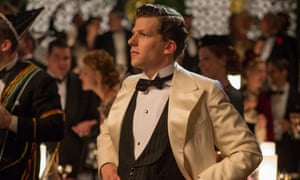




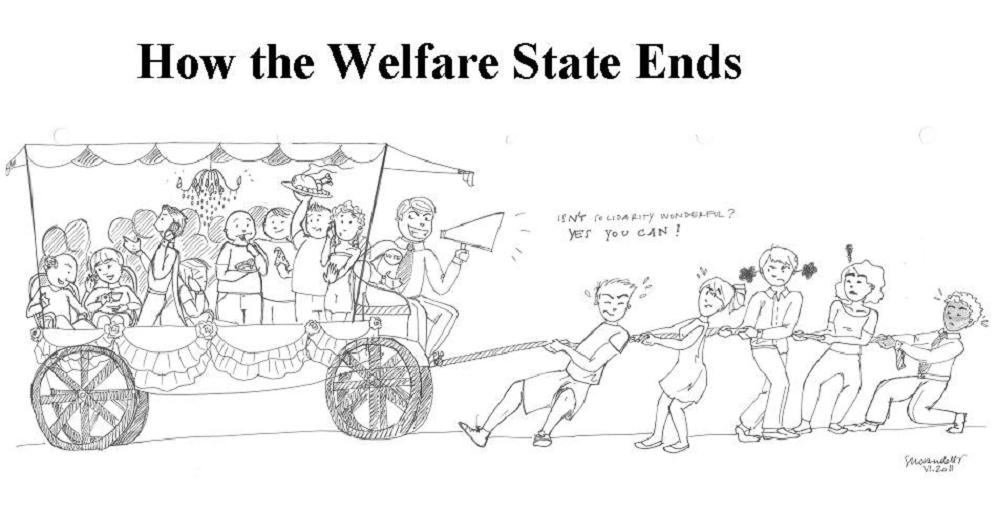




 Art Green
 Art Green
 Art Green
 Art Green
 Art Green
 Art Green
 Art Green
 Art Green
 Art Green with Gladys Nilsson.


