This article below reminds me of this quote by Milton Friedman:
Because we live in a largely free society, we tend to forget how limited is the span of time and the part of the globe for which there has ever been anything like political freedom: the typical state of mankind is tyranny, servitude, and misery. The nineteenth century and early twentieth century in the Western world stand out as striking exceptions to the general trend of historical development. Political freedom in this instance clearly came along with the free market and the development of capitalist institutions.
Because my left-leaning friends have never been able to provide an example, either now or at some point in the past, of a poor nation becoming a rich nation by imposing higher taxes and a bigger burden of government spending.
Yet supposed experts in economic development for decades have pushed foreign aid in failed effortsturn poor countries into rich countries.
More recently (and even more preposterously), international bureaucracies like the OECD, UN, and IMF have been arguing that higher taxes and bigger government are needed to promote economic development.
For all intents and purposes, my argument is based on the fact that western nations became rich in the 1800s and early 1900s when they had very low taxes and very small governments.
And if you don’t have 20 minutes to watch the above video, the most important charts come from a column I wrote back in 2018.
The first chart shows that there was a stunning reduction in poverty in western nations over a 100-year time period.
And the second chart shows that this near-miraculous improvement occurred before those nations had welfare states or any other forms of redistribution spending.
P.S. Rule of law (rather than arbitrary rule by kings, chiefs, emperors, and dictators) is a necessary prerequisite for growth. And weak rule of law is an even bigger challenge in the developing world than bad advice from international bureaucracies.
I recently sat down with Milton Friedman, a few days before his 94th birthday, to discuss the impact of two of his most important contributions to economics and liberty: A Monetary History of the United States, 1870-1960 [co-written] with Anna Schwartz, and Capitalism and Freedom. The ideas in both books had tremendous influence on the economic and intellectual landscape.
You can listen to our two-part podcast conversation on EconTalk:
Russ Roberts: Welcome to EconTalk, part of the Library of Economics and Liberty. I’m your host, Russ Roberts, of George Mason University. My guest today is Milton Friedman. Milton is a senior research fellow at Stanford University’s Hoover Institution, the 1976 Nobel Laureate in Economics and a hero to millions in the United States and around the world for his insights and actions on behalf of economics and liberty.
Russ Roberts: Milton, I’d like our conversation to focus on the ideas contained in two of your books, A Monetary History of the United States, 1867–1960, a massive scholarly work, and Capitalism and Freedom, a slim monograph on the principles of a free society.
Let’s begin with the Monetary History of the United States. Written with Anna Schwartz. Published in 1963, it was an extraordinarily detailed and careful study of the role of money in the economy. And among many important insights, it made the case that inflation is everywhere and always a monetary phenomenon. When that book was published, what was the reaction of the profession to its scholarship?
Milton Friedman: The profession on the whole appreciated its scholarship. As I remember as best I can, there were three different reviews in three different professional journals, all of which were highly favorable even though—I think—two out of the three [reviews] were written by strong Keynesians.
Russ Roberts: And what was its impact in affecting the way the profession, at least in the short run, looked at the role of money?
Milton Friedman: I find that a very hard question to answer. Obviously, many things were going on in the world. Bretton Woods was on. The 1960s were a period of pretty good prosperity. On the whole, during the ’50s and the ’60s, it looked as if the Keynesian interpretation was right. After all, during that period, we had relatively prosperous countries, relatively stable prices, and relatively low interest rates.
It was a golden era, as it were, and everybody was said to be operating on Keynesian lines. What really changed the public perception and also the professional perception was the experience of the 1970s. During the 1970s, you had a combination that under Keynesian analysis could not exist. You had high inflation and high unemployment at the same time—named stagflation—and that combination was really ruled out by the simple kind of Keynesian analysis that was in vogue. But it was that experience which more than anything else led to a basic change in public and intellectual attitudes toward money.
Russ Roberts: So the scholars and the public had to try to puzzle out why this seeming impossibility was definitely occurring.
Milton Friedman: Yes and no. Because of our book, because of Bob Lucas’ work, we had predicted that this would happen and, therefore, it was like an experiment. You wait and see what happens and the predicted results happened.
Russ Roberts: There was a lens to look through to explain what was going on.
Milton Friedman: Sure, because this lens had predicted that you could have both high unemployment and high inflation at the same time.
Russ Roberts: I was an undergraduate and a graduate in the 1970s and my textbooks at the undergraduate level—not the graduate level, because I attended a small university in the Midwest I think you used to have an affiliation with, the University of Chicago—but as an undergraduate, my textbooks talked about all the different theories of inflation—cost push, cost pull, the role of unions, the role of industrial concentration and, of course, the possibility that Milton Friedman, this maverick thinker was right, that money had something to do with it.
It’s my impression that’s not true anymore; that the intellectual environment understands today that inflation is caused by a rapid growth in the money supply.
Milton Friedman: I think it does. I think that’s clear and the last 30 years, last 20 years I should say, has done a great deal to rub that in because every central bank has come to accept the view that it’s responsible for inflation.
Russ Roberts: Let’s talk about those central banks. What role do you think the Monetary History had—and the related work around it, of course—in influencing central bankers in focusing on the money supply in its role of affecting inflation?
Milton Friedman: I think it had a great deal of effect. I think what was most important was a chapter in the Monetary History that dealt with the Great Depression. The difficulty of having people understand monetary theory is very simple—the central banks are good at press relations. The central banks hire people and the central banks employ a large fraction of all economists so there is a bias to tell the case—the story—in a way that is favorable to the central banks.
But the Great Depression was such a major event and such a disaster that there was no way in which you could talk it away, although they tried to do so. If you read the annual reports of the Federal Reserve Board or its testimony before Congress, you will find that as late as 1933, at the very depths of the depression, it’s talking about how much worse things would have been if the Fed hadn’t behaved so well.
But the evidence was so clear. You had a decline in the quantity of money by a third from 1929 to 1933 and that coincided with the decline in the economy by half or so. When you have 25 percent of the working force unemployed, you can’t just talk it away.
Russ Roberts: But at the time, the main lesson that people drew from that was that capitalism is broken.
Milton Friedman: Absolutely. The lesson people drew was that it was a fault of business. It was a market failure. But I think the reason they drew that lesson was because of the way in which the self interest of the monetary authorities led them to promote it.
Russ Roberts: And you could toss in the self-interest of FDR in painting himself as a savior despite the severe recession of 1938.
Milton Friedman: But that would have been the same for them even if they had recognized the cause, only they would have concentrated more on doing—on abolishing the Fed or on reformulating the Fed. But the reason why the public and the intellectuals at large held to that perception was because that was what they were being told by the authorities.
Russ Roberts: And so it justified a great deal of government intervention in the economy at the time, obviously.
Milton Friedman: Oh, it certainly did.
Russ Roberts: And you’re suggesting that the Monetary History was the beginning of a revision toward a different perspective.
Milton Friedman: Well, I don’t know. On the ideological side, there were other things at work. Hayek’sRoad to Serfdom, which was published in 1945 made the ideological case. I don’t know what role the Monetary History played in the public at large but in terms of the monetary authorities, in terms of money, there’s no doubt that it played a considerable role.
Russ Roberts: And that chapter on the Great Depression must have alarmed them greatly about their potential for doing harm.
Milton Friedman: Exactly, exactly.
Russ Roberts: And at that time, in the 1960s, there was a lot of debate about what the role of the central bank should be and because inflation was relatively low, there was much less attention paid to that role.
Milton Friedman: Here and there, there were things like the Federal Reserve Bank of St. Louis, which was arguing against the Federal Reserve policy and which was arguing that they should pay more attention to the quantity of money, but they were mavericks. But so far as the bulk of the population, the bulk of the profession, the bulk of the people hired by the monetary authorities, they all were Keynesians.
Russ Roberts: Focusing on the central bank role, going back again to the ’70s when I was in school and shortly after your book came out, the focus was on the money supply—the quantity of money, counting it, controlling it through open market operations.
Something changed in the last 25 or 30 years. That’s not what Alan Greenspan or Ben Bernanke talk about. They talk about other things and they play with that short-term interest rate, not the so-called stock of money that you focused on so intensely in the book.
Milton Friedman: That’s what the talk about but that’s not what they do.
Russ Roberts: What do they do?
Milton Friedman: They use the short-term interest rate as a way of controlling the quantity of money. If you look at the statistics, the rate of change of the quantity of money from month to month, quarter to quarter, year to year, it has never been so low as it has been over the last 20 years.
I don’t believe there’s another 20-year period in the history of the country in which you can find so steady a rate of growth in the quantity of money and that can’t all be an accident. That’s because they use the short-term interest rate. Look at it in the simplest possible way.
The Fed says the short-term interest rate should be 4.5 percent. How do they keep it there? By buying and selling securities on the open market. Now you’re Mr. Bernanke; you’re Mr. Greenspan. You’re watching that. And with the current short-term interest rate, you find that the quantity of money is starting to creep up more rapidly than you really want. Well, then you will tend to be favorable to raising to a higher rate of interest.
At that higher rate of interest, the demand for money is less and so the supply of money under that phenomenon, instead of having to sell government bonds to keep it there, they have to buy government bonds to keep it there or vice versa. Maybe I’m getting it mixed up. But in any event, the short-term interest rate is a tool with which you can control the quantity of money.
Russ Roberts: But they don’t talk about it that way.
Milton Friedman: No, they don’t talk about it that way.
Russ Roberts: Why do you think that is? Do you have any idea?
Milton Friedman: I don’t know. I’ve always been puzzled by why they insist on using the interest rate rather than the quantity of money.
If you really carried out the logic concerning the quantity of money, you deprive the Federal Reserve of anything to do. Suppose the Federal Reserve said it was going to increase the quantity of money by 4 percent a year, year after year, week after week, month after month. That would be a purely mechanical project. You could program a computer to do that.
Russ Roberts: Like an indexed mutual fund takes away the fun of being a fund manager.
Milton Friedman: Right. That’s part of the reason. But the main reason, I think, is different. It’s that the central bank associates with banks. It regards itself as sort of a mentor of the banking system and, to the individual bank, it doesn’t believe it creates a quantity of money. That doesn’t make any sense to them.
What they deal with are interest rates and therefore, it’s natural and so many of the central bankers are themselves from the banking industry. They’re bankers. And so it’s natural for them to think in terms of interest rates and, moreover, when they think in terms of interest rates, they’ve got all kinds of interest rates—short-term interest rates, long-term interest rates—all kinds of excuses for exercising power or thinking they’re exercising power.
Russ Roberts: Taking credit for exercising power.
Milton Friedman: I’ve always been in favor of abolishing the Federal Reserve and substituting a machine program that would keep the quantity of money going up at a steady rate.
Russ Roberts: And over the last 20 years or so, they’ve approximated that.
Milton Friedman: Come closer to approximating it. Absolutely.
Russ Roberts: And I would argue, and I assume you would as well, that the relative stability of the U.S. economy over the last 20 years is a reflection of that steady growth in the money supply.
Milton Friedman: I think there’s no doubt at all.
Russ Roberts: The non-erratic path.
Milton Friedman: It’s a golden period. It’s a period in which you had declining inflation but a fairly steady rate, a steady level. You had only three recessions, all of them brief, all of them mild. I don’t believe you can find another 20-year period in American history. But it’s interesting to note that so far as the international acceptance of monetary control is concerned, it was started by the Bank of New Zealand, not by the Federal Reserve Bank.
It was some time in the 1980s when New Zealand essentially came close to privatizing its central bank. It set up a situation in which the governor of the Central Bank of New Zealand had a contract with the government in which he agreed to keep the price level—inflation—within a certain bound; 0 to 3 percent or 0 to 2 percent. And if he did not do so, he could be fired.
Russ Roberts: Not decapitated, merely fired.
Milton Friedman: Merely fired.
Russ Roberts: But it still concentrated his mind sufficiently.
Milton Friedman: Oh, yes. And Don Brash was appointed as the first governor of the Central Bank of New Zealand. He’s now the leader of the opposition in the New Zealand Parliament. But at the time, he came from business. He was a businessman and he is an extraordinarily able and effective fellow and he took this job on at the time when New Zealand had a very high inflation rate and he succeeded in living up to his contract.
And that really set the pattern. It was the New Zealand experience, I’m sure, that had more to do with other central banks around the world adopting inflation targeting than the United States experience.
Russ Roberts: Because it was so dramatically effective in New Zealand?
Milton Friedman: It was the first time that anybody had explicitly adopted an inflation target. So that was something that everybody observed. And, secondly, it was so dramatically effective.
Russ Roberts: So are you optimistic about the role the central bank will continue to play in that inflation and price level story? You said we’ve had a golden era of 20, 25 years of stable prices, steady growth with only minor—by historical standards—minor recessions. Are you optimistic about the next 25 years?
Milton Friedman: I have great difficulty not being optimistic about it. All the evidence would seem to be optimistic. On the other hand, I can’t hold back a doubt. Governments want to spend money and sooner or later, governments are going to want to spend money without taxing it and the only way to do that is to print money—to create inflation.
Inflation is a form of taxation. How long will governments be able to resist the temptation? And particularly as people become adjusted to being in a world of stable inflation. They will be bigger suckers as it were. It will be easier to get a lot out of it. If everybody anticipated inflation, you couldn’t get anywhere by inflating.
Russ Roberts: But once you get people lulled into the expectation of a lack of it, there’s the potential to exploit it. Let me ask the question in a different way. A lot of people credit Alan Greenspan with the expansion and success. They give Paul Volcker some credit as well at the early part of this period that we’re talking about.
But they make it sound like the key to success in monetary policy is you just got to get the right person in the job. When Ben Bernanke or whoever is following him comes in, there’s this absurd microscopic examination of the aura and vapors around such a person. And you’re suggesting it really has nothing to do with it.
Milton Friedman: Well, how is it that New Zealand can do it. How is it that Australia can do it. How is it that Great Britain can do it. These are all countries which followed New Zealand. New Zealand started it. But then Australia and Great Britain also adopted inflation targeting.
Russ Roberts: Well, they just happened to find the right guy in each of those places.
Milton Friedman: Oh, they were all lucky. Absolutely. (Laughter.) I’ve always felt that the big defect politically of the Federal Reserve is precisely that so much depends on unelected representatives. The central bank is treated as if it were the Supreme Court. That’s why during the Depression, there was no effective controls on the central bank. There were members of Congress who knew what to do and who trying to get the Fed to do it but they had no way to do so.
Russ Roberts: There was no incentive directly. There was an indirect incentive, of course, which was humiliation and the stigma which has endured. They had no idea at the time of how bad that would turn out—how those decisions would look in retrospect. But you’re suggesting that the disadvantage of the current system is a lack of accountability.
Milton Friedman: Right.
Russ Roberts: But the alternative, the elected system, has the problem that you mentioned earlier of the temptation to exploit the ability to create money to increase revenue.
Milton Friedman: But that’s why what you want—if possible—is a mechanical system. If there was any virtue to the gold standard, it was that virtue. Maybe you could create the same thing now. My favorite proposal really is a little bit more sophisticated—or less sophisticated if you want to look at it that way—than a straight increase in the quantity of money. I would—if I had my choice—freeze the amount of high-powered money. Not increase it.
Russ Roberts: High-powered money being bills and cash.
Milton Friedman: High-powered money is the currency plus bank reserves.
Russ Roberts: Okay.
Milton Friedman: I would freeze that and hold it constant and have it as sort of a natural constant like gravity or something. Now, you would think that that’s a bad idea because there would be no provision for expansion; however, high-powered money is a small fraction of total money and the ratio of total money to high-powered money has been going up over time. So the economy would create more money and on average, you would have a pretty stable money growth and a pretty stable monetary system.
Russ Roberts: What do you think the odds are of that happening?
Milton Friedman: Zero.
Russ Roberts: Zero? Well, that’s a small number, zero. I wish you were a little more optimistic.
Milton Friedman: No, I don’t think it’ll happen unless there is another catastrophe like the Great Depression. But other than that, it’s not going to happen. I think the real danger of this [the current monetary system] breaking down is there’s no danger of it breaking down into a Great Depression. The real danger is it’ll break up into an inflation.
When I see in the Federal Reserve reports that the inflation anticipation for 10, 20 years is on the order of 2 percent a year, I find it very hard to believe it. Sooner or later, the government’s going to get out of hand.
Russ Roberts: But this current run is a lovely illustration of your ideal— a non-discretionary, mechanistic rule. The average person finds it very unappealing. Discretion always seems to be better than rules.
Milton Friedman: That’s right.
Russ Roberts: What you’re saying is that with that discretion—which is not ideal in your world—yet with that discretion, they have followed the rule.
Milton Friedman: Yes.
Russ Roberts: So far. They’ve given the impression to the world that they are wise and careful engineers at the helm of the monetary system and yet they have acted as robots.
Milton Friedman: That’s right.
Russ Roberts: What a wonderful example of a lack of damage done by that discretion. So far. But I understand your pessimism.
Russ Roberts: Milton, let’s turn to Capitalism and Freedom. In the book, you lay out the principles of what you call liberalism. Sometimes you call it liberalism, sometimes 19th Century liberalism. Sometimes you’ve called it classical liberalism. And you advocate there a limited role for government in the legal and monetary system and maximal freedom and responsibility for the individual. And in that book, which was published in 1962, but based on lectures, I think, that you gave in the late 1950s—
Milton Friedman: 1956.
Russ Roberts: So the ideas in that book are 50 years old this year. And in 1956 and thereafter in the book in 1962, you argued for a volunteer army, flexible exchange rates, a monetary rule for stable prices, educational vouchers, privatizing Social Security and a negative income tax. At the time, those ideas were not conservative at all—
Milton Friedman: They were very radical.
Russ Roberts: Some people might call them conservative but you called them liberal because they were about freedom. They were considered either conservative or whacky. What was the reaction to the book when it came out?
Milton Friedman: I don’t know. I really don’t know how to answer that question because when it came out, it did not receive a great deal of attention to begin with. It was reviewed in no major newspaper. The New York Times didn’t review it. The only reviews were in professional magazines. It was reviewed in the American Economic Review, in the Economic Journal and other major professional journals but it got very little public attention.
Russ Roberts: And I’m surprised it was actually reviewed there. A book like that today would be much less likely to be reviewed in the American Economic Review or Economic Journal. It was a polemic of sorts. That’s a little strong.
Milton Friedman: It was a polemic.
Russ Roberts: It was a treatise. It was a manifesto.
Milton Friedman: But by that time, I had acquired a considerable reputation as an economist in professional economics. There was a good deal in this book, however, which was of professional economics importance. What you’ve mentioned—floating exchange rates—and the monetary stuff. It was polemic but it wasn’t primarily polemic.
Russ Roberts: And it’s not written in a polemical style.
Milton Friedman: No, it tried to be a rational argument and it tried to consider the evidence for the points that are made. But you’re stressing how much has since been achieved from it.
Russ Roberts: Correct.
Milton Friedman: But I’ve always stressed the opposite. If you look at the list in Chapter 1 or 2—I have a long list of things government ought not to be doing.
Russ Roberts: And it’s not exhaustive. You say at the end of it this is just the beginnings of a list.
Milton Friedman: The only one of those that has really been achieved is a volunteer army.
Russ Roberts: Right. We’ve made some inroads potentially on agricultural price supports which is, I think, the first thing you list on that page. There was actually somewhat serious talk about changing them. But you’re right. You could argue the glass is half empty. But as, again, someone who came of intellectual age in the 1970s and who was sympathetic to the ideas in the book, to put it mildly, advocating those ideas at the time, any of the ones we’ve talked about on the positive side that actually happened or are close to happening, was a recipe for being treated as a buffoon or a fool or a heartless person. I think it’s an extraordinary intellectual and policy experiment over the last 50 years that so many of those things have come to pass.
Milton Friedman: And what’s happened is that the public attitude has changed tremendously. In 1945, 1950, at the end of the war, intellectual opinion was almost wholly collectivist. Everybody was a socialist. They may not have used the term but that’s what they were. However, practice was not socialist. Practice was free enterprise.
The role of government at that time was such smaller than it has since become and from 1945 on to 1980, what you had was galloping socialism. Government took over more and more control. Government spending went from about 20 percent of national income—government federal, state and local—to about 40 percent of national income until Reagan came along.
But Reagan was able to do what he did because in that 20-year period, intellectual opinion had changed. What had before been a hypothesis was now fact. You now could see what the government did and people didn’t particularly like what the government did. So public attitudes about government had changed very much over that period and I think maybe Capitalism and Freedom added a little of that but I think experience was much more responsible.
Russ Roberts: At the time, the other side of the intellectual argument, the socialist or communist side, was doing quite poorly. But we were not aware of it. The Soviet Union was doing much, much worse than it appeared to be doing.
Milton Friedman: Sure.
Russ Roberts: And so if we had had the facts about the Soviet Union, the experiential case for capitalism and markets might have been even stronger. But it really is rather remarkable that given the intellectual apologists for the Soviet Union of the day, how much the tide changed in public opinion despite the lack of direct evidence that we had.
Milton Friedman: We had very little direct evidence outside the United States and I think it was the evidence of the government in the United States that was playing a role. But I really have never done any serious work on trying to trace the course of general public opinion except as it worked for the politics of it. Reagan could never have gotten elected if there had not been a big change in public opinion. He could not have been elected in 1950.
Russ Roberts: And Goldwater was not electable in 1964 who in many ways was the most free market candidate of the 20th Century. Yet George W. Bush, who is not much of a classical liberal, did at least talk about what he described as privatizing Social Security, a topic that Reagan might think was a good idea but I don’t think ever talked about it publicly, advocated it, never made it a campaign issue. I think probably afraid of it, perhaps correctly so.
I remember in my youth, again going back to the ’70s, talking about eliminating Social Security was an invitation to be described as a person who wanted to see old people die in the streets “as they did before the 1930s” as if somehow Social Security had prevented this from happening, which is bizarre given the level of Social Security in the 30s.
Milton Friedman: Of course.
Russ Roberts: —and all the private mechanisms we have for taking care of ourselves. And so, obviously, Capitalism and Freedom played a role. You mentioned earlier The Road to Serfdom by Hayek in affecting public opinion. There was definitely an intellectual foundation laid for these public opinion changes that gave people something to hold onto.
Milton Friedman: Well, we know that, for example—we happen to know—that Reagan read Capitalism and Freedom before I ever met him and, clearly, that’s a way in which a book has influence.
Russ Roberts: But it also has influence through affecting the electorate who—
Milton Friedman: Oh, sure.
Russ Roberts: And Free to Choose, a book we haven’t mentioned yet, which was a documentary on public television at first and then I think the book followed the documentary or was it the other way around?
Milton Friedman: The book was based on the documentary but appeared in print before the documentary. What happened was we finished all the work on the documentary in the spring of ’79 and we spent the summer of ’79 using the transcripts of the program as a basis for Free to Choose book and Harcourt Brace did a remarkable job of publishing the book. We went to the printers in September and it was in the bookstores in December. Jovanovich—at the time, it was Harcourt Brace Jovanovich—Bill Jovanovich was very much of a fellow thinker and he contributed to our program.
Russ Roberts: In what way?
Milton Friedman: Oh, to begin with, the first step in creating the program was that I gave a series of lectures all over the country on the subjects that were going to be in the program to provide material for the producer and directors to weave into film. And he gave us a contract for publishing the transcripts of those lectures.
Russ Roberts: So that helped finance the trip. The book and the TV series, which reached millions, obviously, helped as well with the ideas of Capitalism and Freedom which probably didn’t sell quite as well —marketed by the University of Chicago Press—but with similar ideas.
Milton Friedman: No, no. The University of Chicago Press did a good job in marketing considering the absence of book reviews. After all, Capitalism and Freedom has sold something like 600,000 copies. Free to Choose has sold over a million copies. And we found it very fascinating to observe the way sales of Capitalism and Freedom went. To begin with, they were relatively few. And then they gradually started to increase and it was entirely person to person—word of mouth.
Russ Roberts: And it is a book that’s still quite topical.
Milton Friedman: The basic principles that we believe in are going to stay the same for the next thousand years. That aspect of it will never go out of date. What goes out of date are the particular applications. We still find Adam Smith’s book, Wealth of Nations well worth reading even though it’s published in 1776.
Russ Roberts: Yes, it is surprisingly informative.
Milton Friedman: It certainly is and it’s so well written.
Russ Roberts: I think a huge part of your success—obviously not the logic but the success of the ideas—is your ability to communicate clearly and effectively to a non-technical audience.
Milton Friedman: Well, I’m not a stylist the way Smith was. The modern economist who really I think matches that is George Stigler.
Russ Roberts: Absolutely. He had a graceful pen. And it was a pen probably, not a keyboard, if I had to guess.
Milton Friedman: Oh, there’s no doubt that it was a pen.
Russ Roberts: I know you can give us the empirical evidence. Let me ask you about another idea in Capitalism and Freedom that you later elaborated on in a Sunday New York Timesmagazine story in the early 1970’s. You wrote there: “There is one and only one social responsibility of business, to use its resources and engage in activities designed to increase its profits, so long as it stays within the rules of the game which is to say engages in open and free competition without deception or fraud.”
I feel that that view of business, the one that says it should maximize its profits, is increasingly under attack and there’s a strong activism afoot in the land to turn corporations and businesses into social organizations, welfare agencies, charitable organizations. One, do you agree with me? Do you think that’s true? And two, what can we do about it? Any ideas?
Milton Friedman: I think it’s absolutely true. There’s no doubt that that’s—the view that there are many stakeholders and not only the shareholders has spread. And business itself propagates the idea because it’s good public relations. They spend money entirely with a view to the bottom line but label it social responsibility spending.
And that sentence, I think, is still just as true as it ever was and I’ve never seen an occasion to change my view about that. Suppose a business wants to do charity. What is it that gives it any special ability to do charity properly? The XYZ Company, in addition to producing XYZ trucks, also wants to be socially responsible and so it does what it thinks is charity. What is its special capacity for that?
It may know how to make trucks but does it know the right way to spend charitable money? And whose money is it spending? It’s spending somebody else’s money. It’s a very bad practice. Business has had such a big incentive to label itself socially responsible—it’s primarily responsible for that conception.
Russ Roberts: Yeah, I worry about that slippery slope as they brag about how well they’ve done in those different dimensions. I’d like them to brag about how profitable they are. That means they’ve produced something that people enjoy, are willing to pay for and have found a way to produce it at a lower cost.
Milton Friedman: The truth of the matter is that the only way anybody can make money is by producing something that people want to buy, but it can give away money without meeting that restriction.
Russ Roberts: That reminds me of one explanation for why people, I think, lean on businesses to indulge other activities besides producing products well. It’s the Willie Sutton theory of why you rob banks—that’s where the money is.
The Chicago City Council recently passed an ordinance requiring large retailers—mainly Wal-Mart and Target—to pay at least $10.00 an hour in wages and $3.00 an hour in benefits.
If you ask the proponents why should Wal-Mart finance a higher standard of living for their workers, why should the investors of Wal-Mart, the stockholders, and Target, be the ones that finance that, I think the answer would be “Well, they have the money.”
That ignores, of course, the incentive effects that then result. They’re the last people that you’d want to have finance this because it discourages them from creating jobs for low skill people. But I think that first order effect of “Well, they’ve got the money, they write the checks so therefore they’ve got the responsibility” has a huge appeal to the average person.
Milton Friedman: But it’s always been true that business is not a friend of a free market. I have given a lecture from time to time under the title Suicidal Impulses of the Business Community,something like that, and it’s true. It’s in the self-interest of the business community to get government on its side. It’s in the self-interest of a particular business. Look at this crazy business about ethanol. Who’s benefiting from that?
Russ Roberts: Farmers. Corn farmers.
Milton Friedman: No, the farmers aren’t benefiting.
Russ Roberts: The landowners.
Milton Friedman: What’s the company that produces it?
Russ Roberts: Archer Daniels Midland. So of course, they lobby and talk about the enormous environmental benefits of ethanol.
Milton Friedman: But the real puzzle—puzzle isn’t quite the right word—the real problem here is where do you find the support for free markets? If free markets weren’t so damn efficient, they could never have survived because they have so many enemies and so few friends. People think of capitalism or free markets as something that obviously is supported by business. People think that if a business party is a party in politics, it will promote free market. But that’s wrong. It will be in the self-interest of individual businesses to promote a tariff here and a tariff there, to promote the use of ethanol—
Russ Roberts: Special regulations for its competitor that apply just by chance to its competitors but not to itself—
Milton Friedman: That’s right.
Russ Roberts: —or that they already comply with but their competitors don’t happen to comply with.
Milton Friedman: And it’s so hard in general, so much harder, to repeal anything government is doing than it is to get it to do it. There are so many stupid things that government is doing that, clearly, it would be in the self-interest of the public at large to have repealed. Who would—who can really on logical grounds defend sugar quotas? There’s no way of defending sugar quotas.
Russ Roberts: You don’t think it’s a big national security issue? [laughter]
Milton Friedman: That was why they were imposed. Because of Cuba. They were initially imposed against Castro. But once you got them, you couldn’t get rid of them.
Russ Roberts: It’s a good example because the beneficiaries are very few.
Milton Friedman: They’re very few.
Russ Roberts: We understand that politically that gives them a certain reason to be loud in talking to the representatives but you’d think the fewness of them would eventually be decisive in overturning it but it has not.
Milton Friedman: No, it’s not, because it’s an advantage. If 50 percent of the people were sugar farmers, you couldn’t possibly have sugar quotas, because it costs too much to the others. But if 1% of the people are sugar producers, for each dollar that they get, that’s divided among 99 people so it’s only one cent to the individual.
Russ Roberts: So their incentive to yell is small— which brings us back to a question that you write about in Capitalism and Freedom. Issue by issue, it’s easy to make the case for discretion.
When you see the cumulative effect of going issue by issue, you really can make the case for principles. You give the example in the book of freedom of speech. Obviously, a lot of Americans are against freedom of speech.
Milton Friedman: Oh, sure.
Russ Roberts: And if you went issue by issue, you’d find a lot of speech that would be voted down as not appropriate and yet we sustain it through enough people believing that it’s a good thing.
Milton Friedman: But even here, with the campaign finance laws, we’re reducing freedom of speech drastically.
Russ Roberts: That gets back to your point about businesses wanting government to protect them. In this case, the business is the industry of government. Politicians like the protection that campaign finance laws gives them.
Milton Friedman: Yeah.
Russ Roberts: That’s a very tough one when they regulate themselves. They do tend to be a little self-interested there. It’s very sad.
Milton Friedman: But how do we get that repealed? What politician is going to come up and make a big fight on repealing the McCain-Feingold legislation.
Russ Roberts: Although the Supreme Court occasionally does speak up and suggest that this is not really consistent with the Constitution.
Milton Friedman: Well, the Supreme Court is not a very strong support in some cases. Look at what it did with property—with eminent domain. The Kelo case is not really a good advertisement for a free market Supreme Court.
Russ Roberts: But ironically, it did produce a backlash at the state and local level against using it.
Milton Friedman: The Institute of Justice—which is a remarkably good organization—has been promoting that backlash against it and they’ve been doing a very good job. It may well be that you’ll end up with a stronger support for property than you originally had. But that wasn’t the intention of the Supreme Court.
Russ Roberts:
Let’s go back to the difficulty of repealing bad laws. You mentioned sugar quotas, sugar price supports, as an example. What role do you think economic illiteracy, a lack of understanding on the part of the public of the full effects of legislation, plays in sustaining laws that are described as in the national interest but are really serving special interests?
Milton Friedman: Very little. Because it’s not in the self-interest of the recipients to figure it out. What housewife is going to spend the time to save the extra money—maybe it’s $5.00 or $10.00 a year she pays extra on sugar? It doesn’t pay to try to figure out. What you’re dealing with is rational ignorance. The rational part is what I want to emphasize. It’s not ignorance that is avoidable because it’s rational to be ignorant.
Yet somehow, people do get it. Minimum wages have become less popular than they used to be. They’ve been trying to pass a rise in the minimum wage for years and they haven’t passed one. And that’s because, I think, there is more understanding of the economic merits or demerits of it than there used to be—more people recognize the effect of a higher minimum wage on the employment of the poor.
Russ Roberts: On the flip side, the living wage, which are these local ordinances or like the one in Chicago we spoke about earlier, gets attention and often passes.
And if anything, you’d think there the effects are going to be more stark in a local area—employers have more choices to leave the area which they wouldn’t have at the federal level. On the case of gasoline price controls, true, no one clamors for price controls but we have all these implicit price controls—threats by attorney generals to prosecute gougers in the wake of Katrina or worse, vaccine manufacturers who might have the gall to charge a market-clearing price.
Instead we have the president of the United States two winters ago begging people to not use the vaccine if they’re not really at risk, instead of using the price mechanism which is so much more effective. It seems to be a paradoxical pattern? Do you have any thoughts on that?
Milton Friedman: I don’t think there’s anything very paradoxical about it. First place, we are now only 20 or 30 years from when we had price controls [on gasoline]. And so a large fraction of the population had personal experience with it. Twenty or 30 years from now, after there’s nobody living who had experience with price controls, I wouldn’t be surprised to see it come back again.
We have to keep ourselves open to the facts. The facts are that the world has become better and better over time. The 19th Century was better than the 18th Century. The 20th Century was better than the 19th Century. The 21st Century is going to be better than the 20th Century. There was once an article back in, oh, 1780 or something, which said how many people lived in free countries and how many lived in the rest—non-free.
And the ratio of people who live in free countries to the total population of the world has surely been going up throughout this whole—these past two centuries. It went up most dramatically recently when the Berlin Wall fell, when the Soviet Union went out of existence. So there’s reason to be optimistic.
Somehow or other, these stupid individuals who vote these bad laws seem to have enough sense to keep from voting laws bad enough to create a negative GNP. So I think in the end, you’ve got to remain an optimist.
Russ Roberts: I share your optimism and I like the long-term perspective. On any one day, you can always get depressed about what’s going on in Washington or in city hall but the long-term trend is toward more freedom and a higher standard of living and although it seems very difficult for people to recognize that, they’re always moaning; the educated class is always moaning about how things have never been worse. We stand on the brink of a precipice either because we have a trade deficit or China or manufacturing jobs are in decline or the inequality due to this, that or the other, or immigration. There’s always some threat to our prosperity that’s imminent and yet we manage to keep going.
Milton Friedman: And yet—another thing on the glass being half empty. While everybody complains about Bush’s tax cuts, nobody really is in favor of higher taxes. There’s no broad sentiment, no broad move [to raise taxes].
Russ Roberts: I want to ask you about George Stigler who you mentioned earlier. Stigler was an observer of the political scene. He was a political economist who described why things were the way they were but he felt it was a waste of time to be an advocate, a preacher, a proselytizer for a particular philosophy or ideology because politicians face these incentives and you’re not going to change what they do. Being an advocate for this policy or that policy or trying to increasing liberty—as you have—is a Quixotic endeavor. Is that a fair assessment of his view?
Milton Friedman: There’s a lot of truth to it. George always used to say, “Milton wants to change the world. I just want to observe it.” But it wasn’t true. That was what he would say. But after all, you never heard George say a good thing about bigger government. You never heard him in any way express views that differed from yours and my views about what we ought to be doing. So I think that was a little bit of a show that he put on.
Russ Roberts: But he didn’t spend as much time as you have professionally.
Milton Friedman: No, no. He did spend much more time on observing.
Russ Roberts: And you have spent a great deal of time obviously on observing but a sizeable amount of time on urging or prodding or pushing politicians and others—the rest of us—to advocate for smaller government and more individual freedom.
Milton Friedman: I have.
Russ Roberts: As a person who spent a lot of time in the—not just in the academic vineyard but in the policy vineyard, do you look back on that as fruitful work?
Milton Friedman: I really had two lives. One was as a scientist—as an economist—and one was as a public intellectual. And everybody more or less does his major scientific work at a relatively early age And it’s kind of natural, I think, that people switch from the one area to the other. Really until the 1970s, I did not have much contact in politics whatsoever.
I had some but not much. But then, I think increasingly as the scientific side of my life matured and I happened to know more people in politics, my interests and my activities switched to some extent. I think what really motivated it more than anything else was when I was writing columns for Newsweek.
Russ Roberts: Which was fun, I assume.
Milton Friedman: It was fun. It was fine. I found it a very challenging thing to do and it made me—forced me—to keep up with the current affairs that were going on and also it brought me into contact with people who were active in politics.
Russ Roberts: Did colleagues other than George voice an opinion about you spending your time that way? I know at that point in your life, you were already incredibly respected and successful but—
Milton Friedman: No. No.
Russ Roberts: For a young scholar, it’s not the best use of time often.
Milton Friedman: I always told my students that if they went to Washington, they shouldn’t stay there more than two years or they’ll get ruined. And in general, I’ve argued to youngsters who came up to me and wanted to be ideologists, wanted to promote an ideological view, that they first better get themselves established as an economist or as a scholar and get a good job and then they could afford to do it.
Russ Roberts: What advice would you give to those who love liberty and would like to see its cause thrive? You talked about some optimism, that the broad historical trends are good. Anything in the short run that you think would be useful or good for people to be aware of or take advantage of?
Milton Friedman: I think people have to do what they want to do. I think that the best thing that people can do who want to promote the free market is to talk about the free market, to think about the free market, to write about the free market and to get into arguments.
Russ Roberts: Something you’ve spent a lot of time at.
Milton Friedman: I’ve had a lot of experience in it, a great deal.
Russ Roberts: That’s good advice. Thank you, Milton.
To post a followup to this essay, go to EconTalk.org.
RELATED CONTENT
A Conversation with Milton Friedman
Recipient of the Nobel Memorial Prize in Economic Sciences, Milton Friedman (1912-2006) has long been recognized as one of our most important economic thinkers and a leader of the Chicago school of economics. He is the author of many books and articles in economics, including A Theory of the Consumption Function and A Monetary History of the United States (with Anna J. Schwartz). Friedman also wrote extensively on public policy, always with a primary emphasis on the preservation and extension of…
I am currently going through his film series “Free to Choose” which is one the most powerful film series I have ever seen. TEMIN: We don’t think the big capital arose before the government did? VON HOFFMAN: Listen, what are we doing here? I mean __ defending big government is like defending death and taxes. […]By Everette Hatcher III | Edit | Comments (0)
I am currently going through his film series “Free to Choose” which is one the most powerful film series I have ever seen worked pretty well for a whole generation. Now anything that works well for a whole generation isn’t entirely bad. From the fact __ from that fact, and the undeniable fact that things […]By Everette Hatcher III | Edit | Comments (0)
I am currently going through his film series “Free to Choose” which is one the most powerful film series I have ever seen. PART 5 of 7 MCKENZIE: Ah, well, that’s not on our agenda actually. (Laughter) VOICE OFF SCREEN: Why not? MCKENZIE: I boldly repeat the question, though, the expectation having been __ having […]By Everette Hatcher III | Edit | Comments (0)
I recently sat down with Milton Friedman, a few days before his 94th birthday, to discuss the impact of two of his most important contributions to economics and liberty: A Monetary History of the United States, 1870-1960 [co-written] with Anna Schwartz, and Capitalism and Freedom. The ideas in both books had tremendous influence on the economic and intellectual landscape.
You can listen to our two-part podcast conversation on EconTalk:
Russ Roberts: Welcome to EconTalk, part of the Library of Economics and Liberty. I’m your host, Russ Roberts, of George Mason University. My guest today is Milton Friedman. Milton is a senior research fellow at Stanford University’s Hoover Institution, the 1976 Nobel Laureate in Economics and a hero to millions in the United States and around the world for his insights and actions on behalf of economics and liberty.
Russ Roberts: Milton, I’d like our conversation to focus on the ideas contained in two of your books, A Monetary History of the United States, 1867–1960, a massive scholarly work, and Capitalism and Freedom, a slim monograph on the principles of a free society.
Let’s begin with the Monetary History of the United States. Written with Anna Schwartz. Published in 1963, it was an extraordinarily detailed and careful study of the role of money in the economy. And among many important insights, it made the case that inflation is everywhere and always a monetary phenomenon. When that book was published, what was the reaction of the profession to its scholarship?
Milton Friedman: The profession on the whole appreciated its scholarship. As I remember as best I can, there were three different reviews in three different professional journals, all of which were highly favorable even though—I think—two out of the three [reviews] were written by strong Keynesians.
Russ Roberts: And what was its impact in affecting the way the profession, at least in the short run, looked at the role of money?
Milton Friedman: I find that a very hard question to answer. Obviously, many things were going on in the world. Bretton Woods was on. The 1960s were a period of pretty good prosperity. On the whole, during the ’50s and the ’60s, it looked as if the Keynesian interpretation was right. After all, during that period, we had relatively prosperous countries, relatively stable prices, and relatively low interest rates.
It was a golden era, as it were, and everybody was said to be operating on Keynesian lines. What really changed the public perception and also the professional perception was the experience of the 1970s. During the 1970s, you had a combination that under Keynesian analysis could not exist. You had high inflation and high unemployment at the same time—named stagflation—and that combination was really ruled out by the simple kind of Keynesian analysis that was in vogue. But it was that experience which more than anything else led to a basic change in public and intellectual attitudes toward money.
Russ Roberts: So the scholars and the public had to try to puzzle out why this seeming impossibility was definitely occurring.
Milton Friedman: Yes and no. Because of our book, because of Bob Lucas’ work, we had predicted that this would happen and, therefore, it was like an experiment. You wait and see what happens and the predicted results happened.
Russ Roberts: There was a lens to look through to explain what was going on.
Milton Friedman: Sure, because this lens had predicted that you could have both high unemployment and high inflation at the same time.
Russ Roberts: I was an undergraduate and a graduate in the 1970s and my textbooks at the undergraduate level—not the graduate level, because I attended a small university in the Midwest I think you used to have an affiliation with, the University of Chicago—but as an undergraduate, my textbooks talked about all the different theories of inflation—cost push, cost pull, the role of unions, the role of industrial concentration and, of course, the possibility that Milton Friedman, this maverick thinker was right, that money had something to do with it.
It’s my impression that’s not true anymore; that the intellectual environment understands today that inflation is caused by a rapid growth in the money supply.
Milton Friedman: I think it does. I think that’s clear and the last 30 years, last 20 years I should say, has done a great deal to rub that in because every central bank has come to accept the view that it’s responsible for inflation.
Russ Roberts: Let’s talk about those central banks. What role do you think the Monetary History had—and the related work around it, of course—in influencing central bankers in focusing on the money supply in its role of affecting inflation?
Milton Friedman: I think it had a great deal of effect. I think what was most important was a chapter in the Monetary History that dealt with the Great Depression. The difficulty of having people understand monetary theory is very simple—the central banks are good at press relations. The central banks hire people and the central banks employ a large fraction of all economists so there is a bias to tell the case—the story—in a way that is favorable to the central banks.
But the Great Depression was such a major event and such a disaster that there was no way in which you could talk it away, although they tried to do so. If you read the annual reports of the Federal Reserve Board or its testimony before Congress, you will find that as late as 1933, at the very depths of the depression, it’s talking about how much worse things would have been if the Fed hadn’t behaved so well.
But the evidence was so clear. You had a decline in the quantity of money by a third from 1929 to 1933 and that coincided with the decline in the economy by half or so. When you have 25 percent of the working force unemployed, you can’t just talk it away.
Russ Roberts: But at the time, the main lesson that people drew from that was that capitalism is broken.
Milton Friedman: Absolutely. The lesson people drew was that it was a fault of business. It was a market failure. But I think the reason they drew that lesson was because of the way in which the self interest of the monetary authorities led them to promote it.
Russ Roberts: And you could toss in the self-interest of FDR in painting himself as a savior despite the severe recession of 1938.
Milton Friedman: But that would have been the same for them even if they had recognized the cause, only they would have concentrated more on doing—on abolishing the Fed or on reformulating the Fed. But the reason why the public and the intellectuals at large held to that perception was because that was what they were being told by the authorities.
Russ Roberts: And so it justified a great deal of government intervention in the economy at the time, obviously.
Milton Friedman: Oh, it certainly did.
Russ Roberts: And you’re suggesting that the Monetary History was the beginning of a revision toward a different perspective.
Milton Friedman: Well, I don’t know. On the ideological side, there were other things at work. Hayek’sRoad to Serfdom, which was published in 1945 made the ideological case. I don’t know what role the Monetary History played in the public at large but in terms of the monetary authorities, in terms of money, there’s no doubt that it played a considerable role.
Russ Roberts: And that chapter on the Great Depression must have alarmed them greatly about their potential for doing harm.
Milton Friedman: Exactly, exactly.
Russ Roberts: And at that time, in the 1960s, there was a lot of debate about what the role of the central bank should be and because inflation was relatively low, there was much less attention paid to that role.
Milton Friedman: Here and there, there were things like the Federal Reserve Bank of St. Louis, which was arguing against the Federal Reserve policy and which was arguing that they should pay more attention to the quantity of money, but they were mavericks. But so far as the bulk of the population, the bulk of the profession, the bulk of the people hired by the monetary authorities, they all were Keynesians.
Russ Roberts: Focusing on the central bank role, going back again to the ’70s when I was in school and shortly after your book came out, the focus was on the money supply—the quantity of money, counting it, controlling it through open market operations.
Something changed in the last 25 or 30 years. That’s not what Alan Greenspan or Ben Bernanke talk about. They talk about other things and they play with that short-term interest rate, not the so-called stock of money that you focused on so intensely in the book.
Milton Friedman: That’s what the talk about but that’s not what they do.
Russ Roberts: What do they do?
Milton Friedman: They use the short-term interest rate as a way of controlling the quantity of money. If you look at the statistics, the rate of change of the quantity of money from month to month, quarter to quarter, year to year, it has never been so low as it has been over the last 20 years.
I don’t believe there’s another 20-year period in the history of the country in which you can find so steady a rate of growth in the quantity of money and that can’t all be an accident. That’s because they use the short-term interest rate. Look at it in the simplest possible way.
The Fed says the short-term interest rate should be 4.5 percent. How do they keep it there? By buying and selling securities on the open market. Now you’re Mr. Bernanke; you’re Mr. Greenspan. You’re watching that. And with the current short-term interest rate, you find that the quantity of money is starting to creep up more rapidly than you really want. Well, then you will tend to be favorable to raising to a higher rate of interest.
At that higher rate of interest, the demand for money is less and so the supply of money under that phenomenon, instead of having to sell government bonds to keep it there, they have to buy government bonds to keep it there or vice versa. Maybe I’m getting it mixed up. But in any event, the short-term interest rate is a tool with which you can control the quantity of money.
Russ Roberts: But they don’t talk about it that way.
Milton Friedman: No, they don’t talk about it that way.
Russ Roberts: Why do you think that is? Do you have any idea?
Milton Friedman: I don’t know. I’ve always been puzzled by why they insist on using the interest rate rather than the quantity of money.
If you really carried out the logic concerning the quantity of money, you deprive the Federal Reserve of anything to do. Suppose the Federal Reserve said it was going to increase the quantity of money by 4 percent a year, year after year, week after week, month after month. That would be a purely mechanical project. You could program a computer to do that.
Russ Roberts: Like an indexed mutual fund takes away the fun of being a fund manager.
Milton Friedman: Right. That’s part of the reason. But the main reason, I think, is different. It’s that the central bank associates with banks. It regards itself as sort of a mentor of the banking system and, to the individual bank, it doesn’t believe it creates a quantity of money. That doesn’t make any sense to them.
What they deal with are interest rates and therefore, it’s natural and so many of the central bankers are themselves from the banking industry. They’re bankers. And so it’s natural for them to think in terms of interest rates and, moreover, when they think in terms of interest rates, they’ve got all kinds of interest rates—short-term interest rates, long-term interest rates—all kinds of excuses for exercising power or thinking they’re exercising power.
Russ Roberts: Taking credit for exercising power.
Milton Friedman: I’ve always been in favor of abolishing the Federal Reserve and substituting a machine program that would keep the quantity of money going up at a steady rate.
Russ Roberts: And over the last 20 years or so, they’ve approximated that.
Milton Friedman: Come closer to approximating it. Absolutely.
Russ Roberts: And I would argue, and I assume you would as well, that the relative stability of the U.S. economy over the last 20 years is a reflection of that steady growth in the money supply.
Milton Friedman: I think there’s no doubt at all.
Russ Roberts: The non-erratic path.
Milton Friedman: It’s a golden period. It’s a period in which you had declining inflation but a fairly steady rate, a steady level. You had only three recessions, all of them brief, all of them mild. I don’t believe you can find another 20-year period in American history. But it’s interesting to note that so far as the international acceptance of monetary control is concerned, it was started by the Bank of New Zealand, not by the Federal Reserve Bank.
It was some time in the 1980s when New Zealand essentially came close to privatizing its central bank. It set up a situation in which the governor of the Central Bank of New Zealand had a contract with the government in which he agreed to keep the price level—inflation—within a certain bound; 0 to 3 percent or 0 to 2 percent. And if he did not do so, he could be fired.
Russ Roberts: Not decapitated, merely fired.
Milton Friedman: Merely fired.
Russ Roberts: But it still concentrated his mind sufficiently.
Milton Friedman: Oh, yes. And Don Brash was appointed as the first governor of the Central Bank of New Zealand. He’s now the leader of the opposition in the New Zealand Parliament. But at the time, he came from business. He was a businessman and he is an extraordinarily able and effective fellow and he took this job on at the time when New Zealand had a very high inflation rate and he succeeded in living up to his contract.
And that really set the pattern. It was the New Zealand experience, I’m sure, that had more to do with other central banks around the world adopting inflation targeting than the United States experience.
Russ Roberts: Because it was so dramatically effective in New Zealand?
Milton Friedman: It was the first time that anybody had explicitly adopted an inflation target. So that was something that everybody observed. And, secondly, it was so dramatically effective.
Russ Roberts: So are you optimistic about the role the central bank will continue to play in that inflation and price level story? You said we’ve had a golden era of 20, 25 years of stable prices, steady growth with only minor—by historical standards—minor recessions. Are you optimistic about the next 25 years?
Milton Friedman: I have great difficulty not being optimistic about it. All the evidence would seem to be optimistic. On the other hand, I can’t hold back a doubt. Governments want to spend money and sooner or later, governments are going to want to spend money without taxing it and the only way to do that is to print money—to create inflation.
Inflation is a form of taxation. How long will governments be able to resist the temptation? And particularly as people become adjusted to being in a world of stable inflation. They will be bigger suckers as it were. It will be easier to get a lot out of it. If everybody anticipated inflation, you couldn’t get anywhere by inflating.
Russ Roberts: But once you get people lulled into the expectation of a lack of it, there’s the potential to exploit it. Let me ask the question in a different way. A lot of people credit Alan Greenspan with the expansion and success. They give Paul Volcker some credit as well at the early part of this period that we’re talking about.
But they make it sound like the key to success in monetary policy is you just got to get the right person in the job. When Ben Bernanke or whoever is following him comes in, there’s this absurd microscopic examination of the aura and vapors around such a person. And you’re suggesting it really has nothing to do with it.
Milton Friedman: Well, how is it that New Zealand can do it. How is it that Australia can do it. How is it that Great Britain can do it. These are all countries which followed New Zealand. New Zealand started it. But then Australia and Great Britain also adopted inflation targeting.
Russ Roberts: Well, they just happened to find the right guy in each of those places.
Milton Friedman: Oh, they were all lucky. Absolutely. (Laughter.) I’ve always felt that the big defect politically of the Federal Reserve is precisely that so much depends on unelected representatives. The central bank is treated as if it were the Supreme Court. That’s why during the Depression, there was no effective controls on the central bank. There were members of Congress who knew what to do and who trying to get the Fed to do it but they had no way to do so.
Russ Roberts: There was no incentive directly. There was an indirect incentive, of course, which was humiliation and the stigma which has endured. They had no idea at the time of how bad that would turn out—how those decisions would look in retrospect. But you’re suggesting that the disadvantage of the current system is a lack of accountability.
Milton Friedman: Right.
Russ Roberts: But the alternative, the elected system, has the problem that you mentioned earlier of the temptation to exploit the ability to create money to increase revenue.
Milton Friedman: But that’s why what you want—if possible—is a mechanical system. If there was any virtue to the gold standard, it was that virtue. Maybe you could create the same thing now. My favorite proposal really is a little bit more sophisticated—or less sophisticated if you want to look at it that way—than a straight increase in the quantity of money. I would—if I had my choice—freeze the amount of high-powered money. Not increase it.
Russ Roberts: High-powered money being bills and cash.
Milton Friedman: High-powered money is the currency plus bank reserves.
Russ Roberts: Okay.
Milton Friedman: I would freeze that and hold it constant and have it as sort of a natural constant like gravity or something. Now, you would think that that’s a bad idea because there would be no provision for expansion; however, high-powered money is a small fraction of total money and the ratio of total money to high-powered money has been going up over time. So the economy would create more money and on average, you would have a pretty stable money growth and a pretty stable monetary system.
Russ Roberts: What do you think the odds are of that happening?
Milton Friedman: Zero.
Russ Roberts: Zero? Well, that’s a small number, zero. I wish you were a little more optimistic.
Milton Friedman: No, I don’t think it’ll happen unless there is another catastrophe like the Great Depression. But other than that, it’s not going to happen. I think the real danger of this [the current monetary system] breaking down is there’s no danger of it breaking down into a Great Depression. The real danger is it’ll break up into an inflation.
When I see in the Federal Reserve reports that the inflation anticipation for 10, 20 years is on the order of 2 percent a year, I find it very hard to believe it. Sooner or later, the government’s going to get out of hand.
Russ Roberts: But this current run is a lovely illustration of your ideal— a non-discretionary, mechanistic rule. The average person finds it very unappealing. Discretion always seems to be better than rules.
Milton Friedman: That’s right.
Russ Roberts: What you’re saying is that with that discretion—which is not ideal in your world—yet with that discretion, they have followed the rule.
Milton Friedman: Yes.
Russ Roberts: So far. They’ve given the impression to the world that they are wise and careful engineers at the helm of the monetary system and yet they have acted as robots.
Milton Friedman: That’s right.
Russ Roberts: What a wonderful example of a lack of damage done by that discretion. So far. But I understand your pessimism.
Russ Roberts: Milton, let’s turn to Capitalism and Freedom. In the book, you lay out the principles of what you call liberalism. Sometimes you call it liberalism, sometimes 19th Century liberalism. Sometimes you’ve called it classical liberalism. And you advocate there a limited role for government in the legal and monetary system and maximal freedom and responsibility for the individual. And in that book, which was published in 1962, but based on lectures, I think, that you gave in the late 1950s—
Milton Friedman: 1956.
Russ Roberts: So the ideas in that book are 50 years old this year. And in 1956 and thereafter in the book in 1962, you argued for a volunteer army, flexible exchange rates, a monetary rule for stable prices, educational vouchers, privatizing Social Security and a negative income tax. At the time, those ideas were not conservative at all—
Milton Friedman: They were very radical.
Russ Roberts: Some people might call them conservative but you called them liberal because they were about freedom. They were considered either conservative or whacky. What was the reaction to the book when it came out?
Milton Friedman: I don’t know. I really don’t know how to answer that question because when it came out, it did not receive a great deal of attention to begin with. It was reviewed in no major newspaper. The New York Times didn’t review it. The only reviews were in professional magazines. It was reviewed in the American Economic Review, in the Economic Journal and other major professional journals but it got very little public attention.
Russ Roberts: And I’m surprised it was actually reviewed there. A book like that today would be much less likely to be reviewed in the American Economic Review or Economic Journal. It was a polemic of sorts. That’s a little strong.
Milton Friedman: It was a polemic.
Russ Roberts: It was a treatise. It was a manifesto.
Milton Friedman: But by that time, I had acquired a considerable reputation as an economist in professional economics. There was a good deal in this book, however, which was of professional economics importance. What you’ve mentioned—floating exchange rates—and the monetary stuff. It was polemic but it wasn’t primarily polemic.
Russ Roberts: And it’s not written in a polemical style.
Milton Friedman: No, it tried to be a rational argument and it tried to consider the evidence for the points that are made. But you’re stressing how much has since been achieved from it.
Russ Roberts: Correct.
Milton Friedman: But I’ve always stressed the opposite. If you look at the list in Chapter 1 or 2—I have a long list of things government ought not to be doing.
Russ Roberts: And it’s not exhaustive. You say at the end of it this is just the beginnings of a list.
Milton Friedman: The only one of those that has really been achieved is a volunteer army.
Russ Roberts: Right. We’ve made some inroads potentially on agricultural price supports which is, I think, the first thing you list on that page. There was actually somewhat serious talk about changing them. But you’re right. You could argue the glass is half empty. But as, again, someone who came of intellectual age in the 1970s and who was sympathetic to the ideas in the book, to put it mildly, advocating those ideas at the time, any of the ones we’ve talked about on the positive side that actually happened or are close to happening, was a recipe for being treated as a buffoon or a fool or a heartless person. I think it’s an extraordinary intellectual and policy experiment over the last 50 years that so many of those things have come to pass.
Milton Friedman: And what’s happened is that the public attitude has changed tremendously. In 1945, 1950, at the end of the war, intellectual opinion was almost wholly collectivist. Everybody was a socialist. They may not have used the term but that’s what they were. However, practice was not socialist. Practice was free enterprise.
The role of government at that time was such smaller than it has since become and from 1945 on to 1980, what you had was galloping socialism. Government took over more and more control. Government spending went from about 20 percent of national income—government federal, state and local—to about 40 percent of national income until Reagan came along.
But Reagan was able to do what he did because in that 20-year period, intellectual opinion had changed. What had before been a hypothesis was now fact. You now could see what the government did and people didn’t particularly like what the government did. So public attitudes about government had changed very much over that period and I think maybe Capitalism and Freedom added a little of that but I think experience was much more responsible.
Russ Roberts: At the time, the other side of the intellectual argument, the socialist or communist side, was doing quite poorly. But we were not aware of it. The Soviet Union was doing much, much worse than it appeared to be doing.
Milton Friedman: Sure.
Russ Roberts: And so if we had had the facts about the Soviet Union, the experiential case for capitalism and markets might have been even stronger. But it really is rather remarkable that given the intellectual apologists for the Soviet Union of the day, how much the tide changed in public opinion despite the lack of direct evidence that we had.
Milton Friedman: We had very little direct evidence outside the United States and I think it was the evidence of the government in the United States that was playing a role. But I really have never done any serious work on trying to trace the course of general public opinion except as it worked for the politics of it. Reagan could never have gotten elected if there had not been a big change in public opinion. He could not have been elected in 1950.
Russ Roberts: And Goldwater was not electable in 1964 who in many ways was the most free market candidate of the 20th Century. Yet George W. Bush, who is not much of a classical liberal, did at least talk about what he described as privatizing Social Security, a topic that Reagan might think was a good idea but I don’t think ever talked about it publicly, advocated it, never made it a campaign issue. I think probably afraid of it, perhaps correctly so.
I remember in my youth, again going back to the ’70s, talking about eliminating Social Security was an invitation to be described as a person who wanted to see old people die in the streets “as they did before the 1930s” as if somehow Social Security had prevented this from happening, which is bizarre given the level of Social Security in the 30s.
Milton Friedman: Of course.
Russ Roberts: —and all the private mechanisms we have for taking care of ourselves. And so, obviously, Capitalism and Freedom played a role. You mentioned earlier The Road to Serfdom by Hayek in affecting public opinion. There was definitely an intellectual foundation laid for these public opinion changes that gave people something to hold onto.
Milton Friedman: Well, we know that, for example—we happen to know—that Reagan read Capitalism and Freedom before I ever met him and, clearly, that’s a way in which a book has influence.
Russ Roberts: But it also has influence through affecting the electorate who—
Milton Friedman: Oh, sure.
Russ Roberts: And Free to Choose, a book we haven’t mentioned yet, which was a documentary on public television at first and then I think the book followed the documentary or was it the other way around?
Milton Friedman: The book was based on the documentary but appeared in print before the documentary. What happened was we finished all the work on the documentary in the spring of ’79 and we spent the summer of ’79 using the transcripts of the program as a basis for Free to Choose book and Harcourt Brace did a remarkable job of publishing the book. We went to the printers in September and it was in the bookstores in December. Jovanovich—at the time, it was Harcourt Brace Jovanovich—Bill Jovanovich was very much of a fellow thinker and he contributed to our program.
Russ Roberts: In what way?
Milton Friedman: Oh, to begin with, the first step in creating the program was that I gave a series of lectures all over the country on the subjects that were going to be in the program to provide material for the producer and directors to weave into film. And he gave us a contract for publishing the transcripts of those lectures.
Russ Roberts: So that helped finance the trip. The book and the TV series, which reached millions, obviously, helped as well with the ideas of Capitalism and Freedom which probably didn’t sell quite as well —marketed by the University of Chicago Press—but with similar ideas.
Milton Friedman: No, no. The University of Chicago Press did a good job in marketing considering the absence of book reviews. After all, Capitalism and Freedom has sold something like 600,000 copies. Free to Choose has sold over a million copies. And we found it very fascinating to observe the way sales of Capitalism and Freedom went. To begin with, they were relatively few. And then they gradually started to increase and it was entirely person to person—word of mouth.
Russ Roberts: And it is a book that’s still quite topical.
Milton Friedman: The basic principles that we believe in are going to stay the same for the next thousand years. That aspect of it will never go out of date. What goes out of date are the particular applications. We still find Adam Smith’s book, Wealth of Nations well worth reading even though it’s published in 1776.
Russ Roberts: Yes, it is surprisingly informative.
Milton Friedman: It certainly is and it’s so well written.
Russ Roberts: I think a huge part of your success—obviously not the logic but the success of the ideas—is your ability to communicate clearly and effectively to a non-technical audience.
Milton Friedman: Well, I’m not a stylist the way Smith was. The modern economist who really I think matches that is George Stigler.
Russ Roberts: Absolutely. He had a graceful pen. And it was a pen probably, not a keyboard, if I had to guess.
Milton Friedman: Oh, there’s no doubt that it was a pen.
Russ Roberts: I know you can give us the empirical evidence. Let me ask you about another idea in Capitalism and Freedom that you later elaborated on in a Sunday New York Timesmagazine story in the early 1970’s. You wrote there: “There is one and only one social responsibility of business, to use its resources and engage in activities designed to increase its profits, so long as it stays within the rules of the game which is to say engages in open and free competition without deception or fraud.”
I feel that that view of business, the one that says it should maximize its profits, is increasingly under attack and there’s a strong activism afoot in the land to turn corporations and businesses into social organizations, welfare agencies, charitable organizations. One, do you agree with me? Do you think that’s true? And two, what can we do about it? Any ideas?
Milton Friedman: I think it’s absolutely true. There’s no doubt that that’s—the view that there are many stakeholders and not only the shareholders has spread. And business itself propagates the idea because it’s good public relations. They spend money entirely with a view to the bottom line but label it social responsibility spending.
And that sentence, I think, is still just as true as it ever was and I’ve never seen an occasion to change my view about that. Suppose a business wants to do charity. What is it that gives it any special ability to do charity properly? The XYZ Company, in addition to producing XYZ trucks, also wants to be socially responsible and so it does what it thinks is charity. What is its special capacity for that?
It may know how to make trucks but does it know the right way to spend charitable money? And whose money is it spending? It’s spending somebody else’s money. It’s a very bad practice. Business has had such a big incentive to label itself socially responsible—it’s primarily responsible for that conception.
Russ Roberts: Yeah, I worry about that slippery slope as they brag about how well they’ve done in those different dimensions. I’d like them to brag about how profitable they are. That means they’ve produced something that people enjoy, are willing to pay for and have found a way to produce it at a lower cost.
Milton Friedman: The truth of the matter is that the only way anybody can make money is by producing something that people want to buy, but it can give away money without meeting that restriction.
Russ Roberts: That reminds me of one explanation for why people, I think, lean on businesses to indulge other activities besides producing products well. It’s the Willie Sutton theory of why you rob banks—that’s where the money is.
The Chicago City Council recently passed an ordinance requiring large retailers—mainly Wal-Mart and Target—to pay at least $10.00 an hour in wages and $3.00 an hour in benefits.
If you ask the proponents why should Wal-Mart finance a higher standard of living for their workers, why should the investors of Wal-Mart, the stockholders, and Target, be the ones that finance that, I think the answer would be “Well, they have the money.”
That ignores, of course, the incentive effects that then result. They’re the last people that you’d want to have finance this because it discourages them from creating jobs for low skill people. But I think that first order effect of “Well, they’ve got the money, they write the checks so therefore they’ve got the responsibility” has a huge appeal to the average person.
Milton Friedman: But it’s always been true that business is not a friend of a free market. I have given a lecture from time to time under the title Suicidal Impulses of the Business Community,something like that, and it’s true. It’s in the self-interest of the business community to get government on its side. It’s in the self-interest of a particular business. Look at this crazy business about ethanol. Who’s benefiting from that?
Russ Roberts: Farmers. Corn farmers.
Milton Friedman: No, the farmers aren’t benefiting.
Russ Roberts: The landowners.
Milton Friedman: What’s the company that produces it?
Russ Roberts: Archer Daniels Midland. So of course, they lobby and talk about the enormous environmental benefits of ethanol.
Milton Friedman: But the real puzzle—puzzle isn’t quite the right word—the real problem here is where do you find the support for free markets? If free markets weren’t so damn efficient, they could never have survived because they have so many enemies and so few friends. People think of capitalism or free markets as something that obviously is supported by business. People think that if a business party is a party in politics, it will promote free market. But that’s wrong. It will be in the self-interest of individual businesses to promote a tariff here and a tariff there, to promote the use of ethanol—
Russ Roberts: Special regulations for its competitor that apply just by chance to its competitors but not to itself—
Milton Friedman: That’s right.
Russ Roberts: —or that they already comply with but their competitors don’t happen to comply with.
Milton Friedman: And it’s so hard in general, so much harder, to repeal anything government is doing than it is to get it to do it. There are so many stupid things that government is doing that, clearly, it would be in the self-interest of the public at large to have repealed. Who would—who can really on logical grounds defend sugar quotas? There’s no way of defending sugar quotas.
Russ Roberts: You don’t think it’s a big national security issue? [laughter]
Milton Friedman: That was why they were imposed. Because of Cuba. They were initially imposed against Castro. But once you got them, you couldn’t get rid of them.
Russ Roberts: It’s a good example because the beneficiaries are very few.
Milton Friedman: They’re very few.
Russ Roberts: We understand that politically that gives them a certain reason to be loud in talking to the representatives but you’d think the fewness of them would eventually be decisive in overturning it but it has not.
Milton Friedman: No, it’s not, because it’s an advantage. If 50 percent of the people were sugar farmers, you couldn’t possibly have sugar quotas, because it costs too much to the others. But if 1% of the people are sugar producers, for each dollar that they get, that’s divided among 99 people so it’s only one cent to the individual.
Russ Roberts: So their incentive to yell is small— which brings us back to a question that you write about in Capitalism and Freedom. Issue by issue, it’s easy to make the case for discretion.
When you see the cumulative effect of going issue by issue, you really can make the case for principles. You give the example in the book of freedom of speech. Obviously, a lot of Americans are against freedom of speech.
Milton Friedman: Oh, sure.
Russ Roberts: And if you went issue by issue, you’d find a lot of speech that would be voted down as not appropriate and yet we sustain it through enough people believing that it’s a good thing.
Milton Friedman: But even here, with the campaign finance laws, we’re reducing freedom of speech drastically.
Russ Roberts: That gets back to your point about businesses wanting government to protect them. In this case, the business is the industry of government. Politicians like the protection that campaign finance laws gives them.
Milton Friedman: Yeah.
Russ Roberts: That’s a very tough one when they regulate themselves. They do tend to be a little self-interested there. It’s very sad.
Milton Friedman: But how do we get that repealed? What politician is going to come up and make a big fight on repealing the McCain-Feingold legislation.
Russ Roberts: Although the Supreme Court occasionally does speak up and suggest that this is not really consistent with the Constitution.
Milton Friedman: Well, the Supreme Court is not a very strong support in some cases. Look at what it did with property—with eminent domain. The Kelo case is not really a good advertisement for a free market Supreme Court.
Russ Roberts: But ironically, it did produce a backlash at the state and local level against using it.
Milton Friedman: The Institute of Justice—which is a remarkably good organization—has been promoting that backlash against it and they’ve been doing a very good job. It may well be that you’ll end up with a stronger support for property than you originally had. But that wasn’t the intention of the Supreme Court.
Russ Roberts:
Let’s go back to the difficulty of repealing bad laws. You mentioned sugar quotas, sugar price supports, as an example. What role do you think economic illiteracy, a lack of understanding on the part of the public of the full effects of legislation, plays in sustaining laws that are described as in the national interest but are really serving special interests?
Milton Friedman: Very little. Because it’s not in the self-interest of the recipients to figure it out. What housewife is going to spend the time to save the extra money—maybe it’s $5.00 or $10.00 a year she pays extra on sugar? It doesn’t pay to try to figure out. What you’re dealing with is rational ignorance. The rational part is what I want to emphasize. It’s not ignorance that is avoidable because it’s rational to be ignorant.
Yet somehow, people do get it. Minimum wages have become less popular than they used to be. They’ve been trying to pass a rise in the minimum wage for years and they haven’t passed one. And that’s because, I think, there is more understanding of the economic merits or demerits of it than there used to be—more people recognize the effect of a higher minimum wage on the employment of the poor.
Russ Roberts: On the flip side, the living wage, which are these local ordinances or like the one in Chicago we spoke about earlier, gets attention and often passes.
And if anything, you’d think there the effects are going to be more stark in a local area—employers have more choices to leave the area which they wouldn’t have at the federal level. On the case of gasoline price controls, true, no one clamors for price controls but we have all these implicit price controls—threats by attorney generals to prosecute gougers in the wake of Katrina or worse, vaccine manufacturers who might have the gall to charge a market-clearing price.
Instead we have the president of the United States two winters ago begging people to not use the vaccine if they’re not really at risk, instead of using the price mechanism which is so much more effective. It seems to be a paradoxical pattern? Do you have any thoughts on that?
Milton Friedman: I don’t think there’s anything very paradoxical about it. First place, we are now only 20 or 30 years from when we had price controls [on gasoline]. And so a large fraction of the population had personal experience with it. Twenty or 30 years from now, after there’s nobody living who had experience with price controls, I wouldn’t be surprised to see it come back again.
We have to keep ourselves open to the facts. The facts are that the world has become better and better over time. The 19th Century was better than the 18th Century. The 20th Century was better than the 19th Century. The 21st Century is going to be better than the 20th Century. There was once an article back in, oh, 1780 or something, which said how many people lived in free countries and how many lived in the rest—non-free.
And the ratio of people who live in free countries to the total population of the world has surely been going up throughout this whole—these past two centuries. It went up most dramatically recently when the Berlin Wall fell, when the Soviet Union went out of existence. So there’s reason to be optimistic.
Somehow or other, these stupid individuals who vote these bad laws seem to have enough sense to keep from voting laws bad enough to create a negative GNP. So I think in the end, you’ve got to remain an optimist.
Russ Roberts: I share your optimism and I like the long-term perspective. On any one day, you can always get depressed about what’s going on in Washington or in city hall but the long-term trend is toward more freedom and a higher standard of living and although it seems very difficult for people to recognize that, they’re always moaning; the educated class is always moaning about how things have never been worse. We stand on the brink of a precipice either because we have a trade deficit or China or manufacturing jobs are in decline or the inequality due to this, that or the other, or immigration. There’s always some threat to our prosperity that’s imminent and yet we manage to keep going.
Milton Friedman: And yet—another thing on the glass being half empty. While everybody complains about Bush’s tax cuts, nobody really is in favor of higher taxes. There’s no broad sentiment, no broad move [to raise taxes].
Russ Roberts: I want to ask you about George Stigler who you mentioned earlier. Stigler was an observer of the political scene. He was a political economist who described why things were the way they were but he felt it was a waste of time to be an advocate, a preacher, a proselytizer for a particular philosophy or ideology because politicians face these incentives and you’re not going to change what they do. Being an advocate for this policy or that policy or trying to increasing liberty—as you have—is a Quixotic endeavor. Is that a fair assessment of his view?
Milton Friedman: There’s a lot of truth to it. George always used to say, “Milton wants to change the world. I just want to observe it.” But it wasn’t true. That was what he would say. But after all, you never heard George say a good thing about bigger government. You never heard him in any way express views that differed from yours and my views about what we ought to be doing. So I think that was a little bit of a show that he put on.
Russ Roberts: But he didn’t spend as much time as you have professionally.
Milton Friedman: No, no. He did spend much more time on observing.
Russ Roberts: And you have spent a great deal of time obviously on observing but a sizeable amount of time on urging or prodding or pushing politicians and others—the rest of us—to advocate for smaller government and more individual freedom.
Milton Friedman: I have.
Russ Roberts: As a person who spent a lot of time in the—not just in the academic vineyard but in the policy vineyard, do you look back on that as fruitful work?
Milton Friedman: I really had two lives. One was as a scientist—as an economist—and one was as a public intellectual. And everybody more or less does his major scientific work at a relatively early age And it’s kind of natural, I think, that people switch from the one area to the other. Really until the 1970s, I did not have much contact in politics whatsoever.
I had some but not much. But then, I think increasingly as the scientific side of my life matured and I happened to know more people in politics, my interests and my activities switched to some extent. I think what really motivated it more than anything else was when I was writing columns for Newsweek.
Russ Roberts: Which was fun, I assume.
Milton Friedman: It was fun. It was fine. I found it a very challenging thing to do and it made me—forced me—to keep up with the current affairs that were going on and also it brought me into contact with people who were active in politics.
Russ Roberts: Did colleagues other than George voice an opinion about you spending your time that way? I know at that point in your life, you were already incredibly respected and successful but—
Milton Friedman: No. No.
Russ Roberts: For a young scholar, it’s not the best use of time often.
Milton Friedman: I always told my students that if they went to Washington, they shouldn’t stay there more than two years or they’ll get ruined. And in general, I’ve argued to youngsters who came up to me and wanted to be ideologists, wanted to promote an ideological view, that they first better get themselves established as an economist or as a scholar and get a good job and then they could afford to do it.
Russ Roberts: What advice would you give to those who love liberty and would like to see its cause thrive? You talked about some optimism, that the broad historical trends are good. Anything in the short run that you think would be useful or good for people to be aware of or take advantage of?
Milton Friedman: I think people have to do what they want to do. I think that the best thing that people can do who want to promote the free market is to talk about the free market, to think about the free market, to write about the free market and to get into arguments.
Russ Roberts: Something you’ve spent a lot of time at.
Milton Friedman: I’ve had a lot of experience in it, a great deal.
Russ Roberts: That’s good advice. Thank you, Milton.
To post a followup to this essay, go to EconTalk.org.
RELATED CONTENT
A Conversation with Milton Friedman
Recipient of the Nobel Memorial Prize in Economic Sciences, Milton Friedman (1912-2006) has long been recognized as one of our most important economic thinkers and a leader of the Chicago school of economics. He is the author of many books and articles in economics, including A Theory of the Consumption Function and A Monetary History of the United States (with Anna J. Schwartz). Friedman also wrote extensively on public policy, always with a primary emphasis on the preservation and extension of…
I am currently going through his film series “Free to Choose” which is one the most powerful film series I have ever seen. TEMIN: We don’t think the big capital arose before the government did? VON HOFFMAN: Listen, what are we doing here? I mean __ defending big government is like defending death and taxes. […]By Everette Hatcher III | Edit | Comments (0)
I am currently going through his film series “Free to Choose” which is one the most powerful film series I have ever seen worked pretty well for a whole generation. Now anything that works well for a whole generation isn’t entirely bad. From the fact __ from that fact, and the undeniable fact that things […]By Everette Hatcher III | Edit | Comments (0)
I am currently going through his film series “Free to Choose” which is one the most powerful film series I have ever seen. PART 5 of 7 MCKENZIE: Ah, well, that’s not on our agenda actually. (Laughter) VOICE OFF SCREEN: Why not? MCKENZIE: I boldly repeat the question, though, the expectation having been __ having […]By Everette Hatcher III | Edit | Comments (0)
The path of the righteous is like the first gleam of dawn, shining ever brighter till the full light of day.” Pr.4:18
Maybe this morning you watched the sun rise. First there was a small hue of pink. As time wore on the sky became brighter & brighter until finally the sun itself peeped over the horizon giving a grand display of light.
When we first come to love Jesus & the path of righteousness, we have and hold on to a small flicker of hope. As we hold on to and cultivate this small flicker of hope & light, we notice it becomes brighter, growing bigger, stronger and spreading into more areas of our lives. This light penetrates all corners of our hearts and scatters sin and darkness. We become stronger in our faith, more sure of our hope, more reliant on our Maker.
Just like rays from the sun becoming brighter & brighter, so are we as we continue to cultivate this hope. Our light for Jesus becomes brighter & brighter, until one day in glory we have a great blazing crescendo of light bursting into the gates of heaven. (I say burst, because I don’t plan to make my entrance with hesitation & timidity!) Oh, what a glorious display of unending, everlasting beauty and perfection!
In today’s reading, verses 20-27, encourage us to pay attention to God’s words, hide them in well guarded hearts, speak purely and in truth, to stay encouraged and keep looking ahead, to watch how we walk and to not stray to evil ways.
Stay focused! Stay true! Eyes on Jesus to keep your perspective right! Don’t let your light grow dim! He deserves a great display.
“Hold on to instruction, do not let it go; guard it well, for it is your life.”Pr.4:13
Instruction obeyed, the flicker of hope & faith held on to,
41 My children, listen when your father corrects you. Pay attention and learn good judgment, 2 for I am giving you good guidance. Don’t turn away from my instructions. 3 For I, too, was once my father’s son, tenderly loved as my mother’s only child. 4 My father taught me, “Take my words to heart. Follow my commands, and you will live. 5 Get wisdom; develop good judgment. Don’t forget my words or turn away from them. 6 Don’t turn your back on wisdom, for she will protect you. Love her, and she will guard you. 7 Getting wisdom is the wisest thing you can do! And whatever else you do, develop good judgment. 8 If you prize wisdom, she will make you great. Embrace her, and she will honor you. 9 She will place a lovely wreath on your head; she will present you with a beautiful crown.” 10 My child, listen to me and do as I say, and you will have a long, good life. 11 I will teach you wisdom’s ways and lead you in straight paths. 12 When you walk, you won’t be held back; when you run, you won’t stumble. 13 Take hold of my instructions; don’t let them go. Guard them, for they are the key to life.
14 Don’t do as the wicked do, and don’t follow the path of evildoers. 15 Don’t even think about it; don’t go that way. Turn away and keep moving. 16 For evil people can’t sleep until they’ve done their evil deed for the day. They can’t rest until they’ve caused someone to stumble. 17 They eat the food of wickedness and drink the wine of violence! 18 The way of the righteous is like the first gleam of dawn, which shines ever brighter until the full light of day. 19 But the way of the wicked is like total darkness. They have no idea what they are stumbling over.
20 My child, pay attention to what I say. Listen carefully to my words. 21 Don’t lose sight of them. Let them penetrate deep into your heart, 22 for they bring life to those who find them, and healing to their whole body. 23 Guard your heart above all else, for it determines the course of your life. 24 Avoid all perverse talk; stay away from corrupt speech. 25 Look straight ahead, and fix your eyes on what lies before you. 26 Mark out a straight path for your feet; stay on the safe path. 27 Don’t get sidetracked; keep your feet from following evil.
__-
10 Videos of sermons below by Adrian Rogers on Proverbs:
– Proverbs 16 New Living Translation 16 We can make our own plans, but the Lord gives the right answer. 2 People may be pure in their own eyes, but the Lord examines their motives. 3 Commit your actions to the Lord, and your plans will succeed. 4 The Lord has made everything for his own purposes, even the […]
– Proverbs 15New Living Translation 15 A gentle answer deflects anger, but harsh words make tempers flare. 2 The tongue of the wise makes knowledge appealing, but the mouth of a fool belches out foolishness. 3 The Lord is watching everywhere, keeping his eye on both the evil and the good. 4 Gentle words are a tree of life; a deceitful tongue crushes the spirit. […]
– Proverbs 14New Living Translation 14 A wise woman builds her home, but a foolish woman tears it down with her own hands. 2 Those who follow the right path fear the Lord; those who take the wrong path despise him. 3 A fool’s proud talk becomes a rod that beats him, but the words of the wise keep them safe. 4 Without […]
— Proverbs 13New Living Translation 13 A wise child accepts a parent’s discipline;[a] a mocker refuses to listen to correction. 2 Wise words will win you a good meal, but treacherous people have an appetite for violence. 3 Those who control their tongue will have a long life; opening your mouth can ruin everything. 4 Lazy people want much but get little, but […]
Proverbs 12New Living Translation 12 To learn, you must love discipline; it is stupid to hate correction. 2 The Lord approves of those who are good, but he condemns those who plan wickedness. 3 Wickedness never brings stability, but the godly have deep roots. 4 A worthy wife is a crown for her husband, but a disgraceful woman is like cancer in his bones. 5 The […]
— John Hagee Devotional 5th October 2020 Today’s Message Scripture: Dishonest scales are an abomination to the Lord, but a just weight is His delight – Proverbs 11:1 God detests dishonest scales; they cause rage and disgust to burn within Him. Why? Dishonest scales give privilege to some and abuse others when “the Lord is the […]
– Proverbs 10 New Living Translation Proverbs 10 New Living Translation The Proverbs of Solomon 10 The proverbs of Solomon: A wise child[a] brings joy to a father; a foolish child brings grief to a mother. 2 Tainted wealth has no lasting value, but right living can save your life. 3 The Lord will not let the godly […]
– Proverbs 9New Living Translation 9 Wisdom has built her house; she has carved its seven columns.2 She has prepared a great banquet, mixed the wines, and set the table.3 She has sent her servants to invite everyone to come. She calls out from the heights overlooking the city.4 “Come in with me,” she urges the simple. To those who lack good judgment, […]
Sermon Overview – Proverbs 8New Living Translation Wisdom Calls for a Hearing 8 Listen as Wisdom calls out! Hear as understanding raises her voice!2 On the hilltop along the road, she takes her stand at the crossroads.3 By the gates at the entrance to the town, on the road leading in, she cries aloud,4 “I call to you, to all of you! I […]
_____ Proverbs 7 New Living Translation Proverbs 7 New International Version Warning Against the Adulterous Woman 7 My son,(A) keep my words and store up my commands within you. 2 Keep my commands and you will live;(B) guard my teachings as the apple of your eye. 3 Bind them on your fingers; write them on the tablet of […]
— Proverbs 6New Living Translation Lessons for Daily Life 6 My child,[a] if you have put up security for a friend’s debt or agreed to guarantee the debt of a stranger—2 if you have trapped yourself by your agreement and are caught by what you said—3 follow my advice and save yourself, for you have placed yourself at your friend’s mercy.Now swallow […]
— Financial Freedom Be not wise in thine own eyes: fear the LORD, and depart from evil. It shall be health to thy navel, and marrow to thy bones. Honour the LORD with thy substance, and with the firstfruits of all thine increase: So shall thy barns be filled with plenty, and thy presses shall […]
— Proverbs 4New Living Translation A Father’s Wise Advice 4 My children,[a] listen when your father corrects you. Pay attention and learn good judgment,2 for I am giving you good guidance. Don’t turn away from my instructions.3 For I, too, was once my father’s son, tenderly loved as my mother’s only child. 4 My father taught me,“Take my words to heart. Follow my commands, […]
— Wisdom: More Precious Than Rubies A Scripture Reading — Proverbs 3:13-20 Blessed are those who find wisdom. . . . She is more precious than rubies. — Proverbs 3:13-15 The book of Proverbs presents two women of different character. One is Wisdom personified. “She is more precious than rubies; nothing you desire can compare with her” […]
— Storing Up Truths A Scripture Reading — Proverbs 2:1-11 My son, if you accept my words and store up my commands within you . . . then you will understand the fear of the Lord and find the knowledge of God. — Proverbs 2:1-5 A subtle, amusing cartoon shows a group of church elders, tired from a lengthy […]
— Proverbs 1New Living Translation The Purpose of Proverbs 1 These are the proverbs of Solomon, David’s son, king of Israel. 2 Their purpose is to teach people wisdom and discipline, to help them understand the insights of the wise.3 Their purpose is to teach people to live disciplined and successful lives, to help them do what is right, just, […]
__________ Proverbs 31:4 “It is not for kings, O Lemuel, it is not for kings to drink wine, or for rulers to take strong drink,”BUT WASHINGTON’S STATE DEPT RUNS UP TAB OF $180,000 FOR MONTH OF SEPTEMBER!!! Proverbs 31 New Living Translation The Sayings of King Lemuel 31 The sayings of King Lemuel contain this message,[a] […]
— How Much Is Enough? A Scripture Reading — Proverbs 30:7-9; Luke 12:13-21 Godliness with contentment is great gain. — 1 Timothy 6:6 In Jesus’ parable, a man receives far more than he needs for his health and well-being. But instead of sharing his abundance with people who don’t have enough, he hoards the surplus and plans to take […]
— Proverbs 29New Living Translation 29 Whoever stubbornly refuses to accept criticism will suddenly be destroyed beyond recovery. 2 When the godly are in authority, the people rejoice. But when the wicked are in power, they groan. 3 The man who loves wisdom brings joy to his father, but if he hangs around with prostitutes, his wealth is wasted. 4 A just […]
— Held by God A Scripture Reading — Proverbs 28:18-28 Those who trust in themselves are fools, but those who walk in wisdom are kept safe.Proverbs 28:26 — As we rushed to catch a flight out of Brazil, rains pouring down the hillside changed the roadway into a river. Passing trucks threw sheets of water on our […]
— Your “Heart Condition” A Scripture Reading — Proverbs 27:19-27 As water reflects the face, so one’s life reflects the heart. — Proverbs 27:19 While chasing prey, cheetahs can run about 60 miles per hour, but only in short spurts. This fast cat’s speed is limited to sprints because of its small heart. Endurance at that speed […]
— Where’s the Problem A Scripture Reading — Judges 2:16-19; Proverbs 26:5, 11-12 They would not listen to their judges… — Judges 2:17 God heard Israel’s cries of distress and often raised up judges to lead and save the people from their enemies. Through Ehud, Deborah, Gideon, and others, God gave the land rest for forty and even eighty […]
— Proverbs 25New Living Translation More Proverbs of Solomon 25 These are more proverbs of Solomon, collected by the advisers of King Hezekiah of Judah. 2 It is God’s privilege to conceal things and the king’s privilege to discover them. 3 No one can comprehend the height of heaven, the depth of the earth, or all that goes on in […]
— Wisdom’s Rare and Beautiful Treasures A Scripture Reading — Proverbs 24:3-4 By wisdom a house is built, and through understanding it is established. . . . — Proverbs 24:3 A Japanese pastor friend, with whom we worked for many years as missionaries, gave us a beautiful bronze statue of hawks lifting off in flight. He had […]
— Proverbs 23New Living Translation 23 While dining with a ruler, pay attention to what is put before you.2 If you are a big eater, put a knife to your throat;3 don’t desire all the delicacies, for he might be trying to trick you. 4 Don’t wear yourself out trying to get rich. Be wise enough to know when to quit.5 In the blink […]
— Proverbs 22New Living Translation 22 Choose a good reputation over great riches; being held in high esteem is better than silver or gold. 2 The rich and poor have this in common: The Lord made them both. 3 A prudent person foresees danger and takes precautions. The simpleton goes blindly on and suffers the consequences. 4 True humility and fear of the Lord lead to […]
Adrian Rogers on Proverbs “How To Be The Father Of A Wise Child” Picture of Adrian Rogers above from 1970’s while pastor of Bellevue Baptist of Memphis, and president of Southern Baptist Convention. (Little known fact, Rogers was the starting quarterback his senior year of the Palm Beach High School football team that won the state title and a […]
— Proverbs 20New Living Translation 20 Wine produces mockers; alcohol leads to brawls. Those led astray by drink cannot be wise. 2 The king’s fury is like a lion’s roar; to rouse his anger is to risk your life. 3 Avoiding a fight is a mark of honor; only fools insist on quarreling. 4 Those too lazy to plow in the right […]
— Proverbs 19New Living Translation 19 Better to be poor and honest than to be dishonest and a fool. 2 Enthusiasm without knowledge is no good; haste makes mistakes. 3 People ruin their lives by their own foolishness and then are angry at the Lord. 4 Wealth makes many “friends”; poverty drives them all away. 5 A false witness will not go unpunished, nor will a […]
We have to listen to our kids chapter 18 tells us in verse 13: 13 Spouting off before listening to the facts is both shameful and foolish. Proverbs 18 New Living Translation Proverbs 18 New Living Translation 18 Unfriendly people care only about themselves; they lash out at common sense. 2 Fools have no interest in understanding; they only want […]
— Proverbs 17New Living Translation 17 Better a dry crust eaten in peace than a house filled with feasting—and conflict. 2 A wise servant will rule over the master’s disgraceful son and will share the inheritance of the master’s children. 3 Fire tests the purity of silver and gold, but the Lord tests the heart. 4 Wrongdoers eagerly listen to gossip; liars pay close attention […]
— Proverbs 16New Living Translation 16 We can make our own plans, but the Lord gives the right answer. 2 People may be pure in their own eyes, but the Lord examines their motives. 3 Commit your actions to the Lord, and your plans will succeed. 4 The Lord has made everything for his own purposes, even the wicked for a day of disaster. 5 The Lord detests the proud; they will surely be […]
— Proverbs 15New Living Translation 15 A gentle answer deflects anger, but harsh words make tempers flare. 2 The tongue of the wise makes knowledge appealing, but the mouth of a fool belches out foolishness. 3 The Lord is watching everywhere, keeping his eye on both the evil and the good. 4 Gentle words are a tree of life; a deceitful tongue crushes the spirit. […]
—- Proverbs 14 New Living Translation Proverbs 14New Living Translation 14 A wise woman builds her home, but a foolish woman tears it down with her own hands. 2 Those who follow the right path fear the Lord; those who take the wrong path despise him. 3 A fool’s proud talk becomes a rod that beats him, but the words of the […]
— Parenting in an Anti-Spanking Culture Articles Deuteronomy 6:6–7; Proverbs 10:13; Proverbs 13:24; Proverbs 19:18; Proverbs 22:15; Proverbs 23:14; Ephesians 6:4 Proverbs 13New Living Translation 13 A wise child accepts a parent’s discipline;[a] a mocker refuses to listen to correction. 2 Wise words will win you a good meal, but treacherous people have an appetite for violence. 3 Those who control their tongue will have a […]
verse 25 “Worry weighs a person down;” Sermon Overview Scripture Passage: Proverbs 12:25 A heavy heart is the beginning of misery, and we were never meant to carry the load. A burdened soul breaks the spirit. A broken spirit thins the immunity of the body. The body then begins to wither, and we get ill. In […]
— Proverbs 10 New Living Translation — Proverbs 10New Living Translation The Proverbs of Solomon 10 The proverbs of Solomon: A wise child[a] brings joy to a father; a foolish child brings grief to a mother. 2 Tainted wealth has no lasting value, but right living can save your life. 3 The Lord will not let the godly go hungry, but he refuses to […]
— Proverbs 9New Living Translation 9 Wisdom has built her house; she has carved its seven columns.2 She has prepared a great banquet, mixed the wines, and set the table.3 She has sent her servants to invite everyone to come. She calls out from the heights overlooking the city.4 “Come in with me,” she urges the simple. To those who lack good judgment, […]
— Proverbs 8New Living Translation Wisdom Calls for a Hearing 8 Listen as Wisdom calls out! Hear as understanding raises her voice!2 On the hilltop along the road, she takes her stand at the crossroads.3 By the gates at the entrance to the town, on the road leading in, she cries aloud,4 “I call to you, to all of you! I raise my […]
— Proverbs 7 New Living Translation Proverbs 7New Living Translation Another Warning about Immoral Women 7 Follow my advice, my son; always treasure my commands.2 Obey my commands and live! Guard my instructions as you guard your own eyes.[a]3 Tie them on your fingers as a reminder. Write them deep within your heart. 4 Love wisdom like a sister; make insight a beloved […]
Adrian Rogers: How to Be the Father of a Wise Child (1932) —
Proverbs 3New Living Translation
Trusting in the Lord
3 My child,[a] never forget the things I have taught you. Store my commands in your heart. 2 If you do this, you will live many years, and your life will be satisfying. 3 Never let loyalty and kindness leave you! Tie them around your neck as a reminder. Write them deep within your heart. 4 Then you will find favor with both God and people, and you will earn a good reputation.
5 Trust in the Lord with all your heart; do not depend on your own understanding. 6 Seek his will in all you do, and he will show you which path to take.
7 Don’t be impressed with your own wisdom. Instead, fear the Lord and turn away from evil. 8 Then you will have healing for your body and strength for your bones.
9 Honor the Lord with your wealth and with the best part of everything you produce. 10 Then he will fill your barns with grain, and your vats will overflow with good wine.
11 My child, don’t reject the Lord’s discipline, and don’t be upset when he corrects you. 12 For the Lord corrects those he loves, just as a father corrects a child in whom he delights.[b]
13 Joyful is the person who finds wisdom, the one who gains understanding. 14 For wisdom is more profitable than silver, and her wages are better than gold. 15 Wisdom is more precious than rubies; nothing you desire can compare with her. 16 She offers you long life in her right hand, and riches and honor in her left. 17 She will guide you down delightful paths; all her ways are satisfying. 18 Wisdom is a tree of life to those who embrace her; happy are those who hold her tightly.
19 By wisdom the Lord founded the earth; by understanding he created the heavens. 20 By his knowledge the deep fountains of the earth burst forth, and the dew settles beneath the night sky.
21 My child, don’t lose sight of common sense and discernment. Hang on to them, 22 for they will refresh your soul. They are like jewels on a necklace. 23 They keep you safe on your way, and your feet will not stumble. 24 You can go to bed without fear; you will lie down and sleep soundly. 25 You need not be afraid of sudden disaster or the destruction that comes upon the wicked, 26 for the Lord is your security. He will keep your foot from being caught in a trap.
27 Do not withhold good from those who deserve it when it’s in your power to help them. 28 If you can help your neighbor now, don’t say, “Come back tomorrow, and then I’ll help you.”
29 Don’t plot harm against your neighbor, for those who live nearby trust you. 30 Don’t pick a fight without reason, when no one has done you harm.
31 Don’t envy violent people or copy their ways. 32 Such wicked people are detestable to the Lord, but he offers his friendship to the godly.
33 The Lord curses the house of the wicked, but he blesses the home of the upright.
34 The Lord mocks the mockers but is gracious to the humble.[c]
35 The wise inherit honor, but fools are put to shame!
Why do some children adore their fathers and others hate them? What’s the difference between fathers? Sometimes children are caught up in the mistakes and mindset of fathers who won’t do what they should to guide those children into a safe, secure haven. The fathers’ own pride and arrogance make shipwreck both of their own lives and their children’s. It doesn’t have to be this way.
I’ve observed one characteristic in almost all fathers whose children love and follow them. I’ll tell you what it is in a moment.
The book of Proverbs is a veritable owner’s manual on how to raise a wise child. From the first chapter, it says the proverbs were written, in large part, so we would come…
…to know wisdom and instruction, to perceive the words of understanding, to receive the instruction of wisdom, justice, judgment, and equity; to give prudence to the simple, to the young man knowledge and discretion—A wise man will hear and increase learning, and a man of understanding will attain wise counsel…. Wisdom calls aloud outside; she raises her voice in the open squares. She cries out in the chief concourses, at the openings of the gates in the city she speaks her words: “How long, you simple [naïve, immature] ones, will you love simplicity? For scorners delight in their scorning, and fools hate knowledge. (Proverbs 1:2-5; 20-22)
Underline three words in this passage: simple, scorners, and fools. A child isn’t born a scorner or a fool. A long road leads to the evolution of a fool.
Children need your guidance and protection.
They’re easily molded. “Simple” in verse 22 means open and naïve; children’s minds and hearts are plastic—easily shaped, innocent.
They lack understanding. There comes a time when the child must be guided from innocence into wisdom and maturity.
They can be quickly led into error. A child is an easy target for Hollywood, false religions, and sinful friends. They’re so open, they’ll believe anything. They’re like a sponge. They can be tricked and misled; they’re living in constant danger, sitting ducks for bad influences.
“The simple believes every word…” (Proverbs 24:15). “A prudent man foresees evil and hides himself: but the simple pass on and are punished” (Proverbs 22:3).
The young tend to think they’re indestructible, not weighing the future, easy to mislead.
The older child needs godly correction.
Look at the word “scorner.” Little children aren’t scorners yet but heads up, dads: the older children, if not guided by dad and mom, take the next step down—they become the scorners/scoffers.
They get their jollies from being the smart-alecky kids, the teenage cynics, the mockers at the university. It breaks my heart to say it, but most teenagers in America now are scorners. Scorners can break a parent’s heart.
They defy instruction because “scorners delight in their scorning” (Proverbs 1:22). “A wise son heeds his father’s instruction, but a scoffer does not listen to rebuke” (Proverbs 13:1).
Scorners will fire back at you. (See Proverbs 9:8.) They won’t listen. It’s like talking to a brick wall—they’ll tune you out. “A scoffer does not love one who corrects him, nor will he go to the wise” (Proverbs 15:12).
He’ll never come and say, “Dad, I need help. Will you help me out?” When you try to correct the scorner, he’ll look at you and say with his eyes, “I hate your guts.”
They’re on a track for destruction. “He who despises the Word will be destroyed” (Proverbs 13:13).
If they laugh at the Word of God, they may laugh their way right into Hell. Scorners are very hard to reach, but there is yet hope; they can still be reclaimed.
Catch them before they self-destruct.
First, there was the simple—naïve, open, carefree. But if he’s not taught, he will become a scorner. We all carry that fallen nature. Then the scorner, if not restrained by parents, becomes a person the Bible designates “a fool.” The scorner is insolent, but the fool is immovable—rebellious, arrogant, and wicked.
A fool will reject wisdom. “And fools hate knowledge” (Proverbs 1:22).
“The heart of him who has understanding seeks knowledge, but the mouth of fools feeds on foolishness” (Proverbs 15:14).
He ridicules righteousness. “Fools mock at sin” (Proverbs 14:9).
This is why we have sitcoms that laugh at drunkenness, glorify adultery, mock marriage, promote homosexuality and relish perversion. Who does that? Fools.
He rejoices in iniquity. “Folly is joy to him who is destitute of discernment…” (Proverbs 15:21).
His moral sense is so perverted, he calls good evil and evil good. His heart is hardened, his conscience is seared, and his mind is defiled.
He rejects reproof. God will chasten those who are His own. “For whom the Lord loves, He chastens…” (Hebrews 12:6). But reproof and correction are lost on a fool. “Rebuke is more effective for a wise man than a hundred blows on a fool” (Proverbs 17:10).
Trying to reprove the fool will get you nowhere. Don’t even try. He won’t hear you. He is intransigent. If he were wise, he would repent when God chastised him.
God gives us little children who begin life innocent and open. But if you’re not careful, society will turn them into smart alecks.
Dad, if they’re not rescued when they become scorners or smart alecks, they’ll become fools. The fool is on the fast track to Hell.
We’re in serious trouble in America. In 1962, prayer in public schools was declared unconstitutional. In 1963, Bible reading in schools was deemed “unconstitutional,” but in 1973 the killing of pre-born children somehow became a Constitutional “right.” Then in 1980, the Ten Commandments had to be removed from where they were posted on school walls because, they said, “The child might be tempted to follow them.”
Secular humanists have proven to be great strategists. They latched onto the one segment of life almost every child will pass through—public school—and targeted it to become their “Sunday School” for humanist philosophy. To do that, they had to purge any vestige of Christian influence.
In light of this attack on your children, how can you be the father of a wise child and keep from raising a fool?
Dads, with everything in modern culture fighting against you, you must gear up for this battle.
7 Ways to Be the Father of Wise Children:
1. Expound truth.
Saturate them in the Proverbs. Emblazon the Ten Commandments onto their consciousness. Teach them the Beatitudes, that they might learn these simple, basic truths. It’s your God-given responsibility (See Deuteronomy 6:6-9.) to teach these commandments to your sons, daughters, and grandsons, that your family will survive and your home endure.
The battle is for the mind. As the child thinks, so is he. Get a memorization plan going and make it fun, with rewards when children commit scheduled verses to memory. Get the Word down into their hearts early.
2.Expose sin.
The young and innocent will learn by example when they see discipline fall upon the scorner. Children need to see what happens when sin is exposed and consequences are suffered.
“When the scoffer is punished, the simple is made wise” (Proverbs 21:11).
The worst thing would be for your child to live in a sinful society where he never sees the repercussions of sin. Our children today are insulated; often they don’t see the result of sin. Help them understand. Don’t just expound truth, but expose sin. Take your child down to skid row. Take him to the prisons. Let him see the end result of bad choices.
“Strike a scoffer, and the simple will become wary; Rebuke one who has understanding, and he will discern knowledge” (Proverbs 19:25).
The young think they’re indestructible. You need to pull back the veil.
3. Expel scorners.
Do not let your children hang around with scorners and fools. Just don’t do it. Help them select their friends. That means you may have to be firm and “cast out the scorner.” Show them the door. Impressionable children will succumb to peer pressure.
Open up your house to your child’s friends. Make your home the headquarters for fun. And while they’re there, you can monitor those friends. Peer pressure is not bad if the peers are good. If there’s a smart aleck or a fool, say, “Son, there’s the sidewalk.”
“Cast out the scoffer, and contention will leave; Yes, strife and reproach will cease” (Proverbs 22:10).
Moms and dads, underline this, a good verse for memorization:
“He who walks with wise men will be wise, but the companion of fools will be destroyed” (Proverbs 13:20).
4. Express love.
Love your children! Delight in them.
“For whom the Lord loves He corrects, just as a father the son in whom he delights” (Proverbs 3:12).
Be positive. Avoid negativism. Words can hurt your children more than a slap in the face. Learn to listen. Try to see life from their point of view. They’re facing things you never faced.
5. Be gentle.
This is that one characteristic I mentioned at the beginning, which I’ve seen in all dads whose children love and follow them: They are gentle. That’s what children want out of their dad. Yes, they want a dad they can look up to, who’s the strongest, wisest, smartest, fastest, best dad in the world…but they want him to be gentle! Touch them, hug them, give them non-verbal affection.
6. Be transparent.
Let them know your fears, joys, disappointments, failures, and goals. They already know you’re not perfect; they don’t want you to be a phony.
7. Be available.
Make it a priority that you’re available to your child.
If you feel inadequate—so do I. None of us has what it takes to be this kind of dad. That’s why we need Jesus.
We’ve got to have Christ in our hearts! The Christian life is not difficult, it’s impossible. Only one who can do it, and that’s Jesus.
But He will do it, in and through us, if we’ll let Him. The best thing you can do for your children is to love God with all your heart. Give your heart to Jesus.
Ecclesiastes 8-10 | Still Searching After All These Years Published on Oct 9, 2012 Calvary Chapel Spring Valley | Sunday Evening | October 7, 2012 | Pastor Derek Neider _______________________ Ecclesiastes 11-12 | Solomon Finds His Way Published on Oct 30, 2012 Calvary Chapel Spring Valley | Sunday Evening | October 28, 2012 | Pastor Derek Neider […]By Everette Hatcher III | Posted in Current Events | Edit | Comments (0)
Over and over in Proverbs you hear the words “fear the Lord.” In fact, some of he references are Proverbs 1:7, 29; 2:5; 8:13; 9:10;14:26,27; 15:16 and many more. Below is a sermon by John MacArthur from the Book of Luke on 3 reasons we should fear the Lord. (I have posted John MacArthur’s amazing […]By Everette Hatcher III | Posted in Adrian Rogers, Current Events | Edit | Comments (0)
Over and over in Proverbs you hear the words “fear the Lord.” In fact, some of he references are Proverbs 1:7, 29; 2:5; 8:13; 9:10;14:26,27; 15:16 and many more. Below is a sermon by John MacArthur from the Book of Luke on 3 reasons we should fear the Lord. (I have posted John MacArthur’s amazing […]By Everette Hatcher III | Posted in Adrian Rogers, Current Events | Edit | Comments (0)
Over and over in Proverbs you hear the words “fear the Lord.” In fact, some of he references are Proverbs 1:7, 29; 2:5; 8:13; 9:10;14:26,27; 15:16 and many more. Below is a sermon by John MacArthur from the Book of Luke on 3 reasons we should fear the Lord. (I have posted John MacArthur’s amazing […]By Everette Hatcher III | Posted in Adrian Rogers, Current Events | Edit | Comments (0)
Over and over in Proverbs you hear the words “fear the Lord.” In fact, some of he references are Proverbs 1:7, 29; 2:5; 8:13; 9:10;14:26,27; 15:16 and many more. Below is a sermon by John MacArthur from the Book of Luke on 3 reasons we should fear the Lord. (I have posted John MacArthur’s amazing […]By Everette Hatcher III | Posted in Adrian Rogers, Current Events | Edit | Comments (0)
Over and over in Proverbs you hear the words “fear the Lord.” In fact, some of he references are Proverbs 1:7, 29; 2:5; 8:13; 9:10;14:26,27; 15:16 and many more. Below is a sermon by John MacArthur from the Book of Luke on 3 reasons we should fear the Lord. (I have posted John MacArthur’s amazing […]By Everette Hatcher III | Posted in Adrian Rogers, Current Events | Tagged Gene Bartow, John Wooden | Edit | Comments (0)
Over and over in Proverbs you hear the words “fear the Lord.” In fact, some of he references are Proverbs 1:7, 29; 2:5; 8:13; 9:10;14:26,27; 15:16 and many more. Below is a sermon by John MacArthur from the Book of Luke on 3 reasons we should fear the Lord. (I have posted John MacArthur’s amazing […]By Everette Hatcher III | Posted in Adrian Rogers, Current Events | Edit | Comments (0)
Over and over in Proverbs you hear the words “fear the Lord.” In fact, some of he references are Proverbs 1:7, 29; 2:5; 8:13; 9:10;14:26,27; 15:16 and many more. Below is a sermon by John MacArthur from the Book of Luke on 3 reasons we should fear the Lord. (I have posted John MacArthur’s amazing […]By Everette Hatcher III | Posted in Adrian Rogers, Current Events | Edit | Comments (0)
Over and over in Proverbs you hear the words “fear the Lord.” In fact, some of he references are Proverbs 1:7, 29; 2:5; 8:13; 9:10;14:26,27; 15:16 and many more. Below is a sermon by John MacArthur from the Book of Luke on 3 reasons we should fear the Lord. It is tough to guard your […]By Everette Hatcher III | Posted in Adrian Rogers, Current Events | Edit | Comments (0)
Over and over in Proverbs you hear the words “fear the Lord.” In fact, some of he references are Proverbs 1:7, 29; 2:5; 8:13; 9:10;14:26,27; 15:16 and many more. Below is a sermon by John MacArthur from the Book of Luke on 3 reasons we should fear the Lord. What does it mean to fear […]By Everette Hatcher III | Posted in Current Events, Uncategorized | Edit | Comments (0)
Ecclesiastes 6-8 | Solomon Turns Over a New Leaf Published on Oct 2, 2012 Calvary Chapel Spring Valley | Sunday Evening | September 30, 2012 | Pastor Derek Neider _____________________ I have written on the Book of Ecclesiastes and the subject of the meaning of our lives on several occasions on this blog. In this series on Ecclesiastes I […]By Everette Hatcher III | Posted in Current Events | Edit | Comments (0)
Ecclesiastes 1 Published on Sep 4, 2012 Calvary Chapel Spring Valley | Sunday Evening | September 2, 2012 | Pastor Derek Neider _____________________ I have written on the Book of Ecclesiastes and the subject of the meaning of our lives on several occasions on this blog. In this series on Ecclesiastes I hope to show how […]By Everette Hatcher III | Posted in Current Events | Edit | Comments (0)
Ecclesiastes 1 Published on Sep 4, 2012 Calvary Chapel Spring Valley | Sunday Evening | September 2, 2012 | Pastor Derek Neider _____________________ I have written on the Book of Ecclesiastes and the subject of the meaning of our lives on several occasions on this blog. In this series on Ecclesiastes I hope to show how […]By Everette Hatcher III | Posted in Current Events | Edit | Comments (0)
Ecclesiastes 8-10 | Still Searching After All These Years Published on Oct 9, 2012 Calvary Chapel Spring Valley | Sunday Evening | October 7, 2012 | Pastor Derek Neider _______________________ Ecclesiastes 11-12 | Solomon Finds His Way Published on Oct 30, 2012 Calvary Chapel Spring Valley | Sunday Evening | October 28, 2012 | Pastor Derek Neider […]By Everette Hatcher III | Posted in Current Events | Edit | Comments (0)
Ecclesiastes 6-8 | Solomon Turns Over a New Leaf Published on Oct 2, 2012 Calvary Chapel Spring Valley | Sunday Evening | September 30, 2012 | Pastor Derek Neider _____________________ I have written on the Book of Ecclesiastes and the subject of the meaning of our lives on several occasions on this blog. In this series […]By Everette Hatcher III | Posted in Current Events | Edit | Comments (0)
Ecclesiastes 4-6 | Solomon’s Dissatisfaction Published on Sep 24, 2012 Calvary Chapel Spring Valley | Sunday Evening | September 23, 2012 | Pastor Derek Neider ___________________ I have written on the Book of Ecclesiastes and the subject of the meaning of our lives on several occasions on this blog. In this series on Ecclesiastes I hope […]By Everette Hatcher III | Posted in Current Events | Edit | Comments (0)
Ecclesiastes 8-10 | Still Searching After All These Years Published on Oct 9, 2012 Calvary Chapel Spring Valley | Sunday Evening | October 7, 2012 | Pastor Derek Neider _______________________ Ecclesiastes 11-12 | Solomon Finds His Way Published on Oct 30, 2012 Calvary Chapel Spring Valley | Sunday Evening | October 28, 2012 | Pastor Derek Neider […]By Everette Hatcher III | Posted in Current Events | Edit | Comments (0)
Ecclesiastes 8-10 | Still Searching After All These Years Published on Oct 9, 2012 Calvary Chapel Spring Valley | Sunday Evening | October 7, 2012 | Pastor Derek Neider _______________________ Ecclesiastes 11-12 | Solomon Finds His Way Published on Oct 30, 2012 Calvary Chapel Spring Valley | Sunday Evening | October 28, 2012 | Pastor Derek Neider […]By Everette Hatcher III | Posted in Current Events | Edit | Comments (0)
Tom Brady “More than this…” Uploaded by EdenWorshipCenter on Jan 22, 2008 EWC sermon illustration showing a clip from the 2005 Tom Brady 60 minutes interview. _______________________ Tom Brady ESPN Interview Tom Brady has famous wife earned over 76 million dollars last year. However, has Brady found lasting satifaction in his life? It does not […]By Everette Hatcher III | Posted in Current Events | Edit | Comments (0)
Adrian Rogers: How to Be a Child of a Happy Mother Published on Nov 13, 2012 Series: Fortifying Your Family (To read along turn on the annotations.) Adrian Rogers looks at the 5th commandment and the relationship of motherhood in the commandment to honor your father and mother, because the faith that doesn’t begin at home, […]By Everette Hatcher III | Posted in Adrian Rogers, Current Events | Edit | Comments (0)
Ecclesiastes 1 Published on Sep 4, 2012 Calvary Chapel Spring Valley | Sunday Evening | September 2, 2012 | Pastor Derek Neider _____________________ I have written on the Book of Ecclesiastes and the subject of the meaning of our lives on several occasions on this blog. In this series on Ecclesiastes I hope to show how secular humanist man […]By Everette Hatcher III | Posted in Current Events | Edit | Comments (0)
Adrian Rogers – How to Cultivate a Marriage Another great article from Adrian Rogers. Are fathers necessary? “Artificial insemination is the ideal method of producing a pregnancy, and a lesbian partner should have the same parenting rights accorded historically to biological fathers.” Quoted from the United Nations Fourth World Conference on Women, summer of 1995. […]By Everette Hatcher III | Posted in Adrian Rogers, Current Events | Edit | Comments (0)
Tom Brady “More than this…” Uploaded by EdenWorshipCenter on Jan 22, 2008 EWC sermon illustration showing a clip from the 2005 Tom Brady 60 minutes interview. To Download this video copy the URL to http://www.vixy.net ________________ Obviously from the video clip above, Tom Brady has realized that even though he has won many Super Bowls […]
I have read articles for years from Dan Barker, but recently I just finished the book Barker wrote entitled LIFE DRIVEN PURPOSE which was prompted by Rick Warren’s book PURPOSE DRIVEN LIFE which I also read several years ago.
Dan Barker is the Co-President of the Freedom From Religion Foundation, And co-host of Freethought Radio and co-founder of The Clergy Project.
On March 19, 2022, I got an email back from Dan Barker that said:
Thanks for the insights.
Have you read my book Life Driven Purpose? To say there is no purpose OF life is not to say there is no purpose IN life. Life is immensely meaningful when you stop looking for external purpose.
Ukraine … we’ll, we can no longer blame Russian aggression on “godless communism.” The Russian church, as far as I know, has not denounced the war.
db
—
In the next few weeks I will be discussing the book LIFE DRIVEN PURPOSE which I did enjoy reading. Here is an assertion that Barker makes (near the end of the book) that I want to discuss:
If that nihilistic bird had flown over the scene saying, “See! It’s all pointless,” I would have looked up and said, “Speak for yourself.” As the mocking creature flew away, I would have yelled, “You didn’t know my Mom.” Our daughter Sabrina had a bird once, a cockatiel named Pikachu, and that little creature was definitely not nihilistic. Cockatiels are intensely social animals, and this one craved interaction. It’s amazing how such a tiny brain can produce so much personality. That bird became a member of the family. He would feed from his own bowl at the dinner table each night, joining in the conversation, bobbing his head and “talking” in his bird-like way. He would say Sabrina’s name when he heard her coming down the stairs, and he sang a specific song when he saw me, as if to say, “Hi, Dan.” He could recite the words of the poet Christina Rossetti, “My heart is like a singing bird.” When we came into the house, we usually greeted him by name, so eventually when he heard us opening the door, he would say, “Pikachu!” He wanted to be held and talked to and groomed. In the mornings, watching me approach the windows, he would mimic the sound of the shades rising before I pulled the cords. I think that is amazing. It puts birds not in a separate class of specially created creatures, but on a continuum of intelligence with all other animals, including humans. Pikachu never did recognize himself in a mirror—he would posture to fight the male intruder—so his theory of mind was less than ours, but it was not zero. He was definitely a distinct personality. Sabrina invented a word for this. When she was in her early teens, she started calling Pikachu a “zird.” When he did something funny or smart, she would say, “You’re a good zird!” I asked her what she meant by that, and she said that calling him just a “bird” was not enough to describe what he was, as if he were an alien. (She says it was because when he repeated “Good bird!” it sounded like “Gud zird.”) To her, to all of us, that creature was a part of the family with a unique personality and should not be insulted by being classed as qualitatively inferior. A “zird” is a person, any person, not just a human animal. Sabrina would sometimes call me a zird, and I took it as a compliment. If you have a close friend who is a cat, dog, or other animal, you have a zird—well, you don’t have a zird, because you can’t own another person, but you have a friend who is a zird. Legally, Sabrina owned Pikachu, but in reality they were two separate persons, different species linked by a real friendship. Zirds of a feather. When Pikachu died suddenly one spring morning when he was only eight years old (I think he had hit his head the night before while flying across the room), it was a death in the family.
—
I am advocate of rescue animals. Our rescue dog Lucille is part dachshund and part yorkie and brings so much love to our home. We have had a long process of helping her to overcome hiding for long periods of time. Evidently her previous owner must have beaten her.
As a Justice of the Peace in Saline County in Arkansas I have recently voted to appropriate $25,000 to Saline County Humane Society & $15,000 to the Hot Springs Village Animal Welfare League, and this has always been a top priority with me while I have been in office and I have been a volunteer for the Saline County Humane Society.
Dan, I respect that you and your daughter love your pets and we love ours, but are animals equal to humans or are we created special by God to rule over the animals?
—
Francis Schaeffer
Dr. John J. Shea appeared on the TV series APE MAN with Walter Cronkite back in the 1990’s and claimed that there is only a degree of difference between monkeys and humans and not a categorical difference. After that program aired I had the opportunity to correspond with Dr. Shea and he was kind enough to send me a two page response to my questions. (This correspondence took place back in 1994 and 1995.)
Dr. Shea also suggested that I read SHADOWS OF FORGOTTEN ANCESTORS by Carl Sagan and his wife Ann Druyan, and I did so. Here are my thoughts on the question.
First, only humans lie in the sense we are held morally responsible. Sagan wrote, “Deception in the social relations of animals…is an emerging and productive topic in biology…” (p. 379). This may be true, but are animals responsible to God? I think not. Romans 3:23 teaches that “All MEN have sinned and fall short of the glory of God.” Animals may deceive but they are not morally responsible.
Second, only men feel guilt. Sagan refers briefly to the fact that men feel guilt (p. 4.14), but he does not spend a lot of time on this. Romans 1:19 asserts, “For that which is known about God is evident to them and made plain in their inner consciousness, because God has show it to them” (Amplified Bible). Here Sagan turns to Thomas Henry Huxley who he quotes:
On all sides, I shall hear the cry–“We are men and women, not a mere better sort of apes, a little longer in the leg, more compact in the foot, and bigger in brain than your brutal Chimpanzees and Gorillas. The power of knowledge–the conscience of good and evil--the pitiful tenderness of human affections, raise us out of all real fellowship with the brutes, however, closely they may seem to approximate us.”
To this I can reply that the exclamation would be just and would be most just and would have my entire sympathy, if it were only relevant. But, it is not I who seek to base Man’s dignity upon this great toe, or insinuate that we are lost if an Ape has a hippocampus minor (in its brain). On the contrary, I have done my best to sweep away this vanity…
WHY DID SAGAN AND HUXLEY FACE SUCH A LARGE CHORUS THAT WAS OBJECTING TO THIS VIEW THAT WE DON’T HAVE A GOD-GIVEN CONSCIENCE? The answer is very simple and it deals with the consequences of Social Darwinism. Chuck Colson said that Larry King was not very impressed with his long talk on the historical accuracy of the scriptures, but when he touched on this subject things got interesting:
Larry King invited me to dinner. “I don’t believe in God,” Larry told me straight out. “But tell me why you believe.” I responded, “Have you seen Woody Allen‘s movie CRIMES AND MISDEMEANORS?
Yes, he loved it, in fact. It’s about a doctor who is haunted by GUILT after hiring a killer to murder his mistress. His Jewish father has taught him that God will surely bring justice. In the end the doctor suppresses his GUILT, convincing himself that LIFE IS AN DARWINIAN STRUGGLE WHERE ONLY THE RUTHLESS SURVIVE.
I asked Larry, “Is that our only choice–to be tormented by GUILT or else kill our conscience? Larry, how do you deal with your conscience?” He dropped his fork. I said, “What do you do with the GUILT that is in here? What do you do with what you know you have done wrong?
Then he was ready to listen. I went on and shared with him from Romans which teaches about the voice of conscience that God has given us.
Third, men have a longing for significance which expresses itself most clearly in the fear of non being.
Fourth, I would point to the fact that only people worship.
Fifth, men are not satisfied unless they have their spiritual needs met. Carl Sagan quotes the poet Walt Whitman, “Not one (animal) is dissatisfied…Not one is respectable or unhappy over the whole earth…” Sagan comments, “On this basis of the evidence presented in this book, we doubt if any of Whitman’s six purported differences between other animals and humans is true…” (p. 389).
I read Sagan’s book cover to cover and made over 15 pages of notes, and I have yet to find any of the “evidence” that Sagan speaks of on page 389. I find the comments of NOAM CHOMSKY more logical. He calls animal language an “evolutionary miracle” akin to “finding an island of humans who could be taught to fly.”
I like Francis Schaeffer‘s term “Mannishness” of man. He defines it as those aspects of man, such as significance, love, rationality and the fear of non being, which mark him off from animals and machines and give evidence of his being created in the image of a personal God.
The scientist Blaise Pascal is quoted by Sagan on page 364 and then Sagan notes, “Most of the philosophers adjudged great in the history of western thought held that humans are fundamentally different from other animals…”
As you know Pascal was the inventor of the barometer and he lived from 1623 to 1662. Pascal also observed, “There is a God-shaped vacuum in the heart of every man,and only God can fill it.”
What is the solution? “For God so loved the world that He gave his one and only Son, that whoever believes in him should not perish but have eternal life” (John 3:16). The scriptural directive is not for us to work harder to achieve God’s favor (Romans 3:20), but to accept God’s mercy through our repentance and receiving Christ as a free gift (Ephesians 2:8-10).
I have gone back and forth and back and forth with many liberals on the Arkansas Times Blog on many issues such as abortion, human rights, welfare, poverty, gun control and issues dealing with popular culture. Here is another exchange I had with them a while back. My username at the Ark Times Blog is Saline […]
On March 17, 2013 at our worship service at Fellowship Bible Church, Ben Parkinson who is one of our teaching pastors spoke on Genesis 1. He spoke about an issue that I was very interested in. Ben started the sermon by reading the following scripture: Genesis 1-2:3 English Standard Version (ESV) The Creation of the […]
At the end of this post is a message by RC Sproul in which he discusses Sagan. Over the years I have confronted many atheists. Here is one story below: I really believe Hebrews 4:12 when it asserts: For the word of God is living and active and sharper than any two-edged sword, and piercing as far as the […]
In today’s news you will read about Kirk Cameron taking on the atheist Stephen Hawking over some recent assertions he made concerning the existence of heaven. Back in December of 1995 I had the opportunity to correspond with Carl Sagan about a year before his untimely death. Sarah Anne Hughes in her article,”Kirk Cameron criticizes […]
In this post we are going to see that through the years humanist thought has encouraged artists like Michelangelo to think that the future was extremely bright versus the place today where many artist who hold the humanist and secular worldview are very pessimistic. In contrast to Michelangelo’s DAVID when humanist man thought he […]
_________ Antony Flew on God and Atheism Published on Feb 11, 2013 Lee Strobel interviews philosopher and scholar Antony Flew on his conversion from atheism to deism. Much of it has to do with intelligent design. Flew was considered one of the most influential and important thinker for atheism during his time before his death […]
Bang! Bang! Bang! There was a heavy demanding pounding on the door. Goodness! What’s the urgency?! I hustled to the door only to be greeted by a fast talking vacuum salesman saying he has a product that will clean my carpet like no other & would I like a sample? I, still wondering what the emergency was, said, “okay??” He handed me the sample, hustled to his van, got out a sweeper & fellow partner in crime & marched back to the door. It was then I finally realized they wanted into my home. To me that’s invasion of privacy & just plain dangerous, so rather rudely I sent them on their way with, “So now you want into my house? Yeah, not happening! Good day.”
Just like these salesmen wanted desperately into my house to market their product, God wants desperately into our hearts, lives & homes, yet He doesn’t push His way in. He doesn’t bang down the door, yet knocks with a gentle urgency. He doesn’t speak loud or fast, yet gets our attention with a gentle deliberate tone.
“…turning your ear to wisdom and applying your heart to understanding, and if you call out for insight and cry aloud for understanding, and if you look for it as for silver and search for it as for hidden treasure, then you will understand the fear of the Lord and find the knowledge of God.” Pr.2:2-5
Note the italics. We must,’turn our ears’ – listen. ‘Call out’ and ‘cry aloud’ – ask. ‘Look for it’ – search, then He’ll give wisdom, knowledge and understanding. We will be able to
“…understand what is right and just and fair – every good path. For wisdom will enter your heart, and knowledge will be pleasant to your soul. Discretion will protect you and understanding will guard you.” Pr.2:9-11
But, we must first want to hear from Him. We must want to keep cultivating, keep learning, and keep returning to Him. Let’s not rudely send Him on His way like He’s a salesperson, by dismissing His word & ignoring His knock.
“He holds victory in store for the upright, He is a shield to those whose walk is blameless, for He guards the course of the just and protects the way of His faithful ones.” Pr.2:7-8
Join me in prayer…
Lord, as we go throughout our day, nudge us gently to want to hear from You. Give us a desire to hear from You, a longing to dwell in Your presence. If we seem to be ignoring Your knock, please, bang down the door! Get our attention! We get so wrapped up in ourselves that sometimes we need an all out invasion! Don’t let us become callus to Your call. Father, we long for the victory You hold for us. We thank you for Your shield for our walk and Your protection throughout our days. Amen.
Proverbs 2Living Bible
2 1-2 Every young man who listens to me and obeys my instructions will be given wisdom and good sense. 3-5 Yes, if you want better insight and discernment, and are searching for them as you would for lost money or hidden treasure, then wisdom will be given you and knowledge of God himself; you will soon learn the importance of reverence for the Lord and of trusting him.
6 For the Lord grants wisdom! His every word is a treasure of knowledge and understanding. 7-8 He grants good sense to the godly—his saints. He is their shield, protecting them and guarding their pathway. 9 He shows how to distinguish right from wrong, how to find the right decision every time. 10 For wisdom and truth will enter the very center of your being, filling your life with joy. 11-13 You will be given the sense to stay away from evil men who want you to be their partners in crime—men who turn from God’s ways to walk down dark and evil paths 14 and exult in doing wrong, for they thoroughly enjoy their sins. 15 Everything they do is crooked and wrong.
16-17 Only wisdom from the Lord can save a man from the flattery of prostitutes; these girls have abandoned their husbands and flouted the laws of God. 18 Their houses lie along the road to death and hell. 19 The men who enter them are doomed. None of these men will ever be the same again.[a]
20 Follow the steps of the godly instead, and stay on the right path, 21 for only good men enjoy life to the full;[b]22 evil men lose the good things they might have had,[c] and they themselves shall be destroyed.
– Proverbs 16 New Living Translation 16 We can make our own plans, but the Lord gives the right answer. 2 People may be pure in their own eyes, but the Lord examines their motives. 3 Commit your actions to the Lord, and your plans will succeed. 4 The Lord has made everything for his own purposes, even the […]
– Proverbs 15New Living Translation 15 A gentle answer deflects anger, but harsh words make tempers flare. 2 The tongue of the wise makes knowledge appealing, but the mouth of a fool belches out foolishness. 3 The Lord is watching everywhere, keeping his eye on both the evil and the good. 4 Gentle words are a tree of life; a deceitful tongue crushes the spirit. […]
– Proverbs 14New Living Translation 14 A wise woman builds her home, but a foolish woman tears it down with her own hands. 2 Those who follow the right path fear the Lord; those who take the wrong path despise him. 3 A fool’s proud talk becomes a rod that beats him, but the words of the wise keep them safe. 4 Without […]
— Proverbs 13New Living Translation 13 A wise child accepts a parent’s discipline;[a] a mocker refuses to listen to correction. 2 Wise words will win you a good meal, but treacherous people have an appetite for violence. 3 Those who control their tongue will have a long life; opening your mouth can ruin everything. 4 Lazy people want much but get little, but […]
Proverbs 12New Living Translation 12 To learn, you must love discipline; it is stupid to hate correction. 2 The Lord approves of those who are good, but he condemns those who plan wickedness. 3 Wickedness never brings stability, but the godly have deep roots. 4 A worthy wife is a crown for her husband, but a disgraceful woman is like cancer in his bones. 5 The […]
— John Hagee Devotional 5th October 2020 Today’s Message Scripture: Dishonest scales are an abomination to the Lord, but a just weight is His delight – Proverbs 11:1 God detests dishonest scales; they cause rage and disgust to burn within Him. Why? Dishonest scales give privilege to some and abuse others when “the Lord is the […]
– Proverbs 10 New Living Translation Proverbs 10 New Living Translation The Proverbs of Solomon 10 The proverbs of Solomon: A wise child[a] brings joy to a father; a foolish child brings grief to a mother. 2 Tainted wealth has no lasting value, but right living can save your life. 3 The Lord will not let the godly […]
– Proverbs 9New Living Translation 9 Wisdom has built her house; she has carved its seven columns.2 She has prepared a great banquet, mixed the wines, and set the table.3 She has sent her servants to invite everyone to come. She calls out from the heights overlooking the city.4 “Come in with me,” she urges the simple. To those who lack good judgment, […]
Sermon Overview – Proverbs 8New Living Translation Wisdom Calls for a Hearing 8 Listen as Wisdom calls out! Hear as understanding raises her voice!2 On the hilltop along the road, she takes her stand at the crossroads.3 By the gates at the entrance to the town, on the road leading in, she cries aloud,4 “I call to you, to all of you! I […]
_____ Proverbs 7 New Living Translation Proverbs 7 New International Version Warning Against the Adulterous Woman 7 My son,(A) keep my words and store up my commands within you. 2 Keep my commands and you will live;(B) guard my teachings as the apple of your eye. 3 Bind them on your fingers; write them on the tablet of […]
— Proverbs 6New Living Translation Lessons for Daily Life 6 My child,[a] if you have put up security for a friend’s debt or agreed to guarantee the debt of a stranger—2 if you have trapped yourself by your agreement and are caught by what you said—3 follow my advice and save yourself, for you have placed yourself at your friend’s mercy.Now swallow […]
— Financial Freedom Be not wise in thine own eyes: fear the LORD, and depart from evil. It shall be health to thy navel, and marrow to thy bones. Honour the LORD with thy substance, and with the firstfruits of all thine increase: So shall thy barns be filled with plenty, and thy presses shall […]
— Proverbs 4New Living Translation A Father’s Wise Advice 4 My children,[a] listen when your father corrects you. Pay attention and learn good judgment,2 for I am giving you good guidance. Don’t turn away from my instructions.3 For I, too, was once my father’s son, tenderly loved as my mother’s only child. 4 My father taught me,“Take my words to heart. Follow my commands, […]
— Wisdom: More Precious Than Rubies A Scripture Reading — Proverbs 3:13-20 Blessed are those who find wisdom. . . . She is more precious than rubies. — Proverbs 3:13-15 The book of Proverbs presents two women of different character. One is Wisdom personified. “She is more precious than rubies; nothing you desire can compare with her” […]
— Storing Up Truths A Scripture Reading — Proverbs 2:1-11 My son, if you accept my words and store up my commands within you . . . then you will understand the fear of the Lord and find the knowledge of God. — Proverbs 2:1-5 A subtle, amusing cartoon shows a group of church elders, tired from a lengthy […]
— Proverbs 1New Living Translation The Purpose of Proverbs 1 These are the proverbs of Solomon, David’s son, king of Israel. 2 Their purpose is to teach people wisdom and discipline, to help them understand the insights of the wise.3 Their purpose is to teach people to live disciplined and successful lives, to help them do what is right, just, […]
__________ Proverbs 31:4 “It is not for kings, O Lemuel, it is not for kings to drink wine, or for rulers to take strong drink,”BUT WASHINGTON’S STATE DEPT RUNS UP TAB OF $180,000 FOR MONTH OF SEPTEMBER!!! Proverbs 31 New Living Translation The Sayings of King Lemuel 31 The sayings of King Lemuel contain this message,[a] […]
— How Much Is Enough? A Scripture Reading — Proverbs 30:7-9; Luke 12:13-21 Godliness with contentment is great gain. — 1 Timothy 6:6 In Jesus’ parable, a man receives far more than he needs for his health and well-being. But instead of sharing his abundance with people who don’t have enough, he hoards the surplus and plans to take […]
— Proverbs 29New Living Translation 29 Whoever stubbornly refuses to accept criticism will suddenly be destroyed beyond recovery. 2 When the godly are in authority, the people rejoice. But when the wicked are in power, they groan. 3 The man who loves wisdom brings joy to his father, but if he hangs around with prostitutes, his wealth is wasted. 4 A just […]
— Held by God A Scripture Reading — Proverbs 28:18-28 Those who trust in themselves are fools, but those who walk in wisdom are kept safe.Proverbs 28:26 — As we rushed to catch a flight out of Brazil, rains pouring down the hillside changed the roadway into a river. Passing trucks threw sheets of water on our […]
— Your “Heart Condition” A Scripture Reading — Proverbs 27:19-27 As water reflects the face, so one’s life reflects the heart. — Proverbs 27:19 While chasing prey, cheetahs can run about 60 miles per hour, but only in short spurts. This fast cat’s speed is limited to sprints because of its small heart. Endurance at that speed […]
— Where’s the Problem A Scripture Reading — Judges 2:16-19; Proverbs 26:5, 11-12 They would not listen to their judges… — Judges 2:17 God heard Israel’s cries of distress and often raised up judges to lead and save the people from their enemies. Through Ehud, Deborah, Gideon, and others, God gave the land rest for forty and even eighty […]
— Proverbs 25New Living Translation More Proverbs of Solomon 25 These are more proverbs of Solomon, collected by the advisers of King Hezekiah of Judah. 2 It is God’s privilege to conceal things and the king’s privilege to discover them. 3 No one can comprehend the height of heaven, the depth of the earth, or all that goes on in […]
— Wisdom’s Rare and Beautiful Treasures A Scripture Reading — Proverbs 24:3-4 By wisdom a house is built, and through understanding it is established. . . . — Proverbs 24:3 A Japanese pastor friend, with whom we worked for many years as missionaries, gave us a beautiful bronze statue of hawks lifting off in flight. He had […]
— Proverbs 23New Living Translation 23 While dining with a ruler, pay attention to what is put before you.2 If you are a big eater, put a knife to your throat;3 don’t desire all the delicacies, for he might be trying to trick you. 4 Don’t wear yourself out trying to get rich. Be wise enough to know when to quit.5 In the blink […]
— Proverbs 22New Living Translation 22 Choose a good reputation over great riches; being held in high esteem is better than silver or gold. 2 The rich and poor have this in common: The Lord made them both. 3 A prudent person foresees danger and takes precautions. The simpleton goes blindly on and suffers the consequences. 4 True humility and fear of the Lord lead to […]
Adrian Rogers on Proverbs “How To Be The Father Of A Wise Child” Picture of Adrian Rogers above from 1970’s while pastor of Bellevue Baptist of Memphis, and president of Southern Baptist Convention. (Little known fact, Rogers was the starting quarterback his senior year of the Palm Beach High School football team that won the state title and a […]
— Proverbs 20New Living Translation 20 Wine produces mockers; alcohol leads to brawls. Those led astray by drink cannot be wise. 2 The king’s fury is like a lion’s roar; to rouse his anger is to risk your life. 3 Avoiding a fight is a mark of honor; only fools insist on quarreling. 4 Those too lazy to plow in the right […]
— Proverbs 19New Living Translation 19 Better to be poor and honest than to be dishonest and a fool. 2 Enthusiasm without knowledge is no good; haste makes mistakes. 3 People ruin their lives by their own foolishness and then are angry at the Lord. 4 Wealth makes many “friends”; poverty drives them all away. 5 A false witness will not go unpunished, nor will a […]
We have to listen to our kids chapter 18 tells us in verse 13: 13 Spouting off before listening to the facts is both shameful and foolish. Proverbs 18 New Living Translation Proverbs 18 New Living Translation 18 Unfriendly people care only about themselves; they lash out at common sense. 2 Fools have no interest in understanding; they only want […]
— Proverbs 17New Living Translation 17 Better a dry crust eaten in peace than a house filled with feasting—and conflict. 2 A wise servant will rule over the master’s disgraceful son and will share the inheritance of the master’s children. 3 Fire tests the purity of silver and gold, but the Lord tests the heart. 4 Wrongdoers eagerly listen to gossip; liars pay close attention […]
— Proverbs 16New Living Translation 16 We can make our own plans, but the Lord gives the right answer. 2 People may be pure in their own eyes, but the Lord examines their motives. 3 Commit your actions to the Lord, and your plans will succeed. 4 The Lord has made everything for his own purposes, even the wicked for a day of disaster. 5 The Lord detests the proud; they will surely be […]
— Proverbs 15New Living Translation 15 A gentle answer deflects anger, but harsh words make tempers flare. 2 The tongue of the wise makes knowledge appealing, but the mouth of a fool belches out foolishness. 3 The Lord is watching everywhere, keeping his eye on both the evil and the good. 4 Gentle words are a tree of life; a deceitful tongue crushes the spirit. […]
—- Proverbs 14 New Living Translation Proverbs 14New Living Translation 14 A wise woman builds her home, but a foolish woman tears it down with her own hands. 2 Those who follow the right path fear the Lord; those who take the wrong path despise him. 3 A fool’s proud talk becomes a rod that beats him, but the words of the […]
— Parenting in an Anti-Spanking Culture Articles Deuteronomy 6:6–7; Proverbs 10:13; Proverbs 13:24; Proverbs 19:18; Proverbs 22:15; Proverbs 23:14; Ephesians 6:4 Proverbs 13New Living Translation 13 A wise child accepts a parent’s discipline;[a] a mocker refuses to listen to correction. 2 Wise words will win you a good meal, but treacherous people have an appetite for violence. 3 Those who control their tongue will have a […]
verse 25 “Worry weighs a person down;” Sermon Overview Scripture Passage: Proverbs 12:25 A heavy heart is the beginning of misery, and we were never meant to carry the load. A burdened soul breaks the spirit. A broken spirit thins the immunity of the body. The body then begins to wither, and we get ill. In […]
— Proverbs 10 New Living Translation — Proverbs 10New Living Translation The Proverbs of Solomon 10 The proverbs of Solomon: A wise child[a] brings joy to a father; a foolish child brings grief to a mother. 2 Tainted wealth has no lasting value, but right living can save your life. 3 The Lord will not let the godly go hungry, but he refuses to […]
— Proverbs 9New Living Translation 9 Wisdom has built her house; she has carved its seven columns.2 She has prepared a great banquet, mixed the wines, and set the table.3 She has sent her servants to invite everyone to come. She calls out from the heights overlooking the city.4 “Come in with me,” she urges the simple. To those who lack good judgment, […]
— Proverbs 8New Living Translation Wisdom Calls for a Hearing 8 Listen as Wisdom calls out! Hear as understanding raises her voice!2 On the hilltop along the road, she takes her stand at the crossroads.3 By the gates at the entrance to the town, on the road leading in, she cries aloud,4 “I call to you, to all of you! I raise my […]
— Proverbs 7 New Living Translation Proverbs 7New Living Translation Another Warning about Immoral Women 7 Follow my advice, my son; always treasure my commands.2 Obey my commands and live! Guard my instructions as you guard your own eyes.[a]3 Tie them on your fingers as a reminder. Write them deep within your heart. 4 Love wisdom like a sister; make insight a beloved […]
3 My child,[a] never forget the things I have taught you. Store my commands in your heart. 2 If you do this, you will live many years, and your life will be satisfying. 3 Never let loyalty and kindness leave you! Tie them around your neck as a reminder. Write them deep within your heart. 4 Then you will find favor with both God and people, and you will earn a good reputation.
5 Trust in the Lord with all your heart; do not depend on your own understanding. 6 Seek his will in all you do, and he will show you which path to take.
7 Don’t be impressed with your own wisdom. Instead, fear the Lord and turn away from evil. 8 Then you will have healing for your body and strength for your bones.
9 Honor the Lord with your wealth and with the best part of everything you produce. 10 Then he will fill your barns with grain, and your vats will overflow with good wine.
11 My child, don’t reject the Lord’s discipline, and don’t be upset when he corrects you. 12 For the Lord corrects those he loves, just as a father corrects a child in whom he delights.[b]
13 Joyful is the person who finds wisdom, the one who gains understanding. 14 For wisdom is more profitable than silver, and her wages are better than gold. 15 Wisdom is more precious than rubies; nothing you desire can compare with her. 16 She offers you long life in her right hand, and riches and honor in her left. 17 She will guide you down delightful paths; all her ways are satisfying. 18 Wisdom is a tree of life to those who embrace her; happy are those who hold her tightly.
19 By wisdom the Lord founded the earth; by understanding he created the heavens. 20 By his knowledge the deep fountains of the earth burst forth, and the dew settles beneath the night sky.
21 My child, don’t lose sight of common sense and discernment. Hang on to them, 22 for they will refresh your soul. They are like jewels on a necklace. 23 They keep you safe on your way, and your feet will not stumble. 24 You can go to bed without fear; you will lie down and sleep soundly. 25 You need not be afraid of sudden disaster or the destruction that comes upon the wicked, 26 for the Lord is your security. He will keep your foot from being caught in a trap.
27 Do not withhold good from those who deserve it when it’s in your power to help them. 28 If you can help your neighbor now, don’t say, “Come back tomorrow, and then I’ll help you.”
29 Don’t plot harm against your neighbor, for those who live nearby trust you. 30 Don’t pick a fight without reason, when no one has done you harm.
31 Don’t envy violent people or copy their ways. 32 Such wicked people are detestable to the Lord, but he offers his friendship to the godly.
33 The Lord curses the house of the wicked, but he blesses the home of the upright.
34 The Lord mocks the mockers but is gracious to the humble.[c]
35 The wise inherit honor, but fools are put to shame!
How to Be the Father of a Wise Child Proverbs 1:1-5, 20-22
HOW TO BE THE FATHER OF A WISE CHILD | PROVERBS 1:1-5, 20-22 | #1932 So what has happened in the last years? Well, prayer is out, policemen are in. Bibles are out, values clarification is in. The Ten Commandments are out, rape and armed robbery, gang warfare, murder and cheating are in. Instruction that tells us that we were created in the image of God is out, evolution is in. Corporal punishment is out, disrespect and rebellion is in. Traditional values are out and unwed motherhood is in. Abstinence is out and condoms and abortion are in. Learning is out and social engineering is in. History is out and revisionism is in. And the problem primarily, believe it or not, is with fathers. Arrogant fathers who fail to accept their responsibility. I want to talk to dads today, and I want to tell you how not to be the father of a fool. How to be the father of a wise child. Now go back to these three categories of persons that we looked at here in verse 22, and let me describe them more carefully and I think you’ll recognize some children that you know. First of all, let’s think of the ignorance of the simple. How is he described? Look if you will in Romans 1 verse 22, “How long ye simple ones will ye love simplicity?” That’s his first mark. He loves his simplicity. He enjoys being a child. He enjoys the carefree life. He doesn’t like any serious thoughts. One teenager said, “I am worried. My Dad slaves away at his job so I won’t have to need for a thing and so I can have a college education. My mom spends every day washing and ironing and picking up my things and looking after me. And she takes care of me when I’m sick.” His friend said, “You’re worried? What are you worried about?” He said, “I’m afraid they might try to escape.” The children just love having everything done for them, the carefree simple life. That’s the life of the simple.
HOW TO BE THE FATHER OF A WISE CHILD | PROVERBS 1:1-5, 20-22 | #1932 there, out there on the front porch is a guy 17 feet tall. You’re looking in his knee caps. And let’s say he has a voice like thunder. And he begins to talk to you and tell you what to do. My soul! Well, if he’s that big and sounds like that, one thing you sure do hope is that he’s gentle, don’t you? That’s what the children want out of their dad; somebody who’s gentle. Oh, they want a dad they can look up to. They want a dad who’s the strongest, wisest, smartest, fastest, richest, goodest dad. I know goodest is not a word. The best dad in all the world! But they want him to be gentle! Touch them, hug them, show other non-verbal language. Be transparent. Let them know of your fears, and your joys, and your disappointments, your failures, and your goals. They already know you’re not perfect; they just don’t want you to be a phony. And then, be available to them. Oh, l wish l had more time for that, but just take it as a priority that you’re going to be available to your child. You say, “Pastor Rogers, very frankly I’m not adequate for what you’ve just described.” I know you’re not. I’m not adequate. Listen to me, none of us has what it takes to be this kind of a dad or mom. That’s the reason we need Jesus isn’t it? That’s the reason we need the Lord. That’s the reason we’ve got to have Christ in our hearts! Because the Christian life is not difficult, it is impossible. So there’s only one who can do it and that’s Jesus. But He will do it in us and through us if we’ll let Him. So the best thing you can do for your children is to love God will all of your heart. Give your heart to Jesus. Let’s bow our heads in prayer. Heads are bowed and eyes are closed. If you would like to be saved today, to be a child of God, if you’d like to know that your sin is forgiven, if you would like to know that Heaven is your home, if you would like to have the power and wisdom that Jesus alone can give, I want to help you to invite Christ into your heart and trust Him. Would you pray like this? “Dear Lord, I need You. I need to be saved. I’m a sinner. My sin deserves judgment. But l need mercy, not judgment. I want You to forgive me, God. I want You to cleanse me. I want You to save me. Lord Jesus, You said if I would trust You, You would save me. I trust You right now, right this moment. I don’t ask for a sign. I don’t look for a feeling. I just stand on Your Word, and I receive You now as my Lord and Savior. Come into my heart, forgive my sin, save me Jesus.” Pray that prayer. Pray it. Pray it from your heart. “Save me, Jesus.” Pray it. Ask Him to save you. “Save me, Jesus.” Did you ask Him? By faith, pray this way, “Thank You for saving me, Lord Jesus. I receive it by faith, like a little child. You’re now my Lord and Savior. Give me the courage to make it public. In Your name I pray, Amen.”
I offer 1986’s Hannah and Her Sisters as the best movie Woody Allen has ever made, due in large part to its understanding of that very fact. Amongst an enormous and distinguished cast, it is Allen himself who is involved in the film’s key scene.
As Mickey Sachs—a screen variation of Allen’s own persona, as ever—Allen plays a TV producer paralyzed with fear about his own mortality. Called simply, “The hypochondriac,” worried that the fact of death renders life meaningless, Mickey embarks on a hapless odyssey through New York to find an answer that might put his mind at ease. He tries religion—his own, Judaism, has long failed him—then calls upon the likes of Plato and Freud, but nothing lifts his spirits. He’s too clever and pessimistic.
Finally, Mickey has a breakthrough, and the way it comes about shows Allen’s knack for blending tragedy with comedy. Following a failed suicide attempt—the rifle slides off his forehead because he is sweating so much—Mickey escapes his apartment, takes a long walk and eventually wanders into an art house theater, which happens to be showing the great Marx Brothers farce Duck Soup. In voiceover narration, Mickey describes watching the film—“I had seen it many times as a kid and always loved it”—with new eyes. How dare he despair, he hears himself say, when life offers such treasures as Groucho Marx?
—
Just like Solomon in The Book of Ecclesiastes, Ricky Gervais in AFTER LIFE is examining life under the sun, which is life between birth and death without God in the picture. The key to understanding the Book of Ecclesiastes is the term UNDER THE SUN — What that literally means is you lock God out of a closed system and you are left with only this world of Time plus Chance plus matter. In fact, the phrase under the sun appears 29 times in Ecclesiastes.
Francis Schaefer indicated Ecclesiastes is truly the book of modern man because modern humanist man’s philosophy has brought him to the nihilistic conclusion that all is vanity and meaninglessness. This appears to be the place that the atheist Tony Johnson has landed and many of the characters around Tony have come to pessimistic conclusions about life too, though they have searched for satisfaction and meaning in life by pursuing ladies, luxuries, learning, labor, liquor, and LAUGHTER. Solomon in Ecclesiastes notes : “I said of laughter, “It is foolishness;” and of mirth, “What does it accomplish?” (2:2). Then Solomon asserted the nihilistic statement in Ecclesiastes 2:17: “So I hated life, because the work that is done under the sun was grievous to me. All of it is meaningless, a chasing after the wind.”
Solomon’s experiment was a search for meaning to life “under the sun.” Then in last few words in the Book of Ecclesiastes he looks above the sun and brings God back into the picture: “The conclusion, when all has been heard, is: Fear God and keep His commandments, because this applies to every person. For God will bring every act to judgment, everything which is hidden, whether it is good or evil.”
PS: When I watched RIFKIN’S FILM FESTIVAL I noticed how many times you talked about writing a great novel and reminded me of Gil in MIDNIGHT IN PARIS. I wrote 34 posts on my blog http://www.thedailyhatch.org on the historical characters mentioned in that movie. In fact, if you google CHARACTERS REFERENCED IN MIDNIGHT IN PARIS then it will bring you to my blog! The movie MIDNIGHT IN PARISoffers many of the same themes we see in Ecclesiastes. The second postlooked at the question: WAS THERE EVER A GOLDEN AGE AND DID THE MOST TALENTED UNIVERSAL MEN OF THAT TIME FIND TRUE SATISFACTION DURING IT?
In the third post in this series we discover in Ecclesiastes that man UNDER THE SUN finds himself caught in the never ending cycle of birth and death. The SURREALISTS make a leap into the area of nonreason in order to get out of this cycle and that is why the scene in MIDNIGHT IN PARIS with Salvador Dali, Man Ray, and Luis Bunuel works so well!!!! These surrealists look to the area of their dreams to find a meaning for their lives and their break with reality is only because they know that they can’t find a rational meaning in life without God in the picture.
The fourth post looks at the solution of WINE, WOMEN AND SONG and the fifthandsixth posts look at the solution T.S.Eliotfound in the Christian Faith and how he left his fragmented message of pessimism behind. In theseventh post the SURREALISTS say that time and chance is all we have but how can that explain love or art and the hunger for God? The eighth post looks at the subject of DEATH both in Ecclesiastes and MIDNIGHT IN PARIS. In the ninth post we look at the nihilistic worldview of Woody Allen and why he keeps putting suicides into his films.
In the tenth post I show how Woody Allen pokes fun at the brilliant thinkers of this world and how King Solomon did the same thing 3000 years ago. In theeleventh postI point out how many of Woody Allen’s liberal political views come a lack of understanding of the sinful nature of man and where it originated. In thetwelfth post I look at the mannishness of man and vacuum in his heart that can only be satisfied by a relationship with God.
In the thirteenth postwe look at the life of Ernest Hemingway as pictured in MIDNIGHT AND PARIS and relate it to the change of outlook he had on life as the years passed. In the fourteenth post we look at Hemingway’s idea of Paris being a movable feast. The fifteenth andsixteenth posts both compare Hemingway’s statement, “Happiness in intelligent people is the rarest thing I know…” with Ecclesiastes 2:18 “For in much wisdom is much vexation, and he who increases knowledge increases sorrow.” The seventeenth post looks at these words Woody Allen put into Hemingway’s mouth, “We fear death because we feel that we haven’t loved well enough or loved at all.”
In MIDNIGHT IN PARIS Hemingway and Gil Pender talk about their literary idol Mark Twain and the eighteenth post is summed up nicely by Kris Hemphill‘swords, “Both Twain and [King Solomon in the Book of Ecclesiastes] voice questions our souls long to have answered: Where does one find enduring meaning, life purpose, and sustainable joy, and why do so few seem to find it? The nineteenth postlooks at the tension felt both in the life of Gil Pender (written by Woody Allen) in the movie MIDNIGHT IN PARIS and in Mark Twain’s life and that is when an atheist says he wants to scoff at the idea THAT WE WERE PUT HERE FOR A PURPOSE but he must stay face the reality of Ecclesiastes 3:11 that says “God has planted eternity in the heart of men…” and THAT CHANGES EVERYTHING! Therefore, the secular view that there is no such thing as love or purpose looks implausible. The twentieth post examines how Mark Twain discovered just like King Solomon in the Book of Ecclesiastes that there is no explanation for the suffering and injustice that occurs in life UNDER THE SUN. Solomon actually brought God back into the picture in the last chapter and he looked ABOVE THE SUN for the books to be balanced and for the tears to be wiped away.
The twenty-first post looks at the words of King Solomon, Woody Allen and Mark Twain that without God in the picture our lives UNDER THE SUN will accomplish nothing that lasts. Thetwenty-second postlooks at King Solomon’s experiment 3000 years that proved that luxuries can’t bring satisfaction to one’s life but we have seen this proven over and over through the ages. Mark Twain lampooned the rich in his book “The Gilded Age” and he discussed get rich quick fever, but Sam Clemens loved money and the comfort and luxuries it could buy. Likewise Scott Fitzgerald was very successful in the 1920’s after his publication of THE GREAT GATSBY and lived a lavish lifestyle until his death in 1940 as a result of alcoholism.
In the twenty-third postwe look at Mark Twain’s statement that people should either commit suicide or stay drunk if they are “demonstrably wise” and want to “keep their reasoning faculties.” We actually see this play out in the film MIDNIGHT IN PARIS with the character Zelda Fitzgerald. In the twenty-fourth, twenty-fifth and twenty-sixth posts I look at Mark Twain and the issue of racism. In MIDNIGHT IN PARIS we see the difference between the attitudes concerning race in 1925 Paris and the rest of the world.
The twenty-seventh and twenty-eighth posts are summing up Mark Twain. In the 29th post we ask did MIDNIGHT IN PARIS accurately portray Hemingway’s personality and outlook on life? and in the 30th postthe life and views of Hemingway are summed up.
In the 31st post we will observe that just like Solomon Picasso slept with many women. Solomon actually slept with over 1000 women ( Eccl 2:8, I Kings 11:3), and both men ended their lives bitter against all women and in the 32nd post we look at what happened to these former lovers of Picasso. In the 33rd post we see that Picasso deliberately painted his secular worldview of fragmentation on his canvas but he could not live with the loss of humanness and he reverted back at crucial points and painted those he loved with all his genius and with all their humanness!!! In the 34th post we notice that both Solomon in Ecclesiastes and Picasso in his painting had an obsession with the issue of their impending death!!!
Woody Allen believes that we live in a cold, violent and meaningless universe and it seems that his main character (Gil Pender, played by Owen Wilson) in the movie MIDNIGHT IN PARIS shares that view. Pender’s meeting with the Surrealists is by far the best scene in the movie because they are ones who can […]
In the last post I pointed out how King Solomon in Ecclesiastes painted a dismal situation for modern man in life UNDER THE SUN and that Bertrand Russell, and T.S. Eliot and other modern writers had agreed with Solomon’s view. However, T.S. Eliot had found a solution to this problem and put his faith in […]
In MIDNIGHT IN PARIS Gil Pender ponders the advice he gets from his literary heroes from the 1920’s. King Solomon in Ecclesiastes painted a dismal situation for modern man in life UNDER THE SUN and many modern artists, poets, and philosophers have agreed. In the 1920’s T.S.Eliot and his house guest Bertrand Russell were two of […]
The government wants to send a lawyer to prison who was trying to get Hillary Clinton elected president? Not a chance. Pictured: Former Secretary of State Hillary Clinton speaks during the May 24 premiere of the documentary film “Below the Belt,” for which she was executive producer, at the Museum of Modern Art in New York City. (Photo: Cindy Ord/Getty Images)
Steven Groves is the Margaret Thatcher Fellow in Heritage’s Margaret Thatcher Center for Freedom. He works to protect and preserve American sovereignty, self-governance and independence.
Zack Smith is a legal fellow in the Meese Center for Legal and Judicial Studies at The Heritage Foundation.
Close your eyes and imagine you’re living in the nation’s capital during the summer of 2016, at the height of the heated presidential race between Donald Trump and Hillary Clinton.
WikiLeaks had just published a trove of embarrassing emails about the Democratic National Committee’s marginalization of Clinton’s main rival for the Democratic nomination, Sen. Bernie Sanders, and Clinton herself was under investigation for how she handled classified emails.
Clinton’s presidential campaign, called “Hillary for America,” would not take these developments lying down.
As told by special counsel John Durham, senior members of the Clinton campaign formed a “joint venture” with lawyers from Perkins Coie, opposition researchers from Fusion GPS, foreign nationals such as Christopher Steele (of the infamous “Steele Dossier” hoax), and biased computer researchers to mount a smear campaign against Trump. They aggressively disseminated their falsehoods to the FBI and to any reporter who would listen, Durham alleged.
According to Durham, one aspect of the Clinton team’s smear campaign resulted in fabrication of a super-secret channel of communicationsbetween the Kremlin and the Trump Organization, the Republican nominee’s group of businesses.
A group of anti-Trump computer researchers led by tech executive Rodney Joffe simply concocted the secret communications out of whole cloth and shared their concoction with Perkins Coie, the law firm that represented both the Clinton campaign and the Democratic National Committee.
But how to get this phony allegation into the FBI’s hands without raising suspicions about its origins? Enter Michael Sussmann, a Perkins Coie lawyer who had friends in high places, including FBI General Counsel James Baker. To keep Clinton’s fingerprints off this shoddy work, on Sept. 18, 2016, Sussmann texted this assurance to Baker on his personal phone:
Jim–it’s Michael Sussmann. I have something time-sensitive (and sensitive) I need to discuss. Do you have availibilty [sic] for a short meeting tomorrow? I’m coming on my own–not on behalf of a client or company–want to help the Bureau. Thanks.
The next day, Sussmann met with Baker and repeated that he was not acting on behalf of the Clinton campaign or any other client. Baker testified under oath at Sussmann’s trial that he was “100% confident” on that point.
Other evidence introduced at Sussmann’s trial showed that the lawyer was acting on behalf of the Clinton campaign when he met with Baker. For instance, Perkins Coie records reveal that Sussmann billed the meeting with Baker to the Clinton campaign.
Other records at the law firm indicate that Sussmann billed the Clinton campaign for the purchase of two thumb drives he bought at Staples and gave to Baker at their meeting.
For a jury to acquit Sussmann on the charge of lying to the FBI, it would have to conclude that Sussmann’s Sept. 18 text to Baker was either contrived or irrelevant; that Baker’s memory at trial was faulty or he was willing to lie under oath; that Sussmann lied but the lie wasn’t material; that Sussmann’s trip to his neighborhood Staples to buy two thumb drives on the Clinton campaign’s dime was a mere coincidence; and that Sussmann’s billing of his Sept. 19 meeting with Baker was … oh well, you get the point.
Alas, the D.C. jury on Tuesday acquitted Sussmann. Maybe the jurors thought the whole thing was just a big misunderstanding.
But for many court observers, Sussmann’s acquittal came as no surprise. After all, Washingtonians gave Clinton 92.8% of their votein 2016, with Trump receiving a mere 4.1%. Now the government wants to send a lawyer to prison who was trying to get Clinton elected? Not a chance.
Doesn’t the jury selection process weed out jurors who would be biased in favor of either the government or Sussmann? Not so much.
Some of the 12 jurors and four alternates impaneled by District Court Judge Christopher Cooper had some shaky responses during jury selection. One juror said that he had donated money to Clinton and could promise only to “strive for impartiality as best I can.”
Another paragon of impartiality on the jury was a woman who admitted to being a donor to Rep. Alexandra Ocasio-Cortez, D-N.Y. No worries, though. When this juror was informed that neither Clinton nor Trump was on trial, she gave her word that she could be impartial.
Writing for The Hill, law professor and commentator Jonathan Turley said of the remainder of the Sussmann jury: “Other jurors include a woman who said she thought she was a Clinton donor but could not remember; a juror whose husband worked for the Clinton 2008 campaign; and a juror who believes the legal system is racist and police departments should be defunded.”
So, Sussmann truly was judged by a jury of his peers—Democrats and Clinton donors.
Our court system is supposed to deliver justice. Justice, like the statues of a blindfolded Lady Justice that adorn many American courthouses, is supposed to be blind.
Lady Justice holds the scales of justice in her hand as well. In this instance, on one side of the scale was ironclad evidence that Sussmann was acting on behalf of the Clinton campaign in the middle of a turbulent political contest and dissembled to a senior FBI official. On the other side of the scale sat a jury bespeckled by Clinton donors.
It was no shock which side the scale tipped toward.
Lady Justice is blind, but she isn’t supposed to be deaf and dumb to boot. And yet that seems to be the outcome that America got in the jury’s acquittal of Michael Sussmann.
Have an opinion about this article? To sound off, please email letters@DailySignal.com and we’ll consider publishing your edited remarks in our regular “We Hear You” feature. Remember to include the URL or headline of the article plus your name and town and/or state.
“The Clinton campaign fabricated evidence trying to connect [Donald] Trump to [Russia]. They fed it to the media to start a yearslong wildfire of false allegations,” says Sen. Chuck Grassley. Pictured: Hillary Clinton speaks at the Museum of Modern Art on May 24. (Photo: Cindy Ord/Getty Images)
Sen. Chuck Grassley, R-Iowa, is accusing the FBI of having “a get-Trump-at-all-costs attitude.”
Speaking on the Senate floor Tuesday, Grassley, the ranking member of the Senate Judiciary Committee, highlighted new information that had come to light during the ongoing trial of Michael Sussmann, a lawyer for Hillary Clinton’s 2016 presidential campaign.
“The Clinton campaign fabricated evidence trying to connect [Donald] Trump to [Russia],” Grassley said. “They fed it to the media to start a yearslong wildfire of false allegations. They fed it to the FBI to trigger a federal investigation into their opposing candidate.”
As part of the continuing probe by special counsel John Durham, Sussmann is charged with lying to the FBI about whether he was coordinating with the Clinton campaign when he came forward with a tip that a Russian bank secretly communicated with Trump’s circle. Sussmann, the FBI’s source in pursuing alleged collusion between the Trump campaign and Russia, has pleaded not guilty.
In his remarks, Grassley highlighted how the FBI later suggested that the source of the Trump-Russia ties was the Justice Department, not an individual with ties to the Clinton campaign.
“I fear these recent developments are just the tip of the iceberg,” Grassley said. “The FBI’s exposure to false information and actually using that false information for investigative purposes reeks of a political vendetta. It points to a get-Trump-at-all-costs attitude.”
“Whether Sussmann is convicted or not, the evidence introduced by Durham shows serious government misconduct, misconduct by the federal government of the United States of America,” the Iowa Republican added.
Read Grassley’s full speech, pasted below, or watch it here:
It took on a new life when Clinton campaign lawyer Michael Sussmann met with FBI general counsel James Baker.
In that meeting, Sussmann provided information and data files that allegedly contained evidence of a secret communication channel between the Trump Organization and a Russian bank—Alfa Bank.
The evidence was fabricated by the Clinton campaign. The allegations about the Trump Organization being linked with a Russian bank were false.
Of note, Sussmann also provided Baker information Fusion GPS gave him as part of their work for the Clinton campaign.
This was an all-hands-on-deck strategy to destroy the Trump presidency and the campaign.
With the ongoing Sussmann trial, now underway here in D.C., the false Alfa Bank narrative is more relevant now than ever before. So I want to tell you why.
A mere several days after the meeting with James Baker, the FBI opened a full investigation on Sept. 23, 2016.
And around that time, an FBI agent working on cyber matters reviewed the information provided by Sussmann.
That agent said, “We didn’t agree with the conclusion … that this represented a secret communication channel.”
He also stated, “Whoever had written that paper had jumped to some conclusions that were not supported by the data,” and, “the methodology they chose was questionable to me.”
And here is the kicker: “I didn’t feel that they were objective in the conclusions that they came to. The assumption that you would have to make was so far-reaching that it just didn’t make sense.”
So last Friday in the courtroom, Robby Mook, Hillary Clinton’s campaign manager, testified that Hillary Clinton was asked about the plan to share this fake information with the media.
Hillary Clinton approved that plan.
Jake Sullivan was involved in that decision as well. He’s, of course, as we know, [President Joe Biden’s] national security adviser.
The Clinton campaign fabricated evidence trying to connect [Donald] Trump to [Russia]. They fed it to the media to start a yearslong wildfire of false allegations. They fed it to the FBI to trigger a federal investigation into their opposing candidate.
I’ve said it before and I’ll say it again: The Clinton campaign was the conspiracy. And it was a big bag of dirty tricks.
This false Alfa Bank information eventually landed with the media outlet Slate, which ran an article on Oct. 31, 2016. After that article, Sullivan, the now-national security adviser, issued his now-infamous tweet: “This could be the most direct link yet between Donald Trump and Moscow.”
Hillary Clinton also tweeted: “Computer scientists have apparently uncovered a covert server linking the Trump Organization to a Russian-based bank.”
They weren’t the only ones pleased with this fake news. On Oct. 13, 2020, Sen. [Ron] Johnson and I wrote a letter to the FBI where we made public texts between [then-FBI Deputy Director] Andrew McCabe and [then FBI lawyer] Lisa Page.
Page says to McCabe: “The alfa bank story is in Slate.”
McCabe replied: “Awesome.”
The FBI’s excitement didn’t end there. This week, [special counsel John] Durham’s prosecutors introduced a message between FBI agents that said, “People on 7th floor to include Director are fired up about this server.”
… They were fired up about fake information, which is just terrible. The FBI’s job—the FBI’s job is really to get fired up about fake information? It’s more than that, however. It’s a gut-wrenching attack on our system of government.
Now, there’s another data point that I want to share. Durham recently released notes from a March 6, 2017, meeting between the Justice Department and FBI officials. In that meeting, they discussed predication and Crossfire Hurricane issues.
This meeting was two weeks before [then-FBI Director James] Comey publicly announced his investigation into Trump. On that very day, March 6, 2017, I wrote a letter to Comey asking him questions about the Steele dossier.
My press release for that letter is titled “FBI Plan to Pay Ex-Spy for Trump Intel During Campaign Sparks Questions of Obama Administration’s Use of Federal Authorities for Political Gain.” That was from March 6, 2017. Now, in May of 2022, that title just about sums up Crossfire Hurricane as best as it can be described.
Now, in closing, I’d like to make a few notes with respect to predication.
[The] Sept. 23, 2016, FBI electronic communication opened a full investigation into the Alfa Bank allegations. But let’s unpack the first few lines from that document.
“The FBI received a referral of information from the U.S. Department of Justice.”
“The Department of Justice provided the FBI with a white paper that was produced by an anonymous third party.”
Well, the information didn’t come from the Department of Justice. It came from Sussmann and the Clinton campaign. Hardly an anonymous third party, since Sussmann himself showed up at the door.
By wording it this way, the document almost blesses this so-called white paper. Mind you, the white paper is the false Alfa Bank information.
By the looks of it, the FBI document contains false information.
I fear these recent developments are just the tip of the iceberg. The FBI’s exposure to false information and actually using that false information for investigative purposes reeks of a political vendetta. It points to a get-Trump-at-all-costs attitude.
Whether Sussmann is convicted or not, the evidence introduced by Durham shows serious government misconduct, misconduct by the federal government of the United States of America.
Special counsel Durham can’t let government misconduct go unpunished.
I yield.
The Daily Signal publishes a variety of perspectives. Nothing written here is to be construed as representing the views of The Heritage Foundation.
Have an opinion about this article? To sound off, please email letters@DailySignal.com and we’ll consider publishing your edited remarks in our regular “We Hear You” feature. Remember to include the URL or headline of the article plus your name and town and/or state.
MEDIAPublished December 11, 2020Last Update 12 hrs ago
From ‘smear campaign’ to ‘Russian disinformation,’ liberal media teamed up to dismiss Hunter Biden story
NPR declared, ‘We don’t want to waste our time on stories that are not really stories’
There has been plenty of criticism in recent days of the mainstream media’s refusal to cover the New York Post’s bombshell reporting on Hunter Bidenever since the Biden transition issued a press release acknowledging that he was under investigation over his so-called “tax affairs,” but the media went far beyond simply ignoring the controversy.
Washington Post columnist Greg Sargent quickly declared the day after the New York Post first began reporting on the alleged contents of Hunter Biden’s laptop that it was “Trump’s fake new Biden scandal,” calling the allegations “laughably weak.”
“While Trump and his propagandists would surely prefer to have a more compelling scandal to tout, the thinness of this new gruel is largely secondary,” Sargent wrote on Oct. 15, stressing Steve Bannon’s involvement in the distribution of the laptop’s contents. “Trump’s last-ditch hope is to cast a vague pall of corruption over Biden… But plainly, the mere fact of covering smears and disinformation, even negatively, itself rewards their purveyors.”
That same day, The New York Times ran a report sounding the alarm about “Russian disinformation,” claiming that President Trump was warned that Russians were “using” his personal attorney Rudy Giuliani, who was given the laptop before providing its contents to the press, to spread false claims about the Bidens.
“The intelligence agencies warned the White House late last year that Russian intelligence officers were using President Trump’s personal lawyer Rudolph W. Giuliani as a conduit for disinformation aimed at undermining Joseph R. Biden Jr.’s presidential run, according to four current and former American officials,” the Times reported at the time.
It is not clear whether the ongoing taxes probe is in any way connected to the laptop’s contents.
Back in October, Politico published a joint letter signed by “more than 50 former senior intelligence officials,” who insist that the published emails that allegedly came from Hunter Biden’s laptop had “all the classic earmarks of a Russian information operation.”
The letter, which was parroted by much of the mainstream media, baselessly suggested that the emails were hacked and that they could have been tampered with by the Kremlin in order to make its contents look incriminating.
Signatories of that letter included outspoken Trump critics John Brennan, James Clapper, Michael Hayden, Leon Panetta, and Jeremy Bash, many of whom work as on-air analysts on MSNBC and CNN.
NPR public editor Kelly McBride addressed a listener’s question about the news outlet’s blackout of the Hunter Biden story. After claiming that the Post’s reporting had “many, many red flags,” including its potential ties to Russia, NPR apparently determined that the “assertions don’t amount to much.”
“We don’t want to waste our time on stories that are not really stories, and we don’t want to waste the listeners’ and readers’ time on stories that are just pure distractions,” NPR managing editor Terence Samuel told McBride. “And quite frankly, that’s where we ended up, this was … a politically driven event and we decided to treat it that way.”
Unlike NPR, CNN wasn’t nearly as transparent with its efforts to spike the Hunter Biden story. Last week, Project Veritas leaked audio recordings of conference calls featuring CNN’s top executives urging staff to avoid the Biden scandal during the election.
“Obviously, we’re not going with the New York Post story right now on Hunter Biden,” CNN political director David Chalian said during a conference call on Oct. 14, the same day the Post published its first story on Hunter Biden’s emails. Chalian later insisted the report was “giving its marching orders” to the “right-wing echo chamber about what to talk about today.”
“The Trump media, you know, moves immediately from — OK, well, never mind — the [Michael Flynn] unmasking was, you know, found to be completely nonsensical to the latest alleged scandal and expects everybody to just follow suit,” CNN president Jeff Zucker told his staff on Oct. 16. “So, I don’t think that we should be repeating unsubstantiated smears just because the right-wing media suggests that we should.”
Apparently such messaging was received by CNN star anchor Jake Tapper, who dismissed the allegations against Hunter Biden as “too disgusting” to repeat on-air and that the “rightwing is going crazy.”
CNN’s discomfort in covering the Hunter Biden story was put on full display when GOP spokesperson Elizabeth Harrington challenged CNN chief international anchor Christiane Amanpour to dig into the Biden family’s foreign ties during a heated exchange.
“As you know perfectly well, I’m a journalist and a reporter and I follow the facts and there has never been any issues in terms of corruption,” Amanpour asserted.
“Wait, wait, wait, how do you know that?!?” Harrington pushed back.
“I’m talking about reporting and any evidence,” Amanpour responded.
“OK, I would love if you guys would start doing that digging and start doing that verification,” Harrington said, referring to the published Hunter Biden emails.
“No, we’re not going to do your work for you,” Amanpour scolded the GOP spokesperson.
“That’s a journalist’s job!” Harrington exclaimed. “It’s a journalist’s job to find out if this is verified.”
Of all the media deceit and propagndizing disseminated in the lead-up to the election to justify their refusal to report on the Hunter Biden documents — despite knowing they were genuine and not from Russia — this on CNN from @camanpour may be the most amazing:
A similar exchange took place on “60 Minutes,” when veteran journalist Lesley Stahl laughed off President Trump’s claim that Biden was “in the midst of a scandal” in an interview that aired just days before the election.
“Of course he is, Lesley,” Trump sternly doubled down.
“No, c’mon,” Stahl continued to reject the president’s claim, before lecturing him, “This is ’60 Minutes’ and we can’t put on things that we can’t verify.”
During the campaign, Joe Biden was mostly successful at avoiding the Post’s report as the pool reporters who followed him on the campaign trail refrained from asking him about it. However, the one reporter who did, CBS News correspondent Bo Erickson, faced hostile pushback by other journalists, including one of his own colleagues.
“My @CBSEveningNews report clearly lays out warnings about Giuliani & Russian disinformation,” CBS News White House correspondent Paula Reid tweeted, attempting to undercut the legitimacy of Erickson’s question to Biden.
“The View” co-host Sunny Hostin attempted to comfort Dr. Jill Biden during an interview on the ABC daytime program while tip-toeing around the subject, accusing President Trump of “disrespecting” her family with “personal attacks.”
MSNBC anchor Katy Tur mocked the Post’s story, saying it “dropped like a bomb,” but to “wither under scrutiny, not really dropping like a bomb.” NBC News national security correspondent Ken Dilanian called it a “fishy story” despite acknowledging that various emails and images that came from the laptop looked “legitimate.”
“We have no idea, and neither does the New York Post, whether any of it was doctored or forged or faked. And that’s why the mainstream news media has declined to really touch the story because it just lacks credibility,” Dilanian told Tur. “We now know that Russian disinformation… is as dangerous to our democracy as anything exposed in these emails.”
Ahead of the final presidential debate, where President Trump hammered his Democratic rival on his son’s business dealings, NBC News correspondent Hallie Jackson offered a slanted preview of what was to come in the political showdown.
“The President’s also expected to bring up Hunter Biden and unverified emails of his business dealings, described by many intelligence experts as having hallmarks of a foreign disinformation campaign,” Jackson reported. “The Biden campaign says they’re ready for the attack, hoping to flip the script to argue the President’s more obsessed with Biden’s family than American families.”
Jackson also made an effort to degrade President Trump’s debate guest, former Hunter Biden associate Tony Bobulinski, who claimed the former VP was directly involved with his son’s business dealings.
“While President Trump is expected to bring a former business associate of Hunter Biden’s, Joe Biden is expected to bring small business owners struggling in this pandemic,” Jackson told NBC’s Lester Holt.
Following the debate, CBS political analyst John Dickerson pointed out that Biden “has an ally in the news cycle,” suggesting that media’s coverage of the ongoing coronavirus pandemic will bury the scandal, which would benefit the former VP.
“If President Trump tries to shift the turf onto the Biden family for the purposes of muddying Joe Biden, the news cycle keeps returning to the central piece of this campaign, which is the coronavirus and the president’s response to it and the country has a very negative view on that,” Dickerson explained to “CBS This Morning” co-host Anthony Mason. “And as these numbers continue, it keeps voters focused on that very bad issue for the president.”
MSNBC anchor Stephanie Ruhle attacked those who were covering the Hunter Biden controversy, referring to it as a “so-called story” with “unverified claims.”
“We are now four days away from the election and the truth is more important than ever,” Ruhle told her viewers. “The truth is that we’re in the middle of a pandemic. The truth is that millions of Americans are out of work. The truth is we have to listen to science. And in these final days, instead of debating crowd size or unverified claims or conspiracy theories, we should be talking about policy, values, and ideas.”
Sen Roger Wicker, R-Miss., chairman of the Senate Commerce, Science, and Transportation Committee, listens Wednesday as Twitter CEO Jack Dorsey appears on a monitor while testifying remotely during the panel’s hearing. (Photo: Michael Reynolds-Pool/Getty Images)
The CEOs of Twitter, Facebook, and Google defended themselves Wednesday on Capitol Hill from charges of political bias in how they share news and other information.
They testified before a Senate committee roughly a week after Twitter and Facebook suppressed a New York Post expose on the lucrative foreign business dealings of Hunter Biden, son of former Vice President Joe Biden.
But the hearing went well beyond the Post’s coverage two weeks ago of the files contained in a laptop computer purportedly belonging to Hunter Biden, delving into what Republicans called a consistent double standard in blocking content on the digital platforms.
Twitter CEO Jack Dorsey, Google CEO Sundar Pichai, and Facebook CEO Mark Zuckerberg testified under oath before the Senate Commerce, Science and Transportation Committee. The three agreed to appear voluntarily and remotely to avoid a subpoena during what has become a hot issue this election year.
The left is actively working to undermine the integrity of our elections. Read the plan to stop them now. Learn more now >>
Several Republicans have talked about revoking the protection from litigation that social media platforms enjoy under Section 230 of the Communications Decency Act. The provision exempts the companies from being sued for published content they didn’t originate–such as the New York Post’s coverage of the Hunter Biden scandal.
If the companies are blocking or suppressing online content based on political leaning, some lawmakers have argued, they are functionally publishers and not neutral platforms, and can be exposed to the same defamation laws as news organizations such as the Post.
Section 230 should be “carefully refined” to fit the law’s original intent but not scrapped, even if social media giants and other tech firms have squandered the public’s trust, contends Klon Kitchen, director of the Center for Technology Policy at The Heritage Foundation, in a reportpublished Tuesday.
“Section 230 of the Communications Decency Act has been critical to the development of today’s Internet and Internet services,” the report’s summary states, adding:
But the expanding presence of these services in the lives of Americans and a growing political distrust of the companies providing these services highlight the need to refine the scope and language of Section 230 to better fit the statute’s original intent and to assuage these concerns. Such refinement is the best way to fan the flames of economic freedom and creativity while protecting individual and corporate freedom of speech.
Here are four key takeaways from the Senate committee’s hearing on the perceived bias of tech firms such as Facebook, Google, and Twitter.
1. ‘Just One Example?’
Sen. Mike Lee, R-Utah, noted several cases in which digital platforms put restrictions on conservative politicians and media outlets, and pressed the CEOs to name one example of a liberal individual or entity that got the same scrutiny. Only Google’s CEO was able to give a specific answer.
“I see these quotes where each of you tell consumers about your business practices. Then you seem to do the opposite and take censorship-related actions against the president, against members of his administration, against the New York Post, the Babylon Bee, The Federalist, pro-life groups, and there are countless other exammples,” Lee said.
The Utah Republican clarified what he meant.
“When I use the word ‘censor,’ I mean block content, fact check, or label content or demonetize websites of conservative, Republican, or pro-life individuals or groups or companies, contradicting your commercial policies,” Lee said. “But I don’t see this suppression of high-profile liberal commentators.”
Facebook’s Zuckerberg said examples exist, but he just couldn’t think of any.
“There are certainly many examples that your Democratic colleagues object to when a fact-checker might label something as false that they disagree with,” Zuckerberg said.
Lee responded: “I get that. I’m just asking if you can name one high-profile liberal person or company who you have censored. One name.”
Zuckerberg replied, “I’d need to think about it and get you a list.”
Dorsey of Twitter responded, “We can give a more exhaustive list.”
Lee reiterated, “I’m not asking for an exhaustive list, just one example, one entity. Anyone.”
Twitter’s Dorsey said, “Two Democratic Congress people. … I’ll get those names to you.”
By contrast, Google’s Pichai seemed prepared for the question.
“We have turned down ads from Priorities USA, from Vice President Biden’s campaign,” the Google chief said. “We have had compliance issues with World Socialist Review, which is a left-leaning publication. We can give you several examples. We have a violent graphic content policy.”
Lee said the tech companies have the right to set their own terms of service.
“But given the disparate impact of who gets censored on your platforms, it seems that one, you are to enforce your terms of service equally, or two, you’re writing your standards to target conservative viewpoints,” Lee said.
2. Who Elected You?
Sen. Ted Cruz, R-Texas, didn’t mince words, declaring: “The three witnesses we have before this committee collectively pose, I believe, the single greatest threat to free speech in America and the greatest threat we have to free and fair elections.”
Cruz jumped into the example of the New York Post’s explosive Oct. 14 story on Hunter Biden. Twitter blocked the Post’s Twitter account after the newspaper posted the story, and prevented Twitter users from sharing it.Twitter also blocked the account of a Politico reporter who tweeted the story until he removed it from his feed, the Texas Republican said.
“You forced a Politico reporter to take down his post about the New York Post as well. Is that correct?” Cruz asked.
Dorsey said the company changed its policy on the story.
“Within that 24-hour period, yes. But as the policy has changed,” Dorsey said.
Dorsey said if the New York Post deleted the story it would have the account back, and would be free to re-pose the story.
Cruz responded by talking about the power of Twitter’s platform:
So Twitter can censor Politico, you can censor the New York Post. Presumably you can censor The New York Times or any other media outlet. Mr. Dorsey, who the hell elected you and put you in charge of what the media are allowed to report and what the American people are allowed to hear? And why do you persist in behaving as a Democratic super PAC, silencing views to the contrary of your political beliefs?
Dorsey defended his company, stating it plans to publish the process for content moderation and provide greater transparency to gain public trust.
“We’re not doing that [censoring the media]. That is why I opened this hearing with calls for more transparency,” Dorsey said. “We realize we need to earn trust more. We realize that more accountability is needed to show our intentions and to show the outcomes. So I hear the concerns and acknowledge them. But we want to fix it with more transparency.”
3. Sticking Up for Tech Giants
Democratic senators on the committee generally denied any anti-conservative bias on social media, and in some cases said there should be more censorship.
Sen. Brian Schatz, D-Hawaii, went a step further than colleagues by casting the three CEOs as victims who were being bullied by Republicans on the committee.
“We never do this and there is a good reason we do not haul people before us to yell at them for not doing our bidding during an election,” Schatz said. “It is a misuse of taxpayer dollars.”
Schatz added:
What we are seeing today is an attempt to bully CEOs of private companies into carrying out a hit job on a presidential candidate by making sure that they push out foreign and domestic misinformation meant to influence the election.
To our witnesses today, you and other tech leaders need to stand up to this immoral behavior. The truth is that because some of my colleagues accuse you, your companies, and your employees of being biased or liberal, you have institutionally bent over backwards and overcompensated. You’ve hired Republican operatives, hosted private dinners with Republcian leaders, and in contravention of your terms of service, given special dispensation to right-wing voices and even throttled progressive journalism.
Schatz cited no examples of such “throttled” news sites.
4. Tweets by Iran, China, Trump
Committee Chairman Roger Wicker, R-Miss., first called out Dorsey about a Chinese government official’s tweet that the U.S. Army created COVID-19, the disease caused by the new coronavirus that originated in China.
Wicker asked about a disclaimer that Twitter quickly attached to a Trump tweet about problems with mail-in ballots, in which Twitter claimed there is no security problem. By contrast, when a Chinese official tweeted that the U.S. created COVID-19, it took two months for Twitter to add a similar disclaimer.
“How does a claim by Chinese communists that the U.S. military is to blame for COVID remain up for two months without a fact check, and the president’s tweet about the security of mail-in ballots gets labeled instantly?”
Twitter’s Dorsey responded that he didn’t know exactly how long the Chinese tweet on COVID-19 remained up, but said Twitter’s gatekeepers decided that Trump’s tweet on mail-in ballots would misinform the public.
Wicker also asked about tweets from Iranian Supreme Leader Ayatollah Ali Khamenei that promised or advocated violence.
“These tweets are still up, Mr. Dorsey. How is it that they are acceptable based on your policies at Twitter?” Wicker asked.
Dorsey responded: “We believe it’s important for everyone to hear from global leaders.”
“We have policies around world leaders,” the Twitter CEO continued. “We want to make sure we are respecting their right to speak and to publish what they need. But, if there is a violation of our terms of service, we want to label it.”
Wicker: “They are still up. Do they violate your terms of service?”
Dorsey: “We did not find those to violate our terms of service because we considered them saber rattling, which is part of the speech of world leaders in concert with other countries.”
Later in the hearing, Sen. Cory Gardner, R-Colo., expressed caution about making changes to Section 230 of the Communications Decency Act.
“I don’t like the idea of unelected elites in San Francisco or Silicon Valley deciding whether my speech is permissible on their platforms,” Gardner said, adding:
But I like even less the idea of unelected Washington, D.C., bureaucrats trying to enforce some kind of political neutral content moderation. We have to be very careful and not rush to legislate in ways that stifle speech. You can delete Facebook, turn off Twitter, and ditch Google. But you cannot unsubscribe from government censors.
Still, Gardner was tough on Dorsey, asking why the platform didn’t delete tweets by the Iranian leader that denied the Holocaust, yet flagged tweets by Trump.
“It’s strange to me that you flagged the tweets from the president but haven’t hidden the ayatollah’s tweets on Holocaust denial or calls to wipe Israel off the map?”
Dorsey said it is a different type of misinformation.
“We do have other policies around incitement to violence,” Dorsey said. “Some of the tweets that you mentioned are examples that might fall afoul of that.”
Gardner: “So, somebody who denies the Holocaust happened is not [spreading] misinformation?”
Dorsey: “It’s misleading information, but we don’t have a policy against that type of misleading information.”
Sen. Ted Cruz of Texas slammed Twitter CEO Jack Dorsey for his company’s censorship of the New York Post and the bombshell Hunter Biden story published two weeks ago.
“Mr. Dorsey, who the hell elected you and put you in charge of what the media are allowed to report and what the American people are allowed to hear?” Cruz asked. “Why do you persist in behaving as a Democratic super PAC, silencing views to the contrary of your political views?”
Twitter previously blocked verified and unverified users from sharing the Post’s article link. Instead, users were met with a message stating that the Post’s story link “has been identified by Twitter or our partners as being potentially harmful.”
Twitter also locked the New York Post’s account, which still is unable to post 14 daysafter they published their story.
Dorsey defended Twitter’s actions by continuing to echo the big tech company’s claims that the article violated their hacked materials policy. He then went on to claim that for the New York Post to regain access to posting from their account, they have to log in and delete their original content, saying that Twitter’s policy was reworked to avoid bad enforcement.
“Anyone can tweet, we are not blocking their post,” Dorsey claimed.
Cruz, however, continued to grill Dorsey about Twitter’s censorship, saying that “Twitter’s conduct is by far the most egregious” of all the big tech companies.
“The New York Post is not some random guy tweeting. It is the fourth-highest circulation of any newspaper in America. It is 200 years old and founded by Alexander Hamilton,” Cruz said. “And it is your position is that you can sit in Silicon Valley and demand of the media that you can tell them what stories they can publish and the American people what reporting they can hear, is that right?”
Cruz also pointed out that Twitter’s censorship of the New York Post was hypocritical and that their claims about “hacked material” were not applied to the New York Times’s story publishing President Donald Trump’s tax returns.
“They purported to publish federally published material. It’s a federal felony to distribute someone’s tax returns against their knowledge,” Cruz said. “So that material was based on something distributed in violation of federal law, and yet Twitter gleefully allowed people to circulate that.”
“But when an article was critical of Joe Biden, Twitter engaged in rampant censorship and silencing,” Cruz continued.
Cruz’s questioning comes as members of the Senate Committee on Commerce, Science, and Transportation questioned Facebook CEO Mark Zuckerberg, Dorsey, and Alphabet Inc., Google CEO Sundar Pichai over the companies’ content moderation policies. The hearing entitled “Does Section 230’s sweeping immunity enable big tech bad behavior?” was called in response to repeated calls for Section 230 reform by members on both sides of the political aisle.
“The three witnesses we have before this committee collectively pose, I believe, the single greatest threat to free speech in America and the greatest threat we have to free and fair elections,” Cruz stated. Jordan Davidson is a staff writer at The Federalist. She graduated from Baylor University where she majored in political science and minored in journalism.
—
2 years ago
today
Silicon Valley an ‘extremely left-leaning place,’ admits Zuckerberg
Facebook CEO Mark Zuckerberg reacts to a question about the hotel he stayed in last night as he testifies before a joint hearing of the Commerce and Judiciary Committees on Capitol Hill in Washington, Tuesday, April 10, 2018, about the …
By Dan Boylan– The Washington Times – Tuesday, April 10, 2018
Facebook CEO Mark Zuckerberg acknowledged that Silicon Valley is an “extremely left-leaning place” but said he tries to make sure his firm doesn’t “have bias in the work that we do.”
Sen. Ted Cruz, Texas Republican, questioned the social-media mogul about a long-running concern conservatives have that Facebook and other Silicon Valley tech firms have a clear bias against users on the right side of the political spectrum.
“A great many Americans are deeply concerned Facebook and other tech companies are engaged in a pervasive pattern of bias and political censorship,” Mr. Cruz said.
Appearing before a joint hearing of the Senate Judiciary and Commerce committees to explore the massive social networking company’s recent failures protecting private data and inability to stop the spread of fake news during the 2016 presidential election — Mr. Zuckerbergcountered that Facebook was “a platform for all ideas.”
But Mr. Cruz interrupted and argued content from more conservative companies, including Chik-fil-A, had been removed whereas posts from Planned Parenthood and other progressive outfits, had not.
Mr. Zuckerberg replied that he was unaware of the deleted posts and explained that Facebookregularly removed content related to terrorism or hate speech or self harm.
Mr. Cruz, who ran for the Republican presidential nomination in 2016, has argued in the past the Facebook has policies and algorithms that effectively “shadow ban” conservatives.
On Tuesday, the Texas Republican also grilled Mr. Zuckerberg over Facebook’s hiring policies, pressing the CEO to explain the firing of Palmer Luckey — a virtual-realty executive who supported Donald Trump.
Mr. Zuckerberg explained Mr. Luckey’s departure had nothing to do with politics and was a personnel matter.
Adriana Cohen: Censorship of conservatives proves Twitter & Facebook are enemies of free speech, free press
Twitter is not keeping ‘all voices on the platform’ — far from it
Big Tech titans Twitter CEO Jack Dorsey and Facebook’s Mark Zuckerberg better lawyer up. These enemies of free speech and a free press will be hauled in to testify before the Senate Judiciary Committee to explain their brazen censorship of conservatives. The ever-growing list of those censored includes the president of the United States, his White House press secretary and the New York Post, whose account was locked for posting a credible story about Joe Biden and his son during an election.
In light of Twitter’s unprecedented and willful censorship, Jack Dorsey could also be facing charges for lying to Congress in 2018.
While testifying before the House Committee on Energy and Commerce Dorsey told lawmakers: “Let me be clear about one important and foundational fact: Twitter does not use political ideology to make any decisions, whether related to ranking content on our service or how we enforce our rules.”
That’s an outright lie, given the overwhelming and well-documented evidence of the social network’s extreme bias and disproportionate censorship against conservatives over the years.
The Media Research Center, a watchdog group, released a study earlier this month that showed Twitter and Facebook have censored President Trump and his campaign 65 times. His political opponent, Joe Biden, hasn’t been censored once.
Hardly impartial, wouldn’t you say?
Yet, that’s not what Dorsey told Congress. He said: “We believe strongly in being impartial, and we strive to enforce our rules impartially. We do not shadow ban anyone based on political ideology. In fact, from a simple business perspective and to serve the public conversation, Twitter is incentivized to keep all voices on the platform.”
Is that a joke?
First off, scores of conservatives, including myself, are being shadow-banned on Twitter, something I testified about in 2018 before Congress alongside other leading conservative voices being wrongfully censored.
So, no, Twitter is not keeping “all voices on the platform” — far from it. Recently it locked the White House press secretary’s Twitter account for simply posting a link to the New York Post’s verified story on Hunter Biden’s explosive emails.
Twitter locked the New York Post’s account for doing its job — reporting on a presidential candidate’s sketchy foreign business dealings and an alleged influence-peddling scheme. Amid other instances of censorship, Twitter also blocked the House Judiciary GOP from posting a link to the Post’s story to a government website.
There’s nothing impartial about this un-American suppression of information, especially if one considers that Twitter and Facebook gave Democratic Rep. Adam Schiff of California, legacy media outlets and scores of blue-check “journos” the green light to peddle stories about the fake dossier and Russia collusion hoax against President Trump and his administration the past four years. This five-alarm conspiracy theory has since been debunked by Special Counsel Robert Mueller’s investigation and various congressional probes.
Twitter permitted China’s mouthpiece, the World Health Organization, to tweet last January that the coronavirus wasn’t transmittable between humans — false information that put millions of lives at risk worldwide. And yet it routinely silences right-leaning accounts such as Dr. Scott Atlas, a member of the White House Coronavirus Task Force, for what it considers to be misleading information about the virus.
Atlas, the former chief of neuroradiology at Stanford University Medical Center and a fellow at the Hoover Institution, was censored by the oligarchs at Twitter this month for simply questioning the efficacy of masks when data shows that infection rates soared in Japan, the Philippines, Hawaii, Miami and Los Angeles and elsewhere despite mask mandates.
The frightening reality is the social media speech police won’t even allow health care medical experts, like Atlas, to question anything that strays from their narrow point of view. The rest of us must regurgitate the approved left-wing talking points or risk being silenced or deplatformed from these almighty digital monopolies.
Congress must stop these rampant abuses once and for all.
Hunter Biden’s ex-business partner Tony Bobulinski claimed Joe Biden’s brother, Jim, said that he and Biden’s son were relying upon “plausible deniability” as they pursued a lucrative deal with a Chinese Communist Party-linked company.
During an hour-long interview with Tucker Carlson of Fox News conducted exactly one week before Election Day, Bobulinski, a Navy veteran, insisted he had firsthand knowledge that the former vice president was aware of the Biden family’s Chinese endeavors, contrary to the 2020 Democratic nominee’s claims.
After meeting with Joe Biden the evening of May 2, 2017 at the Beverly Hills Hilton and then briefly again the following day after the former vice president spoke at the Milken Institute Global Conference, Bobulinski said on Tuesday that he had a two-hour conversation with Biden’s brother at the Peninsula Hotel. Bobulinksi said he thought to himself, “How are they doing this? I know Joe decided not to run in 2016, but what if he ran in the future? Aren’t they taking political risk or headline risk? … How are you guys doing this? Aren’t you concerned that you’re going to put your brother’s future presidential campaign at risk? You know, the Chinese, the stuff that you guys have been doing already in 2015 and 2016 around the world?”
Bobulonski said he asked Jim Biden directly, “How are you guys getting away with this? Like, aren’t you concerned?”
“He looked at me and he laughed a little bit and said, ‘Plausible deniability.’ … Anyone watching this interview can look up what plausible deniability, what he means, and the definition is very distinct,” Bobulinski said.
Newly released texts from Bobulinski back up his claims that Joe Biden met with him in 2017. At the time, Hunter, James, and their associates were pursuing a lucrative deal with a Chinese tycoon, complicating claims from the former vice president that he never discussed business dealings with his son.
The texts are part of a trove of hundreds of documents from Bobulinski obtained by the Washington Examiner, including dozens of WhatsApp messages, emails, letters, and business proposals. The records show that James Biden planned outreach to a host of Democratic politicians and world leaders as the group pursued business deals with China in 2017, and that Hunter Biden aimed to avoid having to register as a foreign agent. Bobulinski has provided the records to the Senate Homeland Security and Governmental Affairs Committee and to the FBI. Bobulinski did a sit-down interview with the bureau on Friday. His records are separate from those purportedly on Hunter Biden’s laptop.
“So I initially was sitting — because I got there a little earlier — was sitting with Jim Biden and Hunter Biden. And Joe came through the lobby with his security and Hunter basically said, ‘Hey, give me a second, I’ll go over and give me 10 minutes to brief my dad and read him in on things.’ And so then Hunter and his father and security came through the bar and I was just stood up out of respect to shake his hand,” Bobulinski said. “And Hunter introduced me as, ‘This is Tony, Dad, the individual I told you about that’s helping us with the business that we’re working on and the Chinese.’ … You know, we didn’t go into too much detail on business because prior to Joe showing up, Hunter and Jim had coached me. ‘Listen, we won’t go into too much detail here. This is just a high level discussion and meeting.’ So it’s not like I was drilling down with Joe about cap tables and details.”
Carlson asked if it was clear to him that the Biden family had told Joe Biden about his business, and Bobulinski replied, “Crystal clear.”
In September 2019, after being pressed by Fox News, Joe Biden said, “I have never spoken to my son about his overseas business dealings.”
Joe Biden denied during the final debate last week that he has been involved in any family business dealings or any overseas deals, saying, “I have not taken a penny from any foreign source ever in my life.”
“Yeah, that’s a blatant lie,” Bobulinski said. “When he states that that is a blatant lie. Obviously, the world is aware that I attended the debate last Thursday. And in that debate, he made a specific statement around questions around this from the president. And I’ll be honest with you, I almost stood up and screamed liar and walked out because I was shocked that after four days or five days that they prep for this, that the Biden family is taking that position to the world.”
Bobulinski, a former Navy lieutenant who has done business around the world, is listed as one of the recipients of a May 13, 2017, email detailing a business deal between a Chinese company and Hunter Biden.
“I am the CEO of Sinohawk Holdings, which was a partnership between the Chinese operating through CEFC/Chairman Ye and the Biden family. I was brought into the company to be the CEO by James Gilliar and Hunter Biden. The reference to ‘the Big Guy’ in the much-publicized May 13, 2017, email is, in fact, a reference to Joe Biden,” Bobulinski said on Thursday, adding, “Hunter Biden called his dad ‘the Big Guy’ or ‘my chairman’ and frequently referenced asking him for his sign-off or advice on various potential deals that we were discussing.”
The “big guy” email is from Gilliar to Hunter Biden and others, sent May 13, 2017, and it says, “We have discussed and agreed the following renumeration packages.” The email noted that Hunter Biden would receive “850” ($850,000) and lists him as “Chair/Vice Chair depending on agreement with CEFC” — the China Energy Fund Committee.
“Hunter and everyone was in town and they wanted to coordinate me meeting with Joe. And so it was set up for the night of May 2 at the Beverly Hilton,” Bobulinski said on Tuesday. “I met first met with Hunter Biden and Jim Biden and just had a light discussion where they briefed me that, ‘Listen, you know, my dad’s on the way and we won’t go into too much detail on the business front, but we’ll just spend time talking at a high level about you, your background, the Biden family. And then, you know, he’s got to get some rest because he’s speaking at the conference in the morning.’ … Because they were sort of wining and dining me and presenting the strength of the Biden family to get me more engaged and want to take on the CEO role. And, you know, develop SinoHawk both in the United States and around the world in partnership with CEFC.”
Carlson pressed him for further details about the purpose behind that discussion.
“As you can imagine, I’ve been asked by one hundred people over the last month, you know, ‘Why would you be meeting with Joe Biden?’ And I sort of turn the question around to the people that asked me why at 10:30 on the night of May 2, would Joe Biden take time out of his schedule to sit down with me in a dark bar at the Beverly Hilton sort of positioned behind a column so people can’t see us to have a discussion about his family and my family and business at a very high level where Jim Biden sat and Hunter Biden participated?” Bobulinski said. “And I’m irrelevant in the story. They weren’t raising money from me. There was no other reason for me to be in that bar meeting Joe Biden other than to discuss what I was doing with his family’s name with the Chinese CEFC.”
During a brief second meeting with Joe Biden after the former vice president’s speech at the conference, Bobulinski said Biden “just sort of asked me to keep an eye on his son and his brother.”
“Joe Biden has never even considered being involved in business with his family nor in any overseas business whatsoever,” Biden campaign spokesman Andrew Bates told the Washington Examiner last week. “He has never held stock in any such business arrangements nor has any family member or any other person ever held stock for him.”
The former vice president has repeatedly denied any wrongdoing by him or his son and dismissed the Hunter Biden laptop story as part of a “Russian plan.” Director of National Intelligence John Ratcliffe said that “Hunter Biden’s laptop is not part of some Russian disinformation campaign.”
ELECTIONSPublished October 19, 2020Last Update 13 hrs ago
Ratcliffe says Hunter Biden laptop, emails ‘not part of some Russian disinformation campaign’
‘There is no intelligence that supports that,’ Director of National Intelligence Ratcliffe says
Director of National Intelligence John Ratcliffe on Monday said that Hunter Biden’s laptop “is not part of some Russian disinformation campaign,” amid claims from House Intelligence Committee Chairman Adam Schiff suggesting otherwise.
Ratcliffe, during an exclusive interview on FOX Business’ “Mornings with Maria,” was asked about the allegations from Schiff, D-Calif., who over the weekend said that the Hunter Biden emails suggesting Democratic presidential nominee Joe Biden had knowledge of, and was allegedly involved in, his son’s foreign business dealings.
“It’s funny that some of the people who complain the most about intelligence being politicized are the ones politicizing the intelligence,” Ratcliffe said. “Unfortunately, it is Adam Schiff who said the intelligence community believes the Hunter Biden laptop and emails on it are part of a Russian disinformation campaign.”
He added: “Let me be clear: the intelligence community doesn’t believe that because there is no intelligence that supports that. And we have shared no intelligence with Adam Schiff, or any member of Congress.”
Ratcliffe went on to say that it is “simply not true.”
WFP USA Board Chair Hunter Biden introduces his father Vice President Joe Biden during the World Food Program USA’s 2016 McGovern-Dole Leadership Award Ceremony at the Organization of American States on April 12, 2016, in Washington, D.C. (Kris Connor/WireImage)
“Hunter Biden’s laptop is not part of some Russian disinformation campaign,” Ratcliffe said, adding again that “this is not part of some Russian disinformation campaign.”
Ratcliffe’s comments come after Schiff over the weekend described the emails as being part of a smear coming “from the Kremlin,” amid claims the revelations are part of a Russian disinformation campaign.
“We know that this whole smear on Joe Biden comes from the Kremlin,” Schiff said on CNN. “That’s been clear for well over a year now that they’ve been pushing this false narrative about this vice president and his son.”
A senior intelligence official backed up Ratcliffe’s assessment.
“Ratcliffe is 100% correct,” the senior intelligence official told Fox News. “There is no intelligence at this time to support Chairman Schiff’s statement that recent stories on Biden’s foreign business dealings are part of a smart campaign that ‘comes from the Kremlin.’ Numerous foreign adversaries are seeking to influence American politics, policies, and media narratives. They don’t need any help from politicians who spread false information under the guise of intelligence.”
Ratcliffe went on to say that the laptop is “in the jurisdiction of the FBI.”
“The FBI has had possession of this,” he said. “Without commenting on any investigation that they may or may not have, their investigation is not centered around Russian disinformation and the intelligence community is not playing any role with respect to that.”
He added: “The intelligence community has not been involved in Hunter Biden’s laptop.”
A senior Trump administration official, however, told Fox News that the FBI was not investigating the emails as Russian disinformation.
The FBI declined to confirm or deny the existence of an investigation, as is standard practice.
Meanwhile, the Senate Homeland Security and Governmental Affairs Committee is investigating Hunter Biden’s emails which reveal that he introduced his father, the former vice president, to a top executive at Ukrainian natural gas firm Burisma Holdings in 2015.
Ratcliffe went on to say that his role as director of National Intelligence, which he assumed earlier this year, is “to not allow people to leverage the intelligence community for a political narrative that’s not true.”
“In this case, Adam Schiff saying this is part of a disinformation campaign and that the intelligence community has assessed and believes that — that is simply not true,” he said. “Whether its Republicans or Democrats, if they try to leverage the intelligence community for political gain, I won’t allow it.”
Meanwhile, the Senate Homeland Security and Governmental Affairs Committee is investigating Hunter Biden’s emails.
The emails in question were first obtained by the New York Post and, in part, revealed that Hunter Biden introduced the then-vice president to a top executive at Ukrainian natural gas firm Burisma Holdings less than a year before he pressured government officials in Ukraine to fire prosecutor Viktor Shokin, who was investigating the company.
“We regularly speak with individuals who email the committee’s whistleblower account to determine whether we can validate their claims,” Johnson told Fox News. “Although we consider those communications to be confidential, because the individual in this instance spoke with the media about his contact with the committee, we can confirm receipt of his email complaint, have been in contact with the whistleblower, and are in the process of validating the information he provided.”
The Post report revealed that Biden, at Hunter’s request, met with Vadym Pozharskyi in April 2015 in Washington, D.C.
The meeting was mentioned in an email of appreciation, according to the Post, that Pozharskyi sent to Hunter Biden on April 17, 2015 — a year after Hunter took on his lucrative position on the board of Burisma.
“Dear Hunter, thank you for inviting me to DC and giving an opportunity to meet your father and spent [sic] some time together. It’s realty [sic] an honor and pleasure,” the email read.
But Biden campaign spokesman Andrew Bates last week hit back against the New York Post story, saying: “Investigations by the press, during impeachment, and even by two Republican-led Senate committees whose work was decried as ‘not legitimate’ and political by a GOP colleague have all reached the same conclusion: that Joe Biden carried out official U.S. policy toward Ukraine and engaged in no wrongdoing. Trump administration officials have attested to these facts under oath.”
“The New York Post never asked the Biden campaign about the critical elements of this story. They certainly never raised that Rudy Giuliani—whose discredited conspiracy theories and alliance with figures connected to Russian intelligence have been widely reported—claimed to have such materials,” Bates continued. “Moreover, we have reviewed Joe Biden’s official schedules from the time and no meeting, as alleged by the New York Post, ever took place.”
The Biden campaign also told Fox News Sunday that the former vice president “never had a meeting” with Pozharskyi.
Biden, prior to the emails surfacing, repeatedly has claimed he’s “never spoken to my son about his overseas business dealings.”
Hunter Biden’s business dealings, and role on the board of Burisma, emerged during the Trump impeachment inquiry in 2019.
Biden once famously boasted on camera that when he was vice president and spearheading the Obama administration’s Ukraine policy, he successfully pressured Ukraine to fire Shokin, who was the top prosecutor at the time. He had been investigating the founder of Burisma.
“I looked at them and said: I’m leaving in six hours. If the prosecutor is not fired, you’re not getting the money,” Biden infamously said to the Council on Foreign Relations in 2018.
“Well, son of a b—,” he continued. “He got fired.”
Biden and Biden allies have maintained, though, that his intervention prompting the firing of Shokin had nothing to do with his son, but rather was tied to corruption concerns.
Meanwhile, the Post reported Wednesday the emails were part of a trove of data recovered from a laptop which was dropped off at a repair shop in Delaware in April 2019.
The Post reported that other material turned up on the laptop, including a video, which they described as showing Hunter smoking crack while engaged in a sexual act with an unidentified woman, as well as other sexually explicit images.
The FBI reportedly seized the computer and hard drive in December 2019. The shop owner, though, said he made a copy of the hard drive and later gave it to former Mayor Rudy Giuliani’s lawyer, Robert Costello.
The Post reported that the FBI referred questions about the hard drive and laptop to the Delaware U.S. Attorney’s Office, where a spokesperson told the outlet that the office “can neither confirm nor deny the existence of an investigation.”
A lawyer for Hunter Biden did not comment on specifics, but instead told the Post that Giuliani “has been pushing widely discredited conspiracy theories about the Biden family, openly relying on actors tied to Russian intelligence.”
Giuliani did not respond to Fox News’ requests for comment.
Another email, dated May 13, 2017, and obtained by Fox News, includes a discussion of “renumeration packages” for six people in a business deal with a Chinese energy firm. The email appeared to identify Hunter Biden as “Chair/ Vice Chair depending on an agreement with CEFC,” in an apparent reference to now-bankrupt CEFC China Energy Co.
The email includes a note that “Hunter has some office expectations he will elaborate.” A proposed equity split references “20” for “H” and “10 held by H for the big guy?” with no further details.
Fox News spoke to one of the people who was copied on the email, who confirmed its authenticity.
Sources also told Fox News that “the big guy” was a reference to the former vice president. The New York Post initially published the emails, and others, that Fox News has also obtained.
While Biden has not commented on that email, or his alleged involvement in any deals with the Chinese Energy firm, his campaign said it released the former vice president’s tax documents and returns, which do not reflect any involvement with Chinese investments.
Fox News also obtained an email last week that revealed an adviser of Burisma Holdings, Vadym Pozharskyi, wrote an email to Hunter Biden on May 12, 2014, requesting “advice” on how he could use his “influence to convey a message” to “stop” what the company considers to be “politically motivated actions.”
“We urgently need your advice on how you could use your influence to convey a message / signal, etc .to stop what we consider to be politically motivated actions,” Pozharskyi wrote.
The email, part of a longer email chain obtained by Fox News, appeared to be referencing the firm’s founder, Mykola Zlochevsky, being under investigation.
Editor’s Note: This article was adapted from Tucker Carlson’s opening commentary on the Oct. 15, 2020 edition of “Tucker Carlson Tonight.”
Tom Cotton said it best below:
We knew Joe Biden’s son Hunter pocketed $50,000 a month for a job with a Ukrainian gas company. Joe Biden allowed his son to make millions in Ukraine and China while Joe was Vice President.
Now, the New York Post is reporting that Vice President Biden may have been introduced to some of the corrupt Ukrainian businessmen paying Hunter… at the same time Vice President Biden was supposed to be overseeing our policy towards Ukraine.
Not everything you hear is untrue and not every story is complex. At the heart of the growing Biden-Ukrainescandal, for example, is a very straightforward question: Did Joe Biden subvert American foreign policy in order to enrich his own family?
In 2015, Joe Biden was the sitting vice president of the United States. Included in his portfolio were U.S. relations with the nation of Ukraine. At that moment, Vice President Joe Biden had more influence over the Ukrainian government and the Ukrainian economy than any other person on the globe outside of Eastern Europe.
Biden’s younger son, Hunter, knew that and hoped to get rich from his father’s influence. Emails published Wednesday by The New York Post, documents apparently taken directly from Hunter Biden’s own laptop, tell some of that story.
“Tucker Carlson Tonight” have obtained another batch of emails, some exclusively. We believe they also came from Hunter Biden’s laptop. We can’t prove that they did, we haven’t examined that computer. But every detail that we could check, including Hunter Biden’s personal email address at the time, suggests they are authentic.
If these emails are fake, this is the most complex and sophisticated hoax in history. It almost seems beyond human capacity. The Biden campaign clearly believes these emails are real. They have not said otherwise. We sent the body of them to Hunter Biden’s attorney and never heard back. So with that in mind, here’s what we have learned.
On Nov. 2, 2015, at 4:36 p.m., a Burisma executive called Vadym Pozharskyi emailed Hunter Biden and his business partner, Devon Archer. The purpose of the email, Pozharskyi explains, is to “be on the same page re our final goals … including, but not limited to: a concrete course of actions.”
So what did Burisma want, exactly? Well, good PR, for starters. Pozharskyi wanted “high-ranking US [sic] officials” to express their “positive opinion” of Burisma, and then he wanted the administration to act on Burisma’s behalf.
“The scope of work should also include organization of a visit of a number of widely recognized and influential current and/or former US [sic] policy-makers to Ukraine in November, aiming to conduct meetings with and bring positive signal/message and support” to Burisma.
The goal, Pozharskyi explained, was to “close down for [sic] any cases/pursuits” against the head of Burisma in Ukraine.
It couldn’t be clearer what they wanted. Burisma wanted Huter Biden’s father to get their company out of legal trouble with the Ukrainian government. And that’s exactly what happened. One month later to the day, on Dec. 2, 2015, Hunter Biden received a notice from a Washington PR firm called Blue Star Strategies, which apparently had been hired to lobby the Obama administration on Ukraine. “Tucker Carlson Tonight” have exclusively obtained that email.
“Hello all …” it began. “This morning, the White House hosted a conference call regarding the Vice President’s upcoming trip to Ukraine. Attached is a memo from the Blue Star Strategies team with the minutes of the call, which outlined the trip’s agenda and addressed several questions regarding U.S. policy toward Ukraine.”
So here you have a PR firm involved in an official White House foreign policy call. How could that happen? Good question. But it worked.
Days later, Joe Biden flew to Ukraine and did exactly what his son wanted. The vice president gave a speech slamming the very Ukrainian law enforcement official who was tormenting Burisma. If the Ukrainian government didn’t fire its top prosecutor, a man called Viktor Shokin, Biden explained, the administration would withhold a billion dollars in American aid. Now, Ukraine is a poor country, so they had no choice but to obey. Biden’s bullying worked. He bragged about it later.
The obvious question: Why was the vice president of the United States threatening a tiny country like Ukraine to fire its top prosecutor? That doesn’t seem like a vice president’s role. Well, now we know why.
Viktor Shokin has signed an affidavit affirming that he was, in fact, investigating Burisma at the moment Joe Biden had him removed. Shokin said that before he was fired, administration officials pressured him to drop the case against Burisma. He would not do that, so Joe Biden canned him
That’s how things really work in Washington. Your son’s got a lucrative consulting deal with a Ukrainian energy company, you tailor American foreign policy — our foreign policy– to help make him rich. Even at the State Department, possibly the most cynical agency in government, this seemed shockingly brazen.
During the impeachment proceedings last fall, a State Department official named George Kent said it was widely known in Washington that the Bidens were up to something sleazy in Ukraine.
“I was on a call with somebody on the vice president’s staff and … I raised my concerns that I had heard that Hunter Biden was on the board” of Burisma, Kent recalled. This, he noted, could create a perception of a conflict of interest.
So how did the vice president’s office respond to this concern? According to George Kent, “The message that I recall hearing back was that the vice president’s son, Beau, was dying of cancer and there was no further bandwidth to deal with family-related issues at the time.”
Family-related issues? This was America’s foreign policy being tailored to Joe Biden’s son. Five years later, Joe Biden still has not been forced to explain why he fired Ukraine’s top prosecutor at precisely the moment his son was being paid to get him to fire Ukraine’s top prosecutor, nor has Joe Biden addressed whether or not he personally benefited from the Burisma contract.
But there are tantalizing hints. On Wednesday, former New York City Mayor Rudy Giuliani published what he said was yet another email from Hunter Biden’s laptop. It’s a note to one of his children. At the end of the email, there’s this quote: “But dont [sic] worry unlike Pop I won’t make you give me half your salary.”
What does that mean, exactly? Well, we don’t know. There may be more detail on the laptop, but unfortunately, we don’t have access to that. But the question remains, how has Joe Biden lived in extravagance all these years on a government salary? No one has ever answered that question. And the tech monopolies are working hard to make certain no one ever does.
Thursday morning, the New York Post published another story based on the emails. This one describes a business venture Hunter Biden was working on in China. One email describes a “provisional agreement that the equity will be distributed as follows … 10 held by H for the big guy?”
The big guy? Is the big guy Joe Biden? If so, how much did Joe Biden get and how much of that came from the Communist Chinese government? Those are real questions, this man could be elected president in three weeks. But Twitter doesn’t want you to wonder. It won’t allow you to ask those questions. Twitter restricted the New York Post story as “unsafe,” like it was a lawn dart or a defective circular saw. And that was enough for the Biden campaign.
All day Thursday, they deflected questions about Joe Biden’s subversion of our country’s foreign policy by invoking Twitter’s ban on the New York Post story. So the tech monopoly censors information to help their candidate, that candidate uses that censorship to dismiss the story. One hand washes the other.
It doesn’t matter who you plan to vote for Nov. 3, you should be terrified. Democracies cannot exist and never will be able to exist without the free flow of information. That is a prerequisite and without it, we’re done. But companies like Facebook and Google and Twitter do not care because they don’t believe in democracy. They worship power and they don’t need to be consistent. Melania Trump’s private phone conversations, the president’s stolen tax returns, they were happy to publish all of that. But if you criticize the Democratic candidate, their candidate, you are banned.
“Facebook and Twitter have policies to not spread things that are utterly unreliable, that have been debunked, and where their origin is untrustworthy,” Sen. Chris Coons, D-Del., said Thursday. “They’re practicing their own internal controls, as I wish they had over the past four years … An active Russian disinformation campaign in 2016 had an influence on that election. They are trying even harder in this election. I’m glad that they are managing the content on their own websites.”
Chris Coons is a liar.
Not one word of this story has been debunked, not one word in those emails has been “debunked.” And if it is debunked, we’ll be the first to report it because we’re not liars. But did you catch the phrase he wanted you to hear: “Russian disinformation”? That’s what they’re claiming these emails are. And it’s all over the Internet, in fact-free, conspiracy-laden conjecture crazier than anything the QAnon people ever thought of.
But none of their garbage, their lunatic lies about Russia is ever censored by the tech monopolies. It’s not “unsafe” because it helps Joe Biden. Therefore, you can read it.
And where are the real journalists, now that we need them more than ever? They’re gone. They’re cowering. They’re afraid. They don’t want to upset power. Jake Sherman of Politico, who claims to be a news reporter, actually apologized on Twitter for asking the Biden campaign about Hunter Biden’s emails. These people are craven. They have no standards. They have no self-respect. Like their masters in Silicon Valley, they worship power alone.
—-
Twitter, Facebook Suppress New York Post Report on Hunter Biden
Andrew Kerr4 hours ago
Twitter on Wednesday afternoon began blocking tweets from being posted that contained links to the New York Post’s report on alleged emails that purportedly show Hunter Biden offered to introduce then-Vice President Joe Biden to an executive of the Ukrainian gas company Burisma.
“We can’t complete this request because this link has been identified by Twitter or our partners as being potentially harmful,” Twitter told users who attempted to post a tweet containing a link to the Post’s story.
A Twitter spokesperson told the Daily Caller News Foundation that the platform took action to limit the spread of the Post’s report because of the lack of authoritative reporting on the origins of the materials cited by the outlet.
“In line with our Hacked Materials Policy, as well as our approach to blocking URLs, we are taking action to block any links to or images of the material in question on Twitter,” the spokesperson said.
There’s no evidence at the moment the Post relied on hacked materials for its report.
According to the Post, the email was part of a “massive trove of data recovered from a laptop computer” that was dropped off at a Delaware computer repair shop in April 2019. The owner of the repair shop said the customer never came back to pay for the service and retrieve the computer, the Post reported.
The Post uploaded an invoice signed by the customer that states that equipment left with the repair shop “after 90 days of notification of completed service will be treated as abandoned.”
The repair shop owner later alerted the FBI to the existence of the laptop and its hard drive after it went unclaimed, both of which were seized by federal authorities in December, according to a federal subpoena obtained by the Post.
Before the laptop was seized, however, the shop owner reportedly made a copy of its hard drive and turned it over to a lawyer for former New York Mayor Rudy Giuliani, who in turn provided a copy of the hard drive’s contents to the Post.
The Daily Caller News Foundation has not confirmed the authenticity of the emails reported by the Post, and the Biden campaign issued a statement on Wednesday denying that Biden met with the Burisma executive in 2015 as alleged in the Post’s report.
Link to New York Post story blocked by Twitter. (Screenshot: Andrew Kerr)
Also on Wednesday afternoon, Twitter began blocking any tweet from being posted that contained links to one of the two documents the Post uploaded to document sharing platform Scribd.
One of the documents depicts an alleged email sent by Hunter Biden in April 2014 to his former business partner Devon Archer, and the other is an alleged email that Vadym Pozharsky, an advisor to Burisma’s board of directors, sent to Hunter Biden and Archer in May 2014.
Link to New York Post Scribd document titled, “Email from Vadim Pozharskyi to Devon Archer and Hunter Biden” blocked by Twitter. (Screenshot: Andrew Kerr)
Link to New York Post Scribd document titled, “Email from Robert Biden to Devon Archer” blocked by Twitter. (Screenshot:Andrew Kerr)
Facebook spokesman Andy Stone, a former staffer for the Democratic House Majority PAC and former California Democratic Sen. Barbara Boxer, announced earlier Wednesday it would reduce the distribution of the Post’s report despite the lack of any fact-checks against the story.
During the vice presidential debate Wednesday night, Sen. Kamala Harris, D-Calif., and Vice President Mike Pence sparred over a variety of policies, revealing significant differences on several issues.
The debate, which was moderated by USA Today Washington bureau chief Susan Page, featured the two contenders discussing issues ranging from climate change and COVID-19 to abortion and the Supreme Court.
Here are six highlights from the debate:
1) COVID-19
Harris aggressively attacked the Trump administration’s handling of the COVID-19 pandemic. After the opening question, she laid out what could be called a prosecutor’s case. How are socialists deluding a whole generation? Learn more now >>
“The American people have witnessed what is the greatest failure of any presidential administration in the history of our country,” the California senator said. “And here are the facts: 210,000 dead people in our country in just the last several months, over 7 million people who have contracted this disease, 1 in 5 businesses closed. We are looking at frontline workers treated like sacrificial workers. We are looking at 30 million people who in the last several months had to file for unemployment.”
That was in response to a question from Page about what the Biden administration would have done differently than Trump to address the COVID-19 pandemic. Harris then went on to summarize the Biden-Harris plan.
“Our plan is about what we need to do around a national strategy, for contact tracing, for testing, for administration of a vaccine, and make sure it’s free,” Harris said.
Pence, who headed the White House coronavirus task force, defended the administration’s record.
“I want the American people to know that from the very first day, President Donald Trump has put the health of America first,” the vice president said. “Before there were more than five cases in the United States—all people who had returned from China—President Donald Trump did what no other American had ever done. That was, he suspended all travel from China, the second-largest economy in the world.”
Pence added: “Joe Biden opposed that decision.”
“He said it was xenophobic and hysterical. I can tell you, having led the White House coronavirus task force that decision alone by President Trump gave us invaluable time to set up the greatest mobilization since World War II,” Pence said. “I believe it saved hundreds of thousands of American lives.”
As for the Biden plan, Pence said, the Trump administration was already doing much of what it recommends. He also took a shot at a Biden scandal that effectively ended his 1988 presidential bid.
“The reality is, when you look at the Biden plan, it looks an awful lot like what President Trump and I and our task force have been doing every step of the way,” he said. “ … It looks a little bit like plagiarism, something Joe Biden knows a little bit about.”
In September 1987, Biden came in for withering criticism for borrowing lines from a speech by then-British Labor Party leader Neil Kinnock without attribution, knocking him out of the race when it was subsequently revealed to be part of a larger pattern of borrowing lines from other politicians without credit.
Asked about the race to develop a vaccine, Harris said she wouldn’t trust a Trump-endorsed vaccine, but would take one approved by Dr. Anthony Fauci, the director of the National Institutes of Allergy and Infectious Diseases.
“If the public health professionals, if Dr. Fauci, if the doctors tell us that we should take it, I’ll be the first in line to take it. Absolutely,” Harris said. “But if Donald Trump tells us that we should take it, I’m not taking it.”
Pence fired back that the California senator was politicizing the vaccine.
“The fact that you continue to undermine public confidence in a vaccine, if a vaccine emerges during the Trump administration, I think, is unconscionable,” the vice president said. “Senator, I just ask you, stop playing politics with people’s lives. The reality is, we will have a vaccine by the end of this year, and it will continue to save countless American lives.”
2) Taxes and the Economy
Harris and Pence sparred over the tax cuts passed by Congress in 2017 and debated Biden’s tax plan.
Harris said that the Biden administration would repeal the 2017 tax cuts “on Day One,” and that they were passed to benefit the “rich.”
“Joe Biden believes you measure the health and strength of America’s economy based on the health and strength of the American worker and the American family,” Harris said. “On the other hand, you have Donald Trump, who measures the strength of the economy based on how rich people are doing.”
Pence defended the tax cuts and said: “Joe Biden said twice in the debate last week that he’s going to repeal the Trump tax cuts,” Pence said. “That was tax cuts that gave the average working family $2,000 with a tax break.”
In 2017, Congress passed the Tax Cuts and Jobs Act, which reduced federal income taxes and made various other changes to the U.S. tax code.
Following the tax cut, the American economy experienced record low unemployment, wage growth, and an overall increase in business investment, according to Adam Michel, a specialist on tax policy and the federal budget as a policy analyst in the Thomas A. Roe Institute for Economic Policy Studies at The Heritage Foundation.
Harris said that Biden’s tax plan would end tax breaks for the wealthy but wouldn’t raise taxes on American making under $400,000.
“He has been very clear about that,” Harris said, adding, “Joe Biden is the one who, during the Great Recession, was responsible for the Recovery Act that brought America back, and now the Trump and Pence administration wants to take credit for Joe Biden’s success for the economy that they had at the beginning of their term.”
According to The Washington Post, “most Americans received a tax” cut in 2017, not just the rich.
Biden’s tax proposal would raise taxes about $3 trillion over the next decade, according to the nonpartisan Tax Foundation.
“… The Biden tax plan would reduce [gross domestic product] by 1.47 percent over the long term,” according to the Tax Foundation’s General Equilibrium Model. “On a conventional basis, the Biden tax plan by 2030 would lead to about 6.5 percent less after-tax income for the top 1 percent of taxpayers and about a 1.7 percent decline in after-tax income for all taxpayers on average.”
According to the left-leaning Tax Policy Center, Biden’s proposal “would increase taxes on average on all income groups, but the highest-income households would see substantially larger increases, both in dollar amounts and as a share of their incomes.”
3) Climate Change and Fracking
Harris said a Biden administration would grow the economy through green energy, but she also denied past support for banning fracking.
“Joe Biden will not ban fracking. That is a fact. I will repeat that Joe Biden has been very clear that he thinks about growing jobs,” Harris said, adding, “Part of those jobs that will be created by Joe Biden are going to be about clean energy and renewable energy, because Joe understands that the West Coast of our country is burning, including my home state of California.”
Harris also spoke about climate-related problems in the Southeast and in the Midwest.
“Joe sees what is happening in the Gulf states, which are being battered by storms. Joe has seen and talked with the farmers in Iowa, whose entire crops have been destroyed because of floods,” she said. “So, Joe believes again in science. … We have seen a pattern with this administration, which is, they don’t believe in science. Joe’s plan is about saying we are going to deal with it, but we are going to create jobs.”
Pence addressed the issue of climate change, but also attacked the Biden campaign’s promises for the environment.
“As I said, Susan, the climate is changing. We’ll follow the science,” he said.
“With regard to banning fracking, I just recommend people look at the record. You yourself said repeatedly you would ban fracking,” Pence said of Harris. “You were the first Senate co-sponsor of the Green New Deal.
“While Joe Biden denied support for the Green New Deal, Susan, thank you for pointing out the Green New Deal is on [the Biden-Harris] website. As USA Today said, it’s essentially the same plan as you co-sponsored with AOC.”
That was a reference to Rep. Alexandria Ocasio-Cortez, D-N.Y., the main sponsor of the Green New Deal in the House.
“You just heard the senator say she was going to resubmit America to the Paris Climate Accord. The American people have always cherished our environment, and we’ll continue to cherish it,” Pence said. “We’ve made great progress reducing [carbon dioxide] emissions through American innovation and the development of natural gas through fracking.
“We don’t need a massive $2 trillion Green New Deal that would impose all new mandates on American businesses and American families. … It makes no sense. It will cost jobs.”
4) China
Pence and Harris sparred over U.S. relations with China, including its role in the outbreak of the COVID-19 pandemic.
“China and the World Health Organization did not play straight with the American people,” Pence said. “They did not let our personnel into China … until the middle of February.”
The vice president defended the administration’s aggressive trade policy with Beijing. “But China has been taking advantage of the United States for decades, in the wake of Biden cheerleading for China,” he said.
Harris said that the Trump administration had “lost” the trade war with China. “What ended up happening because of a so-called “trade war” with China? America lost 300,000 manufacturing jobs,” she said.
Pence countered that a Biden administration would go soft on the communist country.
“Joe Biden has been a cheerleader for communist China over the last several decades,” he said.
The vice president criticized the record of the administration of Biden’s boss, President Barack Obama, saying that it had dismissed the idea that manufacturing jobs could ever come back to America.
“In our first three years, this administration saw 500,000 manufacturing jobs created, and that’s the type of growth we’re going to see,” Pence said.
5) Supreme Court and Abortion
With the nomination of federal appeals court Judge Amy Coney Barrett to the Supreme Court, Page asked both candidates what they would want their respective states of Indiana and California to do if the high court were to overturn the 1973 Roe v. Wade decision that legalized abortion nationwide and sent the matter back to the states to decide for themselves.
Neither candidate directly addressed the question, but both spoke of the abortion issue in the context of the Supreme Court.
“The issues before us couldn’t be more serious,” Harris said. “There is the issue of choice, and I will always fight for a woman’s right to make a decision about her own body. It should be her decision and not that of Donald Trump and the vice president, Michael Pence.”
Pence reiterated his pro-life stance, and called out the Biden-Harris ticket.
“I couldn’t be more proud to serve as vice president to a president who stands unapologetically for the sanctity of human life. I will not apologize for it,” he said. “This is another one of those cases where there is such a dramatic contrast. Joe Biden and Kamala Harris support taxpayer funding of abortion all the way up to the moment of birth, late-term abortion.”
Pence asked Harris at one point if she would support packing the courts, meaning increasing the number of Supreme Court justices to 10 or more, and then he accused her of not answering the question.
“Once again you gave a non-answer, Joe Biden gave a non-answer,” Pence said. “The American people deserve a straight answer.”
In his remarks, Pence noted the Supreme Court has had nine justices for the past 150 years.
6) Race Relations
The vice presidential candidates also had a heated exchange on race relations amid social unrest in major American cities.
Harris called out Trump for what she claimed was his reluctance to condemn white supremacists, referring to last week’s presidential debate between Trump and Biden.
“Last week, the president of the United States took a debate stage in front of 70 million Americans and refused to condemn white supremacists,” Harris said. “It wasn’t like he wasn’t given a chance. He didn’t do it, and then he doubled down. Then he said, when pressed, ‘Stand back, stand by.’ This is part of a pattern with Donald Trump.”
She also cited the deadly 2017 Charlottesville, Va., Unite the Right rally.
Pence countered by citing Trump’s comments regarding the Charlottesville violence.
“This is one of the things that makes people dislike the media so much in this country, that you selectively edit so much,” Pence said, arguing that the media had distorted what Trump had said about there being “very fine people” on both sides in Charlottesville.
“After President Trump made comments about people on either side of the debate over monuments, he condemned the KKK, neo-Nazis and white supremacists,” the vice president said.
“He has done so repeatedly. Your concern that he doesn’t condemn neo-Nazis, President Trump has Jewish grandchildren. His daughter and son-in-law are Jewish. This is a president who respects and cherishes all of the American people.”
Pence then went on offense about Harris’ prosecution record as a district attorney in San Francisco.
“When you were D.A. in San Francisco, African Americans were 19 times more likely to be prosecuted for minor drug offenses than whites and Hispanics,” Pence said to Harris. “You increased the disproportionate incarceration. You did nothing on criminal justice reform in California. You didn’t lift a finger to pass the First Step Act on Capitol Hill.”
The First Step Act is a bipartisan criminal justice reform bill signed into law by Trump in December 2018.
Harris didn’t directly defend her record as district attorney of San Francisco, but pivoted to her record as California attorney general.
“Having served as the attorney general of California, the work I did is a model of what our nation needs to do and what we will be able to do,” she said, adding, “I was the first statewide officer to institute a requirement that my agents would wear body cameras and keep them on full time. We were the first to initiate that there would be training for law enforcement on implicit bias.”
——
I grew up and went to EVANGELICAL CHRISTIAN SCHOOL in Memphis and ran some of our track meets at RHODES COLLEGE and I know that campus well and I even was contacted by a official at Rhodes with some recruiting material after a good performance in my sophomore year in my mile run there in 1978. Also during the late 1970’s I helped my friends Byron Tyler and David Rogers in a Christian Rock Saturday morning show on Rhodes’s radio station!!! My brother-in-law graduated from Rhodes but I graduated from University of Memphis in 1982.
President Trump is going to announce his nomination for the Supreme Court later this week, and all the talk is about Amy Coney Barrett, currently a Notre Dame professor of law and a judge on the Seventh Circuit Court of Appeals. As it happens, Amy was a classmate of mine at Rhodes College, a small (1,400 students at the time) liberal-arts school in Memphis. I didn’t know her well, but she was a friend of other friends, and we were acquainted a bit through being in a club together.
I can tell you a few things about her, though. For one thing, she did not have a wild reputation, so I think that if she’s nominated, the Senate hearings will have to find something else to complain about. She was an English major and served on the Honor Council, a student body that enforced our honor code against lying and cheating (a great feature of academics at Rhodes that allowed us take-home tests in many classes). We were both in Mortar Board, an honor society. She wasn’t a political activist and was never a member of the College Republicans (I was, and we had a much larger membership than the College Democrats).Amy at the homecoming game senior year
Popular, as far as I knew, and by our senior year, she shows up in the yearbook’s candid photos taken around campus.Candid photo in the social room (the ironing board refers to another picture)
I hadn’t thought about her for a long time, until three years ago when friends were pointing out she’d been nominated for the Seventh Circuit, and Sen. Dianne Feinstein grilled her over her religion, proclaiming that “the dogma lives loudly within you.” At the time, I thought that was a rough Senate hearing.
My daughter was a Notre Dame student, and two years ago, I stopped by to visit Amy at her home in South Bend and catch up. She had been listed as being on the president’s shortlist for a Supreme Court seat, and Kavanaugh was going through his own nomination process at that time.L to R: Me, Amy Barrett, and my daughter
My daughter had been treating the accusations against him as probably true by default and took an unconcerned view towards the behavior of the press. Amy knows Kavanaugh, spoke well of him, and described what it was like seeing the press contacting her and digging through rumors about him. That changed my daughter’s opinion of how these things go, she told me. I meant to ask her if she were named to the Supreme Court if she’d be willing to go through all of the hatred and attacks on her reputation that would surely be a part of it. But I can’t remember if I did. I reckon we’ll all find out soon enough, though.
As a footnote, if Amy is confirmed to the court, she would be the second Supreme Court justice to come from Rhodes. Our first was Abe Fortas (class of 1930), who was named by President Johnson in 1965. Fortas resigned in 1969 after a series of ethics scandals, but the college gives out the Abe Fortas Award for Excellence in Legal Studies each year. Quite understandable; we’re a small school, and we should still be proud one of our own was elevated to the Supreme Court. May Amy Barrett bring us more honor.Published in LawTags: SCOTUS; SUPREME COURT; Amy Coney Barrett
Barrett was born in New Orleans, Louisiana, in 1972.[2] She is the eldest of seven children, with five sisters and a brother. Her father Michael Coney worked as an attorney for Shell Oil Company, and her mother Linda was a homemaker. Barrett grew up in Metairie, a suburb of New Orleans, and graduated from St. Mary’s Dominican High School in 1990.[9]
From 1999 to 2002, she practiced law at Miller, Cassidy, Larroca & Lewin in Washington, D.C.[11][14]
Teaching and scholarship
Barrett served as a visiting associate professor and John M. Olin Fellow in Law at George Washington University Law School for a year before returning to her alma mater, Notre Dame Law School in 2002.[15]At Notre Dame she taught federal courts, constitutional law, and statutory interpretation. Barrett was named a Professor of Law in 2010, and from 2014 to 2017 held the Diane and M.O. Miller Research Chair of Law.[16] Her scholarship focuses on constitutional law, originalism, statutory interpretation, and stare decisis.[12] Her academic work has been published in journals such as the Columbia, Cornell, Virginia, Notre Dame, and TexasLaw Reviews.[15] Some of her most significant publications are Suspension and Delegation, 99 Cornell L. Rev. 251 (2014), Precedent and Jurisprudential Disagreement, 91 Tex. L. Rev. 1711 (2013), The Supervisory Power of the Supreme Court, 106 Colum. L. Rev. 101 (2006), and Stare Decisis and Due Process, 74 U. Colo. L. Rev. 1011 (2003).
At Notre Dame, Barrett received the “Distinguished Professor of the Year” award three times.[15] She taught Constitutional Law, Civil Procedure, Evidence, Federal Courts, Constitutional Theory Seminar, and Statutory Interpretation Seminar.[15] Barrett has continued to teach seminars as a sitting judge.[17]
A hearing on Barrett’s nomination before the Senate Judiciary Committee was held on September 6, 2017.[20] During the hearing, Senator Dianne Feinstein questioned Barrett about a law review article Barrett co-wrote in 1998 with Professor John H. Garvey in which she argued that Catholic judges should in some cases recuse themselves from death penalty cases due to their moral objections to the death penalty. The article concluded that the trial judge should recuse herself instead of entering the order. Asked to “elaborate on the statements and discuss how you view the issue of faith versus fulfilling the responsibility as a judge today,” Barrett said that she had participated in many death-penalty appeals while serving as law clerk to Scalia, adding, “My personal church affiliation or my religious belief would not bear on the discharge of my duties as a judge”[21][22] and “It is never appropriate for a judge to impose that judge’s personal convictions, whether they arise from faith or anywhere else, on the law.”[23] Worried that Barrett would not uphold Roe v. Wade given her Catholic beliefs, Feinstein followed Barrett’s response by saying, “the dogma lives loudly within you, and that is a concern.”[24][25][26] The hearing made Barrett popular with religious conservatives,[11] and in response, the conservative Judicial Crisis Network began to sell mugs with Barrett’s photo and Feinstein’s “dogma” remark.[27]Feinstein’s and other senators’ questioning was criticized by some Republicans and other observers, such as university presidents John I. Jenkins and Christopher Eisgruber, as improper inquiry into a nominee’s religious belief that employed an unconstitutional “religious test” for office;[23][28][29]others, such as Nan Aron, defended Feinstein’s line of questioning.[29]
Lambda Legal, an LGBT civil rights organization, co-signed a letter with 26 other gay rights organizations opposing Barrett’s nomination. The letter expressed doubts about her ability to separate faith from her rulings on LGBT matters.[30][31] During her Senate confirmation hearing, Barrett was questioned about landmark LGBTQ legal precedents such as Obergefell v. Hodges, United States v. Windsor, and Lawrence v. Texas. Barrett said these cases are “binding precedents” that she intended to “faithfully follow if confirmed” to the appeals court, as required by law.[30] The letter co-signed by Lambda Legal said “Simply repeating that she would be bound by Supreme Court precedent does not illuminate—indeed, it obfuscates—how Professor Barrett would interpret and apply precedent when faced with the sorts of dilemmas that, in her view, ‘put Catholic judges in a bind.'”[30] Carrie Severino of the Judicial Crisis Network later said that warnings from LGBT advocacy groups about shortlisted nominees to replace Justice Anthony Kennedy, including Barrett, were “very much overblown” and called them “mostly scare tactics.”[30]
In 2015, Barrett signed a letter in support of the Ordinary Synod of Bishops on the Family that endorsed the Catholic Church’s teachings on human sexuality and its definition of marriage as between one man and one woman. When asked about the letter, she testified that the Church’s definition of marriage is legally irrelevant.[32][33]
Barrett’s nomination was supported by every law clerk she had worked with and all of her 49 faculty colleagues at Notre Dame Law school. 450 former students signed a letter to the Senate Judiciary Committee supporting Barrett’s nomination.[34][35]
On October 5, 2017, the Senate Judiciary Committee voted 11–9 on party lines to recommend Barrett and report her nomination to the full Senate.[36][37] On October 30, the Senate invoked cloture by a vote of 54–42.[38] It confirmed her by a vote of 55–43 on October 31, with three Democrats—Joe Donnelly, Tim Kaine, and Joe Manchin—voting for her.[10] She received her commission two days later.[2] Barrett is the first and to date only woman to occupy an Indiana seat on the Seventh Circuit.[39]
Notable cases
Title IX
In Doe v. Purdue University, 928 F.3d 652 (7th Cir. 2019), the court, in a unanimous decision written by Barrett, reinstated a suit brought by a male Purdue University student (John Doe) who had been found guilty of sexual assault by Purdue University, which resulted in a one-year suspension, loss of his Navy ROTC scholarship, and expulsion from the ROTC affecting his ability to pursue his chosen career in the Navy.[40] Doe alleged the school’s Advisory Committee on Equity discriminated against him on the basis of his sex and violated his rights to due process by not interviewing the alleged victim, not allowing him to present evidence in his defense, including an erroneous statement that he confessed to some of the alleged assault, and appearing to believe the victim instead of the accused without hearing from either party or having even read the investigation report. The court found that Doe had adequately alleged that the university deprived him of his occupational liberty without due process in violation of the Fourteenth Amendment and had violated his Title IX rights “by imposing a punishment infected by sex bias,” and remanded to the District Court for further proceedings.[41][42][43]
Title VII
In EEOC v. AutoZone, the Seventh Circuit considered the federal government’s appeal from a ruling in a suit brought by the Equal Employment Opportunity Commission against AutoZone; the EEOC argued that the retailer’s assignment of employees to different stores based on race (e.g., “sending African American employees to stores in heavily African American neighborhoods”) violated Title VII of the Civil Rights Act. The panel, which did not include Barrett, ruled in favor of AutoZone. An unsuccessful petition for rehearing en banc was filed. Three judges—Chief Judge Diane Wood and Judges Ilana Rovner and David Hamilton—voted to grant rehearing, and criticized the panel decision as upholding a “separate-but-equal arrangement”; Barrett and four other judges voted to deny rehearing.[11]
Immigration
In Cook County v. Wolf, 962 F.3d 208 (7th Cir. 2020), Barrett wrote a 40-page dissent from the majority’s decision to uphold a preliminary injunction on the Trump administration’s controversial “public charge rule“, which heightened the standard for obtaining a green card. In her dissent, she argued that any noncitizens who disenrolled from government benefits because of the rule did so due to confusion about the rule itself rather than from its application, writing that the vast majority of the people subject to the rule are not eligible for government benefits in the first place. On the merits, Barrett departed from her colleagues Wood and Rovner, who held that DHS’s interpretation of that provision was unreasonable under Chevron Step Two. Barrett would have held that the new rule fell within the broad scope of discretion granted to the Executive by Congress through the Immigration and Nationality Act.[44][45][46] The public charge issue is the subject of a circuit split.[44][46][47]
In Yafai v. Pompeo, 924 F.3d 969 (7th Cir. 2019), the court considered a case brought by a Yemeni citizen, Ahmad, and her husband, a U.S. citizen, who challenged a consular officer’s decision to twice deny Ahmad’s visa application under the Immigration and Nationality Act. Yafai, the U.S. citizen, argued that the denial of his wife’s visa application violated his constitutional right to live in the United States with his spouse.[48] In an 2-1 majority opinion authored by Barrett, the court held that the plaintiff’s claim was properly dismissed under the doctrine of consular nonreviewability. She declined to address whether Yafai had been denied a constitutional right (or whether a constitutional right to live in the United States with his spouse existed) because even if a constitutional right was implicated, the court lacked authority to disturb the consular officer’s decision to deny Ahmad’s visa application because that decision was facially legitimate and bona fide. Following the panel’s decision, Yafai filed a petition for rehearing en banc; the petition was denied, with eight judges voting against rehearing and three in favor, Wood, Rovner and Hamilton. Barrett and Judge Joel Flaumconcurred in the denial of rehearing.[48][49]
Second Amendment
In Kanter v. Barr, 919 F.3d 437 (7th Cir. 2019), Barrett dissented when the court upheld a law prohibiting convicted nonviolent felons from possessing firearms. The plaintiffs had been convicted of mail fraud. The majority upheld the felony dispossession statutes as “substantially related to an important government interest in preventing gun violence.” In her dissent, Barrett argued that while the government has a legitimate interest in denying gun possession to felons convicted of violent crimes, there is no evidence that denying guns to nonviolent felons promotes this interest, and that the law violates the Second Amendment.[50][51]
Fourth Amendment
In Rainsberger v. Benner, 913 F.3d 640 (7th Cir. 2019), the panel, in an opinion by Barrett, affirmed the district court’s ruling denying the defendant’s motion for summary judgment and qualified immunity in a 42 U.S.C. § 1983 case. The defendant, Benner, was a police detective who knowingly provided false and misleading information in a probable cause affidavit that was used to obtain an arrest warrant against Rainsberger. (The charges were later dropped and Rainsberger was released.) The court found the defendant’s lies and omissions violated “clearly established law” and thus Benner was not shielded by qualified immunity.[52]
The case United States v. Watson, 900 F.3d 892 (7th Cir. 2018) involved police responding to an anonymous tip that people were “playing with guns” in a parking lot. The police arrived and searched the defendant’s vehicle, taking possession of two firearms; the defendant was later charged with being a felon in possession of a firearm. The district court denied the defendant’s motion to suppress. On appeal, the Seventh Circuit, in a decision by Barrett, vacated and remanded, determining that the police lacked probable cause to search the vehicle based solely upon the tip, when no crime was alleged. Barrett distinguished Navarette v. California and wrote, “the police were right to respond to the anonymous call by coming to the parking lot to determine what was happening. But determining what was happening and immediately seizing people upon arrival are two different things, and the latter was premature…Watson’s case presents a close call. But this one falls on the wrong side of the Fourth Amendment.”[53]
In a 2013 Texas Law Review article, Barrett included as one of only seven Supreme Court “superprecedents“, Mapp vs Ohio (1961); the seminal case where the court found through the doctrine of selective incorporation that the 4th Amendment’s protections against unreasonable searches and seizures was binding on state and local authorities in the same way it historically applied to the federal government.
Civil procedure and standing
In Casillas v. Madison Ave. Associates, Inc., 926 F.3d 329 (7th Cir. 2019), the plaintiff brought a class-action lawsuit against Madison Avenue, alleging that the company violated the Fair Debt Collection Practices Act (FDCPA) when it sent her a debt-collection letter that described the FDCPA process for verifying a debt but failed to specify that she was required to respond in writing to trigger the FDCPA protections. Casillas did not allege that she had tried to verify her debt and trigger the statutory protections under the FDCPA, or that the amount owed was in any doubt. In a decision written by Barrett, the panel, citing the Supreme Court’s decision in Spokeo, Inc. v. Robins, found that the plaintiff’s allegation of receiving incorrect or incomplete information was a “bare procedural violation” that was insufficiently concrete to satisfy the Article III‘s injury-in-fact requirement. Wood dissented from the denial of rehearing en banc. The issue created a circuit split.[54][55][56]
Judicial philosophy and political views
Barrett considers herself an originalist. She is a constitutional scholar with expertise in statutory interpretation.[10] Reuters described Barrett as a “a favorite among religious conservatives,” and said that she has supported expansive gun rights and voted in favor of one of the Trump administration’s anti-immigration policies.[57]
Barrett was one of Justice Antonin Scalia‘s law clerks. She has spoken and written of her admiration of his close attention to the text of statutes. She has also praised his adherence to originalism.[58]
In 2013, Barrett wrote a Texas Law Review article on the doctrine of stare decisis wherein she listed seven cases that should be considered “superprecedents”—cases that the court would never consider overturning. The list included Brown v. Board of Education but specifically excluded Roe v. Wade. In explaining why it was not included, Barrett referenced scholarship agreeing that in order to qualify as “superprecedent” a decision must enjoy widespread support from not only jurists but politicians and the public at large to the extent of becoming immune to reversal or challenge. She argued the people must trust the validity of a ruling to such an extent the matter has been taken “off of the court’s agenda,” with lower courts no longer taking challenges to them seriously. Barrett pointed to Planned Parenthood v. Casey as specific evidence Roe had not yet attained this status.[59] The article did not include any pro-Second Amendment or pro-LGBT cases as “Super-Precedent”.[30][31] When asked during her confirmation hearings why she did not include any pro-LGBT cases as “superprecedent”, Barrett explained that the list contained in the article was collected from other scholars and not a product of her own independent analysis on the subject.[32][33]
Barrett has never ruled directly on a case pertaining to abortion rights, but she did vote to rehear a successful challenge to Indiana’s parental notification law in 2019. In 2018, Barrett voted against striking down another Indiana law requiring burial or cremation of fetal remains. In both cases, Barrett voted with the minority. The Supreme Court later reinstated the fetal remains law and in July 2020 it ordered a rehearing in the parental notification case.[57] At a 2013 event reflecting on the 40th anniversary of Roe v. Wade, she described the decision—in Notre Dame Magazine‘s paraphrase—as “creating through judicial fiat a framework of abortion on demand.”[60][61] She also remarked that it was “very unlikely” the court would overturn the core of Roe v. Wade: “The fundamental element, that the woman has a right to choose abortion, will probably stand. The controversy right now is about funding. It’s a question of whether abortions will be publicly or privately funded.”[62][63] NPR said that those statements were made before the election of Donald Trump and the changing composition of the Supreme Court to the right subsequent to his election, which could make Barrett’s vote pivotal in overturning Roe v. Wade.[64]
Barrett was critical of Chief JusticeJohn Roberts’opinion in the 5–4 decision that upheld the constitutionality of the central provision in the Affordable Care Act (Obamacare) in NFIB vs. Sebelius. Roberts’s opinion defended the constitutionality of the individual mandate of the Affordable Care Act by characterizing it as a “tax.” Barrett disapproved of this approach, saying Roberts pushed the ACA “beyond it’s plausible limit to save it.”[64][65][66][67] She criticized the Obama administration for providing employees of religious institutions the option of obtaining birth controlwithout having the religious institutions pay for it.[65]
Potential Supreme Court nomination
Barrett has been on President Trump’s list of potential Supreme Court nominees since 2017, almost immediately after her court of appeals confirmation. In July 2018, after Anthony Kennedy‘s retirement announcement, she was reportedly one of three finalists Trump considered, along with Judge Raymond Kethledge and Judge Brett Kavanaugh.[16][68] Trump chose Kavanaugh.[69]Reportedly, although Trump liked Barrett, he was concerned about her lack of experience on the bench.[70] In the Republican Party, Barrett was favored by social conservatives.[70]
After Kavanaugh’s selection, Barrett was viewed as a possible Trump nominee for a future Supreme Court vacancy.[71] Trump was reportedly “saving” Ruth Bader Ginsburg‘s seat for Barrett if Ginsburg retired or died during his presidency.[72] Ginsburg died on September 18, 2020, and Barrett has been widely mentioned as the front-runner to succeed her.[73][74][75][76]
Personal life
Judge Barrett with her husband, Jesse
Since 1999, Barrett has been married to fellow Notre Dame Law graduate Jesse M. Barrett, a partner at SouthBank Legal in South Bend, Indiana. Previously, Jesse Barrett worked as an Assistant U.S. Attorneyfor the Northern District of Indiana for 13 years.[77][78][79] They live in South Bend and have seven children, ranging in age from 8-19.[80] Two of the Barrett children are adopted from Haiti. Their youngest biological child has special needs.[79][2][81]Barrett is a practicing Catholic.[82][83]
Amy Coney Barrett was appointed to the U.S. Court of Appeals for the Seventh Circuit in November 2017. She serves on the faculty of the Notre Dame Law School, teaching on constitutional law, federal courts, and statutory interpretation, and previously served on the Advisory Committee for the Federal Rules of Appellate Procedure. She earned her bachelor’s degree from Rhodes College in 1994 and her J.D. from Notre Dame Law School in 1997. Following law school, Barrett clerked for Judge Laurence Silberman of the U.S. Court of Appeals for the D.C. Circuit and for Associate Justice Antonin Scalia of the U.S. Supreme Court. She also practiced law with Washington, D.C. law firm Miller, Cassidy, Larroca & Lewin.
I have gone back and forth and back and forth with many liberals on the Arkansas Times Blog on many issues such as abortion, human rights, welfare, poverty, gun control and issues dealing with popular culture. Here is another exchange I had with them a while back. My username at the Ark Times Blog is Saline […]By Everette Hatcher III | Posted in Francis Schaeffer, Prolife | Edit | Comments (0)
I have gone back and forth and back and forth with many liberals on the Arkansas Times Blog on many issues such as abortion, human rights, welfare, poverty, gun control and issues dealing with popular culture. Here is another exchange I had with them a while back. My username at the Ark Times Blog is Saline […]By Everette Hatcher III | Posted in Francis Schaeffer, President Obama, Prolife | Edit | Comments (0)
I have gone back and forth and back and forth with many liberals on the Arkansas Times Blog on many issues such as abortion, human rights, welfare, poverty, gun control and issues dealing with popular culture. Here is another exchange I had with them a while back. My username at the Ark Times Blog is Saline […]By Everette Hatcher III | Posted in Francis Schaeffer, President Obama, Prolife | Edit | Comments (0)
I have gone back and forth and back and forth with many liberals on the Arkansas Times Blog on many issues such as abortion, human rights, welfare, poverty, gun control and issues dealing with popular culture. Here is another exchange I had with them a while back. My username at the Ark Times Blog is Saline […]By Everette Hatcher III | Posted in Francis Schaeffer, Prolife | Edit | Comments (0)
I have gone back and forth and back and forth with many liberals on the Arkansas Times Blog on many issues such as abortion, human rights, welfare, poverty, gun control and issues dealing with popular culture. Here is another exchange I had with them a while back. My username at the Ark Times Blog is Saline […]By Everette Hatcher III | Posted in Francis Schaeffer, Prolife | Edit | Comments (0)
I have gone back and forth and back and forth with many liberals on the Arkansas Times Blog on many issues such as abortion, human rights, welfare, poverty, gun control and issues dealing with popular culture. Here is another exchange I had with them a while back. My username at the Ark Times Blog is Saline […]By Everette Hatcher III | Posted in Francis Schaeffer, Prolife | Edit | Comments (3)
I have gone back and forth and back and forth with many liberals on the Arkansas Times Blog on many issues such as abortion, human rights, welfare, poverty, gun control and issues dealing with popular culture. Here is another exchange I had with them a while back. My username at the Ark Times Blog is Saline […]By Everette Hatcher III | Posted in Francis Schaeffer, Prolife | Edit | Comments (2)
It is truly sad to me that liberals will lie in order to attack good Christian people like state senator Jason Rapert of Conway, Arkansas because he headed a group of pro-life senators that got a pro-life bill through the Arkansas State Senate the last week of January in 2013. I have gone back and […]By Everette Hatcher III | Posted in Arkansas Times, Francis Schaeffer, Max Brantley, Prolife | Edit | Comments (0)
I have gone back and forth and back and forth with many liberals on the Arkansas Times Blog on many issues such as abortion, human rights, welfare, poverty, gun control and issues dealing with popular culture. Here is another exchange I had with them a while back. My username at the Ark Times Blog is Saline […]By Everette Hatcher III | Posted in Francis Schaeffer, Prolife | Edit | Comments (0)
Godliness with contentment is great gain. — 1 Timothy 6:6
In Jesus’ parable, a man receives far more than he needs for his health and well-being. But instead of sharing his abundance with people who don’t have enough, he hoards the surplus and plans to take life easy for himself. He thinks only of himself and his own desires.
Greed always wants to gather more than is needed—and it refuses to share.
The greedy one’s eyes are bigger than its stomach. Greed, says a Chinese proverb, is like a snake that wants to swallow an elephant. Greed’s motto is concise: “Never enough!” Bigger barns and garages and walk-in closets are just the beginning.
Death will stop greed in its path and expose its folly: more is not better. After all, you can’t take it with you. Everything we have acquired on earth is useless to us after we’re gone. It is better, says Jesus, to store up treasures that last, that death cannot swallow, that show wisdom toward God.
Greed is a problem of the “self,” of what “I” need for the good life. Dying to our “selves” through Jesus is the beginning of wisdom that knows the meaning of “enough.” Self-denial in Christ’s name leads to the truly good life. Daily surrender to the Lord and his Spirit builds up riches that last. These are riches that lead us to love God above all and our neighbors as ourselves.
Prayer
Dear Lord, “give me neither poverty nor riches.” Help me not to be greedy but to rely on you for what I need, and to share willingly. In Jesus, Amen.
30 The sayings of Agur son of Jakeh contain this message.[a]
I am weary, O God; I am weary and worn out, O God.[b] 2 I am too stupid to be human, and I lack common sense. 3 I have not mastered human wisdom, nor do I know the Holy One.
4 Who but God goes up to heaven and comes back down? Who holds the wind in his fists? Who wraps up the oceans in his cloak? Who has created the whole wide world? What is his name—and his son’s name? Tell me if you know!
5 Every word of God proves true. He is a shield to all who come to him for protection. 6 Do not add to his words, or he may rebuke you and expose you as a liar.
7 O God, I beg two favors from you; let me have them before I die. 8 First, help me never to tell a lie. Second, give me neither poverty nor riches! Give me just enough to satisfy my needs. 9 For if I grow rich, I may deny you and say, “Who is the Lord?” And if I am too poor, I may steal and thus insult God’s holy name.
10 Never slander a worker to the employer, or the person will curse you, and you will pay for it.
11 Some people curse their father and do not thank their mother. 12 They are pure in their own eyes, but they are filthy and unwashed. 13 They look proudly around, casting disdainful glances. 14 They have teeth like swords and fangs like knives. They devour the poor from the earth and the needy from among humanity.
15 The leech has two suckers that cry out, “More, more!”[c]
There are three things that are never satisfied— no, four that never say, “Enough!”: 16 the grave,[d] the barren womb, the thirsty desert, the blazing fire.
17 The eye that mocks a father and despises a mother’s instructions will be plucked out by ravens of the valley and eaten by vultures.
18 There are three things that amaze me— no, four things that I don’t understand: 19 how an eagle glides through the sky, how a snake slithers on a rock, how a ship navigates the ocean, how a man loves a woman.
20 An adulterous woman consumes a man, then wipes her mouth and says, “What’s wrong with that?”
21 There are three things that make the earth tremble— no, four it cannot endure: 22 a slave who becomes a king, an overbearing fool who prospers, 23 a bitter woman who finally gets a husband, a servant girl who supplants her mistress.
24 There are four things on earth that are small but unusually wise: 25 Ants—they aren’t strong, but they store up food all summer. 26 Hyraxes[e]—they aren’t powerful, but they make their homes among the rocks. 27 Locusts—they have no king, but they march in formation. 28 Lizards—they are easy to catch, but they are found even in kings’ palaces.
29 There are three things that walk with stately stride— no, four that strut about: 30 the lion, king of animals, who won’t turn aside for anything, 31 the strutting rooster, the male goat, a king as he leads his army.
32 If you have been a fool by being proud or plotting evil, cover your mouth in shame.
33 As the beating of cream yields butter and striking the nose causes bleeding, so stirring up anger causes quarrels.
Ecclesiastes 8-10 | Still Searching After All These Years Published on Oct 9, 2012 Calvary Chapel Spring Valley | Sunday Evening | October 7, 2012 | Pastor Derek Neider _______________________ Ecclesiastes 11-12 | Solomon Finds His Way Published on Oct 30, 2012 Calvary Chapel Spring Valley | Sunday Evening | October 28, 2012 | Pastor Derek Neider […]By Everette Hatcher III | Posted in Current Events | Edit | Comments (0)
Over and over in Proverbs you hear the words “fear the Lord.” In fact, some of he references are Proverbs 1:7, 29; 2:5; 8:13; 9:10;14:26,27; 15:16 and many more. Below is a sermon by John MacArthur from the Book of Luke on 3 reasons we should fear the Lord. (I have posted John MacArthur’s amazing […]By Everette Hatcher III | Posted in Adrian Rogers, Current Events | Edit | Comments (0)
Over and over in Proverbs you hear the words “fear the Lord.” In fact, some of he references are Proverbs 1:7, 29; 2:5; 8:13; 9:10;14:26,27; 15:16 and many more. Below is a sermon by John MacArthur from the Book of Luke on 3 reasons we should fear the Lord. (I have posted John MacArthur’s amazing […]By Everette Hatcher III | Posted in Adrian Rogers, Current Events | Edit | Comments (0)
Over and over in Proverbs you hear the words “fear the Lord.” In fact, some of he references are Proverbs 1:7, 29; 2:5; 8:13; 9:10;14:26,27; 15:16 and many more. Below is a sermon by John MacArthur from the Book of Luke on 3 reasons we should fear the Lord. (I have posted John MacArthur’s amazing […]By Everette Hatcher III | Posted in Adrian Rogers, Current Events | Edit | Comments (0)
Over and over in Proverbs you hear the words “fear the Lord.” In fact, some of he references are Proverbs 1:7, 29; 2:5; 8:13; 9:10;14:26,27; 15:16 and many more. Below is a sermon by John MacArthur from the Book of Luke on 3 reasons we should fear the Lord. (I have posted John MacArthur’s amazing […]By Everette Hatcher III | Posted in Adrian Rogers, Current Events | Edit | Comments (0)
Over and over in Proverbs you hear the words “fear the Lord.” In fact, some of he references are Proverbs 1:7, 29; 2:5; 8:13; 9:10;14:26,27; 15:16 and many more. Below is a sermon by John MacArthur from the Book of Luke on 3 reasons we should fear the Lord. (I have posted John MacArthur’s amazing […]By Everette Hatcher III | Posted in Adrian Rogers, Current Events | Tagged Gene Bartow, John Wooden | Edit | Comments (0)
Over and over in Proverbs you hear the words “fear the Lord.” In fact, some of he references are Proverbs 1:7, 29; 2:5; 8:13; 9:10;14:26,27; 15:16 and many more. Below is a sermon by John MacArthur from the Book of Luke on 3 reasons we should fear the Lord. (I have posted John MacArthur’s amazing […]By Everette Hatcher III | Posted in Adrian Rogers, Current Events | Edit | Comments (0)
Over and over in Proverbs you hear the words “fear the Lord.” In fact, some of he references are Proverbs 1:7, 29; 2:5; 8:13; 9:10;14:26,27; 15:16 and many more. Below is a sermon by John MacArthur from the Book of Luke on 3 reasons we should fear the Lord. (I have posted John MacArthur’s amazing […]By Everette Hatcher III | Posted in Adrian Rogers, Current Events | Edit | Comments (0)
Over and over in Proverbs you hear the words “fear the Lord.” In fact, some of he references are Proverbs 1:7, 29; 2:5; 8:13; 9:10;14:26,27; 15:16 and many more. Below is a sermon by John MacArthur from the Book of Luke on 3 reasons we should fear the Lord. It is tough to guard your […]By Everette Hatcher III | Posted in Adrian Rogers, Current Events | Edit | Comments (0)
Over and over in Proverbs you hear the words “fear the Lord.” In fact, some of he references are Proverbs 1:7, 29; 2:5; 8:13; 9:10;14:26,27; 15:16 and many more. Below is a sermon by John MacArthur from the Book of Luke on 3 reasons we should fear the Lord. What does it mean to fear […]By Everette Hatcher III | Posted in Current Events, Uncategorized | Edit | Comments (0)
Ecclesiastes 6-8 | Solomon Turns Over a New Leaf Published on Oct 2, 2012 Calvary Chapel Spring Valley | Sunday Evening | September 30, 2012 | Pastor Derek Neider _____________________ I have written on the Book of Ecclesiastes and the subject of the meaning of our lives on several occasions on this blog. In this series on Ecclesiastes I […]By Everette Hatcher III | Posted in Current Events | Edit | Comments (0)
Ecclesiastes 1 Published on Sep 4, 2012 Calvary Chapel Spring Valley | Sunday Evening | September 2, 2012 | Pastor Derek Neider _____________________ I have written on the Book of Ecclesiastes and the subject of the meaning of our lives on several occasions on this blog. In this series on Ecclesiastes I hope to show how […]By Everette Hatcher III | Posted in Current Events | Edit | Comments (0)
Ecclesiastes 1 Published on Sep 4, 2012 Calvary Chapel Spring Valley | Sunday Evening | September 2, 2012 | Pastor Derek Neider _____________________ I have written on the Book of Ecclesiastes and the subject of the meaning of our lives on several occasions on this blog. In this series on Ecclesiastes I hope to show how […]By Everette Hatcher III | Posted in Current Events | Edit | Comments (0)
Ecclesiastes 8-10 | Still Searching After All These Years Published on Oct 9, 2012 Calvary Chapel Spring Valley | Sunday Evening | October 7, 2012 | Pastor Derek Neider _______________________ Ecclesiastes 11-12 | Solomon Finds His Way Published on Oct 30, 2012 Calvary Chapel Spring Valley | Sunday Evening | October 28, 2012 | Pastor Derek Neider […]By Everette Hatcher III | Posted in Current Events | Edit | Comments (0)
Ecclesiastes 6-8 | Solomon Turns Over a New Leaf Published on Oct 2, 2012 Calvary Chapel Spring Valley | Sunday Evening | September 30, 2012 | Pastor Derek Neider _____________________ I have written on the Book of Ecclesiastes and the subject of the meaning of our lives on several occasions on this blog. In this series […]By Everette Hatcher III | Posted in Current Events | Edit | Comments (0)
Ecclesiastes 4-6 | Solomon’s Dissatisfaction Published on Sep 24, 2012 Calvary Chapel Spring Valley | Sunday Evening | September 23, 2012 | Pastor Derek Neider ___________________ I have written on the Book of Ecclesiastes and the subject of the meaning of our lives on several occasions on this blog. In this series on Ecclesiastes I hope […]By Everette Hatcher III | Posted in Current Events | Edit | Comments (0)
Ecclesiastes 8-10 | Still Searching After All These Years Published on Oct 9, 2012 Calvary Chapel Spring Valley | Sunday Evening | October 7, 2012 | Pastor Derek Neider _______________________ Ecclesiastes 11-12 | Solomon Finds His Way Published on Oct 30, 2012 Calvary Chapel Spring Valley | Sunday Evening | October 28, 2012 | Pastor Derek Neider […]By Everette Hatcher III | Posted in Current Events | Edit | Comments (0)
Ecclesiastes 8-10 | Still Searching After All These Years Published on Oct 9, 2012 Calvary Chapel Spring Valley | Sunday Evening | October 7, 2012 | Pastor Derek Neider _______________________ Ecclesiastes 11-12 | Solomon Finds His Way Published on Oct 30, 2012 Calvary Chapel Spring Valley | Sunday Evening | October 28, 2012 | Pastor Derek Neider […]By Everette Hatcher III | Posted in Current Events | Edit | Comments (0)
Tom Brady “More than this…” Uploaded by EdenWorshipCenter on Jan 22, 2008 EWC sermon illustration showing a clip from the 2005 Tom Brady 60 minutes interview. _______________________ Tom Brady ESPN Interview Tom Brady has famous wife earned over 76 million dollars last year. However, has Brady found lasting satifaction in his life? It does not […]By Everette Hatcher III | Posted in Current Events | Edit | Comments (0)
Adrian Rogers: How to Be a Child of a Happy Mother Published on Nov 13, 2012 Series: Fortifying Your Family (To read along turn on the annotations.) Adrian Rogers looks at the 5th commandment and the relationship of motherhood in the commandment to honor your father and mother, because the faith that doesn’t begin at home, […]By Everette Hatcher III | Posted in Adrian Rogers, Current Events | Edit | Comments (0)
Ecclesiastes 1 Published on Sep 4, 2012 Calvary Chapel Spring Valley | Sunday Evening | September 2, 2012 | Pastor Derek Neider _____________________ I have written on the Book of Ecclesiastes and the subject of the meaning of our lives on several occasions on this blog. In this series on Ecclesiastes I hope to show how secular humanist man […]By Everette Hatcher III | Posted in Current Events | Edit | Comments (0)
Adrian Rogers – How to Cultivate a Marriage Another great article from Adrian Rogers. Are fathers necessary? “Artificial insemination is the ideal method of producing a pregnancy, and a lesbian partner should have the same parenting rights accorded historically to biological fathers.” Quoted from the United Nations Fourth World Conference on Women, summer of 1995. […]By Everette Hatcher III | Posted in Adrian Rogers, Current Events | Edit | Comments (0)
Tom Brady “More than this…” Uploaded by EdenWorshipCenter on Jan 22, 2008 EWC sermon illustration showing a clip from the 2005 Tom Brady 60 minutes interview. To Download this video copy the URL to http://www.vixy.net ________________ Obviously from the video clip above, Tom Brady has realized that even though he has won many Super Bowls […]


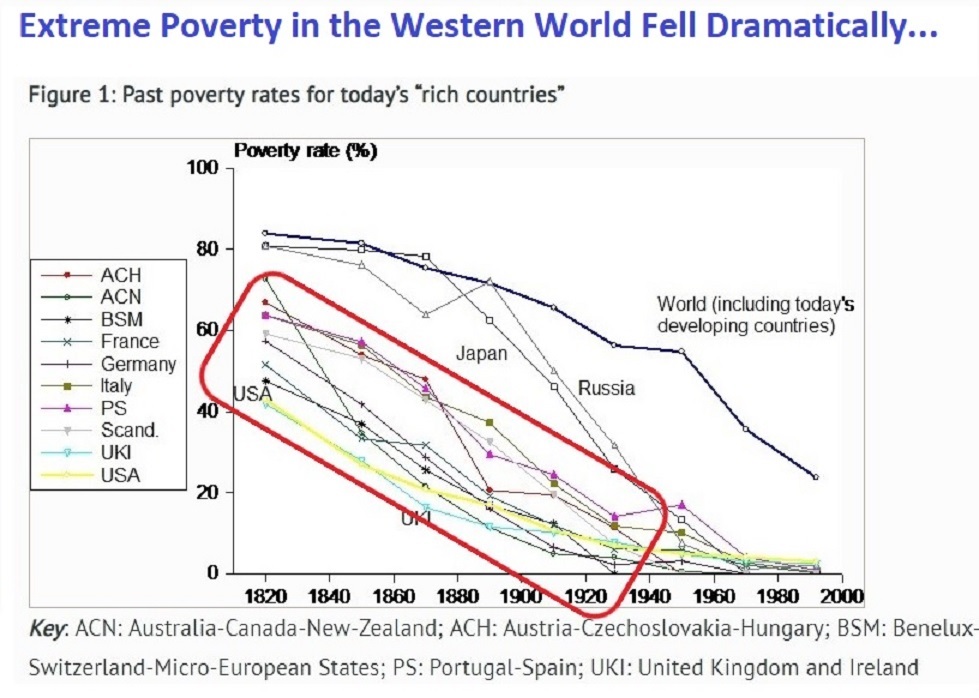
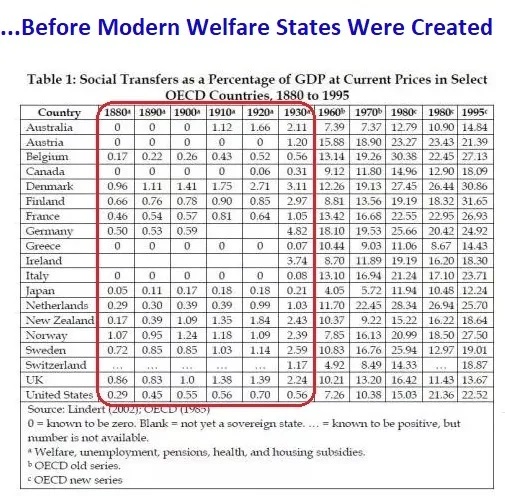











 I can tell you a few things about her, though. For one thing, she did not have a wild reputation, so I think that if she’s nominated, the Senate hearings will have to find something else to complain about. She was an English major and served on the Honor Council, a student body that enforced our honor code against lying and cheating (a great feature of academics at Rhodes that allowed us take-home tests in many classes). We were both in Mortar Board, an honor society. She wasn’t a political activist and was never a member of the College Republicans (I was, and we had a much larger membership than the College Democrats).
 Amy at the homecoming game senior year
 Candid photo in the social room (the ironing board refers to another picture)
 L to R: Me, Amy Barrett, and my daughter


 The Daily Hatch


