icon The Daily Hatch

www.TheDailyHatch.org with Everette Hatcher

Category Archives: Uncategorized

« Older posts
Newer posts »

AVICII ft Coldplay – Alive (New Song 2018)

April 20, 2018 – 2:11 pm

_

AVICII ft Coldplay – Alive (New Song 2018)

Page extended-protected

Avicii

From Wikipedia, the free encyclopedia
Ambox current red.svg
This article is being heavily edited because its subject has recently died. Knowledge about the circumstances of the death and surrounding events may change rapidly as more facts come to light. Initial news reports may be unreliable, and the last updates to this article may not reflect the most current information. (Learn how and when to remove this template message)
Not to be confused with Avīci.
Avicii
Avicii 2014 003cr.jpg

Avicii in 2014
Background information
Birth name Tim Bergling
Also known as
  • Tim Berg
  • Tim Lidén
  • Tom Hangs[1]
  • Timberman
Born 8 September 1989
Stockholm, Sweden
Died 20 April 2018 (aged 28)
Muscat, Oman
Genres
  • EDM
  • progressive house
  • electro house
Occupation(s)
  • Musician
  • DJ
  • remixer
  • record producer
Instruments
  • Guitar
  • piano
  • keyboards
  • synthesizers
  • FL Studio
  • Logic Pro
Years active 2006–2018
Labels
  • Avicii
  • UMG

[2]

Associated acts
  • David Guetta
  • Wyclef Jean
  • Coldplay
Website avicii.com

Tim Bergling (Swedish pronunciation: [tɪm ²bærjlɪŋ]; 8 September 1989 – 20 April 2018),[3] better known by his stage name Avicii (/əˈviːtʃi/, ə-VEE-chee, Swedish: [aˈvɪtɕɪ]; stylized as ΛVICII and ◢ ◤), was a Swedish musician, DJ, remixer and record producer.[4]

Bergling was ranked third on DJ Mag in 2012 and 2013[5][6] and has been nominated twice for a Grammy Award, once for his work on “Sunshine” with David Guetta in 2012[7] and once for his song “Levels” in 2013. Some of his most famous songs are “I Could Be the One” with Nicky Romero, “Wake Me Up“, “You Make Me“, “X You“, “Hey Brother“, “Addicted to You“, “The Days“, “The Nights“, “Levels“, “Waiting for Love“, “Without You” and “Lonely Together“. He released his debut studio album, True, in 2013. It received generally positive reviews from music critics, peaked within the top ten in more than fifteen countries and topped the Australian, Swedish, Danish and US charts.[8][9][10][11] In 2015, Bergling released his second studio album, Stories. On 10 August 2017, Avicii released an EP titled “Avīci (01)“.[12] He died on 20 April 2018 in Oman.[13]

Contents

 [hide] 

  • 1Early life
  • 2Career
    • 2.1Early career
    • 2.22011–12: “Levels” and international breakthrough
    • 2.32013: True
    • 2.42014–15: Stories and major collaborations
    • 2.52016: Touring retirement
    • 2.62017–18: Avīci (01) and True Stories
  • 3Death
  • 4Influences
  • 5Philanthropy
  • 6Filmography
  • 7Discography
  • 8Concert tours
  • 9Awards and nominations
  • 10See also
  • 11References
  • 12External links

Early life

Bergling was born in Stockholm, Sweden, to Klas Bergling and actress Anki Lidén.[14] In May 2007, Avicii signed on with the Dejfitts Plays label.[14] Then, in 2010, Bergling released the hit song “Seek Bromance“, which reached the top 20 in several countries, including Belgium,[15] France,[16] the Netherlands,[17] United Kingdom,[18] and Sweden.[19] He also remixed Nadia Ali‘s classic single “Rapture” for her album Queen of Clubs Trilogy: Onyx Edition. In October 2010, Bergling signed with the European A&R team with EMI Music Publishing.[20]

Career

Early career

Bergling was a member of the Laidback Luke Forums, where he refined his craft and, at times, demonstrated his distinct deep house style.[citation needed]

By 2009 to 2010, Bergling was a prolific producer and was releasing music incredibly quickly. His remixes during this period were “Sound of Now,” “Muja,” “Ryu,” and “Even.”

Bergling explained that the name Avicii means “the lowest level of Buddhist hell” (Avīci) and he chose the moniker because his real name was already used upon creating his MySpace page.[21][22]

2011–12: “Levels” and international breakthrough

Avicii wordmark, 2008–[23]

In 2011, Bergling released “Levels“, which launched him into the mainstream. The song was produced by Tim Bergling and contains a vocal sample from the 1962 gospel-inspired “Something’s Got a Hold on Me” by Etta James.[24] The same vocal sample was used first by Pretty Lights in his 2006 song “Finally Moving”.[25] This sample was also used by Drum and Bass producer Logistics on “Call Me Back”[26] and by Flo Rida in his single “Good Feeling“, which was produced by DJ Prak and Cirkut.[27] “Levels” reached the top ten in Austria,[28] Belgium,[29] Bosnia, Croatia, Denmark,[30] Finland,[31] Germany,[32]Greece, Ireland,[33] Italy,[34] the Netherlands,[35] Slovenia and the United Kingdom,[36] whilst topping the charts in Hungary,[37] Norway[38] and Sweden.[39]

In 2012, his collaboration track “Sunshine” with David Guetta was nominated for a Grammy award under the category for Best Dance Recording.[7] His track “Fade into Darkness” was sampled by Leona Lewis on her single “Collide“. The sampling was not accredited and led to controversy as Bergling attempted to block the single’s release. However, the matter was resolved outside of court with representatives stating “that Leona Lewis and Avicii will work together on the forthcoming single of Collide”.[40]

On 23 March 2012, Bergling’s unsigned single “Last Dance” was previewed on Pete Tong’s show on BBC Radio 1.[41] The song was later released on 27 August 2012. At Ultra Music Festival 2012 in Miami, he premiered two tracks, “Girl Gone Wild” (Avicii’s UMF Remix) with Madonna[42] and “Superlove” with Lenny Kravitz.[43] Avicii’s UMF Remix of “Girl Gone Wild” was released on 20 April 2012, and “Superlove” with Kravitz was released on 29 May 2012. After reaching two million followers on Facebook, Bergling released a new song titled “Two Million”. It was put out as a free download on his official Soundcloud page. On 27 April 2012, Bergling released “Silhouettes“. The song featured vocals from Salem Al Fakir and peaked at number 5 on the UK Dance charts[44] and number 4 on the Billboard Hot Dance Club Songs.[45]

Bergling was a featured performer on 4 August 2012 at Lollapalooza festival in Chicago’s Grant Park. On 12 August 2012, he released “Dancing in My Head” (Avicii’s ‘Been Cursed’ Mix) on Beatport.[46] The track features vocals from Eric Turner. A radio edit of the track, titled “Dancing in My Head” (Tom Hangs Mix) was released on 14 August 2012 on iTunes, and a remix EP was later released on 30 October 2012 featuring remixes from Charlie Bernardo and Michael Woods. On 26 September 2012, Bergling made history by being the first DJ to headline the world-famous Radio City Music Hallin New York City.[47] He performed two sold out shows on 26 and 27 September. He was supported by Matt Goldman and Cazzette at the two shows. At his Radio City Music Hall shows, he played a preview of his new track with Mike Posner titled “Stay with You”.

On 29 December 2012, Bergling premiered many new songs at Lights All Night, Dallas Convention Center, some of which made it into his first album, True. These unreleased songs included “I’ll Be Gone” and “Let It Go”.[48] The instrumental of “Let It Go” was mixed with the a capella of “Addicted to You” to become “Addicted to You (Avicii by Avicii)”.

On 29 December 2012, Bergling released “I Could Be the One” with Nicky Romero.[49] After first being debuted at his shows almost a year earlier, the track finally got released via Bergling’s record label LE7ELS. The new vocal version was released along with an instrumental version, a radio edit, and remixes from Audrio and Didrick. On 9 January 2013, Bergling launched the Avicii X You project, a partnership with Ericsson[50] designed to create the world’s first “crowdsourced” hit song. The project enabled fans to send in basslines, effects, melodies, rhythms and vocals to Bergling as sound files over the Internet.[51] The song features sequences from Kian Sang (melody), Naxsy (bassline), Martin Kupilas (beat), ВАНЯ ХАКСИ (break), Jonathan Madray, Mateusz Kolata, and Christian Westphalen (effects). Bergling acted as executive producer and created the finished song officially titled X You, which was released on 26 February 2013. On 30 January 2013, Bergling released “Three Million” featuring Negin to celebrate three million fans on his Facebook page.[52]

Bergling was nominated for a Grammy for Best Dance Recording with “Levels” at the 2013 Grammy Awards.[53] He was nominated alongside Calvin Harris and Ne-Yo, Skrillex, Swedish House Mafia and John Martin, and Al Walser. The award show took place on 10 February 2013. From late February to early March 2013, Bergling toured Australia as one of the headline acts in the Future Music Festival alongside The Prodigy and The Stone Roses.[54]In late February 2013, Bergling made his first South American tour, with concerts in Venezuela, Argentina, Colombia, Brazil and Chile.[55]

2013: True

Main article: True (Avicii album)

Avicii at Inox Festival, 2011.

In March 2013, Bergling announced and premiered many new tracks from his new album True, which would later be set to be released in September, during his Main Stage set at Ultra Music Festival in Miami. The new tracks were experimental in nature. For example, Bergling brought out a stomping band to play through the new bluegrass-tinged song “Wake Me Up”.[56] Many of these new songs, however, received mixed critical reviews after the concert.[57]

On 11 April 2013, Bergling released his new album promo mix on SoundCloud. It contained some songs from True and some of his non-album singles.[58] It also contained some of his ID’s such as “Black and Blue” and “Enough is Enough (Don’t Give Up On Us)”.

The EBU and SVT announced on 15 April that Bergling, along with ex-ABBA members Björn Ulvaeus and Benny Andersson, had composed the anthem for the Eurovision Song Contest 2013. The song was performed for the first time in the Final on 18 May.[59]

On 14 June 2013, the world premiere of Bergling’s new single, “Wake Me Up“, was previewed by Pete Tong on BBC Radio 1, featuring vocals from Aloe Blacc.[60] The song was later released on iTunes and radio on 25 June 2013. It is the first single from Bergling’s album True, which was released on 16 September 2013. “Wake Me Up” was number 1 on the Spotify Global Chart and Bergling was at 2 in most streamed artist worldwide.[61]“Wake Me Up” later went on to set a then record of 14 weeks as the number one hit on Billboards Dance/Electronic Songs list.[62] The Official Charts Company announced on 21 July that “Wake Me Up” had become the UK’s fastest selling single of 2013 after overtaking Robin Thicke‘s “Blurred Lines“, having sold 267,000 copies in its first week on sale in the UK.[63] “Wake Me Up” subsequently became a major hit, topping the charts in over 20 countries including Australia,[64] Germany,[65] Ireland,[66] Italy, Sweden,[67] the Netherlands,[68] and New Zealand.[69]

On 19 October 2013, the DJ Mag 2013 Top 100 DJs List was announced, with Bergling ranking number 3 on the list. Hardwell became the new World No.1 displacing Armin Van Buuren.[70] On 28 October 2013, Bergling released the single “Hey Brother” with vocals by Dan Tyminski. On 10 November, Bergling won his first award “Best Electronic” at the MTV EMA’s.[71]

On 24 November 2013 he won the American Music Award for favorite Electronic Dance Music Artist.[72]

In December 2013, Bergling released his fourth single off the album, “Addicted To You”, which reached number 1 in Australia[citation needed], with vocals from Audra Mae, who also sings on Shame on Me and Long Road to Hell, both tracks on the album.[73] Bergling also released the single, “Lay Me Down” featuring vocals from Adam Lambert and guitar from Nile Rodgers.[74] On 29 December 2013, Bergling debuted his new track “Dreaming of Me”, featuring vocals from Audra Mae, via episode 19 of his LE7ELS podcast.[75] It is unknown whether it will be released in the future.

In January 2014, the French hit music radio station NRJ released a new web radio station called “NRJ AVICII”, which plays songs only by Bergling.[citation needed]

On 8 March 2014, Bergling’s Instagram account confirmed a collaboration with Madonna. The extent of the collaboration is unknown.[76] On 21 March 2014, Bergling released a remixed edition of his album True titled True: Avicii By Avicii containing remixes by himself of all the tracks, excluding “Heart Upon My Sleeve” for unknown reasons. The promotion of this album was supposed to begin at the 2014 Ultra Music Festival, but Bergling announced he had been hospitalised on 28 March, and was unable to play his closing set at the festival.[77] On 28 March 2014, FIFA and Sony Music Entertainmentannounced that Bergling would be collaborating with Carlos Santana, Wyclef Jean and Alexandre Pires for the official FIFA World Cup Anthem titled “Dar um Jeito (We Will Find a Way)”. The anthem was performed at the FIFA World Cup Closing Ceremony on 13 July 2014.[78]

In 2014, following the FIFA World Cup, Bergling released his single “Lay Me Down“.[79] He also produced and collaborated with Chris Martin from Coldplay, co-writing and co-producing the track “A Sky Full of Stars” from the band’s sixth studio album Ghost Stories, released on 19 May 2014. He also played and recorded the piano parts on the track. “A Sky Full of Stars” was released on 3 May as the second single from Ghost Stories.[80] “Lovers on the Sun“, a track Bergling co-produced with David Guetta, was released on 30 June 2014.[81] He has also worked with Wyclef Jean on a single titled “Divine Sorrow” off his upcoming album Clefication.[82]

2014–15: Stories and major collaborations

Main article: Stories (Avicii album)

In July 2014, Bergling told Rolling Stone that he had worked on 70 songs for his next album Stories, which would include collaborations with Jon Bon Jovi, Serj Tankian of System of a Down, Chris Martin, Wyclef Jean and Matisyahu.[83] Describing the album, Bergling said: “It’s going to be a lot more song-oriented.”[84]

During his tour for True, he also performed his upcoming single “No Pleasing A Woman” with vocals from Billie Joe Armstrong of American rock band Green Day. It has a similar instrumental to “Wake Me Up” albeit different chord progressions, along with “No Pleasing A Woman.” Bergling also performed other upcoming songs like “In Love With Your Ghost” with Daniel “Danne” Adams-Ray, “Love To Fall” with Tom Odell and “Million Miles” with LP which is the demo version of “Trouble”, a song from “Stories” with vocals from Wayne Hector.[85]

“Lose Myself”, a collaboration between Bergling and Chinese singer Wang Leehom, was released on 1 September 2014.[86] On 8 September 2014, his 25th birthday, Bergling decided to cancel all of his remaining performances of 2014 due to health concerns.[87] The following day, he announced through Denim & Supply that he would release his new single “The Days” later in 2014; a video was also featured with a preview of the track.[88] “The Days” is a collaboration between Bergling and Robbie Williams, and was released on 3 October 2014 via PRMD. On 16 September 2014, it was announced through EA Sports that Bergling was debuting a brand new track called “The Nights” exclusively on FIFA 15.[89] On 17 November 2014, it was officially announced that the track is to be released as a part of an EP together with “The Days”.[90]

On 17 November 2014, Wyclef Jean released a track titled “Divine Sorrow” featuring Avicii.[91]

On 2 March 2015, Bergling performed live at Australia’s Future Music Festival his upcoming single “Heaven”, a collaboration with Coldplay frontman Chris Martin on vocals. However, the vocals were later resung by singer Simon Aldred from Cherry Ghost; Chris Martin will receive writing credits on “Heaven”.[92] A lot of songs were leaked into the internet via Bergling’s UMF set 2015.[93] These songs include “Heaven”, “Waiting For Love,” and some of his ID’s “For A Better Day”, “City Lights”, “Can’t Catch Me”, “True Believer”, “What Would I Change It To”, “Can’t Love You Again” (previously leaked on the internet under the name “Don’t Call”) and “Attack”.[93][94]

On 25 April 2015, Bergling announced on episode 35 of his LE7ELS podcast that he would be playing some of his unreleased songs on his show. He also previewed his bootleg of Kings of Tomorrow’s song “Finally” and one of his old songs that he did with ASH, titled “Papa Was a Rolling Stone”.[95]

On 6 May 2015, Bergling released his rework of Nina Simone‘s version of “Feeling Good“,[96] composed in 1964 by the English songwriters Anthony Newley and Leslie Bricusse. On 8 May 2015, Bergling previewed his song “I’ll Be Gone” via episode 422 of Tiësto’s Club Life Podcast[97] which has a very similar instrumental to Liar Liar (Avicii by Avicii) albeit different vocals and chord progressions. It was leaked into the internet between 2013–2014 via the name “Stars” and is yet to be released. It also shares a similar drop to one of Bergling’s ID’s “Black and Blue”.[98] On 22 May 2015, Bergling premiered another single from Stories, “Waiting for Love“. The track was co-produced by fellow DJ and producer Martin Garrix, and featured vocals from Simon Aldred of Cherry Ghost.[99] On 25 May 2015, Bergling previewed three old tracks on episode 36 of his LE7ELS podcast: “Tracks of My Tears”, “Sorry Mr. Atari” and “Time to Get lll”,[100] all of which are songs that Bergling had made years ago. “Tracks of My Tears” is the original version of Bergling’s “All You Need is Love”. On 27 May 2015, it was confirmed by a Swedish newspaper through an interview with Bergling that his sophomore album Stories would be released in fall 2015.[101]

On 3 July 2015, Bergling previewed two tracks from his album Stories on episode 37 of his LE7ELS podcast: “Broken Arrows” featuring Zac Brown Band and “Can’t Catch Me” featuring Wyclef Jean and Matisyahu.[102] He also played a full version of his track “Heaven” and also revealed that he was doing another track with Chris Martin on vocals called “True Believer”. Later, Bergling also revealed that he is also singing on that track.[103][104] On 18 July 2015, it was announced by Bergling that he had finally finished production on Stories after 2 years of work.[105]

A couple of weeks later, on 4 August 2015, it was announced that the final singles before the release of Stories would be “For a Better Day” featuring American singer Alex Ebert and “Pure Grinding” featuring vocals from Kristoffer Fogelmark and Earl St. Clair.[106] On 27 August, Bergling released a teaser video on Instagram with the song “Pure Grinding” playing. The tracks “For a Better Day” and “Pure Grinding” were released the following day through Spotify and iTunes.[107] On 26 September, Bergling announced “Stories – Megamix” on Spotify.[108]

Stories was released on 2 October 2015 alongside 3 promotional singles: “Broken Arrows” with Zac Brown, “Ten More Days” with Zak Abel and “Gonna Love Ya” with Sandro Cavazza.[109]

2016: Touring retirement

On 15 January 2016, Bergling released his remix of Morten’s “Beautiful Heartbeat”.[110] Coca-Cola had partnered with Bergling for a global campaign anthem “Taste the Feeling” featuring Conrad Sewell.[111] The song was released on 19 January. On 25 January, Bergling teamed up again with Coldplay to co-produce the band’s single “Hymn for the Weekend“, which was released as the second single from their album A Head Full of Dreams.[112] In 2016, according to a report by Inc magazine, Avicii was the 6th fastest growing company in Europe, with a revenue of €7.7 million in 2014.[113][114][115]

On 19 March 2016, Bergling performed live at Ultra Music Festival and premiered new IDs such as “Without You (feat. Sandro Cavazza)”, “We Burn (Faster Than Light)”, and a collaboration with Australian pop star Sia (which he first played in Dubai).[116] On 29 March, Bergling announced on Facebook that he would be retiring from performing live and touring in 2016.[117]

On 7 April 2016, Bergling announced that he’s working on a third studio album.[118]

On 3 June 2016, Bergling released his collaboration with Otto Knows titled “Back Where I Belong”. It’s the second collaboration with the two producers after “Itrack”, back in 2011.[119]

On 15 July 2016, Bergling released a remix of his own song, ‘Feeling Good’. The remix was titled “Feeling Good (Avicii By Avicii)”.[120] This track was only released on Bergling’s official YouTube channel. However, on 1 August, it appears to have been pulled with the YouTube video being made private.

On 28 August 2016, Bergling performed his final live performance in Ibiza, before retiring from touring citing health concerns. His initial announcement was made on his website in April.[121]

On 22 December 2016, a representative of Avicii Music AB had announced that Avicii had parted ways with long time manager Ash Pournouri and At Night Management along with Ash’s record label PRMD. The representative also announced that Avicii had signed on to Universal Music Sweden and is expected to release his third studio album in 2017.[122]

2017–18: Avīci (01) and True Stories

In June 2017, British singer Rita Ora debuted a semi-acoustic version of “Lonely Together” at a private event at Annabel’s in London.[123] “Lonely Together” was later the second single from Avīci (01)

From 13 July to 2 August, Avicii shared one-minute snippets on Instagram, captioned “New music coming very very (very) soon!”, with track titles as hashtags.[124][125]

Avicii uploaded teasers of each track from the EP online upon release.[126][127][128]

On 10 August 2017, Bergling released the six-track EP Avīci (01).[12] Avicii has said of the release: “I’m really excited to be back with music once again. It has been a long time since I released anything and a long time since I was this excited over new music! My focus on this first EP of the album was to get a mix of new and old songs: some that fans have been asking about and waiting for mixed with brand new songs that they have never been heard before!”

In an interview with Pete Tong on BBC Radio 1, Bergling stated that the EP is one of three parts of his third studio album.[129]

On 11 September 2017, Avicii announced a documentary entitled Avicii: True Stories. The documentary chronicles the artist’s retirement from tour, and features interviews from his colleagues David Guetta, Tiësto, Wyclef Jean, Nile Rodgers and Chris Martin of Coldplay.

Death

On 20 April 2018, Avicii’s publicist Ebba Lindqvist announced that he had died that day at the age of 28 in Muscat, Oman. No cause of death was given.[130][13]

Influences

Daft Punk (left) and Swedish House Mafia (right) were both influences on Avicii.

Bergling’s influences included Daft Punk, Swedish House Mafia (Sebastian Ingrosso, Steve Angello, Axwell) and Eric Prydz.[131]

Bergling described his earliest entree to electronic music as “listening to a lot of Daft Punk, way before I knew what house music was.”[132]

Avicii is named in the song “I Took a Pill in Ibiza” by American singer and songwriter Mike Posner. Posner recounts the event when he went to an Avicii show in Ibiza and got a mystery pill from someone,[133] with the starting lyrics “I took a pill in Ibiza / To show Avicii I was cool”. The song was made in the week they wrote a song together in Sweden called “Stay with You”. Posner released an acoustic version of the unreleased “Stay with You” on the Target Deluxe Version of his album At Night, Alone.

Philanthropy

Since achieving widespread commercial success, Bergling began working with his manager and executive producer Ash Pournouri to start House for Hunger[134] in 2011, a charity dedicated to alleviating global hunger. The pair wanted to showcase the giving spirit fostered by the house music community. Bergling explained, “You have to give something back. I am so fortunate to be in the position where I can actually do that. I feel lucky every day when I wake up and am able to do what I love and make a living.” In addition to donating $1 million to Feeding America, a charity founded by John van Hengel, House for Hunger has helped fund the efforts of The Feed Foundation, started by Laura Bush,[135] allowing it to distribute over 2 million school meals throughout Africa.[136]

Filmography

Film
Year Title Role Director Note Ref.
2017 Avicii: True Stories Himself Levan Tsikurishvili Documentary [137]

Discography

Main article: Avicii discography
Studio albums
  • True (2013)
  • Stories (2015)

Concert tours

  • True Tour (2014)
  • Stories World Tour (2015)

Awards and nominations

Main article: List of awards and nominations received by Avicii

See also

  • Swedish popular music

References

  1. Jump up^ “Tom Hangs”. Discogs. Retrieved 28 August 2015.
  2. Jump up^ “Avicii Music AB”. Discogs.
  3. Jump up^ “Svenske superstjärnan Avicii är död”.
  4. Jump up^ “AVICII: Biography”. The DJ List. Retrieved 4 June 2011.
  5. Jump up^ DJ Mag Top 100 Results 2012. Djmag.com
  6. Jump up^ DJ Mag Top 100 Results 2013. Djmag.com
  7. ^ Jump up to:a b Avicii. “Grammy Awards 2012”. Retrieved 23 May 2013.
  8. Jump up^ Avicii – True. Australian-charts.com. Retrieved on 16 October 2015.
  9. Jump up^ Avicii – True. Danishcharts.com. Retrieved on 16 October 2015.
  10. Jump up^ Avicii – True. Swedishcharts.com. Retrieved on 16 October 2015.
  11. Jump up^ Avicii – Chart history. Billboard. Retrieved on 16 October 2015.
  12. ^ Jump up to:a b “Avicii Breaks Musical Silence With ‘Avīci’ EP: Listen”.
  13. ^ Jump up to:a b Aswad, Jem (20 April 2018). “Avicii Dies at 28”. Variety. Retrieved 20 April 2018.
  14. ^ Jump up to:a b “Avicii Bio | Avicii Career”. MTV. Retrieved 16 October 2013.
  15. Jump up^ “Tim Berg – Bromance”. ultratop.be. Archived from the original on 8 June 2016. Retrieved 13 June 2016.
  16. Jump up^ Hung, Steffen. “lescharts.com – Tim Berg – Seek Bromance”. http://www.lescharts.com. Archived from the original on 9 August 2016. Retrieved 13 June 2016.
  17. Jump up^ 40, Stichting Nederlandse Top. “Tim Berg – Bromance (Avicii Remix)”. Top40.nl. Retrieved 13 June 2016.
  18. Jump up^ “Official Singles Chart Top 100 | Official Charts Company”. http://www.officialcharts.com. Retrieved 13 June 2016.
  19. Jump up^ Hung, Steffen. “swedishcharts.com – Tim Berg – Seek Bromance”. http://www.swedishcharts.com. Archived from the original on 24 June 2016. Retrieved 13 June 2016.
  20. Jump up^ “Sony/ATV Extends Co-Publishing Deal with Avicii”. Billboard. Retrieved 13 June 2016.
  21. Jump up^ “The Origins of 10 Iconic Names in Dance Music”. EDM.com. 4 February 2016. Retrieved 3 November 2016.
  22. Jump up^ Farella, Dylan (11 August 2013). “Avicii discusses choosing his DJ name, connecting with manager Ash, more on rise to stardom – Dancing Astronaut”. http://www.dancingastronaut.com. Retrieved 3 November 2016.
  23. Jump up^ “Avicii – Avicii added a new photo”. Facebook. 3 September 2008. Retrieved 8 March 2017.
  24. Jump up^ “Avicii’s Levels – Discover the Sample Source”. WhoSampled. Retrieved 13 June 2016.
  25. Jump up^ “Pretty Lights’s Finally Moving – Discover the Sample Source”. WhoSampled. Retrieved 13 June 2016.
  26. Jump up^ “Logistics’s Call Me Back – Discover the Sample Source”. WhoSampled. Retrieved 13 June 2016.
  27. Jump up^ “Avicii Bio, Music, News & Shows”. DJZ.com. Archived from the original on 29 March 2013. Retrieved 28 February 2013.
  28. Jump up^ Hung, Steffen. “Avicii – Levels”. austriancharts.at. Archived from the original on 24 June 2016. Retrieved 13 June 2016.
  29. Jump up^ “Avicii – Levels”. ultratop.be. Archived from the original on 27 September 2016. Retrieved 13 June 2016.
  30. Jump up^ Hung, Steffen. “danishcharts.com – Avicii – Levels”. http://www.danishcharts.com. Archived from the original on 8 August 2016. Retrieved 13 June 2016.
  31. Jump up^ “Musiikkituottajat – Tilastot – Suomen virallinen lista – Artistit”. http://www.ifpi.fi. Retrieved 13 June 2016.
  32. Jump up^ “Die ganze Musik im Internet: Charts, Neuerscheinungen, Tickets, Genres, Genresuche, Genrelexikon, Künstler-Suche, Musik-Suche, Track-Suche, Ticket-Suche – musicline.de”. musicline.de. Retrieved 13 June2016.
  33. Jump up^ “GFK Chart-Track”. http://www.chart-track.co.uk. Retrieved 13 June 2016.
  34. Jump up^ Hung, Steffen. “italiancharts.com – Avicii – Levels”. http://www.italiancharts.com. Archived from the original on 29 June 2016. Retrieved 13 June 2016.
  35. Jump up^ 40, Stichting Nederlandse Top. “Avicii – Levels”. Top40.nl. Retrieved 13 June 2016.
  36. Jump up^ “Official Dance Singles Chart Top 40 | Official Charts Company”. http://www.officialcharts.com. Retrieved 13 June 2016.
  37. Jump up^ lightmedia.hu. “Rádiós Top 40 játszási lista – Hivatalos magyar slágerlisták”. zene.slagerlistak.hu. Retrieved 13 June 2016.
  38. Jump up^ Hung, Steffen. “norwegiancharts.com – Avicii – Levels”. http://www.norwegiancharts.com. Archived from the original on 17 June 2016. Retrieved 13 June 2016.
  39. Jump up^ Hung, Steffen. “swedishcharts.com – Avicii – Levels”. http://www.swedishcharts.com. Retrieved 13 June 2016.
  40. Jump up^ Halliday, Josh (16 August 2011). “Leona Lewis resolves legal dispute with Swedish DJ over new single”. The Guardian. Retrieved 12 October 2014.
  41. Jump up^ “Avicii – Last Dance”. HYPETRAK. Retrieved 13 June 2016.
  42. Jump up^ “Avicii Releases Ultra Music Fest Remix of Madonna’s ‘Girl Gone Wild'”. PopCrush. Retrieved 13 June 2016.
  43. Jump up^ “Avicii vs. Lenny Kravitz – “Superlove” «  The Top Sound”. http://www.thetopsound.com. Retrieved 13 June 2016.
  44. Jump up^ “Official Dance Singles Chart Top 40 | Official Charts Company”. http://www.officialcharts.com. Retrieved 13 June 2016.
  45. Jump up^ “Avicii – Chart history | Billboard”. http://www.billboard.com. Retrieved 13 June 2016.
  46. Jump up^ “Eric Turner New Releases: Dancing in My Head (Avicii’s Been Cursed Remix) [Eric Turner vs. Avicii] on Beatport”. http://www.beatport.com. Retrieved 13 June 2016.
  47. Jump up^ Montgomery, James (27 September 2012). “Avicii Makes History – Loudly – With Radio City Show”.
  48. Jump up^ “Avicii @ Lights All Night, Dallas Convention Center, United States 2012-12-29 Tracklist / Playlist · 1001 Tracklists”. 1001tracklists.com. Retrieved 12 November 2015.
  49. Jump up^ “Avicii vs Nicky Romero: ‘I Could Be the One’ review”. Digital Spy. 13 February 2013. Retrieved 13 June 2016.
  50. Jump up^ “Sets Tone for New Music Trends in Project with Avicii”. Ericsson. Retrieved 8 March 2017.
  51. Jump up^ “Avicii’s ‘X You’ track unleashes the power of networked, social entertainment”. Ericsson.com. Retrieved 13 June 2016.
  52. Jump up^ “Avicii hits 3 million fans on Facebook, gives away ‘Three Million (Your Love is Amazing)’ – Dancing Astronaut”. Dancing Astronaut. 30 January 2013. Retrieved 13 June 2016.
  53. Jump up^ “Avicii: My Grammy Ritual”. Billboard. Retrieved 13 June 2016.
  54. Jump up^ “Home | Future Music”. Futureentertainment.com.au. Archived from the original on 1 September 2013. Retrieved 16 October 2013.
  55. Jump up^ “RA: Avicii tour dates for 2013”. Resident Advisor. Retrieved 13 June2016.
  56. Jump up^ Doyle, Patrick (29 August 2014). “Avicii’s Rave New World”. Rolling Stone.
  57. Jump up^ Farella, Dylan (27 March 2013). “Avicii rolls the dice at Ultra 2013; too advanced for dance”. Dancing Astronaut.
  58. Jump up^ “AVICII – PROMO MIX 2013 – INCLUDING NEW ALBUM TRACKS”. SoundCloud. Retrieved 20 June 2015.
  59. Jump up^ “ABBA’s Benny, Björn and Avicii to write ‘Eurovision anthem'”. EBU. Retrieved 15 April 2013.
  60. Jump up^ “Avicii to premiere ‘Wake Me Up’ this Friday on Pete Tong’s BBC Radio 1 show – Dancing Astronaut”. Dancing Astronaut. 11 June 2013. Retrieved 13 June 2016.
  61. Jump up^ Summers, Nick (27 February 2014). “Avicii’s Wake Me Up is the Most-Played Spotify Track of All Time”. The Next Web. Retrieved 13 June2016.
  62. Jump up^ Murray, Gordon. “Avicii Sets Mark; A Bundle of Brit.” Billboard – The International Newsweekly of Music, Video and Home Entertainment 21 December 2013: 181. ProQuest. Web. 5 October 2015
  63. Jump up^ Kreisler, Lauren (21 July 2013). “Avicii scores fastest selling single of 2013 so far with Wake Me Up”. Official Charts. Official Charts Company.
  64. Jump up^ “Avicii extends Aussie singles chart lead”. Digital Spy. 12 August 2013. Retrieved 13 June 2016.
  65. Jump up^ (www.dw.com), Deutsche Welle. “Felix Jaehn lands Germany’s music hit of the summer | Music | DW.COM | 11 August 2015”. DW.COM. Retrieved 13 June 2016.
  66. Jump up^ “GFK Chart-Track”. http://www.chart-track.co.uk. Retrieved 13 June 2016.
  67. Jump up^ “Swedishcharts.com”. Archived from the original on 16 July 2016. Retrieved 12 June 2016.
  68. Jump up^ 40, Stichting Nederlandse Top. “Avicii – Wake Me Up!”. Top40.nl. Retrieved 13 June 2016.
  69. Jump up^ “New Zealand Charts”. Archived from the original on 12 August 2016. Retrieved 12 June 2016.
  70. Jump up^ Farella, Dylan (10 November 2012). “7 reasons why Avicii was voted top 3 in DJ Mag’s 2012 ranking”. Dancing Astronaut.
  71. Jump up^ Houston, Roger (11 November 2013). “Avicii Wins Best Electronic Award at MTV EMA”. exqlusiv.com. Archived from the original on 2 December 2013.
  72. Jump up^ “AMA Winners List 2013”. Hollywoodlife.com.
  73. Jump up^ “Listen: Audra Mae featured on Avicii’s new album “True,” out today”. NewsOK.com. 17 September 2013. Retrieved 13 June 2016.
  74. Jump up^ Browne, David. “Hot Funkmaster: Nile Rodgers.” Rolling Stone 10 October 2013: 66,66,68. ProQuest. Web. 4 October 2015
  75. Jump up^ “Avicii Radio Podcast DJ Mix: Levels – Episode 019 + Tracklist”. Retrieved 20 June 2015.
  76. Jump up^ Coleman, Miriam (8 March 2014). “Madonna Announces Collaboration With Avicii”.
  77. Jump up^ Lipshutz, Jason (28 March 2014). “Avicii replaced by Deadmau5 at Ultra Music Festival 2014”.
  78. Jump up^ “Daily Wrap-Up: 4–2–14”. NoisePorn. Retrieved 2 April 2014.
  79. Jump up^ “LISTEN: Adam Lambert Debuts New Dance Song!”. The Huffington Post. 13 September 2013. Retrieved 13 June 2016.
  80. Jump up^ “New songs aired during emotional and revealing Chris Martin interview!”. 29 April 2014. Archived from the original on 29 April 2014.
  81. Jump up^ Stern, Bradley (30 June 2014). “David Guetta And Avicii Team Up For ‘Lovers on the Sun (Feat. Sam Martin)’: Listen”. idolator.com.
  82. Jump up^ Ramirez, Erika (28 August 2014). “Exclusive: Wyclef Jean Announces ‘Clefication’ Album & Avicii-Assisted Single”. Billboard. Retrieved 31 August 2014.
  83. Jump up^ Edwards, Gavin. “Avicii’s Rock & Roll Blowout.” Rolling Stone 31 July 2014: 31. ProQuest. Web. 4 October 2015
  84. Jump up^ Edwards, Gavin (31 July 2014). “Avicii Calls in Rock & Roll Collaborators for Follow-Up to ‘True'”. Rolling Stone (1214). Retrieved 31 August 2014.
  85. Jump up^ “EXCLUSIVE: Avicii & Billie Joe Armstrong – No Pleasing A Woman (PREVIEW)”. 28 July 2014. Retrieved 10 March 2015.
  86. Jump up^ Wang Leehom & Avicii “Lose Myself” (Single Premiere). Josepvinaixa.com. 1 September 2014
  87. Jump up^ Smith, Katie (8 September 2014) Avicii Cancels Future Performances Indefinitely Due To Health Concerns. Edmtunes.com
  88. Jump up^ Denim & Supply Ralph Lauren and Avicii Present: “The Days”. YouTube. 12 September 2014
  89. Jump up^ Escucha la banda sonora de FIFA 15. Easports.com. 16 September 2014
  90. Jump up^ “Avicii – The Nights (Audio)”. YouTube. 17 November 2014. Retrieved 10 March 2015.
  91. Jump up^ “Coca-Cola Invites The World To “Share The Sound of an AIDS Free Generation” And Support (RED)”. The Coca-Cola Company. Retrieved 10 March 2015.
  92. Jump up^ [1][dead link]
  93. ^ Jump up to:a b Middleton, Ryan (19 April 2015) Avicii Releases Ultra Music Festival 2015 Live Set Filled With New ‘Stories’ Songs. Musictimes.com
  94. Jump up^ “Avicii – Ultra Music Festival 2015 by AviciiOfficial – Free Listening on SoundCloud”. 21 April 2015.
  95. Jump up^ “AVICII – LEVELS PODCAST”. Podcast Chart. Retrieved 20 June2015.
  96. Jump up^ “Avicii reworks Nina Simone classic ‘Feeling Good’ and it’s big”. Digital Spy. Retrieved 20 June 2015.
  97. Jump up^ Lawrence Maybir. “Avicii Premieres New Track On Tiesto’s Club Life Podcast – Your EDM”. Your EDM. Retrieved 20 June 2015.
  98. Jump up^ “Avicii’s new track ‘I’ll Be Gone’ isn’t so new – Dancing Astronaut”. Dancing Astronaut. Retrieved 20 June 2015.
  99. Jump up^ “Avicii, Martin Garrix And John Legend Team Up For New Song ‘Waiting For Love'”. Capital XTRA. Retrieved 13 June 2016.
  100. Jump up^ “iTunes – Podcasts – AVICII – LEVELS PODCAST by Avicii”. iTunes. Retrieved 20 June 2015.
  101. Jump up^ “Avicii håller hov i Las Vegas”. Retrieved 20 June 2015.
  102. Jump up^ “Avicii Drops Two Unreleased Tracks From New Album”. Retrieved 3 July 2015.
  103. Jump up^ [2][dead link]
  104. Jump up^ “On which song on Stories did Avicii sing?”. Quora. Retrieved 8 March2017.
  105. Jump up^ Tim Bergling on Twitter: “Finally finished my album! After two years of hard work it is finally done! Feels so good!. Twitter.com (18 July 2015). Retrieved on 16 October 2015.
  106. Jump up^ Ultimate Music | Avicii “Pure Grinding / For a Better Day” (Video Premiere). Josepvinaixa.com (3 September 2015). Retrieved on 16 October 2015.
  107. Jump up^ Avicii Announces Two New Singles, ‘For A Better Day,’ ‘Pure Grinding’. Radio.com (24 August 2015). Retrieved on 16 October 2015.
  108. Jump up^ “Avicii’s ‘Stories’ album mega-mix leaks ahead of album release – Dancing Astronaut”. Dancing Astronaut. 26 September 2015. Retrieved 13 June2016.
  109. Jump up^ “Stories by Avicii on iTunes”. iTunes. Retrieved 29 April 2016.
  110. Jump up^ “Beautiful Heartbeat (feat. Frida Sundemo) (Avicii Remix) by MORTEN, Frida Sundemo, Avicii on Beatport”. http://www.beatport.com. Retrieved 13 June 2016.
  111. Jump up^ “Rising Australian Pop Singer Conrad Sewell, With Assist From Avicii, Fronts Coca-Cola’s New Campaign”. Billboard. Retrieved 13 June 2016.
  112. Jump up^ “Listen To This Epic Three Way Collab Between Coldplay, Beyoncé, and Avicii”. Your EDM. 3 March 2017. Retrieved 8 March 2017.
  113. Jump up^ “Avicii Named 6th Fastest-Growing Company In Europe”. Your EDM. 23 February 2017. Retrieved 8 March 2017.
  114. Jump up^ Noah Davis. “Young, Digital, and Hungry: Inside the Companies of the Inc. 5000 Europe”. Inc.com. Retrieved 8 March 2017.
  115. Jump up^ “Read About the Companies in the Inaugural Inc. 5000 Europe”. Inc.com. 24 February 2015. Retrieved 8 March 2017.
  116. Jump up^ “Avicii – live at Ultra Music Festival 2016 (Miami) – 19-Mar-2016 – FREE DOWNLOAD by irene3 – Free Listening on SoundCloud”. 14 April 2016.
  117. Jump up^ “Avicii – Hello world, Thank you for letting me fulfil so…” Facebook. 29 March 2016. Retrieved 8 March 2017.
  118. Jump up^ “Avicii Planning To Release New Album After Retiring”. DJMag.com. 7 April 2016. Retrieved 8 March 2017.
  119. Jump up^ “Avicii, Otto Knows New Releases: Back Where I Belong (feat. Avicii) on Beatport”. Beatport.com. 3 June 2016. Retrieved 8 March 2017.
  120. Jump up^ “Avicii Debuts Brand New Single, “Feeling Good (Avicii by Avicii)””. Your EDM. 23 February 2017. Retrieved 8 March 2017.
  121. Jump up^ “Avicii Officially Retires From Touring”. Billboard. 28 August 2016. Retrieved 8 March 2017.
  122. Jump up^ Matt Medved (22 December 2016). “Avicii & Longtime Manager Ash Pournouri Part Ways”. Billboard. Retrieved 8 March 2017.
  123. Jump up^ Mike, Wass (28 June 2017). “Rita Ora Debuts New Song “Lonely Together” At A Private Event”. Idolator. Retrieved 9 August 2017.
  124. Jump up^ David, Rishty (3 August 2017). “Avicii Reveals New ‘Avīci’ EP & Release Date, Teases More Music”. Billboard. Retrieved 9 August 2017.
  125. Jump up^ Rob, McCallum (3 August 2017). “Avicii teases more new music ahead of forthcoming release”. DJ Mag. Retrieved 9 August 2017.
  126. Jump up^ David, Rishty (7 August 2017). “Avicii Shares ‘Avīci’ EP Track List, Feat. Rita Ora, AlunaGeorge & More”. Billboard. Retrieved 9 August 2017.
  127. Jump up^ Derek, Staples (9 August 2017). “Avicii shares ‘Avīci’ EP tracklist, feat. Rita Ora, AlunaGeorge, more”. DJ Mag. Retrieved 9 August 2017.
  128. Jump up^ Erik (7 August 2017). “Avicii Returns To His Roots In Teaser For New Collaboration With Billy Raffoul”. EDM Sauce. Retrieved 9 August 2017.
  129. Jump up^ “Avicii chats to Pete, Paul Oakenfold and DJ Alfredo recorded in Ibiza, Pete Tong – BBC Radio 1”. BBC.
  130. Jump up^ “Avicii är död – DN.SE”. DN.SE (in Swedish). 20 April 2018. Retrieved 20 April 2018.
  131. Jump up^ Did you know Avicii named Daft Punk, Swedish House Mafia and Eric Prydz as key musical influences?| Picture Galleries. Capital FM. Retrieved 29 March 2014.
  132. Jump up^ Weiner, Jonah. “Daft Punk: All Hail Our Robot Overlords”. Rolling Stone.
  133. Jump up^ “Mike Posner – I Took A Pill In Ibiza Lyrics | Genius Lyrics”. Genius.com. Retrieved 8 March 2017.
  134. Jump up^ [3] Archived 14 June 2012 at the Wayback Machine.
  135. Jump up^ “FEED”. FEED Foundation. Retrieved 12 November 2015.
  136. Jump up^ Amorosi, A.D. (14 February 2013). “Avicci: Leading By Example With Charity”. DJZ.com. Archived from the original on 8 April 2013.
  137. Jump up^ Bein, Kat (11 September 2017). “Avicii Offers A Rare Look Into His ‘True Stories’ With Documentary Trailer: Watch”. Retrieved 10 November 2017.

External links

Wikimedia Commons has media related to Avicii.
  • Official website
[hide]

  • v
  • t
  • e
Avicii
Discography · Awards and nominations
Studio albums
  • True
  • Stories
Extended plays
  • The Days / Nights EP
  • Pure Grinding / For a Better Day
  • Avīci (01)
Singles
  • “My Feelings for You“
  • “Seek Bromance“
  • “Street Dancer“
  • “Blessed“
  • “Fade into Darkness“
  • “Levels“
  • “Collide“
  • “Silhouettes“
  • “Superlove“
  • “Dancing in My Head“
  • “I Could Be the One“
  • “X You“
  • “Wake Me Up“
  • “You Make Me“
  • “Hey Brother“
  • “Addicted to You“
  • “Lay Me Down“
  • “The Days“
  • “The Nights“
  • “Waiting for Love“
  • “For a Better Day“
  • “Pure Grinding“
  • “Broken Arrows“
  • “Taste the Feeling“
  • “Feeling Good“
  • “We Write the Story“
  • “Without You“
  • “Lonely Together“
Featured singles
  • “Dar um Jeito (We Will Find a Way)“
  • “Divine Sorrow“
Concert tours
  • True Tour
  • Stories World Tour
Film
  • Avicii: True Stories
Authority control
  • WorldCat Identities
  • VIAF: 170511480
  • LCCN: no2011136918
  • ISNI: 0000 0001 1928 1541
  • GND: 1042223254
  • SUDOC: 158163990
  • BNF: cb16524131s (data)
  • MusicBrainz: c85cfd6b-b1e9-4a50-bd55-eb725f04f7d5
Categories:

  • Recent deaths
  • Avicii
  • 1989 births
  • 21st-century Swedish musicians
  • Electro house musicians
  • 2018 deaths
  • Swedish male musicians
  • Musicians from Stockholm
  • Remixers
  • Swedish DJs
  • Swedish house musicians
  • Swedish record producers
  • Ultra Records artists
  • Progressive house musicians

_

By Everette Hatcher III | Comments (0)

FRIEDMAN FRIDAY Great quotes from Milton Friedman

March 2, 2018 – 12:05 am

I am moving the FRIEDMAN FRIDAY to a monthly feature on http://www.thedailyhatch.org. My passion has been recent years to emphasize the works of Francis Schaeffer in my apologetic efforts and most of those posts are either on Tuesdays or Thursdays.

13 Quotes from Men of Recent History on Government Welfare

http://www.drdavewhite.com/2012/12/02/why-doing-good-by-force-is-bad/

http://www.colorado.edu/studentgroups/libertarians/issues/friedman-soc-resp-business.html

http://www.libertygiant.com/libertygiant/quotes.php

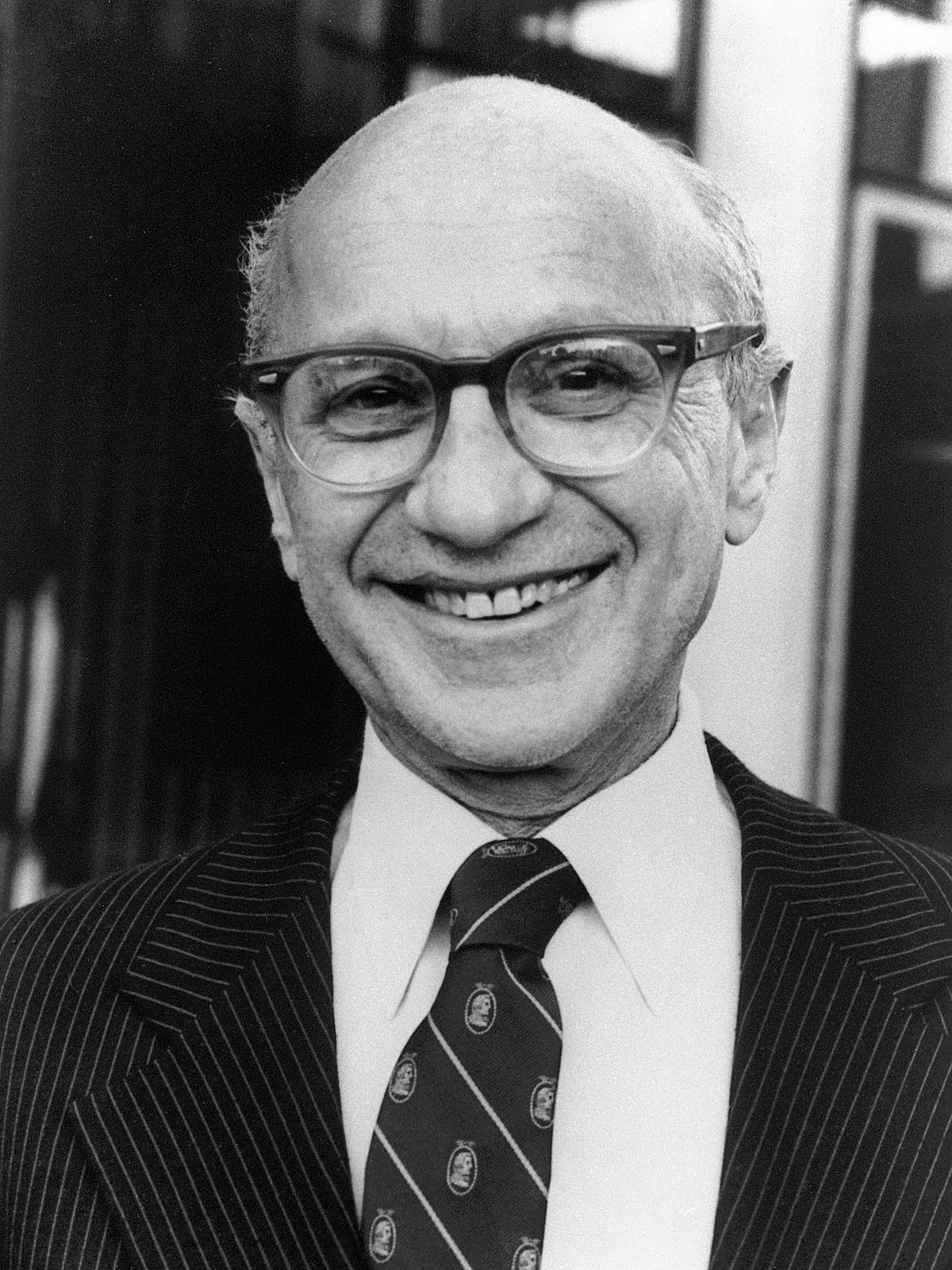
Milton Friedman
“What kind of society isn’t structured on greed? The problem of social organization is how to set up an arrangement under which greed will do the least harm; capitalism is that kind of a system.” — Milton Friedman

Economic freedom is an essential requisite for political freedom. By enabling people to cooperate with one another without coercion or central direction, it reduces the area over which political power is exercised. – Milton Friedman

Whenever we depart from voluntary cooperation and try to do good by using force, the bad moral value of force triumphs over good intentions. – Milton Friedman

The essential notion of a capitalist society … is voluntary cooperation, voluntary exchange. The essential notion of a socialist society is force. – Milton Friedman

“The great virtue of a free market system is that it does not care what color people are; it does not care what their religion is; it only cares whether they can produce something you want to buy. It is the most effective system we have discovered to enable people who hate one another to deal with one another and help one another. “– Milton Friedman

“The power to determine the quantity of money… is too important, too pervasive, to be exercised by a few people, however public-spirited, if there is any feasible alternative. There is no need for such arbitrary power… Any system which gives so much power and so much discretion to a few men, [so] that mistakes – excusable or not – can have such far reaching effects, is a bad system. It is a bad system to believers in freedom just because it gives a few men such power without any effective check by the body politic – this is the key political argument against an independent central bank. “— Milton Friedman

“Fundamentally, there are only two ways of coordinating the economic activities of millions. One is central direction involving the use of coercion – the technique of the army and of the modern totalitarian state. The other is voluntary cooperation of individuals – the technique of the marketplace.” – Milton Friedman

Self-interest is not myopic selfishness. It is whatever it is that interests the participants, whatever they value, whatever goals they pursue. The scientist seeking to advance the frontiers of his discipline, the missionary seeking to convert infidels to the true faith, the philanthropist seeking to bring comfort to the needy – all are pursuing their interests, as they see them, as they judge them by their own values. – Milton Friedman

Milton Friedman (1912-)
American Economist and 1976 Nobel Prize-Winner in Economics

“The economic miracle that has been the United States was not produced by socialized enterprises, by government-union-industry cartels or by centralized economic planning. It was produced by private enterprises in a profit-and-loss system. And losses were at least as important in weeding out failures as profits in fostering successes. Let government succor failures, and we shall be headed for stagnation and decline.”

“Whenever we depart from voluntary cooperation and try to do good by using force, the bad moral value of force triumphs over good intentions.”

“There was a time when we [the U.S.] had completely unrestricted immigration, when anybody could come to these shores and the motto on the Statue of Liberty had some real meaning. This was a country of hope and of promise for immigrants and their children, and as many as a million immigrants a year came in 1906 and ’07 and ’08. By 1914, roughly a third of the population was foreign-born or the immediate descendants of foreign-born . . . The fact that year after year hundreds of thousands of people left the countries of Europe to come to this country was persuasive evidence that they were coming to improve their lot, not to worsen it.”

“Why have we had such a decline in moral climate? I submit to you that a major factor has been a change in the philosophy which has been dominant, a change from belief in individual responsibility to belief in social responsibility. If you adopt the view that a man is not responsible for his own behavior, that somehow or other society is responsible, why should he seek to make his behavior good?”

“The essential notion of a capitalist society . . . is voluntary cooperation, voluntary exchange. The essential notion of a socialist society is force.”

“The preservation of liberty, not the promotion of efficiency, is the primary justification for private property. Efficiency is a happy, though not accidental, by-product–and a most important by-product because liberty could not have survived if it had not also produced affluence.”

“The great virtue of free enterprise is that it forces existing businesses to meet the test of the market continuously, to produce products that meet consumer demands at lowest cost, or else be driven from the market. It is a profit-and-loss system. Naturally, existing businesses generally prefer to keep out competitors in other ways. That is why the business community, despite its rhetoric, has so often been a major enemy of truly free enterprise.”

“Adam Smith’s key insight was that both parties to an exchange can benefit and that, so long as cooperation is strictly voluntary, no exchange can take place unless both parties do benefit.”

“There’s a widespread belief and common conception that somehow or other business and economics are the same, that those people who are in favor of a free market are also in favor of everything that big business does. And those of us who have defended a free market have, over a long period of time, become accustomed to being called apologists for big business. But nothing could be farther from the truth. There’s a real distinction between being in favor of free markets and being in favor of whatever business does.”

“Most economic fallacies derive. . . from the tendency to assume that there is a fixed pie, that one party can gain only at the expense of another.”

“I’m in favor of legalizing drugs. According to my value system, if people want to kill themselves, they have every right to do so. Most of the harm that comes from drugs is because they are illegal.”

“Fundamentally, there are only two ways of coordinating the economic activities of millions. One is central direction involving the use of coercion–the technique of the army and of the modern totalitarian state. The other is voluntary cooperation of individuals–the technique of the marketplace.”

“If you put the federal government in charge of the Sahara Desert, in 5 years there would be a shortage of sand.”

“Underlying most arguments against the free market is a lack of belief in freedom itself.”

“Freedom in economic arrangements is itself a component of freedom broadly understood, so economic freedom is an end in itself . . . Economic freedom is also an indispensable means toward the achievement of political freedom.”

“We have a system that increasingly taxes work and subsidizes non-work.”

“Hell hath no fury like a bureaucrat scorned.”

“Political freedom means the absence of coercion of a man by his fellow men.”

“A society that puts equality. . . ahead of freedom will end up with neither equality nor freedom.”

“Underlying most arguments against the free market is a lack of belief in freedom itself.”

“Nothing is so permanent as a temporary government program.”

“The great virtue of a free market system is that it does not care what color people are; it does not care what their religion is; it only cares whether they can produce something you want to buy. It is the most effective system we have discovered to enable people who hate one another to deal with one another and help one another.”

“Inflation is taxation without legislation.”

“What kind of a society isn’t structured on greed? The problem of social organization is how to set up an arrangement under which greed will do the least harm.”

“Self-interest is not myopic selfishness. It is whatever it is that interests the participants, whatever they value, whatever goals they pursue. The scientist seeking to advance the frontiers of his discipline, the missionary seeking to convert infidels to the true faith, the philanthropist seeking to bring comfort to the needy—all are pursuing their interests, as they see them, as they judge them by their own values.”

“The Great Depression, like most other periods of severe unemployment, was produced by government mismanagement rather than by any inherent instability of the private economy.”

“History suggests that capitalism is a necessary condition for political freedom.”

“The government solution to a problem is usually as bad as the problem.”

“Most economic fallacies derive . . . from the tendency to assume that there is a fixed pie, that one party can gain only at the expense of another.”

“When a man spends his own money to buy something for himself, he is very careful about how much he spends and how he spends it. When a man spends his own money to buy something for someone else, he is still very careful about how much he spends, but somewhat less what he spends it on. When a man spends someone else’s money to buy something for himself, he is very careful about what he buys, but doesn’t care at all how much he spends. And when a man spends someone else’s money on someone else, he does’t care how much he spends or what he spends it on. And that’s government for you.”


_________________

7 Reasons Socialism Will Make You Poorer Than Capitalism

John Hawkins | Dec 04, 2012


Given what we know in 2012, saying that capitalism will make a society richer than socialism should be about as controversial as saying the earth is round, not flat. Yet, a recent Gallup poll shows that more liberals have a positive view of socialism than capitalism. This is only possible because there are so many perverse incentives that drive the promotion of socialism. If you’re a politician, socialism puts power in your hands while capitalism takes it away. If you want to use the government to control people’s lives, socialism is a wonderful vehicle to do just that while capitalism robs you of that opportunity. If you would rather live off the dole than to work or alternately, prefer to make money off “who you know” instead of “how good a service you provide,” again socialism works better for you. Now take into account the fact that there are no pure socialist or capitalist economies left and it becomes very easy to muddy the water and keep people from realizing the obvious economic superiority of capitalism.

1) Socialism benefits the few at the expense of the many: Socialism is superior to capitalism in one primary way: It offers more security. It’s almost like an extremely expensive insurance policy that dramatically cuts into your quality of life, but insures that if worse comes to worse, you won’t drop below a very minimal lifestyle. For the vast majority of people, this would be a terrible deal. On the other hand, if you’re lazy, completely incompetent or alternately, just have a streak of very bad luck, the meager benefits provided by socialism may be very appealing. So a socialist society forces the many to suffer in order to make it easier for the few. It’s just as Winston Churchill once noted, “The inherent virtue of socialism is the equal sharing of miseries.”

2) Capitalism encourages entrepreneurship while socialism discourages it: A government in a capitalist economy can quite easily give everyone equality of opportunity with a few basic laws and regulations, but socialism strives to create equality of results. This should frighten people who value their freedom because ultimately, as F.A. Hayek has noted, “A claim for equality of material position can be met only by a government with totalitarian powers.“ You can see this happening in America as our efforts to reduce “inequality” have led to an ever expanding government and a vast regulatory tangle that is almost unexplainable despite the fact that it is certainly enforceable. Capitalism encourages people to start a business and build a better life for themselves while socialism lays in wait with IRS agents, nooses made of red tape and meddling bureaucrats looking for businesses to control and loot.

3) Capitalism leads to innovation: Coming up with new products is often time consuming, expensive and hit or miss. Nine ideas may fail before that tenth one takes off. The less the creative people behind these ideas are allowed to benefit, the less time, money and effort they’ll put into developing new concepts and inventions. Put another way, the bigger the risk, the bigger the reward has to be to convince people to take it. Capitalism offers big rewards for productive people while socialism offers makers only a parade of bureaucratic leeches who want to take advantage of their “good fortune.”

4) Capitalism produces more economic growth: Capitalism produces considerably more economic growth than socialism and as John Kennedy said, “A rising tide lifts all boats.” A fast growing economy produces more jobs, more wealth and helps everyone. Many people assume that capitalism isn’t working if there are still poor people, but that misses the point. In many parts of the world, poverty means living in a hut with a dirt floor while in America, most poor Americans have TVs, refrigerators and cell phones. The rich may take home a larger share of the pie in capitalism, but the poor also benefit tremendously from living in a growing, thriving economy.

5) Socialism is too slow to adapt: Capitalism is extremely good at allocating capital to where it’s most valued. It has to be. Either you give people what they are willing to pay for or someone else will. On the other hand, socialism is slow and stupid for a variety of reasons. Because the government is spending someone else’s money, it doesn’t get particularly concerned about losing money. Political concerns about appearances often trump the effectiveness of a program. Moreover, even if politicians and bureaucrats are intelligent and competent, which are big “ifs,” they’re simply not going to have the specific knowledge needed to make decisions that may impact thousands of different industries. This is why capitalism may have its share of troubles, but when there are really colossal economic screw-ups, you’ll always find the government neck deep in the whole mess.

6) Socialism is inherently wasteful: Milton Friedman once said, “Nobody spends somebody else’s money as carefully as he spends his own. Nobody uses somebody else’s resources as carefully as he uses his own.” This is very true and it means that the more capital that is taken out of the economy and distributed, the more of it that will be wasted. The market does a considerably better job of allocating resources than the government because there are harsh penalties for failure. A company that makes products no one wants will go out of business. A poorly performing government program that wastes a hundred times more money will probably receive a bigger budget the next year.

7) Capitalism works in concert with human nature while socialism works against it: Ayn Rand said it well, “America’s abundance was created not by public sacrifices to ‘the common good,’ but by the productive genius of free men who pursued their own personal interests and the making of their own private fortunes. They did not starve the people to pay for America’s industrialization. They gave the people better jobs, higher wages and cheaper goods with every new machine they invented, with every scientific discovery or technological advance—and thus the whole country was moving forward and profiting, not suffering, every step of the way,” but Adam Smith said it better, “It is not from the benevolence of the butcher, the brewer, or the baker, that we expect our dinner, but from their regard to their own interest.” A man will work much harder to take care of himself, his family and his friends than he will to make money for the state, which will then waste most of it before redistributing it to people who aren’t working as hard as the man who earned it in the first place.

By Everette Hatcher III | Comments (0)

MUSIC MONDAY John Lennon? Meh… Keith Green’s Revolution Was Far More Interesting

February 26, 2018 – 1:45 am

–

Keith Green passed away on July 28th, 1982 almost 39 years ago to the day!!! I want to remember him with a series of posts!!!

I am moving the MUSIC MONDAY to a monthly feature on http://www.thedailyhatch.org. My passion has been in the recent years to emphasize the works of Francis Schaeffer in my apologetic efforts and most of those posts are either on Tuesdays or Thursdays.

_

John Lennon? Meh… Keith Green’s Revolution Was Far More Interesting

12/09/2010 03:32 am ET | Updated May 25, 2011
Mark Joseph Producer, author and publisher of Bullypulpit.com

I know. I know. Baby-boomers are still in power so the rest of us have to endure an entire week of blathering about how great John Lennon was. Fortunately there’s TiVo. Certainly he deserves credit for, if nothing else, writing an amazing song likeWoman, but every time I hear an aging Boomer reminisce about world peace and anti-materialism I remember Paul’s words: “Somebody said to me, ‘But the Beatles were anti-materialistic.’ That’s a huge myth. John and I literally used to sit down and say, ‘Now, let’s write a swimming pool.’”

When I think of the life and premature death of a musician who really rejected materialism and was for all practical purposes the Godfather of the Napster Generation I fast-forward a year and a half to July 28, 1982 to the also untimely death of another musical genius named Keith Green.

2010-12-09-gfdlyyuo.jpg

At around the time Lennon was trading religious correspondence with Televangelist Oral Roberts and calling into Pat Robertson’s 700 Club hotline to talk to a prayer counselor, Green, a child prodigy who was the youngest ASCAP writer in history and who signed to Decca Records at the age of 11, was also finding God, but Green’s spiritual odyssey produced a far more interesting brand of counter-culturalism: Green and his wife and friends so embraced their newfound faith that they left L.A. for Texas, set up a commune-type lifestyle, begged out of his record deal and did the unthinkable: began giving away his records to his fans in exchange for whatever they could afford to pay. Green’s album “So You Wanna Go Back To Egypt,” which featured a harmonica solo by his pal Bob Dylan shipped 200,000 units, 61,000 of them for free.

Now there’s a revolution

Follow Mark Joseph on Twitter: www.twitter.com/markmjm

Related posts:

MUSIC MONDAY 1st album of WASHED OUT

October 16, 2017 – 12:22 am

_ Washed Out – Within and Without (Full Album) Published on Aug 16, 2013 Within and Without is the 2011 debut album by the artist Washed Out. Track List: 1. “Eyes Be Closed” 00:00 2. “Echoes” 4:48 3. “Amor Fati” 8:56 4. “Soft” 13:23 5. “Far Away” 18:54 6. “Before” 22:55 7. “You and I (Ft. Caroline Polachek)” 27:41 8. “Within and […]

By Everette Hatcher III | Posted in Current Events | Edit | Comments (0)

MUSIC MONDAY A look at WASHED OUT

October 9, 2017 – 12:19 am

Washed Out – It All Feels Right (Live on KEXP) Washed Out – Eyes Be Closed (Live on KEXP) Published on Feb 8, 2012 Washed Out performs “Eyes Be Closed” live in the KEXP studio. Recorded on 10/11/2011. Host: DJ El Toro Engineer: Kevin Suggs Cameras: Jim Beckmann, Shelly Corbett & Scott Holpainen Editing: Christopher […]

By Everette Hatcher III | Posted in Current Events | Edit | Comments (0)

MUSIC MONDAY the song FEEL IT ALL AROUND by WASHED OUT

October 2, 2017 – 12:08 am

_ Feel It All Around by Washed Out – Portlandia Theme Published on Dec 24, 2011 This is the song Feel It All Around used in the opening for the TV Series on IFC called Portlandia. I claim no rights to the song or any rights to the show. All rights go to IFC, the […]

By Everette Hatcher III | Posted in Current Events | Edit | Comments (0)

“Music Monday” The Thompson Twins and the song “If you were here” from the movie “16 Candles”

September 25, 2017 – 1:12 am

____________________ Sixteen Candles Final Scene Movie Ending Video if you were here i could deceive you and if you were here you would believe but would you suspect my emotion wandering, yeah do not want a part of this anymore The rain water drips through a crack in the ceiling and i’ll have to spend […]

By Everette Hatcher III | Posted in Current Events | Edit | Comments (0)

MUSIC MONDAY Elvis Presley and Ann Margret in scenes from “Viva Las Vegas”

September 18, 2017 – 12:51 am

________ Elvis Presley – Scene from “Viva Las Vegas” (MGM 1964) Elvis & Ann Margret Elvis Presley, Ann Margret – The Lady Loves Me – Viva Las Vegas Come On Everybody – Elvis and Ann-Margret HD. Hollywood Legend Ann-Margret on Faith, Love and Recovery Julie Blim – 700 Club Producer Scott Ross Ann-Margret interview on […]

By Everette Hatcher III | Posted in Current Events | Edit | Comments (0)

MUSIC MONDAY Barry McGuire Eve of Destruction [1965]

September 11, 2017 – 1:17 am

__ Barry McGuire – Eve Of Destruction Barry McGuire Eve of Destruction [1965] Eve of Destruction (song) From Wikipedia, the free encyclopedia This article needs additional citations for verification. Please help improve this article by adding citations to reliable sources. Unsourced material may be challenged and removed. (April 2010)(Learn how and when to remove this […]

By Everette Hatcher III | Posted in Current Events | Edit | Comments (0)

MUSIC MONDAY Vietnam War Protest Songs

September 4, 2017 – 1:14 am

Barry McGuire – Eve Of Destruction   Machine Gun by Jimi Hendrix Marvin Gaye ” What’s Going On ” Live 1972     Bob Dylan – Knockin’ On Heaven’s Door “Blowin’ in the Wind” – Bob Dylan | Vietnam War Montage Edwin Starr – War (Original Video – 1969) Uploaded on Dec 6, 2007 Original […]

By Everette Hatcher III | Posted in Current Events | Edit | Comments (0)

MUSIC MONDAY “Stay with Me” by THE FACES

August 28, 2017 – 1:07 am

__ Faces “Stay With Me” The Faces – Had Me A Real Good Time Stay with Me (Faces song) From Wikipedia, the free encyclopedia “Stay with Me” Single by Faces from the album A Nod Is As Good As a Wink… to a Blind Horse B-side “You’re So Rude” (US) “Debris” (Intl.) Released December 1971 […]

By Everette Hatcher III | Posted in Current Events | Edit | Comments (0)

MUSIC MONDAY : Song IT IS ENOUGH by the band THE WAITING

August 21, 2017 – 1:38 am

__   It is Enough – The Waiting Published on Feb 26, 2014 John 3:16-17 King James Version (KJV) 16,For God so loved the world, that he gave his only begotten Son, that whosoever believeth in him should not perish, but have everlasting life. 17,For God sent not his Son into the world to condemn […]

By Everette Hatcher III | Posted in Current Events | Edit | Comments (0)

MUSIC MONDAY Religious Songs That Secular People Can Love: Bob Dylan, The Byrds, Sam Cooke, Johnny Cash & Your Favorites in Music, Religion| December 15th, 2015

August 14, 2017 – 12:41 am

__ Religious Songs That Secular People Can Love: Bob Dylan, The Byrds, Sam Cooke, Johnny Cash & Your Favorites in Music, Religion| December 15th, 2015 7 Comments There are good reasons to find the onslaught of religious music this time of year objectionable. And yet—though I want to do my part in the War on […]

By Everette Hatcher III | Posted in Current Events | Edit | Comments (0)
By Everette Hatcher III | Comments (0)

MUSIC MONDAY All of Keith Green’s songs

February 19, 2018 – 1:42 am

_____

Keith Green passed away on July 28th, 1982 almost 39 years ago to the day!!! I want to remember him with a series of posts!!!

I am moving the MUSIC MONDAY to a monthly feature on http://www.thedailyhatch.org. My passion has been in the recent years to emphasize the works of Francis Schaeffer in my apologetic efforts and most of those posts are either on Tuesdays or Thursdays.

___

11 Keith Green Songs That Changed Worship Music

A look at his lasting legacy 33 years after his tragic death.

Read more at http://www.relevantmagazine.com/culture/11-keith-green-songs-helped-change-worship-music#64tBJqIjQg09LrY2.99

Thirty-three years ago today, the world lost one of its great songwriters. On July 28, 1982, Keith Green boarded a private plane with two of his young children and a family of church planters. It crashed shortly after take off, killing all 12 people on board.

Though he was only 28-years-old when he died, Green’s music and legacy as a songwriter, minister and artist continue to have an impact today.

Following his commitment to Christ, after spending his youth years searching for meaning, Green began to write songs at a prolific pace—releasing dozens over his relatively short career

Though Green was a respected musician—he was close friends with Bob Dylan—his legacy as recording artist transcends his songs. He implemented a then-unheard-of “whatever you can afford” pricing system for some of his music (even if it meant giving it away)—all the way back in 1979. And, long before TOMS, he embraced the “buy-one, give-one” model, requesting that Christian bookstores that sold his album give another to the customer for he or she to give to a friend.

Throughout his life, Green strived to be more than a singer. He was involved in missions, helping people recovering from addiction, prison outreach, evangelism and more. Despite his influence, he maintained a conflicted view of his own fame. He once explained, “I only want to build God’s Kingdom and see it increase, not my own. If someone writes a great poem no one praises the pencil they used, they praise the one who created the poem. Well, I’m just a pencil in the hands of the Lord. Don’t praise me, praise Him!”

Banning Liebscher, founder and director of Jesus Culture, explained to RELEVANT,

Keith Green gave the church more than just music; he gave us his life. His daily wholehearted devotion for the Lord has created a lasting impact on a generation. Keith was the message. His music was merely an extension of his life. Even today, he challenges us to live boldly for Jesus and to burn for the One who gave it all. My heart continues to be stirred by how Keith’s passion for Jesus showed up in his extravagant love for people. He would not allow the walls that can so quickly form in the church keep him from expressing his sincere love for believers. I am so grateful for the life of Keith Green and the impact he continues to have on us.

Here’s a look 11 Keith Green songs that helped change worship music and show how his legacy still matters:
Read more at http://www.relevantmagazine.com/culture/11-keith-green-songs-helped-change-worship-music#64tBJqIjQg09LrY2.99

Related posts:

MUSIC MONDAY 1st album of WASHED OUT

October 16, 2017 – 12:22 am

_ Washed Out – Within and Without (Full Album) Published on Aug 16, 2013 Within and Without is the 2011 debut album by the artist Washed Out. Track List: 1. “Eyes Be Closed” 00:00 2. “Echoes” 4:48 3. “Amor Fati” 8:56 4. “Soft” 13:23 5. “Far Away” 18:54 6. “Before” 22:55 7. “You and I (Ft. Caroline Polachek)” 27:41 8. “Within and […]

By Everette Hatcher III | Posted in Current Events | Edit | Comments (0)

MUSIC MONDAY A look at WASHED OUT

October 9, 2017 – 12:19 am

Washed Out – It All Feels Right (Live on KEXP) Washed Out – Eyes Be Closed (Live on KEXP) Published on Feb 8, 2012 Washed Out performs “Eyes Be Closed” live in the KEXP studio. Recorded on 10/11/2011. Host: DJ El Toro Engineer: Kevin Suggs Cameras: Jim Beckmann, Shelly Corbett & Scott Holpainen Editing: Christopher […]

By Everette Hatcher III | Posted in Current Events | Edit | Comments (0)

MUSIC MONDAY the song FEEL IT ALL AROUND by WASHED OUT

October 2, 2017 – 12:08 am

_ Feel It All Around by Washed Out – Portlandia Theme Published on Dec 24, 2011 This is the song Feel It All Around used in the opening for the TV Series on IFC called Portlandia. I claim no rights to the song or any rights to the show. All rights go to IFC, the […]

By Everette Hatcher III | Posted in Current Events | Edit | Comments (0)

“Music Monday” The Thompson Twins and the song “If you were here” from the movie “16 Candles”

September 25, 2017 – 1:12 am

____________________ Sixteen Candles Final Scene Movie Ending Video if you were here i could deceive you and if you were here you would believe but would you suspect my emotion wandering, yeah do not want a part of this anymore The rain water drips through a crack in the ceiling and i’ll have to spend […]

By Everette Hatcher III | Posted in Current Events | Edit | Comments (0)

MUSIC MONDAY Elvis Presley and Ann Margret in scenes from “Viva Las Vegas”

September 18, 2017 – 12:51 am

________ Elvis Presley – Scene from “Viva Las Vegas” (MGM 1964) Elvis & Ann Margret Elvis Presley, Ann Margret – The Lady Loves Me – Viva Las Vegas Come On Everybody – Elvis and Ann-Margret HD. Hollywood Legend Ann-Margret on Faith, Love and Recovery Julie Blim – 700 Club Producer Scott Ross Ann-Margret interview on […]

By Everette Hatcher III | Posted in Current Events | Edit | Comments (0)

MUSIC MONDAY Barry McGuire Eve of Destruction [1965]

September 11, 2017 – 1:17 am

__ Barry McGuire – Eve Of Destruction Barry McGuire Eve of Destruction [1965] Eve of Destruction (song) From Wikipedia, the free encyclopedia This article needs additional citations for verification. Please help improve this article by adding citations to reliable sources. Unsourced material may be challenged and removed. (April 2010)(Learn how and when to remove this […]

By Everette Hatcher III | Posted in Current Events | Edit | Comments (0)

MUSIC MONDAY Vietnam War Protest Songs

September 4, 2017 – 1:14 am

Barry McGuire – Eve Of Destruction   Machine Gun by Jimi Hendrix Marvin Gaye ” What’s Going On ” Live 1972     Bob Dylan – Knockin’ On Heaven’s Door “Blowin’ in the Wind” – Bob Dylan | Vietnam War Montage Edwin Starr – War (Original Video – 1969) Uploaded on Dec 6, 2007 Original […]

By Everette Hatcher III | Posted in Current Events | Edit | Comments (0)

MUSIC MONDAY “Stay with Me” by THE FACES

August 28, 2017 – 1:07 am

__ Faces “Stay With Me” The Faces – Had Me A Real Good Time Stay with Me (Faces song) From Wikipedia, the free encyclopedia “Stay with Me” Single by Faces from the album A Nod Is As Good As a Wink… to a Blind Horse B-side “You’re So Rude” (US) “Debris” (Intl.) Released December 1971 […]

By Everette Hatcher III | Posted in Current Events | Edit | Comments (0)

MUSIC MONDAY : Song IT IS ENOUGH by the band THE WAITING

August 21, 2017 – 1:38 am

__   It is Enough – The Waiting Published on Feb 26, 2014 John 3:16-17 King James Version (KJV) 16,For God so loved the world, that he gave his only begotten Son, that whosoever believeth in him should not perish, but have everlasting life. 17,For God sent not his Son into the world to condemn […]

By Everette Hatcher III | Posted in Current Events | Edit | Comments (0)

MUSIC MONDAY Religious Songs That Secular People Can Love: Bob Dylan, The Byrds, Sam Cooke, Johnny Cash & Your Favorites in Music, Religion| December 15th, 2015

August 14, 2017 – 12:41 am

__ Religious Songs That Secular People Can Love: Bob Dylan, The Byrds, Sam Cooke, Johnny Cash & Your Favorites in Music, Religion| December 15th, 2015 7 Comments There are good reasons to find the onslaught of religious music this time of year objectionable. And yet—though I want to do my part in the War on […]

By Everette Hatcher III | Posted in Current Events | Edit | Comments (0)

_

By Everette Hatcher III | Comments (0)

FRANCIS SCHAEFFER ANALYZES ART AND CULTURE PART 202 the BEATLES’ last song FREE AS A BIRD (Featured artist is Susan Weil )

February 15, 2018 – 1:45 am

_________________

The Beatles – Free As A Bird

Published on Apr 5, 2016

The Beatles Now Streaming. Listen to the Come Together Playlist here: http://smarturl.it/BeatlesCT
Download Anthology: http://smarturl.it/AnthologyBeatles
Buy Anthology: http://smarturl.it/AnthologyPhys

The Beatles Anthology project was a huge undertaking and to complement the historical and archival material that was made available both on CD and on video, the band recorded two new tracks. Released in December 1995, ‘Free As A Bird’ was the first of the new songs. Instead of recording a completely new composition together, Paul, George and Ringo created a track based on John’s 1977 demo, recorded at his and Yoko’s home in the Dakota in New York City.

Jeff Lynne, a good friend of George Harrison’s and a fellow member of the Travelling Wilburys, was drafted in to help with production. The ‘Free As A Bird’ video had it’s first public outing on America’s ABC TV on Sunday November 19th 1995, and the track was subsequently aired on BBC Radio 1 the day after – the day before Anthology came out. The single release followed two weeks later and made No.2 on the UK charts, while in the US ‘Free As A Bird’ enjoyed an 11-week run on the best-seller list, peaking at No.5.

Joe Pytka, a talented American filmmaker who had made several music videos with Michael Jackson, directed the beautiful video. The visual concept was a ‘bird’s-eye-view’ of countless Beatles songs.

  • Category

    • Music
  • License

    • Standard YouTube License
  • Music

    • “Free as a Bird” by The Beatles Listen ad-free with YouTube Red

Free as a Bird

From Wikipedia, the free encyclopedia
This article is about the Beatles song. For the album by Supertramp, see Free as a Bird (album). For the Lynyrd Skynyrd song, see Free Bird. For the concept in Germanic law, see Vogelfrei.
“Free as a Bird”
Beatles-singles-freeasabird.jpg
Single by The Beatles
from the album Anthology 1
B-side “Christmas Time (Is Here Again)“
Released 4 December 1995 (UK)
12 December 1995 (US)
Format 7″, CD
Recorded
  • c. 1977
  • February–March 1994
Studio
  • New York City
  • Sussex, England
Genre Rock
Length 4:26
Label Apple Records 58497
Writer(s) Original composition by Lennon; The Beatles version by Lennon, McCartney, Harrison and Starkey[1]
Producer(s) Jeff Lynne, John Lennon, Paul McCartney, George Harrison, Ringo Starr
The Beatles singles chronology
“Baby It’s You”
(1995)
“Free as a Bird”
(1995)
“Real Love”
(1996)
Music video
“Free as a Bird” on YouTube
Music sample
“Free as a Bird”
MENU
0:00

“Free as a Bird” is a song originally composed and recorded in 1977 as a home demo by John Lennon. In 1995, a studio version of the recording, incorporating contributions from Paul McCartney, George Harrison and Ringo Starr, was released as a single by The Beatles. It was released 25 years after the break-up of the band and 15 years after the death of Lennon.

The single was released as part of the promotion for The Beatles Anthology video documentary and the band’s Anthology 1 compilation album. For the Anthology project, McCartney asked Lennon’s widow Yoko Ono for unreleased material by Lennon to which the three remaining ex-Beatles could contribute. “Free as a Bird” was one of two such songs (along with “Real Love“) for which McCartney, Harrison, and Starr contributed additional instrumentation, vocals, and arrangements. Jeff Lynne of Electric Light Orchestra, who had worked with Harrison on Harrison’s album Cloud Nine and as part of the Traveling Wilburys, was asked to co-produce the record.

The music video for “Free as a Bird” was produced by Vincent Joliet and directed by Joe Pytka; from the point of view of a bird in flight, it depicts many references to Beatles songs, such as “Strawberry Fields Forever,” “Penny Lane“, “Paperback Writer“, “A Day in the Life“, “Eleanor Rigby“, “Revolution“, and “Helter Skelter“. “Free as a Bird” won the 1997 Grammy Award for Best Pop Performance by a Duo or Group with Vocal and was the Beatles’ 34th Top 10 single in the United States. The song secured the group at least one Top 40 hit in four different decades (1960s, 1970s, 1980s and 1990s).

Contents

 [hide] 

  • 1Origins
    • 1.1Recording
  • 2Music video
  • 3Chart performance
  • 4Critical reception
  • 5Personnel
  • 6Track listings
  • 7Charts and certifications
    • 7.1Charts
    • 7.2Certifications
  • 8Notes
  • 9References
  • 10External links

Origins[edit]

The Dakota building, where Lennon lived and composed, and where he recorded a demo of the song on cassette

McCartney, Harrison and Starr originally intended to record some incidental background music, as a trio, for the Anthology project, but later realised, according to Starr, that they wanted to record “new music”.[2] According to Harrison, they had always agreed that if one of them was not in the band, the others would never replace them and, “… go out as the Beatles”, and that the “only other person that could be in it was John.”[3]

McCartney then asked Ono if she had any unreleased recordings by Lennon, so she sent him cassette tapes of four songs.[4] “Free as a Bird” was recorded by Lennon in 1977,[5] in his and Ono’s Dakota building apartment in New York City, but was not complete. Lennon introduced the song on the cassette by imitating a New York accent and saying, “Free—as a boid” (bird).[6][7][8] The other songs were “Grow Old With Me“, “Real Love“, and “Now and Then“.[9] Ono says that it was Harrison and former Beatles road manager Neil Aspinall who initially asked her about the concept of adding vocals and instrumentation to Lennon’s demo tapes. Ono stated: “People have said it was all agreed when Paul came over to New York to induct John into the Rock and Roll Hall of Fame, but it was all settled before then. I just used that occasion to hand over the tapes personally to Paul.”[10]

McCartney went to Ono’s home after the induction ceremony at the Rock and Roll Hall of Fame to listen to, and receive, the Lennon demo tapes; he recalls the meeting with Ono:

She was there with Sean … and she played us a couple of tracks. There were two newies on mono cassettes which he did at home … [s]o I checked it out with Sean, because I didn’t want him to have a problem with it. He said, “Well, it’ll be weird hearing a dead guy on lead vocal. But give it a try.” I said to them both, “If it doesn’t work out, you can veto it.” When I told George and Ringo I’d agreed to that they were going, “What? What if we love it?” It didn’t come to that, luckily. I said to Yoko, “Don’t impose too many conditions on us, it’s really difficult to do this, spiritually. We don’t know, we may hate each other after two hours in the studio and just walk out. So don’t put any conditions, it’s tough enough.”[11]

During an interview for the Anthology project, McCartney revealed that he was surprised to learn that Lennon’s demos of “Grow Old With Me” and “Real Love” had already been released and were well known by Lennon fans.[6][12] Starr admitted that when he first listened to the recording he found it very emotional.[13]

Recording[edit]

George Martin, who had produced most of the Beatles’ 1960s recordings, turned down an invitation to produce “Free as a Bird” due to hearing problems (though he subsequently managed to produce and direct the Anthology series). Harrison, in turn, suggested Lynne as producer (co-producer of his 1987 album, Cloud Nine) and work commenced at McCartney’s studio in February 1994.[14] Geoff Emerick and Jon Jacobs were chosen to engineer the new tracks.

The original 1977 tape of Lennon singing the song was recorded on a mono cassette, with vocals and piano on the same track.[15] They were impossible to separate, so Lynne had to produce the track with voice and piano together, but commented that it was good for the integrity of the project, as Lennon was not only singing occasional lines, but also playing on the song.[16]

Although Lennon had died in 1980, Starr said that the three remaining Beatles agreed they would pretend that Lennon had “gone for lunch”, or had gone for a “cup of tea”.[17] The remaining Beatles recorded a track around Lennon’s basic song idea, but which had gaps they had to fill in musically.[18] Some chords were changed, and the arrangement was expanded to include breaks for McCartney and Harrison to sing extra lines. Harrison played slide guitar in the solo.[19]

The Beatles’ overdubs and production were recorded between February and March 1994 in Sussex, England, at McCartney’s home studio.[20] It ends with a slight coda including a strummed ukulele by Harrison (an instrument he was known to have played often) and the voice of John Lennon played backwards.[21] The message, when played in reverse, is “Turned out nice again”, which was the catchphrase of George Formby.[8] The final result sounds like “made by John Lennon”, which, according to McCartney, was unintentional and was only discovered after the surviving Beatles reviewed the final mix.[22] When Starr heard McCartney and Harrison singing the harmonies, and later the finished song, he said that it sounded just like them [the Beatles]. He explained his comment by saying that he looked at the project as “an outsider”.[23] Lynne fully expected the finished track to sound like the Beatles, as that was his premise for the project, but Harrison added: “It’s gonna sound like them if it is them… It sounds like them now.”[24]

McCartney, Harrison and Starr all agreed that the recording process was more pleasurable than when they later recorded “Real Love” (the second song chosen for release); as it was almost finished, they had very little input, and felt like sidemen for Lennon.[25]

Music video[edit]

The music video for “Free as a Bird” was produced by Vincent Joliet and directed by Joe Pytka and depicts, from the point of view of a bird in flight, many references to Beatles songs, such as “Penny Lane”, “Paperback Writer”, “A Day in the Life”, “Eleanor Rigby”, “Helter Skelter”, “Piggies”, “The Continuing Story of Bungalow Bill”, “Strawberry Fields Forever”, “Doctor Robert”, and “The Fool on The Hill”. Between 80 and 100 allusions to the Beatles’ story, music and lyrics in the video have been estimated.[26] Although the bird can be heard at the beginning of the video, it is never seen. Neil Aspinall (Apple Records executive at the time) said that this was because no-one could agree on what kind of bird it should be.[27] Pytka had to send his ideas to McCartney, Harrison and Starr, as well as Ono, to make sure they all agreed before he could proceed with the filming of the video. Derek Taylor (ex-Apple Records executive) sent a two-page letter to Pytka confirming that he could proceed, and personally encouraged and supported Pytka’s ideas.[28] The video was filmed in as many authentic locations as possible: Penny Lane was made by Pytka’s art department to look as it was in the 1950s, and other locations filmed were The Liver Building, and Liverpool Docks (as a reference to Lennon’s father Alfred Lennon).[29]

Although Pytka fixed the ideas on a storyboard, he abandoned it as soon as filming began, and followed ideas based on what angles and perspectives the steadycam camera produced. One instance was the filming of the car crash, which Pytka filmed for hours from above, but realised that a steadycam shot on the ground was a much better idea.[30] Archive footage was used by imposing it on scenes shot by Pytka, who utilised a greenscreen stage to digitally blend it into the finished film, such as Paul’s Old English Sheepdog in the graveyard, and the elephant in the ballroom procession scene.[31] The elephant was put in last, as Aspinall phoned Pytka and said that Starr liked the scene, but insisted an elephant be put in it, which Pytka later did, as he had already put a sitar in at the request of Harrison.[32] Apart from the steadycam shots, Pytka used a Russian-made Akil-crane for sweeping overhead shots, such as the Abbey Road zebra crossing shot at the end, as well as a remote-controlled toy helicopter with a camera added to it for intricate aerial shots.[33] To make it more interesting, two Blue Meanies make cameos.

Harrison played the ukulele in the studio for the song, and asked to appear as the ukulele player seen only from behind at the very end of the video. Pytka resisted this, as he felt it would be wrong for any contemporary members of the Beatles to appear on screen. Pytka later stated that it was “heartbreaking” that Harrison had not played the role, particularly after Harrison’s death in 2001 and upon discovering that the ukulele was not a sample of an old song as Pytka had assumed.[34] The video won the Grammy Award for Best Short Form Music Video in 1997.[8]

On 6 November 2015, Apple Records released a new deluxe version of the 1 album in different editions and variations (known as 1+). Most of the tracks on 1 have been remixed from the original multi-track masters by Giles Martin. Giles Martin, with Jeff Lynne also remixed “Free as a Bird” to accompany the music video for the DVD and Blu-ray releases. The remix of “Free as a Bird” cleans up Lennon’s vocal further, and uses a different take of Harrison’s vocal phrase, replacing the lyric “whatever happened to the life that we once knew” with “whatever happened to love that we once knew”. Towards the end of the track, this version also contains a clip of Lennon stating the phrase “turned out nice again” played forward – which was played backwards in the original mix of the song. McCartney’s lead vocal, buried in the original mix to serve as a double track for Lennon’s own vocal, can now be heard more prominently in the second verse.

Chart performance[edit]

“Free as a Bird” was premiered on BBC Radio 1 in the early hours of 20 November 1995.[35] It was released as a single in the UK on 4 December 1995, two weeks after its appearance on the Anthology 1 album. The single sold 120,000 copies in its first week, entering the UK Singles Chart at No. 2. It remained on the chart for eight weeks.[36] In the US, the song reached No. 6 on the Billboard Hot 100, becoming The Beatles’ 34th Top 10 single in America.[7][37] It was the group’s first Top 10 song in the U.S. in nineteen and a half years, the longest span for the group between Top 10 hits since first charting in America in 1964.

Critical reception[edit]

“Free as a Bird” marked the first time a single containing new material had been released under the Beatles’ name since “The Long and Winding Road” in the United States in 1970.[6][7] The promotional video was broadcast during episode one of The Beatles Anthology that aired on ITV in the UK and ABC in the US.[38][39]

“Free as a Bird” was greeted with mixed reviews. Its release was criticised by Caroline Sullivan in The Guardian as a publicity gimmick, exploiting the Beatles brand, and owing less to the Beatles than to Lynne.[40] Andy Gill in The Independent called the song “disappointingly low-key. … George’s guitar weeps gently enough when required, but the overall effect is of a dirge.”[41] Ian MacDonald, writer of Revolution in the Head, declared it to be a “dreary song” that stood no comparison with the Beatles’ sixties music.[14]Chris Carter, now the host of Breakfast with the Beatles, commented: “I would value any song (especially if it was great) performed by John, Paul, George and Ringo, no matter how (or when) it was recorded.”[42] “Free as a Bird” later won the 1997 Grammy Award for Best Pop Performance by a Duo or Group with Vocal.[7]

Personnel[edit]

According to Ian MacDonald:[43]

  • John Lennon – lead vocal, piano
  • Paul McCartney – lead vocal, harmony vocal, bass, acoustic guitar, piano, synthesizer
  • George Harrison – lead vocal, harmony vocal, electric slide guitar, acoustic guitar, ukulele
  • Ringo Starr – drums, harmony vocal

Track listings[edit]

All songs written by John Lennon, Paul McCartney, George Harrison and Ringo Starr, except where noted.

  • 7″ UK: R6422 / USA: NR-58497
  1. “Free as a Bird” – 2:42
  2. “Christmas Time (Is Here Again)” – 3:02
    • Music recorded 28 November 1967 at EMI Studios, London; Christmas greetings recorded 6 December 1967 at EMI Studios, London
  • CD UK: CDR6422 / USA: CDP 58497
  1. “Free as a Bird” – 4:26
  2. “I Saw Her Standing There” (Lennon–McCartney) – 2:51
    • Recorded 11 February 1963 at EMI Studios, London
    • Produced by George Martin
    • This version (take 9) was recorded after the version released on the album Please Please Me (take 1). The introductory count-in from take 9 was edited onto the start of take 1 for the album.
  3. “This Boy” (Lennon–McCartney) – 3:17
    • Recorded 17 October 1963 at EMI Studios, London
    • Produced by George Martin
    • Two incomplete versions (takes 12 and 13), which both break down into laughter.
  4. “Christmas Time (Is Here Again)” – 3:02

Charts and certifications[edit]

Charts[edit]

Chart (1995–96) Peak
position
Australia (ARIA)[44] 6
Austria (Ö3 Austria Top 40)[45] 32
Belgium (Ultratop 50 Flanders)[46] 11
Belgium (Ultratop 50 Wallonia)[47] 12
Finland (Suomen virallinen lista)[48] 7
France (SNEP)[49] 23
Germany (Official German Charts)[50] 37
Ireland (IRMA)[51] 5
Netherlands (Single Top 100)[52] 9
New Zealand (Recorded Music NZ)[53] 26
Norway (VG-lista)[54] 14
Sweden (Sverigetopplistan)[55] 3
Switzerland (Schweizer Hitparade)[56] 25
UK Singles (Official Charts Company)[57] 2
US Billboard Hot 100[58] 6

Certifications[edit]

Region Certification Certified units/Sales
United States (RIAA)[59] Gold 500,000^
United Kingdom (BPI)[60] Silver 200,000^
*sales figures based on certification alone
^shipments figures based on certification alone

References[edit]

  • The Beatles (2003). The Beatles Anthology (DVD). Apple records. ASIN B00008GKEG.
  • The Beatles (2002). The Beatles Anthology. San Francisco: Chronicle Books. ISBN 978-0-8118-3636-4.
  • Everett, Walter (1999). The Beatles As Musicians: Revolver through the Anthology. New York: Oxford University Press. ISBN 978-0-19-512941-0.
  • Harry, Bill (2000a). The Beatles Encyclopedia: Revised and Updated. London: Virgin. ISBN 978-0-7535-0481-9.
  • Harry, Bill (2000b). The John Lennon Encyclopedia. London: Virgin. ISBN 978-0-7535-0404-8.
  • Harry, Bill (2002). The Paul McCartney Encyclopedia. London: Virgin. ISBN 978-0-7535-0716-2.
  • MacDonald, Ian (1997). Revolution in the Head : The Beatles’ Records and the Sixties. Pimlico / Random House. ISBN 978-0-7126-6697-8.
  • Sawyers, June Skinner (editor) (2006). Read the Beatles: Classic and New Writings on the Beatles, Their Legacy, and Why They Still Matter. USA: Penguin (Non-Classics). ISBN 978-0-14-303732-3.

External links[edit]

  • FREE AS A BIRD VIDEO REFERENCES
  • Free As A Bird video shots
  • Notes on song structure
[show]

  • v
  • t
  • e
The Beatles singles discography
[show]

  • v
  • t
  • e
The Beatles Anthology

Categories:

  • 1995 singles
  • John Lennon songs
  • Songs released posthumously
  • The Beatles songs
  • Apple Records singles
  • Song recordings produced by Jeff Lynne
  • Rock ballads
  • Songs written by George Harrison
  • Songs written by John Lennon
  • Songs written by Paul McCartney
  • Songs written by Ringo Starr
  • The Beatles Anthology
  • Grammy Award for Best Short Form Music Video
  • Musical compositions completed by others
  • Songs in memory of John Lennon

Image result for beatles free as a bird

Free as a Bird
The Beatles
Free as a bird
It’s the next best thing to be
Free as a bird
La, la, la, la
Home and dry
Like a homing bird I fly
As a bird on wings
Whatever happened to the life that we once knew
Can we really live without each other?
Where did we lose the touch
That seemed to mean so much
It always made me feel so
Free as a bird
It’s the next best thing to be
Free as a bird
La, la, la, la
Home and dry
Like a homing bird I fly
As a bird on wings
Whatever happened to
The life that we once knew?
Always made me feel so free
Free as a bird
It’s the next best thing to be
Free as a bird
Free as a bird
Free as a bird
Ooh, ooh, ooh

____

In 1970 the Beatles broke up and their search for meaning as a group ended. They had rejected the “plastic” culture of “peace and affluence” that the earlier generation was offering according to Schaeffer and they started their search in the area of drugs.  Francis Schaeffer noted:

Image result for francis schaeffer beatles

First they were just a rock group, then they took to drugs and expressed that in such 
songs as Sergeant Pepper's Lonely Hearts Club Band. When 
drugs didn't pan out, when they saw what was happening in 
Haight-Ashbury, they turned to the psychedelic sounds of 
Straivberry Fields, and then went further into Eastern religious 
experiences. But that, too, did not work out, and they wound 
up their career as a group by making The Yellow Submarine. 
When they made this movie, some people said, "The Beatles 
are coming back." But of course that was not the case. It was 
really 'the sad end of their ideological search as a group. It's 
interesting that Erich Segal, the man who wrote the film script 
for The Yellow Submarine, then wrote Love Story.


Featured artist is Susan Weil

Studio Tour with Susan Weil

Published on Jan 13, 2015

Studio Tour with artist Susan Weil, recorded on videotape in 1997–part of the Black Mountain College Museum + Arts Center Oral History Project. Edited for the 2015 exhibition, poemumbles: 30 years of Susan Weil’s poem/images (Jan. 30 – May 23). http://www.blackmountaincollege.org/e…

Interview with Susan Weil

Published on Jan 29, 2015

Interview with artist Susan Weil, recorded in 2002 as part of the Black Mountain College Museum + Arts Center Oral History Project. Edited as part of the 2015 exhibition, poemumbles: 20 years of Susan Weil’s poem/images (Jan. 30 – May 23). http://www.blackmountaincollege.org/e…

Artist Interview: Susan Weil

Published on Apr 17, 2013

Susan Weil discusses her artistic process, including examples of her own work, and reflects on her childhood and influences in this Artist Interview.

Susan Weil

From Wikipedia, the free encyclopedia
Question book-new.svg
This article relies largely or entirely upon a single source. Relevant discussion may be found on the talk page. Please help improve this article by introducing citations to additional sources.(November 2013)
Susan Weil
Born 1930
New York
Nationality American
Education Académie Julian
Black Mountain College
Art Students League of New York
Known for 3D Painting
Awards Guggenheim Fellowship,National Endowment for the Arts

Susan Weil (born 1930) is an American artist best known for her experimental three-dimensional paintings, which combine figurative illustration with explorations of movement and space.

Weil was born in New York. In the late 1940s she was involved in a relationship with Robert Rauschenberg. The two met while attending the Académie Julian in Paris, and in 1948 both decided to attend Black Mountain College in North Carolina to study under Josef Albers. At the Art Students League of New York Susan Weil studied with Vaclav Vytlacil and Morris Kantor.[1] Robert Rauschenberg and Susan Weil were married in the summer of 1950. Their son, Christopher was born on July 16, 1951. The two separated in June 1952 and divorced in 1953.

In addition to creating painting and mixed media work, Weil has experimented with bookmaking and has produced artist’s books with Vincent Fitzgerald and Company since 1985. During a period of eleven years Weil experimented with etchings and handmade paper while also keeping a daily notebook of drawings inspired by the writings of James Joyce. Her exhibition, Ear’s Eye for James Joyce, was presented at Sundaram Tagore gallery in New York in 2003.

Weil has been the recipient of the prestigious Guggenheim Fellowship and awards from the National Endowment for the Arts. Her work has been shown in major solo exhibitions in the United States and Europe, notably at Black Mountain College Museum + Arts Center in Asheville, North Carolina, and the Museo Reina Sofia in Madrid, though museums in her home state of New York have yet to organize a comprehensive retrospective of her work. Her work is in many major museum collections, including the Metropolitan Museum of Art, Museum of Modern Art, the Victoria and Albert Museum, and the J. Paul Getty Museum.
She continues to live and work in New York City.

References[edit]

  1. Jump up^ NY Arts Magazine, Erik La Prade Interviews Susan Weil, 2006

External links[edit]

  • Interview NY Arts Magazine interview by Erik La Prade, 2006.
  • Sundaram Tagore Gallery
Authority control
  • VIAF: 42072089

Categories:

  • 1930 births
  • Living people
  • Jewish American artists
  • Black Mountain College alumni
  • Art Students League of New York alumni
  • American women painters
  • Guggenheim Fellows

_____________________________________

Robert Rauschenberg later left his wife and started living with Jasper Johns. Wikipedia noted:

Johns studied a total of three semesters at the University of South Carolina, from 1947 to 1948.[2] He then moved to New York City and studied briefly at the Parsons School of Design in 1949.[2] In 1952 and 1953 he was stationed in Sendai, Japan, during the Korean War.[2]

In 1954, after returning to New York, Johns met Robert Rauschenberg and they became long-term lovers. For a time they lived in the same building as Rachel Rosenthal.[3][4][5] In the same period he was strongly influenced by the gay couple Merce Cunningham (a choreographer) and John Cage (a composer).[6][7] Working together they explored the contemporary art scene, and began developing their ideas on art. In 1958, gallery owner Leo Castelli discovered Johns while visiting Rauschenberg‘s studio.[2] Castelli gave him his first solo show. It was here that Alfred Barr, the founding director of New York’s Museum of Modern Art, purchased four works from this show.[8] In 1963, Johns and Cage founded Foundation for Contemporary Performance Arts, now known as Foundation for Contemporary Arts in New York City.

Johns currently lives in Sharon, Connecticut, and on the Island of Saint Martin.[9] Until 2012, he lived in a rustic 1930s farmhouse with a glass-walled studio in Stony Point, New York. He first began visiting St. Martin in the late 1960s and bought the property there in 1972. The architect Philip Johnson is the principal designer of his home, a long, white, rectangular structure divided into three distinct sections.[10]

Left to right: John Cage, Merce Cunningham
and Robert Rauschenberg. London. 1964

–

Image result for sergent peppers album cover

Francis Schaeffer’s favorite album was SGT. PEPPER”S and he said of the album “Sergeant Pepper’s Lonely Hearts Club Band…for a time it became the rallying cry for young people throughout the world. It expressed the essence of their lives, thoughts and their feelings.”  (at the 14 minute point in episode 7 of HOW SHOULD WE THEN LIVE? ) 

Image result for francis schaeffer how should we then live

How Should We Then Live – Episode Seven – 07 – Portuguese Subtitles

Francis Schaeffer

Image result for francis schaeffer

______

FRANCIS SCHAEFFER ANALYZES ART AND CULTURE PART 202 the BEATLES’ last song FREE AS A BIRD (Featured artist is Susan Weil )

February 15, 2018 – 1:45 am

FRANCIS SCHAEFFER ANALYZES ART AND CULTURE Part 200 George Harrison song HERE ME LORD (Featured artist is Karl Schmidt-Rottluff )

February 1, 2018 – 12:00 am

FRANCIS SCHAEFFER ANALYZES ART AND CULTURE PART 184 the BEATLES’ song REAL LOVE (Featured artist is David Hammonds )

October 5, 2017 – 1:24 am

FRANCIS SCHAEFFER ANALYZES ART AND CULTURE Part 170 George Harrison and his song MY SWEET LORD (Featured artist is Bruce Herman )

June 29, 2017 – 12:19 am

FRANCIS SCHAEFFER ANALYZES ART AND CULTURE Part 168 George Harrison’s song AWAITING ON YOU ALL Part B (Featured artist is Michelle Mackey )

June 15, 2017 – 12:39 am

FRANCIS SCHAEFFER ANALYZES ART AND CULTURE Part 167 George Harrison’s song AWAITING ON YOU Part A (Artist featured is Paul Martin)

June 8, 2017 – 12:28 am

RESPONDING TO HARRY KROTO’S BRILLIANT RENOWNED ACADEMICS!! Part 133 Louise Antony is UMass, Phil Dept, “Atheists if they commit themselves to justice, peace and the relief of suffering can only be doing so out of love for the good. Atheist have the opportunity to practice perfect piety”

June 6, 2017 – 1:35 am

FRANCIS SCHAEFFER ANALYZES ART AND CULTURE Part 166 George Harrison’s song ART OF DYING (Featured artist is Joel Sheesley )

June 1, 2017 – 12:13 am

FRANCIS SCHAEFFER ANALYZES ART AND CULTURE Part 165 George Harrison’s view that many roads lead to Heaven (Featured artist is Tim Lowly)

May 25, 2017 – 12:47 am

FRANCIS SCHAEFFER ANALYZES ART AND CULTURE Part 164 THE BEATLES Edgar Allan Poe (Featured artist is Christopher Wool)

May 18, 2017 – 12:43 am

PART 163 BEATLES Breaking down the song LONG AND WINDING ROAD (Featured artist is Charles Lutyens )

May 11, 2017 – 1:18 am

FRANCIS SCHAEFFER ANALYZES ART AND CULTURE PART 162 A look at the BEATLES Breaking down the song ALL WE NEED IS LOVE Part C (Featured artist is Grace Slick)

May 4, 2017 – 1:40 am

PART 161 A look at the BEATLES Breaking down the song ALL WE NEED IS LOVE Part B (Featured artist is Francis Hoyland )

April 27, 2017 – 1:52 am


FRANCIS SCHAEFFER ANALYZES ART AND CULTURE PART 160 A look at the BEATLES Breaking down the song ALL WE NEED IS LOVE Part A (Featured artist is Shirazeh Houshiary)

April 20, 2017 – 1:00 am

FRANCIS SCHAEFFER ANALYZES ART AND CULTURE Part 159 BEATLES, Soccer player Albert Stubbins made it on SGT. PEP’S because he was sport hero (Artist featured is Richard Land)

April 13, 2017 – 12:29 am

FRANCIS SCHAEFFER ANALYZES ART AND CULTURE Part 158 THE BEATLES (breaking down the song WHY DON’T WE DO IT IN THE ROAD?) Photographer Bob Gomel featured today!

April 6, 2017 – 12:25 am

FRANCIS SCHAEFFER ANALYZES ART AND CULTURE Part 118 THE BEATLES (Why was Tony Curtis on cover of SGT PEP?) (Feature on artist Jeffrey Gibson )

June 30, 2016 – 5:35 am

FRANCIS SCHAEFFER ANALYZES ART AND CULTURE Part 117 THE BEATLES, Breaking down the song WITHIN YOU WITHOUT YOU Part B (Featured artist is Emma Amos )

June 23, 2016 – 1:31 am

FRANCIS SCHAEFFER ANALYZES ART AND CULTURE Part 116 THE BEATLES, Breaking down the song WITHIN YOU WITHOUT YOU Part A (Featured artist is Faith Ringgold)

June 16, 2016 – 1:34 am


FRANCIS SCHAEFFER ANALYZES ART AND CULTURE PART 115 A look at the BEATLES as featured in 7th episode of Francis Schaeffer film HOW SHOULD WE THEN LIVE? “Take these broken wings and learn to fly” (Featured artist is Sam Gilliam )

June 9, 2016 – 7:09 am

FRANCIS SCHAEFFER ANALYZES ART AND CULTURE PART 114 BEATLES (Breaking down the psychedelic song BECAUSE, The composition of the song) (Featured artist is John Baldessari )

June 2, 2016 – 12:34 am

FRANCIS SCHAEFFER ANALYZES ART AND CULTURE PART 113 BEATLES (Breaking down the psychedelic song BECAUSE, what is the meaning of the song?) (Featured artist is Julian Stanczak )

May 26, 2016 – 12:34 am

FRANCIS SCHAEFFER ANALYZES ART AND CULTURE PART 112 A look at the BEATLES as featured in 7th episode of Francis Schaeffer film HOW SHOULD WE THEN LIVE? What irrational trips did the Beatles try in order to find meaning in life? (Featured artist is David Bates )

May 19, 2016 – 8:12 am

FRANCIS SCHAEFFER ANALYZES ART AND CULTURE PART 111 A look at the BEATLES as featured in 7th episode of Francis Schaeffer film “How should we then live?” MAKING NATURE THE MEASURE OF GOODNESS (Featured artist is Dorothea Rockburne )

May 11, 2016 – 11:06 am

FRANCIS SCHAEFFER ANALYZES ART AND CULTURE PART 110 A look at the BEATLES as featured in 7th episode of Francis Schaeffer film HOW SHOULD WE THEN LIVE? Part H The History of Fragmentation in Art and Music leading up to the Beatles! (Artist featured today is Robert Wagner)

May 6, 2016 – 7:55 am

FRANCIS SCHAEFFER ANALYZES ART AND CULTURE PART 109 A look at the BEATLES as featured in 7th episode of Francis Schaeffer film HOW SHOULD WE THEN LIVE? Part G “She (We gave her most of our lives) is leaving (Sacrificed most of our lives) home (We gave her everything money could buy) She’s leaving home after living alone” (Artist featured today is Maggi Hambling )

April 28, 2016 – 12:28 am

FRANCIS SCHAEFFER ANALYZES ART AND CULTURE PART 108 A look at the BEATLES as featured in 7th episode of Francis Schaeffer film HOW SHOULD WE THEN LIVE? Part F The Chance worldview of A DAY IN THE LIFE and the solution it suggests (Artist featured today is Patrick Caulfield )

April 21, 2016 – 7:00 am

FRANCIS SCHAEFFER ANALYZES ART AND CULTURE PART 107 A look at the BEATLES as featured in 7th episode of Francis Schaeffer film HOW SHOULD WE THEN LIVE? Was popularity of OCCULTISM in UK the reason Aleister Crowley appeared on SGT PEP cover? Schaeffer notes, “People put the Occult in the area of non-reason in the hope of some kind of meaning even if it is a horrendous kind of meaning” Part E (Artist featured today is Gerald Laing )

April 14, 2016 – 1:52 am

FRANCIS SCHAEFFER ANALYZES ART AND CULTURE PART 106 A look at the BEATLES as featured in 7th episode of Francis Schaeffer film HOW SHOULD WE THEN LIVE? Part D “Imagine there’s no heaven” (Artist featured today is Allen Jones)

April 7, 2016 – 4:23 am

FRANCIS SCHAEFFER ANALYZES ART AND CULTURE PART 105 A look at the BEATLES as featured in 7th episode of Francis Schaeffer film HOW SHOULD WE THEN LIVE? Part C “Materialism, the philosophic base for Marxist-Leninism, gives no basis for the dignity or rights of man!” (Artist featured today is Peter Findley )

March 31, 2016 – 5:18 am

FRANCIS SCHAEFFER ANALYZES ART AND CULTURE PART 104 A look at the BEATLES as featured in 7th episode of Francis Schaeffer film HOW SHOULD WE THEN LIVE? Part B “The church with its liberal theology has left a vacuum.” The Fab Four were victims of religious liberalism and as a result were constantly searching for values!! (Artist featured today is Richard Hamilton)

March 23, 2016 – 2:14 pm
FRANCIS SCHAEFFER ANALYZES ART AND CULTURE PART 103 A look at the BEATLES as featured in 7th episode of Francis Schaeffer film HOW SHOULD WE THEN LIVE? Part A “Humanist man gave up his optimism for pessimism” (Artist featured today is Peter Max)
March 17, 2016 – 12:06 am

“Sergeant Pepper’s Lonely Hearts Club Band, became the rallying cry for young people throughout the world. It expressed the essence of their lives, thoughts and their feelings…” Francis Schaeffer (1912-1984). We take a look today at how the Beatles were featured in Schaeffer’s film. How Should We then Live Episode 7 small   On You Tube […]

By Everette Hatcher III | Posted in Francis Schaeffer | Tagged peter max | Edit | Comments (0)


FRANCIS SCHAEFFER ANALYZES ART AND CULTURE Part 102 BEATLES, Sonny Liston is another sad story featured on SGT PEPPERS COVER (Artist featured Takako Saito )

March 10, 2016 – 1:17 am

FRANCIS SCHAEFFER ANALYZES ART AND CULTURE Part 101 BEATLES,(MANY CHRISTIANS ATTACKED THE BEATLES WHILE FRANCIS SCHAEFFER STUDIED THEIR MUSIC! Part B) Artist featured today is Cartoonist Gahan Wilson

March 3, 2016 – 12:21 am

FRANCIS SCHAEFFER ANALYZES ART AND CULTURE PART 100 (MANY CHRISTIANS ATTACKED THE BEATLES WHILE FRANCIS SCHAEFFER STUDIED THEIR MUSIC! Part A) Featured Artist is Klaus Voormann

February 25, 2016 – 5:29 am

 FRANCIS SCHAEFFER ANALYZES ART AND CULTURE Part 99 THE BEATLES (Breaking down the song “Penny Lane”Part B) Featured artist is Clive Barker

February 18, 2016 – 5:15 am

FRANCIS SCHAEFFER ANALYZES ART AND CULTURE Part 98 THE BEATLES (Breaking down the song “Penny Lane”Part A) Featured artist is Marty Balin

February 11, 2016 – 5:02 am

FRANCIS SCHAEFFER ANALYZES ART AND CULTURE Part 97 THE BEATLES (The Beatles and Paramhansa Yogananda ) (Feature on artist Ronnie Wood)

February 4, 2016 – 5:22 am

FRANCIS SCHAEFFER ANALYZES ART AND CULTURE PART 96 THE BEATLES (Breaking down the song “Eleanor Rigby” Part B and the issue of LONELINESS) Featured artist is Robert Morris

January 28, 2016 – 5:31 am

FRANCIS SCHAEFFER ANALYZES ART AND CULTURE PART 95 THE BEATLES (Breaking down the song “Eleanor Rigby” Part A and the issue of DEATH ) Featured artist is Joe Tilson

January 21, 2016 – 5:42 am

FRANCIS SCHAEFFER ANALYZES ART AND CULTURE Part 94 THE BEATLES (The Beatles and the Gurus on SGT. PEP. ) (Feature on PHOTOGRAPHER BILL WYMAN )

January 14, 2016 – 5:16 am

FRANCIS SCHAEFFER ANALYZES ART AND CULTURE Part 93 THE BEATLES (Breaking down “REVOLUTION 9” Part B) Astrid Kirchherr is featured Photographer

January 7, 2016 – 5:06 am

FRANCIS SCHAEFFER ANALYZES ART AND CULTURE Part 92 THE BEATLES (Breaking down “REVOLUTION 9” Part A) Featured photographer is John Loengard

December 31, 2015 – 5:35 am

FRANCIS SCHAEFFER ANALYZES ART AND CULTURE PART 91 (WHY WAS H.G.WELLS ON THE COVER OF SGT. PEPPERS? Part B) Featured Artist is Claes Oldenburg

December 24, 2015 – 5:36 am

FRANCIS SCHAEFFER ANALYZES ART AND CULTURE PART 90 (WHY WAS H.G.WELLS ON THE COVER OF SGT. PEPPERS? Part A) Featured Artist is Ellsworth Kelly

December 17, 2015 – 5:11 am

FRANCIS SCHAEFFER ANALYZES ART AND CULTURE Part 89 THE BEATLES, Breaking down the song “BLACKBIRD” Part B (Featured Photographer is Jürgen Vollmer)

December 10, 2015 – 1:52 am

FRANCIS SCHAEFFER ANALYZES ART AND CULTURE Part 88 THE BEATLES, Breaking down the song “BLACKBIRD” Part A (Featured Photographer is Richard Avedon)

December 3, 2015 – 5:24 am

 FRANCIS SCHAEFFER ANALYZES ART AND CULTURE PART THE BEATLES Part 87 George Bernard Shaw Part B “Why was Shaw on the cover of SGT. PEPPER’S?” Featured Photographer is Henry Grossman

November 26, 2015 – 5:44 am

FRANCIS SCHAEFFER ANALYZES ART AND CULTURE, THE BEATLES Part 86 George Bernard Shaw Part A “Why was Shaw on the cover of SGT. PEPPER’S?” Featured Photographer is Robert Whitaker


FRANCIS SCHAEFFER ANALYZES ART AND CULTURE PART 85 (Breaking down the song “When I’m Sixty-Four” Part B) Featured Photographer and Journalist is Bill Harry

November 12, 2015 – 5:03 am

FRANCIS SCHAEFFER ANALYZES ART AND CULTURE PART 84 (Breaking down the song “When I’m Sixty-Four”Part A) Featured Photographer is Annie Leibovitz

November 5, 2015 – 4:57 am

FRANCIS SCHAEFFER ANALYZES ART AND CULTURE Part 83 THE BEATLES (Why was Karlheinz Stockhausen on the cover of Sgt. Pepper’s? ) (Feature on artist Nam June Paik )

October 29, 2015 – 5:27 am

FRANCIS SCHAEFFER ANALYZES ART AND CULTURE Part 82 THE BEATLES, Breaking down the song DEAR PRUDENCE (Photographer featured is Bill Eppridge)

October 22, 2015 – 5:34 am

FRANCIS SCHAEFFER ANALYZES ART AND CULTURE Part 81 THE BEATLES Why was Dylan Thomas put on the cover of SGT PEPPERS? (Featured artist is sculptor David Wynne)

October 15, 2015 – 5:48 am

FRANCIS SCHAEFFER ANALYZES ART AND CULTURE Part 80 THE BEATLES (breaking down the song “Lucy in the Sky with Diamonds” ) (Featured artist is Saul Steinberg)

October 8, 2015 – 5:54 am

FRANCIS SCHAEFFER ANALYZES ART AND CULTURE Part 79 THE BEATLES (Why was William Burroughs on Sgt. Pepper’s cover? ) (Feature on artist Brion Gysin)

October 1, 2015 – 5:48 am

FRANCIS SCHAEFFER ANALYZES ART AND CULTURE PART 78 THE BEATLES (Breaking down the song TOMORROW NEVER KNOWS) Featured musical artist is Stuart Gerber

September 24, 2015 – 5:42 am

FRANCIS SCHAEFFER ANALYZES ART AND CULTURE Part 77 THE BEATLES (Who got the Beatles talking about Vietnam War? ) (Feature on artist Nicholas Monro )

September 17, 2015 – 5:33 am

FRANCIS SCHAEFFER ANALYZES ART AND CULTURE Part 76 THE BEATLES (breaking down the song STRAWBERRY FIELDS FOREVER) (Artist featured is Jamie Wyeth)

September 10, 2015 – 5:38 am

FRANCIS SCHAEFFER ANALYZES ART AND CULTURE Part 75 THE BEATLES (Part Z WHY DID LENNON CHOOSE HITLER FOR THE COVER OF STG. PEPPER’S? ) (Feature on artist Peter Kien )

September 3, 2015 – 5:23 am

FRANCIS SCHAEFFER ANALYZES ART AND CULTURE Part 74 THE BEATLES (Part Y, The link between the Beatles’ song HAPPINESS IS A WARM GUN and PEANUTS creator Charles Schulz) (Featured artist is Andrew Wyeth)

August 27, 2015 – 5:23 am

FRANCIS SCHAEFFER ANALYZES ART AND CULTURE Part 73 THE BEATLES (Part X, Why did Albert Einstein get chosen to be on the cover of SGT. PEPPER’S? ) (Feature on artist John Lennon)

August 20, 2015 – 4:38 am

FRANCIS SCHAEFFER ANALYZES ART AND CULTURE Part 72 THE BEATLES (Part V Breaking down the song ” The Walrus” ) (Featured artist is Brenda Bury)

August 13, 2015 – 5:43 am

FRANCIS SCHAEFFER ANALYZES ART AND CULTURE Part 71 THE BEATLES (Part U, WHY SO MANY ALCOHOLICS ON COVER OF SGT. PEPPER’S?) (Feature on Photographer Linda McCartney )

August 6, 2015 – 5:40 am

FRANCIS SCHAEFFER ANALYZES ART AND CULTURE Part 70 THE BEATLES (Part T, Lennon’s friend and drug guru Timothy Leary spent time at Swiss retreat L’Abri in 1971 with Francis Schaeffer) (Feature on artist Paul McCartney)

July 30, 2015 – 5:23 am


FRANCIS SCHAEFFER ANALYZES ART AND CULTURE Part 69 THE BEATLES (Part S, WHY WAS SIMON RODILLA CHOSEN TO BE ON COVER OF SGT. PEPPER’S? ) (Feature on artist John Outterbridge )

July 23, 2015 at 4:24 am

9474 words

FRANCIS SCHAEFFER ANALYZES ART AND CULTURE Part 68 THE BEATLES (PART R WHY WAS JOHNNY WEISSMULLER CHOSEN TO BE ON COVER OF SGT. PEPPER’S?) Artist featured today is Eduardo Paolozzi

July 16, 2015 – 4:55 am
9193 words

FRANCIS SCHAEFFER ANALYZES ART AND CULTURE Part 67 THE BEATLES (Part Q, RICHES AND LUXURIES NEVER SATISFIED THE BEATLES! ) (Feature on artist Derek Boshier )

July 9, 2015 – 4:23 am
6048 words

FRANCIS SCHAEFFER ANALYZES ART AND CULTURE Part 66 THE BEATLES (Part P, The Beatles’ best song ever is A DAY IN THE LIFE which in on Sgt Pepper’s!) (Feature on artist and clothes designer Manuel Cuevas )

July 2, 2015 – 1:07 am
8693 words

FRANCIS SCHAEFFER ANALYZES ART AND CULTURE Part 65 THE BEATLES (Part O, The 1960’s SEXUAL REVOLUTION was on the cover of Sgt. Pepper’s!) (Featured artist is Pauline Boty)

June 25, 2015 – 7:04 am
11897 words

FRANCIS SCHAEFFER ANALYZES ART AND CULTURE Part 64 THE BEATLES (Part P The Meaning of Stg. Pepper’s song SHE’S LEAVING HOME according to Schaeffer!!!!) (Featured artist Stuart Sutcliffe)

June 18, 2015 – 4:53 am
8326 words

FRANCIS SCHAEFFER ANALYZES ART AND CULTURE Part 63 THE BEATLES (Part O , BECAUSE THE BEATLES LOVED HUMOR IT IS FITTING THAT 6 COMEDIANS MADE IT ON THE COVER OF “SGT. PEPPER’S”!) (Feature on artist H.C. Westermann )

June 10, 2015 – 2:33 pm
9810 words

FRANCIS SCHAEFFER ANALYZES ART AND CULTURE Part 62 THE BEATLES (Part N The last 4 people alive from cover of Stg. Pepper’s and the reason Bob Dylan was put on the cover!) (Feature on artist Larry Bell)

June 4, 2015 – 5:31 am
 9929 words

FRANCIS SCHAEFFER ANALYZES ART AND CULTURE Part 61 THE BEATLES (Part M, Why was Karl Marx on the cover of Stg. Pepper’s?) (Feature on artist George Petty)

May 28, 2015 – 4:56 am
9778 words

FRANCIS SCHAEFFER ANALYZES ART AND CULTURE Part 60 THE BEATLES (Part L, Why was Aleister Crowley on the cover of Stg. Pepper’s?) (Feature on artist Jann Haworth )

May 21, 2015 – 3:33 am
9087 words

FRANCIS SCHAEFFER ANALYZES ART AND CULTURE Part 59 THE BEATLES (Part K, Advocating drugs was reason Aldous Huxley was on cover of Stg. Pepper’s) (Feature on artist Aubrey Beardsley)

May 13, 2015 – 12:49 pm
 11068 words

FRANCIS SCHAEFFER ANALYZES ART AND CULTURE Part 58 THE BEATLES (Part J, Why was Carl Gustav Jung on the cover of Stg. Pepper’s?) (Feature on artist Richard Merkin)

May 7, 2015 – 4:45 am
 9640 words

FRANCIS SCHAEFFER ANALYZES ART AND CULTURE Part 57 THE BEATLES (Part I, Schaeffer loved the Beatles’ music and most of all SERGEANT PEPPER’S LONELY HEARTS CLUB BAND ) (Feature on artist Heinz Edelmann )

April 30, 2015 – 4:17 am
 11509 words

FRANCIS SCHAEFFER ANALYZES ART AND CULTURE Part 56 THE BEATLES (Part H, Stg. Pepper’s and Relativism) (Feature on artist Alberto Vargas )

April 23, 2015 – 9:23 am
5251 words

FRANCIS SCHAEFFER ANALYZES ART AND CULTURE Part 55 THE BEATLES (Part G, The Beatles and Rebellion) (Feature on artist Wallace Berman )

April 16, 2015 – 12:30 am
8725 words

FRANCIS SCHAEFFER ANALYZES ART AND CULTURE Part 54 THE BEATLES (Part F, Sgt Pepper’s & the LEAP into NONREASON and Eastern Religion) (Feature on artist Richard Lindner )

April 9, 2015 – 12:28 am
10,110 words

FRANCIS SCHAEFFER ANALYZES ART AND CULTURE Part 53 THE BEATLES (Part E, Stg. Pepper’s and John Lennon’s search in 1967 for truth was through drugs, money, laughter, etc & similar to King Solomon’s, LOTS OF PICTURES OF JOHN AND CYNTHIA) (Feature on artist Yoko Ono)

April 2, 2015 – 7:05 am
8315 words

FRANCIS SCHAEFFER ANALYZES ART AND CULTURE Part 52 THE BEATLES (Part D, There is evidence that the Beatles may have been exposed to Francis Schaeffer!!!) (Feature on artist Anna Margaret Rose Freeman )

March 22, 2015 – 12:30 am
 11587 words

FRANCIS SCHAEFFER ANALYZES ART AND CULTURE Part 51 THE BEATLES (Part C, List of those on cover of Stg.Pepper’s ) (Feature on artist Raqib Shaw )

March 19, 2015 – 12:21 am
8732 words

FRANCIS SCHAEFFER ANALYZES ART AND CULTURE Part 50 THE BEATLES (Part B, The Psychedelic Music of the Beatles) (Feature on artist Peter Blake )

March 12, 2015 – 12:16 am
9993 words

FRANCIS SCHAEFFER ANALYZES ART AND CULTURE Part 49 THE BEATLES (Part A, The Meaning of Stg. Pepper’s Cover) (Feature on artist Mika Tajima)

March 5, 2015 – 4:47 am
6821 words

Related posts:

FRANCIS SCHAEFFER ANALYZES ART AND CULTURE Part 63 THE BEATLES (Part O , BECAUSE THE BEATLES LOVED HUMOR IT IS FITTING THAT 6 COMEDIANS MADE IT ON THE COVER OF “SGT. PEPPER’S”!) (Feature on artist H.C. Westermann )

June 10, 2015 – 2:33 pm

__________________ A Funny Press Interview of The Beatles in The US (1964) Funny Pictures of The Beatles Published on Oct 23, 2012 funny moments i took from the beatles movie; A Hard Days Night ___________________ Scene from Help! The Beatles Funny Clips and Outtakes (Part 1) The Beatles * Wildcat* (funny) Uploaded on Mar 20, […]

By Everette Hatcher III | Posted in Francis Schaeffer | Edit | Comments (0)

FRANCIS SCHAEFFER ANALYZES ART AND CULTURE Part 62 THE BEATLES (Part N The last 4 people alive from cover of Stg. Pepper’s and the reason Bob Dylan was put on the cover!) (Feature on artist Larry Bell)

June 4, 2015 – 5:31 am

_____________________ Great article on Dylan and Sergeant Pepper’s Lonely Hearts Club Band Cover: A famous album by the fab four – The Beatles – is “Sergeant peppers lonely hearts club band“. The album itself is one of the must influential albums of all time. New recording techniques and experiments with different styles of music made this […]

By Everette Hatcher III | Posted in Francis Schaeffer | Tagged Bob Dylan, Bobby Breen, Dion, Larry Bell | Edit | Comments (0)

FRANCIS SCHAEFFER ANALYZES ART AND CULTURE Part 61 THE BEATLES (Part M, Why was Karl Marx on the cover of Stg. Pepper’s?) (Feature on artist George Petty)

May 28, 2015 – 4:56 am

__________________________ Beatles 1966 Last interview 69 THE BEATLES TWO OF US As a university student, Karl Marx (1818-1883) joined a movement known as the Young Hegelians, who strongly criticized the political and cultural establishments of the day. He became a journalist, and the radical nature of his writings would eventually get him expelled by the […]

By Everette Hatcher III | Posted in Francis Schaeffer | Edit | Comments (0)

FRANCIS SCHAEFFER ANALYZES ART AND CULTURE Part 60 THE BEATLES (Part L, Why was Aleister Crowley on the cover of Stg. Pepper’s?) (Feature on artist Jann Haworth )

May 21, 2015 – 3:33 am

____________ Aleister Crowley on cover of Stg. Pepper’s: _______________ I have dedicated several posts to this series on the Beatles and I don’t know when this series will end because Francis Schaeffer spent a lot of time listening to the Beatles and talking and writing about them and their impact on the culture of the 1960’s. […]

By Everette Hatcher III | Posted in Francis Schaeffer | Edit | Comments (0)

_______

By Everette Hatcher III | Comments (0)

MUSIC MONDAY Bob Dylan sings GOTTA SERVE SOMEBODY

February 12, 2018 – 1:39 am

_

bob dylan  plays harmonica on the song I PLEDGE MY HEAD TO HEAVEN on this Keith Green album below

I pledge my head to heaven

Published on Mar 26, 2010

And extremely god fearing text! i’d rather be found dead to love my wife more than he who saved my soul…
Check out the text here:
Well, I pledge my head to heaven for the Gospel,
And I ask no man on Earth to fill my needs.
Like the sparrow up above, I am enveloped in His love,
And I trust Him like those little ones, He feeds.

Well I pledge my wife to heaven, for the Gospel,
Though our love each passing day just seems to grow.
As I told her when we wed, I’d surely rather be found dead,
Than to love her more than the one who saved my soul.

I’m your child, and I want to be in your family forever.
I’m your child, and I’m going to follow you,
No matter whatever the cost, I’m gonna count all things lost.

Well I pledge my son to heaven for the gospel.
Though he’s kicked and beaten, ridiculed and scorn.
I will teach him to rejoice, and lift a thankful praising voice,
And to be like Him who bore the nails and crown of thorns.

I’m your child, and I want to be in your family forever.
I’m your child, and I’m going to follow you,
No matter whatever the cost, I’m gonna count all things lost.
Oh no matter whatever the cost, I’m gonna count all things lost.
Well I’ve had the chance to gain the world, and to live just like a king,
But without your love, it doesn’t mean a thing.

Oh no matter whatever the cost, I’m gonna count all things lost,
Oh no matter whatever the cost, I’m gonna count all things lost.
Well I pledge my son, I pledge my wife, I pledge my head to heaven,
I pledge my son, I pledge my wife, I pledge my head to heaven, for the gospel.

_

–

Man who led Bob Dylan to Christ says legendary singer is still walking with Jesus

October 2, 2012

69485904

https://www.facebook.com/v2.0/plugins/like.php?app_id=&channel=http%3A%2F%2Fstaticxx.facebook.com%2Fconnect%2Fxd_arbiter%2Fr%2FfTmIQU3LxvB.js%3Fversion%3D42%23cb%3Dfa72d320e8e788%26domain%3Dblog.godreports.com%26origin%3Dhttp%253A%252F%252Fblog.godreports.com%252Ff12c73e321993b4%26relation%3Dparent.parent&container_width=0&href=http%3A%2F%2Fblog.godreports.com%2F2012%2F10%2Fman-who-led-bob-dylan-to-christ-says-legendary-singer-is-still-walking-with-jesus%2F&layout=button_count&locale=en_US&sdk=joey&send=false&show_faces=false

22K

By Dan Wooding

Bob Dylan

Brooklyn-born Messianic Jew Al Kasha, 75, the double Oscar winning songwriter who in 1978 prayed with Bob Dylan at a Bible study in his Beverly Hills home to receive Christ, believes that Dylan never lost his faith despite many rumors to the contrary.

Bob Dylan made a well-publicized conversion to Christianity, went through a discipleship course at a Southern California Calvary Chapel, and produced three strongly Christian albums, “Slow Train Coming” – written in Kasha’s home — “Saved” and “Shot of Love”.

However, when a fourth “Christian” album failed to materialize in 1983, a rumor was circulated that Dylan had “renounced” his faith.

His new album, “Tempest,” is replete with Christian lyrics, as Kasha notes: “I am absolutely thrilled that Bob has shown through this new record that he has never lost God’s calling in life,” he said. “He’s never given up.

“I get upset when people think that he has because you don’t write all these songs just out there. It takes time to write them and they’re all about Christ so I’ve said this in the past — the media has hurt rather than helped him.”

Kasha went on to say, “I have known Dylan since 1960 when I was at Columbia as their youngest-ever record producer and they were going to drop him from the label as his first CD only sold 7,000 copies.

“I was 22 years old and they had all of these great artists like Rosemary Clooney, Guy Mitchell as well as Johnny Mathis and Tony Bennett, and when I heard this in a meeting, I stood up and, with my legs shaking, and told all of these veteran record producers, “We can’t drop him. He’s a great song writer and they finally agreed and now the rest is history.”

Despite all of his success, having won two Oscars for the theme songs from The Poseidon Adventure (The Morning After) and The Towering Inferno (We May Never Love Like This Again), (both with Joel Hirschhorn), he had a secret that was destroying his life – he was suffering from agoraphobia.

He told me that it was destroying his life, but then one night, in the bedroom which he woulnd’t leave, he tuned into a late Christian TV show and realized that Jesus was indeed his Messiah. He prayed in his room and gave his life over to Christ and was healed of his agoraphobia.

Not long after, Kasha met up with Jess Moody, pastor of the First Baptist Church of Van Nuys, an independent congregation with some 10,000 members, who Kasha said “was very sensitive to people in Hollywood.” It was Moody who then suggested that Kasha begin studying at theological seminary, and he became an ordained Southern Baptist pastor, and started his weekly Bible study in his home where he would teach with his two Oscars on the piano, as I well know as I often would attend, as would people like Bob Dylan, Donna Summer and Mel Carter.

“We had them all coming along to my home Bible study, and that would include struggling actors and actresses, singers and dancers, but also these big stars as well,” he told me. “At that time, there was no place for them to go so we would try to solve some problems that they were facing that were biblically based.”

He then spoke about Bob Dylan who he said had been told about the study by some friends who had shared about this Jewish man who was teaching about Jesus.

“He came to the house every week for six months. In fact he wrote the album, ‘Slow Train Coming’ in in our house. Bob was, at that time, going through a spiritual search and if you look at his track record as a writer, he was always seeking after Jesus and he finally realized that Jesus was his Savior.”

Kasha said that the night that Dylan prayed the “Sinners Prayer” with him, he was with his friend called Clark Mathias and his wife, Ceil.

I asked Ceil if she could remember what happened and she replied, “I sure do, like it was yesterday. There was an amazing warm feeling in our home and in our hearts, and he [Dylan] just opened up and said [after Al Kasha had asked him if he wanted to receive Jesus into his life], ‘Yes I do, yes I do, yes I do,’ and that was that.”

Al Kasha then added, “And he wrote his whole entire ‘Slow Train Coming’ Album in front of our fireplace.”

Did Bob Dylan ever share those songs with you when he was writing them?

“Yes he did,” said Kasha. “We gave him a key to the house because we were song writers and song writers feel a sense of spirit in a room. You know, Dan, you’re a writer yourself and I am sure you would say, ‘I want to sit where I feel something good.’ So he [Dylan] had a key to our house and we trusted him. I heard the guitar playing some nights but I wouldn’t bother him. It was an incredible experience.”

Kasha added, “He [Dylan] said that he felt out home was ‘spiritually anointed’. So many other people also got saved at our home and I see many of them here tonight for this affair. I could hug every one of them.”

I asked Al Kasha what his all-time favorite of the ones Bob Dylan wrote in his home.

“He has a song called ‘Jesus is Lord’ and I love that one,” he said. “However, there are many that I love and I don’t really want to pick out one because I want everyone to buy the album, but I love a lot of them.”

Kasha said that Bob Dylan was baptized after his conversion in Santa Monica, near Malibu, by people from the Calvary Chapel affiliated church.

“So is Bob Dylan a believer?” I again asked him.

“The answer is yes,” he said firmly, “and I think the world doesn’t like to see someone like him being a believer because he’ll bring other people to the Lord, which he’s done.”

Al Kasha concluded by saying, “Looking back, it is an amazing thing that happened in our home. It’s been all these years and our Bible study eventually wound up seeing people like Donna Summer and Bob Dylan accepting Christ.”

If you would like to know God personally, here are four steps…

Category: Uncategorized Tagged: Al Kasha, Bob conversion, Bob Dylan, Bob Dylan Christian, Bob Dylan Christianity,bob dylan dylan, Bob Dylan faith, Bob Dylan Tempest, dylan bob dylan 97 comments

Related posts:

MUSIC MONDAY 1st album of WASHED OUT

October 16, 2017 – 12:22 am

_ Washed Out – Within and Without (Full Album) Published on Aug 16, 2013 Within and Without is the 2011 debut album by the artist Washed Out. Track List: 1. “Eyes Be Closed” 00:00 2. “Echoes” 4:48 3. “Amor Fati” 8:56 4. “Soft” 13:23 5. “Far Away” 18:54 6. “Before” 22:55 7. “You and I (Ft. Caroline Polachek)” 27:41 8. “Within and […]

By Everette Hatcher III | Posted in Current Events | Edit | Comments (0)

MUSIC MONDAY A look at WASHED OUT

October 9, 2017 – 12:19 am

Washed Out – It All Feels Right (Live on KEXP) Washed Out – Eyes Be Closed (Live on KEXP) Published on Feb 8, 2012 Washed Out performs “Eyes Be Closed” live in the KEXP studio. Recorded on 10/11/2011. Host: DJ El Toro Engineer: Kevin Suggs Cameras: Jim Beckmann, Shelly Corbett & Scott Holpainen Editing: Christopher […]

By Everette Hatcher III | Posted in Current Events | Edit | Comments (0)

MUSIC MONDAY the song FEEL IT ALL AROUND by WASHED OUT

October 2, 2017 – 12:08 am

_ Feel It All Around by Washed Out – Portlandia Theme Published on Dec 24, 2011 This is the song Feel It All Around used in the opening for the TV Series on IFC called Portlandia. I claim no rights to the song or any rights to the show. All rights go to IFC, the […]

By Everette Hatcher III | Posted in Current Events | Edit | Comments (0)

“Music Monday” The Thompson Twins and the song “If you were here” from the movie “16 Candles”

September 25, 2017 – 1:12 am

____________________ Sixteen Candles Final Scene Movie Ending Video if you were here i could deceive you and if you were here you would believe but would you suspect my emotion wandering, yeah do not want a part of this anymore The rain water drips through a crack in the ceiling and i’ll have to spend […]

By Everette Hatcher III | Posted in Current Events | Edit | Comments (0)

MUSIC MONDAY Elvis Presley and Ann Margret in scenes from “Viva Las Vegas”

September 18, 2017 – 12:51 am

________ Elvis Presley – Scene from “Viva Las Vegas” (MGM 1964) Elvis & Ann Margret Elvis Presley, Ann Margret – The Lady Loves Me – Viva Las Vegas Come On Everybody – Elvis and Ann-Margret HD. Hollywood Legend Ann-Margret on Faith, Love and Recovery Julie Blim – 700 Club Producer Scott Ross Ann-Margret interview on […]

By Everette Hatcher III | Posted in Current Events | Edit | Comments (0)

MUSIC MONDAY Barry McGuire Eve of Destruction [1965]

September 11, 2017 – 1:17 am

__ Barry McGuire – Eve Of Destruction Barry McGuire Eve of Destruction [1965] Eve of Destruction (song) From Wikipedia, the free encyclopedia This article needs additional citations for verification. Please help improve this article by adding citations to reliable sources. Unsourced material may be challenged and removed. (April 2010)(Learn how and when to remove this […]

By Everette Hatcher III | Posted in Current Events | Edit | Comments (0)

MUSIC MONDAY Vietnam War Protest Songs

September 4, 2017 – 1:14 am

Barry McGuire – Eve Of Destruction   Machine Gun by Jimi Hendrix Marvin Gaye ” What’s Going On ” Live 1972     Bob Dylan – Knockin’ On Heaven’s Door “Blowin’ in the Wind” – Bob Dylan | Vietnam War Montage Edwin Starr – War (Original Video – 1969) Uploaded on Dec 6, 2007 Original […]

By Everette Hatcher III | Posted in Current Events | Edit | Comments (0)

MUSIC MONDAY “Stay with Me” by THE FACES

August 28, 2017 – 1:07 am

__ Faces “Stay With Me” The Faces – Had Me A Real Good Time Stay with Me (Faces song) From Wikipedia, the free encyclopedia “Stay with Me” Single by Faces from the album A Nod Is As Good As a Wink… to a Blind Horse B-side “You’re So Rude” (US) “Debris” (Intl.) Released December 1971 […]

By Everette Hatcher III | Posted in Current Events | Edit | Comments (0)

MUSIC MONDAY : Song IT IS ENOUGH by the band THE WAITING

August 21, 2017 – 1:38 am

__   It is Enough – The Waiting Published on Feb 26, 2014 John 3:16-17 King James Version (KJV) 16,For God so loved the world, that he gave his only begotten Son, that whosoever believeth in him should not perish, but have everlasting life. 17,For God sent not his Son into the world to condemn […]

By Everette Hatcher III | Posted in Current Events | Edit | Comments (0)

MUSIC MONDAY Religious Songs That Secular People Can Love: Bob Dylan, The Byrds, Sam Cooke, Johnny Cash & Your Favorites in Music, Religion| December 15th, 2015

August 14, 2017 – 12:41 am

__ Religious Songs That Secular People Can Love: Bob Dylan, The Byrds, Sam Cooke, Johnny Cash & Your Favorites in Music, Religion| December 15th, 2015 7 Comments There are good reasons to find the onslaught of religious music this time of year objectionable. And yet—though I want to do my part in the War on […]

By Everette Hatcher III | Posted in Current Events | Edit | Comments (0)
By Everette Hatcher III | Comments (0)

FRANCIS SCHAEFFER ANALYZES ART AND CULTURE PART 184 the BEATLES’ song REAL LOVE (Featured artist is David Hammonds )

October 5, 2017 – 1:24 am

______

The Beatles – Real Love

_______

The Beatles are featured in this episode below and Schaeffer noted,  ” Sergeant Pepper’s Lonely Hearts Club Band…for a time it became the rallying cry for young people throughout the world.”

How Should We then Live Episode 7 


The Beatles:

Real Love (Beatles song)

From Wikipedia, the free encyclopedia
“Real Love”
Song by John Lennon from the album Imagine: John Lennon
Released 10 October 1988
Recorded New York City
Length 2:48
Label
  • Parlophone
  • EMI
Writer(s) John Lennon
Producer(s)
  • George Martin
  • John Lennon
  • Yoko Ono
  • Phil Spector
  • Jack Douglas
“Real Love”
Real-love1.jpg
Single by The Beatles
from the album Anthology 2
B-side “Baby’s in Black” (Live)
Released 4 March 1996
Format
  • 7″
  • CD
Recorded
  • Bermuda
  • July 1980 and Sussex
  • February 1995
Genre Rock
Length 3:54
Label Apple 58544
Writer(s) John Lennon
Producer(s) Jeff Lynne
The Beatles singles chronology
“Free as a Bird”
(1995)
“Real Love”
(1996)
Music sample
“Real Love”
MENU
0:00
Music video
“Real Love” on YouTube

“Real Love” is a song written by John Lennon, and recorded with overdubs by the three surviving Beatles in 1995 for release as part of The Beatles Anthology project. To date, it is the last released record of new material credited to the Beatles.

Lennon made six takes of the song in 1979 and 1980 with “Real Life”, a different song that merged with “Real Love”. The song was ignored until 1988 when the sixth take was used on the documentary soundtrack Imagine: John Lennon.

“Real Love” was subsequently reworked by the three surviving former members of the Beatles (Paul McCartney, George Harrison and Ringo Starr) in early 1995, an approach also used for another incomplete Lennon track, “Free as a Bird“. “Real Love” was released as a Beatles single in 1996 in the United Kingdom, United States and many other countries; it was the opening track on the Beatles’ Anthology 2 album. It is the last “new” credited Beatles song to originate and be included on an album. To date, it is the last single by the group to become a top 40 hit in the US.

The song reached number 4 and number 11, respectively, in the UK and US singles charts, and earned a gold record more quickly than a number of the group’s other singles. The song was not included on the BBC Radio 1 playlist, prompting criticism from fans and British members of parliament. After the release of “Free as a Bird” and “Real Love”, Starr commented: “Recording the new songs didn’t feel contrived at all, it felt very natural and it was a lot of fun, but emotional too at times. But it’s the end of the line, really. There’s nothing more we can do as the Beatles.”[1]

Contents

 [hide] 

  • 1Early origins
  • 2Reuniting the Beatles
  • 3Working in the studio
  • 4Music video
  • 5Release
  • 6Lyrics and melody
  • 7Personnel
  • 8Track listings
  • 9Charts and certifications
    • 9.1Charts
    • 9.2Certifications
  • 10Tom Odell version
    • 10.1Chart performance
  • 11Other versions
  • 12Notes
  • 13External links

Early origins[edit]

According to Beatles biographer John T. Marck, “Real Love” originated as part of an unfinished stage play that Lennon was working on at the time titled “The Ballad of John and Yoko”. The song was first recorded in 1977 with a hand-held tape recorder on his piano at home. Eventually the work evolved under the title “Real Life”, a song Lennon would record at least six takes of in 1979 and 1980, and then abandoned. The song was eventually combined with elements of another Lennon demo, “Baby Make Love to You”.[2] In June 1978, Lennon and his wife Yoko Ono told the press that they were working on a musical, “The Ballad of John and Yoko”, which had been planned during the previous year.[3] Songs proposed to be included up to this point were “Real Love” and “Every Man Has a Woman Who Loves Him“.[3]

In later versions, Lennon altered portions of the song; for example, “no need to be alone / it’s real love / yes, it’s real love” became “why must it be alone / it’s real / well it’s real life.” Some takes included an acoustic guitar, while the eventual Beatles release features Lennon on piano, with rudimentary double-tracked vocals, and a tambourine. The version released in 1996 most closely reflected the lyrical structure of the early demo takes of the song.[4]

Lennon appears to have considered recording “Real Love” for his and Ono’s 1980 album Double Fantasy. A handwritten draft of the album’s running order places it as the possible opening track on side two.[5] The song remained largely forgotten until 1988, when the take 6 of “Real Love” appeared on the Imagine: John Lennon soundtrack album. The song was also released on the Acoustic album in 2004. The demo with just Lennon on piano was issued in 1998 on John Lennon Anthology and then later on Working Class Hero: The Definitive Lennon.

Reuniting the Beatles[edit]

Before the Anthology project, the closest the Beatles had come to reuniting on record (while all four members were still alive) was for Starr’s Ringo album in 1973, when Lennon, Harrison and Starr collaborated on “I’m the Greatest“. By the early 1990s, the idea of redoing some of Lennon’s old songs was inspired by former Beatles road manager Neil Aspinall and Harrison, who first requested some demos from Ono. In January 1994, McCartney went to New York City for Lennon’s induction into the Rock and Roll Hall of Fame. While there, he received at least four songs from Ono. According to Aspinall, it was “two cassettes” which “might have been five or six tracks”. Ono said of the occasion: “It was all settled before then, I just used that occasion to hand over the tapes personally to Paul. I did not break up the Beatles, but I was there at the time, you know? Now I’m in a position where I could bring them back together and I would not want to hinder that.”[6]

In an interview, McCartney remarked:

Yoko said “I’ve got a couple of tracks I’ll play you, you might be interested”. I’d never heard them before but she explained that they’re quite well known to Lennon fans as bootlegs. I said to Yoko, “Don’t impose too many conditions on us, it’s really difficult to do this, spiritually. We don’t know, we may hate each other after two hours in the studio and just walk out. So don’t put any conditions, it’s tough enough. If it doesn’t work out, you can veto it.” When I told George and Ringo I’d agreed to that, they were going, “What? What if we love it?” It didn’t come to that, luckily.[6]

McCartney, Harrison and Starr then focused their attention on four songs: “Free as a Bird“, “Real Love”, “Grow Old with Me” and “Now and Then“. Of these, they liked “Free as a Bird” the most, and worked hard on it. Eventually the song was released as the first new Beatles single since 1970. The remaining Beatles then turned their attention to “Real Love”, which, co-producer Jeff Lynne later remarked, at least “had a complete set of words”.[7]

Working in the studio[edit]

With George Martin declining to produce the new recording, the Beatles brought in Electric Light Orchestra‘s Jeff Lynne, who had worked extensively with Harrison, including as part of the Traveling Wilburys, and had already co-produced “Free as a Bird”.[1] The first problem that the team had to confront was the low quality of the demo, as Lennon had recorded it on a hand-held tape recorder. Lynne recalled:

We tried out a new noise reduction system, and it really worked. The problem I had with “Real Love” was that not only was there a 60 cycles mains hum going on, there was also a terrible amount of hiss, because it had been recorded at a low level. I don’t know how many generations down this copy was, but it sounded like at least a couple. So I had to get rid of the hiss and the mains hum, and then there were clicks all the way through it … We’d spend a day on it, then listen back and still find loads more things wrong … It didn’t have any effect on John’s voice, because we were just dealing with the air surrounding him, in between phrases. That took about a week to clean up before it was even usable and transferable to a DAT master. Putting fresh music to it was the easy part![1]

Although “Real Love” was more complete than “Free as a Bird”, which had required the addition of some lyrics by McCartney,[6] the song also suffered from problems with Lennon’s timing. Lynne recalled that “it took a lot of work to get it all in time so that the others could play to it.”[7] Lynne emphasised that the three remaining Beatles were keen to ensure the song sounded very “Beatles-y”: “What we were trying to do was create a record that was timeless, so we steered away from using state-of the-art gear. We didn’t want to make it fashionable.”[7]

As with “Free as a Bird”, the Beatles worked at McCartney’s studio in Sussex, with the intention of producing another single. Added to the demo were the sounds of a double bass (originally owned by Elvis Presley’s bassist, Bill Black), Fender Jazz bass guitar, a couple of Fender Stratocaster guitars, one of which was Harrison’s psychedelically-painted “Rocky” Strat (as seen in the “I Am the Walrus” video), as well as a Ludwig drum kit.[7] Other than their regular instruments, a Baldwin Combo Harpsichord (as played by Lennon on the Beatles song “Because“) and a harmonium (which appeared on the band’s 1965 hit single “We Can Work It Out“) were also used. During the recording process, it was decided to speed up the tape, thereby raising the key from D minor to E flat minor.[8]

As their sound engineer, the Beatles opted for Geoff Emerick, who had not only worked with them to a great extent in the 1960s, but is often credited with many of the Beatles’ audio inventions. The assistant engineer was Jon Jacobs, who had worked with McCartney and Emerick since the late 1970s. The attitude in the studio was very relaxed, according to Lynne: “Paul and George would strike up the backing vocals – and all of a sudden it’s the Beatles again! … I’d be waiting to record and normally I’d say, ‘OK, Let’s do a take’, but I was too busy laughing and smiling at everything they were talking about.” Starr said that the lightheartedness was key to ensuring he, Harrison and McCartney could focus on the task: “We just pretended that John had gone on holiday or out for tea and had left us the tape to play with. That was the only way we could deal with it, and get over the hurdle, because [it] was really very emotional.”[7]

Music video[edit]

The single’s video features shots of the three remaining Beatles recording in Sussex, mixed with shots of the Beatles taken during their career. Geoff Wonfor, who directed the Anthology documentary, filmed the Beatles recording in the studio with a handheld camcorder, as they did not want to be aware of the camera recording. Kevin Godley, who co-directed the music video, said that it was meant to be a “fly on the wall thing”.[1]

Two different versions of the video were made. The first version aired during the second installment of The Beatles Anthology television mini-series on ABC, at the end of the episode. The second version is the more common of the two, and appears on the Anthology DVD set. The most notable difference between the two is in the way the videos begin: the first is presented by a strawberry – possibly a reference to “Strawberry Fields Forever“, although also quite likely a nod to Godley’s “Strawberry Studios” – while the second opens with a piano (the piano chord at the beginning).

Release[edit]

Although “Real Love” was released as single in both the UK and US on 4 March 1996, the first time the song was publicly aired was on 22 November 1995, when the American television network, the American Broadcasting Company (ABC) aired the second episode of The Beatles Anthology. The single debuted on the British charts on 16 March 1996 at number 4, selling 50,000 copies in its first week.[9] The single’s chart performance was subsequently hindered by BBC Radio 1‘s exclusion of “Real Love” from its playlist. Reuters, which described Radio 1 as “the biggest pop music station in Britain”, reported that the station had declared: “It’s not what our listeners want to hear … We are a contemporary music station.”[10]

Beatles spokesman Geoff Baker responded by saying that the band’s response was “Indignation. Shock and surprise. We carried out research after the Anthology was launched and this revealed that 41% of the buyers were teenagers.”[11] The station’s actions contrasted strongly with what had occurred at the launch of “Free as a Bird” the year before, when Radio 1 became the first station to play the song on British airwaves. The exclusion of “Real Love” provoked a fierce reaction from fans also, and elicited comment from two members of parliament (MPs). Conservative MP Harry Greenway called the action censorship, and urged the station to reverse what he called a ban.[10]

An angry McCartney wrote an 800-word article for British newspaper The Daily Mirror about the alleged ban, in which he stated: “the Beatles don’t need our new single, ‘Real Love’, to be a hit. It’s not as if our careers depend on it … It’s very heartening to know that, while the kindergarten kings of Radio 1 may think the Beatles are too old to come out to play, a lot of younger British bands don’t seem to share that view. I’m forever reading how bands like Oasis are openly crediting the Beatles as inspiration, and I’m pleased that I can hear the Beatles in a lot of the music around today.” The letter was published on 9 March, the day after Radio 1 announced the “ban”.[11][dead link]

The station’s controller, Matthew Bannister, denied that the failure to include “Real Love” was a ban, saying that it merely meant that the song had not been included on the playlist of each week’s 60 most regularly featured songs.[citation needed] The station also hit back by devoting a “Golden Hour” to the group’s music as well as music by bands influenced by the Beatles. This “Golden Hour” concluded with a playing of “Real Love”.[12]

“Real Love” fell out of the British charts in seven weeks, never topping its initial position of number 4. In the US, the single entered the charts on 30 March, and peaked at number 11.[13] After four months, 500,000 copies had been sold in the US.[9][14] The Beatles’ compilation album Anthology 2, which included the song, eventually topped the British and American albums charts.[15][16]

John Lennon’s solo versions appear on several Lennon compilations, the film Imagine: John Lennon, and also in a 2007 ad campaign for J. C. Penney.[17] On 6 November 2015, Apple Records released a new deluxe version of the 1 album in different editions and variations (known as 1+). Most of the tracks on 1 have been remixed from the original multi-track masters by Giles Martin. Martin and Jeff Lynne also remixed “Real Love” for the DVD and Blu-ray releases. The remix of “Real Love” cleans up Lennon’s vocal further, and reinstates a several deleted elements originally recorded in 1995, such as lead guitar phrases and drum fills, as well as making the harpsichord and harmonium more prominent in the mix.

Lyrics and melody[edit]

The song’s lyrics have been interpreted by one reviewer to be conveying the message that “love is the answer to loneliness” and “that connection is the antidote to unreality.”[18]

The song has been sped up 12% from the demo, apparently to “effect the … snappy tempo” as Alan W. Pollack has speculated. The tune is nearly completely pentatonic, comprising primarily the notes E, F♯, G♯, B and C♯. The refrain is higher than the verse; while the verse covers a full octave, the refrain, at its peak, is a fifth higher.[19]

The instrumental intro is four measures long, and the verse and refrain are eight measures. The introduction occurs in parallel E minor,[20] with the main thrust of the song being in E major. There are several other occasions where Lennon moves to a chord from the parallel minor, e.g. in the chorus where the progression moves from a major tonic (I) chord to a minor subdominant (iv) chord. The move to minor harmony happens on the words ‘alone’ and ‘afraid’. This combination of lyrics and harmony turning at the same point is a common Beatles device, and helps give the song a wistful feeling. The outro largely comprises the last half of the refrain repeated seven times, slowly fading out.[19]

Personnel[edit]

Sixth take
  • John Lennon – lead vocals, acoustic guitar
Beatles version

According to Ian MacDonald[21] and Mark Lewisohn:[22]

  • John Lennon – double-tracked lead vocals, piano
  • Paul McCartney – backing vocals, acoustic guitar, piano, bass guitar, double bass, harmonium, harpsichord,[23] percussion
  • George Harrison – backing vocals, electric guitars, acoustic guitar, percussion
  • Ringo Starr – backing vocal, drums, percussion
  • Jeff Lynne – guitar

Track listings[edit]

All tracks written by Lennon–McCartney, except where noted.

7″ (R6425)
  1. “Real Love” (Lennon) – 3:54
    • Recorded at The Dakota, New York City, circa 1979 (original demo) and at The Mill Studio, Sussex, in February 1995.
  2. “Baby’s in Black” – 3:03
    • Recorded live at the Hollywood Bowl on 29 August 1965 (spoken introduction by Lennon) and 30 August 1965 (song performance).
CD (CDR6425)
  1. “Real Love” (Lennon) – 3:54
  2. “Baby’s in Black” – 3:03
  3. “Yellow Submarine” – 2:48
    • Recorded at EMI Studios, London, on 26 May and 1 June 1966. A new remix with a previously unreleased “marching” introduction with the sound effects mixed higher in volume throughout.
  4. “Here, There and Everywhere” – 2:23
    • Recorded at EMI Studios, London, on 16 June 1966. This is a combination of take 7 (a mono mix of the basic track with McCartney’s guide vocal) with a 1995 stereo remix of the harmony vocals as overdubbed onto take 13 superimposed at the end.

Charts and certifications[edit]

Charts[edit]

Chart (1996) Peak
position
Australia (ARIA)[24] 6
Belgium (Ultratop 50 Flanders)[25] 50
Germany (Official German Charts)[26] 45
Finland (Suomen virallinen lista)[27] 4
France (SNEP)[28] 36
Ireland (IRMA)[29] 8
Netherlands (Single Top 100)[30] 21
Sweden (Sverigetopplistan)[31] 2
Switzerland (Schweizer Hitparade)[32] 26
UK Singles (Official Charts Company)[33] 4
US Billboard Hot 100[34] 11
US Cash Box Top 100[35] 10

Certifications[edit]

Region Certification Certified units/Sales
United States (RIAA)[36] Gold 500,000^
*sales figures based on certification alone
^shipments figures based on certification alone

Tom Odell version[edit]

“Real Love”
Real-Love-by-Tom-Odell.jpg
Single by Tom Odell
Released 6 November 2014
Format Digital download
Genre Pop
Length 2:21
Label Sony
Writer(s) John Lennon
Tom Odell singles chronology
“I Know”
(2013)
“Real Love”
(2014)
“Wrong Crowd”
(2016)

In 2014, English singer-songwriter Tom Odell released a cover version of the song. It was released on 6 November 2014 in the United Kingdom as a digital download through Sony. The song was selected as the soundtrack to the John Lewis 2014 Christmas advertisement and was later included on the “Spending All My Christmas With You” EP released in 2016.

Chart performance

On 9 November 2014 (week ending 15 November 2014), “Real Love” debuted at number 21 in the UK Singles Chart with only 3 days of sales, and then reached a new peak of number 7 the following week.

Track listing
Digital download
No. Title Length
1. “Real Love” 2:21

Chart performance[edit]

Weekly charts
Chart (2014) Peak
position
Ireland (IRMA)[37] 16
Netherlands (Single Top 100)[38] 89
Scotland (Official Charts Company)[39] 9
UK Singles (Official Charts Company)[33] 7
Release history
Region Date Format Label
United Kingdom 6 November 2014 Digital download Sony

Other versions[edit]

Regina Spektor recorded a cover version of “Real Love” for Instant Karma: The Amnesty International Campaign to Save Darfur, released in June 2007. She performed that cover at Bonnaroo the same month.[40]

Adam Sandler performed the song in the 2009 film Funny People. This version is also found on the film’s soundtrack.

The Last Royals released a cover version of “Real Love” on September 1, 2015 [41][42]

 External links[edit]
  • Lyrics of this song at MetroLyrics
  • Real Love sheet music
[show]

  • v
  • t
  • e
The Beatles singles discography
[show]

  • v
  • t
  • e
The Beatles Anthology

Categories:

  • 1988 songs
  • 1996 singles
  • Apple Records singles
  • John Lennon songs
  • Rock ballads
  • Song recordings produced by Jeff Lynne
  • Songs about loneliness
  • Songs released posthumously
  • Songs written by John Lennon
  • The Beatles Anthology
  • The Beatles songs
  • Songs in memory of John Lennon

__


Real Love
The Beatles
All my little plans and schemes
Lost like some forgotten dreams
Seems that all I really was doing
Was waiting for you
Just like little girls and boys
Playing with their little toys
Seems like all they really were doing
Was waiting for love
Don’t need to be alone
No need to be alone
It’s real love, it’s real
Yes, it’s real love, it’s real
From this moment on I know
Exactly where my life will go
Seems that all I really was doing
Was waiting for love
Don’t need to be afraid
No need to be afraid
It’s real love, it’s real
Yes, it’s real love, it’s real
Thought I’d been in love before
But in my heart, I wanted more
Seems like all I really was doing
Was waiting for you
Don’t need to be alone
It’s real love, it’s real
Yes, it’s real love, it’s real
It’s real love, it’s real
Yes, it’s real love, it’s real
It’s real love, it’s real
Yes, it’s real love, it’s real
It’s real love, it’s real

__

In 1970 the Beatles broke up and their search for meaning as a group ended. They had rejected the “plastic” culture of “peace and affluence” that the earlier generation was offering according to Schaeffer and they started their search in the area of drugs.  Francis Schaeffer noted:

First they were just a rock group, then they took to drugs and expressed that in such 
songs as Sergeant Pepper's Lonely Hearts Club Band. When 
drugs didn't pan out, when they saw what was happening in 
Haight-Ashbury, they turned to the psychedelic sounds of 
Straivberry Fields, and then went further into Eastern religious 
experiences. But that, too, did not work out, and they wound 
up their career as a group by making The Yellow Submarine. 
When they made this movie, some people said, "The Beatles 
are coming back." But of course that was not the case. It was 
really 'the sad end of their ideological search as a group. It's 
interesting that Erich Segal, the man who wrote the film script 
for The Yellow Submarine, then wrote Love Story.

___

Top 7 Bible Verses About Loving One Another

September 14, 2014 by Jack Wellman 3 Comments

Jesus commanded believers to love God and to love one another and so what are some of the top Bible verses commanding us to love one another?

The Greatest Commandment

Matthew 22:37-39 “Love the Lord your God with all your heart and with all your soul and with all your mind.’ This is the first and greatest commandment. And the second is like it: ‘Love your neighbor as yourself.”

Jesus gave us the greatest commandment of all.  We must love God first and foremost and this love encompasses all of our minds, our soul, and our heart.  That means our devotion toward God comes first (Matt 6:33) and involves all that we think about (our mind), all of our soul (whatever we do), and all of our heart (what we desire the most).  We are also to love our neighbors as ourselves.  Of course, we don’t need to learn to love ourselves because that comes naturally, at least for most, but to love others means that we take care of them as we do our own body, mind, and soul.

Jesus’ New Commandment

John 13:34-35 “A new command I give you: Love one another. As I have loved you, so you must love one another. By this everyone will know that you are my disciples, if you love one another.”

This commandment is evangelistic in nature because Jesus says that by our loving one another “everyone will know that [we] are [His] disciples.”  The converse is true; if we are not loving one another or acting in love toward one another, everyone will know that we are not His disciples. This love is the same kind of love that Jesus directed toward them…and that was a life-giving, self-sacrificing kind of love that was willing to die for others.

Honoring Others in Love

Romans 12:10 “Be devoted to one another in love. Honor one another above yourselves.”

Love is not a feeling but a choice. It’s not what you feel but more what you do.  Being devoted to one another in love means that we honor others above ourselves as it puts others first and ourselves last.

Knowing God is Knowing Love

First John 4:7-8 “Dear friends, let us love one another, for love comes from God. Everyone who loves has been born of God and knows God.  Whoever does not love does not know God, because God is love.”

If someone hates their brother, then they don’t really know God and are a liar because John writes that “Whoever claims to love God yet hates a brother or sister is a liar. For whoever does not love their brother and sister, whom they have seen, cannot love God, whom they have not seen” (1 John 4:20). Talk is cheap.  Anyone who hates his brother or sister is a murderer at heart (Matt 5:21-22).  Someone can say that they “know God” but if they don’t love others, they are only lying to themselves and to us.

Love our Enemies

Matthew 5:44-45 “But I tell you, love your enemies and pray for those who persecute you, that you may be children of your Father in heaven. He causes his sun to rise on the evil and the good, and sends rain on the righteous and the unrighteous.”

It’s easy to love our friends and family but what’s so different about that than from the way the world lives?  Unbelievers do the same thing (Matt 5:46-47).  What is truly remarkable and displays the love of God in our hearts is when we love our enemies and more than that, we pray for them who persecute us.  Jesus said that if we do this, it makes us the true children of God.  Jesus said “that you may be children of your Father in heaven” or to put it another way, “so that you might be the children of your Father in Heaven.”

25 Awesome Love Quotes

Loving Others like Christ Loves Us

John 15:12-13 “My command is this: Love each other as I have loved you. Greater love has no one than this: to lay down one’s life for one’s friends.”

Jesus commands us to love others just as Jesus loved us and that means we are to be willing to die for them, as He said “greater love has no one than this.”  Easy to say, hard to do but remember that Jesus died for us while we were still His enemies and wicked sinners (Rom 5:8, 10).

Loving Others Scriptures

Love Fulfills the Law

Romans 12:8 “Let no debt remain outstanding, except the continuing debt to love one another, for whoever loves others has fulfilled the law.”

Paul is writing that we should stay debt free but one debt remains that has an outstanding balance and that is the “debt to love one another” because “whoever loves others has fulfilled the law” and Paul may be referring to Jesus’ commandment to love one another as He loved us.

Conclusion

God loved us so much that He gave us the supreme example and so “We love him, because he first loved us” (1 John 4:19), not that we loved Him first.  He loved us so much that He willingly gave His one and only unique Son to die for us so that we might have eternal  life (John 3:16-17) and in fact, it was the only way to gain eternal life!   If you haven’t trusted in Christ and repented, then you do not presently have eternal life but an eternal death sentence hanging over you (Rev 20:11-15).  I trust that is not your eternity because time is short but eternity is a long, long time.

Another Reading on Patheos to Check Out: What Did Jesus Really Look Like: A Look at the Bible Facts

Article by Jack Wellman

Jack Wellman is Pastor of the Mulvane Brethren church in Mulvane Kansas. Jack is also the Senior Writer at What Christians Want To Know whose mission is to equip, encourage, and energize Christians and to address questions about the believer’s daily walk with God and the Bible. You can follow Jack on Google Plus or check out his book  Blind Chance or Intelligent Design available on Amazon


_____

Radical Presence NY » Artists » David Hammons

David Hammons

(born 1943, Springfield, Illinois; lives and works in Brooklyn and Harlem, New York)

David Hammons
David Hammons

David Hammons is a conceptual artist working in a variety of media including performance, installation, sculpture, printmaking, among other modes of production. Hammons occupies an iconic role in this exhibition and remains a point of influence for many of the artists included. Beginning in the 1960s in Los Angeles, and then later in New York, Hammons set a compelling precedent for with his witty, wry conceptual approach to infusing art into life and vice versa. Much of his early work incorporates the body and ordinary found materials—hair, chicken bones, grease, musical instruments, shovels, paper bags. From these functional or punning objects, Hammons creates art that resonates with the puns and humor of Conceptual art, and with the material, corporeal and social presence of African-American life. Two works from the late 1960s and early 70s on view at the Grey Art Gallery are drawn from Hammons’s iconic series of body prints, in which he coated himself with grease or pigment and then used his own body to create impressions on paper. While they function as stand-alone works of art, the prints also serve as records of the physical markings of Hammons’s gestural and performative process.

In the famed performance Bliz-aard Ball Sale (1983), documentation of which is on view at both the Studio Museum and the Grey Art Gallery, Hammons stood on the street alongside other vendors on Cooper Square, selling snowballs in different sizes (from XS to XL) to passersby. By assigning value and appearing to seek profit from a commonplace, short-lived object, Hammons draws attention to both the arbitrary nature of the art market and the precarious financial conditions of many working-class New Yorkers.

Biography
Before moving to New York in 1974, David Hammons studied in Los Angeles at Chouinard Art Institute and Otis Art Institute. He was an artist in residence at The Studio Museum in Harlem in 1980–81. His solo exhibitions include David Hammons, L&M Arts, New York (2011); Sequence 1, Skulptur Projekte Munster 07, Palazzo Grassi, Venice (2007); David Hammons, L&M Arts, New York (2007); and Real Time, Centre for Contemporary Art, Warsaw, Poland (2000). His group exhibitions include Radical Conceptual: Positionen aus der Sammlung des MMK, Museum fur moderne Kunst, Frankfurt, Germany (2010); 30 Seconds off an Inch, The Studio Museum in Harlem (2009);NeoHooDoo: Art for a Forgotten Faith, Menil Collection, Houston (2008, traveling); Person of the Crowd: The Contemporary Art of Flanerie, Neuberger Museum of Art, Purchase, NY (2008); Black Panther Rank and File, Yerba Buena Center for the Arts, San Francisco (2006); Double Consciousness: Black Conceptual Art Since 1970, Contemporary Arts Museum Houston (2005); Shadowland: An Exhibition as a Film, Walker Art Center, Minneapolis (2005); Seeds and Roots, The Studio Museum in Harlem, New York (2004); The Big Nothing, Institute of Contemporary Art, Philadelphia (2004); Dreams and Conflicts: The Dictatorship of the Viewer, Venice Biennial (2003); and Over the Edges, Stedelijk Museum voor Actuele Kunst, Ghent, Belgium (2000).

A LOOK @ DAVID HAMMONS

David Hammons

From Wikipedia, the free encyclopedia
For the American congressman, see David Hammons (Maine).

The flagstaff is set atop the building, tilted 45° to the left, and the flag is rippling in the wind to the right.

David Hammons, African American Flag, The Studio Museum in Harlem, New York.

Dear readers in the U.S., today we ask you to help Wikipedia. To protect our independence, we’ll never run ads. We’re sustained by donations averaging about $15. Only a tiny portion of our readers give. If everyone reading this right now gave $3, we could keep Wikipedia thriving for years to come. That’s right, the price of a cup of coffee is all we need. If Wikipedia is useful to you, please take one minute to keep it online and growing. Thank you.
  • Credit Card
  • PayPal
  • Amazon

CLOSE

David Hammons (born 1943) is an American artist especially known for his works in and around New York City and Los Angeles during the 1970s and 1980s.

Contents

 [hide] 

  • 1Early life
  • 2Art practice
  • 3Others
  • 4Collections and awards
  • 5References
  • 6Further reading
  • 7External links

Early life[edit]

David Hammons was born in 1943 in Springfield, Illinois, the youngest of ten children of a single mother.[1] In 1962 he moved to Los Angeles, where he started attending Chouinard Art Institute (now CalArts) from 1966 to 1968 and the Otis Art Institute from 1968 to 1972.[2] There he was influenced by internationally known artists such as Bruce Nauman, John Baldessari, and Chris Burden, but was also part of a pioneering group of African-American artists and jazz musicians in Los Angeles, with influence outside the area.[3] In 1974 Hammons settled in New York City, where he slowly became better known nationally. He still lives and works in New York.

Art practice[edit]

Much of his work reflects his commitment to the civil rights and Black Power movements. A good example is the early Spade with Chains (1973), where the artist employs a provocative, derogatory term, coupled with the literal gardening instrument, in order to make a visual pun between the blade of a shovel and an African mask, and a contemporary statement about the issues of bondage and resistance. This was part of a larger series of “Spade” works in the 1970s, including Bird (1973), where Charlie Parker is evoked by a spade emerging from a saxophone, and Spade, a 1974 print where the artist pressed his face against the shape leaving a caricature-like imprint of Negroid features.[4]

In 1980, Hammons took part in Colab‘s ground-breaking The Times Square Show, which acted as a forum for exchange of ideas for a younger set of alternative artists in New York. His installation was made of glistening scattered shards of glass (from broken bottles of Night Train wine).[5]

Other works play on the association of basketball and young black men, such as drawings made by repeatedly bouncing a dirty basketball on huge sheets of clean white paper set on the floor; a series of larger-than-life basketball hoops, meticulously decorated with bottle caps, evoking Islamic mosaic and design; and Higher Goals (1986), where an ordinary basketball hoop, net, and backboard are set on a three-story high pole – commenting on the almost impossible aspirations of sports stardom as a way out of the ghetto.

Through his varied work and media, and frequent changes in direction, Hammons has managed to avoid one signature visual style. Much of his work makes allusions to, and shares concerns with minimalism and post-minimal art, but with added Duchampian references to the place of Black people in American society.[6]

On James Turrell‘s works concerning perception of light, Hammons said “I wish I could make art like that, but we’re too oppressed for me to be dabbling out there…. I would love to do that because that could also be very black. You know, as a black artist, dealing just with light. They would say, “how in the hell could he deal with that, coming from where he did?” I want to get to that, I’m trying to get to that, but I’m not free enough yet. I still feel I have to get my message out.”[7]

Along with his focus on cultural overtones, Hammons’s work also discusses the notions of public and private spaces, as well as what constitutes a valuable commodity. An illustration of these concepts can be seen in Bliz-aard Ball Sale (1983), a performance piece in which Hammons situates himself alongside street vendors in downtown Manhattan in order to sell snowballs which are priced according to size.[8] This act serves both as a parody on commodity exchange and a commentary on the capitalistic nature of art fostered by art galleries. Furthermore, it puts a satirical premium on “whiteness“, ridiculing the superficial luxury of racial classification as well as critiquing the hard social realities of street vending experienced by those who have been discriminated against in terms of race or class.

Also noteworthy is the artist’s use of discarded or abject materials, including but not limited to elephant dung, chicken parts, strands of African-American hair, and bottles of cheap wine. Many critics see these objects as evocative of the desperation of the poor, Black urban class, but Hammons reportedly saw a sort of sacrosanct or ritualistic power in these materials, which is why he utilized them so extensively.

Others[edit]

In “The Window: Rented Earth: David Hammons,” [9] an early solo exhibition at the New Museum, Hammons dealt with the diametrically opposed relationship between spirituality and technology by juxtaposing an African tribal mask with a modern-day invention—a child’s toy television set.

Hammons explored the video medium, collaborating with artist Alex Harsley on a number of video works, including Phat Free (originally titled Kick the Bucket), which was included in the Whitney Biennial and other venues. Hammons and Harsley have also collaborated on installations at New York’s 4th Street Photo Gallery, a noted East Village artist exhibition and project space.

In a show at L & M Arts in uptown Manhattan (January 18–March 31, 2007, his first authorized New York show since 2002, although there have been unauthorized surveys), Hammons collaborated with Japanese artist Chie (Hasegawa) Hammons in a piece that enjoyed public acclaim.[10] In the posh uptown gallery specially selected by Hammons (who does not accept to be associated with any one gallery), they installed full-length fur coats on antique dress forms—two minks, a fox, a sable, a wolf and a chinchilla: “Hammons and his wife have also painted, burned, burnished, and stained the backs of all of these coats, turning them into aesthetic/ethical/sartorial traps…. Hammons has said that he wants ‘to slide away from visuals and get deeper.’ At L & M, not only does Hammons do this; along the way he conjures thoughts of shamanism, politics, consumerism, animism, genre painting, animal rights, and jokes. Here, we’re treated to a sensibility as barbed, serious, maybe fearsome, and as passionate as any in the art world.”[11]

Among the artists whose works reference similar movements such as arte povera and artistic forebears including Marcel Duchamp are Jack Daws,[12]Jimmie Durham, Gabriel Orozco, Chakaia Booker, Lorna Simpson, and Rirkrit Tiravanija.[13]

Collections and awards[edit]

Hammons’s African American Flag is a part of the permanent collection of New York’s Museum of Modern Art. He also has work in the permanent collections of the Whitney Museum of American Art, New York; Fogg Art Museum, Cambridge; Hirshhorn Museum and Sculpture Garden in Washington DC; Museum of Contemporary Art Chicago, Chicago; Museum of Contemporary Art, Los Angeles; Fondation Cartier pour l’art contemporain, Paris; The Tate, London; and other museums and collections.

Hammons received the MacArthur Fellowship (popularly known as the “Genius Grant”) in July 1991.

References[edit]

  1. Jump up^ Schjeldahl, Peter (December 23, 2002). “The Walker”. The New Yorker. Retrieved 2 October 2012.
  2. Jump up^ “David Hammons – Biography”. L&M Arts. Retrieved October 2, 2012.
  3. Jump up^ “Now Dig This! Art and Black Los Angeles 1960–1980”. Museum of Modern Art. Retrieved October 2, 2012.
  4. Jump up^ Fusco, Coco; Christian Haye (May 22, 1985). “Wreaking Havoc on the Signified”. Frieze (22).
  5. Jump up^ Ahern, Charles. “The Times Square Show revisited”. (as told to Shawna Cooper, August 8, 2011). Hunter College Gallery, CUNY. Retrieved October 2, 2012.
  6. Jump up^ Fusco, Coco; Christian Haye (May 22, 1985). “Wreaking Havoc on the Signified”. Frieze (22).
  7. Jump up^  Mcfadden, Jane. “Here, here, or there : on the whereabouts of art in the seventies.” Pacific standard time : Los Angeles art 1945-1980. Los Angleles: Getty Research Institute and the J. Paul Getty Museum, 2011. 262.
  8. Jump up^ “Can you remove the rainbow from happening?”. InEnArt. Retrieved 4 December 2013.
  9. Jump up^ “The Window: Rented Earth: David Hammons”. New Museum archive.
  10. Jump up^ The Brooklyn Rail (April 2007), “David and Chie Hammons,” review by Jen Schwarting; The Village Voice (February 27, 2007), “Fur What It’s Worth,” by Jerry Saltz; among others.
  11. Jump up^ Jerry Saltz, “Fur What It’s Worth”, The Village Voice, February 27, 2007.
  12. Jump up^ Hackett, Regina. (August 14, 2003), Seattle Post-Intelligencer.
  13. Jump up^ Foster, Hal, et al. Art Since 1900: 1945 to the Present, Vol. 2, New York: Thames and Hudson Inc., 2004, pp. 617–620.

Further reading[edit]

  • Hammons, David and Heiss, Alana. David Hammons: Rousing the Rubble, The MIT Press, 1991.
  • Schjeldahl, Peter (March 21, 2016). “Laughter and anger : a David Hammons retrospective”. The Critics. The Art World. The New Yorker. 92 (6): 86–88.

External links[edit]

  • David Hammons, New Museum archive
  • The Museum of Modern Art, New York
  • The Art Institute of Chicago
  • Hirshhorn, Washington DC
  • Flicker Images: “David Hammons”
  • InEnArt: Can you remove the rainbow from happening?
  • “Traveling,” 2001-2001. Baltimore Museum of Art
  • David Hammons on Culture Hog
Authority control
  • WorldCat Identities
  • VIAF: 96535028
  • LCCN: n91112683
  • ISNI: 0000 0000 7861 7175
  • GND: 119095092
  • SUDOC: 070841810
  • BNF: cb13508608s (data)
  • ULAN: 500114717
  • RKD: 105991

Categories:

  • 1943 births
  • African-American artists
  • American artists
  • Living people
  • MacArthur Fellows
  • Guggenheim Fellows
  • Rome Prize winners
  • Flags in art


_______

–

Image result for sergent peppers album cover

Francis Schaeffer’s favorite album was SGT. PEPPER”S and he said of the album “Sergeant Pepper’s Lonely Hearts Club Band…for a time it became the rallying cry for young people throughout the world. It expressed the essence of their lives, thoughts and their feelings.”  (at the 14 minute point in episode 7 of HOW SHOULD WE THEN LIVE? ) 

Image result for francis schaeffer how should we then live

How Should We Then Live – Episode Seven – 07 – Portuguese Subtitles

Francis Schaeffer

Image result for francis schaeffer

______

FRANCIS SCHAEFFER ANALYZES ART AND CULTURE PART 202 the BEATLES’ last song FREE AS A BIRD (Featured artist is Susan Weil )

February 15, 2018 – 1:45 am

FRANCIS SCHAEFFER ANALYZES ART AND CULTURE Part 200 George Harrison song HERE ME LORD (Featured artist is Karl Schmidt-Rottluff )

February 1, 2018 – 12:00 am

FRANCIS SCHAEFFER ANALYZES ART AND CULTURE PART 184 the BEATLES’ song REAL LOVE (Featured artist is David Hammonds )

October 5, 2017 – 1:24 am

FRANCIS SCHAEFFER ANALYZES ART AND CULTURE Part 170 George Harrison and his song MY SWEET LORD (Featured artist is Bruce Herman )

June 29, 2017 – 12:19 am

FRANCIS SCHAEFFER ANALYZES ART AND CULTURE Part 168 George Harrison’s song AWAITING ON YOU ALL Part B (Featured artist is Michelle Mackey )

June 15, 2017 – 12:39 am

FRANCIS SCHAEFFER ANALYZES ART AND CULTURE Part 167 George Harrison’s song AWAITING ON YOU Part A (Artist featured is Paul Martin)

June 8, 2017 – 12:28 am

RESPONDING TO HARRY KROTO’S BRILLIANT RENOWNED ACADEMICS!! Part 133 Louise Antony is UMass, Phil Dept, “Atheists if they commit themselves to justice, peace and the relief of suffering can only be doing so out of love for the good. Atheist have the opportunity to practice perfect piety”

June 6, 2017 – 1:35 am

FRANCIS SCHAEFFER ANALYZES ART AND CULTURE Part 166 George Harrison’s song ART OF DYING (Featured artist is Joel Sheesley )

June 1, 2017 – 12:13 am

FRANCIS SCHAEFFER ANALYZES ART AND CULTURE Part 165 George Harrison’s view that many roads lead to Heaven (Featured artist is Tim Lowly)

May 25, 2017 – 12:47 am

FRANCIS SCHAEFFER ANALYZES ART AND CULTURE Part 164 THE BEATLES Edgar Allan Poe (Featured artist is Christopher Wool)

May 18, 2017 – 12:43 am

PART 163 BEATLES Breaking down the song LONG AND WINDING ROAD (Featured artist is Charles Lutyens )

May 11, 2017 – 1:18 am

FRANCIS SCHAEFFER ANALYZES ART AND CULTURE PART 162 A look at the BEATLES Breaking down the song ALL WE NEED IS LOVE Part C (Featured artist is Grace Slick)

May 4, 2017 – 1:40 am

PART 161 A look at the BEATLES Breaking down the song ALL WE NEED IS LOVE Part B (Featured artist is Francis Hoyland )

April 27, 2017 – 1:52 am


FRANCIS SCHAEFFER ANALYZES ART AND CULTURE PART 160 A look at the BEATLES Breaking down the song ALL WE NEED IS LOVE Part A (Featured artist is Shirazeh Houshiary)

April 20, 2017 – 1:00 am

FRANCIS SCHAEFFER ANALYZES ART AND CULTURE Part 159 BEATLES, Soccer player Albert Stubbins made it on SGT. PEP’S because he was sport hero (Artist featured is Richard Land)

April 13, 2017 – 12:29 am

FRANCIS SCHAEFFER ANALYZES ART AND CULTURE Part 158 THE BEATLES (breaking down the song WHY DON’T WE DO IT IN THE ROAD?) Photographer Bob Gomel featured today!

April 6, 2017 – 12:25 am

FRANCIS SCHAEFFER ANALYZES ART AND CULTURE Part 118 THE BEATLES (Why was Tony Curtis on cover of SGT PEP?) (Feature on artist Jeffrey Gibson )

June 30, 2016 – 5:35 am

FRANCIS SCHAEFFER ANALYZES ART AND CULTURE Part 117 THE BEATLES, Breaking down the song WITHIN YOU WITHOUT YOU Part B (Featured artist is Emma Amos )

June 23, 2016 – 1:31 am

FRANCIS SCHAEFFER ANALYZES ART AND CULTURE Part 116 THE BEATLES, Breaking down the song WITHIN YOU WITHOUT YOU Part A (Featured artist is Faith Ringgold)

June 16, 2016 – 1:34 am


FRANCIS SCHAEFFER ANALYZES ART AND CULTURE PART 115 A look at the BEATLES as featured in 7th episode of Francis Schaeffer film HOW SHOULD WE THEN LIVE? “Take these broken wings and learn to fly” (Featured artist is Sam Gilliam )

June 9, 2016 – 7:09 am

FRANCIS SCHAEFFER ANALYZES ART AND CULTURE PART 114 BEATLES (Breaking down the psychedelic song BECAUSE, The composition of the song) (Featured artist is John Baldessari )

June 2, 2016 – 12:34 am

FRANCIS SCHAEFFER ANALYZES ART AND CULTURE PART 113 BEATLES (Breaking down the psychedelic song BECAUSE, what is the meaning of the song?) (Featured artist is Julian Stanczak )

May 26, 2016 – 12:34 am

FRANCIS SCHAEFFER ANALYZES ART AND CULTURE PART 112 A look at the BEATLES as featured in 7th episode of Francis Schaeffer film HOW SHOULD WE THEN LIVE? What irrational trips did the Beatles try in order to find meaning in life? (Featured artist is David Bates )

May 19, 2016 – 8:12 am

FRANCIS SCHAEFFER ANALYZES ART AND CULTURE PART 111 A look at the BEATLES as featured in 7th episode of Francis Schaeffer film “How should we then live?” MAKING NATURE THE MEASURE OF GOODNESS (Featured artist is Dorothea Rockburne )

May 11, 2016 – 11:06 am

FRANCIS SCHAEFFER ANALYZES ART AND CULTURE PART 110 A look at the BEATLES as featured in 7th episode of Francis Schaeffer film HOW SHOULD WE THEN LIVE? Part H The History of Fragmentation in Art and Music leading up to the Beatles! (Artist featured today is Robert Wagner)

May 6, 2016 – 7:55 am

FRANCIS SCHAEFFER ANALYZES ART AND CULTURE PART 109 A look at the BEATLES as featured in 7th episode of Francis Schaeffer film HOW SHOULD WE THEN LIVE? Part G “She (We gave her most of our lives) is leaving (Sacrificed most of our lives) home (We gave her everything money could buy) She’s leaving home after living alone” (Artist featured today is Maggi Hambling )

April 28, 2016 – 12:28 am

FRANCIS SCHAEFFER ANALYZES ART AND CULTURE PART 108 A look at the BEATLES as featured in 7th episode of Francis Schaeffer film HOW SHOULD WE THEN LIVE? Part F The Chance worldview of A DAY IN THE LIFE and the solution it suggests (Artist featured today is Patrick Caulfield )

April 21, 2016 – 7:00 am

FRANCIS SCHAEFFER ANALYZES ART AND CULTURE PART 107 A look at the BEATLES as featured in 7th episode of Francis Schaeffer film HOW SHOULD WE THEN LIVE? Was popularity of OCCULTISM in UK the reason Aleister Crowley appeared on SGT PEP cover? Schaeffer notes, “People put the Occult in the area of non-reason in the hope of some kind of meaning even if it is a horrendous kind of meaning” Part E (Artist featured today is Gerald Laing )

April 14, 2016 – 1:52 am

FRANCIS SCHAEFFER ANALYZES ART AND CULTURE PART 106 A look at the BEATLES as featured in 7th episode of Francis Schaeffer film HOW SHOULD WE THEN LIVE? Part D “Imagine there’s no heaven” (Artist featured today is Allen Jones)

April 7, 2016 – 4:23 am

FRANCIS SCHAEFFER ANALYZES ART AND CULTURE PART 105 A look at the BEATLES as featured in 7th episode of Francis Schaeffer film HOW SHOULD WE THEN LIVE? Part C “Materialism, the philosophic base for Marxist-Leninism, gives no basis for the dignity or rights of man!” (Artist featured today is Peter Findley )

March 31, 2016 – 5:18 am

FRANCIS SCHAEFFER ANALYZES ART AND CULTURE PART 104 A look at the BEATLES as featured in 7th episode of Francis Schaeffer film HOW SHOULD WE THEN LIVE? Part B “The church with its liberal theology has left a vacuum.” The Fab Four were victims of religious liberalism and as a result were constantly searching for values!! (Artist featured today is Richard Hamilton)

March 23, 2016 – 2:14 pm
FRANCIS SCHAEFFER ANALYZES ART AND CULTURE PART 103 A look at the BEATLES as featured in 7th episode of Francis Schaeffer film HOW SHOULD WE THEN LIVE? Part A “Humanist man gave up his optimism for pessimism” (Artist featured today is Peter Max)
March 17, 2016 – 12:06 am

“Sergeant Pepper’s Lonely Hearts Club Band, became the rallying cry for young people throughout the world. It expressed the essence of their lives, thoughts and their feelings…” Francis Schaeffer (1912-1984). We take a look today at how the Beatles were featured in Schaeffer’s film. How Should We then Live Episode 7 small   On You Tube […]

By Everette Hatcher III | Posted in Francis Schaeffer | Tagged peter max | Edit | Comments (0)


FRANCIS SCHAEFFER ANALYZES ART AND CULTURE Part 102 BEATLES, Sonny Liston is another sad story featured on SGT PEPPERS COVER (Artist featured Takako Saito )

March 10, 2016 – 1:17 am

FRANCIS SCHAEFFER ANALYZES ART AND CULTURE Part 101 BEATLES,(MANY CHRISTIANS ATTACKED THE BEATLES WHILE FRANCIS SCHAEFFER STUDIED THEIR MUSIC! Part B) Artist featured today is Cartoonist Gahan Wilson

March 3, 2016 – 12:21 am

FRANCIS SCHAEFFER ANALYZES ART AND CULTURE PART 100 (MANY CHRISTIANS ATTACKED THE BEATLES WHILE FRANCIS SCHAEFFER STUDIED THEIR MUSIC! Part A) Featured Artist is Klaus Voormann

February 25, 2016 – 5:29 am

 FRANCIS SCHAEFFER ANALYZES ART AND CULTURE Part 99 THE BEATLES (Breaking down the song “Penny Lane”Part B) Featured artist is Clive Barker

February 18, 2016 – 5:15 am

FRANCIS SCHAEFFER ANALYZES ART AND CULTURE Part 98 THE BEATLES (Breaking down the song “Penny Lane”Part A) Featured artist is Marty Balin

February 11, 2016 – 5:02 am

FRANCIS SCHAEFFER ANALYZES ART AND CULTURE Part 97 THE BEATLES (The Beatles and Paramhansa Yogananda ) (Feature on artist Ronnie Wood)

February 4, 2016 – 5:22 am

FRANCIS SCHAEFFER ANALYZES ART AND CULTURE PART 96 THE BEATLES (Breaking down the song “Eleanor Rigby” Part B and the issue of LONELINESS) Featured artist is Robert Morris

January 28, 2016 – 5:31 am

FRANCIS SCHAEFFER ANALYZES ART AND CULTURE PART 95 THE BEATLES (Breaking down the song “Eleanor Rigby” Part A and the issue of DEATH ) Featured artist is Joe Tilson

January 21, 2016 – 5:42 am

FRANCIS SCHAEFFER ANALYZES ART AND CULTURE Part 94 THE BEATLES (The Beatles and the Gurus on SGT. PEP. ) (Feature on PHOTOGRAPHER BILL WYMAN )

January 14, 2016 – 5:16 am

FRANCIS SCHAEFFER ANALYZES ART AND CULTURE Part 93 THE BEATLES (Breaking down “REVOLUTION 9” Part B) Astrid Kirchherr is featured Photographer

January 7, 2016 – 5:06 am

FRANCIS SCHAEFFER ANALYZES ART AND CULTURE Part 92 THE BEATLES (Breaking down “REVOLUTION 9” Part A) Featured photographer is John Loengard

December 31, 2015 – 5:35 am

FRANCIS SCHAEFFER ANALYZES ART AND CULTURE PART 91 (WHY WAS H.G.WELLS ON THE COVER OF SGT. PEPPERS? Part B) Featured Artist is Claes Oldenburg

December 24, 2015 – 5:36 am

FRANCIS SCHAEFFER ANALYZES ART AND CULTURE PART 90 (WHY WAS H.G.WELLS ON THE COVER OF SGT. PEPPERS? Part A) Featured Artist is Ellsworth Kelly

December 17, 2015 – 5:11 am

FRANCIS SCHAEFFER ANALYZES ART AND CULTURE Part 89 THE BEATLES, Breaking down the song “BLACKBIRD” Part B (Featured Photographer is Jürgen Vollmer)

December 10, 2015 – 1:52 am

FRANCIS SCHAEFFER ANALYZES ART AND CULTURE Part 88 THE BEATLES, Breaking down the song “BLACKBIRD” Part A (Featured Photographer is Richard Avedon)

December 3, 2015 – 5:24 am

 FRANCIS SCHAEFFER ANALYZES ART AND CULTURE PART THE BEATLES Part 87 George Bernard Shaw Part B “Why was Shaw on the cover of SGT. PEPPER’S?” Featured Photographer is Henry Grossman

November 26, 2015 – 5:44 am

FRANCIS SCHAEFFER ANALYZES ART AND CULTURE, THE BEATLES Part 86 George Bernard Shaw Part A “Why was Shaw on the cover of SGT. PEPPER’S?” Featured Photographer is Robert Whitaker


FRANCIS SCHAEFFER ANALYZES ART AND CULTURE PART 85 (Breaking down the song “When I’m Sixty-Four” Part B) Featured Photographer and Journalist is Bill Harry

November 12, 2015 – 5:03 am

FRANCIS SCHAEFFER ANALYZES ART AND CULTURE PART 84 (Breaking down the song “When I’m Sixty-Four”Part A) Featured Photographer is Annie Leibovitz

November 5, 2015 – 4:57 am

FRANCIS SCHAEFFER ANALYZES ART AND CULTURE Part 83 THE BEATLES (Why was Karlheinz Stockhausen on the cover of Sgt. Pepper’s? ) (Feature on artist Nam June Paik )

October 29, 2015 – 5:27 am

FRANCIS SCHAEFFER ANALYZES ART AND CULTURE Part 82 THE BEATLES, Breaking down the song DEAR PRUDENCE (Photographer featured is Bill Eppridge)

October 22, 2015 – 5:34 am

FRANCIS SCHAEFFER ANALYZES ART AND CULTURE Part 81 THE BEATLES Why was Dylan Thomas put on the cover of SGT PEPPERS? (Featured artist is sculptor David Wynne)

October 15, 2015 – 5:48 am

FRANCIS SCHAEFFER ANALYZES ART AND CULTURE Part 80 THE BEATLES (breaking down the song “Lucy in the Sky with Diamonds” ) (Featured artist is Saul Steinberg)

October 8, 2015 – 5:54 am

FRANCIS SCHAEFFER ANALYZES ART AND CULTURE Part 79 THE BEATLES (Why was William Burroughs on Sgt. Pepper’s cover? ) (Feature on artist Brion Gysin)

October 1, 2015 – 5:48 am

FRANCIS SCHAEFFER ANALYZES ART AND CULTURE PART 78 THE BEATLES (Breaking down the song TOMORROW NEVER KNOWS) Featured musical artist is Stuart Gerber

September 24, 2015 – 5:42 am

FRANCIS SCHAEFFER ANALYZES ART AND CULTURE Part 77 THE BEATLES (Who got the Beatles talking about Vietnam War? ) (Feature on artist Nicholas Monro )

September 17, 2015 – 5:33 am

FRANCIS SCHAEFFER ANALYZES ART AND CULTURE Part 76 THE BEATLES (breaking down the song STRAWBERRY FIELDS FOREVER) (Artist featured is Jamie Wyeth)

September 10, 2015 – 5:38 am

FRANCIS SCHAEFFER ANALYZES ART AND CULTURE Part 75 THE BEATLES (Part Z WHY DID LENNON CHOOSE HITLER FOR THE COVER OF STG. PEPPER’S? ) (Feature on artist Peter Kien )

September 3, 2015 – 5:23 am

FRANCIS SCHAEFFER ANALYZES ART AND CULTURE Part 74 THE BEATLES (Part Y, The link between the Beatles’ song HAPPINESS IS A WARM GUN and PEANUTS creator Charles Schulz) (Featured artist is Andrew Wyeth)

August 27, 2015 – 5:23 am

FRANCIS SCHAEFFER ANALYZES ART AND CULTURE Part 73 THE BEATLES (Part X, Why did Albert Einstein get chosen to be on the cover of SGT. PEPPER’S? ) (Feature on artist John Lennon)

August 20, 2015 – 4:38 am

FRANCIS SCHAEFFER ANALYZES ART AND CULTURE Part 72 THE BEATLES (Part V Breaking down the song ” The Walrus” ) (Featured artist is Brenda Bury)

August 13, 2015 – 5:43 am

FRANCIS SCHAEFFER ANALYZES ART AND CULTURE Part 71 THE BEATLES (Part U, WHY SO MANY ALCOHOLICS ON COVER OF SGT. PEPPER’S?) (Feature on Photographer Linda McCartney )

August 6, 2015 – 5:40 am

FRANCIS SCHAEFFER ANALYZES ART AND CULTURE Part 70 THE BEATLES (Part T, Lennon’s friend and drug guru Timothy Leary spent time at Swiss retreat L’Abri in 1971 with Francis Schaeffer) (Feature on artist Paul McCartney)

July 30, 2015 – 5:23 am


FRANCIS SCHAEFFER ANALYZES ART AND CULTURE Part 69 THE BEATLES (Part S, WHY WAS SIMON RODILLA CHOSEN TO BE ON COVER OF SGT. PEPPER’S? ) (Feature on artist John Outterbridge )

July 23, 2015 at 4:24 am

9474 words

FRANCIS SCHAEFFER ANALYZES ART AND CULTURE Part 68 THE BEATLES (PART R WHY WAS JOHNNY WEISSMULLER CHOSEN TO BE ON COVER OF SGT. PEPPER’S?) Artist featured today is Eduardo Paolozzi

July 16, 2015 – 4:55 am
9193 words

FRANCIS SCHAEFFER ANALYZES ART AND CULTURE Part 67 THE BEATLES (Part Q, RICHES AND LUXURIES NEVER SATISFIED THE BEATLES! ) (Feature on artist Derek Boshier )

July 9, 2015 – 4:23 am
6048 words

FRANCIS SCHAEFFER ANALYZES ART AND CULTURE Part 66 THE BEATLES (Part P, The Beatles’ best song ever is A DAY IN THE LIFE which in on Sgt Pepper’s!) (Feature on artist and clothes designer Manuel Cuevas )

July 2, 2015 – 1:07 am
8693 words

FRANCIS SCHAEFFER ANALYZES ART AND CULTURE Part 65 THE BEATLES (Part O, The 1960’s SEXUAL REVOLUTION was on the cover of Sgt. Pepper’s!) (Featured artist is Pauline Boty)

June 25, 2015 – 7:04 am
11897 words

FRANCIS SCHAEFFER ANALYZES ART AND CULTURE Part 64 THE BEATLES (Part P The Meaning of Stg. Pepper’s song SHE’S LEAVING HOME according to Schaeffer!!!!) (Featured artist Stuart Sutcliffe)

June 18, 2015 – 4:53 am
8326 words

FRANCIS SCHAEFFER ANALYZES ART AND CULTURE Part 63 THE BEATLES (Part O , BECAUSE THE BEATLES LOVED HUMOR IT IS FITTING THAT 6 COMEDIANS MADE IT ON THE COVER OF “SGT. PEPPER’S”!) (Feature on artist H.C. Westermann )

June 10, 2015 – 2:33 pm
9810 words

FRANCIS SCHAEFFER ANALYZES ART AND CULTURE Part 62 THE BEATLES (Part N The last 4 people alive from cover of Stg. Pepper’s and the reason Bob Dylan was put on the cover!) (Feature on artist Larry Bell)

June 4, 2015 – 5:31 am
 9929 words

FRANCIS SCHAEFFER ANALYZES ART AND CULTURE Part 61 THE BEATLES (Part M, Why was Karl Marx on the cover of Stg. Pepper’s?) (Feature on artist George Petty)

May 28, 2015 – 4:56 am
9778 words

FRANCIS SCHAEFFER ANALYZES ART AND CULTURE Part 60 THE BEATLES (Part L, Why was Aleister Crowley on the cover of Stg. Pepper’s?) (Feature on artist Jann Haworth )

May 21, 2015 – 3:33 am
9087 words

FRANCIS SCHAEFFER ANALYZES ART AND CULTURE Part 59 THE BEATLES (Part K, Advocating drugs was reason Aldous Huxley was on cover of Stg. Pepper’s) (Feature on artist Aubrey Beardsley)

May 13, 2015 – 12:49 pm
 11068 words

FRANCIS SCHAEFFER ANALYZES ART AND CULTURE Part 58 THE BEATLES (Part J, Why was Carl Gustav Jung on the cover of Stg. Pepper’s?) (Feature on artist Richard Merkin)

May 7, 2015 – 4:45 am
 9640 words

FRANCIS SCHAEFFER ANALYZES ART AND CULTURE Part 57 THE BEATLES (Part I, Schaeffer loved the Beatles’ music and most of all SERGEANT PEPPER’S LONELY HEARTS CLUB BAND ) (Feature on artist Heinz Edelmann )

April 30, 2015 – 4:17 am
 11509 words

FRANCIS SCHAEFFER ANALYZES ART AND CULTURE Part 56 THE BEATLES (Part H, Stg. Pepper’s and Relativism) (Feature on artist Alberto Vargas )

April 23, 2015 – 9:23 am
5251 words

FRANCIS SCHAEFFER ANALYZES ART AND CULTURE Part 55 THE BEATLES (Part G, The Beatles and Rebellion) (Feature on artist Wallace Berman )

April 16, 2015 – 12:30 am
8725 words

FRANCIS SCHAEFFER ANALYZES ART AND CULTURE Part 54 THE BEATLES (Part F, Sgt Pepper’s & the LEAP into NONREASON and Eastern Religion) (Feature on artist Richard Lindner )

April 9, 2015 – 12:28 am
10,110 words

FRANCIS SCHAEFFER ANALYZES ART AND CULTURE Part 53 THE BEATLES (Part E, Stg. Pepper’s and John Lennon’s search in 1967 for truth was through drugs, money, laughter, etc & similar to King Solomon’s, LOTS OF PICTURES OF JOHN AND CYNTHIA) (Feature on artist Yoko Ono)

April 2, 2015 – 7:05 am
8315 words

FRANCIS SCHAEFFER ANALYZES ART AND CULTURE Part 52 THE BEATLES (Part D, There is evidence that the Beatles may have been exposed to Francis Schaeffer!!!) (Feature on artist Anna Margaret Rose Freeman )

March 22, 2015 – 12:30 am
 11587 words

FRANCIS SCHAEFFER ANALYZES ART AND CULTURE Part 51 THE BEATLES (Part C, List of those on cover of Stg.Pepper’s ) (Feature on artist Raqib Shaw )

March 19, 2015 – 12:21 am
8732 words

FRANCIS SCHAEFFER ANALYZES ART AND CULTURE Part 50 THE BEATLES (Part B, The Psychedelic Music of the Beatles) (Feature on artist Peter Blake )

March 12, 2015 – 12:16 am
9993 words

FRANCIS SCHAEFFER ANALYZES ART AND CULTURE Part 49 THE BEATLES (Part A, The Meaning of Stg. Pepper’s Cover) (Feature on artist Mika Tajima)

March 5, 2015 – 4:47 am
6821 words

Related posts:

FRANCIS SCHAEFFER ANALYZES ART AND CULTURE Part 63 THE BEATLES (Part O , BECAUSE THE BEATLES LOVED HUMOR IT IS FITTING THAT 6 COMEDIANS MADE IT ON THE COVER OF “SGT. PEPPER’S”!) (Feature on artist H.C. Westermann )

June 10, 2015 – 2:33 pm

__________________ A Funny Press Interview of The Beatles in The US (1964) Funny Pictures of The Beatles Published on Oct 23, 2012 funny moments i took from the beatles movie; A Hard Days Night ___________________ Scene from Help! The Beatles Funny Clips and Outtakes (Part 1) The Beatles * Wildcat* (funny) Uploaded on Mar 20, […]

By Everette Hatcher III | Posted in Francis Schaeffer | Edit | Comments (0)

FRANCIS SCHAEFFER ANALYZES ART AND CULTURE Part 62 THE BEATLES (Part N The last 4 people alive from cover of Stg. Pepper’s and the reason Bob Dylan was put on the cover!) (Feature on artist Larry Bell)

June 4, 2015 – 5:31 am

_____________________ Great article on Dylan and Sergeant Pepper’s Lonely Hearts Club Band Cover: A famous album by the fab four – The Beatles – is “Sergeant peppers lonely hearts club band“. The album itself is one of the must influential albums of all time. New recording techniques and experiments with different styles of music made this […]

By Everette Hatcher III | Posted in Francis Schaeffer | Tagged Bob Dylan, Bobby Breen, Dion, Larry Bell | Edit | Comments (0)

FRANCIS SCHAEFFER ANALYZES ART AND CULTURE Part 61 THE BEATLES (Part M, Why was Karl Marx on the cover of Stg. Pepper’s?) (Feature on artist George Petty)

May 28, 2015 – 4:56 am

__________________________ Beatles 1966 Last interview 69 THE BEATLES TWO OF US As a university student, Karl Marx (1818-1883) joined a movement known as the Young Hegelians, who strongly criticized the political and cultural establishments of the day. He became a journalist, and the radical nature of his writings would eventually get him expelled by the […]

By Everette Hatcher III | Posted in Francis Schaeffer | Edit | Comments (0)

FRANCIS SCHAEFFER ANALYZES ART AND CULTURE Part 60 THE BEATLES (Part L, Why was Aleister Crowley on the cover of Stg. Pepper’s?) (Feature on artist Jann Haworth )

May 21, 2015 – 3:33 am

____________ Aleister Crowley on cover of Stg. Pepper’s: _______________ I have dedicated several posts to this series on the Beatles and I don’t know when this series will end because Francis Schaeffer spent a lot of time listening to the Beatles and talking and writing about them and their impact on the culture of the 1960’s. […]

By Everette Hatcher III | Posted in Francis Schaeffer | Edit | Comments (0)

FRANCIS SCHAEFFER ANALYZES ART AND CULTURE Part 59 THE BEATLES (Part K, Advocating drugs was reason Aldous Huxley was on cover of Stg. Pepper’s) (Feature on artist Aubrey Beardsley)

May 13, 2015 – 12:49 pm

(HD) Paul McCartney & Ringo Starr – With a Little Help From My Friends (Live) John Lennon The Final Interview BBC Radio 1 December 6th 1980 A young Aldous Huxley pictured below: _______   Much attention in this post is given to the songs LUCY IN THE SKY WITH DIAMONDS and TOMORROW NEVER KNOWS which […]

_________

By Everette Hatcher III | Comments (0)

FRANCIS SCHAEFFER ANALYZES ART AND CULTURE PART 183 Rolling Stones song “Gimme Shelter” (Featured artist is Martin Sharp) RIP Charlie Watts / The Rolling Stones – Gimme Shelter / ISOLATED DRUMS

September 28, 2017 – 1:23 am

—

—

Rolling Stones drummer Charlie Watts dead at 80 | Nightline

RIP Charlie Watts / The Rolling Stones – Gimme Shelter / ISOLATED DRUMS

The Rolling Stones – Gimme Shelter (1969)

The Rolling Stones – Gimme Shelter – the best version ever.

—

The Rolling Stones – Gimme Shelter (Official Lyric Video)

Published on May 16, 2016

Lyric video for “Gimme Shelter” by The Rolling Stones.

Gimme Shelter
Directed by: Hector Santizo
Composers: Mick Jagger, Keith Richards
Producers: Julian Klein, Robin Klein, Mick Gochanour, Hector Santizo
(C) 2016 ABKCO Music & Records, Inc.

Download or stream the song below:
iTunes:https://itun.es/us/XzriN?i=656479859
Google: https://play.google.com/store/music/a…
Amazon: https://www.amazon.com/dp/B0016CVK82/…
Stream On Spotify: https://open.spotify.com/track/6H3kDe…

Lyrics:
Oh, a storm is threat’ning
My very life today
If I don’t get some shelter
Oh yeah, I’m gonna fade away

War, children, it’s just a shot away
It’s just a shot away
War, children, it’s just a shot away
It’s just a shot away

Ooh, see the fire is sweepin’
Our very street today
Burns like a red coat carpet
Mad bull lost your way

War, children, it’s just a shot away
It’s just a shot away
War, children, it’s just a shot away
It’s just a shot away

Rape, murder!
It’s just a shot away
Rape, murder!
It’s just a shot away
Rape, murder!
It’s just a shot away

The flood is threat’ning
My very life today
Gimme, gimme shelter
Or I’m gonna fade away

War, children, it’s just a shot away
It’s just a shot away
I tell you love, sister, it’s just a kiss away
It’s just a kiss away
Kiss away, kiss away

The Rolling Stones Gimme Shelter Live Pop Go The Sixites 1969

The Rolling Stones – Gimme Shelter (Official Lyric Video)

Gimme Shelter

From Wikipedia, the free encyclopedia
This article is about the song by the Rolling Stones. For other uses, see Gimme Shelter (disambiguation).
“Gimme Shelter”
Song by The Rolling Stones
from the album Let It Bleed
Released 5 December 1969
Recorded 23 February & 2 November 1969
Genre
  • Hard rock[1]
  • blues rock
  • psychedelic rock[2]
Length 4:37
Label Decca Records/ABKCO
Songwriter(s) Jagger/Richards
Producer(s) Jimmy Miller
MENU
0:00
  • file
  • help

“Gimme Shelter” is a song by the Rolling Stones. It first appeared as the opening track on the band’s 1969 album Let It Bleed. Although the first word was spelled “Gimmie” on that album, subsequent recordings by the band and other musicians have made “Gimme” the customary spelling. Greil Marcus, writing in Rolling Stone magazine at the time of its release, said of it, “The Stones have never done anything better.”[3]

The recording features Richards playing in his new open tuning on electric guitar. The recording also features vocals by Merry Clayton, recorded at a last-minute late-night recording session during the mixing phase, arranged by her friend and record producer Jack Nitzsche.[4] Lisa Fischer was later recruited to perform the song during their concerts.

Contents

 [hide] 

  • 1Inspiration and recording
  • 2Releases on compilation albums and live recordings
    • 2.1Music video
  • 3Personnel
  • 4Accolades
  • 5In popular culture
  • 6Cover versions
    • 6.1“Putting Our House in Order” project
  • 7See also
  • 8Notes
  • 9External links

Inspiration and recording[edit]

“Gimme Shelter” was written by the Rolling Stones’ lead vocalist Mick Jagger and guitarist Keith Richards, the band’s primary songwriting team. Richards began working on the song’s signature opening riff in London whilst Jagger was away filming Performance. As released, the song begins with Richards performing a guitar intro, soon joined by Jagger’s lead vocal. Of Let It Bleed’s bleak world view, Jagger said in a 1995 interview with Rolling Stone magazine:

Well, it’s a very rough, very violent era. The Vietnam War. Violence on the screens, pillage and burning. And Vietnam was not war as we knew it in the conventional sense. The thing about Vietnam was that it wasn’t like World War II, and it wasn’t like Korea, and it wasn’t like the Gulf War. It was a real nasty war, and people didn’t like it. People objected, and people didn’t want to fight it… That’s a kind of end-of-the-world song, really. It’s apocalypse; the whole record’s like that.[5]

Similarly, on NPR in 2012:

It was a very moody piece about the world closing in on you a bit… When it was recorded, early ’69 or something, it was a time of war and tension, so that’s reflected in this tune. It’s still wheeled out when big storms happen, as they did the other week [during Hurricane Sandy]. It’s been used a lot to evoke natural disaster.[6]

After the first verse, guest vocalist Merry Clayton enters and shares the next three verses. A harmonica solo by Jagger and guitar solo by Richards follow, then with great energy, Clayton repeatedly sings “Rape, murder! It’s just a shot away! It’s just a shot away!”, almost screaming the final stanza. She and Jagger then repeat the line “It’s just a shot away” and finish with repeats of “It’s just a kiss away.” (Of her inclusion, Jagger said in the 2003 book According to the Rolling Stones: “The use of the female voice was the producer’s idea. It would be one of those moments along the lines of ‘I hear a girl on this track – get one on the phone.'” ) Summoned—pregnant—from bed around midnight by the producer Jack Nitzsche, Clayton made her recording with just a few takes then returned home to bed.[4] It remains the most prominent contribution to a Rolling Stones track by a female vocalist.[7]

At about 2:59 into the song, Clayton’s voice cracks under the strain; once during the second refrain on the word “shot”, then on the word “murder” during the third refrain, after which Jagger is faintly heard exclaiming “Woo!” in response to Clayton’s powerful delivery. Upon returning home she suffered a miscarriage, attributed by some sources to her exertions during the recording.[8] Merry Clayton’s name was erroneously written on the original release, appearing as ‘Mary’. Her name is also listed as ‘Mary’ on the 2002 Let It Bleed remastered CD.

The song was first recorded in London at Olympic Studios in February and March 1969; the version with Clayton was recorded in Los Angeles at Sunset Sound Recorders and Elektra Studios in October and November of that same year. Nicky Hopkins played piano, the Rolling Stones’ producer Jimmy Miller played percussion, Charlie Watts played drums, Bill Wyman played bass, Jagger played harmonica and sang backup vocals with Richards and Clayton. Guitarist Brian Jones was present during the early sessions but did not contribute, Richards being credited with both rhythm and lead guitars on the album sleeve.

Releases on compilation albums and live recordings[edit]

“Gimme Shelter” quickly became a staple of the Rolling Stones’ live shows. It was first performed sporadically during their 1969 American Tour and became a regular addition to their setlist during the 1972 American Tour. Concert versions appear on the Stones’ albums No Security (recorded 1997, released 1998), Live Licks (recorded 2003, released 2004), Brussels Affair (recorded 1973, released 2011), and Sweet Summer Sun: Hyde Park Live (2013). A May 1995 performance recorded at Paradiso (Amsterdam) was released on the 1996 “Wild Horses” (live) single and again on Totally Stripped (2016).

The song appears in the 2010 official DVD release of the 1972 Rolling Stones tour film, Ladies and Gentlemen: The Rolling Stones. It is also featured on Bridges to Babylon Tour ’97–98 (1998), Four Flicks (2003), The Biggest Bang (2007), and Sweet Summer Sun: Hyde Park Live (2013).

The female contributor to the song live is Lisa Fischer, the only woman to appear in all their tours since 1989.

In their 2012 50th anniversary tour, the Rolling Stones sang this song with Mary J. Blige, Florence Welch and Lady Gaga.

“Gimme Shelter” was never released as a single. Nevertheless, it has been included on many compilation releases, including Gimme Shelter, Hot Rocks 1964–1971, Forty Licks and GRRR!.

Music video[edit]

Michel Gondry, an Academy Award-winning French filmmaker, directed a music video for the song, which was released in 1998. The video features a sixteen-year old Brad Renfro, playing a young man escaping with his brother from a dysfunctional home and the abuse they suffered at the hands of their abusive alcoholic father, and then from society as a whole.[9]

Personnel[edit]

  • Mick Jagger – lead vocals, harmonica
  • Keith Richards – guitar, backing vocals
  • Bill Wyman – bass
  • Charlie Watts – drums
  • Nicky Hopkins – piano
  • Jimmy Miller – percussion
  • Merry Clayton – co-lead vocals (credited as “Mary Clayton”)

Accolades[edit]

“Gimme Shelter” was placed at number 38 on Rolling Stone‘s list of “The 500 Greatest Songs of All Time” in 2004. Pitchfork Media placed it at number 12 on its list of “The 200 Greatest Songs of the 1960s”.[10] Ultimate Classic Rock put the song at number one on their Top 100 Rolling Stones songs [11] and number three on their Top 100 Classic Rock Songs [12]

In popular culture[edit]

This section indiscriminately collects miscellaneous information. Please compress this material to remove any irrelevant or unimportant information.(May 2017)

The 1970 documentary film Gimme Shelter, directed by Albert and David Maysles and Charlotte Zwerin, chronicling the last weeks of the Stones’ 1969 US tour and culminating in the disastrous Altamont Free Concert, took its name from the song. A live version of the song played over the credits.

The song was used in the TV movie Dear America: Letters Home from Vietnam (1987).

The song was played in a commercial for the American Red Cross‘ “Play Your Part” public service advertising campaign in 1989. This particular commercial featured popular music artists such as Carly Simon, Branford Marsalis, and Randy Travis providing service in an effort to attract more young people to serve.[13]

Martin Scorsese has used the song as a theme in his crime films Goodfellas (1990), Casino (1995), and The Departed (2006), though not in his documentary Shine a Light (2008) about the Stones.

It was also used in the films Adventures in Babysitting (1987), Air America (1990), Wild Palms (1993), The War (1994), The Fan (1996), Layer Cake (2004), and in both Flight (2012) and its trailer.

The song was used in a commercial for the game Call of Duty: Black Ops and during the closing moments of the second season of Entourage.

The song was used on The Simpsons episode “Marge vs. Singles, Seniors, Childless Couples and Teens, and Gays“, in a scene parodying Woodstock.

The song was used in the fifth episode in the second season of Showtime series Dexter.

The song was used in the closing scene of the series finale of Showtime’s series Masters of Sex.

The song was used in season 4/episode 5 (“Dawn Budge”) of the FX television series Nip/Tuck, which aired on October 3, 2006. It begins during the final scene of the episode and continues over the closing credits.

The song is used in the Life series, episode 10, season 1 (season finale) in 2007.

The song was also used in a Heineken beer commercial featuring Brad Pitt in 2008.

Gimme Shelter is also the title of a 2013 drama film, starring Vanessa Hudgens.

It is used at the end of Person of Interest, season 2, episode 10, 13 December 2012, titled “Shadow Box” as Reese, and three other men in suits, are arrested by the FBI. The episode’s plot line concerns an effort by a disabled veteran to steal and return money stolen from other veterans.

The song was used in a February 2013 episode of The Daily Show spoofing the Scorsese uses of the song in a news segment by Jason Jones “exposing” the underground maple syrup criminal organization in Quebec, Canada.[14]

In June, 2013, Hockey Night in Canada used the song as a part of the closing montage for the 2013 Stanley Cup playoffs.[15]

The story of Merry Clayton’s contribution to the song is discussed in the documentary film, 20 Feet from Stardom.

During 2014, it was used on the Universal Channel UK promos for Law & Order: Special Victims Unit.

The song was used in the 10th episode of the 2nd season of Covert Affairs.

The song was used for ABC‘s coverage of the 2014 Indianapolis 500.

The song was used in the trailer for the 2014 Rupert Wyatt film The Gambler.[16]

According to WatchMojo.com, the song is ranked 9 among the “Top 10 Overused Songs In Movies And TV”.[17]

In 2016, the song appeared in the 20th episode of season 11 of the United States television series Supernatural entitled “Don’t Call Me Shurley“.

Cover versions[edit]

This section may require cleanup to meet Wikipedia’s quality standards. The specific problem is: May not meet WP:SONGCOVER.Please help improve this section if you can.(June 2014)(Learn how and when to remove this template message)
  • Ruth Copeland on her first album Self Portrait, performed with George Clinton‘s Parliament, in 1969 (reissued on The Invictus Sessions in 2002)
  • The original backing singer, Merry Clayton, recorded her own version in 1970 which entered the Billboard Hot 100.
  • Grand Funk Railroad on the album Survival in 1971; a number 61 US single
  • Josefus for their album Dead Man.[18]
  • Puddle of Mudd on the 2011 album Re:(disc)overed.
  • The Sisters of Mercy in 1983, on the B-side of their single “Temple of Love” (released on the album Some Girls Wander by Mistake in 1992). In this version the words “shot” and “kiss” were interchanged.
  • The London Symphony Orchestra on the album Symphonic Music of The Rolling Stones. This version of the song is heard in the Children of Men (2006) trailer.
  • Patti Smith released the song as a single from her April 2007 covers album Twelve.[19]
  • Paul Brady & the Forest Rangers covered the song for the final episode of season 2 of Sons of Anarchy. This version is available on the 5-song EP Sons of Anarchy: Shelter.
  • Tom Jones recorded the song with New Model Army. It was released on his album The Definitive Tom Jones 1964-2002.[20]
  • U2 covered the song at the Rock And Roll Hall Of Fame benefit concert on 30 October 2009, with Mick Jagger sharing lead vocals with Bono and featuring the Black Eyed Peas members Fergie, singing Merry Clayton’s vocal part, and will.i.am, playing piano and synthesizer.
  • The Underachievers used the introduction of “Gimme Shelter” for the production of their 2013 single “The Proclamation”.
  • Stone Sour covered the song on their EP Straight Outta Burbank… with female vocals performed by Lzzy Hale of Halestorm.
  • Jazz vibist Cal Tjader covered the song on his 1971 album Agua Dulce.

“Putting Our House in Order” project[edit]

In 1993, a Food Records project collected various versions of the track by the following bands and collaborations, the proceeds of which went to the Shelter charity’s “Putting Our House in Order” homeless initiative. The versions were issued across various formats, and had a live version of the song by the Rolling Stones as a common lead track to ensure chart eligibility.

“Gimme Shelter” (pop version – cassette single)

  • Voice of the Beehive and Jimmy Somerville
  • Heaven 17 and Hannah Jones

“Gimme Shelter” (alternative version – CD single)

  • New Model Army and Tom Jones
  • Cud and Sandie Shaw
  • Kingmaker

“Gimme Shelter” (rock version – CD single)

  • Thunder
  • Little Angels
  • Hawkwind and Samantha Fox

“Gimme Shelter” (dance version – 12″ single)

  • 808 State and Robert Owens
  • Pop Will Eat Itself vs Gary Clail vs Ranking Roger vs the Mighty Diamonds vs the On U Sound System
  • Blue Pearl (produced and mixed by Utah Saints)

See also[edit]

  • List of anti-war songs
  • 1969 songs
  • 1971 singles
  • 2007 singles
  • Grand Funk Railroad songs
  • Joss Stone songs
  • Patti Smith songs
  • Songs written by Jagger/Richards
  • The Rolling Stones songs
  • Samantha Fox songs
  • Song recordings produced by Jimmy Miller
  • Capitol Records singles
  • Columbia Records singles
  • Music videos directed by Michel Gondry

Image result for francis schaeffer

Francis A. Schaeffer  wrote something about the ROLLING STONES:
At about the same time as the Berkeley Free Speech Move- 
ment came a heavy participation in drugs. The beats had not 
been deeply into drugs the way the hippies were. But soon 
after 1964 the drug scene became the hallmark of young 
people.
The philosophic basis for the drug scene came from Aldous 
Huxley's concept that, since, for the rationalist, reason is not 
taking us anywhere, we should look for a final experience, one 
that can be produced "on call," one that we do not need to 
wait for. The drug scene, in other words, was at first an ideol- 
ogy, an ideology that had very practical consequences. Some of 
us at L'Abri have cried over the young people who have blown 
their minds. But many of them thought, like Alan Watts, Gary 
Snyder, Alan Ginsberg and Timothy Leary, that if you could 
simply turn everyone on, there would be an answer to man's 
longings. It wasn't just the far-out freaks who suggested that 
you could put drugs in the drinking water and turn on a whole 
city so that the "pigs" and the kids would all have flowers in 
their hair. In those days it really was an optimistic ideological 
concept. 

So two things have to be said here. FIRST, the young people's 
analysis of culture was right, and, SECOND, they really thought 
they had an answer to the problem. Up through Woodstock 
(1969) the YOUNG PEOPLE WERE OPTIMISTIC CONCERNING DRUGS-- 
BEING THE IDEOLOGICAL ANSWER. The desire for community and 
togetherness that was the impetus for Woodstock was not wrong, of course. God has made us in his own image, and he 
means for us to be in a strong horizontal relationship with each 
other. While Christianity appeals and applies to the individual, 
it is not individualistic. God means for us to have community. 
There are really two orthodoxies: an orthodoxy of doctrine 
and an orthodoxy of community, and both go together. So the 
longing for community in Woodstock was right. But the path 
was wrong. 

AFTER WOODSTOCK TWO EVENTS "ENDED THE AGE OF INNOCENCE," 
to use the expression of Rolling Stone magazine. The FIRST 
occurred at Altamont, California, where the ROLLING STONES put 
on a festival and hired the Hell's Angels (for several barrels of 
beer) to police the grounds. Instead, the Hell's Angels killed 
people without any cause, and it was a bad scene indeed. But 
people thought maybe this was a fluke, maybe it was just 
California! IT TOOK A SECOND EVENT TO BE CONVINCING. 

On the Isle of Wight, 450,000 people assembled, and it was 
totally ugly. A number of people from L'Abri were there, and I 
know a man closely associated with the rock world who knows 
the organizer of this festival. Everyone agrees that the situation 
was just plain hideous. 

THUS, AFTER THESE TWO ROCK FESTIVALS THE PICTURE CHANGED. IT IS  
NOT THAT KIDS HAVE STOPPED TAKING DRUGS, FOR MORE ARE TAKING  
DRUGS ALL THE TIME. And what the eventual outcome will be is 
certainly unpredictable. I know that in many places, California 
for example, drugs are down through the high schools and on 
into the heads of ten- and eleven-year-olds. But drugs are not 
considered a philosophic expression anymore; among the very 
young they are just a peer group thing. It's like permissive 
sexuality. You have to sleep with a certain number of boys or 
you're not in; you have to take a certain kind of drug or you're 
not in. THE OPTIMISTIC IDEOLOGY HAS DIED. 

During the 1960’s many young people were turning to the New Left fueled by Marcuse and Habermas but something happened to slow many young people’s enthusiasm for that movement.

1970 bombing took away righteous standing of Anti-War movement

Francis Schaeffer mentioned the 1970 bombing in his film series “How should we then live?” and I wanted to give some more history on it. Schaeffer asserted:

In the United States the New Left also slowly ground down,losing favor because of the excesses of the bombings, especially in the bombing of the University of Wisconsin lab in 1970, where a graduate student was killed. This was not the last bomb that was or will be planted in the United States. Hard-core groups of radicals still remain and are active, and could become more active, but the violence which the New Left produced as its natural heritage (as it also had in Europe) caused the majority of young people in the United States no longer to see it as a hope. So some young people began in 1964 to challenge the false values of personal peace and affluence, and we must admire them for this. Humanism, man beginning only from himself, had destroyed the old basis of values, and could find no way to generate with certainty any new values.  In the resulting vacuum the impoverished values of personal peace and affluence had comes to stand supreme. And now, for the majority of the young people, after the passing of the false hopes of drugs as an ideology and the fading of the New Left, what remained? Only apathy was left. In the United States by the beginning of the seventies, apathy was almost complete. In contrast to the political activists of the sixties, not many of the young even went to the polls to vote, even though the national voting age was lowered to eighteen. Hope was gone.

After the turmoil of the sixties, many people thought that it was so much the better when the universities quieted down in the early seventies. I could have wept. The young people had been right in their analysis, though wrong in their solutions. How much worse when many gave up hope and simply accepted the same values as their parents–personal peace and affluence. (How Should We Then Live, pp. 209-210

___________

__

Featured artist is Martin Sharp:

Remembering the artist Martin Sharp – in collage

December 5, 2013 2.34pm EST

Author

  1. Joanna Mendelssohn
    Joanna Mendelssohn is a Friend of The Conversation.

    Program Director, Art Administration, School of Art History and Art Education. Editor in Chief, Design and Art of Australia Online, UNSW

Disclosure statement

Joanna Mendelssohn receives funding from the ARC through a Linkage Project on the History of Exhibitions of Australian Art.

Partners

UNSW Australia

UNSW Australia provides funding as a member of The Conversation AU.

View all partners

Republish this articleRepublishRepublish our articles for free, online or in print, under Creative Commons license.
Garry Shead’s portrait of Martin Sharp shows the artist as he lived, orchestrating a magic theatre of people and objects. Felicity Jenkins/EPA
  • Email
  • Twitter9
  • Facebook73
  • LinkedIn1
  • Print

The tributes have been flowing in from friends and art critics for Martin Sharp, who died this week aged 71.

The common thread linking all the tributes, all the memories, is that the artist was never alone.

Sharp was instrumental in the creation of Oz magazine, the satirical magazine published in Sydney and London between 1963 and 1973; the Sydney gallery and artists’ space the Yellow House; the visual aesthetic of 1960s London; and much more.

He was, primarily, a collage artist – and a collaborator. Both his work and his life can be imagined as a kind of glorious living collage – of people, objects and art.

With that in mind, I’d like to present my collage of memories of Martin Sharp.

London – and Oz magazine

The cover of Oz magazine #12. AAP Image/Facebook

In Oz magazine, Martin Sharp and the two Richards – Walsh and Neville – turned undergraduate humour into colourful biting satire that critiqued the folly of their elders. Sharp’s distinctive graphic style was combined with an insistence that the publishers use the best quality art paper.

It is impossible to think of 1960s London in music, art and performance without seeing it as drawn by Sharp. He was responsible for Eric Clapton and Bob Dylan’s iconic record covers, creations embedded in the LSD and pot-fuelled days of London.

Sydney – and the Yellow House

Martin Sharp at the Yellow House: the gathering of friends – Albie Thoms, Peter Kingston, Bruce Goold, Richard Liney, Tim Lewis, George Gittoes, Nell Campbell (aka Little Nell) – photographed by Jon Lewis and Greg Weight.

Artwork by Martin Sharp helped define the psychedelic look of pop culture in London in the 1960s. AAP Image/Facebook

Sharp used friends and associates to create a space that still echoes through the years as an important powerhouses of creative energy.

Martin Sharp and Tiny Tim: Sharp’s fascination with the vaudeville singer was a transcendental moment that lasted a lifetime.

Martin Sharp and the ghost of Arthur Stace, the reformed alcoholic who spread the gospel by writing the word “Eternity” on Sydney pavements in chalk. Together they made enough copperplate Eternitys to fill a Sydney starry sky.

Then the mood changes.

Sharp and Luna Park: first for fun, when he created one of the version’s of the clown-face that formed the park’s entrance, and then for fight as he became an obsessive campaigner to call to account those whose negligence caused the death of a father and six children in the Ghost Train fire of 1979.

Sharp in his later years: passionate about the injustice meted out to Aboriginal people as he looked increasingly to the spiritual truths of Christianity, the sacrifice on the cross, and compassion for all those dispossessed.

SydneySights. Wikimedia Commons

A grand collaboration

Sharp was always at his most effective when he was a part of a grand collaboration, whether it was the intelligent anarchy of Oz, in both Sydney and London, his collaborations with musicians, or the grand vision of the Yellow House. Sharp was no solitary genius; he was at his best when with others of like mind.

Martin Sharp at a Sydney gallery in 2010. AAP Image/Facebook

For many years his home was his grandmother’s former home, Wirian, one of those grand 1920s mansions in Sydney’s Bellevue Hill. It was filled to excess with memories, memorabilia and friends.

Sharp collected people almost in the same way as he collected art, surrounding himself with them, watching as they interacted with each other – the famous, the colourful, the offbeat, the eccentric, the intensely spiritual.

His mother, Jo Sharp, was his first art teacher as she taught him how to make collage, cutting up images to place them in different contexts, relishing both a sense of the absurd and the beauty that came with unusual conjunctions.

His grandmother, who had a large collection of black and white graphic art, introduced him to Boofhead comics.

Van Gogh

Sharp’s art teacher at Cranbrook, Justin O’Brien, gave him a book on Van Gogh as an art prize. In his doctor father’s surgery there was reproduction of Van Gogh’s On the road to Tarascon, a painting destroyed in the second world war. The absence of its real presence made the many reproductions more poignant.

Vincent Van Gogh, Self-portrait on the road to Tarascon (1888). Wikipaintings

This is the image that guided Sharp, the one he reworked with variations throughout his life. It is telling that the name he gave the constant reworkings of this work was Courage, My Friend.

Van Gogh was always on his mind.

It was in London, while he was living in the Peasantry with Eric Clapton, filmmaker Philippe Mora and other artists and musicians, that he read Van Gogh’s letters to his brother Theo.

While acid freed his mind to make the images that are forever associated with the 1960s, the creative chaos of communal life acted as both a support and a stimulus.

When Sharp returned to Sydney it was not surprising he had something similar in mind.

At the Yellow House

Many people claim credit for creating the Yellow House, and in a perverse way they are all right. But without Sharp none of them could have created this house where artists could live and work together.

The Yellow House today. Sydney Heritage

It was Sharp who was able to persuade the owners of the old Terry Clune Galleries in Potts Point to let him have the last exhibition before it closed.

Then, as the building was doomed to be demolished for a high-rise apartment development, there was no harm in letting him and a few friends live there and make art.

Because the building was seen as ephemeral, Sharp was allowed to modify it to suit his needs.

By the time the Yellow House dissolved into chaos in about 1972, the developer may have regretted that decision.

The ever-shifting group of people who came and lived, loved, made art and performed at the Yellow House had little respect for real estate. A hole in the wall – covered in mock fur – made it easier to access. It was hard to work out who exactly made what, and some works had their ownership severely contested.

Peter Kingston‘s Stone Room had ceramics made to order by George Gittoes’ mother, while the Hokusai-inspired Wave was painted by either Martin Sharp or Brett Whiteley depending what day it was as they both tried to impose their vision on it.

In the end it was Sharp who prevailed with the Wave, and in reality with every other aspect of the Yellow House. The glory of the house is that the art, the people, the performances, were all part of a giant living collage.

Martin Sharp was the artist who placed them all together, to create ever-changing patterns of excitement and oddity.

And so he continued for the rest of his life, as a magician placing objects in opposition so that they may be seen with new eyes.


Related posts:

MUSIC MONDAY Rolling Stones 1972 Exile On Main Street full album

April 17, 2017 – 12:44 am

_ Rolling Stones 1972 Exile On Main Street full album Exile on Main St From Wikipedia, the free encyclopedia Exile on Main St Studio album by The Rolling Stones Released 12 May 1972 Recorded October 1970, June 1971 – March 1972 Studio Olympic Studios, London; Nellcôte, France; Sunset Sound Recorders, Los Angeles Genre Rock and […]

By Everette Hatcher III | Posted in Current Events | Edit | Comments (0)

MUSIC MONDAY Rolling Stones 1971 Sticky Fingers full album

April 10, 2017 – 12:40 am

_ Rolling Stones 1971 Sticky Fingers full album Sticky Fingers From Wikipedia, the free encyclopedia This article is about The Rolling Stones album. For other uses, see Sticky Fingers (disambiguation). Sticky Fingers Studio album by The Rolling Stones Released 23 April 1971 Recorded 2–4 December 1969, Muscle Shoals Sound Studio, Sheffield, Alabama; 17 February, March – May, […]

By Everette Hatcher III | Posted in Current Events | Edit | Comments (0)

MUSIC MONDAY Rolling Stones 1969 Let It Bleed full album

April 3, 2017 – 12:38 am

_ Rolling Stones 1969 Let It Bleed full album Let It Bleed From Wikipedia, the free encyclopedia This article is about the 1969 album by The Rolling Stones. For other uses, see Let It Bleed (disambiguation). Let It Bleed Studio album by The Rolling Stones Released 5 December 1969 Recorded November 1968, February–July, October-November 1969 […]

By Everette Hatcher III | Posted in Current Events | Edit | Comments (0)

MUSIC MONDAY Rolling Stones 1968 Beggars Banquet full album

March 27, 2017 – 12:35 am

_ Rolling Stones 1968 Beggars Banquet full album Beggars Banquet From Wikipedia, the free encyclopedia This article is about the Rolling Stones album. For the record label, see Beggars Banquet Records. For the story collection by Ian Rankin, see Beggars Banquet (book). Beggars Banquet Studio album by The Rolling Stones Released 6 December 1968 Recorded […]

By Everette Hatcher III | Posted in Current Events | Edit | Comments (0)

MUSIC MONDAY Rolling Stones 1967 Between The Buttons US full album

March 20, 2017 – 12:52 am

_ Rolling Stones 1967 Between The Buttons US full album Between the Buttons From Wikipedia, the free encyclopedia Between the Buttons Studio album by The Rolling Stones Released 20 January 1967 Recorded 3–11 August, 8–26 November, and 13 December 1966 Genre Rock pop psychedelic rock Length 38:51 Language English Label Decca Producer Andrew Loog Oldham […]

By Everette Hatcher III | Posted in Current Events | Edit | Comments (0)

MUSIC MONDAY Aftermath (The Rolling Stones album)

March 13, 2017 – 12:47 am

_ Mother’s Little Helper The Rolling Stones Aftermath (The Rolling Stones album) From Wikipedia, the free encyclopedia Aftermath Studio album by The Rolling Stones Released 15 April 1966 Recorded 3–8 December 1965, 6–9 March 1966 Studio RCA Studios, Hollywood, California Genre Rock, pop Length 53:20 Label Decca (UK) Producer Andrew Loog Oldham The Rolling Stones British chronology […]

By Everette Hatcher III | Posted in Current Events | Edit | Comments (0)

MUSIC MONDAY Rolling Stones 1965 December’s Children And Everybody’s full album

March 6, 2017 – 1:59 am

Rolling Stones 1965 December’s Children And Everybody’s full album December’s Children (And Everybody’s) From Wikipedia, the free encyclopedia December’s Children (And Everybody’s) Studio album by The Rolling Stones Released 4 December 1965 (United States) Recorded 5–6 September 1965, except “You Better Move On”: 8 August 1963, “Look What You’ve Done”: 11 June 1964, “Route 66” […]

By Everette Hatcher III | Posted in Current Events | Edit | Comments (0)

MUSIC MONDAY Rolling Stones album “Out of Our Heads”

February 27, 2017 – 1:06 am

__ The Rolling Stones “Satisfaction” Live 1965 (Reelin’ In The Years Archives) Rolling Stones – Gotta Get Away I’m Free – The Rolling Stones Out of Our Heads From Wikipedia, the free encyclopedia For the Sheryl Crow song, see Out of Our Heads (song). Out of Our Heads Studio album by The Rolling Stones Released […]

By Everette Hatcher III | Posted in Current Events | Edit | Comments (0)

MUSIC MONDAY Rolling Stones 1965 album “The Rolling Stones, Now!”

February 20, 2017 – 1:52 am

  the rolling stones – what a shame – stereo edit Rolling Stones – Heart Of Stone   The Rolling Stones- Off the Hook (TAMI Show) Rolling Stones – “Little Red Rooster.” 1965 the rolling stones – down the road apiece – stereo edit The Rolling Stones, Now! From Wikipedia, the free encyclopedia The Rolling […]

By Everette Hatcher III | Posted in Current Events | Edit | Comments (0)

MUSIC MONDAY 1965 full album “The Rolling Stones No. 2”

February 13, 2017 – 12:58 am

The Rolling Stones – No. 2 [1965] Published on Apr 14, 2016 Support us : http://bit.ly/1NveQuH 0:00 Everybody Needs Somebody To Love (Version 1) 5:04 Down Home Girl 9:18 You Can’t Catch Me 12:58 Time Is On My Side (Version 2) 15:58 What A Shame 19:05 Grown Up Wrong 21:11 Down The Road Apiece 24:07 […]

By Everette Hatcher III | Posted in Current Events | Edit | Comments (0)
By Everette Hatcher III | Comments (0)

FRANCIS SCHAEFFER ANALYZES ART AND CULTURE Part 182 “Nat Hentoff told JESSE JACKSON that he frequently quoted his pro-life writings because they were among the most compelling he had read…” (Featured artist is Patti Smith)

September 21, 2017 – 1:01 am

Jesse Jackson, Joan Baez, Ira Sandperl and Martin Luther King Jr.

Image result for Jesse L. Jackson martin luther king


Francis Schaeffer pictured in his film WHATEVER HAPPENED TO THE HUMAN RACE?

Image result for francis schaeffer


Francis Schaeffer “BASIS FOR HUMAN DIGNITY” Whatever…HTTHR


Image result for Jesse L. Jackson martin luther king

The Devaluing of Life in America

Former Surgeon General C. Everett Koop and Christian apologist Francis A. Schaeffer issue a stern warning concerning the devaluing of life in America. They quote Psychiatrist Leo Alexander, who served with the office of Chief of Counsel for War Crimes in Nuremberg:

It started with the acceptance of the attitude basic in the euthanasia movement, that there is such a thing as life not worthy to be lived….   …. The first direct order for euthanasia was issued by Hitler on Sept. 1, 1939…. All state institutions were required to report on patients who had been ill for five years or more or who were unable to work, by filling out questionnaires giving name, race, marital status, nationality, next of kin, whether regularly visited and by whom, who bore the financial responsibility and so forth. The decision regarding which patients should be killed was made entirely on the basis of this brief information by expert consultants, most of whom were professors of psychiatry in the key universities. These consultants never saw the patients themselves.

The Nazis set up an organization specifically for the killing of children, which they called, “Realm’s Committee for Scientific Approach to Severe Illness Due to Heredity and Constitution.” Children were transported to the killing centers by “The Charitable Transport Company for the Sick.” “The Charitable Foundation for Institutional Care” collected the cost of killing the children from the relatives, who did not know that they were paying to kill their own kinfolk. The cause of death was falsified on the death certificates. [Francis A. Schaeffer and C. Everett Koop, M.D., Whatever Happened to the Human Race? (Old Tappan, NJ: Fleming H. Revell Company, 1979), pp. 103-107].


It hasn’t been too far back in the history of the United States, that black people were sold like cattle in our slave markets. For economic reasons, white society had classified them as “nonhuman.” The U S Supreme Court upheld this lie in its infamous Dred Scott Decision.

Dr. Martin Luther King Jr. speaking as Rev. Jesse Jackson listens on.

Image result for Jesse L. Jackson martin luther king

Jesse L. Jackson, in 1977, tied the prior treatment of blacks with our present treatment of the preborn:

You could not protest the existence or treatment of slaves on the plantation because that was private and therefore outside your right to be concerned…. The Constitution called us three-fifths human and the whites further dehumanized us by calling us `n@$%#rs.’ It was part of the dehumanizing process…. These advocates taking life prior to birth do not call it killing or murder, they call it abortion. They further never talk about aborting a baby because that would imply something human…. Fetus sounds less than human and therefore can be justified…. What happens to the mind of a person, and the moral fabric of a nation, that accepts the aborting of the life of a baby without a pang of conscience? What kind of a person and what kind of a society will we have twenty years hence if life can be taken so casually? It is that question, the question of our attitude, our value system, and our mind set with regard to the nature and the worth of life itself that is the central question confronting mankind. Failure to answer that question affirmatively may leave us with a hell right here on earth. [Francis A. Schaeffer and C. Everett Koop, M.D., Whatever Happened to the Human Race? (Old Tappan, NJ: Fleming H. Revell Company, 1979), p. 209.]

Twenty-five years after Rev. Jackson’s prediction, we have seen 45,000,000 preborn children killed for convenience and money. There is no telling how many newborns have been sedated and deliberately left to die of starvation.

For a former “insider” expose of the brutal and woman-exploiting abortion industry, read Carol Everett’s book, Blood Money (Sisters, OR: Multnomah Press Books, 1992). Her book tore at my heart. It spoke of how degenerate a part of the medical community had become. Carol Everett later found Christ and now ministers hope and healing.

The infamous pathologist Jack Kevorkian has grabbed headlines by murdering sick people. But, secretly in the hospitals, how many old and sick people have been “put to sleep” by other physicians simply by administering an overdose of medication, or by withholding needed medication?

I was touched, influenced and inspired by the ideas of Bill Bennett. See William J. Bennett, The De-Valuing of America—The Fight for Our Culture and Our Children (New York: Simon and Schuster, 1992).

______

Image result for Jesse L. Jackson martin luther king

_______


________________

Nat Hentoff

Image result for Jesse L. Jackson nat hentoff

STRANGERS ON A TRAIN

by Carl R. Trueman1 . 20 . 17

The death of Nat Hentoff a couple of weeks ago was movingly memorialized for First Things by William Doino. Hentoff was truly a remarkable individual with a sharp, consistent mind and a very broad range of friends and readers.

I first came across his work when I emigrated in 2001 and bought on a whim a remaindered copy of his autobiography, Speaking Freely. Little did I know that his love (and mine) of freedom of speech in the civic sphere would soon be jeopardized by those who fail to understand—or perhaps who understand just too well—that free speech means the right of my bitterest opponents to articulate their most reprehensible views in the public square. Hentoff was a man of the left, but he was also a libertarian on matters of freedom and an evangelist for the same. Indeed, his children’s novel, The Day They Came to Arrest the Book, became a staple in our house, with both of our boys reading it, loving it, and taking its message to heart.

There is one passage in Speaking Freely (177-78) that offers disturbing insights into modern political culture. Hentoff quotes a certain politician on abortion: “What happens to the soul of a nation that accepts the aborting of the life of a baby without a pang of conscience? What kind of society will we have twenty years hence if life can be taken so casually?” He also quotes the same politician on the right to privacy: “There are those who argue that the right to privacy is of a higher order than the right of life. That was the premise of slavery. You could not protest the existence or treatment of slaves on the plantation because that was private and therefore outside of your right to be concerned.” This politician had himself almost been aborted, and he saw the clear connection between the dehumanizing of a child in the womb and racial oppression, in that both involve a denial of real personhood to a human being.

Later on, this politician decided to run for president and magically changed his mind on abortion. His name? Jesse Jackson.

In his memoir, Hentoff recalls meeting Jackson on a train in 1994. As they journeyed together, Hentoff told Jackson that he frequently quoted his pro-life writings because they were among the most compelling he had read. Jackson, he said, looked troubled. Hentoff then asked the politician whether he had any second thoughts on his change of mind. Jackson looked even more troubled and said, “I’ll get back to you on that.” Hentoff ended the anecdote on this laconic note: “I haven’t heard from him since.”

Of course, Jackson had no arguments for his change. He changed, as Hentoff pointed out, when he wanted to run for president. He is the quintessential politician in an era of mass media and entertainment, where politicians’ views are too often shaped by the perceived direction of the popular wind. That is a tragedy, for opinion polls are more a means of shaping public opinion than of reflecting it. Have you noticed that they continue to be paraded by the media after Brexit and Trump? The media clings so very tightly to its manipulative ideological necromancy. And sadly, politicians today are too often the successors of the Jacksons, not the Hentoffs—selling their consciences to whatever and whoever they think will get them the necessary votes. We need politicians of conviction, not spineless puppets of popular taste.

The politicizing of the issue of abortion has done little more than trivialize human personhood. The career of Jesse Jackson is a great and pitiful example of this. As was, in an opposite way, the career of Nat Hentoff. He may have been an atheist, but he understood that human personhood is not a function of the ballot box, the focus group, or the latest opinion poll.

Carl R. Trueman is Paul Woolley Professor of Church History at Westminster Theological Seminary.

Featured artist today is Patti Smith

Paul McCartney, Patti Smith , and Johnny Depp

Patti Smith discusses “Just Kids” at National Portrait Gallery

____________

E.O.F. Style Divinity: Patti Smith { Punk N’ Pretty}

patti smith with a crown of flowers

In art and dream may you proceed with abandon.

In life may you proceed with balance and stealth.

-Patti Smith

patti smith- yearbook photo

[photo courtesy:  Sexuality and Love in the Arts ]

A few weeks ago we had the pleasure of browsing Patti Smith’s “Camera Solo” at the AGO, and really got an opportunity to get an inside glimpse of the one-of-a-kind artist and human being.

Her works are exhibited in a sparse open gallery with a few antique chairs for sitting, on top of an aptly bohemian rug you most definitely would find in her own living space, surrounded by her snapshots and polaroids, her letters, her drawings, and beloved objects from her past all come together to expose the tender romantic heart beneath that hard rock shell you might at first perceive her.

patti-smith-robert-mapplethorpe-homotography-2

There are photographs of her children, and of her idols (Frida Kahlo’s bed, Nureyev’s ballet shoe, Walt Whitman’s tomb, and of course her beloved Mapplethorpe, who understandably is a resonating force in her life and work), and they are displayed with the kind of simple black-and-white wisdom she must have come to understand over the course of her life.

Now 66 years old, her soul seems as vital and vibrant as ever. And while we will always remember her as the Punk Rock Queen, her “Camera Solo” really helps display her sense of bohemian elegance. The mix of old and new is obviously something of great interest to us here at The Eye of Faith, and Patti Smith does well to juxtapose her personal memories, the memories of others, and the present day, all in a peaceful vortex of still life serenity.

[photo courtesy: CBC]

There is the sense of a true individual, a libertinian quality, in everything showcased. The sum of the parts, are nothing without her own experience, and thereby no singular person could recreate the moments captured forever by Patti Smith in her writing, drawings, music, film, and photography. Indeed, she is quite the Renaissance woman, and so we thought it apropo to put together a collection of some of our favourite images of the Rebel Goddess, and hopefully ignite that same age old wisdom and passion Patti Smith inherently seems to possess.

And though she is known for her punk rock roots, it was great to see such a refined vision. There wasn’t that garbage, safety pin, and spray paint aesthetic some people immediately cling to when you say “PUNK”. If you think about it, it’s just a state of being that denies following the “norm”. Being “punk” says  you’re doing it your way. No apologies. That’s where her divine sensibility sets in for us.

So as you look through these photos, just let it take over. You don’t have to be right all the time. Just feel it, and let it just be.

patti smith- vintage photograph- high school

[photo courtesy:  Sexuality and Love in the Arts ]

Artist are traditionally resistant to labels.

-Patti Smith

Patti Smith’s “Camera Solo” is running through until May 19 at theAGO, so don’t miss out on the opportunity to spy through the window of a true punk rock soul.

Also check out her official website for concerts and other details. 

patti smith- class clown -yearbook vintage

[photo courtesy:  Sexuality and Love in the Arts ]

To me, punk rock is the freedom to create, freedom to be successful, freedom to not be successful, freedom to be who you are. It’s freedom.

Patti Smith Group – Because the night 1978

Uploaded on Apr 27, 2008

Take me now baby here as I am
Hold me close, try and understand
Desire is hunger is the fire I breathe
Love is a banquet on which we feed

Come on now try and understand
The way I feel when I’m in your hands
Take my hand come undercover
They can’t hurt you now,
Can’t hurt you now, can’t hurt you now
Because the night belongs to lovers
Because the night belongs to lust
Because the night belongs to lovers
Because the night belongs to us

Have I doubt when I’m alone
Love is a ring, the telephone
Love is an angel disguised as lust
Here in our bed until the morning comes
Come on now try and understand
The way I feel under your command
Take my hand as the sun descends
They can’t touch you now,
Can’t touch you now, can’t touch you now
Because the night belongs to lovers
Because the night belongs to lust
Because the night belongs to lovers
Because the night belongs to us

With love we sleep
With doubt the vicious circle
Turns and burns
Without you I cannot live
Forgive, the yearning burning
I believe it’s time, too real to feel
So touch me now, touch me now, touch me now
Because the night belongs to lovers
Because the night belongs to lust
Because the night belongs to lovers
Because the night belongs to us

Because tonight there are two lovers
If we believe in the night we trust
Because tonight there are two lovers
Because the night belongs to lust
Because the night belongs to lovers
Because the night belongs to us

______________

________________

Patti Smith – Under Review – Part 1

Patti Smith – Under Review – Part 2

_______________

Sean Lennon, Yoko Ono, Antony Hegarty, Lou Reed, Patti Smith. ©2011 Timothy Greenfield-Sanders, courtesy of Yoko Ono.

__________

Patti Smith Under Review – Part 3

ART, MUSIC

Self-Portrait — Patti Smith

Image | Posted onJuly 26, 2014 by Biblioklept

02-PattiSmith_SelfPortrait

Share this:

______________

Patti Smith – Under Review – Part 4

Patti Smith with John Belushi

_____________

Patti Smith Under Review – Part 5

Patti Smith Biography

Poet, Songwriter (1946–)

Patti Smith is a highly influential figure in the New York City punk rock scene, starting with her 1975 album Horses. Her biggest hit is the single “Because the Night.”

Synopsis

Born on December 30, 1946, in Chicago, Illinois, Patti Smith is a singer, writer and artist who became a highly influential figure in the New York City punk rock scene. After working on a factory assembly line, she began performing spoken word and later formed the Patti Smith Group (1974-79). Her most famous album is Horses. Her relationship with Fred “Sonic” Smith caused a hiatus in her singing career, but she returned to music after his untimely death. She went on to release more than 10 albums.

Early Life

Singer, songwriter and poet Patricia Lee Smith was born on December 30, 1946, in Chicago, Illinois. She was the eldest of four children born to Beverly Smith, a jazz singer turned waitress, and Grant Smith, a machinist at a Honeywell plant. After spending the first four years of her life on the south side of Chicago, Smith’s family moved to Philadelphia in 1950 and then to Woodbury, New Jersey, in 1956, when she was 9 years old.

A tall, gangly and sickly child with a lazy left eye, Smith’s outward appearance and shy demeanor gave no hint of the groundbreaking rock star she would become. However, Smith says she always knew that she was destined for greatness. “When I was a little kid, I always knew that I had some special kind of thing inside me,” she remembered. “I mean, I wasn’t attractive, I wasn’t very verbal, I wasn’t very smart in school. I wasn’t anything that showed the world I was something special, but I had this tremendous hope all the time. I had this tremendous spirit that kept me going… I was a happy child, because I had this feeling that I was going to go beyond my body physical… I just knew it.”

As a child, Smith also experienced gender confusion. Described as a tomboy, she shunned “girly” activities and instead preferred roughhousing with her predominantly male friends. Her tall, lean and somewhat masculine body defied the images of femininity she saw around her. It was not until a high school art teacher showed her depictions of women by some of the world’s great artists that she came to terms with her own body.

“Art totally freed me,” Smith recalled. “I found Modigliani, I discovered Picasso’s blue period, and I thought, ‘Look at this, these are great masters, and the women are all built like I am.’ I started ripping pictures out of the books and taking them home to pose in front of the mirror.”

Smith attended Deptford High School, a racially integrated high school, where she recalls both befriending and dating her black classmates. While in high school, Smith also developed an intense interest in music and performance. She fell in love with the music of John Coltrane, Little Richard and the Rolling Stones and performed in many of the school’s plays and musicals.

Upon graduating from high school in 1964, Smith took a job working at a toy factory—a short-lived but terrible experience that Smith described in her first single, “Piss Factory.” Later that fall, she enrolled at Glassboro State Teachers College—now known as Rowan University—with the intention of becoming a high school art teacher, but she didn’t fare well academically and her insistence on discarding traditional curricula to focus exclusively on experimental and obscure artists did not sit well with school administrators. So in 1967, with vague aspirations of becoming an artist, Smith moved to New York City and took a job working at a Manhattan bookstore.

Lyrical Expression

Smith took up with a young photographer named Robert Mapplethorpe, and although their romantic involvement ended when he discovered his homosexuality, Smith and Mapplethorpe maintained a close friendship and artistic partnership for many years to come.

Choosing performance poetry as her favored artistic medium, Smith gave her first public reading on February 10, 1971, at St. Mark’s Church in the Bowery. The now legendary reading, with guitar accompaniment from Lenny Kaye, introduced Smith as an up-and-coming figure in the New York arts circle. Later the same year, she further raised her profile by co-authoring and co-starring with Sam Shepard in his semiautobiographical play Cowboy Mouth.

Over the next several years, Smith dedicated herself to writing. In 1972, she published her first book of poetry, Seventh Heaven, earning flattering reviews but selling few copies. Two further collections, Early Morning Dream (1972) and Witt (1973), received similarly high praise. At the same time, Smith also wrote music journalism for magazines such as Creem and Rolling Stone.

The Birth of Punk Rock

Smith, who had experimented earlier with setting her poetry to music, began to more fully explore rock ‘n’ roll as an outlet for her lyric poetry. In 1974, she formed a band and recorded the single “Piss Factory,” now widely considered the first true “punk” song, which garnered her a sizeable and fanatical grassroots following. The next year, after Bob Dylan leant her mainstream credibility by attending one of her concerts, Smith landed a record deal with Arista Records.

Smith’s 1975 debut album, Horses, featuring the iconic singles “Gloria” and “Land of a Thousand Dances,” was a huge commercial and critical success for its manic energy, heartfelt lyrics and skillful wordplay. The definitive early punk rock album, Horses is a near-ubiquitous inclusion on lists of the best albums of all time.

Commercial Success

Re-billing her act as the Patti Smith Group to give due credit to her band—Lenny Kaye (guitar), Ivan Kral (bass), Jay Dee Daugherty (drums) and Richard Sohl (piano)—Smith released her second album, Radio Ethiopia, in 1976. The Patti Smith Group then achieved a commercial breakthrough with its third album, Easter (1978), propelled by the hit single “Because the Night,” co-written by Smith and Bruce Springsteen.

Seclusion and Domestic Life

Smith’s fourth album, 1979’s Wave, received only lukewarm reviews and modest sales. By the time she released Wave, Smith had fallen deeply in love with MC5 guitarist Fred “Sonic” Smith, and the pair married in 1980. For the next 17 years, Smith largely disappeared from the public scene, devoting herself to domestic life and raising the couple’s two children. She released only one album during this time, 1988’s Dream of Life, a collaboration with her husband. The album was a commercial disappointment despite including one of Smith’s most iconic singles, “People Have the Power.”

Comeback and Legacy

When Fred “Sonic” Smith died of a heart attack in 1994—the last in a series of many close friends and collaborators of Smith’s who passed away in quick succession—it finally provided Patti Smith the impetus to revive her music career. She achieved a triumphant return with her 1996 comeback album Gone Again, featuring the singles “Summer Cannibals” and “Wicked Messenger.”

Since then, Smith has remained a prominent fixture of the rock music scene with her albums Peace and Noise (1997), Gung Ho (2000) and Trampin’(2004), all of which were highly praised by music critics, proving Smith’s ability to reshape her music to speak to a new generation of rock fans. Her 2007 album, Twelve, featured Smith’s take on a dozen rock classics including “Gimme Shelter,” “Changing of the Guards” and “Smells Like Teen Spirit.” Smith followed with the critically acclaimed Banga (2012), proving that after 35 years of music and 11 albums, she is ever evolving.

One of the pioneers of punk rock music, a trailblazer who redefined the role of female rock stars, a poet who unleashed her lyrical talent over powerful guitars, Patti Smith stands out as one of the greatest figures in the history of rock ‘n’ roll. After four decades, Smith finds her continued motivation to write and make music in the unfairly shortened lives of her loved ones and the needs of her children.

“The people I lost all believed in me and my children needed me, so that’s a lot of reasons to continue, let alone that life is great,” she says. “It’s difficult but it’s great and every day some new, wonderful thing is revealed. Whether it’s a new book, or the sky is beautiful, or another full moon, or you meet a new friend—life is interesting.”

Just Kids

In 2010, Patti Smith published her acclaimed memoir Just Kids, which gives readers a personal glimpse into her prototypical “starving artist” youth and her close relationship with photographer Robert Mapplethorpe during the late 1960s and 1970s in New York City. The work became a NY Times bestseller and received a National Book Award. In 2015, Showtime Networks announced it would be developing a limited series based on the book.

Patti Smith – Because Part 1

___________

Patti Smith with the Pope

________________

Patti Smith interviewed by Tom Snyder

Another drawing below:

unbazarberlinois: Self portrait, Patti Smith

unbazarberlinois:

Self portrait, Patti Smith

Conversation: Patti Smith

Neil Young and Patti Smith

___________

Premiere Date: December 30, 2009

Patti Smith on Art

Patti Smith talks to music writer Anthony DeCurtis about how she became an artist, what happens when she performs on stage, her relationships to the dead and her artistic process.

Anthony DeCurtis: One of the really interesting things about the film is that it’s very much a portrait of an artist. You’re talking about and engaging with William Blake and Jackson Pollock and Arthur Rimbaud. It made me think of the quote that’s on the back of your album Radio Ethiopia, “Beauty will be convulsive or not at all,” and reminded me of the tradition of artists that you’re drawn to. Could you talk about the first time you read Blake, the first time you read Rimbaud, the first time you looked at a Pollock painting? What did you draw from those experiences, and how did you use those experiences?

Patti Smith: Patti on the stairs

Patti upon the stairs. Chelsea Hotel, New York, 1996. Photographer by Steven Sebring.

Patti Smith: I remember all of those experiences, actually. I was an avid reader as a child, and my mother gave me a copy of “Songs of Innocence” by Blake, so that was my entrance into Blake. The first time I saw art was when my father took us on a trip when I was 12. My father worked in a factory, he had four sickly children, my parents had a lot of money problems and we didn’t go on excursions often. But there was a Salvador Dali show at the Philadelphia Museum of Art that included the painting “The Persistence of Memory,” and my father found Dali’s draftsmanship just astounding, so he wanted to see the show in person. So he dragged us all to the museum. I had never seen art in person before. And seeing paintings – seeing work by Picasso, John Singer Sargent – I was completely smitten, I totally fell in love with Picasso and I dreamed of being a painter.

All of these things, every time I’ve seen art that I’ve responded to, what I’m responding to is that moment of creative impulse – and that’s something Steven and I have always worked with. The moment of creative impulse is what an artist gives you. You look at a Pollock, and it can’t give you the tools to do a painting like that yourself, but in doing the work, Pollock shares with you the moment of creative impulse that drove him to do that work. And that continuous exchange — whether it’s with a rock and roll song where you’re communing with Bo Diddley or Little Richard, or it’s with a painting, where you’re communing with Rembrandt or Pollock — is a great thing.

We long for those moments, and it was so nice to work with Steven on this film because we could look for those moments within ourselves; he was interested in everything I was interested in. If I wanted to drag him to a graveyard in the middle of the afternoon, in the middle of London traffic, to say hello to William Blake’s grave, he was right there. It was fun and it was also beautiful for the spirit. We both wanted to share this with other people. A lot of people might love William Blake but never get to go visit his grave. So we wanted to take them with us.

DeCurtis: We also see you with your children, and we see your very warm relationship with your parents in Patti Smith: Dream of Life. Can you talk about your relationship to them and about your family life?

Smith: I love my family. My parents struggled very hard; they had three kids in quick succession right after World War II, and we were all sickly. My dad worked in a factory; my mom was a waitress. They had a lot of strife. My father was a dreamy fellow – he read Plato and Socrates and watched Phillies games. My mother was the real worker, and she did everything for us. She always made any situation a happier situation. If there was no food except for potatoes in the house, she would make a mountain of French fries and say, “We’re going to have a French fry party!” We’d say, “Yay,” and sit around eating French fries, not realizing that it was hard for her because she was the mother of four children who had nothing else to give her kids to eat. She made it exciting and fun.

Patti Smith: Patti and her parents

Patti with her parents, Beverly and Grant Smith

I have great respect for my parents. I got such beautiful things from both of them. It doesn’t mean that we didn’t have our rough times, but they were remarkable people who were open-minded, creative and hard-working and had great senses of humor. They set really good examples for all of us. I love my family, and I know it’s not normal, because when I came to New York, everybody thought I was crazy when I would tell tales of my childhood and of my mom and dad. I was seen as abnormal because I loved my family. But I did love my family. They were great people.

DeCurtis: You mentioned coming to New York City. What were your impressions of New York when you came here?

Smith: I was raised in rural south Jersey, and there was no culture there. There was a small library and that was it. There was nothing else. I loved my childhood, I loved my siblings, I loved being a child, but I craved culture. Once I saw art I wanted to see more art. I fell in love with opera and I dreamed about going to the opera. But there was nothing in New Jersey, and the first time I went to New York City, I was in total heaven.

I had been made fun of a lot growing up, because I was a skinny kid with long greasy braids who dressed like a beatnik. I didn’t really fit in where I grew up; I didn’t look like the other girls – I didn’t have a beehive. And in New York, suddenly I just blended in with everybody else. Nobody cared. I didn’t get stopped by the cops. I wasn’t yelled at from cars. I was just free. And I think that’s what New York represented to me more than anything – freedom.

DeCurtis: Getting back to your family, and we see you a lot with your family in this film, publicly you’re an important musician and poet and artist. Could you talk about the two sides of you – a public identity that’s out in the world and the day-to-day, family aspect of your life?

Patti Smith: A portrait of Patti, turquoise background

Patti in private studio session at Sebring Studio. New York, 1999. Photographer by Steven Sebring.

Smith: Well, I don’t have two separate personas. When I’m onstage and working, I channel different things, including aspects of aggression or anger or political fervor that I keep more balanced offstage. But I’m not really that different offstage from how I am onstage, and I’ve never really been interested in being a celebrity. I just want to be able to do my work and converse with the people. And I don’t like a lot of fuss. So I’ve pretty much always stayed the same.

At home, I was a mom. My kids didn’t even know I did anything, except tend to them. Even now – and they comprehend my work, they’ve worked with me, they’ve all performed with me in front of thousands of people – they still look at me as their mom, the person who’s going to sew a button, tend to them if they’re sick or remember their father with them. I don’t have a separate identity at home with my kids, and I don’t want one.

DeCurtis: There are a few times when you talk about death in the film. You talk about your brother having died and you being infused by his spirit, in a sense. And you also mention Allen Ginsberg’s call to you when your husband died, Allen saying, “Continue the celebration.” Death is obviously a terrible thing, but you seem, somehow, to have found a way to take something from it and make the dead part of your ongoing life and work. Can you talk a little about that?

Smith: I’ve had to find a way to take something from death. I experienced death as a child: My best friend died of leukemia when I was about seven or eight. I learned early that we lose people. Then, going through the death of Robert Mapplethorpe was so devastating and difficult. Our friendship was so deep, and his consciousness was so intertwined with mine because we bonded so young, that I knew he would still be with me when he died. And he was with me, even more, it seemed, once he died. That taught me a lot. It didn’t make things less painful for me, in terms of the people I lost after Robert, but it proved to me that our people are still with us if we keep our minds, ears and hearts open. It’s nothing mystical; it just is.

Patti Smith: Patti and Robert Mapplethorpe

A young Patti Smith with Robert Mapplethorpe.

I’ve learned from Robert since he died, argued with him, walked quietly and seen him sitting. Each person that passes away passes away differently, and your communication with them is different. With my brother, as I said in the film, it’s a feeling of love. Sometimes I’ll be sitting somewhere and I start laughing. I can’t even talk about him without laughing. He makes me laugh; he makes me smile. And each loss, whether it’s my husband or my parents, presents me with an unexpected, unique and different way to communicate with the dead as I go through life. There’s a certain beauty in that. It doesn’t take away the sorrow or the longing to see a person in his or her earthly state, but if we lose that possibility – the possibility of a person in his or her earthly state – there is still a multitude of other possibilities. Pasolini said that it is not that the dead do not speak, it’s just that we have forgotten how to listen. And that made a lot of sense to me. We have to just let go of our expectations and see how they talk to us. Each person we lose will speak to us, but in a different way. Sometimes it’s a flutter of feeling and sometimes they’ll bug you.

DeCurtis: I also wanted to ask you about performing, and the transformation that takes places within you when you’re onstage.

Smith: Well, I curse more onstage than I do in real life. Even my kids are like, “Mom, what are you doing?” But it’s just adrenaline, really. I’m a natural performer. I like being in front of people; I like working with people; I like making them laugh; I like inciting their spirits or minds. But I was always like that – I was like that as a kid. I led my siblings into battle and I wrote plays for us to perform. When I was younger, I thought of being a schoolteacher so I would have a ready audience every day. And I have no fear on the stage – it’s friendly territory for me. I fear a dinner party with strangers a hundred times more than getting on a stage in front of 70,000 people. I like communicating with the people. I like channeling their energy and giving it back to them.

During this transitional time in which I began performing again after a long time away from it, which Steven rode out with me, it didn’t take me that long to get my footing. It was more a matter of transitioning through other things, where I had to find my balance as a human being. But the people were so great. They were happy that we were back.

DeCurtis: I remember going to a reading that you did in Central Park in the early 1990s.

Smith: That was the first time I had appeared in New York City in 14 years or something like that. And [my husband] Fred and my brother were both still alive. It was 102 degrees or something like that in New York City, and I was so nervous, I was afraid the whole time we were driving up to New York. I didn’t know if anybody would come or if they would remember me. And Fred was saying, “Oh, they’ll be there,” and my brother was saying “Don’t worry, there’ll be lots of people.” And there were. There were lots of people! There was a moment when I was standing onstage and all of a sudden I froze. I think I was trying to recite “People Have the Power.” I froze, and in the corner of my eye I could see both my brother and my husband advance just a little toward me. They could feel me being frightened. I saw them coming toward me and I took a breath and pulled myself together. I was really surprised that all those people came. It was really great.

DeCurtis: The level of intensity there was so powerful.

Smith: It was just a poetry reading, and it was so exciting.

DeCurtis: Everybody came, and they were all almost transformed by being there.

Patti Smith: Patti on stage, tinted red

Patti in concert. London, 2005. Photographed by Steven Sebring.

Smith: Yeah, it was really like a gathering of the tribe, that’s one thing I remember. I saw people out there that I hadn’t seen in over a decade, and people were there seeing one another. It was a beautiful moment. But that’s one of the great things about performing, and one reason to stay healthy and stay in communication with the people, because performing is a continual gathering of the tribe. The tribe does shift. We’ll have performances where I look out and everyone is younger than my daughter. And I think, what a compliment, you know that the new young tribe would come to see what we’re doing and give us some energy. I feel it’s our duty to take this energy that they give us, transform it and give it back to them.

Performing is a beautiful thing. The way I look at it, it’s not playing or singing at people; it’s creating a night and an experience with them. And it’s what keeps me going actually. I never thought I’d still be performing at 63, but it still comes, and I’ll be there.

DeCurtis: Patti, can you talk about yourself as an artist? Not just being a songwriter or a singer, but the romantic sense that if you’re an artist, you bring an artist’s eye to everything that you do.

Smith: Absolutely, I believe that. And I learned that through other artists. As a very young girl, I learned that William Blake painted, wrote songs, was an activist, wrote these poems, had a philosophy and was a visionary. Leonardo da Vinci was a scientist and an artist. Lewis Carroll was a photographer, a writer and a poet. I was very comfortable with this idea at an early age. I find the people who are uncomfortable with this idea are often journalists. They think that if you sing rock and roll you must be an idiot, and that you can’t possibly be a scholar, or write a book about jazz or paint with any depth. For me, I’m a worker, and I do everything with the same conviction, whether I’m taking photographs or performing or painting or writing. I’m the same person.

In the same vein, if you’re doing a performance for four or five people, you do it with the same conviction as when you go on stage and there are 40,000 people. You don’t do things by degrees. If one has a vision, then one brings that vision into everything they do. Robert Mapplethorpe worked like that, in constructions, in the way he dressed – everything was art for Robert. Waiting for Robert to get dressed was such a nightmare because he would work on his outfit with the same fervor as he did on a collage or a construction. Of course, I’m just joking, but there is a certain amount of truth in saying that people don’t put away their aesthetic awareness as they jump from ship to ship.

On the other hand, I admire people who have one vocation. Joan Mitchell said, “I’m a painter. That’s all I do. That’s all I know how to do.” When I heard that, I wished I were like that, that I had one vocation and put everything in. But I just didn’t turn out that way. It’s not the way that I am. I would be lying or I would have to submerge other aspects of myself to be like that. But I think it’s a beautiful thing. It’s just that I’m just not like that.

DeCurtis: I asked Steven what he learned from you. What did you learn from working with him?

Smith: Working with Steven, especially at the time that I met him, did so much to strengthen my confidence that things can be done. It transformed me. He’s unbelievable. He does these things on such a scale. To watch him get an idea was amazing. He looked at my things. He took pictures of them on a light box, and the next thing you know he blew them up and had these frames made and they wound up in the film. As modest as he is, he’s quite fearless; with seemingly not many resources, he saw this project through. And that actually has been one of my shortcomings. I leave a lot of poems abandoned, songs abandoned, paintings abandoned. Steven finishes things. Seeing this film go from the first moment, over 10 or 12 years, and then seeing it finished makes me realize really anything is possible. So that was a very important lesson.


William S. Burroughs with Patti Smith

Image result for william s burroughs patti smith

_-

Patti Smith with Allen Ginsberg below

Image result for allen greenberg patti smith

__

Image result for william s burroughs patti smith

________

Related posts:

Remembering Nat Hentoff and sharing a letter I wrote him in 2016 about Bob Dylan!!!!

January 8, 2017 – 6:47 pm

_____   I am really sad to learn about the passing of one of the great thinkers of our time. Nat Hentoff was a regular at the Cato Institute for many years and I have been reading his articles for many years. Recently I started reading his articles on music since I knew I was […]

By Everette Hatcher III | Posted in Francis Schaeffer | Edit | Comments (0)

SANCTITY OF LIFE SATURDAY Transcript and Video of 1997 Interview of Nat Hentoff by Brian Lamb

October 24, 2015 – 1:22 am

Transcript and Video of 1997 Interview of Nat Hentoff by Brian Lamb Nat Hentoff on His Life in Journalism, Social History, Civil Rights and Antiwar Movements (1997) __________________ Transcript: BRIAN LAMB, HOST: Nat Hentoff, author of “Speaking Freely: A Memoir,” can you remember in your lifetime when you were the maddest about anything? Mr. NAT […]

By Everette Hatcher III | Posted in Prolife | Edit | Comments (0)

“Sanctity of Life Saturday” Atheist Nat Hentoff USED TO THINK that abortion is part of a woman’s fundamental right to privacy

September 27, 2014 – 1:31 am

Nat Hentoff is an atheist, but he became a pro-life activist because of the scientific evidence that shows that the unborn child is a distinct and separate human being and even has a separate DNA. His perspective is a very intriguing one that I thought you would be interested in. I have shared before many   […]

By Everette Hatcher III | Posted in Cato Institute, Francis Schaeffer, Prolife | Tagged Nat Hentoff |Edit | Comments (0)

Open letter to President Obama (Part 673) Pro-life Atheist Nat Hentoff: Mr. President, did you mean what you said at Notre Dame about “working together to reduce the number of women seeking abortions”?

September 18, 2014 – 1:06 am

Open letter to President Obama (Part 673) (Emailed to White House on 6-12-13.) President Obama c/o The White House 1600 Pennsylvania Avenue NW Washington, DC 20500 Dear Mr. President, I know that you receive 20,000 letters a day and that you actually read 10 of them every day. I really do respect you for trying to get […]

By Everette Hatcher III | Posted in Cato Institute, Francis Schaeffer, President Obama, Prolife |Tagged Nat Hentoff | Edit | Comments (0)

“Sanctity of Life Saturday” More about the pro-life atheist Nat Hentoff

September 13, 2014 – 1:20 am

Nat Hentoff is an atheist, but he became a pro-life activist because of the scientific evidence that shows that the unborn child is a distinct and separate human being and even has a separate DNA. His perspective is a very intriguing one that I thought you would be interested in. I have shared before many   […]

By Everette Hatcher III | Posted in Cato Institute, Francis Schaeffer, Prolife | Tagged Nat Hentoff |Edit | Comments (0)

“Sanctity of Life Saturday” Pro-life Atheist Nat Hentoff and the case of Baby Doe

September 9, 2014 – 1:15 am

Nat Hentoff is an atheist, but he became a pro-life activist because of the scientific evidence that shows that the unborn child is a distinct and separate human being and even has a separate DNA. His perspective is a very intriguing one that I thought you would be interested in. I have shared before many   […]

By Everette Hatcher III | Posted in Cato Institute, Francis Schaeffer, President Obama, Prolife |Tagged Nat Hentoff | Edit | Comments (0)

“Sanctity of Life Saturday” Pro-life Atheist Nat Hentoff: Mr. President, did you mean what you said at Notre Dame about “working together to reduce the number of women seeking abortions”?

August 30, 2014 – 1:03 am

Pro-life Atheist Nat Hentoff: Mr. President, did you mean what you said at Notre Dame about “working together to reduce the number of women seeking abortions”? Nat Hentoff is an atheist, but he became a pro-life activist because of the scientific evidence that shows that the unborn child is a distinct and separate human being […]

By Everette Hatcher III | Posted in Cato Institute, Francis Schaeffer, Prolife | Tagged Nat Hentoff |Edit | Comments (0)

“Sanctity of Life Saturday” Pro-life Atheist Nat Hentoff on the question “Should an unborn baby be destroyed if he or she has any genetic defect?”

August 23, 2014 – 1:17 am

Nat Hentoff is an atheist, but he became a pro-life activist because of the scientific evidence that shows that the unborn child is a distinct and separate human being and even has a separate DNA. His perspective is a very intriguing one that I thought you would be interested in. I have shared before many   […]

By Everette Hatcher III | Posted in Cato Institute, Francis Schaeffer, Prolife | Tagged Nat Hentoff |Edit | Comments (0)

“Sanctity of Life Saturday” Pro-life Atheist Nat Hentoff: “For years, pro-choice women have told me that it is impossible for a woman to be both pro-life and a feminist, yet I keep meeting women who indeed are both”

August 16, 2014 – 1:10 am

Nat Hentoff is an atheist, but he became a pro-life activist because of the scientific evidence that shows that the unborn child is a distinct and separate human being and even has a separate DNA. His perspective is a very intriguing one that I thought you would be interested in. I have shared before many   […]

By Everette Hatcher III | Posted in Cato Institute, Francis Schaeffer, Prolife | Tagged Nat Hentoff |Edit | Comments (0)

Open letter to President Obama (Part 649) Pro-life Atheist Nat Hentoff on the question “Should an unborn baby be destroyed if he or she has any genetic defect?”

August 15, 2014 – 1:16 am

Open letter to President Obama (Part 649) (Emailed to White House on 6-12-13.) President Obama c/o The White House 1600 Pennsylvania Avenue NW Washington, DC 20500 Dear Mr. President, I know that you receive 20,000 letters a day and that you actually read 10 of them every day. I really do respect you for trying to get […]

By Everette Hatcher III | Posted in Cato Institute, Francis Schaeffer, President Obama, Prolife |Tagged Nat Hentoff | Edit | Comments (0)

Francis Schaeffer’s “How should we then live?” Video and outline of episode 10 “Final Choices” (Schaeffer Sundays)

January 8, 2012 – 12:54 am

E P I S O D E 1 0   Dr. Francis Schaeffer – Episode X – Final Choices 27 min FINAL CHOICES I. Authoritarianism the Only Humanistic Social Option One man or an elite giving authoritative arbitrary absolutes. A. Society is sole absolute in absence of other absolutes. B. But society has to be […]

By Everette Hatcher III | Posted in Francis Schaeffer | Tagged francis crick, hitler and stalin, john kenneth galbraith, robert theobald, youtube | Edit | Comments (0)

Francis Schaeffer’s “How should we then live?” Video and outline of episode 9 “The Age of Personal Peace and Affluence” (Schaeffer Sundays)

January 1, 2012 – 12:51 am

E P I S O D E 9 Dr. Francis Schaeffer – Episode IX – The Age of Personal Peace and Affluence 27 min T h e Age of Personal Peace and Afflunce I. By the Early 1960s People Were Bombarded From Every Side by Modern Man’s Humanistic Thought II. Modern Form of Humanistic Thought Leads […]

By Everette Hatcher III | Posted in Francis Schaeffer | Tagged free speech movement, paris riots, personal peace., sproul plaza, www youtube | Edit |Comments (0)

Francis Schaeffer’s “How should we then live?” Video and outline of episode 8 “The Age of Fragmentation” (Schaeffer Sundays)

December 25, 2011 – 12:45 am

E P I S O D E 8 Dr. Francis Schaeffer – Episode VIII – The Age of Fragmentation 27 min I saw this film series in 1979 and it had a major impact on me. T h e Age of FRAGMENTATION I. Art As a Vehicle Of Modern Thought A. Impressionism (Monet, Renoir, Pissarro, Sisley, […]

By Everette Hatcher III | Posted in Francis Schaeffer | Tagged airplane design, http www youtube, marcel duchamp art, post impressionism, van gogh gauguin | Edit |Comments (0)

Francis Schaeffer’s “How should we then live?” Video and outline of episode 7 “The Age of Non-Reason” (Schaeffer Sundays)

December 18, 2011 – 12:41 am

E P I S O D E 7 Dr. Francis Schaeffer – Episode VII – The Age of Non Reason I am thrilled to get this film series with you. I saw it first in 1979 and it had such a big impact on me. Today’s episode is where we see modern humanist man act […]

By Everette Hatcher III | Posted in Francis Schaeffer | Tagged french existentialism,humanist philosophers, humanistic philosophy, natural freedom, www youtube | Edit |Comments (0)

Francis Schaeffer’s “How should we then live?” Video and outline of episode 6 “The Scientific Age” (Schaeffer Sundays)

December 11, 2011 – 12:37 am

E P I S O D E 6 How Should We Then Live 6#1 Uploaded by NoMirrorHDDHrorriMoN on Oct 3, 2011 How Should We Then Live? Episode 6 of 12 ________ I am sharing with you a film series that I saw in 1979. In this film Francis Schaeffer asserted that was a shift in […]

By Everette Hatcher III | Posted in Francis Schaeffer | Tagged biblical foundations.,biblical influence, french prose, neo darwinism, www youtube | Edit | Comments (0)

Francis Schaeffer’s “How should we then live?” Video and outline of episode 5 “The Revolutionary Age” (Schaeffer Sundays)

December 4, 2011 – 12:33 am

E P I S O D E 5 How Should We Then Live? Episode 5: The Revolutionary Age I was impacted by this film series by Francis Schaeffer back in the 1970′s and I wanted to share it with you. Francis Schaeffer noted, “Reformation Did Not Bring Perfection. But gradually on basis of biblical teaching there […]

By Everette Hatcher III | Posted in Francis Schaeffer | Tagged christian foundations,freedom of press, freedom of religion, lex rex, www youtube | Edit | Comments (0)

Francis Schaeffer’s “How should we then live?” Video and outline of episode 4 “The Reformation” (Schaeffer Sundays)

November 27, 2011 – 12:26 am

Dr. Francis Schaeffer – Episode IV – The Reformation 27 min I was impacted by this film series by Francis Schaeffer back in the 1970′s and I wanted to share it with you. Schaeffer makes three key points concerning the Reformation: “1. Erasmian Christian humanism rejected by Farel. 2. Bible gives needed answers not only as to […]

By Everette Hatcher III | Posted in Francis Schaeffer | Tagged authority of the bible,christian humanism, old testament prophets, school of athens., thomas cromwell |Edit | Comments (0)

“Schaeffer Sundays” Francis Schaeffer’s “How should we then live?” Video and outline of episode 3 “The Renaissance”

November 20, 2011 – 10:03 am

Francis Schaeffer’s “How should we then live?” Video and outline of episode 3 “The Renaissance” Francis Schaeffer: “How Should We Then Live?” (Episode 3) THE RENAISSANCE I was impacted by this film series by Francis Schaeffer back in the 1970′s and I wanted to share it with you. Schaeffer really shows why we have so […]

By Everette Hatcher III | Posted in Francis Schaeffer | Edit | Comments (0)

Francis Schaeffer’s “How should we then live?” Video and outline of episode 2 “The Middle Ages” (Schaeffer Sundays)

November 13, 2011 – 12:13 am

  Francis Schaeffer: “How Should We Then Live?” (Episode 2) THE MIDDLE AGES I was impacted by this film series by Francis Schaeffer back in the 1970′s and I wanted to share it with you. Schaeffer points out that during this time period unfortunately we have the “Church’s deviation from early church’s teaching in regard […]

By Everette Hatcher III | Posted in Francis Schaeffer | Tagged byzantine art,conservative evangelicalism, gothic architecture., gregorian chants, naturalism in art| Edit | Comments (0)

Francis Schaeffer’s “How should we then live?” Video and outline of episode 1 “The Roman Age” (Schaeffer Sundays)

November 6, 2011 – 12:01 am

Francis Schaeffer: “How Should We Then Live?” (Episode 1) THE ROMAN AGE   Today I am starting a series that really had a big impact on my life back in the 1970′s when I first saw it. There are ten parts and today is the first. Francis Schaeffer takes a look at Rome and why […]

By Everette Hatcher III | Posted in Francis Schaeffer | Edit | Comments (0)

____________

By Everette Hatcher III | Comments (0)

FRANCIS SCHAEFFER ANALYZES ART AND CULTURE Part 181 Leo Alexander quote, “The first direct order for euthanasia was issued by Hitler on Sept. 1, 1939…” (Featured artist is Ray Johnson)

September 14, 2017 – 12:27 am

Francis Schaeffer pictured in his film WHATEVER HAPPENED TO THE HUMAN RACE?

Image result for francis schaeffer

Francis Schaeffer “BASIS FOR HUMAN DIGNITY” Whatever…HTTHR

Image result for War Crimes in Nuremberg

The Devaluing of Life in America

Former Surgeon General C. Everett Koop and Christian apologist Francis A. Schaeffer issue a stern warning concerning the devaluing of life in America. They quote Psychiatrist Leo Alexander, who served with the office of Chief of Counsel for War Crimes in Nuremberg:

It started with the acceptance of the attitude basic in the euthanasia movement, that there is such a thing as life not worthy to be lived….   …. The first direct order for euthanasia was issued by Hitler on Sept. 1, 1939…. All state institutions were required to report on patients who had been ill for five years or more or who were unable to work, by filling out questionnaires giving name, race, marital status, nationality, next of kin, whether regularly visited and by whom, who bore the financial responsibility and so forth. The decision regarding which patients should be killed was made entirely on the basis of this brief information by expert consultants, most of whom were professors of psychiatry in the key universities. These consultants never saw the patients themselves.

Image result for War Crimes in Nuremberg

The Nazis set up an organization specifically for the killing of children, which they called, “Realm’s Committee for Scientific Approach to Severe Illness Due to Heredity and Constitution.” Children were transported to the killing centers by “The Charitable Transport Company for the Sick.” “The Charitable Foundation for Institutional Care” collected the cost of killing the children from the relatives, who did not know that they were paying to kill their own kinfolk. The cause of death was falsified on the death certificates. [Francis A. Schaeffer and C. Everett Koop, M.D., Whatever Happened to the Human Race? (Old Tappan, NJ: Fleming H. Revell Company, 1979), pp. 103-107].

Defence Counsel

Image result for War Crimes in Nuremberg

It hasn’t been too far back in the history of the United States, that black people were sold like cattle in our slave markets. For economic reasons, white society had classified them as “nonhuman.” The U S Supreme Court upheld this lie in its infamous Dred Scott Decision.

Dr. Martin Luther King Jr. speaking as Rev. Jesse Jackson listens on.

Image result for Jesse L. Jackson martin luther king

Jesse L. Jackson, in 1977, tied the prior treatment of blacks with our present treatment of the preborn:

You could not protest the existence or treatment of slaves on the plantation because that was private and therefore outside your right to be concerned…. The Constitution called us three-fifths human and the whites further dehumanized us by calling us `n@$%#rs.’ It was part of the dehumanizing process…. These advocates taking life prior to birth do not call it killing or murder, they call it abortion. They further never talk about aborting a baby because that would imply something human…. Fetus sounds less than human and therefore can be justified…. What happens to the mind of a person, and the moral fabric of a nation, that accepts the aborting of the life of a baby without a pang of conscience? What kind of a person and what kind of a society will we have twenty years hence if life can be taken so casually? It is that question, the question of our attitude, our value system, and our mind set with regard to the nature and the worth of life itself that is the central question confronting mankind. Failure to answer that question affirmatively may leave us with a hell right here on earth. [Francis A. Schaeffer and C. Everett Koop, M.D., Whatever Happened to the Human Race? (Old Tappan, NJ: Fleming H. Revell Company, 1979), p. 209.]

Twenty-five years after Rev. Jackson’s prediction, we have seen 45,000,000 preborn children killed for convenience and money. There is no telling how many newborns have been sedated and deliberately left to die of starvation.

For a former “insider” expose of the brutal and woman-exploiting abortion industry, read Carol Everett’s book, Blood Money (Sisters, OR: Multnomah Press Books, 1992). Her book tore at my heart. It spoke of how degenerate a part of the medical community had become. Carol Everett later found Christ and now ministers hope and healing.

The infamous pathologist Jack Kevorkian has grabbed headlines by murdering sick people. But, secretly in the hospitals, how many old and sick people have been “put to sleep” by other physicians simply by administering an overdose of medication, or by withholding needed medication?

I was touched, influenced and inspired by the ideas of Bill Bennett. See William J. Bennett, The De-Valuing of America—The Fight for Our Culture and Our Children (New York: Simon and Schuster, 1992).

__________________

Image result for leo alexander

Leo Alexander

From Wikipedia, the free encyclopedia
For the Washington D.C. broadcaster and politician, see Leo Alexander (D.C. activist).

Dr. Leo Alexander (October 11, 1905 – July 20, 1985) was an American psychiatrist, neurologist, educator, and author, of Austrian-Jewish origin. He was a key medical advisor during the Nuremberg Trials. Alexander wrote part of the Nuremberg Code, which provides legal and ethical principles for scientific experiment on humans.

Contents

 [hide] 

  • 1 Life
  • 2 Notes
  • 3 References
  • 4 External links

Life[edit]

Born in Vienna, Austria-Hungary, Alexander was the son of a physician. He graduated from the University of Vienna Medical School in 1929, interned in psychiatry at the University of Frankfurt, then emigrated to the United States in 1933. He taught at the medical schools of Harvard University and Duke University. During the war, he worked in Europe under United States Secretary of War Robert P. Patterson as an army medical investigator with the rank of Major. After the war, he was appointed chief medical advisor to Telford Taylor, the U.S. Chief of Counsel for War Crimes, and participated in the Nuremberg Trials in November 1946. He conceived the principles of the Nuremberg Code after observing and documenting German SS medical experiments at Dachau, and instances ofsterilization and euthanasia. Alexander later wrote that “science under dictatorship becomes subordinated to the guiding philosophy of the dictatorship.”[1]

Later, he served as assistant clinical professor of psychiatry at Tufts University Medical School, where he stayed for almost 30 years. As a consultant for the Boston Police Department, Alexander was instrumental in solving the Boston Strangler case.[2] He directed the Multiple Sclerosis Center at Boston State Hospital, where he researched multiple sclerosis and studied neuropathology. He arranged for the treatment of 40 German Nazi concentration camp victims who had been injected by Dr. Josef Mengele with a precursor to gas gangrene, and provided them with psychiatric therapy.[3] Alexander wrote several books on psychiatry and neuropathology, and coined the terms thanatology—defined as the study of death—and ktenology—the science of killing.[4]

Alexander died of cancer in 1985 in Weston, Massachusetts, survived by three children.

Notes[edit]

  1. Jump up^ Alexander, Leo (1949). “Medical Science under Dictatorship”. New England Journal of Medicine 241 (2): 39–47. doi:10.1056/NEJM194907142410201. PMID 18153643.
  2. Jump up^ Gale, 2007.
  3. Jump up^ New York Times, 1985.
  4. Jump up^ Marrus, 1999.

References[edit]

  • Contemporary Authors Online, Gale, 2007. Reproduced in Biography Resource Center. Farmington Hills, Mich.: Thomson Gale. 2007. Retrieved on May 5, 2007.
  • Kindwall, Josef A. (September 1949). “Doctors of Infamy (review)”. Annals of the American Academy of Political and Social Science 265: 190–191. doi:10.1177/000271624926500146. JSTOR 1026587.
  • Marrus, Michael R. (1999). “The Nuremberg Doctors’ Trial in Historical Context”. Bulletin of the History of Medicine 73 (1): 106–123. doi:10.1353/bhm.1999.0037. PMID 10189729.
  • “Dr. Leo Alexander, Psychiatrist, Fiance of Mrs. Anne”. New York Times. 1969-12-07. p. 106.
  • “Dr. Leo Alexander, 79; Nuremberg Trial Aide”. New York Times. 1985-07-24. p. B5.

External links[edit]

  • (German) Hager, Maik, “Mit dem Verfahren der Euthanasie habe ich niemals das Geringste zu tun gehabt,…”. Major Leo Alexander, Prof. Dr. Julius Hallervorden und die Beteiligung des KWI für Hirnforschung an “Euthanasie”-Verbrechen im Nationalsozialismus (www.geschichte-erforschen.de).
Authority control
  • WorldCat
  • VIAF: 15752017
  • LCCN: no00082354
  • ISNI: 0000 0000 6660 6831
  • GND: 126079196
  • BNF: cb15044926t (data)

Categories:

  • American psychiatrists
  • Austrian psychiatrists
  • American neurologists
  • Austrian neurologists
  • Nuremberg trials
  • Duke University faculty
  • Harvard Medical School faculty
  • Tufts University faculty
  • Austrian Jews
  • 1905 births
  • 1985 deaths

Image result for nat hentoff

The Indivisible Fight for Life

by Nat Hentoff. Presented at AUL Forum, 19 October 1986, Chicago. This article is part of no violence period.

I’ll begin by indicating how I became aware, very belatedly, of the “indivisibility of life.” I mention this fragment of autobiography only be cause I think it may be useful to those who are interested in bringing others like me – some people are not interested in making the ranks more heterogeneous, but others are, as I’ve been finding out – to a realization that the “slippery slope” is far more than a metaphor.

When I say “like me,” I suppose in some respects I’m regarded as a “liberal,” although I often stray from that category, and certainly a civil libertarian – though the ACLU and I are in profound disagreement on the matters of abortion, handicapped infants and euthanasia, because I think they have forsaken basic civil liberties in dealing with these issues. I’m considered a liberal except for that unaccountable heresy of recent years that has to do with pro-life matters.

It’s all the more unaccountable to a lot of people because I remain an atheist, a Jewish atheist. (That’s a special branch of the division.) I think the question I’m most often asked from both sides is, “How do you presume to have this kind of moral conception without a belief in God?” And the answer is, “It’s harder.” But it’s not impossible.

For me, this transformation started with the reporting I did on the Babies Doe. While covering the story, I came across a number of physicians, medical writers, staff people in Congress and some members of the House and Senate who were convinced that making it possible for a spina bifida or a Down syndrome infant to die was the equivalent of what they called a “late abortion.” And surely, they felt, there’s nothing wrong with that.

Now, I had not been thinking about abortion at all. I had not thought about it for years. I had what W. H. Auden called in another context a “rehearsed response.” You mentioned abortion and I would say, “Oh yeah, that’s a fundamental part of women’s liberation,” and that was the end of it.

But then I started hearing about “late abortion.” The simple “fact” that the infant had been born, proponents suggest, should not get in the way of mercifully saving him or her from a life hardly worth living. At the same time, the parents are saved from the financial and emotional burden of caring for an imperfect child.

And then I heard the head of the Reproductive Freedom Rights unit of the ACLU saying – this was at the same time as the Baby Jane Doe story was developing on Long Island – at a forum, “I don’t know what all this fuss is about. Dealing with these handicapped infants is really an extension of women’s reproductive freedom rights, women’s right to control their own bodies.”

That stopped me. It seemed to me we were not talking about Roe v. Wade. These infants were born. And having been born, as persons under the Constitution, they were entitled to at least the same rights as people on death row – due process, equal protection of the law. So for the first time, I began to pay attention to the “slippery slope” warnings of pro-lifers I read about or had seen on television. Because abortion had become legal and easily available, that argument ran – as you well know – infanticide would eventually become openly permissible, to be followed by euthanasia for infirm, expensive senior citizens.

And then in the New York Review of Books , I saw the respected, though not by me, Australian bio-ethicist Peter Singer boldly assert that the slope was not slippery at all, but rather a logical throughway once you got on to it. This is what he said – and I’ve heard this in variant forms from many, many people who consider themselves compassionate, concerned with the pow erless and all that.

Singer: “The pro-life groups were right about one thing, the location of the baby inside or outside the womb cannot make much of a moral difference. We cannot coherently hold it is alright to kill a fetus a week before birth, but as soon as the baby is born everything must be done to keep it alive. The solution, however,” said Singer, “is not to accept the pro-life view that the fetus is a human being with the same moral status as yours or mine. The solution is the very opposite, to abandon the idea that all human life is of equal worth.” Which, of course, the majority of the Court had already done in Roe v. Wade.

Recently, I was interviewing Dr. Norman Levinsky, Chief of Medicine of Boston University Medical Center and a medical ethicist. He is one of those rare medical ethicists who really is concerned with nurturing life, as contrasted with those of his peers who see death as a form of treatment. He told me that he is much disturbed by the extent to which medical decisions are made according to the patient’s age. He says there are those physicians who believe that life is worth less if you’re over 80 than if you’re 28.

LEO ALEXANDER pictured below:

Image result for leo alexander

So this is capsulizing an incremental learning process. I was beginning to learn about the indivisibility of life. I began to interview people, to read, and I read Dr. Leo Alexander. Joe Stanton, who must be the greatest single resource of information, at least to beginners – and, I think, non-beginners – in this field, sent me a whole lot of stuff, including Dr. Leo Alexander’s piece in the New England Journal of Medicine in the 1940s. And then I thought of Dr. Alexander when I saw an April 1984 piece in theNew England Journal of Medicine by 10 physicians defending the withdrawal of food and water from certain “hopelessly ill” patients. And I found out that Dr. Alexander was still alive then but didn’t have much longer to live. And he said to Patrick Duff, who is a professor of philosophy at Clarke University and who testified in the Brophy case, about that article, “It is much like Germany in the 20s and 30s. The barriers against killing are coming down.”

Nearly two years later, as you know, the seven member judicial council of theAmerican Medical Association ruled unanimously that it is ethical for doctors to withhold “all means of life-prolonging medical treatment” in cluding food and water, if the patient is in a coma that is “beyond doubt irreversible” and “there are adequate safeguards to confirm the accuracy of the diagnosis.” Now keep in mind “beyond doubt irreversible” and “adequate safeguards to confirm the accuracy of the diagnosis.” Death, to begin with, may not be imminent for food and water to be stopped, according to the AMA.

Then Dr. Nancy Dickey, who is chairman of the council that made that ruling, noted that there is no medical definition of”adequate safeguards,” no checklist that doctors would have to fill out in each case. The decision would be up to each doctor.

Aside from the ethics of this, for the moment, I would point out that the New England Journal of Medicine, or at least the editor, Dr. Arnold Relman, said fairly recently that there are at least 40,000 incompetent physicians in the United States – incompetent or impaired. At least.

Back to Dr. Norman Levinsky. This is all part of this learning process. It is not a huge step, he said, from stopping the feeding to giving the patient a little more morphine to speed his end. I mean it is not a big step from passive to active euthanasia.

Well, in time, a rather short period of time, I became pro-life across the board, which led to certain social problems, starting at home. My wife’s most recurrent attack begins with, “You are creating social mischief,” and there are people at my paper who do not speak to me anymore. In most cases, that’s no loss.

And I began to find out, in a different way, how the stereotypes about pro-lifers work. When you’re one of them and you read about the stereotypes, you get a sort of different perspective.

There’s a magazine called the Progressive. It’s published in Madison, Wisconsin. It comes out of the progressive movement of Senator Lafolette, in the early part of this century. It is very liberal. Its staff, the last I knew, was without exception pro-abortion. But its editor is a rare editor in that he believes not only that his readers can stand opinions contrary to what they’d like to hear, but that it’s good for them. His name is Erwin Knoll and he published a long piece by Mary Meehan, who is one of my favorite authors, which pointed out that for the left, of all groups of society, not to understand that the most helpless members of this society are the preborn – a word that I picked up today, better than unborn – is strange, to say the least.

The article by Meehan produced an avalanche of letters. I have not seen such vitriol since Richard Nixon was president – and he deserved it. One of the infuriated readers said pro-life is only a code word representing the kind of neo-fascist, absolutist thinking that is the antithesis to the goals of the left. What, exactly, are the anti-abortionists for? School prayer, a strong national defense, the traditional family characterized by patriarchal dominance. And what are they against? School busing, homosexuals, divorce, sex education, the ERA, welfare, contraception and birth control. I read that over five or six times and none of those applied to me.

I began to wonder if Meehan and I were the only pro-life people who came from the left. Meehan has a long background in civil rights work. And by the way, she said in the piece, “It is out of characterfor the left to neglect the weak and helpless. The traditional mark of the left has been its protection of the underdog, the weak and the poor. The unborn child is the most helpless form of humanity, even more in need of protection than the poor tenant farmer or the mental patient. The basic instinct of the left is to aid those who cannot aid themselves. And that instinct is absolutely sound. It’s what keeps the human proposition going.”

I’ll give you a quick footnote on the Progressive. Erwin Knoll got a series of ads, tiny ads because they couldn’t pay very much even at the magazine’s rates, from a group called Feminists for Life or America – a group, by the way, that is anti-nuclear weapons and is also very pro-life in terms of being anti-abortion. And the ads ran. There is a group called the Funding Exchange which is made up of foundations which are put into operation and headed by the scions of the rich. These are children who are trying to atone for their parents’ rapaciousness by doing good. The children are liberals. The Funding Exchange was so horrified to see those three tiny ads that even though the Progressive is soundly pro-abortion, the Funding Exchange not only dropped the grant they had given the Progressive, but they made a point of telling Erwin Knoll that they were going to make sure that other foundations didn’t give them any money either. I’m always in trigued at how few people understand that free speech encompasses a little more than the speech you like.

Well eventually, in addition to Mary Meehan, I found that there were a number of other pro-lifers who also do not cherish the MX missile, William Bradford Reynolds, or Ronald Reagan. And one of them is Juli Loesch, who writes and speaks against both war and abortion. She is the founder of Pro-lifers for Survival, which describes itself as a network of women and men supporting alternatives to abortion and nuclear arms. She’s rather rare, I find in my limited experience, among combatants on all sides of this question because she is unfailingly lucid – and she has a good sense of humor. In an interview in the U.S. Catholic she said that combining her various pro-life preoccupations “was the most fun I’ve ever had in my life. It’s great because you always have common ground with someone. For example, if you’re talking to pro-lifers you can always warmup the crowd, so to speak, by saying a lot of anti-abortion stuff. After you’ve got everybody celebrating the principles they all hold dear, you apply those principles to the nuclear arms issue. For instance, I’ll say ‘this nuclear radiation is going to destroy the unborn in the womb all over the world.’ And then I always lay a quote by the late Herman Kahn on them. He pointed out that about 100 million embryonic deaths would result from limited nuclear war. One hundred million embryonic deaths is of limited significance, he said, because human fecundity being what it is, the slight reduction in fecundity should not be a matter of serious concern even to individuals. Tell that to a pro-life group,” she says, “and their response will be, ‘That guy’s an abortionist.’ Well what he was was a nuclear strategist.”

I found other allies as a result of having been interviewed on National Public Radio as the curiosity of the month. Letters came in from around the country, most of them saying essentially what a woman from Illinois wrote:

“I feel as you do, that it is ethically, not to mention logically, inconsistent to oppose capital punishment and nuclear armament while supporting abortion and/or euthanasia.”

The most surprising letters were two from members of the boards of two state affiliates of the ACLU. Now I’m a former member of the national board and I was on the New York board for 17 years, and I well know the devotion of the vast number of the rank and file, let alone the leadership, to abortion. rights. So I was surprised to get these letters. One board member from Maryland said we had a board meeting where we approved with only one dissent (his) the decision of the national board to put the right to abortion at the top of its priorities – the top of its priorities. Forget the First Amendment and the Fourth, let Edwin Meese take care of those. There was no discussion, he said, of the relation of abortion to capital punishment.

The most interesting letter was from Barry Nakell, who is a law profes sor at the University of North Carolina. He is one of the founders of the affiliate of the ACLU there. And he gave me a copy of a speech he made in 1985 at the annual meeting in Chapel Hill of the North Carolina Civil Liberties Union. He reminded the members that the principle of respect for the dignity of life was the basis for the paramount issue on the North Carolina Civil Liberties Union agenda since its founding. That group was founded because of their opposition to capital punishment. Yet, he said, supporting Roe v. Wade, these civil libertarians were agreeing that the Constitution protects the right to take life. The situation is a little backward, Nakell told his brothers and sisters. In the classical position, the Constitu tion would be interpreted to protect the right to life, and pro-abortion advocates would be pressing to relax that constitutional guarantee. In Roe v. Wade, the Supreme Court turned that position upside down and the ACLU went along, taking the decidedly odd civil libertarian position that some lives are less worthy of protection than other lives. I asked Nakell how his heresy had been received. Apparently they’re much more polite down there than they are in New York. “With civility,” he said. As a matter of fact, he added, there were several members of the board who had been troubled for some time, but it’s interesting, they didn’t quite want to come out and say they were worried about Roe v. Wade,that they were worried about abortion. But Nakell took the first step. He’s an optimist by temperament and he tells me he expects to make more progress. And then he told me about a bumper sticker he had seen recently in North Carolina- “Equal Rights for Unborn Women.”

For several years now I’ve been researching a profile of Cardinal O’Connor of New York, which will be a book eventually. And in the course of that I came across Cardinal Bernardin’s “seamless garment” concept. It’s a phrase he does not use any more because of internal political reasons. It is now called the “consistent ethic of life,” which is fine by me. I miss “seamless garment” though, because there’s a nice literary flavor to it. But I’ll accept “consistent ethic of life.” Bernardin said, in a speech at Fordham that has won him considerable plaudits and considerable dissonance, “[N]uclear war threatens life on a previously unimaginable scale. Abortion takes life daily on a horrendous scale. Public executions are fast becoming weekly events in the most advanced technological society in history, and euthanasia is now openly discussed and even advocated. Each of these assaults on life has its own meaning and morality. They cannot be collapsed into one problem, but they must be confronted as pieces of a larger pattern.”

That had a profound effect on me. It’s not new. As a matter of fact, Juli Loesch thought of it before he did, as did the people at The Catholic Worker who got it, of course, from Dorothy Day. And it goes further back into the centuries. But there was something about the way Bernardin put it that hit me very hard.

So I decided by now, because I was considered by some people to be a reliable pro-lifer, I decided to go out to Columbus, Ohio, where I had been asked to speak at the annual Right to Life convention. And, I thought, I’m going to bring them the word, if they haven’t heard it before from Cardinal Bernardin. At first they were delighted to see me, but that didn’t last very long. Jack Willke and Mrs. Willke were there, and they can attest to the fact that in some respects I’m lucky to be here. I pointed out that pro-lifers – maybe this is chutzpah, telling people who have been in this all their lives what you’ve discovered in 20 minutes – that pro-lifers ought to be opposing capital punishment and nuclear armament and the Reagan budget with its dedicated care for missiles as it cuts funds for the Women/Infant/Children Program that provides diet supplements and medical checkups for mothers in poverty. Surely, I said, they should not emulate the President in these matters – and here I stole a line from Congressman Barney Frank – they should not emulate the President in being pro-life only up to the moment of birth. Well the faces before me began to close, and from the middle and the back of the dining room there were shouts. I couldn’t make out the words, but they were not approving. As I went on, there were more shouts as well as growls and table-thumping of an insistence that indicated a tumbrel awaited outside. I finally ended my speech to a chorus of howls, and several of the diners rushed toward the dais. I did not remember ever intending to die for this cause, but as it turned out the attacks were all verbal. Most of the disappointed listeners, once they caught their breath, charitably ascribed my failure to understand the total unrelatedness of nuclear arms and abortion to my not yet having found God.

But I discovered in other places that I didn’t have to bring them the news of the consistent ethic of life. I talked at the Catholic church outside Stamford, Connecticut last week, and they – including the pastor – understood the “consistent ethic of life” agreat deal better than I did. So I see some real hope for my point of view.

There are a lot of people like me out there who are troubled by abortion. That should not stop them from joining at least one of the more possibly compatible groups, but it does. They are unwilling to join what they consider to be the forces of Reagan, Rambo and Rehnquist. But there are beginning to be pro-life forces that they can in conscience – they have consciences too – join. One of them is Pro-lifers for Survival, another is Feminists for Life of America. And there is something that just started that I find very interesting. It’s very small now. It’s the first consistent-ethic-of-life political action committee, and it’s called JustLife. The people who started it were some what dismayed that anti-abortionists like Jerry Falwell, Pat Robertson, Jimmy Swaggart and other such household names were giving the impres sion that if Christ were in the Senate, he’d vote for Star Wars. The founders of JustLife thought that a new assembly of Christians – most of them, by the way, theologically conservative evangelicals and Catholics – ought, there fore, to start the political action committee.

What they aim to show is that there is another Christian perspective on these matters. JustLife is supporting candidates who advocate what it calls, again, a “consistent ethic of life.” A candidate does not have to be a Christian to get help from this PAC, but he or she does have to oppose abortion. Another requirement is a determination to end, rather than further institutionalize, the nuclear arms race. They’re against the MX missile. They’re against Star Wars. Now I think you see that the nuclear part of their program is mild. I’m a disciple of A. J. Muste. He was a Christian pacifist. The new PAC does not go so far as Muste or Dorothy Day. Instead, it urges verifiable multi-lateral disarmament. Everybody’s for that, except when you get to the negotiating table. One board member, Kathleen Hayes, who is managing editor of the Christian magazine, The Other Side, told the Catholic Register that she believes that unilateral disarmament is ultimately what the gospel would call us to. But the aim of JustLife is to pick up votes, and there’s a much more powerful gospel if you want to pick up votes, and that’s called deterrence.

The third basic criterion the candidate has to meet to get money from JustLife, is that he or she must recognize that there are actual poor people out there – not just freeloaders, as the Attorney General has suggested. Once the poor are seen as three dimensional, a JustLife candidate has to show that he or she would work to get them health care, housing and food. For as it was said, “Blessed are the hungry, for they shall be filled.” Distilling its tripartite credo in its first fundraising letter, JustLife em phasizes, “[W]e support an unborn child’s right to life. We also support that child’s right to adequate nutrition, housing, education and health care. We support that child’s right to live in a safe world.”

Now this political witness by Christians going contrary to the politics of most other pro-life groups – that is, those pro-life groups that have political agenda- is obviously well within the rights of free speech and assembly. Yet another interesting thing, and I find this dismaying, is that while a number of Catholic bishops agree with the thrust of JustLife – in fact one of them was originally on the board, and a consistent ethic of life is now an official position of the National Conference of Catholic Bishops as of last November – there are no Catholic bishops on the board of JustLife. The main reason is that there is a current lawsuit brought by Larry Lader, the pro-abortionist, challenging the tax-exempt status of the Catholic church on the charge that it has been engaged in political campaigning and in lobbying against abortion. Because of the length of that suit, its cost and its still uncertain outcome, the bishops are experiencing a chilling effect. And I’ve seen no editorials about that from people who would ordinarily be concerned with the First Amend ment.

Meanwhile, JustLife, having announced publicly its existence in June, has raised $45,000 from 1,300 contributors, expects to reach $60,000 by the end of the year and is gearing up for 1988. I’ll show you how it works in one state, because this could eventually happen elsewhere. In Nevada, the Pro-Family Coalition has endorsed Republican James Santini, but since Santini is against both the nuclear freeze and funding for poverty programs, JustLife is on the side of Congressman Harry Reid, who votes to fill the hungry, slim down the Pentagon and is also against abortion. They’re both against abortion, but only one, says JustLife, keeps on caring for life after birth. I would like to see this group grow, and other groups do the same thing or similar things. [Reid won in November.]

On Sunday October 25th, Cardinal O’Connor had a letter read at all masses at all parishes in the Archdiocese of New York. It was Respect Life Sunday. And this is how the letter began: “I am frightened and chilled by the continuing destruction of unborn human life, and now we are seeing precisely what we have been predicting all along. Once the victory seemed to be won on legalizing the killing of the unborn, attention was turned to the terminally ill. Now we are hearing a clamor thoughout the United States for legislation that will lift any regulations whatsoever in regard to sustaining the life of a terminally ill patient. Indeed the move is toward authorizing the deliberate speeding up of the deaths of vulnerable patients by starvation or dehydration. It all goes together. What is permitted today is often demanded tomorrow. If the current contempt for the unborn continues, in my judgment we will soon see required genetic screening programs, with public health authorities urging mothers to abort babies that may be born with defects. I’ve been reading that this summer the state of California has introduced a program which moves precisely in that direction. I plead with you to reflect with utmost urgency on what is happening. Do not think that your life, or your aging parents’ lives, or the lives of the handicapped, the cancerous, the so-called ‘useless,’ are secure if the proponents of euthanasia have their way.”

Finally, with that in mind, back in 1971, two years before Roe v. Wade, in the state of New York, the legislature, after much pressure, decided to decriminalize abortion and make it a good deal easier. At the time, a significant editorial was delivered on the local CBS station by Sherri Henry, who has since become a big-time talk show host. And she wrote then, “[A]bortion is no longer illegal in New York. It is nothing to be ashamed of, nothing to fear. It is one sensible method of dealing with such problems as overpopulation, illegitimacy, and possible birth defects. It is one way of fighting the rising welfare rolls and the increasing number of child abuse cases.

Very simple. When there are no children, they can’t be abused. When there are no severely handicapped children or adults, we will all save money. When everyone in failing health has to die by a certain age, how much more aesthetic our society will be.

Most people will begin to understand the lethal logic of the abortionists, the advocates of euthanasia, and the AMA, if this logic is presented lucidly, persistently and on the basis of the indivisibility of all life. All life.

________________

Artist featured today is Ray Johnson

Ray Johnson Doc – Brush and the Water Pt. 1

10.16.2012
RAY JOHNSON
By: Franklin Bruno | Categories: Art, HiLo Heroes

RAY JOHNSON (1927–95) was several artists in one: a Black Mountain-trained painter whose early rejection of Abstract Expressionist purity was as deliberate as Rauschenberg’s, Johns’s, and Twombly’s (in whose fireplace Johnson burned his student work); a formal collagist who combined Joseph Cornell’s gift for lending personal and symbolic weight to scrap material with a Warholian eye for transformative Camp; the founder and distribution node of “The New York Correspondence [sometimes ‘Correspondance‘] School,” which helped initiate the genre of “mail art”; a performer whose koan-like “Nothings,” which might consist of little more than Johnson standing in a bank lobby chewing peanut-butter cups and silently reading Walt Whitman, contrasted starkly with the antic, multi-media “Happenings” of the ’60s and ’70s. An insider’s outsider, three decades of such activity made Johnson “the most famous unknown artist in New York,” as one review put it, but he withdrew from the art world and market in the ’80s and ’90s, working privately while underlining his absence with thousands of typed and Xeroxed mailings. (Prophetically, his self-isolation roughly coincided with the rise of the Internet.) On a Friday the 13th in 1995, he drove to Orient, Long Island, warned one or two intimates of a coming “mail event” by phone, and dropped himself off a country bridge like a letter into a slot, leaving his Sag Harbor home and studio as a series of carefully staged tableaux. Like this last, self-canceling gesture, each of Johnson’s works — many of which were initially aimed at a single postal recipient — connects to hundreds of others through visual and verbal puns and cultural allusions, but the man at their center and his ultimate intent remain unfathomable, as though meaning itself were a vast, networked conspiracy.

***

On his or her birthday, HiLobrow irregularly pays tribute to one of our high-, low-, no-, or hilobrow heroes. Also born this date: Louis Althusser.

READ MORE about members of the Postmodernist Generation (1924-33).

Ray Johnson Doc – Brush and the Water Pt. 2

Ray Johnson (center right) in Josef Albers’ class at Black Mountain College, c. 1948

A CONVERSATION WITH RAY JOHNSON AND JOHN HELD, JR. (DECEMBER 2, 1977)

Uploaded on Sep 16, 2010

THIS IS A CONVERSATION BETWEEN RAY JOHNSON AND JOHN HELD, JR. (DECEMBER 2, 1977). I PROCESSED THE ORIGINAL VHS WITH JOHN’S PERMISSION FOR PRESENTATION ON YOU TUBE.

(Ray Johnson and Richard Lippold at Black Mountain College)

How to Draw a Bunny: The Ray Johnson Memorial Show (dvd extra feature)

SFAQ — APRIL 30, 2012

REVIEW: RAY JOHNSON & ROBERT WARNER

“Tables of Contents:
Ray Johnson & Robert Warner: Bob Box Archive”

Berkeley Art Museum and Pacific Film Archive
University of California, Berkeley
January 27-May 20, 2012
Lectures by:
Robert Warner, January 27
Dickran Tashjian, April 18

Ray Johnson has become a cult hero, in large part due to his posthumous film portrait, “How to Draw a Bunny.” During his life (1927-1995), he was known as, “the most famous unknown artist in New York.” Those of us who knew him when…when no one else did…we treasured him. We knew he was the real deal and an inspiration on how to conduct an artful life.

Purposely avoiding public recognition in life, Johnson knew the art world in detail, having attended Black Mountain College, trained by Josef Albers, befriended by John Cage, Merce Cunningham, Robert Rauschenberg, Ruth Awawa, et al.

Johnson was generous in sharing his friendships with others. In the late 1970s, he introduced me to William Copley (aka Cply), a friend of Marcel Duchamp, who was recovering from burns in Key West, Florida, while I was there on vacation. Copley was a functionary for Duchamp, gathering needed materials for the master artist’s last work, “Etant Donnés,” which was created in secret. Copley was necessary in perpetuating the ruse that Duchamp had “quit making art.”

Ray Johnson

So too, did Johnson use Robert Warner to run his errands in New York City, while Johnson secluded himself in the North Shore Long Island suburb of Locust Valley. Mugged the same day Warhol was shot, Ray took himself out of the scene, making occasional forays into the city, but relying on others like Warner to perpetuate his artistic presence, by asking him, for instance, to carry out mysterious deliveries to Jasper Johns.

Sequestered from the scene, using a third parties to intervene in his “performances,” Johnson continued his traditions of “nothings,” or “non-happenings,” which he labeled many of his public performances. If “happenings” were created situations to elevate one above the happenstance of existence , “nothings” blended activity with everyday life…nothing special.

Johnson’s prime motivation was the aesthetic distribution of communication – not only through the postal system, with which he is associated as the Father of Mail Art – but by various mediums, including the telephone. Johnson persistent daytime telephone calls to Warner, caused Bob’s boss (an optician) to pull the plug on these workday performances. But by then, Bob had proved himself.

Johnson’s mailed works often included an “acid test.” They were freely given, but included calls for reciprocal response. Many of his mailings contained admonitions to “add and pass” or “add and return,” challenging the “purity quotient” of the receiver. Did the correspondent conform to instruction? Was the original photocopied first and then passed along? Was the admonition ignored? Bob Warner was subjected to a variety of these tasks, proving his trustworthiness.

Having earned his stripes, Warner was given fifteen cardboard boxes stuffed with received mail and scores of addressed but unsent envelopes. Warner was instructed to forward two of the boxes to another party. For years, Warner kept the remaining thirteen boxes unopened and intact. In 2010, Esopus Magazine, sponsored a project through their gallery affiliate, whereby Warner would open the boxes in public and inventory the works.

After the exhibition, the newly inventoried works traveled to Philadelphia, with Berkeley the third stop of the tour. It was recommended to the Berkeley Museum by Dickran Tasjanian, a professor emeritus from the University of California, Irvine, recently retired to the Bay Area. The author of Skyscraper Primitives: Dada and the American Avant-Garde, 1910-1925, and Boatload of Madman: Surrealism and the American Avant-Garde, 1920-1950,” the scholar, an acquaintance of Warner, was aptly suited to appreciate Johnson’s difficult fit into these previous avant-gardes.

Tasjanian’s admiration was made easier by his and Johnson’s mutual appreciation of Joseph Cornell. Tashjian also authored, Joseph Cornell: Gifts of Desire, and Johnson counted Cornell among his circle of friends. A critical remark that Ray found amusing and often circulated was, “Johnson is to the letter, what Cornell was to the box.”

Both Warner and Tasjanian conducted gallery talks – Warner at the opening of the exhibition, and Tasjanian during its course. Both talks were well attended and served to inform the curious. Spread out on thirteen tables, the contents of the thirteen boxes needed some clarification.

At first sight, the items appear to be piles of flotsam and jetsam, with no apparent relationship to one another. The collection was not selected by Johnson, but generated by the Mail Art network. In deciphering the accumulation, there are clues for the initiated. For instance – a collection of belts, which related to Johnson’s fascination with snakes (and penises), and were in all likelihood, remnants of his 1970s era, “Spam Belt Club.” Johnson would often include instructions to his correspondents to send objects to an unwitting third party- for example, “Send slips to Lucy Lippard.” In turn, Johnson would often be the recipient of his correspondents peccadillos.

The boxes also contained items returned and embellished by correspondents as requested by Johnson, including a Johnson exhibition poster altered and returned by Bay Area artist William Wiley.

Ray Johnson

Also on exhibition are several of Johnson’s more formal collages, composed of wood or compressed cardboard, often bearing images first found in his mailings. Rarely shown during his lifetime, these works have gained increased recognition through their exhibition by the Ray Johnson Estate, administered by the Richard L. Feigen & Co., New York.

Despite the elegance of the framed collages, and their obvious appeal to collectors, the true importance of Ray Johnson lies in his preoccupation with the distribution of the artwork, in the process of which, he established a worldwide network, which continues to uphold his practice of freely circulated works, stimulating long distance aesthetic communication, friendship, and community.

Written by John Held, Jr.

Interview between Ray Johnson and John Held, Jr. linked here 

___________

________________

Related posts:

Francis Schaeffer’s “How should we then live?” Video and outline of episode 10 “Final Choices” (Schaeffer Sundays)

January 8, 2012 – 12:54 am

E P I S O D E 1 0   Dr. Francis Schaeffer – Episode X – Final Choices 27 min FINAL CHOICES I. Authoritarianism the Only Humanistic Social Option One man or an elite giving authoritative arbitrary absolutes. A. Society is sole absolute in absence of other absolutes. B. But society has to be […]

By Everette Hatcher III | Posted in Francis Schaeffer | Tagged francis crick, hitler and stalin, john kenneth galbraith, robert theobald, youtube | Edit | Comments (0)

Francis Schaeffer’s “How should we then live?” Video and outline of episode 9 “The Age of Personal Peace and Affluence” (Schaeffer Sundays)

January 1, 2012 – 12:51 am

E P I S O D E 9 Dr. Francis Schaeffer – Episode IX – The Age of Personal Peace and Affluence 27 min T h e Age of Personal Peace and Afflunce I. By the Early 1960s People Were Bombarded From Every Side by Modern Man’s Humanistic Thought II. Modern Form of Humanistic Thought Leads […]

By Everette Hatcher III | Posted in Francis Schaeffer | Tagged free speech movement, paris riots, personal peace., sproul plaza, www youtube | Edit |Comments (0)

Francis Schaeffer’s “How should we then live?” Video and outline of episode 8 “The Age of Fragmentation” (Schaeffer Sundays)

December 25, 2011 – 12:45 am

E P I S O D E 8 Dr. Francis Schaeffer – Episode VIII – The Age of Fragmentation 27 min I saw this film series in 1979 and it had a major impact on me. T h e Age of FRAGMENTATION I. Art As a Vehicle Of Modern Thought A. Impressionism (Monet, Renoir, Pissarro, Sisley, […]

By Everette Hatcher III | Posted in Francis Schaeffer | Tagged airplane design, http www youtube, marcel duchamp art, post impressionism, van gogh gauguin | Edit |Comments (0)

Francis Schaeffer’s “How should we then live?” Video and outline of episode 7 “The Age of Non-Reason” (Schaeffer Sundays)

December 18, 2011 – 12:41 am

E P I S O D E 7 Dr. Francis Schaeffer – Episode VII – The Age of Non Reason I am thrilled to get this film series with you. I saw it first in 1979 and it had such a big impact on me. Today’s episode is where we see modern humanist man act […]

By Everette Hatcher III | Posted in Francis Schaeffer | Tagged french existentialism,humanist philosophers, humanistic philosophy, natural freedom, www youtube | Edit |Comments (0)

Francis Schaeffer’s “How should we then live?” Video and outline of episode 6 “The Scientific Age” (Schaeffer Sundays)

December 11, 2011 – 12:37 am

E P I S O D E 6 How Should We Then Live 6#1 Uploaded by NoMirrorHDDHrorriMoN on Oct 3, 2011 How Should We Then Live? Episode 6 of 12 ________ I am sharing with you a film series that I saw in 1979. In this film Francis Schaeffer asserted that was a shift in […]

By Everette Hatcher III | Posted in Francis Schaeffer | Tagged biblical foundations.,biblical influence, french prose, neo darwinism, www youtube | Edit | Comments (0)

Francis Schaeffer’s “How should we then live?” Video and outline of episode 5 “The Revolutionary Age” (Schaeffer Sundays)

December 4, 2011 – 12:33 am

E P I S O D E 5 How Should We Then Live? Episode 5: The Revolutionary Age I was impacted by this film series by Francis Schaeffer back in the 1970′s and I wanted to share it with you. Francis Schaeffer noted, “Reformation Did Not Bring Perfection. But gradually on basis of biblical teaching there […]

By Everette Hatcher III | Posted in Francis Schaeffer | Tagged christian foundations,freedom of press, freedom of religion, lex rex, www youtube | Edit | Comments (0)

Francis Schaeffer’s “How should we then live?” Video and outline of episode 4 “The Reformation” (Schaeffer Sundays)

November 27, 2011 – 12:26 am

Dr. Francis Schaeffer – Episode IV – The Reformation 27 min I was impacted by this film series by Francis Schaeffer back in the 1970′s and I wanted to share it with you. Schaeffer makes three key points concerning the Reformation: “1. Erasmian Christian humanism rejected by Farel. 2. Bible gives needed answers not only as to […]

By Everette Hatcher III | Posted in Francis Schaeffer | Tagged authority of the bible,christian humanism, old testament prophets, school of athens., thomas cromwell |Edit | Comments (0)

“Schaeffer Sundays” Francis Schaeffer’s “How should we then live?” Video and outline of episode 3 “The Renaissance”

November 20, 2011 – 10:03 am

Francis Schaeffer’s “How should we then live?” Video and outline of episode 3 “The Renaissance” Francis Schaeffer: “How Should We Then Live?” (Episode 3) THE RENAISSANCE I was impacted by this film series by Francis Schaeffer back in the 1970′s and I wanted to share it with you. Schaeffer really shows why we have so […]

By Everette Hatcher III | Posted in Francis Schaeffer | Edit | Comments (0)

Francis Schaeffer’s “How should we then live?” Video and outline of episode 2 “The Middle Ages” (Schaeffer Sundays)

November 13, 2011 – 12:13 am

  Francis Schaeffer: “How Should We Then Live?” (Episode 2) THE MIDDLE AGES I was impacted by this film series by Francis Schaeffer back in the 1970′s and I wanted to share it with you. Schaeffer points out that during this time period unfortunately we have the “Church’s deviation from early church’s teaching in regard […]

By Everette Hatcher III | Posted in Francis Schaeffer | Tagged byzantine art,conservative evangelicalism, gothic architecture., gregorian chants, naturalism in art| Edit | Comments (0)

Francis Schaeffer’s “How should we then live?” Video and outline of episode 1 “The Roman Age” (Schaeffer Sundays)

November 6, 2011 – 12:01 am

Francis Schaeffer: “How Should We Then Live?” (Episode 1) THE ROMAN AGE   Today I am starting a series that really had a big impact on my life back in the 1970′s when I first saw it. There are ten parts and today is the first. Francis Schaeffer takes a look at Rome and why […]

By Everette Hatcher III | Posted in Francis Schaeffer | Edit | Comments (0)

____________

__________________

By Everette Hatcher III | Comments (0)
« Older posts
Newer posts »
  • Recent Posts

    • FRIEDMAN FRIDAY Dan Mitchell: Milton Friedman was advocating what is sometimes referred to as “shareholder capitalism,” which is the notion that a company should strive to earn honest profits for its owners!
    • FRANCIS SCHAEFFER ANALYZES ART AND CULTURE Part 557 My March 13, 2016 Letter to Hugh Hefner with quote from Ben Parkinson: There are only two things worth putting your time and life into and that is the WORD OF GOD and the SOULS OF PEOPLE. (Featured artist is Debo Eilers)
    • FRANCIS SCHAEFFER ANALYZES ART AND CULTURE Part 556 Third letter I wrote to HUGH HEFNER (Where do we get our morals from?) Featured Artist is Stephanie Syjuco
    • FRANCIS SCHAEFFER ANALYZES ART AND CULTURE Part 555 LETTER TO HUGH HEFNER “What does it all mean — if it has any meaning at all? But how can it all exist if it doesn’t have some kind of meaning?” Featured Artist is Assume Vivid Astro Focus
    • FRANCIS SCHAEFFER ANALYZES ART AND CULTURE PART 554 My Correspondence with Edward O.Wilson from 1994 to 2021 My 4/21/17 letter to Dr.Wilson I quoted Francis Schaeffer: “Ecclesiastes is the only pessimistic book in the Bible and that is because of the place where Solomon limits himself.He limits himself to the question of human life, life UNDER THE SUN between birth and death and the answers this would give” FEATURED ARTIST IS DALÍ
  • Recent Comments

    SLIMJIM's avatarSLIMJIM on FRANCIS SCHAEFFER ANALYZES ART…
    moshe kerr's avatarmosckerr on RFK Jr: “If Trump is kep…
    moshe kerr's avatarmosckerr on “Now whether the 14th Am…
    Everette Hatcher III's avatarEverette Hatcher III on “Now whether the 14th Am…
    Everette Hatcher III's avatarEverette Hatcher III on RFK Jr: “If Trump is kep…
  • Archives

    • December 2024
    • November 2024
    • October 2024
    • September 2024
    • August 2024
    • July 2024
    • June 2024
    • May 2024
    • April 2024
    • March 2024
    • February 2024
    • January 2024
    • December 2023
    • November 2023
    • October 2023
    • September 2023
    • August 2023
    • July 2023
    • June 2023
    • May 2023
    • April 2023
    • March 2023
    • February 2023
    • January 2023
    • December 2022
    • November 2022
    • October 2022
    • September 2022
    • August 2022
    • July 2022
    • June 2022
    • May 2022
    • April 2022
    • March 2022
    • February 2022
    • January 2022
    • December 2021
    • November 2021
    • October 2021
    • September 2021
    • August 2021
    • July 2021
    • June 2021
    • May 2021
    • April 2021
    • March 2021
    • February 2021
    • January 2021
    • December 2020
    • November 2020
    • October 2020
    • September 2020
    • August 2020
    • July 2020
    • June 2020
    • May 2020
    • April 2020
    • March 2020
    • February 2020
    • January 2020
    • December 2019
    • November 2019
    • October 2019
    • September 2019
    • August 2019
    • July 2019
    • June 2019
    • May 2019
    • April 2019
    • March 2019
    • February 2019
    • January 2019
    • December 2018
    • November 2018
    • October 2018
    • September 2018
    • August 2018
    • July 2018
    • June 2018
    • May 2018
    • April 2018
    • March 2018
    • February 2018
    • January 2018
    • December 2017
    • November 2017
    • October 2017
    • September 2017
    • August 2017
    • July 2017
    • June 2017
    • May 2017
    • April 2017
    • March 2017
    • February 2017
    • January 2017
    • December 2016
    • November 2016
    • October 2016
    • September 2016
    • August 2016
    • July 2016
    • June 2016
    • May 2016
    • April 2016
    • March 2016
    • February 2016
    • January 2016
    • December 2015
    • November 2015
    • October 2015
    • September 2015
    • August 2015
    • July 2015
    • June 2015
    • May 2015
    • April 2015
    • March 2015
    • February 2015
    • January 2015
    • December 2014
    • November 2014
    • October 2014
    • September 2014
    • August 2014
    • July 2014
    • June 2014
    • May 2014
    • April 2014
    • March 2014
    • February 2014
    • January 2014
    • December 2013
    • November 2013
    • October 2013
    • September 2013
    • August 2013
    • July 2013
    • June 2013
    • May 2013
    • April 2013
    • March 2013
    • February 2013
    • January 2013
    • December 2012
    • November 2012
    • October 2012
    • September 2012
    • August 2012
    • July 2012
    • June 2012
    • May 2012
    • April 2012
    • March 2012
    • February 2012
    • January 2012
    • December 2011
    • November 2011
    • October 2011
    • September 2011
    • August 2011
    • July 2011
    • June 2011
    • May 2011
    • April 2011
    • March 2011
    • February 2011
    • January 2011
    • December 2010
  • Categories

    • Adrian Rogers
    • Atheists Confronted
    • Biblical Archaeology
    • Bill Clinton
    • Capital Punishment
    • Cato Institute
    • Current Events
    • David Barton
    • Economist Dan Mitchell
    • Famous Arkansans
    • Founding Fathers
    • Francis Schaeffer
    • Gun Control
    • Healthcare
    • Hillary Clinton
    • Jason Tolbert
    • Mike Huckabee
    • Milton Friedman
    • President Donald J. Trump
    • President Donald Trump
    • President Obama
    • Prolife
    • Ronald Reagan
    • Social Security
    • spending out of control
    • Taxes
    • Uncategorized
    • Unconfirmed Quotes of Founders
    • Vouchers
    • War Heroes
    • Woody Allen
  • Meta

    • Create account
    • Log in
    • Entries feed
    • Comments feed
    • WordPress.com
Create a free website or blog at WordPress.com. | .
Privacy & Cookies: This site uses cookies. By continuing to use this website, you agree to their use.
To find out more, including how to control cookies, see here: Cookie Policy
  • Subscribe Subscribed
    • The Daily Hatch
    • Join 613 other subscribers
    • Already have a WordPress.com account? Log in now.
    • The Daily Hatch
    • Subscribe Subscribed
    • Sign up
    • Log in
    • Report this content
    • View site in Reader
    • Manage subscriptions
    • Collapse this bar

Loading Comments...