Category Archives: Francis Schaeffer

FRANCIS SCHAEFFER ANALYZES ART AND CULTURE PART 172 Nat Hentoff, historian,atheist, pro-life advocate, novelist, jazz and country music critic, and syndicated columnist (Featured artist is Carmen Herrera )

Nat Hentoff on Free Speech, Jazz, and FIRE

“An early admirer of Bob Dylan, Hentoff wrote the liner notes for Dylan’s second album The Freewheelin’ Bob Dylan.

Image result for nat hentoff bob dylan

Nat Hentoff like and Milton Friedman and John Hospers was a hero to Libertarians. Over the years I had the opportunity to correspond with some prominent Libertarians such as Friedman and Hospers. Friedman was very gracious, but Hospers was not. I sent a cassette tape of Adrian Rogers on Evolution to John Hospers in May of 1994 which was the 10th anniversary of Francis Schaeffer’s passing and I promptly received a typed two page response from Dr. John Hospers. Dr. Hospers had both read my letter and all the inserts plus listened to the whole sermon and had some very angry responses. If you would like to hear the sermon from Adrian Rogers and read the transcript then refer to my earlier post at this link.  Earlier I posted the comments made by Hospers in his letter to me and you can access those posts by clicking on the links in the first few sentences of this post or you can just google “JOHN HOSPERS FRANCIS SCHAEFFER” or “JOHN HOSPERS ADRIAN ROGERS.”

Image result for john hospers francis schaeffer


__

Image result for nat hentoff milton friedman

Likewise I read a lot of material from Nat Hentoff and I wrote him several letters. In the post I will include one of those letters.

Nat Hentoff on abortion

Published on Nov 5, 2016

__

Nat Hentoff

From Wikipedia, the free encyclopedia
Nat Hentoff
Hentoff bio.jpg
Born Nathan Irving Hentoff
June 10, 1925
Boston, Massachusetts, U.S.
Died January 7, 2017 (aged 91)
New York, New York, U.S.
Nationality American
Occupation Columnist, historian, novelist, music critic
Spouse(s) Miriam Sargent (m. 1950; divorced)
Trudi Bernstein (1954–1959; divorced; 2 children)
Margot Goodman (1959–2017 his death; 2 children)

Nathan IrvingNatHentoff (June 10, 1925 – January 7, 2017) was an American historian, novelist, jazz and country music critic, and syndicated columnist for United Media. Hentoff was the jazz critic for The Village Voice from 1958 to 2009.[1] Following his departure from The Village Voice, Hentoff moved his music column to The Wall Street Journal, which published his work until his death. He often wrote on First Amendment issues, vigorously defending the freedom of the press.

Hentoff was formerly a columnist for Down Beat, JazzTimes, Legal Times, The Washington Post, The Washington Times, The Progressive, Editor & Publisher and Free Inquiry. He was a staff writer for The New Yorker, and his writing was also published in The New York Times, Jewish World Review, The Atlantic, The New Republic, Commonweal and in the Italian Enciclopedia dello Spettacolo.

Early life[edit]

Hentoff was born in Boston, Massachusetts on June 10, 1925,[2][3] the son of Lena (née Katzenberg) and Simon Hentoff.[2] As a teen, he attended Boston Latin School[2][3] and worked for Frances Sweeney on the Boston City Reporter, investigating antisemitic hate groups. Sweeney was a major influence on Hentoff; his memoir, Boston Boy, is dedicated to her.[4][5] He was awarded his B.A. with the high honors from Northeastern University[2][6][7] and did graduate work at Harvard University.[6][7] In 1950, he was a Fulbright fellow at the Sorbonne in Paris.[6][7]

Career[edit]

Hentoff began his career in broadcast journalism while also hosting a weekly jazz program on WMEX, a Boston radio station.[8] In the 1940s, he hosted two radio shows on WMEX: JazzAlbum and From Bach To Bartók.[9] Hentoff continued to do a jazz program on WMEX into the early 1950s, and during that period was an announcer on WGBH-FM on a program called Evolution of Jazz. By the late 1950s, he was co-hosting a program called The Scope of Jazz on WBAI-FM in New York City.[10] He went on to author numerous books on jazz and politics.[2]

Hentoff joined Down Beat magazine as a columnist in 1952.[11] From 1953 through 1957, he was an associate editor of Down Beat.[6][12] He was fired in 1957 after allegedly trying to hire an African-American writer.[13][8]

Hentoff co-authored with Nat Shapiro Hear Me Talkin’ to Ya: The Story of Jazz by the Men Who Made It (1955).[2] The book features interviews with jazz musicians such as Dizzy Gillespie and Duke Ellington.[9] Hentoff co-founded The Jazz Review in 1958,[2][9][14] a magazine that he co-edited with Martin Williams until 1961.[14] In 1960, Hentoff served as the A&R director of the short-lived jazz label Candid Records, which released albums by Charles Mingus, Cecil Taylor and Max Roach, among others.[14][15]

Hentoff became a member of the Board of Directors of The Jazz Foundation of America in 2002,[16] and worked with the foundation to help save homes and lives of America’s elderly jazz and blues musicians,[9] including musicians who survived Hurricane Katrina. Hentoff wrote multiple articles to draw attention to the plight of America’s pioneering musicians of jazz and blues. These articles were published in the Wall Street Journal[17] and the Village Voice.[18]

Beginning in February 2008, Hentoff was a weekly contributing columnist at WorldNetDaily.com.[19] In January 2009, the Village Voice, which had regularly published Hentoff’s commentary and criticism for fifty years, announced that he had been laid off.[2][20] In February 2009, Hentoff joined the libertarian Cato Institute as a senior fellow.[21][12]

In 2013, a biographical film about Hentoff, entitled The Pleasures of Being Out of Step explored his career in jazz and as a First Amendment advocate. The independent documentary, directed by David L. Lewis,[2][22] won the Grand Jury prize in the Metropolis competition at the DOC NYC festival[23] and played in theaters across the country.[2]

Political commentary[edit]

Hentoff was known as a civil libertarian, free speech activist,[24] anti-death penalty advocate and anti-abortion advocate.[3][12] He supported the 2003 invasion of Iraq,[20][3] and the State of Israel.[3] Hentoff espoused generally liberal views on domestic policy and civil liberties, but in the 1980s, he began articulating more socially conservative positions—opposition to abortion, voluntary euthanasia, and the selective medical treatment of severely disabled infants.[25] Hentoff argued that a consistent life ethic should be the viewpoint of a genuine civil libertarian, arguing that all human rights are at risk when the rights of any one group of people are diminished, that human rights are interconnected, and people deny others’ human rights at their own peril.[25]

While at one time a longtime supporter of the American Civil Liberties Union, Hentoff became a vocal critic of the organization for its advocacy of government-enforced university and workplace speech codes.[26] He served on the board of advisors for the Foundation for Individual Rights in Education, another civil liberties group. Hentoff’s book Free Speech for Me—But Not for Thee outlines his views on free speech and excoriates those whom he feels favor censorship in any form.[2]

Hentoff was critical of Clinton Administration for the Antiterrorism and Effective Death Penalty Act of 1996.[27] He also criticized the Bush Administration for policies such as the Patriot Act and other civil liberties restrictions on the basis of homeland security. An ardent critic of the Bush administration’s expansion of presidential power, Hentoff in 2008 called for the new president to deal with the “noxious residue of the Bush-Cheney war against terrorism”. Among the national security casualties have been, according to Hentoff, “survivors, if they can be found, of CIA secret prisons (“black sites“); victims of CIA kidnapping renditions; and American citizens locked up indefinitely as “unlawful enemy combatants”.[28] He advocated prosecuting members of the Bush administration, including lawyer John Yoo, for war crimes.[29]

Hentoff stated that while he had been prepared to enthusiastically support Barack Obama in the 2008 U.S. presidential election, his view changed after looking into Obama’s voting record on abortion. During President Obama’s first year, Hentoff praised him for ending policies of CIA renditions, but has criticized him for failing to fully end George W. Bush‘s practice of state torture of prisoners.[30] In a May 2014 column, titled My Pro-Constitution Choice for President, Hentoff voiced his support for Kentucky Senator Rand Paul‘s potential 2016 run for president. Hentoff cited Paul’s support for civil liberties, particularly his stand against the indefinite detention clauses in the National Defense Authorization Act as well as Paul’s opposition to the Obama administration’s use of drones against American citizens.[31] Hentoff subsequently rescinded his endorsement of Paul in light of the Senator’s support for normalizing relations with Cuba and his failure to completely repeal the Patriot Act.[32]

Awards and honors[edit]

Hentoff was named a Guggenheim Fellow in 1972.[33] He was awarded the American Bar Association‘s Silver Gavel Award in 1980 for his columns on law and criminal justice.[7] In 1983, he was awarded the American Library Association‘s Imroth Award for Intellectual Freedom.[7] In 1985, he was awarded an honorary Doctorate of Laws by Northeastern University.[34][6][12] In 1995, Hentoff was given the National Press Foundation‘s Award for lifetime distinguished contributions to journalism.[2][35][7] In 2004, Hentoff was named one of six NEA Jazz Masters by the U.S. National Endowment for the Arts, the first non-musician to win this award.[2] That same year, the Boston Latin School honored him as alumnus of the year. In 2005, Hentoff was honored by the Human Life Foundation at their third annual “Great Defender of Life” dinner.[9]

Personal life[edit]

Hentoff grew up attending an Orthodox synagogue in Boston. He recalls that as a youth, he and his father during the High Holidays would travel the city to listen to various cantors and compare notes on their performances. He said that cantors made “sacred texts compellingly clear to the heart,” and he collected their recordings.[36] In later life, Hentoff was an atheist[37][24] and has sardonically described himself as “a member of the Proud and Ancient Order of Stiff-Necked Jewish Atheists“.[38][39] He expressed sympathy for Israel’s Peace Now movement.[40]

Hentoff married three times, first to Miriam Sargent in 1950; the marriage was childless and the couple divorced that same year.[41] His second wife was Trudi Bernstein, whom he married on 2 September 1954, and with whom he had two children, Jessica and Miranda.[41] He divorced his second wife in August 1959.[41] On 15 August 1959, he married his third wife, Margot Goodman, whom he had two children: Nicholas and Thomas.[41] The couple remained together until Hentoff’s death in 2017.[2]

He died of natural causes in his Manhattan apartment on January 7, 2017, at the age of 91.[3] Survivors include his wife, Margot Goodman; two sons, Nicholas and Thomas; two daughters, Jessica and Miranda; a stepdaughter, Mara Wolynski Nierman; a sister, Janet Krauss; and 10 grandchildren.[2]

Books[edit]

Non-fiction[edit]

  • Hear Me Talkin’ to Ya: The Story of Jazz as Told by the Men who Made it, with Nat Shapiro (1955)[2]
  • The Jazz Makers, with Nat Shapiro (1957)[8]
  • The Jazz Life ISBN 0-306-80088-8 (1961)[2][42]
  • Peace Agitator: The Story of A. J. Muste. ISBN 0-9608096-0-0 (1963)[2][6]
  • The New Equality (1964)[2][6]
  • Our Children Are Dying (with John Holt) (1967)[6]
  • A Doctor Among the Addicts (1968)[6]
  • A Political Life: The Education of John V. Lindsay (1969)[42]
  • Journey into Jazz (1971)[42]
  • Jazz Is (1976)[8]
  • Does Anybody Give a Damn?: Nat Hentoff on Education (Random House; 1977)[6]
  • The First Freedom: The Tumultuous History of Free Speech in America (1980)[6]
  • American Heroes: In and Out of School (1987)[43]
  • John Cardinal O’Connor: At the Storm Center of a Changing American Catholic Church. ISBN 0-684-18944-5 (1988)[6][42]
  • Free Speech for Me — But Not for Thee: How the American Left and Right Relentlessly Censor Each Other. ISBN 0-06-099510-6 (1993)[2][6]
  • Listen to the Stories: Nat Hentoff on Jazz and Country Music. ISBN 0-06-019047-7 (1995)[6]
  • Living the Bill of Rights: How to Be an Authentic American. ISBN 0-520-21981-3 (1999)[2]
  • The War on the Bill of Rights and the Gathering Resistance. ISBN 1-58322-621-4 (2004)[44]
  • American Music Is (2004)[45]

Novels[edit]

  • Jazz Country (1965)[2]
  • Call the Keeper (1966)[13]
  • Onwards! (1968)[46]
  • I’m Really Dragged But Nothing Gets Me Down (1968)[47]
  • This School is Driving Me Crazy (1976)[2]
  • Does This School Have Capital Punishment? (1982)[2]
  • Blues for Charlie Darwin (1982)[13]
  • The Day They Came To Arrest The Book (1983)[2][6]
  • The Man from Internal Affairs (1985)[6]

Memoirs[edit]

Compilations[edit]

Edited volumes[edit]

  • Hear Me Talkin’ to Ya: The Story of Jazz by the Men Who Made It (with Nat Shapiro) (1955)[2]
  • Black Anti-Semitism and Jewish Racism (1969)[49]
  • Jazz: New Perspectives on the History of Jazz by Twelve of the World’s Foremost Jazz Critics and Scholars ISBN 0-306-80002-0 (with Albert McCarthy) (1975)[50]

External links[edit]


Nat Hentoff on abortion

Published on Nov 5, 2016

__

Nat Hentoff c/o Cato Institute

May 15, 2014

Dear Mr. Hentoff,

I am a great admirer of 5 men since 1980. Milton Friedman, Ronald Reagan, Francis Schaeffer, Dr. C. Everett Koop and Adrian Rogers. In 1980 I first saw the film series FREE TO CHOOSE by Milton and Rose Friedman and also the film series HOW SHOULD WE THEN LIVE? by Francis Schaeffer and WHATEVER HAPPENED TO THE HUMAN RACE? by Schaeffer and Koop. (I also saw the film series COSMOS by Sagan.)

I really bought into what all of these film series had to say (except Sagan’s), but I have always been one to read material from the other side in order to challenge my own views. Adrian Rogers is the other person I mentioned and he was my pastor in Memphis where I grew up. He was very pro-life and he instilled in me a passion for the pro-life cause. That is why I have posted so many of your pro-life articles on my blog.

Today I am writing you for two reasons. First, I wanted to appeal to your Jewish Heritage and ask you to take a closer look at some Old Testament scriptures dealing with the land of Israel. Second, I wanted to point out some scientific evidence that caused Antony Flew to switch from an atheist (as you are now) to a theist.  Twenty years I had the opportunity to correspond with two individuals that were regarded as two of the most famous atheists of the 20th Century, Antony Flew and Carl Sagan. (I have enclosed some of those letters between us.) I had read the books and seen the films of the Christian philosopher Francis Schaeffer and he had discussed the works of both of these men. I sent both of these gentlemen philosophical arguments from Schaeffer in these letters and in the first letter I sent a cassette tape of my pastor’s sermon IS THE BIBLE TRUE? (CD is enclosed also.) You may have noticed in the news a few years that Antony Flew actually became a theist in 2004 and remained one until his death in 2010. Carl Sagan remained a skeptic until his dying day in 1996.

You will notice in the enclosed letter from June 1, 1994 that Dr. Flew commented, “Thank you for sending me the IS THE BIBLE TRUE? tape to which I have just listened with great interest and, I trust, profit.” It would be a great honor for me if you would take time and drop me a note and let me know what your reaction is to this same message.

Robert Lewis noted that many orthodox Jews believed through the centuries that God would honor the ancient prophecies that predicted that the Jews would be restored to the land of Israel, but then I notice the latest film series on the Jews done by an orthodox Jew seemed to ignore many of these scriptures. Recently I watched the 5 part PBS series Simon Schama’s THE STORY OF THE JEWS, and in the last episode Schama calls Israel “a miracle” but he is hoping that Israel can get along with the non-Jews in the area. Schama noted, “I’ve always thought that Israel is the consummation of some of the highest ethical values of Jewish traditional history, but creating a place of safety and defending it has sometimes challenged those same ethics and values”. There is an ancient book that sheds light on Israel’s plight today, and it is very clear about the struggles between the Jews and their cousins that surround them. It all comes down to what the Book of Genesis had to say concerning Abraham’s son by Hagar.  

Genesis 16:11-12  (NIV)

11 The angel of the Lord also said to her:

“You are now pregnant
    and you will give birth to a son.
You shall name him Ishmael,
    for the Lord has heard of your misery.
12 He will be a wild donkey of a man;
    his hand will be against everyone
    and everyone’s hand against him,
and he will live in hostility
    toward all his brothers.”

The first 90 seconds of episode 5 opened though by allowing us all to experience the sirens and silence of that day in Spring, each year, when Israel halts to mark the Holocaust and I actually wept while I thought of those who had died. Schama noted, “”Today around half the Jews in the world live here in Israel. 6 million people. 6 million defeats for the Nazi program of total extermination.”
After World War II Schama tells about the events leading up to the re-birth of Israel.  Here again Schama although a practicing Jewish believer did not bring in scripture to shed light on the issue. David O. Dykes who is pastor of Green Acres Baptist Church in Tyler, Texas has done just that:
The nation of Israel was destroyed in 70 A.D…Beginning in the early 20th century Jews started trickling back into Palestine at the risk of their lives. Then after World War II, the British government was given authority over Palestine and in 1948, Israel became a nation again through the action of the United Nations…This should not have come as a surprise to any Bible scholar, because this regathering of Israel is predicted many times in scripture. The prophet Amos wrote in Chapter 9:

14 And I will bring back the exiles of My people Israel, and they shall build the waste cities and inhabit them; and they shall plant vineyards and drink the wine from them; they shall also make gardens and eat the fruit of them.

15 And I will plant them upon their land, and they shall no more be torn up out of their land which I gave them, says the Lord your God.

Some people think the Amos prophecy was referring to the return of Israel after their Babylonian captitvity in 586 B.C. But the nation was uprooted in 70 A.D. And notice God said they would “NEVER AGAIN TO BE UPROOTED.”

Even the preservation of their language is a miracle. For centuries, Hebrew was a dead language spoken nowhere in the world. But within the last century, this dead language has been resurrected and now millions of Israelis speak Hebrew...Have you noticed how often Israel is in the news? They are only a small nation about the size of New Jersey.

I have checked out some of the details that David O. Dykes has provided and they check out. Philip Lieberman is a cognitive scientist at Brown University, and in a letter dated in 1995 he told me that only a few other languages besides Hebrew have ever been revived including some American Indian ones along with Celtic.

Also Zechariah 12:3 also verifies the newsworthiness of Israel now:  And in that day I will make Jerusalem a burdensome stone for all peoples; all who lift it or burden themselves with it shall be sorely wounded. And all the nations of the earth shall come and gather together against it.

I do think that Isaiah also predicted the Jews would come from all over the earth back to their homeland Israel. Isaiah 11:11-12 states, “And in that day the Lord shall again lift up His hand a second time to recover (acquire and deliver) the remnant of His people which is left, from Assyria, from Lower Egypt, from Pathros, from Ethiopia, from Elam [in Persia], from Shinar [Babylonia], from Hamath [in Upper Syria], and from the countries ordering on the [Mediterranean] Sea.  And He will raise up a signal for the nations and will assemble the outcasts of Israel and will gather together the dispersed of Judah from the four corners of the earth. (Amplified Bible)

 I was reading  THE BOOK OF DANIEL COMMENTARY (Cambridge University Press, 1900) by the Bible critic  Samuel Rolles Driver, and on page 100 Dr. Driver commented that the country of Israel is obviously a thing of the past and has no place in prophecy in the future and the prophet Daniel was definitely wrong about that.  I wonder what Dr. Driver would say if he lived to see the newspapers today?

In fact, my former pastor Robert Lewis at Fellowship Bible Church in his sermon “Let the Prophets Speak” on 1-31-99 noted that even the great Princeton Theologian Charles Hodge erred in 1871 when he stated:

The argument from the ancient prophecies is proved to be invalid because it would prove too much. If those prophecies foretell a literal restoration, they foretell that the temple is to be rebuilt, the priesthood restored, sacrifices again offered, and that the whole Mosaic ritual is to be observed in all its details, (Systematic Theology. [New York: Charles Scribner & Sons, 1871; reprint Grand Rapids, Michigan: Eerdman’s Publishing Co., 1949], 3:807).__

Robert Lewis went on to point out that the prophet Amos 2700 years ago predicted the destruction of Aram, Philistia, Tyre, Edom, Ammon, Moab and Israel, but at the end of the Book he said Israel would one day be returned to their land and never removed. We saw from Isaiah 11:11-12 that the Lord “will assemble the outcasts of Israel and will gather together the dispersed of Judah from the four corners of the earth.” And that certainly did happen after World War II.  I corresponded with some secular Jewish Scholars on this back in the 1990’s such as Irving Kristol and Daniel Bell but they dismissed these type of Old Testament prophecies. In his letter of September 23, 1995, Daniel Bell wrote, “As to the survival of the Jewish people, I think of the remark of Samuel Johnson that there is nothing stronger than the knowledge that one may be hanged the next day to concentrate the mind–or the will.”

After looking at the accuracy of Old Testament, I want to turn my attention to the accuracy of the New Testament. Recently I was reading the book GOD’S NOT DEAD by Rick Broocks and in it he quotes Sir William Ramsay who was a scholar who originally went to Palestine to disprove the Book of Luke. Below is some background info on Ramsay followed by his story.

From Wikipedia:

Sir William Mitchell Ramsay (15 March 1851, Glasgow –20 April 1939) was a Scottish archaeologist and New Testament scholar. By his death in 1939 he had become the foremost authority of his day on the history of Asia Minor and a leading scholar in the study of the New Testament. From the post of Professor of Classical Art and Architecture at Oxford, he was appointed Regius Professor of Humanity (the Latin Professorship) at Aberdeen. Knighted in 1906 to mark his distinguished service to the world of scholarship, Ramsay also gained three honorary fellowships from Oxford colleges, nine honorary doctorates from British, Continental and North American universities and became an honorary member of almost every association devoted to archaeology and historical research. He was one of the original members of the British Academy, was awarded the Gold Medal of Pope Leo XIII in 1893 and the Victorian Medal of the Royal Geographical Society in 1906. 

Sir William Ramsay

William Mitchell Ramsay was born on March 15, 1851 in Glasgow, Scotland. His father was a lawyer, but died when William was just six. Through the hard work of other family members, William attended the University of Aberdeen, achieving honors. Through means of a scholarship, he was then able to go to Oxford University and attend the college there named for St. John. His family resource also allowed him to study abroad, notably in Germany. It was under one of his professors that his love of history began. After receiving a new scholarship from another college at Oxford, he traveled to Asia Minor.

William, however, is most noted for beliefs pertaining to the Bible, not his early life. Originally, he labeled it as a ‘Book of Fables,’ having only third-hand knowledge. He neither read nor studied it, skeptically believing it to be of fiction and not historical fact. His interest in history would lead him on a search that would radically redefine his thoughts on that Ancient Book…

Some argue that Ramsay was originally just a product of his time. For example, the general consensus on the Acts of the Apostles (and its alleged writer Luke) was almost humouress:

“… [A]bout 1880 to 1890 the book of the Acts was regarded as the weakest part of the New Testament. No one that had any regard for his reputation as a scholar cared to say a word in its defence. The most conservative of theological scholars, as a rule, thought the wisest plan of defence for the New Testament as a whole was to say as little as possible about the Acts.”[1]

It was his dislike for Acts that launched him into a Mid-East adventure. With Bible-in-hand, he made a trip to the Holy Land. What William found, however, was not what he expected…

As it turns out, ‘ole Willy’ changed his mind. After his extensive study he concluded that Luke was one of the world’s greatest historians:

The more I have studied the narrative of the Acts, and the more I have learned year after year about Graeco-Roman society and thoughts and fashions, and organization in those provinces, the more I admire and the better I understand. I set out to look for truth on the borderland where Greece and Asia meet, and found it here [in the Book of Acts—KB]. You may press the words of Luke in a degree beyond any other historian’s, and they stand the keenest scrutiny and the hardest treatment, provided always that the critic knows the subject and does not go beyond the limits of science and of justice.[2]

Skeptics were strikingly shocked. In ‘Evidence that Demands a Verdict’ Josh Mcdowell writes,

“The book caused a furor of dismay among the skeptics of the world. Its attitude was utterly unexpected because it was contrary to the announced intention of the author years before…. for twenty years more, book after book from the same author came from the press, each filled with additional evidence of the exact, minute truthfulness of the whole New Testament as tested by the spade on the spot. The evidence was so overwhelming that many infidels announced their repudiation of their former unbelief and accepted Christianity. And these books have stood the test of time, not one having been refuted, nor have I found even any attempt to refute them.”[3]

The Bible has always stood the test of time. Renowned archaeologist Nelson Glueck put it like this:

“It may be stated categorically that no archaeological discovery has ever controverted a Biblical reference. Scores of archaeological findings have been made which conform in clear outline or exact detail historical statements in the Bible.”[4]

1) The Bearing of Recent Discovery on the Trustworthiness of the New Testament (1915)
2) Ibid
3) See page 366
4) See page 31 of: Rivers in the Desert: A History of the Negev (1959)

 Thank you again for your time and I know how busy you are.

Everette Hatcher, everettehatcher@gmail.com, http://www.thedailyhatch.org, cell ph 501-920-5733, Box 23416, LittleRock, AR 72221

_______

Featured artist is Carmen Herrera

CARMEN HERRERA-Artist in Exile part 1

Uploaded on Dec 9, 2009

Cuban born artist, Carmen Herrera.

CARMEN HERRERA Artist in Exile part 2

Carmen Herrera

From Wikipedia, the free encyclopedia
Carmen Herrera
Born May 31, 1915 (age 101)
Havana, Cuba
Nationality Cuban-American
Known for Painting
Style Minimalism
Movement Abstract Expressionism

Carmen Herrera (born May 31, 1915) is a Cuban-American abstract, minimalist painter. She was born in Havana and has lived in New York City since the mid-1950s. Herrera’s abstract works have brought her international recognition late in life. She turned 100 in May 2015.[1]

Early life[edit]

Born in Havana in 1915, Herrera was one of seven siblings. Her father was the founding editor of the newspaper El Mundo, where her mother was a reporter.[2] Herrera has lived in France, Cuba and the USA, moving frequently throughout the 1930s and 1940s. Returning to Cuba from Paris around 1935, Herrera studied architecture.[3][4] She met in 1939 English teacher Jesse Loewenthal, when he was visiting from America,[5] married him and moved to New York, abandoning her degree course.[4] From 1943-1947 she studied at the Art Students League in New York City.[6]

Abstract expressionism was blooming in late 1940s New York, which had become an art metropolis, but instead of taking advantage of that, Herrera moved to post war Paris. There she was inspired by the era of re-building after the war, and found her own style. Herrera got to know the young artists from Salon des Réalités Nouvelles, an art collective striving to challenge the traditions of the art scene. One of them, Fred Sidès, was enthusiastic about Herrera’s work, and wanted it in an exhibition. But when he said that her art seemed to be full of so many images, Herrera had an insight. “I said to myself: Oh God, what he is telling me is that I have too much in it.” From then on her work has always been a search from the greatest possible simplicity. Her art is about shapes and colour, and how they relate to each other.[7] In 1954 Herrera settled in New York.

Rondo by Carmen Herrera

Discovery by the art world[edit]

In 2004, her friend, painter Tony Bechara, attended a dinner with Frederico Sève, the owner of the Latin Collector Gallery in Manhattan, who had a much-publicized show of female geometric painters from which an artist had dropped out.[5] Bechara recommended Herrera.[5] When Sève saw her paintings, he at first thought they were by Lygia Clark, but found out that Herrera’s paintings had been done a decade before Clark did paintings in a similar style.[5]

Work[edit]

Herrera’s work has great precision and is highly reminiscent of Barnett Newman and Leon Polk Smith. She was a contemporary of many abstract expressionist artists – most notably, Wifredo Lam and Yves Klein[5] but since she painted in relative obscurity, remained unknown until her later years. Her works, viewed in light of the time period they were painted in, are important milestones in the evolution of the Geometric Minimalism movement. After six decades of private painting, Herrera sold her first artwork in 2004 when she was 89 years old.[5] Herrera has said of her work, “I do it because I have to do it; it’s a compulsion that also gives me pleasure.”[5]

Collections[edit]

In 2004 Agnes Gund, President emeritus of the Museum of Modern Art, bought several works by Herrera and donated one of her black-and-white paintings to Museum of Modern Art (MoMA).[5] The Tate Modern in London, the Walker Art Center in Minneapolis, and the Hirshhorn Museum and Sculpture Garden in Washington, D.C. have also acquired her works.

Exhibitions[edit]

Herrera exhibited several times at the Salon des Réalités Nouvelles beginning in 1949.[8] Solo exhibitions were hosted at the Galeria Sudamericana (1956), Trabia Gallery (1963), Cisneros Gallery (1965) and Alternative Gallery (1986).[9] The El Museo del Barrio in East Harlem, New York, mounted an exhibition of Herrera’s work in 2008. A retrospective exhibition opened in July 2009 at the nonprofit IKON Gallery in Birmingham, England, and travelled to the Pfalzgalerie Museum in Kaiserslautern, Germany in 2010. From 16 September 2016 Herrera will have her first museum retrospective at the Whitney Museum of American Art.[10]

List of works[edit]

The following works are currently displayed at Lisson Gallery.

  • Untitled, 2013[11]
  • Blanco y Verde, 1962
  • Red & Blue, 1993
  • Green Garden, 1950
  • Blue with White Line, 1964

Film[edit]

Beginning in 2014, Alison Klayman, director of the acclaimed “Ai Weiwei: Never Sorry,” worked on a documentary about Herrera.[12] This documentary, “‘The 100 Years Show‘,” premiered in 2015 at the Hot Docs Film Festival in Toronto.[13]

References[edit]

  1. Jump up^ Russeth, Andrew (2015-06-05). “‘Don’t Be Intimidated About Anything’: Carmen Herrera at 100”. ARTnews. Retrieved 2015-06-18.
  2. Jump up^ Helena de Bertodano (20 December 2010), Carmen Herrera: ‘Is it a dream?’ The Daily Telegraph.
  3. Jump up^ Hermione Hoby (21 November 2010), Carmen Herrera: ‘Every painting has been a fight between the painting and me. I tend to win’ The Guardian.
  4. ^ Jump up to:a b “Carmen Herrera 29 July — 13 September 2009”. Ikon Gallery. Retrieved 2015-05-22.
  5. ^ Jump up to:a b c d e f g h Sontag, Deborah (2009-12-20). “At 94, She’s the Hot New Thing in Painting”. The New York Times. ISSN 0362-4331. Retrieved 2015-05-22.
  6. Jump up^ Ship, Steve (2003). Latin American an Caribbean Artists of the Modern Era; A biographical dictionary of more than 12,700 Persons. Jefferson, North Carolina, and London: McFarland and Company Inc.,. p. 326.
  7. Jump up^ Jule Schlegel, One day I will just paint a dot and be gone, Some Magazine 2014
  8. Jump up^ Brodsky], [editor, Dorothy Feaver; text, Estrellita B. (2013). Carmen Herrera : works on paper = opere su carta, 2010-2012. London: Lisson Gallery. ISBN 9780947830397.
  9. Jump up^ Heller, Jules (1995). North American Women Artists of the Twentieth Century : A Biographical Dictionary. New York and London: Garland Publishing, Inc. ISBN 0-8240-6049-0.
  10. Jump up^ “Works in Progress”. The New York Times. 2015-05-15. ISSN 0362-4331. Retrieved 2015-05-22.
  11. Jump up^ “Carmen Herrera | Artists | Lisson Gallery”. http://www.lissongallery.com. Retrieved 2016-03-19.
  12. Jump up^ “Carmen Herrera at 99”. W Magazine. 2014-05-30. Retrieved 2015-05-22.
  13. Jump up^ Eileen Kinsella (31 May 2015). “Artist Carmen Herrera turns 100 years old—artnet News”. artnet News.

External links[edit]

Photo

The Carmen Herrera retrospective at the Whitney Museum of American Art includes signature paintings from 1948-78, like this untitled geometric abstraction. CreditCarmen Herrera, Collection of Yolanda Santos Art

At 101, the artist Carmen Herrera is finally getting the show the art world should have given her 40 or 50 years ago: a solo exhibition at a major museum in New York, where she has been living and working since 1954. The show, “Carmen Herrera: Lines of Sight,” caps off several years of festivities, many of which have focused on the artist’s centenarian status, including a documentary film, “The 100 Years Show, Starring Carmen Herrera”; a spring exhibition of recent paintings at the Lisson Gallery in Chelsea; and numerous profiles hailing Ms. Herrera as a living treasure and praising her acerbic wit.

There’s more to marvel at in the Whitney Museum of American Art’s compact but ravishing exhibition of about 50 works, which focuses on the pivotal period of 1948-78 — years in which Ms. Herrera developed her signature geometric abstractions, pared-down paintings of just two colors but seemingly infinite spatial complications. Installed with appropriate precision on the Whitney’s eighth floor, the show presents her as an artist of formidable discipline, consistency and clarity of purpose, and a key player in any history of postwar art.

There is so much to celebrate within the close-set parameters of “Lines of Sight,” in fact, that you have to wonder: Why didn’t the Whitney give Ms. Herrera not just the show she ought to have received some decades ago, but also the show that she deserves today? Meaning a full retrospective on the big stage of the fifth floor, like those the museum bestowed on Frank Stella last fall, or even a slightly more focused look at her oeuvre from maturity on, as in the Stuart Davis survey that’s now in its final weeks. Well-intentioned as it is, “Lines of Sight” gives us just a narrow slice of a career that’s seven decades strong and still going.

Photo

A painting from Carmen Herrera’s 12-year series “Blanco y Verde.” CreditCarmen Herrera, Private Collection, New York

Ms. Herrera’s only museum retrospective, before this one, was in 1984 at the Alternative Museum, now defunct. More frequently, this Havana-born artist’s work has been exhibited in a Cuban or Latin American context, at institutions like El Museo del Barrio and in group shows like “9 Cuban Artists,” even though she has not lived in Cuba since the 1930s and has a complicated relationship with Latin American art. She has been compared to Brazilian artists of the Neo-Concrete movement, such as Lygia Clark and Hélio Oiticica, but she had little direct contact with those circles; the lines of influence run through 1940s Paris, and the international gathering of abstract-art enthusiasts known as the Salon des Réalités Nouvelles.

Continue reading the main story

That is where the Whitney show begins, in postwar Paris in 1948, the same time and place that shaped Ellsworth Kelly’s entree into abstraction. Ms. Herrera spent six years in this richly intellectual expatriate scene, where she encountered, for the first time, canonical works by Malevich, Mondrian and other artists of Suprematism and De Stijl.

The first gallery finds Ms. Herrera gradually simplifying and intensifying her compositions of flat, interlocking forms, almost as if she were zooming in on them. Some of the hallmarks of her mature work are already there: backgammon-like motifs of elongated triangles, in “A City” (1948), and a gravitation to shades of deep green, in “Green Garden” (1950).

Photo

“Blue and Yellow” (1965).CreditCarmen Herrera, Hirshhorn Museum and Sculpture Garden, Smithsonian Institution, Washington

Returning to New York in the mid-1950s, she spent a decade making bracing, rigidly geometric works in black and white and in straight-from-the-tube colors, some of them on shaped and multipanel canvases. Ms. Herrera had plenty of encouragement from friends like Barnett Newman and Leon Polk Smith, but little from galleries and the critics who frequented them. Deteriorating relations with Cuba had something to do with this tepid reception, but so did her gender; Ms. Herrera recalls that the dealer Rose Fried told her, you can paint circles around the male artists that I have, but I’m not going to give you a show because you’re a woman.

She continued to paint circles around the men, even when she was painting squares (as in a black-and-white work from 1952 that anticipates Stella’s 1959 “Black Paintings”) and triangles, as in “Green and White” (1956), where four sharp white spikes induce vertigo as they direct our gaze from corners of an emerald green field to the center.

In 1959, working with those same colors and shapes, she embarked on her 12-year series “Blanco y Verde.” The Whitney has assembled nine paintings from that group of 15, in an installation that forms the core of the show and is a powerful argument for viewing Ms. Herrera’s work in serial form. It’s a room that would not look out of place at Dia:Beacon or some other temple of Minimalism, although there are other entry points for its elegant, iterative integration of painting and architecture.

Photo

“Green and Orange” (1958). CreditCarmen Herrera, Collection of Paul and Trudy Cejas

Ms. Herrera’s studies in architecture at the Universidad de La Habana, where she said she learned “to think abstractly and draw like an architect,” emerge forcefully in works from the late 1960s through the ’70s, especially in a monochromatic series called “Estructuras,” which moves from drawing to painting to sculpture. Some of these pieces take up a motif from a particular “Blanco y Verde” painting and turn its green triangles into negative space, creating a fault line between two L-shaped blocks: Picture two Tetris pieces that don’t quite fit together.

And in two assertively architectonic black-and-white paintings from 1974, Ms. Herrera alludes to Spanish cultural masterpieces: in “Escorial,” to the royal monastery near Madrid, and in “Ávila,” to a historic site (the hometown of St. Teresa) and to a butterflied composition seen in paintings by Francisco de Zurbarán, the 17th-century Spanish painter whom Ms. Herrera has described as a “minimalist.”

The Whitney pointedly paired one of Ms. Herrera’s “Blanco y Verde” paintings with a sculpture by Ellsworth Kelly in the inaugural exhibition for its new building. And the comparison comes up again and again in “Lines of Sight” and its catalog, organized by Dana Miller (a former director of the Whitney collection). It’s indicative of what the Whitney is trying to do, here and in rehangings of the permanent collection: to pry open the canon and make space for marginalized artists.

That strategy may be one explanation for the emphasis on just a portion of Ms. Herrera’s oeuvre, the part that corresponds to a particularly well-trodden stretch of art history, from Abstract Expressionism to Minimalism. MoMA and the Whitney each own just one canvas by Ms. Herrera, but after visiting “Lines of Sight,” you will not be able to walk through either museum’s painting galleries without seeing her work in your head, if not on the wall.

_______

Related posts:

FRANCIS SCHAEFFER ANALYZES ART AND CULTURE PART 135 H. J. Blackham Part C Featured artist is Richard Anuszkiewicz

________     H. J. Blackham H. J. Blackham, (31 March 1903 – 23 January 2009), was a leading and widely respected British humanist for most of his life. As a young man he worked in farming and as a teacher. He found his niche as a leader in the Ethical Union, which he steadfastly […]

FRANCIS SCHAEFFER ANALYZES ART AND CULTURE PART 134 H.J.Blackham Part B (Featured artist is Richard M. Loving)

H.J.Blackham pictured below: I had to pleasure of corresponding with Paul Kurtz in the 1990’s and he like H. J. Blackham firmly believed that religion was needed to have a basis for morals. At H. J. Blackham’s funeral in 2009 these words were read from Paul Kurtz: Paul Kurtz Founder and Chair, Prometheus Books and the […]

FRANCIS SCHAEFFER ANALYZES ART AND CULTURE PART 133 A Portion of my 1994 letter to H. J. Blackham on the 10th Anniversary of Francis Schaeffer’s passing (Featured artist is Billy Al Bengston )

H. J. Blackham pictured below:   On May 15, 1994 on the 10th anniversary of the passing of Francis Schaeffer I sent a letter to H.J. Blackham and here is a portion of that letter below: I have enclosed a cassette tape by Adrian Rogers and it includes  a story about  Charles Darwin‘s journey from […]

FRANCIS SCHAEFFER ANALYZES ART AND CULTURE PART 132 Part D Ellsworth Kelly (Featured artist is Ronald Davis )

  I featured the artwork of Ellsworth Kelly on my blog both on November 23, 2015 and December 17, 2015. Also I mailed him a letter on November 23, 2015, but I never heard back from him.  Unfortunately he died on December 27, 2015 at the age of 92. Who were the artists who influenced […]

FRANCIS SCHAEFFER ANALYZES ART AND CULTURE PART 131 Part C Ellsworth Kelly (Featured artist is Janet Fish )

__ I featured the artwork of Ellsworth Kelly on my blog both on November 23, 2015 and December 17, 2015. Also I mailed him a letter on November 23, 2015, but I never heard back from him.  Unfortunately he died on December 27, 2015 at the age of 92.       Who were the […]

FRANCIS SCHAEFFER ANALYZES ART AND CULTURE PART 130 Part B Ellsworth Kelly (Featured artist is Art Green )

Andy, Ellsworth Kelly, Richard Koshalek and unidentified guest, 1980s I featured the artwork of Ellsworth Kelly on my blog both on November 23, 2015 and December 17, 2015. Also I mailed him a letter on November 23, 2015, but I never heard back from him.  Unfortunately he died on December 27, 2015 at the age […]

FRANCIS SCHAEFFER ANALYZES ART AND CULTURE PART 129 Part A Ellsworth Kelly (Featured artist is Sherrie Levine )

How Should We Then Live – Episode 8 – The Age of Fragmentation   I featured the artwork of Ellsworth Kelly on my blog both on November 23, 2015 and December 17, 2015. Also I mailed him a letter on November 23, 2015, but I never heard back from him.  Unfortunately he died on December […]

FRANCIS SCHAEFFER ANALYZES ART AND CULTURE PART 128 Will Provine, Determinism, Part F (Featured artist is Pierre Soulages )

Today I am bringing this series on William Provine to an end.  Will Provine’s work was cited by  Francis Schaeffer  in his book WHATEVER HAPPENED TO THE HUMAN RACE? I noted: I was sad to learn of Dr. Provine’s death. William Ball “Will” Provine (February 19, 1942 – September 1, 2015) He grew up an […]

FRANCIS SCHAEFFER ANALYZES ART AND CULTURE PART 127 Will Provine, Killer of the myth of Optimistic Humanism Part E (Featured artist is Jim Dine )

___ Setting the record straight was Will Provine’s widow Gail when she stated, “[Will] did not believe in an ULTIMATE meaning in life (i.e. God’s plan), but he did believe in proximate meaning (i.e. relationships with people — friendship and especially LOVE🙂 ). So one’s existence is ultimately senseless and useless, but certainly not to those […]

FRANCIS SCHAEFFER ANALYZES ART AND CULTURE PART 126 Will Provine, Killer of the myth of Optimistic Humanism Part D (Featured artists are Elena and Olivia Ceballos )

I was sad when I learned of Will Provine’s death. He was a very engaging speaker on the subject of Darwinism and I think he correctly realized what the full ramifications are when accepting evolution. This is the fourth post I have done on Dr. Provine and the previous ones are these links, 1st, 2nd […]


___

FRANCIS SCHAEFFER ANALYZES ART AND CULTURE Part 171 JIMI HENDRIX (Featured artist is Ed Ruscha )

_

The Jimi Hendrix Experience – Foxey Lady (Miami Pop 1968)

Published on Nov 5, 2013

Click to subscribe: http://smarturl.it/SubscribeJHVevo?IQ…

Listen to Jimi Hendrix on Spotify: http://smarturl.it/JimiHSpotify?IQid=…

Album’s from Jimi Hendrix’s:
Experience Hendrix: Click here to buy
iTunes: http://smarturl.it/JH_EHBE_iTunes?IQi…
Google Play: http://smarturl.it/JH_EHBE_GP?IQid=yt…
People, Hell and Angels: Click here to buy
Amazon: http://smarturl.it/JH_PHA_Amzn?IQid=y…
iTunes: http://smarturl.it/JH_PHA_iTunes?IQid…
Google Play: http://smarturl.it/JH_PHA_GP?IQid=ytd…
Electric Ladyland: Click here to buy:
iTunes: http://smarturl.it/JH_EL_iTunes?IQid=…
Google Play: http://smarturl.it/JH_EL_GP?IQid=ytd….
Are You Experienced: Click here to buy:
iTunes: http://smarturl.it/JH_AYE_iTunes?IQid…
Google Play: http://smarturl.it/JH_AYE_GP?IQid=ytd…

More from Jimi Hendrix:
‘Foxey Lady’ – https://www.youtube.com/watch?v=_PVjc
‘Bleeding Heart’ – https://www.youtube.com/watch?v=COsVg

Follow Jimi Hendrix:
Facebook: http://smarturl.it/JH_YD_FB?IQid=ytd….
Twitter: http://smarturl.it/JH_YD_T?IQid=ytd.j…
Website: http://www.jimihendrix.com
YouTube: http://smarturl.it/JimiVEVO?IQid=ytd….

Lyrics:

Foxy
Foxy
You know you’re a cute little heartbreaker
Foxy
You know you’re a sweet little lovemaker
Foxy
I wanna take you home
I won’t do you no harm, no
You’ve got to be all mine, all mine
Ooh, foxy lady
I see you, heh, on down on the scene
Foxy
You make me wanna get up and uh scream
Foxy
Ah, baby listen now
I’ve made up my mind yeah
I’m tired of wasting all my precious time
You’ve got to be all mine, all mine
Foxy lady

The Jimi Hendrix Experience performing Foxey Lady (Miami Pop 1968). (C) 2013 Experience Hendrix L.L.C., under exclusive license to Sony Music Entertainment

Jimi Hendrix ‘Voodoo Child’ (Slight Return)

Published on May 21, 2014

“Voodoo Child (Slight Return)” on the Electric Ladyland, album.the third and final album by the Jimi Hendrix Experience. The song is known for its wah-wah-heavy guitar work. It is #101 on Rolling Stone’s list of 500 greatest songs of all time.[1]

The Jimi Hendrix Experience – All Along The Watchtower (Official Audio)

Published on Oct 5, 2012

Click to subscribe: http://smarturl.it/SubscribeJHVevo?IQ…

Taken from the album ‘Experience Hendrix’: http://smarturl.it/ExperienceHendrix?…

Listen to Jimi Hendrix on Spotify: http://smarturl.it/JimiHSpotify?IQid=…

Album’s from Jimi Hendrix’s:
Experience Hendrix: Click here to buy
iTunes: http://smarturl.it/JH_EHBE_iTunes?IQi…
Google Play: http://smarturl.it/JH_EHBE_GP?IQid=yt…
People, Hell and Angels: Click here to buy
Amazon: http://smarturl.it/JH_PHA_Amzn?IQid=y…
iTunes: http://smarturl.it/JH_PHA_iTunes?IQid…
Google Play: http://smarturl.it/JH_PHA_GP?IQid=ytd…
Electric Ladyland: Click here to buy:
iTunes: http://smarturl.it/JH_EL_iTunes?IQid=…
Google Play: http://smarturl.it/JH_EL_GP?IQid=ytd….
Are You Experienced: Click here to buy:
iTunes: http://smarturl.it/JH_AYE_iTunes?IQid…
Google Play: http://smarturl.it/JH_AYE_GP?IQid=ytd…

More from Jimi Hendrix:
‘Foxey Lady’ – https://www.youtube.com/watch?v=_PVjc
‘Bleeding Heart’ – https://www.youtube.com/watch?v=COsVg

Follow Jimi Hendrix:
Facebook: http://smarturl.it/JH_YD_FB?IQid=ytd….
Twitter: http://smarturl.it/JH_YD_T?IQid=ytd.j…
Website: http://www.jimihendrix.com
YouTube: http://smarturl.it/JimiVEVO?IQid=ytd….

Lyrics:

All along the watchtower
Princes kept the view
While all the women came and went
Barefoot servants too
Outside in the cold distance
A wildcat did growl
Two riders were approaching
And the wind began to howl, hey
All along the watchtower

Music video by The Jimi Hendrix Experience performing All Along The Watchtower. (C) 2009 Experience Hendrix L.L.C., underexclusive license to Sony Music Entertainment

Three Days in 1969 for urban faithForty years ago this week, more than 400,000 concertgoers gathered on the muddy grounds of a 600-acre dairy farm in upstate New York to celebrate what was billed as “three days of peace and music.” The Woodstock Music & Art Fair transformed the way we think about popular music and youth culture. In fact, it became an emblem of the counterculture movement of the 1960s.

The past week has been filled with observances of the music festival’s anniversary, an “acid trip” down memory lane for many baby boomers. And next week the celebration continues with the release of Ang Lee’s Taking Woodstock, a cinematic tribute to that legendary gathering.

In a turbulent era that found the nation reeling from its involvement in the Vietnam War — a period that was just a year removed from the shocking assassinations of Martin Luther King Jr. and Bobby Kennedy — Woodstock represented the power of unbridled hope, freedom, and youthful exuberance. Of course, it also represented that great American trinity of “sex, drugs, and rock ‘n’ roll” — with newly embraced freedom also came the collateral damage of hedonistic living.

Out of all the acts that performed during Woodstock — artists like Janis Joplin, The Who, Santana, and Joan Baez — arguably none has become more identified with the event than Jimi Hendrix, whose two-hour set actually took place on August 18, after the music festival was officially over. Rain and technical snafus had pushed his performance to early that Monday morning. With only an estimated 80,000 people remaining to witness it, Hendrix delivered one of his most stirring performances.

If anyone could make his guitar weep, it was Jimi Hendrix. He made it sing — in ecstasy and sadness. He made sounds that had never been heard before. It’s no wonder that, in 2003, Rolling Stone ranked him as number one on its list of “The 100 Greatest Guitarists of All Time.”

Hendrix, who was a lefty, taught himself to play a Fender Stratocaster upside down, so that his right-handed guitar could be played left-handed. He experimented tirelessly with amplified feedback and unorthodox chord structures, while incorporating blues, jazz, funk, and his own electrified brand of psychedelic rock into a sound that has influenced virtually every rock guitarist since (not to mention urban funk and pop artists such as George Clinton and Prince).

Hendrix achieved worldwide fame following his performance at the Monterey Pop Festival in 1967. Two years later, he headlined Woodstock, where he played his enduring version of “The Star-Spangled Banner.” Through his blistering, sonic barrage, you could actually hear “the bombs bursting in air” and see “the rockets red glare.” And, with it being the era of Vietnam, he even threw in a few notes of “Taps” to keep things interesting.

The Jimi Hendrix Experience – Purple Haze (Music Video)

Paul McCartney tells the story about Jimi Hendrix Toronto, August 9, 2010 Unique Video

Published on May 31, 2016

http://taurusvideo.com/
https://www.pond5.com/artist/taurusvideo
Camera Valeriy Orlov
Paul McCartney tells a funny story about Jimi Hendrix, how he played Sgt. Pepper’s Lonely Hearts Club Band in London, back in 1967.
This is the only video on YouTube!
Also watch this:
https://youtu.be/4Qp_9P6TrxA

Jimi Hendrix Documentary –

Night Bird Flying � Jimi Hendrix

By Michael Dalton
If anyone could make his guitar weep, it was Jimi Hendrix.  He gave voice to it, making it sing�in ecstasy and in sadness.  He wrung it for never heard before sounds.  It�s no wonder that in 2003, Rolling Stone named Hendrix as number one on the list: The 100 Greatest Guitarists of All Time.

He was self-taught and played a Fender Stratocaster guitar turned upside down (so that the right-handed guitar could be played left-handed).  He used it to pioneer a sound that incorporated amplified feedback.      

He inspired many imitators.  Robin Trower is the closest thing that I have heard to him, but he could not match the nuance of Jimi�s touch.  This was graphically depicted in the U2 video �Window in the Skies,� when it shows electricity emanating from Hendrix�s guitar�such was the magic of his sound.

Hendrix achieved worldwide fame following his performance at the Monterey Pop Festival in 1967.  Two years later, he headlined Woodstock, which included a version of the �Star Spangled Banner.� You could hear �the bombs bursting in air� and see �the rockets red glare.�  Sadly, he died in 1970 at age 27 from an apparent overdose of sleeping pills and alcohol.     

One of my favorite songs is �Night Bird Flying� from The Cry of Love.  Released on March 6, 1971, this was the second recording released after his death.  The first song on the album is fittingly called �Freedom.�  Hendrix yearned to be free.  All the wealth and pleasures that his fame brought were not enough to satisfy his soul.  He was crying out for love and freedom.  

This heart-cry comes through songs like �Night Bird Flying� that have a touch of melancholy.  It�s as if guitar, voice, words and music unite in longing for that inexpressible something more.  

She�s just a night bird flyin� through the night
Fly on
She�s just a night bird making a midnight, midnight flight
Sail on, sail on

A bird flying through the skies is a beautiful picture of freedom.  In this instance Hendrix may be using the imagery to express a one-night love affair.  All they have is �one precious night.�  He longs for her to carry him home.  He wants to fully know her.  You can hear the longing.  

It�s as if Jimi wants this night bird to rescue him.  There�s a real temptation to look to a romantic relationship to do that for us.  That�s not to discount the real comfort of intimacy with another person.  It�s just that we were also designed for a relationship with God, which is far more enduring and satisfying.  Being in a relationship with God has the added advantage of creating the potential for more meaningful and rewarding interactions with others.

When we are not rightly related to God, or not as close to Him as we should be, longing and a sense of alienation become more intense.  That�s when we are most likely to search for someone or something to fill the void.  As Augustine has said it, �Thou hast made us for thyself and our hearts are restless until they rest in thee.� 

This song gave voice to my own sense of alienation and longing when it first came out.  I remember flying back with my family from a trip that we had taken in Hawaii.  Just before we left I had a falling-out of some kind with a younger brother.  It grieved me.  As I sat in that plane by myself, flying back through the dark of night, I thought of �Night Bird Flying.�  How I yearned for a better day?  Would it ever come?  Few things are as troubling as the feeling that you are at odds with someone.  I was increasingly become estranged from the rest of my family, and it was my choice.

I still remembering the telling photograph that was taken on one of the Hawaiian Islands.  My whole family was arrayed in Hawaiian shirts while I leaned away from them in my T-shirt that displayed cannabis and a water pipe on the back and boldly proclaimed �Smoke It.�  In contrast to the scowl on my face, my siblings smiled in a way that showed they still had an innocence that would be lost when they eventually followed me into using drugs.

Though getting high brought temporary relief, I was a troubled soul.  It was no less so as I sat on the plane and felt the loneliness of separation.  Listening to the Hendrix song in my mind made me want to soar like some mythical Night Bird.  In the midst of trouble, the Psalmist David longed for wings that he might take flight and find relief in some place of refuge. �Oh, that I had wings like a dove! I would fly away and be at rest; yes, I would wander far away; I would lodge in the wilderness; I would hurry to find a shelter from the raging wind and tempest� (Psalm 55:6-8 ESV).

To have Max Lucado explain it, I was hearing the song of a nocturnal bird that is more often heard than seen. This night bird sings in the dark.   

�There dwells inside you, deep within, a tiny whippoorwill. Listen. You will hear him sing. His aria mourns the dusk. His solo signals the dawn.

�It is the song of the whippoorwill.

�He will not be silent until the sun is seen. We forget he is there, so easy is he to ignore. Other animals of the heart are larger, noisier, more demanding, more imposing. But none is so constant.

�Other creatures of the soul are more quickly fed. More simply satisfied. We feed the lion who growls for power. We stroke the tiger who demands affection. We bridle the stallion who bucks control.

�But what do we do with the whippoorwill who yearns for eternity?

�For that is his song. That is his task. Out of the gray he sings a golden song. Perched in time he chirps a timeless verse. Peering through pain�s shroud, he sees a painless place. Of that place he sings.

�And though we try to ignore him, we cannot. He is us, and his song is ours. Our heart song won�t be silenced until we see the dawn.

� �God has planted eternity in the hearts of men� (Ecclesiastes 3:10 TLB), says the wise man. But it doesn�t take a wise person to know that people long for more than earth. When we see pain, we yearn. When we see hunger, we question why. Senseless deaths. Endless tears, needless loss. Where do they come from? Where will they lead? Isn�t there more to life than death? 

�And so sings the whippoorwill.�

Jimi heard its song.  He yearned so strongly that his own instrument became an expression of his desire.  The sorrow of not finding the freedom that he sought seeps into his music.

After speaking of God�s judgement that would come upon the nation of Moab�an enemy of Israel�Isaiah, one of Israel�s prophets, writes,  �Therefore my heart intones like a harp for Moab and my inward feelings for Kir-hareseth� (Isaiah 16:11 NASB).  Isaiah mourned the destruction of Moab because he had the heart of God towards its people.  

God desires that all people would live according to his ways, but when people consistently rebel against Him and refuse to change their ways, judgement becomes his necessary work.  Rather than rejoicing over their destruction, Isaiah was filled with grief. His heart mirrored that of Jesus when the latter wept over the waywardness of the people of Jerusalem.  Isaiah cried for those who didn�t know God.  

In the April 2007 issue of Christianity Today, John Fisher states that author and philosopher Francis Schaeffer�s most crucial legacy was tears.  He writes, �Schaeffer never meant for Christians to take a combative stance in society without first experiencing empathy for the human predicament that brought us to this place.�  Schaeffer advocated understanding and empathizing with non-Christians instead of taking issue with them.  He believed that �instead of shaking our heads at a depressing, dark, abstract work of art, the true Christian reaction should to weep over the lost person who created it.�  Fisher concludes his article by saying, �The same things that made Francis Schaeffer cry is his day should make us cry in ours.�

In his book, A Sacred Sorrow, Michael Card reminds us that the Bible is full of lament�people, including Jesus, giving voice to the sorrow and anguish that fills their hearts. It�s a means of staying connected to God when the world is not as it should be.  It�s the mourning that Jesus commends. 

This is my lament for Jimi.

You were among the greatest of your generation.
You achieved heights that few know.
Through your guitar, 
You sang and wept, 
You laughed and mourned, 
You danced and lamented.
You kissed the sky in song, but your wings were broken�you could not fly.
Oh, how the mighty have fallen.
My soul aches for Jimi.
It weeps as for a brother and friend.

 In his book HOW SHOULD WE THEN LIVE? Francis Schaeffer noted:

This emphasis on hallucinogenic drugs brought with it many rock groups–for example, Cream, Jefferson Airplane, Grateful Dead, Incredible String Band, Pink Floyd, and Jimi Hendrix. Most of their work was from 1965-1958. The Beatles’Sergeant Pepper’s Lonely Hearts Club Band (1967) also fits here. This disc is a total unity, not just an isolated series of individual songs, and for a time it became the rallying cry for young people throughout the world. As a whole, this music was the vehicle to carry the drug culture and the mentality which went with it across frontiers which were almost impassible by other means of communication.

Here is a good review of the episode 016 HSWTL The Age of Non-Reason of HOW SHOULD WE THEN LIVE?, December 23, 2007:

Together with the advent of the “drug Age” was the increased interest in the West in  the religious experience of Hinduism and Buddhism. Schaeffer tells us that: “This grasping for a nonrational meaning to life and values is the central reason that these Eastern religions are so popular in the West today.”  Drugs and Eastern religions came like a flood into the Western world.  They became the way that people chose to find meaning and values in life.  By themselves or together, drugs and Eastern religion became the way that people searched inside themselves for ultimate truth.

Along with drugs and Eastern religions there has been a remarkable increase “of the occult appearing as an upper-story hope.”  As modern man searches for answers it “many moderns would rather have demons than be left with the idea that everything in the universe is only one big machine.”  For many people having the “occult in the upper story of nonreason in the hope of having meaning” is better than leaving the upper story of nonreason empty. For them horror or the macabre are more acceptable than the idea that they are just a machine.

Francis Schaeffer has correctly argued:

The universe was created by an infinite personal God and He brought it into existence by spoken word and made man in His own image. When man tries to reduce [philosophically in a materialistic point of view] himself to less than this [less than being made in the image of God] he will always fail and he will always be willing to make these impossible leaps into the area of nonreason even though they don’t give an answer simply because that isn’t what he is. He himself testifies that this infinite personal God, the God of the Old and New Testament is there. 

Instead of making a leap into the area of nonreason the better choice would be to investigate the claims that the Bible is a historically accurate book and that God created the universe and reached out to humankind with the Bible. Below is a piece of that evidence given by Francis Schaeffer concerning the accuracy of the Bible.

TRUTH AND HISTORY (chapter 5 of WHATEVER HAPPENED TO THE HUMAN RACE?, under footnotes #97 and #98)

A common assumption among liberal scholars is that because the Gospels are theologically motivated writings–which they are–they cannot also be historically accurate. In other words, because Luke, say (when he wrote the Book of Luke and the Book of Acts), was convinced of the deity of Christ, this influenced his work to the point where it ceased to be reliable as a historical account. The assumption that a writing cannot be both historical and theological is false.

The experience of the famous classical archaeologist Sir William Ramsay illustrates this well. When he began his pioneer work of exploration in Asia Minor, he accepted the view then current among the Tubingen scholars of his day that the Book of Acts was written long after the events in Paul’s life and was therefore historically inaccurate. However, his travels and discoveries increasingly forced upon his mind a totally different picture, and he became convinced that Acts was minutely accurate in many details which could be checked.

What is even more interesting is the way “liberal” modern scholars today deal with Ramsay’s discoveries and others like them. In the NEW TESTAMENT : THE HISTORY OF THE INVESTIGATION OF ITS PROBLEMS, the German scholar Werner G. Kummel made no reference at all to Ramsay. This provoked a protest from British and American scholars, whereupon in a subsequent edition Kummel responded. His response was revealing. He made it clear that it was his deliberate intention to leave Ramsay out of his work, since “Ramsay’s apologetic analysis of archaeology [in other words, relating it to the New Testament in a positive way] signified no methodologically essential advance for New Testament research.” This is a quite amazing assertion. Statements like these reveal the philosophic assumptions involved in much liberal scholarship.

A modern classical scholar, A.N.Sherwin-White, says about the Book of Acts: “For Acts the confirmation of historicity is overwhelming…Any attempt to reject its basic historicity, even in matters of detail, must not appear absurd. Roman historians have long taken this for granted.”

When we consider the pages of the New Testament, therefore, we must remember what it is we are looking at. The New Testament writers themselves make abundantly clear that they are giving an account of objectively true events.

(Under footnote #98)

Acts is a fairly full account of Paul’s journeys, starting in Pisidian Antioch and ending in Rome itself. The record is quite evidently that of an eyewitness of the events, in part at least. Throughout, however, it is the report of a meticulous historian. The narrative in the Book of Acts takes us back behind the missionary journeys to Paul’s famous conversion on the Damascus Road, and back further through the Day of Pentecost to the time when Jesus finally left His disciples and ascended to be with the Father.

But we must understand that the story begins earlier still, for Acts is quite explicitly the second part of a continuous narrative by the same author, Luke, which reaches back to the birth of Jesus.

Luke 2:1-7 New American Standard Bible (NASB)

Now in those days a decree went out from Caesar Augustus, that a census be taken of all [a]the inhabited earth. [b]This was the first census taken while[c]Quirinius was governor of Syria. And everyone was on his way to register for the census, each to his own city. Joseph also went up from Galilee, from the city of Nazareth, to Judea, to the city of David which is called Bethlehem, because he was of the house and family of David, in order to register along with Mary, who was engaged to him, and was with child. While they were there, the days were completed for her to give birth. And she gave birth to her firstborn son; and she wrapped Him in cloths, and laid Him in a [d]manger, because there was no room for them in the inn.

In the opening sentences of his Gospel, Luke states his reason for writing:

Luke 1:1-4 New American Standard Bible (NASB)

Inasmuch as many have undertaken to compile an account of the things[a]accomplished among us, just as they were handed down to us by those whofrom the beginning [b]were eyewitnesses and [c]servants of the [d]word, it seemed fitting for me as well, having [e]investigated everything carefully from the beginning, to write it out for you in consecutive order, most excellentTheophilus; so that you may know the exact truth about the things you have been [f]taught.

In Luke and Acts, therefore, we have something which purports to be an adequate history, something which Theophilus (or anyone) can rely on as its pages are read. This is not the language of “myths and fables,” and archaeological discoveries serve only to confirm this.

For example, it is now known that Luke’s references to the titles of officials encountered along the way are uniformly accurate. This was no mean achievement in those days, for they varied from place to place and from time to time in the same place. They were proconsuls in Corinth and Cyprus, asiarchs at Ephesus, politarches at Thessalonica, and protos or “first man” in Malta. Back in Palestine, Luke was careful to give Herod Antipas the correct title of tetrarch of Galilee. And so one. The details are precise.

The mention of Pontius Pilate as Roman governor of Judea has been confirmed recently by an inscription discovered at Caesarea, which was the Roman capital of that part of the Roman Empire. Although Pilate’s existence has been well known for the past 2000 years by those who have read the Bible, now his governorship has been clearly attested outside the Bible.

Top Ten Biblical Discoveries in Archaeology – #6 Pontius Pilate Inscription

This post is a continuation of our Top Ten Biblical Discoveries in Archaeology series. To see the complete series please click here.

Pilate’s Role

Who is Jesus? You and I are sitting down in the Credo House, enjoying a delicious Luther Latte. We’re talking about the important questions of life and I lean forward asking you that simple question, “Who is Jesus?” What do you think about him? Is He everything the Bible communicates? Did He actually live, die for the sins of humanity, and rise from the dead? Do you consider Him your Lord? Is He the ultimate King of the Jews? Is He the King of Kings? These are important questions for all of mankind to consider.

One man, according to the Bible, was uniquely called upon to wrestle with the identity of Jesus. His name: Pontius Pilate. Pilate was the Prefect (governor) of the Roman province of Judea from 26-36 AD. The Jewish high priests at the time were unable to legally sentence a man to death. Most of the leading Jews wanted Jesus killed. In order for Jesus to be killed the death sentence had to be carried out under Roman law. The Jewish leaders needed Pontius Pilate to condemn Jesus to death. Early one morning a mob drives Jesus to Pilate. Pilate becomes responsible for deciding the fate of Jesus.

John 18 describes the scene:

So Pilate entered his headquarters again and called Jesus and said to him, “Are you the King of the Jews?” Jesus answered, “Do you say this of your own accord, or did others say it to you about me?” Pilate answered, “Am I a Jew? Your own nation and the chief priests have delivered you over to me. What have you done?” Jesus answered, “My kingdom is not of this world. If my kingdom were of this world, my servants would have been fighting, that I might not be delivered over to the Jews. But my kingdom is not from the world.” Then Pilate said to him, “So you are a king?” Jesus answered, “You say that I am a king. For this purpose I was born and for this purpose I have come into the world – to bear witness to the truth. Everyone who is of the truth listens to my voice.” Pilate said to him, “What is truth?” (John 18:33-38)

Wow, what an amazing dialogue. Jesus forces Pilate to wrestle with his identity. Where does the conversation go from here? Pilate tells the crowd he believes Jesus to be innocent. The crowd finds a loop-hole in the system asking for a criminal, Barabbas, to be released from prison and for Jesus to be found guilty. Pilate appeases the crowd by sending Jesus away to be flogged. After experiencing the horror of flogging, the Bible tells us Jesus is sent back to Pilate. Pilate and Jesus have another conversation described in John 19:

He entered his headquarters again and said to Jesus, “Where are you from?” But Jesus gave him no answer. So Pilate said to him, “You will not speak to me? Do you not know that I have authority to release you and authority to crucify you?” Jesus answered him, “You would have no authority over me at all unless it had been given you from above. Therefore he who delivered me over to you has the greater sin.” (John 19:9-11)

Jesus speaks with determined clarity. Pilate continues to move in the direction of releasing Jesus. Those seeking the death of Jesus cry out to Pilate, “If you release this man, you are not Caesar’s friend. Everyone who makes himself a king opposes Caesar. (John 19:12)” Pilate eventually gives in and agrees to have Jesus crucified. Interestingly, the Bible explains, Pilate places on sign of the cross of Jesus which read, “Jesus of Nazareth, the King of the Jews.”

Pilate Outside the Bible

What we know about Pontius Pilate comes primarily from the Bible. Three men named Tacitus, Josephus and Philo all lived around the time of Jesus and mention Pilate in their writings.

Tacitus writes:

To dispel the rumor, Nero substituted as culprits, and treated with the most extreme punishments, some people, popularly known as Christians, whose disgraceful activities were notorious. The originator of that name, Christus, had been executed when Tiberius was emperor, by order of the procurator Pontius Pilatus. But the deadly cult, though checked for a time, was now breaking out again not only in Judea, the birthplace of this evil, but even throughout Rome, where all the nasty and disgusting ideas from all over the world pour in and find a ready following.

Josephus writes:

About this time there lived Jesus, a wise man, for he was a performer of wonderful deeds, a teacher of such men as are happy to accept the truth. He won over many of the Jews and many of the Gentiles. When Pilate, at the suggestion of the leading men among us, had condemned him to the cross, those who had loved him at the first did not forsake him; and the tribe of Christians, so named from him, are not extinct to this day.

Philo, more than the other men, speaks to the character of Pilate. He explains Pilate as, “a man of inflexible, stubborn and cruel disposition.” Philo explains several situations where Pilate provokes and is cruel to the Jewish people. The Bible and these three men speak plainly about Pilate, the world of Pontius Pilate, and the man from Nazareth whom He sentenced to be crucified. Pontius Pilate is seen by Tacitus, Philo and Josephus as the real governor of Judea and the real man who sentenced Jesus to be crucified.

Discovery

In 1961 the archaeological world was taken back to the first century Roman province of Judea. A group of archaeologists, led by Dr. Antonio Frova were excavating an ancient Roman theater near Caesarea Maritima. Caesarea was a leading city in the first century located on the Mediterranean Sea. A limestone block was found there with a surprising inscription. The inscription, on three lines, reads:

…]S TIBERIVM
…PON]TIVS PILATVS
…PRAEF]ECTVS IVDA[EA]

The inscription is believed to be part of a larger inscription dedicating a temple in Caesarea to the emperor Tiberius. The inscription clearly states, “Pontius Pilate, Prefect of Judea.” The inscription is significant on several levels.

Significance

It makes sense for Pilate to be dedicating a temple in Caesarea Maritima. The prefect usually lived in Caesarea and only went to Jerusalem for special purposes. An inscription of Pilate found in Caesarea fits with the first century world described in the Bible.

The dating of the inscription, in connection with its mention of Tiberius (42 BC-37AD) places the governor Pontius Pilate at the same place and time as the Bible’s information about Jesus.

As with the Caiaphas Ossuary mentioned in a previous post, the vast significance of the Pilate Inscription is attached to the significance of the crucifixion of Jesus. The inscription does not prove the conversations between Pilate and Jesus. The inscription does not prove Pilate condemned Jesus to be crucified. The inscription does not prove the forgiveness of mankind’s sin through the death of Christ. The inscription does, however, support the historical reliability of the cross, as with the Caiaphas Ossuary, by supporting the existence of one of its central characters.

What do you think? Do you find the Pilate Inscription to be a significant discovery in archaeology? Join the conversation by commenting on the post. In the next post we look again at crucifixion from a completely different perspective.

Archaeology Verifies the Bible as God’s Word

Sir William Ramsay

Defends the New Testament

Chapter 2

Sir William Ramsay, an atheist and the son of atheists, tried to disprove the Bible. He was a wealthy person who had graduated from the prestigious University of Oxford. Like Albright, Ramsay studied under the famous liberal German historical school in the mid-nineteenth century. Esteemed for its scholarship, this school also taught that the New Testament was not a historical document. As an anti-Semitic move, this would totally eradicate the Nation of Israel from history.

With this premise, Ramsay devoted his whole life to archaeology and determined that he would disprove the Bible.

He set out for the Holy Land and decided to disprove the book of Acts. After 25 or more years (he had released book after book during this time), he was incredibly impressed by the accuracy of Luke in his writings finally declaring that ‘Luke is a historian of the first rank; not merely are his statements of fact trustworthy’ . . . ‘this author should be placed along with the very greatest of historians’ . . . ‘Luke’s history is unsurpassed in respect of its trustworthiness.’

Luke’s accuracy is demonstrated by the fact that he names key historical figures in the correct time sequence as well as correct titles to government officials in various areas: Thessalonica, politarchs; Ephesus, temple wardens; Cyprus, proconsul; and Malta, the first man of the island. The two books, the Gospel of Luke and book of Acts, that Luke has authored remain accurate documents of history. Ramsay stated, “This author [Luke] should be placed along with the very greatest of historians.”

Finally, in one of his books Ramsay shocked the entire intellectual world by declaring himself to be a Christian. Numerous other archaeologists have had similar experiences. Having set out to show the Bible false, they themselves have been proven false and, as a consequence, have accepted Christ as Lord.

In an outstanding academic career, Ramsay was honored with doctorates from nine universities and eventually knighted for his contributions to modern scholarship. Several of his works on New Testament history are considered classics. When confronted with the evidence of years of travel and study, Sir William Ramsay learned what many others before him and since have been forced to acknowledge: When we objectively examine the evidence for the Bible’s accuracy and veracity, the only conclusion we can reach is that the Bible is true.

Later Archaeologists Confirm Ramsay

New Testament Higher Criticism Archaeology Verifies the Bible
Luke 3:1

In Luke’s announcement of Jesus’ public ministry (Luke 3:1), he mentions,“Lysanius tetrarch of Abilene.”

Scholars questioned Luke’s credibility since the only Lysanius known for centuries was a ruler of Chalcis who ruled from 40-36 B.C. However, an inscription dating to be in the time of Tiberius, who ruled from 14-37 A.D., was found recording a temple dedication which namesLysanius as the “tetrarch of Abila” near Damascus. This matches well with Luke’s account.
Acts 18:12-17

In Acts 18:12-17, Paul was brought before Gallio, the proconsul of Achaea.

At  Delphi an inscription of a letter from Emperor Claudius was discovered. In  it  he states,  “Lucius Junios Gallio,  my  friend, and the proconsul of Achaia . . .”

Historians date the inscription to 52 A.D., which corresponds to the time of the apostle’s stay in 51.

Acts 19:22 and
Romans 16:23
In Acts 19:22 and Romans 16:23, Erastus, a coworker of Paul, is named the Corinthian city treasurer.
Archaeologists excavating a Corinthian theatre in 1928 discovered an inscription. It reads,“Erastus in return for his aedilship laid the pavement at his own expense.”

The pavement was laid in 50 A.D. The designation of treasurer describes the work of a Corinthian aedile.

Acts 28:7

In Acts 28:7, Luke gives Plubius, the chief man on the island of Malta, the title, “first man of the island.”

Scholars questioned this strange title and deemed it unhistorical. Inscriptions have recently been discovered on the island that indeed givesPlubius the title of “first man.”

In all, Luke names thirty-two countries, fifty-four cities, and nine islands without error.

Featured artist is Edward Ruscha

Ed Ruscha: Buildings and Words

Published on Jul 28, 2016

Ed Ruscha: Buildings and Words is a short-length documentary, commissioned by MOCA, about Ruscha’s extraordinary body of work.​ The film is written and directed by Felipe Lima and narrated by Owen Wilson.

Director and Writer: Felipe Lima
Produced by: Ways & Means
Executive Producers: Lana Kim, Jett Steiger
Producer: Rachel Nederveld
Narrated by: Owen Wilson

Interviews:
Ed Begley, Jr.
Larry Bell
Billy Al Bengston
Irving Blum
Larry Gagosian
Jim Ganzer
Joe Goode
Kim Gordon
Ed Moses

Ed Ruscha

B. 1937, OMAHA, NEBRASKA  • LIVES AND WORKS IN LOS ANGELES

Edward Ruscha

From Wikipedia, the free encyclopedia
“Ruscha” redirects here. For the Christian rock band, see Ruscha (band).
Edward Ruscha
Born Edward Joseph Ruscha IV
December 16, 1937 (age 79)
Omaha, Nebraska, United States
Nationality American
Education Chouinard Art Institute
Known for Painting, photography, printmaking, film, book art
Notable work Large Trademark with Eight Spotlights (1961)
Every Building on the Sunset Strip (1966)
Standard Station (1966)
Movement Pop art
Spouse(s) Danna Ruscha (née Knego)
Awards Guggenheim Fellowship (1971)

Edward Joseph Ruscha IV (roo-SHAY; born December 16, 1937) is an American artist associated with the pop art movement. He has worked in the media of painting, printmaking, drawing, photography, and film. Ruscha lives and works in Culver City, California.[1]

Early life and education[edit]

Ruscha was born into a Roman Catholic family in Omaha, Nebraska, with an older sister, Shelby, and a younger brother, Paul. Edward Ruscha, Sr. was an auditor for Hartford Insurance Company. Ruscha’s mother was supportive of her son’s early signs of artistic skill and interests. Young Ruscha was attracted to cartooning and would sustain this interest throughout his adolescent years. Though born in Nebraska, Ruscha lived some 15 years in Oklahoma City before moving to Los Angeles in 1956 where he studied at the Chouinard Art Institute (now known as the California Institute of the Arts) under Robert Irwin and Emerson Woelffer from 1956 through 1960. While at Chouinard, Ruscha edited and produced the journal “Orb” (1959–60) together with Joe Goode, Emerson Woelffer, Stephan von Huene, Jerry McMillan, and others.[2] Ruscha spent much of the summer of 1961 traveling through Europe. After graduation, Ruscha took a job as a layout artist for the Carson-Roberts Advertising Agency in Los Angeles.

By the early 1960s he was well known for his paintings, collages, and photographs, and for his association with the Ferus Gallery group, which also included artists Robert Irwin, John Altoon, John McCracken, Larry Bell, Ken Price, and Edward Kienholz. He worked as layout designer for Artforum magazine under the pseudonym “Eddie Russia” from 1965 to 1969 and taught at UCLA as a visiting professor for printing and drawing in 1969. He is also a lifelong friend of guitarist Mason Williams.

Work[edit]

Ruscha achieved recognition for paintings incorporating words and phrases and for his many photographic books, all influenced by the deadpan irreverence of the Pop Art movement. His textual, flat paintings have been linked with both the Pop Art movement and the beat generation.[3]

Early influences[edit]

While in school in 1957, Ruscha chanced upon then unknown Jasper JohnsTarget with Four Faces in the magazine Print and was greatly moved. Ruscha has credited these artists’ work as sources of inspiration for his change of interest from graphic arts to painting. He was also impacted by John McLaughlin‘s paintings, the work of H.C. Westermann, Arthur Dove’s 1925 painting Goin’ Fishin’, Alvin Lustig‘s cover illustrations for New Directions Press, and much of Marcel Duchamp’s work. In a 1961 tour of Europe, Ruscha came upon more works by Johns and Robert Rauschenberg, R. A. Bertelli’s Head of Mussolini, and Ophelia by Sir John Everett Millais. Some critics are quick to see the influence of Edward Hopper‘s Gas (1940) in Ruscha’s 1963 oil painting, Standard Station, Amarillo, Texas.[4] In any case, “Art has to be something that makes you scratch your head,” Ruscha said.

Southern California[edit]

Twentysix Gasoline Stations, 1963 by Ed Ruscha

Although Ruscha denies this in interviews, the vernacular of Los Angeles and Southern California landscapes contributes to the themes and styles central to much of Ruscha’s paintings, drawings, and books. Examples of this include the publication Every Building on the Sunset Strip (1966), a book of continuous photographs of a two and one half mile stretch of the 24 mile boulevard.[5] In 1973, following the model of Every Building on the Sunset Strip, he photographed the entire length of Hollywood Boulevard with a motorized camera.[6] Also, paintings like Standard Station (1966), Large Trademark (1962), and Hollywood (1982) exemplify Ruscha’s kinship with the Southern California visual language. Two of these paintings, Standard and Large Trademark were emulated out of car parts in 2008 by Brazilian photographer Vik Muniz as a commentary on Los Angeles and its car culture.

His work is also strongly influenced by the Hollywood film industry: the mountain in his Mountain Series is a play on the Paramount Pictures logo; Large Trademark with Eight Spotlights (1962) depicts the 20th Century Fox logo, while the dimensions of this work are reminiscent of a movie screen; in his painting The End (1991) these two words, which comprised the final shot in all black-and-white films, are surrounded by scratches and streaks reminiscent of damaged celluloid. Also, the proportions of the Hollywood print seems to mimic the Cinemascope screen (however, to make the word “Hollywood”, Ruscha transposed the letters of the sign from their actual location on the slope of the Santa Monica Mountains to the crest of the ridge).

Ruscha completed Large Trademark with Eight Spotlights in 1961, one year after graduating from college. Among his first paintings (SU (1958–1960), Sweetwater (1959)) this is the most widely known, and exemplifies Ruscha’s interests in popular culture, word depictions, and commercial graphics that would continue to inform his work throughout his career. Large Trademark was quickly followed by Standard Station (1963) and Wonder Bread (1962). In Norm’s, La Cienega, on Fire (1964), Burning Gas Station (1965–66), and Los Angeles County Museum of Art on Fire (1965–68), Ruscha brought flames into play.[7] In 1966, Ruscha reproduced Standard Station in a silkscreen print using a split-fountain printing technique, introducing a gradation of tone in the background of the print, with variations following in 1969 (Mocha Standard, Cheese Mold Standard with Olive, and Double Standard).[8]

In 1985, Ruscha begins a series of “City Lights” paintings, where grids of bright spots on dark grounds suggest aerial views of the city at night.[9] More recently, his “Metro Plots” series chart the various routes that transverse the city of Los Angeles by rendering schematized street maps and blow-ups of its neighborhood sections, such as in Alvarado to Doheny (1998).[10] The paintings are grey and vary in their degrees of light and dark, therefore appearing as they were done by pencil in the stippling technique.[11] A 2003 portfolio of prints called Los Francisco San Angeles shows street intersections from San Francisco and LA juxtaposed one over the other.[12]

Word paintings[edit]

As with Andy Warhol and Roy Lichtenstein, his East Coast counterparts, Ed Ruscha’s artistic training was rooted in commercial art. His interest in words and typography ultimately provided the primary subject of his paintings, prints and photographs.[13] The very first of Ruscha’s word paintings were created as oil paintings on paper in Paris in 1961.[14] Since 1964, Ruscha has been experimenting regularly with painting and drawing words and phrases, often oddly comic and satirical sayings alluding to popular culture and life in LA. When asked where he got his inspiration for his paintings, Ruscha responded, “Well, they just occur to me; sometimes people say them and I write down and then I paint them. Sometimes I use a dictionary.” From 1966 to 1969, Ruscha painted his “liquid word” paintings: Words such as Adios (1967), Steel (1967–9) and Desire (1969) were written as if with liquid spilled, dribbled or sprayed over a flat monochromatic surface. His gunpowder and graphite drawings (made during a period of self-imposed exile from painting from 1967 to 1970)[15] feature single words depicted in a trompe l’oeil technique, as if the words are formed from ribbons of curling paper. Experimenting with humorous sounds and rhyming word plays, Ruscha made a portfolio of seven mixed-media lithographs with the rhyming words, News, Mews, Pews, Brews, Stews, Dues, News (1970).[16]

In the 1970s, Ruscha, with Barbara Kruger and Jenny Holzer, among others, began using entire phrases in their works, thereby making it a distinctive characteristic of the post-Pop Art generation.[17] During the mid-1970s, he made a series of drawings in pastel using pithy phrases against a field of colour.[18] In the early 1980s he produced a series of paintings of words over sunsets, night skies and wheat fields. In the photo-realist painting Brave Men Run In My Family (1988), part of the artist’s “Dysfuntional Family” series, Ruscha runs the text over the silhouetted image of a great, listing tall ship; the piece was a collaboration with fellow Los Angeles artist Nancy Reese (she did the painting, he the lettering).[19] In a series of insidious small abstract paintings from 1994–95, words forming threats are rendered as blank widths of contrasting color like Morse code.[20] Later, words appeared on a photorealist mountain-range series which Ruscha started producing in 1998.[21] For these acrylic-on-canvas works, Ruscha pulled his mountain images either from photographs, commercial logos, or from his imagination.[22]

From 1980, Ruscha started using an all-caps typeface of his own invention named ”Boy Scout Utility Modern” in which curved letter forms are squared-off (as in the Hollywood Sign)[23] This simple font which is radically different from the style he used in works such as Honk (1962).[24] Beginning in the mid-1980s, in many of his paintings black or white ‘blanks’ or ‘censor strips’ are included, to suggest where the ‘missing’ words would have been placed. The ‘blanks’ would also feature in his series of Silhouette, Cityscapes or ‘censored’ word works, often made in bleach on canvas, rayon or linen.[25]

Surrealism[edit]

Paintings like Angry Because It’s Plaster, Not Milk (1965) and Strange Catch for a Fresh Water Fish (1965) are exemplary works from Ruscha’s group of paintings from the mid-1960s that take the strict idea of literal representation into the realm of the absurd. This body of work is characterized by what the artist termed “bouncing objects, floating things,” such as a radically oversized red bird and glass hovering in front of a simple background in the work and have a strong affinity to Surrealism, a recurring theme in the artist’s career.[26] The fish plays a prominent role throughout the series and appears in nearly half of the paintings.[27] Another frequent element is Ruscha’s continuous depiction of a graphite pencil – broken, splintered, melted, transformed.

Odd media[edit]

Fruit Metrecal Hollywood by Edward Ruscha, 1971, Honolulu Museum of Art

In his drawings, prints, and paintings throughout the 1970s, Ruscha experimented with a range of materials including gunpowder, vinyl, blood, red wine, fruit and vegetable juices, axle grease, chocolate syrup, tomato paste, bolognese sauce, cherry pie, coffee, caviar, daffodils, tulips, raw eggs and grass stains.[28] Stains, an editioned portfolio of 75 stained sheets of paper produced and published by Ruscha in 1969, bears the traces of a variety of materials and fluids. In the portfolio of screenprints News, Mews, Pews, Brews, Stews, Dues (1970), produced at Editions Alecto, London, rhyming words appear in Gothic typeface, printed in edible substances such as pie fillings, bolognese sauce, caviar, and chocolate syrup.[29] Ruscha has also produced his word paintings with food products on moiré and silks, since they were more stain-absorbent; paintings like A Blvd. Called Sunset (1975) were executed in blackberry juice on moiré. However, these most vibrant and varied organic colourings usually dried to a range of muted greys, mustards and browns.[30] His portfolio Insects (1972) consists of six screen prints – three on paper, three on paper-backed wood veneer, each showing a lifelike swarm of a different meticulously detailed species. For the April 1972 cover of ARTnews, he composed an Arcimboldo-like photograph that spelled out the magazine’s title in a salad of squashed foods. Ruscha’s Fruit Metrecal Hollywood (1971) is an example of the artist’s use of unusual materials, this silkscreen of the “Hollywood” sign is rendered in apricot and grape jam and the diet drink Metrecal on paper.[31]

Motifs in light[edit]

Notably different from many of Ruscha’s works of the same period, most obviously in its exclusion of text, his series of Miracle pastel drawings from in the mid-1970s show bright beams of light burst forth from skies with dark clouds. An overall glow is created by the black pastel not being completely opaque, allowing the paper to shine through.[32] In the 1980s, a more subtle motif began to appear, again in a series of drawings, some incorporating dried vegetable pigments: a mysterious patch of light cast by an unseen window that serves as background for phrases such as WONDER SICKNESS (1984) and 99% DEVIL, 1% ANGEL (1983). By the 1990s, Ruscha was creating larger paintings of light projected into empty rooms, some with ironic titles such as An Exhibition of Gasoline Powered Engines (1993).

Commissioned works[edit]

Ruscha’s first major public commissions include a monumental mural at the Museum of Contemporary Art, San Diego (1966) and a seventy-panel, 360-degree work for the Great Hall of Denver Public Library in Colorado (1995). Created as part of a public-art commission, The Back of Hollywood (1976–77) was made from a large sheet of sateen on a billboard and situated opposite the Los Angeles County Museum of Art, designed to be read in the rear-view mirror of a moving car.[33] In 1985 Ruscha was commissioned to design a series of fifty murals, WORDS WITHOUT THOUGHTS NEVER TO HEAVEN GO (a quotation from Hamlet), for the rotunda of Miami–Dade Public Library (now the Miami Art Museum) in Florida, designed by architects Philip Johnson and John Burgee.[34]

In 1998, Ruscha was commissioned to produce a nearly thirty-foot high vertical painting entitled PICTURE WITHOUT WORDS, for the lobby of the Harold M. Williams Auditorium of the Getty Center.[35] He produced another site-specific piece, three 13-by-23-foot panels proclaiming Words In Their Best Order, for the offices of Gannett Company publishers in Tysons Corner, Virginia, in 2002. The artist was later asked by the M. H. de Young Memorial Museum to create two large-scale paintings that flank his A Particular Kind of Heaven (1983), which is in the museum’s collection, to form a spectacular, monumental triptych.[36] For his first public commission in New York in 2014, Ruscha created the hand-painted mural Honey, I Twisted Through More Damn Traffic Today for a temporary installation at the High Line.[37]

In 2008, Ruscha was among four text-based artists that were invited by the Whitechapel Gallery to write scripts to be performed by leading actors; Ruscha’s contribution was Public Notice (2007). To celebrate the San Francisco Museum of Modern Art (SFMOMA)’s 75th anniversary, Ruscha was one of the artists invited to collaborate with the museum on a limited-edition of artist-designed T-shirts.[38] Ruscha is regularly commissioned with works for private persons, among them James Frey (Public Stoning, 2007),[39] Lauren Hutton (Boy Meets Girl , 1987),[40] and Stella McCartney (Stella, 2001).[41] In 1987, collector Frederick Weisman had Ruscha paint the exterior of his private plane, a Lockheed JetStar. The summer 2012 campaign of L.A.-based fashion label Band of Outsiders featured Polaroid shots of Ruscha.[42]

Books[edit]

Between 1962 and 1978, Ruscha produced sixteen small artist’s books:

  • Twentysix Gasoline Stations, 1962
  • Various Small Fires, 1964
  • Some Los Angeles Apartments, 1965
  • Every Building on the Sunset Strip, 1966
  • Thirtyfour Parking Lots, 1967
  • Royal Road Test, 1967 (with Mason Williams and Patrick Blackwell)
  • Business Cards, 1968 (with Billy Al Bengston)
  • Nine Swimming Pools and a Broken Glass, 1968
  • Crackers, 1969 (with Mason Williams)
  • Real Estate Opportunities, 1970
  • Babycakes with Weights, 1970
  • A Few Palm Trees, 1971
  • Records, 1971
  • Dutch Details, 1971
  • Colored People, 1972
  • Hard Light, 1978 (with Lawrence Weiner)

Later book projects include:

  • Country Cityscapes, 2001
  • ME and THE, 2002
  • Ed Ruscha and Photography, 2004 (with Sylvia Wolf)
  • OH / NO, 2008
  • Dirty Baby, 2010 (with Nels Cline and David Breskin)

In 1968, Ruscha created the cover design for the catalogue accompanying a Billy Al Bengston exhibition at the Los Angeles County Museum of Art. For the “Documenta 5” catalogue in 1972, he designed an orange vinyl cover, featuring a “5” made up of scurrying black ants.[43] In 1978, he designed the catalogue “Stella Since 1970” for the Modern Art Museum of Fort Worth. Leave Any Information at the Signal, a volume of Ruscha’s writings, was published by MIT Press in 2002. In 2010, Gagosian Gallery and Steidl published Ruscha’s version of Jack Kerouac‘s novel On the Road in an edition of 350.[44]

Ruscha’s artist books have proved to be deeply influential, beginning with Bruce Nauman’s Burning Small Fires (1968), for which Nauman burned Ruscha’s Various Small Fires and Milk (1964) and photographed the process. More than forty years later, photographer Charles Johnstone relocated Ruscha’s Twentysix Gasoline Stations in Cuba, producing the portfolio Twentysix Havana Gasoline Stations (2008). A recent homage is One Swimming Pool (2013) by Dutch artist Elisabeth Tonnard, who re-photographed one of the photographs from Ruscha’s Nine Swimming Pools and a Broken Glass (1968) and enlarged it to the size of a small swimming pool, consisting of 3164 pages the same size as the pages in Ruscha’s original book. The pages of this ‘pool on a shelf’ can be detached to create the life-size installation.[45]

Photography[edit]

Photography has played a crucial role throughout Ruscha’s career, beginning with images he made during a trip to Europe with his mother and brother in 1961, and most memorably as the imagery for more than a dozen books that present precisely what their titles describe. His photographs are straightforward, even deadpan,[46] in their depiction of subjects that are not generally thought of as having aesthetic qualities. His “Products” pictures, for example, feature boxes of Sunmaid raisins and Oxydol detergent and a can of Sherwin Williams turpentine in relatively formal still lifes.[47] Mostly devoid of human presence, these photographs emphasize the essential form of the structure and its placement within the built environment.[48] Ruscha’s photographic editions are most often based on his conceptual art-books of same or similar name. Ruscha re-worked the negatives of six of the images from his book Every Building on Sunset Strip. The artist then cut and painted directly on the negatives, resulting in photographs that have the appearance of a faded black-and-white film.[49] The Tropical Fish series (1974–75) represents the first instance where the photographic image has been directly used in his graphic work, where Ruscha had Gemini G.E.L.‘s house photographer Malcolm Lubliner make photographs of a range of common domestic objects.[50]

Films and documentaries[edit]

In the 1970s, Ruscha also made a series of largely unknown short movies, such as Premium (1971) and Miracle (1975).[51] With the assistance of a Guggenheim Foundation Fellowship, Ruscha arranged in Premium a scenario which he first projected in his photo-book Crackers from 1969 and subsequently transformed into a film which features Larry Bell, Leon Bing, Rudi Gernreich, and Tommy Smothers. Miracle contains the essence of the artist’s same-named painting, inasmuch as the story is told of a strange day in the life of an auto mechanic, who is magically transformed as he rebuilds the carburetor on a 1965 Ford Mustang.[52] The movie features Jim Ganzer and Michelle Phillips. In 1984, he accepted a small role in the film Choose Me directed by his friend Alan Rudolph, and in 2010, he starred in Doug Aitken‘s film Sleepwalkers.[53]

Ruscha was featured in Michael Blackwood‘s film documentary American Art in the Sixties. He appeared in L.A. Suggested by the Art of Edward Ruscha, a 1981 documentary by Gary Conklin shot at the artist’s studio and desert home.[54] Interviews with Ruscha are included in the documentaries Dennis Hopper: The Decisive Moments (2002), Sketches of Frank Gehry (2005), The Cool School (2008), Iconoclasts (2008), and How to Make a Book with Steidl (2010), among others.[55]

Exhibitions[edit]

Birth of “Pop Art”[edit]

In 1962 Ruscha’s work was included, along with Roy Lichtenstein, Andy Warhol, Robert Dowd, Phillip Hefferton, Joe Goode, Jim Dine, and Wayne Thiebaud, in the historically important and ground-breaking “New Painting of Common Objects,” curated by Walter Hopps at the Pasadena Art Museum. This exhibition is historically considered one of the first “Pop Art” exhibitions in America.

Ruscha had his first solo exhibition in 1963 at the Ferus Gallery in Los Angeles. In 1966, Ruscha was included in “Los Angeles Now” at the Robert Fraser Gallery in London, his first European exhibition. In 1968, he had his first European solo show in Cologne, Germany, at Galerie Rudolf Zwirner. Ruscha joined the Leo Castelli Gallery in 1970 and had his first solo exhibition there in 1973.[56]

Retrospectives[edit]

In 1970 Ruscha represented the United States at the Venice Biennale as part of a survey of American printmaking with an on-site workshop. He constructed Chocolate Room, a visual and sensory experience where the visitor saw 360 pieces of paper permeated with chocolate and hung like shingles on the gallery walls. The pavilion in Venice smelled like a chocolate factory.[57] For the Venice Biennale in 1976, Ruscha created an installation entitled Vanishing Cream, consisting of letters written in Vaseline petroleum jelly on a black wall. Ruscha was the United States representative at the 51st Venice Biennale in 2005, showing the site- and occasion-specific a painting cycle Course of Empire.[58]

He has been the subject of numerous museum retrospectives, beginning in 1983 with the San Francisco Museum of Modern Art (traveling to the Whitney Museum of American Art, the Vancouver Art Gallery, the San Antonio Museum of Art, and the Los Angeles County Museum of Art), the Centre Georges Pompidou in 1989, the Hirshhorn Museum and Sculpture Garden in 2000, and the Museo Nacional Centro de Arte Reina Sofia in 2001. In 2004, the Museum of Contemporary Art in Sydney mounted a selection of the artist’s photographs, paintings, books and drawings that traveled to the Museo Nazionale delle Arti del XXI Secolo, Rome and to the Scottish National Gallery of Modern Art.

In 1998, the J. Paul Getty Museum in Los Angeles organized a retrospective solely devoted to Ruscha’s works on paper. In 2004, The Whitney Museum of American Art exhibited a second Ruscha drawing retrospective, which traveled to the Museum of Contemporary Art, Los Angeles, and then to the National Gallery of Art, Washington, D.C.

In 1999, the Walker Art Center mounted Edward Ruscha: Editions 1959-1999, a major retrospective of the artist’s prints, books, and graphic works, which number well over 300.[59] The show travelled to the LACMA in 2000.[60] Ruscha coauthored the catalogue raisonné with Walker curator Siri Engberg.[61] In July 2012, Reading Ed Ruscha opened at the Kunsthaus Bregenz in Austria.

In 2006, an exhibition of Ruscha’s photographs was organized for the Jeu de Paume in Paris, the Kunsthaus Zürich, and the Museum Ludwig in Cologne.

In October 2009, London’s Hayward Gallery featured the first retrospective to focus exclusively on Ruscha’s canvases. Entitled “Ed Ruscha: Fifty Years of Painting,” the exhibition sheds light on his influences, such as comics, graphic design, and hitchhiking.[62] The exhibition travelled to Haus der Kunst, Munich, and the Moderna Museet, Stockholm. “Ed Ruscha: Road Tested,” opened at the Modern Art Museum of Fort Worth, Texas in January 2011. The Hammer Museum in Los Angeles prepared an exhibition with Ruscha inspired by Jack Kerouac’s On the Road, which opened in mid-2011 (traveled to Denver Art Museum, Colorado in December 2011 and Museum of Contemporary Art, North Miami, Florida in May 2012).

In 2016, there was a large 99 piece exhibit of Ruscha’s paintings and prints in San Francisco’s M. H. de Young Memorial Museum. The exhibit, “Ed Ruscha and the Great American West,”[63] focuses primarily on how the artist drew inspiration from the American West. In 1956, Ruscha drove from his home in Oklahoma to Los Angeles where he hoped to attend art school. While driving in a 1950 Ford sedan, the 18 year old artist drew inspiration from dilapidated gas stations, billboards, and telephone poles cross the great expanse of the land. This inspiration from the American West across Route 66 stuck with Ruscha his whole life. The artists paintings of the West reflect both symbolic and ironic renditions of how we imagine the West.

Curating[edit]

In 2003, Ed Ruscha curated “Emerson Woelffer: A Solo Flight”, a survey of the work of the late Los Angeles-based Abstract Expressionist, for the inaugural exhibition of the Gallery at REDCAT (Roy and Edna Disney/CalArts Theater).[64] In 2012, Ruscha was invited to curate “The Ancients Stole All Our Great Ideas” at the Kunsthistorisches Museum in Vienna, the first exhibition in a series for which internationally renowned artists were invited to work with the national art and natural history collections.[65]

Collections[edit]

In 2000, the Achenbach Foundation for Graphic Arts, a branch of Fine Arts Museums of San Francisco, acquired Ruscha’s complete graphic archive of 325 prints and 800 working proofs. The museum bought the archive and negotiated for impressions of future prints for $10 million,[66] with funds provided by San Francisco philanthropist Phyllis Wattis.[67] Another major collection of Ruscha’s prints was compiled by the Los Angeles County Museum of Art.[68] In 2003, the Museum of Contemporary Art in Los Angeles acquired the Chocolate Room, then worth about $1.5 million.[69] In 2004, the Whitney Museum acquired more than 300 photographs through a purchase and gift from the artist, making it the principal repository of Ruscha’s photographic oevre. The gift, purchased from Larry Gagosian, includes vintage photographs that Ruscha took on a seven-month European tour in 1961.[70] In 2005, Leonard A. Lauder purchased The Old Tool & Die Building (2004) and The Old Trade School Building (2005) for the Whitney, both of which were part of “The Course of Empire: Paintings by Ed Ruscha” at the Venice Biennale.[71] Ruscha is represented by 33 of his works in the permanent collection of the Museum of Contemporary Art, Los Angeles;[72] the San Francisco Museum of Modern Art owns 25 important Ruscha paintings, works on paper, and photographs;[73] and the Hirshhorn Museum and Sculpture Garden has 21 Ruschas in its permanent collection.[74] Private collections holding substantial numbers of Ruscha’s work include the Broad Collection housed at the The Broad,[75] and the UBS Art Collection. Ruscha also has a small collection of books and lithographs in the Utah Museum of Fine Arts in Salt Lake City, Utah.[76] These works are currently not under exhibit, however, the museum regularly changes their exhibits by displaying art from archives.

Awards[edit]

Recognition[edit]

Fellow artist Louise Lawler included Ruscha in her piece Birdcalls (1972/2008), an audio artwork that transforms the names of famous male artists into a bird song, parroting names such as Artschwager, Beuys, and Warhol in a mockery of conditions of privilege and recognition given to male artists at that time.[85] The muralist Kent Twitchell painted an 11,000-square-foot mural in Downtown Los Angeles to honor Ruscha entitled the Ed Ruscha Monument between 1978 and 1987. The mural was preserved until 2006 when it was illegally painted over. The band Talking Heads Ruscha’s eponymous 1974 painting for their “Sand in the Vaseline” compilation album. The band Various Cruelties, based around Liam O’Donnell, was named after Ruscha’s painting of the same name of 1974.

Between 2006 and 2012, Ruscha served on the board of trustees of the Museum of Contemporary Art (MoCA) in Los Angeles where he had previously been included in eight special exhibits.[86] In 2012, he was the honoree of the Los Angeles County Museum of Art’s Art + Film gala; in a speech, the museums’s director Michal Govan paid tribute to the artist, quoting the novelist J. G. Ballard: “Ed Ruscha has the coolest gaze in American art.”[87] Ruscha was elected to a three-year term on the board of trustees of the San Francisco Museum of Modern Art in 2013.[88]

In 2009, Ruscha’s I Think I’ll… (1983) from the collection of the National Gallery was installed at the White House.[89] In 2010, during British prime minister David Cameron‘s first visit to Washington, President Barack Obama presented him with a signed two-colour lithograph by Ruscha, Column With Speed Lines (2003), chosen for its red, white and blue colours.[90] Obama gave Australian Prime Minister Tony Abbott a similar lithograph during his visit to the White House in 2014.[91]

Art market[edit]

As early as 2002, the oil on canvas word painting Talk About Space (1963), a takeoff on the American billboard in which a single word is the subject, was expected to sell for $1.5 million to $2 million from a private European collection. It was eventually sold for $3.5 million at Christie’s in New York, a record for the artist.[92] In 2008, Eli Broad acquired Ruscha’s “liquid word” painting Desire (1969) for $2.4 million[93] at Sotheby’s, which back then was 40 percent under the $4 million low estimate.[94] A navy blue canvas with the word Smash in yellow, which Ruscha painted in 1963, was purchased by Larry Gagosian for $30.4 million at a 2014 Christie’s auction in New York.[95]

Angry Because It’s Plaster, Not Milk from 1965, which had been shown at Ferus Gallery that year, was later sold by Halsey Minor to Gagosian Gallery[96] for $3.2 million[97] at Phillips de Pury & Company, New York, in 2010. From the same series, Strange Catch for a Fresh Water Fish (1965) made $4.1 million at Christie’s New York in 2011.[98]

Ruscha’s classic prints, published as multiples, command up to $40,000 apiece.[99]

Hamilton Press[edit]

Hamilton Press came into being in 1990, as a result of a collaboration between Ed Ruscha and printer Ed Hamilton. It makes lithographs with artists like George Condo, Greg Colson and Raymond Pettibon.[citation needed]

Personal life[edit]

Ruscha was married to Danna Ruscha (née Knego[100]) from 1967 to 1972. They remarried in 1987. He has two children, Edward “Eddie” Ruscha Jr. and Sonny Bjornson, a daughter. In the late seventies, Ruscha bought land about ten miles from Pioneertown, California; he later built a house there.[101]

According to the Federal Election Commission (FEC), Ruscha donated $12,500 to the presidential campaign of Hillary Clinton in September 2016.[102]

Legacy[edit]

In 2011, the J. Paul Getty Museum and the Getty Research Institute acquired over seventy photographs by Ruscha as well as his “Streets of Los Angeles” archive, including thousands of negatives, hundreds of photographic contact sheets, and related documents and ephemera. A portion of the material will go to the Getty as a promised gift from the artist. The “Streets of Los Angeles” archive acquired by the Getty Research Institute begins with the photographic and production material for Ruscha’s landmark 1966 book Every Building on the Sunset Strip, and includes the original camera-ready three-panel maquette used for the publication. This ongoing project subsequently evolved into a vast photographic archive that spans over four decades and documents many major Los Angeles thoroughfares, including Santa Monica Boulevard, Melrose Avenue, and Pacific Coast Highway, shot in 1974 and 1975, and more than 25 other Los Angeles streets that Ruscha photographed since 2007. In total, the archive comprises thousands of negatives, hundreds of photographic contact sheets, and related documents and ephemera.[103]

In 2013, the Harry Ransom Center acquired a Ruscha archive comprising five personal journals filled with preliminary sketches and notes; materials related to the making of his artist’s book On The Road (2010); notes, photographs, correspondence and contact sheets relating to the creation and publication of his many other artist’s books; and materials relating to his short films Miracle (1975) and Premium (1971); his portfolios; and several art commissions. Ruscha himself donated a substantial portion of the archive to the Ransom Center.[104]

External links[edit]

Ed Ruscha – The Tension of Words and Images | TateShots

Published on May 23, 2013

Ed Ruscha began his career as a layout artist at a Los Angeles advertising agency in the late 1950s. He has continued to draw on this background, producing works that demonstrate an ongoing interest in typography, signage and the West Coast of the United States.

His creates paintings in which text is superimposed over landscapes and traditional American vistas, where the bold lettering is in complete opposition to the idyllic, idealised and somewhat kitsch representations of the images. Through this playful and characteristically enigmatic conflation of image and text, Ruscha explores the viewer’s interpretation of language and transforms the words into subjects in themselves.

Subscribe for weekly films: https://goo.gl/lNZDZY

Ed Ruscha

Painter, Photographer, Draughtsman, and Conceptual Artist

Movement: Pop Art

Born: December 16, 1937 – Omaha, Nebraska

“All my artistic response comes from American things, and I guess I’ve always had a weakness for heroic imagery.”

Synopsis

For over 50 years, Ed Ruscha has delivered wryly detached portraits of the ephemera of our lives, found deeply embedded within various subcultures, most notably that of Southern California. Through his lens, familiar imagery such as specific architectural gems, common motifs within consumer culture, or font-specific words elevated as objects are bestowed an iconic status. His fodder is often garnered from the environments in which he lives and works, pulling in a mixed bag of visuals from the film and advertising industries as well as a thriving vortex of trends and memes stemming from an area often noted for being the birthplace of “cool.” Ed Ruscha is the quintessential Los Angeles artist whose work catapulted Pop art from a form that merely highlighted the universal ordinary into a form in which the ordinary could now be viewed in relation to its geographically intrinsic cultural contexts. In his hands Pop becomes personal.

Key Ideas

Rather than simply painting a word, Ruscha considered the particular font that might add an elevated emotion to the meaning much like the way a poet considers a phrase. By painting a word as a visual, he felt he was marking it as official, glorifying it as an object rather than a mere piece of text.
Ruscha’s skewing of everyday objects with a twist spurs the viewer to look at something ordinary in a new light. This can be seen in his trompe l’oeil word paintings in which oil paint resembles common viscous fluids or, with a touch of humor, in his paintings of LACMA and Norm’s – two Los Angeles institutions, both of which he depicts licked with flames.
The ever-present influence of Hollywood and media machines can be seen in the way Ruscha paints his solitary subjects upon the overall space of the canvas plane. Bold, large words or images floating on vast singular backgrounds mimic the opening screens of movies or fleeting glimpses of roadside billboards that must catch an audience’s attention in one compelling instant.
Ruscha’s homage to the ordinary monuments of our lives, seen all around us but typically relegated to background noise, extends beyond the canvas. As seen with his book Twenty Six Gasoline Stations and others, he offers a deadpan look at the common and humble elements that float on our periphery, presented as a form of simple documentation rather than pristine art subject. This furthers the idea of Pop art as a vehicle for pulling out the mundane from its obscurity within our collective consciousness.

Most Important Art

Boss (1961)

Ruscha claims that Boss was his first mature painting. It was the first of a long series of word paintings where Ruscha created single-canvas works each featuring a word with strong connotations and a powerful visual impact. Later versions included Honk, Smash, Noise, and Oof. Ruscha later stated that the word “boss” “was a powerful word to me, and it meant various things – an employer, and a term for something cool. Also, a brand of work clothes.” Ruscha uses this multiplicity of meaning to encourage the viewer to consider all the subconscious connotations of the word. This could be expanded to an exploration of the subconscious meanings hidden in all forms of language. Art historian Margit Rowell argues that looking at Boss is similar to looking at a billboard from a car window, which is not dissimilar from watching the opening screens of a movie.

Ruscha used thick layers of oil paint to create Boss. His use of impasto and dark-brown and black paint gives the word a heavy visual weight as an image-object as well as a linguistic signifier. It also has what Ruscha has called “a certain comedic value,” since there is an element of the surreal or the absurd about placing so much emphasis on a commonplace, mundane word. The painting doesn’t take itself too seriously, and is playful as well as thought provoking. Ruscha later said of his work, “I’m dead serious about being nonsensical.”

Read More …

Biography

Childhood

Ed Ruscha was born in Omaha, Nebraska to a Roman Catholic family that included his father Edward, mother Dorothy and siblings Paul and Shelby. His father worked as an auditor for an insurance company and his job took the family to Oklahoma City, where they lived for 15 years. Although Edward was very religious and strict, Dorothy was a lover of music, literature, and art, and introduced her children to these features of high culture.

Ruscha’s artistic talents developed at a young age. He particularly enjoyed drawing cartoons, an interest he maintained for many years. Although his mother supported his decision to apply to art school, Ed’s father was unhappy about the idea. Though, when his son gained a place at Chouinard Art Institute in California, he changed his mind because he had read that Walt Disney often offered well-paid jobs to its graduates.

Early Training

Ed Ruscha Biography

When Ruscha moved to Los Angeles in 1956 to attend Chouinard, (now known as the prestigious California Institute of Arts), he was instantly attracted to the Los Angeles lifestyle. He later recalled, “They had a hot-rod culture here, they had palm trees, they had blonde beach bunnies in the sand. There was progressive jazz happening at the same time. All of that added up to a possibly attractive future.” He dove into the lifestyle and got involved in editing and producing “Orb”, an art and design journal.

While he was studying in LA, his father died. His mother Dorothy decided that she needed to expand her horizons so after Ruscha graduated, he went on a trip to Europe in the summer of 1961 with his mother and brother. They traveled for four months, buying a small car in Paris and using it to visit countries all over Europe. Ruscha visited museums, but found he wasn’t gripped by the art of previous centuries. Instead, when he returned to Paris at the end of the trip, he spent time walking through the streets and painting local signage, such as those above the Metro stations.

– – – – – – – – – – – – – – – – – – – – – – – – – – – – – – – – – – – – – – – – – – – – – – – – – – –
Ed Ruscha Biography Continues

Legacy

Ed Ruscha is now seen as a Made in L.A. artist, with his borrowing from popular culture and his evocation of the landscapes of the city and its surroundings. Working as part of the Pop art movement, his work was to influence a younger generation of artists, particularly Neo-Pop artists such as Jeff Koons. Furthermore, Ruscha’s creation of canvases featuring single words were to influence other artists such as Martin Creed, whose text-based projects have a similar impact. His work also has a lot in common with conceptual text-based practices developed in the 1960s by artists such as Lawrence Wiener and Joseph Kosuth.

Ruscha’s artist books, such as his Twentysix Gasoline Stations (1962), have also been highly influential. Artists have responded to his books on an international scale over the last 60 years, including Bruce Nauman, whose Burning Small Fires (1968) consisted of a series of photographs of the artist burning a copy of Ed Ruscha’s artist book Various Small Fires and Milk (1964).

Influences and Connections

ARTISTS

Jasper Johns
Robert Rauschenberg
Marcel Duchamp

FRIENDS

MOVEMENTS

Surrealism
Dada

Ed Ruscha

Ed Ruscha
Years Worked: 1950s-2000s

ARTISTS

Lawrence Weiner
Joseph Kosuth
Jeff Koons

FRIENDS

MOVEMENTS

Pop Art
Conceptual Art

________

ED RUSCHA’S L.A.

An artist in the right place.

If you need cheering up, go to the Museum of Modern Art and look at a painting called “Oof,” by Edward Ruscha. The title and the subject are identical, just those three block letters, each one bigger than your head, in cadmium yellow on a background of cobalt blue. The six-foot-square canvas currently hangs in Gallery 19, on the fourth floor, along with Roy Lichtenstein’s “Girl with Ball,” Andy Warhol’s “Gold Marilyn Monroe” and “Orange Car Crash Fourteen Times,” and other Pop Art trailblazers of the early nineteen-sixties. “Oof” outdoes them all in its immediate, antic impact. This is not the kind of picture that reveals hidden depths on subsequent viewings. Everything is right there, every time, and it never fails to make me feel good.

Ruscha (pronounced Ru-shay) was twenty-six when he painted it, in 1963, three years out of art school, living in Los Angeles, and already hitting his stride. He had vetoed the spontaneous, loose-elbow, Abstract Expressionist style that still prevailed at the Chouinard Art Institute, where he studied in the late nineteen-fifties, shortly before it became the California Institute of the Arts (CalArts). “They would say, Face the canvas and let it happen, follow your own gestures, let the painting create itself,” he later recalled in an interview, but that didn’t pan out for him. Ruscha had seen, reproduced in the magazine Print, a Jasper Johns collage painting called “Target with Four Faces,” and it had opened up a new range of possibilities. He decided that whatever he was going to do in art would have to be “completely premeditated.”

He made a few Johns-influenced paintings. One showed a can of Spam rocketing through space; in another, a real box of Sun-Maid raisins was flattened on a canvas, above the partly painted-over place name “Vicksburg.” Very soon, he zeroed in on the Johnsian notion of painting words. “It was so simple, and something I could commit to,” he said last winter, when I visited him in Los Angeles. Ruscha, at seventy-five, is lean and fit, and his natural reserve is offset by an easygoing friendliness. We were sitting in the library and office space of his immense, warehouse-like studio in Culver City, which he moved into two years ago. Los Angeles was having a cold snap, the heat wasn’t working, and Ruscha had lent me a heavy-duty parka to wear. “I would settle on a word like ‘boss,’ “ he said. “That was a powerful word to me, and it meant various things—an employer, and a term for something cool. Also, a brand of work clothes.” “Boss” appeared in 1961, black letters on a dark-brown background, and was followed, during the next three years, by “Honk,” “Smash,” “Noise,” “Oof,” “Won’t,” and other word paintings. He chose commonplace, one-syllable words that had what he described as “a certain comedic value.” “Oof” was different—onomatopoeic, for one thing, and funnier. “It had one foot in the world of cartooning,” he explained, speaking slowly and lingering over a word now and then, as though to savor its quiddity. “You get punched in the stomach, and that’s ‘Oof.’ It was so obvious, and so much a part of my growing up in the U.S.A. I felt like it was almost a patriotic word.” Ruscha, who was born in Omaha in 1937, and spent his childhood in Oklahoma City, may be the only living American who can discern patriotism in a grunt. Our conversation was interrupted at this point by Woody, a large, thirteen-year-old mixed-breed and somewhat arthritic dog, who was making plaintive noises; Ruscha got up and helped him out the back door.

“Oof” had an adventurous early life. Ruscha lent it to his childhood friend Mason Williams, and a few years later, when Williams was working as the head comedy writer for the Smothers Brothers, he let Tommy Smothers borrow it. The picture fell off a wall in Smothers’s house and landed face down on a chessboard, whose sharp-tipped metal pieces punctured the canvas in several places. Ruscha took it back, got it repaired, did some repainting, and kept it until 1988, when a group of very wealthy donors bought it for the Museum of Modern Art.

Language has often invaded the visual arts during the past century, but no other artist uses it the way Ruscha does. His early paintings are not pictures of words but words treated as visual constructs. “I like the idea of a word becoming a picture, almost leaving its body, then coming back and becoming a word again,” he once said. “I see myself working with two things that don’t even ask to understand each other.”

Los Angeles was largely oblivious of the visual arts in the early nineteen-sixties. Unlike San Francisco, which considered itself the cultural capital of the West, L.A. had no significant art museum, few galleries, and only a handful of people who would even think of buying contemporary art. It did have a crop of obstreperous young artists, though, and in 1962 Walter Hopps, a former U.C.L.A. student who had just been named curator of the quaint, unassuming Pasadena Art Museum, put several of them in a group exhibition there called “New Painting of Common Objects.” It was the first American museum show of what would soon be known as Pop Art, and it included, along with works by Roy Lichtenstein, Andy Warhol, and Jim Dine, three recent paintings by Ed Ruscha.

A year later, Ruscha had his first one-man show at the Ferus Gallery, which Hopps and the artist Edward Keinholz had started in 1957, in the back room of an antique shop on North La Cienega Boulevard. In addition to his single-word images, the 1963 Ferus show included the more ambitious “Large Trademark with Eight Spotlights,” an eleven-foot-wide view of the Twentieth Century Fox logo as a three-dimensional monolith, and “Noise, Pencil, Broken Pencil, Cheap Western,” in which the word and the three objects, meticulously reproduced in their actual sizes, seemed to be trying to escape from the picture. The paintings were priced between a hundred and fifty and four hundred dollars, and six of them were sold—a remarkable début. That same year, Ruscha finished “Standard Station, Amarillo, Texas,” the first of his many paintings, drawings, and prints of gas stations, whose dramatic, raked perspective came from an effect he had observed in old black-and-white films. “You know those movies where a train starts out in the lower-right corner and gradually fills the screen?” he asked. “The gas station is on a diagonal like that, from lower right to upper left. It also had something to do with teachings I picked up in art school, about dividing the picture plane. I didn’t really know what I was up to then, or what direction to take. I was just following these little urges. It was pure joy, to be able to do something like that.”

Cartoon
“I liked it better before summoning the omnipotent demon Lord of Darkness became an app.”

In 1965, the opening of the Los Angeles County Museum of Art in its Wilshire Boulevard location signalled a new era in the city’s cultural development. Ruscha observed the event with another eleven-foot-wide painting that showed the museum complex in all its boxy, corporate-modern banality, but with smoke and flames shooting out of the Ahmanson Building, and not a single human being in sight. “Los Angeles County Museum of Art on Fire” and several other Ruscha paintings of burning buildings are sometimes cited as evidence of a “dark side” in his art, but they don’t seem dark to me. My guess is that he really liked painting orange flames. The lacma picture does give rise to thoughts about the city’s expanding cultural pretensions, though, and I asked Ruscha whether this had been part of his intention. Not really, he said. “I went on a helicopter ride over L.A., and took some Polaroid pictures of the museum from the air, and it just sort of went on from there.” But the fire? “Well, there’s always a little room for questioning authorities.” Joseph Hirshhorn, the uranium millionaire, bought the painting in 1968, and eventually gave it to the Hirshhorn Museum, in Washington, D.C. This is a source of undying regret to Michael Govan, the current director of the Los Angeles County Museum, who considers it a quintessential Los Angeles picture.

The engine of Los Angeles culture is Hollywood, but until quite recently there were few connections between the movie crowd and the Los Angeles art community. Film stars who collect art have been extremely rare, and lacma and the other art institutions that have emerged since 1965 have had amazingly bad luck attracting the financial support of Hollywood moguls. One of the few people with ties to both camps is Ruscha. He has dated starlets, models (Lauren Hutton, Léon Bing), and at least one bona-fide movie star, Samantha Eggar, with whom he lived for several years during the nineteen-eighties. Ruscha made two short, 16-mm. films in the nineteen-seventies, applying traditional Hollywood methods to weird plots. In “Premium,” a man takes a young woman (Bing) to a seedy room, has her strip and lie down on a bed covered with freshly tossed salad, then goes to an expensive hotel room, alone, and eats Premium crackers. “Miracle,” the second film, follows the lead actor’s unexplained transformation, while repairing a carburetor, from a greasy auto mechanic to an immaculate lab technician.

Hollywood films and cinematic perspectives have influenced many of Ruscha’s paintings, but the underlying subject of his work has always been Los Angeles itself. He saw the place for the first time when he was fourteen, on a car trip with his parents, and when he came back in 1956 to go to art school, driving from Oklahoma City with Mason Williams, there were no disappointments. Nearly everything about the city appealed to him—the endless sprawl, the two-story apartment houses with outdoor stairways, the hot rods, the jazz clubs, the billboards, the sunrises and sunsets, the boulevards that led to the ocean.

He roomed in a succession of boarding houses and cheap apartments in the Hollywood area, and took restaurant jobs to stay afloat. His parents were paying his tuition at Chouinard. Ruscha’s father, a strict Catholic and a rigid disciplinarian whose parents came from Germany (where the family name was Rusiska), worked for thirty years as an auditor with the Hartford Insurance Company in Oklahoma City. He had been unhappy about his son’s decision to go to art school, but he changed his mind after reading, in The Saturday Evening Post, that Chouinard was supported largely by Walt Disney, and that many of its students became well-paid animators for the Disney studio. During his second year at Chouinard, Ruscha lived with his former schoolmate Joe Goode and three other Oklahoma-born art students in a ramshackle house in East Hollywood, where the combined rent was sixty dollars a month. Several of them, including Ruscha, had live-in girlfriends. Ever since high school, girls had doted on Ruscha—they found him shy and laconic, but wickedly handsome, and cooler than Cary Grant.

After graduating from Chouinard, in 1960, Ruscha took a full-time job with the Carson/Roberts advertising agency. Although he (and his father) had assumed that he would become a commercial artist, he hated the work and quit after a few months. In 1961, he went to Europe, with his mother and his younger brother, Paul. Their father had died two years earlier, and their older sister, Shelby, had married a Venezuelan engineer and was living in Caracas. Dorothy Ruscha, whose zest for music and books and art had helped to make life in Oklahoma City more bearable for the three children, decided it was time that she, too, saw more of the world. They started in Paris, where Dorothy bought a blue Citroën 2CV, and during the next four months they drove through France, Spain, Portugal, Italy, Greece, Yugoslavia, Austria, Germany, and then Ireland (where her people came from), Scotland, and England. Paul left the tour early, to attend his high-school sweetheart’s graduation. Dorothy flew home from London, and Ruscha, on his own, returned to Paris for a month. Although he made dutiful visits to museums, older art didn’t interest him. He spent most of his time walking the streets and painting small pictures, with oil on paper, of signs (the Art Nouveau entrance to the Metro) and other local insignia.

Stopping off in New York City on his way back, he paid a call on Leo Castelli, whose gallery showed Jasper Johns, Robert Rauschenberg, and Frank Stella. No introduction, no calling beforehand—he just walked in with the Paris paintings under his arm. Castelli, all European charm and suavity, said that Ruscha’s work looked interesting, and told him to stay in touch. Ruscha stayed in touch for twelve years, visiting the gallery on his occasional trips to New York, and in 1973 Castelli became his New York dealer. Ruscha never seriously considered moving East. “That was too big a decision, and too big a jump,” he told me. “It just didn’t feel like it was meant to be.” He wanted to live in Los Angeles, and by the time he returned from Europe he knew that the only thing he could possibly be was an artist. “I could see I was just born for the job, born to watch paint dry,” he said.

Steve Martin and his wife, Anne Stringfield, live near the top of a steep drive in Beverly Hills. Martin is one of the renegade Hollywood stars who love and collect art—early modern and contemporary, although nothing as yet by Ruscha. I had dinner there one night, along with Ruscha and his wife, Danna, a vivacious woman with blond hair and a warm smile. Danna and Ed met in 1965, when Danna was working as an animator for the Hanna-Barbera studio, and they were married in 1967. Their son, Edward Joseph Ruscha, called Eddie, was born a year later. The marriage broke up in 1972, and Ruscha had a number of relationships with other women. His daughter, Sonny Bjornson, who is now in her twenties, works for the Gagosian Gallery in Los Angeles, and is about to be married. Eddie Ruscha, a CalArts graduate who paints and composes music, helps out in his father’s studio every Monday, filling in the backgrounds of some of the large-scale paintings. He and his wife, the artist Francesca Gabbiani, have two children. Ruscha is close to his children and grandchildren, and he has stayed friendly with many of his former girlfriends. He and Danna got together again in the nineteen-eighties, and they remarried in 1988, in Las Vegas, at the same chapel they used the first time.

After dinner, we all drove partway down the hill and stopped at the Ruschas’ house. Its previous owner was the Hollywood agent Swifty Lazar, and nearly every room offered sweeping views of the city. There were paintings by modern and contemporary artists on the walls, but only one, near the kitchen, was by Ruscha. Impressed by the twelve Kandinsky prints in the master bathroom, Martin asked whether we could watch Ed take a shower. A lot of barking came from the other end of the house, where Danna had put Woody and six other dogs she has adopted from rescue shelters. (She has found homes for around two hundred and fifty others.)

“Hollywood” (1968). For twenty years, Ruscha kept a studio in East Hollywood. “If I could see the Hollywood sign, I’d know the weather wasn’t too smoggy,” he said.
“Hollywood” (1968). For twenty years, Ruscha kept a studio in East Hollywood. “If I could see the Hollywood sign, I’d know the weather wasn’t too smoggy,” he said.Ed Ruscha, “Hollywood” (1968)

Oscar Wilde said that George Bernard Shaw had no enemies but his friends didn’t like him. Ruscha seems to have no enemies and his friends like him, but even old friends, like the artist John Baldessari, sometimes feel that they don’t know him very well. “You have to get through that veil,” Baldessari told me. Many observers have pointed out that human beings almost never appear in Ruscha’s work. During dinner, apropos of nothing, Martin had said, “I’ve known Ed for forty years, but I’ve only known him really well for the last fifteen minutes.”

By the mid-nineteen-sixties, Los Angeles had supplanted San Francisco as the West Coast center for contemporary art. Its art schools drew ambitious students from around the country, and many of them, lulled by the climate and by the availability of inexpensive studio spaces, elected to stay there. Although the Los Angeles County Museum of Art paid scant attention to anything done after 1950, a few more contemporary galleries had opened, and a California school of art and artists had emerged, with two main branches: Ferus artists such as Billy Al Bengston, Ed Moses, John Altoon, and Edward Kienholz, who applied Abstract Expressionist paint handling or Rauschenberg-inspired collage to their often scathing interpretations of popular culture; and the so-called “finish fetish” artists, including Larry Bell, Craig Kauffman, and Robert Irwin, whose pristine, obsessively worked forms became California’s version of minimalism. Irving Blum, a boundlessly optimistic young entrepreneur who had moved from New York to Los Angeles with the idea of starting an art gallery there, bought out Ed Kienholz’s share in the Ferus Gallery in 1958, and changed its focus, dropping many of the locals (but taking on Ruscha) and bringing in some of New York’s emerging Pop artists. He gave Andy Warhol his first one-man show anywhere, at the Ferus in 1962. A year later, Walter Hopps filled the rapidly modernizing Pasadena Art Museum with works by Marcel Duchamp—his first retrospective. Ruscha saw the show and met Duchamp, whose readymades—common manufactured objects elevated to the status of art by his act of choosing them—had made a big impression on him when he was in art school.

Leo Castelli used to say, in the late sixties, that Los Angeles was poised to rival and maybe surpass New York as the new art mecca, but that didn’t happen. The handful of West Coast collectors whom Hopps, Blum, Nicholas Wilder, and a few other dealers had worked so hard to develop were happy to look at contemporary art in L.A., but they preferred to buy it in New York. Blum had infuriated the Ferus group by showing New York artists at what they considered “their” gallery; he did this to keep the gallery afloat, and because he loved the work, but he could never sell enough of it. The Ferus closed in 1967. Artforum, the authoritative journal that had moved from San Francisco to Los Angeles in 1965, pulled up stakes and moved to New York. Later, so did Blum. Hopps left to work for the Corcoran Gallery, in Washington, D.C. Norton Simon, the California food-services billionaire, took over the financially shaky Pasadena Museum in 1975, deëmphasized its contemporary holdings, and filled the premises with his collection of Impressionists and Old Masters. In torching the Los Angeles County Museum of Art, Ruscha was a more accurate prophet than Castelli. The fizzling of expectations, though, left many Los Angeles artists with a lingering resentment of New York and New York artists.

Some of the original Ferus people had doubts about Ruscha, who was never really part of their macho, highly contentious fraternity. (Mary Dean, who has been his assistant and studio manager since 1998, told me that she has never seen him lose his temper.) “They thought he was too Pop-oriented,” Blum said. “But then the big paintings started appearing—‘Standard Station,’ and the Twentieth Century Fox one—and they came around.” There were certainly Pop elements in Ruscha’s paintings, along with echoes of Surrealism and Dada, but his work had more in common with the conceptual word games being played by Lawrence Weiner, Joseph Kosuth, and other language-based artists in New York. Ruscha’s style and subject matter, however, and the deadpan humor with which he deployed them, set him apart from anyone else on either coast. Reviewers had trouble dealing with Ruscha because his work fell into none of the useful categories. It still doesn’t, and this makes him something of a hero to younger artists who use video, film, live performance, photography, social interactions, and any other means at hand—including paint—to expand the definition of art. “Ed never seems to be speaking to grownups,” Adam McEwen, the British-born, New York-based conceptualist, told me recently. “He’s so unpretentious, so un-condescending. He actually does deal with great themes, but in an irreverent way.”

In 1966, Ruscha did a painting called “Annie, Poured from Maple Syrup,” which looked as though he had done exactly that, poured maple syrup on canvas to spell the word “Annie.” It led to a three-year series of immensely skillful trompe-l’oeil word pictures, in which he made oil paint resemble any number of viscous fluids. He also did paintings of bowling balls, olives, marbles, amphetamine pills, and other unrelated items that seemed to hover just above the canvas, and drawings in which three-dimensional words appeared to rise up from the surface like paper cutouts. Some of the drawings were done in graphite and others in gunpowder, a medium that he found easier to control than graphite. “I was just making up these things after frustrations with other ways of painting words,” he said. The frustrations, whatever they were, brought on what seems to have been the only crisis in Ruscha’s professional career. “I can’t bring myself to put paint on canvas,” he told the critic David Bourdon in 1972. “I find no message there anymore.” When I asked Ruscha about this statement, he said, “Well, I don’t have any deep recollections of what I was thinking when I said that. It wasn’t any kind of life factor.” Ruscha, as his mother sometimes pointed out, has always been “a master of evasion.”

He didn’t paint at all in 1970, but he continued to make drawings and prints. He also showed his work in New York for the first time, at the Alexandre Iolas Gallery, and he created a “Chocolate Room” at the 1970 Venice Biennale. Most of the other American artists invited to participate that year decided to boycott the Biennale in protest against the Vietnam War. “I was against the war, but I didn’t see any purpose in the boycott,” Ruscha told me. “I was never an activist in that respect.” A month earlier, in London, he had made a set of prints using “organic substances” (syrup, axle grease, raw egg, beet juice) instead of ink—an experiment that he carried over into many of the paintings he did after his brief falling-out with oil paint. In Venice, he silkscreened Nestlé’s chocolate paste on three hundred and sixty sheets of paper, and used them, shingle style, to cover all four walls of a room. To find the U.S. Pavilion, you could follow your nose.

The Getty Museum, in Los Angeles, does not show modern paintings. It shows photographs, though, and the museum currently has on view a sampling of archival prints from the sixteen photography books that Ruscha published between 1963 and 1972, and film strips from his “Streets of Los Angeles” project, which documents fifty years of what the Getty calls a “deep engagement with Los Angeles’s vernacular architecture and the urban landscape.” This is a lofty description of something that began, somewhat whimsically, with a forty-eight-page, paperbound booklet called “Twentysix Gasoline Stations.”

Cartoon

“I had the title of the book in mind before I even took the photographs,” Ruscha told me, on another chilly day in his Culver City studio. He used to drive back to Oklahoma City five or six times a year, to visit his parents, and the gas stations along Route 66 became, he said, “like a musical rhythm to me—cultural belches in the landscape.” He started photographing them in 1962, with a Yashica twin-lens reflex camera that he had used in his photography classes at Chouinard. He would stop the car, stand beside it, and shoot the filling station from across the road, deliberately avoiding any sort of composition or artful lighting. His snapshot non-style has been compared to the work of Robert Frank, the Swiss photographer whose seminal book, “The Americans,” came out in 1959. Although Ruscha has said that Frank’s work “hit me with a sledgehammer,” he added that it had no direct influence on his gas-station pictures. Ruscha didn’t believe in photography as an art form. He was just getting information and bringing it back, he said, to use in a book. “I just knew I had to make a book of some kind.”

A book of some kind. Not a livre dartiste, one of those high-quality collaborations between an artist and a fine-art printer, and certainly not a coffee-table buster. What he had in mind was a small, cheap, mass-produced publication that looked like an instruction manual, but with no text. He photographed many more than twenty-six gas stations during his trips to Oklahoma and back, and edited them down to twenty-six. (One became the model for his painting of the Standard Station in Amarillo.) “I like the word ‘gasoline,’ and I like the specific quality of ‘twenty-six,’ “ he explained. Ruscha had spent six months working for a printing firm while he was at Chouinard; he had learned how to set type and to use the photo-offset process, and he published the book himself, in an edition of four hundred copies, priced at three dollars apiece. A few years after the book came out, he realized that it had the “inexplicable thing” that he tries for in a lot of his work—“a kind of ‘huh?’ “ effect. “People would look at it and say, ‘Are you kidding or what? Why are you doing this?’ That’s what I was after—the head-scratching.” In 1970, he brought out a second edition of three thousand copies. The Library of Congress returned the copy Ruscha had sent, with a note saying that it did not wish to add the book to its collections. “Twentysix Gasoline Stations” has become a collector’s item, and a well-preserved, signed first edition can bring as much as twenty-five thousand dollars.

Next up was “Various Small Fires and Milk”—snapshots of people smoking, a Zippo lighter in action, a trash fire, and other mundane conflagrations—and, at the end, a cooling glass of milk. During the next nine years, fourteen more books appeared, among them “Some Los Angeles Apartments,” “Every Building on the Sunset Strip,” “Nine Swimming Pools and a Broken Glass,” “Real Estate Opportunities” (vacant lots), and “Royal Road Test”—a photographic record of what happened to Ruscha’s Royal Standard typewriter when Mason Williams threw it out the window of a car that was travelling ninety miles an hour, with Ruscha driving. Compared with his paintings, he said, “The books were easy for me. I didn’t have to struggle, and I felt like I was operating on blind faith more than on any kind of decisions. It was as though somebody else was designing them.” Ruscha’s books can be seen as a triumph of the “huh?” factor. “Wow, all the buildings on Sunset fucking Strip,” John Altoon, the Ferus artist, marvelled. The books’ appeal to other artists has been cumulative and worldwide. A recent exhibition that Bob Monk put together at the Gagosian Gallery featured self-published books in response to Ruscha by more than a hundred artists in the United States, Europe, Russia, and Japan, some done as recently as last year. Among the titles were “None of the Buildings on the Sunset Strip,” “Fiftytwo Shopping Trolleys,” “Every coffee I drank in January 2010,” “Eminent Erections,” “Vingt-Six Stations Service,” and “73 Häuser von Sinemoretz.”

As a boy in Oklahoma City, delivering newspapers on his bike every morning, Ruscha had thought about making a detailed model that showed all the houses along his route, something he “could study like an architect standing over a table and plotting a city.” He never did it, but the memory led to his Sunset Strip book. To photograph the approximately two-mile strip of Sunset Boulevard, Ruscha stood in the back of a pickup truck while a friend drove. They did it early in the morning, when there were no pedestrians and almost no traffic. Ruscha shot both sides of the street, and in the book the pages are joined to form an accordion-pleated panorama that unfolds to twenty-seven feet. In 1965, he photographed the entire twenty-two miles of Sunset Boulevard, which runs from downtown L.A., through Hollywood and Bel Air and Beverly Hills, to the Pacific Ocean.

“My intention was not to have a goal in mind, but just to record a street in a very faithful way,” he said. “Sometimes there are no storefronts and it’s just land, and I photograph that, too.” Ruscha was speaking in the present tense because he and his team, which includes Gary Regester, a professional photographer who is based in Colorado, and Paul Ruscha, re-photograph Sunset Boulevard every three years or so. Paul, who has worked for his brother since 1973, photographs and documents every piece of art Ruscha makes. After their father died, in 1959, he told me, “Ed became my dad, and he still is.” In addition to Sunset, they have photographed Sepulveda, which is more than forty miles long, Melrose, Hollywood Boulevard, La Cienega, and a number of other arteries, including the Pacific Coast Highway. Until the current Getty exhibition, Ruscha had never shown any of this material. Two years ago, the entire backlog—hundreds of reels of still photographs, plus a few experiments with film and video—was acquired by the Getty Research Center, which has the facilities to archive and preserve it, including the updates he keeps sending. Nobody seems to know whether the vast project is an art work or a form of urban documentation, but the general feeling is that it is both.

Ruscha and I spent a day driving around Los Angeles. The weather had turned warm again, and before we set off he showed me his garden, behind the studio. It is more like a small orchard. “Blood oranges and grapefruits right here, and some mandarin tangerines, and three avocados over there,” he said. “Lemon, kumquat, pomegranate, figs, cauliflower, lettuce, peppers, and looks like I also have a gopher.” He pointed to a hole, and then to a withered stalk a few feet away. “That was the world’s hottest pepper, called bhut jolokia, but it died.” When one of the plants dies, he scratches its name and dates on a metal disk and adds it to others on a wood plank that he keeps in the studio. Near the garden is an outdoor painting studio, and a parking space for his 2000 black Lexus and a couple of antique cars he’s reconditioned—a 1939 Ford and a 1933 Ford pickup. We got into the Lexus, and turned left onto Jefferson Boulevard.

Cartoon
“After we read every e–mail ever written, I’m gonna start on that new Dan Brown novel.”

Ruscha drives smoothly, both hands on the wheel, window open. We passed several boxlike warehouse buildings that looked like the ones in the “Course of Empire” paintings that he did in 2005. A little farther, he motioned toward a building on the left, and said he used to do freelance work there in the nineteen-sixties, for an outfit called Sunset House. He was becoming known as an artist by then, but he wasn’t earning much money, so for two weeks before Christmas he would hand-letter names on porcelain frogs and other gift items, including a receptacle for dentures called Ma and Pa Chopper Hopper. When we got to Western Avenue, in East Hollywood, he pointed out a low building where he’d had his studio for more than twenty years. “I would look out my window there, and if I could see the Hollywood sign I’d know the weather wasn’t too smoggy,” he said. The sign first appeared in Ruscha’s work in 1968, in an eight-color screen print. He painted it in 1977, from behind, so that the letters are reversed, and silhouetted against one of the lurid sunsets that L.A. used to have, in the years when the smog was especially bad. Ruscha had returned to oil paint by this time, but he soon shifted to acrylics for the long, narrow landscapes-with-words that he was doing then. The format made you think of CinemaScope.

The words on his new paintings were phrases and sentences, which rarely had a discernible connection to the image: “Thermometers Should Last Forever”; “That Was Then This Is Now”; “Honey . . . I Twisted Through More Damn Traffic to Get Here.” Some of the landscapes were more than thirteen feet long—he called them “grand horizontals,” the French term for top-of-the-line courtesans, and the words on several of these do suggest male-female relationships. Although Ruscha doesn’t paint people, they make their presence felt through language. He uses things that he’s overheard people say, or that he’s picked up from popular songs, the radio, or the movies. “Brave Men Run in My Family,” which appears as both image and title in several pictures, was a Bob Hope line in “The Paleface.”

We drove through other neighborhoods where he had lived or once had studios—Echo Park, Laurel Canyon, Silver Lake. “It was a different city then,” he said. “Slower. The most important changes I see are these old neighborhoods that are gradually crumbling. Every time they tear down a bungalow-style house, they replace it with a three-story box for twelve families. They’re like instant slums. Nevertheless, I like everything here. In some ways, the attraction is invisible. You can’t think of one thing to explain it.” In 1966, he had said to an interviewer, “Being in Los Angeles has had little or no effect on my work. I could have done it anywhere,” but he doesn’t say that anymore.

After driving for four hours, with a pause for lunch at Lucy’s El Adobe Café, and a detour to see the house where the Black Dahlia murderer was supposed to have lived, and a longer detour to search for and find a hilltop property once owned by George Herriman, whose “Krazy Kat” comics Ruscha had loved when he was growing up, we went back to Culver City and looked at photographs of the small, concrete-block house that Ruscha has owned for forty years in the California High Desert, near Joshua Tree National Monument. He designed it himself, with blueprints provided by his friend Frank Gehry in 1976. “Danna doesn’t go anymore,” he said. “It’s pretty remote—a three-hour drive, and the only other house out there is a mile away.” The property has an outdoor painting studio, a wind-powered generator, solar panels for heating, and plenty of wildlife, including rattlesnakes. Ruscha tries to go there every week, alone, for two or three days; he paints, takes long walks, watches baseball on TV (the Dodgers or the Red Sox), does maintenance work on the house, and reads. When I was in L.A., he was halfway through “Moby-Dick,” but he also reads a lot of nonfiction, mainly history and science. “I have periods when I feel frustrated living in Los Angeles, when the traffic bothers me and I hate the place,” he said. “But then I feel differently and I want to come back.”

Ruscha had his first retrospective in 1982, at the San Francisco Museum of Modern Art. On the cover of the exhibition catalogue was his 1979 word drawing “I Don’t Want No Retro Spective.” He was forty-five years old, and critics still couldn’t define what he did. In the catalogue, the writer Dave Hickey complained about the difficulty of summing up “a body of critical opinion which no one had been so bold as to venture.” The exhibition travelled to four other museums, including the Whitney and lacma, and the reviews were generally favorable but noncommittal. Writing in the Village Voice, Roberta Smith found the show “an inspiring example of what it means for an artist to be original in a very specific, even limited way, and to be so true to his originality that he is able to try something of everything.” At that time, Ruscha was the only Los Angeles artist represented by Leo Castelli, the most powerful name in contemporary art, but even there his status was unclear. He lived in California, and his work could make you laugh, and for some New York artists and critics that meant you didn’t take it seriously. “I had no illusions about my position in the art world or at the Castelli gallery,” Ruscha told me. “I didn’t feel like one of his leading artists, but that didn’t bother me, because I could actually make a living from the stipend he was giving me.”

Castelli priced Ruscha’s paintings between three and four thousand dollars, a lot less than Jasper Johns was getting, but considerably more than Ruscha had earned before joining the gallery. After the retrospective, his prices went up, and his work gradually found a larger audience. In 1985, he was commissioned to do a series of murals for the Miami-Dade Public Library, in Florida. He needed more space, so he moved from Western Avenue to a bigger studio on Electric Avenue, in Venice, and began working on a larger scale. He did a series of “City Lights” pictures, which looked like nocturnal views of Los Angeles from above, with words overlaid in white paint. In many Ruscha pictures, you are looking down on something—an oblique viewpoint he has favored ever since he saw, on his first trip abroad, John Everett Millais’s painting of the drowned Ophelia at the Tate, in London. Paul Ruscha gave him a reproduction of this picture, and it rests on an easel in the studio—a talisman of Victorian sentiment, and one of the few examples of older art that Ruscha cites, without irony, as an influence. For his next series, of very large, dark “silhouette” paintings in black-and-white, he used an airbrush to depict blurry images that echoed earlier times—a bison, a wagon train, a four-masted galleon. In the late nineteen-eighties, his work caught on with the new Japanese collectors whose avidity for contemporary Western art was driving auction prices to record highs. “That’s me, the twenty-five-year overnight sensation,” Ruscha joked. The worldwide recession in 1990 scared off the Japanese, and put an end to the eighties art boom. Ruscha’s prices slumped, and stayed down for the next dozen years.

Only in the past decade has he come to be looked upon, in New York and everywhere else, as a major artist. Since 1997, when Castelli retired, Ruscha has shown with Larry Gagosian, whose international network of thirteen galleries has apparently become an art empire too big to fail. Gagosian is Rome to Castelli’s Greece, and his most successful artists have proved impervious to the economic recession. Ruscha’s 1965-66 “Burning Gas Station” sold at Christie’s, in 2007, for just under seven million dollars, and the immense and startlingly kitsch “mountain paintings” that he has been doing since 1997 bring considerably more than a million dollars on the primary market. He borrows his snowcapped mountain landscapes from magazine illustrations or photographs, and uses them as “anonymous backdrops for words.” As he explained to me, “I’m not really painting mountains, but an idea of mountains. Maybe I faltered and started thinking it was acceptable to do a postcard-pretty picture.” We can assume that at some level he is also sending up the nineteenth-century tradition of nature as the American Sublime. His mountains are scenarios for word frolics, like “Tulsa Slut,” “Uh Oh,” and “Pay Nothing Until April.”

Cartoon
“O.K., we get it–big and dangerous.”

The ten large paintings in Ruscha’s “Course of Empire” suite, which premièred at the Venice Biennale in 2005 and came to the Whitney Museum a few months later, introduced a new and surprising element in his work, which looks suspiciously like social commentary. They were inspired by Thomas Cole’s allegorical cycle (1833-36) showing the birth, flowering, decline, and destruction of an imaginary city. Ruscha’s cool, minimalist treatment of the theme is quieter but more devastating. He took five of the black-and-white “Blue Collar” paintings of industrial sites that he had done in 1992—factories, a trade school, an isolated outdoor telephone booth—and painted five new ones of the same sites, in color, altered by time, circumstance, and his imagination. The trade school is shuttered, the telephone booth is gone, the “Tool and Die” insignia on a factory has given way to lettering in an indecipherable Asian language. A message is being delivered, and it’s hard not to think that it has to do with American decline. Donna De Salvo, the Whitney’s chief curator, cautioned me against specific readings. “I would never say Ed’s work is ‘about’ something,” she said. “The genius of it is that he takes something incredibly familiar and gives it this level of ambiguity.” Ruscha was gently dismissive when I brought up the subject of national decline. He said, “From the beginning, I’ve felt like America is the place where all this throbbing stuff is happening. I don’t see the American life style or American influence waning at all.” Ambiguity, De Salvo suggests, is his default mode. The (wordless) “Psycho-Spaghetti Western” paintings he showed at Gagosian in 2011 are gorgeous scenarios of waste and destruction—pileups of old mattresses, used lumber, shredded truck tires, and other debris, on desolate landscapes that run uphill on the familiar Ruscha diagonal.

Ruscha’s ascent to the upper echelons of art-world esteem has coincided with recurring assurances that Los Angeles is, once again, on the verge of becoming a major art center. Some people believe this has already happened. A great many internationally known artists now live in Los Angeles, including Charles Ray, Paul McCarthy, Chris Burden, Laura Owens, and Ryan Trecartin, and more and more artists are finding that L.A.’s relatively low rents, proliferating galleries, and unstressed openness to new ideas make it a viable alternative to New York. Three museums engage actively in contemporary art: lacma, the Hammer Museum, and the Museum of Contemporary Art, or moca, which opened in 1983 and mobilized big-time support from artists (who gave important works) and billionaire collectors, such as Eli Broad and the late Marcia Weisman, Norton Simon’s sister. moca eventually built a collection of post-1940 art that comes close to rivalling that of the Museum of Modern Art, and some of its thematic exhibitions have been bolder and more illuminating than anything being done in New York.

Support for contemporary art here is neither wide nor deep, however, as moca’s recent near-death experience makes clear. Having depleted its endowment from nearly forty million dollars in 2000 to five million in 2008, the museum’s board of trustees set off a tsunami of criticism last summer by parting company with their longtime chief curator, Paul Schimmel. All four of the artist-trustees, including Ruscha and Baldessari, quit the board in protest. “A lot of artists felt, man, moca is dead,” Ruscha told me. “The artists were not shaping its future anymore.” Proposals were floated for moca to merge or form a partnership with lacma or the University of Southern California, but the threat of such dire measures quickly receded. Jeffrey Deitch, the former New York gallery owner who became moca’s director in 2010, has doubled attendance with several highly popular shows (“Art in the Streets,” “Naked Hollywood: Weegee in Los Angeles”), and he and the board have solicited commitments for a large chunk of the hundred million dollars needed to rebuild the endowment. Schimmel, meanwhile, has become a partner in the internationally powerful Swiss gallery Hauser & Wirth, which will open a Los Angeles branch—called Hauser, Wirth & Schimmel—in 2015.

Like most successful artists, Ruscha would love to have a career-capping museum exhibition in New York. He has had discussions with the Metropolitan Museum (which did a Baldessari retrospective in 2010), and both the Museum of Modern Art and the Whitney are said to be interested. Never much of a self-promoter, Ruscha is content to wait, and to continue doing whatever interests him. Last year, he was asked to put together an exhibition composed of works in the Kunsthistorisches Museum, in Vienna, whose collection stops at circa 1800. He got permission to bring in some material from the natural-history museum across the street, and when I was in his studio he showed me photographs of his finds—kidney stones (called “bezoars”) from ancient animals, a multipurpose knife made in 1610, a slab of bright-blue argonite—to go with the paintings and the drawings he selected by Brueghel, Bosch, Rubens, Arcimboldo, and other Old Masters.

“Bosch and Brueghel were ahead of their time,” he said. “They were fighting against enormous odds to make statements that might be seen as sinful. Looking at their pictures, I see these brown and red tones that seem to evoke history and madness at the same time, and I want to commend them for taking this plunge into madness. I think every artist wants to make a picture that opens the gates to Heaven.” Ruscha’s title for the Vienna show comes from a line in Mark Twain’s autobiography: “The Ancients Stole All Our Great Ideas.”

______________

RESPONDING TO HARRY KROTO’S BRILLIANT RENOWNED ACADEMICS!! Part 137 Richard Feynman, theoretical physicist, Cal Tech, “I can’t believe the special stories that have been made up… because they seem to be be too simple, too local, too provincial”

___________

On November 21, 2014 I received a letter from Nobel Laureate Harry Kroto and it said:

…Please click on this URL http://vimeo.com/26991975

and you will hear what far smarter people than I have to say on this matter. I agree with them.

Harry Kroto

I have attempted to respond to all of Dr. Kroto’s friends arguments and I have posted my responses one per week for over a year now. Here are some of my earlier posts:

Arif AhmedHaroon Ahmed,  Jim Al-Khalili, Louise Antony, Sir David AttenboroughMark BalaguerMahzarin Banaji Horace Barlow, Michael BateSir Patrick BatesonSimon Blackburn, Colin Blakemore, Ned BlockPascal BoyerSean Carroll, Patricia ChurchlandPaul Churchland, Aaron CiechanoverNoam Chomsky, Brian CoxPartha Dasgupta,  Alan Dershowitz, Jared DiamondFrank DrakeHubert Dreyfus, John DunnAlan Dundes, Christian de Duve, Ken EdwardsBart Ehrman, Mark ElvinRichard Ernst, Stephan Feuchtwang, Sir Raymond FirthRobert FoleyDavid Friend,  Riccardo GiacconiIvar Giaever , Roy GlauberRebecca Goldstein, A.C.GraylingDavid J. Gross,  Brian Greene, Susan Greenfield, Stephen Jay GouldStephen F Gudeman,  Alan Guth, Jonathan Haidt, Chris Hann,  Theodor W. Hänsch, Brian Harrison,  Stephen HawkingHermann Hauser, Peter HiggsRobert HindeRoald Hoffmann,  Bruce HoodGerard ‘t HooftCaroline HumphreyNicholas Humphrey,  Herbert Huppert,  Sir Andrew Fielding HuxleyLisa Jardine, Gareth Stedman Jones, Steve JonesShelly KaganMichio Kaku,  Stuart KauffmanChristof Koch, Masatoshi Koshiba,  Lawrence KraussHarry Kroto, George Lakoff,  Rodolfo Llinas, Seth Lloyd,  Elizabeth Loftus,  Alan Macfarlane,  Rudolph A. Marcus, Colin McGinnDan McKenzie,  Michael MannPeter MillicanMarvin MinskyLeonard Mlodinow,  P.Z.Myers,   Yujin NagasawaAlva NoeDouglas Osheroff, David Parkin,  Jonathan Parry, Roger Penrose,  Saul Perlmutter, Max PerutzHerman Philipse,  Carolyn PorcoRobert M. PriceVS RamachandranLisa RandallLord Martin ReesColin RenfrewAlison Richard,  C.J. van Rijsbergen,  Oliver Sacks, John SearleMarcus du SautoySimon SchafferJ. L. Schellenberg,   Lee Silver Peter Singer,  Walter Sinnott-ArmstrongQuentin SkinnerRonald de Sousa, Victor StengerJohn SulstonBarry Supple,   Leonard Susskind, Raymond TallisMax Tegmark, Michael Tooley,  Neil deGrasse Tyson,  Martinus J. G. Veltman, Craig Venter.Alexander Vilenkin, Sir John Walker, James D. WatsonFrank WilczekSteven Weinberg, and  Lewis Wolpert,

Richard Feynman

From Wikipedia, the free encyclopedia
“Feynman” redirects here. For other uses, see Feynman (disambiguation).
Richard Feynman
Richard Feynman Nobel.jpg
Born Richard Phillips Feynman
May 11, 1918
Queens, New York, U.S.
Died February 15, 1988 (aged 69)
Los Angeles, California, U.S.
Resting place Mountain View Cemetery and Mausoleum, Altadena, California, U.S.
Nationality American
Fields Theoretical physics
Institutions Cornell University
California Institute of Technology
Alma mater Massachusetts Institute of Technology
Princeton University
Thesis The Principle of Least Action in Quantum Mechanics (1942)
Doctoral advisor John Archibald Wheeler
Doctoral students
Other notable students
Known for
Notable awards
Spouse Arline Greenbaum (m. 1941; d. 1945)
Mary Louise Bell (m. 1952–56)
Gweneth Howarth (m. 1960)
Children Carl Feynman
Michelle Feynman
Signature

Richard Phillips Feynman (/ˈfnmən/; May 11, 1918 – February 15, 1988) was an American theoretical physicist known for his work in the path integral formulation of quantum mechanics, the theory of quantum electrodynamics, and the physics of the superfluidity of supercooled liquid helium, as well as in particle physics for which he proposed the parton model. For his contributions to the development of quantum electrodynamics, Feynman, jointly with Julian Schwinger and Sin’ichirō Tomonaga, received the Nobel Prize in Physics in 1965.

Feynman developed a widely used pictorial representation scheme for the mathematical expressions governing the behavior of subatomic particles, which later became known as Feynman diagrams. During his lifetime, Feynman became one of the best-known scientists in the world. In a 1999 poll of 130 leading physicists worldwide by the British journal Physics World he was ranked as one of the ten greatest physicists of all time.[1]

He assisted in the development of the atomic bomb during World War II and became known to a wide public in the 1980s as a member of the Rogers Commission, the panel that investigated the Space Shuttle Challenger disaster. In addition to his work in theoretical physics, Feynman has been credited with pioneering the field of quantum computing, and introducing the concept of nanotechnology. He held the Richard C. Tolmanprofessorship in theoretical physics at the California Institute of Technology.

Feynman was a keen popularizer of physics through both books and lectures, including a 1959 talk on top-down nanotechnology called There’s Plenty of Room at the Bottom, and the three-volume publication of his undergraduate lectures, The Feynman Lectures on Physics. Feynman also became known through his semi-autobiographical books Surely You’re Joking, Mr. Feynman! and What Do You Care What Other People Think? and books written about him, such as Tuva or Bust! and Genius: The Life and Science of Richard Feynman by James Gleick.

Early life[edit]

Richard Phillips Feynman was born on May 11, 1918, in Queens, New York City,[2] to Lucille née Phillips, a homemaker, and Melville Arthur Feynman, a sales manager,[3] originally from Minsk in Belarus,[4] in those days part of the Russian Empire; both were Ashkenazi Jews.[5] They were not religious, and by his youth, Feynman described himself as an “avowed atheist“.[6] He also stated “To select, for approbation the peculiar elements that come from some supposedly Jewish heredity is to open the door to all kinds of nonsense on racial theory”, and adding, “at thirteen I was not only converted to other religious views, but I also stopped believing that the Jewish people are in any way ‘the chosen people‘.”[7] Later in his life, during a visit to the Jewish Theological Seminary, he encountered the Talmud for the first time and remarked that it contained a medieval kind of reasoning and was a wonderful book.[8]

Like Albert Einstein and Edward Teller, Feynman was a late talker, and by his third birthday had yet to utter a single word. He retained a Brooklyn accent as an adult.[9][10] That accent was thick enough to be perceived as an affectation or exaggeration[11][12] – so much so that his good friends Wolfgang Pauli and Hans Bethe once commented that Feynman spoke like a “bum”.[11] The young Feynman was heavily influenced by his father, who encouraged him to ask questions to challenge orthodox thinking, and who was always ready to teach Feynman something new. From his mother, he gained the sense of humor that he had throughout his life. As a child, he had a talent for engineering, maintained an experimental laboratory in his home, and delighted in repairing radios. When he was in grade school, he created a home burglar alarm system while his parents were out for the day running errands.[13]

When Richard was five years old, his mother gave birth to a younger brother, Henry Philips, who died at four weeks of age on February 25, 1924.[14] Four years later, Richard’s sister Joan was born, and the family moved to Far Rockaway, Queens.[3] Though separated by nine years, Joan and Richard were close, as they both shared a natural curiosity about the world. Their mother thought that women did not have the cranial capacity to comprehend such things. Despite their mother’s disapproval of Joan’s desire to study astronomy, Richard encouraged his sister to explore the universe. Joan eventually became an astrophysicist specializing in interactions between the Earth and the solar wind.[15]

Manhattan Project[edit]

Feynman’s Los Alamos ID badge

In 1941, with World War II raging in Europe but the United States not yet at war, Feynman spent the summer working on ballistics problems at the Frankford Arsenal in Pennsylvania.[43][44] After the attack on Pearl Harbor had brought the United States into the war, Feynman was recruited by Robert R. Wilson, who was working on means to produce enriched uranium for use in an atomic bomb, as part of what would become the Manhattan Project.[45][46] Wilson’s team at Princeton was working on a device called an isotron, which would electromagnetically separate uranium-235 from uranium-238. This was done in a quite different manner from that used by the calutron that was under development by a team under Wilson’s former mentor, Ernest O. Lawrence, at the Radiation Laboratory at the University of California. On paper, the isotron was many times as efficient as the calutron, but Feynman and Paul Olum struggled to determine whether or not it was practical. Ultimately, on Lawrence’s recommendation, the isotron project was abandoned.[47]

At this juncture, in early 1943, Robert Oppenheimer was establishing the Los Alamos Laboratory, a secret laboratory on a remote mesa in New Mexico where atomic bombs would be designed and built. An offer was made to the Princeton team to be redeployed there. “Like a bunch of professional soldiers,” Wilson later recalled, “we signed up, en masse, to go to Los Alamos.”[48] Like many other young physicists, Feynman soon fell under the spell of the charismatic Oppenheimer, who telephoned Feynman long distance from Chicago to inform him that he had found a sanatorium in Albuquerque, New Mexico, for Arline. They were among the first to depart for New Mexico, leaving on a train on March 28, 1943. The railroad supplied Arline with a wheelchair, and Feynman paid extra for a private room for her.[49]

At Los Alamos, Feynman was assigned to Hans Bethe’s Theoretical (T) Division,[50] and impressed Bethe enough to be made a group leader.[51] He and Bethe developed the Bethe–Feynman formula for calculating the yield of a fission bomb, which built upon previous work by Robert Serber.[52] As a junior physicist, he was not central to the project. He administered the computation group of human computers in the theoretical division. With Stanley Frankel and Nicholas Metropolis, he assisted in establishing a system for using IBM punched cards for computation.[53] He invented a new method of computing logarithms that he later used on the Connection Machine.[54][55]Other work at Los Alamos included calculating neutron equations for the Los Alamos “Water Boiler”, a small nuclear reactor, to measure how close an assembly of fissile material was to criticality.[56]

On completing this work, Feynman was sent to the Clinton Engineer Works in Oak Ridge, Tennessee, where the Manhattan Project had its uranium enrichment facilities. He aided the engineers there in devising safety procedures for material storage so that criticality accidents could be avoided, especially when enriched uranium came into contact with water, which acted as a neutron moderator. He insisted on giving the rank and file a lecture on nuclear physics so that they would realize the dangers.[57] He explained that while any amount of unenriched uranium could be safely stored, the enriched uranium had to be carefully handled. He developed a series of safety recommendations for the various grades of enrichments.[58] He was told that if the people at Oak Ridge gave him any difficulty with his proposals, he was to inform them that Los Alamos “could not be responsible for their safety otherwise”.[59]

At the 1946 colloquium on the Super at the Los Alamos Laboratory. Feynman is in the second row, fourth from the left, next to Robert Oppenheimer

Returning to Los Alamos, Feynman was put in charge of the group responsible for the theoretical work and calculations on the proposed uranium hydride bomb, which ultimately proved to be infeasible.[51][60] He was sought out by physicist Niels Bohr for one-on-one discussions. He later discovered the reason: most of the other physicists were too much in awe of Bohr to argue with him. Feynman had no such inhibitions, vigorously pointing out anything he considered to be flawed in Bohr’s thinking. He said he felt as much respect for Bohr as anyone else, but once anyone got him talking about physics, he would become so focused he forgot about social niceties. Perhaps because of this, Bohr never warmed to Feynman.[61][62]

Due to the top secret nature of the work, the Los Alamos Laboratory was isolated. Feynman indulged his curiosity by discovering the combination locks on cabinets and desks used to secure papers. He found that people tended to leave their safes unlocked, or leave them on the factory settings, or write the combinations down, or use easily guessable combinations like dates.[63] Feynman played jokes on colleagues. In one case he found the combination to a locked filing cabinet by trying the numbers he thought a physicist would use (it proved to be 27–18–28 after the base of natural logarithms, e = 2.71828…), and found that the three filing cabinets where a colleague kept a set of atomic bomb research notes all had the same combination. He left a series of notes in the cabinets as a prank, which initially spooked his colleague, Frederic de Hoffmann, into thinking a spy or saboteur had gained access to atomic bomb secrets.[64]

Feynman’s salary was $380 a month, about half what he needed to cover his modest living expenses and Arline’s medical bills. The rest came from her $3,300 in savings.[65] On weekends, Feynman drove to Albuquerque to see his ailing wife in a car borrowed from his good friend Klaus Fuchs.[66][67] Asked who at Los Alamos was most likely to be a spy, Fuchs speculated that Feynman, with his safe cracking and frequent trips to Albuquerque, was the most likely candidate.[66] When Fuchs confessed to being a spy for the Soviet Union in 1950, this would be seen in a different light.[68] The FBI would compile a bulky file on Feynman.[69]

Feynman (center) with Robert Oppenheimer (viewer’s right, next to Feynman) at a Los Alamos Laboratory social function during the Manhattan Project

Feynman was working in the computing room when he was informed that Arline was dying. He borrowed Fuchs’ car and drove to Albuquerque where he sat with her for hours until she died on June 16, 1945.[70] He immersed himself in work on the project and was present at the Trinity nuclear test. Feynman claimed to be the only person to see the explosion without the very dark glasses or welder’s lenses provided, reasoning that it was safe to look through a truck windshield, as it would screen out the harmful ultraviolet radiation. On witnessing the blast, Feynman ducked towards the floor of his truck because of the immense brightness of the explosion, where he saw a temporary “purple splotch” afterimage of the event.[71]

Cornell[edit]

Feynman nominally held an appointment at the University of Wisconsin–Madison as an assistant professor of physics, but was on unpaid leave during his involvement in the Manhattan project.[72] In 1945, he received a letter from Dean Mark Ingraham of the College of Letters and Science requesting his return to the university to teach in the coming academic year. His appointment was not extended when he did not commit to returning. In a talk given there several years later, Feynman quipped, “It’s great to be back at the only university that ever had the good sense to fire me.”[73]

As early as 30 October 1943, Bethe had written to the chairman of the physics department of his university, Cornell, to recommend that Feynman be hired. On 28 February 1944, this was endorsed by Robert Bacher,[74] also from Cornell,[75] and one of the most senior scientists at Los Alamos.[76] This led to an offer being made in August 1944, which Feynman accepted. Oppenheimer had also hoped to recruit Feynman to the University of California, but the head of the physics department, Raymond T. Birge was reluctant. Eventually, he made Feynman an offer in May 1945, but Feynman turned it down. Cornell did, however, match its salary offer of $3,900 per annum.[74] Feynman became one of the first of the Los Alamos Laboratory’s group leader to depart, leaving for Ithaca, New York, in October 1945.[77]

Since Feynman was no longer working at the Los Alamos Laboratory, he was no longer exempt from the draft and was called up by the Army in the fall of 1946. He avoided this by faking mental illness, and the Army gave him a 4-F exemption on mental grounds.[78][79] This may not have been an incorrect assessment; his father died suddenly on 8 October 1946, and Feynman suffered from depression.[80] On October 17, 1946, he wrote a letter to Arline, expressing his deep love and heartbreak. This letter was sealed and only opened after his death. “Please excuse my not mailing this,” the letter concluded, “but I don’t know your new address.”[81]

Unable to focus on research problems, Feynman began tackling physics problems, not for utility, but for self-satisfaction.[80] One of these involved analyzing the physics of a twirling, nutating disk as it is moving through the air, inspired by an incident in the cafeteria at Cornell when someone tossed a dinner plate in the air.[82] He read the work of Sir William Rowan Hamilton on quaternions, and attempted unsuccessfully to use them to formulate a relativistic theory of electrons. His work during this period, which used equations of rotation to express various spinning speeds, ultimately proved important to his Nobel Prize–winning work, yet because he felt burned out and had turned his attention to less immediately practical problems, he was surprised by the offers of professorships from other renowned universities, including the Institute for Advanced Study, the University of California, Los Angeles, and the University of California, Berkeley.[80]

Feynman diagram of electron/positron annihilation

Feynman was not the only frustrated theoretical physicist in the early post-war years. Quantum electrodynamics suffered from infinite integrals in perturbation theory. These were clear mathematical flaws in the theory, which Feynman and Wheeler had unsuccessfully attempted to work around.[83] “Theoreticians”, noted Murray Gell-Mann, “were in disgrace.”[84] In June 1947, leading American physicists met at the Shelter Island Conference. For Feynman, it was his “first big conference with big men … I had never gone to one like this one in peacetime.”[85] The problems plaguing quantum electrodynamics were discussed, but the theoreticians were completely overshadowed by the achievements of the experimentalists, who reported the discovery of the Lamb shift, the measurement of the magnetic moment of the electron, and Robert Marshak‘s two-meson hypothesis.[86]

Bethe took the lead from the work of Hans Kramers, and derived a renormalized non-relativistic quantum equation for the Lamb shift. The next step was to create a relativistic version. Feynman thought that he could do this, but when he went back to Bethe with his solution, it did not converge.[87] Feynman carefully worked through the problem again, applying the path integral formulation that he had used in his thesis. Like Bethe, he made the integral finite by applying a cut-off term. The result corresponded to Bethe’s version.[88][89] Feynman presented his work to his peers at the Pocono Conference in 1948. It did not go well. Julian Schwinger gave a long presentation of his work in quantum electrodynamics, and Feynman then offered his version, titled “Alternative Formulation of Quantum Electrodynamics”. The unfamiliar Feynman diagrams, used for the first time, puzzled the audience. Feynman failed to get his point across, and Paul Dirac, Edward Teller and Niels Bohr all raised objections.[90][91]

To Freeman Dyson, one thing at least was clear: Sin’ichirō Tomonaga, Schwinger and Feynman understood what they were talking about even if no one else did, but had not published anything. Moreover, he was convinced that Feynman’s formulation was easier to understand, and ultimately managed to convince Oppenheimer that this was the case.[92] Dyson published a paper in 1949, which added new rules to Feynman’s that told how to implement renormalization.[93] Feynman was prompted to publish his ideas in the Physical Review in a series of papers over three years.[94] His 1948 papers on “A Relativistic Cut-Off for Classical Electrodynamics” attempted to explain what he had been unable to get across at Pocono.[95] His 1949 paper on “The Theory of Positrons” addressed the Schrödinger equation and Dirac Equation, and introduced what is now called the Feynman propagator.[96] Finally, in papers on the “Mathematical Formulation of the Quantum Theory of Electromagnetic Interaction” in 1950 and “An Operator Calculus Having Applications in Quantum Electrodynamics” in 1951, he developed the mathematical basis of his ideas, derived familiar formulae and advanced new ones.[97]

While papers by others initially cited Schwinger, papers citing Feynman and employing Feynman diagrams appeared in 1950, and soon became prevalent.[98] Students learned and used the powerful new tool that Feynman had created. Eventually, computer programs were written to compute Feynman diagrams, providing a tool of unprecedented power. It is possible to write such programs because the Feynman diagrams constitute a formal language with a formal grammar. Marc Kac provided the formal proofs of the summation under history, showing that the parabolic partial differential equation can be reexpressed as a sum under different histories (that is, an expectation operator), what is now known as the Feynman–Kac formula, the use of which extends beyond physics to many applications of stochastic processes.[99] To Schwinger, the Feynman diagram was “pedagogy, not physics”.[100]

By 1949, Feynman was becoming restless at Cornell. He never settled into a particular house or apartment, living in guest houses or student residences, or with married friends “until these arrangements became sexually volatile”.[101] He liked to date undergraduates, hire prostitutes, and sleep with the wives of friends.[102] He was not fond of Ithaca’s cold winter weather, and pined for a warmer climate.[103] Above all, at Cornell he was always in the shadow of Hans Bethe.[101] Feynman did, however, look back favorably on the Telluride House, where he resided for a large period of his Cornell career. In an interview he described the House as “a group of boys that [sic] have been specially selected because of their scholarship, because of their cleverness or whatever it is, to be given free board and lodging and so on, because of their brains”. He enjoyed the house’s convenience and said that “it’s there that I did the fundamental work” for which he won the Nobel Prize.[104][105]

Caltech years[edit]

Personal and political life[edit]

Feynman spent several weeks in Rio de Janeiro in July 1949,[106] and brought back a woman called Clotilde from Copacabana who lived with him in Ithaca for a time. In addition to the cold weather, there was also the Cold War. The Soviet Union detonated its first atomic bomb in 1949, generating anti-communist hysteria.[107] Fuchs was arrested as a Soviet spy in 1950, and the FBI questioned Bethe about Feynman’s loyalty.[108] Physicist David Bohm was arrested on December 4, 1950,[109] and emigrated to Brazil in October 1951.[110] A girlfriend told Feynman that he should consider moving to South America.[107] He had a sabbatical coming for 1951–52,[111] and elected to spend it in Brazil, where he gave courses at the Centro Brasileiro de Pesquisas Físicas. In Brazil, Feynman was particularly impressed with the Samba music, and learned to play a metal percussion instrument, the frigideira.[112] He was an enthusiastic amateur player of bongo drums and often played them in the pit orchestra in musicals.[113] He spent time in Rio with his good friend Bohm, but Bohm could not convince Feynman to take up investigating Bohm’s ideas on physics.[114]

Feynman did not return to Cornell. Bacher, who had been instrumental in bringing Feynman to Cornell, had lured him to the California Institute of Technology (Caltech). Part of the deal was that he could spend his first year on sabbatical in Brazil.[115][101] He had become smitten by Mary Louise Bell, a platinum blonde from Neodesha, Kansas. They had met in a cafeteria in Cornell, where she had studied the history of Mexican art and textiles. She later followed him to Caltech, where he gave a lecture. While he was in Brazil, she had taught classes on the history of furniture and interiors at Michigan State University. He proposed to her by mail from Rio de Janeiro, and they married in Boise, Idaho, on June 28, 1952, shortly after he returned. They frequently quarrelled and she was frightened by his violent temper. Their politics were different; although he registered and voted as a Republican, she was more conservative, and her opinion on the 1954 Oppenheimer security hearing (“Where there’s smoke there’s fire”) offended him. They separated on May 20, 1956. An interlocutory decree of divorce was entered on June 19, 1956, on the grounds of “extreme cruelty”. The divorce became final on May 5, 1958.[116][117]

In the wake of the 1957 Sputnik crisis, the U.S. government’s interest in science rose for a time. Feynman was considered for a seat on the President’s Science Advisory Committee, but was not appointed. At this time the FBI interviewed a woman close to Feynman, possibly Mary Lou, who sent a written statement to J. Edgar Hoover on August 8, 1958:

I do not know—but I believe that Richard Feynman is either a Communist or very strongly pro-Communist—and as such as [sic] a very definite security risk. This man is, in my opinion, an extremely complex and dangerous person, a very dangerous person to have in a position of public trust … In matters of intrigue Richard Feynman is, I believe immensely clever—indeed a genius—and he is, I further believe, completely ruthless, unhampered by morals, ethics, or religion—and will stop at absolutely nothing to achieve his ends.[117]

The government did, however, send Feynman to Geneva for the September 1958 Atoms for Peace Conference. On the beach on Lake Geneva, he met Gweneth Howarth, who was from Ripponden, Yorkshire, and working in Switzerland as an au pair. Feynman’s love life had been turbulent since his divorce; his previous girlfriend had walked off with his Albert Einstein Award medal, and, on the advice of an earlier girlfriend, had feigned pregnancy and blackmailed him into paying for an abortion, then used the money to buy furniture. When Feynman found that Howarth was being paid only $25 a month, he offered her $20 a week to be his live-in maid. That this sort of behavior was illegal was not overlooked; Feynman had a friend, Matthew Sands, act as her sponsor. Howarth pointed out that she already had two boyfriends, but eventually decided to take Feynman up on his offer, and arrived in Altadena, California, in June 1959. She made a point of dating other men but Feynman proposed in the spring of 1960. They were married on September 24, 1960, at the Huntington Hotel in Pasadena. They had a son, Carl, in 1962, and adopted a daughter, Michelle, in 1968.[118][119] Besides their home in Altadena, they had a beach house in Baja California, purchased with the money from Feynman’s Nobel Prize.[120]

Feynman tried LSD during his professorship at Caltech.[121][122] He also tried marijuana and ketamine experiences at John Lilly‘s famed sensory deprivation tanks, as a way of studying consciousness.[121][123] He gave up alcohol when he began to show vague, early signs of alcoholism, as he did not want to do anything that could damage his brain.[122]

Physics[edit]

At Caltech, Feynman investigated the physics of the superfluidity of supercooled liquid helium, where helium seems to display a complete lack of viscosity when flowing. Feynman provided a quantum-mechanical explanation for the Soviet physicist Lev D. Landau’s theory of superfluidity.[124] Applying the Schrödinger equation to the question showed that the superfluid was displaying quantum mechanical behavior observable on a macroscopic scale. This helped with the problem of superconductivity, but the solution eluded Feynman.[125] It was solved with the BCS theory of superconductivity, proposed by John Bardeen, Leon Neil Cooper, and John Robert Schrieffer.[124]

Richard Feynman at the Robert Treat Paine Estate in Waltham, Massachusetts, in 1984.

With Murray Gell-Mann, Feynman developed a model of weak decay, which showed that the current coupling in the process is a combination of vector and axial currents (an example of weak decay is the decay of a neutron into an electron, a proton, and an antineutrino). Although E. C. George Sudarshan and Robert Marshak developed the theory nearly simultaneously, Feynman’s collaboration with Murray Gell-Mann was seen as seminal because the weak interaction was neatly described by the vector and axial currents. It thus combined the 1933 beta decay theory of Enrico Fermi with an explanation of parity violation.[126]

From his diagrams of a small number of particles interacting in spacetime, Feynman could then model all of physics in terms of the spins of those particles and the range of coupling of the fundamental forces. Feynman attempted an explanation of the strong interactions governing nucleons scattering called the parton model. The parton model emerged as a complement to the quark model developed by Gell-Mann. The relationship between the two models was murky; Gell-Mann referred to Feynman’s partons derisively as “put-ons”. In the mid-1960s, physicists believed that quarks were just a bookkeeping device for symmetry numbers, not real particles; the statistics of the Omega-minus particle, if it were interpreted as three identical strange quarks bound together, seemed impossible if quarks were real.[127][128]

The SLAC National Accelerator Laboratory deep inelastic scattering experiments of the late 1960s showed that nucleons (protons and neutrons) contained point-like particles that scattered electrons. It was natural to identify these with quarks, but Feynman’s parton model attempted to interpret the experimental data in a way that did not introduce additional hypotheses. For example, the data showed that some 45% of the energy momentum was carried by electrically neutral particles in the nucleon. These electrically neutral particles are now seen to be the gluons that carry the forces between the quarks, and their three-valued color quantum number solves the Omega-minus problem. Feynman did not dispute the quark model; for example, when the fifth quark was discovered in 1977, Feynman immediately pointed out to his students that the discovery implied the existence of a sixth quark, which was discovered in the decade after his death.[127][129]

After the success of quantum electrodynamics, Feynman turned to quantum gravity. By analogy with the photon, which has spin 1, he investigated the consequences of a free massless spin 2 field, and derived the Einstein field equation of general relativity, but little more. The computational device that Feynman discovered then for gravity, “ghosts”, which are “particles” in the interior of his diagrams that have the “wrong” connection between spin and statistics, have proved invaluable in explaining the quantum particle behavior of the Yang–Mills theories, for example, quantum chromodynamics and the electro-weak theory.[130] He did work on all four of the forces of nature: electromagnetic, the weak force, the strong force and gravity. John and Mary Gribbin say in their book on Feynman: “Nobody else has made such influential contributions to the investigation of all four of the interactions”.[131]

Partly as a way to bring publicity to progress in physics, Feynman offered $1,000 prizes for two of his challenges in nanotechnology; one was claimed by William McLellan and the other by Tom Newman.[132] He was also one of the first scientists to conceive the possibility of quantum computers.[133][134] In 1984–86, he developed a variational method for the approximate calculation of path integrals, which has led to a powerful method of converting divergent perturbation expansions into convergent strong-coupling expansions (variational perturbation theory) and, as a consequence, to the most accurate determination[135] of critical exponents measured in satellite experiments.[136]

Surely You’re Joking Mr. Feynman[edit]

In the 1960s, Feynman began thinking of writing an autobiography, and he began granting interviews to historians. In the 1980s, working with Ralph Leighton (Robert Leighton’s son), he recorded chapters on audio tape that Robert transcribed. The book was published in 1985 as Surely You’re Joking, Mr. Feynman! and became a best-seller. The publication of the book brought a new wave of protest about Feynman’s attitude toward women. There had been protests over his alleged sexism in 1968, and again in 1972. It did not help that Jenijoy La Belle, who had been hired as Caltech’s first female professor in 1969, was refused tenure in 1974. She filed suit with the Equal Employment Opportunity Commission, which ruled against Caltech in 1977, adding that she had been paid less than male colleagues. La Belle finally received tenure in 1979. Many of Feynman’s colleagues were surprised that he took her side. He had gotten to know her, and both liked and admired her.[146][147]

Gell-Mann was upset by Feyman’s account in the book of the weak interaction work, and threatened to sue, resulting in a correction being inserted in later editions.[148] This incident was just the latest provocation in a decades-long bad feeling between the two scientists. Gell-Mann often expressed frustration at the attention Feynman received;[149] he remarked: “[Feynman] was a great scientist, but he spent a great deal of his effort generating anecdotes about himself.”[150] He noted that Feynman’s eccentricities included a refusal to brush his teeth, which he advised others not to do on national television, despite dentists showing him scientific studies that supported the practice.[150]

Challenger disaster[edit]

Feynman played an important role on the Presidential Rogers Commission, which investigated the Challenger disaster. During a televised hearing, Feynman demonstrated that the material used in the shuttle’s O-rings became less resilient in cold weather by compressing a sample of the material in a clamp and immersing it in ice-cold water.[151] The commission ultimately determined that the disaster was caused by the primary O-ring not properly sealing in unusually cold weather at Cape Canaveral.[152]

Feynman devoted the latter half of his book What Do You Care What Other People Think? to his experience on the Rogers Commission, straying from his usual convention of brief, light-hearted anecdotes to deliver an extended and sober narrative. Feynman’s account reveals a disconnect between NASA‘s engineers and executives that was far more striking than he expected. His interviews of NASA’s high-ranking managers revealed startling misunderstandings of elementary concepts. For instance, NASA managers claimed that there was a 1 in 100,000 chance of a catastrophic failure aboard the shuttle, but Feynman discovered that NASA’s own engineers estimated the chance of a catastrophe at closer to 1 in 200. He concluded that NASA management’s estimate of the reliability of the space shuttle was unrealistic, and he was particularly angered that NASA used it to recruit Christa McAuliffe into the Teacher-in-Space program. He warned in his appendix to the commission’s report (which was included only after he threatened not to sign the report), “For a successful technology, reality must take precedence over public relations, for nature cannot be fooled.”[153]

Recognition and awards[edit]

The first public recognition of Feynman’s work came in 1954, when Lewis Strauss, the chairman of the Atomic Energy Commission (AEC) notified him that he had won the Albert Einstein Award, which was worth $15,000 and came with a gold medal. Because of Strauss’ actions in stripping Oppenheimer of his security clearance, Feynman was reluctant to accept the award, but Isidor Isaac Rabi cautioned him: “You should never turn a man’s generosity as a sword against him. Any virtue that a man has, even if he has many vices, should not be used as a tool against him.”[154] This was followed by the AEC’s Ernest Orlando Lawrence Award in 1962.[155] In 1965, he shared the Nobel Prize in Physics with Schwinger and Tomonaga “for their fundamental work in quantum electrodynamics, with deep-ploughing consequences for the physics of elementary particles”.[156] He was elected a Foreign Member of the Royal Society in 1965,[2][157] and received the Oersted Medal in 1972,[158] and the National Medal of Science in 1979.[159] He was elected a member of the National Academy of Sciences, but ultimately resigned and is no longer listed by them.[160]

Death[edit]

In 1978 Feynman sought medical treatment for abdominal pains, and was diagnosed with liposarcoma, a rare form of cancer. Surgeons removed a tumor the size of a football that had crushed his kidney and spleen. Further operations were performed in October 1986 and October 1987.[161] He was again hospitalized at the UCLA Medical Center on February 3, 1988. A ruptured duodenal ulcer caused kidney failure, and he declined to undergo the dialysis that might have prolonged his life for a few months. Watched over by his wife Gweneth, sister Joan, and cousin Frances Lewine, he died on February 15, 1988.[162]

When the end was near, Feynman asked Danny Hillis why he was so sad. He replied that he thought Feynman was going to die soon. Feynman said that that sometimes bothered him, too, adding, when you get to be as old as he was, and have told so many stories to so many people, even when he was dead he wouldn’t be completely gone.[163]

Near the end of his life, Feynman attempted to visit the Russian land of Tuva, a dream thwarted by Cold War bureaucratic issues – the letter from the Soviet government authorizing the trip was not received until the day after he died. His daughter Michelle later undertook the journey.[164] His burial was at Mountain View Cemetery and Mausoleum in Altadena.[165] His last words were: “I’d hate to die twice. It’s so boring.”[164]

Films and plays[edit]

  • Infinity, a movie both directed by and starring Matthew Broderick as Feynman, depicting his love affair with his first wife and ending with the Trinity test. 1996.
  • Parnell, Peter (2002) “QED” Applause Books, ISBN 978-1-55783-592-5, (play).
  • Whittell, Crispin (2006) “Clever Dick” Oberon Books, (play)
  • “The Quest for Tannu Tuva”, with Richard Feynman and Ralph Leighton. 1987, BBC Horizon and PBS Nova (entitled “Last Journey of a Genius”).
  • “No Ordinary Genius” A two-part documentary about Feynman’s life and work, with contributions from colleagues, friends and family. 1993, BBC Horizon and PBS Nova (a one-hour version, under the title “The Best Mind Since Einstein”) (2 × 50-minute films)
  • The Challenger (2013) A BBC Two factual drama starring William Hurt, tells the story of American Nobel prize-winning physicist Richard Feynman’s determination to reveal the truth behind the 1986 space shuttle Challenger disaster.
  • The Fantastic Mr Feynman. One hour documentary. 2013, BBC TV.

External links[edit]

In  the first video below in the 3rd clip in this series are his words and  my response is below them. 

50 Renowned Academics Speaking About God (Part 1)

Another 50 Renowned Academics Speaking About God (Part 2)

A Further 50 Renowned Academics Speaking About God (Part 3)

__

John Piippo in his article 50 Renowned Academics (Atheists) Speaking About God – A Review, (August 05, 2011) concerning Feynam’s quote (which is in bold).

  1. Richard Feynman (physics)
  1. “I can’t believe the special stories that have been made up… because they seem to be be too simple, too local, too provincial.” I think this is a good objection, one to be taken seriously. I don’t, of course, think it is adequate to claim that the Jesus story has been “made up.” We need to bring in historical studies here. The Jesus-claim is that it is a story rooted in historical events. Historiographical research contains its own unique set of problems, especially as regards the matter of “evidence.”

Let me give 4 short responses.

FIRST, Romans 1 points that every person has a God-given conscience instead of them that tells them that God exists. The interesting factor is that this can be tested by a lie-detector and there was a proposition I made to the FELLOWS of CSICOP concerning that in the 1990’s.  I was very honored that many of the them replied (including Antony Flew and Carl Sagan).

SECOND, let me recommend a book  by Sean McDowell and Jonathan Marrow, called Is God Just a Human Invention? And Seventeen Other Questions Raised by the New Atheists.

THIRD,  there is plenty of evidence from archaeology showing the Bible is true from cover to cover and can be trusted. What about the events in the Bible which claim to be the works of God? Can they be tested by a examination of the historical and archaeological records?  Here are some of the posts I have done in the past on the subject: 1. The Babylonian Chronicleof Nebuchadnezzars Siege of Jerusalem2. Hezekiah’s Siloam Tunnel Inscription. 3. Taylor Prism (Sennacherib Hexagonal Prism)4. Biblical Cities Attested Archaeologically. 5. The Discovery of the Hittites6.Shishak Smiting His Captives7. Moabite Stone8Black Obelisk of Shalmaneser III9A Verification of places in Gospel of John and Book of Acts., 9B Discovery of Ebla Tablets10. Cyrus Cylinder11. Puru “The lot of Yahali” 9th Century B.C.E.12. The Uzziah Tablet Inscription13. The Pilate Inscription14. Caiaphas Ossuary14 B Pontius Pilate Part 214c. Three greatest American Archaeologists moved to accept Bible’s accuracy through archaeology.,

FOURTH, sending someone to the world like Christ in the form of a human was too “provincial” according to Feynam, but let us examine Carl Sagan’s same criticism and compare it to his own book CONTACT:

Carl Sagan had to live  in the world that God made with the conscience that God gave him. This created a tension. As you know the movie CONTACT was written by Carl Sagan and it was about Dr. Arroway’s SEARCH FOR EXTRATERRESTRIAL INTELLIGENCE (SETI) program and her desire to make contact with aliens and ask them questions. It is my view that Sagan should have examined more closely  the accuracy of the Bible and it’s fulfilled prophecies from the Old Testament in particular before chasing after aliens from other planets for answers. Sagan himself had written,”Plainly, there’s something within me that’s ready to believe in life after death…If some good evidence for life after death was announced, I’d be eager to examine it; but it would have to be real scientific data, not mere antedote”(pp 203-204, The DemonHaunted World, 1995).

Sagan said he had taken a look at Old Testament prophecy and it did not impress him because it was too vague. He had taken a look at Christ’s life in the gospels, but said it was unrealistic for God to send a man to communicate for God. Instead, Sagan suggested that God could have written a mathematical formula in the Bible or put a cross in the sky. However, what happens at the conclusion of the movie CONTACT?  This is Sagan’s last message to the world in the form of the movie that appeared shortly after his death. Dr Arroway (Jodie Foster) who is a young atheistic scientist who meets with an alien and this alien takes the form of Dr. Arroway’s father. The alien tells her that they thought this would make it easier for her. In fact, he meets her on a beach that resembles a beach that she grew up near so she would also be comfortable with the surroundings. Carl Sagan when writing this script chose to put the alien in human form so Dr. Arroway could relate to the alien. Christ chose to take our form and come into our world too and still many make up excuses for not believing.

Lastly, Carl Sagan could not rid himself of the “mannishness of man.” Those who have read Francis Schaeffer’s many books know exactly what I am talking about. We are made in God’s image and we are living in God’s world. Therefore, we can not totally suppress the objective truths of our unique humanity. In my letter of Jan 10, 1996 to Dr. Sagan, I really camped out on this point a long time because I had read Sagan’s  book SHADOWS OF FORGOTTON ANCESTORS  and in it  Sagan attempts to  totally debunk the idea that we are any way special. However, what does Dr. Sagan have Dr. Arroway say at the end of the movie CONTACT when she is testifying before Congress about the alien that  communicated with her? See if you can pick out the one illogical word in her statement: “I was given a vision how tiny, insignificant, rare and precious we all are. We belong to something that is greater than ourselves and none of us are alone.”

Dr Sagan deep down knows that we are special so he could not avoid putting the word “precious” in there. Francis Schaeffer said unbelievers are put in a place of tension when they have to live in the world that God has made because deep down they know they are special because God has put that knowledge in their hearts.We are not the result of survival of the fittest and headed back to the dirt forevermore. This is what Schaeffer calls “taking the roof off” of the unbeliever’s worldview and showing the inconsistency that exists.

In several of my letters to Sagan I quoted this passage below:

Romans 1:17-22 (Amplified Bible)

17For in the Gospel a righteousness which God ascribes is revealed, both springing from faith and leading to faith [disclosed through the way of faith that arouses to more faith]. As it is written, The man who through faith is just and upright shall live and shall live by faith.(A)

18For God’s [holy] wrath and indignation are revealed from heaven against all ungodliness and unrighteousness of men, who in their wickedness repress and hinder the truth and make it inoperative.

19For that which is known about God is evident to them and made plain in their inner consciousness, because God [Himself] has shown it to them.

20For ever since the creation of the world His invisible nature and attributes, that is, His eternal power and divinity, have been made intelligible and clearly discernible in and through the things that have been made (His handiworks). So [men] are without excuse [altogether without any defense or justification],(B)

21Because when they knew and recognized Him as God, they did not honor and glorify Him as God or give Him thanks. But instead they became futile and [a]godless in their thinking [with vain imaginings, foolish reasoning, and stupid speculations] and their senseless minds were darkened.

22Claiming to be wise, they became fools [professing to be smart, they made simpletons of themselves].

__________________________________________

Can a man  or a woman find lasting meaning without God? Three thousand years ago, Solomon took a look at life “under the sun” in his book of Ecclesiastes. Christian scholar Ravi Zacharias has noted, “The key to understanding the Book of Ecclesiastes is the term ‘under the sun.’ What that literally means is you lock God out of a closed system, and you are left with only this world of time plus chance plus matter.”

Let me show you some inescapable conclusions if you choose to live without God in the picture. Solomon came to these same conclusions when he looked at life “under the sun.”

  1. Death is the great equalizer (Eccl 3:20, “All go to the same place; all come from dust, and to dust all return.”)
  2. Chance and time have determined the past, and they will determine the future.  (Ecclesiastes 9:11-13 “I have seen something else under the sun:  The race is not to the swift
    or the battle to the strong, nor does food come to the wise or wealth to the brilliant  or favor to the learned; but time and chance happen to them all.  Moreover, no one knows when their hour will come: As fish are caught in a cruel net, or birds are taken in a snare, so people are trapped by evil times  that fall unexpectedly upon them.”)
  3. Power reigns in this life, and the scales are not balanced(Eccl 4:1; “Again I looked and saw all the oppression that was taking place under the sun: I saw the tears of the oppressed—
    and they have no comforter; power was on the side of their oppressors—  and they have no comforter.” 7:15 “In this meaningless life of mine I have seen both of these: the righteous perishing in their righteousness,  and the wicked living long in their wickedness. ).
  4. Nothing in life gives true satisfaction without God including knowledge (1:16-18), ladies and liquor (2:1-3, 8, 10, 11), and great building projects (2:4-6, 18-20).
  5. There is no ultimate lasting meaning in life. (1:2)

By the way, the final chapter of Ecclesiastes finishes with Solomon emphasizing that serving God is the only proper response of man. Solomon looks above the sun and brings God back into the picture in the final chapter of the book in Ecclesiastes 12:13-14:

13 Now all has been heard;
here is the conclusion of the matter:
Fear God and keep his commandments,
for this is the whole duty of man.

 14 For God will bring every deed into judgment,
including every hidden thing,
whether it is good or evil

_______________

The answer to find meaning in life is found in putting your faith and trust in Jesus Christ. The Bible is true from cover to cover and can be trusted.

In 1978 I heard the song “Dust in the Wind” by Kansas when it rose to #6 on the charts. That song told me that Kerry Livgren the writer of that song and a member of Kansas had come to the same conclusion that Solomon had and that “all was meaningless.” I remember mentioning to my friends at church that we may soon see some members of Kansas become Christians because their search for the meaning of life had obviously come up empty even though they had risen from being an unknown band to the top of the music business and had all the wealth and fame that came with that.

Livgren wrote:

“All we do, crumbles to the ground though we refuse to see, Dust in the Wind, All we are is dust in the wind, Don’t hang on, Nothing lasts forever but the Earth and Sky, It slips away, And all your money won’t another minute buy.”

Both Kerry Livgren and Dave Hope of Kansas became Christians eventually. Kerry Livgren first tried Eastern Religions and Dave Hope had to come out of a heavy drug addiction. I was shocked and elated to see their personal testimony on The 700 Club in 1981 and that same  interview can be seen on youtube today. Livgren lives in Topeka, Kansas today where he teaches “Diggers,” a Sunday school class at Topeka Bible Church. Hope is the head of Worship, Evangelism and Outreach at Immanuel Anglican Church in Destin, Florida.

You can hear Kerry Livgren’s story from this youtube link:

(part 1 ten minutes)

(part 2 ten minutes)

Kansas – Dust In The Wind

____________

Related posts:

Taking on Ark Times Bloggers on various issues Part F “Carl Sagan’s views on how God should try and contact us” includes film “The Basis for Human Dignity”

I have gone back and forth and back and forth with many liberals on the Arkansas Times Blog on many issues such as abortion, human rights, welfare, poverty, gun control  and issues dealing with popular culture. Here is another exchange I had with them a while back. My username at the Ark Times Blog is Saline […]

Carl Sagan v. Nancy Pearcey

On March 17, 2013 at our worship service at Fellowship Bible Church, Ben Parkinson who is one of our teaching pastors spoke on Genesis 1. He spoke about an issue that I was very interested in. Ben started the sermon by reading the following scripture: Genesis 1-2:3 English Standard Version (ESV) The Creation of the […]

Review of Carl Sagan book (Part 4 of series on Evolution)

Review of Carl Sagan book (Part 4 of series on Evolution) The Long War against God-Henry Morris, part 5 of 6 Uploaded by FLIPWORLDUPSIDEDOWN3 on Aug 30, 2010 http://www.icr.org/ http://store.icr.org/prodinfo.asp?number=BLOWA2http://store.icr.org/prodinfo.asp?number=BLOWASGhttp://www.fliptheworldupsidedown.com/blog _______________________ I got this from a blogger in April of 2008 concerning candidate Obama’s view on evolution: Q: York County was recently in the news […]

Review of Carl Sagan book (Part 3 of series on Evolution)

Review of Carl Sagan book (Part 3 of series on Evolution) The Long War against God-Henry Morris, part 4 of 6 Uploaded by FLIPWORLDUPSIDEDOWN3 on Aug 30, 2010 http://www.icr.org/ http://store.icr.org/prodinfo.asp?number=BLOWA2http://store.icr.org/prodinfo.asp?number=BLOWASGhttp://www.fliptheworldupsidedown.com/blog______________________________________ I got this from a blogger in April of 2008 concerning candidate Obama’s view on evolution: Q: York County was recently in the news […]

Carl Sagan versus RC Sproul

At the end of this post is a message by RC Sproul in which he discusses Sagan. Over the years I have confronted many atheists. Here is one story below: I really believe Hebrews 4:12 when it asserts: For the word of God is living and active and sharper than any two-edged sword, and piercing as far as the […]

Review of Carl Sagan book (Part 4 of series on Evolution)jh68

Review of Carl Sagan book (Part 4 of series on Evolution) The Long War against God-Henry Morris, part 5 of 6 Uploaded by FLIPWORLDUPSIDEDOWN3 on Aug 30, 2010 http://www.icr.org/ http://store.icr.org/prodinfo.asp?number=BLOWA2http://store.icr.org/prodinfo.asp?number=BLOWASGhttp://www.fliptheworldupsidedown.com/blog _______________________ This is a review I did a few years ago. THE DEMON-HAUNTED WORLD: Science as a Candle in the Dark by Carl […]

Review of Carl Sagan book (Part 3 of series on Evolution)

Review of Carl Sagan book (Part 3 of series on Evolution) The Long War against God-Henry Morris, part 4 of 6 Uploaded by FLIPWORLDUPSIDEDOWN3 on Aug 30, 2010 http://www.icr.org/ http://store.icr.org/prodinfo.asp?number=BLOWA2http://store.icr.org/prodinfo.asp?number=BLOWASGhttp://www.fliptheworldupsidedown.com/blog______________________________________ I was really enjoyed this review of Carl Sagan’s book “Pale Blue Dot.” Carl Sagan’s Pale Blue Dot by Larry Vardiman, Ph.D. […]

Atheists confronted: How I confronted Carl Sagan the year before he died jh47

In today’s news you will read about Kirk Cameron taking on the atheist Stephen Hawking over some recent assertions he made concerning the existence of heaven. Back in December of 1995 I had the opportunity to correspond with Carl Sagan about a year before his untimely death. Sarah Anne Hughes in her article,”Kirk Cameron criticizes […]

FRANCIS SCHAEFFER ANALYZES ART AND CULTURE Part 18 “Michelangelo’s DAVID is the statement of what humanistic man saw himself as being tomorrow” (Feature on artist Paul McCarthy)

In this post we are going to see that through the years  humanist thought has encouraged artists like Michelangelo to think that the future was extremely bright versus the place today where many artist who hold the humanist and secular worldview are very pessimistic.   In contrast to Michelangelo’s DAVID when humanist man thought he […]

Was Antony Flew the most prominent atheist of the 20th century?

_________ Antony Flew on God and Atheism Published on Feb 11, 2013 Lee Strobel interviews philosopher and scholar Antony Flew on his conversion from atheism to deism. Much of it has to do with intelligent design. Flew was considered one of the most influential and important thinker for atheism during his time before his death […]

________

FRANCIS SCHAEFFER ANALYZES ART AND CULTURE Part 170 George Harrison and his song MY SWEET LORD (Featured artist is Bruce Herman )

__

George Harrison’s song MY SWEET LORD and what the word GOD actually means according to Francis Schaeffer

Image result for beatles in india

George Harrison is the only member of the Beatles who stuck with Hinduism while the other three abandoned it shortly after their one trip to India.  Francis Schaeffer noted, ” The younger people and the older ones tried drug taking but then turned to the eastern religions. Both drugs and the eastern religions seek truth inside one’s own head, a negation of reason. The central reason of the popularity of eastern religions in the west is a hope for a nonrational meaning to life and values. The reason the young people turn to eastern religion is simply the fact as we have said and that is that man having moved into the area of nonreason could put anything up there and the heart of the eastern religions  is a denial of reason just exactly as the idealistic drug taking was.”

_

George Harrison My Sweet Lord

Francis Schaeffer in his book HOW SHOULD WE THEN LIVE? (page 191 Vol 5) asserted:

But this finally brings them to the place where the word GOD merely becomes the word GOD, and no certain content can be put into it. In this many of the established theologians are in the same position as George Harrison (1943-) (the former Beatles guitarist) when he wrote MY SWEET LORD (1970). Many people thought he had come to Christianity. But listen to the words in the background: “Krishna, Krishna, Krishna.” Krishna is one Hindu name for God. This song expressed  no content, just a feeling of religious experience. To Harrison, the words were equal: Christ or Krishna. Actually, neither the word used nor its content was of importance. 

This problem has been around for a long time because people need to clarify what they mean when they say the word GOD. Many years ago Charles Darwin even had to clarify this same issue when he responded to different letters. Recently I read the online book  Charles Darwin: his life told in an autobiographical chapter, and in a selected series of his published letters, and in it I noticed that Francis Darwin wrote In 1879 Charles Darwin was applied to by a German student, in a similar manner. The letter was answered by a member of my father’s family, who wrote:–

“Mr. Darwin…considers that the theory of Evolution is quite compatible with the belief in a God; but that you must remember that different persons have different definitions of what they mean by God.” 

Francis Schaeffer commented:

You find a great confusion in Darwin’s writings although there is a general structure in them. Here he says the word “God” is alright but you find later what he doesn’t take is a personal God. Of course, what you open is the whole modern linguistics concerning the word “God.” is God a pantheistic God? What kind of God is God? Darwin says there is nothing incompatible with the word “God.”

(Francis Schaeffer pictured below)

“My Sweet Lord”

I really want to know you
Really want to go with you
Really want to show you lord
That it won’t take long, my lord (hallelujah)
Hm, my lord (hallelujah)
My, my, my lord (hare krishna)
My sweet lord (hare krishna)
My sweet lord (krishna krishna)
My lord (hare hare)
Hm, hm (Gurur Brahma)
Hm, hm (Gurur Vishnu)
Hm, hm (Gurur Devo)
Hm, hm (Maheshwara)
My sweet lord (Gurur Sakshaat)
My sweet lord (Parabrahma)
My, my, my lord (Tasmayi Shree)
My, my, my, my lord (Guruve Namah)
My sweet lord (Hare Rama)Look at the first two lines above, “I really want to know you, Really want to go with you.” Is this just a mumbo jumbo kind of talk or did krishna, Gurur Brahma, Vishnu,  Devo, Maheshwara, Parabrahma, Tasmayi Shree, Namah and Rama all speak of a historical faith rooted in history that can be researched?

Thought Snack: What Christian Faith Really Is

“Suppose we are climbing in the Alps and are very high on the bare rock, and suddenly the fog shuts down. The guide turns to us and says that the ice is forming and there is no hope; before morning we will all freeze to death here on the shoulder of the mountain. Simply to keep warm the guide keeps us moving in the dense fog further out on the shoulder until none of us have any idea where we are. After an hour or so, someone says to the guide, ‘Suppose I dropped and hit a ledge ten feet down in the fog. What would happen then?’ The guide would say that you might make it until the morning and thus live. So, with absolutely no knowledge or any reason to support his action, one of the group hangs and drops into the fog. This would be one kind of faith, a leap of faith.Suppose, however, after we have worked out on the shoulder in the midst of the fog and the growing ice on the rock, we had stopped and we heard a voice which said, ‘You cannot see me, but I know exactly where you are from your voices. I am on another ridge. I have lived in these mountains, man and boy, for over sixty years and I know every foot of them. I assure you that ten feet below you there is a ledge. If you hang and drop, you can make it through the night and I will get you in the morning.’I would not hang and drop at once, but would ask questions to try to ascertain if the man knew what he was talking about and if he was not my enemy. In the Alps, for example, I would ask him his name. If the name he gave me was the name of a family from that part of the mountains, it would count a great deal to me. In the Swiss Alps there are certain family names that indicate mountain families of that area. In my desperate situation, even though time would be running out, I would ask him what to me would be the adequate and sufficient questions, and when I became convinced by his answers, then I would hang and drop.This is faith, but obviously it has no relationship to the other use of the word. As a matter of fact, if one of these is called faith, the other should not be designated by the same word. The historic Christian faith is not a leap of faith in the post-Kierkegaardian sense because [God] is not silent, and I am invited to ask the adequate and sufficient questions, not only in regard to details, but also in regard to the existence of the universe and its complexity and in regard to the existence of man. I am invited to ask adequate and sufficient questions and then believe Him and bow before Him metaphysically in knowing that I exist because He made man, and bow before Him morally as needing His provision for me in the substitutionary, propitiatory death of Christ.” – Francis Schaeffer, Francis A. Schaeffer Trilogy: The God Who Is There, Escape From Reason, He Is There and He Is Not Silent__________________________In the 1960’s when so many young people from the USA jumped into eastern religions Francis Schaeffer called it a leap into non-reason and Schaeffer also asserted:The universe was created by an infinite personal God and He brought it into existence by spoken word and made man in His own image. When man tries to reduce [philosophically in a materialistic point of view] himself to less than this [less than being made in the image of God] he will always fail and he will always be willing to make these impossible leaps into the area of nonreason even though they don’t give an answer simply because that isn’t what he is. He himself testifies that this infinite personal God, the God of the Old and New Testament is there. Instead of making a leap into the area of non-reason the better choice would be to investigate the claims that the Bible is a historically accurate book and that God created the universe and reached out to humankind with the Bible. Below is a piece of that evidence given by Francis Schaeffer concerning the accuracy of the Bible.

TRUTH AND HISTORY (chapter 5 of WHATEVER HAPPENED TO THE HUMAN RACE?, under footnote #95)

Two things should be mentioned about the time of Moses in Old Testament history.

The form of the covenant made at Sinai has remarkable parallels with the covenant forms of other people at that time. (On covenants and parties to a treaty, the Louvre; and Treaty Tablet from Boghaz Koi (i.e., Hittite) in Turkey, Museum of Archaeology in Istanbul.) The covenant form at Sinai resembles just as the forms of letter writings of the first century after Christ (the types of introductions and greetings) are reflected in the letters of the apostles in the New Testament, it is not surprising to find the covenant form of the second millennium before Christ reflected in what occurred at Mount Sinai. God has always spoken to people within the culture of their time, which does not mean that God’s communication is limited by that culture. It is God’s communication but within the forms appropriate to the time.

The Pentateuch tells us that Moses led the Israelites up the east side of the Dead Sea after their long stay in the desert. There they encountered the hostile kingdom of Moab. We have firsthand evidence for the existence of this kingdom of Moab–contrary to what has been said by critical scholars who have denied the existence of Moab at this time. It can be found in a war scene from a temple at Luxor (Al Uqsor). This commemorates a victory by Ramses II over the Moabite nation at Batora (Luxor Temple, Egypt).

Also the definite presence of the Israelites in west Palestine (Canaan) no later than the end of the thirteenth century B.C. is attested by a victory stela of Pharaoh Merenptah (son and successor of Ramses II) to commemorate his victory over Libya (Israel Stela, Cairo Museum, no. 34025). In it he mentions his previous success in Canaan against Aschalon, Gize, Yenom, and Israel; hence there can be no doubt the nation of Israel was in existence at the latest by this time of approximately 1220 B.C. This is not to say it could not have been earlier, but it cannot be later than this date.

Merneptah Stele, Israel 1200 BC

____

___

Artist Profile: Bruce Herman

Published on Mar 29, 2012

Profile of Gloucester, MA artist Bruce Herman.

Featured artist Bruce Herman

A Conversation with Makoto Fujimura and Bruce Herman about “QU4RTETS”

Published on Jun 11, 2014

This spring, Cairn University hosted an exhibition of QU4RTETS, a collaborative response to T.S. Eliot’s “Four Quartets” in word, image, and music, by Jeremy Begbie, Makoto Fujimura, Bruce Herman, and Christopher Theofanidis.

On April 28, artists Fujimura and Herman visited campus to present a gallery talk about their paintings. Dr. Jonathan Master, Cairn University’s Dean of the School of Divinity and Director of the Center for University Studies, was able to sit down with the two artists for a conversation about the QU4RTETS project.

Courtesia: Bruce Herman, Artist in Residence

25/09/2013Posted in: Artists, Painters

detail Spring

(detail) QU4RTETS No. 1 (Spring) ©Bruce Herman, 2012; oils with gold, silver, and moongold leaf on wood; 97 x 60″

Editor’s Note: This is the first post in our new Artists in Residence series, a series intended to draw working artists like Bruce Herman, Alfonse Borysewicz and Makoto Fujimura into the theology/arts conversation here on Transpositions. 

In his book Real Presences, George Steiner begins half-jokingly by imagining a country where no “secondary” art criticism is allowed; where the only critique of a painting is another painting, the only analysis of a symphony is another symphony. Of course the joke is that this country exists everywhere and always has, and the primary “criticism” of art-commenting-on-art has always been around–but the secondary form of criticism has overtaken it in the past hundred years or more. Analysis has nearly replaced making-as-commentary, verbal critique has eclipsed the traditional means of elaborating or evolving a style. In former centuries an artist or poet assumed that she or he must first master the tradition personally before “commenting” on it by producing a better or more complex or different and developed style or content or form. That tradition might be called the “long apprenticeship.” And a central part of that tradition was courtesy––the welcome and gracious admission of the younger artist by the master into the conversation of art.

In Real Presences Steiner spends a full third of his book elaborating this concept of courtesia, the intellectual welcome that is required of the artist as well as the beholder, writer as well as reader, composer as well as audience. Without this elemental trust and gracious welcome the apprentice never learns. Without this open door to enter the world of the novel or symphony the reader or audience member never experiences the beauty and mystery of the story or music. It is the nature of genuine courtesy to create a space of freedom and ease, a place of warm welcome where those lacking confidence and status can experience and participate. In one sense, all hospitality is like this: the stranger, the needy treated as the honored guest, just as in Jesus’ parable of the wedding feast. And art is meant to be a feast open to all.

In the past three years I’ve had the blessing of collaborating with two close friends on projects that model the reality of artistic courtesy. In the first instance, the co-authoring of a book, Through Your Eyes (Grand Rapids: Eerdmans), in the second, a touring exhibition entitled QU4RTETS (read the Transpositions review of the latter here). In both cases the whole became greater than the sum of the parts. The synergy created in the conversation, the constant dialogue required to produce these collaborative projects, was ennobling and stretching and helped to propel me into a creative space I hadn’t known on my own. In effect, the hospitality and courtesy required to collaborate is the very thing that generated the work of art.
My co-author, Walter Hansen, was the common link in both the book and the touring exhibit–and it was his literal hospitality that created the space for both of these successful projects. Walter invited Mako Fujimura and me to dinner and served us great food, great wine, and great conversation. It was that evening, during the meal that we discovered that the three of us shared a common influential text, T. S. Eliot’s Four Quartets. Eliot’s masterpiece became our touchstone. Since then, Yale composer Christopher Theofanidis has written an astonishing piece of music to accompany the touring show. At the Still Point harmonizes the entire project and extends our artistic vocabulary.

The other project, Through Your Eyes, contains in its title the very heart of what I am laboring to express: it is through the eyes of the other, through their ears, imagination, intellect and heart that the work of art comes into being. The courtesy and risk of hospitality, the welcoming of the other across the threshold into one’s intimate place of being––this basic risk is what brings the work of art into the world. Without this kind of trust between artist and beholder, between artist and artist, the work of art remains dormant or dead. The hospitality of collaboration and the courtesy of welcoming the other into our deepest conversations are the hallmarks of great art. And the greatest artists are accessible to all audiences.

Why is this? Because accessibility is not mediocrity, but a sign of courtesy.

Bruce Herman is an artist and educator, serving as Lothlorien Distinguished Chair in Fine Arts at Gordon College (http://www.gordon.edu/). His art has been published and exhibited widely, both in the States and abroad in Italy, Japan, Israel, England, and Canada – and his work is housed in many public and private collections, including the Vatican Museums in Rome, the Armand Hammer Grunewald Collection in LA, the Cincinnati Museum of Art, the DeCordova Museum, and many others. For more information visit http://bruceherman.com.

___

Bruce Herman is living proof that not all visual artists have a hard time with words! As a teacher, gallery director, and leading figure in the organization Christians in the Visual Arts, Herman brings an invigorating intellectual energy and articulateness to all his projects. One of our finest painters of the human figure, Herman always places his figures in a larger context of meaning—involving a profound understanding of Western history, philosophy, and culture. His paintings can be taken in at a glance with pleasure but they also repay careful attention. We at Image are delighted to announce that Bruce will be heading up the visual arts course at the 2001 Glen Workshop. For more information on the Glen Workshop, click here.

Some of Herman’s work is featured in Image issue 7 and issue 62. Read a conversation with Herman here.

Biography

Bruce Herman is Professor of Art and Chair of the Visual Arts Department at Gordon College in Wenham, Massachusetts. He recieved his Master of Fine Arts degree at Boston University where he studied under Philip Guston and James Weeks. His paintings have been exibited in seven major cities (including Boston, Los Angeles, and NewYork) and four countries outside of the United States. His work is housed in many public and private collections including the Vatican Museum of Modern Religious Art in Rome, the DeCordova Museum in Lincoln, Massachusetts, and the Armand Hammer Museum at the University of California in Los Angeles.

Second Adam (Detail of Younger Virgin Mary). Oil on. Oil. 2005-2009.

To see more of Herman’s work, visit his website. Some of his most recent paintings are featured in the collection A Broken Beauty (available from Eerdmans), and will be exhibited in Laguna Art Museum this fall.

Memory & Origins. Oil and gold leaf on wood. 2005. 49 x 36 inches.

Current Projects
November 2000

“I began a series of paintings entitled Building in Ruins about eight months after a devasting house fire (September 1997) that consumed some twenty years of my work as an artist. Of course, the phrase ‘building in ruins’ can be read both ways—using the term ‘building’ as a noun or as a verb. The neat correspondence between my personal disaster and the themes I was beginning to address in my work before the fire has helped me to focus on a fairly coherent series of new images. Let me explain.

“It’s my conviction that the whole enterprise of Western culture (or any culture for that matter) is based upon the notion of ‘building’—that is to say, making objects, making a mark in time, making meaning. The Psalmist says, ‘Unless the Lord builds the house/they labor in vain who build it.’ The fundamental human act is to build—yet the possibility of our work lasting, marking time and causing remembrance is predicated upon the idea that we mean something by what we do—and upon the genuine possibility of communicating that meaning to others. This ability to make meaning is underwritten by God—the Logos which speaks the Creation into being and undergirds all speech, all art, all building of meaning.”

“Another conviction I have come to in recent years is that the Tower of Babel story is emblematic of the human condition par excellence—i.e., that our attempts to build are fraught with all sorts of problems (and the deconstructionists have been helpful in pointing out some of those problems for us in recent decades). Simply stated, my recent work—Building in Ruins—addresses the problem of making visual meaning in a post-literate, post-GOD human universe.

“For example the painting entitled ‘Pieta’ shows a worker/building shouldering a large wooden beam which is draped with a hoisting rope that dangles somewhat limply off the end. He is quietly gazing at a partially effaced religious painting on a facing wall—(specifically a reference to Bougereaus’s ‘Pieta,’ but the fact that it is a Bougereau is less important than the fact that it is a pieta). The word ‘pieta’ is Italian for pity, or grief. The workman’s grief can be seen as both specifically religious—and in more general cultural terms a grieving over the failed enterprise of Western culture. This failure is not, to my way of thinking, a final or crippling failure—rather I see it as one of that species of failure that is related to the apparent failure of Jesus on the Cross (cf. 1 Corinthians 1:18 ff). The brokenness of the body is the fertile ground for hope—as opposed to the nostalgia that seems to show itself everywhere in our present-day culture.”

Bruce Herman

From Wikipedia, the free encyclopedia
Bruce Herman
Born 1953 (age 63–64)
Montclair, New Jersey, USA
Nationality American
Education B.F.A. and M.F.A. Boston University: School for the Arts under Philip Guston, James Weeks, David Aronson, Reed Kay, and Arthur Polonsky.[1]
Movement Figurative Painting
Spouse(s) Meg Matthews
Website www.bruceherman.com

Bruce Herman (born 1953) is an artist who holds the Lothlórien Distinguished Chair in the art department of Gordon College. He achieved both a Bachelor of Fine Arts, and a Master of Fine Arts from the School for the Arts at Boston University, where he studied under Philip Guston, James Weeks, David Aronson, Reed Kay, and Arthur Polonsky.[1] He joined the faculty at Gordon College in 1984 and was awarded various chairs and positions until he was awarded the aforementioned position.[2] His work has been exhibited around the world, and has paintings housed in the Vatican Museum of Modern Religious Art, the Cincinnati Museum of Fine Arts, and the DeCordova Museum.[1] Between 1983 and 2011 he has been a part of more than 50 exhibitions, and has been invited to do nearly 50 lecture series.[3] He is working on a series of paintings for an artistic, literary, and theological tour in response to T.S. Eliot’s set of four poems known as the Four Quartets.[4]

Notes[edit]

References[edit]

External links[edit]

__________

Related posts:

MUSIC MONDAY Rolling Stones New Album Part 8 Blue & Lonesome is the album any Rolling Stones fan would have wished for – review Neil McCormick, music critic

MUSIC MONDAY Rolling Stones New Album Part 8 Rolling Stones – Hoo Doo Blues Blue & Lonesome is the album any Rolling Stones fan would have wished for – review 9 Comments Evergreen: The Rolling Stones perform in Cuba earlier this year CREDIT: REX FEATURES Neil McCormick, music critic 22 NOVEMBER 2016 • 12:19PM The Rolling […]

MUSIC MONDAY Rolling Stones New Album Part 7 The Rolling Stones Alexis Petridis’s album of the week The Rolling Stones: Blue & Lonesome review – more alive than they’ve sounded for years

MUSIC MONDAY Rolling Stones New Album Part 7 Rolling Stones – Everybody Knows About My Good Thing The Rolling Stones Alexis Petridis’s album of the week The Rolling Stones: Blue & Lonesome review – more alive than they’ve sounded for years 4/5stars Mick Jagger’s voice and harmonica drive an album of blues covers that returns […]

MUSIC MONDAY Rolling Stones New Album Part 6 Music Review: ‘Blue & Lonesome’ by the Rolling Stones By Gregory Katz | AP November 29

MUSIC MONDAY Rolling Stones New Album Part 6 Rolling Stones – Just Like I Treat You   Music Review: ‘Blue & Lonesome’ by the Rolling Stones By Gregory Katz | AP November 29 The Rolling Stones, “Blue & Lonesome” (Interscope) It shouldn’t be a surprise, really, but still it’s a bit startling to hear just how well […]

MUSIC MONDAY Rolling Stones New Album Part 5 Review: The Rolling Stones make blues magic on ‘Blue & Lonesome’ Maeve McDermott , USATODAY6:07 p.m. EST November 30, 2016

MUSIC MONDAY Rolling Stones New Album Part 5 Rolling Stones – Everybody Knows About My Good Thing Review: The Rolling Stones make blues magic on ‘Blue & Lonesome’ Maeve McDermott , USATODAY6:07 p.m. EST November 30, 2016 (Photo: Frazer Harrison, Getty Images) Before the Rolling Stones were rock icons, before its members turned into sex […]

MUSIC MONDAY Rolling Stones New Album Part 4 Rolling Stones, ‘Blue & Lonesome’: Album Review By Michael Gallucci November 30, 2016 1:34 PM

MUSIC MONDAY Rolling Stones New Album Part 4 Rolling Stones – Little Rain       Rolling Stones, ‘Blue & Lonesome’: Album Review By Michael Gallucci November 30, 2016 1:34 PM Read More: Rolling Stones, ‘Blue & Lonesome’: Album Review | http://ultimateclassicrock.com/rolling-stones-blue-lonesome-review/?trackback=tsmclip The Rolling Stones were never really a thinking band. A shrewd one, for sure, […]

MUSIC MONDAY Rolling Stones New Album Part 3 Rolling Stones – ‘Blue & Lonesome’ Review Barry Nicolson 12:52 pm – Dec 2, 2016

MUSIC MONDAY Rolling Stones New Album Part 3 The Rolling Stones Mick Jagger chats about new album “Blue & Lonesome” on BBC Breakfast 02 Dec 2016 Rolling Stones – I Gotta Go     Rolling Stones – ‘Blue & Lonesome’ Review Barry Nicolson 12:52 pm – Dec 2, 2016 57shares The Stones sound their youngest […]

MUSIC MONDAY Rolling Stones New Album Part 2 Review The Rolling Stones’ new blues album is an amplified death wheeze. And it rules

MUSIC MONDAY Rolling Stones New Album Part 1 Review: The Rolling Stones Reinvigorate the Blues on ‘Blue and Lonesome’ Our take on rock legends’ first LP since 2005

MUSIC MONDAY Rolling Stones New Album Part 1 The Rolling Stones – Ride ‘Em On Down Published on Dec 1, 2016 Taken from Blue & Lonesome, the brand new album out now. Buy it at http://www.rollingstones.com/blueandl…. Directed by François Rousselet http://www.riffrafffilms.tv/video/dir… Produced by Natalie Arnett Riff Raff Films http://www.riffrafffilms.tv http://www.rollingstones.com/http://www.facebook.com/therollingstones http://twitter.com/RollingStoneshttp://www.rollingstones.com/newsletter Rolling Stones […]

MUSIC MONDAY Karen Carpenter’s tragic story

_____________ Carpenters Close To You Karen Carpenter’s tragic story Karen Carpenter’s velvet voice charmed millions in the 70s… but behind the wholesome image she was in turmoil. Desperate to look slim on stage – and above all desperate to please the domineering mother who preferred her brother – she became the first celebrity victim of […]

MUSIC MONDAY The Carpenters!!!

carpenters -We’ve Only Just Begun The Carpenters – Yesterday Once More (INCLUDES LYRICS) The Carpenters – There’s a kind of hush The Carpenters – Greatest Hits Related posts: MUSIC MONDAY Paul McCartney Mull Of Kintyre November 13, 2016 – 10:29 am Paul McCartney Mull Of Kintyre-Original Video-HQ Uploaded on Nov 25, 2011 Paul McCartney Mull Of […]

RESPONDING TO HARRY KROTO’S BRILLIANT RENOWNED ACADEMICS!! Part 136 Robert Coleman Richardson, physicist, Cornell, “I do not believe in an anthropomorphic GOD, somebody that’s a MAN and somehow or other made things”

___

______

On November 21, 2014 I received a letter from Nobel Laureate Harry Kroto and it said:

…Please click on this URL http://vimeo.com/26991975

and you will hear what far smarter people than I have to say on this matter. I agree with them.

Harry Kroto

I have attempted to respond to all of Dr. Kroto’s friends arguments and I have posted my responses one per week for over a year now. Here are some of my earlier posts:

Arif AhmedHaroon Ahmed,  Jim Al-Khalili, Louise Antony, Sir David AttenboroughMark BalaguerMahzarin Banaji Horace Barlow, Michael BateSir Patrick BatesonSimon Blackburn, Colin Blakemore, Ned BlockPascal BoyerSean Carroll, Patricia ChurchlandPaul Churchland, Aaron CiechanoverNoam Chomsky, Brian CoxPartha Dasgupta,  Alan Dershowitz, Jared DiamondFrank DrakeHubert Dreyfus, John DunnAlan Dundes, Christian de Duve, Ken EdwardsBart Ehrman, Mark ElvinRichard Ernst, Stephan Feuchtwang, Sir Raymond FirthRobert FoleyDavid Friend,  Riccardo GiacconiIvar Giaever , Roy GlauberRebecca Goldstein, A.C.GraylingDavid J. Gross,  Brian Greene, Susan Greenfield, Stephen Jay GouldStephen F Gudeman,  Alan Guth, Jonathan Haidt, Chris Hann,  Theodor W. Hänsch, Brian Harrison,  Stephen HawkingHermann Hauser, Peter HiggsRobert HindeRoald Hoffmann,  Bruce HoodGerard ‘t HooftCaroline HumphreyNicholas Humphrey,  Herbert Huppert,  Sir Andrew Fielding HuxleyLisa Jardine, Gareth Stedman Jones, Steve JonesShelly KaganMichio Kaku,  Stuart KauffmanChristof Koch, Masatoshi Koshiba,  Lawrence KraussHarry Kroto, George Lakoff,  Rodolfo Llinas, Seth Lloyd,  Elizabeth Loftus,  Alan Macfarlane,  Rudolph A. Marcus, Colin McGinnDan McKenzie,  Michael MannPeter MillicanMarvin MinskyLeonard Mlodinow,  P.Z.Myers,   Yujin NagasawaAlva NoeDouglas Osheroff, David Parkin,  Jonathan Parry, Roger Penrose,  Saul Perlmutter, Max PerutzHerman Philipse,  Carolyn PorcoRobert M. PriceVS RamachandranLisa RandallLord Martin ReesColin RenfrewAlison Richard,  C.J. van Rijsbergen,  Oliver Sacks, John SearleMarcus du SautoySimon SchafferJ. L. Schellenberg,   Lee Silver Peter Singer,  Walter Sinnott-ArmstrongQuentin SkinnerRonald de Sousa, Victor StengerJohn SulstonBarry Supple,   Leonard Susskind, Raymond TallisMax Tegmark, Michael Tooley,  Neil deGrasse Tyson,  Martinus J. G. Veltman, Craig Venter.Alexander Vilenkin, Sir John Walker, James D. WatsonFrank WilczekSteven Weinberg, and  Lewis Wolpert,

Robert Coleman Richardson

From Wikipedia, the free encyclopedia
Robert Coleman Richardson
Robert Coleman Richardson.jpg
Born June 26, 1937
Washington, D.C., U.S.
Died February 19, 2013 (aged 75)
Ithaca, New York, U.S.
Residence United States
Nationality United States
Fields Physics
Institutions Cornell University
Alma mater Virginia Tech (B.S., M.S.)
Duke University (Ph.D.)
Doctoral advisor Horst Meyer
Known for Discovering superfluidity in helium-3
Notable awards Oliver E. Buckley Condensed Matter Prize (1970)
Nobel Prize in Physics (1996)

Robert Coleman Richardson (June 26, 1937 – February 19, 2013)[1] was an American experimental physicist whose area of research included sub-millikelvin temperature studies of helium-3. Richardson, along with David Lee, as senior researchers, and then graduate student Douglas Osheroff, shared the 1996 Nobel Prize in Physics for their 1972 discovery of the property of superfluidity in helium-3 atoms in the Cornell University Laboratory of Atomic and Solid State Physics.[2][3][4]

Richardson was born in Washington D.C. He went to high school at Washington-Lee in Arlington, Virginia. He later described Washington-Lee’s biology and physics courses as “very old-fashioned” for the time. “The idea of ‘advanced placement’ had not yet been invented,” he wrote in his Nobel Prize autobiography. He took his first calculus course when he was a sophomore in college.[5]

Richardson attended Virginia Tech and received a B.S. in 1958 and a M.S. in 1960. He received his PhD from Duke University in 1965.

At the time of his death, he was the Floyd Newman Professor of Physics at Cornell University, although he no longer operated a laboratory. From 1998 to 2007 he served as Cornell’s vice provost for research, and from 2007 to 2009 was senior science adviser to the president and provost. His past experimental work focused on using Nuclear Magnetic Resonance to study the quantum properties of liquids and solids at extremely low temperatures.

Richardson was an Eagle Scout, and mentioned the Scouting activities of his youth in the biography he submitted to the Nobel Foundation at the time of his award.[1] Richardson was an atheist.[6]

References[edit]

  1. ^ Jump up to:a b Biography on the Nobel Foundation website
  2. Jump up^ Osheroff, DD; RC Richardson; DM Lee (1972). “Evidence for a New Phase of Solid He3”. Physical Review Letters. 28 (14): 885–888. Bibcode:1972PhRvL..28..885O. doi:10.1103/PhysRevLett.28.885.
  3. Jump up^ Osheroff, DD; WJ Gully; RC Richardson; DM Lee (1972). “New Magnetic Phenomena in Liquid He3 below 3mK”. Physical Review Letters. 29 (14): 920–923. Bibcode:1972PhRvL..29..920O. doi:10.1103/PhysRevLett.29.920.
  4. Jump up^ “The Nobel Prize in Physics 1996”. The Nobel Prize in Physics. Nobel Foundation. 2007. Retrieved 2007-08-05.
  5. Jump up^ Chang, Kenneth. (2013, February 22). Robert C. Richardson, 75, Laureate in Physics, Dies. The New York Times, p B14.
  6. Jump up^ J. (2011). 50 Renowned Academics Speaking About God (Part 1). Retrieved September 04, 2016, from https://www.youtube.com/watch?v=s47ArcQL-XQBut, I do not believe in an anthropomorphic god…”

External links[edit]

_

In  the first video below in the 2nd clip in this series are his words and  my response is below them. 

50 Renowned Academics Speaking About God (Part 1)

Another 50 Renowned Academics Speaking About God (Part 2)

A Further 50 Renowned Academics Speaking About God (Part 3)

__

Robert Coleman Richardson Quote: 

I do not believe in an anthropomorphic GOD, somebody that’s a MAN and somehow or other made things. And to answer the question about the afterlife. All I can say is that it would be great, but I have no conviction that there is an afterlife. 

Let me start off by saying that I don’t believe an anthropomorphic God, and the vast majority of Christians don’t hold this view either while the Mormons do. I read a great article on this in the Christian Research Institute article,Recognizing and Interpreting Anthropomorphic Language,” by  Ron Rhodes. 

John Piippo seemed to agree with me on this point, and in his article 50 Renowned Academics (Atheists) Speaking About God – A Review, (August 05, 2011) he noted:

  1. Robert Coleman Richardson (physics)
  1. “I do not believe in an anthropomorphic “God,” somebody that’s a “man” and somehow or other made things.” Well I don’t believe in an “anthropomorphic God” either. All Coleman gives us is a personal credo which even theists can affirm. So this little confessional adds no weight to the discussion.

My former pastor Adrian Rogers talks about who Jesus actually was in this short article below:

Who Is This Man Called Jesus?

Many believe Christ to be a savior, but not THE Savior. These skeptics put Jesus in the same class with Mohammed, Buddha, Confucius, Ghandi, and others. But Jesus was unique. He was God in human flesh — 100% God and 100% man.

John 14:6 tells us that Jesus is the only way to heaven. There is no other way. You must trust that He is Lord and surrender your life to Him completely. Is that true with you? Have you surrendered yourself completely to the Savior Jesus and made Him Lord of your life?

I have been asked, “Do you believe that a Jew without Jesus is lost?” I say, “I believe that one of my own dear children is lost without Jesus Christ.” It isn’t a matter of whether a person is a Jew or a Gentile. It’s not a matter of race, or face, or place — it’s a matter of grace. People are saved or lost according to what they do with the Son of God.

I’m going to tell you how you can know for sure that Jesus Christ is Who He said He is. Jesus is either a liar, a lunatic, or Lord. You must decide.

Jesus walked upon this earth. He was born and He died. How do we know this? We know it for three reasons.

The Personal Witness Of The Saints
Acts 10:39-41 says, “And we are witnesses of all things which He did both in the land of the Jews, and in Jerusalem; whom they slew and hanged on a tree: Him God raised up the third day, and showed Him openly; not to all the people, but unto witnesses chosen before of God, even to us, who did eat and drink with Him after He rose from the dead.”

Over 500 people saw Jesus after His death and most of these died because of their belief. Let me say, a man may live for a lie, but would he die for one?

The Prophetic Witness Of The Scriptures
Acts 10:43 says, “To Him give all the prophets witness, that through His name whosoever believeth in Him shall receive remission of sins.” When the writer says “all the prophets,” he is talking about the prophets from Genesis to Malachi (remember, the New Testament hadn’t been written yet).

In Genesis 3, we read about the One who will bruise the head of the serpent. In Genesis 12, He is going to come from the seed of Abraham. In Genesis 22, we read about the sacrifice of Isaac on the very mountain where Jesus was later crucified! The entire book of Leviticus is filled with pictures of blood-atoning sacrifices for sin. You’ll read about the prophetic crucifixion of Jesus in Psalm 22. In Micah 5:2, it is told clearly that Jesus will be born in Bethlehem.

I could go on and on, but the bottom line is: there is but one plan of salvation in all the Bible and that is through the blood-atoning sacrifice of the God-Man, Jesus Christ.


The Powerful Witness Of The Spirit

The Holy Spirit takes the Word of God and says, “Amen. It is written. It is truth.” I thank God that I don’t have to try and talk you into believing Jesus. If there’s anything I can talk you into, there’s someone who can talk you right out of it!

1 John 5:9-11 says, “If we receive the witness of men, the witness of God is greater: for this is the witness of God which He hath testified of His Son. He that believeth on the Son of God hath the witness in himself: he that believeth not God hath made him a liar; because he believeth not the record that God gave of his Son. And this is the record, that God hath given to us eternal life, and this life is in His Son.”

I want you to have a “know-so” salvation, not a “hope-so.” Do you know that if you died tonight that you would go to heaven? Notice I didn’t say, “Do you hope that if you died tonight that you would go to heaven.” Repent and believe today so you can have a “know-so” salvation!

___________________________

Many people question the fact that God would send Jesus to come see us. Richard Feynam said sending someone to the world like Christ in the form of a human was too “provincial,” but let us examine Carl Sagan’s same criticism and compare it to what actually happened in Sagan’s film CONTACT: 

Carl Sagan had to live  in the world that God made with the conscience that God gave him. This created a tension. As you know the movie CONTACT was written by Carl Sagan and it was about Dr. Arroway’s SEARCH FOR EXTRATERRESTRIAL INTELLIGENCE (SETI) program and her desire to make contact with aliens and ask them questions. It is my view that Sagan should have examined more closely  the accuracy of the Bible and it’s fulfilled prophecies from the Old Testament in particular before chasing after aliens from other planets for answers. Sagan himself had written,”Plainly, there’s something within me that’s ready to believe in life after death…If some good evidence for life after death was announced, I’d be eager to examine it; but it would have to be real scientific data, not mere antedote”(pp 203-204, The DemonHaunted World, 1995).

Sagan said he had taken a look at Old Testament prophecy and it did not impress him because it was too vague. He had taken a look at Christ’s life in the gospels, but said it was unrealistic for God to send a man to communicate for God. Instead, Sagan suggested that God could have written a mathematical formula in the Bible or put a cross in the sky. However, what happens at the conclusion of the movie CONTACT?  This is Sagan’s last message to the world in the form of the movie that appeared shortly after his death. Dr Arroway (Jodie Foster) who is a young atheistic scientist who meets with an alien and this alien takes the form of Dr. Arroway’s father. The alien tells her that they thought this would make it easier for her. In fact, he meets her on a beach that resembles a beach that she grew up near so she would also be comfortable with the surroundings. Carl Sagan when writing this script chose to put the alien in human form so Dr. Arroway could relate to the alien. Christ chose to take our form and come into our world too and still many make up excuses for not believing.

Lastly, Carl Sagan could not rid himself of the “mannishness of man.” Those who have read Francis Schaeffer’s many books know exactly what I am talking about. We are made in God’s image and we are living in God’s world. Therefore, we can not totally suppress the objective truths of our unique humanity. In my letter of Jan 10, 1996 to Dr. Sagan, I really camped out on this point a long time because I had read Sagan’s  book SHADOWS OF FORGOTTON ANCESTORS  and in it  Sagan attempts to  totally debunk the idea that we are any way special. However, what does Dr. Sagan have Dr. Arroway say at the end of the movie CONTACT when she is testifying before Congress about the alien that  communicated with her? See if you can pick out the one illogical word in her statement: “I was given a vision how tiny, insignificant, rare and precious we all are. We belong to something that is greater than ourselves and none of us are alone.”

Dr Sagan deep down knows that we are special so he could not avoid putting the word “precious” in there. Francis Schaeffer said unbelievers are put in a place of tension when they have to live in the world that God has made because deep down they know they are special because God has put that knowledge in their hearts.We are not the result of survival of the fittest and headed back to the dirt forevermore. This is what Schaeffer calls “taking the roof off” of the unbeliever’s worldview and showing the inconsistency that exists.

In several of my letters to Sagan I quoted this passage below:

Romans 1:17-22 (Amplified Bible)

17For in the Gospel a righteousness which God ascribes is revealed, both springing from faith and leading to faith [disclosed through the way of faith that arouses to more faith]. As it is written, The man who through faith is just and upright shall live and shall live by faith.(A)

18For God’s [holy] wrath and indignation are revealed from heaven against all ungodliness and unrighteousness of men, who in their wickedness repress and hinder the truth and make it inoperative.

19For that which is known about God is evident to them and made plain in their inner consciousness, because God [Himself] has shown it to them.

20For ever since the creation of the world His invisible nature and attributes, that is, His eternal power and divinity, have been made intelligible and clearly discernible in and through the things that have been made (His handiworks). So [men] are without excuse [altogether without any defense or justification],(B)

21Because when they knew and recognized Him as God, they did not honor and glorify Him as God or give Him thanks. But instead they became futile and [a]godless in their thinking [with vain imaginings, foolish reasoning, and stupid speculations] and their senseless minds were darkened.

22Claiming to be wise, they became fools [professing to be smart, they made simpletons of themselves].

__________________________________________

Can a man  or a woman find lasting meaning without God? Three thousand years ago, Solomon took a look at life “under the sun” in his book of Ecclesiastes. Christian scholar Ravi Zacharias has noted, “The key to understanding the Book of Ecclesiastes is the term ‘under the sun.’ What that literally means is you lock God out of a closed system, and you are left with only this world of time plus chance plus matter.”

Let me show you some inescapable conclusions if you choose to live without God in the picture. Solomon came to these same conclusions when he looked at life “under the sun.”

  1. Death is the great equalizer (Eccl 3:20, “All go to the same place; all come from dust, and to dust all return.”)
  2. Chance and time have determined the past, and they will determine the future.  (Ecclesiastes 9:11-13 “I have seen something else under the sun:  The race is not to the swift
    or the battle to the strong, nor does food come to the wise or wealth to the brilliant  or favor to the learned; but time and chance happen to them all.  Moreover, no one knows when their hour will come: As fish are caught in a cruel net, or birds are taken in a snare, so people are trapped by evil times  that fall unexpectedly upon them.”)
  3. Power reigns in this life, and the scales are not balanced(Eccl 4:1; “Again I looked and saw all the oppression that was taking place under the sun: I saw the tears of the oppressed—
    and they have no comforter; power was on the side of their oppressors—  and they have no comforter.” 7:15 “In this meaningless life of mine I have seen both of these: the righteous perishing in their righteousness,  and the wicked living long in their wickedness. ).
  4. Nothing in life gives true satisfaction without God including knowledge (1:16-18), ladies and liquor (2:1-3, 8, 10, 11), and great building projects (2:4-6, 18-20).
  5. There is no ultimate lasting meaning in life. (1:2)

By the way, the final chapter of Ecclesiastes finishes with Solomon emphasizing that serving God is the only proper response of man. Solomon looks above the sun and brings God back into the picture in the final chapter of the book in Ecclesiastes 12:13-14:

13 Now all has been heard;
here is the conclusion of the matter:
Fear God and keep his commandments,
for this is the whole duty of man.

 14 For God will bring every deed into judgment,
including every hidden thing,
whether it is good or evil

_______________

The answer to find meaning in life is found in putting your faith and trust in Jesus Christ. The Bible is true from cover to cover and can be trusted.

In 1978 I heard the song “Dust in the Wind” by Kansas when it rose to #6 on the charts. That song told me that Kerry Livgren the writer of that song and a member of Kansas had come to the same conclusion that Solomon had and that “all was meaningless.” I remember mentioning to my friends at church that we may soon see some members of Kansas become Christians because their search for the meaning of life had obviously come up empty even though they had risen from being an unknown band to the top of the music business and had all the wealth and fame that came with that.

Livgren wrote:

“All we do, crumbles to the ground though we refuse to see, Dust in the Wind, All we are is dust in the wind, Don’t hang on, Nothing lasts forever but the Earth and Sky, It slips away, And all your money won’t another minute buy.”

Both Kerry Livgren and Dave Hope of Kansas became Christians eventually. Kerry Livgren first tried Eastern Religions and Dave Hope had to come out of a heavy drug addiction. I was shocked and elated to see their personal testimony on The 700 Club in 1981 and that same  interview can be seen on youtube today. Livgren lives in Topeka, Kansas today where he teaches “Diggers,” a Sunday school class at Topeka Bible Church. Hope is the head of Worship, Evangelism and Outreach at Immanuel Anglican Church in Destin, Florida.

You can hear Kerry Livgren’s story from this youtube link:

(part 1 ten minutes)

(part 2 ten minutes)

Kansas – Dust In The Wind

____________

Related posts:

Taking on Ark Times Bloggers on various issues Part F “Carl Sagan’s views on how God should try and contact us” includes film “The Basis for Human Dignity”

I have gone back and forth and back and forth with many liberals on the Arkansas Times Blog on many issues such as abortion, human rights, welfare, poverty, gun control  and issues dealing with popular culture. Here is another exchange I had with them a while back. My username at the Ark Times Blog is Saline […]

Carl Sagan v. Nancy Pearcey

On March 17, 2013 at our worship service at Fellowship Bible Church, Ben Parkinson who is one of our teaching pastors spoke on Genesis 1. He spoke about an issue that I was very interested in. Ben started the sermon by reading the following scripture: Genesis 1-2:3 English Standard Version (ESV) The Creation of the […]

Review of Carl Sagan book (Part 4 of series on Evolution)

Review of Carl Sagan book (Part 4 of series on Evolution) The Long War against God-Henry Morris, part 5 of 6 Uploaded by FLIPWORLDUPSIDEDOWN3 on Aug 30, 2010 http://www.icr.org/ http://store.icr.org/prodinfo.asp?number=BLOWA2http://store.icr.org/prodinfo.asp?number=BLOWASGhttp://www.fliptheworldupsidedown.com/blog _______________________ I got this from a blogger in April of 2008 concerning candidate Obama’s view on evolution: Q: York County was recently in the news […]

Review of Carl Sagan book (Part 3 of series on Evolution)

Review of Carl Sagan book (Part 3 of series on Evolution) The Long War against God-Henry Morris, part 4 of 6 Uploaded by FLIPWORLDUPSIDEDOWN3 on Aug 30, 2010 http://www.icr.org/ http://store.icr.org/prodinfo.asp?number=BLOWA2http://store.icr.org/prodinfo.asp?number=BLOWASGhttp://www.fliptheworldupsidedown.com/blog______________________________________ I got this from a blogger in April of 2008 concerning candidate Obama’s view on evolution: Q: York County was recently in the news […]

Carl Sagan versus RC Sproul

At the end of this post is a message by RC Sproul in which he discusses Sagan. Over the years I have confronted many atheists. Here is one story below: I really believe Hebrews 4:12 when it asserts: For the word of God is living and active and sharper than any two-edged sword, and piercing as far as the […]

Review of Carl Sagan book (Part 4 of series on Evolution)jh68

Review of Carl Sagan book (Part 4 of series on Evolution) The Long War against God-Henry Morris, part 5 of 6 Uploaded by FLIPWORLDUPSIDEDOWN3 on Aug 30, 2010 http://www.icr.org/ http://store.icr.org/prodinfo.asp?number=BLOWA2http://store.icr.org/prodinfo.asp?number=BLOWASGhttp://www.fliptheworldupsidedown.com/blog _______________________ This is a review I did a few years ago. THE DEMON-HAUNTED WORLD: Science as a Candle in the Dark by Carl […]

Review of Carl Sagan book (Part 3 of series on Evolution)

Review of Carl Sagan book (Part 3 of series on Evolution) The Long War against God-Henry Morris, part 4 of 6 Uploaded by FLIPWORLDUPSIDEDOWN3 on Aug 30, 2010 http://www.icr.org/ http://store.icr.org/prodinfo.asp?number=BLOWA2http://store.icr.org/prodinfo.asp?number=BLOWASGhttp://www.fliptheworldupsidedown.com/blog______________________________________ I was really enjoyed this review of Carl Sagan’s book “Pale Blue Dot.” Carl Sagan’s Pale Blue Dot by Larry Vardiman, Ph.D. […]

Atheists confronted: How I confronted Carl Sagan the year before he died jh47

In today’s news you will read about Kirk Cameron taking on the atheist Stephen Hawking over some recent assertions he made concerning the existence of heaven. Back in December of 1995 I had the opportunity to correspond with Carl Sagan about a year before his untimely death. Sarah Anne Hughes in her article,”Kirk Cameron criticizes […]

FRANCIS SCHAEFFER ANALYZES ART AND CULTURE Part 18 “Michelangelo’s DAVID is the statement of what humanistic man saw himself as being tomorrow” (Feature on artist Paul McCarthy)

In this post we are going to see that through the years  humanist thought has encouraged artists like Michelangelo to think that the future was extremely bright versus the place today where many artist who hold the humanist and secular worldview are very pessimistic.   In contrast to Michelangelo’s DAVID when humanist man thought he […]

Was Antony Flew the most prominent atheist of the 20th century?

_________ Antony Flew on God and Atheism Published on Feb 11, 2013 Lee Strobel interviews philosopher and scholar Antony Flew on his conversion from atheism to deism. Much of it has to do with intelligent design. Flew was considered one of the most influential and important thinker for atheism during his time before his death […]


__

MUSIC MONDAY Commenting on George Harrison’s song HEAR ME LORD

__


If you listen to the song HEAR ME LORD you make think it is a great Christian song but actually in the context of Eastern Mysticism the words do not reach out to a personal God. Francis Schaeffer said concerning Harrison’s Eastern Mysticism,”Modern humanistic materialism is an impersonal system. The East is no different. Both begin and end with impersonality.”

George Harrison – Hear Me Lord

__

Hear Me Lord

From Wikipedia, the free encyclopedia
“Hear Me Lord”
Song by George Harrison from the album All Things Must Pass
Published Harrisongs
Released 27 November 1970
Genre Rock, gospel
Length 5:46
Label Apple
Writer(s) George Harrison
Producer(s) George Harrison, Phil Spector
All Things Must Pass track listing

Hear Me Lord” is a song by English musician George Harrison, released on his 1970 triple album All Things Must Pass. It appeared as the last track on side four of the original LP format and is generally viewed as the closing song on the album, disc three being the largely instrumental Apple Jam. Harrison wrote “Hear Me Lord” in January 1969 while still in the Beatles, but it was passed over for inclusion on what became the band’s final album, Let It Be (1970).

Musically, the song is in the gospel-rock style, while the lyrics take the form of a personal prayer, in which Harrison seeks help and forgiveness from his deity. Along with “My Sweet Lord“, it is among the most overtly religious selections on All Things Must Pass. The recording was co-produced by Phil Spector and features musical contributions from Eric Clapton, Gary Wright, Billy Preston, Bobby Whitlock and other musicians from Delaney & Bonnie‘s Friends band.

On release, Ben Gerson of Rolling Stone described “Hear Me Lord” as the album’s “big statement” and a “majestic plea”.[1] Harrison performed the song at the Concert for Bangladesh on 1 August 1971, during the afternoon show only, although the recording has never been issued officially.

Background and composition[edit]

Despite it being recognised as a deeply personal statement, “Hear Me Lord” was a composition that Harrison did not mention at all in his 1980 autobiography, I, Me, Mine.[2][3] Simon Leng, author of the first musical biography on George Harrison, describes the self-revelation evident in the lyrics to “Hear Me Lord” as “unprecedented” – “How many millionaire rock stars,” he asks, “use a song to beg forgiveness from God, or anyone else …?”[2] Leng observes three “anchors” in the song’s lyrics: the phrases “forgive me”, “help me” and “hear me”.[2]

Forgive me Lord, please
Those years when I ignored you
Forgive them Lord
Those that feel they can’t afford you.

Help me Lord, please
To rise above this dealing
Help me Lord, please
To love you with more feeling.

At both ends of the road
To the left and the right
Above and below us
Out and in –
There’s no place that you’re not in
Won’t you hear me, Lord?

In their pleas for forgiveness, acknowledgement of weakness and promise of self-improvement, Harrison’s words have been described by author Ian Inglis as offering a similar statement to the Christian Lord’s Prayer.[4] In addition, Inglis highlights the song’s final verse – particularly the lines “Help me Lord, please / To burn out this desire” – as being an “almost flagellatory … self-chastisement” on its composer’s part.[4] Religious academic Joshua Greene has recognised the same couplet as an example of Harrison the “life-lover”, prone to “sexual fantasies”, and just one facet of its parent album’s “intimately detailed account of a spiritual journey”.[5]

The Beatles’ Get Back sessions[edit]

On Monday, 6 January 1969, during the Get Back sessions at Twickenham Film Studios, Harrison presented the song to the other Beatles, announcing that he had written it over the weekend.[6] Like “Let It Down“, “Isn’t It a Pity” and other compositions of his around this time,[7] it was met with little enthusiasm from bandmates John Lennon and Paul McCartney.[8] The band barely rehearsed “Hear Me Lord” that day,[3] during which Harrison and McCartney engaged in an on-camera argument culminating in Harrison’s resigned comment “Whatever it is that will please you, I’ll do it.”[9] Even after the location had been moved to the Apple basement later that month and keyboard player Billy Preston brought in – two developments Harrison instigated in an attempt to improve the atmosphere[10][11] – he would not play the song again at any Beatles session.[3]

Harrison found a more sympathetic collaborator in Preston, a born-again Christian,[12] when he began producing the Texan’s debut album on Apple Records in February 1969.[13] The two musicians co-wrote the track “Sing One for the Lord“,[14] the first song Preston recorded for Apple,[13] although it would not be released until September 1970, on his Encouraging Words album.[15]

Recording[edit]

At Abbey Road Studios on 20 May 1970, a month after the Beatles’ break-up, Harrison ran through “Hear Me Lord” alone on electric guitar for producer Phil Spector.[16] Leng suggests that, following Lennon and McCartney’s routine dismissal of many of his compositions, Harrison “presented his new songs with reticence, almost with a Pavlovian expectation of their being rejected”.[17] In his interview for the 2011 George Harrison: Living in the Material World documentary, Spector explains his positive reaction to Harrison’s spiritually themed songs: “He just lived by his deeds. He was spiritual and you knew it, and there was no salesmanship involved. It made you spiritual being around him.”[18] Harrison biographer Gary Tillery notes an additional need for faith on the singer’s part in mid 1970 as “pillars of Harrison’s old life were passing away”, with the demise of his former band and the fatal illness of his mother, Louise.[19]

Selected for inclusion on All Things Must Pass, the subsequent band performance of “Hear Me Lord” has been described by Leng as “slow-cooking, gospel rock”.[2] The musicians on the recording were all those with whom Harrison had briefly toured Europe in December 1969, as a member of Delaney & Bonnie‘s Friends band,[20][21] including Preston and Eric Clapton, supplemented by pianist Gary Wright, a mainstay of the extended sessions for All Things Must Pass.[22] The track begins with Jim Gordon‘s heavily treated drums and features a “rolling” piano commentary from Wright and “sweet slide guitar licks” from Harrison, Leng writes.[2] Author Bruce Spizer remarks on the “soulful” backing-vocal arrangement performed by Harrison, multi-tracked and credited to the George O’Hara-Smith Singers.[3]

The guitar interplay between Harrison and Clapton, notably what Leng terms the track’s “‘Little Wing‘ riffs”, would be reprised on “Back in My Life Again” and “A Day Without Jesus” for organ player Bobby Whitlock‘s eponymous solo album, which was recorded in January 1971.[23] In their Solo Beatles Compendium, Chip Madinger and Mark Easter observe that the official take of “Hear Me Lord” ran considerably longer than the released 5:46 running time;[24] on the 2001 reissue of All Things Must Pass, the song’s length was extended to 6:01.[25]

Release[edit]

“Hear Me Lord” was released in November 1970 as the last track on disc two of All Things Must Pass.[26] It was effectively the final song on the album,[24] since the third LP, Apple Jam, was a bonus disc consisting almost entirely of instrumental jams recorded during the sessions.[27][28] Discussing the critical and commercial success of Harrison’s triple album, author Nicholas Schaffner wrote in 1977: “George painted his masterpiece at a time when both he and his audience still believed music could change the world. If Lennon’s studio was his soap-box, then Harrison’s was his pulpit.”[29]

Reflecting the intentions behind songs such as “Hear Me Lord” and the album’s worldwide number 1 hit single, “My Sweet Lord“,[30] Harrison said in a rare interview at the time: “Music should be used for the perception of God, not jitterbugging.”[31] He added: “I want to be God-conscious. That’s really my only ambition, and everything else in life is incidental.”[32] Former Mojo editor Mat Snow includes “Hear Me Lord” among the songs that provided “added vindication” for Harrison, after All Things Must Pass saw him become “by far the most successful” former Beatle by the Christmas of 1970.[33]

Reception[edit]

In his album review for the NME, Alan Smith described “Hear Me Lord” as an “impassioned hymn” and a “stand-out number within the whole set”.[34] To Rolling Stones Ben Gerson, having bemoaned that “[Harrison’s] words sometimes try too hard; [as if] he’s taking himself or the subject too seriously”, “Hear Me Lord” was “the big statement”.[1] “Here George stops preaching,” Gerson continued, “and, speaking only to a God, delivers a simple, but majestic plea: ‘Help me Lord please / To rise a little higher …'”[1]

Reviewers in the 21st century have deemed the song a perfect album closer,[4][35][36] a point to which Madinger and Easter add: “If the Lord hadn’t heard him by now, then there wasn’t much else [Harrison] could do to get his ear.”[24] Harrison biographer Elliot Huntley praises “Hear Me Lord” as “another soulful hymn … another number given the full gospel treatment by Spector” and credits Harrison with being “the first white man to combine gospel and rock without sounding ludicrous”.[35] Writing in Rolling Stone Press’s Harrison tribute, following the singer’s death in November 2001, Greg Kot described the music as “orchestrated into a dense, echo-laden cathedral of rock in excelsis by Phil Spector” before noting: “But the real stars of this monumental effort are Harrison’s songs, which give awe-inspiring dimension to his spirituality and sobering depth to his yearning for a love that doesn’t lie.”[37]

Simon Leng concedes that the lyrics alone might make “Hear Me Lord” seem “falsely pious” yet, like Bruce Spizer,[3] he recognises Harrison’s “clear” sincerity reflected in his performance on the recording.[2] “Even more than ‘My Sweet Lord’,” Leng writes, “the closer to the album proper is the most emotionally compelling piece on an emotionally naked compilation. This is a true outpouring of feeling … A movingly impassioned vocal completes a picture that is as cathartic as anything on Lennon’s Plastic Ono Band album.”[2] Less convinced, Ian Inglis writes: “the impression is of a man cowed, rather than liberated, by his faith.”[4] Inglis notes an “uneasy self-righteousness” in Harrison’s verse-one lines “Forgive them Lord / Those that feel they can’t afford you“, and concludes: “The song’s gospel-tinged backing matches the evangelical nature of its sentiments, but [‘Hear Me Lord’] is a slightly unsettling end to a collection of songs of great power and passion.”[38]

A cover version of the song by Davy Knowles & Back Door Slam appears on their 2009 album Coming Up for Air.[39]

Live performance[edit]

“Hear Me Lord” was included in Harrison’s proposed setlist for the Concert for Bangladesh[40] when rehearsals got under way at Nola Studios, New York City, in the last week of July 1971.[41] Harrison then performed it during the afternoon show at Madison Square Garden on Sunday, 1 August, immediately following Bob Dylan‘s surprise set.[42] After what author Alan Clayson describes as a “creaky” performance of the song,[43] a slight reorganisation of the concert program saw it dropped for the second show.[44]

Along with Dylan’s “Love Minus Zero/No Limit“, “Hear Me Lord” was the only song performed at the Concert for Bangladesh that did not appear on the official live album of the event and in Saul Swimmer‘s 1972 concert film.[44] Following Harrison’s death in November 2001, Chris Carter, an American DJ and a consultant to Capitol Records, spoke of including “Hear Me Lord” on a planned reissue of The Concert for Bangladesh,[45] which was scheduled for release during 2002.[46] Carter added: “there are some technical problems with the recording [of the song] … so that’s still up in the air.”[45] The reissue took place in October 2005, with “Love Minus Zero/No Limit” included as a bonus track,[47] but without the addition of “Hear Me Lord”.[48]

Personnel[edit]

The musicians who performed on “Hear Me Lord” are believed to be as follows:[2]

Francis Schaeffer with Dr. C. Everett Koop in their book WHATEVER HAPPENED TO THE HUMAN RACE? noted:

The New Mysticism
What about the spread of Eastern religions and techniques within the West – things like TM, Yoga, the cults? We have moved beyond the counterculture of the sixties, but where to? These elements from the East no longer influence just the beat generation and the dropouts. Now they are fashionable for the middle classes as well. They are everywhere.
What about those who take drugs as a means of “expanding their consciousness”? This, too, is in the same direction. Your mind is a hindrance to you: “Blow it”! As Timothy Leary put it in The Politics of Ecstasy (1968): “Our favorite concepts are standing in the way of a flood tide two billion years building up. The verbal dam is collapsing. Head for the hills or prepare your intellectual craft to flow with the current.” So we see again the rejection of the mind. The verbal dam, the concepts, the intellectual craft? These must be bypassed by the “new man.”
Wherever we look, this is what confronts us: irrational experience. We must be careful not to be bewildered by the surface differences between these movements. We are not saying they are all the same. Of course there are differences. The secular existentialists, for example, disagree with one another. Then, too, secular existentialists differ with religious existentialists; the former tend to be pessimistic, the latter optimistic. Some of the movements are serious and command our respect. Some are just bizarre. There are differences. Yet, all of them represent the new mysticism!
The problem with mysticism of this sort is, interestingly enough, the same problem we considered earlier in relation to all humanistic systems. Who is going to say what is right?
As soon as one removes the checking mechanism of the mind by which to measure things, everything can then be “right” and everything can also be “wrong.” Eventually, anything and everything can be allowed! Take a simple example from life: If you are asking for directions in a city, you first listen to the directions your guide is giving and then you set off. Let us say the directions are: “Take the first turn on the right, called Twenty-fourth Street; then the next turn of the left, called Kennedy Drive; and then keep going till you come to the park where you will see the concert hall just past a big lake on your right.” Armed with there directions, you go along – checking up on what you have been told: “Yes, there is Twenty-fourth Street. Yes, there is Kennedy Drive,” and so on.
In other words, you are not just told words; you are able to see if these words relate to the outside world, the world you have to operate in if you are going to get from A to B. This is where your mind is essential. You can check to see if the information you have been given is true or false.
Imagine, on the other hand, that someone said, in answer to your request for directions, “I don’t know where or what B is. It is impossible to talk about a `concert hall.’ What is a `concert hall’ anyway? We can only say of it that it is the `Unknowable.'” How completely ridiculous for you to be told, “Go any way – because this is the way”!
The trick in all these positions is to argue first of all that the End – Final Reality – cannot be spoken of (because it cannot be known by the mind) and yet to give the directions to find it. We should notice, however, that in this setting we can never ask questions ahead of time about the directions we receive. They are directions only for blindfolded experience, the blind “leap of faith.”
We cannot ask, “How will I know that it is truth or that it is the divine I am experiencing?” The answer is always, “There is no way you can be told, for it is an answer beyond language, beyond categories, but take this path [or that one, or another one] anyway.”
Thus, modern man is bombarded from all sides by devotees of this or that experience. The media only compound the problem. So does the commercialism of our highly technological societies. The danger of manipulation from these alone is overwhelming. In the absence of a clear standard, they are a force for the control of people’s minds and behavior that is beyond anything in history. In fact, there are no clear standards in Western society now; and where there is an appearance of standards, very often there is insufficient motivation to lean against the enormous pressures. And why? In part, at least, because there is an inadequate basis for knowledge and for morality.
When we add to this that modern man has become a “mystic,” we soon realize the seriousness of the situation. For in all these mystical solutions no one can finally say anything about right and wrong. The East has had this problem for thousands of years. In a pantheistic system, whatever pious statements may be made along the way, ultimately good and evil are equal in God, the impersonal God. So we hear Yun-Men, a Zen master, saying, “If you want to get the plain truth, be not concerned with right and wrong. Conflict between right and wrong is the sickness of the mind.”
Society can have no stability on this Eastern world-view or its present Western counterpart. It just does not work. And so one finds a gravitation toward some form of authoritarian government, an individual tyrant or group of tyrants who takes the reins of power and rule. And the freedoms, the sorts of freedoms we have enjoyed in the West, are lost.
We are, then, brought back to our starting point. The inhumanities and the growing loss of freedoms in the West are the result of a world-view which as no place for “people.” Modern humanistic materialism is an impersonal system. The East is no different. Both begin and end with impersonality.

Francis Schaeffer in his book HOW SHOULD WE THEN LIVE? (page 191 Vol 5) asserted:

But this finally brings them to the place where the word GOD merely becomes the word GOD, and no certain content can be put into it. In this many of the established theologians are in the same position as George Harrison (1943-) (the former Beatles guitarist) when he wrote MY SWEET LORD (1970). Many people thought he had come to Christianity. But listen to the words in the background: “Krishna, Krishna, Krishna.” Krishna is one Hindu name for God. This song expressed  no content, just a feeling of religious experience. To Harrison, the words were equal: Christ or Krishna. Actually, neither the word used nor its content was of importance. 

Related posts:

MUSIC MONDAY Rolling Stones New Album Part 8 Blue & Lonesome is the album any Rolling Stones fan would have wished for – review Neil McCormick, music critic

MUSIC MONDAY Rolling Stones New Album Part 8 Rolling Stones – Hoo Doo Blues Blue & Lonesome is the album any Rolling Stones fan would have wished for – review 9 Comments Evergreen: The Rolling Stones perform in Cuba earlier this year CREDIT: REX FEATURES Neil McCormick, music critic 22 NOVEMBER 2016 • 12:19PM The Rolling […]

MUSIC MONDAY Rolling Stones New Album Part 7 The Rolling Stones Alexis Petridis’s album of the week The Rolling Stones: Blue & Lonesome review – more alive than they’ve sounded for years

MUSIC MONDAY Rolling Stones New Album Part 7 Rolling Stones – Everybody Knows About My Good Thing The Rolling Stones Alexis Petridis’s album of the week The Rolling Stones: Blue & Lonesome review – more alive than they’ve sounded for years 4/5stars Mick Jagger’s voice and harmonica drive an album of blues covers that returns […]

MUSIC MONDAY Rolling Stones New Album Part 6 Music Review: ‘Blue & Lonesome’ by the Rolling Stones By Gregory Katz | AP November 29

MUSIC MONDAY Rolling Stones New Album Part 6 Rolling Stones – Just Like I Treat You   Music Review: ‘Blue & Lonesome’ by the Rolling Stones By Gregory Katz | AP November 29 The Rolling Stones, “Blue & Lonesome” (Interscope) It shouldn’t be a surprise, really, but still it’s a bit startling to hear just how well […]

MUSIC MONDAY Rolling Stones New Album Part 5 Review: The Rolling Stones make blues magic on ‘Blue & Lonesome’ Maeve McDermott , USATODAY6:07 p.m. EST November 30, 2016

MUSIC MONDAY Rolling Stones New Album Part 5 Rolling Stones – Everybody Knows About My Good Thing Review: The Rolling Stones make blues magic on ‘Blue & Lonesome’ Maeve McDermott , USATODAY6:07 p.m. EST November 30, 2016 (Photo: Frazer Harrison, Getty Images) Before the Rolling Stones were rock icons, before its members turned into sex […]

MUSIC MONDAY Rolling Stones New Album Part 4 Rolling Stones, ‘Blue & Lonesome’: Album Review By Michael Gallucci November 30, 2016 1:34 PM

MUSIC MONDAY Rolling Stones New Album Part 4 Rolling Stones – Little Rain       Rolling Stones, ‘Blue & Lonesome’: Album Review By Michael Gallucci November 30, 2016 1:34 PM Read More: Rolling Stones, ‘Blue & Lonesome’: Album Review | http://ultimateclassicrock.com/rolling-stones-blue-lonesome-review/?trackback=tsmclip The Rolling Stones were never really a thinking band. A shrewd one, for sure, […]

MUSIC MONDAY Rolling Stones New Album Part 3 Rolling Stones – ‘Blue & Lonesome’ Review Barry Nicolson 12:52 pm – Dec 2, 2016

MUSIC MONDAY Rolling Stones New Album Part 3 The Rolling Stones Mick Jagger chats about new album “Blue & Lonesome” on BBC Breakfast 02 Dec 2016 Rolling Stones – I Gotta Go     Rolling Stones – ‘Blue & Lonesome’ Review Barry Nicolson 12:52 pm – Dec 2, 2016 57shares The Stones sound their youngest […]

MUSIC MONDAY Rolling Stones New Album Part 2 Review The Rolling Stones’ new blues album is an amplified death wheeze. And it rules

MUSIC MONDAY Rolling Stones New Album Part 1 Review: The Rolling Stones Reinvigorate the Blues on ‘Blue and Lonesome’ Our take on rock legends’ first LP since 2005

MUSIC MONDAY Rolling Stones New Album Part 1 The Rolling Stones – Ride ‘Em On Down Published on Dec 1, 2016 Taken from Blue & Lonesome, the brand new album out now. Buy it at http://www.rollingstones.com/blueandl…. Directed by François Rousselet http://www.riffrafffilms.tv/video/dir… Produced by Natalie Arnett Riff Raff Films http://www.riffrafffilms.tv http://www.rollingstones.com/http://www.facebook.com/therollingstones http://twitter.com/RollingStoneshttp://www.rollingstones.com/newsletter Rolling Stones […]

MUSIC MONDAY Karen Carpenter’s tragic story

_____________ Carpenters Close To You Karen Carpenter’s tragic story Karen Carpenter’s velvet voice charmed millions in the 70s… but behind the wholesome image she was in turmoil. Desperate to look slim on stage – and above all desperate to please the domineering mother who preferred her brother – she became the first celebrity victim of […]

MUSIC MONDAY The Carpenters!!!

carpenters -We’ve Only Just Begun The Carpenters – Yesterday Once More (INCLUDES LYRICS) The Carpenters – There’s a kind of hush The Carpenters – Greatest Hits Related posts: MUSIC MONDAY Paul McCartney Mull Of Kintyre November 13, 2016 – 10:29 am Paul McCartney Mull Of Kintyre-Original Video-HQ Uploaded on Nov 25, 2011 Paul McCartney Mull Of […]

__

FRANCIS SCHAEFFER ANALYZING ART AND CULTURE 169 George Harrison’s song AWAITING ON YOU ALL Part C (Featured artist is Amanda Hamilton )

George Harrison – ‘Awaiting On You All’ – Original Audio

Awaiting on You All

From Wikipedia, the free encyclopedia
“Awaiting on You All”
Song by George Harrison from the album All Things Must Pass
Published Harrisongs
Released 27 November 1970
Genre Rock, gospel
Length 2:45
Label Apple
Writer(s) George Harrison
Producer(s) George Harrison, Phil Spector
All Things Must Pass track listing

Awaiting on You All” is a song by English musician George Harrison, released on his 1970 triple album, All Things Must Pass. Along with the single “My Sweet Lord“, it is among the more overtly religious compositions on All Things Must Pass, and the recording typifies co-producer Phil Spector‘s influence on the album, due to his liberal use of reverberation and other Wall of Sound production techniques. Harrison recorded the track in London backed by musicians such as Eric Clapton, Bobby Whitlock, Klaus Voormann, Jim Gordon and Jim Price – many of whom he had toured with, as Delaney & Bonnie and Friends, in December 1969, while still officially a member of the Beatles. Musically, the composition reflects Harrison’s embracing of the gospel music genre, following his production of fellow Apple Records artists Billy Preston and Doris Troy.

In his lyrics to “Awaiting on You All”, Harrison espouses a direct relationship with God over adherence to the tenets of organised religion. Influenced by both his association with London-based Hare Krishna devotees, known as the Radha Krishna Temple, and the Vedanta-inspired teachings of Swami Vivekananda, Harrison sings of chanting God’s name as a means to cleanse and liberate oneself from the impurities of the material world. While acknowledging the validity of all faiths, in essence, his song words explicitly criticise the Pope and the perceived materialism of the Catholic Church – a verse that EMI and Capitol Records continue to omit from the album’s lyrics. He also questions the validity of John Lennon and Yoko Ono‘s 1969 campaign for world peace, reflecting a divergence of philosophies between Harrison and his former bandmate after their shared interest in Hindu spirituality in 1967–68.

Several commentators have identified “Awaiting on You All” as one of the highlights of All Things Must Pass; author and critic Richard Williams likens it to the Spector-produced “River Deep – Mountain High“, by Ike & Tina Turner.[1] The track is featured in the books 1001 Songs You Must Hear Before You Die by Robert Dimery and 1001 Songs by Toby Creswell. A similarly well-regarded live version, with backing from a large band including Clapton, Ringo Starr, Preston and Jim Keltner, was released on the 1971 album The Concert for Bangladesh and appeared in the 1972 film of the same name. Harrison’s posthumous compilation Early Takes: Volume 1 (2012) includes a demo version of the song, recorded early in the 1970 sessions for All Things Must Pass.

Background[edit]

In his book While My Guitar Gently Weeps, Simon Leng describes George Harrison‘s musical projects outside the Beatles during 1969–70 – such as producing American gospel and soul artists Billy Preston and Doris Troy, and touring with Delaney & Bonnie and Friends – as the completion of “a musical-philosophical circle”, which resulted in his post-Beatles solo album All Things Must Pass (1970).[2] Among the songs on that triple album, “My Sweet Lord” and “Awaiting on You All” each reflect Harrison’s immersion in Krishna Consciousness,[3][4] via his association with the UK branch of the International Society for Krishna Consciousness (ISKCON), known as the Radha Krishna Temple.[5] An ISKCON devotee since 1970, author Joshua Greene writes of All Things Must Pass providing an “intimately detailed account of a spiritual journey”, which had begun with Harrison’s embracing of Hinduism while in India in September–October 1966.[6]

Having long disavowed the Catholic faith of his upbringing,[7] from 1966 Harrison was inspired by the teachings of Indian yogi Swami Vivekananda.[8][9] The latter’s contention that “Each soul is potentially divine, the goal is to manifest that divinity” particularly resonated with Harrison in its contrast to the doctrine of the Catholic Church.[10] By 1967, Harrison’s religious awakening had progressed to include Gaudiya Vaishnava chanting,[11] a form of meditation that he shared with his Beatles bandmate John Lennon[12][13]and would go on to espouse in “Awaiting on You All”.[14] Further to Vivekananda’s assertion, chanting the Hare Krishna or other Sanskrit-worded mantras has, author Gary Tillery writes, “the ability to send spiritual energy through the body, leading to the enlightenment of the person chanting”.[15]

Whereas Lennon’s interest in spiritual matters waned following the Beatles’ visit to India in 1968,[16][17][18] Harrison’s involvement with the Radha Krishna Temple led to him producing two hit singles by the devotees over 1969–70, “Hare Krishna Mantra” and “Govinda”.[19][20][nb 1] While Lennon and his partner, Yoko Ono, undertook a highly publicised campaign for world peace during 1969,[24][25] Harrison believed that all human suffering could be averted if individuals focused on addressing their own imperfections rather than, as he put it, “trying to fix everybody else up like the Lone Ranger”.[26][27] This divergence in philosophy also formed part of Harrison’s subject matter for “Awaiting on You All”,[28] a song that, Greene writes, “projected his message to the world”.[29]

Composition[edit]

I was cleaning my teeth … and suddenly in my head came this “You don’t need a dum dada-pmm pa-pmm-pa, you don’t need a bmm papa-bmm.” All I had to do was pick up the guitar, find what key it was in, and fill in the missing words.[30]

– Harrison, on writing “Awaiting on You All”

In an October 1974 radio interview with Alan Freeman,[31] Harrison recalled writing “Awaiting on You All” while preparing to go to bed, and mentioned it as a composition that had come easily to him.[32] In his autobiography, I, Me, Mine, Harrison states that his inspiration for the song was “Japa Yoga meditation”,[33] whereby mantras are sung and counted out on prayer beads.[34]Musically, the composition has elements of gospel and rock music;[35] Leng describes it as “gospel-drenched” and cites Harrison’s production of “Sing One for the Lord“, which Preston recorded with the Edwin Hawkins Singers in early 1970, as a “catalyst” for the new composition.[36] The song opens with a descending guitar riff,[37] later repeated after each chorus,[1] which ends on the melody’s root chord of B major.[38]

In his lyrics to “Awaiting on You All”, Harrison conveys the importance of experiencing spirituality directly, while rejecting organised religion as well as political and intellectual substitutes.[28]Author Ian Inglis writes that the lyrics recognise the merit in all faiths, as Harrison sings that the key to any religion is to “open up your heart“.[39] The choruses proclaim that individual freedom from the physical or material world can be attained through “chanting the names of the Lord“,[40] implying that there is a single deity who happens to be called by different names depending on the faith.[39][41]

John Lennon, pictured during his 1969 Montreal “Bed-in for Peace”

The song’s three verses[42] provide a list of items or concepts that are unnecessary to this realisation.[41][43] The opening lines – “You don’t need no love-in / You don’t need no bed pan” – serve as a criticism of Lennon and Ono’s bed-ins and other forms of peace activism during 1969.[28][39] While Inglis views these words as indicative of a possible rift in Harrison’s relationship with Lennon,[39] Leng identifies the “tongue-lashing for John and Yoko” as the singer dismissing “all political-cum-intellectual musings”.[28][nb 2] Harrison then uses what Christian theologian Dale Allison terms “the language of pollution” to describe the problems afflicting the world,[46] and offers a method by which to cleanse oneself spiritually.[15]

In verse two,[47] Harrison sings of the futility of passports and travel for those searching to “see Jesus“, since an open heart will reveal that Christ is “right there“.[48] Allison remarks on the song expressing Harrison’s “syncretistic view of Jesus”, a view he shared with Lennon, and cites comments that Harrison later made to Radha Krishna Temple co-founder[49] Mukunda Goswami, that Christ was “an absolute yogi” yet modern-day Christian teachers misrepresent him and “[let] him down very badly”.[50]

Pope Paul VI, whose papal office in 1970 Harrison scorned in his song lyrics

In the song’s final verse,[51] Harrison states that churches, temples, religious texts and the rosary beads associated with Catholic worship are no substitute for a direct relationship with God.[41][43] These symbols of organised religion “meant searching in the wrong places”, Tillery writes, when in keeping with Vivekananda’s philosophy, “the spark of the divine is within us all. Every person is therefore the child of God …”[52]AllMusic critic Lindsay Planer comments on Harrison’s “observation of [religious] repression” in the lines “We’ve been kept down so long / Someone’s thinking that we’re all green.”[43]

Harrison’s most scathing criticism is directed at the Pope,[41] in the lines: “While the Pope owns 51% of General Motors / And the stock exchange is the only thing he’s qualified to quote us.[28] Contrasting this statement with Harrison’s song-wide message that God “waits on us to wake up and open our hearts”, Allison concludes: “whereas the Lord is about the business of helping human beings to wake up, the Pope is about the business of business.”[53]

In his book No Sympathy for the Devil, Dave Ware Stowe writes of the effect of “Awaiting on You All” on Evangelical Christian sensibilities: “this was dangerous stuff. Harrison’s lyrics exemplified what many in the Jesus Movement considered a lure and snare of the devil. No doubt the song was spiritually resonant, even reverent, but it leaves the all-important object of veneration vague.”[54]

While identifying a similar ISKCON-inspired theme in Harrison’s 1973 song “The Lord Loves the One (That Loves the Lord)“, Allison discusses “Awaiting on You All” as a precedent for further statements by Harrison against organised religion, particularly Catholicism.[53] Among these, Harrison parodied the Last Supper in his inner-gatefold artwork for Living in the Material World (1973),[55] dressed as a Catholic priest and again mocking the “perceived materialism and violence of the Roman church”, according to Allison.[56][nb 3] In addition, in his role as film producer, Harrison supported Monty Python‘s controversial parodying of the biblical story of Christ in Life of Brian (1979),[60] about which he said: “Actually, [the film] was upholding Him and knocking all the idiotic stuff that goes on around religion.”[61]

Production[edit]

Phil Spector’s involvement[edit]

Harrison and American producer Phil Spector began discussing the possibility of Harrison recording a solo album of songs in early 1970,[62] after they had worked together on Lennon’s Plastic Ono Band single “Instant Karma![63] Before then, to show his support for Spector’s comeback from self-imposed retirement, Harrison had supplied a written endorsement of the producer’s work on the Ike & Tina Turner album River Deep – Mountain High, when A&M Records issued the three-year-old recordings in 1969.[64][65][nb 4] Long a fan of Spector’s sound,[68] Harrison praised River Deep – Mountain High with the words: “a perfect record from start to finish. You couldn’t improve on it.”[69]

Beatles biographer Peter Doggett suggests that Harrison had intended to make an entire album of devotional songs but, with that not being “an appropriate dish to set before Phil Spector”, Harrison chose to delay starting work on All Things Must Pass and instead continued his activities with the Radha Krishna Temple.[70][nb 5] It was only after Paul McCartney‘s departure from the Beatles, and the band’s break-up,[72] that Harrison finally began sessions for his solo album – in late May 1970, at Abbey Road Studios in London.[73] Noting Spector’s application of his signature Wall of Sound production on “Awaiting on You All”, Inglis writes that, but for Harrison’s lyrics, the song “could be mistaken for the instrumental track of a song by the Ronettes“,[74] one of Spector’s girl-group protégés during the 1960s.[75]

Recording[edit]

The line-up of musicians on the basic track included Harrison and Eric Clapton, on electric guitars; bassists Klaus Voormann and Carl Radle, one of whom plays six-string bass;[76] and drummer Jim Gordon, who formed Derek and the Dominos with Clapton and Radle during the sessions.[77] In addition, Bobby Whitlock, the fourth member of the Dominos – all of whom were formerly part of Delaney & Bonnie and Friends[78] – recalls playing Hammond organ on the song.[79] Authors Chip Madinger and Mark Easter note the presence of a piano part on the recording as well.[76]

Derek and the Dominos, including Bobby Whitlock (third from left), founded in 1970 by former members of Delaney & Bonnie’s band

In his 2010 autobiography, Whitlock writes of Lennon and Ono visiting the studio during the All Things Must Pass sessions, during which Lennon “got his socks blown off” by the music Harrison was recording.[80][nb 6] The Hare Krishna devotees regularly attended the sessions also;[82] Spector later cited their presence as an example of how Harrison inspired tolerance in non-believers, since the Temple devotees could be “the biggest pain in the necks in the world”, according to Spector.[83][84] Among the many unreleased songs from the All Things Must Pass sessions, Harrison recorded his all-Sanskrit composition “Gopala Krishna”,[85] which Leng describes as “a rocking companion to ‘Awaiting on You All'”.[86]

Just listen to the leaping guitar/bass riff which opens the cut, or the great contrasting rhythms on maracas and tambourines, or the guitars sliding down at the end of each chorus before being cut off sharp by one of those cosmic thumps … The difference Phil Spector can make to a record becomes clear.[1]

– Author Richard Williams, discussing “Awaiting on You All”

Madinger and Easter view “Awaiting on You All” as one of the more “heavily Spectorized” productions on All Things Must Pass,[76] due to Spector’s liberal use of echo and other Wall of Sound techniques.[87] Among the extensive overdubs on the basic track, Harrison added what Leng terms a “virtual guitar orchestra” of harmonised slide guitar parts,[88] and former Delaney & Bonnie musicians[89] Jim Price and Bobby Keys supplied horns.[90] Whitlock and Clapton sang backing vocals with Harrison,[79] credited on the album as “the George O’Hara-Smith Singers”.[91]

The recording also features prominent percussion such as tambourine and maracas.[1] While the precise line-up on many of the songs on All Things Must Pass continues to invite conjecture,[92][93] Badfinger drummer Mike Gibbins has said that Spector nicknamed him “Mr Tambourine Man” due to his role on that instrument throughout the sessions,[94] and that he and future Yes drummer Alan White played most of the percussion parts on the album, “switch[ing] on tambourine, sticks, bells, maracas … whatever was needed”.[95]

Release[edit]

Apple Records released All Things Must Pass on 27 November 1970,[96] with “Awaiting on You All” sequenced as the penultimate track on side three, in the original LP format, preceding the album’s title song.[97] Of the 23 tracks released on All Things Must Pass, it was one of the few overtly religious songs.[98][nb 7] Concerned at the potential offensiveness of the lyrics, EMI omitted verse three of “Awaiting on You All” from the lyric sheet.[39] Madinger and Easter write that the lyrical content of this verse “probably shot down any chances of it being the hit single it could otherwise have been”.[76]

Issued during a period when rock music was increasingly reflecting spiritual themes,[100] All This Must Pass was a major commercial success,[101][102] outselling releases that year by Harrison’s former bandmates,[103][104] and topping albums charts throughout the world.[105] Describing the impact of the album, with reference to “Awaiting on You All”‘s exhortation to “chant the names of the Lord”, author Nicholas Schaffner wrote of Harrison being “rewarded with a Number One single all over the world” with “My Sweet Lord”.[106]

Reception[edit]

On release, Rolling Stone critic Ben Gerson described “Awaiting on You All” as “a Lesley Gore rave-up in which George manages to rhyme ‘visas’ with ‘Jesus'”.[107] While he considered that lyrics such as “You’ve been polluted so long” “carry an air of sanctimoniousness and moral superiority which is offensive”, Gerson added: “Remarkably, he vindicates these lapses.”[107] Writing for the same magazine 30 years later, Anthony DeCurtis opined that “the heart of All Things Must Pass resides in its songs of spiritual acceptance”, and grouped “Awaiting on You All” with “My Sweet Lord” and “All Things Must Pass” as Harrison compositions that “capture the sweet satisfactions of faith”.[108] In his 1970 review for the NME, Alan Smith described “Awaiting on You All” as “a rapid fire thumper with good chord progressions” and “one of the better tracks” on the album.[109][110] AllMusic critic Richie Unterberger views “Awaiting on You All” as a highlight of a collection on which “nearly every song is excellent”,[111] while author and critic Bob Woffinden lists it with “My Sweet Lord”, “Isn’t It a Pity” and “What Is Life” as “all excellent songs”.[112]

In his book Phil Spector: Out of His Head, Richard Williams writes that, unlike Lennon and McCartney on their 1970 solo albums, “Harrison concentrated on pure joyous melodies – the kind of songs that had made the group so loved”, and he says of “Awaiting on You All”: “Spector repaid Harrison for his benediction on the Ike and Tina Turner album cover by turning it into a virtual remake of ‘River Deep – Mountain High’.”[113] Mark Ribowsky, another Spector biographer, writes of the producer’s contribution to this and other songs on All Things Must Pass: “Phil’s rhythmically pounding basses and drum feels sutured George’s sentimentality with cheerful energy and made Indian asceticism into dance music.”[114] Simon Leng describes “Awaiting on You All” as a “hot gospel stomper” and “the most successful example of Spector’s work on the album”.[115] Writing for NME Originals in 2005, Adrian Thrills named “Awaiting on You All” and “Wah-Wah” as examples of “a tendency to over-egg the mix” on the otherwise “magnificent” All Things Must Pass, adding: “it is hard to think of another big rock album on which the tambourine is shaken quite so relentlessly.”[116]

In his AllMusic article on the song, Lindsay Planer views it as “somewhat of a sacred rocker” with “ample lead guitar”, and comments that Harrison’s lyrics “cleverly [draw] upon an array of disparate imagery to convey a conversely simple spiritual revelation”.[43]Harrison biographer Alan Clayson considers the track “more uplifting” than “My Sweet Lord” and remarks on the aptness of Harrison’s subject matter in 1970–71, when religious texts such as the Bible, the Koran and ISKCON’s Chant and Be Happy “now had discreet places on hip bookshelves”.[117] Former Mojo editor Mat Snow describes the song as “glorious white gospel”, in which Harrison “rejects the Catholicism of his Liverpool upbringing”.[118]

“Awaiting on You All” has featured in the music reference books 1001 Songs You Must Hear Before You Die by Robert Dimery[119] and 1001 Songs by Australian critic Toby Creswell.[35] The latter describes the combination of Harrison’s “tasteful” guitar parts and the “galloping” rhythm section as “sublime and divine”.[35] In Dimery’s book, contributor Bruno MacDonald writes of the track: “‘Awaiting on You All’ has a timeless exuberance that even Beatles-haters should experience.”[120]

Live version[edit]

“Awaiting on You All” was one of the songs Harrison played at the Concert for Bangladesh,[121] held at Madison Square Garden, New York, on 1 August 1971.[122] Featuring backing from a band including Clapton, Voormann, Ringo Starr, Billy Preston, Jim Keltner and Jim Horn,[123] Harrison performed the song at both the afternoon and the evening shows.[124] The latter performance was included on the Concert for Bangladesh live album, which Spector again co-produced,[125] and in the film of the concert.[126] Joshua Greene comments on there being a “logical chronology” to the first three songs in Harrison’s setlist for this second show: “starting with ‘Wah Wah,’ which declared his independence from the Beatles; followed by ‘My Sweet Lord,’ which celebrated his internal discovery of God and spirit; and then ‘Awaiting on You All'”.[29]

Writing in Rolling Stone, Jon Landau compared the less-polished performance of “Awaiting on You All” with the studio version’s “perfect production” and concluded: “it is exhilarating to hear his voice clearly singing the song for the first time, likewise the excellent guitar.”[127] In his album review for Melody Maker, Williams wrote of Harrison’s opening trio of songs: “Unbelievably, they’re as good as the originals, and in some ways even better, because they combine the power of the arrangements for horns and rhythm with a sense of joy that comes only in live performance. The two drummers (Ringo and Jim Keltner) are just breathtaking on ‘Awaiting’ …”[128] Planer also compliments what he calls “the tag-team percussion” of Starr and Keltner, which “driv[es] through the heart of the performance”.[43]

Reissue and other versions[edit]

In February 2001, during his extensive promotion for the 30th anniversary reissue of All Things Must Pass,[129] Harrison named “Awaiting on You All” among his three favourite tracks on the album.[130][131] The electronic press kit accompanying the release included a scene where Harrison plays back the song at his Friar Park studio and isolates certain parts of the recording in turn, such as the backing vocals and slide guitars.[132] In the CD booklet, Harrison’s liner notes conclude with a thank-you to “the amazing Mr. Phil Spector” and the acknowledgement: “He helped me so much to get this record made. In his company I came to realise the true value of the Hare Krishna Mantra.”[133] The Pope-related lyrics in “Awaiting on You All” were again omitted from the booklet;[133] they similarly do not appear on the lyric sheet supplied with the 2014 Apple Years reissue.[134]

Part of the 2001 playback scene was included in Martin Scorsese‘s documentary George Harrison: Living in the Material World,[135] and an early take from the 1970 sessions appeared on the bonus disc accompanying that film’s DVD release in late 2011.[136] This demo version, which Harrison introduces as “Awaiting for You All”,[137] was included on the compilation Early Takes: Volume 1 (2012).[138] Referring to Harrison’s stated regret at the amount of echo Spector used on All Things Must Pass, compilation producer Giles Martin says of the song’s sparse arrangement on Early Takes: “I think this is really cool, it’s got a good basic band groove, I think of it as George breaking down a wall of sound.”[137]

In 1971, Detroit band Silver Hawk released a cover version of “Awaiting on You All” as a single,[139] which peaked at number 108 on Billboard magazine’s Bubbling Under listings.[140] In Canada, Silver Hawk’s single climbed to number 49 on the RPM Top 100.[141] A cover “worth mentioning”, according to Planer, is a version recorded by pedal steel guitarist Joe Goldmark, released on the 1997 tribute album Steelin’ the Beatles.[43]

Personnel[edit]

According to authors Simon Leng and Bruce Spizer, the line-up of musicians on “Awaiting on You All” is as follows:[90][115]

Notes[edit]

  1. Jump up^ Among his non-musical activities on behalf of the Hare Krishna devotees, Harrison served as co-lessor for the Temple’s new premises in central London,[21] and he financed the publication of ISKCON’s 400-page KRSNA Book.[22][23]
  2. Jump up^ In an April 1970 radio interview in New York,[44] Harrison referred to his difference in ideology with Lennon: “This is really where I disagreed with John … I don’t think you get peace by going around shouting: ‘GIVE PEACE A CHANCE, MAN!’ … [Instead,] put your own house in order; for a forest to be green, each tree must be green.”[45]
  3. Jump up^ Among his later songs, Harrison sent up the Catholic faith in the posthumously released “P2 Vatican Blues“.[57] In one of his final recordings before his death in November 2001, “Horse to the Water“,[58] Harrison sings of a “truth seeker” being denied access to God, Leng writes, by “religious civil servants for whom the organization and the rules have become more important than the message”.[59]
  4. Jump up^ Produced by Spector in 1966, the Turners’ album was withdrawn from release following the disappointing commercial reception afforded its title song in America.[66] Considering “River Deep – Mountain High” his masterpiece, Spector temporarily withdrew from the music industry after the single’s failure.[67]
  5. Jump up^ Harrison made a promotional visit to Paris with the ISKCON devotees in March 1970,[70] in addition to carrying out further recording in London for what became the Radha Krsna Temple album (1971).[71]
  6. Jump up^ In light of Harrison having had many of his songs turned down by Lennon and McCartney during the Beatles’ career, Whitlock recalls Harrison’s satisfaction after this visit, and suggests: “George’s new album was better than anything John had ever done, and [Lennon] knew that as well.”[81]
  7. Jump up^ In author Robert Rodriguez’s estimation, “My Sweet Lord” and “Hear Me Lord” are the only other tracks that directly express a religious message.[98] Leng similarly writes of “two key spiritual songs” on an album that focuses on Harrison’s “attempt to break free from his Beatles identity”.[99]

Francis Schaeffer with Dr. C. Everett Koop in their book WHATEVER HAPPENED TO THE HUMAN RACE? noted:

The New Mysticism
What about the spread of Eastern religions and techniques within the West – things like TM, Yoga, the cults? We have moved beyond the counterculture of the sixties, but where to? These elements from the East no longer influence just the beat generation and the dropouts. Now they are fashionable for the middle classes as well. They are everywhere.
What about those who take drugs as a means of “expanding their consciousness”? This, too, is in the same direction. Your mind is a hindrance to you: “Blow it”! As Timothy Leary put it in The Politics of Ecstasy (1968): “Our favorite concepts are standing in the way of a flood tide two billion years building up. The verbal dam is collapsing. Head for the hills or prepare your intellectual craft to flow with the current.” So we see again the rejection of the mind. The verbal dam, the concepts, the intellectual craft? These must be bypassed by the “new man.”
Wherever we look, this is what confronts us: irrational experience. We must be careful not to be bewildered by the surface differences between these movements. We are not saying they are all the same. Of course there are differences. The secular existentialists, for example, disagree with one another. Then, too, secular existentialists differ with religious existentialists; the former tend to be pessimistic, the latter optimistic. Some of the movements are serious and command our respect. Some are just bizarre. There are differences. Yet, all of them represent the new mysticism!
The problem with mysticism of this sort is, interestingly enough, the same problem we considered earlier in relation to all humanistic systems. Who is going to say what is right?
As soon as one removes the checking mechanism of the mind by which to measure things, everything can then be “right” and everything can also be “wrong.” Eventually, anything and everything can be allowed! Take a simple example from life: If you are asking for directions in a city, you first listen to the directions your guide is giving and then you set off. Let us say the directions are: “Take the first turn on the right, called Twenty-fourth Street; then the next turn of the left, called Kennedy Drive; and then keep going till you come to the park where you will see the concert hall just past a big lake on your right.” Armed with there directions, you go along – checking up on what you have been told: “Yes, there is Twenty-fourth Street. Yes, there is Kennedy Drive,” and so on.
In other words, you are not just told words; you are able to see if these words relate to the outside world, the world you have to operate in if you are going to get from A to B. This is where your mind is essential. You can check to see if the information you have been given is true or false.
Imagine, on the other hand, that someone said, in answer to your request for directions, “I don’t know where or what B is. It is impossible to talk about a `concert hall.’ What is a `concert hall’ anyway? We can only say of it that it is the `Unknowable.'” How completely ridiculous for you to be told, “Go any way – because this is the way”!
The trick in all these positions is to argue first of all that the End – Final Reality – cannot be spoken of (because it cannot be known by the mind) and yet to give the directions to find it. We should notice, however, that in this setting we can never ask questions ahead of time about the directions we receive. They are directions only for blindfolded experience, the blind “leap of faith.”
We cannot ask, “How will I know that it is truth or that it is the divine I am experiencing?” The answer is always, “There is no way you can be told, for it is an answer beyond language, beyond categories, but take this path [or that one, or another one] anyway.”
Thus, modern man is bombarded from all sides by devotees of this or that experience. The media only compound the problem. So does the commercialism of our highly technological societies. The danger of manipulation from these alone is overwhelming. In the absence of a clear standard, they are a force for the control of people’s minds and behavior that is beyond anything in history. In fact, there are no clear standards in Western society now; and where there is an appearance of standards, very often there is insufficient motivation to lean against the enormous pressures. And why? In part, at least, because there is an inadequate basis for knowledge and for morality.
When we add to this that modern man has become a “mystic,” we soon realize the seriousness of the situation. For in all these mystical solutions no one can finally say anything about right and wrong. The East has had this problem for thousands of years. In a pantheistic system, whatever pious statements may be made along the way, ultimately good and evil are equal in God, the impersonal God. So we hear Yun-Men, a Zen master, saying, “If you want to get the plain truth, be not concerned with right and wrong. Conflict between right and wrong is the sickness of the mind.”
Society can have no stability on this Eastern world-view or its present Western counterpart. It just does not work. And so one finds a gravitation toward some form of authoritarian government, an individual tyrant or group of tyrants who takes the reins of power and rule. And the freedoms, the sorts of freedoms we have enjoyed in the West, are lost.
We are, then, brought back to our starting point. The inhumanities and the growing loss of freedoms in the West are the result of a world-view which as no place for “people.” Modern humanistic materialism is an impersonal system. The East is no different. Both begin and end with impersonality.

Francis Schaeffer has correctly argued:

The universe was created by an infinite personal God and He brought it into existence by spoken word and made man in His own image. When man tries to reduce [philosophically in a materialistic point of view] himself to less than this [less than being made in the image of God] he will always fail and he will always be willing to make these impossible leaps into the area of nonreason even though they don’t give an answer simply because that isn’t what he is. He himself testifies that this infinite personal God, the God of the Old and New Testament is there. 

Instead of making a leap into the area of nonreason the better choice would be to investigate the claims that the Bible is a historically accurate book and that God created the universe and reached out to humankind with the Bible. Below is a piece of that evidence given by Francis Schaeffer concerning the accuracy of the Bible.
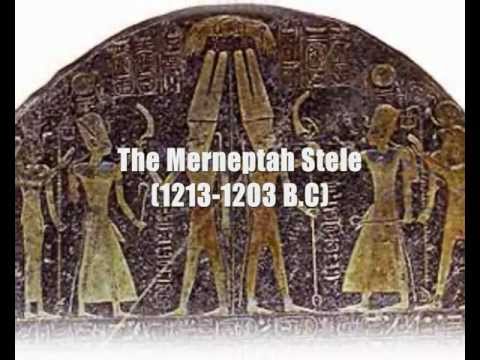
TRUTH AND HISTORY (chapter 5 of WHATEVER HAPPENED TO THE HUMAN RACE?, under footnote #94)

We looked earlier at the city of Lachish. Let us return to the same period in Israel’s history when Lachich was besieged and captured by the Assyrian King Sennacherib. The king of Judah at the time was Hezekiah.

Perhaps you remember the story of how Jesus healed a blind man and told him to go and wash in the Pool of Siloam. It is the same place known by King Hezekiah, approximately 700 years earlier. One of the remarkable things about the flow of the Bible is that historical events separated by hundreds of years took place in the same geographic spots, and standing in these places today, we can feel that flow of history about us. The crucial archaeological discovery which relates the Pool of Siloam is the tunnel which lies behind it.

One day in 1880 a small Arab boy was playing with his friend and fell into the pool. When he clambered out, he found a small opening about two feet wide and five feet high. On examination, it turned out to be a tunnel reaching  back into the rock. But that was not all. On the side of the tunnel an inscribed stone (now kept in the museum in Istanbul) was discovered, which told how the tunnel had been built originally. The inscription in classical Hebrew reads as follows:

The boring through is completed. And this is the story of the boring: while yet they plied the pick, each toward his fellow, and while there were yet three cubits [4 14 feet] to be bored through, there was heard the voice of one calling to the other that there was a hole in the rock on the right hand and on the left hand. And on the day of the boring through the workers on the tunnel struck each to meet his fellow, pick upon pick. Then the water poured from the source to the Pool 1,200 cubits [about 600 yards] and a 100 cubits was the height of the rock above the heads of the workers in the tunnel. 

We know this as Hezekiah’s Tunnel. The Bible tells us how Hezekiah made provision for a better water supply to the city:Now the rest of the acts of Hezekiah and all his might, and how he made the pool and the conduit and brought water into the city, are they not written in the Book of the Chronicles of the Kings of Judah?(II Kings 20:20). We know here three things: the biblical account, the tunnel itself of which the Bible speaks, and the original stone with its inscription in classical Hebrew.

From the Assyrian side, there is additional confirmation of the incidents mentioned in the Bible. There is a clay prism in the British Museum called the Taylor Prism (British Museum, Ref. 91032). It is only fifteen inches high and was discovered in the Assyrian palace at Nineveh. This particular prism dates from about 691 B.C. and tells about Sennacherib’s exploits. A section from the prism reads, “As for Hezekiah,  the Jew, who did not submit to my yoke, forty-six of his strong walled cities, as well as small cities  in their neighborhood I have besieged and took…himself like a caged bird, I shut up in Jerusalem, his royal city. Earthworks I threw up against him,” Thus, there is a three-way confirmation concerning Hezekiah’s tunnel from the Hebrew side and this amazing confirmation from the Assyrian side.

The Bible and Archaeology – Is the Bible from God? (Kyle Butt 42 min)

You want some evidence that indicates that the Bible is true? Here is a good place to start and that is taking a closer look at the archaeology of the Old Testament times. Is the Bible historically accurate? Here are some of the posts I have done in the past on the subject: 1. The Babylonian Chronicleof Nebuchadnezzars Siege of Jerusalem2. Hezekiah’s Siloam Tunnel Inscription. 3. Taylor Prism (Sennacherib Hexagonal Prism)4. Biblical Cities Attested Archaeologically. 5. The Discovery of the Hittites6.Shishak Smiting His Captives7. Moabite Stone8Black Obelisk of Shalmaneser III9A Verification of places in Gospel of John and Book of Acts., 9B Discovery of Ebla Tablets10. Cyrus Cylinder11. Puru “The lot of Yahali” 9th Century B.C.E.12. The Uzziah Tablet Inscription

George Harrison – Awaiting On You All – Lyrics

___

_

Featured Artist: Amanda Hamilton

05/04/2013Posted in: Featured Artist, Painters

"Rupture this bright surface," 2013.

“Rupture this bright surface,” 2013.

Amanda Hamilton is a contemporary American artist working in various media.  She produces large installations, intimate paper works, videos and more.  Hamilton received a BS in Drawing and Painting from Biola in 2000, and then she went to complete an MFA in Painting in 2004 at Claremont Graduate University.  She shows her work throughout the United States.

The natural, and especially non-human, world is a recurring subject in her work.  Many of her projects explore the unsettling “otherness” of nature: the sense in which the natural world seems indifferent toward and beyond human cares.  This theme strongly resonates with a Romantic sensibility that looks for the sublime in nature as a way of transcending and disrupting human culture and society, the worlds of our own making.  When one thinks of Romantic painting, the usual suspects come to mind: Theodore Gericault, J. M. W. Turner, David Caspar Friedrich, etc.  These painters, especially Gericault, produced paintings of immense size and power, and one does not view them as much as one becomes enveloped by them.

Although drawing upon this tradition of the sublime, Hamilton complements it with the theme of domestication.  In a recent installation titled The Life of Perished Things, Hamilton explores the interplay between the sublime and the domestic in profound ways by drawing upon her careful observation and themes in Marilyn Robinson’s Housekeeping (New York: Farrar, Straus and Giroux, 1980).  In an essay published on Hamilton’s website, Janice Neri writes:

In today’s world the lines between art and everyday life have been increasingly blurred, and the practice of keeping house is seen by many as a means of empowerment and mindful living. Mindfulness has its risks as well, as evidenced by the sense of unease Hamilton repeatedly mobilizes in The Life of Perished Things. Sitting alone in nature brings with it a feeling of terror because it reminds us of our mortality, but in a more mundane sense it reminds us that there is much work to be done in the here and now. Cooking, cleaning, laundry, bills—the effort to keep up with these tasks is only matched by the effort to keep thoughts of them at bay. Like the daily chores of keeping house, art making can be both joyful and burdensome. The comfort and solace that comes from each is the result of continuous effort on the part of the homemaker or the artist, but these Sisyphean undertakings hold within them the constant possibility of their own undoing.

Not only does Hamilton explore the interplay between the sublime and the domestic, but also with the interplay between permanence and impermanence.  In an installation titled On Floriography, Hamilton renders numerous plants and flowers as delicate paper cuts, which are protected in glass cloches.  Stunning in their beauty and simplicity, these paper cuts speak both of timelessness and a time long forgotten.  One is reminded of a medieval world in which flowers and herbs possessed symbolic power.  Now lost and unused, these symbols point again to the “otherness” of nature.

She also produces videos that sometimes accompany her installations.  I was particularly drawn to her 2009 video Beautiful Terriblewhich is about the 2005 disappearance of a Russian lake due to the collapse of underground caverns.  She “re-enacts” the disappearance through the meticulous creation of a model of the lake.  Like her paper cuts, the model accentuates the tension between the sublime and the domestic, the powerful and the delicate.

There is a great deal to explore on Hamilton’s website.  I encourage you to take the time to look at her work and watch her videos.  I have included some examples of her work below:

"Coriander," 2010.

“Coriander,” 2010.

"Rue," 2012.

“Rue,” 2012.

Film Sill No. 11, from "Beautiful Terrible," 2008.

Film Sill No. 11, from “Beautiful Terrible,” 2008.

"7:53 am," 2012.

“7:53 am,” 2012.

__________

Related posts:

MUSIC MONDAY Rolling Stones New Album Part 8 Blue & Lonesome is the album any Rolling Stones fan would have wished for – review Neil McCormick, music critic

MUSIC MONDAY Rolling Stones New Album Part 8 Rolling Stones – Hoo Doo Blues Blue & Lonesome is the album any Rolling Stones fan would have wished for – review 9 Comments Evergreen: The Rolling Stones perform in Cuba earlier this year CREDIT: REX FEATURES Neil McCormick, music critic 22 NOVEMBER 2016 • 12:19PM The Rolling […]

MUSIC MONDAY Rolling Stones New Album Part 7 The Rolling Stones Alexis Petridis’s album of the week The Rolling Stones: Blue & Lonesome review – more alive than they’ve sounded for years

MUSIC MONDAY Rolling Stones New Album Part 7 Rolling Stones – Everybody Knows About My Good Thing The Rolling Stones Alexis Petridis’s album of the week The Rolling Stones: Blue & Lonesome review – more alive than they’ve sounded for years 4/5stars Mick Jagger’s voice and harmonica drive an album of blues covers that returns […]

MUSIC MONDAY Rolling Stones New Album Part 6 Music Review: ‘Blue & Lonesome’ by the Rolling Stones By Gregory Katz | AP November 29

MUSIC MONDAY Rolling Stones New Album Part 6 Rolling Stones – Just Like I Treat You   Music Review: ‘Blue & Lonesome’ by the Rolling Stones By Gregory Katz | AP November 29 The Rolling Stones, “Blue & Lonesome” (Interscope) It shouldn’t be a surprise, really, but still it’s a bit startling to hear just how well […]

MUSIC MONDAY Rolling Stones New Album Part 5 Review: The Rolling Stones make blues magic on ‘Blue & Lonesome’ Maeve McDermott , USATODAY6:07 p.m. EST November 30, 2016

MUSIC MONDAY Rolling Stones New Album Part 5 Rolling Stones – Everybody Knows About My Good Thing Review: The Rolling Stones make blues magic on ‘Blue & Lonesome’ Maeve McDermott , USATODAY6:07 p.m. EST November 30, 2016 (Photo: Frazer Harrison, Getty Images) Before the Rolling Stones were rock icons, before its members turned into sex […]

MUSIC MONDAY Rolling Stones New Album Part 4 Rolling Stones, ‘Blue & Lonesome’: Album Review By Michael Gallucci November 30, 2016 1:34 PM

MUSIC MONDAY Rolling Stones New Album Part 4 Rolling Stones – Little Rain       Rolling Stones, ‘Blue & Lonesome’: Album Review By Michael Gallucci November 30, 2016 1:34 PM Read More: Rolling Stones, ‘Blue & Lonesome’: Album Review | http://ultimateclassicrock.com/rolling-stones-blue-lonesome-review/?trackback=tsmclip The Rolling Stones were never really a thinking band. A shrewd one, for sure, […]

MUSIC MONDAY Rolling Stones New Album Part 3 Rolling Stones – ‘Blue & Lonesome’ Review Barry Nicolson 12:52 pm – Dec 2, 2016

MUSIC MONDAY Rolling Stones New Album Part 3 The Rolling Stones Mick Jagger chats about new album “Blue & Lonesome” on BBC Breakfast 02 Dec 2016 Rolling Stones – I Gotta Go     Rolling Stones – ‘Blue & Lonesome’ Review Barry Nicolson 12:52 pm – Dec 2, 2016 57shares The Stones sound their youngest […]

MUSIC MONDAY Rolling Stones New Album Part 2 Review The Rolling Stones’ new blues album is an amplified death wheeze. And it rules

MUSIC MONDAY Rolling Stones New Album Part 1 Review: The Rolling Stones Reinvigorate the Blues on ‘Blue and Lonesome’ Our take on rock legends’ first LP since 2005

MUSIC MONDAY Rolling Stones New Album Part 1 The Rolling Stones – Ride ‘Em On Down Published on Dec 1, 2016 Taken from Blue & Lonesome, the brand new album out now. Buy it at http://www.rollingstones.com/blueandl…. Directed by François Rousselet http://www.riffrafffilms.tv/video/dir… Produced by Natalie Arnett Riff Raff Films http://www.riffrafffilms.tv http://www.rollingstones.com/http://www.facebook.com/therollingstones http://twitter.com/RollingStoneshttp://www.rollingstones.com/newsletter Rolling Stones […]

MUSIC MONDAY Karen Carpenter’s tragic story

_____________ Carpenters Close To You Karen Carpenter’s tragic story Karen Carpenter’s velvet voice charmed millions in the 70s… but behind the wholesome image she was in turmoil. Desperate to look slim on stage – and above all desperate to please the domineering mother who preferred her brother – she became the first celebrity victim of […]

MUSIC MONDAY The Carpenters!!!

carpenters -We’ve Only Just Begun The Carpenters – Yesterday Once More (INCLUDES LYRICS) The Carpenters – There’s a kind of hush The Carpenters – Greatest Hits Related posts: MUSIC MONDAY Paul McCartney Mull Of Kintyre November 13, 2016 – 10:29 am Paul McCartney Mull Of Kintyre-Original Video-HQ Uploaded on Nov 25, 2011 Paul McCartney Mull Of […]

MUSIC MONDAY Commenting on George Harrison’s religious song AWAITING ON YOU ALL Part 3

__


George Harrison – ‘Awaiting On You All’ – Original Audio

Awaiting on You All

From Wikipedia, the free encyclopedia
“Awaiting on You All”
Song by George Harrison from the album All Things Must Pass
Published Harrisongs
Released 27 November 1970
Genre Rock, gospel
Length 2:45
Label Apple
Writer(s) George Harrison
Producer(s) George Harrison, Phil Spector
All Things Must Pass track listing

Awaiting on You All” is a song by English musician George Harrison, released on his 1970 triple album, All Things Must Pass. Along with the single “My Sweet Lord“, it is among the more overtly religious compositions on All Things Must Pass, and the recording typifies co-producer Phil Spector‘s influence on the album, due to his liberal use of reverberation and other Wall of Sound production techniques. Harrison recorded the track in London backed by musicians such as Eric Clapton, Bobby Whitlock, Klaus Voormann, Jim Gordon and Jim Price – many of whom he had toured with, as Delaney & Bonnie and Friends, in December 1969, while still officially a member of the Beatles. Musically, the composition reflects Harrison’s embracing of the gospel music genre, following his production of fellow Apple Records artists Billy Preston and Doris Troy.

In his lyrics to “Awaiting on You All”, Harrison espouses a direct relationship with God over adherence to the tenets of organised religion. Influenced by both his association with London-based Hare Krishna devotees, known as the Radha Krishna Temple, and the Vedanta-inspired teachings of Swami Vivekananda, Harrison sings of chanting God’s name as a means to cleanse and liberate oneself from the impurities of the material world. While acknowledging the validity of all faiths, in essence, his song words explicitly criticise the Pope and the perceived materialism of the Catholic Church – a verse that EMI and Capitol Records continue to omit from the album’s lyrics. He also questions the validity of John Lennon and Yoko Ono‘s 1969 campaign for world peace, reflecting a divergence of philosophies between Harrison and his former bandmate after their shared interest in Hindu spirituality in 1967–68.

Several commentators have identified “Awaiting on You All” as one of the highlights of All Things Must Pass; author and critic Richard Williams likens it to the Spector-produced “River Deep – Mountain High“, by Ike & Tina Turner.[1] The track is featured in the books 1001 Songs You Must Hear Before You Die by Robert Dimery and 1001 Songs by Toby Creswell. A similarly well-regarded live version, with backing from a large band including Clapton, Ringo Starr, Preston and Jim Keltner, was released on the 1971 album The Concert for Bangladesh and appeared in the 1972 film of the same name. Harrison’s posthumous compilation Early Takes: Volume 1 (2012) includes a demo version of the song, recorded early in the 1970 sessions for All Things Must Pass.

Background[edit]

In his book While My Guitar Gently Weeps, Simon Leng describes George Harrison‘s musical projects outside the Beatles during 1969–70 – such as producing American gospel and soul artists Billy Preston and Doris Troy, and touring with Delaney & Bonnie and Friends – as the completion of “a musical-philosophical circle”, which resulted in his post-Beatles solo album All Things Must Pass (1970).[2] Among the songs on that triple album, “My Sweet Lord” and “Awaiting on You All” each reflect Harrison’s immersion in Krishna Consciousness,[3][4] via his association with the UK branch of the International Society for Krishna Consciousness (ISKCON), known as the Radha Krishna Temple.[5] An ISKCON devotee since 1970, author Joshua Greene writes of All Things Must Pass providing an “intimately detailed account of a spiritual journey”, which had begun with Harrison’s embracing of Hinduism while in India in September–October 1966.[6]

Having long disavowed the Catholic faith of his upbringing,[7] from 1966 Harrison was inspired by the teachings of Indian yogi Swami Vivekananda.[8][9] The latter’s contention that “Each soul is potentially divine, the goal is to manifest that divinity” particularly resonated with Harrison in its contrast to the doctrine of the Catholic Church.[10] By 1967, Harrison’s religious awakening had progressed to include Gaudiya Vaishnava chanting,[11] a form of meditation that he shared with his Beatles bandmate John Lennon[12][13]and would go on to espouse in “Awaiting on You All”.[14] Further to Vivekananda’s assertion, chanting the Hare Krishna or other Sanskrit-worded mantras has, author Gary Tillery writes, “the ability to send spiritual energy through the body, leading to the enlightenment of the person chanting”.[15]

Whereas Lennon’s interest in spiritual matters waned following the Beatles’ visit to India in 1968,[16][17][18] Harrison’s involvement with the Radha Krishna Temple led to him producing two hit singles by the devotees over 1969–70, “Hare Krishna Mantra” and “Govinda”.[19][20][nb 1] While Lennon and his partner, Yoko Ono, undertook a highly publicised campaign for world peace during 1969,[24][25] Harrison believed that all human suffering could be averted if individuals focused on addressing their own imperfections rather than, as he put it, “trying to fix everybody else up like the Lone Ranger”.[26][27] This divergence in philosophy also formed part of Harrison’s subject matter for “Awaiting on You All”,[28] a song that, Greene writes, “projected his message to the world”.[29]

Composition[edit]

I was cleaning my teeth … and suddenly in my head came this “You don’t need a dum dada-pmm pa-pmm-pa, you don’t need a bmm papa-bmm.” All I had to do was pick up the guitar, find what key it was in, and fill in the missing words.[30]

– Harrison, on writing “Awaiting on You All”

In an October 1974 radio interview with Alan Freeman,[31] Harrison recalled writing “Awaiting on You All” while preparing to go to bed, and mentioned it as a composition that had come easily to him.[32] In his autobiography, I, Me, Mine, Harrison states that his inspiration for the song was “Japa Yoga meditation”,[33] whereby mantras are sung and counted out on prayer beads.[34]Musically, the composition has elements of gospel and rock music;[35] Leng describes it as “gospel-drenched” and cites Harrison’s production of “Sing One for the Lord“, which Preston recorded with the Edwin Hawkins Singers in early 1970, as a “catalyst” for the new composition.[36] The song opens with a descending guitar riff,[37] later repeated after each chorus,[1] which ends on the melody’s root chord of B major.[38]

In his lyrics to “Awaiting on You All”, Harrison conveys the importance of experiencing spirituality directly, while rejecting organised religion as well as political and intellectual substitutes.[28]Author Ian Inglis writes that the lyrics recognise the merit in all faiths, as Harrison sings that the key to any religion is to “open up your heart“.[39] The choruses proclaim that individual freedom from the physical or material world can be attained through “chanting the names of the Lord“,[40] implying that there is a single deity who happens to be called by different names depending on the faith.[39][41]

John Lennon, pictured during his 1969 Montreal “Bed-in for Peace”

The song’s three verses[42] provide a list of items or concepts that are unnecessary to this realisation.[41][43] The opening lines – “You don’t need no love-in / You don’t need no bed pan” – serve as a criticism of Lennon and Ono’s bed-ins and other forms of peace activism during 1969.[28][39] While Inglis views these words as indicative of a possible rift in Harrison’s relationship with Lennon,[39] Leng identifies the “tongue-lashing for John and Yoko” as the singer dismissing “all political-cum-intellectual musings”.[28][nb 2] Harrison then uses what Christian theologian Dale Allison terms “the language of pollution” to describe the problems afflicting the world,[46] and offers a method by which to cleanse oneself spiritually.[15]

In verse two,[47] Harrison sings of the futility of passports and travel for those searching to “see Jesus“, since an open heart will reveal that Christ is “right there“.[48] Allison remarks on the song expressing Harrison’s “syncretistic view of Jesus”, a view he shared with Lennon, and cites comments that Harrison later made to Radha Krishna Temple co-founder[49] Mukunda Goswami, that Christ was “an absolute yogi” yet modern-day Christian teachers misrepresent him and “[let] him down very badly”.[50]

Pope Paul VI, whose papal office in 1970 Harrison scorned in his song lyrics

In the song’s final verse,[51] Harrison states that churches, temples, religious texts and the rosary beads associated with Catholic worship are no substitute for a direct relationship with God.[41][43] These symbols of organised religion “meant searching in the wrong places”, Tillery writes, when in keeping with Vivekananda’s philosophy, “the spark of the divine is within us all. Every person is therefore the child of God …”[52]AllMusic critic Lindsay Planer comments on Harrison’s “observation of [religious] repression” in the lines “We’ve been kept down so long / Someone’s thinking that we’re all green.”[43]

Harrison’s most scathing criticism is directed at the Pope,[41] in the lines: “While the Pope owns 51% of General Motors / And the stock exchange is the only thing he’s qualified to quote us.[28] Contrasting this statement with Harrison’s song-wide message that God “waits on us to wake up and open our hearts”, Allison concludes: “whereas the Lord is about the business of helping human beings to wake up, the Pope is about the business of business.”[53]

In his book No Sympathy for the Devil, Dave Ware Stowe writes of the effect of “Awaiting on You All” on Evangelical Christian sensibilities: “this was dangerous stuff. Harrison’s lyrics exemplified what many in the Jesus Movement considered a lure and snare of the devil. No doubt the song was spiritually resonant, even reverent, but it leaves the all-important object of veneration vague.”[54]

While identifying a similar ISKCON-inspired theme in Harrison’s 1973 song “The Lord Loves the One (That Loves the Lord)“, Allison discusses “Awaiting on You All” as a precedent for further statements by Harrison against organised religion, particularly Catholicism.[53] Among these, Harrison parodied the Last Supper in his inner-gatefold artwork for Living in the Material World (1973),[55] dressed as a Catholic priest and again mocking the “perceived materialism and violence of the Roman church”, according to Allison.[56][nb 3] In addition, in his role as film producer, Harrison supported Monty Python‘s controversial parodying of the biblical story of Christ in Life of Brian (1979),[60] about which he said: “Actually, [the film] was upholding Him and knocking all the idiotic stuff that goes on around religion.”[61]

Production[edit]

Phil Spector’s involvement[edit]

Harrison and American producer Phil Spector began discussing the possibility of Harrison recording a solo album of songs in early 1970,[62] after they had worked together on Lennon’s Plastic Ono Band single “Instant Karma![63] Before then, to show his support for Spector’s comeback from self-imposed retirement, Harrison had supplied a written endorsement of the producer’s work on the Ike & Tina Turner album River Deep – Mountain High, when A&M Records issued the three-year-old recordings in 1969.[64][65][nb 4] Long a fan of Spector’s sound,[68] Harrison praised River Deep – Mountain High with the words: “a perfect record from start to finish. You couldn’t improve on it.”[69]

Beatles biographer Peter Doggett suggests that Harrison had intended to make an entire album of devotional songs but, with that not being “an appropriate dish to set before Phil Spector”, Harrison chose to delay starting work on All Things Must Pass and instead continued his activities with the Radha Krishna Temple.[70][nb 5] It was only after Paul McCartney‘s departure from the Beatles, and the band’s break-up,[72] that Harrison finally began sessions for his solo album – in late May 1970, at Abbey Road Studios in London.[73] Noting Spector’s application of his signature Wall of Sound production on “Awaiting on You All”, Inglis writes that, but for Harrison’s lyrics, the song “could be mistaken for the instrumental track of a song by the Ronettes“,[74] one of Spector’s girl-group protégés during the 1960s.[75]

Recording[edit]

The line-up of musicians on the basic track included Harrison and Eric Clapton, on electric guitars; bassists Klaus Voormann and Carl Radle, one of whom plays six-string bass;[76] and drummer Jim Gordon, who formed Derek and the Dominos with Clapton and Radle during the sessions.[77] In addition, Bobby Whitlock, the fourth member of the Dominos – all of whom were formerly part of Delaney & Bonnie and Friends[78] – recalls playing Hammond organ on the song.[79] Authors Chip Madinger and Mark Easter note the presence of a piano part on the recording as well.[76]

Derek and the Dominos, including Bobby Whitlock (third from left), founded in 1970 by former members of Delaney & Bonnie’s band

In his 2010 autobiography, Whitlock writes of Lennon and Ono visiting the studio during the All Things Must Pass sessions, during which Lennon “got his socks blown off” by the music Harrison was recording.[80][nb 6] The Hare Krishna devotees regularly attended the sessions also;[82] Spector later cited their presence as an example of how Harrison inspired tolerance in non-believers, since the Temple devotees could be “the biggest pain in the necks in the world”, according to Spector.[83][84] Among the many unreleased songs from the All Things Must Pass sessions, Harrison recorded his all-Sanskrit composition “Gopala Krishna”,[85] which Leng describes as “a rocking companion to ‘Awaiting on You All'”.[86]

Just listen to the leaping guitar/bass riff which opens the cut, or the great contrasting rhythms on maracas and tambourines, or the guitars sliding down at the end of each chorus before being cut off sharp by one of those cosmic thumps … The difference Phil Spector can make to a record becomes clear.[1]

– Author Richard Williams, discussing “Awaiting on You All”

Madinger and Easter view “Awaiting on You All” as one of the more “heavily Spectorized” productions on All Things Must Pass,[76] due to Spector’s liberal use of echo and other Wall of Sound techniques.[87] Among the extensive overdubs on the basic track, Harrison added what Leng terms a “virtual guitar orchestra” of harmonised slide guitar parts,[88] and former Delaney & Bonnie musicians[89] Jim Price and Bobby Keys supplied horns.[90] Whitlock and Clapton sang backing vocals with Harrison,[79] credited on the album as “the George O’Hara-Smith Singers”.[91]

The recording also features prominent percussion such as tambourine and maracas.[1] While the precise line-up on many of the songs on All Things Must Pass continues to invite conjecture,[92][93] Badfinger drummer Mike Gibbins has said that Spector nicknamed him “Mr Tambourine Man” due to his role on that instrument throughout the sessions,[94] and that he and future Yes drummer Alan White played most of the percussion parts on the album, “switch[ing] on tambourine, sticks, bells, maracas … whatever was needed”.[95]

Release[edit]

Apple Records released All Things Must Pass on 27 November 1970,[96] with “Awaiting on You All” sequenced as the penultimate track on side three, in the original LP format, preceding the album’s title song.[97] Of the 23 tracks released on All Things Must Pass, it was one of the few overtly religious songs.[98][nb 7] Concerned at the potential offensiveness of the lyrics, EMI omitted verse three of “Awaiting on You All” from the lyric sheet.[39] Madinger and Easter write that the lyrical content of this verse “probably shot down any chances of it being the hit single it could otherwise have been”.[76]

Issued during a period when rock music was increasingly reflecting spiritual themes,[100] All This Must Pass was a major commercial success,[101][102] outselling releases that year by Harrison’s former bandmates,[103][104] and topping albums charts throughout the world.[105] Describing the impact of the album, with reference to “Awaiting on You All”‘s exhortation to “chant the names of the Lord”, author Nicholas Schaffner wrote of Harrison being “rewarded with a Number One single all over the world” with “My Sweet Lord”.[106]

Reception[edit]

On release, Rolling Stone critic Ben Gerson described “Awaiting on You All” as “a Lesley Gore rave-up in which George manages to rhyme ‘visas’ with ‘Jesus'”.[107] While he considered that lyrics such as “You’ve been polluted so long” “carry an air of sanctimoniousness and moral superiority which is offensive”, Gerson added: “Remarkably, he vindicates these lapses.”[107] Writing for the same magazine 30 years later, Anthony DeCurtis opined that “the heart of All Things Must Pass resides in its songs of spiritual acceptance”, and grouped “Awaiting on You All” with “My Sweet Lord” and “All Things Must Pass” as Harrison compositions that “capture the sweet satisfactions of faith”.[108] In his 1970 review for the NME, Alan Smith described “Awaiting on You All” as “a rapid fire thumper with good chord progressions” and “one of the better tracks” on the album.[109][110] AllMusic critic Richie Unterberger views “Awaiting on You All” as a highlight of a collection on which “nearly every song is excellent”,[111] while author and critic Bob Woffinden lists it with “My Sweet Lord”, “Isn’t It a Pity” and “What Is Life” as “all excellent songs”.[112]

In his book Phil Spector: Out of His Head, Richard Williams writes that, unlike Lennon and McCartney on their 1970 solo albums, “Harrison concentrated on pure joyous melodies – the kind of songs that had made the group so loved”, and he says of “Awaiting on You All”: “Spector repaid Harrison for his benediction on the Ike and Tina Turner album cover by turning it into a virtual remake of ‘River Deep – Mountain High’.”[113] Mark Ribowsky, another Spector biographer, writes of the producer’s contribution to this and other songs on All Things Must Pass: “Phil’s rhythmically pounding basses and drum feels sutured George’s sentimentality with cheerful energy and made Indian asceticism into dance music.”[114] Simon Leng describes “Awaiting on You All” as a “hot gospel stomper” and “the most successful example of Spector’s work on the album”.[115] Writing for NME Originals in 2005, Adrian Thrills named “Awaiting on You All” and “Wah-Wah” as examples of “a tendency to over-egg the mix” on the otherwise “magnificent” All Things Must Pass, adding: “it is hard to think of another big rock album on which the tambourine is shaken quite so relentlessly.”[116]

In his AllMusic article on the song, Lindsay Planer views it as “somewhat of a sacred rocker” with “ample lead guitar”, and comments that Harrison’s lyrics “cleverly [draw] upon an array of disparate imagery to convey a conversely simple spiritual revelation”.[43]Harrison biographer Alan Clayson considers the track “more uplifting” than “My Sweet Lord” and remarks on the aptness of Harrison’s subject matter in 1970–71, when religious texts such as the Bible, the Koran and ISKCON’s Chant and Be Happy “now had discreet places on hip bookshelves”.[117] Former Mojo editor Mat Snow describes the song as “glorious white gospel”, in which Harrison “rejects the Catholicism of his Liverpool upbringing”.[118]

“Awaiting on You All” has featured in the music reference books 1001 Songs You Must Hear Before You Die by Robert Dimery[119] and 1001 Songs by Australian critic Toby Creswell.[35] The latter describes the combination of Harrison’s “tasteful” guitar parts and the “galloping” rhythm section as “sublime and divine”.[35] In Dimery’s book, contributor Bruno MacDonald writes of the track: “‘Awaiting on You All’ has a timeless exuberance that even Beatles-haters should experience.”[120]

Live version[edit]

“Awaiting on You All” was one of the songs Harrison played at the Concert for Bangladesh,[121] held at Madison Square Garden, New York, on 1 August 1971.[122] Featuring backing from a band including Clapton, Voormann, Ringo Starr, Billy Preston, Jim Keltner and Jim Horn,[123] Harrison performed the song at both the afternoon and the evening shows.[124] The latter performance was included on the Concert for Bangladesh live album, which Spector again co-produced,[125] and in the film of the concert.[126] Joshua Greene comments on there being a “logical chronology” to the first three songs in Harrison’s setlist for this second show: “starting with ‘Wah Wah,’ which declared his independence from the Beatles; followed by ‘My Sweet Lord,’ which celebrated his internal discovery of God and spirit; and then ‘Awaiting on You All'”.[29]

Writing in Rolling Stone, Jon Landau compared the less-polished performance of “Awaiting on You All” with the studio version’s “perfect production” and concluded: “it is exhilarating to hear his voice clearly singing the song for the first time, likewise the excellent guitar.”[127] In his album review for Melody Maker, Williams wrote of Harrison’s opening trio of songs: “Unbelievably, they’re as good as the originals, and in some ways even better, because they combine the power of the arrangements for horns and rhythm with a sense of joy that comes only in live performance. The two drummers (Ringo and Jim Keltner) are just breathtaking on ‘Awaiting’ …”[128] Planer also compliments what he calls “the tag-team percussion” of Starr and Keltner, which “driv[es] through the heart of the performance”.[43]

Reissue and other versions[edit]

In February 2001, during his extensive promotion for the 30th anniversary reissue of All Things Must Pass,[129] Harrison named “Awaiting on You All” among his three favourite tracks on the album.[130][131] The electronic press kit accompanying the release included a scene where Harrison plays back the song at his Friar Park studio and isolates certain parts of the recording in turn, such as the backing vocals and slide guitars.[132] In the CD booklet, Harrison’s liner notes conclude with a thank-you to “the amazing Mr. Phil Spector” and the acknowledgement: “He helped me so much to get this record made. In his company I came to realise the true value of the Hare Krishna Mantra.”[133] The Pope-related lyrics in “Awaiting on You All” were again omitted from the booklet;[133] they similarly do not appear on the lyric sheet supplied with the 2014 Apple Years reissue.[134]

Part of the 2001 playback scene was included in Martin Scorsese‘s documentary George Harrison: Living in the Material World,[135] and an early take from the 1970 sessions appeared on the bonus disc accompanying that film’s DVD release in late 2011.[136] This demo version, which Harrison introduces as “Awaiting for You All”,[137] was included on the compilation Early Takes: Volume 1 (2012).[138] Referring to Harrison’s stated regret at the amount of echo Spector used on All Things Must Pass, compilation producer Giles Martin says of the song’s sparse arrangement on Early Takes: “I think this is really cool, it’s got a good basic band groove, I think of it as George breaking down a wall of sound.”[137]

In 1971, Detroit band Silver Hawk released a cover version of “Awaiting on You All” as a single,[139] which peaked at number 108 on Billboard magazine’s Bubbling Under listings.[140] In Canada, Silver Hawk’s single climbed to number 49 on the RPM Top 100.[141] A cover “worth mentioning”, according to Planer, is a version recorded by pedal steel guitarist Joe Goldmark, released on the 1997 tribute album Steelin’ the Beatles.[43]

Personnel[edit]

According to authors Simon Leng and Bruce Spizer, the line-up of musicians on “Awaiting on You All” is as follows:[90][115]

Notes[edit]

  1. Jump up^ Among his non-musical activities on behalf of the Hare Krishna devotees, Harrison served as co-lessor for the Temple’s new premises in central London,[21] and he financed the publication of ISKCON’s 400-page KRSNA Book.[22][23]
  2. Jump up^ In an April 1970 radio interview in New York,[44] Harrison referred to his difference in ideology with Lennon: “This is really where I disagreed with John … I don’t think you get peace by going around shouting: ‘GIVE PEACE A CHANCE, MAN!’ … [Instead,] put your own house in order; for a forest to be green, each tree must be green.”[45]
  3. Jump up^ Among his later songs, Harrison sent up the Catholic faith in the posthumously released “P2 Vatican Blues“.[57] In one of his final recordings before his death in November 2001, “Horse to the Water“,[58] Harrison sings of a “truth seeker” being denied access to God, Leng writes, by “religious civil servants for whom the organization and the rules have become more important than the message”.[59]
  4. Jump up^ Produced by Spector in 1966, the Turners’ album was withdrawn from release following the disappointing commercial reception afforded its title song in America.[66] Considering “River Deep – Mountain High” his masterpiece, Spector temporarily withdrew from the music industry after the single’s failure.[67]
  5. Jump up^ Harrison made a promotional visit to Paris with the ISKCON devotees in March 1970,[70] in addition to carrying out further recording in London for what became the Radha Krsna Temple album (1971).[71]
  6. Jump up^ In light of Harrison having had many of his songs turned down by Lennon and McCartney during the Beatles’ career, Whitlock recalls Harrison’s satisfaction after this visit, and suggests: “George’s new album was better than anything John had ever done, and [Lennon] knew that as well.”[81]
  7. Jump up^ In author Robert Rodriguez’s estimation, “My Sweet Lord” and “Hear Me Lord” are the only other tracks that directly express a religious message.[98] Leng similarly writes of “two key spiritual songs” on an album that focuses on Harrison’s “attempt to break free from his Beatles identity”.[99]

Francis Schaeffer with Dr. C. Everett Koop in their book WHATEVER HAPPENED TO THE HUMAN RACE? noted:

The New Mysticism
What about the spread of Eastern religions and techniques within the West – things like TM, Yoga, the cults? We have moved beyond the counterculture of the sixties, but where to? These elements from the East no longer influence just the beat generation and the dropouts. Now they are fashionable for the middle classes as well. They are everywhere.
What about those who take drugs as a means of “expanding their consciousness”? This, too, is in the same direction. Your mind is a hindrance to you: “Blow it”! As Timothy Leary put it in The Politics of Ecstasy (1968): “Our favorite concepts are standing in the way of a flood tide two billion years building up. The verbal dam is collapsing. Head for the hills or prepare your intellectual craft to flow with the current.” So we see again the rejection of the mind. The verbal dam, the concepts, the intellectual craft? These must be bypassed by the “new man.”
Wherever we look, this is what confronts us: irrational experience. We must be careful not to be bewildered by the surface differences between these movements. We are not saying they are all the same. Of course there are differences. The secular existentialists, for example, disagree with one another. Then, too, secular existentialists differ with religious existentialists; the former tend to be pessimistic, the latter optimistic. Some of the movements are serious and command our respect. Some are just bizarre. There are differences. Yet, all of them represent the new mysticism!
The problem with mysticism of this sort is, interestingly enough, the same problem we considered earlier in relation to all humanistic systems. Who is going to say what is right?
As soon as one removes the checking mechanism of the mind by which to measure things, everything can then be “right” and everything can also be “wrong.” Eventually, anything and everything can be allowed! Take a simple example from life: If you are asking for directions in a city, you first listen to the directions your guide is giving and then you set off. Let us say the directions are: “Take the first turn on the right, called Twenty-fourth Street; then the next turn of the left, called Kennedy Drive; and then keep going till you come to the park where you will see the concert hall just past a big lake on your right.” Armed with there directions, you go along – checking up on what you have been told: “Yes, there is Twenty-fourth Street. Yes, there is Kennedy Drive,” and so on.
In other words, you are not just told words; you are able to see if these words relate to the outside world, the world you have to operate in if you are going to get from A to B. This is where your mind is essential. You can check to see if the information you have been given is true or false.
Imagine, on the other hand, that someone said, in answer to your request for directions, “I don’t know where or what B is. It is impossible to talk about a `concert hall.’ What is a `concert hall’ anyway? We can only say of it that it is the `Unknowable.'” How completely ridiculous for you to be told, “Go any way – because this is the way”!
The trick in all these positions is to argue first of all that the End – Final Reality – cannot be spoken of (because it cannot be known by the mind) and yet to give the directions to find it. We should notice, however, that in this setting we can never ask questions ahead of time about the directions we receive. They are directions only for blindfolded experience, the blind “leap of faith.”
We cannot ask, “How will I know that it is truth or that it is the divine I am experiencing?” The answer is always, “There is no way you can be told, for it is an answer beyond language, beyond categories, but take this path [or that one, or another one] anyway.”
Thus, modern man is bombarded from all sides by devotees of this or that experience. The media only compound the problem. So does the commercialism of our highly technological societies. The danger of manipulation from these alone is overwhelming. In the absence of a clear standard, they are a force for the control of people’s minds and behavior that is beyond anything in history. In fact, there are no clear standards in Western society now; and where there is an appearance of standards, very often there is insufficient motivation to lean against the enormous pressures. And why? In part, at least, because there is an inadequate basis for knowledge and for morality.
When we add to this that modern man has become a “mystic,” we soon realize the seriousness of the situation. For in all these mystical solutions no one can finally say anything about right and wrong. The East has had this problem for thousands of years. In a pantheistic system, whatever pious statements may be made along the way, ultimately good and evil are equal in God, the impersonal God. So we hear Yun-Men, a Zen master, saying, “If you want to get the plain truth, be not concerned with right and wrong. Conflict between right and wrong is the sickness of the mind.”
Society can have no stability on this Eastern world-view or its present Western counterpart. It just does not work. And so one finds a gravitation toward some form of authoritarian government, an individual tyrant or group of tyrants who takes the reins of power and rule. And the freedoms, the sorts of freedoms we have enjoyed in the West, are lost.
We are, then, brought back to our starting point. The inhumanities and the growing loss of freedoms in the West are the result of a world-view which as no place for “people.” Modern humanistic materialism is an impersonal system. The East is no different. Both begin and end with impersonality.

Francis Schaeffer has correctly argued:

The universe was created by an infinite personal God and He brought it into existence by spoken word and made man in His own image. When man tries to reduce [philosophically in a materialistic point of view] himself to less than this [less than being made in the image of God] he will always fail and he will always be willing to make these impossible leaps into the area of nonreason even though they don’t give an answer simply because that isn’t what he is. He himself testifies that this infinite personal God, the God of the Old and New Testament is there. 

Instead of making a leap into the area of nonreason the better choice would be to investigate the claims that the Bible is a historically accurate book and that God created the universe and reached out to humankind with the Bible. Below is a piece of that evidence given by Francis Schaeffer concerning the accuracy of the Bible.

TRUTH AND HISTORY (chapter 5 of WHATEVER HAPPENED TO THE HUMAN RACE?, under footnote #94)

We looked earlier at the city of Lachish. Let us return to the same period in Israel’s history when Lachich was besieged and captured by the Assyrian King Sennacherib. The king of Judah at the time was Hezekiah.

Perhaps you remember the story of how Jesus healed a blind man and told him to go and wash in the Pool of Siloam. It is the same place known by King Hezekiah, approximately 700 years earlier. One of the remarkable things about the flow of the Bible is that historical events separated by hundreds of years took place in the same geographic spots, and standing in these places today, we can feel that flow of history about us. The crucial archaeological discovery which relates the Pool of Siloam is the tunnel which lies behind it.

One day in 1880 a small Arab boy was playing with his friend and fell into the pool. When he clambered out, he found a small opening about two feet wide and five feet high. On examination, it turned out to be a tunnel reaching  back into the rock. But that was not all. On the side of the tunnel an inscribed stone (now kept in the museum in Istanbul) was discovered, which told how the tunnel had been built originally. The inscription in classical Hebrew reads as follows:

The boring through is completed. And this is the story of the boring: while yet they plied the pick, each toward his fellow, and while there were yet three cubits [4 14 feet] to be bored through, there was heard the voice of one calling to the other that there was a hole in the rock on the right hand and on the left hand. And on the day of the boring through the workers on the tunnel struck each to meet his fellow, pick upon pick. Then the water poured from the source to the Pool 1,200 cubits [about 600 yards] and a 100 cubits was the height of the rock above the heads of the workers in the tunnel. 

We know this as Hezekiah’s Tunnel. The Bible tells us how Hezekiah made provision for a better water supply to the city:Now the rest of the acts of Hezekiah and all his might, and how he made the pool and the conduit and brought water into the city, are they not written in the Book of the Chronicles of the Kings of Judah?(II Kings 20:20). We know here three things: the biblical account, the tunnel itself of which the Bible speaks, and the original stone with its inscription in classical Hebrew.

From the Assyrian side, there is additional confirmation of the incidents mentioned in the Bible. There is a clay prism in the British Museum called the Taylor Prism (British Museum, Ref. 91032). It is only fifteen inches high and was discovered in the Assyrian palace at Nineveh. This particular prism dates from about 691 B.C. and tells about Sennacherib’s exploits. A section from the prism reads, “As for Hezekiah,  the Jew, who did not submit to my yoke, forty-six of his strong walled cities, as well as small cities  in their neighborhood I have besieged and took…himself like a caged bird, I shut up in Jerusalem, his royal city. Earthworks I threw up against him,” Thus, there is a three-way confirmation concerning Hezekiah’s tunnel from the Hebrew side and this amazing confirmation from the Assyrian side.

The Bible and Archaeology – Is the Bible from God? (Kyle Butt 42 min)

You want some evidence that indicates that the Bible is true? Here is a good place to start and that is taking a closer look at the archaeology of the Old Testament times. Is the Bible historically accurate? Here are some of the posts I have done in the past on the subject: 1. The Babylonian Chronicleof Nebuchadnezzars Siege of Jerusalem2. Hezekiah’s Siloam Tunnel Inscription. 3. Taylor Prism (Sennacherib Hexagonal Prism)4. Biblical Cities Attested Archaeologically. 5. The Discovery of the Hittites6.Shishak Smiting His Captives7. Moabite Stone8Black Obelisk of Shalmaneser III9A Verification of places in Gospel of John and Book of Acts., 9B Discovery of Ebla Tablets10. Cyrus Cylinder11. Puru “The lot of Yahali” 9th Century B.C.E.12. The Uzziah Tablet Inscription

George Harrison – Awaiting On You All – Lyrics

___

Related posts:

MUSIC MONDAY Rolling Stones New Album Part 8 Blue & Lonesome is the album any Rolling Stones fan would have wished for – review Neil McCormick, music critic

MUSIC MONDAY Rolling Stones New Album Part 8 Rolling Stones – Hoo Doo Blues Blue & Lonesome is the album any Rolling Stones fan would have wished for – review 9 Comments Evergreen: The Rolling Stones perform in Cuba earlier this year CREDIT: REX FEATURES Neil McCormick, music critic 22 NOVEMBER 2016 • 12:19PM The Rolling […]

MUSIC MONDAY Rolling Stones New Album Part 7 The Rolling Stones Alexis Petridis’s album of the week The Rolling Stones: Blue & Lonesome review – more alive than they’ve sounded for years

MUSIC MONDAY Rolling Stones New Album Part 7 Rolling Stones – Everybody Knows About My Good Thing The Rolling Stones Alexis Petridis’s album of the week The Rolling Stones: Blue & Lonesome review – more alive than they’ve sounded for years 4/5stars Mick Jagger’s voice and harmonica drive an album of blues covers that returns […]

MUSIC MONDAY Rolling Stones New Album Part 6 Music Review: ‘Blue & Lonesome’ by the Rolling Stones By Gregory Katz | AP November 29

MUSIC MONDAY Rolling Stones New Album Part 6 Rolling Stones – Just Like I Treat You   Music Review: ‘Blue & Lonesome’ by the Rolling Stones By Gregory Katz | AP November 29 The Rolling Stones, “Blue & Lonesome” (Interscope) It shouldn’t be a surprise, really, but still it’s a bit startling to hear just how well […]

MUSIC MONDAY Rolling Stones New Album Part 5 Review: The Rolling Stones make blues magic on ‘Blue & Lonesome’ Maeve McDermott , USATODAY6:07 p.m. EST November 30, 2016

MUSIC MONDAY Rolling Stones New Album Part 5 Rolling Stones – Everybody Knows About My Good Thing Review: The Rolling Stones make blues magic on ‘Blue & Lonesome’ Maeve McDermott , USATODAY6:07 p.m. EST November 30, 2016 (Photo: Frazer Harrison, Getty Images) Before the Rolling Stones were rock icons, before its members turned into sex […]

MUSIC MONDAY Rolling Stones New Album Part 4 Rolling Stones, ‘Blue & Lonesome’: Album Review By Michael Gallucci November 30, 2016 1:34 PM

MUSIC MONDAY Rolling Stones New Album Part 4 Rolling Stones – Little Rain       Rolling Stones, ‘Blue & Lonesome’: Album Review By Michael Gallucci November 30, 2016 1:34 PM Read More: Rolling Stones, ‘Blue & Lonesome’: Album Review | http://ultimateclassicrock.com/rolling-stones-blue-lonesome-review/?trackback=tsmclip The Rolling Stones were never really a thinking band. A shrewd one, for sure, […]

MUSIC MONDAY Rolling Stones New Album Part 3 Rolling Stones – ‘Blue & Lonesome’ Review Barry Nicolson 12:52 pm – Dec 2, 2016

MUSIC MONDAY Rolling Stones New Album Part 3 The Rolling Stones Mick Jagger chats about new album “Blue & Lonesome” on BBC Breakfast 02 Dec 2016 Rolling Stones – I Gotta Go     Rolling Stones – ‘Blue & Lonesome’ Review Barry Nicolson 12:52 pm – Dec 2, 2016 57shares The Stones sound their youngest […]

MUSIC MONDAY Rolling Stones New Album Part 2 Review The Rolling Stones’ new blues album is an amplified death wheeze. And it rules

MUSIC MONDAY Rolling Stones New Album Part 1 Review: The Rolling Stones Reinvigorate the Blues on ‘Blue and Lonesome’ Our take on rock legends’ first LP since 2005

MUSIC MONDAY Rolling Stones New Album Part 1 The Rolling Stones – Ride ‘Em On Down Published on Dec 1, 2016 Taken from Blue & Lonesome, the brand new album out now. Buy it at http://www.rollingstones.com/blueandl…. Directed by François Rousselet http://www.riffrafffilms.tv/video/dir… Produced by Natalie Arnett Riff Raff Films http://www.riffrafffilms.tv http://www.rollingstones.com/http://www.facebook.com/therollingstones http://twitter.com/RollingStoneshttp://www.rollingstones.com/newsletter Rolling Stones […]

MUSIC MONDAY Karen Carpenter’s tragic story

_____________ Carpenters Close To You Karen Carpenter’s tragic story Karen Carpenter’s velvet voice charmed millions in the 70s… but behind the wholesome image she was in turmoil. Desperate to look slim on stage – and above all desperate to please the domineering mother who preferred her brother – she became the first celebrity victim of […]

MUSIC MONDAY The Carpenters!!!

carpenters -We’ve Only Just Begun The Carpenters – Yesterday Once More (INCLUDES LYRICS) The Carpenters – There’s a kind of hush The Carpenters – Greatest Hits Related posts: MUSIC MONDAY Paul McCartney Mull Of Kintyre November 13, 2016 – 10:29 am Paul McCartney Mull Of Kintyre-Original Video-HQ Uploaded on Nov 25, 2011 Paul McCartney Mull Of […]

__

MUSIC MONDAY Commenting on George Harrison’s religious song AWAITING ON YOU ALL Part 2

_


George Harrison – Awaiting On You All (Backing Track – Early Take)

George Harrison – ‘Awaiting On You All’ – Original Audio

Francis Schaeffer in his book HOW SHOULD WE THEN LIVE? gives us some insight into a possible answer to that question WHY WAS DRUG-TAKING AND EASTERN RELIGIONS SO POPULAR IN THE 1960’s IN USA?

The younger people and the older ones tried drug taking but then turned to the eastern religions. Both drugs and the eastern religions seek truth inside one’s own head, a negation of reason. The central reason of the popularity of eastern religions in the west is a hope for a nonrational meaning to life and values. The reason the young people turn to eastern religion is simply the fact as we have said and that is that man having moved into the area of nonreason could put anything up there and the heart of the eastern religions  is a denial of reason just exactly as the idealistic drug taking was. So the turning to the eastern religions today fits exactly into the modern existential  methodology, the existential thinking of modern man, of trying to find some optimistic hope in the area of nonreason when he has given up hope on a humanistic basis of finding any kind of unifying answer to life, any meaning to life in the answer of reason. 

An article calledHoly Wars” was based on Francis Schaeffer’s writings primarily and it noted:

Then came the Beatles. John Lennon had declared that his group was more popular than Jesus. But they weren’t willing to stop there. They sought to supplant the true God with everything false. After the rock icons returned from India they brought with them not only the music of the Hindu guru Ravi Shankar, but also his religion as taught by the Maharishi Mahesh Yogi. They were so impressed with that guru’s Transcendental Meditation woo woo that they just had to convert the whole Western World to it. The counterculturalists took it all in, hook line and sinker.

George Harrison – Awaiting On You All – Lyrics

_

FRIDAY, MAY 10, 2013

Awaiting on You All

On the way home from work one afternoon I listened to the George Harrison song Awaiting on You All that I had copied along with other songs by this artist from his album All Things Must Pass. Hearing this song after so many years (it was on a CD that I had lost and just found again) was an interesting experience, and as often happens when you unearth some part of your past and compare it with your present, I heard it almost with fresh ears. I am not the same person that I was then. I was in my twenties when I followed George Harrison both musically and spiritually. Though the Eastern religious views he espoused most of his public life were similar to mine at that age, it didn’t take long for me to outgrow them. ‘Outgrow’ is not exactly the right word, though. I didn’t really outgrow them. You could say I traded them in, new lamps for old. I never struck a better deal.

Still, listening to the song I was amazed just how spot on he was in much of what he was saying. I can still relate to almost all of it. I don’t think that either of us, George or I, was aware of the fuzzy thinking that made us combine devotion and belief in Krishna and Jesus without noticing the two aren’t the same. I’m not talking about doctrinal or religious differences. Hinduism and Christianity are distinct religions, granted, but anyone who believes in God knows, ‘God is God. There is no thing you can compare to God. God is God.’ We tend to believe that at best other religions are wrong in the details but right in the big picture. This may be true, but no one can say so without denying his faith community. In youth, I think we were bored with dogmatic strongholds, and wanted the freedom to meet God on our terms, not according to those of our ancestors. How little did we understand that ‘the ancestors in stone armor calling for loyalty untrue’ seeking ‘to make a zigzag of the arrow’s flight’ were doing no such thing.

No, they knew that the shortest path between two points is rarely a straight line, though arrows may fly to their mark, being projectiles aimed at a target. Unfortunately people are not projectiles, and our destination is not really a target, no matter how much we wish we could hit the bullseye. We are beings fashioned in the Divine image and likeness. We live in more than three, more even than four, dimensions, and the paths we tread cannot be traced, planned or prophesied by mortal logic or the magic of music. They are no more than mere beginnings, our thoughts and feelings, before we bump into the aweful reality which we glibly like to call ‘God.’ Meet Him on our terms? Hardly possible, unless He allows it, and only as a sign that He is there, hidden behind our wall, waiting for us to…
No, that is also just what we glibly like to think, as George Harrison sings in his song…

You don’t need no love in
You don’t need no bed pan
You don’t need a horoscope or a microscope
To see the mess that you’re in
If you open up your heart
You will know what I mean
We’ve been polluted so long
Now here’s a way for you to get clean

By chanting the names of the Lord, and you’ll be free
The Lord is awaiting on you all to awaken and see…

You don’t need no passport

And you don’t need no visas
You don’t need to designate or to emigrate
Before you can see Jesus
If you open up your heart
You’ll see he’s right there
Always was and will be
He’ll relieve you of your cares

You don’t need no church house
And you don’t need no Temple
You don’t need no rosary beads or them books to read
To see that you have fallen
If you open up your heart
You will know what I mean
We’ve been kept down so long
Someone’s thinking that we’re all green

… The Lord is awaiting on you all to awaken and see
By chanting the names of the Lord, and you’ll be free

I purposely left out the stanza about the pope owning controlling interest in General Motors and not being qualified to quote us anything but the Stock Exchange. This is childish talk and hatchets all the good things he has to say. This, I find, is true of youthful thinkers in every generation. It’s true of otherwise noble and idealistic youth today. It was true of me as a Vietnam War draft resister. We ‘let the cat out of the bag’ about ourselves when we pounce on anyone, especially an authority figure we don’t approve of, and show that, however pure we think our motives, however lofty our ideals, we’re still no better than the fallen heroes we no longer believe in. What George Harrison says in this song I still agree with. Where I have a problem, is what he proposes as a solution to the mess we find ourselves in. As much as I enjoyed chanting Hare Krishna, it didn’t save me, or the world, and it never will.

But the rest is, amazingly, true, as I have found out in the intervening years. The words about Jesus are almost straight out of the Bible. The words about churches and temples, the same. Somebody went to Sunday School as a child. Yes, you’re right. I did.
I know that for sure, and guess what? It stuck. What started out as an incomprehensible religious upbringing somehow became comprehensible when it finally collided with what I was made for.

Yes, my parachute failed to open, and the earth received my bruised and broken body. I was alive for just a moment, just long enough for me to realize I was about to die. Then His gentle hands slipped under my head and shoulders as He lifted me up from what should have been my grave. He had already been there, aeons before I came to birth or leapt to my unintended death. No, this did not literally happen. I’ve never used a parachute. But His hands are real.

Awaiting on You All, a great song,
but He is waiting only from our point of view.
On His side, we are either already with Him, or without Him.

__

Related posts:

MUSIC MONDAY Rolling Stones New Album Part 8 Blue & Lonesome is the album any Rolling Stones fan would have wished for – review Neil McCormick, music critic

MUSIC MONDAY Rolling Stones New Album Part 8 Rolling Stones – Hoo Doo Blues Blue & Lonesome is the album any Rolling Stones fan would have wished for – review 9 Comments Evergreen: The Rolling Stones perform in Cuba earlier this year CREDIT: REX FEATURES Neil McCormick, music critic 22 NOVEMBER 2016 • 12:19PM The Rolling […]

MUSIC MONDAY Rolling Stones New Album Part 7 The Rolling Stones Alexis Petridis’s album of the week The Rolling Stones: Blue & Lonesome review – more alive than they’ve sounded for years

MUSIC MONDAY Rolling Stones New Album Part 7 Rolling Stones – Everybody Knows About My Good Thing The Rolling Stones Alexis Petridis’s album of the week The Rolling Stones: Blue & Lonesome review – more alive than they’ve sounded for years 4/5stars Mick Jagger’s voice and harmonica drive an album of blues covers that returns […]

MUSIC MONDAY Rolling Stones New Album Part 6 Music Review: ‘Blue & Lonesome’ by the Rolling Stones By Gregory Katz | AP November 29

MUSIC MONDAY Rolling Stones New Album Part 6 Rolling Stones – Just Like I Treat You   Music Review: ‘Blue & Lonesome’ by the Rolling Stones By Gregory Katz | AP November 29 The Rolling Stones, “Blue & Lonesome” (Interscope) It shouldn’t be a surprise, really, but still it’s a bit startling to hear just how well […]

MUSIC MONDAY Rolling Stones New Album Part 5 Review: The Rolling Stones make blues magic on ‘Blue & Lonesome’ Maeve McDermott , USATODAY6:07 p.m. EST November 30, 2016

MUSIC MONDAY Rolling Stones New Album Part 5 Rolling Stones – Everybody Knows About My Good Thing Review: The Rolling Stones make blues magic on ‘Blue & Lonesome’ Maeve McDermott , USATODAY6:07 p.m. EST November 30, 2016 (Photo: Frazer Harrison, Getty Images) Before the Rolling Stones were rock icons, before its members turned into sex […]

MUSIC MONDAY Rolling Stones New Album Part 4 Rolling Stones, ‘Blue & Lonesome’: Album Review By Michael Gallucci November 30, 2016 1:34 PM

MUSIC MONDAY Rolling Stones New Album Part 4 Rolling Stones – Little Rain       Rolling Stones, ‘Blue & Lonesome’: Album Review By Michael Gallucci November 30, 2016 1:34 PM Read More: Rolling Stones, ‘Blue & Lonesome’: Album Review | http://ultimateclassicrock.com/rolling-stones-blue-lonesome-review/?trackback=tsmclip The Rolling Stones were never really a thinking band. A shrewd one, for sure, […]

MUSIC MONDAY Rolling Stones New Album Part 3 Rolling Stones – ‘Blue & Lonesome’ Review Barry Nicolson 12:52 pm – Dec 2, 2016

MUSIC MONDAY Rolling Stones New Album Part 3 The Rolling Stones Mick Jagger chats about new album “Blue & Lonesome” on BBC Breakfast 02 Dec 2016 Rolling Stones – I Gotta Go     Rolling Stones – ‘Blue & Lonesome’ Review Barry Nicolson 12:52 pm – Dec 2, 2016 57shares The Stones sound their youngest […]

MUSIC MONDAY Rolling Stones New Album Part 2 Review The Rolling Stones’ new blues album is an amplified death wheeze. And it rules

MUSIC MONDAY Rolling Stones New Album Part 1 Review: The Rolling Stones Reinvigorate the Blues on ‘Blue and Lonesome’ Our take on rock legends’ first LP since 2005

MUSIC MONDAY Rolling Stones New Album Part 1 The Rolling Stones – Ride ‘Em On Down Published on Dec 1, 2016 Taken from Blue & Lonesome, the brand new album out now. Buy it at http://www.rollingstones.com/blueandl…. Directed by François Rousselet http://www.riffrafffilms.tv/video/dir… Produced by Natalie Arnett Riff Raff Films http://www.riffrafffilms.tv http://www.rollingstones.com/http://www.facebook.com/therollingstones http://twitter.com/RollingStoneshttp://www.rollingstones.com/newsletter Rolling Stones […]

MUSIC MONDAY Karen Carpenter’s tragic story

_____________ Carpenters Close To You Karen Carpenter’s tragic story Karen Carpenter’s velvet voice charmed millions in the 70s… but behind the wholesome image she was in turmoil. Desperate to look slim on stage – and above all desperate to please the domineering mother who preferred her brother – she became the first celebrity victim of […]

MUSIC MONDAY The Carpenters!!!

carpenters -We’ve Only Just Begun The Carpenters – Yesterday Once More (INCLUDES LYRICS) The Carpenters – There’s a kind of hush The Carpenters – Greatest Hits Related posts: MUSIC MONDAY Paul McCartney Mull Of Kintyre November 13, 2016 – 10:29 am Paul McCartney Mull Of Kintyre-Original Video-HQ Uploaded on Nov 25, 2011 Paul McCartney Mull Of […]

__

FRANCIS SCHAEFFER ANALYZES ART AND CULTURE Part 167 George Harrison’s song AWAITING ON YOU Part A (Artist featured is Paul Martin)

George Harrison – ‘Awaiting On You All’ – Original Audio

George Harrison – Awaiting On You All – Lyrics


___

You don’t need no love in
You don’t need no bed pan
You don’t need a horoscope or a microscope
The see the mess that you’re in
If you open up your heart
You will know what I mean
We’ve been polluted so long
Now here’s a way for you to get clean
By chanting the names of the Lord and you’ll be free
The Lord is awaiting on you all to awaken and see
Chanting the names of the Lord and you’ll be free
The Lord is awaiting on you all to awaken and see
You don’t need no passport
And you don’t need no visas
You don’t need to designate or to emigrate
Before you can see Jesus
If you open up your heart
You’ll see he’s right there
Always was and will be
He’ll relieve you of your cares
By chanting the names of the Lord and you’ll be free
The Lord… Full lyrics on Google Play Music
In contrast to Biblical Christianity, Eastern Mysticism does not believe in a personal God but instead some pantheistic God that is not personal.

Francis Schaeffer in his book HOW SHOULD WE THEN LIVE? (page 191 Vol 5) asserted:

But this finally brings them to the place where the word GOD merely becomes the word GOD, and no certain content can be put into it. In this many of the established theologians are in the same position as George Harrison (1943-) (the former Beatles guitarist) when he wrote MY SWEET LORD (1970). Many people thought he had come to Christianity. But listen to the words in the background: “Krishna, Krishna, Krishna.” Krishna is one Hindu name for God. This song expressed  no content, just a feeling of religious experience. To Harrison, the words were equal: Christ or Krishna. Actually, neither the word used nor its content was of importance. 

Here is a good review of the episode 016 HSWTL The Age of Non-Reason of HOW SHOULD WE THEN LIVE?, December 23, 2007:

Together with the advent of the “drug Age” was the increased interest in the West in  the religious experience of Hinduism and Buddhism. Schaeffer tells us that: “This grasping for a nonrational meaning to life and values is the central reason that these Eastern religions are so popular in the West today.”  Drugs and Eastern religions came like a flood into the Western world.  They became the way that people chose to find meaning and values in life.  By themselves or together, drugs and Eastern religion became the way that people searched inside themselves for ultimate truth.

Along with drugs and Eastern religions there has been a remarkable increase “of the occult appearing as an upper-story hope.”  As modern man searches for answers it “many moderns would rather have demons than be left with the idea that everything in the universe is only one big machine.”  For many people having the “occult in the upper story of nonreason in the hope of having meaning” is better than leaving the upper story of nonreason empty. For them horror or the macabre are more acceptable than the idea that they are just a machine.

Below is the blogger LAYMAN’S BIBLE

“Awaiting on You All”

What does George Harrison have in common with Paul of Tarsus?  Oddly enough, a similar message.  I used to really love rock and roll, but due to my transformation through Christ I haven’t really been able to appreciate it on the same level as I used to.  Recently I tried to listen to one of my formerly favorite bands, but realized that almost 90% of their songs offended my new belief system to such an extent that they were rendered pretty much unlistenable because I found myself arguing with the singer in my head the whole time.  However, the Holy Spirit knows me well.  One day, while I was commuting to work and listening to an audio Bible of Romans, my mind was suddenly taken over by a song I hadn’t heard in years.  The song was “Awaiting on You All” by George Harrison.  Right away I tried to push it aside because George was a follower of eastern mysticism, and much of his work was influenced by that.  However, I couldn’t shake the song, and instead the Holy Spirit started overlaying the lyrics with what I was listening to in Romans and…it lined up…surprisingly well.  If you don’t want your mind poisoned by rock and roll lyrics, I understand; so turn back now and read another article or something.  But if you’re curious to see what the Holy Spirit spoke to my heart through something already ingrained in my mind, then read on and see that God can indeed speak to us through unexpected means.

Alright, since this topic is based around lyrics, let’s mix up the format a little and examine said lyrics carefully while still not trying to break them up too much.

Awaiting on You All (George Harrison)

George Harrison

You don’t need no love in,
You don’t need no bed pan.
You don’t need a horoscope or a microscope
To see the mess that you’re in.
If you open up your heart,
You’ll know what I mean.
We’ve been polluted so long,
Now here’s a way for you to get clean.

For people who don’t know some of the background behind the opening, the lyrics can be a little difficult to understand.  Fellow former Beatles member John Lennon had protested against war by staying in bed with his wife for several days.  He called this protest a “love in.”  Clearly, if you’re stuck in bed for days on end, you’ll need a bed pan.  So there’s the background.  Alright, anyway, this lines up with the beginning of Romans 10.  Paul writes,

Brothers, my heart’s desire and prayer to God for the Israelites is that they may be saved.  For I can testify about them that they are zealous for God, but their zeal is not based on knowledge.  Since they did not know the righteousness that comes from God and sought to establish their own, they did not submit to God’s righteousness (Romans 10:1-3).

Paul notes in his opening of the chapter that the Israelites’ hearts are in the right place in trying to bring goodness to the world.  However, they are in error because they are trying to do so without God.  In the same way, George criticizes John’s “love in” protest because although he’s doing something with a good mindset, he’s going about it in the wrong way; “You don’t need a love in or a bed pan or anything like that.”  Rather, Paul reminds us that “Christ is the end of the law so that there may be righteousness for everyone who believes” (Romans 10:4).  By completing the Law, Jesus made it so that there is no longer a need for works in order to achieve a relationship with God.  Our goodness doesn’t bring us closer to God; rather his righteousness covers us and helps us to become better people.  Therefore, the Israelites, though shining in works, lacked the most important element in their lives, which was a relationship to Jesus Christ.  In the song, George goes on to say that “You don’t need a horoscope or a microscope to see the mess that you’re in.”  Paul conveys exactly this message as he continues on in Romans 10:6-8,

But the righteousness that is by faith says: “Do not say in your heart, ‘Who will ascend into heaven?’” (that is, to bring Christ down) “or ‘Who will descend into the deep?’” (that is, to bring Christ up from the dead).  But what does it say?  “The word is near you; it is in your mouth and in your heart,” that is, the word of faith we are proclaiming…

It doesn’t take a rocket scientist to figure out that things are messed up, both outside and in our lives.  We don’t need to search the heavens to realize it, nor do we need to look closely at the ground to realize it.  Between the Holy Spirit tugging at our hearts, the devil accusing us, and the news reports on the TV, we all know things are messed up outside and at home.  And stuff being messed up isn’t anything new.  George says, “We’ve been polluted so long,” but Paul comes right out and says that things on earth have been messed up since the beginning,

Therefore, just as sin entered the world through one man, and death through sin, and in this way death came to all men, because all sinned- for before the law was given, sin was in the world.  But sin is not taken into account when there is not law.  Nevertheless, death reigned from the time of Adam to the time of Moses, even over those who did not sin by breaking a command, as did Adam, who was a pattern of the one to come (Romans 5:12-14).

Ever since Adam disobeyed God, sin and death have been in the world, messing things up through a great number of ways.  How are we ever to get clean after being polluted by death and sin for such a long time?  Paul writes,

For if, by the trespass of the one man, death reigned through that one man, how much more will those who receive God’s abundant provision of grace and the gift of righteousness reign in the life through the one man, Jesus Christ.

Consequently, just as the result of one trespass was condemnation for all men, so also the result of one act of righteousness was justification that brings life for all men.  For just as through the disobedience of the one man the many were made sinners, so also through the obedience of the one man the many will be made righteous (Romans 5:17-19).

Since we were hopelessly lost through the sin of Adam and all of our personal sins, we were separated from God and ultimately doomed.  However, the Lord provided a way for us to be made clean through his son, Jesus Christ.

Alright, now we start to wander into heretical territory.

By chanting the names of the lord and you’ll be free,
The lord is awaiting on you all to awaken and see.
Chanting the name of the lord and you’ll be free,
The lord is awaiting on you all to awaken and see.

The chorus is the only part of the song that isn’t entirely on par with Paul’s teachings.  However, even while being off, George isn’t too far off of probably the most important message in all of Romans.  Mr. Harrison says that to be cleaned of the filth of the world we should chant the names of the “lord.”  Now for George this was part of his meditation, to literally chant the names of his god.  However, for us, we have one God in three parts, Father, Son, and Holy Spirit.  Paul tells us that through the name of Jesus we can find salvation from our sins,

…That if you confess with your mouth, “Jesus is Lord,” and believe in your heart that God raised him from the dead, you will be saved.  For it is with your heart that you believe and are justified, and it is with your mouth that you confess and are saved (Romans 10:9-10).

Awaiting on You All (Paul)

Paul of Tarsus

If you’re wondering if I’m cutting something out with the ellipsis, I’m not.  The NIV Bible puts verse 8 (which we read earlier) and verse 9 as one sentence separated by a colon.  Anyway, Paul tells us that the only way to salvation is to confess the name of Jesus as Lord while believing it in your heart.  So the vocal aspect is important to our salvation.  Another note is that George tells us that we should open up our hearts (he says it in the first verse), and that’s exactly what Paul is preaching that we do.  We should open our hearts to Christ and his Holy Spirit and let them work in our lives as we profess our devotion to God.

Pretty cool how God can move a nonbeliever to do his work through art, isn’t it?  But that’s just the first verse, there’s more ahead.

You don’t need no passport,
And you don’t need no visas.
You don’t need to designate or to emigrate
Before you can see Jesus.
If you open up your heart,
You’ll see he’s right there.
Always was and will be,
He’ll relieve you of your cares.

By chanting the names of the lord and you’ll be free,
The lord is awaiting on you all to awaken and see.
Chanting the names of the lord and you’ll be free,
The lord is awaiting on you all to awaken and see.

Holy crap, Jesus shows up!  Before you start thinking that George was some sort of bastion of Christianity, take note that he was of the belief that Jesus, Buddha, and one of the Indian religious figures were all the same people and that a relationship with the Lord can be attained through any of these means- a popular but unscriptural (and dangerous) concept.  However, his personal beliefs aside, George did hit the message of salvation on the head.  Paul writes in Romans 10:12-13, “For there is no difference between Jew and Gentile- the same Lord is Lord of all and richly blesses all who call on him, for ‘Everyone who calls on the name of the Lord will be saved.’”  No matter whom you are, where you’re from, or what your background is, the Lord’s arms are open to you to receive his forgiveness, grace, and to open a relationship with you.  This is all made possible through the sacrifice of Jesus on a cross oh so long ago.  “Wait, if it was long ago, how can I still be saved?”  George and Scripture both tell us that Jesus has always been, and always will be.  Check out Hebrews 13:8, “Jesus Christ is the same yesterday and today and forever.”  Even Jesus, when confronted with his place in time by unbelievers explained that he has and always will be.  We read in John 8:58, “’I tell you the truth,’ Jesus answered, ‘before Abraham was born, I am!’”  Not only is Christ beyond the limits of time and his salvation unburdened by location, for those in Christ, Jesus is able to dwell within his believers.  Paul writes in Colossians 1:27, “To them God has chosen to make known among the Gentiles the glorious riches of this mystery, which is Christ in you, the hope of glory.”  And so we find just as Paul and George told us, by calling on the name of Jesus we will be saved.

Truly I tell you, God is reaching out to everyone, every way that he can.  He knows that not everyone is going to come to church to listen to a pastor.  Therefore, the Lord works in other ways to get the message of Christ to people, in order to soften their hearts and prepare them for when they do hear the Gospel proper.  Paul reminds us in Romans 11:33,

Oh the depth of the riches of the wisdom and knowledge of God!
How unsearchable his judgments,
And his paths beyond tracing out!

As such, if you seek out God, you will find him.  Granted, his message isn’t everywhere (as I’ve already said, much of the music I used to listen to has been rendered unlistenable), but when you least expect it, Jesus shows up.

You don’t need no church house,
And you don’t need no temple.
You don’t need to rosary beats or those books to read
To see that you have fallen.
If you open up your heart,
You will know what I mean.
We’ve been kept down so long,
Someone’s thinking that we’re all green.

It doesn’t take listening to a pastor to know that our world is in trouble.  We can clearly see that what we have now doesn’t match up with our Almighty Creator.  Paul reminds us of this when he writes,

The wrath of God is being revealed from heaven against all the godlessness and wickedness of men who suppress the truth by their wickedness, since what may be known about God is plain to them, because God has made it plain to them.  For since the creation of the world God’s invisible qualities- his eternal power and divine nature- have been clearly seen, being understood from what has been made, so that men are without excuse (Romans 1:18-20).

Everyone knows in their heart that there is a God.  People may doubt, and people may deny; but the truth is that at some point or another, all of us realize that existence isn’t without a creator.  It’s not a far jump from there to recognize that humanity with its wars, vices, slavery, and cruelty doesn’t really match up with whatever created the beautiful mountains, seas, and skies.  However, because we don’t like the idea of a perfect God that we have no control over, we’ve spent thousands of years rejecting him in favor of false Gods that we can see, touch, and throw away if need be.  Paul continues,

For although they knew God, they neither glorified him as God nor gave thanks to him, but their thinking became futile and their foolish hearts were darkened.  Although they claimed to be wise, they became fools and exchanged the glory of the immortal God for images made to look like mortal man and birds and animals and reptiles (Romans 1:21-23).

It’s gotten to the point now where we’re so apt to disassociate ourselves from God that we’ve hidden behind evolution and taught our children that they’re related to the lizards on the ground and the grass in the field because supposedly millions of years ago we all came from some lucky pond scum that gained life somehow.  And if we can’t differentiate ourselves from the greenery and the fauna that surround us, then what is to keep us from acting like animals?

Has this been mind-blowing so far?  If not, sorry.  I dunno, the Holy Spirit totally wowed me while he strung this together, even more so because I had only been able to remember the first verse at the time, and then as it turns out the rest of the song fits very well too.  Alright, the last bit of the song can get a little confusing, but let’s see what we can do with it.

And while the Pope owns 51% of General Motors,
And the stock exchange is the only thing he’s qualified to quote us.
The lord is awaiting on you all to awaken and see,
By chanting the names of the lord and you’ll be free.

For his last verse, George Harrison takes a stab at the pope of his day.  Now I have no information as to the accuracy of this statement.  However, in Romans Paul reminds us that our religious leaders, even the Pope himself really don’t have a right to judge people.  Neither do you have a right to judge your neighbor (or to judge the Pope for that matter, George).  The Bible tells us in Romans 2:1-3,

You, therefore, have no excuse, you who pass judgment on someone else, for at whatever point you judge the other, you are condemning yourself, because you who pass judgment do the same things.  Now we know that God’s judgment against those who do such things is based on truth.  So when you, a mere man, pass judgment on them and yet do the same things, do you think you will escape God’s judgment?

Paul goes on to remind us that rather than condemn others for their conduct, we should follow God’s method.  He writes in Romans 2:4, “Or do you show contempt for the riches of his kindness, tolerance and patience, not realizing that God’s kindness leads you towards repentance?”  God’s goal is to bring us to freedom through Christ, and he does so through his love and grace even while we are in sin.  We too should look with mercy and kindness towards others even as they stumble along the path.  Pray for those in sin, don’t yell or throw rocks at them or something like that.

Awaiting on You All (Jesus)

Jesus of Nazareth

Jesus says in John 8:36, “So if the Son sets you free, you will be free indeed.”  By calling on the Lord Jesus, you will be set free from sin and death and enter into a relationship with Christ.  George Harrison wasn’t too far off in his song, “Awaiting on You All.”  Do you think that it is wrong to make a non-Christian’s song Christian?  Well, Paul has it covered, “We demolish arguments and every pretention that sets itself up against the knowledge of God, and we take captive every thought to make it obedient to Christ” (2 Corinthians 10:5).  We take every thought captive in order to subjugate it to Christ.  Heck, Paul even quoted a heathen poem and aimed it towards God when he was in Athens.  The Bible records Paul in Acts 17:28, “’For in him we live and move and have our being.’  As some of your own poets have said, ‘We are his offspring.’”  For those of you already in Christ: hold tightly to him.  Hold on so tightly to Jesus that nothing in your life escapes the filter of the Holy Spirit, so that you can see God at work through all things.  And for those of you who have not yet accepted Jesus in your life, find your freedom through him today; for the Lord is awaiting on you all to awaken and see that by calling on the name of the Lord and you’ll be free.


___________

Featured artist is Paul Martin

Paul Martin “Through a Glass Darkly” @ Edinburgh Art Festival

Uploaded on Sep 1, 2009

Paul Martin combines layers and textures with exquisite mark making to create subtle and mysterious narratives. This new exhibition illustrates the continually evolving thought and practice of this remarkable contemporary figure.

Exhibition runs 21st August 3rd September.
http://www.edinburghartfestival.com

Film by Jane Roy © 2009

Featured Artist: Paul Martin

18/05/2012Posted in: Featured Artist, Painters, Printmakers

Paul Martin is a painter and printmaker based in Edinburgh. He studied art at the Birmingham School of Art (1969-71) and the Royal Academy (1971-73). His work has been exhibited internationally and has won several awards, including the Royal Academy Award for Printmaking (1973) and the Elizabeth Greenshield Foundation Award (1978).

Martin’s work typically includes the human figure, but, for one who studied traditional methods in life-drawing, his treating of the body subverts any expectations of naturalism that the viewer may entertain. Instead, Martin’s renderings of the human subject are often whimsical and playful, and they evoke a strong sense of mystery, and, if I may, sacramentality.

The reference to sacrament is, perhaps, not far off the mark when discussing Martin’s work. In a very interesting essay on Martin’s website, Brother Aiden Hart, who belongs to the same Greek Orthodox church that Martin attends, describes Martin’s paintings in terms of the icon and the Orthodox liturgy. Hart writes:

God dwelling in material creation: this is Paul Martin’s vision. Therefore, although his work rarely for use in a liturgical setting, it is always laden with presence. It is difficult to feel alone when looking at his paintings. They meditate rather than originate; this is a quality that they share with traditional icons. This mediatory aspect of Martin’s paintings is best understood in the light of the Orthodox church’s teaching on the material world – a teaching he has intuited in his early days as a painter.

Hart’s words are reminiscent of other Orthodox critiques of modernity, such as Alexander Schmeemann’s For the Life of the World. In this important book, Schmeemann criticizes the way that modern thinkers have come to regard the cosmos as an end in itself. He suggests, instead, that the whole world should be seen as a symbol pointing to God and as the place where God and humanity meet. Similarly, Martin’s work may be seen as an attempt to approach the material world as a sign that points beyond itself.

Many of Martin’s paintings allude to the biblical narrative and some in a very mature and complex way. Others draw more directly from the realm of human experience, and they encourage us to become alive to the mystery all around. I have included below several examples of Martin’s work, and I also encourage you to take a look at his website. In addition, please take a look at this proposal by Paul Martin for a project called Songs Without Words.

The Restorer, 2009. Encaustic, 197 x 166 x 6 cm.

Discussing Migration, 2009. Collaged Monoprint, 380 x 320 mm.

Lazarus, 2010. Oil and Encaustic on Panel, 122 x 95cm.

Black Cloud over a Written Landscape, 2009. Collaged Monoprint 1200 x 1200m

_____________


Related posts:

MUSIC MONDAY Rolling Stones New Album Part 8 Blue & Lonesome is the album any Rolling Stones fan would have wished for – review Neil McCormick, music critic

MUSIC MONDAY Rolling Stones New Album Part 8 Rolling Stones – Hoo Doo Blues Blue & Lonesome is the album any Rolling Stones fan would have wished for – review 9 Comments Evergreen: The Rolling Stones perform in Cuba earlier this year CREDIT: REX FEATURES Neil McCormick, music critic 22 NOVEMBER 2016 • 12:19PM The Rolling […]

MUSIC MONDAY Rolling Stones New Album Part 7 The Rolling Stones Alexis Petridis’s album of the week The Rolling Stones: Blue & Lonesome review – more alive than they’ve sounded for years

MUSIC MONDAY Rolling Stones New Album Part 7 Rolling Stones – Everybody Knows About My Good Thing The Rolling Stones Alexis Petridis’s album of the week The Rolling Stones: Blue & Lonesome review – more alive than they’ve sounded for years 4/5stars Mick Jagger’s voice and harmonica drive an album of blues covers that returns […]

MUSIC MONDAY Rolling Stones New Album Part 6 Music Review: ‘Blue & Lonesome’ by the Rolling Stones By Gregory Katz | AP November 29

MUSIC MONDAY Rolling Stones New Album Part 6 Rolling Stones – Just Like I Treat You   Music Review: ‘Blue & Lonesome’ by the Rolling Stones By Gregory Katz | AP November 29 The Rolling Stones, “Blue & Lonesome” (Interscope) It shouldn’t be a surprise, really, but still it’s a bit startling to hear just how well […]

MUSIC MONDAY Rolling Stones New Album Part 5 Review: The Rolling Stones make blues magic on ‘Blue & Lonesome’ Maeve McDermott , USATODAY6:07 p.m. EST November 30, 2016

MUSIC MONDAY Rolling Stones New Album Part 5 Rolling Stones – Everybody Knows About My Good Thing Review: The Rolling Stones make blues magic on ‘Blue & Lonesome’ Maeve McDermott , USATODAY6:07 p.m. EST November 30, 2016 (Photo: Frazer Harrison, Getty Images) Before the Rolling Stones were rock icons, before its members turned into sex […]

MUSIC MONDAY Rolling Stones New Album Part 4 Rolling Stones, ‘Blue & Lonesome’: Album Review By Michael Gallucci November 30, 2016 1:34 PM

MUSIC MONDAY Rolling Stones New Album Part 4 Rolling Stones – Little Rain       Rolling Stones, ‘Blue & Lonesome’: Album Review By Michael Gallucci November 30, 2016 1:34 PM Read More: Rolling Stones, ‘Blue & Lonesome’: Album Review | http://ultimateclassicrock.com/rolling-stones-blue-lonesome-review/?trackback=tsmclip The Rolling Stones were never really a thinking band. A shrewd one, for sure, […]

MUSIC MONDAY Rolling Stones New Album Part 3 Rolling Stones – ‘Blue & Lonesome’ Review Barry Nicolson 12:52 pm – Dec 2, 2016

MUSIC MONDAY Rolling Stones New Album Part 3 The Rolling Stones Mick Jagger chats about new album “Blue & Lonesome” on BBC Breakfast 02 Dec 2016 Rolling Stones – I Gotta Go     Rolling Stones – ‘Blue & Lonesome’ Review Barry Nicolson 12:52 pm – Dec 2, 2016 57shares The Stones sound their youngest […]

MUSIC MONDAY Rolling Stones New Album Part 2 Review The Rolling Stones’ new blues album is an amplified death wheeze. And it rules

MUSIC MONDAY Rolling Stones New Album Part 1 Review: The Rolling Stones Reinvigorate the Blues on ‘Blue and Lonesome’ Our take on rock legends’ first LP since 2005

MUSIC MONDAY Rolling Stones New Album Part 1 The Rolling Stones – Ride ‘Em On Down Published on Dec 1, 2016 Taken from Blue & Lonesome, the brand new album out now. Buy it at http://www.rollingstones.com/blueandl…. Directed by François Rousselet http://www.riffrafffilms.tv/video/dir… Produced by Natalie Arnett Riff Raff Films http://www.riffrafffilms.tv http://www.rollingstones.com/http://www.facebook.com/therollingstones http://twitter.com/RollingStoneshttp://www.rollingstones.com/newsletter Rolling Stones […]

MUSIC MONDAY Karen Carpenter’s tragic story

_____________ Carpenters Close To You Karen Carpenter’s tragic story Karen Carpenter’s velvet voice charmed millions in the 70s… but behind the wholesome image she was in turmoil. Desperate to look slim on stage – and above all desperate to please the domineering mother who preferred her brother – she became the first celebrity victim of […]

MUSIC MONDAY The Carpenters!!!

carpenters -We’ve Only Just Begun The Carpenters – Yesterday Once More (INCLUDES LYRICS) The Carpenters – There’s a kind of hush The Carpenters – Greatest Hits Related posts: MUSIC MONDAY Paul McCartney Mull Of Kintyre November 13, 2016 – 10:29 am Paul McCartney Mull Of Kintyre-Original Video-HQ Uploaded on Nov 25, 2011 Paul McCartney Mull Of […]

__