Category Archives: Atheists Confronted

RESPONDING TO HARRY KROTO’S BRILLIANT RENOWNED ACADEMICS!! Part 106 Chris Hann, Social Anthropologist, “I find extremely interesting but I can’t identify with any of it (religion and spirituality) myself”

On November 21, 2014 I received a letter from Nobel Laureate Harry Kroto and it said:

…Please click on this URL http://vimeo.com/26991975

and you will hear what far smarter people than I have to say on this matter. I agree with them.

Harry Kroto

I have attempted to respond to all of Dr. Kroto’s friends arguments and I have posted my responses one per week for over a year now. Here are some of my earlier posts:

Arif Ahmed, Sir David AttenboroughMark Balaguer, Horace Barlow, Michael BatePatricia ChurchlandAaron CiechanoverNoam Chomsky,Alan DershowitzHubert Dreyfus, Bart Ehrman, Stephan FeuchtwangDavid Friend,  Riccardo GiacconiIvar Giaever , Roy GlauberRebecca GoldsteinDavid J. Gross,  Brian Greene, Susan GreenfieldStephen F Gudeman,  Alan Guth, Jonathan HaidtTheodor W. Hänsch, Brian Harrison,  Hermann HauserRoald Hoffmann,  Bruce HoodHerbert Huppert,  Gareth Stedman Jones, Steve JonesShelly KaganMichio Kaku,  Stuart Kauffman,  Lawrence KraussHarry Kroto, George LakoffElizabeth Loftus,  Alan MacfarlanePeter MillicanMarvin MinskyLeonard Mlodinow,  Yujin NagasawaAlva NoeDouglas Osheroff,  Jonathan Parry,  Saul PerlmutterHerman Philipse,  Carolyn PorcoRobert M. PriceLisa RandallLord Martin Rees,  Oliver Sacks, John SearleMarcus du SautoySimon SchafferJ. L. Schellenberg,   Lee Silver Peter Singer,  Walter Sinnott-ArmstrongRonald de Sousa, Victor StengerBarry Supple,   Leonard Susskind, Raymond TallisNeil deGrasse Tyson,  .Alexander Vilenkin, Sir John WalkerFrank WilczekSteven Weinberg, and  Lewis Wolpert,

profile image for Prof Chris HannChris Hann (born in Cardiff in 1953) was Professor of Social Anthropology at the University of Kent between 1992 and 1999, when he was appointed as one of two founding Directors of the Max Planck Institute for Social Anthropology at Halle/Saale, Germany.He had previously taught anthropology at Cambridge University and had close links with UKC staff even before coming to Kent, especially with Paul Stirling, the first Professor of Sociology and Anthropology, who pioneered the anthropological study of modern Turkey. In addition to his own fieldwork in Anatolia, Hann has worked among Turkic speakers in Central Asia (Xinjiang, North-West China). Earlier projects took him to Hungary and Poland when these countries were still socialist. At the Max Planck Institute he heads a department which specializes in investigations of the postsocialist countries of the former Soviet bloc, and also of those East Asian countries which still describe themselves as socialist. Recent themes have included rural decollectivization, religion after communism, and the transformation of social security and kinship relations in the decentralized economies of “reform socialism”.Hann is an Editor of the European Journal of Sociology, a Fellow of the Berlin-Brandenburg Academy of Sciences, and Honorary Professor at the Martin Luther University, Halle-Wittenberg, and at the University of Leipzig.Professor Hann continues to collaborate with School of Anthropology and Conservation colleagues, particularly Dr Glenn Bowman.

In  the second video below in the 96th clip in this series are his words and  my response is below them. 


Below is my letter responding to Dr. Hann’s quotation:

________
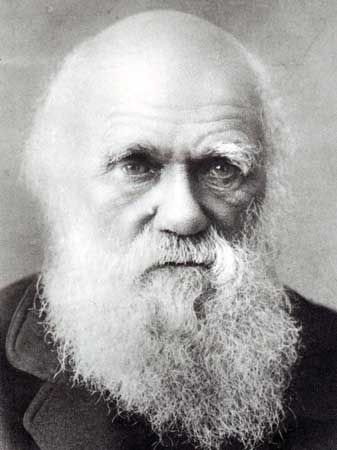
Charles Darwin

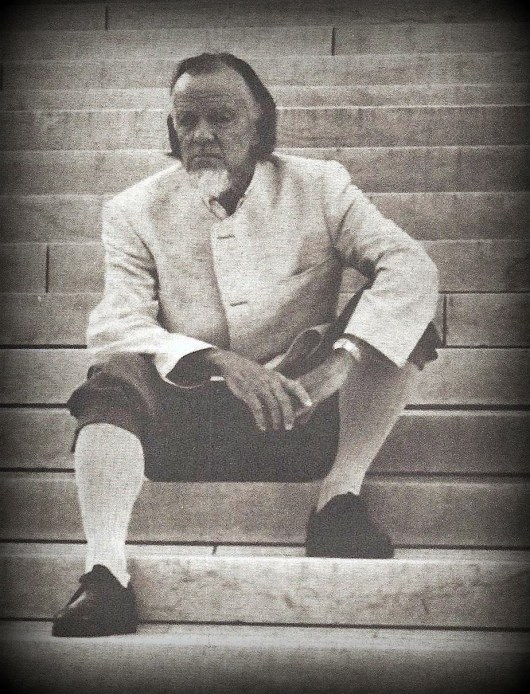
Francis and Edith Schaeffer

Rock Band KANSAS

July 8, 2016

Dear Dr. Hahn,

Let me start off by saying that this is not the first time that I have written you. Last time I talked also about Charles Darwin but today I want to directly respond to a quote you made. I think you have exaggerated  if you truly think that you CAN’T IDENTIFY WITH belief in God. Charles Darwin  also struggled with the same issue.

I just finished reading the online addition of the book Darwin, Francis ed. 1892. Charles Darwin: his life told in an autobiographical chapter, and in a selected series of his published letters [abridged edition]. London: John Murray. There are several points that Charles Darwin makes in this book that were very wise, honest, logical, shocking and some that were not so wise. The Christian Philosopher Francis Schaeffer once said of Darwin’s writings, “Darwin in his autobiography and in his letters showed that all through his life he never really came to a quietness concerning the possibility that chance really explained the situation of the biological world. You will find there is much material on this [from Darwin] extended over many many years that constantly he was wrestling with this problem.”

Quote from you:

If I take religion seriously nowadays as I do leading a number of recent projects at this institute, it is very much as social scientist interested in what holds the communities together and also in some sense in the spiritual commitments that human beings are capable of, all of that I find extremely interesting but I can’t identify with any of it myself.

Now this quote is why I thought of you when I read the words of Charles Darwin. You talk about the culture where you come from and how hardly anyone believes in God, but that is not the way it is worldwide. THERE IS AN INNER MORAL CONSCIENCE IN EVERY PERSON THAT POINTS THEM TO GOD AND EVERYONE ACTS ON MORAL MOTIONS.

When I read the book  Charles Darwin: his life told in an autobiographical chapter, and in a selected series of his published letters, I also read  a commentary on it by Francis Schaeffer and I wanted to both  quote some of Charles Darwin’s own words to you and then include the comments of Francis Schaeffer on those words. I have also enclosed a CD with two messages from Adrian Rogers and Bill Elliff concerning Darwinism.

The passages which here follow are extracts, somewhat abbreviated, from a part of the Autobiography, written in 1876, in which my father (Charles, this book was put together by Francis Darwin) gives the history of his religious views:—

CHARLES DARWIN’S WORDS:

But now the grandest scenes would not cause any such convictions  and feelings to rise in my mind. It may be truly said that I am like a man who has become colour-blind and the universal belief by men of the existence of redness makes my present loss of perception of not the least value as evidence. This argument would be a valid one if all men of all races had the same inward conviction of the existence of one God; but we know that this is very far from being the case. Therefore I cannot see that such inward convictions and feelings are of any weight as evidence of what really exists. The state of mind which grand scenes formerly excited in me, and which was intimately connected with a belief in God, did not essentially differ from that which is often called the sense of sublimity; and however difficult it may be to explain the genesis of this sense, it can hardly be advanced as an argument for the existence of God, any more than the powerful though vague and similar feelings excited by music.

Francis Schaeffer observed:

You notice that Darwin had already said he had lost his sense of music [appreciation]. However, he brings forth what I think is a false argument. I usually use it in the area of morality. I mention that materialistic anthropologists point out that different people have different moral [systems]  and this is perfectly true, but what the materialist anthropologist can never point out is why man has a sense of moral motion and that is the problem here. Therefore, it is perfectly true that men have different concepts of God and different concepts of moral motion, but Darwin himself is not satisfied in his own position and WHERE DO THEY [MORAL MOTIONS] COME FROM AT ALL? So you are wrestling with the same dilemma here in this reference as you do in the area of all things human. For these men it is not the distinction that raises the problem, but it is the overwhelming factor of the existence of the humanness of man, the mannishness of man. The simple fact is he saw that you are shut up to either God or chance, and he said basically “I don’t see how it could be chance” and at the same time he looks at a mountain or listens to a piece of music it is a testimony that really chance isn’t sufficient enough. So gradually with the sensitivity of his own inborn self conscience he kills it. He deliberately  kills the beauty so it doesn’t argue with his theory. Maybe I am being false to Darwin here. Who can say about Darwin’s subconscious thoughts? It seems to me though this is exactly the case. What you find is a man who can’t stand the argument of the external beauty and the mannishness of man so he just gives it up in this particular place.

_________________

Let make 2 points here. First, the Bible teaches that everyone knows in their heart that God exists because of the beauty of God’s creation and the conscience that God has planted in everyone’s heart (Romans 1).

Second, all humans have moral motions.

 Francis Schaffer in his book THE GOD WHO IS THERE addresses these same issues:

“[in Christianity] there is a sufficient basis for morals. Nobody has ever discovered a way of having real “morals” without a moral absolute. If there is no moral absolute, we are left with hedonism (doing what I like) or some form of the social contract theory (what is best for society as a a hole is right). However, neither of these alternative corresponds to the moral motions that men have. Talk to people long enough and deeply enough, and you will find that they consider some things are really right and something are really wrong. Without absolutes, morals as morals cease to exist, and humanistic mean starting from himself is unable to find the absolute he needs. But because the God of the Bible is there, real morals exist. Within this framework I can say one action is right and another wrong, without talking nonsense.” 117

Now back to my first point, concerning ROMANS CHAPTER ONE. It has been found that when atheists are asked with a polygraph machine if they believe in God and  they so “NO” the polygraph indicates they are lying. Claude Brown actually tested this with over 15,000 job applicants over a long period of time in his trucking line during the 1970’s and most of the 1980’s.   

Romans 1:18-19 (Amplified Bible) ” For God’s wrath and indignation are revealed from heaven against all ungodliness and unrighteousness of men, who in their wickedness REPRESS and HINDER the truth and make it inoperative. For that which is KNOWN about God is EVIDENT to them and MADE PLAIN IN THEIR INNER CONSCIOUSNESS, because God  has SHOWN IT TO THEM,”(emphasis mine). At the 37 minute mark on the CD that I sent you today Adrian Rogers noted, “”There is no such thing anywhere on earth as a true atheist. If a man says he doesn’t believe in God, then he is lying. God has put his moral consciousness into every man’s heart, and a man has to try to kick his conscience to death to say he doesn’t believe in God.”

ROMANS CHAPTER ONE IS RIGHT WHEN IT SAYS THAT GOD PUT THAT CONSCIENCE IN EVERYONE’S HEART THAT BEARS WITNESS THAT HE CREATED THEM FOR A PURPOSE AND THAT IS WHY THE VAST MAJORITY OF PEOPLE IN THE WORLD ARE ATTEMPTING TO SEEK OUT GOD!!!!

As a secularist you believe that it is sad indeed that millions of Christians are hoping for heaven but no heaven is waiting for them. Paul took a close look at this issue too:

I Corinthians 15 asserts:

12 But if it is preached that Christ has been raised from the dead, how can some of you say that there is no resurrection of the dead? 13 If there is no resurrection of the dead, then not even Christ has been raised. 14 And if Christ has not been raised, our preaching is useless and so is your faith. 15 More than that, we are then found to be false witnesses about God, for we have testified about God that he raised Christ from the dead. But he did not raise him if in fact the dead are not raised. 16 For if the dead are not raised, then Christ has not been raised either. 17 And if Christ has not been raised, your faith is futile; you are still in your sins. 18 Then those also who have fallen asleep in Christ are lost. 19 If only for this life we have hope in Christ, we are of all people most to be pitied.

I sent you a CD that starts off with the song DUST IN THE WIND by Kerry Livgren of the group KANSAS which was a hit song in 1978 when it rose to #6 on the charts because so many people connected with the message of the song. It included these words, “All we do, crumbles to the ground though we refuse to see, Dust in the Wind, All we are is dust in the wind, Don’t hang on, Nothing lasts forever but the Earth and Sky, It slips away, And all your money won’t another minute buy.”

Kerry Livgren himself said that he wrote the song because he saw where man was without a personal God in the picture. Solomon pointed out in the Book of Ecclesiastes that those who believe that God doesn’t exist must accept three things. FIRST, death is the end and SECOND, chance and time are the only guiding forces in this life.  FINALLY, power reigns in this life and the scales are never balanced. The Christian can  face death and also confront the world knowing that it is not determined by chance and time alone and finally there is a judge who will balance the scales.

Both Kerry Livgren and the bass player Dave Hope of Kansas became Christians eventually. Kerry Livgren first tried Eastern Religions and Dave Hope had to come out of a heavy drug addiction. I was shocked and elated to see their personal testimony on The 700 Club in 1981 and that same  interview can be seen on You Tube today. Livgren lives in Topeka, Kansas today where he teaches “Diggers,” a Sunday school class at Topeka Bible ChurchDAVE HOPE is the head of Worship, Evangelism and Outreach at Immanuel Anglican Church in Destin, Florida.

The answer to find meaning in life is found in putting your faith and trust in Jesus Christ. The Bible is true from cover to cover and can be trusted.

Thank you again for your time and I know how busy you are.

Everette Hatcher, everettehatcher@gmail.com, http://www.thedailyhatch.org, cell ph 501-920-5733, Box 23416, LittleRock, AR 72221, United States

PS: Is the Bible historically accurate? Here are some of the posts I have done in the past on the subject: 1. The Babylonian Chronicleof Nebuchadnezzars Siege of Jerusalem2. Hezekiah’s Siloam Tunnel Inscription. 3. Taylor Prism (Sennacherib Hexagonal Prism)4. Biblical Cities Attested Archaeologically. 5. The Discovery of the Hittites6.Shishak Smiting His Captives7. Moabite Stone8Black Obelisk of Shalmaneser III9A Verification of places in Gospel of John and Book of Acts., 9B Discovery of Ebla Tablets10. Cyrus Cylinder11. Puru “The lot of Yahali” 9th Century B.C.E.12. The Uzziah Tablet Inscription13. The Pilate Inscription14. Caiaphas Ossuary14 B Pontius Pilate Part 214c. Three greatest American Archaeologists moved to accept Bible’s accuracy through archaeology.

Related posts:

FRANCIS SCHAEFFER ANALYZES ART AND CULTURE PART 48 “BLOW UP” by Michelangelo Antonioni makes Philosophic Statement (Feature on artist Nancy Holt)

_______________ Francis Schaeffer pictured below: _____________________ I have included the 27 minute  episode THE AGE OF NONREASON by Francis Schaeffer. In that video Schaeffer noted,  ” Sergeant Pepper’s Lonely Hearts Club Band…for a time it became the rallying cry for young people throughout the world. It expressed the essence of their lives, thoughts and their feelings.” How Should […]

FRANCIS SCHAEFFER ANALYZES ART AND CULTURE Part 47 Woody Allen and Professor Levy and the death of “Optimistic Humanism” from the movie CRIMES AND MISDEMEANORS Plus Charles Darwin’s comments too!!! (Feature on artist Rodney Graham)

Crimes and Misdemeanors: A Discussion: Part 1 ___________________________________ Today I will answer the simple question: IS IT POSSIBLE TO BE AN OPTIMISTIC SECULAR HUMANIST THAT DOES NOT BELIEVE IN GOD OR AN AFTERLIFE? This question has been around for a long time and you can go back to the 19th century and read this same […]

FRANCIS SCHAEFFER ANALYZES ART AND CULTURE PART 46 Friedrich Nietzsche (Featured artist is Thomas Schütte)

____________________________________ Francis Schaeffer pictured below: __________ Francis Schaeffer has written extensively on art and culture spanning the last 2000years and here are some posts I have done on this subject before : Francis Schaeffer’s “How should we then live?” Video and outline of episode 10 “Final Choices” , episode 9 “The Age of Personal Peace and Affluence”, episode 8 […]

FRANCIS SCHAEFFER ANALYZES ART AND CULTURE Part 45 Woody Allen “Reason is Dead” (Feature on artists Allora & Calzadilla )

Love and Death [Woody Allen] – What if there is no God? [PL] ___________ _______________ How Should We then Live Episode 7 small (Age of Nonreason) #02 How Should We Then Live? (Promo Clip) Dr. Francis Schaeffer 10 Worldview and Truth Two Minute Warning: How Then Should We Live?: Francis Schaeffer at 100 Francis Schaeffer […]

FRANCIS SCHAEFFER ANALYZES ART AND CULTURE Part 44 The Book of Genesis (Featured artist is Trey McCarley )

___________________________________ Francis Schaeffer pictured below: ____________________________ Francis Schaeffer “BASIS FOR HUMAN DIGNITY” Whatever…HTTHR Dr. Francis schaeffer – The flow of Materialism(from Part 4 of Whatever happened to human race?) Dr. Francis Schaeffer – The Biblical flow of Truth & History (intro) Francis Schaeffer – The Biblical Flow of History & Truth (1) Dr. Francis Schaeffer […]

RESPONDING TO HARRY KROTO’S BRILLIANT RENOWNED ACADEMICS!! Part 105 Colin McGinn, British Philosopher “How can God give this moral rule a foundation? Either the moral rule is, itself, intrinsically a sound moral rule or it can’t be given soundness and legitimacy from an external command”


On November 21, 2014 I received a letter from Nobel Laureate Harry Kroto and it said:

…Please click on this URL http://vimeo.com/26991975

and you will hear what far smarter people than I have to say on this matter. I agree with them.

Harry Kroto

I have attempted to respond to all of Dr. Kroto’s friends arguments and I have posted my responses one per week for over a year now. Here are some of my earlier posts:

Arif AhmedHaroon Ahmed,  Jim Al-Khalili, Sir David AttenboroughMark Balaguer, Horace Barlow, Michael BateSir Patrick BatesonSimon Blackburn, Colin Blakemore, Ned BlockPascal BoyerPatricia ChurchlandAaron CiechanoverNoam Chomsky, Brian CoxPartha Dasgupta,  Alan Dershowitz, Frank DrakeHubert Dreyfus, John DunnBart Ehrman, Mark ElvinRichard Ernst, Stephan Feuchtwang, Robert FoleyDavid Friend,  Riccardo GiacconiIvar Giaever , Roy GlauberRebecca GoldsteinDavid J. Gross,  Brian Greene, Susan GreenfieldStephen F Gudeman,  Alan Guth, Jonathan HaidtTheodor W. Hänsch, Brian Harrison,  Stephen HawkingHermann Hauser, Robert HindeRoald Hoffmann,  Bruce HoodGerard ‘t HooftCaroline HumphreyNicholas Humphrey,  Herbert Huppert,  Gareth Stedman Jones, Steve JonesShelly KaganMichio Kaku,  Stuart KauffmanMasatoshi Koshiba,  Lawrence KraussHarry Kroto, George Lakoff,  Rodolfo LlinasElizabeth Loftus,  Alan MacfarlaneDan McKenzie,  Mahzarin BanajiPeter MillicanMarvin MinskyLeonard Mlodinow,  P.Z.Myers,   Yujin NagasawaAlva NoeDouglas Osheroff, David Parkin,  Jonathan Parry, Roger Penrose,  Saul PerlmutterHerman Philipse,  Carolyn PorcoRobert M. PriceVS RamachandranLisa RandallLord Martin ReesColin RenfrewAlison Richard,  C.J. van Rijsbergen,  Oliver Sacks, John SearleMarcus du SautoySimon SchafferJ. L. Schellenberg,   Lee Silver Peter Singer,  Walter Sinnott-ArmstrongRonald de Sousa, Victor StengerJohn SulstonBarry Supple,   Leonard Susskind, Raymond TallisMax TegmarkNeil deGrasse Tyson,  Martinus J. G. Veltman, Craig Venter.Alexander Vilenkin, Sir John Walker, James D. WatsonFrank WilczekSteven Weinberg, and  Lewis Wolpert,

BBC The Atheism Tapes – Colin McGinn – 1 of 6

Published on Apr 22, 2012

https://www.facebook.com/UkFreeThinki…

__________________________________________

At the 9:30 mark Colin McGinn says:

There was disappointment. I would like for religion to be true. I would like for it to be true because I would like there to be immortality. I would like there to be rewards for those who have been virtuous, and punishments for those who have not been virtuous, especially those punishments to be good. There is no justice in this world and it would be good if there was some cosmic force that distributed justice in the proper way that it should be. It still is for me a constant source of irritation and pain that wicked people prosper and virtuous people don’t.

Colin McGinn

From Wikipedia, the free encyclopedia
Colin McGinn
Born 10 March 1950
West Hartlepool, County Durham, England
Residence Miami, Florida
Education BA (Hons), psychology, University of Manchester (1971)
MA, psychology, University of Manchester (1972)
BPhil, philosophy, University of Oxford (1974)
Known for New mysterianism

Colin McGinn (born 10 March 1950) is a British philosopher. He has held teaching posts and professorships at University College London, the University of Oxford, Rutgers University and the University of Miami.[1]

McGinn is best known for his work in the philosophy of mind, and in particular for what is known as new mysterianism, the idea that the human mind is not equipped to solve the problem of consciousness. He is the author of over 20 books on this and other areas of philosophy, including The Character of Mind (1982), The Problem of Consciousness (1991), Consciousness and Its Objects (2004), and The Meaning of Disgust (2011).[1]

Colin McGinn Why is There Anything At All

Colin McGinn on Consciousness

Uploaded on Dec 6, 2009

This video begins with McGinn briefly listing the range of philosophical approaches that have been taken to the “hard problem of consciousness”. As Michael Dooley points out, there are good reasons for a monist approach to “mind” and “consciousness” — both can be altered by physical agents: drugs, blows to the head, etc. As David Chalmers points out, we each are certain that we are individually conscious: a certainty that Descartes employed in “je pense, donc je suis”, or “cogito ergo sum”.

Contents

Early life and education

McGinn was born in West Hartlepool, a town in County Durham, England. Several of his relatives, including both grandfathers, were miners. His father, Joseph, left school to become a miner, but put himself through night school and became a building manager instead. McGinn was the eldest of three children, all sons. When he was three, the family moved to Gillingham, Kent, and eight years later to Blackpool, Lancashire. Having failed his 11-plus, he attended a technical school in Kent, then a secondary modern in Blackpool, but did well enough in his O-levels to be transferred to the local grammar school for his A-levels.[2]

In 1968 he began a degree in psychology at the University of Manchester, obtaining a first-class honours degree in 1971 and an MA in 1972, also in psychology.[1] He was admitted in 1972 to Jesus College, Oxford, at first to study for a Bachelor of Letters postgraduate degree, but he switched to the Bachelor of Philosophy (BPhil) postgraduate programme on the recommendation of his advisor, Michael R. Ayers. In 1973 he was awarded the university’s prestigious John Locke Prize in Mental Philosophy; one of the examiners was A.J. Ayer.[3] He received his BPhil in 1974, writing a thesis under the supervision of Michael Ayers and P. F. Strawson on the semantics of Donald Davidson.[4]

Colin McGinn Peter Singer – Morality Without God – Euthyphro Dilemma

Published on May 22, 2013

Many theists and nontheists alike are familiar with the “Euthyphro Dilemma,” so-called because a version of it was first formulated in Plato’s Dialogue Euthyphro. In this dialogue, Socrates poses the question: Is something good because it is pleasing to the gods, or is it pleasing to the gods because it is good? While Socrates (and Plato, of course) lived in a polytheistic culture, the question can easily be updated for a predominantly monotheistic culture: Is something good because it is pleasing to God, or is something pleasing to God because it is good?

How one answers this question has profound implications. On the first horn of the dilemma, we end up with Divine Command Theory, the notion that something is good because God commands it. This implies that the good is simply what God says it is. So if today God commands charity, mercy, and forgiveness, those things are good. But if tomorrow God commands rape, murder, and genocide, such atrocities would then become good. If God does not change his mind, we are just lucky.

If we take the other option, then what is good is good inherently, regardless of what God or anyone else happens to think. This would mean that there are standards of conduct according to which even God can be judged.

Some theists have tried to escape from this trap by claiming that God’s own nature is the standard of goodness. Thus God would never command atrocities because it would not conform to his nature, which can properly be described as good.

But this is an obvious confusion. We can simply reformulate the question: Is something good because it is in conformance with God’s nature, or do we say God’s nature is good based on some other standard? If the good simply refers to God’s nature, then again we can say that whatever is in God’s nature happens to be good. Were it in his nature to command atrocities, then the commission of atrocities would be good. If his nature does not condone such things, we are, again, simply lucky.

______________________________________________

Teaching career

Posts

McGinn taught at University College London for 11 years, first as a lecturer in philosophy (1974–1984), then as reader (1984–1985). In 1985 he succeeded Gareth Evans as Wilde Reader in Mental Philosophy at the University of Oxford, a position he held until 1990. He held visiting professorships at the University of California, Los Angeles (1979), University of Bielefeld (1982), University of Southern California (1983), Rutgers University (1984), University of Helsinki (1986), City University of New York (1988) and Princeton University (1992). In 1990 he joined the philosophy department at Rutgers as a full professor, working alongside Jerry Fodor.[1] He stayed at Rutgers until 2005, joining the University of Miami in 2006 as Professor of Philosophy and Cooper Fellow.[1]

In  the first video below in the 21st clip in this series are his words and  my response is below them. 

50 Renowned Academics Speaking About God (Part 1)

Another 50 Renowned Academics Speaking About God (Part 2

A Further 50 Renowned Academics Speaking About God (Part 3)

Below is a letter I wrote to Dr. McGinn and I respond to his quote:

February 12, 2015

Dr. Colin McGinn

Dear Dr. McGinn,

As you can tell from reading this letter I am an evangelical Christian and I have made it a hobby of mine to correspond with scientists or academics like yourself over the last 25 years. Some of those who corresponded back with me have been  Ernest Mayr (1904-2005),, George Wald (1906-1997), Carl Sagan (1934-1996),  Robert Shapiro (1935-2011), Nicolaas Bloembergen (1920-),  Brian Charlesworth (1945-),  Francisco J. Ayala (1934-) Elliott Sober (1948-), Kevin Padian (1951-), Matt Cartmill (1943-) , Milton Fingerman (1928-), John J. Shea (1969-), , Michael A. Crawford (1938-), Paul Kurtz (1925-2012), Sol Gordon (1923-2008), Albert Ellis (1913-2007), Barbara Marie Tabler (1915-1996), Renate Vambery (1916-2005), Archie J. Bahm (1907-1996), Aron S “Gil” Martin ( 1910-1997), Matthew I. Spetter (1921-2012), H. J. Eysenck (1916-1997), Robert L. Erdmann (1929-2006), Mary Morain (1911-1999), Lloyd Morain (1917-2010),  Warren Allen Smith (1921-), Bette Chambers (1930-),  Gordon Stein (1941-1996) , Milton Friedman (1912-2006), John Hospers (1918-2011), Michael Martin (1932-).Harry Kroto (1939-), Marty E. Martin (1928-), Richard Rubenstein (1924-), James Terry McCollum (1936-), Edward O. WIlson (1929-), Lewis Wolpert (1929), Gerald Holton (1922-), Martin Rees (1942-), Alan Macfarlane (1941-),  Roald Hoffmann (1937-), Herbert Kroemer (1928-), Thomas H. Jukes (1906-1999), Glenn BranchGeoff Harcourt (1931-) and  Ray T. Cragun (1976-).  I would consider it an honor to add you to this very distinguished list. 

I just finished reading the online addition of the book Darwin, Francis ed. 1892. Charles Darwin: his life told in an autobiographical chapter, and in a selected series of his published letters [abridged edition]. London: John Murray. There are several points that Charles Darwin makes in this book that were very wise, honest, logical, shocking and some that were not so wise. The Christian Philosopher Francis Schaeffer once said of Darwin’s writings, “Darwin in his autobiography and in his letters showed that all through his life he never really came to a quietness concerning the possibility that chance really explained the situation of the biological world. You will find there is much material on this [from Darwin] extended over many many years that constantly he was wrestling with this problem.”

Recently I ran across the following quote from you::

Suppose you take, as a moral principle, it’s wrong to steal.  People say, “Why is that wrong?  Why is it wrong to steal?”  Answer – because God says it’s wrong to steal.  God commanded that you should not steal.  The point that Socrates makes in that dialogue is to say – how can God give this moral rule a foundation?  Either the moral rule is, itself, intrinsically a sound moral rule or it can’t be given soundness and legitimacy from an external command.

Suppose for example we had the rule, “It’s right to murder.”  Somebody said, “That’s not right!  Murder is wrong!”  And somebody replied, “But God SAYS it’s right to murder.”  That doesn’t convince you that it’s right to murder.  If God says that something is right which isn’t right, God’s wrong.

I got this quote from the You Tube series “Renowned Academics talk about God,” and I noticed that this is not the first time that you have chosen to speak on morality in a large TV platform like this.  Wikipedia noted, “In 2004, Jonathan Miller wrote and presented a TV series on atheism entitled Atheism: A Rough History of Disbelief (more commonly referred to as Jonathan Miller’s Brief History of Disbelief) for BBC Four. I watched that complete series and did not see any reference to Antony Flew which I thought was strange. But more striking was this statement by you:

There was disappointment. I would like for religion to be true. I would like for it to be true because I would like there to be immortality. I would like there to be rewards for those who have been virtuous, and punishments for those who have not been virtuous, especially those punishments to be good. There is no justice in this world and it would be good if there was some cosmic force that distributed justice in the proper way that it should be. It still is for me a constant source of irritation and pain that wicked people prosper and virtuous people don’t.

Francis Schaffer in his book THE GOD WHO IS THERE addresses these same issues:

“[in Christianity] there is a sufficient basis for morals. Nobody has ever discovered a way of having real “morals” without a moral absolute. If there is no moral absolute, we are left with hedonism (doing what I like) or some form of the social contract theory (what is best for society as a a hole is right). However, neither of these alternative corresponds to the moral motions that men have. Talk to people long enough and deeply enough, and you will find that they consider some things are really right and something are really wrong. Without absolutes, morals as morals cease to exist, and humanistic mean starting from himself is unable to find the absolute he needs. But because the God of the Bible is there, real morals exist. Within this framework I can say one action is right and another wrong, without talking nonsense.” 117

Instead of addressing the issue of which morality is right today, I just what to ask you why you think materialist anthropologists are not able to explain why humans always have a sense of moral motions? No tribe of people have ever been found without moral motions!!!!!

When I read the book  Charles Darwin: his life told in an autobiographical chapter, and in a selected series of his published letters, I also read  a commentary on it by Francis Schaeffer and I wanted to both  quote some of Charles Darwin’s own words to you and then include the comments of Francis Schaeffer on those words. I have also enclosed a CD with two messages from Adrian Rogers and Bill Elliff concerning Darwinism. THESE COMMENTS BY SCHAEFFER ON THE MORAL MOTIONS PROMPTED ME TO WRITE YOU TODAY. 

The passages which here follow are extracts, somewhat abbreviated, from a part of the Autobiography, written in 1876, in which my father gives the history of his religious views:—

CHARLES DARWIN’S WORDS:

But now the grandest scenes would not cause any such convictions  and feelings to rise in my mind. It may be truly said that I am like a man who has become colour-blind and the universal belief by men of the existence of redness makes my present loss of perception of not the least value as evidence. This argument would be a valid one if all men of all races had the same inward conviction of the existence of one God; but we know that this is very far from being the case. Therefore I cannot see that such inward convictions and feelings are of any weight as evidence of what really exists. The state of mind which grand scenes formerly excited in me, and which was intimately connected with a belief in God, did not essentially differ from that which is often called the sense of sublimity; and however difficult it may be to explain the genesis of this sense, it can hardly be advanced as an argument for the existence of God, any more than the powerful though vague and similar feelings excited by music.

Francis Schaeffer observed:

You notice that Darwin had already said he had lost his sense of music [appreciation]. However, he brings forth what I think is a false argument. I usually use it in the area of morality. I mention that materialistic anthropologists point out that different people have different moral [systems]  and this is perfectly true, but what the materialist anthropologist can never point out is why man has a sense of moral motion and that is the problem here. Therefore, it is perfectly true that men have different concepts of God and different concepts of moral motion, but Darwin himself is not satisfied in his own position and WHERE DO THEY [MORAL MOTIONS] COME FROM AT ALL? So you are wrestling with the same dilemma here in this reference as you do in the area of all things human. For these men it is not the distinction that raises the problem, but it is the overwhelming factor of the existence of the humanness of man, the mannishness of man. The simple fact is he saw that you are shut up to either God or chance, and he said basically “I don’t see how it could be chance” and at the same time he looks at a mountain or listens to a piece of music it is a testimony that really chance isn’t sufficient enough. So gradually with the sensitivity of his own inborn self conscience he kills it. He deliberately  kills the beauty so it doesn’t argue with his theory. Maybe I am being false to Darwin here. Who can say about Darwin’s subconscious thoughts? It seems to me though this is exactly the case. What you find is a man who can’t stand the argument of the external beauty and the mannishness of man so he just gives it up in this particular place.

I wanted to compliment you for your statement on Jonathan Miller’s series on Atheism. It was very honest and frank. Let me repeat it here again.

There was disappointment. I would like for religion to be true. I would like for it to be true because I would like there to be immortality. I would like there to be rewards for those who have been virtuous, and punishments for those who have not been virtuous, especially those punishments to be good. There is no justice in this world and it would be good if there was some cosmic force that distributed justice in the proper way that it should be. It still is for me a constant source of irritation and pain that wicked people prosper and virtuous people don’t.

Paul also shared your view that if there is no God then it would be very sad indeed. Here are his words:

I Corinthians 15 asserts:

12 But if it is preached that Christ has been raised from the dead, how can some of you say that there is no resurrection of the dead? 13 If there is no resurrection of the dead, then not even Christ has been raised. 14 And if Christ has not been raised, our preaching is useless and so is your faith. 15 More than that, we are then found to be false witnesses about God, for we have testified about God that he raised Christ from the dead. But he did not raise him if in fact the dead are not raised. 16 For if the dead are not raised, then Christ has not been raised either. 17 And if Christ has not been raised, your faith is futile; you are still in your sins. 18 Then those also who have fallen asleep in Christ are lost. 19 If only for this life we have hope in Christ, we are of all people most to be pitied.

I sent you a CD that starts off with the song DUST IN THE WIND by Kerry Livgren of the group KANSAS which was a hit song in 1978 when it rose to #6 on the charts because so many people connected with the message of the song. It included these words, “All we do, crumbles to the ground though we refuse to see, Dust in the Wind, All we are is dust in the wind, Don’t hang on, Nothing lasts forever but the Earth and Sky, It slips away, And all your money won’t another minute buy.”

Kerry Livgren himself said that he wrote the song because he saw where man was without a personal God in the picture. Solomon pointed out in the Book of Ecclesiastes that those who believe that God doesn’t exist must accept three things. FIRST, death is the end and SECOND, chance and time are the only guiding forces in this life.  FINALLY, power reigns in this life and the scales are never balanced. The Christian can  face death and also confront the world knowing that it is not determined by chance and time alone and finally there is a judge who will balance the scales.

Both Kerry Livgren and the bass player Dave Hope of Kansas became Christians eventually. Kerry Livgren first tried Eastern Religions and Dave Hope had to come out of a heavy drug addiction. I was shocked and elated to see their personal testimony on The 700 Club in 1981 and that same  interview can be seen on You Tube today. Livgren lives in Topeka, Kansas today where he teaches “Diggers,” a Sunday school class at Topeka Bible ChurchDAVE HOPE is the head of Worship, Evangelism and Outreach at Immanuel Anglican Church in Destin, Florida.

The answer to find meaning in life is found in putting your faith and trust in Jesus Christ. The Bible is true from cover to cover and can be trusted.

Thank you again for your time and I know how busy you are.

Everette Hatcher, everettehatcher@gmail.com, http://www.thedailyhatch.org, cell ph 501-920-5733, Box 23416, LittleRock, AR 72221, United States

Is the Bible historically accurate? Here are some of the posts I have done in the past on the subject: 1. The Babylonian Chronicleof Nebuchadnezzars Siege of Jerusalem2. Hezekiah’s Siloam Tunnel Inscription. 3. Taylor Prism (Sennacherib Hexagonal Prism)4. Biblical Cities Attested Archaeologically. 5. The Discovery of the Hittites6.Shishak Smiting His Captives7. Moabite Stone8Black Obelisk of Shalmaneser III9A Verification of places in Gospel of John and Book of Acts., 9B Discovery of Ebla Tablets10. Cyrus Cylinder11. Puru “The lot of Yahali” 9th Century B.C.E.12. The Uzziah Tablet Inscription13. The Pilate Inscription14. Caiaphas Ossuary14 B Pontius Pilate Part 214c. Three greatest American Archaeologists moved to accept Bible’s accuracy through archaeology.

You can hear DAVE HOPE and Kerry Livgren’s stories from this youtube link:

(part 1 ten minutes)

(part 2 ten minutes)

Kansas – Dust in the Wind (Official Video)

Uploaded on Nov 7, 2009

Pre-Order Miracles Out of Nowhere now at http://www.miraclesoutofnowhere.com

About the film:
In 1973, six guys in a local band from America’s heartland began a journey that surpassed even their own wildest expectations, by achieving worldwide superstardom… watch the story unfold as the incredible story of the band KANSAS is told for the first time in the DVD Miracles Out of Nowhere.

_____________________________

Adrian Rogers on Darwinism

Related posts:

FRANCIS SCHAEFFER ANALYZES ART AND CULTURE Part 52 THE BEATLES (Part D, There is evidence that the Beatles may have been exposed to Francis Schaeffer!!!) (Feature on artist Anna Margaret Rose Freeman )

______________   George Harrison Swears & Insults Paul and Yoko Lucy in the Sky with Diamonds- The Beatles The Beatles:   I have dedicated several posts to this series on the Beatles and I don’t know when this series will end because Francis Schaeffer spent a lot of time listening to the Beatles and talking […]

FRANCIS SCHAEFFER ANALYZES ART AND CULTURE Part 51 THE BEATLES (Part C, List of those on cover of Stg.Pepper’s ) (Feature on artist Raqib Shaw )

  The Beatles in a press conference after their Return from the USA Uploaded on Nov 29, 2010 The Beatles in a press conference after their Return from the USA. The Beatles:   I have dedicated several posts to this series on the Beatles and I don’t know when this series will end because Francis […]

FRANCIS SCHAEFFER ANALYZES ART AND CULTURE Part 50 THE BEATLES (Part B, The Psychedelic Music of the Beatles) (Feature on artist Peter Blake )

__________________   Beatles 1966 Last interview I have dedicated several posts to this series on the Beatles and I don’t know when this series will end because Francis Schaeffer spent a lot of time listening to the Beatles and talking and writing about them and their impact on the culture of the 1960’s. In this […]

FRANCIS SCHAEFFER ANALYZES ART AND CULTURE Part 49 THE BEATLES (Part A, The Meaning of Stg. Pepper’s Cover) (Feature on artist Mika Tajima)

_______________ The Beatles documentary || A Long and Winding Road || Episode 5 (This video discusses Stg. Pepper’s creation I have dedicated several posts to this series on the Beatles and I don’t know when this series will end because Francis Schaeffer spent a lot of time listening to the Beatles and talking and writing about […]

FRANCIS SCHAEFFER ANALYZES ART AND CULTURE PART 48 “BLOW UP” by Michelangelo Antonioni makes Philosophic Statement (Feature on artist Nancy Holt)

_______________ Francis Schaeffer pictured below: _____________________ I have included the 27 minute  episode THE AGE OF NONREASON by Francis Schaeffer. In that video Schaeffer noted,  ” Sergeant Pepper’s Lonely Hearts Club Band…for a time it became the rallying cry for young people throughout the world. It expressed the essence of their lives, thoughts and their feelings.” How Should […]

FRANCIS SCHAEFFER ANALYZES ART AND CULTURE Part 47 Woody Allen and Professor Levy and the death of “Optimistic Humanism” from the movie CRIMES AND MISDEMEANORS Plus Charles Darwin’s comments too!!! (Feature on artist Rodney Graham)

Crimes and Misdemeanors: A Discussion: Part 1 ___________________________________ Today I will answer the simple question: IS IT POSSIBLE TO BE AN OPTIMISTIC SECULAR HUMANIST THAT DOES NOT BELIEVE IN GOD OR AN AFTERLIFE? This question has been around for a long time and you can go back to the 19th century and read this same […]

FRANCIS SCHAEFFER ANALYZES ART AND CULTURE PART 46 Friedrich Nietzsche (Featured artist is Thomas Schütte)

____________________________________ Francis Schaeffer pictured below: __________ Francis Schaeffer has written extensively on art and culture spanning the last 2000years and here are some posts I have done on this subject before : Francis Schaeffer’s “How should we then live?” Video and outline of episode 10 “Final Choices” , episode 9 “The Age of Personal Peace and Affluence”, episode 8 […]

FRANCIS SCHAEFFER ANALYZES ART AND CULTURE Part 45 Woody Allen “Reason is Dead” (Feature on artists Allora & Calzadilla )

Love and Death [Woody Allen] – What if there is no God? [PL] ___________ _______________ How Should We then Live Episode 7 small (Age of Nonreason) #02 How Should We Then Live? (Promo Clip) Dr. Francis Schaeffer 10 Worldview and Truth Two Minute Warning: How Then Should We Live?: Francis Schaeffer at 100 Francis Schaeffer […]

FRANCIS SCHAEFFER ANALYZES ART AND CULTURE Part 44 The Book of Genesis (Featured artist is Trey McCarley )

___________________________________ Francis Schaeffer pictured below: ____________________________ Francis Schaeffer “BASIS FOR HUMAN DIGNITY” Whatever…HTTHR Dr. Francis schaeffer – The flow of Materialism(from Part 4 of Whatever happened to human race?) Dr. Francis Schaeffer – The Biblical flow of Truth & History (intro) Francis Schaeffer – The Biblical Flow of History & Truth (1) Dr. Francis Schaeffer […]

__

FRANCIS SCHAEFFER ANALYZES ART AND CULTURE PART 138 Marvin Minsky Part c (Featured artist is Jack Youngerman)

I am saddened by the passing of the brilliant Marvin Minsky who helped found MIT. I became interested in his writings and wrote him several letters and I took note especially of  comments on freewill and population control.

Marvin Minsky: Health, population and the human mind


Uploaded on Sep 29, 2008

http://www.ted.com Listen closely — Marvin Minsky’s arch, eclectic, charmingly offhand talk on health, overpopulation and the human mind is packed with subtlety: wit, wisdom and just an ounce of wily, is-he-joking? advice.

SECOND Correspondence,  John Shea Emailed the email below  on 5-27-14


To Marvin Minsky, From Everette Hatcher

I wrote you last month and sent you a CD by Adrian Rogers called IS THE BIBLE TRUE? Did you have a chance to listen to it. Here is link to the same message on You Tube. In that letter I included some correspondence I had with the famous skeptics Antony Flew and Carl Sagan back in the 1990’s. Both men were kind enough to look at the evidence that presented them and respond to it and I was hoping you would take time to do that same.

Today, I just wanted to ask you this simple question. Do you think there is a categorical difference between humans and animals or are just different in just degrees?

Dr. John J. Shea appeared on the TV series APE MAN with Walter Cronkite back in the 1990’s and claimed that there is only a degree of difference between monkeys and humans and not a categorical difference. After that program aired I had the opportunity to correspond with Dr. Shea and he was kind enough to send me a two page response to my questions. (This correspondence took place back in 1994 and 1995.)

Dr. Shea also suggested that I read SHADOWS OF FORGOTTEN ANCESTORS by Carl Sagan and his wife Ann Druyan, and I did so. Here are my thoughts on the question.

First, only humans lie in the sense we are held morally responsible. Sagan wrote, “Deception in the social relations of animals…is an emerging and productive topic in biology…” (p. 379). This may be true, but are animals responsible to God? I think not. Romans 3:23 teaches that “All MEN have sinned and fall short of the glory of God.” Animals may deceive but they are not morally responsible.

Second, only men feel guilt. Sagan refers briefly to the fact that men feel guilt (p. 4.14), but he does not spend a lot of time on this. Romans 1:19 asserts, “For that which is known about God is evident to them and made plain in their inner consciousness, because God has show it to them” (Amplified Bible).  Here Sagan turns to  Thomas Henry Huxley who he quotes:

On all sides, I shall hear the cry–“We are men and women, not a mere better sort of apes, a little longer in the leg, more compact in the foot, and bigger in brain than your brutal Chimpanzees and Gorillas. The power of knowledge–the conscience of good and evil--the pitiful tenderness of human affections, raise us out of all real fellowship with the brutes, however, closely they may seem to approximate us.”

To this I can reply that the exclamation would be just and would be most just and would have my entire sympathy, if it were only relevant. But, it is not I who seek to base Man’s dignity upon this great toe, or insinuate that we are lost if an Ape has a hippocampus minor (in its brain). On the contrary, I have done my best to sweep away this vanity… 

WHY DID SAGAN AND HUXLEY FACE SUCH A LARGE CHORUS THAT WAS OBJECTING TO THIS VIEW THAT WE DON’T HAVE A GOD-GIVEN CONSCIENCE? The answer is very simple and it deals with the consequences of Social Darwinism. Chuck Colson said that Larry King was not very impressed with his long talk on the historical accuracy of the scriptures, but when he touched on this subject things got interesting:

Larry King invited me to dinner. “I don’t believe in God,” Larry told me straight out. “But tell me why you believe.” I responded, “Have you seen Woody Allen‘s movie CRIMES AND MISDEMEANORS

Yes, he loved it, in fact. It’s about a doctor who is haunted by GUILT after hiring a killer to murder his mistress. His Jewish father has taught him that God will surely bring justice. In the end the doctor suppresses his GUILT, convincing himself that LIFE IS AN DARWINIAN STRUGGLE WHERE ONLY THE RUTHLESS SURVIVE.

I asked Larry, “Is that our only choice–to be tormented by GUILT or else kill our conscience? Larry, how do you deal with your conscience?” He dropped his fork. I said, “What do you do with the GUILT that is in here? What do you do with what you know you have done wrong?

Then he was ready to listen. I went on and shared with him from Romans which teaches about the voice of conscience that God has given us. 

__________

Third, men have a longing for significance which expresses itself most clearly in the fear of non being.

Fourth, I would point to the fact that only people worship.

Fifth, men are not satisfied unless they have their spiritual needs met. Carl Sagan quotes the poet Walt Whitman, “Not one (animal) is dissatisfied…Not one is respectable or unhappy over the whole earth…” Sagan comments, “On this basis of the evidence presented in this book, we doubt if any of Whitman’s  six purported differences between other animals and humans is true…” (p. 389).

I read Sagan’s book cover to cover and made over 15 pages of notes, and I have yet to find any of the “evidence” that Sagan speaks of on page 389. I find the comments of NOAM CHOMSKY more logical. He calls animal language an “evolutionary miracle” akin to “finding an island of humans who could be taught to fly.”

I like Francis Schaeffer‘s term “Mannishness” of man. He defines it as those aspects of man, such as significance, love, rationality and the fear of non being, which mark him off from animals and machines and give evidence of his being created in the image of a personal God.

The scientist Blaise Pascal is quoted by Sagan on page 364 and then Sagan notes, “Most of the philosophers adjudged great in the history of western thought held that humans are fundamentally different from other animals…”

As you know Pascal was the inventor of the barometer and he lived from 1623 to 1662. Pascal also observed, “There is a God-shaped vacuum in the heart of every man,and only God can fill it.”

What is the solution? “For God so loved the world that He gave his one and only Son, that whoever believes in him should not perish but have eternal life” (John 3:16). The scriptural directive is not for us to work harder to achieve God’s favor (Romans 3:20), but to accept God’s mercy through our repentance and receiving Christ as a free gift (Ephesians 2:8-10).

Thank you again for your time and I know how busy you are.

Everette Hatcher, everettehatcher@gmail.com, http://www.thedailyhatch.org, cell ph 501-920-5733, Box 23416, LittleRock, AR 72221

_______________________________________________________

Emailed the above email  on this contact form on 5-27-14

Artist of the moment……Jack Youngerman

Jack Youngerman is an American abstract/ minimalist artist. Jack Youngerman was born in St. Louis, Missouri in the year 1926. Youngerman is a painter, jewelry designer, sculptor, and print maker.

Youngerman attended college at the University of North Carolina before graduating from the University of Missouri. He also served in the United States Navy.

The artist also studied at the Ecole des Beaux Arts located in Paris.

In this clip we view a group show that features Jack Youngerman’s work. His is the first piece of art:

Youngerman married a well known french actress.

The artist is part of many prominent collections including the Denver Art Museum and the San Francisco Museum of Modern Art.

Youngerman has won a Guggenheim Fellowship and also awards from the National Endowment for the Arts.

Price range information: Works range from $10,000 to $60,000. The artist worked in oils, gouache, prints, and bronzes.

What I enjoy most about Youngerman’s style is his sense of graphic design. Many pieces seem to be very similar to First Nations art, especially those works featuring black, red, and white. His style is very similar to the First Nations style of art work, but with more modern line work.

Jack Youngerman

From Wikipedia, the free encyclopedia
Jack Youngerman
Born March 25, 1926 (age 90)
St. Louis, Missouri, U.S.
Nationality American
Known for Painter
Movement Minimal, Abstract, Ragged Edge
Website http://www.jackyoungerman.com

Jack Youngerman (born March 25, 1926) is an artist known for his constructions and paintings.[1]

Biography[edit]

Youngerman was born in 1926 in St. Louis, Missouri, but moved with his family to Louisville, Kentucky in 1929. He studied art at the University of North Carolina from 1944-46 under a wartime navy training program, and graduated from the University of Missouri in 1947.[2]

Youngerman was married (and later divorced from) French actress Delphine Seyrig (1932-1990).

Public collections[edit]

[3]

Exhibitions[edit]

Solo exhibitions[edit]

  • 1981- Washburn Gallery, New York[4]
  • 1986- Solomon R. Guggenheim Museum, New York[5]

References[edit]

  1. Jump up^ Raynor, Vivien (May 14, 1982). “ART: THE CEREBRAL FAIRGROUND OF JACK YOUNGERMAN’S SCULPTURE”. The New York Times. p. 21. Retrieved March 26, 2012.
  2. Jump up^ Jack Youngerman profile, wolffineart.com; accessed October 5, 2014.
  3. Jump up^ Askart.com, Jack Youngerman Public collections
  4. Jump up^ Raynor, Vivien (May 14, 1982). “ART: THE CEREBRAL FAIRGROUND OF JACK YOUNGERMAN’S SCULPTURE”. The New York Times. p. 21. Retrieved March 26, 2012.
  5. Jump up^ Russell, John. “ART: JACK YOUNGERMAN AT THE GUGGENHEIM”. The New York Times. The New York Times. Retrieved 20 January 2014.

External links[edit]

______


Related posts:

FRANCIS SCHAEFFER ANALYZES ART AND CULTURE PART 135 H. J. Blackham Part C Featured artist is Richard Anuszkiewicz

________     H. J. Blackham H. J. Blackham, (31 March 1903 – 23 January 2009), was a leading and widely respected British humanist for most of his life. As a young man he worked in farming and as a teacher. He found his niche as a leader in the Ethical Union, which he steadfastly […]

FRANCIS SCHAEFFER ANALYZES ART AND CULTURE PART 134 H.J.Blackham Part B (Featured artist is Richard M. Loving)

H.J.Blackham pictured below: I had to pleasure of corresponding with Paul Kurtz in the 1990’s and he like H. J. Blackham firmly believed that religion was needed to have a basis for morals. At H. J. Blackham’s funeral in 2009 these words were read from Paul Kurtz: Paul Kurtz Founder and Chair, Prometheus Books and the […]

FRANCIS SCHAEFFER ANALYZES ART AND CULTURE PART 133 A Portion of my 1994 letter to H. J. Blackham on the 10th Anniversary of Francis Schaeffer’s passing (Featured artist is Billy Al Bengston )

H. J. Blackham pictured below:   On May 15, 1994 on the 10th anniversary of the passing of Francis Schaeffer I sent a letter to H.J. Blackham and here is a portion of that letter below: I have enclosed a cassette tape by Adrian Rogers and it includes  a story about  Charles Darwin‘s journey from […]

FRANCIS SCHAEFFER ANALYZES ART AND CULTURE PART 132 Part D Ellsworth Kelly (Featured artist is Ronald Davis )

  I featured the artwork of Ellsworth Kelly on my blog both on November 23, 2015 and December 17, 2015. Also I mailed him a letter on November 23, 2015, but I never heard back from him.  Unfortunately he died on December 27, 2015 at the age of 92. Who were the artists who influenced […]

FRANCIS SCHAEFFER ANALYZES ART AND CULTURE PART 131 Part C Ellsworth Kelly (Featured artist is Janet Fish )

__ I featured the artwork of Ellsworth Kelly on my blog both on November 23, 2015 and December 17, 2015. Also I mailed him a letter on November 23, 2015, but I never heard back from him.  Unfortunately he died on December 27, 2015 at the age of 92.       Who were the […]

FRANCIS SCHAEFFER ANALYZES ART AND CULTURE PART 130 Part B Ellsworth Kelly (Featured artist is Art Green )

Andy, Ellsworth Kelly, Richard Koshalek and unidentified guest, 1980s I featured the artwork of Ellsworth Kelly on my blog both on November 23, 2015 and December 17, 2015. Also I mailed him a letter on November 23, 2015, but I never heard back from him.  Unfortunately he died on December 27, 2015 at the age […]

FRANCIS SCHAEFFER ANALYZES ART AND CULTURE PART 129 Part A Ellsworth Kelly (Featured artist is Sherrie Levine )

How Should We Then Live – Episode 8 – The Age of Fragmentation   I featured the artwork of Ellsworth Kelly on my blog both on November 23, 2015 and December 17, 2015. Also I mailed him a letter on November 23, 2015, but I never heard back from him.  Unfortunately he died on December […]

FRANCIS SCHAEFFER ANALYZES ART AND CULTURE PART 128 Will Provine, Determinism, Part F (Featured artist is Pierre Soulages )

Today I am bringing this series on William Provine to an end.  Will Provine’s work was cited by  Francis Schaeffer  in his book WHATEVER HAPPENED TO THE HUMAN RACE? I noted: I was sad to learn of Dr. Provine’s death. William Ball “Will” Provine (February 19, 1942 – September 1, 2015) He grew up an […]

FRANCIS SCHAEFFER ANALYZES ART AND CULTURE PART 127 Will Provine, Killer of the myth of Optimistic Humanism Part E (Featured artist is Jim Dine )

___ Setting the record straight was Will Provine’s widow Gail when she stated, “[Will] did not believe in an ULTIMATE meaning in life (i.e. God’s plan), but he did believe in proximate meaning (i.e. relationships with people — friendship and especially LOVE🙂 ). So one’s existence is ultimately senseless and useless, but certainly not to those […]

FRANCIS SCHAEFFER ANALYZES ART AND CULTURE PART 126 Will Provine, Killer of the myth of Optimistic Humanism Part D (Featured artists are Elena and Olivia Ceballos )

I was sad when I learned of Will Provine’s death. He was a very engaging speaker on the subject of Darwinism and I think he correctly realized what the full ramifications are when accepting evolution. This is the fourth post I have done on Dr. Provine and the previous ones are these links, 1st, 2nd […]

__


____

RESPONDING TO HARRY KROTO’S BRILLIANT RENOWNED ACADEMICS!! Part 104 Rodolfo Llinas  neuroscientist NYU School of Medicine  “I know that even those who believe in God deeply know that there is no possible way of discerning his existence. Measure something that tells me that God exists, anything”


On November 21, 2014 I received a letter from Nobel Laureate Harry Kroto and it said:

…Please click on this URL http://vimeo.com/26991975

and you will hear what far smarter people than I have to say on this matter. I agree with them.

Harry Kroto

Nick Gathergood, David-Birkett, Harry-Kroto

I have attempted to respond to all of Dr. Kroto’s friends arguments and I have posted my responses one per week for over a year now. Here are some of my earlier posts:

Arif Ahmed, Sir David AttenboroughMark Balaguer, Horace Barlow, Michael BatePatricia ChurchlandAaron CiechanoverNoam Chomsky,Alan DershowitzHubert Dreyfus, Bart Ehrman, Stephan FeuchtwangDavid Friend,  Riccardo GiacconiIvar Giaever , Roy GlauberRebecca GoldsteinDavid J. Gross,  Brian Greene, Susan GreenfieldStephen F Gudeman,  Alan Guth, Jonathan HaidtTheodor W. Hänsch, Brian Harrison,  Hermann HauserRoald Hoffmann,  Bruce HoodHerbert Huppert,  Gareth Stedman Jones, Steve JonesShelly KaganMichio Kaku,  Stuart Kauffman,  Lawrence KraussHarry Kroto, George LakoffElizabeth Loftus,  Alan MacfarlanePeter MillicanMarvin MinskyLeonard Mlodinow,  Yujin NagasawaAlva NoeDouglas Osheroff,  Jonathan Parry,  Saul PerlmutterHerman Philipse,  Carolyn PorcoRobert M. PriceLisa RandallLord Martin Rees,  Oliver Sacks, John SearleMarcus du SautoySimon SchafferJ. L. Schellenberg,   Lee Silver Peter Singer,  Walter Sinnott-ArmstrongRonald de Sousa, Victor StengerBarry Supple,   Leonard Susskind, Raymond TallisNeil deGrasse Tyson,  .Alexander Vilenkin, Sir John WalkerFrank WilczekSteven Weinberg, and  Lewis Wolpert,

Rodolfo Llinás

From Wikipedia, the free encyclopedia
Rodolfo Llinás
Rodolfo Llinás in 2010.png
Born 16 December 1934
Bogotá, Colombia
Residence New York City, New York, United States
Fields Neuroscience
Institutions NYU School of Medicine
Alma mater Universidad Javeriana andAustralian National University
Known for Physiology of the cerebellum, thethalamus, Thalamocortical dysrhythmia as well as for his pioneering work on the inferior olive, on the squid giant synapseand on humanmagnetoencephalography (MEG)

Rodolfo R. Llinás (Bogota, Colombia 16 December 1934) is a Colombian American neuroscientist. He is currently the Thomas and Suzanne Murphy Professor of Neuroscience and Chairman Emmeritus of the department of Physiology & Neuroscience at the NYU School of Medicine. He attended the Gimnasio Moderno school and received his MD from the Universidad Javeriana, Bogotáin 1959 and his PhD in 1965 from the Australian National University working under Sir John Eccles.[1] Llinás has published over 500 scientific articles.

Early life[edit]

Llinás was born in Bogotá, Colombia. He went to the Gimnasio Moderno school in Bogotá and graduated as a medical doctor from the Pontifical Xavierian University.

Work[edit]

He has studied the electrophysiology of single neurons in the cerebellum, the thalamus, the cerebral cortex, the entorhinal cortex, the hippocampus, the vestibular system, the inferior olive and thespinal cord. He has studied synaptic transmitter release in the squid giant synapse. He has studied human brain function using magnetoencephalography (MEG) on the basis of which he introduced the concept of Thalamocortical dysrhythmia.[2]

Contributions[edit]

In  the second video below in the 78th clip in this series are his words and  my response is below them. 

50 Renowned Academics Speaking About God (Part 1)

Another 50 Renowned Academics Speaking About God (Part 2)

A Further 50 Renowned Academics Speaking About God (Part 3)

_________________________________

Below is my letter to Dr. Rodolfo Llinas and my response to his quote:

6-6-16

Dr. Rodolfo Llinas, Professor of Neuroscience; University Professor; Department of Neuroscience and Physiology, NYU

Dear Dr. Llinas,

Back in 1981 I got to visit 20 European trips with 42 girls and 5 boys on a college trip for a copy of months. When  I was in Rome or Athens I had 13 girls that would walk with me and when  a foreign guy would approach them they would say that they were with me. I was a legend in  those towns in  Europe!!!! On that trip I met a good friend named Carlos and he was from Columbia, and he always was trying to get me to come visit him but I was afraid of dangers I had read about down there. He told he would meet me at the airport and escort around the country in the safe areas. I was reminded of that lately when I watched the hit TV show MODERN FAMILY because Gloria is from Columbia and she always joked about the safety in Columbia.

In the popular You Tube video “Renowned Academics Speaking About God” you made the following statement:

“I have no measure possible,  I know that even those who believe in God deeply know that there is no possible way of discerning his existence. Measure something that tells me that God exists, anything. ARE WE SAYING THAT DISCERNMENT IS THE SAME THING AS MEASUREMENT? Yes, indeed, in this case for me it is…”

As a scientist you emphasis the need to have things confirmed through observational data. Have you taken time to really look at the historical claims of the Bible and if they are really accurate or not?

Let me respond  with the words of Francis Schaeffer from his book HE IS THERE AND HE IS NOT SILENT (the chapter is entitled, “Is Propositional Revelation Nonsense?”

Of course, if the infinite uncreated Personal communicated to the finite created personal, he would not exhaust himself in his communication; but two things are clear here:
 
1. Even communication between once created person and another is not exhaustive, but that does not mean that for that reason it is not true. 
 
2. If the uncreated Personal really cared for the created personal, it could not be thought unexpected for him to tell the created personal things of a propositional nature; otherwise as a finite being the created personal would have numerous things he could not know if he just began with himself as a limited, finite reference point. In such a case, there is no intrinsic reason why the uncreated Personal could communicate some vaguely true things, but could not communicate propositional truth concerning the world surrounding the created personal – for fun, let’s call that science. Or why he could not communicate propositional truth to the created personal concerning the sequence that followed the uncreated Personal making everything he made – let’s call that history. There is no reason we could think of why he could not tell these two types of propositional things truly. They would not be exhaustive; but could we think of any reason why they would not be true? The above is, of course, what the Bible claims for itself in regard to propositional revelation.
DOES THE BIBLE ERR IN THE AREA OF SCIENCE AND HISTORY? The Bible is true from cover to cover and can be trusted. Charles Darwin himself longed for evidence to come forward from the area of  Biblical Archaeology  but so much has  advanced  since Darwin wrote these words in the 19th century! Here are some of the posts I have done in the past on the subject and if you like you could just google these subjects: 1. The Babylonian Chronicleof Nebuchadnezzars Siege of Jerusalem, 2. Hezekiah’s Siloam Tunnel Inscription.13. The Pilate Inscription14. Caiaphas Ossuary14 B Pontius Pilate Part 214c. Three greatest American Archaeologists moved to accept Bible’s accuracy through archaeology.

Below is a piece of that evidence given by Francis Schaeffer concerning the accuracy of the Bible. TRUTH AND HISTORY (chapter 5 of WHATEVER HAPPENED TO THE HUMAN RACE?, under footnote #94)

We now take a jump back in time to the middle of the ninth century before Christ, that is, about 850 B.C. Most people have heard of Jezebel. She was the wife of Ahab, the king of the northern kingdom of Israel. Her wickedness has become so proverbial that we talk about someone as a “Jezebel.” She urged her husband to have Naboth killed, simply because Ahab had expressed his liking for a piece of land owned by Naboth, who would not sell it. The Bible tells us also that she introduced into Israel the worship of her homeland, the Baal worship of Tyre. This led to the opposition of Elijah the Prophet and to the famous conflict on Mount Carmel between Elijah and the priests of Baal.

.

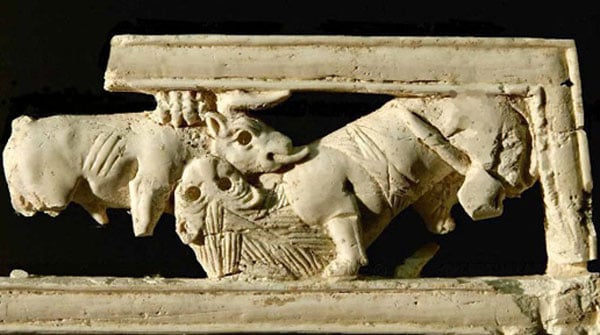
‘The Woman at the Window’ – an ivory artifact

‘The Woman at the Window’ – an ivory artifact from Samaria. Photo source.

© The Israel Museum, Jerusalem
MIRROR IMAGE. Because most seals were pressed into wet pottery or into small blobs of clay used to secure scrolls— serving much like a signature— symbols and letters were often carved in reverse. When stamped into the clay, the seal images and inscription would appear correctly. This photo of the Jezebel seal and its impression, or bulla, show the seal in reverse and in proper stance.

______

Here again one finds archaeological confirmations of what the Bible says. Take for example: “As for the other events of Ahab’s reign, including all he did, the palace he built and inlaid with ivory, and the cities he fortified, are they not written in the book of the annals of the kings of Israel?” (I Kings 22:39).

This is a very brief reference in the Bible to events which must have taken a long time: building projects which probably spanned decades. Archaeological excavations at the site of Samaria, the capital, reveal something of the former splendor of the royal citadel. Remnants of the “ivory house” were found and attracted special attention (Palestinian Archaeological Museum, Jerusalem). This appears to have been a treasure pavilion in which the walls and furnishings had been adorned with colored ivory work set with inlays giving a brilliant too, with the denunciations revealed by the prophet Amos:

“I will tear down the winter house along with the summer house; the houses adorned with ivory will be destroyed and the mansions will be demolished,” declares the Lord. (Amos 3:15)

Other archaeological confirmation exists for the time of Ahab. Excavations at Hazor and Megiddo have given evidence of  the extent of fortifications carried out by Ahab. At Megiddo, in particular, Ahab’s works were very extensive including a large series of stables formerly assigned to Solomon’s time.

On the political front, Ahab had to contend with danger from the Aramacaus king of Syria who besieged Samaria, Ahab’s capital. Ben-hadad’s existence is attested by a stela (a column with writing on it) which has been discovered with his name written on it (Melquart Stela, Aleppo Museum, Syria). Again, a detail of history given in the Bible is shown to be correct.

The seal bears four letters (YZBL) interspersed around the images. Although scholars have long recognized the similarity of the inscription to the name Jezebel, they have usually refrained from making a connection to the infamous Queen Jezebel, Phoenician wife of the Israelite king Ahab. With the reconstruction of two additional letters (L’) in the damaged area at the top, however, author Marjo Korpel argues that the inscription originally read L’YZBL, or “(belonging) to Jezebel” and was in fact the personal seal of the Biblical queen.

Seal of Jezebel Identified Non-Technical – Sep 19, 2008 – by Bryant G. Wood PhD This article was first published in the Spring 2008 issue of Bible and Spade.

Jezebel was no doubt the wickedest woman in the Bible. In the book of Revelation her name was invoked in condemning a false prophetess in Thyatira who promoted sexual immorality and the eating of food sacrificed to idols (Rv 2:20). Even today the name is emblematic of a sinful, shameless woman. Jezebel means “where is his highness (=Baal)?” (Korpel 2008: 37). Baal was the great  Canaanite storm and fertility god. Jezebel’s father Ethbaal, whose name means “with Baal” or “man of Baal,” was king of the  Phoenicians (1 Kgs 16:31). The Jewish historian Josephus tells us that Ethbaal was formerly a priest of Ashtoreth, consort of Baal, who  usurped the throne and reigned over Tyre and Sidon for 32 years (Contra Apionem i.18.123).


Opal seal with the name of Jezebel. The inscription and symbols on the seal make it highly likely that it was the official seal of the wicked woman of the Old Testament. She was a woman of power as indicated by her title “Queen Mother” (2 Kgs 10:13). Although Jezebel had her own seal to authenticate official correspondence, when she forged the letters to the elders and nobles of Jezreel in order do away with Naboth and seize his vineyard, she used Ahab’s seal rather than her own for maximum authority (1 Kgs 21:8).

In order to form a political alliance with the Phoenicians, Ahab, king of Israel (874–853 BC), married Baal-worshipping Jezebel (1 Kgs  16:31). “Urged on by Jezebel his wife” (1 Kgs 21:25), Ahab became a follower of Baal, and even erected a temple and altar to the pagan  deity in Samaria (1 Kgs 16:32). He had the distinction of being the king who “did more to provoke the LORD, the God of Israel, to anger  than did all the kings of Israel before him” (1 Kgs 16:33). Jezebel bore Ahab a son, Joram, who ruled Israel for 12 years from 852 to 841 BC, and she herself became a strong political figure bearing the title “Queen Mother” (2 Kgs 10:13).

Baal the Canaanite storm god, also worshipped by the later Phoenicians. In his left hand he holds a spear which flashes lightning and in his right hand a mace. The relief, which dates to 1650–1500 BC, was found in a sanctuary in the Canaanite city of Ugarit, Syria, in 1932. It is now on display in the Louvre Museum in Paris.

Jezebel was zealous in her efforts to stamp out Yahwism and promote the worship of Baal. She mounted a campaign to kill the Lord’s prophets (1 Kgs 18:4, 13), while at the same time feeding 450 prophets of Baal and 400 prophets of Asherah, the Canaanite mother goddess and consort of El, at the royal table (1 Kgs 18:19). This led to a confrontation between Elijah and the prophets of Baal on Mt. Carmel, resulting in the extermination of the prophets of Baal (1 Kgs 18:16–40).

Jezebel also figures prominently in the account of the appropriation of Naboth’s vineyard. Naboth refused to sell his vineyard to greedy Ahab. Conniving Jezebel arranged to have false charges brought against Naboth, which resulted in his death (1 Kgs 21). When Ahab went to take possession of the vineyard, Elijah was there with a message from God:

“I am going to bring disaster on you. I will consume your descendants and cut off from Ahab every last male in Israel— slave or free…because you have provoked me to anger and have caused Israel to sin.” And also concerning Jezebel the LORD says: “Dogs will devour Jezebel by the wall of Jezreel” (1 Kgs 21:21–23).

Shortly thereafter Ahab was killed in a battle against the Arameans (1 Kgs 22:29–40). Twelve years later a prophet of the Lord anointed Jehu, a general in the Israelite army, king with the following charge:

You are to destroy the house of Ahab your master, and I will avenge the blood of my servants the prophets and the blood of all the LORD’s servants the prophets and the blood of all the LORD’s servants shed by Jezebel (2 Kgs 9:7).

Statue of Elijah on Mt. Carmel memorializing Elijah’s encounter with Jezebel’s prophets. Elijah challenged the 450 prophets of Baal who ate at Jezebel’s table to a sacrifice cook-off: “you call on the name of your god and I will call on the name of the LORD. The god who answers by fire—he is God” (1 Kgs 18:24). Who do you think won? You can read the account in 1 Kings 18:16–40.

Jehu went on to wipe out Ahab’s descendants, including Jezebel’s son Joram. As the Lord had predicted through Elijah, Jezebel met a grisly end. Jehu went to the royal residence at Jezreel and found the Queen Mother, with her eyes painted and hair arranged, looking out a palace window. Jehu ordered her eunuchs to throw her out the window:

So they threw her down, and some of her blood spattered the wall and the horses as they trampled her underfoot. Jehu went in and ate and drank. “Take care of that cursed woman,” he said, “and bury her, for she was a king’s daughter.” But when they went out to bury her, they found nothing except her skull, her feet and her hands. They went back and told Jehu, who said, “This is the word of the LORD that he spoke through his servant Elijah the Tishbite: On the plot of ground at Jezreel dogs will devour Jezebel’s flesh” (2 Kgs 9:33–36).

In the early 1960s a seal was purchased on the antiquities market and donated to the Israel Museum in Jerusalem. The late Nahman Avigad, a leading Israeli paleographer (one who studies ancient writing), published an article about the seal in 1964. He suggested the name on the seal was possibly Jezebel, but there was a problem—the first letter of the name was missing. And so, little attention was paid to the seal and it languished in the Israel Museum for decades. Then, Dutch researcher Marjo Korpel (Associate Professor of Old Testament, Utrecht University, Utrecht, The Netherlands) became interested in it. Korpel was first drawn to the seal because of its imagery, but then became intrigued with the inscription. She noticed that a piece had broken off at the top and this could very well have been where the missing letter was originally located. She conjectured that there were initially two letters in the area of the break: a Hebrew lamed, or L, which stood for “(belonging) to” or “for,” and the missing first letter of Jezebel’s name.

Seal of Jezebel with missing letters restored. The top of the seal has been damaged and it is in this area that Old Testament scholar Marjo Korpel suggests that there were originally two letters: alamed, meaning “(belonging) to” and an aleph, the first letter of Jezebel’s name. The restored inscription would then read “(belonging) to Jezebel.” The seal is scheduled to go on display at the Israel Museum in Jerusalem in 2010 when renovation work at the museum is completed.

Apart from the inscription, there are other compelling reasons for identifying the seal as that of Jezebel. First, as Avigad observed, it is very fancy, suggestive of royalty. It is made of the gemstone opal and is larger than average, being 1.24 in (31 mm) from top to bottom (Avigad 1964: 274). Secondly, the form of the letters is Phoenician, or imitates Phoenician writing (Korpel 2008: 37). Thirdly, the seal is fi lled with common Egyptian symbols that were often used in Phoenicia in the ninth century BC and are suggestive of a queen. At the top is a crouching winged sphinx with a woman’s face, the body of a lioness and a female Isis/Hathor crown. To the left is an Egyptian ankh, the sign of life. In the lower register, below a winged disk, is an Egyptian style falcon, symbol of royalty in Egypt. On either side of the falcon is a uraeus, the cobra representation of Egyptian royalty worn on crowns. At the bottom left is a lotus, a symbol often associated with royal women. All of these icons taken together denote female royalty (Korpel 2008: 36–37).

Although 100% certainty cannot be attained, Korpel’s assessment of the evidence leads her to conclude, “I believe it is very likely that we have here the seal of the famous Queen Jezebel” (2008: 37). Bibliography Avigad, Nahman 1964 The Seal of Jezebel. Israel Exploration Journal 14: 274–76.
Korpel, Marjo C.A. 2008 Fit for a Queen: Jezebel’s Royal Seal. Biblical Archaeology Review 34.2: 32–37, 80.

The Ivory Palace of King Ahab

Now the rest of the acts of Ahab, and all that he did, and the ivory house which he made, and all the cities that he built, are they not written in the book of the chronicles of the kings of Israel?
(The Bible, 1 Kings 22: 39)

According to the Old Testament, King Ahab was the seventh king of the northern kingdom of Israel since Jeroboam I, and reigned during the 9th century B.C. In the Old Testament, Ahab, along with his wife, Jezebel, gets a rather negative portrayal for the various things that they did, such as the worship of Baal.

According to the Old Testament, Ahab’s father, Omri, purchased the hill of Samaria and founded a city there: “In the thirty and first year of Asa king of Judah began Omri to reign over Israel, twelve years: six years reigned he in Tirzah. And he bought the hill Samaria of Shemer for two talents of silver, and built on the hill, and called the name of the city which he built, after the name of Shemer, owner of the hill, Samaria.” (The Bible, 1 Kings 16: 23-24)

It was on this hill that Ahab built his ‘ivory palace’. It is often pointed out that the existence of such a structure has been confirmed by archaeological evidence. However, it will be shown that this is not as straightforward as it seems, and that the phrase “Ivory Palace of King Ahab” is a rather problematic one. In 1932, the Joint Expedition to Samaria, located in present-day West Bank, discovered a large quantity of ivory objects and decorations (a total of 250 fragments were recorded) near the northern area of Samaria’s summit. This has led people, including the archaeologists, to believe that they have found King Ahab’s Ivory Palace.

There are two problems with this interpretation. The first problem involves the question of what is meant by an ‘ivory palace’. One may envision an ivory palace to be a building somehow constructed literally from ivory (that’s what I’d imagine anyway). After all, if King Ahab were to be depicted as a really wealthy king, this would be a pretty good way to do so. However, these fragments were probably once attached to wooden furniture. The ivories from Fort Shalmaneser in Nimrud, Iraq, may be seen as parallels to those found in Samaria. Of course, one might argue that an ‘ivory palace’ was a building that had lots of ivory-decorated furniture, or ivory carvings, rather than a structure built of ivory. 

The bigger problem, however, is the fact that this structure was not even built by King Ahab. Based on the Kathleen Kenyon’s stratigraphic notes and summaries of the site, it seems that most of these ivory fragments date to the Hellenistic and Roman periods, several hundreds of years after the reign of King Ahab.

Although a structure containing ivory fragments was discovered by archaeologists, it was not King Ahab’s Ivory Palace. So, why was it identified as such then? Perhaps it was only natural that the Biblical reference produced an impulse to date these ivory fragments to the reign of King Ahab. The area where the ivories were found was also initially thought to be part of the royal palace (the large “palace” discovered to its west by the Harvard team in 1908-1910 was relegated to the status of a ‘supplementary building’). This view, however, was withdrawn in 1938, when the archaeologists realized that the walls of this building actually comprised only a section of a section of a second, inner enclosure wall, and that they could not “make a room or pavilion out of them.” By then, the damage was already done, and the ‘Ivory Palace of King Ahab’ is still regarded by some as having basis in archaeology.

If you think the score board is ‘Archaeology – 1, Bible – 0’, it isn’t quite as simple. Reliance on the Bible for the interpretation of archaeological evidence is very much like the reliance of any textual evidence. Although historical archaeology is said to be the “handmaiden to history”, it isn’t quite so. If you think archaeology’s here to support the textual evidence (of which history relies on), you’d better think again. I suppose, at the end of the day, one has to be critical of one’s sources, and not take the textual evidence at face value. Also, archaeologists ought to be careful with what they say, since there may be unforeseen repercussions, sometimes much worse than the misidentification of an ancient structure.

Featured image: An ivory plaque from Samaria depicting a lion attacking a bull. The lion symbolizes the sun, the bull the earth, the two creatures eternally warring for supremacy, with the lion better equipped to win. The plaque would have been attached to a screen or piece of furniture. Photo sourceBy Ḏḥwty

_____

The Ivory Palace of King Ahab

The Ivory Palace of King Ahab

.

King Ahab

An artist’s impression of King Ahab, from the “Promptuarii Iconum Insigniorum”.  Photo source: Wikimedia

King Ahab’s House of Ivory

Archaeologists haven’t found only Assyrian evidence for the existence of King Ahab. While excavating Samaria they have found indications of another biblical description connected to Ahab’s reign—his house of ivory. The Bible says of Ahab, “Now the rest of the acts of Ahab, and all that he did, the ivory house which he built and all the cities that he built, are they not written in the book of the chronicles of the kings of Israel?” (2 Kings 22:39).

Herschel Shanks, editor of Biblical Archaeology Review, writes: “An important ivory find from the Iron Age comes from Ahab’s capital in Samaria where over 500 ivory fragments were found … The Bible speaks of Ahab’s ‘house of ivory’ (1 Kings 22:39). Does this refer to the paneling of the walls or to the furnishings? To put the matter differently, did the ivory fragments found at Samaria decorate the walls of the building or the furniture? There is some evidence from Nimrud that a room in an Assyrian palace was, in fact, paneled with ivory veneer. Was this the case at Samaria? On the basis of the evidence at hand, it is difficult to tell.

“Whether paneling for the wall or decoration for furniture, the houses of ivory—based on a highly sophisticated Phoenician ivory industry—were for the Hebrew prophets symbols of social oppression and injustice; the ‘ivory houses’ [mentioned in Amos 3.15] were also evidence of participation in the barbarous pagan practices and heathen worship of Phoenicia. Based on the archaeological evidence, the prophets knew what they were talking about” ( Biblical Archaeology Review,September-October 1985, p. 46).

Thank you again for your time and I know how busy you are.

Everette Hatcher, everettehatcher@gmail.com, http://www.thedailyhatch.org, cell ph 501-920-5733, Box 23416, LittleRock, AR 72221

________

Related posts:

FRANCIS SCHAEFFER ANALYZES ART AND CULTURE Part 53 THE BEATLES (Part E, Stg. Pepper’s and John Lennon’s search in 1967 for truth was through drugs, money, laughter, etc & similar to King Solomon’s, LOTS OF PICTURES OF JOHN AND CYNTHIA) (Feature on artist Yoko Ono)

The John Lennon and the Beatles really were on a long search for meaning and fulfillment in their lives  just like King Solomon did in the Book of Ecclesiastes. Solomon looked into learning (1:12-18, 2:12-17), laughter, ladies, luxuries, and liquor (2:1-2, 8, 10, 11), and labor (2:4-6, 18-20). He fount that without God in the picture all […]

FRANCIS SCHAEFFER ANALYZES ART AND CULTURE Part 52 THE BEATLES (Part D, There is evidence that the Beatles may have been exposed to Francis Schaeffer!!!) (Feature on artist Anna Margaret Rose Freeman )

______________   George Harrison Swears & Insults Paul and Yoko Lucy in the Sky with Diamonds- The Beatles The Beatles:   I have dedicated several posts to this series on the Beatles and I don’t know when this series will end because Francis Schaeffer spent a lot of time listening to the Beatles and talking […]

FRANCIS SCHAEFFER ANALYZES ART AND CULTURE Part 51 THE BEATLES (Part C, List of those on cover of Stg.Pepper’s ) (Feature on artist Raqib Shaw )

  The Beatles in a press conference after their Return from the USA Uploaded on Nov 29, 2010 The Beatles in a press conference after their Return from the USA. The Beatles:   I have dedicated several posts to this series on the Beatles and I don’t know when this series will end because Francis […]

FRANCIS SCHAEFFER ANALYZES ART AND CULTURE Part 50 THE BEATLES (Part B, The Psychedelic Music of the Beatles) (Feature on artist Peter Blake )

__________________   Beatles 1966 Last interview I have dedicated several posts to this series on the Beatles and I don’t know when this series will end because Francis Schaeffer spent a lot of time listening to the Beatles and talking and writing about them and their impact on the culture of the 1960’s. In this […]

FRANCIS SCHAEFFER ANALYZES ART AND CULTURE Part 49 THE BEATLES (Part A, The Meaning of Stg. Pepper’s Cover) (Feature on artist Mika Tajima)

_______________ The Beatles documentary || A Long and Winding Road || Episode 5 (This video discusses Stg. Pepper’s creation I have dedicated several posts to this series on the Beatles and I don’t know when this series will end because Francis Schaeffer spent a lot of time listening to the Beatles and talking and writing about […]

FRANCIS SCHAEFFER ANALYZES ART AND CULTURE PART 48 “BLOW UP” by Michelangelo Antonioni makes Philosophic Statement (Feature on artist Nancy Holt)

_______________ Francis Schaeffer pictured below: _____________________ I have included the 27 minute  episode THE AGE OF NONREASON by Francis Schaeffer. In that video Schaeffer noted,  ” Sergeant Pepper’s Lonely Hearts Club Band…for a time it became the rallying cry for young people throughout the world. It expressed the essence of their lives, thoughts and their feelings.” How Should […]

FRANCIS SCHAEFFER ANALYZES ART AND CULTURE Part 47 Woody Allen and Professor Levy and the death of “Optimistic Humanism” from the movie CRIMES AND MISDEMEANORS Plus Charles Darwin’s comments too!!! (Feature on artist Rodney Graham)

Crimes and Misdemeanors: A Discussion: Part 1 ___________________________________ Today I will answer the simple question: IS IT POSSIBLE TO BE AN OPTIMISTIC SECULAR HUMANIST THAT DOES NOT BELIEVE IN GOD OR AN AFTERLIFE? This question has been around for a long time and you can go back to the 19th century and read this same […]

FRANCIS SCHAEFFER ANALYZES ART AND CULTURE PART 46 Friedrich Nietzsche (Featured artist is Thomas Schütte)

____________________________________ Francis Schaeffer pictured below: __________ Francis Schaeffer has written extensively on art and culture spanning the last 2000years and here are some posts I have done on this subject before : Francis Schaeffer’s “How should we then live?” Video and outline of episode 10 “Final Choices” , episode 9 “The Age of Personal Peace and Affluence”, episode 8 […]

FRANCIS SCHAEFFER ANALYZES ART AND CULTURE Part 45 Woody Allen “Reason is Dead” (Feature on artists Allora & Calzadilla )

Love and Death [Woody Allen] – What if there is no God? [PL] ___________ _______________ How Should We then Live Episode 7 small (Age of Nonreason) #02 How Should We Then Live? (Promo Clip) Dr. Francis Schaeffer 10 Worldview and Truth Two Minute Warning: How Then Should We Live?: Francis Schaeffer at 100 Francis Schaeffer […]

FRANCIS SCHAEFFER ANALYZES ART AND CULTURE Part 44 The Book of Genesis (Featured artist is Trey McCarley )

___________________________________ Francis Schaeffer pictured below: ____________________________ Francis Schaeffer “BASIS FOR HUMAN DIGNITY” Whatever…HTTHR Dr. Francis schaeffer – The flow of Materialism(from Part 4 of Whatever happened to human race?) Dr. Francis Schaeffer – The Biblical flow of Truth & History (intro) Francis Schaeffer – The Biblical Flow of History & Truth (1) Dr. Francis Schaeffer […]

__

RESPONDING TO HARRY KROTO’S BRILLIANT RENOWNED ACADEMICS!! Part 103 Craig Venter,   “I believe the universe is far more wonderful than just assuming it was made by some higher power”

I read the book by Craig Venter called LIFE AT THE SPEED OF LIGHT: FROM THE DOUBLE HELIX TO THE DAWN OF DIGITAL LIFE and in that book  on page 146 Venter wrote, “The future of biological research will be based to a great extent on the combination of computer science and synthetic biology.  We can get a fascinating view of this future from a series of contests that culminate in a remarkable event that takes place each year in Cambridge, Massachusetts–A gathering of brilliant young minds that gives me great hope for the future.  The International Genetically Engineered Machine (iGEM) competition invites high school and college students and entrepreneurs to shuffle a standard set of DNA subroutines into something new in a competition for a trophy…”

This statement of Dr. Venter assumes that EDUCATION IS THE ANSWER!!!

A man who has never gone to school may steal from a freight car; but if he has a university education, he may steal the whole railroad. Theodore Roosevelt

Humanity’s problem  is  not a lack of education but a moral problem.

Adrian Rogers:

Did you know that all atheists are not atheists because of intellectual problems? They’re atheists because of moral problems. You say, “But I know some brilliant people who are atheists.” Well, that may be so, but I know some brilliant people who are not. You say, “I know some foolish people who believe in God.” Well, I know everyone who doesn’t believe in God is foolish.

Later in the letter to Dr. Venter I expose the problems with OPTIMISTIC HUMANISM.

___________

On November 21, 2014 I received a letter from Nobel Laureate Harry Kroto and it said:

…Please click on this URL http://vimeo.com/26991975

and you will hear what far smarter people than I have to say on this matter. I agree with them.

Harry Kroto

I have attempted to respond to all of Dr. Kroto’s friends arguments and I have posted my responses one per week for over a year now. Here are some of my earlier posts:

Arif Ahmed, Sir David AttenboroughMark Balaguer, Horace Barlow, Michael BatePatricia ChurchlandAaron CiechanoverNoam Chomsky,Alan DershowitzHubert Dreyfus, Bart Ehrman, Stephan FeuchtwangDavid Friend,  Riccardo GiacconiIvar Giaever , Roy GlauberRebecca GoldsteinDavid J. Gross,  Brian Greene, Susan GreenfieldStephen F Gudeman,  Alan Guth, Jonathan HaidtTheodor W. Hänsch, Brian Harrison,  Hermann HauserRoald Hoffmann,  Bruce HoodHerbert Huppert,  Gareth Stedman Jones, Steve JonesShelly KaganMichio Kaku,  Stuart Kauffman,  Lawrence KraussHarry Kroto, George LakoffElizabeth Loftus,  Alan MacfarlanePeter MillicanMarvin MinskyLeonard Mlodinow,  Yujin NagasawaAlva NoeDouglas Osheroff,  Jonathan Parry,  Saul PerlmutterHerman Philipse,  Carolyn PorcoRobert M. PriceLisa RandallLord Martin Rees,  Oliver Sacks, John SearleMarcus du SautoySimon SchafferJ. L. Schellenberg,   Lee Silver Peter Singer,  Walter Sinnott-ArmstrongRonald de Sousa, Victor StengerBarry Supple,   Leonard Susskind, Raymond TallisNeil deGrasse Tyson,  .Alexander Vilenkin, Sir John WalkerFrank WilczekSteven Weinberg, and  Lewis Wolpert,

Craig Venter

From Wikipedia, the free encyclopedia
Craig Venter
Craigventer2.jpg

Venter in 2007
Born John Craig Venter
October 14, 1946 (age 68)
Salt Lake City, Utah, U.S.
Institutions State University of New York at Buffalo
National Institutes of Health
J. Craig Venter Institute
Alma mater University of California, San Diego
Known for DNA
Human genome
Metagenomics
Synthetic genomics
Shotgun approach to genome sequencing
Notable awards Gairdner Award (2002)
Nierenberg Prize (2007)
Kistler Prize (2008)
ENI award (2008)
Medal of Science (2008)
Dickson Prize (2011)
Website
J. Craig Venter Institute

John Craig Venter (born October 14, 1946) is an American biochemist, geneticist, and entrepreneur. He is known for being one of the first to sequence the human genome[1] and the first to transfect a cell with a synthetic genome.[2][3] Venter founded Celera Genomics, The Institute for Genomic Research (TIGR) and the J. Craig Venter Institute (JCVI), and is now working at JCVI to create synthetic biological organisms. He was listed on Time magazine’s 2007 and 2008 Time 100 list of the most influential people in the world. In 2010, the British magazine New Statesman listed Craig Venter at 14th in the list of “The World’s 50 Most Influential Figures 2010”.[4] He is a member of the USA Science and Engineering Festival‘s Advisory Board.[5]

Early life and education[edit]

Venter was born in Salt Lake City, Utah, the son of Elizabeth and John Venter.[6] In his youth, he did not take his education seriously, preferring to spend his time on the water in boats or surfing.[7] According to his biography, A Life Decoded, he was said to never be a terribly engaged student, having Cs and Ds on his eighth-grade report cards.[8] He graduated from Mills High School in Millbrae, California.

Although he was against the Vietnam War,[9] Venter was drafted and enlisted in the United States Navy where he worked in the intensive-care ward of a field hospital.[10] While in Vietnam, he attempted suicide by swimming out to sea, but changed his mind more than a mile out.[11] Being confronted with wounded, maimed, and dying [marines] on a daily basis instilled in him a desire to study medicine[12] — although he later switched to biomedical research.

Venter began his college education at a community college, College of San Mateo in California, and later transferred to the University of California, San Diego, where he studied under biochemist Nathan O. Kaplan. He received a BS in biochemistry in 1972, and a PhD in physiology and pharmacology in 1975, both from UCSD.[13] He married former PhD candidate Barbara Rae.[14][15][16] After working as an associate professor, and later as full professor, at the State University of New York at Buffalo, he joined the National Institutes of Health in 1984.

In Buffalo, he divorced Dr. Rae-Venter and married his student, Claire M. Fraser,[15] remaining married to her until 2005.[17] In late 2008 he married Heather Kowalski.[18] They live in La Jolla outside San Diego, California where Venter gut-renovated a $6 million home.[18]

Venter is an atheist.[19]

Venter himself recognized his own ADHD behavior in his adolescence, and later found ADHD-linked genes in his own DNA.[20]

In  the third video below in the 142nd clip in this series are his words and  my response is below them. 

50 Renowned Academics Speaking About God (Part 1)

Another 50 Renowned Academics Speaking About God (Part 2)

A Further 50 Renowned Academics Speaking About God (Part 3)

_________________________________

Below is the letter I wrote to respond to his quote:

February 23. 2015

Dr. J. Craig Venter, c/o The J. Craig Venter Institute,

Dear Dr. Venter,

I just finished reading the online addition of the book Darwin, Francis ed. 1892. Charles Darwin: his life told in an autobiographical chapter, and in a selected series of his published letters [abridged edition]. London: John Murray. There are several points that Charles Darwin makes in this book that were very wise, honest, logical, shocking and some that were not so wise. The Christian Philosopher Francis Schaeffer once said of Darwin’s writings, “Darwin in his autobiography and in his letters showed that all through his life he never really came to a quietness concerning the possibility that chance really explained the situation of the biological world. You will find there is much material on this [from Darwin] extended over many many years that constantly he was wrestling with this problem.”

A while back on the show 60 MINUTES I saw an interview of you with this exchange:

KROFT: “You know, I’ve asked two or three times, ‘Do you think you’re playing God?’ I mean, do you believe in God?”

VENTER: “No. I believe the universe is far more wonderful than just assuming it was made by some higher power. I think the fact that these cells are software-driven machines and that software is DNA and that truly the secret of life is writing software, is pretty miraculous. Just seeing that process in the simplest forms that we’re just witnessing is pretty stunning.”

You asserted that a world without God is “far more wonderful” than a world with a personal God who created it all and gave us the Bible. This is what I call evolutionary optimistic humanism and even in the 19th century Charles Darwin in his autobiography was touting the same product you are today!!!!

When I read the book  Charles Darwin: his life told in an autobiographical chapter, and in a selected series of his published letters, I also read  a commentary on it by Francis Schaeffer and I wanted to both  quote some of Charles Darwin’s own words to you and then include the comments of Francis Schaeffer on those words. I have also enclosed a CD with two messages from Adrian Rogers and Bill Elliff concerning Darwinism.

The passages which here follow are extracts, somewhat abbreviated, from a part of CHARLES DARWIN’S Autobiography, written in 1876, in which my father gives the history of his religious views:—

“Believing as I do that man in the distant future will be a far more perfect creature than he now is,”

FRANCIS SCHAEFFER COMMENTED:

Now you have now the birth of Julian Huxley’s evolutionary optimistic humanism already stated by Darwin. Darwin now has a theory that man is going to be better. If you had lived at 1860 or 1890 and you said to Darwin, “By 1970 will man be better?” He certainly would have the hope that man would be better as Julian Huxley does today. Of course, I wonder what he would say if he lived in our day and saw what has been made of his own views in the direction of (the mass murder) Richard Speck (and deterministic thinking of today’s philosophers). I wonder what he would say. So you have the factor, already the dilemma in Darwin that I pointed out in Julian Huxley and that is evolutionary optimistic humanism rests always on tomorrow. You never have an argument from the present or the past for evolutionary optimistic humanism.

You can have evolutionary nihilism on the basis of the present and the past. Every time you have someone bringing in evolutionary optimistic humanism it is always based on what is going to be produced tomorrow. When is it coming? The years pass and is it coming? Arthur Koestler doesn’t think it is coming. He sees lots of problems here and puts forth for another solution.

DR. VENTER I NOTICED ON YOUR WEBSITE THAT YOU ARE FOUNDER OF CEO OF Human Longevity Inc (HLI), a San Diego-based genomics and cell therapy-based diagnostic and therapeutic company focused on extending the healthy, high performance human life span. Evidently you are concerned today like Darwin was in the 19th century not only about the length of one’s life but also about the longevity of the human race.

In Darwin’s 1876 Autobiography he noted:

“…it is an intolerable thought that he and all other sentient beings are doomed to complete annihilation after such long-continued slow progress. To those who fully admit the immortality of the human soul, the destruction of our world will not appear so dreadful.”

Francis Schaeffer commented:

Here you feel Marcel Proust and the dust of death is on everything today because the dust of death is on everything tomorrow. Here you have the dilemma of Nevil Shute’s ON THE BEACH. If it is true that all we have left is biological continuity and increased biological complexity, which is all we have left in Darwinism here, or with many of the modern philosophers, then you can’t stand Shute’s ON THE BEACH. Maybe tomorrow at noon human life may be wiped out. Darwin already feels the tension, because if human life is going to be wiped out tomorrow, what is it worth today? Darwin can’t stand the thought of death of all men. Charlie Chaplin when he heard there was no life on Mars said, “I’m lonely.”

You think of the Swedish Opera (ANIARA) that is pictured inside a spaceship. There was a group of men and women going into outer space and they had come to another planet and the singing inside the spaceship was normal opera music. Suddenly there was a big explosion and the world had blown up and these were the last people left, the only conscious people left, and the last scene is the spaceship is off course and it will never land, but will just sail out into outer space and that is the end of the plot. They say when it was shown in Stockholm the first time, the tough Swedes with all their modern  mannishness, came out (after the opera was over) with hardly a word said, just complete silence.

Darwin already with his own position says he CAN’T STAND IT!! You can say, “Why can’t you stand it?” We would say to Darwin, “You were not made for this kind of thing. Man was made in the image of God. Your CAN’T- STAND- IT- NESS is screaming at you that your position is wrong. Why can’t you listen to yourself?”

You find all he is left here is biological continuity, and thus his feeling as well as his reason now is against his own theory, yet he holds it against the conclusions of his reason. Reason doesn’t make it hard to be a Christian. Darwin shows us the other way. He is holding his position against his reason.

____________

These words of Darwin ring in my ear, “…it is an intolerable thought that he and all other sentient beings are doomed to complete annihilation after such long-continued slow progress…” . Schaeffer rightly noted, “Maybe tomorrow at noon human life may be wiped out. Darwin already feels the tension, because if human life is going to be wiped out tomorrow, what is it worth today? Darwin can’t stand the thought of death of all men.” IN OTHER WORDS ALL WE ARE IS DUST IN THE WIND.  I sent you a CD that starts off with the song DUST IN THE WIND by Kerry Livgren of the group KANSAS which was a hit song in 1978 when it rose to #6 on the charts because so many people connected with the message of the song. It included these words, “All we do, crumbles to the ground though we refuse to see, Dust in the Wind, All we are is dust in the wind, Don’t hang on, Nothing lasts forever but the Earth and Sky, It slips away, And all your money won’t another minute buy.”

Kerry Livgren himself said that he wrote the song because he saw where man was without a personal God in the picture. Solomon pointed out in the Book of Ecclesiastes that those who believe that God doesn’t exist must accept three things. FIRST, death is the end and SECOND, chance and time are the only guiding forces in this life.  FINALLY, power reigns in this life and the scales are never balanced. The Christian can  face death and also confront the world knowing that it is not determined by chance and time alone and finally there is a judge who will balance the scales.

Both Kerry Livgren and the bass player Dave Hope of Kansas became Christians eventually. Kerry Livgren first tried Eastern Religions and Dave Hope had to come out of a heavy drug addiction. I was shocked and elated to see their personal testimony on The 700 Club in 1981 and that same  interview can be seen on You Tube today. Livgren lives in Topeka, Kansas today where he teaches “Diggers,” a Sunday school class at Topeka Bible ChurchDAVE HOPE is the head of Worship, Evangelism and Outreach at Immanuel Anglican Church in Destin, Florida.

The answer to find meaning in life is found in putting your faith and trust in Jesus Christ. The Bible is true from cover to cover and can be trusted.

Thank you again for your time and I know how busy you are.

Everette Hatcher, everettehatcher@gmail.com, http://www.thedailyhatch.org, cell ph 501-920-5733, Box 23416, LittleRock, AR 72221, United States


You can hear DAVE HOPE and Kerry Livgren’s stories from this youtube link:

(part 1 ten minutes)

(part 2 ten minutes)

Kansas – Dust in the Wind (Official Video)

Uploaded on Nov 7, 2009

Pre-Order Miracles Out of Nowhere now at http://www.miraclesoutofnowhere.com

About the film:
In 1973, six guys in a local band from America’s heartland began a journey that surpassed even their own wildest expectations, by achieving worldwide superstardom… watch the story unfold as the incredible story of the band KANSAS is told for the first time in the DVD Miracles Out of Nowhere.

________

Related posts:

FRANCIS SCHAEFFER ANALYZES ART AND CULTURE Part 53 THE BEATLES (Part E, Stg. Pepper’s and John Lennon’s search in 1967 for truth was through drugs, money, laughter, etc & similar to King Solomon’s, LOTS OF PICTURES OF JOHN AND CYNTHIA) (Feature on artist Yoko Ono)

The John Lennon and the Beatles really were on a long search for meaning and fulfillment in their lives  just like King Solomon did in the Book of Ecclesiastes. Solomon looked into learning (1:12-18, 2:12-17), laughter, ladies, luxuries, and liquor (2:1-2, 8, 10, 11), and labor (2:4-6, 18-20). He fount that without God in the picture all […]

FRANCIS SCHAEFFER ANALYZES ART AND CULTURE Part 52 THE BEATLES (Part D, There is evidence that the Beatles may have been exposed to Francis Schaeffer!!!) (Feature on artist Anna Margaret Rose Freeman )

______________   George Harrison Swears & Insults Paul and Yoko Lucy in the Sky with Diamonds- The Beatles The Beatles:   I have dedicated several posts to this series on the Beatles and I don’t know when this series will end because Francis Schaeffer spent a lot of time listening to the Beatles and talking […]

FRANCIS SCHAEFFER ANALYZES ART AND CULTURE Part 51 THE BEATLES (Part C, List of those on cover of Stg.Pepper’s ) (Feature on artist Raqib Shaw )

  The Beatles in a press conference after their Return from the USA Uploaded on Nov 29, 2010 The Beatles in a press conference after their Return from the USA. The Beatles:   I have dedicated several posts to this series on the Beatles and I don’t know when this series will end because Francis […]

FRANCIS SCHAEFFER ANALYZES ART AND CULTURE Part 50 THE BEATLES (Part B, The Psychedelic Music of the Beatles) (Feature on artist Peter Blake )

__________________   Beatles 1966 Last interview I have dedicated several posts to this series on the Beatles and I don’t know when this series will end because Francis Schaeffer spent a lot of time listening to the Beatles and talking and writing about them and their impact on the culture of the 1960’s. In this […]

FRANCIS SCHAEFFER ANALYZES ART AND CULTURE Part 49 THE BEATLES (Part A, The Meaning of Stg. Pepper’s Cover) (Feature on artist Mika Tajima)

_______________ The Beatles documentary || A Long and Winding Road || Episode 5 (This video discusses Stg. Pepper’s creation I have dedicated several posts to this series on the Beatles and I don’t know when this series will end because Francis Schaeffer spent a lot of time listening to the Beatles and talking and writing about […]

FRANCIS SCHAEFFER ANALYZES ART AND CULTURE PART 48 “BLOW UP” by Michelangelo Antonioni makes Philosophic Statement (Feature on artist Nancy Holt)

_______________ Francis Schaeffer pictured below: _____________________ I have included the 27 minute  episode THE AGE OF NONREASON by Francis Schaeffer. In that video Schaeffer noted,  ” Sergeant Pepper’s Lonely Hearts Club Band…for a time it became the rallying cry for young people throughout the world. It expressed the essence of their lives, thoughts and their feelings.” How Should […]

FRANCIS SCHAEFFER ANALYZES ART AND CULTURE Part 47 Woody Allen and Professor Levy and the death of “Optimistic Humanism” from the movie CRIMES AND MISDEMEANORS Plus Charles Darwin’s comments too!!! (Feature on artist Rodney Graham)

Crimes and Misdemeanors: A Discussion: Part 1 ___________________________________ Today I will answer the simple question: IS IT POSSIBLE TO BE AN OPTIMISTIC SECULAR HUMANIST THAT DOES NOT BELIEVE IN GOD OR AN AFTERLIFE? This question has been around for a long time and you can go back to the 19th century and read this same […]

FRANCIS SCHAEFFER ANALYZES ART AND CULTURE PART 46 Friedrich Nietzsche (Featured artist is Thomas Schütte)

____________________________________ Francis Schaeffer pictured below: __________ Francis Schaeffer has written extensively on art and culture spanning the last 2000years and here are some posts I have done on this subject before : Francis Schaeffer’s “How should we then live?” Video and outline of episode 10 “Final Choices” , episode 9 “The Age of Personal Peace and Affluence”, episode 8 […]

FRANCIS SCHAEFFER ANALYZES ART AND CULTURE Part 45 Woody Allen “Reason is Dead” (Feature on artists Allora & Calzadilla )

Love and Death [Woody Allen] – What if there is no God? [PL] ___________ _______________ How Should We then Live Episode 7 small (Age of Nonreason) #02 How Should We Then Live? (Promo Clip) Dr. Francis Schaeffer 10 Worldview and Truth Two Minute Warning: How Then Should We Live?: Francis Schaeffer at 100 Francis Schaeffer […]

FRANCIS SCHAEFFER ANALYZES ART AND CULTURE Part 44 The Book of Genesis (Featured artist is Trey McCarley )

___________________________________ Francis Schaeffer pictured below: ____________________________ Francis Schaeffer “BASIS FOR HUMAN DIGNITY” Whatever…HTTHR Dr. Francis schaeffer – The flow of Materialism(from Part 4 of Whatever happened to human race?) Dr. Francis Schaeffer – The Biblical flow of Truth & History (intro) Francis Schaeffer – The Biblical Flow of History & Truth (1) Dr. Francis Schaeffer […]

__

___

RESPONDING TO HARRY KROTO’S BRILLIANT RENOWNED ACADEMICS!! Part 102 Ned Block, Philosophy Dept, NYU, “I hold open the door, I am not going to close the door on the need for something supernatural”


On November 21, 2014 I received a letter from Nobel Laureate Harry Kroto and it said:

…Please click on this URL http://vimeo.com/26991975

and you will hear what far smarter people than I have to say on this matter. I agree with them.

Harry Kroto


I have attempted to respond to all of Dr. Kroto’s friends arguments and I have posted my responses one per week for over a year now. Here are some of my earlier posts:

Arif Ahmed, Sir David AttenboroughMark Balaguer, Horace Barlow, Michael BatePatricia ChurchlandAaron CiechanoverNoam Chomsky,Alan DershowitzHubert Dreyfus, Bart Ehrman, Stephan FeuchtwangDavid Friend,  Riccardo GiacconiIvar Giaever , Roy GlauberRebecca GoldsteinDavid J. Gross,  Brian Greene, Susan GreenfieldStephen F Gudeman,  Alan Guth, Jonathan HaidtTheodor W. Hänsch, Brian Harrison,  Hermann HauserRoald Hoffmann,  Bruce HoodHerbert Huppert,  Gareth Stedman Jones, Steve JonesShelly KaganMichio Kaku,  Stuart Kauffman,  Lawrence KraussHarry Kroto, George LakoffElizabeth Loftus,  Alan MacfarlanePeter MillicanMarvin MinskyLeonard Mlodinow,  Yujin NagasawaAlva NoeDouglas Osheroff,  Jonathan Parry,  Saul PerlmutterHerman Philipse,  Carolyn PorcoRobert M. PriceLisa RandallLord Martin Rees,  Oliver Sacks, John SearleMarcus du SautoySimon SchafferJ. L. Schellenberg,   Lee Silver Peter Singer,  Walter Sinnott-ArmstrongRonald de Sousa, Victor StengerBarry Supple,   Leonard Susskind, Raymond TallisNeil deGrasse Tyson,  .Alexander Vilenkin, Sir John WalkerFrank WilczekSteven Weinberg, and  Lewis Wolpert,

Ned Block

From Wikipedia, the free encyclopedia
Ned Block
Large ned.block.jpg
Born 1942
Chicago
Era 20th-century philosophy
Region Western Philosophy
School Analytic philosophy
Main interests Philosophy of mind
Notable ideas Blockhead
Influences

Ned Joel Block (born 1942) is an American philosopher working in the field of the philosophy of mind who has made important contributions to matters of consciousness and cognitive science. In 1971, he obtained hisPh.D. from Harvard University under Hilary Putnam. He went to Massachusetts Institute of Technology (MIT) as an assistant professor of philosophy (1971-1977), worked as associate professor of philosophy (1977-1983), professor of philosophy (1983-1996) and served as chair of the philosophy section (1989-1995). He has, since 1996, been a professor in the departments of philosophy and psychology and at the Center for Neural Science at New York University (NYU).

Block is noted for presenting the Blockhead argument against the Turing Test as a test of intelligence in a paper entitled Psychologism and Behaviorism (1981). He is also known for his criticism of functionalism, arguing that a system with the same functional states as a human is not necessarily conscious. In his more recent work on consciousness, he has made a distinction between phenomenal consciousness and access consciousness, where phenomenal consciousness consists of subjective experience and feelings and access consciousness consists of that information globally available in the cognitive system for the purposes of reasoning, speech and high-level action control. He has argued that access consciousness and phenomenal consciousness might not always coincide in human beings.

Block has been a judge at the Loebner Prize contest, a contest in the tradition of the Turing Test to determine whether a conversant is a computer or a human.

He is married to the developmental psychologist Susan Carey.

______________

In  the first video below in the 17th clip in this series are his words and  my response is below them. 

50 Renowned Academics Speaking About God (Part 1)

Another 50 Renowned Academics Speaking About God (Part 2)

A Further 50 Renowned Academics Speaking About God (Part 3)

_________________________________

Below is my letter that responds to Dr. Block’s quote:

September 29, 2015

Dr.Ned Block, Department of Philosophy, New York University

Dear Dr. Block,

In the popular You Tube video “Renowned Academics Speaking About God” you made the following statement:

“I hold open the door, I am not going to close the door on the need for something supernatural, but I think we have no reason to believe in it now. All the progress we have made in explaining  what appears to be something supernatural in natural terms leads me to optimistic that we can explain everything in natural terms.”

I AM REALLY IMPRESSED THAT YOU ARE A SECULAR MAN BUT YOU STILL ARE “HOLDING OPEN THE DOOR” TO CONSIDERING EVIDENCE THAT MAY LEAD YOU TO CONCLUDE THAT THE SUPERNATURAL DOES EXIST. Let me further respond with the words of Francis Schaeffer from his book HE IS THERE AND HE IS NOT SILENT (the chapter is entitled, “Is Propositional Revelation Nonsense?”

Of course, if the infinite uncreated Personal communicated to the finite created personal, he would not exhaust himself in his communication; but two things are clear here:
 
1. Even communication between once created person and another is not exhaustive, but that does not mean that for that reason it is not true. 
 
2. If the uncreated Personal really cared for the created personal, it could not be thought unexpected for him to tell the created personal things of a propositional nature; otherwise as a finite being the created personal would have numerous things he could not know if he just began with himself as a limited, finite reference point. In such a case, there is no intrinsic reason why the uncreated Personal could communicate some vaguely true things, but could not communicate propositional truth concerning the world surrounding the created personal – for fun, let’s call that science. Or why he could not communicate propositional truth to the created personal concerning the sequence that followed the uncreated Personal making everything he made – let’s call that history. There is no reason we could think of why he could not tell these two types of propositional things truly. They would not be exhaustive; but could we think of any reason why they would not be true? The above is, of course, what the Bible claims for itself in regard to propositional revelation.
DOES THE BIBLE ERR IN THE AREA OF SCIENCE AND HISTORY? The Bible is true from cover to cover and can be trusted. Charles Darwin himself longed for evidence to come forward from the area of  Biblical Archaeology  but so much has  advanced  since Darwin wrote these words in the 19th century! Here are some of the posts I have done in the past on the subject and if you like you could just google these subjects: 1. The Babylonian Chronicleof Nebuchadnezzars Siege of Jerusalem, 2. Hezekiah’s Siloam Tunnel Inscription.13. The Pilate Inscription14. Caiaphas Ossuary14 B Pontius Pilate Part 214c. Three greatest American Archaeologists moved to accept Bible’s accuracy through archaeology.

Recently I had the opportunity to come across a very interesting article by Michael Polanyi, LIFE TRANSCENDING PHYSICS AND CHEMISTRY, in the magazine CHEMICAL AND ENGINEERING NEWS, August 21, 1967, and I also got hold of a 1968 talk by Francis Schaeffer based on this article. Polanyi’s son John actually won the 1986 Nobel Prize for Chemistry. This article by Michael Polanyi concerns Francis Crick and James Watson and their discovery of DNA in 1953. Polanyi noted:

Mechanisms, whether man-made or morphological, are boundary conditions harnessing the laws of in
animate nature, being themselves irreducible to those laws. The pattern of organic bases in DNA which functions as a genetic code is a boundary condition irreducible to physics and chemistry. Further controlling principles of life may be represented as a hierarchy of boundary conditions extending, in the case of man, to consciousness and responsibility.

I would like to send you a CD copy of this talk because I thought you may find it very interesting. It includes references to not only James D. Watson, and Francis Crick but also  Maurice Wilkins, Erwin Schrodinger, J.S. Haldane (his son was the famous J.B.S. Haldane), Peter Medawar, and Barry Commoner. I WONDER IF YOU EVER HAD THE OPPORTUNITY TO RUN ACROSS THESE MEN OR ANY OF THEIR FORMER STUDENTS?

Below is a portion of the transcript from the CD and Michael Polanyi’s words are in italics while Francis Schaeffer’s words are not:

During the past 15 years, I have worked on these questions, achieving gradually stages of the argument presented in this paper. These are:

  1. Machines are not formed by physical and chemical equilibration. 
  2. The functional terms needed for characterizing a machine cannot for defined in terms of physics and chemistry. 

Polanyi is talking about specific machines but I would include the great cause and effect machine of the external universe that functions on a cause and effect basis. So if this is true of the watch,  then you have to ask the same question about the total machine that Sartre points out that is there, and that is the cause and effect universe. Polanyi doesn’t touch on this and he doesn’t have an answer, and I know people who know him. Yet nevertheless he sees the situation exactly as it is. And I would point out what  Alfred North Whitehead (1861–1947) and J. Robert Oppenheimer (1904–1967) said and that it needed a Christian consensus to produce modern science because it was the Christian consensus that gave the concept that the world being created by a reasonable God and that it could be found out and discovered by reason. So the modern science when it began with Copernicus and Galileo and all these men conceived that the cause and effect system of the universe would be there on the basis that it was created by a reasonable God, and that is Einstein’s big dilemma and that is why he became a mystic at the end of life…What Polanyi says here can be extended to the watch, and the bridge and the automobile but also to the big cause and effect universe. You have to give some kind of answer to this too and I would say this to Michael Polanyi if I ever have a chance to talk to him. You need another explanation too Polanyi.

3. No physical chemical topography will tell us that we have a machine before us and what its functions are. 

In other words, if you only know the chemicals and the physics you don’t know if you have a machine. It may just be junk. So nobody in the world could tell if it was a machine from merely the “physical chemical-topography.” You have to look at the machineness of the machine to say it is a machine. You could take an automobile and smash it into a small piece of metal with a giant press and it would have the same properties of the automobile, but the automobile would have disappeared. The automobile-ness of the automobile is something else than the physical chemical-topography.

4. Such a topography can completely identify one particular specimen of a machine, but can tell us nothing about a class of machines. 

5. And if we are asked how the same solid system can be subject to control by two independent principles, the answer is: The boundary conditions of the system are free of control by physics and can be controlled therefore by nonphysical, purely technical, principles. 

In other words you have to explain the engineering by something other than merely physical principles and of course it is. You can’t explain the watchness of the watch merely by this. You can explain it on the basis of engineering principles in which the human mind conceives of a use for the machine and produces the machine. But notice where Polanyi is and that is in our argument of a need of personality in the universe though Polanyi doesn’t draw this final conclusion, though I thought that is the only explanation.

If you look at the watch a man has made it for the purpose of telling time. When you see the automobile a man has made it for the purpose of locomotion and the explanation of the difference is not in the chemical and physical properties but in the personality of a man to make these two different machines for two different purposes out of the same material. So what you are left here is the need of personality in the universe.

____

Thank you for your time. I know how busy you are and I want to thank you for taking the time to read this letter.

Sincerely,

Everette Hatcher,

P.O. Box 23416, Little Rock, AR 72221, United States, cell ph 501-920-5733, everettehatcher@gmail.com

________

Related posts:

FRANCIS SCHAEFFER ANALYZES ART AND CULTURE Part 53 THE BEATLES (Part E, Stg. Pepper’s and John Lennon’s search in 1967 for truth was through drugs, money, laughter, etc & similar to King Solomon’s, LOTS OF PICTURES OF JOHN AND CYNTHIA) (Feature on artist Yoko Ono)

The John Lennon and the Beatles really were on a long search for meaning and fulfillment in their lives  just like King Solomon did in the Book of Ecclesiastes. Solomon looked into learning (1:12-18, 2:12-17), laughter, ladies, luxuries, and liquor (2:1-2, 8, 10, 11), and labor (2:4-6, 18-20). He fount that without God in the picture all […]

FRANCIS SCHAEFFER ANALYZES ART AND CULTURE Part 52 THE BEATLES (Part D, There is evidence that the Beatles may have been exposed to Francis Schaeffer!!!) (Feature on artist Anna Margaret Rose Freeman )

______________   George Harrison Swears & Insults Paul and Yoko Lucy in the Sky with Diamonds- The Beatles The Beatles:   I have dedicated several posts to this series on the Beatles and I don’t know when this series will end because Francis Schaeffer spent a lot of time listening to the Beatles and talking […]

FRANCIS SCHAEFFER ANALYZES ART AND CULTURE Part 51 THE BEATLES (Part C, List of those on cover of Stg.Pepper’s ) (Feature on artist Raqib Shaw )

  The Beatles in a press conference after their Return from the USA Uploaded on Nov 29, 2010 The Beatles in a press conference after their Return from the USA. The Beatles:   I have dedicated several posts to this series on the Beatles and I don’t know when this series will end because Francis […]

FRANCIS SCHAEFFER ANALYZES ART AND CULTURE Part 50 THE BEATLES (Part B, The Psychedelic Music of the Beatles) (Feature on artist Peter Blake )

__________________   Beatles 1966 Last interview I have dedicated several posts to this series on the Beatles and I don’t know when this series will end because Francis Schaeffer spent a lot of time listening to the Beatles and talking and writing about them and their impact on the culture of the 1960’s. In this […]

FRANCIS SCHAEFFER ANALYZES ART AND CULTURE Part 49 THE BEATLES (Part A, The Meaning of Stg. Pepper’s Cover) (Feature on artist Mika Tajima)

_______________ The Beatles documentary || A Long and Winding Road || Episode 5 (This video discusses Stg. Pepper’s creation I have dedicated several posts to this series on the Beatles and I don’t know when this series will end because Francis Schaeffer spent a lot of time listening to the Beatles and talking and writing about […]

FRANCIS SCHAEFFER ANALYZES ART AND CULTURE PART 48 “BLOW UP” by Michelangelo Antonioni makes Philosophic Statement (Feature on artist Nancy Holt)

_______________ Francis Schaeffer pictured below: _____________________ I have included the 27 minute  episode THE AGE OF NONREASON by Francis Schaeffer. In that video Schaeffer noted,  ” Sergeant Pepper’s Lonely Hearts Club Band…for a time it became the rallying cry for young people throughout the world. It expressed the essence of their lives, thoughts and their feelings.” How Should […]

FRANCIS SCHAEFFER ANALYZES ART AND CULTURE Part 47 Woody Allen and Professor Levy and the death of “Optimistic Humanism” from the movie CRIMES AND MISDEMEANORS Plus Charles Darwin’s comments too!!! (Feature on artist Rodney Graham)

Crimes and Misdemeanors: A Discussion: Part 1 ___________________________________ Today I will answer the simple question: IS IT POSSIBLE TO BE AN OPTIMISTIC SECULAR HUMANIST THAT DOES NOT BELIEVE IN GOD OR AN AFTERLIFE? This question has been around for a long time and you can go back to the 19th century and read this same […]

FRANCIS SCHAEFFER ANALYZES ART AND CULTURE PART 46 Friedrich Nietzsche (Featured artist is Thomas Schütte)

____________________________________ Francis Schaeffer pictured below: __________ Francis Schaeffer has written extensively on art and culture spanning the last 2000years and here are some posts I have done on this subject before : Francis Schaeffer’s “How should we then live?” Video and outline of episode 10 “Final Choices” , episode 9 “The Age of Personal Peace and Affluence”, episode 8 […]

FRANCIS SCHAEFFER ANALYZES ART AND CULTURE Part 45 Woody Allen “Reason is Dead” (Feature on artists Allora & Calzadilla )

Love and Death [Woody Allen] – What if there is no God? [PL] ___________ _______________ How Should We then Live Episode 7 small (Age of Nonreason) #02 How Should We Then Live? (Promo Clip) Dr. Francis Schaeffer 10 Worldview and Truth Two Minute Warning: How Then Should We Live?: Francis Schaeffer at 100 Francis Schaeffer […]

FRANCIS SCHAEFFER ANALYZES ART AND CULTURE Part 44 The Book of Genesis (Featured artist is Trey McCarley )

___________________________________ Francis Schaeffer pictured below: ____________________________ Francis Schaeffer “BASIS FOR HUMAN DIGNITY” Whatever…HTTHR Dr. Francis schaeffer – The flow of Materialism(from Part 4 of Whatever happened to human race?) Dr. Francis Schaeffer – The Biblical flow of Truth & History (intro) Francis Schaeffer – The Biblical Flow of History & Truth (1) Dr. Francis Schaeffer […]

__

_

RESPONDING TO HARRY KROTO’S BRILLIANT RENOWNED ACADEMICS!! Part 101 Stephen Hawking theoretical physicist, Cambridge, “M-Theory doesn’t disprove God, but it does make him unnecessary. It predicts that the universe will be spontaneously created out of nothing without the need for a creator.”

On November 21, 2014 I received a letter from Nobel Laureate Harry Kroto and it said:

…Please click on this URL http://vimeo.com/26991975

and you will hear what far smarter people than I have to say on this matter. I agree with them.

Harry Kroto

Nick Gathergood, David-Birkett, Harry-Kroto

I have attempted to respond to all of Dr. Kroto’s friends arguments and I have posted my responses one per week for over a year now. Here are some of my earlier posts:

Arif Ahmed, Sir David AttenboroughMark Balaguer, Horace Barlow, Michael BatePatricia ChurchlandAaron CiechanoverNoam Chomsky,Alan DershowitzHubert Dreyfus, Bart Ehrman, Stephan FeuchtwangDavid Friend,  Riccardo GiacconiIvar Giaever , Roy GlauberRebecca GoldsteinDavid J. Gross,  Brian Greene, Susan GreenfieldStephen F Gudeman,  Alan Guth, Jonathan HaidtTheodor W. Hänsch, Brian Harrison,  Hermann HauserRoald Hoffmann,  Bruce HoodHerbert Huppert,  Gareth Stedman Jones, Steve JonesShelly KaganMichio Kaku,  Stuart Kauffman,  Lawrence KraussHarry Kroto, George LakoffElizabeth Loftus,  Alan MacfarlanePeter MillicanMarvin MinskyLeonard Mlodinow,  Yujin NagasawaAlva NoeDouglas Osheroff,  Jonathan Parry,  Saul PerlmutterHerman Philipse,  Carolyn PorcoRobert M. PriceLisa RandallLord Martin Rees,  Oliver Sacks, John SearleMarcus du SautoySimon SchafferJ. L. Schellenberg,   Lee Silver Peter Singer,  Walter Sinnott-ArmstrongRonald de Sousa, Victor StengerBarry Supple,   Leonard Susskind, Raymond TallisNeil deGrasse Tyson,  .Alexander Vilenkin, Sir John WalkerFrank WilczekSteven Weinberg, and  Lewis Wolpert,

Stephen William Hawking, CH, CBE, FRS, FRSA (Listeni/ˈstvən ˈhɔːkɪŋ/; born 8 January 1942) is an English theoretical physicist, cosmologist, author and Director of Research at the Centre for Theoretical Cosmology within the University of Cambridge.[16][17] His scientific works include a collaboration with Roger Penrose on gravitational singularity theorems in the framework of general relativity, and the theoretical prediction that black holes emit radiation, often called Hawking radiation. Hawking was the first to set forth a theory of cosmology explained by a union of the general theory of relativity and quantum mechanics. He is a vigorous supporter of the many-worlds interpretation of quantum mechanics.[18][19]

He is an Honorary Fellow of the Royal Society of Arts, a lifetime member of the Pontifical Academy of Sciences, and a recipient of the Presidential Medal of Freedom, the highest civilian award in the United States. Hawking was the Lucasian Professor of Mathematics at the University of Cambridge between 1979 and 2009 and has achieved commercial success with works of popular science in which he discusses his own theories and cosmology in general; his book A Brief History of Time appeared on the British Sunday Times best-seller list for a record-breaking 237 weeks.

Hawking has a rare early-onset, slow-progressing form of amyotrophic lateral sclerosis (ALS), commonly known as motor neurone disease in the UK, that has gradually paralysed him over the decades.[20][21] He now communicates using a single cheek muscle attached to a speech-generating device. Hawking married twice and has three children.

Stephen Hawking
Black & White photo of Hawking at NASA.

Hawking at NASA, 1980s
Born Stephen William Hawking
8 January 1942 (age 74)
Oxford, England
Residence United Kingdom
Nationality British
Fields
Institutions
Alma mater
Thesis Properties of Expanding Universes (1965[1])
Doctoral advisor Dennis Sciama[2]
Other academic advisors Robert Berman[3]
Doctoral students
Known for
Spouse
  • Jane Hawking (m. 1965; div. 1995)
  • Elaine Mason (m. 1995; div. 2006)
Children
  • Robert (b. 1967)
  • Lucy (b. 1970)
  • Timothy (b. 1979)
Website
hawking.org.uk

Categories:

In  the first video below in the 15th clip in this series are his words and  my response is below them. 

50 Renowned Academics Speaking About God (Part 1)

Another 50 Renowned Academics Speaking About God (Part 2)

A Further 50 Renowned Academics Speaking About God (Part 3)

_________________________________

Below is a letter I sent to Dr. Hawking and my response to his quote.

February 29, 2016

Dr. Stephen Hawking,

Cambridge

Dear Dr. Hawking,

In an earlier letter I told you how much I enjoyed the fine movie THE THEORY OF EVERYTHING. I really got some great insights into your life from that movie and it renewed my interest in your books and also You Tube clips.

In the popular You Tube video “Renowned Academics Speaking About God” you made the following statement:

“M-Theory doesn’t disprove God, but it does make him unnecessary. It predicts that the universe will be spontaneously created out of nothing without the need for a creator.” –Stephen Hawking, Cambridge theoretical physicist

Let me first respond with a portion of the article, “Why Stephen Hawking is Wrong About God Not Creating the Universe,”
by Rich Deem

So, Stephen Hawking wants us to believe that a nebulous set of theories, which cannot be confirmed through observational data, absolutely establishes that an infinite number of diverse universes exist, having been created from laws of physics that just happen to allow this. John Horgan, a fellow atheist, says that the popularity of M-theory is the result of “stubborn refusal of enthusiasts to abandon their faith.”(Cosmic Clowning: Stephen Hawking’s “new” theory of everything is the same old CRAP by John Horgan (Scientific American). ibid. “For more than two decades string theory has been the most popular candidate for the unified theory that Hawking envisioned 30 years ago. Yet this popularity stems not from the theory’s actual merits but rather from the lack of decent alternatives and the stubborn refusal of enthusiasts to abandon their faith.” )   Is it not more likely that a super-intelligent, powerful Being invented the laws of physics that produced the universe? Skeptics always ask, “Who created God?” Maybe they already have the answer to that question—Nothing! After all, they seem to think that nothing is a powerful force for creating things!

As a scientist you emphasis the need to have things confirmed through observational data. Have you taken time to really look at the historical claims of the Bible and if they are really accurate or not?

Let me respond further with the words of Francis Schaeffer from his book HE IS THERE AND HE IS NOT SILENT (the chapter is entitled, “Is Propositional Revelation Nonsense?”

Of course, if the infinite uncreated Personal communicated to the finite created personal, he would not exhaust himself in his communication; but two things are clear here:
 
1. Even communication between once created person and another is not exhaustive, but that does not mean that for that reason it is not true. 
 
2. If the uncreated Personal really cared for the created personal, it could not be thought unexpected for him to tell the created personal things of a propositional nature; otherwise as a finite being the created personal would have numerous things he could not know if he just began with himself as a limited, finite reference point. In such a case, there is no intrinsic reason why the uncreated Personal could communicate some vaguely true things, but could not communicate propositional truth concerning the world surrounding the created personal – for fun, let’s call that science. Or why he could not communicate propositional truth to the created personal concerning the sequence that followed the uncreated Personal making everything he made – let’s call that history. There is no reason we could think of why he could not tell these two types of propositional things truly. They would not be exhaustive; but could we think of any reason why they would not be true? The above is, of course, what the Bible claims for itself in regard to propositional revelation.
DOES THE BIBLE ERR IN THE AREA OF SCIENCE AND HISTORY? The Bible is true from cover to cover and can be trusted. Charles Darwin himself longed for evidence to come forward from the area of  Biblical Archaeology  but so much has  advanced  since Darwin wrote these words in the 19th century! Here are some of the posts I have done in the past on the subject and if you like you could just google these subjects: 1. The Babylonian Chronicleof Nebuchadnezzars Siege of Jerusalem, 2. Hezekiah’s Siloam Tunnel Inscription.13. The Pilate Inscription14. Caiaphas Ossuary14 B Pontius Pilate Part 214c. Three greatest American Archaeologists moved to accept Bible’s accuracy through archaeology.

Below is a piece of that evidence given by Francis Schaeffer concerning the accuracy of the Bible.TRUTH AND HISTORY (chapter 5 of WHATEVER HAPPENED TO THE HUMAN RACE?, under footnote #95)Two things should be mentioned about the time of Moses in Old Testament history.

The form of the covenant made at Sinai has remarkable parallels with the covenant forms of other people at that time. (On covenants and parties to a treaty, the Louvre; and Treaty Tablet from Boghaz Koi (i.e., Hittite) in Turkey, Museum of Archaeology in Istanbul.) The covenant form at Sinai resembles just as the forms of letter writings of the first century after Christ (the types of introductions and greetings) are reflected in the letters of the apostles in the New Testament, it is not surprising to find the covenant form of the second millennium before Christ reflected in what occurred at Mount Sinai. God has always spoken to people within the culture of their time, which does not mean that God’s communication is limited by that culture. It is God’s communication but within the forms appropriate to the time.

The Pentateuch tells us that Moses led the Israelites up the east side of the Dead Sea after their long stay in the desert. There they encountered the hostile kingdom of Moab. We have firsthand evidence for the existence of this kingdom of Moab–contrary to what has been said by critical scholars who have denied the existence of Moab at this time. It can be found in a war scene from a temple at Luxor (Al Uqsor). This commemorates a victory by Ramses II over the Moabite nation at Batora (Luxor Temple, Egypt).

Also the definite presence of the Israelites in west Palestine (Canaan) no later than the end of the thirteenth century B.C. is attested by a victory stela of Pharaoh Merenptah (son and successor of Ramses II) to commemorate his victory over Libya (Israel Stela, Cairo Museum, no. 34025). In it he mentions his previous success in Canaan against Aschalon, Gize, Yenom, and Israel; hence there can be no doubt the nation of Israel was in existence at the latest by this time of approximately 1220 B.C. This is not to say it could not have been earlier, but it cannot be later than this date.

Thank you again for your time and I know how busy you are.

Everette Hatcher, everettehatcher@gmail.com, http://www.thedailyhatch.org, cell ph 501-920-5733, Box 23416, LittleRock, AR 72221

________

Related posts:

FRANCIS SCHAEFFER ANALYZES ART AND CULTURE Part 53 THE BEATLES (Part E, Stg. Pepper’s and John Lennon’s search in 1967 for truth was through drugs, money, laughter, etc & similar to King Solomon’s, LOTS OF PICTURES OF JOHN AND CYNTHIA) (Feature on artist Yoko Ono)

The John Lennon and the Beatles really were on a long search for meaning and fulfillment in their lives  just like King Solomon did in the Book of Ecclesiastes. Solomon looked into learning (1:12-18, 2:12-17), laughter, ladies, luxuries, and liquor (2:1-2, 8, 10, 11), and labor (2:4-6, 18-20). He fount that without God in the picture all […]

FRANCIS SCHAEFFER ANALYZES ART AND CULTURE Part 52 THE BEATLES (Part D, There is evidence that the Beatles may have been exposed to Francis Schaeffer!!!) (Feature on artist Anna Margaret Rose Freeman )

______________   George Harrison Swears & Insults Paul and Yoko Lucy in the Sky with Diamonds- The Beatles The Beatles:   I have dedicated several posts to this series on the Beatles and I don’t know when this series will end because Francis Schaeffer spent a lot of time listening to the Beatles and talking […]

FRANCIS SCHAEFFER ANALYZES ART AND CULTURE Part 51 THE BEATLES (Part C, List of those on cover of Stg.Pepper’s ) (Feature on artist Raqib Shaw )

  The Beatles in a press conference after their Return from the USA Uploaded on Nov 29, 2010 The Beatles in a press conference after their Return from the USA. The Beatles:   I have dedicated several posts to this series on the Beatles and I don’t know when this series will end because Francis […]

FRANCIS SCHAEFFER ANALYZES ART AND CULTURE Part 50 THE BEATLES (Part B, The Psychedelic Music of the Beatles) (Feature on artist Peter Blake )

__________________   Beatles 1966 Last interview I have dedicated several posts to this series on the Beatles and I don’t know when this series will end because Francis Schaeffer spent a lot of time listening to the Beatles and talking and writing about them and their impact on the culture of the 1960’s. In this […]

FRANCIS SCHAEFFER ANALYZES ART AND CULTURE Part 49 THE BEATLES (Part A, The Meaning of Stg. Pepper’s Cover) (Feature on artist Mika Tajima)

_______________ The Beatles documentary || A Long and Winding Road || Episode 5 (This video discusses Stg. Pepper’s creation I have dedicated several posts to this series on the Beatles and I don’t know when this series will end because Francis Schaeffer spent a lot of time listening to the Beatles and talking and writing about […]

FRANCIS SCHAEFFER ANALYZES ART AND CULTURE PART 48 “BLOW UP” by Michelangelo Antonioni makes Philosophic Statement (Feature on artist Nancy Holt)

_______________ Francis Schaeffer pictured below: _____________________ I have included the 27 minute  episode THE AGE OF NONREASON by Francis Schaeffer. In that video Schaeffer noted,  ” Sergeant Pepper’s Lonely Hearts Club Band…for a time it became the rallying cry for young people throughout the world. It expressed the essence of their lives, thoughts and their feelings.” How Should […]

FRANCIS SCHAEFFER ANALYZES ART AND CULTURE Part 47 Woody Allen and Professor Levy and the death of “Optimistic Humanism” from the movie CRIMES AND MISDEMEANORS Plus Charles Darwin’s comments too!!! (Feature on artist Rodney Graham)

Crimes and Misdemeanors: A Discussion: Part 1 ___________________________________ Today I will answer the simple question: IS IT POSSIBLE TO BE AN OPTIMISTIC SECULAR HUMANIST THAT DOES NOT BELIEVE IN GOD OR AN AFTERLIFE? This question has been around for a long time and you can go back to the 19th century and read this same […]

FRANCIS SCHAEFFER ANALYZES ART AND CULTURE PART 46 Friedrich Nietzsche (Featured artist is Thomas Schütte)

____________________________________ Francis Schaeffer pictured below: __________ Francis Schaeffer has written extensively on art and culture spanning the last 2000years and here are some posts I have done on this subject before : Francis Schaeffer’s “How should we then live?” Video and outline of episode 10 “Final Choices” , episode 9 “The Age of Personal Peace and Affluence”, episode 8 […]

FRANCIS SCHAEFFER ANALYZES ART AND CULTURE Part 45 Woody Allen “Reason is Dead” (Feature on artists Allora & Calzadilla )

Love and Death [Woody Allen] – What if there is no God? [PL] ___________ _______________ How Should We then Live Episode 7 small (Age of Nonreason) #02 How Should We Then Live? (Promo Clip) Dr. Francis Schaeffer 10 Worldview and Truth Two Minute Warning: How Then Should We Live?: Francis Schaeffer at 100 Francis Schaeffer […]

FRANCIS SCHAEFFER ANALYZES ART AND CULTURE Part 44 The Book of Genesis (Featured artist is Trey McCarley )

___________________________________ Francis Schaeffer pictured below: ____________________________ Francis Schaeffer “BASIS FOR HUMAN DIGNITY” Whatever…HTTHR Dr. Francis schaeffer – The flow of Materialism(from Part 4 of Whatever happened to human race?) Dr. Francis Schaeffer – The Biblical flow of Truth & History (intro) Francis Schaeffer – The Biblical Flow of History & Truth (1) Dr. Francis Schaeffer […]

__

FRANCIS SCHAEFFER ANALYZES ART AND CULTURE PART 134 H.J.Blackham Part B (Featured artist is Richard M. Loving)

H.J.Blackham pictured below:

Image result for h.j. blackham british humanist

I had to pleasure of corresponding with Paul Kurtz in the 1990’s and he like H. J. Blackham firmly believed that religion was needed to have a basis for morals. At H. J. Blackham’s funeral in 2009 these words were read from Paul Kurtz:

Paul Kurtz Founder and Chair, Prometheus Books and the Center for Inquiry.

I am pleased to bring greetings from across the Atlantic to honour Harold J Blackham, a man that I first met in the late 1960s at meetings of the International Humanist and Ethical Union. Indeed it was in 1969, forty years ago, that I made a special trip to England to see Harold. I was in the process of founding Prometheus Books and wished to talk to him and Hector Hawton about cooperating with the Rationalist Press Association and Pemberton Books in importing books from British authors. I have remained in contact with Harold Blackham over the years on my many trips to the United Kingdom and to meetings of the International Humanist and Ethical Union and also I visited him at his home. Blackham was one of the great heroes of Humanism in the twentieth century – indeed probably the best known of British humanists worldwide. There are many famous British humanists – scientists, philosophers and intellectuals – but not a humanist humanist per se committed to the cause. I appreciate the fact that Harold did so much to create the British Humanist Association, leaving the Ethical Union and its religious focus behind. He was a tireless worker on behalf of organised Humanism and he was devoted to many progressive causes. Especially noteworthy is moral education for children, as an alternative to religious education.

Blackham was not a professional philosopher but he published many books on philosophical themes. Indeed, Prometheus Books was pleased to publish his work The Future of Our Past in 1996, in which he exploresthe roots of European civilisation, beginning with the humanism of Greece, Romanitas and the challenge of Zion. He concluded in his many writings that humanity possesses self awareness as never before to determine the future of our planet and to reshape our genetic heritage. We have a responsibility, he said, to develop one world collectively and individually – the bond of human union supersedes the claims of Hellas, Romanitas and Zion.

In The Humanist Alternative, a book that I edited, he provided a definition of Humanism. Humanism, he said, is a concept of man; the notion of human responsibility is the nuclear idea in the definition of Humanism. Man and woman in their own terms rule an end.

Human life is in human hands. Here is the humanist faith – a reasonable faith in intelligent action. This call comes home to everyone’s possibilities to respond. Personal life is choice, not obligation, a work of art, not a set task, an offering not a requirement, a creation, not a prize. Abstractly, said Harold Blackham, Humanism is a concept of the human, focussed on a programme of humanity. Concretely, he added, it is my idea of and my commitment to my part in that programme which includes the life that is in my own hands.

A fitting, rather eloquent statement, in the celebration of the life of a great person, Harold J Blackham.

Below is a portion of a debate between William Lane Craig and Paul Kurtz on the issue of morals without God.

Goodness Without God is Good Enough: William Lane Craig vs Paul Kurtz 4/7

Goodness Without God is Good Enough: William Lane Craig vs Paul Kurtz 6/7

Goodness Without God is Good Enough: William Lane Craig vs Paul Kurtz 7/7

The Indispensability of Theological Meta-Ethical Foundations for Morality

William Lane Craig

Theism and naturalism are contrasted with respect to furnishing an adequate foundation for the moral life. It is shown that on a theistic worldview an adequate foundation exists for the affirmation of objective moral values, moral duties, and moral accountability. By contrast, naturalism fails in all three respects. Insofar as we believe that moral values and duties do exist, we therefore have good grounds for believing that God exists. Moreover, a practical argument for believing in God is offered on the basis of moral accountability.

Source: “The Indispensability of Theological Meta-ethical Foundations for Morality.” Foundations 5 (1997): 9-12.

Can we be good without God? At first the answer to this question may seem so obvious that even to pose it arouses indignation. For while those of us who are Christian theists undoubtedly find in God a source of moral strength and resolve which enables us to live lives that are better than those we should live without Him, nevertheless it would seem arrogant and ignorant to claim that those who do not share a belief in God do not often live good moral lives–indeed, embarrassingly, lives that sometimes put our own to shame.

But wait. It would, indeed, be arrogant and ignorant to claim that people cannot be good without belief in God. But that was not the question. The question was: can we be good without God? When we ask that question, we are posing in a provocative way the meta-ethical question of the objectivity of moral values. Are the values we hold dear and guide our lives by mere social conventions akin to driving on the left versus right side of the road or mere expressions of personal preference akin to having a taste for certain foods or not? Or are they valid independently of our apprehension of them, and if so, what is their foundation? Moreover, if morality is just a human convention, then why should we act morally, especially when it conflicts with self-interest? Or are we in some way held accountable for our moral decisions and actions?

Today I want to argue that if God exists, then the objectivity of moral values, moral duties, and moral accountability is secured, but that in the absence of God, that is, if God does not exist, then morality is just a human convention, that is to say, morality is wholly subjective and non-binding. We might act in precisely the same ways that we do in fact act, but in the absence of God, such actions would no longer count as good (or evil), since if God does not exist, objective moral values do not exist. Thus, we cannot truly be good without God. On the other hand, if we do believe that moral values and duties are objective, that provides moral grounds for believing in God.

Consider, then, the hypothesis that God exists. First, if God exists, objective moral values exist. To say that there are objective moral values is to say that something is right or wrong independently of whether anybody believes it to be so. It is to say, for example, that Nazi anti-Semitism was morally wrong, even though the Nazis who carried out the Holocaust thought that it was good; and it would still be wrong even if the Nazis had won World War II and succeeded in exterminating or brainwashing everybody who disagreed with them.

On the theistic view, objective moral values are rooted in God. God’s own holy and perfectly good nature supplies the absolute standard against which all actions and decisions are measured. God’s moral nature is what Plato called the “Good.” He is the locus and source of moral value. He is by nature loving, generous, just, faithful, kind, and so forth.

Moreover, God’s moral nature is expressed in relation to us in the form of divine commands which constitute our moral duties or obligations. Far from being arbitrary, these commands flow necessarily from His moral nature. In the Judaeo-Christian tradition, the whole moral duty of man can be summed up in the two great commandments: First, you shall love the Lord your God with all your strength and with all your soul and with all your heart and with all your mind, and, second, you shall love your neighbor as yourself. On this foundation we can affirm the objective goodness and rightness of love, generosity, self-sacrifice, and equality, and condemn as objectively evil and wrong selfishness, hatred, abuse, discrimination, and oppression.

Finally, on the theistic hypothesis God holds all persons morally accountable for their actions. Evil and wrong will be punished; righteousness will be vindicated. Good ultimately triumphs over evil, and we shall finally see that we do live in a moral universe after all. Despite the inequities of this life, in the end the scales of God’s justice will be balanced. Thus, the moral choices we make in this life are infused with an eternal significance. We can with consistency make moral choices which run contrary to our self-interest and even undertake acts of extreme self-sacrifice, knowing that such decisions are not empty and ultimately meaningless gestures. Rather our moral lives have a paramount significance. So I think it is evident that theism provides a sound foundation for morality.

Contrast this with the atheistic hypothesis. First, if atheism is true, objective moral values do not exist. If God does not exist, then what is the foundation for moral values? More particularly, what is the basis for the value of human beings? If God does not exist, then it is difficult to see any reason to think that human beings are special or that their morality is objectively true. Moreover, why think that we have any moral obligations to do anything? Who or what imposes any moral duties upon us? Michael Ruse, a philosopher of science from the University of Guelph, writes,

The position of the modern evolutionist . . . is that humans have an awareness of morality . . . because such an awareness is of biological worth. Morality is a biological adaptation no less than are hands and feet and teeth . . . . Considered as a rationally justifiable set of claims about an objective something, ethics is illusory. I appreciate that when somebody says ‘Love they neighbor as thyself,’ they think they are referring above and beyond themselves . . . . Nevertheless, . . . such reference is truly without foundation. Morality is just an aid to survival and reproduction, . . . and any deeper meaning is illusory . . . .1

As a result of socio-biological pressures, there has evolved among homo sapiens a sort of “herd morality” which functions well in the perpetuation of our species in the struggle for survival. But there does not seem to be anything about homo sapiens that makes this morality objectively true.

Moreover, on the atheistic view there is no divine lawgiver. But then what source is there for moral obligation? Richard Taylor, an eminent ethicist, writes,

The modern age, more or less repudiating the idea of a divine lawgiver, has nevertheless tried to retain the ideas of moral right and wrong, not noticing that, in casting God aside, they have also abolished the conditions of meaningfulness for moral right and wrong as well.

Thus, even educated persons sometimes declare that such things are war, or abortion, or the violation of certain human rights, are ‘morally wrong,’ and they imagine that they have said something true and significant.

Educated people do not need to be told, however, that questions such as these have never been answered outside of religion.2

He concludes,

Contemporary writers in ethics, who blithely discourse upon moral right and wrong and moral obligation without any reference to religion, are really just weaving intellectual webs from thin air; which amounts to saying that they discourse without meaning.3

Now it is important that we remain clear in understanding the issue before us. The question is not: Must we believe in God in order to live moral lives? There is no reason to think that atheists and theists alike may not live what we normally characterize as good and decent lives. Similarly, the question is not: Can we formulate a system of ethics without reference to God? If the non-theist grants that human beings do have objective value, then there is no reason to think that he cannot work out a system of ethics with which the theist would also largely agree. Or again, the question is not: Can we recognize the existence of objective moral values without reference to God? The theist will typically maintain that a person need not believe in God in order to recognize, say, that we should love our children. Rather, as humanist philosopher Paul Kurtz puts it, “The central question about moral and ethical principles concerns this ontological foundation. If they are neither derived from God nor anchored in some transcendent ground, are they purely ephemeral?”4

If there is no God, then any ground for regarding the herd morality evolved by homo sapiens as objectively true seems to have been removed. After all, what is so special about human beings? They are just accidental by-products of nature which have evolved relatively recently on an infinitesimal speck of dust lost somewhere in a hostile and mindless universe and which are doomed to perish individually and collectively in a relatively short time. Some action, say, incest, may not be biologically or socially advantageous and so in the course of human evolution has become taboo; but there is on the atheistic view nothing really wrong about committing incest. If, as Kurtz states, “The moral principles that govern our behavior are rooted in habit and custom, feeling and fashion,”5 then the non-conformist who chooses to flout the herd morality is doing nothing more serious than acting unfashionably.

The objective worthlessness of human beings on a naturalistic world view is underscored by two implications of that world view: materialism and determinism. Naturalists are typically materialists or physicalists, who regard man as a purely animal organism. But if man has no immaterial aspect to his being (call it soul or mind or what have you), then he is not qualitatively different from other animal species. For him to regard human morality as objective is to fall into the trap of specie-ism. On a materialistic anthropology there is no reason to think that human beings are objectively more valuable than rats. Secondly, if there is no mind distinct from the brain, then everything we think and do is determined by the input of our five senses and our genetic make-up. There is no personal agent who freely decides to do something. But without freedom, none of our choices is morally significant. They are like the jerks of a puppet’s limbs, controlled by the strings of sensory input and physical constitution. And what moral value does a puppet or its movements have?

Thus, if naturalism is true, it becomes impossible to condemn war, oppression, or crime as evil. Nor can one praise brotherhood, equality, or love as good. It does not matter what values you choose–for there is no right and wrong; good and evil do not exist. That means that an atrocity like the Holocaust was really morally indifferent. You may think that it was wrong, but your opinion has no more validity than that of the Nazi war criminal who thought it was good. In his book Morality after Auschwitz, Peter Haas asks how an entire society could have willingly participated in a state-sponsored program of mass torture and genocide for over a decade without any serious opposition. He argues that

far from being contemptuous of ethics, the perpetrators acted in strict conformity with an ethic which held that, however difficult and unpleasant the task might have been, mass extermination of the Jews and Gypsies was entirely justified. . . . the Holocaust as a sustained effort was possible only because a new ethic was in place that did not define the arrest and deportation of Jews as wrong and in fact defined it as ethically tolerable and ever good.6

Moreover, Haas points out, because of its coherence and internal consistency, the Nazi ethic could not be discredited from within. Only from a transcendent vantage point which stands above relativistic, socio-cultural mores could such a critique be launched. But in the absence of God, it is precisely such a vantage point that we lack. One Rabbi who was imprisoned at Auschwitz said that it was as though all the Ten Commandments had been reversed: thou shalt kill, thou shalt lie, thou shalt steal. Mankind has never seen such a hell. And yet, in a real sense, if naturalism is true, our world is Auschwitz. There is no good and evil, no right and wrong. Objective moral values do not exist.

Moreover, if atheism is true, there is no moral accountability for one’s actions. Even if there were objective moral values and duties under naturalism, they are irrelevant because there is no moral accountability. If life ends at the grave, it makes no difference whether one lives as a Stalin or as a saint. As the Russian writer Fyodor Dostoyevsky rightly said: “If there is no immortality, then all things are permitted.”7

The state torturers in Soviet prisons understood this all too well. Richard Wurmbrand reports,

The cruelty of atheism is hard to believe when man has no faith in the reward of good or the punishment of evil. There is no reason to be human. There is no restraint from the depths of evil which is in man. The Communist torturers often said, ‘There is no God, no hereafter, no punishment for evil. We can do what we wish.’ I have heard one torturer even say, ‘I thank God, in whom I don’t believe, that I have lived to this hour when I can express all the evil in my heart.’ He expressed it in unbelievable brutality and torture inflected on prisoners.8

Given the finality of death, it really does not matter how you live. So what do you say to someone who concludes that we may as well just live as we please, out of pure self-interest? This presents a pretty grim picture for an atheistic ethicist like Kai Nielsen of the University of Calgary. He writes,

We have not been able to show that reason requires the moral point of view, or that all really rational persons should not be individual egoists or classical amoralists. Reason doesn’t decide here. The picture I have painted for you is not a pleasant one. Reflection on it depresses me . . . . Pure practical reason, even with a good knowledge of the facts, will not take you to morality.9

Somebody might say that it is in our best self-interest to adopt a moral life-style. But clearly, that is not always true: we all know situations in which self-interest runs smack in the face of morality. Moreover, if one is sufficiently powerful, like a Ferdinand Marcos or a Papa Doc Duvalier or even a Donald Trump, then one can pretty much ignore the dictates of conscience and safely live in self-indulgence. Historian Stewart C. Easton sums it up well when he writes, “There is no objective reason why man should be moral, unless morality ‘pays off’ in his social life or makes him ‘feel good.’ There is no objective reason why man should do anything save for the pleasure it affords him.”10

Acts of self-sacrifice become particularly inept on a naturalistic world view. Why should you sacrifice your self-interest and especially your life for the sake of someone else? There can be no good reason for adopting such a self-negating course of action on the naturalistic world view. Considered from the socio-biological point of view, such altruistic behavior is merely the result of evolutionary conditioning which helps to perpetuate the species. A mother rushing into a burning house to rescue her children or a soldier throwing his body over a hand grenade to save his comrades does nothing more significant or praiseworthy, morally speaking, than a fighter ant which sacrifices itself for the sake of the ant hill. Common sense dictates that we should resist, if we can, the socio-biological pressures to such self-destructive activity and choose instead to act in our best self-interest. The philosopher of religion John Hick invites us to imagine an ant suddenly endowed with the insights of socio-biology and the freedom to make personal decisions. He writes:

Suppose him to be called upon to immolate himself for the sake of the ant-hill. He feels the powerful pressure of instinct pushing him towards this self-destruction. But he asks himself why he should voluntarily . . . carry out the suicidal programme to which instinct prompts him? Why should he regard the future existence of a million million other ants as more important to him than his own continued existence? . . . Since all that he is and has or ever can have is his own present existence, surely in so far as he is free from the domination of the blind force of instinct he will opt for life–his own life.11

Now why should we choose any differently? Life is too short to jeopardize it by acting out of anything but pure self-interest. Sacrifice for another person is just stupid. Thus the absence of moral accountability from the philosophy of naturalism makes an ethic of compassion and self-sacrifice a hollow abstraction. R. Z. Friedman, a philosopher of the University of Toronto, concludes, “Without religion the coherence of an ethic of compassion cannot be established. The principle of respect for persons and the principle of the survival of the fittest are mutually exclusive.”12

We thus come to radically different perspectives on morality depending upon whether or not God exists. If God exists, there is a sound foundation for morality. If God does not exist, then, as Nietzsche saw, we are ultimately landed in nihilism.

But the choice between the two need not be arbitrarily made. On the contrary, the very considerations we have been discussing can constitute moral justification for the existence of God.

For example, if we do think that objective moral values exist, then we shall be led logically to the conclusion that God exists. And could anything be more obvious than that objective moral values do exist? There is no more reason to deny the objective reality of moral values than the objective reality of the physical world. The reasoning of Ruse is at worst a text-book example of the genetic fallacy and at best only proves that our subjective perception of objective moral values has evolved. But if moral values are gradually discovered, not invented, then such a gradual and fallible apprehension of the moral realm no more undermines the objective reality of that realm than our gradual, fallible perception of the physical world undermines the objectivity of that realm. The fact is that we do apprehend objective values, and we all know it. Actions like rape, torture, child abuse, and brutality are not just socially unacceptable behavior–they are moral abominations. As Ruse himself states, “The man who says that it is morally acceptable to rape little children is just as mistaken as the man who says, 2+2=5.”13 By the same token, love, generosity, equality, and self-sacrifice are really good. People who fail to see this are just morally handicapped, and there is no reason to allow their impaired vision to call into question what we see clearly. Thus, the existence of objective moral values serves to demonstrate the existence of God.

Or consider the nature of moral obligation. What makes certain actions right or wrong for us? What or who imposes moral duties upon us? Why is it that we ought to do certain things and ought not to do other things? Where does this ‘ought’ come from? Traditionally, our moral obligations were thought to be laid upon us by God’s moral commands. But if we deny God’s existence, then it is difficult to make sense of moral duty or right and wrong, as Richard Taylor explains,

A duty is something that is owed . . . . But something can be owed only to some person or persons. There can be no such thing as duty in isolation . . . . The idea of political or legal obligation is clear enough . . . . Similarly, the idea of an obligation higher than this, and referred to as moral obligation, is clear enough, provided reference to some lawmaker higher . . . . than those of the state is understood. In other words, our moral obligations can . . . be understood as those that are imposed by God. This does give a clear sense to the claim that our moral obligations are more binding upon us than our political obligations . . . . But what if this higher-than-human lawgiver is no longer taken into account? Does the concept of a moral obligation . . . still make sense? . . . . the concept of moral obligation [is] unintelligible apart form the idea of God. The words remain, but their meaning is gone.14

It follows that moral obligations and right and wrong necessitate God’s existence. And certainly we do have such obligations. Speaking recently on a Canadian University campus, I noticed a poster put up by the Sexual Assault & Information Center. It read: “Sexual Assault: No One Has the Right to Abuse a Child, Woman, or Man.” Most of us recognize that that statement is evidently true. But the atheist can make no sense of a person’s right not to be sexually abused by another. The best answer to the question as to the source of moral obligation is that moral rightness or wrongness consists in agreement or disagreement with the will or commands of a holy, loving God.

Finally, take the problem of moral accountability. Here we find a powerful practical argument for believing in God. According to William James, practical arguments can only be used when theoretical arguments are insufficient to decide a question of urgent and pragmatic importance. But it seems obvious that a practical argument could also be used to back up or motivate acceptance of the conclusion of a sound theoretical argument. To believe, then, that God does not exist and that there is thus no moral accountability would be quite literally de-moralizing, for then we should have to believe that our moral choices are ultimately insignificant, since both our fate and that of the universe will be the same regardless of what we do. By “de-moralization” I mean a deterioration of moral motivation. It is hard to do the right thing when that means sacrificing one’s own self-interest and to resist temptation to do wrong when desire is strong, and the belief that ultimately it does not matter what you choose or do is apt to sap one’s moral strength and so undermine one’s moral life. As Robert Adams observes, “Having to regard it as very likely that the history of the universe will not be good on the whole, no matter what one does, seems apt to induce a cynical sense of futility about the moral life, undermining one’s moral resolve and one’s interest in moral considerations.”15 By contrast there is nothing so likely to strengthen the moral life as the beliefs that one will be held accountable for one’s actions and that one’s choices do make a difference in bringing about the good. Theism is thus a morally advantageous belief, and this, in the absence of any theoretical argument establishing atheism to be the case, provides practical grounds to believe in God and motivation to accept the conclusions of the two theoretical arguments I just gave above.

In summary, theological meta-ethical foundations do seem to be necessary for morality. If God does not exist, then it is plausible to think that there are no objective moral values, that we have no moral duties, and that there is no moral accountability for how we live and act. The horror of such a morally neutral world is obvious. If, on the other hand, we hold, as it seems rational to do, that objective moral values and duties do exist, then we have good grounds for believing in the existence of God. In addition, we have powerful practical reasons for embracing theism in view of the morally bracing effects which belief in moral accountability produces. We cannot, then, truly be good without God; but if we can in some measure be good, then it follows that God exists.

Notes

1 Michael Ruse, “Evolutionary Theory and Christian Ethics,” inThe Darwinian Paradigm (London: Routledge, 1989), pp. 262, 268-9.

2 Richard Taylor,Ethics, Faith, and Reason (Englewood Cliffs, N.J.: Prentice-Hall, 1985), pp. 2-3.

3 Ibid., p. 7.

4 Paul Kurtz,Forbidden Fruit (Buffalo, N.Y.: Prometheus Books, 1988) p. 65.

5 Ibid., p. 73.

6 Critical notice of Peter Haas,Morality after Auschwitz: The Radical Challenge of the Nazi Ethic (Philadelphia: Fortress Press, 1988), by R. L.Rubenstein, Journal of the Americn Academy of Religion 60 (1992): 158.

7 Fyodor Dostoyevsky,The Brothers Karamazov, trans. C. Garnett (New York: Signet Classics, 1957), bk. II, chap. 6; bk. V, chap. 4; bk. XI, chap. 8.

8 Richard Wurmbrand,Tortured for Christ (London: Hodder & Stoughton, 1967), p. 34.

9 Kai Nielsen, “Why Should I Be Moral?” American Philosophical Quarterly 21 (1984): 90.

10 Stewart C. Easton,The Western Heritage, 2d ed. (New York: Holt, Rinehart, & Winston, 1966), p. 878.

11 John Hick,Arguments for the Existence of God (New York: Herder & Herder, 1971), p. 63.

12 R. Z. Friedman, “Does the ‘Death of God’ Really Matter?” International Philosophical Quarterly 23 (1983): 322.

13 Michael Ruse,Darwinism Defended (London: Addison-Wesley, 1982), p. 275.

14 Taylor,Ethics, Faith, and Reason, pp. 83-4.

15 Robert Merrihew Adams, “Moral Arguments for Theistic Belief,” inRationality and Religious Belief, ed. C. F. Delaney (Notre Dame, Ind.: University of Notre dame Press, 1979), p. 127.


I have written on the Book of Ecclesiasteand the subject of the meaninof our lives on several occasions on this blog. Today again  I hope to show how the secular humanist person can not hope to fina lasting meaning to his life in a closed system without bringing God back into the picture. This is the same exact case with Solomon in the Book of Ecclesiastes. Three thousanyears ago, Solomon took a look at life under the sun” in his book of Ecclesiastes. Christian scholaRavi Zacharias has noted, “The key to understanding the Book of Ecclesiastes is the term ‘under the sun.’ What that literally means is you lock God out of a closed system, and you are left with only this world of time plus chance plus matter.”

Let me show you some inescapable conclusions that Francis Schaeffer said you will face if you choose to live without God in the picture. Solomon came to these same conclusions when he looked at life “under the sun.”

  1. Death is the great equalizer (Eccl 3:20, “All go to the same place; all come from dust, and to dust all return.”)
  2. Chance and time have determined the past, and they will determine the future.  (Ecclesiastes 9:11-13)
  3. Power reigns in this life, and the scales are not balanced(Eccl 4:1)
  4. Nothing in life gives true satisfaction without God including knowledge (1:16-18), ladies and liquor (2:1-3, 8, 10, 11), and great building projects (2:4-6, 18-20).

____________

Just like Hugh Hefner you will fail in getting satisfaction in life without God in the picture and like Solomon you will become depressed and many very learned people have discussed this issue such as Will Durant, Madalyn Murray O’Hair, Stephen Jay Gould,Richard Dawkins, Jean-Paul Sartre,Bertrand Russell, Leo Tolstoy, Loren Eiseley,Aldous Huxley, G.K. Chesterton, Ravi Zacharias, and C.S. Lewis.

Ecclesiastes 1

Published on Sep 4, 2012

Calvary Chapel Spring Valley | Sunday Evening | September 2, 2012 | Pastor Derek Neider

_____________________

Ecclesiastes 2-3

Published on Sep 19, 2012

Calvary Chapel Spring Valley | Sunday Evening | September 16, 2012 | Derek Neider

_____________________________

The Bible and Archaeology – Is the Bible from God? (Kyle Butt)

_________________________-

I want to make two points today. 1. There is no way for an atheist to achieve last meaning. 2. The atheist can not come up with any intellectual basis for the “Golden Rule.” In a world of time and chance the survival of the fittest is the best he can come with. (Woody Allen’s movie makes that point very well with his reference to “might makes right.”)

In response to John Brummett’s article “Irony abounds as religion arises,” Arkansas News Bureau, August 16, 2011,

mudfishin Says:
August 16th, 2011 at 9:46 am

Atheists understand that life is wonderful because we only have one. It’s not about having a purpose in life as much as it’s about living life to the fullest extent while trying to make the world a happy place for ALLThe latter part of that statement is why Atheists advertise and proselytize – because religion often gives a person a sense of superiority over others from different faiths and the non-religious, and that often leads to prejudice, division, and violence.

I am an Atheist, yet I believe whole-heartedly in the Golden Rule. Do unto others as you’d have others do unto you. It’s the core belief in over 20 of the largest world religions, believe it or not. .. The fact is this, if you truly follow that rule then you won’t kill or steal or lie or covet thy neighbors anything because you would never want someone doing that to you. It’s common sense, it’s simple human morality, nothing implanted by gods. 

_____________________

Christians have a basis for their morality because the infinite personal God of the Bible has spoken in the Bible to them. The Bible was written in a space time setting and many of the passages of the Bible have been verified as historically accurate.

On the other hand, many of the passages of the Book of Mormon has been disproved (For instance, use of horses and chariots in the USA 2000 years ago). Jesus said that he was the only way to God (John 14:6) and that he was the truth and the light.  Those who do not have revealed truth are left in the dark when it comes to morals. Let me give you a perfect example concerning the “Golden Rule.”

Earlier I took a look at the Woody Allen film “Crimes and Misdemeanors.”  In that film Judah has his troublesome mistress killed because she was about to destroy him by revealing his past illegal activities. Judah is told by his agnostic to not be troubled by guilt and that he is home free. She noted that Hitler proved that might makes right.  (Martin Landau played the part of Judah and he revealed that several men had confided to him that they wished they had done the same deed as Judah because they would have been happier.)

The basic question Woody Allen is presenting to his own agnostic humanistic worldview is: If you really believe there is no God there to punish you in an afterlife, then why not murder if you can get away with it?  The secular humanist worldview that modern man has adopted does not work in the real world that God has created. God “has planted eternity in the human heart…” (Ecclesiastes 3:11). This is a direct result of our God-given conscience. The apostle Paul said it best in Romans 1:19, “For that which is known about God is evident to them and made plain in their inner consciousness, because God  has shown it to them” (Amplified Version).

It’s no wonder, then, that one of Allen’s fellow humanists would comment, “Certain moral truths — such as do not kill, do not steal, and do not lie — do have a special status of being not just ‘mere opinion’ but bulwarks of humanitarian action. I have no intention of saying, ‘I think Hitler was wrong.’ Hitler WAS wrong.” (Gloria Leitner, “A Perspective on Belief,” The Humanist, May/June 1997, pp.38-39). Here Leitner is reasoning from her God-given conscience and not from humanist philosophy. It wasn’t long before she received criticism.

Humanist Abigail Ann Martin responded, “Neither am I an advocate of Hitler; however, by whose criteria is he evil?” (The Humanist, September/October 1997, p. 2.). Humanists don’t really have an intellectual basis for saying that Hitler was wrong, but their God-given conscience tells them that they are wrong on this issue AND THEY HAVE NO BASIS FOR DEFENDING THE GOLDEN RULE. ABOVE WE READ mudfishin say “It’s common sense, it’s simple human morality…” BUT I KNEW Gloria Leitner WOULD BE CHALLENGED BY A FELLOW HUMANIST WHO THOUGHT THROUGH THEIR WORLDVIEW WITH A LOGICAL MIND, AND SURE ENOUGH IT HAPPENED.

Solomon showed us in the first 11 chapters of Ecclesiastes what the world “under the sun” without God in the picture looks like and it forces one to embrace nihilism.(See previous post on this about Solomon’s search.) However, the atheist has to live in the world that God made with the conscience that God gave him. This creates a tension. The agnostic Carl Sagan felt the tension too.

What does Dr. Sagan have Dr. Arroway say at the end of the movie Contact when she is testifying before Congress about the alien that  communicated with her? See if you can pick out the one illogical word in her statement: “I was given a vision how tiny, insignificant, rare and precious we all are. We belong to something that is greater than ourselves and none of us are alone.”

Dr Sagan deep down knew that we are special so he could not avoid putting the word “precious” in there. Francis Schaeffer said unbelievers are put in a place of tension when they have to live in the world that God has made because deep down they know they are special because God has put that knowledge in their hearts.We are not the result of survival of the fittest and headed back to the dirt forevermore. WOODY ALLEN REALIZES THAT IF GOD DOES NOT EXIST THEN WE ARE NOT PRECIOUS AND ALL IS MEANINGLESS!!!

Image result for h.j. blackham british humanist

(H.J. Blackham pictured above)

I would love to hear from any atheist that would present a case for lasting meaning in life apart from God. It seems to me that the British humanist H. J. Blackham was right in his accessment of the predictament that atheists face:

On humanist assumptions [the assumption that there is no God and life has evolved by time and chance alone], life leads to nothing, and every pretense that it does notis a deceit. If there is a bridge over a gorge which spans only half the distance andends in mid-air, and if the bridge is crowded with human beings pressing on, oneafter another they fall into the abyss. The bridge leads to nowhere, and those who are pressing forward to cross it are going nowhere. . . It does not matter where they think they are going, what preparations for the journey they may have made, how much they may be enjoying it all . . . such a situation is a model of futility (H. J. Blackham et al., Objections to Humanism (Riverside, Connecticut: Greenwood Press, 1967 AS QUOTED BY FRANCIS SCHAEFFER IN HIS BOOK “Whatever happened to the Human Race?”).)

Image result for francis schaeffer

Woody Allen’s film does a great job of showing the need for the “enforcement factor.” One reviewer made it sound like the movie was unrealistic and Judah could have smoothtalked his way out of this. However, Woody Allen anticipated this objection and that is why he threw in the illegal financial dealings of Judah that his former girlfriend knew about. Now instead of just losing his marriage he may have to go to jail.

Richard M. Loving is the featured artist today:

ascension by richard m. loving

__________

Artist Richard M. Loving - FindArtinfo

R I C H A R D    L O V I N G

EDUCATION

1945-46 Bard College, Annandale-on-Hudson, NY
1947 The New School for Social Research, New York, NY

GRANTS

1983 National Endowment of Art – Senior Fellowship Grant

FACULTY

Professor Emeritus – The School of the Art Institute of Chicago, 1971-2004

SOLO EXHIBITIONS

2010 “Recent Views of an Inner World: Paintings by Richard Loving,” Brauer Museum of Art, Valparaiso, IN
2008 “in the world,” Oak Park Public Library, Oak Park, IL
2007 “30 Year Review,” Evanston Art Center & The Art Center of Highland Park, Evanston & Highland Park, IL, catalog essays by James Yood and Sue Taylor
2003 “Recent Works on Paper,” Printworks Gallery Chicago, IL, essay, Sue Taylor
2000 Jan Cicero Gallery, Chicago, IL
1998 “Dissections,” Recent Works on Paper, Printworks Gallery, Chicago, IL
1996 Bottler Dane, Santa Fe, NM
“Undercurrents,” Roy Boyd Gallery, Chicago, IL
1993 Roy Boyd Gallery, Chicago, IL
1991 The Jung Center, Evanston, IL
“Seed Godesses and Water Themes,” Anderson University, Anderson, IN
1990 “Markings: Paintings, Prints and Constructions,” State of Illinois Art Gallery, Chicago, IL
1987 Roy Boyd Gallery, Chicago, IL
Western Michigan University, Kalamazoo, MI
1984 Roy Boyd Gallery, Los Angeles, CA
1983 Roy Boyd Gallery, Chicago, IL
1982 Lerner Heller, New York, NY
Baret College, Lake Forest, IL
1981 Jan Cicero Gallery, Chicago, IL
1973 Gallery Bernard, Chicago, IL
1963 Lawrence College, Appleton, WI
1957 Bloomington Art Assocation, Bloomington, IL

TWO-PERSON EXHIBITIONS

1979 Jan Cicero Gallery, Chicago IL
1977 Name Gallery, Chicago, IL
1972 Benjamin Gallery, Chicago, IL
1969 Kovler Gallery, Chicago, IL

SELECTED GROUP EXHIBITIONS

1998 “Primary Colors,” Jean Albano Gallery, Chicago, IL
“Pleasure Beyond Guilt,” Artemesia, Chicago, IL
“Second Sight,” Mary and Leigh Block Museum, Northwestern University, Evanston, IL, curated by James Yood
1995 “Selections from the Toni Gutfreund Collection,” Oakton Community College, Chicago, IL
“Painting and Sculpture Today,” Indianapolis Museum of Art, IN
“Art in the Midwest,” University of Notre Dame, IN
1993 “Three Person Show/Enamels,” The Art Institute of Chicago, IL
1991 “Spirited Visions-Portraits of Artists,” State of Illinois Gallery, Chicago, IL
1986-88 “Contemporary Screens, Function, DecorationSculpture, Metaphor,” circulated by the Art Museum Association of America (travelling)
1988 “Drawings,” Galarie Anton Meier, Geneva, Switzerland
“The Grande Example of La Grande Jatte: Seurat and Chicago Art,” Roy Boyd Gallery, Chicago, IL, curated by Mary Mathews Gedo
1986 ”Artists’ Alternate Media,” NIU Art Gallery, Chicago, IL
“Elegant Abstraction,” Paine Art Center, Oshkosh, WI
1985 “Eighty-first Exhibition by Artists of Chicago and Vicinity,” Art Institute of Chicago, Chicago, IL
“American Abstraction” / Four Currents, Louis K. Meisel Gallery, New York, NY
1984 ”Abstract Painting in Chicago,” Roy Boyd Gallery, Los Angeles, CA
“Abstract, Symbol, Image,” Hyde Park Art Center, Chicago, IL (travelling)
“Chicago: Some Other Traditions,” Madison Art Center, Madison, WI (travelling), curated by Dennis Adrian
“FORUM,” Zurich, Switzerland
“Chicago Cross Sections,” Triisolini Gallery, University of Ohio
1983 “The Fan Show,” Hyde Park Art Center, Chicago, IL, curated by Ellen Lanyon
“Chicago Artists: Continuity and Change,” Printer’s Row, Chicago, IL
“Chicago Abstract Painting,” Chesney Cowles Memorial Museum, Spokane, WA
1982 “Chicago Abstract Painting,” Sonoma State University, Rohnert Park, CA
1980 “32nd Illinos Invitational,” Illinois State Museum, Springfield, IL
1979 “Chicago / Karlsruhe,” Germany, curated by Franz Schulze
1977 “Two Painters-Two Sculptors,” The School of the Art Institute Gallery, Chicago, IL
1976 “Selections from the Painting Department,” The Art Institute of Chicago, Chicago, IL
1969 “Chicago and Vicinity Show,” Art Institute of Chicago, Chicago, IL
1968 “Drawings, U.S.A.,” St. Paul Art Center, St. Paul, MN
1959 “Contemporary Enamelling,” Museum of Contemporary Crafts, New York, NY

SELECTED COLLECTIONS

AT & T Corporate Headquarters, NJ
Art Institute of Chicago, Chicago, IL
Museum of Contemporary Art, Chicago, IL
Mary and Leigh Block Gallery, Northwesterm University, Evanston, IL
Borg Warner Corporation, Chicago, IL
Continental Bank of Illinois, Chicago, IL
First National Bank of Chicago, Chicago, IL
Illinois State Museum, Springfield, IL
Industrial Trust and Savings, Muncie, IN
Jocelyn Art Museum, Omaha, NE
David and Alfred Smart Museum, University of Chicago, Chicago, IL
Elmhurst College, Elmhurst, IL
Kemper Group, Long Grove, IL
State of Illinois Collection, Chicago, IL
Moraine Valley Community College, Palos Hills, CA
Needham, Harper & Steers, Chicago, IL
Prudential Insurance Company, NJ
Gardner, Carton and Douglas Inc., Chicago, IL
Katten, Muchin, Pearl, & Galler Ltd., Chicago, IL
Ruth Horwich Collection, Chicago, IL
Sangamon State University, Springfield, IL

SELECTED BIBLIOGRAPHY

“Exhibits feature Chicago painter, small-town America,” Valparaiso University News, Monday, November 1, 2010.
Hertzlieb, Gregg, “Richard Loving: Cover Art Commentary,” Valparaiso Poetry Review: Contemporary Poetry and Poetics, Spring/Summer 2011: Volume XII, Number.
“Brauer Museum of Art’s 2010-2011 Season is Approaching,” duneland.com, July 12, 2010.
Hawkins, Margaret, “Loving has left his marks in evolution as a painter,” Chicago Sun-Times, March 23, 2007.
Artner, Alan G., “2 Loving exhibitions double the pleasure,” Chicago Tribune, March 29, 2007.
Artner, Alan G., “Richard Loving is enamored of breathing,” Chicago Tribune, February 21, 2003.
Camper, Fred, New Art Examiner, February 2001.
Holg, Garrett, Art News, December 2000.
Pulanski, G. Jurek, “Self Portraits 2000: A Twentieth Century Celebration,” Art Scope.net,November 2000.
Buchholtz, Barbara, Chicago Tribune, April 24, 1998, Gallery Watch.
Pascale, Mark, “Dissections”, Printworks Gallery, March 1998.
Loving, Richard, “Speakeasy,” New Art Examiner, February 1993.
Taylor, Sue, “Richard Loving:Two Kinds of Order,” Roy Boyd Gallery, March 1993.
Wiens, Ann, New Art Examiner, May 1993: “On View,” pp. 36-37.
Artner, Alan G., “2 Unusual exhibitions at State of Illinois Gallery,” Chicago Tribune, August 10, 1990.
Artner, Alan G., “Richard Loving (Boyd, 739 N. Wells St.),” Chicago Tribune, October 27, 1989.
Artner, Alan G., “Loving’s painting is decorative and seductive,” Chicago Tribune, March 12, 1987.
Gedo, Mary Matthews, “Chicago Artists Celebrate La Grande Jatte,” New Art Examiner, March 1986, pp. 26 – 28.
Argyropoulos, Andy, New Art Examiner, January 1986.
Lucie – Smith, Edward, American Art Now: Morrow & Co., 1985,  pp. 128-129.
Pincus, Robert L., Los Angeles Times, July 1984.
Artner, Alan, Chicago Tribune, October 14, 1983.
Gedo, Mary Matthews, “Interconnections: Study of Chicago-Style Relationships in Painting,” Arts Magazine, October 1982 pp. 112 – 117 and Art News, November 1982.
Schulze, Franz, “Artists, the Critics are Watching,” Art News, May 1981.
Schulze, Franz, “Richard Loving’s Abstract Imagism,” New Art Examiner, April 1981.
Schulze, Franz, “False Starts? Whatever, Richard Loving finally Got it Right,” Chicago Sun Times, November 29, 1981.
Elliot, David, Chicago Sun Times, December 2, 1979.
Lust, Herbert, “Richard Loving: Image Destroyer,” Gallery Essay, 1973.
Schulze, Franz, “Some Good Bullfights, a Blob of Pig’s Hair and…,”Chicago Daily News, April 29-30, 1972.
Haydon, Harold, Chicago Sun-Times, April 14, 1972.
Schulze, Franz, “Surreal Drawing and Cool Sculpture,” Chicago Daily News, March 8, 1969.
Anderson, Don J., Review: “Work in Enamels,” Kovler Gallery, Chicago American, June 26, 1966.
The Chicago Tribune, “Work in Enamels”, Kovler Gallery, July 3, 1966.
Buchwald, Wesley R., Mulder, John W. Craftsmen in Illinois, 1965, pp. 6-7 catalog, Illinois Art Education Association.
“Art In Chicago,” Museum of Contemporary Art, Chicago, Ill 1945-1995 (various catalog references) .

OTHER

“Visual Arts of Chicago,” Wikipedia.com
“Richard Loving,” The Enamel Arts Foundation, 1704 Armacost Avenue, Los Angeles, CA 90024.

Image result for richard m. loving artist

_____


Related posts:

The Fine Tuning Argument for the Existence of God from Antony Flew!

___________ The Fine Tuning Argument for the Existence of God from Antony Flew! Imagine entering a hotel room on your next vacation. The CD player on the bedside table is softly playing a track from your favorite recording. The framed print over the bed is identical to the image that hangs over the fireplace at […]

By Everette Hatcher III | Posted in Current Events | Tagged  | Edit | Comments (0)

Mark Oppenheimer of Time Magazine claims Antony Flew was convinced by PSEUDOSCIENCE that God exists!!!

_____________ Mark Oppenheimer of Time Magazine claims Antony Flew was convinced by PSEUDOSCIENCE that God exists!!! Below you will read:  ”There Is a God” is perhaps the handiest primer ever written on the science (many would say pseudoscience) of religious belief. Regis Nicoll does a good job of refuting the claim that Flew was manipulated by […]

A review of “There is a God” by Antony Flew March 31, 2012

________ During the 1990′s I actually made it a practice to write famous atheists and scientists that were mentioned by Adrian Rogers and Francis Schaeffer and challenge them with the evidence for the Bible’s historicity and the claims of the gospel. Usually I would send them a cassette tape of Adrian Rogers’ messages “6 reasons I […]

Review of Antony Flew Book: THERE IS A GOD Article by R.C. Sproul May 2008

During the 1990′s I actually made it a practice to write famous atheists and scientists that were mentioned by Adrian Rogers and Francis Schaeffer and challenge them with the evidence for the Bible’s historicity and the claims of the gospel. Usually I would send them a cassette tape of Adrian Rogers’ messages “6 reasons I know […]

The Death of a (Former) Atheist — Antony Flew, 1923-2010 Antony Flew’s rejection of atheism is an encouragement, but his rejection of Christianity is a warning. Rejecting atheism is simply not enough, by Al Mohler

________________________________ Discussion (1 of 3): Antony Flew, N.T. Wright, and Gary Habermas Uploaded on Sep 22, 2010 A discussion with Antony Flew, N.T. Wright, and Gary Habermas. This was held at Westminster Chapel March, 2008 ______________________ During the 1990′s I actually made it a practice to write famous atheists and scientists that were mentioned by Adrian […]

By Everette Hatcher III | Posted in Francis Schaeffer | Tagged  | Edit | Comments (0)

Antony Flew’s journey from Atheism to Theism

During the 1990′s I actually made it a practice to write famous atheists and scientists that were mentioned by Adrian Rogers and Francis Schaeffer and challenge them with the evidence for the Bible’s historicity and the claims of the gospel. Usually I would send them a cassette tape of Adrian Rogers’ messages “6 reasons I […]

Francis Schaeffer’s “How should we then live?” Video and outline of episode 10 “Final Choices” (Schaeffer Sundays)

E P I S O D E 1 0   Dr. Francis Schaeffer – Episode X – Final Choices 27 min FINAL CHOICES I. Authoritarianism the Only Humanistic Social Option One man or an elite giving authoritative arbitrary absolutes. A. Society is sole absolute in absence of other absolutes. B. But society has to be […]

Francis Schaeffer’s “How should we then live?” Video and outline of episode 9 “The Age of Personal Peace and Affluence” (Schaeffer Sundays)

E P I S O D E 9 Dr. Francis Schaeffer – Episode IX – The Age of Personal Peace and Affluence 27 min T h e Age of Personal Peace and Afflunce I. By the Early 1960s People Were Bombarded From Every Side by Modern Man’s Humanistic Thought II. Modern Form of Humanistic Thought Leads […]

Francis Schaeffer’s “How should we then live?” Video and outline of episode 8 “The Age of Fragmentation” (Schaeffer Sundays)

E P I S O D E 8 Dr. Francis Schaeffer – Episode VIII – The Age of Fragmentation 27 min I saw this film series in 1979 and it had a major impact on me. T h e Age of FRAGMENTATION I. Art As a Vehicle Of Modern Thought A. Impressionism (Monet, Renoir, Pissarro, Sisley, […]

Francis Schaeffer’s “How should we then live?” Video and outline of episode 7 “The Age of Non-Reason” (Schaeffer Sundays)

E P I S O D E 7 Dr. Francis Schaeffer – Episode VII – The Age of Non Reason I am thrilled to get this film series with you. I saw it first in 1979 and it had such a big impact on me. Today’s episode is where we see modern humanist man act […]

Francis Schaeffer’s “How should we then live?” Video and outline of episode 6 “The Scientific Age” (Schaeffer Sundays)

E P I S O D E 6 How Should We Then Live 6#1 Uploaded by NoMirrorHDDHrorriMoN on Oct 3, 2011 How Should We Then Live? Episode 6 of 12 ________ I am sharing with you a film series that I saw in 1979. In this film Francis Schaeffer asserted that was a shift in […]

Francis Schaeffer’s “How should we then live?” Video and outline of episode 5 “The Revolutionary Age” (Schaeffer Sundays)

E P I S O D E 5 How Should We Then Live? Episode 5: The Revolutionary Age I was impacted by this film series by Francis Schaeffer back in the 1970′s and I wanted to share it with you. Francis Schaeffer noted, “Reformation Did Not Bring Perfection. But gradually on basis of biblical teaching there […]

Francis Schaeffer’s “How should we then live?” Video and outline of episode 4 “The Reformation” (Schaeffer Sundays)

Dr. Francis Schaeffer – Episode IV – The Reformation 27 min I was impacted by this film series by Francis Schaeffer back in the 1970′s and I wanted to share it with you. Schaeffer makes three key points concerning the Reformation: “1. Erasmian Christian humanism rejected by Farel. 2. Bible gives needed answers not only as to […]

“Schaeffer Sundays” Francis Schaeffer’s “How should we then live?” Video and outline of episode 3 “The Renaissance”

Francis Schaeffer’s “How should we then live?” Video and outline of episode 3 “The Renaissance” Francis Schaeffer: “How Should We Then Live?” (Episode 3) THE RENAISSANCE I was impacted by this film series by Francis Schaeffer back in the 1970′s and I wanted to share it with you. Schaeffer really shows why we have so […]

Francis Schaeffer’s “How should we then live?” Video and outline of episode 2 “The Middle Ages” (Schaeffer Sundays)

  Francis Schaeffer: “How Should We Then Live?” (Episode 2) THE MIDDLE AGES I was impacted by this film series by Francis Schaeffer back in the 1970′s and I wanted to share it with you. Schaeffer points out that during this time period unfortunately we have the “Church’s deviation from early church’s teaching in regard […]

Francis Schaeffer’s “How should we then live?” Video and outline of episode 1 “The Roman Age” (Schaeffer Sundays)

Francis Schaeffer: “How Should We Then Live?” (Episode 1) THE ROMAN AGE   Today I am starting a series that really had a big impact on my life back in the 1970′s when I first saw it. There are ten parts and today is the first. Francis Schaeffer takes a look at Rome and why […]

By Everette Hatcher III | Posted in Francis Schaeffer | Edit | Comments (0)


XXXXXXXXXXXXXXXXXXX

RESPONDING TO HARRY KROTO’S BRILLIANT RENOWNED ACADEMICS!! Part 100 James D. Watson, molecular biologist, geneticist and zoologist, co-discoverers of the structure of DNA in 1953, “It’s just most of the ideas of Christianity sound good, but in reality, some of them aren’t very good, but they sound good, and so it makes a good funeral”


Continue reading

FRANCIS SCHAEFFER ANALYZES ART AND CULTURE PART 133 A Portion of my 1994 letter to H. J. Blackham on the 10th Anniversary of Francis Schaeffer’s passing (Featured artist is Billy Al Bengston )

H. J. Blackham pictured below:

Image result for h j blackham


On May 15, 1994 on the 10th anniversary of the passing of Francis Schaeffer I sent a letter to H.J. Blackham and here is a portion of that letter below:

I have enclosed a cassette tape by Adrian Rogers and it includes  a story about  Charles Darwin‘s journey from  the position of theistic evolution to agnosticism. Here are the four bridges that Adrian Rogers says evolutionists can’t cross in the CD  “Four Bridges that the Evolutionist Cannot Cross.” 1. The Origin of Life and the law of biogenesis. 2. The Fixity of the Species. 3.The Second Law of Thermodynamics. 4. The Non-Physical Properties Found in Creation.  


Adrian Rogers is pictured below and Francis Schaeffer above.

In the first 3 minutes of the cassette tape is the hit song “Dust in the Wind.” Below I have given you some key points  Francis Schaeffer makes about the experiment that Solomon undertakes in the book of Ecclesiastes to find satisfaction by  looking into  learning (1:16-18), laughter, ladies, luxuries,  and liquor (2:1-3, 8, 10, 11), and labor (2:4-6, 18-20).

Schaeffer noted that Solomon took a look at the meaning of life on the basis of human life standing alone between birth and death “under the sun.” This phrase UNDER THE SUN appears over and over in Ecclesiastes. The Christian Scholar Ravi Zacharias noted, “The key to understanding the Book of Ecclesiastes is the term UNDER THE SUN — What that literally means is you lock God out of a closed system and you are left with only this world of Time plus Chance plus matter.”

Here the first 7 verses of Ecclesiastes followed by Schaeffer’s commentary on it:

The words of the Preacher, the son of David, king in Jerusalem. Vanity of vanities, says the Preacher, vanity of vanities! All is vanity. What does man gain by all the toil at which he toils under the sun? A generation goes, and a generation comes, but the earth remains forever. The sun rises, and the sun goes down, and hastens to the place where it rises. The wind blows to the south and goes around to the north; around and around goes the wind, and on its circuits the wind returns. All streams run to the sea, but the sea is not full; to the place where the streams flow, there they flow again.  

Solomon is showing a high degree of comprehension of evaporation and the results of it.  Seeing also in reality nothing changes. There is change but always in a set framework and that is cycle. You can relate this to the concepts of modern man. Ecclesiastes is the only pessimistic book in the Bible and that is because of the place where Solomon limits himself. He limits himself to the question of human life, life under the sun between birth and death and the answers this would give.

Solomon doesn’t place man outside of the cycle. Man doesn’t escape the cycle. Man is in the cycle. Birth and death and youth and old age.

There is no doubt in my mind that Solomon had the same experience in his life that I had as a younger man (at the age of 18 in 1930). I remember standing by the sea and the moon arose and it was copper and beauty. Then the moon did not look like a flat dish but a globe or a sphere since it was close to the horizon. One could feel the global shape of the earth too. Then it occurred to me that I could contemplate the interplay of the spheres and I was exalted because I thought I can look upon them with all their power, might, and size, but they could contempt nothing. Then came upon me a horror of great darkness because it suddenly occurred to me that although I could contemplate them and they could contemplate nothing yet they would continue to turn in ongoing cycles when I saw no more forever and I was crushed.

___________

In the book WHATEVER HAPPENED TO THE HUMAN RACE? co-authored by Francis Schaeffer and C. Everett Koop I ran across this quote from YOU:

On humanist assumptions, life leads to nothing, and every pretense that it does not is a deceit. If there is a bridge over a gorge which spans only half the distance and ends in mid-air, and if the bridge is crowded with human beings pressing on, one after the other they fall into the abyss. The bridge leads nowhere, and those who are pressing forward to cross it are going nowhere….It does not matter where they think they are going, what preparations for the journey they may have made, how much they may be enjoying it all. The objection merely points out objectively that such a situation is a model of futility“( H. J. Blackham, et al., Objections to Humanism (Riverside, Connecticut: Greenwood Press, 1967).

Let me show you some inescapable conclusions if you choose to live without God in the picture. Schaeffer noted that Solomon came to these same conclusions when he looked at life “under the sun.”

  1. Death is the great equalizer (Eccl 3:20, “All go to the same place; all come from dust, and to dust all return.”)
  2. Chance and time have determined the past, and they will determine the future.  (Ecclesiastes 9:11-13 “I have seen something else under the sun:  The race is not to the swift
    or the battle to the strong, nor does food come to the wise or wealth to the brilliant  or favor to the learned; but time and chance happen to them all.  Moreover, no one knows when their hour will come: As fish are caught in a cruel net, or birds are taken in a snare, so people are trapped by evil times  that fall unexpectedly upon them.”)
  3. Power reigns in this life, and the scales are not balanced(Eccl 4:1; “Again I looked and saw all the oppression that was taking place under the sun: I saw the tears of the oppressed—
    and they have no comforter; power was on the side of their oppressors—  and they have no comforter.” 7:15 “In this meaningless life of mine I have seen both of these: the righteous perishing in their righteousness,  and the wicked living long in their wickedness. ).
  4. Nothing in life gives true satisfaction without God including knowledge (1:16-18), ladies and liquor (2:1-3, 8, 10, 11), and great building projects (2:4-6, 18-20).
  5. There is no ultimate lasting meaning in life. (1:2)

By the way, the final chapter of Ecclesiastes finishes with Solomon emphasizing that serving God is the only proper response of man. Solomon looks above the sun and brings God back into the picture in the final chapter of the book in Ecclesiastes 12:13-14, “ Now all has been heard; here is the conclusion of the matter: Fear God and keep his commandments, for this is the whole duty of man.  For God will bring every deed into judgment, including every hidden thing, whether it is good or evil.”

The answer to find meaning in life is found in putting your faith and trust in Jesus Christ. The Bible is true from cover to cover and can be trusted. In 1978 I heard the song “Dust in the Wind” by Kansas when it rose to #6 on the charts. That song told me that Kerry Livgren the writer of that song and a member of Kansas had come to the same conclusion that Solomon had and that “all was meaningless UNDER THE SUN,” and looking ABOVE THE SUN was the only option.  I remember mentioning to my friends at church that we may soon see some members of Kansas become Christians because their search for the meaning of life had obviously come up empty even though they had risen from being an unknown band to the top of the music business and had all the wealth and fame that came with that.

Livgren wrote, “All we do, crumbles to the ground though we refuse to see, Dust in the Wind, All we are is dust in the wind, Don’t hang on, Nothing lasts forever but the Earth and Sky, It slips away, And all your money won’t another minute buy.”

Both Kerry Livgren and Dave Hope of Kansas became Christians eventually. Kerry Livgren first tried Eastern Religions and Dave Hope had to come out of a heavy drug addiction. I was shocked and elated to see their personal testimony on The 700 Club in 1981.  Livgren lives in Topeka, Kansas today where he teaches “Diggers,” a Sunday school class at Topeka Bible Church. Hope is the head of Worship, Evangelism and Outreach at Immanuel Anglican Church in Destin, Florida.

Kansas – Dust In The Wind

Uploaded on Nov 7, 2009

Music video by Kansas performing Dust In The Wind. (c) 2004 Sony Music Entertainment Inc.

Watching the film HOW SHOULD WE THEN LIVE? in 1979 impacted my life greatly

Francis Schaeffer in the film WHATEVER HAPPENED TO THE HUMAN RACE?

Francis and Edith Schaeffer


BHA mourns Harold Blackham (1903-2009): ‘architect of the humanist movement’

Harold John Blackham (born 31 March 1903), philosopher, lecturer, writer, ‘architect of the British and international humanist movements’ and ‘founder of the British Humanist Association’, has died at the age of 105 (on 23 January 2009). Obituaries were published by The Times and New Humanist and The Independent.

H J BlackhamThe only brother of four sisters, Harold Blackham was educated at King Edward VI School, but left early at the end of the First World War to be a farm labourer, where he worked with and developed an abiding love of horses.  He went on to Birmingham University where he was a student of literature and ethics. For two years he taught at Doncaster Grammar School but left to work as a freelance lecturer and writer in Birmingham. In 1933 he moved to London where his active involvement in organised humanism began. He became the assistant to and then the successor of Stanton Coit, the American who ran the West London Ethical Society in Bayswater, and who had founded a British Union of Ethical Societies in 1896 after a long career of social reform in his native USA. In 1934 Blackham became chairman of the Union and it was this organisation that eventually became the British Humanist Association (BHA), of which he became the first director.

Blackham’s father, a Birmingham bookseller and lay Congregationalist preacher (as was his grandfather), died when he was a child but left him with a life-long love of the written word and his many articles and books over almost 70 years helped to make him one of the most significant figures in twentieth century Humanism. A biography of Stanton Coit, published by the Rationalist Press Association, was his first book in 1948 and at the age of 98, he wrote the epilogue to the revised version of J B Bury’s classic History of Freedom of Thought, published by the University Press of the Pacific in 2001. His Six Existentialist Thinkers, published by Routledge in 1952, became the standard university textbook on the subject, and was re-printed a number of times, but it was on Humanism that he wrote most widely. He edited Living as a Humanist, a collection of essays, in 1950 and his The Human Tradition (his own favourite of all his books) was published by Routledge in 1953, followed by Religion in a Modern Society (Constable, 1966) and Humanism (Penguin, 1968). He had edited Objections to Humanism, published by Constable in 1963 and Penguin in 1965, in which humanists responded to criticisms of the humanist worldview, and this critical openness also informed his Humanists and Quakers: an exchange of letters, published in 1969 by the Society of Friends. His other books included The Fable as Literature (1985) and The Future of our Past: from Ancient Greece to Global Village(1996). His fellow humanist writer, Barbara Smoker, in her anthology Blackham’s Best (1988 and various reprints), describes his writing as driven by a desire to distil and communicate the wisdom of the past to others, and as ‘condensed, taut, aphoristic … with multiple layers of meaning – often more like classical poetry than modern prose’.

It was not just in writing, however, that he earned his reputation as the effective founder of modern Humanism in Britain and internationally, but through a long life of practical action. As he said himself, ‘Faith without works is not Christianity, and unbelief without any effort to help shoulder the consequences for mankind is not humanism.’ (Objections to Humanism, 1963). During the Second World War he worked in the London Fire Service, driving a fire engine throughout the blitz in the London docks, finally becoming liaison officer to the Port of London, while continuing to work part-time as a philosophy lecturer and writer and the secretary of the West London Ethical Society and the Ethical Union. After the war he set out to revive the freethought movement under the banner of ‘Humanism’, a concept which had already been adopted in the United States, India and the Netherlands. As he wrote in 1981,

When, as the Second World War came to an end, I took on the secretaryship of the Ethical Union, it was with the idea of recovering for expression in a modern Humanism the full body of the age-old tradition, with its accumulating scientific, social and ethical content.

He saw this tradition as originating in the ancient world, with Greeks such as Epicurus, through the Renaissance and Enlightenment to emerge in the utilitarians, rationalism, secularism and the ethical movement, converging into ‘a modern consensus that human beings are of age and on their own, and have in their hands the technical means of providing for all the conditions of a life worthy to be called human.’ In 1944 he launched a quarterly magazine, The Plain View, which ran for twenty years and in which he worked out his ideas together with a group of colleagues and outside contributors, especially Julian Huxley and Gilbert Murray – in fact Blackham attracted the foremost minds of the day to contribute to this exceptional journal.

In Birmingham in the 1920s he had founded a local branch of the League of Nations Union and in 1938 he had helped to organise a World Union of Freethinkers conference in London, which turned out to mark the end of the old freethought movement in the face of Fascism and Communism (he was himself involved with bringing Jewish refugee children from Austria to Britain to escape Nazi persecution.) Still thinking internationally after the war, in 1946 he called a London conference of the World Union of Freethinkers to discuss ‘The Challenge of Humanism’. The need, however, was for a new international organisation and Blackham, working with the ethical organisations in Britain and other countries, and also with new Humanist organisations around the world. Visiting Holland after the war he met with the Dutch philosopher and humanist leader Jaap van Praag, with whom he went on to found theInternational Humanist and Ethical Union (IHEU). Today, the IHEU is a worldwide union of over 100 organisations in 40 nations which continues to develop Humanism internationally. Blackham served as its secretary from 1952 to 1967 and Julian Huxley became its first president, just as he was to become the first president of the British Humanist Association. (Blackham worked closely with Huxley in many ways including helping him to revise his Religion without Revelation.) As well as serving as its secretary, Blackham represented the IHEU in its dialogue with the Vatican Secretariat for Non-Believers. In recognition of his many contributions to international Humanism, he received the IHEU’s International Humanist Award in 1974, and the Special Award for Service to World Humanism in 1978.

At the same time as he was working on building the international humanist movement, Blackham worked to bring together Ethical and Rationalist organisations in Britain, and in 1963 his efforts led to the formation of the British Humanist Association, of which he was the effective founder and first director, retiring in March 1968. Today the British Humanist Association is the national charity supporting and representing non-religious in Britain, renowned for its work in education, in the provision of non-religious funerals and other ceremonies, and active in campaigning for an open society and a secular state.  Without Harold Blackham it would not have existed. Working with leading British humanists such as Huxley, Barbara Wootton, A. J. Ayer and Jacob Bronowski, Blackham inspired and contributed to pioneering practical work in sheltered housing, adoption and non-directive counselling (he co-founded the British Association of Counselling) even as he continued to develop the philosophy of Humanism in his writing and lecturing, including part time at Goldsmith’s College.

Blackham cared deeply about education, and moral education in particular. This focus on education persists in the agenda of today’s BHA, stimulated by this decade’s sad expansion of state-funded faith schools which would have been unimaginable at the time of the BHA’s founding. Blackham himself had been involved in founding the Moral Education League while with the Ethical Union. Working with people like Cyril Bibby, Lionel Elvin, Sir Gilbert Flemming and Edward Blishen, he went on make the BHA a significant advocate of moral education and personal development in schools, recognised as such even by the Church of England Board of Education. He co-founded the Journal of Moral Education – which continues today as the leading global journal in its field and of which he remained an honorary associate until his death – and edited Moral and Religious Education in County Primary Schools (NFER 1975) and Education for Personal Autonomy: Inquiry into the School’s Resources for Furthering the Personal Development of Pupils (1977). Working with Dr James Hemming, his fellow humanist and educationist who died in 2007 aged 98, Blackham ensured that the humanist voice was a feature of debates over religious, moral and values education throughout the second half of the twentieth century, always seeking to work with non-humanists find agreed solutions. To that end he founded the Social Morality Council (later the Norham Foundation), which brought together humanists and eminent religious believers to produce agreed solutions to moral questions affecting society. In Moral and Religious Education in County Primary Schools, he said, ‘At all ages, when world religions and non-religious convictions are studied, it is important to foster an attitude of tolerance and a willingness to stand where the other person stands in an effort to see how something must appear to them. There is a danger that without an attempt to reach this empathetic standpoint, the study of different convictions may produce only negative results. Tolerance and understanding will be achieved most effectively by personal contact, and in the absence of that, by a skilful use of literature and by the teacher’s encouragement of sensitive relationships within the classroom and the school. The fostering of these positive attitudes in the children will then extend, we hope, outside the schools into the wider community.’

On his retirement in 1968, Harold Blackham joined the advisory council of the BHA, to which he had himself recruited such luminaries as Karl Popper and E M Forster, and he remained a member until his death including a spell as President, 1974-77. He was an appointed lecturer at London’s South Place Ethical Society from 1965 until his death and an Honorary Associate of the Rationalist Association from 1977 until his death, having been for many years a director. He continued writing, lecturing, and officiating at humanist funerals into his nineties, eventually retiring to the Wye valley, where he used his ‘uninterrupted leisure in spectacular natural surroundings’ to grow vegetables and continue his reading and writing. Although he described his personal philosophy as Epicurean, others have seen him as a stoic. He wrote of ‘a resourceful, self-dependent, realistic, constructive attitude to life’ – and his long and productive life, committed to a variety of progressive causes, is a monument to the Humanism he espoused.

Harold Blackham’s first wife was Olga, with whom he adopted a son, Paul, who, with his wife Wenol, now has three sons and two grandchildren. He was also pre-deceased by his second wife, Ursula.

On his retirement as director in 1968, the BHA described him as ‘the architect of the British and international humanist movements’ and said, ‘In Britain, he has guided the development of the movement as philosopher and scholar, principal administrator and activist since the war-time days…his retirement is a change of roles, a relief from an arduous programme which has involved something like 2,500 committee meetings and 4,000 speaking engagements since 1945.’

David Pollock, a former chair of the BHA, paid tribute to him at his 100th birthday celebrations in 2003, saying:

Harold created today’s vision of Humanism as a philosophy of life, a lifestance with equal depth as the religions and far greater justification, deserving of equal standing and promising far better results both for the individuals who adopt it and for the world as it grows in significance. That was Harold’s contribution, for which we owe him our eternal gratitude.

Former editor of New Humanist Jim Herrick described him as living ‘the exemplary humanist life, that of thought and action welded together.’

Paul Kurtz, philosopher and humanist activist, said,

I am grieved to learn of the death of Harold Blackham, a man who I first met in 1967 and had been in touch with over the years on my many trips to Britain. This continued in our cooperative work together on behalf of the IHEU. I especially enjoyed visiting him and his wife at their home and garden.

I remember so well my first meeting with Harold and Hector Hawton (of the Rationalist Press Association) as I was preparing to launch Prometheus Books, a new Humanist Press. Both of these dedicated humanists were very encouraging. HJ Blackham was a man of great dignity, philosophical profundity, and an unmatched understanding of the meaning of humanism in practical life. His rare talent was that he was able to combine a dedication to both reflective wisdom and active involvement of the humanist life stance. It was the union of reason and virtue that was a rare talent that is the mark of the dedicated humanist.

Barbara Smoker, writer, lecturer and humanist activist, recalled,

On breaking free from Catholicism, sixty years ago, I used to cross London to replace Sunday Mass by a lecture at the Ethical Church, Bayswater, whenever the New Statesman listings named H J Blackham as the lecturer. He had a quiet sense of humour and occasionally a witty turn of phrase. I thought he looked very much like John Stuart Mill, and he was a charismatic speaker, though not an easy one. His lectures largely comprised my further education – not only in humanistic philosophy, but also in the English language, for there were always several words to look up in the dictionary when I got home. Later, when the Ethical Union was preparing to host the 1957 IHEU Conference in Conway Hall, I volunteered to do some of the secretarial work at Prince of Wales Terrace, for the ‘three Bs’ – Blackham, Burnett and Burall – and I have remained active in the movement ever since.

Hilda Hayden, now a BHA member, reflects on her friendship with Harold Blackham, beginning in his 97th year.

I first met HJ, as I knew him, when he was 97 and had suffered a stroke which robbed him of much of his speech.  John, my husband, had been asked as an Age Concern Visitor to talk to HJ and help him to regain what he had lost, and I went along because it was easier with two of us, and later after John died I continued alone, because by then we had got to know each other well.

He was a man of considerable intellect and he had clearly not lost his mental powers, and once we had established our system of inspired guesswork for the missing words we had many interesting talks.

A Conscientious Objector during the war, he  had joined the London Fire Brigade and been billeted in the Tower of London, and one of his stories concerned the time when as the driver of a fire engine he had dashed off in his engine too hastily only to remember that he had left the crew behind.

As a young man he had worked on farms and developed a great love of horses, and these were always a favourite theme on birthday cards. He had many stories to tell about this part of his life.  We learned about his life as a child in Jersey, the only boy among older sisters, and he seemed happy to dwell on his early life.  It seemed we got to know the real HJ Blackham, quite apart from the man who later came to have such an influence on the development of Humanism.

HJ lent us a number of books about Humanism, which we found fairly hard going, but he seemed not to take offence at our inability.  John was a very strong Anglican, whereas I had always been an agnostic, and so you might say HJ’s influence was more profound in my case, and I later joined the BHA.

I shall forever remember HJ sitting at his window overlooking the Wye and surveying the panoramic view, a tiny figure on his raised cushions.  We watched the changing seasons, and he would draw my attention to the flooded fields, or the opening of leaf buds, or the movements of the flocks of sheep, or the swans that migrated about the river according to the weather, or the birds gathering for their long journey.  There was always something for us to see and enjoy, and it was only most reluctantly that I had to leave him to another visitor when I began to have my own health problems.

HJ Blackham was a man whom I shall always remember with great affection.

__

Featured artist is Billy Al Bengston

Billy Al Bengston Oral History


Art review: Billy Al Bengston at Samuel Freeman Gallery

FEBRUARY 19, 2010 |  6:30 AM

400.bengston492Studio slang that expressed effusive approval in the Abstract Expressionist 1950s, whether swaggering or sentimental, became literal subject matter for numerous artists in the 1960s. Jasper Johns was a leading practitioner. For instance, with tongue firmly planted in cheek, his infamous “Painting With Two Balls” – a pair of actual spheres inserted into a canvas vigorously brushed with gestural color – lampooned the era’s machismo posturing.

Billy Al Bengston is another artist who took slang at its pictorial word. At Samuel Freeman Gallery, an approximate re-creation of Bengston’s second painting exhibition, held at L.A.’s Ferus Gallery 50 years ago this week, brings the strategy into focus.

In keeping with the season, it features a group of works whose central motif is a valentine. Now, that’s a painting with heart.

Bengston had been impressed with Johns’ American flags and other proto-Pop paintings during a 1958 European encounter at the Venice Biennale, when he was 24. Stuck in a gestural painting rut, like many American artists as the Ab Ex decade was drawing to a close, Bengston wanted out. The marvelous Ferus/Freeman exhibition shows him working his way into new terrain.

Bengston sophia 1960Geometry helped, toppling gesture from its pinnacle. The show includes two small canvases that feature a cruciform shape in the center of a square, its linear periphery piled high with an inch of thick oil paint, like wintry snowdrifts. Eight more paintings on paper sport cruciform shapes, some with tentative hearts beginning to emerge.

A monumental canvas, 6½ feet high and 7½ feet wide, nests a series of Josef Albers-type squares inside a gunmetal gray field of lightly brushed paint. Confetti-like daubs of bright color frame the canvas, while a crimson line and checkerboards of yellow-ocher and white or black and blue frame the big, bifurcated heart in the center. The heart and its background are painted four shades of green.

Titled “Big Hollywood,” it’s the mother ship for a host of subsequent Bengston paintings that take the first names of movie stars. “Sophia” (as in Loren) is a small but voluptuous canvas whose complementary colors of blue and orange ignite optical sparks in the central heart.

Bengston’s geometric formats and repetition of imagery seem designed to free up the paintings from the nagging problem of subject matter. Instead, they’re material meditations on luminous, sensual color.

Bengston_installation008The works are installed in a faithful reconstruction of the original Ferus Gallery on La Cienega Boulevard, an exceedingly modest footprint within Freeman Gallery and complete with a dropped-ceiling of acoustic tiles, clumsy lighting and brown twill carpeting. Proprietor Walter Hopps provided Ferus’ intellectual core, and seeing Bengston’s reconstructed show reminded me of Hopps’ commitment to the quixotic genius, Wallace Berman, whose aesthetic motto was “Art is Love is God.” Bengston’s Hollywood valentines enfold that sentiment in surprising ways.

A second partial reconstruction in the gallery, following installations of Bengston’s more flatly decorative recent work, assembles eight beautiful lacquer and polyester resin paintings on squares of aluminum. Called “dentos,” they’re folded, spindled and mutilated, some by a good whacking with a ball-peen hammer.

Why beat up a painting surface, which is about to have luscious pigment poured all over it? Well, given the vaguely condescending term “finish fetish” being applied to so much sleek, 1960s L.A. art, banging up the object was one good way to subsume preciosity.

So was showing the “dentos” in a dark room by candlelight, as they are here and were originally in 1970 at Rico Mizuno Gallery. Claims of mystical aura are undercut, art’s reigning period-cliché of California sunshine is neatly unplugged and sensuous perception is italicized. That’s called a hat-trick.

– Christopher Knight

Samuel Freeman Gallery, Bergamot Station, 2525 Michigan Ave., Santa Monica, (310) 449-1479, through March 12. Closed Sundays and Mondays. www.samuelfreeman.com.

Images: Billy Al Bengston, “Big Hollywood” (1960); “Sophia” (1960); “Dentos” installation. Courtesy of Samuel Freeman Gallery.

Billy Al Bengston

From Wikipedia, the free encyclopedia

Canopus Dracula by Billy Al Bengston, 1977,Honolulu Museum of Art

Billy Al Bengston (born June 7, 1934 in Dodge City, Kansas) is an American artist and sculptor who lives and works in Venice, California. He was educated at Los Angeles City College Los Angeles, CA (1952), California College of Arts & Crafts Oakland, CA (1955), and the Otis Art Institute, Los Angeles, CA (1956).

After seeing the work of Jasper Johns at the 1958 Venice Biennale he adopted the motif of a set of sergeant‘s stripes. This recurring image was painted with industrial materials and techniques associated with the decoration of motorcycle tanks and surfboards.[1]

Bengston encouraged viewers in the early 1960s to associate his art with motorcycle subculture, for instance by straddling a bike on the cover of the catalogue for a 1961 show at Ferus Gallery.[2] His interest in cars lead to Judy Chicago, one of his students, attending auto body school and using spray painting techniques.[2] Thomas E. Crow draws attention to the deliberate contrast between Bengston’s flamboyant, competitive, aggressively masculine stance and a delicate, modest approach to his art.[1] Silhouettes of iris flowers figure prominently in Bengston’s paintings. In the 1960s, he often painted a single centrally placed flower. In the 1970s, he began using multiple iris silhouettes, often surrounded by overlapping circles,[3] as in Canopus Dracula from 1977, in the collection of the Honolulu Museum of Art.

He has received grants from the National Endowment for the Arts (1967), the Tamarind Lithography Workshop (1968, 1982, 1987), and the John Simon Guggenheim Memorial Foundation (1975). His first solo exhibition was at the Ferus Gallery in 1958.[4] In 2010 at Samuel Freeman, Bengston recreated this first solo exhibition, including a scale replica of the Ferus Gallery inside Freeman’s space.[5] His work is found in many public and private collections, including the Centre Georges Pompidou(Paris), the Corcoran Gallery of Art (Washington, D.C.), the Honolulu Museum of Art, the Los Angeles County Museum of Art, the Museum of Contemporary Art, Los Angeles (Los Angeles), the Museum of Modern Art, New York (New York), the Solomon R. Guggenheim Museum (New York), and the Whitney Museum of American Art(New York).

References[edit]

  1. ^ Jump up to:a b Thomas E. Crow, The Rise of the Sixties: American and European Art in the Era of Dissent, Laurence King Publishing, 2004, p80-81. ISBN 1-85669-426-7
  2. ^ Jump up to:a b Cécile Whiting, Pop L.A.: Art and the City in the 1960s, University of California Press, 2006, p94. ISBN 0-520-24460-5
  3. Jump up^ Honolulu Museum of Art wall label, Canopus Dracula by Billy Al Bengston, 1977, acrylic on canvas, accession 2014-15-01
  4. Jump up^ Otis College of Art Alumni Listing, accessed Aug 4, 2007
  5. Jump up^ http://latimesblogs.latimes.com/culturemonster/2010/02/art-review-billy-al-bengston-at-samuel-freeman-gallery.html

External links[edit]

Related posts:

The Fine Tuning Argument for the Existence of God from Antony Flew!

___________ The Fine Tuning Argument for the Existence of God from Antony Flew! Imagine entering a hotel room on your next vacation. The CD player on the bedside table is softly playing a track from your favorite recording. The framed print over the bed is identical to the image that hangs over the fireplace at […]

By Everette Hatcher III | Posted in Current Events | Tagged  | Edit | Comments (0)

Mark Oppenheimer of Time Magazine claims Antony Flew was convinced by PSEUDOSCIENCE that God exists!!!

_____________ Mark Oppenheimer of Time Magazine claims Antony Flew was convinced by PSEUDOSCIENCE that God exists!!! Below you will read:  ”There Is a God” is perhaps the handiest primer ever written on the science (many would say pseudoscience) of religious belief. Regis Nicoll does a good job of refuting the claim that Flew was manipulated by […]

A review of “There is a God” by Antony Flew March 31, 2012

________ During the 1990′s I actually made it a practice to write famous atheists and scientists that were mentioned by Adrian Rogers and Francis Schaeffer and challenge them with the evidence for the Bible’s historicity and the claims of the gospel. Usually I would send them a cassette tape of Adrian Rogers’ messages “6 reasons I […]

Review of Antony Flew Book: THERE IS A GOD Article by R.C. Sproul May 2008

During the 1990′s I actually made it a practice to write famous atheists and scientists that were mentioned by Adrian Rogers and Francis Schaeffer and challenge them with the evidence for the Bible’s historicity and the claims of the gospel. Usually I would send them a cassette tape of Adrian Rogers’ messages “6 reasons I know […]

The Death of a (Former) Atheist — Antony Flew, 1923-2010 Antony Flew’s rejection of atheism is an encouragement, but his rejection of Christianity is a warning. Rejecting atheism is simply not enough, by Al Mohler

________________________________ Discussion (1 of 3): Antony Flew, N.T. Wright, and Gary Habermas Uploaded on Sep 22, 2010 A discussion with Antony Flew, N.T. Wright, and Gary Habermas. This was held at Westminster Chapel March, 2008 ______________________ During the 1990′s I actually made it a practice to write famous atheists and scientists that were mentioned by Adrian […]

By Everette Hatcher III | Posted in Francis Schaeffer | Tagged  | Edit | Comments (0)

Antony Flew’s journey from Atheism to Theism

During the 1990′s I actually made it a practice to write famous atheists and scientists that were mentioned by Adrian Rogers and Francis Schaeffer and challenge them with the evidence for the Bible’s historicity and the claims of the gospel. Usually I would send them a cassette tape of Adrian Rogers’ messages “6 reasons I […]

Francis Schaeffer’s “How should we then live?” Video and outline of episode 10 “Final Choices” (Schaeffer Sundays)

E P I S O D E 1 0   Dr. Francis Schaeffer – Episode X – Final Choices 27 min FINAL CHOICES I. Authoritarianism the Only Humanistic Social Option One man or an elite giving authoritative arbitrary absolutes. A. Society is sole absolute in absence of other absolutes. B. But society has to be […]

Francis Schaeffer’s “How should we then live?” Video and outline of episode 9 “The Age of Personal Peace and Affluence” (Schaeffer Sundays)

E P I S O D E 9 Dr. Francis Schaeffer – Episode IX – The Age of Personal Peace and Affluence 27 min T h e Age of Personal Peace and Afflunce I. By the Early 1960s People Were Bombarded From Every Side by Modern Man’s Humanistic Thought II. Modern Form of Humanistic Thought Leads […]

Francis Schaeffer’s “How should we then live?” Video and outline of episode 8 “The Age of Fragmentation” (Schaeffer Sundays)

E P I S O D E 8 Dr. Francis Schaeffer – Episode VIII – The Age of Fragmentation 27 min I saw this film series in 1979 and it had a major impact on me. T h e Age of FRAGMENTATION I. Art As a Vehicle Of Modern Thought A. Impressionism (Monet, Renoir, Pissarro, Sisley, […]

Francis Schaeffer’s “How should we then live?” Video and outline of episode 7 “The Age of Non-Reason” (Schaeffer Sundays)

E P I S O D E 7 Dr. Francis Schaeffer – Episode VII – The Age of Non Reason I am thrilled to get this film series with you. I saw it first in 1979 and it had such a big impact on me. Today’s episode is where we see modern humanist man act […]

Francis Schaeffer’s “How should we then live?” Video and outline of episode 6 “The Scientific Age” (Schaeffer Sundays)

E P I S O D E 6 How Should We Then Live 6#1 Uploaded by NoMirrorHDDHrorriMoN on Oct 3, 2011 How Should We Then Live? Episode 6 of 12 ________ I am sharing with you a film series that I saw in 1979. In this film Francis Schaeffer asserted that was a shift in […]

Francis Schaeffer’s “How should we then live?” Video and outline of episode 5 “The Revolutionary Age” (Schaeffer Sundays)

E P I S O D E 5 How Should We Then Live? Episode 5: The Revolutionary Age I was impacted by this film series by Francis Schaeffer back in the 1970′s and I wanted to share it with you. Francis Schaeffer noted, “Reformation Did Not Bring Perfection. But gradually on basis of biblical teaching there […]

Francis Schaeffer’s “How should we then live?” Video and outline of episode 4 “The Reformation” (Schaeffer Sundays)

Dr. Francis Schaeffer – Episode IV – The Reformation 27 min I was impacted by this film series by Francis Schaeffer back in the 1970′s and I wanted to share it with you. Schaeffer makes three key points concerning the Reformation: “1. Erasmian Christian humanism rejected by Farel. 2. Bible gives needed answers not only as to […]

“Schaeffer Sundays” Francis Schaeffer’s “How should we then live?” Video and outline of episode 3 “The Renaissance”

Francis Schaeffer’s “How should we then live?” Video and outline of episode 3 “The Renaissance” Francis Schaeffer: “How Should We Then Live?” (Episode 3) THE RENAISSANCE I was impacted by this film series by Francis Schaeffer back in the 1970′s and I wanted to share it with you. Schaeffer really shows why we have so […]

Francis Schaeffer’s “How should we then live?” Video and outline of episode 2 “The Middle Ages” (Schaeffer Sundays)

  Francis Schaeffer: “How Should We Then Live?” (Episode 2) THE MIDDLE AGES I was impacted by this film series by Francis Schaeffer back in the 1970′s and I wanted to share it with you. Schaeffer points out that during this time period unfortunately we have the “Church’s deviation from early church’s teaching in regard […]

Francis Schaeffer’s “How should we then live?” Video and outline of episode 1 “The Roman Age” (Schaeffer Sundays)

Francis Schaeffer: “How Should We Then Live?” (Episode 1) THE ROMAN AGE   Today I am starting a series that really had a big impact on my life back in the 1970′s when I first saw it. There are ten parts and today is the first. Francis Schaeffer takes a look at Rome and why […]

By Everette Hatcher III | Posted in Francis Schaeffer | Edit | Comments (0)

____________


__________