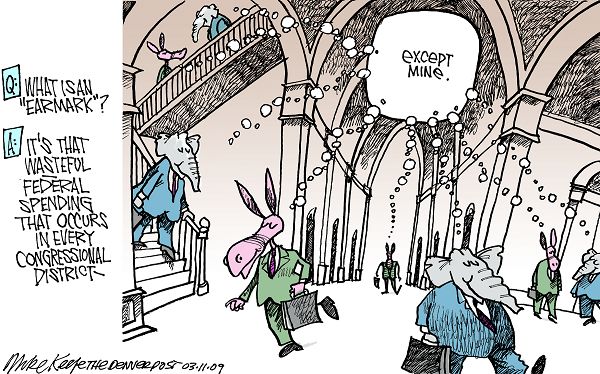
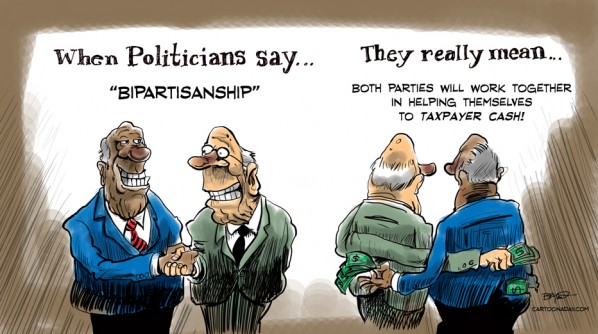
Author Archives: Everette Hatcher III

My name is Everette Hatcher III. I am a businessman in Little Rock and have been living in Bryant since 1993. My wife Jill and I have four kids (Rett 24, Hunter 22, Murphey 16, and Wilson 14).

Will Republicans Ever Stand Up to Democrats’ Government ‘Shutdown’ Scare Tactics? Probably Not.

——-

Will Republicans Ever Stand Up to Democrats’ Government ‘Shutdown’ Scare Tactics? Probably Not.

Senate Majority Leader Chuck Schumer, D-N.Y.—seen here outside the Capitol on Aug. 4 touting the Democrats’ big-spending bill they dubbed the Inflation Reduction Act—can be counted on to browbeat Senate Republicans if they don’t agree to an omnibus spending bill to avoid a supposed government “shutdown.” (Photo: Drew Angerer/Getty Images)

There is little Republicans and Democrats in Congress agree on these days, but spending (and borrowing) money is as nonpartisan as it gets.

House Democrats apparently have decided to leave their majority with a spending spree. They’ll do it the way they usually do. In a script familiar to an extortionist, and to the public because we’ve seen it before, Democrats can be counted on to threaten a government “shutdown” if Republicans don’t go along with their plans to spend more money we don’t have.

Never mind that for the next few weeks Democrats still have a House majority. Republicans (and much of the major media) will still be blamed should a shutdown occur. Remember previous threats about retirees not getting their Social Security checks and closed signs at national parks? It’s all theatrics.

Dec. 16 is the “deadline” for the expiration of funding the government, and don’t you know that Democrats will be hauling out their “Scrooge” and “Grinch” metaphors if Republicans don’t do their bidding.


Not all GOP members have clean hands when it comes to spending and pork for their districts. A majority of their caucus voted last week to restore earmarks, which they once eliminated, but the temptation to succumb to these spending perks appears to have been too seductive. It always is when they’re spending other people’s money to perpetuate their careers.

A Wall Street Journal editorial notes, “Democrats want to stuff all 12 of Congress’s annual overdue spending bills into a giant ‘omnibus’ to finance the government through September 2023. According to their media note-takers, the failure to pass an omnibus bill will result in one of two scenarios: a government shutdown, or the ruin of federal agencies forced to maintain spending at current levels.”

Heaven forbid that the government should restrain itself when it comes to spending at current levels, which, of course, are raised nearly every year, giving us a $31 trillion debt and counting.

Where are the Republican leaders who will teach Americans we can’t go on like this? Ronald Reagan was the last Republican president to warn against debt. Since members of Congress can’t restrain themselves when it comes to spending, what is needed is an outside auditor to go through every federal program and recommend what should be cut or eliminated.

Because Congress would have to approve of such an approach and then approve spending reductions, that seems as unlikely to happen as their voting for term limits.

Warnings about overspending and high taxation are ignored. The Founders gave us a Constitution that established boundaries beyond which government cannot go. They repeatedly advised against excessive and ongoing debt. That government has long exceeded constitutional limits is why it has become so dysfunctional in so many areas.

The Founders understood human nature and its tendency to excess in the absence of controls. In 1793, George Washington said, “”No pecuniary consideration is more urgent, than the regular redemption and discharge of the public debt: on none can delay be more injurious, or an economy of time more valuable.”

John Adams put it more succinctly: “There are two ways to enslave a nation. One is by the sword. The other is by debt.”

The federal government is taking in a record amount of revenue, but spending more than it receives, and Democrats want to spend even more.

Why is Congress deaf to the warnings of the Founders? They aren’t deaf. They have covered their ears and eyes, and don’t want to hear it to their everlasting shame and the harm they are passing down to future generations.

COPYRIGHT 2022 TRIBUNE CONTENT AGENCY LLC

The Daily Signal publishes a variety of perspectives. Nothing written here is to be construed as representing the views of The Heritage Foundation.


Have an opinion about this article? To sound off, please email letters@DailySignal.com and we’ll consider publishing your edited remarks in our regular “We Hear You” feature. Remember to include the url or headline of the article plus your name and town and/or state.

Want to keep up with the 24/7 news cycle? Want to know the most important stories of the day for conservatives? Need news you can trust? Subscribe to The Daily Signal’s email newsletter. Learn more >>

Dan Mitchell testifies on the debt ceiling in front of the Joint Economi…

REMY: RAISE THE DEBT CEILING RAP

REMY: RAISE THE DEBT CEILING RAP (AGAIN)


TRY BORROWING AT A BANK WITH A FINANCIAL CONDITION LIKE THE USA HAS:

December 10, 2021

The Honorable Tom Tillis of North Carolina
United States Senate
Washington, D.C. 20510

Dear Senator Tillis

After reading all your views on self-professed conservative economics and cutting spending I was surprised to read your name in this article below that said you made a way for Democrats to raise the debt ceiling even though 72% of your Republican friends in the senate would have no part of it and only 1 out of 201 Republicans in the House voted to do so!!!

Senate clears expedited debt limit process, Medicare cuts delay

Lawmakers still need to pass separate debt ceiling increase by next week to avoid Treasury cash crunch

Senate Minority Leader Mitch McConnell speaks during the a news conference in the Capitol on Tuesday, Nov. 30, 2021. Behind McConnell, from left, are Sens. John Barrasso, R-Wyo., John Thune, R-S.D., and Joni Ernst, R-Iowa. (Bill Clark/CQ Roll Call)


Posted December 9, 2021 at 1:18pm, Updated at 6:27pm

The Senate broke a logjam over the statutory debt limit Thursday, clearing a measure that would allow Democrats to increase the nation’s borrowing capacity on their own without any Republican assistance necessary.

Final passage came after a critical procedural vote, in which 14 Republicans joined all Democrats on a cloture motion to limit debate. That bipartisan cooperation — on a deal brokered by Schumer and Minority Leader Mitch McConnell — cleared the way for Democrats to be able to increase the debt limit on their own and avoid a fiscal crisis.

Schumer thanked McConnell for the agreement in floor remarks Thursday, saying their talks were “fruitful, candid, productive.”

“The proposal I worked on with Leader McConnell will allow Democrats to do precisely what we’ve been seeking to do for months… provide a simple majority vote to fix the debt ceiling without having to resort to a convoluted, lengthy and ultimately risky process,” Schumer said.

McConnell began drawing battle lines over the debt limit this summer, alerting Democrats that Republicans didn’t intend to cooperate on any debt limit bill unless Democrats stopped work on their roughly $2 trillion climate and social spending reconciliation bill. If they continued to work on that package, he said, they should use the same fast-track budget reconciliation process to advance a debt limit bill.

Democrats vowed not to use the reconciliation process for the debt limit or to stop work on their tax and spending package. The intransigence placed Congress in a deadlock over the debt limit as the Treasury Department inched closer to running out of money to pay all of the country’s bills in October.

Nearly all House Republicans — with the exception of retiring Illinois Rep. Adam Kinzinger — voted against the measure Tuesday, railing against the agreement that McConnell brokered with Schumer.

Many Republicans argued that McConnell should have extracted some sort of concession from Democrats to help them advance a debt limit bill outside the reconciliation process, or forced them to use budget reconciliation.

In addition to McConnell, Republican Sens. John Barrasso, Wyo.; Roy Blunt, Mo.; Richard M. Burr, N.C.; Shelley Moore Capito, W.Va.; Susan Collins, Maine; John Cornyn, Texas; Joni Ernst, Iowa; Rob Portman, Ohio; Lisa Murkowski, Alaska; Mitt Romney, Utah; John Thune, S.D.; Thom Tillis, N.C.; and Roger Wicker, Miss., voted for cloture. The final tally was 64-36.

Your vote to help the Democrats jump over the debt ceiling limit hurdle reminded me of this cartoon:

A.F. BRANCO December 10, 2021

DON’T YOU SEE THAT MAKING THE GOVERNMENT LIVE ON WHAT IT BRINGS IN WILL MAKE IT PRIORITIZE AND THE USA WILL NOT END UP AS GREECE? WHY GIVE THE DEMOCRATS A FREE PASS NOW?

I would love to get your reaction to this rap song which was recently written about you enabled the Democrats to do:

Remy: Raise the Debt Ceiling Rap (Again)

Putting America’s depressing fiscal policy to a beat since 2011!

|

Ten years and another $15 trillion added to the debt since his original rap, Remy is back to make it rain.

Written and performed by Remy; video produced by Meredith & Austin Bragg; mastering by Ben Karlstrom.

LYRICS:

Raise the debt ceiling!
Raise the debt ceiling again!

Thirty trillion in debt and yo we’re back again
Still printing lots of money, telling all of your friends
I told you this would happen but you were a doubting Thomas
Thirty is the last trillion I’ll ever need—I swear, I promise

It’s like we’re spending junkies just getting the itch
Can I have another trillion? I promised my district a bridge

It was a crisis before, we took the lesson to heart
By spending so much money now we’re printing pressing the chart
Spending billions and billions on sweet military gear
Did any wind up with the enemy? What do you want to hear?

Raise the debt ceiling!
Raise the debt ceiling again!

Back up in the Fed and we’re still super stoked
Somehow printing lots of money while we’re working remote
Still dropping IOUs in every fund yes sir
Hamilton started this place—that’s why it only goes “BURR!!!”

Prices are rising at every venue it’s bad
And for sure that dollar menu looks especially sad
Gas prices are rising, it’s getting hard for the competent
It costs an arm and a leg—where am I? The Saudi consulate?

Leaving IOUs you should give it a try son
M1 used to sink your battleship, now it’s what you use to buy one
Just say the magic word, I’ll set the printer abuzz
Charmin might run out of paper son, but guess who never does?

Raise the debt ceiling!
Raise the debt ceiling again!

Now if you examine the chart and you look close again
We borrow more than 40 cents of every dollar we spend
Nondiscretionary spending is at terrible paces!
Do you have a response? Yes! You’re racist

We should spend most on children! We should spend most on patients!
Okay—hear me out—why don’t we spend most on interest payments?
We’re playing with fire we know the end of this story!
How do you classify your incompetence? Transitory

Objects in the mirror are closer than they seem
And to a man with a printer each problem looks like a ream
But when I’m looking at the folks that we’ve elected to lead
I’m guessing that it won’t be long till we’re back saying we need to

Raise the debt ceiling!
Raise the debt ceiling again!

SADLY IT WAS JUST 10 YEARS AGO WHEN REMY WROTE ABOUT A 15 TRILLION DEBT:

LYRICS:

Raise da debt ceiling!Raise da debt ceiling!Raise da debt ceiling!Raise da debt ceiling!

14 trillion in debtbut yo we ain’t got no qualmsdroppin $100 billsand million dollar bombs

spending money we don’t havethat’s the name of the gamethey call me cumulo nimbusbecause you KNOW I make it rain

bail out all kind of carsgot all kind of whipsladies ask me how I get emI tell em STIMULUS

Social Security surplus?Oh, guess what? it’s goneI got my hands on everythinglike Dominique Strauss Kahn

ain’t got no Medicare trust fundson, that’s just absurdspending every single penny thatwe see, son, have you heard?

ain’t got no moral objectionsain’t got kind of complaintsain’t got no quantitativestatutory budget restraints

so…[CHORUS]

Yo, we up in the Fedand we living in styleSpending lots of moneywhile we sipping crystal

still making it rainand yeah it be so pleasingwait, not making it rain–we be “Quantitative Easing!”

QE1, QE2QE4, QE3Dropping IOU’sin every fund that I see

printing the cashinflating the moniescallin up China”a-yo we straight out of 20’s!”

in the clubwe be louding outwhile to the market, yeahwe be crowding out

on the beach getting tanand sipping Coronawe got a monetary plan–and it involves a lot of toner…

[CHORUS]

So if you look at the chartand examine the trendwe borrow 40 cents of everysingle dollar we spend

and non-discretionary spendingincreases every daydo you have a comment for Committee?I MAKE IT RAIN

Mr. Speaker, Mr. Speakerwould you beam me up?A Congressperson cutting spending?Couldn’t dream me up

We’re gonna defaultif we follow this road!I should have thought of this14 trillion dollars ago!

I’m the king of the linksI’m a menace at tennisI’m sticking spinnaz on my rimspicking winnaz in business

if you’re looking for some cashit’s about to get heavyI got some big ol’ piles of moneyand guess what–they shovel ready

[CHORUS]

I HAD AN OPPORTUNITY TO CORRESPOND WITH MILTON FRIEDMAN AND READ MANY OF HIS BOOKS AND HERE IS A GREAT ARTICLE I WISH YOU HAD READ EARLIER SO YOU WOULDN’T HAVE VOTED THE WAY YOU DID!!!

Milton Friedman and “Zero Cost” Expanded Government

By:

Richard McKenzie

President Joe Biden has declared that his proposed $3.5 (or is it $5.5?) trillion “Build Back Better” social agenda will have a “zero” cost—as in $0.00! Why?  Because the added expenditures will be covered by increased revenues drawn from businesses and the “rich.”

The President and other progressive Democrats, who have parroted the Biden claim, should reflect on the wisdom of the late Milton Friedman, who had a knack for crystallizing stark economic truths.

During the early 1980s, when supply-side economics was the rage, Reagan Republicans promoted tax-rate cuts as a means of reviving the economy (because the cuts would increase people’s incentives to work, save, and invest), which Friedman believed distracted them from concern about what was happening to government outlays, which continued to rise throughout the decade.

Friedman framed the fiscal issues of the day differently, and with far greater clarity than anyone else. He admonished everyone (including President Reagan’s advisors), to “Keep your eye on one thing and one thing only: how much government is spending, because that’s the true tax. . . If you’re not paying for it in the form of explicit taxes, you’re paying for it indirectly in the form of inflation or in the form of borrowing.”

And make no mistake, government outlays have risen substantially, especially lately, increasing from $3.9 trillion in 2016 to $6.6 trillion in 2020 (including Covid outlays). Even without passage of the reconciliation bill, the White House estimates that federal outlays will continue their upward march through 2026.

Friedman understood that the real taxes on the economy ultimately come in the form of government outlays siphoning off resources for public purposes that would otherwise be used in the private sector. If the government chooses to build a bridge or road, the concrete and steel could have been used to produce houses and office buildings.

How the added government outlays are financed—through taxes, newly printed dollars and inflation, or debt—is of secondary importance, perhaps only marginally affecting people’s incentives. The costs of expanded government outlays will be incurred through the shift of resources from private-directed uses to public-directed uses.

By declaring that his “Build Back Better” agenda has no costs, President Biden must be confused—if he truly means what he has been saying. He may think that the dollars expended for an expanded array of welfare recipients will come only at the expense of the “rich.” Not so at all. Those transferred dollars will enable the recipients to buy goods they could not otherwise buy, which means they can pull resources away from the production of the variety of goods that ordinary Walmart (and Home Depot and Kroger) shoppers, many with far less-than-privileged means, would have bought.


Richard McKenzie is an economics professor (emeritus) in the Merage Business School at the University of California, Irvine. His latest book is The Selfish Brain: A Layman’s Guide to a New Way of Economic Thinking (2021).

HERE ARE SOME SUGGESTIONS YOU HAVE IGNORED:

The Solution to the Debt Ceiling Debacle

Fundamental spending reform needed.

|

Deficits are also going to go up to $544 billion from last year’s $439 billion. Over the coming decade, the size of the federal deficit will double to reach an annual gap of almost 5 percent of GDP. CBO predicts that deficits will total $9.4 trillion. That’s up $1.5 trillion from its August report. It also notes that under the alternative scenario budget projection, spending will increase to 21.9 percent of GDP in 2020, to 25.8 percent in 2030, and to 30.4 percent in 2040.

The expansion of mandatory programs—such as Medicare, Medicaid, Affordable Care Act subsidies, and Social Security—is the driving force behind this spending growth and our exploding debt. These entitlements will trigger even higher levels of debt in the years outside the 10-year budget window.

Unfortunately, as the debt grows, the interest payments on that debt will grow as well. If the United States does not change course, interest on the debt will end up as one of its biggest budget items. Our unfunded liabilities keep going up, too. The net present value of the promises made to the American people for which the United States does not have the money to pay is roughly $75.5 trillion, according to the Treasury Department.

High debt levels are problematic. As CBO explained a few years ago:

Such high and rising debt later in the coming decade would have serious negative consequences: When interest rates return to higher (more typical) levels, federal spending on interest payments would increase substantially. Moreover, because federal borrowing reduces national saving, over time the capital stock would be smaller and total wages would be lower than they would be if the debt was reduced. In addition, lawmakers would have less flexibility than they would have if debt levels were lower to use tax and spending policy to respond to unexpected challenges. Finally, a large debt increases the risk of a fiscal crisis, during which investors would lose so much confidence in the government’s ability to manage its budget that the government would be unable to borrow at affordable rates.[v]

These numbers are important to keep in mind when discussing the next debt ceiling deadline. Indeed, when March 2017 comes around we can expect that Washington will once again have the same debate it has had for the last few years about whether or not to raise the debt ceiling and under what circumstances. On one side you will find those who want to raise the limit without questions asked. On the other side, you will find those who will demand reforms in exchange for yet another increase in the debt ceiling.

Continuing to pass debt ceiling increases without proper spending reforms would be irresponsible. It is also irresponsible to signal to the international community that the US government could possibly default on its debt obligations while Washington works through whether it will raise the debt limit before or after it formulates a plan to reduce government spending.

WHAT’S AT STAKE

To be sure, default should not be an option on the table. However, raising the debt ceiling without a commitment to improve our long-term debt problem has adverse consequences. In 2011, the rating agency Fitch warned the US government that while it supported raising the debt ceiling, it also wanted the government to come up with a credible medium-term deficit-reduction plan.[vi] Other rating agencies at the time also warned the United States of the negative consequences of not dealing with the country’s long-term debt.

If Congress does not address our debt problem before March 2017, the optimal outcome would then be to raise the debt limit while Congress and the president pass a credible plan to reduce near- and long-term spending at the same time.

Fortunately, if an agreement to control spending and raise the debt limit is not reached, the United States need not risk defaulting on its debt. The Treasury Department has the legal authority to prioritize interest payments on the debt above all other obligations, whether that means delaying payments to contractors or managing other obligations. But Congress should not be forced to raise the debt ceiling under false pretenses.

As was the case in 2011, the United States will have enough expected cash flow (tax revenue) and assets on hand to avoid either of these unattractive options. Managing payments in this manner is by no means optimal, and Treasury officials have indicated that this will be difficult owing to payment automation. That said, it is important to recognize the options that are available to prevent a default. While Washington has difficult choices to make, defaulting on its debt obligations should not be part of the discussion about how to handle the debt limit or reduce long-term government spending.

REAL INSTITUTIONAL REFORM

The heated rhetoric coming in March 2017 about whether Congress should raise the debt ceiling will obscure the federal government’s real problem: an unprecedented increase in government spending and the future explosion of entitlement spending has created a fiscal imbalance today and for the years to come. No matter what Congress decides to do about the debt ceiling, the United States must implement institutional reforms that constrain government spending and return the country to a sustainable fiscal position.

Real institutional reforms, as opposed to onetime cuts, would change the trajectory of fiscal policy and put the United States on a more sustainable path. Such reforms could include:

1. A constitutional amendment to limit spending. The inability of lawmakers to constrain their own spending makes spending limits enforced through the US Constitution preferable.[vii]

2. Meaningful budget reforms that limit lawmakers’ tendency to spend. In the absence of constitutional rules, budget rules should have broad scope, few and high-hurdle escape clauses, and minimal accounting discretion.[viii]

3. The end of budget gimmicks. Creative bookkeeping is at the center of many countries’ financial troubles. Congress should institute a transparent budget process and end abuse of the emergency spending rule, reliance on overly rosy scenarios, and all other gimmicks.[ix]

4. A strict cut-as-you-go system. This system should apply to the entire federal budget, not just to a small portion of it. There should be no new spending without offsetting cuts.[x]

5. A BRAC-like commission for discretionary spending. Commissions composed of independent experts often tackle intractable political problems successfully.[xi]

REAL ENTITLEMENT REFORMS

As mentioned earlier, the drivers of our future debt are spending on Medicare, Medicaid, Affordable Care Act subsidies, and Social Security. Without reforms today, vast tax increases will be needed to pay for the unfunded promises made to a steadily growing cohort of seniors.

While economists disagree when it comes to fiscal policy, a consensus has emerged that spending-based fiscal adjustments are not only more likely to reduce the debt-to-GDP ratio than tax-based ones but are also less likely to trigger a recession.[xii] In fact, if accompanied by the right type of policies (especially changes to public employees’ pay and public pension reforms), spending-based adjustments can actually be associated with economic growth.

Fortunately, numerous workable solutions are available to lawmakers, including adding a system of personal savings accounts to Social Security, liberalizing medical savings accounts, and making the latter permanent to reduce healthcare costs by increasing competition between providers and making consumers more responsive to tradeoffs.[xiii]

These options are supposed to encourage families to save more and also to use their money more responsibly and in a manner more consistent with their long-term needs. And since taxpayers remain in control of their cash, they can also pass it along if they don’t use it all before they die—giving the next generation a head start when it comes to building assets.

Better yet, we should free the healthcare supply from the many constraints imposed by federal and state governments and the special interests they serve.[xiv]The stakes are high: Bringing revolutionary innovation to this industry could mean not just bending the healthcare cost curve but breaking it to bits—making the need for health insurance much less important, if not moot, in many cases.

REVENUE AND ASSETS AVAILABLE TO FUND OUR COMMITMENT UNTIL AN AGREEMENT IS REACHED

With that in mind, let’s think about what happens in March 2017. At that time, the government will reach the debt ceiling, and the Treasury will no longer be able to issue federal debt. The federal government could reduce spending, increase federal revenues by a corresponding amount to cover the gap, or find other funding mechanisms. This would allow time for Congress and the president to reach an agreement to change the country’s financial path before raising the debt ceiling.

At that time, the Treasury Department will have several financial management options to continue paying the government’s obligations. These include (1) prioritizing payments;[xv] (2) taking financial steps, including permitting the suspension of investments in, and the redemption of securities held by, certain government trust funds or postponing the sale of nonmarketable debt;[xvi] (3) liquidating some assets to pay government bills;[xvii] and (4) using the Social Security Trust Fund to continue paying Social Security benefits.[xviii]

PRIORITIZING PAYMENTS

The Secretary of the Treasury has long-standing authority to prioritize payments and does not have to pay bills in the order in which they are received. The US Government Accountability Office found that

the Secretary of the Treasury has the authority to determine the order in which obligations are to be paid should the Congress fail to raise the statutory debt ceiling and revenues are inadequate to cover all required payments. There is no statute or other basis for concluding that the Treasury must pay outstanding obligations in the order they are presented for payment. Treasury is free to liquidate obligations in any order it determines will best serve the interests of the United States.[xix]

According to a report by the Treasury Department’s Inspector General (IG), during the 2011 debt ceiling crisis the Treasury “considered a range of options with respect to how Treasury would operate if the debt ceiling was not raised.” Further, the report notes that Treasury officials told the IG that “organizationally they viewed the option of delaying payments as the least harmful among the options under review” and that “the decision of how Treasury would have operated if the U.S. had exhausted its borrowing authority would have been made by the President in consultation with the Secretary of the Treasury.”[xx]

TEMPORARY MEASURES

During the last debt ceiling debate in 2011, my colleague Jason Fichtner and I listed all the assets that Treasury could tap into to avoid a default until an agreement between the president and Congress be reached.[xxi] We updated this report in 2013.[xxii] At the time we explained that Treasury was expected to collect $2.6 trillion in revenue. We wrote:

That alone would be enough to cover interest on the debt ($218 billion), thereby avoiding any technical default of the US government on its debt obligations to Social Security ($809 billion), Medicare ($581 billion), and Medicaid ($267 billion), and it would leave approximately $725 billion for other priorities.

In addition, we noted that the Treasury Department had financial measures at its disposal to fund government operations temporarily without having to issue new debt. To be clear, our list was only meant to present the range of possible options available to Congress. But, as we noted then, those may not be good or desirable options.

These assets totaled $1.9 trillion and included $50.2 billion in nonrestricted cash on hand,[xxiii] $121.1 billion in restricted cash and other monetary assets (gold, international monetary assets, foreign currency),[xxiv] and the redemption of existing investments in other trust funds.[xxv]

We also noted that the government could rely on the determination of a “debt issuance suspension period.” This determination would permit the redemption of existing, and the suspension of new, investments of the Civil Service Retirement and Disability Fund (CSRDF).[xxvi] Right now there is $858.7 billion intergovernmental holdings in the CSRDF.

In March 2017, the numbers will be different, but the same assets may be used to avoid a default. Relying on any of these sources of funds or increasing the debt ceiling without reducing existing budget commitments illustrates the irresponsible path the country is on and the urgent need for institutional spending reform. Nonetheless, these assets could be used as a temporary measure to allow Congress and the administration to negotiate spending reductions and institutional reforms to the budget process to ensure the nation is put back on a sound fiscal path.

Thank you. I am happy to take your questions.

[i] Congressional Research Service, “The Debt Limit: History and Recent Increases,” October 1, 2015, 5.

[ii] Ibid, 11.

[iii] Veronique de Rugy, “Budget Deal Is Business-as-Usual in Washington,” Mercatus Center at George Mason University, November 18, 2015.

[iv] Congressional Budget Office, “The Budget and Economic Outlook: 2016 to 2026,” January 2016, 4.

[v] Congressional Budget Office, “Updated Budget Projections: Fiscal Years 2013 to 2023,” May 2013.

[vi] Veronique de Rugy, “Policy Implications of the S&P Warnings,” The Corner, National Review, July 22, 2011. Also see Jeannette Neumann, “Fitch Unveils Two Possible Routes to Downgrading US Debt Rating,” Wall Street Journal, January 15, 2013.

[vii] David M. Primo, “Constitution Is Only Way to Cut US Deficit,” Bloomberg Business, February 24, 2011.

[viii] David M. Primo, “Making Budget Rules Bite” (Mercatus on Policy, Mercatus Center at George Mason University, Arlington, VA, March 2010).

[ix] Veronique de Rugy, “Budget Gimmicks or the Destructive Art of Creative Accounting” (Mercatus Working Paper, Mercatus Center at George Mason University, Arlington, VA, June 2010).

[x] Veronique de Rugy and David Bieler, “Is PAYGO a No-Go?” (Mercatus on Policy, Mercatus Center at George Mason University, Arlington, VA, April 2010).

xi] Jerry Brito, “The BRAC Model for Spending Reform” (Mercatus on Policy, Mercatus Center at George Mason University, Arlington, VA, February 2010).

[xii] Veronique de Rugy, “The Effect of Tax Increases and Spending Cuts on Economic Growth” (Testimony before the Senate Committee on the Budget, Mercatus Center at George Mason University, Arlington, VA, May 22, 2013).

[xiii] Chris Edwards and Tad DeHaven, “War Between Generations: Federal Spending on the Elderly Set to Explode” (Policy Analysis No. 488, Cato Institute, Washington, DC, September 16, 2003).

[xiv] Robert Graboyes, “Fortress and Frontier in American Health Care” (Mercatus Research, Mercatus Center at George Mason University, Arlington, VA, October 2014).

[xv] Jason J. Fichtner and Veronique de Rugy, “The Debt Ceiling: What Is at Stake?” (Mercatus Research, Mercatus Center at George Mason University, Arlington, VA, April 2011).

[xvi] Veronique de Rugy and Jason J. Fichtner, “The Debt Limit Debate” (Mercatus on Policy, Mercatus Center at George Mason University, Arlington, VA, May 2011).

[xvii] Fichtner and de Rugy, “The Debt Ceiling: What Is at Stake?”

[xviii] The Social Security Trust Funds can only be used to pay Social Security benefits. See Glenn Kessler, “Can President Obama Keep Paying Social Security Benefits Even If the Debt Ceiling Is Reached?,” Washington Post, July 13, 2011; Contract with America Advancement Act of 1996, Pub. L. No. 104-121 (1996).

[xix] US Government Accountability Office, Letter to Senator Bob Packwood, October 9, 1985.

[xx] Department of the Treasury, Office of Inspector General, Letter to Senator Orrin G. Hatch, OIG-CA-12-006, August 24, 2012.

[xxi] Fichtner and de Rugy, “The Debt Ceiling: What Is at Stake?”

[xxii] Jason J. Fichtner and Veronique de Rugy, “The Debt Ceiling: Assets Available to Prevent Default” (Mercatus Research, Mercatus Center at George Mason University, Arlington, VA, January 2013).

[xxiii] Department of the Treasury, “Daily Treasury Statement,” January 14, 2013.

[xxiv] Department of the Treasury, 2012 Financial Report of the US Government, 65. At the time, the Treasury owned approximately 261.4 million ounces of gold and marked the value of its gold holdings at $42 per ounce, giving a reported value of $11.1 billion. At a spot market price of $1,500 per ounce, Treasury’s gold holdings could be valued near $400 billion.

[xxv] Department of the Treasury, “Monthly Statement of the Public Debt of the United States,” December 31, 2015.

[xxvi] In September 1985, the Treasury took the step of disinvesting the Civil Service Retirement and Disability Trust Fund, the Social Security Trust Funds, and several smaller trust funds.

I HAD THE OPPORTUNITY TO CORESPONDENT WITH WALTER WILLIAMS AND I LEARNED MUCH FROM HIM AND HE IS RIGHT THAT CONGRESS IS GOING AGAINST JAMES MADISON’S WARNING:
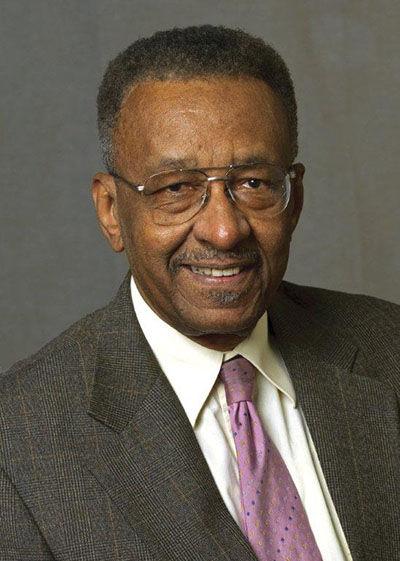
 
Walter E. Williams - A MINORITY VIEW
Walter E. Williams is a professor of economics at George Mason University.


The largest threat to our prosperity is government spending that far exceeds the authority enumerated in Article 1, Section 8 of the U.S. Constitution. Federal spending in 2017 will top $4 trillion. Social Security, at $1 trillion, will take up most of it. Medicare ($582 billion) and Medicaid ($404 billion) are the next-largest expenditures. Other federal social spending includes food stamps, unemployment compensation, child nutrition, child tax credits, supplemental security income and student loans, all of which total roughly $550 billion. Social spending by Congress consumes about two-thirds of the federal budget.

Where do you think Congress gets the resources for such spending? It’s not the tooth fairy or Santa Claus. The only way Congress can give one American a dollar is to use threats, intimidation and coercion to confiscate that dollar from another American. Congress forcibly uses one American to serve the purposes of another American. We might ask ourselves: What standard of morality justifies the forcible use of one American to serve the purposes of another American? By the way, the forcible use of one person to serve the purposes of another is a fairly good working definition of slavery.

Today’s Americans have little appreciation for how their values reflect a contempt for those of our Founding Fathers. You ask, “Williams, what do you mean by such a statement?” In 1794, Congress appropriated $15,000 to help French refugees who had fled from insurrection in Saint-Domingue (now Haiti). James Madison, the “Father of the Constitution,” stood on the floor of the House to object, saying, “I cannot undertake to lay my finger on that article in the federal Constitution which granted a right to Congress of expending, on objects of benevolence, the money of their constituents.” Most federal spending today is on “objects of benevolence.” Madison also said, “Charity is no part of the legislative duty of the government.”

No doubt some congressmen, academics, hustlers and ignorant people will argue that the general welfare clause of the U.S. Constitution authorizes today’s spending. That is simply unadulterated nonsense. Thomas Jefferson wrote, “Congress (has) not unlimited powers to provide for the general welfare, but (is) restrained to those specifically enumerated.” Madison wrote that “if Congress can do whatever in their discretion can be done by money, and will promote the general welfare, the Government is no longer a limited one possessing enumerated powers, but an indefinite one.” In other words, the general welfare clause authorized Congress to spend money only to carry out the powers and duties specifically enumerated in Article 1, Section 8 and elsewhere in the Constitution, not to meet the infinite needs of the general welfare.


We cannot blame politicians for the spending that places our nation in peril. Politicians are doing precisely what the American people elect them to office to do — namely, use the power of their office to take the rightful property of other Americans and deliver it to them. It would be political suicide for a president or a congressman to argue as Madison did that Congress has no right to expend “on objects of benevolence” the money of its constituents and that “charity is no part of the legislative duty of the government.” It’s unreasonable of us to expect any politician to sabotage his career by living up to his oath of office to uphold and defend our Constitution. That means that if we are to save our nation from the economic and social chaos that awaits us, we the people must have a moral reawakening and eschew what is no less than legalized theft, the taking from one American for the benefit of another.

I know that some people will say, “Williams, I agree with most of what you say, but not when it comes to Social Security. Social Security is my money I had taken out of my pay for retirement.” If you think that, you’ve been duped. The only way you get a Social Security check is for Congress to take the earnings of a worker. Explanation of your duping can be found on my website, in a 2010 article I wrote titled “Washington’s Lies.”

Walter E. Williams is a professor of economics at George Mason University.


Everette Hatcher III, 13900 Cottontail Lane, Alexander, AR 72002, everettehatcher@gmail.com,

Graham Warns Senators: ‘If You’re Wondering Why There’s A Donald Trump,

Dan Mitchell, Cato Institute, Debt Ceiling

“Raise the Debt Ceiling” rap goes viral

Daniel J. Mitchell – USA: Drowning In Debt?

The problem in Washington is not lack of revenue but our lack of spending restraint. This video below makes that point. WASHINGTON IS A SPENDING ADDICT!!!

——-

I HAVE WRITTEN REPUBLICAN SENATORS AND REPRESENTATIVES ABOUT THE IMPORTANCE OF NOT RAISING THE DEBT CEILING FOR OVER AN DECADE NOW!!!! WHY DO THEY CONTINUE TO DO SO EVEN THOUGH THEY ALL SAY THEY ARE AGAINST BORROWING 40% OF WHAT THE GOVERNMENT SPENDS? Look at some of these previous letters below:

The Honorable Shelley Moore Capito
United States Senate
Washington, D.C. 20510

Dear Senator Capito,

On September 16, 2021 my post “46 REPUBLICAN SENATORS VOW NOT TO HELP DEMOCRATS RAISE THE DEBT CEILING (HERE WE GO AGAIN!!!!!)” and you were one of the 46 Senators who pledged not to raise the debt ceiling but you folded like a wet leaf just like I predicted:

I have written before about those heroes of mine that have resisted raising the debt ceiling but in the end I have always been disappointed and here we go again!

But first let me give you a taste of something I wrote about 10 years ago on this same issue!

Why don’t the Republicans  just vote no on the next increase to the debt ceiling limit. I have praised over and over and overthe 66 House Republicans that voted no on that before. If they did not raise the debt ceiling then we would have a balanced budget instantly.  I agree that the Tea Party has made a difference and I have personally posted 49 posts on my blog on different Tea Party heroes of mine.

What would happen if the debt ceiling was not increased? Yes President Obama would probably cancel White House tours and he would try to stop mail service or something else to get on our nerves but that is what the Republicans need to do.

I have written and emailed Senator Pryor over, and over again with spending cut suggestions but he has ignored all of these good ideas in favor of keeping the printing presses going as we plunge our future generations further in debt. I am convinced if he does not change his liberal voting record that he will no longer be our senator in 2014.

I have written hundreds of letters and emails to President Obama and I must say that I have been impressed that he has had the White House staff answer so many of my letters. The White House answered concerning Social Security (two times), Green Technologies, welfare, small businesses, Obamacare (twice),  federal overspending, expanding unemployment benefits to 99 weeks,  gun control, national debt, abortion, jumpstarting the economy, and various other  issues.   However, his policies have not changed, and by the way the White House after answering over 50 of my letters before November of 2012 has not answered one since.   President Obama is committed to cutting nothing from the budget that I can tell.

A.F. Branco for Oct 21, 2021

 I have praised over and over and over the 66 House Republicans that voted no on that before. If they did not raise the debt ceiling then we would have a balanced budget instantly.  I agree that the Tea Party has made a difference and I have personally posted 49 posts on my blog on different Tea Party heroes of mine.

46 Republican Senators Vow Not to Help Democrats Raise the Debt Ceiling


All but four Republican senators have signed a pledge that they will not vote to raise the debt ceiling, sending another warning to Democrats that they are on their own on the pressing issue.

Sen. Ron Johnson (R-WI) circulated a letter during the chamber’s vote-a-rama on the $3.5 trillion budget resolution Wednesday, signing up a majority of his fellow Republicans in an effort to link the Democrats’ proposed spending package with the statutory debt limit imposed on the federal government by Congress, which covers spending that has already been approved and must be paid by the U.S. Treasury.

In the letter, which is addressed to “Our Fellow Americans,” the Republican signatories claim that Democrats are responsible for increased federal spending and so must be responsible for raising the debt limit. “We will not vote to increase the debt ceiling, whether that increase comes through a stand-alone bill, a continuing resolution, or any other vehicle,” the letter says. “Democrats, at any time, have the power through reconciliation to unilaterally raise the debt ceiling, and they should not be allowed to pretend otherwise.”

The Republicans who didn’t sign the letter are Sens. Susan Collins of Maine, John Kennedy of Louisiana, Lisa Murkowski of Alaska and Richard Shelby of Alabama.

Why now: A two-year suspension of the debt ceiling expired at the end of July, forcing the U.S. Treasury to begin taking “extraordinary measures” to keep paying its bills as it waits for Congress to either raise or suspend the limit before the country is forced to default. Democrats opted not to include an increase in the debt ceiling in their budget resolution, which would have made it possible to raise the limit without Republican support, though they still have the option of revising the resolution to include such a provision.

What Democrats say: Democrats point out that much of the increased debt in recent years was produced during former President Trump’s administration. “I cannot believe that Republicans would let the country default,” Senate Majority Leader Chuck Schumer (D-NY) said Wednesday. “It has always been bipartisan to deal with the debt ceiling. When Trump was president I believe the Democrats joined with him to raise it three times.”

President Biden told reporters Wednesday that trillions in debt were added “on the Republicans’ watch” but said he was confident that the GOP would act in time. “They are not going to let us default,” he said.

The bottom line: No one expects Congress to allow the U.S. to default, but it looks like we could be in for a high-stakes game of chicken in the coming weeks — and the markets are starting to notice. According to Reuters Wednesday, “Some U.S. Treasury bill yields are beginning to reflect concerns that lawmakers may wait until the last minute to increase or suspend the debt ceiling.”

Will you stand up against the Democrats in the future and make the Government ONLY SPEND WHAT IT BRINGS IN? We are becoming an entitlement society and we must stop this trend!!!!

Everette Hatcher III, 13900 Cottontail Lane, Alexander, AR 72002, everettehatcher@gmail.com, http://www.thedailyhatch.org cell 501-920-5733

PS: In 2010 we had a group of conservatives get elected in the House and many of them stood up to President Obama when he wanted to raise the debt limit and I praised these 66 heroes of mine on my blog in 2011 and Representative Andy Harris of Maryland was one of those. Here is what I wrote about him:


Sixty Six who resisted “Sugar-coated Satan Sandwich” Debt Deal (Part 37)

This post today is a part of a series I am doing on the 66 Republican Tea Party favorites that resisted eating the “Sugar-coated Satan Sandwich” Debt Deal. Actually that name did not originate from a representative who agrees with the Tea Party, but from a liberal.

Rep. Emanuel Clever (D-Mo.) called the newly agreed-upon bipartisan compromise deal to raise the  debt limit “a sugar-coated satan sandwich.”

“This deal is a sugar-coated satan sandwich. If you lift the bun, you will not like what you see,” Clever tweeted on August 1, 2011.

August 1, 2011

Rep. Harris Votes Against the Debt Ceiling “Deal” 

Washington, DC – Today, Rep. Andy Harris voted against the debt ceiling increase. The plan did not require passage of a balanced budget amendment, which Rep. Harris feels is essential to bringing permanent common sense accountability to Washington.

“A balanced budget amendment is the only way to make sure the federal government spends what it takes in and lives within its means,” said Rep. Andy Harris.  “Over the past few weeks I have repeatedly voted for reasonable proposals to raise the debt ceiling that included passage of a balanced budget amendment. But I didn’t come to Washington to continue writing blank checks. Maryland’s families and job creators sent me to Congress to permanently change the way Washington does business.  I appreciate Speaker Boehner’s remarkable, historic efforts to craft a proposal to solve the debt ceiling issue.  But today’s debt ceiling deal just doesn’t go far enough to build an environment for job creation by requiring passage of a balanced budget amendment to bring permanent common sense accountability to Washington.”

Currently, the U.S. Government has a national debt of $14.3 trillion and runs an annual deficit of $1.65 trillion.

Andrew Peter Harris (born January 25, 1957) is an American politician and physician who has been the U.S. Representative for Maryland’s 1st congressional district since 2011. The district includes the entire Eastern Shore, as well as several eastern exurbs of Baltimore. He is currently the only Republicanmember of Maryland’s congressional delegation. Harris previously served in the Maryland Senate.

Andy Harris
Andy Harris 115th Congress (cropped).jpg
 
Member of the U.S. House of Representatives
from Maryland‘s 1st district
Assumed office
January 3, 2011
Preceded by Frank Kratovil
Member of the Maryland Senate
In office
1999 – January 3, 2011
Preceded by Vernon Boozer (9th)
Norman Stone (7th)
Succeeded by Robert Kittleman (9th)
J.B. Jennings (7th)
Constituency 9th district (1999–2003)
7th district (2003–2011)

Related posts:

Sixty Six who resisted “Sugar-coated Satan Sandwich” Debt Deal (Part 49)

Sixty Six who resisted “Sugar-coated Satan Sandwich” Debt Deal (Part 49) This post today is a part of a series I am doing on the 66 Republican Tea Party favorites that resisted eating the “Sugar-coated Satan Sandwich” Debt Deal. Actually that name did not originate from a representative who agrees with the Tea Party, but […]

Sixty Six who resisted “Sugar-coated Satan Sandwich” Debt Deal (Part 48)

Sixty Six who resisted “Sugar-coated Satan Sandwich” Debt Deal (Part 48) This post today is a part of a series I am doing on the 66 Republican Tea Party favorites that resisted eating the “Sugar-coated Satan Sandwich” Debt Deal. Actually that name did not originate from a representative who agrees with the Tea Party, but […]

Sixty Six who resisted “Sugar-coated Satan Sandwich” Debt Deal (Part 47)

Sixty Six who resisted “Sugar-coated Satan Sandwich” Debt Deal (Part 47) This post today is a part of a series I am doing on the 66 Republican Tea Party favorites that resisted eating the “Sugar-coated Satan Sandwich” Debt Deal. Actually that name did not originate from a representative who agrees with the Tea Party, but […]

Sixty Six who resisted “Sugar-coated Satan Sandwich” Debt Deal (Part 46)

  Sixty Six who resisted “Sugar-coated Satan Sandwich” Debt Deal (Part 46) This post today is a part of a series I am doing on the 66 Republican Tea Party favorites that resisted eating the “Sugar-coated Satan Sandwich” Debt Deal. Actually that name did not originate from a representative who agrees with the Tea Party, […]

Sixty Six who resisted “Sugar-coated Satan Sandwich” Debt Deal (Part 45)

Sixty Six who resisted “Sugar-coated Satan Sandwich” Debt Deal (Part 45) This post today is a part of a series I am doing on the 66 Republican Tea Party favorites that resisted eating the “Sugar-coated Satan Sandwich” Debt Deal. Actually that name did not originate from a representative who agrees with the Tea Party, but […]

Sixty Six who resisted “Sugar-coated Satan Sandwich” Debt Deal (Part 44)

Sixty Six who resisted “Sugar-coated Satan Sandwich” Debt Deal (Part 44) This post today is a part of a series I am doing on the 66 Republican Tea Party favorites that resisted eating the “Sugar-coated Satan Sandwich” Debt Deal. Actually that name did not originate from a representative who agrees with the Tea Party, but […]

Sixty Six who resisted “Sugar-coated Satan Sandwich” Debt Deal (Part 43)

Sixty Six who resisted “Sugar-coated Satan Sandwich” Debt Deal (Part 43) This post today is a part of a series I am doing on the 66 Republican Tea Party favorites that resisted eating the “Sugar-coated Satan Sandwich” Debt Deal. Actually that name did not originate from a representative who agrees with the Tea Party, but […]

Sixty Six who resisted “Sugar-coated Satan Sandwich” Debt Deal (Part 42)

Sixty Six who resisted “Sugar-coated Satan Sandwich” Debt Deal (Part 42) This post today is a part of a series I am doing on the 66 Republican Tea Party favorites that resisted eating the “Sugar-coated Satan Sandwich” Debt Deal. Actually that name did not originate from a representative who agrees with the Tea Party, but […]

Sixty Six who resisted “Sugar-coated Satan Sandwich” Debt Deal (Part 41)

Sixty Six who resisted “Sugar-coated Satan Sandwich” Debt Deal (Part 41) This post today is a part of a series I am doing on the 66 Republican Tea Party favorites that resisted eating the “Sugar-coated Satan Sandwich” Debt Deal. Actually that name did not originate from a representative who agrees with the Tea Party, but […]

Sixty Six who resisted “Sugar-coated Satan Sandwich” Debt Deal (Part 40)

Sixty Six who resisted “Sugar-coated Satan Sandwich” Debt Deal (Part 40) This post today is a part of a series I am doing on the 66 Republican Tea Party favorites that resisted eating the “Sugar-coated Satan Sandwich” Debt Deal. Actually that name did not originate from a representative who agrees with the Tea Party, but […]

Sixty Six who resisted “Sugar-coated Satan Sandwich” Debt Deal (Part 39)

Sixty Six who resisted “Sugar-coated Satan Sandwich” Debt Deal (Part 39) This post today is a part of a series I am doing on the 66 Republican Tea Party favorites that resisted eating the “Sugar-coated Satan Sandwich” Debt Deal. Actually that name did not originate from a representative who agrees with the Tea Party, but […]

Sixty Six who resisted “Sugar-coated Satan Sandwich” Debt Deal (Part 38)

Sixty Six who resisted “Sugar-coated Satan Sandwich” Debt Deal (Part 38) This post today is a part of a series I am doing on the 66 Republican Tea Party favorites that resisted eating the “Sugar-coated Satan Sandwich” Debt Deal. Actually that name did not originate from a representative who agrees with the Tea Party, but […]

Sixty Six who resisted “Sugar-coated Satan Sandwich” Debt Deal (Part 37)

Sixty Six who resisted “Sugar-coated Satan Sandwich” Debt Deal (Part 37) This post today is a part of a series I am doing on the 66 Republican Tea Party favorites that resisted eating the “Sugar-coated Satan Sandwich” Debt Deal. Actually that name did not originate from a representative who agrees with the Tea Party, but […]

Sixty Six who resisted “Sugar-coated Satan Sandwich” Debt Deal (Part 36)

Sixty Six who resisted “Sugar-coated Satan Sandwich” Debt Deal (Part 36) This post today is a part of a series I am doing on the 66 Republican Tea Party favorites that resisted eating the “Sugar-coated Satan Sandwich” Debt Deal. Actually that name did not originate from a representative who agrees with the Tea Party, but […]

Sixty Six who resisted “Sugar-coated Satan Sandwich” Debt Deal (Part 35)

Sixty Six who resisted “Sugar-coated Satan Sandwich” Debt Deal (Part 35) This post today is a part of a series I am doing on the 66 Republican Tea Party favorites that resisted eating the “Sugar-coated Satan Sandwich” Debt Deal. Actually that name did not originate from a representative who agrees with the Tea Party, but […]

Sixty Six who resisted “Sugar-coated Satan Sandwich” Debt Deal (Part 34)

Sixty Six who resisted “Sugar-coated Satan Sandwich” Debt Deal (Part 34) This post today is a part of a series I am doing on the 66 Republican Tea Party favorites that resisted eating the “Sugar-coated Satan Sandwich” Debt Deal. Actually that name did not originate from a representative who agrees with the Tea Party, but […]

Sixty Six who resisted “Sugar-coated Satan Sandwich” Debt Deal (Part 33)

Sixty Six who resisted “Sugar-coated Satan Sandwich” Debt Deal (Part 33) This post today is a part of a series I am doing on the 66 Republican Tea Party favorites that resisted eating the “Sugar-coated Satan Sandwich” Debt Deal. Actually that name did not originate from a representative who agrees with the Tea Party, but […]

Sixty Six who resisted “Sugar-coated Satan Sandwich” Debt Deal (Part 32)

Sixty Six who resisted “Sugar-coated Satan Sandwich” Debt Deal (Part 32) This post today is a part of a series I am doing on the 66 Republican Tea Party favorites that resisted eating the “Sugar-coated Satan Sandwich” Debt Deal. Actually that name did not originate from a representative who agrees with the Tea Party, but […]

Sixty Six who resisted “Sugar-coated Satan Sandwich” Debt Deal (Part 31)

Congressmen Tim Huelskamp on the debt ceiling Sixty Six who resisted “Sugar-coated Satan Sandwich” Debt Deal (Part 31) This post today is a part of a series I am doing on the 66 Republican Tea Party favorites that resisted eating the “Sugar-coated Satan Sandwich” Debt Deal. Actually that name did not originate from a representative […]

Sixty Six who resisted “Sugar-coated Satan Sandwich” Debt Deal (Part 30)

Sixty Six who resisted “Sugar-coated Satan Sandwich” Debt Deal (Part 30) This post today is a part of a series I am doing on the 66 Republican Tea Party favorites that resisted eating the “Sugar-coated Satan Sandwich” Debt Deal. Actually that name did not originate from a representative who agrees with the Tea Party, but […]

The Sixty Six who resisted “Sugar-coated Satan Sandwich” Debt Deal (Part 29)

 Sixty Six who resisted “Sugar-coated Satan Sandwich” Debt Deal (Part 29) This post today is a part of a series I am doing on the 66 Republican Tea Party favorites that resisted eating the “Sugar-coated Satan Sandwich” Debt Deal. Actually that name did not originate from a representative who agrees with the Tea Party, but […]

The Sixty Six who resisted “Sugar-coated Satan Sandwich” Debt Deal (Part 28)

The Sixty Six who resisted “Sugar-coated Satan Sandwich” Debt Deal (Part 28) This post today is a part of a series I am doing on the 66 Republican Tea Party favorites that resisted eating the “Sugar-coated Satan Sandwich” Debt Deal. Actually that name did not originate from a representative who agrees with the Tea Party, […]

The Sixty Six who resisted “Sugar-coated Satan Sandwich” Debt Deal (Part 27)

The Sixty Six who resisted “Sugar-coated Satan Sandwich” Debt Deal (Part 27) This post today is a part of a series I am doing on the 66 Republican Tea Party favorites that resisted eating the “Sugar-coated Satan Sandwich” Debt Deal. Actually that name did not originate from a representative who agrees with the Tea Party, […]

The Sixty Six who resisted “Sugar-coated Satan Sandwich” Debt Deal (Part 26)

The Sixty Six who resisted “Sugar-coated Satan Sandwich” Debt Deal (Part 26) This post today is a part of a series I am doing on the 66 Republican Tea Party favorites that resisted eating the “Sugar-coated Satan Sandwich” Debt Deal. Actually that name did not originate from a representative who agrees with the Tea Party, […]

The Sixty Six who resisted “Sugar-coated Satan Sandwich” Debt Deal (Part 25)

Uploaded by RepJoeWalsh on Jun 14, 2011 Our country’s debt continues to grow — it’s eating away at the American Dream. We need to make real cuts now. We need Cut, Cap, and Balance. The Sixty Six who resisted “Sugar-coated Satan Sandwich” Debt Deal (Part 25) This post today is a part of a series […]

The Sixty Six who resisted “Sugar-coated Satan Sandwich” Debt Deal (Part 23)

The Sixty Six who resisted “Sugar-coated Satan Sandwich” Debt Deal (Part 23) This post today is a part of a series I am doing on the 66 Republican Tea Party favorites that resisted eating the “Sugar-coated Satan Sandwich” Debt Deal. Actually that name did not originate from a representative who agrees with the Tea Party, […]

The Sixty Six who resisted “Sugar-coated Satan Sandwich” Debt Deal (Part 22)

The Sixty Six who resisted “Sugar-coated Satan Sandwich” Debt Deal (Part 22) This post today is a part of a series I am doing on the 66 Republican Tea Party favorites that resisted eating the “Sugar-coated Satan Sandwich” Debt Deal. Actually that name did not originate from a representative who agrees with the Tea Party, […]

The Sixty Six who resisted “Sugar-coated Satan Sandwich” Debt Deal (Part 21)

The Sixty Six who resisted “Sugar-coated Satan Sandwich” Debt Deal (Part 21) This post today is a part of a series I am doing on the 66 Republican Tea Party favorites that resisted eating the “Sugar-coated Satan Sandwich” Debt Deal. Actually that name did not originate from a representative who agrees with the Tea Party, […]

The Sixty Six who resisted “Sugar-coated Satan Sandwich” Debt Deal (Part 20)

The Sixty Six who resisted “Sugar-coated Satan Sandwich” Debt Deal (Part 20) This post today is a part of a series I am doing on the 66 Republican Tea Party favorites that resisted eating the “Sugar-coated Satan Sandwich” Debt Deal. Actually that name did not originate from a representative who agrees with the Tea Party, […]

The Sixty Six who resisted “Sugar-coated Satan Sandwich” Debt Deal (Part 19)

The Sixty Six who resisted “Sugar-coated Satan Sandwich” Debt Deal (Part 19) This post today is a part of a series I am doing on the 66 Republican Tea Party favorites that resisted eating the “Sugar-coated Satan Sandwich” Debt Deal. Actually that name did not originate from a representative who agrees with the Tea Party, […]

The Sixty Six who resisted “Sugar-coated Satan Sandwich” Debt Deal (Part 18)

The Sixty Six who resisted “Sugar-coated Satan Sandwich” Debt Deal (Part 18) This post today is a part of a series I am doing on the 66 Republican Tea Party favorites that resisted eating the “Sugar-coated Satan Sandwich” Debt Deal. Actually that name did not originate from a representative who agrees with the Tea Party, […]

The Sixty Six who resisted “Sugar-coated Satan Sandwich” Debt Deal (Part 17)

The Sixty Six who resisted “Sugar-coated Satan Sandwich” Debt Deal (Part 17) This post today is a part of a series I am doing on the 66 Republican Tea Party favorites that resisted eating the “Sugar-coated Satan Sandwich” Debt Deal. Actually that name did not originate from a representative who agrees with the Tea Party, […]

The Sixty Six who resisted “Sugar-coated Satan Sandwich” Debt Deal (Part 16)

The Sixty Six who resisted “Sugar-coated Satan Sandwich” Debt Deal (Part 16) This post today is a part of a series I am doing on the 66 Republican Tea Party favorites that resisted eating the “Sugar-coated Satan Sandwich” Debt Deal. Actually that name did not originate from a representative who agrees with the Tea Party, […]

RESPONDING TO HARRY KROTO’S BRILLIANT RENOWNED ACADEMICS!! (Pausing to look at the life of Steven Weinberg who was one of my favorite authors!) Part 170 N In my February 28, 2019 letter to Dr. Weinberg I commented that I noticed in your book THIRD THOUGHTS in the 22nd chapter entitled “Writing About Science” that you stated:”Isaac Newton wrote the most important physical science book ever!”

The Incredible Steven Weinberg (1933-2021) – Sixty Symbols

In my February 28, 2019 letter to Dr. Weinberg I commented that I noticed in your book THIRD THOUGHTS in the 22nd chapter entitled “Writing About Science” that you stated:”Isaac Newton wrote the most important physical science book ever!”

February 28, 2019

Steven Weinberg
The University of Texas at Austin
Department of Physics
2515 Speedway Stop C1600
Austin, TX 78712-1192

Dear Dr. Weinberg,

I know after reading TO EXPLAIN THE WORLD that you are a not only a great scientist but also a very good science historian. Therefore, I am sure you have read about everything ever written about Isaac Newton and his obsession with the Book of Daniel, but I hope to tell you in this letter a few reasons why that book caught his attention.

I noticed in your book THIRD THOUGHTS in the 22nd chapter entitled “Writing About Science” that you stated:”Isaac Newton wrote the most important physical science book ever!”

This same Newton asserted If I only examined the thumb, I would have to believe in an intelligent designer.

Did you know that Isaac Newton spent much of his time studying the Book of Daniel and writing on it. Daniel is also my favorite book in the Bible. There are some amazing prophecies in it and it is a historical accurate book.

Daniel chapter 2 predicted the succession of Babylon to Medi-Persia to Greece to Rome.

Examples of Non-Messianic Prophecies

  • The Succession of Great World Kingdoms (Daniel 2:37-42). Even negative critics agree that Daniel foretold the governments in order of Babylon, Medo-Persia, Greece, and Rome.
  • Cyrus King of Persia (Isaiah 44:28-45:1). Since Isaiah lived between about 740 and 690 BC and Cyrus did not make his proclamation for Israel to return from exile until about 536 (Ezra 1), there would have been no human way for him to know what Cyrus would be named or what Cyrus would do.
  • Israel to Be Returned to Its Land A Second Time (Isaiah 11:11-12). The first time God reclaimed a people was from Egypt through the Exodus; the second time is from the Babylonian Exile (Isaiah 51:9-11).
  • The Closing of the Golden Gate (Ezekiel 44:2-3). The Golden Gate is the eastern gate of Jerusalem, through which Christ made his triumphal entry on Palm Sunday before the crucifixion (Matthew 21). Ezekiel predicted its closing and in 1543 Sultan Suleiman the Magnificent closed the gate and walled it up, not knowing he was fulfilling prophecy. It remains sealed to this day exactly as the Bible predicted.
  • The Destruction of Tyre (Ezekiel 26:3-14). The prophecy was partly fulfilled when Nebuchadnezzar destroyed the city and left it in ruins. Alexander the Great later attacked the seemingly impregnable Island of Tyre by taking the stones, dust, and timber from the ruined mainland city to build a causeway to the Island. This prophecy is comparable to saying that Chicago will be destroyed and never rebuilt.
  • The Doom of Edom (Petra) (Jeremiah 49:15-17). Given the virtually impregnable nature of the ancient city carved out of rock and protected by a narrow passageway, this was an incredible prediction. Yet, in 636 AD it was conquered by Muslims and today stands deserted but for tourists.
  • Flourishing of the Desert in Palestine (Ezekiel 36:33-35). Since before the turn of the twentieth century, Israel has been renovated and Israel’s agriculture is flourishing.
  • Destruction of Jerusalem (Mark 13:1-2). Fulfilled literally when the Romans completely destroyed Jerusalem and the temple buildings. According to historian and eyewitness Josephus, some of the stones were 37 feet long, 12 feet high and 18 feet wide. Stones were even pried apart to collect the gold leaf that melted from the roof when the temple was set on fire.

A couple of years ago I sent you the CD “Dust, Darwin and Disbelief,” by Adrian Rogers and Bill Elliff. On that CD you will find this story below:

The Bible is affirmed through historical accuracy. Do you remember the story about the handwriting on the wall that is found in the fifth chapter of Daniel? Belshazzar hosted a feast with a thousand of his lords and ladies. Suddenly, a gruesome hand appeared out of nowhere and began to write on a wall. The king was disturbed and asked for someone to interpret the writing. Daniel was found and gave the interpretation. After the interpretation, “Then commanded Belshazzar, and they clothed Daniel with scarlet, and put a chain of gold about his neck, and made a proclamation concerning him, that he should be the third ruler in the kingdom.” (Daniel 5:29). Basing their opinion on Babylonian records, the historians claim this never happened. According to the records, the last king of Babylon was not Belshazzar, but a man named Nabonidas. And so, they said, the Bible is in error. There wasn’t a record of a king named Belshazzar. Well, the spades of archeologists continued to do their work. In 1853, an inscription was found on a cornerstone of a temple built by Nabonidas, to the god Ur, which read: “May I, Nabonidas, king of Babylon, not sin against thee. And may reverence for thee dwell in the heart of Belshazzar, my first-born favorite son.” From other inscriptions, it was learned that Belshazzar and Nabonidas were co-regents. Nabonidas traveled while Belshazzar stayed home to run the kingdom. Now that we know that Belshazzar and Nabonidas were co-regents, it makes sense that Belshazzar would say that Daniel would be the third ruler. What a marvelous nugget of truth tucked away in the Word of God!

Liberals argue that Daniel did not write the book in the 6th century B.C. But in the Maccabean period, but how would a Maccabean author know these details? [1] Belshazzar was ruling during the last few years of the Babylonian Empire. [2] The Babylonians executed individuals by casting them into fire, but the Persians threw the condemned to the lions. [3] The practice in the 6th Century was to mention first the Medes, then the Persians. [4] Laws made by Persian kings could not be revoked. [5] In the sixth century B.C., Susa was in the province of Elam (Dan. 8:2). [6] Nebuchadnezzar had a pride problem (Dan. 4:30) and often boasted about his great building projects.

Francis Schaeffer observed:

 For Newton and the other early scientists, no problem concerning the why, because they began with the existence of a personal God who had created the universe.

R.C.Sproul asserted:

Historically, an example of a healthy attitude toward science and revelation was found in Isaac Newton. He did not live in fear of contradicting his faith through the study of the world. He said that the activity of the scientist is to think God’s thoughts after him. Newton’s was a humble, as well as a careful approach. He understood that all truth meets at the top.

Thanks for your time.

Sincerely,

Everette Hatcher, everettehatcher@gmail.com, http://www.thedailyhatch.org, cell ph 501-920-5733, Box 23416, LittleRock, AR 72221

On the Shoulders of Giants: Steven Weinberg and the Quest to Explain the…

Steven Weinberg Discussion (1/8) – Richard Dawkins

—-

Whatever Happened To The Human Race? (2010) | Full Movie | Michael Hordern

——

The Bill Moyers Interview – Steven Weinberg

How Should We Then Live (1977) | Full Movie | Francis Schaeffer | Edith …

Steven Weinberg Discussion (2/8) – Richard Dawkins

RESPONDING TO HARRY KROTO’S BRILLIANT RENOWNED ACADEMICS!!

Steven Weinberg – Dreams of a Final Theory

Steven Weinberg Discussion (3/8) – Richard Dawkins

Steven Weinberg, Author

How Should We Then Live | Season 1 | Episode 6 | The Scientific Age

—-

Steven Weinberg Discussion (4/8) – Richard Dawkins

I am grieved to hear of the death of Dr. Steven Weinberg who I have been familiar with since reading about him in 1979 in WHATEVER HAPPENED TO THE HUMAN RACE? by Dr. C. Everett Koop and Francis Schaeffer. I have really enjoyed reading his books and DREAMS OF A FINAL REALITY and TO EXPLAIN THE WORLD were two of my favorite!

C. Everett Koop
C. Everett Koop, 1980s.jpg

—-

Steven Weinberg Discussion (5/8) – Richard Dawkins

Francis Schaeffer : Reclaiming the World part 1, 2

The Atheism Tapes – Steven Weinberg [2/6]

The Story of Francis and Edith Schaeffer

Steven Weinberg – What Makes the Universe Fascinating?

On November 21, 2014 I received a letter from Nobel Laureate Harry Kroto and it said:

…Please click on this URL http://vimeo.com/26991975

and you will hear what far smarter people than I have to say on this matter. I agree with them.

Harry Kroto

_________________

Below you have picture of Dr. Harry Kroto:

______________

I have attempted to respond to all of Dr. Kroto’s friends arguments and I have posted my responses one per week for over a year now. Here are some of my earlier posts:

Sir David AttenboroughMark Balaguer, Patricia ChurchlandAaron CiechanoverNoam Chomsky,Alan DershowitzHubert Dreyfus, Bart EhrmanIvar Giaever , Roy GlauberRebecca GoldsteinDavid J. Gross,  Brian Greene, Susan GreenfieldAlan Guth, Jonathan HaidtHermann HauserRoald Hoffmann,  Bruce HoodHerbert Huppert,  Gareth Stedman JonesShelly KaganStuart Kauffman,  Lawrence KraussHarry Kroto, Elizabeth Loftus,  Alan MacfarlanePeter MillicanMarvin MinskyLeonard Mlodinow,  Yujin NagasawaDouglas Osheroff,   Saul PerlmutterHerman Philipse,  Robert M. PriceLisa RandallLord Martin Rees,  Oliver SacksMarcus du SautoySimon SchafferJ. L. Schellenberg,   Lee Silver Peter Singer,  Walter Sinnott-ArmstrongRonald de Sousa, Victor StengerBarry Supple,   Leonard Susskind, Raymond TallisNeil deGrasse Tyson,  .Alexander Vilenkin, Sir John WalkerFrank WilczekSteven Weinberg, and  Lewis Wolpert,

____________________________

In  the 1st video below in the 50th clip in this series are his words. 

50 Renowned Academics Speaking About God (Part 1)

Another 50 Renowned Academics Speaking About God (Part 2)

A Further 50 Renowned Academics Speaking About God (Part 3)

_________________________________

Steven Weinberg: To Explain the World

I have a friend — or had a friend, now dead — Abdus Salam, a very devout Muslim, who was trying to bring science into the universities in the Gulf states and he told me that he had a terrible time because, although they were very receptive to technology, they felt that science would be a corrosive to religious belief, and they were worried about it… and damn it, I think they were right. It is corrosive of religious belief, and it’s a good thing too.

Steven Weinberg

________

Related posts:

FRANCIS SCHAEFFER ANALYZES ART AND CULTURE Part 53 THE BEATLES (Part E, Stg. Pepper’s and John Lennon’s search in 1967 for truth was through drugs, money, laughter, etc & similar to King Solomon’s, LOTS OF PICTURES OF JOHN AND CYNTHIA) (Feature on artist Yoko Ono)

The John Lennon and the Beatles really were on a long search for meaning and fulfillment in their lives  just like King Solomon did in the Book of Ecclesiastes. Solomon looked into learning (1:12-18, 2:12-17), laughter, ladies, luxuries, and liquor (2:1-2, 8, 10, 11), and labor (2:4-6, 18-20). He fount that without God in the picture all […]

FRANCIS SCHAEFFER ANALYZES ART AND CULTURE Part 52 THE BEATLES (Part D, There is evidence that the Beatles may have been exposed to Francis Schaeffer!!!) (Feature on artist Anna Margaret Rose Freeman )

______________   George Harrison Swears & Insults Paul and Yoko Lucy in the Sky with Diamonds- The Beatles The Beatles:   I have dedicated several posts to this series on the Beatles and I don’t know when this series will end because Francis Schaeffer spent a lot of time listening to the Beatles and talking […]

FRANCIS SCHAEFFER ANALYZES ART AND CULTURE Part 51 THE BEATLES (Part C, List of those on cover of Stg.Pepper’s ) (Feature on artist Raqib Shaw )

  The Beatles in a press conference after their Return from the USA Uploaded on Nov 29, 2010 The Beatles in a press conference after their Return from the USA. The Beatles:   I have dedicated several posts to this series on the Beatles and I don’t know when this series will end because Francis […]

FRANCIS SCHAEFFER ANALYZES ART AND CULTURE Part 50 THE BEATLES (Part B, The Psychedelic Music of the Beatles) (Feature on artist Peter Blake )

__________________   Beatles 1966 Last interview I have dedicated several posts to this series on the Beatles and I don’t know when this series will end because Francis Schaeffer spent a lot of time listening to the Beatles and talking and writing about them and their impact on the culture of the 1960’s. In this […]

FRANCIS SCHAEFFER ANALYZES ART AND CULTURE Part 49 THE BEATLES (Part A, The Meaning of Stg. Pepper’s Cover) (Feature on artist Mika Tajima)

_______________ The Beatles documentary || A Long and Winding Road || Episode 5 (This video discusses Stg. Pepper’s creation I have dedicated several posts to this series on the Beatles and I don’t know when this series will end because Francis Schaeffer spent a lot of time listening to the Beatles and talking and writing about […]

FRANCIS SCHAEFFER ANALYZES ART AND CULTURE PART 48 “BLOW UP” by Michelangelo Antonioni makes Philosophic Statement (Feature on artist Nancy Holt)

_______________ Francis Schaeffer pictured below: _____________________ I have included the 27 minute  episode THE AGE OF NONREASON by Francis Schaeffer. In that video Schaeffer noted,  ” Sergeant Pepper’s Lonely Hearts Club Band…for a time it became the rallying cry for young people throughout the world. It expressed the essence of their lives, thoughts and their feelings.” How Should […]

FRANCIS SCHAEFFER ANALYZES ART AND CULTURE Part 47 Woody Allen and Professor Levy and the death of “Optimistic Humanism” from the movie CRIMES AND MISDEMEANORS Plus Charles Darwin’s comments too!!! (Feature on artist Rodney Graham)

Crimes and Misdemeanors: A Discussion: Part 1 ___________________________________ Today I will answer the simple question: IS IT POSSIBLE TO BE AN OPTIMISTIC SECULAR HUMANIST THAT DOES NOT BELIEVE IN GOD OR AN AFTERLIFE? This question has been around for a long time and you can go back to the 19th century and read this same […]

FRANCIS SCHAEFFER ANALYZES ART AND CULTURE PART 46 Friedrich Nietzsche (Featured artist is Thomas Schütte)

____________________________________ Francis Schaeffer pictured below: __________ Francis Schaeffer has written extensively on art and culture spanning the last 2000years and here are some posts I have done on this subject before : Francis Schaeffer’s “How should we then live?” Video and outline of episode 10 “Final Choices” , episode 9 “The Age of Personal Peace and Affluence”, episode 8 […]

FRANCIS SCHAEFFER ANALYZES ART AND CULTURE Part 45 Woody Allen “Reason is Dead” (Feature on artists Allora & Calzadilla )

Love and Death [Woody Allen] – What if there is no God? [PL] ___________ _______________ How Should We then Live Episode 7 small (Age of Nonreason) #02 How Should We Then Live? (Promo Clip) Dr. Francis Schaeffer 10 Worldview and Truth Two Minute Warning: How Then Should We Live?: Francis Schaeffer at 100 Francis Schaeffer […]

FRANCIS SCHAEFFER ANALYZES ART AND CULTURE Part 44 The Book of Genesis (Featured artist is Trey McCarley )

___________________________________ Francis Schaeffer pictured below: ____________________________ Francis Schaeffer “BASIS FOR HUMAN DIGNITY” Whatever…HTTHR Dr. Francis schaeffer – The flow of Materialism(from Part 4 of Whatever happened to human race?) Dr. Francis Schaeffer – The Biblical flow of Truth & History (intro) Francis Schaeffer – The Biblical Flow of History & Truth (1) Dr. Francis Schaeffer […]

__

December 6, 2022 READING A PROVERB A DAY (PROVERBS 6) MY POSTCARD IN 2017 FROM NEW ORLEANS TO HUGH HEFNER

Son, if you endorse a note for someone you hardly know, guaranteeing his debt, you are in serious trouble. You may have trapped yourself by your agreement. Quick! Get out of it if you possibly can! Swallow your pride; don’t let embarrassment stand in the way. Go and beg to have your name erased. Don’t put it off. Do it now. Don’t rest until you do. If you can get out of this trap you have saved yourself like a deer that escapes from a hunter or a bird from the net.

Take a lesson from the ants, you lazy fellow. Learn from their ways and be wise! For though they have no king to make them work, yet they labor hard all summer, gathering food for the winter. But you—all you do is sleep. When will you wake up? 10 “Let me sleep a little longer!” Sure, just a little more! 11 And as you sleep, poverty creeps upon you like a robber and destroys you; want attacks you in full armor.

12-13 Let me describe for you a worthless and a wicked man; first, he is a constant liar; he signals his true intentions to his friends with eyes and feet and fingers. 14 He is always thinking up new schemes to swindle people. He stirs up trouble everywhere. 15 But he will be destroyed suddenly, broken beyond hope of healing.

16-19 For there are six things the Lord hates—no, seven: haughtiness, lying, murdering, plotting evil, eagerness to do wrong, a false witness, sowing discord among brothers.

20 Young man, obey your father and your mother. 21 Take to heart all of their advice; keep in mind everything they tell you. 22 Every day and all night long their counsel will lead you and save you from harm; when you wake up in the morning, let their instructions guide you into the new day. 23 For their advice is a beam of light directed into the dark corners of your mind to warn you of danger and to give you a good life. 24 Their counsel will keep you far away from prostitutes, with all their flatteries, and unfaithful wives of other men.

25 Don’t lust for their beauty. Don’t let their coyness seduce you. 26 For a prostitute will bring a man to poverty, and an adulteress may cost him his very life. 27 Can a man hold fire against his chest and not be burned? 28 Can he walk on hot coals and not blister his feet? 29 So it is with the man who commits adultery with another’s wife. He shall not go unpunished for this sin. 30 Excuses might even be found for a thief if he steals when he is starving! 31 But even so, he is fined seven times as much as he stole, though it may mean selling everything in his house to pay it back.

32 But the man who commits adultery is an utter fool, for he destroys his own soul. 33 Wounds and constant disgrace are his lot, 34 for the woman’s husband will be furious in his jealousy, and he will have no mercy on you in his day of vengeance. 35 You won’t be able to buy him off no matter what you offer.

I started this series on my letters and postcards to Hugh Hefner back in September when I read of the passing of Mr. Hefner. There are many more to come. It is my view that he may have taken time to look at glance at one or two of them since these postcards were short and from one of Hef’s favorite cities!!!!

 Feb 6, 2017 letter B Proverbs 6

Xxxxx
Image result for new orleans postcards mardi gras
February 6, 2017 letter B
Hugh Hefner
Playboy Mansion
Dear Hugh,
This is my second postcard to you today!!!
Today is Feb 6 so I want to quote from Proverbs 6. Good advice today from anyone in New Orleans like me.
Here are the rest of the chapter 6 of Proverbs (24-36):
4-35 They’ll protect you from wanton women,
    from the seductive talk of some temptress.
Don’t lustfully fantasize on her beauty,
    nor be taken in by her bedroom eyes.
You can buy an hour with a whore for a loaf of bread,
    but a wanton woman may well eat you alive.
Can you build a fire in your lap
    and not burn your pants?
Can you walk barefoot on hot coals
    and not get blisters?
It’s the same when you have sex with your neighbor’s wife:
    Touch her and you’ll pay for it. No excuses.
Hunger is no excuse
    for a thief to steal;
When he’s caught he has to pay it back,
    even if he has to put his whole house in hock.
Adultery is a brainless act,
    soul-destroying, self-destructive;
Expect a bloody nose, a black eye,
    and a reputation ruined for good.
For jealousy detonates rage in a cheated husband;
    wild for revenge, he won’t make allowances.
Nothing you say or pay will make it all right;
    neither bribes nor reason will satisfy him.
—-
The key verse is
“….a wanton woman may well eat you alive.
Can you build a fire in your lap
    and not burn your pants?
Can you walk barefoot on hot coals
    and not get blisters?”
How would you answer that question from SOLOMON? Remember that he KNOWS how it is to live your life!!!!
There is hope!!! Check out John 3:16!!!
Best wishes,
Everette Hatcher

____

Francis and Edith Schaeffer pictured below

Image result for edith schaeffer

I wrote to Hefner in an earlier letter these words:

If there was one word to describe your life the word PLEASURE is probably that word. As you know I have written you every week since October of 2015 in the hope that you will be willing to reflect back on your life of pleasure UNDER THE SUN like King Solomon did and see what proper reflections your life has rendered. Francis Schaeffer has rightly noted concerning you that your goal  with the “playboy mentality is just to smash the puritanical ethnic.” In fact, in your own personal life you definitely have gone the opposite direction of Puritanism.

_

LISTEN: Hugh Hefner and the Pleasure That He Will Miss Forever (Gospel Light Minute X #290 with Daniel Whyte III)

Audio Player


Daniel Whyte III
Daniel Whyte III

This is the “chief of sinners,” Daniel Whyte III, president of Gospel Light Society International, reminding you of what the Bible says, that “Christ Jesus came into the world to save sinners” like you and me.

On September 27, 2017, Hugh Hefner met God.

The man — who lived in a $200 million mansion, who had a net worth of $110 million, and who built his life and business empire on the pursuit of pleasure — epitomized the wealthy barn builder of Jesus’ parable — the man who said he would “take his ease, eat, drink, and be merry.”

While the rich man of Jesus’ parable sought pleasure and fulfillment through money and material success, Hugh Hefner, founder of Playboy Enterprises, sought pleasure and fulfillment through sex. He claimed to have been intimate with over 1,000 women. But according to a Vanity Fair article, this pursuit of sex stemmed from him growing up in an unaffectionate home which created a “need to feel loved that became the key to his life.” Later on, when he found out that his wife had committed adultery while he was in the army, he said, “It was probably the most devastating experience of my life. I think it gave me permission to live the life of pleasure I have lived.”

But, did Hugh Hefner find the love he was looking for? No, he did not. At age 85 he admitted, “I think that what I’m probably doing is avoiding being hurt again. I never really found my soulmate.” Of course, in the process of seeking pleasure, love, and a soulmate, he hurt many other people and left a trail of shame, shattered lives, sexual perversion, venereal disease, aborted babies, and all the other consequences of sin.

Whether he realized the consequences of his actions before he died, we do not know. But, at the end of his life, he was still seeking his own pleasure. He arranged for his ashes to be interred beside iconic actress and model Marilyn Monroe, the woman who appeared in the first edition of Playboy. He said, “Spending eternity next to Marilyn is an opportunity too sweet to pass up.”

Unfortunately, Mr. Hefner likely won’t be spending eternity with Marilyn — at least not in the way he thought. Instead, he has to answer to God for the life he lived and the sins he committed. Romans 14:12 says, “Every one of us shall give account of himself to God.” The thing most people don’t realize is that God wants us to be able to give a good account to Him. That’s why He sent His Son Jesus Christ to die on the cross for our sins, taking our punishment on Himself, so that when we stand before God, we can say with confidence that Jesus is our Savior, that our sins have been forgiven, and that we have a home in Heaven. It’s called the Gospel. A Gospel which the Chicago Tribune investigative reporter and former atheist Lee Strobel shared with Hugh Hefner.

As far as we know, Hugh Hefner didn’t realize that the love he was looking for is the unadulterated, unconditional love of God, that the soulmate he was seeking is Jesus Christ, and that the pleasure he desired could only be found in eternal life in Heaven. All other avenues, no matter how much enjoyment and excitement they bring, eventually fail. You don’t have to live the kind of life lived by Hugh Hefner and so many others who were influenced by his misguided notions of sex and pleasure. You can find love, salvation, joy, and pleasure forevermore in a relationship with God through Jesus Christ.

Allow me to explain further.

First, you must realize and admit that you — just as myself — are a sinner, and that you have broken God’s laws. The Bible says in Ecclesiastes 7:20: “For there is not a just man upon earth that doeth good, and sinneth not.” Romans 3:23 reads: “For all have sinned and come short of the glory of God.” Our sin nature is the reason why we do not get along with each other on earth.

Second, you must understand that there is a penalty for sin. The Bible states in Romans 6:23: “For the wages of sin is death…” — spiritual death and physical death. We die physically and go to the grave because of sin and we die spiritually and go to hell because of sin.

Third, you must understand that you are on the road to hell because of your sins. Jesus Christ said in Matthew 10:28: “And fear not them which kill the body, but are not able to kill the soul: but rather fear him which is able to destroy both soul and body in hell.” The Bible says in Revelation 21:8: “But the fearful, and unbelieving, and the abominable, and murderers, and whoremongers and sorcerers, and idolaters, and all liars, shall have their part in the lake which burneth with fire and brimstone: which is the second death.”

Fourth, you must accept the fact that you cannot do anything to save yourself! The Bible states in Ephesians 2: 8, 9: “For by grace are ye saved through faith: and that not of yourselves: it is the gift of God. Not of works, lest any man should boast.”

Fifth, you must accept the fact that God loves you more than you love yourself, and that He wants to save you from hell. Because of God’s love for you, he sent his Son, Jesus Christ, to pay the penalty for your sin. Jesus Christ said in John 3:16, “For God so loved the world, that He gave His only begotten Son, that whosoever believeth in Him should not perish, but have everlasting life.” Because God sent His Son, Jesus Christ, to die on the cross for our sins, we can live with God in Heaven for all eternity after we die.

Finally, with these facts in mind, you must repent of your sins, believe on the Lord Jesus Christ and pray and ask Him to come into your heart and save you this very moment. The Bible states in the book of Romans 10:9, 13: “That if thou shalt confess with thy mouth the Lord Jesus, and shalt believe in thine heart that God hath raised Him from the dead, thou shalt be saved.” “For whosoever shall call upon the name of the Lord shall be saved.”

If you are willing to trust Jesus Christ as your Saviour, please pray with me the following prayer to seal your decision once and for all: Holy Father God, I realize that I am a sinner and that I have done some bad things in my life. I am sorry for my sins, and I want to turn from my sins. For Jesus Christ sake, please forgive me of my sins. I now believe with all of my heart that Jesus Christ died for me, was buried, and rose again. I want to trust Jesus as my Savior and follow Him as Lord from this day forward. Lord Jesus, please come into my heart and save my soul and change my life today. Amen.

If you just trusted Jesus Christ as your Saviour, and you prayed that prayer and meant it from your heart, I declare to you that based upon the Word of God, you are now saved and you are on your way to Heaven. Welcome to the family of God! I want to congratulate you on doing the most important thing in life and that is receiving Jesus Christ as your Lord and Saviour. For more information to help you grow in your new-found faith in Christ, go to Gospel Light Society.com and read “What To Do After You Enter Through the Door”. Jesus Christ said in John 10:9, “I am the door: by me if any man enter in, he shall be saved, and shall go in and out, and find pasture.”

Believe by faith. Share the faith. And keep the faith! God bless you!


Daniel Whyte III has spoken in meetings across the United States and in over twenty-five foreign countries. He is the author of over forty books including the Essence Magazine, Dallas Morning News, and Amazon.com national bestseller, Letters to Young Black Men. He is also the president of Gospel Light Society International, a worldwide evangelistic ministry that reaches thousands with the Gospel each week, as well as president of Torch Ministries International, a Christian literature ministry.

He is heard by thousands each week on his radio broadcasts/podcasts, which include: The Prayer Motivator Devotional, The Prayer Motivator Minute, as well as Gospel Light Minute X, the Gospel Light Minute, the Sunday Evening Evangelistic Message, the Prophet Daniel’s Report, the Second Coming Watch Update and the Soul-Winning Motivator, among others.

He holds a Bachelor’s Degree in Theology from Bethany Divinity College, a Bachelor’s degree in Religion from Texas Wesleyan University, a Master’s degree in Religion, a Master of Divinity degree, and a Master of Theology degree from Liberty University’s Rawlings School of Divinity (formerly Liberty Baptist Theological Seminary). He is currently a candidate for the Doctor of Ministry degree.

He has been married to the former Meriqua Althea Dixon, of Christiana, Jamaica since 1987. God has blessed their union with seven children.

___

Related posts:

Ecclesiastes 2 — The Quest For Meaning and the failed examples of Howard Hughes and Hugh Hefner

Ecclesiastes 2-3 Published on Sep 19, 2012 Calvary Chapel Spring Valley | Sunday Evening | September 16, 2012 | Derek Neider _____________________________ I have written on the Book of Ecclesiastes and the subject of the meaning of our lives on several occasions on this blog. In this series on Ecclesiastes I hope to show how secular […]

FRANCIS SCHAEFFER ANALYZES ART AND CULTURE PART 162 A look at the BEATLES Breaking down the song ALL WE NEED IS LOVE Part C (Featured artist is Grace Slick)

 Is Love All You Need? Jesus v. Lennon Posted on January 19, 2011 by Jovan Payes 0 On June 25, 1967, the Beatles participated in the first worldwide TV special called “Our World”. During this special, the Beatles introduced “All You Need is Love”; one of their most famous and recognizable songs. In it, John Lennon […]

FRANCIS SCHAEFFER ANALYZES ART AND CULTURE Part 158 THE BEATLES (breaking down the song WHY DON’T WE DO IT IN THE ROAD?) Photographer Bob Gomel featured today!

___________________ Something happened to the Beatles in their journey through the 1960’s and although they started off wanting only to hold their girlfriend’s hand it later evolved into wanting to smash all previous sexual standards. The Beatles: Why Don’t We Do It in the Road? _______ Beatle Ringo Starr, and his girlfriend, later his wife, […]

FRANCIS SCHAEFFER ANALYZES ART AND CULTURE PART 142 Marvin Minsky Part G (Featured artist is Red Grooms)

__________ Marvin Minsky __ I was sorry recently  to learn of the passing of one of the great scholars of our generation. I have written about Marvin Minsky several times before in this series and today I again look at a letter I wrote to him in the last couple of years. It is my […]

FRANCIS SCHAEFFER ANALYZES ART AND CULTURE Part 118 THE BEATLES (Why was Tony Curtis on cover of SGT PEP?) (Feature on artist Jeffrey Gibson )

Why was Tony Curtis on the cover of SGT PEPPERS? I have no idea but if I had to hazard a guess I would say that probably it was because he was in the smash hit SOME LIKE IT HOT.  Above from the  movie SOME LIKE IT HOT __ __ Jojo was a man who […]

FRANCIS SCHAEFFER ANALYZES ART AND CULTURE Part 101 BEATLES,(MANY CHRISTIANS ATTACKED THE BEATLES WHILE FRANCIS SCHAEFFER STUDIED THEIR MUSIC! Part B) Artist featured today is Cartoonist Gahan Wilson

__ Francis Schaeffer did not shy away from appreciating the Beatles. In fact, SERGEANT PEPPER’S LONELY HEARTS CLUB BAND album was his favorite and he listened to it over and over. I am a big fan of Francis Schaeffer but there are detractors that attack him because he did not have all the degrees that they […]

10 YEARS AGO ADRIAN ROGERS WENT TO GLORY BUT HIS SERMONS ARE STILL SHARING CHRIST LOVE TODAY!!!

On 11-15-05 Adrian Rogers passed over to glory and since it is the 10th anniversary of that day I wanted to celebrate his life in two ways. First, I wanted to pass on some of the material from Adrian Rogers’ sermons I have sent to prominent atheists over the last 20 years. Second, I wanted […]

FRANCIS SCHAEFFER ANALYZES ART AND CULTURE Part 65 THE BEATLES ( The 1960’s SEXUAL REVOLUTION was on the cover of Sgt. Pepper’s!) (Featured artist is Pauline Boty)

Looking back on his life as a Beatle Paul  said at a  certain age you start to think “Wow, I have to get serious. I can’t just be a playboy all of my life.” It is true that the Beatles wrote a lot about girls!!!!!! The Beatles – I Want To Hold your Hand [HD] Although […]

Federal Taxes: 1958 and 2019

——

DECEMBER 1, 2022 4:31PM

Federal Taxes: 1958 and 2019


We often hear that politicians have slashed tax rates on the rich repeatedly at the expense of other groups since Ronald Reagan was in office. A Washington Postreport noted, “Many economists say decades of cuts to income tax rates on the highest earners are one of the drivers of the runaway inequality that’s come to characterize the modern U.S. economy.”

A new opinion column at Bloomberg claims, “In the past four decades, Congress after Congress has cut taxes on the richest people and corporations … In the four decades since ERTA [1981] was signed, Republicans — with some assists from Democrats — have worked to dismantle a system where the wealthiest people pay substantially higher rates.”

These narratives are off‐​base. Top‐​earning households have paid consistently high overall federal tax rates for decades, and middle‐ and lower‐​income households have received the largest relative tax cuts since the 1980s.

The Congressional Budget Office has released new estimates of income and taxes for 2019. The chart on page 18 shows total federal taxes as a percent of income. Federal taxes include individual income, corporate income, payroll, and excise. The average tax rate on the top 1 percent has hovered above 25 percent since 1979. The average rate on middle‐​income households has fallen to 14 percent, and the average rate on the bottom one‐​fifth of households has plunged to near zero. The largest tax cuts have been at the bottom.


Let’s go back further. This study by Tax Foundation estimates taxes by income group in 1958. The estimates include federal individual income, corporate income, payroll, excise, and estate taxes. Let’s compare these 1958 data to the new data from CBO.

Figure 1 shows that average federal tax rates were roughly proportional across income groups in 1958, except that the top group paid a much higher rate. Lower‐ and middle‐​income households paid substantial federal taxes in 1958. Federal excise taxes—which hit low‐​income households heavily—have declined from 2.2 percent of GDP in 1958 to 0.3 percent today.

Figure 2 shows that federal taxes in 2019 were highly skewed. Lower‐​income households pay much lower tax rates than higher‐​income households. Also, while there are differences in methodology between the two estimates, it appears that bottom groups pay lower tax rates today than they did in 1958.

Looking just at individual income taxes, average tax rates in 1958 ranged from 1.8 percent for the bottom group to 16.3 percent for the top group. In 2019, individual income tax rates ranged from negative 11.1 percent for the bottom fifth to 30.0 percent for the top 1 percent. Today, refundable tax credits more than wipe out income taxes for many households near the bottom.

Even though the top statutory individual income tax rate has fallen from 91 percent in 1958 to 37 percent today, overall federal taxes appear to be far more “progressive” today than in the past.


Charts of tax rates by income group in 1958 and 2018


Data Notes

The two charts reflect tax realities of 1958 and 2019, but some caution is in order. The figures use different methods to estimate and allocate income and taxes to income groups. For example, Tax Foundation attributes half the corporate tax to consumers, which bumps up burdens for lower‐ income households. Economists today would attribute the corporate tax to workers and shareholders, not consumers. Another difference is that the 1958 data includes estate taxes while the 2019 data does not.

If you’re interested in digging further into 1958 data, I noticed two other sources. This Department of Commerce publication, on page 16, appears to be where Tax Foundation sourced its individual income tax data. And this Census publication has detailed information on 1958 incomes.


——-

File:President Ronald Reagan and Nancy Reagan in The East Room Congratulating Milton Friedman Receiving The Presidential Medal of Freedom.jpg

This past article below from Dan Mitchell tells the story of Ronald Reagan’s successful strategy against inflation. I had a front row seat since I got to read the book and see the film FREE TO CHOOSE by Milton Friedman in 1980 who Reagan agreed with on this issue and I have included below the episode on inflation!

Ronald Reagan’s Most Under-Appreciated Triumph

It’s no secret that I’m a huge fan of Ronald Reagan.

He’s definitely the greatest president of my lifetime and, with one possible rival, he was the greatest President of the 20th century.

If his only accomplishment was ending malaise and restoring American prosperity thanks to lower tax rates and other pro-market reforms, he would be a great President.

He also restored America’s national defenses and reoriented foreign policy, both of which led to the collapse of the Soviet Empire, a stupendous achievement that makes Reagan worthy of Mount Rushmore.

But he also has another great achievement, one that doesn’t receive nearly the level of appreciation that it deserves. President Reagan demolished the economic cancer of inflation.

Even Paul Krugman has acknowledged that reining in double-digit inflation was a major positive achievement. Because of his anti-Reagan bias, though, he wants to deny the Gipper any credit.

Robert Samuelson, in a column for the Washington Post, corrects the historical record.

Krugman recently wrote a column arguing that the decline of double-digit inflation in the 1980s was the decade’s big economic event, not the cuts in tax rates usually touted by conservatives. Actually, I agree with Krugman on this. But then he asserted that Ronald Reagan had almost nothing to do with it. That’s historically incorrect. Reagan was crucial. …Krugman’s error is so glaring.

Samuelson first provides the historical context.

For those too young to remember, here’s background. From 1960 to 1980, inflation — the general rise of retail prices — marched relentlessly upward. It went from 1.4 percent in 1960 to 5.9 percent in 1969 to 13.3 percent in 1979. The higher it rose, the more unpopular it became. …Worse, government seemed powerless to defeat it. Presidents deployed complex wage and price controls and guidelines. They didn’t work. The Federal Reserve — custodian of credit policies — veered between easy money and tight money, striving both to subdue inflation and to maintain “full employment” (taken as a 4 percent to 5 percent unemployment rate). It achieved neither. From the late 1960s to the early 1980s, there were four recessions. Inflation became a monster, destabilizing the economy.

The column then explains that there was a dramatic turnaround in the early 1980s, as Fed Chairman Paul Volcker adopted a tight-money policy and inflation was squeezed out of the system much faster than almost anybody thought was possible.

But Krugman wants his readers to think that Reagan played no role in this dramatic and positive development.

Samuelson says this is nonsense. Vanquishing inflation would have been impossible without Reagan’s involvement.

What Reagan provided was political protection. The Fed’s previous failures to stifle inflation reflected its unwillingness to maintain tight-money policies long enough… Successive presidents preferred a different approach: the wage-price policies built on the pleasing (but unrealistic) premise that these could quell inflation without jeopardizing full employment. Reagan rejected this futile path. As the gruesome social costs of Volcker’s policies mounted — the monthly unemployment rate would ultimately rise to a post-World War II high of 10.8 percent — Reagan’s approval ratings plunged. In May 1981, they were at 68 percent; by January 1983, 35 percent. Still, he supported the Fed. …It’s doubtful that any other plausible presidential candidate, Republican or Democrat, would have been so forbearing.

What’s the bottom line?

What Volcker and Reagan accomplished was an economic and political triumph. Economically, ending double-digit inflation set the stage for a quarter-century of near-automatic expansion… Politically, Reagan and Volcker showed that leaders can take actions that, though initially painful and unpopular, served the country’s long-term interests. …There was no explicit bargain between them. They had what I’ve called a “compact of conviction.”

By the way, Krugman then put forth a rather lame response to Samuelson, including the rather amazing claim that “[t]he 1980s were a triumph of Keynesian economics.”

Here’s what Samuelson wrote in a follow-up columndebunking Krugman.

As preached and practiced since the 1960s, Keynesian economics promised to stabilize the economy at levels of low inflation and high employment. By the early 1980s, this vision was in tatters, and many economists were fatalistic about controlling high inflation. Maybe it could be contained. It couldn’t be eliminated, because the social costs (high unemployment, lost output) would be too great. …This was a clever rationale for tolerating high inflation, and the Volcker-Reagan monetary onslaught demolished it. High inflation was not an intrinsic condition of wealthy democracies. It was the product of bad economic policies. This was the 1980s’ true lesson, not the contrived triumph of Keynesianism.

If anything, Samuelson is being too kind.

One of the key tenets of Keynesian economics is that there’s a tradeoff between inflation and unemployment (the so-called Phillips Curve).

Yet in the 1970s we had rising inflation and rising unemployment.

While in the 1980s, we had falling inflation and falling unemployment.

But if you’re Paul Krugman and you already have a very long list of mistakes (see here, here, here, here, here, here, here, here, and here for a few examples), then why not go for the gold and try to give Keynes credit for the supply-side boom of the 1980s

P.S. Since today’s topic is Reagan, it’s a good opportunity to share my favorite poll of the past five years.

P.P.S. Here are some great videos of Reagan in action. And here’s one more if you need another Reagan fix.


Milton Friedman’s FREE TO CHOOSE “How to cure inflation” Transcript and Video (60 Minutes)

Image result for milton friedman free to choose

In 1980 I read the book FREE TO CHOOSE by Milton Friedman and it really enlightened me a tremendous amount.  I suggest checking out these episodes and transcripts of Milton Friedman’s film series FREE TO CHOOSE: “The Failure of Socialism” and “What is wrong with our schools?”  and “Created Equal”  and  From Cradle to Grave, and – Power of the Market.“If we could just stop the printing presses, we would stop inflation,” Milton Friedman says in “How to Cure Inflation” from the Free To Choose series. Now as then, there is only one cause of inflation, and that is when governments print too much money. Milton explains why it is that politicians like inflation, and why wage and price controls are not solutions to the problem.


http://www.freetochoosemedia.org/freetochoose/detail_ftc1980_transcript.php?page=9While many people have a fairly good grasp of what inflation is, few really understand its fundamental cause. There are many popular scapegoats: labor unions, big business, spendthrift consumers, greed, and international forces. Dr. Friedman explains that the actual cause is a government that has exclusive control of the money supply. Friedman says that the solution to inflation is well known among those who have the power to stop it: simply slow down the rate at which new money is printed. But government is one of the primary beneficiaries of inflation. By inflating the currency, tax revenues rise as families are pushed into higher income tax brackets. Thus, inflation transfers wealth and resources from the private to the public sector. In short, inflation is attractive to government because it is a way of increasing taxes without having to pass new legislation to raise tax rates. Inflation is in fact taxation without representation. Wage and price controls are not the cure for inflation because they treat only the symptom (rising prices) and not the disease (monetary expansion). History records that such controls do not work; instead, they have perverse effects on both prices and economic growth and undermine the fundamental productivity of the economy. There is only one cure for inflation: slow the printing presses. But the cure produces the painful side effects of a temporary increase in unemployment and reduced economic growth. It takes considerable political courage to undergo the cure. Friedman cites the example of Japan, which successfully underwent the cure in the mid-seventies but took five years to squeeze inflation out of the system. Inflation is a social disease that has the potential for destroying a free society if it is unchecked. Prolonged inflation undermines belief in the basic equity of the free market system because it tends to destroy the link between effort and reward. And it tears the social fabric because it divides society into winners and losers and sets group against group.(Taxation without representation: Getting knocked up to higher tax brackets because of inflation pt 1)http://www.youtube.com/watch?v=b1dTWDNKH3c


Volume 9 – How to Cure Inflation

Transcript:
Friedman: The Sierra Nevada’s in California 10,000 feet above sea level, in the winter temperatures drop to 40 below zero, in the summer the place bakes in the thin mountain air. In this unlikely spot the town of Body sprang up. In its day Body was filled with prostitutes, drunkards and gamblers part of a colorful history of the American West.
A century ago, this was a town of 10,000 people. What brought them here? Gold. If this were real gold, people would be scrambling for it. The series of gold strikes throughout the West brought people from all over the world, all kinds of people. They came here for one purpose and one purpose only, to strike it rich, quick. But in the process, they built towns, cities, in places where nobody would otherwise have dreamed of building a city. Gold built these cities and when the gold was exhausted, the cities collapsed and became ghost towns. Many of the people who came here ended up the way they began, broke and unhappy. But a few struck it rich. For them, gold was real wealth. But was it for the world as a whole. People couldn’t eat the gold, they couldn’t wear the gold, they couldn’t live in houses made of gold. Because there was more gold, they had to pay a little more gold to buy goods and services. The prices of things in terms of gold went up.
At tremendous cost, at sacrifice of lives, people dug gold out of the bowels of the earth. What happened to that gold? Eventually, at long last, it was transported to distant places only to be buried again under the ground. This time in the vaults of banks throughout the world. There is hardly anything that hasn’t been used for money; rock salt in Ethiopia, brass rings in West Africa, Calgary shells in Uganda, even a toy cannon. Anything can be used as money. Crocodile money in Malaysia, absurd isn’t it?
That beleaguered minority of the population that still smokes may recognize this stuff as the raw material from which their cigarettes are made. But in the early days of the colonies, long before the U.S. was established, this was money. It was the common money of Virginia, Maryland and the Carolinas. It was used for all sorts of things. The legislature voted that it could be used legally to pay taxes. It was used to buy food, clothing and housing. Indeed, one of the most interesting sites was to see the husky young fellows at that time, lug 100 pounds of it down to the docks to pay the costs of the passage of the beauteous young ladies who had come over from England to be their brides.
Now you know how money is. There’s a tendency for it to grow, for more and more of it to be produced and that’s what happened with this tobacco. As more tobacco was produced, there was more money. And as always when there’s more money, prices went up. Inflation. Indeed, at the very end of the process, prices were 40 times as high in terms of tobacco as they had been at the beginning of the process. And as always when inflation occurs, people complained. And as always, the legislature tried to do something. And as always, to very little avail. They prohibited certain classes of people from growing tobacco. They tried to reduce the total amount of tobacco grown, they required people to destroy part of their tobacco. But it did no good. Finally, many people took it into their own hands and they went around destroying other people’s tobacco fields. That was too much. Then they passed a law making it a capital offense, punishable by death, to destroy somebody else’s tobacco. Grecian’s Law, one of the oldest laws in economics, was well illustrated. That law says that cheap money drives out dear money and so it was with tobacco. Anybody who had a debt to pay, of course, tried to pay it in the worst quality of tobacco he had. He saved the good tobacco to sell overseas for hard money. The result was that bad money drove out good money.
Finally, almost a century after they had started using tobacco as money, they established warehouses in which tobacco was deposited in barrels, certified by an inspector according to his views as to it’s quality and quantity. And they issued warehouse certificates which people gave from one to another to pay for the bills that they accumulated.
These pieces of green printed paper are today’s counterparts of those tobacco certificates. Except that they bear no relation to any commodity. In this program I want to take you to Britain to see how inflation weakens the social fabric of society. Then to Tokyo, where the Japanese have the courage to cure inflation. To Berlin, where there is a lesson to be learned from the West Germans and how so called cures are often worse than the disease. And to Washington where our government keeps these machines working overtime. And I am going to show you how inflation can be cured.
The fact is that most people enjoy the early stages of the inflationary process. Britain, in the swinging 60’s, there was plenty of money around, business was brisk, jobs were plentiful and prices had not yet taken off. Everybody seemed happy at first. But by the early 70’s, as the good times rolled along, prices started to rise more and more rapidly. Soon, some of these people are going to lose their jobs. The party was coming to an end.
The story is much the same in the U.S. Only the process started a little later. We’ve had one inflationary party after another. Yet we still can’t seem to avoid them. How come?
Before every election our representatives would like to make us think we are getting a tax break. When they are able to do it, while at the same time actually raising our taxes because of a bit of magic they have in their kit bag. That magic is inflation. They reduced the tax rates but the taxes we have to pay go up because we are automatically shoved into higher brackets by the effective inflation. A neat trick. Taxation without representation.
 
_________________________________________
 
Pt 2 Many a political leader has been tempted to turn to wage and price controls despite their repeated failure in practice. On this subject they never seem to learn. But some lessons may be learned. That happened to British P


Bob Crawford: The more I work, it seems like the more they take off me. I know if I work an extra day or two extra days, what they take in federal income tax alone is almost doubled because apparently it puts you in a higher income tax bracket and it takes more off you.
Friedman: Bob Crawford lives with his wife and three children in a suburb of Pittsburgh. They’re a fairly average American family.
Mrs. Crawford: Don’t slam the door Daphne. Okay. Alright. What are you doing? Making your favorite dish.
Friedman: We went to the Crawford’s home after he had spent a couple of days working out his federal and state income taxes for the year. For our benefit, he tried to estimate all the other taxes he had paid as well. In the end, though, he didn’t discover much that would surprise anybody.
Bob Crawford: Inflation is going up, everything is getting more expensive. No matter what you do, as soon as you walk out of the house, everything went up. Your gas bills keep going up, electric bills, your gasoline, you can name a thousand things that are going up. Everything is going sky high. Your food. My wife goes to the grocery store. We used to live on say, $60 or $50 every two weeks just for our basic food. Now it’s $80 or $90 every two weeks. Things are just going out of sight as far as expense to live on. Like I say it’s getting tough. It seems like every month it gets worse and worse. And I don’t know where it’s going to end. At the end of the day that I spend nearly $6,000 of my earnings on taxes. That leaves me with a total of $12,000 to live on. It might seem like a lot of money, but five, six years ago I was earning $12,000.
Friedman: How does taxation without representation really effect how much the Crawford family has left to spend after it’s paid its income taxes. Well in 1972 Bob Crawford earned $12,000. Some of that income was not subject to income tax. After paying income tax on the rest he had this much left to spend. Six years later he was earning $18,000 a year. By 1978 the amount free from tax was larger. But he was now in a higher tax bracket so his taxes went up by a larger percentage than his income. However, those dollars weren’t worth anything like as much. Even his wages, let alone his income after taxes, hadn’t kept up with inflation. His buying power was lower than before. That is taxation without representation in practice.
Unnamed Individual: We have with us today you brothers that are sitting here today that were with us on that committee and I’d like to tell you….
Friedman: There are many traditional scapegoats blamed for inflation. How often have you heard inflation blamed on labor unions for pushing up wages. Workers, of course, don’t agree.
Unnamed Individual: But fellows this is not true. This is subterfuge. This is a myth. Your wage rates are not creating inflation.
Friedman: And he’s right. Higher wages are mostly a result of inflation rather than a cause of it. Indeed, the impression that unions cause inflation arises partly because union wages are slow to react to inflation and then there is pressure to catch up.
Worker: On a day to day basis, try to represent our own numbers. But that in fact is not the case. Not only can we not play catch up, we can’t even maintain a wage rate commensurate with the cost of living that’s gone up in this country.
Friedman: Another scapegoat for inflation is the cost of goods coming from abroad. Inflation, we’re told, is imported. Higher prices abroad driving up prices at home. It’s another way government can blame someone else for inflation. But this argument, too, is wrong. The prices of imports and the countries from which they come are not in terms of dollars, they are in terms of lira or yen or other foreign currencies. What happens to their prices in dollars depends on exchange rates which in turn reflect inflation in the United States.
Since 1973 some governments have had a field day blaming the Arabs for inflation. But if high oil prices were the cause of inflation, how is it that inflation has been less here in Germany, a country that must import every drop of oil and gas that it uses on the roads and in industry, then for example it is in the U.S. which produces half of its own oil. Japan has no oil of its own at all. Yet at the very time the Arabs were quadrupling oil prices, the Japanese people were bringing inflation down from 30 to less than 5% a year. The fallacy is to confuse particular prices like the price of oil, with prices in general. Back at home, President Nixon understood this.
Nixon: “Now here’s what I will not do. I will not take this nation down the road of wage and price controls however politically expedient that may seem. The pros of rationing may seem like an easy way out, but they are really an easy way in for more trouble. To the explosion that follows when you try to clamp a lid on a rising head of steam without turning down the fire under the pot, wage and price controls only postpone the day of reckoning. And in so doing, they rob every American of a very important part of his freedom.
Friedman: Now listen to this:
Nixon: “The time has come for decisive action. Action that will break the vicious circle of spiraling prices and costs. I am today ordering a freeze on all prices and wages throughout the United States for a period of 90 days. In addition, I call upon corporations to extend the wage price freeze to all dividends.”
Friedman: Many a political leader has been tempted to turn to wage and price controls despite their repeated failure in practice. On this subject they never seem to learn. But some lessons may be learned. That happened to British Prime Minister James Callahan who finally discovered that a very different economic myth was wrong. He told the Labor Party Conference about it in 1976.
James Callahan: “We used to think that you could use, spend your way out of a recession and increase employment by cutting taxes and boosting government spending. I tell you in all candor that option no longer exists. It only works on each occasion since the war by injecting a bigger dose of inflation into the economy followed by a higher level of unemployment as the next step. That’s the history of the last 20 years.”
Friedman: Well, it’s one thing to say it. One reason why inflation does so much harm is because it effects different groups differently. Some benefit and of course they attribute that to their own cleverness. Some are hurt, but of course they attribute that to the evil actions of other people. And the whole problem is made far worse by the false cures which government adopts, particularly wage and price control.
The garbage collectors in London felt justifiably aggrieved because their wages had not been permitted to keep pace with the cost of living. They struck, hurting not the people who impose the controls, but their friends and neighbors who had to live with mounting piles of rat infested garbage. Hospital attendants felt justifiably aggrieved because their wages had not been permitted to keep up with the cost of living. They struck, hurting not the people who impose the controls, but cancer patients who were turned out of hospital beds. The attendants behaved as a group in a way they never would have behaved as individuals. One group is set against another group. The social fabric of society is torn apart inflicting scars that it will take decades to heal and all to no avail because wage and price controls, far from being a cure for inflation, only make inflation worse.
Within the memory of most of our political leaders, there’s one vivid example of how economic ruin can be magnified by controls. And the classic demonstration of what to do when it happens.
 
_______________________________________________

(Wage and Price Controls don’t work)

Inflation is just like alcoholism. In both cases when you start drinking or when you start printing too much money, the good effects come first. The bad effects only come later.
That’s why in both cases there is a strong temptation to overdo it. To drink too much and to print too much money. When it comes to the cure, it’s the other way around. When you stop drinking or when you stop printing money, the bad effects come first and the good effects only come later.
 
Pt 3
 
 
Germany, 1945, a devastated country. A nation defeated in war. The new governing body was the Allied Control Commission, representing the United States, Britain, France and the Soviet Union. They imposed strict controls on practically every aspect of life including wages and prices. Along with the effects of war, the results were tragic. The basic economic order of the country began to collapse. Money lost its value. People reverted to primitive barter where they used cameras, fountain pens, cigarettes, whiskey as money. That was less than 40 years ago.
This is Germany as we know it today. Transformed into a place a lot of people would like to live in. How did they achieve their miraculous recovery? What did they know that we don’t know?
Early one Sunday morning, it was June 20, 1948, the German Minister of Economics, Ludwig Earhardt, a professional economist, simultaneously introduced a new currency, today’s Deutsche Mark, and in one fell swoop, abolished almost all controls on prices and wages. Why did he do it on a Sunday morning? It wasn’t as you might suppose because the Stock Markets were closed on that day, it was, as he loved to confess, because the offices of the American, the British, and the French occupation authorities were closed that day. He was sure that if he had done it when they open they would have countermanded the order. It worked like a charm. Within days, the shops were full of goods. Within months, the German economy was humming along at full steam. Economists weren’t surprised at the results, after all, that’s what a price system is for. But to the rest of the world it seemed an economic miracle that a defeated and devastated country could in little more than a decade become the strongest economy on the continent of Europe.
In a sense this city, West Berlin, is something of a unique economic test tube. Set as it is deep in Communist East Germany. Two fundamentally different economic systems collide here in Europe. Ours and theirs, separated by political philosophies, definitions of freedom and a steel and concrete wall.
To digress from inflation, economic freedom does not stand alone. It is part of a wider order. I wanted to show you how much difference it makes by letting you see how the people live on the other side of that Berlin Wall. But the East German authorities wouldn’t let us. The people over there speak the same language as the people over here. They have the same culture. They have the same for bearers. They are the same people. Yet you don’t need me to tell you how differently they live. There is one simple explanation. The political system over there cannot tolerate economic freedom. The political system over here could not exist without it.
But political freedom cannot be preserved unless inflation is kept in bounds. That’s the responsibility of government which has a monopoly over places like this. The reason we have inflation in the United States or for that matter anywhere in the world is because these pieces of paper and the accompanying book entry or their counterparts in other nations are growing more rapidly than the quantity of goods and services produced. The truth is inflation is made in one place and in one place only. Here in Washington. This is the only place were there are presses like this that turn out these pieces of paper we call money. This is the place where the power resides to determine how rapidly the amount of money shall increase.
What happened to all that noise? That’s what would happen to inflation if we stop letting the amount of money grow so rapidly. This is not a new idea. It’s not a new cure. It’s not a new problem. It’s happened over and over again in history. Sometimes inflation has been cured this way on purpose. Sometimes it’s happened by accident. During the Civil War the North, late in the Civil War, overran the place in the South where the printing presses were sitting up, where the pieces of paper were being turned out. Prior to that point, the South had a very rapid inflation. If my memory serves me right, something like 4% a month. It took the Confederacy something over two weeks to find a new place where they could set up their printing presses and start them going again. During that two week period, inflation came to a halt. After the two week period, when the presses started running again, inflation started up again. It’s that clear, that straightforward. More recently, there’s another dramatic example of the only effective way to deal with rampant inflation.
In 1973, Japanese housewives going to market were faced with an unpleasant fact. The cash in their purses seemed to be losing its value. Prices were starting to sore as the awful story of inflation began to unfold once again. The Japanese government knew what to do. What’s more, they were prepared to do it. When it was all over, economists were able to record precisely what had happened. In 1971 the quantity of money started to grow more rapidly. As always happens, inflation wasn’t affected for a time. But by late 1972 it started to respond. In early 73 the government reacted. It started to cut monetary growth. But inflation continued to soar for a time. The delayed reaction made 1973 a very tough year of recession. Inflation tumbled only when the government demonstrated its determination to keep monetary growth in check. It took five years to squeeze inflation out of the system. Japan attained relative stability. Unfortunately, there’s no way to avoid the difficult road the Japanese had to follow before they could have both low inflation and a healthy economy. First they had to live through a recession until slow monetary growth had its delayed effect on inflation.
Inflation is just like alcoholism. In both cases when you start drinking or when you start printing too much money, the good effects come first. The bad effects only come later.
That’s why in both cases there is a strong temptation to overdo it. To drink too much and to print too much money. When it comes to the cure, it’s the other way around. When you stop drinking or when you stop printing money, the bad effects come first and the good effects only come later. That’s why it’s so hard to persist with the cure. In the United States, four times in the 20 years after 1957, we undertook the cure. But each time we lacked the will to continue. As a result, we had all the bad effects and none of the good effects. Japan on the other hand, by sticking to a policy of slowing down the printing presses for five years, was by 1978 able to reap all the benefits, low inflation and a recovering economy. But there is nothing special about Japan. Every country that has had the courage to persist in a policy of slow monetary growth has been able to cure inflation and at the same time achieve a healthy economy.
 
___________________________________
 
Pt 4
The job of the Federal Reserve is not to run government spending; it’s not to run government taxation. The job of the Federal Reserve is to control the money supply and I believe, frankly, I have always believed as you know, that these are excuses and not reasons for the performance.
 
 
DISCUSSION
Participants: Robert McKenzie, Moderator; Milton Friedman; Congressman Clarence J. Brown; William M. Martin, Chairman of Federal Reserve 1951_1970; Beryl W. Sprinkel, Executive Vice President, Harris Bank, Chicago; Otmar Emminger, President, Ieutsche Bundesbank, Frankfurt West Germany
MCKENZIE: And here at the Harper Library of the University of Chicago, our distinguished guests have their own ideas, too. So, lets join them now.
BROWN: If you could control the money supply, you can certainly cut back or control the rate of inflation. I’d have to say that that prescription is a little bit easier to write than it is to fill. I think there are some other ways to do it and I would relate the money supply __ I think inflation is a measure of the relationship between money and the goods and services that money is meant to cover. And so if you can stimulate the goods, the production of goods and services, it’s helpful. It’s a little tougher to control the money supply, although I think it can be done, than just saying that you should control it, because we’ve got the growth of credit cards, which is a form of money; created, in effect, by the free enterprise system. It isn’t all just printed in Washington, but that may sound too defensive. I think he was right in saying that the inflation is Washington based.
MCKENZIE: Mr. Martin, nobody has been in the firing line longer than you, 17 years head of the Fed. Could you briefly comment on that and we’ll go around the group.
MARTIN: I want to say 19 years.
(Laughter)
MARTIN: I wouldn’t be out here if it weren’t for Milton Friedman, today. He came down and gave us advice from time to time.
FRIEDMAN: You’ve never taken it.
(Laughter)
MCKENZIE: He’s going to do some interviewing later, I warn you.
MARTIN: And I’m rather glad we didn’t take it __
(Laughter)
MARTIN: __ all the time.
SPRINKEL: In your 19 years as Chairman of the Federal Reserve, Bill, the average growth in the money supply was 3.1 percent per year. The inflation rate was 2.2 percent. Since you left, the money supply has exactly doubled. The inflation rate is average over 7 percent, and, of course, in recent times the money supply has been growing in double-digit territory as has our inflation rate.
EMMINGER: May I, first of all, confirm two facts which have been so vividly brought out in the film of Professor Friedman; namely, that at the basis of the relatively good performance of Western Germany were really two events. One, the establishment of a new sound money which we try to preserve sound afterwards. And, secondly, the jump overnight into a free market economy without any controls over prices and wages. These are the two fundamental facts. We have tried to preserve monetary stability by just trying to follow this prescription of Professor Friedman; namely, monetary discipline. Keeping monetary growth relatively moderate. I must, however, warn you it’s not so easy as it looks. If you just say, governments have to have the courage to persist in that course.
FRIEDMAN: Nobody does disagree with the proposition that excessive growth in money supply is an essential element in the inflationary process and that the real problem is not what to do, but how to have the courage and the will to do it. And I want to go and start, if I may, on that subject; because I think that’s what we ought to explore. Why is it we haven’t had the courage and don’t, and under what circumstances will we? And I want to start with Bill Martin because his experience is a very interesting experience. His 19 years was divided into different periods. In the first period, that average that Beryl Sprinkel spoke about, averaged two very different periods. An early period of very slow growth and slow inflation; a later period of what at the time was regarded as creeping inflation __ now we’d be delighted to get back to it. People don’t remember that at the time that Mr. Nixon introduced price and wage controls in 1971 to control an outrageous inflation, the rate of inflation was four-and-a-half percent per year. Today we’d regard that as a major achievement; but the part of the period when you were Chairman, was a period when the inflation rate was starting to creep up and money growth rate was also creeping up. Now if I go from your period, you were eloquent in your statements to the public, to the press, to everyone, about the evils of inflation, and about the determination on the Federal Reserve not to be the architect of inflation. Your successor, Arthur Burns, was just as eloquent. Made exactly the same kinds of statements as effectively, and again over and over again said the Federal Reserve will not be the architect of inflation. His successor, Mr. G. William Miller, made the same speeches, and the same statements, and the same protestations. His successor, Paul Volcker, he is making the same statements. Now my question to you is: Why is it that there has been such a striking difference between the excellent pronouncements of all Chairmen of the Fed, therefore it’s not personal on you. You have a lot of company, unfortunately for the country. Why is it that there has been such a wide diversion between the excellent pronouncements on the one hand and what I regard as a very poor performance on the other?
MARTIN: Because monetary policy is not the only element. Fiscal policy is equally important.
FRIEDMAN: You’re shifting the buck to the Treasury.
MARTIN: Yes.
FRIEDMAN: To the Congress. We’ll get to Mr. Brown, don’t worry.
MARTIN: Yeah, that’s right.
(Laughter)
MARTIN: The relationship of fiscal policy to monetary policy is one of the important things.
MCKENZIE: Would you remind us, the general audience, when you say “fiscal policy”, what you mean in distinction to “monetary policy”?
MARTIN: Well, taxation.
MCKENZIE: Yeah.
MARTIN: The raising revenue.
FRIEDMAN: And spending.
MARTIN: And spending.
FRIEDMAN: And deficits.
MARTIN: And deficits, yes, exactly. And I think that you have to realize that when I’ve talked for a long time about the independence of the Federal Reserve. That’s independence within the government, not independence of the government. And I’ve worked consistently with the Treasury to try to see that the government is financed. Now this gets back to spending. The government says they’re gonna spend a certain amount, and then it turns out they don’t spend that amount. It doubles.
FRIEDMAN: The job of the Federal Reserve is not to run government spending; it’s not to run government taxation. The job of the Federal Reserve is to control the money supply and I believe, frankly, I have always believed as you know, that these are excuses and not reasons for the performance.
MARTIN: Well that’s where you and I differ, because I think we would be irresponsible if we didn’t take into account the needs and what the government is saying and doing. I think if we just went on our own, irresponsibly, I say it on this, because I was in the Treasury before I came to this __
FRIEDMAN: I know. I know.
MARTIN: __ go to the Fed; and I know the other side of the picture. I think we’d be rightly condemned by the American people and by the electorate.
FRIEDMAN: Every central bank in this world, including the German Central Bank, including the Federal Reserve System, has the technical capacity to make the money supply do over a period of two or three or four months, not daily, but over a period, has the technical capacity to control it.
(Several people talking at once.)
FRIEDMAN: I cannot explain the kind of excessive money creation that has occurred, in terms of the technical incapacity of the Federal Reserve System or of the German Central Bank, or of the Bank of England, or any other central bank in the world.
EMMINGER: I wouldn’t say technically we are incapable of doing that, although we have never succeeded in controlling the money supply month that way. But I would say we can, technically, control it half yearly, from one half-year period to the next and that would be sufficient __
FRIEDMAN: That would be sufficient.
EMMINGER: __ for controlling inflation. But however I __
VOICE OFF SCREEN: It doesn’t move.
FRIEDMAN: I’m an economic scientist, and I’m trying to observe phenomena, and I observe that every Federal Reserve Chairman says one thing and does another. I don’t mean he does, the system does.
MCKENZIE: Yeah. How different is your setup in Germany? You’ve heard this problem of governments getting committed to spending and the Fed having, one way or the other, to accommodate itself to it. Now what’s your position on this very interesting problem?
EMMINGER: We are very independent of the government, from the government, but, on the other hand, we are an advisor of the government. Also on the budget deficits and they would not easily go before Parliament with a deficit which much of it is openly criticized and disapproved by the same bank. Why because we have a tradition in our country that we can also publicly criticize the government on his account. And second, as if happened in our case too, the government goes beyond what is tolerable for the sake of moral equilibrium. We have let it come through in the capital markets. That is to say they have enough interest rates that has drawn public criticism and that has had some effect on their attitude.
 
_________________________________________
 
Pt 5
 I think that is a very important point that Dr. Emminger just made because there is not a one-to-one relationship between government deficits and what happens to the money supply at all. The pressure on the Federal Reserve comes indirectly. It comes because large government deficits, if they are financed in the general capital market, will drive up interest rates and then we have the right patents in Congress and their successors pressuring the Federal Reserve to enter in and finance the deficit by printing money as a way of supposedly holding down interest rates. Now before I turn to Mr. Brown and ask him that, I just want to make one point which is very important. The Federal Reserve’s activities in trying to hold down interest rates have put us in a position where we have the highest interest rates in history. It’s another example of how, of the difference between the announced intentions of a policy, and the actual results. But now I want to come to Clarence Brown and ask him, shift the buck to him, and put him on the hot seat for a bit. The government spending has been going up rapidly, Republican administration or Democratic administration. This is a nonpartisan issue, it doesn’t matter. Government deficits have been going up rapidly. Republican administration or Democratic administration. Why is it that here again you have the difference between pronouncements and performance? There is no Congressman, no Senator, who will come out and say, “I am in favor of inflation.” There is not a single one who will say, “I am in favor of big deficits.” They’ll all say we want to balance the budget, we want to hold down spending, we want an economical government. How do you explain the difference between performance and talk on the side of Congress?
BROWN:


FRIEDMAN: I think that is a very important point that Dr. Emminger just made because there is not a one-to-one relationship between government deficits and what happens to the money supply at all. The pressure on the Federal Reserve comes indirectly. It comes because large government deficits, if they are financed in the general capital market, will drive up interest rates and then we have the right patents in Congress and their successors pressuring the Federal Reserve to enter in and finance the deficit by printing money as a way of supposedly holding down interest rates. Now before I turn to Mr. Brown and ask him that, I just want to make one point which is very important. The Federal Reserve’s activities in trying to hold down interest rates have put us in a position where we have the highest interest rates in history. It’s another example of how, of the difference between the announced intentions of a policy, and the actual results. But now I want to come to Clarence Brown and ask him, shift the buck to him, and put him on the hot seat for a bit. The government spending has been going up rapidly, Republican administration or Democratic administration. This is a nonpartisan issue, it doesn’t matter. Government deficits have been going up rapidly. Republican administration or Democratic administration. Why is it that here again you have the difference between pronouncements and performance? There is no Congressman, no Senator, who will come out and say, “I am in favor of inflation.” There is not a single one who will say, “I am in favor of big deficits.” They’ll all say we want to balance the budget, we want to hold down spending, we want an economical government. How do you explain the difference between performance and talk on the side of Congress?
BROWN: Well, first I think we have to make one point. I’m not so much with the government as I am against it.
FRIEDMAN: I understand.
BROWN: As you know, I’m a minority member of Congress.
FRIEDMAN: Again, I’m not __ I’m not directing this at you personally.
BROWN: I understand, of course; and while the administrations, as you’ve mentioned, Republican and Democratic administrations, have both been responsible for increases in spending, at least in terms of their recommendations. It is the Congress and only the Congress that appropriates the funds and determines what the taxes are. The President has no authority to do that and so one must lay it at the feet of the U.S. Congress. Now, I guess we’d have to concede that it’s a little bit more fun to give away things than it is to withhold them. And this is the reason that the Congress responds to a general public that says, “I want you to cut everybody else’s program but the one in which I am most particularly interested. Save money, but incidentally, my wife is taking care of the orphanages and so lets try to help the orphanages,” or whatever it is. Let me try to make a point, if I can, however, on what I think is a new spirit moving within the Congress and that is that inflation, as a national affliction, is beginning to have an impact on the political psychology of many Americans. Now the Germans, the Japanese and others have had this terrific postwar inflation. The Germans have been through it twice, after World War I and World War II, and it’s a part of their national psyche. But we are affected in this country by the depression. Our whole tax structure is built on the depression. The idea of the tax structure in the past has been to get the money out of the mattress where it went after the banks failed in this country and jobs were lost, and out of the woodshed or the tin box in the back yard, get it out of there and put it into circulation. Get it moving, get things going. And one of the ways to do that was to encourage inflation. Because if you held on to it, the money would depreciate; and the other way was to tax it away from people and let the government spend it. Now there’s a reaction to that and people are beginning to say, “Wait just a minute. We’re not afflicted as much as we were by depression. We’re now afflicted by inflation, and we’d like for you to get it under control.” Now you can do that in another way and that without reducing the money supply radically. I think the Joint Economic Committee has recommended that we do it gradually. But the way that you can do it is to reduce taxes and the impact of government, that is the weight of government and increase private savings so that the private savings can finance some of the debt that you have.
FRIEDMAN: There is no way you can do it without reducing, in my opinion, the rate of monetary growth. And I, recognizing the facts, even though they ought not to be that way, I wonder whether you can reduce the rate of monetary growth unless Congress actually does reduce government spending as well as government taxes.
BROWN: The problem is that every time we use demand management, we get into a kind of an iron maiden kind of situation. We twist this way and one of the spikes grabs us here, so we twist that way and a spike over here gets us. And every recession has had higher basic unemployment rates than the previous recession in the last several years and every inflation has had higher inflation. We’ve got to get that tilt out of the society.
MCKENZIE: Wouldn’t it be fair to say, though, that a fundamental difference is the Germans are more deeply fearful of a return to inflation, having had the horrifying experience between the wars, especially. We tend to be more afraid of recession turning into depression.
EMMINGER: I think there is something in it and in particular in Germany the government would have to fear very much in their electoral prospects if they went into such an election period with a high inflation rate. But there is another important difference.
MARTIN: We fear unemployment more than inflation it seems.
EMMINGER: You fear unemployment, but unemployment is feared with us, too, but inflation is just as much feared. But there is another difference; namely, once you have got into that escalating inflation, every time the base, the plateau is higher, it’s extremely difficult to get out of it. You must avoid getting into that, now that’s very cheap advice from me because you are now.
(Laughing)
EMMINGER: But we had, for the last fifteen, twenty years, always studied foreign experiences, and told ourselves we never must get into this vicious circle. Once you are in, it takes a long time to get out of it. That is what I am preaching now, that we should avoid at all costs to get again into this vicious circle as we had it already in ’73_’74. It took us, also, four years to get out of it, although we were only at eight percent inflation. Four years to get down to three percent. So you __
MCKENZIE: Those were __ yes.
EMMINGER: You have, I think, the question of whether you can do if in a gradualist way over many, many years, or whether you don’t need a sort of shock treatment.
 
____________________________________
her we go into a period of still higher unemployment later on and have it to do all over again. That’s the only choice we face. And when the public at large recognizes that, they will then elect people to Congress, and a President to office who is committed to less government spending and to less government printing of money and until that happens we will not cure inflation
 
Pt 6
 
 
SPRINKEL: The film said it took the Japanese _ what _ four years?
FRIEDMAN: Five years.
SPRINKEL: Five years. But one of my greatest concerns is that we haven’t suffered enough yet. Most of the nations that have finally got their inflations __
BROWN: Bad election speech.
SPRINKEL: __ well, I’m not running for office, Clarence.
(Laughter)
SPRINKEL: Most countries that finally got their inflation under control had 20, 30 percent or worse inflation. Germany had much worse and the public supports them. We live in a Democracy, and we’re getting constituencies that gain from inflation. You look at people that own real estate, they’ve done very well.
MCKENZIE: Yes.
SPRINKEL: And how can we get there without going through even more pain, and I doubt that we will.
FRIEDMAN: If you ask who are the constituencies that have benefited most from inflation there are no doubt, it is the homeowners.
SPRINKEL: Yes.
FRIEDMAN: But it’s also the __ it’s also the Congressmen who have been able to vote higher spending without having to vote higher taxes. They have in fact __
BROWN: That’s right.
FRIEDMAN: __ Congress has in fact voted for inflation. But you have never had a Congressman on record to that effect. It’s the government civil servants who have their own salaries are indexed and tied to inflation. They have a retirement benefit, a retirement pension that’s tied to inflation. They qualify, a large fraction of them, for Social Security as well, which is tied to inflation. So that the beneficial __
BROWN: Labor contracts that are indexed and many pricing things that are tied to it.
FRIEDMAN: But the one thing that isn’t tied to inflation and here I want to come back and ask why Congress has been so __ so bad in this area, is our taxes. It has been impossible to get Congress to index the tax system so that you don’t have the present effect where every one percent increase in inflation pushes people up into higher brackets and forces them to pay higher taxes.
BROWN: Well, as you know, I’m an advocate of that.
FRIEDMAN: I know you are.
MCKENZIE: Some countries do that, of course.
FRIEDMAN: Oh, of course.
MCKENZIE: Canada does that. Indexes the __
BROWN: And I went up to Canada on a little weekend seminar program on indexing and came back an advocate of indexing because I found out that the people who are delighted with indexing are the taxpayers.
FRIEDMAN: Absolutely.
BROWN: Because as the inflation rate goes up their tax level either maintains at the same level or goes down. The people who are least __ well, the people who are very unhappy with it are the people who have to plan government spending because it is reducing the amount of money that the government has rather than watching it go up by ten or twelve billion. You get a little dividend to spend in this country, the bureaucrats do every year, but the politicians are unhappy with it too, as Dr. Friedman points out because, you see, politicians don’t get to vote a tax reduction, it happens automatically.
MCKENZIE: Yeah.
BROWN: And so you can’t go back and in a praiseworthy way tell your constituents that I am for you, I voted a tax reduction. And I think we ought to be able to index the tax system so that tax reduction is automatic, rather than have what we’ve had in the past, and that is an automatic increase in the taxes. And the politicians say, “Well, we’re sorry about inflation, but __”.
FRIEDMAN: You’re right and I want to __ I want to go and make a very different point. I sit here and berate you and you as government officials, and so on, but I understand very well that the real culprits are not the politicians, are not the central bankers, but it’s I and my fellow citizens. I always say to people when I talk about this, “If you want to know who’s responsible for inflation, look in the mirror.” It’s not because of the way you spend you money. Inflation doesn’t arise because you got consumers who are spendthrifts; they’ve always been spendthrifts. It doesn’t arise because you’ve got businessmen who are greedy. They’ve always been greedy. Inflation arises because we as citizens have been asking you as politicians to perform an impossible task. We’ve been asking you to spend somebody else’s money on us, but not to spend our money on anybody else.
BROWN: You don’t want us to cut back those dollars for education, right?
FRIEDMAN: Right. And, therefore, __ well, no, I do.
MCKENZIE: We’ve already had a program on that.
FRIEDMAN: We’ve already had a program on that and there’s no viewer of these programs who will be in any doubt about my position on that. But the public at large has not and this is where we come to the political will that Dr. Emminger quite properly talked about. It is __ everybody talks against inflation, but what he means is that he wants the prices of the things he sells to go up and the prices of the things he buys to go down. But, sooner or later, we come to the point where it will be politically profitable to end inflation. This is the point that __
SPRINKEL: Yes.
FRIEDMAN: __ I think you were making.
SPRINKEL: The suffering idea.
FRIEDMAN: Where do you think the __ you know, what do you think the rate of inflation has to be and judged by the experience of other countries before we will be in that position and when do you think that will happen?
SPRINKEL: Well, the evidence says it’s got to be over 20 percent. Now you would think we could learn from others rather than have to repeat mistakes.
FRIEDMAN: Apparently nobody can learn from history.
SPRINKEL: But at the present time we’re going toward higher and not lower inflation.
MCKENZIE: You said earlier, if you want to see who causes inflation look in the mirror.
FRIEDMAN: Right.
MCKENZIE: Now, for everybody watching and taking part in this, there must be some moral to that. What does need __ what has to be the change of attitude of the man in the mirror you’re looking at before we can effectively implement what you call a tough policy that takes courage?
FRIEDMAN: I think that the man in the mirror has to come to recognize that inflation is the most destructive disease known to modern society. There is nothing which will destroy a society so thoroughly and so fully as letting inflation run riot. He must come to recognize that he doesn’t have any good choices. That there are no easy answers. That once you get in this situation where the economy is sick of this insidious disease, there’s gonna be no miracle drug which will enable them to be well tomorrow. That the only choices he has, do I go through a tough period for four or five years of relatively high unemployment, relatively low growth or do I try to push it off by taking some more of the hair of the dog that bit me and get around it now at the cost of still higher unemployment, as Clarence Brown said, later on. The only choice this country faces, is whether we have temporary unemployment for a short period, as a side effect of curling inflation or whether we go into a period of still higher unemployment later on and have it to do all over again. That’s the only choice we face. And when the public at large recognizes that, they will then elect people to Congress, and a President to office who is committed to less government spending and to less government printing of money and until that happens we will not cure inflation.
 
____________________________________
FRIEDMAN: And therefore the crucial thing is to cut down total government spending from the point of view of inflation. From the point of view of productivity, some of the other measures you were talking about are far more important.
BROWN
 
Pt 7
 
BROWN: But, Dr. Friedman, let me __
(Applause)
BROWN: Let me differ with you to this extent. I think it is important that at the time you are trying to get inflation out of the economy that you also give the man in the street, the common man, the opportunity to have a little bit more of his own resources to spend. And if you can reduce his taxes at that time and then reduce government in that process, you give him his money to spend rather than having to yield up all that money to government. If you cut his taxes in a way to encourage it, to putting that money into savings, you can encourage the additional savings in a private sense to finance the debt that you have to carry, and you can also encourage the stimulation of growth in the society, that is the investment into the capital improvements of modernization of plant, make the U.S. more competitive with other countries. And we can try to do it without as much painful unemployment as we can get by with. Don’t you think that has some merit?
FRIEDMAN: The only way __ I am all in favor, as you know, of cutting government spending. I am all in favor of getting rid of the counterproductive government regulation that reduces productivity and disrupts investment. But __
BROWN: And we do that, we can cut taxes some, can we not?
FRIEDMAN: We should __ taxes __ but you are introducing a confusion that has confused the American people. And that is the confusion between spending and taxes. The real tax on the American people is not what you label taxes. It’s total spending. If Congress spends fifty billion dollars more than it takes in, if government spends fifty billion dollars, who do you suppose pays that fifty billion dollars?
BROWN: Of course, of course.
FRIEDMAN: The Arab Sheiks aren’t paying it. Santa Claus isn’t paying it. The Tooth Fairy isn’t paying it. You and I as taxpayers are paying it indirectly through hidden taxation.
MCKENZIE: Your view __
FRIEDMAN: And therefore the crucial thing is to cut down total government spending from the point of view of inflation. From the point of view of productivity, some of the other measures you were talking about are far more important.
BROWN: But if you concede that inflation and taxes are both part and parcel of the same thing, and if you cut spending __
FRIEDMAN: They’re not part and parcel of the same thing.
BROWN: If you cut spending you __ well, but, you take the money from them in one way or another. The average citizen.
FRIEDMAN: Absolutely.
BROWN: To finance the growth of government.
FRIEDMAN: That’s right.
BROWN: So if you cut back the size of government, you can cut both their inflation and their taxes.
FRIEDMAN: That’s right.
BROWN: If you __
FRIEDMAN: I am all in favor of that.
BROWN: All right.
FRIEDMAN: All I am saying is don’t kid yourself into thinking that there is some painless way to do it. There just is not.
BROWN: One other way is productivity. If you can __ if you can increase production, then the impact of inflation is less because you have more goods chasing __
FRIEDMAN: Absolutely, but you have to have a sense of proportion. From the point of view of the real income of the American people, nothing is more important than increasing productivity. But from the point of view of inflation, it’s a bit actor. It would be a miracle if we could raise our productivity from three to five percent a year, that would reduce inflation by two percent.
BROWN: No question, it won’t happen overnight, but it’s part of the __ it’s part of a long range squeezing out of inflation.
FRIEDMAN: There is only one way to ease the __ in my opinion there is only one way to ease the pains of curing inflation and that way is not available. That way is to make it credible to the American people that you are really going to follow the policy you say you’re going to follow. Unfortunately I don’t see any way we can do that.
(Several people talking at once.)
EMMINGER: Professor Friedman, that’s exactly the point which I wanted to illustrate by our own experience. We also had to squeeze out inflation and there was a painful time of one-and-a-half years, but after that we had a continuous lowering of the inflation rate with a slow upward movement in the economy since 1975. Year by year inflation went down and we had a moderate growth rate which has led us now to full employment.
FRIEDMAN: That’s what __
EMMINGER: So you can shorten this period by just this credibility and by a consensus you must have, also with the trade unions, with the whole population that they acknowledge that policy and also play their part in it. Then the pains will be much less.
SPRINKEL: You see in our case, expectations are that inflation’s going to get worse because it always has. This means we must disappoint in a very painful way those expectations and it’s likely to take longer, at least the first time around. Now our real problem has not been that we haven’t tried. We have tried and brought inflation down. Our real problem was, we didn’t stick to it. And then you have it all to do over.
BROWN: Well I would __ I would concede that psychology plays a great, perhaps even the major part, but I do believe that if you have private savings stimulated by your tax system, rather than discouraged by your tax system, you can finance some of that public debt by private savings rather than by inflation and the result will be to ease to some degree the paint of that heavy unemployment that you seem to suggest is the only way to deal with the problem.
FRIEDMAN: The talk is fine, but the problem is that it’s used to evade the key issue: How do you make it credible to the public that you are really going to stick to a policy? Four times we’ve tried it and four times we’ve stopped before we’ve run the course.
(Several people talking at once.)
MCKENZIE: There we leave the matter for tonight, and next week’s concluding program in this series is not to be missed.
(Applause)
From Harper Library, goodbye.
 

Related posts:

“The Power of the Market” episode of Free to Choose in 1990 by Milton Friedman (Part 1)

Milton Friedman The Power of the Market 1-5 How can we have personal freedom without economic freedom? That is why I don’t understand why socialists who value individual freedoms want to take away our economic freedoms.  I wanted to share this info below with you from Milton Friedman who has influenced me greatly over the […]


“Friedman Friday,” EPISODE “The Failure of Socialism” of Free to Choose in 1990 by Milton Friedman (Part 1)

Milton Friedman: Free To Choose – The Failure Of Socialism With Ronald Reagan (Full) Published on Mar 19, 2012 by NoNationalityNeeded Milton Friedman’s writings affected me greatly when I first discovered them and I wanted to share with you. We must not head down the path of socialism like Greece has done. Abstract: Ronald Reagan […]

________________

“Friedman Friday” (“Free to Choose” episode 3 – Anatomy of a Crisis. part 3 of 7)

Worse still, America’s depression was to become worldwide because of what lies behind these doors. This is the vault of the Federal Reserve Bank of New York. Inside is the largest horde of gold in the world. Because the world was on a gold standard in 1929, these vaults, where the U.S. gold was stored, […]

By Everette Hatcher III | Also posted in Current Events | Edit | Comments (0)

“Friedman Friday” (Part 16) (“Free to Choose” episode 3 – Anatomy of a Crisis. part 2 of 7)

  George Eccles: Well, then we called all our employees together. And we told them to be at the bank at their place at 8:00 a.m. and just act as if nothing was happening, just have a smile on their face, if they could, and me too. And we have four savings windows and we […]

By Everette Hatcher III | Also posted in Current Events | Edit | Comments (0)

“Friedman Friday” (“Free to Choose” episode 3 – Anatomy of a Crisis. part 1of 7)

Milton Friedman’s Free to Choose (1980), episode 3 – Anatomy of a Crisis. part 1 FREE TO CHOOSE: Anatomy of Crisis Friedman Delancy Street in New York’s lower east side, hardly one of the city’s best known sites, yet what happened in this street nearly 50 years ago continues to effect all of us today. […]

By Everette Hatcher III | Also posted in Current Events | Edit | Comments (0)

____________________________

_____________


________________________________________________

_____________________________________________

Friedman Friday” Free to Choose by Milton Friedman: Episode “What is wrong with our schools?” (Part 3 of transcript and video)

Friedman Friday” Free to Choose by Milton Friedman: Episode “What is wrong with our schools?” (Part 3 of transcript and video) Here is the video clip and transcript of the film series FREE TO CHOOSE episode “What is wrong with our schools?” Part 3 of 6.   Volume 6 – What’s Wrong with our Schools Transcript: If it […]

Friedman Friday” Free to Choose by Milton Friedman: Episode “What is wrong with our schools?” (Part 2 of transcript and video)

Here is the video clip and transcript of the film series FREE TO CHOOSE episode “What is wrong with our schools?” Part 2 of 6.   Volume 6 – What’s Wrong with our Schools Transcript: Groups of concerned parents and teachers decided to do something about it. They used private funds to take over empty stores and they […]

By Everette Hatcher III | Also posted in Vouchers | Edit | Comments (1)

Friedman Friday” Free to Choose by Milton Friedman: Episode “What is wrong with our schools?” (Part 1 of transcript and video)

Here is the video clip and transcript of the film series FREE TO CHOOSE episode “What is wrong with our schools?” Part 1 of 6.   Volume 6 – What’s Wrong with our Schools Transcript: Friedman: These youngsters are beginning another day at one of America’s public schools, Hyde Park High School in Boston. What happens when […]

By Everette Hatcher III | Also posted in Vouchers | Tagged  | Edit | Comments (0)

Friedman Friday” Free to Choose by Milton Friedman: Episode “Created Equal” (Part 3 of transcript and video)

Friedman Friday” Free to Choose by Milton Friedman: Episode “Created Equal” (Part 3 of transcript and video) Liberals like President Obama want to shoot for an equality of outcome. That system does not work. In fact, our free society allows for the closest gap between the wealthy and the poor. Unlike other countries where free enterprise and other […]

Free to Choose by Milton Friedman: Episode “Created Equal” (Part 2 of transcript and video)

Free to Choose by Milton Friedman: Episode “Created Equal” (Part 2 of transcript and video) Liberals like President Obama want to shoot for an equality of outcome. That system does not work. In fact, our free society allows for the closest gap between the wealthy and the poor. Unlike other countries where free enterprise and other freedoms are […]

Free to Choose by Milton Friedman: Episode “Created Equal” (Part 1 of transcript and video)

 Milton Friedman and Ronald Reagan Liberals like President Obama (and John Brummett) want to shoot for an equality of outcome. That system does not work. In fact, our free society allows for the closest gap between the wealthy and the poor. Unlike other countries where free enterprise and other freedoms are not present.  This is a seven part series. […]

Milton Friedman Friday: (“Free to Choose” episode 4 – From Cradle to Grave, Part 3 of 7)

 I am currently going through his film series “Free to Choose” which is one the most powerful film series I have ever seen. PART 3 OF 7 Worse still, America’s depression was to become worldwide because of what lies behind these doors. This is the vault of the Federal Reserve Bank of New York. Inside […]

By Everette Hatcher III | Edit | Comments (0)

Milton Friedman Friday:(“Free to Choose” episode 4 – From Cradle to Grave, Part 2 of 7)

 I am currently going through his film series “Free to Choose” which is one the most powerful film series I have ever seen. For the past 7 years Maureen Ramsey has had to buy food and clothes for her family out of a government handout. For the whole of that time, her husband, Steve, hasn’t […]

Friedman Friday:(“Free to Choose” episode 4 – From Cradle to Grave, Part 1 of 7)

Friedman Friday:(“Free to Choose” episode 4 – From Cradle to Grave, Part 1 of 7) Volume 4 – From Cradle to Grave Abstract: Since the Depression years of the 1930s, there has been almost continuous expansion of governmental efforts to provide for people’s welfare. First, there was a tremendous expansion of public works. The Social Security Act […]

By Everette Hatcher III | Edit | Comments (0)


“Friedman Friday” (“Free to Choose” episode 1 – Power of the Market. part 3 of 7)

  _________________________   Pt3  Nowadays there’s a considerable amount of traffic at this border. People cross a little more freely than they use to. Many people from Hong Kong trade in China and the market has helped bring the two countries closer together, but the barriers between them are still very real. On this side […]

“Friedman Friday” (“Free to Choose” episode 1 – Power of the Market. part 2 of 7)

  Aside from its harbor, the only other important resource of Hong Kong is people __ over 4_ million of them. Like America a century ago, Hong Kong in the past few decades has been a haven for people who sought the freedom to make the most of their own abilities. Many of them are […]

“Friedman Friday” (“Free to Choose” episode 1 – Power of the Market. part 1of 7)

“FREE TO CHOOSE” 1: The Power of the Market (Milton Friedman) Free to Choose ^ | 1980 | Milton Friedman Posted on Monday, July 17, 2006 4:20:46 PM by Choose Ye This Day FREE TO CHOOSE: The Power of the Market Friedman: Once all of this was a swamp, covered with forest. The Canarce Indians […]

By Everette Hatcher III | Posted in Current EventsMilton Friedman | Edit | Comments (0)

“Friedman Friday,” EPISODE “The Failure of Socialism” of Free to Choose in 1990 by Milton Friedman (Part 1)

Milton Friedman: Free To Choose – The Failure Of Socialism With Ronald Reagan (Full) Published on Mar 19, 2012 by NoNationalityNeeded Milton Friedman’s writings affected me greatly when I first discovered them and I wanted to share with you. We must not head down the path of socialism like Greece has done. Abstract: Ronald Reagan […]

By Everette Hatcher III | Posted in Milton FriedmanPresident Obama | Edit | Comments (1)

MUSIC MONDAY The Punk Band Black Flag

__

This post includes a lot of material that is very depressing, but don’t stop reading until you get to the end of this long post. There is hope.

Francis Schaeffer noted:

I have lots of young people and older ones come to us from the ends of the earth. And as they come to us, they have gone to the end of this logically and they are not living in a romantic setting. They realize what the situation is. They can’t find any meaning to life. It’s the meaning to the black poetry. It’s the meaning of the black plays. It’s the meaning of all this. It’s the meaning of the words “punk rock.”

__

Francis Schaeffer pictured below in 1971 at L Abri

Image result for francis schaeffer labri

_

Image result for francis schaeffer labri

Lyrics to the song DEPRESSION by Blag Flag:

Right here, all by myself
I ain’t got no one else
The situation is bleeding me
There’s no relief for a person like me
Depression’s got a hold of me
Depression, gotta break free
Depression’s got a hold of me
Depression’s gonna kill me
I ain’t got no friends to call my own
I just sit here all alone
There’s no girls that want to touch me
I don’t need any of your f?$&@ing sympathy
Depression’s got a hold of me
Depression, I gotta break free
Depression’s got a hold of me
Depression’s g-gonna kill me
Everybody just get away
I’m gonna boil over inside today
They say things are gonna get better
All I know is they f$&@?g better
Depression’s got a hold of me
Depression, gotta break free
Depression’s got a hold of me
Depression’s gonna kill me
Aah, aah, depression’s got a hold of me
Depression, gotta break free
Depression’s got a hold of me
Depression’s gonna kill me
Aah, aah!
Source: LyricFind

—-

Wikipedia
Search

——

Black Flag is an American punk rock band formed in 1976 in Hermosa Beach, California. Initially called Panic, the band was established by Greg Ginn, the guitarist, primary songwriter, and sole continuous member through multiple personnel changes in the band. They are widely considered to be one of the first hardcore punk bands as well as one of the pioneers of post-hardcore. After breaking up in 1986, Black Flag reunited in 2003 and again in 2013.[2] The second reunion lasted well over a year, during which they released their first studio album in over two decades, What The… (2013). The band announced their third reunion in January 2019.[3]Brandon Pertzborn was replaced by Isaias Gil on drums for the rest of the tour. [4] [5]

—-

——

Francis Schaeffer noted:

I have lots of young people and older ones come to us from the ends of the earth. And as they come to us, they have gone to the end of this logically and they are not living in a romantic setting. They realize what the situation is. They can’t find any meaning to life. It’s the meaning to the black poetry. It’s the meaning of the black plays. It’s the meaning of all this. It’s the meaning of the words “punk rock.”

“They are the natural outcome of a change from a Christian World View to a Humanistic one…
The result is a relativistic value system. A lack of a final meaning to life — that’s first. Why does human life have any value at all, if that is all that reality is? Not only are you going to die individually, but the whole human race is going to die, someday. It may not take the falling of the atom bombs, but someday the world will grow too hot, too cold. That’s what we are told on this other final reality, and someday all you people not only will be individually dead, but the whole conscious life on this world will be dead, and nobody will see the birds fly. And there’s no meaning to life.

As you know, I don’t speak academically, shut off in some scholastic cubicle, as it were. I have lots of young people and older ones come to us from the ends of the earth. And as they come to us, they have gone to the end of this logically and they are not living in a romantic setting. They realize what the situation is. They can’t find any meaning to life. It’s the meaning to the black poetry. It’s the meaning of the black plays. It’s the meaning of all this. It’s the meaning of the words “punk rock.” And I must say, that on the basis of what they are being taught in school, that the final reality is only this material thing, they are not wrong. They’re right! On this other basis there is no meaning to life and not only is there no meaning to life, but there is no value system that is fixed, and we find that the law is based then only on a relativistic basis and that law becomes purely arbitrary.

OUTLINE OF ECCLESIATES BY SCHAEFFER

_______

William Lane Craig on Man’s predicament if God doesn’t exist

Read Waiting for Godot by Samuel Beckett. During this entire play two men carry on trivial conversation while waiting for a third man to arrive, who never does. Our lives are like that, Beckett is saying; we just kill time waiting—for what, we don’t know.

Thus, if there is no God, then life itself becomes meaningless. Man and the universe are without ultimate significance.

Francis Schaeffer looks at Nihilism of Solomon and the causes of it!!!

Notes on Ecclesiastes by Francis Schaeffer

Solomon is the author of Ecclesiastes and he is truly an universal man like Leonardo da Vinci.

Two men of the Renaissance stand above all others – Michelangelo and Leonardo da Vinci and it is in them that one can perhaps grasp a view of the ultimate conclusion of humanism for man. Michelangelo was unequaled as a sculptor in the Renaissance and arguably no one has ever matched his talents.

The other giant of the Renaissance period was Leonardo da Vinci – the perfect Renaissance Man, the man who could do almost anything and does it better than most anyone else. As an inventor, an engineer, an anatomist, an architect, an artist, a chemist, a mathematician, he was almost without equal. It was perhaps his mathematics that lead da Vinci to come to his understanding of the ultimate meaning of Humanism. Leonardo is generally accepted as the first modern mathematician. He not only knew mathematics abstractly but applied it in his Notebooks to all manner of engineering problems. He was one of the unique geniuses of history, and in his brilliance he perceived that beginning humanistically with mathematics one only had particulars. He understood that man beginning from himself would never be able to come to meaning on the basis of mathematics. And he knew that having only individual things, particulars, one never could come to universals or meaning and thus one only ends with mechanics. In this he saw ahead to where our generation has come: everything, including man, is the machine.

Leonardo da Vinci compares well to Solomon and they  both were universal men searching for the meaning in life. Solomon was searching for a meaning in the midst of the details of life. His struggle was to find the meaning of life. Not just plans in life. Anybody can find plans in life. A child can fill up his time with plans of building tomorrow’s sand castle when today’s has been washed away. There is  a difference between finding plans in life and purpose in life. Humanism since the Renaissance and onward has never found it and it has never found it since. Modern man has not found it and it has always got worse and darker in a very real way.

We have here the declaration of Solomon’s universality:

1 Kings 4:30-34

English Standard Version (ESV)

30 so that Solomon’s wisdom surpassed the wisdom of all the people of the east and all the wisdom of Egypt. 31 For he was wiser than all other men, wiser than Ethan the Ezrahite, and Heman, Calcol, and Darda, the sons of Mahol, and his fame was in all the surrounding nations. 32 He also spoke 3,000 proverbs, and his songs were 1,005. 33 He spoke of trees, from the cedar that is in Lebanon to the hyssop that grows out of the wall. He spoke also of beasts, and of birds, and of reptiles, and of fish. 34 And people of all nations came to hear the wisdom of Solomon, and from all the kings of the earth, who had heard of his wisdom.

_________________________

Here is the universal man and his genius. Solomon is the universal man with a empire at his disposal. Solomon had it all.

Ecclesiastes 1:3

English Standard Version (ESV)

What does man gain by all the toil
    at which he toils under the sun?

Schaeffer noted that Solomon took a look at the meaning of life on the basis of human life standing alone between birth and death “under the sun.” This phrase UNDER THE SUN appears over and over in Ecclesiastes.

(Added by me:The Christian Scholar Ravi Zacharias noted, “The key to understanding the Book of Ecclesiastes is the term UNDER THE SUN — What that literally means is you lock God out of a closed system and you are left with only this world of Time plus Chance plus matter.” )

Man is caught in the cycle

Ecclesiastes 1:1-7

English Standard Version (ESV)

All Is Vanity

The words of the Preacher, the son of David, king in Jerusalem.

Vanity of vanities, says the Preacher,
    vanity of vanities! All is vanity.
What does man gain by all the toil
    at which he toils under the sun?
A generation goes, and a generation comes,
    but the earth remains forever.
The sun rises, and the sun goes down,
    and hastens to the place where it rises.
The wind blows to the south
    and goes around to the north;
around and around goes the wind,
    and on its circuits the wind returns.
All streams run to the sea,
    but the sea is not full;
to the place where the streams flow,
    there they flow again.

All things are full of weariness;
    a man cannot utter it;
the eye is not satisfied with seeing,
    nor the ear filled with hearing.
What has been is what will be,
    and what has been done is what will be done,
    and there is nothing new under the sun.
10 Is there a thing of which it is said,
    “See, this is new”?
It has been already
    in the ages before us.

_____________

Solomon is showing a high degree of comprehension of evaporation and the results of it. Seeing also in reality nothing changes. There is change but always in a set framework and that is cycle. You can relate this to the concepts of modern man. Ecclesiastes is the only pessimistic book in the Bible and that is because of the place where Solomon limits himself. He limits himself to the question of human life, life under the sun between birth and death and the answers this would give.

Ecclesiastes 1:4

English Standard Version (ESV)

A generation goes, and a generation comes,
    but the earth remains forever.

___________________

Ecclesiastes 4:16

English Standard Version (ESV)

16 There was no end of all the people, all of whom he led. Yet those who come later will not rejoice in him. Surely this also is vanity and a striving after wind.

__________________________

In verses 1:4 and 4:16 Solomon places man in the cycle. He doesn’t place man outside of the cycle. Man doesn’t escape the cycle. Man is only cycle. Birth and death and youth and old age. With this in mind Solomon makes this statement.

Ecclesiastes 6:12

12 For who knows what is good for a man during his lifetime, during the few years of his futile life? He will spend them like a shadow. For who can tell a man what will be after him under the sun?

____________________

There is no doubt in my mind that Solomon had the same experience in his life that I had as a younger man. I remember standing by the sea and the moon arose and it was copper and beauty. Then the moon did not look like a flat dish but a globe or a sphere since it was close to the horizon. One could feel the global shape of the earth too. Then it occurred to me that I could contemplate the interplay of the spheres and I was exalted because I thought I can look upon them with all their power, might, and size, but they could contempt nothing and I felt as man as God. Then came upon me a horror of great darkness because it suddenly occurred to me that although I could contemplate them and they could contemplate nothing yet they would continue to turn in ongoing cycles when I saw no more forever and I was crushed.

THIS IS SOLOMON’S FEELING TOO. The universal man, Solomon, beyond our intelligence with an empire at his disposal with the opportunity of observation so he could recite these words here in Ecclesiastes 6:12, “For who knows what is good for a man during his lifetime, during the few years of his futile life? He will spend them like a shadow. For who can tell a man what will be after him under the sun?”

Lack of Satisfaction in life

In Ecclesiastes 1:8 he drives this home when he states, “All things are wearisome; Man is not able to tell itThe eye is not satisfied with seeing, Nor is the ear filled with hearing.” Solomon is stating here the fact that there is no final satisfaction because you don’t get to the end of the thing. THERE IS NO FINAL SATISFACTION. This is related to Leonardo da Vinci’s similar search for universals and then meaning in life. 

In Ecclesiastes 5:11 Solomon again pursues this theme, When good things increase, those who consume them increase. So what is the advantage to their owners except to look on?”  Doesn’t that sound modern? It is as modern as this evening. Solomon here is stating the fact there is no reaching completion in anything and this is the reason there is no final satisfaction. There is simply no place to stop. It is impossible when laying up wealth for oneself when to stop. It is impossible to have the satisfaction of completion. 

Pursuing Learning

Now let us look down the details of his searching.

In Ecclesiastes 1: 13a we have the details of the universal man’s procedure. “And I set my mind to seek and explore by wisdom concerning all that has been done under heaven.”

So like any sensible man the instrument that is used is INTELLECT, and RAITIONALITY, and LOGIC. It is to be noted that even men who despise these in their theories begin and use them or they could not speak. There is no other way to begin except in the way they which man is and that is rational and intellectual with movements of that is logical within him. As a Christian I must say gently in passing that is the way God made him.

So we find first of all Solomon turned to WISDOM and logic. Wisdom is not to be confused with knowledge. A man may have great knowledge and no wisdom. Wisdom is the use of rationality and logic. A man can be very wise and have limited knowledge. Here he turns to wisdom in all that implies and the total rationality of man.

Works of Men done Under the Sun

After wisdom Solomon comes to the great WORKS of men. Ecclesiastes 1:14,  “I have seen all the works which have been done under the sun, and behold, all is [p]vanity and striving after wind.” Solomon is the man with an empire at this disposal that speaks. This is the man who has the copper refineries in Ezion-geber. This is the man who made the stables across his empire. This is the man who built the temple in Jerusalem. This is the man who stands on the world trade routes. He is not a provincial. He knew what was happening on the Phonetician coast and he knew what was happening in Egypt. There is no doubt he already knew something of building. This is Solomon and he pursues the greatness of his own construction and his conclusion is VANITY AND VEXATION OF SPIRIT.

Ecclesiastes 2:18-20

18 Thus I hated all the fruit of my labor for which I had labored under the sun, for I must leave it to the man who will come after me. 19 And who knows whether he will be a wise man or a fool? Yet he will have control over all the fruit of my labor for which I have labored by acting wisely under the sun. This too is vanity. 20 Therefore I completely despaired of all the fruit of my labor for which I had labored under the sun.

He looked at the works of his hands, great and multiplied by his wealth and his position and he shrugged his shoulders.

Ecclesiastes 2:22-23

22 For what does a man get in all his labor and in his striving with which he labors under the sun? 23 Because all his days his task is painful and grievous; even at night his mind does not rest. This too is vanity.

Man can not rest and yet he is never done and yet the things which he builds will out live him. If one wants an ironical three phrases these are they. There is a Dutch saying, “The tailor makes many suits but one day he will make a suit that will outlast the tailor.”

God has put eternity in our hearts but we can not know the beginning or the end of the thing from a vantage point of UNDER THE SUN

Ecclesiastes 1:16-18

16 I said to myself, “Behold, I have magnified and increased wisdom more than all who were over Jerusalem before me; and my mind has observed a wealth of wisdom and knowledge.” 17 And I set my mind to know wisdom and to know madness and folly; I realized that this also is striving after wind.18 Because in much wisdom there is much grief, and increasing knowledge results in increasing pain.

Solomon points out that you can not know the beginnings or what follows:

Ecclesiastes 3:11

11 He has made everything  appropriate in its time. He has also set eternity in their heart, yet so that man will not find out the work which God has done from the beginning even to the end.

Ecclesiastes 1:11

11 There is no remembrance of earlier things; And also of the later things which will occur, There will be for them no remembrance among those who will come later still.

Ecclesiastes 2:16

16 For there is no lasting remembrance of the wise man as with the fool, inasmuch as in the coming days all will be forgotten. And how the wise man and the fool alike die!

You bring together here the factor of the beginning and you can’t know what immediately follows after your death and of course you can’t know the final ends. What do you do and the answer is to get drunk and this was not thought of in the RUBAIYAT OF OMAR KAHAYYAM:

Ecclesiastes 2:1-3

I said to myself, “Come now, I will test you with pleasure. So enjoy yourself.” And behold, it too was futility. I said of laughter, “It is madness,” and of pleasure, “What does it accomplish?” I explored with my mind how to stimulate my body with wine while my mind was guiding me wisely, and how to take hold of folly, until I could see what good there is for the sons of men to do under heaven the few years of their lives.

The Daughter of the Vine:

You know, my Friends, with what a brave Carouse
I made a Second Marriage in my house;
Divorced old barren Reason from my Bed,
And took the Daughter of the Vine to Spouse.

from the Rubaiyat of Omar Khayyam (Translation by Edward Fitzgerald)

A perfectly good philosophy coming out of Islam, but Solomon is not the first man that thought of it nor the last. In light of what has been presented by Solomon is the solution just to get intoxicated and black the think out? So many people have taken to alcohol and the dope which so often follows in our day. This approach is incomplete, temporary and immature. Papa Hemingway can find the champagne of Paris sufficient for a time, but one he left his youth he never found it sufficient again. He had a lifetime spent looking back to Paris and that champagne and never finding it enough. It is no solution and Solomon says so too.

Ecclesiastes 2:4-11

I enlarged my works: I built houses for myself, I planted vineyards for myself; I made gardens and parks for myself and I planted in them all kinds of fruit trees; I made ponds of water for myself from which to irrigate a forest of growing trees. I bought male and female slaves and I had homeborn slaves. Also I possessed flocks and herds larger than all who preceded me in Jerusalem. Also, I collected for myself silver and gold and the treasure of kings and provinces. I provided for myself MALE AND  FEMALE SINGERS AND THE PLEASURES OF MEN–MANY CONCUBINES.

Then I became great and increased more than all who preceded me in Jerusalem. My wisdom also stood by me. 10 All that my eyes desired I did not refuse them. I did not withhold my heart from any pleasure, for my heart was pleased because of all my labor and this was my reward for all my labor.11 Thus I considered all my activities which my hands had done and the labor which I had exerted, and behold all was vanity and striving after wind and there was no profit under the sun.

He doesn’t mean there is no temporary profit but there is no real profit. Nothing that lasts. The walls crumble if they are as old as the Pyramids. You only see a shell of the Pyramids and not the glory that they were. This is what Solomon is saying. Look upon Solomon’s wonder and consider the Cedars of Lebanon which were not in his domain but at his disposal.

Ecclesiastes 6:2

a man to whom God has given riches and wealth and honor so that his soul lacks nothing of all that he desires; yet God has not empowered him to eat from them, for a foreigner enjoys them. This is vanity and a severe affliction.

Can someone stuff himself with food he can’t digest? Solomon came to this place of strife and confusion when he went on in his search for meaning.

 Oppressed have no comforter

Ecclesiastes 4:1

 Then I looked again at all the acts of oppression which were being done under the sun. And behold I saw the tears of the oppressed and that they had no one to comfort them; and on the side of their oppressors was power, but they had no one to comfort them.

Between birth and death power rules. Solomon looked over his kingdom and also around the world and proclaimed that right does not rule but power rules.

Ecclesiastes 7:14-15

14 In the day of prosperity be happy, but in the day of adversity consider—God has made the one as well as the other so that man will not discover anything that will be after him.

15 I have seen everything during my lifetime of futility; there is a righteous man who perishes in his righteousness and there is a wicked man who prolongs his life in his wickedness.

Ecclesiastes 8:14

14 There is futility which is done on the earth, that is, there are righteous men to whom it happens according to the deeds of the wicked. On the other hand, there are evil men to whom it happens according to the deeds of the righteous. I say that this too is futility.

We could say it in 20th century language, “The books are not balanced in this life.”

Pursuing Ladies

If one would flee to alcohol, then surely one may choose sexual pursuits to flee to. Solomon looks in this area too.

Ecclesiastes 7:25-28

25 I directed my mind to know, to investigate and to seek wisdom and an explanation, and to know the evil of folly and the foolishness of madness. 26 And I discovered more bitter than death the woman whose heart is snares and nets, whose hands are chains. One who is pleasing to God will escape from her, but the sinner will be captured by her.

27 “Behold, I have discovered this,” says the Preacher, “adding one thing to another to find an explanation, 28 I have looked for other answers but have found none. I found one man in a thousand that I could respect, but not one woman. (Good News Translation on verse 28)

One can understand both Solomon’s expertness in this field and his bitterness.

I Kings 11:1-3 (New American Standard Bible) 

11 Now King Solomon loved many foreign women along with the daughter of Pharaoh: Moabite, Ammonite, Edomite, Sidonian, and Hittite women, from the nations concerning which the Lord had said to the sons of Israel, “You shall not associate with them, nor shall they associate with you, for they will surely turn your heart away after their gods.” Solomon held fast to these in love. He had seven hundred wives, princesses, and three hundred concubines, and his wives turned his heart away.

An expert but also the reason for his bitterness. Certainly there have been many men over the centuries who have daydreamed of Solomon’s wealth in this area [of women], but at the end it was sorry, not only sorry but nothing and less than nothing. The simple fact is that one can not know woman in the real sense by pursuing 1000 women. It is not possible. Woman is not found this way. All that is left in this setting if one were to pursue the meaning of life in this direction is this most bitter word found in Ecclesiastes 7:28, “I have looked for other answers but have found none. I found one man in a thousand that I could respect, but not one woman.” (Good News Translation on verse 28) He was searching in the wrong way. He was searching for the answer to life in the limited circle of that which is beautiful in itself but not an answer finally in sexual life. More than that he finally tried to find it in variety and he didn’t even touch one woman at the end.

Relative truth/ Chance and time/ death comes to fool and wiseman/ tried pagan religions

He plunged in such a scientific procedure finally into the thought of final relative truth.

Ecclesiastes 8:6-7

For there is a time and a way for everything, although man’s trouble lies heavy on him. For he does not know what is to be, for who can tell him how it will be?

In such a setting he is led into misery. Relative truth is also expressed in Ecclesiastes 3:1, “For everything there is a season, and a time for every matter under heaven…” He is not saying this in a positive sense, but it is in a negative sense here. Relative truth in light of Ecclesiastes 8:6-7. When you come to the concept of relative truth only one more step remains and that is that chance rules. Chance is king.

__

Ecclesiastes 9:11

11 Again I saw that under the sun the race is not to the swift, nor the battle to the strong, nor bread to the wise, nor riches to the intelligent, nor favor to those with knowledge, but time and chance happen to them all.

Chance rules. If a man starts out only from himself and works outward it must eventually if he is consistent seem so that only chance rules and naturally in such a setting you can not expect him to have anything else but finally a hate of life.

Ecclesiastes 2:17-18a

17 So I hated life, because what is done under the sun was grievous to me, for all is vanity and a striving after wind. 18 I hated all my toil in which I toil under the sun…

That first great cry “So I hated life.” Naturally if you hate life you long for death and you find him saying this in Ecclesiastes 4:2-3:

And I thought the dead who are already dead more fortunate than the living who are still alive. But better than both is he who has not yet been and has not seen the evil deeds that are done under the sun.

He lays down an order. It is best never have to been. It is better to be dead, and worse to be alive. But like all men and one could think of the face of Vincent Van Gogh in his final paintings as he came to hate life and you watch something die in his self portraits, the dilemma is double because as one is consistent and one sees life as a game of chance, one must come in a way to hate life. Yet at the same time men never get beyond the fear to die. Solomon didn’t either. So you find him in saying this.

Ecclesiastes 2:14-15

14 The wise person has his eyes in his head, but the fool walks in darkness. And yet I perceived that the same event happens to all of them. 15 Then I said in my heart, “What happens to the fool will happen to me also. Why then have I been so very wise?” And I said in my heart that this also is vanity.

The Hebrew is stronger than this and it says “it happens EVEN TO ME,” Solomon on the throne, Solomon the universal man. EVEN TO ME, even to Solomon.

Ecclesiastes 3:18-21

18 I said in my heart with regard to the children of man that God is testing them that they may see that they themselves are but beasts. 19 For what happens to the children of man and what happens to the beasts is the same; as one dies, so dies the other. They all have the same breath, and man has no advantage over the beasts, for all is vanity.[n] 20 All go to one place. All are from the dust, and to dust all return.21 Who knows whether the spirit of man goes upward and the spirit of the beast goes down into the earth?

What he is saying is as far as the eyes are concerned everything grinds to a stop at death.

Ecclesiastes 4:16

16 There was no end of all the people, all of whom he led. Yet those who come later will not rejoice in him. Surely this also is vanity and a striving after wind.

That is true. There is no place better to feel this than here in Switzerland. You can walk over these hills and men have walked over these hills for at least 4000 years and when do you know when you have passed their graves or who cares? It doesn’t have to be 4000 years ago. Visit a cemetery and look at the tombstones from 40 years ago. Just feel it. IS THIS ALL THERE IS? You can almost see Solomon shrugging his shoulders.

Ecclesiastes 8:8

There is no man that hath power over the spirit to retain the spirit; neither hath he power in the day of death: and there is no discharge in that war; neither shall wickedness deliver those that are given to it. (King James Version)

A remarkable two phrase. THERE IS NO DISCHARGE IN THAT WAR or you can translate it “no casting of weapons in that war.” Some wars they come to the end. Even the THIRTY YEARS WAR (1618-1648) finally finished, but this is a war where there is no casting of weapons and putting down the shield because all men fight this battle and one day lose. But more than this he adds, WICKEDNESS WON’T DELIVER YOU FROM THAT FIGHT. Wickedness delivers men from many things, from tedium in a strange city for example. But wickedness won’t deliver you from this war. It isn’t that kind of war. More than this he finally casts death in the world of chance.

Ecclesiastes 9:12

12 For man does not know his time. Like fish that are taken in an evil net, and like birds that are caught in a snare, so the children of man are snared at an evil time, when it suddenly falls upon them.

Death can come at anytime. Death seen merely by the eye of man between birth and death and UNDER THE SUN. Death too is a thing of chance. Albert Camus speeding in a car with a pretty girl at his side and then Camus dead. Lawrence of Arabia coming up over a crest of a hill 100 miles per hour on his motorcycle and some boys are standing in the road and Lawrence turns aside and dies.

————

Woody Allen has embraced NIHILISM but he continues marching on.

Image result for woody allen

In the movie MIDNIGHT IN PARIS the idea of nihilism is clearly taught.

(Disclaimer: I am friends with atheists who live very good lives and have  embraced life. I am not accusing  all atheists of embracing nihilism, but just that some like Woody Allen have nihilistic tendencies. However, a few have taken the logic of NIHILISM a step further and that could possibly lead to SUICIDE.)

Adriana and Gil Pender in MIDNIGHT IN PARIS

In the movie Gertrude Stein says to Gil, “Now, about your book,it’s very unusual, indeed.I mean, in a way, it’s almost like science fiction….The artist’s job is not to succumb to DESPAIR,but to find an antidote for the emptiness of existence.You have a clear and lively voice. Don’t be such a defeatist.”

Also in the film we find this exchange:

ADRIANA: I can never decide whether Paris is more beautiful by day or by night.

GIL PENDER: No, you can’t. You couldn’t pick one. I mean,I can give you a checkmate argument for each side.You know, I sometimes think,”How’s anyone gonna come up with a book, or a painting, or a symphony or a sculpture that can compete with a great city?”You can’t, ’cause, like,you look around, every…every street, every boulevard is its own special art form.And when you think that in the cold,violent, meaningless universe,that Paris exists, these lights…I mean, come on, there’s nothing happening on Jupiter or Neptune,but from way out in space you can see these lights, the cafe’s, people drinking, and singing…I mean, for all we know, Paris is the hottest spot in the universe.

Annie Hall – The Opening Scene [HD]

Manhattan

Image result for francis schaeffer

Francis Schaeffer two months before he died said if he was talking to a gentleman he was sitting next to on an airplane about Christ he wouldn’t start off quoting Bible verses. Schaeffer asserted:

I would go back rather to their dilemma if they hold the modern worldview of the final reality only being energy, etc., I would start with that. I would begin as I stress in the book THE GOD WHO IS THERE about their own [humanist] prophets who really show where their view goes. For instance, Jacques Monod, Nobel Prize winner from France, in his book NECESSITY AND CHANCE said there is no way to tell the OUGHT from the IS. In other words, you live in a totally silent universe. 

The men like Monod and Sartre or whoever the man might know that is his [humanist] prophet and they point out quite properly and conclusively what life is like, not just that there is no meaningfulness in life but everyone according to modern man is just living out some kind of game plan. It may be knocking 1/10th of a second off a downhill ski run or making one more million dollars. But all you are doing is making a game plan within the mix of a meaningless situation. WOODY ALLEN exploits this very strongly in his films. He really lives it. I feel for that man, and he has expressed it so thoroughly in ANNIE HALL and MANHATTAN and so on.

Francis Schaeffer is correct about Woody Allen and that Allen has embraced nihilism. I hope that many will read below at the bottom of this post about the men Dave Hope and Kerry Livgren of the rock group KANSAS who also came to the end of themselves but they turned away from nihilism and found meaning to their lives.

Image result for kansas dust in the wind

.

_

_

A suicide attempt appears in MIDNIGHT IN PARIS when Zelda Fitzgerald goes to the Seine River with the intention of jumping and Gil Pender stops her. It seems the nihilist worldview of Woody Allen keeps him putting suicides into his films.

Remember Professor Levy from the movie CRIMES AND MISDEMEANOR? After addressing the question  IS IT POSSIBLE TO BE AN OPTIMISTIC SECULAR HUMANIST THAT DOES NOT BELIEVE IN GOD OR AN AFTERLIFE? Levy jumps out a window!!!

After Levy committed suicide, Cliff reviewed a clip from the documentary footage in which Levy states: “But we must always remember that when we are born we need a great deal of love to persuade us to stay in life. Once we get that love, it usually lasts us. But the universe is a pretty cold place. It’s we who invest it with our feelings. And under certain conditions, we feel that the thing isn’t worth it anymore.”

Hearing the news of Levy’s death, Halley says, “No matter how elaborate a philosophical system you work out, in the end it’s got to be incomplete.”

Professor Levy seen below:

Crimes e Pecados

What is Woody Allen’s main outlook on life? Francis Schaeffer described it as existentialism. 

______________

__________

     
  Materialistic Humanism: The World-View of Our Era

So some humanists act as if they have a great advantage over Christians. They act as if the advance of science and technology and a better understanding of history (through such concepts as the evolutionary theory) have all made the idea of God and Creation quite ridiculous.
This superior attitude, however, is strange because one of the most striking developments in the last half-century is the growth of a profound pessimism among both the well-educated and less-educated people. The thinkers in our society have been admitting for a long time that they have no final answers at all.
Take Woody Allen, for example. Most people know his as a comedian, but he has thought through where mankind stands after the “religious answers” have been abandoned. In an article in Esquire (May 1977), he says that man is left with:
… alienation, loneliness [and] emptiness verging on madness…. The fundamental thing behind all motivation and all activity is the constant struggle against annihilation and against death. It’s absolutely stupefying in its terror, and it renders anyone’s accomplishments meaningless. As Camus wrote, it’s not only that he (the individual) dies, or that man (as a whole) dies, but that you struggle to do a work of art that will last and then you realize that the universe itself is not going to exist after a period of time. Until those issues are resolved within each person – religiously or psychologically or existentially – the social and political issues will never be resolved, except in a slapdash way.
Allen sums up his view in his film Annie Hall with these words: “Life is divided into the horrible and the miserable.”


  Reason Is Dead

However, our intention here is neither to go into the history of irrationalism, nor to examine the proponents of existentialism in our own century, but rather to concentrate on its main thesis. It is this that confronts us on all sides today, and it is impossible to understand modern man without understanding this concept.
Because we shall be using several terms a great deal now, we would ask the reader to attend carefully. When we speak of irrationalism or existentialism or the existential methodology, we are pointing to a quite simple idea. It may have been expressed in a variety of complicated ways by philosophers, but it is not a difficult concept.
Imagine that you are at the movies watching a suspense film. As the story unfolds, the tension increases until finally the hero is trapped in some impossible situation and everyone is groaning inwardly, wondering how he is going to get out of the mess. The suspense is heightened by the knowledge (of the audience, not the hero) that help is on the way in the form of the good guys. The only question is: will the good guys arrive in time?
Now imagine for a moment that the audience is slipped the information that there are no good guys, that the situation of the hero is not just desperate, but completely hopeless. Obviously, the first thing that would happen is that the suspense would be gone. You and the entire audience would simply be waiting for the axe to fall.
If the hero faced the end with courage, this would be morally edifying, but the situation itself would be tragic. If, however, the hero acted as if help were around the corner and kept buoying himself up with this thought (“Someone is on the way!” – “Help is at hand!”), all you could feel for him would be pity. It would be a means to keep hope alive within a hopeless situation. The hero’s hope would change nothing on the outside; it would be unable to manufacture, out of nothing, good guys coming to the rescue. All it would achieve would the hero’s own mental state of hopefulness rather than hopelessness.
The hopefulness itself would rest on a lie or an illusion and thus, viewed objectively, would be finally absurd. And if the hero really knew what the situation was, but consciously used the falsehood to buoy up his feelings and go whistling along, we would either say, “Poor guy!” or “He’s a fool.” It is this kind of conscious deceit that someone like Woody Allen has looked full in the face and will have none of.
Now this is what the existential methodology is about. If the universe we are living in is what the materialistic humanists say it is, then with our reason (when we stop to think about it) we could find absolutely no way to have meaning or morality or hope or beauty. This would plunge us into despair. We would have to take seriously the challenge of Albert Camus (1913-1960) in the first sentence of The Myth of Sisyphus: “There is but one truly serious philosophical problem, and that is suicide.”92 Why stay alive in an absurd universe? Ah! But that is not where we stop. We say to ourselves – “There is hope!” (even though there is no help). “We shall overcome!” (even though nothing is more certain than that we shall be destroyed, both individually at death and cosmically with the end of all conscious life). This is what confronts us on all sides today: the modern irrational-ism.

(Scott and Zelda pictured below)

Dr. Francis Schaeffer – The Biblical flow of Truth & History (intro)

Francis Schaeffer – The Biblical Flow of History & Truth (1)

Dr. Francis Schaeffer – The Biblical Flow of Truth & History (part 2)

Ernest Hemingway and  both his good friend Scott Fitzgerald and Scott’s wife Zelda tried to blot it all out with alcohol and later in the film MIDNIGHT IN PARIS we see Zelda trying to commit suicide.  She actually was in different stages of mental distress the last 15 years of her life which ended at age 48 when a fire killed 9 people at Highland Hospital in Asheville, North Carolina (according to Wikipedia). Unfortunately her husband F. Scott Fitzgerald died 8 years earlier in 1940 from alcoholism.  Ernest Hemingway ended his life on  July 2, 1961 by shooting himself with his favorite shotgun.
(An older Zelda in 1942 seen below)
__
(Francis Scott Key Fitzgerald with friend Ernest Hemingway, left)
 

midnight in paris – Fitzgeralds and Hemingway

______________

ZELDA FITZGERALD: You look lost!-

GIL PENDER: Oh, yeah!- You’re an American?-

ZELDA FITZGERALD: If you count Alabama as America, which I do.I miss the bathtub gin. What do you do?-

GIL PENDER: Me? I’m a writer.-

ZELDA FITZGERALD: Who do you write?-

GIL PENDER: Oh, right now I’m working on a novel.- Oh, yes?

ZELDA FITZGERALD: I’m Zelda, by the way. Oh, Scott! Scott!- Yes, what it is, sweetheart?- Here’s a writer, from, um… where?-

GIL PENDER: California.

SCOTT FITZGERALD: Scott Fitzgerald, and who are you, old sport?

GIL PENDER: Gil…the… You havethe same names as…As what? Scott Fitzgerald and…Scott and Zelda Fitzgerald.

SCOTT FITZGERALD:The Fitzgeralds. Isn’t she beautiful?

GIL PENDER: Yes. Yes! Yeah, that’s… that’sa coincidence…like….uh…

ZELDA FITZGERALD: You have a glazed look in your eye. Stunned.Stupefied. Anesthetized. Lobotomized

GIL PENDER: I…I…keep looking at the man playing piano, and I believe it or not, recognize hisface from some old sheet music.

ZELDA FITZGERALD: I know I can be one of the great writers of musical lyrics- not that I can write melodies, and I try,and then I hear the songs he writes, and then I realize: I’ll never write a great lyric,- and MY TALENT REALLY LIES IN DRINKING.-

SCOTT FITZGERALD: Sure does.

Later in MIDNIGHT IN PARIS we find Zelda attempting to jump in the Seine river and end her life.
 GIL PENDER:God, is that who I think it is?
ADRIANA: What is she doing here,staring into the water?Oh my God! Zelda, what are you doing?!- Please?
ZELDA: I don’t want to live!-
ADRIANA: Stop!- What is it?-
ZELDA: Scott and that beautiful countess.They were– It was so obvious they were whispering about me,and the more they drank, the more he fell in love with her!
GIL PENDER: He…Scott loves only you.- I can tell you that with absolute certainty.-
ZELDA: No.- He’s tired of me!-
GIL PENDER: You’re wrong. You’re wrong. I know.-
ZELDA: How?-
GIL PENDER: Trust me. I know.- Sometimes you get a feel for people, and I get…-
ZELDA: My skin hurts!-
ADRIANA: What do you mean?-
ZELDA: I don’t wanna…I hate the way I look!
ADRIANA:Don’t do that!-
GIL PENDER: Here. Take this.-
ZELDA:What is this?
GIL PENDER: It’s a Valium. It’llmake you feel better.-
ADRIANA:You carry medicine?-
GIL PENDER: No, not normally.It’s just since I’vebeen engaged to Inez,I’ve been having panic attacks, but I’msure they’ll subside after the wedding.
ADRIANA: I’ve never heard of Valium. What is this?
GIL PENDER:It’s the…pill of the future.
 __
I have posted this article below earlier but I wanted to include a portion of it today.

Tuesday, 13 September 2011

Philosophical Atheist, Before you Commit Suicide Read Ecclesiastes

People interested in truth often look to philosophy for answers. However, atheist philosophies offer more questions than answers, and this has serious consequences. Statistics show that atheists end up more prone to suicide than people who have a spiritual foundation.[1] One woman, Sharon Rocha, ended up committing suicide after reading an article at the Raving Atheists blog. In her suicide note, Rocha stated “I have been stripped of my delusions… The universe is a cold, uncaring place in which life is short, meaningless and full of suffering.”[2] If you are an atheist thinking of suicide or just seriously interested in the meaning of life, I recommend reading Solomon’s book Ecclesiastes. The book outlines the deceptions of a false perception of reality and the delight of knowing the God who created the universe for a good purpose.

The name Ecclesiastes is translated from Latin into The Preacher. So what exactly is the connection between philosophy and a preacher preaching the gospel? Well, as I’ve written various articles on Christianity, I’ve found that few atheists are interested in reading them. However, when I’ve pointedly challenged the philosophical roots of atheism, I’ve found some atheists eager to step up and defend their beliefs through dialogue and debate. Philosophical questions and challenges are at the core of the book of Ecclesiastes and there is an undertone of evangelism. There’s a saying “You can attract more bees with honey than with vinegar.” But, as we’ll see in Ecclesiastes, you can attract even more bees by prodding the beehive. But you’d better be prepared for what you’re getting into.

Ecclesiastes 12.11 states: “The words of the wise are like goads, their collected sayings like firmly embedded nails–given by one Shepherd.” (NIV)

Goads are pointed prods that are used to help direct cattle and sheep. Words of truth prick the conscience and help to guide people towards moral and ethical reason. The firmly embedded nails signify the fixed principles of logic and the reality of absolute truth. Words of logic help to pin down people who have developed a false paradigm and a false view of reality. Logic helps people to see that their beliefs are not in harmony with reality.

Dr. Francis schaeffer – The flow of Materialism(from Part 4 of Whatever happened to human race?)

Meaninglessness and Materialism

There is a wealth of insight in the book of Ecclesiastes, but you can break down the main philosophical aspects into three main points:

1. The Emptiness of Worldly Pre-occupations – Eccl. 2:1-11

2. The Brevity of Life – Eccl. 12:1-8

3. The Only Logical Purpose in Life – Eccl. 12:13-14[9]

Solomon begins Ecclesiastes 1.2-3 announcing “‘Meaningless! Meaningless!’ says the Teacher. ‘Utterly meaningless! Everything is meaningless.’ What do people gain from all their labors at which they toil under the sun?” How discouraging can you get? The key to understanding the book of Ecclesiastes is to understand that he makes many false statements based upon a materialist perspective, in viewing everything “under the sun” as meaningless. Solomon addresses common materialist idols in society and shows why these are meaningless and empty pursuits. Solomon tries learning, laughter an liquor in an attempt to find satisfaction, but he’s left empty.

Solomon was the perfect candidate to dispel the illusion that wealth and physical pleasure can bring the kind of deep fulfillment we’re searching for in life. As the wealthiest man in history he had everything available at his fingertips. Whatever he desired, he could have. But time after time he was struck by the emptiness of all these material allurements.

Common folks don’t have the money to be able to fulfill whatever whim we may have. In society we are led to believe that if we just had a bigger house, a better job, a more pleasant husband or wife, or whatever it may be, then we would be happy. For us common folks, happiness may seem as though it’s always just around the corner. If only… then I’d be happy. But Solomon became the ultimate object lesson in this regard because he was able to try anything and everything he wanted and he finding out first-hand that materialism represents a sad and vacuous existence compared to theism.

King Solomon of Israel wrote the book of Ecclesiastes after he had backslidden to a certain degree. He had known what was right, but disobeyed God in his life and took on many wives, horse stables and wealth, though these things were forbidden for a king of Israel. Deuteronomy 17:16-17 outlines:

“Only he shall not multiply horses to himself, nor cause the people to return to Egypt, to the end that he may multiply horses; because Yahweh has said to you, You shall henceforth return no more that way. Neither shall he multiply wives to himself, that his heart not turn away: neither shall he greatly multiply to himself silver and gold.”

It seems Solomon allowed his great wisdom get to his head, so to speak, and to fill him with pride. His heart gradually became dulled to God’s presence and purpose. But, nevertheless, God disciplined him and allowed him to see his folly. Though he had made mistakes, Solomon offers that truth is still truth and a person should continue to teach the truth as God guides:

“And moreover, because the preacher was wise, he still taught the people knowledge; yea, he gave good heed, and sought out, and set in order many proverbs.”[10]

Though he learned lessons the hard way, Solomon gave “good heed” to present the truths that he learned and to help teach people his wisdom. It seems he may have been the first “life coach.” In the United States the “pursuit of happiness” is considered a fundamental right from the Declaration of Independence. But this pursuit, in and of itself, can become destructive when relativism rules. A 2011 study shows the 10 countries with the highest suicide rates tend to be countries where atheism has predominated. Most on the list are countries of the former Soviet Union where atheism was enforced by the state for over 70 years.[11] Other statistics bear out the fact that atheists are more prone to suicide than theists. The American Journal of Psychiatry published an article December 2004, Religious Affiliation and Suicide Attempt, with some basic conclusions:

“CONCLUSIONS: Religious affiliation is associated with less suicidal behavior in depressed inpatients. After other factors were controlled, it was found that greater moral objections to suicide and lower aggression level in religiously affiliated subjects may function as protective factors against suicide attempts. Further study about the influence of religious affiliation on aggressive behavior and how moral objections can reduce the probability of acting on suicidal thoughts may offer new therapeutic strategies in suicide prevention.”[12]

Two key aspects were cited in the AJP article: less aggressive behavior and a moral objection to suicide. The decrease of aggression in spiritual people may have to do with the knowledge that there is in-fact deep meaning in life. Sometimes intellectuals are prone to suicide. Solomon confirmed that materialist knowledge without spiritual truth brings grief: “For with much wisdom comes much sorrow; the more knowledge, the more grief.”[13]

(Alan Sandage below)

Like Solomon, people who have large IQs can tend to have inflated egos. In 2010, in an exclusive interview with the Guardian, Stephen Hawking declared that heaven is a “fairy tale” for fearful people.[14] He is correct in one sense that Christians are fearful in that we fear God with a sense of awe and wonder at his majestic wisdom and power. In contrast to Hawking, the Jewish physicist Alan Sandage was an atheist most of his life but simply could not dispel all the evidence he had seen in the cosmos pointing to God’s necessary existence. He became a Christian at age 60, explaining, “I could not live a life full of cynicism. I chose to believe, and a peace of mind came over me.”[15] One of the reasons Sandage believed was the complexity of the universe: “The world is too complicated in all its parts and interconnections to be due to chance alone.”[16]

(Stephen Hawking below in black and white and then a picture from recent movie about Hawking)

It doesn’t take a great mind to understand what Solomon and Sandage knew, it only takes an open mind. Three decades ago, Stephen Hawking declared humanity was on the verge of discovering the “theory of everything”with a 50 per cent chance of knowing it by 2000. But by 2010 Hawking had given up hope.[17] If only Hawking had read the book of Ecclesiastes, he could have saved a lot of wasted time: “He has also set eternity in the hearts of men; yet they cannot fathom what God has done from beginning to end.”[18] Hawking is a good example showing that intelligence and wisdom are two very distinct things.

(King Solomon author of Ecclesiastes below

The “one shepherd” mentioned in Ecclesiastes 12.9 seems to portray Jesus. In John 10.11, Jesus is quoted as saying “I am the good shepherd. The good shepherd lays down his life for the sheep.” NIV Jesus is also referred to as the “word made flesh.” In this sense Jesus is the source of all truth and spiritual satisfaction, as implied by Psalm 81:16. “I would satisfy you with wild honey from the rock”, Jesus being the rock of our salvation.The Logical Conclusions             One of the conclusions of Ecclesiastes is that we can live a live of true joy when God is the foundation of our lives:“It is good and fitting for one to eat and drink, and to enjoy the good of all his labor in which he toils under the sun all the days of his life which God gives him; for it is his heritage. As for every man to whom God has given riches and wealth, and given him power to eat of it, to receive his heritage and rejoice in his labor—this is the gift of God. For he will not dwell unduly on the days of his life, because God keeps him busy with the joy of his heart.”[19]Another conclusion is that there is ultimate justice in the world and this knowledge has ramifications for a healthy personal life and for a healthy society:

“Now all has been heard; here is the conclusion of the matter: Fear God and keep his commandments, for this is the duty of all mankind. For God will bring every deed into judgment, including every hidden thing, whether it is good or evil.”[20]

We will be less prone to bitterness when we realize God will address all injustice in the future. And we understand why corruption is rampant today in society because many people do not believe there is any kind of accountability to our Creator. People assume that they can do anything they can get away with. Hopefully more people will recognize that atheism neither works as a personal philosophy nor as a good basis for society.

Even Communist China sees that theism is pragmatically more effective and beneficial than an atheistic model of society: “The officially atheist Chinese government is surprisingly open to Christianity, at least partially, because it sees a link between the faith and economic success, said a sought after scholar who has relations with governments in Asia.”[21] Dr. William Jeynes, senior fellow of The Witherspoon Institute in Princeton, N.J., outlined this fact. But the truth is a dangerous thing and has a way of shaking up deceptive paradigms: “Jeynes concluded by saying that the key message he wants to convey is that China is both open to Christianity and nervous about the religion because of the potential problems it could bring to the communist government.”[22]

Endnotes

[1] American Journal of Psychiatry, Religious Affiliation and Suicide Attempt, Kanita Dervic, M.D., Maria A. Oquendo, M.D., et al., Am J Psychiatry 161:2303-2308, December 2004 (http://ajp.psychiatryonline.org/cgi/content/abstract/161/12/2303)
[2] Raving Theist, Peterson Mother Commits Suicide After Reading Atheist Blog, (http://ravingatheist.com/2003/05/peterson-mother-commits-suicide-after-reading-atheist-blog/)
[3] Proverbs 24.13, NIV
[4] IN DEFENSE OF NON-NATURAL, NON-THEISTIC MORAL REALISM” Erik Wielenberg FAITH AND PHILOSOPHY, Vol. 26 No. 1 January 2009 (http://philpapers.org/archive/WIEIDO.1.pdf)
[5] Ibid.
[6] Ibid.
[7] Ecclesiastes 6.7 (NIV)
[8] Ecclesiastes 1.8b, KJV
[9] Ecclesiastes: Guide to Evangelism (http://www.discoveret.org/lcoc/news/01n0606.htm)
[10] Ecclesiastes 12.9, KJV
[11] Top 10 Countries With Highest Suicide Rates – 2011, (http://www.top-10lists.com/2011/05/top-10-countries-with-highest-suicide.html)
[12] See American Journal of Psychiatry
[13] Ecclesiastes 1.18
[14] The Guardian, Stephen Hawking: ‘There is no heaven; it’s a fairy story’, (http://www.guardian.co.uk/science/2011/may/15/stephen-hawking-interview-there-is-no-heaven)
[15] The Telegraph, Allan Sandage (http://www.telegraph.co.uk/news/obituaries/science-obituaries/8150004/Allan-Sandage.html)
[16] Leadership U, A Scientist Reflects on Religious Belief (http://www.leaderu.com/truth/1truth15.html)
[17] New Scientist, Stephen Hawking says there’s no theory of everything,  September 2, 2010,
(http://www.newscientist.com/blogs/culturelab/2010/09/stephen-hawking-says-theres-no-theory-of-everything.html)
[18]  Ecclesiastes 3.11b, NIV
[19] Ecclesiastes. 5:18-20
[20] Ecclesiastes 12:13-14, NIV
[21] The Christian Post, Scholar: China Notices Link Between Christianity, U.S. Economic Success (http://www.christianpost.com/news/scholar-china-notices-link-between-christianity-us-economic-success-50287/)
[22] Ibid.

____

If we are left with only time and chance and the view of the UNIFORMITY OF  NATURAL CAUSES in a closed system then our only choice is NIHILISM.  TWO OTHER ALSO HELD THIS SAME view  of uniformity of natural causes in a closed system in 1978 when their hit song DUST IN THE WIND rose to the top 10 in the music charts.

_______________________________________

IF WE ARE LEFT WITH JUST THE MACHINE THEN WHAT IS THE FINAL CONCLUSION IF THERE WAS NO PERSONAL GOD THAT CREATED US? Examine the  song DUST IN THE WIND by Kerry Livgren of the group KANSAS which was a hit song in 1978 when it rose to #6 on the charts because so many people connected with the message of the song. It included these words, “All we do, crumbles to the ground though we refuse to see, Dust in the Wind, All we are is dust in the wind, Don’t hang on, Nothing lasts forever but the Earth and Sky, It slips away, And all your money won’t another minute buy.”

Kerry Livgren himself said that he wrote the song because he saw where man was without a personal God in the picture. Solomon pointed out in the Book of Ecclesiastes that those who believe that God doesn’t exist must accept three things. FIRST, death is the end and SECOND, chance and time are the only guiding forces in this life.  FINALLY, power reigns in this life and the scales are never balanced. The Christian can  face death and also confront the world knowing that it is not determined by chance and time alone and finally there is a judge who will balance the scales.

Related image

Both Kerry Livgren and the bass player Dave Hope of Kansas became Christians eventually. Kerry Livgren first tried Eastern Religions and Dave Hope had to come out of a heavy drug addiction. I was shocked and elated to see their personal testimony on The 700 Club in 1981 and that same  interview can be seen on You Tube today. Livgren lives in Topeka, Kansas today where he teaches “Diggers,” a Sunday school class at Topeka Bible ChurchDAVE HOPE is the head of Worship, Evangelism and Outreach at Immanuel Anglican Church in Destin, Florida.

(Kerry Livgren in front and Dave Hope in background)

Image result for kerry livgren kansas

The answer to find meaning in life is found in putting your faith and trust in Jesus Christ. The Bible is true from cover to cover and can be trusted.

You can hear DAVE HOPE and Kerry Livgren’s stories from this youtube link:

(part 1 ten minutes)

(part 2 ten minutes)

Kansas – Dust in the Wind (Official Video)

Uploaded on Nov 7, 2009

Pre-Order Miracles Out of Nowhere now at http://www.miraclesoutofnowhere.com

About the film:
In 1973, six guys in a local band from America’s heartland began a journey that surpassed even their own wildest expectations, by achieving worldwide superstardom… watch the story unfold as the incredible story of the band KANSAS is told for the first time in the DVD Miracles Out of Nowhere.

_____________________________

Let me close by talking to you about the ROMAN ROAD TO CHRIST.

  1. Rom. 3:10, “As it is written, ‘There is none righteous, not even one . . . “
  2. Rom. 3:23, “For all have sinned and fall short of the glory of God.”
  3. Rom. 5:12, “Therefore, just as through one man sin entered into the world, and death through sin, and so death spread to all men, because all sinned.”
  4. Rom. 6:23, “For the wages of sin is death, but the free gift of God is eternal life in Christ Jesus our Lord.”
  5. Rom. 5:8, “But God demonstrates His own love toward us, in that while we were yet sinners, Christ died for us.”
  6. Rom. 10:9-10, “if you confess with your mouth Jesus as Lord, and believe in your heart that God raised Him from the dead, you shall be saved; for with the heart man believes, resulting in righteousness, and with the mouth he confesses, resulting in salvation.”
  7. Rom. 10:13, “For whoever will call upon the name of the Lord will be saved.”

Related posts:

“Woody Wednesday” ECCLESIASTES AND WOODY ALLEN’S FILMS: SOLOMON “WOULD GOT ALONG WELL WITH WOODY!” (Part 7 MIDNIGHT IN PARIS Part F, SURREALISTS AND THE IDEA OF ABSURDITY AND CHANCE)

Woody Allen believes that we live in a cold, violent and meaningless universe and it seems that his main character (Gil Pender, played by Owen Wilson) in the movie MIDNIGHT IN PARIS shares that view. Pender’s meeting with the Surrealists is by far the best scene in the movie because they are ones who can […]

“Woody Wednesday” ECCLESIASTES AND WOODY ALLEN’S FILMS: SOLOMON “WOULD GOT ALONG WELL WITH WOODY!” (Part 6 MIDNIGHT IN PARIS Part E, A FURTHER LOOK AT T.S. Eliot’s DESPAIR AND THEN HIS SOLUTION)

In the last post I pointed out how King Solomon in Ecclesiastes painted a dismal situation for modern man in life UNDER THE SUN  and that Bertrand Russell, and T.S. Eliot and  other modern writers had agreed with Solomon’s view. However, T.S. Eliot had found a solution to this problem and put his faith in […]

“Woody Wednesday” ECCLESIASTES AND WOODY ALLEN’S FILMS: SOLOMON “WOULD GOT ALONG WELL WITH WOODY!” (Part 5 MIDNIGHT IN PARIS Part D, A LOOK AT T.S. Eliot’s DESPAIR AND THEN HIS SOLUTION)

In MIDNIGHT IN PARIS Gil Pender ponders the advice he gets from his literary heroes from the 1920’s. King Solomon in Ecclesiastes painted a dismal situation for modern man in life UNDER THE SUN  and many modern artists, poets, and philosophers have agreed. In the 1920’s T.S.Eliot and his  house guest Bertrand Russell were two of […]

“Woody Wednesday” ECCLESIASTES AND WOODY ALLEN’S FILMS: SOLOMON “WOULD GOT ALONG WELL WITH WOODY!” (Part 4 MIDNIGHT IN PARIS Part C, IS THE ANSWER TO FINDING SATISFACTION FOUND IN WINE, WOMEN AND SONG?)

Ernest Hemingway and Scott Fitzgerald left the prohibitionist America for wet Paris in the 1920’s and they both drank a lot. WINE, WOMEN AND SONG  was their motto and I am afraid ultimately wine got the best of Fitzgerald and shortened his career. Woody Allen pictures this culture in the first few clips in the […]

“Woody Wednesday” ECCLESIASTES AND WOODY ALLEN’S FILMS: SOLOMON “WOULD GOT ALONG WELL WITH WOODY!” (Part 3 MIDNIGHT IN PARIS Part B, THE SURREALISTS Salvador Dali, Man Ray, and Luis Bunuel try to break out of cycle!!!)

In the film MIDNIGHT IN PARIS Woody Allen the best scene of the movie is when Gil Pender encounters the SURREALISTS!!!  This series deals with the Book of Ecclesiastes and Woody Allen films.  The first post  dealt with MAGIC IN THE MOONLIGHT and it dealt with the fact that in the Book of Ecclesiastes Solomon does contend […]

“Woody Wednesday” ECCLESIASTES AND WOODY ALLEN’S FILMS: SOLOMON “WOULD GOT ALONG WELL WITH WOODY!” (Part 2 MIDNIGHT IN PARIS Part A, When was the greatest time to live in Paris? 1920’s or La Belle Époque [1873-1914] )

In the film MIDNIGHT IN PARIS Woody Allen is really looking at one main question through the pursuits of his main character GIL PENDER. That question is WAS THERE EVER A GOLDEN AGE AND DID THE MOST TALENTED UNIVERSAL MEN OF THAT TIME FIND TRUE SATISFACTION DURING IT? This is the second post I have […]

“Woody Wednesday” ECCLESIASTES AND WOODY ALLEN’S FILMS: SOLOMON “WOULD GOT ALONG WELL WITH WOODY!” (Part 1 MAGIC IN THE MOONLIGHT)

I am starting a series of posts called ECCLESIASTES AND WOODY ALLEN’S FILMS: SOLOMON “WOULD GOT ALONG WELL WITH WOODY!” The quote from the title is actually taken from the film MAGIC IN THE MOONLIGHT where Stanley derides the belief that life has meaning, saying it’s instead “nasty, brutish, and short. Is that Hobbes? I would have […]

The Surrealists, Woody Allen, Ecclesiastes, Chance and Absurdity!!!

Bright Lights, Brilliant Minds A Tale of Three Cities Episode:2 Paris 1928 BBC Documentary 2014

Published on Aug 28, 2014

Bright Lights, Brilliant Minds A Tale of Three Cities Episode:2 Paris 1928 BBC Documentary 2014

Dr James Fox tells the story of Paris in 1928. It was a city that attracted people dreaming of a better world after World War I. This was the year when the surrealists Magritte, Dali and Bunuel brought their bizarre new vision to the people, and when emigre writers and musicians such as Ernest Hemingway and George Gershwin came looking for inspiration.

Paris in 1928 was where black musicians and dancers like Josephine Baker found adulation, where Cole Porter took time off from partying to write Let’s Do it, and where radical architect Le Corbusier planned a modernist utopia that involved pulling down much of Paris itself.

Midnight In Paris: A Review

In Film, Reviews on June 16, 2011 at 10:16 am by ERIC PLAAG AND MATT SMITH

Gil, who once lived in Paris briefly, longs for the era of great writing that was the 1920s, when the city was populated by great artists intermingling and collaborating and drinking, like Hemingway, Picasso, Fitzgerald, Dali, and so on. One night after having suffered through another one of Inez’s pseudo-intellectual friend Paul’s (a squirmingly awkward and hilarious turn by Michael Sheen) speeches about art, instead of going dancing with the group, Gil decides to walk back to the hotel and wander the streets at night, gathering some fresh and air and inspiration. He gets lost during this sojourn, and picked up, half drunk, by a couple in an old Peugeot. The people are Zelda and F. Scott Fitzgerald, and soon Gil is hobnobbing with everyone from Ernest Hemingway and Pablo Picasso to Salvador Dali and Luis Bunuel, and having his novel read and critiqued by Gertrude Stein.

__________

The wine, women and song of Paris

Gil Pender (Owen Wilson) is a successful screenwriter who wants more from life. While on holiday in Paris with his fiancée Inez (Rachel McAdams) and her stuffy, conservative parents, Gil’s finds himself at a creative impasse, working on his novel about nostalgia. Goaded by Inez to stick to money-making movies, Gil separates himself from the group one night – lost and drunk – and at the stroke of twelve, finds himself back in 1920′s Paris. There, he runs into all the greats including Cole Porter, F. Scott Fitzgerald, Ernest Hemingway, Gertrude Stein and Alice B. Toklas. When he meets Picasso’s girlfriend Adriana (Marion Cotillard), Gil’s got to choose between the past and present.

GAC_MidnightInParis

___

——

Kansas – Dust In The Wind

Ecclesiastes 1

Published on Sep 4, 2012

Calvary Chapel Spring Valley | Sunday Evening | September 2, 2012 | Pastor Derek Neider

_____________________

Related posts

_________

__

December 5, 2022 READING A PROVERB A DAY (PROVERBS 5) MY POSTCARD IN 2017 FROM NEW ORLEANS TO HUGH HEFNER dated 2-5-17

Listen to me, my son! I know what I am saying; listen! Watch yourself, lest you be indiscreet and betray some vital information. For the lips of a prostitute[a] are as sweet as honey, and smooth flattery is her stock-in-trade. But afterwards only a bitter conscience is left to you,[b] sharp as a double-edged sword. She leads you down to death and hell. For she does not know the path to life. She staggers down a crooked trail and doesn’t even realize where it leads.

Young men, listen to me, and never forget what I’m about to say: Run from her! Don’t go near her house, lest you fall to her temptation and lose your honor, and give the remainder of your life to the cruel and merciless;[c] 10 lest strangers obtain your wealth, and you become a slave of foreigners. 11 Lest afterwards you groan in anguish and in shame when syphilis[d] consumes your body, 12 and you say, “Oh, if only I had listened! If only I had not demanded my own way! 13 Oh, why wouldn’t I take advice? Why was I so stupid? 14 For now I must face public disgrace.”

15 Drink from your own well, my son—be faithful and true to your wife. 16 Why should you beget children with women of the street? 17 Why share your children with those outside your home? 18 Be happy, yes, rejoice in the wife of your youth. 19 Let her breasts and tender embrace[e] satisfy you. Let her love alone fill you with delight. 20 Why delight yourself with prostitutes, embracing what isn’t yours? 21 For God is closely watching you, and he weighs carefully everything you do.

22 The wicked man is doomed by his own sins; they are ropes that catch and hold him. 23 He shall die because he will not listen to the truth; he has let himself be led away into incredible folly.

I started this series on my letters and postcards to Hugh Hefner back in September when I read of the passing of Mr. Hefner. There are many more to come. It is my view that he may have taken time to look at glance at one or two of them since these postcards were short and from one of Hef’s favorite cities!!!!

Image result for HUGH HEFNER NEW ORLEANS

Postcards from New Orleans Feb 5, 2017 Proverbs 5

——–

Image result for new orleans postcards mardi gras
Hugh Hefner
Playboy Mansion

Los Angeles, CA 90024

Feb 5, 2017
Dear Hugh
Reading a Proverb for every day of the month has been a practice of mine for a long time. Today is February 5. 2017 and I’m reading Proverbs 5 which is appropriate since I am spending a week in New Orleans this month. Here are verses 3-14:

The lips of a seductive woman are oh so sweet,
    her soft words are oh so smooth.
But it won’t be long before she’s gravel in your mouth,
    a pain in your gut, a wound in your heart.
She’s dancing down the primrose path to Death;
    she’s headed straight for Hell and taking you with her.
She hasn’t a clue about Real Life,
    about who she is or where she’s going.

7-14 So, my friend, listen closely;
    don’t treat my words casually.
Keep your distance from such a woman;
    absolutely stay out of her neighborhood.
You don’t want to squander your wonderful life,
    to waste your precious life among the hardhearted.
Why should you allow strangers to take advantage of you?
    Why be exploited by those who care nothing for you?
You don’t want to end your life full of regrets,
    nothing but sin and bones,
Saying, “Oh, why didn’t I do what they told me?
    Why did I reject a disciplined life?
Why didn’t I listen to my mentors,
    or take my teachers seriously?
My life is ruined!
    I haven’t one blessed thing to show for my life!”

Never Take Love for Granted

—-
There is hope!!! Check out John 3:16!!!
Best wishes,
Everette Hatcher
Xx

____

Image result for francis schaeffer

These comments below are from Francis Schaeffer’ study on Ecclesiastes and they reminded me of Hugh Hefner who was the closest person to a modern day King Solomon and I was also reminded of a Hefner’s possible bitterness against women that started when he learned of his wife’s sexual betrayal of him in 1949. Below are Schaeffer’s comments followed by an article concerning what Hefner called “the most devastating moment in my life.” 

___________

If one would flee to alcohol, then surely one may choose sexual pursuits to flee to. Solomon looks in this area too.

Ecclesiastes 7:25-28

25 I directed my mind to know, to investigate and to seek wisdom and an explanation, and to know the evil of folly and the foolishness of madness. 26 And I discovered more bitter than death the woman whose heart is snares and nets, whose hands are chains. One who is pleasing to God will escape from her, but the sinner will be captured by her.

27 “Behold, I have discovered this,” says the Preacher, “adding one thing to another to find an explanation, 28 I have looked for other answers but have found none. I found one man in a thousand that I could respect, but not one woman. (Good News Translation on verse 28)

One can understand both Solomon’s expertness in this field and his bitterness.

I Kings 11:1-3 (New American Standard Bible) 

11 Now King Solomon loved many foreign women along with the daughter of Pharaoh: Moabite, Ammonite, Edomite, Sidonian, and Hittite women, from the nations concerning which the Lord had said to the sons of Israel, “You shall not associate with them, nor shall they associate with you, for they will surely turn your heart away after their gods.” Solomon held fast to these in love. He had seven hundred wives, princesses, and three hundred concubines, and his wives turned his heart away.

An expert but also the reason for his bitterness. Certainly there have been many men over the centuries who have daydreamed of Solomon’s wealth in this area [of women], but at the end it was sorry, not only sorry but nothing and less than nothing. The simple fact is that one can not know woman in the real sense by pursuing 1000 women. It is not possible. Woman is not found this way. All that is left in this setting if one were to pursue the meaning of life in this direction is this most bitter word found in Ecclesiastes 7:28, “I have looked for other answers but have found none. I found one man in a thousand that I could respect, but not one woman.” (Good News Translation on verse 28) He was searching in the wrong way. He was searching for the answer to life in the limited circle of that which is beautiful in itself but not an answer finally in sexual life. More than that he finally tried to find it in variety and he didn’t even touch one woman at the end.

The infidelity would forever skew his view on sexuality

A man who became famous for his hedonism, Hugh Hefner claims to have slept with more than 1,000 women with a stable of girlfriends less than a third of his age.

But it turns out that the silk-robed, pipe-smoking Casanova’s Playboy lifestyle may have been sparked by the “devastating” betrayal of his first wife.

Hugh – who died yesterday age 91 – vowed to ‘save himself’ for childhood sweetheart Mildred ‘Millie’ Williams until they got married. But just days before their wedding, Williams revealed that she had slept with someone else.

“I had literally saved myself for my wife, but after we had sex she told me that she’d had an affair. That was the most devastating moment in my life,” Hefner once said.

Despite the revelation, the pair got married in 1949 and went on to have two children – daughter Christie Hefner, born in 1952, and son David, born three years later.

However, the betrayal loomed over their marriage and Williams gave her husband permission to sleep with other women; a decision that would forever skew his views on the institution and sexuality.

Mildred Williams and Hugh Hefner married in 1949

After 10 years the marriage came to an end but with the successful launch of Playboy in 1953, Hefner’s lavish and lecherous lifestyle was only just beginning.

The serial ladies’ man who became famed for hosting decadent parties at his luxurious Playboy Mansion, has dated a parade of high-profile women over the years…

_

Preventing Grace Podcast: Playboy, Pornography, and Jesus

Anne Kennedy:
The children and I are memorizing Ecclesiastes Chapter 12 this fall. I read it out on Thursday September 28th and it was if it was written for Hugh Hefner or for any person who goes throughout their life without thinking about their creator. The description of death is so interesting in Ecclesiastes 12. Solomon wrote the passage and his life looked to be as perfect as Hugh Hefner’s .
Matt Kennedy: 
If you had all the power in the world and all the money in the world what would you do? Solomon did whatever his heart desired. Few of us have the power or the means to do that but Solomon had both.
Anne Kennedy:
But the thing that Solomon regretted was that he wasn’t a peasant in a hut with his one wife. That is what he wished he could have had.

Matt Kennedy: 

What is better in life than to work with your hands and enjoy your food and the wife of your youth? That is what he wishes that he had, not the women, not the kingdom, not the riches, not the building projects. Everything he desired he got, but he was empty at the end, it was dust. It is not an inaccurate comparison to compare Hugh Hefner to King Solomon because at least in his pursuit of women Solomon probably outdid him, yet at the end Solomon came to repentance and not so sure about Hugh Hefner.

Anne Kennedy:

Solomon returned to the wisdom of his youth and it seems that Hugh Hefner never had any wisdom. He had nothing to go back to.

Matt Kennedy: 

Hefner was raised a Methodist though.

Anne Kennedy:

It seems that his parents did not communicate the substance of their faith to their son except to be ridged.

CELEBS

Playboy founder Hugh Hefner has died at the age of 91.

The American icon helped usher in the 1960s sexual revolution with his groundbreaking men’s magazine and built a business empire around his libertine lifestyle.

Hefner, once called the “prophet of pop hedonism”, peacefully passed away at his home, Playboy Enterprises confirmed.

Related posts:

Ecclesiastes 2 — The Quest For Meaning and the failed examples of Howard Hughes and Hugh Hefner

Ecclesiastes 2-3 Published on Sep 19, 2012 Calvary Chapel Spring Valley | Sunday Evening | September 16, 2012 | Derek Neider _____________________________ I have written on the Book of Ecclesiastes and the subject of the meaning of our lives on several occasions on this blog. In this series on Ecclesiastes I hope to show how secular […]

FRANCIS SCHAEFFER ANALYZES ART AND CULTURE PART 162 A look at the BEATLES Breaking down the song ALL WE NEED IS LOVE Part C (Featured artist is Grace Slick)

 Is Love All You Need? Jesus v. Lennon Posted on January 19, 2011 by Jovan Payes 0 On June 25, 1967, the Beatles participated in the first worldwide TV special called “Our World”. During this special, the Beatles introduced “All You Need is Love”; one of their most famous and recognizable songs. In it, John Lennon […]

FRANCIS SCHAEFFER ANALYZES ART AND CULTURE Part 158 THE BEATLES (breaking down the song WHY DON’T WE DO IT IN THE ROAD?) Photographer Bob Gomel featured today!

___________________ Something happened to the Beatles in their journey through the 1960’s and although they started off wanting only to hold their girlfriend’s hand it later evolved into wanting to smash all previous sexual standards. The Beatles: Why Don’t We Do It in the Road? _______ Beatle Ringo Starr, and his girlfriend, later his wife, […]

FRANCIS SCHAEFFER ANALYZES ART AND CULTURE PART 142 Marvin Minsky Part G (Featured artist is Red Grooms)

__________ Marvin Minsky __ I was sorry recently  to learn of the passing of one of the great scholars of our generation. I have written about Marvin Minsky several times before in this series and today I again look at a letter I wrote to him in the last couple of years. It is my […]

FRANCIS SCHAEFFER ANALYZES ART AND CULTURE Part 118 THE BEATLES (Why was Tony Curtis on cover of SGT PEP?) (Feature on artist Jeffrey Gibson )

Why was Tony Curtis on the cover of SGT PEPPERS? I have no idea but if I had to hazard a guess I would say that probably it was because he was in the smash hit SOME LIKE IT HOT.  Above from the  movie SOME LIKE IT HOT __ __ Jojo was a man who […]

FRANCIS SCHAEFFER ANALYZES ART AND CULTURE Part 101 BEATLES,(MANY CHRISTIANS ATTACKED THE BEATLES WHILE FRANCIS SCHAEFFER STUDIED THEIR MUSIC! Part B) Artist featured today is Cartoonist Gahan Wilson

__ Francis Schaeffer did not shy away from appreciating the Beatles. In fact, SERGEANT PEPPER’S LONELY HEARTS CLUB BAND album was his favorite and he listened to it over and over. I am a big fan of Francis Schaeffer but there are detractors that attack him because he did not have all the degrees that they […]

10 YEARS AGO ADRIAN ROGERS WENT TO GLORY BUT HIS SERMONS ARE STILL SHARING CHRIST LOVE TODAY!!!

On 11-15-05 Adrian Rogers passed over to glory and since it is the 10th anniversary of that day I wanted to celebrate his life in two ways. First, I wanted to pass on some of the material from Adrian Rogers’ sermons I have sent to prominent atheists over the last 20 years. Second, I wanted […]

FRANCIS SCHAEFFER ANALYZES ART AND CULTURE Part 65 THE BEATLES ( The 1960’s SEXUAL REVOLUTION was on the cover of Sgt. Pepper’s!) (Featured artist is Pauline Boty)

Looking back on his life as a Beatle Paul  said at a  certain age you start to think “Wow, I have to get serious. I can’t just be a playboy all of my life.” It is true that the Beatles wrote a lot about girls!!!!!! The Beatles – I Want To Hold your Hand [HD] Although […]

Dan Mitchell: A Heartwarming Story of Canadian Civil Disobedience

—-Penny

A.F. Branco for Feb 18, 2022

A Heartwarming Story of Canadian Civil Disobedience

One of the reasons the western world became relatively rich in recent centuries is that “rule of law” evolved to constrain capricious and dictatorial behavior by government officials.

But support for the “rule of law” as a concept does not mean blind approval and/or acquiescence to every bit of legislation that politicians enact.

We are subject to all sorts of immoral and despicable laws, which is why I’m a fan of jury nullification and civil disobedience.

Simply stated, I want justice. In some cases, that means I want enforcement of laws. In other cases, I want resistance to laws.

Now let’s apply this principle to the issue of gun control in America’s northern neighbor.

Here’s what’s happening in Canada, as reported by Amanda Coletta for the Washington Post.

…in 2020, …Prime Minister Justin Trudeau banned some 1,500 makes and models of “military-grade” assault-style firearms and pledged to buy them back from owners. …as Canada’s Liberal government prepares to launch the first phase of the mandatory buyback, several provinces and territories say they won’t help. The most strident opponents, including the United Conservative Party government in Alberta, are suggesting the Royal Canadian Mounted Police “refuse to participate.” Tyler Shandro, the province’s justice minister, declared the buyback was not “an objective, priority or goal” of the province or its Mounties. Alberta, he said, is “not legally obligated to provide resources for it.” …Saskatchewan, Manitoba and New Brunswick have also balked at using “scarce RCMP resources” for the program. …“Alberta taxpayers pay over $750 dollars per year to fund the RCMP as our provincial police service,” Shandro, the Alberta justice minister, wrote in September to Curtis Zablocki, the head of the Alberta RCMP. “We expect that those dollars not be wasted to pay for a confiscation program that will not increase public safety.”

For what it’s worth, Mr. Shandro is understating the case against gun confiscation.

It’s not just that such proposals “will not increase public safety.” An even bigger concern is that they will reduce public safety because bad people obviously won’t be turning in their guns.

Moreover, criminals will have more incentive to engage in thuggish behavior once the law-abiding population is disarmed (as explained in this “IQ test“).

But I’m digressing. Let’s get back to the issue of civil disobedience.

The Post article only mentions one type of disobedience, which is the extent to which provincial and territorial governments will refuse to help enforce Trudeau’s bad law (the same phenomenon exists in the US).

The other type is when individuals refuse to comply, which is something we’ve seen in the United Statesand in nations such as Australia and New Zealand.

By the way, this is why gun registration is a dangerous step. If politicians and bureaucrats know who has guns, confiscation schemes are easier to enforce.

Though hopefully such efforts can be thwarted if gun owners report that their weapons have been “lost” or “stolen” – which surely would happen if American politicians ever tried gun confiscation in the United States.


On Monday the Canadian government invoked the Emergencies Act, an extraordinary‐​powers statute ordinarily associated with threats of war and terrorism, with the aim of quelling protests that have disrupted the capital, Ottawa, and temporarily closed some border crossings vital to U.S.-Canada trade, notably the Ambassador Bridge in Detroit.

The Terrorism Act authorities include extraordinary powers of financial regulation, ordinarily discussed in the context of foreign sanctions and terrorism, that allow for the government to freeze property and track and block transactions. Canadian deputy prime minister Chrystia Freeland announced Monday that “if your truck is being used in these protests, your corporate accounts will be frozen.…The insurance on your vehicle will be suspended.” Note that these steps will often harm third parties along with protest participants: think of businesses that maintain a fleet of owned vehicles one of which is driven by a protest‐​minded employee or family member. Forced cancellation of vehicle insurance can harm the welfare of third parties injured in collisions.

In a statement, the Canadian Civil Liberties Association says:

The federal government has not met the threshold necessary to invoke the Emergencies Act. This law creates a high and clear standard for good reason: the Act allows government to bypass ordinary democratic processes. This standard has not been met.

The Emergencies Act can only be invoked, according to its own terms, when a situation “seriously endangers the lives, health or safety of Canadians and is of such proportions or nature as to exceed the capacity or authority of a province to deal with it, ” or “seriously threatens the ability of the Government of Canada to preserve the sovereignty, security and territorial integrity of Canada” and when the situation “cannot be effectively dealt with under any other law of Canada.”

Critics note that a number of lesser, more conventional law enforcement methods had not yet been tried against the unlawful occupations in Ottawa, Windsor, and elsewhere. Some also note that the national government did not invoke the Emergencies Act during the 77‐​day Oka crisis in 1990, in which a blockade and occupation by a group of Mohawks caused considerable disruption and bloodshed.

As colleagues Norbert Michel and Nicholas Anthony of Cato’s Center for Monetary and Financial Alternatives noted in their post yesterday, Canada’s federal government has also ordered that “all crowdfunding and payment services providers must register with the Financial Transactions and Reports Analysis Centre of Canada (FINTRAC).” Freeland has elaborated on what this will mean: “In invoking the Emergencies Act, we are … broadening the scope of Canada’s anti‐​money laundering and terrorist financing rules so that they cover crowdfunding platforms and the payments service providers they use. These changes cover all forms of transactions––including digital assets such as cryptocurrencies… As of today, a bank or other financial service provider will be able to immediately freeze or suspend an account without a court order.”

I’ve been a critic of the Ottawa disruptions, which — like certain freeway blocking, downtown‐​closing protest actions that come to mind in the U.S. — have upended the lives of unoffending third parties and blocked them from being able to get to their homes, businesses, and places of work. Having grown up in Detroit, I’m well aware of how destructive it is to the well‐​being of millions to obstruct the Ambassador Bridge.

That said, Monday’s edicts underscore how dangerous it is to arm government with the kind of financial and emergency powers that can bypass due process, bring targets to their knees through economic incapacitation without trial, and shred privacy. I second Norbert Michel and Nicholas Anthony’s comments yesterday: “Many Americans may not realize it, but the same principles that make this attack on Canadians’ financial freedom possible are engrained in U.S. law. …Whether people realize it or not, this sort of event could just as easily occur in the United States. In fact, it’s a prime example of why Americans need stronger financial privacy rights.”

  1. I would add that the news lends new appeal to a perennial libertarian cause, that of limiting the scope of emergency powers that governments gather to themselves, often with the excuse of anticipating security threats. You can read and listen to more about that issue in Cato events like this and from Cato people like Gene Healy, Patrick Eddington, and William Yeatman.

The Honorable Representative Peter Meijer of Michigan, Washington D.C.

Dear Representative Peter Meijer,

I noticed that you are a pro-life representative that has a long record of standing up for unborn babies! It was in the 1970’s when I was first introduced to the works of Francis Schaeffer and Dr. C. Everett Koop and I wanted to commend their writings and films to you.

I recently read about your impressive pro-life record:

Peter Meijer

I am the pro-life candidate in the race for #MI03. If you believe it’s important to protect the sanctity of life, Vote Meijer on Tuesday, November 3rd!

It seems you have a grudge against President Trump while our freedoms under President Biden are being taken away. I recommend to you the article below:

The January 6 Insurrection Hoax

 • Volume 50, Number 9 • Roger Kimball

Roger Kimball
Editor and Publisher, The New Criterion

Mr. Kimball concludes his article with these words: 

That’s one melancholy lesson of the January 6 insurrection hoax: that America is fast mutating from a republic, in which individual liberty is paramount, into an oligarchy, in which conformity is increasingly demanded and enforced.

Another lesson was perfectly expressed by Donald Trump when he reflected on the unremitting tsunami of hostility that he faced as President. “They’re after you,” he more than once told his supporters. “I’m just in the way.”


Bingo.

You can google and get Roger Kimball article “The January 6 Insurrection Hoax”

NOW WHAT DID YOU DO TO TURN YOUR BACK ON OUR LIBERTY AND PERPETUATE THE HOAX THAT JANUARY 6TH WAS AN INSURRECTION? Read below!! 

9 Republicans voted to hold Trump aide Bannon in contempt of Congress


There were a few Republicans Thursday who surprised observers when they voted in support of holding former Trump adviser Steve Bannon in contempt of Congress and referring him to the Justice Department for criminal prosecution.

Prior to the vote, four Republicans were considered a lock to approve the criminal referral, according to Capitol Hill sources: Reps. Liz Cheney of Wyoming, Adam Kinzinger of Illinois, Fred Upton of Michigan and Anthony Gonzalez of Ohio.


Cheney and Kinzinger are on the House select committee investigating the Jan. 6 insurrection at the U.S. Capitol, and have for months stood alone as the only two House Republicans willing to speak out against former President Donald Trump’s continued lies about the 2020 election. They were the only two House Republicans to vote for the formation of the select committee on June 30.

House Speaker Nancy Pelosi formed the select committee after Republicans rejected a bipartisan commission that would have been evenly split between five Democrats and five Republicans. Only 35 Republicans voted for that measure when itpassed the House of Representatives, and it was defeated by a GOP filibuster in the Senate.

WASHINGTON, DC - JULY 27:  (L-R) Rep. Jamie Raskin (D-MD), Rep. Liz Cheney (R-WY) and Rep. Adam Kinzinger (R-IL) arrive for the House Select Committee hearing investigating the January 6 attack on the U.S. Capitol on July 27, 2021 at the Canon House Office Building in Washington, DC. Members of law enforcement will testify about the attack by supporters of former President Donald Trump on the U.S. Capitol. According to authorities, about 140 police officers were injured when they were trampled, had objects thrown at them, and sprayed with chemical irritants during the insurrection. (Photo by Drew Angerer/Getty Images)


More

Upton has served in the House for more than three decades, since 1987, and will face a primary challenge next year because of his willingness to stand up to Trump.

Gonzalez is retiring from Congress next year, after only four years in the House. “While my desire to build a fuller family life is at the heart of my decision, it is also true that the current state of our politics, especially many of the toxic dynamics inside our own party, is a significant factor in my decision,” Gonzalez said in September when heannounced he would not seek another term.


The remaining five Republicans included three who voted for impeachment — Peter Meijer of Michigan, John Katko of New York and Jaime Herrera Beutler of Washington — and two House Republicans who did not vote to impeach Trump: Nancy Mace of South Carolina and Brian Fitzpatrick of Pennsylvania.


Let me recommend that you read this letter below from Senator Ron Johnson and his colleagues:

Sen. Johnson and Colleagues Request Answers from DOJ on Unequal Application of Justice to Protestors


WASHINGTON — U.S. Sen. Ron Johnson (R-Wis.), along with senators Tommy Tuberville (R-Ala.), Mike Lee (R-Utah), Rick Scott (R-Fla.), and Ted Cruz (R-Texas), sent a letter on Monday to Attorney General Merrick Garland requesting information on the unequal application of justice between the individuals who breached the Capitol on Jan. 6, and those involved in the unrest during the spring and summer of 2020. The senators sent 18 questions to the attorney general on what steps the DOJ has taken to prosecute individuals who committed crimes during both events, and requested a response by June 21.

“Americans have the constitutional right to peaceably assemble and petition the government for a redress of grievances,” the senators wrote. “This constitutional right should be cherished and protected. Violence, property damage, and vandalism of any kind should not be tolerated and individuals that break the law should be prosecuted. However, the potential unequal administration of justice with respect to certain protestors is particularly concerning.”


The full text of the letter can be found here and below.


June 7, 2021 

The Honorable Merrick B. Garland

Attorney General

U.S. Department of Justice

950 Pennsylvania Avenue, NW

Washington, DC 20530


Dear Attorney General Garland:

The U.S. Department of Justice (DOJ) is currently dedicating enormous resources and manpower to investigating and prosecuting the criminals who breached the U.S. Capitol on January 6, 2021. We fully support and appreciate the efforts by the DOJ and its federal, state and local law enforcement partners to hold those responsible fully accountable.

We join all Americans in the expectation that the DOJ’s response to the events of January 6 will result in rightful criminal prosecutions and accountability.  As you are aware, the mission of the DOJ is, among other things, to ensure fair and impartial administration of justice for all Americans.  Today, we write to request information about our concerns regarding potential unequal justice administered in response to other recent instances of mass unrest, destruction, and loss of life throughout the United States. 

During the spring and summer of 2020, individuals used peaceful protests across the country to engage in rioting and other crimes that resulted in loss of life, injuries to law enforcement officers, and significant property damage.[1]  A federal court house in Portland, Oregon, has been effectively under siege for months.[2]  Property destruction stemming from the 2020 social justice protests throughout the country will reportedly result in at least $1 billion to $2 billion in paid insurance claims.[3] 

                In June 2020, the DOJ reportedly compiled the following information regarding last year’s unrest:

  • “One federal officer [was] killed, 147 federal officers [were] injured and 600 local officers [were] injured around the country during the protests, frequently from projectiles.”[4]
  • According to the Bureau of Alcohol, Tobacco, Firearms and Explosives (ATF), “since the start of the unrest there has been 81 Federal Firearms License burglaries of an estimated loss of 1,116 firearms; 876 reported arsons; 76 explosive incidents; and 46 ATF arrests[.]”[5]

Despite these numerous examples of violence occurring during these protests, it appears that individuals charged with committing crimes at these events may benefit from infrequent prosecutions and minimal, if any, penalties.  According to a recent article, “prosecutors have approved deals in at least half a dozen federal felony cases arising from clashes between protesters and law enforcement in Oregon last summer. The arrangements — known as deferred resolution agreements — will leave the defendants with a clean criminal record if they stay out of trouble for a period of time and complete a modest amount of community service, according to defense attorneys and court records.”[6]       

                DOJ’s apparent unwillingness to punish these individuals who allegedly committed crimes during the spring and summer 2020 protests stands in stark contrast to the harsher treatment of the individuals charged in connection with the January 6, 2021 breach of the U.S. Capitol Building in Washington, D.C.  To date, DOJ has charged 510 individuals stemming from Capitol breach.[7]  DOJ maintains and updates a webpage that lists the defendants charged with crimes committed at the Capitol.  This database includes information such as the defendant’s name, charge(s), case number, case documents, location of arrest, case status, and informs readers when the entry was last updated.[8]  No such database exists for alleged perpetrators of crimes associated with the spring and summer 2020 protests.  It is unclear whether any defendants charged with crimes in connection with the Capitol breach have received deferred resolution agreements.

Americans have the constitutional right to peaceably assemble and petition the government for a redress of grievances.  This constitutional right should be cherished and protected.  Violence, property damage, and vandalism of any kind should not be tolerated and individuals that break the law should be prosecuted.  However, the potential unequal administration of justice with respect to certain protestors is particularly concerning.  In order to assist Congress in conducting its oversight work, we respectfully request answers to the following questions by June 21, 2021:  

Spring and Summer 2020 Unrest:

  1. Did federal law enforcement utilize geolocation data from defendants’ cell phones to track protestors associated with the unrest in the spring and summer of 2020?  If so, how many times and for which locations/riots?  
  1. How many individuals who may have committed crimes associated with protests in the spring and summer of 2020 were arrested by law enforcement using pre-dawn raids and SWAT teams?
  1. How many individuals were incarcerated for allegedly committing crimes associated with protests in the spring and summer of 2020? 
  1. How many of these individuals are or were placed in solitary confinement?  What was the average amount of consecutive days such individuals were in solitary confinement?
  1. How many of these individuals have been released on bail?
  1. How many of these individuals were released on their own recognizance or without being required to post bond?
  1. How many of these individuals were offered deferred resolution agreements?[9]
  1. How many DOJ prosecutors were assigned to work on cases involving defendants who allegedly committed crimes associated with protests in the spring and summer of 2020?
  1. How many FBI personnel were assigned to work on cases involving defendants who allegedly committed crimes associated with protests in the spring and summer of 2020?

January 6, 2021 U.S. Capitol Breach:

  1. Did federal law enforcement utilize geolocation data from defendants’ cell phones to track protestors associated with the January 6, 2021 protests and Capitol breach?  If so, how many times and how many additional arrests resulted from law enforcement utilizing geolocation information?
  2. How many individuals who may have committed crimes associated with the Capitol breach were arrested by law enforcement using pre-dawn raids and SWAT teams?
  1. How many individuals are incarcerated for allegedly committing crimes associated with the Capitol breach?
  1. How many of these individuals are or were placed in solitary confinement?  What was the average amount of consecutive days such individuals were in solitary confinement?
  1. How many of these individuals have been released on bail?
  1. How many of these individuals have been released on their own recognizance or without being required to post bond?
  1. How many of these individuals were offered deferred resolution agreements?
  1. How many DOJ prosecutors have been assigned to work on cases involving defendants who allegedly committed crimes associated with the Capitol breach?
  1. How many FBI personnel were assigned to work on cases involving defendants who allegedly committed crimes associated with the Capitol breach?

Sincerely,


Ron Johnson

United States Senator


Tommy Tuberville

United States Senator


Mike Lee                                                            

United States Senator


Rick Scott

United States Senator


Ted Cruz

United States Senator


###


[1] Jennifer Kingson, Exclusive: $1 billion-plus riot damage is most expensive in insurance history, Axios, Sept. 16, 2020, https://www.axios.com/riots-cost-property-damage-276c9bcc-a455-4067-b06a-66f9db4cea9c.html.

[2] Conrad Wilson and Jonathan Levinson, Protesters, federal officers clash outside Portland’s courthouse Thursday, OPB, Mar. 12, 2021, https://www.opb.org/article/2021/03/12/protesters-vandalize-portlands-federal-courthouse-again/.

[3] Jennifer Kingson, Exclusive: $1 billion-plus riot damage is most expensive in insurance history, Axios, Sept. 16, 2020, https://www.axios.com/riots-cost-property-damage-276c9bcc-a455-4067-b06a-66f9db4cea9c.html.

[5] Id.

[6] Josh Gerstein, Leniency for defendants in Portland clashes could affect Capitol riot cases, Politico, Apr. 14, 2021, https://www.politico.com/news/2021/04/14/portland-capitol-riot-cases-481346.

[7] Madison Hall et al., 493 people have been charged in the Capitol insurrection so far. This searchable table shows them all., Insider, accessed June 4, 2021, https://www.insider.com/all-the-us-capitol-pro-trump-riot-arrests-charges-names-2021-1.

[8] Capitol Breach Cases, U.S. Dep’t of Justice, accessed May 21, 2021, https://www.justice.gov/usao-dc/capitol-breach-cases?combine=&order=title&sort=asc.

[9] Josh Gerstein, Leniency for defendants in Portland clashes could affect Capitol riot cases, Politico, Apr. 14, 2021, https://www.politico.com/news/2021/04/14/portland-capitol-riot-cases-481346.

Do you realize that Americans rights are being taken away from them and would you like an example? I am going to quote Mr. Kimball again.  You can google and get Roger Kimball article “The January 6 Insurrection Hoax”

Trump seems never to have discerned what a viper’s nest our politics has become for anyone who is not a paid-up member of The Club. 

Maybe Trump understands this now. I have no insight into that question. I am pretty confident, though, that the 74 plus million people who voted for him understand it deeply. It’s another reason that The Club should be wary of celebrating its victory too expansively. 

Friedrich Hayek took one of the two epigraphs for his book, The Road to Serfdom, from the philosopher David Hume. “It is seldom,” Hume wrote, “that liberty of any kind is lost all at once.” Much as I admire Hume, I wonder whether he got this quite right. Sometimes, I would argue, liberty is erased almost instantaneously.

I’d be willing to wager that Joseph Hackett, confronted with Hume’s observation, would express similar doubts. I would be happy to ask Mr. Hackett myself, but he is inaccessible. If the ironically titled “Department of Justice” has its way, he will be inaccessible for a long, long time—perhaps as long as 20 years. 

Joseph Hackett, you see, is a 51-year-old Trump supporter and member of an organization called the Oath Keepers, a group whose members have pledged to “defend the Constitution against all enemies foreign and domestic.” The FBI does not like the Oath Keepers—agents arrested its leader in January and have picked up many other members in the months since. Hackett traveled to Washington from his home in Florida to join the January 6 rally. According to court documents, he entered the Capitol at 2:45 that afternoon and left some nine minutes later, at 2:54. The next day, he went home. On May 28, he was apprehended by the FBI and indicted on a long list of charges, including conspiracy, obstruction of an official proceeding, destruction of government property, and illegally entering a restricted building. 

As far as I have been able to determine, no evidence of Hackett destroying property has come to light. According to his wife, it is not even clear that he entered the Capitol. But he certainly was in the environs. He was a member of the Oath Keepers. He was a supporter of Donald Trump. Therefore, he must be neutralized.

Joseph Hackett is only one of hundreds of citizens who have beenbranded as “domestic terrorists” trying to “overthrow the government” and who are now languishing, in appalling conditions, jailed as political prisoners of an angry state apparat.

—-

I want to recommend to you a video on YOU TUBE that runs 28 minutes and 39 seconds by Francis Schaeffer entitled because it discusses the founding of our nation and what the FOUNDERS believed: 

How Should We Then Live | Season 1 | Episode 5 | The Revolutionary Age


Thank you for your time, and again I want to thank you for your support of the unborn little babies!

Sincerely,

Everette Hatcher, 13900 Cottontail Lane, AR 72002, cell 501-920-5733, everettehatcher@gmail.com, http://www.thedailyhatch.org

——————————————————————————————

——

Dr. Francis schaeffer How Should We Then Live | Season 1 | Episode 5 | The Revolutionary Age


– Whatever happened to human race? PART 1 Co-authored by Francis Schaeffer and Dr. C. Everett Koop)

C. Everett Koop
C. Everett Koop, 1980s.jpg
 
13th Surgeon General of the United States
In office
January 21, 1982 – October 1, 1989

Dr. Francis Schaeffer – Whatever Happened To The Human Race? | Episode 2 | Slaughter of the Innocents

Francis Schaeffer – Whatever Happened To The Human Race? | Episode 3 | Death by Someone’s Choice

Mr. Hentoff with the clarinetist Edmond Hall in 1948 at the Savoy, a club in Boston.

Dr. Francis Schaeffer – Whatever Happened To The Human Race? | Episode 4 | The Basis for Human Dignity 

Image<img class=”i-amphtml-blurry-placeholder” src=”data:;base64,Edith Schaeffer with her husband, Francis Schaeffer, in 1970 in Switzerland, where they founded L’Abri, a Christian commune.

________________

______________________

March 23, 2021

President Biden c/o The White House 1600 Pennsylvania Avenue NW Washington, DC 20500

Dear Mr. President,

I really do respect you for trying to get a pulse on what is going on out here. I know that you don’t agree with my pro-life views but I wanted to challenge you as a fellow Christian to re-examine your pro-choice view. Although we are both Christians and have the Bible as the basis for our moral views, I did want you to take a close look at the views of the pro-life atheist Nat Hentoff too.  Hentoff became convinced of the pro-life view because of secular evidence that shows that the unborn child is human. I would ask you to consider his evidence and then of course reverse your views on abortion.

___________________

The pro-life atheist Nat Hentoff wrote a fine article below I wanted to share with you.

Nat Hentoff is an atheist, but he became a pro-life activist because of the scientific evidence that shows that the unborn child is a distinct and separate human being and even has a separate DNA. His perspective is a very intriguing one that I thought you would be interested in. I have shared before many   cases (Bernard Nathanson, Donald Trump, Paul Greenberg, Kathy Ireland)    when other high profile pro-choice leaders have changed their views and this is just another case like those. I have contacted the White House over and over concerning this issue and have even received responses. I am hopeful that people will stop and look even in a secular way (if they are not believers) at this abortion debate and see that the unborn child is deserving of our protection.That is why the writings of Nat Hentoff of the Cato Institute are so crucial.

In the film series “WHATEVER HAPPENED TO THE HUMAN RACE?” the arguments are presented  against abortion (Episode 1),  infanticide (Episode 2),   euthanasia (Episode 3), and then there is a discussion of the Christian versus Humanist worldview concerning the issue of “the basis for human dignity” in Episode 4 and then in the last episode a close look at the truth claims of the Bible.

Francis Schaeffer

__________________________

I truly believe that many of the problems we have today in the USA are due to the advancement of humanism in the last few decades in our society. Ronald Reagan appointed the evangelical Dr. C. Everett Koop to the position of Surgeon General in his administration. He partnered with Dr. Francis Schaeffer in making the video below. It is very valuable information for Christians to have.  Actually I have included a video below that includes comments from him on this subject.

Francis Schaeffer Whatever Happened to the Human Race (Episode 1) ABORTION

_____________________________________


Dr. Francis schaeffer – from Part 5 of Whatever happened to human race?) Whatever Happened To The Human Race? | Episode 5 | Truth and History

Dr. Francis Schaeffer – A Christian Manifesto – Dr. Francis Schaeffer Lecture

Francis Schaeffer – A 700 Club Special! ~ Francis Schaeffer 1982

Dr. Francis Schaeffer – 1984 SOUNDWORD LABRI CONFERENCE VIDEO – Q&A With Francis & Edith Schaeffer

________________

Jewish World Review June 12, 2006/ 16 Sivan, 5766


Insisting on life

http://www.NewsandOpinion.com | A longtime friend of mine is married to a doctor who also performs abortions. At the dinner table one recent evening, their 9-year-old son — having heard a word whose meaning he didn’t know — asked, “What is an abortion?” His mother, choosing her words carefully, described the procedure in simple terms.

“But,” said her son, “that means killing the baby.” The mother then explained that there are certain months during which an abortion cannot be performed, with very few exceptions. The 9-year-old shook his head. “But,” he said, “it doesn’t matter what month. It still means killing the babies.”

Hearing the story, I wished it could be repeated to the justices of the Supreme Court, in the hope that at least five of them might act on this 9-year-old’s clarity of thought and vision.

The boy’s spontaneous insistence on the primacy of life also reminded me of a powerful pro-life speaker and writer who, many years ago, helped me become a pro-lifer. He was a preacher, a black preacher. He said: “There are those who argue that the right to privacy is of a higher order than the right to life.

“That,” he continued, “was the premise of slavery. You could not protest the existence or treatment of slaves on the plantation because that was private and therefore out of your right to be concerned.”

This passionate reverend used to warn: “Don’t let the pro-choicers convince you that a fetus isn’t a human being. That’s how the whites dehumanized us … The first step was to distort the image of us as human beings in order to justify what they wanted to do — and not even feel they’d done anything wrong.”

That preacher was Jesse Jackson. Later, he decided to run for the presidency — and it was a credible campaign that many found inspiring in its focus on what still had to be done on civil rights. But Jackson had by now become “pro-choice” — much to the appreciation of most of those in the liberal base.

The last time I saw Jackson was years later, on a train from Washington to New York. I told him of a man nominated, but not yet confirmed, to a seat on a federal circuit court of appeals. This candidate was a strong supporter of capital punishment — which both the Rev. Jackson and I oppose, since it involves the irreversible taking of a human life by the state.

I asked Jackson if he would hold a press conference in Washington, criticizing the nomination, and he said he would. The reverend was true to his word; the press conference took place; but that nominee was confirmed to the federal circuit court. However, I appreciated Jackson’s effort.

On that train, I also told Jackson that I’d been quoting — in articles, and in talks with various groups — from his compelling pro-life statements. I asked him if he’d had any second thoughts on his reversal of those views.

Usually quick to respond to any challenge that he is not consistent in his positions, Jackson paused, and seemed somewhat disquieted at my question. Then he said to me, “I’ll get back to you on that.” I still patiently await what he has to say.

As time goes on, my deepening concern with the consequences of abortion is that its validation by the Supreme Court, as a constitutional practice, helps support the convictions of those who, in other controversies — euthanasia, assisted suicide and the “futility doctrine” by certain hospital ethics committees — believe that there are lives not worth continuing.

Around the time of my conversation with Jackson on the train, I attended a conference on euthanasia at Clark College in Worcester, Mass. There, I met Derek Humphry, the founder of the Hemlock Society, and already known internationally as a key proponent of the “death with dignity” movement.

He told me that for some years in this country, he had considerable difficulty getting his views about assisted suicide and, as he sees it, compassionate euthanasia into the American press.

“But then,” Humphry told me, “a wonderful thing happened. It opened all the doors for me.”

“What was that wonderful thing?” I asked.

“Roe v. Wade,” he answered.

The devaluing of human life — as the 9-year-old at the dinner table put it more vividly — did not end with making abortion legal, and therefore, to some people, moral. The word “baby” does not appear in Roe v. Wade — let alone the word “killing.”

And so, the termination of “lives not worth living” goes on.


______________________

Thank you so much for your time. I know how valuable it is. I also appreciate the fine family that you have and your commitment as a father and a husband. Now after presenting the secular approach of Nat Hentoff I wanted to make some comments concerning our shared Christian faith.  I  respect you for putting your faith in Christ for your eternal life. I am pleading to you on the basis of the Bible to please review your religious views concerning abortion. It was the Bible that caused the abolition movement of the 1800’s and it also was the basis for Martin Luther King’s movement for civil rights and it also is the basis for recognizing the unborn children.

Sincerely,

Everette Hatcher III, 13900 Cottontail Lane, Alexander, AR 72002, ph 501-920-5733,

Related posts:

Al Mohler on Kermit Gosnell’s abortion practice

Francis Schaeffer: “Whatever Happened to the Human Race” (Episode 1) ABORTION OF THE HUMAN RACE Published on Oct 6, 2012 by AdamMetropolis ________________ Picture of Francis Schaeffer and his wife Edith from the 1930′s above. I was sad to read about Edith passing away on Easter weekend in 2013. I wanted to pass along this fine […]

Taking on Ark Times Bloggers on various issues Part U “Do men have a say in the abortion debate?” (includes the film SLAUGHTER OF THE INNOCENTS and editorial cartoon)

I have gone back and forth and back and forth with many liberals on the Arkansas Times Blog on many issues such as abortion, human rights, welfare, poverty, gun control  and issues dealing with popular culture. Here is another exchange I had with them a while back. My username at the Ark Times Blog is Saline […]

Taking on Ark Times Bloggers on various issues Part T “Abortion is a dirty business” (includes video “Truth and History” and editorial cartoon)

I have gone back and forth and back and forth with many liberals on the Arkansas Times Blog on many issues such as abortion, human rights, welfare, poverty, gun control  and issues dealing with popular culture. Here is another exchange I had with them a while back. My username at the Ark Times Blog is Saline […]

“Sanctity of Life Saturday” Abortion supporters lying in order to further their clause? Window to the Womb (includes video ABORTION OF THE HUMAN RACE)

It is truly sad to me that liberals will lie in order to attack good Christian people like state senator Jason Rapert of Conway, Arkansas because he headed a group of pro-life senators that got a pro-life bill through the Arkansas State Senate the last week of January in 2013. I have gone back and […]

Taking on Ark Times Bloggers on various issues Part D “If you can’t afford a child can you abort?”Francis Schaeffer Quotes part 4 includes the film ABORTION OF THE HUMAN RACE) (editorial cartoon)

I have gone back and forth and back and forth with many liberals on the Arkansas Times Blog on many issues such as abortion, human rights, welfare, poverty, gun control  and issues dealing with popular culture. Here is another exchange I had with them a while back. My username at the Ark Times Blog is Saline […]

Taking on Ark Times Bloggers on various issues Part C “Abortion” (Francis Schaeffer Quotes part 3 includes the film SLAUGHTER OF THE INNOCENTS) (editorial cartoon)

I have gone back and forth and back and forth with many liberals on the Arkansas Times Blog on many issues such as abortion, human rights, welfare, poverty, gun control  and issues dealing with popular culture. Here is another exchange I had with them a while back. My username at the Ark Times Blog is Saline […]

Taking on Ark Times Bloggers on various issues Part B “Gendercide” (Francis Schaeffer Quotes Part 2 includes the film ABORTION OF THE HUMAN RACE) (editorial cartoon)

I have gone back and forth and back and forth with many liberals on the Arkansas Times Blog on many issues such as abortion, human rights, welfare, poverty, gun control  and issues dealing with popular culture. Here is another exchange I had with them a while back. My username at the Ark Times Blog is Saline […]


SANCTITY OF LIFE SATURDAY “AngryOldWoman” blogger argues that she has no regrets about past abortion

Sometimes you can see evidences in someone’s life of how content they really are. I saw  something like that on 2-8-13 when I confronted a blogger that goes by the name “AngryOldWoman” on the Arkansas Times Blog. See below. Leadership Crisis in America Published on Jul 11, 2012 Picture of Adrian Rogers above from 1970′s […]


“Sanctity of Life Saturday” The Church Awakens: Whatever Happened to the Human Race? (includes the video ABORTION OF THE HUMAN RACE)

In the film series “WHATEVER HAPPENED TO THE HUMAN RACE?” the arguments are presented  against abortion (Episode 1),  infanticide (Episode 2),   euthenasia (Episode 3), and then there is a discussion of the Christian versus Humanist worldview concerning the issue of “the basis for human dignity” in Episode 4 and then in the last episode a close […]

Taking on Ark Times Bloggers on various issues Part H “Are humans special?” includes film ABORTION OF THE HUMAN RACE) Reagan: ” To diminish the value of one category of human life is to diminish us all”

I have gone back and forth and back and forth with many liberals on the Arkansas Times Blog on many issues such as abortion, human rights, welfare, poverty, gun control  and issues dealing with popular culture. Here is another exchange I had with them a while back. My username at the Ark Times Blog is Saline […]

Taking on Ark Times Bloggers on various issues Part G “How do moral nonabsolutists come up with what is right?” includes the film “ABORTION OF THE HUMAN RACE”)

I have gone back and forth and back and forth with many liberals on the Arkansas Times Blog on many issues such as abortion, human rights, welfare, poverty, gun control  and issues dealing with popular culture. Here is another exchange I had with them a while back. My username at the Ark Times Blog is Saline […]

Taking on Ark Times Bloggers on various issues Part E “Moral absolutes and abortion” Francis Schaeffer Quotes part 5(includes the film SLAUGHTER OF THE INNOCENTS) (editorial cartoon)

I have gone back and forth and back and forth with many liberals on the Arkansas Times Blog on many issues such as abortion, human rights, welfare, poverty, gun control  and issues dealing with popular culture. Here is another exchange I had with them a while back. My username at the Ark Times Blog is Saline […]

Francis Schaeffer’s “How should we then live?” Video and outline of episode 10 “Final Choices” (Schaeffer Sundays)

E P I S O D E 1 0   Dr. Francis Schaeffer – Episode X – Final Choices 27 min FINAL CHOICES I. Authoritarianism the Only Humanistic Social Option One man or an elite giving authoritative arbitrary absolutes. A. Society is sole absolute in absence of other absolutes. B. But society has to be […]

Francis Schaeffer’s “How should we then live?” Video and outline of episode 9 “The Age of Personal Peace and Affluence” (Schaeffer Sundays)

E P I S O D E 9 Dr. Francis Schaeffer – Episode IX – The Age of Personal Peace and Affluence 27 min T h e Age of Personal Peace and Afflunce I. By the Early 1960s People Were Bombarded From Every Side by Modern Man’s Humanistic Thought II. Modern Form of Humanistic Thought Leads […]

Francis Schaeffer’s “How should we then live?” Video and outline of episode 8 “The Age of Fragmentation” (Schaeffer Sundays)

E P I S O D E 8 Dr. Francis Schaeffer – Episode VIII – The Age of Fragmentation 27 min I saw this film series in 1979 and it had a major impact on me. T h e Age of FRAGMENTATION I. Art As a Vehicle Of Modern Thought A. Impressionism (Monet, Renoir, Pissarro, Sisley, […]

Francis Schaeffer’s “How should we then live?” Video and outline of episode 7 “The Age of Non-Reason” (Schaeffer Sundays)

E P I S O D E 7 Dr. Francis Schaeffer – Episode VII – The Age of Non Reason I am thrilled to get this film series with you. I saw it first in 1979 and it had such a big impact on me. Today’s episode is where we see modern humanist man act […]

Francis Schaeffer’s “How should we then live?” Video and outline of episode 6 “The Scientific Age” (Schaeffer Sundays)

E P I S O D E 6 How Should We Then Live 6#1 Uploaded by NoMirrorHDDHrorriMoN on Oct 3, 2011 How Should We Then Live? Episode 6 of 12 ________ I am sharing with you a film series that I saw in 1979. In this film Francis Schaeffer asserted that was a shift in […]

Francis Schaeffer’s “How should we then live?” Video and outline of episode 5 “The Revolutionary Age” (Schaeffer Sundays)

E P I S O D E 5 How Should We Then Live? Episode 5: The Revolutionary Age I was impacted by this film series by Francis Schaeffer back in the 1970′s and I wanted to share it with you. Francis Schaeffer noted, “Reformation Did Not Bring Perfection. But gradually on basis of biblical teaching there […]

Francis Schaeffer’s “How should we then live?” Video and outline of episode 4 “The Reformation” (Schaeffer Sundays)

Dr. Francis Schaeffer – Episode IV – The Reformation 27 min I was impacted by this film series by Francis Schaeffer back in the 1970′s and I wanted to share it with you. Schaeffer makes three key points concerning the Reformation: “1. Erasmian Christian humanism rejected by Farel. 2. Bible gives needed answers not only as to […]

“Schaeffer Sundays” Francis Schaeffer’s “How should we then live?” Video and outline of episode 3 “The Renaissance”

Francis Schaeffer’s “How should we then live?” Video and outline of episode 3 “The Renaissance” Francis Schaeffer: “How Should We Then Live?” (Episode 3) THE RENAISSANCE I was impacted by this film series by Francis Schaeffer back in the 1970′s and I wanted to share it with you. Schaeffer really shows why we have so […]

Francis Schaeffer’s “How should we then live?” Video and outline of episode 2 “The Middle Ages” (Schaeffer Sundays)

  Francis Schaeffer: “How Should We Then Live?” (Episode 2) THE MIDDLE AGES I was impacted by this film series by Francis Schaeffer back in the 1970′s and I wanted to share it with you. Schaeffer points out that during this time period unfortunately we have the “Church’s deviation from early church’s teaching in regard […]

Francis Schaeffer’s “How should we then live?” Video and outline of episode 1 “The Roman Age” (Schaeffer Sundays)

Francis Schaeffer: “How Should We Then Live?” (Episode 1) THE ROMAN AGE   Today I am starting a series that really had a big impact on my life back in the 1970′s when I first saw it. There are ten parts and today is the first. Francis Schaeffer takes a look at Rome and why […]

By Everette Hatcher III | Posted in Francis Schaeffer | Edit | Comments (0)

Dan Mitchell: Eastern Europe and Economic Reform

______

Eastern Europe and Economic Reform

I frequently call attention to my “anti-convergence club” because it shows – using decades of data – that you get more prosperity in nations with more economic liberty.

And that’s true everyplace in the world.

Including in Eastern Europe, as we can see from this comparison of pro-market reform nations (the dark blue line) and countries with more government (the light green line).

The chart comes from a new report, A World in Flux: Toward a New European Architecture, published by the Aspen Institute.

To be more specific, it comes from a chapter, authored by Dan Negrea, Joseph Lemoine, and Yomna Gaafar, that compares the nations in the region that done the most pro-market reforms with the ones that have lagged behind.

Here’s an excerpt.

Eastern European countries…were at a comparable development level at the time of the democratic revolutions that swept Eastern Europe in the late 80s and early 90s. But by 2021 the group was no longer homogenous: they had different levels of freedom, and some had experienced robust prosperity while others had stagnated at a middle-income level. …we show that the countries that experienced more political, economic, and legal freedoms enjoy greater prosperity.Conversely, those which progressed less on the path of freedom are also less prosperous. …We first selected from among Europe’s formerly Communist countries a group with a comparable level of economic development in 1996, the first year with World Bank data for all post-Communist countries. …We then ranked these countries by their progress towards greater freedom by 2021 using the Atlantic Council’s Freedom Index. …We then created two groups. Group 1 includes all countries in the select group that are in the “free” category of this index. Group 2 includes all the other countries in our select group. Next, for countries in both groups, we compared their GDP per capita levels in 1996 and 2021, and calculated GDP growth multiples for each country and for both groups.

As already suggested by the above chart, Group 1 nations are doing much better than Group 2 nations.

If you want some of the details, here’s a table with a lot more information.

Back in September, Richard Rahn also wrote about economic freedom in Eastern Europe. Here are some excerpts from his column in the Washington Times.

…many of the former countries in Eastern Europe that were part of the Soviet Union or under the Soviet thumb have become some of the economically freest and most successful countries. …As a result of economic freedom, real incomes have also risen rapidly so most are now middle income – which is a sharp change from the poverty that they were mired in during Soviet times. The question is “Why did they do so well?” …Estonia was perhaps the best example of rapid constructive change. When the country gained full independence in 1991, its people elected a brilliant young history professor,Mart Laar, who liked to say the only book he had ever read in economics was Milton Friedman’s “Free to Choose.” Mr. Laar said it sounded good to him so the Estonians went ahead and did it. As expected, the international bureaucrats at the World Bank, IMF, and foreign affairs departments of major countries recommended against going all out for economic freedom. …their advice was properly often ignored. …To this day, many of the former socialist countries have some of the world’s lowest debt-to-GDP ratios and are much more fiscally sound than most of the major countries. During a worldwide financial crisis, they will be the last ones to go bankrupt or resort to hyperinflation… Most the countries instilled more sensible new tax systems with low-rate or even flat taxes. Bulgaria has a simple 10% flat tax on both corporate and personal income.

Estonia is a success story, so I’m glad Richard discussed Mart Laar (one of the few admirable politicians in the world).

Now let’s share some bad news.

The demographic outlook in Eastern Europe is terrible. I wrote on that topic back in 2016.

And here are some excerpts from a column in the Washington Post by Charles Lane in late 2019.

The question now is whether the end might be near for Eastern Europe, demographically. …Of the 20 most rapidly shrinking countries in the world, 15 are erstwhile Warsaw Pact members, ex-Soviet republics or components of the former Yugoslavia (plus neighboring Albania). …Eastern Europe’s looming demographic crisis stems directly from its escaping the Soviet orbit in 1989.Freedom of movement, coupled with membership in the borderless European Union, enabled millions of working-age people to leave the former Soviet bloc for work in the more prosperous West. Emigration, plus low and declining birthrates — a characteristic of modern society that Eastern Europe shares with Western Europe and the United States — has resulted in whole villages hollowing out, with only pensioners left behind. …Demographic decline is extremely difficult to reverse, wherever it occurs. As experience has shown in various countries, governments cannot do much to raise birthrates, even with generous subsidies for families with children.

Needless to say, the situation has not improved. Though it will be interesting to see whether the huge baby subsidies in Hungary will make a difference.

But since I’m skeptical of that approach, I’ll close by noting that Eastern Europe’s demographic decline is a recipe for fiscal disaster because there won’t be enough future taxpayers to pay benefits that have been promised to the elderly.

This is a problem in many nations, of course, but it’s a crisis in Eastern Europe.

For what it’s worth, “pre-funding” is probably the only practical way of dealing with demographic decline, and this means big reforms such as personal retirement accounts.

This is feasible. Jurisdictions such as Hong Kongand Singapore also are facing demographic decline, but they are in a much stronger position because they don’t have tax-and-transfer welfare states. People are required to save for their own retirement.

The bottom line is that Eastern European nations need to engage in a lot more reform (especially self-funding for things like Social Security and health care) if they want to continue to make economic progress.

P.S. Here’s one final excerpt, dealing with membership in the European Union, from the chapter that we discussed at the start of the column.

…for Eastern Europe’s former Communist countries, the EU’s rules and standards catalyzed national consensus for reforms to make a clean break with their former malefic and malfunctioning Communist political and economic system. Today, EU support for reform in candidate member states, culminating in their EU membership, is a propellant for freedom and prosperity in these countries.

Notwithstanding my general disdain for the European Union, I agree that membership is good for Eastern European nations.

Not because they get subsidies, of course, but because EU membership means better rule of law.

Emailed to John Boozman on 12-11-13

Senator John Boozman, 320 Hart Senate Office Building Washington, DC 20510 Phone: (202) 224-4843 Fax: (202) 228-1371
Dear Senator Boozman,

I want to thank you for taking the time out of your busy day to respond to my earlier letter to you on this same subject. I have always TRIED TO CONTACT THE REPRESENTATIVES AND SENATORS ABOUT THEIR RESPONSIBILITY TO BALANCE OUR BUDGET AND CUT SPENDING WHENEVER POSSIBLE.

If you really want to cut the growth of government spending then keep the sequester in place!!!

December 9, 2013 11:01AM

Budget Deal: A Dangerous Precedent

Republican and Democratic negotiators are expected to agree to a budget deal this week setting spending levels for 2014. The Washington Post says that the deal will amount to “little more than a cease-fire.”

However, the deal being described in media reports would be much worse than a cease-fire for Republicans, at least for fiscally conservative Republicans. That’s because the Budget Control Act of 2011 and related sequester have started bearing fruit and are currently providing substantial discretionary spending control. Yet Republican leaders are apparently planning to throw it away in return for revenue increases and paltry spending trims.

In theory, Republicans have the upper hand in budget talks because current law specifies that discretionary spending will be modestly reduced in 2014 to $967 billion. Republicans always claim that they are for spending restraint, and here they just need to hold firm on current-law budget caps to save serious money over time.

However, the Post story indicates that the GOP may agree to scrap the budget cap for 2014 and spend up to $1.015 billion in return for a tiny cut to federal pensions and a revenue increase, possibly from auctioning radio spectrum.

That would be a giant cave-in because a precedent will have been set. The next decade of savings from current-law budget caps would be in jeopardy. If Republican leaders up-end the budget caps this year, they will empower big-spending Democrats, liberal Republicans, and appropriators to completely blow up the caps in later years.

A $48 billion cap overrun this year could set the stage for spending hundreds of billions of dollars more over the coming decade. That would be snatching defeat from the jaws of 2011’s modest budget victory.

I am so sad about the Republicans caving in and letting President Obama and the Democrats get rid of the Sequester spending cap limits!!!! I have contacted my Representatives and Senators and told them what I wanted them to do. I am happy to report that Tom Cotton and Rick Crawford voted in the House to keep the Sequester limits. I AM SO PROUD OF THEM!!!!!

Thank you for your time.

Sincerely,

Everette Hatcher, 13900 Cottontail Lane, Alexander, AR 72002, cell ph 501-920-5733, everettehatcher@gmail.com, lowcostsqueegees@yahoo.comwww.thedailyhatch.org

Related posts:

10 Ways to cut spending in Washington suggested by the Cato Institute!!!

____________ 10 Ways to cut spending in Washington suggested by the Cato Institute!!! A MESSAGE FROM THE CATO INSTITUTEON SPENDING: NO SACRED COWS We face another budget crisis and possible government shutdown as early as January, unless Congress can come together on a bipartisan basis to cut spending. The Affordable Care Act is far from […]

The Dysfunction in Washington is Republicans and Democrats that are unwilling to cut spending in order to vote for more programs (Democrats want more food stamps etc but Republicans vote for their pet programs and wars too like No Child Left Behind Act, the Iraq war, the prescription drug entitlement, and the TARP bailout).

The Dysfunction in Washington is Republicans and Democrats that are unwilling to cut spending in order to vote for more programs (Democrats want more food stamps etc but Republicans vote for their pet programs and wars too like No Child Left Behind Act, the Iraq war, the prescription drug entitlement, and the TARP bailout). If […]

Washington better wake up and cut spending or the USA will end up bankrupt like Detroit!!!

Washington better wake up and cut spending or the USA will end up bankrupt like Detroit!!! Atlas Shrugs in Detroit July 25, 2013 by Dan Mitchell About two weeks ago, while making an important point about the Laffer Curve, here’s what I wrote about the fiscal disaster in Detroit. Detroit’s problems are the completely predictable result […]

Lessons from Canada:CUT SPENDING AND LOWER TAXES AND GIVE MORE CONTROL BACK TO THE LOCAL GOVERNMENTS!!!!

When Governments Cut Spending Uploaded on Sep 28, 2011 Do governments ever cut spending? According to Dr. Stephen Davies, there are historical examples of government spending cuts in Canada, New Zealand, Sweden, and America. In these cases, despite popular belief, the government spending cuts did not cause economic stagnation. In fact, the spending cuts often […]

We got to cut spending and this farm bill is the perfect place to start!!!

We got to cut spending and this farm bill is the perfect place to start!!! May 29, 2013 12:33PM Farm Bill Would Increase Spending 47% By Chris Edwards Share House and Senate farm subsidy supporters are pushing to enact the first big farm bill since 2008. Democratic and Republican supporters say that this year’s legislation […]

President Obama will not cut spending ever it appears

President Obama will not cut spending ever it appears. Early Details Show Obama Will Propose a Bait-and-Switch Budget Plan Containing Higher Taxes and More Spending April 5, 2013 by Dan Mitchell Are we about to see a new kinder-and-gentler Obama? Has the tax-and-spend President of the past four years been replaced by a fiscal moderate? That’s […]

We got to cut spending and stop raising the debt ceiling!!!

  We got to cut spending and stop raising the debt ceiling!!! When Governments Cut Spending Uploaded on Sep 28, 2011 Do governments ever cut spending? According to Dr. Stephen Davies, there are historical examples of government spending cuts in Canada, New Zealand, Sweden, and America. In these cases, despite popular belief, the government spending […]

To save the USA from Greece’s fate we must cut spending

Maybe Romney will focus on cutting spending now that Ryan is on board. Is the American Electorate that Dumb? Posted by Roger Pilon Today POLITICO Arena asks: Can Ryan boost Romney’s poll numbers? My response: Ryan is the shot in the arm that Romney needed. If last night’s “60 Minutes” interview of the two is […]

The USA must cut spending and balance budget or end up like Greece

Why can’t we learn the lesson from Europe that we must start to cut spending and balance our budget or we will end up like Greece? Europe’s Crisis Is Because of Too Much Government, Not the Euro Currency July 19, 2012 by Dan Mitchell The mess in Europe has been rather frustrating, largely because almost everybody […]

An award to the person who cut spending by our federal governement the most ($47)

A funny carton. Finally, Some Government Workers Who Want to Cut Spending April 23, 2012 by Dan Mitchell In recent years, taxpayers have been victimized by huge expansions in the burden of government spending. Among the highlights (lowlights would be a much better word): A corrupt bailout of politically connected Wall Street insiders. A bloated healthcare […]

Dan Mitchell: Earmarks Enable a Bigger Burden of Government

Earmarks Enable a Bigger Burden of Government

As we have seen in nations such as Greece and Argentina, voters sometimes cannot resist the temptation to support profligate politicians – a process that can lead to “goldfish government.”

In effect, voters choose fiscal suicide.

There’s even a quote, often mistakenly attributed to Ben Franklin, that this is the Achilles’ Heel of democratic governments (for what it’s worth, it appears that a Scottish historian, Alexander Fraser Tytler, was the real source).

Is the United States traveling down that path? Based on long-run fiscal projections, I’m not optimistic.

The good news is that there is still time to fix our problems.

The bad news is that the crowd in Washington is not interested in doing the right thing.

If you think I’m being unduly pessimistic, consider what House Republicans did earlier this week. As Kimberly Strassel explained in her Wall Street Journal column, they decided that the swamp is actually a hot tub.

Self-awareness isn’t one of the modern GOP’s strong suits, as House Republicans proved again this week. …Leader Kevin McCarthy in September unveiled to great fanfare the party’s Commitment to America,which vowed that Republicans would “curb wasteful government spending”… Then came Wednesday’s first test of whether this was all hot air… Rep. Tom McClintock moved to repeal the recent party rule allowing earmarks. The caucus routed his motion, voting it down 158-52. Commitment to America? More like Commitment to Spoils.

She added some historical context.

The GOP swore off earmarks in 2011, when it stood for something… But when a Democratic Congress in 2021 announced intentions to bring them back, GOP trough-feeders rushed to sign up. …And the addicts aren’t interested in rehab.

Her conclusion does not pull punches.

If Republicans can’t muster the backbone to get rid of earmarks that are an affront to spending discipline, good governance and federalism, voters won’t muster the enthusiasm to keep them in charge.

Back during the era of the Tea Party, Republicans did the right thing.

Nowadays, motivated by various forces such as big-government Trumpism and big-government national conservatism, Republicans do the wrong thing.

And if you wonder whether earmarks are wrong, here are some excerpts from a column in National Review by Romina Boccia.

Earmarking contributes to excessive spending and is a distraction from more fundamental governing responsibilities, such as reining in deficit spending… Supporters of earmarks insist that they are central to Congress’s exercising its constitutional power of the purse.…To the degree that Congress leaves too much discretion to the executive to determine federal funding allocations, it should address that issue directly… Looking at the details of where the money flows, it becomes clear that earmarks mostly authorize pork-barrel spending. …Such a misdirected focus inevitably invites fraud, waste, and abuse. …The 117th Congress included 4,963 earmarks worth a total of $9.1 billion in fiscal-year (FY) 2022 appropriations bills. From feral-swine management to aquarium subsidies to museum and theater funding to local bike paths, FY2022 earmark spending spanned the gamut of parochial interests. 

Needless to say (but I’ll say it anyhow), earmarks are directly linked to corruptions.

Politicians swap earmarks for campaign cash (and sometimes they even cut out the middleman!).

Defenders of this sleazy process sometimes claim we should not worry because earmarks represent just a small slice of a bloated federal budget.

But what they don’t realize – or what they don’t want the rest of us to understand – is that earmarks are a “gateway drug to big government addiction.”

So ask yourself a question: Do you think politicians who get lured into this oleaginous game will have any interest in controlling the overall burden of government spending?

P.S. Just in case everything I just wrote did not convince you that earmarks are a problem, then maybe this headline from September will be more compelling.

Such a depressing headline.

Such a depressing scam.

Such a corrupt system.

Emailed to John Boozman on 12-16-13

Senator John Boozman, 320 Hart Senate Office Building Washington, DC 20510 Phone: (202) 224-4843 Fax: (202) 228-1371
Dear Senator Boozman,

I want to thank you for taking the time out of your busy day to respond to my earlier letter to you on this same subject. I have always TRIED TO CONTACT THE REPRESENTATIVES AND SENATORS ABOUT THEIR RESPONSIBILITY TO BALANCE OUR BUDGET AND CUT SPENDING WHENEVER POSSIBLE. Can you join Congressman Crawford and Cotton and vote against busting the budget????

DEC 2013 BUDGET DEAL:I am so proud of Congressmen Rick Crawford and Tom Cotton for their vote to keep the Sequester spending limits!!!! I wish all of Washington would realize that we must cut our spending and balance our budget!!!! It seems President Obama and the Democrats just want to keep spending like crazy!!!

FINAL VOTE RESULTS FOR ROLL CALL 640(Republicans in roman; Democrats in italic; Independents underlined)
H J RES 59      RECORDED VOTE      12-Dec-2013      6:25 PM
QUESTION:  On Motion to Recede and Concur in the Senate Amendment with Amendment
BILL TITLE: Making continuing appropriations for fiscal year 2014, and for other purposes

  Ayes Noes PRES NV
Republican 169 62   1
Democratic 163 32   6
Independent        
TOTALS 332 94   7


—- AYES    332 —

Aderholt
Amodei
Andrews
Bachus
Barber
Barletta
Barr
Barrow (GA)
Beatty
Becerra
Benishek
Bera (CA)
Bilirakis
Bishop (NY)
Bishop (UT)
Black
Blackburn
Blumenauer
Boehner
Bonamici
Boustany
Brady (PA)
Brady (TX)
Braley (IA)
Brooks (IN)
Brownley (CA)
Buchanan
Bucshon
Bustos
Butterfield
Calvert
Camp
Campbell
Cantor
Capito
Capps
Capuano
Cárdenas
Carney
Carson (IN)
Carter
Cartwright
Cassidy
Castor (FL)
Chaffetz
Clark (MA)
Clay
Cleaver
Clyburn
Coble
Cohen
Cole
Collins (GA)
Collins (NY)
Conaway
Connolly
Cook
Cooper
Costa
Courtney
Cramer
Crenshaw
Crowley
Cuellar
Culberson
Cummings
Davis (CA)
Davis, Rodney
DeGette
Delaney
DelBene
Denham
Dent
Deutch
Diaz-Balart
Dingell
Doggett
Doyle
Duckworth
Duffy
Edwards
Ellmers
Engel
Enyart
Eshoo
Esty
Farenthold
Farr
Fattah
Fincher
Fitzpatrick
Fleischmann
Fleming
Flores
Forbes
Fortenberry
Foster
Foxx
Frelinghuysen
Gabbard
Gallego
Garamendi
Garcia
Gerlach
Gibbs
Gibson
Goodlatte
Granger
Graves (GA)
Graves (MO)
Grayson
Green, Al
Green, Gene
Griffin (AR)
Griffith (VA)
Grimm
Guthrie
Gutiérrez
Hahn
Hanna
Harper
Hartzler
Hastings (FL)
Hastings (WA)
Heck (WA)
Hensarling
Herrera Beutler
Higgins
Himes
Hinojosa
Honda
Horsford
Hudson
Huffman
Huizenga (MI)
Hultgren
Hunter
Hurt
Israel
Issa
Jackson Lee
Jeffries
Jenkins
Johnson (GA)
Johnson (OH)
Johnson, E. B.
Joyce
Kaptur
Keating
Kelly (IL)
Kelly (PA)
Kennedy
Kildee
Kilmer
Kind
King (NY)
Kinzinger (IL)
Kirkpatrick
Kline
Kuster
LaMalfa
Lamborn
Lance
Langevin
Lankford
Larsen (WA)
Larson (CT)
Latham
Latta
Lewis
Lipinski
LoBiondo
Loebsack
Lofgren
Lowenthal
Lowey
Lucas
Luetkemeyer
Lujan Grisham (NM)
Luján, Ben Ray (NM)
Lynch
Maffei
Maloney, Carolyn
Maloney, Sean
Marino
Matheson
Matsui
McAllister
McCarthy (CA)
McCaul
McCollum
McDermott
McGovern
McHenry
McKeon
McMorris Rodgers
McNerney
Meehan
Meeks
Meng
Messer
Mica
Michaud
Miller (FL)
Miller (MI)
Miller, Gary
Miller, George
Moore
Moran
Murphy (FL)
Murphy (PA)
Nadler
Napolitano
Neal
Noem
Nolan
Nunes
Nunnelee
O’Rourke
Owens
Palazzo
Pascrell
Pastor (AZ)
Paulsen
Payne
Pelosi
Perlmutter
Perry
Peters (CA)
Peters (MI)
Peterson
Petri
Pittenger
Pitts
Polis
Price (GA)
Price (NC)
Quigley
Rahall
Rangel
Reed
Reichert
Renacci
Ribble
Rice (SC)
Rigell
Roby
Roe (TN)
Rogers (AL)
Rogers (KY)
Rogers (MI)
Rokita
Rooney
Ros-Lehtinen
Roskam
Ross
Rothfus
Roybal-Allard
Royce
Ruiz
Runyan
Ruppersberger
Ryan (OH)
Ryan (WI)
Sarbanes
Schiff
Schneider
Schock
Schwartz
Scott (VA)
Scott, Austin
Scott, David
Sensenbrenner
Serrano
Sessions
Sewell (AL)
Shea-Porter
Sherman
Shimkus
Shuster
Simpson
Sinema
Sires
Smith (NJ)
Smith (TX)
Smith (WA)
Southerland
Speier
Stewart
Stivers
Stutzman
Swalwell (CA)
Takano
Terry
Thompson (CA)
Thompson (PA)
Thornberry
Tiberi
Tierney
Tipton
Titus
Tonko
Tsongas
Turner
Upton
Valadao
Van Hollen
Vargas
Veasey
Vela
Wagner
Walberg
Walden
Walorski
Walz
Wasserman Schultz
Waxman
Welch
Westmoreland
Whitfield
Williams
Wilson (FL)
Wilson (SC)
Wittman
Wolf
Womack
Woodall
Yarmuth
Yoder
Yoho
Young (AK)
Young (IN)


—- NOES    94 —

Amash
Bachmann
Barton
Bass
Bentivolio
Bridenstine
Brooks (AL)
Broun (GA)
Burgess
Chabot
Chu
Cicilline
Clarke (NY)
Coffman
Conyers
Cotton
Crawford
Daines
DeFazio
DeLauro
DeSantis
DesJarlais
Duncan (SC)
Duncan (TN)
Ellison
Frankel (FL)
Franks (AZ)
Fudge
Gardner
Garrett
Gingrey (GA)
Gohmert
Gosar
Gowdy
Grijalva
Hall
Hanabusa
Harris
Heck (NV)
Holding
Holt
Hoyer
Huelskamp
Johnson, Sam
Jones
Jordan
King (IA)
Kingston
Labrador
Lee (CA)
Levin
Long
Lummis
Marchant
Massie
McClintock
McIntyre
McKinley
Meadows
Mullin
Mulvaney
Negrete McLeod
Neugebauer
Nugent
Olson
Pallone
Pearce
Pingree (ME)
Pocan
Poe (TX)
Pompeo
Posey
Richmond
Rohrabacher
Salmon
Sánchez, Linda T.
Sanchez, Loretta
Sanford
Scalise
Schakowsky
Schrader
Schweikert
Slaughter
Smith (MO)
Smith (NE)
Stockman
Thompson (MS)
Velázquez
Visclosky
Waters
Watt
Weber (TX)
Webster (FL)
Wenstrup


—- NOT VOTING    7 —

Bishop (GA)
Brown (FL)
Castro (TX)
Davis, Danny
McCarthy (NY)
Radel
Rush


Bipartisan Budget Deal

Budget Deal Disappointment: Dr. Coburn on Morning Joe 12/11/2013

Rep. Rokita Rises in Support of Bipartisan Budget Deal

Ron Fournier: ‘Asinine’ Small Budget Deal ‘Shows How Pitiful’ D.C. Has Become

Published on Dec 9, 2013

Ron Fournier, editorial director for National Journal, heaped scorn on members of Congress from both parties on Monday in a discussion on MSNBC about a proposed budget deal. The outlines of the deal, which avoid tackling debt drivers or reforming the tax code, will raise taxes on American travelers and may cut pension benefits for millions of Americans. Fournier called the deal “absurd” and said it was “pitiful” that lawmakers would congratulate themselves and take a vacation after this punt.

MSNBC anchor Chris Jansing noted that the small budget deal, many of the details of which remain unknown, was described by the Washington Post as a “ceasefire.”

POLITICO’s Carrie Budoff Brown noted that, while the deal is far from a grand bargain, is significant because the congressional negotiators plan to address some of the sequester cuts that have roiled a number of constituencies in Washington D.C. She added, however, that a long-term structural budget deal is a recipe for gridlock because both Republicans and Democrats are unwilling to compromise.

Fournier noted that this is indicative of how Washington works — something that he and average Americans should not tolerate. “I think, the fact that you’re even asking if this can be considered a deal or success just shows you how pitiful this city gotten right now,” he declared.

__________________________

Rep. Ryan on bipartisan budget deal – It ‘moves the ball in the right direction’

Published on Dec 11, 2013

12/10/2013 – On the Record with Greta Van Sustren, Fox News

_________________________

Budget deal reached and it hits air travelers for $26 billion & does nothing for debt reduction

Published on Dec 10, 2013

The budget deal reached between Patty Murray and Paul Ryan does nothing to reduce the debt or even the deficit by an significant amount. It does nothing for entitlement reform or tax reform. The deal breaks the sequester cap of $967 and increases spending to over #1 trillion for each of the next 2 years. The deal is just a steady as she goes kind of bill. In the bill there is a proposal to extract $26 billion from air travelers – air travelers are taking the hit in this bill.

P.J. O’Rourke-The Debt Ceiling & The Budget Sequester-Greater Talent Network

______________

I am so sad about the Republicans caving in and letting President Obama and the Democrats get rid of the Sequester spending cap limits!!!! I have contacted my Representatives and Senators and told them what I wanted them to do. I am happy to report that Tom Cotton and Rick Crawford voted in the House to keep the Sequester limits. I AM SO PROUD OF THEM!!!!!

Thank you for your time.

Sincerely,

Everette Hatcher, 13900 Cottontail Lane, Alexander, AR 72002, cell ph 501-920-5733, everettehatcher@gmail.com, lowcostsqueegees@yahoo.comwww.thedailyhatch.org


Related posts:


We got to cut spending increases like the Sequester was doing in order to control government spending!!!

House, Senate Budget chairs reach deal to preempt another gov t shutdown Paul Ryan has been fighting for sequestration for years(1 yr ago) _____________________________ We got to cut spending increases like the Sequester was doing in order to control government spending!!! The budget deal is a huge Republican cave-in Republicans in Congress have put in […]

The Sequester works so why are the Republicans giving it up?

____ I POURED MY HEART OUT IN AN EMAIL TO SENATOR BOOZMAN THE OTHER DAY AND THEN SENT THAT EMAIL TO 30 SENATORS AND REPRESENTATIVES ALL OVER THE USA!!! HERE I GO AGAIN. This is very much the same case as raising the debt ceiling in my view. It seems that the Republicans keep allowing […]

If you really want to cut the growth of government spending then keep the sequester in place!!!

______ If you really want to cut the growth of government spending then keep the sequester in place!!! December 9, 2013 11:01AM Budget Deal: A Dangerous Precedent By Chris Edwards Share Republican and Democratic negotiators are expected to agree to a budget deal this week setting spending levels for 2014. The Washington Post says that […]

Letter to Senator John Boozman about Sequester Negotiations (PLEASE KEEP SEQUESTER!!!!)

________________________ Senator John Boozman, 320 Hart Senate Office Building Washington, DC 20510 Phone: (202) 224-4843 Fax: (202) 228-1371 Dear Senator Boozman, I want to thank you for taking the time out of your busy day to respond to my earlier letter to you on this same subject. I have always TRIED TO CONTACT THE REPRESENTATIVES AND SENATORS ABOUT THEIR RESPONSIBILITY […]

The Sequester actually did help control the growth of government and hopefully we can cut deeper this time around!!!

The Sequester actually did help control the growth of government and hopefully we can cut deeper this time around!!! Government Shutdown Jokes…and the Sick Joke of Obama’s Shutdown Strategy October 8, 2013 by Dan Mitchell Even though it’s an uphill battle, I’m glad there are some lawmakers willing to fight Obamacare. They realize a hard battle […]

We need deeper cuts than the Sequester!!! (Cartoons included)

What Can Washington Politicians Learn From America’s Moms? Published on Apr 2, 2013 We asked folks what Washington politicians can learn from America’s moms ___________________ We need deeper cuts than the Sequester!!! Below are some very funny cartoons from Dan Mitchell’s blog on the Sequester. Sequestration “Meat Cleaver” Is Really a Scalpel Danny Huizinga July 26, […]

Obama acts like the Sequester cuts would bring the world to an end!!!

When Governments Cut Spending Uploaded on Sep 28, 2011 Do governments ever cut spending? According to Dr. Stephen Davies, there are historical examples of government spending cuts in Canada, New Zealand, Sweden, and America. In these cases, despite popular belief, the government spending cuts did not cause economic stagnation. In fact, the spending cuts often […]
Sequester did not hurt job growth!!!!!

If you blame the Sequester for blaming job growth then you don’t have a good grasp on economics. The Overlooked Jobs Tragedy April 9, 2013 by Dan Mitchell When the monthly job numbers are released, most people focus on the unemployment rate. On many occasions, I’ve cited that number, usually to point out that the unemployment […]

Sequester not so bad after all (includes cartoons)

I have put up lots of cartoons from Dan Mitchell’s blog before and they have got lots of hits before. Many of them have dealt with the economy, eternal unemployment benefits, socialism,  Greece,  welfare state or on gun control. Sequester was not so bad after all. Since the Sequester Has Been in Place for More than One […]

Another funny sequester cartoon from Dan Mitchell’s blog

I have put up lots of cartoons from Dan Mitchell’s blog before and they have got lots of hits before. Many of them have dealt with the economy, eternal unemployment benefits, socialism,  Greece,  welfare state or on gun control. As Humorously Explained by Henry Payne, the World Amazingly Didn’t End When Uncle Sam Got Put on a […]

By Everette Hatcher III | Posted in Cato Institute, Economist Dan Mitchell | Edit | Comments (0)

Dan Mitchell: The Case for Gridlock


The Case for Gridlock

My views on gridlock were fully captured in the title of a 2015 column, which stated that divided government was “Better than the Alternative of Expanding Government.”

And I followed up with a 2020 column that showed that spending restraint was more likely when the two parties were forced to share power.

To be sure, divided government also can produce very bad results (the country suffered a big expansion in the burden of government during the Nixon years, for instance).

But J.D. Tuccille from Reason explains why Americans should feel happy about gridlock starting in 2023.

…the election results stand as an expression of overwhelming lack of confidence in the major parties, with a resulting breather for the country resulting from the split decision’s ensuing, and quite welcome, gridlock. …The Wall Street Journal‘s Brody Mullins and John D. McKinnon noted last week. “…Washington overall isn’t expected to do much for the next two years.”That’s good news for Americans baffled by Democrats’ insistence on treating the U.S. economy as something between a laboratory experiment and a toy train set, with lawmakers indulging their whims through serial rounds of life-altering policy moves. …Republicans didn’t exactly convince the country that they were the cavalry riding to the rescue. Their main selling point seems to have been that they weren’t Democrats. …gridlock, with all of its faults and instability, is what we have, and we should be thankful for that. …gridlock can give us a bit of a national breather, and that may be the best we can hope for from a destructive political system.

Amen. I’m in favor of more breathing room for the economy’s productive sector. That’s when we get better outcomes.

But there are two reasons why gridlock is not a long-run solution.

First, Tuccille points out that we now have presidents claiming autocratic powers.

The gridlock…isn’t total. The increasingly autocratic nature of the presidency allows enormous room for the nation’s chief executive to act unilaterally. Through executive orders and memoranda, presidents enact policy changes that should go through Congress (if they’re permissible at all) in a manner befitting elective monarchs. The only real check on that power is the willingness of the courts to remind the country that, while rule-by-decree is a form of government, it’s not one permitted by the Constitution.

Second, we have very serious problems (an awful tax system, runaway entitlement spending, the administrative state, etc) that can only be solved by legislative action.

I’ll close with a depressing observation about what to expect from politics. Simply stated, politicians generally have incentives to maximize their short-run status, not to maximize the nation’s long-run health.

So, whether we have gridlock or not, it’s not easy to be optimistic.

Unless, of course, we can figure out ways to reincarnate the very rare Republican and very rare Democrat who did the right thing.

Until and unless that happens, I want politicians to be “unproductive.”


Open letter to President Obama (Part 584)

(Emailed to White House on 6-10-13.)

President Obama c/o The White House 1600 Pennsylvania Avenue NW Washington, DC 20500

Dear Mr. President,

I know that you receive 20,000 letters a day and that you actually read 10 of them every day. I really do respect you for trying to get a pulse on what is going on out here.

The federal government debt is growing so much that it is endangering us because if things keep going like they are now we will not have any money left for the national defense because we are so far in debt as a nation. We have been spending so much on our welfare state through food stamps and other programs that I am worrying that many of our citizens are becoming more dependent on government and in many cases they are losing their incentive to work hard because of the welfare trap the government has put in place. Other nations in Europe have gone down this road and we see what mess this has gotten them in. People really are losing their faith in big government and they want more liberty back. It seems to me we have to get back to the founding  principles that made our country great.  We also need to realize that a big government will encourage waste and corruption. The recent scandals in our government have proved my point. In fact, the jokes you made at Ohio State about possibly auditing them are not so funny now that reality shows how the IRS was acting more like a monster out of control. Also raising taxes on the job creators is a very bad idea too. The Laffer Curve clearly demonstrates that when the tax rates are raised many individuals will move their investments to places where they will not get taxed as much.

______________________

If you blame the Sequester for blaming job growth then you don’t have a good grasp on economics.

When the monthly job numbers are released, most people focus on the unemployment rate.

On many occasions, I’ve cited that number, usually to point out that the unemployment rate is far higher than the Obama Administration promised it would be if the so-called stimulus was enacted.

That episode should be additional proof that Keynesian economics is misguided.

But that’s not the issue we should be worrying about now. Instead, our concern should be what appears to be a permanent reduction in the share of the working-age population that is employed.

As I explain in this interview for Blaze TV, our ability to produce is governed by the quality and quantity of labor and capital in the economy. Unfortunately, it appears that the Bush-Obama policies of bigger government have had a negative impact.

To build upon that interview, here are the very latest numbers from the Bureau of Labor Statistics.

To be fair, the drop you see on the chart started before Obama took office. But he can be fairly blamed for the fact that there’s been no recovery.

Obama Jobs Legacy

The moral of the story is that bigger government is not a recipe for prosperity.

The burden of government spending is too high, the tax code is too punitive, red tape is hindering entrepreneurship, and various handouts are creating a dependency culture that discourages work.

Should we be surprised that the employment-population ratio is grim?

___________

Thank you so much for your time. I know how valuable it is. I also appreciate the fine family that you have and your commitment as a father and a husband.

Sincerely,

Everette Hatcher III, 13900 Cottontail Lane, Alexander, AR 72002, ph 501-920-5733, lowcostsqueegees@yahoo.com

Related posts:

Dan Mitchell’s tribute to Margaret Thatcher

Very well said by Dan Mitchell. A Tribute to Margaret Thatcher April 8, 2013 by Dan Mitchell The woman who saved the United Kingdom has died. A Great Woman I got to meet Margaret Thatcher a couple of times and felt lucky each time that I was in the presence of someone who put her nation’s […]

Dan Mitchell, Ron Paul, and Milton Friedman on Immigration Debate (includes editorial cartoon)

I like Milton Friedman’s comments on this issue of immigration   and Ron Paul and Dan Mitchell do well on the issue too. Question of the Week: What’s Your Take on the Immigration Debate? April 7, 2013 by Dan Mitchell A reader from overseas wonders about my views on immigration, particularly amnesty. I confess that this is one of […]

Dan Mitchell on Texas v. California (includes editorial cartoon)

We should lower federal taxes because jobs are going to states like Texas that have low taxes. What Can We Learn by Comparing the Employment Situation in Texas vs. California? April 3, 2013 by Dan Mitchell One of the great things about federalism, above and beyond the fact that it both constrains the power of governments […]

Cartoons from Dan Mitchell’s blog on Obamacare

Third-Party Payer is the Biggest Economic Problem With America’s Health Care System Published on Jul 10, 2012 This mini-documentary from the Center for Freedom and Prosperity Foundation explains that “third-party payer” is the main problem with America’s health care system. This is why undoing Obamacare, while desirable, is just a small first step if we […]

Obamacare cartoons from Dan Mitchell’s blog

I have put up lots of cartoons from Dan Mitchell’s blog before and they have got lots of hits before. Many of them have dealt with the economy, eternal unemployment benefits, socialism,  Greece,  welfare state or on gun control. The funniest cartoon is the one with “Nurse Sebelius” stuffing the huge capsule down the kid’s throat!!! Obamacare […]

Editorial cartoon from Dan Mitchell’s blog on California’s sorry state of affairs

I have put up lots of cartoons from Dan Mitchell’s blog before and they have got lots of hits before. Many of them have dealt with the sequester, economy, eternal unemployment benefits, socialism,  minimum wage laws, tax increases, social security, high taxes in California, Obamacare,  Greece,  welfare state or on gun control. President Obama’s favorite state must be California because […]

Dan Mitchell of the Cato Institute:HUD has to go!!!! (includes political cartoon)

You want a suggestion on how to cut the government then start at HUD. I would prefer to eliminate all of it. Here are Dan Mitchell’s thoughts below: Sequestration’s Impact on HUD: Just 358 More Days and Mission Accomplished March 12, 2013 by Dan Mitchell As part of my “Question of the Week” series, I had […]

Dan Mitchell: Cartoonists React to the Senate Democratic Budget

I read that President Obama in his meetings with the Republicans would not even say that a balanced budget was a goal. According to the budget presented by the Democratic Senate he is in agreement with their approach. Cartoonists have taken the opportunity to poke fun at that below. I  have put up lots of cartoons […]

Cartoons from Dan Mitchell’s blog that demonstrate what Obama is doing to our economy Part 6

  I have put up lots of cartoons from Dan Mitchell’s blog before and they have got lots of hits before. Many of them have dealt with the sequester, economy, eternal unemployment benefits, socialism,  minimum wage laws, tax increases, social security, high taxes in California, Obamacare,  Greece,  welfare state or on gun control. Here is another one. This Cartoon Does […]

Cartoons from Dan Mitchell’s blog that demonstrate what Obama is doing to our economy Part 3.3 (Unemployment laws)

I have put up lots of cartoons from Dan Mitchell’s blog before and they have got lots of hits before. Many of them have dealt with the economy, eternal unemployment benefits, socialism,  Greece,  welfare state or on gun control. The Perverse Unintended Consequences of Anti-Discrimination Laws February 23, 2013 by Dan Mitchell I recently wrote about the pinheads […]

By Everette Hatcher III | Posted in Cato Institute, Current Events, Economist Dan Mitchell, spending out of control | Edit | Comments (0)