Today, we’re going to look at some “most depressing” information about the United States. Here’s a tweet from Yale Professor Alice Evans about labor force participation for working-age men in developed nations.
It is definitely bad news when labor force participation declines over time.
It is even worse news when it declines for men in their prime working years.
And it is utterly depressing when the United States falls behind other nations.
David Bahnsen has a new article in National Reviewon the topic of declining labor force participation. Here are a few excerpts. starting with some straight-forward economic analysis.
The labor-force participation rate (those working combined with those actively looking for work as a percentage of the non-institutionalized, working-age population) was steady and reliably around 66 or 67 percent for years before the financial crisis. The number dropped to between 62 and 63 percent after that and only started to trend higher after the deregulation and tax reform of 2017–18.That, of course, was upended by Covid and the 2020 shutdowns. …That problem is the failure of the labor-force participation rate to return to normal. At approximately 62 percent, we sit 1.5 percentage points below pre-Covid levels… While 1.5 percentage points may seem like a small number, with a working-age population of about 260 million people, it means we are about 4 million people below the trend-line… And paradoxically, this comes with more job openings than we have people looking for jobs.
This is an economic problem, but it should raise alarm bells for other reasons as well.
Simply stated, the decline in labor force participation may be a sign of eroding societal capital.
The American ethos values the dignity of work and sees purpose, meaning, and hope in productive activity. Not only does our economy desperately need the full weight of American ingenuity, innovation, and productivity, but our souls do as well. In a time of increased alienation, isolation, and desperation, a larger labor force would mean a greater number of people engaged in meaningful activity with attendant duties and responsibilities. It would allow for less substance abuse, less emotional angst, and more pursuits of passions. …Our goal must be not only maximum employment of those looking for work, but also that more people who are able to participate in the labor force actually do so. …A labor-force participation rate equal to our pre-2008 levels is attainable, but not without a resurgence of values focused on productivity. The end result would be far more meaningful than what we find in a GDP calculation.
He’s right, in my not-so-humble opinion.
Which raises the question of why the U.S. numbers are bad and what can be done to reverse the decline?
At the risk of admitting uncertainty, I’m not sure we have easy answers. For instance, I’m tempted to say the numbers will improve if we address some of the ways (subsidized unemployment, lax disability rules, licensing laws, etc).
But presumably those problems exist in the other nations in the chart. Indeed, most of those countries presumably have policies that are worse (such as bigger welfare states) than what we have in the United States.
Which means societal capital may be the problem (even though conventional measures suggest the U.S. ranks highly by world standards).
Ideally, the federal government should be limited to the functions specified by the Founders in Article 1, Section 8, of the Constitution.
If we are to have any hope of getting back to that system, it may require two practical steps.
If Washington is operating a program, the first step may be to replace it with block grants and let state and local governments decide how to spend the money.
If Washington is providing block grants, the second step may be to phase out that funding and let state and local governments figure out if they want to pick up the cost.
To elaborate, programs that are both funded by Washington and operated by Washington not only suffer from waste (common to all government activities), but also produce the inefficiency and stagnation common to a one-size-fits-all approach.
This is why welfare reform under Bill Clinton was a good idea.
Taxpayers saved some money because the block grant was capped. But the best outcome was that states then could use their flexibility to innovate and find approaches that actually helped poor people by encouraging employment and reducing dependency.
In an ideal world, however, there should not be block grants. State and local governments should decide not only how to operate welfare programs, but also how to finance them.
To understand the problems associated with block grants, let’s look at a new study published by the National Bureau of Economic Research. Authored by Jeffrey Clemens, Philip G. Hoxie & Stan Veuger, it finds that pandemic grants were grotesquely inefficient.
We use an instrumental-variables estimator reliant on variation in congressional representation to analyze the effects of federal aid to state and local governments across all four major pieces of COVID-19 response legislation.Through September 2021, we estimate that the federal government allocated $855,000 for each state or local government job-year preserved. Our baseline confidence interval allows us to rule out estimates of less than $433,000. Our estimates of effects on aggregate income and output are centered on zero and imply modest if any spillover effects onto the broader economy.
Needless to say, it’s absurd to spend $433,000-$855,000 to save a job that pays an average of $100,000. Or less.
On net, that’s going to reduce total employmentwhen you count the private-sector jobs that are foregone because politicians are diverting so much money from the economy’s productive sector.
And if you want to know how much money was diverted specifically for state and local governments, Figure 3 shows both Trump’s pandemic boondoggle in 2020 and Biden’s pandemic boondoggle in 2021.
In a column for the Foundation for Economic Education, Peter Jacobsen discusses the new study.
The authors find that federal aid to state and local governments to save jobs was incredibly ineffective. In fact, this program was even more inefficient than the notoriously inefficient Paycheck Protection Program (PPP). …The PPP was estimated to have cost somewhere from $169,000 to $258,000 per job each year.This program to save state and local government jobs cost in the range of $433,000 to $855,000 per job each year. This is as much as 5x more waste! …So how did the government spend more than $800,000 per job to save jobs which normally pay five figures? …a business engaging in an ineffective and wasteful policy like this would make a loss on each worker and go out of business. …government is particularly prone to generating these wasteful jobs. …Without a mechanism like profit and loss to evaluate the value of alternative options, we are left with a policy which spends nearly a million dollars to preserve a single job with a salary less than one tenth of that.
I’ll conclude with the should-be-obvious observation that politicians don’t actually care about net job creation. They care about buying votes with other people’s money.
So the state and local bureaucrats who directly benefited (by keeping their over-compensated jobs) presumably will remember and reward the politicians who supported for the boondoggles.
P.S. The rest of us also should care – and oppose spendthrift politicians, but most of us don’t pay enough attention to recognize the “unseen.”
Yesterday, the Congressional Budget Office released updated budget projections. The most important numbers in that report show what’s happening with the overall fiscal burden of government – measured by both taxes and spending.
As you can see, there’s a big one-time spike in coronavirus-related spending this year. That’s not good news, but more worrisome is the the longer-run trend of government spending gradually climbing as a share of economic output (and the numbers are significantly worse if you look at CBO’s 30-year projection).
Most reporters and fiscal wonks overlooked the spending data, however, and instead focused on the CBO’s projection for government debt.
That being said, Figure 3 from the CBO report shows that there’s also an upward-spike in federal debt.
And it is true (remember Greece) that high levels of debt can, by themselves, produce a crisis. This happens when investors suddenly stop buying government bonds because they think there’s a risk of default (which happens when a government is incapable or unwilling to make promised payments to lenders).
I think some nations are on the verge of having that kind of crisis, most notably Italy.
In other words, what nations are approaching a tipping point?
A new study from the European Central Bank may help answer these questions. Authored by Pablo Burriel, Cristina Checherita-Westphal, Pascal Jacquinot, Matthias Schön, and Nikolai Stähler, it uses several economic models to measure the downside risks of excessive debt.
The 2009 global financial and economic crisis left a legacy of historically high levels of public debt in advanced economies, at a scale unseen during modern peace time. …The coronavirus (COVID-19) pandemic is a different type of shock that has dramatically affected global economic activity… Fiscal positions are projected to be strongly hit by the crisis…once the crisis is over and the recovery firmly sets in, keeping public debt at high levels over the medium term is a source of vulnerability… The main objective of this paper is to contribute to the stabilisation vs. sustainability debate in the euro area by reviewing through the lens of large scale DSGE models the economic risks associated with regimes of high public debt.
Here’s what they found, none of which should be a surprise.
…we evaluate the economic consequences of high public debt using simulations with three DSGE models… Our DSGE simulations also suggest that high-debt economies…can lose more output in a crisis…have less scope for counter-cyclical fiscal policy and…are adversely affected in terms of potential (long-term) output, with a significant impairment in case of large sovereign risk premia reaction and use of most distortionary type of taxation to finance the additional public debt burden in the future.
Here’s a useful chart from the study. It shows some sort of shock on the left (2008 financial crisis or coronavirus being obvious examples), which then produces a recession (lower GDP) and rising debt.
That outcome isn’t good for nations with “low” levels of debt, but it can be really bad for nations with “high” debt burdens because they have to deal with much higher interest payments, much bigger tax increases, and much bigger reductions in economic output.
For what it’s worth, I don’t think the study actually gives us any way of determining which nations are near the tipping point. That’s because “low” and “high” are subjective. Japan has an enormous amount of debt, yet investors don’t think there’s any meaningful risk that Japan’s government will default, so it is a “low” debt nation for purposes of the above illustration.
By contrast, there’s a much lower level of debt in Argentina, but investors have almost no trust in that nation’s especially venal politicians, so it’s a “high” debt nation for purposes of this analysis.
The United States, in my humble opinion, is more like Japan. As I wrote last year, “We probably won’t even have a crisis in the next 10 years or 20 years.” And that’s still my view, even after all the spending and debt for coronavirus.
The study concludes with some common-sense advice about using spending restraint and pro-market reforms to create buffers (some people refer to this as “fiscal space“).
Overall, once the COVID-19 crisis is over and the economic recovery firmly re-established, further efforts to build fiscal buffers in good times and mitigate fiscal risks over the medium term are needed at the national level. Such efforts should be guided by risks to debt sustainability. High debt countries, in particular, should implement a mix of fiscal discipline and wide-ranging growth-enhancing reforms.
P.S. Here’s another chart from the ECB study that is worth sharing because it confirms that not all tax increases do the same amount of economic damage.
We see that consumption taxes (red line) are bad, but income taxes on workers (green line) are even worse.
P.P.P.S. There’s a related study from the IMF that shows how excessive spending is a major warning sign that nations will be vulnerable to fiscal crisis.
Back in 2017, I compared the welfare state vision of “positive rights” with the classical liberal vision of “negative rights.”
To elaborate, here’s a video from Learn Liberty that compares these visions.
—
For what it’s worth, I don’t like the terms “positive rights” and “negative rights” for the simple reason that an uninformed person understandably might conclude that “positive” is good and “negative” is bad.
Needless to say, I don’t think it’s good for people to think they have a right to other people’s money.
That’s why I prefer Professor Skoble’s use of the terms “liberties” and “entitlements,” which we also find in this slide from Professor Imran Ahmad Sajid of the University of Pakistan.
As you might expect, there are plenty of politicians who try to buy votes with an agenda of “positive rights.” Bernie Sanders, for instance, constantly argued that people have a “right” to all sorts of goodies.
But he wasn’t the first to make the case for unlimited entitlements.
Let’s see what some other people have to say about this topic.
In his National Reviewcolumn, Kevin Williamson looks at the logical fallacy of positive rights.
Positive rights run into some pretty obvious problems if you think about them for a minute, which is why so much of our political discourse is dedicated to moralistic thundering specifically designed to prevent such thinking. Consider, in the American context, the notion that health care is a right. Declaring a right in a scarce good such as health care is intellectually void, because moral declarations about rights do not change material facts.If you have five children and three apples and then declare that every child has a right to an apple of his own, then you have five children and three apples and some meaningless posturing — i.e., nothing in reality has changed, and you have added only rhetoric instead of adding apples. In the United States, we have so many doctors, so many hospitals and clinics, so many MRI machines, etc. This imposes real constraints on the provision of health care. If my doctor works 40 hours a week, does my right to health care mean that a judge can order him to work extra hours to accommodate my rights? For free? If I have a right to health care, how can a clinic or a physician charge me for exercising my right? If doctors and hospitals have rights of their own — for example, property rights in their labor and facilities — how is it that my rights supersede those rights?
And here’s what he says about “negative rights.”
A negative right is a right to not be constrained. The right to free speech, for example, implies only non-interference. The right to freedom of the press doesn’t mean the government has to give you a press. The good of negative freedom is, in the economic sense, not rivalrous — your exercise of free speech doesn’t leave less freedom of speech out there for others to enjoy
And Larry Reed opines on the issue for the Foundation for Economic Education.
America is a nation founded on the notion of rights. …Despite the centrality of rights in American history, it’s readily apparent todaythat Americans are of widely different views on what a right is, how many we have, where rights come from, or why we have any in the first place. …if you need something, does that mean you have a right to it? If I require a kidney, do I have a right to one of yours? Is a right something that can or should be granted or denied by majority vote?
He helpfully provides a list of negative rights (a.k.a., liberties).
And he argues that positive rights (a.k.a., entitlements) are not real rights.
The bottom line, he explains, is that so-called positive rights impose obligations on other people.
Indeed, they can only be provided by coercion.
The first list comprises what are often called both “natural rights” and “negative rights”—natural because they derive from our essential nature as unique, sensate individuals and negative because they don’t impose obligations on others beyond a commitment to not violate them. The items in the second are called “positive rights” because others must give them to you or be coerced into doing so if they decline. …while I believe neither you nor I have a right to any of those disparate things in the second list, I hasten to add that we certainly have the right to seek them, to create them, to receive them as gifts from willing benefactors, or to trade for them. We just don’t have a right to compel anyone to give them to us or pay for them.
There’s not much I can add to this issue, given the wisdom contained in the video and in the articles by Williamson and Reed.
So I’ll close with the should-be-obvious point that a system based on entitlements only works if there are enough people pulling the wagon to support all the people riding in the wagon.
Which means, as Margaret Thatcher warned us, that positive rights can’t be provided when politicians run out of other people’s money.
—
-_
Free-market economics meets free-market policies at The Heritage Foundation’s Tenth Anniversary dinner in 1983. Nobel Laureate Milton Friedman and his wife Rose with President Ronald Reagan and Heritage President Ed Feulner.
Since the passing of Milton Friedman who was my favorite economist, I have been reading the works of Daniel Mitchell and he quotes Milton Friedman a lot, and you can reach Dan’s website here.
Mitchell in February 2011.
Wikipedia noted concerning Dan:
Mitchell’s career as an economist began in the United States Senate, working for Oregon Senator Bob Packwood and the Senate Finance Committee. He also served on the transition team of President-Elect Bush and Vice President-Elect Quayle in 1988. In 1990, he began work at the Heritage Foundation. At Heritage, Mitchell worked on tax policy issues and began advocating for income tax reform.[1]
In 2007, Mitchell left the Heritage Foundation, and joined the Cato Institute as a Senior Fellow. Mitchell continues to work in tax policy, and deals with issues such as the flat tax and international tax competition.[2]
In addition to his Cato Institute responsibilities, Mitchell co-founded the Center for Freedom and Prosperity, an organization formed to protect international tax competition.[1]
January 29, 2020
President Biden, c/o The White House 1600 Pennsylvania Avenue NW Washington, DC 20500
Dear Mr. President,
The FOUNDERS never intended the government to get into the welfare business!!!!
One is the growing welfare state. I have posted an article below about what the welfare state is doing to England because we need to learn from their mistakes.
Milton Friedman The Power of the Market 5-5 How can we have personal freedom without economic freedom? That is why I don’t understand why socialists who value individual freedoms want to take away our economic freedoms. I wanted to share this info below with you from Milton Friedman who has influenced me greatly over the […]
Milton Friedman The Power of the Market 4-5 How can we have personal freedom without economic freedom? That is why I don’t understand why socialists who value individual freedoms want to take away our economic freedoms. I wanted to share this info below with you from Milton Friedman who has influenced me greatly over the […]
Milton Friedman The Power of the Market 3-5 How can we have personal freedom without economic freedom? That is why I don’t understand why socialists who value individual freedoms want to take away our economic freedoms. I wanted to share this info below with you from Milton Friedman who has influenced me greatly over the […]
Milton Friedman The Power of the Market 2-5 How can we have personal freedom without economic freedom? That is why I don’t understand why socialists who value individual freedoms want to take away our economic freedoms. I wanted to share this info below with you from Milton Friedman who has influenced me greatly over the […]
Milton Friedman The Power of the Market 1-5 How can we have personal freedom without economic freedom? That is why I don’t understand why socialists who value individual freedoms want to take away our economic freedoms. I wanted to share this info below with you from Milton Friedman who has influenced me greatly over the […]
Washington is lecturing us about eating too much when they are spending addicts!!!! Let’s Fix the Real Obesity Problem in Washington May 11, 2013 by Dan Mitchell Whenever someone proposes that we need more intervention from the federal government, I always go to the Constitution and check Article I, Section VIII. This is because I’m old fashioned and […]
You want a suggestion on how to cut the government then start at HUD. I would prefer to eliminate all of it. Here are Dan Mitchell’s thoughts below: Sequestration’s Impact on HUD: Just 358 More Days and Mission Accomplished March 12, 2013 by Dan Mitchell As part of my “Question of the Week” series, I had […]
Real Time with Bill Maher March 16 2012 – Alexandra Pelosi Interviews Welfare Recipients in NYC Published on Mar 18, 2012 by vclubscenedotcom Real Time with Bill Maher March 16 2012 – Alexandra Pelosi Interviews Welfare Recipients __________ President Obama c/o The White House 1600 Pennsylvania Avenue NW Washington, DC 20500 Dear Mr. President, I […]
Real Time with Bill Maher March 16 2012 – Alexandra Pelosi Interviews Welfare Recipients in NYC Published on Mar 18, 2012 by vclubscenedotcom Real Time with Bill Maher March 16 2012 – Alexandra Pelosi Interviews Welfare Recipients __________ Liberals like the idea of the welfare state while conservatives suggest charity through private organizations serve the […]
Washington Could Learn a Lot from a Drug Addict What kind of intervention does Congress need to get it to spend with its spending addiction? Back in 1982 Reagan was promised $3 in cuts for every $1 in tax increases but the cuts never came. In 1990 Bush was promised 2 for 1 but they […]
Senator Mark Pryor wants our ideas on how to cut federal spending. Take a look at this video clip below: Senator Pryor has asked us to send our ideas to him at cutspending@pryor.senate.gov and I have done so (at 4:04 pm CST on April 7th, 2011, and will continue to do so in the […]
President Joe Biden delivers a Christmas address from the White House on Dec. 22. He never specifically referenced Jesus by name. (Photo: Brendan Smialowski/AFP/Getty Images)
Tim Graham is director of media analysis at the Media Research Center and executive editor of the blog NewsBusters.org.
Imagine being a speechwriter for a so-called devout Catholic president and being asked to write a Christmas speech. It sounded like the first instruction was: Don’t say the words “Jesus Christ.”
There’s mention of “the birth of a child—a child Christians believe to be the son of God; miraculously now, here among us on Earth, bringing hope, love and peace and joy to the world.” There are citations of “O Holy Night” and “Hark! The Herald Angels Sing,” but there’s no “Jesus.”
Christmas, according to President Joe Biden, isn’t the arrival of our eternal salvation, but just a message of “hope, love, peace, and joy.” It’s a message that “speaks to all of us, whether we’re Christian, Jewish, Hindu, Muslim, Buddhist, or any other faith, or no faith at all.”
Jesus did bring a universal message, but it carried with it a message of conversion. Accept Christ and put faith in Him. It’s more than a Hallmark card sentiment. It can be controversial, and politicians try to manage controversy very carefully. A Democrat whose loyal voters often have “no faith at all” don’t want a Jesus appeal in their political Christmas pudding. Their ACLU antennas are always attentive.
But Biden’s Dec. 22 Christmas message was even stranger when he tried to claim he opposed how “our politics has gotten so angry, so mean, so partisan.” He offered no apologies for uncorking angry partisan lies like the Republicans were somehow “Jim Crow on steroids,” guilty of a “21st-century Jim Crow assault,” and they even made “Jim Crow look like Jim Eagle.”
The “fact-checkers” never raised an eyebrow.
Sure, Biden wants to take a brief timeout and say, hey, let’s not see one another as “Team Red” or “Team Blue.” That sounds nice. But within a day or two, the White House was out screaming about Texas Gov. Greg Abbott sending buses loaded with 100 illegal immigrants to unload near the vice president’s residence in Washington, D.C. The White House called it a “shameful stunt,” and the “news” network publicists helpfully repeated it.
It didn’t matter to Biden’s narrative shapers that illegal-immigrant advocates were standing outside the bus to receive them. As advocate Amy Fischer told NPR, “We had volunteers ready to meet the buses and then immediately transfer onto buses that were provided by the city to transport them to a church that had volunteers, community, hot food, clothes waiting for people, toys for the kiddos.”
There were no apologies from Biden for allowing a record 2.7 million illegal border “encounters” in fiscal year 2022—a new record—with the promise of an even greater surge as Democrats push to erase the COVID-19 restrictions of Title 42. It’s a “Team Blue” move to maximize immigration and suggest your opponents hate humanity when they advocate for restrictions.
Similarly, “devout Catholic” Biden never apologizes for trying to override any restrictions on abortion. Just last week, it was reported that Stephanie Carter, an Army veteran and nurse practitioner at a veterans hospital in Texas, is suing the Department of Veterans Affairs for forcing her to handle and distribute abortion pills in violation of her religious beliefs.
The Biden administration is aggressively searching for loopholes to provide “abortion access” in states that now ban abortions. But there are no loopholes for Christians like Carter to opt out of handing out death pills.
The networks didn’t report on Bishop Joseph Strickland of Tyler, Texas, who recently tweeted Biden is “an evil president” who “promotes” the “murder of the unborn at every turn.” Somehow, that message wasn’t appropriate for Christmas.
THE PRESIDENT: Good afternoon. “How silently, how silently, the wondrous Gift is given.”
There is a certain stillness at the center of the Christmas story. A silent night when all the world goes quiet and all the glamour, all the noise, everything that divides us, everything that pits us against one another, everything — everything that seems so important but really isn’t, this all fades away in stillness of the winter’s evening.
And we look to the sky, to a lone star, shining brighter than all the rest, guiding us to the birth of a child — a child Christians believe to be the son of God; miraculously now, here among us on Earth, bringing hope, love and peace and joy to the world.
Yes, it’s a story that’s 2,000 years old, but it’s still very much alive today. Just look into the eyes of a child on Christmas morning, or listen to the laughter of a family together this holiday season after years — after years of being apart. Just feel the hope rising in your chest as you sing “Hark! The Herald Angels Sing,” even though you’ve sung the countless times before.
Yes, even after 2,000 years, Christmas still has the power to lift us up, to bring us together, to change lives, to change the world.
The Christmas story is at the heart of the Christmas — Christian faith. But the message of hope, love, peace, and joy, they’re also universal.
It speaks to all of us, whether we’re Christian, Jewish, Hindu, Muslim, Buddhist, or any other faith, or no faith at all. It speaks to all of us as human beings who are here on this Earth to care for one another, to look out for one another, to love one another.
The message of Christmas is always important, but it’s especially important through tough times, like the ones we’ve been through the past few years.
The pandemic has taken so much from us. We’ve lost so much time with one another. We’ve lost so many people — people we loved. Over a million lives lost in America alone. That’s a million empty chairs breaking hearts in homes all across the country.
Our politics has gotten so angry, so mean, so partisan. And too often we see each other as enemies, not as neighbors; as Democrats or Republicans, not as fellow Americans. We’ve become too divided.
But as tough as these times have been, if we look a little closer, we see bright spots all across the country: the strength, the determination, the resilience that’s long defined America.
We’re surely making progress. Things are getting better. COVID lon- — no longer controls our lives. Our kids are back in school. People are back to work. In fact, more people are working than ever before.
Americans are building again, innovating again, dreaming again.
So my hope this Christmas season is that we take a few moments of quiet reflection and find that stillness in the heart of Christmas — that’s at the heart of Christmas, and look — really look at each other, not as Democrats or Republicans, not as members of “Team Red” or “Team Blue,” but as who we really are: fellow Americans. Fellow human beings worthy of being treated with dignity and respect.
I sincerely hope this holiway [sic] se- — this holiday season will drain the poison that has infected our politics and set us against one another.
I hope this Christmas season marks a fresh start for our nation, because there is so much that unites us as Americans, so much more that unites us than divides us.
We’re truly blessed to live in this nation. And I truly hope we take the time to look out — look out for one another. Not at one — for one another.
So many people struggle at Christmas. It can be a time of great pain and terrible loneliness. I know, like many of you know.
It was 50 years ago this week that I lost my first wife and my infant daughter in a car accident, and my two sons were badly injured, when they were out shopping for a Christmas tree. I know how hard this time of year can be.
But here’s what I learned long ago: No one — no one can ever know what someone else is going through, what’s really going on in their life, what they’re struggling with, what they’re trying to overcome.
That’s why sometimes the smallest act of kindness can mean so much. A simple smile. A hug. An unexpected phone call. A quiet cup of coffee. Simple acts of kindness that can lift a spirit, provide compo- — comfort, and perhaps maybe even save a life.
So, this Christmas, let’s spread a little kindness.
This Christmas, let’s be that — that helping hand, that strong shoulder, that friendly voice when no one else seems to care for those who are struggling, in trouble, in need. It just might be the best gift you can ever give.
And let’s be sure to remember the brave women and men in uniform who defend and protect our nation. Many of them — many of them are away from their families at this time of year. Let’s keep them in our prayers.
You know, and I believe Christmas is a season of hope. And throughout the life of this country, it’s been during the weeks of December — even in the midst of some of our toughest days — that some of the best chapters of our story have been written.
It was during these weeks back in 1862 that President Lincoln prepared the Emancipation Proclamation, which he issued on New Year’s Day.
At Christmas 1941, in the week — weeks after Pearl Harbor, Franklin Delano Roosevelt hosted Winston Churchill in this White House. Together, they planned the Allied strategy to defeat fascism and autocracy.
And it was 1968 that the most terrible year — of years — a year of assassination and riot, of war and chaos — that the astronauts of Apollo 8 circled the Moon and spoke to us here on Earth.
From the silence of space, on a silent night on a Christmas Eve, they read the story of Christmas — Creation from the King James Bible. It went: “In the beginning God created Heaven and Earth. And God said, ‘Let there be light,’ and there was light.”
That light is still with us, illuminating our way forward as Americans and as citizens of the world. A light that burned in the beginning and at Bethlehem. A light that shines still today in our own time, our own lives.
As we sing “O’ Holy Night” — “His law is love, and His Gospel is peace” — may I wish you and for you, and for our nation, now and always, is that we’ll live in the light — the light of liberty and hope, of love and generosity, of kindness and compassion, of dignity and decency.
So, from the Biden family, we wish you and your family peace, joy, health, and happiness.
Merry Christmas. Happy Holidays. And all the best in the New Year.
God bless you all. And may God protect our troops. Thank you.
Adrian Rogers: The Wisdom of Christmas
The Wisdom of Christmas SERMON REFERENCE: Matthew 2:1-12 LWF SERMON NUMBER: #2326
Find the Christmas story, please, in Matthew chapter 2, and we’re talking today about Christmas wisdom, how you can have some wisdom in your Christmas. Now let’s read this story here, Matthew chapter 2 verse 1 and I’m going to read right through verse 12 here. “Now when Jesus was born in Bethlehem of Judea in the days of Herod the king, behold, there came wise men,” now just underscore that, “wise men from the east to Jerusalem, saying, ‘Where is He that is born king of the Jews? For we have seen His star in the east and are come to worship Him.’ When Herod the king had heard these things, he was troubled and all Jerusalem with him. And when he had gathered all the chief priests and the scribes of the people together, he demanded of them where Christ should be born. They said unto him, ‘In Bethlehem of Judea, for thus it is written by the prophet, ‘And thou, Bethlehem, in the land of Judah, art not the least among the princes of Judah, for out of thee shall come a governor that shall rule My people Israel.’’ Then Herod, when he had privily called the wise men, inquired of them diligently what time the star appeared. And he sent them to Bethlehem and said, ‘Go and search diligently for the young child and when ye have found Him, bring me word again that I may come and worship Him also.’” Of course, you know what he wanted to do was not to worship Him but to kill Him, as you can tell by reading more Scripture. “And when they had heard the king, they departed and lo, the star which they saw in the east went before them till it came and stood over where the young child was. And when they saw the star, they rejoiced with exceeding great joy, and when they were come into the house, they saw the young child with Mary His mother and fell down and worshipped Him, and when they had opened their treasures they presented unto Him gifts: gold and frankincense and myrrh. And being warned of God in a dream that they should not return to Herod, they departed into their own country another way.”
Now there’s a lot that we don’t know about these wise men. For example, we don’t know how many there were. Some say there were three because three types of gifts. Maybe so, but maybe not, the Bible doesn’t say with specificity. We certainly don’t know they rode on camels. They may have. Some scholars say they probably rode Arabian horses. We really don’t know. We really don’t know what country they came from. Most likely however, they came from Babylon. There’re a lot of things that we don’t know about these men. We don’t have to know because if we had to know, the Bible would’ve told us with specificity. But we do know this; that they were wise, because the Bible says they were wise men. The biblical word for that is magi. These were men who were students of Scripture, they were students of prophecy, they were students of the stars in the sky and most likely if they were from Babylon they were students of the prophet Daniel because Daniel spent a great deal of time in Babylon, and Daniel himself was a great, great prophet and very wise. Now there’s something else we don’t know. We don’t know exactly what that star was. Now there’s some astronomers who say, “Well, it was a super nova, or alignment of the planets that caused, at that particular time, excessive brightness in the sky.” That’s impossible that it could’ve been something like that for this reason. It moved and it led them, so you could not have some super nova, some star like that. Others say, “Alright, then, it was a comet.” No, it couldn’t been a comet because a comet just flashes across the sky and it’s gone. And, it couldn’t been a comet that would’ve stayed up there for months as these men traversed that distance of about three hundred miles from Babylon or wherever it was in the east when they first saw the star. What was it? Edersheim, who is a Messianic Jewish scholar, says that the word star has a number of meanings in the Bible, and it comes from a root that literally means brilliance, light. And most likely what this brilliance was, this aura, this thing in the sky, was the Shekinah glory of God! And when you think about it, that makes perfect sense. Because the glory of God has already led people in the Old Testament. For example, what led the children of Israel through the wilderness?
Exodus 13 verse 21, a pillar of fire by night, a pillar of cloud by day. That was what they called the Shekinah glory of God, that effulgence of God that had a physical manifestation of God’s glory, and of course it could move, it did move, it guided them through the wilderness. When Solomon dedicated the temple, what happened? The Shekinah glory of God came into the Holy of Holies. And before the Babylonians invaded Israel, Ezekiel the prophet, in Second Chronicles chapter 7 verses 1 and 2, tells about that Shekinah glory, how it departed from the Temple. He said it came out of the Holy of Holies to the threshold there of the Temple, and then later on it moved from the threshold of the Temple, it moved on to the gate, the Eastern Gate. And Ezekiel saw it. And then he saw that glory as it moved on to the Mount of Olives and went on up and disappeared. What I’m trying to say is that the glory of the Lord could be seen as a brilliance. Ezekiel described it.
As a matter of fact, when those shepherds were in the field, what shone around them? The glory of the Lord! And then they went, and it came over the place where the young child lay. So, I think that what happened is, and it’s a wonderful story, is that the glory of God appeared to these wise men there in the east and that glory of God led them there to that place, that house where the young child was. For example, look in Luke chapter 2 verse 9, just write it down, “And lo, the angel of the Lord came upon them and the glory of the Lord shone round about them and they were sore afraid.” Now, there’s some things we may not know about all of the details. We know everything we need to know, because if we need to know anymore, the Bible would tell us. But we do know this; that these men were exceedingly wise men. Why? Because they sought out the Lord Jesus Christ to worship Him.
Look up here and let me tell you something, now, my precious friend, listen to me; the wisest thing you could ever do at Christmastime or any other time is to worship Jesus. Now I hope that doesn’t fall flat, I hope you don’t miss that. Friend, that is the bottom of all bottom lines. That is the wisest thing that anybody could ever do, and it’s simply to worship the Lord Jesus Christ. Now there are a lot of people who want the joys of Christmas without the worship of Jesus! Impossible! Impossible! Now you may have a giddy time, but you’re never going to know the joys of Christmas until you learn to worship the Lord Jesus Christ.
I want you to see that these men were so interested in worshipping the Lord Jesus Christ, that they did this in spite of great difficulty. The Bible says in Matthew 2 verse 1, “Now when Jesus was born in Bethlehem of Judea in the days of Herod the king, behold there came wise men from the east to worship Him.” If Babylon, that’s a distance of about three hundred miles. There was the difficulty of distance. Friend, a three hundred mile trip today, if you’re riding in a fine automobile, may tire you out. Can you imagine what a trip would’ve been like in that day? The difficulty of a trip like that!
And there was not only the distance but the discomfort. They were not riding in an air-conditioned automobile; there were no trains, no planes, no motels. This is rugged terrain. They’re coming over that kind of inhospitable terrain to worship the Lord. And very frankly, those of you who are watching on television, this is a rainy day in our city today and I hate to tell you this, but there are some folks who are not here today because it’s raining. One morning Joyce and I, it was about 5:30 in the morning and a thunderclap hit. She said, “Adrian, did you hear that?” I said, “What?” She said, “Ten thousand Baptists just rolled over and went back to sleep.”
I mean, you know, difficulty. Here these guys came to worship the Lord in spite of difficulty. I’m amazed at what will keep some people out of the house of God, and I go turn on my television, I see up there in Green Bay, the Green Bay Packers playing football on television, and there are guys out there without their shirts on, full of embalming fluid in the snow. You don’t know what I’m talking about when I say embalming fluid. I hope you don’t. Well, I hope you do. I hope you know, but I hope you don’t know by experience. Alright
now, I mean, these guys are out there, I mean, bare-chested, rooting for people pulling a football up and down a pasture. And yet people say, “Well, you know, it’s raining; we couldn’t come this morning.” No, here were men, they wanted to worship the Lord in spite of distance, in spite of difficulty, and in spite of danger. There was old Herod the king. He was the one who had all the little boy babies murdered later on, he said, “Tell me where He is that I might come and worship Him.” He didn’t want to worship Him; he wanted to murder Him. He tried to murder the baby Jesus. He’d already murdered a couple of wives; he’d murdered three sons. As a matter of fact, Herod, who was so hated, had arranged that when he died, there were some prominent citizens, he had a list of them, they were all to be put to death the day he died. Do you know why? He wanted there to be some tears the day he died. So he had a list of people. I mean, that’s the kind of a man that Herod was! And these wise men, since that’s his jurisdiction, had to deal with him. In spite of distance, in spite of difficulty, in spite of danger, they sought to worship the Lord Jesus Christ.
I wonder, does worship mean that much to you, or do you have sort of a take it and leave it attitude. The Bible says in Jeremiah 29 verse 13, “You shall seek for Me and find Me when you search for Me with all your heart!” God have mercy upon our half-hearted worship, say, “Amen.” I mean, if He’s worth anything, He’s worth everything.
Worship means “worth-ship,” that’s where we get the word worship. “Worth-ship.” What is Jesus worth to you? I believe the biggest cult in America is the cult of the comfortable; we just want to take it easy. Jeremiah 29 verse 13, “And ye shall seek Me and find Me when you shall search for Me with all of your heart.”
Now, how did these wise men find the Lord Jesus? I want you to listen, because our message today is going to have two points. Number one, how they sought Him, and number two, what they brought Him. Okay? How they sought Him, and number two, what they brought Him.
Now, first of all, I want you to see how these wise men sought the Lord Jesus Christ. How they sought Him. Matthew 2 verse 1 says, “Now when Jesus was born in Bethlehem of Judea, in the days of Herod the king, behold, there came wise men to Jerusalem.” There were three things that helped them to find the Lord Jesus and, friend, if you’re listening through television or if you’re here today without Christ, let me tell you how you can seek the Lord Jesus Christ.
First of all, there was the ministry of the Spirit, there was the ministry of the Spirit. What put in the hearts of these men to seek the Lord Jesus? The Holy Spirit. In Romans 3:11, the Bible says of our human flesh, “There’s none that seeketh after God, no, not one.” Now there are a lot of people in the realm of church growth today who say “Well, we need to have seeker-sensitive services,” that is, the people are coming seeking God. Friend, the Bible says no man seeks God. None, not one. You say, “Well, I sought Him.” The only reason you sought Him is because He first sought you. Listen, friend, when God got you, you were running from God. The only reason God got you is He can run faster than you can, I mean, “There’s none that seeketh after God, no not one.” “We love Him because He first loved us.” First John 4 verse 19. It is God who put the desire in our heart to seek Him. It was God who put the desire in the heart of these wise men to seek the Lord God.
Worship is a desire planted in the hearts of men by the Holy Spirit. And I want to tell you, today God is seeking you. You say, “How do I know?” Well, in First Peter 3:9, the Bible teaches the Lord, “Is not willing that any should perish, but that all should come to repentance.” And in John 1:9 the Bible says Christ is, “That light that lighteth every man that cometh into the world,” and I can tell you with authority today that Jesus is seeking you, and I don’t believe it’s incidental or accidental that you’re in this service today or listening by television or tape. God is seeking you! And by the dear Holy Spirit of God, if you will listen, there’s a still small voice in you that is inclining your heart to worship Him. You can stultify and smother that voice if you will, but God is reaching out to you through the ministry of the Holy Spirit, and the Holy Spirit and the bride say,
There’s a second thing that enabled these wise men to seek Him. Not only the ministry of the Spirit, but there was the message of the Scripture. Look in Matthew 2 verses 2 through 6 of this same chapter. And the Bible says, “Saying, where is He that is born king of the Jews, for we have seen His star in the east and are come to worship Him. Then Herod the king, when he heard these things, he was troubled and all Jerusalem with him, and when he had gathered all the chief priests and the scribes of the people together, he demanded of them where Christ should be born.” Now that’s a strange thing. Where’s the Messiah going to be born? He brings the high muckety-mucks in there, the priests and the scribes. “Tell me where He’s going to be born.”
“And they said unto him, ‘In Bethlehem of Judea.’” Now how did they know that? “For thus it is written by the prophet, ‘Thou Bethlehem, in the land of Judah, art not the least among the princes of Judah, for out of thee shall come a governor that shall rule My people Israel.’” It’s very plain. The Bible prophesied in minute detail things about the Lord Jesus Christ and one of these was His birthplace. These men had the Word of God. They had not only this prophecy from Micah chapter 5 and verse 2 that tells that Jesus Christ would be born in Bethlehem, but if they came from Babylon, they also had the prophecies of the prophet Daniel, who told in Daniel chapter 9 verses 24 through 27 in that remarkable prophecy, the time that Jesus would come as the Messiah. These are wonderful prophecies.
Now I want to tell you something else; if you want to find Jesus this Christmas season, not only is there the ministry of the Spirit, there’s the message of the Scripture. Open the Bible and read. Listen, many of these people missed His first coming because they simply did not read, believe, or obey the Scripture. We don’t have any record, for example, that these scribes and these priests went down there to worship Him. That’s amazing. They knew where He was, they knew about it, but they still didn’t go. We don’t have any record that Herod went. That’s amazing. There was the message, the plain message.
You can hear me preach today and believe it intellectually and miss it altogether, did you know that? Isn’t it amazing that there are unbelieving believers, they never really ever act on what they say they believe? And by the way, as the Scriptures clearly and plainly delineated His first coming, listen to me carefully, the Scriptures clearly and plainly delineate His second coming. And there’s some who missed His first coming, and there’s some who are going to miss His second coming for exactly the same reason! They’re not listening to the ministry of the Spirit and the message of the Scriptures.
But now there was a third thing that led these men, these wise men, and that was the miracle of the star, that we read about in Matthew 2 verse 10. The Shekinah glory of God was leading them step by step. Well, you say, “When God appears to me in Shekinah glory, then I will follow Him.” Friend, God knew what was necessary for those people in that day at that time. Listen carefully to me. When you set your heart to find God, when you want to know Him, whatever it takes,
whatever is necessary, God will get that to you that you might know Him. Now it may not be a miracle of a star; it might be some other kind of a miracle. It might be that God will send some messenger to you. It may be that you will hear the urging of a next-door neighbor. I don’t know what kind of a star God will send to you, but God will reveal His glory to you!
Now, if you don’t want the Lord, God’s not going to lead you, God’s not going to guide you. I don’t even find any record that the star appeared to Herod at all, for example. Why? Herod didn’t want to know the Lord. I’ve often said some people can’t find God for the same reason a thief can’t find a policeman. They don’t want to know! They don’t seek God. You get serious about seeking God, listen to me, you get serious about seeking God, I promise you, on the authority of the Word of God, He’ll reveal Himself to you. Whatever’s necessary! If you want to know Him, you can know Him. So these men were wise, number one, in how they sought Him. They were wise, number two, in what they brought Him. Now what did they bring Him? Well, the Bible says that they brought Him gold, frankincense, and myrrh. Now, is that just incidental? No, it’s fundamental. Why these three specific gifts?
Why are these things mentioned in the Scripture? I remind you that Second Timothy 3:16 tells us that all Scripture’s given by inspiration of God. There’s nothing there that is not important, properly understood. So, the gold, number one, speaks of His sovereign dominion, His sovereign dominion. Now, look in Matthew 2 verse 2, “Where is He that is born,” what? “King, King of the Jews.” And then look in chapter 2 verse 6, “And thou Bethlehem, in the land of Judah, art not least among the princes of Judah, for out of these shall come a governor,” that means a ruler, “that shall rule My people Israel.” It is obvious, beyond any equivocation, that these wise men knew that that child was a King. If you want to have wisdom this Christmas, you’re going to understand the same thing. “He is Lord, He is Lord, He is risen from the dead, and He is Lord.” You see, when they brought gold, gold was the most precious metal they knew. In that day it was used to signify a king. They made their crowns of gold. The Bible speaks of crowns of gold. Daniel said that Messiah would be a King. He speaks in Daniel 9 verse 25 of Messiah the prince. Isaiah the prophet said in Isaiah chapter 9 verse 7 that He was to be a King. Listen to this, “Of the increase of His government at peace there shall be no end. Upon the throne of David and upon His kingdom to order it and to establish it with judgment and with justice from henceforth even forever. The zeal of the Lord of Hosts shall perform this.” That little baby is King.
Now you’ll never, never, never, never know the meaning of Christmas until you crown Him King. Have you done that? The angel said to Mary in Luke 1 verse 33, “And He shall reign over the house of Jacob forever, and of His kingdom there shall be no end.” When you deal with Jesus, you’re dealing with sovereignty, and He is worthy of our tribute. When you come to an earthly king, you had an earthly king or even a government, you pay tribute. Jesus said in Matthew 22 verse 21, “Render unto Caesar the things that are Caesar’s and unto God, the things that are God’s.” I’ll guarantee you, when income tax comes around, unless you’re a dirty crook, you’re going to pay your taxes. You render to Caesar the things that are Caesar’s.
I want to ask you a question; have you rendered to Jesus the things that are His? Do you realize that He is King of kings and Lord of lords? Have you taken the crown from your head and put the crown upon His head? Do you say, “Lord Jesus, I surrender my gold to You? I pay tribute to You, I do homage to You, I bow my knee to You.” Have you done that? I say, listen, have you done that? In everybody’s heart there’s a throne. When self is on that throne, Christ is on the cross; when Christ is on that throne, self is on the cross, and everybody’s in one of those two categories today. These men were wise because they recognized His sovereign dominion. “Where is He that is born King of the Jews?”
Alright, but secondly, not only did they bring to Him gold, but they brought to Him frankincense. And frankincense speaks of His sinless Deity. Not only is He King, friend, He is God! He is God. You say, “Well, what does the frankincense have to do with this?” Well, look again in Matthew 2 verse 11, says, “They brought unto Him gifts, gold and frankincense and myrrh.”
What is frankincense? Frankincense is one of the ingredients in a sweet perfume that was used in the tabernacle and the temple for one purpose; the worship of God. As a matter of fact, God said in Exodus chapter 30 verse 27 that it’s not to be used for any other purpose. It is sacred, to be used for Almighty God. Now, not only did they worship Him therefore as King, but they worshipped Him as God. As a matter of fact, the Bible says, “They came and worshipped Him.” Look in chapter 2 verse 11, “When they were come into the house, they saw the young child with Mary His mother and fell down and worshipped Him.”
If that Child is not God, that’s the ultimate in blasphemy. That anybody would worship a two-legged creature who is not God. Why, if He’s not God, He has aided and abetted the greatest crime of the centuries, and that is enticing people to idolatry. The Bible says in Exodus 20 verse 3 that we’re to worship God, we’re to have no other gods before us. In the book of the Revelation chapter 19 and verse 10, an angel appeared to John, so awesome, so glorious. John, when he was stricken in awe with this particular angel, John fell to his face to worship him. The angel said, “Hey, wait, wait, whoa, whoa, whoa, whoa, whoa, get up, don’t worship
me,” The angel said, “Look, if you do it, we’ll both be in trouble. You’ll be in trouble for doing it; I’ll be in trouble for letting you do it. Worship God.” One of Jehovah’s false witnesses comes and knocks on your door. You ask him this question, “Do you worship Jesus?” “Well,” he’ll say, “We venerate Jesus.” “No, no, do you worship Jesus?” “Well, we admire.” “No, no, do you worship Jesus?” You see, he’s between a rock and a hard place. If Jesus is not God, they have no business worshipping Him, and if Jesus was worshipped in the Bible and they don’t, they’re not doing what the Bible teaches. You see, either He’s God or He’s not God. Now my friend, when they came and they worshipped Him, and they brought that frankincense which was a sweet perfume to be used for God only, and they bowed down and worshipped Him, they were saying not only is He one of sovereign dominion, He’s a king, but He’s one also of sinless Deity. He is God. Now folks, if there’s a message that needs to be preached in this day and this age, that’s the message. Sometimes the Muslims say, “Oh, we believe in Jesus.” Oh, they believe in Jesus as a prophet. We believe in Jesus as God. Paul told Timothy in First Timothy 3:16, “Great is the mystery of godliness; God was manifest in the flesh.” You’ll never know Christmas as you ought to know Christmas until you see, friend, His sovereign dominion, till you see His sinless Deity. We sing that Christmas carol, “What Child Is This?” Let Isaiah answer that question, Isaiah 9 verse 6, “For unto us a Child is born, unto us a Son is given, and the government shall be upon His shoulder and His name shall be called, Wonderful, Counselor, the Mighty God, the Everlasting Father, the Prince of Peace.” Now thirdly, not only did they bring to Him gold, and not only did they bring to Him frankincense, which was that sweet perfume to be used for God only, but thirdly, they brought to Him myrrh. Now what is myrrh? Look again at Matthew chapter 2 verse 11, “And when they had come into the house and saw the young child with Mary His mother and fell down and worshipped Him, and when they had opened their treasures, they presented unto Him gifts, gold and frankincense and myrrh.” And myrrh. What is myrrh? Well, when Jesus died on the cross for our sins, one of the things they offered Him to drink was myrrh. It was a bitter herb. Put in your margin Mark 15 verse 23, “And they gave Him to drink wine mingled with myrrh, but He received it not.” When they would bury the dead, one of the spices they used, the bitter spices to embalm the dead, was myrrh. That’s a strange thing to give a baby that’s just been born. Something bitter. Something used to embalm the dead. Now whether these wise men knew with precision what they were doing, I have no knowledge, but I know this; that God the Holy Spirit was working in the whole thing. And here you have a prophecy, a prophecy not of, only of His sovereign dominion, not only of His sinless Deity, but of His sacrificial death, His sacrificial death. They gave Him myrrh. This was a baby that was born to die. They anticipated, they recognized His death upon the cross. Now, today you can make much of Christmas and everybody loves Christmas. I mean we get together, we eat, we give presents, the lights are beautiful and a little baby. Who can’t get excited about a little baby? But you know something? In the Bible we find no record that the early church ever celebrated Christmas. I don’t think it’s wrong to celebrate Christmas. But the early church had a memorial, not to remember His birth. They had a memorial, the Lord’s Supper, to remember what? His death, His death. The more carnal a person is, the more they will make of His birth, the less they will make of His death. Oh, they love the cradle; they don’t love the cross. And that same crowd, that same giddy crowd that will be dancing around the cradle on Christmas evening, will be in a drunken stupor on New Year’s singing, “Auld Lang Syne.” Now, they don’t see this baby as a sovereign king. They don’t see Him as sinless deity; they don’t see Him as the sacrificial Savior who’s going to die a death, an ignominious death on the cross. Would you like to worship Jesus with wisdom this Christmas? Thank God that this babe was born to die. Did you know, He was the only one ever chose to die? No man ever has chosen to die. You say, “What about
those men who are suicide bombers?” They don’t choose to die. They’re going to die anyway. All people are going to die. The only thing they did was to choose the time of their death. All people are going to die. I’ve told you before, there’s a new statistic on death. One out of one people die. You’re going to die. Jesus was the only one who chose to die. In John 10:18 He said, “No man taketh My life from Me. I lay it down of Myself!” He didn’t have to die! Because there was no sin in Him. “The wages of sin is death.” Romans 6:23. He didn’t have to die. He could never have died unless He willingly, voluntarily, vicariously laid down His life upon that cross. “No man taketh My life from Me, I lay it down of Myself.” That baby was born to die. He was born a naked baby, He died a naked man upon a cross. The painters have been kind to Him and at least have put a loincloth on Him. No, my dear Savior, stripped of His clothing, nailed, writhing in pain, naked upon a cross. From the time He was a child, He had the shadow of a cross.
Do you want to be wise this Christmas? Friend, you be wise like these men, in the way they sought Him. You be wise like these men in what they brought Him.
The gold tells me, are you listening? Your wealth belongs to Jesus. Don’t get the idea you’ve done Him a wild favor if you give Him a dime out of a dollar. Friend, the whole dollar is His; He just lets you use it. It’s all His. You don’t believe that, do you? Friend, it is all His! Psalm 50:12, “The Earth is the Lord’s and the fullness thereof.” So your wealth belongs to Him. Does that turn you off? In Mark chapter 10 verses 17 through 22, it turned a rich young ruler off one time, and he went away sorrowful. He’s King, He’s sovereign. Your wealth belongs to Him.
I’ll tell you something else. He is God! And your worship belongs to Him. You need to fall on your face before Him, make Him Lord of lords and King of kings.
And I’ll tell you a third thing. He is Savior, and your witness belongs to Him. You need to receive Him and then go tell it on the mountains. Let everybody know that Jesus is the Lord of lords and the King of kings and if we believe what we believe, this Christmas message, and in these pregnant days in which we live, we’re going to tell the world there is a Savior born who is Christ the Lord, is Christ the Lord. That’d be a wise Christmas, wouldn’t it? To seek Him the way these men sought Him. To bring to Him what they brought to Him. To recognize who He is and say, “Lord, my wealth, my worship, my witness is yours, Lord Jesus. With every inch, every ounce, every nerve, every sinew, all of my fiber, as much as in me is, Jesus, You’re Lord.”
Are you afraid to do that? Don’t be. You want to have a real Christmas? You say, “Pastor Rogers, you’re making it tough.” No I’m not. His commandments are not grievous. I’m making it joyful. I’m telling you how to have a real Christmas. I’m telling you how to make the joys of Christmas burst aflame in your heart and in your life. We serve a wonderful Savior, do we not? We really do. I’m so glad to know the Lord Jesus Christ, and I want you to know Jesus.
I’d like every head bowed and every eye closed, no one stirring, no one looking around. The Bible says, “If any man be in Christ, he is a new creature; old things are passed away, all things are become new.” How would you like to have a brand new start? How would you like to start the New Year, a new start, with a new heart? To find Jesus as your personal Savior and Lord? I want to lead you in a prayer, and in this prayer you can give your heart to Jesus Christ.
Now, if you are wise, you’ll know that He is seeking you today. Through His Spirit, through the Scriptures, through this message. He wants to save you. Would you pray a prayer like this? “Lord Jesus, I know that You’re King of kings. I take myself off the throne and I enthrone You. I know that You are the mighty God, I stand in awe of You. I worship You. I believe that You died on the cross to pay for my sin with Your blood. Thank You for paying for my sin. And now by faith, by faith I receive You into my life as my Lord and Savior. Come in right now, forgive my sin, cleanse me.” Oh, friend, He will. “Though your sins be as scarlet, they’ll be white as snow.” “Cleanse me, save me, Lord Jesus. Take control of my life and begin now to make me what You want me to be. And give me the courage to make it public, help me not to be ashamed of You. In Your
–
______
December 9, 2016
Hugh Hefner Playboy Mansion 10236 Charing Cross Road Los Angeles, CA 90024-1815
Dear Mr. Hefner,
Since October 19, 2015 I have written you nonstop and I wanted to slow down and not write you every week now but move to more of a monthly mode so I can take more time considering the last few messages I should send to you. Since Christmas is coming up later this month I wanted to include something about Christmas in today’s letter. I know you are very familiar with Charlie Brown so I chose to use something from him. When I was growing up in Memphis I was a member of Bellevue Baptist where Adrian Rogers was my pastor. Rogers loved to quote from the Charlie Brown series because he knew that many times there was a Christian theme and below is just such a case:
Charlie Brown: I guess you were right, Linus. I shouldn’t have picked this little tree. Everything I do turns into a disaster. I guess I REALLY DON’T KNOW WHAT CHRISTMAS IS ALL ABOUT!!!!!! [shouting in desperation]
Charlie Brown: Isn’t there anyone who knows what Christmas is all about?
Linus Van Pelt: Sure, Charlie Brown, I can tell you what Christmas is all about.
Linus Van Pelt: “And there were in the same country shepherds abiding in the field, keeping watch over their flock by night. And lo, the angel of the Lord came upon them, and the glory of the Lord shone round about them: and they were sore afraid. And the angel said unto them, ‘Fear not:”
[Linus drops his security blanket on purpose]
Linus Van Pelt: “for behold, I bring unto you good tidings of great joy, which shall be to all people. For unto you is born this day in the City of David a Savior, which is Christ the Lord. And this shall be a sign unto you; Ye shall find the babe wrapped in swaddling clothes, lying in a manger.’ And suddenly there was with the angel a multitude of the heavenly host, praising God, and saying, ‘Glory to God in the highest, and on earth peace, good will toward men.'”
[Luke 2:8-14 KJV]
Linus Van Pelt: [Linus picks up his blanket and walks back towards Charlie Brown] That’s what Christmas is all about, Charlie Brown.
WHAT IS CHRISTMAS ALL ABOUT? It is about the messiah who left heaven to live 33 years on this earth as the GOD-MAN and died for our sins. WANT SOME EVIDENCE? Take a look at this article below from Walter Kaiser, Jr.
In his “Encyclopedia of Biblical Prophecy,” J. Barton Payne itemized 127 Messianic predictions involving more than 3,000 Bible verses, with a remarkable 574 verses referring directly to a personal Messiah! My book “The Messiah in the Old Testament” examined 65 direct prophecies about the Messiah. These incredible promises formed one of the most central themes of the Old Testament: the coming Messiah.
The word Messiah or Anointed One (or in Greek, Christ), is taken from Psalm 2:2 and Daniel 9:25-26. The term took its meaning from the Jewish practice of anointing their priests and kings. But this term was applied in a special sense to the future Ruler who would be sent from God to sit on the throne of David forever. He is the One that God distinctly identified many years ahead of His arrival on earth, as Acts 3:18 affirms: “But this is how God fulfilled what he had foretold through all the prophets, saying that his Christ [Messiah] would suffer” (NIV).
Likewise, according to 1 Peter 1:11, the Old Testament prophets predicted “the sufferings of Christ and the glories that would follow” (NIV). The Messiah’s coming was not a secret left in a corner, but the repeated revelation of God to His people in the Old Testament.
Here are some of the definite clues about this coming that God gave in the Old Testament:
The Messiah would be the seed/offspring of a woman and would crush the head of Satan (Genesis 3:15).
He would come from the seed/offspring of Abraham and would bless all the nations on earth (Genesis 12:3).
He would be a “prophet like Moses” to whom God said we must listen (Deuteronomy 18:15).
He would be born in Bethlehem of Judah (Micah 5:2).
He would be born of a virgin (Isaiah 7:14).
He would have a throne, a kingdom and a dynasty, or house, starting with King David, that will last forever (2 Samuel 7:16).
He would be called “Wonderful Counselor,” “Mighty God,” “Everlasting Father,” “Prince of Peace,” and would possess an everlasting kingdom (Isaiah 9:6-7).
He would ride into Jerusalem on a donkey, righteous and having salvation, coming with gentleness (Zechariah 9:9-10).
He would be pierced for our transgression and crushed for our iniquities (Isaiah 53:5).
He would die among the wicked ones but be buried with the rich (Isaiah 53:9).
He would be resurrected from the grave, for God would not allow His Holy One to suffer decay (Psalm 16:10).
He would come again from the clouds of heaven as the Son of Man (Daniel 7:13-14).
He would be the “Sun of Righteousness” for all who revere Him and look for His coming again (Malachi 4:2).
He is the One whom Israel will one day recognize as the One they pierced, causing bitter grief (Zechariah 12:10).
The prophesies about the Messiah were not a bunch of scattered predictions randomly placed throughout the Old Testament, but they form a unified promise-plan of God, where each promise is interrelated and connected into a grand series comprising one continuous plan of God. Thus, a unity builds as the story of God’s call on Israel, and then on the house of David, progresses in each part of the Old Testament.
However, this eternal plan of God also had multiple fulfillments as it continued to unfold in the life and times of Israel. For example, every successive Davidic king was at once both a fulfillment in that day as well as a promise of what was to come when Christ, the final One in the Davidic line, arrived. Each of these successive fulfillments gave confidence that what was in the distant future would certainly happen, because God was working in the fabric of history as well. And although the promise was made to specific persons, such as Eve, Abraham, Isaac, Jacob and David, it was cosmopolitan in its inclusiveness. What God was doing through Israel and these individuals was to be a source of blessing to all the families of the earth (Genesis 12:3).
Some insist that the Messiah whom Christians revere is not the same one that Jewish people also look forward to meeting. Some years ago, I had an opportunity to be part of a televised debate with a rabbi who is a Jewish New Testament scholar around the question, “Is Jesus the Messiah?” The rabbi explained the Jewish point of view: “Evangelicals believe the Messiah has two comings: one at Christmas and one at His second coming. We Jews believe He will only come once, at a time of peace on earth just as the prophet Zechariah declared in Zechariah 12-14. Since we still experience wars, Messiah has not yet come.”
I responded, “It says in Zechariah 12:10 that ‘They will look on me.’ Who is the one speaking here?”
He replied: “The Almighty, of course.”
I responded, “It says, ‘They will look on me, the one they have pierced.’ How did He get pierced?” He answered that he did not know. I said, “I have an idea. It was at Calvary.” He did not counter with any further argument.
The Bible is saying that on that future day of His Second Coming, Jews and Gentiles will personally see the One who was pierced for the sins of the world. In other words, that “future day” will not be the first time they have seen Him. So even the Old Testament, it turns out, anticipated two comings of the Messiah: one at His birth and another when He comes as triumphant king at His Second Coming.
What would this world be like without the Messiah? What would Christmas be like without the fulfillment of all those ancient promises and the prospect of Messiah’s coming yet once more as King of kings and Lord of lords? His arrival has made the difference between light and darkness itself. Think what His triumphal appearance once more will mean to this world. Everyone, including all of nature itself (Romans 8:20-21), will let out a burst of praise such as has never been heard: Here comes the King Himself, our Lord and our Savior! Joy to the World!
_______________
Jesus came over 2000 years ago and he was the light of the world. By contrast those who reject him will be thrown into hell and that is a place of eternal darkness. Below is a portion of a sermon by Adrian Rogers and I want you to notice the quote by Dr. Robert G. Lee who the pastor of Bellevue near the year of your birth (1926):
This Place Called Hell
Adrian Rogers
Revelation 21:6-8
I want you to take God’s word and turn with me, please, today to revelation, chapter 21 and we’re going to read verses 7 and 8. Revelation, chapter 21 verses 7 and 8.
Now listen to this scripture, revelation 21, verse seven, ”he that overcometh shall inherit all things and I will be his God, and he shall be my son.” what a wonderful promise that is!! But now listen to verse 8, ”but the fearful, and unbelieving, and the abominable, and murderers, fornicators, and sorcerers, and idolaters, and all liars shall have their part in the lake which burneth with fire and brimstone, which is the second death.
The late, great Dr. Robert G. Lee, who was the pastor of this church, said this, and I wrote it down, he said, ”I know some people call the preacher who stands squarely upon the teaching of Christ and his apostles narrow, harsh, cruel.” then he said, ”as to being narrow, I have no desire to any broader than was Jesus. As to being cruel, is it cruel to tell a man the truth? Is a man to be called cruel who declares the whole counsel of God and points out to men their danger? Is it cruel to arouse sleeping people to the fact that the house is on fire? Is it cruel to jerk a blind man away from the rattlesnake in the coil? Is it cruel to declare to people the deadliness of disease and tell them which medicine to take?” and then dr. Lee said this; he said, ”I had rather be called cruel for being kind, than to be called kind for being cruel.”
Hell is a place of eternal darkness. Now heaven is spoken of as a place of light. Look if you will in revelation, chapter 21 and verse 23. It speaks of this wonderful city called ‘heaven.’ ”and the city had no need of the sun, neither of the moon to shine in it: for the glory of God did light it, and the lamb is the lamp of it. And the nations of them who are saved shall walk in the light of it: and the kings of the earth do bring their glory and honor into it.” heaven is a place of fantastic beauty, and fantastic light.
But, my friend, hell is a PLACE OF DARKNESS . Jude, verse 13 calls it the blackness of darkness forever. Listen to it again, the blackness of darkness forever. Listen to what our dear savior said in Matthew, chapter 8 and verse 12, ”but the children of the kingdom,” he’s talking here about the kingdom of Satan, ”shall be cast into outer darkness: and there shall be weeping and gnashing of teeth.” outer darkness, darkness, darkness!! If you die without Christ and go to hell, never again will you see a glimmer of light. Never will you see the twink’ of a star. Never will you see the glory of the sun. Never will you see the luster of the moon. The blackness of darkness forever! The bible calls it out of, outer darkness, outer darkness.
When I was in seminary, I had a dear friend, a boy named harold. He’s a preacher of the gospel on the gulf coast of mississippi. Harold was going home for the thanksgiving holidays and he had a tragic automobile accident. When harold awakened in the hospital, the people came to him and said, ”son, you are alive, your body is crushed and broken, but you’re going to live. But your wife is dead, and you’re children are dead. You’re left alone.” I talked to harold about that. The tears came to my eyes as he told me about that night. He said, ”I was in pain.” he said, ”I was in confusion; I was in despair.” and he said, ”the night went on, and on, and on, and on, and on, and on. And I thought, ‘oh, my God, will the sun never come up? When will this night end?”’ he thought if he could just see the sun come up, if he could just get out of this horrible night, he could make it. You know, the bible says, ”darkness may endure for a season, but joy cometh in the morning.” an’, my dear friend, if you go to hell, they’ll never be a morning. Never a morning, never a sunrise, never any light, outer darkness. The blackness of darkness, forever.
Evangelist robert sumner tells of a boy, 14 or 15 year-old boy, who was raised in an unGodly family near where he lived. This boy was sick; he knew he was going to die. He had an unGodly father who didn’t believe, didn’t understand the word of God. This boy was afraid of being put in the ground in the grave, afraid of being covered with dirt, afraid of being shut away from the light.
And he made his dad make a solemn promise. He said, ”dad, when I die, I want you to put a window on my grave to let the sunlight in.” and this dad and the boy in their superstition, in their ignorance, not knowing that when we die the soul is separated from the body and the body sleeps in the earth and has no sensation at all, but not understanding that, or somehow in their superstition, built a shaft going down to that coffin with a window on the top, so that the sun could shine on that dead body. But, my dear friend, if you die without Jesus Christ, no man’s art can fashion a window that will let in the slightest ray of light. The bible calls it outer darkness. No longer will you ever see the smiling face of a child, no longer will you ever see the beauties that God has described in this city of light here in revelation, chapter 21.
I want to help you to receive Christ today. Right where you are, you can trust him, you can pray a prayer right where you are and say, ”oh, God, I’m a sinner and I’m lost and I need to be saved. Jesus, you died to save me, and you promised to save me, if I would trust you. I trust you today with all of my heart. Come into my heart, forgive my sin, save me, Lord Jesus.” the bible says, ”believe on the Lord Jesus Christ and thou shalt be saved.” father, I pray that many today will say an everlasting ‘yes’ to Jesus Christ, in his name I pray, amen.
PS: While I was researching some material on Christmas to send you today I realized that you will be getting more than one letter this month because there is too much material on Christmas that I think you can relate to, and, in fact, you have made a big deal about Christmas your whole life.
–
—
–
Francis Schaeffer has rightly noted concerning Hugh Hefner that Hefner’s goal with the “playboy mentality is just to smash the puritanical ethnic.” I have made the comparison throughout this series of blog posts between Hefner and King Solomon (the author of the BOOK of ECCLESIASTES). I have noticed that many preachers who have delivered sermons on Ecclesiastes have also mentioned Hefner as a modern day example of King Solomon especially because they both tried to find sexual satisfaction through the volume of women you could slept with in a lifetime.
Ecclesiastes 2:8-10 The Message (MSG)
I piled up silver and gold, loot from kings and kingdoms. I gathered a chorus of singers to entertain me with song, and—most exquisite of all pleasures— voluptuous maidens for my bed.
9-10 Oh, how I prospered! I left all my predecessors in Jerusalem far behind, left them behind in the dust. What’s more, I kept a clear head through it all. Everything I wanted I took—I never said no to myself. I gave in to every impulse, held back nothing. I sucked the marrow of pleasure out of every task—my reward to myself for a hard day’s work!
1 Kings 11:1-3 English Standard Version (ESV)
11 Now King Solomon loved many foreign women, along with the daughter of Pharaoh: Moabite, Ammonite, Edomite, Sidonian, and Hittite women, 2 from the nations concerning which the Lord had said to the people of Israel, “You shall not enter into marriage with them, neither shall they with you, for surely they will turn away your heart after their gods.” Solomon clung to these in love.3 He had 700 wives, who were princesses, and 300 concubines. And his wives turned away his heart.
Francis Schaeffer observed concerning Solomon, “You can not know woman by knowing 1000 women.”
Mariah Robertson was born in 1975 in Indianapolis, Indiana, grew up in Sacramento, California, and lives and works in New York. A photographer often working without a camera, Robertson creates images through ceaseless darkroom experimentation.
Through this open approach, a roll of metallic film accidentally exposed in her studio led to a series of large-scale works. Without knowing exactly what outcomes her hand-applied color chemicals will cause, she balances this lack of control with her mastery of the material. Her willingness to push the boundaries of photography allows her a freedom not often found within the field.
Ecclesiastes 2-3 Published on Sep 19, 2012 Calvary Chapel Spring Valley | Sunday Evening | September 16, 2012 | Derek Neider _____________________________ I have written on the Book of Ecclesiastes and the subject of the meaning of our lives on several occasions on this blog. In this series on Ecclesiastes I hope to show how secular […] By Everette Hatcher III | Posted in Current Events | Edit | Comments (0)
Is Love All You Need? Jesus v. Lennon Posted on January 19, 2011 by Jovan Payes 0 On June 25, 1967, the Beatles participated in the first worldwide TV special called “Our World”. During this special, the Beatles introduced “All You Need is Love”; one of their most famous and recognizable songs. In it, John Lennon […] By Everette Hatcher III | Posted in Francis Schaeffer | Edit | Comments (0)
___________________ Something happened to the Beatles in their journey through the 1960’s and although they started off wanting only to hold their girlfriend’s hand it later evolved into wanting to smash all previous sexual standards. The Beatles: Why Don’t We Do It in the Road? _______ Beatle Ringo Starr, and his girlfriend, later his wife, […] By Everette Hatcher III | Posted in Current Events | Edit | Comments (0)
__________ Marvin Minsky __ I was sorry recently to learn of the passing of one of the great scholars of our generation. I have written about Marvin Minsky several times before in this series and today I again look at a letter I wrote to him in the last couple of years. It is my […] By Everette Hatcher III | Posted in Adrian Rogers, Francis Schaeffer | Edit | Comments (0)
Why was Tony Curtis on the cover of SGT PEPPERS? I have no idea but if I had to hazard a guess I would say that probably it was because he was in the smash hit SOME LIKE IT HOT. Above from the movie SOME LIKE IT HOT __ __ Jojo was a man who […] By Everette Hatcher III | Posted in Current Events | Edit | Comments (0)
The Wisdom of Christmas SERMON REFERENCE: Matthew 2:1-12 LWF SERMON NUMBER: #2326
Find the Christmas story, please, in Matthew chapter 2, and we’re talking today about Christmas wisdom, how you can have some wisdom in your Christmas. Now let’s read this story here, Matthew chapter 2 verse 1 and I’m going to read right through verse 12 here. “Now when Jesus was born in Bethlehem of Judea in the days of Herod the king, behold, there came wise men,” now just underscore that, “wise men from the east to Jerusalem, saying, ‘Where is He that is born king of the Jews? For we have seen His star in the east and are come to worship Him.’ When Herod the king had heard these things, he was troubled and all Jerusalem with him. And when he had gathered all the chief priests and the scribes of the people together, he demanded of them where Christ should be born. They said unto him, ‘In Bethlehem of Judea, for thus it is written by the prophet, ‘And thou, Bethlehem, in the land of Judah, art not the least among the princes of Judah, for out of thee shall come a governor that shall rule My people Israel.’’ Then Herod, when he had privily called the wise men, inquired of them diligently what time the star appeared. And he sent them to Bethlehem and said, ‘Go and search diligently for the young child and when ye have found Him, bring me word again that I may come and worship Him also.’” Of course, you know what he wanted to do was not to worship Him but to kill Him, as you can tell by reading more Scripture. “And when they had heard the king, they departed and lo, the star which they saw in the east went before them till it came and stood over where the young child was. And when they saw the star, they rejoiced with exceeding great joy, and when they were come into the house, they saw the young child with Mary His mother and fell down and worshipped Him, and when they had opened their treasures they presented unto Him gifts: gold and frankincense and myrrh. And being warned of God in a dream that they should not return to Herod, they departed into their own country another way.”
Now there’s a lot that we don’t know about these wise men. For example, we don’t know how many there were. Some say there were three because three types of gifts. Maybe so, but maybe not, the Bible doesn’t say with specificity. We certainly don’t know they rode on camels. They may have. Some scholars say they probably rode Arabian horses. We really don’t know. We really don’t know what country they came from. Most likely however, they came from Babylon. There’re a lot of things that we don’t know about these men. We don’t have to know because if we had to know, the Bible would’ve told us with specificity. But we do know this; that they were wise, because the Bible says they were wise men. The biblical word for that is magi. These were men who were students of Scripture, they were students of prophecy, they were students of the stars in the sky and most likely if they were from Babylon they were students of the prophet Daniel because Daniel spent a great deal of time in Babylon, and Daniel himself was a great, great prophet and very wise. Now there’s something else we don’t know. We don’t know exactly what that star was. Now there’s some astronomers who say, “Well, it was a super nova, or alignment of the planets that caused, at that particular time, excessive brightness in the sky.” That’s impossible that it could’ve been something like that for this reason. It moved and it led them, so you could not have some super nova, some star like that. Others say, “Alright, then, it was a comet.” No, it couldn’t been a comet because a comet just flashes across the sky and it’s gone. And, it couldn’t been a comet that would’ve stayed up there for months as these men traversed that distance of about three hundred miles from Babylon or wherever it was in the east when they first saw the star. What was it? Edersheim, who is a Messianic Jewish scholar, says that the word star has a number of meanings in the Bible, and it comes from a root that literally means brilliance, light. And most likely what this brilliance was, this aura, this thing in the sky, was the Shekinah glory of God! And when you think about it, that makes perfect sense. Because the glory of God has already led people in the Old Testament. For example, what led the children of Israel through the wilderness?
Exodus 13 verse 21, a pillar of fire by night, a pillar of cloud by day. That was what they called the Shekinah glory of God, that effulgence of God that had a physical manifestation of God’s glory, and of course it could move, it did move, it guided them through the wilderness. When Solomon dedicated the temple, what happened? The Shekinah glory of God came into the Holy of Holies. And before the Babylonians invaded Israel, Ezekiel the prophet, in Second Chronicles chapter 7 verses 1 and 2, tells about that Shekinah glory, how it departed from the Temple. He said it came out of the Holy of Holies to the threshold there of the Temple, and then later on it moved from the threshold of the Temple, it moved on to the gate, the Eastern Gate. And Ezekiel saw it. And then he saw that glory as it moved on to the Mount of Olives and went on up and disappeared. What I’m trying to say is that the glory of the Lord could be seen as a brilliance. Ezekiel described it.
As a matter of fact, when those shepherds were in the field, what shone around them? The glory of the Lord! And then they went, and it came over the place where the young child lay. So, I think that what happened is, and it’s a wonderful story, is that the glory of God appeared to these wise men there in the east and that glory of God led them there to that place, that house where the young child was. For example, look in Luke chapter 2 verse 9, just write it down, “And lo, the angel of the Lord came upon them and the glory of the Lord shone round about them and they were sore afraid.” Now, there’s some things we may not know about all of the details. We know everything we need to know, because if we need to know anymore, the Bible would tell us. But we do know this; that these men were exceedingly wise men. Why? Because they sought out the Lord Jesus Christ to worship Him.
Look up here and let me tell you something, now, my precious friend, listen to me; the wisest thing you could ever do at Christmastime or any other time is to worship Jesus. Now I hope that doesn’t fall flat, I hope you don’t miss that. Friend, that is the bottom of all bottom lines. That is the wisest thing that anybody could ever do, and it’s simply to worship the Lord Jesus Christ. Now there are a lot of people who want the joys of Christmas without the worship of Jesus! Impossible! Impossible! Now you may have a giddy time, but you’re never going to know the joys of Christmas until you learn to worship the Lord Jesus Christ.
I want you to see that these men were so interested in worshipping the Lord Jesus Christ, that they did this in spite of great difficulty. The Bible says in Matthew 2 verse 1, “Now when Jesus was born in Bethlehem of Judea in the days of Herod the king, behold there came wise men from the east to worship Him.” If Babylon, that’s a distance of about three hundred miles. There was the difficulty of distance. Friend, a three hundred mile trip today, if you’re riding in a fine automobile, may tire you out. Can you imagine what a trip would’ve been like in that day? The difficulty of a trip like that!
And there was not only the distance but the discomfort. They were not riding in an air-conditioned automobile; there were no trains, no planes, no motels. This is rugged terrain. They’re coming over that kind of inhospitable terrain to worship the Lord. And very frankly, those of you who are watching on television, this is a rainy day in our city today and I hate to tell you this, but there are some folks who are not here today because it’s raining. One morning Joyce and I, it was about 5:30 in the morning and a thunderclap hit. She said, “Adrian, did you hear that?” I said, “What?” She said, “Ten thousand Baptists just rolled over and went back to sleep.”
I mean, you know, difficulty. Here these guys came to worship the Lord in spite of difficulty. I’m amazed at what will keep some people out of the house of God, and I go turn on my television, I see up there in Green Bay, the Green Bay Packers playing football on television, and there are guys out there without their shirts on, full of embalming fluid in the snow. You don’t know what I’m talking about when I say embalming fluid. I hope you don’t. Well, I hope you do. I hope you know, but I hope you don’t know by experience. Alright
now, I mean, these guys are out there, I mean, bare-chested, rooting for people pulling a football up and down a pasture. And yet people say, “Well, you know, it’s raining; we couldn’t come this morning.” No, here were men, they wanted to worship the Lord in spite of distance, in spite of difficulty, and in spite of danger. There was old Herod the king. He was the one who had all the little boy babies murdered later on, he said, “Tell me where He is that I might come and worship Him.” He didn’t want to worship Him; he wanted to murder Him. He tried to murder the baby Jesus. He’d already murdered a couple of wives; he’d murdered three sons. As a matter of fact, Herod, who was so hated, had arranged that when he died, there were some prominent citizens, he had a list of them, they were all to be put to death the day he died. Do you know why? He wanted there to be some tears the day he died. So he had a list of people. I mean, that’s the kind of a man that Herod was! And these wise men, since that’s his jurisdiction, had to deal with him. In spite of distance, in spite of difficulty, in spite of danger, they sought to worship the Lord Jesus Christ.
I wonder, does worship mean that much to you, or do you have sort of a take it and leave it attitude. The Bible says in Jeremiah 29 verse 13, “You shall seek for Me and find Me when you search for Me with all your heart!” God have mercy upon our half-hearted worship, say, “Amen.” I mean, if He’s worth anything, He’s worth everything.
Worship means “worth-ship,” that’s where we get the word worship. “Worth-ship.” What is Jesus worth to you? I believe the biggest cult in America is the cult of the comfortable; we just want to take it easy. Jeremiah 29 verse 13, “And ye shall seek Me and find Me when you shall search for Me with all of your heart.”
Now, how did these wise men find the Lord Jesus? I want you to listen, because our message today is going to have two points. Number one, how they sought Him, and number two, what they brought Him. Okay? How they sought Him, and number two, what they brought Him.
Now, first of all, I want you to see how these wise men sought the Lord Jesus Christ. How they sought Him. Matthew 2 verse 1 says, “Now when Jesus was born in Bethlehem of Judea, in the days of Herod the king, behold, there came wise men to Jerusalem.” There were three things that helped them to find the Lord Jesus and, friend, if you’re listening through television or if you’re here today without Christ, let me tell you how you can seek the Lord Jesus Christ.
First of all, there was the ministry of the Spirit, there was the ministry of the Spirit. What put in the hearts of these men to seek the Lord Jesus? The Holy Spirit. In Romans 3:11, the Bible says of our human flesh, “There’s none that seeketh after God, no, not one.” Now there are a lot of people in the realm of church growth today who say “Well, we need to have seeker-sensitive services,” that is, the people are coming seeking God. Friend, the Bible says no man seeks God. None, not one. You say, “Well, I sought Him.” The only reason you sought Him is because He first sought you. Listen, friend, when God got you, you were running from God. The only reason God got you is He can run faster than you can, I mean, “There’s none that seeketh after God, no not one.” “We love Him because He first loved us.” First John 4 verse 19. It is God who put the desire in our heart to seek Him. It was God who put the desire in the heart of these wise men to seek the Lord God.
Worship is a desire planted in the hearts of men by the Holy Spirit. And I want to tell you, today God is seeking you. You say, “How do I know?” Well, in First Peter 3:9, the Bible teaches the Lord, “Is not willing that any should perish, but that all should come to repentance.” And in John 1:9 the Bible says Christ is, “That light that lighteth every man that cometh into the world,” and I can tell you with authority today that Jesus is seeking you, and I don’t believe it’s incidental or accidental that you’re in this service today or listening by television or tape. God is seeking you! And by the dear Holy Spirit of God, if you will listen, there’s a still small voice in you that is inclining your heart to worship Him. You can stultify and smother that voice if you will, but God is reaching out to you through the ministry of the Holy Spirit, and the Holy Spirit and the bride say,
There’s a second thing that enabled these wise men to seek Him. Not only the ministry of the Spirit, but there was the message of the Scripture. Look in Matthew 2 verses 2 through 6 of this same chapter. And the Bible says, “Saying, where is He that is born king of the Jews, for we have seen His star in the east and are come to worship Him. Then Herod the king, when he heard these things, he was troubled and all Jerusalem with him, and when he had gathered all the chief priests and the scribes of the people together, he demanded of them where Christ should be born.” Now that’s a strange thing. Where’s the Messiah going to be born? He brings the high muckety-mucks in there, the priests and the scribes. “Tell me where He’s going to be born.”
“And they said unto him, ‘In Bethlehem of Judea.’” Now how did they know that? “For thus it is written by the prophet, ‘Thou Bethlehem, in the land of Judah, art not the least among the princes of Judah, for out of thee shall come a governor that shall rule My people Israel.’” It’s very plain. The Bible prophesied in minute detail things about the Lord Jesus Christ and one of these was His birthplace. These men had the Word of God. They had not only this prophecy from Micah chapter 5 and verse 2 that tells that Jesus Christ would be born in Bethlehem, but if they came from Babylon, they also had the prophecies of the prophet Daniel, who told in Daniel chapter 9 verses 24 through 27 in that remarkable prophecy, the time that Jesus would come as the Messiah. These are wonderful prophecies.
Now I want to tell you something else; if you want to find Jesus this Christmas season, not only is there the ministry of the Spirit, there’s the message of the Scripture. Open the Bible and read. Listen, many of these people missed His first coming because they simply did not read, believe, or obey the Scripture. We don’t have any record, for example, that these scribes and these priests went down there to worship Him. That’s amazing. They knew where He was, they knew about it, but they still didn’t go. We don’t have any record that Herod went. That’s amazing. There was the message, the plain message.
You can hear me preach today and believe it intellectually and miss it altogether, did you know that? Isn’t it amazing that there are unbelieving believers, they never really ever act on what they say they believe? And by the way, as the Scriptures clearly and plainly delineated His first coming, listen to me carefully, the Scriptures clearly and plainly delineate His second coming. And there’s some who missed His first coming, and there’s some who are going to miss His second coming for exactly the same reason! They’re not listening to the ministry of the Spirit and the message of the Scriptures.
But now there was a third thing that led these men, these wise men, and that was the miracle of the star, that we read about in Matthew 2 verse 10. The Shekinah glory of God was leading them step by step. Well, you say, “When God appears to me in Shekinah glory, then I will follow Him.” Friend, God knew what was necessary for those people in that day at that time. Listen carefully to me. When you set your heart to find God, when you want to know Him, whatever it takes,
whatever is necessary, God will get that to you that you might know Him. Now it may not be a miracle of a star; it might be some other kind of a miracle. It might be that God will send some messenger to you. It may be that you will hear the urging of a next-door neighbor. I don’t know what kind of a star God will send to you, but God will reveal His glory to you!
Now, if you don’t want the Lord, God’s not going to lead you, God’s not going to guide you. I don’t even find any record that the star appeared to Herod at all, for example. Why? Herod didn’t want to know the Lord. I’ve often said some people can’t find God for the same reason a thief can’t find a policeman. They don’t want to know! They don’t seek God. You get serious about seeking God, listen to me, you get serious about seeking God, I promise you, on the authority of the Word of God, He’ll reveal Himself to you. Whatever’s necessary! If you want to know Him, you can know Him. So these men were wise, number one, in how they sought Him. They were wise, number two, in what they brought Him. Now what did they bring Him? Well, the Bible says that they brought Him gold, frankincense, and myrrh. Now, is that just incidental? No, it’s fundamental. Why these three specific gifts?
Why are these things mentioned in the Scripture? I remind you that Second Timothy 3:16 tells us that all Scripture’s given by inspiration of God. There’s nothing there that is not important, properly understood. So, the gold, number one, speaks of His sovereign dominion, His sovereign dominion. Now, look in Matthew 2 verse 2, “Where is He that is born,” what? “King, King of the Jews.” And then look in chapter 2 verse 6, “And thou Bethlehem, in the land of Judah, art not least among the princes of Judah, for out of these shall come a governor,” that means a ruler, “that shall rule My people Israel.” It is obvious, beyond any equivocation, that these wise men knew that that child was a King. If you want to have wisdom this Christmas, you’re going to understand the same thing. “He is Lord, He is Lord, He is risen from the dead, and He is Lord.” You see, when they brought gold, gold was the most precious metal they knew. In that day it was used to signify a king. They made their crowns of gold. The Bible speaks of crowns of gold. Daniel said that Messiah would be a King. He speaks in Daniel 9 verse 25 of Messiah the prince. Isaiah the prophet said in Isaiah chapter 9 verse 7 that He was to be a King. Listen to this, “Of the increase of His government at peace there shall be no end. Upon the throne of David and upon His kingdom to order it and to establish it with judgment and with justice from henceforth even forever. The zeal of the Lord of Hosts shall perform this.” That little baby is King.
Now you’ll never, never, never, never know the meaning of Christmas until you crown Him King. Have you done that? The angel said to Mary in Luke 1 verse 33, “And He shall reign over the house of Jacob forever, and of His kingdom there shall be no end.” When you deal with Jesus, you’re dealing with sovereignty, and He is worthy of our tribute. When you come to an earthly king, you had an earthly king or even a government, you pay tribute. Jesus said in Matthew 22 verse 21, “Render unto Caesar the things that are Caesar’s and unto God, the things that are God’s.” I’ll guarantee you, when income tax comes around, unless you’re a dirty crook, you’re going to pay your taxes. You render to Caesar the things that are Caesar’s.
I want to ask you a question; have you rendered to Jesus the things that are His? Do you realize that He is King of kings and Lord of lords? Have you taken the crown from your head and put the crown upon His head? Do you say, “Lord Jesus, I surrender my gold to You? I pay tribute to You, I do homage to You, I bow my knee to You.” Have you done that? I say, listen, have you done that? In everybody’s heart there’s a throne. When self is on that throne, Christ is on the cross; when Christ is on that throne, self is on the cross, and everybody’s in one of those two categories today. These men were wise because they recognized His sovereign dominion. “Where is He that is born King of the Jews?”
Alright, but secondly, not only did they bring to Him gold, but they brought to Him frankincense. And frankincense speaks of His sinless Deity. Not only is He King, friend, He is God! He is God. You say, “Well, what does the frankincense have to do with this?” Well, look again in Matthew 2 verse 11, says, “They brought unto Him gifts, gold and frankincense and myrrh.”
What is frankincense? Frankincense is one of the ingredients in a sweet perfume that was used in the tabernacle and the temple for one purpose; the worship of God. As a matter of fact, God said in Exodus chapter 30 verse 27 that it’s not to be used for any other purpose. It is sacred, to be used for Almighty God. Now, not only did they worship Him therefore as King, but they worshipped Him as God. As a matter of fact, the Bible says, “They came and worshipped Him.” Look in chapter 2 verse 11, “When they were come into the house, they saw the young child with Mary His mother and fell down and worshipped Him.”
If that Child is not God, that’s the ultimate in blasphemy. That anybody would worship a two-legged creature who is not God. Why, if He’s not God, He has aided and abetted the greatest crime of the centuries, and that is enticing people to idolatry. The Bible says in Exodus 20 verse 3 that we’re to worship God, we’re to have no other gods before us. In the book of the Revelation chapter 19 and verse 10, an angel appeared to John, so awesome, so glorious. John, when he was stricken in awe with this particular angel, John fell to his face to worship him. The angel said, “Hey, wait, wait, whoa, whoa, whoa, whoa, whoa, get up, don’t worship
me,” The angel said, “Look, if you do it, we’ll both be in trouble. You’ll be in trouble for doing it; I’ll be in trouble for letting you do it. Worship God.” One of Jehovah’s false witnesses comes and knocks on your door. You ask him this question, “Do you worship Jesus?” “Well,” he’ll say, “We venerate Jesus.” “No, no, do you worship Jesus?” “Well, we admire.” “No, no, do you worship Jesus?” You see, he’s between a rock and a hard place. If Jesus is not God, they have no business worshipping Him, and if Jesus was worshipped in the Bible and they don’t, they’re not doing what the Bible teaches. You see, either He’s God or He’s not God. Now my friend, when they came and they worshipped Him, and they brought that frankincense which was a sweet perfume to be used for God only, and they bowed down and worshipped Him, they were saying not only is He one of sovereign dominion, He’s a king, but He’s one also of sinless Deity. He is God. Now folks, if there’s a message that needs to be preached in this day and this age, that’s the message. Sometimes the Muslims say, “Oh, we believe in Jesus.” Oh, they believe in Jesus as a prophet. We believe in Jesus as God. Paul told Timothy in First Timothy 3:16, “Great is the mystery of godliness; God was manifest in the flesh.” You’ll never know Christmas as you ought to know Christmas until you see, friend, His sovereign dominion, till you see His sinless Deity. We sing that Christmas carol, “What Child Is This?” Let Isaiah answer that question, Isaiah 9 verse 6, “For unto us a Child is born, unto us a Son is given, and the government shall be upon His shoulder and His name shall be called, Wonderful, Counselor, the Mighty God, the Everlasting Father, the Prince of Peace.” Now thirdly, not only did they bring to Him gold, and not only did they bring to Him frankincense, which was that sweet perfume to be used for God only, but thirdly, they brought to Him myrrh. Now what is myrrh? Look again at Matthew chapter 2 verse 11, “And when they had come into the house and saw the young child with Mary His mother and fell down and worshipped Him, and when they had opened their treasures, they presented unto Him gifts, gold and frankincense and myrrh.” And myrrh. What is myrrh? Well, when Jesus died on the cross for our sins, one of the things they offered Him to drink was myrrh. It was a bitter herb. Put in your margin Mark 15 verse 23, “And they gave Him to drink wine mingled with myrrh, but He received it not.” When they would bury the dead, one of the spices they used, the bitter spices to embalm the dead, was myrrh. That’s a strange thing to give a baby that’s just been born. Something bitter. Something used to embalm the dead. Now whether these wise men knew with precision what they were doing, I have no knowledge, but I know this; that God the Holy Spirit was working in the whole thing. And here you have a prophecy, a prophecy not of, only of His sovereign dominion, not only of His sinless Deity, but of His sacrificial death, His sacrificial death. They gave Him myrrh. This was a baby that was born to die. They anticipated, they recognized His death upon the cross. Now, today you can make much of Christmas and everybody loves Christmas. I mean we get together, we eat, we give presents, the lights are beautiful and a little baby. Who can’t get excited about a little baby? But you know something? In the Bible we find no record that the early church ever celebrated Christmas. I don’t think it’s wrong to celebrate Christmas. But the early church had a memorial, not to remember His birth. They had a memorial, the Lord’s Supper, to remember what? His death, His death. The more carnal a person is, the more they will make of His birth, the less they will make of His death. Oh, they love the cradle; they don’t love the cross. And that same crowd, that same giddy crowd that will be dancing around the cradle on Christmas evening, will be in a drunken stupor on New Year’s singing, “Auld Lang Syne.” Now, they don’t see this baby as a sovereign king. They don’t see Him as sinless deity; they don’t see Him as the sacrificial Savior who’s going to die a death, an ignominious death on the cross. Would you like to worship Jesus with wisdom this Christmas? Thank God that this babe was born to die. Did you know, He was the only one ever chose to die? No man ever has chosen to die. You say, “What about
those men who are suicide bombers?” They don’t choose to die. They’re going to die anyway. All people are going to die. The only thing they did was to choose the time of their death. All people are going to die. I’ve told you before, there’s a new statistic on death. One out of one people die. You’re going to die. Jesus was the only one who chose to die. In John 10:18 He said, “No man taketh My life from Me. I lay it down of Myself!” He didn’t have to die! Because there was no sin in Him. “The wages of sin is death.” Romans 6:23. He didn’t have to die. He could never have died unless He willingly, voluntarily, vicariously laid down His life upon that cross. “No man taketh My life from Me, I lay it down of Myself.” That baby was born to die. He was born a naked baby, He died a naked man upon a cross. The painters have been kind to Him and at least have put a loincloth on Him. No, my dear Savior, stripped of His clothing, nailed, writhing in pain, naked upon a cross. From the time He was a child, He had the shadow of a cross.
Do you want to be wise this Christmas? Friend, you be wise like these men, in the way they sought Him. You be wise like these men in what they brought Him.
The gold tells me, are you listening? Your wealth belongs to Jesus. Don’t get the idea you’ve done Him a wild favor if you give Him a dime out of a dollar. Friend, the whole dollar is His; He just lets you use it. It’s all His. You don’t believe that, do you? Friend, it is all His! Psalm 50:12, “The Earth is the Lord’s and the fullness thereof.” So your wealth belongs to Him. Does that turn you off? In Mark chapter 10 verses 17 through 22, it turned a rich young ruler off one time, and he went away sorrowful. He’s King, He’s sovereign. Your wealth belongs to Him.
I’ll tell you something else. He is God! And your worship belongs to Him. You need to fall on your face before Him, make Him Lord of lords and King of kings.
And I’ll tell you a third thing. He is Savior, and your witness belongs to Him. You need to receive Him and then go tell it on the mountains. Let everybody know that Jesus is the Lord of lords and the King of kings and if we believe what we believe, this Christmas message, and in these pregnant days in which we live, we’re going to tell the world there is a Savior born who is Christ the Lord, is Christ the Lord. That’d be a wise Christmas, wouldn’t it? To seek Him the way these men sought Him. To bring to Him what they brought to Him. To recognize who He is and say, “Lord, my wealth, my worship, my witness is yours, Lord Jesus. With every inch, every ounce, every nerve, every sinew, all of my fiber, as much as in me is, Jesus, You’re Lord.”
Are you afraid to do that? Don’t be. You want to have a real Christmas? You say, “Pastor Rogers, you’re making it tough.” No I’m not. His commandments are not grievous. I’m making it joyful. I’m telling you how to have a real Christmas. I’m telling you how to make the joys of Christmas burst aflame in your heart and in your life. We serve a wonderful Savior, do we not? We really do. I’m so glad to know the Lord Jesus Christ, and I want you to know Jesus.
I’d like every head bowed and every eye closed, no one stirring, no one looking around. The Bible says, “If any man be in Christ, he is a new creature; old things are passed away, all things are become new.” How would you like to have a brand new start? How would you like to start the New Year, a new start, with a new heart? To find Jesus as your personal Savior and Lord? I want to lead you in a prayer, and in this prayer you can give your heart to Jesus Christ.
Now, if you are wise, you’ll know that He is seeking you today. Through His Spirit, through the Scriptures, through this message. He wants to save you. Would you pray a prayer like this? “Lord Jesus, I know that You’re King of kings. I take myself off the throne and I enthrone You. I know that You are the mighty God, I stand in awe of You. I worship You. I believe that You died on the cross to pay for my sin with Your blood. Thank You for paying for my sin. And now by faith, by faith I receive You into my life as my Lord and Savior. Come in right now, forgive my sin, cleanse me.” Oh, friend, He will. “Though your sins be as scarlet, they’ll be white as snow.” “Cleanse me, save me, Lord Jesus. Take control of my life and begin now to make me what You want me to be. And give me the courage to make it public, help me not to be ashamed of You. In Your
–
______
December 9, 2016
Hugh Hefner Playboy Mansion 10236 Charing Cross Road Los Angeles, CA 90024-1815
Dear Mr. Hefner,
Since October 19, 2015 I have written you nonstop and I wanted to slow down and not write you every week now but move to more of a monthly mode so I can take more time considering the last few messages I should send to you. Since Christmas is coming up later this month I wanted to include something about Christmas in today’s letter. I know you are very familiar with Charlie Brown so I chose to use something from him. When I was growing up in Memphis I was a member of Bellevue Baptist where Adrian Rogers was my pastor. Rogers loved to quote from the Charlie Brown series because he knew that many times there was a Christian theme and below is just such a case:
Charlie Brown: I guess you were right, Linus. I shouldn’t have picked this little tree. Everything I do turns into a disaster. I guess I REALLY DON’T KNOW WHAT CHRISTMAS IS ALL ABOUT!!!!!! [shouting in desperation]
Charlie Brown: Isn’t there anyone who knows what Christmas is all about?
Linus Van Pelt: Sure, Charlie Brown, I can tell you what Christmas is all about.
Linus Van Pelt: “And there were in the same country shepherds abiding in the field, keeping watch over their flock by night. And lo, the angel of the Lord came upon them, and the glory of the Lord shone round about them: and they were sore afraid. And the angel said unto them, ‘Fear not:”
[Linus drops his security blanket on purpose]
Linus Van Pelt: “for behold, I bring unto you good tidings of great joy, which shall be to all people. For unto you is born this day in the City of David a Savior, which is Christ the Lord. And this shall be a sign unto you; Ye shall find the babe wrapped in swaddling clothes, lying in a manger.’ And suddenly there was with the angel a multitude of the heavenly host, praising God, and saying, ‘Glory to God in the highest, and on earth peace, good will toward men.'”
[Luke 2:8-14 KJV]
Linus Van Pelt: [Linus picks up his blanket and walks back towards Charlie Brown] That’s what Christmas is all about, Charlie Brown.
WHAT IS CHRISTMAS ALL ABOUT? It is about the messiah who left heaven to live 33 years on this earth as the GOD-MAN and died for our sins. WANT SOME EVIDENCE? Take a look at this article below from Walter Kaiser, Jr.
In his “Encyclopedia of Biblical Prophecy,” J. Barton Payne itemized 127 Messianic predictions involving more than 3,000 Bible verses, with a remarkable 574 verses referring directly to a personal Messiah! My book “The Messiah in the Old Testament” examined 65 direct prophecies about the Messiah. These incredible promises formed one of the most central themes of the Old Testament: the coming Messiah.
The word Messiah or Anointed One (or in Greek, Christ), is taken from Psalm 2:2 and Daniel 9:25-26. The term took its meaning from the Jewish practice of anointing their priests and kings. But this term was applied in a special sense to the future Ruler who would be sent from God to sit on the throne of David forever. He is the One that God distinctly identified many years ahead of His arrival on earth, as Acts 3:18 affirms: “But this is how God fulfilled what he had foretold through all the prophets, saying that his Christ [Messiah] would suffer” (NIV).
Likewise, according to 1 Peter 1:11, the Old Testament prophets predicted “the sufferings of Christ and the glories that would follow” (NIV). The Messiah’s coming was not a secret left in a corner, but the repeated revelation of God to His people in the Old Testament.
Here are some of the definite clues about this coming that God gave in the Old Testament:
The Messiah would be the seed/offspring of a woman and would crush the head of Satan (Genesis 3:15).
He would come from the seed/offspring of Abraham and would bless all the nations on earth (Genesis 12:3).
He would be a “prophet like Moses” to whom God said we must listen (Deuteronomy 18:15).
He would be born in Bethlehem of Judah (Micah 5:2).
He would be born of a virgin (Isaiah 7:14).
He would have a throne, a kingdom and a dynasty, or house, starting with King David, that will last forever (2 Samuel 7:16).
He would be called “Wonderful Counselor,” “Mighty God,” “Everlasting Father,” “Prince of Peace,” and would possess an everlasting kingdom (Isaiah 9:6-7).
He would ride into Jerusalem on a donkey, righteous and having salvation, coming with gentleness (Zechariah 9:9-10).
He would be pierced for our transgression and crushed for our iniquities (Isaiah 53:5).
He would die among the wicked ones but be buried with the rich (Isaiah 53:9).
He would be resurrected from the grave, for God would not allow His Holy One to suffer decay (Psalm 16:10).
He would come again from the clouds of heaven as the Son of Man (Daniel 7:13-14).
He would be the “Sun of Righteousness” for all who revere Him and look for His coming again (Malachi 4:2).
He is the One whom Israel will one day recognize as the One they pierced, causing bitter grief (Zechariah 12:10).
The prophesies about the Messiah were not a bunch of scattered predictions randomly placed throughout the Old Testament, but they form a unified promise-plan of God, where each promise is interrelated and connected into a grand series comprising one continuous plan of God. Thus, a unity builds as the story of God’s call on Israel, and then on the house of David, progresses in each part of the Old Testament.
However, this eternal plan of God also had multiple fulfillments as it continued to unfold in the life and times of Israel. For example, every successive Davidic king was at once both a fulfillment in that day as well as a promise of what was to come when Christ, the final One in the Davidic line, arrived. Each of these successive fulfillments gave confidence that what was in the distant future would certainly happen, because God was working in the fabric of history as well. And although the promise was made to specific persons, such as Eve, Abraham, Isaac, Jacob and David, it was cosmopolitan in its inclusiveness. What God was doing through Israel and these individuals was to be a source of blessing to all the families of the earth (Genesis 12:3).
Some insist that the Messiah whom Christians revere is not the same one that Jewish people also look forward to meeting. Some years ago, I had an opportunity to be part of a televised debate with a rabbi who is a Jewish New Testament scholar around the question, “Is Jesus the Messiah?” The rabbi explained the Jewish point of view: “Evangelicals believe the Messiah has two comings: one at Christmas and one at His second coming. We Jews believe He will only come once, at a time of peace on earth just as the prophet Zechariah declared in Zechariah 12-14. Since we still experience wars, Messiah has not yet come.”
I responded, “It says in Zechariah 12:10 that ‘They will look on me.’ Who is the one speaking here?”
He replied: “The Almighty, of course.”
I responded, “It says, ‘They will look on me, the one they have pierced.’ How did He get pierced?” He answered that he did not know. I said, “I have an idea. It was at Calvary.” He did not counter with any further argument.
The Bible is saying that on that future day of His Second Coming, Jews and Gentiles will personally see the One who was pierced for the sins of the world. In other words, that “future day” will not be the first time they have seen Him. So even the Old Testament, it turns out, anticipated two comings of the Messiah: one at His birth and another when He comes as triumphant king at His Second Coming.
What would this world be like without the Messiah? What would Christmas be like without the fulfillment of all those ancient promises and the prospect of Messiah’s coming yet once more as King of kings and Lord of lords? His arrival has made the difference between light and darkness itself. Think what His triumphal appearance once more will mean to this world. Everyone, including all of nature itself (Romans 8:20-21), will let out a burst of praise such as has never been heard: Here comes the King Himself, our Lord and our Savior! Joy to the World!
_______________
Jesus came over 2000 years ago and he was the light of the world. By contrast those who reject him will be thrown into hell and that is a place of eternal darkness. Below is a portion of a sermon by Adrian Rogers and I want you to notice the quote by Dr. Robert G. Lee who the pastor of Bellevue near the year of your birth (1926):
This Place Called Hell
Adrian Rogers
Revelation 21:6-8
I want you to take God’s word and turn with me, please, today to revelation, chapter 21 and we’re going to read verses 7 and 8. Revelation, chapter 21 verses 7 and 8.
Now listen to this scripture, revelation 21, verse seven, ”he that overcometh shall inherit all things and I will be his God, and he shall be my son.” what a wonderful promise that is!! But now listen to verse 8, ”but the fearful, and unbelieving, and the abominable, and murderers, fornicators, and sorcerers, and idolaters, and all liars shall have their part in the lake which burneth with fire and brimstone, which is the second death.
The late, great Dr. Robert G. Lee, who was the pastor of this church, said this, and I wrote it down, he said, ”I know some people call the preacher who stands squarely upon the teaching of Christ and his apostles narrow, harsh, cruel.” then he said, ”as to being narrow, I have no desire to any broader than was Jesus. As to being cruel, is it cruel to tell a man the truth? Is a man to be called cruel who declares the whole counsel of God and points out to men their danger? Is it cruel to arouse sleeping people to the fact that the house is on fire? Is it cruel to jerk a blind man away from the rattlesnake in the coil? Is it cruel to declare to people the deadliness of disease and tell them which medicine to take?” and then dr. Lee said this; he said, ”I had rather be called cruel for being kind, than to be called kind for being cruel.”
Hell is a place of eternal darkness. Now heaven is spoken of as a place of light. Look if you will in revelation, chapter 21 and verse 23. It speaks of this wonderful city called ‘heaven.’ ”and the city had no need of the sun, neither of the moon to shine in it: for the glory of God did light it, and the lamb is the lamp of it. And the nations of them who are saved shall walk in the light of it: and the kings of the earth do bring their glory and honor into it.” heaven is a place of fantastic beauty, and fantastic light.
But, my friend, hell is a PLACE OF DARKNESS . Jude, verse 13 calls it the blackness of darkness forever. Listen to it again, the blackness of darkness forever. Listen to what our dear savior said in Matthew, chapter 8 and verse 12, ”but the children of the kingdom,” he’s talking here about the kingdom of Satan, ”shall be cast into outer darkness: and there shall be weeping and gnashing of teeth.” outer darkness, darkness, darkness!! If you die without Christ and go to hell, never again will you see a glimmer of light. Never will you see the twink’ of a star. Never will you see the glory of the sun. Never will you see the luster of the moon. The blackness of darkness forever! The bible calls it out of, outer darkness, outer darkness.
When I was in seminary, I had a dear friend, a boy named harold. He’s a preacher of the gospel on the gulf coast of mississippi. Harold was going home for the thanksgiving holidays and he had a tragic automobile accident. When harold awakened in the hospital, the people came to him and said, ”son, you are alive, your body is crushed and broken, but you’re going to live. But your wife is dead, and you’re children are dead. You’re left alone.” I talked to harold about that. The tears came to my eyes as he told me about that night. He said, ”I was in pain.” he said, ”I was in confusion; I was in despair.” and he said, ”the night went on, and on, and on, and on, and on, and on. And I thought, ‘oh, my God, will the sun never come up? When will this night end?”’ he thought if he could just see the sun come up, if he could just get out of this horrible night, he could make it. You know, the bible says, ”darkness may endure for a season, but joy cometh in the morning.” an’, my dear friend, if you go to hell, they’ll never be a morning. Never a morning, never a sunrise, never any light, outer darkness. The blackness of darkness, forever.
Evangelist robert sumner tells of a boy, 14 or 15 year-old boy, who was raised in an unGodly family near where he lived. This boy was sick; he knew he was going to die. He had an unGodly father who didn’t believe, didn’t understand the word of God. This boy was afraid of being put in the ground in the grave, afraid of being covered with dirt, afraid of being shut away from the light.
And he made his dad make a solemn promise. He said, ”dad, when I die, I want you to put a window on my grave to let the sunlight in.” and this dad and the boy in their superstition, in their ignorance, not knowing that when we die the soul is separated from the body and the body sleeps in the earth and has no sensation at all, but not understanding that, or somehow in their superstition, built a shaft going down to that coffin with a window on the top, so that the sun could shine on that dead body. But, my dear friend, if you die without Jesus Christ, no man’s art can fashion a window that will let in the slightest ray of light. The bible calls it outer darkness. No longer will you ever see the smiling face of a child, no longer will you ever see the beauties that God has described in this city of light here in revelation, chapter 21.
I want to help you to receive Christ today. Right where you are, you can trust him, you can pray a prayer right where you are and say, ”oh, God, I’m a sinner and I’m lost and I need to be saved. Jesus, you died to save me, and you promised to save me, if I would trust you. I trust you today with all of my heart. Come into my heart, forgive my sin, save me, Lord Jesus.” the bible says, ”believe on the Lord Jesus Christ and thou shalt be saved.” father, I pray that many today will say an everlasting ‘yes’ to Jesus Christ, in his name I pray, amen.
PS: While I was researching some material on Christmas to send you today I realized that you will be getting more than one letter this month because there is too much material on Christmas that I think you can relate to, and, in fact, you have made a big deal about Christmas your whole life.
–
—
–
Francis Schaeffer has rightly noted concerning Hugh Hefner that Hefner’s goal with the “playboy mentality is just to smash the puritanical ethnic.” I have made the comparison throughout this series of blog posts between Hefner and King Solomon (the author of the BOOK of ECCLESIASTES). I have noticed that many preachers who have delivered sermons on Ecclesiastes have also mentioned Hefner as a modern day example of King Solomon especially because they both tried to find sexual satisfaction through the volume of women you could slept with in a lifetime.
Ecclesiastes 2:8-10 The Message (MSG)
I piled up silver and gold, loot from kings and kingdoms. I gathered a chorus of singers to entertain me with song, and—most exquisite of all pleasures— voluptuous maidens for my bed.
9-10 Oh, how I prospered! I left all my predecessors in Jerusalem far behind, left them behind in the dust. What’s more, I kept a clear head through it all. Everything I wanted I took—I never said no to myself. I gave in to every impulse, held back nothing. I sucked the marrow of pleasure out of every task—my reward to myself for a hard day’s work!
1 Kings 11:1-3 English Standard Version (ESV)
11 Now King Solomon loved many foreign women, along with the daughter of Pharaoh: Moabite, Ammonite, Edomite, Sidonian, and Hittite women, 2 from the nations concerning which the Lord had said to the people of Israel, “You shall not enter into marriage with them, neither shall they with you, for surely they will turn away your heart after their gods.” Solomon clung to these in love.3 He had 700 wives, who were princesses, and 300 concubines. And his wives turned away his heart.
Francis Schaeffer observed concerning Solomon, “You can not know woman by knowing 1000 women.”
Mariah Robertson was born in 1975 in Indianapolis, Indiana, grew up in Sacramento, California, and lives and works in New York. A photographer often working without a camera, Robertson creates images through ceaseless darkroom experimentation.
Through this open approach, a roll of metallic film accidentally exposed in her studio led to a series of large-scale works. Without knowing exactly what outcomes her hand-applied color chemicals will cause, she balances this lack of control with her mastery of the material. Her willingness to push the boundaries of photography allows her a freedom not often found within the field.
Ecclesiastes 2-3 Published on Sep 19, 2012 Calvary Chapel Spring Valley | Sunday Evening | September 16, 2012 | Derek Neider _____________________________ I have written on the Book of Ecclesiastes and the subject of the meaning of our lives on several occasions on this blog. In this series on Ecclesiastes I hope to show how secular […] By Everette Hatcher III | Posted in Current Events | Edit | Comments (0)
Is Love All You Need? Jesus v. Lennon Posted on January 19, 2011 by Jovan Payes 0 On June 25, 1967, the Beatles participated in the first worldwide TV special called “Our World”. During this special, the Beatles introduced “All You Need is Love”; one of their most famous and recognizable songs. In it, John Lennon […] By Everette Hatcher III | Posted in Francis Schaeffer | Edit | Comments (0)
___________________ Something happened to the Beatles in their journey through the 1960’s and although they started off wanting only to hold their girlfriend’s hand it later evolved into wanting to smash all previous sexual standards. The Beatles: Why Don’t We Do It in the Road? _______ Beatle Ringo Starr, and his girlfriend, later his wife, […] By Everette Hatcher III | Posted in Current Events | Edit | Comments (0)
__________ Marvin Minsky __ I was sorry recently to learn of the passing of one of the great scholars of our generation. I have written about Marvin Minsky several times before in this series and today I again look at a letter I wrote to him in the last couple of years. It is my […] By Everette Hatcher III | Posted in Adrian Rogers, Francis Schaeffer | Edit | Comments (0)
Why was Tony Curtis on the cover of SGT PEPPERS? I have no idea but if I had to hazard a guess I would say that probably it was because he was in the smash hit SOME LIKE IT HOT. Above from the movie SOME LIKE IT HOT __ __ Jojo was a man who […] By Everette Hatcher III | Posted in Current Events | Edit | Comments (0)
As water reflects the face, so one’s life reflects the heart. — Proverbs 27:19
While chasing prey, cheetahs can run about 60 miles per hour, but only in short spurts. This fast cat’s speed is limited to sprints because of its small heart. Endurance at that speed would require a larger heart.
The Christian’s life of obedience calls for endurance. It cannot afford the “heart condition” of a small heart, possibly engaging only in a spurt now and then. Proverbs talks about a person’s life as a reflection of his or her heart.
Talking about someone’s “heart condition” and how it shows in their life, one might ask, “How big-hearted is he?” or “Does she have the heart for it?”
A physical heart condition may prevent someone from strenuous activity, but a spiritual heart condition is more dangerous.
For example, if we have a heart condition that makes us miserly, we are not apt to share from the abundance we have been given. On the other hand, a heart condition that leads to sharing the joy of Jesus, who lives in our hearts, gives us the stamina for a life of faithful obedience.
Who or what has your heart? Remember, we should “have the same mindset as Christ Jesus” (Philippians 2:5). Filled with his unconditional love, we’ll have a large, well-conditioned heart!
Prayer
Faithful Father, thank you for people in our lives who demonstrate hearts of compassion and obedience. Grant us the largeness of heart to be what you want us to be. In Jesus’ name, Amen. vin
27 Don’t brag about tomorrow, since you don’t know what the day will bring.
2 Let someone else praise you, not your own mouth— a stranger, not your own lips.
3 A stone is heavy and sand is weighty, but the resentment caused by a fool is even heavier.
4 Anger is cruel, and wrath is like a flood, but jealousy is even more dangerous.
5 An open rebuke is better than hidden love!
6 Wounds from a sincere friend are better than many kisses from an enemy.
7 A person who is full refuses honey, but even bitter food tastes sweet to the hungry.
8 A person who strays from home is like a bird that strays from its nest.
9 The heartfelt counsel of a friend is as sweet as perfume and incense.
10 Never abandon a friend— either yours or your father’s. When disaster strikes, you won’t have to ask your brother for assistance. It’s better to go to a neighbor than to a brother who lives far away.
11 Be wise, my child,[a] and make my heart glad. Then I will be able to answer my critics.
12 A prudent person foresees danger and takes precautions. The simpleton goes blindly on and suffers the consequences.
13 Get security from someone who guarantees a stranger’s debt. Get a deposit if he does it for foreigners.[b]
14 A loud and cheerful greeting early in the morning will be taken as a curse!
15 A quarrelsome wife is as annoying as constant dripping on a rainy day. 16 Stopping her complaints is like trying to stop the wind or trying to hold something with greased hands.
17 As iron sharpens iron, so a friend sharpens a friend.
18 As workers who tend a fig tree are allowed to eat the fruit, so workers who protect their employer’s interests will be rewarded.
19 As a face is reflected in water, so the heart reflects the real person.
20 Just as Death and Destruction[c] are never satisfied, so human desire is never satisfied.
21 Fire tests the purity of silver and gold, but a person is tested by being praised.[d]
22 You cannot separate fools from their foolishness, even though you grind them like grain with mortar and pestle.
23 Know the state of your flocks, and put your heart into caring for your herds, 24 for riches don’t last forever, and the crown might not be passed to the next generation. 25 After the hay is harvested and the new crop appears and the mountain grasses are gathered in, 26 your sheep will provide wool for clothing, and your goats will provide the price of a field. 27 And you will have enough goats’ milk for yourself, your family, and your servant girls.
Ecclesiastes 8-10 | Still Searching After All These Years Published on Oct 9, 2012 Calvary Chapel Spring Valley | Sunday Evening | October 7, 2012 | Pastor Derek Neider _______________________ Ecclesiastes 11-12 | Solomon Finds His Way Published on Oct 30, 2012 Calvary Chapel Spring Valley | Sunday Evening | October 28, 2012 | Pastor Derek Neider […]By Everette Hatcher III | Posted in Current Events | Edit | Comments (0)
Over and over in Proverbs you hear the words “fear the Lord.” In fact, some of he references are Proverbs 1:7, 29; 2:5; 8:13; 9:10;14:26,27; 15:16 and many more. Below is a sermon by John MacArthur from the Book of Luke on 3 reasons we should fear the Lord. (I have posted John MacArthur’s amazing […]By Everette Hatcher III | Posted in Adrian Rogers, Current Events | Edit | Comments (0)
Over and over in Proverbs you hear the words “fear the Lord.” In fact, some of he references are Proverbs 1:7, 29; 2:5; 8:13; 9:10;14:26,27; 15:16 and many more. Below is a sermon by John MacArthur from the Book of Luke on 3 reasons we should fear the Lord. (I have posted John MacArthur’s amazing […]By Everette Hatcher III | Posted in Adrian Rogers, Current Events | Edit | Comments (0)
Over and over in Proverbs you hear the words “fear the Lord.” In fact, some of he references are Proverbs 1:7, 29; 2:5; 8:13; 9:10;14:26,27; 15:16 and many more. Below is a sermon by John MacArthur from the Book of Luke on 3 reasons we should fear the Lord. (I have posted John MacArthur’s amazing […]By Everette Hatcher III | Posted in Adrian Rogers, Current Events | Edit | Comments (0)
Over and over in Proverbs you hear the words “fear the Lord.” In fact, some of he references are Proverbs 1:7, 29; 2:5; 8:13; 9:10;14:26,27; 15:16 and many more. Below is a sermon by John MacArthur from the Book of Luke on 3 reasons we should fear the Lord. (I have posted John MacArthur’s amazing […]By Everette Hatcher III | Posted in Adrian Rogers, Current Events | Edit | Comments (0)
Over and over in Proverbs you hear the words “fear the Lord.” In fact, some of he references are Proverbs 1:7, 29; 2:5; 8:13; 9:10;14:26,27; 15:16 and many more. Below is a sermon by John MacArthur from the Book of Luke on 3 reasons we should fear the Lord. (I have posted John MacArthur’s amazing […]By Everette Hatcher III | Posted in Adrian Rogers, Current Events | Tagged Gene Bartow, John Wooden | Edit | Comments (0)
Over and over in Proverbs you hear the words “fear the Lord.” In fact, some of he references are Proverbs 1:7, 29; 2:5; 8:13; 9:10;14:26,27; 15:16 and many more. Below is a sermon by John MacArthur from the Book of Luke on 3 reasons we should fear the Lord. (I have posted John MacArthur’s amazing […]By Everette Hatcher III | Posted in Adrian Rogers, Current Events | Edit | Comments (0)
Over and over in Proverbs you hear the words “fear the Lord.” In fact, some of he references are Proverbs 1:7, 29; 2:5; 8:13; 9:10;14:26,27; 15:16 and many more. Below is a sermon by John MacArthur from the Book of Luke on 3 reasons we should fear the Lord. (I have posted John MacArthur’s amazing […]By Everette Hatcher III | Posted in Adrian Rogers, Current Events | Edit | Comments (0)
Over and over in Proverbs you hear the words “fear the Lord.” In fact, some of he references are Proverbs 1:7, 29; 2:5; 8:13; 9:10;14:26,27; 15:16 and many more. Below is a sermon by John MacArthur from the Book of Luke on 3 reasons we should fear the Lord. It is tough to guard your […]By Everette Hatcher III | Posted in Adrian Rogers, Current Events | Edit | Comments (0)
Over and over in Proverbs you hear the words “fear the Lord.” In fact, some of he references are Proverbs 1:7, 29; 2:5; 8:13; 9:10;14:26,27; 15:16 and many more. Below is a sermon by John MacArthur from the Book of Luke on 3 reasons we should fear the Lord. What does it mean to fear […]By Everette Hatcher III | Posted in Current Events, Uncategorized | Edit | Comments (0)
Ecclesiastes 6-8 | Solomon Turns Over a New Leaf Published on Oct 2, 2012 Calvary Chapel Spring Valley | Sunday Evening | September 30, 2012 | Pastor Derek Neider _____________________ I have written on the Book of Ecclesiastes and the subject of the meaning of our lives on several occasions on this blog. In this series on Ecclesiastes I […]By Everette Hatcher III | Posted in Current Events | Edit | Comments (0)
Ecclesiastes 1 Published on Sep 4, 2012 Calvary Chapel Spring Valley | Sunday Evening | September 2, 2012 | Pastor Derek Neider _____________________ I have written on the Book of Ecclesiastes and the subject of the meaning of our lives on several occasions on this blog. In this series on Ecclesiastes I hope to show how […]By Everette Hatcher III | Posted in Current Events | Edit | Comments (0)
Ecclesiastes 1 Published on Sep 4, 2012 Calvary Chapel Spring Valley | Sunday Evening | September 2, 2012 | Pastor Derek Neider _____________________ I have written on the Book of Ecclesiastes and the subject of the meaning of our lives on several occasions on this blog. In this series on Ecclesiastes I hope to show how […]By Everette Hatcher III | Posted in Current Events | Edit | Comments (0)
Ecclesiastes 8-10 | Still Searching After All These Years Published on Oct 9, 2012 Calvary Chapel Spring Valley | Sunday Evening | October 7, 2012 | Pastor Derek Neider _______________________ Ecclesiastes 11-12 | Solomon Finds His Way Published on Oct 30, 2012 Calvary Chapel Spring Valley | Sunday Evening | October 28, 2012 | Pastor Derek Neider […]By Everette Hatcher III | Posted in Current Events | Edit | Comments (0)
Ecclesiastes 6-8 | Solomon Turns Over a New Leaf Published on Oct 2, 2012 Calvary Chapel Spring Valley | Sunday Evening | September 30, 2012 | Pastor Derek Neider _____________________ I have written on the Book of Ecclesiastes and the subject of the meaning of our lives on several occasions on this blog. In this series […]By Everette Hatcher III | Posted in Current Events | Edit | Comments (0)
Ecclesiastes 4-6 | Solomon’s Dissatisfaction Published on Sep 24, 2012 Calvary Chapel Spring Valley | Sunday Evening | September 23, 2012 | Pastor Derek Neider ___________________ I have written on the Book of Ecclesiastes and the subject of the meaning of our lives on several occasions on this blog. In this series on Ecclesiastes I hope […]By Everette Hatcher III | Posted in Current Events | Edit | Comments (0)
Ecclesiastes 8-10 | Still Searching After All These Years Published on Oct 9, 2012 Calvary Chapel Spring Valley | Sunday Evening | October 7, 2012 | Pastor Derek Neider _______________________ Ecclesiastes 11-12 | Solomon Finds His Way Published on Oct 30, 2012 Calvary Chapel Spring Valley | Sunday Evening | October 28, 2012 | Pastor Derek Neider […]By Everette Hatcher III | Posted in Current Events | Edit | Comments (0)
Ecclesiastes 8-10 | Still Searching After All These Years Published on Oct 9, 2012 Calvary Chapel Spring Valley | Sunday Evening | October 7, 2012 | Pastor Derek Neider _______________________ Ecclesiastes 11-12 | Solomon Finds His Way Published on Oct 30, 2012 Calvary Chapel Spring Valley | Sunday Evening | October 28, 2012 | Pastor Derek Neider […]By Everette Hatcher III | Posted in Current Events | Edit | Comments (0)
Tom Brady “More than this…” Uploaded by EdenWorshipCenter on Jan 22, 2008 EWC sermon illustration showing a clip from the 2005 Tom Brady 60 minutes interview. _______________________ Tom Brady ESPN Interview Tom Brady has famous wife earned over 76 million dollars last year. However, has Brady found lasting satifaction in his life? It does not […]By Everette Hatcher III | Posted in Current Events | Edit | Comments (0)
Adrian Rogers: How to Be a Child of a Happy Mother Published on Nov 13, 2012 Series: Fortifying Your Family (To read along turn on the annotations.) Adrian Rogers looks at the 5th commandment and the relationship of motherhood in the commandment to honor your father and mother, because the faith that doesn’t begin at home, […]By Everette Hatcher III | Posted in Adrian Rogers, Current Events | Edit | Comments (0)
Ecclesiastes 1 Published on Sep 4, 2012 Calvary Chapel Spring Valley | Sunday Evening | September 2, 2012 | Pastor Derek Neider _____________________ I have written on the Book of Ecclesiastes and the subject of the meaning of our lives on several occasions on this blog. In this series on Ecclesiastes I hope to show how secular humanist man […]By Everette Hatcher III | Posted in Current Events | Edit | Comments (0)
Adrian Rogers – How to Cultivate a Marriage Another great article from Adrian Rogers. Are fathers necessary? “Artificial insemination is the ideal method of producing a pregnancy, and a lesbian partner should have the same parenting rights accorded historically to biological fathers.” Quoted from the United Nations Fourth World Conference on Women, summer of 1995. […]By Everette Hatcher III | Posted in Adrian Rogers, Current Events | Edit | Comments (0)
Tom Brady “More than this…” Uploaded by EdenWorshipCenter on Jan 22, 2008 EWC sermon illustration showing a clip from the 2005 Tom Brady 60 minutes interview. To Download this video copy the URL to http://www.vixy.net ________________ Obviously from the video clip above, Tom Brady has realized that even though he has won many Super Bowls […]
I was saddened to learn of the passing of Sir John Sulston on March 6, 2018 and I wanted to spend time on several posts concentrating on him. Probably the best video tribute to him I have found is this video below, but the best interview of Dr. Sulston ever done was by Alan Macfarlane and it is below too.
______
Interview of Sir John Sulston – part one
Uploaded on Jun 24, 2010
An Interview on the life and work of Sir John Sulston, Nobel Prize winner, who organized the team which sequenced the human genome for the first time. For a higher quality, downloadable, version, with a detailed summary please see http://www.alanmacfarlane.com
Interview of Sir John Sulston – part two
Uploaded on Jun 24, 2010
An Interview on the life and work of Sir John Sulston, Nobel Prize winner, who organized the team which sequenced the human genome for the first time. For a higher quality, downloadable, version, with a detailed summary please see http://www.alanmacfarlane.com
_________
QUOTE from Dr. Sulston:
I see that we have enormous amounts to discover as a strategy for going forward as human beings; I believe atheism makes coherent sense; all the religions are in conflict with each other; they have different stories, based on insubstantial records, but justify them with saying that there was some direct communication with a deity in the past which has led them to this belief; I find those unconvincing, particularly because of the conflict; this was my main argument in discussions with my father and he found it hard to answer that.
CRAIG VENTER, JOHN SULSTON, FRANCIS COLLINS, HAMILTON SMITH AND JEAN WEISSENBACH
XXXXXXXXXXX
Francis Schaeffer above
Charles Darwin
Adrian Rogers
Hamilton Smith above, and Craig Venter with Smith below
__
July 6, 2017
Professor John Sulston, Wellcome Trust Sanger Institute
Dear Dr. John Sulston,
I have also really enjoyed reading about you in others’ books. For instance, I just read the book A LIFE DECODED BY J. Craig Venter and he talks a lot about you. I noticed in the beginning of that book he started off with a quote from someone you like to talk about a lot and that is Charles Darwin:
We must, however, acknowledge, as it seems to me, that man with
all his noble qualities . . . still bears in his bodily frame the indelible
stamp of his lowly origin. —Charles Darwin
Did you know that Charles Darwin struggled his whole life attempting to get to a place where he was at peace with the idea that all this was a result of just time and chance, but he never was satisfied on that point.
Another person mentioned in that book is Ham Smith and I actually had the opportunity to correspond with him back in 1994 when I sent him a recorded message. Did you know that Ham Smith’s son is an evangelical? On the tenth anniversary of Francis Schaeffer’s passing, May 15, 1994, I sent out to several hundred prominent skeptics an evangelistic letter that told about Schaeffer’s life. This same letter included the audio recording entitled “Dust, Darwin, and Disbelief,” by Adrian Rogers and Bill Elliff. That recording started off with the song DUST IN THE WIND by the group KANSAS for the simple reason that if we accept that we are the result of chance then all we are is DUST IN THE WIND.
Let start off by quoting Francis Schaeffer from his talk In the spring of 1968 which centered on the Autobiography of Charles Darwin:
Darwin in his autobiography Darwin, Francis ed. 1892. Charles Darwin: his life told in an autobiographical chapter, and in a selected series of his published letters [abridged edition]. London: John Murray, and in his letters showed that all through his life he NEVER really came to a QUIETNESS concerning the possibility that chance really explained the situation of the biological world. You will find there is much material on this [from Darwin] extended over many many years that constantly he was wrestling with this problem. Darwin never came to a place of satisfaction. You have philosophically ONLY TWO possible beginnings. The first would be a PERSONAL beginning and the other would be an IMPERSONEL beginning plus time plus CHANCE. There is no other possible alternative except the alternative that everything comes out of nothing and that has to be a total nothing and that has to be a total nothing without mass, energy or motion existing. No one holds this last view because it is unthinkable. Darwin understood this and therefore until his death he was uncomfortable with the idea of CHANCE producing the biological variation.
Darwin, C. R.to Graham, William3 July 1881 (letter written less than a year before Darwin’s death and less than 40 years before your birth, Dr Barlow):
Nevertheless you have EXPRESSED MY INWARD CONVICTION, though far more vividly and clearly than I could have done, that the Universe is NOT THE RESULT OF CHANCE.* But THEN with me the HORRID DOUBT ALWAYS ARISES whether the convictions of man’s mind, which has been developed from the mind of the lower animals, are of any value or at all trustworthy. Would any one trust in the convictions of a monkey’s mind, if there are any convictions in such a mind?
Francis Schaeffer comments:
Can you feel this man? He is in real agony. You can feel the whole of modern man in this tension with Darwin. My mind can’t accept that ultimate of chance, that the universe is a result of chance. He has said 3 or 4 times now that he can’t accept that it all happened by chance and then he will write someone else and say something different. How does he say this (about the mind of a monkey) and then put forth this grand theory? Wrong theory I feel but great just the same. Grand in the same way as when I look at many of the paintings today and I differ with their message but you must say the mark of the mannishness of man are one those paintings titanic-ally even though the message is wrong and this is the same with Darwin. But how can he say you can’t think, you come from a monkey’s mind, and you can’t trust a monkey’s mind, and you can’t trust a monkey’s conviction, so how can you trust me? Trust me here, but not there is what Darwin is saying. In other words it is very selective.
Evidently Darwin was telling his friends that he was an agnostic and that he did not think that God had anything to do with it but it was all left to the hands of chance. Is that the way you are reading this?
The answer to find meaning in life is found in putting your faith and trust in Jesus Christ. The Bible is true from cover to cover and can be trusted. The world is not a result of blind chance, but we all were put here for a purpose by God. If you want to investigate the evidence concerning the accuracy of the Bible then I suggest you read Psalms 22 which was written about a thousand years before the crucifixion events it described. Furthermore, when King David wrote those words the practice of stoning was the primary way of executing someone in Israel.
and you will hear what far smarter people than I have to say on this matter. I agree with them.
Harry Kroto
Nick Gathergood, David-Birkett, Harry-Kroto
I have attempted to respond to all of Dr. Kroto’s friends arguments and I have posted my responses one per week for over a year now. Here are some of my earlier posts:
The John Lennon and the Beatles really were on a long search for meaning and fulfillment in their lives just like King Solomon did in the Book of Ecclesiastes. Solomon looked into learning (1:12-18, 2:12-17), laughter, ladies, luxuries, and liquor (2:1-2, 8, 10, 11), and labor (2:4-6, 18-20). He fount that without God in the picture all […]
______________ George Harrison Swears & Insults Paul and Yoko Lucy in the Sky with Diamonds- The Beatles The Beatles: I have dedicated several posts to this series on the Beatles and I don’t know when this series will end because Francis Schaeffer spent a lot of time listening to the Beatles and talking […]
The Beatles in a press conference after their Return from the USA Uploaded on Nov 29, 2010 The Beatles in a press conference after their Return from the USA. The Beatles: I have dedicated several posts to this series on the Beatles and I don’t know when this series will end because Francis […]
__________________ Beatles 1966 Last interview I have dedicated several posts to this series on the Beatles and I don’t know when this series will end because Francis Schaeffer spent a lot of time listening to the Beatles and talking and writing about them and their impact on the culture of the 1960’s. In this […]
_______________ The Beatles documentary || A Long and Winding Road || Episode 5 (This video discusses Stg. Pepper’s creation I have dedicated several posts to this series on the Beatles and I don’t know when this series will end because Francis Schaeffer spent a lot of time listening to the Beatles and talking and writing about […]
_______________ Francis Schaeffer pictured below: _____________________ I have included the 27 minute episode THE AGE OF NONREASON by Francis Schaeffer. In that video Schaeffer noted, ” Sergeant Pepper’s Lonely Hearts Club Band…for a time it became the rallying cry for young people throughout the world. It expressed the essence of their lives, thoughts and their feelings.” How Should […]
Crimes and Misdemeanors: A Discussion: Part 1 ___________________________________ Today I will answer the simple question: IS IT POSSIBLE TO BE AN OPTIMISTIC SECULAR HUMANIST THAT DOES NOT BELIEVE IN GOD OR AN AFTERLIFE? This question has been around for a long time and you can go back to the 19th century and read this same […]
____________________________________ Francis Schaeffer pictured below: __________ Francis Schaeffer has written extensively on art and culture spanning the last 2000years and here are some posts I have done on this subject before : Francis Schaeffer’s “How should we then live?” Video and outline of episode 10 “Final Choices” , episode 9 “The Age of Personal Peace and Affluence”, episode 8 […]
Love and Death [Woody Allen] – What if there is no God? [PL] ___________ _______________ How Should We then Live Episode 7 small (Age of Nonreason) #02 How Should We Then Live? (Promo Clip) Dr. Francis Schaeffer 10 Worldview and Truth Two Minute Warning: How Then Should We Live?: Francis Schaeffer at 100 Francis Schaeffer […]
___________________________________ Francis Schaeffer pictured below: ____________________________ Francis Schaeffer “BASIS FOR HUMAN DIGNITY” Whatever…HTTHR Dr. Francis schaeffer – The flow of Materialism(from Part 4 of Whatever happened to human race?) Dr. Francis Schaeffer – The Biblical flow of Truth & History (intro) Francis Schaeffer – The Biblical Flow of History & Truth (1) Dr. Francis Schaeffer […]
630 × 400Images may be subject to copyright. Learn More
In his book HOW SHOULD WE THEN LIVE? Francis Schaeffer noted:
The man who followed on from that point was English–Aldous Huxley (1894-1963). He proposed drugs as a solution. We should, he said, give healthy people drugs and they can then find truth inside their own heads. All that was left for Aldous Huxley and those who followed him was truth inside a person’s own head. With Huxley’s idea, what began with the existential philosophers – man’s individual subjectivity attempting to give order as well as meaning, in contrast to order being shaped by what is objective or external to oneself – came to its logical conclusion. Truth is in one’s own head. The ideal of objective truth was gone.
This emphasis on hallucinogenic drugs brought with it many rock groups–for example, Cream, Jefferson Airplane, Grateful Dead, Incredible String Band, Pink Floyd, and Jimi Hendrix. Most of their work was from 1965-1958. The Beatles’Sergeant Pepper’s Lonely Hearts Club Band (1967) also fits here. This disc is a total unity, not just an isolated series of individual songs, and for a time it became the rallying cry for young people throughout the world. As a whole, this music was the vehicle to carry the drug culture and the mentality which went with it across frontiers which were almost impassible by other means of communication.
Together with the advent of the “drug Age” was the increased interest in the West in the religious experience of Hinduism and Buddhism. Schaeffer tells us that: “This grasping for a nonrational meaning to life and values is the central reason that these Eastern religions are so popular in the West today.” Drugs and Eastern religions came like a flood into the Western world. They became the way that people chose to find meaning and values in life. By themselves or together, drugs and Eastern religion became the way that people searched inside themselves for ultimate truth.
Along with drugs and Eastern religions there has been a remarkable increase “of the occult appearing as an upper-story hope.” As modern man searches for answers it “many moderns would rather have demons than be left with the idea that everything in the universe is only one big machine.” For many people having the “occult in the upper story of nonreason in the hope of having meaning” is better than leaving the upper story of nonreason empty. For them horror or the macabre are more acceptable than the idea that they are just a machine.
Francis Schaeffer has correctly argued:
The universe was created by an infinite personal God and He brought it into existence by spoken word and made man in His own image. When man tries to reduce [philosophically in a materialistic point of view] himself to less than this [less than being made in the image of God] he will always fail and he will always be willing to make these impossible leaps into the area of nonreason even though they don’t give an answer simply because that isn’t what he is. He himself testifies that this infinite personal God, the God of the Old and New Testament is there.
“Cocaine Blues” is a Western swing song written by Troy Junius Arnall, a reworking of the traditional song “Little Sadie“. Roy Hogsed recorded a well known version of the song in 1944.
The song is the tale of a man, Willy Lee, who murders his unfaithful girlfriend while under the influence of whiskey and cocaine. He flees to Mexico and works as a musician to fund his continued drug use. Willy is apprehended by a sheriff from Jericho Hill, tried, and promptly sentenced to “ninety-nine years in the San Quentin Pen“. The song ends with Willy imploring the listener:
Come on you hypes listen unto me, lay off that whiskey, and let that cocaine be.
Lyrically based upon the turn of the century, traditional, folk song “Little Sadie,” the popular version of this song was originally recorded by W. A. Nichol’s Western Aces (vocal by “Red” Arnall) on the S & G label, probably in 1947, and by Roy Hogsedand the Rainbow Riders May 25, 1947, at Universal Recorders in Hollywood, California. Hogsed’s recording was released on Coast Records (262) and Capitol (40120), with the Capitol release reaching number 15 on the country music charts in 1948.[2]
Johnny Cash famously performed the song at his 1968 Folsom Prisonconcert. He replaced the lyric “San Quentin” with “Folsom”, and changed “C’mon you hypes…” to “C’mon you gotta listen unto me…”, as well as using the then-provocative lyric “I can’t forget the day I shot that bad bitch down.” Cash also altered the last line to “Lay off the whiskey…” instead of “Drink all you want…”. During the performance, which was released uncensored by Columbia Records in 1968 (though other language is censored), Cash can be heard coughing occasionally; later in the concert recording, he can be heard noting that singing the song nearly did his voice in.
The song was also featured on Cash’s 1960 Columbia album Now, There Was a Song! under the title “Transfusion Blues” substituting the line “took a shot of cocaine” with “took a transfusion” along with some other minor lyrical changes (and a tamer version of the climactic lyric “I can’t forget the day I shot my woman down”). Cash later recorded “Cocaine Blues” for his 1979 album Silver. Cash chose not to use the word “bitch” in this version.
Cash also performed the song – with original lyrics and the use of the word “bitch” – for his December 1969 performance at Madison Square Garden, which was recorded but withheld from release until Johnny Cash at Madison Square Garden was released by Columbia Records in 2002.
Cash’s Folsom Prison performance of “Cocaine Blues” was portrayed by Joaquin Phoenix in the 2005 Cash biographical film Walk the Line. The film version, edited down to make it shorter, fades into the next scene before the line “I can’t forget the day I shot that bad bitch down” is sung. The DVD specials include an extended version of the song with the lyric, and the full, unedited version (apparently a different “take”) is found on the soundtrack CD.
Billy Graham and Johnny Cash were the best of friends, mutual confessors, and fishing buddies. Their wives, Ruth Bell and June Carter, were prayer partners. The two men could sit for hours in the same room without saying a word—Billy working on a book and Johnny on his songs. Once in a while, Johnny would interrupt and try out a song on Billy or ask a question about the Bible. At mealtimes, the families would gather to pray, sing, and eat. Usually the subject moved quickly to family and friends, problems and challenges. Johnny always had a list of friends he wanted Billy to call, while Billy would ask Johnny for advice and prayer for his loved ones. *** Billy and Johnny had a superficial connection based on their roots in the hardscrabble rural South. They grew up around Baptist churches and barns. Barbecue, cornbread, and pork and beans would set their mouths watering.
On a deeper level, though, their backgrounds couldn’t have been more different. “Johnny came from the wild side, while Billy had never been through that phase. Billy walked the straight and narrow,” observes [Steve] Turner.
Even after his return to faith in 1967, Johnny’s life was pretty bumpy with what he called his “goof-ups.” And when he slipped back into amphetamine usage, he could get out of control. Johnny also felt let down by some of the ministries that he had latched on to for help. Turner says Johnny felt that “some failed him, some exploited him.” *** So it was Billy’s faithfulness and integrity that Johnny gravitated toward. Billy was constant through the years, both in his personal relationship with Johnny and in his theology. Billy didn’t seem to go off on theological tangents at the drop of a dime. “Billy was a beacon to Cash who didn’t change,” says Turner. “Billy remained a stable character.”
When Johnny fell off the wagon, he likely didn’t confide that to Billy, though June may well have shared it with Ruth. The two wives constantly prayed with each other over their husbands and children. Johnny told Turner that in 1977 he was embarrassed that Billy would talk about the biography of the apostle Paul that Johnny was writing, because he was too stoned to even write. In the 1980s, there was a tabloid uproar over claims that Johnny was having an affair and too stoned to appear at two Graham crusades. Johnny denied the drug usage and said no one could separate him and June. However, Johnny checked into a drug rehabilitation program.
Whether Billy knew all the details of Johnny’s “goof-ups,” his response to Johnny was as a loving friend, loyal through thick and thin. “Daddy stayed his friend, that’s all,” Franklin says. Johnny’s faith didn’t change, but his closeness to God did. “Johnny never had problems with his faith, but he had problems with his life,” Franklin observes. Billy continued to invite Johnny to his crusades and, after Johnny got clean from drugs, encouraged him to finally finish his book on Paul, Man in White, in 1986.
When Johnny and Billy were together, it was like two brothers picking cotton together—one pretty steady and the other occasionally cutting up.
Billy Graham and Johnny Cash: An Unlikely Friendship
The evangelist originally sought out the singer for the sake of his son.
TONY CARNES|
Image: SLADE Paul / Getty Image
Billy Graham and Johnny Cash were the best of friends, mutual confessors, and fishing buddies. Their wives, Ruth Bell and June Carter, were prayer partners. The two men could sit for hours in the same room without saying a word—Billy working on a book and Johnny on his songs. Once in a while, Johnny would interrupt and try out a song on Billy or ask a question about the Bible. At mealtimes, the families would gather to pray, sing, and eat. Usually the subject moved quickly to family and friends, problems and challenges. Johnny always had a list of friends he wanted Billy to call, while Billy would ask Johnny for advice and prayer for his loved ones.
Billy and Johnny’s connection originated with Billy’s desire to connect with his son Franklin and the boy’s teenage peers. Franklin says that even as a little boy, “I loved Johnny Cash’s music.” He recalls that in 1969, Billy called the governor of Tennessee to ask for help in setting up an appointment with Johnny. Billy was observing his son slip into smoking, drinking, drugs, and girls. Franklin left one school after another, sometimes after being expelled. In his autobiography, Just as I Am, Billy explained that Franklin believed he was successfully hiding these things from his dad—“or so he thought,” Billy wrote.
Both father and son later agreed that Billy had approached Johnny with the goal of connecting with Franklin. “My favorite song was ‘Ring of Fire,’” says Franklin. “Father wanted to connect to me by connecting to Johnny Cash.” The elder Graham framed the matter in more global terms while visiting the singer’s home near Nashville.
Johnny told Country Music magazine that he was curious about why Billy had come to see him. Johnny had only recently gotten off drugs, started attending church, and married June. “We had a big meal and we sat around and talked a long time. I kept waiting for him to say what he came to see me about.” Billy said he just wanted to talk about music, a conversational topic Billy’s friends might have found surprising coming from the evangelist.
Then Billy obliquely mentioned his real concern: “He said the kids were not going to church, that they were losing interest in religion, and he said he thought that the music had a lot to do with it, because there was nothing in the church house that they heard that they liked,” Johnny recalled. Billy admitted that the music in church sounded old. His own crusades mainly used older hymns. “The latest thing the kids can hear in the church is ‘Bringing in the Sheaves’ and ‘How Great Thou Art,’” the evangelist told the singer.
By this time Billy seemed to have shrewdly read Johnny as a man who liked a challenge and maintained his own spiritual direction by having his friends gather around to move him in the right direction through rough spots. Johnny recalled how Billy pricked his interest: “He kind of challenged me to challenge others, to try to use what talent we have to write something inspiring.” According to Steve Turner, a Christian journalist who began collaboration with Johnny on an autobiography just before the singer’s death in 2003, Johnny was taken by this pastor who was as charismatic as Johnny, yet was humble and quietly confident in God.
Johnny had found a friend, confidant, and inspiration—a down-home boy like himself, but one who plowed his rows straight. “Well, first thing that happened,” Johnny described, “the night after [Billy] left, I wrote ‘What Is Truth?’ Just him coming to the house inspired me to write that, if you want to call it inspiration.” Johnny then talked to June about producing a film in Israel about Jesus. The singer also appeared at a crusade in Knoxville, Tennessee, in 1970, the first of his 30 crusade appearances.
The evangelist was intrigued by Johnny’s honesty about his troubles and his faith, and how that honesty connected with the non-churchgoing crowd. Billy invited Johnny to his May 24, 1970, crusade in Knoxville, Tennessee, causing some concern among Billy’s staff. “There was an uproar in Dad’s organization,” Franklin recalls. “It was like he had invited Elvis Presley!”
Billy told people that Johnny was the type of person he wanted to reach. Franklin describes his dad’s thinking as a way to minister to Johnny while also reaching new people. “Daddy saw the type of people Johnny would bring. And Johnny and June themselves came knowing they would hear the gospel.” Graham’s music director, Cliff Barrows, said that he knew Johnny was adding a new dimension to the crusades: “All the guys that drove pickups and were in the ‘rough and ready’ crowd would come. We could always count on a larger percentage of unconverted folks to come who needed the Lord.”
At the Knoxville crusade, Billy and Johnny teamed up to meet the Jesus Revolution of the early 1970s. Billy preached on the Jesus who could revolutionize someone’s life, while Johnny testified to Jesus’ power to bring him off drugs, which he said “ain’t worth it.” Johnny was entering a new phase of spiritual depth. Before, Jesus was his lifesaver—now he started to see Jesus as someone who could mature him. He characterized this change as a move from careerism to ministry. “I’ve lived all my life for the devil up until now,” the singer told church audiences, “and from here on I’m going to live it for the Lord.” Although Johnny partnered with a number of ministries and was pastored by Jimmy Lee of Nashville, his personal relationship with Billy continued to grow.
In a bit of Nashville legend, Billy did a cameo role reciting a Bible verse in one of Johnny’s songs, “The Preacher Said, ‘Jesus Said.’” Johnny was inspired by Billy and his wife to film the life of Christ in Israel. The Gospel Road was bought by the Billy Graham Evangelistic Association in 1972 and was used with great evangelistic success.
In 1972, Billy Graham and Bill Bright of Campus Crusade for Christ put on their evangelistic Jesus Revolution extravaganza, Explo ’72, in Dallas, Texas. With 150,000 in attendance, Billy addressed what he called “a religious Woodstock” with Johnny and Johnny’s friend Kris Kristofferson as key performers. Johnny sang “I’ve Seen Men Like Trees Walking,” “A Thing Called Love,” and “Supper Time.” Billy and Johnny also continued to grow closer, though Johnny was still sporadically living out a painful legacy of depravity and despair. The golden-haired evangelist and the man in black seemed such an unlikely pair of friends.
Constant Companion
Billy and Johnny had a superficial connection based on their roots in the hardscrabble rural South. They grew up around Baptist churches and barns. Barbecue, cornbread, and pork and beans would set their mouths watering.
On a deeper level, though, their backgrounds couldn’t have been more different. “Johnny came from the wild side, while Billy had never been through that phase. Billy walked the straight and narrow,” observes Turner.
Even after his return to faith in 1967, Johnny’s life was pretty bumpy with what he called his “goof-ups.” And when he slipped back into amphetamine usage, he could get out of control. Johnny also felt let down by some of the ministries that he had latched on to for help. Turner says Johnny felt that “some failed him, some exploited him.”
So it was Billy’s faithfulness and integrity that Johnny gravitated toward. Billy was constant through the years, both in his personal relationship with Johnny and in his theology. Billy didn’t seem to go off on theological tangents at the drop of a dime. “Billy was a beacon to Cash who didn’t change,” says Turner. “Billy remained a stable character.”
When Johnny fell off the wagon, he likely didn’t confide that to Billy, though June may well have shared it with Ruth. The two wives constantly prayed with each other over their husbands and children. Johnny told Turner that in 1977 he was embarrassed that Billy would talk about the biography of the apostle Paul that Johnny was writing, because he was too stoned to even write. In the 1980s, there was a tabloid uproar over claims that Johnny was having an affair and too stoned to appear at two Graham crusades. Johnny denied the drug usage and said no one could separate him and June. However, Johnny checked into a drug rehabilitation program.
Whether Billy knew all the details of Johnny’s “goof-ups,” his response to Johnny was as a loving friend, loyal through thick and thin. “Daddy stayed his friend, that’s all,” Franklin says. Johnny’s faith didn’t change, but his closeness to God did. “Johnny never had problems with his faith, but he had problems with his life,” Franklin observes. Billy continued to invite Johnny to his crusades and, after Johnny got clean from drugs, encouraged him to finally finish his book on Paul, Man in White, in 1986.
When Johnny and Billy were together, it was like two brothers picking cotton together—one pretty steady and the other occasionally cutting up. Franklin says it was this Southern sensibility that drew their relationship together once a foundation in Christ was set. “Johnny never lost his love of country, and neither had my father. The food they liked, the tastes they had,” says Franklin. Johnny liked to bring the Grahams to his fishing cabin at Port Richey on the Pithlachascotee River and to his old-style Jamaican house on Montego Bay. In the spring of 1976, after Johnny had reportedly brewed coffee so strong you could barely drink it, Billy and Johnny headed out to fish. They picked up shrimp, mullet, and squid for bait at Des Little’s Fish Camp and spent the day casting lines, Scriptures, and songs.
These trips were a little primitive for the women. Ruth was always a little relieved to get back to the hotel in Jamaica after time at Johnny’s ramshackle place with creepy crawlies and loose boards. But wherever they were, the Grahams and Cashes were like family.
In their later years, the couples talked to each other every week, sometimes every day. Billy was something of a hypochondriac and would get on the phone to update Johnny on all the ailments that he had or might have. Johnny would meet ailment for ailment until they would laugh together and pray for each other. When Ruth fell deathly sick one time, June spent six hours praying over her bedside. Johnny’s phone calls to Billy were often peppered with questions about the Bible, some so difficult that the evangelist just counseled Johnny to ask God when he got to heaven.
Billy wrote Johnny a note after their first Christmas together in 1974 that summarizes the many aspects of their relationship: “When we left, Ruth and I had tears in our eyes. … We have come to love you all as few people we have ever known. The fun we had, the delicious food we ate, the stimulating conversation, lying in the moonlight at night, the prayer meetings, the music we heard, etc. There has been running over and over in my mind ‘Matthew 24 is knocking at the door.’ I have a feeling this could be a big hit.” Their friendship in Christ certainly was.
Tony Carnes is a former senior writer for Christianity Todayand is now publisher and editor of A Journey through NYC religions.
The 1969 Miami Rock Music Festival featured the Grateful Dead, Santana, Canned Heat, Johnny Winter, Vanilla Fudge and, interestingly enough, Billy Graham.
What follows is Billy Graham’s description of his countercultural gospel message at the Miami Rock Music Festival found in his autobiography Just As I Am.
It was eleven o’clock on a Sunday morning, but I was most definitely not in church. Instead, to the horror of some, I was attending the 1969 Miami Rock Music Festival.
America in 1969 was in the midst of cataclysmic social upheaval. Stories of violent student protests against the Vietnam War filled the media. Images from the huge Woodstock music festival that took place just six months before the Miami event near Bethel, New York – for many a striking symbol of the anti-establishment feelings of a whole generation of rebellious youth – were still firmly etched in the public’s memory.
Concert promoter Norman Johnson perhaps hoped my presence would neutralize at least some of the fierce opposition he had encountered from Miami officials. Whatever his reasons, I was delighted for the opportunity to speak from the concert stage to young people who probably would have felt uncomfortable in the average church, and yet whose searching questions about life and sharp protests against society’s values echoed from almost every song.
“I gladly accept your kind invitation to speak to those attending the Miami Rock Festival on Sunday morning, December 28,” I wired him the day before Christmas. “They are the most exciting and challenging generation in American history.”
As I stepped onto the platform that Sunday morning, several thousand young people were lolling on the straw-covered ground or wandering around the concert site in the warm December sun, waiting for such groups as the Grateful Dead and Santana to make their appearance. A few were sleeping; the nonstop music had quit around four that morning.
In order to get a feel for the event, for a few hours the night before I put on a simple disguise and slipped into the crowd. My heart went out to them. Though I was thankful for their youthful exuberance, I was burdened by their spiritual searching and emptiness.
A bearded youth who had come all the way from California for the event recognized me. “Do me a favor,” he said to me with a smile, “and say a prayer to thank God for good friends and good weed.” Every evening at sunset, he confided to me, he got high on marijuana and other drugs.
“You can also get high on Jesus,” I replied.
That Sunday morning, I came prepared to be shouted down, but instead I was greeted with scattered applause. Most listened politely as I spoke. I told the young people that I had been listening carefully to the message of their music. We reject your materialism, it seemed to proclaim, and we want something of the soul. Jesus was a nonconformist, I reminded them, and He could fill their souls and give them meaning and purpose in life. “Tune in to God today, and let Him give you faith. Turn on to His power.”
Afterward two dozen responded by visiting a tent on the grounds set up by a local church as a means of outreach. During the whole weekend, the pastor wrote me later, 350 young people made commitments to Christ, and two thousand New Testaments were distributed.
As I have reflected on my own calling as an evangelist, I frequently recall the words of Christianity’s greatest evangelist, the Apostle Paul: “It has always been my ambition to preach the gospel where Christ was not known … ” (Romans 15:20). … I once told an interviewer that I would be glad to preach in Hell itself-if the Devil would let me out again!
Excerpted from Just As I Am: The Autobiography of Billy Graham (Harper Collins 1997).
The John Lennon and the Beatles really were on a long search for meaning and fulfillment in their lives just like King Solomon did in the Book of Ecclesiastes. Solomon looked into learning (1:12-18, 2:12-17), laughter, ladies, luxuries, and liquor (2:1-2, 8, 10, 11), and labor (2:4-6, 18-20). He fount that without God in the picture all […]
______________ George Harrison Swears & Insults Paul and Yoko Lucy in the Sky with Diamonds- The Beatles The Beatles: I have dedicated several posts to this series on the Beatles and I don’t know when this series will end because Francis Schaeffer spent a lot of time listening to the Beatles and talking […]
The Beatles in a press conference after their Return from the USA Uploaded on Nov 29, 2010 The Beatles in a press conference after their Return from the USA. The Beatles: I have dedicated several posts to this series on the Beatles and I don’t know when this series will end because Francis […]
__________________ Beatles 1966 Last interview I have dedicated several posts to this series on the Beatles and I don’t know when this series will end because Francis Schaeffer spent a lot of time listening to the Beatles and talking and writing about them and their impact on the culture of the 1960’s. In this […]
_______________ The Beatles documentary || A Long and Winding Road || Episode 5 (This video discusses Stg. Pepper’s creation I have dedicated several posts to this series on the Beatles and I don’t know when this series will end because Francis Schaeffer spent a lot of time listening to the Beatles and talking and writing about […]
_______________ Francis Schaeffer pictured below: _____________________ I have included the 27 minute episode THE AGE OF NONREASON by Francis Schaeffer. In that video Schaeffer noted, ” Sergeant Pepper’s Lonely Hearts Club Band…for a time it became the rallying cry for young people throughout the world. It expressed the essence of their lives, thoughts and their feelings.” How Should […]
Crimes and Misdemeanors: A Discussion: Part 1 ___________________________________ Today I will answer the simple question: IS IT POSSIBLE TO BE AN OPTIMISTIC SECULAR HUMANIST THAT DOES NOT BELIEVE IN GOD OR AN AFTERLIFE? This question has been around for a long time and you can go back to the 19th century and read this same […]
____________________________________ Francis Schaeffer pictured below: __________ Francis Schaeffer has written extensively on art and culture spanning the last 2000years and here are some posts I have done on this subject before : Francis Schaeffer’s “How should we then live?” Video and outline of episode 10 “Final Choices” , episode 9 “The Age of Personal Peace and Affluence”, episode 8 […]
Love and Death [Woody Allen] – What if there is no God? [PL] ___________ _______________ How Should We then Live Episode 7 small (Age of Nonreason) #02 How Should We Then Live? (Promo Clip) Dr. Francis Schaeffer 10 Worldview and Truth Two Minute Warning: How Then Should We Live?: Francis Schaeffer at 100 Francis Schaeffer […]
___________________________________ Francis Schaeffer pictured below: ____________________________ Francis Schaeffer “BASIS FOR HUMAN DIGNITY” Whatever…HTTHR Dr. Francis schaeffer – The flow of Materialism(from Part 4 of Whatever happened to human race?) Dr. Francis Schaeffer – The Biblical flow of Truth & History (intro) Francis Schaeffer – The Biblical Flow of History & Truth (1) Dr. Francis Schaeffer […]
ROCKSTAR STEVEN TYLER PRESSURED TEENAGE GIRLFRIEND INTO ABORTION–NOW SHE IS BOLDLY PRO-LIFE.
LifeSiteNews.com – When Julia Holcomb was sixteen she and a friend contrived to meet Steven Tyler, the frontman of the multi-platinum-selling band Aerosmith, and now co-host of American Idol.
Holcomb’s gambit was more successful than she could have imagined. She and Tyler met backstage after an Aerosmith show, and what followed was a passionate and drug-fuelled three-year relationship that nearly culminated in marriage, even though Holcomb was a full decade younger than the rock star. But the affair eventually spun out of control and ended explosively after Holcomb was pressured into aborting Tyler’s unborn child.
Until now the few known details about the relationship have come from Tyler and his band mates, as found in the band’s memoirs, Walk This Way, or Tyler’s recent autobiography, Does the Noise in my Head Bother You?
For her part, Holcomb has conscientiously maintained a several decades-long silence, leaving many wondering what ever became of her. The last public word about her fate appears to have come from one of Tyler’s subsequent girlfriends, who spoke of “suicidal phone calls” from Holcomb to Tyler while he was on tour. But now she has broken her silence, in a brief 5,000-word memoir published by LifeSiteNews.com in cooperation with Rachel’s Vineyard Ministries, a ministry for post-abortion healing.
Holcomb’s story is at turns astonishing and disturbing – but, for her at least, has a happy ending. Unbelievably, from the young, confused girl who once spent three years living with a rock star, Holcomb has since become a devout and happily-married Catholic mother of seven children – and is fiercely pro-life.
But the journey from the dark years of her late teenagehood to the present is one that she says she nearly didn’t survive.
“I became lost in a rock and roll culture,” she recounts. “In Steven’s world it was sex, drugs, and rock and roll … I didn’t know it then, but I would barely make it out alive.”
Holcomb, who is publishing her memoir under her maiden name to protect her family’s privacy, explains that she chose to tell her story after her relationship with Tyler received renewed attention through Kevin Burke’s recent National Review article discussing her abortion, as well as Tyler’s newly-published autobiography.
“I decided it was time to tell my story honestly, to the best of my memory, hoping to bring closure and peace to this period of my life,” she writes. She says that she is seeking not only to correct what she calls the “gross exaggeration” in Tyler’s accounts of their sexual escapades, but also hopes that her account of her abortion, and the painful aftermath, will help those who have had abortions to find healing and peace.
The topic of abortion comes up more than once in Julia’s story: she herself narrowly escaped being aborted.
Her mother found out she was pregnant with Julia in the midst of a volatile marriage with an unstable and philandering gambler, who abandoned his children when they were toddlers. Family members encouraged her to get a (then-illegal) abortion.
“Thankfully she gave birth to me and later to my younger brother, and was a loving mother,” says Julia.
An alcoholic stepfather followed the gambling father. And then tragedy struck when a car accident killed Julia’s younger brother and grandfather, and injured Julia, her sister, and her grandmother – an event that eventually landed her stepfather for a spell in a mental institution, and precipitated a divorce.
Whereas prior to the divorce Julia’s mother regularly brought her children to church and prayed with them, after the divorce she seemed “wounded and disillusioned with life,” says Julia. She took up with another man, Julia’s second stepfather, with whom she did not initially get along.
Feeling unmoored, 15-year-old Julia drifted away from her family, making new friends at the local Teen Center.
One of these new friends was a 24-year-old woman who had access to backstage passes for rock concerts. Julia described this friendship as “pivotal” and “one of the most dangerous friendships I ever formed.”
This new friend “quickly taught me to dress in revealing clothes to get noticed and use sex as a hook to try to catch a rock star.” Evidently Julia learned well, for she caught Tyler – hook, line, and sinker.
“I fell hard. And I fell heavy. And I fell so in love.” That’s how Tyler describes what happened after he met Julia, in his autobiography.
So thoroughly was Tyler smitten with his 16-year-old beauty that he began to consider marrying her, and even convinced Julia’s mother to grant him guardianship over her, so that he could take her with him across state lines.
After a few months together, Tyler confided to Julia that he wanted to have a child. “I was touched by his sincerity and said yes,” she writes. “I wanted children, and began to believe he must truly love me since he had made himself my guardian and was asking to have children with me.”
Tyler threw Julia’s birth control pills over the balcony of their hotel room, and within a year she was pregnant.
But things started to fall apart after Tyler announced his intention to marry Julia to his parents. After his parents and grandmother expressed their reservations, due to Julia’s youth, the couple had a fierce argument, and Tyler changed his mind.
Within weeks he was back on the road touring, while she was left back home in his apartment “alone and pregnant … with no money, no education, no prenatal care, no driver’s license and little food.” It was also around this time that Tyler reportedly took up with Playboy model Bebe Buell.
Then came the fire.
One day, says Julia, while on tour Tyler sent an old highschool friend and former bandmate to the apartment to bring Julia shopping. The next thing she says she remembers is waking up in a dense cloud of smoke. The apartment was on fire.
Julia narrowly escaped with her life, in near-miraculous circumstances. After finding all exits impassable, Julia suddenly recalled fire safety advice from a Bill Cosby commercial, and crawled into an unused fireplace over which hung a picture of Jesus inherited from her grandmother. Tyler later returned that picture to Julia, telling her it was the only thing in the apartment that survived the fire.
Julia was rescued from the burning building by firemen, and landed in the hospital with severe smoke inhalation. Tyler was told that she might not make it. But she pulled through, as did her unborn baby.
That’s when the pressure began.
According to Julia, Tyler came into her hospital room and told her that she needed an abortion “because of the smoke damage to my lungs and the oxygen deprivation I had suffered.” But Julia said no, repeatedly. She wanted the baby. Plus, she was already five months pregnant.
At that point, Tyler relented and told her she could go back to her mother and have the baby. But Julia says she was concerned that her family wouldn’t want her to have the baby either. With no money, and no expectation that Tyler would help provide for her and the baby, she gave in to his wishes.
Julia describes the abortion as “a horrible nightmare I will never forget.” Tyler was with her throughout the abortion, but was doing cocaine the whole time, and therefore seemed “emotionally detached,” she says.
She would learn, however, that Tyler was not as detached as he might have appeared.
In Walk this Way, he remembered the traumatic event: “You go to the doctor and they put the needle in her belly and they squeeze the stuff in and you watch. And it comes out dead. I was pretty devastated. In my mind, I’m going, Jesus, what have I done?” However, Julia writes that Tyler told her after the abortion that, rather than coming out dead, their baby had actually been born alive, and then allowed to die.
“My baby had one defender in life; me, and I caved in to pressure because of fear of rejection and the unknown future,” says Julia. “I wish I could go back and be given that chance again, to say no to the abortion one last time. I wish with all my heart I could have watched that baby live his life and grow to be a man.”
After the abortion, “nothing was the same” between Julia and Tyler. Eventually she moved back in with her mother, “a broken spirit.” She says she couldn’t sleep without having nightmares of the abortion and the fire.
But she soon came to realize that her second stepfather, whom she had previously disliked, was trying to be a good husband and father, and came to respect him. Julia started going to church with them – a United Methodist church in the area – and began participating in youth events at the church.
She soon went to college, and it was there that she met her future husband, Joseph.
“Today,” she writes, “I am a pro-life Roman Catholic, the mother of seven children, and this year my husband and I will celebrate our 30th wedding anniversary. Joseph and I have six children of our own, and I give thanks for each of them, as they are truly a gift from God.” The couple are also legal guardians to a young girl, who was born from a difficult pregnancy, but whose mother decided to choose life.
Julia describes her husband as “my true hero.” “He has been a loving husband, a generous father, and hard-working provider for our family. My husband loves me and has forgiven me from his heart and has not let my past define his understanding of who I am as a person.”
Julia and her husband converted to the Roman Catholic faith in 1992.
Julia says that she holds no bitterness for Tyler: “I pray for his sincere conversion of heart and hope he can find God’s grace.”
Mostly, however, she says she just wants people to know that abortion is never the answer.
“Someone may say that my abortion was justified because of my age, the drugs, and the fire,” she says. “I do not believe anything can justify taking my baby’s life. The action is wrong. I pray that our nation will change its laws so that the lives of innocent unborn babies are protected.”
She concludes with these powerful words: “Our nation’s young girls, especially those like me, who have experienced trauma and abuse, and are vulnerable to exploitation should not be used as sexual playthings, scarred by abortions to free their male partners from financial responsibility, and then like their unborn children, tossed aside as an unwanted object.
“Marriage and the family are the building blocks of all virtuous societies. I learned this lesson in a trial by fire that taught me to trust God’s plan no matter what occurs. I pray that our nation may also find its way back to God by respecting the life of unborn children and strengthening the sanctity of marriage.”
I have read over 40 autobiographies by ROCKERS and it seems to me that almost every one of those books can be reduced to 4 points. Once fame hit me then I became hooked on drugs. Next I became an alcoholic (or may have been hooked on both at same time). Thirdly, I chased the skirts and thought happiness would be found through more sex with more women. Finally, in my old age I have found being faithful to my wife and getting over addictions has led to happiness like I never knew before. (Almost every autobiography I have read from rockers has these points in it although Steven Tyler is still chasing the skirts!!).
_
_
_
_
January 1, 2018
Steven Tyler
Dear Steven,
I really enjoyed reading your autobiography recently, Does the Noise in My Head Bother You?: A Rock ‘n’ Roll Memoir, and it caused me to get on the internet and look some more about your life and I ran across this picture of you and Michael Jackson and Andy Warhol at the famous Studio 54 nightclub.
I live in Arkansas and I just can’t get enough of the CRYSTAL BRIDGES MUSEUM in Bentonville. In 1981 I visited 20 European countries on a college trip and I was hooked on art.
Francis Schaeffer is one of my favorite writers and he was constantly talking about modern culture and art in his books and that really got me interested in finding out what it was all about. Actually on my blog http://www.thedailyhatch.org I devote my blog every Thursday to the series called FRANCIS SCHAEFFER ANALYZES ART AND CULTURE and I examine the work of a modern day artist.
Here is an alphabetical list of those I have featured so far:
Since you knew Andy Warhol. Let me share with you some of what Francis Schaeffer wrote about Andy Warhol’s art and interviews:
The Observer June 12, 1966 does a big spread on Warhol. Andy is a mass communicator. Someone has described pop art as Dada plus Madison Avenue or commercialism and I think that is a good definition. Dada was started in Zurich and came along in modern art. Dada means nothing. The word “Dada” means rocking horse, but it was chosen by chance. The whole concept Dada is everything means nothing. Pop Art has been said to be the Dada concept put forth in modern commercialization.
Everything in his work is being leveled down to an universal monotony which he can always sell for $8000.00.
Andy Warhol says, “It stops you thinking about things. I wish I were a machine. I don’t want to be heard. I don’t want human emotions. I have never been touched by a painting. I don’t want to think. The world would be easier to live in if we all were machines. It is nothing in the end anyway.”
Notice Andy Warhol’s words very closely concerning the time he takes to make his movies:
“It stops you thinking about things. I wish I were a machine. I don’t want to be heard. I don’t want human emotions. I have never been touched by a painting. I don’t want to think. The world would be easier to live in if we all were machines. It is nothing in the end anyway.”
Francis Schaeffer said that modern man may say that we all are the results of chance plus time and there is no life beyond the grave but then people can’t live that way because of the “mannishness of man.” We all have significance and the ability to love and be loved and we have the ability of rational thought that distinguishes us from machines and animals and that indicates that we were man in the image of God.
YOU HAVE LOVED AND DEEP DOWN YOU KNOW THAT GOD PUT YOU ON THIS EARTH FOR A PURPOSE AND THAT IS WHY WE HAVE ART TO BEGIN WITH BECAUSE OF MAN’S CREATIVITY!!
In your autobiography you point out what types of music have influenced yours. A lot of the great groups of the 1960’s came from Memphis and of course the blues did!!!!!
Your music reminds me a lot about the Memphis Blues. I thought of your music when I heard the news a while back, “In 2 days, Mississippi River has risen 10 feet north of St. Louis.”
Everybody is now educating themselves on the great flood of 1927. The 1927 Great Mississippi Flood was the most destructive river flood in the history of the United States, causing over $400million in damages and killing 246 people in seven states and displaced 700,000 people.
My grandfather moved to Memphis in 1927 and he told me about this flood. There was a lady named Memphis Minnie and she wrote about this flood. I always heard that there was lots of great blues music that had come out of Memphis, but I always thought that was overstated and that the Blues was not a significant form of music. (Live and learn, the Blues music out of Memphis had a GREAT AFFECT ON MUSIC WORLDWIDE!!!)
However, at the same time I was listening to groups like Led Zeppelin and the ROLLING STONES, I had no idea that many of their songs were based on old Blues songs out of Memphis.
One of my favorite Led Zeppelin songs was “When the Levee breaks.” It was based on a song by Memphis Minnie.
When I examine the Blues they are really an expression of one’s desperation to deal with the hard realities we face in life. Some seek escapism through alcohol or drugs. In fact, many famous Blues musicians have died from from addictions to drugs or alcohol!!
26 Honor is no more associated with fools than snow with summer or rain with harvest.
2 Like a fluttering sparrow or a darting swallow, an undeserved curse will not land on its intended victim.
3 Guide a horse with a whip, a donkey with a bridle, and a fool with a rod to his back!
4 Don’t answer the foolish arguments of fools, or you will become as foolish as they are.
5 Be sure to answer the foolish arguments of fools, or they will become wise in their own estimation.
6 Trusting a fool to convey a message is like cutting off one’s feet or drinking poison!
7 A proverb in the mouth of a fool is as useless as a paralyzed leg.
8 Honoring a fool is as foolish as tying a stone to a slingshot.
9 A proverb in the mouth of a fool is like a thorny branch brandished by a drunk.
10 An employer who hires a fool or a bystander is like an archer who shoots at random.
11 As a dog returns to its vomit, so a fool repeats his foolishness.
12 There is more hope for fools than for people who think they are wise.
13 The lazy person claims, “There’s a lion on the road! Yes, I’m sure there’s a lion out there!”
14 As a door swings back and forth on its hinges, so the lazy person turns over in bed.
15 Lazy people take food in their hand but don’t even lift it to their mouth.
16 Lazy people consider themselves smarter than seven wise counselors.
17 Interfering in someone else’s argument is as foolish as yanking a dog’s ears.
18 Just as damaging as a madman shooting a deadly weapon 19 is someone who lies to a friend and then says, “I was only joking.”
20 Fire goes out without wood, and quarrels disappear when gossip stops.
21 A quarrelsome person starts fights as easily as hot embers light charcoal or fire lights wood.
22 Rumors are dainty morsels that sink deep into one’s heart.
23 Smooth[a] words may hide a wicked heart, just as a pretty glaze covers a clay pot.
24 People may cover their hatred with pleasant words, but they’re deceiving you. 25 They pretend to be kind, but don’t believe them. Their hearts are full of many evils.[b] 26 While their hatred may be concealed by trickery, their wrongdoing will be exposed in public.
27 If you set a trap for others, you will get caught in it yourself. If you roll a boulder down on others, it will crush you instead.
28 A lying tongue hates its victims, and flattering words cause ruin.
Adrian Rogers: How to Answer a Skeptic [#1534] (Audio)
How To Answer A Skeptic
Sermon Summary by Bro. Adrian Rogers
We live in a day of accelerating skepticism, humanism and scientism. We as Christians
are going to be ridiculed and made to look ignorant and uneducated because we believe
in God. Do we have sound reason for believing what we believe? Are we not worthy of
real, honest thought? How do you respond to this skepticism in this day and age in
which we live?
The Bible tells us how to respond to skeptics in 1 Peter 3:10-17, especially verse 15
which states, “But sanctify the Lord God in your hearts, and be ready always to give an
answer to every man who ask you to give a reason of the hope that is in you, with
meekness and fear.” (As a believer, you must understand what you believe and why we
are Christians, and then be able to explain your beliefs humbly, thoughtfully,
reasonably, and biblically.)
Often we are told to keep the faith, but not only should we keep it but we need to give
it away. If you have no desire to give it away, you ought to give it up, because what you
have is not the real thing. Any man that has been born of the spirit of God, has an innate
desire to share his faith with others.
There are two things that must be true of you before you are ready to share your faith
with anybody. First, you must be Real. You are to have a full-hearted, burning,
compassionate, overflowing love for God. You are to be a zealot for the Lord Jesus.
Yours is to be a full faith, a fearless faith. Don’t let anybody intimidate you because you
are a Christian. They can hurt you but they cannot harm you, therefore don’t be afraid.
Second you must be Ready. When you live a Christian lifestyle, people will start asking
questions about you when they see something in you that cannot be explained. They
are going to want to know why you believe what you believe and why you act the way
you act. Do you know how to respond to a skeptic? There are four basic ideas to
remember as you respond to this skeptical age: 1) Forego the Folly of Fools – Some skeptics are fools, not all but some. In the Bible,
fool means someone who is morally depraved, not mentally deficient. Don’t
argue with someone who shows himself to be a fool. Give him the mind of God;
tell him what God says then go your way. In Proverbs 26:4 it says, “answer not a
fool according to his folly, less you be like unto him.” Don’t answer him; don’t get
in a debate with a fool. You won’t be able to do much with these type of people.
Also see what Jesus says about this in Mark 6:11. 2) Learn the Limits of Logic – Logic is a valuable tool but it can only carry you so far.
When you get to a chasm that logic can’t leap, then faith will have to fly. The logic
for God is found in creation and design and universal moral beliefs. It is logical to
reason that if we have a creation, we must have a Creator since nothing comes
out of nothing. Also logic tells us that if there is design in nature, there must be a
Designer; and the more complex the design, the greater the designer. The
creation found throughout the earth and universe is immensely complex and
organized. The logic of there being universally held beliefs in a moral law shared
throughout mankind also says there is a god. If anyone ever comes up to you and
says, “Prove there is a god.” Be Bold and say, “I can’t, but can you prove there is
no god?” He’ll say he can’t either. Then if he says “You just think there is a god
because it is just what you believe.” You can say, “I believe there is a god and you
believe there is no god. I have faith that there is, and you have faith that there
isn’t.” What we as Christians believe is reasonable, but it goes beyond reason. 3) Remember the Resource of Revelation –If we are to know a god, he is going to
have to reveal himself to us. The finite can never understand the infinite, unless
the infinite explains himself and reveals himself to the finite. 2 Peter 1:19-21
shows us three things about the word of God: 1) The Inspiration of the word of
God. The Bible is like no other book – it was inspired by the Holy Spirit. 2) The
Illumination of the word of God. It shines into our hearts – it enlightens us. It
reveals to us what we could not know without it. 3) The Confirmation of the
word of God. We believe not only because of what any other person has said, but
also because of what the Bible has said. The Bible is power whether you believe it
or not. It does not matter what we believe; what matters is what is true. Use the Bible because you know it is true. 4) Fortify the Force of Faith – A Christian with a glowing testimony is worth a library
of arguments. Share what Jesus means to you and what God has done for you
and how He has changed your life. Let Jesus be real to you. Sanctify God in your
heart. Strengthen your faith by staying in contact with God through prayer,
reading and listening to His word, and sharing your faith with other believers as
well as non-believers. Your faith will be as much caught as it will be taught.
Remember 1 Peter 3:15, “But sanctify the Lord God in your hearts, and be ready
always to give an answer to everyone who ask you to give a reason of the hope
that is in you, with meekness and fear.”
Adrian Rogers: Does a Loving God Believe in Capital Punishment? [#2183] (Audio) Kenneth D. Williams was executed at 11:05 pm in Grady, Arkansas on April 27, 2017. In this post I want to take a short look at Adrian Rogers’ sermon THE BIBLE AND CAPITAL PUNISHMENT and then look at the life of Kenneth […]
On 11-15-05 Adrian Rogers passed over to glory and since it is the 10th anniversary of that day I wanted to celebrate his life in two ways. First, I wanted to pass on some of the material from Adrian Rogers’ sermons I have sent to prominent atheists over the last 20 years. Second, I wanted […]
Francis Schaeffer I remember like yesterday hearing my pastor Adrian Rogers in 1979 going through the amazing fulfilled prophecy of Ezekiel 26-28 and the story of the city of Tyre. In 1980 in my senior year (taught by Mark Brink) at Evangelical Christian High School, I watched the film series by Francis Schaeffer called WHATEVER HAPPENED […]
My good friend Rev. Sherwood Haisty Jr. and I used to discuss which men were the ones who really influenced our lives and Adrian Rogers had influenced us both more than anybody else. During the 1990′s I actually made it a practice to write famous atheists and scientists that were mentioned by Adrian Rogers and […]
Clips of Adrian Rogers and Francis Schaeffer from the film “With God on our side” ______________________ I grew up in Memphis going to Bellevue Baptist Church and Adrian Rogers was our pastor and he had a great impact on me. He had a lot to say on the issues of the day and that included […]
______________ Francis and Edith Schaeffer pictured below: _____________ Milton and Rose Friedman pictured with Ronald Reagan: My heroes in 1980 were the economist Milton Friedman, the doctor C. Everett Koop, the politician Ronald Reagan, the Christian philosopher Francis Schaeffer, the evangelist Billy Graham, and my pastor Adrian Rogers. I have been amazed at how many […]
How can I know the Bible is the Word of God? by Adrian Rogers ________________________ _______________________________________ How can I know the Bible is the Word of God? How Can I Know the Bible is the Word of God? By Dr. Adrian Rogers Overview The historical, scientific, and prophetic accuracy of Scripture, along with its life-changing […]
Adrian Rogers: How You Can Be Certain the Bible Is the Word of God [#1725] (Audio) What evidence is there that the Bible is in fact God’s Word? Adrian Rogers ___________ I want to give you five reasons to affirm the Bible is the Word of God. First, I believe the Bible is the Word […]
Adrian Rogers: An Old Testament Portrait of Christ Published on Jan 27, 2014 I own nothing, all the rights belong to Adrian Rogers (R.I.P.) & his website http://www.lwf.org. Story of Abraham is told. ______________________________________ Adrian Rogers: Why I Believe in Jesus Christ Adrian Rogers: The Biography of the King Published on Dec 19, 2012 Series: […]
Adrian Rogers: 3 Truths to pass on to the next generation Published on Feb 7, 2013 Just a few weeks before Glory ___________________ Adrian Rogers pictured below: ________________________________ Adrian Rogers, ‘rising star of Memphis,’ elected 35 years ago by David Roach, posted Wednesday, May 21, 2014 (5 months ago) NASHVILLE (BP) — Thousands of […]
25 These are more proverbs of Solomon, collected by the advisers of King Hezekiah of Judah.
2 It is God’s privilege to conceal things and the king’s privilege to discover them.
3 No one can comprehend the height of heaven, the depth of the earth, or all that goes on in the king’s mind!
4 Remove the impurities from silver, and the sterling will be ready for the silversmith. 5 Remove the wicked from the king’s court, and his reign will be made secure by justice.
6 Don’t demand an audience with the king or push for a place among the great. 7 It’s better to wait for an invitation to the head table than to be sent away in public disgrace.
Just because you’ve seen something, 8 don’t be in a hurry to go to court. For what will you do in the end if your neighbor deals you a shameful defeat?
9 When arguing with your neighbor, don’t betray another person’s secret. 10 Others may accuse you of gossip, and you will never regain your good reputation.
11 Timely advice is lovely, like golden apples in a silver basket.
12 To one who listens, valid criticism is like a gold earring or other gold jewelry.
13 Trustworthy messengers refresh like snow in summer. They revive the spirit of their employer.
14 A person who promises a gift but doesn’t give it is like clouds and wind that bring no rain.
15 Patience can persuade a prince, and soft speech can break bones.
16 Do you like honey? Don’t eat too much, or it will make you sick!
17 Don’t visit your neighbors too often, or you will wear out your welcome.
18 Telling lies about others is as harmful as hitting them with an ax, wounding them with a sword, or shooting them with a sharp arrow.
19 Putting confidence in an unreliable person in times of trouble is like chewing with a broken tooth or walking on a lame foot.
20 Singing cheerful songs to a person with a heavy heart is like taking someone’s coat in cold weather or pouring vinegar in a wound.[a]
21 If your enemies are hungry, give them food to eat. If they are thirsty, give them water to drink. 22 You will heap burning coals of shame on their heads, and the Lord will reward you.
23 As surely as a north wind brings rain, so a gossiping tongue causes anger!
24 It’s better to live alone in the corner of an attic than with a quarrelsome wife in a lovely home.
25 Good news from far away is like cold water to the thirsty.
26 If the godly give in to the wicked, it’s like polluting a fountain or muddying a spring.
27 It’s not good to eat too much honey, and it’s not good to seek honors for yourself.
28 A person without self-control is like a city with broken-down walls.
There are some people who make excuses for their anger. They say, “It just runs in my family.” They are like a loaded shotgun with a hair trigger. Anytime they are jostled, they blast away. Then they say, “Oh, well, my anger only lasts a little while.” Well, so do tornadoes, but look at what damage they can cause!
Let’s see what the Bible, particularly the book of Proverbs has to say about being quick to get angry:
* “The discretion of a man deferreth his anger; and it is his glory to pass over a transgression. The king’s wrath is as the roaring of a lion; but his favour is as dew upon the grass” (Proverbs 19:11-12).
* “A wrathful man stirreth up strife: but he that is slow to anger appeaseth strife” (Proverbs 15:18).
* “Go not forth hastily to strive, lest thou know not what to do in the end thereof, when thy neighbor hath put thee to shame” (Proverbs 25:8).
When you are quick to get angry, you can lose so much — your job, friends, children, wife, health, testimony — there is nothing more debilitating to your Christian testimony than for you to fly off the handle.Confess Our Anger If we repress our anger rather than confess it, our anger can do all kinds of damage. You may say that you’re not angry but your stomach will keep the score. So, the first thing you must do to control your anger is to confess it to the Lord. Tell Him, “There’s something moving in me I don’t like. And I need You to take control of me and prevent me from acting uncontrollably or unrighteously.”
Someone has well said that if you repress anger it is like lighting a wastebasket, putting it in a closet, and closing the door. It may burn itself out or it may burn the house down. If you want to get control, the very first thing you need to do is open the closet door and say. “There it is, Lord. It’s in there. Put out the fire.”
Consider Our Anger When you take a step back from your anger and begin to seek understanding from the Lord, He will show you the answer. It is so important to analyze the source of your anger, so you don’t go off half-cocked. Psalm 4:4 says, “Stand in awe, and sin not: commune with your own heart upon your bed, and be still.”
God promises He will show us the way if we will seek Him. “I will instruct thee and teach thee in the way which thou shalt go: I will guide thee with Mine eye” (Psalm 32:8). And don’t look around at the world to see how they are handling it, look to God. Romans 12:2 says, “And be not conformed to this world: but be ye transformed by the renewing of your mind, that ye may prove what is that good, and acceptable, and perfect, will of God.”Control Your Anger Now, you’re ready to work on controlling your anger. You say, “I can’t control it.” Oh, yes you can. One day you may be having one of those discussions that can be heard about two blocks away and suddenly the phone rings. One of you stomps over to the phone, jerks it off its base, and says, “Hellooooo.” Now, don’t tell me you can’t turn it on and off. You can! Proverbs 29:11 says, “A fool uttereth all his mind: but a wise man keepeth it in till afterwards.” Fools spout off anything and everything, but a wise man can choose to control his tongue.
There it is, confess, consider, and control. Now, I don’t guarantee that you will no longer struggle with anger, but if you can get down these basics, you are well on your way. For further study, you may want to look at ordering one of the following sermons at the LWF bookstore (http://www.lwf.org), which target residual affects of anger, including bitterness, an unforgiving spirit, and more:
2027 The Blight of Bitterness Heb. 12:14
1272 How to Turn Bitterness into Blessings II Kings 2:19
1425 Forgiveness Matt. 18:21-35
1694 The Freedom of Forgiveness Matt. 6:9-15
If you feel you have an anger issue that needs immediate professional attention, we recommend that you contact one of the following national Christian counseling referral agencies:
Ecclesiastes 8-10 | Still Searching After All These Years Published on Oct 9, 2012 Calvary Chapel Spring Valley | Sunday Evening | October 7, 2012 | Pastor Derek Neider _______________________ Ecclesiastes 11-12 | Solomon Finds His Way Published on Oct 30, 2012 Calvary Chapel Spring Valley | Sunday Evening | October 28, 2012 | Pastor Derek Neider […]By Everette Hatcher III | Posted in Current Events | Edit | Comments (0)
Over and over in Proverbs you hear the words “fear the Lord.” In fact, some of he references are Proverbs 1:7, 29; 2:5; 8:13; 9:10;14:26,27; 15:16 and many more. Below is a sermon by John MacArthur from the Book of Luke on 3 reasons we should fear the Lord. (I have posted John MacArthur’s amazing […]By Everette Hatcher III | Posted in Adrian Rogers, Current Events | Edit | Comments (0)
Over and over in Proverbs you hear the words “fear the Lord.” In fact, some of he references are Proverbs 1:7, 29; 2:5; 8:13; 9:10;14:26,27; 15:16 and many more. Below is a sermon by John MacArthur from the Book of Luke on 3 reasons we should fear the Lord. (I have posted John MacArthur’s amazing […]By Everette Hatcher III | Posted in Adrian Rogers, Current Events | Edit | Comments (0)
Over and over in Proverbs you hear the words “fear the Lord.” In fact, some of he references are Proverbs 1:7, 29; 2:5; 8:13; 9:10;14:26,27; 15:16 and many more. Below is a sermon by John MacArthur from the Book of Luke on 3 reasons we should fear the Lord. (I have posted John MacArthur’s amazing […]By Everette Hatcher III | Posted in Adrian Rogers, Current Events | Edit | Comments (0)
Over and over in Proverbs you hear the words “fear the Lord.” In fact, some of he references are Proverbs 1:7, 29; 2:5; 8:13; 9:10;14:26,27; 15:16 and many more. Below is a sermon by John MacArthur from the Book of Luke on 3 reasons we should fear the Lord. (I have posted John MacArthur’s amazing […]By Everette Hatcher III | Posted in Adrian Rogers, Current Events | Edit | Comments (0)
Over and over in Proverbs you hear the words “fear the Lord.” In fact, some of he references are Proverbs 1:7, 29; 2:5; 8:13; 9:10;14:26,27; 15:16 and many more. Below is a sermon by John MacArthur from the Book of Luke on 3 reasons we should fear the Lord. (I have posted John MacArthur’s amazing […]By Everette Hatcher III | Posted in Adrian Rogers, Current Events | Tagged Gene Bartow, John Wooden | Edit | Comments (0)
Over and over in Proverbs you hear the words “fear the Lord.” In fact, some of he references are Proverbs 1:7, 29; 2:5; 8:13; 9:10;14:26,27; 15:16 and many more. Below is a sermon by John MacArthur from the Book of Luke on 3 reasons we should fear the Lord. (I have posted John MacArthur’s amazing […]By Everette Hatcher III | Posted in Adrian Rogers, Current Events | Edit | Comments (0)
Over and over in Proverbs you hear the words “fear the Lord.” In fact, some of he references are Proverbs 1:7, 29; 2:5; 8:13; 9:10;14:26,27; 15:16 and many more. Below is a sermon by John MacArthur from the Book of Luke on 3 reasons we should fear the Lord. (I have posted John MacArthur’s amazing […]By Everette Hatcher III | Posted in Adrian Rogers, Current Events | Edit | Comments (0)
Over and over in Proverbs you hear the words “fear the Lord.” In fact, some of he references are Proverbs 1:7, 29; 2:5; 8:13; 9:10;14:26,27; 15:16 and many more. Below is a sermon by John MacArthur from the Book of Luke on 3 reasons we should fear the Lord. It is tough to guard your […]By Everette Hatcher III | Posted in Adrian Rogers, Current Events | Edit | Comments (0)
Over and over in Proverbs you hear the words “fear the Lord.” In fact, some of he references are Proverbs 1:7, 29; 2:5; 8:13; 9:10;14:26,27; 15:16 and many more. Below is a sermon by John MacArthur from the Book of Luke on 3 reasons we should fear the Lord. What does it mean to fear […]By Everette Hatcher III | Posted in Current Events, Uncategorized | Edit | Comments (0)
Ecclesiastes 6-8 | Solomon Turns Over a New Leaf Published on Oct 2, 2012 Calvary Chapel Spring Valley | Sunday Evening | September 30, 2012 | Pastor Derek Neider _____________________ I have written on the Book of Ecclesiastes and the subject of the meaning of our lives on several occasions on this blog. In this series on Ecclesiastes I […]By Everette Hatcher III | Posted in Current Events | Edit | Comments (0)
Ecclesiastes 1 Published on Sep 4, 2012 Calvary Chapel Spring Valley | Sunday Evening | September 2, 2012 | Pastor Derek Neider _____________________ I have written on the Book of Ecclesiastes and the subject of the meaning of our lives on several occasions on this blog. In this series on Ecclesiastes I hope to show how […]By Everette Hatcher III | Posted in Current Events | Edit | Comments (0)
Ecclesiastes 1 Published on Sep 4, 2012 Calvary Chapel Spring Valley | Sunday Evening | September 2, 2012 | Pastor Derek Neider _____________________ I have written on the Book of Ecclesiastes and the subject of the meaning of our lives on several occasions on this blog. In this series on Ecclesiastes I hope to show how […]By Everette Hatcher III | Posted in Current Events | Edit | Comments (0)
Ecclesiastes 8-10 | Still Searching After All These Years Published on Oct 9, 2012 Calvary Chapel Spring Valley | Sunday Evening | October 7, 2012 | Pastor Derek Neider _______________________ Ecclesiastes 11-12 | Solomon Finds His Way Published on Oct 30, 2012 Calvary Chapel Spring Valley | Sunday Evening | October 28, 2012 | Pastor Derek Neider […]By Everette Hatcher III | Posted in Current Events | Edit | Comments (0)
Ecclesiastes 6-8 | Solomon Turns Over a New Leaf Published on Oct 2, 2012 Calvary Chapel Spring Valley | Sunday Evening | September 30, 2012 | Pastor Derek Neider _____________________ I have written on the Book of Ecclesiastes and the subject of the meaning of our lives on several occasions on this blog. In this series […]By Everette Hatcher III | Posted in Current Events | Edit | Comments (0)
Ecclesiastes 4-6 | Solomon’s Dissatisfaction Published on Sep 24, 2012 Calvary Chapel Spring Valley | Sunday Evening | September 23, 2012 | Pastor Derek Neider ___________________ I have written on the Book of Ecclesiastes and the subject of the meaning of our lives on several occasions on this blog. In this series on Ecclesiastes I hope […]By Everette Hatcher III | Posted in Current Events | Edit | Comments (0)
Ecclesiastes 8-10 | Still Searching After All These Years Published on Oct 9, 2012 Calvary Chapel Spring Valley | Sunday Evening | October 7, 2012 | Pastor Derek Neider _______________________ Ecclesiastes 11-12 | Solomon Finds His Way Published on Oct 30, 2012 Calvary Chapel Spring Valley | Sunday Evening | October 28, 2012 | Pastor Derek Neider […]By Everette Hatcher III | Posted in Current Events | Edit | Comments (0)
Ecclesiastes 8-10 | Still Searching After All These Years Published on Oct 9, 2012 Calvary Chapel Spring Valley | Sunday Evening | October 7, 2012 | Pastor Derek Neider _______________________ Ecclesiastes 11-12 | Solomon Finds His Way Published on Oct 30, 2012 Calvary Chapel Spring Valley | Sunday Evening | October 28, 2012 | Pastor Derek Neider […]By Everette Hatcher III | Posted in Current Events | Edit | Comments (0)
Tom Brady “More than this…” Uploaded by EdenWorshipCenter on Jan 22, 2008 EWC sermon illustration showing a clip from the 2005 Tom Brady 60 minutes interview. _______________________ Tom Brady ESPN Interview Tom Brady has famous wife earned over 76 million dollars last year. However, has Brady found lasting satifaction in his life? It does not […]By Everette Hatcher III | Posted in Current Events | Edit | Comments (0)
Adrian Rogers: How to Be a Child of a Happy Mother Published on Nov 13, 2012 Series: Fortifying Your Family (To read along turn on the annotations.) Adrian Rogers looks at the 5th commandment and the relationship of motherhood in the commandment to honor your father and mother, because the faith that doesn’t begin at home, […]By Everette Hatcher III | Posted in Adrian Rogers, Current Events | Edit | Comments (0)
Ecclesiastes 1 Published on Sep 4, 2012 Calvary Chapel Spring Valley | Sunday Evening | September 2, 2012 | Pastor Derek Neider _____________________ I have written on the Book of Ecclesiastes and the subject of the meaning of our lives on several occasions on this blog. In this series on Ecclesiastes I hope to show how secular humanist man […]By Everette Hatcher III | Posted in Current Events | Edit | Comments (0)
Adrian Rogers – How to Cultivate a Marriage Another great article from Adrian Rogers. Are fathers necessary? “Artificial insemination is the ideal method of producing a pregnancy, and a lesbian partner should have the same parenting rights accorded historically to biological fathers.” Quoted from the United Nations Fourth World Conference on Women, summer of 1995. […]By Everette Hatcher III | Posted in Adrian Rogers, Current Events | Edit | Comments (0)
Tom Brady “More than this…” Uploaded by EdenWorshipCenter on Jan 22, 2008 EWC sermon illustration showing a clip from the 2005 Tom Brady 60 minutes interview. To Download this video copy the URL to http://www.vixy.net ________________ Obviously from the video clip above, Tom Brady has realized that even though he has won many Super Bowls […]

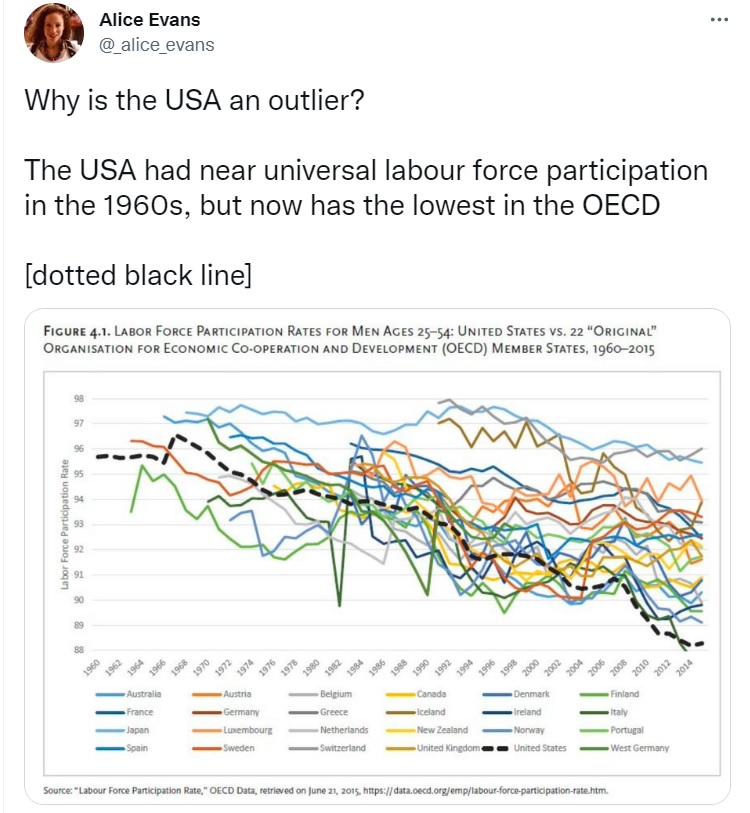
That, of course, was upended by Covid and the 2020 shutdowns. …That problem is the failure of the labor-force participation rate to return to normal. At approximately 62 percent, we sit 1.5 percentage points below pre-Covid levels… While 1.5 percentage points may seem like a small number, with a working-age population of about 260 million people, it means we are about 4 million people below the trend-line… And paradoxically, this comes with more job openings than we have people looking for jobs.

 may be to replace it with block grants and let state and local governments decide how to spend the money.
Through September 2021, we estimate that the federal government allocated $855,000 for each state or local government job-year preserved. Our baseline confidence interval allows us to rule out estimates of less than $433,000. Our estimates of effects on aggregate income and output are centered on zero and imply modest if any spillover effects onto the broader economy.

This program to save state and local government jobs cost in the range of $433,000 to $855,000 per job each year. This is as much as 5x more waste! …So how did the government spend more than $800,000 per job to save jobs which normally pay five figures? …a business engaging in an ineffective and wasteful policy like this would make a loss on each worker and go out of business. …government is particularly prone to generating these wasteful jobs. …Without a mechanism like profit and loss to evaluate the value of alternative options, we are left with a policy which spends nearly a million dollars to preserve a single job with a salary less than one tenth of that.


that has dramatically affected global economic activity… Fiscal positions are projected to be strongly hit by the crisis…once the crisis is over and the recovery firmly sets in, keeping public debt at high levels over the medium term is a source of vulnerability… The main objective of this paper is to contribute to the stabilisation vs. sustainability debate in the euro area by reviewing through the lens of large scale DSGE models the economic risks associated with regimes of high public debt.



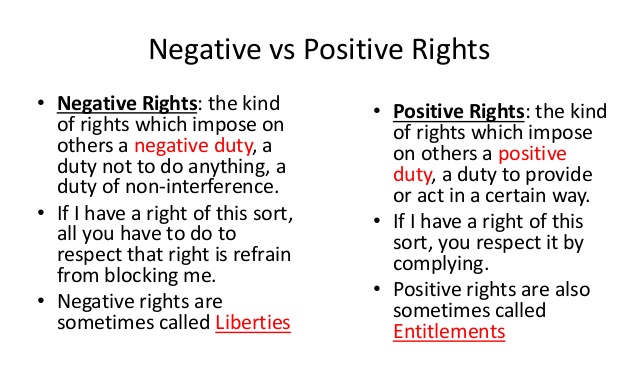
If you have five children and three apples and then declare that every child has a right to an apple of his own, then you have five children and three apples and some meaningless posturing — i.e., nothing in reality has changed, and you have added only rhetoric instead of adding apples. In the United States, we have so many doctors, so many hospitals and clinics, so many MRI machines, etc. This imposes real constraints on the provision of health care. If my doctor works 40 hours a week, does my right to health care mean that a judge can order him to work extra hours to accommodate my rights? For free? If I have a right to health care, how can a clinic or a physician charge me for exercising my right? If doctors and hospitals have rights of their own — for example, property rights in their labor and facilities — how is it that my rights supersede those rights?

that Americans are of widely different views on what a right is, how many we have, where rights come from, or why we have any in the first place. …if you need something, does that mean you have a right to it? If I require a kidney, do I have a right to one of yours? Is a right something that can or should be granted or denied by majority vote?





















 The Daily Hatch