The Incredible Steven Weinberg (1933-2021) – Sixty Symbols
—
In my January 30, 2019 letter to Dr. Weinberg I ask him about Darwin’s words: “Why, if species have descended from other species by insensibly fine gradations, do we not everywhere see innumerable transitional forms?…I will here only state that I believe the answer mainly lies in the record being incomparably less perfect than is generally supposed”
January 30, 2019
Steven Weinberg
The University of Texas at Austin
Department of Physics
2515 Speedway Stop C1600
Austin, TX 78712-1192
Dear Dr. Weinberg,
I know after reading TO EXPLAIN THE WORLD that you are a not only a great scientist but also a very good science historian. Therefore, I am sure you have read these words from Charles Darwin before:
Why, if species have descended from other species by insensibly fine gradations, do we not everywhere see innumerable transitional forms? Why is not all nature in confusion instead of the species being, as we see them, well defined?…But, as by this theory innumerable transitional forms must have existed, why do we not find them embedded in countless numbers in the crust of the earth? It will be much more convenient to discuss this question in the chapter on the Imperfection of the geological record; and I will here only state that I believe the answer mainly lies in the record being incomparably less perfect than is generally supposed;
—
How can you reconcile these words of Darwin with the missing transitional forms today?
I noticed in your book THIRD THOUGHTS in the 22nd chapter entitled “Writing About Science” that you stated concerning Darwin:
Darwin’s On the Origin of Species is a nearly unique example of a report of professional scientific research of the highest calibre that at the same time is at least implicitly a polemic – as Darwin said, “one long argument” – on a public issue, the grounds of religious belief. He permanently demolished the nearly universal supposition that divine intervention is needed to explain the capabilities of plants and animals. His book works as a polemic in part because it is wonderfully readable.
Dr. Weinberg, can you substantiate your claim that: He [Darwin] permanently demolished the nearly universal supposition that divine intervention is needed to explain the capabilities of plants and animals?
89. Two important arguments for Charles Darwin (1809-1882) and those he convinced have now been almost totally abandoned by evolutionists. The first involves vestigial organs, which (it was supposed) had served useful functions in an earlier stage of man’s evolutionary development, but which later became literally useless by the changes brought about through natural selection. Vestigial organs are like crutches one uses after being injured in an accident. They serve a purpose for a time, but when the leg is better the crutches are no longer needed. Certain organs were said to be “vestiges,” that is, leftovers from a previous stage in evolution. The simple problem with the argument is that as medical science has developed, most of these organs have been found to serve useful functions in the body.
A second important argument for Darwin and those he convinced is the dictum that “ontogeny recapitulates phylogeny.” This idea is that the human embryo goes through the stages of evolution inside the mother’s womb, resembling at one stage the fish and so on. The better we understand the embryo, however, the more dubious this argument is seen to be.
Yet, even if these two arguments have been largely given up, many still place their faith in the theory of an unbroken line from the molecule to man by chance. However, they are faced in modern discussions with at least two problems. First, the more fossil evidence we find, the more apparent it becomes that there have always been distinct breaks in the fossil record. Darwin admitted that the paleontological evidence in his day was slender, but, he said, as more is discovered the new evidence will support the hypothesis. This just has not happened.
The evidence of preman is sketchy, and recent discoveries in Africa and elsewhere have generated some difficult new problems in this area. But it is not just the so-called missing links between man and preman that constitute the problem, but all the missing links, right down the whole line. Not only are links missing; the chains themselves are missing. If one removes the speculative guesses, rather than links of different chains leading from simple to more complex organisms, one finds virtual explosions of mature life forms at different periods in geological time and many simple forms of life that remain unchanged for several millions of years up to their extinction or even to today.
The second major difficulty for today’s evolutionist is that there is no sufficient mechanism to explain how lower life forms can be transformed into higher ones, no matter how much time is allowed. Natural selection cannot bear this weight. Current genetic theories seem even to point to natural selection as working against the direction of evolution. Despite the unlikely possibility of mutations that are advantageous, natural selection seems to simplify the genetic endowment of any group rather than lead it to higher orders of complexity.
“Creationists claim there are no transitional fossils, aka missing links. Biologists and paleontologists, among others, know this claim is false,” according to a recent LiveScience article that then describes what it claims are 12 specific transitional form fossils.1 But do these examples really confirm Darwinism?
Charles Darwin raised a lack of transitional fossils as a possible objection to his own theory: “Why, if species have descended from other species by fine gradations, do we not everywhere see innumerable transitional forms?”2 Later in this chapter of his landmark book, he expressed hope that future discoveries would be made of transitional forms, or of creatures that showed some transitional structure—perhaps a half-scale/half-feather.
Although some creationists do say that “there are no transitional fossils,” it would be more accurate to state that there are no undisputed transitional forms. Although the article asserts that the fossil record “is full of them,” the reality is that it does not contain a single universally accepted transitional form. Every transitional fossil candidate has both proponents and doubters even among evolutionary “biologists and paleontologists.”
The first supposed transitional form offered in the report is Sahelanthropus. This 2001 discovery was first hailed as a transitional form in the ape-to-human line, but controversy over its transitional status immediately ensued. Brigitte Senut of the Natural History Museum in Paris was skeptical, saying that its skull features, “especially the [canine teeth],”3 were characteristic of female gorillas, not human-like gorillas. Senut and her colleagues also disputed that Sahelanthropus was even in the ancestry of humans at all: “To represent a valid clade, hominids must share unique defining features, and Sahelanthropus does not appear to have been an obligate biped [creature that walked on two feet].”4 In other words, Sahelanthropus is at best a highly disputed fossil of an extinct ape, having no clear transitional features.
LiveScience also listed a medium-neck-length fossil giraffe named Bohlinia and the “walking manatee” as transitional forms. However, Bohlinia is just variation within what is still clearly the giraffe kind and doesn’t answer the question, “Where did the giraffe kind come from?” Such variations within kinds do not refute the creation concept, but rather are predicted by it.5 And the “walking manatee” walked because it had fully formed, ready-to-walk legs, hips, nerves, and musculature. The article does not mention that this particular fossil is shown elsewhere to be a dead-end species, “transitioning” to nothing, according to evolutionists.6
The LiveScience article, borrowing from geologist Donald Prothero, also claimed that Moeritherium is “the ultimate transitional fossil,” the ancestor of elephants. This was an amphibious mammal, shaped like a hippo, with a mobile, muscular lip fused with its nostril. But it had none of the real characteristics of an elephant—not the trunk, size, tusks, nor the specialized weight-bearing knee joint structure.7
The “classic fossil of Archaeopteryx” is not a transitional form either, but was fully bird. Its “reptile-like” teeth and wing claws are found in some birds today.8 Many reptiles have no teeth, but nobody claims that they evolved from birds. And the discovery of a “frog-amander” has yet to be agreed upon as transitional by evolutionists. John Bolt, a curator at the Field Museum in Chicago, told National Geographic that “it is difficult to say for sure whether this creature was itself a common ancestor of the two modern groups, given that there is only one known specimen of Gerobatrachus, and an incomplete one at that.”9
Other extinct creatures had “shared features,” physical structures that are found in different kinds of living organisms. However, “shared features” are not transitional features, which is what Darwin needed. There is no scientific evidence to refute the idea that shared features were designed into creatures by a Creator who wisely formed them with the equipment to live in various shared habitats.
Fossils do reveal some truth about Darwin’s theory—they reveal that the same inconsistencies he noted between his theory and the fossil data persist, even after 150 years of frantic searches for elusive transitions.10Not only is there no single, undisputed transition, but real fossils reveal that animals were fully formed from the beginning.
Darwin, C. 1902. On The Origin of Species by Means of Natural Selection: or The Preservation of Favoured Races in the Struggle for Life, 6th Edition. New York: P. F. Collier & Son. 233.
Rose, K. D. and J. D. Archibald. 2005. The Rise of Placental Mammals: Origins and Relationships of the Major Extant Clades. Baltimore, MD: The Johns Hopkins University Press, 87.
On the Shoulders of Giants: Steven Weinberg and the Quest to Explain the…
—
Steven Weinberg Discussion (1/8) – Richard Dawkins
—-
Whatever Happened To The Human Race? (2010) | Full Movie | Michael Hordern
——
The Bill Moyers Interview – Steven Weinberg
How Should We Then Live (1977) | Full Movie | Francis Schaeffer | Edith …
Steven Weinberg Discussion (2/8) – Richard Dawkins
RESPONDING TO HARRY KROTO’S BRILLIANT RENOWNED ACADEMICS!!
Steven Weinberg – Dreams of a Final Theory
—
Steven Weinberg Discussion (3/8) – Richard Dawkins
—
Steven Weinberg, Author
How Should We Then Live | Season 1 | Episode 6 | The Scientific Age
—-
Steven Weinberg Discussion (4/8) – Richard Dawkins
I am grieved to hear of the death of Dr. Steven Weinberg who I have been familiar with since reading about him in 1979 in WHATEVER HAPPENED TO THE HUMAN RACE? by Dr. C. Everett Koop and Francis Schaeffer. I have really enjoyed reading his books and DREAMS OF A FINAL REALITY and TO EXPLAIN THE WORLD were two of my favorite!
C. Everett Koop
—-
Steven Weinberg Discussion (5/8) – Richard Dawkins
—
Francis Schaeffer : Reclaiming the World part 1, 2
The Atheism Tapes – Steven Weinberg [2/6]
—
The Story of Francis and Edith Schaeffer
—
Steven Weinberg – What Makes the Universe Fascinating?
and you will hear what far smarter people than I have to say on this matter. I agree with them.
Harry Kroto
_________________
Below you have picture of Dr. Harry Kroto:
______________
I have attempted to respond to all of Dr. Kroto’s friends arguments and I have posted my responses one per week for over a year now. Here are some of my earlier posts:
In the 1st video below in the 50th clip in this series are his words.
50 Renowned Academics Speaking About God (Part 1)
Another 50 Renowned Academics Speaking About God (Part 2)
A Further 50 Renowned Academics Speaking About God (Part 3)
_________________________________
Steven Weinberg: To Explain the World
I have a friend — or had a friend, now dead — Abdus Salam, a very devout Muslim, who was trying to bring science into the universities in the Gulf states and he told me that he had a terrible time because, although they were very receptive to technology, they felt that science would be a corrosive to religious belief, and they were worried about it… and damn it, I think they were right. It is corrosive of religious belief, and it’s a good thing too.
The John Lennon and the Beatles really were on a long search for meaning and fulfillment in their lives just like King Solomon did in the Book of Ecclesiastes. Solomon looked into learning (1:12-18, 2:12-17), laughter, ladies, luxuries, and liquor (2:1-2, 8, 10, 11), and labor (2:4-6, 18-20). He fount that without God in the picture all […]
______________ George Harrison Swears & Insults Paul and Yoko Lucy in the Sky with Diamonds- The Beatles The Beatles: I have dedicated several posts to this series on the Beatles and I don’t know when this series will end because Francis Schaeffer spent a lot of time listening to the Beatles and talking […]
The Beatles in a press conference after their Return from the USA Uploaded on Nov 29, 2010 The Beatles in a press conference after their Return from the USA. The Beatles: I have dedicated several posts to this series on the Beatles and I don’t know when this series will end because Francis […]
__________________ Beatles 1966 Last interview I have dedicated several posts to this series on the Beatles and I don’t know when this series will end because Francis Schaeffer spent a lot of time listening to the Beatles and talking and writing about them and their impact on the culture of the 1960’s. In this […]
_______________ The Beatles documentary || A Long and Winding Road || Episode 5 (This video discusses Stg. Pepper’s creation I have dedicated several posts to this series on the Beatles and I don’t know when this series will end because Francis Schaeffer spent a lot of time listening to the Beatles and talking and writing about […]
_______________ Francis Schaeffer pictured below: _____________________ I have included the 27 minute episode THE AGE OF NONREASON by Francis Schaeffer. In that video Schaeffer noted, ” Sergeant Pepper’s Lonely Hearts Club Band…for a time it became the rallying cry for young people throughout the world. It expressed the essence of their lives, thoughts and their feelings.” How Should […]
Crimes and Misdemeanors: A Discussion: Part 1 ___________________________________ Today I will answer the simple question: IS IT POSSIBLE TO BE AN OPTIMISTIC SECULAR HUMANIST THAT DOES NOT BELIEVE IN GOD OR AN AFTERLIFE? This question has been around for a long time and you can go back to the 19th century and read this same […]
____________________________________ Francis Schaeffer pictured below: __________ Francis Schaeffer has written extensively on art and culture spanning the last 2000years and here are some posts I have done on this subject before : Francis Schaeffer’s “How should we then live?” Video and outline of episode 10 “Final Choices” , episode 9 “The Age of Personal Peace and Affluence”, episode 8 […]
Love and Death [Woody Allen] – What if there is no God? [PL] ___________ _______________ How Should We then Live Episode 7 small (Age of Nonreason) #02 How Should We Then Live? (Promo Clip) Dr. Francis Schaeffer 10 Worldview and Truth Two Minute Warning: How Then Should We Live?: Francis Schaeffer at 100 Francis Schaeffer […]
___________________________________ Francis Schaeffer pictured below: ____________________________ Francis Schaeffer “BASIS FOR HUMAN DIGNITY” Whatever…HTTHR Dr. Francis schaeffer – The flow of Materialism(from Part 4 of Whatever happened to human race?) Dr. Francis Schaeffer – The Biblical flow of Truth & History (intro) Francis Schaeffer – The Biblical Flow of History & Truth (1) Dr. Francis Schaeffer […]
He who neglects discipline despises himself, but he who listens to reproof acquires understanding. (Proverbs 15:32)
Years ago my dear pastor friend, Harry Li, said something profound to me. He was asking for prayer that his life would not slip away from living in the fullness of Christ. “I have come to understand,” he said, “the discipline needed to be continually filled with the Holy Spirit.” I instantly resonated with that statement and it plowed through my mind for many days.
24/7
To let God have full control of our lives throughout a common day is unusual for most. It takes an intentional attention to Him that dials us in to His slightest instructions.
Those who are there know the subtleties of His voice so well that a word that is about to come out of their mouths that would grieve Him will be instantly abandoned. They understand His promptings so clearly that they are careful not to quench His Spirit by refusing to go where He desires. These are men and women who are beginning to experience the power of what it means to “pray without ceasing” because they are moving in continual, blessed communion with Jesus all day long.
HELPING OURSELVES
What the wise, inspired writer of Proverbs helps us to see is that such discipline helps us tremendously. If we neglect it we are hurting ourselves where we can least afford it.
There are tight parameters around those who would walk in unceasing communion with Him. Only those who desire it more than any other pleasures will achieve it. They are not allowed to indulge in sideways conversations and activities, wasting time with mindless pursuits.
It is not that they are legalistic, morose monks. In fact, just the opposite. They are filled with Divine, creative spontaneity, radical faith, deep peace, matured understanding, and unceasing joy. They have the best life. They know the blessed freedom of transparency and honesty. The settledness of authenticity inside themselves in God.
But they also understand how easy it is to slide into mere humanistic thinking and living. How quickly we can make a turn that diverts our path from walking by the Spirit to walking by the flesh.
There are some people—perhaps most—who do not want this tight restriction on their daily lives. But those who push through these objections and accept His discipline will find what their deepest soul has always longed to experience.
How to Be the Father of a Wise Child Proverbs 1:1-5, 20-22
HOW TO BE THE FATHER OF A WISE CHILD | PROVERBS 1:1-5, 20-22 | #1932 So what has happened in the last years? Well, prayer is out, policemen are in. Bibles are out, values clarification is in. The Ten Commandments are out, rape and armed robbery, gang warfare, murder and cheating are in. Instruction that tells us that we were created in the image of God is out, evolution is in. Corporal punishment is out, disrespect and rebellion is in. Traditional values are out and unwed motherhood is in. Abstinence is out and condoms and abortion are in. Learning is out and social engineering is in. History is out and revisionism is in. And the problem primarily, believe it or not, is with fathers. Arrogant fathers who fail to accept their responsibility. I want to talk to dads today, and I want to tell you how not to be the father of a fool. How to be the father of a wise child. Now go back to these three categories of persons that we looked at here in verse 22, and let me describe them more carefully and I think you’ll recognize some children that you know. First of all, let’s think of the ignorance of the simple. How is he described? Look if you will in Romans 1 verse 22, “How long ye simple ones will ye love simplicity?” That’s his first mark. He loves his simplicity. He enjoys being a child. He enjoys the carefree life. He doesn’t like any serious thoughts. One teenager said, “I am worried. My Dad slaves away at his job so I won’t have to need for a thing and so I can have a college education. My mom spends every day washing and ironing and picking up my things and looking after me. And she takes care of me when I’m sick.” His friend said, “You’re worried? What are you worried about?” He said, “I’m afraid they might try to escape.” The children just love having everything done for them, the carefree simple life. That’s the life of the simple.
HOW TO BE THE FATHER OF A WISE CHILD | PROVERBS 1:1-5, 20-22 | #1932 there, out there on the front porch is a guy 17 feet tall. You’re looking in his knee caps. And let’s say he has a voice like thunder. And he begins to talk to you and tell you what to do. My soul! Well, if he’s that big and sounds like that, one thing you sure do hope is that he’s gentle, don’t you? That’s what the children want out of their dad; somebody who’s gentle. Oh, they want a dad they can look up to. They want a dad who’s the strongest, wisest, smartest, fastest, richest, goodest dad. I know goodest is not a word. The best dad in all the world! But they want him to be gentle! Touch them, hug them, show other non-verbal language. Be transparent. Let them know of your fears, and your joys, and your disappointments, your failures, and your goals. They already know you’re not perfect; they just don’t want you to be a phony. And then, be available to them. Oh, l wish l had more time for that, but just take it as a priority that you’re going to be available to your child. You say, “Pastor Rogers, very frankly I’m not adequate for what you’ve just described.” I know you’re not. I’m not adequate. Listen to me, none of us has what it takes to be this kind of a dad or mom. That’s the reason we need Jesus isn’t it? That’s the reason we need the Lord. That’s the reason we’ve got to have Christ in our hearts! Because the Christian life is not difficult, it is impossible. So there’s only one who can do it and that’s Jesus. But He will do it in us and through us if we’ll let Him. So the best thing you can do for your children is to love God will all of your heart. Give your heart to Jesus. Let’s bow our heads in prayer. Heads are bowed and eyes are closed. If you would like to be saved today, to be a child of God, if you’d like to know that your sin is forgiven, if you would like to know that Heaven is your home, if you would like to have the power and wisdom that Jesus alone can give, I want to help you to invite Christ into your heart and trust Him. Would you pray like this? “Dear Lord, I need You. I need to be saved. I’m a sinner. My sin deserves judgment. But l need mercy, not judgment. I want You to forgive me, God. I want You to cleanse me. I want You to save me. Lord Jesus, You said if I would trust You, You would save me. I trust You right now, right this moment. I don’t ask for a sign. I don’t look for a feeling. I just stand on Your Word, and I receive You now as my Lord and Savior. Come into my heart, forgive my sin, save me Jesus.” Pray that prayer. Pray it. Pray it from your heart. “Save me, Jesus.” Pray it. Ask Him to save you. “Save me, Jesus.” Did you ask Him? By faith, pray this way, “Thank You for saving me, Lord Jesus. I receive it by faith, like a little child. You’re now my Lord and Savior. Give me the courage to make it public. In Your name I pray, Amen.”
Bipartisan Senate group says they are ‘confident‘ they have the votes necessary to codify same-sex marriage
By Daniella Diaz and Ali Zaslav, CNN
Updated 5:36 PM EST, Mon November 14, 2022
(CNN)The bipartisan group working on legislation to codify same-sex marriage has the votes needed for the bill to pass and is urging leadership to put it on the floor for a vote as soon as possible, multiple sources told CNN.
The bipartisan group, which includes GOP Sen. Rob Portman of Ohio, Democratic Sen. Tammy Baldwin of Wisconsin, GOP Sen. Susan Collins of Maine, Democratic Sen. Kyrsten Sinema of Arizona, and GOP Sen. Thom Tillis of North Carolina, said in a statement Monday that they “look forward to this legislation coming to the floor.”
“Through bipartisan collaboration, we’ve crafted commonsense language to confirm that this legislation fully respects and protects Americans’ religious liberties and diverse beliefs, while leaving intact the core mission of the legislation to protect marriage equality,” the senators said in the statement. “We look forward to this legislation coming to the floor and are confident that this amendment has helped earn the broad, bipartisan support needed to pass our commonsense legislation into law.”
Senate Majority Leader Chuck Schumer on Monday took procedural steps related to the same-sex marriage bill, setting up the first test vote for Wednesday.
“I’m going to set up the first procedural vote on legislation that will codify marriage equality into law. Members should expect the first vote on Wednesday,” he said.
“No American should ever be discriminated against because of who they love and passing this bill would secure much needed safeguards into federal law,” Schumer said.
In early September, Schumer vowed to bring the bill to the floor for a vote in “the coming weeks.”
“The Senate will hold a vote on the Respect for Marriage Act in the coming weeks, so that no American is discriminated against because of whom they love,” he said, adding that he hopes enough GOP senators join Democrats in support of passage.
But the bill’s supporters said in September that more time was needed to negotiate the issue with Republicans — and sought to delay any vote in the Senate until after the November midterm elections, which Schumer agreed to.
The bill will need at least 10 GOP Senate votes to overcome a filibuster and advance the legislation toward final passage.
This story has been updated with additional developments Monday.
This week, Roger Severino, Heritage’s Vice President of Domestic Policy and The Anderlik Fellow, breaks down the so called “Respect for Marriage Act.”
Michelle Cordero: From The Heritage Foundation, I’m Michelle Cordero, and this is Heritage Explains.
Cordero: This summer in the wake of the Supreme Court’s decision to overturn Roe v. Wade, Congress introduced the Respect For Marriage Act.
Speaker 2: As abortion rights advocates and Democratic lawmakers continue to protest the Supreme Court’s decision to overturn Roe v. Wade, the House is voting on a bill to protect marriage equality, out of fear the conservative high court could revisit other landmark decisions.
Speaker 3: It simply says each state will recognize the other state’s marriages and not deny a person the right to marry based on race, gender, sexual orientation.
Cordero: The legislation passed the House with the support of 47 Republicans. It now moves to the Senate where it would need just 10 Republican votes to pass.
Cordero: Final passage would mean states are no longer allowed to define and recognize marriage as a legal union between a man and a woman. Instead, they would be forced to recognize any union between two individuals, regardless of sex, as marriage. So does our country need a law to protect same-sex marriage? Did the Supreme Court decision in Dobbs v. Jackson threaten same-sex marriage? What about the Americans who believe that marriage is between a man and a woman? What would this bill mean for them?
Cordero: Today, Roger Severino, Heritage’s vice president of domestic policy and The Joseph C. and Elizabeth A. Anderlik Fellow, explains after this short break.
>>> Five days a week, two-episode formats, one mission, to deliver the news you care about and analysis on the biggest issues facing America. The Daily Signal Podcast brings you two episodes every day in the same podcast feed. Each morning, catch interviews with policy makers, leading experts and conservative activists as we discuss some of the greatest challenges facing our country and offer solutions for a brighter future. And every weekday at 5:00 PM we bring you the top news of the day. These are the headlines you care about. Subscribe to the Daily Signal Podcast wherever you get your podcast, so you never miss out on our morning interviews or evening news.
Cordero: Roger, thank you so much for joining us today.
Cordero: My first question is, does the country need a national law guaranteeing the right to gay marriage? Didn’t the Supreme Court already rule on this in Obergefell? And so what makes this different?
Severino: You’re right to point out that Obergefell is what’s governing today, and that’s not really going to be changing. I don’t see a scenario where the question presented there will be presented again anywhere in the near or intermediate future. So, what is left? Why is it that the liberals in Congress are pushing this to try to codify a version of same-sex marriage in federal law when all the rights and benefits that came from the Obergefell decision are required to be extended to same-sex couples? Nothing would change on the ground. So what’s left?
Severino: Well, to put salt on a wound and to target people of faith who disagree, there’s still a sizeable number of people in this country who believed the same thing that Barack Obama, Joe Biden and Hillary Clinton did just not so long ago, good number of years. But they believe that marriage is a union of one man and one woman. And those views deserve to be treated with respect. They come from honorable premises and they reflect the truth about marriage, which there has to be space for people to continue to express those beliefs, especially those of faith. And what this bill is designed to do is to tar such people as being unfit to be in polite society and out of the public square.
Cordero: Why is Congress taking this up now? Just to back up a little bit, what prompted this?
Severino: The Supreme Court decision in Dobbs dealt with abortion. And the abortion precedents are based on a foundation of sand, using substantive due process, which is a legal concept that’s not really found in the Constitution. Which liberal activist judges over the decades have used in all sorts of areas, including same-sex marriage, to invent new rights that are not actually in the Constitution.
Severino: So when Dobbs said abortion is one of these invented rights, we’re returning to the actual text of the Constitution, the majority went out of its way to say it was just limited to the question of abortion and human life. It’s a very unique circumstance. Justice Thomas, who’s an amazing jurist, wrote separately to say that we should reevaluate every case that was built on the invention of substantive due process, which included the same-sex marriage decision. Substantive due process is not the only source of rights under the Constitution, but it’s the one that’s been abused the most by the left. And it should be revisited.
Severino: That does not mean that there’s any vehicle that would come back and say, people who are currently in same-sex marriages, their benefits are at risk. That’s nonsense. So taking a very theoretical statement from one Justice on the court, the left has run with it to try to call some sort of alarmism about marriage and push this wedge issue for political purposes. Again, the practical effect if this becomes law, will have nothing to do with the benefits of same-sex couples. It’ll have everything to do with excluding people of faith from their tax-exempt statuses for houses of worship, from adoption agencies that believe that the best most conducive place for a child in placement would be with a married mother and father, and for those who contract or receive grants from the government who want to live according to the beliefs with respect to marriage. Those are the groups who are going to be targeted. And this law would actually create this bludgeon, which is a private right of action, which means individuals could sue on their own in federal court to hound these groups. And that’s really the object of this stunt.
Cordero: So to be clear, there’s no risk currently present that legally married same-sex couples could lose any of their benefits or legal status?
Severino: Absolutely. There’s no risk that they would lose any benefit. The federal government adopted and adapted to the Obergefell decision. All the state’s governments did. That’s now the status quo. That would not change by this law. And I see no case coming forward that would change that either. So this is really targeted at exclusion for political purposes.
Cordero: Yes. If the bill passes, it’s just an assurance to the left.
Severino: No, it’s not. Assurance is not needed. That’s the thing. What it is a weapon for the left that will be used to go after people of faith. And this how it works. When you have an established national policy endorsed by Congress through the representatives, that carries a tremendous amount of weight for all sorts of other areas, especially when we’re talking about civil rights laws.
Severino: We had a case from the ’80s with respect to tax-exempt status for a violator of a civil rights law. They were deemed not to be a charity, and they lost their tax exempt status. And the Supreme Court said, because there’s an established national policy against that type of discrimination that you lose your tax-exempt status and there’s no recourse. That same tool will be deployed against people who believe that marriage is a union of one man and one woman, which is very different than other types of beliefs that are protected by statutory anti-discrimination laws.
Severino: This is a view, again, that’s based on love of what is the best most conducive way for human flourishing in raising children and supporting the institution that has been proven most effective at that. And that is having the mother and father together in an enduring lifelong commitment so that they’re there for any children that their union conceives.
Cordero: All right. So, where does the legislation stand now? Are there Republicans who actually want to vote for this?
Severino: There were some Republicans that voted for it in the House. And it passed the House, which caught a lot of folks in the marriage movement a bit flatfooted. We have been fighting most recently over the definition of what is a man and what is a woman, with the transgender ideology in sports, in medicine, intimate facilities, et cetera. But the left was very crafty. They latched onto the pretext of what happened in the Dobbs decision to say that somehow same-sex marriage benefits are at risk when they are not, and pushed a vote on this bill to codify same-sex marriage in about 27 hours from Introduction to vote, which gave few … It was a sneak attack move and caught a lot of people by surprise. People did not think through the ramifications, and some people voted for who I think now regret it in the House.
Severino: In the Senate, there’s been some more time to actually present the arguments that nothing’s done on the ground, none of these benefits are at risk. What this is targeting people of faith and putting a big target on their backs. And now we’ve seen the tide shift. What they thought was going to be a quick walk through the Senate has been stymied. People have been asking hard questions. And if the Democrats in Congress thought that there was a way to get a majority vote for this bill, they would’ve very likely done it before the elections because this is really a political ploy, is what it is. They don’t have that, and that is very comforting for the marriage movement. It doesn’t mean we’re out of the woods yet. There’s still the possibility of some action during the lame duck because the sponsors, Baldwin and Collins, have said they’re going to push for it after the election.
Severino: That’s a sign of weakness. If they could have moved it, they would’ve moved it before the election. There’s a risk that in lame duck, when people are heading out the door, they will violate some of their campaign promises. Many folks were elected on a platform supporting marriage, and they may be tempted on the way out to try to get in the good graces of the cocktail circuit and violate their promises. They should not do that. People should keep to the right policies.
Severino: The right policy here is that the last word from Congress, it should be left undisturbed. And Obergefell handles already the issues of benefits for same-sex couples which are not at risk. So Congress should not go out of its way to slap people of faith, and especially not when Congress is going out the door in a lame duck session.
Cordero: Roger, thank you so much for sitting down with me to break down this important issue. We’d love to have you back on, but hopefully Congress drops this and we don’t have to.
Severino: Hopefully they will.
Cordero: Thank you for listening. And as always, if you loved this episode or found it helpful, we would love you forever if you shared it with a friend or on social media. It’s the best way to grow our audience. Tim is up next week. We’ll see you then.
Senate Majority Leader Chuck Schumer, pictured marching during the 2022 New York City Pride March on June 26 in New York City, is looking for 10 Republicans to endorse a national same-sex marriage bill. (Photo: Roy Rochlin/Getty Images)
When the Supreme Court delivered its blow to marriage in 2015, burning down three dozen state laws and tearing up 50 million ballots, the GOP’s reaction was straightforward. Outrage. With a handful of exceptions, the response that echoed across the two coasts was a collective “How dare they?”
As far as Republicans were concerned, what the five justices did on that June day was a betrayal of the people, our system of government, and the pillar that’s upheld society since the beginning of time. “It’s an injustice,” they railed.
Now, seven years later, they finally have a chance to prove it. The question is: will they?
Keep in mind that when the Supreme Court redefined marriage for America in 2015, we became only the 23rd country out of 195 to do so, and only one of seven to have it imposed on us by a court. Still today, there are only 33 countries that have gone down this path of redefining marriage.
But as time has gone on, Republicans seem to have gotten increasingly comfortable letting the court decide an issue they argued was rightly theirs. That shock was driven home Tuesday when 47 House members walked away from the party’s principles and platform to cast a vote for same-sex marriage. The list included a surprising number of our movement’s friends, men and women we never mistook as anything but conservative.
Now, Senate Majority Chuck Schumer, D-N.Y., smelling blood in the water, is eager to drive an even deeper wedge—insisting he’ll move forward with his own vote if he can find 10 Republicans foolish enough to endorse it.
Twenty-four hours later, at least four Republicans have taken the bait, walking into a political trap that could very well eat into the margins the GOP needs in November. To no one’s surprise, liberal Republican Sens. Susan Collins (Maine) and Lisa Murkowski (Alaska) are on board, as well as outgoing Sen. Rob Portman (Ohio). But the real bombshells started dropping Wednesday, when more conservatives seemed to be testing the waters on a radical issue that seven years ago they vehemently opposed. Names like Roy Blunt (Mo.), Joni Ernst (Iowa), and Thom Tillis (N.C.) started popping up in news stories as possible “yes”es.
Just as astounding, only nine Republicans have jumped to marriage’s defense: Sens. Bill Cassidy, R-La., John Cornyn, R-Texas, Ted Cruz, R-Texas, Lindsey Graham, R-S.C., Josh Hawley, R-Mo., Jim Inhofe, R-Okla., James Lankford, R-Okla., who spoke to Punchbowl News, Marco Rubio, R-Fla., and Roger Wicker, R-Miss.
A whopping 37, many of them pro-family stalwarts, are either “undecided” or unresponsive, CNN reports. It’s an eerie silence from dozens of Republicans, who—just seven years ago—left zero doubt about where they stood.
Then-Congresswoman Marsha Blackburn, R-Tenn.:“Today’s Supreme Court decision is a disappointment. I have always supported traditional marriage. Despite this decision, no one can overrule the truth about what marriage actually is—a sacred institution between a man and a woman. I have always believed marriage is between one man and one woman and I will continue to work to ensure our religious beliefs are protected and people of faith are not punished for their beliefs.”
Sen. Roy Blunt, R-Mo.: “I’m disappointed in this decision. My view is that family issues in Missouri like marriage, divorce, and adoption should be decided by the people of Missouri.”
Sen. Shelley Moore Capito, R-W.Va.: “West Virginia’s greatest strength is our people. Regardless of our differences, we care for our neighbors, friends, and communities in need. Acknowledging that we have differing views, the Supreme Court has made its decision. While I would have preferred that the Supreme Court leave this decision to the states, it is my hope that all West Virginians will move forward and continue to care for and respect one another.”
Sen. Steve Daines, R-Mont.: “The Court is overriding the will of the people of Montana and numerous other states that have defined marriage as between one man and one woman. I believe marriage is between one man and one woman.”
Sen. Joni Ernst, R-Iowa: “I am disappointed by the Supreme Court’s decision and its failure to recognize the freedom of our states to make their own decisions about their respective marriage laws. While it is my personal belief that marriage is between one man and one woman, I maintain that this is an issue best handled at the state level.”
Sen. Chuck Grassley, R-Iowa: “Traditional marriage has been a pillar of our society for thousands of years—one that has remained constant across cultures, even with the rise and fall of nations. I believe marriage is between one man and one woman. Marriage is a sacred institution. Its definition should not be subject to the whims of the Supreme Court where five justices appointed to interpret the Constitution instead imposed social and political values inconsistent with the text of the Constitution and the framers’ intent. Today’s decision robs the right of citizens to define marriage through the democratic process.”
Sen. Mike Lee, R-Utah: “Today, five justices took a vital question about the future of American society out of the public square, imposing the views of five unelected judges on a country that is still in the midst of making up its mind about marriage. That is unfortunate, but it is not the end of the discussion, as Americans of good faith who believe that marriage is the union of a man and a woman will continue to live as witnesses to that truth.”
Then-Senate Majority Leader Mitch McConnell, R-Ky.: “I disagree with the court’s ruling. Regardless of one’s personal view on this issue, the American people, through the democratic process, should be able to determine the meaning of this bedrock institution in our society.”
Sen. Rand Paul, R-Ky.: “I believe in old-fashioned, traditional marriage. But I don’t really think the government needs to be too involved with this.”
Former Presidential Candidate Mitt Romney, R-Utah: “I believe that marriage is a relationship between a man and a woman, and that’s because I believe the ideal setting for raising a child is where there’s a mother and a father in the home. Other people have differing views and I respect that, whether that’s in my party or in the Democratic Party. But these are very personal matters. My hope is that when we discuss things of this nature, we show respect for people who have differing views.”
Sen. Mike Rounds, R-S.D.: “Today’s ruling is a blow to state’s rights. I believe states have a constitutional role in setting their own policy on marriage. Marriage is between a man and a woman, and traditional families play an important role in the fabric of our society.”
Sen. Ben Sasse, R-Neb.: “Today’s ruling is a disappointment to Nebraskans who understand that marriage brings a wife and husband together so their children can have a mom and dad. The Supreme Court once again overstepped its constitutional role by acting as a super-legislature and imposing its own definition of marriage on the American people rather than allowing voters to decide in the states. As a society, we need to celebrate marriage as the best way to provide stability and opportunity for kids. As President Obama has said, there are good people on both sides of the issue. I hope we all can agree that our neighbors deserve the freedom to live out their religious convictions.”
Sen. Tim Scott, R-S.C.: “I continue to believe that marriage is between one man and one woman. The Supreme Court’s overreach into decisions that should be made by states and the people living and voting in them is disappointing. Moving forward, we must ensure families and religious institutions across America are not punished for exercising their right to their own personal beliefs regarding the traditional definition of marriage.”
Sen. John Thune, R-S.D.: “The court has issued its opinion, but on this particular issue, I do not agree with its conclusion. I support traditional marriage.”
Sen. Pat Toomey, R-Pa.: “Today, the Supreme Court has ruled that all states must recognize same-sex marriage. Understandably, many people will celebrate this decision. While I disagree with it, I acknowledge the Supreme Court’s ruling as the law of the land.”
What’s changed? Certainly not the significance of marriage—or the Constitution. Not the party’s platform or the role of states’ rights. If anything’s changed, it’s the ferocious war being waged against our children’s innocence, religious freedom, parents, and human biology.
What’s changed is that we have a Republican Party willing to go to the mat for sports but seemingly unwilling to stand up for an institution whose redefinition has ignited a firestorm of persecution in America—the same redefinition that’s at the bitter root so many evils we’re fighting today in school classrooms, public libraries, our daughters’ locker rooms.
Seven years from now, will we be saying that those issues don’t matter? That the world has “moved on?” That we know someone who’s transgender, and the only way we can love them is to hand society over to their delusions?
If Republicans want to stick their finger in the cultural winds to decide where they stand on timeless truths, then they are throwing away everything the American people have come to respect about today’s party—their courage, their common sense, their conviction.
Maybe these senators think that linking arms with the left makes them seem more compassionate or contemporary. But real leaders don’t vote out of fear or political calculus. They don’t take their cues from the courts or public opinion.
They do what’s right, no matter what it costs them. That’s what voters respect. And that’s what voters, who have stood by this party’s values, deserve.
The Daily Signal publishes a variety of perspectives. Nothing written here is to be construed as representing the views of The Heritage Foundation.
Have an opinion about this article? To sound off, please email letters@DailySignal.com and we’ll consider publishing your edited remarks in our regular “We Hear You” feature. Remember to include the url or headline of the article plus your name and town and/or state.
Want to keep up with the 24/7 news cycle? Want to know the most important stories of the day for conservatives? Need news you can trust? Subscribe to The Daily Signal’s email newsletter. Learn more >>
Richard Dawkins tweeted on 7/20/2022: The other excellent article by Jerry Coyne today. Some anthropologists want to stop identifying the sex of ancient skulls because we don’t know how they self-identified!
This article about conflicts in anthropology involving gender and ethnicity comes from the website of Jonathan Turley, whose name I’d heard before but whose work and politics I didn’t know. His Wikipedia bio doesn’t give much clue into his politics (to be truthful, I didn’t look hard for it, since it seemed irrelevant to the story), I wondered simply because he cites a right-wing website below.
But Turley is no weirdo: here’s one bit from his Wikipedia bio:
Turley holds the Shapiro Chair for Public Interest Law at The George Washington University Law School, where he teaches torts, criminal procedure, and constitutional law. He is the youngest person to receive an academic chair in the school’s history. He runs the Project for Older Prisoners (POP), the Environmental Law Clinic, and the Environmental Legislation Project.
I am assuming, then, that what he describes and quotes is accurate, and will give my views accordingly. Here’s the article at hand, which relates to the last article we had about ethnicity (which, of course, reflects ancestry). Click screenshot to read:
The conservative site College Fix quotes various academics in challenging the identification of gender and notes the campaign of the Trans Doe Task Force to “explore ways in which current standards in forensic human identification do a disservice to people who do not clearly fit the gender binary.”
Let’s take sex and ancestry separately. Turley’s prose is indented.
On gender and sex:
University of Kansas Associate Professor Jennifer Raff argued in a paper, “Origin: A Genetic History of the Americas,” that there are “no neat divisions between physically or genetically ‘male’ or ‘female’ individuals.” Her best selling book has been featured on various news outlets like MSNBC.
. . . However, Raff is not alone. Graduate students like Emma Palladino have objected that “the archaeologists who find your bones one day will assign you the same gender as you had at birth, so regardless of whether you transition, you can’t escape your assigned sex.”
Well, given that sex is pretty close to a complete binary in humans, and is reflected and diagnosable in our bones bones—hence “Lucy“, A. afarensis, was female and “Turkana Boy“, H. ergaster was male—you determine biological sex from skeletons, not gender.
Is that a problem? I don’t see how. Even if our hominin relatives or ancestors did have concepts of gender beyond male and female, there are genuine scientific questions to be answered by studying biological sex from ancient remains. What was the ratio of males to females in various places, and if it differed much from 50:50, why? If someone’s remains are associated with items, like Ötzi the hunter (actually a mummy), one can conclude something about ancient cultures and the possibility of differential sex roles. Is it important for scientists to debate whether Ötzi identified himself as a “they/them” given that we’ll never know the answer? Or are we forbidden to inspect the genitals? (He was a biological male).
Now it is of sociological value to determine whether our ancestors identified as “men and women” and saw only two genders, but if we can’t do that, it’s ludicrous to say that we shouldn’t identify remains on the basis of biological sex—a lot easier to do! I won’t give a list of scientific questions that can be addressed by knowing the sex of a fossil hominin, but there are lots, and yet some anthropologists want to stop all such research because hominins may not have had gender roles that matched their biological sex.
On ancestry and ethnicity:
Likewise for ancestry. It’s sometimes possible to guess one’s ethnicity from skeletal morphology, but it’s much more accurate to do DNA sequencing. (Sequencing of fossil DNA can tell us both biological sex and which group of either ancient or modern humans you most resemble genetically.) Yet some anthropologists want to stop that research, too. Turley:
Professors Elizabeth DiGangi of Binghamton University and Jonathan Bethard of the University of South Florida have also challenged the use of racial classifications in a study, objecting that “[a]ncestry estimation contributes to white supremacy.” The authors write that “we use critical race theory to interrogate the approaches utilized to estimate ancestry to include a critique of the continued use of morphoscopic traits, and we assert that the practice of ancestry estimation contributes to white supremacy.”
The professors refer to the practice as “dangerous” and wrote in a letter to the editor that such practices must be changed in light of recent racial justice concerns.
“Between the devastating COVID-19 pandemic and the homicides of numerous Black Americans at the hands of law enforcement officials, we have all been reminded about the fragility of life, and the failures of our society to live up to the ideals enshrined in the foundational documents which established the United States of America over two centuries ago. Tackling these failures seems overwhelming at times; however, changes can be enacted with candid and reflexive discussions about the status quo. In writing this letter, we direct our comments to the forensic anthropology community in the United States in hopes of sparking a discussion about the long-standing practice of ancestry estimation and changes that are frankly long overdue.”
Once again, research is supposed to be squelched for ideological reasons. Yet estimating ancestry of remains can answer lots of interesting questions. One, for example involves DNA sequencing of Neanderthals and modern humans. I would consider these to be different, long-diverged ethnic groups of a single species, not different species, for they could interbreed where they lived in the same area and also produce fertile hybrids.
That’s just a guess, but without sequencing their DNA, we wouldn’t know not only that they hybridized, but also that many of us still carry some ancient DNA from Neanderthals. Where did the Denisovans belong? (We don’t know whether they were a different species of hominin from modern humans or simply an “ethnic group.”) What about H. erectus? Did they die out without issue, or are they related to any modern populations? Do any of their genes still hang around in H. sapiens? (I don’t think we’ll answer these questions.)
It is the sequencing of DNA of people from different geographic areas (“races” if you will, but call them whatever you want) that has helped us unravel the story of human migration, how many times we left Africa and when, and when different groups established themselves in places like Australia and Polynesia, or crossed the Bering Strait into North America. DNA and estimation of ancestry has immensely enriched the story of human evolution and migration. That’s all from “ancestry estimation”, and you don’t even need a concept of “race” to answer these questions—only a concept of “ancestry” and “relatedness”. Nor does this research contribute to white supremacy, though of course some racists may coopt it.
In the interests of woke ideology, in other words, some anthropologists want to shut down two promising lines of research. I call that misguided and, indeed, crazy. If you despise white supremacy like most of us do, you don’t get rid of it it by banning anthropological genetics. If you want sympathy for people whose gender doesn’t match their biological sex, you don’t get it by stopping researchers from determining the biological sex of ancient human remains.
As the Wicked Witch of the West said, “Oh, what a world! What a world!”
Made for Comedy Ricky Gervais has 50 year old plumber choose to identify as a 8 year old girl (Plus HUMANIST award taken away from Richard Dawkins)
After Life 2 – Man identifies as an 8 year old girl
4:20 am 4/10/21
In 2015, Rachel Dolezal, a white chapter president of NAACP, was vilified for identifying as Black. Some men choose to identify as women, and some women choose to identify as men. You will be vilified if you deny that they literally are what they identify as.
Discuss.
—
4/12/21 12:46pm
I do not intend to disparage trans people. I see that my academic “Discuss” question has been misconstrued as such and I deplore this. It was also not my intent to ally in any way with Republican bigots in US now exploiting this issue .
American Humanist Association criticises academic for comments about identity using ‘the guise of scientific discourse’, and withdraws its 1996 honourAlison FloodTue 20 Apr 2021 08.56 EDT
The American Humanist Association has withdrawn its humanist of the year award from Richard Dawkins, 25 years after he received the honour, criticising the academic and author for “demean[ing] marginalised groups” using “the guise of scientific discourse”.
The AHA honoured Dawkins, whose books include The Selfish Gene and The God Delusion, in 1996 for his “significant contributions” in communicating scientific concepts to the public. On Monday, it announced that it was withdrawing the award, referring to a tweet sent by Dawkins earlier this month, in which he compared trans people to Rachel Dolezal, the civil rights activist who posed as a black woman for years.
“In 2015, Rachel Dolezal, a white chapter president of NAACP, was vilified for identifying as Black,” wrote Dawkins on Twitter. “Some men choose to identify as women, and some women choose to identify as men. You will be vilified if you deny that they literally are what they identify as. Discuss.”
Dawkins later responded to criticism, writing: “I do not intend to disparage trans people. I see that my academic ‘Discuss’ question has been misconstrued as such and I deplore this. It was also not my intent to ally in any way with Republican bigots in US now exploiting this issue.”
Among his critics was Alison Gill, vice president for legal and policy at American Atheists and a trans woman. She said Dawkins’ comments reinforce dangerous and harmful narratives. She said: “Given the repercussions for the millions of trans people in this country, in this one life we have to live, as an atheist and as a trans woman, I hope that Professor Dawkins treats this issue with greater understanding and respect in the future.”
In 2015, Dawkins also wrote: “Is trans woman a woman? Purely semantic. If you define by chromosomes, no. If by self-identification, yes. I call her “she” out of courtesy.”
In a statement from its board, the AHA said that Dawkins had “over the past several years accumulated a history of making statements that use the guise of scientific discourse to demean marginalised groups, an approach antithetical to humanist values”.
The evolutionary biologist’s latest comment, the board said, “implies that the identities of transgender individuals are fraudulent, while also simultaneously attacking Black identity as one that can be assumed when convenient”, while his “subsequent attempts at clarification are inadequate and convey neither sensitivity nor sincerity”.
“Consequently, the AHA Board has concluded that Richard Dawkins is no longer deserving of being honored by the AHA, and has voted to withdraw, effective immediately, the 1996 Humanist of the Year award,” said the organisation.
The Guardian has reached out to Dawkins for comment.
Last year, the author JK Rowling returned an award given to her by the Robert F Kennedy Human Rights organisation, after its president, Kennedy’s daughter Kerry Kennedy, criticised her views on transgender issues. “I am deeply saddened that RFKHR has felt compelled to adopt this stance, but no award or honour, no matter my admiration for the person for whom it was named, means so much to me that I would forfeit the right to follow the dictates of my own conscience,” said Rowling in a statement at the time.
Tribute to Horace Barlow
Steven Dakin @StevenDakin
Elegant & important psychophysics from @TheKwonLab. Retinal ganglion cell dysfunction (not death) limits contrast sensitivity in glaucoma. Sidenote: credit to late/great Horace Barlow for the equivalent noise paradigm.
—-
November 2, 2019
November 2, 2019
Dr. Horace Barlow, Cambridge CB3 9AX, England
Dear Dr. Barlow,
I have enjoyed reading the book OUTGROWING GOD by your friend Richard Dawkins, and he certainly has much respect for you great grandfather Charles Darwin. However, he has not studied the Bible as extensively as Darwin did because many of Dawkins’ criticisms of the Bible don’t seem to be valid. For instance, on page 53 he states:
Genesis says Abraham owned camels, but archaeological evidence shows that the camel was not domesticated until many centuries after Abraham
Some Biblical texts, such as Genesis 12 and 24, claim that Abraham owned camels. Yet archaeological researchshows that camels were not domesticated in the land of Canaan until the 10th century B.C.E.—about a thousand years after the time of Abraham. This seems to suggest that camels in these Biblical stories are anachronistic.
Abraham’s Camels. Did camels exist in Biblical times? Camels appear with Abraham in some Biblical texts—and depictions thereof, such as The Caravan of Abram by James Tissot, based on Genesis 12. When were camels first domesticated? Although camel domestication had not taken place by the time of Abraham in the land of Canaan, it had in Mesopotamia. Photo: PD-1923.Mark W. Chavalas explores the history of camel domestication in his Biblical Views column “Did Abraham Ride a Camel?”published in the November/December 2018 issue of Biblical Archaeology Review. Although he agrees that camel domestication likely did not take place in Canaan until the 10th century B.C.E., he notes that Abraham’s place of origin was not Canaan—but Mesopotamia. Thus, to ascertain whether Abraham’s camels are anachronistic, we need to ask: When were camels first domesticated in Mesopotamia?
Chavalas explains that the events in the Biblical accounts of the Patriarchs and Matriarchs (Abraham and Sarah, Isaac and Rebekah, and Israel and Rachel) have been traditionally dated to c. 2000–1600 B.C.E. (during the Middle Bronze Age). Camels appear in Mesopotamian sources in the third millennium B.C.E.—before this period. However, the mere presence of camels in sources does not necessarily mean that camels were domesticated.
The question remains: When were camels domesticated in Mesopotamia?
In his examination of camel domestication history, Chavalas looks at a variety of textual, artistic, and archaeological sources from Mesopotamia dating to the third and second millennia. We will examine five of these sources here:
1. One of the first pieces of evidence for camel domestication comes from the site of Eshnunna in modern Iraq: A plaque from the mid-third millennium shows a camel being ridden by a human.
2. Another source is a 21st-century B.C.E. text from Puzrish-Dagan in modern Iraq that may record camel deliveries.
3. Third, an 18th-century B.C.E. text (quoting from an earlier third millennium text) from Nippur in modern Iraq says, “the milk of the camel is sweet.” Chavalas explains why he thinks this likely refers to a domesticated camel:
Having walked in many surveys through camel herds in Syria along the Middle Euphrates River, I believe that this text is describing a domesticated camel; who would want to milk a “wild camel”? At the very least, the Bactrian camel was being used for dairy needs at this time.
4. Next, an 18th-century B.C.E. cylinder seal depicts a two-humped camel with riders. Although this seal’s exact place of origin is unknown, it reputedly comes from Syria, and it resembles other seals from Alalakh (a site in modern Turkey near Turkey’s southern border with Syria).
5. Finally, a 17th-century text from Alalakh includes camels in a list of domesticated animals that required food.
Although domesticated camels may not have been widespread in Mesopotamia in the second millennium, these pieces of evidence show that by the second millennium, there were at least some domesticated camels. Thus, camel domestication had taken place in Mesopotamia by the time of Abraham. Accordingly, Chavalas argues that the camels in the stories of Abraham in Genesis are not anachronistic.
Learn more about the history of camel domestication in Mark W. Chavalas’s Biblical Views column “Did Abraham Ride a Camel?” published in the November/December 2018 issue of Biblical Archaeology Review.——————
Subscribers: Read the full Biblical Views column “Did Abraham Ride a Camel?” by Mark W. Chavalas in the November/December 2018 issue of Biblical Archaeology Review.
—-
Francis Schaeffer noted concerning Charles Darwin’s loss of faith:
This is very sad. He lies on his bunk and the Beagle tosses and turns and he makes daydreams, and his dreams and hopes are that someone would find in Pompeii or some place like this, an old manuscript by a distinguished Roman that would put his stamp of authority on it, which would be able to show that Christ existed. This is undoubtedly what he is talking about. Darwin gave up this hope with great difficulty.
Dr. Barlow you have an advantage of 150 years over your great grandfather and the archaeologist’s spade has continued to dig. Take a look at this piece of evidence from the book WHATEVER HAPPENED TO THE HUMAN RACE? by Francis Schaeffer and C. Everett Koop:
TRUTH AND HISTORY (chapter 5 of WHATEVER HAPPENED TO THE HUMAN RACE?)
In the previous chapter we saw that the Bible gives us the explanation for the existence of the universe and its form and for the mannishness of man. Or, to reverse this, we came to see that the universe and its form and the mannishness of man are a testimony to the truth of the Bible. In this chapter we will consider a third testimony: the Bible’s openness to verification by historical study.
Christianity involves history. To say only that is already to have said something remarkable, because it separates the Judeo-Christian world-view from almost all other religious thought. It is rooted in history.
The Bible tells us how God communicated with man in history. For example, God revealed Himself to Abraham at a point in time and at a particular geographical place. He did likewise with Moses, David, Isaiah, Daniel and so on. The implications of this are extremely important to us. Because the truth God communicated in the Bible is so tied up with the flow of human events, it is possible by historical study to confirm some of the historical details.
It is remarkable that this possibility exists. Compare the information we have from other continents of that period. We know comparatively little about what happened in Africa or South America or China or Russia or even Europe. We see beautiful remains of temples and burial places, cult figures, utensils, and so forth, but there is not much actual “history” that can be reconstructed, at least not much when compared to that which is possible in the Middle East.
When we look at the material which has been discovered from the Nile to the Euphrates that derives from the 2500-year span before Christ, we are in a completely different situation from that in regard to South America or Asia. The kings of Egypt and Assyria built thousands of monuments commemorating their victories and recounting their different exploits. Whole libraries have been discovered from places like Nuzu and Mari and most recently at Elba, which give hundreds of thousands of texts relating to the historical details of their time. It is within this geographical area that the Bible is set. So it is possible to find material which bears upon what the Bible tells us.
The Bible purports to give us information on history. Is the history accurate? The more we understand about the Middle East between 2500 B.C. and A.D. 100, the more confident we can be that the information in the Bible is reliable, even when it speaks about the simple things of time and place.
TRUTH AND HISTORY (chapter 5 of WHATEVER HAPPENED TO THE HUMAN RACE?, under footnote #94)
So the story goes on. We have stopped at only a few incidents in the sweep back to the year 1000 B.C. What we hope has emerged from this is a sense of the historical reliability of the Bible’s text. When the Bible refers to historical incidents, it is speaking about the same sort of “history” that historians examine elsewhere in other cultures and periods. This borne out by the fact that some of the incidents, some of the individuals, and some of the places have been confirmed by archaeological discoveries in the past hundred years has swept away the possibility of a naive skepticism about the Bible’s history. And what is particularly striking is that the tide has built up concerning the time before the year 1000 B.C. Our knowledge about the years 2500 B.C. to 1000 B.C. has vastly increased through discoveries sometimes of whole libraries and even of hitherto unknown people and languages.
There was a time, for example, when the Hittite people, referred to in the early parts of the Bible, were treated as fictitious by critical scholars. Then came the discoveries after 1906 at Boghaz Koi (Boghaz-koy) which not only gave us the certainty of their existence but stacks of details from their own archives!
The author as publicist. Darwin, above, wrote to influential scientists worldwide, begging their attention to his new book. This is from his letter to Asa Gray. The photograph of Darwin is by his son, William Erasmus Darwin, and was sent to Asa Gray in 1861. It, and Darwin’s letter, are in the Gray Herbarium. ARCHIVES AT THE GRAY HERBARIUM, HARVARD UNIVERSITY
Of the several thousand letters that charles darwin wrote during his lifetime, few were more important than one he sent on September 5, 1857, to Harvard botanist Asa Gray. Darwin wrote in his semi-legible scrawl: “I will enclose the briefest abstract of my notions on the means by which nature makes her species….I ask you not to mention my doctrine.” Asa Gray thus became the first person in North America to learn about Darwin’s ideas on natural selection.
Darwin revealed his theory to the general public two years later in his revolutionary book, On the Origin of Species. Its publication prompted fierce debate in this country. On one side arose Gray, Darwin’s friend and supporter, a taciturn man best known as a cataloguer and collector of plants. In opposition stood Gray’s Harvard colleague Louis Agassiz, a charming, brilliant lecturer and the most popular scientist in the land. Harvard thus became the most important battleground in the initial American engagement with natural selection.
~~~
Asa Gray was Fisher professor of natural history at Harvard from 1842 till 1873. Although he was originally trained as a medical doctor, his passion was plants. His reputation as a taxonomist helped him establish one of America’s premier collections of dried plants, which contained material from collectors who had traveled in the United States and around the world. By the early 1860s, his personal herbarium totaled almost 200,000 specimens.
Gray and Darwin’s epistolary relationship began in 1855, when Darwin wrote Gray. As usual with Darwin, he was humble, and he wanted information. The Englishman asked the American about alpine plants in the United States and their relationship to plants in Europe and Asia. During the next few years, Gray used his vast collection to provide much-needed information on two topics essential to Darwin’s theory–the distribution of plants, and variation in wild, non-domesticated species.
Gray in 1865. His copy of Origin, with marginalia, is in the Gray Herbarium. ARCHIVES AT THE GRAY HERBARIUM, HARVARD UNIVERSITY
Despite Gray’s world renown as a botanist, his colleague Louis Agassiz, professor of zoology and geology, commanded most of the scientific attention in Cambridge. Respected by scientists and liked by the general public, Agassiz was also friends with the Boston literati, among them Ralph Waldo Emerson, James Russell Lowell, and Oliver Wendell Holmes. Of Swiss origin, Agassiz had made his mark in science in 1840 with his best-known book, Études sur les glaciers. In it he proposed the then-unorthodox theory that great glaciers had once covered and carved northern Europe.
Agassiz first came to this country in 1846, to present a series of lectures in Boston. As many as 5,000 people a night attended his talks on subjects as diverse as fossil fishes, the Ice Age, and embryology. In 1847, Harvard wooed him away from Europe. The most important North American scientific periodical of the day, the American Journal of Science, reported, “Every scientific man in America will be rejoiced to hear so unexpected a piece of news.” In the following years, Agassiz continued to make science accessible to the public through lectures, books, and articles.
~~~
On November 11, 1859, Darwin began the arduous task of gaining support for the imminent publication of Origin of Species. (Not that sales mattered to him financially; he was independently wealthy. Nevertheless, he would receive two-thirds of the net profit!) Like any modern author, he asked his publisher, John Murray of London, to send presentation copies to potential reviewers.
He also wrote personal notes to 11 of the most important scientists of the day. The majority of these letters acknowledged that the recipient would not support Darwin’s theory of natural selection. In one letter he wrote: “How savage you will be, if you read it, and how you will long to crucify me alive!!” But Darwin also tried to push the veracity of his theory by writing later in the same letter, “I am fully convinced that you will become year after year, less fixed in your belief in the immutability of species.”
Two of Darwin’s November 11 letters crossed the Atlantic to Harvard. One went to Asa Gray and the other to Louis Agassiz. The letters are now preserved in the Gray Herbarium Library and the Houghton Library.
Agassiz’s letter is short, only three sentences. Darwin knew that Agassiz would not agree with his theory. He wrote: “As the conclusions at which I have arrived on several points differ so widely from yours,…I hope that you will at least give me credit, however erroneous you may think my conclusion, for having earnestly endeavored to arrive at the truth.” Agassiz did not reply to Darwin, who did not send him another letter until 1868.
In contrast, the letter to Gray (at top right) covers almost two full pages. Again Darwin is humble, and seeks out Gray’s approval, but he is also proud of the book. “If ever you do read it, & can screw out the time to send me…however short a note…I should be extremely grateful,” he writes. In a postscript Darwin adds “…I cannot possibly believe that a false theory would explain so many classes of facts.”
Agassiz, about 1861, and a page from his copy, at the Museum of Comparative Zoology. ERNST MAYR LIBRARY OF THE MUSEUM OF COMPARATIVE ZOOLOGY, HARVARD UNIVERSITY
Agassiz and Gray received their copies of Origin in late December. Gray peppered the margins of the small green book with “Yes,” “Well put,” and numerous exclamation points. He clearly approved of Darwin’s overall tone and reasoning. On the other hand, Agassiz’s marginalia range from “This is truly monstrous” to “The mistake of Darwin…” to “A sentence likely to mislead!”– notes that he elaborated on later in his more formal criticism of Darwin and his theory.
Professionally, the two men generally kept their comments about each other’s reaction to Darwin’s theory on a high level. Personally, they remained distant, indulging in a few caustic remarks to friends. On January 5, 1860, for example, Gray wrote a detailed letter about the American response to Origin of Species to the English botanist Joseph Hooker. In describing his own feelings, Gray wrote: “It is crammed full of most interesting matter–thoroughly digested–well expressed–close, cogent; and taken as a system it makes out a better case than I had supposed possible.” Several paragraphs later he described a much different response from Agassiz: “…when I saw him last, [he] had read but part of it. He says it is poor–very poor!! (entre nous). The fact [is] he growls over it much like a well cudgeled dog [and] is very much annoyed by it.”
~~~
Agassiz launched his public attack on Darwin at the American Academy of Arts and Sciences, Boston’s most important learned society. He told the group gathered on January 10, 1860, that modern species and fossil species had no genetic relationship. This tenet was central to the theory of special creationism, which held that God had created each and every species in its current location. Species did not change through time, but they did become extinct. Great catastrophes, like floods or the glaciers described by Agassiz in Études, had periodically destroyed life on earth. The fossil record indicated at least 48 successive periods of change, according to Agassiz.
He clarified his position a month later and condemned one of Darwin’s pivotal themes–variation within species. America’s foremost zoologist denied the “existence of varieties, properly so called, in the animal kingdom.” Instead, Agassiz viewed variation within species as merely a stage of growth or a cycle of development. God had created the species; therefore they were immutable. In addition to this line of attack, Agassiz categorically rejected Darwin’s use of domesticated animals as an example of change over time.
By mid summer Agassiz had clearly defined his position: he stood resolutely on the side of special creationism and against Darwin. Agassiz realized that some would question his statements, but knew that “after mature examination of the facts they would be generally received.” In July 1860, he concluded his review of Origin of Species in the American Journal of Science by writing, “I shall therefore consider the transmutation theory a scientific mistake, untrue in facts, unscientific in its methods, and mischievous in its tendency.”
Gray began his public defense of Darwin, also in the American Journal of Science, with a positive review of Origin in the March 1860 issue. He wrote that Darwin’s ideas on variation within plants and animals were “general, and even universal.” He supported the English naturalist’s use of domesticated animals as examples, and believed that Darwin’s various associations of facts “[seem] fair and natural.”
Although Gray vigorously defended Darwin and natural selection in this review, in a three-part series in the Atlantic Monthly, and throughout the springtime debates at Boston’s learned societies, he, like Agassiz, maintained a link between a supreme power and natural selection. Gray did not support Agassiz’s brand of special creationism, but did believe “that variation has been led along certain beneficial lines” by the hands of a creator. Natural selection occurred, but God played some not clearly defined role in the process.
Darwin never supported these statements on the role of a higher power. He wrote Gray: “I grieve to say that I am in an utterly hopeless muddle. I cannot think that the world, as we see it, is the result of chance; & yet I cannot look at each separate thing as a result of Design.”
Darwin did, however, realize the importance of Gray’s thesis in the developing battle between religion and science. (The bishop of Oxford popularized this debate in June 1860 by asking Darwin’s main supporter in England, Thomas Huxley, “Was it through his grandfather or his grandmother
that he claimed his descent from a monkey?”) With Darwin’s assistance, Gray’s Atlantic pieces, which contained his most cogent explanations for natural selection and Design, reached England as a small pamphlet bearing the Darwin-suggested motto, “Natural Selection not inconsistent with Natural Theology.”
Despite Gray’s strong religious feelings, he was at heart a scientist. Unlike Agassiz, he could separate his faith and his science. Gray ultimately concluded that “The work [Origin] is a scientific one…and by its science it must stand or fall.”
~~~
For Gray, 1860 was the most important year of the Darwinian debate. He would continue occasionally to write and speak out on the subject, but never as vigorously as during the first eight months of the decade. The controversy had taken him away from his beloved plants. He returned to his work of identifying and cataloguing, and to the next edition of his and John Torrey’s Manual of Botany. In 1864 he donated his library and plant specimens to Harvard; they became the nucleus of the Gray Herbarium. He continued to correspond with Darwin, whose work began to address many botanical problems, including carnivorous plants. They remained friends until Darwin died in 1882.
As a committed anti-evolutionist, Agassiz continued to oppose Darwin for the rest of his career. He presented three lecture courses and published 21 articles and three books between 1861 and 1866 extolling special creationism. None of these, however, were in professional or scientific journals. Despite his growing popularity with the general public, Agassiz’s influence in the scientific debate over evolution faded. When he died, in 1873, he was one of the last, and certainly the most important, of the scientists who subscribed to special creationism.
Ironically, Agassiz is one of the main reasons that Harvard remains a center for evolutionary studies. The worldwide scope of the animal and fossil collections at the Museum of Comparative Zoology, which Agassiz established and directed, combined with the specimens housed in the Gray Herbarium, facilitate ongoing research into questions of natural selection and speciation. In spite of their differences, both Gray and Agassiz shared a profound respect for the scientific method. Their rigorous examination of plants and animals laid the groundwork for the eventual acceptance of Charles Darwin’s theory of evolution.
Freelance writer David B. Williams likes to explore the historical as well as the natural parts of natural history. His “Lessons in Stone,” a geological tour of Harvard buildings, appeared in the November-December 1997 issue.
I found Dr. Barlow to be a true gentleman and he was very kind to take the time to answer the questions that I submitted to him. In the upcoming months I will take time once a week to pay tribute to his life and reveal our correspondence. In the first week I noted:
Today I am posting my first letter to him in February of 2015 which discussed Charles Darwin lamenting his loss of aesthetic tastes which he blamed on Darwin’s own dedication to the study of evolution. In a later return letter, Dr. Barlow agreed that Darwin did in fact lose his aesthetic tastes at the end of his life.
In the third week, I look at the life of Brandon Burlsworth in the November 28, 2016 letter and the movie GREATER and the problem of evil which Charles Darwin definitely had a problem with once his daughter died.
On the 4th letter to Dr. Barlow looks at Darwin’s admission that he at times thinks that creation appears to look like the expression of a mind. Francis Schaeffer discusses Darwin’s own words in 1968 sermon at this link.
My Fifth Letter concerning Charles Darwin’s views on MORAL MOTIONS Which was mailed on March 1, 2017. Francis Schaeffer discusses Darwin’s own words concerning moral motions in Schaeffer’s 1968 sermon at this link.
6th letter on May 1, 2017 in which Charles Darwin’s hopes are that someone would find in Pompeii an old manuscript by a distinguished Roman that would show that Christ existed! Francis Schaeffer discusses Darwin’s own words concerning the possible manuscript finds in Schaeffer’s 1968 sermon at this link
7th letter on Darwin discussing DETERMINISM dated 7-1-17 . Francis Schaeffer discusses Darwin’s own words concerning determinism in Schaeffer’s 1968 sermon at this link.
8th letter responds to Dr. Barlow’s letter to me concerning Francis Schaeffer discussing Darwin’s own words concerning chance in Schaeffer’s 1968 sermon at this link.
9th letter in response to 11-22-17 letter I received from Professor Horace Barlow was mailed on 1-2-18 and included Charles Darwin’s comments on William Paley. Francis Schaeffer discusses Darwin’s own words concerning William Paley in Schaeffer’s 1968 sermon at this link.
10th letter in response to 11-22-17 letter I received from Professor Horace Barlow was mailed on 2-2-18 and includes Darwin’s comments asking for archaeological evidence for the Bible! Francis Schaeffer discusses Darwin’s own words concerning His desire to see archaeological evidence supporting the Bible’s accuracy in Schaeffer’s 1968 sermon at this link.
11th letterI mailed on 3-2-18 in response to 11-22-17 letter from Barlow that asserted: It is also sometimes asked whether chance, even together with selection, can define a “MORAL CODE,” which the religiously inclined say is defined by their God. I think the answer is “Yes, it certainly can…” Francis Schaeffer discusses Darwin’s own words concerning A MORAL CODE in Schaeffer’s 1968 sermon at this link.
12th letter on March 26, 2018 breaks down song DUST IN THE WIND “All we do, crumbles to the ground though we refuse to see, Dust in the Wind, All we are is dust in the wind, Don’t hang on, Nothing lasts forever but the Earth and Sky, It slips away, And all your money won’t another minute buy.”
In 13th letter I respond to Barlow’s November 22, 2017 letter and assertion “He {Darwin} clearly did not lose his sense of the VALUE of TRUTH, and of the importance of FOREVER SEARCHING it out.”
In 14th letter to Dr. Barlow on 10-2-18, I assert: “Let me demonstrate how the Bible’s view of the origin of life fits better with the evidence we have from archaeology than that of gradual evolution.”
In 15th letter in November 2, 2018 to Dr. Barlow I quote his relative Randal Keynes Who in the Richard Dawkins special “The Genius of Darwin” makes this point concerning Darwin, “he was, at different times, enormously confident in it,
and at other times, he was utterly uncertain.”
In 16th Letter on 12-2-18 to Dr. Barlow I respond to his letter that stated, If I am pressed to say whether I think belief in God helps people to make wise and beneficial decisions I am bound to say (and I fear this will cause you pain) “No, it is often very disastrous, leading to violence, death and vile behaviour…Muslim terrorists…violence within the Christian church itself”
17th letter sent on January 2, 2019 shows the great advantage we have over Charles Darwin when examining the archaeological record concerning the accuracy of the Bible
In the 18th letter I respond to the comment by Charles Darwin: “My mind seems to have become a kind of machine for grinding general laws out of large collections of facts, but why this should have caused the atrophy of that part of the brain alone, on which the higher tastes depend, I cannot conceive….The loss of these tastes is a loss of happiness.” Francis Schaeffer discusses Darwin’s own words on his loss of aesthetic tastes in Schaeffer’s 1968 sermon at this link.
In 19th letter on 2-2-19 I discuss Steven Weinberg’s words, But if language is to be of any use to us, we ought to try to preserve the meanings of words, and “God” historically has not meant the laws of nature. It has meant an interested personality.
In the 20th letter on 3-2-19 I respond to Charles Darwin’s comment, “At the present day the most usual argument for the existence of an intelligent God is drawn from the deep [#1] inward conviction and feelings which are experienced by most persons...Formerly I was led by feelings such as those…to the firm conviction of the existence of God, and of the immortality of the soul. In my Journal I wrote that [#2] whilst standing in the midst of the grandeur of a Brazilian forest, ‘it is not possible to give an adequate idea of the higher feelings of wonder, admiration, and devotion which fill and elevate the mind.’ I well remember my conviction that there is more in man than the mere breath of his body. [#3] But now the grandest scenes would not cause any such convictions and feelings to rise in my mind. It may be truly said that I am like a man who has become colour-blind.” Francis Schaeffer discusses Darwin’s own words concerning his former belief in God in Schaeffer’s 1968 sermon at this link.
In the 21st letter on May 15, 2019 to Dr Barlow I discuss the writings of Francis Schaeffer who passed away the 35 years earlier on May 15, 1985. Francis Schaeffer discusses Darwin’s own words at length in Schaeffer’s 1968 sermon at this link.
In the 22nd letter I respond to Charles Darwin’s words, “I can indeed hardly see how anyone ought to wish Christianity to be true; for if so the plain language of the text seems to show that the men who do not believe…will be everlastingly punished. And this is a damnable doctrine.” Francis Schaeffer discusses Darwin’s own words about hell in Schaeffer’s 1968 sermon at this link.
In 23rd postcard sent on 7-2-19 I asked Dr Barlow if he was a humanist. Sir Julian Huxley, founder of the American Humanist Association noted, “I use the word ‘humanist’ to mean someone who believes that man is just as much a natural phenomenon as an animal or plant; that his body, mind and soul were not supernaturally created but are products of evolution, and that he is not under the control or guidance of any supernatural being.”
In my 24th letter on 8-2-19 I quote Jerry Bergman who noted Jean Louis Agassiz (1807-1873) is regarded as one of the greatest scientists of the 19th century. A founding father of the modern American scientific establishment, Agassiz was also a lifelong opponent of Charles Darwin’s theory of evolution. Agassiz “ruled in professorial majesty at Harvard’s Museum of Comparative Zoology.”
In my 25th letter on 9-2-19 I respond to Charles Darwin’s assertion, “This argument would be a valid one if all men of ALL RACES had the SAME INWARD CONVICTION of the existence of one God; but we know that this is very far from being the case.” Francis Schaeffer discusses Darwin’s own words concerning MORAL MOTIONS in Schaeffer’s 1968 sermon at this link.
In my 26th letteron 10-2-19 I quoted Bertrand Russell’s daughter’s statement, “I believe myself that his whole life was a search for God…. Indeed, he had first taken up philosophy in hope of finding proof of the evidence of the existence of God … Somewhere at the back of my father’s mind, at the bottom of his heart, in the depths of his soul there was an empty space that had once been filled by God, and he never found anything else to put in it”
In my 27th letter on 11-2-19 I disproved Richard Dawkins’ assertion, “Genesis says Abraham owned camels, but archaeological evidence shows that the camel was not domesticated until many centuries after Abraham.” Furthermore, I gave more evidence indicating the Bible is historically accurate.
and you will hear what far smarter people than I have to say on this matter. I agree with them.
Harry Kroto
__________________________
There are 3 videos in this series and they have statements by 150 academics and scientists and I hope to respond to all of them. Wikipedia notes Horace Basil BarlowFRS was a British visual neuroscientist.
In 1953 Barlow discovered that the frog brain has neurons which fire in response to specific visual stimuli. This was a precursor to the work of Hubel and Wiesel on visual receptive fields in the visual cortex. He has made a long study of visual inhibition, the process whereby a neuron firing in response to one group of retinal cells can inhibit the firing of another neuron; this allows perception of relative contrast.
In 1961 Barlow wrote a seminal article where he asked what the computational aims of the visual system are. He concluded that one of the main aims of visual processing is the reduction of redundancy. While the brightnesses of neighbouring points in images are usually very similar, the retina reduces this redundancy. His work thus was central to the field of statistics of natural scenes that relates the statistics of images of real world scenes to the properties of the nervous system.
Barlow and his co-workers also did substantial work in the field of factorial codes. The goal was to encode images with statistically redundant components or pixels such that the code components are statistically independent. Such codes are hard to find but highly useful for purposes of image classification etc.
His comments can be found on the 3rd video and the 128th clip in this series. Below the videos you will find his words.
50 Renowned Academics Speaking About God (Part 1)
Another 50 Renowned Academics Speaking About God (Part 2)
A Further 50 Renowned Academics Speaking About God (Part 3)
_______________
Interview of Horace Barlow – part 1
Published on Jun 18, 2014
Interviewed and filmed by Alan Macfarlane on 5 March 2012
______________________
Interview of Horace Barlow – part 2
Horace Barlow’s quote taken from interview with Alan Macfarlane:
HAS RELIGION EVER BEEN IMPORTANT TO YOU? IS IT IMPORTANT TO YOU? No, it is not important to me. Saying you don’t believe in God is a very foolish thing to say as it doesn’t explain why so many people talk about it, there has got to be more to it than that; also I think one has to respect what some godly people say and some of the things they do; I wish one could make more sense of it but I don’t think the godly people have done a very good job; I was never baptized or confirmed so have never been a practitioner, and I don’t miss it; DO YOU THINK THAT SCIENCE HAS DIS-PROVEN RELIGION AS DAWKINS ARGUES? I think it [science] provides some hope of acting rationally to handle the social and political problems we have to deal with on a personal level and one a worldwide level. Religion is a way of perpetuating a way of thought that might have otherwise been lost, and I imagine that is fine.
Dr. Barlow’s only three solid claims in this response to Alan Macfarlane is that science is #1 the best help today with our social problems,(which is in the original clip), #2 Saying you don’t believe in God (position of atheism) is foolish, and #3 we need an explanation for why so many people talk about [God.]
My response to #1 is to look at how the secular humanists have messed up so many things in the past and I include Barlow’s personal family friend Margaret Mead in that. My responses to #2 and #3 were both covered in my earlier response to Roald Hoffmann.
(Roald Hoffmann is a Nobel Prize winner who I have had the honor of corresponding with in the past. Pictured below)
(This July 1933 photo shows [left to right] anthropologist Gregory Bateson with Margaret Mead)
Horace Barlow’s words from interview conducted by Alan Macfarlane:
I don’t ever remember going to Bateson’s house in Granchester as a child; William Bateson’s wife was a friend of my mother’s; when Gregory Bateson was out in Bali he met Margaret Mead; Beatrice Bateson, his mother, felt she was too old to go out and inspect her so she sent my mother instead; she flew off in an Imperial Airlines plane and we saw her off from Hendon; that must have been 1937-8; my mother got on very well with Margaret Mead – she was not altogether convinced by her, but very impressed by her breadth of knowledge and energy; she came and stayed with us many times; I was even more sceptical than my mother and thought she was a very impressive person; Gregory was born 1904 and my mother, in 1886, so there was quite a big age difference between them; I never got on close intellectual terms with Gregory even though we were to some extent interested in the same sort of thing, both in cybernetics and psychology, and his ideas were always interesting; however, my model of a scientist was taken from my mother and not from Gregory; my mother was interested in genetics and the paper for which she was famous was on the reproductive system in plants like cowslips; my mother reasoned like a scientist whereas Gregory was a guru – he liked to think things out for himself; he obviously influenced many others too; I saw him once or twice when I went to Berkeley
Postscript:
I was sad to see that Jon Stewart is stepping down from the DAILY SHOW so I wanted to include one of the best clips I have ever seen on his show and it is a short debate between the brilliant scientists Edward J. Larson (an evolutionist), William A. Dembski (an Intelligent Design Proponent), and then he threw in a nutball in for laughs, Ellie Crystal (a metaphysical theorist). Dembski gives several great examples of design and it reminded me of many of the words of Darwin show above in my letter to Horace Barlow.
William Dembski on The Jon Stewart Show
Uploaded on Nov 15, 2010
Wednesday September 14, 2005 – Jon Stewart’s “Evolution, Schmevolution” segment with panelists Edward J. Larson (an evolutionist), William A. Dembski (an Intelligent Design Proponent), and Ellie Crystal (a metaphysical theorist).
I have gone back and forth and back and forth with many liberals on the Arkansas Times Blog on many issues such as abortion, human rights, welfare, poverty, gun control and issues dealing with popular culture. Here is another exchange I had with them a while back. My username at the Ark Times Blog is Saline […]
On March 17, 2013 at our worship service at Fellowship Bible Church, Ben Parkinson who is one of our teaching pastors spoke on Genesis 1. He spoke about an issue that I was very interested in. Ben started the sermon by reading the following scripture: Genesis 1-2:3 English Standard Version (ESV) The Creation of the […]
At the end of this post is a message by RC Sproul in which he discusses Sagan. Over the years I have confronted many atheists. Here is one story below: I really believe Hebrews 4:12 when it asserts: For the word of God is living and active and sharper than any two-edged sword, and piercing as far as the […]
In today’s news you will read about Kirk Cameron taking on the atheist Stephen Hawking over some recent assertions he made concerning the existence of heaven. Back in December of 1995 I had the opportunity to correspond with Carl Sagan about a year before his untimely death. Sarah Anne Hughes in her article,”Kirk Cameron criticizes […]
In the Wall Street Journal, Andy Kessler explains that smaller government is the recipe for more growth.
Winston Churchill…said: “We contend that for a nation to try to tax itself into prosperity is like a man standing in a bucketand trying to lift himself up by the handle.” The U.S. should heed that advice… economic growth is going to come from efficient supply chains and productivity in manufacturing in the U.S. Tax andspending cuts are the cure. …Republicans must resist the urge to subsidize higher energy costs and instead help slay inflation and bring back a strong, productive economy.
Let’s look at some new academic research bolstering Kessler’s argument.
Megha JainAishwarya Nagpal, and Abhay Jain published a study last year in the South Asia Journal of Macroeconomics and Public Finance.
The key findings deal with the Armey-Rahn Curveand can be found in the abstract.
The current study attempts to examine the linkage between government (public) spending and economic growth in the broader framework of selected South Asian Nations (SANs), BRICS and other emerging nations by using two sets of empirical modelling over the period 2007–2016 by using inverted U-shaped hypothesis, propounded by Armey curve (1995).…The key findings signify the existence of an inverted U-shaped relationship for the selected data set of emerging nations and, therefore, support the Armey curve hypothesis. The projected threshold (tipping) levels (as a percentage of GDP) are 24.31% for the government total expenditures (GTotExp), 12.92% for consumption spending (GConExp) and 7.11% for investment spending (GInvExp). It has been observed that a rise in the public spending (size) resulted in a substantial…decrease…in the growth rate when the public spending was…after…the optimal threshold level, indicating a non-monotonic association.
For what it’s worth, I think the study is wrong and that the growth-maximizing level of government spending is much lower than 24.3 percent of economic output.
But since total government spending in the United States now consumes about 40 percent of GDP, at least we can all agree that there will be more prosperity if America’s fiscal burden is dramatically reduced.
If we ever bring the spending burden back down to 24.3 percent of economic output, we can then figure out whether the ultimate goal is even lower (as it was for much of America’s history).
There is one point from the study that merits further attention. The authors estimated not only the growth-maximizing level of total spending, but also how much the government should spend on “consumption” and “investment” outlays (an issue I addressed last month).
Here’s a chart from the study showing that consumption outlays should be less than 13 percent of economic output.
P.S. If you want to watch videos that address the growth-maximizing size of government, click here, here, here, here, and here.
P.P.S. Ironically, the case for smaller government is bolstered by research from normally left-leaning international bureaucracies such as the OECD, World Bank, ECB, and IMF.
March 31, 2021
President Biden c/o The White House
1600 Pennsylvania Avenue NW
Washington, DC 20500
Dear Mr. President,
Please explain to me if you ever do plan to balance the budget while you are President? I have written these things below about you and I really do think that you don’t want to cut spending in order to balance the budget. It seems you ever are daring the Congress to stop you from spending more.
“The credit of the United States ‘is not a bargaining chip,’ Obama said on 1-14-13. However, President Obama keeps getting our country’s credit rating downgraded as he raises the debt ceiling higher and higher!!!!
Washington Could Learn a Lot from a Drug Addict
Just spend more, don’t know how to cut!!! Really!!! That is not living in the real world is it?
Making more dependent on government is not the way to go!!
Why is our government in over 16 trillion dollars in debt? There are many reasons for this but the biggest reason is people say “Let’s spend someone else’s money to solve our problems.” Liberals like Max Brantley have talked this way for years. Brantley will say that conservatives are being harsh when they don’t want the government out encouraging people to be dependent on the government. The Obama adminstration has even promoted a plan for young people to follow like Julia the Moocher.
Imagine standing a baby carrot up next to the 25-story Stephens building in Little Rock. That gives you a picture of the impact on the national debt that federal spending in Arkansas on Medicaid expansion would have, while here at home expansion would give coverage to more than 200,000 of our neediest citizens, create jobs, and save money for the state.
Here’s the thing: while more than a billion dollars a year in federal spending would represent a big-time stimulus for Arkansas, it’s not even a drop in the bucket when it comes to the national debt.
Currently, the national debt is around $16.4 trillion. In fiscal year 2015, the federal government would spend somewhere in the neighborhood of $1.2 billion to fund Medicaid expansion in Arkansas if we say yes. That’s about 1/13,700th of the debt.
It’s hard to get a handle on numbers that big, so to put that in perspective, let’s get back to the baby carrot. Imagine that the height of the Stephens building (365 feet) is the $16 trillion national debt. That $1.2 billion would be the length of a ladybug. Of course, we’re not just talking about one year if we expand. Between now and 2021, the federal government projects to contribute around $10 billion. The federal debt is projected to be around $25 trillion by then, so we’re talking about 1/2,500th of the debt. Compared to the Stephens building? That’s a baby carrot.
______________
Here is how it will all end if everyone feels they should be allowed to have their “baby carrot.”
How sad it is that liberals just don’t get this reality.
While living in Europe in the 1760s, Franklin observed: “in different countries … the more public provisions were made for the poor, the less they provided for themselves, and of course became poorer. And, on the contrary, the less was done for them, the more they did for themselves, and became richer.”
Alexander Fraser Tytler, Lord Woodhouselee(15 October 1747 – 5 January 1813) was a Scottish lawyer, writer, and professor. Tytler was also a historian, and he noted, “A democracy cannot exist as a permanent form of government. It can only exist until the majority discovers it can vote itself largess out of the public treasury. After that, the majority always votes for the candidate promising the most benefits with the result the democracy collapses because of the loose fiscal policy ensuing, always to be followed by a dictatorship, then a monarchy.”
[Jefferson affirms that the main purpose of society is to enable human beings to keep the fruits of their labor.— TGW]
To take from one, because it is thought that his own industry and that of his fathers has acquired too much, in order to spare to others, who, or whose fathers have not exercised equal industry and skill, is to violate arbitrarily the first principle of association, “the guarantee to every one of a free exercise of his industry, and the fruits acquired by it.” If the overgrown wealth of an individual be deemed dangerous to the State, the best corrective is the law of equal inheritance to all in equal degree; and the better, as this enforces a law of nature, while extra taxation violates it.
[From Writings of Thomas Jefferson, ed. Albert E. Bergh (Washington: Thomas Jefferson Memorial Association, 1904), 14:466.]
_______
Jefferson pointed out that to take from the rich and give to the poor through government is just wrong. Franklin knew the poor would have a better path upward without government welfare coming their way. Milton Friedman’s negative income tax is the best method for doing that and by taking away all welfare programs and letting them go to the churches for charity.
_____________
_________
Thank you so much for your time. I know how valuable it is. I also appreciate the fine family that you have and your commitment as a father and a husband.
Sincerely,
Everette Hatcher III, 13900 Cottontail Lane, Alexander, AR 72002, ph 501-920-5733
We got to act fast and get off this path of socialism. Morning Bell: Welfare Spending Shattering All-Time Highs Robert Rector and Amy Payne October 18, 2012 at 9:03 am It’s been a pretty big year for welfare—and a new report shows welfare is bigger than ever. The Obama Administration turned a giant spotlight […]
We need to cut Food Stamp program and not extend it. However, it seems that people tell the taxpayers back home they are going to Washington and cut government spending but once they get up there they just fall in line with everyone else that keeps spending our money. I am glad that at least […]
Government Must Cut Spending Uploaded by HeritageFoundation on Dec 2, 2010 The government can cut roughly $343 billion from the federal budget and they can do so immediately. __________ Liberals argue that the poor need more welfare programs, but I have always argued that these programs enslave the poor to the government. Food Stamps Growth […]
Milton Friedman – The Negative Income Tax Published on May 11, 2012 by LibertyPen In this 1968 interview, Milton Friedman explained the negative income tax, a proposal that at minimum would save taxpayers the 72 percent of our current welfare budget spent on administration. http://www.LibertyPen.com Source: Firing Line with William F Buckley Jr. ________________ Milton […]
Dan Mitchell Commenting on Obama’s Failure to Propose a Fiscal Plan Published on Aug 16, 2012 by danmitchellcato No description available. ___________ After the Welfare State Posted by David Boaz Cato senior fellow Tom G. Palmer, who is lecturing about freedom in Slovenia and Tbilisi this week, asked me to post this announcement of his […]
Is President Obama gutting the welfare reform that Bill Clinton signed into law? Morning Bell: Obama Denies Gutting Welfare Reform Amy Payne August 8, 2012 at 9:15 am The Obama Administration came out swinging against its critics on welfare reform yesterday, with Press Secretary Jay Carney saying the charge that the Administration gutted the successful […]
Thomas Sowell – Welfare Welfare reform was working so good. Why did we have to abandon it? Look at this article from 2003. The Continuing Good News About Welfare Reform By Robert Rector and Patrick Fagan, Ph.D. February 6, 2003 Six years ago, President Bill Clinton signed legislation overhauling part of the nation’s welfare system. […]
Uploaded by ForaTv on May 29, 2009 Complete video at: http://fora.tv/2009/05/18/James_Bartholomew_The_Welfare_State_Were_In Author James Bartholomew argues that welfare benefits actually increase government handouts by ‘ruining’ ambition. He compares welfare to a humane mousetrap. —– Welfare reform was working so good. Why did we have to abandon it? Look at this article from 2003. In the controversial […]
Thomas Sowell If the welfare reform law was successful then why change it? Wasn’t Bill Clinton the president that signed into law? Obama Guts Welfare Reform Robert Rector and Kiki Bradley July 12, 2012 at 4:10 pm Today, the Obama Department of Health and Human Services (HHS) released an official policy directive rewriting the welfare […]
I have been writing President Obama letters and have not received a personal response yet. (He reads 10 letters a day personally and responds to each of them.) However, I did receive a form letter in the form of an email on July 10, 2012. I don’t know which letter of mine generated this response so I have […]
“Dancing with the Stars” (DWTS) is a very popular show. I have only watched it a little, but I am a big fan of Chynna Phillips. I love a lot of her music.
Actress and singer Chynna Phillips has proven to also be a skilled dancer and a faithful Christian on “Dancing with the Stars” as she has openly expressed her faith live on air.
Formerly a member of Wilson Phillips, she is the daughter of The Mamas and the Papas band members John and Michelle Phillips.
Access Hollywood reported Phillips saying, “I think some people will be surprised that I am doing Christian music.”
The 43-year-old is a born-again Christian, and released a Christian album entitled “One Reason” in 2009.
In an interview with the Christian media source Charisma, Phillips explained her transition after her singing group broke up.
“Although I did accomplish a lot of the things I wanted to… as a member of Wilson Phillips, nothing compares to what I’m doing now. Nothing is more gratifying as a Christian believer than being able to thread my faith and love for Jesus into my music.”
The singer has been married to actor Billy Baldwin since 1995, and the couple share three children together. Phillips told Charisma that she noticed something was missing from her life, and thought: “I know there’s more.”
Writing songs about her faith and love for God has given her “true joy, peace, and fulfillment,” said Phillips.
Appearing on season 13 of “DWTS” Phillips has impressed the judges with her graceful dancing as well as positive attitude. During the second week of performances on “DWTS,” Phillips exclaimed on camera, “Sometimes dancing is so hard, there’s nothing you can do BUT curse!”
Frustrated with learning the quickstep, Phillips added, “Sorry Jesus I have to curse!”
Her performance that week earned her a score of 21.
Frequently mentioning her Christian faith and love for Jesus on the show, Phillips also took to her Twitter account ahead of her third performance on “DWTS” Sunday to thank fans as well as Jesus.
“@wallacejnichols love your work! Thank you Jesus for people like you!” Wrote Phillips, who also said, “@jaydozthegreat hilarious!! I’m here! Sweet dreams- take Jesus!”
During Monday’s dance performance on “DWTS” Phillips and her dance partner Tony Dovolani danced to “Hold On” a song of her own which she claims a strong personal connection to. The elegant Rumba earned her a massive 26 points out of 30.
Phillips and her partner will be dancing the encore performance on Tuesday’s episode of “Dancing with the Stars,” which airs on ABC at 8 p.m. EST.
All anger is not bad. Jesus was angry, but He was angry at the right things. The Bible says in Ephesians 4:26, “Be angry, and do not sin.” The Bible warns us to be slow to anger because we do often sin in our anger. (See James 1:19.) Proverbs 14:17 says, “A quick-tempered man acts foolishly.” Proverbs 18:13 says, “He who answers a matter before he hears it, it is folly and shame to him.” Proverbs 29:20 says, “Do you see a man hasty in his words? There is more hope for a fool than for him.” Be slow to anger. The way to control your anger is to control your words. Consider Proverbs 15:1, “A soft answer turns away wrath.” Controlling our anger begins with controlling our speech. One angry word builds the next word and that builds the next word, until it gets worse and worse. We must learn to be slow to speak and slow to anger.
What might be an example of righteous anger?
How can even righteous anger turn to sin if we are not careful?
PRACTICE THIS:
Make a list of things that you have anger or passion about today. Consider what is of God and what is not. Ask Him to help you let go of any anger that is not honoring to Him.
Ecclesiastes 8-10 | Still Searching After All These Years Published on Oct 9, 2012 Calvary Chapel Spring Valley | Sunday Evening | October 7, 2012 | Pastor Derek Neider _______________________ Ecclesiastes 11-12 | Solomon Finds His Way Published on Oct 30, 2012 Calvary Chapel Spring Valley | Sunday Evening | October 28, 2012 | Pastor Derek Neider […]By Everette Hatcher III | Posted in Current Events | Edit | Comments (0)
Over and over in Proverbs you hear the words “fear the Lord.” In fact, some of he references are Proverbs 1:7, 29; 2:5; 8:13; 9:10;14:26,27; 15:16 and many more. Below is a sermon by John MacArthur from the Book of Luke on 3 reasons we should fear the Lord. (I have posted John MacArthur’s amazing […]By Everette Hatcher III | Posted in Adrian Rogers, Current Events | Edit | Comments (0)
Over and over in Proverbs you hear the words “fear the Lord.” In fact, some of he references are Proverbs 1:7, 29; 2:5; 8:13; 9:10;14:26,27; 15:16 and many more. Below is a sermon by John MacArthur from the Book of Luke on 3 reasons we should fear the Lord. (I have posted John MacArthur’s amazing […]By Everette Hatcher III | Posted in Adrian Rogers, Current Events | Edit | Comments (0)
Over and over in Proverbs you hear the words “fear the Lord.” In fact, some of he references are Proverbs 1:7, 29; 2:5; 8:13; 9:10;14:26,27; 15:16 and many more. Below is a sermon by John MacArthur from the Book of Luke on 3 reasons we should fear the Lord. (I have posted John MacArthur’s amazing […]By Everette Hatcher III | Posted in Adrian Rogers, Current Events | Edit | Comments (0)
Over and over in Proverbs you hear the words “fear the Lord.” In fact, some of he references are Proverbs 1:7, 29; 2:5; 8:13; 9:10;14:26,27; 15:16 and many more. Below is a sermon by John MacArthur from the Book of Luke on 3 reasons we should fear the Lord. (I have posted John MacArthur’s amazing […]By Everette Hatcher III | Posted in Adrian Rogers, Current Events | Edit | Comments (0)
Over and over in Proverbs you hear the words “fear the Lord.” In fact, some of he references are Proverbs 1:7, 29; 2:5; 8:13; 9:10;14:26,27; 15:16 and many more. Below is a sermon by John MacArthur from the Book of Luke on 3 reasons we should fear the Lord. (I have posted John MacArthur’s amazing […]By Everette Hatcher III | Posted in Adrian Rogers, Current Events | Tagged Gene Bartow, John Wooden | Edit | Comments (0)
Over and over in Proverbs you hear the words “fear the Lord.” In fact, some of he references are Proverbs 1:7, 29; 2:5; 8:13; 9:10;14:26,27; 15:16 and many more. Below is a sermon by John MacArthur from the Book of Luke on 3 reasons we should fear the Lord. (I have posted John MacArthur’s amazing […]By Everette Hatcher III | Posted in Adrian Rogers, Current Events | Edit | Comments (0)
Over and over in Proverbs you hear the words “fear the Lord.” In fact, some of he references are Proverbs 1:7, 29; 2:5; 8:13; 9:10;14:26,27; 15:16 and many more. Below is a sermon by John MacArthur from the Book of Luke on 3 reasons we should fear the Lord. (I have posted John MacArthur’s amazing […]By Everette Hatcher III | Posted in Adrian Rogers, Current Events | Edit | Comments (0)
Over and over in Proverbs you hear the words “fear the Lord.” In fact, some of he references are Proverbs 1:7, 29; 2:5; 8:13; 9:10;14:26,27; 15:16 and many more. Below is a sermon by John MacArthur from the Book of Luke on 3 reasons we should fear the Lord. It is tough to guard your […]By Everette Hatcher III | Posted in Adrian Rogers, Current Events | Edit | Comments (0)
Over and over in Proverbs you hear the words “fear the Lord.” In fact, some of he references are Proverbs 1:7, 29; 2:5; 8:13; 9:10;14:26,27; 15:16 and many more. Below is a sermon by John MacArthur from the Book of Luke on 3 reasons we should fear the Lord. What does it mean to fear […]By Everette Hatcher III | Posted in Current Events, Uncategorized | Edit | Comments (0)
Ecclesiastes 6-8 | Solomon Turns Over a New Leaf Published on Oct 2, 2012 Calvary Chapel Spring Valley | Sunday Evening | September 30, 2012 | Pastor Derek Neider _____________________ I have written on the Book of Ecclesiastes and the subject of the meaning of our lives on several occasions on this blog. In this series on Ecclesiastes I […]By Everette Hatcher III | Posted in Current Events | Edit | Comments (0)
Ecclesiastes 1 Published on Sep 4, 2012 Calvary Chapel Spring Valley | Sunday Evening | September 2, 2012 | Pastor Derek Neider _____________________ I have written on the Book of Ecclesiastes and the subject of the meaning of our lives on several occasions on this blog. In this series on Ecclesiastes I hope to show how […]By Everette Hatcher III | Posted in Current Events | Edit | Comments (0)
Ecclesiastes 1 Published on Sep 4, 2012 Calvary Chapel Spring Valley | Sunday Evening | September 2, 2012 | Pastor Derek Neider _____________________ I have written on the Book of Ecclesiastes and the subject of the meaning of our lives on several occasions on this blog. In this series on Ecclesiastes I hope to show how […]By Everette Hatcher III | Posted in Current Events | Edit | Comments (0)
Ecclesiastes 8-10 | Still Searching After All These Years Published on Oct 9, 2012 Calvary Chapel Spring Valley | Sunday Evening | October 7, 2012 | Pastor Derek Neider _______________________ Ecclesiastes 11-12 | Solomon Finds His Way Published on Oct 30, 2012 Calvary Chapel Spring Valley | Sunday Evening | October 28, 2012 | Pastor Derek Neider […]By Everette Hatcher III | Posted in Current Events | Edit | Comments (0)
Ecclesiastes 6-8 | Solomon Turns Over a New Leaf Published on Oct 2, 2012 Calvary Chapel Spring Valley | Sunday Evening | September 30, 2012 | Pastor Derek Neider _____________________ I have written on the Book of Ecclesiastes and the subject of the meaning of our lives on several occasions on this blog. In this series […]By Everette Hatcher III | Posted in Current Events | Edit | Comments (0)
Ecclesiastes 4-6 | Solomon’s Dissatisfaction Published on Sep 24, 2012 Calvary Chapel Spring Valley | Sunday Evening | September 23, 2012 | Pastor Derek Neider ___________________ I have written on the Book of Ecclesiastes and the subject of the meaning of our lives on several occasions on this blog. In this series on Ecclesiastes I hope […]By Everette Hatcher III | Posted in Current Events | Edit | Comments (0)
Ecclesiastes 8-10 | Still Searching After All These Years Published on Oct 9, 2012 Calvary Chapel Spring Valley | Sunday Evening | October 7, 2012 | Pastor Derek Neider _______________________ Ecclesiastes 11-12 | Solomon Finds His Way Published on Oct 30, 2012 Calvary Chapel Spring Valley | Sunday Evening | October 28, 2012 | Pastor Derek Neider […]By Everette Hatcher III | Posted in Current Events | Edit | Comments (0)
Ecclesiastes 8-10 | Still Searching After All These Years Published on Oct 9, 2012 Calvary Chapel Spring Valley | Sunday Evening | October 7, 2012 | Pastor Derek Neider _______________________ Ecclesiastes 11-12 | Solomon Finds His Way Published on Oct 30, 2012 Calvary Chapel Spring Valley | Sunday Evening | October 28, 2012 | Pastor Derek Neider […]By Everette Hatcher III | Posted in Current Events | Edit | Comments (0)
Tom Brady “More than this…” Uploaded by EdenWorshipCenter on Jan 22, 2008 EWC sermon illustration showing a clip from the 2005 Tom Brady 60 minutes interview. _______________________ Tom Brady ESPN Interview Tom Brady has famous wife earned over 76 million dollars last year. However, has Brady found lasting satifaction in his life? It does not […]By Everette Hatcher III | Posted in Current Events | Edit | Comments (0)
Adrian Rogers: How to Be a Child of a Happy Mother Published on Nov 13, 2012 Series: Fortifying Your Family (To read along turn on the annotations.) Adrian Rogers looks at the 5th commandment and the relationship of motherhood in the commandment to honor your father and mother, because the faith that doesn’t begin at home, […]By Everette Hatcher III | Posted in Adrian Rogers, Current Events | Edit | Comments (0)
Ecclesiastes 1 Published on Sep 4, 2012 Calvary Chapel Spring Valley | Sunday Evening | September 2, 2012 | Pastor Derek Neider _____________________ I have written on the Book of Ecclesiastes and the subject of the meaning of our lives on several occasions on this blog. In this series on Ecclesiastes I hope to show how secular humanist man […]By Everette Hatcher III | Posted in Current Events | Edit | Comments (0)
Adrian Rogers – How to Cultivate a Marriage Another great article from Adrian Rogers. Are fathers necessary? “Artificial insemination is the ideal method of producing a pregnancy, and a lesbian partner should have the same parenting rights accorded historically to biological fathers.” Quoted from the United Nations Fourth World Conference on Women, summer of 1995. […]By Everette Hatcher III | Posted in Adrian Rogers, Current Events | Edit | Comments (0)
Tom Brady “More than this…” Uploaded by EdenWorshipCenter on Jan 22, 2008 EWC sermon illustration showing a clip from the 2005 Tom Brady 60 minutes interview. To Download this video copy the URL to http://www.vixy.net ________________ Obviously from the video clip above, Tom Brady has realized that even though he has won many Super Bowls […]
To understand why I’m concerned, look at the most-recent edition of the Congressional Budget Office’s long-run fiscal forecast.
It shows that the burden of government spending is going to substantially increase over the next three decades – largely due to the unchecked growth of entitlement programs such as Medicare and Medicaid.
Failure to control spending will mean two bad things – either huge tax increases or staggering levels of debt. Probably both.
And if politicians add more spending (as Biden has already done), then those long-run trend lines will get even worse.
My concern is that some national conservatives are unwilling to confront this problem and/or they support policies to make matters worse.
But first, in the interest of fairness, bigger government is not an inherent part of the national conservatism platform. At least based on the statement of principles published by The American Conservative.
That document, signed by the key advocates of national conservatism, lists 10 concepts, most of which are good from a libertarian perspective and only one of which is overtly troubling.
National independence (I cheer for anyone opposed to global governance)
Rejection of imperialism and globalism(they’re opposed to the bad form of globalism)
But don’t believe me. Bill McGurn of the Wall Street Journalmakes similar points.
Mr. Cass’s movement insists (rightly) that purely economic and material measures are limited. But whenever they move beyond rhetoric to specifics, their preferred solutions almost always turn out to be economic interventions, from child tax credits to industrial policy. …Even a cursory glance at the record of the past half-century shows government often doing the most harm to people precisely when it is trying to help them. Federal efforts to promote homeownership ended up encouraging banks to lend people more than they could afford and feeding a housing bubble. Federal college loans helped drive up tuition while leaving Americans $1.6 trillion in debt. As we ought to have learned from the Great Society, well-intentioned government policies can do immense damage to families and communities. Unfortunately, when it comes to getting the toothpaste back in the tube, government has shown much less success.
The bottom line is that national conservatives always seem to advocate bigger government when they develop or endorse specific policies.
And, to the best of my knowledge, none of them have put forth any agenda to deal with the spending problem that already exists.
That’s an agenda that guarantees future tax increases. And, for what it’s worth, one of the advocates already has embraced a tax-the-rich agenda to help finance the national conservative agenda.
In the case of business taxation, the most visually powerful evidence for the Laffer Curve is what happened to corporate tax revenue in Ireland after the corporate tax rate was slashed from 50 percent to 12.5 percent.
Tax revenue increased dramatically. Not just in nominal terms. Not just in inflation-adjusted terms.
Corporate receipts actually climbed as a share of GDP.
And this was during the decades when economic output was rapidly expanding.
Now let’s look at some evidence from a new study. Three professors from the University of Utah (Jeffrey Coles, Elena Patel, and Nather Seegert), and a Treasury Department economist (Matthew Smith) estimated what happens to taxable income for U.S. companies when there is a change in the corporate tax rate.
In response to a 10% increase in the expected marginal tax rate, private U.S. firms decrease taxable income by 9.1%, which indicates a discernibly more elastic response than prevailing estimates. This response reflects a decrease in taxable income of 3.0%arising from real economic responses to a firm’s scale of operations and 6.1% arising from accounting transactions via (for example) revenue and expense timing. Responsiveness to the corporate tax rate is more elastic if a firm uses cash (9.9%) rather than accrual accounting (7.4%), if the firm is small (9.9%) rather than large (8.6%), and if the firm discounts future cash flows at a lower rate.
The paper is filled with equation, graphs, and jargon, but the above excerpt tells us everything we need to know.
When tax rates go up, taxable income goes down (both because there is less economic activity and because companies have more incentive to manipulate the tax code).
But it does mean that politicians will not grab as much money as they hope when they increase tax rates. And that they won’t lose as much revenue as they fear when they lower tax rates (and we saw that most recently with the 2017 tax reform).
I’ll close by noting that this is additional evidence for why we should be thankful that Biden’s proposal for higher corporate tax rates was not enacted.
P.S. The chart at the beginning of this column may be the most visually powerful evidence for the corporate Laffer Curve. The most empirically powerful evidence, however, comes from very unlikely sources – the pro-tax IMF and the pro-tax OECD.
March 3, 2021
President Biden c/o The White House
1600 Pennsylvania Avenue NW
Washington, DC 20500
Dear Mr. President,
______________________________
Dan Mitchell shows how ignoring the Laffer Curve is like running a stop sign!!!!
I’m thinking of inventing a game, sort of a fiscal version of Pin the Tail on the Donkey.
Only the way it will work is that there will be a map of the world and the winner will be the blindfolded person who puts their pin closest to a nation such asAustralia or Switzerland that has a relatively low risk of long-run fiscal collapse.
That won’t be an easy game to win since we have data from the BIS, OECD, and IMF showing that government is growing far too fast in the vast majority of nations.
We also know that many states and cities suffer from the same problems.
A handful of local governments already have hit the fiscal brick wall, with many of them (gee, what a surprise) from California.
The most spectacular mess, though, is about to happen in Michigan.
After decades of sad and spectacular decline, it has come to this for Detroit: The city is $19 billion in debt and on the edge of becoming the nation’s largest municipal bankruptcy. An emergency manager says the city can make good on only a sliver of what it owes — in many cases just pennies on the dollar.
I could continue with a long list of profligate governments, but you get the idea. Some of these governments are collapsing at a quicker pace and some at a slower pace. But all of them are in deep trouble because they don’t follow my Golden Rule about restraining the burden of government spending so that it grows slower than the private sector.
Detroit obviously is an example of a government that is collapsing sooner rather than later.
Why? Simply stated, as the size and scope of the public sector increased, that created very destructive economic and political dynamics.
More and more people got lured into the wagon of government dependency, which puts an ever-increasing burden on a shrinking pool of producers.
Meanwhile, organized interest groups such as government bureaucrats used their political muscle to extract absurdly excessive compensation packages, putting an even larger burden of the dwindling supply of taxpayers.
But that’s not the main focus of this post. Instead, I want to highlight a particular excerpt from the article and make a point about how too many people are blindly – perhaps willfully – ignorant of the Laffer Curve.
Check out this sentence.
Property tax collections are down 20 percent and income tax collections are down by more than a third in just the past five years — despite some of the highest tax rates in the state.
This is a classic “Fox Butterfield mistake,” which occurs when someone fails to recognize a cause-effect relationship. In this case, the reporter should have recognized that tax collections are down because Detroit has very high tax rates.
The city has a lot more problems than just high tax rates, of course, but can there be any doubt that productive people have very little incentive to earn and report taxable income in Detroit?
And that’s the essential insight of the Laffer Curve. Politicians can’t – or at least shouldn’t – assume that a 20 percent increase in tax rates will lead to a 20 percent increase in tax revenue. They also have to consider the degree to which a higher tax rate will cause a change in taxable income.
In some cases, higher tax rates will discourage people from earning more taxable income.
In some cases, higher tax rates will discourage people from reporting all the income they earn.
In some cases, higher tax rates will encourage people to utilize tax loopholes to shrink their taxable income.
In some cases, higher tax rates will encourage migration, thus causing taxable income to disappear.
The Laffer Curve charts a relationship between tax rates and tax revenue. While the theory behind the Laffer Curve is widely accepted, the concept has become very controversial because politicians on both sides of the debate exaggerate. This video shows the middle ground between those who claim “all tax cuts pay for themselves” and those who claim tax policy has no impact on economic performance. This video, focusing on the theory of the Laffer Curve, is Part I of a three-part series. Part II reviews evidence of Laffer-Curve responses. Part III discusses how the revenue-estimating process in Washington can be improved. For more information please visit the Center for Freedom and Prosperity’s web site: http://www.freedomandprosperity.org
Thank you so much for your time. I know how valuable it is. I also appreciate the fine family that you have and your commitment as a father and a husband.
Sincerely,
Everette Hatcher III, 13900 Cottontail Lane, Alexander, AR 72002, ph 501-920-5733,
We got to cut spending or we will be in a fiscal crisis like Greece!!! Question of the Week: Has the European Fiscal Crisis Ended? January 12, 2013 by Dan Mitchell I’ve frequently commented on Europe’s fiscal mess and argued that excessive government spending is responsible for both the sovereign debt crisis and the economic stagnation […]
The Flat Tax: How it Works and Why it is Good for America Uploaded by afq2007 on Mar 29, 2010 This Center for Freedom and Prosperity Foundation video shows how the flat tax would benefit families and businesses, and also explains how this simple and fair system would boost economic growth and eliminate the special-interest […]
I have put up lots of cartoons from Dan Mitchell’s blog before and they have got lots of hits before. Many of them have dealt with the economy, eternal unemployment benefits, socialism, Greece, welfare state or on gun control. President Obama really does think that all his answers lie in raising taxes on the rich when the […]
__________ President Reagan, Nancy Reagan, Tom Selleck, Dudley Moore, Lucille Ball at a Tribute to Bob Hope’s 80th birthday at the Kennedy Center. 5/20/83. __________________________ Dan Mitchell is very good at giving speeches and making it very simple to understand economic policy and how it affects a nation. Mitchell also talks about slowing the growth […]
The Laffer Curve – Explained Uploaded by Eddie Stannard on Nov 14, 2011 This video explains the relationship between tax rates, taxable income, and tax revenue. The key lesson is that the Laffer Curve is not an all-or-nothing proposition, where we have to choose between the exaggerated claim that “all tax cuts pay for themselves” […]
President Obama c/o The White House 1600 Pennsylvania Avenue NW Washington, DC 20500 Dear Mr. President, I know that you receive 20,000 letters a day and that you actually read 10 of them every day. I really do respect you for trying to get a pulse on what is going on out here. The way […]
Dan Mitchell does a great job explaining the Laffer Curve President Obama c/o The White House 1600 Pennsylvania Avenue NW Washington, DC 20500 Dear Mr. President, I know that you receive 20,000 letters a day and that you actually read 10 of them every day. I really do respect you for trying to get a […]
I have put up lots of cartoons from Dan Mitchell’s blog before and they have got lots of hits before. Many of them have dealt with the economy, eternal unemployment benefits, socialism, Greece, welfare state or on gun control. Today’s cartoon deals with the Laffer curve. Revenge of the Laffer Curve…Again and Again and Again March 27, 2013 […]
I have put up lots of cartoons from Dan Mitchell’s blog before and they have got lots of hits before. Many of them have dealt with the sequester, economy, eternal unemployment benefits, socialism, minimum wage laws, tax increases, social security, high taxes in California, Obamacare, Greece, welfare state or on gun control. President Obama’s favorite state must be California because […]
Class Warfare just don’t pay it seems. Why can’t we learn from other countries’ mistakes? Class Warfare Tax Policy Causes Portugal to Crash on the Laffer Curve, but Will Obama Learn from this Mistake? December 31, 2012 by Dan Mitchell Back in mid-2010, I wrote that Portugal was going to exacerbate its fiscal problems by raising […]
Republicans would be stupid to raise taxes. Don’t Get Bamboozled by the Fiscal Cliff: Five Policy Reasons and Five Political Reasons Why Republicans Should Keep their No-Tax-Hike Promises December 6, 2012 by Dan Mitchell The politicians claim that they are negotiating about how best to reduce the deficit. That irks me because our fiscal problem is […]
The Laffer Curve – Explained Uploaded by Eddie Stannard on Nov 14, 2011 This video explains the relationship between tax rates, taxable income, and tax revenue. The key lesson is that the Laffer Curve is not an all-or-nothing proposition, where we have to choose between the exaggerated claim that “all tax cuts pay for themselves” […]
Dan Mitchell’s article and the video from his organization takes a hard look at President Obama’s tax record. Dissecting Obama’s Record on Tax Policy October 30, 2012 by Dan Mitchell The folks at the Center for Freedom and Prosperity have been on a roll in the past few months, putting out an excellent series of videos […]
The Laffer Curve, Part I: Understanding the Theory Uploaded by afq2007 on Jan 28, 2008 The Laffer Curve charts a relationship between tax rates and tax revenue. While the theory behind the Laffer Curve is widely accepted, the concept has become very controversial because politicians on both sides of the debate exaggerate. This video shows […]
I got to hear Arthur Laffer speak back in 1981 and he predicted what would happen in the next few years with the Reagan tax cuts and he was right with every prediction. The Laffer Curve Wreaks Havoc in the United Kingdom July 1, 2012 by Dan Mitchell Back in 2010, I excoriated the new […]
You can’t blame someone for leaving one state for another if they have a better an opportunity to make money. Maryland to Texas, but Not Okay to Move from the United States to Singapore? July 12, 2012 by Dan Mitchell I’ve commented before about entrepreneurs, investors, and small business owners migrating from high tax states such […]
Raising taxes will not work. Liberals act like the Laffer Curve does not exist. The Laffer Curve Shows that Tax Increases Are a Very Bad Idea – even if They Generate More Tax Revenue April 10, 2012 by Dan Mitchell The Laffer Curve is a graphical representation of the relationship between tax rates, tax revenue, and […]
Dan Mitchell of the Cato Institute shows why Obama’s plan to tax the rich will not solve our deficit problem. Explaining in the New York Post Why Obama’s Soak-the-Rich Tax Policy Is Doomed to Failure April 17, 2012 by Dan Mitchell I think high tax rates on certain classes of citizens are immoral and discriminatory. If the […]
You want the rich to pay more? Dan Mitchell observed:I explained that “rich” taxpayers declared much more income and paid much higher taxes after Reagan reduced the top tax rate from 70 percent to 28 percent. Liberals don’t understand good tax policies. Against 3-1 Odds, Promoting Good Tax Policy on Government TV April 12, 2012 by […]
Class warfare again from President Obama. Rejecting the Buffett Rule and Fighting Obama’s Class Warfare on CNBC April 10, 2012 by Dan Mitchell I’ve already explained why Warren Buffett is either dishonest or clueless about tax policy. Today, on CNBC, I got to debate the tax scheme that President Obama has named after the Omaha investor. […]
That means some things that Trumpies want, such as lower tax rates, but it also means genuine spending restraint. Which we didn’t get during the Trump years.
In part II, let’s contemplate whether this is a realistic hope, at least once we get past the Biden years.
If history is any guide, the answer is yes. Here’s another video, from more than 10 years ago, that shows the fiscal discipline the nation enjoyed under both Reagan and Clinton.
If you want more recent evidence, we also had a five-year spending freeze after the so-called Tea Party Republicans took power in 2010.
What about today? Can Republicans sober up and once again become fiscal hawks,morphing into good supply-siders who want better tax policy and spending restraint?
Or are they the bad supply-siders, meaning they spout rhetoric about tax cuts but don’t take the tough steps (such as entitlement reform) that are needed to make lower tax rates realistic?
I’ll close with a very depressing observation. The current fiscal situation is bad, but remember that things will get much worse because of demographic changes such as population aging.
I enjoyed this article below because it demonstrates that the Laffer Curve has been working for almost 100 years now when it is put to the test in the USA. I actually got to hear Arthur Laffer speak in person in 1981 and he told us in advance what was going to happen the 1980’s and it all came about as he said it would when Ronald Reagan’s tax cuts took place. I wish we would lower taxes now instead of looking for more revenue through raised taxes. We have to grow the economy:
Mitt Romney repeatedly said last night that he would not allow tax cuts to add to the deficit. He repeatedly said it because over and over again Obama blathered the liberal talking point that cutting taxes necessarily increased deficits.
Romney’s exact words: “I want to underline that — no tax cut that adds to the deficit.”
The fact of the matter is that we can go back to Calvin Coolidge who said very nearly THE EXACT SAME THING to his treasury secretary: he too would not allow any tax cuts that added to the debt. Andrew Mellon – quite possibly the most brilliant economic mind of his day – did a great deal of research and determined what he believed was the best tax rate. And the Coolidge administration DID cut income taxes and MASSIVELY increased revenues. Coolidge and Mellon cut the income tax rate 67.12 percent (from 73 to 24 percent); and revenues not only did not go down, but they went UP by at least 42.86 percent (from $700 billion to over $1 billion).
That’s something called a documented fact. But that wasn’t all that happened: another incredible thing was that the taxes and percentage of taxes paid actually went UP for the rich. Because as they were allowed to keep more of the profits that they earned by investing in successful business, they significantly increased their investments and therefore paid more in taxes than they otherwise would have had they continued sheltering their money to protect themselves from the higher tax rates. Liberals ignore reality, but it is simply true. It is a fact. It happened.
Then FDR came along and raised the tax rates again and the opposite happened: we collected less and less revenue while the burden of taxation fell increasingly on the poor and middle class again. Which is exactly what Obama wants to do.
People don’t realize that John F. Kennedy, one of the greatest Democrat presidents, was a TAX CUTTERwho believed the conservative economic philosophy that cutting tax rates would in fact increase tax revenues. He too cut taxes, and he too increased tax revenues.
So we get to Ronald Reagan, who famously cut taxes. And again, we find that Reagan cut that godawful liberal tax rate during an incredibly godawful liberal-caused economic recession, and he increased tax revenue by 20.71 percent (with revenues increasing from $956 billion to $1.154 trillion). And again, the taxes were paid primarily by the rich:
“The share of the income tax burden borne by the top 10 percent of taxpayers increased from 48.0 percent in 1981 to 57.2 percent in 1988. Meanwhile, the share of income taxes paid by the bottom 50 percent of taxpayers dropped from 7.5 percent in 1981 to 5.7 percent in 1988.”
So we get to George Bush and the Bush tax cuts that liberals and in particular Obama have just demonized up one side and demagogued down the other. And I can simply quote the New York Times AT the time:
WASHINGTON, July 12 – For the first time since President Bush took office, an unexpected leap in tax revenue is about to shrink the federal budget deficit this year, by nearly $100 billion.
A Jump in Corporate Payments On Wednesday, White House officials plan to announce that the deficit for the 2005 fiscal year, which ends in September, will be far smaller than the $427 billion they estimated in February.
Mr. Bush plans to hail the improvement at a cabinet meeting and to cite it as validation of his argument that tax cuts would stimulate the economy and ultimately help pay for themselves.
Based on revenue and spending data through June, the budget deficit for the first nine months of the fiscal year was $251 billion, $76 billion lower than the $327 billion gap recorded at the corresponding point a year earlier.
The Congressional Budget Office estimated last week that the deficit for the full fiscal year, which reached $412 billion in 2004, could be “significantly less than $350 billion, perhaps below $325 billion.”
The big surprise has been in tax revenue, which is running nearly 15 percent higher than in 2004. Corporate tax revenue has soared about 40 percent, after languishing for four years, and individual tax revenue is up as well.
And of course the New York Times, as reliable liberals, use the adjective whenever something good happens under conservative policies and whenever something bad happens under liberal policies: ”unexpected.” But it WASN’T ”unexpected.” It was EXACTLY what Republicans had said would happen and in fact it was exactly what HAD IN FACT HAPPENED every single time we’ve EVER cut income tax rates.
The truth is that conservative tax policy has a perfect track record: every single time it has ever been tried, we have INCREASED tax revenues while not only exploding economic activity and creating more jobs, but encouraging the wealthy to pay more in taxes as well. And liberals simply dishonestly refuse to acknowledge documented history.
Now let’s take a look at the utterly fallacious view that tax cuts in general create higher deficits.
Let’s take a trip back in time, starting with the 1920s. From Burton Folsom’s book, New Deal or Raw Deal?:
In 1921, President Harding asked the sixty-five-year-old [Andrew] Mellon to be secretary of the treasury; the national debt [resulting from WWI] had surpassed $20 billion and unemployment had reached 11.7 percent, one of the highest rates in U.S. history. Harding invited Mellon to tinker with tax rates to encourage investment without incurring more debt. Mellon studied the problem carefully; his solution was what is today called “supply side economics,” the idea of cutting taxes to stimulate investment. High income tax rates, Mellon argued, “inevitably put pressure upon the taxpayer to withdraw this capital from productive business and invest it in tax-exempt securities. . . . The result is that the sources of taxation are drying up, wealth is failing to carry its share of the tax burden; and capital is being diverted into channels which yield neither revenue to the Government nor profit to the people” (page 128).
Mellon wrote, “It seems difficult for some to understand that high rates of taxation do not necessarily mean large revenue to the Government, and that more revenue may often be obtained by lower taxes.” And he compared the government setting tax rates on incomes to a businessman setting prices on products: “If a price is fixed too high, sales drop off and with them profits.”
And what happened?
“As secretary of the treasury, Mellon promoted, and Harding and Coolidge backed, a plan that eventually cut taxes on large incomes from 73 to 24 percent and on smaller incomes from 4 to 1/2 of 1 percent. These tax cuts helped produce an outpouring of economic development – from air conditioning to refrigerators to zippers, Scotch tape to radios and talking movies. Investors took more risks when they were allowed to keep more of their gains. President Coolidge, during his six years in office, averaged only 3.3 percent unemployment and 1 percent inflation – the lowest misery index of any president in the twentieth century.
Furthermore, Mellon was also vindicated in his astonishing predictions that cutting taxes across the board would generate more revenue. In the early 1920s, when the highest tax rate was 73 percent, the total income tax revenue to the U.S. government was a little over $700 million. In 1928 and 1929, when the top tax rate was slashed to 25 and 24 percent, the total revenue topped the $1 billion mark. Also remarkable, as Table 3 indicates, is that the burden of paying these taxes fell increasingly upon the wealthy” (page 129-130).
Now, that is incredible upon its face, but it becomes even more incredible when contrasted with FDR’s antibusiness and confiscatory tax policies, which both dramatically shrunk in terms of actual income tax revenues (from $1.096 billion in 1929 to $527 million in 1935), and dramatically shifted the tax burden to the backs of the poor by imposing huge new excise taxes (from $540 million in 1929 to $1.364 billion in 1935). See Table 1 on page 125 of New Deal or Raw Deal for that information.
FDR both collected far less taxes from the rich, while imposing a far more onerous tax burden upon the poor.
It is simply a matter of empirical fact that tax cuts create increased revenue, and that those [Democrats] who have refused to pay attention to that fact have ended up reducing government revenues even as they increased the burdens on the poorest whom they falsely claim to help.
Let’s move on to John F. Kennedy, one of the most popular Democrat presidents ever. Few realize that he was also a supply-side tax cutter.
“It is a paradoxical truth that tax rates are too high and tax revenues are too low and the soundest way to raise the revenues in the long run is to cut the rates now … Cutting taxes now is not to incur a budget deficit, but to achieve the more prosperous, expanding economy which can bring a budget surplus.”
– John F. Kennedy, Nov. 20, 1962, president’s news conference
“Lower rates of taxation will stimulate economic activity and so raise the levels of personal and corporate income as to yield within a few years an increased – not a reduced – flow of revenues to the federal government.”
– John F. Kennedy, Jan. 17, 1963, annual budget message to the Congress, fiscal year 1964
“In today’s economy, fiscal prudence and responsibility call for tax reduction even if it temporarily enlarges the federal deficit – why reducing taxes is the best way open to us to increase revenues.”
– John F. Kennedy, Jan. 21, 1963, annual message to the Congress: “The Economic Report Of The President”
“It is no contradiction – the most important single thing we can do to stimulate investment in today’s economy is to raise consumption by major reduction of individual income tax rates.”
– John F. Kennedy, Jan. 21, 1963, annual message to the Congress: “The Economic Report Of The President”
“Our tax system still siphons out of the private economy too large a share of personal and business purchasing power and reduces the incentive for risk, investment and effort – thereby aborting our recoveries and stifling our national growth rate.”
– John F. Kennedy, Jan. 24, 1963, message to Congress on tax reduction and reform, House Doc. 43, 88th Congress, 1st Session.
“A tax cut means higher family income and higher business profits and a balanced federal budget. Every taxpayer and his family will have more money left over after taxes for a new car, a new home, new conveniences, education and investment. Every businessman can keep a higher percentage of his profits in his cash register or put it to work expanding or improving his business, and as the national income grows, the federal government will ultimately end up with more revenues.”
– John F. Kennedy, Sept. 18, 1963, radio and television address to the nation on tax-reduction bill
Which is to say that modern Democrats are essentially calling one of their greatest presidents a liar when they demonize tax cuts as a means of increasing government revenues.
So let’s move on to Ronald Reagan. Reagan had two major tax cutting policies implemented: the Economic Recovery Tax Act (ERTA) of 1981, which was retroactive to 1981, and the Tax Reform Act of 1986.
Did Reagan’s tax cuts decrease federal revenues? Hardly:
We find that 8 of the following 10 years there was a surplus of revenue from 1980, prior to the Reagan tax cuts. And, following the Tax Reform Act of 1986, there was a MASSIVE INCREASEof revenue.
So Reagan’s tax cuts increased revenue. But who paid the increased tax revenue? The poor? Opponents of the Reagan tax cuts argued that his policy was a giveaway to the rich (ever heard that one before?) because their tax payments would fall. But that was exactly wrong. In reality:
“The share of the income tax burden borne by the top 10 percent of taxpayers increased from 48.0 percent in 1981 to 57.2 percent in 1988. Meanwhile, the share of income taxes paid by the bottom 50 percent of taxpayers dropped from 7.5 percent in 1981 to 5.7 percent in 1988.”
So Ronald Reagan a) collected more total revenue, b) collected more revenue from the rich, while c) reducing revenue collected by the bottom half of taxpayers, and d) generated an economic powerhouse that lasted – with only minor hiccups – for nearly three decades. Pretty good achievement considering that his predecessor was forced to describe his own economy as a “malaise,” suffering due to a “crisis of confidence.” Pretty good considering that President Jimmy Carter responded to a reporter’s question as to what he would do about the problem of inflation by answering,“It would be misleading for me to tell any of you that there is a solution to it.”
Reagan whipped inflation. Just as he whipped that malaise and that crisis of confidence.
Our third item also pokes fun at the logic (or lack thereof) of our leftist friends.
Next, the clever folks at Babylon Beeexplain various home-defense strategies for a gun-free world.
Guns are on their way out. And thank goodness! We can’t wait to return to the utopian paradise we lost when guns were invented…Still, once in a great while, you might need to defend yourself against a ne’er-do-well. When those ruffians come kicking your door down, you need to be ready. Here are seven great ways to defend your home against an armed burglar when your guns have all been confiscated.
Here are a few of those options.
Option #3 surely is the best, just as demonstrated in this video.
Yet never forget that there are people who think gun-free zonesare a real answer.
So here are some additions to our collection of communism humor.
I’m among the small minority of people who have never watched Game of Thrones, so I don’t know the backstory on these characters, but this meme has a very appropriate message about the nuclear-level naivete needed to believe Marx’s nonsense.
Though maybe the first frame should say “Readers of Teen Vogue.”
It’s bad news that we’re suffering from a coronavirus that has killed several million people globally, but there’s another virus that has butchered 100 million people.
This next image reminds me of the joke about communism and electricity.
Per my tradition, here’s my favorite item from today’s collection.
I’m always very impressed by the people who are clever enough to create these Venn diagrams, and this one is better than most.
Though I’m tempted to ask who is worse, the soulless Marxist who rambles and can’t be reasoned with, or the people who rationalize, glorify, and justify Marxism?
—-
November 24, 2020
Office of Barack and Michelle Obama P.O. Box 91000 Washington, DC 20066
Dear President Obama,
I wrote you over 700 letters while you were President and I mailed them to the White House and also published them on my blog http://www.thedailyhatch.org .I received several letters back from your staff and I wanted to thank you for those letters.
I have been reading your autobiography A PROMISED LAND and I have been enjoying it.
Let me make a few comments on it, and here is the first quote of yours I want to comment on: Looking back, it’s embarrassing to recognize the degree to which my intellectual curiosity those first two years of college paralleled the interests of various women I was attempting to get to know: Marx and Marcuse so I had something to say to the long-legged socialist who lived in my dorm,”
I noticed you mentioned Herbert Marcuse, and I have read of his influence in Francis Schaeffer’s book How should we then live?:
At Berkeley the Free Speech Movement arose simultaneously with the hippie world of drugs. … but rather a call for the freedom to express any political views on Sproul Plaza. … followed the teaching of Herbert Marcuse (1898-). Marcuse was a German professor of philosophy related to the neo-Marxist.
Moral Support: “One Dimensional Man” author Herbert Marcuse accompanies Bettina Aptheker, center, and Angela Davis’ mother, Sallye Davis, to Angela Davis’ 1972 trial in San Jose. Associated Press
_
______________Francis Schaeffer is a hero of mine and I have posted many times in the past using his material. This post below is a result of his material..Communism catches the attention of the young at heart but it has always brought repression wherever it is tried. TrueCommunism has never been tried is something I was told just a few months ago by a well meaning young person who was impressed with the ideas of Karl Marx. I responded that there are only 5 communist countries in the world today and they lack political, economic and religious freedom.WHY DOES COMMUNISM FAIL?Communism has always failed because of its materialist base. Francis Schaeffer does a great job of showing that in this clip below. Also Schaeffer shows that there were lots of similar things about the basis for both the French and Russia revolutions and he exposes the materialist and humanist basis of both revolutions.
Schaeffer compares communism with French Revolution and Napoleon.
1. Lenin took charge in Russia much as Napoleon took charge in France – when people get desperate enough, they’ll take a dictator.
Other examples: Hitler, Julius Caesar. It could happen again.
2. Communism is very repressive, stifling political and artistic freedom. Even allies have to be coerced. (Poland).
Communists say repression is temporary until utopia can be reached – yet there is no evidence of progress in that direction. Dictatorship appears to be permanent.
3. No ultimate basis for morality (right and wrong) – materialist base of communism is just as humanistic as French. Only have “arbitrary absolutes” no final basis for right and wrong.
How is Christianity different from both French Revolution and Communism?
Contrast N.T. Christianity – very positive government reform and great strides against injustice. (especially under Wesleyan revival).
Bible gives absolutes – standards of right and wrong. It shows the problems and why they exist (man’s fall and rebellion against God).
WHY DOES THE IDEA OF COMMUNISM CATCH THE ATTENTION OF SO MANY IDEALISTIC YOUNG PEOPLE? The reason is very simple.
In HOW SHOULD WE THEN LIVE? The Rise and Decline of Western Thought and Culture, the late Francis A. Schaeffer wrote:
Materialism, the philosophic base for Marxist-Leninism, gives no basis for the dignity or rights of man. Where Marxist-Leninism is not in power it attracts and converts by talking much of dignity and rights, but its materialistic base gives no basis for the dignity or rights of man. Yet is attracts by its constant talk of idealism.
To understand this phenomenon we must understand that Marx reached over to that for which Christianity does give a base–the dignity of man–and took the words as words of his own. The only understanding of idealistic sounding Marxist-Leninism is that it is (in this sense) a Christian heresy. Not having the Christian base, until it comes to power it uses the words for which Christianity does give a base. But wherever Marxist-Leninism has had power, it has at no place in history shown where it has not brought forth oppression. As soon as they have had the power, the desire of the majority has become a concept without meaning.
Let me share with you the story of Paul Robeson and it demonstrates that he had to lie about how cruel communism was and the killing of his friend Itzik Feffer.
Paul Leroy Robeson (/ˈroʊbsən/ROHB-sən;[2][3] April 9, 1898 – January 23, 1976) was an American bass baritone concert artist and stage and film actor who became famous both for his cultural accomplishments and for his political activism
Robeson traveled to Moscow in June, and tried to find Itzik Feffer. He let Soviet authorities know that he wanted to see him.[207] Reluctant to lose Robeson as a propagandist for the Soviet Union,[208] the Soviets brought Feffer from prison to him. Feffer told him that Mikhoels had been murdered, and he would be summarily executed.[209] To protect the Soviet Union’s reputation,[210] and to keep the right wing of the United States from gaining the moral high ground, Robeson denied that any persecution existed in the Soviet Union,[211] and kept the meeting secret for the rest of his life, except from his son.[210]
DANIEL J. FLYNN tells a few details in this sad story: Why Did ESPN Showcase a Stalinist on Monday NightFootball?Stalin Peace Prize laureate Paul Robeson lauded on America’s No. 1 sports network. In 1949, Robeson again traveled to the Soviet Union, where he had sent his namesake to school during the 1930s. Robeson had met poet Itzik Feffer and actor Solomon Mikhoels at a Polo Grounds rally of 50,000 people — the largest pro-Soviet event in the history of the United States — that welcomed their Jewish Anti-Fascist Committee in 1943. But by 1949 Stalin wished to kill Jews rather than use them for propaganda purposes. He murdered Mikhoels and later Feffer — but not before Robeson could visit his old friend the poet one last time.
David Horowitz describes this meeting in Radical Son:
In America, the question “What happened to Itzik Feffer?” entered the currency of political debate. There was talk in intellectual circles that Jews were being killed in a new Soviet purge and that Feffer was one of them. It was to quell such rumors that Robeson asked to see his old friend, but he was told by Soviet officials that he would have to wait. Eventually, he was informed that the poet was vacationing in the Crimea and would see him as soon as he returned. The reality was that Feffer had already been in prison for three years, and his Soviet captors did not want to bring him to Robeson immediately because he had become emaciated from lack of food. While Robeson waited in Moscow, Stalin’s police brought Feffer out of prison, put him the care of doctors, and began fattening him up for the interview. When he looked sufficiently healthy, he was brought to Moscow. The two men met in a room that was under secret surveillance. Feffer knew he could not speak freely. When Robeson asked how he was, he drew his finger nervously across his throat and motioned with his eyes and lips to his American comrade. “They’re going to kill us,” he said. “When you return to America you must speak out and save us.”
Instead, Robeson, who later confessed what happened to his son, spoke out in praise of his friends’ murderer.
“Yes, through his deep humanity, by his wise understanding, he leaves us a rich and monumental heritage,” Robeson recalled of Stalin. “Most importantly — he has charted the direction of our present and future struggles. He has pointed the way to peace — to friendly co-existence — to the exchange of mutual scientific and cultural contributions — to the end of war and destruction. How consistently, how patiently, he labored for peace and ever increasing abundance, with what deep kindliness and wisdom. He leaves tens of millions all over the earth bowed in heart-aching grief.”
Sincerely,
Everette Hatcher III, 13900 Cottontail Lane, Alexander, AR 72002, ph 501-920-5733 everettehatcher@gmail.com
President Obama c/o The White House 1600 Pennsylvania Avenue NW Washington, DC 20500 Dear Mr. President, I know that you receive 20,000 letters a day and that you actually read 10 of them every day. I really do respect you for trying to get a pulse on what is going on out here. There have […]By Everette Hatcher III | Posted in David Barton, Founding Fathers, President Obama | Edit |Comments (0)
There have been many articles written by evangelicals like me who fear that our founding fathers would not recognize our country today because secular humanism has rid our nation of spiritual roots. I am deeply troubled by the secular agenda of those who are at war with religion in our public life. Lillian Kwon quoted somebody […]By Everette Hatcher III | Posted in David Barton, Founding Fathers | Edit | Comments (0)
There have been many articles written by evangelicals like me who fear that our founding fathers would not recognize our country today because secular humanism has rid our nation of spiritual roots. I am deeply troubled by the secular agenda of those who are at war with religion in our public life. Lillian Kwon quoted somebody […]By Everette Hatcher III | Posted in David Barton, Founding Fathers | Edit | Comments (0)
There have been many articles written by evangelicals like me who fear that our founding fathers would not recognize our country today because secular humanism has rid our nation of spiritual roots. I am deeply troubled by the secular agenda of those who are at war with religion in our public life. Lillian Kwon quoted somebody […]By Everette Hatcher III | Posted in David Barton, Founding Fathers | Edit | Comments (0)
There have been many articles written by evangelicals like me who fear that our founding fathers would not recognize our country today because secular humanism has rid our nation of spiritual roots. I am deeply troubled by the secular agenda of those who are at war with religion in our public life. Lillian Kwon quoted somebody […]By Everette Hatcher III | Posted in David Barton, Founding Fathers | Edit | Comments (0)
There have been many articles written by evangelicals like me who fear that our founding fathers would not recognize our country today because secular humanism has rid our nation of spiritual roots. I am deeply troubled by the secular agenda of those who are at war with religion in our public life. Lillian Kwon quoted somebody […]By Everette Hatcher III | Posted in Founding Fathers | Edit | Comments (0)
President Obama Speaks at The Ohio State University Commencement Ceremony Published on May 5, 2013 President Obama delivers the commencement address at The Ohio State University. May 5, 2013. You can learn a lot about what President Obama thinks the founding fathers were all about from his recent speech at Ohio State. May 7, 2013, […]By Everette Hatcher III | Posted in Founding Fathers, President Obama | Edit | Comments (0)
Dr. C. Everett Koop with Bill Graham. Francis Schaeffer: “Whatever Happened to the Human Race” (Episode 4) THE BASIS FOR HUMAN DIGNITY Published on Oct 7, 2012 by AdamMetropolis The 45 minute video above is from the film series created from Francis Schaeffer’s book “Whatever Happened to the Human Race?” with Dr. C. Everett Koop. This […]By Everette Hatcher III | Posted in Founding Fathers, Francis Schaeffer, Prolife | Edit |Comments (1)
America’s Founding Fathers Deist or Christian? – David Barton 4/6 There have been many articles written by evangelicals like me who fear that our founding fathers would not recognize our country today because secular humanism has rid our nation of spiritual roots. I am deeply troubled by the secular agenda of those who are at […]By Everette Hatcher III | Posted in David Barton, Founding Fathers | Tagged governor of connecticut, john witherspoon, jonathan trumbull | Edit | Comments (1)
3 Of 5 / The Bible’s Influence In America / American Heritage Series / David Barton There were 55 gentlemen who put together the constitution and their church affliation is of public record. Greg Koukl notes: Members of the Constitutional Convention, the most influential group of men shaping the political foundations of our nation, were […]By Everette Hatcher III | Posted in Founding Fathers | Edit | Comments (0)
I do not think that John Quincy Adams was a founding father in the same sense that his father was. However, I do think he was involved in the early days of our government working with many of the founding fathers. Michele Bachmann got into another history-related tussle on ABC’s “Good Morning America” today, standing […]By Everette Hatcher III | Posted in David Barton, Founding Fathers | Edit | Comments (0)
I have gone back and forth and back and forth with many liberals on the Arkansas Times Blog on many issues such as abortion, human rights, welfare, poverty, gun control and issues dealing with popular culture. Here is another exchange I had with them a while back. My username at the Ark Times Blog is Saline […]By Everette Hatcher III | Posted in Arkansas Times, Francis Schaeffer, Prolife | Edit |Comments (0)
I truly believe that many of the problems we have today in the USA are due to the advancement of humanism in the last few decades in our society. Ronald Reagan appointed the evangelical Dr. C. Everett Koop to the position of Surgeon General in his administration. He partnered with Dr. Francis Schaeffer in making the […]By Everette Hatcher III | Posted in Adrian Rogers, Francis Schaeffer | Edit | Comments (0)
Francis Schaeffer: “Whatever Happened to the Human Race” (Episode 4) THE BASIS FOR HUMAN DIGNITY Published on Oct 7, 2012 by AdamMetropolis ____________ The 45 minute video above is from the film series created from Francis Schaeffer’s book “Whatever Happened to the Human Race?” with Dr. C. Everett Koop. This book really helped develop my political […]By Everette Hatcher III | Posted in Francis Schaeffer | Edit | Comments (0)
Why do some children adore their fathers and others hate them? What’s the difference between fathers? Sometimes children are caught up in the mistakes and mindset of fathers who won’t do what they should to guide those children into a safe, secure haven. The fathers’ own pride and arrogance make shipwreck both of their own lives and their children’s. It doesn’t have to be this way.
I’ve observed one characteristic in almost all fathers whose children love and follow them. I’ll tell you what it is in a moment.
The book of Proverbs is a veritable owner’s manual on how to raise a wise child. From the first chapter, it says the proverbs were written, in large part, so we would come…
…to know wisdom and instruction, to perceive the words of understanding, to receive the instruction of wisdom, justice, judgment, and equity; to give prudence to the simple, to the young man knowledge and discretion—A wise man will hear and increase learning, and a man of understanding will attain wise counsel…. Wisdom calls aloud outside; she raises her voice in the open squares. She cries out in the chief concourses, at the openings of the gates in the city she speaks her words: “How long, you simple [naïve, immature] ones, will you love simplicity? For scorners delight in their scorning, and fools hate knowledge. (Proverbs 1:2-5; 20-22)
Underline three words in this passage: simple, scorners, and fools. A child isn’t born a scorner or a fool. A long road leads to the evolution of a fool.
Children need your guidance and protection.
They’re easily molded. “Simple” in verse 22 means open and naïve; children’s minds and hearts are plastic—easily shaped, innocent.
They lack understanding. There comes a time when the child must be guided from innocence into wisdom and maturity.
They can be quickly led into error. A child is an easy target for Hollywood, false religions, and sinful friends. They’re so open, they’ll believe anything. They’re like a sponge. They can be tricked and misled; they’re living in constant danger, sitting ducks for bad influences.
“The simple believes every word…” (Proverbs 24:15). “A prudent man foresees evil and hides himself: but the simple pass on and are punished” (Proverbs 22:3).
The young tend to think they’re indestructible, not weighing the future, easy to mislead.
The older child needs godly correction.
Look at the word “scorner.” Little children aren’t scorners yet but heads up, dads: the older children, if not guided by dad and mom, take the next step down—they become the scorners/scoffers.
They get their jollies from being the smart-alecky kids, the teenage cynics, the mockers at the university. It breaks my heart to say it, but most teenagers in America now are scorners. Scorners can break a parent’s heart.
They defy instruction because “scorners delight in their scorning” (Proverbs 1:22). “A wise son heeds his father’s instruction, but a scoffer does not listen to rebuke” (Proverbs 13:1).
Scorners will fire back at you. (See Proverbs 9:8.) They won’t listen. It’s like talking to a brick wall—they’ll tune you out. “A scoffer does not love one who corrects him, nor will he go to the wise” (Proverbs 15:12).
He’ll never come and say, “Dad, I need help. Will you help me out?” When you try to correct the scorner, he’ll look at you and say with his eyes, “I hate your guts.”
They’re on a track for destruction. “He who despises the Word will be destroyed” (Proverbs 13:13).
If they laugh at the Word of God, they may laugh their way right into Hell. Scorners are very hard to reach, but there is yet hope; they can still be reclaimed.
Catch them before they self-destruct.
First, there was the simple—naïve, open, carefree. But if he’s not taught, he will become a scorner. We all carry that fallen nature. Then the scorner, if not restrained by parents, becomes a person the Bible designates “a fool.” The scorner is insolent, but the fool is immovable—rebellious, arrogant, and wicked.
A fool will reject wisdom. “And fools hate knowledge” (Proverbs 1:22).
“The heart of him who has understanding seeks knowledge, but the mouth of fools feeds on foolishness” (Proverbs 15:14).
He ridicules righteousness. “Fools mock at sin” (Proverbs 14:9).
This is why we have sitcoms that laugh at drunkenness, glorify adultery, mock marriage, promote homosexuality and relish perversion. Who does that? Fools.
He rejoices in iniquity. “Folly is joy to him who is destitute of discernment…” (Proverbs 15:21).
His moral sense is so perverted, he calls good evil and evil good. His heart is hardened, his conscience is seared, and his mind is defiled.
He rejects reproof. God will chasten those who are His own. “For whom the Lord loves, He chastens…” (Hebrews 12:6). But reproof and correction are lost on a fool. “Rebuke is more effective for a wise man than a hundred blows on a fool” (Proverbs 17:10).
Trying to reprove the fool will get you nowhere. Don’t even try. He won’t hear you. He is intransigent. If he were wise, he would repent when God chastised him.
God gives us little children who begin life innocent and open. But if you’re not careful, society will turn them into smart alecks.
Dad, if they’re not rescued when they become scorners or smart alecks, they’ll become fools. The fool is on the fast track to Hell.
We’re in serious trouble in America. In 1962, prayer in public schools was declared unconstitutional. In 1963, Bible reading in schools was deemed “unconstitutional,” but in 1973 the killing of pre-born children somehow became a Constitutional “right.” Then in 1980, the Ten Commandments had to be removed from where they were posted on school walls because, they said, “The child might be tempted to follow them.”
Secular humanists have proven to be great strategists. They latched onto the one segment of life almost every child will pass through—public school—and targeted it to become their “Sunday School” for humanist philosophy. To do that, they had to purge any vestige of Christian influence.
In light of this attack on your children, how can you be the father of a wise child and keep from raising a fool?
Dads, with everything in modern culture fighting against you, you must gear up for this battle.
7 Ways to Be the Father of Wise Children:
1. Expound truth.
Saturate them in the Proverbs. Emblazon the Ten Commandments onto their consciousness. Teach them the Beatitudes, that they might learn these simple, basic truths. It’s your God-given responsibility (See Deuteronomy 6:6-9.) to teach these commandments to your sons, daughters, and grandsons, that your family will survive and your home endure.
The battle is for the mind. As the child thinks, so is he. Get a memorization plan going and make it fun, with rewards when children commit scheduled verses to memory. Get the Word down into their hearts early.
2.Expose sin.
The young and innocent will learn by example when they see discipline fall upon the scorner. Children need to see what happens when sin is exposed and consequences are suffered.
“When the scoffer is punished, the simple is made wise” (Proverbs 21:11).
The worst thing would be for your child to live in a sinful society where he never sees the repercussions of sin. Our children today are insulated; often they don’t see the result of sin. Help them understand. Don’t just expound truth, but expose sin. Take your child down to skid row. Take him to the prisons. Let him see the end result of bad choices.
“Strike a scoffer, and the simple will become wary; Rebuke one who has understanding, and he will discern knowledge” (Proverbs 19:25).
The young think they’re indestructible. You need to pull back the veil.
3. Expel scorners.
Do not let your children hang around with scorners and fools. Just don’t do it. Help them select their friends. That means you may have to be firm and “cast out the scorner.” Show them the door. Impressionable children will succumb to peer pressure.
Open up your house to your child’s friends. Make your home the headquarters for fun. And while they’re there, you can monitor those friends. Peer pressure is not bad if the peers are good. If there’s a smart aleck or a fool, say, “Son, there’s the sidewalk.”
“Cast out the scoffer, and contention will leave; Yes, strife and reproach will cease” (Proverbs 22:10).
Moms and dads, underline this, a good verse for memorization:
“He who walks with wise men will be wise, but the companion of fools will be destroyed” (Proverbs 13:20).
4. Express love.
Love your children! Delight in them.
“For whom the Lord loves He corrects, just as a father the son in whom he delights” (Proverbs 3:12).
Be positive. Avoid negativism. Words can hurt your children more than a slap in the face. Learn to listen. Try to see life from their point of view. They’re facing things you never faced.
5. Be gentle.
This is that one characteristic I mentioned at the beginning, which I’ve seen in all dads whose children love and follow them: They are gentle. That’s what children want out of their dad. Yes, they want a dad they can look up to, who’s the strongest, wisest, smartest, fastest, best dad in the world…but they want him to be gentle! Touch them, hug them, give them non-verbal affection.
6. Be transparent.
Let them know your fears, joys, disappointments, failures, and goals. They already know you’re not perfect; they don’t want you to be a phony.
7. Be available.
Make it a priority that you’re available to your child.
If you feel inadequate—so do I. None of us has what it takes to be this kind of dad. That’s why we need Jesus.
We’ve got to have Christ in our hearts! The Christian life is not difficult, it’s impossible. Only one who can do it, and that’s Jesus.
But He will do it, in and through us, if we’ll let Him. The best thing you can do for your children is to love God with all your heart. Give your heart to Jesus.
Ecclesiastes 8-10 | Still Searching After All These Years Published on Oct 9, 2012 Calvary Chapel Spring Valley | Sunday Evening | October 7, 2012 | Pastor Derek Neider _______________________ Ecclesiastes 11-12 | Solomon Finds His Way Published on Oct 30, 2012 Calvary Chapel Spring Valley | Sunday Evening | October 28, 2012 | Pastor Derek Neider […]By Everette Hatcher III | Posted in Current Events | Edit | Comments (0)
Over and over in Proverbs you hear the words “fear the Lord.” In fact, some of he references are Proverbs 1:7, 29; 2:5; 8:13; 9:10;14:26,27; 15:16 and many more. Below is a sermon by John MacArthur from the Book of Luke on 3 reasons we should fear the Lord. (I have posted John MacArthur’s amazing […]By Everette Hatcher III | Posted in Adrian Rogers, Current Events | Edit | Comments (0)
Over and over in Proverbs you hear the words “fear the Lord.” In fact, some of he references are Proverbs 1:7, 29; 2:5; 8:13; 9:10;14:26,27; 15:16 and many more. Below is a sermon by John MacArthur from the Book of Luke on 3 reasons we should fear the Lord. (I have posted John MacArthur’s amazing […]By Everette Hatcher III | Posted in Adrian Rogers, Current Events | Edit | Comments (0)
Over and over in Proverbs you hear the words “fear the Lord.” In fact, some of he references are Proverbs 1:7, 29; 2:5; 8:13; 9:10;14:26,27; 15:16 and many more. Below is a sermon by John MacArthur from the Book of Luke on 3 reasons we should fear the Lord. (I have posted John MacArthur’s amazing […]By Everette Hatcher III | Posted in Adrian Rogers, Current Events | Edit | Comments (0)
Over and over in Proverbs you hear the words “fear the Lord.” In fact, some of he references are Proverbs 1:7, 29; 2:5; 8:13; 9:10;14:26,27; 15:16 and many more. Below is a sermon by John MacArthur from the Book of Luke on 3 reasons we should fear the Lord. (I have posted John MacArthur’s amazing […]By Everette Hatcher III | Posted in Adrian Rogers, Current Events | Edit | Comments (0)
Over and over in Proverbs you hear the words “fear the Lord.” In fact, some of he references are Proverbs 1:7, 29; 2:5; 8:13; 9:10;14:26,27; 15:16 and many more. Below is a sermon by John MacArthur from the Book of Luke on 3 reasons we should fear the Lord. (I have posted John MacArthur’s amazing […]By Everette Hatcher III | Posted in Adrian Rogers, Current Events | Tagged Gene Bartow, John Wooden | Edit | Comments (0)
Over and over in Proverbs you hear the words “fear the Lord.” In fact, some of he references are Proverbs 1:7, 29; 2:5; 8:13; 9:10;14:26,27; 15:16 and many more. Below is a sermon by John MacArthur from the Book of Luke on 3 reasons we should fear the Lord. (I have posted John MacArthur’s amazing […]By Everette Hatcher III | Posted in Adrian Rogers, Current Events | Edit | Comments (0)
Over and over in Proverbs you hear the words “fear the Lord.” In fact, some of he references are Proverbs 1:7, 29; 2:5; 8:13; 9:10;14:26,27; 15:16 and many more. Below is a sermon by John MacArthur from the Book of Luke on 3 reasons we should fear the Lord. (I have posted John MacArthur’s amazing […]By Everette Hatcher III | Posted in Adrian Rogers, Current Events | Edit | Comments (0)
Over and over in Proverbs you hear the words “fear the Lord.” In fact, some of he references are Proverbs 1:7, 29; 2:5; 8:13; 9:10;14:26,27; 15:16 and many more. Below is a sermon by John MacArthur from the Book of Luke on 3 reasons we should fear the Lord. It is tough to guard your […]By Everette Hatcher III | Posted in Adrian Rogers, Current Events | Edit | Comments (0)
Over and over in Proverbs you hear the words “fear the Lord.” In fact, some of he references are Proverbs 1:7, 29; 2:5; 8:13; 9:10;14:26,27; 15:16 and many more. Below is a sermon by John MacArthur from the Book of Luke on 3 reasons we should fear the Lord. What does it mean to fear […]By Everette Hatcher III | Posted in Current Events, Uncategorized | Edit | Comments (0)
Ecclesiastes 6-8 | Solomon Turns Over a New Leaf Published on Oct 2, 2012 Calvary Chapel Spring Valley | Sunday Evening | September 30, 2012 | Pastor Derek Neider _____________________ I have written on the Book of Ecclesiastes and the subject of the meaning of our lives on several occasions on this blog. In this series on Ecclesiastes I […]By Everette Hatcher III | Posted in Current Events | Edit | Comments (0)
Ecclesiastes 1 Published on Sep 4, 2012 Calvary Chapel Spring Valley | Sunday Evening | September 2, 2012 | Pastor Derek Neider _____________________ I have written on the Book of Ecclesiastes and the subject of the meaning of our lives on several occasions on this blog. In this series on Ecclesiastes I hope to show how […]By Everette Hatcher III | Posted in Current Events | Edit | Comments (0)
Ecclesiastes 1 Published on Sep 4, 2012 Calvary Chapel Spring Valley | Sunday Evening | September 2, 2012 | Pastor Derek Neider _____________________ I have written on the Book of Ecclesiastes and the subject of the meaning of our lives on several occasions on this blog. In this series on Ecclesiastes I hope to show how […]By Everette Hatcher III | Posted in Current Events | Edit | Comments (0)
Ecclesiastes 8-10 | Still Searching After All These Years Published on Oct 9, 2012 Calvary Chapel Spring Valley | Sunday Evening | October 7, 2012 | Pastor Derek Neider _______________________ Ecclesiastes 11-12 | Solomon Finds His Way Published on Oct 30, 2012 Calvary Chapel Spring Valley | Sunday Evening | October 28, 2012 | Pastor Derek Neider […]By Everette Hatcher III | Posted in Current Events | Edit | Comments (0)
Ecclesiastes 6-8 | Solomon Turns Over a New Leaf Published on Oct 2, 2012 Calvary Chapel Spring Valley | Sunday Evening | September 30, 2012 | Pastor Derek Neider _____________________ I have written on the Book of Ecclesiastes and the subject of the meaning of our lives on several occasions on this blog. In this series […]By Everette Hatcher III | Posted in Current Events | Edit | Comments (0)
Ecclesiastes 4-6 | Solomon’s Dissatisfaction Published on Sep 24, 2012 Calvary Chapel Spring Valley | Sunday Evening | September 23, 2012 | Pastor Derek Neider ___________________ I have written on the Book of Ecclesiastes and the subject of the meaning of our lives on several occasions on this blog. In this series on Ecclesiastes I hope […]By Everette Hatcher III | Posted in Current Events | Edit | Comments (0)
Ecclesiastes 8-10 | Still Searching After All These Years Published on Oct 9, 2012 Calvary Chapel Spring Valley | Sunday Evening | October 7, 2012 | Pastor Derek Neider _______________________ Ecclesiastes 11-12 | Solomon Finds His Way Published on Oct 30, 2012 Calvary Chapel Spring Valley | Sunday Evening | October 28, 2012 | Pastor Derek Neider […]By Everette Hatcher III | Posted in Current Events | Edit | Comments (0)
Ecclesiastes 8-10 | Still Searching After All These Years Published on Oct 9, 2012 Calvary Chapel Spring Valley | Sunday Evening | October 7, 2012 | Pastor Derek Neider _______________________ Ecclesiastes 11-12 | Solomon Finds His Way Published on Oct 30, 2012 Calvary Chapel Spring Valley | Sunday Evening | October 28, 2012 | Pastor Derek Neider […]By Everette Hatcher III | Posted in Current Events | Edit | Comments (0)
Tom Brady “More than this…” Uploaded by EdenWorshipCenter on Jan 22, 2008 EWC sermon illustration showing a clip from the 2005 Tom Brady 60 minutes interview. _______________________ Tom Brady ESPN Interview Tom Brady has famous wife earned over 76 million dollars last year. However, has Brady found lasting satifaction in his life? It does not […]By Everette Hatcher III | Posted in Current Events | Edit | Comments (0)
Adrian Rogers: How to Be a Child of a Happy Mother Published on Nov 13, 2012 Series: Fortifying Your Family (To read along turn on the annotations.) Adrian Rogers looks at the 5th commandment and the relationship of motherhood in the commandment to honor your father and mother, because the faith that doesn’t begin at home, […]By Everette Hatcher III | Posted in Adrian Rogers, Current Events | Edit | Comments (0)
Ecclesiastes 1 Published on Sep 4, 2012 Calvary Chapel Spring Valley | Sunday Evening | September 2, 2012 | Pastor Derek Neider _____________________ I have written on the Book of Ecclesiastes and the subject of the meaning of our lives on several occasions on this blog. In this series on Ecclesiastes I hope to show how secular humanist man […]By Everette Hatcher III | Posted in Current Events | Edit | Comments (0)
Adrian Rogers – How to Cultivate a Marriage Another great article from Adrian Rogers. Are fathers necessary? “Artificial insemination is the ideal method of producing a pregnancy, and a lesbian partner should have the same parenting rights accorded historically to biological fathers.” Quoted from the United Nations Fourth World Conference on Women, summer of 1995. […]By Everette Hatcher III | Posted in Adrian Rogers, Current Events | Edit | Comments (0)
Tom Brady “More than this…” Uploaded by EdenWorshipCenter on Jan 22, 2008 EWC sermon illustration showing a clip from the 2005 Tom Brady 60 minutes interview. To Download this video copy the URL to http://www.vixy.net ________________ Obviously from the video clip above, Tom Brady has realized that even though he has won many Super Bowls […]








 Show caption
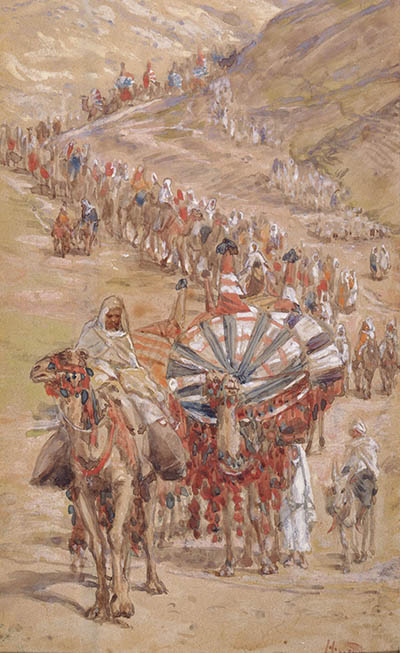




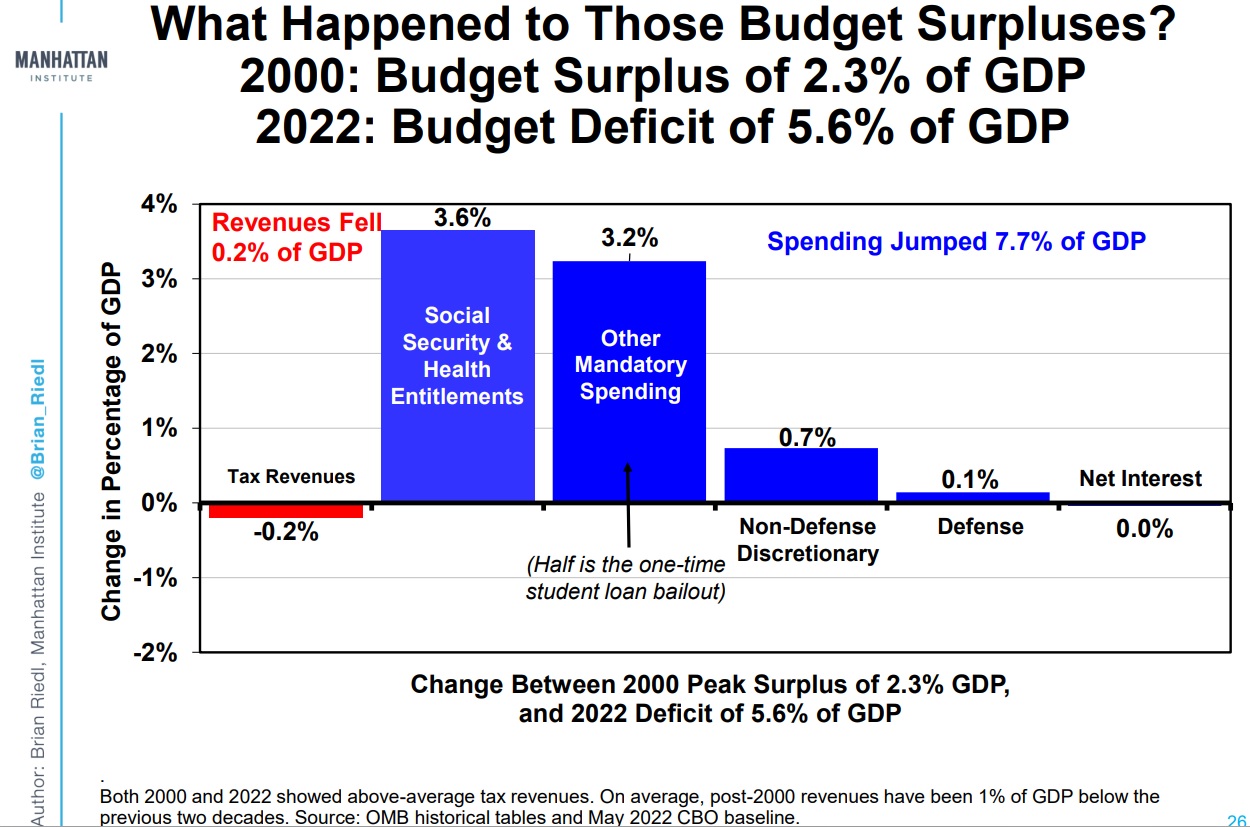

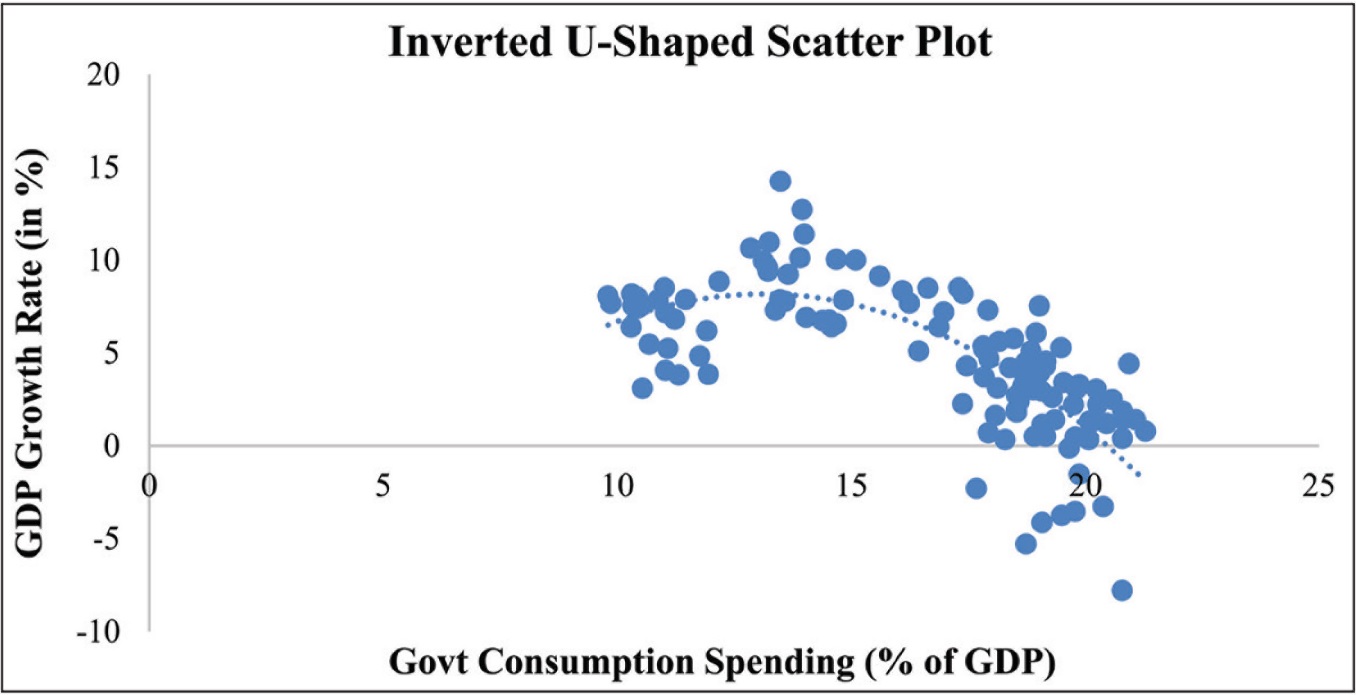






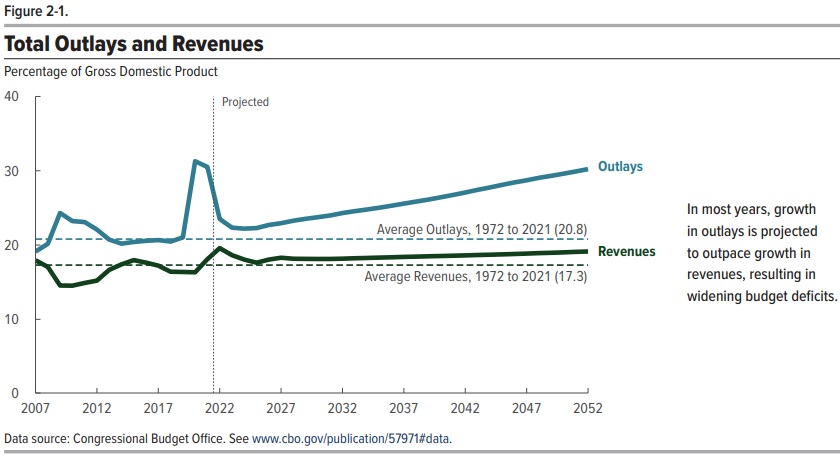
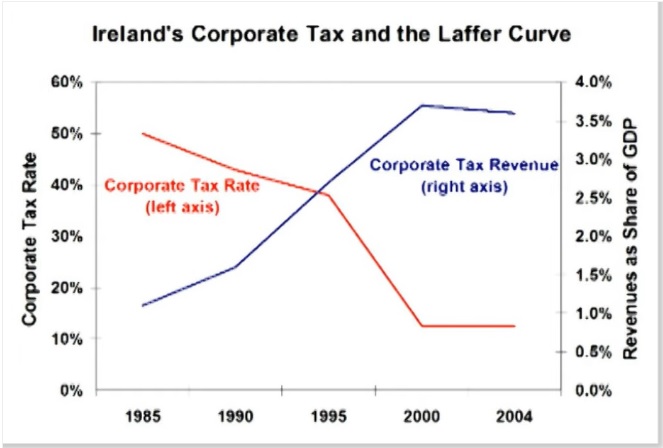

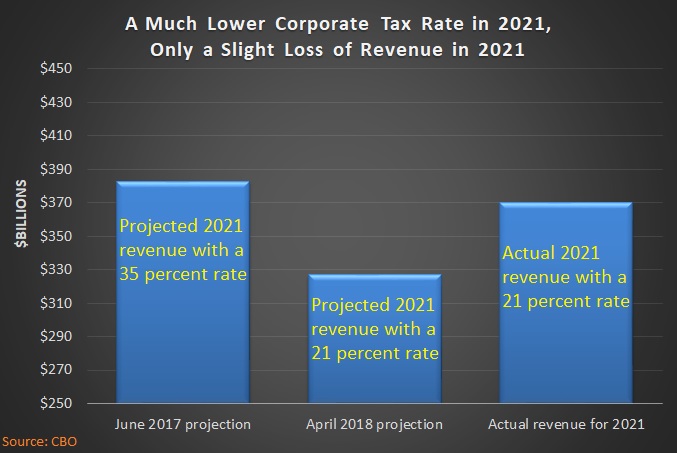


























 The Daily Hatch