7 My son,(A) keep my words and store up my commands within you. 2 Keep my commands and you will live;(B) guard my teachings as the apple of your eye. 3 Bind them on your fingers; write them on the tablet of your heart.(C) 4 Say to wisdom, “You are my sister,” and to insight, “You are my relative.” 5 They will keep you from the adulterous woman, from the wayward woman with her seductive words.(D)
6 At the window of my house I looked down through the lattice. 7 I saw among the simple, I noticed among the young men, a youth who had no sense.(E) 8 He was going down the street near her corner, walking along in the direction of her house 9 at twilight,(F) as the day was fading, as the dark of night set in.
10 Then out came a woman to meet him, dressed like a prostitute and with crafty intent. 11 (She is unruly(G) and defiant, her feet never stay at home; 12 now in the street, now in the squares, at every corner she lurks.)(H) 13 She took hold of him(I) and kissed him and with a brazen face she said:(J)
14 “Today I fulfilled my vows, and I have food from my fellowship offering(K) at home. 15 So I came out to meet you; I looked for you and have found you! 16 I have covered my bed with colored linens from Egypt. 17 I have perfumed my bed(L) with myrrh,(M) aloes and cinnamon. 18 Come, let’s drink deeply of love till morning; let’s enjoy ourselves with love!(N) 19 My husband is not at home; he has gone on a long journey. 20 He took his purse filled with money and will not be home till full moon.”
21 With persuasive words she led him astray; she seduced him with her smooth talk.(O) 22 All at once he followed her like an ox going to the slaughter, like a deer[a] stepping into a noose[b](P) 23 till an arrow pierces(Q) his liver, like a bird darting into a snare, little knowing it will cost him his life.(R)
24 Now then, my sons, listen(S) to me; pay attention to what I say. 25 Do not let your heart turn to her ways or stray into her paths.(T) 26 Many are the victims she has brought down; her slain are a mighty throng. 27 Her house is a highway to the grave, leading down to the chambers of death.(U)
MY FAVORITE PART OF THE CHAPTER IS:
I spotted a young man without any sense Arriving at the corner of the street where she lived, Just then, a woman met him— she’d been lying in wait for him, dressed to seduce him. Brazen and brash she was, Walking the streets….She boldly took his arm and said, Come, let’s make love all night,
All at once he follows her, as an ox goes to the slaughter, for many a victim has she laid low, and all her slain are a mighty throng.
“Beverly Hills” is a song by American rock band Weezer. It is the first single from the band’s fifth album, Make Believe. “Beverly Hills” was released to US radio on March 28, 2005. The song features Stephanie Eitel of Agent Sparks on the chorus on backup vocals, performing the “gimme, gimme” hook.
Rivers Cuomo‘s story behind “Beverly Hills”: “I was at the opening of the new Hollywood Bowl and I flipped through the program and I saw a picture of Wilson Phillips. And for some reason I just thought how nice it would be to marry, like, an ‘established’ celebrity and live in Beverly Hills and be part of that world. And it was a totally sincere desire. And then I wrote that song, Beverly Hills. For some reason, by the time it came out—and the video came out—it got twisted around into something that seemed sarcastic. But originally it wasn’t meant to be sarcastic at all.”[3]
Cuomo stated that “Beverly Hills” and its solo, third verse, and last chorus of “Falling for You” (from Pinkerton) are his proudest musical achievements: “It’s incredibly fun: a great beat, guitar riffs, catchy vocal style. Besides that, I think the lyrics are incredible in a very understated way. I might as well enjoy my life and watch the stars play. I love it! With this one song we were able to transcend our little niche and connect with all kinds of people, young and old, from all kinds of backgrounds.”[4]
This section needs additional citations for verification.(March 2021)The song is the band’s most commercially successful single. It topped the BillboardModern Rock Tracks chart for a week, spending months near the top of the Billboard Hot 100 (peaking at number 10) and being certified gold on June 6, 2005; it was also the band’s first song to chart there since “Undone – The Sweater Song” at number 57 in 1994 after 11 years since the rest of Weezer’s other hits from the past had only managed to chart only on the Hot 100 Airplay or the Bubbling Under Hot 100chart. As of September 2018, it is still the band’s highest-charting Hot 100 single. As of January 2006, the digital single has been purchased over 962,000 times on iTunes. It also did very well on other Billboard charts, such as Adult Top 40 (number eight peak), Mainstream Top 40 (number two peak), Hot Digital Songs (number one peak) and Mainstream Rock Tracks (number 26 peak).
The song also made the top 10 on the UK Singles Chart, peaking at number nine, and remaining on the chart for five weeks. The song was nominated for Best Rock Song at the 48th Annual Grammy Awards, the first ever nomination for the band. The video for the song was nominated at the 2005 MTV Video Music Awards for Best Rock Video. The song won College Song of the Year at the 54th Annual Broadcast Music Incorporated Pop Awards.[5]“Beverly Hills” stayed at number one on the Modern Rock charts for one week. It was the first number one for Weezer, but this record was later met with “Perfect Situation,” Make Believe‘s third single, which held the pole position for four weeks. The song was the third highest selling digital download of 2005 in the US according to Nielsen SoundScan.[6]
I started this series on my letters and postcards to Hugh Hefner back in September when I read of the passing of Mr. Hefner. There are many more to come. It is my view that he may have taken time to look at glance at one or two of them since these postcards were short and from one of Hef’s favorite cities!!!!
8-23-16
Dear Hef,
I arrived today in Vegas at 4pm on 8-23-16. While I was in the front office of the hotel there a young man checking in and he was asked how many would be staying in his room this week and he gave a very ambiguous answer.
It made me think of these words from King Solomon in Proverbs 7: I spotted a young man without any sense Arriving at the corner of the street where she lived, Just then, a woman met him— she’d been lying in wait for him, dressed to seduce him. Brazen and brash she was, Walking the streets….She boldly took his arm and said, Come, let’s make love all night,
All at once he follows her, as an ox goes to the slaughter, for many a victim has she laid low, and all her slain are a mighty throng.
I wrote to Hefner in an earlier letter these words:
Francis Schaeffer observed concerning Solomon, “You can not know woman by knowing 1000 women.”
__________
Exalting Jesus in Ecclesiastes Daniel Akin, Jonathan Akin and Tony Merida:
Finally, Solomon indulged in sexual pleasure. In addition to 700 wives (1 Kgs 11), he had 300 concubines (cf. Eccl 2:8). A concubine was a woman given to a man simply for the purpose of sexual pleasure. Concubines were objects. Thus, Solomon could out-locker-room-boast basketball all-star Wilt Chamberlain (who once infamously claimed to have been with 20,000 women!) and infamous playboy Hugh Hefner. So many people are on an endless search for sexual pleasure. They may not have a thousand women literally, but they have that many or more in their pornographic internet history or their romance novels. They constantly look for a new illicit experience in order to be satisfied, but like Solomon they come away empty and disappointed—the high only lasts so long.
_
Genital elephantiasisis an important medical problem in the tropics. It usually affects young and productive age group, and is associated with physical disability and extreme mental anguish. The majority of cases are due to filariasis; however, a small but significant proportion of patients develop genital elephantiasis due to bacterial sexually transmitted infections (STIs), mainly lymphogranuloma venereum (LGV) and donovanosis.
The counterfeit pleasure of an affair can never overcome the ways infidelity can destroy a life and marriage.
By Dave Boehi
We were praying for someone who was cheating on his wife. And I was struck by what one person said in his prayer: “Lord, work in his heart so that he will think less about the pleasure he is experiencing and more about the pain he is causing.”
That seemed quite appropriate to me. A spouse who is caught up in adultery is living only for the moment, caught up in a fantasy of excitement and desire, and ignoring the very real consequences.
Recently a seminary paper came across my desk titled “100 Consequences of Adultery,” written by Philip Jay, a student at Phoenix Seminary. The list provides a stark wake-up call about the ways infidelity can destroy a life and marriage. Here’s a selection from Jay’s list, presented with his permission:
If I committed adultery…
My relationship with God would suffer from a break in fellowship.
I would need to seek forgiveness from my Lord.
I would suffer from the emotional consequences of guilt.
I would spend countless hours replaying the failure.
My wife would suffer the scars of this abuse more deeply than I could begin to describe.
My wife would spend countless hours in counseling.
My wife’s recovery would be long and painful.
Her pain would grieve me deeply and compound my own suffering and shame.
Our relationship would suffer a break in trust, fellowship, and intimacy.
We would be together, yet feel great loneliness.
The reputation of my family would suffer loss.
My sons would be deeply disappointed and bewildered.
My grandchildren would not understand.
My friends would be disappointed and would question my integrity.
I would lose my job at church.
My witness among neighbors would become worthless.
My witness to my brother would be worthless.
My testimony among my wife’s family would be damaged.
I might never be employed by a church again.
I might never be in men’s ministry leadership.
I would suffer God’s discipline.
Satan would be thrilled at my failure.
Satan would work overtime to be sure my shame never departed.
My wife might divorce me.
My children might never speak to me.
Our mutual friends would shy away from us and break fellowship.
I would bring emotional pain to the woman.
I would bring reproach upon the woman.
If the woman is married, her husband might attempt to bring harm.
He might divorce her.
An unwanted child could be produced.
My part in conception might trigger an abortion, the killing of an innocent child.
Disease might result.
Some might conclude that all Christians are hypocrites.
My business could fail because I couldn’t be trusted.
My leadership among those I have led in the past might also be diminished in impact.
My zeal for ministry would suffer and possibly result in others not continuing in ministry.
My health would suffer.
I might have to start life over again.
This same sin might be visited upon my family for four generations.
It’s a pretty sobering list, isn’t it? What’s even more sobering is that many people will consider these consequences and still proceed in their sin. The fantasy is more important to them than the reality.
Also note that, though the list reflects a man’s perspective, nearly all the consequences would also apply to a wife committing adultery. The biggest benefit of this list may be in helping all of us realize the need to set up strict safeguards to ensure that we are faithful in our marriage commitment. If I am convinced of what adultery would do to me and to my family, I will watch my wandering eyes, guard my thought life, and avoid any situations that could put me in harm’s way.
3. FamilyLife exists to help husbands and wives connect with each other around God’s best for their marriage and family. Articles like this are possible in part because of regular financial support of people like you. Will you help us help others with a gift today?
Meet the Author: Dave Boehi
Dave Boehi is a senior editor at FamilyLife. He has written one book (I Still Do), coauthored the Preparing for Marriage workbook, edited dozens of books and Bible studies, and produces the FamilyLife e-newsletter Help & Hope. Dave and his wife, Merry, live in Little Rock, Arkansas, and have two married daughters.
Ecclesiastes 2-3 Published on Sep 19, 2012 Calvary Chapel Spring Valley | Sunday Evening | September 16, 2012 | Derek Neider _____________________________ I have written on the Book of Ecclesiastes and the subject of the meaning of our lives on several occasions on this blog. In this series on Ecclesiastes I hope to show how secular […]
Is Love All You Need? Jesus v. Lennon Posted on January 19, 2011 by Jovan Payes 0 On June 25, 1967, the Beatles participated in the first worldwide TV special called “Our World”. During this special, the Beatles introduced “All You Need is Love”; one of their most famous and recognizable songs. In it, John Lennon […]
___________________ Something happened to the Beatles in their journey through the 1960’s and although they started off wanting only to hold their girlfriend’s hand it later evolved into wanting to smash all previous sexual standards. The Beatles: Why Don’t We Do It in the Road? _______ Beatle Ringo Starr, and his girlfriend, later his wife, […]
__________ Marvin Minsky __ I was sorry recently to learn of the passing of one of the great scholars of our generation. I have written about Marvin Minsky several times before in this series and today I again look at a letter I wrote to him in the last couple of years. It is my […]
Why was Tony Curtis on the cover of SGT PEPPERS? I have no idea but if I had to hazard a guess I would say that probably it was because he was in the smash hit SOME LIKE IT HOT. Above from the movie SOME LIKE IT HOT __ __ Jojo was a man who […]
__ Francis Schaeffer did not shy away from appreciating the Beatles. In fact, SERGEANT PEPPER’S LONELY HEARTS CLUB BAND album was his favorite and he listened to it over and over. I am a big fan of Francis Schaeffer but there are detractors that attack him because he did not have all the degrees that they […]
On 11-15-05 Adrian Rogers passed over to glory and since it is the 10th anniversary of that day I wanted to celebrate his life in two ways. First, I wanted to pass on some of the material from Adrian Rogers’ sermons I have sent to prominent atheists over the last 20 years. Second, I wanted […]
Looking back on his life as a Beatle Paul said at a certain age you start to think “Wow, I have to get serious. I can’t just be a playboy all of my life.” It is true that the Beatles wrote a lot about girls!!!!!! The Beatles – I Want To Hold your Hand [HD] Although […]
Writer/director/star Ricky Gervais admits he made up his series After Life as it went along, as he was never sure if there would be a second season, let alone a third, which is perfectly in keeping with the show’s themes of uncertainty and living in the moment. But as the third season premieres on Netflix, and Gervais has promised that season three will certainly be the last, there is an expectation of some sort of conclusion, a better sense of closure at the end of season three than there were at the ends of seasons one and two.
When we left Tony, the widower played by Gervais, at the end of season two, he seemed to have stepped off his perpetual grieving cycle for his wife Lisa (Kerry Godliman), who had died of cancer, until his father passes away, which seemed to plunge him back into the darkness. But his friendship with his father’s nurse, Emma (Ashley Jensen), seemed to shine a light into his dark world and, at the end of season two, we see how that friendship and possibly burgeoning romance literally saves Tony from the darkness consuming him as Emma ringing his doorbell is the thing that stops Tony from swallowing a handful of pills. Despite the relief for the audience in that moment, the ending was still quite somber and ambiguous, as we were left to wonder how long Tony can hold off the demons.
As we enter season three, Gervais follows the same method he used at the beginning of season two of re-introducing us to the characters and telling us where they are now, via an opening montage set to a song. This time, it’s “The Things We Do For Love” by 10cc, and, as we go around to each character, there is a much lighter and happier feel to it all, as everyone seems to be happy and settled, including Tony, who is spending a lot of time with Emma. But as the music stops and we dig a little deeper into each character’s circumstances, things aren’t as happy-go-lucky as they may seem. Everyone is struggling with a crisis of confidence, which is a far different experience than we are used to from the bumbling and naively happy gang of misfits that we have come to know. In the first two seasons, the sweet and innocent optimism of the supporting characters provided a crucial buffer for Tony’s descent into melancholia, and now it is up to him to rediscover his own sense of kindness to help others, which, in turn, just may help him.
While kindness is certainly a larger theme in season three, there is no escaping the still ever-present dominant theme of grief that looms over all, as it has the whole series. Is Tony magically over losing Lisa? Not even a little. But is he in a different place at the end of season three than he was at the end of season two? To answer that would spoil the experience of the series, which is the best part.
The magic of After Life is the fact that there are no major plot points that need to be hit, there’s no great, planned story that needs to play out, to get from point A to point B. Instead, it’s about being with these characters as they live their lives, experiencing their highs and lows, their little victories or their frustrating defeats. After Life is truly a series about life and death, but in the most mundane—and sometimes most significant—ways. Season three is not about tying up any plot points or even providing closure, it is much more reflective of life and the journey these characters take in exploring their own frailties and futures.
But if you think for a moment that Gervais has lost his edge, don’t ever forget he’s not the king of cringe comedy for nothing. Season three offers up a delicious amount of awkward and awful humor, often at the expense of these aforementioned sweet souls, but the great skill Gervais has mastered is that no matter how indelicate the joke may be, there is an inherent understanding of the truth in it and the self-awareness required to slough it off. Tony is still depressed and angry in season three, but there is an understanding that he has acquired, as he blithely notes, “Maybe I’m not grieving, maybe I’m just an a**hole.” Self-awareness has never been Tony’s problem, it’s been the resistance to allowing sorrow to swallow him whole where Tony needs help.
But Gervais knows that it is in Tony’s anger and depression where, ironically, the best comedy comes from in this series, in that juxtaposition between the clueless sweetness of the supporting characters and his tortured desire to lash out at the world. Yes, he’s an a**hole, but an absolutely hilarious one. Season three continues Tony’s indelicate dressing-down of Matt (Tom Basden), his boss/brother-in-law, where Matt finally mans up and challenges Tony to feats of physical fitness, a running gag that provides some of the biggest laughs of the series. A running gag that doesn’t work as well is exploring perpetual loser Brian’s state of mind and life, as he gets his own storyline that isn’t as effective as the performance that David Earl gives playing him. Similarly, the time we spend with wannabe actor James (Ethan Lawrence), as he navigates his frustration with his personal and professional life, isn’t as fruitful as it could be. But these low points are easily compensated for the time spent with Kath (the brilliant Diane Morgan), who finally gets some dedicated screen time as she jumps head-first into the dating scene, resulting in some of the best moments of the season, thanks to a perfectly tuned performance from Morgan, After Life’sheretofore underutilized secret weapon.
For those hoping for a return of Tom Bennett as “The Nonce,” you will be happy to know that Gervais does find a fitting way to revive this fan favorite from season two, although his appearance is far too brief. A new character in season three is Colleen, played by Kath Hughes, who plays a Tambury Gazette intern who gives Tony a run for his money at being depressed and hopeless. Tony sees himself in Colleen and sees how far he’s come and, even more substantially, how far he still has to go. Hughes is hilarious delivering her character’s matter-of-fact hopelessness, and Colleen’s journey is a nice bit of writing by Gervais, as it perhaps solidifies the series’ whole purpose.
And there is no doubt as to what After Life’s purpose is, in the end. Season three provides a perfect companion to seasons one and two, and furthers Gervais’s desire to present an honest reflection of life and death, and to how complicated a journey grief can be. Humor, pathos, kindness, understanding and melancholy are a natural part of the human experience, as is loneliness, anger and hopelessness. But, despite the sorrow and the reminders of the brutality of loss and the pain of grief, there is an underlying message of optimism, of living in the moment, of taking in the beauty and opportunities of this life.
But what is most unexpected, at least to those who may see Gervais as a misanthrope at heart, is the whole bodied embrace of humanity in this series, of the importance of kindness and the effort to communicate the brevity of life and the subsequent importance to make the most of it. Season three provides a sweet and satisfying finale to a near-perfect series that warms the heart, challenges perceptions, confronts demons and, yes, makes you laugh out loud. It is sad to see it go, but it delivered three perfect—albeit short—seasons which reminded us of Gervais’s unique vision, one that is both bittersweet and beautiful. Just like life.
Grade: A
The third and final six-episode season of After Lifepremieres globally on Netflix January 14.
—-
—
World Exclusive: After Life Season 3: The First few Minutes
After Life | Season 3 Official Trailer | Netflix
—
episodes will be released on January 14th.
Just Three Things. Written for #Afterlife by Ricky Gervais and Andy Burrows
April 7, 2022
Ricky Gervais
London, W1F 0LE UK
Dear Ricky,
I really like the way you introduce us to so many different characters in AFTER LIFE, and Micky is was of the most interestedly. Micky is best suited to thrive in this SURVIVAL OF THE FITTEST world you envision.
Brian: Still together, then?
Elizabeth: On and off, yeah.
Micky: She was shagging Spud Head for a while.
Elizabeth: He caught us at it, didn’t you?
Brian: Awkward.
Micky: It wasn’t awkward. Gave me the excuse to smash the granny out of the [jerk]Bloodbath, wasn’t it?
Elizabeth: Proper mess.
Mickey: Turned out quite well, really. You know me. I like to look at things in a positive way.
Brian: I know you do, mate.
—
Solomon in Ecclesiastes and Tony in AFTER LIFE both lived their lives UNDER THE SUN without God in the picture and that means you just live in a world of time and chance and THE OPPRESSED HAVE NO COMFORTER!! People like Micky rule in a Godless world and they won’t face judgment in the afterlife!!
Ecclesiastes 9:11
11 Again I saw that under the sun the race is not to the swift, nor the battle to the strong, nor bread to the wise, nor riches to the intelligent, nor favor to those with knowledge, but time and chance happen to them all.
Francis Schaeffer noted, “Chance rules. If a man starts out only from himself and works outward it must eventually if he is consistent seem so that only chance rules.”
The key to understanding the Book of Ecclesiastes is the term UNDER THE SUN — What that literally means is you lock God out of a closed system and you are left with only this world of Time plus Chance plus matter.
Oppressed have no comforter
Ecclesiastes 4:1
Then I looked again at all the acts of oppression which were being done under the sun. And behold I saw the tears of the oppressed and that they had no one to comfort them; and on the side of their oppressors was power, but they had no one to comfort them.
“Existential subjects to me are still the only subjects worth dealing with. I don’t think that one can aim more deeply than at the so-called existential themes, the spiritual themes.” WOODY ALLEN
Evangelical Chuck Colson has observed that it used to be true that most Americans knew the Bible. Evangelists could simply call on them to repent and return. But today, most people lack understanding of biblical terms or concepts. Colson recommends that we first attempt to find common ground to engage people’s attention. That then may open a door to discuss spiritual matters.
Woody Allen’s 1989 movie, CRIMES AND MISDEMEANORS , is an excellent icebreaker concerning the need of God while making decisions in the area of personal morality. In this film, Allen attacks his own atheistic view of morality. Martin Landau plays a Jewish eye doctor named Judah Rosenthal raised by a religious father who always told him, “The eyes of God are always upon you.” However, Judah later concludes that God doesn’t exist. He has his mistress (played in the film by Anjelica Huston) murdered because she continually threatened to blow the whistle on his past questionable, probably illegal, business activities. She also attempted to break up Judah ‘s respectable marriage by going public with their two-year affair. Judah struggles with his conscience throughout the remainder of the movie. He continues to be haunted by his father’s words: “The eyes of God are always upon you.” This is a very scary phrase to a young boy, Judah observes. He often wondered how penetrating God’s eyes are.
Later in the film, Judah reflects on the conversation his religious father had with Judah ‘s unbelieving Aunt May at the dinner table many years ago:
“Come on Sol, open your eyes. Six million Jews burned to death by the Nazis, and they got away with it because might makes right,” says aunt May
Sol replies, “May, how did they get away with it?”
Judah asks, “If a man kills, then what?”
Sol responds to his son, “Then in one way or another he will be punished.”
Aunt May comments, “I say if he can do it and get away with it and he chooses not to be bothered by the ethics, then he is home free.”
Judah ‘s final conclusion was that might did make right. He observed that one day, because of this conclusion, he woke up and the cloud of guilt was gone. He was, as his aunt said, “home free.”
Woody Allen has exposed a weakness in his own humanistic view that God is not necessary as a basis for good ethics. There must be an enforcement factor in order to convince Judah not to resort to murder. Otherwise, it is fully to Judah ‘s advantage to remove this troublesome woman from his life.
The Bible tells us, “{God} has also set eternity in the hearts of men…” (Ecclesiastes 3:11 NIV). The secularist calls this an illusion, but the Bible tells us that the idea that we will survive the grave was planted in everyone’s heart by God Himself. Romans 1:19-21 tells us that God has instilled a conscience in everyone that points each of them to Him and tells them what is right and wrong (also Romans 2:14 -15).
The secularist can only give incomplete answers to these questions: How could you have convinced Judah not to kill?On what basis could you convince Judah it was wrong for him to murder?
As Christians, we would agree with Judah ‘s father that “The eyes of God are always upon us.” Proverbs 5:21 asserts, “For the ways of man are before the eyes of the Lord, and He ponders all his paths.” Revelation 20:12 states, “…And the dead were judged (sentenced) by what they had done (their whole way of feeling and acting, their aims and endeavors) in accordance with what was recorded in the books” (Amplified Version). The Bible is revealed truth from God. It is the basis for our morality. Judah inherited the Jewish ethical values of the Ten Commandments from his father, but, through years of life as a skeptic, his standards had been lowered. Finally, we discover that Judah ‘s secular version of morality does not resemble his father’s biblically-based morality.
I have gone back and forth and back and forth with many liberals on the Arkansas Times Blog on many issues such as abortion, human rights, welfare, poverty, gun control and issues dealing with popular culture. Here is another exchange I had with them a while back. My username at the Ark Times Blog is Saline […]By Everette Hatcher III | Posted in Biblical Archaeology, Francis Schaeffer, Prolife | Edit|Comments (0)
I have posted many of the sermons by John MacArthur. He is a great bible teacher and this sermon below is another great message. His series on the Book of Proverbs was outstanding too. I also have posted several of the visits MacArthur made to Larry King’s Show. One of two most popular posts I […]By Everette Hatcher III | Posted in Adrian Rogers, Current Events | Edit|Comments (0)
I have posted many of the sermons by John MacArthur. He is a great bible teacher and this sermon below is another great message. His series on the Book of Proverbs was outstanding too. I also have posted several of the visits MacArthur made to Larry King’s Show. One of two most popular posts I […]By Everette Hatcher III | Posted in Adrian Rogers, Current Events |Tagged Bible Prophecy, john macarthur | Edit|Comments (0)
Prophecy–The Biblical Prophesy About Tyre.mp4 Uploaded by TruthIsLife7 on Dec 5, 2010 A short summary of the prophecy about Tyre and it’s precise fulfillment. Go to this link and watch the whole series for the amazing fulfillment from secular sources. http://www.youtube.com/watch?v=qvt4mDZUefo________________ John MacArthur on the amazing fulfilled prophecy on Tyre and how it was fulfilled […]By Everette Hatcher III | Posted in Biblical Archaeology | Edit|Comments (1)
John MacArthur on the Bible and Science (Part 2) I have posted many of the sermons by John MacArthur. He is a great bible teacher and this sermon below is another great message. His series on the Book of Proverbs was outstanding too. I also have posted several of the visits MacArthur made to Larry […]By Everette Hatcher III | Posted in Current Events | Edit|Comments (0)
John MacArthur on the Bible and Science (Part 1) I have posted many of the sermons by John MacArthur. He is a great bible teacher and this sermon below is another great message. His series on the Book of Proverbs was outstanding too. I also have posted several of the visits MacArthur made to Larry […]By Everette Hatcher III | Posted in Current Events | Edit|Comments (0)
Adrian Rogers – How you can be certain the Bible is the word of God Great article by Adrian Rogers. What evidence is there that the Bible is in fact God’s Word? I want to give you five reasons to affirm the Bible is the Word of God. First, I believe the Bible is the […]By Everette Hatcher III | Posted in Adrian Rogers, Biblical Archaeology | Edit|Comments (0)
Is there any evidence the Bible is true? Articles By PleaseConvinceMe Apologetics Radio The Old Testament is Filled with Fulfilled Prophecy Jim Wallace A Simple Litmus Test There are many ways to verify the reliability of scripture from both internal evidences of transmission and agreement, to external confirmation through archeology and science. But perhaps the […]By Everette Hatcher III | Posted in Biblical Archaeology, Current Events | Edit|Comments (0)
I have gone back and forth and back and forth with many liberals on the Arkansas Times Blog on many issues such as abortion, human rights, welfare, poverty, gun control and issues dealing with popular culture. Here is another exchange I had with them a while back. My username at the Ark Times Blog is […]By Everette Hatcher III | Posted in Francis Schaeffer, Prolife | Edit|Comments (0)
Here is some very convincing evidence that points to the view that the Bible is historically accurate. Archaeological and External Evidence for the Bible Archeology consistently confirms the Bible! Archaeology and the Old Testament Ebla tablets—discovered in 1970s in Northern Syria. Documents written on clay tablets from around 2300 B.C. demonstrate that personal and place […]By Everette Hatcher III | Posted in Biblical Archaeology | E
On Saturday April 18, 2020 at 6pm in London and noon in Arkansas, I had a chance to ask Ricky Gervais a question on his Twitter Live broadcast which was “Is Tony a Nihilist?” At the 20:51 mark Ricky answers my question. Below is the video:
—
—
Ricky Gervais 25/07/2021 Facebook Live at 28:29 mark Ricky answers my question about Sam Harris
6 My child,[a] if you have put up security for a friend’s debt or agreed to guarantee the debt of a stranger— 2 if you have trapped yourself by your agreement and are caught by what you said— 3 follow my advice and save yourself, for you have placed yourself at your friend’s mercy. Now swallow your pride; go and beg to have your name erased. 4 Don’t put it off; do it now! Don’t rest until you do. 5 Save yourself like a gazelle escaping from a hunter, like a bird fleeing from a net.
6 Take a lesson from the ants, you lazybones. Learn from their ways and become wise! 7 Though they have no prince or governor or ruler to make them work, 8 they labor hard all summer, gathering food for the winter. 9 But you, lazybones, how long will you sleep? When will you wake up? 10 A little extra sleep, a little more slumber, a little folding of the hands to rest— 11 then poverty will pounce on you like a bandit; scarcity will attack you like an armed robber.
12 What are worthless and wicked people like? They are constant liars, 13 signaling their deceit with a wink of the eye, a nudge of the foot, or the wiggle of fingers. 14 Their perverted hearts plot evil, and they constantly stir up trouble. 15 But they will be destroyed suddenly, broken in an instant beyond all hope of healing.
16 There are six things the Lord hates— no, seven things he detests: 17 haughty eyes, a lying tongue, hands that kill the innocent, 18 a heart that plots evil, feet that race to do wrong, 19 a false witness who pours out lies, a person who sows discord in a family.
20 My son, obey your father’s commands, and don’t neglect your mother’s instruction. 21 Keep their words always in your heart. Tie them around your neck. 22 When you walk, their counsel will lead you. When you sleep, they will protect you. When you wake up, they will advise you. 23 For their command is a lamp and their instruction a light; their corrective discipline is the way to life. 24 It will keep you from the immoral woman, from the smooth tongue of a promiscuous woman. 25 Don’t lust for her beauty. Don’t let her coy glances seduce you. 26 For a prostitute will bring you to poverty,[b] but sleeping with another man’s wife will cost you your life. 27 Can a man scoop a flame into his lap and not have his clothes catch on fire? 28 Can he walk on hot coals and not blister his feet? 29 So it is with the man who sleeps with another man’s wife. He who embraces her will not go unpunished.
30 Excuses might be found for a thief who steals because he is starving. 31 But if he is caught, he must pay back seven times what he stole, even if he has to sell everything in his house. 32 But the man who commits adultery is an utter fool, for he destroys himself. 33 He will be wounded and disgraced. His shame will never be erased. 34 For the woman’s jealous husband will be furious, and he will show no mercy when he takes revenge. 35 He will accept no compensation, nor be satisfied with a payoff of any size.
We’re a little more than a month into a new year, so it’s a good time to take a spiritual inventory. As a Christian, you love Jesus Christ, you thank Him for His sacrifice for you, and you want to please Him. When you have someone in your life you deeply love, you want to find out their likes and dislikes and please them with what they really like. If you find out there’s something your loved one actually hates, you try to steer clear of that!
Are you aware that there are things God actually hates? “Oh,” you say, “but God is a God of love! Surely He doesn’t hate…” Listen to Proverbs 6:16-19.
These six things doth the Lord hate: yea, seven are an abomination unto him: A proud look, a lying tongue, and hands that shed innocent blood, An heart that deviseth wicked imaginations, feet that be swift in running to mischief, A false witness that speaketh lies, and he that soweth discord among brethren.
That’s quite an inventory. And at the top of these seven worst-of-the-worst traits is pride.
Pride is effective because it is deceptive. The more you have, the less you think you have it. Do you have a problem with pride? If your answer is yes, this study may be for you; but if your answer is no, there’s no doubt about it: this study is definitely for you!
Real pride — sinful, destructive pride — is a declaration of independence. It says, “God, I am self‑sufficient. I have everything I need. Your services are no longer required.” The truth is, we are in no way self‑sufficient.
Here are some perils of pride:
Pride Provokes Deity — Pride angers God. Proverbs 16:5 reads, “Every one that is proud in heart is an abomination to the Lord.” Can you imagine being an abomination to the Lord? Why does God feel this way about pride? It caused Lucifer to fall from heaven (Isaiah 14:12-14). Pride made the devil what he is. Pride ruined the entire human race when the devil baited Eve (Genesis 3:1-7). Satan does the same thing today when he tempts us—he appeals to our pride.
Pride Proves Depravity —Some people avoid the notable sins: they don’t “smoke, drink, chew, or run with those who do.” They feel proud of themselves! They fall into the sin worse than all of these. Proverbs 16:5 uses the phrase “proud in heart.”Pride never reaches the hands or feet. It resides within the heart. It is there from birth.
Pride Promotes Dissension — At the root of every quarrel, conflict, battle, and war is the sin of pride. Proverbs 13:10 says, “Only by pride cometh contention.” The next argument we hear, the next church that divides, the next divorce that destroys a home — we will know what is at the root in someone’s heart.
Pride Promotes Dishonor — Jesus said, “And whosoever shall exalt himself shall be abased; and he that shall humble himself shall be exalted”(Matthew 23:12). The way up is always down. Satan fell because he said, “I will ascend into heaven, I will exalt my throne above the stars of God” (Isaiah 14:13). He sought honor and dishonored himself.
How opposite was the attitude of our Lord Jesus Christ! He said, “I will descend.” Though He was God, He didn’t clutch at His divine rights. Instead He humbled Himself, and so God exalted Him. (Philippians 2:6‑11).
Here’s a quick test. Give yourself a good reality check:
· Are you irritated when you are corrected for a mistake?
· Do you find yourself accepting praise for things over which you have no control?
· Do you tend to forget Who blessed you with talents and abilities?
· When you make a mistake, are you quick with an alibi?
· Is everything someone else’s fault?
· When there is a personal conflict, are you quick to tell yourself you can get along without that person?
· Are you prone to think you can go it alone?
· Is it difficult for you to take advice? Are you extremely reluctant to seek it?
· Do you have an ungrateful spirit toward what God has given you and a bitterness about what you think you deserve?
· Is your life marked by a sense of competition? Do you measure success by victories over other people?
Do you see in yourself an independence from God and a sense of self‑sufficiency? It’s a recipe for disaster.
Pride Precedes Destruction — “The Lord will destroy the house of the proud” (Proverbs 15:25). When we’re ruled by pride, we’re taking a stand against God. Left unchecked, we can become hardened to pride and deaf to God’s calling us to repentance. Pride will eventually destroy us.There is no better day than today take a pride inventory, repent, humble yourself, and admit your total dependence upon God.
Ecclesiastes 8-10 | Still Searching After All These Years Published on Oct 9, 2012 Calvary Chapel Spring Valley | Sunday Evening | October 7, 2012 | Pastor Derek Neider _______________________ Ecclesiastes 11-12 | Solomon Finds His Way Published on Oct 30, 2012 Calvary Chapel Spring Valley | Sunday Evening | October 28, 2012 | Pastor Derek Neider […]By Everette Hatcher III | Posted in Current Events | Edit | Comments (0)
Over and over in Proverbs you hear the words “fear the Lord.” In fact, some of he references are Proverbs 1:7, 29; 2:5; 8:13; 9:10;14:26,27; 15:16 and many more. Below is a sermon by John MacArthur from the Book of Luke on 3 reasons we should fear the Lord. (I have posted John MacArthur’s amazing […]By Everette Hatcher III | Posted in Adrian Rogers, Current Events | Edit | Comments (0)
Over and over in Proverbs you hear the words “fear the Lord.” In fact, some of he references are Proverbs 1:7, 29; 2:5; 8:13; 9:10;14:26,27; 15:16 and many more. Below is a sermon by John MacArthur from the Book of Luke on 3 reasons we should fear the Lord. (I have posted John MacArthur’s amazing […]By Everette Hatcher III | Posted in Adrian Rogers, Current Events | Edit | Comments (0)
Over and over in Proverbs you hear the words “fear the Lord.” In fact, some of he references are Proverbs 1:7, 29; 2:5; 8:13; 9:10;14:26,27; 15:16 and many more. Below is a sermon by John MacArthur from the Book of Luke on 3 reasons we should fear the Lord. (I have posted John MacArthur’s amazing […]By Everette Hatcher III | Posted in Adrian Rogers, Current Events | Edit | Comments (0)
Over and over in Proverbs you hear the words “fear the Lord.” In fact, some of he references are Proverbs 1:7, 29; 2:5; 8:13; 9:10;14:26,27; 15:16 and many more. Below is a sermon by John MacArthur from the Book of Luke on 3 reasons we should fear the Lord. (I have posted John MacArthur’s amazing […]By Everette Hatcher III | Posted in Adrian Rogers, Current Events | Edit | Comments (0)
Over and over in Proverbs you hear the words “fear the Lord.” In fact, some of he references are Proverbs 1:7, 29; 2:5; 8:13; 9:10;14:26,27; 15:16 and many more. Below is a sermon by John MacArthur from the Book of Luke on 3 reasons we should fear the Lord. (I have posted John MacArthur’s amazing […]By Everette Hatcher III | Posted in Adrian Rogers, Current Events | Tagged Gene Bartow, John Wooden | Edit | Comments (0)
Over and over in Proverbs you hear the words “fear the Lord.” In fact, some of he references are Proverbs 1:7, 29; 2:5; 8:13; 9:10;14:26,27; 15:16 and many more. Below is a sermon by John MacArthur from the Book of Luke on 3 reasons we should fear the Lord. (I have posted John MacArthur’s amazing […]By Everette Hatcher III | Posted in Adrian Rogers, Current Events | Edit | Comments (0)
Over and over in Proverbs you hear the words “fear the Lord.” In fact, some of he references are Proverbs 1:7, 29; 2:5; 8:13; 9:10;14:26,27; 15:16 and many more. Below is a sermon by John MacArthur from the Book of Luke on 3 reasons we should fear the Lord. (I have posted John MacArthur’s amazing […]By Everette Hatcher III | Posted in Adrian Rogers, Current Events | Edit | Comments (0)
Over and over in Proverbs you hear the words “fear the Lord.” In fact, some of he references are Proverbs 1:7, 29; 2:5; 8:13; 9:10;14:26,27; 15:16 and many more. Below is a sermon by John MacArthur from the Book of Luke on 3 reasons we should fear the Lord. It is tough to guard your […]By Everette Hatcher III | Posted in Adrian Rogers, Current Events | Edit | Comments (0)
Over and over in Proverbs you hear the words “fear the Lord.” In fact, some of he references are Proverbs 1:7, 29; 2:5; 8:13; 9:10;14:26,27; 15:16 and many more. Below is a sermon by John MacArthur from the Book of Luke on 3 reasons we should fear the Lord. What does it mean to fear […]By Everette Hatcher III | Posted in Current Events, Uncategorized | Edit | Comments (0)
Ecclesiastes 6-8 | Solomon Turns Over a New Leaf Published on Oct 2, 2012 Calvary Chapel Spring Valley | Sunday Evening | September 30, 2012 | Pastor Derek Neider _____________________ I have written on the Book of Ecclesiastes and the subject of the meaning of our lives on several occasions on this blog. In this series on Ecclesiastes I […]By Everette Hatcher III | Posted in Current Events | Edit | Comments (0)
Ecclesiastes 1 Published on Sep 4, 2012 Calvary Chapel Spring Valley | Sunday Evening | September 2, 2012 | Pastor Derek Neider _____________________ I have written on the Book of Ecclesiastes and the subject of the meaning of our lives on several occasions on this blog. In this series on Ecclesiastes I hope to show how […]By Everette Hatcher III | Posted in Current Events | Edit | Comments (0)
Ecclesiastes 1 Published on Sep 4, 2012 Calvary Chapel Spring Valley | Sunday Evening | September 2, 2012 | Pastor Derek Neider _____________________ I have written on the Book of Ecclesiastes and the subject of the meaning of our lives on several occasions on this blog. In this series on Ecclesiastes I hope to show how […]By Everette Hatcher III | Posted in Current Events | Edit | Comments (0)
Ecclesiastes 8-10 | Still Searching After All These Years Published on Oct 9, 2012 Calvary Chapel Spring Valley | Sunday Evening | October 7, 2012 | Pastor Derek Neider _______________________ Ecclesiastes 11-12 | Solomon Finds His Way Published on Oct 30, 2012 Calvary Chapel Spring Valley | Sunday Evening | October 28, 2012 | Pastor Derek Neider […]By Everette Hatcher III | Posted in Current Events | Edit | Comments (0)
Ecclesiastes 6-8 | Solomon Turns Over a New Leaf Published on Oct 2, 2012 Calvary Chapel Spring Valley | Sunday Evening | September 30, 2012 | Pastor Derek Neider _____________________ I have written on the Book of Ecclesiastes and the subject of the meaning of our lives on several occasions on this blog. In this series […]By Everette Hatcher III | Posted in Current Events | Edit | Comments (0)
Ecclesiastes 4-6 | Solomon’s Dissatisfaction Published on Sep 24, 2012 Calvary Chapel Spring Valley | Sunday Evening | September 23, 2012 | Pastor Derek Neider ___________________ I have written on the Book of Ecclesiastes and the subject of the meaning of our lives on several occasions on this blog. In this series on Ecclesiastes I hope […]By Everette Hatcher III | Posted in Current Events | Edit | Comments (0)
Ecclesiastes 8-10 | Still Searching After All These Years Published on Oct 9, 2012 Calvary Chapel Spring Valley | Sunday Evening | October 7, 2012 | Pastor Derek Neider _______________________ Ecclesiastes 11-12 | Solomon Finds His Way Published on Oct 30, 2012 Calvary Chapel Spring Valley | Sunday Evening | October 28, 2012 | Pastor Derek Neider […]By Everette Hatcher III | Posted in Current Events | Edit | Comments (0)
Ecclesiastes 8-10 | Still Searching After All These Years Published on Oct 9, 2012 Calvary Chapel Spring Valley | Sunday Evening | October 7, 2012 | Pastor Derek Neider _______________________ Ecclesiastes 11-12 | Solomon Finds His Way Published on Oct 30, 2012 Calvary Chapel Spring Valley | Sunday Evening | October 28, 2012 | Pastor Derek Neider […]By Everette Hatcher III | Posted in Current Events | Edit | Comments (0)
Tom Brady “More than this…” Uploaded by EdenWorshipCenter on Jan 22, 2008 EWC sermon illustration showing a clip from the 2005 Tom Brady 60 minutes interview. _______________________ Tom Brady ESPN Interview Tom Brady has famous wife earned over 76 million dollars last year. However, has Brady found lasting satifaction in his life? It does not […]By Everette Hatcher III | Posted in Current Events | Edit | Comments (0)
Adrian Rogers: How to Be a Child of a Happy Mother Published on Nov 13, 2012 Series: Fortifying Your Family (To read along turn on the annotations.) Adrian Rogers looks at the 5th commandment and the relationship of motherhood in the commandment to honor your father and mother, because the faith that doesn’t begin at home, […]By Everette Hatcher III | Posted in Adrian Rogers, Current Events | Edit | Comments (0)
Ecclesiastes 1 Published on Sep 4, 2012 Calvary Chapel Spring Valley | Sunday Evening | September 2, 2012 | Pastor Derek Neider _____________________ I have written on the Book of Ecclesiastes and the subject of the meaning of our lives on several occasions on this blog. In this series on Ecclesiastes I hope to show how secular humanist man […]By Everette Hatcher III | Posted in Current Events | Edit | Comments (0)
Adrian Rogers – How to Cultivate a Marriage Another great article from Adrian Rogers. Are fathers necessary? “Artificial insemination is the ideal method of producing a pregnancy, and a lesbian partner should have the same parenting rights accorded historically to biological fathers.” Quoted from the United Nations Fourth World Conference on Women, summer of 1995. […]By Everette Hatcher III | Posted in Adrian Rogers, Current Events | Edit | Comments (0)
Tom Brady “More than this…” Uploaded by EdenWorshipCenter on Jan 22, 2008 EWC sermon illustration showing a clip from the 2005 Tom Brady 60 minutes interview. To Download this video copy the URL to http://www.vixy.net ________________ Obviously from the video clip above, Tom Brady has realized that even though he has won many Super Bowls […]
Love your movie RIFKIN’S FESTIVAL and I thought about Professor Levy’s suicide (in CRIMES AND MISDEMEANORS) when I saw this opening dream scene in RIFKIN’S FESTIVAL:
I had an odd dream.
Rose Budnick.
Who!
Rose Budnick. She died. Oh my God! How? She committed suicide. Oh no. She was such a brilliant woman. An intellectual. She was the Holocaust survival.She left a note. She decided life was meaningless.She felt no point in going on. How crazy. The judge life is meaningless? Well, if you think about it, Max. What does it mean?
You sound like one of my students.
Why are we all here?
Max: It’s a cosmic fluctuations. We all got popped out into the being out of nothing. Believe me, if it were up to me I would’ve done it differently.
Don’t have this conversation in from of Mort.
He has nightmares.
Mort?
Come inside.
It’s too cold.
—
Now let’s fast forward to 1989 and the movie CRIMES AND MISDEMEANORS and the same question is addressed. IS IT POSSIBLE TO BE AN OPTIMISTIC SECULAR HUMANIST THAT DOES NOT BELIEVE IN GOD OR AN AFTERLIFE?
Woody Allen’s Professor Levy represents the best of secular philosophy, but this philosophy is still is lacking in the end and Levy jumps out the window to end his life!!! Let’s look at some of his thought processes.
Below is a portion of a short review of CRIMES AND MISDEMEANORS. Notice below especially the contrast between the worldview of the secularist Judah Rosenthal and the Rabbi Ben:
Speaking to Judah, Rabbi Ben states the two key moral positions of the movie: “It’s a fundamental difference in the way we view the world. You see it as harsh and empty of values and pitiless. And I couldn’t go on living if I didn’t feel it with all my heart a moral structure, with real meaning, and forgiveness, and a higher power, otherwise there’s no basis to live.” [RABBI BEN HAS THE SAME WORLDVIEW THAT I DO]
Rabbi Ben tells Judah that “without the law it’s all darkness.”Judah retorts, “What good is the law if it prevents me from receiving justice? Is what she’s doing to me just? Is this what I deserve?” Judah’s situations is caused directly or indirectly by choices he’s made, even though he may not have understood at the time he made them their full implications for the future…
After Levy committed suicide, Cliff reviewed a clip from the documentary footage in which Levy states: “But we must always remember that when we are born we need a great deal of love to persuade us to stay in life. Once we get that love, it usually lasts us. But the universe is a pretty cold place. It’s we who invest it with our feelings. And under certain conditions, we feel that the thing ISN’T WORTH IT ANYMORE.”
Hearing the news of Levy’s death, Halley says, “No matter how elaborate a philosophical system you work out, in the end it’s got to be incomplete.”
—
This brings me back to Rose:
Rose Budnick. She died. Oh my God! How? She committed suicide. Oh no. She was such a brilliant woman. An intellectual. She was the Holocaust survival.She left a note. She decided life was meaningless.She felt NO POINT IN GOING ON!
Is a optimistic humanism possible?
Here below is the song DUST IN THE WIND performed by the rock group KANSAS and was written by Kerry Ligren in 1978. I challenge anyone to read these words of that song given below and refute the idea that accepting naturalistic evolution with the exclusion of God must lead to the nihilistic message of the song!
DUST IN THE WIND:
I close my eyes only for a moment, and the moment’s gone
All my dreams pass before my eyes, a curiosity
Dust in the wind, all they are is dust in the wind
Same old song, just a drop of water in an endless sea
All we do crumbles to the ground, though we refuse to see
Dust in the wind, all we are is dust in the wind
Now, don’t hang on, nothing lasts forever but the earth and sky
It slips away, and all your money won’t another minute buy
Humans have always wondered about the meaning of life…life has no higher purpose than to perpetuate the survival of DNA…life has no design, no purpose, no evil and no good, nothing but blind pitiless indifference. —Richard Dawkins
The vast majority of people believe there is a design or force in the universe; that it works outside the ordinary mechanics of cause and effect; that it is somehow responsible for both the visible and the moral order of the world. Modern biology has undermined this assumption…But beginning with Darwin, biology has undermined that tradition. Darwin in effect asserted that all living organisms had been created by a combination of chance and necessity–natural selection…First,God has no role in the physical world…Second,except for the laws of probability and cause and effect, there is no organizing principle in the world, and no purpose.(William B. Provine, “The End of Ethics?” in HARD CHOICES ( a magazine companion to the television series HARD CHOICES, Seattle: KCTS-TV, channel 9, University of Washington, 1980, pp. 2-3).
_______________________________
Take a look at this quote:
That Man is the product of causes which had no prevision of the end they were achieving; that his origin, his growth, his hopes and fears, his loves and his beliefs, are but the outcome of accidental collocations of atoms; …that all the labors of the ages, all the devotion, all the inspiration, all the noonday brightness of human genius, are destined to extinction in the vast death of the solar system, and that the whole temple of Man’s achievement must inevitably be buried beneath the debris of a universe in ruins—all these things, if not quite beyond dispute, are yet so nearly certain, that no philosophy which rejects them can hope to stand. Bertrand Russell
The British humanist H. J. Blackham (1903-2009) put it very plainly: “On humanist assumptions, life leads to nothing, and every pretense that it does not is a deceit. If there is a bridge over a gorge which spans only half the distance and ends in mid-air, and if the bridge is crowded with human beings pressing on, one after the other they fall into the abyss. The bridge leads nowhere, and those who are pressing forward to cross it are going nowhere….It does not matter where they think they are going, what preparations for the journey they may have made, how much they may be enjoying it all. The objection merely points out objectively that such a situation is a model of futility“( H. J. Blackham, et al., Objections to Humanism (Riverside, Connecticut: Greenwood Press, 1967).
Kerry Livgren is the writer of the song “Dust in the Wind” and he said concerning that song in 1981 and then in 2006:
1981: “When I wrote “Dust in the Wind” I was writing about a yearning emptiness that I felt which millions of people identified with because the song was very popular.” 2006:“Dust In the Wind” was certainly the most well-known song, and the message was out of Ecclesiastes. I never ceased to be amazed at how the message resonates with people, from the time it came out through now. The message is true and we have to deal with it, plus the melody is memorable and very powerful. It disturbs me that there’s only part of the [Christian] story told in that song. It’s about someone yearning for some solution, but if you look at the entire body of my work, there’s a solution to the dilemma.”
Ecclesiastes reasons that chance and time have determined the past and will determine the future (9:11-13), and power reigns in this life and the scales are not balanced(4:1). Is that how you see the world? Solomon’s experiment was a search for meaning to life “under the sun.” Then in last few words in Ecclesiastes he looks above the sun and brings God back into the picture: “The conclusion, when all has been heard, is: Fear God and keep His commandments, because this applies to every person. For God will bring every act to judgment.”
PSS:When I watched RIFKIN’S FILM FESTIVAL I noticed how many times you talked about writing a great novel and reminded me of Gil in MIDNIGHT IN PARIS. I wrote 34 posts on my blog http://www.thedailyhatch.org on the historical characters mentioned in that movie. In fact, if you google CHARACTERS REFERENCED IN MIDNIGHT IN PARIS then it will bring you to my blog! The movie MIDNIGHT IN PARISoffers many of the same themes we see in Ecclesiastes. The second postlooked at the question: WAS THERE EVER A GOLDEN AGE AND DID THE MOST TALENTED UNIVERSAL MEN OF THAT TIME FIND TRUE SATISFACTION DURING IT?
Kansas – Dust in the Wind (Official Video)
In the third post in this series we discover in Ecclesiastes that man UNDER THE SUN finds himself caught in the never ending cycle of birth and death. The SURREALISTS make a leap into the area of nonreason in order to get out of this cycle and that is why the scene in MIDNIGHT IN PARIS with Salvador Dali, Man Ray, and Luis Bunuel works so well!!!! These surrealists look to the area of their dreams to find a meaning for their lives and their break with reality is only because they know that they can’t find a rational meaning in life without God in the picture.
The fourth post looks at the solution of WINE, WOMEN AND SONG and the fifthandsixth posts look at the solution T.S.Eliotfound in the Christian Faith and how he left his fragmented message of pessimism behind. In theseventh post the SURREALISTS say that time and chance is all we have but how can that explain love or art and the hunger for God? The eighth post looks at the subject of DEATH both in Ecclesiastes and MIDNIGHT IN PARIS. In the ninth post we look at the nihilistic worldview of Woody Allen and why he keeps putting suicides into his films.
In the tenth post I show how Woody Allen pokes fun at the brilliant thinkers of this world and how King Solomon did the same thing 3000 years ago. In theeleventh postI point out how many of Woody Allen’s liberal political views come a lack of understanding of the sinful nature of man and where it originated. In thetwelfth post I look at the mannishness of man and vacuum in his heart that can only be satisfied by a relationship with God.
In the thirteenth postwe look at the life of Ernest Hemingway as pictured in MIDNIGHT AND PARIS and relate it to the change of outlook he had on life as the years passed. In the fourteenth post we look at Hemingway’s idea of Paris being a movable feast. The fifteenth andsixteenth posts both compare Hemingway’s statement, “Happiness in intelligent people is the rarest thing I know…” with Ecclesiastes 2:18 “For in much wisdom is much vexation, and he who increases knowledge increases sorrow.” The seventeenth post looks at these words Woody Allen put into Hemingway’s mouth, “We fear death because we feel that we haven’t loved well enough or loved at all.”
In MIDNIGHT IN PARIS Hemingway and Gil Pender talk about their literary idol Mark Twain and the eighteenth post is summed up nicely by Kris Hemphill‘swords, “Both Twain and [King Solomon in the Book of Ecclesiastes] voice questions our souls long to have answered: Where does one find enduring meaning, life purpose, and sustainable joy, and why do so few seem to find it? The nineteenth postlooks at the tension felt both in the life of Gil Pender (written by Woody Allen) in the movie MIDNIGHT IN PARIS and in Mark Twain’s life and that is when an atheist says he wants to scoff at the idea THAT WE WERE PUT HERE FOR A PURPOSE but he must stay face the reality of Ecclesiastes 3:11 that says “God has planted eternity in the heart of men…” and THAT CHANGES EVERYTHING! Therefore, the secular view that there is no such thing as love or purpose looks implausible. The twentieth post examines how Mark Twain discovered just like King Solomon in the Book of Ecclesiastes that there is no explanation for the suffering and injustice that occurs in life UNDER THE SUN. Solomon actually brought God back into the picture in the last chapter and he looked ABOVE THE SUN for the books to be balanced and for the tears to be wiped away.
The twenty-first post looks at the words of King Solomon, Woody Allen and Mark Twain that without God in the picture our lives UNDER THE SUN will accomplish nothing that lasts. Thetwenty-second postlooks at King Solomon’s experiment 3000 years that proved that luxuries can’t bring satisfaction to one’s life but we have seen this proven over and over through the ages. Mark Twain lampooned the rich in his book “The Gilded Age” and he discussed get rich quick fever, but Sam Clemens loved money and the comfort and luxuries it could buy. Likewise Scott Fitzgerald was very successful in the 1920’s after his publication of THE GREAT GATSBY and lived a lavish lifestyle until his death in 1940 as a result of alcoholism.
In the twenty-third postwe look at Mark Twain’s statement that people should either commit suicide or stay drunk if they are “demonstrably wise” and want to “keep their reasoning faculties.” We actually see this play out in the film MIDNIGHT IN PARIS with the character Zelda Fitzgerald. In the twenty-fourth, twenty-fifth and twenty-sixth posts I look at Mark Twain and the issue of racism. In MIDNIGHT IN PARIS we see the difference between the attitudes concerning race in 1925 Paris and the rest of the world.
The twenty-seventh and twenty-eighth posts are summing up Mark Twain. In the 29th post we ask did MIDNIGHT IN PARIS accurately portray Hemingway’s personality and outlook on life? and in the 30th postthe life and views of Hemingway are summed up.
In the 31st post we will observe that just like Solomon Picasso slept with many women. Solomon actually slept with over 1000 women ( Eccl 2:8, I Kings 11:3), and both men ended their lives bitter against all women and in the 32nd post we look at what happened to these former lovers of Picasso. In the 33rd post we see that Picasso deliberately painted his secular worldview of fragmentation on his canvas but he could not live with the loss of humanness and he reverted back at crucial points and painted those he loved with all his genius and with all their humanness!!! In the 34th post we notice that both Solomon in Ecclesiastes and Picasso in his painting had an obsession with the issue of their impending death!!!
Woody Allen believes that we live in a cold, violent and meaningless universe and it seems that his main character (Gil Pender, played by Owen Wilson) in the movie MIDNIGHT IN PARIS shares that view. Pender’s meeting with the Surrealists is by far the best scene in the movie because they are ones who can […]
In the last post I pointed out how King Solomon in Ecclesiastes painted a dismal situation for modern man in life UNDER THE SUN and that Bertrand Russell, and T.S. Eliot and other modern writers had agreed with Solomon’s view. However, T.S. Eliot had found a solution to this problem and put his faith in […]
In MIDNIGHT IN PARIS Gil Pender ponders the advice he gets from his literary heroes from the 1920’s. King Solomon in Ecclesiastes painted a dismal situation for modern man in life UNDER THE SUN and many modern artists, poets, and philosophers have agreed. In the 1920’s T.S.Eliot and his house guest Bertrand Russell were two of […]
The Incredible Steven Weinberg (1933-2021) – Sixty Symbols
—
On the Shoulders of Giants: Steven Weinberg and the Quest to Explain the…
—
Steven Weinberg Discussion (1/8) – Richard Dawkins
—-
Whatever Happened To The Human Race? (2010) | Full Movie | Michael Hordern
——
The Bill Moyers Interview – Steven Weinberg
How Should We Then Live (1977) | Full Movie | Francis Schaeffer | Edith …
Steven Weinberg Discussion (2/8) – Richard Dawkins
RESPONDING TO HARRY KROTO’S BRILLIANT RENOWNED ACADEMICS!!
Steven Weinberg – Dreams of a Final Theory
—
Steven Weinberg Discussion (3/8) – Richard Dawkins
—
Steven Weinberg, Author
How Should We Then Live | Season 1 | Episode 6 | The Scientific Age
—-
Steven Weinberg Discussion (4/8) – Richard Dawkins
I am grieved to hear of the death of Dr. Steven Weinberg who I have been familiar with since reading about him in 1979 in WHATEVER HAPPENED TO THE HUMAN RACE? by Dr. C. Everett Koop and Francis Schaeffer. I have really enjoyed reading his books and DREAMS OF A FINAL REALITY and TO EXPLAIN THE WORLD were two of my favorite!
C. Everett Koop
—-
Steven Weinberg Discussion (5/8) – Richard Dawkins
—
Francis Schaeffer : Reclaiming the World part 1, 2
Born in New York on 3 May 1933, Weinberg attended the Bronx High School of Science, which has seen seven former pupils go on to win physics Nobels. In 1954 Weinberg received a degree in physics from Cornell University and after a year at the Institute for Theoretical Physics in Copenhagen (now the Niels Bohr Institute), he returned to the US to compete his PhD at Cornell University, graduating in 1957.
After a stint at Columbia University, in 1959 Weinberg went to the University of California, Berkeley, before heading to Harvard Univeristy in 1966. A year later, Weinberg became a visiting professor at the Massachusetts Institute of Technology where he carried out much of his pioneering work in unifying the weak and electromagnetic interaction.
Unifying forces
In 1967, at the age of 34, Weinberg published his groundbreaking work. Entitled “A Model of Leptons” and barely three pages long, it became a cornerstone of the Standard Model of particle physics – and one of the most highly-cited papers in physics. The work predicted the existence of the W and Z bosons, which carry the electroweak force, and also theorized that “weak neutral currents” dictated how elementary particles interact with one another.
Working independently to Weinberg, Glashow (who was in the same year group as Weinberg at the Bronx high School), and Salam made their own contributions to the model, which later became known as the Salam-Weinberg theory. However, at the time it was not taken seriously by some in the community because it seemed impossible to subject the theory to the usual “renormalisation” procedure. This meant it generated infinite and therefore meaningless expressions, so it seemed impossible to perform accurate calculations with it.
That particular issue was overcome in 1972 when the Dutch physicists Matinus Veltman and Gerardus ‘t Hooft showed how to carry out this renormalisation and used their theory to make precise calculations of particle properties. A year later and physicists working at the CERN particle-physics lab near Geneva announced the discovery of weak neutral currents — interactions that are governed by the Z boson. In 1979 Glashow, Salam and Weinberg were awarded the Nobel Prize for Physics for “for their contributions to the theory of the unified weak and electromagnetic interaction between elementary particles, including, inter alia, the prediction of the weak neutral current.” The W and Z particles were then detected for the first time in 1983 at CERN.
[Weinberg was] one of the most accomplished scientists of our age, and a particularly eloquent spokesperson for the scientific worldview
John Preskill
In 1973 Weinberg went back to Harvard where he also held a position at the Smithsonian Astrophysical Observatory. In 1982 he moved to the University of Texas at Austin, where he spent the remainder of his career. Weinberg was a vocal advocate for the proposed $4.4bn Superconducting Super Collider – a huge 87.1 km circumference circular collider to be built in Waxahachie, Texas – that failed to receive funding and was cancelled in 1993. He also had a long-time interest in nuclear proliferation and served as a consultant for the US Arms Control and Disarmament Agency.
Book and prizes
Weinberg never retired and worked in many areas of physics throughout his career. One of which was cosmology — an interest that he developed in the 1960s. Weinberg published numerous books including the popular-science account The First Three Minutes (1977), which told the story of the origin of the universe as well as Dreams of a Final Theory (1993), in which he wrote about his belief that physics was on the verge of discovering a theory that would unite physics.
Weinberg unlocked the mysteries of the universe for millions of people, enriching humanity’s concept of nature and our relationship to the world
Jay Hartzell
Weinberg was the recipient of numerous prizes including the National Medal of Science in 1991 and the Benjamin Franklin Medal for Distinguished Achievement in Science in 2004. Last year, he received a Special Breakthrough Prize in Fundamental physics – and with it $3m – for his contributions to physics.
A ‘colossal’ loss
Physicists have voiced their admiration for Weinberg’s work and life. John Preskill from the California Institute of Technology (Caltech), who was supervised by Weinberg as a PhD student at Harvard, says Weinberg’s death is an “immeasurable loss”. “[Weinberg was] one of the most accomplished scientists of our age, and a particularly eloquent spokesperson for the scientific worldview,” adds Preskill. “[He] remained intellectually active to the end.”
READ MORE
A trip through Weinberg’s world
That view is backed by fellow Caltech physicist Sean Carroll who says Weinberg is one of the “best physicists we had; one of the best thinkers of any variety” who “exhibited extraordinary verve and clarity of thought through the whole stretch of a long and productive life.” Brian Greene, from Columbia Univeristy, meanwhile, says that Weinberg had an “astounding ability to see into the deep workings of nature” that “profoundly shaped” our understanding of the universe. “His passing is a colossal loss to science and the world,” adds Greene.
“Weinberg unlocked the mysteries of the universe for millions of people, enriching humanity’s concept of nature and our relationship to the world,” noted Jay Hartzell, president of the University of Texas at Austin, in a statement. “From his students to science enthusiasts, from astrophysicists to public decision makers, he made an enormous difference in our understanding. In short, he changed the world.”
The Story of Francis and Edith Schaeffer
—
Steven Weinberg – What Makes the Universe Fascinating?
Letter mailed 9-28-15 Polanyi
September 28, 2015
Professor Steven Weinberg, The University of Texas at Austin, Department of Physics, 1 University Station C1600, Austin, TX 78712-0264
Dear Dr. Weinberg,
In his book WHATEVER HAPPENED TO THE HUMAN RACE? ( which he co-authored with C. Everett Koop) Francis Schaeffer quoted you as seen below:
An overwhelming number of modern thinkers agree that seeing the universe and man from a humanist base leads to meaninglessness, both for the universe and for man – not just mankind in general but for each of us as individuals. Professor Steven Weinberg of Harvard University and the Smithsonian Astrophysical Observatory has written a book entitled The First Three Minutes: A Modern View of the Origin of the Universe (1976). Here he explains, as clearly as probably anyone has ever done, the modern materialistic view of the universe and its origin. But when his explanation is finished and he is looking down at the earth from an airplane, as Weinberg writes, “It is very hard to realize that this all is just a tiny part of an overwhelmingly hostile universe … [which] has evolved from an unspeakably unfamiliar early condition, and faces a future extinction of endless cold or intolerable heat. The more the universe seems comprehensible, the more it also seems pointless.”86 When Weinberg says that the universe seems more “comprehensible,” he is, of course, referring to our greater understanding of the physical universe through the advance of science. But it is an understanding, notice, within, a materialistic framework, which considers the universe solely in terms of physics and chemistry – simply machinery. Here lies the irony. It is comprehension of a sort, but it is like giving a blind person sight, only to remove anything seeable. As we heard Woody Allen saying earlier, such a view of reality is “absolutely stupefying in its terror, and it renders anyone’s accomplishments meaningless.” So, to the person who wants to be left alone without explanations for the big questions, we must say very gently, “Look at what you are left alone with.” This is not merely rhetoric. As the decades of this century have slipped by, more and more have said the same thing as Steven Weinberg and Woody Allen. It has become an obvious thing to say. The tremendous optimism of the nineteenth century, which stemmed from the Enlightenment of the eighteenth century, has gradually ebbed away. If everything “faces a future extinction of endless cold or intolerable heat,” all things are meaningless. This is the first problem, the first form of pollution. The second is just as bad.
Maybe things are not as bleak and you and Woody Allen think. Recently I had the opportunity to come across a very interesting article by Michael Polanyi,LIFE TRANSCENDING PHYSICS AND CHEMISTRY, in the magazine CHEMICAL AND ENGINEERING NEWS, August 21, 1967, and I also got hold of a 1968 talk by Francis Schaeffer based on this article. Polanyi’s son John actually won the 1986 Nobel Prize for Chemistry. This article by Michael Polanyi concerns Francis Crick and James Watson and their discovery of DNA in 1953. Polanyi noted:
Mechanisms, whether man-made or morphological, are boundary conditions harnessing the laws of in animate nature, being themselves irreducible to those laws. The pattern of organic bases in DNA which functions as a genetic code is a boundary condition irreducible to physics and chemistry. Further controlling principles of life may be represented as a hierarchy of boundary conditions extending, in the case of man, to consciousness and responsibility.
I would like to send you a CD copy of this talk because I thought you may find it very interesting. It includes references to not only James D. Watson, and Francis Crick but also Maurice Wilkins, Erwin Schrodinger, J.S. Haldane (his son was the famous J.B.S. Haldane), Peter Medawar, and Barry Commoner. I WONDER IF YOU EVER HAD THE OPPORTUNITY TO RUN ACROSS THESE MEN OR ANY OF THEIR FORMER STUDENTS?
Below is a portion of the transcript from the CD and Michael Polanyi’s words are in italics while Francis Schaeffer’s words are not:
My account of the situation will seem to oscillate in several directions, and I shall set out, therefore, its stages in order.
I shall show that:
Commoner’s criteria of irreducibility to physics and chemistry are incomplete; they are necessary but not sufficient conditions of it.
Machines are irreducible to physics and chemistry.
By virtue of the principle of boundary control, mechanistic structures of living beings appear to be likewise irreducible.
4. The structure of DNA, which according to Watson and Crick controls heredity, is not explicable by physics and chemistry.
5. Assuming that morphological differentiation reflects the information content of DNA, we can prove that the morphology of living beings forms a boundary condition which, as such, is not explicable by physics and chemistry (the suggestion arrived at in the third item).
…Now, from machines let us pass on to books and other means of communication. Nothing is said about the content of a bookby its physical-chemical topography. All objects conveying information are irreducible to the terms of physics and chemistry.
I could throw the article away for some of you that understand what DNA is because Polanyi has shot Francis Crick’s theory through the head and its dead. The argument is: Suppose someone describes a book to you and they only describe it in terms of its physical and chemical properties.What then do you know about the information transmitted by the book?Zero!! Somebody could run a chemical analysis of the book but it would carry nothing about the information contained in the book. That is impossible. This is something added to the chemical and physical properties.
Might machines and machine-like aspects of living things not be shown one day to result from the working of physical or chemical laws?
We can exclude this for machines. Our incapacity to define machines and their functions in terms of physics and chemistry is due to a manifest impossibility, for machines are shaped by man and can never be produced by the spontaneous equilibration of their material. But morphological structures are not shaped by man, could they not grow to maturity by the working of purely physical-chemical laws?
So he says it is inconceivable for machines but what about the machine-like parts of man.
Such a highly improbable arrangement of particles is not shaped by the forces of physics and chemistry. It constitutes a boundary condition, which as such transcends the laws of physics and chemistry.
This of course is his big argument.
Laplace thought we would know all that can be known in the world if we knew the course of its atoms. But for this he required a complete map of atomic positions and velocities to start with. Physics is dumb without the gift of boundary conditions, forming its frame; and this frame is not determined by the laws of physics.
Polanyi says here you need to know these boundary conditions and without this physics is dumb and the frame is not determined by the laws of physics. There is something else in the structure of what is there. Thinking of my constant emphasis on Jean Paul Sartre’s statement “the basic philosophic question is not that something is there rather than nothing being there.”
Then Albert Einstein’s statement “the universe is like a well formulated word puzzle and only one word fits.” The world has a form but it is so definite that it is like a well formulated word puzzle. Two steps in the structure of the universe. First,something is there that must be explained. Second, the niceness of its form and its order.
What Polanyi is saying is if you are going to understand what is there you must not only understand merely the chemical and physical laws but you have to be faced with the boundary conditions which constitutes the form. Do you understand? For some of you this may be a little abstract but it won’t be abstract if you get into a discussion with your university friends if you can really get a hold of it.
The boundary conditions of the physical-chemical changes taking place in a machine are the structual and operational principles of the machine. We say therefore that the laws of inanimate nature operate in a machine under the control of operational principles that constitute (or determine) the boundaries. Such a system is clearly under dual control.
In the machine made by man you have a dual control. Firstly, the devices of engineering, that is how you are going to make it. For instance, your plans for making a bridge or watch. Secondly, the laws of natural science. The laws of physics and chemistry and the material you use to make the bridge or watch.
________
Thank you for your time. I know how busy you are and I want to thank you for taking the time to read this letter.
Sincerely,
Everette Hatcher,
P.O. Box 23416, Little Rock, AR 72221, United States, cell ph 501-920-5733, everettehatcher@gmail.com
_________
XXXXXXXXXXXXXXXXXXXXXXX
I saw your interview on CLOSER TO TRUTH and that prompted me to write you today. Let me start off by saying that this is not the first time that I have written you. Earlier I shared several letters of correspondence I had with Carl Sagan, and Antony Flew. Both men were strong believers in evolution as you are today. Instead of talking to you about their views today I wanted to discuss the views of you and Charles Darwin. Today I heard a radio commentary on the SEARCH FOR EXTRATERRESTRIAL INTELLIGENCE (SETI) program and I wanted to talk to you about that today among other things.
Without a personal God in the picture, is man just a machine without an ultimate purpose to his life and the only alternative is nihilism? Did Charles Darwin in the 1800’s and the Beatles in the 1960’s grapple with big questions like this one?
Francis Schaeffer talked about the views of the Beatles and Charles Darwin a lot and since you have taken an interest in music and science I thought you would be interested in these thoughts of Schaeffer.
On the front cover are all the famous “Lonely Hearts” of the world who also could not find answers to life with reason and rationality, resorting to the existential leap into the dark…They are all viewing the burial scene of the Beatles, which, in the framework we are using here, represents the passing of idealistic innocence and the failure to find a rational answer and meaning to life, an answer to love, purpose, significance and morals.They instead were leaping into the irrational, whether it was by drugs, the occult, suicide, or the bizarre.
William Lane Craig observed that BERTRAND RUSSELL wrotethat we must build our lives upon “the firm foundation of unyielding despair.” and also that Francis Schaeffer noted:
Modern man resides in a two-story universe. In the lower story is the finite world without God; here life is absurd, as we have seen. In the upper story are meaning, value, and purpose. Now modern man lives in the lower story because he believes there is no God.But he cannot live happily in such an absurd world; therefore, he continually makes leaps of faith into the upper story to affirm meaning, value, and purpose, even though he has no right to, since he does not believe in God. Modern man is totally inconsistent when he makes this leap, because these values cannot exist without God, and man in his lower story does not have God.
Charles Darwin had a very interesting reaction late in his life to the possibility that we live in an absurd universe and that was he blamed science for causing him to lose his aesthetic tastes and I read that in his biography ( Charles Darwin: his life told in an autobiographical chapter, and in a selected series of his published letters.). I am going to quote some of Charles Darwin’s own words and then include the comments of Francis Schaeffer on those words. I have also enclosed a CD with two messages from Adrian Rogers and Bill Elliff concerning Darwinism.
“Up to the age of thirty, or beyond it, poetry of many kinds, such as the works of Milton, Coleridge, and Shelley, gave me great pleasure, I have also said that formerly pictures gave me considerable, and music very great delight. But now for many years I cannot endure to read a line of poetry: I have tried lately to read Shakespeare, and found it so intolerably dull that it nauseated me. I have also almost lost my taste for pictures or music….My mind seems to have become a kind of machine for grinding general laws out of large collections of facts, but why this should have caused the atrophy of that part of the brain alone, on which the higher tastes depend, I cannot conceive….The loss of these tastes is a loss of happiness.”
Francis Schaeffer commented:
This is the old man Darwin writing at the end of his life.What he is saying here is the further he has gone on with his studies the more he has seen himself reduced to a machine as far as aesthetic things are concerned.I think this is crucial because as we go through this we find that his struggles and my sincere conviction is that he never came to the logical conclusion of his own position, but he nevertheless in the death of the higher qualities as he calls them, art, music, poetry, and so on, what he had happen to him was his own theory was producing this in his own self just as his theories a hundred years later have produced this in our culture.
The Beatles tried to escape from reason by turning to drugs.In the book HOW SHOULD WE THEN LIVE?, Schaeffer observed,“This emphasis onhallucinogenic drugsbrought with it many rock groups–for example, Cream, Jefferson Airplane, Grateful Dead, Incredible String Band, Pink Floyd, and Jimi Hendrix. Most of their work was from 1965-1968.The Beatles’ SERGEANT PEPPER’S LONELY HEART S CLUB BAND (1967) also fits here.This disc is a total unity, not just an isolated series of individual songs, and for a time it became the rallying cry for young people throughout the world. As a whole, this music was the vehicle to carry the drug culture and the mentality which went with it across frontiers which were almost impassible by other means of communication.”
SERGEANT PEPPER’S LONELY HEART S CLUB BAND not only dealt with drugs but also with death. In the TELEGRAPH in Nicky Browne’s obit it was noted that “Paul McCartney told interviewers that he took LSD for the first time with Tara Browne.” Wikipedia records, “The HonourableTara Browne (4 March 1945 – 18 December 1966) was a young Londonsocialite and heir to the Guinness fortune and was the son of Dominick Browne, 4th Baron Oranmore and Browne, a member of the House of Lords since 1927 who later became famous for having served in that house longer than any other peer…According to some sources, Tara was the inspiration for the Beatles song “A Day in the Life“. He sat in on the making of the Beatles record ‘Revolver’.
On 17 January 1967 John Lennon, a friend of Browne’s, was composing music at his piano whilst idly reading London’s Daily Mail and happened upon the news of the coroner’s verdict into Browne’s death. He worked the story into the song “A Day in the Life“, later released on the album Sgt. Pepper’s Lonely Hearts Club Band. The second verse features the following lines:
He blew his mind out in a car, He didn’t notice that the lights had changed, A crowd of people stood and stared, They’d seen his face before, Nobody was really sure, If he was from the House of Lords.
According to Lennon, in his 1980 interview with Playboy magazine, “I was reading the paper one day and I noticed two stories. One was the Guinness heir who killed himself in a car. That was the main headline story. He died in London in a car crash.”
A side note about Tara Browne is that in Paris his social circle was the likes of Samuel Beckett, Salvador Dali, and Jean Cocteau. Samuel Beckett had a lot to say on this issue of man’s significance as William Lane Craig has noted, “If each individual person passes out of existence when he dies, then what ultimate meaning can be given to his life? Does it really matter whether he ever existed at all? It might be said that his life was important because it influenced others or affected the course of history. Twentieth-century man came to understand this. Read Waiting for Godot bySamuel Beckett. During this entire play two men carry on trivial conversation while waiting for a third man to arrive, who never does. Our lives are like that, Beckett is saying; we just kill time waiting—for what, we don’t know.”
IN SPITE OF ALL THIS MANY SECULARISTS HAVE ADOPTED WHAT I CALL “EVOLUTIONARY OPTIMISTIC HUMANISM” and even in the 19th century Charles Darwin in his autobiography was touting the same product as we see today!!!!
“Believing as I do that man in the distant future will be a far more perfect creature than he now is,”
FRANCIS SCHAEFFER COMMENTED:
Now you have now the birth of Julian Huxley’s evolutionary optimistic humanism already stated by Darwin. Darwin now has a theory that man is going to be better. If you had lived at 1860 or 1890 and you said to Darwin, “By 1970 will man be better?” He certainly would have the hope that man would be better as Julian Huxley does today. Of course, I wonder what he would say if he lived in our day and saw what has been made of his own views in the direction of (the mass murder) Richard Speck (and deterministic thinking of today’s philosophers). I wonder what he would say. So you have the factor, already the dilemma in Darwin that I pointed out in Julian Huxley and that is evolutionary optimistic humanism rests always on tomorrow. You never have an argument from the present or the past for evolutionary optimistic humanism.
You can have evolutionary nihilism on the basis of the present and the past. Every time you have someone bringing in evolutionary optimistic humanism it is always based on what is going to be produced tomorrow. When is it coming? The years pass and is it coming? Arthur Koestler doesn’t think it is coming. He sees lots of problems here and puts forth for another solution.
WHAT EVOLUTIONISTS LIKE YOURSELF ARE LEFT WITH IS ONLY THE HOPE OF “biological continuity and increased biological complexity” AS DARWIN AND SCHAEFFER POINT OUT BELOW.
Why are you searching so hard for intelligent life? The answer is pretty clear. We were created in God’s image and we will feel empty until we reunite with him. Carolyn Porco (herself a big Beatles fan) has pointed out that secularists have to compete with the notion that we are made in the image of God by a personal creator for a lasting purpose in this life and that is why secularists need to offer an alternative. My response is that like Darwin everyone must struggle with the knowledge deep down in their heart that we do want the answers to the big questions of life that secularism can not give us. The message of the movie CONTACT is basically about mankind trying to reach out to other beings so we can ask them the big questions. The scientist Blaise Pascal summarized it up best when he said, “There is a God shaped vacuum in the heart of every man which cannot be filled by any created thing, but only by God, the Creator, made known through Jesus.” Just today I heard this radio commentary from Eric Metaxas on the SETI PROGRAM.
It’s been fifty years and E.T. still hasn’t called. So maybe it’s time we give him a call? Although some don’t think that’s such a great idea.
When we step out at night and look up at the stars, we can’t help wondering: Is there someone else out there? And if there is, would these extraterrestrials be benign and curious like the musical aliens in “Close Encounters of the Third Kind,” or would they be malicious and hostile like the Klingons of “Star Trek”?
Well, ever since stargazer Frank Drake conducted his first scan of the heavens in 1960, that’s the question he and other scientists have been asking. Drake, the chairman emeritus of the Search for Extraterrestrial Intelligence or SETI, was one of the first to point a radio telescope toward space and listen for the tell-tale signals of intelligent life.
Like astronomer and “Cosmos” host Carl Sagan, Drake developed an equation for estimating the number of civilizations on other planets in our galaxy. And like Sagan’s estimates, his were astronomical: Billions of planets should have life, he reasoned, and of those, millions ought to have evolved intelligent beings. And so the researchers at SETI turned their radio dishes skyward, and listened.
Of course, as I write in my book “Miracles,”Carl Sagan (and hence Drake) got it wrong. The probability for life is astronomical all right—astronomically IM-probable, since we now know there are more than 150 absolutely-necessary and rare conditions that must be met to sustain life. So it’s no wonder that instead of a cacophony of radio signals from intelligent life somewhere out there, all we’re hearing is the silence of the stars.
But some scientists insist that just because we haven’t heard from E.T. doesn’t mean he’s not out there. So now they’re proposing a radical new strategy. It’s called “Active SETI,” and as Joel Achenbach explains in The Washington Post, its goal would be to “boldly announce our presence and try to get the conversation started.”
Rather than just listening for signals from space, scientists would beam messages at stars that they considered good candidates for life and they’d wait for potential civilizations orbiting those stars to respond. Maybe within a few hundred years, we would finally discover we aren’t alone in the universe.
But not everyone likes that idea. A petition signed by 28 influential scientists warns of the potential danger of Active SETI. They’ve seen the movie, or the movies, I should say, and they know it doesn’t end well for us earthlings. Their concern is whether these ETI’s will be benign or hostile: good point.
Frank Drake himself thinks Active SETI is a waste of time. We’ve been leaking radio signals into space since before the days of “I Love Lucy,” he points out. Anyone in our galactic neighborhood with an antenna already knows we’re here.
Hearing all of this talk of aliens, I can’t help but think of Walker Percey’s brilliant book, “Lost in the Cosmos.” In it, he observes that the more we learn about the universe, the lonelier we become. And he’s right. Even the most rational scientists have poured untold treasure, time, and talent into the hunt for extraterrestrial neighbors—with nothing to reward their efforts.
One thing we do know, we humans long to know we’re not alone. And the good news, as Christians know, is that we’re not! We aren’t “lost in the cosmos,” but we are the centerpiece of a grand plan that culminated in a visitation by Someone from beyond our universe.
“…it is an intolerable thought that he and all other sentient beings are doomed to complete annihilation after such long-continued slow progress. To those who fully admit the immortality of the human soul, the destruction of our world will not appear so dreadful.”
Francis Schaeffer commented:
Here you feel Marcel Proust and the dust of death is on everything today because the dust of death is on everything tomorrow. Here you have the dilemma of Nevil Shute’sON THE BEACH.If it is true that all we have left is biological continuity and increased biological complexity, which is all we have left in Darwinism here, or with many of the modern philosophers, then you can’t stand Shute’sON THE BEACH.Maybe tomorrow at noon human life may be wiped out. Darwin already feels the tension, because if human life is going to be wiped out tomorrow, what is it worth today? Darwin can’t stand the thought of death of all men.Charlie Chaplinwhen he heard there was no life on Mars said, “I’m lonely.”
You think of the Swedish Opera (ANIARA) that is pictured inside a spaceship. There was a group of men and women going into outer space and they had come to another planet and the singing inside the spaceship was normal opera music. Suddenly there was a big explosion and the world had blown up and these were the last people left, the only conscious people left, and the last scene is the spaceship is off course and it will never land, but will just sail out into outer space and that is the end of the plot. They say when it was shown in Stockholm the first time, the tough Swedes with all their modern mannishness, came out (after the opera was over) with hardly a word said, just complete silence.
Darwin already with his own position says he CAN’T STAND IT!! You can say, “Why can’t you stand it?” We would say to Darwin, “You were not made for this kind of thing. Man was made in the image of God. Your CAN’T- STAND- IT- NESS is screaming at you that your position is wrong. Why can’t you listen to yourself?”
You find all he is left here is biological continuity, and thus his feeling as well as his reason now is against his own theory, yet he holds it against the conclusions of his reason. Reason doesn’t make it hard to be a Christian. Darwin shows us the other way. He is holding his position against his reason.
These words of Darwin ring in my ear, “…it is an intolerable thought that he and all other sentient beings are doomed to complete annihilation after such long-continued slow progress…” . Schaeffer rightly noted, “Maybe tomorrow at noonhuman life may be wiped out. Darwin already feels the tension, because if human life is going to be wiped out tomorrow, what is it worth today? Darwin can’t stand the thought of death of all men.”IN OTHER WORDS ALL WE ARE IS DUST IN THE WIND. I sent you a CD that starts off with the song DUST IN THE WIND by Kerry Livgren of the group KANSAS which was a hit song in 1978 when it rose to #6 on the charts because so many people connected with the message of the song. It included these words, “All we do, crumbles to the ground though we refuse to see, Dust in the Wind, All we are is dust in the wind, Don’t hang on, Nothing lasts forever but the Earth and Sky, It slips away, And all your money won’t another minute buy.”
Kerry Livgren himself said that he wrote the song because he saw where man was without a personal God in the picture. Solomon pointed out in the Book of Ecclesiastes that those who believe that God doesn’t exist must accept three things. FIRST, death is the end. SECOND, chance and time are the only guiding forces in this life. FINALLY, power reigns in this life and the scales are never balanced. The Christian can face death and also confront the world knowing that it is not determined by chance and time alone and finally there is a judge who will balance the scales.
BothKerry Livgren and the bass player Dave Hope of Kansas became Christians eventually. Kerry Livgren first tried Eastern Religions and Dave Hope had to come out of a heavy drug addiction. I was shocked and elated to see their personal testimony on The 700 Club in 1981 and that same interview can be seen on You Tube today. Livgren lives in Topeka, Kansas today where he teaches “Diggers,” a Sunday school class at Topeka Bible Church. DAVE HOPE is the head of Worship, Evangelism and Outreach at Immanuel Anglican Church in Destin, Florida.
and you will hear what far smarter people than I have to say on this matter. I agree with them.
Harry Kroto
_________________
Below you have picture of Dr. Harry Kroto:
______________
I have attempted to respond to all of Dr. Kroto’s friends arguments and I have posted my responses one per week for over a year now. Here are some of my earlier posts:
In the 1st video below in the 50th clip in this series are his words.
50 Renowned Academics Speaking About God (Part 1)
Another 50 Renowned Academics Speaking About God (Part 2)
A Further 50 Renowned Academics Speaking About God (Part 3)
_________________________________
Steven Weinberg: To Explain the World
I have a friend — or had a friend, now dead — Abdus Salam, a very devout Muslim, who was trying to bring science into the universities in the Gulf states and he told me that he had a terrible time because, although they were very receptive to technology, they felt that science would be a corrosive to religious belief, and they were worried about it… and damn it, I think they were right. It is corrosive of religious belief, and it’s a good thing too.
The John Lennon and the Beatles really were on a long search for meaning and fulfillment in their lives just like King Solomon did in the Book of Ecclesiastes. Solomon looked into learning (1:12-18, 2:12-17), laughter, ladies, luxuries, and liquor (2:1-2, 8, 10, 11), and labor (2:4-6, 18-20). He fount that without God in the picture all […]
______________ George Harrison Swears & Insults Paul and Yoko Lucy in the Sky with Diamonds- The Beatles The Beatles: I have dedicated several posts to this series on the Beatles and I don’t know when this series will end because Francis Schaeffer spent a lot of time listening to the Beatles and talking […]
The Beatles in a press conference after their Return from the USA Uploaded on Nov 29, 2010 The Beatles in a press conference after their Return from the USA. The Beatles: I have dedicated several posts to this series on the Beatles and I don’t know when this series will end because Francis […]
__________________ Beatles 1966 Last interview I have dedicated several posts to this series on the Beatles and I don’t know when this series will end because Francis Schaeffer spent a lot of time listening to the Beatles and talking and writing about them and their impact on the culture of the 1960’s. In this […]
_______________ The Beatles documentary || A Long and Winding Road || Episode 5 (This video discusses Stg. Pepper’s creation I have dedicated several posts to this series on the Beatles and I don’t know when this series will end because Francis Schaeffer spent a lot of time listening to the Beatles and talking and writing about […]
_______________ Francis Schaeffer pictured below: _____________________ I have included the 27 minute episode THE AGE OF NONREASON by Francis Schaeffer. In that video Schaeffer noted, ” Sergeant Pepper’s Lonely Hearts Club Band…for a time it became the rallying cry for young people throughout the world. It expressed the essence of their lives, thoughts and their feelings.” How Should […]
Crimes and Misdemeanors: A Discussion: Part 1 ___________________________________ Today I will answer the simple question: IS IT POSSIBLE TO BE AN OPTIMISTIC SECULAR HUMANIST THAT DOES NOT BELIEVE IN GOD OR AN AFTERLIFE? This question has been around for a long time and you can go back to the 19th century and read this same […]
____________________________________ Francis Schaeffer pictured below: __________ Francis Schaeffer has written extensively on art and culture spanning the last 2000years and here are some posts I have done on this subject before : Francis Schaeffer’s “How should we then live?” Video and outline of episode 10 “Final Choices” , episode 9 “The Age of Personal Peace and Affluence”, episode 8 […]
Love and Death [Woody Allen] – What if there is no God? [PL] ___________ _______________ How Should We then Live Episode 7 small (Age of Nonreason) #02 How Should We Then Live? (Promo Clip) Dr. Francis Schaeffer 10 Worldview and Truth Two Minute Warning: How Then Should We Live?: Francis Schaeffer at 100 Francis Schaeffer […]
___________________________________ Francis Schaeffer pictured below: ____________________________ Francis Schaeffer “BASIS FOR HUMAN DIGNITY” Whatever…HTTHR Dr. Francis schaeffer – The flow of Materialism(from Part 4 of Whatever happened to human race?) Dr. Francis Schaeffer – The Biblical flow of Truth & History (intro) Francis Schaeffer – The Biblical Flow of History & Truth (1) Dr. Francis Schaeffer […]
Be not wise in thine own eyes: fear the LORD, and depart from evil. It shall be health to thy navel, and marrow to thy bones. Honour the LORD with thy substance, and with the firstfruits of all thine increase: So shall thy barns be filled with plenty, and thy presses shall burst out with new wine.Proverbs 3:7-10
Finances are a topic everyone is interested in! In fact, perhaps your mind is racing with details of taxes. In order to have a proper perspective, take some time right now and evaluate your financial freedom.
God wants all of us to be at peace with possessions and to experience freedom from bondage to anyone or anything. He wants His children to master their money, rather than be mastered by it. So what does God’s Word say about our financial planning and how we can achieve financial freedom? What do you think? – Are you at peace financially? – Do you feel enslaved by financial matters or possessions? – Is God honored with the way you handle your money? – Why do you think Jesus spoke more often about money and possessions than any other subject in the gospels?
The Ruin of Financial Bondage There is much haggling and squabbling over money. Almost every family has experienced this. Marriages even sometimes split over debt disagreements. Perhaps you are in financial bondage; why not ask yourself the following questions: – Do you charge daily expenditures because you don’t have enough cash to pay for them? – Do you find yourself putting off paying bills or paying them at the last minute because of a lack of money? – Do you borrow money to pay fixed expenses such as taxes, insurance, or rent? – Do you find yourself unaware of just how much you owe? – Do you have creditors and bill collectors calling or writing you about past due bills? – Have you taken new loans to pay off old ones? – Do you argue over finances with your spouse? – Have you ever thought about being dishonest about money, such as cheating on income tax or participating in an unethical financial deal? – Do you find it difficult to return God’s tithe? – Do you rationalize withholding from His offering?
If you answered yes to several of these questions, you are in financial bondage. If you don’t agree, then how would you define financial bondage?
God is opposed to any kind of bondage that enslaves us. He wants to break those shackles and set us free to be slaves of Christ, Who is the only Master Who wants His servants to have freedom, fulfillment, prosperity, and power.
Even a wealthy person may feel the false self-assurance. You may feel you have plenty of security, so financial bondage is the least of your worries. Yet you may be in great trouble. – Do you find yourself putting more faith in your money than in God? – Do you continue to ask God for your daily bread?
If you think that is unnecessary, you are putting your faith in your wealth. If your personal goals in life are no longer God’s goals, you are in bondage.
The Avoidance of Financial Bondage The Principle of Priority God is our priority, and we shouldn’t let possessions get in the way. When this priority is maintained, life is successful. What do Deuteronomy 26:2 and Matthew 6:33 say about our priorities?
The Principle of Industry Many people want more money so they won’t have to work anymore. But God created us to work. As His workmanship, we have the need to work built into us. To cease being productive in life is disastrous. Even retirement simply means more time to serve God. What do Proverbs 10:4 and Proverbs 20:4 have to say about God’s attitude towards laziness?
The Principle of Generosity God blesses us when we learn to share. The more we share, the more we have. The more we hoard, the less we have. What do Proverbs 11:24 and Luke 6:38 say about generosity?
The Principle of Reliability God is reliable. As we handle our possessions and our industry, we can, and must, trust God at all times. We know He will provide and care for us. What does God say in Philippians 4:19 about relying on God?
The Principle of Integrity We must be faithful in what we have. Luke 16:10tells us to be faithful even in the little. What is integrity? What warning does 1 Timothy 6:9-10offer?
The Principle of Sufficiency God is far more than sufficient to care for His children. What does Ecclesiastes 5:19 say about our possessions? If we will honor God with what He has already given us, He will pour out more blessings than we have the ability to handle (Malachi 3:10).
Conclusion Poverty is no sign of godliness, and wealth is no sign of wickedness. God wants us to have wealth with godliness. Prosperity is simply having what we need to do what God wants us to do.
Now you are armed with what God’s word says. Why not start now and evaluate your finances based on what you’ve read and if necessary, take some immediate steps to find the financial freedom that God promises and desires for you.
Proverbs 5New Living Translation
Avoid Immoral Women
5 My son, pay attention to my wisdom; listen carefully to my wise counsel. 2 Then you will show discernment, and your lips will express what you’ve learned. 3 For the lips of an immoral woman are as sweet as honey, and her mouth is smoother than oil. 4 But in the end she is as bitter as poison, as dangerous as a double-edged sword. 5 Her feet go down to death; her steps lead straight to the grave.[a] 6 For she cares nothing about the path to life. She staggers down a crooked trail and doesn’t realize it.
7 So now, my sons, listen to me. Never stray from what I am about to say: 8 Stay away from her! Don’t go near the door of her house! 9 If you do, you will lose your honor and will lose to merciless people all you have achieved. 10 Strangers will consume your wealth, and someone else will enjoy the fruit of your labor. 11 In the end you will groan in anguish when disease consumes your body. 12 You will say, “How I hated discipline! If only I had not ignored all the warnings! 13 Oh, why didn’t I listen to my teachers? Why didn’t I pay attention to my instructors? 14 I have come to the brink of utter ruin, and now I must face public disgrace.”
15 Drink water from your own well— share your love only with your wife.[b] 16 Why spill the water of your springs in the streets, having sex with just anyone?[c] 17 You should reserve it for yourselves. Never share it with strangers.
18 Let your wife be a fountain of blessing for you. Rejoice in the wife of your youth. 19 She is a loving deer, a graceful doe. Let her breasts satisfy you always. May you always be captivated by her love. 20 Why be captivated, my son, by an immoral woman, or fondle the breasts of a promiscuous woman?
21 For the Lord sees clearly what a man does, examining every path he takes. 22 An evil man is held captive by his own sins; they are ropes that catch and hold him. 23 He will die for lack of self-control; he will be lost because of his great foolishness.
Ecclesiastes 8-10 | Still Searching After All These Years Published on Oct 9, 2012 Calvary Chapel Spring Valley | Sunday Evening | October 7, 2012 | Pastor Derek Neider _______________________ Ecclesiastes 11-12 | Solomon Finds His Way Published on Oct 30, 2012 Calvary Chapel Spring Valley | Sunday Evening | October 28, 2012 | Pastor Derek Neider […]By Everette Hatcher III | Posted in Current Events | Edit | Comments (0)
Over and over in Proverbs you hear the words “fear the Lord.” In fact, some of he references are Proverbs 1:7, 29; 2:5; 8:13; 9:10;14:26,27; 15:16 and many more. Below is a sermon by John MacArthur from the Book of Luke on 3 reasons we should fear the Lord. (I have posted John MacArthur’s amazing […]By Everette Hatcher III | Posted in Adrian Rogers, Current Events | Edit | Comments (0)
Over and over in Proverbs you hear the words “fear the Lord.” In fact, some of he references are Proverbs 1:7, 29; 2:5; 8:13; 9:10;14:26,27; 15:16 and many more. Below is a sermon by John MacArthur from the Book of Luke on 3 reasons we should fear the Lord. (I have posted John MacArthur’s amazing […]By Everette Hatcher III | Posted in Adrian Rogers, Current Events | Edit | Comments (0)
Over and over in Proverbs you hear the words “fear the Lord.” In fact, some of he references are Proverbs 1:7, 29; 2:5; 8:13; 9:10;14:26,27; 15:16 and many more. Below is a sermon by John MacArthur from the Book of Luke on 3 reasons we should fear the Lord. (I have posted John MacArthur’s amazing […]By Everette Hatcher III | Posted in Adrian Rogers, Current Events | Edit | Comments (0)
Over and over in Proverbs you hear the words “fear the Lord.” In fact, some of he references are Proverbs 1:7, 29; 2:5; 8:13; 9:10;14:26,27; 15:16 and many more. Below is a sermon by John MacArthur from the Book of Luke on 3 reasons we should fear the Lord. (I have posted John MacArthur’s amazing […]By Everette Hatcher III | Posted in Adrian Rogers, Current Events | Edit | Comments (0)
Over and over in Proverbs you hear the words “fear the Lord.” In fact, some of he references are Proverbs 1:7, 29; 2:5; 8:13; 9:10;14:26,27; 15:16 and many more. Below is a sermon by John MacArthur from the Book of Luke on 3 reasons we should fear the Lord. (I have posted John MacArthur’s amazing […]By Everette Hatcher III | Posted in Adrian Rogers, Current Events | Tagged Gene Bartow, John Wooden | Edit | Comments (0)
Over and over in Proverbs you hear the words “fear the Lord.” In fact, some of he references are Proverbs 1:7, 29; 2:5; 8:13; 9:10;14:26,27; 15:16 and many more. Below is a sermon by John MacArthur from the Book of Luke on 3 reasons we should fear the Lord. (I have posted John MacArthur’s amazing […]By Everette Hatcher III | Posted in Adrian Rogers, Current Events | Edit | Comments (0)
Over and over in Proverbs you hear the words “fear the Lord.” In fact, some of he references are Proverbs 1:7, 29; 2:5; 8:13; 9:10;14:26,27; 15:16 and many more. Below is a sermon by John MacArthur from the Book of Luke on 3 reasons we should fear the Lord. (I have posted John MacArthur’s amazing […]By Everette Hatcher III | Posted in Adrian Rogers, Current Events | Edit | Comments (0)
Over and over in Proverbs you hear the words “fear the Lord.” In fact, some of he references are Proverbs 1:7, 29; 2:5; 8:13; 9:10;14:26,27; 15:16 and many more. Below is a sermon by John MacArthur from the Book of Luke on 3 reasons we should fear the Lord. It is tough to guard your […]By Everette Hatcher III | Posted in Adrian Rogers, Current Events | Edit | Comments (0)
Over and over in Proverbs you hear the words “fear the Lord.” In fact, some of he references are Proverbs 1:7, 29; 2:5; 8:13; 9:10;14:26,27; 15:16 and many more. Below is a sermon by John MacArthur from the Book of Luke on 3 reasons we should fear the Lord. What does it mean to fear […]By Everette Hatcher III | Posted in Current Events, Uncategorized | Edit | Comments (0)
Ecclesiastes 6-8 | Solomon Turns Over a New Leaf Published on Oct 2, 2012 Calvary Chapel Spring Valley | Sunday Evening | September 30, 2012 | Pastor Derek Neider _____________________ I have written on the Book of Ecclesiastes and the subject of the meaning of our lives on several occasions on this blog. In this series on Ecclesiastes I […]By Everette Hatcher III | Posted in Current Events | Edit | Comments (0)
Ecclesiastes 1 Published on Sep 4, 2012 Calvary Chapel Spring Valley | Sunday Evening | September 2, 2012 | Pastor Derek Neider _____________________ I have written on the Book of Ecclesiastes and the subject of the meaning of our lives on several occasions on this blog. In this series on Ecclesiastes I hope to show how […]By Everette Hatcher III | Posted in Current Events | Edit | Comments (0)
Ecclesiastes 1 Published on Sep 4, 2012 Calvary Chapel Spring Valley | Sunday Evening | September 2, 2012 | Pastor Derek Neider _____________________ I have written on the Book of Ecclesiastes and the subject of the meaning of our lives on several occasions on this blog. In this series on Ecclesiastes I hope to show how […]By Everette Hatcher III | Posted in Current Events | Edit | Comments (0)
Ecclesiastes 8-10 | Still Searching After All These Years Published on Oct 9, 2012 Calvary Chapel Spring Valley | Sunday Evening | October 7, 2012 | Pastor Derek Neider _______________________ Ecclesiastes 11-12 | Solomon Finds His Way Published on Oct 30, 2012 Calvary Chapel Spring Valley | Sunday Evening | October 28, 2012 | Pastor Derek Neider […]By Everette Hatcher III | Posted in Current Events | Edit | Comments (0)
Ecclesiastes 6-8 | Solomon Turns Over a New Leaf Published on Oct 2, 2012 Calvary Chapel Spring Valley | Sunday Evening | September 30, 2012 | Pastor Derek Neider _____________________ I have written on the Book of Ecclesiastes and the subject of the meaning of our lives on several occasions on this blog. In this series […]By Everette Hatcher III | Posted in Current Events | Edit | Comments (0)
Ecclesiastes 4-6 | Solomon’s Dissatisfaction Published on Sep 24, 2012 Calvary Chapel Spring Valley | Sunday Evening | September 23, 2012 | Pastor Derek Neider ___________________ I have written on the Book of Ecclesiastes and the subject of the meaning of our lives on several occasions on this blog. In this series on Ecclesiastes I hope […]By Everette Hatcher III | Posted in Current Events | Edit | Comments (0)
Ecclesiastes 8-10 | Still Searching After All These Years Published on Oct 9, 2012 Calvary Chapel Spring Valley | Sunday Evening | October 7, 2012 | Pastor Derek Neider _______________________ Ecclesiastes 11-12 | Solomon Finds His Way Published on Oct 30, 2012 Calvary Chapel Spring Valley | Sunday Evening | October 28, 2012 | Pastor Derek Neider […]By Everette Hatcher III | Posted in Current Events | Edit | Comments (0)
Ecclesiastes 8-10 | Still Searching After All These Years Published on Oct 9, 2012 Calvary Chapel Spring Valley | Sunday Evening | October 7, 2012 | Pastor Derek Neider _______________________ Ecclesiastes 11-12 | Solomon Finds His Way Published on Oct 30, 2012 Calvary Chapel Spring Valley | Sunday Evening | October 28, 2012 | Pastor Derek Neider […]By Everette Hatcher III | Posted in Current Events | Edit | Comments (0)
Tom Brady “More than this…” Uploaded by EdenWorshipCenter on Jan 22, 2008 EWC sermon illustration showing a clip from the 2005 Tom Brady 60 minutes interview. _______________________ Tom Brady ESPN Interview Tom Brady has famous wife earned over 76 million dollars last year. However, has Brady found lasting satifaction in his life? It does not […]By Everette Hatcher III | Posted in Current Events | Edit | Comments (0)
Adrian Rogers: How to Be a Child of a Happy Mother Published on Nov 13, 2012 Series: Fortifying Your Family (To read along turn on the annotations.) Adrian Rogers looks at the 5th commandment and the relationship of motherhood in the commandment to honor your father and mother, because the faith that doesn’t begin at home, […]By Everette Hatcher III | Posted in Adrian Rogers, Current Events | Edit | Comments (0)
Ecclesiastes 1 Published on Sep 4, 2012 Calvary Chapel Spring Valley | Sunday Evening | September 2, 2012 | Pastor Derek Neider _____________________ I have written on the Book of Ecclesiastes and the subject of the meaning of our lives on several occasions on this blog. In this series on Ecclesiastes I hope to show how secular humanist man […]By Everette Hatcher III | Posted in Current Events | Edit | Comments (0)
Adrian Rogers – How to Cultivate a Marriage Another great article from Adrian Rogers. Are fathers necessary? “Artificial insemination is the ideal method of producing a pregnancy, and a lesbian partner should have the same parenting rights accorded historically to biological fathers.” Quoted from the United Nations Fourth World Conference on Women, summer of 1995. […]By Everette Hatcher III | Posted in Adrian Rogers, Current Events | Edit | Comments (0)
Tom Brady “More than this…” Uploaded by EdenWorshipCenter on Jan 22, 2008 EWC sermon illustration showing a clip from the 2005 Tom Brady 60 minutes interview. To Download this video copy the URL to http://www.vixy.net ________________ Obviously from the video clip above, Tom Brady has realized that even though he has won many Super Bowls […]
In all cases, price controls are imposed by politicians who are stupid or evil. That’s blunt language, but it’s the only explanation.
Sadly, there will never be a shortage of those kinds of politicians, as can be seen from this column in the Wall Street Journal by Andy Kessler.
Here are some excerpts.
On the 2020 campaign trail, Joe Biden declared, “ Milton Friedman isn’t running the show anymore.” Wrong! …Lo and behold, inflation is running at 7.9%, supply chains are tight, and many store shelves are empty. Friedman’s adage “Inflation is always and everywhere a monetary phenomenon” has stood the test of time. But what scares me most is the likely policy responses by the Biden administration that would pour salt into this self-inflicted wound.It feels as if price controls are coming. …Prices set by producers are signals, and consumers whisper feedback billions of times a day by buying or not buying products. Mess with prices and the economy has no guide. The Soviets instituted price controls on everything from subsidized “red bread” to meat, often resulting in empty shelves. President Franklin D. Roosevelt’s National Recovery Agency fixed prices, prolonging the Depression, all in the name of “fair competition.” …Price controls don’t work. Never have, never will. But we keep instituting them. Try finding a cheap apartment in rent-controlled New York City. …Sen. Elizabeth Warren, a leader among our economic illiterate, noted in February that high prices are caused in part by “giant corporations…”
He closes with a very succinct and sensible observation.
Want to whip inflation now? Forget all the Band-Aids and government controls. Instead, as Friedman suggests, stop printing money.
In other words, Mr. Kessler is suggesting that politicians do the opposite of Mitchell’s Law.
Instead of using one bad policy (inflation) as an excuse to impose a second bad policy (price controls), he wants them to undo the original mistake.
Will Joe Biden and Elizabeth Warren take his advice?
That’s doubtful, but I’m hoping there are more rational people in the rooms where these decisions get made.
Maybe some of them will have read this column from Professor Boudreaux.
Prices are among the visible results of the invisible hand’s successful operation, as well as the single most important source of this success. Each price objectively summarizes an inconceivably large number of details that must be taken account of if the economy is to perform even moderately well. Consider the price of a loaf of a particular kind and brand of bread.…The price at the supermarket of a loaf of bread, a straightforward $4.99, is the distillation of the economic results of the interaction of an unfathomably large number of details from around the globe about opportunities, trade-offs, and preferences. The invisible hand of the market causes these details to be visibly summarized not only in the price of bread, but in the prices of all other consumer goods and services, as well as in the prices of each of the inputs used in production. …These market prices also give investors and entrepreneurs guidance on how to deploy scarce resources in ways that produce that particular mix of goods and services that will today be of greatest benefit for consumers.
I have two comments.
First, Don obviously buys fancier bread than my $1.29-a-loaf store brand (used to be 99 cents, so thanks for nothing to the Federal Reserve).
Second, and far more important, he’s pointing out that market-based prices play an absolutely critical role in coordinating the desires of consumers and producers.
When politicians interfere with prices, it’s akin to throwing sand in the gears of a machine.
Anti‐price gouging laws prolonged shortages of certain goods that were in high demand early in the pandemic. Some analysis suggests these laws even worsened public health outcomes, because ongoing shortages of, say, hand sanitizer and toilet paper, led to consumers in states with these regulations searching for them more at physical retailers, actually increasing transmission of the virus.
But there’s an interesting question that’s often underexplored in regard to these laws: how does the expectation that these price controls will be triggered shape people’s beliefs about products’ availability and so customer search behavior?
That’s the topic of another fascinating new paper by economists Rik Chakraborti and Gavin Roberts. Using data for online searches for hand sanitizer and toilet paper across states, they harness the variation in when laws were introduced to research the question: is consumer search behaviour different in states with new anti‐price gouging legislation introduced during the pandemic from states with pre‐existing anti‐price gouging laws?
Economic theory would suggest that any anti‐price gouging legislation, whenever introduced, would lead to more consumer search for goods, due to the induced shortages. And, sure enough, after controlling for the effects of lockdowns, rising infections, and declines in travel which plagued the early stages of the pandemic, consumers in states with anti‐price gouging laws were significantly more likely to search online for toilet paper and hand sanitizer than those in states without such laws.
More searching presumably reflects higher levels of hoarding and panic‐buying creating the shortages—after all, having to resort to online shopping for goods that are commonly bought in stores means the local grocery or drug store has probably been emptied already.
But theory would also suggest that customers in states with past experience of anti‐price gouging laws might search even more intensely, because people come to expect shortages again when crises hit. In other words, those who have experienced shortages before might be more likely to hoard and panic buy this time around, leading to even higher online search than in situations where new laws are introduced for the first time.
Again, Chakraborti and Roberts’ paper suggests economic theory is correct. States with anti‐price gouging regulations on the books before the pandemic saw Google Shopping searches for hand sanitizer jump by 153 percent and toilet paper searches nearly double (a 99 percent increase) relative to states without anti‐price gouging laws. This uplift was much larger than in states where the laws were introduced during the pandemic (100 percent and 46 percent, respectively).
The long and short is that consumers in states with pre‐existing price controls searched most intensely online for hand sanitizer and toilet paper. This suggests customers learned from previous experience of these price regulations’ effects, with the higher search levels reflecting greater hoarding and panic buying in anticipation of shortages to come. As the authors state, this implies that longstanding anti‐price gouging legislation is even worse for economic welfare than we might think. The anticipation of shortages actually compounds shortages as consumers become more “experienced,” with excessive and fruitless searching for products the wasteful result.
For more on the basics of anti‐price gouging legislation in the pandemic, see my book Economics In One Virus. Other Cato pieces can be found here, here, and here.
Way back in 2009, I shared a meme that succinctly summarizes how Washington operates.
It’s basically a version of Mitchell’s Law. To elaborate, governments cause problems and politicians then use those problems as an excuse to make government even bigger.
I worry the same thing may be about to happen because of the current concern about “supply chain” issues, perhaps best illustrated by the backlog of ships at key ports, leading to shortages of key goods.
Some of this mess is fallout from the coronavirus pandemic, but it’s being exacerbated by bad policy.
In a column for Reason, J.D. Tuccille points out that government is the problem, not the solution.
…supply-chain issues…create shortages and push prices up around the world. …Lockdowns also changed people’s lives, closing offices and factories and confining people at home. That resulted in massive and unpredictable shifts in demand and unreliable supply. …”Market economies tend to be pretty good at getting food on the supermarket shelves and fuel in petrol stations, if left to themselves,” agrees Pilkington. “That last part is key: if left to themselves. Heavy-handed interference in market economies tends to produce the same pathologies we see in socialist economies, including shortages and inflation. That has been the unintended consequence of lockdown.” …The danger is that people see economic problems caused by earlier fiddling and then demand even more government intervention. …if the government were to further meddle in the market to allocate products made scarce by earlier actions, it’s hard to see how the result wouldn’t be anything other than increased supply chain chaos.
Allysia Finley opines for the Wall Street Journal about California’s role in the supply-chain mess.
The backup of container ships at the Long Beach and Los Angeles ports has grown in recent weeks… The two Southern California ports handle only about 40% of containers entering the U.S., mostly from Asia. Yet ports in other states seem to be handling the surge better. Gov. Ron DeSantis said last month that Florida’s seaports had open capacity.So what’s the matter with California? State labor and environmental policies. …business groups recently asked Gov. Gavin Newsom to declare a state of emergency and suspend labor and environmental laws that are interfering with the movement of goods. …One barrier is a law known as AB5. …Trucking companies warned that the law could put small carriers out of business and cause drivers to leave the state. …there’s little doubt the law hinders efficiency and productivity. …State officials have also pressed localities to attach green mandates to permits for new warehouses, which can be poison pills. …This boatload of regulations is making it more expensive and difficult to store goods arriving at California ports.
Needless to say, I’m not surprised California is making things worse.
The state seems to have some of the nation’s worst politicians.
But let’s set that aside and close with some discussion about one of the differences between government and the private sector.
This may surprise some readers, but people and businesses in the private sector make mistakes all the time.
So part of the supply-chain mess presumably is a result of companies and entrepreneurs making bad guesses.
That being said, there’s a big feedback mechanism in the private sector. It’s called profit and loss.
So when mistakes are made, there’s a big incentive to quickly change.
With government, by contrast, there’s very little flexibility (as we saw during the pandemic). And when politicians and bureaucrats do act, they often respond to political incentives that lead them to make things worse.
My response is easy. I care about results rather than rhetoric. And while GOP politicians often pay lip service to the principles of limited government,they usually increase spending even faster than Democrats.
This is bad news because it means the burden of government expands when Republicans are in charge.
And, as Gary Abernathy points out in a column for the Washington Post, Republicans then don’t have the moral authority to complain when Democrats engage in spending binges.
President Biden is proposing another $3 trillion in spending… There are objections, but none that can be taken seriously. …Republicans had lost their standing as the party of fiscal responsibility when most of them succumbed to the political virus of covid fever and rubber-stamped around $4 trillion in “covid relief,”… With Trump out and Biden in, Republicans suddenly pretended that their 2020 spending spree happened in some alternate universe.But the GOP’s united opposition to Biden’s $1.9 trillion package won’t wash off the stench of the hypocrisy. …I noted a year ago that we had crossed the Rubicon, that our longtime flirtation with socialism had become a permanent relationship. Congratulations, Bernie Sanders. The GOP won’t become irrelevant because of its association with Trump, as some predict. It will diminish because it is bizarrely opposing now that which it helped make palatable just last year. Fiscal responsibility is dead, and Republicans helped bury it. Put the shovels away, there’s no digging it up now.
For what it’s worth, I hope genuine fiscal responsibility isn’t dead.
Maybe it’s been hibernating ever since Reagan left office (like Pepperidge Farm, I’m old enough to remember those wonderful years).
Subsequent Republican presidents liked to copy Reagan’s rhetoric, but they definitely didn’t copy his policies.
Spending restraint was hibernating during the presidency of George H.W. Bush.
Spending restraint also was hibernating during the presidency of George W. Bush.
And spending restraint was hibernating during the presidency of Donald Trump.
I’m not the only one to notice GOP hypocrisy.
Here are some excerpts from a 2019 column in the Washington Post by Fareed Zakaria.
In what Republicans used to call the core of their agenda — limited government — Trump has been profoundly unconservative. …Trump has now added more than $88 billion in taxes in the form of tariffs, according to the right-leaning Tax Foundation. (Despite what the president says, tariffs are taxes on foreign goods paid by U.S. consumers.) This has had the effect of reducing gross domestic product and denting the wages of Americans.…For decades, conservatives including Margaret Thatcher and Ronald Reagan preached to the world the virtues of free trade. But perhaps even more, they believed in the idea that governments should not pick winners and losers in the economy… Yet the Trump administration…behaved like a Central Planning Agency, granting exemptions on tariffs to favored companies and industries, while refusing them to others. …In true Soviet style, lobbyists, lawyers and corporate executives now line up to petition government officials for these treasured waivers, which are granted in an opaque process… On the core issue that used to define the GOP — economics — the party’s agenda today is state planning and crony capitalism.
Zakaria is right about Republicans going along with most of Trump’s bad policies (as illustrated by this cartoon strip).*
The bottom line is that Republicans would be much more effective arguing against Biden’s spending orgy had they also argued for spending restraint when Trump was in the White House.
If they make the wrong choice (anything other than Reaganism), Margaret Thatcher has already warned us about the consequences.
*To be fair, Republicans also went along with Trump’s good policies. It’s just unfortunate that spending restraint wasn’t one of them.
—-
March 31, 2021
President Biden c/o The White House 1600 Pennsylvania Avenue NW Washington, DC 20500
Dear Mr. President,
Please explain to me if you ever do plan to balance the budget while you are President? I have written these things below about you and I really do think that you don’t want to cut spending in order to balance the budget. It seems you ever are daring the Congress to stop you from spending more.
“The credit of the United States ‘is not a bargaining chip,’ Obama said on 1-14-13. However, President Obama keeps getting our country’s credit rating downgraded as he raises the debt ceiling higher and higher!!!!
Washington Could Learn a Lot from a Drug Addict
Just spend more, don’t know how to cut!!! Really!!! That is not living in the real world is it?
Making more dependent on government is not the way to go!!
Why is our government in over 16 trillion dollars in debt? There are many reasons for this but the biggest reason is people say “Let’s spend someone else’s money to solve our problems.” Liberals like Max Brantley have talked this way for years. Brantley will say that conservatives are being harsh when they don’t want the government out encouraging people to be dependent on the government. The Obama adminstration has even promoted a plan for young people to follow like Julia the Moocher.
Imagine standing a baby carrot up next to the 25-story Stephens building in Little Rock. That gives you a picture of the impact on the national debt that federal spending in Arkansas on Medicaid expansion would have, while here at home expansion would give coverage to more than 200,000 of our neediest citizens, create jobs, and save money for the state.
Here’s the thing: while more than a billion dollars a year in federal spending would represent a big-time stimulus for Arkansas, it’s not even a drop in the bucket when it comes to the national debt.
Currently, the national debt is around $16.4 trillion. In fiscal year 2015, the federal government would spend somewhere in the neighborhood of $1.2 billion to fund Medicaid expansion in Arkansas if we say yes. That’s about 1/13,700th of the debt.
It’s hard to get a handle on numbers that big, so to put that in perspective, let’s get back to the baby carrot. Imagine that the height of the Stephens building (365 feet) is the $16 trillion national debt. That $1.2 billion would be the length of a ladybug. Of course, we’re not just talking about one year if we expand. Between now and 2021, the federal government projects to contribute around $10 billion. The federal debt is projected to be around $25 trillion by then, so we’re talking about 1/2,500th of the debt. Compared to the Stephens building? That’s a baby carrot.
______________
Here is how it will all end if everyone feels they should be allowed to have their “baby carrot.”
How sad it is that liberals just don’t get this reality.
While living in Europe in the 1760s, Franklin observed: “in different countries … the more public provisions were made for the poor, the less they provided for themselves, and of course became poorer. And, on the contrary, the less was done for them, the more they did for themselves, and became richer.”
Alexander Fraser Tytler, Lord Woodhouselee(15 October 1747 – 5 January 1813) was a Scottish lawyer, writer, and professor. Tytler was also a historian, and he noted, “A democracy cannot exist as a permanent form of government. It can only exist until the majority discovers it can vote itself largess out of the public treasury. After that, the majority always votes for the candidate promising the most benefits with the result the democracy collapses because of the loose fiscal policy ensuing, always to be followed by a dictatorship, then a monarchy.”
[Jefferson affirms that the main purpose of society is to enable human beings to keep the fruits of their labor.— TGW]
To take from one, because it is thought that his own industry and that of his fathers has acquired too much, in order to spare to others, who, or whose fathers have not exercised equal industry and skill, is to violate arbitrarily the first principle of association, “the guarantee to every one of a free exercise of his industry, and the fruits acquired by it.” If the overgrown wealth of an individual be deemed dangerous to the State, the best corrective is the law of equal inheritance to all in equal degree; and the better, as this enforces a law of nature, while extra taxation violates it.
[From Writings of Thomas Jefferson, ed. Albert E. Bergh (Washington: Thomas Jefferson Memorial Association, 1904), 14:466.]
_______
Jefferson pointed out that to take from the rich and give to the poor through government is just wrong. Franklin knew the poor would have a better path upward without government welfare coming their way. Milton Friedman’s negative income tax is the best method for doing that and by taking away all welfare programs and letting them go to the churches for charity.
_____________
_________
Thank you so much for your time. I know how valuable it is. I also appreciate the fine family that you have and your commitment as a father and a husband.
Sincerely,
Everette Hatcher III, 13900 Cottontail Lane, Alexander, AR 72002, ph 501-920-5733
We got to act fast and get off this path of socialism. Morning Bell: Welfare Spending Shattering All-Time Highs Robert Rector and Amy Payne October 18, 2012 at 9:03 am It’s been a pretty big year for welfare—and a new report shows welfare is bigger than ever. The Obama Administration turned a giant spotlight […]
We need to cut Food Stamp program and not extend it. However, it seems that people tell the taxpayers back home they are going to Washington and cut government spending but once they get up there they just fall in line with everyone else that keeps spending our money. I am glad that at least […]
Government Must Cut Spending Uploaded by HeritageFoundation on Dec 2, 2010 The government can cut roughly $343 billion from the federal budget and they can do so immediately. __________ Liberals argue that the poor need more welfare programs, but I have always argued that these programs enslave the poor to the government. Food Stamps Growth […]
Milton Friedman – The Negative Income Tax Published on May 11, 2012 by LibertyPen In this 1968 interview, Milton Friedman explained the negative income tax, a proposal that at minimum would save taxpayers the 72 percent of our current welfare budget spent on administration. http://www.LibertyPen.com Source: Firing Line with William F Buckley Jr. ________________ Milton […]
Dan Mitchell Commenting on Obama’s Failure to Propose a Fiscal Plan Published on Aug 16, 2012 by danmitchellcato No description available. ___________ After the Welfare State Posted by David Boaz Cato senior fellow Tom G. Palmer, who is lecturing about freedom in Slovenia and Tbilisi this week, asked me to post this announcement of his […]
Is President Obama gutting the welfare reform that Bill Clinton signed into law? Morning Bell: Obama Denies Gutting Welfare Reform Amy Payne August 8, 2012 at 9:15 am The Obama Administration came out swinging against its critics on welfare reform yesterday, with Press Secretary Jay Carney saying the charge that the Administration gutted the successful […]
Thomas Sowell – Welfare Welfare reform was working so good. Why did we have to abandon it? Look at this article from 2003. The Continuing Good News About Welfare Reform By Robert Rector and Patrick Fagan, Ph.D. February 6, 2003 Six years ago, President Bill Clinton signed legislation overhauling part of the nation’s welfare system. […]
Uploaded by ForaTv on May 29, 2009 Complete video at: http://fora.tv/2009/05/18/James_Bartholomew_The_Welfare_State_Were_In Author James Bartholomew argues that welfare benefits actually increase government handouts by ‘ruining’ ambition. He compares welfare to a humane mousetrap. —– Welfare reform was working so good. Why did we have to abandon it? Look at this article from 2003. In the controversial […]
Thomas Sowell If the welfare reform law was successful then why change it? Wasn’t Bill Clinton the president that signed into law? Obama Guts Welfare Reform Robert Rector and Kiki Bradley July 12, 2012 at 4:10 pm Today, the Obama Department of Health and Human Services (HHS) released an official policy directive rewriting the welfare […]
I have been writing President Obama letters and have not received a personal response yet. (He reads 10 letters a day personally and responds to each of them.) However, I did receive a form letter in the form of an email on July 10, 2012. I don’t know which letter of mine generated this response so I have […]
“You Know My Name” is the theme song of the 2006 James Bond film Casino Royale, performed by American musician Chris Cornell, who wrote and produced it jointly with David Arnold, the soundtrack’s composer. The film producers chose Cornell because they wanted a strong male singer. Cornell and Arnold tried to make the song a replacement theme for the character instead of the “James Bond theme” reflecting the agent’s inexperience in Casino Royale, as well as an introduction to Daniel Craig‘s grittier and more emotional portrayal of Bond.
The track was leaked onto the Internet on September 20, 2006, and later released as an official single on November 13, 2006 through Interscope Records. It charted in many countries, notably peaking at No. 7 on the UK singles chart.[1] It sold 148,000 copies in 2006 in the UK,[1] and has sold 323,000 digital copies and garnered 3.5 million streams in the U.S. as of 2017.[2] Reviews of the song were positive; it won the Satellite Award and the World Soundtrack Award, and was nominated for a Grammy Award. It was not included in the Casino Royale soundtrack, but appeared on Cornell’s second solo album, Carry On.
Lia Vollack, Sony Pictures‘s President of Music, called Chris Cornell inviting him to make a song for the new Bond movie, which would “reflect the dramatic new direction of James Bond”, with a “strong male singer”.[3] Cornell thought it was a strange offer, considering that he was American, and assumed he would perform a secondary song instead of the main theme.[4] Cornell declared he liked the Bond movies, particularly the ones with Sean Connery,[3] but that he “wasn’t really a big fan of the last several movies”. But Daniel Craig‘s casting as James Bond intrigued him, and he decided to accept. He then went to Prague to visit the film’s shooting location, and was impressed with its emotional content when he was shown a rough cut.[5] In Prague he also met the film’s composer, David Arnold, who suggested writing a song “that echoed the film score”.[3]
The composers started their writing separately, Cornell in his apartment in Paris, and Arnold in his house in London.[6][7] Cornell said, “It is difficult, I think, to write lyrics for a character, so really I just kind of wandered around for about a month not thinking about it too much, until I sort of formulated some idea of a way that I could approach it, where I’m kind of relating to what’s in the character in the movie. And because this particular Bond is very edgy, but also has a lot of emotional depth, it’s a lot easier.”[8] Later the two musicians met to share their ideas, and according to Arnold “it was almost like we wrote two parts of the same song.”[6] Cornell wrote lyrics, to which Arnold added some lines and later music.[3] Some of Arnold’s ideas included the song’s title, the heavy introduction, and “having the same genetic material as the Bond theme, but in a different order and in a different shape”.[6]
After a demo of the song was approved by the film’s producers,[7] both musicians recorded the full version in AIR Studios London.[3] Cornell and Arnold recorded the guitar and bass parts themselves and hired a session musician for the drums. They were finished by the time Casino Royale wrapped its principal photography on July 21, 2006, and Arnold played it at the wrap party. Afterwards he mixed in the orchestral parts.[6]
Speaking to the film music fan site Maintitles, Arnold said he wanted “You Know My Name” to be a substitute for the James Bond theme, to represent Bond’s immaturity. The song’s motif is heard throughout the film, and the classic theme plays only during the end credits to signal the end of his character arc.[9] Arnold felt the song should tie closer to the score, and have the “DNA of the James Bond music”.[7] The musical arrangement tried to create “the right blend of rock aggression and sophisticated instrumentation”,[10] with Cornell describing it as “more up-tempo and a little more aggressive than any other Bond theme has been, maybe since Paul McCartney’s ‘Live and Let Die‘.”[11]
“I (wanted) an orchestra. I didn’t want to do a song for a James Bond film and not have it sound somewhat like a James Bond song.”
Cornell stated that the biggest two influences on “You Know My Name” were Tom Jones, who performed the theme for Thunderball, and Paul McCartney, who composed and performed the theme for Live and Let Die. “I decided that I was going to sing it like Tom Jones, in that crooning style. I wanted people to hear my voice,” Cornell said. “And ‘Live and Let Die’ is a fantastic song. Paul McCartney wouldn’t have written it if not for that movie. I [also] wanted to write a song in its own universe. I knew I’d never have it again — a big orchestra — so I wanted to have fun with it.”[13]Cornell did not put the film’s title in the lyrics, because he “couldn’t imagine it fitting into a song lyric that would come out of my mouth”.[14] And he jokingly stated “Casino Royale didn’t make a good rock title, but I would write a song named Octopussyjust for fun”.[15]
Before producers Michael G. Wilson and Barbara Broccoli announced on July 26, 2006, that Cornell was performing the theme for Casino Royale,[16]various names were reported in the media, including some reports that other performers claimed they were working on the song. Some names mentioned were Tina Turner, who previously sang “GoldenEye” for the 1995 Bond film of the same name,[17] and Tony Christie.[18]
The lyrics try to illustrate Bond’s psyche in Casino Royale, described by Cornell as a conflicted and tough spy with more emotional depth, not the “superconfident, seemingly invincible, winking kinda ladies’ man superspy” of the previous incarnations.[10] Cornell tried to focus on the existential dilemmas and possible sacrifices of secret agents: “There’s an isolation in that; the stakes are very high. I’ve done a lot of living in my 42 years, and it wasn’t hard for me to relate to that.”[12]The song was also an introduction to the character, even though he has been in many previous movies—hence the title “You Know My Name”—dealing with Bond’s actions such as his first assassination, “introducing himself to what may be the rest of his life and how he will live it and what it will mean.”[19]
Three versions of “You Know My Name” were produced. The “Main Version” took the primary spot of the single release. A “Pop Mix” was used in the music video, featured on the Carry On album, and appeared on German singles as the second track. “Film Versions” were more orchestral and used in the Casino Royale’s opening and closing credits.[6][7]
The song was leaked on the internet on September 20, 2006.[20] The first version, the grittier one which was leaked and not used in the movie, was made available for download on iTunes Store on November 13, 2006. It debuted on the UK Single Download Chart at #20 on November 22, 2006. It was released as a stand-alone single on December 14, 2006,[21]with a new acoustic version of the Soundgardensong “Black Hole Sun” on the B-side.[22] The German, Dutch and Australian versions of the single have a second version of “You Know My Name” (called the Pop Mix) as a B-side.[23] This version was used for the music video, and is on Chris Cornell’s solo album Carry On. The orchestral version in the film’s opening titles has not been commercially released.
The song is the first Bond theme not to be included on its film’s soundtrack album. Cornell declared that it happened because he wanted the song to be “his”,[14] and since he wrote “You Know My Name” in midst of recording the solo album Carry On, he felt the song belonged to the album.[3] In 2008, it was included in the compilation The Best of Bond…James Bond.[24]
The song’s music video was directed by Michael Haussman, who tried to compare “the lives of a professional spy and a rock star”.[25] It premiered on MTV‘s Making the Video on October 31, 2006.[26]
“You Know My Name” received critical acclaim, with critics feeling it fit well in the film. Film reviewer James Berardinelli considered the song to “sound eerily like something by John Barry“;[29] DVD Verdict’s review praised the song, describing it as “working remarkably well in the film’s context, lyrically and sonically”,[30] and Cinefantastiquecalled it “the best Bond theme song in years, [that] captures the full-blooded glory of classics like ‘Goldfinger‘”.[31]Entertainment Weekly listed “You Know My Name” on a list of Academy Award snubs for Best Original Song, describing it as “a musically suave, lyrically ominous rock tune that is perfect for Casino Royale’s dark reboot of the spy franchise”.[32] Among music critics, Billboarddescribed it as “the best Bond theme since ‘A View to a Kill‘”, praising the minimal production;[33] on its review of Carry On, the magazine considered “You Know My Name” to be the best track of the album, describing it as “some of Cornell’s most uncomplicated and accessible music to date”;[34]the BBC‘s unnamed reviewer considered that Cornell’s voice “weighs down” the song;[35]
“You Know My Name” was released in the winter of 2006 and became the most successful song from Chris Cornell on the rock charts, and arguably Cornell’s most recognizable and popular one. It peaked at number 79 on the Billboard Hot 100 and number 64 on the Billboard Pop 100 chart.[36][37] In Europe, “You Know My Name” charted in several markets and peaked at number 7 in the UK Singles Chart.[38]
Chris Cornell poses for a portrait to promote his latest album, “Higher Truth,” at The Paramount Ranch in Agoura Hills, Calif. on July 29, 2015.
Chris Cornell was good friends with Linkin Park’s Chester Bennington. When he toured with Linkin Park in the late-’00s, Bennington would join Cornell to sing Temple of the Dog’s “Hunger Strike” and Cornell would repay the favor and help sing “Crawling.”
On Thursday (May 18), in light of Chris Cornell’s death, Bennington has shared a note to remember his friend. Read it below:
Dear Chris,
I dreamt about the Beatles last night. I woke up with Rocky Raccoon playing in my head and a concerned look on my wife’s face. She told me my friend has just passed away. Thoughts of you flooded my mind and I wept. I’m still weeping, with sadness, as well as gratitude for having shared some very special moments with you and your beautiful family. You have inspired me in many ways you could never have known. Your talent was pure and unrivaled. Your voice was joy and pain, anger and forgiveness, love and heartache all wrapped up into one. I suppose that’s what we all are. You helped me understand that. I just watched a video of you singing ‘ A day in the life ‘ by the Beatles and thought of my dream. I’d like to think you were saying goodbye in your own way. I can’t imagine a world without you in it. I pray you find peace in the next life. I send my love to your wife and children, friends and family. Thank you for allowing me to be a part of your life.
With all of my love. Your friend, Chester Bennington
Chris Cornell * A Day In The Life (Beatles Cover) Live HD
SGT. PEPPER’S LONELY HEARTS CLUB BAND ALBUM was the Beatles’ finest work and in my view it had their best song of all-time in it. The revolutionary song was A DAY IN THE LIFE which both showed the common place part of everyday life and also the sudden unexpected side of life. The shocking part of the song included the story of TARA BROWNE. You can read more about Tara Browne later in this post and another fine article on him was written by GLENYS ROBERTS in 2012 called, “A Day in the Life: Tragic true story behind one of the Beatles’ most famous hits revealed in new book.”
(Francis Schaeffer pictured below)
Francis Schaeffer noted that King Solomon said that death can arrive unexpectedly at anytime in Ecclesiastes 9:11-13:
11 Again I saw that under the sun the race is not to the swift, nor the battle to the strong, nor bread to the wise, nor riches to the intelligent, nor favor to those with knowledge, but time and chance happen to them all.12 For man does not know his time. Like fish that are taken in an evil net, and like birds that are caught in a snare, so the children of man are snared at an evil time, when it suddenly falls upon them. 13 I have also seen this example of wisdom under the sun, and it seemed great to me.
______
Death can come at anytime. Albert Camus in a speeding car with a pretty girl, then Camus dead. Lawrence of Arabia coming over the crest of a hill at 100 mph on his motorcycle and some boy stands in the road and Lawrence turns aside and dies.
___
The Beatles reached out to those touched by this reality. No wonder in the video THE AGE OF NON-REASON (at 14 min mark) Schaeffer noted, ” Sergeant Pepper’s Lonely Hearts Club Band…for a time it became the rallying cry for young people throughout the world. It expressed the essence of their lives, thoughts and their feelings.”
_
Let’s get back to Solomon and his search for meaning in life in what I call the 6 big L words in the Book of Ecclesiastes. He looked into learning (1:16-18), laughter, ladies, luxuries, and liquor (2:1-3, 8, 10, 11), and labor (2:4-6, 18-20). After searching in all these areas just like Chris Cornell and Chester Bennington he found them to be “vanity and a striving after the wind.”
Ecclesiastes 2:7-11 English Standard Version (ESV)
7I had also great possessions of herds and flocks, more than any who had been before me in Jerusalem.8I also gathered for myself silver and gold and the treasure of kings and provinces. 9 So I became great and surpassed all who were before me in Jerusalem…10 And whatever my eyes desired I did not keep from them.11 Then I considered all that my hands had done and the toil I had expended in doing it, and behold, all was vanity and a striving after wind, and there was nothing to be gained UNDER THE SUN.
“For what does it profit a man to gain the whole world and forfeit his soul?” Mark 8:36 (Christ’s words)
God put Solomon’s story in Ecclesiastes in the Bible with the sole purpose of telling people that without God in the picture they will find out the emptiness one feels when possessions or anything else BELOW THE SUN are trying to fill the void that God can only fill.
Then in the last chapter of Ecclesiastes Solomon returns to looking above the sun and he says that obeying the Lord is the proper way to live your life. The answer to find meaning in life is found in putting your faith and trust in Jesus Christ. The Bible is true from cover to cover and can be trusted. If you need more evidence then go to You Tube and watch the short videos “Francis Schaeffer – The Biblical Flow of History & Truth (1),“(3 min, 5 sec) and “Dr. Francis Schaeffer – The Biblical Flow of Truth & History (part 2),” (10 min, 46 sec).
Alicia Keys & Jack White – Another Way To Die [Official Video]
Goldfinger Theme Song – James Bond
Diamonds Are Forever Theme Song – James Bond
Moonraker Theme Song – James Bond
Adele – Skyfall (Lyric Video)
—-
Billie Eilish – No Time To Die
——
Sam Smith – Writing’s On The Wall (from Spectre) (Official Video)
—-
Thunderball Theme Song – James Bond
Nancy Sinatra – You Only Live Twice (HQ)
__
The Man with the Golden Gun Opening Title Sequence
—-
The spy who loved me (1977) INTRO HD
Sheena Easton • For Your Eyes Only – James Bond/007
British actor Daniel Craig poses during a photocall to promote the 24th James Bond film ‘Spectre’ on February 18, 2015 at Rome’s city hall. AFP PHOTO / TIZIANA FABI (Photo by VINCENZO PINTO and TIZIANA FABI / AFP)
Paris, France — Ever since the twanging guitar of John Barry’s theme song first appeared in “Dr No” in 1962, music has been crucial to the James Bond phenomenon.
The songs written for each title sequence have become a way of marking out the evolution of pop music through the past 60 years, from the classics of Shirley Bassey and Paul McCartney to Adele and Billie Eilish.
Nobody remembers Monty
Many assume the original theme was written by John Barry, in part because he became so closely associated with the Bond franchise, composing the soundtrack for 11 of the films.
In fact, Barry only arranged and performed the theme tune.
The famous dung-digger-dung-dung line was actually written by theater composer Monty Norman, developed from an unused Indian-themed score he had written for an adaptation of VS Naipaul’s “A House for Mr Biswas.”
It was Barry’s job to jazz it up, adding the blaring horns that made it so dramatic.
While Norman was given a one-off payment of just £250, Barry built a Hollywood career that has included five Oscars and classic soundtracks to “Midnight Cowboy,” “Out of Africa,” and many more.
Golden girl Shirley Bassey
Bassey became almost as closely linked to Bond as Barry — the only singer to deliver three title tracks: “Goldfinger” (1964), “Diamonds are Forever” (1971), and “Moonraker” (1979).
The first two are considered the most memorable in Bond history, the latter less so — Bassey later admitted she hated the “Moonraker” song and only did it as a favor to Barry.
“Goldfinger” made her a star, but the recording sessions were grueling, with Barry insisting that Bassey, then 27, hold the last belting note for seven full seconds.
“I was holding it and holding it — I was looking at John Barry and I was going blue in the face and he’s going — hold it just one more second. When it finished, I nearly passed out,” she later recalled.
A new Beatles beginning
The first Bond film without Barry on the baton was “Live and Let Die” in 1973.
For this, the producers turned to another famous “B” – The Beatles.
The group’s producer George Martin took over composing duties and brought in Paul McCartney and his band Wings for the theme song.
It became another classic and spawned a famous cover by Guns’N’Roses in later years.
From this point on, the Bond title song became its own mini-industry, without the involvement of the composer.
Big pop tie-ins followed, ranging from the not-so-successful (Lulu’s “The Man with the Golden Gun”) to classics like Carly Simon’s “Nobody Does it Better” and Duran Duran’s “A View to a Kill.”
FILE PHOTO: Auctioneer specialists hold a rare intact James Bond ‘Thunderball’ (1965) film poster (estimate £8,000-£12,000), featuring two panels of poster illustrations on the left by Frank McCarthy and two on the right by Robert McGinnis, at Ewbank’s Auctioneers, ahead of an upcoming sale, in Woking, Britain, April 7, 2021. REUTERS/Hannah McKay
The next generation
After a few desultory outings during the Pierce Brosnan years, the Bond genre got a shot of adrenaline with Adele’s “Skyfall” in 2012, which was the first to win an Oscar for best song.
The following year’s “Writing’s on the Wall” by Sam Smith also won an Oscar, though it got a more mixed critical reception.
The latest incarnation is pop princess Billie Eilish with “No Time to Die,” which she co-wrote with her brother Finneas.
It already has a thumbs-up from the doyenne of the Bond theme world, with Bassey telling The Big Issue: “She did a good job.”
The latest James Bond movie “Skyfall” stars Daniel Craig. 007 boozed so much that in all reality he would have had the tremulous hands of a chronic alcoholic, according to an offbeat study published by the British Medical Journal. PHOTO FROM FACEBOOK.COM/JAMESBONDOO7
Live And Let Die Theme Song – James Bond
Paul McCartney Uncle Albert Rare Studio Demo
Paul McCartney; Uncle AlbertAdmiral Halsey. (RAM 1971)
“Uncle Albert/Admiral Halsey” is a song by Paul and Linda McCartney from the album Ram. Released in the United States as a single on 2 August 1971,[1] but premiering on WLS the previous week (as a “Hit Parade Bound” (HPB)),[2] it reached number one on the Billboard Hot 100 on 4 September 1971,[3][4] making it the first of a string of post-Beatles, McCartney-penned singles to top the US pop chart during the 1970s and 1980s. Billboard ranked it number 22 on its Top Pop Singles of 1971 year-end chart.[5]
https://youtu.be/XI6C7L66zq8 “Uncle Albert/Admiral Halsey” is composed of several unfinished song fragments that McCartney stitched together similar to the medleys from the Beatles‘ album Abbey Road.[6] The song is noted for its sound effects, including the sounds of a thunderstorm, with rain, heard between the first and second stanza, the sound of a telephone ringing, and a message machine, heard after the second stanza, and a sound of chirping sea birds and wind by the seashore. Linda’s voice is heard in the harmonies as well as the bridge section of the “Admiral Halsey” portion of the song.
McCartney said “Uncle Albert” was based on his uncle. “He’s someone I recall fondly, and when the song was coming it was like a nostalgia thing.”[7] McCartney also said, “As for Admiral Halsey, he’s one of yours, an American admiral”, referring to Fleet AdmiralWilliam “Bull” Halsey (1882–1959).[7] McCartney has described the “Uncle Albert” section of the song as an apology from his generation to the older generation, and Admiral Halsey as an authoritarian figure who ought to be ignored.[8]
Despite the disparate elements that make up the song, author Andrew Grant Jackson discerns a coherent narrative to the lyrics, related to McCartney’s emotions in the aftermath of the Beatles’ breakup.[9] In this interpretation, the song begins with McCartney apologizing to his uncle for getting nothing done, and being easily distracted and perhaps depressed in the lethargic “Uncle Albert” section.[9] Then, after some sound effects reminiscent of “Yellow Submarine,” Admiral Halsey appears to him calling him to action, although McCartney remains more interested in “tea and butter pie.” McCartney stated that he put the butter in the pie so that it would not melt at all.[9] Jackson sees a possible sinister allusion in the use of Admiral Halsey as a character in the song, since Halsey was famous for fighting the Japanese in World War II and claiming that “after the war, the Japanese language will be spoken only in hell,” and McCartney’s ex-Beatle partner John Lennon had recently married a Japanese woman, Yoko Ono.[9] The “hands across the water” section which follows could be taken as evocative of the command “All hands on deck!”, rousing McCartney to action, perhaps to compete with Lennon.[9] The song then ends with the “gypsy” section, in which McCartney resolves to get back on the road and perform his music, now that he was on his own without his former bandmates who no longer wanted to tour.[9]
According to Allmusic critic Stewart Mason, fans of Paul McCartney’s music are divided in their opinions of this song.[13] Although some fans praise it as “one of his most playful and inventive songs” others criticize it for being “exactly the kind of cute self-indulgence that they find so annoying about his post-Beatles career.”[13] Mason himself considers it “churlish” to be annoyed by the song, given that song isn’t intended to be completely serious, and praises the “Hands across the water” section as being “lovably giddy.”[13]
On the US charts, the song set a songwriting milestone as the all-time songwriting record (at the time) for the most consecutive calendar years to write a #1 song. This gave McCartney eight consecutive years (starting with “I Want to Hold Your Hand“), leaving behind Lennon with only seven years.
“Uncle Albert/Admiral Halsey” also appears on Wings Greatest from 1978, even though Ram was not a Wings album, and again on the US version of McCartney’s 1987 compilation, All the Best!, as well as the 2001 compilation Wingspan: Hits and History.
Harry Shearer uses a looped sample of “Uncle Albert/Admiral Halsey” for the “Apologies of the Week” segment of Le Show, with emphasis on McCartney saying “sorry”.
The film Greenberg includes a scene in which the character Florence, drunk on champagne, sings along to the song which Greenberg included on a mix-CD for her.
Jump up^“Top Pop 100 Singles” Billboard December 25, 1971: TA-36
Jump up^Blaney, J. (2007). Lennon and McCartney: together alone: a critical discography of their solo work. Jawbone Press. pp. 46, 50. ISBN978-1-906002-02-2.
I’m Waiting for the Man sung by Nico in 1982 (about waiting for drug fix) __________ Nico Icon documentary part 3 Nico Icon documentary part 4 NICO – I’m Waiting For The Man – (1982, Warehouse, Preston, UK) One of the top 10 songs from The Velvet Underground and Nico is the song “I’m Waiting […]
Nico’s sad story of drugs and her interaction with Jim Morrison Nico – These Days The Doors (1991) – Movie Trailer / Best Parts The Doors Movie – Back Door Man/When The Music’s Over/Arrest of Jim Morrison Uploaded on Jul 30, 2009 A clip from “The Doors” movie with “Back Door Man”, “When The Music’s […]
Dennis Jernigan – You Are My All In All Uploaded on Oct 18, 2009 Dennis Jernigan – You Are My All In All __________________________________________ Christian Singer’s Controversial Journey Revealed in New Documentary: ‘I Placed Homosexuality on Jesus’ Shoulders’ Oct. 2, 2014 2:23pm Billy Hallowell Singer-songwriter Dennis Jernigan has been making Christian music for decades, recording […]
Cole Porter’s songs “De-Lovely” and “Let’s misbehave” ‘At Long Last Love’: Let’s Misbehave/De-Lovely Uploaded on Apr 1, 2009 Burt Reynolds and Cybil Shepherd give an extraordinarily charming performance of Cole Porter’s songs in Peter Bogdanovich’s absolutely wonderful tribute to the golden age of film musicals, ‘At Long Last Love’. _____________________ De-Lovely From Wikipedia, […]
________ _______ Cole Porter’s song’s “My Heart Belongs to Daddy” My Heart Belongs To Daddy Uploaded on Jun 20, 2010 Mary Martin became popular on Broadway and received attention in the national media singing “My Heart Belongs to Daddy”. “Mary stopped the show with “My Heart Belongs to Daddy”. With that one song in the […]
______________ Love For Sale (De-Lovely) Love for Sale (song) From Wikipedia, the free encyclopedia Jump to: navigation, search This article needs additional citations for verification. Please help improve this article by adding citations to reliable sources. Unsourced material may be challenged and removed. (September 2008) “Love for Sale“ Written by Cole Porter Published 1930 Form […]
Cole Porter’s song “Ev’ry Time We Say Goodbye” _________________ Natalie Cole – Ev’ry Time We Say Goodbye Ev’ry Time We Say Goodbye From Wikipedia, the free encyclopedia Jump to: navigation, search This article needs additional citations for verification. Please help improve this article by adding citations to reliable sources. Unsourced material may be […]
Cole Porter’s song “So in Love” __________________ So in love – De-lovely So in Love From Wikipedia, the free encyclopedia Jump to: navigation, search For the song by Orchestral Manoeuvres in the Dark, see So in Love (OMD song). For the song by Jill Scott, see So in Love (Jill Scott song). Not to be […]
____________________ Cole Porter’s song “Night and Day” Cole Porter´s Day and Night by Fred Astaire & Ginger Rogers Night and Day (song) From Wikipedia, the free encyclopedia Jump to: navigation, search This article includes a list of references, but its sources remain unclear because it has insufficient inline citations. Please help to improve this article […]
Johnny Cash – Big River Uploaded on Jan 16, 2008 Grand Ole Opry, 1962 _______________________________ John Lennon and Bob Dylan Conversation mention Johnny Cash and his song “Big River” _______________________ Big River (Johnny Cash song) From Wikipedia, the free encyclopedia Jump to: navigation, search This article may require cleanup to meet Wikipedia’s quality standards. No […]
4 My children,[a] listen when your father corrects you. Pay attention and learn good judgment, 2 for I am giving you good guidance. Don’t turn away from my instructions. 3 For I, too, was once my father’s son, tenderly loved as my mother’s only child.
4 My father taught me, “Take my words to heart. Follow my commands, and you will live. 5 Get wisdom; develop good judgment. Don’t forget my words or turn away from them. 6 Don’t turn your back on wisdom, for she will protect you. Love her, and she will guard you. 7 Getting wisdom is the wisest thing you can do! And whatever else you do, develop good judgment. 8 If you prize wisdom, she will make you great. Embrace her, and she will honor you. 9 She will place a lovely wreath on your head; she will present you with a beautiful crown.”
10 My child,[b] listen to me and do as I say, and you will have a long, good life. 11 I will teach you wisdom’s ways and lead you in straight paths. 12 When you walk, you won’t be held back; when you run, you won’t stumble. 13 Take hold of my instructions; don’t let them go. Guard them, for they are the key to life.
14 Don’t do as the wicked do, and don’t follow the path of evildoers. 15 Don’t even think about it; don’t go that way. Turn away and keep moving. 16 For evil people can’t sleep until they’ve done their evil deed for the day. They can’t rest until they’ve caused someone to stumble. 17 They eat the food of wickedness and drink the wine of violence!
18 The way of the righteous is like the first gleam of dawn, which shines ever brighter until the full light of day. 19 But the way of the wicked is like total darkness. They have no idea what they are stumbling over.
20 My child, pay attention to what I say. Listen carefully to my words. 21 Don’t lose sight of them. Let them penetrate deep into your heart, 22 for they bring life to those who find them, and healing to their whole body.
23 Guard your heart above all else, for it determines the course of your life.
24 Avoid all perverse talk; stay away from corrupt speech.
25 Look straight ahead, and fix your eyes on what lies before you. 26 Mark out a straight path for your feet; stay on the safe path. 27 Don’t get sidetracked; keep your feet from following evil.
Ecclesiastes 8-10 | Still Searching After All These Years Published on Oct 9, 2012 Calvary Chapel Spring Valley | Sunday Evening | October 7, 2012 | Pastor Derek Neider _______________________ Ecclesiastes 11-12 | Solomon Finds His Way Published on Oct 30, 2012 Calvary Chapel Spring Valley | Sunday Evening | October 28, 2012 | Pastor Derek Neider […]By Everette Hatcher III | Posted in Current Events | Edit | Comments (0)
Over and over in Proverbs you hear the words “fear the Lord.” In fact, some of he references are Proverbs 1:7, 29; 2:5; 8:13; 9:10;14:26,27; 15:16 and many more. Below is a sermon by John MacArthur from the Book of Luke on 3 reasons we should fear the Lord. (I have posted John MacArthur’s amazing […]By Everette Hatcher III | Posted in Adrian Rogers, Current Events | Edit | Comments (0)
Over and over in Proverbs you hear the words “fear the Lord.” In fact, some of he references are Proverbs 1:7, 29; 2:5; 8:13; 9:10;14:26,27; 15:16 and many more. Below is a sermon by John MacArthur from the Book of Luke on 3 reasons we should fear the Lord. (I have posted John MacArthur’s amazing […]By Everette Hatcher III | Posted in Adrian Rogers, Current Events | Edit | Comments (0)
Over and over in Proverbs you hear the words “fear the Lord.” In fact, some of he references are Proverbs 1:7, 29; 2:5; 8:13; 9:10;14:26,27; 15:16 and many more. Below is a sermon by John MacArthur from the Book of Luke on 3 reasons we should fear the Lord. (I have posted John MacArthur’s amazing […]By Everette Hatcher III | Posted in Adrian Rogers, Current Events | Edit | Comments (0)
Over and over in Proverbs you hear the words “fear the Lord.” In fact, some of he references are Proverbs 1:7, 29; 2:5; 8:13; 9:10;14:26,27; 15:16 and many more. Below is a sermon by John MacArthur from the Book of Luke on 3 reasons we should fear the Lord. (I have posted John MacArthur’s amazing […]By Everette Hatcher III | Posted in Adrian Rogers, Current Events | Edit | Comments (0)
Over and over in Proverbs you hear the words “fear the Lord.” In fact, some of he references are Proverbs 1:7, 29; 2:5; 8:13; 9:10;14:26,27; 15:16 and many more. Below is a sermon by John MacArthur from the Book of Luke on 3 reasons we should fear the Lord. (I have posted John MacArthur’s amazing […]By Everette Hatcher III | Posted in Adrian Rogers, Current Events | Tagged Gene Bartow, John Wooden | Edit | Comments (0)
Over and over in Proverbs you hear the words “fear the Lord.” In fact, some of he references are Proverbs 1:7, 29; 2:5; 8:13; 9:10;14:26,27; 15:16 and many more. Below is a sermon by John MacArthur from the Book of Luke on 3 reasons we should fear the Lord. (I have posted John MacArthur’s amazing […]By Everette Hatcher III | Posted in Adrian Rogers, Current Events | Edit | Comments (0)
Over and over in Proverbs you hear the words “fear the Lord.” In fact, some of he references are Proverbs 1:7, 29; 2:5; 8:13; 9:10;14:26,27; 15:16 and many more. Below is a sermon by John MacArthur from the Book of Luke on 3 reasons we should fear the Lord. (I have posted John MacArthur’s amazing […]By Everette Hatcher III | Posted in Adrian Rogers, Current Events | Edit | Comments (0)
Over and over in Proverbs you hear the words “fear the Lord.” In fact, some of he references are Proverbs 1:7, 29; 2:5; 8:13; 9:10;14:26,27; 15:16 and many more. Below is a sermon by John MacArthur from the Book of Luke on 3 reasons we should fear the Lord. It is tough to guard your […]By Everette Hatcher III | Posted in Adrian Rogers, Current Events | Edit | Comments (0)
Over and over in Proverbs you hear the words “fear the Lord.” In fact, some of he references are Proverbs 1:7, 29; 2:5; 8:13; 9:10;14:26,27; 15:16 and many more. Below is a sermon by John MacArthur from the Book of Luke on 3 reasons we should fear the Lord. What does it mean to fear […]By Everette Hatcher III | Posted in Current Events, Uncategorized | Edit | Comments (0)
Ecclesiastes 6-8 | Solomon Turns Over a New Leaf Published on Oct 2, 2012 Calvary Chapel Spring Valley | Sunday Evening | September 30, 2012 | Pastor Derek Neider _____________________ I have written on the Book of Ecclesiastes and the subject of the meaning of our lives on several occasions on this blog. In this series on Ecclesiastes I […]By Everette Hatcher III | Posted in Current Events | Edit | Comments (0)
Ecclesiastes 1 Published on Sep 4, 2012 Calvary Chapel Spring Valley | Sunday Evening | September 2, 2012 | Pastor Derek Neider _____________________ I have written on the Book of Ecclesiastes and the subject of the meaning of our lives on several occasions on this blog. In this series on Ecclesiastes I hope to show how […]By Everette Hatcher III | Posted in Current Events | Edit | Comments (0)
Ecclesiastes 1 Published on Sep 4, 2012 Calvary Chapel Spring Valley | Sunday Evening | September 2, 2012 | Pastor Derek Neider _____________________ I have written on the Book of Ecclesiastes and the subject of the meaning of our lives on several occasions on this blog. In this series on Ecclesiastes I hope to show how […]By Everette Hatcher III | Posted in Current Events | Edit | Comments (0)
Ecclesiastes 8-10 | Still Searching After All These Years Published on Oct 9, 2012 Calvary Chapel Spring Valley | Sunday Evening | October 7, 2012 | Pastor Derek Neider _______________________ Ecclesiastes 11-12 | Solomon Finds His Way Published on Oct 30, 2012 Calvary Chapel Spring Valley | Sunday Evening | October 28, 2012 | Pastor Derek Neider […]By Everette Hatcher III | Posted in Current Events | Edit | Comments (0)
Ecclesiastes 6-8 | Solomon Turns Over a New Leaf Published on Oct 2, 2012 Calvary Chapel Spring Valley | Sunday Evening | September 30, 2012 | Pastor Derek Neider _____________________ I have written on the Book of Ecclesiastes and the subject of the meaning of our lives on several occasions on this blog. In this series […]By Everette Hatcher III | Posted in Current Events | Edit | Comments (0)
Ecclesiastes 4-6 | Solomon’s Dissatisfaction Published on Sep 24, 2012 Calvary Chapel Spring Valley | Sunday Evening | September 23, 2012 | Pastor Derek Neider ___________________ I have written on the Book of Ecclesiastes and the subject of the meaning of our lives on several occasions on this blog. In this series on Ecclesiastes I hope […]By Everette Hatcher III | Posted in Current Events | Edit | Comments (0)
Ecclesiastes 8-10 | Still Searching After All These Years Published on Oct 9, 2012 Calvary Chapel Spring Valley | Sunday Evening | October 7, 2012 | Pastor Derek Neider _______________________ Ecclesiastes 11-12 | Solomon Finds His Way Published on Oct 30, 2012 Calvary Chapel Spring Valley | Sunday Evening | October 28, 2012 | Pastor Derek Neider […]By Everette Hatcher III | Posted in Current Events | Edit | Comments (0)
Ecclesiastes 8-10 | Still Searching After All These Years Published on Oct 9, 2012 Calvary Chapel Spring Valley | Sunday Evening | October 7, 2012 | Pastor Derek Neider _______________________ Ecclesiastes 11-12 | Solomon Finds His Way Published on Oct 30, 2012 Calvary Chapel Spring Valley | Sunday Evening | October 28, 2012 | Pastor Derek Neider […]By Everette Hatcher III | Posted in Current Events | Edit | Comments (0)
Tom Brady “More than this…” Uploaded by EdenWorshipCenter on Jan 22, 2008 EWC sermon illustration showing a clip from the 2005 Tom Brady 60 minutes interview. _______________________ Tom Brady ESPN Interview Tom Brady has famous wife earned over 76 million dollars last year. However, has Brady found lasting satifaction in his life? It does not […]By Everette Hatcher III | Posted in Current Events | Edit | Comments (0)
Adrian Rogers: How to Be a Child of a Happy Mother Published on Nov 13, 2012 Series: Fortifying Your Family (To read along turn on the annotations.) Adrian Rogers looks at the 5th commandment and the relationship of motherhood in the commandment to honor your father and mother, because the faith that doesn’t begin at home, […]By Everette Hatcher III | Posted in Adrian Rogers, Current Events | Edit | Comments (0)
Ecclesiastes 1 Published on Sep 4, 2012 Calvary Chapel Spring Valley | Sunday Evening | September 2, 2012 | Pastor Derek Neider _____________________ I have written on the Book of Ecclesiastes and the subject of the meaning of our lives on several occasions on this blog. In this series on Ecclesiastes I hope to show how secular humanist man […]By Everette Hatcher III | Posted in Current Events | Edit | Comments (0)
Adrian Rogers – How to Cultivate a Marriage Another great article from Adrian Rogers. Are fathers necessary? “Artificial insemination is the ideal method of producing a pregnancy, and a lesbian partner should have the same parenting rights accorded historically to biological fathers.” Quoted from the United Nations Fourth World Conference on Women, summer of 1995. […]By Everette Hatcher III | Posted in Adrian Rogers, Current Events | Edit | Comments (0)
Tom Brady “More than this…” Uploaded by EdenWorshipCenter on Jan 22, 2008 EWC sermon illustration showing a clip from the 2005 Tom Brady 60 minutes interview. To Download this video copy the URL to http://www.vixy.net ________________ Obviously from the video clip above, Tom Brady has realized that even though he has won many Super Bowls […]
Today I read this moving article THE LONG GOODBYE by Lawrence Krauss about his dying mother. I will be 61 years next month and I have not lost either one of my parents yet. I can’t imagine what Dr Krauss is going through. Like Dr Krauss I have a mother that I treasure.
Here is the most intriguing part of this moving article:
Yet there is something strange in all of this. I am given a handbook and a tutorial on what to expect as we reach the end…If you are uncomfortable reading this, I am equally uncomfortable writing it. Why do we feel so compelled to allow death by ‘natural causes’? Death is one more insult that nature throws at us. There is very little that is dignified about the whole thing, because nature doesn’t care if we are comfortable, happy, or in pain.
This reminds me of the words of Simone de Beauvoir in her book A VERY EASY DEATH (title is ironic because her mother’s death was not an easy death in her daughter’s eyes)!
COMMENTS FROM 1966 FROM FRANCIS SCHAEFFER:
(Francis Schaeffer pictured below)
The book A VERY EASY DEATH, 106 pages $3.95, was written by Simone de Beauvoir, who I have a real admiration for in a certain way because she has courage to play the game pretty far along and in this sense and for her clear brilliance, I also have admiration, for you must remember that Sartre and she when they graduated from the Sorbonne, Sartre was first in the class and he was 2nd and she has been his mistress for years.
I think this very recent book A VERY EASY DEATH touches me as much as anything, because in it she tells her reactions to the death of her mother. Her mother died in a hospital and I have a review here from NEWSWEEK, May 16, 1966 on this book:
To the professionals, the doctors and nurses going about their routine tasks this was only another death in the endless procession. Indeed, as these things go it was almost exemplary, relatively quick, relatively painless. The nurse could hardly understand the sobbing [of Simone]…A nurse could hardly understand the sobbing. “But Madam,” she said, a bit perplexed, “I assure you it was a very easy death.” The hospital was cozy and the attendants first rate. Not everyone could have afforded such [good] care.
In the end Madam de Beauvoir is not reconciled to death, her mother’s or anyone else’s
Simone de Beauvoir wrote, “You do not die from being born, nor from having lived, nor from old age. You die from something.”
How right she is. She senses the abnormality of physical death. She senses here that you talk theoretically about absurdity as she and Sartre and the others have endlessly at the cafe tables but it looks different when someone you love dies. Now absurdity becomes sharp and becomes overwhelming. She is quite right you die of something. She understands that death is really abnormal.
Simone de Beauvoir writes, “There is no such thing as a natural death: nothing that happens to a man is ever natural, since his presence calls the world into question. All men must die: but for every man his death is an accident and, even if he knows it and consents to it, an unjustifiable violation” De Beauvoir,1 pp 105–6).
This is a totally Christian way to look at death. This is a Christian way to look at death. Death is an enemy, and that is what the Bible says. Simone de Beauvoir realizes here is an enemy to which we all lose. It becomes almost a symbol of total absurdity. The life that is lived and then has died can be seen in its abnormality in death as a sign board of the absurdity of man. Up to that point it could be a Christian statement as well as an existential one.
In Francis Schaeffer’s book ESCAPE FROM REASON he tells why we live in an abnormal world:
“the True Christian position is that, in space and time and history, there was an unprogrammed man who made a choice, and actually rebelled against God…without Christianity’s answer that God made a significant man in a significant history with evil being the result of Satan’s and then man’s historic space-time revolt, there is no answer but to accept Baudelaire’s answer [‘If there is a God, He is the devil’] with tears. Once the historic Christian answer is put away, all we can do is to leap upstairs and say that against all reason God is good.”(pg. 81)
Most Christians – and even many non-believers – know that the Fall brought death to mankind and the earth. But as Francis Schaeffer explains in his book Genesis in Space and Time, there were actually four kinds of death introduced into creation at the Fall. As a result, we all face and are crippled by them:
Death between man and God. Man and God are no longer intimate. This alienation is what the rest of God’s story is about – the consequences of it and God’s seemingly unending work to make things right, to make a way for us back to Him through His unending grace.
Death between man and himself. We all have fear. We are insecure. We doubt ourselves and feel shame about who we are and what we do. We often don’t think we are worth loving, either by ourselves or by others. Much of the psychosis that humans suffer is due to their inability to come to terms with and live with themselves. The Fall has created a great chasm there. In fact, the great Christian thinker Blaise Pascal said the primary trouble with man is that he cannot live quietly within himself. He is not comfortable there. He seeks to avoid this with busyness and diversions of every kind.
Death with others. Schaeffer calls this the “sociological separation.” We do not relate with others as we were intended to. We mistrust, we are shy, we use others. These are things the virtuous person must always be mindful of, for they are more natural to us than their opposites.
Death between man and the earth. Being banished from the garden, man’s relationship with the earth and nature now shows the signs of decay. We must struggle with and against it to get what we need and what had originally been designed to come naturally. We harvest by the sweat of our brow and ache in our shoulders, arms and backs. Our relationship to God’s physical creation is deeply marred
Schaeffer beautifully states, “The simple fact is that in wanting to be what man as a creature could not be, man lost what he could be.
But it will not remain this way. The good news of where God’s story is going and His “fix” is found in Revelation 21:5.
.
Glenn Stanton is the director of global family formation studies at Focus on the Family, and the co-author/co-creator of The Family Project, as well as the co-author (w/Leon Wirth) of The Family Projectbook.
From the account in Genesis, we discover that death is something that is abnormal – it was never God’s original intention or design. Death came as a result of the choice of the first human pair to commit sin. Humans were created to live, not to die. Death came as a result of judgment for sin.
Summary
1. In the original creation of God there was no death. Everything was perfect.
2. God warned Adam and Eve that disobedience to His commandment would result in their death.
3. Satan, the tempter, enticed Eve to eat the forbidden fruit.
4. After Adam and Eve ate the forbidden fruit God pronounced judgment upon them. This judgment included death.
5. Death was passed on to all humans as a judgment for the sin of Adam and Eve.
6. Death, therefore, is something abnormal. God created humans to live, not die.
As I write this, she is resting in front of me on a hospital bed that was delivered to our house. She is beside the beloved fireplace that she has enjoyed warming herself in front of over the past 4 months during which she has been staying with us.
She is comfortable, and every 4 hours we administer a dose of Morphine and Versed to help keep her comfortable (we think), and also shift her periodically so she doesn’t get bed sores. We wet her lips and teeth to help keep them from getting too dry, and change her when necessary. Once a day a group of nurses comes in to clean her and move her, and once a day a Palliative Care Nurse comes in and checks on progress.
I am told that she has perhaps 1-2 days left. We will see. She has been an incredibly strong-willed woman, and her grip is still very strong.
It is hard to believe that the vibrant party girl, who celebrated her 100th birthday this December (as shown in the photo above just before she left for the birthday bash), and who only weeks ago was flirting with her doctor, has come to this.
But such is life…and death.
The support we are getting here is incredible, and everyone’s goal is the same: To make my mother as comfortable as possible in her last days, and to have her experience these in a warm and familiar environment surrounded by family and friends.
Yet there is something strange in all of this. I am given a handbook and a tutorial on what to expect as we reach the end. These include the need for more regular injections of Morphine and Versed to reduce anxious movements and relax her, the need to dab her lips with water to keep them from drying out, and the need to shift her position her regularly. Then, I am told, she is likely to begin to wheeze, as her dehydrated body begins to shut down and something called terminal congestion (aka death rattle) begins. Ending in several long slow breaths.
If you are uncomfortable reading this, I am equally uncomfortable writing it. Why do we feel so compelled to allow death by ‘natural causes’? Death is one more insult that nature throws at us. There is very little that is dignified about the whole thing, because nature doesn’t care if we are comfortable, happy, or in pain.
What is great about being human is that we can overcome what once might have seemed ‘natural’. We can defy nature by creating artificial environments, stare down death in the face by extending life well beyond what was ‘natural’ for early hominids, and strategize about how to avoid and/or defend against all the other ways nature may try to ruin our lives.
Some say that if god had intended us to fly he would have given us wings, but the rest of us get on airplanes. Some have said that the miracle of childbirth is a gift from god, but now formerly barren couples can conceive, not due to any divine act, but due to the skill and technological wizardry of modern medicine.
So why do I sit and watch my mother suffer the indignity of these last days? There is nothing about her existence right now that seems to me to be remotely describable as a favorable quality of life. The drugs she is taken are keeping her as comfortable as can be, I am told, but she has lost complete control of herself and her surrounding.
I walked with my brother as we spoke about these questions the other day. He is very religious. I am most certainly not. Yet I was struck how even with our almost orthogonal worldviews these moral dilemmas were shared.
I understand that there is nothing unique about my situation at the moment, and that everyone has who gone through this experience has had to confront similar questions. My wife has reminded me of this. She had offered several books for me to consult over the past months, as we faced this inevitable end period. But my predilection was, for better or worse, to confront these things as they occurred.
Are we making these decisions—to administer these drugs, for example—for my mother, or for ourselves? Are we making her more comfortable, or are we doing this to make ourselves more comfortable as we watch her body slowly give up its struggle to survive? I don’t know what she is feeling or thinking, even as I stroke her hair and gently caress her, or as I watch her reach out to seemingly try and stop us or balance herself when we shift her position periodically. It is heartbreaking, but the alternative to trying in this way to keep her comfortable and safe would, I think, feel more heartbreaking.
I ponder this as I look at the syringes of Morphine that we administer every 4 hours now, wondering why I haven’t seriously considered just injecting all of them at once. I know I won’t, of course. It is an example of that weird ethical dilemma psychologists have uncovered, often presented as The Trolly Problem. When faced with the option of directing a switch down toward a track on which one person might be standing in order to an oncoming Trolley careening down a track where 10 people are standing, most people say they would redirect the Trolley down the less populated track. Yet, when faced with the option of actively pushing someone off a trestle to somehow cause the Trolley to stop before it killed other people down the track, most people say they would not choose this option.
Action or inaction that might indirectly cause death does not seem to be innately taboo. Directly causing death is. So I will continue here as long as it takes, not actively trying to keep my mother alive, but not actively trying to end her life either. The drugs we are administering may or may not hasten her demise, I don’t know. But I am administering them under the hope that they will also make this period more comfortable, for her, and for those of us who are at her side.
I will have moments alone with her to kiss her forehead and tell her I love her, without having any idea of whether those words mean anything to her at this point. I hope I feel in the end that we will have done whatever we could to help her during these last days, but I suspect a part of me will always wonder if turning these last days into a last day would have been a greater gift to her.
I’ll never know, but I can live with that. Not knowing, after all, is what motivates us to keep exploring the mysteries of the universe, as well as mysteries closer to home. In the meantime, I will keep my mother company.
Is There Evidence for God? William Lane Craig vs Lawrence Krauss
Published on Apr 24, 2012
William Lane Craig debates Lawrence Krauss on the evidence for God. North Carolina State University, Raleigh, North Carolina — March 30, 2011
“…most scientists don’t think enough about God to know whether they believe in him or not …they don’t think about it enough to even know if they are atheists but the bottom line is if you look at the universe and study the universe what you will find is that there’s no evidence that we need anything but the laws of physics and the other laws of science to explain everything we see. There’s no evidence that we need any supernatural hand of God.”
________________________
My first response is to recount my correspondence with the famous evolutionist Ernst Mayr (1904-2005) of Harvard. In his letter to me he basically said that there are many chemists and molecular biologists who find the story of gradual evolution of life totally convincing and that he is sticking with them. This is very similar to the approach by Dr. Krauss and it is an appeal to authority in that they are suggesting that we just accept the brilliant scientists’ point of view because they are brilliant scientists and they are smarter than the rest of us.THERE IS A SIMPLE ANSWER THAT I COULD GIVE to both Dr. Mayr and Dr. Krauss which is a quote from Adrian Rogers:
Did you know that all atheists are not atheists because of intellectual problems? They’re atheists because of moral problems. You say, “But I know some brilliant people who are atheists.” Well, that may be so, but I know some brilliant people who are not. You say, “I know some foolish people who believe in God.” Well, I know everyone who doesn’t believe in God is foolish.
In other words there are brilliant and stupid people on both sides of the fence and it is not an intellectual issue but a moral one. Let’s take a look at the history of science that was handled down to us from Western Europe and take a closer examination of those great men’s religious views and if their religious views were corrosive to their scientific pursuits? This is the accusation of many modern day evolutionists.
Dr. Krauss wants us to stop thinking about the possibly that God exists because the brilliant scientists have already figured out that there is no God out there.
Ernst Mayr (pictured below with the beard)
Bill Gates, John Grisham, James Michener, E. O. Wilson, Ernst Mayr, George Lucas…
Published on May 19, 2012
Bill Gates, John Grisham, James Michener, E. O. Wilson, Ernst Mayr, George Lucas, James Cameron, Larry King, Ian Wilmut, Jane Goodall, Stephen Jay Gould, Tim D. White, Leon Lederman, Timothy Berners-Lee and Bill Gates. Complete and more interview go to websites “www.achievement.org”.
Mais entrevistas e completas no site “www.achievement.org”.
In 1994 and 1995 I had the opportunity to correspond with the famous evolutionist Dr. Ernst Mayr of Harvard. He stated in his letter of 10-3-94, “Owing to your ideological commitments, it is only natural that you cannot accept the cogency of the scientific evidence. However, to a person such as myself without such commitments, the story of the gradual evolution of life as reconstructed by chemists and molecular biologists is totally convincing.”
I responded by pointing out three points. First, Scientific Naturalism is atheistic by definition. Second, many great scientists of the past were Christians, and that did not disqualify their observations and discoveries. Third, the fact that evolution is true does not rule out God’s existence (Harvard’s own Owen Gingerich and many others such as Francis Collins hold to a Creator and evolution).
Let me just spend some time on my second point. Francis Schaeffer in his book “HOW SHOULD WE THEN LIVE?” stated that according to Alfred North Whitehead and J. Robert Oppenheimer, both renowned philosophers and scientists of our era (but not Christians themselves), modern science was born out of the Christian world view. Whitehead said that Christianity is the “mother of science” because of the insistence on the rationality of God. In the article, “Christianity and Technological Advance – The Astonishing Connection,” by T. V. Varughese, Ph.D, he observed:
Without question, “technology” has now become the new magic word in place of the word “science.” Since technology represents the practical applications of science, it is clearly consumer-oriented. Herein is bright economic promise to all who can provide technology.
In terms of technology, our present world can be divided into at least three groups: countries that are strong providers of technology, both original and improved; countries that are mass producers because of cheaper labor; and countries that are mostly consumers. Without a doubt, being in the position of “originating” superior technology should be a goal for any major country. The difficult question, however, is “how.”
An obvious place to start suggests itself. Why not begin with the countries that have established themselves as strong originators of technology and see if there is a common thread between them? The western nations, after the Renaissance and the Reformation of the 16th century, offer a ready example. Any book on the history of inventions, such as the Guinness Book of Answers, will reveal that the vast majority of scientific inventions have originated in Europe (including Britain) and the USA since the dawn of the 17th century. What led to the fast technological advances in the European countries and North America around that time?
The answer is that something happened which set the stage for science and technology to emerge with full force. Strange as it may seem, that event was the return to Biblical Christianity in these countries.
The Epistemological Foundation of Technology
According to Alfred North Whitehead and J. Robert Oppenheimer, both renowned philosophers and scientists of our era (but not Christians themselves), modern science was born out of the Christian world view. Whitehead said that Christianity is the “mother of science” because of the insistence on the rationality of God.[1] Entomologist Stanley Beck,though not a Christian himself, acknowledged the corner-stone premises of science which the Judeo-Christian world view offers: “The first of the unprovable premises on which science has been based is the belief that the world is real and the human mind is capable of knowing its real nature. The second and best-known postulate underlying the structure of scientific knowledge is that of cause and effect. The third basic scientific premise is that nature is unified.”[2] In other words, the epistemological foundation of technology has been the Judeo-Christian world view presented in the Bible…
Perhaps the most obvious affirmation that Biblical Christianity and science are friends and not foes comes from the fact that most of the early scientists after the Renaissance were also strong believers in the Bible as the authoritative source of knowledge concerning the origin of the universe and man’s place in it.[4] The book of Genesis, the opening book of the Bible, presents the distinctly Judeo-Christian world view of a personal Creator God behind the origin and sustenance of the universe (Genesis 1:1; Colossians 1:17; etc.).
Among the early scientists of note who held the Biblical creationist world view are Blaise Pascal (1623-1662), Sir Isaac Newton (1642-1727), and Samuel Morse (1791-1872) – what motivated them was a confidence in the “rationality” behind the universe and the “goodness” of the material world. The creation account in Genesis presents an intelligent, purposeful Creator, who, after completing the creation work, declared it to be very good (Genesis 1:31). That assures us that the physical universe operates under reliable laws which may be discovered by the intelligent mind and used in practical applications. The confidence in the divinely pronounced goodness of the material world removed any reluctance concerning the development of material things for the betterment of life in this world. The spiritual world and the material world can work together in harmony.
References –
Francis A. Schaeffer: How Should We Then Live (Revell, 1976), p. 132.
Henry M. Morris, Biblical Basis for Modern Science (Baker, 1991), p. 30.
Schaeffer, p. 131.
Henry M. Morris, Men of Science, Men of God (Master Books, CA, 1988), 107 pp.
Many of these great scientists of the past were before Darwin, but not all of them. However, all of them were acquainted with secular philosophies and some were in fact opponents of Darwinism (Agassiz, Pasteur, Lord Kelvin, Maxwell, Dawson, Virchow, Fabre, Fleming, etc). Many of them believed in the inspiration and authority of the Bible, as well as in the deity and saving work of Jesus Christ. They believed that God had supernaturally created all things, each with its own complex structure for its own unique purpose. They believed that, as scientists, they were “thinking God’s thoughts after Him,” learning to understand and control the laws and processes of nature for God’s glory and man’s good. They believed and practiced science in exactly the same way that modern creationist scientists do.
And somehow this attitude did not hinder them in their commitment to the “scientific method.” In fact one of them, Sir Francis Bacon, is credited with formulating and establishing the scientific method! They seem also to have been able to maintain a proper “scientific attitude,” for it was these men (Newton, Pasteur, Linnaeus, Faraday, Pascal, Lord Kelvin, Maxwell, Kepler, etc.) whose researches and analyses led to the very laws and concepts of science which brought about our modern scientific age….
To illustrate the caliber and significance of these great scientists of the past, Tables I and II have been prepared. These tabulations are not complete lists, of course, but at least are representative and they do point up the absurdity of modern assertions that no true scientist can be a creationist and Bible-believing Christian.
Table I lists the creationist “fathers” of many significant branches of modern science. Table II lists the creationist scientists responsible for various vital inventions, discoveries, and other contributions to mankind. These identifications are to some degree oversimplified, of course, for even in the early days of science every new development involved a number of other scientists, before and after. Nevertheless, in each instance, a strong case can be made for attributing the chief responsibility to the creationist scientist indicated. At the very least, his contribution was critically important and thus supports our contention that belief in creation and the Bible helps, rather than hinders, scientific discovery.
_______________
My relatives live 3 miles from Spring Hill, Tennessee. When the new General Motors plant opened there I got to go see it. What if I had said, “The assembly line created a beautiful Saturn automobile!” Hopefully, some would have corected me by responding, “The assembly line did not create the automobile. It was first designed by the General Motors engineers in Detroit.” ASSUMING EVOLUTION IS TRUE, IT WOULD STILL ONLY BE THE MECHANISM. DOES EVOLUTION ACCOUNT FOR THE DESIGNER?
NOTABLE INVENTIONS, DISCOVERIES
OR DEVELOPMENTS BY CREATIONIST SCIENTISTS
CONTRIBUTION
SCIENTIST
ABSOLUTE TEMPERATURE SCALE
LORD KELVIN (1824-1907)
ACTUARIAL TABLES
CHARLES BABBAGE (1792-1871)
BAROMETER
BLAISE PASCAL (1623-1662)
BIOGENESIS LAW
LOUIS PASTEUR (1822-1895)
CALCULATING MACHINE
CHARLES BABBAGE (1792-1871)
CHLOROFORM
JAMES SIMPSON (1811-1870)
CLASSIFICATION SYSTEM
CAROLUS LINNAEUS (1707-1778)
DOUBLE STARS
WILLIAM HERSCHEL (1738-1822)
ELECTRIC GENERATOR
MICHAEL FARADAY (1791-1867)
ELECTRIC MOTOR
JOSEPH HENRY (1797-1878)
EPHEMERIS TABLES
JOHANN KEPLER (1571-1630)
FERMENTATION CONTROL
LOUIS PASTEUR (1822-1895)
GALVANOMETER
JOSEPH HENRY (1797-1878)
GLOBAL STAR CATALOG
JOHN HERSCHEL (1792-1871)
INERT GASES
WILLIAM RAMSAY (1852-1916)
KALEIDOSCOPE
DAVID BREWSTER (1781-1868)
LAW OF GRAVITY
ISAAC NEWTON (1642-1727)
MINE SAFETY LAMP
HUMPHREY DAVY (1778-1829)
PASTEURIZATION
LOUIS PASTEUR (1822-1895)
REFLECTING TELESCOPE
ISAAC NEWTON (1642-1727)
SCIENTIFIC METHOD
FRANCIS BACON (1561-1626)
SELF-INDUCTION
JOSEPH HENRY (1797-1878)
TELEGRAPH
SAMUEL F.B. MORSE (1791-1872)
THERMIONIC VALVE
AMBROSE FLEMING (1849-1945)
TRANS-ATLANTIC CABLE
LORD KELVIN (1824-1907)
VACCINATION & IMMUNIZATION
LOUIS PASTEUR (1822-1895)
_______________
2000 Interview with Ernst Mayr, Harvard University
Uploaded on Jul 13, 2008
Interviews conducted in March 2000 at the annual meeting of the American Institute of Biological Sciences on the topic of Challenges for the New Millennium. Museum of Natural History, Smithsonian Institution, Washington DC. See http://www.aibs.org/media-library/ for additional AIBS conference recordings.
With the passing in recent years of the three most revered scientific spokesmen for evolution—Isaac Asimov, Carl Sagan, and now Stephen Jay Gould—Professor Ernst Mayr is left as the unquestioned dean of the modern evolutionary establishment.
Gould, Asimov, and Sagan were all three extremely prolific and brilliant writers. All three were atheistic professors at prestigious eastern universities (Gould at Harvard, Asimov at Boston University, Sagan at Cornell), and all three were effusive and vigorous anti-creationists. They were formidable opponents (but eminently quotable), and we miss them. All three died at relatively young ages.
But that leaves Ernst Mayr, long-time professor of biology at Harvard. Dr. Mayr was born in 1904 and is (at this writing) still very much alive, and nearing the century mark. Dr. Gould recently called him “the greatest living evolutionary biologist and a writer of extraordinary insight and clarity” (in a jacket blurb on Mayr’s latest book).
Mayr’s New Book
And that book is the subject of this article. Its title is intriguing—What Evolution Is (Basic Books, 2001, 318 pages),—for if anyone could speak authoritatively on such a subject, it should be Professor Mayr. In his adulatory foreword, Jared Diamond, another leading modern evolutionist, concludes: “There is no better book on evolution. There will never be another book like it” (p. xii).
That evaluation should give any reader very high expectations. Unfortunately, however, Dr. Mayr first shows his disdain for creationism, not even considering its arguments. He simply says:
It is now actually misleading to refer to evolution as a theory, considering the massive evidence that has been discovered over the last 140 years documenting its existence. Evolution is no longer a theory, it is simply a fact (p. 275).
He dismissed the evidence for creation as unworthy of further discussion. “The claims of the creationists” he says, “have been refuted so frequently and so thoroughly that there is no need to cover this subject once more” (p. 269).
Ignoring Creation Evidence
He himself, however, has apparently not bothered to read any creationist or secular anti-evolutionist scientific books or articles. Or at least that is what one would infer from the fact that none of them or their arguments and evidence are even mentioned in his book.
No mention is made by Mayr, for example, of creationist expositions of the amazing created designs in living systems, nor of the effects of God’s curse on the creation, or of the significance of the great flood in understanding the geologic record. He does not even acknowledge the significance of naturalistic catastrophism or of such scientific concepts as complexity or probability. Current ideas about “intelligent design” are never mentioned. The origins of all things are due to time, chance, and natural selection, no matter how complex and interdependent they may be, according to Professor Mayr, who had been (along with Julian Huxley, George Simpson, and a few others) primarily responsible for the so-called modern evolutionary synthesis (or neo-Darwinism) back in the 1930s and 1940s.
Neither does Mayr seem aware that there are now thousands of credentialed and knowledgeable scientists (including a great many biologists) who reject evolution, giving not even a nod to the Creation Research Society, or to ICR, or any other creationist organization. He does occasionally refer to God or to Christianity, but only in passing, and always in a context that indicates that he does not believe in either one. He, like his three younger colleagues, is an atheist, and this naturally constrains him to ignore any possible theological implications of the origins issues.
The Alleged Evidence for Evolution
Mayr’s new book is beautifully written and does contain much good material, but it will not convert many to evolutionism, even though he does devote a chapter to what he thinks are the evidences for evolution. These evidences are essentially the same as those used 140 years ago by Darwin in the Origin (fossils, comparative morphology, embryological similarities and recapitulation, vestigial structures, and geographical distribution). Mayr adds nothing new to these arguments, ignoring the fact that creationists (and even a number of evolutionists) have long since refuted all of them. He does devote a brief section to the more recent “evidence” from molecular biology. But that also has been vigorously disputed by a number of specialists in this field, especially the supposed evolutionary relationships implied by the molecules. Even Mayr admits that “molecular clocks are not nearly as constant as often believed” (p. 37), but he does not mention any of the numerous contradictory relationships implied by these biochemical studies (e.g., the well-known genomic similarities of humans and bananas).
As do most evolutionists, Mayr spends much time in discussing micro-evolution, whereas modern creationists only reject macroevolution. He devotes five chapters to microevolution and only one to macroevolution. This particular chapter is quite long, discussing many speculative theories about how macroevolutionary changes might be produced, but there is one vital deficiency. He gives no example of any macroevolutionary change known to have happened. In other words, macroevolution seems never to have occurred within the several thousand years of recorded history. Thus, real evolution (as distinct from variation, recombination, hybridization, and other such “horizontal” changes) does not happen at present. Where, we would ask Professor Mayr, are there any living forms in the process of evolutionary change? He gives no examples, of course, because there are none.
As far as pre-human history is concerned, Dr. Mayr does insist that the fossil record documents past evolution. He cites the usual claims—horses, Archaeopteryx, mammal-like reptiles, walking whales, etc.—which are very equivocal, at best, and have all been shown by creationists to be invalid as transitional forms. Instead of a handful of highly doubtful examples, there ought to be thousands of obvious transitional forms in the fossils if evolution had really been occurring. Yet Mayr admits,
Wherever we look at the living biota, . . . discontinuities are overwhelmingly frequent. . . . The discontinuities are even more striking in the fossil record. New species usually appear in the fossil record suddenly, not connected with their ancestors by a series of intermediates (p. 189).
Professor Mayr still says that the fossils are “the most convincing evidence for the occurrence of evolution” (p. 13). Yet he also says that “the fossil record remains woefully inadequate” (p. 69). Thus, as creationists have often pointed out, there is no real evidence of either present or past evolution.
We have repeatedly noted also that the scientific reason why this is so is because real evolution to any higher level of complexity is impossible by the law of entropy, which states the proven fact that every system of any kind “tends” to go toward lower complexity, unless constrained otherwise by some pre-designed external program and mechanism.
Yet Ernst Mayr seems either to ignore or misunderstand this key argument of the creationists. Here is what he says:
Actually there is no conflict, because the law of entropy is valid only for closed systems, whereas the evolution of a species of organisms takes place in an open system in which organisms can reduce entropy at the expense of the environment and the sun supplies a continuing input of energy (p. 8).
And that’s all he says about one of the key arguments against evolution. This ubiquitous dodge of the evolutionists has been discredited again and again by creationists, and one would think that this “greatest living evolutionary biologist” in this “best book on evolution” would at least take notice of our arguments! At least half of America’s population, according to many polls, are creationists, apparently agreeing more with us than with Mayr.
An open system and external energy are, indeed, necessary conditions for a system to grow in complexity, but most definitely are not sufficient conditions. The question is just how does the sun’s energy produce complexity in an open system? The fact is that the application of external heat energy to an open system (such as from the sun to the earth) will increase the entropy (that is, decrease the organized complexity) in any open system, if that’s all there is. This is a basic principle of thermodynamics, and neither Mayr nor any other evolutionist has answered this problem. Evolution seems to be impossible by the known laws of science.
Professor Mayr does not deal with the theological or Biblical evidences, of course. For those who believe in God and the Bible, on the other hand, creation—not evolution—is, to appropriate Mayr’s words, “simply a fact.” Evolution is merely a belief held by many who “willingly are ignorant” (II Peter 3:5) of the strong evidences and arguments for creation, and who don’t even bother to consider them. In the words of the apostle Paul: “Where is the disputer of this world? hath not God made foolish the wisdom of this world?” (I Corinthians 1:20).
I’m currently researching and preparing for a second book effort, and I’ve discovered an interesting trend. I’ve been examining the alternative naturalistic explanations for the origin and apparent “fine tuning” of the universe, reading the latest books from atheist physicists, Lawrence Krauss, Stephen Hawking and Victor Stenger (amongst manyothers). It’s been a fascinating learning experience for me and I can’t wait to start writing. These authors offer differing naturalistic explanations for what we observe in the universe, but all three are united in their rejection of Christianity. I found it interesting, however, that Christianity became the specific focus of their comparisons. I couldn’t help but wonder if this wasn’t in some way a tacit admission affirming the reasonable case for God’s existence.
To illustrate this point, let me offer a quick mind experiment. Imagine we lived in a world without any historic theistic or deistic belief systems. No Christianity, no Islam, no Judaism, no Mormonism, no Bahá’í, no Budhism, etc. In fact, imagine this generation of humans was the first to ever even consider the existence of God or any extra-, supra-, or supernatural realities. Given access to the science we have today, would any of us be inclined toward a belief in God? Would theevidence of a universe with a beginning, or even the speculation about a precisely calibrated multiverse generating “first cause”, incline any of us toward some form of belief in the supernatural? Don’t get me wrong, I’m sure these atheist authors,committed as they are to naturalism, would remain atheists. But for the rest of us who are less dogmatically committed to naturalism, would we evaluate their conclusions and reject theistic or deistic explanations as readily? I don’t think so, and I think these atheist authors realize this as well. That’s why they pick on Christianity specifically.
I realize this is a somewhat extravagant and controversial claim. But, whenAntony Flew, the famous atheist British philosopher and Oxford scholar, eventually changed his mind and became a deist, he did so based on the evidence of intelligent design. He died as a deist, convinced the evidence was clear. He found the case for God persuasive, but did not take the additional step to embrace a Christian view of God, saying, “While reason, mainly in the form of arguments to design, assures us that there is a God, there is no room either for any supernatural revelation of that God or for any transactions between that God and individual human beings.” His good friend, Christian apologist and historian,Gary Habermas, was unable to persuade him otherwise, but I can’t help but wonder where Flew might have ended up if he had become a deist at the age of 61, rather than the age of 81. Once an atheist determines the existence of God is reasonable, the move to Christianity requires an additional investigative step (I’ve written about this in Cold Case Christianity).
Those who make a case for some form of atheistic cosmology have a choice. They can examine the evidence and reason to the best inference between atheism and theism (or deism), or they can reason between atheism and Christianity. Krauss, Hawking and Stenger often choose the second approach, recognizing the additional layer of evidences demanded by Christianity. Many of their readers may, like Flew, be inclined toward a belief in God more readily if it wasn’t characterized by some sarcastic view of Christianity. When these authors choose to compare their naturalistic explanations to some cynical misrepresentation of Christianity rather than a more minimalistic characterization of theism or deism, they expose their concern related to the reasonable case for God’s existence.
I believe the evidence for God’s existence is strong, and if there were no historic theistic systems from which to choose, I would, like Flew, embrace some form of theism or deism. But we do have a history from which to draw, and if the history related to Jesus is reliable, we owe it to ourselves to examine the additional claims of Christianity.
Open letter to President Obama (Part 519) (Emailed to White House on 5-3-13.) President Obama c/o The White House 1600 Pennsylvania Avenue NW Washington, DC 20500 Dear Mr. President, I know that you receive 20,000 letters a day and that you actually read 10 of them every day. I really do respect you for trying to get […]
The Scientific Age Published on Jul 24, 2012 Dr. Schaeffer’s sweeping epic on the rise and decline of Western thought and Culture Francis Schaeffer rightly noted, “These two world views stand as totals in complete antithesis in content and also in their natural results….It is not just that they happen to bring forth different results, […]
The Way of Discovery: A Personal Journey of Faith Henry F. Schaefer III The Scientific Age Uploaded by NoMirrorHDDHrorriMoN on Oct 3, 2011 _______________ Episode VII – The Age of Non Reason ____________________ Episode 8: The Age Of Fragmentation Published on Jul 24, 2012 Dr. Schaeffer’s sweeping epic on the rise and decline of Western thought and […]
The Long War against God-Henry Morris, part 6 of 6 _______________ I have debated with Ark Times Bloggers many times in the past on many different subjects. Here are some of the subjects: communism, morality, origin of evil, and the Tea Party. I have always loved to post about evolution and I have had a chance […]
The Long War against God-Henry Morris, part 5 of 6 _______________ I have debated with Ark Times Bloggers many times in the past on many different subjects. Here are some of the subjects: communism, morality, origin of evil, and the Tea Party. I have always loved to post about evolution and I have had a chance […]
The Long War against God-Henry Morris, part 4 of 6 _______________ I have debated with Ark Times Bloggers many times in the past on many different subjects. Here are some of the subjects: communism, morality, origin of evil, and the Tea Party. I have always loved to post about evolution and I have had a chance […]
The Long War against God-Henry Morris, part 1 of 6 Uploaded by FLIPWORLDUPSIDEDOWN3 on Aug 30, 2010 _________ I have debated with Ark Times Bloggers many times in the past on many different subjects. Here are some of the subjects: communism, morality, origin of evil, and the Tea Party. I have always loved to post about evolution […]











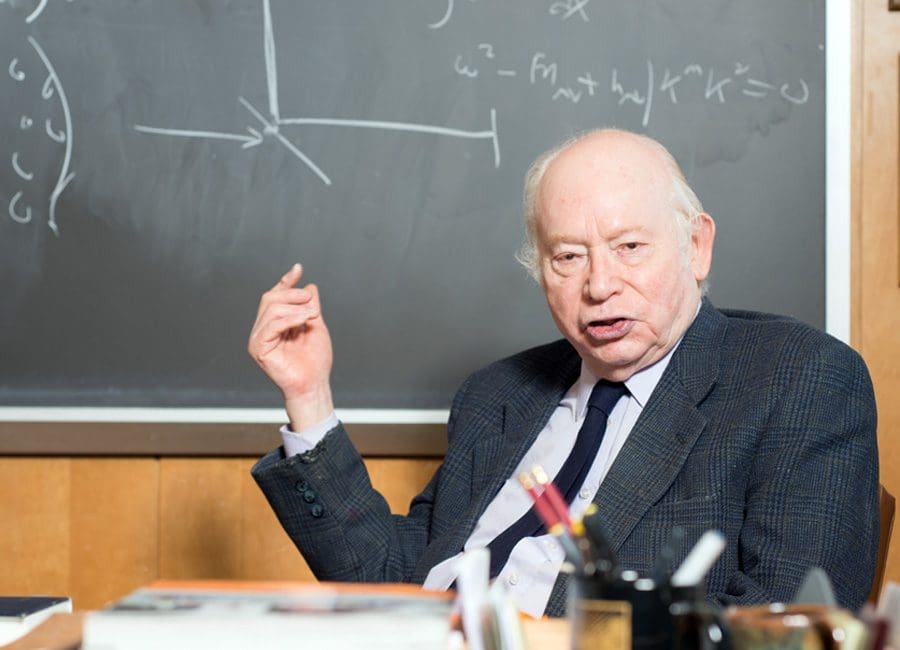


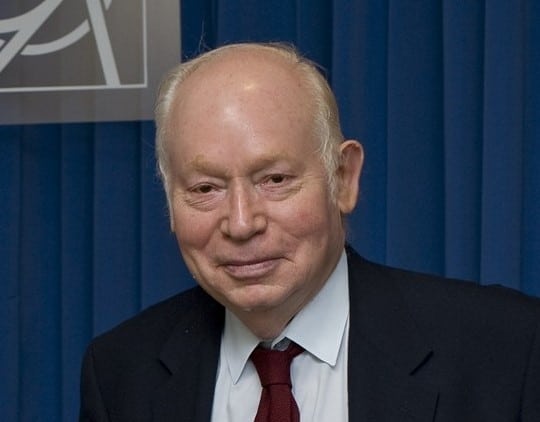 Particle pioneer: Steven Weinberg’s work became a cornerstone of the Standard Model of particle physics. (Courtesy: CERN/Maximilien Brice)
























 Print
Print  PDF
PDF


 The Daily Hatch


