Monthly Archives: September 2020

“Music Monday” BEATLES Breaking down the song LONG AND WINDING ROAD (Featured artist is Charles Lutyens )

_


https://www.youtube.com/watch?v=JrcYPTRcSX0

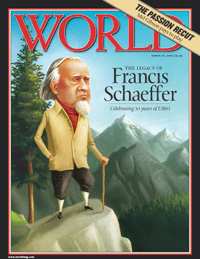
(Francis Schaeffer pictured below spent a lot of time in the 1960’s analyzing the Beatles’ words and music and below he sums up the Beatles search for meaning and values in a letter that I mailed to Paul McCartney on March 20, 2016.)

March 20, 2016

Paul McCartney

Dear Paul,

I love the song THE LONG AND WINDING ROAD for several reasons. I hope you put it in your set list for Little Rock on April 30, 2016. Wikipedia noted: 

The Long and Winding Road” is a ballad written by Paul McCartney (credited to Lennon–McCartney) from the Beatles‘ album Let It Be. It became the group’s 20th and last number-one song in the United States in June 1970,[1] and was the last single released by the quartet.

While the released version of the song was very successful, the post-production modifications by producer Phil Spector angered McCartney to the point that when he made his case in court for breaking up the Beatles as a legal entity, he cited the treatment of “The Long and Winding Road” as one of six reasons for doing so. New versions of the song with simpler instrumentation were subsequently released by both the Beatles and McCartney.

In 2011, Rolling Stone ranked “The Long and Winding Road” number 90 on their list of 100 greatest Beatles songs of all time.[2]

During your time in the Beatles you obviously were searching for satisfaction in several different places and it seemed you returned to the romantic vision of love providing the big answers to life. 
The long and winding road that leads to your door
Will never disappear
I’ve seen that road before it always leads me here
Leads me to your door
The wild and windy night that the rain washed away
Has left a pool of tears crying for the day
Why leave me standing here, let me know the way
Many times I’ve been alone and many times I’ve cried
Anyway you’ll never know the many ways I’ve tried
And still they lead me back to the long and winding road
Francis Schaeffer (1912-1984) was a Christian and a philosopher who also took a deep interest in the trends in culture in the 1960’s and he spent a lot of time analyzing the Beatles search for meaning and values in life. Here is a summary statement he had on the Beatles:
The Beatles have showed us what has occurred [in the last years of the 1960’s in the culture.] The Beatles with Sergeant Pepper’s Lonely Hearts Club Band which incidentally was a very good piece of total art in the sense that it was an unit, they had many songs on this album but the songs all made one message and the whole album was an unit, and the way the songs were arranged. It all formed an unit of infiltration  of the message of modern man and of the drug culture. In fact, it could be said the  drug culture and the mentality that went with it had it’s own vehicle that crossed the frontiers of the world which were otherwise almost impassible by other means of communication. This record,  Sergeant Pepper’s Lonely Hearts Club Band, became the rallying cry for young people throughout the world. It expressed the essence of their lives, thoughts and their feelings. 

(Below Francis Schaeffer holding up  Sergeant Pepper’s Lonely Hearts Club Band Album in his film HOW SHOULD WE THEN LIVE? Episode 7 which can be seen on Vimeo:

Francis Schaeffer – How Should We then Live – 07.The Age of Non Reason

from CaptanFunkyFresh6 years ago

__
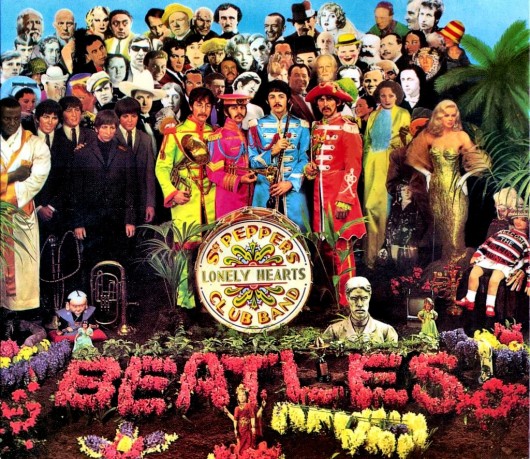
Image result for francis schaeffer beatles sergeant pepper's lonely hearts album

Later came psychedelic rock, an attempt to find this experience without drugs. The younger people and the older ones tried drug taking but then turned to the eastern religions. Both drugs and the eastern religions seek truth inside one’s own head, a negation of reason. The central reason of the popularity of eastern religions in the west is a hope for a nonrational meaning to life and values….

Beatles in India

Image result for beatles in india

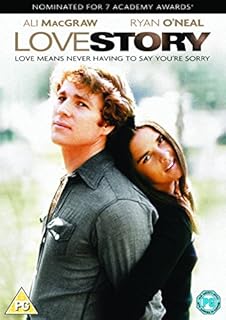
Then the Beatles gradually came home. The last thing we find them doing is the YELLOW SUBMARINE. I am sure a lot of parents thought this is much better than the old hard rock, but I thought it was a very sad thing because it really wasn’t a children’s story at all, but what it was in fact was a romantic statement and the fact is that is all there is. Just the same as [Ingmar] Bergman after he makes the movie SILENCE [1963] then he makes a comedy [ALL THESE WOMEN in 1964]. It is the same as Picasso when he pictures his child as a clown [Paul in a Clown Suit, 1924]. So we find the Beatles making the YELLOW SUBMARINE, but there is something more to it than this because Erich Segal made his reputation by writing the script for the movie version of YELLOW SUBMARINE and then he went on and wrote LOVE STORY. So what we have done is we have come around in a big circle. There was the destruction of the romantic. Students in the 1960’s said we are tired of the romantic of giving us optimistic statements with no sufficient base.

[Paul in a Clown Suit, 1924 by Picasso].

Paul in a Clown Suit, 1924, 1903 by Pablo Picasso

LOVE STORY

So the Beatles destroyed that and then they went through these various trips into non-reason but when they came out they had nothing left but the romantic. This is the tragedy of the young people starting with Berkeley in 1964. How right they were in saying we have largely a plastic culture.    This is something the church should have been saying. These students said give us reality. Then the students tried those trips and they weren’t trips based on reality but they were separated from reason. It was trying to find answers in one’s own head whether it was the drug  trip or the Eastern Religion trip. Then they came around in a big circle and what do we find–we end up with Segal’s LOVE STORY, just the romantic thing as one can imagine but with no adequate base at all, yet giving us a lovely romantic answer, which just like the YELLOW SUBMARINE is very, very sad because the Beatles and young people were giving up the search and just accepting something like this. 

(Joan Baez sings at Free Speech Movement rally in Berkeley. November 20, 1964)

YELLOW SUBMARINE

Image result for beatles yellow submarine


If we are going to understand the line of despair we must understand that it is an unit saying that reason is not going to take us anywhere. After Jean-Jacques Rousseau, Søren Kierkegaard and the German philosophers Georg Wilhelm Friedrich Hegel, and Immanuel Kant there was an unity that bound all these fields of expressions together. First, it was the philosopher expressing this. Second, it was the artist. Third, it was the musician and lastly it was expressed in general culture. The giving up of hope that on the basis of reason one is going to have optimistic answers is the mark of our age. Any kind of answers to the purpose in life, love morals have nothing to do with reason for modern man. It can be expressed in John Cage’s music or in certain forms of rock music.

Chance is the king of our age and John Cage’s music best demonstrates where chance has brought us

You scientists out there who say man is only the atom but a big more complex then you come home to your wife and you say, “I love you.” You want something more than merely sex. Those of you who look to your children with some tenderness and those of you who believe in some morals but you have never settled your score with Marquis de Sade  who said it so well WHAT IS IS RIGHT.

Modern man lives in a dichotomy. Downstairs there is reason which leads to man only being a machine and upstairs there is a some kind of hope against all reason. That great high boast coming out of the Enlightenment that man beginning from himself would gather enough particulars to make his own universal to give adequate answers for life, but it has failed.

de Sade portrayed in recent movie

Karl Popper seen below

Alfred Kinsey seen below

Image result for alfred kinsey

Rationalism fails because man is finite and limited. Karl Popper in England can falsify a few things but he can’t verify anything. Alfred Kinsey tells us that all sexual behavior just comes down to sociological statistics. There is not going to be an answer for modern man unless there is something more than modern man beginning from himself, namely that there is a God there and He is not silent.

In another place Francis Schaeffer has correctly argued:

The universe was created by an infinite personal God and He brought it into existence by spoken word and made man in His own image. When man tries to reduce [philosophically in a materialistic point of view] himself to less than this [less than being made in the image of God] he will always fail and he will always be willing to make these impossible leaps into the area of nonreason even though they don’t give an answer simply because that isn’t what he is. He himself testifies that this infinite personal God, the God of the Old and New Testament is there. 

Instead of making a leap into the area of nonreason the better choice would be to investigate the claims that the Bible is a historically accurate book and that God created the universe and reached out to humankind with the Bible. Below is a piece of that evidence given by Francis Schaeffer concerning the accuracy of the Bible.

TRUTH AND HISTORY (chapter 5 of WHATEVER HAPPENED TO THE HUMAN RACE?, under footnote #94)

Consider, too, the threat in the entire Middle East from the power of Assyria. In 853 B.C. King Shalmaneser III of Assyria came west from the region of the Euphrates River, only to be successfully repulsed by a determined alliance of all the states in that area of the Battle of Qarqar. Shalmaneser’s record gives details of the alliance. In these he includes Ahab, who he tells us put 2000 chariots and 10,000 infantry into the battle. However, after Ahab’s death, Samaria was no longer strong enough to retain control, and Moab under King Mesha declared its independence, as II Kings 3:4,5 makes clear:

Now Mesha king of Moab was a sheep breeder, and he had to deliver to the king of Israel 100,000 lambs and the wool of 100,000 rams. But when Ahab died, the king of Moab rebelled against the king of Israel.

The famous Moabite (Mesha) Stone, now in the Louvre, bears an inscription which testifies to Mesha’s reality and of his success in throwing off the yoke of Israel. This is an inscribed black basalt stela, about four feet high, two feet wide, and several inches thick.

Moabite (Mesha) Stone seen below

___

Actually the answer to find meaning in life is found in putting your faith and trust in Jesus Christ. The Bible is true from cover to cover and can be trusted. Here are some of the posts I have done in the past on the subject and if you like you could just google these subjects: 1. The Babylonian Chronicleof Nebuchadnezzars Siege of Jerusalem, 2. Hezekiah’s Siloam Tunnel Inscription.13. The Pilate Inscription14. Caiaphas Ossuary14 B Pontius Pilate Part 214c. Three greatest American Archaeologists moved to accept Bible’s accuracy through archaeology.

Thanks for your time.

Sincerely,

Everette Hatcher, everettehatcher@gmail.com, http://www.thedailyhatch.org, cell ph 501-920-5733, Box 23416, LittleRock, AR 72221

___

Featured artist is Charles Lutyens

Contemporary Christian Art – The Rt Revd Lord Harries of Pentregarth

Image result for charles lutyens artist

__


Published on Apr 10, 2012

Contrary to much opinion, the current scene of faith-related art is very much alive. There are new commissions for churches and cathedrals, a number of artists pursue their work on the basis of a deeply convinced faith, and other artists often resonate with traditional Christian themes, albeit in a highly untraditional way. The challenge for the artist, stated in the introduction to the course of lectures above, is still very much there: how to retain artistic integrity whilst doing justice to received themes.

This lecture is part of Lord Harries’ series on ‘Christian Faith and Modern Art’. The last century has seen changes in artistic style that have been both rapid and radical. This has presented a particular problem to artists who have wished to express Christian themes.

The transcript and downloadable versions of the lecture are available from the Gresham College website:
http://www.gresham.ac.uk/lectures-and…

Gresham College has been giving free public lectures since 1597. This tradition continues today with all of our five or so public lectures a week being made available for free download from our website.
http://www.gresham.ac.uk

_________________________

Charles Lutyens, 1933

Fire Angel Mosaic, 1968

Image result for charles lutyens artist Fire Angel Mosaic

Charles Lutyens studied at the Chelsea, Slade, St Martin’s and CentralSchools of Art in London and later in Paris. Though mainly a painter he has worked in a range of media and has exhibited widely. From 1963 to 1968 he worked on a commission to produce a mosaic mural of “Angels of the Heavenly Host” on the four long panels high above and surrounding the congregation and altar of St Paul’s Bow, with light flooding down from the large lantern on top. At 800 square feet it is almost certainly the largest contemporary mural in the British Isles. Lutyens was commissioned by the architects of the church because they thought his work consistently revealed “a feeling for states of mind or spirit.” They thought that as we do not know what angels look like it was important that the work be not to too representational and as they put it, they thought the work had achieved just the right balance “between the figurative and the abstract, between severity and empathy, between assertiveness and recession.”[1] Mainly a portrait and landscape painter, Lutyens has turned to Christian themes from time to time as in this recently exhibited The Mocking, 1968. What is interesting about this is the way the tormentors hide behind a great sheet as though they do not want to see what they are doing.


Outraged Christ

Image result for charles lutyens artist Outraged Christ

The highlight of a recent exhibition, however, was a work which has also just been completed and was on view for the first time. This is the much larger than life, in fact 15’ Outraged Christ, made of carved and recycled timber shaped in the form of slats. The first Christians liked to show Christ victorious on the cross. The Mediaeval period focussed on his suffering for the sins of the world. The 20th century too focussed almost exclusively on the suffering of Christ but more often than not as a paradigm of the suffering of a terrible century with its innumerable victims.


The Outraged Christ.

The depiction of an outraged Christ is, so far as I know, a fresh addition to Christian iconography. It is a moving, impressive work. Instead of Christ being shown battered or anguished, it depicts him with mouth open, slightly to one side, with his knees pushing forward from the cross, in rage. But here is rage, indeed fury, not just at what is being inflicted on him but at what we humans do to one another.


[1] Charles Lutyens: Being in the World, paintings, drawings, sculptures, mosaic info@charleslutyens.co.uk, 2011,p.64

_____________

From his website:

Profile

Born in 1933, Charles Lutyens has been an artist all his life. He grew up during the war living in Berkshire and discovered his enjoyment to paint when he was seven years old whilst at school in Shropshire. During his time at Bryanston School in Dorset he realised his commitment to being an artist and would use his academic assignment periods to work in the art room. Through later training at the Slade, St. Martin’s and Central Schools of Art, he developed his skills in oil painting and sculpture.

Lutyens’ work is diverse and has always taken an individual direction using a variety of materials including clay, wood, stone, mosaic, as well as drawn and painted images on paper, board and canvas. His images emerge out of his own experience of life, looking inwardly, with a focus on the condition of “Man’s being in the World”.

Between 1958 and 1964, Lutyens lived in London working in his Fulham studio developing his own personal approach to painting. A body of images then painted were exhibited at the Wildenstein Gallery in New York, where critics compared his work to expressionists, Munch and Ensor.

From 1963 to 1968, Lutyens worked on a commission to produce a tesserae mosaic mural of “Angels of the Heavenly Host” at the newly consecrated church of St. Paul’s, Bow Common, E3.

Charles moved to Oxford with his family in 1978, where together with other commitments, teaching and running related workshops he continued to explore his studio painting and sculpting as well as his landscape work.

Throughout his artistic life he has exhibited in his studio, partaken in mixed exhibitions and has held one-man shows at St. Martin’s Gallery in London and Hollerhaus Gallery, near Munich.

His work is in private collections in England, Germany, Austria, France, Ireland, Spain and USA.

He has recently moved with his wife to Hampshire and is currently working on a 15ft wooden sculpture, a Crucifixion of an “Outraged Christ”.

Related posts:

Image result for sergent peppers album cover

Francis Schaeffer’s favorite album was SGT. PEPPER”S and he said of the album “Sergeant Pepper’s Lonely Hearts Club Band…for a time it became the rallying cry for young people throughout the world. It expressed the essence of their lives, thoughts and their feelings.”  (at the 14 minute point in episode 7 of HOW SHOULD WE THEN LIVE? ) 

Image result for francis schaeffer how should we then live

How Should We Then Live – Episode Seven – 07 – Portuguese Subtitles

Francis Schaeffer
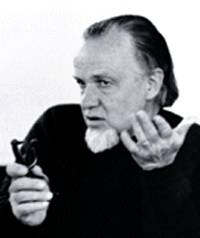
Image result for francis schaeffer

______

FRANCIS SCHAEFFER ANALYZES ART AND CULTURE PART 202 the BEATLES’ last song FREE AS A BIRD (Featured artist is Susan Weil )

February 15, 2018 – 1:45 am

FRANCIS SCHAEFFER ANALYZES ART AND CULTURE Part 200 George Harrison song HERE ME LORD (Featured artist is Karl Schmidt-Rottluff )

FRANCIS SCHAEFFER ANALYZES ART AND CULTURE PART 184 the BEATLES’ song REAL LOVE (Featured artist is David Hammonds )

FRANCIS SCHAEFFER ANALYZES ART AND CULTURE Part 170 George Harrison and his song MY SWEET LORD (Featured artist is Bruce Herman )

FRANCIS SCHAEFFER ANALYZES ART AND CULTURE Part 168 George Harrison’s song AWAITING ON YOU ALL Part B (Featured artist is Michelle Mackey )

FRANCIS SCHAEFFER ANALYZES ART AND CULTURE Part 167 George Harrison’s song AWAITING ON YOU Part A (Artist featured is Paul Martin)

RESPONDING TO HARRY KROTO’S BRILLIANT RENOWNED ACADEMICS!! Part 133 Louise Antony is UMass, Phil Dept, “Atheists if they commit themselves to justice, peace and the relief of suffering can only be doing so out of love for the good. Atheist have the opportunity to practice perfect piety”

FRANCIS SCHAEFFER ANALYZES ART AND CULTURE Part 166 George Harrison’s song ART OF DYING (Featured artist is Joel Sheesley )

FRANCIS SCHAEFFER ANALYZES ART AND CULTURE Part 165 George Harrison’s view that many roads lead to Heaven (Featured artist is Tim Lowly)

FRANCIS SCHAEFFER ANALYZES ART AND CULTURE Part 164 THE BEATLES Edgar Allan Poe (Featured artist is Christopher Wool)

PART 163 BEATLES Breaking down the song LONG AND WINDING ROAD (Featured artist is Charles Lutyens )

FRANCIS SCHAEFFER ANALYZES ART AND CULTURE PART 162 A look at the BEATLES Breaking down the song ALL WE NEED IS LOVE Part C (Featured artist is Grace Slick)

PART 161 A look at the BEATLES Breaking down the song ALL WE NEED IS LOVE Part B (Featured artist is Francis Hoyland )


FRANCIS SCHAEFFER ANALYZES ART AND CULTURE PART 160 A look at the BEATLES Breaking down the song ALL WE NEED IS LOVE Part A (Featured artist is Shirazeh Houshiary)

FRANCIS SCHAEFFER ANALYZES ART AND CULTURE Part 159 BEATLES, Soccer player Albert Stubbins made it on SGT. PEP’S because he was sport hero (Artist featured is Richard Land)

FRANCIS SCHAEFFER ANALYZES ART AND CULTURE Part 158 THE BEATLES (breaking down the song WHY DON’T WE DO IT IN THE ROAD?) Photographer Bob Gomel featured today!

FRANCIS SCHAEFFER ANALYZES ART AND CULTURE Part 118 THE BEATLES (Why was Tony Curtis on cover of SGT PEP?) (Feature on artist Jeffrey Gibson )

FRANCIS SCHAEFFER ANALYZES ART AND CULTURE Part 117 THE BEATLES, Breaking down the song WITHIN YOU WITHOUT YOU Part B (Featured artist is Emma Amos )

FRANCIS SCHAEFFER ANALYZES ART AND CULTURE Part 97 THE BEATLES (The Beatles and Paramhansa Yogananda ) (Feature on artist Ronnie Wood)

Today I am going to look at Paramhansa Yogananda who appeared on the cover of SGT. PEPPERS because the Beatles were at the time interested in what Eastern Religions had to offer. One of the problems with Hinduism is that has no way to explain the existence of evil in the world today. However, Christianity explains […]

FRANCIS SCHAEFFER ANALYZES ART AND CULTURE PART 96 THE BEATLES (Breaking down the song “Eleanor Rigby” Part B and the issue of LONELINESS) Featured artist is Robert Morris

  _ The song ELEANOR RIGBY was a huge hit because it connected so well with “all the lonely people.” The line that probably best summed up how many people felt was: “All the lonely people, Where do they all come from? All the lonely people, Where do they all belong?” Francis Schaeffer believed in engaging the secular […]

FRANCIS SCHAEFFER ANALYZES ART AND CULTURE PART 95 THE BEATLES (Breaking down the song “Eleanor Rigby” Part A and the issue of DEATH ) Featured artist is Joe Tilson

No one remembered Eleanor Rigby enough to come to her funeral. It is sad but Francis Schaeffer points out King Solomon’s words on death from 3000 years ago and they seem similar to the song’s conclusion. Eleanor Rigby – PAUL McCARTNEY The Beatles Cartoon – Eleanor Rigby. Uploaded on Feb 21, 2012 Ah, look at […]

FRANCIS SCHAEFFER ANALYZES ART AND CULTURE Part 94 THE BEATLES (The Beatles and the Gurus on SGT. PEP. ) (Feature on PHOTOGRAPHER BILL WYMAN )

The Beatles went through their Eastern Religion phase and it happened to be when the album SERGEANT PEPPER’S LONELY HEARTS CLUB BAND album came out. Today we will take a look at the article “The Gurus of Sergeant Pepper,” by Richard Salva and then look at some of the thoughts of Francis Schaeffer on this topic. I […]

FRANCIS SCHAEFFER ANALYZES ART AND CULTURE Part 93 THE BEATLES (Breaking down “REVOLUTION 9” Part B) Astrid Kirchherr is featured Photographer

In 1967 the Beatles had honored Stockhausen by putting his photo on the cover of their Sergeant Pepper [sic] album. When John Lennon was murdered in December 1980, Stockhausen said in a telephone interview: “Lennon often used to phone me. He was particularly fond of my Hymnen and Gesang der Jünglinge, and got many things […]

FRANCIS SCHAEFFER ANALYZES ART AND CULTURE Part 92 THE BEATLES (Breaking down “REVOLUTION 9” Part A) Featured photographer is John Loengard

Have you ever had the chance to contrast the music of Bach with that of the song Revolution 9 by the Beatles? Francis Schaeffer pointed out, “Bach as a Christian believed that there was resolution for the individual and for history. As the music that came out of the Biblical teaching of the Reformation was […]

FRANCIS SCHAEFFER ANALYZES ART AND CULTURE PART 91 (WHY WAS H.G.WELLS ON THE COVER OF SGT. PEPPERS? Part B) Featured Artist is Claes Oldenburg

Last time we looked at the hedonistic lifestyle of H.G.Wells who appeared on the cover of SGT PEPPERS but today we will look at some of his philosophic views that shaped the atmosphere of the 1960’s.   Wells had been born 100 years before the release of SGT PEPPERS but many of his ideas influenced […]

FRANCIS SCHAEFFER ANALYZES ART AND CULTURE PART 90 (WHY WAS H.G.WELLS ON THE COVER OF SGT. PEPPERS? Part A) Featured Artist is Ellsworth Kelly

Why was H.G.Wells chosen to be on the cover of SGT PEPPERS? Like many of the Beatles he had been raised in Christianity but had later rejected it in favor of an atheistic, hedonistic lifestyle that many people in the 1960’s moved towards.  Wells had been born 100 years before the release of SGT PEPPERS […]

FRANCIS SCHAEFFER ANALYZES ART AND CULTURE Part 89 THE BEATLES, Breaking down the song “BLACKBIRD” Part B (Featured Photographer is Jürgen Vollmer)

Since racial tensions were extremely high in the 1960’s I am adding a part two to my last post. I grew up in Memphis and was a resident when MLK Jr. was unfortunately assassinated. Just two months later Paul McCartney wrote the song BLACKBIRD because of this assassination. Francis Schaeffer also spoke out strongly against […]

FRANCIS SCHAEFFER ANALYZES ART AND CULTURE Part 88 THE BEATLES, Breaking down the song “BLACKBIRD” Part A (Featured Photographer is Richard Avedon)

__________

FRIEDMAN FRIDAY Milton Friedman (1912-2006)

—-

Friedman, Milton (1912-2006)

Milton Friedman was an American economist and leading representative of the Chicago School during the last half of the 20th century. Friedman received the Nobel Prize in 1976, having made significant contributions to several branches of economic theory, while also writing and speaking on public policy issues from a distinctly free-market perspective. His combination of technical acumen and policy advocacy made him one of the most influential economists and libertarians of his generation.

Friedman was born in New York City to immigrants from central Europe who moved to northern New Jersey when Friedman was a child. He graduated from high school just prior to his 16th birthday, and he attended Rutgers University on a scholarship. After graduating from Rutgers in 1932, Friedman pursued graduate studies in economics at the University of Chicago, which would become his intellectual home for the most productive period of his career. While at Chicago, he met a fellow graduate student, Rose Director, who would become his wife, lifelong partner, and frequent coauthor. In 1998, they published their memoirs, Two Lucky People.

Friedman received his MA from Chicago in 1933 and then accepted a fellowship at Columbia University. While at Columbia, he also held a position with the National Bureau of Economic Research, where he worked closely with future Nobel laureate Simon Kuznets on a study titled Incomes from Independent Professional Practice. Friedman recounted,

That book was finished by 1940, but its publication was delayed until after the war because of controversy among some Bureau directors about our conclusion that the medical profession’s monopoly powers had raised substantially the incomes of physicians relative to that of dentists.

It also served as his doctoral dissertation, which was approved by the Columbia faculty in 1946.

During the Great Depression and World War II, Friedman held several government positions in Washington, D.C. He also taught briefly at the University of Wisconsin and the University of Minnesota, before returning to the University of Chicago in September 1946, where he would spend the next 30 years, retiring in 1977. He and Rose then moved to California, where he accepted a position at Stanford University’s Hoover Institution, which he held until his death.

Friedman’s contributions to economics have been enormous and far reaching. In 1953, he published his Essays in Positive Economics. The introductory essay set forth his fundamental methodological position:

the relevant question to ask about the “assumptions” of a theory is not whether they are descriptively “realistic,” for they never are, but whether they are sufficiently good approximations for the purpose in hand. And this question can be answered only by seeing whether the theory works, which means whether it yields sufficiently accurate predictions.

In a 1996 interview, he elaborated: “The validity of a theory depends upon whether its implications are refuted, not upon the reality or unreality of its assumptions.”

Friedman’s methodological position, adopted by most of his colleagues at Chicago and eventually a good portion of the profession, laid the groundwork for important empirical work and elegant mathematical modeling that have helped economists better understand the world. It also placed the Chicago School squarely in opposition to the Austrian School, whose proponents embraced many of the same promarket positions as Friedman, but who argued that economists must base their work on a set of assumptions that can be demonstrated to be logically correct. Moreover, the Austrians argued that much empirical work was of limited value because social scientists cannot model human behavior in the same way that physical scientists model their objects of study. One can say, for instance, that a price control will lead to a shortage, but the magnitude of that shortage will be difficult, if not impossible, to predict.

Friedman considered his A Theory of the Consumption Function, published in 1957, as his “best purely scientific contribution” to economics. In it, he argues for the “permanent income hypothesis,” which maintains that people make consumption decisions based on the permanent component of their income stream, not on transitory components. In short, people are forward-looking and act based on long-term income prospects. This hypothesis has several implications. First, people tend to smooth their consumption over their lifetimes. For instance, young people with high future earning power may rationally accumulate debt early in life, knowing that they will be able to pay it off as their incomes increase. Second, tax cuts may not spur consumption if the public believes those cuts to be only temporary. The permanent income hypothesis has become one of the cornerstones of modern macroeconomics.

Although Friedman considered A Theory of the Consumption Function to be his most significant contribution, his work in the area of monetary theory was surely his most influential. Inflation, Friedman famously argued, was “always and everywhere a monetary phenomenon.” It is not fundamentally caused by unions demanding higher wages for their members, thus increasing labor costs and the prices of goods. Nor is it a product of companies wielding expansive market power and charging monopolistic prices. Instead, it is caused by too much money chasing too few goods. Central banks, Friedman concluded, should focus narrowly on maintaining price stability and adopt rules that would ensure such an outcome.

In 1963, Friedman, with Anna J. Schwartz, published A Monetary History of the United States, 1867-1960. The book spanned almost a century of monetary history, but its most important section dealt with what the authors called “the great contraction.” Friedman and Schwartz argued that the Great Depression was not caused by the failings of the market system. Rather, they maintained, the Federal Reserve had pursued a monetary policy that was excessively tight and that had led to a sharp decline in economic activity. A Monetary History was a rare scholarly achievement: It has had great influence among both the economics profession and policymakers.

In his 1967 presidential address to the American Economic Association, Friedman questioned the theoretical and empirical validity of the “Phillips curve,” a statistical relationship that purportedly demonstrated a permanent tradeoff between unemployment and inflation. This tradeoff implied a set of choices for society. If you wanted greater employment, you simply had to increase the money supply. That in turn would produce higher inflation, which might be acceptable given current circumstances. Conversely, if inflation became too high, one could simply tighten the money supply and accept more unemployment. Not surprisingly, these ideas were popular with activist policymakers. Friedman challenged these conclusions, arguing that the tradeoff between unemployment and inflation was temporary and resulted only from unanticipated changes in inflation. The public, he claimed, was unlikely to be systematically fooled, and policymakers could not easily manipulate the economy. He later recalled,

As employers and workers caught on to what was happening, any trade-off would disappear. I introduced the concept of a “natural rate of unemployment” to which the level of unemployment would tend whatever the rate of inflation once economic agents came to expect that rate of inflation. To keep unemployment below the natural level requires not simply inflation, but accelerating inflation.

Friedman’s argument was later refined and expanded by economists Edward Prescott and Finn Kydland, and it would become increasingly accepted as stagflation gripped the American economy in the 1970s.

While Friedman was engaged in technical economic research at the highest levels, he also took an active interest in public-policy issues. In 1962, he published Capitalism and Freedom, the product of a series of lectures he gave at Wabash College in 1956. Although directed at a general audience, the book contains sophisticated and sometimes technical arguments for a number of free-market proposals, all presented in clear and accessible prose. For instance, Friedman called for the establishment of unilateral free trade and flexible exchange rates, introduced the idea of school vouchers, and argued for the privatization of social security. Also, as the title of the book suggests, Friedman argued that economic freedom is a necessary prerequisite for political freedom, a proposition that has been criticized by many political scientists. In Capitalism and Freedom, Friedman made it clear that he believed some state involvement was necessary if a stable and prosperous society were to function. “The consistent liberal is not an anarchist,” he wrote. Yet he later rejected or greatly qualified his support for certain government actions that he defended in the book, such as antitrust laws to counter monopolies. Empirical work by his colleagues at the University of Chicago had demonstrated, Friedman argued, that antitrust laws were more often counterproductive than beneficial. His policy advocacy was based on an abiding belief in human freedom—in liberalism—as well as the findings of modern economic science.

Friedman was the author of a column for Newsweek from 1966 to 1983, as was Paul Samuelson, a long-time friend of the Friedmans and the leading Keynesian economist of the 20th century during most of this period. Some of Friedman’s Newsweek articles were later collected in two anthologies, An Economist’s Protest and There’s No Such Thing as a Free Lunch.

Perhaps more than any other endeavor, Free to Choose, cowritten with his wife, brought the Friedmans’ liberal ideas to a wide audience. In its preface, the authors compare Free to Choose to Capitalism and Freedom, noting that the new volume “is a less abstract and more concrete book. Readers of Capitalism and Freedom will find here a fuller development of the philosophy that permeates both books—here, there are more nuts and bolts, less theoretical framework.” In addition, they wrote that much of the analysis in Free to Choose is informed by work done in the 1960s and 1970s by public choice economists who modeled the political system, like the economic system, as a market with self-interested actors. Free to Choose became a best seller, selling more than 400,000 copies in its first year. Perhaps even more important, however, was the 10-part PBS series that accompanied its publication. Each episode dealt with a chapter in the book, followed by debates in which Friedman took on his critics. The show was a huge success and brought liberalism into the living rooms of thousands of people who were unfamiliar with such ideas.

Friedman served as an economic advisor to Barry Goldwater during his 1964 presidential candidacy, as well as to Presidents Nixon and Reagan. Although he had their ear, they often did not follow his advice. The most grievous example was Nixon’s imposition of wage and price controls in 1971, which Friedman widely criticized. Friedman also was a stalwart opponent of conscription, persuasively arguing that a volunteer army was both more just and more efficient. In addition, Friedman actively campaigned for tax and spending limitations on the state level; in fact, he was in Michigan speaking in favor of such a proposal when he was informed that he had won the Nobel Prize. He also spent much energy promoting school vouchers, establishing the Milton and Rose D. Friedman Foundation for Educational Choice in 1996.

Friedman died in 2006, survived by his wife Rose, his daughter Janet, and his son David, also an economist. “Milton Friedman was a giant,” stated Paul Samuelson upon Friedman’s death. “No 20th-century economist had his importance in moving the American economic profession rightward from 1940 to the present.”

Further Readings

Friedman, Milton. Capitalism and Freedom. Chicago: University of Chicago Press, 1962.

———. Essays in Positive Economics. Chicago: University of Chicago Press, 1953.

———. “The Role of Monetary Policy.” American Economic Review 58 no. 1 (March 1968): 1–17.

———. A Theory of the Consumption Function. Princeton, NJ: Princeton University Press, 1957.

Friedman, Milton, and Rose D. Friedman. Free to Choose. New York: Harcourt Brace Jovanovich, 1980.

———. Two Lucky People: Memoirs. Chicago: University of Chicago Press, 1998.

Friedman, Milton, and Anna J. Schwartz. A Monetary History of the United States, 1867-1960. Princeton, NJ: Princeton University Press, 1963.

Hetzel, Robert L. “The Contributions of Milton Friedman to Economics.” Federal Reserve Bank of Richmond Economic Quarterly 93 no. 1 (Winter 2007): 1–30.by Aaron Steelman

Originally published August 15, 2008. See alsoEconomics, Chicago School ofFriedman, David (1945-)Money and Banking.

Milton Friedman

Related posts:

“Friedman Friday” (“Free to Choose” episode 1 – Power of the Market. part 7 of 7)

March 16, 2012 – 12:25 am

  Michael Harrington:  If you don’t have the expertise, the knowledge technology today, you’re out of the debate. And I think that we have to democratize information and government as well as the economy and society. FRIEDMAN: I am sorry to say Michael Harrington’s solution is not a solution to it. He wants minority rule, I […] By Everette Hatcher III | Posted in Current Events, Milton Friedman | Edit | Comments (0)

“Friedman Friday” (“Free to Choose” episode 1 – Power of the Market. part 6 of 7)

March 9, 2012 – 12:29 am

PETERSON: Well, let me ask you how you would cope with this problem, Dr. Friedman. The people decided that they wanted cool air, and there was tremendous need, and so we built a huge industry, the air conditioning industry, hundreds of thousands of jobs, tremendous earnings opportunities and nearly all of us now have air […] By Everette Hatcher III | Posted in Current Events, Milton Friedman | Edit | Comments (0)

“Friedman Friday” (“Free to Choose” episode 1 – Power of the Market. part 5 of 7)

March 2, 2012 – 12:26 am

Part 5 Milton Friedman: I do not believe it’s proper to put the situation in terms of industrialist versus government. On the contrary, one of the reasons why I am in favor of less government is because when you have more government industrialists take it over, and the two together form a coalition against the ordinary […] By Everette Hatcher III | Posted in Current Events, Milton Friedman | Edit | Comments (0)

“Friedman Friday” (“Free to Choose” episode 1 – Power of the Market. part 4 of 7)

February 24, 2012 – 12:21 am

The fundamental principal of the free society is voluntary cooperation. The economic market, buying and selling, is one example. But it’s only one example. Voluntary cooperation is far broader than that. To take an example that at first sight seems about as far away as you can get __ the language we speak; the words […] By Everette Hatcher III | Posted in Current Events, Milton Friedman | Edit | Comments (0)

“Friedman Friday” (“Free to Choose” episode 1 – Power of the Market. part 3 of 7)

February 17, 2012 – 12:12 am

  _________________________   Pt3  Nowadays there’s a considerable amount of traffic at this border. People cross a little more freely than they use to. Many people from Hong Kong trade in China and the market has helped bring the two countries closer together, but the barriers between them are still very real. On this side […] By Everette Hatcher III | Posted in Current Events, Milton Friedman | Edit | Comments (0)

“Friedman Friday” (“Free to Choose” episode 1 – Power of the Market. part 2 of 7)

February 10, 2012 – 12:09 am

  Aside from its harbor, the only other important resource of Hong Kong is people __ over 4_ million of them. Like America a century ago, Hong Kong in the past few decades has been a haven for people who sought the freedom to make the most of their own abilities. Many of them are […] By Everette Hatcher III | Posted in Current Events, Milton Friedman | Edit | Comments (0)

“Friedman Friday” (“Free to Choose” episode 1 – Power of the Market. part 1of 7)

February 3, 2012 – 12:07 am

“FREE TO CHOOSE” 1: The Power of the Market (Milton Friedman) Free to Choose ^ | 1980 | Milton Friedman Posted on Monday, July 17, 2006 4:20:46 PM by Choose Ye This Day FREE TO CHOOSE: The Power of the Market Friedman: Once all of this was a swamp, covered with forest. The Canarce Indians […]

Milton Friedman The Power of the Market 1-5

Debate on Milton Friedman’s cure for inflation

September 29, 2011 – 7:24 am

If you would like to see the first three episodes on inflation in Milton Friedman’s film series “Free to Choose” then go to a previous post I did. Ep. 9 – How to Cure Inflation [4/7]. Milton Friedman’s Free to Choose (1980) Uploaded by investbligurucom on Jun 16, 2010 While many people have a fairly […]

By Everette Hatcher III | Also posted in Current Events | Tagged dr friedman, expansion history, income tax brackets, political courage, www youtube | Edit | Comments (0)

“Friedman Friday” Milton Friedman believed in liberty (Interview by Charlie Rose of Milton Friedman part 1)

April 19, 2013 – 1:14 am

Charlie Rose interview of Milton Friedman My favorite economist: Milton Friedman : A Great Champion of Liberty  by V. Sundaram   Milton Friedman, the Nobel Prize-winning economist who advocated an unfettered free market and had the ear of three US Presidents – Nixon, Ford and Reagan – died last Thursday (16 November, 2006 ) in San Francisco […] By Everette Hatcher III | Posted in Milton Friedman | Edit | Comments (0)

What were the main proposals of Milton Friedman?

February 21, 2013 – 1:01 am

Stearns Speaks on House Floor in Support of Balanced Budget Amendment Uploaded by RepCliffStearns on Nov 18, 2011 Speaking on House floor in support of Balanced Budget Resolution, 11/18/2011 ___________ Below are some of the main proposals of Milton Friedman. I highly respected his work. David J. Theroux said this about Milton Friedman’s view concerning […] By Everette Hatcher III | Posted in Milton Friedman | Edit | Comments (0)

“Friedman Friday,” EPISODE “The Failure of Socialism” of Free to Choose in 1990 by Milton Friedman (Part 1)

December 7, 2012 – 5:55 am

Milton Friedman: Free To Choose – The Failure Of Socialism With Ronald Reagan (Full) Published on Mar 19, 2012 by NoNationalityNeeded Milton Friedman’s writings affected me greatly when I first discovered them and I wanted to share with you. We must not head down the path of socialism like Greece has done. Abstract: Ronald Reagan […] By Everette Hatcher III | Posted in Milton FriedmanPresident Obama | Edit | Comments (1)

Defending Milton Friedman

July 31, 2012 – 6:45 am

What a great defense of Milton Friedman!!!!   Defaming Milton Friedman by Johan Norberg This article appeared in Reason Online on September 26, 2008  PRINT PAGE  CITE THIS      Sans Serif      Serif Share with your friends: ShareThis In the future, if you tell a student or a journalist that you favor free markets and limited government, there is […]

FRANCIS SCHAEFFER ANALYZES ART AND CULTURE Part 335 “Practices such as branding cattle, castration without anaesthetic, and bullfighting should be treated as morally equivalent to doing the same thing to human beings” (Schaeffer v. Richard Dawkins) Featured Artist is Leon Kossoff

_

Bill Maher and Richard Dawkins

Image result for richard dawkins obama

__

Image result for francis schaeffer

__

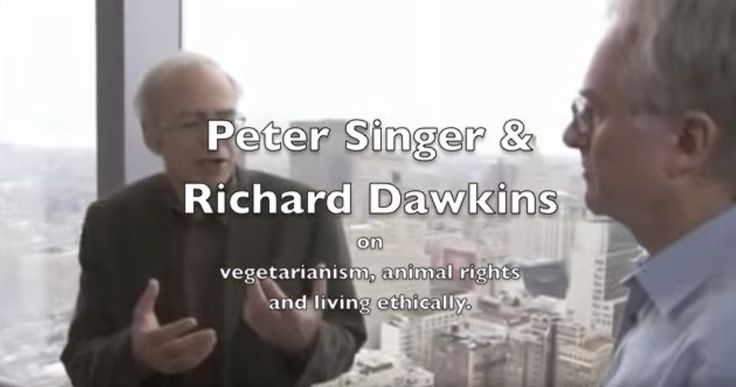
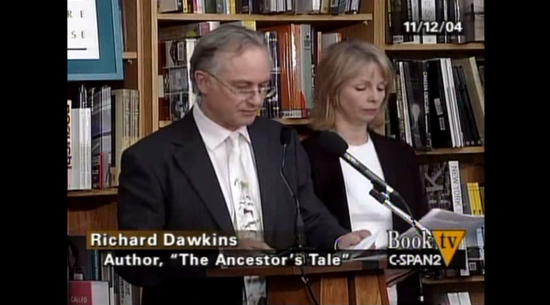
Dawkins interviews animal rights advocate Peter Singer. Francis Schaeffer discussed Singer’s views in several of his books and I had the privilege of corresponding with Dr. Singer and have read several of his books.

Image result for richard dawkins peter singer

February 25, 2019

Richard Dawkins c/o Richard Dawkins Foundation, 
Washington, DC 20005

Dear Mr. Dawkins,

i have enjoyed reading about a dozen of your books and some of the most intriguing were The God DelusionAn Appetite for Wonder: The Making of a Scientist, and Brief Candle in the Dark: My Life in Science.

I wanted to comment on something you wrote in your book Science in the Soul: Selected Writings of a Passionate Rationalist, and here is the quote from page 331: 


Practices such as branding cattle, castration without anaesthetic, and bullfighting should be treated as morally equivalent to doing the same thing to human beings.

Dr. John J. Shea appeared on the TV series APE MAN with Walter Cronkite back in the 1990’s and claimed that there is only a degree of difference between monkeys and humans and not a categorical difference. After that program aired I had the opportunity to correspond with Dr. Shea and he was kind enough to send me a two page response to my questions. (This correspondence took place back in 1994 and 1995.)

Dr. Shea also suggested that I read SHADOWS OF FORGOTTEN ANCESTORS by Carl Sagan and his wife Ann Druyan, and I did so. Here are my thoughts on the question.

First, only humans lie in the sense we are held morally responsible. Sagan wrote, “Deception in the social relations of animals…is an emerging and productive topic in biology…” (p. 379). This may be true, but are animals responsible to God? I think not. Romans 3:23 teaches that “All MEN have sinned and fall short of the glory of God.” Animals may deceive but they are not morally responsible.

Second, only men feel guilt. Sagan refers briefly to the fact that men feel guilt (p. 4.14), but he does not spend a lot of time on this. Romans 1:19 asserts, “For that which is known about God is evident to them and made plain in their inner consciousness, because God has show it to them” (Amplified Bible).  Here Sagan turns to  Thomas Henry Huxley who he quotes:

On all sides, I shall hear the cry–“We are men and women, not a mere better sort of apes, a little longer in the leg, more compact in the foot, and bigger in brain than your brutal Chimpanzees and Gorillas. The power of knowledge–the conscience of good and evil--the pitiful tenderness of human affections, raise us out of all real fellowship with the brutes, however, closely they may seem to approximate us.” 

To this I can reply that the exclamation would be just and would be most just and would have my entire sympathy, if it were only relevant. But, it is not I who seek to base Man’s dignity upon this great toe, or insinuate that we are lost if an Ape has a hippocampus minor (in its brain). On the contrary, I have done my best to sweep away this vanity… 

WHY DID SAGAN AND HUXLEY FACE SUCH A LARGE CHORUS THAT WAS OBJECTING TO THIS VIEW THAT WE DON’T HAVE A GOD-GIVEN CONSCIENCE? The answer is very simple and it deals with the consequences of Social Darwinism. Chuck Colson said that Larry King was not very impressed with his long talk on the historical accuracy of the scriptures, but when he touched on this subject things got interesting:

Larry King invited me to dinner. “I don’t believe in God,” Larry told me straight out. “But tell me why you believe.” I responded, “Have you seen Woody Allen‘s movie CRIMES AND MISDEMEANORS

Yes, he loved it, in fact. It’s about a doctor who is haunted by GUILT after hiring a killer to murder his mistress. His Jewish father has taught him that God will surely bring justice. In the end the doctor suppresses his GUILT, convincing himself that LIFE IS AN DARWINIAN STRUGGLE WHERE ONLY THE RUTHLESS SURVIVE

I asked Larry, “Is that our only choice–to be tormented by GUILT or else kill our conscience? Larry, how do you deal with your conscience?” He dropped his fork. I said, “What do you do with the GUILT that is in here? What do you do with what you know you have done wrong? 

Then he was ready to listen. I went on and shared with him from Romans which teaches about the voice of conscience that God has given us. 

__________

Third, men have a longing for significance which expresses itself most clearly in the fear of non being.

Fourth, I would point to the fact that only people worship.

Fifth, men are not satisfied unless they have their spiritual needs met. Carl Sagan quotes the poet Walt Whitman, “Not one (animal) is dissatisfied…Not one is respectable or unhappy over the whole earth…” Sagan comments, “On this basis of the evidence presented in this book, we doubt if any of Whitman’s  six purported differences between other animals and humans is true…” (p. 389).

I read Sagan’s book cover to cover and made over 15 pages of notes, and I have yet to find any of the “evidence” that Sagan speaks of on page 389. I find the comments of NOAM CHOMSKY more logical. He calls animal language an “evolutionary miracle” akin to “finding an island of humans who could be taught to fly.”

I like Francis Schaeffer‘s term “Mannishness” of man. He defines it as those aspects of man, such as significance, love, rationality and the fear of non being, which mark him off from animals and machines and give evidence of his being created in the image of a personal God.

The scientist Blaise Pascal is quoted by Sagan on page 364 and then Sagan notes, “Most of the philosophers adjudged great in the history of western thought held that humans are fundamentally different from other animals…”

As you know Pascal was the inventor of the barometer and he lived from 1623 to 1662. Pascal also observed, “There is a God-shaped vacuum in the heart of every man,and only God can fill it.”

What is the solution? “For God so loved the world that He gave his one and only Son, that whoever believes in him should not perish but have eternal life” (John 3:16). The scriptural directive is not for us to work harder to achieve God’s favor (Romans 3:20), but to accept God’s mercy through our repentance and receiving Christ as a free gift (Ephesians 2:8-10).

Is the Bible historically accurate? Here are some of the posts I have done in the past on the subject: 1. The Babylonian Chronicleof Nebuchadnezzars Siege of Jerusalem2. Hezekiah’s Siloam Tunnel Inscription. 3. Taylor Prism (Sennacherib Hexagonal Prism)4. Biblical Cities Attested Archaeologically. 5. The Discovery of the Hittites6.Shishak Smiting His Captives7. Moabite Stone8Black Obelisk of Shalmaneser III9A Verification of places in Gospel of John and Book of Acts., 9B Discovery of Ebla Tablets10. Cyrus Cylinder11. Puru “The lot of Yahali” 9th Century B.C.E.12. The Uzziah Tablet Inscription13. The Pilate Inscription14. Caiaphas Ossuary14 B Pontius Pilate Part 214c. Three greatest American Archaeologists moved to accept Bible’s accuracy through archaeology.

The answer to find meaning in life is found in putting your faith and trust in Jesus Christ. The Bible is true from cover to cover and can be trusted.

Thank you again for your time and I know how busy you are.

Everette Hatcher, everettehatcher@gmail.comhttp://www.thedailyhatch.org, cell ph 501-920-5733, Box 23416, LittleRock, AR 72221, United States

__

Image result for francis schaeffer

Francis and Edith Schaeffer at their home in Switzerland with some visiting friends

__

Image result for richard dawkins young

Schaeffer with his wife Edith in Switzerland.


Image result for john lennox and richard dawkins

Richard Dawkins and John Lennox

_

DawkinsWard

_

Image result for francis schaeffer c. everett koop whatever happened to human race?

_

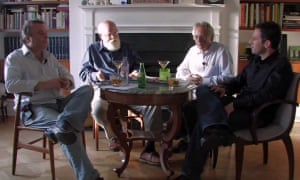
Dawkins, Hitchens, Dennett, Harris 

Image result for four horsemen richard dawkins

Canary Islands 2014: Harold Kroto and Richard Dawkins

Image result for harry kroto richard dawkins

__

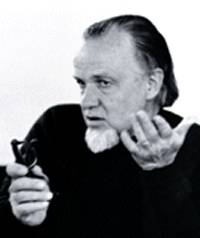
Francis Schaeffer pictured below:

The Basis of Human Dignity by Francis Schaeffer

Richard Dawkins, founder of the Richard Dawkins Foundation for Reason and Science. Credit: Don Arnold Getty Images

Francis Schaeffer in 1984

Christian Manifesto by Francis Schaeffer

Francis Schaeffer in 1982

—-

Whatever Happened to the Human Race? Episode 1

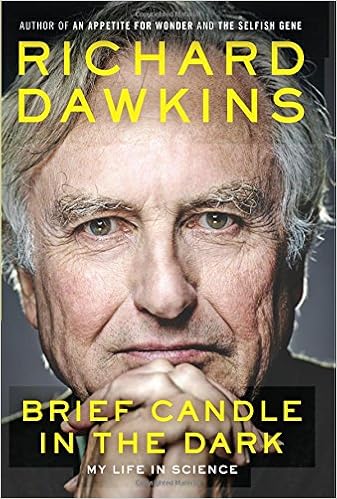
Image result for richard dawkins brief candle in the dark

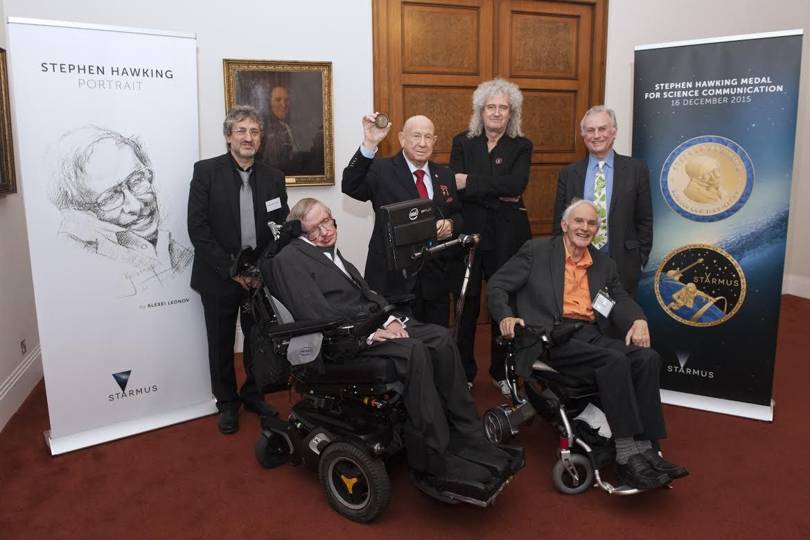
Garik Israelian, Stephen Hawking, Alexey Leonov, Brian May, Richard Dawkins and Harry Kroto

—-

—-

—-

—-

Featured artist is Leon  Kossoff

Leon Kossoff in his studio © Roland Randall

The UK artist Leon Kossoff has died aged 92 after a brief illness. His gallery, London’s Annely Juda Fine Art, confirms the news. “He saw beauty in everything and in everybody,” the gallery says in a statement. One of the most important 20th-century British artists, he was part of the School of London along with other figurative painters including Lucian Freud and Frank Auerbach.

Known for his cityscapes of London, Kossoff was born in the city in 1926 to Russian immigrant parents, the second of seven children, and grew up in the East End. “My father struggled to support us working as a baker, there wasn’t much culture in that world and artists were considered wastrels,” he told Kristine McKenna in a 1993 interview for the Los Angeles Times. One major formative moment was a visit aged nine to the National Gallery in London, where he saw Rembrandt’s painting A Woman Bathing in a Stream (around 1654).

“I don’t know what struck me about it because none of the other paintings in the National Gallery where I saw it interested me at all,” he said. “But somehow that painting opened up a whole world to me—not a world of painting so much as a way of feeling about life that I hadn’t experienced before.”

Leon Kossoff's Children’s Swimming Pool, 11 o’clock Saturday Morning, August 1969

Leon Kossoff’s Children’s Swimming Pool, 11 o’clock Saturday Morning, August 1969Photo courtesy of the Lewis Collection. © the Leon Kossoff Estate

Kossoff was evacuated in 1939 to Norfolk during the Second World War, and was also influenced by the work of the East Anglican watercolourists he saw there. He later served in the Jewish Infantry Brigade Group in Italy, Belgium and the Netherlands, and went on to enroll in Central Saint Martins in London in 1949, where he met Frank Auerbach. He also studied with David Bomberg at the Borough Polytechnic and at the Royal College of Art. He began showing at Helen Lessore’s Beaux Arts Gallery in 1956.

Kossoff worked in a very thickly impasto style in a muted, somewhat sombre palette. He returned to familiar subjects throughout his career, like Christ Church in Spitalfields and Kilburn tube station, as well as making works with Old Masters such as Nicholas Poussin and his early inspiration as a jumping-off point and portraits of those close to him. “His lyrical paintings of swimming pools, city churches, railway junctions, underground stations and back gardens testify to his delight in the world around him—a world full of change, loss, survival and renewal, all of which he orchestrates into paintings of extraordinary density and feeling,” Annely Juda Fine Art says in a statement. “So too with his paintings of people—friends, family, nudes and Londoners going about their ordinary business—all brought to life through Kossoff’s vivid and energetic handling of paint.”

Kossoff represented Britain at the 1995 Venice Biennale. The following year, he had a major retrospective at the Tate in London. He has shown at institutions including the National Gallery and Whitechapel in London; the Los Angeles County Museum of Art and the J. Paul Getty Museum in Los Angeles; the Museum of Modern Art in New York; the Lousiana Museum of Modern art in Humlebæk; the Kunstmuseum Luzern; the Düsseldorf Kunstverein and the Stedelijk Museum in Amsterdam. He also taught at the Regent Street Polytechnic and the Chelsea School of Art. Most recently, Kossoff had a solo exhibition, A London Life, at Piano Nobile gallery in London, which closed in May.

“His death robs us of one of Britain’s greatest painters, but his work reminds us of the continuing potency of painting to comprehend the world in which we live,” Annely Juda Fine Art says.

—-

Related posts:

RESPONDING TO HARRY KROTO’S BRILLIANT RENOWNED ACADEMICS!! Part 48 Nobel Prize Winner and Global Warming Denier Ivar Giaever “I think religion is to blame for a lot of the ills in this world!”

October 20, 2015 – 5:20 am

  On November 21, 2014 I received a letter from Nobel Laureate Harry Kroto and it said: …Please click on this URL http://vimeo.com/26991975 and you will hear what far smarter people than I have to say on this matter. I agree with them. Harry Kroto _________________ Below you have picture of 1996 Chemistry Nobel Prize Winner […]

FRANCIS SCHAEFFER ANALYZES ART AND CULTURE PART 78 THE BEATLES (Breaking down the song TOMORROW NEVER KNOWS) Featured musical artist is Stuart Gerber

September 24, 2015 – 5:42 am

The Beatles were “inspired by the musique concrète of German composer and early electronic music pioneer Karlheinz Stockhausen…”  as SCOTT THILL has asserted. Francis Schaeffer noted that ideas of  “Non-resolution” and “Fragmentation” came down German and French streams with the influence of Beethoven’s last Quartets and then the influence of Debussy and later Schoenberg’s non-resolution which is in total contrast […]

RESPONDING TO HARRY KROTO’S BRILLIANT RENOWNED ACADEMICS!! Part 42 Peter Singer, Professor of Bioethics at Princeton University, THE PROBLEM OF EVIL

September 8, 2015 – 5:10 am

  _______ On November 21, 2014 I received a letter from Nobel Laureate Harry Kroto and it said: …Please click on this URL http://vimeo.com/26991975 and you will hear what far smarter people than I have to say on this matter. I agree with them. Harry Kroto _________________ Below you have picture of 1996 Chemistry Nobel Prize […]

RESPONDING TO HARRY KROTO’S BRILLIANT RENOWNED ACADEMICS!! Bart Ehrman “Why should one think that God performed the miracle of inspiring the words in the first place if He didn’t perform the miracle of preserving the words?”

September 2, 2015 – 8:42 am

On November 21, 2014 I received a letter from Nobel Laureate Harry Kroto and it said: …Please click on this URL http://vimeo.com/26991975 and you will hear what far smarter people than I have to say on this matter. I agree with them. Harry Kroto ____________________ Below you have picture of 1996 Chemistry Nobel Prize Winner Dr. […]

WOODY WEDNESDAY Woody Allen’s Autobiography resembles Ricky Gervais show AFTER LIFE and Solomon in ECCLESIASTES Part 3 (Solomon, Tony and Woody all unsatisfied in life with their accomplishments)

_

Tony in the film AFTERLIFE keeps thinking about the good ole days with his soulmate and thinks that everything was great then when it wasn’t. Wade Wainio makes this observation in the following article:

Lazy boy


Heroes
 
 
Born Louse
 
 
Woody interview on death


Hannah and her sisters FAVORITE SCENES
 
 
Woody wording about brain tumor
 
 
Dick Cavett show 1971 with Woody
 

May 2, 2020

Woody Allen c/o NY

Dear Woody,

You got to take the time to watch the film series AFTERLIFE on Netflix since Ricky Gervais, you and Solomon in ECCLESIASTES talk about so many of the same nihilistic themes on life!!!

On the last page of your autobiography are these words: MY  BIGGEST REGRET? Only that I’ve been given millions to make movies, total artistic control, and I never made a great film.”
I have two responses to that. First, you have made a great film. I would argue that CRIMES AND MISDEMEANORS is a truly great film because it demonstrates how without God MIGHT MAKES RIGHT and there is no argument against that I have ever heard!!!

In fact, I have about 2 million hits on my blog and a large portion of those individuals who have visited my blog have read this quote below that I wrote about you over and over:

I have spent alot of time talking about Woody Allen films on this blog and looking at his worldview. He has a hopelessmeaningless, nihilistic worldview that believes we are going to turn to dust and there is no afterlife. Even though he has this view he has taken the opportunity to look at the weaknesses of his own secular view. I salute him for doing that. That is why I have returned to his work over and over and presented my own Christian worldview as an alternative.

My interest in Woody Allen is so great that I have a “Woody Wednesday” on my blog www.thedailyhatch.org every week. Also I have done over 30 posts on the historical characters mentioned in his film “Midnight in Paris.” (Salvador Dali, Ernest Hemingway,T.S.Elliot,  Cole Porter,Paul Gauguin,  Luis Bunuel, and Pablo Picasso were just a few of the characters.)

Second, I would assert that just like Solomon in ECCLESIASTES and Tony in AFTERLIFE or Mick Jagger in the ROLLING STONES, you can not find satisfaction UNDER THE SUN!

There are, however, signs that Tony was disappointed in life even before Lisa’s death. He hates his job at the Tambury Gazette, saying it’s not journalism. He decries what he considers the awful future of online publishing, including click-bait and angry fools in article comment sections.

Netflix’s After Life season 1, episode 4 recap

In episode 4 of Netflix original After Life, Tony is forced to question his bleak outlook yet remains resilient in his pessimism.

After Life has been steeped in the depression of Tony Johnson (Ricky Gervais), following the death of his wife Lisa (Kerry Godliman). However, Tony’s sense of humor is a sign that, deep down, he still has a spark of life left. Of course, sad reminders follow him around regularly. In this episode, he passes by Lisa’s old room in the hospital. Although he doesn’t cry, he is clearly reminded of her.

There are, however, signs that Tony was disappointed in life even before Lisa’s death. He hates his job at the Tambury Gazette, saying it’s not journalism. He decries what he considers the awful future of online publishing, including click-bait and angry fools in article comment sections. He is confronted yet again by Matt (Tom Basden), Tony’s brother-in-law and boss who’s sick of his sour attitude.

How does Tony in AFTERLIFE or Solomon in the Book of Ecclesiastes get peace in their lives?

Ecclesiastes 2:24-25 New American Standard Bible (NASB)

24 There is nothing better for a man than to eat and drink and tell himself that his labor is good. This also I have seen that it is from the hand of God. 25 For who can eat and who can have enjoyment without Him?

Dan Jarrell commented on this passage in Ecclesiastes:

Either way you translate it, it says nothing is so good for us other than a satisfied life but nothing is as impossible for us because it is not in us to be satisfied for who can eat and enjoy life without him?  The answer is NOBODY CAN!!!! So you come down to the idea that if one seeks satisfaction they will never find it. In fact, every pleasure will be fleeting and can not be sustained, BUT IF ONE SEEKS GOD THEN ONE FINDS SATISFACTION. That is my sermon in a nutshell. That is the conclusion. 

__


Image result for hugh hefner younger days

Over and over I have read that Hugh Hefner was a modern day King Solomon and Hefner’s search for satisfaction was attempted by adding to the number of his sexual experiences.

Many of the sermons that I heard or read that inspired me to write Hugh Hefner were from this list of gentlemen:  Daniel Akin, Brandon Barnard, Alistair Begg, Matt Chandler, George Critchley,  Steve Gaines, Norman L. Geisler, Greg Gillbert, Billy Graham, Mark Henry, Dan Jarrell, Walter C. Kaiser, Jr., R. G. Lee, C.S. Lewis Chris Lewis, Kerry Livgren, Robert Lewis,    Bill Parkinson, Ben Parkinson,Vance Pitman, Nelson Price, Ethan Renoe, Adrian Rogers, Philip Graham Ryken, Francis Schaeffer, Lee Strobel, Bill Wellons, Kirk Wetsell,  Ken Whitten, Ed Young ,  Ravi Zacharias, Tom Zobrist, and Richard Zowie.

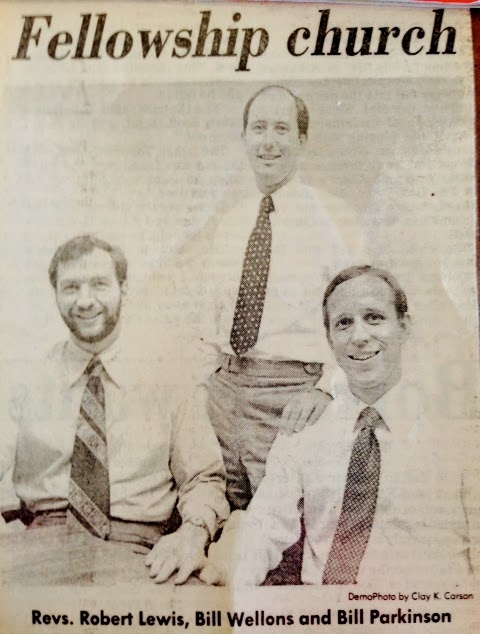
In this post today and several posts that follow this will be based on a sermon series I heard at FELLOWSHIP BIBLE CHURCH in Little Rock in 1996 on the Book of Ecclesiastes. The pastors back then were Robert Lewis, Bill Wellons, Bill Parkinson and Dan Jarrell. Below is the letter I wrote based both on Dan Jarrell’s sermon from the same series.

Dan Jarrell pictured below:

Image result for FELLOWSHIP BIBLE CHURCH DAN JARRELL

________

Image result for robert lewis bill parkinson

__

Robert Lewis pictured below:

Image result for robert lewis fellowship bible church

Bill Wellons pictured below:

Image result for bill wellons fellowship bible church

Bill Parkinson pictured below

Image result for bill parkinson fellowship bible church

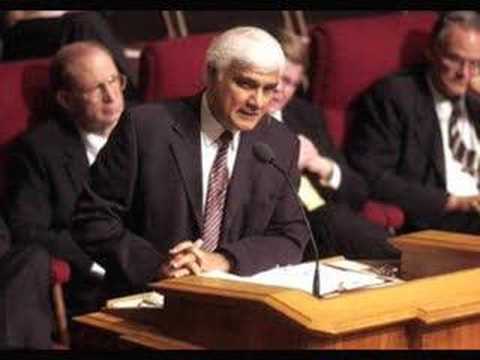
I also quoted Ravi Zacharias when I wrote, “The key to understanding the Book of Ecclesiastes is the term UNDER THE SUN — What that literally means is you lock God out of a closed system and you are left with only this world of Time plus Chance plus matter.”

Image result for ravi zacharias ecclesiastes


On page 164 of your autobiography you state:
 
Jean, John, and I hung out sometimes at Hugh Hefner’s. Not much but now and then. It was an open house nearly twenty-four hours, hung with Picassos and full of celebrities, sport figures, sextuplets women. The sexy women were the main draw.


Let me share a letter I wrote to your friend Hef below:

—-

Related posts:

MY 4 POSTCARDS IN 2017 FROM NEW ORLEANS  TO HUGH HEFNER (PART 4)

I started this series on my letters and postcards to Hugh Hefner back in September when I read of the passing of Mr. Hefner. There are many more to come. It is my view that he may have taken time to look at glance at one or two of them since these postcards were short and from one of Hef’s favorite […]

MY 8 POSTCARDS IN 2017 FROM NEW ORLEANS TO HUGH HEFNER (PART 3)

I started this series on my letters and postcards to Hugh Hefner back in September when I read of the passing of Mr. Hefner. There are many more to come. It is my view that he may have taken time to look at glance at one or two of them since these postcards were short and from one of Hef’s favorite […]

MY 8 POSTCARDS IN 2017 FROM NEW ORLEANS TO HUGH HEFNER (PART 2)

I started this series on my letters and postcards to Hugh Hefner back in September when I read of the passing of Mr. Hefner. There are many more to come. It is my view that he may have taken time to look at glance at one or two of them since these postcards were short and from one of Hef’s favorite […]

MY 8 POSTCARDS IN 2017 FROM NEW ORLEANS  TO HUGH HEFNER (PART 1)

  I started this series on my letters and postcards to Hugh Hefner back in September when I read of the passing of Mr. Hefner. There are many more to come. It is my view that he may have taken time to look at glance at one or two of them since these postcards were short and from one of Hef’s […]

MY 4 POSTCARDS IN 2016 FROM VEGAS TO HUGH HEFNER (PART 4)

_   I started this series on my letters and postcards to Hugh Hefner back in September when I read of the passing of Mr. Hefner. There are many more to come. It is my view that he may have taken time to look at glance at one or two of them since these postcards were short and from one of […]

MY 4 POSTCARDS IN 2016 FROM VEGAS TO HUGH HEFNER (PART 3)

_____ I started this series on my letters and postcards to Hugh Hefner back in September when I read of the passing of Mr. Hefner. There are many more to come. It is my view that he may have taken time to look at glance at one or two of them since these postcards were short and from one of Hef’s […]

MY 4 POSTCARDS IN 2016 FROM VEGAS TO HUGH HEFNER (PART 2)

_____ I started this series on my letters and postcards to Hugh Hefner back in September when I read of the passing of Mr. Hefner. There are many more to come. It is my view that he may have taken time to look at glance at one or two of them since these postcards were […]

MY 4 POSTCARDS IN 2016 FROM VEGAS TO HUGH HEFNER (PART 1)

_____ I started this series on my letters and postcards to Hugh Hefner back in September when I read of the passing of Mr. Hefner. There are many more to come. It is my view that he may have taken time to look at glance at one or two of them since these postcards were […]

The last 3 letters I wrote to Hugh Hefner compared him to King Solomon in Ecclesiastes and his search for the meaning of it all!!! (Part 3)

|I saw this on the internet on  June 20, 2017   _   Playboy’s Hugh Hefner on board a boat with Barbi Benton and friends sporting a striped navy shirt and a pipe in mouth and a real catch in hand during the 70s. ____________________________________ Below is the last letter I ever wrote to Hugh Hefner. […]

The last 3 letters I wrote to Hugh Hefner compared him to King Solomon in Ecclesiastes and his search for the meaning of it all!!! (Part 2)

I learned yesterday that Hugh Hefner had passed away. Just last year I visited Chicago and drove by his Chicago Playboy Mansion pictured below. ___   Playboy after dark filmed in Chicago Playboy Mansion   During the 1990′s I actually made it a practice to write famous atheists and scientists that were mentioned by Adrian […]