Economic research has only a tenuous relationship to economic policymaking in Washington. President Obama’s new proposal to raise the federal minimum wage from $7.25 to $9.00 is a case in point. It would bad for workers and the economy, but the administration seems to be ignoring the large body of theory and evidence on the issue.
Labor economist Mark Wilson discusses the economics of the minimum wage in an essay on Downsizing Government. Here are a few highlights:
There is no free lunch when the government mandates a minimum wage. If the government requires that certain workers be paid higher wages, then businesses make adjustments to pay for the added costs, such as reducing hiring, cutting employee work hours, reducing benefits, and charging higher prices.
…
The main finding of economic theory and empirical research over the past 70 years is that minimum wage increases tend to reduce employment. The higher the minimum wage relative to competitive-market wage levels, the greater the employment loss that occurs. While minimum wages ostensibly aim to improve the economic well-being of the working poor, the disemployment effects of a minimum wages have been found to fall disproportionately on the least skilled and on the most disadvantaged individuals, including the disabled, youth, lower-skilled workers, immigrants, and ethnic minorities.
…
Nobel laureate economist Milton Friedman observed: ‘The real tragedy of minimum wage laws is that they are supported by well-meaning groups who want to reduce poverty. But the people who are hurt most by higher minimums are the most poverty stricken.’
…
In the American economy, low wages are usually paid to entry-level workers, but those workers usually do not earn these wages for extended periods of time. Indeed, research indicates that nearly two-thirds of minimum wage workers move above that wage within one year.
…
While they are often low-paid, entry-level jobs are vitally important for young and low-skill workers because they allow people to establish a track record, to learn skills, and to advance over time to a better-paying job. Thus, in trying to fix a perceived problem with minimum wage laws, policymakers cause collateral damage by reducing the number of entry-level jobs.
…
As Milton Friedman noted, ‘The minimum wage law is most properly described as a law saying employers must discriminate against people who have low skills.’
Milton Friedman – Power of Choice (Biography) Part 3 Published on May 21, 2012 by BasicEconomics Tribute to Milton Friedman English Pages, 8. 9. 2008 Dear colleagues, dear friends, (1) It is a great honor for me to be asked to say a few words to this distinguished and very knowledgeable audience about one of our greatest […]
Milton Friedman – Power of Choice (Biography) Part 2 Published on May 21, 2012 by BasicEconomics My Tribute to Milton Friedman: The Little Giant of Free Market Economics By: admin- 11/17/2006 09:49 AM RESIZE: AAA Milton Friedman, the intellectual architect of the free-market reforms of the post-World War II era, was a dear friend. I […]
Milton Friedman – Power of Choice – Biography (Part 1) Published on May 20, 2012 by BasicEconomics David R. Henderson The Pursuit of Happiness ~ Milton Friedman: A Personal Tribute May 2007 • Volume: 57 • Issue: 4 David Henderson (davidrhenderson1950@gmail.com) is a research fellow with the Hoover Institution and an economics professor at […]
Milton Friedman and Chile – The Power of Choice Uploaded on May 13, 2011 In this excerpt from Free To Choose Network’s “The Power of Choice (2006)”, we set the record straight on Milton Friedman’s dealings with Chile — including training the Chicago Boys and his meeting with Augusto Pinochet. Was the tremendous prosperity unleashed […]
RARE Friedman Footage – On Keys to Reagan and Thatcher’s Success Margaret Thatcher and Milton Friedman were two of my heroes. Thatcher praises Friedman, her freedom fighter By George Jones, Political Editor 12:01AM GMT 17 Nov 2006 A tireless champion of the free market Let’s not get misty eyed over the Friedman legacy Milton Friedman, […]
Milton Friedman was a great economist and a fine speaker. ___________________ I have written before about Milton Friedman’s influence on the economy of Chile. Now I saw this fine article below from http://www.heritage.org and below that article I have included an article from the Wall Street Journal that talks about Milton Friedman’s influence on Chile. I […]
December 06, 2011 03:54 PM Milton Friedman Explains The Negative Income Tax – 1968 0 comments By Gordonskene enlarge Milton Friedman and friends.DOWNLOADS: 36 PLAYS: 35 Embed The age-old question of Taxes. In the early 1960′s Economist Milton Friedman adopted an idea hatched in England in the 1950′s regarding a Negative Income Tax, to […]
RARE Friedman Footage – On Keys to Reagan and Thatcher’s Success Margaret Thatcher and Milton Friedman were two of my heroes. Milton Friedman on How Francois Mitterrand (and Failed Lefty Economics) Helped Re-elect Margaret Thatcher Matt Welch|Apr. 10, 2013 9:37 am Yesterday I wrote a column about how Margaret Thatcher liberated Western Europe from the […]
I have written about the tremendous increase in the food stamp program the last 9 years before and that means that both President Obama and Bush were guilty of not trying to slow down it’s growth. Furthermore, Republicans have been some of the biggest supporters of the food stamp program. Milton Friedman had a […]
There are 3 videos in this series and they have statements by 150 academics and scientists and I hope to respond to all of them. Wikipedia notes Leonard Mlodinow is an American physicist, author and screenwriter.[2]
As recounted in his book, Feynman’s Rainbow, his interest turned to physics during a semester he took off from college to spend on a kibbutz in Israel, during which he had little to do at night beside reading The Feynman Lectures on Physics, which was one of the few English books he found in the kibbutz library…Apart from his research and books on popular science, he also co-wrote the screenplay for the 2009 film Beyond the Horizon[3] and has been a screenwriter for television series, including Star Trek: The Next Generation and MacGyver.[1] He co-authored (with Matt Costello) a children’s chapter book series entitled The Kids of Einstein Elementary.
Between 2008 and 2010, Mlodinow worked on a book with Stephen Hawking, entitled The Grand Design.[1] A step beyond Hawking’s other titles, The Grand Design is said to explore both the question of the existence of the universe and the issue of why the laws of physics are what they are.
It is so exciting for me to get a chance to write on Leonard Mlodinow today. As you probably know he has co-authored several books with Stephen Hawking who I have posted about over and over and over and over and over and over and over and over and over and over and over and over again. In the third video below in the 112th clip in this series are his words. I also enjoyed seeing the movie about Stephen Hawking recently and here is the trailer:
50 Renowned Academics Speaking About God (Part 1)
Another 50 Renowned Academics Speaking About God (Part 2)
A Further 50 Renowned Academics Speaking About God (Part 3)
Quote from Leonard Mlodinow taken from the video found above:
I am not one who believes in the Bible. I find it very hard to see how people could believe in the Bible, but on the other hand I am somewhat religious. I go to synagogue sometimes. I am more of what you would call an agnostic, but I see science as being separate and religious belief as being separate, and one doesn’t affect the other.
My simple question is this?
CAN SCIENCE CONFLICT WITH RELIGIOUS BELIEF AND STILL BOTH BE TRUE?
A long list of great Christian thinkers given by J. Warner Wallace and these great scientists were men of faith and they would have disagreed with the statement by Leonard Mlodinow, “but I see science as being separate and religious belief as being separate, and one doesn’t affect the other.”
Are We Irrational?
Have you ever had someone in the culture tell you that ‘people of faith’ are simple minded folks who blindly believe that God exists in spite of overwhelming evidence to the contrary? Secularists often portray Christians as both ‘unreasonable’ and ‘unreasoning’. They simply believe that we have no idea what the evidence demonstrates related to the existence of God. They think we have blind faith, and they think we are comfortable with our blind obedience to the traditions of religion. Well I, for one, have never seen my faith in this way. I was an atheist for thirty five years because I believed that there was sufficient evidence to support naturalism. I will confess to you that I also thought that naturalism was the more reasonable worldview and that naturalists in general were more thoughtful and evidential. I thought that secularists and philosophical naturalists (I was both) were more committed to a rational examination of the evidence.
I found plenty of skepticism amongst naturalists and other historic thinkers who have questioned the reasoning ability of believers. Many well respected writers have challenged the rationality of ‘blind faith’ and (along with it) Christian Theism:
Thomas Jefferson
“Question with boldness even the existence of a God; because, if there be one, he must more approve of the homage of reason, than that of blind-folded fear”
Anais Nin
“When we blindly adopt a religion, a political system, a literary dogma, we become automatons. We cease to grow.”
Francis Bacon
“Atheism leaves a man to sense, to philosophy, to natural piety, to laws, to reputation; all of which may be guides to an outward moral virtue, even if religion vanished; but religious superstition dismounts all these and erects an absolute monarchy in the minds of men.”
Sir Julian Huxley
“Today the god hypothesis has ceased to be scientifically tenable … and its abandonment often brings a deep sense of relief. Many people assert that this abandonment of the god hypothesis means the abandonment of all religion and all moral sanctions. This is simply not true. But it does mean, once our relief at jettisoning an outdated piece of ideological furniture is over, that we must construct some thing to take its place”
But is this criticism valid? Are these observations true? Are those who believe in the existence of God truly holding on to an “outdated piece of ideological furniture”? Is it possible to be ‘reasonable’ and a theist at the same time? Is faith truly ‘blind’ or is it the result of a rational examination of the evidence? One thing is for sure, the concept of ‘blind faith’ is completely foreign to the Christian Worldview.
A Rational God
The God of the Bible does not call his children to obey blindly. The Bible itself serves as a piece of evidence, the testimony of eyewitnesses who are providing us with reasons to believe. That’s why the scriptures repeatedly call us to have a reasoned belief in Christ, and not to resort to the behavior of unreasoning animals:
Jude 4, 10 For certain persons have crept in unnoticed, those who were long beforehand marked out for this condemnation, ungodly persons who turn the grace of our God into licentiousness and deny our only Master and Lord, Jesus Christ…But these men revile the things which they do not understand; and the things which they know by instinct, like unreasoning animals, by these things they are destroyed.
The Bible uses this word for ‘unreasoning’ in a pejorative manner; to be unreasoning is to act like an animal. God clearly wants us to use our heads! In fact, God wants us to examine all the evidence that is at our disposal and to study the things of God with great intensity. When we do this, we truly begin to worship Him with our mind:
Matthew 22:37-38 “You shall love the Lord your God with all your heart, and with all your soul, and with all your mind. This is the great and foremost commandment.”
Believe it or not, our God is in the business of providing us with evidence. He wants us to be convinced after we examine the proof. Look at how Jesus dealt with the disciples following His resurrection:
Acts 1:2-3 …until the day when He was taken up, after He had by the Holy Spirit given orders to the apostles whom He had chosen. To these He also presented Himself alive, after His suffering, by many convincing proofs, appearing to them over a period of forty days, and speaking of the things concerning the kingdom of God.
Paul apparently took this high view of evidence very seriously. Just listen to this portion of Paul’s message to the Athenians:
Acts 17:30-31 “Therefore having overlooked the times of ignorance, God is now declaring to men that all everywhere should repent, because He has fixed a day in which He will judge the world in righteousness through a Man whom He has appointed, having furnished proof to all men by raising Him from the dead.”
The earliest of Christians understood the connection between reason, logic and faith, and they did not see these concepts as mutually exclusive. In fact, Paul often used reason to make his case for Christianity and he valued those who would also use reason to investigate the evidence that he offered:
Acts 17:2-3 And according to Paul’s custom, he went to them, and for three Sabbaths reasoned with them from the Scriptures, explaining and giving evidence that the Christ had to suffer and rise again from the dead
Acts 17:10-11 And the brethren immediately sent Paul and Silas away by night to Berea; and when they arrived, they went into the synagogue of the Jews. Now these were more noble-minded than those in Thessalonica, for they received the word with great eagerness, examining the Scriptures daily, to see whether these things were so.
As Christians, we are encouraged to examine the evidence and test what we observe and what we have been told:
1 Thessalonians 5:19-21 Do not quench the Spirit; do not despise prophetic utterances. But examine everything carefully; hold fast to that which is good…
1 John 4:1 Beloved, do not believe every spirit, but test the spirits to see whether they are from God; because many false prophets have gone out into the world.
In the end, God wants us to be convinced of the truth in such a way as to allow this truth to change our lives. God wants us to be convinced:
Romans 14:5 Let each man be fully convinced in his own mind.
2 Timothy 1:8-12 Therefore do not be ashamed of the testimony of our Lord, or of me His prisoner; but join with me in suffering for the gospel according to the power of God, who has saved us, and called us with a holy calling, not according to our works, but according to His own purpose and grace which was granted us in Christ Jesus from all eternity, but now has been revealed by the appearing of our Savior Christ Jesus, who abolished death, and brought life and immortality to light through the gospel, for which I was appointed a preacher and an apostle and a teacher. For this reason I also suffer these things, but I am not ashamed; for I know whom I have believed and I am convinced that He is able to guard what I have entrusted to Him until that day.
2 Timothy 3:14 You, however, continue in the things you have learned and become convinced of, knowing from whom you have learned them…
When believers use their minds, investigate the evidence and become convinced, something wonderful happens; they have the courage to defend what they believe using the same logic and reasoning power that assisted them to faith in the first place:
1 Peter 3:15 …but sanctify Christ as Lord in your hearts, always being ready to make a defense to everyone who asks you to give an account for the hope that is in you, yet with gentleness and reverence…
Over the centuries, Christians in all disciplines of inquiry and discovery have used their reasoning powers to investigate the evidence. Christians are not irrational by nature and many Christians have been world leaders in their use of reason and rationality.
Great Christian Thinkers
While there may be 150 years worth of great atheist thinkers that can be paraded in front of us to justify the possible truth of naturalism and humanism, there are thousands of year’s worth of great Christian scientists and writers and thinkers who have reasoned to just the opposite conclusion. These were rational and reasonable CHRISTIANS who saw no conflict between the rational process of thoughtful examination and their belief in the existence of God. They saw no conflict between the pursuit of science and the pursuit of theology. In fact, they saw the two endeavors as inextricably connected. Let’s take a look at just a few great Christian thinkers throughout history:
John Philoponus (c.490 to c.570)
He theorized about the nature of light and stars and criticized Aristotelian physics
Bede, the Venerable (c.672 to 735)
He wrote two volumes on “Time and its Reckoning” that revealed a new understanding of the “progress wave-like” nature of tides
Pope Silvester II (c.950 to 1003)
He influenced and shaped the teaching of math and astronomy in Christian schools
Hermannus Contractus (1013 to 1054)
He wrote on geometry, mathematics, and the astrolabe (a historical astronomical instrument used by classical astronomers and navigators)
Robert Grosseteste (c.1175 to 1253)
He is considered the founder of scientific thought in Oxford. He wrote books on the mathematical sciences of optics, astronomy and geometry. He believed that experiments should be used in order to verify a theory
Pope John XXI (1215 to 1277)
He wrote the “Thesaurus Pauperum” (a widely used medical text)
Albertus Magnus (c.1193 to 1280)
He was a scientist who may have been the first to isolate arsenic. He wrote “Natural science does not consist in ratifying what others have said, but in seeking the causes of phenomena”
Roger Bacon (c.1214 to 1294)
He contributed in areas of optics, mechanics and geography; he promoted empiricism and was one of the earliest advocates of the modern scientific method. He was also responsible for promoting the concept of the “laws of nature”
Theodoric of Freiberg (c.1250 to c.1310)
He gave the first correct explanation for the rainbow in “De Iride et Radialibus Impressionibus” (or “On the Rainbow”)
Thomas Bradwardine (c.1290 to 1349)
He was called “the Profound Doctor”and his studies lead to important developments in mechanics
Jean Buridan (1300 to 1358)
He developed a theory known as ‘impetus’; an important step toward the modern concept of ‘inertia’
Nicole Oresme (c.1323 to 1382)
He was one of the early founders and promoters of ‘modern sciences’. He made many scientific discoveries, including the discovery of curvature of light through atmospheric refraction
Nicholas of Cusa (1401 to 1464)
He made contributions to the field of mathematics and developed the concepts of the ‘infinitesimal’ and of ‘relative motion’
Otto Brunfels (1488 to 1534)
He was a botanist and his “Herbarum Vivae Icones” was a formative work in the field of botany
Nicolaus Copernicus (1473 to 1543)
He introduced the ‘heliocentric’ world view, discovering hat earth and the solar system planets revolved around the sun
William Turner (c.1508 to 1568)
He is the “father of English botany” and was also an ornithologist
Ignazio Danti (1536 to 1586)
He was a mathematician who wrote about Euclid (an astronomer, and a designer of mechanical devices)
Giordano Bruno (1548 to 1600)
He was an Italian cosmologist who argued that the Earth revolved around the Sun and that other worlds also revolved around other suns
Bartholomaeus Pitiscus (1561 to 1613)
He was a mathematician who may have coined the word trigonometry in the English and French Languages
John Napier (1550 to 1617)
He was a Scottish mathematician renowned for inventing logarithms and his promotion of the use of decimals
Johannes Kepler (1571 to 1630)
He invented “Kepler’s Laws of Planetary Motion” based on data he got from Tycho Brahe’s astronomical observations
Laurentius Gothus (1565 to 1646)
He was a professor of astronomy who wrote many books on the topic
Galileo Galilei (1564 to 1642)
He was a renowned scientist defended ‘heliocentrism’ (to his own peril
Marin Mersenne (1588 to 1648)
He was a mathematician who communicated with other mathematicians related to concepts concerning what are now known as “Mersenne primes”
René Descartes (1596 to 1650)
He was one of the key thinkers of the “Scientific Revolution” and the Cartesian coordinate system (used in plane geometry and algebra) was named after him. He did formative work on invariants and geometry.
Blaise Pascal (1623 to 1662)
He was a great thinker, known now for “Pascal’s Law” (physics), “Pascal’s Theorem” (math), and “Pascal’s Wager” (theology).
Nicolas Steno (1638 to 1686)
He was considered a pioneer in both anatomy and geology
Seth Ward (1617 to 1689)
He was the Savilian Chair of Astronomy and wrote the foundational volumes, “Ismaelis Bullialdi Astro-Nomiae Philolaicae Fundamenta Inquisitio Brevis” and “Astronomia Geometrica”
Robert Boyle (1627 to 1691)
He was a scientist and theologian who proposed that the study of science was not in conflict with the study of God but could actually glorify God
John Wallis (1616 to 1703)
He was a mathematician who wrote “Arithmetica Infinitorumis” and introduced the term “Continued Fraction” He also worked in areas of cryptography and helped develop calculus
Gottfried Leibniz (1646 to 1716)
He was a “polymath” who did work on determinants and the development of a calculating machine
Isaac Newton (1643 to 1727)
He is still considered to be one of the greatest scientists and mathematicians in history. He founded the principles and theories of “Newtonian Physics”
Carolus Linnaeus (1707 to 1778)
He is known as the “Father of Modern Taxonomy”, but he also made contributions to ecology
Leonhard Euler (1707 to 1783)
He was an important and substantial mathematician and physicist
Maria Gaetana Agnesi (1718 to 1799)
She was a mathematician who was eventually appointed to a position within the Vatican by Pope Benedict XIV
Isaac Milner (1750 to 1820)
He was a “Lucasian Professor of Mathematics” and he developed a process to fabricate Nitrous Acid
Olinthus Gregory (1774 to 1841)
He wrote “Lessons Astronomical and Philosophical” and as a mathematician he became the mathematical master at the Royal Military Academy
William Buckland (1784 to 1856)
He was a geologist who wrote “Vindiciae Geologiae” (The Connexion of Geology with Religion Explained)
Lars Levi Læstadius (1800 to 1861)
He was a botanist who wrote proficiently and discovered four species
Edward Hitchcock (1793 to 1864)
He was a geologist and paleontologist who wrote on the topics of “Natural Theology” and fossilized tracks
William Whewell (1794 to 1866)
He was a professor of mineralogy who wrote “An Elementary Treatise on Mechanics” and “Astronomy and General Physics Considered with Reference to Natural Theology”
Charles Babbage (1791 to 1871)
He was a mathematician, philosopher and mechanical engineer who wrote “The Difference Engine” and the “Ninth Bridgewater Treatise”
Adam Sedgwick (1785 to 1873)
He was a geologist who won both Copley Medal and the Wollaston Medal.
John Bachman (1790 to 1874)
He was an American naturalist who wrote many scientific articles and named several species of animals
Robert Main (1808 to 1878)
He was an astronomer who won the Gold Medal of the Royal Astronomical Society
James Clerk Maxwell (1831 to 1879)
He was a mathematician and theoretical physicist who developed the classical electromagnetic theory (he was able to synthesize all prior unrelated observations, experiments and equations of electricity, magnetism and optics into a consistent theory)
Gregor Mendel (1822 to 1884)
He is considered the “Father of Modern Genetics” for his studies related to the inheritance of traits in pea plants
Philip Henry Gosse (1810 to 1888)
He was a marine biologist who wrote “Aquarium” and “A Manual of Marine Zoology”
Asa Gray (1810 to 1888)
He was a botanist and wrote what is now known as “Gray’s Manual” (which is still an important botanical book). He also wrote “Darwiniana” in which he wrote about the relationship between Evolution and Theology
Francesco Faà di Bruno (1825 to 1888)
He was an Italian mathematician who is famous for “Faà di Bruno’s Formula”
Julian Tenison Woods (1832 to 1889)
He was a geologist who wrote “Geological Observations in South Australia” and “History of the Discovery and Exploration of Australia”
Armand David (1826 to 1900)
He was a botanist and a zoologist who described several species new to the West
George Stokes (1819 to 1903)
He was a mathematician and physicist who was a President of the Royal Society and made contributions to “Fluid Dynamics”, optics and mathematical physics
George Salmon (1819 to 1904)
He was a mathematician who won the Copley Medal for his work in mathematics
Henry Baker Tristram (1822 to 1906)
He was an ornithologist and a founding member of the British Ornithologists’ Union. He wrote “The Fauna and Flora of Palestine”
Lord Kelvin (1824 to 1907)
He was a mathematical physicist and engineer who won the Copley Medal, the Royal Medal, and made important contributions in the field of Thermodynamics.
Pierre Duhem (1861 to 1916)
He was a physicist, a mathematician and a philosopher of science who contributed to the field of “Thermodynamic Potentials”
Dmitri Egorov (1869 to 1931)
He was a Russian mathematician who made important contributions in the area of “differential geometry”
Max Planck (1858 to 1947)
He was a physicist who is considered to be the founder of Quantum Mechanics. He won the 1918 Nobel Prize in Physics
Robert Millikan (1868 to 1953)
He was a physicist who won the 1923 Nobel Prize in Physics. He wrote about the important relationship between faith and reason in “Evolution in Science and Religion”
E. T. Whittaker (1873 to 1956)
He was a mathematician who contributed to the fields of applied mathematics, mathematical physics and the theory of “Special Functions” He was a member of the Pontifical Academy of Sciences and he wrote “Theories of the Universe and the Arguments for the Existence of God”. He also received the Copley Medal
Arthur Compton (1892 to 1962)
He was a physicist who won a Nobel Prize in Physics
Georges Lemaître (1894 to 1966)
He was a professor of physics and an astronomer who first proposed the Big Bang theory
David Lack (1910 to 1973)
He was an ornithologist and the Director of the Edward Grey Institute of Field Ornithology. He wrote “Evolutionary Theory and Christian Belief” and was known for his study of the genus Euplectes
Charles Coulson (1910 to 1974)
He was a prominent researcher in the field of theoretical chemistry who won the Davy Medal.
Theodosius Dobzhansky (1900 to 1975)
He was a geneticist who was critical of young Earth creationism. He argued that science and faith did not conflict
Michael Polanyi (1891 to 1976)
He was a ‘polymath’ who was active in physical chemistry, economics, and philosophy. He wrote “Science, Faith, and Society”
Aldert van der Ziel (1910 to 1991)
He was a physicist who researched “Flicker Noise”. He wrote more than 15 books and 500 scientific papers. The Institute of Electrical and Electronics Engineers named an award after him
Carlos Chagas Filho (1910 to 2000)
He was a neuroscientist who led the Pontifical Academy of Sciences and wrote “The Origin of the Universe”, “The Origin of Life”, and “The Origin of Man”
Sir Robert Boyd (1922 to 2004)
He was a pioneer in British space science and was Vice President of the Royal Astronomical Society.
Arthur Peacocke (1924 to 2006)
He was a biochemist who worked in areas related to the theory of Evolution. He won the Templeton Prize.
C. F. von Weizsäcker (1912 to 2007)
He was a nuclear physicist who co-discovered the “Bethe-Weizsäcker Formula” He wrote “The Relevance of Science: Creation and Cosmogony” and led the Max Planck Society
Charles Hard Townes
He is a physicist who won the Nobel Prize in Physics and wrote “The Convergence of Science and Religion”
Ian Barbour
He is a physicist who wrote “Christianity and the Scientists” and “When Science Meets Religion”
Stanley Jaki
He is a professor of physics at Seton Hall University who won a Templeton Prize and promotes the idea that modern science could only have arisen in a Christian society
Allan Sandage
He is an astronomer who made several discoveries concerning the “Cigar Galaxy” and wrote the article “A Scientist Reflects on Religious Belief”
John Polkinghorne
He is a particle physicist who wrote “Science and the Trinity” and won the Templeton Prize.
Owen Gingerich
He is an astronomer who teaches the History of Science at Harvard and is a member of the American Academy of Arts and Sciences, the American Philosophical Society, and the International Academy of the History of Science
R. J. Berry
He is geneticist and a former president of the Linnean Society of London who wrote “God and the Biologist: Personal Exploration of Science and Faith”
Michał Heller
He is a mathematical physicist who writes on “Relativistic Physics” and “Non-Commutative Geometry”. He also wrote “Creative Tension: Essays on Science and Religion” and won the Templeton Prize
Ghillean Prance
He is a botanist involved in the “Eden Project” and current President of “Christians in Science”
Donald Knuth
He is a renowned computer scientist and is known as the “Father of the Analysis of Algorithms”. He wrote “The Art of Computer Programming”
Eric Priest
He is a mathematician and an authority on Solar Magnetohydrodynamics who won the George Ellery Hale Prize
Robert T. Bakker
He is a paleontologist who was an important player in the “Dinosaur Renaissance” and an advocate for the theory that some dinosaurs were warm-blooded
Joan Roughgarden
She is a biologist and Stanford professor who wrote “Evolution and Christian Faith: Reflections of an Evolutionary Biologist”
Kenneth R. Miller
He is a biology professor at Brown University who wrote “Finding Darwin’s God”
Francis Collins
He is the director of the US National Human Genome Research Institute who wrote “The Language of God: A Scientist Presents Evidence for Belief”
Simon C. Morris
He is a British paleontologist who studied the Burgess Shale fossils and was the co-winner of a Charles Doolittle Walcott Medal and also won a Lyell Medal
John T. Houghton
He is a professor of atmospheric physics and is co-chair of the Intergovernmental Panel on Climate Change. He won a gold medal from the Royal Astronomical Society
Christopher Isham
He is a theoretical physicist who developed “HPO Formalism” and wrote “Physics, Philosophy and Theology”
Stephen C. Meyer
He is a geologist with a PhD in history and philosophy of science from Cambridge who confounded the Discovery Center and co-wrote “Science and Evidence of Design in the Universe” and “Darwinism, Design, and Public Education”
Michael J. Behe
He is a biochemist and a professor at Lehigh University in Pennsylvania who coined the term “irreducible complexity” in his study of cellular structures. He wrote (or co-wrote) “Darwin’s Black Box”, “Science and Evidence for Design in the Universe” and the “The Edge of Evolution”
William Albert Dembski
He is a mathematician and statistician who taught at Baylor University and wrote “The Design Inference: Eliminating Chance through Small Probabilities” and “No Free Lunch: Why Specified Complexity Cannot Be Purchased without Intelligence”
Charles B. Thaxton
He is a physical chemist who holds a doctorate degree in the history of science from Harvard University. He wrote “The Mystery of Life’s Origin” and “The Soul of Science”.
Guillermo Gonzalez
He is an astrophysicist who studies the late stages of stellar evolution using spectroscopy, and he is also doing research on extrasolar planets. He wrote “The Privileged Planet: How Our Place in the Cosmos Is Designed for Discovery”
Paul Kwan Chien
He is a biologist known for his research on the physiology and ecology of intertidal organisms. He is a professor at the University of San Francisco where his research is centered on the transport of amino acids and metal ions across cell membranes as well as the detoxification mechanisms of metal ions. He wrote “The Cambrian Explosion: Biology’s Big Bang” in “Darwinism, Design and Public Education”
Cornelius G. Hunter
He is a professor of biophysics at Biola University whose research is centered on nonlinear systems and molecular biophysics. He wrote “Darwin’s God: Evolution and the Problem of Evil”, “Darwin’s Proof: The Triumph of Religion Over Science”, and “Science’s Blindspot: The Unseen Religion of Scientific Naturalism”
Scott Minnich
He is a microbiologist who is studying the temperature regulation of Yestis enterocolitca gene expression and coordinate reciprocal expression of flagellar and virulence genes. He co-wrote and presented a paper to the Second International Conference on Design & Nature, entitled “Genetic Analysis of Coordinate Flagellar and Type III Regulatory Circuits”
Henry F. Schaefer, III
He is a computational and theoretical chemist who studied at the Massachusetts Institute of Technology and Stanford University. He is a member of the International Academy of Quantum Molecular Science and is the Professor of Chemistry, Emeritus, at UC Berkeley
Geoffrey Simmons
He is a medical doctor and wrote “What Darwin Didn’t Know: A Doctor Dissects the Theory of Evolution” and “Billions of Missing Links: A Rational Look at the Mysteries Evolution Can’t Explain”
Wolfgang Smith
He is a mathematician, physicist, and a philosopher of science who has written extensively in the field of “Differential Geometry”. He has either written or contributed to “Cosmos and Transcendence: Breaking Through the Barrier of Scientistic Belief” and “The Wisdom of Ancient Cosmology: Contemporary Science in Light of Tradition”
Marcus R. Ross
He is a vertebrate paleontologist who contributed “The Cambrian Explosion: Biology’s Big Bang” in “Darwinism, Design and Public Education”
That’s quite a list of great thinkers, and it is only a very small representation of theists who have managed to retain a belief in God while deeply exploring the truths they have learned through reason and scientific observation. But these great thinkers have done more than simply hold on to their faith; it was their faith in the existence of an orderly and all-powerful God that established the foundation from which they knew that science could be done in the first place!
Theists hold that our universe is the product of an orderly and rational God and as such, must certainly follow the laws of this orderly and rational law giver. For this reason, we should expect the universe to submit to certain universal constants that can be observed and tested. Perhaps this is why so many great scientific thinkers have been Christians. And these Christians certainly understand the connection between faith and reason.
Jesus Understood the Connection
And the greatest of theistic thinkers was, of course, Jesus Himself. We don’t tend to think of him as the smartest man who ever lived, but (as God Himself) that is exactly what he was (and is). Jesus understood the relationship between reason and faith. Over and over again he offered EVIDENCE that he was God and asked those who were watching to use their reason to connect the evidence to the truth.
John 10:37-38 “If I do not do the works of My Father, do not believe Me; but if I do them, though you do not believe Me, believe the works, so that you may know and understand that the Father is in Me, and I in the Father.”
Jesus gave us more than enough REASON to believe that He was who he said he was, and He never asked us to believe blindly. It’s important for us to understand that when Jesus asks us to have faith in Him, he is asking us to accept what he says on the basis of the evidence that He has given us. The Christian Faith is a reasonable faith:
Unreasonable Faith: Believing in something IN SPITE of the evidence. We hold an unreasonable faith when we refuse to accept or acknowledge evidence that exists, is easily accessible and clearly refutes what we believe.
Blind Faith: Believing in something WITHOUT any evidence. We hold a blind faith when we accept something even though there is no evidence to support our beliefs. We don’t search for ANY evidence that either supports or refutes what we are so determined to believe.
Reasonable Faith: Believing in something BECAUSE of the evidence. We hold a reasonable faith when we believe in something because it is the most reasonable conclusion from the evidence that exists. The Bible repeatedly makes evidential claims. It offers eyewitness accounts of historical events that can be verified archeologically, prophetically and even scientifically. We, as Christians are called to hold a REASONABLE FAITH that is grounded in this evidence.
How Reason and Faith Co-Exist
Now it’s important to realize that theists are not the only people who employ ‘faith’ as they sort through and accept truth claims. All of us are comfortable accepting many propositions without clear or tangible definitive evidence. Trusting when you don’t have perfect evidence; this is the substance of ‘faith’, this is what it means to move and rely on ‘faith’. And all of us trust in something we cannot observe, or cannot confirm from direct physical evidence. As an example, both the theist and the atheist must trust in something they cannot see or confirm in order to explain the origin of life in the universe. Both sides may have good theories, both sides may build their case from the best circumstantial evidence available to them, but at the end of the day, both the theist and the atheist are going to have to place their confidence in something that cannot be observed or confirmed with direct physical evidence. Neither group was present at the point at which life began to observe the moment evidentially as eyewitnesses.
If we think of ‘faith’ in this way (as trusting in something that we cannot observe, confirm or demonstrate evidentially, even though other circumstantial evidence may make trusting ‘reasonable’), then all of us exert some form of faith to accept and live within our worldviews. With this notion of ‘faith’ in mind, it is clear that we exercise both reason AND faith in order to come to a belief in ANYTHING:
Reason (Rationality) The rational process by which we examine the direct and circumstantial evidence that is before us as we build a case toward any potential conclusion
+
Faith (Reasonable Trust) The act by which we trust in something that cannot be observed or confirmed from direct physical evidence, but does happen to be the best conclusion from the circumstantial evidence
=
Belief The conclusion we reach with as much certainty as is humanly possible given our utilization of rationality and reasonable trust
Reason and faith are not enemies, they are essential partners as we do our best to observe, make sense of, and live in the world around us.
But, Can Fallen Humans Really Trust Their Own Rationality?
Many Christians take a very different view of reason and ‘faith’ than I have offered here. After all, doesn’t the Bible teach that humans, in our fallen natural condition, will always deny the truth of the evidence they see related to the existence of God? Doesn’t the Bible clearly teach that the ‘natural man’ is wicked and cannot apprehend the things of God? Look at some sample verses that are often used to make this case:
Romans 8:5-8 For those who are according to the flesh set their minds on the things of the flesh, but those who are according to the Spirit, the things of the Spirit. For the mind set on the flesh is death, but the mind set on the Spirit is life and peace, because the mind set on the flesh is hostile toward God; for it does not subject itself to the law of God, for it is not even able to do so; and those who are in the flesh cannot please God.
Romans 1:18-24 The wrath of God is being revealed from heaven against all the godlessness and wickedness of men who suppress the truth by their wickedness, since what may be known about God is plain to them, because God has made it plain to them. For since the creation of the world God’s invisible qualities-his eternal power and divine nature-have been clearly seen, being understood from what has been made, so that men are without excuse. For although they knew God, they neither glorified him as God nor gave thanks to him, but their thinking became futile and their foolish hearts were darkened. Although they claimed to be wise, they became fools and exchanged the glory of the immortal God for images made to look like mortal man and birds and animals and reptiles.
1 Corinthians 2:12-14 We have not received the spirit of the world but the Spirit who is from God, that we may understand what God has freely given us. This is what we speak, not in words taught us by human wisdom but in words taught by the Spirit, expressing spiritual truths in spiritual words. The man without the Spirit does not accept the things that come from the Spirit of God, for they are foolishness to him, and he cannot understand them, because they are spiritually discerned.
John 6:44 “No one can come to me unless the Father who sent me draws him, and I will raise him up at the last day”
Isn’t the natural mind too depraved to understand the things of God? Aren’t humans incapable of understanding the truth of God’s existence unless God first acts to remove the intellectual barriers so they can see the truth? And if this is the case, isn’t it futile for us to be sharing evidence with people who, in their ‘natural’ condition, are going to reject the truth anyway?
Well let’s think about that for a second. While it is clear that no one comes to the Son unless the Father first draws them, and it is clear that our minds must first be renewed by God so that they can understand spiritual truths, it is also clear that these truths were delivered EVIDENTIALLY to eyewitnesses who then testified about them in the special revelation of the scriptures, and these truths are also available to us EVIDENTIALLY through the natural world that we live in. We observe and listen to the eyewitness accounts of scripture and to natural revelation using our empirical senses, and we appraise the evidence using our rational minds. Yes, God does ‘flip the switch’ and remove barriers that we construct to deny the truth, but He expects us to reason through the evidence once the switch has been flipped.
Live Above the Lies
When non-believers try to paint Christians as unthinking and irrational, they are simply trying to demonize those with whom they disagree. The truth is that while we may not agree on the conclusions reached by atheists, we theists HAVE used our reasoning powers in a rational way to look at the evidence. Not all atheists are rational, and not all Christians have been rational in their examination of the evidence either. But for rational, evidential theists who are committed to studying the truth of their worldview, reason and rationality have been essential to our faith.
If you would like to schedule J. Warner Wallace to speak to your group, please contact:
Dawnielle at dawnielle@str.org or
call Dawnielle at (800) 2-REASON.
I was an atheist for 35 years. I was passionate in my opposition to Christianity, and I enjoyed debating my Christian friends. I seldom found them to be prepared to defend what they believed. I became a Police Officer and eventually advanced to Detective; I spent twelve years working cold-case homicides. Along the way, I developed a healthy respect for the role of evidence in discerning truth, and my profession gave me ample opportunity to press into practice what I learned about the nature and power of evidence. Throughout all of this, I remained an “angry atheist,” hostile to Christianity and largely dismissive of Christians.
But I have to admit that I never took the time to examine the evidence for the Christian Worldview without the bias and presupposition of naturalism. I never gave the case for Christianity a fair shake. When I finally examined the evidence fairly using the tools I learned as a detective, I found it difficult to deny, especially if I hoped to retain my respect for the way evidence is utilized to determine truth. I found the evidence for Christianity to be as convincing as any cold case I’d ever investigated.
From angry atheist, to skeptic, to believer, to seminarian, to pastor, to podcaster and author, my journey has been assisted by my experience as a detective. I want to help you understand how evidence is used to make a case and then show you the evidential strength of the case for Christianity. I’ll teach you the principles of cold-case investigations and help you to utilize these investigative tools to make the case to others.
_______________
Bethinking 2/6: John Lennox on Stephen Hawking’s “The Grand Design”
According to Stephen Hawking, the laws of physics, not the will of God, provide the real explanation as to how life on Earth came into being
There’s no denying that Stephen Hawking is intellectually bold as well as physically heroic. And in his latest book, the renowned physicist mounts an audacious challenge to the traditional religious belief in the divine creation of the universe.
According to Hawking, the laws of physics, not the will of God, provide the real explanation as to how life on Earth came into being. The Big Bang, he argues, was the inevitable consequence of these laws ‘because there is a law such as gravity, the universe can and will create itself from nothing.’
Unfortunately, while Hawking’s argument is being hailed as controversial and ground-breaking, it is hardly new.
For years, other scientists have made similar claims, maintaining that the awesome, sophisticated creativity of the world around us can be interpreted solely by reference to physical laws such as gravity.
It is a simplistic approach, yet in our secular age it is one that seems to have resonance with a sceptical public.
But, as both a scientist and a Christian, I would say that Hawking’s claim is misguided. He asks us to choose between God and the laws of physics, as if they were necessarily in mutual conflict.
But contrary to what Hawking claims, physical laws can never provide a complete explanation of the universe. Laws themselves do not create anything, they are merely a description of what happens under certain conditions.
What Hawking appears to have done is to confuse law with agency. His call on us to choose between God and physics is a bit like someone demanding that we choose between aeronautical engineer Sir Frank Whittle and the laws of physics to explain the jet engine.
That is a confusion of category. The laws of physics can explain how the jet engine works, but someone had to build the thing, put in the fuel and start it up. The jet could not have been created without the laws of physics on their own – but the task of development and creation needed the genius of Whittle as its agent.
Similarly, the laws of physics could never have actually built the universe. Some agency must have been involved.
To use a simple analogy, Isaac Newton’s laws of motion in themselves never sent a snooker ball racing across the green baize. That can only be done by people using a snooker cue and the actions of their own arms.
Hawking’s argument appears to me even more illogical when he says the existence of gravity means the creation of the universe was inevitable. But how did gravity exist in the first place? Who put it there? And what was the creative force behind its birth?
Similarly, when Hawking argues, in support of his theory of spontaneous creation, that it was only necessary for ‘the blue touch paper’ to be lit to ‘set the universe going’, the question must be: where did this blue touch paper come from? And who lit it, if not God?
Much of the rationale behind Hawking’s argument lies in the idea that there is a deep-seated conflict between science and religion. But this is not a discord I recognise.
For me, as a Christian believer, the beauty of the scientific laws only reinforces my faith in an intelligent, divine creative force at work. The more I understand science, the more I believe in God because of my wonder at the breadth, sophistication and integrity of his creation.
The very reason science flourished so vigorously in the 16th and 17th centuries was precisely because of the belief that the laws of nature which were then being discovered and defined reflected the influence of a divine law-giver.
One of the fundamental themes of Christianity is that the universe was built according to a rational , intelligent design. Far from being at odds with science, the Christian faith actually makes perfect scientific sense.
Some years ago, the scientist Joseph Needham made an epic study of technological development in China. He wanted to find out why China, for all its early gifts of innovation, had fallen so far behind Europe in the advancement of science.
He reluctantly came to the conclusion that European science had been spurred on by the widespread belief in a rational creative force, known as God, which made all scientific laws comprehensible.
Despite this, Hawking, like so many other critics of religion, wants us to believe we are nothing but a random collection of molecules, the end product of a mindless process.
This, if true, would undermine the very rationality we need to study science. If the brain were really the result of an unguided process, then there is no reason to believe in its capacity to tell us the truth.
We live in an information age. When we see a few letters of the alphabet spelling our name in the sand, our immediate response is to recognise the work of an intelligent agent. How much more likely, then, is an intelligent creator behind the human DNA, the colossal biological database that contains no fewer than 3.5 billion ‘letters’?
It is fascinating that Hawking, in attacking religion, feels compelled to put so much emphasis on the Big Bang theory. Because, even if the non-believers don’t like it, the Big Bang fits in exactly with the Christian narrative of creation.
That is why, before the Big Bang gained currency, so many scientists were keen to dismiss it, since it seemed to support the Bible story. Some clung to Aristotle’s view of the ‘eternal universe’ without beginning or end; but this theory, and later variants of it, are now deeply discredited.
But support for the existence of God moves far beyond the realm of science. Within the Christian faith, there is also the powerful evidence that God revealed himself to mankind through Jesus Christ two millennia ago. This is well-documented not just in the scriptures and other testimony but also in a wealth of archaeological findings.
Moreover, the religious experiences of millions of believers cannot lightly be dismissed. I myself and my own family can testify to the uplifting influence faith has had on our lives, something which defies the idea we are nothing more than a random collection of molecules.
Just as strong is the obvious reality that we are moral beings, capable of understanding the difference between right and wrong. There is no scientific route to such ethics.
Physics cannot inspire our concern for others, or the spirit of altruism that has existed in human societies since the dawn of time.
The existence of a common pool of moral values points to the existence of transcendent force beyond mere scientific laws. Indeed, the message of atheism has always been a curiously depressing one, portraying us as selfish creatures bent on nothing more than survival and self-gratification.
Hawking also thinks that the potential existence of other lifeforms in the universe undermines the traditional religious conviction that we are living on a unique, God-created planet. But there is no proof that other lifeforms are out there, and Hawking certainly does not present any.
It always amuses me that atheists often argue for the existence of extra-terrestrial intelligence beyond earth. Yet they are only too eager to denounce the possibility that we already have a vast, intelligent being out there: God.
Hawking’s new fusillade cannot shake the foundations of a faith that is based on evidence.
God’s Undertaker: Has science Buried God? by John Lennox is out now (Lion Hudson, £8.99).
Again today we take a look at the movie “The Longest Ride” which visits the Black Mountain College in North Carolina which existed from 1933 to 1957 and it birthed many of the top artists of the 20th Century. In this series we will be looking at the history of the College and the artists, poets and professors that taught there. This includes a distinguished list of individuals who visited the college and at times gave public lectures.
The Longest Ride Official Trailer #1 (2015) – Britt Robertson Movie HD
My first post in this serieswas on the composer John Cage and mysecond postwas on Susan Weil and Robert Rauschenberg who were good friend of Cage. The third post in this series was on Jorge Fick. Earlier we noted that Fick was a student at Black Mountain College and an artist that lived in New York and he lent a suit to the famous poet Dylan Thomas and Thomas died in that suit.
The fourth post in this seriesis on the artist Xanti Schawinsky and he had a great influence on John Cage who later taught at Black Mountain College. Schawinsky taught at Black Mountain College from 1936-1938 and Cage right after World War II. In the fifth post I discuss David Weinrib and his wife Karen Karnes who were good friends with John Cage and they all lived in the same community. In the 6th post I focus on Vera B. William and she attended Black Mountain College where she met her first husband Paul and they later co-founded the Gate Hill Cooperative Community and Vera served as a teacher for the community from 1953-70. John Cage and several others from Black Mountain College also lived in the Community with them during the 1950’s. In the 7th post I look at the life and work of M.C.Richards who also was part of the Gate Hill Cooperative Community and Black Mountain College.
In the 8th post I look at book the life of Anni Albers who is perhaps the best known textile artist of the 20th century and at Paul Klee who was one of her teachers at Bauhaus. In the 9th post the experience of Bill Treichler in the years of 1947-1949 is examined at Black Mountain College. In 1988, Martha and Bill started The Crooked Lake Review, a local history journal and Bill passed away in 2008 at age 84.
20th Century Fox invited our writer, Jennifer Donovan, on an expenses-paid set visit to North Carolina for Nicholas Sparks’ new movie, The Longest Ride, in theaters April 10.
Earlier this week, I wrote about my visit to the set of The Longest Ride movie, focusing on the casting and the characters. In this post, I’m going to look at some of the interesting elements of the plot, which made for a great book, but will also look great on screen.
Nicholas Sparks on the Bull-riding Element
One of the great things about this film, but the partnership that Fox had with the PBR to develop this film was like nothing you’ve ever seen. And it was necessary because people who make movies are good at making movies. And every time you see an animal in a movie, that animal is tame or trained, so they go to their spot, and so you know where to put the camera.
You don’t know where that bull is going, so how do you get Scott on the bull? How do you get the angle right? Well, guess who knows How to do that? The PBR, among other things. So, then Fox can do things that the PBR can’t with the level of quality of the camera. It’s the most realistic stuff. These are real cowboys. They’re from the PBR.
These are the real bulls from the PBR. I mean, you can look up the bull in the PBR. The thing is ranked number three in the world right now. It’s unbelievable.
Art in post-war North Carolina
In my post at 5 Minutes for Books, On Reading Nicholas Sparks for the First Time, I wrote about talking with one of the other bloggers for whom this was her first experience with a Nicholas Sparks novel. One of the things she noted, and that I liked about this novel as well, was the rich backstory and characterization of Ira and Ruth Levinson. The backdrop of art was interesting to me, not only because my daughter is an artist, but because I always love learning about a different culture or hobby or occupation while I’m reading fiction. Between bull riding and art collecting in post-war North Carolina, I learned a lot while reading The Longest Ride.
So, I have this idea for this story, and Ira and Ruth, and I have in my mind that they’re going to collect art. And I’m sitting there thinking, “How am I going to pull this off? I live in North Carolina, right. There’s a nice Jewish couple in North Carolina. If they’re in New York, maybe you could see it happening, right.”
So, I said to myself, “How can I make this seem believable?” So, my first notion was that they were just going to meet an artist who happened to be vacationing in North Carolina, befriend this person, man or woman, go with him to wherever the art scene was, and that’s how they got started.
So, that was my plan. So, I said, “Okay. So, let’s find a North Carolina artist who might have been around in the ’40s, ’50s. So, I Google like literally “North Carolina artists in the 1940s,” or something.
And boom, up pops Black Mountain College. And it turns out that Black Mountain College was this experimental college, ran for about 24 years in the 1930s to, I think, 1956 or 1957.
And it was the center of the modern art movement for American painters. Everyone from Willem de Kooning was there, to Rauschenberg, to Franz Kline, to Pat Passlof.
I mean, De Kooning’s paintings, they go for $350 million. He’s over here teaching at Black Mountain College. Buckminster Fuller was there. Robert DeNiro’s father, who was a very famous artist, he was a graduate of Black Mountain College.
Came in, they did painting and sculpture, whatever they did. And it was there, and it was a couple of hours away.
So, there I’m writing, I’m looking for an artist, and I find out that this key element that I need to make the art collecting believable, that center was like two hours from where I placed them originally.
I was like, “Wow.” So, I called my agent and I said, “You are not going to believe this. You are not going to believe what I just found.” And so, of course, then I learned all I could about Black Mountain College.
The Longest Ride is in theaters April 10.
Based on the bestselling novel by master storyteller Nicholas Sparks, THE LONGEST RIDE centers on the star-crossed love affair between Luke, a former champion bull rider looking to make a comeback, and Sophia, a college student who is about to embark upon her dream job in New York City’s art world. As conflicting paths and ideals test their relationship, Sophia and Luke make an unexpected connection with Ira, whose memories of his own decades-long romance with his beloved wife deeply inspire the young couple. Spanning generations and two intertwining love stories, THE LONGEST RIDE explores the challenges and infinite rewards of enduring love.
Starring: Britt Robertson, Scott Eastwood, Jack Huston, Oona Chaplin, and Alan Alda
When I first arrived with my parents at Black Mountain College in late summer of 1947 to begin school for the fall term, the school entrance looked weedy and the grounds were grown up with long grass. We had traveled from Iowa across beautiful Illinois, Indiana, Ohio, and Kentucky, and driven into the scenic mountains of Tennessee and North Carolina to the site of this college, already famous as an art school, where the property looked ignored and neglected.
We drove up the roadway past the dining hall then along the lake and parked our car near several others close to the entrance deck of the Studies Building. The first person to greet us was M.C. Richards who was getting into a car. She introduced herself in a very friendly way—my parents liked her immediately—, and she directed us to follow a path that led across a footbridge above a narrow wooded gorge to a building that contained the college office. We walked there and made arrangements to stay overnight in the guest room upstairs in the same building.
Undoubtedly, I told a person in the office that I had come as a new student. We must have walked around, looked into some of the buildings, and eaten our supper in the dining hall, but I don’t remember doing any of these things, because I was dismayed by the appearance of the school—this wasn’t the small rural experimental college I had expected. I was already homesick and ready to drive back to Iowa with my parents. Mother and Dad tried to cheer me up. “You should give the place a try,” they said. “Maybe you can cut the grass and weeds.”
My parents had moved with my sister and me in 1928 — from living in Cedar Rapids and from my father’s law partnership with his father — to a rundown farm. They had fixed up the farm house by their own efforts and with very little money. Some of that money my mother had made by selling her hooked rug patterns, stenciled in color onto burlap. Their farming endeavors barely earned enough to pay taxes and interest. Together they cleared away brush and picked up trash. We gardened to raise food for ourselves. Mother canned tomatoes on a wood-fired cook stove, dried sweet corn in the sun, baked bread from home-grown wheat, and even made her own soap. My father built fences; tended livestock, learned to milk a goat, then a cow; raised hay, corn, oats and wheat; and put up buildings from salvaged materials.
They both worked to make our house livable and beautiful with paint and wallpaper. I can remember Mother painting a woodland scene with a Japanese tea house in the distance on the walls of the dining room using fresh cut birch boughs as a guide.
Both of my parent’s fathers had been farm boys and gave my folks much encouragement. City friends of my mother and dad were skeptical about my folk’s move to the country with two small children. Family and city acquaintances remained curious and came often on weekends to our farm to see how Esther and Bill were doing and were amazed by their accomplishments.
Going to Black Mountain wasn’t my first time away from home. I had been in the Army Air Force for 27 months, part of that time as a crewman on a B17 bomber based in England. Before that, just out of high school, I had taken a summer session of introductory engineering at Iowa State College and then worked half a year for the Corps of Engineers before I was drafted. After the war I had gone for one term to Iowa State, this time to take agronomy, forestry and animal husbandry courses.
In the early 1940s our family had become very interested in organic farming. We read J.I. Rodale’sOrganic Gardening Magazine, articles and books by Louis Bromfield, Edward Faulkner and Albert Howard. While I was in England, stationed at Great Ashfield in East Anglia, I saw in an Ipswich bookstore The Living Soil by E. B. Balfour displayed alongside Faulkner’s Plowman’s Folly which I had read. Louis Bromfield’s introduction to Faulkner’s book had helped make it a best-seller. I bought The Living Soil and discovered from a map inside, that the farm where the author, Eve Balfour, was comparing organic, chemical and mixed farming practices was only a few miles from our airbase.
I soon bicycled to the Haughley farm to see for myself. Fortunately, the first person I met when I arrived at Newbells Farm was Eve Balfour. She was too busy that day to give me a tour of the farm, but she invited me to return later at a more convenient time when she could show me around. When I came back another day, we walked over the whole farm and she showed me that it was divided into three sections: one managed with livestock and compost, one with commercial chemical fertilizers, and one using a combination of practices. After that visit I was a frequent visitor and even stayed overnight. Lady Eve always wore working clothes when I saw her and was busy with farm work. She was a niece of A. J. Balfour, prime minister of the U.K. (1902 – 1905).
While still in England, whenever I was in a bookstore, I looked for books on farming. To help me out, Lady Eve suggested titles and even ordered books from her publisher for me. I read them, and ordered copies for other people after the war when I was home.
Just after the war, our family heard of the decentralist movement in this country and we went to conferences organized by Mildred Loomis featuring the ideas of Ralph Borsodi about rural homestead living. At these meetings we heard speakers on organic gardening, whole nutrition, home production, and we met other people who lived in the country, produced their own food and shelter, and practiced crafts such as weaving. I remember being very impressed by a home-loomed suit worn by a man at one of these conferences. I was determined to learn all I could to live a self-sufficient life.
My mother read Milton Wend’s book How to Live in the Country Without Farming. In the book he described his life style and stressed home-production, and in a chapter toward the end of the book, Wend even listed colleges where a homesteading family might send their children. Black Mountain College was listed along with Berea and Bennington. Berea College might have been more appropriate for my interests, but Berea didn’t often accept students outside five southern states. So I applied to Black Mountain and was accepted.
The morning following our arrival my parents drove off, and I stayed. I was assigned a study in the Studies Building. I went to classes and chose to take Natasha Goldowski’s chemistry course. I wanted to gain a scientific understanding of how organically raised foods could provide better nutrition. I also chose to take the beginning weaving class taught by Trude Guermonprez because learning to weave was a principal reason for my choosing to attend Black Mountain College. I also enrolled in Max Dehn’s “Geometry for Artists” and Mrs. Jalowetz’s evening activity on bookbinding.
Of course, I soon visited the farm and became acquainted with Ray Trayer who taught classes in rural sociology and ran the farm which produced milk and eggs for the school kitchen and some vegetables for the summer session. Ray let me use the tractor and field mower to cut grass and weeds along the road edges and the lawn areas near the entrance. Next, I mowed the flat plots on either side of the Studies Building and along the library. Mrs. Rice approved of mowing the tall weeds and her son Frank, who taught linguistics and German, rode the dump rake to gather the cut grass into windrows so it could be picked up and hauled to the farm yard.
About this time the group that administered school affairs assigned me the work-coordinator job. My responsibility was to make up lists of student names for the different jobs such as washing dishes, trimming brush along foot paths, and unloading coal from a railroad car. All of us students were supposed to be involved in some way with work necessary to operate the school. Some students found special jobs for themselves, and some of the faculty may have had special projects for the school. I remember that Ted Dreier and Ted Rondthaler were always visible setting an enthusiastic example working with students outdoors to clean up trash or examine the reels of fire hose, and indoors filling in with a crew to wash dishes.
Every year in the fall, the college bought a full rail car of coal for winter heating. Unloading the gondola meant picking up and throwing chunks of coal over the side of the car into a truck parked alongside. When the truck body was full, it was driven to the school and unloaded into a storage dump by the Studies Building or into a coal bin behind the kitchen. Crews of students with the help and encouragement of Rondy and Ted Dreier heaved the coal from the rail car into a truck. It was a dirty job, but it took only about a day. Once we had thrown out enough chunks of coal to get to the bottom of the car, a shovel could be used to scoop the smaller pieces into the truck.
I remember one morning, when we were waiting in the truck in front of the girl’s dormitory for every one to get aboard, one girl came down the dormitory steps and started to climb into the truck wearing a beautiful and expensive sweater. Several other girls said to her, “You can’t wear that; it will be ruined.” She got something else to wear and came along to help. Picking up sooty lumps of coal was work she had never imagined.
The student body was made up of somewhat distinct groups. There were the art students, students mostly interested in academic studies, and those that took the more general college courses combined with art classes and craft activities. Students came from New York City, Chicago, St. Louis and San Francisco and others from smaller places in New England, the Midwest, and from Southern States. Many of the students who were there my first year did not return the next year, but there was a sizeable increase in the number of students the second year. The faculty was constantly shifting and this affected student enrollment. When Albers was there, students came for his courses. There were strong factions within the faculty, and power would shift from one faction to another when certain members left or returned.
The faculty lived in the large old lodges from the time of the Lake Eden resort, in apartments in the office building, in the dormitories, and one in the Studies Building, and in several newer houses. Those who didn’t eat in the dining hall came to the kitchen at lunch and supper time and took prepared food home to eat. Occasionally some ate dinner in the dining room. The evening dinner was supposed to be a dress-up time. Saturday night dinner was often followed by a performance or by Mr. Bodky playing Viennese waltzes for several hours. He played with great gusto. Ted Dreier was one of the star performers, and would at times rapidly draw or dash his partner across the floor. He was spectacular. Ted Dreier Jr. was a good waltzer, too. Donald Alter and Misi Ginesi seemed to be a natural dancing couple and Delores Fullman and Bob Raushenberg were a great dancing pair. Dolores also gave classes in jitterbugging. There were regular classes in modern dance given by Betty Jennerjahn in the dining room. Saturday night was a great affair. Mr. Bodky would exhaust himself at the piano. He taught music at the school and was a regular performer on the harpsichord, broadcasting from an Asheville radio station. The Bodkys lived in the stone house across the road from the dining hall. Mrs. Bodky looked after the arrangements for student laundry.
Luckily for me, Natasha Goldowski had come to teach science at Black Mountain. I told Natasha at the beginning of her chemistry course that I wanted to better understand a scientific basis for organic farming. She was agreeable to my purpose, but, she told me, it would require considerable preliminary study. I would need to start at the beginning to be familiar with chemical processes. The first day of class she wrote out a page full of simple chemical equations for me to solve and she explained how to do the exercise. We went on from there through basic chemistry, organic chemistry and began bio-chemistry. I could not have found a better teacher nor one more responsive to a student’s interest.
Natasha always considered herself to be a physicist and I remember she would say to us, “You need to know physics to understand chemistry, we will have to have a physics class.” And, “You do pretty well at arithmetic, but we need to have a mathematics class.” And she would set up another class or tutorial to move us along.
Natasha had come to this country as an expert on corrosion chemistry and had been a consultant, I understood, to the Manhattan Project at the end of the Second World War. She had met the big names in physics and she had personal opinions of their merits and personalities and would express them to us. She was well read on the developing ideas in the physical world. I remember how excited she was when she read Norbert Wiener’s new book (then) on cybernetics. She would come up to one of us and say, “I just read something amazing.” And then go on to explain it to us novices.
Natasha decided that we should send for a new chemistry text by Linus Pauling in which he detailed his theory of atomic bonding as an explanation of chemical behavior. Pauling changed the study of chemistry from memorization of discovered reactions to an understanding of why substances did or did not react. (Pauling at this time was getting a lot of publicity for his anti-war stance.) Linus Pauling went on into the field of biochemistry, studying the importance of the essential nutrients, the vitamins, especially Vitamin C. His work continues today in the Linus Pauling Institute at Oregon State University. Linus Pauling’s elementary chemistry book made chemistry understandable for me and his later work fulfilled what I wanted to know about the relationship of good husbandry to nutrition and healthy plants, animals, and humans.
Natasha’s choice of a text for our organic chemistry study was by a French husband and wife team. Natasha always favored the French. Understandably, it was her preferred language because she had spent a lot of time living in France. Born in Moscow, she moved to Paris for schooling. She told us that she had earned a Ph.D. in physics and another in chemistry and an engineering degree at the University of Paris, and had never gone a day to school. She had to work to support herself and her mother who came on to Paris in a short time to look after her. Natasha worked at a job during the day, bought notes of the lectures, studied them at night, passed the examinations, and was awarded the degrees. She worked on chemical corrosion projects for the French air ministry, and was in the Resistance during the war.
Natasha was a wonderfully enthusiastic teacher, always delighted when a student grasped a concept or she caught some nuance herself. “For-mi-dab-la!” she would exclaim. Natasha used a blackboard like a note pad to chalk up equations or notes, and had a board in her office/study in the apartment where she and her mother lived in the back of the office building. My intellectual life at Black Mountain for the 2 years I was there was mostly taken up studying with Natasha.
Madame Goldowski always had her students come to her apartment for their French lessons. They would meet in her living room. She had more students than any other teacher at Black Mountain but she wasn’t paid. She didn’t complain.
Every time Madame saw me going to or coming from Natasha’s office she would say, “When are you going to learn Francais? Eet is not difficult; you already know all of those words ending in t-i-o-n.” Because I didn’t come for her French lessons, she would wag her finger scoldingly, but smile at me. Madame knew that I had lived on a farm and worked then at the college farm. She would say, “Work with ze clods; become like ze clods.” She did tell us marvelous stories of her youth when she went to functions in the Kremlin. “The doorways into the ballroom are very low. Everyone has to stoop to enter. That is so one or two armed men could defend the entrance from invaders.” Madame was very short. Did she have to stoop under the lintels?
Since one of my reasons for coming to Black Mountain was to learn to weave, I entered a beginning weaving class taught by Trude Guermonprez. Each student was assigned a loom in the weaving gallery on the bottom floor of the Studies Building. We could spend as much time as we wished working on “our” loom. Some people seemed always to be there weaving. Willie Joseph, a long-time student and weaver at BMC, worked on a large double-warp-beam loom trying out patterns for upholstery fabrics. With that loom he could form corduroy type weaves. Willie used only black and white thread in the true Albers fashion. I got to know Willie pretty well: we visited in the weaving room, we were room mates in the dormitory, we had both been in the war, he was in one of Natasha’s classes with me, ate at the same table in the kitchen, and I even rode home with him once as far as Cincinnati where he lived. Willie came to see us later in Iowa.
Anni Albers occasionally did some weaving in the gallery. I remember that she brought back wool garments from South America; some had been fashioned before Columbus’s voyage. Lore Kadden Lindenfeld probably spent more time than anyone in the gallery. She wove place mats which the weaving department sold, I think, in gift shops.
Trude did have class time with us beginners when she explained the different weaves: plain, twill, satin, mock leno. She taught us how to diagram weave patterns on graph paper. She showed us how to make up a warp, install it on a loom and place the correct thread through a heddle and tie it to a stick fastened to the cloth beam. Our class went on a trip to Burlington Mills where we saw a large room filled with many looms turning out parachute cloth. All of us in the class were impressed by the finger dexterity of a pleasant woman in another room who was knotting with a simple motion of her forefinger against her thumb two threads, one from a new roll of warp to the corresponding thread of an old warp that was still running through the heddles in frames from a loom. She took time to show us how easy it was, but I couldn’t make the knot.
On the same trip we went to a hosiery mill and saw nylon hose being formed on steam-heated aluminum leg forms. Knitted white stockings were pulled over the legs and patted into place then pulled off as shapely hose. We thought the oscillating leg forms looked like a scene from “Ballet Mechanique.” Sometimes a run would appear, but the women running the machine deftly picked at the apparent run and it disappeared. Lorna Blaine Howard arranged through her father for our excursion of the mill. She and her husband Tasker Howard, a former student who was teaching at the college, came along on the trip.
I haven’t done any weaving since my days at Black Mountain and so haven’t fulfilled my early ambition to weave for home production. I realize that purchasing ready-made clothing is far more efficient use of my time. However, my daughter and daughter-in-law are skilled spinners and we have an old, large-frame loom acquired in Vermont which my daughter set up and used at one time when we lived at a boarding school in Vermont. The girls don’t spin, knit or weave anymore either. I do have hundreds of pounds of shorn wool from a small flock of Romney sheep.
Yet, in the late 1940s, weavers at Biltmore Industries in Asheville were turning out fine hand-loomed woolens and tailoring them into men’s suits. We went there and saw cloth being hand woven, then taken outdoors to be shrunk and dried in sunlight. Later my father bought one of the Biltmore suits by mail, and he was very pleased with the suit he received. I wonder if Biltmore Industries is still in business.
Beautiful bed coverlets were woven 150 years ago by independent weavers in this country. I wish now that the school had had a loom set up with a Jacquard or barrel attachment to weave intricately patterned coverlets and I could have seen or had the experience of weaving a coverlet with intricate patterns including names and dates.
The other course I took my first year was Max Dehn’s “Geometry for Artists.” Dr. Dehn introduced us to points, lines, planes and solids; cones sectioned into circles, ellipses, parabolas, and hyperbolas; spheres and regular polyhedrons. He showed us that any two lines drawn from opposite ends of the diameter forming a semi circle will always meet the arc at a 90 degree angle. He drew on the chalkboard geometric relationships such as the Pythagorean Theorem. Professor Dehn told us the 25 prime numbers from 1 to 100, and then asked us, as an assignment, to find as many as we could above 100. He told us about Fibonacci’s Number and its relationship to the “Golden Mean” of the Greeks, and to volutes so commonly observable in nature. He considered our grade school learning lax in that we hadn’t memorized the squares to 25. To remedy our insufficiency, he taught us a simple way to compute squares.
Max Dehn and his wife Toni lived up the road to the farm in a small house. They took part in community meetings and often ate in the dining room. He was then corresponding with former colleagues in Munich and was concerned with the meager amount of food they had to eat. Max wanted the school to send them money, but the school was very hard-up. An arrangement was worked out, however, and Harry Holl prepared his famous Spanish rice casserole for all of us to eat in place of a regular meal and the saving in food expense was sent to Munich.
For an evening activity I went to Mrs. Jalowetz’s bookbinding class. She taught us how to rebind badly worn books from the library by showing us how to take a sewn book completely apart, make necessary repairs, and then reassemble the book. We learned how to fix pages with tears using paste along the torn edges, not cellophane tape. We sewed sets of pages, signatures, as we assembled them in a bookbinder’s rack, then clamped them tightly together and glued a strip of mesh fabric along the spine. The board covers were replaced if they had bent corners or worn coverings. When the covers were ready, the book core was placed in the middle between the two sides and the edges of the binding fabric pasted to the cover boards. Lastly, end papers were cut and pasted on the inside of the cover to hide the binding fabric and make everything neat.
Mrs. Jalowetz also taught us to make covered portfolios and boxes for holding photographs or letters. She not only showed us how to do the work but she also always applauded our efforts.
I remember Mrs. Jalowetz telling us that when she was young in Europe, a household would have enough bed sheets for the whole time of winter because people didn’t launder in cold weather. Sheets stayed on a bed for a week. The top hem of a sheet had button holes for a row of buttons across the top of the upper blanket. The sheet was folded over the blanket edge and was held in place by the buttons. Bookbinding class was always a pleasant evening time for me.
Mrs. Jalowetz taught voice. I think she had been an opera singer in Prague. Dolores Fullman was Mrs. Jalowetz’s principal student that year at BMC.
Printing class was another activity that I enjoyed. Frank Rice and Jim Tite had fixed up a print shop where we could learn to set and justify type. We practiced picking pieces of type from a case and placing each one in a composing stick which holds the type pieces in alignment. Thin strips of copper or brass were placed between letters and word spacers to make each line equal in length. From the composing stick we learned to slide the type carefully onto a flat stone. When we had enough set for the job we placed a chase around it and locked the type tightly in place so all could be mounted in the press.
Jim and Frank showed us how to ink the rollers of the Kluge press and how to stand erect before the press and safely reach into the open press to remove the printed paper and place a fresh sheet against the clips before the press closed against type bed. Jim Tite spent a lot of time in the shop printing brochures and forms for the college. The print shop used only two type faces: Bodoni, a serifed type, and Futura, a non-serifed type family.
During my second year, I took a biology course. It was first taught by an older woman who had retired from missionary work in China and lived then in Black Mountain. I don’t remember her name but she was a lively and entertaining teacher. Part way through the year she turned the class over to a former student of hers, a young Chinese woman, Mrs. Tsui, who was competent but less conversational than our first instructor.
I took first-year German that year from Frank Rice. It was a course in conversational German. “Meine name ist Wilhelm Treichler. Wo ist das bahnhof? Danke sehr.” Frank was an enthusiastic teacher and we students enjoyed “conversing” in class. He was reading Arnold Toynbee at the time, so we heard a good deal from the complete version of A Study of History, not the Somervell condensation I later read. At the time, he was learning Arabic and later went off to Saudi Arabia to teach the language there to employees of the Arabian-American Oil Company.
Frank was the pride of his mother, Nell Rice, who had been at the school from its earliest days and seemed to have a story about anyone who was ever connected to the school. She often told us about the years at Blue Ridge Seminary: how reasonable the rent was but what a burden it was to completely pack up everything when the owners, the YMCA, needed the building for conferences in the summer. Mrs. Rice was delighted to have Frank teaching at Black Mountain College. Her daughter, Mary, came to visit frequently. Frank did go to visit his father John Rice occasionally.
Nell Rice was a sister of Frank Aydelotte, president of Swarthmore. Her father had held an important position at the University of Nebraska when she was a girl. Mrs. Rice may have liked me because I came from Iowa, a state neighboring Nebraska. I was in the library, Mrs. Rice’s territory, the first time I gathered enough nerve to speak to Miss Martha Rittenhouse. Nell Rice always promoted our friendship, invited Martha and me to a tea party at her apartment, and later sent birth presents for our children. Perhaps, she knew well that the most important function of a college is to bring couples together.
Martha had come in 1948-49, the second year that I was there. She came from a farm on Maryland’s Eastern Shore. Our rural background gave us an affinity even before we found many common interests. We often studied together and went on many hikes with other students and with 12-year-old John Corkran, who liked Martha, and nearly always walked right between us.
The very first week of my time at BMC, John’s mother, Mrs. Corkran, invited me with other students to one of her wonderful get-acquainted suppers. Her husband David Corkran taught history and had been at the North Shore Country Day School out of Chicago. I think the Corkrans had attracted a sizeable Chicago contingent to Black Mountain. Their two school-age boys, David and John, mixed a lot with the students.
The Corkrans took me and other students and their boys on a weekend camping trip to Roan Mountain. We hiked over much of the treeless mountain top that had large clumps of rhododendron sprinkled over the fairly level top, and we boys talked of what a marvelous resort site it would make with room enough for a landing strip. Such an idea would be avoided today with all the concern for wild areas, but we had exuberant fun planning.
The Rondthaler family occupied the other half of the house where the Corkrans lived. Theodore Rondthaler (always Rondy) taught English and was the business manager of the college. Mrs. Rondthaler was the office manager and oversaw the kitchen. I think she also taught business classes. Mrs. Rondy was a busy and capable person. She had gone to Sweetbriar. Rondy’s father was president of Salem College in Winston-Salem and a bishop, I believe, in the Moravian Church. The Rondthalers celebrated a Moravian Christmas with putzes of the nativity scene. They had a home on Ocracoke Island, the only 2-story house on the island. The family frequently talked of Ocracoke and went there whenever they could. Bobbie Rondthaler was a popular student at BMC. Their son, Howard, was around a lot and was a student at the University of North Carolina at Chapel Hill. I remember visiting his room there along with Howard, Manvel Schauffler, and Ed Adamy. We were driving the school’s weapons carrier truck pulling a large single-axle trailer on a trip to pick up surplus property, principally a new dishwasher for the kitchen, at a naval station somewhere farther east in North Carolina.
The Rondthalers took Howard and Bernie Karp and me, and probably some others, on a wonderful weekend trip to the Great Smoky Mountains National Park. We slept overnight in a lean-to shelter along the Appalachian Trail. I will always remember Rondy imparting fatherly advice to us boys, “If you get cold at night, you need to get up and urinate.” We went to Gatlinburg and also stopped along the road to see a small grist mill that had a homemade turbine called a tub-wheel to gain energy from a tumbling mountain stream. It was fashioned from a tree trunk. The vertical turbine shaft extended through a platform above and rotated the bottom buhrstone of the mill. Grains poured through the center hole of the upper stationary buhrstone were ground into meal between the two buhrs. Seeing such primitive engineering was inspiring—a great part of a memorable trip.
At another time a group of us walked from the college up the valley to the ridge and then followed the Blue Ridge Parkway some miles to the top of Mt. Mitchell. I think Rondy and Howard suggested this hike at dinner time one evening and a number of us went along with them. Someone drove there, probably Mrs. Rondy, and brought us back in a car. As I remember, it was a 40-mile round trip by automobile.
Later, Ray Trayer invited me to go with his rural sociology class on a field trip to the Tennessee Valley Authority dams in North Carolina and eastern Tennessee. The curious part of that trip was our reversed reactions: the class probably approved of government projects like the TVA, but they were upset that so many valley farms had been flooded by the dams. I was always opposed to government projects, against the TVA concept, but I was thrilled by the engineering of the dams and the massive electric generators. We were all appalled that a project of the United States Government would have separate drinking fountains for “Colored” and “White.”
One of the favorite hikes at the school was to go up the side of the mountain to the saddle where you could see in the distance fountains of water aerating at the Asheville water-treatment plant. We walked up through an old abandoned orchard. Some said it was from moon-shining days, probably not, but there were trees that had wonderful apples. We carried all we could down to eat between meals.
The food at Black Mountain must have out-classed the fare of any other college in the country. George Williams was a wonder with meat pies and casseroles. Everyone enjoyed his great dishes. George hovered around the stoves and work tables. Mrs. Rice remembered that George at one time experimented with food coloring to serve brighter entrees. After all, BMC was recognized primarily as an art school. So what’s wrong with culinary color studies.
His wife Cornelia was always there in front of the two coal-fired stoves. For breakfast she placed trays of sliced bread in the ovens, and in a short time pulled them out to turn the slices, then shoved them back for a half-minute or so before pulling the trays out and shaking the toast onto a tray. Cornelia always grasped the hot trays with a large dry towel. The smoke puffed out from the oven; Cornelia wiped her eyes and face free from smoke and perspiration and stuck in another tray. She prepared bacon the same way.
For breakfast there were always eggs, bacon, toast and fresh-cooked oat meal and grapefruit and raw milk from the farm. Malrey Few cooked with George and Cornelia. One morning when I dished out a bowl of steaming oatmeal for myself and stood idly stirring the pot she looked at me disapprovingly and I asked, “What’s the matter?” “You’ll make it gummy by stirring.” Her oatmeal was always flaky, and I was ruining it. I have never stirred oatmeal since. Her grandson Alvin came to visit occasionally and played with the faculty children and talked with the students.
Ben Sneed was another fixture of the kitchen. He was general handyman and I believe took care of the fires in the main buildings. Howard Rondy liked to say that he was the only person at the school who could go to Black Mountain or Asheville for supplies and, without a written list, bring back everything he went to get. Ben didn’t talk much; he drove a Crosley car.
My sister came from Bennington for her 1948 winter work term to help in the kitchen. Ann worked for Mrs. Rondy and did odd cooking jobs. One of her successes was baking sour, leathery apricots, the school had received from the government as surplus food, into a delicious apricot torte dessert.
The cooks got Sunday evening off. Everyone made their own meals from set-out bread, cheese, lettuce and other fixings. Oftentimes we got together to have a picnic or a party Sunday afternoons or evenings. I remember that Susie Schauffler and Harry Weitzer found an enameled chamber pot. They cleaned it up and we ate soup heated in it, feeling very daring.
Generally the students got along with each other. I don’t remember any student quarrels. Some students kept to themselves and their own interests. Occasionally former students came back. Alex Reed who had built the Quiet House arrived in a little British sports car that barely cleared the road ruts, and Henry Adams came a couple of times from the University of North Carolina.
Black Mountain had regular visitors, and occasional visitors. Every winter Dr. William Morse Cole came after Christmas for some weeks and audited the books of the college. He was retired from Harvard, I think, where he had been head of the School of Accounting. During his stay, Professor Cole held an evening Shakespeare class in his room in the office building.
A frequent Sunday afternoon visitor was Dr. Cooley from Black Mountain. He was one of the local well-wishers for the school, and he would bring friends in his car and cruise up the roadway through the college and back down again at a speed of only several miles an hour. He came to examine me when I had been sick for several days. Mrs. Trayer thought I should have the doctor look at me and stay in a room in their farmhouse. I got well in good time.
Nathan Rosen from Princeton was a frequent visitor. He came to visit Natasha and they talked physics and probably Princeton politics. He had taught at Black Mountain earlier. His wife came in the summer for a week and played in a stringed-instrument music group.
John Cage and Merce Cunningham came. I remember watching John Cage put rubber erasers and other things between the strings of the concert grand in the dining room one afternoon for a performance that night. He wasn’t pretentious about fixing the piano. There were other notables who came, celebrities in the art and literary world, but only names to me. There was one woman who amused some of us students because she always wore a stole as though it were a performance. I can’t remember her name.
I remember that Marguerite Wildenhain came and spoke about making pots. She told us that it wasn’t woman’s work; you had to be strong to handle the clay. She looked to be entirely capable in every way to be a potter.
Ralph Borsodi came at Ray Trayer’s invitation and spoke one evening about his ideas of living in the country as a part of a three-generation family, where every person would have an opportunity and ample time to develop their full talents. I was pleased to see that Mr. Borsodi did win over the interest of many students who at first were put off by their concept of the isolation and drudgery of rural living. He patiently, without condescending, answered objections and made an economic case for self-sufficient country life. Borsodi had lived his early life in NYC and had been an economist at Macys. Years earlier in the thirties he had visited Black Mountain.
Buckminster Fuller came with a small house trailer the first time I saw him at the school. He brought models of geodesic domes and tetrahedrons and talked about all his ideas. I was eager to see Bucky Fuller because I had read of him and his Dymaxion car some years before. Natasha got him to come back for the 1949 summer session and he brought a group of boys with him who worked setting up displays and projects. Fuller liked to give long lectures for his disciples. He did have a lot of novel ideas. Kenneth Snelson was a student at BMC who designed tensile structures and was very interested in Fuller’s engineering designs.
When Fuller came for the summer session, his wife came down, too. I remember one afternoon when she was having tea with my mother she told us that she had had a house of her own design built before Bucky did. She said, well, my father was an architect. Mrs. Fuller was pleasant company. So was Mr. Fuller, and he entered into all activities enthusiastically.
There were several exciting times at the college. One afternoon a rain in the valley above the school sent torrents down in amounts that isolated the cottage where the cooks lived. Fortunately, the rain stopped and the water level fell in about an hour and no one was hurt.
The night the chemistry laboratory burned I was sleeping in the Brown Cottage next door to the lab. Kenneth Snelson, Donald Droll and I roomed there together. I was awakened by the glaring light from the flames just outside the window in my room. Rondy had coached us always in case of fire to first sound the alarm on the big triangular fire gong near the kitchen and dining hall, and second to dash to the hose shed by the Studies Building to get the Siamese-twin fitting with two valves that was necessary to connect the smaller hoses with nozzles to the larger hose that ran from the hydrants. We got the “Y” with the twin valves, and students kept water on the shingle walls of the Brown Cottage. The laboratory was too far gone to stop and I was sure that the cottage would burn with all of my clothing and possessions, but it didn’t, thanks to those who played water continually on the roof and walls.
In 1949, my parents made plans to come to Black Mountain to help the school. My mother did come and worked to brighten up the dormitories. We made milk paint using skim milk from the dairy and dry colors, mostly umbers and siennas, bought at a hardware store in Asheville that sold dyes in bulk. We also took the dining room chairs with sagging and broken seats to a farmer craftsman near Hendersonville who redid the seats with oak splints he made himself. The man showed us how he split thin strips from a small white oak tree. He told us he performed regularly on an Asheville radio station and then sang for us the day we were there. This farmer craftsman fashioned beautiful chairs without any glue. I have always regretted that I didn’t buy for myself some of his delicate but sturdy ladder backs for sale in the same Asheville hardware store. His name, I cannot recall. I expected to see him in the Foxfire books but didn’t.
A local carpenter, Mr. Elkins, built roomy bunks in the boy’s dormitory and did other carpentry jobs. For awhile there was activity to improve student accommodations; then the money gave out. N.O. Pittenger who had been business manager, I think at Swarthmore, came down to straighten out finances but that didn’t happen.
My dad remembered that Bucky Fuller was on hand when we left to say goodbye. Nell Rice’s daughter Mary and her husband were there at the time, and they insisted that we stay in their apartment near Washington on our way to visit Martha’s family on the Eastern Shore of Maryland.
My feelings about Black Mountain College at the time of leaving were not too different from my dismay at the unkempt appearance of the school when I first arrived. At my departure, I was disillusioned because the vision of a school where everyone was free to explore aptitudes, improve talents, try ideas and work without imposed requirements and restrictions was disintegrating because of personality conflicts. Was the college only an artificial, dependent, fractionated and transplanted urban culture? Too bad that in the beautiful southern highland setting, the school couldn’t have become self-supporting, adaptive, inventive, comprehensive. Perhaps like Ralph Borsodi’s dream, a School of Living.
I have come to realize that I probably gained more from the two years I spent at Black Mountain College than any other person who ever went to the college. First, and most importantly for me, it led to my meeting Martha Rittenhouse who can do anything and everything so well—she taught me how to be a better parent, she provided our family good nutrition even before she became a dietitian, she showed us all how to create a beautiful home, and she is a complete partner in all of our interests and activities. There was also my great educational experience of learning so much from courses and from the friendship of the faculty, and from the experience of living at Black Mountain College.
Bill Treichler was born in Cedar Rapids, Iowa, and moved with his parents in 1928 to a farm near Troy Mills, 24 miles north of Cedar Rapids. On graduation from high school, he took a three-month, defense-training course in engineering at Iowa State College at Ames. He then worked for the Corps of Engineers at Rock Island, Illinois, until he was drafted. Bill entered the army in September 1943, and in early 1945 was a B-17 bomber crewman stationed at Great Ashfield in East Anglia, UK. He returned home in November 1945, and took agronomy, forestry and animal husbandry courses at Iowa State College in the spring of 1946.
Bill’s mother first read about Black Mountain College in Milton Wend’s How to Live in the Country Without Farming (1944, Doubleday, Doran & Co., Garden City, New York) in which several schools, including Black Mountain, were mentioned. She encouraged Bill to apply, and he was accepted for the 1947 fall term.
On his arrival, Bill, whose parents had driven him from Iowa to Black Mountain, was dismayed by the unkempt appearance of the grounds and would have returned to Iowa had his parents not insisted that he give the college a try. Ray Trayer, who ran the college farm, willingly let Bill use the farm tractor and mower to cut weeds along the entrance road and around the Studies Building and library areas. A few people objected to the grooming, but when Albers, who was on a sabbatical returned for a visit, he gave the project his stamp of approval.
Shortly after his arrival, Bill was appointed student work coordinator. He was responsible for scheduling students with their choice of work-program jobs. In the spring of 1949 he was a staff member, responsible for grounds maintenance and other projects. Bill’s sister, Ann, came down from Bennington College in January 1948 for her winter work term and did various jobs.
On their farm in Iowa, the Treichler family was interested in organic farming and in the decentrist, rural, self-sufficient, three-generation-family life-style promoted by Ralph Borsodi. While Bill was stationed in England, he visited the Haughley research project where organic culture was compared to chemical farming practices. At Black Mountain he enrolled in Natasha Goldowski’s introductory chemistry class and continued in her physics and organic chemistry courses. She supported his desire to learn more about biochemical reactions related to soil fertility and plant and animal nutrition.
At a decentralist conference, Bill had been very impressed by a man who wore a homespun suit he had woven, and Black Mountain’s weaving curriculum had been an attraction for him. He enrolled in Trude Guermonprez’s weaving class and was provided with a loom for practice and experiment. The class visited Burlington Mills, and Biltmore Industries near Asheville. He also took Max Dehn’s “Mathematics for Artists,” Johanna Jalowetz’s bookbinding lessons, and Frank Rice’s German class, among others.
The Treichler parents remained enthusiastic supporters of the Black Mountain College ideal. In 1949 his mother joined him at the college to help with various projects. His father planned to join them later. By the end of the 1949 summer, however, there was little money for improvements, and when his father arrived, the family returned to the Iowa farm. Bill recalled that although he was disillusioned with Black Mountain College when he left, his classes, camping trips with faculty and many happy experiences with other students and staff were a balancing factor. He met his future wife, Martha Rittenhouse, also from a farming family, and they were married in April, 1950.
For fifteen years the Treichlers practiced their ideas about organic farming and decentralized living in a three-generation family setting. They settled on his parents’ farm where Bill, with his father, designed and built their home, a cottage using boards sawn from logs from the farm, purchased plywood, and cement. They salvaged bricks for a chimney and stone for flooring. Martha helped dig holes for footings, peel poles, and paint walls and shelves. Their five children—Rachel, Joe, George, Barbara and John—were born on the farm. In 1954, Martha and Bill organized a three-day Homesteaders Conference in the village of Troy Mills. Ralph Borsodi came and talked on living the good life. Other experienced conferees presented demonstrations on good nutrition, clothing, and owner-built rammed earth and concrete home construction.
By the 1960s a new dam was proposed on the Wapsipinicon River that would flood and force abandonment of the farm. Martha and Bill needed more income than farming, sawmilling, selling farm-produced whole wheat flour, fresh sweet corn and garden vegetables, and doing odd jobs to provide for their family of five growing children. They applied to teach organic gardening at small, private farm-based boarding schools and were offered a position at Colorado Rocky Mountain School. In 1966 they moved their family to CRMS near Carbondale, Colorado, where they farmed and gardened for the school. Two years later they moved to another rural, college-preparatory, boarding school, The Mountain School, at Vershire, Vermont, where, in addition to farming and gardening activities, Martha taught French and English and Bill taught science courses.
In the summer of 1975 the Treichlers moved to a farm they had bought in 1971 near Hammondsport, New York. In addition to homemaking, Martha worked as a food service director and a consulting dietitian at local hospitals and nursing homes to earn necessary money. Bill restored their 1830s farmhouse and farmed their 87 acres. They still raise much of the food they eat, heat with wood, and do their own construction.
The Treichlers presently live on the Hammondsport farm. Although their children hold jobs, four live at home or nearby, continuing the practice of multi-generational continuity and interdependency. Their daughter, Rachel, a lawyer advocates for the Green Party; John is an electrical engineer; Joe, a farmer and private contractor; George, a mechanical engineer; and Barbara, a lawyer, a homemaker who homeschools her her children in Tokyo.
In 1988, Martha and Bill started The Crooked Lake Review, a local history journal. The first 100 issues appeared monthly. Presently, it is published quarterly.
As Major Garrett perceptively noted, the manner in which the President carried out the equal pay push reflected former advisor David Plouffe’s ingenious strategy of “stray voltage”:
“The theory goes like this: Controversy sparks attention, attention provokes conversation, and conversation embeds previously unknown or marginalized ideas in the public consciousness. This happens, Plouffe theorizes, even when—and sometimes especially when—the White House appears defensive, besieged, or off-guard.”
While this post itself is perhaps reflective of the effectiveness of Plouffe’s strategy, nevertheless we thought it worth pointing out a video uncovered by George Mason University Professor Don Boudreaux over at Cafe Hayek. The video, which comes from a series of lectures delivered by Milton Friedman from 1977-1978, which were intended to serve as content for the “Free to Choose” video series (which preceded his best-selling book of the same name), deals with the substance of “equal pay” for “equal work” legislation.
Here is the clip:
Below are a couple of Friedman’s most compelling arguments:
“Over and over we have to look at the actual consequences of policies, not the names of them. The immediate occasion that we’re talking about now…”equal pay for equal work,” is a claim for people supposedly for the feminist cause. Now I believe that’s an anti-feminist slogan. It will hurt the feminists. It will not help them. Why? I believe that every individual man, woman, or child should have an opportunity to get a job if he wants to and can do it. But now, if there are some people who are prejudiced — if Mr. Jones is a male chauvinist — and he would prefer to have a man rather than a woman; or a Mr. Smith is a believer in feminine rights, and would prefer to have a woman rather than a man, it doesn’t matter. But take the male chauvinist pig: If you have a law that he must pay the woman and the man the same, and if he can find some way around having to hire the woman, he gets away free. He doesn’t have to pay for his prejudice. On the other hand, suppose he has the prejudice, but we let people compete. Then the woman at least has the weapon of offering to work for less. And he has to pay for his prejudice. The free market, by enabling people to compete openly, is the most effective device that has ever been invented for making people pay for their prejudices, and thus for making it costly for them to exercise it. And what you do when you impose the equal pay for equal work law, is that you make the expression of prejudice costless. And as a result you harm the people you intend to help.”
“I do not believe that it is desirable that we move in the direction of having a government bureaucrat decide whether A may hire B or not, whoever A and B are…and in consequence I think programs of this kind are both reducing our freedom and reducing equality. And they will…disadvantage…the very groups [which the policymakers and their supporters] intended to help.”
Also of note, Friedman recommends W.H. Hutt’s “The Economics of the Colour Bar,” a book we have discussed before, in which Hutt argues that apartheid in South Africa began with a trade union push for “equal pay” for “equal work” legislation.
Milton Friedman – Power of Choice (Biography) Part 3 Published on May 21, 2012 by BasicEconomics Tribute to Milton Friedman English Pages, 8. 9. 2008 Dear colleagues, dear friends, (1) It is a great honor for me to be asked to say a few words to this distinguished and very knowledgeable audience about one of our greatest […]
Milton Friedman – Power of Choice (Biography) Part 2 Published on May 21, 2012 by BasicEconomics My Tribute to Milton Friedman: The Little Giant of Free Market Economics By: admin- 11/17/2006 09:49 AM RESIZE: AAA Milton Friedman, the intellectual architect of the free-market reforms of the post-World War II era, was a dear friend. I […]
Milton Friedman – Power of Choice – Biography (Part 1) Published on May 20, 2012 by BasicEconomics David R. Henderson The Pursuit of Happiness ~ Milton Friedman: A Personal Tribute May 2007 • Volume: 57 • Issue: 4 David Henderson (davidrhenderson1950@gmail.com) is a research fellow with the Hoover Institution and an economics professor at […]
Milton Friedman and Chile – The Power of Choice Uploaded on May 13, 2011 In this excerpt from Free To Choose Network’s “The Power of Choice (2006)”, we set the record straight on Milton Friedman’s dealings with Chile — including training the Chicago Boys and his meeting with Augusto Pinochet. Was the tremendous prosperity unleashed […]
RARE Friedman Footage – On Keys to Reagan and Thatcher’s Success Margaret Thatcher and Milton Friedman were two of my heroes. Thatcher praises Friedman, her freedom fighter By George Jones, Political Editor 12:01AM GMT 17 Nov 2006 A tireless champion of the free market Let’s not get misty eyed over the Friedman legacy Milton Friedman, […]
Milton Friedman was a great economist and a fine speaker. ___________________ I have written before about Milton Friedman’s influence on the economy of Chile. Now I saw this fine article below from http://www.heritage.org and below that article I have included an article from the Wall Street Journal that talks about Milton Friedman’s influence on Chile. I […]
December 06, 2011 03:54 PM Milton Friedman Explains The Negative Income Tax – 1968 0 comments By Gordonskene enlarge Milton Friedman and friends.DOWNLOADS: 36 PLAYS: 35 Embed The age-old question of Taxes. In the early 1960′s Economist Milton Friedman adopted an idea hatched in England in the 1950′s regarding a Negative Income Tax, to […]
RARE Friedman Footage – On Keys to Reagan and Thatcher’s Success Margaret Thatcher and Milton Friedman were two of my heroes. Milton Friedman on How Francois Mitterrand (and Failed Lefty Economics) Helped Re-elect Margaret Thatcher Matt Welch|Apr. 10, 2013 9:37 am Yesterday I wrote a column about how Margaret Thatcher liberated Western Europe from the […]
I have written about the tremendous increase in the food stamp program the last 9 years before and that means that both President Obama and Bush were guilty of not trying to slow down it’s growth. Furthermore, Republicans have been some of the biggest supporters of the food stamp program. Milton Friedman had a […]
Mary Martin became popular on Broadway and received attention in the national media singing “My Heart Belongs to Daddy”. “Mary stopped the show with “My Heart Belongs to Daddy”. With that one song in the second act, she became a star ‘overnight’.”[4] Martin reprised the song in Night and Day, (the Hollywood “biographical” movie about Porter) during the film in an audition as herself for Porter (Cary Grant).
“My Heart Belongs to Daddy” is a song written by Cole Porter, for the 1938 musical Leave It to Me! which premiered on Nov 9, 1938. It was originally performed by Mary Martin who played Dolly Winslow, the young “protégée” of a rich newspaper publisher.[1]
In the original context, Dolly is stranded at a Siberian railway station, wearing only a fur coat, and performs a striptease while singing the song. Surrounded by eager Siberian men, she says that since she has met “daddy”, she will flirt with other men, but won’t “follow through”. “Daddy” is her newspaperman sugar daddy, introduced with the words, “I’ve come to care, for such a sweet millionaire”.
Martin sang it again in the 1940 movie Love Thy Neighbor. Again she wears a fur coat, but the setting is a show within a show and the act is more conventional as she wears an evening gown beneath the fur. The words to the introduction are altered, the innuendoes being toned down. Her best-known movie performance is in the 1946 Cole Porter biopicNight and Day in which she plays herself. The film recreates Martin’s audition then segues into her performance in the original Siberian context. She again performs the striptease, discarding her muff and then the fur coat, while mustashioed Siberian men follow her every move, eventually fainting when she removes her coat to reveal a skimpy figure-hugging costume beneath.[2]
In Britain, the song was a hit for Pat Kirkwood who performed it in the 1938 revue Black Velvet. This led to her being dubbed “Britain’s first wartime star”.[3] The song was thereafter associated with her.[4]
Marilyn Monroe sings the song in the film Let’s Make Love (1960). The introduction is completely changed. She introduces herself as “Lolita”, who is not allowed to “play with boys”. A verse is added in which she invites a boy “to cook up a fine enchilada”. The lines do not conform to the rhyme scheme of the rest of the song, but have been used by many other performers since. Anna Nicole Smith recorded a virtual copy of the Monroe version in 1997.
Lyrical and musical features
Rhyming with “daddy” is difficult but Porter characteristically managed it well.[5] One clever rhyme is
“
If I invite A boy some night To dine on my fine Finnan haddie, I just adore His asking for more, But my heart belongs to daddy.
”
Finnan haddie is smoked fish, and this is one of many innuendoes which appear throughout the song. Sophie Tucker famously advised Mary Martin to deliver such sexy lines while looking towards heaven. Mary Martin’s stage persona was quite innocent and so the contrast between her naive manner and the suggestive lyrics accompanied by the provocative striptease made her performance a huge success.[6]Brooks Atkinson, the critic of the New York Times, wrote that Martin’s “mock innocence makes My Heart Belongs to Daddy the bawdy ballad of the season”.[7]
The original version contains four verses, all of which play on idiosyncratic rhymes with “daddy”. The first refers to a game of golf during which she might “make a play for the caddy”. The second is about the finnan haddie. The third tells of wearing green with a “Paddy” on St Patrick’s day. The final verse is about a varsity football match where one might meet a “strong under-graddy”. In the original version she ends up saying that her daddy might “spank” her if she was “bad”.
Referring to the melody, especially the passage of “da da da da”s, Oscar Levant described it as “one of the most Yiddish tunes ever written” despite the fact that “Cole Porter’s genetic background was completely alien to any Jewishness.”[8]
Notable recordings
The 1938 version by bandleader Larry Clinton with singer Bea Wain was the most successful of the many contemporary recordings, entering the U.S. charts at the same time as Mary Martin’s original cast recording but peaking at No. 4, compared to Martin’s No. 7.
Marilyn Monroe – Let’s Make Love (1960). During her performance she wears a purple sweater over a black bodystocking. Near the end of the song, she takes off her sweater, revealing her bodystocking and a black bikini over it.
Cole Porter “Let’s Do it, Let’s Fall in Love” in the movie MIDNIGHT IN PARIS Midnight in Paris – Let’s Do It Let’s do it : Cole Porter.( Midnight in Paris ) Celebrate Wikipedia Loves Libraries at your institution in October/November. Let’s Do It, Let’s Fall in Love From Wikipedia, the free encyclopedia Jump to: […]
The song used in “Midnight in Paris” I am going through the famous characters that Woody Allen presents in his excellent movie “Midnight in Paris.” By the way, I know that some of you are wondering how many posts I will have before I am finished. Right now I have plans to look at Fitzgerald, Heminingway, Juan […]
Francis Schaeffer: Whatever Happened to the Human Race Episode 1 ABORTION
프란시스 쉐퍼 – 그러면 우리는 어떻게 살 것인가 introduction (Episode 1)
How Should We then Live Episode 7 small (Age of Nonreason)
#02 How Should We Then Live? (Promo Clip) Dr. Francis Schaeffer
The clip above is from episode 9 THE AGE OF PERSONAL PEACE AND AFFLUENCE
10 Worldview and Truth
In above clip Schaeffer quotes Paul’s speech in Greece from Romans 1 (from Episode FINAL CHOICES)
Two Minute Warning: How Then Should We Live?: Francis Schaeffer at 100
A Christian Manifesto Francis Schaeffer
Published on Dec 18, 2012
A video important to today. The man was very wise in the ways of God. And of government. Hope you enjoy a good solis teaching from the past. The truth never gets old.
In a news cycle driven by the latest quotes from Rick Perry, Barack Obama, and Mitt Romney, you would not expect to see Francis Schaeffer popping up on the daily ticker. The American expatriate, wearer-of-knickers, connoisseur of Swiss cosmopolitanism, and, above all, philosophically minded Calvinist public intellectual once made national headlines, to be sure. But suddenly he has returned, posthumously torturing the public square with supposed plans of a Christian political takeover, a master-strategy foiled in his day yet rising again in the phoenix of Michelle Bachmann’s presidential campaign.
Bad history and considerable ink-spilling aside, all this prompts a question: did Schaeffer ever really leave? A controversy recently erupted in the Twittersphere over this very matter. Alan Jacobs, one of evangelicalism’s most astute scholars, wrote in response to the aforementioned claims of Schaeffer-inspired dominionism, that he could not recall hearing the L’Abri founder’s name mentioned in 25 years of teaching in Christian academic institutions. Once one acknowledged that Schaeffer inspired evangelicals to engage ideas and appreciate art, Jacobs suggested that one had to concede that the man was no longer necessary.
Surely, Jacobs was right to suggest (implicitly) that the idea that Schaeffer’s work even now rouses hordes of evangelicals to attempt political takeover is ridiculous. But was Schaeffer’s influence really as circumscribed as suggested?
The Man and His Work
First things first: Schaeffer is unparalleled in evangelical history. There is no one who prefigures him and no one who now perfectly emulates him. Born in 1912, Schaeffer was raised in a Protestant home and came to faith in 1930. He studied and moved in fundamentalist circles in the 1930s and 40s and was influenced early on by famed controversialist Carl McIntire. Schaeffer moved to Europe in 1948 to conduct missionary work among children. Warming quickly to the physical beauty and intellectual spirit of Switzerland, Schaeffer and his wife, Edith, established L’Abri, a shelter-turned-community-turned-waystation, in 1955.
Through a variety of unusual encounters with spiritual pilgrims, Schaeffer soon earned a reputation as an evangelical guru, one to whom skeptics or struggling Christians could go for all-night conversation that led in many cases to personal transformation. The salon-like discussions were often taped and subsequently distributed throughout the world by Schaeffer devotees as a cycle developed: more guests distributing more tapes led to more guests. Schaeffer became something of an evangelical celebrity, with stories circulating throughout evangelicalism of visits from the son of President Gerald Ford, the children of Billy Graham, and counter-cultural mystic Timothy Leary.
In the mid-50s, Schaeffer began venturing back across the pond to lecture in the United States at schools like Harvard, MIT, Wheaton, Calvin, and many more, electrifying his audiences even as he provoked them. His talks ranged over Western philosophy and theology and held his audiences spellbound. The apologist knew how not to over-conclude, to leave his hearers on the edge of a rhetorical precipice. According to Baylor historian Barry Hankins, in a 1968 Wheaton College address, Schaeffer ended on a dime:
There is death in the city; there’s death in the city; there’s death in the city.
He then sat down. Those who believe in the cultivation of searing oratory will find ample means of growth in the Schaefferian corpus.
Hankins suggests that the two major tenets of Schaeffer’s speaking (and his broader program) were these: (1) Christianity is logically non-contradictory and (2) a system in which one can live consistently. Perhaps we could add a third: the living God reached out to a suffering world to offer it hope and salvation. Amid generous and wide-ranging engagement with major intellectual and cultural voices, Schaeffer propounded these themes in texts like He Is There and Is Not Silent, The God Who Is There, and Escape from Reason. His apologetic approach was presuppositional, but Schaeffer did not believe that this view abnegated understanding of and even affection for the non-Christian world. He practiced a rough-and-ready brand of cultural engagement but famously said that a Christian studies the world “with tears.” For Schaeffer, the intellectual life of the public Christian had intrinsic value even as it was, of necessity, missiological. One studied to understand, then set out to engage and persuade.
Schaeffer in Contemporary Evangelical Life
We cannot fully reconstruct the sweeping events, the great struggles and victories, of the evangelical icon in this piece. Such has been attempted, with a good deal of success, by two recent biographies, the first by British writer Colin Duriez entitled Francis Schaeffer: An Authentic Life (Crossway, 2008), the second by Hankins entitled Francis Schaeffer and the Shaping of Evangelical America(Eerdmans, 2009). These books—one popular, the other academic (but each valuable for either audience)—suggest by way of mere existence that Francis Schaeffer is an important figure for the contemporary evangelical movement. The same goes for prior works by authors including Lane Dennis, Scott Burson and Jerry Walls, and Christopher Catherwood. In 2008, Christianity Today published a cover story on L’Abri, noting by way of title that it was “Not Your Father’s L’Abri.” Whatever one of thinks of him—whether savant or kook—Schaeffer’s name is still on our lips.
Schaeffer’s legacy lives on in institutional form at Covenant Theological Seminary, which houses the Francis A. Schaeffer Institute. Headed by academic Jerram Barrs, a disciple of the apologist, the institute offers an annual lectureship, colloquia, and a fellows program that has drawn some of the brightest evangelical minds. Led by Bruce Little, the L. Russ Bush Center for Faith and Culture at Southeastern Baptist Theological Seminary recently acquired the Schaeffer papers and held a major conference in Schaeffer’s honor. The World Journalism Institute, affiliated with prominent evangelical writer Marvin Olasky, has a Francis Schaeffer Chair of Apologetics.
Prominent evangelical leaders and theologians who count (or counted) themselves deeply influenced by Schaeffer include William Brown, president of Cedarville University; David Wells of Gordon-Conwell Theological Seminary; William Edgar of Westminster Theological Seminary; James Sire of the University of Missouri; Harold O. J. Brown, late of Trinity Evangelical Divinity School; Lane Dennis of Crossway Books; Os Guinness; Udo Middleman; Barrs; Douglas Wilson; and Nancy Pearcey. Schaeffer’s books—and books about Schaeffer—are assigned reading at a wide range of evangelical schools, including TEDS (I read Hankins’s text in a doctoral seminar), The Southern Baptist Theological Seminary (several of Schaeffer’s works were assigned in my systematic theology classes taught by Al Mohler), Covenant Theological Seminary, Biola University, Southeastern Seminary, and many others. L’Abri shelters operate in 11 locations around the world and have grown in the last several decades, even if the movement seems in places to have distanced itself from Schaeffer (there is little about him on the L’Abri website, a quixotic reality).
Though he has won his eternal reward, Schaeffer’s ideas continue to animate Christians adhering to the conservative tradition, whether his defense of inerrancy, his care for the unborn, his love for art, film, and literature, or his belief in “true truth.” His 27 books continue to find an international audience. The “worldview thinking” that Schaeffer and other figures such as Carl F. H. Henry championed and popularized has essentially won the day as the dominant intellectual approach of evangelicalism, whether in the basement of the home-school consortium or the cavernous halls of the top-tier Christian university. Popular speakers and apologists like Chuck Colson, Josh McDowell, James Dobson, and Ravi Zacharias all promote this theocentric integration of intellectual and spiritual concerns, even if none of them has followed true Schaefferian suit and adopted knickers or a walking stick.
Schaeffer’s effect on evangelicalism, whether academic or popular, extends widely enough that it is difficult in the final analysis to quantify his influence. The number of pastors, scholars, missionaries, and other leaders affected by Francis Schaeffer number in the thousands, to be sure. Many of them frequent this site; some of them owe their love for theology and cultural engagement to Schaeffer, and others may credit their very salvation to him.
Conclusion
Was Schaeffer necessary? Is he relevant beyond a basic apprehension of the importance of ideas and art? Does his legacy endure and spread in our day? The answer to all three of these questions seems to be a decisive yes. Schaeffer was not a perfect man to his wife or family. He was not and did not present himself as an academic scholar, so one can find holes or mischaracterizations in his work. H did not seem to have a strong doctrine of the local church. He is not appreciated or even known by all evangelicals. Despite his flaws and the passage of time, however, we can conclude that Francis Schaeffer was a brilliant apologist who helped midcentury evangelicals by pioneering worldview thinking, cultural engagement, and robustly theological outreach to intellectuals, artists, and others whom Christians struggled to evangelize. He is worth studying, reading, and appreciating.
D. A. Carson has engaged the life and thought of Schaeffer with nuance. His work offers a fitting conclusion to our brief tour of the significance of the apologist: “In the aeons to come, there will be hundreds, perhaps thousands, of redeemed men and women who will rise up and call him blessed for helping them to escape from various intellectual and moral quagmires.” May that number only increase.
I can honestly say that, besides my parents and Jesus Christ, no individual has influenced me more than Francis A. Schaeffer, a pastor-theologian most consider to have been among the greatest evangelical voices, and perhaps even the most influential, of the twentieth century. But Francis Schaeffer and his wife, Edith, were also close friends of my missionary grandparents. For me the Francis and Edith Schaeffer who inspired a generation of evangelicals, myself included, with the importance of engaging the culture for Christ, were also the family friends who nursed my grandparents to health after returning to the United States emaciated following release from a Japanese prison in a Prisoner of War exchange during World War II.
That is the reason my grandmother, Bertha Byram, was one of the earliest and most faithful prayer partners of the work called “L’Abri” founded in Europe by the Schaeffers after the war. That is why my grandmother is twice mentioned in The Tapestry. And that is why the communion table in the chapel the Schaeffer’s built in Huemoz, Switzerland, is dedicated to my grandmother. But I did not know this connection until after I was drawn to Schaeffer’s books for my own reasons.
I first became aware of Schaeffer while a student in high school struggling with matters of faith and culture, and on reading his first book, Escape from Reason, I found him so keenly in tune with my questions I devoured nearly all he wrote as it was published. That was in the late 1960s and early 1970s when Western culture, and especially American culture, was in turmoil from so many others of my age rebelling against all authority and tradition. Then, like many others on discovering Schaeffer, I also traveled to the mountains of Switzerland to meet him, and ended staying several months trying to understand what was taking place and what it meant to be authentically Christian in a world fast becoming radically post-Christian.
I learned much from Schaeffer that has affected me ever since, but as much from his life as from his thought, as much from his demonstrating Christian love as from his defending biblical truth, as much from how he respected the value and dignity of everyone he met however small or great as from what I learned from his writing. Schaeffer is the one who taught me that truth is a reality we must live and not just believe, and that if Christians do not live God’s truth the world has every right to reject what we claim is right and true. And Schaeffer is the one who taught me, more by example than words, how Christians can and must stand for purity and holiness without ugliness or harshness and should weep for those pursuing what we abhor.
Francis Schaeffer influenced my decision to become a culturally astute moral influence in Washington, D.C., an effort that resulted in affecting a wide range of issues in public policy. Schaeffer influenced my role in leading the fight against normalizing treatment of homosexual behavior in the military services. Schaeffer influenced my running for Congress in 2000. Schaeffer influenced my vision to develop what is now the strongest program in the world for training evangelicals in biblically uncompromising yet culturally engaged Christian ethics. And Schaeffer has influenced the sort of books I write, all of which have been written to resource evangelical witness on moral issues contested in the culture.
But while Schaeffer had a deep and lasting impact on evangelicals of my generation, shaping the those who led the Jesus Movement, the Moral Majority, the drafting of the Chicago Statement on Biblical Inerrancy, the first Lausanne Congress on World Evangelization, the rediscovery of classical Christian education, the formation of Crisis Pregnancy Centers, the Southern Baptist conservative resurgence, and the movement of evangelicals into politics now labeled the Christian Right—and while Schaffer played the major role in launching evangelical efforts to engage the culture on issues ranging from legalized abortion, euthanasia, sexual immorality, environmental stewardship, denying gender roles, reclaiming the arts, and education reform—and while Schaeffer was a major influence on many who rose to positions of significant leadership including theologians Harold O. J. Brown, David Wells, Os Guinness, Timothy George, John Warwick Montgomery, John Piper, Norm Geisler, Wayne Grudem and L. Russ Bush, founders of ministries including James Dobson, D. James Kennedy, Jerry Falwell, R. C. Sproul, Chuck Colson and Tim and Beverley LaHaye, denomination leaders including Paige Patterson, Richard Land and James Montgomery Boice, publishers including Lane Dennis ofCrossway Books and Terry Eastland of The Weekly Standard, writers including Cal Thomas and Frank Peretti, and political leaders including Ronald Reagan, James and Susan Baker, C. Everett Koop, Jack Kemp and Gary Bauer—the legacy of Francis A. Schaeffer is now in danger of being forgotten by a new generation that hardly knows his name much less understands how much they owe to the extraordinary influence of this passionate yet humble prophet used of God to transform and reenergize so much of what they inherit.
Of course, the ways in which any culture challenges authentically Christian witness change over time, but what Schaeffer taught evangelicals about the lordship of Christ over all areas of life, the timeless relevance of objectively reliable truth, the inerrancy of God’s Word, the marred nobility of human nature, the beauty of creation, and the meaninglessness of pretending to live in a self-centered mechanistic universe will never change and are as vitally important for evangelicals today as they were when Schaeffer held forth among us.
It is therefore strategic and absolutely critical that evangelicals revisit, reaffirm, and if necessary rediscover the legacy of Francis A. Schaeffer, lest we forget what we had and lose the art of engaging the culture without accommodating ourselves to the culture, of defending truth without being ugly, of loving those we engage without compromising purity, and of fitting our message to changing circumstances without compromising its content for fear of rejection or desire merely to be accepted by others.
The entrusting of the personal books, letters and papers of Frances A. Schaeffer, by the Francis A. Schaeffer Foundation, to the L. Russ Bush Center for Faith and Culture at Southeastern Baptist Theological Seminary could not be more timely or important. I am most grateful to my colleague, Bruce Little, and to the Schaeffer family for their vision and generosity, and I am certain this one very significant action will play a key role in revitalizing evangelical witness in contemporary culture. I pray it will also serve to inspire, benefit and aid in equipping of a new generation eager to make a biblically grounded, authentically Christian difference in the world of today.
Daniel R. Heimbach is Senior Professor of Christian Ethics at Southeastern Baptist Theological Seminary.
Benjamin Pennington • 5 months ago
Thank you, professor. I only originally knew of Schaeffer through Piper’s “Pastor As Scholar” discussion. Recently when our church gave away our library books, I found The God Who Is There, Death In the City, and Genesis In Space and Time. I had those books on my shelf for a year l, but started reading the God Who Is There a couple of weeks ago. I absolutely fell in love with his thinking and understanding if man’s despair, need for a universal unifying truth, and the way Schaeffer opened up my eyes to famous artists and what they were trying to accomplish. (I knew of John Cage years ago and hated his music, but Schaeffer really made sense of him for me.) So I have decided to plow through everything else Schaeffer wrote.
By the way, I enjoyed this article of yours. I am a GGBTS student in California, possibly transferring my units to SEBTS online. I hope to have the privilege of taking a course with you.
By the way I have reblogged this fine article today on my blog.
I am Everette Hatcher and in the 1970’s and 1980’s I was a member of Bellevue Baptist in Memphis where Adrian Rogers was pastor and was a student at Evangelical Christian School from the 5th grade to the 12th grade where I was introduced to the books and films of Francis Schaeffer. At ECS my favorite teacher was Mark Brink who actually played both film series to us (WHATEVER HAPPENED TO THE HUMAN RACE? and HOW SHOULD WE THEN LIVE?) during our senior year and believe it or not after I graduated I would come back and join some of his future classes when the film was playing again because I couldn’t get enough of Schaeffer’s film series!!!!
During this time I was amazed at how many prominent figures in the world found their way into the works of both Adrian Rogers and Francis Schaeffer and I wondered what it would be like if these individuals were exposed to the Bible and the gospel. Therefore, over 20 years ago I began sending the messages of Adrian Rogers and portions of the works of Francis Schaeffer to many of the secular figures that they mentioned in their works. Let me give you some examples and tell you about some lessons that I have learned.
I have learned several things about atheists in the last 20 years while I have been corresponding with them. First, they know in their hearts that God exists and they can’t live as if God doesn’t exist, but they will still search in some way in their life for a greater meaning. Second, many atheists will take time out of their busy lives to examine the evidence that I present to them. Third, there is hope that they will change their views.
Let’s go over again a few points I made at the first of this post. My first point is backed up by Romans 1:18-19 (Amplified Bible) ” For God’s wrath and indignation are revealed from heaven against all ungodliness and unrighteousness of men, who in their wickedness REPRESSandHINDER the truth and make it inoperative. For that which is KNOWN about God is EVIDENT to them andMADE PLAIN IN THEIR INNER CONSCIOUSNESS, because God has SHOWN IT TO THEM,”(emphasis mine). I have discussed this many times on my blog and even have interacted with many atheists from CSICOP in the past. (I first heard this from my pastor Adrian Rogers back in the 1980’s.)
My second point is that many atheists will take the time to consider the evidence that I have presented to them and will respond. The late Adrian Rogers was my pastor at Bellevue Baptist when I grew up and I sent his sermon on evolution and another on the accuracy of the Bible to many atheists to listen to and many of them did. I also sent many of the arguments from Francis Schaeffer also.
Third, there is hope that an atheist will reconsider his or her position after examining more evidence. Twenty years I had the opportunity to correspond with two individuals that were regarded as two of the most famous atheists of the 20th Century, Antony Flew and Carl Sagan. I had read the books and seen the films of the Christian philosopher Francis Schaeffer and he had discussed the works of both of these men. I sent both of these gentlemen philosophical arguments from Schaeffer in these letters and in the first letter I sent a cassette tape of my pastor’s sermon IS THE BIBLE TRUE? You may have noticed in the news a few years that Antony Flew actually became a theist in 2004 and remained one until his death in 2010. Carl Sagan remained a skeptic until his dying day in 1996.Antony Flew wrote me back several times and in the June 1, 1994 letter he commented, “Thank you for sending me the IS THE BIBLE TRUE? tape to which I have just listened with great interest and, I trust, profit.” I later sent him Adrian Rogers’ sermon on evolution too.
The ironic thing is back in 2008 I visited the Bellevue Baptist Book Store and bought the book There Is A God – How the World’s Most Notorious Atheist Changed His Mind, by Antony Flew, and it is in this same store that I bought the message by Adrian Rogers in 1994 that I sent to Antony Flew. Although Antony Flew did not make a public profession of faith he did admit that the evidence for God’s existence was overwhelming to him in the last decade of his life. His experience has been used in a powerful way to tell others about Christ. Let me point out that while on airplane when I was reading this book a gentleman asked me about the book. I was glad to tell him the whole story about Adrian Rogers’ two messages that I sent to Dr. Flew and I gave him CD’s of the messages which I carry with me always. Then at McDonald’s at the Airport, a worker at McDonald’s asked me about the book and I gave him the same two messages from Adrian Rogers too.
Francis Schaeffer’s words would be quoted in many of these letters that I would send to famous skeptics and I would always include audio messages from Adrian Rogers. Perhaps Schaeffer’s most effective argument was concerning Romans 1 and how a person could say that he didn’t believe that the world had a purpose or meaning but he could not live that way in the world that God created and with the conscience that every person is born with.
Google “Adrian Rogers Francis Schaeffer” and the first 4 things that come up will be my blog posts concerning effort to reach these atheists. These two great men proved that the scriptures Hebrews 4:12 and Isaiah 55:11 are true, “For the word of God is alive and active. Sharper than any double-edged sword, it penetrates even to dividing soul and spirit, joints and marrow; it judges the thoughts and attitudes of the heart.” and “so is my word that goes out from my mouth: It will not return to me empty, but will accomplish what I desire and achieve the purpose for which I sent it.”
_____________ Jürgen Habermas Interview Uploaded on Feb 1, 2007 Rare video footage of Jurgen Habermas discussing some of his theories.http://soundcloud.com/st-hanshaugen Francis Schaeffer pictured below: ______________ Francis Schaeffer notes: At Berkeley the Free Speech Movement arose simultaneously with the hippie world of drugs. At first it was politically neither left nor right, but rather a […]
Bettina Aptheker pictured below: Moral Support: “One Dimensional Man” author Herbert Marcuse accompanies Bettina Aptheker, center, and Angela Davis’ mother, Sallye Davis, to Angela Davis’ 1972 trial in San Jose. Associated Press ___________________________________________________________________________ Francis Schaeffer has written extensively on art and culture spanning the last 2000years and here are some posts I have done on […]
_____________________ Francis Schaeffer pictured below: ____ Elston Gunn- Ballad of A Thin Man, Live Sheffield 1966 Francis Schaeffer has written extensively on art and culture spanning the last 2000 years and here are some posts I have done on this subject before : Francis Schaeffer’s “How should we then live?” Video and outline of episode 10 […]
______________ Just like tom thumb´s blues (no direction home) Francis Schaeffer has written extensively on art and culture spanning the last 2000 years and here are some posts I have done on this subject before : Francis Schaeffer’s “How should we then live?” Video and outline of episode 10 “Final Choices” , episode 9 “The Age of Personal […]
Bob Dylan – When You Gonna Wake Up Sermon – Tempe 1979 Published on Apr 28, 2012 Probably the most contentious show in Dylan’s long history of live performance. The between-song “raps” were a fixture of Dylan’s performances during his “Christian” period, but early during the Slow Train Coming tour, Dylan and his band encountered […]
How Should We Then Live? Episode 2 Part 2/2 RebelShutze· __________ Episode III – The Renaissance JasonUellCrank How Should We Then Live? Episode 3 Part 1/2 RebelShutze Published on Jun 4, 2012 The third part of Dr. Francis Schaeffer’s ten-part series based off of his book “How Should We Then Live?” This is Episode 3, […]
_______ Dr Provine is a very honest believer in Darwinism. He rightly draws the right conclusions about the implications of Darwinism. I have attacked optimistic humanism many times in the past and it seems that he has confirmed all I have said about it. Notice the film clip below and the quote that Francis Schaeffer […]
___________________________________________________________________________ Francis Schaeffer “BASIS FOR HUMAN DIGNITY” Whatever…HTTHR ___________________ Woody Allen on Ingmar Bergman and the death. Woody Allen et Marshall McLuhan : « If life were only like this! » What Makes Life Worth Living? – Answered by Woody Allen. ______________ Diane Keaton et Woody Allen What Makes Life Worth Living? _____________________________________________________________________________________________________________________________________ Dr. Francis Schaeffer – […]
___________ Francis Schaeffer pictured below: ____ Dr. Francis Schaeffer – Episode 8 – The Age of Fragmentation NoMirrorHDDHrorriMoN In the book HOW SHOULD WE THEN LIVE? Schaeffer notes: Especially in the sixties the major philosophic statements which received a wide hearing were made through films. These philosophic movies reached many more people than philosophic writings […]
In this post we are going to see that through the years humanist thought has encouraged artists like Michelangelo to think that the future was extremely bright versus the place today where many artist who hold the humanist and secular worldview are very pessimistic. In contrast to Michelangelo’s DAVID when humanist man thought he […]
________________ Dr. Francis Schaeffer – Episode VII – The Age of Non Reason Francis Schaeffer- How Should We Then Live? -8- The Age of Fragmentation Joseph Rozak·https://www.youtube.com/watch?v=LEmwy_dI2j0 ___________________________ ___________________________ ___________________ Miles Davis and Andy below: ______________________ Dali and Warhol below: ________- __________________ Francis Schaeffer with his son Franky pictured below. Francis and Edith (who passed away in 2013) opened L’ Abri in 1955 in Switzerland. How Should […]
_________ John, Yoko and Warhol pictured below: ________________________ The Clash meets Warhol: ______________________ ________________ ________ Andy Warhol and members of The Factory: Gerard Malanga, poet; Viva, actress; Paul Morrissey, director; Taylor Mead, actor; Brigid Polk, actress; Joe Dallesandro, actor; Andy Warhol, artist, New York, October 9, 1969 (picture below) _____________________ Francis Schaeffer “BASIS FOR […]
Recently I got to see this piece of art by Andy Warhol of Dolly Parton at Crystal Bridges Museum in Bentonville, Arkansas: Andy Warhol, Dolly Parton (1985) Synthetic polymer paint and silkscreen ink on canvas 42 x 42 in. (106.7 x 106.7 cm) ___________ Susan Anton, Sylvester Stallone and Andy Warhol pictured […]
How Should We Then Live The Age of Non Reason Scott87508 ____________________________________________________________________________________________________ Dr. Francis Schaeffer – Episode 8 – The Age of Fragmentation NoMirrorHDDHrorriMoN Francis Schaeffer pictured below: ___________ Francis Schaeffer has written extensively on art and culture spanning the last 2000 years and here are some posts I have done on this subject before : Francis Schaeffer’s “How should we then live?” Video and outline of episode 10 “Final Choices” , episode 9 […]
________ Today I am looking at Jacob Bronowski and his contribution to spreading the thought of Charles Darwin to a modern generation. The artist Ellen Gallagher is one of those in today’s modern generation that talks about how evolution is pictured in his art works. What are some of the observations that Francis Schaeffer makes concerning […]
Dr. Francis schaeffer – The flow of Materialism(from Part 4 of Whatever happened to human race?) Dr. Francis Schaeffer – The Biblical flow of Truth & History (intro) Francis Schaeffer – The Biblical Flow of History & Truth (1) Dr. Francis Schaeffer – The Biblical Flow of Truth […]
___________________________________________________________________________________________________________________________ Dr. Francis Schaeffer – Episode 8 – The Age of Fragmentation NoMirrorHDDHrorriMoN Francis Schaeffer has written extensively on art and culture spanning the last 2000 years and here are some posts I have done on this subject before : Francis Schaeffer’s “How should we then live?” Video and outline of episode 10 “Final Choices” , episode 9 “The Age of Personal Peace and Affluence”, episode 8 “The Age of Fragmentation”, episode 7 “The Age of […]
____________________________________ Dr. Francis Schaeffer – Episode 8 – The Age of Fragmentation NoMirrorHDDHrorriMoN ___________________ In ART AND THE BIBLE Francis Schaeffer observed, “Modern art often flattens man out and speaks in great abstractions; But as Christians, we see things otherwise. Because God has created individual man in His own image and because God knows and […]
__________________ Francis Schaeffer- How Should We Then Live? -8- The Age of Fragmentation Joseph Rozak· https://www.youtube.com/watch?v=LEmwy_dI2j0Alain Resnais Interview 1 ______________ Last Year in Marienbad (1961) Trailer ________________________ My Favorite Films: Last Year at Marienbad Movie Review – WillMLFilm Review ________________________ ____________________________ Alain Resnais, NYC, 12/12/80 _______________ Francis Schaeffer pictured below: _______________- Francis Schaeffer below […]
__________________ Today we are going to look at the philosopher Jean Paul Sartre and will feature the work of the artist David Hooker. Francis Schaeffer pictured below: _________________________________ Sunday, November 24, 2013 A Star to Steer By – Revised! The beautiful Portland Head Lighthouse on the Maine coast. It was the flash from this lighthouse I […]
________________ Dr. Francis Schaeffer – Episode 3 – The Renaissance NoMirrorHDDHrorriMoN How Should We Then Live (Dr. Francis Schaeffer) Excerpt from Part 3 Eric Holmberg https://www.youtube.com/watch?v=qTa9BE2LNZM _________________________ Christians used to be the ones who were responsible for the best art in the culture. Will there ever be a day that happens again? […]
_________________ Francis Schaeffer has written extensively on art and culture spanning the last 2000 years and here are some posts I have done on this subject before : Francis Schaeffer’s “How should we then live?” Video and outline of episode 10 “Final Choices” , episode 9 “The Age of Personal Peace and Affluence”, episode 8 “The Age of Fragmentation”, episode 7 “The Age of Non-Reason” , episode 6 “The Scientific Age” , episode 5 “The Revolutionary Age” , episode 4 “The Reformation”, episode 3 […]
FRANCIS SCHAEFFER ANALYZES ART AND CULTURE Part 4 ( Schaeffer and H.R. Rookmaaker worked together well!!! (Feature on artist Mike Kelley Part B ) Dr. Francis Schaeffer – Episode 3 – The Renaissance NoMirrorHDDHrorriMoN __________ Episode III – The Renaissance JasonUellCrank How Should We Then Live (Dr. Francis Schaeffer) Excerpt from Part 3 Eric […]
___________________ ____________________________________________________________________________________________________ Dr. Francis Schaeffer – Episode 8 – The Age of Fragmentation NoMirrorHDDHrorriMoN Dr. Francis Schaeffer – Episode VII – The Age of Non Reason Dr. Francis Schaeffer examines the Age of Non-Reason and he mentions the work of Paul Gauguin. Paul Gauguin October 12, 2012 by theempireoffilms Paul Gauguin was born in Paris, France, on June […]
__________________________ Dr. Francis Schaeffer – Episode 8 – The Age of Fragmentation NoMirrorHDDHrorriMoN Today I am posting my second post in this series that includes over 50 modern artists that have made a splash. Last time it was Tracey Emin of England and today it is Peter Howson of Scotland. Howson has overcome alcoholism in […]
__________________ Francis Schaeffer pictured below: _______________- I want to make two points today. First, Greg Koukl has rightly noted that the nudity of a ten year old girl in the art of Robert Mapplethorpe is not defensible, and it demonstrates where our culture is morally. It the same place morally where Rome was 2000 years […]
While Barack Obama’s economics team hammers out its $800 billion fiscal stimulus plan, the commentariat is battling over the effectiveness of what some consider the prototype stimulus package, the New Deal.* The suppressed (and problematic) conclusion to all this punditry seems to be: Because government spending under the New Deal helped/didn’t helpto end the Great Depression, the Obama stimulus plan will/won’t help to end the current recession.
One of the opening salvos was this exchange between George Will (anti-New Deal) and Paul Krugman (pro). More recently, New York Times editorial board member Adam Cohen (pro) wrote this column, responding to an op-ed by former Business Week bureau chief Andrew Wilson (anti) in the Wall Street Journal.
So who’s right? Did New Deal government spending “help,” as Cohen puts it?
To answer that, we first have to define Cohen’s term — what would it mean to say that government spending under the New Deal “helped”? Two possibilities come to mind:
New Deal spending boosted consumption, thereby increasing production, reducing unemployment, and ending the Depression.
New Deal spending aided people who would have otherwise been destitute during the Depression.
The first sense considers the New Deal as a stimulus program to revive the economy; the second considers it as a welfare program to aid the poor. The two notions are far from equivalent. My reading of the literature suggests that the New Deal did little as an economic stimulus, but it did provide welfare benefits.
The figure below sketches U.S. GDP and government spending (all levels) for the Great Depression era. The wildly fluctuating GDP line clearly marks the Great Contraction of 1929-1932, the Recession within the Depression of 1937–1938, and the return of GDP to pre-crash levels in 1940. In contrast, government spending has only a very mild upward slope over the period (until the 1941 ramping-up for World War II). In 1930, the second year of Herbert Hoover’s administration, government spending totaled $10 billion; at the height of the New Deal spending boom in 1936, government spending reached $13.1 billion. (In comparison, that rate of government spending growth is just below the average for the entire post-WWII era.) This raises the question of whether there was much New Deal fiscal stimulus at all.
We get a somewhat different view if we consider the federal budget surplus/deficit. Much of the benefit of fiscal stimulus is supposed to come from the fact that it’s deficit spending. In essence, government borrowing moves future consumption to the present and hopefully boosts the economy to a permanently higher level. As the figure below shows, the federal government dramatically ramped up deficit spending in the last year of Hoover’s administration, as tax receipts sagged and Hoover enacted his own emergency programs. FDR continued the borrowing to fund components of the New Deal.
However, this borrowing was not dramatic by today’s standards. As a share of GDP, the New Deal deficit peaked at 5.4 percent of GDP ($3.6 billion) in 1934; in dollar terms, it peaked at $5.1 billion (4.3 percent of GDP) in 1936. In contrast, President-elect Obama recently announced that he expects “trillion-dollar deficits for years to come,” even without the $800 billion stimulus package that his administration is preparing. With a U.S. GDP of roughly $13.8 trillion, the Obama-projected deficit (not counting the stimulus package) represents 7.2 percent of GDP.
Does the New Deal experience thus suggest that, when it comes to fiscal stimulus, just a little bit can have large effects? Interestingly, economic research suggests the opposite. Long before she was named chair of Obama’s Council of Economic Advisers, Christina Romer wrote a short paper for the Journal of Economic History titled “What Ended the Great Depression?” The paper provides empirical evidence that FDR’s fiscal policy provided little stimulus during the Great Depression. As shown in the figure below (reproduced from Romer’s article), the results of the New Deal’s fiscal stimulus (solid line) were little different from what she projects would have resulted from “normal fiscal policy” (dotted line). Both the deficit spending and the multiplier effect from that spending were too small to budge GDP.
What did end the Great Depression? Romer argues that another FDR policy — doubling the fixed exchange rate for the dollar relative to gold — did the trick, though the New Dealers seem to have lucked into that result rather than planned it. The rate change worked as a monetary stimulus, inducing large gold flows into the United States, where they could now buy twice as many dollars. That buttressed bank deposits and increased bank willingness to lend, encouraging investment. The lending resulted in a sharp increase in the money supply, pushing against the Depression’s price deflation and encouraging consumption. From the moment the exchange rate changed, the United States began to climb out of the Depression — albeit slowly; more slowly than many other countries.
Romer’s explanation dovetails with Milton Friedman and Anna Schwartz’s work on the root cause of the Depression: the Federal Reserve’s sharp reduction of the money supply in the late 1920s, in order to moderate the stock market boom and return the United States to the pre-WWI dollar-gold exchange rate. It also dovetails withevidencethat other nations’ recoveries from the Great Contraction began soon after they abandoned efforts to return their currencies to pre-war gold exchange rates. My reading of the economic literature indicates that the “monetary policy did it” thesis has been generally accepted by economic historians (contra Cohen’s graf 9).
So it was FDR’s monetary policy that ended the Great Depression, not such New Deal initiatives as the WPA, the CCC, NIRA, and the rest of the alphabet soup. This follows the findings of a later paper that Romer co-authored with husband David Romer on U.S. recessions in the post-WWII era, which found that monetary stimulus proved superior to discretionary fiscal stimulus in restoring the economy.
What, then, to make of our warring pundits? In the fight between Krugman and Will over the stimulatory effects of the New Deal, it seems that opposing sides can both be wrong. Will was incorrect to argue that economic conditions grew worse during the New Deal era — conditions did improve, albeit slowly, and were temporarily reversed by the Recession within the Depression. Krugman, on the other hand, was wrong to argue that FDR’s fiscal stimulus helped to remedy the Depression and that only the large fiscal stimulus of WWII ended the Depression — in fact, GDP had returned to pre-Crash trend (as calculated by Romer) by 1940. And both mischaracterize the 1937–1938 Recession in the Depression. Although federal deficit spending did decrease along with the economy, the recession appears to have been largely the product of onerous new banking regulations that weakened the monetary stimulus (a point that today’s eager-to-regulate Congress should bear in mind).
Concerning Wilson and Cohen, Wilson goes too far in claiming that FDR (and Hoover) “were jointly responsible for turning a panic into the worst depression of modern times.” If anyone merits that distinction, it is the Federal Reserve for its pre-Crash contractionary monetary policy. Cohen is wrong to claim that “as a matter of economics … F.D.R’s spending programs did help the economy.” However, he does have a point that the various New Deal jobs programs provided income for many people who would have otherwise been destitute. As indicated in the figure below, at their height, the programs provided “emergency jobs” to just over 40 percent of laborers who likely would have otherwise been jobless. As state unemployment insurance and federal safety net programs largely did not exist at the time of the Crash, the New Deal jobs programs were likely a godsend for those who got the jobs (though they did little for the millions more who didn’t). Today, however, several government programs provide income and other benefits to the jobless and the poor, so the welfare benefits of the New Deal do not need to be replicated.
Where does all of this leave us in evaluating policy responses to the current recession?
First, the economic history of the New Deal and the rest of the 20th century raises serious doubts about the effectiveness of discretionary fiscal stimulus packages in reversing an economic downturn. Monetary stimulus has a far better track record (which is not to say that we shouldn’t have concerns about such policy — but that is a discussion for another blog post). And though there is no longer a fixed gold exchange rate for the dollar and the Fed has dropped nominal short-term interest rates to near zero, the Fed has other monetary weapons that it can use to fight this recession. Second, the helpful welfare benefits of the New Deal are now carried out automatically by other government programs.
This leaves us with an important question that has so far gone unasked by the commentariat: Given the above, is $800 billion in new government deficit spending worthwhile?
* As Tyler Cowen points out, it’s wrong to think of the New Deal as a comprehensive, unified set of fiscal initiatives; FDR tried many different policies, and sometimes changed approaches, to fight the Depression.
___________ Milton Friedman rightly pointed out that the crisis of the Great Depression was not a failure of the free market system but of government and Dan Mitchell concurs!!! Statist Policy and the Great Depression September 17, 2014 by Dan Mitchell It’s difficult to promote good economic policy when some policy makers have a deeply flawed […]
Milton Friedman – The Great Depression Myth Uploaded by LibertyPen on Mar 25, 2010 Milton Friedman explodes the myth that the Great Depression was produced by a failure of private enterprise. _______________ Milton Friedman is right about the cause of the Great Depression. Ivan Pongracic Jr. The Great Depression According to Milton Friedman The Great […]
In 1980 I read the book FREE TO CHOOSE by Milton Friedman and it really enlightened me a tremendous amount. I suggest checking out these episodes and transcripts of Milton Friedman’s film series FREE TO CHOOSE: “The Failure of Socialism” and “What is wrong with our schools?” and “Created Equal” and From Cradle to Grave, […]
Open letter to President Obama (Part 693) (Emailed to White House on July 29, 2013) President Obama c/o The White House 1600 Pennsylvania Avenue NW Washington, DC 20500 Dear Mr. President, I know that you receive 20,000 letters a day and that you actually read 10 of them every day. I really do respect you […]
Open letter to President Obama (Part 692) (Emailed to White House on July 29, 2013) President Obama c/o The White House 1600 Pennsylvania Avenue NW Washington, DC 20500 Dear Mr. President, I know that you receive 20,000 letters a day and that you actually read 10 of them every day. I really do respect you […]
In 1980 I read the book FREE TO CHOOSE by Milton Friedman and it really enlightened me a tremendous amount. I suggest checking out these episodes and transcripts of Milton Friedman’s film series FREE TO CHOOSE: “The Failure of Socialism” and “What is wrong with our schools?” and “Created Equal” and From Cradle to Grave, […]
Open letter to President Obama (Part 688) (Emailed to White House on July 29, 2013) President Obama c/o The White House 1600 Pennsylvania Avenue NW Washington, DC 20500 Dear Mr. President, I know that you receive 20,000 letters a day and that you actually read 10 of them every day. I really do respect you […]
In 1980 I read the book FREE TO CHOOSE by Milton Friedman and it really enlightened me a tremendous amount. I suggest checking out these episodes and transcripts of Milton Friedman’s film series FREE TO CHOOSE: “The Failure of Socialism” and “What is wrong with our schools?” and “Created Equal” and From Cradle to Grave, […]
Open letter to President Obama (Part 684) (Emailed to White House on July 29, 2013) President Obama c/o The White House 1600 Pennsylvania Avenue NW Washington, DC 20500 Dear Mr. President, I know that you receive 20,000 letters a day and that you actually read 10 of them every day. I really do respect you […]
Open letter to President Obama (Part 680) (Emailed to White House on July 29, 2013) President Obama c/o The White House 1600 Pennsylvania Avenue NW Washington, DC 20500 Dear Mr. President, I know that you receive 20,000 letters a day and that you actually read 10 of them every day. I really do respect you […]
Why are there 6 comedians on the cover of Stg. Pepper’s? They are Lenny Bruce, Oliver Hardy, Stan Laurel, W.C. Fields, Tommy Handley, and Max Miller. In this post I will look at the reason these 6 gentlemen were put on the cover.
A Funny Press Interview of The Beatles in The US (1964)
Funny Pictures of The Beatles
Published on Oct 23, 2012
funny moments i took from the beatles movie; A Hard Days Night
___________________
Scene from Help!
The Beatles Funny Clips and Outtakes (Part 1)
The Beatles * Wildcat* (funny)
Uploaded on Mar 20, 2008
again, some of the most funny/interesting pictures of the Beatles, under the song Wildcat by Ratatat, you’ll see who is the wildcat
________________________________
During this long series on the Beatles it has become quite evident that there were reasons why certain writers, artists, poets, painters, scientists, athletes, models, actors, religious leaders, musicians, comedians, and philosophers were put on the cover of Sergeant Pepper’s Lonely Hearts Club Band and that is the Beatles had made it to the top of the world but they were still searching for purpose and lasting meaning for their lives. They felt they were in the same boat as those pictured on the cover and so they called it appropriately Sergeant Pepper’s Lonely Hearts Club Band. In his article “Philosophy and its Effect on Society Robert A. Sungenis, notes that all these individuals “are all viewing the burial scene of the Beatles, which, in the framework we are using here, represents the passing of idealistic innocence and the failure to find a rational answer and meaning to life, an answer to love, purpose, significance and morals. They instead were leaping into the irrational, whether it was by drugs, the occult, suicide, or the bizarre.”
We have discovered that many of these individuals on the cover have even taken a Kierkegaardian leap into the area of nonreason in order to find meaning for their lives and that is the reason I have included the 27 minute episode THE AGE OF NONREASON by Francis Schaeffer. In that video Schaeffer noted, ” Sergeant Pepper’s Lonely Hearts Club Band…for a time it became the rallying cry for young people throughout the world. It expressed the essence of their lives, thoughts and their feelings.”
How Should We then Live Episode 7 small (Age of Nonreason)
the making of sgt. pepper’s lonely hearts club band
Published on Apr 29, 2013
compiled video of The making of sgt. peppers lonely hearts club band from maccalennon.
________________________
(Actually it has come to my attention that Jann Haworth and her husband Peter Blake picked out the specific comedians that appeared on the cover and that none of the Beatles had any comedians on their lists.)
Paul McCartney said at the 16:45 mark in the above video concerning the cover of Sgt. Pepper’s:
Everything about the album will be imagined from the perspective of these people. It doesn’t have to be us. It doesn’t have to be the kind of song you want to write. It can be the kind of song they would like to write.
What Paul was saying is very simple. There was a calculated effort to put people on the cover of Sgt. Pepper’s Lonely Hearts Club Band Album for certain reasons and they wanted to address their concerns in the music. It is easy to see from the videos and pictures at the beginning of this post that the Beatles loved humor and I think they wanted to probe deeper into the subject of comedy in order to see if it unlocked the door of true meaning in life. The song GOOD MORNING GOOD MORNING is filled with humor at the end of the song. Wikipedia noted:
Why are there 6 comedians on the cover of Stg. Pepper’s? They are Lenny Bruce, Oliver Hardy, Stan Laurel, W.C. Fields, Tommy Handley, and Max Miller. (Wikipedia noted also that Germán Valdés “Tin Tan”, Mexican comedian, was originally intended to appear on the cover, but at the last moment he declined and instead he gave the Metepec tree of life seen in the picture after Ringo Starr accepted the offer.)
Just like King Solomon in the Book of Ecclesiastes the Beatles were looking for any place they could find a possible meaning for their lives and LAUGHTER was one of the places they looked. The Beatles loved laughing. Just look at all of their movies and many of their interviews too.
Did the Beatles find a lasting satisfaction in their search in the area of LAUGHTER? King Solomon was the wisest king who ever lived and he wrote in Ecclesiastes 2:2, “I said of laughter, “It is foolishness;” and of mirth, “What does it accomplish?” (2:2). I recently wrote the famous stand-up comic Doug Stanhope concerning what Solomon had to say about his search for the meaning of life and below is that letter. In the letter I also reveal Solomon’s final conclusion which is found at the end of the Book of Ecclesiastes. After that you will find information on all the comedians that were picked to be on the cover of Stg. Pepper’s.
Doug Stanhope on John Stossel
December 22, 2014
Dear Mr. Stanhope,
Like you I am a great admirer of John Stossell, Milton Friedman and Dan Mitchell of the Cato Institute. I blog about these guys often at http://www.thedailyhatch.org. Since my son Hunter has been trying his hand at stand up, I also have been going to a lot of comedy clubs lately.
Hunter is always using just original material from his own life and that involves the constant study of life itself. The absurdities inside life are always being carefully examined.
Since I have lived and worked in Little Rock many years, I used to run into Bill Clinton quite a lot in downtown Little Rock. It was quite remarkable to me when he chose to emphasize that the small town of Hope was his home town even though he had only lived there 3 or 4 years. Of course, he did so because of the power of the word “HOPE.” I wanted to talk to you about three men and the subject of nihilism: You are the first man and the 2nd is the Bass player DAVE HOPE of the 1970’s rock band Kansas and King Solomon of Israel who wrote Richard Dawkins’ favorite book of the Bible which is Ecclesiastes. There is a thread of nihilism that can be compared in these three men’s stories. Ironically, nihilism is the opposite of HOPE and two of these guys have the word HOPE in their names.
From sex to religion, nothing’s off-topic for the fearless comedian. Posted December 12th, 2012, 1:12 PM by Andy Hunsaker
Last year, on Louis C.K.’s breakout hit series “Louie,” Doug Stanhope played Eddie, an old friend and peer of Louie’s who hadn’t found any success in comedy, nor any happiness in life. Sharing Louie’s low tolerance for bull$#!@, Eddie confided in him that he was just passing through town on his way to Boston, where he would do his final show before killing himself. Every argument Louie tries to muster to convince him otherwise is quickly and brutally shot down, and eventually, he has to just acquiesce to Eddie’s intentions and bid him farewell. With a strong performance from both men, they destroyed the common wisdom that suicide should never be a viable option.
The more viscerally affecting part of that episode is that Eddie doesn’t seem all that far removed from Stanhope himself, aside from the quality of his comedy. Stanhope’s stage persona is a nihilistic man who has to blind himself on alcohol and drugs to enjoy any small part of the bleak, unending hellscape of existence, but as he often says, he’s funnier when he’s drunk, which means he’s not blinding himself at all.
________________________________________________
Obviously you have already arrived at the nihilistic conclusion that many other atheists have reached in the past.
The late Christian philosopher Francis Schaeffer sums up where the secular worldview has brought modern man:
So some humanists act as if they have a great advantage over Christians. They act as if the advance of science and technology and a better understanding of history (through such concepts as the evolutionary theory) have all made the idea of God and Creation quite ridiculous.
This superior attitude, however, is strange because one of the most striking developments in the last half-century is the growth of a profound pessimism among both the well-educated and less-educated people. The thinkers in our society have been admitting for a long time that they have no final answers at all.
Take Woody Allen, for example. Most people know his as a comedian, but he has thought through where mankind stands after the “religious answers” have been abandoned. In an article in Esquire (May 1977), he says that man is left with:
… alienation, loneliness [and] emptiness verging on madness…. The fundamental thing behind all motivation and all activity is the constant struggle against annihilation and against death. It’s absolutely stupefying in its terror, and it renders anyone’s accomplishments meaningless. As Camus wrote, it’s not only that he (the individual) dies, or that man (as a whole) dies, but that you struggle to do a work of art that will last and then you realize that the universe itself is not going to exist after a period of time. Until those issues are resolved within each person – religiously or psychologically or existentially – the social and political issues will never be resolved, except in a slapdash way.
Allen sums up his view in his film Annie Hall with these words: “Life is divided into the horrible and the miserable.”
Many would like to dismiss this sort of statement as coming from one who is merely a pessimist by temperament, one who sees life without the benefit of a sense of humor. Woody Allen does not allow us that luxury. He speaks as a human being who has simply looked life in the face and has the courage to say what he sees. If there is no personal God, nothing beyond what our eyes can see and our hands can touch, then Woody Allen is right: life is both meaningless and terrifying. As the famous artist Paul Gauguin wrote on his last painting shortly before he tried to commit suicide: “Whence come we? What are we? Whither do we go?” The answers are nowhere, nothing, and nowhere. The humanist H. J. Blackham has expressed this with a dramatic illustration:
On humanist assumptions, life leads to nothing, and every pretense that it does not is a deceit.79
One does not have to be highly educated to understand this. It follows directly from the starting point of the humanists’ position, namely, that everything is just matter. That is, that which has existed forever and ever is only some form of matter or energy, and everything in our world now is this and only this in a more or less complex form.
__________________
To sum up Schaeffer is saying, “If man has been kicked up out of that which is only impersonal by chance , then those things that make him man-hope of purpose and significance, love, motions of morality and rationality, beauty and verbal communication-are ultimately unfulfillable and thus meaningless.” (Francis Schaeffer in THE GOD WHO IS THERE)
HAS COMEDY PROVIDED YOU ANY ANSWERS? 3000 years ago Solomon pursued six “L” words in his search for the meaning of life and probing the area of LAUGHTER was one of his first places to start. In Ecclesiastes 2:2 he starts this quest but he concludes it is not productive to be laughing the whole time and not considering the serious issues of life. “I said of laughter, “It is foolishness;” and of mirth, “What does it accomplish?” (2:2). Then Solomon asserted the nihilistic statement in Ecclesiastes 2:17: “So I hated life, because the work that is done under the sun was grievous to me. All of it is meaningless, a chasing after the wind.”
In the Book of Ecclesiastes what are all of the 6 “L” words that Solomon looked into? He looked into learning (1:16-18), laughter, ladies, luxuries, and liquor (2:1-3, 8, 10, 11), and labor (2:4-6, 18-20). IRONICALLY, YOU HAVE MADE ALL SIX OF THESE BUTTS OF YOUR NIHILISTIC JOKES!!!
Schaeffer noted that Solomon took a look at the meaning of life on the basis of human life standing alone between birth and death “under the sun.” This phrase UNDER THE SUN appears over and over in Ecclesiastes. The Christian Scholar Ravi Zacharias noted, “The key to understanding the Book of Ecclesiastes is the term UNDER THE SUN — What that literally means is you lock God out of a closed system and you are left with only this world of Time plus Chance plus matter.” This puts him in the same place that you find yourself.
You are an atheist and you have a naturalistic materialistic worldview, and this short book of Ecclesiastes should interest you because the wisest man who ever lived in the position of King of Israel came to THREE CONCLUSIONS that will affect you.
FIRST, chance and time have determined the past, and they will determine the future. (Ecclesiastes 9:11-13)
These two verses below take the 3 elements mentioned in a naturalistic materialistic worldview (time, chance and matter) and so that is all the unbeliever can find “under the sun” without God in the picture. You will notice that these are the three elements that evolutionists point to also.
Ecclesiastes 9:11-12 is following: I have seen something else under the sun: The race is not to the swift or the battle to the strong, nor does food come to the wise or wealth to the brilliant or favor to the learned; but time and chance happen to them all. Moreover, no one knows when their hour will come: As fish are caught in a cruel net, or birds are taken in a snare, so people are trapped by evil times that fall unexpectedly upon them.
SECOND, Death is the great equalizer (Eccl 3:20, “All go to the same place; all come from dust, and to dust all return.”)
THIRD, Power reigns in this life, and the scales are not balanced(Eccl 4:1, 8:15)
Ecclesiastes 4:1-2: “Next I turned my attention to all the outrageous violence that takes place on this planet—the tears of the victims, no one to comfort them; the iron grip of oppressors, no one to rescue the victims from them.” Ecclesiastes 8:14; “Here’s something that happens all the time and makes no sense at all: Good people get what’s coming to the wicked, and bad people get what’s coming to the good. I tell you, this makes no sense. It’s smoke.”
Solomon had all the resources in the world and he found himself searching for meaning in life and trying to come up with answers concerning the afterlife. However, it seems every door he tries to open is locked. Today men try to find satisfaction in learning, liquor, ladies, luxuries, laughter, and labor and that is exactly what Solomon tried to do too. None of those were able to “fill the God-sized vacuum in his heart” (quote from famous mathematician and philosopher Blaise Pascal). You have to wait to the last chapter in Ecclesiastes to find what Solomon’s final conclusion is.
In 1978 I heard the song “Dust in the Wind” by Kansas when it rose to #6 on the charts. That song told me that Kerry Livgren the writer of that song and a member of Kansas had come to the same conclusion that Solomon had. I remember mentioning to my friends at church that we may soon see some members of Kansas become Christians because their search for the meaning of life had obviously come up empty even though they had risen from being an unknown band to the top of the music business and had all the wealth and fame that came with that. Furthermore, Solomon realized death comes to everyone and there must be something more.
Livgren wrote:
“All we do, crumbles to the ground though we refuse to see, Dust in the Wind, All we are is dust in the wind, Don’t hang on, Nothing lasts forever but the Earth and Sky, It slips away, And all your money won’t another minute buy.”
Take a minute and compare Kerry Livgren’s words to that of the late British humanist H.J. Blackham:
“On humanist assumptions, life leads to nothing, and every pretense that it does not is a deceit. If there is a bridge over a gorge which spans only half the distance and ends in mid-air, and if the bridge is crowded with human beings pressing on, one after the other they fall into the abyss. The bridge leads nowhere, and those who are pressing forward to cross it are going nowhere….It does not matter where they think they are going, what preparations for the journey they may have made, how much they may be enjoying it all. The objection merely points out objectively that such a situation is a model of futility“( H. J. Blackham, et al., Objections to Humanism (Riverside, Connecticut: Greenwood Press, 1967).
_____________________________________
Both Kerry Livgren and the bass player DAVE HOPE of Kansas became Christians eventually. Kerry Livgren first tried Eastern Religions and DAVE HOPE had to come out of a heavy drug addiction. I was shocked and elated to see their personal testimony on The 700 Club in 1981 and that same interview can be seen on youtube today. Livgren lives in Topeka, Kansas today where he teaches “Diggers,” a Sunday school class at Topeka Bible Church. DAVE HOPE is the head of Worship, Evangelism and Outreach at Immanuel Anglican Church in Destin, Florida. IT IS TRULY IRONIC THAT TWO MEN WITH THE WORD “HOPE” IN THEIR NAMES HAVE SUCH DIFFERENT APPROACHES TO THE 3 PROBLEMS THAT MAN MUST FACE IN ECCLESIASTES.
YOU believe three things. FIRST, death is the end and SECOND, chance and time are the only guiding forces in this life. FINALLY, power reigns in this life and the scales are never balanced. In contrast, DAVE HOPE believes death is not the end and the Christian can face death and also confront the world knowing that it is not determined by chance and time alone and finally there is a judge who will balance the scales.
Solomon’s experiment was a search for meaning to life “under the sun.” Then in last few words in the Book of Ecclesiastes he looks above the sun and brings God back into the picture: “The conclusion, when all has been heard, is: Fear God and keep His commandments, because this applies to every person. For God will bring every act to judgment, everything which is hidden, whether it is good or evil.”
I wanted to accomplish two things today. First, I wanted to point out to you that if you stay with the atheistic humanist worldview then the nihilism that you embrace is the only logical conclusion to come to. Second, I wanted to point out some scientific evidence that caused Antony Flew to switch from an atheist (as you are now) to a theist. Twenty years I had the opportunity to correspond with two individuals that were regarded as two of the most famous atheists of the 20th Century, Antony Flew and Carl Sagan. (I have enclosed some of those letters between us.) I had read the books and seen the films of the Christian philosopher Francis Schaeffer and he had discussed the works of both of these men. I sent both of these gentlemen philosophical arguments from Schaeffer in these letters and in the first letter I sent a cassette tape of my pastor’s sermon IS THE BIBLE TRUE? (CD is enclosed also.) You may have noticed in the news a few years ago that Antony Flew actually became a theist in 2004 and remained one until his death in 2010. Carl Sagan remained a skeptic until his dying day in 1996.
You will notice in the enclosed letter from June 1, 1994 that Dr. Flew commented, “Thank you for sending me the IS THE BIBLE TRUE? tape to which I have just listened with great interest and, I trust, profit.” It would be a great honor for me if you would take time and drop me a note and let me know what your reaction is to this same message.
Thank you again for your time and I know how busy you are.
Music video by Kansas performing Dust In The Wind. (c) 2004 Sony Music Entertainment Inc.
Today we look at the comedians featured on the cover of Stg. Pepper’s. Below is Stan Laurel with the black hat and Oliver Hardy with the yellow hat.
________________
ITMA (Film Extract 1943) Tommy Handley
Uploaded on Jul 22, 2010
Tommy Handley in an extract from the 1943 featrure film ITMA (It’s That Man Again)
More info to follow soon
Jim’s close-up of this part of the cover includes the best views so far of Aldous Huxley (to the left of Dylan Thomas), Wallace Berman (next to Tony Curtis) and, beside him, Tommy Handley (with cap) and Dr. David Livingstone (moustache). Below them are the partially-obscured Tyrone Power and the equally-elusive Larry Bell:
The British comedian Tommy Handley rehearses with actors from his ITMA show and the Royal Marines band during a visit to the Home Fleet at Scapa Flow, January 1944
Thomas Reginald “Tommy” Handley (17 January 1892 – 9 January 1949) was a British comedian, mainly known for the BBC radio programme ITMA (“It’s That Man Again”). He was born at Toxteth Park,Liverpool in Lancashire.
He served with a kite balloon section of the Royal Naval Air Service during World War I and went on to work in variety, and in the infancy of radio became known as a regular broadcaster. He worked with people such as Arthur Askey and Bob Monkhouse, and wrote many radio scripts, but it is the BBC comedy series ITMA for which he is best known, and which itself became known for a number of catchphrases, some of which entered popular vocabulary.[1] He later starred in the ITMA film in 1942 and in Time Flies in 1944.[2]
In later years, he suffered with high blood pressure, the result of his driving commitment to ITMA, and died suddenly on 9 January 1949 from a brain haemorrhage, eight days before his 57th birthday. He was cremated and his ashes placed in the rhododenron bed at Golders Green Crematorium.
In a eulogy at his memorial service at St Paul’s Cathedral, the Bishop of London, John W.C. Wand, said that “[h]e was one whose genius transmuted the copper of our common experience into the gold of exquisite foolery. His raillery was without cynicism, and his satire without malice”.[3]
W.C. Fields: Behind The Laughter (Part 1/2)
Published on Apr 18, 2015
A documentary on W.C. Fields from 1994 that aired on the biography channel. Narrated by Peter Graves.
It is entertaining and informative, but the conflict with Fields and his father is overstressed and not exactly accurate. Mr. Dukenfield did indeed see his son perform and they had already reconciled by the time The Great Man was in his early 20’s.
Beatle Brunch Remembers Lenny Bruce A famous comedian once said, “Lenny Bruce’s legacy is freedom of speech and telling it as it is, getting your life and putting it out on the table, telling everyone about it.”
“I rode with him in a taxi once, only for a mile and a half. Seemed like it took a couple of months” – Bob Dylan
“Lenny Bruce died from an overdose of police” – Phil Spector
Lenny Bruce is one of the celebrities immortalized on the cover of Sgt. Pepper’s Lonely Hearts Club Band and when we received a call from Lenny’s daughter, Kitty, to help promote her project, “Lenny’s House”, we thought … how neat is this?
Lenny Bruce was the mentor of many comics and celebrities who began their entertainment career during the 50s and 60s. He was extremely controversial for his time (and who wasn’t during the 60s?). It wasn’t until many years later when George Carlin was able to publicize similar “LB material.” He was the only person ever granted a posthumous pardon in New York state’s history. Governor Pataki claimed his act was “a declaration of New York’s commitment to upholding the First Amendment.”
So we tip our hat to Kitty Bruce and hope a few Brunchers might bid on a few items up for auction October 13, 2009. We know Yoko donated something special of John’s. And please, Let It Be known that any one appearing on any of our favorite Beatles albums is a friend of ours.
Cartoons from the 30s and 40s often contain caricatures of celebrities of those times. While some of the caricatured stars are easily recognizable still today, other may look rather obscure.
The series of posts that I start today will help you identify all the caricatured people from various cartoons.
The first cartoon will be Tex Avery’s “Hollywood Steps Out“, so let’s begin!
Cary Grant
Johnny Weissmuller
The Three Stooges (Curly Howard, Larry Fine and Moe Howard)
Oliver Hardy
____________
Max Miller – 40 minutes BBC Documentary
Published on Jun 27, 2014
Max Miller – 40 minutes BBC Documentary 1989 – I Like the Girls Who Do – written and presented by Gerald Scarfe
Thomas Henry Sargent (21 November 1894 — 7 May 1963), best known by his stage name Max Miller and also known as ‘The Cheeky Chappie’, was a British front-cloth[1] comedian who was probably the greatest stand-up comedian of his generation.[2] He made films, toured in revues and music hall, and sang and recorded songs, some of which he wrote. He was known for his flamboyant suits, his wicked charm, and his risqué jokes which often got him into trouble with the censors.
Max Miller
Uploaded on Apr 29, 2009
The great British comedian Max Miller performing his signature song ‘Mary From The Dairy’ (from the film ‘Hoots Mon’ 1940).
Thomas Henry Sargent (21 November 1894 – 7 May 1963), best known by his stage nameMax Miller and also known as ‘The Cheeky Chappie’, was a British comedian who was widely regarded as the greatest stand-up comedian of his generation.[1] He made films, toured in revues and music hall, and sang and recorded songs, some of which he wrote. He was known for his flamboyant suits, his wicked charm, and his risqué jokes which often got him into trouble with the censors.
Miller was born as Thomas Henry Sargent on 21 November 1894 in Hereford Street, Kemptown, Brighton, Sussex.
In 1932 he made his first recording, Confessions of a Cheeky Chappie, on the Broadcast Twelve Records label. After this initial success, he was wooed by HMV and made a number of records for them. In 1953 he changed to Philips and then to Pye.
Miller was given a cameo role in the film The Good Companions. In it he played the part of a music publisher selling a song to a pianist, played by John Gielgud.[12] Although he was not credited for his role, his three-minute debut was impressive, got him noticed and led to his making a further 13 films working up from small parts to starring roles. Considered his best film, Educated Evans (1936), which was based on an Edgar Wallace story and filmed by Warner Bros., has been lost. His last but one film wasHoots Mon! (1940). He played the part of a southern English comedian called Harry Hawkins. In the film there is a scene in which Harry Hawkins appears on the stage in a variety theatre. The act is Miller’s, and the sequence is the only one in existence giving us an idea of his stage act. It is invariably included in any documentary made about him.
Commemorative plaque at 160 Marine Parade, Brighton (2006)
Miller’s act on a variety bill usually lasted between 20 and 30 minutes. It would begin with the orchestra playing his signature tune, Mary from the Dairy. A spotlight aimed on the curtain by the wings would anticipate his appearance. There would be excitement in the audience. He would sometimes wait for up to 10 seconds until he appeared leading to resounding applause, walk to the microphone and just stand there in his costume, a gloriously colourful suit with plus-fours, a kipper tie, trilby and co-respondent shoes and wait for the laughter to begin.[13]
Although Miller’s material was risqué, he never swore on stage and disapproved of those who did. He used double entendre and when telling a joke would often leave out the last word or words for the audience to complete.
His act would be punctuated by songs, sentimental songs like My Old Mum or comic songs such as Twin Sisters. Sometimes he would accompany himself on guitar or entertain with a soft shoe shuffle. He wrote and co-wrote a number of songs.
He was very much a Southern English comedian. He preferred being booked in theatres in London or the south, so he could return to his beloved Brighton after a show. But in 1932 he embarked on his only overseas tour, when he sailed to Cape Town to appear in Johannesburg and Pretoria, South Africa.[14]
After a number of years as a solo act in variety, he appeared in George Black’s wartime revue Haw Haw! at the Holborn Empire from December 1939 to July 1940. George Black’s next revue Apple Sauce opened in August 1940 at the Holborn Empire co-starring Vera Lynn. After the theatre was bombed, the show transferred to the London Palladium where it ran until November 1941.[15] After that Miller was back touring in variety and broke all records as the highest paid variety artist, earning £1,025 in a single week at the Coventry Hippodrome in February, 1943.[16]
In 1947, he topped the bill in Bernard Delfont presents International Variety at the London Casino. In his review of the show, Lionel Hale, theatre critic of the Daily Mail, described Miller as the “Gold of the music hall”.[17]
My absolute favorite albums are Rubber Soul and Revolver. On both records you can hear references to other music — R&B, Dylan, psychedelia — but it’s not done in a way that is obvious or dates the records. When you picked up Revolver, you knew it was something different. Heck, they are wearing sunglasses indoors in the picture on the back of the cover and not even looking at the camera . . . and the music was so strange and yet so vivid. If I had to pick a favorite song from those albums, it would be “And Your Bird Can Sing” . . . no, “Girl” . . . no, “For No One” . . . and so on, and so on. . . .
Their breakup album, Let It Be, contains songs both gorgeous and jagged. I suppose ambition and human frailty creeps into every group, but they delivered some incredible performances. I remember going to Leicester Square and seeing the film of Let It Be in 1970. I left with a melancholy feeling.
12
‘Norwegian Wood (This Bird Has Flown)’
Daily Express/Archive Photos/Getty Images
Writers: Lennon-McCartney Recorded: October 12 and 21, 1965 Released: December 6, 1965 Not released as a single
“Norwegian Wood” had a timeless rock & roll inspiration: sex. As Lennon put it bluntly, “I was trying to write about an affair without letting me wife know I was writing about an affair. I was writing from my experiences, girls’ flats, things like that.” Graced by Harrison’s sitar, “Norwegian Wood” was a huge step forward for the Beatles, continuing their move into more introspective songwriting influenced by Bob Dylan.
Lennon begins with a couplet that flips the usual rock & roll bravado: “I once had a girl/Or should I say, she once had me.” He recounts a late-night fling with a worldly urban woman, one who lives in her own pad, has her own career and invites gentlemen up for wine. She is very different from the love interests in early Beatles’ songs.
As McCartney later explained, it was popular for Swinging London girls to decorate their homes with Norwegian pine. “So it was a little parody really on those kinds of girls who when you’d go to their flat there would be a lot of Norwegian wood,” he told biographer Barry Miles. “It was pine really, cheap pine. But it’s not as good a title, ‘Cheap Pine,’ baby.”
Even if it’s a tale of a fling with a mod groupie, it’s a strikingly adult one, from the London milieu to the way Lennon spends the night at her place (and wakes up in the bathtub). Lennon is the one who gets pursued and seduced, sitting nervously on her rug until she announces, “It’s time for bed.” Given all the oblique wordplay, Cynthia Lennon was hardly the only listener puzzled. When he wakes up alone the next morning, he lights a fire — does that mean he burns the girl’s house down? Lennon never revealed the solution to this mystery; McCartney has endorsed the arson theory.
Although Lennon claimed in 1980 that “Norwegian Wood” was “my song completely,” he told Rolling Stone a decade earlier that “Paul helped with the middle eight, to give credit where it’s due.” According to McCartney, Lennon came to him with just a first verse: “That was all he had, no title, no nothing.”
Harrison’s sitar debut was the song’s most distinctive feature — yet it came from a moment of spontaneous studio experimentation. As Lennon told Rolling Stone in 1970, “George had just got the sitar, and I said, ‘Could you play this piece?’ . . . He was not sure whether he could play it yet, because he hadn’t done much on the sitar, but he was willing to have a go.”
Harrison first spotted the sitar on the set of the band’s second movie, Help!, where Indian musicians were playing Beatles covers in a restaurant scene. Intrigued, he bought a sitar and “messed around” with it, eventually studying with sitar master Ravi Shankar. Harrison also became interested in Eastern religion and philosophy, which would become a lifelong pursuit.
Looking back in the 1990s, Harrison described the sitar on “Norwegian Wood” as “very rudimentary. I didn’t know how to tune it properly, and it was a very cheap sitar to begin with.” But “that was the environment in the band,” he pointed out, “everybody was very open to bringing in new ideas. We were listening to all sorts of things — Stockhausen, avant-garde — and most of it made its way onto our records.”
“Norwegian Wood” was swiftly recognized as a creative breakthrough. Brian Jones paid tribute with his sitar riff in the Rolling Stones’ “Paint It, Black,” and Dylan did a sly parody on Blonde on Blonde, “4th Time Around,” which he played for Lennon in person. “I was very paranoid about that,” Lennon confessed to Rolling Stone in 1968. He was already sensitive because the other Beatles were “taking the mickey out of him” for copying Dylan, and he was afraid Dylan was ridiculing him with “4th Time Around.” “He said, ‘What do you think?’ I said I didn’t like it.” Although Lennon said he later appreciated the song, he did stop wearing his peaked “Dylan cap.”
Appears On:Rubber Soul
11
‘A Hard Day’s Night’
Keystone/Getty Images
Main Writer: Lennon Recorded: April 16, 1964 Released: June 26, 1964 13 weeks; no. 1
“A Hard Day’s Night” opens with the most famous chord in all of rock & roll: a radiant burst of 12-string guitar evoking the chaos and euphoria of Beatlemania at its height. The sunlight in that chord, the exhilaration of the Beatles’ performance and the title’s sigh of exhaustion make “A Hard Day’s Night” a movie in itself, a compact documentary of the Beatles’ meteoric rise.
“In those days, the beginnings and endings of songs were things I tended to organize,” said George Martin. “We needed something striking, to be a sudden jerk into the song.” At the session, Lennon played around with some fingerings for the opening chord. “It was by chance that he struck the right one,” said Martin. “We knew it when we heard it.” (In a February 2001 interview, Harrison said the chord is an “F with a G on top, but you’ll have to ask Paul about the bass note to get the proper story.” McCartney played a high D.)
The title came from a throwaway crack from Starr. “We were working all day and then into the night,” he recalled, “[and] I came out thinking it was still day and said, ‘It’s been a hard day,’ and noticing it was dark, ‘ . . . ‘s night!'” When Lennon passed the remark on to director Richard Lester, it instantly became the film’s title. All they had to do was write a song to go with it. “John and I were always looking for titles,” said McCartney. “Once you’ve got a good title, you are halfway there. With ‘A Hard Day’s Night,’ you’ve almost captured them.”
Lennon wrote the song the night before the session — he scrawled the lyrics on the back of a birthday card for his son, Julian, who had just turned one — and the group cut it in a breakneck three hours. The biggest issue was Harrison’s solo: A take that surfaced on a bootleg in the 1980s features him fumbling over his strings, losing his timing and missing notes. But by the time the session wrapped at 10 that night, he had sculpted one of his most memorable solos — a sterling upward run played twice and capped with a circular flourish, with the church-bell chime of his guitar echoed on piano by Martin. “George would spend a lot of time working out solos,” said Geoff Emerick. “Everything was a little bit harder for him, nothing quite came easily.”
Harrison also played the striking fade-out, a ringing guitar arpeggio that was also a Martin inspiration. “Again, that’s film writing,” Martin said. “I was stressing to them the importance of making the song fit, not actually finishing it but dangling on so that you’re into the next mood.”
Appears On:A Hard Day’s Night
10
‘While My Guitar Gently Weeps’
Michael Ochs Archives/Getty Images
Writer: Harrison Recorded: September 5 and 6, 1968 Released: November 25, 1968 Not released as a single
The lyrics for “While My Guitar Gently Weeps,” George Harrison’s first truly great Beatles song, began as an accident — but a deliberate one. Harrison composed most of the music during the Beatles’ February-April 1968 trip to Rishikesh, India, but wrote its words after the band returned to England. Inspired by the relativism principle of the I Ching, Harrison pulled a book off a shelf in his parents’ house, opened it to an arbitrary page and wrote a lyric around the first words he saw, which turned out to be the phrase “gently weeps.” (Its source might have been Coates Kinney’s much-anthologized 1849 poem “Rain on the Roof,” which includes the lines “And the melancholy darkness/Gently weeps in rainy tears.”)
Even though the band had recorded Harrison songs on six previous albums, the guitarist still had trouble getting John Lennon and Paul McCartney to take his contributions seriously. Lennon, for his part, later noted that “there was an embarrassing period where [George’s] songs weren’t that good and nobody wanted to say anything, but we all worked on them.”
The initial studio recording of “While My Guitar Gently Weeps,” from July 25th, 1968 (later included on Anthology 3), was a subdued, nearly solo acoustic piece with an extra verse at the end, very much along the lines of Harrison’s original demo. A second version, with the full band (Lennon playing organ), was recorded on August 16th and September 3rd and 5th; it eventually incorporated tape-speed trickery, maracas and a backward guitar solo that never quite yielded the “weeping” sound Harrison was looking for.
Producer George Martin had left for a monthlong vacation before the band began working on a third, electric version on September 5th, with Lennon on lead guitar and Ringo Starr contributing a heavy, lurching rhythm. That arrangement didn’t quite come together, either. “They weren’t taking it seriously,” Harrison later remembered. “I went home that night thinking, ‘Well, that’s a shame,’ because I knew the song was pretty good.”
The next day, Harrison was giving Eric Clapton a ride from Surrey into London, when Harrison figured out how to make his bandmates focus on “While My Guitar Gently Weeps”: He asked the Cream guitarist to play on it. Clapton initially declined. “‘Nobody [else] ever plays on Beatles records,'” Harrison recalled Clapton arguing. But Harrison replied, “Look, it’s my song. I want you to play on it.” (A few months earlier, Clapton had joined Harrison, McCartney and Starr to record Jackie Lomax’s version of the Harrison composition “Sour Milk Sea.”)
With the famous guest in the studio, the other Beatles got down to business — McCartney’s harmonies sound particularly inspired. As Harrison put it, “It’s interesting to see how nicely people behave when you bring a guest in, because they don’t really want everybody to know that they’re so bitchy.” Clapton’s flickering filigrees and spectacular, lyrical solo brought the whole thing together, and it was finished that night. “It’s lovely, plaintive,” Mick Jagger told Rolling Stone in 2002. “Only a guitar player could write that. I love that song.”
Clapton became one of Harrison’s closest friends — as well as his potential replacement. When Harrison briefly quit the Beatles during the Let It Be sessions, Lennon’s response was to snap, “If he doesn’t come back by Tuesday, we’ll just get Clapton.”
Appears On:The Beatles
9
‘Come Together’
Express/Express/Getty Images
Main Writer: Lennon Recorded: July 21-23, 25, 29 and 30, 1969 Released: October 1, 1969 16 weeks; no. 1
“Come Together” originated as a campaign slogan for Timothy Leary, who was running for governor of California against Ronald Reagan in the 1970 election. The LSD guru and his wife, Rosemary, were invited to Montreal for John Lennon and Yoko Ono’s “Bed-In” in June 1969, and they sang along on the recording of “Give Peace a Chance” (and were given a shout-out in the lyrics). Lennon asked Leary if there was anything he could do to help his candidacy.
“The Learys wanted me to write them a campaign song,” Lennon told Rolling Stone, “and their slogan was ‘Come together.'” He knocked out what he called “a chant-along thing,” and Leary took the demo tape home and aired it on some radio stations.
But Lennon decided that he wanted to do something else with the lyric he had started, rather than finish the Leary campaign song. “I never got around to it, and I ended up writing ‘Come Together’ instead,” he said. When he brought his new song in for the Abbey Road sessions, it was much faster than the final version and more obviously modeled on Chuck Berry’s “You Can’t Catch Me” — the opening line, “Here come old flat-top,” is a direct lift from Berry’s 1956 recording. (Shortly after the release of Abbey Road, Berry’s publisher charged the Beatles with copyright infringement; the case was settled in 1973, with Lennon agreeing to record three songs owned by the company — two Berry songs on the Rock ‘n’ Roll album and Lee Dorsey’s “Ya Ya” on Walls and Bridges.)
Paul McCartney had a few suggestions for how to improve the song, as he recalled in The Beatles Anthology: “I said, ‘Let’s slow it down with a swampy bass-and-drums vibe.’ I came up with a bass line, and it all flowed from there.” Lennon said that the “over me” break at the end of the chorus began as an Elvis parody. The lyrics are a rapid-fire pileup of puns, in-jokes and what he called “gobbledygook” that he made up in the studio. The message was clear when he cried out at the end of the second verse, “One thing I can tell you is you got to be free.” But for Lennon, the hypnotic rhythm was the most important thing: “It was a funky record — it’s one of my favorite Beatles tracks. It’s funky, it’s bluesy, and I’m singing it pretty well.”
After the antagonism of Let It Be, it was almost impossible to imagine the band returning to this sort of creative collaboration. “If I had to pick one song that showed the four disparate talents of the boys and the ways they combined to make a great sound, I would choose ‘Come Together,'” George Martin said. “The original song is good, and with John’s voice it’s better. Then Paul has this idea for this great little riff. And Ringo hears that and does a drum thing that fits in, and that establishes a pattern that John leapt upon and did the [“shoot me”] part. And then there’s George’s guitar at the end. The four of them became much, much better than the individual components.”
“Come Together” was the final flicker of this rejuvenated spirit: It was the last song all four Beatles cut together.
Main Writer: McCartney Recorded: January 25, 26 and 31, April 30, 1969; January 4, 1970 Released: March 11, 1970 14 weeks; no. 1
Channeling the church-born soul of Aretha Franklin, Paul McCartney started writing “Let It Be” in 1968, during the White Album sessions. (Aretha’s cover of the song was released before the Beatles’ version.) McCartney’s opening lines — “When I find myself in times of trouble/Mother Mary comes to me” — were based on a dream in which his own late mother, Mary, offered solace, assuring him that everything would turn out fine. “I’m not sure if she used the words ‘Let it be,'” McCartney said, “but that was the gist of her advice.”
At that point, the Beatles were in their own time of trouble. A month of on-camera rehearsal and live recording had been intended to energize the bandmates and return them to their beat-combo roots. (They had pushed George Martin into the background: “I don’t want any of your production shit,” John Lennon told him. “We want this to be an honest album.”) Instead, it was a miserable experience, during which the petty arguments of previous albums turned into open hostility. Lennon wasn’t crazy about “Let It Be”; he poked fun at the song’s earnestness in the studio, asking, “Are we supposed to giggle in the solo?” But the band worked for days on the song, recording the basic track at Apple Studios on January 31st, 1969.
After wrapping up the filmed sessions that day, the Beatles turned a mountain of tapes over to engineer Glyn Johns to assemble into an album, tentatively titled Get Back. George Harrison didn’t like his solo on the version of “Let It Be” that Johns picked, so he replaced his part with a new take, in which his guitar was run through a rotating Leslie organ speaker. That solo, with its distinctive warbling tone, ended up on the single.
At the beginning of 1970 — almost a year after the initial recording — McCartney, Harrison and Starr convened to do touch-up work on a few songs from a year earlier, including “Let It Be.” (Lennon, who had effectively quit the Beatles after the recording of Abbey Road, was in Denmark with Yoko Ono.) McCartney replaced John’s bass part with his own, Harrison recorded another guitar solo (the one used on the album mix), a brass section scored by Martin was added, and Harrison and Paul and Linda McCartney sang backup vocals.
Lennon had been impressed with producer Phil Spector’s work on his “Instant Karma!” single, and in March 1970, he and Beatles manager Allen Klein called in Spector to work on the January 1969 tapes. “He was given the shittiest load of badly recorded shit with a lousy feeling to it ever, and he made something out of it,” said Lennon. Spector did the LP mix of the title track (after the single had already been released) and is credited with producing it, although it’s mixed from the same tape as the single. McCartney later declared that Spector’s version “sounded terrible.”
Johns said he preferred his spare mix of the song, the one done before “Spector puked all over it.” Spector called the atmosphere between band members a “war zone” and felt he’d done the best he could under the circumstances. “If it’s shitty, I’m going to get blamed for it,” he said. “If it’s a success, it’s the Beatles.”
“Let It Be” was released on March 11th, 1970. A month later, on April 10th, McCartney took the occasion of the release of his first solo album to announce that the Beatles had broken up.
In the pictures there’s a couple of images I particularly enjoyed. Like (above)H.C. Westerman‘s ‘A Human Condition (1964)’: a small closet in the shape of a crucifix, that looks like a coffin, with a lid that despite the hinges and a doorknob, by construction, is impossible to open.
H.C. Westermann American Death Ship on the Equator
1972
at the Museum of Contemporary Art, Chicago plate glass, copper, amaranth (purpleheart), pine, plywood, solder, putty and brass
ca. 14 x 37 x 13 in.
The Henry and Gilda Buchbinder Family Collection, Chicago
This article includes a list of references, but its sources remain unclear because it has insufficient inline citations. Please help to improve this article by introducing more precise citations.(January 2013)
Nouveau Rat Trap by H. C. Westermann, 1965, birch plywood, rosewood, metal, rubber bumpers,Honolulu Museum of Art
H. C. Westermann (Horace Clifford “Cliff” Westermann) (December 11, 1922 – November 3, 1981) was an American printmaker and sculptor whose art constituted a scathing commentary on militarism andmaterialism. His sculptures frequently incorporated traditional carpentry and marquetry techniques.
Westermann worked in logging camps as a rail worker in the Pacific Northwest. During World War II he served as a gunner in the U.S. Marine Corps on the aircraft carrier USS Enterprise, witnessing numerous kamikaze attacks and the sinking of several ships. He toured the Far East as an acrobat with the United Service Organization, and enrolled in The School of the Art Institute of Chicago in 1947.
In 1950, Westermann re-enlisted in the Marines for service in the Korean War. After his discharge, he returned to The School of the Art Institute of Chicago and completed his studies in fine art. The psychological effects of his wartime experiences were an underlying theme in his work.
Working as a handyman as a young adult and noticing little interest in quality workmanship on the part of his clients, Westermann took to making objects at home for his own satisfaction.[1]
Westermann resisted providing interpretation of his works of art. In one interview, when asked what an object meant, Westermann replied “It puzzles me too.”[2]
The original “Hairy Who” member, H. C. Westermann. I used to see his work a lot int he 1970s. Since then I will find a rare piece at some odd museum. I just saw a lovely piece at Indiana Museum of Art. We also have a great one at our own University of Arizona museum. Look at that “six-pack”. Apparently he made a living for a while before he made art and studied at the Chicago Art Institute. Hope you can enjoy the work as much as I do.
Beatles -Sgt. Pepper’s- album cover Mysteries and Secrets 1/4 : Pascal Gauthier The Beatles’ album Sgt. Pepper’s Lonely Hearts Club Band is one of the best selling albums in the world with over 32 million copies sold. It was officially released in 1967 and not without controversy. I guess they used that controversy as a tool for popularity. Here are two quotes I found about controversy ; Seldes, Gilbert ; “All great ideas are controversial, or have been at one time.” Hazlitt, William ; “When a thing ceases to be a subject of controversy, it ceases to be a subject of interest.” The Sgt. Pepper’s album cover is no exception to controversy and mystery. Its filled with hidden messages and secrets. Everything was carefully calculated and placed strategically to create the myth it now is.
Every personalities on the cover were people the Beatles admired as their personal heroes. They also said they would of liked to have all these people in the audience : ” I asked them to make lists of people they would like to have in the audience at this imaginary concert.” Peter Blake (designed the cover).
For the part 1 of my study I will show you who all these personalities are. I’ve numbered each of them to make it easier for you.
(33)Either Sigmund Freud (psychiatrist) according to wikipedia or James Joyce according to many – (barely visible) ; (update)Thanks to Sergey (RimS) the mysterie is solved, the person is in fact James Joyce as you can se below.
On my next post ( part 2 of this study) I will talk about the people who were originally suposed to appear on the cover, and were eventually cut out for number of reasons. And we will cover the hidden images and other mysteries of this fascinating album.
Woody Allen is 79 now, and he’s still working, still making movies of decent to marvelous quality every year, yet, one has to start wondering what he’ll be remembered most for when his time is done. It’s probably an obnoxious side effect of old age: existential evaluation. Amidst all the hype, legacy, and scandal surrounding Woody Allen as a brand-name writer, director, actor, neurotic, and potentially dubious family man, Allen above all has been a consummate joke maker. He’s just always been an incredibly funny guy.Listening to The Stand-Up Years 1964-1968 is a delightful timepiece and a fabulously constructed best-of portrait of Woody Allen.Stand-Up Years culls materials from Allen’s three albums in the ‘60s, along with previously unheard bits. The compilation’s a funny thing not just because of Allen’s sense of humor, but because Allen resisted doing stand-up for the longest time. Allen was only secondarily interested in stand-up; he’s admitted to always thinking of himself as a pure playwright. Yet, when he met with the likes of Jack Rollins and Charles Joffe, “the Rolls Royce of management,” as Allen brags in the album, he was provoked into being a comedian. Of course, Allen resisted at first and then went to work making the jokes with his typical nebbish fervor. Allen drops anecdotes about how Jack Rollins saw him as nothing but pure potential, the makings of a major star, and was incredibly supportive and willing to tap the comic’s unrealized gifts. Nice one, Rollins.Admittedly, much of The Stand-Up Years was already heard in the perfect 1999 collectionStandup. The last five tracks are just excerpts from Robert B. Weide’s phenomenal Woody Allen: A Documentary from 2012. Still, that doesn’t make Allen’s jokes any less funny or this package less intriguing. Everyone’s fully aware of his distinctly East Coast nasally aura, and it doesn’t jive with everyone. If you want shouty observations and Aziz Ansari-style parodies, there are hundreds of aggressive comedy podcasts out there right now ripe for the picking. If you want a shrewd, witty, and articulate misanthrope at the top of his game, then get in on this. Allen was not into the art of forbearance — he rushed through jokes with anxiously snide mastery.In a way, Stand-Up Years feels like the loving end of an era for certain comics: the Henny Youngman-style Catskill cats. The Borscht Belt punchliners. Woody Allen, while infatuated with the likes of Mort Sahl and Shelley Berman, brought his own take on comedy. He gave humor a new mode of personality-driven style. In Allen’s case, it was pure self-depreciation. Stand-Up Years gives us Allen talking about failed marriages (“Second Marriage”), his bumbling career (“The Vodka Ad”), his weird family (“My Grandfather”), and some of the finest awkward sexual encounters you’ll ever hear (“Vegas” tears down the house). But that’s not to say Allen doesn’t indulge in out-there scenarios about hypnosis or a sci-fi film about aliens in need of slacks. It’s like listening to and understanding the classical arts of telling a joke and having a voice. Woody’s presence was unmistakable. Still is. It becomes so amazingly clear while listening to this. The album takes on a complicated quality in how it plays the jokes, then ends with Allen’s self-evaluation of his live audience heyday. Still, and most importantly, the jokes play the rooms.Allen’s punchline summing up his artistic integrity losing out in the presence of money in his bit “The Vodka Ad” kills every time. “Down South” is still a blisteringly tense tale of Southern-fried phobias regarding the KKK and hangings, told tellingly by a Jewish, left-wing New Yorker, about a great, big mix-up when Allen dresses as a white ghost for a Halloween party and ends up at a Klan rally (“I must’a said ‘grits’ 50 times”). There’s even the “Lost Generation” bit here, which inspired Midnight in Paris many years later.Perhaps one of the funniest finds is over five minutes of mixed questions and answers he would do at the end of his sets. It’s the funniest and most telling part of the album. Allen talks about his “pro-Catholic pornographic musical” and his political status as a “registered pervert.” That last thing is an “independent party,” Allen nonplusses. During a show, a woman mortifyingly asks Allen if he’s ever “been picked up by a homosexual.” Allen coyly repeats the question, for clarity, then plainly replies, “No, sir.” Quintessential Allen: peerless, depraved, and self-conscious while getting the last, and best, laugh.Essential Tracks: “The Vodka Ad”, “Down South”, and “Vegas”____________
Woody Allen Stand Up Comic 1964 1968 19 My Marriage
I have spent alot of time talking about Woody Allen films on this blog and looking at his worldview. He has a hopeless, meaningless, nihilistic worldview that believes we are going to turn to dust and there is no afterlife. Even though he has this view he has taken the opportunity to look at the weaknesses of his own secular view. I salute him for doing that. That is why I have returned to his work over and over and presented my own Christian worldview as an alternative.
-INCLUDES ALL THREE LIVE STAND-UP ALBUMS RECORDED BETWEEN 1964-1968
-REMASTERED AND AVAILABLE ON CD AND DIGITALLY
-BONUS MATERIAL INCLUDES: AUDIENCE Q&A AND OVER 20 MINUTES OF AUDIO EXCERPTS FROM WOODY ALLEN: A DOCUMENTARY
____ Woody Allen’s past movies and the subject of the Meaning of Life examined!!! Out of the Past: Woody Allen, Nostalgia, the Meaning of Life, and Radio Days Kyle Turner Jul 25, 2014 Film, Twilight Time 1 Comment “I firmly believe, and I don’t say this as a criticism, that life is meaningless.” – Woody […]
Woody Allen Should Have Quoted Pascal: “Magic in the Moonlight” January 7, 2015 by Roger E. Olson 9 Comments Woody Allen Should Have Quoted Pascal: “Magic in the Moonlight” I am no Roger Ebert and don’t watch that many movies, but in my opinion, for what it’s worth, Woody Allen’s 2014 film “Magic in […]
______________ If anyone has read my blog for any length of time they know that I am the biggest Woody Allen fan of all time. No one except maybe Bergman has attacked the big questions in life as well as Woody Allen. Furthermore, Francis Schaeffer is my favorite Christian Philosopher and he spent a lot […]
___________ Woody Allen to make first TV series for Amazon Prime ‘I’m not sure where to begin,’ says 79-year-old Oscar-winner about his small screen debut, as streaming TV service seeks to gain march on rivals with exclusive content Comment: in signing Woody Allen, Amazon Prime has delivered a nuclear blast to the competition Woody […]
______________________ Woody Allen: “the whole thing is tragic” July 20, 2012 Mr. Allen, do you truly believe that happiness in life is impossible? This is my perspective and has always been my perspective on life. I have a very grim, pessimistic view of it. I always have since I was a little boy; it hasn’t […]
______________ Dr. Jack Graham Challenges Agnostic Woody Allen’s ‘Hopeless State of Mind’ BY NICOLA MENZIE , CHRISTIAN POST REPORTER August 23, 2013|4:51 pm Prolific Hollywood filmmaker and religious skeptic Woody Allen maintains in a recent interview that human life on earth is “just an accident” filled with “silly little moments,” and the “best you can […]
________ Woody Allen Should Have Quoted Pascal: “Magic in the Moonlight” January 7, 2015 by Roger E. Olson 9 Comments Woody Allen Should Have Quoted Pascal: “Magic in the Moonlight” I am no Roger Ebert and don’t watch that many movies, but in my opinion, for what it’s worth, Woody Allen’s 2014 film “Magic […]
___________ Woody Allen to make first TV series for Amazon Prime ‘I’m not sure where to begin,’ says 79-year-old Oscar-winner about his small screen debut, as streaming TV service seeks to gain march on rivals with exclusive content Comment: in signing Woody Allen, Amazon Prime has delivered a nuclear blast to the competition Woody Allen […]
If anyone has read my blog for any length of time they know that I am the biggest Woody Allen fan of all time. No one except maybe Bergman has attacked the big questions in life as well as Woody Allen. Furthermore, Francis Schaeffer is my favorite Christian Philosopher and he spent a lot of […]
_______ Woody Allen’s New Film Is Called ‘Irrational Man’ Posted on Friday, January 30th, 2015 by Angie Han 85 SHARES TwitterFacebook Woody Allen‘s latest film finally has a release date and a studio. Irrational Man will be distributed by Sony Pictures Classics, as were Allen’s last six films.Emma Stone, Joaquin Phoenix, Parker Posey, and Jamie […]


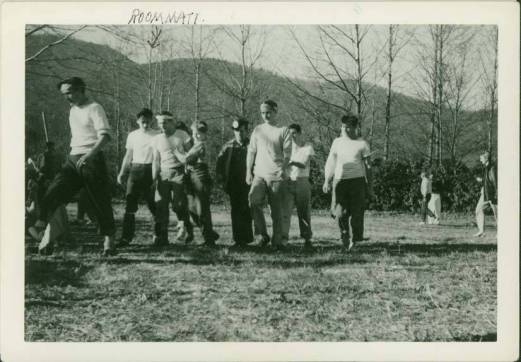


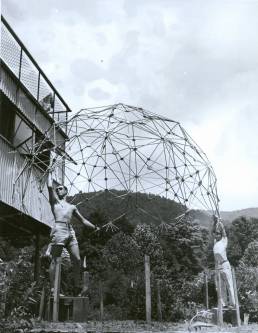

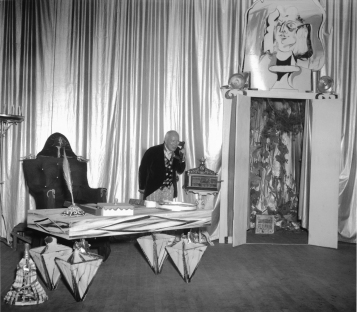


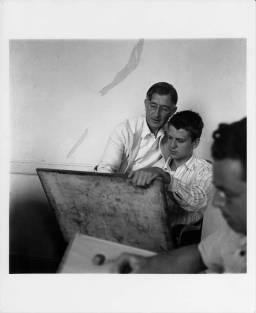
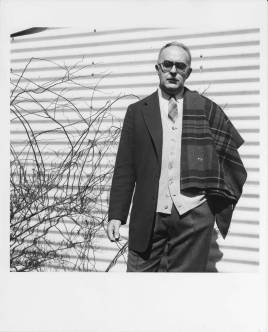

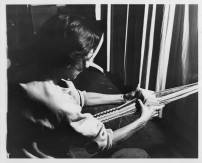

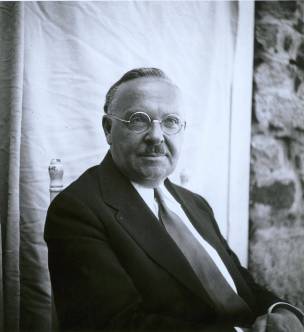


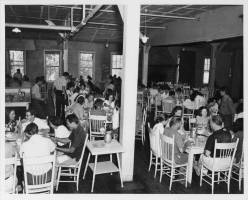


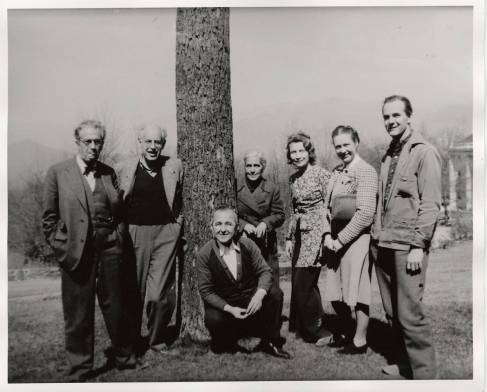






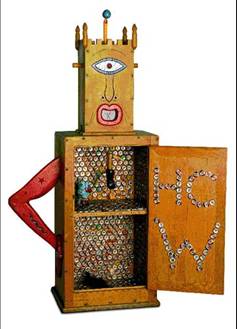


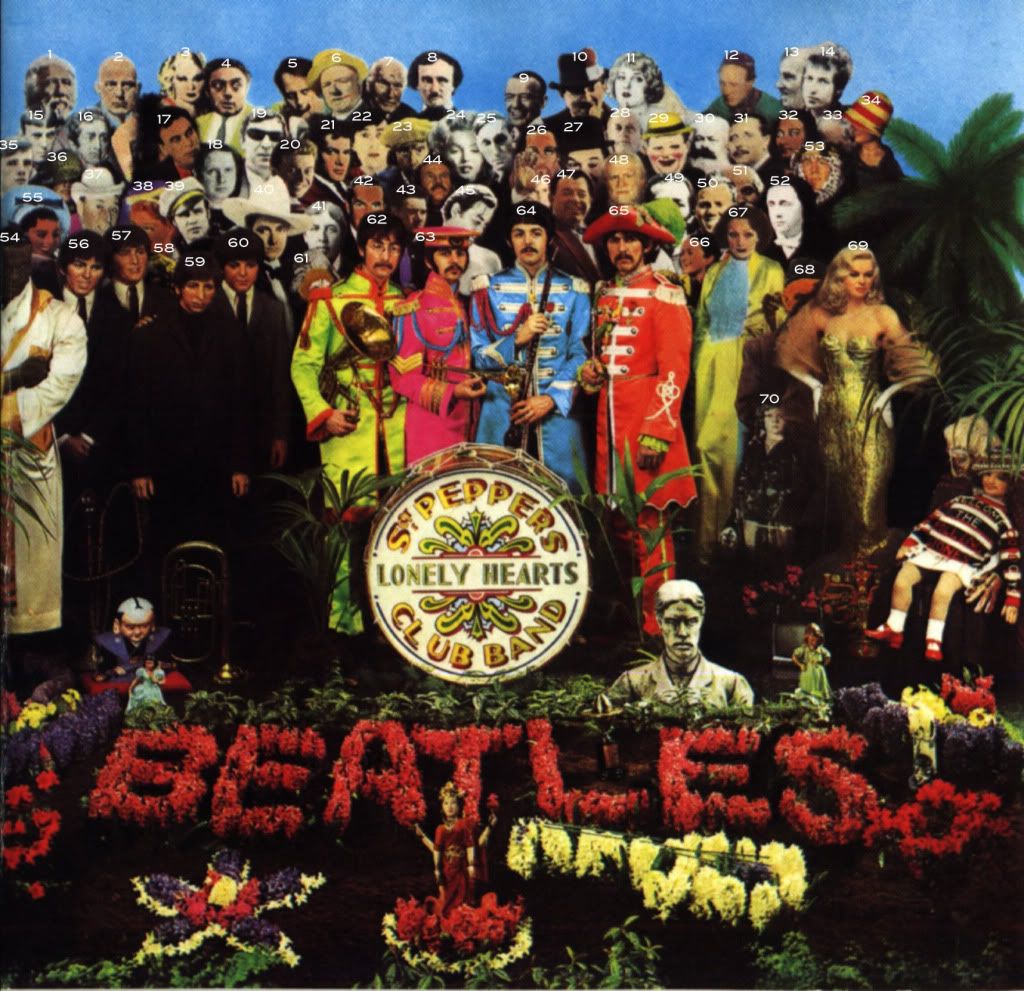


Thank you, professor. I only originally knew of Schaeffer through Piper’s “Pastor As Scholar” discussion. Recently when our church gave away our library books, I found The God Who Is There, Death In the City, and Genesis In Space and Time. I had those books on my shelf for a year l, but started reading the God Who Is There a couple of weeks ago. I absolutely fell in love with his thinking and understanding if man’s despair, need for a universal unifying truth, and the way Schaeffer opened up my eyes to famous artists and what they were trying to accomplish. (I knew of John Cage years ago and hated his music, but Schaeffer really made sense of him for me.) So I have decided to plow through everything else Schaeffer wrote.
By the way, I enjoyed this article of yours. I am a GGBTS student in California, possibly transferring my units to SEBTS online. I hope to have the privilege of taking a course with you.
Your comment is awaiting moderation.
By the way I have reblogged this fine article today on my blog.
I am Everette Hatcher and in the 1970’s and 1980’s I was a member of Bellevue Baptist in Memphis where Adrian Rogers was pastor and was a student at Evangelical Christian School from the 5th grade to the 12th grade where I was introduced to the books and films of Francis Schaeffer. At ECS my favorite teacher was Mark Brink who actually played both film series to us (WHATEVER HAPPENED TO THE HUMAN RACE? and HOW SHOULD WE THEN LIVE?) during our senior year and believe it or not after I graduated I would come back and join some of his future classes when the film was playing again because I couldn’t get enough of Schaeffer’s film series!!!!
During this time I was amazed at how many prominent figures in the world found their way into the works of both Adrian Rogers and Francis Schaeffer and I wondered what it would be like if these individuals were exposed to the Bible and the gospel. Therefore, over 20 years ago I began sending the messages of Adrian Rogers and portions of the works of Francis Schaeffer to many of the secular figures that they mentioned in their works. Let me give you some examples and tell you about some lessons that I have learned.
I have learned several things about atheists in the last 20 years while I have been corresponding with them. First, they know in their hearts that God exists and they can’t live as if God doesn’t exist, but they will still search in some way in their life for a greater meaning. Second, many atheists will take time out of their busy lives to examine the evidence that I present to them. Third, there is hope that they will change their views.
Let’s go over again a few points I made at the first of this post. My first point is backed up by Romans 1:18-19 (Amplified Bible) ” For God’s wrath and indignation are revealed from heaven against all ungodliness and unrighteousness of men, who in their wickedness REPRESS and HINDER the truth and make it inoperative. For that which is KNOWN about God is EVIDENT to them and MADE PLAIN IN THEIR INNER CONSCIOUSNESS, because God has SHOWN IT TO THEM,”(emphasis mine). I have discussed this many times on my blog and even have interacted with many atheists from CSICOP in the past. (I first heard this from my pastor Adrian Rogers back in the 1980’s.)
My second point is that many atheists will take the time to consider the evidence that I have presented to them and will respond. The late Adrian Rogers was my pastor at Bellevue Baptist when I grew up and I sent his sermon on evolution and another on the accuracy of the Bible to many atheists to listen to and many of them did. I also sent many of the arguments from Francis Schaeffer also.
Francis Schaeffer’s words would be quoted in many of these letters that I would send to famous skeptics and I would always include audio messages from Adrian Rogers. Perhaps Schaeffer’s most effective argument was concerning Romans 1 and how a person could say that he didn’t believe that the world had a purpose or meaning but he could not live that way in the world that God created and with the conscience that every person is born with.
Google “Adrian Rogers Francis Schaeffer” and the first 4 things that come up will be my blog posts concerning effort to reach these atheists. These two great men proved that the scriptures Hebrews 4:12 and Isaiah 55:11 are true, “For the word of God is alive and active. Sharper than any double-edged sword, it penetrates even to dividing soul and spirit, joints and marrow; it judges the thoughts and attitudes of the heart.” and “so is my word that goes out from my mouth: It will not return to me empty, but will accomplish what I desire and achieve the purpose for which I sent it.”