Gertrude Stein (Kathy Bates) and Marical e Fonzo Bo (Picasso) in ‘Midnight in Paris’.
(In the movie MIDNIGHT IN PARIS you have the may character Gil Pender very interested in Picasso’s mistress Adriana, played by Marion Cotillard. PICTURED ABOVE.)
Francis Schaeffer pictured below:
______
I have read over 40 autobiographies by ROCKERS and it seems to me that almost every one of those books can be reduced to 4 points. Once fame hit me then I became hooked on drugs. Next I became an alcoholic (or may have been hooked on both at same time). Thirdly, I chased the skirts and thought happiness would be found through more sex with more women. Finally, in my old age I have found being faithful to my wife and getting over addictions has led to happiness like I never knew before. (Almost every autobiography I have read from rockers has these points in it although Steven Tyler is still chasing the skirts!!). Now that I think about it Mick may be falling into the same trap as Steven Tyler!!!
Mick did not write an autobiography but I read the biography by Philip Norman!!!
February 20, 2017
Sir M.P. Jagger
London, UK
Dear Mick,
I really enjoyed reading the book “Mick Jagger” by Philip Norman, and I wanted to comment on something you said in that book:
“I only did it (got married) for something to do… I’ve never been madly, deeply in love with anyone. I’m not an emotional person.
I want to recommend the Woody Allen movie MIDNIGHT IN PARIS to you because I think you would find Picasso’s character in the story very intriguing, and I wanted to compare Picasso to King Solomon and to you in this letter since they both tried to get sexual satisfaction by the sheer volume of their sexual conquests. According to the Bible Solomon actually slept with over 1000 women ( Eccl 2:8, I Kings 11:3).
Woody Allen made it known that his pessimistic view on life started at a young age when he learned about man’s mortality. But in the Bible Solomon’s first book was the SONG OF SOLOMON which was written in his early 20’s and is very upbeat. The Book of PROVERBS was written probably when he was in the middle of his life. Finally, the Book of ECCLESIASTES was written at the end of his life and is extremely pessimistic!
Concerning the Book of Ecclesiastes Francis Schaeffer noted:
Solomon was searching for a meaning in the midst of the details of life.His struggle was to find the meaning of life. Not just plans in life. Anybody can find plans in life. A child can fill up his time with plans of building tomorrow’s sand castle when today’s has been washed away. There is a difference between finding plans in life and purpose in life. Humanism since the Renaissance and onward has never found it and it has never found it. Modern man has not found it and it has always got worse and darker in a very real way.
Ecclesiastes is the only pessimistic book in the Bible and that is because of the place where Solomon limits himself. He limits himself to the question of human life, life under the sun between birth and death and the answers this would give.
Ecclesiastes 2:4-11
4 I enlarged my works: I built houses for myself, I planted vineyards for myself;5 I made gardens and parks for myself and I planted in them all kinds of fruit trees; 6 I made ponds of water for myself from which to irrigate a forest of growing trees. 7 I bought male and female slaves and I had homeborn slaves. Also I possessed flocks and herds larger than all who preceded me in Jerusalem. 8 Also, I collected for myself silver and gold and the treasure of kings and provinces. I provided for myself MALE AND FEMALE SINGERS AND THE PLEASURES OF MEN–MANY CONCUBINES.
9 Then I became great and increased more than all who preceded me in Jerusalem. My wisdom also stood by me. 10 All that my eyes desired I did not refuse them. I did not withhold my heart from any pleasure…
If one would flee to alcohol, then surely one may choose sexual pursuits to flee to. Solomon looks in this area too.
Ecclesiastes 7:25-28
25 I directed my mind to know, to investigate and to seek wisdom and an explanation, and to know the evil of folly and the foolishness of madness. 26 And I discovered more bitter than death the woman whose heart is snares and nets, whose hands are chains. One who is pleasing to God will escape from her, but the sinner will be captured by her.
27 “Behold, I have discovered this,” says the Preacher, “adding one thing to another to find an explanation, 28 I have looked for other answers but have found none. I found one man in a thousand that I could respect, but not one woman. (Good News Translation on verse 28)
One can understand both Solomon’s expertness in this field and his bitterness.
I Kings 11:1-3 (New American Standard Bible)
11 Now King Solomon loved many foreign women along with the daughter of Pharaoh: Moabite, Ammonite, Edomite, Sidonian, and Hittite women, 2 from the nations concerning which the Lord had said to the sons of Israel, “You shall not associate with them, nor shall they associate with you, for they will surely turn your heart away after their gods.” Solomon held fast to these in love. 3 He had seven hundred wives, princesses, and three hundred concubines, and his wives turned his heart away.
An expert but also the reason for his bitterness. Certainly there have been many men over the centuries who have daydreamed of Solomon’s wealth in this area [of women], but at the end it was sorry, not only sorry but nothing and less than nothing. The simple fact is that one can not know woman in the real sense by pursuing 1000 women. It is not possible. Woman is not found this way. All that is left in this setting if one were to pursue the meaning of life in this direction is this most bitter word found in Ecclesiastes 7:28, “I have looked for other answers but have found none. I FOUND ONE MAN IN A THOUSAND THAT I COULD RESPECT, BUT NOT ONE WOMAN.” (Good News Translation on verse 28) He was searching in the wrong way. He was searching for the answer to life in the limited circle of that which is beautiful in itself but not an answer finally in sexual life. More than that he finally tried to find it in variety and HE DIDN’T EVEN TOUCH ONE WOMAN AT THE END.
______________
MICK, may I be bold enough to ask you this same question? Through your whole life you have bedded many women but have you even touched one women the way that God designed man to do?
In the Book of Ecclesiastes Solomon looked into learning (1:16-18), laughter, ladies, luxuries, and liquor (2:1-3, 8, 10, 11), and labor (2:4-6, 18-20) and he concluded that his search UNDER THE SUN was just a striving after the wind!!Then in last few words in the Book of Ecclesiastes he looks above the sun and brings God back into the picture: “The conclusion, when all has been heard, is: Fear God and keep His commandments, because this applies to every person. For God will bring every act to judgment, everything which is hidden, whether it is good or evil.”
I have enclosed a gospel tract called HAPPY HOUR and I hope you have time to read it.
Sincerely,
Everette Hatcher, cell ph 501-920-5733, everettehatcher@gmail.com, P.O.Box 23416, Little Rock, AR 72221,
Little One – From the Film, “Sarah’s Choice” Rebecca St James on faith and values – theDove.us Sarah’s Choice Trailer Sarah’s Choice – Behind the Scenes Rebecca St. James on Sarah’s Choice – CBN.com Rebecca St James Interview on Real Videos Sarah’s Choice – The Proposal Sarahs Choice Pregnancy Test Sarahs Choice Crossroad Sarah’s Choice […]By Everette Hatcher III | Posted in Current Events | Edit | Comments (0)
Lion – Rebecca St. James I will praise You – Rebecca St James Rebecca St James 1995 TBN – Everything I Do Rebecca St. James & Rachel Scott “Blessed Be Your Name” Rebecca St. James From Wikipedia, the free encyclopedia Rebecca St. James St. James in 2007 Background information Birth name Rebecca Jean Smallbone Also […]By Everette Hatcher III | Posted in Current Events | Edit | Comments (0)
Foster The People – Pumped up Kicks Foster the People From Wikipedia, the free encyclopedia Foster the People Foster the People at the 2011 MuchMusic Video Awards, from left to right: Pontius, Foster, and Fink Background information Origin Los Angeles, California, U.S. Genres Indie pop alternative rock indietronica alternative dance neo-psychedelia[1] Years active 2009–present Labels […]By Everette Hatcher III | Posted in Current Events | Edit | Comments (0)
‘Apple gave me advice’: Coldplay’s Chris Martin turned to 11-year-old daughter for words of wisdom ahead of Superbowl 50 By DAILYMAIL.COM REPORTER PUBLISHED: 00:58 EST, 2 February 2016 | UPDATED: 17:20 EST, 2 February 2016 n Facebook They’ve sold 80 million records and been around for 20 years. But Coldplay’s lead singer Chris Martin, 38, […]By Everette Hatcher III | Posted in Current Events | Edit | Comments (0)
__________ Chris Martin, Lead Singer of Coldplay: 5 Fast Facts You Need to Know Published 3:44 pm EDT, February 7, 2016 Updated 3:44 pm EDT, February 7, 2016 Comment By Lauren Weigle 17.6k (Getty) Chris Martin has been the front-man of the band Coldplay for about 20 years, though the band changed its name a […]By Everette Hatcher III | Posted in Current Events | Edit | Comments (0)
Christian Rock Pioneer Larry Norman’s Songs Part 14 I posted a lot in the past about my favorite Christian musicians such as Keith Green (I enjoyed reading Green’s monthly publications too), and 2nd Chapter of Acts and others. Today I wanted to talk about one of Larry Norman’s songs. David Rogers introduced me to Larry […]By Everette Hatcher III | Posted in Current Events | Edit | Comments (0)
Christian Rock Pioneer Larry Norman’s Songs Part 13 I posted a lot in the past about my favorite Christian musicians such as Keith Green (I enjoyed reading Green’s monthly publications too), and 2nd Chapter of Acts and others. Today I wanted to talk about one of Larry Norman’s songs. David Rogers introduced me to Larry […]By Everette Hatcher III | Posted in Current Events | Edit | Comments (0)
Christian Rock Pioneer Larry Norman’s Songs Part 12 I posted a lot in the past about my favorite Christian musicians such as Keith Green (I enjoyed reading Green’s monthly publications too), and 2nd Chapter of Acts and others. Today I wanted to talk about one of Larry Norman’s songs. David Rogers introduced me to Larry […]By Everette Hatcher III | Posted in Current Events | Edit | Comments (0)
Christian Rock Pioneer Larry Norman’s Songs Part 11 I posted a lot in the past about my favorite Christian musicians such as Keith Green (I enjoyed reading Green’s monthly publications too), and 2nd Chapter of Acts and others. Today I wanted to talk about one of Larry Norman’s songs. David Rogers introduced me to Larry […]By Everette Hatcher III | Posted in Current Events | Edit | Comments (0)
Christian Rock Pioneer Larry Norman’s Songs Part 10 more on Album “Only Visiting This Planet” I posted a lot in the past about my favorite Christian musicians such as Keith Green (I enjoyed reading Green’s monthly publications too), and 2nd Chapter of Acts and others. Today I wanted to talk about one of Larry Norman’s […]By Everette Hatcher III | Posted in Current Events | Edit | Comments (0)
Bob Dylan wrote “It Ain’t Me Babe” about his former girlfriend, Suze Rotolo after traveling to Italy to visit her while she was studying
“It Ain’t Me Babe” is a classic song by Bob Dylan that carries a personal story within its poetic lyrics. Written during a transformative period in Dylan’s life, the song is said to be inspired by his former girlfriend, Suze Rotolo. After meeting Rotolo in New York City, their relationship blossomed, and they became an important part of each other’s lives.
In the early 1960s, Rotolo embarked on a journey to study art in Italy, and Dylan, deeply affected by their separation, decided to visit her there. It was during this time, while reflecting on their relationship and the challenges they faced, that Dylan penned “It Ain’t Me Babe.” The song’s lyrics convey a sense of disillusionment and the desire to break free from the expectations and commitments of a romantic relationship.
As Dylan’s songwriting prowess grew, “It Ain’t Me Babe” became a notable addition to his repertoire. Its introspective and heartfelt nature resonated with audiences, capturing the complexities of love and the struggles of young relationships. The song’s melodic simplicity and poignant lyrics allowed listeners to connect with Dylan’s personal journey and universal themes of self-discovery.
Bob Dylan – When You Gonna Wake Up (Oslo, Norway – July 9, 1981) (Audio)
BOB DYLAN-WHEN YOU GONNA WAKE UP(COVER)
—
Wikipedia noted:
On October 20, 1979, Dylan promoted the album with his first—and, to date, only—appearance on Saturday Night Live, performing “Gotta Serve Somebody”, “I Believe in You”, and “When You Gonna Wake Up”. On November 1, Dylan began a lengthy residency at the Fox Warfield Theater in San Francisco, California, playing a total of fourteen dates supported by a large ensemble. It was the beginning of six months of touring North America, performing his new music to believers and his hecklers alike.
Despite the mixed reactions to Dylan’s new direction, “Gotta Serve Somebody” was a US Top 30 hit, and the album outsold both Blood on the Tracksand Blonde on Blonde in its first year of release[citation needed] despite missing the top of the charts. It even managed to place at No. 38 on The Village Voice‘s Pazz & Jop Critics Poll for 1979, proving he had some critical support if not universal acclaim.
During this period, Dylan refused to play any of his older compositions, as well as any secular material. Though Pastor Larry Myers had assured Dylan that his old compositions were not sacrilegious, Dylan would say he would not “sing any song which hasn’t been given to me by the Lord to sing”.[citation needed]Fans wishing to hear his older songs openly expressed their disappointment. Hecklers continued to appear at his concerts, only to be answered by lectures from the stage. Dylan was firmly entrenched in his evangelical ways, and it would continue through his next album, whether his audience would follow or not.
God don’t make promises that He don’t keep You got some big dreams baby, but in order to dream you gotta still be asleep.When you gonna wake up, when you gonna wake up
When you gonna wake up strengthen the things that remain ?Counterfeited philosophies have polluted all of your thoughts Karl Marx has got ya by the throat, Henry Kissinger’s got you tied up in knots.When you gonna wake up, when you gonna wake up
When you gonna wake up strengthen the things that remain ?You got innocent men in jail, your insane asylums are filled You got unrighteous doctors dealing drugs that’ll never cure your ills.When you gonna wake up, when you gonna wake up
When you gonna wake up strengthen the things that remain ?You got men who can’t hold their peace and woman who can’t control their tongues The rich seduce the poor and the old are seduced by the young.When you gonna wake up, when you gonna wake up
When you gonna wake up strengthen the things that remain ?Adulterers in churches and pornography in the schools You got gangsters in power and lawbreakers making rules.When you gonna wake up, when you gonna wake up
When you gonna wake up strengthen the things that remain ?Spiritual advisors and gurus to guide your every move Instant inner peace and every step you take has got to be approved.When you gonna wake up, when you gonna wake up
When you gonna wake up strengthen the things that remain ?Do you ever wonder just what God requires ? You think He’s just an errand boy to satisfy your wandering desires.When you gonna wake up, when you gonna wake up
When you gonna wake up and strengthen the things that remain ?You can’t take it with you and you know that it’s too worthless to be sold They tell you, ‘Time is money’ as if your life was worth its weight in gold.When you gonna wake up, when you gonna wake up
When you gonna wake up and strengthen the things that remain ?There’s a man up on a cross and He’s been crucified for you Believe in His power that’s about all you got to do.When you gonna wake up, when you gonna wake up
When you gonna wake up and strengthen the things that remain ?Source: LyricFindSongwriters: Bob Dylan
Bob Dylan – Saturday Night Live Performance (1979)
June 18, 2021
President Biden c/o The White House 1600 Pennsylvania Avenue NW Washington, DC 20500
Dear Mr. President,
I wanted to reach out to because of some of the troubling moral issues coming out of your administration. Let me first start off by pointing to the time you spent as Vice President and the obvious targeting of the TEA PARTY CONSERVATIVE GROUPS by the IRS! These actions remind me of Bob Dylan’s words:
“Adulterers in churches and pornography in the schools, You got gangsters in power and lawbreakers making rules, When you gonna wake up, When you gonna wake up, When you gonna wake up, And strengthen the things that remain?”
This June, however, after protests turned to looting and violence in Minneapolis, Harris asked her Twitter followers to send money to the Minnesota Freedom Fund to bail out the rioters. The organization subsequently received $35 million and used it to bail out violent criminals, including a suspect who shot at police and a twice-convicted sex offender.
Reminds me of these words:
You got gangsters in power and lawbreakers making rules,
If you take a group of Democrats who are also unionized government employees, and put them in charge of policing political speech, it doesn’t matter how professional and well-intentioned they are. The result will be much like the debacle in the Cincinnati office of the IRS. …there’s no reason to even posit evil intent by the IRS officials who formulated, approved or executed the inappropriate guidelines for picking groups to scrutinize most closely. …The public servants figuring out which groups qualified for 501(c)4 “social welfare” non-profit status were mostly Democrats surrounded by mostly Democrats. …In the 2012 election, every donation traceable to this office went to President Obama or liberal Sen. Sherrod Brown. This is an environment where even those trying to be fair could develop a disproportionate distrust of the Tea Party. One IRS worker — a member of NTEU and contributor to its PAC, which gives 96 percent of its money to Democratic candidates — explained it this way: “The reason NTEU mostly supports Democratic candidates for office is because Democratic candidates are mostly more supportive of civil servants/government employees.”
Tim concludes with a wise observation.
As long as we have a civil service workforce that leans Left, and as long as we have an income tax system that requires the IRS to police political speech, conservative groups can always expect special IRS scrutiny.
The real issue is the expansive, expensive bureaucratic state and its inherent threat to any system of limited government, rule of law, and individual liberty. …the broader the government’s authority, the greater its need for revenue, the wider its enforcement power, the more expansive the bureaucracy’s discretion, the increasingly important the battle for political control, and the more bitter the partisan fight, the more likely government officials will abuse their positions, violate rules, laws, and Constitution, and sacrifice people’s liberties. The blame falls squarely on Congress, not the IRS.
…the denizens of Capitol Hill also have created a tax code marked by outrageous complexity, special interest electioneering, and systematic social engineering. Legislators have intentionally created avenues for tax avoidance to win votes, and then complained about widespread tax avoidance to win votes.
So what’s the answer?
The most obvious response to the scandal — beyond punishing anyone who violated the law — is tax reform. Implement a flat tax and you’d still have an IRS, but the income tax would be less complex, there would be fewer “preferences” for the agency to police, and rates would be lower, leaving taxpayers with less incentive for aggressive tax avoidance. …Failing to address the broader underlying factors also would merely set the stage for a repeat performance in some form a few years hence. …More fundamentally, government, and especially the national government, should do less. Efficient social engineering may be slightly better than inefficient social engineering, but no social engineering would be far better.
But here’s the challenge. We know the solution, but it will be almost impossible to implement good policy unless we figure out some way to restrain the spending side of the fiscal ledger.
___________________________
At the risk of over-simplifying, we will never get tax reform unless we figure out how to implement entitlement reform.
Here’s another Foden cartoon, which I like because it has the same theme asthis Jerry Holbert cartoon, showing big government as a destructive and malicious force.
_____________
Francis Schaeffer in his book CHRISTIAN MANIFESTO noted:
CHAPTER 8 THE USE OF CIVIL DISOBEDIENCE (page 475) MOST OF CHAPTER 8
Page 475
Civil disobedience is, of course, a very serious matter and it must be stressed that Rutherford was the very opposite of an anarchist. In Lex Rex he does not propose armed revolution as an automatic solution. Instead, he sets forth the appropriate response to interference by the state in the liberties of the citizenry. Specifically, he stated that if the state deliberately is committed to destroying its ethical commitment to God then resistance is appropriate.
In such an instance, for the private person, the individual, Rutherford suggested that there are three appropriate levels of resistance: First,he must defend himself by protest (in contemporary society this would most often be by legal action); second, he must flee if at all possible; and third, he may use force, if necessary, to defend himself. One should not employ force if he may save himself by flight; nor should one employ flight if he can save himself and defend himself by protest and the employment of constitutional means of redress.
On the other hand, when the state commits illegitimate acts against a corporate body—such as a duly constituted state or local body, or even a church—then flight is often an impractical and unrealistic means of resistance. Therefore, with respect to a corporate group or community, there are two levels of resistance: remonstration (or protest) and then, if necessary, force employed in self-defense.
For a corporate body (a civil entity), when illegitimate state acts are perpetrated upon it, resistance should be under the protection of the duly constituted authorities: if possible, it should be under the rule of the lesser magistrates (local officials). Rutherford urged that the office of the local official is just as much from God as is the office of the highest state official. Rutherford said, “When the supreme magistrate will not execute the judgment of the Lord, those who made him supreme magistrate, under God, who have under God, sovereighn liberty to dispose of crowns and kingdoms, are to execute the judgment of the Lord, when wicked men make the law of God of none effect.”
Samuel Rutherford and Bob Dylan would have understood each other. In “When You Gonna Wake Up” from the album SLOW TRAIN COMING, Dylan has the lines:
“Adulterers in churches and pornography in the schools, You got gangsters in power and lawbreakers making rules, When you gonna wake up, When you gonna wake up, When you gonna wake up, And strengthen the things that remain?”
John MacArthur gave a sermon in June of 2021 entitled “When Government Rewards Evil and Punishes Good” and in that sermon he makes the following points:
INTRODUCTION AND DISCUSSION OF ROMANS 13
GOVERNMENT CAN FORFEIT ITS AUTHORITY
THE WORLD IS THE ENEMY OF THE GOSPEL
ALL OF HUMAN HISTORY IS PROGRESSING TOWARD A GLOBAL KINGDOM UNDER THE POWER OF SATAN
ONE FALSE WORLD RELIGION IS FINAL PLAY BY SATAN
REAL PERSECUTION CAN ONLY BE DONE BY GOVERNMENT
PERSECUTION IN BOOK OF DANIEL
THE LAW IS KING AND NOT THE GOVERNOR OF CALIFORNIA
GOVERNMENT HAS BECOME PURVEYOR OF WICKEDNESS
THERE IS A PLACE FOR CIVIL DISOBEDIENCE
DOES GOVERNMENT WIN?
Let me just share a portion of that sermon with you and you can watch it on You Tube:
ALL OF HUMAN HISTORY IS PROGRESSING TOWARD A GLOBAL KINGDOM UNDER THE POWER OF SATAN
Understand—all of human history is progressing toward a global kingdom under the power of Satan, in which Satan has one global monster ruling the whole world. He is a blasphemer—we’ve already seen it, but notice “blasphemies,” in verse 5, “blasphemies” in verse 6, “blaspheme” in verse 6 again. And verse 7, what does he do? He “makes war with the saints to overcome them, and authority over every tribe and people and tongue and nation was given to him.” This final, global ruler will make war against the saints.
Verse 8, “All who dwell on the earth will worship him, everyone whose name was not written from the foundation of the world in the book of life of the Lamb who had been slain.” The whole world is going to go after him. We’re headed toward a one-world, global government with one massive, monstrous leader.
He has a cohort in verses 11 and following. This is another monster who has two horns like a lamb. This is a more benign individual. This is the false prophet. This is the religious leader who, going along with the political leader, assists him. He exercises all the authority of the first monster. He “makes the earth and those who dwell in it worship the first monster, whose fatal wound was healed.” Apparently there’s some kind of false resurrection, which is how he gains power. And then “he performs great signs,” verse 13, “making fire come down out of heaven in the presence of men.”
Verse 14, “He deceives those who dwell on the earth”—again, this is Satan—“which is given to him to perform in the presence of the beast, telling those who dwell on the earth to make an image to the beast who had the wound of the sword and has come to life.” So once he has this false resurrection, he then establishes himself as the world ruler; and the false prophet points the world to him.
Go down to verse 16. We don’t have time to cover all the details. “He causes all, the small and the great, the rich and the poor, free men and slaves, to be given a mark on their right hand or on their forehead, and he provides that no one will be able to buy or to sell, except the one who has the mark, either the name of the monster or the number of his name,” which “is 666.”
So we’re headed toward a time when there’s a global satanic kingdom. It consolidates all kingdoms of the world. It is under the final monster Antichrist, designed by the devil himself, and the entire world follows him, the entire world. Along with this political leader there is a spiritual leader; this is the false prophet. He is the one who lures, seduces the world religiously to worship the Antichrist. So he becomes god; he is Satan’s puppet.
—-
Thank you so much for your time. I know how valuable it is. I also appreciate the fine family that you have and your commitment as a father and a husband. I also respect you for putting your faith in Christ for your eternal life. I am pleading to you on the basis of the Bible to please review your religious views concerning abortion. It was the Bible that caused the abolition movement of the 1800’s and it also was the basis for Martin Luther King’s movement for civil rights and it also is the basis for recognizing the unborn children. I wanted to encourage you to investigate the work of Dr. Bernard Nathanson who like you used to be pro-abortion. I also want you to watch the You Tube series WHATEVER HAPPENED TO THE HUMAN RACE? by Francis Schaeffer and Dr. C. Everett Koop. Also it makes me wonder what our the moral climate Of our nation is when we concentrate more on potential mistakes of the police and we let criminals back on the street so fast! Our national was founded of LEX REX and not REX LEX!
Sincerely,
Everette Hatcher III, 13900 Cottontail Lane, Alexander, AR 72002, ph 501-920-5733,
Whatever Happened To The Human Race? | Episode 4 | The Basis for Human Dignity
Sunday Night Prime – Dr. Bernard Nathanson – Fr Groeschel, CFR with Fr …
Francis Schaeffer: “Whatever Happened to the Human Race” (Episode 1) ABORTION OF THE HUMAN RACE Published on Oct 6, 2012 by AdamMetropolis ________________ Picture of Francis Schaeffer and his wife Edith from the 1930′s above. I was sad to read about Edith passing away on Easter weekend in 2013. I wanted to pass along this fine […]By Everette Hatcher III | Posted in Francis Schaeffer, Prolife | Edit | Comments (0)
I have gone back and forth and back and forth with many liberals on the Arkansas Times Blog on many issues such as abortion, human rights, welfare, poverty, gun control and issues dealing with popular culture. Here is another exchange I had with them a while back. My username at the Ark Times Blog is Saline […]By Everette Hatcher III | Posted in Francis Schaeffer, Prolife | Edit | Comments (0)
I have gone back and forth and back and forth with many liberals on the Arkansas Times Blog on many issues such as abortion, human rights, welfare, poverty, gun control and issues dealing with popular culture. Here is another exchange I had with them a while back. My username at the Ark Times Blog is Saline […]By Everette Hatcher III | Posted in Francis Schaeffer, Prolife | Edit | Comments (0)
It is truly sad to me that liberals will lie in order to attack good Christian people like state senator Jason Rapert of Conway, Arkansas because he headed a group of pro-life senators that got a pro-life bill through the Arkansas State Senate the last week of January in 2013. I have gone back and […]By Everette Hatcher III | Posted in Arkansas Times, Francis Schaeffer, Max Brantley, Prolife | Edit | Comments (0)
I have gone back and forth and back and forth with many liberals on the Arkansas Times Blog on many issues such as abortion, human rights, welfare, poverty, gun control and issues dealing with popular culture. Here is another exchange I had with them a while back. My username at the Ark Times Blog is Saline […]By Everette Hatcher III | Posted in Francis Schaeffer, Prolife | Edit | Comments (0)
I have gone back and forth and back and forth with many liberals on the Arkansas Times Blog on many issues such as abortion, human rights, welfare, poverty, gun control and issues dealing with popular culture. Here is another exchange I had with them a while back. My username at the Ark Times Blog is Saline […]By Everette Hatcher III | Posted in Francis Schaeffer, Prolife | Edit | Comments (0)
I have gone back and forth and back and forth with many liberals on the Arkansas Times Blog on many issues such as abortion, human rights, welfare, poverty, gun control and issues dealing with popular culture. Here is another exchange I had with them a while back. My username at the Ark Times Blog is Saline […]By Everette Hatcher III | Posted in Francis Schaeffer, Prolife | Edit | Comments (0)
Sometimes you can see evidences in someone’s life of how content they really are. I saw something like that on 2-8-13 when I confronted a blogger that goes by the name “AngryOldWoman” on the Arkansas Times Blog. See below. Leadership Crisis in America Published on Jul 11, 2012 Picture of Adrian Rogers above from 1970′s […]By Everette Hatcher III | Posted in Adrian Rogers, Arkansas Times, Prolife | Edit | Comments (0)
In the film series “WHATEVER HAPPENED TO THE HUMAN RACE?” the arguments are presented against abortion (Episode 1), infanticide (Episode 2), euthenasia (Episode 3), and then there is a discussion of the Christian versus Humanist worldview concerning the issue of “the basis for human dignity” in Episode 4 and then in the last episode a close […]By Everette Hatcher III | Posted in Francis Schaeffer, Prolife | Edit | Comments (0)
I have gone back and forth and back and forth with many liberals on the Arkansas Times Blog on many issues such as abortion, human rights, welfare, poverty, gun control and issues dealing with popular culture. Here is another exchange I had with them a while back. My username at the Ark Times Blog is Saline […]By Everette Hatcher III | Posted in Francis Schaeffer, Prolife | Edit | Comments (0)
I have gone back and forth and back and forth with many liberals on the Arkansas Times Blog on many issues such as abortion, human rights, welfare, poverty, gun control and issues dealing with popular culture. Here is another exchange I had with them a while back. My username at the Ark Times Blog is Saline […]By Everette Hatcher III | Posted in Francis Schaeffer, Prolife | Edit | Comments (3)
I have gone back and forth and back and forth with many liberals on the Arkansas Times Blog on many issues such as abortion, human rights, welfare, poverty, gun control and issues dealing with popular culture. Here is another exchange I had with them a while back. My username at the Ark Times Blog is Saline […]By Everette Hatcher III | Posted in Francis Schaeffer, Prolife | Edit | Comments (2)
Francis Schaeffer’s “How should we then live?” Video and outline of episode 3 “The Renaissance” Francis Schaeffer: “How Should We Then Live?” (Episode 3) THE RENAISSANCE I was impacted by this film series by Francis Schaeffer back in the 1970′s and I wanted to share it with you. Schaeffer really shows why we have so […]By Everette Hatcher III | Posted in Francis Schaeffer | Edit | Comments (0)
Francis Schaeffer: “How Should We Then Live?” (Episode 1) THE ROMAN AGE Today I am starting a series that really had a big impact on my life back in the 1970′s when I first saw it. There are ten parts and today is the first. Francis Schaeffer takes a look at Rome and why […]
Brigitte Bardot asked Serge Gainsbourg to write “Je T’aime … Moi Non Plus” about her. He ended up recording the song with Jane Birkin
The story behind “Je T’aime … Moi Non Plus” is as intriguing as the song itself. Brigitte Bardot, the iconic French actress and singer, initially asked Serge Gainsbourg to write a song for her. Gainsbourg, a renowned songwriter and musician, composed the sensual and provocative lyrics of “Je T’aime … Moi Non Plus” specifically with Bardot in mind.
However, before Bardot had the chance to record the song, her romantic relationship with Gainsbourg came to an end. Despite this, Gainsbourg found a new collaborator in British actress and singer Jane Birkin. He decided to re-record the song with Birkin, creating an unforgettable duet that would leave a lasting impact on music history.
The intimate and seductive nature of “Je T’aime … Moi Non Plus” caused controversy upon its release in 1969. Its explicit lyrics and sensual vocal performances by Gainsbourg and Birkin pushed the boundaries of what was considered acceptable at the time. The song’s passionate and provocative nature sparked both fascination and outrage, becoming a cultural phenomenon.
The collaboration between Serge Gainsbourg and Jane Birkin, borne out of Brigitte Bardot’s initial request, resulted in a timeless and influential recording. “Je T’aime … Moi Non Plus” continues to be celebrated for its daring and unabashed exploration of love and desire, showcasing Gainsbourg’s unique songwriting style and Birkin’s captivating vocal delivery.
MUSIC MONDAY Rolling Stones New Album Part 8 Rolling Stones – Hoo Doo Blues Blue & Lonesome is the album any Rolling Stones fan would have wished for – review 9 Comments Evergreen: The Rolling Stones perform in Cuba earlier this year CREDIT: REX FEATURES Neil McCormick, music critic 22 NOVEMBER 2016 • 12:19PM The Rolling […]By Everette Hatcher III | Posted in Current Events | Edit|Comments (0)
MUSIC MONDAY Rolling Stones New Album Part 7 Rolling Stones – Everybody Knows About My Good Thing The Rolling Stones Alexis Petridis’s album of the week The Rolling Stones: Blue & Lonesome review – more alive than they’ve sounded for years 4/5stars Mick Jagger’s voice and harmonica drive an album of blues covers that returns […]By Everette Hatcher III | Posted in Current Events | Edit|Comments (0)
MUSIC MONDAY Rolling Stones New Album Part 6 Rolling Stones – Just Like I Treat You Music Review: ‘Blue & Lonesome’ by the Rolling Stones By Gregory Katz | AP November 29 The Rolling Stones, “Blue & Lonesome” (Interscope) It shouldn’t be a surprise, really, but still it’s a bit startling to hear just how well […]By Everette Hatcher III | Posted in Current Events | Edit|Comments (0)
MUSIC MONDAY Rolling Stones New Album Part 5 Rolling Stones – Everybody Knows About My Good Thing Review: The Rolling Stones make blues magic on ‘Blue & Lonesome’ Maeve McDermott , USATODAY6:07 p.m. EST November 30, 2016 (Photo: Frazer Harrison, Getty Images) Before the Rolling Stones were rock icons, before its members turned into sex […]By Everette Hatcher III | Posted in Current Events | Edit|Comments (0)
MUSIC MONDAY Rolling Stones New Album Part 3 The Rolling Stones Mick Jagger chats about new album “Blue & Lonesome” on BBC Breakfast 02 Dec 2016 Rolling Stones – I Gotta Go Rolling Stones – ‘Blue & Lonesome’ Review Barry Nicolson 12:52 pm – Dec 2, 2016 57shares The Stones sound their youngest […]By Everette Hatcher III | Posted in Current Events | Edit|Comments (0)
_____________ Carpenters Close To You Karen Carpenter’s tragic story Karen Carpenter’s velvet voice charmed millions in the 70s… but behind the wholesome image she was in turmoil. Desperate to look slim on stage – and above all desperate to please the domineering mother who preferred her brother – she became the first celebrity victim of […]By Everette Hatcher III | Posted in Current Events | Edit|Comments (0)
carpenters -We’ve Only Just Begun The Carpenters – Yesterday Once More (INCLUDES LYRICS) The Carpenters – There’s a kind of hush The Carpenters – Greatest Hits Related posts: MUSIC MONDAY Paul McCartney Mull Of Kintyre November 13, 2016 – 10:29 am Paul McCartney Mull Of Kintyre-Original Video-HQ Uploaded on Nov 25, 2011 Paul McCartney Mull Of […]By Everette Hatcher III | Posted in Current Events | Edit|
“Suite: Judy Blue Eyes” by Crosby, Stills, and Nash was written for Stephen Stills’ ex Judy Collins. The “Suite” in the song is a play on the word “sweet”
“Suite: Judy Blue Eyes” is a remarkable song by Crosby, Stills, and Nash, and it carries a heartfelt backstory. It is widely believed that Stephen Stills wrote the song for his former flame and folk singer, Judy Collins. The title itself is a clever play on words, as “Suite” is a musical term and a homophone for “sweet.”
The intricate and multi-part structure of “Suite: Judy Blue Eyes” showcases Stephen Stills’ musical prowess and his ability to convey a range of emotions. The song captures the bittersweet essence of their relationship, with lyrics that reveal the complexities and fond memories associated with their time together.
Judy Collins, known for her own impressive musical career, played a significant role in Stephen Stills’ life and artistic journey. The song serves as a tribute to their shared experiences, highlighting the depth of their connection and the impact she had on his life.
“Suite: Judy Blue Eyes” remains a beloved and timeless classic, not only for its beautiful melodies and harmonies but also for the poignant story it tells. It stands as a testament to the power of music to capture personal experiences and emotions, resonating with listeners who can relate to the complexities of love and relationships.
___
_____
____
I have read over 40 autobiographies by ROCKERS and it seems to me that almost every one of those books can be reduced to 4 points. Once fame hit me then I became hooked on drugs. Next I became an alcoholic (or may have been hooked on both at same time). Thirdly, I chased the skirts and thought happiness would be found through more sex with more women. Finally, in my old age I have found being faithful to my wife and getting over addictions has led to happiness like I never knew before. (Almost every autobiography I have read from rockers has these points in it although Steven Tyler is still chasing the skirts!!).
Graham Nash has written a very good autobiography called WILD TALES and it certainly does include a lot of wild tales!!!!
_
_
November 16, 2018
Graham Nash,
Dear Mr. Nash,
Your music reminds me a lot about the Memphis Blues. I thought of your music when I heard the news today, “In 2 days, Mississippi River has risen 10 feet north of St. Louis.”
Everybody is now educating themselves on the great flood of 1927. The 1927 Great Mississippi Flood was the most destructive river flood in the history of the United States, causing over $400 million in damages and killing 246 people in seven states and displaced 700,000 people.
My grandfather moved to Memphis in 1927 and he told me about this flood. There was a lady named Memphis Minnie and she wrote about this flood. I always heard that there was lots of great blues music that had come out of Memphis, but I always thought that was overstated and that the Blues was not a significant form of music. (Live and learn, the Blues music out of Memphis had a GREAT AFFECT ON MUSIC WORLDWIDE!!!)
However, at the same time I was listening to groups like Led Zeppelin and the ROLLING STONES, I had no idea that many of their songs were based on old Blues songs out of Memphis.
One of my favorite Led Zeppelin songs was “When the Levee breaks.” It was based on a song by Memphis Minnie.
When I examine the Blues they are really an expression of one’s desperation to deal with the hard realities we face in life. Some seek escapism through alcohol or drugs. In fact, many famous Blues musicians have died from from addictions to drugs or alcohol!!
In your book WILD TALES is this passage:
During the Stones’ set a fan was fatally stabbed by a HELLS ANGEL a short distance from the front of the stage which more or less signaled the end of the Woodstock era. The minute we finished, we grabbed our guitars and took off for the helicopter at a dead run.
Francis Schaeffer wrote something about this incident and it seems to agree with your assessment:
At about the same time as the Berkeley Free Speech Move-
ment came a heavy participation in drugs. The beats had not
been deeply into drugs the way the hippies were. But soon
after 1964 the drug scene became the hallmark of young
people.
The philosophic basis for the drug scene came from Aldous
Huxley's concept that, since, for the rationalist, reason is not
taking us anywhere, we should look for a final experience, one
that can be produced "on call," one that we do not need to
wait for. The drug scene, in other words, was at first an ideol-
ogy, an ideology that had very practical consequences. Some of
us at L'Abri have cried over the young people who have blown
their minds. But many of them thought, like Alan Watts, Gary
Snyder, Alan Ginsberg and Timothy Leary, that if you could
simply turn everyone on, there would be an answer to man's
longings. It wasn't just the far-out freaks who suggested that
you could put drugs in the drinking water and turn on a whole
city so that the "pigs" and the kids would all have flowers in
their hair. In those days it really was an optimistic ideological
concept.

So two things have to be said here. FIRST, the young people's
analysis of culture was right, and, SECOND, they really thought
they had an answer to the problem. Up through Woodstock
(1969) the YOUNG PEOPLE WERE OPTIMISTIC CONCERNING DRUGS--
BEING THE IDEOLOGICAL ANSWER. The desire for community and
togetherness that was the impetus for Woodstock was not wrong, of course. God has made us in his own image, and he
means for us to be in a strong horizontal relationship with each
other. While Christianity appeals and applies to the individual,
it is not individualistic. God means for us to have community.
There are really two orthodoxies: an orthodoxy of doctrine
and an orthodoxy of community, and both go together. So the
longing for community in Woodstock was right. But the path
was wrong.

AFTER WOODSTOCK TWO EVENTS "ENDED THE AGE OF INNOCENCE,"
to use the expression of Rolling Stone magazine. The FIRST
occurred at Altamont, California, where the ROLLING STONES put
on a festival and hired the Hell's Angels (for several barrels of
beer) to police the grounds. Instead, the Hell's Angels killed
people without any cause, and it was a bad scene indeed. But
people thought maybe this was a fluke, maybe it was just
California! IT TOOK A SECOND EVENT TO BE CONVINCING.

On the Isle of Wight, 450,000 people assembled, and it was
totally ugly. A number of people from L'Abri were there, and I
know a man closely associated with the rock world who knows
the organizer of this festival. Everyone agrees that the situation
was just plain hideous.

THUS, AFTER THESE TWO ROCK FESTIVALS THE PICTURE CHANGED. IT IS
NOT THAT KIDS HAVE STOPPED TAKING DRUGS, FOR MORE ARE TAKING
DRUGS ALL THE TIME. And what the eventual outcome will be is
certainly unpredictable. I know that in many places, California
for example, drugs are down through the high schools and on
into the heads of ten- and eleven-year-olds. But drugs are not
considered a philosophic expression anymore; among the very
young they are just a peer group thing. It's like permissive
sexuality. You have to sleep with a certain number of boys or
you're not in; you have to take a certain kind of drug or you're
not in. THE OPTIMISTIC IDEOLOGY HAS DIED.
I was curious what you thought of these assertions. Thank you for your time and keep up the good work on your music. I have enjoyed it a great deal .
Little One – From the Film, “Sarah’s Choice” Rebecca St James on faith and values – theDove.us Sarah’s Choice Trailer Sarah’s Choice – Behind the Scenes Rebecca St. James on Sarah’s Choice – CBN.com Rebecca St James Interview on Real Videos Sarah’s Choice – The Proposal Sarahs Choice Pregnancy Test Sarahs Choice Crossroad Sarah’s Choice […]By Everette Hatcher III | Posted in Current Events | Edit | Comments (0)
Lion – Rebecca St. James I will praise You – Rebecca St James Rebecca St James 1995 TBN – Everything I Do Rebecca St. James & Rachel Scott “Blessed Be Your Name” Rebecca St. James From Wikipedia, the free encyclopedia Rebecca St. James St. James in 2007 Background information Birth name Rebecca Jean Smallbone Also […]By Everette Hatcher III | Posted in Current Events | Edit | Comments (0)
Foster The People – Pumped up Kicks Foster the People From Wikipedia, the free encyclopedia Foster the People Foster the People at the 2011 MuchMusic Video Awards, from left to right: Pontius, Foster, and Fink Background information Origin Los Angeles, California, U.S. Genres Indie pop alternative rock indietronica alternative dance neo-psychedelia[1] Years active 2009–present Labels […]By Everette Hatcher III | Posted in Current Events | Edit | Comments (0)
‘Apple gave me advice’: Coldplay’s Chris Martin turned to 11-year-old daughter for words of wisdom ahead of Superbowl 50 By DAILYMAIL.COM REPORTER PUBLISHED: 00:58 EST, 2 February 2016 | UPDATED: 17:20 EST, 2 February 2016 n Facebook They’ve sold 80 million records and been around for 20 years. But Coldplay’s lead singer Chris Martin, 38, […]By Everette Hatcher III | Posted in Current Events | Edit | Comments (0)
__________ Chris Martin, Lead Singer of Coldplay: 5 Fast Facts You Need to Know Published 3:44 pm EDT, February 7, 2016 Updated 3:44 pm EDT, February 7, 2016 Comment By Lauren Weigle 17.6k (Getty) Chris Martin has been the front-man of the band Coldplay for about 20 years, though the band changed its name a […]By Everette Hatcher III | Posted in Current Events | Edit | Comments (0)
Christian Rock Pioneer Larry Norman’s Songs Part 14 I posted a lot in the past about my favorite Christian musicians such as Keith Green (I enjoyed reading Green’s monthly publications too), and 2nd Chapter of Acts and others. Today I wanted to talk about one of Larry Norman’s songs. David Rogers introduced me to Larry […]By Everette Hatcher III | Posted in Current Events | Edit | Comments (0)
Christian Rock Pioneer Larry Norman’s Songs Part 13 I posted a lot in the past about my favorite Christian musicians such as Keith Green (I enjoyed reading Green’s monthly publications too), and 2nd Chapter of Acts and others. Today I wanted to talk about one of Larry Norman’s songs. David Rogers introduced me to Larry […]By Everette Hatcher III | Posted in Current Events | Edit | Comments (0)
Christian Rock Pioneer Larry Norman’s Songs Part 12 I posted a lot in the past about my favorite Christian musicians such as Keith Green (I enjoyed reading Green’s monthly publications too), and 2nd Chapter of Acts and others. Today I wanted to talk about one of Larry Norman’s songs. David Rogers introduced me to Larry […]By Everette Hatcher III | Posted in Current Events | Edit | Comments (0)
Christian Rock Pioneer Larry Norman’s Songs Part 11 I posted a lot in the past about my favorite Christian musicians such as Keith Green (I enjoyed reading Green’s monthly publications too), and 2nd Chapter of Acts and others. Today I wanted to talk about one of Larry Norman’s songs. David Rogers introduced me to Larry […]By Everette Hatcher III | Posted in Current Events | Edit | Comments (0)
Christian Rock Pioneer Larry Norman’s Songs Part 10 more on Album “Only Visiting This Planet” I posted a lot in the past about my favorite Christian musicians such as Keith Green (I enjoyed reading Green’s monthly publications too), and 2nd Chapter of Acts and others. Today I wanted to talk about one of Larry Norman’s […]By Everette Hatcher III | Posted in Current Events | Edit | Comments (0)
Elton John wrote “Candle in the Wind” in memory of Marilyn Monroe. He later updated the song to be about the life of Princess Diana
Elton John’s heartfelt ballad “Candle in the Wind” holds a special place in music history. Originally written as a tribute to the iconic Hollywood actress Marilyn Monroe, the song’s poignant lyrics and emotional melody captured the essence of Monroe’s tragic life and untimely death. Elton John’s heartfelt performance resonated with audiences, making it a timeless classic.
Years later, in 1997, tragedy struck again with the sudden and tragic passing of Princess Diana, beloved by many around the world. In a remarkable and compassionate gesture, Elton John decided to update “Candle in the Wind” to honor the memory of Princess Diana, a woman who had captivated hearts with her grace, compassion, and charitable endeavors.
The updated version of “Candle in the Wind” was performed by Elton John at Princess Diana’s funeral, with modified lyrics that paid tribute to her life and legacy. The song became an anthem of remembrance and a symbol of collective mourning for the princess who had touched so many lives.
Elton John’s decision to adapt “Candle in the Wind” for Princess Diana reflected his deep empathy and connection to the human experience. The song, originally written for one cultural icon, took on new meaning as it became an elegy for another. Through his heartfelt rendition, Elton John expressed the collective grief and admiration felt by millions worldwide, creating a lasting tribute to Princess Diana’s enduring spirit.
In the end, “Candle in the Wind” serves as a testament to the power of music to transcend time and touch the hearts of individuals in profound ways. It stands as a testament to the enduring impact of both Marilyn Monroe and Princess Diana, and the ability of their lives to inspire and resonate with generations to come.
————-
__
__
__
__
__
Ryan White’s mother Jeanne White Ginder (left) and William L. Yarber of Indiana University (right) present the former U.S. Surgeon General C. Everett Koop with the 2010 Ryan White Distinguished Leadership Award. The award is given by the Rural Center for AIDS/STD Prevention at IU.
I have just completed reading your book “LOVE IS THE CURE: On Life, Loss, and the End of AIDS.” I know that over and over in this book that you say that ignorance is the problem and all we need is more education. I agree with you that education will help and it will tell us how to extend our lives further. But the real problem of the human condition is a spiritual problem and our quest to find a lasting meaning for lives. Nevertheless, let me address the first point.
In your book you point out that Ryan White was a Christian and he put his faith in Christ for his salvation. Likewise you quote the evangelical C. Everett Koop on pages 44-45:
The idea of mandatory testing was surprisingly discredited by, of all people, C. Everett Koop, Ronald Reagan’s archconservative surgeon general. Known mostly to the public for his antiabortion views, Koop’s 1986 report on AIDS was a revelation. The report didn’t just dismiss mandatory testing as impractical and counterproductive. It called for AIDS education at “the earliest grade possible…” This was heady stuff. Five years into the epidemic, the surgeon general’s report represented the first major governmental effort to educate the public about AIDS. The fundamentalists were furious at Koop’s frank discussion of the disease and the sexual behavior that spread it, but to his credit, he stood by his findings.
Let me get you straight here. You admire C. Everett Koop here because he looked at the evidence and stuck with the conclusion that his logic led him to? With that in mind I wanted to challenge you to examine again Christianity. In my first letter I quoted you saying that you grew up going to Sunday School and you admired Christ. What about the Bible? Have you ever examined the accuracy of it? If it is God’s message to us then you would expect it to be accurate. Let me share with you a passage from the book WHATEVER HAPPENED TO THE HUMAN RACE? by Francis Schaeffer and C. Everett Koop:
We now take a jump back in time to the middle of the ninth century before Christ, that is, about 850 B.C. Most people have heard of Jezebel. She was the wife of Ahab, the king of the northern kingdom of Israel. Her wickedness has become so proverbial that we talk about someone as a “Jezebel.” She urged her husband to have Naboth killed, simply because Ahab had expressed his liking for a piece of land owned by Naboth, who would not sell it. The Bible tells us also that she introduced into Israel the worship of her homeland, the Baal worship of Tyre. This led to the opposition of Elijah the Prophet and to the famous conflict on Mount Carmel between Elijah and the priests of Baal.
Here again one finds archaeological confirmations of what the Bible says. Take for example: “As for the other events of Ahab’s reign, including all he did, the palace he built and inlaid with ivory, and the cities he fortified, are they not written in the book of the annals of the kings of Israel?” (I Kings 22:39).
This is a very brief reference in the Bible to events which must have taken a long time: building projects which probably spanned decades. Archaeological excavations at the site of Samaria, the capital, reveal something of the former splendor of the royal citadel. Remnants of the “ivory house” were found and attracted special attention (Palestinian Archaeological Museum, Jerusalem). This appears to have been a treasure pavilion in which the walls and furnishings had been adorned with colored ivory work set with inlays giving a brilliant too, with the denunciations revealed by the prophet Amos:
“I will tear down the winter house along with the summer house; the houses adorned with ivory will be destroyed and the mansions will be demolished,” declares the Lord. (Amos 3:15)
Other archaeological confirmation exists for the time of Ahab. Excavations at Hazor and Megiddo have given evidence of the the extent of fortifications carried out by Ahab. At Megiddo, in particular, Ahab’s works were very extensive including a large series of stables formerly assigned to Solomon’s time.
On the political front, Ahab had to contend with danger from the Aramacaus king of Syria who besieged Samaria, Ahab’s capital. Ben-hadad’s existence is attested by a stela (a column with writing on it) which has been discovered with his name written on it (Melquart Stela, Aleppo Museum, Syria). Again, a detail of history given in the Bible is shown to be correct. (TRUTH AND HISTORY, chapter 5 of WHATEVER HAPPENED TO THE HUMAN RACE?, under footnote #94)
IF YOU TRULY WANT A SOLUTION TO THE MAIN PROBLEM then read the Book of John and pray and ask God to reveal if Jesus was really his son or not. Both Ryan White and C. Everett Koop knew that truth. Are you willing to do that and follow the evidence wherever it leads? Or are you like a thief who can’t find a policeman?
In my last letter I told you that the loss of my good friend Larry Speaks has got me thinking a lot about the meaning of life. In this letter today I want to do 3 things.
First, I will tell you what the sermon and music was about today on Palm Sunday at the church service I attended.
Second, I want to take a short look at the message WHO IS JESUS? by Adrian Rogers and Rogers interaction with a scientist from NASA. This sermon was Larry’s favorite sermon.
Third, I want to start looking at the 6 L words that Solomon pursued UNDER THE SUN to try to get meaning and satisfaction in this life without God in the picture in the Book of Ecclesiastes. Today’s word is LEARNING. Can one find a lasting meaning to life in the area of education? Solomon had a lot to say about that in the Book of Ecclesiastes.
Today I was invited by our family friend Sean Michelto come hear him preach at Calvary Chapel today in Bauxite, Arkansas. Not only did Sean Michel preach but he also helped provide some of the music. In fact, one of the songs they played was my favorite and it is called “This is Amazing Grace,” by Phil Wickham and you can check it out on You Tube. In Sean’s sermon we discover that it is NOT an uneducated head that is the problem to finding God but an UNWILLING STUBBORN HEART.II Corinthians 4:3-4 (Amplified Bible)
3 But even if our gospel is [in some sense] hidden [behind a veil], it is hidden [only] to those who are perishing;4 among them the god of this world [Satan] has blinded the minds of the unbelieving to prevent them from seeing the illuminating light of the gospel of the glory of Christ, who is the image of God.
This verse is clarified even more by Matthew 11:25 (AMP)
25 At that time Jesus said, “I praise You, Father, Lord of heaven and earth [I openly and joyfully acknowledge Your great wisdom], that You have hidden these things [these spiritual truths] from the wise and intelligent and revealed them to infants [to new believers, to those seeking God’s will and purpose].
Here we must observe that many people don’t want to find the truth just like a thief doesn’t want to find a policeman. I now want to share a portion of the sermon WHO IS JESUS? by Adrian Rogers because this very point is made:
Years ago Adrian Rogerscounseled with a NASA scientist and his severely depressed wife. The wife pointed to her husband and said, “My problem is him.” She went on to explain that her husband was a drinker, a liar, and an adulterer.
Dr. Rogers asked the man if he were a Christian. “No!” the man laughed. “I’m an atheist.” “Really?” Dr. Rogers replied. “That means you’re someone who knows that God does not exist.” “That’s right,” said the man. “Would it be fair to say that you don’t know all there is to know in the universe?” “Of course,” the man admitted. Dr.Rogers asked,“Would it be generous to say you know half of all there is to know?” “Yes!” Then Dr. Rogers inquired,“Wouldn’t it be possible that God’s existence might be in the half you don’t know?” The man acknowledged, “Okay, but I don’t think He exists.” Dr. Rogers replied, “Well then, you’re not an atheist; you’re an agnostic. You’re a doubter.” The man asserted,“Yes, and I’m a big one.” Then Dr. Rogers popped the question, “It doesn’t matter what size you are. I want to know what kind [of doubter] you are.”
“What kinds are there?”
“There are honest doubters and dishonest doubters. An honest doubter is willing to search out the truth and live by the results; a dishonest doubter doesn’t want to know the truth. He can’t find God for the same reason a thief can’t find a policeman.”
“I want to know the truth.”
“Would you like to prove that God exists?”
“It can’t be done.”
“It can be done. You’ve just been in the wrong laboratory. Jesus said, ‘If any man’s will is to do His will, he will know whether my teaching is from God or whether I am speaking on my own authority’ (John 7:17). I suggest you read one chapter of the book of John each day, but before you do, pray something like this, ‘God, I don’t know if You’re there, I don’t know if the Bible is true, I don’t know if Jesus is Your Son. But if You show me that You are there, that the Bible is true, and that Jesus is Your Son, then I will follow You. My will is to do your will.”
The man agreed. About three weeks later he returned to Dr. Rogers’s office and invited Jesus Christ to be his Savior and Lord.
_________
WHAT DOES SOLOMON HAVE TO SAY ABOUT PURSUING LEARNING in the Book of Ecclesiastes?
Francis Schaeffer noted that Solomon took a look at the meaning of life on the basis of human life standing alone between birth and death “under the sun.” This phrase UNDER THE SUN appears over and over in Ecclesiastes. The Christian Scholar Ravi Zacharias noted, “The key to understanding the Book of Ecclesiastes is the term UNDER THE SUN — What that literally means is you lock God out of a closed system and you are left with only this world of Time plus Chance plus matter.”
As you know Solomon was searching for for meaning in life in what I call the 6 big L words in the Book of Ecclesiastes. He looked into LEARNING (1:12-18, 2:12-17), laughter, ladies, luxuries, and liquor (2:1-2, 8, 10, 11), and labor (2:4-6, 18-20).
Here is his final conclusion concerning LEARNING:
ECCLESIASTES 1:12-18, 2:12-17 LEARNING
12 I the Preacher have been king over Israel in Jerusalem.13And I applied my heart to seek and to search out by wisdom all that is done under heaven. It is an unhappy business that God has given to the children of man to be busy with. 14 I have seen everything that is done UNDER THE SUN, and behold, all is vanity and a striving after wind.
15 What is crooked cannot be made straight, and what is lacking cannot be counted.
16 I said in my heart, “I have acquired great wisdom, surpassing all who were over Jerusalem before me, and my heart has had great experience of wisdom and knowledge.” 17 And I applied my heart to know wisdom and to know madness and folly. I perceived that this also is but a striving after wind.
18For in much wisdom is much vexation, and he who increases knowledge increases sorrow.
12So I turned to consider wisdom and madness and folly. For what can the man do who comes after the king? Only what has already been done. 13 Then I saw that there is more gain in wisdom than in folly, as there is more gain in light than in darkness. 14 The wise person has his eyes in his head, but the fool walks in darkness. And yet I perceived that the same event happens to all of them.15 Then I said in my heart, “What happens to the fool will happen to me also. Why then have I been so very wise?” And I said in my heart that this also is vanity. 16 For of the wise as of the fool there is no enduring remembrance, seeing that in the days to come all will have been long forgotten. How the wise dies just like the fool!17 So I hated life, because what is done UNDER THE SUN was grievous to me, for all is vanity and a striving after wind.
Ecclesiastes was written to those who wanted to examine life UNDER THE SUN without God in the picture and Solomon’s conclusion in the final chapter was found in Ecclesiastes 12 when he looked at life ABOVE THE SUN:
13 The end of the matter; all has been heard. Fear God and keep his commandments, for this is the whole duty of man. 14 For God will bring every deed into judgment, with every secret thing, whether good or evil.
In an earlier letter to you I quoted Psalms chapter 22. Why not take a few minutes and just read the short chapter of Psalms 22 that was written hundreds of years before the Romans even invented the practice of Crucifixion. 1000 years BC the Jews had the practice of stoning people but we read in this chapter a graphic description of Christ dying on the cross. How do you explain that without looking ABOVE THE SUN to God.
PS: Like I promised I will continue to write you and go through these 6 L words that Solomon was pursuing UNDER THE SUN in the Book of Ecclesiastes in order to find a lasting meaning to our lives.
John Lennon dedicated his song “Woman” to Yoko Ono, stating that it was the grown-up version of his song “Girl”
John Lennon’s song “Woman” is a beautiful and heartfelt tribute to his beloved wife, Yoko Ono. Lennon dedicated the song to Yoko, describing it as the grown-up version of his earlier composition, “Girl.”
In “Woman,” Lennon expresses deep love, admiration, and appreciation for the woman who has had a profound impact on his life. The lyrics are a testament to the strength, grace, and beauty he sees in Yoko. With his signature heartfelt vocals and melodic sensibility, Lennon creates a tender and emotional atmosphere that resonates with listeners.
By comparing “Woman” to “Girl,” Lennon acknowledges the growth and maturity that he has experienced in his relationship with Yoko. While “Girl” was written during the Beatles era, “Woman” represents a more evolved and introspective perspective on love and companionship.
“Woman” stands as a testament to the enduring love between John Lennon and Yoko Ono, and it continues to be cherished by fans as a poignant and sincere declaration of devotion. The song showcases Lennon’s ability to translate personal experiences into universal emotions, leaving a lasting legacy in the realm of love songs.
John Cage had an influence on both McCartney and Lennon. Take a look at these articles below which shows that!
Lennon later allowed Yoko Ono to give the lyric sheet of the song THE WORD to John Cage as a birthday present. It was reproduced in Cage’s book Notations, a collection of scores from modern music!
Released in 1965 on Rubber Soul, ‘The Word’ found The Beatles singing for the first time about love as a notional concept. It was a turning point in their writing, marking a transition between early songs such as ‘She Loves You’, and the psychedelic era’s belief that ‘All You Need Is Love’. It sort of dawned on me that love was the answer, when I was younger, on the Rubber Soul album. My first expression of it was a song called ‘The Word’. The word is ‘love’, in the good and the bad books that I have read, whatever, wherever, the word is ‘love’. It seems like the underlying theme to the universe.
The lyrics of ‘The Word’ displayed an almost religious fervour, with John Lennon and Paul McCartney acting as evangelists for their new revelation about love.In the beginning I misunderstood But now I’ve got it, the word is good…
Now that I know what I feel must be right I’m here to show everybody the light
‘The Word’ demonstrated The Beatles’ increasing awareness of their power as spokesmen and figureheads. This was developed especially by Lennon, in 1966’s ‘Rain’ (‘Can you hear me?’; ‘I can show you’) and his later political songs.
The song was a collaboration between Lennon and McCartney, and began as an attempt to write a song based around a single note.We smoked a bit of pot, then we wrote out a multicoloured lyric sheet, the first time we’d ever done that. We normally didn’t smoke when we were working. It got in the way of songwriting because it would just cloud your mind up – ‘Oh, shit, what are we doing?’ It’s better to be straight. But we did this multicoloured thing.Paul McCartney Many Years From Now, Barry Miles
Lennon later allowed Yoko Ono to give the lyric sheet to John Cage as a birthday present. It was reproduced in Cage’s book Notations, a collection of scores from modern music.
Elements from ‘The Word’ were combined with ‘Drive My Car’ and ‘What You’re Doing’, for a sequence on the 2006 album Love.‘The Word’ was written together, but it’s mainly mine. You read the words, it’s all about – gettin’ smart. It’s the marijuana period. It’s love, it’s the love-and-peace thing. The word is ‘love’, right?John Lennon All We Are Saying, David Sheff
In the studio
‘The Word’ was recorded in a session beginning at 9pm on 10 November 1965, finishing at 4am the following morning.
It took just three takes to perfect the rhythm track. Onto this were overdubbed harmony vocals, piano by Paul McCartney, a harmonium part performed by George Martin, and maracas played by Ringo Starr.
—
The following article mentions the influence John Cage had on two Beatles’ songs:
He influenced the Beatles’ Paul McCartney and John Lennon and artists in several other genres.September 02, 2012|By Scott Timberg, Special to the Los Angeles Times
Brian Eno, left, and John Cage in London, circa 1982. (Michael Putland, Getty…)
John Cage’s ideas have long inspired artists inside and outside the experimental music subculture. Besides new-music figures considered disciples or associates — Christian Wolff, Earle Brown, Morton Feldman and David Tudor, for example — he had an effect on the most famous rock band of all time: Paul McCartney became interested in Cage in 1966, and the chaotic orchestration of the Beatles’ “A Day in the Life” is thought to have derived from Cage’s ideas, as had several of John Lennon’s songs during the band’s last years, including “Revolution 9,” with its debt to Cage’s notions of randomness.
Francis Schaeffer went on to write:
Sir Archibald Russel (1905-) was the British designer for the Concorde airliner. In a NEWSWEEK: European Edition interview (February 16, 1976) he was asked : “Many people find that the Concorde is a work of art in its design. Did you consider its aesthetic appearance when you were designing it?” His answer was, “When one designs an airplane, he must stay as close as possible to the laws of nature. You are really playing with the laws of nature and trying not to offend them. It so happens that our ideas of beauty are those of nature. That’s why I doubt that the Russian supersonic airplane is a crib of ours. The Russians have the same basic phenomena imposed on them by nature as we do.”
Cage’s music and the world-view for which it is the vehicle do not fit the universe that is. Someone might here bring in Einstein, Werner Heisenberg’s principle of uncertainty and quantum, but we have considered them on page 162, and so will not repeat the discussion here. The universe is not what Cage in his music and Pollock in his painting say it is. And we must add that Cage’s music does not fit what people are, either. It has had to become increasingly spectacular to keep interest; for example, a nude cellist has played Cage’s music under water.
Francis Schaeffer in the film Age of Fragmentation notes:
What a contrast to Bach who had much diversity but always resolution. Bach as a Christian believed there was resolution for the individual and for history.
As the music that came out of the Biblical teaching of the reformation was influenced by that worldview so the worldview of modern man shapes modern music.Is this art really art? Is it not rather a bare philosophic, intellectual statement, separated from the fullness of who people are and the fullness of what the universe is? The more it tends to be only an intellectual statement, rather than a work of art, the more it becomes anti-art.
Come Together – John Lennon (Live In New York City)
George Harrison – Here comes the sun Subtitulada en Español
“Sergeant Pepper’s Lonely Hearts Club Band, became the rallying cry for young people throughout the world. It expressed the essence of their lives, thoughts and their feelings…” Francis Schaeffer (1912-1984). We take a look today at how the Beatles were featured in Schaeffer’s film. How Should We then Live Episode 7 small On You Tube […]By Everette Hatcher III | Posted in Francis Schaeffer | Tagged peter max | Edit|Comments (0)
Woody Allen believes that we live in a cold, violent and meaningless universe and it seems that his main character (Gil Pender, played by Owen Wilson) in the movie MIDNIGHT IN PARIS shares that view. Pender’s meeting with the Surrealists is by far the best scene in the movie because they are ones who can […]By Everette Hatcher III | Posted in Francis Schaeffer, Woody Allen | Edit|Comments (0)
In the last post I pointed out how King Solomon in Ecclesiastes painted a dismal situation for modern man in life UNDER THE SUN and that Bertrand Russell, and T.S. Eliot and other modern writers had agreed with Solomon’s view. However, T.S. Eliot had found a solution to this problem and put his faith in […]By Everette Hatcher III | Posted in Francis Schaeffer, Woody Allen | Edit|Comments (0)
In MIDNIGHT IN PARIS Gil Pender ponders the advice he gets from his literary heroes from the 1920’s. King Solomon in Ecclesiastes painted a dismal situation for modern man in life UNDER THE SUN and many modern artists, poets, and philosophers have agreed. In the 1920’s T.S.Eliot and his house guest Bertrand Russell were two of […]By Everette Hatcher III | Posted in Woody Allen | Edit|Comments (0)
Ernest Hemingway and Scott Fitzgerald left the prohibitionist America for wet Paris in the 1920’s and they both drank a lot. WINE, WOMEN AND SONG was their motto and I am afraid ultimately wine got the best of Fitzgerald and shortened his career. Woody Allen pictures this culture in the first few clips in the […]By Everette Hatcher III | Posted in Woody Allen | Edit|Comments (0)
In the film MIDNIGHT IN PARIS Woody Allen the best scene of the movie is when Gil Pender encounters the SURREALISTS!!! This series deals with the Book of Ecclesiastes and Woody Allen films. The first post dealt with MAGIC IN THE MOONLIGHT and it dealt with the fact that in the Book of Ecclesiastes Solomon does contend […]By Everette Hatcher III | Posted in Woody Allen | Edit|Comments (0)
In the film MIDNIGHT IN PARIS Woody Allen is really looking at one main question through the pursuits of his main character GIL PENDER. That question is WAS THERE EVER A GOLDEN AGE AND DID THE MOST TALENTED UNIVERSAL MEN OF THAT TIME FIND TRUE SATISFACTION DURING IT? This is the second post I have […]By Everette Hatcher III | Posted in Woody Allen | Edit|Comments (0)
I am starting a series of posts called ECCLESIASTES AND WOODY ALLEN’S FILMS: SOLOMON “WOULD GOT ALONG WELL WITH WOODY!” The quote from the title is actually taken from the film MAGIC IN THE MOONLIGHT where Stanley derides the belief that life has meaning, saying it’s instead “nasty, brutish, and short. Is that Hobbes? I would have […]By Everette Hatcher III | Posted in Atheists Confronted, Woody Allen | Edit|Comments (0)
“Donna” by Ritchie Valens was written about Donna Ludwig, his high school sweetheart
“Donna” is a heartfelt and romantic song by Ritchie Valens, written about his high school sweetheart Donna Ludwig. The song captures the joy and innocence of young love, with Valens expressing his deep affection for Donna through heartfelt lyrics and a catchy melody.
—
Ritchie Valens, a rising star in the late 1950s, became known for his unique blend of rock and roll, Latin rhythms, and his charismatic stage presence. “Donna” showcases Valens’ ability to craft a memorable and tender love song, capturing the essence of his relationship with Donna Ludwig.
The song’s popularity skyrocketed after Valens tragically passed away in a plane crash in 1959, along with fellow musicians Buddy Holly and The Big Bopper. The loss of these young talents left an indelible mark on the music world, and “Donna” stands as a poignant reminder of Valens’ talent and the love he felt for Donna Ludwig.
Through “Donna,” Ritchie Valens immortalized his love for Donna Ludwig, and the song continues to resonate with audiences, reminding us of the enduring power of young love and the impact of Valens’ contributions to the early rock and roll era.
‘Apple gave me advice’: Coldplay’s Chris Martin turned to 11-year-old daughter for words of wisdom ahead of Superbowl 50 By DAILYMAIL.COM REPORTER PUBLISHED: 00:58 EST, 2 February 2016 | UPDATED: 17:20 EST, 2 February 2016 n Facebook They’ve sold 80 million records and been around for 20 years. But Coldplay’s lead singer Chris Martin, 38, […]By Everette Hatcher III | Posted in Current Events | Edit|Comments (0)
Christian Rock Pioneer Larry Norman’s Songs Part 14 I posted a lot in the past about my favorite Christian musicians such as Keith Green (I enjoyed reading Green’s monthly publications too), and 2nd Chapter of Acts and others. Today I wanted to talk about one of Larry Norman’s songs. David Rogers introduced me to Larry […]By Everette Hatcher III | Posted in Current Events | Edit|Comments (0)
Christian Rock Pioneer Larry Norman’s Songs Part 13 I posted a lot in the past about my favorite Christian musicians such as Keith Green (I enjoyed reading Green’s monthly publications too), and 2nd Chapter of Acts and others. Today I wanted to talk about one of Larry Norman’s songs. David Rogers introduced me to Larry […]By Everette Hatcher III | Posted in Current Events | Edit|Comments (0)
Woody Allen believes that we live in a cold, violent and meaningless universe and it seems that his main character (Gil Pender, played by Owen Wilson) in the movie MIDNIGHT IN PARIS shares that view. Pender’s meeting with the Surrealists is by far the best scene in the movie because they are ones who can […]
In the last post I pointed out how King Solomon in Ecclesiastes painted a dismal situation for modern man in life UNDER THE SUN and that Bertrand Russell, and T.S. Eliot and other modern writers had agreed with Solomon’s view. However, T.S. Eliot had found a solution to this problem and put his faith in […]
In MIDNIGHT IN PARIS Gil Pender ponders the advice he gets from his literary heroes from the 1920’s. King Solomon in Ecclesiastes painted a dismal situation for modern man in life UNDER THE SUN and many modern artists, poets, and philosophers have agreed. In the 1920’s T.S.Eliot and his house guest Bertrand Russell were two of […]
Ernest Hemingway and Scott Fitzgerald left the prohibitionist America for wet Paris in the 1920’s and they both drank a lot. WINE, WOMEN AND SONG was their motto and I am afraid ultimately wine got the best of Fitzgerald and shortened his career. Woody Allen pictures this culture in the first few clips in the […]
In the film MIDNIGHT IN PARIS Woody Allen the best scene of the movie is when Gil Pender encounters the SURREALISTS!!! This series deals with the Book of Ecclesiastes and Woody Allen films. The first post dealt with MAGIC IN THE MOONLIGHT and it dealt with the fact that in the Book of Ecclesiastes Solomon does contend […]
In the film MIDNIGHT IN PARIS Woody Allen is really looking at one main question through the pursuits of his main character GIL PENDER. That question is WAS THERE EVER A GOLDEN AGE AND DID THE MOST TALENTED UNIVERSAL MEN OF THAT TIME FIND TRUE SATISFACTION DURING IT? This is the second post I have […]
I am starting a series of posts called ECCLESIASTES AND WOODY ALLEN’S FILMS: SOLOMON “WOULD GOT ALONG WELL WITH WOODY!” The quote from the title is actually taken from the film MAGIC IN THE MOONLIGHT where Stanley derides the belief that life has meaning, saying it’s instead “nasty, brutish, and short. Is that Hobbes? I would have […]
“Peggy Sue” was originally titled “Cindy Lou,” and was written about Buddy Holly’s niece, but he changed the title when his drummer broke up with his girlfriend Peggy
“Peggy Sue” is a classic rock ‘n’ roll song by Buddy Holly that has become one of his most beloved hits. Originally titled “Cindy Lou,” the song was written about Buddy Holly’s niece, but the title was changed when drummer Jerry Allison broke up with his girlfriend, Peggy.
—
The catchy and upbeat nature of “Peggy Sue” is characteristic of Buddy Holly’s signature sound, blending elements of rock, country, and pop. The song’s lyrics express admiration and affection for Peggy Sue, showcasing Holly’s ability to write catchy melodies and heartfelt lyrics that resonate with audiences.
The decision to change the title of the song to “Peggy Sue” was likely a creative choice to give it a more relatable and universally appealing name. This change, along with Buddy Holly’s charismatic vocals and the energetic instrumentation of his band The Crickets, contributed to the song’s success and enduring popularity.
“Peggy Sue” remains a timeless rock ‘n’ roll classic that showcases Buddy Holly’s songwriting talent and his significant influence on the genre.
‘Apple gave me advice’: Coldplay’s Chris Martin turned to 11-year-old daughter for words of wisdom ahead of Superbowl 50 By DAILYMAIL.COM REPORTER PUBLISHED: 00:58 EST, 2 February 2016 | UPDATED: 17:20 EST, 2 February 2016 n Facebook They’ve sold 80 million records and been around for 20 years. But Coldplay’s lead singer Chris Martin, 38, […]By Everette Hatcher III | Posted in Current Events | Edit|Comments (0)
Christian Rock Pioneer Larry Norman’s Songs Part 14 I posted a lot in the past about my favorite Christian musicians such as Keith Green (I enjoyed reading Green’s monthly publications too), and 2nd Chapter of Acts and others. Today I wanted to talk about one of Larry Norman’s songs. David Rogers introduced me to Larry […]By Everette Hatcher III | Posted in Current Events | Edit|Comments (0)
Christian Rock Pioneer Larry Norman’s Songs Part 13 I posted a lot in the past about my favorite Christian musicians such as Keith Green (I enjoyed reading Green’s monthly publications too), and 2nd Chapter of Acts and others. Today I wanted to talk about one of Larry Norman’s songs. David Rogers introduced me to Larry […]By Everette Hatcher III | Posted in Current Events | Edit|Comments (0)
Woody Allen believes that we live in a cold, violent and meaningless universe and it seems that his main character (Gil Pender, played by Owen Wilson) in the movie MIDNIGHT IN PARIS shares that view. Pender’s meeting with the Surrealists is by far the best scene in the movie because they are ones who can […]
In the last post I pointed out how King Solomon in Ecclesiastes painted a dismal situation for modern man in life UNDER THE SUN and that Bertrand Russell, and T.S. Eliot and other modern writers had agreed with Solomon’s view. However, T.S. Eliot had found a solution to this problem and put his faith in […]
In MIDNIGHT IN PARIS Gil Pender ponders the advice he gets from his literary heroes from the 1920’s. King Solomon in Ecclesiastes painted a dismal situation for modern man in life UNDER THE SUN and many modern artists, poets, and philosophers have agreed. In the 1920’s T.S.Eliot and his house guest Bertrand Russell were two of […]
Ernest Hemingway and Scott Fitzgerald left the prohibitionist America for wet Paris in the 1920’s and they both drank a lot. WINE, WOMEN AND SONG was their motto and I am afraid ultimately wine got the best of Fitzgerald and shortened his career. Woody Allen pictures this culture in the first few clips in the […]
In the film MIDNIGHT IN PARIS Woody Allen the best scene of the movie is when Gil Pender encounters the SURREALISTS!!! This series deals with the Book of Ecclesiastes and Woody Allen films. The first post dealt with MAGIC IN THE MOONLIGHT and it dealt with the fact that in the Book of Ecclesiastes Solomon does contend […]
In the film MIDNIGHT IN PARIS Woody Allen is really looking at one main question through the pursuits of his main character GIL PENDER. That question is WAS THERE EVER A GOLDEN AGE AND DID THE MOST TALENTED UNIVERSAL MEN OF THAT TIME FIND TRUE SATISFACTION DURING IT? This is the second post I have […]
I am starting a series of posts called ECCLESIASTES AND WOODY ALLEN’S FILMS: SOLOMON “WOULD GOT ALONG WELL WITH WOODY!” The quote from the title is actually taken from the film MAGIC IN THE MOONLIGHT where Stanley derides the belief that life has meaning, saying it’s instead “nasty, brutish, and short. Is that Hobbes? I would have […]
“Brown Sugar” by The Rolling Stones was written about Marsha Hunt, Mick Jagger’s secret girlfriend at the time, although soul singer Claudia Lennear says the song is actually about her
“Brown Sugar” is a classic rock song by The Rolling Stones that has become a staple of their repertoire. While there have been differing accounts about the inspiration behind the song, it is widely believed that it was written about Marsha Hunt, a model, actress, and Mick Jagger’s secret girlfriend during that period.
The lyrics of “Brown Sugar” exude a raw and provocative energy, reflecting the band’s signature rock and blues sound. The song’s lyrics and subject matter delve into themes of desire, lust, and the complexities of relationships. Mick Jagger’s dynamic and charismatic vocals, along with the band’s infectious instrumentation, bring the song to life and have contributed to its enduring popularity.
It is worth noting that soul singer Claudia Lennear has also claimed that the song was written about her, adding another layer of intrigue to its origins. Regardless of the exact inspiration, “Brown Sugar” remains a timeless rock anthem that showcases The Rolling Stones’ musical prowess and their ability to captivate audiences with their distinctive style.
—
Rolling Stones drummer Charlie Watts dead at 80 | Nightline
RIP Charlie Watts / The Rolling Stones – Gimme Shelter / ISOLATED DRUMS
The Rolling Stones – Gimme Shelter (1969)
The Rolling Stones – Gimme Shelter – the best version ever.
—
The Rolling Stones – Gimme Shelter (Official Lyric Video)
Published on May 16, 2016
Lyric video for “Gimme Shelter” by The Rolling Stones.
Gimme Shelter
Directed by: Hector Santizo
Composers: Mick Jagger, Keith Richards
Producers: Julian Klein, Robin Klein, Mick Gochanour, Hector Santizo
(C) 2016 ABKCO Music & Records, Inc.
Lyrics:
Oh, a storm is threat’ning
My very life today
If I don’t get some shelter
Oh yeah, I’m gonna fade away
War, children, it’s just a shot away
It’s just a shot away
War, children, it’s just a shot away
It’s just a shot away
Ooh, see the fire is sweepin’
Our very street today
Burns like a red coat carpet
Mad bull lost your way
War, children, it’s just a shot away
It’s just a shot away
War, children, it’s just a shot away
It’s just a shot away
Rape, murder!
It’s just a shot away
It’s just a shot away
Rape, murder!
It’s just a shot away
It’s just a shot away
Rape, murder!
It’s just a shot away
It’s just a shot away
The flood is threat’ning
My very life today
Gimme, gimme shelter
Or I’m gonna fade away
War, children, it’s just a shot away
It’s just a shot away
It’s just a shot away
It’s just a shot away
It’s just a shot away
I tell you love, sister, it’s just a kiss away
It’s just a kiss away
It’s just a kiss away
It’s just a kiss away
It’s just a kiss away
Kiss away, kiss away
The Rolling Stones Gimme Shelter Live Pop Go The Sixites 1969
The Rolling Stones – Gimme Shelter (Official Lyric Video)
“Gimme Shelter” is a song by the Rolling Stones. It first appeared as the opening track on the band’s 1969 album Let It Bleed. Although the first word was spelled “Gimmie” on that album, subsequent recordings by the band and other musicians have made “Gimme” the customary spelling. Greil Marcus, writing in Rolling Stone magazine at the time of its release, said of it, “The Stones have never done anything better.”[3]
The recording features Richards playing in his new open tuning on electric guitar. The recording also features vocals by Merry Clayton, recorded at a last-minute late-night recording session during the mixing phase, arranged by her friend and record producer Jack Nitzsche.[4]Lisa Fischer was later recruited to perform the song during their concerts.
“Gimme Shelter” was written by the Rolling Stones’ lead vocalist Mick Jagger and guitarist Keith Richards, the band’s primary songwriting team. Richards began working on the song’s signature opening riff in London whilst Jagger was away filming Performance. As released, the song begins with Richards performing a guitar intro, soon joined by Jagger’s lead vocal. Of Let It Bleed’s bleak world view, Jagger said in a 1995 interview with Rolling Stone magazine:
Well, it’s a very rough, very violent era. The Vietnam War. Violence on the screens, pillage and burning. And Vietnam was not war as we knew it in the conventional sense. The thing about Vietnam was that it wasn’t like World War II, and it wasn’t like Korea, and it wasn’t like the Gulf War. It was a real nasty war, and people didn’t like it. People objected, and people didn’t want to fight it… That’s a kind of end-of-the-world song, really. It’s apocalypse; the whole record’s like that.[5]
It was a very moody piece about the world closing in on you a bit… When it was recorded, early ’69 or something, it was a time of war and tension, so that’s reflected in this tune. It’s still wheeled out when big storms happen, as they did the other week [during Hurricane Sandy]. It’s been used a lot to evoke natural disaster.[6]
After the first verse, guest vocalist Merry Clayton enters and shares the next three verses. A harmonica solo by Jagger and guitar solo by Richards follow, then with great energy, Clayton repeatedly sings “Rape, murder! It’s just a shot away! It’s just a shot away!”, almost screaming the final stanza. She and Jagger then repeat the line “It’s just a shot away” and finish with repeats of “It’s just a kiss away.” (Of her inclusion, Jagger said in the 2003 book According to the Rolling Stones: “The use of the female voice was the producer’s idea. It would be one of those moments along the lines of ‘I hear a girl on this track – get one on the phone.'” ) Summoned—pregnant—from bed around midnight by the producer Jack Nitzsche, Clayton made her recording with just a few takes then returned home to bed.[4] It remains the most prominent contribution to a Rolling Stones track by a female vocalist.[7]
At about 2:59 into the song, Clayton’s voice cracks under the strain; once during the second refrain on the word “shot”, then on the word “murder” during the third refrain, after which Jagger is faintly heard exclaiming “Woo!” in response to Clayton’s powerful delivery. Upon returning home she suffered a miscarriage, attributed by some sources to her exertions during the recording.[8] Merry Clayton’s name was erroneously written on the original release, appearing as ‘Mary’. Her name is also listed as ‘Mary’ on the 2002 Let It Bleed remastered CD.
The song was first recorded in London at Olympic Studios in February and March 1969; the version with Clayton was recorded in Los Angeles at Sunset Sound Recorders and Elektra Studios in October and November of that same year. Nicky Hopkins played piano, the Rolling Stones’ producer Jimmy Miller played percussion, Charlie Watts played drums, Bill Wyman played bass, Jagger played harmonica and sang backup vocals with Richards and Clayton. Guitarist Brian Jones was present during the early sessions but did not contribute, Richards being credited with both rhythm and lead guitars on the album sleeve.
Releases on compilation albums and live recordings[edit]
“Gimme Shelter” quickly became a staple of the Rolling Stones’ live shows. It was first performed sporadically during their 1969 American Tour and became a regular addition to their setlist during the 1972 American Tour. Concert versions appear on the Stones’ albums No Security (recorded 1997, released 1998), Live Licks (recorded 2003, released 2004), Brussels Affair (recorded 1973, released 2011), and Sweet Summer Sun: Hyde Park Live (2013). A May 1995 performance recorded at Paradiso (Amsterdam) was released on the 1996 “Wild Horses” (live) single and again on Totally Stripped (2016).
Michel Gondry, an Academy Award-winning French filmmaker, directed a music video for the song, which was released in 1998. The video features a sixteen-year old Brad Renfro, playing a young man escaping with his brother from a dysfunctional home and the abuse they suffered at the hands of their abusive alcoholic father, and then from society as a whole.[9]
“Gimme Shelter” was placed at number 38 on Rolling Stone‘s list of “The 500 Greatest Songs of All Time” in 2004. Pitchfork Media placed it at number 12 on its list of “The 200 Greatest Songs of the 1960s”.[10] Ultimate Classic Rock put the song at number one on their Top 100 Rolling Stones songs [11] and number three on their Top 100 Classic Rock Songs [12]
The song was used in the TV movie Dear America: Letters Home from Vietnam (1987).
The song was played in a commercial for the American Red Cross‘ “Play Your Part” public service advertising campaign in 1989. This particular commercial featured popular music artists such as Carly Simon, Branford Marsalis, and Randy Travis providing service in an effort to attract more young people to serve.[13]
The song was used in the closing scene of the series finale of Showtime’s series Masters of Sex.
The song was used in season 4/episode 5 (“Dawn Budge”) of the FX television series Nip/Tuck, which aired on October 3, 2006. It begins during the final scene of the episode and continues over the closing credits.
The song is used in the Life series, episode 10, season 1 (season finale) in 2007.
The song was also used in a Heineken beer commercial featuring Brad Pitt in 2008.
It is used at the end of Person of Interest, season 2, episode 10, 13 December 2012, titled “Shadow Box” as Reese, and three other men in suits, are arrested by the FBI. The episode’s plot line concerns an effort by a disabled veteran to steal and return money stolen from other veterans.
The song was used in a February 2013 episode of The Daily Show spoofing the Scorsese uses of the song in a news segment by Jason Jones “exposing” the underground maple syrup criminal organization in Quebec, Canada.[14]
The Sisters of Mercy in 1983, on the B-side of their single “Temple of Love” (released on the album Some Girls Wander by Mistake in 1992). In this version the words “shot” and “kiss” were interchanged.
Tom Jones recorded the song with New Model Army. It was released on his album The Definitive Tom Jones 1964-2002.[20]
U2 covered the song at the Rock And Roll Hall Of Fame benefit concert on 30 October 2009, with Mick Jagger sharing lead vocals with Bono and featuring the Black Eyed Peas members Fergie, singing Merry Clayton’s vocal part, and will.i.am, playing piano and synthesizer.
The Underachievers used the introduction of “Gimme Shelter” for the production of their 2013 single “The Proclamation”.
In 1993, a Food Records project collected various versions of the track by the following bands and collaborations, the proceeds of which went to the Shelter charity’s “Putting Our House in Order” homeless initiative. The versions were issued across various formats, and had a live version of the song by the Rolling Stones as a common lead track to ensure chart eligibility.
At about the same time as the Berkeley Free Speech Move-
ment came a heavy participation in drugs. The beats had not
been deeply into drugs the way the hippies were. But soon
after 1964 the drug scene became the hallmark of young
people.
The philosophic basis for the drug scene came from Aldous
Huxley's concept that, since, for the rationalist, reason is not
taking us anywhere, we should look for a final experience, one
that can be produced "on call," one that we do not need to
wait for. The drug scene, in other words, was at first an ideol-
ogy, an ideology that had very practical consequences. Some of
us at L'Abri have cried over the young people who have blown
their minds. But many of them thought, like Alan Watts, Gary
Snyder, Alan Ginsberg and Timothy Leary, that if you could
simply turn everyone on, there would be an answer to man's
longings. It wasn't just the far-out freaks who suggested that
you could put drugs in the drinking water and turn on a whole
city so that the "pigs" and the kids would all have flowers in
their hair. In those days it really was an optimistic ideological
concept.

So two things have to be said here. FIRST, the young people's
analysis of culture was right, and, SECOND, they really thought
they had an answer to the problem. Up through Woodstock
(1969) the YOUNG PEOPLE WERE OPTIMISTIC CONCERNING DRUGS--
BEING THE IDEOLOGICAL ANSWER. The desire for community and
togetherness that was the impetus for Woodstock was not wrong, of course. God has made us in his own image, and he
means for us to be in a strong horizontal relationship with each
other. While Christianity appeals and applies to the individual,
it is not individualistic. God means for us to have community.
There are really two orthodoxies: an orthodoxy of doctrine
and an orthodoxy of community, and both go together. So the
longing for community in Woodstock was right. But the path
was wrong.

AFTER WOODSTOCK TWO EVENTS "ENDED THE AGE OF INNOCENCE,"
to use the expression of Rolling Stone magazine. The FIRST
occurred at Altamont, California, where the ROLLING STONES put
on a festival and hired the Hell's Angels (for several barrels of
beer) to police the grounds. Instead, the Hell's Angels killed
people without any cause, and it was a bad scene indeed. But
people thought maybe this was a fluke, maybe it was just
California! IT TOOK A SECOND EVENT TO BE CONVINCING.

On the Isle of Wight, 450,000 people assembled, and it was
totally ugly. A number of people from L'Abri were there, and I
know a man closely associated with the rock world who knows
the organizer of this festival. Everyone agrees that the situation
was just plain hideous.

THUS, AFTER THESE TWO ROCK FESTIVALS THE PICTURE CHANGED. IT IS
NOT THAT KIDS HAVE STOPPED TAKING DRUGS, FOR MORE ARE TAKING
DRUGS ALL THE TIME. And what the eventual outcome will be is
certainly unpredictable. I know that in many places, California
for example, drugs are down through the high schools and on
into the heads of ten- and eleven-year-olds. But drugs are not
considered a philosophic expression anymore; among the very
young they are just a peer group thing. It's like permissive
sexuality. You have to sleep with a certain number of boys or
you're not in; you have to take a certain kind of drug or you're
not in. THE OPTIMISTIC IDEOLOGY HAS DIED.
During the 1960’s many young people were turning to the New Left fueled by Marcuse and Habermas but something happened to slow many young people’s enthusiasm for that movement.
1970 bombing took away righteous standing of Anti-War movement
Francis Schaeffer mentioned the 1970 bombing in his film series “How should we then live?” and I wanted to give some more history on it. Schaeffer asserted:
In the United States the New Left also slowly ground down,losing favor because of the excesses of the bombings, especially in the bombing of the University of Wisconsin lab in 1970, where a graduate student was killed. This was not the last bomb that was or will be planted in the United States. Hard-core groups of radicals still remain and are active, and could become more active, but the violence which the New Left produced as its natural heritage (as it also had in Europe) caused the majority of young people in the United States no longer to see it as a hope. So some young people began in 1964 to challenge the false values of personal peace and affluence, and we must admire them for this. Humanism, man beginning only from himself, had destroyed the old basis of values, and could find no way to generate with certainty any new values. In the resulting vacuum the impoverished values of personal peace and affluence had comes to stand supreme. And now, for the majority of the young people, after the passing of the false hopes of drugs as an ideology and the fading of the New Left, what remained? Only apathy was left. In the United States by the beginning of the seventies, apathy was almost complete. In contrast to the political activists of the sixties, not many of the young even went to the polls to vote, even though the national voting age was lowered to eighteen. Hope was gone.
After the turmoil of the sixties, many people thought that it was so much the better when the universities quieted down in the early seventies. I could have wept. The young people had been right in their analysis, though wrong in their solutions. How much worse when many gave up hope and simply accepted the same values as their parents–personal peace and affluence. (How Should We Then Live, pp. 209-210
Republish this articleRepublish our articles for free, online or in print, under Creative Commons license.
Garry Shead’s portrait of Martin Sharp shows the artist as he lived, orchestrating a magic theatre of people and objects. Felicity Jenkins/EPA
The tributes have been flowing in from friends and art critics for Martin Sharp, who died this week aged 71.
The common thread linking all the tributes, all the memories, is that the artist was never alone.
Sharp was instrumental in the creation of Oz magazine, the satirical magazine published in Sydney and London between 1963 and 1973; the Sydney gallery and artists’ space the Yellow House; the visual aesthetic of 1960s London; and much more.
He was, primarily, a collage artist – and a collaborator. Both his work and his life can be imagined as a kind of glorious living collage – of people, objects and art.
With that in mind, I’d like to present my collage of memories of Martin Sharp.
London – and Oz magazine
The cover of Oz magazine #12.AAP Image/Facebook
In Oz magazine, Martin Sharp and the two Richards – Walsh and Neville – turned undergraduate humour into colourful biting satire that critiqued the folly of their elders. Sharp’s distinctive graphic style was combined with an insistence that the publishers use the best quality art paper.
It is impossible to think of 1960s London in music, art and performance without seeing it as drawn by Sharp. He was responsible for Eric Clapton and Bob Dylan’s iconic record covers, creations embedded in the LSD and pot-fuelled days of London.
Artwork by Martin Sharp helped define the psychedelic look of pop culture in London in the 1960s.AAP Image/Facebook
Sharp used friends and associates to create a space that still echoes through the years as an important powerhouses of creative energy.
Martin Sharp and Tiny Tim: Sharp’s fascination with the vaudeville singer was a transcendental moment that lasted a lifetime.
Martin Sharp and the ghost of Arthur Stace, the reformed alcoholic who spread the gospel by writing the word “Eternity” on Sydney pavements in chalk. Together they made enough copperplate Eternitys to fill a Sydney starry sky.
Then the mood changes.
Sharp and Luna Park: first for fun, when he created one of the version’s of the clown-face that formed the park’s entrance, and then for fight as he became an obsessive campaigner to call to account those whose negligence caused the death of a father and six children in the Ghost Train fire of 1979.
Sharp in his later years: passionate about the injustice meted out to Aboriginal people as he looked increasingly to the spiritual truths of Christianity, the sacrifice on the cross, and compassion for all those dispossessed.
SydneySights.Wikimedia Commons
A grand collaboration
Sharp was always at his most effective when he was a part of a grand collaboration, whether it was the intelligent anarchy of Oz, in both Sydney and London, his collaborations with musicians, or the grand vision of the Yellow House. Sharp was no solitary genius; he was at his best when with others of like mind.
Martin Sharp at a Sydney gallery in 2010.AAP Image/Facebook
For many years his home was his grandmother’s former home, Wirian, one of those grand 1920s mansions in Sydney’s Bellevue Hill. It was filled to excess with memories, memorabilia and friends.
Sharp collected people almost in the same way as he collected art, surrounding himself with them, watching as they interacted with each other – the famous, the colourful, the offbeat, the eccentric, the intensely spiritual.
His mother, Jo Sharp, was his first art teacher as she taught him how to make collage, cutting up images to place them in different contexts, relishing both a sense of the absurd and the beauty that came with unusual conjunctions.
His grandmother, who had a large collection of black and white graphic art, introduced him to Boofhead comics.
Van Gogh
Sharp’s art teacher at Cranbrook, Justin O’Brien, gave him a book on Van Gogh as an art prize. In his doctor father’s surgery there was reproduction of Van Gogh’s On the road to Tarascon, a painting destroyed in the second world war. The absence of its real presence made the many reproductions more poignant.
Vincent Van Gogh, Self-portrait on the road to Tarascon (1888).Wikipaintings
This is the image that guided Sharp, the one he reworked with variations throughout his life. It is telling that the name he gave the constant reworkings of this work was Courage, My Friend.
Van Gogh was always on his mind.
It was in London, while he was living in the Peasantry with Eric Clapton, filmmaker Philippe Mora and other artists and musicians, that he read Van Gogh’s letters to his brother Theo.
While acid freed his mind to make the images that are forever associated with the 1960s, the creative chaos of communal life acted as both a support and a stimulus.
When Sharp returned to Sydney it was not surprising he had something similar in mind.
At the Yellow House
Many people claim credit for creating the Yellow House, and in a perverse way they are all right. But without Sharp none of them could have created this house where artists could live and work together.
The Yellow House today.Sydney Heritage
It was Sharp who was able to persuade the owners of the old Terry Clune Galleries in Potts Point to let him have the last exhibition before it closed.
Then, as the building was doomed to be demolished for a high-rise apartment development, there was no harm in letting him and a few friends live there and make art.
Because the building was seen as ephemeral, Sharp was allowed to modify it to suit his needs.
By the time the Yellow House dissolved into chaos in about 1972, the developer may have regretted that decision.
The ever-shifting group of people who came and lived, loved, made art and performed at the Yellow House had little respect for real estate. A hole in the wall – covered in mock fur – made it easier to access. It was hard to work out who exactly made what, and some works had their ownership severely contested.
Peter Kingston‘s Stone Room had ceramics made to order by George Gittoes’ mother, while the Hokusai-inspired Wave was painted by either Martin Sharp or Brett Whiteley depending what day it was as they both tried to impose their vision on it.
In the end it was Sharp who prevailed with the Wave, and in reality with every other aspect of the Yellow House. The glory of the house is that the art, the people, the performances, were all part of a giant living collage.
Martin Sharp was the artist who placed them all together, to create ever-changing patterns of excitement and oddity.
And so he continued for the rest of his life, as a magician placing objects in opposition so that they may be seen with new eyes.
_ Rolling Stones 1972 Exile On Main Street full album Exile on Main St From Wikipedia, the free encyclopedia Exile on Main St Studio album by The Rolling Stones Released 12 May 1972 Recorded October 1970, June 1971 – March 1972 Studio Olympic Studios, London; Nellcôte, France; Sunset Sound Recorders, Los Angeles Genre Rock and […]
_ Rolling Stones 1971 Sticky Fingers full album Sticky Fingers From Wikipedia, the free encyclopedia This article is about The Rolling Stones album. For other uses, see Sticky Fingers (disambiguation). Sticky Fingers Studio album by The Rolling Stones Released 23 April 1971 Recorded 2–4 December 1969, Muscle Shoals Sound Studio, Sheffield, Alabama; 17 February, March – May, […]
_ Rolling Stones 1969 Let It Bleed full album Let It Bleed From Wikipedia, the free encyclopedia This article is about the 1969 album by The Rolling Stones. For other uses, see Let It Bleed (disambiguation). Let It Bleed Studio album by The Rolling Stones Released 5 December 1969 Recorded November 1968, February–July, October-November 1969 […]
_ Rolling Stones 1968 Beggars Banquet full album Beggars Banquet From Wikipedia, the free encyclopedia This article is about the Rolling Stones album. For the record label, see Beggars Banquet Records. For the story collection by Ian Rankin, see Beggars Banquet (book). Beggars Banquet Studio album by The Rolling Stones Released 6 December 1968 Recorded […]
_ Rolling Stones 1967 Between The Buttons US full album Between the Buttons From Wikipedia, the free encyclopedia Between the Buttons Studio album by The Rolling Stones Released 20 January 1967 Recorded 3–11 August, 8–26 November, and 13 December 1966 Genre Rock pop psychedelic rock Length 38:51 Language English Label Decca Producer Andrew Loog Oldham […]
_ Mother’s Little Helper The Rolling Stones Aftermath (The Rolling Stones album) From Wikipedia, the free encyclopedia Aftermath Studio album by The Rolling Stones Released 15 April 1966 Recorded 3–8 December 1965, 6–9 March 1966 Studio RCA Studios, Hollywood, California Genre Rock, pop Length 53:20 Label Decca (UK) Producer Andrew Loog Oldham The Rolling Stones British chronology […]
Rolling Stones 1965 December’s Children And Everybody’s full album December’s Children (And Everybody’s) From Wikipedia, the free encyclopedia December’s Children (And Everybody’s) Studio album by The Rolling Stones Released 4 December 1965 (United States) Recorded 5–6 September 1965, except “You Better Move On”: 8 August 1963, “Look What You’ve Done”: 11 June 1964, “Route 66” […]
__ The Rolling Stones “Satisfaction” Live 1965 (Reelin’ In The Years Archives) Rolling Stones – Gotta Get Away I’m Free – The Rolling Stones Out of Our Heads From Wikipedia, the free encyclopedia For the Sheryl Crow song, see Out of Our Heads (song). Out of Our Heads Studio album by The Rolling Stones Released […]
the rolling stones – what a shame – stereo edit Rolling Stones – Heart Of Stone The Rolling Stones- Off the Hook (TAMI Show) Rolling Stones – “Little Red Rooster.” 1965 the rolling stones – down the road apiece – stereo edit The Rolling Stones, Now! From Wikipedia, the free encyclopedia The Rolling […]
The Rolling Stones – No. 2 [1965] Published on Apr 14, 2016 Support us : http://bit.ly/1NveQuH 0:00 Everybody Needs Somebody To Love (Version 1) 5:04 Down Home Girl 9:18 You Can’t Catch Me 12:58 Time Is On My Side (Version 2) 15:58 What A Shame 19:05 Grown Up Wrong 21:11 Down The Road Apiece 24:07 […]
Axl Rose wrote the lyrics to “Sweet Child O’ Mine” about his then-girlfriend Erin Everly in an afternoon
“Sweet Child O’ Mine” is a timeless rock anthem written by Axl Rose, the lead vocalist of Guns N’ Roses. Surprisingly, the lyrics for this iconic song were penned by Axl Rose in just a single afternoon, capturing the essence of his deep affection for his then-girlfriend Erin Everly.
Axl Rose’s inspiration for “Sweet Child O’ Mine” came from his profound love and admiration for Erin. The lyrics convey a sense of devotion and vulnerability, painting a picture of a tender and heartfelt connection between two people. The song’s melodic and powerful guitar riffs, combined with Axl Rose’s passionate vocals, further enhance the emotional impact of the lyrics.
Released in 1987 as part of Guns N’ Roses’ debut album “Appetite for Destruction,” “Sweet Child O’ Mine” quickly became a chart-topping hit and an enduring favorite among rock fans worldwide. Its enduring appeal lies not only in its catchy melody and energetic performance but also in its relatable theme of love and devotion.
__________________ A Funny Press Interview of The Beatles in The US (1964) Funny Pictures of The Beatles Published on Oct 23, 2012 funny moments i took from the beatles movie; A Hard Days Night ___________________ Scene from Help! The Beatles Funny Clips and Outtakes (Part 1) The Beatles * Wildcat* (funny) Uploaded on Mar 20, […]
_____________________ Great article on Dylan and Sergeant Pepper’s Lonely Hearts Club Band Cover: A famous album by the fab four – The Beatles – is “Sergeant peppers lonely hearts club band“. The album itself is one of the must influential albums of all time. New recording techniques and experiments with different styles of music made this […]
__________________________ Beatles 1966 Last interview 69 THE BEATLES TWO OF US As a university student, Karl Marx (1818-1883) joined a movement known as the Young Hegelians, who strongly criticized the political and cultural establishments of the day. He became a journalist, and the radical nature of his writings would eventually get him expelled by the […]
____________ Aleister Crowley on cover of Stg. Pepper’s: _______________ I have dedicated several posts to this series on the Beatles and I don’t know when this series will end because Francis Schaeffer spent a lot of time listening to the Beatles and talking and writing about them and their impact on the culture of the 1960’s. […]


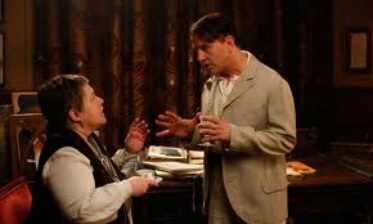

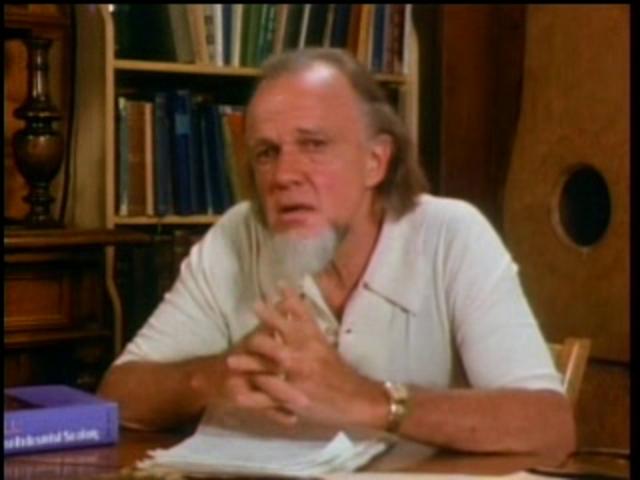


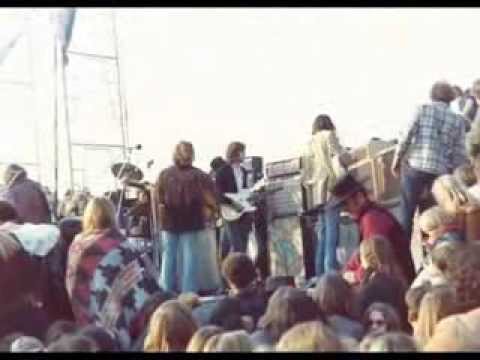


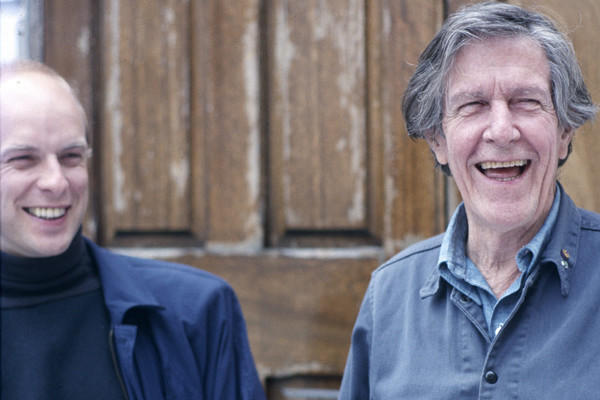

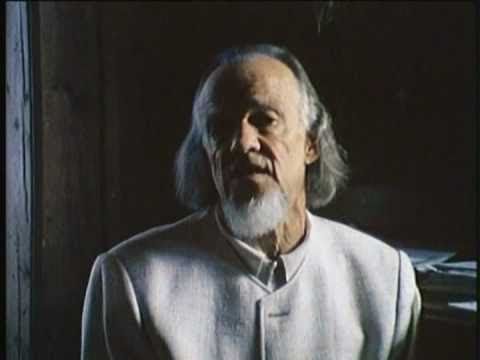


 The Daily Hatch