Office of Barack and Michelle Obama P.O. Box 91000 Washington, DC 20066
Dear President Obama,
I wrote you over 700 letters while you were President and I mailed them to the White House and also published them on my blog http://www.thedailyhatch.org .I received several letters back from your staff and I wanted to thank you for those letters.
There are several issues raised in your book that I would like to discuss with you such as the minimum wage law, the liberal press, the cause of 2007 financial meltdown, and especially your pro-choice (what I call pro-abortion) view which I strongly object to on both religious and scientific grounds, Two of the most impressive things in your book were your dedication to both the National Prayer Breakfast (which spoke at 8 times and your many visits to the sides of wounded warriors!!
I have been reading your autobiography A PROMISED LAND and I have been enjoying it.
Let me make a few comments on it, and here is the first quote of yours I want to comment on:
WHEN IT CAME to immigration, everyone agreed that the system was broken. The process of immigrating legally to the United States could take a decade or longer, often depending on what country you were coming from and how much money you had.Meanwhile, the economic gulf between us and our southern neighbors drove hundreds of thousands of people to illegally cross the 1,933-mile U.S.-Mexico border each year, searching for work and a better life. Congress had spent billions to harden the border, with fencing, cameras, drones, and an expanded and increasingly militarized border patrol. But rather than stop the flow of immigrants, these steps had spurred an industry of smugglers—coyotes—who made big money transporting human cargo in barbaric and sometimes deadly fashion. And although border crossings by poor Mexican and Central American migrants received most of the attention from politicians and the press, about 40 percent of America’s unauthorized immigrants arrived through airports or other legal ports of entry and then overstayed their visas. By 2010, an estimated eleven million undocumented persons were living in the United States, in large part thoroughly woven into the fabric of American life.Many were longtime residents, with children who either were U.S. citizens by virtue of having been born on American soil or had been brought to the United States at such an early age that they were American in every respect except for a piece of paper. Entire sectors of the U.S. economy relied on their labor, as undocumented immigrants were often willing to do the toughest, dirtiest work for meager pay—picking the fruits and vegetables that stocked our grocery stores, mopping the floors of offices, washing dishes at restaurants, and providing care to the elderly. But although American consumers benefited from this invisible workforce, many feared that immigrants were taking jobs from citizens, burdening social services programs, and changing the nation’s racial and cultural makeup, which led to demands for the government to crack down on illegal immigration. This sentiment was strongest among Republican constituencies, egged on by an increasingly nativist right-wing press. However, the politics didn’t fall neatly along partisan lines: The traditionally Democratic trade union rank and file, for example, saw the growing presence of undocumented workers on co nstruction sites as threatening their livelihoods, while Republican-leaning business groups interested in maintaining a steady supply of cheap labor (or, in the case of Silicon Valley, foreign-born computer programmers and engineers) often took pro-immigration positions. Back in 2007, the maverick version of John McCain, along with his sidekick Lindsey Graham, had actually joined Ted Kennedy to put together a comprehensive reform bill that offered citizenship to millions of undocumented immigrants while more tightly securing our borders. Despite strong support from President Bush, it had failed to clear the Senate. The bill did, however, receive twelve Republican votes, indicating the real possibility of a future bipartisan accord. I’d pledged during the campaign to resurrect similar legislation once elected, and I’d appointed former Arizona governor Janet Napolitano as head of the Department of Homeland Security—the agency that oversaw U.S. Immigration and Customs Enforcement (ICE) and U.S. Customs and Border Protection—partly because of her knowledge of border issues and her reputation for having previously managed immigration in a way that was both compassionate and tough. My hopes for a bill had thus far been dashed. With the economy in crisis and Americans losing jobs,few in Congress had any appetite to take on a hot-button issue like immigration. Kennedy was gone. McCain, having been criticized by the right flank for his relatively moderate immigration stance, showed little interest in taking up the banner again. Worse yet, my administration was deporting undocumented workers at an accelerating rate. This wasn’t a result of any directive from me, but rather it stemmed from a 2008 congressional mandate that both expanded ICE’s budget and increased collaboration between ICE and local law enforcement departments in an effort to deport more undocumented immigrants with criminal records. My team and I had made a strategic choice not to immediately try to reverse the policies we’d inherited in large part because we didn’t want to provide ammunition to critics who claimed that Democrats weren’t willing to enforce existing immigration laws—a perception that we thought could torpedo our chances of passing a future reform bill. But by 2010, immigrant-rights and Latino advocacy groups were criticizing our lack of progress..And although I continued to urge Congress to pass immigration reform, I had no realistic path for delivering a new comprehensive law before the midterms.
Milton Friedmanwisely noted, “It’s just obvious you can’t have free immigration and a welfare state,” Is it prudent to allow illegal immigrants (60 percent of whom are high-school dropouts) access to Social Security, Medicare, and, over time, to 60 federal means-tested welfare programs? I don’t think so either!
Senior Research Fellow Robert is a leading authority on poverty, welfare programs and immigration in America. Copied
A decade ago, Nobel prize-winning economist Milton Friedman admonished the Wall Street Journal for its idée fixe on open-border immigration policy. “It’s just obvious you can’t have free immigration and a welfare state,” he warned. This remark adds insight to the current debate over immigration in the U.S. Senate.
To be fully understood, Friedman’s comment should be viewed as applying not merely to means-tested welfare programs such as food stamps, Medicaid, and public housing, but to the entire redistributive transfer state. In the “transfer state,” government taxes the upper middle class and shifts some $1.5 trillion in economic resources to lower-income groups through a vast variety benefits and subsidies. Across the globe, this sort of economic redistribution is the largest, if not the predominant, function of government in advanced societies.
The transfer state redistributes funds from those with high-skill and high-income levels to those with lower skill levels. Low-skill immigrants become natural recipients in this process. On average, low-skill immigrant families receive $30,160 per year in government benefits and services while paying $10,573 in taxes, creating a net fiscal deficit of $19,587 that has to be paid by higher-income taxpayers.
Get exclusive insider information from Heritage experts delivered straight to your inbox each week. Subscribe to The Agenda >>
There is a rough one-to-one fiscal balance between low-skill immigrant families and upper-middle-class families. It takes the entire net tax payments (taxes paid minus benefits received) of one college-educated family to pay for the net benefits received by one low-skill immigrant family. Even Julian Simon, the godfather of open-border advocates, acknowledged that imposing such a burden on taxpayers was unreasonable, stating, “immigrants who would be a direct economic burden upon citizens through the public coffers should have no claim to be admitted” into the nation.
There is also a political dimension to the transfer state. Elections in modern societies are, to a considerable degree, referenda on the magnitude of future income redistribution. An immigration policy which grants citizenship to vast numbers of low-skill, low-income immigrants not only creates new beneficiaries for government transfers, but new voters likely to support even greater transfers in the future.
The grant of citizenship is a transfer of political power. Access to the U.S. ballot box also provides access to the American taxpayer’s bank account. This is particularly problematic with regard to low-skill immigrants. Within an active redistributionist state, as Friedman understood, unlimited immigration can threaten limited government.
Many libertarians respond to this dilemma by asserting that the real problem is not open borders but the welfare state itself. The answer: dismantle the welfare state. The libertarian Cato Institute pursues a variant of this policy under the slogan, “build a wall around the welfare state, not around the nation.” Borders should be open, but immigrants should be barred from accessing welfare and other benefits.
But in practice, pursuit of these dual libertarian goals of opening borders and ending the redistributionist welfare state often leads to contradictions. The current Senate “comprehensive” immigration-reform bill, supported by the Cato Institute, actively demolishes existing walls between illegal immigrants and government benefits, granting some 12 million illegal immigrants (60 percent of whom are high-school dropouts) access to Social Security, Medicare, and, over time, to 60 federal means-tested welfare programs.
It also substantially increases the future flow of low-skill immigrants and gives them access to welfare and transfer programs. Far from building a “wall around welfare,” this legislation levels existing walls, builds a highway to Fort Knox, and shovels billions in taxpayer funds into the pockets of immigrants who entered this country illegally.
In a recent debate with Dan Griswold of the Cato Institute, I pointed out this paradox. Griswold replied that the key was to grant amnesty and open borders now and work on “building a wall around welfare” at some point in the future. The weakness of this response should concern all those interested in limiting the size of government.
While most open-border libertarians proclaim a desire to dismantle both borders and the welfare state, in practice what they offer is open borders today and a vague (and almost certainly illusory) promise to end the welfare state in the indefinite future. As Milton Friedman understood, open-border enthusiasts have the sequence wrong: Opening borders with the redistributionist state still intact will result in a larger and more confiscatory government. In response to libertarians who propose to open borders and dismantle the welfare state, practical conservatives should answer: “Go ahead. Dismantle the welfare state. As soon as you’ve got that finished, let us know, and then we’ll talk about open borders.”
Open-border enthusiasts sometimes claim that the 1996 welfare reform defanged the welfare system, eliminating the costs that low-skill immigrants impose on taxpayers. As one of the architects of that reform, I would warn that this view shows a serious lack of understanding of the limited scope of the 1996 welfare law, and, more importantly, a lack of appreciation of the magnitude of the redistributionist state.
Sen. Ted Kennedy understands that a steady stream of low-skill immigrants will help him build a much larger, tax-fueled government. It is a pity that so many foes of big government fail to appreciate this point.
Robert Rector is a senior research fellow at The Heritage Foundation.
First appeared in the National Review Online
Sincerely,
Everette Hatcher III, 13900 Cottontail Lane, Alexander, AR 72002, ph 501-920-5733 everettehatcher@gmail.com
President Obama c/o The White House 1600 Pennsylvania Avenue NW Washington, DC 20500 Dear Mr. President, I know that you receive 20,000 letters a day and that you actually read 10 of them every day. I really do respect you for trying to get a pulse on what is going on out here. There have […]By Everette Hatcher III | Posted in David Barton, Founding Fathers, President Obama | Edit |Comments (0)
There have been many articles written by evangelicals like me who fear that our founding fathers would not recognize our country today because secular humanism has rid our nation of spiritual roots. I am deeply troubled by the secular agenda of those who are at war with religion in our public life. Lillian Kwon quoted somebody […]By Everette Hatcher III | Posted in David Barton, Founding Fathers | Edit | Comments (0)
There have been many articles written by evangelicals like me who fear that our founding fathers would not recognize our country today because secular humanism has rid our nation of spiritual roots. I am deeply troubled by the secular agenda of those who are at war with religion in our public life. Lillian Kwon quoted somebody […]By Everette Hatcher III | Posted in David Barton, Founding Fathers | Edit | Comments (0)
There have been many articles written by evangelicals like me who fear that our founding fathers would not recognize our country today because secular humanism has rid our nation of spiritual roots. I am deeply troubled by the secular agenda of those who are at war with religion in our public life. Lillian Kwon quoted somebody […]By Everette Hatcher III | Posted in David Barton, Founding Fathers | Edit | Comments (0)
There have been many articles written by evangelicals like me who fear that our founding fathers would not recognize our country today because secular humanism has rid our nation of spiritual roots. I am deeply troubled by the secular agenda of those who are at war with religion in our public life. Lillian Kwon quoted somebody […]By Everette Hatcher III | Posted in David Barton, Founding Fathers | Edit | Comments (0)
There have been many articles written by evangelicals like me who fear that our founding fathers would not recognize our country today because secular humanism has rid our nation of spiritual roots. I am deeply troubled by the secular agenda of those who are at war with religion in our public life. Lillian Kwon quoted somebody […]By Everette Hatcher III | Posted in Founding Fathers | Edit | Comments (0)
President Obama Speaks at The Ohio State University Commencement Ceremony Published on May 5, 2013 President Obama delivers the commencement address at The Ohio State University. May 5, 2013. You can learn a lot about what President Obama thinks the founding fathers were all about from his recent speech at Ohio State. May 7, 2013, […]By Everette Hatcher III | Posted in Founding Fathers, President Obama | Edit | Comments (0)
Dr. C. Everett Koop with Bill Graham. Francis Schaeffer: “Whatever Happened to the Human Race” (Episode 4) THE BASIS FOR HUMAN DIGNITY Published on Oct 7, 2012 by AdamMetropolis The 45 minute video above is from the film series created from Francis Schaeffer’s book “Whatever Happened to the Human Race?” with Dr. C. Everett Koop. This […]By Everette Hatcher III | Posted in Founding Fathers, Francis Schaeffer, Prolife | Edit |Comments (1)
America’s Founding Fathers Deist or Christian? – David Barton 4/6 There have been many articles written by evangelicals like me who fear that our founding fathers would not recognize our country today because secular humanism has rid our nation of spiritual roots. I am deeply troubled by the secular agenda of those who are at […]By Everette Hatcher III | Posted in David Barton, Founding Fathers | Tagged governor of connecticut, john witherspoon, jonathan trumbull | Edit | Comments (1)
3 Of 5 / The Bible’s Influence In America / American Heritage Series / David Barton There were 55 gentlemen who put together the constitution and their church affliation is of public record. Greg Koukl notes: Members of the Constitutional Convention, the most influential group of men shaping the political foundations of our nation, were […]By Everette Hatcher III | Posted in Founding Fathers | Edit | Comments (0)
I do not think that John Quincy Adams was a founding father in the same sense that his father was. However, I do think he was involved in the early days of our government working with many of the founding fathers. Michele Bachmann got into another history-related tussle on ABC’s “Good Morning America” today, standing […]By Everette Hatcher III | Posted in David Barton, Founding Fathers | Edit | Comments (0)
I have gone back and forth and back and forth with many liberals on the Arkansas Times Blog on many issues such as abortion, human rights, welfare, poverty, gun control and issues dealing with popular culture. Here is another exchange I had with them a while back. My username at the Ark Times Blog is Saline […]By Everette Hatcher III | Posted in Arkansas Times, Francis Schaeffer, Prolife | Edit |Comments (0)
I truly believe that many of the problems we have today in the USA are due to the advancement of humanism in the last few decades in our society. Ronald Reagan appointed the evangelical Dr. C. Everett Koop to the position of Surgeon General in his administration. He partnered with Dr. Francis Schaeffer in making the […]By Everette Hatcher III | Posted in Adrian Rogers, Francis Schaeffer | Edit | Comments (0)
Francis Schaeffer: “Whatever Happened to the Human Race” (Episode 4) THE BASIS FOR HUMAN DIGNITY Published on Oct 7, 2012 by AdamMetropolis ____________ The 45 minute video above is from the film series created from Francis Schaeffer’s book “Whatever Happened to the Human Race?” with Dr. C. Everett Koop. This book really helped develop my political […]By Everette Hatcher III | Posted in Francis Schaeffer | Edit | Comments (0)
Office of Barack and Michelle Obama P.O. Box 91000 Washington, DC 20066
Dear President Obama,
I wrote you over 700 letters while you were President and I mailed them to the White House and also published them on my blog http://www.thedailyhatch.org .I received several letters back from your staff and I wanted to thank you for those letters.
I have been reading your autobiography A PROMISED LAND and I have been enjoying it.
Let me make a few comments on it, and here is the first quote of yours I want to comment on:
THE SECOND TURN of events was an opportunity rather than a crisis. At the end of April, Supreme Court justice David Souter called to tell me he was retiring from the bench, giving me my first chance to fill a seat on the highest court in the land. Getting somebody confirmed to the Supreme Court has never been a slam dunk, in part because the Court’s role in American government has always been controversial. After all, the idea of giving nine unelected, tenured-for-life lawyers in black robes the power to strike down laws passed by a majority of the people’s representatives doesn’t sound very democratic. But since Marbury v. Madison, the 1803 Supreme Court case that gave the Court final say on the meaning of the U.S. Constitution and established the principle of judicial review over the actions of the Congress and the president, that’s how our system of checks and balances has worked. In theory, Supreme Court justices don’t “make law” when exercising these powers; instead, they’re supposed to merely “interpret” the Constitution, helping to bridge how its provisions were understood by the framers and how they apply to the world we live in today. For the bulk of constitutional cases coming before the Court, the theory holds up pretty well. Justices have for the most part felt bound by the text of the Constitution and precedents set by earlier courts, even when doing so results in an outcome they don’t personally agree with. Throughout American history, though, the most important cases have involved deciphering the meaning of phrases like “due process,” “privileges and immunities,” “equal protection,” or “establishment of religion”—terms so vague that it’s doubtful any two Founding Fathers agreed on exactly what they meant. This ambiguity gives individual justices all kinds of room to “interpret” in ways that reflect their moral judgments, political preferences, biases, and fears. That’s why in the 1930s a mostly conservative Court could rule that FDR’s New Deal policies violated the Constitution, while forty years later a mostly liberal Court could rule that the Constitution grants Congress almost unlimited power to regulate the economy. It’s how one set of justices, in Plessy v. Ferguson, could read the Equal Protection Clause to permit “separate but equal,” and another set of justices, in Brown v. Board of Education, could rely on the exact same language to unanimously arrive at the opposite conclusion. It turned out that Supreme Court justices made law all the time. Over the years, the press and the public started paying more attention to Court decisions and, by extension, to the process of confirming justices. In 1955, southern Democrats—in a fit of pique over the Brown decision—institutionalized the practice of having Supreme Court nominees appear before the Senate Judiciary Committee to be grilled on their legal views. The 1973 Roe v. Wade decision focused further attention on Court appointments, with every nomination from that point on triggering a pitched battle between pro-choice and anti-abortion forces. The high-profile rejection of Robert Bork’s nomination in the late 1980s and the Clarence Thomas–Anita Hill hearings in the early 1990s—in which the nominee was accused of sexual harassment—proved to be irresistible TV drama.
—
Let me comment on one sentence:
Over the years, the press and the public started paying more attention to Court decisions and, by extension, to the process of confirming justices.
As a Christian I wish you had been more attentive to the rights of unborn babies!
My question to the pro-abortionist who would not directly kill a newborn baby the minute it is born is this, “Would you have killed it a minute before that or a minute before that or a minute before that or a minute before that?”
Watch the film below starting at the 19 minute mark and that will lead into a powerful question from Dr. C. Everett Koop. This film is WHATEVER HAPPENED TO THE HUMAN RACE? by Francis Schaeffer and Dr. C. Everett Koop.
There is a question that I have asked pro-abortionist over and over and I have never got a straight answer. It comes from the first episode of WHATEVER HAPPENED TO THE HUMAN RACE. Dr. C. Everett Koop put forth the question:
My question to the pro-abortionist who would not directly kill a newborn baby the minute it is born is this, “Would you have killed it a minute before that or a minute before that or a minute before that or a minute before that?” You can see what I am getting at. At what minute does an unborn baby cease to be worthless and become a person entitled to the right to life and legal protection?
“One thing pro choice people can’t answer and that is when is an unborn baby human?
Neither can anti-choice folks, Saline/Ev. You see, my religion teaches me that every one of a woman’s unfertilized eggs is human, so if you anti-choice folks have not brought into the world a newborn at least every 9 months or so, you have murdered one or more humans (unfertilized eggs neither conceived nor birthed). Do you accept my definition of when an unborn baby is human which is just as arbitrary as your definition?
Damn, Saline, you’re perfectly willing to see them shot down at their desks when they’re six years old.
Anyway, if you were really serious about reducing abortions by relying on the facts, you’d be for universal health care — unless you are arguing that our world-leading abortion rate is because our mothers are the most evil mothers in the world. Implementing single-payer health care would immediately save the lives of unborn children.
________________
My constant opponent, Elwood, (who I do respect for his honest liberal opinions), observed:
“Would you have killed it a minute before that or a minute before that or a minute before that or a minute before that?” You can see what I am getting at.<
Yes, that’s called logical extension. It will invariably lead to the egg and sperm. How many lives have you destroyed in a kleenex?
Oh, give it a rest, Saline. Roe v Wade has been the law of the land since 1973. Your republicans have had countless opportunities to overturn the law in that time and yet they haven’t done so. Why? Well, first, it would dry up all the money they raise railing against it. But the real reason is that republicans use abortion services, too. Yes, it’s true! Sure can’t have some pregnant mistress or knocked up 15-year-old daughter damaging the reputation of some god-fearing christian republican, now can we? And the simple truth is, a woman’s choice in this matter is none of your @#$%$#@ business.
_________________________________
As you can see all of these are non-answers. THEY ALL ARE AVOIDING THE DIRECT QUESTION. I wish people would look at this logically. If there is doubt when an unborn baby is alive then we should err on the side of caution.
Ronald Reagan rightly noted, “What, then, is the real issue? I have often said that when we talk about abortion, we are talking about two lives — the life of the mother and the life of the unborn child. Why else do we call a pregnant woman a mother?I have also said that anyone who doesn’t feel sure whether we are talking about a second human life should clearly give life the benefit of the doubt. If you don’t know whether a body is alive or dead, you would never bury it. I think this consideration itself should be enough for all of us to insist on protecting the unborn.”
We are truly a selfish society. Mother Teresa observed, “If we can accept that a mother can kill even her own child, how can we tell other people to not kill each other? Any country that accepts abortion is not teaching its people to love, but to use any violence to get what they want.”
President Obama c/o The White House 1600 Pennsylvania Avenue NW Washington, DC 20500 Dear Mr. President, I know that you receive 20,000 letters a day and that you actually read 10 of them every day. I really do respect you for trying to get a pulse on what is going on out here. There have […]By Everette Hatcher III | Posted in David Barton, Founding Fathers, President Obama | Edit |Comments (0)
There have been many articles written by evangelicals like me who fear that our founding fathers would not recognize our country today because secular humanism has rid our nation of spiritual roots. I am deeply troubled by the secular agenda of those who are at war with religion in our public life. Lillian Kwon quoted somebody […]By Everette Hatcher III | Posted in David Barton, Founding Fathers | Edit | Comments (0)
There have been many articles written by evangelicals like me who fear that our founding fathers would not recognize our country today because secular humanism has rid our nation of spiritual roots. I am deeply troubled by the secular agenda of those who are at war with religion in our public life. Lillian Kwon quoted somebody […]By Everette Hatcher III | Posted in David Barton, Founding Fathers | Edit | Comments (0)
There have been many articles written by evangelicals like me who fear that our founding fathers would not recognize our country today because secular humanism has rid our nation of spiritual roots. I am deeply troubled by the secular agenda of those who are at war with religion in our public life. Lillian Kwon quoted somebody […]By Everette Hatcher III | Posted in David Barton, Founding Fathers | Edit | Comments (0)
There have been many articles written by evangelicals like me who fear that our founding fathers would not recognize our country today because secular humanism has rid our nation of spiritual roots. I am deeply troubled by the secular agenda of those who are at war with religion in our public life. Lillian Kwon quoted somebody […]By Everette Hatcher III | Posted in David Barton, Founding Fathers | Edit | Comments (0)
There have been many articles written by evangelicals like me who fear that our founding fathers would not recognize our country today because secular humanism has rid our nation of spiritual roots. I am deeply troubled by the secular agenda of those who are at war with religion in our public life. Lillian Kwon quoted somebody […]By Everette Hatcher III | Posted in Founding Fathers | Edit | Comments (0)
President Obama Speaks at The Ohio State University Commencement Ceremony Published on May 5, 2013 President Obama delivers the commencement address at The Ohio State University. May 5, 2013. You can learn a lot about what President Obama thinks the founding fathers were all about from his recent speech at Ohio State. May 7, 2013, […]By Everette Hatcher III | Posted in Founding Fathers, President Obama | Edit | Comments (0)
Dr. C. Everett Koop with Bill Graham. Francis Schaeffer: “Whatever Happened to the Human Race” (Episode 4) THE BASIS FOR HUMAN DIGNITY Published on Oct 7, 2012 by AdamMetropolis The 45 minute video above is from the film series created from Francis Schaeffer’s book “Whatever Happened to the Human Race?” with Dr. C. Everett Koop. This […]By Everette Hatcher III | Posted in Founding Fathers, Francis Schaeffer, Prolife | Edit |Comments (1)
America’s Founding Fathers Deist or Christian? – David Barton 4/6 There have been many articles written by evangelicals like me who fear that our founding fathers would not recognize our country today because secular humanism has rid our nation of spiritual roots. I am deeply troubled by the secular agenda of those who are at […]By Everette Hatcher III | Posted in David Barton, Founding Fathers | Tagged governor of connecticut, john witherspoon, jonathan trumbull | Edit | Comments (1)
3 Of 5 / The Bible’s Influence In America / American Heritage Series / David Barton There were 55 gentlemen who put together the constitution and their church affliation is of public record. Greg Koukl notes: Members of the Constitutional Convention, the most influential group of men shaping the political foundations of our nation, were […]By Everette Hatcher III | Posted in Founding Fathers | Edit | Comments (0)
I do not think that John Quincy Adams was a founding father in the same sense that his father was. However, I do think he was involved in the early days of our government working with many of the founding fathers. Michele Bachmann got into another history-related tussle on ABC’s “Good Morning America” today, standing […]By Everette Hatcher III | Posted in David Barton, Founding Fathers | Edit | Comments (0)
I have gone back and forth and back and forth with many liberals on the Arkansas Times Blog on many issues such as abortion, human rights, welfare, poverty, gun control and issues dealing with popular culture. Here is another exchange I had with them a while back. My username at the Ark Times Blog is Saline […]By Everette Hatcher III | Posted in Arkansas Times, Francis Schaeffer, Prolife | Edit |Comments (0)
I truly believe that many of the problems we have today in the USA are due to the advancement of humanism in the last few decades in our society. Ronald Reagan appointed the evangelical Dr. C. Everett Koop to the position of Surgeon General in his administration. He partnered with Dr. Francis Schaeffer in making the […]By Everette Hatcher III | Posted in Adrian Rogers, Francis Schaeffer | Edit | Comments (0)
Francis Schaeffer: “Whatever Happened to the Human Race” (Episode 4) THE BASIS FOR HUMAN DIGNITY Published on Oct 7, 2012 by AdamMetropolis ____________ The 45 minute video above is from the film series created from Francis Schaeffer’s book “Whatever Happened to the Human Race?” with Dr. C. Everett Koop. This book really helped develop my political […]By Everette Hatcher III | Posted in Francis Schaeffer | Edit | Comments (0)
Office of Barack and Michelle Obama P.O. Box 91000 Washington, DC 20066
Dear President Obama,
I wrote you over 700 letters while you were President and I mailed them to the White House and also published them on my blog http://www.thedailyhatch.org .I received several letters back from your staff and I wanted to thank you for those letters.
I have been reading your autobiography A PROMISED LAND and I have been enjoying it.
Let me make a few comments on it, and here is the first quote of yours I want to comment on:
THE SECOND TURN of events was an opportunity rather than a crisis. At the end of April, Supreme Court justice David Souter called to tell me he was retiring from the bench, giving me my first chance to fill a seat on the highest court in the land. Getting somebody confirmed to the Supreme Court has never been a slam dunk, in part because the Court’s role in American government has always been controversial. After all, the idea of giving nine unelected, tenured-for-life lawyers in black robes the power to strike down laws passed by a majority of the people’s representatives doesn’t sound very democratic. But since Marbury v. Madison, the 1803 Supreme Court case that gave the Court final say on the meaning of the U.S. Constitution and established the principle of judicial review over the actions of the Congress and the president, that’s how our system of checks and balances has worked. In theory, Supreme Court justices don’t “make law” when exercising these powers; instead, they’re supposed to merely “interpret” the Constitution, helping to bridge how its provisions were understood by the framers and how they apply to the world we live in today. For the bulk of constitutional cases coming before the Court, the theory holds up pretty well. Justices have for the most part felt bound by the text of the Constitution and precedents set by earlier courts, even when doing so results in an outcome they don’t personally agree with. Throughout American history, though, the most important cases have involved deciphering the meaning of phrases like “due process,” “privileges and immunities,” “equal protection,” or “establishment of religion”—terms so vague that it’s doubtful any two Founding Fathers agreed on exactly what they meant. This ambiguity gives individual justices all kinds of room to “interpret” in ways that reflect their moral judgments, political preferences, biases, and fears. That’s why in the 1930s a mostly conservative Court could rule that FDR’s New Deal policies violated the Constitution, while forty years later a mostly liberal Court could rule that the Constitution grants Congress almost unlimited power to regulate the economy. It’s how one set of justices, in Plessy v. Ferguson, could read the Equal Protection Clause to permit “separate but equal,” and another set of justices, in Brown v. Board of Education, could rely on the exact same language to unanimously arrive at the opposite conclusion. It turned out that Supreme Court justices made law all the time. Over the years, the press and the public started paying more attention to Court decisions and, by extension, to the process of confirming justices. In 1955, southern Democrats—in a fit of pique over the Brown decision—institutionalized the practice of having Supreme Court nominees appear before the Senate Judiciary Committee to be grilled on their legal views. The 1973 Roe v. Wade decision focused further attention on Court appointments, with every nomination from that point on triggering a pitched battle between pro-choice and anti-abortion forces. The high-profile rejection of Robert Bork’s nomination in the late 1980s and the Clarence Thomas–Anita Hill hearings in the early 1990s—in which the nominee was accused of sexual harassment—proved to be irresistible TV drama.
It is not possible to know where the pro-life evangelicals are coming from unless you look at the work of the person who inspired them the most. That person was Francis Schaeffer. I do care about economic issues but the pro-life issue is the most important to me.
Several years ago Adrian Rogers (past president of the Southern Baptist Convention) had a chance to meet with George Bush back in 1992 and he told him that the pro-life vote may not have enough votes to elect him on their own but if he turned his back on them then they could cost him the election for sure.
Francis Schaeffer: “Whatever Happened to the Human Race” (Episode 1) ABORTION OF THE HUMAN RACE
This crucial series is narrated by the late Dr. Francis Schaeffer and former Surgeon General Dr. C. Everett Koop. Today, choices are being made that undermine human rights at their most basic level. Practices once considered unthinkable are now acceptable – abortion, infanticide and euthanasia. The destruction of human life, young and old, is being sanctioned on an ever-increasing scale by the medical profession, by the courts, by parents and by silent Christians. The five episodes in this series examine the sanctity of life as a social, moral and spiritual issue which the Christian must not ignore. The conclusion presents the Christian alternative as the only real solution to man’s problems.
___________
How Pulitzer Prize-winning Paul Greenberg, one of the most respected and honored commentators in America, changed his mind about abortion and endorses now the pro-life view. Paul is the editorial page editor of the Arkansas Democrat-Gazette. This article below is from April 11, 2011.
The good doctor could have stepped out of a Louis Auchincloss short story. A fashionable but conscientious professional on the Upper West Side, his ideas, like his Brooks Brothers suits, were tailored to fit in. His ideals were those of the enlightened, modern urban America of his time, which was the mid- to late 20th century. And he was always doing what he could to further them.
The doctor’s political, medical and social convictions were much what one would have expected of a New York liberal, as clear as his curriculum vitae. The son of a secular Jewish ob/gyn, he would follow his prominent father’s footsteps, graduate from McGill Medical College in Montreal, and start his practice in Manhattan. He was a quick study, whether absorbing the latest medical knowledge or political trend. Especially when it came to abortion.
Having no convictions about the sacredness of human life, he was defenseless against its growing and increasingly legal appeal. Indeed, he was soon a leader in Pro-Choice ranks.
By his own count, Bernard Nathanson, M.D., was responsible for some 75,000 abortions — without a twinge of conscience intervening. Not back then. Not when he picketed a New York City hospital in his campaign for the legalization of abortion in New York state. Preaching what he practiced, Dr. Nathanson became a tireless spokesman for NARAL, the National Association for the Repeal of Abortion Laws.
As director of the Center for Reproductive and Sexual Health in Manhattan, where he routinely performed abortions and taught others to do the same, Dr. Nathanson knew of what he spoke. And never grew tired of rationalizing it. He wasn’t destroying human life but just “an undifferentiated mass of cells.” He was performing a social service, really. He was on a humanitarian mission.
Then something happened. The something was quite specific — the newest EKG and ultrasound imagery. Always a follower of the latest scientific evidence, he couldn’t deny what he was seeing. Political theory is one thing, but facts are facts.
By 1974, soon after Roe v. Wade had opened the way to his dream of abortion-on-demand, his eyes were opened. Literally. As he put it, “There is no longer any serious doubt in my mind that human life exists within the womb from the very onset of pregnancy.” He changed his beliefs and his ways — and sides.
I can identify. When Roe v. Wade was first pronounced, I welcomed it. As a young editorial writer in Pine Bluff, Ark., I believed the court’s assurances that its ruling was not blanket permission for abortion, but a carefully crafted, limited decision applicable only in some exceptional cases. Which was all a lot of hooey, but I swallowed it, and regurgitated it in editorials.
The right to life need not be fully respected from conception on, I explained, but grew with each stage of fetal development until a full human being was formed. I went into all this in an extended debate in the columns of the Pine Bluff Commercial with a young Baptist minister in town named Mike Huckabee.
Yes, I’d been taught by Mary Warters in her biology and genetics courses at Centenary that human life was one unbroken cycle from life to death, and the code to its development was present from its microscopic origins. But I wanted to believe human rights developed differently, especially the right to life. My reasons were compassionate. Who would not want to spare mothers carrying the deformed? Why not just allow physicians to eliminate the deformity? I hadn’t yet come across Flannery O’Connor’s warning that tenderness leads to the gas chambers.
Then something happened. I noticed that the number of abortions in the country had begun to mount year by year — into the millions. Perfectly healthy babies were being aborted for socio-economic reasons. Among ethnic groups, the highest proportions of abortions were being performed on black women. (Last I checked, 37 percent of American abortions were being done on African-American women, though they make up less than 13 percent of the U.S. population.)
Eugenics was showing its true face again. And it wasn’t pretty.
Abortion was even being touted as a preventative for poverty. All you had to do, after all, was eliminate the poor. They were, in the phrase of the advanced, Darwinian thinkers of the last century, surplus population.
With a little verbal manipulation, any crime can be rationalized, even promoted. Verbicide precedes homicide. The trick is to speak of fetuses, not unborn children. So long as the victims are a faceless abstraction, anything can be done to them. Just don’t look too closely at those sonograms. We are indeed strangely and wondrously made.
By now the toll has reached some 50 million aborted babies in America since 1973. That is not an abstract theory. It is fact, and facts are stubborn things. Some carry their own imperatives with them. And so, like Dr. Nathanson, I changed my mind, and changed sides.
There is something about simple human dignity, whether the issue is civil rights in the 1960s or abortion and euthanasia today, that in the end will not be denied. And it keeps asking: Whose side are you on? Life or death?
Long before he died the other day at 84, Bernard Nathanson had chosen life. He became as ardent an advocate for life as he had once been for death. He wrote books and produced a film, “The Silent Scream,” laying out the case for the unborn, and for humanity. He would join the Catholic Church in 1996 and continue to practice medicine as chief of obstetrical services at Saint Luke’s-Roosevelt hospital in Manhattan.
“I have such heavy moral baggage to drag into the next world,” he told the Washington Times in 1996. But he also had sought to redeem himself. He could not have been expected to do other than he did in his younger years, given his appetite for fashionable ideas. He was, after all, only human. Which is no small or simple thing.
Sincerely,
Everette Hatcher III, 13900 Cottontail Lane, Alexander, AR 72002, ph 501-920-5733 everettehatcher@gmail.com
President Obama c/o The White House 1600 Pennsylvania Avenue NW Washington, DC 20500 Dear Mr. President, I know that you receive 20,000 letters a day and that you actually read 10 of them every day. I really do respect you for trying to get a pulse on what is going on out here. There have […]By Everette Hatcher III | Posted in David Barton, Founding Fathers, President Obama | Edit |Comments (0)
There have been many articles written by evangelicals like me who fear that our founding fathers would not recognize our country today because secular humanism has rid our nation of spiritual roots. I am deeply troubled by the secular agenda of those who are at war with religion in our public life. Lillian Kwon quoted somebody […]By Everette Hatcher III | Posted in David Barton, Founding Fathers | Edit | Comments (0)
There have been many articles written by evangelicals like me who fear that our founding fathers would not recognize our country today because secular humanism has rid our nation of spiritual roots. I am deeply troubled by the secular agenda of those who are at war with religion in our public life. Lillian Kwon quoted somebody […]By Everette Hatcher III | Posted in David Barton, Founding Fathers | Edit | Comments (0)
There have been many articles written by evangelicals like me who fear that our founding fathers would not recognize our country today because secular humanism has rid our nation of spiritual roots. I am deeply troubled by the secular agenda of those who are at war with religion in our public life. Lillian Kwon quoted somebody […]By Everette Hatcher III | Posted in David Barton, Founding Fathers | Edit | Comments (0)
There have been many articles written by evangelicals like me who fear that our founding fathers would not recognize our country today because secular humanism has rid our nation of spiritual roots. I am deeply troubled by the secular agenda of those who are at war with religion in our public life. Lillian Kwon quoted somebody […]By Everette Hatcher III | Posted in David Barton, Founding Fathers | Edit | Comments (0)
There have been many articles written by evangelicals like me who fear that our founding fathers would not recognize our country today because secular humanism has rid our nation of spiritual roots. I am deeply troubled by the secular agenda of those who are at war with religion in our public life. Lillian Kwon quoted somebody […]By Everette Hatcher III | Posted in Founding Fathers | Edit | Comments (0)
President Obama Speaks at The Ohio State University Commencement Ceremony Published on May 5, 2013 President Obama delivers the commencement address at The Ohio State University. May 5, 2013. You can learn a lot about what President Obama thinks the founding fathers were all about from his recent speech at Ohio State. May 7, 2013, […]By Everette Hatcher III | Posted in Founding Fathers, President Obama | Edit | Comments (0)
Dr. C. Everett Koop with Bill Graham. Francis Schaeffer: “Whatever Happened to the Human Race” (Episode 4) THE BASIS FOR HUMAN DIGNITY Published on Oct 7, 2012 by AdamMetropolis The 45 minute video above is from the film series created from Francis Schaeffer’s book “Whatever Happened to the Human Race?” with Dr. C. Everett Koop. This […]By Everette Hatcher III | Posted in Founding Fathers, Francis Schaeffer, Prolife | Edit |Comments (1)
America’s Founding Fathers Deist or Christian? – David Barton 4/6 There have been many articles written by evangelicals like me who fear that our founding fathers would not recognize our country today because secular humanism has rid our nation of spiritual roots. I am deeply troubled by the secular agenda of those who are at […]By Everette Hatcher III | Posted in David Barton, Founding Fathers | Tagged governor of connecticut, john witherspoon, jonathan trumbull | Edit | Comments (1)
3 Of 5 / The Bible’s Influence In America / American Heritage Series / David Barton There were 55 gentlemen who put together the constitution and their church affliation is of public record. Greg Koukl notes: Members of the Constitutional Convention, the most influential group of men shaping the political foundations of our nation, were […]By Everette Hatcher III | Posted in Founding Fathers | Edit | Comments (0)
I do not think that John Quincy Adams was a founding father in the same sense that his father was. However, I do think he was involved in the early days of our government working with many of the founding fathers. Michele Bachmann got into another history-related tussle on ABC’s “Good Morning America” today, standing […]By Everette Hatcher III | Posted in David Barton, Founding Fathers | Edit | Comments (0)
I have gone back and forth and back and forth with many liberals on the Arkansas Times Blog on many issues such as abortion, human rights, welfare, poverty, gun control and issues dealing with popular culture. Here is another exchange I had with them a while back. My username at the Ark Times Blog is Saline […]By Everette Hatcher III | Posted in Arkansas Times, Francis Schaeffer, Prolife | Edit |Comments (0)
I truly believe that many of the problems we have today in the USA are due to the advancement of humanism in the last few decades in our society. Ronald Reagan appointed the evangelical Dr. C. Everett Koop to the position of Surgeon General in his administration. He partnered with Dr. Francis Schaeffer in making the […]By Everette Hatcher III | Posted in Adrian Rogers, Francis Schaeffer | Edit | Comments (0)
Francis Schaeffer: “Whatever Happened to the Human Race” (Episode 4) THE BASIS FOR HUMAN DIGNITY Published on Oct 7, 2012 by AdamMetropolis ____________ The 45 minute video above is from the film series created from Francis Schaeffer’s book “Whatever Happened to the Human Race?” with Dr. C. Everett Koop. This book really helped develop my political […]By Everette Hatcher III | Posted in Francis Schaeffer | Edit | Comments (0)
Other people, however, muted their views on policy because of their partisan or personal feelings about Trump.
I was very disappointed, for instance, that some Republicans abandoned (or at least downplayed) their support for free trade to accommodate Trump’s illiteracy on that issue.
But those people look like pillars of stability and principle compared to the folks who decided to completely switch their views.
Max Boot, for instance, is a former adviser on foreign policy to Republicans such as John McCain and Marco Rubio, who has decided that being anti-Trump means he should now act like a cheerleader for high taxes and big government.
Here’s some of what he wrote in a column for today’s Washington Post.
Republicans accuse President Biden of pursuing a radical agenda that will turn the United States into a failed socialist state. …It’s true that Biden is proposing a considerable amount of new spending… But those investments won’t turn us into North Korea,Cuba, Venezuela or the Soviet Union — all countries with government ownership of industry. …with proposals such as federally subsidized child care, elder care, family leave and pre-K education — financed with modest tax increases on corporations and wealthy individuals — Biden is merely moving us a bit closer to the kinds of government services that other wealthy, industrialized democracies already take for granted. …That’s far from radical. It’s simply sensible.
Part of the above excerpt makes sense. Biden is not proposing socialism, at least if we use the technical definition.
But he does think it’s good that Biden wants to copy Europe’s high-tax welfare states.
…by most indexes we are an embarrassing international laggard. …the United States spends nearly twice as much on health care as a percentage of gross domestic product than do other wealthy countries… The United States is also alone among OECD nations in not having universal paid family leave. …Our level of income inequality is now closer to that of developing countries in Africa and Latin American than to our European allies. …it’s possible to combine a vibrant free market with generous social welfare spending. In fact, that’s the right formula for a more satisfied and stable society. In the OECD quality-of-life rankings — which include everything from housing to work-life balance — the United States ranks an unimpressive 10th.
Mr. Boot seem to think that it’s bad news that the United States ranks 10th out of 37 nations in the OECD’s so-called Better Life Index.
But the real problem is that Boot seems oblivious to most important data, which shows that Americans enjoy far more prosperity than Europeans.
And he could have learned that with a few more clicks on the OECD’s website. He could have found the data on average individual consumption and discovered the huge gap between U.S. prosperity and European mediocrity.
P.S. I can’t resist nit-picking four other points in Boot’s column.
As show by this Chuck Asay cartoon, you don’t magically make government spending productive simply be calling it an “investment.”
Like beauty, the interpretation of “modest” may be in the eye of the beholder, but it certainly seems like “massive” is a better description of Biden’s proposed tax hikes.
It’s worth noting that Europe became a relatively prosperous part of the world before governments adopted punitive income taxes and created big welfare states.
P.P.S. I’ve wondered whether the OECD (subsidized by American taxpayers!) deliberately used dodgy measures when compiling the Better Life Index in part because of a desire to make the U.S. look bad compared to the European welfare states that dominate the organization’s membership? That certainly seems to have been the case when the OECD put together a staggeringly dishonest measure of poverty that made the U.S. seem like it had more destitution than poor countries such as Greece, Portugal, and Turkey.
I wrote one week ago about a big victory for education in West Virginia. The Mountain State arguably now has the most extensive system of school choice in the country.
Kentucky legislators have just overridden the governor’s veto, meaning that students in the state will now have expanded educational opportunities. Eric Boehm of Reasonhas some of the details.
The new law, originally House Bill 563, allows students in Kentucky public schools to switch school districts, and it creates a new tax-advantaged education savings program for families to use for private school tuition, to pay for tutoring, or to cover other educational expenses. The most controversial part of the proposal was the creation of a $25 million scholarship fund—to be filled by donations from private businesses, for which they would receive state tax credits—that students in Kentucky’s largest counties can tap to help pay for private school tuition. …With the passage of the first school choice bill in state history, Kentucky is now the 28th state with some form of school choice.
Speaking of other states, the Wall Street Journaleditorializedabout the beginning of a very good trend.
The pandemic has been a revelation for many Americans about union control of public schools… That awakening is helping to spur some welcome reform progress as several state legislatures are moving to expand school choice. One breakthrough is in West Virginia, where the Legislature passed a bill creating the state’s first education savings account (ESA) program. …Meanwhile in Georgia, the House passed a bill last week that would expand eligibility for the state’s voucher program for special-education students. The Senate, which had already passed the legislation, voted to approve House amendments on Monday and the bill is headed to Republican Gov. Brian Kemp’s desk. In South Dakota this month, Republican Gov. Kristi Noem signed a bill that expands eligibility for the state’s tax-credit scholarship program to students already enrolled in private schools. …in Kentucky, where Democratic Gov. Andy Beshear vetoed a bill last week that would establish a new tax-credit scholarship program. But the state legislature voted late Monday to override the veto… Nearly 50 school-choice bills have been introduced this year in 30 states. It’s a testament to how school shutdowns have made the advantage of education choice more evident, and its need more urgent.
By the way, school choice has existed for a long time in Vermont. Yes, the state that regularly reelects Crazy Bernie has dozens of small towns that give vouchers to students. Laura Williams explains in an article for the Foundation for Economic Education.
Vermont’s “tuition towns”…distribute government education funds to parents, who choose the educational experience that is best suited to their family’s needs. If the school doesn’t perform up to parents’ expectations, they can take their children, and the tuition dollars they control, elsewhere. …Ninety-three Vermont towns (36 percent of its 255 municipalities) have no government-run school at all. …the funds local governments expect to spend per pupil are instead given directly to the parents of school-age children. This method gives lower- and middle-income parents the same superpower wealthy families have always had: school choice. …parents have the ability to put their kids in school anywhere, to buy the educational experience best suited to each child. …A variety of schools has arisen to compete for these tuition dollars. …Eligibility for tuition vouchers actually increased home values in towns that closed their public schools. Outsiders were eager to move to these areas… Having watched these models develop nearby, two more Vermont towns voted in 2013 to close their government-run schools and become “tuition towns” instead.
Rhode Island is another unexpected example. That deep-blue state recently expanded charter schools in Providence.
That’s not as good a genuine school choice, but it gives parents some ability to escape traditional government schools. The Wall Street Journalopined last year on this development.
…this particular hell may have frozen over, as last week the state’s education council voted to expand and open more charter schools to rescue students in the district. About 13% of Providence’s 30,000 students attend 28 charter schools, some in other districts. But demand far exceeds supply. Only 18% of the 5,000 or so charter school applicants were offered a seat this school year,according to the state education department. …The state education council last week gave preliminary approval for more than 5,700 new charter seats in Providence and other districts. Three of four new charters that applied got a green-light to open, pending final approval in the spring, and three existing charters (two of which serve Providence) are expanding. …The teachers union isn’t happy. In a letter to Gov. Gina Raimondo, three union leaders including American Federation of Teachers President Randi Weingarten complained… This is the usual rhetorical union trick. Charters are public schools, albeit without the barnacles and costs of union control.
Let’s now add to our collection of evidence about the benefits of school choice.
In an article for National Review, James Piereson and Noami Schaefer Riley discuss the track record of the Children’s Scholarship Fund.
Children’s Scholarship Fund enables low-income children to attend private schools — and thrive. …parents who receive financial aid from the organization…send their children to inner-city private (mostly Catholic) schools. …When it came to how satisfied they were with their children’s education, almost 90 percent graded their school a 4 or 5 out of 5. …Since its inception in 1998, the fund has helped more than 180,000 children attend private schools.CSF’s high-school graduation and college matriculation rates far surpass those of the urban public schools that surround them. In Philadelphia, for instance, 96 percent of CSF eighth-graders graduated from high school on schedule — compared with Philadelphia’s public-school graduation rate of only 62 percent. A study of CSF in Baltimore found that 84 percent of scholarship recipients were enrolled in college five to ten years after completing eighth grade, compared with fewer than half of students from local public schools. Nor are these high-priced private schools. The average tuition at these schools is about $5,300 per year, and the average scholarship award is $2,200.
Because they have to deliver a good product. Either that, or parents will take their money elsewhere.
It’s a simple question of incentives, as illustrated by this meme about why private schools have been much better than government schools during the pandemic.
While the obvious argument for school choice is that it delivers better educational outcomes (and at lower cost), it’s worth noting that there are all sorts of secondary benefits.
As explained by W. Bradford Wilcox in an article for the American Enterprise Institute, private schools produce better families.
The public debate surrounding the efficacy of private versus public schools tends to revolve around their relative success in boosting test scores, graduation rates, and college admissions. …But there is more to life than excelling at school and work. For instance, there is the opportunity to be formed into a woman or man of good character, a good citizen, or a good partner and parent. …Until now, however, we have known little about how different types of schools are linked to students’ family life as adults. …In this report, we examine how enrollment in American Catholic, Protestant, secular private, and public schools is associated with different family outcomes later in life. …Adults who attended Protestant schools are more than twice as likely to be in an intact marriage as those who attended public schools. They are also about 50% less likely than public-school attendees to have a child out of wedlock. …Compared with public-school attendees, ever-married adults who attended a secular private school are about 60% less likely to have ever divorced. Catholic-school attendees are about 30% less likely to have had a child out of wedlock than those who attended public schools.
And the Wall Street Journaleditorialized last December about school choice improving mental health.
Teachers unions have pushed to shut down schools during the pandemic no matter the clear harm to children, just as they oppose charters and vouchers. Now comes a timely study suggesting school choice improves student mental health. Several studies have found that school choice reduces arrests and that private-school students experience less bullying. One reason is that charter and private schools enforce stricter discipline than traditional public schools. …The new study in the journal “School Effectiveness and School Improvement” is the first to…analyze the correlation between adolescent suicide rates and the enactment of private-school voucher and charter programs over the last several decades. They find that states that enacted charter school laws witnessed a 10% decrease in suicide rates among 15- to 19-year-olds. Private-school voucher laws were also associated with fewer suicides, though the change was not statistically significant. The effect would likely be larger if more students received vouchers. …The researchers also looked for any correlation between students who attended private school as teenagers and their mental health as adults. …individuals who attended private schools were two percentage-points less likely to report a mental health condition when they were roughly 30 years old.
Let’s conclude with some excerpts from a strong editorial from National Review. The magazine points out that teacher unions wield power in blue parts of the nation and schools are run for their benefit rather than for the best interests of children.
…the interests of children and their families take a distant second place to the desires of the public-sector unions that dominate Democratic politics around the country and run the show practically unopposed in California. …unionized teachers…have turned up their nosesat the children they are supposed to be serving and looked instead to their own two-point agenda: (1) not going to work; (2) getting paid. Randi Weingarten exercises more real practical political power than any senator or cabinet secretary, and her power is exercised exclusively in the interest of public-sector workers and the Democratic Party, which they effectively control. Perhaps it is time for Americans to take back some of that power.
And what’s the way to take back power?
It’s possible to reform labor laws so teachers don’t have out-sized influence. That sort of happened in Wisconsin under Governor Scott Walker.
But that’s difficult to achieve and difficult to maintain.
Michelle: You are the grandfather of school vouchers. Do you feel victorious?
Mr. Friedman: Far from victorious, but very optimistic and hopeful. We are at the beginning of the task because as of the moment vouchers are available to only a very small amount of children. Our goal is to have a system in which every family in the U.S. will be able to choose for itself the school to which its children go. We are far from that ultimate result. If we had that, a system of free choice, we would also have a system of competition, innovation, which would change the character of education. You know our educational system is one of the most backwards things in our society in the way we teach people they did 200 years ago. There is a person in the front of the room. There are children sitting down at the bottom, and they are being talked to. Can you name any other industry in the U.S. which is as technologically backward? I can name one and only one: the legislature for the same reason. Both are monopolies. The elementary and secondary school system is the single most socialist industry in the U.S. leaving aside the military, but aside from the military it’s a major socialist industry; it is centralized and the control comes from the center and the difficulty of having a monopoly in which people cannot choose has been exacerbated by the fact that it has been largely taken over by teachers’ unions, the National Education Association and the American Federation of Teachers and the unions. Understandably, I do not blame them, but they are interested in the welfare of their members, not the welfare of the children, and the result is they have introduced a degree of rigidity, which makes it impossible to reform the public school system from within. Reform has to come through competition from the outside and the only way you can get competition is by making it possible for parents to have the ability to choose.
Michelle: Give to me a model, an example of how it would work.
Mr. Friedman: Very simple, take the extreme the government says we are willing to finance schooling for every child. The government compels children. If you look at the role of government in education there are three different levels. There is a level of compulsory. The government says every child must go to school until such and such and age. That is the equivalent of saying if you are going to drive a car you must have a license. The second stage is funding. Not only do we require you to have an education, but the government is willing to pay for that schooling. That would be equivalent to saying the government is willing to pay for your car that you drive. The third level is running the educational industry. That would be the equivalent of the government manufacturing the automobile or, to put it in a different image, consider food stamps today. Food stamps are funds provided by the government. But if that were to be runned (sic) like the schools, they would say everybody has to use these food stamps at a government grocery and each person with food stamps is assigned to a particular government grocer. So the only way you can get your food stamps is by going to that grocer. Do you think those groceries would be very good? We know what the situation is in schooling. People say why now and not 50-75 years ago? Well, when I went to high school that was a long time ago. In the 1920s there were 150,000 school districts in the U.S and the population was half what it is now. Today, there are fewer than 15,000 school districts. So it used to be that you really did have competition cause you had small school districts and parents had a good deal of control over those school districts, but increasingly we have shifted to very large school districts, to centralized control, to a system in which the governmental officials, in which the educational professionals control it. And like every socialist industry, it produces a product that is very expensive and of very low quality. Of course it is not uniform. There are some very good schools do not misunderstand me, but there are also some very bad ones.
Michelle: I interviewed some folks who are against school vouchers and they say that if you really want to help out a school what you should do is provide high-quality early childhood education, small classes, small schools, summer school available to children who want it. Put money to those items, which they claim would work.
Mr. Friedman: They don’t, we have been doing that. The amount of money spent per child adjusted for inflation has something like doubled or tripled over the last 20 years. Twenty years ago we had this report A Nation at Risk that pointed out all of the difficulties I just referred to and which pointed out this was a first generation that was going to be less schooled than its parents. We are now in the next generation and will be even less well schooled. We have had every possible effort you could have from reform from within. It is not just in schools; it is in any area. Reform has to come from outside. It has to come from competition. Let me illustrate that from within the school system. The United States from all accounts ranks number one in higher education. People from all over the world regard the United States’ colleges and universities the best and most varied. On the other hand in every other international comparison we rank near the bottom in elementary and secondary education. Why the difference? One word: choice. The elementary and secondary education, the school picks the child; it picks its customer. In higher education, the customer picks its school, you have choice that makes all the difference in the world. It means competition forces product. Look over the rest of the economy. Is there any area in the U.S. in which progress has not required progress from the outside? Look at the telephone industry when it was broken down into the little bells and opened up the competition. It started a period of rapid innovation and development. The key word is competition and the question is how can you get competition. Only by having the customer choosing.
Michelle: There is concern that money is going to religious schools. That the majority of the students in voucher programs that exist use them to attend schools with religious affiliation?
Mr. Friedman: Why? Because the vouchers are so small in some cases. It is true that of the private schools in the U.S. the great bulk of them are religious. That is for one simple reason. Here is someone selling something for nothing. Somebody down the street is giving away chocolate and you want to get into the business of selling chocolate. That is kind of tough isn’t it? Here at schools, children can attend them. They are not free. They are paying for it in the form of taxes, but there is no specific charge for going to that school. Somebody else is going to offer it. The churches, the religious organizations have had a real advantage in that they were the only ones around who were in a position to subsidize the education and keep the fees down low. If you open it wide, the most recent case was Ohio, Cleveland case. The voucher that they had had a max value of $2,500. Now it is not easy to provide a decent education at $2,500 and make money at it. Make it pay. At the same time the state of Ohio was spending something like over $7,000 per child on schooling. If that voucher had been $7,000 instead of $2,500 I have no doubt that there would have been a whole raft of new private, non-profit, both profit and non-profit schools. That is what has happened in Milwaukee. Milwaukee has a voucher system and today the fraction of the voucher users in Milwaukee going to religious schools is less than the fraction going to religious schools was before this system started because there have been new schools developed and some of them have been religious but many of them are not. In any event, the Supreme Court has settled that issue. They have said that if it is the choice of the parent, if there are alternatives available, there are government schools, charter schools, private non-denominational schools, private denominational schools, so long as the choice is in the hands of the parent that is not a violation of the First Amendment.
Michelle: You have a friend and an ally in the White House when it comes to vouchers.
Mr. Friedman: I should say. Mr. Bush has always been in favor. He is in favor of free choice. Remember vouchers are a means not an end. The purpose of vouchers is to enable parents to have free choice, and the purpose of having free choice is to provide competition and allow the educational industry to get out of the 17th century and get into the 21st century and have more innovation and more evolvement. There is no reason why you cannot have the same kind of change in the provision of education as you have had in industries like the computer industry, the television industry and other things.
Michelle: Is it refreshing to have a president that, Bill Clinton was firmly against vouchers.
Mr. Friedman: No, it is a case of circumstances. When he was governor of Arkansas, he was not against vouchers. He was in favor, but when he became president he came out against vouchers. I should say he did not oppose vouchers as governor and he did as president and that was for political reasons. People don’t recognize how powerful politically the teachers’ unions are. Something like a quarter of all the delegates at the Democratic National Convention are from the teachers’ union. They are probably the most powerful pressure group in the U.S., very large funds, very large number of people and very active politically.
Michelle: We talk in the office about how President Bush has some very Friedmanesqe ideas.
Mr. Friedman: They are not Freidmanesqe. They are just good ideas. I hope that is true anyway. I think very highly of President Bush, and I think in these areas, don’t misunderstand me, that is not a blanket statement. There are some things he has done that I disagree with, but taken as a whole he has been moving in the right direction of trying to move toward a smaller more limited government, trying to provide more freedom and more initiative in all areas. His philosophy on Medicare is the same as his philosophy in schools.
Michelle: Is that refreshing?
Mr. Friedman: It is an interesting thing, if you look at the facts, the one area, the area in which the low-income people of this country, the blacks and the minority, are most disadvantaged is with respect with the kinds of schools they can send their children to. The people who live in Harlem or the slums or the corresponding areas in LA or San Francisco, they can go to the same stores, shop in the same stores everybody else can, they can buy the same automobiles, they can go to supermarket, but they have very limited choice of schools. Everybody agrees that the schools in those areas are the worst. They are poor. Yet, here you have a Democrat who allege their interest is to help the poor and the low-income people. Here you have to take a different point. Every poll has shown that the strongest supporters of vouchers are the low-income blacks, and yet hardly a single black leader has been willing to come out for vouchers. There were some exceptions, Paul Williams in Milwaukee who was responsible for that, and a few others.
Michelle: Why do you think that is?
Mr. Friedman: For obvious reasons, political. It has been to the self interest to the leaders. The school system, as long as it’s governmental it’s a source of power and jobs to hand around and funds to dispose of. If it is privatized that disappears. And the other aspect of it is the power of the teachers’ unions. Right now those of us that are in the upper-income classes have freedom of choice for our children in various ways. We can decide where to live and we can choose places to live that have good schools or we can afford to pay twice for schooling once by taxes and once by paying tuition at a private school. It seems to me utterly unfair that those opportunities should not be open to everybody at all levels of income. If you had a system, the kind I would like to see, the government would say we require every child to get a certain number of years of schooling and in order to make that possible we are going to provide for every parent a voucher equal to a certain number of dollars, which they can use only for schooling, can’t use it for anything else. They can add to it, but they cannot subtract from it. Those will be, those can be used in government schools. Let the government run the school, but force them to be in competition so that all government schools charge tuition, but can be paid for by that voucher. But that same voucher can also be used in private schools of all kinds and then you would have an open; the teachers’ union complained and they insist they are doing a good job. If they are doing a good job then why are they so afraid of some competition?
Michael Harrington: If you don’t have the expertise, the knowledge technology today, you’re out of the debate. And I think that we have to democratize information and government as well as the economy and society. FRIEDMAN: I am sorry to say Michael Harrington’s solution is not a solution to it. He wants minority rule, I […]
By Everette Hatcher III | Posted in Current Events, Milton Friedman | Edit | Comments (0)
PETERSON: Well, let me ask you how you would cope with this problem, Dr. Friedman. The people decided that they wanted cool air, and there was tremendous need, and so we built a huge industry, the air conditioning industry, hundreds of thousands of jobs, tremendous earnings opportunities and nearly all of us now have air […]
By Everette Hatcher III | Posted in Current Events, Milton Friedman | Edit | Comments (0)
Part 5 Milton Friedman: I do not believe it’s proper to put the situation in terms of industrialist versus government. On the contrary, one of the reasons why I am in favor of less government is because when you have more government industrialists take it over, and the two together form a coalition against the ordinary […]
By Everette Hatcher III | Posted in Current Events, Milton Friedman | Edit | Comments (0)
The fundamental principal of the free society is voluntary cooperation. The economic market, buying and selling, is one example. But it’s only one example. Voluntary cooperation is far broader than that. To take an example that at first sight seems about as far away as you can get __ the language we speak; the words […]
By Everette Hatcher III | Posted in Current Events, Milton Friedman | Edit | Comments (0)
_________________________ Pt3 Nowadays there’s a considerable amount of traffic at this border. People cross a little more freely than they use to. Many people from Hong Kong trade in China and the market has helped bring the two countries closer together, but the barriers between them are still very real. On this side […]
By Everette Hatcher III | Posted in Current Events, Milton Friedman | Edit | Comments (0)
Aside from its harbor, the only other important resource of Hong Kong is people __ over 4_ million of them. Like America a century ago, Hong Kong in the past few decades has been a haven for people who sought the freedom to make the most of their own abilities. Many of them are […]
By Everette Hatcher III | Posted in Current Events, Milton Friedman | Edit | Comments (0)
“FREE TO CHOOSE” 1: The Power of the Market (Milton Friedman) Free to Choose ^ | 1980 | Milton Friedman Posted on Monday, July 17, 2006 4:20:46 PM by Choose Ye This Day FREE TO CHOOSE: The Power of the Market Friedman: Once all of this was a swamp, covered with forest. The Canarce Indians […]
If you would like to see the first three episodes on inflation in Milton Friedman’s film series “Free to Choose” then go to a previous post I did. Ep. 9 – How to Cure Inflation [4/7]. Milton Friedman’s Free to Choose (1980) Uploaded by investbligurucom on Jun 16, 2010 While many people have a fairly […]
Charlie Rose interview of Milton Friedman My favorite economist: Milton Friedman : A Great Champion of Liberty by V. Sundaram Milton Friedman, the Nobel Prize-winning economist who advocated an unfettered free market and had the ear of three US Presidents – Nixon, Ford and Reagan – died last Thursday (16 November, 2006 ) in San Francisco […]
By Everette Hatcher III | Posted in Milton Friedman | Edit | Comments (0)
Stearns Speaks on House Floor in Support of Balanced Budget Amendment Uploaded by RepCliffStearns on Nov 18, 2011 Speaking on House floor in support of Balanced Budget Resolution, 11/18/2011 ___________ Below are some of the main proposals of Milton Friedman. I highly respected his work. David J. Theroux said this about Milton Friedman’s view concerning […]
By Everette Hatcher III | Posted in Milton Friedman | Edit | Comments (0)
Milton Friedman: Free To Choose – The Failure Of Socialism With Ronald Reagan (Full) Published on Mar 19, 2012 by NoNationalityNeeded Milton Friedman’s writings affected me greatly when I first discovered them and I wanted to share with you. We must not head down the path of socialism like Greece has done. Abstract: Ronald Reagan […]
By Everette Hatcher III | Posted in Milton Friedman, President Obama | Edit | Comments (1)
What a great defense of Milton Friedman!!!! Defaming Milton Friedman by Johan Norberg This article appeared in Reason Online on September 26, 2008 PRINT PAGE CITE THIS Sans Serif Serif Share with your friends: ShareThis In the future, if you tell a student or a journalist that you favor free markets and limited government, there is […]
Actually, there’s another thing everyone should understand. As illustrated by this summary from the Washington Post, it’s not really an infrastructure plan. It’s a spend-money-on-anything-and-everything plan, presumably to reward various interest groups.
Though I guess we have to give the Biden Administration points for consistency. The President’s COVID relief plan from earlier this year had very little to do with the pandemic, so we shouldn’t be surprised to see that the infrastructure plan has very little to do with infrastructure.
The Wall Street Journaleditorialized about this bait-and-switch scam.
Most Americans think of infrastructure as roads, highways, bridges and other traditional public works. That’s why it polls well… Yet this accounts for a mere $115 billion of Mr. Biden’s proposal. There’s another $25 billion for airports and $17 billion for ports and waterways that also fill a public purpose. The rest of the $620 billion earmarked for “transportation” are subsidies for green energyand payouts to unions for the jobs his climate regulation will kill. …The magnitude of spending is something to behold. There’s $85 billion for mass transit plus $80 billion for Amtrak, which is on top of the $70 billion that Congress appropriated for mass transit in three Covid spending bills. The money is essentially a bailout for unions… Then there’s $174 billion for electric vehicles, including money to build 500,000 charging stations and for consumer “incentives” on top of the current $7,500 federal tax credit to buy an EV. …Mr. Biden is also redefining infrastructure as social-justice policy and income redistribution. …His plan also includes $213 billion for affordable housing, $100 billion for retrofitting public schools, $25 billion for child-care facilities and $400 billion for increasing home-health care.
Michael Boskin, a professor at Stanford, is not optimistic that Biden’s plan will generate good results.
Joe Biden’s $2.3 trillion infrastructure plan would be many times larger than previous such bills, only about one-third of it would meet even a broad definition of “infrastructure.” …What could possibly go wrong? A lot. …federal spending would crowd out private and local government spending, with a substantial risk of boondoggles piling up along the way.…The Biden plan is rife with opportunities for earmarked pork-barrel projects (bridges to nowhere) and crony capitalist corporate welfare (next-generation Solyndras). Consider California High-Speed Rail, an infrastructure train wreck that will soon be begging for a bailout from the Biden administration. It originally used a grant from President Barack Obama’s 2009 “stimulus” package to pay, six years later, for a tiny initial rail line. Yet, because the project’s projected total San Francisco to Los Angeles cost has tripled to $100 billion.
And even if the plan was nothing but real infrastructure, that wouldn’t be a cause for optimism.
Kenneth Rogoff, a professor at Harvard, wrote late last year that governments have a terrible track record with cost overruns.
…perhaps the biggest obstacle to improving infrastructure in advanced economies is that any new project typically requires navigating difficult right-of-way issues, environmental concerns, and objections from apprehensive citizens… The “Big Dig” highway project in my hometown of Boston, Massachusetts was famously one of the most expensive infrastructure projects in US history. The scheme was originally projected to cost $2.6 billion, but the final tab swelled to more than $15 billion… The construction of New York City’s Second Avenue Subway was a similar experience, albeit on a slightly smaller scale. In Germany, the new Berlin Brandenburg Airport recently opened nine years behind schedule and at three times the initial estimated cost.
Amen. I wrote a column about the infamous Second Avenue Subway, and I’ve also repeatedlyopined about how government projects always wind up costing much more than initial projections.
Let’s wrap up by looking at an economic analysis of Biden’s plan by the University of Pennsylvania’s Penn Wharton Budget Model.
The overall macroeconomic effects of enacting the AJP, including both its spending and tax provisions, are shown in Table 4. …After the AJP’s new spending ends in 2029, however, its tax increases persist—as a result, federal debt ends up 6.4 percent lower by 2050, relative to the current law baseline.Despite the decline in government debt, the investment-disincentivizing effects of the AJP’s business tax provisions decrease the capital stock by 3 percent in 2031 and 2050. The decline in capital makes workers less productive despite the increase in productivity due to more infrastructure, dragging hourly wages down by 0.7 percent in 2031 and 0.8 percent in 2050. Overall, GDP is 0.9 percent lower in 2031 and 0.8 percent lower in 2050.
Here’s Table 4, which I’ve augmented by circling the two most important statistics.
The immediate lesson from all of this is that Biden’s plan is a boondoggle waiting to happen (just as would have been the case with Trump).
It isn’t actually happening (these are my friends who apparently don’t know how to read).
It’s happening, but it doesn’t matter (data from the IRS suggests it actually is significant).
It’s happening, but high-tax states will be better off without these selfish and greedy people.
The folks making the third point actually have a decent argument, at least in terms of short-run political outcomes. Democrats rarely have to worry about retaining control of states like California, New York, Illinois, and New Jersey now that many Republican-leaning voters have moved away.
As you can see, there’s a continuing shift of political power – as measured by seats in Congress – from blue states to red states.
Patrick Gleason of Americans for Tax Reform explains what this means in a column for Forbes.
Over the past decade Americans have been voting with their feet in favor of states with lower overall tax burdens… As a result, high tax states…are set to lose congressional clout for the next decade, to the benefit of low tax states… the seven states that will lose congressional seats due to stagnant population growth have higher top income tax rates and greater overall tax burdens, on average, than do the six states gaining seats. In fact, the average top personal income tax rate for states losing seats in congress is 6.5%, which is 46% greater than the 4.45% average top income tax rate for states gaining seats.
Some people may want to dismiss Mr. Gleason’s column since he works for a group that supports smaller government.
But you can find the same analysis in this column in the Washington Post by Aaron Blake.
…what does the new breakdown mean from a partisan perspective? All told, five seats will migrate from blue states to red ones — owing to population shifts from the Rust Belt, the Northeast and California to the South and other portions of the West. Five of the seven seats being added also go to states under complete GOP control of redistricting, with three of seven being taken away coming from states in which Democrats have some measure of control over the maps. …That should help Republicans… The Cook Political Report estimates the shifts are worth about 3.5 seats… As for the electoral college in future presidential elections, …Michigan and Pennsylvania…are states Democrats probably need to win in the near future, meaning it’s probably a bigger loss for them. …If we reran the 2020 electoral college with the new electoral votes by state, Biden’s margin would shrink from 306-232 to 303-235. That seems negligible. But if you overlay the 2000 presidential results — three reapportionments ago — on the current electoral vote totals, George W. Bush’s narrow win with 271 electoral votes becomes a much more decisive win with 290. That gives you a sense where things have trended.
Let’s now return to the hypothesis that tax-motivated migration is playing a role.
I’ll wrap up today’s column by augmenting the data in Mr. Wilford’s tweet.
Because not only are there, on average, lower tax burdens in the states gaining congressional seats, but every one of them has some very desirable feature of its tax code.
To be sure, not all of the state-to-state migration is due to tax policy. There are all sorts of other policies that determine whether a state is an attractive place for people looking to relocate.
And there are other factors (family, climate, etc) that have nothing to do with public policy.
All things considered, however, being a low-tax state means more jobs, growth, and people, at least when compared with being a high-tax state.
P.S. If you’re interested in seeing how states rank in various indices, click here, here, and here.
After November’s election, I figured we would have gridlock. Biden would propose some statist ideas, but they would be blocked by Republicans in the Senate.
That won’t be good news for America’s economy or American competitiveness.
Today, let’s focus on the biggest tax increase that the President Elect is proposing.
In an article for National Review, Joseph Sullivan writes about the adverse impact of Biden’s increase in the corporate tax rate.
Biden’s corporate-tax proposal is remarkable. …If the U.S. adopted Biden’s proposed federal tax rate, its overall corporate-tax rate would not be “in line” with the rest of the G7. Assuming U.S. state and local corporate taxes stayed the same, Biden’s proposal would result in nearly the highest overall corporate-tax rate in the G7, according to data from the OECD. The U.S. would be tied with France. …The average overall corporate rate among the G7 has fallen to 25 percent… With the G7 average trending in one direction, Biden would move the U.S. in the opposite direction.
In other words, while the Biden team claims that a higher corporate tax won’t be too damaging because it will be similar to the rate in other major nations, the U.S. actually will be tied with France once you include the impact of state corporate tax burdens.
Here’s the chart included with the article.
And don’t forget that there are many other economies where the corporate tax rate is well below the G7 average.
The bottom line is that the United States currently ranks only #19out of 35 nations in the Tax Foundation’s competitiveness ranking for OECD nations.
The good news is that being #19 is much better than being #31, which is where the U.S. was in 2016.
The bad news is that Biden wants to undo much of the 2017 reform, as well as impose other tax increases. And that means a much lower competitiveness score in the future.
Which ultimately means lower wages for American workers.
P.S. Although the proposed increase in the corporate rate is theoretically the biggest revenue raiser in Biden’s tax plan, I will safely predict that it won’t raise nearly as much revenue as projected by static revenue estimates. I wasn’t able to educate Obama on this issue, and I’m even less hopeful of getting through to Biden.
Unfortunately, there’s no reason to think Biden will try to reverse those mistakes.
Indeed, he wants expand the burden of federal spending. And, regarding monetary policy, appointing Janet Yellen as Secretary of Treasury certainly suggests he is comfortable with the current approach.
And to make matters worse, he definitely wants a more punitive tax system. We will shortly learn whether Democratstake control of the Senate, which presumably would give Biden more leeway to enact his class-warfare tax agenda.
P.S. I mentioned in the interview that we have “three Americas” with regards to coronavirus. I’m not sure I was completely clear, so here’s what I was trying to get across.
Tourism-reliant states – They are going to be in bad shape until coronavirus is in the rear-view mirror and people feel comfortable with traveling and socializing.
Lock-down states – They have higher unemployment rates because more businesses are shut down.
Laissez-faire states – These are the states that generally allow businesses to remain open and have lower unemployment rates.
For what it’s worth, I think it’s best to let businesses stay open and to allow them and their customers to assess safety risks. It will be interesting to see whether any link is discovered between state policy and coronavirus rates.
I’m (unfortunately) not a rich person, but that doesn’t stop me from opposing punitive taxes on successful entrepreneurs, investors, and small business owners.
Likewise, I’m not a gun aficionado, but that doesn’t stop me from opposing efforts to restrict the rights of law-abiding people to own and bear arms.
In part, my views on guns are driven by cost-benefit analysis. Simply stated, the evidence is fairly clear that there is less crime when bad people have to worry that potential victims have the ability to defend themselves.
Interestingly, it seems that more folks on the left are coming to their senses on the issue of gun control, generally for practical reasons rather than philosophical reasons.
In 2012, I shared some important observations from Jeffrey Goldberg, a left-leaning writer for The Atlantic. In his column, he basically admitted his side was wrong about gun control.
Then, in 2013, I wrote about a column by Justin Cronin in the New York Times. He self-identified as a liberal, but explained how real-world events have led him to become a supporter of private gun ownership.
In 2015, I shared a column by Jamelle Bouie in Slate, who addressed the left’s fixation on trying to ban so-called assault weapons and explains that such policies are meaningless.
More recently, in 2017, Leah Libresco wrote in the Washington Post that advocates of gun control are driven by emotion rather empirical research and evidence.
Last but not least, Alex Kingsbury in 2019 acknowledged the futility of gun control in a column for the New York Times.
Today, we’re going to add to the collection.
Charles Blow of the New York Times recently wrote about how he has become more understanding of why fellow blacks want to own guns.
Growing up in rural northern Louisiana, everyone I knew, at least every household, seemed to have guns. …Gun ownership was the norm in those parts, including in the Black community. It was not associated with danger but with safety. …Indeed, one could argue that the right to bear arms in this country has never been so brazenly and openly abridged as it has against Black people. Many state codes prohibited Black gun ownership before the Civil War and allowed for the disarmament of Black people after. …When I moved north, first to Detroit and then to New York, I moved into a mental space of more stringent gun control. …city dwellers simply didn’t have the same need for weapons as the people in the rural community where I was raised… I, like many, were convinced that fewer guns in the Black community would make it safer. But, for many Black people, that sentiment has turned. …gun sales to Black people are surging. …I, as much as anyone, would like to live in a society in which all citizens felt safe without the need of personal firearms. America could have created such a society. However, it chose not to. …many Black people feel the need to defend themselves from their own country.
To be sure, Mr. Blow can’t be considered a full convert to the 2nd Amendment. That being said, I think it’s nonetheless remarkable that even a committed, hard-core leftist has (partially) seen the light.
Though I can’t resist quibbling with one point in his column.He wrote, “America could have created” a society where gun control would be desirable because no guns would be needed, but “it chose not to.”
I would replace “it chose not to” with “our government is not sufficiently competent.”
Heck, I would probably add “or trustworthy” as well. Given the unsavory history of gun control, Mr. Blow should be among the first to appreciate that argument.
P.S. In 2018, I shared the story of Ryan Moore, another leftist who changed his mind on gun control. But since he also evolved away from being a leftist, I don’t include him
—-
President Barack Obama announces the creation of an interagency task force for guns as as Vice President Joseph Biden listens on.Getty Images
From an economic perspective, one major goal is to change the cost-benefit analysis for criminals. If bad guys have to worry that good guys may be armed, that significantly increases the potential cost of illegal behavior.
A well-functioning system of law enforcement can help, of course, but that’s not a description of how things work in some communities – even in normal times, much less when there’s civil unrest.
But all this evidence and analysis doesn’t seem to matter for Joe Biden. A look at his campaign website shows support for a wide range of gun-control laws from the soon-to-be Democratic nominee.
…gun violence is a public health epidemic. …In 1994, Biden – along with Senator Dianne Feinstein – secured the passage of 10-year bans on assault weapons and high-capacity magazines. As president, Joe Biden will defeat the NRA again. …As president, Biden will: …Ban the manufacture and sale of assault weapons and high-capacity magazines. …Regulate possession of existing assault weapons under the National Firearms Act. …Biden supports legislation restricting the number of firearms an individual may purchase per month to one. …End the online sale of firearms and ammunitions. …Give states incentives to set up gun licensing programs.
What’s especially discouraging is that Biden apparently hasn’t learned anything about so-called assault weapons since 1994.
In a 2019 column for Reason, Jacob Sullum dissected Biden’s incoherent views on the topic.
Joe Biden…is still proud of the ban on “assault weapons”… Biden argues that it made mass shootings less common…, citing a study reported in The Journal of Trauma and Acute Care Surgery last January. But that is not what the researchers, led by New York University epidemiologist Charles DiMaggio, actually found.…The study…looked not at the number of mass shootings, as Biden claims, but the number of mass-shooting deaths as a share of all firearm homicides. The difference in total fatalities during the period when the ban was in effect amounted to 15 fewer deaths over a decade, or 1.5 a year on average, including mass shootings that did not involve weapons covered by the ban. …The causal mechanism imagined by Biden is even harder to figure out. He describes “assault weapons” as “military-style firearms designed to fire rapidly.” But they do not fire any faster than any other semi-automatic. …Under the 1994 ban, removing “military-style” features such as folding stocks, flash suppressors, or bayonet mounts transformed forbidden “assault weapons” into legal firearms, even though the compliant models fired the same ammunition at the same rate with the same muzzle velocity as the ones targeted by the law.
I wonder if Biden understands the policy he’s advocating.
Does he think that “assault weapons” are actual machine guns, capable of firing multiple rounds with one pull on the trigger (a remarkably common misconception among gun-control advocates)?
Or, if he understands that a so-called assault weapon is just like any other gun (firing one round each time the trigger is pulled), then why would he think anything would be achieved by banning some guns and leaving others (that work the same way) legal?
The bottom line is that people are “voting with their dollars” for gun ownership for the simple reason that they know it’s unwise to trust government (either to protect them from crime or to respect their rights).
But that doesn’t mean their constitutional freedoms will be secure if Biden wins the 2020 election.
But the main goal of that column was to explain that the internal revenue code already is heavily weighted against investors, entrepreneurs, business owners and other upper-income taxpayers.
And to underscore that point, I shared two charts from Brian Riedl’s chartbook to show that the “rich” are now paying a much larger share of the tax burden – notwithstanding the Reagan tax cuts, Bush tax cuts, and Trump tax cuts – than they were 40 years ago.
Not only that, but the United States has a tax system that is more “progressive” than all other developed nations (all of whom also impose heavy tax burdens on upper-income taxpayers, but differ from the United States in that they also pillage lower-income and middle-class residents).
In other words, Biden’s class-warfare tax plan is bad policy.
Today’s column, by contrast, will point out that his tax increases are impractical. Simply stated, they won’t collect much revenue because people change their behavior when incentives to earn and report income are altered.
This is especially true when looking at upper-income taxpayers who – compared to the rest of us – have much greater ability to change the timing, level, and composition of their income.
This helps to explain why rich people paid five times as much tax to the IRS during the 1980s when Reagan slashed the top tax rate from 70 percent to 28 percent.
When writing about this topic, I normally use the Laffer Curve to help people understand why simplistic assumptions about tax policy are wrong (that you can double tax revenue by doubling tax rates, for instance). And I point out that even folks way on the left, such as Paul Krugman, agree with this common-sense view (though it’s also worth noting that some people on the right discredit the concept by making silly assertions that “all tax cuts pay for themselves”).
But instead of showing the curve again, I want to go back to Brian Riedl’s chartbook and review his data on of revenue changes during the eight years of the Obama Administration.
It shows that Obama technically cut taxes by $822 billion (as further explained in the postscript, most of that occurred when some of the Bush tax cuts were made permanent by the “fiscal cliff” deal in 2012) and raised taxes by $1.32 trillion (most of that occurred as a result of the Obamacare legislation).
If we do the math, that means Obama imposed a cumulative net tax increase of about $510 billion during his eight years in office
But, if you look at the red bar on the chart, you’ll see that the government didn’t wind up with more money because of what the number crunchers refer to as “economic and technical reestimates.”
Indeed, those reestimates resulted in more than $3.1 trillion of lost revenue during the Obama years.
I don’t want the politicians and bureaucrats in Washington to have more tax revenue, but I obviously don’t like it when tax revenues shrink simply because the economy is stagnant and people have less taxable income.
Yet that’s precisely what we got during the Obama years.
To be sure, it would be inaccurate to assert that revenues declined solely because of Obama’s tax increase. There were many other bad policies that also contributed to taxable income falling short of projections.
Heck, maybe there was simply some bad luck as well.
But even if we add lots of caveats, the inescapable conclusion is that it’s not a good idea to adopt policies – such as class-warfare tax rates – that discourage people from earning and reporting taxable income.
The bottom line is that we should hope Biden’s proposed tax increases die a quick death.
P.S. The “fiscal cliff” was the term used to describe the scheduled expiration of the 2001 and 2003 Bush tax cuts. According to the way budget data is measured in Washington, extending some of those provisions counted as a tax cut even though the practical impact was to protect people from a tax increase.
P.P.S. Even though Biden absurdly asserted that paying higher taxes is “patriotic,” it’s worth pointing out that he engaged in very aggressive tax avoidance to protect his family’s money.
The good news, as I wrote earlier this year, is that he probably isn’t serious about some of his worst ideas.
Biden is a statist, but not overly ideological. His support for bigger government is largely a strategy of catering to the various interest groups that dominate the Democratic Party. The good news is that he’s an incrementalist and won’t aggressively push for a horrifying FDR-style agenda if he gets to the White House.
But what if Joe Biden’s health deteriorates and Kamala Harris – sooner or later – winds up in charge?
And it doesn’t appear that being Biden’s choice for Vice President has led her to moderate her views. Consider this campaign ad, where she openly asserted that “equitable treatment means we all end up at the same place.”
The notion that we should strive for equality of outcomes rather than equality of opportunity is horrifying.
For all intents and purposes,Harris has embraced a harsh version of redistributionism where everyone above average is punished and everyone below average is rewarded.
This goes way beyond a safety net and it’s definitely a recipe for economic misery since people on both sides of the equationhave less incentive to be productive.
I’m not the only one to be taken aback by Harris’ dogmatic leftism.
Robby Soave, writing for Reason, is very critical of her radical outlook.
Harris gives voice to a leftist-progressive narrative about the importance of equity—equal outcomes—rather than mere equality before the law. …Harris contrasted equal treatment—all people getting the same thing—with equitable treatment,which means “we all end up at the same place.” …This may seem like a trivial difference, but when it comes to public policy, the difference matters. A government shouldbe obligated to treat all citizens equally, giving them the same access to civil rights and liberties like voting, marriage, religious freedom, and gun ownership. …A mandate to foster equity, though, would give the government power to violate these rights in order to achieve identical social results for all people.
And, in a column for National Review, Brad Polumbo expresses similar reservations about her views.
Whether she embraces the label “socialist” or not, Harris’s stated agenda and Senate record both reveal her to be positioned a long way to the left on matters of economic policy. From health care to the environment to housing, Harris thinks the answer to almost every problem we face is simply more government and more taxpayer money — raising taxes and further indebting future generations in the process.…Harris…supports an astounding $40 trillion in new spending over the next decade. In a sign of just how far left the Democratic Party has shifted on economics, Harris backs more than 20 times as much spending as Hillary Clinton proposed in 2016. …And this is not just a matter of spending. During her failed presidential campaign, Harris supported a federal-government takeover of health care… The senator jumped on the “Green New Deal” bandwagon as well. She co-sponsored the Green New Deal resolution in the Senate that called for a “new national, social, industrial, and economic mobilization on a scale not seen since World War II and the New Deal era.” …she supports enacting price controls on housing across the country. …The left-wing group Progressive Punch analyzed Harris’s voting record and found that she is the fourth-most liberal senator, more liberal even than Massachusetts senator Elizabeth Warren. Similarly, the nonpartisan organization GovTrack.us deemed Harris the furthest-left member of the Senate for the 2019 legislative year. (Spoiler alert: If your voting record is to the left of Bernie Sanders, you might be a socialist.)
To be fair, Harris is simply a politician, so we have no idea what she really believes. Her hard-left agenda might simply be her way of appealing to Democratic voters, much as Republicans who run for president suddenly decide they support big tax cuts and sweeping tax reform.
But whether she’s sincere or insincere, it’s troubling that she actually says it’s the role of government to make sure we all “end up at the same place.”
Let’s close with a video clip from Milton Friedman. At the risk of understatement, he has a different perspective than Ms. Harris.
Since we highlighted Harris’ key quote, let’s also highlight the key quote from Friedman.
Amen.
P.S. It appears Republicans will hold the Senate, which presumably (hopefully?) means that any radical proposals would be dead on arrival, regardless of whether they’re proposed by Biden or Harris.
After Barack Obama took office (and especially after he was reelected), there was a big uptick in the number of rich people who chose to emigrate from the United States.
There are many reasons wealthy people choose to move from one nation to another, but Obama’s embrace of class-warfare tax policy (including FATCA) was seen as a big factor.
Joe Biden’s tax agenda is significantly more punitive than Obama’s, so we may see something similar happen if he wins the 2020 election.
Given the economic importance of innovators, entrepreneurs, and inventors, this would be not be good news for the American economy.
The New York Timesreported late last year that the United States could be shooting itself in the foot by discouraging wealthy residents.
…a different group of Americans say they are considering leaving — people of both parties who would be hit by the wealth tax… Wealthy Americans often leave high-tax states like New York and California for lower-tax ones like Florida and Texas. But renouncing citizenship is a far more permanent, costly and complicated proposition. …“America’s the most attractive destination for capital, entrepreneurs and people wanting to get a great education,” said Reaz H. Jafri, a partner and head of the immigration practice at Withers, an international law firm. “But in today’s world, when you have other economic centers of excellence — like Singapore, Switzerland and London — people don’t view the U.S. as the only place to be.” …now, the price may be right to leave. While the cost of expatriating varies depending on a person’s assets, the wealthiest are betting that if a Democrat wins…, leaving now means a lower exit tax. …The wealthy who are considering renouncing their citizenship fear a wealth tax less than the possibility that the tax on capital gains could be raised to the ordinary income tax rate, effectively doubling what a wealthy person would pay… When Eduardo Saverin, a founder of Facebook…renounced his United States citizenship shortly before the social network went public, …several estimates said that renouncing his citizenship…saved him $700 million in taxes.
Here are some excerpts from a 2017 Bloomberg story.
Australia is luring increasing numbers of global millionaires, helping make it one of the fastest growing wealthy nations in the world… Over the past decade, total wealth held in Australia has risen by 85 percent compared to 30 percent in the U.S. and 28 percent in the U.K… As a result, the average Australian is now significantly wealthier than the average American or Briton. …Given its relatively small population, Australia also makes an appearance on a list of average wealth per person. This one is, however, dominated by small tax havens.
Here’s one of the charts from the story.
As you can see, Australia is doing very well, though the small tax havens like Monaco are world leaders.
I’m mystified, however, that the Cayman Islands isn’t listed.
But I’m digressing.
Let’s get back to our main topic. It’s worth noting that even Greece is seeking to attract rich foreigners.
The new tax law is aimed at attracting fresh revenues into the country’s state coffers – mainly from foreigners as well as Greeks who are taxed abroad – by relocating their tax domicile to Greece, as it tries to woo “high-net-worth individuals” to the Greek tax register.The non-dom model provides for revenues obtained abroad to be taxed at a flat amount… Having these foreigners stay in Greece for at least 183 days a year, as the law requires, will also entail expenditure on accommodation and everyday costs that will be added to the Greek economy. …most eligible foreigners will be able to considerably lighten their tax burden if they relocate to Greece…nevertheless, the amount of 500,000 euros’ worth of investment in Greece required of foreigners and the annual flat tax of 100,000 euros demanded (plus 20,000 euros per family member) may keep many of them away.
The system is too restrictive, but it will make the beleaguered nation an attractive destination for some rich people. After all, they don’t even have to pay a flat tax, just a flat fee.
Italy has enjoyed some success with a similar regime to entice millionaires.
Last but not least, an article published last year has some fascinating details on the where rich people move and why they move.
The world’s wealthiest people are also the most mobile. High net worth individuals (HNWIs) – persons with wealth over US$1 million – may decide to pick up and move for a number of reasons. In some cases they are attracted by jurisdictions with more favorable tax laws… Unlike the middle class, wealthy citizens have the means to pick up and leave when things start to sideways in their home country. An uptick in HNWI migration from a country can often be a signal of negative economic or societal factors influencing a country. …Time-honored locations – such as Switzerland and the Cayman Islands – continue to attract the world’s wealthy, but no country is experiencing HNWI inflows quite like Australia. …The country has a robust economy, and is perceived as being a safe place to raise a family. Even better, Australia has no inheritance tax
Here’s a map from the article.
The good news is that the United States is attracting more millionaires than it’s losing (perhaps because of the EB-5 program).
The bad news is that this ratio could flip after the election. Indeed, it may already be happening even though recent data on expatriation paints a rosy picture.
The bottom line is that the United States should be competing to attract millionaires, not repel them. Assuming, of course, politicians care about jobs and prosperity for the rest of the population.
P.S. American politicians, copying laws normally imposed by the world’s most loathsome regimes, have imposed an “exit tax” so they can grab extra cash from rich people who choose to become citizens elsewhere.
P.P.S. I’ve argued that Australia is a good place to emigrate even for those of us who aren’t rich.
While acknowledging that Social Security and Medicare also are in desperate need of modernization, I wrote that Medicaid reformshould be the first priority.
But I’d be happy if we made progress on any type of entitlement reform, so I don’t think there are right or wrong answers to this kind of question.
We have the same type of question this week. A reader sent an email to ask “Which federal department should be abolished first?”
I guess this is what is meant when people talk about a target-rich environment. We have an abundance of candidates:
Simply stated, there is no legitimate argument for HUD. And I think there would be the least political resistance.
As with the answer to the question about entitlements, this is a judgment call. I’d be happy to be proven wrong if it meant that politicians were aggressively going after another department. Anything that reduces the burden of government spending is a step in the right direction
I identified four heroes from the “Battle of Ideas” video I shared in late August – Friedrich Hayek, Milton Friedman, Ronald Reagan, and Margaret Thatcher. Here’s one of those heroes, Milton Friedman, explaining what’s needed to control big government.
Libertarians and others are often torn about school choice. They may wish to see the government schooling monopoly weakened, but they may resist supporting choice mechanisms, like vouchers and education savings accounts, because they don’t go far enough. Indeed, most current choice programs continue to rely on taxpayer funding of education and don’t address the underlying compulsory nature of elementary and secondary schooling.
Skeptics may also have legitimate fears that taxpayer-funded education choice programs will lead to over-regulation of previously independent and parochial schooling options, making all schooling mirror compulsory mass schooling, with no substantive variation.
Friedman Challenged Compulsory Schooling Laws
Milton Friedman had these same concerns. The Nobel prize-winning economist is widely considered to be the one to popularize the idea of vouchers and school choice beginning with his 1955 paper, “The Role of Government in Education.” His vision continues to be realized through the important work of EdChoice, formerly the Friedman Foundation for Education Choice, that Friedman and his economist wife, Rose, founded in 1996.
July 31 is Milton Friedman’s birthday. He died in 2006 at the age of 94, but his ideas continue to have an impact, particularly in education policy.
Friedman saw vouchers and other choice programs as half-measures. He recognized the larger problems of taxpayer funding and compulsion, but saw vouchers as an important starting point in allowing parents to regain control of their children’s education. In their popular book, Free To Choose, first published in 1980, the Friedmans wrote:
We regard the voucher plan as a partial solution because it affects neither the financing of schooling nor the compulsory attendance laws. We favor going much farther. (p.161)
They continued:
The compulsory attendance laws are the justification for government control over the standards of private schools. But it is far from clear that there is any justification for the compulsory attendance laws themselves. (p. 162)
The Friedmans admitted that their “own views on this have changed over time,” as they realized that “compulsory attendance at schools is not necessary to achieve that minimum standard of literacy and knowledge,” and that “schooling was well-nigh universal in the United States before either compulsory attendance or government financing of schooling existed. Like most laws, compulsory attendance laws have costs as well as benefits. We no longer believe the benefits justify the costs.” (pp. 162-3)
Still, they felt that vouchers would be the essential starting point toward chipping away at monopoly mass schooling by putting parents back in charge. School choice, in other words, would be a necessary but not sufficient policy approach toward addressing the underlying issue of government control of education.
Vouchers as a First Step
In their book, the Friedmans presented the potential outcomes of their proposed voucher plan, which would give parents access to some or all of the average per-pupil expenditures of a child enrolled in public school. They believed that vouchers would help create a more competitive education market, encouraging education entrepreneurship. They felt that parents would be more empowered with greater control over their children’s education and have a stronger desire to contribute some of their own money toward education. They asserted that in many places “the public school has fostered residential stratification, by tying the kind and cost of schooling to residential location” and suggested that voucher programs would lead to increased integration and heterogeneity. (pp. 166-7)
To the critics who said, and still say, that school choice programs would destroy the public schools, the Friedmans replied that these critics fail to
explain why, if the public school system is doing such a splendid job, it needs to fear competition from nongovernmental, competitive schools or, if it isn’t, why anyone should object to its “destruction.” (p. 170)
What I appreciate most about the Friedmans discussion of vouchers and the promise of school choice is their unrelenting support of parents. They believed that parents, not government bureaucrats and intellectuals, know what is best for their children’s education and well-being and are fully capable of choosing wisely for their children—when they have the opportunity to do so.
They wrote:
Parents generally have both greater interest in their children’s schooling and more intimate knowledge of their capacities and needs than anyone else. Social reformers, and educational reformers in particular, often self-righteously take for granted that parents, especially those who are poor and have little education themselves, have little interest in their children’s education and no competence to choose for them. That is a gratuitous insult. Such parents have frequently had limited opportunity to choose. However, U.S. history has demonstrated that, given the opportunity, they have often been willing to sacrifice a great deal, and have done so wisely, for their children’s welfare. (p. 160).
Today, school voucher programs exist in 15 states plus the District of Columbia. These programs have consistently shown that when parents are given the choice to opt-out of an assigned district school, many will take advantage of the opportunity. In Washington, D.C., low-income parents who win a voucher lottery send their children to private schools.
The most recent three-year federal evaluationof voucher program participants found that while student academic achievement was comparable to achievement for non-voucher students remaining in public schools, there were statistically significant improvements in other important areas. For instance, voucher participants had lower rates of chronic absenteeism than the control groups, as well as higher student satisfaction scores. There were also tremendous cost-savings.
In Wisconsin, the Milwaukee Parental Choice Program has served over 28,000 low-income students attending 129 participating private schools.
According to Corey DeAngelis, Director of School Choice at the Reason Foundation and a prolific researcher on the topic, the recent analysis of the D.C. voucher program “reveals that private schools produce the same academic outcomes for only a third of the cost of the public schools. In other words, school choice is a great investment.”
In Wisconsin, the Milwaukee Parental Choice Program was created in 1990 and is the nation’s oldest voucher program. It currently serves over 28,000 low-income students attending 129 participating private schools. Like the D.C. voucher program, data on test scores of Milwaukee voucher students show similar results to public school students, but non-academic results are promising.
Increased Access and Decreased Crime
Recent research found voucher recipients had lower crime rates and lower incidences of unplanned pregnancies in young adulthood. On his birthday, let’s celebrate Milton Friedman’s vision of enabling parents, not government, to be in control of a child’s education.
According to Howard Fuller, an education professor at Marquette University, founder of the Black Alliance for Educational Options, and one of the developers of the Milwaukee voucher program, the key is parent empowerment—particularly for low-income minority families.
In an interview with NPR, Fuller said: “What I’m saying to you is that there are thousands of black children whose lives are much better today because of the Milwaukee parental choice program,” he says. “They were able to access better schools than they would have without a voucher.”
Putting parents back in charge of their child’s education through school choice measures was Milton Friedman’s goal. It was not his ultimate goal, as it would not fully address the funding and compulsion components of government schooling; but it was, and remains, an important first step. As the Friedmans wrote in Free To Choose:
The strong American tradition of voluntary action has provided many excellent examples that demonstrate what can be done when parents have greater choice. (p. 159).
On his birthday, let’s celebrate Milton Friedman’s vision of enabling parents, not government, to be in control of a child’s education.
Michael Harrington: If you don’t have the expertise, the knowledge technology today, you’re out of the debate. And I think that we have to democratize information and government as well as the economy and society. FRIEDMAN: I am sorry to say Michael Harrington’s solution is not a solution to it. He wants minority rule, I […]
By Everette Hatcher III | Posted in Current Events, Milton Friedman | Edit | Comments (0)
PETERSON: Well, let me ask you how you would cope with this problem, Dr. Friedman. The people decided that they wanted cool air, and there was tremendous need, and so we built a huge industry, the air conditioning industry, hundreds of thousands of jobs, tremendous earnings opportunities and nearly all of us now have air […]
By Everette Hatcher III | Posted in Current Events, Milton Friedman | Edit | Comments (0)
Part 5 Milton Friedman: I do not believe it’s proper to put the situation in terms of industrialist versus government. On the contrary, one of the reasons why I am in favor of less government is because when you have more government industrialists take it over, and the two together form a coalition against the ordinary […]
By Everette Hatcher III | Posted in Current Events, Milton Friedman | Edit | Comments (0)
The fundamental principal of the free society is voluntary cooperation. The economic market, buying and selling, is one example. But it’s only one example. Voluntary cooperation is far broader than that. To take an example that at first sight seems about as far away as you can get __ the language we speak; the words […]
By Everette Hatcher III | Posted in Current Events, Milton Friedman | Edit | Comments (0)
_________________________ Pt3 Nowadays there’s a considerable amount of traffic at this border. People cross a little more freely than they use to. Many people from Hong Kong trade in China and the market has helped bring the two countries closer together, but the barriers between them are still very real. On this side […]
By Everette Hatcher III | Posted in Current Events, Milton Friedman | Edit | Comments (0)
Aside from its harbor, the only other important resource of Hong Kong is people __ over 4_ million of them. Like America a century ago, Hong Kong in the past few decades has been a haven for people who sought the freedom to make the most of their own abilities. Many of them are […]
By Everette Hatcher III | Posted in Current Events, Milton Friedman | Edit | Comments (0)
“FREE TO CHOOSE” 1: The Power of the Market (Milton Friedman) Free to Choose ^ | 1980 | Milton Friedman Posted on Monday, July 17, 2006 4:20:46 PM by Choose Ye This Day FREE TO CHOOSE: The Power of the Market Friedman: Once all of this was a swamp, covered with forest. The Canarce Indians […]
If you would like to see the first three episodes on inflation in Milton Friedman’s film series “Free to Choose” then go to a previous post I did. Ep. 9 – How to Cure Inflation [4/7]. Milton Friedman’s Free to Choose (1980) Uploaded by investbligurucom on Jun 16, 2010 While many people have a fairly […]
Charlie Rose interview of Milton Friedman My favorite economist: Milton Friedman : A Great Champion of Liberty by V. Sundaram Milton Friedman, the Nobel Prize-winning economist who advocated an unfettered free market and had the ear of three US Presidents – Nixon, Ford and Reagan – died last Thursday (16 November, 2006 ) in San Francisco […]
By Everette Hatcher III | Posted in Milton Friedman | Edit | Comments (0)
Stearns Speaks on House Floor in Support of Balanced Budget Amendment Uploaded by RepCliffStearns on Nov 18, 2011 Speaking on House floor in support of Balanced Budget Resolution, 11/18/2011 ___________ Below are some of the main proposals of Milton Friedman. I highly respected his work. David J. Theroux said this about Milton Friedman’s view concerning […]
By Everette Hatcher III | Posted in Milton Friedman | Edit | Comments (0)
Milton Friedman: Free To Choose – The Failure Of Socialism With Ronald Reagan (Full) Published on Mar 19, 2012 by NoNationalityNeeded Milton Friedman’s writings affected me greatly when I first discovered them and I wanted to share with you. We must not head down the path of socialism like Greece has done. Abstract: Ronald Reagan […]
By Everette Hatcher III | Posted in Milton Friedman, President Obama | Edit | Comments (1)
What a great defense of Milton Friedman!!!! Defaming Milton Friedman by Johan Norberg This article appeared in Reason Online on September 26, 2008 PRINT PAGE CITE THIS Sans Serif Serif Share with your friends: ShareThis In the future, if you tell a student or a journalist that you favor free markets and limited government, there is […]
Today, we’re going to venture into “consolation humor.” At least that’s the best term I can think of for the following two memes, both of which show what happens when leftists suddenly grasp reality.
For what it’s worth, I buy t-shirts that already have the right message.
Here’s a hotel employee giving a much-needed wake-up call.
Our next item features a sensible observation from Elizabeth Warren, followed by an equally sensible observation from Dan Gannon.
Next, we have an example of the “slippery slope” in action.
By the way, the above image is real. The United Kingdom has some of the world’s silliest anti-gun policies, which were the gateway drug for absurd anti-knife laws (and even – I’m not joking – anti-teaspoon laws).
I’ve saved the best for last, as usual.
Here’s “Fauxcahontas” getting a clever response from Meme Cat.
From an economic perspective, one major goal is to change the cost-benefit analysis for criminals. If bad guys have to worry that good guys may be armed, that significantly increases the potential cost of illegal behavior.
A well-functioning system of law enforcement can help, of course, but that’s not a description of how things work in some communities – even in normal times, much less when there’s civil unrest.
But all this evidence and analysis doesn’t seem to matter for Joe Biden. A look at his campaign website shows support for a wide range of gun-control laws from the soon-to-be Democratic nominee.
…gun violence is a public health epidemic. …In 1994, Biden – along with Senator Dianne Feinstein – secured the passage of 10-year bans on assault weapons and high-capacity magazines. As president, Joe Biden will defeat the NRA again. …As president, Biden will: …Ban the manufacture and sale of assault weapons and high-capacity magazines. …Regulate possession of existing assault weapons under the National Firearms Act. …Biden supports legislation restricting the number of firearms an individual may purchase per month to one. …End the online sale of firearms and ammunitions. …Give states incentives to set up gun licensing programs.
What’s especially discouraging is that Biden apparently hasn’t learned anything about so-called assault weapons since 1994.
In a 2019 column for Reason, Jacob Sullum dissected Biden’s incoherent views on the topic.
Joe Biden…is still proud of the ban on “assault weapons”… Biden argues that it made mass shootings less common…, citing a study reported in The Journal of Trauma and Acute Care Surgery last January. But that is not what the researchers, led by New York University epidemiologist Charles DiMaggio, actually found.…The study…looked not at the number of mass shootings, as Biden claims, but the number of mass-shooting deaths as a share of all firearm homicides. The difference in total fatalities during the period when the ban was in effect amounted to 15 fewer deaths over a decade, or 1.5 a year on average, including mass shootings that did not involve weapons covered by the ban. …The causal mechanism imagined by Biden is even harder to figure out. He describes “assault weapons” as “military-style firearms designed to fire rapidly.” But they do not fire any faster than any other semi-automatic. …Under the 1994 ban, removing “military-style” features such as folding stocks, flash suppressors, or bayonet mounts transformed forbidden “assault weapons” into legal firearms, even though the compliant models fired the same ammunition at the same rate with the same muzzle velocity as the ones targeted by the law.
I wonder if Biden understands the policy he’s advocating.
Does he think that “assault weapons” are actual machine guns, capable of firing multiple rounds with one pull on the trigger (a remarkably common misconception among gun-control advocates)?
Or, if he understands that a so-called assault weapon is just like any other gun (firing one round each time the trigger is pulled), then why would he think anything would be achieved by banning some guns and leaving others (that work the same way) legal?
The bottom line is that people are “voting with their dollars” for gun ownership for the simple reason that they know it’s unwise to trust government (either to protect them from crime or to respect their rights).
But that doesn’t mean their constitutional freedoms will be secure if Biden wins the 2020 election.
But the main goal of that column was to explain that the internal revenue code already is heavily weighted against investors, entrepreneurs, business owners and other upper-income taxpayers.
And to underscore that point, I shared two charts from Brian Riedl’s chartbook to show that the “rich” are now paying a much larger share of the tax burden – notwithstanding the Reagan tax cuts, Bush tax cuts, and Trump tax cuts – than they were 40 years ago.
Not only that, but the United States has a tax system that is more “progressive” than all other developed nations (all of whom also impose heavy tax burdens on upper-income taxpayers, but differ from the United States in that they also pillage lower-income and middle-class residents).
In other words, Biden’s class-warfare tax plan is bad policy.
Today’s column, by contrast, will point out that his tax increases are impractical. Simply stated, they won’t collect much revenue because people change their behavior when incentives to earn and report income are altered.
This is especially true when looking at upper-income taxpayers who – compared to the rest of us – have much greater ability to change the timing, level, and composition of their income.
This helps to explain why rich people paid five times as much tax to the IRS during the 1980s when Reagan slashed the top tax rate from 70 percent to 28 percent.
When writing about this topic, I normally use the Laffer Curve to help people understand why simplistic assumptions about tax policy are wrong (that you can double tax revenue by doubling tax rates, for instance). And I point out that even folks way on the left, such as Paul Krugman, agree with this common-sense view (though it’s also worth noting that some people on the right discredit the concept by making silly assertions that “all tax cuts pay for themselves”).
But instead of showing the curve again, I want to go back to Brian Riedl’s chartbook and review his data on of revenue changes during the eight years of the Obama Administration.
It shows that Obama technically cut taxes by $822 billion (as further explained in the postscript, most of that occurred when some of the Bush tax cuts were made permanent by the “fiscal cliff” deal in 2012) and raised taxes by $1.32 trillion (most of that occurred as a result of the Obamacare legislation).
If we do the math, that means Obama imposed a cumulative net tax increase of about $510 billion during his eight years in office
But, if you look at the red bar on the chart, you’ll see that the government didn’t wind up with more money because of what the number crunchers refer to as “economic and technical reestimates.”
Indeed, those reestimates resulted in more than $3.1 trillion of lost revenue during the Obama years.
I don’t want the politicians and bureaucrats in Washington to have more tax revenue, but I obviously don’t like it when tax revenues shrink simply because the economy is stagnant and people have less taxable income.
Yet that’s precisely what we got during the Obama years.
To be sure, it would be inaccurate to assert that revenues declined solely because of Obama’s tax increase. There were many other bad policies that also contributed to taxable income falling short of projections.
Heck, maybe there was simply some bad luck as well.
But even if we add lots of caveats, the inescapable conclusion is that it’s not a good idea to adopt policies – such as class-warfare tax rates – that discourage people from earning and reporting taxable income.
The bottom line is that we should hope Biden’s proposed tax increases die a quick death.
P.S. The “fiscal cliff” was the term used to describe the scheduled expiration of the 2001 and 2003 Bush tax cuts. According to the way budget data is measured in Washington, extending some of those provisions counted as a tax cut even though the practical impact was to protect people from a tax increase.
P.P.S. Even though Biden absurdly asserted that paying higher taxes is “patriotic,” it’s worth pointing out that he engaged in very aggressive tax avoidance to protect his family’s money.
The good news, as I wrote earlier this year, is that he probably isn’t serious about some of his worst ideas.
Biden is a statist, but not overly ideological. His support for bigger government is largely a strategy of catering to the various interest groups that dominate the Democratic Party. The good news is that he’s an incrementalist and won’t aggressively push for a horrifying FDR-style agenda if he gets to the White House.
But what if Joe Biden’s health deteriorates and Kamala Harris – sooner or later – winds up in charge?
And it doesn’t appear that being Biden’s choice for Vice President has led her to moderate her views. Consider this campaign ad, where she openly asserted that “equitable treatment means we all end up at the same place.”
The notion that we should strive for equality of outcomes rather than equality of opportunity is horrifying.
For all intents and purposes,Harris has embraced a harsh version of redistributionism where everyone above average is punished and everyone below average is rewarded.
This goes way beyond a safety net and it’s definitely a recipe for economic misery since people on both sides of the equationhave less incentive to be productive.
I’m not the only one to be taken aback by Harris’ dogmatic leftism.
Robby Soave, writing for Reason, is very critical of her radical outlook.
Harris gives voice to a leftist-progressive narrative about the importance of equity—equal outcomes—rather than mere equality before the law. …Harris contrasted equal treatment—all people getting the same thing—with equitable treatment,which means “we all end up at the same place.” …This may seem like a trivial difference, but when it comes to public policy, the difference matters. A government shouldbe obligated to treat all citizens equally, giving them the same access to civil rights and liberties like voting, marriage, religious freedom, and gun ownership. …A mandate to foster equity, though, would give the government power to violate these rights in order to achieve identical social results for all people.
And, in a column for National Review, Brad Polumbo expresses similar reservations about her views.
Whether she embraces the label “socialist” or not, Harris’s stated agenda and Senate record both reveal her to be positioned a long way to the left on matters of economic policy. From health care to the environment to housing, Harris thinks the answer to almost every problem we face is simply more government and more taxpayer money — raising taxes and further indebting future generations in the process.…Harris…supports an astounding $40 trillion in new spending over the next decade. In a sign of just how far left the Democratic Party has shifted on economics, Harris backs more than 20 times as much spending as Hillary Clinton proposed in 2016. …And this is not just a matter of spending. During her failed presidential campaign, Harris supported a federal-government takeover of health care… The senator jumped on the “Green New Deal” bandwagon as well. She co-sponsored the Green New Deal resolution in the Senate that called for a “new national, social, industrial, and economic mobilization on a scale not seen since World War II and the New Deal era.” …she supports enacting price controls on housing across the country. …The left-wing group Progressive Punch analyzed Harris’s voting record and found that she is the fourth-most liberal senator, more liberal even than Massachusetts senator Elizabeth Warren. Similarly, the nonpartisan organization GovTrack.us deemed Harris the furthest-left member of the Senate for the 2019 legislative year. (Spoiler alert: If your voting record is to the left of Bernie Sanders, you might be a socialist.)
To be fair, Harris is simply a politician, so we have no idea what she really believes. Her hard-left agenda might simply be her way of appealing to Democratic voters, much as Republicans who run for president suddenly decide they support big tax cuts and sweeping tax reform.
But whether she’s sincere or insincere, it’s troubling that she actually says it’s the role of government to make sure we all “end up at the same place.”
Let’s close with a video clip from Milton Friedman. At the risk of understatement, he has a different perspective than Ms. Harris.
Since we highlighted Harris’ key quote, let’s also highlight the key quote from Friedman.
Amen.
P.S. It appears Republicans will hold the Senate, which presumably (hopefully?) means that any radical proposals would be dead on arrival, regardless of whether they’re proposed by Biden or Harris.
After Barack Obama took office (and especially after he was reelected), there was a big uptick in the number of rich people who chose to emigrate from the United States.
There are many reasons wealthy people choose to move from one nation to another, but Obama’s embrace of class-warfare tax policy (including FATCA) was seen as a big factor.
Joe Biden’s tax agenda is significantly more punitive than Obama’s, so we may see something similar happen if he wins the 2020 election.
Given the economic importance of innovators, entrepreneurs, and inventors, this would be not be good news for the American economy.
The New York Timesreported late last year that the United States could be shooting itself in the foot by discouraging wealthy residents.
…a different group of Americans say they are considering leaving — people of both parties who would be hit by the wealth tax… Wealthy Americans often leave high-tax states like New York and California for lower-tax ones like Florida and Texas. But renouncing citizenship is a far more permanent, costly and complicated proposition. …“America’s the most attractive destination for capital, entrepreneurs and people wanting to get a great education,” said Reaz H. Jafri, a partner and head of the immigration practice at Withers, an international law firm. “But in today’s world, when you have other economic centers of excellence — like Singapore, Switzerland and London — people don’t view the U.S. as the only place to be.” …now, the price may be right to leave. While the cost of expatriating varies depending on a person’s assets, the wealthiest are betting that if a Democrat wins…, leaving now means a lower exit tax. …The wealthy who are considering renouncing their citizenship fear a wealth tax less than the possibility that the tax on capital gains could be raised to the ordinary income tax rate, effectively doubling what a wealthy person would pay… When Eduardo Saverin, a founder of Facebook…renounced his United States citizenship shortly before the social network went public, …several estimates said that renouncing his citizenship…saved him $700 million in taxes.
Here are some excerpts from a 2017 Bloomberg story.
Australia is luring increasing numbers of global millionaires, helping make it one of the fastest growing wealthy nations in the world… Over the past decade, total wealth held in Australia has risen by 85 percent compared to 30 percent in the U.S. and 28 percent in the U.K… As a result, the average Australian is now significantly wealthier than the average American or Briton. …Given its relatively small population, Australia also makes an appearance on a list of average wealth per person. This one is, however, dominated by small tax havens.
Here’s one of the charts from the story.
As you can see, Australia is doing very well, though the small tax havens like Monaco are world leaders.
I’m mystified, however, that the Cayman Islands isn’t listed.
But I’m digressing.
Let’s get back to our main topic. It’s worth noting that even Greece is seeking to attract rich foreigners.
The new tax law is aimed at attracting fresh revenues into the country’s state coffers – mainly from foreigners as well as Greeks who are taxed abroad – by relocating their tax domicile to Greece, as it tries to woo “high-net-worth individuals” to the Greek tax register.The non-dom model provides for revenues obtained abroad to be taxed at a flat amount… Having these foreigners stay in Greece for at least 183 days a year, as the law requires, will also entail expenditure on accommodation and everyday costs that will be added to the Greek economy. …most eligible foreigners will be able to considerably lighten their tax burden if they relocate to Greece…nevertheless, the amount of 500,000 euros’ worth of investment in Greece required of foreigners and the annual flat tax of 100,000 euros demanded (plus 20,000 euros per family member) may keep many of them away.
The system is too restrictive, but it will make the beleaguered nation an attractive destination for some rich people. After all, they don’t even have to pay a flat tax, just a flat fee.
Italy has enjoyed some success with a similar regime to entice millionaires.
Last but not least, an article published last year has some fascinating details on the where rich people move and why they move.
The world’s wealthiest people are also the most mobile. High net worth individuals (HNWIs) – persons with wealth over US$1 million – may decide to pick up and move for a number of reasons. In some cases they are attracted by jurisdictions with more favorable tax laws… Unlike the middle class, wealthy citizens have the means to pick up and leave when things start to sideways in their home country. An uptick in HNWI migration from a country can often be a signal of negative economic or societal factors influencing a country. …Time-honored locations – such as Switzerland and the Cayman Islands – continue to attract the world’s wealthy, but no country is experiencing HNWI inflows quite like Australia. …The country has a robust economy, and is perceived as being a safe place to raise a family. Even better, Australia has no inheritance tax
Here’s a map from the article.
The good news is that the United States is attracting more millionaires than it’s losing (perhaps because of the EB-5 program).
The bad news is that this ratio could flip after the election. Indeed, it may already be happening even though recent data on expatriation paints a rosy picture.
The bottom line is that the United States should be competing to attract millionaires, not repel them. Assuming, of course, politicians care about jobs and prosperity for the rest of the population.
P.S. American politicians, copying laws normally imposed by the world’s most loathsome regimes, have imposed an “exit tax” so they can grab extra cash from rich people who choose to become citizens elsewhere.
P.P.S. I’ve argued that Australia is a good place to emigrate even for those of us who aren’t rich.
While acknowledging that Social Security and Medicare also are in desperate need of modernization, I wrote that Medicaid reformshould be the first priority.
But I’d be happy if we made progress on any type of entitlement reform, so I don’t think there are right or wrong answers to this kind of question.
We have the same type of question this week. A reader sent an email to ask “Which federal department should be abolished first?”
I guess this is what is meant when people talk about a target-rich environment. We have an abundance of candidates:
Simply stated, there is no legitimate argument for HUD. And I think there would be the least political resistance.
As with the answer to the question about entitlements, this is a judgment call. I’d be happy to be proven wrong if it meant that politicians were aggressively going after another department. Anything that reduces the burden of government spending is a step in the right direction
I identified four heroes from the “Battle of Ideas” video I shared in late August – Friedrich Hayek, Milton Friedman, Ronald Reagan, and Margaret Thatcher. Here’s one of those heroes, Milton Friedman, explaining what’s needed to control big government.
Libertarians and others are often torn about school choice. They may wish to see the government schooling monopoly weakened, but they may resist supporting choice mechanisms, like vouchers and education savings accounts, because they don’t go far enough. Indeed, most current choice programs continue to rely on taxpayer funding of education and don’t address the underlying compulsory nature of elementary and secondary schooling.
Skeptics may also have legitimate fears that taxpayer-funded education choice programs will lead to over-regulation of previously independent and parochial schooling options, making all schooling mirror compulsory mass schooling, with no substantive variation.
Friedman Challenged Compulsory Schooling Laws
Milton Friedman had these same concerns. The Nobel prize-winning economist is widely considered to be the one to popularize the idea of vouchers and school choice beginning with his 1955 paper, “The Role of Government in Education.” His vision continues to be realized through the important work of EdChoice, formerly the Friedman Foundation for Education Choice, that Friedman and his economist wife, Rose, founded in 1996.
July 31 is Milton Friedman’s birthday. He died in 2006 at the age of 94, but his ideas continue to have an impact, particularly in education policy.
Friedman saw vouchers and other choice programs as half-measures. He recognized the larger problems of taxpayer funding and compulsion, but saw vouchers as an important starting point in allowing parents to regain control of their children’s education. In their popular book, Free To Choose, first published in 1980, the Friedmans wrote:
We regard the voucher plan as a partial solution because it affects neither the financing of schooling nor the compulsory attendance laws. We favor going much farther. (p.161)
They continued:
The compulsory attendance laws are the justification for government control over the standards of private schools. But it is far from clear that there is any justification for the compulsory attendance laws themselves. (p. 162)
The Friedmans admitted that their “own views on this have changed over time,” as they realized that “compulsory attendance at schools is not necessary to achieve that minimum standard of literacy and knowledge,” and that “schooling was well-nigh universal in the United States before either compulsory attendance or government financing of schooling existed. Like most laws, compulsory attendance laws have costs as well as benefits. We no longer believe the benefits justify the costs.” (pp. 162-3)
Still, they felt that vouchers would be the essential starting point toward chipping away at monopoly mass schooling by putting parents back in charge. School choice, in other words, would be a necessary but not sufficient policy approach toward addressing the underlying issue of government control of education.
Vouchers as a First Step
In their book, the Friedmans presented the potential outcomes of their proposed voucher plan, which would give parents access to some or all of the average per-pupil expenditures of a child enrolled in public school. They believed that vouchers would help create a more competitive education market, encouraging education entrepreneurship. They felt that parents would be more empowered with greater control over their children’s education and have a stronger desire to contribute some of their own money toward education. They asserted that in many places “the public school has fostered residential stratification, by tying the kind and cost of schooling to residential location” and suggested that voucher programs would lead to increased integration and heterogeneity. (pp. 166-7)
To the critics who said, and still say, that school choice programs would destroy the public schools, the Friedmans replied that these critics fail to
explain why, if the public school system is doing such a splendid job, it needs to fear competition from nongovernmental, competitive schools or, if it isn’t, why anyone should object to its “destruction.” (p. 170)
What I appreciate most about the Friedmans discussion of vouchers and the promise of school choice is their unrelenting support of parents. They believed that parents, not government bureaucrats and intellectuals, know what is best for their children’s education and well-being and are fully capable of choosing wisely for their children—when they have the opportunity to do so.
They wrote:
Parents generally have both greater interest in their children’s schooling and more intimate knowledge of their capacities and needs than anyone else. Social reformers, and educational reformers in particular, often self-righteously take for granted that parents, especially those who are poor and have little education themselves, have little interest in their children’s education and no competence to choose for them. That is a gratuitous insult. Such parents have frequently had limited opportunity to choose. However, U.S. history has demonstrated that, given the opportunity, they have often been willing to sacrifice a great deal, and have done so wisely, for their children’s welfare. (p. 160).
Today, school voucher programs exist in 15 states plus the District of Columbia. These programs have consistently shown that when parents are given the choice to opt-out of an assigned district school, many will take advantage of the opportunity. In Washington, D.C., low-income parents who win a voucher lottery send their children to private schools.
The most recent three-year federal evaluationof voucher program participants found that while student academic achievement was comparable to achievement for non-voucher students remaining in public schools, there were statistically significant improvements in other important areas. For instance, voucher participants had lower rates of chronic absenteeism than the control groups, as well as higher student satisfaction scores. There were also tremendous cost-savings.
In Wisconsin, the Milwaukee Parental Choice Program has served over 28,000 low-income students attending 129 participating private schools.
According to Corey DeAngelis, Director of School Choice at the Reason Foundation and a prolific researcher on the topic, the recent analysis of the D.C. voucher program “reveals that private schools produce the same academic outcomes for only a third of the cost of the public schools. In other words, school choice is a great investment.”
In Wisconsin, the Milwaukee Parental Choice Program was created in 1990 and is the nation’s oldest voucher program. It currently serves over 28,000 low-income students attending 129 participating private schools. Like the D.C. voucher program, data on test scores of Milwaukee voucher students show similar results to public school students, but non-academic results are promising.
Increased Access and Decreased Crime
Recent research found voucher recipients had lower crime rates and lower incidences of unplanned pregnancies in young adulthood. On his birthday, let’s celebrate Milton Friedman’s vision of enabling parents, not government, to be in control of a child’s education.
According to Howard Fuller, an education professor at Marquette University, founder of the Black Alliance for Educational Options, and one of the developers of the Milwaukee voucher program, the key is parent empowerment—particularly for low-income minority families.
In an interview with NPR, Fuller said: “What I’m saying to you is that there are thousands of black children whose lives are much better today because of the Milwaukee parental choice program,” he says. “They were able to access better schools than they would have without a voucher.”
Putting parents back in charge of their child’s education through school choice measures was Milton Friedman’s goal. It was not his ultimate goal, as it would not fully address the funding and compulsion components of government schooling; but it was, and remains, an important first step. As the Friedmans wrote in Free To Choose:
The strong American tradition of voluntary action has provided many excellent examples that demonstrate what can be done when parents have greater choice. (p. 159).
On his birthday, let’s celebrate Milton Friedman’s vision of enabling parents, not government, to be in control of a child’s education.
Michael Harrington: If you don’t have the expertise, the knowledge technology today, you’re out of the debate. And I think that we have to democratize information and government as well as the economy and society. FRIEDMAN: I am sorry to say Michael Harrington’s solution is not a solution to it. He wants minority rule, I […]
By Everette Hatcher III | Posted in Current Events, Milton Friedman | Edit | Comments (0)
PETERSON: Well, let me ask you how you would cope with this problem, Dr. Friedman. The people decided that they wanted cool air, and there was tremendous need, and so we built a huge industry, the air conditioning industry, hundreds of thousands of jobs, tremendous earnings opportunities and nearly all of us now have air […]
By Everette Hatcher III | Posted in Current Events, Milton Friedman | Edit | Comments (0)
Part 5 Milton Friedman: I do not believe it’s proper to put the situation in terms of industrialist versus government. On the contrary, one of the reasons why I am in favor of less government is because when you have more government industrialists take it over, and the two together form a coalition against the ordinary […]
By Everette Hatcher III | Posted in Current Events, Milton Friedman | Edit | Comments (0)
The fundamental principal of the free society is voluntary cooperation. The economic market, buying and selling, is one example. But it’s only one example. Voluntary cooperation is far broader than that. To take an example that at first sight seems about as far away as you can get __ the language we speak; the words […]
By Everette Hatcher III | Posted in Current Events, Milton Friedman | Edit | Comments (0)
_________________________ Pt3 Nowadays there’s a considerable amount of traffic at this border. People cross a little more freely than they use to. Many people from Hong Kong trade in China and the market has helped bring the two countries closer together, but the barriers between them are still very real. On this side […]
By Everette Hatcher III | Posted in Current Events, Milton Friedman | Edit | Comments (0)
Aside from its harbor, the only other important resource of Hong Kong is people __ over 4_ million of them. Like America a century ago, Hong Kong in the past few decades has been a haven for people who sought the freedom to make the most of their own abilities. Many of them are […]
By Everette Hatcher III | Posted in Current Events, Milton Friedman | Edit | Comments (0)
“FREE TO CHOOSE” 1: The Power of the Market (Milton Friedman) Free to Choose ^ | 1980 | Milton Friedman Posted on Monday, July 17, 2006 4:20:46 PM by Choose Ye This Day FREE TO CHOOSE: The Power of the Market Friedman: Once all of this was a swamp, covered with forest. The Canarce Indians […]
If you would like to see the first three episodes on inflation in Milton Friedman’s film series “Free to Choose” then go to a previous post I did. Ep. 9 – How to Cure Inflation [4/7]. Milton Friedman’s Free to Choose (1980) Uploaded by investbligurucom on Jun 16, 2010 While many people have a fairly […]
Charlie Rose interview of Milton Friedman My favorite economist: Milton Friedman : A Great Champion of Liberty by V. Sundaram Milton Friedman, the Nobel Prize-winning economist who advocated an unfettered free market and had the ear of three US Presidents – Nixon, Ford and Reagan – died last Thursday (16 November, 2006 ) in San Francisco […]
By Everette Hatcher III | Posted in Milton Friedman | Edit | Comments (0)
Stearns Speaks on House Floor in Support of Balanced Budget Amendment Uploaded by RepCliffStearns on Nov 18, 2011 Speaking on House floor in support of Balanced Budget Resolution, 11/18/2011 ___________ Below are some of the main proposals of Milton Friedman. I highly respected his work. David J. Theroux said this about Milton Friedman’s view concerning […]
By Everette Hatcher III | Posted in Milton Friedman | Edit | Comments (0)
Milton Friedman: Free To Choose – The Failure Of Socialism With Ronald Reagan (Full) Published on Mar 19, 2012 by NoNationalityNeeded Milton Friedman’s writings affected me greatly when I first discovered them and I wanted to share with you. We must not head down the path of socialism like Greece has done. Abstract: Ronald Reagan […]
By Everette Hatcher III | Posted in Milton Friedman, President Obama | Edit | Comments (1)
What a great defense of Milton Friedman!!!! Defaming Milton Friedman by Johan Norberg This article appeared in Reason Online on September 26, 2008 PRINT PAGE CITE THIS Sans Serif Serif Share with your friends: ShareThis In the future, if you tell a student or a journalist that you favor free markets and limited government, there is […]
John Cage had an influence on both McCartney and Lennon. Take a look at these articles below which shows that!
Lennon later allowed Yoko Ono to give the lyric sheet of the song THE WORD to John Cage as a birthday present. It was reproduced in Cage’s book Notations, a collection of scores from modern music!
Released in 1965 on Rubber Soul, ‘The Word’ found The Beatles singing for the first time about love as a notional concept. It was a turning point in their writing, marking a transition between early songs such as ‘She Loves You’, and the psychedelic era’s belief that ‘All You Need Is Love’. It sort of dawned on me that love was the answer, when I was younger, on the Rubber Soul album. My first expression of it was a song called ‘The Word’. The word is ‘love’, in the good and the bad books that I have read, whatever, wherever, the word is ‘love’. It seems like the underlying theme to the universe.
The lyrics of ‘The Word’ displayed an almost religious fervour, with John Lennon and Paul McCartney acting as evangelists for their new revelation about love.In the beginning I misunderstood But now I’ve got it, the word is good…
Now that I know what I feel must be right I’m here to show everybody the light
‘The Word’ demonstrated The Beatles’ increasing awareness of their power as spokesmen and figureheads. This was developed especially by Lennon, in 1966’s ‘Rain’ (‘Can you hear me?’; ‘I can show you’) and his later political songs.
The song was a collaboration between Lennon and McCartney, and began as an attempt to write a song based around a single note.We smoked a bit of pot, then we wrote out a multicoloured lyric sheet, the first time we’d ever done that. We normally didn’t smoke when we were working. It got in the way of songwriting because it would just cloud your mind up – ‘Oh, shit, what are we doing?’ It’s better to be straight. But we did this multicoloured thing.Paul McCartney Many Years From Now, Barry Miles
Lennon later allowed Yoko Ono to give the lyric sheet to John Cage as a birthday present. It was reproduced in Cage’s book Notations, a collection of scores from modern music.
Elements from ‘The Word’ were combined with ‘Drive My Car’ and ‘What You’re Doing’, for a sequence on the 2006 album Love.‘The Word’ was written together, but it’s mainly mine. You read the words, it’s all about – gettin’ smart. It’s the marijuana period. It’s love, it’s the love-and-peace thing. The word is ‘love’, right?John Lennon All We Are Saying, David Sheff
In the studio
‘The Word’ was recorded in a session beginning at 9pm on 10 November 1965, finishing at 4am the following morning.
It took just three takes to perfect the rhythm track. Onto this were overdubbed harmony vocals, piano by Paul McCartney, a harmonium part performed by George Martin, and maracas played by Ringo Starr.
—
The following article mentions the influence John Cage had on two Beatles’ songs:
He influenced the Beatles’ Paul McCartney and John Lennon and artists in several other genres.September 02, 2012|By Scott Timberg, Special to the Los Angeles Times
Brian Eno, left, and John Cage in London, circa 1982. (Michael Putland, Getty…)
John Cage’s ideas have long inspired artists inside and outside the experimental music subculture. Besides new-music figures considered disciples or associates — Christian Wolff, Earle Brown, Morton Feldman and David Tudor, for example — he had an effect on the most famous rock band of all time: Paul McCartney became interested in Cage in 1966, and the chaotic orchestration of the Beatles’ “A Day in the Life” is thought to have derived from Cage’s ideas, as had several of John Lennon’s songs during the band’s last years, including “Revolution 9,” with its debt to Cage’s notions of randomness.
Francis Schaeffer went on to write:
Sir Archibald Russel (1905-) was the British designer for the Concorde airliner. In a NEWSWEEK: European Edition interview (February 16, 1976) he was asked : “Many people find that the Concorde is a work of art in its design. Did you consider its aesthetic appearance when you were designing it?” His answer was, “When one designs an airplane, he must stay as close as possible to the laws of nature. You are really playing with the laws of nature and trying not to offend them. It so happens that our ideas of beauty are those of nature. That’s why I doubt that the Russian supersonic airplane is a crib of ours. The Russians have the same basic phenomena imposed on them by nature as we do.”
Cage’s music and the world-view for which it is the vehicle do not fit the universe that is. Someone might here bring in Einstein, Werner Heisenberg’s principle of uncertainty and quantum, but we have considered them on page 162, and so will not repeat the discussion here. The universe is not what Cage in his music and Pollock in his painting say it is. And we must add that Cage’s music does not fit what people are, either. It has had to become increasingly spectacular to keep interest; for example, a nude cellist has played Cage’s music under water.
Francis Schaeffer in the film Age of Fragmentation notes:
What a contrast to Bach who had much diversity but always resolution. Bach as a Christian believed there was resolution for the individual and for history.
As the music that came out of the Biblical teaching of the reformation was influenced by that worldview so the worldview of modern man shapes modern music.Is this art really art? Is it not rather a bare philosophic, intellectual statement, separated from the fullness of who people are and the fullness of what the universe is? The more it tends to be only an intellectual statement, rather than a work of art, the more it becomes anti-art.
Come Together – John Lennon (Live In New York City)
George Harrison – Here comes the sun Subtitulada en Español
“Sergeant Pepper’s Lonely Hearts Club Band, became the rallying cry for young people throughout the world. It expressed the essence of their lives, thoughts and their feelings…” Francis Schaeffer (1912-1984). We take a look today at how the Beatles were featured in Schaeffer’s film. How Should We then Live Episode 7 small On You Tube […]By Everette Hatcher III | Posted in Francis Schaeffer | Tagged peter max | Edit|Comments (0)
Woody Allen believes that we live in a cold, violent and meaningless universe and it seems that his main character (Gil Pender, played by Owen Wilson) in the movie MIDNIGHT IN PARIS shares that view. Pender’s meeting with the Surrealists is by far the best scene in the movie because they are ones who can […]By Everette Hatcher III | Posted in Francis Schaeffer, Woody Allen | Edit|Comments (0)
In the last post I pointed out how King Solomon in Ecclesiastes painted a dismal situation for modern man in life UNDER THE SUN and that Bertrand Russell, and T.S. Eliot and other modern writers had agreed with Solomon’s view. However, T.S. Eliot had found a solution to this problem and put his faith in […]By Everette Hatcher III | Posted in Francis Schaeffer, Woody Allen | Edit|Comments (0)
In MIDNIGHT IN PARIS Gil Pender ponders the advice he gets from his literary heroes from the 1920’s. King Solomon in Ecclesiastes painted a dismal situation for modern man in life UNDER THE SUN and many modern artists, poets, and philosophers have agreed. In the 1920’s T.S.Eliot and his house guest Bertrand Russell were two of […]By Everette Hatcher III | Posted in Woody Allen | Edit|Comments (0)
Ernest Hemingway and Scott Fitzgerald left the prohibitionist America for wet Paris in the 1920’s and they both drank a lot. WINE, WOMEN AND SONG was their motto and I am afraid ultimately wine got the best of Fitzgerald and shortened his career. Woody Allen pictures this culture in the first few clips in the […]By Everette Hatcher III | Posted in Woody Allen | Edit|Comments (0)
In the film MIDNIGHT IN PARIS Woody Allen the best scene of the movie is when Gil Pender encounters the SURREALISTS!!! This series deals with the Book of Ecclesiastes and Woody Allen films. The first post dealt with MAGIC IN THE MOONLIGHT and it dealt with the fact that in the Book of Ecclesiastes Solomon does contend […]By Everette Hatcher III | Posted in Woody Allen | Edit|Comments (0)
In the film MIDNIGHT IN PARIS Woody Allen is really looking at one main question through the pursuits of his main character GIL PENDER. That question is WAS THERE EVER A GOLDEN AGE AND DID THE MOST TALENTED UNIVERSAL MEN OF THAT TIME FIND TRUE SATISFACTION DURING IT? This is the second post I have […]By Everette Hatcher III | Posted in Woody Allen | Edit|Comments (0)
I am starting a series of posts called ECCLESIASTES AND WOODY ALLEN’S FILMS: SOLOMON “WOULD GOT ALONG WELL WITH WOODY!” The quote from the title is actually taken from the film MAGIC IN THE MOONLIGHT where Stanley derides the belief that life has meaning, saying it’s instead “nasty, brutish, and short. Is that Hobbes? I would have […]By Everette Hatcher III | Posted in Atheists Confronted, Woody Allen | Edit|Comments (0)
Mark Haynes posted on Facebook an incredibly moving and exemplary chance meeting he had with Moore at an airport, when he was just seven years of age.”
As a seven-year-old in about 1983, in the days before First Class Lounges at airports, I was with my grandad in Nice Airport and saw Roger Moore sitting at the departure gate, reading a paper. I told my granddad I’d just seen James Bond and asked if we could go over so I could get his autograph. My grandad had no idea who James Bond or Roger Moore were, so we walked over and he popped me in front of Roger Moore, with the words “my grandson says you’re famous. Can you sign this?””As charming as you’d expect, Roger asks my name and duly signs the back of my plane ticket, a fulsome note full of best wishes. I’m ecstatic, but as we head back to our seats, I glance down at the signature. It’s hard to decipher it but it definitely doesn’t say ‘James Bond’.
My grandad looks at it, half figures out it says ‘Roger Moore’ – I have absolutely no idea who that is, and my hearts sinks. I tell my grandad he’s signed it wrong, that he’s put someone else’s name – so my grandad heads back to Roger Moore, holding the ticket which he’s only just signed.””I remember staying by our seats and my grandad saying “he says you’ve signed the wrong name. He says your name is James Bond.” Roger Moore’s face crinkled up with realisation and he beckoned me over. When I was by his knee, he leant over, looked from side to side, raised an eyebrow and in a hushed voice said to me, “I have to sign my name as ‘Roger Moore’ because otherwise…Blofeld might find out I was here.” He asked me not to tell anyone that I’d just seen James Bond, and he thanked me for keeping his secret. I went back to our seats, my nerves absolutely jangling with delight. My grandad asked me if he’d signed ‘James Bond.’ No, I said. I’d got it wrong. I was working with James Bond now.””And then he did something so brilliant. After the filming, he walked past me in the corridor, heading out to his car – but as he got level, he paused, looked both ways, raised an eyebrow and in a hushed voice said, “Of course I remember our meeting in Nice.
But I didn’t say anything in there, because those cameramen – any one of them could be working for Blofeld.”Many, many years later, I was working as a scriptwriter on a recording that involved UNICEF, and Roger Moore was doing a piece to camera as an ambassador. He was completely lovely and while the cameramen were setting up, I told him in passing the story of when I met him in Nice Airport. He was happy to hear it, and he had a chuckle and said “Well, I don’t remember but I’m glad you got to meet James Bond.” So that was lovely.””I was as delighted at 30 as I had been at 7. What a man. What a tremendous man.”
—
____
BREAKING: Roger Moore Dies, Legendary James Bond Star Dead at 89
Sir Roger Moore Tribute
A View To A Kill – Eiffel Tower
Octopussy (1983) – Intro (1/2)
Octopussy (1983) – Intro (2/2)
The Spy Who Loved Me – Skiing Opening Scene
Crocodile Farm Escape (Live And Let Die)
LIVE AND LET DIE (1973) Crocodile Jump Attempts (Behind the Scenes)
Published on Sep 19, 2014
Ross Kananga secured the feet of three crocodiles to the shallow pond’s bottom, leaving their jaws and tails free. After removing the other reptiles from the pond, Kananga attempted the dangerous cross. He slipped into the water on the first four tries, but fortunately fell out of the crocodiles snapping jaws. On the fifth attempt, he executed the stunt flawlessly.
Live and Let Die (1973) – Intro
Blofeld’s Death: James Bond 007 – For Your Eyes Only 1981 – Helicopter Dropoff – 1080p HD
Scriptwriter Marc Haynes gave proof of this by sharing his experience of meeting Sir Roger Moore on two separate occasions.
The first came during the 1980s, when Marc was a young boy and spotted Sir Roger Moore at Nice Airport – before pleading with his granddad to ask the Bond star for an autograph.
The second meeting, of which we won’t divulge too much, comes decades later – and it is an exchange that shows Sir Roger to be a man of unquestionable class.
I have spent alot of time talking about Woody Allen films on this blog and looking at his worldview. He has a hopeless, meaningless, nihilistic worldview that believes we are going to turn to dust and there is no afterlife. Even though he has this view he has taken the opportunity to look at the weaknesses of his own secular view. I […]
I have really enjoyed going through all the characters mentioned in Woody Allen’s latest film “Midnight in Paris.” One think that shocked me was that many of these great writers mentioned in the film were also alcoholics. Why is that? It is my view that if a sensitive person really does examine life closely without […]
I have been going through all the historical figures mentioned in Woody Allen’s latest movie “Midnight in Paris,” and today I will be discussing Alice B. Toklas. Also I will take a look at Woody Allen’s search for the meaning in life in connection with this film. In one scene Ernest Heminingway brings […]
I have really enjoyed doing this study and I am also including some additional posts concerning issues brought up by the movie. Below are the links to all the historical characters so far mentioned in the film “Midnight in Paris.” Below that I look at the history Notre Dame Cathedral and the “Cult of Reason” […]
Ernesto Che Guevara reunido con Simone de Beauvoir y Jean Paul Sartre, en Cuba. 1960 Recently I read a review of “Midnight in Paris” the latest Woody Allen movie that noted, “Many a writer or artist has longed to travel back in time to the sizzling Paris of the 1920’s to sip absinthe with Hemingway […]
Paul Cezanne Uploaded on May 28, 2006 Cezanne’s work & debussy, with a quote or three thrown in. ___________________ Paul Cézanne Origins of Modern Art I.3 – Bathers Motif, Renaissance pyramid Published on Jul 20, 2013 See my playlist on art: https://www.youtube.com/playlist?list… Paintings: 00:12 Paul Cézanne 1872 – Hortense Breast Feeding. Private Collection 00:32 […]
Recently I read a review of “Midnight in Paris” the latest Woody Allen movie that noted, “Many a writer or artist has longed to travel back in time to the sizzling Paris of the 1920’s to sip absinthe with Hemingway at Les Deux Magots ,” and that got me thinking. What other famous people were […]
I have enjoyed Woody Allen’s latest movie “Midnight in Paris.” Going through all the characters referenced has been a real education. Today I am discussing Jean Cocteau. There is a scene in the movie when Gil is invited by Scott and Zelda Fitzgerald to attend a party hosted by Jean Cocteau. They all jump into […]
Recently I read a review of “Midnight in Paris” the latest Woody Allen movie that noted, “Many a writer or artist has longed to travel back in time to the sizzling Paris of the 1920’s to sip absinthe with Hemingway at Les Deux Magots ,” and that got me thinking. What other famous people were […]
In his weekly opinion piece, Andy Rooney shares his views on public art. I have really enjoyed this series on the characters referenced in the film “Midnight in Paris.” I can’t express how much I have learned during this series on the characters referenced in Woody Allen’s latest movie “Midnight in Paris.” Today I am looking […]
I have spent alot of time talking about Woody Allen films on this blog and looking at his worldview. He has a hopeless, meaningless, nihilistic worldview that believes we are going to turn to dust and there is no afterlife. Even though he has this view he has taken the opportunity to look at the weaknesses of his own secular view. I […]
Woody Allen and the Abandonment of Guilt Dr. Marc T. Newman : AgapePress Print In considering filmmaking as a pure visual art form, Woody Allen would have to be considered a master of the medium. From his humble beginnings as a comedy writer and filmmaker, he has emerged as a major influential force in Hollywood. […]
Looking at the (sometimes skewed) morality of Woody Allen’s best films. Hannah and Her Sisters (1986) Allen continues the art-as-salvation theme in Hannah and Her Sisters, an ensemble drama about family and infidelity. The film tells three stories, one of which stars Allen as a hypochondriac named Mickey. Terrified of death, Mickey begins a search […]
Woody Allen and the Abandonment of Guilt Dr. Marc T. Newman : AgapePress Print In considering filmmaking as a pure visual art form, Woody Allen would have to be considered a master of the medium. From his humble beginnings as a comedy writer and filmmaker, he has emerged as a major influential force in Hollywood. […]
Woody Allen and the Abandonment of Guilt Dr. Marc T. Newman : AgapePress Print In considering filmmaking as a pure visual art form, Woody Allen would have to be considered a master of the medium. From his humble beginnings as a comedy writer and filmmaker, he has emerged as a major influential force in Hollywood. […]
Woody Allen and the Abandonment of Guilt Dr. Marc T. Newman : AgapePress Print In considering filmmaking as a pure visual art form, Woody Allen would have to be considered a master of the medium. From his humble beginnings as a comedy writer and filmmaker, he has emerged as a major influential force in Hollywood. […]
Looking at the (sometimes skewed) morality of Woody Allen’s best films. In the late ’60s, Woody Allen left the world of stand-up comedy behind for the movies. Since then, he’s become one of American cinema’s most celebrated filmmakers. Sure, he’s had his stinkers and his private life hasn’t been without controversy. But he’s also crafted […]
______________ Gauguin’s 3 Questions Paul Gauguin, now regarded as a French Post-Impressionist artist, was not received well by his old painter friends while living. And having abandoned his wife and children he had no options or resources for getting by. He never found artistic success, either critically or financially in his lifetime. However, there is […]
Both Solomon in Ecclesiastes and Picasso in his painting had an obsession with the issue of their impending death!!! Picasso in the movie MIDNIGHT IN PARIS Pablo Picasso: Self-portrait Facing Death (1972) Does anyone not know the name Picasso? Based on sales of his works at auctions, he holds the title of top ranked […]
Picasso was a genius as a painter but he deliberately painted his secular worldview of fragmentation on his canvas but he could not live with the loss of humanness and he reverted back at crucial points and painted those he loved with all his genius and with all their humanness!!! Gertrude Stein (Kathy Bates) and […]
It doesn’t matter if we all die Ambition in the back of a black car In a high building there is so much to do Going home time A story on the radio Something small falls out of your mouth And we laugh A prayer for something better A prayer For something better Please love me Meet my mother But the fear takes hold Creeping up the stairs in the dark Waiting for the death blow Waiting for the death blow Waiting for the death blow Stroking your hair as the patriots are shot Fighting for freedom on the television Sharing the world with slaughtered pigs Have we got everything? She struggles to get awayThe pain And the creeping feeling A little black haired girl Waiting for Saturday The death of her father pushing her Pushing her white face into the mirror Aching inside me And turn me round Just like the old days Just like the old days Just like the old days Just like the old days Caressing an old man And painting a lifeless face Just a piece of new meat in a clean room The soldiers close in under a yellow moon All shadows and deliverance Under a black flag A hundred years of blood Crimson The ribbon tightens round my throat I open my mouth And my head bursts open A sound like a tiger thrashing in the water Thrashing in the water Over and over We die one after the other Over and over We die one after the other One after the other One after the other One after the other One after the other It feels like a hundred years A hundred years A hundred years A hundred years A hundred years One hundred yearsSource: LyricFindSongwriters: Laurence Andrew Tolhurst / Robert James Smith / Simon Gallup
The Cure are an English rock band formed in Crawley in 1976. The group has experienced continuous line-up changes over its lifespan, with vocalist, guitarist and principal songwriter Robert Smith being the only constant member. The band’s debut album was Three Imaginary Boys (1979) and this, along with several early singles, placed the band in the post-punk and new wave movements that had sprung up in the wake of the punk rockrevolution in the United Kingdom. During the early 1980s the band’s increasingly dark and tormented music, as well as Smith’s stage look, was a staple of the emerging style of music known as gothic rock.
Music is filled with surprises. For every good-looking rebel working diligently to bring sexy back, there’s a bookish nerd sitting in a dim corner furiously scribbling esoteric poetry in a lyrics journal. Referencing literature is a surefire way to show the world that you’re a sensitive soul with important thoughts. Existentialism is clearly the most badass school of thought because it pits the individual (wearing black) against the absurdity of the uncaring cosmos (also wearing black). Keep reading for a look at ten existential musicians.
10. The Classic Crime Nihilism and existentialism are certainly not the same, and the Classic Crime’s “The Happy Nihilist” illustrates the difference impeccably with its description of a lost soul who “used to read everything,” “used to need nothing” and now “can’t sleep ’cause I’m not happy.” Nihilism isn’t doing it for him; he needs something more. Existentialist thinkers would argue that it’s perfectly possible to be happy in a meaningless world, as long as you assign your own meaning to things (good news for the narrator of the song, and all of us). Speaking of nihilism, have you ever thought about just how brilliant the line “No, Donny. These men are nihilists. There’s nothing to be afraid of.” really is? Nothing to be afraid of. I see what you did there.
9. Cake Cake’s deliciously cryptic “Sheep Go to Heaven” is packed with obscure references. The chorus “Sheep go to Heaven, goats go to Hell” is an allusion to the Bible (often cited as the definitive record of who goes where). The line “And the gravedigger puts on the forceps” is a bit more perplexing. It’s taken directly from Samuel Beckett’s Waiting for Godot, widely considered a staple of existentialist theater: “Down in the hole, lingeringly, the grave digger puts on the forceps. We have time to grow old. The air is full of our cries. But habit is a great deadener.”
8. Janina Gavankar Speaking of Waiting for Godot, Janina Gavankar references the play in her 2012 single of the same name. Who is Janina Gavankar, you ask? She’s the actress who plays the mighty Shiva on The League and shapeshifting Luna Garza on True Blood. The video for her song shows two versions of her waiting together in a featureless white expanse. The song asks, “Friends may come, and friends may go/But if I wait for love, am I waiting for Godot?” The imagery is so over-the-top, it’s hard to tell if she’s serious. And isn’t that what existentialism is all about?
7. They Might Be Giants The godfathers of geek rock are no strangers to literary allusions. Perhaps the most existential of their songs is Apollo 18‘s “I Palindrome I.” It contains one of the best lines of all time: “Someday mother will die and I’ll get the money/Mom leans down and says ‘My sentiments exactly/You son of a bitch.” It’s a clear reference to the opening lines of Camus’ The Stranger: “Mother died today, or maybe yesterday; I can’t be sure.” We’re all snakes eating our own tails, but TMBG show us every day that the bleak wilderness of existence can be both fun and educational.
6. Tom “T-Bone” Stankus T-Bone’s “Existential Blues” — often mis-attributed to They Might Be Giants — was a big hit on the Dr. Dementoshow. A former public schoolteacher turned full-time entertainer, Stankus penned this rambling riff on philosophy and The Wizard of Oz while in the grip of a monumental opium/helium bender… at least that’s how it sounds. He was probably stone sober and just really weird. “Is it Plato’s heebie-jeebies or just existential blues?” he asks penetratingly. It’s both, T-Bone. It’s both.
5. As I Lay Dying This San Diego Christian metalcore band took their name from William Faulkner’s existential novel of Southern life gone horribly wrong. Considering that Faulkner won the Nobel Prize in Literature for his work, it’s somewhat distressing that As I Lay Dying’s lyrics sound like they came straight out of an online Goth poetry generator: “Emptiness running through me/Taking all that I am/Leaving me this blinding mask/Grasping for the wind/Everything I’ve done/Everything I’ve gained/It all means nothing.” On the other hand, frontman Tim Lambesis was recently arrested in an alleged murder-for-hire plot, and that’s something the characters in Faulkner’s novel could really get behind.
4. Tuxedomoon This experimental post-punk band from San Francisco prided themselves on their unique sound that Seattle Weeklydescribed as radiating “a discomfort that hints of existential hives.” The 1970s were chock-full of existential hives. Everyone knows that. The band’s song “Stranger” makes another reference to Camus’ landmark novel with the lines “Mother died today/Or maybe yesterday.” It also ends with the lines “I’m strange/I’m the stranger.” That’s the subtlety of poetic discourse that your high school English teacher used to tell you about.
3. The Yawpers Denver’s own Yawpers are deep into some existentialist reading. In a recent interview, the Yawpers told us about their album Capon Crusade and its not-infrequent references to Sartre and Camus. “They’re depressing as fuck,” said frontman Nate Cook, cutting to the heart of the philosophy. He then added, “Sartre and Camus are really poignant in pointing out just how flawed existence is in general, and sometimes that can be comforting when you’re trying to write some shitty song about getting fucked up because a girl left you.” That’s actually pretty astute. When misfortune befalls you, is it more or less reassuring to imagine that you deserve it? The great gift of the existentialist thinkers may be showing us that sometimes a lack of intrinsic meaning in the universe isn’t such a bad thing.
2. The Cure Robert Smith and company have made a career out of existential dread and despair — so much so that the early effort “Killing an Arab” now seems a little on-the-nose in its description of the pivotal scene from The Stranger. In fact, the song’s matter-of-fact lyrics have caused the band a good deal of grief over the years, as certain parties have tried to co-opt them as some kind of anti-Arab anthem. Re-releases have sported a sticker explaining that the song “decries the existence of all prejudice and consequent violence,” and Smith has taken to changing the lyrics in live performances to “killing another.” One shy English boy against a world of dull-witted savagery: what could be more existential than that?
1. The Eagles Don Henley’s vision of 1970s California as a fiendish hotel filled with earthly temptations takes its tone and setup from Jean-Paul Sartre’s No Exit. “Hell is other people,” says Sartre. Henley adds, “This could be Heaven, or this could be Hell,” implying that maybe they’re one and the same. “Hotel California” is one of those classic songs that deserves every bit of its fame. Listening to it, you feel a palpable desire to be somewhere warm and tropical where the livin’ is easy. You also feel a chill of recognition that you’d soon become bored, listless and depressed playing games with the wealthy and beautiful. “And still those voices are calling from far away.” Thanks, Henley. What an insightful, elegant bummer, man.
The singer and songwriter has been curating the Meltdown festival, and is planning to record the first Cure album in 10 years. But will it be fuelled by magic mushroom tea?Dorian LynskeyThu 7 Jun 2018 08.00 EDT
The first thing Robert Smith does is apologise for the makeup. He hasn’t worn it since his last concert with the Cure, in December 2016, but he has a photoshoot today at the Royal Festival Hall and thinks his features are too indistinct without it. To be honest, I would be disappointed if he wasn’t wearing it, along with his regulation baggy black clothes and silver jewellery. Since 1983, the sooty eyeliner, blood-smear lipstick and cobwebbed forest of hair have made him a human logo, transmuted, through the work of people such as Tim Burton and Neil Gaiman, into visual shorthand for the morbidly romantic. He looks like the Cure sound.
Even without the warpaint, Smith finds it hard to blend in. In 1989, at the height of his fame, he moved to the quiet south-coast village where he still lives with his wife, Mary, and gamely attended a meeting in the village hall. “It was pretty chaotic,” he sighs. “I was asked to leave, for no reason other than I wasn’t welcome. I thought, ‘I’ve made a terrible mistake.’” He clasps his hands over his face, just like he does in photographs.
For someone who once sang “It doesn’t matter if we all die”, Smith has an endearing relish for the bathetic comedy of life. Like the time, during the first Gulf war, when he held a press conference to explain that the Cure’s 1979 debut single Killing an Arab was a reference to L’Etranger and not, as some US radio DJs thought, an Islamophobic anthem. “It was totally surreal, explaining Camus to a sea of utterly bemused faces.” Or the time that he interviewed David Bowie for Xfm and arrived so drunk that he proceeded to talk over his hero for two hours. “I think my opening gambit was, ‘We can both agree you’ve never done anything good since 1982,’” he says, wincing.
For all his easy, blokeish charm, Smith means as much to millions of people as Bowie meant to him. This year, the Cure are marking the 40th anniversary of their first concert under that name (they started in 1976 as Malice) with a flurry of activity. Smith has been rummaging through boxes for a documentary directed by regular collaborator Tim Pope. “I knew a few people wanted to – what’s a nice way of saying exploit? – celebrate the 40th anniversary with projects,” he says. “I said no, but I knew that they would probably go ahead anyway unless I made it very obvious that we were doing something.” The Cure may even make their first album since 2008, but we will get to that.
The Cure in 1987.Photograph: Dave Hogan/Getty Images
First up, Smith is curating the Meltdown festivalat London’s Southbank Centre: a walloping 90 artists over 10 days. Smith will close the event under the name Cureation 25 – which promises a lineup of previous bandmates and more – shortly before the Cure headline a sold-out Hyde Park. “Meltdown’s going to be doom and gloom and Hyde Park’s going to be hands in the air,” he says. He sent a handwritten letter to each name on his wishlist and almost all of them said yes. It’s striking that everyone on the lineup, from the Manic Street Preachers to Mogwai, Nine Inch Nails to the Twilight Sad, has been influenced by the Cure in one way or another. Does Smith only like bands who like the Cure?
“I think you’d be hard-pressed to find many artists who don’t like the Cure,” he says. “I think people admire us, even if they don’t particularly get the music. It sounds very conceited, but it’s not about me, it’s about the band. We’ve stayed true to ourselves. If you’re in a band, you realise how hard that is. I think people admire our tenacity.”
The Cure’s position is certainly enviable: loved with cult-like fervour yet mainstream enough to be covered by Adele (Lovesong) and featured in Ant-Man (Plainsong). There’s even a Reese Witherspoon romcom named after their 1987 hit Just Like Heaven, not that Smith has seen it. They are the only band, Smith notes, who are routinely perceived as both suicidal and whimsical. And they have maintained their integrity. Currently without a record label, manager or publicist, they tour (often) or record (not so much) only when Smith feels like it. It’s not true that he’s the only Cure member who matters (if bassist Simon Gallup left, then “it wouldn’t be called the Cure”), but he has always been in the driving seat. When was the last time he did something he didn’t want to do? He points at my Dictaphone and laughs. “Sitting here.”
The Cure tore through the 80s the way the Beatles rushed through the 60s, or Bowie the 70s: wildly prolific, constantly changing. “It is weird looking back,” Smith says. “Everything was done at an incredibly fast pace. Life was whizzing by.” For a 19-year-old neophyte from the suburban West Sussex no-man’s land of Crawley, Smith seemed uncannily self-assured. “Where did that grotesque confidence come from?” he says drily. “Probably punk. Most of the punk bands were fucking awful. I thought we were all right and we were getting better. A lot of it was bluff and bluster at that age.”
Within a couple of years, the punk boy wonders had evolved into avatars of doom: 1981’s Faith sounded like inching through a chilly fog. “I thought, ‘How much bleaker can we get? Either we make very, very tiny noises at the end of a concrete bunker and I whisper over them, or we do something different.’” Hence 1982’s Pornography, a churning inferno of rage, nausea and despair. “There was a lot of tension in our personal lives,” he says. “The music’s always reflected, to a very large degree, how I am mentally.” Our drummer used to make a huge pot of magic mushroom tea at the start of every day and it just went on from there
The strain of playing emotionally crushing songs every night, in various states of narcotic disrepair, broke the band. Smith joined Siouxsie and the Banshees and planned to use the Cure as a vehicle for “sort of stupid” pop songs such as The Lovecats – until the stupid songs became hits. “I suddenly thought, ‘Well, actually, this is more attractive than slogging my way round the world with the Banshees!’ So I was never quite comfortable with my reasons.” Then again, he says, a cynical careerist would not have followed up with the queasy psychedelic splurge of The Top. Drummer Andy Anderson, he says, “used to make a huge pot of magic mushroom tea at the start of every day and it just went on from there”.
Only with 1985’s The Head on the Door did Smith decide to get “professional”, rearranging the studio for each song and pinning guidelines to the wall. “For the first time we were creating sounds as well as songs,” he says. The instructions for the desolate Sinking, for example, were: “We must cry by 6pm tonight.” The Cure became so big internationally that promoters began calling them the Pink Floyd of the 80s. Smith considered 1989’s exquisitely morose Disintegration his masterpiece; the record label thought it was commercial suicide – it sold 3m copies.
Whether in or out of the charts, the Cure occupied a bubble of their own, regularly anointing a symbolic nemesis. “It was generally Duran Duran,” Smith says, “which is really sad because they loved us and they used to come to our shows. But they represented everything we hated: the whole glamorous 80s, consumer bullshit; this horrorshow that we were up against.” Smith also had a long-running feud with Morrissey (“I never really understood it”), in which he has proven to be on the right side of history.
Robert Smith playing live in Santiago, Chile, in 2013.Photograph: Zuma/Rex
The hothouse of success drove Smith to escape from the capital. “I survived; a lot of people that I left in London didn’t.” By the time of 1992’s Wish, with its jaunty hit Friday I’m in Love, the novelty of being huge had evaporated. “I was coping in a slightly disturbed way with what was going on,” he says. “I felt it was at odds with what I’d started out doing. I couldn’t understand how we could be so successful and still be honest. With hindsight we were, but I couldn’t see it.” So when the Cure were elbowed aside by Britpop, he was relieved. “I felt more comfortable being slightly outside of what was going on, because that’s how I’d felt from the very start. Had we kept pushing it, I don’t think I’d have survived it – not in one piece, anyway.”
These days, the Cure are predominately a live act, renowned for their epic, multi-encore shows. In Mexico City, as a 53rd-birthday treat, Smith tried to break Bruce Springsteen’s record of 4hr 6min, but miscalculated and fell three minutes short. “I was a bit crushed,” he says, “because we could have honestly kept going for another half an hour.” Friends, bandmates and critics have all suggested he leave the audience wanting more, but he keeps going because he enjoys it so much, and because he thinks he owes it to the fans. “I still think of that person who’s there thinking, ‘I wish they wouldn’t stop. I wish they wouldn’t stop.’” Hyde Park, he warns (or promises), will be a relatively brisk two hours.In Between Days: Robert Smith and the Cure – in pictures
It has been a decade since the last Cure album, 4:13 Dream. “I’ve hardly written any words since then,” Smith says glumly. “I think there’s only so many times you can sing certain emotions. I have tried to write songs about something other than how I felt but they’re dry, they’re intellectual, and that’s not me.” He wistfully quotes a line from the Cure’s The Last Day of Summer: “It used to be to so easy.” Would he be disappointed if he never made another album? “I would now, yeah. Because I’ve committed myself to going into the studio and creating songs for the band, which I haven’t done for 10 years. Meltdown has inspired me to do something new because I’m listening to new bands. I’m enthused by their enthusiasm. So if it doesn’t work, I’ll be pretty upset, because it will mean that the songs aren’t good enough.”
He has been revisiting old unused lyrics to see if he can repurpose any, but “some of them don’t make any sense to me any more. It would be weird if I felt the same as I did when I was in my 20s. I’d be mental!”
How has his outlook changed? “It’s slightly more cynical and slightly less optimistic, which is strange. I was very optimistic when I was young, even though I wrote very dismal songs, but now I’m kind of the opposite. I have a very dismal outlook on life.” I hate how things have ended up in the last 20 years – there’s a tone to this country that’s changed for the worse
Smith worries that, at 59, he has become a reactionary who scorns social media, smartphones and the like. “I’m at war with a lot of the modern world,” he says. “I really hate how things have ended up in the last 20 years. I don’t know how it’s happened. There’s a certain tone to this country that’s really changed for the worse.” He’s building a rant, but a melancholy one. “It’s weird how the 70s is often referred to as a period of great unrest and the three-day week, blah, blah. It’s bollocks. The period from the second world war to the 70s, we were on a great trajectory for equality and so forth. It’s only since the end of the 70s, Maggie and Ronnie, that things have inexorably gone wrong. It’s insane, people’s lust for technology and new things.” He sighs. “I’m just turning into a grumpy old man.”
Smith is feeling his age in other ways. He notes that Tom Petty’s last UK show before his death last year was also a 40th-anniversary concert in Hyde Park. “Last time we sold out places in America that we’d never sold out, even in the 80s,” he says. “A darker part of me thinks they like watching us because they think I’m going to fall over and they’re not going to get to see us again.” He shakes off the joke. “I’m just being silly. It will stop, of course it will. I do wake up on a day like today and think, ‘Am I really talking about this band, still?’ I’m honestly astonished at how much love there is for the band. If you’d told me when we started, I would have been quite shocked.” One more encore, then. Maybe two.
Francis Schaeffer taught young people at L Abri in Switzerland in the 1950’s till the 1980’s (pictured below)
Francis Schaeffer noted:
I have lots of young people and older ones come to us from the ends of the earth. And as they come to us, they have gone to the end of this logically and they are not living in a romantic setting. They realize what the situation is. They can’t find any meaning to life. It’s the meaning to the black poetry. It’s the meaning of the black plays. It’s the meaning of all this. It’s the meaning of the words “punk rock.”
Francis Schaeffer pictured below in 1971 at L Abri
_
_
Dr. Francis Schaeffer at L’Abri Conference, Urbana, 1981
_
—-
—
“They are the natural outcome of a change from a Christian World View to a Humanistic one… The result is a relativistic value system. A lack of a final meaning to life — that’s first. Why does human life have any value at all, if that is all that reality is? Not only are you going to die individually, but the whole human race is going to die, someday. It may not take the falling of the atom bombs, but someday the world will grow too hot, too cold. That’s what we are told on this other final reality, and someday all you people not only will be individually dead, but the whole conscious life on this world will be dead, and nobody will see the birds fly. And there’s no meaning to life.
As you know, I don’t speak academically, shut off in some scholastic cubicle, as it were. I have lots of young people and older ones come to us from the ends of the earth. And as they come to us, they have gone to the end of this logically and they are not living in a romantic setting. They realize what the situation is. They can’t find any meaning to life. It’s the meaning to the black poetry. It’s the meaning of the black plays. It’s the meaning of all this. It’s the meaning of the words “punk rock.” And I must say, that on the basis of what they are being taught in school, that the final reality is only this material thing, they are not wrong. They’re right! On this other basis there is no meaning to life and not only is there no meaning to life, but there is no value system that is fixed, and we find that the law is based then only on a relativistic basis and that law becomes purely arbitrary.
Together with the advent of the “drug Age” was the increased interest in the West in the religious experience of Hinduism and Buddhism. Schaeffer tells us that: “This grasping for a nonrational meaning to life and values is the central reason that these Eastern religions are so popular in the West today.” Drugs and Eastern religions came like a flood into the Western world. They became the way that people chose to find meaning and values in life. By themselves or together, drugs and Eastern religion became the way that people searched inside themselves for ultimate truth.
Along with drugs and Eastern religions there has been a remarkable increase “of the occult appearing as an upper-story hope.” As modern man searches for answers it “many moderns would rather have demons than be left with the idea that everything in the universe is only one big machine.” For many people having the “occult in the upper story of nonreason in the hope of having meaning” is better than leaving the upper story of nonreason empty. For them horror or the macabre are more acceptable than the idea that they are just a machine.
Francis Schaeffer has correctly argued:
The universe was created by an infinite personal God and He brought it into existence by spoken word and made man in His own image. When man tries to reduce [philosophically in a materialistic point of view] himself to less than this [less than being made in the image of God] he will always fail and he will always be willing to make these impossible leaps into the area of nonreason even though they don’t give an answer simply because that isn’t what he is. He himself testifies that this infinite personal God, the God of the Old and New Testament is there.
Instead of making a leap into the area of nonreason the better choice would be to investigate the claims that the Bible is a historically accurate book and that God created the universe and reached out to humankind with the Bible. Below is a piece of that evidence given by Francis Schaeffer concerning the accuracy of the Bible.
TRUTH AND HISTORY (chapter 5 of WHATEVER HAPPENED TO THE HUMAN RACE?, under footnote #94)
So the story goes on. We have stopped at only a few incidents in the sweep back to the year 1000 B.C. What we hope has emerged from this is a sense of the historical reliability of the Bible’s text. When the Bible refers to historical incidents, it is speaking about the same sort of “history” that historians examine elsewhere in other cultures and periods. This borne out by the fact that some of the incidents, some of the individuals, and some of the places have been confirmed by archaeological discoveries in the past hundred years has swept away the possibility of a naive skepticism about the Bible’s history. And what is particularly striking is that the tide has built up concerning the time before the year 1000 B.C. Our knowledge about the years 2500 B.C. to 1000 B.C. has vastly increased through discoveries sometimes of whole libraries and even of hitherto unknown people and languages.
There was a time, for example, when the Hittite people, referred to in the early parts of the Bible, were treated as fictitious by critical scholars. Then came the discoveries after 1906 at Boghaz Koi (Boghaz-koy) which not only gave us the certainty of their existence but stacks of details from their own archives!
Tony’s Psychiatrist played by Paul Kaye seen below.
Tony
In episode 2 of the second season of AFTER LIFE is the following discussion: Tony: I drink in times of trouble. I can’t help it the world is filled with trouble. It is a horrible place. Everyone is screwed up in someway. Everyone has worries like money or health or famine, war. We are chimps with brains the size of planets. No wonder we get drunk and try to kill each other. It is mental.
Matt: Always good to talk.
Tony: I was just explaining my new plan is to drink myself to death till I eventually implode in on my own evolution. Kath: Do you believe in all that? Tony: What? The proven fact that there is evolution? Yeah
Tony and his wife Lisa who died 6 months ago of cancer
It was interesting to me that Ricky had Tony say, “We are chimps with brains the size of planets.“
Charles Darwin resting against pillar covered with vines.
—
__ (Darwin wrote: But then with me the horrid doubt always arises whether the convictions of man’s mind, which has been developed from the mind of the lower animals, are of any value or at all trustworthy. Would any one trust in the convictions of a monkey’s mind…?)
—
Ricky Gervais in his interview with Russell Brand asserted, “We are machines. We are machines trying to understand ourselves and that is hard. Will there one day be a computer suffering from anxiety? I reckon so. We are chimps with brains the size of the planet….I don’t understand consciousness…”
—
Notice howWoody Allen’s character Mickey in HANNAH AND HER SISTERS also concluded that we are only animals or machines caught in a meaningless trap and he asserts, “Can you understand how meaningless
everything is? Everything! I’m
talking about nnnn–our lives, the
show…the whole world, it’s
meaningless.”
LOOK CLOSELY AT THE WORDS IN THIS SCENE BELOW!
—
—
My FAVORITE clip from HANNAH AND HER SISTERS
MICKEY (sighing and gesturing) If there’s nothing wrong with me (pacing back to the desk and Gail) then why does he want me to come back for tests?! GAIL (gesturing) Well, he has to rule out certain things. (sighing) MICKEY Like what?! What? GAIL (shrugging) I don’t know. Cancer, I– MICKEY (interrupting) Don’t say that! I don’t want to hear that word! (gesturing) Don’t mention that while I’m in the building. 48.
                  GAIL
          (gesturing)
      But you don't have any symptoms!
                  MICKEY
          (gesturing)
      You--I got the classic symptoms of a
      brain tumor!
Mickey sighs. GAIL Two months ago, you thought you had a malignant melanoma. MICKEY (gesturing) Naturally, I, I–Do you know I–The sudden appearance of a black spot on my back! GAIL It was on your shirt! MICKEY (sighing) I–How was I to know?! (pointing to his back) Everyone was pointing back here. He sighs again as Gail, frustrated, gestures impatiently to the papers on the desk. GAIL Come on, we’ve got to make some booking decisions. Mickey begins pacing around the room again. He wrings his hands and blows on them. MICKEY I can’t. I can’t think of it. This morning, I was so happy, you know. Now I, I don’t know what went wrong. (sighing) GAIL Eh, you were miserable this morning! We got bad reviews, terrible ratings, the sponsors are furious… 49.
                  MICKEY
          (pacing back to the
           desk, still wringing
           his hands)
      No, I was happy, but I just didn't
      realize I was happy.
LATER IN HANNAH AND HER SOSTERS
MICKEY (V.O.) It’s over. I’m face-to-face with eternity. DR. BROOKS (offscreen) …grown quite large without being detected… (trailing off indistinctly as Mickey continues his anguished ramblings) MICKEY (V.O.) Not later, but now. I’m so frightened I can’t move, speak, or breathe. As Mickey finishes his speech, the “real” Dr. Brooks is seen walking into the office. The previous scene had been a figment of Mickey’s imagination, a nightmare fantasy only. Holding Mickey’s X-rays, the “real” Dr. Brooks walks past the same row of books to the light panel. DR. BROOKS Well, you’re just fine. There’s absolutely nothing here at all. And your tests are all fine. (switching on the light on the panel and propping up the X-rays) I must admit, I was concerned, given your symptoms. (turning to look at the offscreen Mickey) What caused this hearing loss in one ear, I guess we’ll never really know for sure. But whatever it was, it’s certainly not anything serious at all. (nodding) I’m very relieved. 107. CUT TO:
EXT. MOUNT SINAI HOSPITAL – DAY Once again, Mickey is seen leaving the building, but this time he bounds down the steps, jumping for joy. He runs swirling down the street, clapping his hands, happy with relief. Upbeat, uptempo jazz plays in the background. Several cars pass as Mickey joyfully runs. Suddenly he stops, his hand to his mouth, reflecting. CUT TO: INT. MICKEY’S OFFICE – DAY Gail sits in a chair in front of a bookshelf. A sofa, a coffee table holding periodicals, and an endtable with a lamp complete the tableau. Gail’s hands are clasped on her lap. GAIL What do you mean you’re quitting? Why? The news is good! You don’t have canc–the thing. Mickey, standing behind his desk, his back to the camera, his coat still on, looks out at the Manhattan skyline. MICKEY Do you realize what a thread we’re all hanging by? GAIL (offscreen) Mickey, you’re off the hook. You should be celebrating. MICKEY (walking around to the front of his desk, gesturing) Can you understand how meaningless everything is? Everything! I’m talking about nnnn–our lives, the show…the whole world, it’s meaningless. GAIL (gesturing) Yeah…but you’re not dying! MICKEY No, I’m not dying now, but, but (MORE) 108.
                  MICKEY (CONT'D)
          (gesturing)
      you know, when I ran out of the
      hospital, I, I was so thrilled because
      they told me I was going to be all
      right.  And I'm running down the
      street, and suddenly I stop, 'cause
      it hit me, all right, so, you know,
      I'm not going to go today.
      I'm okay.  I'm not going to go
      tomorrow.
          (pointing)
      But eventually, I'm going to be in
      that position.
Gail gets up from her chair. She walks past Mickey to a nearby cabinet. She opens a drawer, rummaging around for something. The camera follows her, leaving Mickey briefly. GAIL You’re just realizing this now? MICKEY (offscreen) Well, I don’t realize it now, I know it all the time, but, but I managed to stick it in the back of my mind… As Mickey continues to talk offscreen, Gail closes the cabinet drawer and walks to a file cabinet behind Mickey’s desk. MICKEY …because it-it’s a very horrible thing to… think about! Gail opens the file cabinet and takes out a pack of gum. She slams it closed, distracted. GAIL (muttering) Yeah. What? MICKEY (turning to Gail) Can I tell you something? Can I tell you a secret? GAIL (nodding impatiently as she walks around the desk) Yes, please. 109.
                  MICKEY
          (pointing)
      A week ago, I bought a rifle.
                  GAIL
          (sitting on the arm
           of a chair near Mickey)
      No.
                  MICKEY
          (overlapping, nodding
           and gesturing)
      I went into a store, I bought a rifle.
      I was gonna... You know, if they
      told me that I had a tumor, I was
      going to kill myself.  The only thing
      that mighta stopped me, might've, is
      my parents would be devastated.  I
      would, I woulda had to shoot them,
      also, first.  And then, I have an
      aunt and uncle, I would have... You
      know, it would have been a bloodbath.
                  GAIL
          (shrugging, unwrapping
           a stick of gum)
      Tch, well, you know, eventually it,
      it is going to happen to all of us.
                  MICKEY
      Yes, but doesn't that ruin everything
      for you?  That makes everything...
Gail sighs. She pops a piece of gum into her mouth as Mickey continues to speak. MICKEY (continuing) …you know it, it just takes the pleasure out of everything. (gesturing, pointing) I mean, you’re gonna die, I’m gonna die, the audience is gonna die, the network’s gonna– The sponsor. Everything! GAIL (chewing) I know, I know, and your hamster. MICKEY (nodding emphatically) Yes! 110.
                  GAIL
          (chewing and pointing
           to Mickey)
      Listen, kid, I think you snapped
      your cap.
Mickey sighs. GAIL (continuing, chewing loudly) Maybe you need a few weeks in Bermuda, or something. Or go to a whorehouse! No? MICKEY (shaking his head, his hand to his chest) I can’t stay on this show. I gotta get some answers. Otherwise (pausing and holding his head) I’m telling you, I’m going to do something drastic
1984 SOUNDWORD LABRI CONFERENCE VIDEO – Q&A With Francis & Edith Schaeffer
I have spent alot of time talking about Woody Allen films on this blog and looking at his worldview. He has a hopeless, meaningless, nihilistic worldview that believes we are going to turn to dust and there is no afterlife. Even though he has this view he has taken the opportunity to look at the weaknessesof his own secular view. I salute him for doing that. That is why I have returned to his work over and over and presented my own Christian worldview as an alternative. Take a moment and read again a good article on Woody Allen below. There are some links below to some other posts about him.
Francis Schaeffer two months before he died made the following comments in Knoxville, TN in 1984 and he comments on Woody Allen:
I would emphasize and it grows on me always with intensified strength the older I live that there is only ONE REASON to be a Christian and that is because it is TRUTH. There is no other reason to be a Christian.
The reason to become a Christian is not because it gives you butterflies in your stomach on Sunday morning. The reason for being a Christian is because it is true.
We at L’Abri talk about it being TRUE TRUTH and we are talking about it not just being religiously true but true in all reality. In other words, if you don’t have the Bible and you don’t act upon it, it isn’t that you just don’t know how to escape hell and go to heaven, you do that too happily, but it also is true that without the Bible we won’t know who God is and we would know who people are.
That is what is wrong with our generation and that is why it accepted abortion and the infanticide and youth euthanasia came in quickly with such a flood because this generation doesn’t understand who people are.
I don’t know if you saw the TIME editorial a short time ago called THINKING ANIMAL THOUGHTS. It did so much better than most of our evangelical magazines did on dealing with this because what they said was (it was from a non-christian point of view) if you take away the biblical view of who God is and man being made in his image then there is no basis for a distinction between human life and other forms of life. You only have distinctions and that is life and non-life, and he carried it out quite properly to its extension. What right does the human race to perform experimentation’s on animals if the human race is good and the human race is only the same qualification of life? This author really understood the game much better than most Christians seem to understand it.
What I’m saying is without the Bible it isn’t just that you don’t know how to go to heaven, but without the Bible you don’t know who people are and you don’t know what this world is. When you watch the birds fly across the sky if you really don’t have the Bible to tell you who created this world and what the world is even the birds flying across the sky is very different. We have many people that come to L’Abri that have thought this out to the very end properly and that is there is no meaning to life, no meaning to life, no meaning to human life. They are not wrong. They are right.
The younger generation who grab the needle and shoot it up because they can’t find any meaning to life, they are not wrong. They are right. if you take the Bible away it is not just that people are lost for eternity, but they are lost now. They have no meaning to life…. If I was talking to a gentleman I was sitting next to on an airplane about Christ I wouldn’t necessarily start off quoting Bible verses. I would go back rather to their dilemma if they hold the modern worldview of the final reality only being energy, etc., I would start with that. I would begin as I stress in the book THE GOD WHO IS THERE about their own [humanist] prophets who really show where their view goes. For instance, Jacques Monod, Nobel Prize winner from France, in his book NECESSITY AND CHANCE said there is no way to tell the OUGHT from the IS. In other words, you live in a TOTALLY SILENT universe.
The men like Monod and Sartre or whoever the man might know that is his [humanist] prophet and they point out quite properly and conclusively what life is like, not just that there is no meaningfulness in life but everyone according to modern man is just living out some kind of game plan. It may be knocking 1/10th of a second off a downhill ski run or making one more million dollars. But all you are doing is making a game plan within the mix of a meaningless situation. WOODY ALLEN exploits this very strongly in his films. He really lives it. I feel for that man, and he has expressed it so thoroughly in ANNIE HALL and MANHATTAN and so on.
Seen below is the third episode of AFTERLIFE (season 1) when Matt takes Tony to a comedy club with front row seats to cheer him up but it turns into disaster!!!
I have spent alot of time talking about Woody Allen films on this blog and looking at his worldview. He has a hopeless, meaningless, nihilistic worldview that believes we are going to turn to dust and there is no afterlife. Even though he has this view he has taken the opportunity to look at the weaknesses of […]By Everette Hatcher III | Posted in Current Events | Edit | Comments (0)
I have spent alot of time talking about Woody Allen films on this blog and looking at his worldview. He has a hopeless, meaningless, nihilistic worldview that believes we are going to turn to dust and there is no afterlife. Even though he has this view he has taken the opportunity to look at the weaknesses of […]By Everette Hatcher III | Posted in Current Events | Edit | Comments (0)
Woody Allen video interview in France Related posts: “Woody Wednesdays” Woody Allen on God and Death June 6, 2012 – 6:00 am Good website on Woody Allen How can I believe in God when just last week I got my tongue caught in the roller of an electric typewriter? If Jesus Christ came back today and […]By Everette Hatcher III | Posted in Current Events | Edit | Comments (0)
I have spent alot of time talking about Woody Allen films on this blog and looking at his worldview. He has a hopeless, meaningless, nihilistic worldview that believes we are going to turn to dust and there is no afterlife. Even though he has this view he has taken the opportunity to look at the weaknesses of […]By Everette Hatcher III | Posted in Current Events | Edit | Comments (0)
A surprisingly civil discussion between evangelical Billy Graham and agnostic comedian Woody Allen. Skip to 2:00 in the video to hear Graham discuss premarital sex, to 4:30 to hear him respond to Allen’s question about the worst sin and to 7:55 for the comparison between accepting Christ and taking LSD. ___________________ The Christian Post > […]By Everette Hatcher III | Posted in Current Events | Edit | Comments (0)
Crimes and Misdemeanors: A Discussion: Part 1 If you like Woody Allen films as much as I do then join me every Wednesday for another look the man and his movies. Below are some of the posts from the past: “Woody Wednesday” How Allen’s film “Crimes and Misdemeanors makes the point that hell is necessary […]By Everette Hatcher III | Posted in Current Events | Edit | Comments (0)
I really enjoyed this documentary on Woody Allen from PBS. Woody Allen: A Documentary, Part 1 Published on Mar 26, 2012 by NewVideoDigital Beginning with Allen’s childhood and his first professional gigs as a teen – furnishing jokes for comics and publicists – WOODY ALLEN: A DOCUMENTARY chronicles the trajectory and longevity of Allen’s career: […]By Everette Hatcher III | Posted in Current Events | Edit | Comments (0)
Crimes and Misdemeanors: A Discussion: Part 3 Uploaded by camdiscussion on Sep 23, 2007 Part 3 of 3: ‘Is Woody Allen A Romantic Or A Realist?’ A discussion of Woody Allen’s 1989 movie, Crimes and Misdemeanors, perhaps his finest. By Anton Scamvougeras. http://camdiscussion.blogspot.com/antons@mail.ubc.ca______________ One of my favorite Woody Allen movies and I reviewed […]By Everette Hatcher III | Posted in Uncategorized | Edit | Comments (0)
Crimes and Misdemeanors: A Discussion: Part 2 Uploaded by camdiscussion on Sep 23, 2007 Part 2 of 3: ‘What Does The Movie Tell Us About Ourselves?’ A discussion of Woody Allen’s 1989 movie, perhaps his finest. By Anton Scamvougeras. http://camdiscussion.blogspot.com/antons@mail.ubc.ca _________________- One of my favorite Woody Allen movies and I reviewed it earlier but […]By Everette Hatcher III | Posted in Current Events | Edit | Comments (0)
I have spent alot of time talking about Woody Allen films on this blog and looking at his worldview. He has a hopeless, meaningless, nihilistic worldview that believes we are going to turn to dust and there is no afterlife. Even though he has this view he has taken the opportunity to look at the weaknesses of […]By Everette Hatcher III | Posted in Current Events | Edit | Comments (0)
Crimes and Misdemeanors: A Discussion: Part 1 If you like Woody Allen films as much as I do then join me every Wednesday for another look the man and his movies. Below are some of the posts from the past: “Woody Wednesday” How Allen’s film “Crimes and Misdemeanors makes the point that hell is necessary […]By Everette Hatcher III | Posted in Current Events | Edit | Comments (0)
I have spent alot of time talking about Woody Allen films on this blog and looking at his worldview. He has a hopeless, meaningless, nihilistic worldview that believes we are going to turn to dust and there is no afterlife. Even though he has this view he has taken the opportunity to look at the weaknesses of […]By Everette Hatcher III | Posted in Current Events | Edit | Comments (0)
Crimes and Misdemeanors: A Discussion: Part 1 Uploaded by camdiscussion on Sep 23, 2007 Part 1 of 3: ‘What Does Judah Believe?’ A discussion of Woody Allen’s 1989 movie, perhaps his finest. By Anton Scamvougeras. http://camdiscussion.blogspot.com/antons@mail.ubc.ca _____________ One of my favorite films is this gem by Woody Allen “Crimes and Misdemeanors”: Film Review By […]By Everette Hatcher III | Posted in Uncategorized | Edit | Comments (0)
Crimes and Misdemeanors: A Discussion: Part 3 Uploaded by camdiscussion on Sep 23, 2007 Part 3 of 3: ‘Is Woody Allen A Romantic Or A Realist?’ A discussion of Woody Allen’s 1989 movie, Crimes and Misdemeanors, perhaps his finest. By Anton Scamvougeras. http://camdiscussion.blogspot.com/antons@mail.ubc.ca______________ One of my favorite Woody Allen movies and I reviewed […]By Everette Hatcher III | Posted in Current Events | Edit | Comments (0)
Crimes and Misdemeanors: A Discussion: Part 2 Uploaded by camdiscussion on Sep 23, 2007 Part 2 of 3: ‘What Does The Movie Tell Us About Ourselves?’ A discussion of Woody Allen’s 1989 movie, perhaps his finest. By Anton Scamvougeras. http://camdiscussion.blogspot.com/antons@mail.ubc.ca _________________- One of my favorite Woody Allen movies and I reviewed it earlier but […]By Everette Hatcher III | Posted in Current Events | Edit | Comments (0)
Crimes and Misdemeanors: A Discussion: Part 1 Uploaded by camdiscussion on Sep 23, 2007 Part 1 of 3: ‘What Does Judah Believe?’ A discussion of Woody Allen’s 1989 movie, perhaps his finest. By Anton Scamvougeras. http://camdiscussion.blogspot.com/antons@mail.ubc.ca _____________ Today I am starting a discusssion of the movie “Crimes and Misdemeanors” by Woody Allen. This 1989 […]By Everette Hatcher III | Posted in Current Events | Edit | Comments (0)




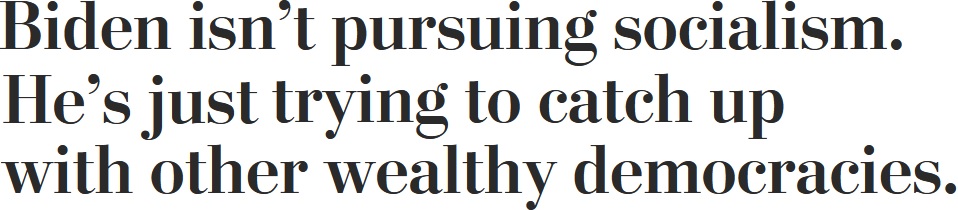


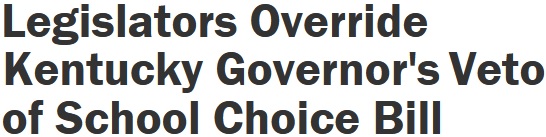


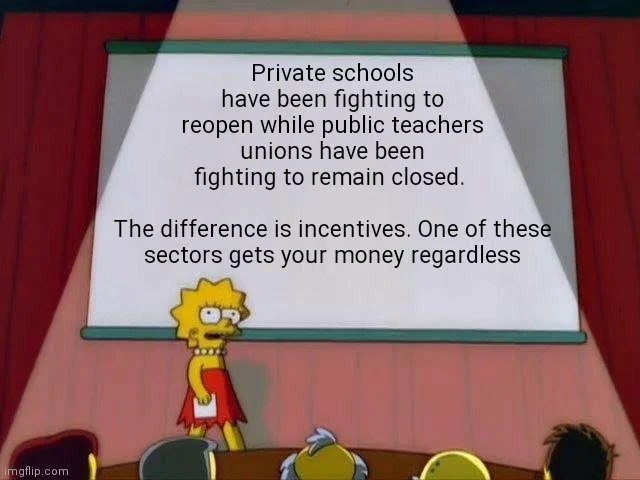



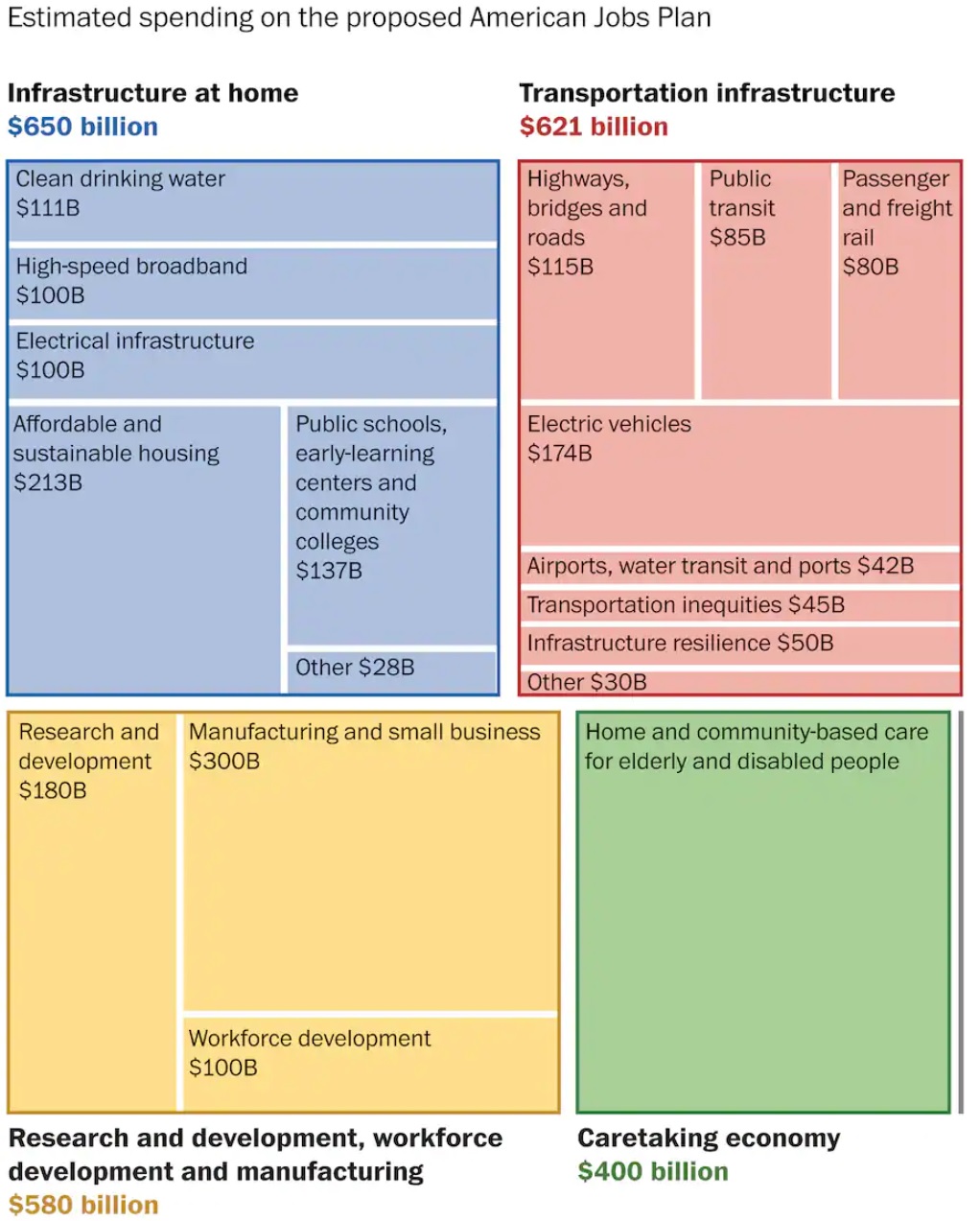

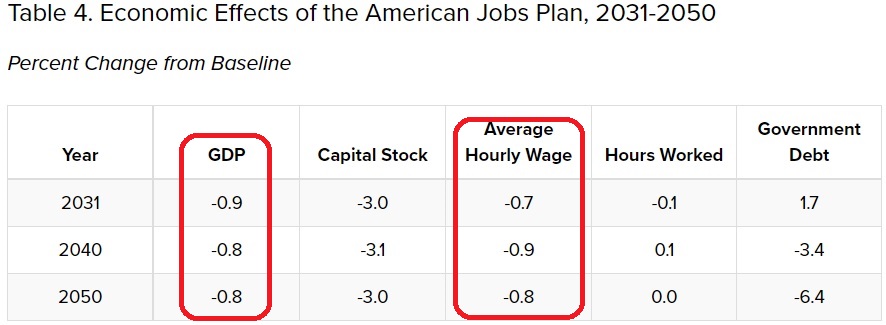
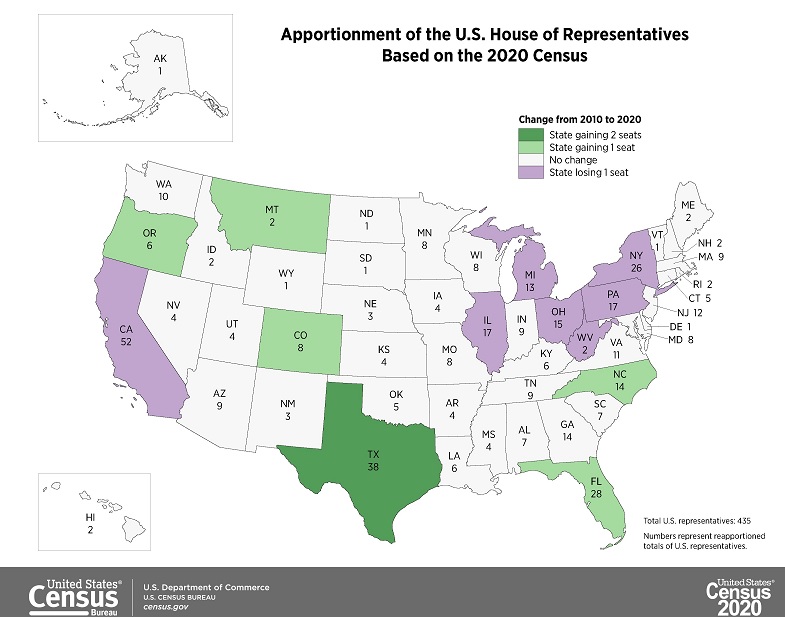

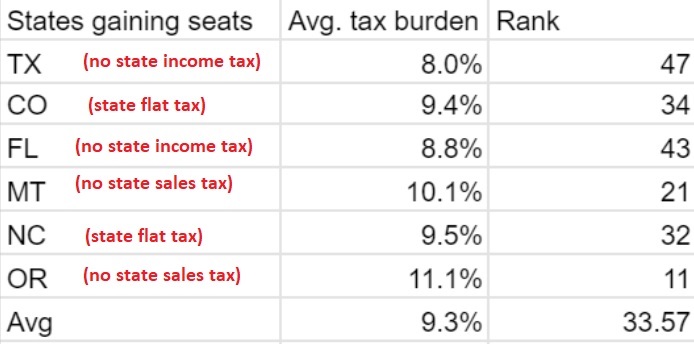


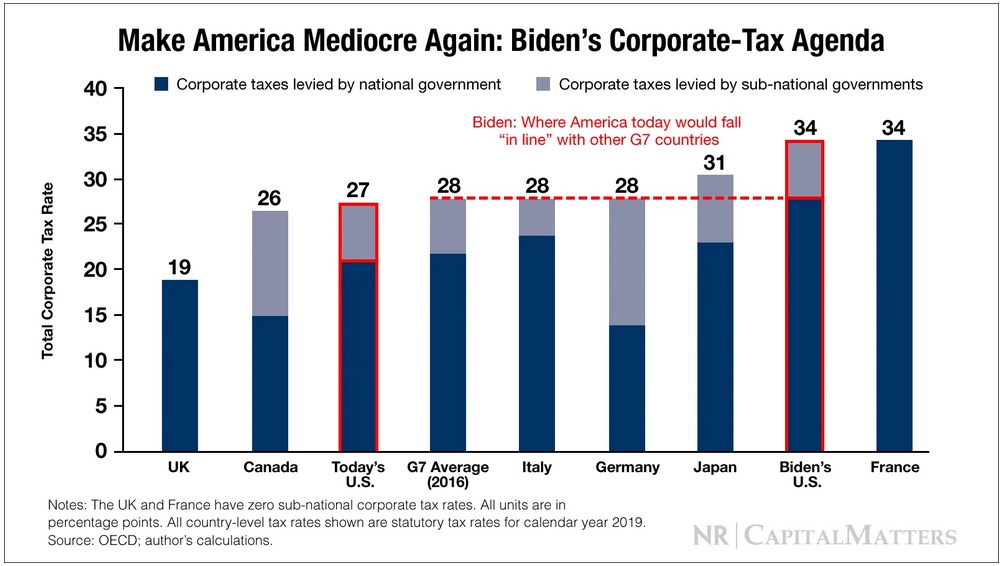


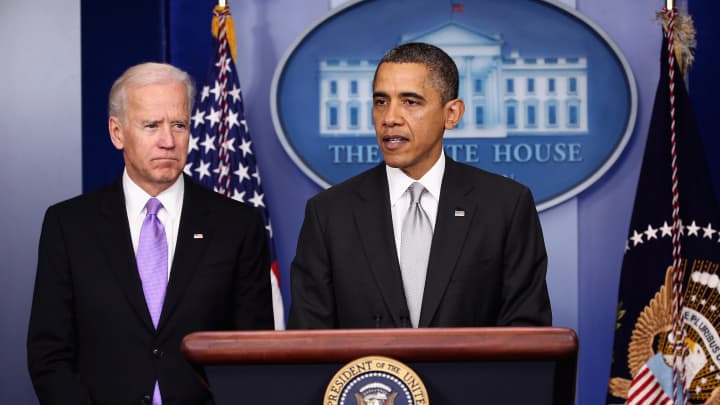 President Barack Obama announces the creation of an interagency task force for guns as as Vice President Joseph Biden listens on.Getty Images




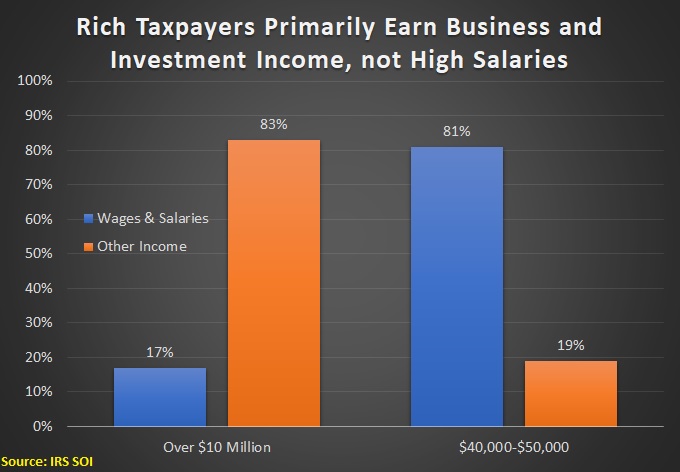
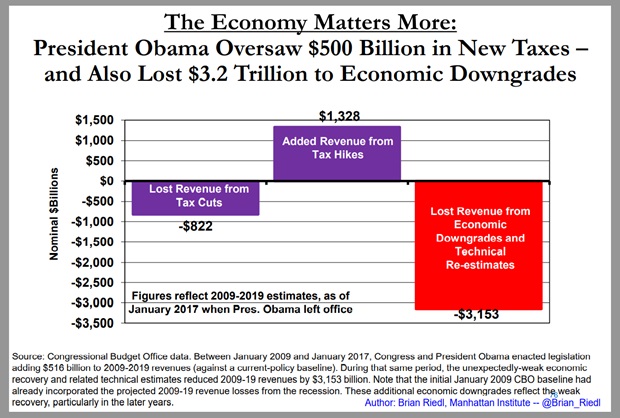


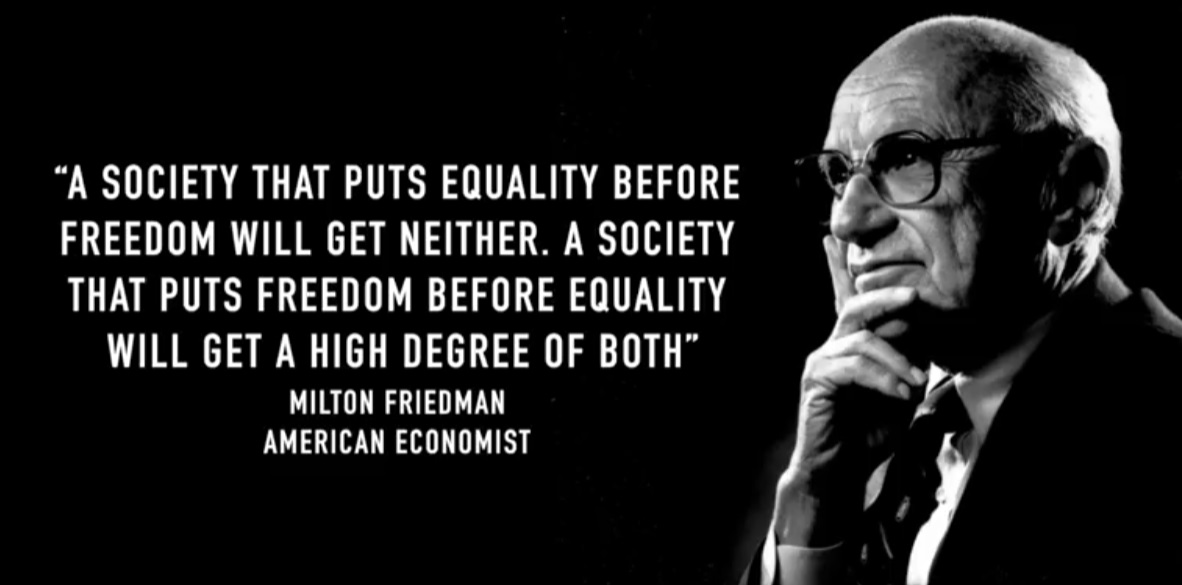



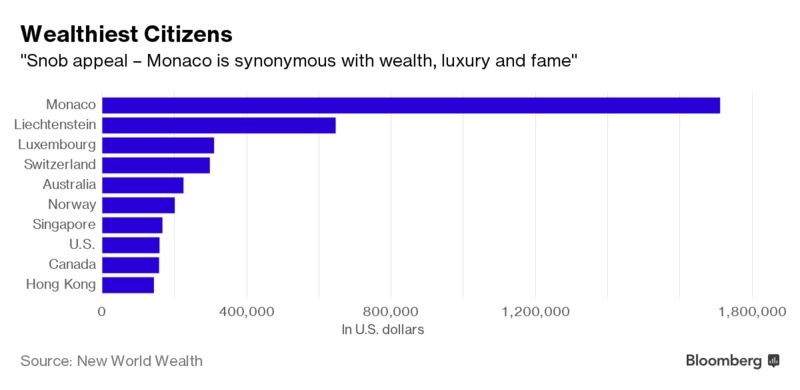








:no_upscale()/cdn.vox-cdn.com/uploads/chorus_image/image/54950235/IMG_0039.0.jpeg)