Given some changes that have since occurred, it’s time for a new version. The first two columns are self explanatory and columns 3 and 5 are based on whether the top tax rate on households is less than 5 percent (“Low Rate”) or more than 8 percent (“Class Warfare”).
Column 4, needless to say, is for states where the top tax rate in between 5-8 percent.
The good news is that the above table is better than the one I created in 2018. Thanks to tax competition between states, there have been some improvements in tax policy.
I recently wrote about Louisiana’s shift in the right direction.
Now we have some good news from the Tarheel state. The Wall Street Journalopined today about a new tax reform in North Carolina.
The deal phases out the state’s 2.5% corporate income tax between 2025 and 2031. …The deal also cuts the state’s flat 5.25% personal income tax rate in stages to 3.99% by July 1, 2027. …North Carolina ranks tenth on the Tax Foundation’s 2021 state business tax climate index, and these reforms will make it even more competitive. …North Carolina has an unreserved cash balance of $8.55 billion, and legislators are wisely returning some of it to taxpayers.
Ten days ago, I shared some data and evidence illustrating how redistribution programs result in high implicit tax rates and thus discourage low-income people from climbing the economic ladder.
Or why work at all if the governments provides enough goodies?
But don’t ask such questions if you’re in the same room as Helaine Olen of the Washington Post. She is very upset that some people think welfare payments discourage work.
It’s a dangerous myth, this idea that government help causes some people to just loaf off. It’s also untrue.Reminder: Before the pandemic, most working-age people receiving benefits like food stamps worked. They just didn’t earn enough money.…the temporary child tax credit signed into law this year by President Biden demonstrates the opposite. It is an extraordinary success. Almost 90 percent of families with children under age 18 are eligible to receive a monthly check from the federal government through the end of the year. …Many other developed nations offer almost all residents a child allowance of some sort.
If you read the entire column, you’ll notice that she provides very little evidence, particularly considering her very bold assertion that a negative link between redistribution and labor supply is “a dangerous myth.”
Yet we know from the experience of welfare reform in the 1990s that work requirements did boost labor supply.
And she wants us to believe that everyone will continue to work, even if they can get $3000-plus for each kid, along with all the other goodies that are provided by Uncle Sam (often topped upby state governments).
For what it’s worth, I think she admits her real agenda toward the end of her column.
…an argument can be made that the children of the irresponsible deserve more support from us, not less. Children can’t push their parents to get with the work-and-education program. As a result, you’re not “helping” children if you insist on financially punishing their parents for not making an “effort.” …human infrastructure matters too.
In other words, Ms. Olen seems to share Rep. Ocasio-Cortez’s view that money should be given to people “unwilling to work.”
Which is how some of our friends actually view the world. They think there is a right to other people’s money. Which is why they support big handouts, including so-called basic income.
The bottom line is that Biden’s per-child handouts and other expansions of the welfare state clearly would make work less attractive for some people.
The late Milton Friedman discusses economics and otherwise with Charlie Rose.
_________________________________________
Milton Friedman: Life and ideas – Part 01
Milton Friedman: Life and ideas
A brief biography of Milton Friedman
_____________________________________
Stossel – “Free to Choose” (Milton Friedman) 1/6
6-10-10. pt.1 of 6. Stossel discusses Milton Friedman’s 1980 book, “Free to Choose”, which was smuggled in and read widely in Eastern Europe during the Cold War by many countries under Soviet rule. Read and admired the world over by the likes of Margaret Thatcher and Ronald Reagan, this book served as the inspiration for many of the Soviet sattellite countries’ economies once they achieved freedom after the fall of the Soviet Union.
_________________________________________
I first saw Thomas Sowell on the show FREE TO CHOOSE on the debate team that Milton Friedman chose. I suggest checking out these episodes of Milton Friedman’s film series FREE TO CHOOSE: “The Failure of Socialism” and “What is wrong with our schools?” and “Created Equal” and From Cradle to Grave, and – Power of the Market. Below he is the subject of a fine article that shows how our government is wasting so much money on the welfare trap. We should stop trapping people in welfare and let the free market offer them a chance to do better. Obviously what we are doing now is not working. The best way to destroy the welfare trap is to put in Milton Friedman’s negative income tax. Of course, all welfare programs should be eliminated at the same time.
Political cartoonists like Michael Ramirez and Chuck Asay are effective because they convey so much with images.
But we need more than clever cartoons if we’re going to educate the general population about how government harms the economy and undermines freedom.
He just turned 83, and let’s hope he has another 20 years of columns to write
And that’s why Thomas Sowell is so invaluable. He’s one of the nation’s top economic thinkers, but he also writes for mass audiences and his columns are masterful combinations of logic and persuasion.
His latest column about poverty is a good example. In this first excerpt, he succinctly explains that official poverty is not the same as destitution.
“Poverty” once had some concrete meaning — not enough food to eat or not enough clothing or shelter to protect you from the elements, for example. Today it means whatever the government bureaucrats, who set up the statistical criteria, choose to make it mean. And they have every incentive to define poverty in a way that includes enough people to justify welfare state spending. Most Americans with incomes below the official poverty level have air-conditioning, television, own a motor vehicle and, far from being hungry, are more likely than other Americans to be overweight. But an arbitrary definition of words and numbers gives them access to the taxpayers’ money.
He then makes a very important point about economic incentives.
Even when they have the potential to become productive members of society, the loss of welfare state benefits if they try to do so is an implicit “tax” on what they would earn that often exceeds the explicit tax on a millionaire. If increasing your income by $10,000 would cause you to lose $15,000 in government benefits, would you do it? In short, the political left’s welfare state makes poverty more comfortable, while penalizing attempts to rise out of poverty.
Since columnists are limited to about 800 words, Sowell doesn’t have leeway to give details, but his explanation of how the government traps people in poverty is the rhetorical version of this amazing chart.
He concludes with some powerful observation about who really benefits from the welfare state.
…the left’s agenda is a disservice to [the poor], as well as to society. …The agenda of the left — promoting envy and a sense of grievance, while making loud demands for “rights” to what other people have produced — is a pattern that has been widespread in countries around the world. This agenda has seldom lifted the poor out of poverty. But it has lifted the left to positions of power and self-aggrandizement, while they promote policies with socially counterproductive results.
Related posts:Milton Friedman’s “Free to Choose” film transcripts and videos here on http://www.thedailyhatch.org
I have many posts on my blog that include both the transcript and videos of Milton Friedman’s film series “Free to Choose” and here are the episodes that I have posted.
_____________
__________________________
Thank you so much for your time. I know how valuable it is. I also appreciate the fine family that you have and your commitment as a father and a husband.
Sincerely,
Everette Hatcher III, 13900 Cottontail Lane, Alexander, AR 72002, ph 501-920-5733,
Milton Friedman The Power of the Market 5-5 How can we have personal freedom without economic freedom? That is why I don’t understand why socialists who value individual freedoms want to take away our economic freedoms. I wanted to share this info below with you from Milton Friedman who has influenced me greatly over the […]
Milton Friedman The Power of the Market 4-5 How can we have personal freedom without economic freedom? That is why I don’t understand why socialists who value individual freedoms want to take away our economic freedoms. I wanted to share this info below with you from Milton Friedman who has influenced me greatly over the […]
Milton Friedman The Power of the Market 3-5 How can we have personal freedom without economic freedom? That is why I don’t understand why socialists who value individual freedoms want to take away our economic freedoms. I wanted to share this info below with you from Milton Friedman who has influenced me greatly over the […]
Milton Friedman The Power of the Market 2-5 How can we have personal freedom without economic freedom? That is why I don’t understand why socialists who value individual freedoms want to take away our economic freedoms. I wanted to share this info below with you from Milton Friedman who has influenced me greatly over the […]
Milton Friedman The Power of the Market 1-5 How can we have personal freedom without economic freedom? That is why I don’t understand why socialists who value individual freedoms want to take away our economic freedoms. I wanted to share this info below with you from Milton Friedman who has influenced me greatly over the […]
Milton Friedman: Free To Choose – The Failure Of Socialism With Ronald Reagan (Full) Published on Mar 19, 2012 by NoNationalityNeeded Milton Friedman’s writings affected me greatly when I first discovered them and I wanted to share with you. Abstract: Ronald Reagan introduces this program, and traces a line from Adam Smith’s “The Wealth of […]
Milton Friedman: Free To Choose – The Failure Of Socialism With Ronald Reagan (Full) Published on Mar 19, 2012 by NoNationalityNeeded Milton Friedman’s writings affected me greatly when I first discovered them and I wanted to share with you. Abstract: Ronald Reagan introduces this program, and traces a line from Adam Smith’s “The Wealth of […]
Milton Friedman: Free To Choose – The Failure Of Socialism With Ronald Reagan (Full) Published on Mar 19, 2012 by NoNationalityNeeded Milton Friedman’s writings affected me greatly when I first discovered them and I wanted to share with you. Abstract: Ronald Reagan introduces this program, and traces a line from Adam Smith’s “The Wealth of […]
Milton Friedman: Free To Choose – The Failure Of Socialism With Ronald Reagan (Full) Published on Mar 19, 2012 by NoNationalityNeeded Milton Friedman’s writings affected me greatly when I first discovered them and I wanted to share with you. Abstract: Ronald Reagan introduces this program, and traces a line from Adam Smith’s “The Wealth of […]
Milton Friedman: Free To Choose – The Failure Of Socialism With Ronald Reagan (Full) Published on Mar 19, 2012 by NoNationalityNeeded Milton Friedman’s writings affected me greatly when I first discovered them and I wanted to share with you. We must not head down the path of socialism like Greece has done. Abstract: Ronald Reagan […]
TEMIN: We don’t think the big capital arose before the government did? VON HOFFMAN: Listen, what are we doing here? I mean __ defending big government is like defending death and taxes. When was the last time you met anybody that was in favor of big government? FRIEDMAN: Today, today I met Bob Lekachman, I […]
Richard Dawkins c/o Richard Dawkins Foundation, Washington, DC 20005
Dear Mr. Dawkins,
Page 395 in THE GOD DELUSION:“The faithful are encouraged to profess belief, whether they are convinced by it or not”
—-
Let me respond by providing you a portion of a letter I wrote to the pro-life atheist Arif Ahmed who I have had the privilege of corresponding with in the past:
Dr. Arif Ahmed, University of Cambridge, Philosophy Dept,
February 23, 2015
Dear Dr. Ahmed,
I just finished reading the online addition of the book Darwin, Francis ed. 1892. Charles Darwin: his life told in an autobiographical chapter, and in a selected series of his published letters [abridged edition]. London: John Murray. There are several points that Charles Darwin makes in this book that were very wise, honest, logical, shocking and some that were not so wise. The Christian Philosopher Francis Schaeffer once said of Darwin’s writings, “Darwin in his autobiography and in his letters showed that all through his life he never really came to a quietness concerning the possibility that chance really explained the situation of the biological world. You will find there is much material on this [from Darwin] extended over many many years that constantly he was wrestling with this problem.”
Here is a quote I ran across recently from you: There are other examples in life where committing oneself means staking your life like flying on a plane to France tomorrow. That is committing your life to something or taking a drug which is comitting your life to something. These are precisely not cases where you should make a leap in the absence of evidence. These are the cases we demand evidence the most strongly and it seems to me that religious belief if it is genuine is the case then that demand is the same and even raised to higher degree.In this letter I want to discuss this issue of faith and evidence and your statement above is a good starting point on this very issue. I AGREE THAT ONE SHOULD NOT “MAKE A LEAP IN THE ABSENCE OF EVIDENCE.” Francis Schaeffer has a wonderful story that he tells on this same subject and I wanted to share with you later in this letter.Many secularists have claimed that Christians do not even have the right to have a place at the table. However, the vast majority of great scientists of the last 500 years did hold the view that we live in an open system and they did not hold the view of the uniformity of natural causes in a closed system. Recently I read the article ANSWERING THE NEW ATHEISTS, by KerbyAnderson, Sunday, January 30 th, 2011, and that article notes:
Are science and Christianity at odds with one another? Certainly there have been times in the past when that has been the case. But to only focus on those conflicts is to miss the larger point that modern science grew out of a Christian world view. In a previous radio program based upon the book Origin Science by Dr. Norman Geisler and me, I explain Christianity’s contribution to the rise of modern science.{27}
Alister McGrath challenges this idea that science and religion are in conflict with one another. He says, “Once upon a time, back in the second half of the nineteenth century, it was certainly possible to believe that science and religion were permanently at war. . . . This is now seen as a hopelessly outmoded historical stereotype that scholarship has totally discredited.”{28}
….Do religious people have a blind faith? Certainly some religious people exercise blind faith. But is this true of all religions, including Christianity? Of course not. The enormous number of Christian books on topics ranging from apologetics to theology demonstrate that the Christian faith is based upon evidence.
But we might turn the question around on the New Atheists. You say that religious faith is not based upon evidence. What is your evidence for that broad, sweeping statement? Where is the evidence for your belief that faith is blind?
Orthodox Christianity has always emphasized that faith and reason go together. Biblical faith is based upon historical evidence. It is not belief in spite of the evidence, but it is belief because of the evidence.
The Bible, for example, says that Jesus appeared to the disciples and provided “many convincing proofs, appearing to them over a period of forty days and speaking of the things concerning the kingdom of God” (Acts 1:3).
Peter appealed to evidence and to eyewitnesses when he preached about Jesus as “a man attested to you by God with mighty works and wonders and signs that God did through him in your midst, as you yourselves know” (Acts 2:22).
The Christian faith is not a blind faith. It is a faith based upon evidence. In fact, some authors contend that it takes more faith to be an atheist than to believe in God.{7}
Suppose we are climbing in the Alps and are very high on the bare rock, and suddenly the fog rolls in. The guide turns to us and says that the ice is forming and that there is no hope; before morning we will all freeze to death here on the shoulder of the mountain. Simply to keep warm the guide keeps us moving in the dense fog further out on the shoulder until none of us have any idea where we are. After an hour or so, someone says to the guide, “Suppose I dropped and hit a ledge ten feet down in the fog. What would happen then?” The guide would say that you might make it until the morning and thus live. So, with absolutely no knowledge or any reason to support his action, one of the group hangs and drops into the fog. This would be one kind of faith, a leap of faith.
Suppose, however, after we have worked out on the shoulder in the midst of the fog and the growing ice on the rock, we had stopped and we heard a voice which said, “You cannot see me, but I know exactly where you are from your voices. I am on another ridge. I have lived in these mountains, man and boy, for over sixty years and I know every foot of them. I assure you that ten feet below you there is a ledge. If you hang and drop, you can make it through the night and I will get you in the morning.
I would not hang and drop at once, but would ask questions to try to ascertain if the man knew what he was talking about and it he was not my enemy. In the Alps, for example, I would ask him his name. If the name he gave me was the name of a family from that part of the mountains, it would count a great deal to me. In the Swiss Alps there are certain family names that indicate mountain families of that area. In my desperate situation, even though time would be running out, I would ask him what to me would be the adequate and sufficient questions, and when I became convinced by his answers, then I would hang and drop.
___________
What kind of evidence is today that would convince you that God exists and the Bible is true? I submit to you that Biblical Archaeology is a field that has advanced tremendously in the last few decades and I propose you look in that area. Did you know that Charles Darwin was looking for evidence that confirmed the Bible’s accuracy back in the 19th century and this is one of the exact areas that he mentioned.
“But I was very unwilling to give up my belief; I feel sure of this, for I can well remember often and often inventing day-dreams of old letters between distinguished Romans, and manuscripts being discovered at Pompeii or elsewhere, which confirmed in the most striking manner all that was written in the Gospels.
Francis Schaeffer commented:
This is very sad. He lies on his bunk and the Beagle tosses and turns and he makes daydreams, and his dreams and hopes are that someone would find in Pompeii or some place like this, an old manuscript by a distinguished Roman that would put his stamp of authority on it, which would be able to show that Christ existed. This is undoubtedly what he is talking about. Darwin gave up this hope with great difficulty. I think he didn’t want to come to the position where his accepted presuppositions were driving him. He didn’t want to give it up, just as an older man he understood where it would lead and “man can do his duty.” Instinctively this of brains understood where this whole thing was going to eventually go…
SINCE CHARLES DARWIN’S DEATH WE NOW HAVE LOTS OF HISTORICAL RECORDS AND MUCH EVIDENCE FROM THE FIELD OF ARCHAEOLOGY THAT SHOW THE BIBLE IS HISTORICALLY ACCURATE.
AFTER ADEQUATE AND SUFFICIENT QUESTIONS OF YOURS BEING ANSWERED THEN YOU CAN BECOME CONVINCED AS SCHAEFFER’S STORY POINTS OUT.
This might interest you that my good friend in Little Rock Craig Carney has an uncle named Warren Carney who lives in Dayton, Tennessee, and Warren was born in 1917 and he is last living witness of the Scopes Monkey trial. His father took him to the trial every day since they lived in Dayton and it was the biggest happening in the town’s history. Also I attended the funeral of Dr. Robert G. Lee (1886-1978) at Bellevue Baptist in Memphis and he is the minister who presided over William Jennings Bryan’s funeral in 1925. Of course, William Jennings Bryan took on Clarence Darrow at that famous trial. Below is an excerpt from the CD I sent you from Adrian Rogers on DARWINISM and it mentions some evidence presented by evolutionists in favor of Evolution. DOES THIS EVIDENCE FROM EVOLUTIONISTS EVEN COMPARE TO THAT I HAVE PUT FORTH CONCERNING THE ACCURACY OF THE BIBLE?
ADRIAN ROGERS FROM HIS MESSAGE ON “DARWINISM”:
The evolutionist can’t explain the steadfastness, the fixity, of the species. Now, what does the Bible say about the species? Well, Genesis 1, verses 11–12: “And God said, Let the earth bring forth grass, the herb yielding seed, and the fruit tree yielding fruit”—now, listen to this phrase—“after his kind, whose seed is in itself, upon the earth: and it was so. And the earth brought forth grass, and herb yielding seed after his kind, and the tree yielding fruit, whose seed was in itself, after his kind: and God saw that it was good” (Genesis 1:11–12). You continue this passage. Ten times God uses this phrase, “after his kind”—“after his kind,” “after his kind”—because like produces like.
Now, the evolutionist must believe that reproduction does not always come kind after kind. There has to be a mutation—or a transmutation, rather—between species—that you can become a protozoa; and then you can become an un-segmented worm; and then you may become a fish; and then you may become a reptile, and move from one species to another. Now, all of us know there is such a thing as mutation. If you have roses, you can get various varieties of roses. If you have dogs—canines—you can have everything from a poodle to a Great Dane, but they’re still canines; they’re still dogs. The scientists have bombarded fruit flies with gamma rays or some kind of rays to cause mutations, and they get all kinds of strange fruit flies. But, they never get June bugs; they’re still fruit flies.You see, there are variations and adaptations that God has built, but you never have one species turning to another species. You never have a cat turn into a dog that turns to a cow that turns to a horse. You just don’t have that.
Now, men have tried to do that. I heard, one time, about a marine biologist who tried to take one of these beautiful shell creatures called an abalone and cross it with a crocodile. What he got was a crock of baloney. And, anytime anybody tries this, that’s exactly what they come up with. Now, you say, “Pastor Rogers, why are you so certain about the fixity of the species, the steadfastness of the species?” Number one: because the Bible teaches it, and that’s enough for me. But, let’s move beyond that. We’re not talking about theological reasons now; we’re talking about logical reasons. Friend, if this is true, you would expect to find transitional forms in the fossils. There are billions of fossils; there are trillions of fossils— multiplied fossils. In not one instance—are you listening?—in not one instance do we find a transitional form. None—there are none.
Now, there are some people who will attempt to show you a proof of these, but I can tell you that eminent scientists have proven that these are not true. You would think that if man has evolved for millions and billions of years, and that life has evolved from one-celled life, some amoeba, to what we have today, that, in the fossils in the earth, we would find these transitional forms. But, they’re not there. The people talking about finding the missing link… Friend, the whole chain is missing—the whole chain is missing. Now, you ask them to prove it—that that is not true; and, they cannot come up with evidence. Well, you say, “But Pastor, they seem to have the proof. What about these ape-men? What about these people who lived in caves—these cave dwellers?” We have cave dwellers today. People have lived in caves through the years. “But, what about these things that we see in the museum? What about these creatures in this Time-Life advertisement?” Those are the products of imagination, and artistry, and plaster of Paris.
Some years ago—in 1925, I believe it was—in Tennessee—Dayton, Tennessee— we had something called The Monkey Trial. Clarence Darrow and William Jennings Bryan were in a court case. A teacher had taught evolution in school, and there were people who sued that evolution should not be taught in school. Now it is reversed— you’re sued if you don’t teach evolution in school. But, there was a great debate, and Clarence Darrow, who was a very brilliant lawyer, was presenting evidence for evolution. Part of the evidence that Clarence Darrowpresented was Nebraska Man, and he had all of these pictures.
Now, what had happened is there was a man named Harold Cook. And, Harold Cook had found a piece of evidence, and out of that piece of evidence the artist had created this half-man, half-ape—this Nebraska Man. Well, what was it that Clarence Darrow used as evidence that Harold Cook had discovered? It was a tooth. I didn’t say, “teeth”; I said, “tooth.” He had a tooth; and, with that tooth, he had devised a race—male and female.
I was interested in reading, in my research for this message, where a creationist went to the University of Nebraska, where they have the campus museum. And, since he’s named Nebraska Man, they have the replica of Nebraska Man there, in the museum. So, this creationist went in there and said, “I want to see Nebraska Man.” So, they took him in there, and in a case were the skull and the skeleton of Nebraska Man. And, the creationist said, “Are these the actual bones of Nebraska Man?” “Oh,” he said, “no, they’re not the actual bones.” “Well,” the man said, “where could I see the actual bones?” “Oh,” he said, “well, we don’t have the bones. These are plaster of Paris casts of Nebraska Man.” “Well, you must have had the bones to make the cast.” The man in charge seemed embarrassed. “We don’t have any bones. All we have is a tooth.” That’s Nebraska Man. And, what they had done was to take a tooth, take some imagination, take an artist, take plaster of Paris, take some paste and some hair, and glue it on him—make a male, make a female, make a civilization called Nebraska Man out of one—one—tooth.
What about the Piltdown man? I, in college, was introduced to the Piltdown man. Where’d we get his name? Well, Charles Dawson, in Piltdown, England, found in a gravel pit a piece of a jaw, two molar teeth, and a piece of a skull. For 50 years, this was known as “the Piltdown man,” but it was later shown to be a hoax. And, The Reader’s Digest, in 1958, said this—and I quote: “The great Piltdown hoax was an ape only 50 years old. Its teeth had been filed down and artificially colored.” Well, we laugh at that, and we say anybody could have a joke pulled on him. Yes, but friend, the scientists took this and put it in the museum for 50 years. Do you see how anxious man is to make a monkey of himself? I mean, it was a hoax.
Is your faith in the evidence that supports the theory of evolution comparable to the faith I have in the Word of God being true and God creating the world? Recently I ran across the term “Implicit Faith” and I thought of your view that evolution must be true and we have to be living in a closed system. When I read the book Charles Darwin: his life told in an autobiographical chapter, and in a selected series of his published letters, I also read a commentary on it by Francis Schaeffer. I wanted to both quote some of Charles Darwin’s own words to you and then include the comments of Francis Schaeffer on those words. I have also enclosed a CD with two messages from Adrian Rogers and Bill Elliff concerning Darwinism.
“By further reflecting that the clearest evidence would be requisite to make any sane man believe in the miracles by which Christianity is supported,—and that the more we know of the fixed laws of nature the more incredible do miracles become,—that the men at that time were ignorant and credulous to a degree almost incomprehensible by us,”
Francis Schaeffer commented:
He now says who can accept the miracles? But notice again this is an argument from presuppositions, because what this means is that he has accepted the uniformity of natural causes in a closed system which I say is the basic presupposition of modern man. So therefore since he has accepted a closed system he assumes there is no miracle, but that doesn’t mean he has any evidence that there were no miracles. It doesn’t mean he is at ease as a man because he has ruled these things out. Darwin is a man in tension. Does the uniformity of natural causes in a closed system explain the wonder of the universe and secondly the mannishness of man? He himself feels caught on these two great hooks of the real world. In others I would say, “DARWIN your presuppositions don’t even satisfy you. You rule miracles on the basis of your presuppositions but your belief of the uniformity of natural causes in a closed system does not even satisfy you.” Darwin went to his death unsatisfied and yet he was forced to give up his own presuppositions but he never gave them up. It seems to me you have the old man Darwin perspiring in his tension that you can only think of Paul’s conclusion in Romans 1, that when men deliberately turn away from the truth that is there, the external universe and the mannishness of man, God gives them up to an unsound mind. If there even was anybody that ever demonstrated this it was Darwin himself at the end of his life. It is a position that Darwin holds with implicit faith. You must understand what the term IMPLICIT FAITH means. In the old Roman Catholic Church when someone who became a Roman Catholic they had to promise implicit faith. That meant that you not only had to believe everything that Roman Catholic Church taught then but also everything it would teach in the future. It seems to me this is the kind of faith that these people have in the uniformity of natural causes in a closed system and they have accepted it no matter what it leads them into.
There was an amazing man by the name of H.J.Blackham(1903-2009) and he was the former president of the BRITISH HUMANIST ASSOCIATION. Francis Schaeffer and Dr. C. Everett Koop quoted him in their book WHATEVER HAPPENED TO THE HUMAN RACE?
The humanist H. J. Blackham has expressed this with a dramatic illustration:
On humanist assumptions, life leads to nothing, and every pretense that it does not is a deceit.79
One does not have to be highly educated to understand this. It follows directly from the starting point of the humanists’ position, namely, that everything is just matter. That is, that which has existed forever and ever is only some form of matter or energy, and everything in our world now is this and only this in a more or less complex form.
_______________
To sum up Schaeffer is saying, “If man has been kicked up out of that which is only impersonal by chance , then those things that make him man-hope of purpose and significance, love, motions of morality and rationality, beauty and verbal communication-are ultimately unfulfillable and thus meaningless.” (Francis Schaeffer in THE GOD WHO IS THERE)
IF WE ARE LEFT WITH JUST THE MACHINE THEN WHAT IS THE FINAL CONCLUSION IF THERE WAS NO PERSONAL GOD THAT CREATED US? I sent you a CD that starts off with the song DUST IN THE WIND by Kerry Livgren of the group KANSAS which was a hit song in 1978 when it rose to #6 on the charts because so many people connected with the message of the song. It included these words, “All we do, crumbles to the ground though we refuse to see, Dust in the Wind, All we are is dust in the wind, Don’t hang on, Nothing lasts forever but the Earth and Sky, It slips away, And all your money won’t another minute buy.”
Kerry Livgren himself said that he wrote the song because he saw where man was without a personal God in the picture. Solomon pointed out in the Book of Ecclesiastes that those who believe that God doesn’t exist must accept three things. FIRST, death is the end and SECOND, chance and time are the only guiding forces in this life. FINALLY, power reigns in this life and the scales are never balanced. The Christian can face death and also confront the world knowing that it is not determined by chance and time alone and finally there is a judge who will balance the scales.
Both Kerry Livgren and the bass player Dave Hope of Kansas became Christians eventually. Kerry Livgrenfirst tried Eastern Religions and Dave Hope had to come out of a heavy drug addiction. I was shocked and elated to see their personal testimony on The 700 Club in 1981 and that same interview can be seen on You Tube today. Livgren lives in Topeka, Kansas today where he teaches “Diggers,” a Sunday school class at Topeka Bible Church. DAVE HOPE is the head of Worship, Evangelism and Outreach at Immanuel Anglican Church in Destin, Florida.
Francis and Edith Schaeffer at their home in Switzerland with some visiting friends
__
Schaeffer with his wife Edith in Switzerland.
Richard Dawkins and John Lennox
_
_
_
Dawkins, Hitchens, Dennett, Harris
Canary Islands 2014: Harold Kroto and Richard Dawkins
__
Francis Schaeffer pictured below:
—
The Basis of Human Dignity by Francis Schaeffer
Richard Dawkins, founder of the Richard Dawkins Foundation for Reason and Science. Credit: Don Arnold Getty Images
—
Francis Schaeffer in 1984
Christian Manifesto by Francis Schaeffer
Francis Schaeffer in 1982
—-
Whatever Happened to the Human Race? Episode 1
—
—
–
Garik Israelian, Stephen Hawking, Alexey Leonov, Brian May, Richard Dawkins and Harry Kroto
—-
—-
—-
—-
Featured artist is George Condo
George Condo ’s artwork is populated by characters. The characters have bulging eyes, bulbous cheeks. Drawing on vastly diverse contemporary painting practices – like Pablo Picasso, Diego Velázquez, Henri Matisse, and Cy Twombly – Condo absorbs art-historical sources. George Condo creates a pictorial language. Some say the language is characteristically his own, the others do not agree. George Condo calls his surrealistic style ‘psychological cubism’. He is exploiting human imperfections or unseen aspects of humanity. George Condo ’s abstract works, like Internal Space (2005) explore the furthest extremes of the human psyche.
On November 21, 2014 I received a letter from Nobel Laureate Harry Kroto and it said: …Please click on this URL http://vimeo.com/26991975 and you will hear what far smarter people than I have to say on this matter. I agree with them. Harry Kroto _________________ Below you have picture of 1996 Chemistry Nobel Prize Winner […]
The Beatles were “inspired by the musique concrète of German composer and early electronic music pioneer Karlheinz Stockhausen…” as SCOTT THILL has asserted. Francis Schaeffer noted that ideas of “Non-resolution” and “Fragmentation” came down German and French streams with the influence of Beethoven’s last Quartets and then the influence of Debussy and later Schoenberg’s non-resolution which is in total contrast […]
_______ On November 21, 2014 I received a letter from Nobel Laureate Harry Kroto and it said: …Please click on this URL http://vimeo.com/26991975 and you will hear what far smarter people than I have to say on this matter. I agree with them. Harry Kroto _________________ Below you have picture of 1996 Chemistry Nobel Prize […]
On November 21, 2014 I received a letter from Nobel Laureate Harry Kroto and it said: …Please click on this URL http://vimeo.com/26991975 and you will hear what far smarter people than I have to say on this matter. I agree with them. Harry Kroto ____________________ Below you have picture of 1996 Chemistry Nobel Prize Winner Dr. […]
Indeed, I have an entire collection of socialism humor (along with jabs at communism, its authoritarian cousin).
For what it’s worth, I think the meme should have targeted Bernie Sanders (a true believer) rather than Joe Biden (a run-of-the-mill careerist politician).
Speaking of Sanders, he and AOC have a starring role in this joke.
Sticking with that theme, the Babylon Beesatirically explainsthat our socialist friends are incapable of learning from real-world experience. And not just in the field of economics.
Local socialist man Brandon Paul was doing some gardening in his front yard this morning when he had a really good idea: to step on a rake.He’d previously stepped on 79 other rakes, each time resulting in the gardening implement smacking him in the face. But those times weren’t “real stepping on a rake,” he insisted. …Paul stepped on the rake, and sure enough, the handle came flying up and conked him on the face. …At publishing time, Paul had decided he would try democratic stepping on a rake, where his friends all vote on whether he steps on the rake, and then he steps on it and smacks his face.
Ouch, figuratively and literally.
Socialist nations are famous for empty shelves in supermarkets. As this next meme illustrates, they also have empty bookshelves.
Some of my left-leaning readers are probably saying, “Wait, what about Denmark?” And my response is, “Well, what about it?”
As per my tradition, I’ve saved my favorite example for the conclusion.
What makes this final meme both amusing and unfortunate is that it does capture the inherent problem in systems where the link between effort and reward is weakened or broken.
Washington Post congressional reporter Erica Werner is reporting, more or less live on Twitter, about a conference call among House Democrats discussing why the 2020 elections did not go anywhere near as well as they expected. Apparently Virginia congresswoman Abigail Spanberger, who is narrowly ahead in her race, is quite angry with the more outspoken members of the progressive wing of her party:
Spanberger on the Dem caucus call: We lost races we shouldn’t have lost. Defund police almost cost me my race bc of an attack ad. Don’t say socialism ever again. Need to get back to basics. (Is yelling.)
It is rather refreshing to hear a congressional Democrat vehemently opposed to Democratic candidates touting socialism, even if it is just for purposes of campaigning. Maybe in the near future, we can see elected Democrats proclaiming, “America will never be a socialist country.”
This might make it tougher for Republicans to win races against Democrats, but we’re all better off if enthusiasm for socialism returns to the graveyard of political ideas.
Around 150 violent demonstrators participated in a march called “Capitalism is Scary” in Portland, Oregon, Saturday night. Pictured: Police detain passengers in a mutual aid van during an Indigenous Peoples Day of Rage protest Oct. 11, 2020, in Portland. Protesters tore down statues of two U.S. presidents and broke windows of downtown businesses before police intervened. (Photo: Nathan Howard/ Stringer/Getty Images)
Violent demonstrators smashed windows and police declared a riot during an anti-capitalist march in Portland Saturday night.
Around 150 violent demonstrators participated in a march called “Capitalism is Scary,” according to The Oregonian.
Rioters destroyed the windows of 10 separate businesses, including multiple phone stores, a coffee shop, a computer storefront, a hotel, a bank, a pair of realty offices, and a restaurant with patrons inside, a report from the Portland Police Bureau revealed.
Individuals donning black clothing were seen on video attempting to destroy a local business’ storefront, as the sound of glass shattering was audible, according to footage obtained by the local outlet.
Law enforcement declared the march a riot and demanded members of the group vacate the area or be exposed to non-lethal munitions, the Portland Police Bureau wrote.
“This is the Portland Police Bureau,” officers announced via a loudspeaker, according to the department’s report. “To those marching on NE Martin Luther King Jr Blvd: This has been declared a riot. Members of this group have been observed damaging multiple businesses along NE Martin Luther King Jr. Blvd.”
“All persons must immediately leave the area. Failure to adhere to this order may subject you to arrest, citation, or crowd control agents, including, but not limited to, tear gas and/or impact weapons. Disperse immediately.”
Cops quelled the crowd around 8:30 p.m. and no arrests were made, according to the release. Authorities are investigating the vandalism and future apprehensions are possible, the department concluded.
Content created by The Daily Caller News Foundation is available without charge to any eligible news publisher that can provide a large audience. For licensing opportunities of this original content, email licensing@dailycallernewsfoundation.org.
In Kenosha, Portland, Seattle, and Chicago, city officials have tolerated criminal activity performed by mobs for politically motivated reasons. Philadelphia appears to be the next hotspot for mob violence to go unchecked. Pictured: A barricade is set on fire during a night of looting and violence in Philadelphia on Oct. 27. (Photo: Gabriella Audi/AFP/Getty Images)
James Jay Carafano, a leading expert in national security and foreign policy challenges, is The Heritage Foundation’s vice president for foreign and defense policy studies, E. W. Richardson fellow, and director of the Kathryn and Shelby Cullom Davis Institute for International Studies. Read his research.
Like the replay of a bad movie, a law enforcement incident in Philadelphia triggered an excuse for violence and looting. It remains to be seen whether the City of Brotherly Love will become the next “Kenosha,” where city officials moved quickly to restore order and seek state and federal support—though sadly after 48 hours of opportunistic looting, violence, and destruction devastated the city.
Or perhaps Philadelphia will be the next Portland, Seattle, or Chicago, where systemic attacks seem to be a daily occurrence.
Police in Philadelphia are fully capable of restoring peace. The open question is whether the mayor and Larry Krasner, the former defense attorney-turned elected rogue prosecutor, will do their job and hold people accountable for their crimes.
When local, state, and federal governments work together, act quickly, and demonstrate no tolerance for organized violence to advance radical agendas, communities are kept safe and equal protection under the law is afforded for all citizens.
The left is actively working to undermine the integrity of our elections. Read the plan to stop them now. Learn more now >>
On the other hand, when local officials, the media, and politicians ignore, excuse, normalize, and enable violence, everyday Americans pay the price.
There is a plague sweeping this country that many don’t want to talk about: The deliberate use of street violence to advance radical political agendas, often under a smoke screen of campaigning for civil liberties. The evidence of organized criminal activity at the root of the outbreaks in American cities is mounting.
The list of people enabling this violence sadly includes some public officials, who are principally responsible for ensuring public safety. For example, a growing threat to peaceful communities is “rogue prosecutors,” former criminal defense attorneys recruited and funded by liberal billionaire backers, who—once elected—abuse their office by refusing to prosecute entire categories of crimes.
These rogue prosecutors are usurping the power of the legislature in the process, and ignoring victim’s rights—all to advance their politics.
Baltimore is a perfect example. Since being sworn into office, under the watch of Baltimore City State’s Attorney Marilyn J. Mosby.
Rogue prosecutors fuel street violence by refusing to prosecute rioters and looters. When confronted with the rising crimes rates, Mosby called the statistics “rhetoric.”
The only way to break the cycle of violence is for local and state officials to work with each other, and if necessary, the federal government. They need to stop enabling the destruction of property and lives on their streets, and start investigating and prosecuting the individuals (and organizations) behind the riots.
It’s time to start shaming and calling out the media, politicians, and advocates who excuse and normalize the violence.
There is a proven action plan for making our streets safe. It is past time for officials to start following this blueprint.
There is no time—zero time to waste. There are already fears of more violence in our streets, regardless of the outcome of the national elections.
In my hometown of Washington, D.C., downtown buildings are already boarding up in anticipation of violence on our streets after the election. If Trump wins, violence. If Biden wins, violence. This makes no sense, and it’s time for it to stop.
It is time for every official and public figure, every political party, in every part of the country to publically reject violence on American streets as a legitimate form of protected speech. Violence is not protected speech, period.
The notion of deliberately destroying the lives and property of our neighbors to advance a radical political agenda is abhorrent. American leaders—of all stripes—should stand up now as one and reject these violent acts. It has gone on for too long, well before the death of George Floyd.
Leaders in Philadelphia and across America must take a principled stand to demand the end to this violence, and they need to do it before the election. In one voice, they should demand: “Leave our streets alone.”
Looters hit businesses in Philadelphia on Tuesday for a second straight night, as authorities struggled to contain civil unrest sparked by a video showing police fatally shooting Walter Wallace Jr., a Black man who was holding a knife.
Police said late Tuesday about a thousand people were looting businesses northeast of downtown, miles from the West Philadelphia neighborhood where the violence was concentrated a night earlier.
Police urged residents in several parts of the city to stay indoors because those areas were experiencing widespread demonstrations that had turned violent with looting.
Police had arrested 91 people late Monday and early Tuesday, most in connection with looting of pharmacies, shoe stores and other retail outlets, police said. Thirty officers were injured, mostly from hurled bricks and other projectiles, police said, and a sergeant’s leg was broken when she was hit by a pickup truck.
Like other large U.S. cities, Philadelphia had already been preparing for potential violence around the Nov. 3 election, Police Commissioner Danielle Outlaw said at a news conference Tuesday. The city is the most-populous in Pennsylvania, a state viewed as key to deciding the presidential election.
Ms. Outlaw said unrest caused by Monday’s shooting of Mr. Wallace could spill into election-related disturbances. “There may be some bleeding together, just given the timeline, as far as how close we are to Election Day and the days after,” she said.
To help manage tensions, city officials have requested assistance from law-enforcement agencies in surrounding counties and from the state government. The Pennsylvania National Guard said Tuesday it was sending several hundred members to Philadelphia at the request of Gov. Tom Wolf.
“We are exploring all of our options at this time to do everything that we can to ensure that all of our PPD resources are focused on what’s in front of us, whether it’s the actual civil unrest or even again the crime that continues to occur throughout the city,” Ms. Outlaw said.
The White House said the Trump administration would deploy federal resources if requested.
Bystander video that captured the episode in West Philadelphia was distributed on social media. The video shows Mr. Wallace standing on a sidewalk with two police officers pointing their guns at him. At one point a woman appeared to try to stop Mr. Wallace as he crossed the street. Officers fired several times when he re-emerged onto the street from between two parked cars and walked toward them.
A demonstrator shouts at police during a protest near where Walter Wallace, Jr. was killed.PHOTO: MARK MAKELA/GETTY IMAGES
A police spokesman said officers ordered Mr. Wallace to drop the knife before they fired their guns.
The two officers, whose names haven’t been released, each fired about seven rounds, police Chief Inspector Frank Vanore said. He said he didn’t know how many bullets struck Mr. Wallace. Mr. Vanore said police received a call about a man who was screaming and armed with a knife.
Speaking at a news conference Tuesday evening, Shaka Johnson, a lawyer for the Wallace family, said Mr. Wallace had mental health problems and was taking lithium under a doctor’s care.
“The man was suffering,” he said. “When you come to a scene where somebody is in a mental crisis, [and] the only tool you have to deal with it is a gun, that’s a problem.”
Mr. Johnson said police had been called to the Wallace home twice earlier Monday. Their third appearance, which ended with the deadly confrontation, came after Mr. Wallace’s brother had requested an ambulance, Mr. Johnson said, but the police officers got there first.
Mr. Wallace’s father, Walter Wallace Sr., decried the looting and called for justice for his son. “I can’t even sleep at night,” he said. “Every time I close my eyes, I get flashbacks about multiple shots.”
Ms. Outlaw, noting that the two officers hadn’t yet been interviewed, didn’t answer a number of questions about the incident, such as whether the officers had any information ahead of time about possible mental-health concerns and whether police had contact with Mr. Wallace before Monday.
“There are many questions that demand answers. Residents have my assurance that those questions will be fully addressed by the investigation,” Ms. Outlaw said. “Everyone involved, including the officers, will forever be impacted by this tragedy.”
District Attorney Larry Krasner said his office will investigate the incident along with the police department.
Law enforcement and the state of U.S. cities have drawn attention in this year’s presidential election. Speaking in West Salem, Wis., on Tuesday, President Trump said he supported “the heroes of law enforcement.”
“Last night Philadelphia was torn up by Biden-supporting radicals,” he said.
Former Vice President and Democratic presidential candidate Joe Biden and his running mate, Sen. Kamala Harris, said in a statement Tuesday, “Walter Wallace’s life, like too many others,’ was a Black life that mattered—to his mother, to his family, to his community, to all of us.” At the same time, they said, there was no excuse for attacking police officers and vandalizing businesses.
Philadelphia Mayor Jim Kenney said that he had spoken with Mr. Wallace’s wife and parents.
“I have watched the video of this tragic incident, and it presents difficult questions that must be answered,” he said. “We need a speedy and transparent resolution for the sake of Mr. Wallace, his family, the officers and for all Philadelphia.”
John McNesby, president of the local police union, asked the public for patience while the investigation proceeds.
“Our police officers are being vilified this evening for doing their job and keeping the community safe, after being confronted by a man with a knife,” Mr. McNesby said Monday. “We support and defend these officers, as they too are traumatized by being involved in a fatal shooting.”
Demonstrators in Philadelphia confront police during a march Tuesday protesting the death of Walter Wallace.PHOTO: MATT SLOCUM/ASSOCIATED PRESS
As word of the incident spread late Monday, protesters took to the streets. Looters hit businesses around the city, including on 52nd Street, a West Philadelphia commercial corridor that sustained major damage on May 31 and June 1 during protests over the killing of George Floyd in Minneapolis. Ms. Outlaw said the people who gathered to protest the incident weren’t the same people whom police later arrested.
Among the businesses hit were five SunRay pharmacies in West Philadelphia, said owner Marc Tancredi. In June, two SunRay locations were looted, including the one on 52nd Street.
“They broke into the pharmacy and stole the drugs like they did last time,” Mr. Tancredi said Tuesday. “Not as much physical damage to the location.”
Some looting was still occurring at 8 a.m. Tuesday, said Jabari Jones, president of the West Philadelphia Corridor Collaborative, a business association. He said he had examined the damage.
“It’s just another day where unfortunately the situation has boiled to the point where people have resorted to vandalism and looting,” he said.
Mr. Jones described the video of Mr. Wallace’s killing as “sickening” and wondered why officers didn’t take less-lethal steps to resolve the situation.
“I can understand the pent-up anger and rage,” Mr. Jones said. But he said damaging businesses hurts owners and residents who rely on them. “It is a balance of making sure neighborhood stores and places that provide products and services for residents in the community can still be open and provide those things.”
A looted store following protests in Philadelphia.PHOTO: DAVID DELGADO/REUTERS
Portland absorbed another night of violent protests Sunday that resulted in the toppling of two statues in the city and reports of numerous buildings with their windows smashed in, including the Oregon Historical Society.
The unrest was reportedly tied to the “Day of Rage” on the eve of Columbus Day.
Andy Ngo, a journalist who has been documenting the unrest in the city, posted images of the destruction on Twitter. The Oregonian reported that protesters managed to bring down statues of Abraham Lincoln and Theodore Roosevelt.
Justin “Jussie” Smollett[1] (/ˈdʒʌsi/JUSS-ee,born June 21, 1982)[1] is an American actor and singer. He began his career as a child actor in 1987 acting in films including The Mighty Ducks (1992) and Rob Reiner‘s North (1994). In 2015, Smollett portrayed musician Jamal Lyon in the Fox drama series Empire, a role that was hailed as groundbreaking for its positive depiction of a black gay man on television. Smollett has also appeared in Ridley Scott‘s science fiction film Alien: Covenant (2017) as Ricks and in Marshall (2017) as Langston Hughes.
Smollett was indicted in February 2019, for disorderly conduct for allegedly staging a fake hate crime assault;[2] the charges were dropped the following month.[3] In February 2020, he was indicted on six counts of making false police reports.[4][5][6]
On January 29, 2019, Smollett told police that he was attacked outside his apartment building by two men in ski masks. He reported they called him racialand homophobic slurs and said “this is MAGA country,” a reference to President Donald Trump‘s slogan “Make America Great Again.”[36] He claimed they used their hands, feet, and teeth as weapons in the assault.[37][38] According to a statement released by the Chicago Police Department, the two suspects then “poured an unknown liquid” on Smollett and put a noose around his neck.[39]Smollett said that he fought them off. Smollett was treated at Northwestern Memorial Hospital; not seriously injured, he was released “in good condition” later that morning.[36][40][41] The police were called after 2:30 a.m.;[42] when they arrived around 2:40 am, Smollett had a white rope around his neck.[43] Smollett said that the attack may have been motivated by his criticism of the Trump administration[44] and that he believed that the alleged assault was linked to the threatening letter that was sent to him earlier that month.[35]
On February 20, 2019, Smollett was charged by a grand jury with a class 4 felony for filing a false police report.[45][46][47] The next day, Smollett surrendered himself at the Chicago Police Department’s Central Booking station.[48] Shortly thereafter, CPD spokesman Anthony Guglielmi stated that Smollett “is under arrest and in the custody of detectives”.[49] On March 26, 2019, all charges filed against Smollett were dropped, with Judge Steven Watkins ordering the public court file sealed.[3][50] First Assistant State’s Attorney Joseph Magats said the office reached a deal with Smollett’s defense team in which prosecutors dropped the charges upon Smollett performing 16 hours of community service[51][52][53] and forfeiting his $10,000 bond.[54][55][56]
On April 12, 2019, the city of Chicago filed a lawsuit in the Circuit Court of Cook County against Smollett for the cost of overtime authorities expended investigating the alleged attack, totalling $130,105.15.[57][58][6][59] In November 2019, Smollett filed a counter-suit against the city of Chicago alleging he was the victim of “mass public ridicule and harm” and arguing he should not be made to reimburse the city for the cost of the investigation.[60] On February 11, 2020, after further investigation by a special prosecutor was completed, Smollett was indicted again by a Cook County grand jury on six counts pertaining to making four false police reports.[4][6] On June 12, 2020, a judge struck down Smollett’s claim that his February charge violated the principle of double jeopardy.[61]
Ocasio-Cortez also appeared bothered by what she saw as “gender dynamics” at work during the debate, in which Pence was the only male participant. She accused Pence of demanding answers for the questions he posed to Harris, while trying to avoid directly answering questions put to him by the debate moderator, Susan Page of USA Today.
“Why is it that Mike Pence doesn’t seem to have to answer any of the questions asked of him in this debate?” she wrote.
“Pence demanding that Harris answer *his* own personal questions when he won’t even answer the moderator’s is gross, and exemplary of the gender dynamics so many women have to deal with at work,” she added.
But perhaps the most touchy subject for Ocasio-Cortez – a member of so-called “Squad” of far-left lawmakers on Capitol Hill — was climate change.
During the debate, Pence had suggested that the Green New Deal – the signature legislative proposal of Ocasio-Cortez – was a product of “climate alarmists” that would be expensive and cost many Americans their jobs. Estimates have placed the deal’s price tag at more than $90 trillion.
Pence claimed that the Democratic presidential ticket of former Vice President Joe Biden and Harris would fully embrace the plan if elected.
“Now, Joe Biden and Kamala Harris would put us back in the Paris climate accord, they’d impose the Green New Deal, which would crush American energy, would increase the energy costs of American families in their homes, and literally crush American jobs,” Pence said.
Ocasio-Cortez responded by claiming the Green New Deal “has been lied about nonstop.”
“It’s a massive job-creation and infrastructure plan to decarbonize & increase quality of work and life,” she wrote.
The vice president also accused Biden and Harris of wanting to steer the U.S. away from traditional energy sources and ban fracking – a process that has helped contribute to the nation’s resurgence in the energy sector but has been a divisive topic among Democrats, who are split between the economic benefits of the process and what many see as its potentially harmful environmental impact.
The debate performance of Vice President Mike Pence drew close scrutiny by U.S. Rep. Alexandria Ocasio-Cortez, D-N.Y.
Harris quickly shot down Pence’s assertion about fracking.
“The American people know Joe Biden will not ban fracking,” Harris said. “That is a fact. That is a fact.”
Ocasio-Cortez – perhaps mindful of accusations that she was less than enthusiastic for the Biden-Harris ticket after preferring progressive Sen. Bernie Sanders for president earlier in the campaign – kept her fracking response limited to a single sentence.
“Fracking is bad, actually,” she wrote.Dom Calicchio is a Senior Editor at FoxNews.com. Reach him at dom.calicchio@foxnews.com.
—-
Amy Coney Barrett was appointed to the U.S. Court of Appeals for the Seventh Circuit in November 2017. She serves on the faculty of the Notre Dame Law School, teaching on constitutional law, federal courts, and statutory interpretation, and previously served on the Advisory Committee for the Federal Rules of Appellate Procedure. She earned her bachelor’s degree from Rhodes College in 1994 and her J.D. from Notre Dame Law School in 1997. Following law school, Barrett clerked for Judge Laurence Silberman of the U.S. Court of Appeals for the D.C. Circuit and for Associate Justice Antonin Scalia of the U.S. Supreme Court. She also practiced law with Washington, D.C. law firm Miller, Cassidy, Larroca & Lewin.
I have gone back and forth and back and forth with many liberals on the Arkansas Times Blog on many issues such as abortion, human rights, welfare, poverty, gun control and issues dealing with popular culture. Here is another exchange I had with them a while back. My username at the Ark Times Blog is Saline […]By Everette Hatcher III | Posted in Francis Schaeffer, Prolife | Edit | Comments (0)
I have gone back and forth and back and forth with many liberals on the Arkansas Times Blog on many issues such as abortion, human rights, welfare, poverty, gun control and issues dealing with popular culture. Here is another exchange I had with them a while back. My username at the Ark Times Blog is Saline […]By Everette Hatcher III | Posted in Francis Schaeffer, President Obama, Prolife | Edit | Comments (0)
I have gone back and forth and back and forth with many liberals on the Arkansas Times Blog on many issues such as abortion, human rights, welfare, poverty, gun control and issues dealing with popular culture. Here is another exchange I had with them a while back. My username at the Ark Times Blog is Saline […]By Everette Hatcher III | Posted in Francis Schaeffer, President Obama, Prolife | Edit | Comments (0)
I have gone back and forth and back and forth with many liberals on the Arkansas Times Blog on many issues such as abortion, human rights, welfare, poverty, gun control and issues dealing with popular culture. Here is another exchange I had with them a while back. My username at the Ark Times Blog is Saline […]By Everette Hatcher III | Posted in Francis Schaeffer, Prolife | Edit | Comments (0)
I have gone back and forth and back and forth with many liberals on the Arkansas Times Blog on many issues such as abortion, human rights, welfare, poverty, gun control and issues dealing with popular culture. Here is another exchange I had with them a while back. My username at the Ark Times Blog is Saline […]By Everette Hatcher III | Posted in Francis Schaeffer, Prolife | Edit | Comments (0)
I have gone back and forth and back and forth with many liberals on the Arkansas Times Blog on many issues such as abortion, human rights, welfare, poverty, gun control and issues dealing with popular culture. Here is another exchange I had with them a while back. My username at the Ark Times Blog is Saline […]By Everette Hatcher III | Posted in Francis Schaeffer, Prolife | Edit | Comments (3)
I have gone back and forth and back and forth with many liberals on the Arkansas Times Blog on many issues such as abortion, human rights, welfare, poverty, gun control and issues dealing with popular culture. Here is another exchange I had with them a while back. My username at the Ark Times Blog is Saline […]By Everette Hatcher III | Posted in Francis Schaeffer, Prolife | Edit | Comments (2)
It is truly sad to me that liberals will lie in order to attack good Christian people like state senator Jason Rapert of Conway, Arkansas because he headed a group of pro-life senators that got a pro-life bill through the Arkansas State Senate the last week of January in 2013. I have gone back and […]By Everette Hatcher III | Posted in Arkansas Times, Francis Schaeffer, Max Brantley, Prolife | Edit | Comments (0)
I have gone back and forth and back and forth with many liberals on the Arkansas Times Blog on many issues such as abortion, human rights, welfare, poverty, gun control and issues dealing with popular culture. Here is another exchange I had with them a while back. My username at the Ark Times Blog is Saline […]By Everette Hatcher III | Posted in Francis Schaeffer, Prolife | Edit | Comments (0)
“Somebody’s Baby” is a song written by Jackson Browne and Danny Kortchmar[1] and recorded by Browne for the 1982 Fast Times at Ridgemont Highmovie soundtrack. Reaching No. 7 on the US Billboard Hot 100 after debuting at No. 73 on July 31, 1982, the track would be Browne’s last top ten hit, as well as the highest-charting single of his career, spending a total of nineteen weeks on the chart.
The song reached No. 14 on the BillboardAdult Contemporary chart, as well.[2][3] In Canada, “Somebody’s Baby” peaked at #16.[4] The single was also released in Italy, Spain and Japan.[5]
I listened tothis question and answer session at Harvard in 1992 on cassette tapes and was captivated with Ravi Zacharias. His responses were so much better than Kath’s responses to Tony in AFTER LIFE. I have referenced work by Ravi many times in the past and Especially moving was Ravi’s own spiritual search which started in a hospital bed after a failed suicide attempt.I also want you to check out his talk at Princeton and the question and answer time afterwards which are both on YOU TUBEat these two links: Link for talk, Link for Q/A.
(Above) Tony and Anne on the bench at the graveyard where their spouses are buried.
—
June 8, 2020 Ricky Gervais
Dear Ricky,
This is the 52nd day in a row that I have written another open letter to you to comment on some of your episodes of AFTER LIFE.
—
As you know I am writing you a series of letters on Solomon’s efforts to find a meaning and purpose to life. Solomon tried to find a meaning and purpose to life UNDER THE SUN in the Book of Ecclesiastes in all of the 6 “L” words and looked into learning(1:16-18),laughter, ladies, luxuries, and liquor (2:1-3, 8, 10, 11), and labor (2:4-6, 18-20).
(SEEN BELOW: Anne helps Tony cope and she gives him so many good Christian like pieces of advice that he assumed she was a Christian at one point but she says she doesn’t believe in God. This creates a perplexing situation because many of her ideas such as think of others first does not compute with Tony’s atheist worldview and he even calls Anne a “Samaritan” on one occasion because her advice reminded him of the parable of THE SAMARITAN that Jesus told.)
Francis Schaeffer pictured below:
We have this also stated by Solomon in ECCLESIASTES below and also we have the comments of Francis Schaeffer on ECCLESIASTES:
Tony Johnson in AFTER LIFE is filled with sadness and regret over his life and has no direction or purpose in his life and these lyrics from Jackson Browne seem to echo those same thoughts. Jackson Browne asserts:
And if I seem to be afraid To live the life that I have made in song It’s just that I’ve been losing...I’d stopped my dreaming…I’d stopped my dreaming…Please don’t confront me with my failures I had not forgotten them
In fact, here is the way Tony sums up the journalism industry that he has put his life’s work into:
There is no bright future in journalism. By the time you’re a features writer, there won’t be newspapers as we know them because it’ll just be a [crap] storm on the Internet. People posting nasty, hateful opinions that aren’t even theirs because their editor told them to, to get clickbait for advertisers because the world is full of morons. It’s awful. It’s an awful future.
[Verse 1] I’ve been out walking I don’t do too much talking these days These days These days I seem to think a lot About the things that I forgot to do And all the times I had The chance to
[Verse 2] I stopped my rambling I don’t do too much gambling these days These days These days I seem to think about How all the changes came about my ways And I wonder if I’d see another Highway
[Verse 3] I had a lover I don’t think I risk another these days These days And if I seem to be afraid To live the life that I have made in song It’s just that I’ve been losing So long La-la-la-la-la La-la
[Verse 4] I’d stopped my dreaming I won’t do too much scheming these days These days These days I sit on cornerstones And count the time in quarter tones to 10 Please don’t confront me with my failures I had not forgotten them
—-
Well, I’ve been out walking I don’t do that much talking these days These daysThese days I seem to think a lot About the things that I forgot to do for you And all the times I had the chance toAnd I had a lover But it’s so hard to risk another of these days These daysNow, if I seem to be afraid To live the life that I have made in song Well, it’s just that I’ve been losin’ for so longWell, I’ll keep on movin’, movin’ on Things are bound to be improving these days One of these daysThese days I’ll sit on corner stones And count the time in quarter tones to ten, my friend Don’t confront me with my failures I had not forgotten them
Tony’s conclusion?
Here’s what’s what, humanity is a plague. We’re a disgusting, narcissistic, selfish parasite, and the world would be a better place without us. It should be everyone’s moral duty to kill themselves. I could do it now. Quite happily just go upstairs, jump off the roof, and make sure I landed on some c**t from accounts.
Ricky Gervais plays bereaved husband Tony Johnson in AFTER LIFE
Solomon’s final conclusion when looking for satisfaction UNDER THE SUN? Ecclesiastes 2:14-15 14 The wise person has his eyes in his head, but the fool walks in darkness. And yet I perceived that the same event happens to all of them. 15 Then I said in my heart, “What happens to the fool will happen to me also. Why then have I been so very wise?” And I said in my heart that this also is vanity.
The Christian Scholar Ravi Zacharias noted, “The key to understanding the Book of Ecclesiastes is the term UNDER THE SUN — What that literally means is you lock God out of a closed system and you are left with only this world of Time plus Chance plus matter.”
Francis Schaeffer comments on Solomon’s search for meaning below:
Ecclesiastes 9:11
11 Again I saw that under the sun the race is not to the swift, nor the battle to the strong, nor bread to the wise, nor riches to the intelligent, nor favor to those with knowledge, but time and chance happen to them all.
Chance rules. If a man starts out only from himself and works outward it must eventually if he is consistent seem so that only chance rules and naturally in such a setting you can not expect him to have anything else but finally a hate of life.
Ecclesiastes 2:17-18a
17 So I hated life, because what is done under the sun was grievous to me, for all is vanity and a striving after wind. 18 I hated all my toil in which I toil under the sun…
That first great cry “So I hated life.” Naturally if you hate life you long for death and you find him saying this in Ecclesiastes 4:2-3:
2 And I thought the dead who are already dead more fortunate than the living who are still alive. 3 But better than both is he who has not yet been and has not seen the evil deeds that are doneunder the sun.
He lays down an order. It is best never have to been. It is better to be dead, and worse to be alive. But like all men and one could think of the face of Vincent Van Gogh in his final paintings as he came to hate life and you watch something die in his self portraits, the dilemma is double because as one is consistent and one sees life as a game of chance, one must come in a way to hate life. Yet at the same time men never get beyond the fear to die. Solomon didn’t either. So you find him in saying this.
Ecclesiastes 2:14-15
14 The wise person has his eyes in his head, but the fool walks in darkness. And yet I perceived that the same event happens to all of them. 15 Then I said in my heart, “What happens to the fool will happen to me also. Why then have I been so very wise?” And I said in my heart that this also is vanity.
The Hebrew is stronger than this and it says “it happens EVEN TO ME,” Solomon on the throne, Solomon the universal man. EVEN TO ME, even to Solomon.
SOLOMON’s CONCLUSION WHEN LOOKING ABOVE THE SUN? Solomon’s experiment was a search for meaning to life “under the sun.” Then in last few words in the Book of Ecclesiastes he looks above the sun and brings God back into the picture: “The conclusion, when all has been heard, is: Fear God and keep His commandments, because this applies to every person. For God will bring every act to judgment, everything which is hidden, whether it is good or evil.”
Francis Schaeffer: But interestingly enough the story of Ecclesiastes does not end its message here because in two places in the New Testament it is picked up and carried along and put in its proper perspective.
Luke 12:16-21
16 And he told them a parable, saying, “The land of a rich man produced plentifully, 17 and he thought to himself, ‘What shall I do, for I have nowhere to store my crops?’ 18 And he said, ‘I will do this: I will tear down my barns and build larger ones, and there I will store all my grain and my goods. 19 And I will say to my soul, “Soul, you have ample goods laid up for many years; relax,eat, drink, be merry.”’ [ALMOST EVERYONE WHO HAS PROCEEDED HERE HAS FELT CERTAINLY THAT JESUS IS DELIBERATELY REFERRING TO SOLOMON’S SOLUTION.]20 But God said to him, ‘Fool! This night your soul is required of you, and the things you have prepared, whose will they be?’ 21 So is the one who lays up treasure for himself and is not rich toward God.”
Christ here points out the reason for the failure of the logic that is involved. He points out why it fails in logic and then why it fails in reality. This view of Solomon must end in failure philosophically and also in emotional desperation.
Watching the film HOW SHOULD WE THEN LIVE? in 1979 impacted my life greatly
Francis Schaeffer in the film WHATEVER HAPPENED TO THE HUMAN RACE?
Francis and Edith Schaeffer
We are not made to live in the shortened environment of UNDER THE SUN in this life only!!! Neither are we made to live only in the environment of a bare concept of afterlife [ignoring trying to make this life better]. We are made to live in the environment of a God who exists and who is the judge. This is the difference and that is what Jesus is setting forth here.
I Corinthians 15:32
32 What do I gain if, humanly speaking, I fought with beasts at Ephesus? If the dead are not raised, “Let us eat and drink, for tomorrow we die.”
There is no doubt here he is reaching back to Solomon again and he is just saying if there isn’t a resurrection of the dead then let’s just follow Solomon and let’s just eat and drink for tomorrow we die!!!! If there isn’t this full structure [including the resurrection of the dead] then just have the courage to follow Solomon and we can eat and drink because tomorrow we die and that is all we have. If the full structure isn’t there then pick up the cup and drink it dry! You can say it a different way in the 20th century: If the full structure is not there then go ahead and be an EXISTENTIALIST, but don’t cheat. Drink the cup to the end. Drink it dry! That is what Paul says. Paul the educated man. Paul the man who knew his Greek philosophy. Paul the man who understood Solomon and the dilemma. Paul said it one way or the other. There is no room for a middle ground. IF CHRISTIANS AREN’T RAISED FROM THE DEAD THEN SOLOMON IS RIGHT IN ECCLESIASTES, BUT ONLY THEN. But if he is right then you should accept all of Solomon’s despair and his conclusions. Isaiah picks up this theme.
Isaiah 22:10-14
10 and you counted the houses of Jerusalem, and you broke down the houses to fortify the wall. 11 You made a reservoir between the two walls for the water of the old pool. But you did not look to him who did it, or see him who planned it long ago.
12 In that day the Lord God of hosts called for weeping and mourning, for baldness and wearing sackcloth; [ INSTEAD OF WEEPING THIS NEXT VERSE TELLS WHAT THEY DID.] 13 and behold, joy and gladness, killing oxen and slaughtering sheep, eating flesh and drinking wine. “Let us eat and drink, for tomorrow we die.” 14 The Lord of hosts has revealed himself in my ears: “Surely this iniquity will not be atoned for you until you die,” says the Lord God of hosts.
God brings it together here. Solomon’s words, Isaiah’s words and Paul’s words are one message. What is occurring in Isaiah? They are under siege and they have strengthened the wall but they have turned away both from the creator of the world and the one who laid the foundation of the walls in Jerusalem, David himself, and his teaching. They have said since it is hopeless let’s just eat and drink and be merry for tomorrow we die. In a little while the walls will be overthrown and the enemy will sweep across us and we will be slain. Let’s fill our stomachs today. Let’s eat and drink and be merry.
God is saying through Isaiah, don’t you understand that isn’t the call now. The call is not to eat and drink and be merry and try to blot yourself out. It is day for being sad. Not because you are going to be destroyed but because you must understand that the reason you are in this circumstance is because you have revolted against the GOD WHO IS THERE. The reason for the dilemma is a moral question. They have revolted against the God who exists. The solution is being sorrowful and saying to God I AM SORRY. But instead of that because they turned their back from the real problem and only look to the forces without, so they make their wall strong and they eat and drink and be merry for tomorrow they die. The only time it would make sense for them to live this way would be if they were living under Solomon’s framework UNDER THE SUN which looking at human life alone seen only between birth and death and if that is all there is.
Solomon would say it really doesn’t make any difference if the enemy is at the gate today versus the day after in the form of death. Nevil Shute in ON THE BEACH says the human will eventually go this way too!!!
The difficulty is they refuse to come as sinners and because they haven’t there is one thing left and that is despair if they are consistent.
Now turning back to I Corinthians 15:32 we can understand more the force of what Paul is talking about here and more of the depth of what he is saying.
I Corinthians 15:32
32 What do I gain if, humanly speaking, I fought with beasts at Ephesus? If the dead are not raised, “Let us eat and drink, for tomorrow we die.”
Paul sweeps this all together, Solomon’s conclusions and the case in Isaiah, and Paul says that would be consistent if this [If the dead are not raised] is not so. This same message is found in I Corinthians 15:19, “If in Christ we have hope in this life only, we are of all people most to be pitied.” How would you word that for the 20th century? IF CHRIST IS A BARE WORD TO WAVE AS A FLAG, IF CHRISTIANITY IS ONLY THAT TO INTEGRATE INTO INDIVIDUAL PSYCHOLOGICALLY AND SOCIETY AS SUCH, IF THAT IS ALL CHRIST IS, PAUL SAYS LET’S PLEASE BE CONSISTENT ABOUT IT, THROW DOWN THE WORD “CHRIST” AND WALK UPON IT. Don’t play with this and have the courage of a Solomon.
I Corinthians 15:19-20
19 If in Christ we have hope in this life only, we are of all people most to be pitied.
20 But in fact Christ has been raised from the dead, the first fruits of those who have fallen asleep.
Christ is raised. We will be raised. Therefore, a consistent despair that rests in the other line of thinking is not really consistent in the light of what is. The people in Isaiah’s day were eating and drinking and waiting for death and it was folly because the real solution was turning back to God. There is a total framework here that Paul is presenting and it tells us why it is folly to accept Solomon’s solution (eating and drinking and being merry because tomorrow we die).
I Corinthians 15:21-22
21 For as by a man came death, by a man has come also the resurrection of the dead. 22 For as in Adam all die, so also in Christ shall all be made alive.
There is only one reason that viewing life UNDER THE SUN from birth to death causes despair and that is because we live in an abnormal world [since the fall in Genesis 3 when sin entered the world because of rebellion]. It is a legitimate despair if viewed only in the context of UNDER THE SUN,but it is an abnormal despair if it is seen in its proper setting. The problem in Isaiah’s day was not that the enemy was coming to kill them, but it was the revolt of man against the creator.
—-
In 1978 I heard the song “Dust in the Wind” by Kansas when it rose to #6 on the charts. That song told me thatKerry Livgren the writer of that song and a member of Kansas had come to the same conclusion that Solomon had. I remember mentioning to my friends at church that we may soon see some members of Kansas become Christians because their search for the meaning of life had obviously come up empty even though they had risen from being an unknown band to the top of the music business and had all the wealth and fame that came with that. Furthermore, like Solomon and Coldplay, they realized death comes to everyone and “there must be something more.”
Livgren wrote:
“All we do, crumbles to the ground though we refuse to see, Dust in the Wind, All we are is dust in the wind, Don’t hang on, Nothing lasts forever but the Earth and Sky, It slips away, And all your money won’t another minute buy.”
Both Kerry Livgren and Dave Hope of Kansas became Christians eventually. Kerry Livgren first tried Eastern Religions and Dave Hope had to come out of a heavy drug addiction. I was shocked and elated to see their personal testimony on The 700 Club in 1981 and that same interview can be seen on youtube today. Livgren lives in Topeka, Kansas today where he teaches “Diggers,” a Sunday school class at Topeka Bible Church. Hope is the head of Worship, Evangelism and Outreach at Immanuel Anglican Church in Destin, Florida.
The movie maker Woody Allen has embraced the nihilistic message of the song “Dust in the Wind” by Kansas. David Segal in his article, “Things are Looking Up for the Director Woody Allen. No?” (Washington Post, July 26, 2006), wrote, “Allen is evangelically passionate about a few subjects. None more so than the chilling emptiness of life…The 70-year-old writer and director has been musing about life, sex, work, death and his generally futile search for hope…the world according to Woody is so bereft of meaning, so godless and absurd, that the only proper response is to curl up on a sofa and howl for your mommy.”
The song “Dust in the Wind” recommends, “Don’t hang on.” Allen himself says, “It’s just an awful thing and in that context you’ve got to find an answer to the question: ‘Why go on?’ ” It is ironic that Chris Martin the leader of Coldplay regards Woody Allen as his favorite director.
Lets sum up the final conclusions of these gentlemen (Chris Martin of COLDPLAY, WOODY ALLEN, Dave Hope of KANSAS and Kerry Livgren of KANSAS): Coldplay is still searching for that “something more.” Woody Allen has concluded the search is futile. Livgren and Hope of Kansas have become Christians and are involved in fulltime ministry. Solomon’s experiment was a search for meaning to life “under the sun.” Then in last few words in the Book of Ecclesiastes he looks above the sun and brings God back into the picture: “The conclusion, when all has been heard, is: Fear God and keep His commandments, because this applies to every person. For God will bring every act to judgment, everything which is hidden, whether it is good or evil.”
You can hear Kerry Livgren’s story from this youtube link:
–
—
Ricky Gervais plays bereaved husband Tony Johnson in AFTER LIFE
What is Tony’s conclusion in season 2 of AFTER LIFE?
I like this job. I just used to better at it. I used to try harder. It is a good place to work. Even with these idiots and the little things do matter. This [crappy] little free local newspaper kills a few minutes in a good way. A smile because someone saved a blind kitten from a tree. It is not for reading. It is for being in. Everyone should be in the local paper at least once. I was here. It is sweet.
Cheers Lenny for being my human stress ball. What a good mate you are. You are brilliant Sandy. Smart and interested! Don’t ever lose that. You can do whatever you want. And Kath thank you for annoying me everyday without fail. Your banal questions they distracted me. So cheers. Cheers Matt. Thanks for never giving up. It must have been like trying to free an injured angry rat from a trap. You are doing it for its own good, but it doesn’t know that because it doesn’t trust anybody anymore so it lashes out. You can’t change the world but you can change yourself. I will try harder at that as well. I will stick around.
Matt: So I won then. Tony: what?
Matt: I kept you alive around long enough to decide that you were not going to kill yourself and you could be happy again.
Tony: Happy is a stretch but you don’t have to confiscate shoe laces any more.
(In the next scene Emma out to eat)
Emma: Can I say that I will think about it?
Tony: I will take that.There is hope. Hope is everything.
(Above) Tony and Anne on the bench at the graveyard where their spouses are buried.
Sadly TRYING HARDER doesn’t help Tony get anywhere because a few scenes later he is still an atheist that RULES OUT spiritual answers and he finds himself in his house with a bottle of sleeping pills open in the process of pouring the pills in his mouth to commit SUICIDE when by chance Emma comes to his house to agree to start dating him!
Blaise Pascal asserted, “There is a God-shaped vacuum in the heart of every man which cannot be filled by any created thing, but only by God the Creator, made known through Jesus Christ.” In other words, the spiritual answers your heart is seeking can be found in putting your faith and trust in Jesus Christ. The Bible is true from cover to cover and can be trusted.
Let me close by talking to you about the ROMAN ROAD TO CHRIST.
Rom. 3:10, “As it is written, ‘There is none righteous, not even one . . . “
Rom. 3:23, “For all have sinned and fall short of the glory of God.”
Rom. 5:12, “Therefore, just as through one man sin entered into the world, and death through sin, and so death spread to all men, because all sinned.”
Rom. 6:23, “For the wages of sin is death, but the free gift of God is eternal life in Christ Jesus our Lord.”
Rom. 5:8, “But God demonstrates His own love toward us, in that while we were yet sinners, Christ died for us.”
Rom. 10:9-10, “if you confess with your mouth Jesus as Lord, and believe in your heart that God raised Him from the dead, you shall be saved; for with the heart man believes, resulting in righteousness, and with the mouth he confesses, resulting in salvation.”
Rom. 10:13, “For whoever will call upon the name of the Lord will be saved.”
According to Randall Roberts at the Los Angeles Times, the song has “quietly become a classic” over the years.[3]Pitchfork Media‘s 2006 ranking of “The 200 Greatest Songs of the 1960s” placed the Nico version of “These Days” at number 31.[4]
Seen below is the third episode of AFTERLIFE (season 1) when Matt takes Tony to a comedy club with front row seats to cheer him up but it turns into disaster!!!
I have gone back and forth and back and forth with many liberals on the Arkansas Times Blog on many issues such as abortion, human rights, welfare, poverty, gun control and issues dealing with popular culture. Here is another exchange I had with them a while back. My username at the Ark Times Blog is Saline […]By Everette Hatcher III | Posted in Biblical Archaeology, Francis Schaeffer, Prolife | Edit|Comments (0)
I have posted many of the sermons by John MacArthur. He is a great bible teacher and this sermon below is another great message. His series on the Book of Proverbs was outstanding too. I also have posted several of the visits MacArthur made to Larry King’s Show. One of two most popular posts I […]By Everette Hatcher III | Posted in Adrian Rogers, Current Events | Edit|Comments (0)
I have posted many of the sermons by John MacArthur. He is a great bible teacher and this sermon below is another great message. His series on the Book of Proverbs was outstanding too. I also have posted several of the visits MacArthur made to Larry King’s Show. One of two most popular posts I […]By Everette Hatcher III | Posted in Adrian Rogers, Current Events |Tagged Bible Prophecy, john macarthur | Edit|Comments (0)
Prophecy–The Biblical Prophesy About Tyre.mp4 Uploaded by TruthIsLife7 on Dec 5, 2010 A short summary of the prophecy about Tyre and it’s precise fulfillment. Go to this link and watch the whole series for the amazing fulfillment from secular sources. http://www.youtube.com/watch?v=qvt4mDZUefo________________ John MacArthur on the amazing fulfilled prophecy on Tyre and how it was fulfilled […]By Everette Hatcher III | Posted in Biblical Archaeology | Edit|Comments (1)
John MacArthur on the Bible and Science (Part 2) I have posted many of the sermons by John MacArthur. He is a great bible teacher and this sermon below is another great message. His series on the Book of Proverbs was outstanding too. I also have posted several of the visits MacArthur made to Larry […]By Everette Hatcher III | Posted in Current Events | Edit|Comments (0)
John MacArthur on the Bible and Science (Part 1) I have posted many of the sermons by John MacArthur. He is a great bible teacher and this sermon below is another great message. His series on the Book of Proverbs was outstanding too. I also have posted several of the visits MacArthur made to Larry […]By Everette Hatcher III | Posted in Current Events | Edit|Comments (0)
Adrian Rogers – How you can be certain the Bible is the word of God Great article by Adrian Rogers. What evidence is there that the Bible is in fact God’s Word? I want to give you five reasons to affirm the Bible is the Word of God. First, I believe the Bible is the […]By Everette Hatcher III | Posted in Adrian Rogers, Biblical Archaeology | Edit|Comments (0)
Is there any evidence the Bible is true? Articles By PleaseConvinceMe Apologetics Radio The Old Testament is Filled with Fulfilled Prophecy Jim Wallace A Simple Litmus Test There are many ways to verify the reliability of scripture from both internal evidences of transmission and agreement, to external confirmation through archeology and science. But perhaps the […]By Everette Hatcher III | Posted in Biblical Archaeology, Current Events | Edit|Comments (0)
I have gone back and forth and back and forth with many liberals on the Arkansas Times Blog on many issues such as abortion, human rights, welfare, poverty, gun control and issues dealing with popular culture. Here is another exchange I had with them a while back. My username at the Ark Times Blog is […]By Everette Hatcher III | Posted in Francis Schaeffer, Prolife | Edit|Comments (0)
Here is some very convincing evidence that points to the view that the Bible is historically accurate. Archaeological and External Evidence for the Bible Archeology consistently confirms the Bible! Archaeology and the Old Testament Ebla tablets—discovered in 1970s in Northern Syria. Documents written on clay tablets from around 2300 B.C. demonstrate that personal and place […]By Everette Hatcher III | Posted in Biblical Archaeology | E
—
On Saturday April 18, 2020 at 6pm in London and noon in Arkansas, I had a chance to ask Ricky Gervais a question on his Twitter Live broadcast which was “Is Tony a Nihilist?” At the 20:51 mark Ricky answers my question. Below is the video:
–
—-
—-
If Death is the end then what is the point Kath asks below:
There are some issues – such as class-warfare tax rates and the minimum wage – where intelligent people on the left will privately admit being wrong (or at least they will admit adverse consequences).
Indeed, it’s so obvious that imposing price controls on housing will create shortages that some folks on the left even admit publicly that it’s a bad idea.
Yet leftist politicians are drawn to the policy for the simple reason that renters outnumber landlords.
Simply stated, they’re willing to impose considerable damage so long as they can grab a few extra votes.
Let’s look at some evidence about the folly of rent control, and we’ll start with a hot-off-the-presses column by Ryan Mills for National Review.
Democratic leaders in Minnesota’s capital city are scrambling for solutions after developers put several large projects on hold across St. Paul in the wake of last week’s election, when residents approved what may be the strictest rent-control policy in the country. …left-wing activists on the eastern bank of the Mississippi River succeeded in their effort to cap rent increases at 3 percent annually,including on new construction, a step most communities that have imposed rent-control policies have specifically avoided out of concern that it would discourage future investments. The St. Paul initiative passed last week with 53 percent support. …Large developers who spoke to the Minneapolis Star Tribune and the St. Paul Pioneer Press told reporters that they’re pausing their projects across the city, and they are “re-evaluating what – if any – future business we’ll be doing in St. Paul.” Lenders are pulling out of new projects, they say, worried about the impact of the new policy. …dozens of buildings…have had 2022 rehabilitation projects stopped.
Wow. Sounds like St. Paul wants to supplant Minneapolis as the worst-governed city in the state.
Speaking of poorly governed cities, Christian Britschgi of Reasonwrote early last year about what’s happening with rent control in New York City.
When the New York legislature passed major changes to the state’s rent regulations in June 2019, critics warned the new law would reduce investment in, and renovations of, rental properties in New York City. …those predictions are bearing out. …sales of apartment buildings in the Big Apple fell by 36 percent in 2019,and…the money spent on those sales fell by 40 percent. The prices investors were paying for rent-stabilized units—where allowable rent increases are set by the government and usually capped at around 1 or 2 percent per year—fell by 7 percent. …69 percent of building owners have cut their spending on apartment upgrades by more than 75 percent since the passage of the state’s rent regulations. Another 11 percent of the landlords in the survey decreased investments in their properties by more than 50 percent.
Some European cities also have adopted price controls on housing.
In a column for the Foundation for Economic Education, Jon Miltimore explains the damage this approach has caused in Stockholm.
Stockholm is just one of many Swedish cities struggling with a housing shortage. It’s not just that prices are too high; wait times for flats are also stunningly long. In Stockholm, for example, the average waiting time for a typical property is about nine years…,but wait-time in Stockholm’s most attractive neighbourhoods can run double that. …For younger Swedes in particular, the housing situation is a real problem—and it stems from Sweden’s decades-long embrace of rent control policies, which stretch back to World War II. …the results of Sweden’s rent control policies were quite predictable. The reality is price controls and other government regulations can’t fix housing problems.
Jon Miltimore also wrote about disastrous impact of rent control in Berlin.
In February 2020, Berlin introduced the so-called Mietendeckel—a cap on rent—to keep Berlin from becoming the next London or New York, cities where pricey rents have driven out many lower- and middle-class residents. The rent caps didn’t apply to everyone, however. They applied to properties built prior to 2014, freezing rent at June 18, 2019 levels. …Well, a year later, and the results of Berlin’s experiment are in. …Housing supply has shrunk and many landlords have reportedly exited the market, making the shortage much worse. …The lesson? Rent control has effects on housing supply, and those effects are not good.
And it you want more bad news from Germany, Berlin voters just approved a scheme to confiscate some apartments.
Berliners voted in favour of expropriating apartments owned by big real-estate companies, with 56 percent of voters in the German capital saying ‘yes’ in the non-binding referendum at this weekend, the Financial Times reported on Monday. Now Berlin’s new municipal government has to decide how to proceed, since the expropriation of housing units could be legally challenged as against the German constitution.
I don’t know the outcome (if any) of the court challenge, but I do know that rent control is horrible policy.
From an economic perspective, one major goal is to change the cost-benefit analysis for criminals. If bad guys have to worry that good guys may be armed, that significantly increases the potential cost of illegal behavior.
A well-functioning system of law enforcement can help, of course, but that’s not a description of how things work in some communities – even in normal times, much less when there’s civil unrest.
But all this evidence and analysis doesn’t seem to matter for Joe Biden. A look at his campaign website shows support for a wide range of gun-control laws from the soon-to-be Democratic nominee.
…gun violence is a public health epidemic. …In 1994, Biden – along with Senator Dianne Feinstein – secured the passage of 10-year bans on assault weapons and high-capacity magazines. As president, Joe Biden will defeat the NRA again. …As president, Biden will: …Ban the manufacture and sale of assault weapons and high-capacity magazines. …Regulate possession of existing assault weapons under the National Firearms Act. …Biden supports legislation restricting the number of firearms an individual may purchase per month to one. …End the online sale of firearms and ammunitions. …Give states incentives to set up gun licensing programs.
What’s especially discouraging is that Biden apparently hasn’t learned anything about so-called assault weapons since 1994.
In a 2019 column for Reason, Jacob Sullum dissected Biden’s incoherent views on the topic.
Joe Biden…is still proud of the ban on “assault weapons”… Biden argues that it made mass shootings less common…, citing a study reported in The Journal of Trauma and Acute Care Surgery last January. But that is not what the researchers, led by New York University epidemiologist Charles DiMaggio, actually found.…The study…looked not at the number of mass shootings, as Biden claims, but the number of mass-shooting deaths as a share of all firearm homicides. The difference in total fatalities during the period when the ban was in effect amounted to 15 fewer deaths over a decade, or 1.5 a year on average, including mass shootings that did not involve weapons covered by the ban. …The causal mechanism imagined by Biden is even harder to figure out. He describes “assault weapons” as “military-style firearms designed to fire rapidly.” But they do not fire any faster than any other semi-automatic. …Under the 1994 ban, removing “military-style” features such as folding stocks, flash suppressors, or bayonet mounts transformed forbidden “assault weapons” into legal firearms, even though the compliant models fired the same ammunition at the same rate with the same muzzle velocity as the ones targeted by the law.
I wonder if Biden understands the policy he’s advocating.
Does he think that “assault weapons” are actual machine guns, capable of firing multiple rounds with one pull on the trigger (a remarkably common misconception among gun-control advocates)?
Or, if he understands that a so-called assault weapon is just like any other gun (firing one round each time the trigger is pulled), then why would he think anything would be achieved by banning some guns and leaving others (that work the same way) legal?
The bottom line is that people are “voting with their dollars” for gun ownership for the simple reason that they know it’s unwise to trust government (either to protect them from crime or to respect their rights).
But that doesn’t mean their constitutional freedoms will be secure if Biden wins the 2020 election.
But the main goal of that column was to explain that the internal revenue code already is heavily weighted against investors, entrepreneurs, business owners and other upper-income taxpayers.
And to underscore that point, I shared two charts from Brian Riedl’s chartbook to show that the “rich” are now paying a much larger share of the tax burden – notwithstanding the Reagan tax cuts, Bush tax cuts, and Trump tax cuts – than they were 40 years ago.
Not only that, but the United States has a tax system that is more “progressive” than all other developed nations (all of whom also impose heavy tax burdens on upper-income taxpayers, but differ from the United States in that they also pillage lower-income and middle-class residents).
In other words, Biden’s class-warfare tax plan is bad policy.
Today’s column, by contrast, will point out that his tax increases are impractical. Simply stated, they won’t collect much revenue because people change their behavior when incentives to earn and report income are altered.
This is especially true when looking at upper-income taxpayers who – compared to the rest of us – have much greater ability to change the timing, level, and composition of their income.
This helps to explain why rich people paid five times as much tax to the IRS during the 1980s when Reagan slashed the top tax rate from 70 percent to 28 percent.
When writing about this topic, I normally use the Laffer Curve to help people understand why simplistic assumptions about tax policy are wrong (that you can double tax revenue by doubling tax rates, for instance). And I point out that even folks way on the left, such as Paul Krugman, agree with this common-sense view (though it’s also worth noting that some people on the right discredit the concept by making silly assertions that “all tax cuts pay for themselves”).
But instead of showing the curve again, I want to go back to Brian Riedl’s chartbook and review his data on of revenue changes during the eight years of the Obama Administration.
It shows that Obama technically cut taxes by $822 billion (as further explained in the postscript, most of that occurred when some of the Bush tax cuts were made permanent by the “fiscal cliff” deal in 2012) and raised taxes by $1.32 trillion (most of that occurred as a result of the Obamacare legislation).
If we do the math, that means Obama imposed a cumulative net tax increase of about $510 billion during his eight years in office
But, if you look at the red bar on the chart, you’ll see that the government didn’t wind up with more money because of what the number crunchers refer to as “economic and technical reestimates.”
Indeed, those reestimates resulted in more than $3.1 trillion of lost revenue during the Obama years.
I don’t want the politicians and bureaucrats in Washington to have more tax revenue, but I obviously don’t like it when tax revenues shrink simply because the economy is stagnant and people have less taxable income.
Yet that’s precisely what we got during the Obama years.
To be sure, it would be inaccurate to assert that revenues declined solely because of Obama’s tax increase. There were many other bad policies that also contributed to taxable income falling short of projections.
Heck, maybe there was simply some bad luck as well.
But even if we add lots of caveats, the inescapable conclusion is that it’s not a good idea to adopt policies – such as class-warfare tax rates – that discourage people from earning and reporting taxable income.
The bottom line is that we should hope Biden’s proposed tax increases die a quick death.
P.S. The “fiscal cliff” was the term used to describe the scheduled expiration of the 2001 and 2003 Bush tax cuts. According to the way budget data is measured in Washington, extending some of those provisions counted as a tax cut even though the practical impact was to protect people from a tax increase.
P.P.S. Even though Biden absurdly asserted that paying higher taxes is “patriotic,” it’s worth pointing out that he engaged in very aggressive tax avoidance to protect his family’s money.
The good news, as I wrote earlier this year, is that he probably isn’t serious about some of his worst ideas.
Biden is a statist, but not overly ideological. His support for bigger government is largely a strategy of catering to the various interest groups that dominate the Democratic Party. The good news is that he’s an incrementalist and won’t aggressively push for a horrifying FDR-style agenda if he gets to the White House.
But what if Joe Biden’s health deteriorates and Kamala Harris – sooner or later – winds up in charge?
And it doesn’t appear that being Biden’s choice for Vice President has led her to moderate her views. Consider this campaign ad, where she openly asserted that “equitable treatment means we all end up at the same place.”
The notion that we should strive for equality of outcomes rather than equality of opportunity is horrifying.
For all intents and purposes,Harris has embraced a harsh version of redistributionism where everyone above average is punished and everyone below average is rewarded.
This goes way beyond a safety net and it’s definitely a recipe for economic misery since people on both sides of the equationhave less incentive to be productive.
I’m not the only one to be taken aback by Harris’ dogmatic leftism.
Robby Soave, writing for Reason, is very critical of her radical outlook.
Harris gives voice to a leftist-progressive narrative about the importance of equity—equal outcomes—rather than mere equality before the law. …Harris contrasted equal treatment—all people getting the same thing—with equitable treatment,which means “we all end up at the same place.” …This may seem like a trivial difference, but when it comes to public policy, the difference matters. A government shouldbe obligated to treat all citizens equally, giving them the same access to civil rights and liberties like voting, marriage, religious freedom, and gun ownership. …A mandate to foster equity, though, would give the government power to violate these rights in order to achieve identical social results for all people.
And, in a column for National Review, Brad Polumbo expresses similar reservations about her views.
Whether she embraces the label “socialist” or not, Harris’s stated agenda and Senate record both reveal her to be positioned a long way to the left on matters of economic policy. From health care to the environment to housing, Harris thinks the answer to almost every problem we face is simply more government and more taxpayer money — raising taxes and further indebting future generations in the process.…Harris…supports an astounding $40 trillion in new spending over the next decade. In a sign of just how far left the Democratic Party has shifted on economics, Harris backs more than 20 times as much spending as Hillary Clinton proposed in 2016. …And this is not just a matter of spending. During her failed presidential campaign, Harris supported a federal-government takeover of health care… The senator jumped on the “Green New Deal” bandwagon as well. She co-sponsored the Green New Deal resolution in the Senate that called for a “new national, social, industrial, and economic mobilization on a scale not seen since World War II and the New Deal era.” …she supports enacting price controls on housing across the country. …The left-wing group Progressive Punch analyzed Harris’s voting record and found that she is the fourth-most liberal senator, more liberal even than Massachusetts senator Elizabeth Warren. Similarly, the nonpartisan organization GovTrack.us deemed Harris the furthest-left member of the Senate for the 2019 legislative year. (Spoiler alert: If your voting record is to the left of Bernie Sanders, you might be a socialist.)
To be fair, Harris is simply a politician, so we have no idea what she really believes. Her hard-left agenda might simply be her way of appealing to Democratic voters, much as Republicans who run for president suddenly decide they support big tax cuts and sweeping tax reform.
But whether she’s sincere or insincere, it’s troubling that she actually says it’s the role of government to make sure we all “end up at the same place.”
Let’s close with a video clip from Milton Friedman. At the risk of understatement, he has a different perspective than Ms. Harris.
Since we highlighted Harris’ key quote, let’s also highlight the key quote from Friedman.
Amen.
P.S. It appears Republicans will hold the Senate, which presumably (hopefully?) means that any radical proposals would be dead on arrival, regardless of whether they’re proposed by Biden or Harris.
After Barack Obama took office (and especially after he was reelected), there was a big uptick in the number of rich people who chose to emigrate from the United States.
There are many reasons wealthy people choose to move from one nation to another, but Obama’s embrace of class-warfare tax policy (including FATCA) was seen as a big factor.
Joe Biden’s tax agenda is significantly more punitive than Obama’s, so we may see something similar happen if he wins the 2020 election.
Given the economic importance of innovators, entrepreneurs, and inventors, this would be not be good news for the American economy.
The New York Timesreported late last year that the United States could be shooting itself in the foot by discouraging wealthy residents.
…a different group of Americans say they are considering leaving — people of both parties who would be hit by the wealth tax… Wealthy Americans often leave high-tax states like New York and California for lower-tax ones like Florida and Texas. But renouncing citizenship is a far more permanent, costly and complicated proposition. …“America’s the most attractive destination for capital, entrepreneurs and people wanting to get a great education,” said Reaz H. Jafri, a partner and head of the immigration practice at Withers, an international law firm. “But in today’s world, when you have other economic centers of excellence — like Singapore, Switzerland and London — people don’t view the U.S. as the only place to be.” …now, the price may be right to leave. While the cost of expatriating varies depending on a person’s assets, the wealthiest are betting that if a Democrat wins…, leaving now means a lower exit tax. …The wealthy who are considering renouncing their citizenship fear a wealth tax less than the possibility that the tax on capital gains could be raised to the ordinary income tax rate, effectively doubling what a wealthy person would pay… When Eduardo Saverin, a founder of Facebook…renounced his United States citizenship shortly before the social network went public, …several estimates said that renouncing his citizenship…saved him $700 million in taxes.
Here are some excerpts from a 2017 Bloomberg story.
Australia is luring increasing numbers of global millionaires, helping make it one of the fastest growing wealthy nations in the world… Over the past decade, total wealth held in Australia has risen by 85 percent compared to 30 percent in the U.S. and 28 percent in the U.K… As a result, the average Australian is now significantly wealthier than the average American or Briton. …Given its relatively small population, Australia also makes an appearance on a list of average wealth per person. This one is, however, dominated by small tax havens.
Here’s one of the charts from the story.
As you can see, Australia is doing very well, though the small tax havens like Monaco are world leaders.
I’m mystified, however, that the Cayman Islands isn’t listed.
But I’m digressing.
Let’s get back to our main topic. It’s worth noting that even Greece is seeking to attract rich foreigners.
The new tax law is aimed at attracting fresh revenues into the country’s state coffers – mainly from foreigners as well as Greeks who are taxed abroad – by relocating their tax domicile to Greece, as it tries to woo “high-net-worth individuals” to the Greek tax register.The non-dom model provides for revenues obtained abroad to be taxed at a flat amount… Having these foreigners stay in Greece for at least 183 days a year, as the law requires, will also entail expenditure on accommodation and everyday costs that will be added to the Greek economy. …most eligible foreigners will be able to considerably lighten their tax burden if they relocate to Greece…nevertheless, the amount of 500,000 euros’ worth of investment in Greece required of foreigners and the annual flat tax of 100,000 euros demanded (plus 20,000 euros per family member) may keep many of them away.
The system is too restrictive, but it will make the beleaguered nation an attractive destination for some rich people. After all, they don’t even have to pay a flat tax, just a flat fee.
Italy has enjoyed some success with a similar regime to entice millionaires.
Last but not least, an article published last year has some fascinating details on the where rich people move and why they move.
The world’s wealthiest people are also the most mobile. High net worth individuals (HNWIs) – persons with wealth over US$1 million – may decide to pick up and move for a number of reasons. In some cases they are attracted by jurisdictions with more favorable tax laws… Unlike the middle class, wealthy citizens have the means to pick up and leave when things start to sideways in their home country. An uptick in HNWI migration from a country can often be a signal of negative economic or societal factors influencing a country. …Time-honored locations – such as Switzerland and the Cayman Islands – continue to attract the world’s wealthy, but no country is experiencing HNWI inflows quite like Australia. …The country has a robust economy, and is perceived as being a safe place to raise a family. Even better, Australia has no inheritance tax
Here’s a map from the article.
The good news is that the United States is attracting more millionaires than it’s losing (perhaps because of the EB-5 program).
The bad news is that this ratio could flip after the election. Indeed, it may already be happening even though recent data on expatriation paints a rosy picture.
The bottom line is that the United States should be competing to attract millionaires, not repel them. Assuming, of course, politicians care about jobs and prosperity for the rest of the population.
P.S. American politicians, copying laws normally imposed by the world’s most loathsome regimes, have imposed an “exit tax” so they can grab extra cash from rich people who choose to become citizens elsewhere.
P.P.S. I’ve argued that Australia is a good place to emigrate even for those of us who aren’t rich.
While acknowledging that Social Security and Medicare also are in desperate need of modernization, I wrote that Medicaid reformshould be the first priority.
But I’d be happy if we made progress on any type of entitlement reform, so I don’t think there are right or wrong answers to this kind of question.
We have the same type of question this week. A reader sent an email to ask “Which federal department should be abolished first?”
I guess this is what is meant when people talk about a target-rich environment. We have an abundance of candidates:
Simply stated, there is no legitimate argument for HUD. And I think there would be the least political resistance.
As with the answer to the question about entitlements, this is a judgment call. I’d be happy to be proven wrong if it meant that politicians were aggressively going after another department. Anything that reduces the burden of government spending is a step in the right direction
I identified four heroes from the “Battle of Ideas” video I shared in late August – Friedrich Hayek, Milton Friedman, Ronald Reagan, and Margaret Thatcher. Here’s one of those heroes, Milton Friedman, explaining what’s needed to control big government.
Libertarians and others are often torn about school choice. They may wish to see the government schooling monopoly weakened, but they may resist supporting choice mechanisms, like vouchers and education savings accounts, because they don’t go far enough. Indeed, most current choice programs continue to rely on taxpayer funding of education and don’t address the underlying compulsory nature of elementary and secondary schooling.
Skeptics may also have legitimate fears that taxpayer-funded education choice programs will lead to over-regulation of previously independent and parochial schooling options, making all schooling mirror compulsory mass schooling, with no substantive variation.
Friedman Challenged Compulsory Schooling Laws
Milton Friedman had these same concerns. The Nobel prize-winning economist is widely considered to be the one to popularize the idea of vouchers and school choice beginning with his 1955 paper, “The Role of Government in Education.” His vision continues to be realized through the important work of EdChoice, formerly the Friedman Foundation for Education Choice, that Friedman and his economist wife, Rose, founded in 1996.
July 31 is Milton Friedman’s birthday. He died in 2006 at the age of 94, but his ideas continue to have an impact, particularly in education policy.
Friedman saw vouchers and other choice programs as half-measures. He recognized the larger problems of taxpayer funding and compulsion, but saw vouchers as an important starting point in allowing parents to regain control of their children’s education. In their popular book, Free To Choose, first published in 1980, the Friedmans wrote:
We regard the voucher plan as a partial solution because it affects neither the financing of schooling nor the compulsory attendance laws. We favor going much farther. (p.161)
They continued:
The compulsory attendance laws are the justification for government control over the standards of private schools. But it is far from clear that there is any justification for the compulsory attendance laws themselves. (p. 162)
The Friedmans admitted that their “own views on this have changed over time,” as they realized that “compulsory attendance at schools is not necessary to achieve that minimum standard of literacy and knowledge,” and that “schooling was well-nigh universal in the United States before either compulsory attendance or government financing of schooling existed. Like most laws, compulsory attendance laws have costs as well as benefits. We no longer believe the benefits justify the costs.” (pp. 162-3)
Still, they felt that vouchers would be the essential starting point toward chipping away at monopoly mass schooling by putting parents back in charge. School choice, in other words, would be a necessary but not sufficient policy approach toward addressing the underlying issue of government control of education.
Vouchers as a First Step
In their book, the Friedmans presented the potential outcomes of their proposed voucher plan, which would give parents access to some or all of the average per-pupil expenditures of a child enrolled in public school. They believed that vouchers would help create a more competitive education market, encouraging education entrepreneurship. They felt that parents would be more empowered with greater control over their children’s education and have a stronger desire to contribute some of their own money toward education. They asserted that in many places “the public school has fostered residential stratification, by tying the kind and cost of schooling to residential location” and suggested that voucher programs would lead to increased integration and heterogeneity. (pp. 166-7)
To the critics who said, and still say, that school choice programs would destroy the public schools, the Friedmans replied that these critics fail to
explain why, if the public school system is doing such a splendid job, it needs to fear competition from nongovernmental, competitive schools or, if it isn’t, why anyone should object to its “destruction.” (p. 170)
What I appreciate most about the Friedmans discussion of vouchers and the promise of school choice is their unrelenting support of parents. They believed that parents, not government bureaucrats and intellectuals, know what is best for their children’s education and well-being and are fully capable of choosing wisely for their children—when they have the opportunity to do so.
They wrote:
Parents generally have both greater interest in their children’s schooling and more intimate knowledge of their capacities and needs than anyone else. Social reformers, and educational reformers in particular, often self-righteously take for granted that parents, especially those who are poor and have little education themselves, have little interest in their children’s education and no competence to choose for them. That is a gratuitous insult. Such parents have frequently had limited opportunity to choose. However, U.S. history has demonstrated that, given the opportunity, they have often been willing to sacrifice a great deal, and have done so wisely, for their children’s welfare. (p. 160).
Today, school voucher programs exist in 15 states plus the District of Columbia. These programs have consistently shown that when parents are given the choice to opt-out of an assigned district school, many will take advantage of the opportunity. In Washington, D.C., low-income parents who win a voucher lottery send their children to private schools.
The most recent three-year federal evaluationof voucher program participants found that while student academic achievement was comparable to achievement for non-voucher students remaining in public schools, there were statistically significant improvements in other important areas. For instance, voucher participants had lower rates of chronic absenteeism than the control groups, as well as higher student satisfaction scores. There were also tremendous cost-savings.
In Wisconsin, the Milwaukee Parental Choice Program has served over 28,000 low-income students attending 129 participating private schools.
According to Corey DeAngelis, Director of School Choice at the Reason Foundation and a prolific researcher on the topic, the recent analysis of the D.C. voucher program “reveals that private schools produce the same academic outcomes for only a third of the cost of the public schools. In other words, school choice is a great investment.”
In Wisconsin, the Milwaukee Parental Choice Program was created in 1990 and is the nation’s oldest voucher program. It currently serves over 28,000 low-income students attending 129 participating private schools. Like the D.C. voucher program, data on test scores of Milwaukee voucher students show similar results to public school students, but non-academic results are promising.
Increased Access and Decreased Crime
Recent research found voucher recipients had lower crime rates and lower incidences of unplanned pregnancies in young adulthood. On his birthday, let’s celebrate Milton Friedman’s vision of enabling parents, not government, to be in control of a child’s education.
According to Howard Fuller, an education professor at Marquette University, founder of the Black Alliance for Educational Options, and one of the developers of the Milwaukee voucher program, the key is parent empowerment—particularly for low-income minority families.
In an interview with NPR, Fuller said: “What I’m saying to you is that there are thousands of black children whose lives are much better today because of the Milwaukee parental choice program,” he says. “They were able to access better schools than they would have without a voucher.”
Putting parents back in charge of their child’s education through school choice measures was Milton Friedman’s goal. It was not his ultimate goal, as it would not fully address the funding and compulsion components of government schooling; but it was, and remains, an important first step. As the Friedmans wrote in Free To Choose:
The strong American tradition of voluntary action has provided many excellent examples that demonstrate what can be done when parents have greater choice. (p. 159).
On his birthday, let’s celebrate Milton Friedman’s vision of enabling parents, not government, to be in control of a child’s education.
Michael Harrington: If you don’t have the expertise, the knowledge technology today, you’re out of the debate. And I think that we have to democratize information and government as well as the economy and society. FRIEDMAN: I am sorry to say Michael Harrington’s solution is not a solution to it. He wants minority rule, I […]
By Everette Hatcher III | Posted in Current Events, Milton Friedman | Edit | Comments (0)
PETERSON: Well, let me ask you how you would cope with this problem, Dr. Friedman. The people decided that they wanted cool air, and there was tremendous need, and so we built a huge industry, the air conditioning industry, hundreds of thousands of jobs, tremendous earnings opportunities and nearly all of us now have air […]
By Everette Hatcher III | Posted in Current Events, Milton Friedman | Edit | Comments (0)
Part 5 Milton Friedman: I do not believe it’s proper to put the situation in terms of industrialist versus government. On the contrary, one of the reasons why I am in favor of less government is because when you have more government industrialists take it over, and the two together form a coalition against the ordinary […]
By Everette Hatcher III | Posted in Current Events, Milton Friedman | Edit | Comments (0)
The fundamental principal of the free society is voluntary cooperation. The economic market, buying and selling, is one example. But it’s only one example. Voluntary cooperation is far broader than that. To take an example that at first sight seems about as far away as you can get __ the language we speak; the words […]
By Everette Hatcher III | Posted in Current Events, Milton Friedman | Edit | Comments (0)
_________________________ Pt3 Nowadays there’s a considerable amount of traffic at this border. People cross a little more freely than they use to. Many people from Hong Kong trade in China and the market has helped bring the two countries closer together, but the barriers between them are still very real. On this side […]
By Everette Hatcher III | Posted in Current Events, Milton Friedman | Edit | Comments (0)
Aside from its harbor, the only other important resource of Hong Kong is people __ over 4_ million of them. Like America a century ago, Hong Kong in the past few decades has been a haven for people who sought the freedom to make the most of their own abilities. Many of them are […]
By Everette Hatcher III | Posted in Current Events, Milton Friedman | Edit | Comments (0)
“FREE TO CHOOSE” 1: The Power of the Market (Milton Friedman) Free to Choose ^ | 1980 | Milton Friedman Posted on Monday, July 17, 2006 4:20:46 PM by Choose Ye This Day FREE TO CHOOSE: The Power of the Market Friedman: Once all of this was a swamp, covered with forest. The Canarce Indians […]
If you would like to see the first three episodes on inflation in Milton Friedman’s film series “Free to Choose” then go to a previous post I did. Ep. 9 – How to Cure Inflation [4/7]. Milton Friedman’s Free to Choose (1980) Uploaded by investbligurucom on Jun 16, 2010 While many people have a fairly […]
Charlie Rose interview of Milton Friedman My favorite economist: Milton Friedman : A Great Champion of Liberty by V. Sundaram Milton Friedman, the Nobel Prize-winning economist who advocated an unfettered free market and had the ear of three US Presidents – Nixon, Ford and Reagan – died last Thursday (16 November, 2006 ) in San Francisco […]
By Everette Hatcher III | Posted in Milton Friedman | Edit | Comments (0)
Stearns Speaks on House Floor in Support of Balanced Budget Amendment Uploaded by RepCliffStearns on Nov 18, 2011 Speaking on House floor in support of Balanced Budget Resolution, 11/18/2011 ___________ Below are some of the main proposals of Milton Friedman. I highly respected his work. David J. Theroux said this about Milton Friedman’s view concerning […]
By Everette Hatcher III | Posted in Milton Friedman | Edit | Comments (0)
Milton Friedman: Free To Choose – The Failure Of Socialism With Ronald Reagan (Full) Published on Mar 19, 2012 by NoNationalityNeeded Milton Friedman’s writings affected me greatly when I first discovered them and I wanted to share with you. We must not head down the path of socialism like Greece has done. Abstract: Ronald Reagan […]
By Everette Hatcher III | Posted in Milton Friedman, President Obama | Edit | Comments (1)
What a great defense of Milton Friedman!!!! Defaming Milton Friedman by Johan Norberg This article appeared in Reason Online on September 26, 2008 PRINT PAGE CITE THIS Sans Serif Serif Share with your friends: ShareThis In the future, if you tell a student or a journalist that you favor free markets and limited government, there is […]
The “Path out of the Pandemic” will be paved with employer mandates, President Biden announced in September. But this week, a key part of the Biden plan hit a major speed bump in federal court. The Fifth Circuit Court of Appeals stayedimplementation of the administration’s vax‐or‐test mandate for private‐sector companies with 100 or more employees, citing “grave statutory and constitutional issues” with the edict.
As my colleagueshaveexplained, there’s ample reason to question the legal basis for the president’s latest power grab. I want to focus on a different question here: is the juice worth the squeeze? “Vaccination requirements should not be another issue that divides us,” Biden implored in a recent speech. But it’s been obvious from the start that his private‐sector mandate would further fan the flames of our already rage‐addled COVID politics. The question is whether it will accomplish much of anything else.
Color me skeptical: even if it survives its legal challenges, the scheme looks like something designed by a mad social scientist hellbent on further politicizing public health: loose enough to fail at achieving its aims, but just coercive enough to infuriate broad swathes of the public.
For years, the theory was that vaccine hesitancy was mainly a problem of information: give people the good news and they’ll queue up for the jab. But as Sabrina Tavernise explains in the New York Times, recent research suggests it’s more complicated. When epidemiologists joined with social psychologists to study the issue, “what they discovered was a clear set of psychological traits offering a new lens through which to understand skepticism.” Among those traits is one dubbed reactance, a deep‐seated aversion to loss of threatened freedom. “According to this model,” the APA Dictionary explains, “when people feel coerced into a certain behavior, they will react against the coercion, often by demonstrating an increased preference for the behavior that is restrained, and may perform the behavior opposite to that desired.” It’s a healthy impulse in general—though emphatically not in this particular case.
Like it or not, though, mandates can backfirebecause people don’t want to be told what to do, particularly by someone they hate—and a good many in the target group hate the president more than they hate their boss. Add to that the fact that what the press has been calling a “vaccine mandate” is actually a “test or vax mandate.” Under the proposed emergency temporary standard, workers determined to avoid the needle will have an out that allows them to keep their jobs. For many high‐reactance, Biden‐hating vaccine skeptics, that’s going to look like the most attractive option.
True, opting out won’t be free: the ETS requires workers who forgo vaccination to mask up in the workplace for as long as the rule’s in effect. Moreover, the rule allows management to make vax‐resistant employees pay for the cost of weekly testing. If rapid tests were cheap and ubiquitous, as they are in much of Europe, that wouldn’t be much of a disincentive. As it stands, though, tests currently run anywhere from $7 to $15 a week, if you can get them. The FDA has so thoroughly botched rapid‐test development that this may be the rare case where bureaucratic incompetence at one end of the administrative state accidentally improves performance of a separate, ill‐considered regulatory scheme.
If the mandate manages to survive legal challenge and if the costs of testing and masking prove high enough, then it will have some positive effects in terms of vaccine uptake. A Goldman Sachs analysis published in September estimates that all of the Biden mandates—including those for health care workers and federal contractors, where there’s no testing opt-out—might raise vaccine uptake by as much as 3.6 percent.
At this point, however, over 80 percent of American adults have had at least one COVID shot, the Delta wave has crested, and extraordinarily effective therapeutics, cutting the risk of serious illness by 89 percent, are coming online. Are the marginal public health benefits from the employer mandate enough to make it worth tolerating a massive new presidential power grab guaranteed to make our increasingly toxic politics still crazier?
The extent to which tribal signaling has infected the COVID debate is enough to make even a hardened cynic despair. Red state vaccine hesitancy needlessly and tragically exacerbated the pandemic’s toll through 2021; meanwhile, much of Blue America seems bent on embracing a permanent state of emergency: the Rest of Your Life to Slow the Spread. The technological miracle of the vaccines has finally reduced COVID to “just the flu,” making a return to normalcy possible. Yet as Richard Hanania sums it up, “we’re split between those who reject the solution and those who accept it but want to ruin life forever anyway.”
I’ve been thinking lately about a smartass comment I saw on Twitter, to the effect that we should have called one vaccine the Trump jab and the other one the Biden shot, and thereby made our moronic tribalism work for us for a change. Just picture the ad campaigns:
“Don’t be a soyboy: level up with #MAGAVax—it’s got what yer T‑cells crave!”
and
“Get the Bidenjab: builds your #Resistance—and it’s gluten‐free!”
I can’t help thinking that would have been a smarter policy than what the allegedly serious people came up with.
I suspect most Americans would select both options.
But the crowd in Washington has a different perspective. Most of them like the IRS because it’s the bureaucracy that generates the money that they use to buy votes.
Many of them want to reward the IRS with more money(including plenty of brain-dead Republicans), which is bad enough, but what’s really troubling is that some of them even want to turn the IRS budget into an entitlement.
In an article for Reason, Eric Boehm explains that Elizabeth Warren is leading the charge for this reckless proposal.
Sen. Elizabeth Warren (D–Mass.) says her plan to more than double the annual IRS budget would allow the federal government to collect an extra $1.75 trillion over the next 10 years. …her plan seems based on little more than a hunch and some bad math.…Warren’s “Restoring the IRS Act of 2021” would hike the agency’s budget from $11.9 billion to $31.5 billion. …It would also…move the IRS from the…federal budget’s discretionary side…to the mandatory portion of the budget, alongside Social Security and other programs that run on autopilot. …In practice, that means giving the IRS a big budgetary boost and giving the agency the authority to dig through bank accounts and transaction records.
The Wall Street Journal also is not impressed with the idea of rewarding a corrupt tax bureaucracy.
Here are some excerpts from its recent editorial, which notes that the Biden Administration also wants to turn IRS funding into an entitlement .
The Internal Revenue Service leak of taxpayer returns to left-leaning media outlet ProPublica is a prime example of why Congress should refuse to give the tax agency more money and power. That includes President Biden’s little-noticed but politically consequential plan to put IRS funding on autopilot. …Like so much else in the Biden Presidency, this follows the Elizabeth Warren model.…The IRS would essentially become another mandatory budget program like Social Security and Medicare. …without the risk of having to answer to Congressional appropriators for its budget, the tax agency would have little to worry about. …Their plan would make sure the IRS doesn’t have to pay a price in the future for politically targeting taxpayers or leaking returns. The potential for abuse would grow since Mr. Biden’s plan would also give the IRS access to bank account inflows and outflows. …a tax collection agency shielded from Congressional budget supervision is one definition of tyranny.
All of this is true.
But let’s also remember that the case for more IRS funding (whether as appropriations or as an entitlement) is based on nonsensical and self-serving estimates of the supposed tax gap.
P.S. For those who want to understand the technical differences between entitlement spending and appropriated spending, click here.
Others folks on the left, by contrast, are motivated by sympathy for the less fortunate.
That’s a noble sentiment. Where they go wrong is in thinking that the economy is a fixed pie. This leads them to the mistaken conclusion that some people are poor because other people are rich.
Maybe I’m overly optimistic, but I think these people can be convinced to support good policy if they learn the facts about how free markets and limited government are a proven recipe for prosperity.
Today, let’s look at how poor people have been the biggest winners. Professor Max Roser of Oxford University recently shared a profoundly important tweet about the dramatic reduction in global poverty. We see not only that poverty rates have plummeted, but also that falling poverty rates are correlated with increases in per-capita GDP.
In other words, everyone is getting richer. There’s no fixed pie.
As you might expect, regions that are friendlier to capitalismhave enjoyed bigger increases in prosperity and bigger reductions in poverty.
The bottom line is that people who care about the poor should be the biggest advocates of free enterprise.
P.S. It’s worth noting that, according to both U.S. data and global data, the big reduction in poverty occurred before welfare states were created.
Click here to see the Hoover project showcasing the works of Milton and Rose Friedman.
Milton Friedman, recipient of the 1976 Nobel Memorial Prize for
economic science, was a senior research fellow at the Hoover Institution
from 1977 to 2006. He passed away on Nov. 16, 2006. (Link to obituary.)
He was also the Paul Snowden Russell Distinguished Service Professor
Emeritus of Economics at the University of Chicago, where he taught from
1946 to 1976, and a member of the research staff of the National Bureau
of Economic Research from 1937 to 1981.
Friedman was awarded the Presidential Medal of Freedom in 1988 and received the National Medal of Science the same year.
He was widely regarded as the leader of the Chicago School of
monetary economics, which stresses the importance of the quantity of
money as an instrument of government policy and as a determinant of
business cycles and inflation.
In addition to his scientific work, Friedman also wrote extensively
on public policy, always with a primary emphasis on the preservation and
extension of individual freedom. His most important books in this field
are (with Rose D. Friedman) Capitalism and Freedom (University of Chicago Press, 1962); Bright Promises, Dismal Performance (Thomas Horton and Daughters, 1983), which consists mostly of reprints of columns he wrote for Newsweek from 1966 to 1983; (with Rose D. Friedman) Free to Choose
(Harcourt Brace Jovanovich, 1980), which complements a ten-part
television series of the same name shown over the Public Broadcasting
Service (PBS) network in early 1980; and (with Rose D. Friedman) Tyranny of the Status Quo
(Harcourt Brace Jovanovich, 1984), which complements a three-part
television series of the same name, shown over PBS in early 1984.
He was a member of the President’s Commission on an All-Volunteer
Armed Force and the President’s Commission on White House Fellows. He
was a member of President Ronald Reagan’s Economic Policy Advisory Board
(a group of experts from outside the government named in 1981 by
President Reagan).
Friedman was also active in public affairs, serving as an informal
economic adviser to Senator Barry Goldwater in his unsuccessful campaign
for the presidency in 1964, to Richard Nixon in his successful 1968
campaign, to President Nixon subsequently, and to Ronald Reagan in his
1980 campaign.
He has published many books and articles, most notably A Theory of the Consumption Function, The Optimum Quantity of Money and Other Essays, and (with A. J. Schwartz) A Monetary History of the United States, Monetary Statistics of the United States, and Monetary Trends in the United States and the United Kingdom.
He was a past president of the American Economic Association, the
Western Economic Association, and the Mont Pelerin Society and was a
member of the American Philosophical Society and the National Academy of
Sciences.
He was awarded honorary degrees by universities in the United States,
Japan, Israel, and Guatemala, as well as the Grand Cordon of the First
Class Order of the Sacred Treasure by the Japanese government in 1986.
Friedman received a B.A. in 1932 from Rutgers University, an M.A. in
1933 from the University of Chicago, and a Ph.D. in 1946 from Columbia
University.
Two Lucky People, his and Rose D. Friedman’s memoirs, was published in 1998 by the University of Chicago Press.
Milton Friedman The Power of the Market 1-5 How can we have personal
freedom without economic freedom? That is why I don’t understand why
socialists who value individual freedoms want to take away our economic
freedoms. I wanted to share this info below with you from Milton
Friedman who has influenced me greatly over the […]
By Everette Hatcher III | Posted in Milton Friedman | Tagged arnold schwarzenegger. | Edit | Comments (0)
Milton Friedman: Free To Choose – The Failure Of Socialism With
Ronald Reagan (Full) Published on Mar 19, 2012 by NoNationalityNeeded
Milton Friedman’s writings affected me greatly when I first discovered
them and I wanted to share with you. We must not head down the path of
socialism like Greece has done. Abstract: Ronald Reagan […]
By Everette Hatcher III | Posted in Milton Friedman, President Obama | Edit | Comments (1)
Worse still, America’s depression was to become worldwide because of
what lies behind these doors. This is the vault of the Federal Reserve
Bank of New York. Inside is the largest horde of gold in the world.
Because the world was on a gold standard in 1929, these vaults, where
the U.S. gold was stored, […]
By Everette Hatcher III | Also posted in Current Events | Edit | Comments (0)
George Eccles: Well, then we called all our employees together. And
we told them to be at the bank at their place at 8:00 a.m. and just act
as if nothing was happening, just have a smile on their face, if they
could, and me too. And we have four savings windows and we […]
By Everette Hatcher III | Also posted in Current Events | Edit | Comments (0)
Milton Friedman’s Free to Choose (1980), episode 3 – Anatomy of a
Crisis. part 1 FREE TO CHOOSE: Anatomy of Crisis Friedman Delancy Street
in New York’s lower east side, hardly one of the city’s best known
sites, yet what happened in this street nearly 50 years ago continues to
effect all of us today. […]
Here is the video clip and transcript of the film series FREE TO
CHOOSE episode “What is wrong with our schools?” Part 2 of 6. Volume
6 – What’s Wrong with our Schools Transcript: Groups of concerned
parents and teachers decided to do something about it. They used private
funds to take over empty stores and they […]
Here is the video clip and transcript of the film series FREE TO
CHOOSE episode “What is wrong with our schools?” Part 1 of 6. Volume
6 – What’s Wrong with our Schools Transcript: Friedman: These youngsters
are beginning another day at one of America’s public schools, Hyde Park
High School in Boston. What happens when […]
Friedman Friday” Free to Choose by Milton Friedman: Episode “Created
Equal” (Part 3 of transcript and video) Liberals like President Obama
want to shoot for an equality of outcome. That system does not work. In
fact, our free society allows for the closest gap between the wealthy
and the poor. Unlike other countries where free enterprise and other […]
By Everette Hatcher III | Posted in Milton Friedman | Tagged containment devices, equality of outcome, oil spill, youtube | Edit | Comments (0)
Free to Choose by Milton Friedman: Episode “Created Equal” (Part 2 of
transcript and video) Liberals like President Obama want to shoot for
an equality of outcome. That system does not work. In fact, our free
society allows for the closest gap between the wealthy and the poor.
Unlike other countries where free enterprise and other freedoms are […]
By Everette Hatcher III | Posted in Milton Friedman | Tagged equality of outcome, menuhin school, new millionaires, world war ii | Edit | Comments (0)
I am currently going through his film series “Free to Choose” which
is one the most powerful film series I have ever seen. PART 3 OF 7 Worse
still, America’s depression was to become worldwide because of what
lies behind these doors. This is the vault of the Federal Reserve Bank
of New York. Inside […]
I am currently going through his film series “Free to Choose” which
is one the most powerful film series I have ever seen. For the past 7
years Maureen Ramsey has had to buy food and clothes for her family out
of a government handout. For the whole of that time, her husband, Steve,
hasn’t […]
By Everette Hatcher III | Edit | Comments (0)
Friedman Friday:(“Free to Choose” episode 4 – From Cradle to Grave,
Part 1 of 7) Volume 4 – From Cradle to Grave Abstract: Since the
Depression years of the 1930s, there has been almost continuous
expansion of governmental efforts to provide for people’s welfare.
First, there was a tremendous expansion of public works. The Social
Security Act […]
_________________________ Pt3 Nowadays there’s a considerable
amount of traffic at this border. People cross a little more freely than
they use to. Many people from Hong Kong trade in China and the market
has helped bring the two countries closer together, but the barriers
between them are still very real. On this side […]
By Everette Hatcher III | Posted in Current Events, Milton Friedman | Edit | Comments (0)
Aside from its harbor, the only other important resource of Hong
Kong is people __ over 4_ million of them. Like America a century ago,
Hong Kong in the past few decades has been a haven for people who sought
the freedom to make the most of their own abilities. Many of them are
[…]
By Everette Hatcher III | Posted in Current Events, Milton Friedman | Edit | Comments (0)
“FREE TO CHOOSE” 1: The Power of the Market (Milton Friedman) Free to
Choose ^ | 1980 | Milton Friedman Posted on Monday, July 17, 2006
4:20:46 PM by Choose Ye This Day FREE TO CHOOSE: The Power of the Market
Friedman: Once all of this was a swamp, covered with forest. The
Canarce Indians […]
Milton Friedman: Free To Choose – The Failure Of Socialism With
Ronald Reagan (Full) Published on Mar 19, 2012 by NoNationalityNeeded
Milton Friedman’s writings affected me greatly when I first discovered
them and I wanted to share with you. We must not head down the path of
socialism like Greece has done. Abstract: Ronald Reagan […]
By Everette Hatcher III | Posted in Milton Friedman, President Obama | Edit | Comments (1)
Another 50 Renowned Academics Speaking About God (Part 2)
A Further 50 Renowned Academics Speaking About God (Part 3)
__
Quote from Bertrand Russell:
Q: Why are you not a Christian?Russell: Because I see no evidence whatever for any of the Christian dogmas. I’ve examined all the stock arguments in favor of the existence of God, and none of them seem to me to be logically valid.Q: Do you think there’s a practical reason for having a religious belief, for many people?Russell: Well, there can’t be a practical reason for believing what isn’t true. That’s quite… at least, I rule it out as impossible. Either the thing is true, or it isn’t. If it is true, you should believe it, and if it isn’t, you shouldn’t. And if you can’t find out whether it’s true or whether it isn’t, you should suspend judgment. But you can’t… it seems to me a fundamental dishonesty and a fundamental treachery to intellectual integrity to hold a belief because you think it’s useful, and not because you think it’s true._Francis Schaeffer noted concerning the IMPLICIT FAITH of Bertrand Russell:I was lecturing at the University of St. Andrews one night and someone put forth the question, “If Christianity is so clear and reasonable then why doesn’t Bertrand Russell then become a Christian? Is it because he hasn’t discovered theology?”It wasn’t a matter of studying theology that was involved but rather that he had too much faith. I was surrounded by humanists and you could hear the gasps. Bertrand Russell and faith; Isn’t this the man of reason? I pointed out that this is a man of high orthodoxy who will hold his IMPLICIT FAITH on the basis of his presuppositions no matter how many times he has to zig and zag because it doesn’t conform to the facts.You must understand what the term IMPLICIT FAITH means. In the old Roman Catholic Church when someone who became a Roman Catholic they had to promise implicit faith. That meant that you not only had to believe everything that Roman Catholic Church taught then but also everything it would teach in the future. It seems to me this is the kind of faith that these people have in the uniformity of natural causes in a closed system and they have accepted it no matter what it leads them into. I think that these men are men of a high level of IMPLICIT FAITH in their own set of presuppositions. Paul said (in Romans Chapter One) they won’t carry it to it’s logical conclusion even though they hold a great deal of the truth and they have revolted and they have set up a series of universals in themselves which they won’t transgress no matter if they conform to the facts or not.Here below is the Romans passage that Schaeffer is referring to and verse 19 refers to what Schaeffer calls “the mannishness of man” and verse 20 refers to Schaeffer’s other point which is “the universe and it’s form.”Romans 1:18-20 Amplified Bible :18 For God’s [holy] wrath and indignation are revealed from heaven against all ungodliness and unrighteousness of men, who in their wickedness repress and hinder the truth and make it inoperative. 19 For that which is known about God is evident to them and made plain in their inner consciousness, because God [Himself] has shown it to them. 20 For ever since the creation of the world His invisible nature and attributes, that is, His eternal power and divinity, have been made intelligible and clearly discernible in and through the things that have been made (His handiworks). So [men] are without excuse [altogether without any defense or justification].We can actually see the two points makes playing themselves out in Bertrand Russell’s own life.[From a letter dated August 11, 1918 to Miss Rinder when Russell was 46]It is quite true what you say, that you have never expressed yourself—but who has, that has anything to express? The things one says are all unsuccessful attempts to say something else—something that perhaps by its very nature cannot be said. I know that I have struggled all my life to say something that I never shall learn how to say. And it is the same with you. It is so with all who spend their lives in the quest of something elusive, and yet omnipresent, and at once subtle and infinite. One seeks it in music, and the sea, and sunsets; at times I have seemed very near it in crowds when I have been feeling strongly what they were feeling; one seeks it in love above all. But if one lets oneself imagine one has found it, some cruel irony is sure to come and show one that it is not really found. The outcome is that one is a ghost, floating through the world without any real contact. Even when one feels nearest to other people, something in one seems obstinately to belong to God and to refuse to enter into any earthly communion—at least that is how I should express it if I thought there was a God. It is odd isn’t it? I care passionately for this world, and many things and people in it, and yet…what is it all? There must be something more important, one feels, though I don’t believe there is. I am haunted—some ghost, from some extra-mundane region, seems always trying to tell me something that I am to repeat to the world, but I cannot understand the message. But it is from listening to the ghost that one comes to feel oneself a ghost. I feel I shall find the truth on my deathbed and be surrounded by people too stupid to understand—fussing about medicines instead of searching for wisdom. Love and imagination mingled; that seems the main thing so far.During Bertrand Russell’s lifetime (1872-1970) there lived another scholar who also doubted that the Bible was true and his name was Sir William Mitchell Ramsay (1851-1939. Ramsay taught from 1885 to until his retirement in 1911 but he continued writing books.Wikipedia notes:In 1880 Ramsay received an Oxford studentship for travel and research in Greece. At Smyrna, he met Sir C. W. Wilson, then British consul-general in Anatolia, who advised him on inland areas suitable for exploration. Ramsay and Wilson made two long journeys during 1881-1882.He traveled widely in Asia Minor and rapidly became the recognized authority on all matters relating to the districts associated with St Paul’s missionary journeys and on Christianity in the early Roman Empire. Greece and Turkey remained the focus of Ramsay’s research for the remainder of his academic career. In 1883, he discovered the world’s oldest complete piece of music, the Seikilos epitaph. He was known for his expertise in the historic geographyand topography of Asia Minor and of its political, social, cultural, and religious history. He was Fellow of Exeter College, Oxford, in 1882.From 1885 to 1886 Ramsay held the newly created Lincoln and Merton professorship of classical archaeology and art at Oxford and became a fellow of Lincoln College (honorary fellow 1898). In 1886 Ramsay was appointed Regius Professor of Humanity at the University of Aberdeen. He remained affiliated with Aberdeen until his retirement in 1911. What information did William Ramsay find out about the accuracy of the Bible? Francis Schaeffer discusses Ramsay’s life below:
TRUTH AND HISTORY (chapter 5 of WHATEVER HAPPENED TO THE HUMAN RACE?, under footnotes #97 and #98)
A common assumption among liberal scholars is that because the Gospels are theologically motivated writings–which they are–they cannot also be historically accurate. In other words, because Luke, say (when he wrote the Book of Luke and the Book of Acts), was convinced of the deity of Christ, this influenced his work to the point where it ceased to be reliable as a historical account. The assumption that a writing cannot be both historical and theological is false.The experience of the famous classical archaeologist Sir William Ramsay illustrates this well. When he began his pioneer work of exploration in Asia Minor, he accepted the view then current among the Tubingen scholars of his day that the Book of Acts was written long after the events in Paul’s life and was therefore historically inaccurate. However, his travels and discoveries increasingly forced upon his mind a totally different picture, and he became convinced that Acts was minutely accurate in many details which could be checked.What is even more interesting is the way “liberal” modern scholars today deal with Ramsay’s discoveries and others like them. In the NEW TESTAMENT : THE HISTORY OF THE INVESTIGATION OF ITS PROBLEMS, the German scholar Werner G. Kummel made no reference at all to Ramsay. This provoked a protest from British and American scholars, whereupon in a subsequent edition Kummel responded. His response was revealing. He made it clear that it was his deliberate intention to leave Ramsay out of his work, since “Ramsay’s apologetic analysis of archaeology [in other words, relating it to the New Testament in a positive way] signified no methodologically essential advance for New Testament research.” This is a quite amazing assertion. Statements like these reveal the philosophic assumptions involved in much liberal scholarship.A modern classical scholar, A.N.Sherwin-White, says about the Book of Acts: “For Acts the confirmation of historicity is overwhelming…Any attempt to reject its basic historicity, even in matters of detail, must not appear absurd. Roman historians have long taken this for granted.”When we consider the pages of the New Testament, therefore, we must remember what it is we are looking at. The New Testament writers themselves make abundantly clear that they are giving an account of objectively true events.(Under footnote #98)Acts is a fairly full account of Paul’s journeys, starting in Pisidian Antioch and ending in Rome itself. The record is quite evidently that of an eyewitness of the events, in part at least. Throughout, however, it is the report of a meticulous historian. The narrative in the Book of Acts takes us back behind the missionary journeys to Paul’s famous conversion on the Damascus Road, and back further through the Day of Pentecost to the time when Jesus finally left His disciples and ascended to be with the Father.But we must understand that the story begins earlier still, for Acts is quite explicitly the second part of a continuous narrative by the same author, Luke, which reaches back to the birth of Jesus.Luke 2:1-7 New American Standard Bible (NASB)2 Now in those days a decree went out from Caesar Augustus, that a census be taken of all [a]the inhabited earth.2 [b]This was the first census taken while[c]Quirinius was governor of Syria.3 And everyone was on his way to register for the census, each to his own city.4 Joseph also went up from Galilee, from the city of Nazareth, to Judea, to the city of David which is called Bethlehem, because he was of the house and family of David,5 in order to register along with Mary, who was engaged to him, and was with child.6 While they were there, the days were completed for her to give birth.7 And she gave birth to her firstborn son; and she wrapped Him in cloths, and laid Him in a [d]manger, because there was no room for them in the inn.In the opening sentences of his Gospel, Luke states his reason for writing:Luke 1:1-4 New American Standard Bible (NASB)1 Inasmuch as many have undertaken to compile an account of the things[a]accomplished among us,2 just as they were handed down to us by those whofrom the beginning [b]were eyewitnesses and [c]servants of the [d]word,3 it seemed fitting for me as well, having [e]investigated everything carefully from the beginning, to write it out for you in consecutive order, most excellentTheophilus;4 so that you may know the exact truth about the things you have been[f]taught.In Luke and Acts, therefore, we have something which purports to be an adequate history, something which Theophilus (or anyone) can rely on as its pages are read. This is not the language of “myths and fables,” and archaeological discoveries serve only to confirm this.For example, it is now known that Luke’s references to the titles of officials encountered along the way are uniformly accurate. This was no mean achievement in those days, for they varied from place to place and from time to time in the same place. They were proconsuls in Corinth and Cyprus, asiarchs at Ephesus, politarchesat Thessalonica, and protosor “first man” in Malta. Back in Palestine, Luke was careful to give Herod Antipas the correct title of tetrarch of Galilee. And so one. The details are precise.The mention of Pontius Pilate as Roman governor of Judea has been confirmed recently by an inscription discovered at Caesarea, which was the Roman capital of that part of the Roman Empire. Although Pilate’s existence has been well known for the past 2000 years by those who have read the Bible, now his governorship has been clearly attested outside the Bible.
Kenneth S. Wuest
Luke, The Greek Historian“LUKE WAS a Greek, educated in the Greek schools, prepared for the medical practice which was held in high regard as a profession, and among the Greeks had attained to a place of eminence among the nations of the world. Greek doctors of medicine were in attendance upon many of the royal families of other nations. The Greeks were by nature and training, a race of creative thinkers who pursued their studies in a scientific manner. Their sense of what really constituted scientific accuracy and method in the recording of history was well developed.The writings of Luke, both his Gospel and The Acts, demonstrates Luke’s training as an historian. He writes his Gospel to a Gentile friend, Theophilus. The name means “a god-lover,” or “god-beloved,” and may have been given him when he became a Christian. The words “most excellent” according to Ramsay, were a title like “Your Excellency,” and show that he held office…Luke wrote the Gospel for Theophilus to use as a standard whereby to judge the accuracy of the many inspired accounts of our Lord’s life which were written in the first century.The facts he records were most surely believed by the first century church. Luke arranges the facts of our Lord’s life in historical order as they occurred. The other Gospels do not claim to do that. The arrangement of events was dictated by the purpose which each author had in writing his account. The sources of Luke’s information were oral and written, from eye-witnesses of the events recorded.He as a trained historian would carefully check over these accounts, investigating and verifying every fact. And this is what he has reference to when he uses the words “having had perfect understanding of all things from the very first.” The words “having had perfect understanding” are literally, “having closely traced.” The verb means “to follow along a thing in the mind.” The word was used for the investigation of symptoms. Thus it speaks of a careful investigation of all sources, oral and written, which purport to be accounts of our Lord’s life.Luke had the historian’s mind, a thing native to the educated Greek. Herodotus, the father of Greek history, exhibited the Greek determination to get at the truth no matter how much work it required, when he travelled to central Africa to verify the account of the annual rise and fall of the Nile River. In those days this was a long and difficult journey. Sir William Ramsey said, “I regard Luke as the greatest historian who has ever lived, save only Thucydides.” Thus we have no doubt but that Luke made a personal investigation of all the facts he had recorded. He interviewed every witness, visited every locality. If Mary was still alive, he, a doctor of medicine investigated the story of the virgin birth by hearing it from Mary’s own lips. And as Professor John A. Scott, a great Greek scholar has said, “You could not fool Doctor Luke.”But Luke was not dependent alone upon his personal investigations for the accuracy of his record. He says that he closely traced all things from above. The words “from above” are from a Greek word translated “from the very first,” in the Authorized Version. The word occurs in John 3:31; 19:11; James 1:17; 3:15, 17, and is in every instance translated “from above.” It is used often in contrast to a word which means “from beneath.” Paul had doubtless heard the account of the institution of the Lord’s Supper from the eleven, but he also had it by revelation from the Lord (I Cor. 11:23). He had received his gospel by direct revelation in Arabia, and this was his check upon the gospel he heard at Jerusalem from the apostles.So Luke claims to have closely investigated the facts he had received, and to have done so through the inspiration of the Holy Spirit, which fact guarantees the absolute accuracy of the record (Luke 1:1-4).”
Kenneth S. Wuest, “Word Studies In The Greek New Testament” (Grand Rapids, MI: Eerdmans 1979) pp. 52-54
Today we look at the 3rd letter in the Kroto correspondence and his admiration of Bertrand Russell. (Below The Nobel chemistry laureates Harold Kroto, Robert Curl and Richard Smalley) It is with sadness that I write this post having learned of the death of Sir Harold Kroto on April 30, 2016 at the age of […]
On November 21, 2014 I received a letter from Nobel Laureate Harry Kroto and it said: …Please click on this URL http://vimeo.com/26991975 and you will hear what far smarter people than I have to say on this matter. I agree with them. Harry Kroto _________________ Below you have picture of Dr. Harry Kroto: Gareth Stedman […]
Top 10 Woody Allen Movies __________ John Piippo makes the case that Bertrand Russell would have loved Woody Allen because they both were atheists who don’t deny the ramifications of atheism!!! Monday, August 06, 2012 (More On) Woody Allen’s Atheism As I wrote in a previous post, I like Woody Allen. I have long admired his […]
______ Top 10 Woody Allen Movies PBS American Masters – Woody Allen A Documentary 01 PBS American Masters – Woody Allen A Documentary 02 __________ John Piippo makes the case that Bertrand Russell would have loved Woody Allen because they both were two atheists who don’t deny the ramifications of atheism!!! Monday, August 06, 2012 […]
THE MORAL ARGUMENT BERTRAND RUSSELL But aren’t you now saying in effect, I mean by God whatever is good or the sum total of what is good — the system of what is good, and, therefore, when a young man loves anything that is good he is loving God. Is that what you’re […]
Great debate Fr. Frederick C. Copleston vs Bertrand Russell – Part 1 Uploaded by riversonthemoon on Jul 15, 2009 BBC Radio Third Programme Recording January 28, 1948. BBC Recording number T7324W. This is an excerpt from the full broadcast from cassette tape A303/5 Open University Course, Problems of Philosophy Units 7-8. Older than 50 years, […]
Uploaded by riversonthemoon on Jul 15, 2009 BBC Radio Third Programme Recording January 28, 1948. BBC Recording number T7324W. This is an excerpt from the full broadcast from cassette tape A303/5 Open University Course, Problems of Philosophy Units 7-8. Older than 50 years, out of UK/BBC copyright. Pardon the hissy audio. It was recorded 51 […]
Fr. Frederick C. Copleston vs Bertrand Russell – Part 1 Uploaded by riversonthemoon on Jul 15, 2009 BBC Radio Third Programme Recording January 28, 1948. BBC Recording number T7324W. This is an excerpt from the full broadcast from cassette tape A303/5 Open University Course, Problems of Philosophy Units 7-8. Older than 50 years, out of […]
THE MORAL ARGUMENT BERTRAND RUSSELL But aren’t you now saying in effect, I mean by God whatever is good or the sum total of what is good — the system of what is good, and, therefore, when a young man loves anything that is good he is loving God. Is that what you’re […]
Fr. Frederick C. Copleston vs Bertrand Russell – Part 1 Uploaded by riversonthemoon on Jul 15, 2009 BBC Radio Third Programme Recording January 28, 1948. BBC Recording number T7324W. This is an excerpt from the full broadcast from cassette tape A303/5 Open University Course, Problems of Philosophy Units 7-8. Older than 50 years, out of […]
Simply stated, it’s much easier to block new handouts than it is to take away goodies once people have been conditioned to think they can and should rely on government.
In some sense, this is not just about economics. It’s also about preserving societal capital.
All of which helps to explain why it is so important to resist some of Biden’s proposed giveaways, such as parental leave and per-child handouts.
And if you want some extra evidence, look at places where people have become accustomed to living off others.
In her column for the Wall Street Journal, Mary Anastasia O’Grady writes about the basket case of Argentina.
Socialist ideologues know that the welfare state is addictive. New entitlements create dependencies that, once born, demand to be fed and to grow no matter the party in power. Argentina proves the rule. The Argentine electorate may be about to throw out the hard-left Peronists… The bad news is that even if peronismo loses its unchecked power in Argentina’s National Congress, it’s probably too late to avoid another fiscal and monetary crisis. …Both legislative chambers are likely to remain heavily populated by advocates of European socialism.
She shares some history about Argentina’s descent from prosperity to dependency, and points out how the entitlement mindset makes much-needed reforms very difficult.
One hundred years ago Argentina was one of the world’s most prosperous nations. But as the roaring ’20s wound down, continental fascism gained cachet. …Gen. Juan Perón, who ruled from 1946 through 1955 and again briefly in 1973-74, was especially fond of Benito Mussolini’s Italy. …statism sticks once it’s in place. …fiscal profligacy endured and support for rigid labor laws remained intransigent. …even with Argentine inflation above 50%, widespread price controls and the economy sputtering for a decade, a viable alternative to populism hasn’t emerged.
For more information about the economic tragedy of Argentina, you can click here, here, and here.
To be frank, however, I’m not overly concerned about that country. Like Greece, I view it as a lost cause.
P.S. Argentina probably wouldn’t be such a basket case if the IMF didn’t provide endless bailouts.
P.P.S. It wasn’t too long ago that Biden seemed to understandthe importance of societal capital.
When I think of our welfare state society it makes me think of words of Milton Friedman: society that puts equality before freedom will get neither. A society that puts freedom before equality will get a high degree of both.
I can only imagine the nursery rhymes he’ll hear in that setting.
She then enrolls him in a “free” pre-K program, presumably unaware that such programs have no evidence of success (but at least Biden will be happy that this program creates more unionized teachers to fight against quality education).
After college, he gets a job, which is nominally in the private sector, but which largely exists because of government distortions (all jobs are not created equal).
Last but not least, Linda gets to rely on taxpayers in her old age, thanks to other programs that are designed to produce additional overpaid government employees.
Let’s close this depressing celebration of dependency by shifting to humor.
Here’s a tweet about Biden’s people plagiarizing Obama’s people.
The good news, as I wrote earlier this year, is that he probably isn’t serious about some of his worst ideas.
Biden is a statist, but not overly ideological. His support for bigger government is largely a strategy of catering to the various interest groups that dominate the Democratic Party. The good news is that he’s an incrementalist and won’t aggressively push for a horrifying FDR-style agenda if he gets to the White House.
But what if Joe Biden’s health deteriorates and Kamala Harris – sooner or later – winds up in charge?
And it doesn’t appear that being Biden’s choice for Vice President has led her to moderate her views. Consider this campaign ad, where she openly asserted that “equitable treatment means we all end up at the same place.”
The notion that we should strive for equality of outcomes rather than equality of opportunity is horrifying.
For all intents and purposes,Harris has embraced a harsh version of redistributionism where everyone above average is punished and everyone below average is rewarded.
This goes way beyond a safety net and it’s definitely a recipe for economic misery since people on both sides of the equationhave less incentive to be productive.
I’m not the only one to be taken aback by Harris’ dogmatic leftism.
Robby Soave, writing for Reason, is very critical of her radical outlook.
Harris gives voice to a leftist-progressive narrative about the importance of equity—equal outcomes—rather than mere equality before the law. …Harris contrasted equal treatment—all people getting the same thing—with equitable treatment,which means “we all end up at the same place.” …This may seem like a trivial difference, but when it comes to public policy, the difference matters. A government shouldbe obligated to treat all citizens equally, giving them the same access to civil rights and liberties like voting, marriage, religious freedom, and gun ownership. …A mandate to foster equity, though, would give the government power to violate these rights in order to achieve identical social results for all people.
And, in a column for National Review, Brad Polumbo expresses similar reservations about her views.
Whether she embraces the label “socialist” or not, Harris’s stated agenda and Senate record both reveal her to be positioned a long way to the left on matters of economic policy. From health care to the environment to housing, Harris thinks the answer to almost every problem we face is simply more government and more taxpayer money — raising taxes and further indebting future generations in the process.…Harris…supports an astounding $40 trillion in new spending over the next decade. In a sign of just how far left the Democratic Party has shifted on economics, Harris backs more than 20 times as much spending as Hillary Clinton proposed in 2016. …And this is not just a matter of spending. During her failed presidential campaign, Harris supported a federal-government takeover of health care… The senator jumped on the “Green New Deal” bandwagon as well. She co-sponsored the Green New Deal resolution in the Senate that called for a “new national, social, industrial, and economic mobilization on a scale not seen since World War II and the New Deal era.” …she supports enacting price controls on housing across the country. …The left-wing group Progressive Punch analyzed Harris’s voting record and found that she is the fourth-most liberal senator, more liberal even than Massachusetts senator Elizabeth Warren. Similarly, the nonpartisan organization GovTrack.us deemed Harris the furthest-left member of the Senate for the 2019 legislative year. (Spoiler alert: If your voting record is to the left of Bernie Sanders, you might be a socialist.)
To be fair, Harris is simply a politician, so we have no idea what she really believes. Her hard-left agenda might simply be her way of appealing to Democratic voters, much as Republicans who run for president suddenly decide they support big tax cuts and sweeping tax reform.
But whether she’s sincere or insincere, it’s troubling that she actually says it’s the role of government to make sure we all “end up at the same place.”
Let’s close with a video clip from Milton Friedman. At the risk of understatement, he has a different perspective than Ms. Harris.
Since we highlighted Harris’ key quote, let’s also highlight the key quote from Friedman.
Amen.
P.S. It appears Republicans will hold the Senate, which presumably (hopefully?) means that any radical proposals would be dead on arrival, regardless of whether they’re proposed by Biden or Harris.
After Barack Obama took office (and especially after he was reelected), there was a big uptick in the number of rich people who chose to emigrate from the United States.
There are many reasons wealthy people choose to move from one nation to another, but Obama’s embrace of class-warfare tax policy (including FATCA) was seen as a big factor.
Joe Biden’s tax agenda is significantly more punitive than Obama’s, so we may see something similar happen if he wins the 2020 election.
Given the economic importance of innovators, entrepreneurs, and inventors, this would be not be good news for the American economy.
The New York Timesreported late last year that the United States could be shooting itself in the foot by discouraging wealthy residents.
…a different group of Americans say they are considering leaving — people of both parties who would be hit by the wealth tax… Wealthy Americans often leave high-tax states like New York and California for lower-tax ones like Florida and Texas. But renouncing citizenship is a far more permanent, costly and complicated proposition. …“America’s the most attractive destination for capital, entrepreneurs and people wanting to get a great education,” said Reaz H. Jafri, a partner and head of the immigration practice at Withers, an international law firm. “But in today’s world, when you have other economic centers of excellence — like Singapore, Switzerland and London — people don’t view the U.S. as the only place to be.” …now, the price may be right to leave. While the cost of expatriating varies depending on a person’s assets, the wealthiest are betting that if a Democrat wins…, leaving now means a lower exit tax. …The wealthy who are considering renouncing their citizenship fear a wealth tax less than the possibility that the tax on capital gains could be raised to the ordinary income tax rate, effectively doubling what a wealthy person would pay… When Eduardo Saverin, a founder of Facebook…renounced his United States citizenship shortly before the social network went public, …several estimates said that renouncing his citizenship…saved him $700 million in taxes.
Here are some excerpts from a 2017 Bloomberg story.
Australia is luring increasing numbers of global millionaires, helping make it one of the fastest growing wealthy nations in the world… Over the past decade, total wealth held in Australia has risen by 85 percent compared to 30 percent in the U.S. and 28 percent in the U.K… As a result, the average Australian is now significantly wealthier than the average American or Briton. …Given its relatively small population, Australia also makes an appearance on a list of average wealth per person. This one is, however, dominated by small tax havens.
Here’s one of the charts from the story.
As you can see, Australia is doing very well, though the small tax havens like Monaco are world leaders.
I’m mystified, however, that the Cayman Islands isn’t listed.
But I’m digressing.
Let’s get back to our main topic. It’s worth noting that even Greece is seeking to attract rich foreigners.
The new tax law is aimed at attracting fresh revenues into the country’s state coffers – mainly from foreigners as well as Greeks who are taxed abroad – by relocating their tax domicile to Greece, as it tries to woo “high-net-worth individuals” to the Greek tax register.The non-dom model provides for revenues obtained abroad to be taxed at a flat amount… Having these foreigners stay in Greece for at least 183 days a year, as the law requires, will also entail expenditure on accommodation and everyday costs that will be added to the Greek economy. …most eligible foreigners will be able to considerably lighten their tax burden if they relocate to Greece…nevertheless, the amount of 500,000 euros’ worth of investment in Greece required of foreigners and the annual flat tax of 100,000 euros demanded (plus 20,000 euros per family member) may keep many of them away.
The system is too restrictive, but it will make the beleaguered nation an attractive destination for some rich people. After all, they don’t even have to pay a flat tax, just a flat fee.
Italy has enjoyed some success with a similar regime to entice millionaires.
Last but not least, an article published last year has some fascinating details on the where rich people move and why they move.
The world’s wealthiest people are also the most mobile. High net worth individuals (HNWIs) – persons with wealth over US$1 million – may decide to pick up and move for a number of reasons. In some cases they are attracted by jurisdictions with more favorable tax laws… Unlike the middle class, wealthy citizens have the means to pick up and leave when things start to sideways in their home country. An uptick in HNWI migration from a country can often be a signal of negative economic or societal factors influencing a country. …Time-honored locations – such as Switzerland and the Cayman Islands – continue to attract the world’s wealthy, but no country is experiencing HNWI inflows quite like Australia. …The country has a robust economy, and is perceived as being a safe place to raise a family. Even better, Australia has no inheritance tax
Here’s a map from the article.
The good news is that the United States is attracting more millionaires than it’s losing (perhaps because of the EB-5 program).
The bad news is that this ratio could flip after the election. Indeed, it may already be happening even though recent data on expatriation paints a rosy picture.
The bottom line is that the United States should be competing to attract millionaires, not repel them. Assuming, of course, politicians care about jobs and prosperity for the rest of the population.
P.S. American politicians, copying laws normally imposed by the world’s most loathsome regimes, have imposed an “exit tax” so they can grab extra cash from rich people who choose to become citizens elsewhere.
P.P.S. I’ve argued that Australia is a good place to emigrate even for those of us who aren’t rich.
While acknowledging that Social Security and Medicare also are in desperate need of modernization, I wrote that Medicaid reformshould be the first priority.
But I’d be happy if we made progress on any type of entitlement reform, so I don’t think there are right or wrong answers to this kind of question.
We have the same type of question this week. A reader sent an email to ask “Which federal department should be abolished first?”
I guess this is what is meant when people talk about a target-rich environment. We have an abundance of candidates:
Simply stated, there is no legitimate argument for HUD. And I think there would be the least political resistance.
As with the answer to the question about entitlements, this is a judgment call. I’d be happy to be proven wrong if it meant that politicians were aggressively going after another department. Anything that reduces the burden of government spending is a step in the right direction
I identified four heroes from the “Battle of Ideas” video I shared in late August – Friedrich Hayek, Milton Friedman, Ronald Reagan, and Margaret Thatcher. Here’s one of those heroes, Milton Friedman, explaining what’s needed to control big government.
Libertarians and others are often torn about school choice. They may wish to see the government schooling monopoly weakened, but they may resist supporting choice mechanisms, like vouchers and education savings accounts, because they don’t go far enough. Indeed, most current choice programs continue to rely on taxpayer funding of education and don’t address the underlying compulsory nature of elementary and secondary schooling.
Skeptics may also have legitimate fears that taxpayer-funded education choice programs will lead to over-regulation of previously independent and parochial schooling options, making all schooling mirror compulsory mass schooling, with no substantive variation.
Friedman Challenged Compulsory Schooling Laws
Milton Friedman had these same concerns. The Nobel prize-winning economist is widely considered to be the one to popularize the idea of vouchers and school choice beginning with his 1955 paper, “The Role of Government in Education.” His vision continues to be realized through the important work of EdChoice, formerly the Friedman Foundation for Education Choice, that Friedman and his economist wife, Rose, founded in 1996.
July 31 is Milton Friedman’s birthday. He died in 2006 at the age of 94, but his ideas continue to have an impact, particularly in education policy.
Friedman saw vouchers and other choice programs as half-measures. He recognized the larger problems of taxpayer funding and compulsion, but saw vouchers as an important starting point in allowing parents to regain control of their children’s education. In their popular book, Free To Choose, first published in 1980, the Friedmans wrote:
We regard the voucher plan as a partial solution because it affects neither the financing of schooling nor the compulsory attendance laws. We favor going much farther. (p.161)
They continued:
The compulsory attendance laws are the justification for government control over the standards of private schools. But it is far from clear that there is any justification for the compulsory attendance laws themselves. (p. 162)
The Friedmans admitted that their “own views on this have changed over time,” as they realized that “compulsory attendance at schools is not necessary to achieve that minimum standard of literacy and knowledge,” and that “schooling was well-nigh universal in the United States before either compulsory attendance or government financing of schooling existed. Like most laws, compulsory attendance laws have costs as well as benefits. We no longer believe the benefits justify the costs.” (pp. 162-3)
Still, they felt that vouchers would be the essential starting point toward chipping away at monopoly mass schooling by putting parents back in charge. School choice, in other words, would be a necessary but not sufficient policy approach toward addressing the underlying issue of government control of education.
Vouchers as a First Step
In their book, the Friedmans presented the potential outcomes of their proposed voucher plan, which would give parents access to some or all of the average per-pupil expenditures of a child enrolled in public school. They believed that vouchers would help create a more competitive education market, encouraging education entrepreneurship. They felt that parents would be more empowered with greater control over their children’s education and have a stronger desire to contribute some of their own money toward education. They asserted that in many places “the public school has fostered residential stratification, by tying the kind and cost of schooling to residential location” and suggested that voucher programs would lead to increased integration and heterogeneity. (pp. 166-7)
To the critics who said, and still say, that school choice programs would destroy the public schools, the Friedmans replied that these critics fail to
explain why, if the public school system is doing such a splendid job, it needs to fear competition from nongovernmental, competitive schools or, if it isn’t, why anyone should object to its “destruction.” (p. 170)
What I appreciate most about the Friedmans discussion of vouchers and the promise of school choice is their unrelenting support of parents. They believed that parents, not government bureaucrats and intellectuals, know what is best for their children’s education and well-being and are fully capable of choosing wisely for their children—when they have the opportunity to do so.
They wrote:
Parents generally have both greater interest in their children’s schooling and more intimate knowledge of their capacities and needs than anyone else. Social reformers, and educational reformers in particular, often self-righteously take for granted that parents, especially those who are poor and have little education themselves, have little interest in their children’s education and no competence to choose for them. That is a gratuitous insult. Such parents have frequently had limited opportunity to choose. However, U.S. history has demonstrated that, given the opportunity, they have often been willing to sacrifice a great deal, and have done so wisely, for their children’s welfare. (p. 160).
Today, school voucher programs exist in 15 states plus the District of Columbia. These programs have consistently shown that when parents are given the choice to opt-out of an assigned district school, many will take advantage of the opportunity. In Washington, D.C., low-income parents who win a voucher lottery send their children to private schools.
The most recent three-year federal evaluationof voucher program participants found that while student academic achievement was comparable to achievement for non-voucher students remaining in public schools, there were statistically significant improvements in other important areas. For instance, voucher participants had lower rates of chronic absenteeism than the control groups, as well as higher student satisfaction scores. There were also tremendous cost-savings.
In Wisconsin, the Milwaukee Parental Choice Program has served over 28,000 low-income students attending 129 participating private schools.
According to Corey DeAngelis, Director of School Choice at the Reason Foundation and a prolific researcher on the topic, the recent analysis of the D.C. voucher program “reveals that private schools produce the same academic outcomes for only a third of the cost of the public schools. In other words, school choice is a great investment.”
In Wisconsin, the Milwaukee Parental Choice Program was created in 1990 and is the nation’s oldest voucher program. It currently serves over 28,000 low-income students attending 129 participating private schools. Like the D.C. voucher program, data on test scores of Milwaukee voucher students show similar results to public school students, but non-academic results are promising.
Increased Access and Decreased Crime
Recent research found voucher recipients had lower crime rates and lower incidences of unplanned pregnancies in young adulthood. On his birthday, let’s celebrate Milton Friedman’s vision of enabling parents, not government, to be in control of a child’s education.
According to Howard Fuller, an education professor at Marquette University, founder of the Black Alliance for Educational Options, and one of the developers of the Milwaukee voucher program, the key is parent empowerment—particularly for low-income minority families.
In an interview with NPR, Fuller said: “What I’m saying to you is that there are thousands of black children whose lives are much better today because of the Milwaukee parental choice program,” he says. “They were able to access better schools than they would have without a voucher.”
Putting parents back in charge of their child’s education through school choice measures was Milton Friedman’s goal. It was not his ultimate goal, as it would not fully address the funding and compulsion components of government schooling; but it was, and remains, an important first step. As the Friedmans wrote in Free To Choose:
The strong American tradition of voluntary action has provided many excellent examples that demonstrate what can be done when parents have greater choice. (p. 159).
On his birthday, let’s celebrate Milton Friedman’s vision of enabling parents, not government, to be in control of a child’s education.
Michael Harrington: If you don’t have the expertise, the knowledge technology today, you’re out of the debate. And I think that we have to democratize information and government as well as the economy and society. FRIEDMAN: I am sorry to say Michael Harrington’s solution is not a solution to it. He wants minority rule, I […]
By Everette Hatcher III | Posted in Current Events, Milton Friedman | Edit | Comments (0)
PETERSON: Well, let me ask you how you would cope with this problem, Dr. Friedman. The people decided that they wanted cool air, and there was tremendous need, and so we built a huge industry, the air conditioning industry, hundreds of thousands of jobs, tremendous earnings opportunities and nearly all of us now have air […]
By Everette Hatcher III | Posted in Current Events, Milton Friedman | Edit | Comments (0)
Part 5 Milton Friedman: I do not believe it’s proper to put the situation in terms of industrialist versus government. On the contrary, one of the reasons why I am in favor of less government is because when you have more government industrialists take it over, and the two together form a coalition against the ordinary […]
By Everette Hatcher III | Posted in Current Events, Milton Friedman | Edit | Comments (0)
The fundamental principal of the free society is voluntary cooperation. The economic market, buying and selling, is one example. But it’s only one example. Voluntary cooperation is far broader than that. To take an example that at first sight seems about as far away as you can get __ the language we speak; the words […]
By Everette Hatcher III | Posted in Current Events, Milton Friedman | Edit | Comments (0)
_________________________ Pt3 Nowadays there’s a considerable amount of traffic at this border. People cross a little more freely than they use to. Many people from Hong Kong trade in China and the market has helped bring the two countries closer together, but the barriers between them are still very real. On this side […]
By Everette Hatcher III | Posted in Current Events, Milton Friedman | Edit | Comments (0)
Aside from its harbor, the only other important resource of Hong Kong is people __ over 4_ million of them. Like America a century ago, Hong Kong in the past few decades has been a haven for people who sought the freedom to make the most of their own abilities. Many of them are […]
By Everette Hatcher III | Posted in Current Events, Milton Friedman | Edit | Comments (0)
“FREE TO CHOOSE” 1: The Power of the Market (Milton Friedman) Free to Choose ^ | 1980 | Milton Friedman Posted on Monday, July 17, 2006 4:20:46 PM by Choose Ye This Day FREE TO CHOOSE: The Power of the Market Friedman: Once all of this was a swamp, covered with forest. The Canarce Indians […]
If you would like to see the first three episodes on inflation in Milton Friedman’s film series “Free to Choose” then go to a previous post I did. Ep. 9 – How to Cure Inflation [4/7]. Milton Friedman’s Free to Choose (1980) Uploaded by investbligurucom on Jun 16, 2010 While many people have a fairly […]
Charlie Rose interview of Milton Friedman My favorite economist: Milton Friedman : A Great Champion of Liberty by V. Sundaram Milton Friedman, the Nobel Prize-winning economist who advocated an unfettered free market and had the ear of three US Presidents – Nixon, Ford and Reagan – died last Thursday (16 November, 2006 ) in San Francisco […]
By Everette Hatcher III | Posted in Milton Friedman | Edit | Comments (0)
Stearns Speaks on House Floor in Support of Balanced Budget Amendment Uploaded by RepCliffStearns on Nov 18, 2011 Speaking on House floor in support of Balanced Budget Resolution, 11/18/2011 ___________ Below are some of the main proposals of Milton Friedman. I highly respected his work. David J. Theroux said this about Milton Friedman’s view concerning […]
By Everette Hatcher III | Posted in Milton Friedman | Edit | Comments (0)
Milton Friedman: Free To Choose – The Failure Of Socialism With Ronald Reagan (Full) Published on Mar 19, 2012 by NoNationalityNeeded Milton Friedman’s writings affected me greatly when I first discovered them and I wanted to share with you. We must not head down the path of socialism like Greece has done. Abstract: Ronald Reagan […]
By Everette Hatcher III | Posted in Milton Friedman, President Obama | Edit | Comments (1)
What a great defense of Milton Friedman!!!! Defaming Milton Friedman by Johan Norberg This article appeared in Reason Online on September 26, 2008 PRINT PAGE CITE THIS Sans Serif Serif Share with your friends: ShareThis In the future, if you tell a student or a journalist that you favor free markets and limited government, there is […]
Indeed, I have an entire collection of socialism humor (along with jabs at communism, its authoritarian cousin).
For what it’s worth, I think the meme should have targeted Bernie Sanders (a true believer) rather than Joe Biden (a run-of-the-mill careerist politician).
Speaking of Sanders, he and AOC have a starring role in this joke.
Sticking with that theme, the Babylon Beesatirically explainsthat our socialist friends are incapable of learning from real-world experience. And not just in the field of economics.
Local socialist man Brandon Paul was doing some gardening in his front yard this morning when he had a really good idea: to step on a rake.He’d previously stepped on 79 other rakes, each time resulting in the gardening implement smacking him in the face. But those times weren’t “real stepping on a rake,” he insisted. …Paul stepped on the rake, and sure enough, the handle came flying up and conked him on the face. …At publishing time, Paul had decided he would try democratic stepping on a rake, where his friends all vote on whether he steps on the rake, and then he steps on it and smacks his face.
Ouch, figuratively and literally.
Socialist nations are famous for empty shelves in supermarkets. As this next meme illustrates, they also have empty bookshelves.
Some of my left-leaning readers are probably saying, “Wait, what about Denmark?” And my response is, “Well, what about it?”
As per my tradition, I’ve saved my favorite example for the conclusion.
What makes this final meme both amusing and unfortunate is that it does capture the inherent problem in systems where the link between effort and reward is weakened or broken.
Washington Post congressional reporter Erica Werner is reporting, more or less live on Twitter, about a conference call among House Democrats discussing why the 2020 elections did not go anywhere near as well as they expected. Apparently Virginia congresswoman Abigail Spanberger, who is narrowly ahead in her race, is quite angry with the more outspoken members of the progressive wing of her party:
Spanberger on the Dem caucus call: We lost races we shouldn’t have lost. Defund police almost cost me my race bc of an attack ad. Don’t say socialism ever again. Need to get back to basics. (Is yelling.)
It is rather refreshing to hear a congressional Democrat vehemently opposed to Democratic candidates touting socialism, even if it is just for purposes of campaigning. Maybe in the near future, we can see elected Democrats proclaiming, “America will never be a socialist country.”
This might make it tougher for Republicans to win races against Democrats, but we’re all better off if enthusiasm for socialism returns to the graveyard of political ideas.
Around 150 violent demonstrators participated in a march called “Capitalism is Scary” in Portland, Oregon, Saturday night. Pictured: Police detain passengers in a mutual aid van during an Indigenous Peoples Day of Rage protest Oct. 11, 2020, in Portland. Protesters tore down statues of two U.S. presidents and broke windows of downtown businesses before police intervened. (Photo: Nathan Howard/ Stringer/Getty Images)
Violent demonstrators smashed windows and police declared a riot during an anti-capitalist march in Portland Saturday night.
Around 150 violent demonstrators participated in a march called “Capitalism is Scary,” according to The Oregonian.
Rioters destroyed the windows of 10 separate businesses, including multiple phone stores, a coffee shop, a computer storefront, a hotel, a bank, a pair of realty offices, and a restaurant with patrons inside, a report from the Portland Police Bureau revealed.
Individuals donning black clothing were seen on video attempting to destroy a local business’ storefront, as the sound of glass shattering was audible, according to footage obtained by the local outlet.
Law enforcement declared the march a riot and demanded members of the group vacate the area or be exposed to non-lethal munitions, the Portland Police Bureau wrote.
“This is the Portland Police Bureau,” officers announced via a loudspeaker, according to the department’s report. “To those marching on NE Martin Luther King Jr Blvd: This has been declared a riot. Members of this group have been observed damaging multiple businesses along NE Martin Luther King Jr. Blvd.”
“All persons must immediately leave the area. Failure to adhere to this order may subject you to arrest, citation, or crowd control agents, including, but not limited to, tear gas and/or impact weapons. Disperse immediately.”
Cops quelled the crowd around 8:30 p.m. and no arrests were made, according to the release. Authorities are investigating the vandalism and future apprehensions are possible, the department concluded.
Content created by The Daily Caller News Foundation is available without charge to any eligible news publisher that can provide a large audience. For licensing opportunities of this original content, email licensing@dailycallernewsfoundation.org.
In Kenosha, Portland, Seattle, and Chicago, city officials have tolerated criminal activity performed by mobs for politically motivated reasons. Philadelphia appears to be the next hotspot for mob violence to go unchecked. Pictured: A barricade is set on fire during a night of looting and violence in Philadelphia on Oct. 27. (Photo: Gabriella Audi/AFP/Getty Images)
James Jay Carafano, a leading expert in national security and foreign policy challenges, is The Heritage Foundation’s vice president for foreign and defense policy studies, E. W. Richardson fellow, and director of the Kathryn and Shelby Cullom Davis Institute for International Studies. Read his research.
Like the replay of a bad movie, a law enforcement incident in Philadelphia triggered an excuse for violence and looting. It remains to be seen whether the City of Brotherly Love will become the next “Kenosha,” where city officials moved quickly to restore order and seek state and federal support—though sadly after 48 hours of opportunistic looting, violence, and destruction devastated the city.
Or perhaps Philadelphia will be the next Portland, Seattle, or Chicago, where systemic attacks seem to be a daily occurrence.
Police in Philadelphia are fully capable of restoring peace. The open question is whether the mayor and Larry Krasner, the former defense attorney-turned elected rogue prosecutor, will do their job and hold people accountable for their crimes.
When local, state, and federal governments work together, act quickly, and demonstrate no tolerance for organized violence to advance radical agendas, communities are kept safe and equal protection under the law is afforded for all citizens.
The left is actively working to undermine the integrity of our elections. Read the plan to stop them now. Learn more now >>
On the other hand, when local officials, the media, and politicians ignore, excuse, normalize, and enable violence, everyday Americans pay the price.
There is a plague sweeping this country that many don’t want to talk about: The deliberate use of street violence to advance radical political agendas, often under a smoke screen of campaigning for civil liberties. The evidence of organized criminal activity at the root of the outbreaks in American cities is mounting.
The list of people enabling this violence sadly includes some public officials, who are principally responsible for ensuring public safety. For example, a growing threat to peaceful communities is “rogue prosecutors,” former criminal defense attorneys recruited and funded by liberal billionaire backers, who—once elected—abuse their office by refusing to prosecute entire categories of crimes.
These rogue prosecutors are usurping the power of the legislature in the process, and ignoring victim’s rights—all to advance their politics.
Baltimore is a perfect example. Since being sworn into office, under the watch of Baltimore City State’s Attorney Marilyn J. Mosby.
Rogue prosecutors fuel street violence by refusing to prosecute rioters and looters. When confronted with the rising crimes rates, Mosby called the statistics “rhetoric.”
The only way to break the cycle of violence is for local and state officials to work with each other, and if necessary, the federal government. They need to stop enabling the destruction of property and lives on their streets, and start investigating and prosecuting the individuals (and organizations) behind the riots.
It’s time to start shaming and calling out the media, politicians, and advocates who excuse and normalize the violence.
There is a proven action plan for making our streets safe. It is past time for officials to start following this blueprint.
There is no time—zero time to waste. There are already fears of more violence in our streets, regardless of the outcome of the national elections.
In my hometown of Washington, D.C., downtown buildings are already boarding up in anticipation of violence on our streets after the election. If Trump wins, violence. If Biden wins, violence. This makes no sense, and it’s time for it to stop.
It is time for every official and public figure, every political party, in every part of the country to publically reject violence on American streets as a legitimate form of protected speech. Violence is not protected speech, period.
The notion of deliberately destroying the lives and property of our neighbors to advance a radical political agenda is abhorrent. American leaders—of all stripes—should stand up now as one and reject these violent acts. It has gone on for too long, well before the death of George Floyd.
Leaders in Philadelphia and across America must take a principled stand to demand the end to this violence, and they need to do it before the election. In one voice, they should demand: “Leave our streets alone.”
Looters hit businesses in Philadelphia on Tuesday for a second straight night, as authorities struggled to contain civil unrest sparked by a video showing police fatally shooting Walter Wallace Jr., a Black man who was holding a knife.
Police said late Tuesday about a thousand people were looting businesses northeast of downtown, miles from the West Philadelphia neighborhood where the violence was concentrated a night earlier.
Police urged residents in several parts of the city to stay indoors because those areas were experiencing widespread demonstrations that had turned violent with looting.
Police had arrested 91 people late Monday and early Tuesday, most in connection with looting of pharmacies, shoe stores and other retail outlets, police said. Thirty officers were injured, mostly from hurled bricks and other projectiles, police said, and a sergeant’s leg was broken when she was hit by a pickup truck.
Like other large U.S. cities, Philadelphia had already been preparing for potential violence around the Nov. 3 election, Police Commissioner Danielle Outlaw said at a news conference Tuesday. The city is the most-populous in Pennsylvania, a state viewed as key to deciding the presidential election.
Ms. Outlaw said unrest caused by Monday’s shooting of Mr. Wallace could spill into election-related disturbances. “There may be some bleeding together, just given the timeline, as far as how close we are to Election Day and the days after,” she said.
To help manage tensions, city officials have requested assistance from law-enforcement agencies in surrounding counties and from the state government. The Pennsylvania National Guard said Tuesday it was sending several hundred members to Philadelphia at the request of Gov. Tom Wolf.
“We are exploring all of our options at this time to do everything that we can to ensure that all of our PPD resources are focused on what’s in front of us, whether it’s the actual civil unrest or even again the crime that continues to occur throughout the city,” Ms. Outlaw said.
The White House said the Trump administration would deploy federal resources if requested.
Bystander video that captured the episode in West Philadelphia was distributed on social media. The video shows Mr. Wallace standing on a sidewalk with two police officers pointing their guns at him. At one point a woman appeared to try to stop Mr. Wallace as he crossed the street. Officers fired several times when he re-emerged onto the street from between two parked cars and walked toward them.
A demonstrator shouts at police during a protest near where Walter Wallace, Jr. was killed.PHOTO: MARK MAKELA/GETTY IMAGES
A police spokesman said officers ordered Mr. Wallace to drop the knife before they fired their guns.
The two officers, whose names haven’t been released, each fired about seven rounds, police Chief Inspector Frank Vanore said. He said he didn’t know how many bullets struck Mr. Wallace. Mr. Vanore said police received a call about a man who was screaming and armed with a knife.
Speaking at a news conference Tuesday evening, Shaka Johnson, a lawyer for the Wallace family, said Mr. Wallace had mental health problems and was taking lithium under a doctor’s care.
“The man was suffering,” he said. “When you come to a scene where somebody is in a mental crisis, [and] the only tool you have to deal with it is a gun, that’s a problem.”
Mr. Johnson said police had been called to the Wallace home twice earlier Monday. Their third appearance, which ended with the deadly confrontation, came after Mr. Wallace’s brother had requested an ambulance, Mr. Johnson said, but the police officers got there first.
Mr. Wallace’s father, Walter Wallace Sr., decried the looting and called for justice for his son. “I can’t even sleep at night,” he said. “Every time I close my eyes, I get flashbacks about multiple shots.”
Ms. Outlaw, noting that the two officers hadn’t yet been interviewed, didn’t answer a number of questions about the incident, such as whether the officers had any information ahead of time about possible mental-health concerns and whether police had contact with Mr. Wallace before Monday.
“There are many questions that demand answers. Residents have my assurance that those questions will be fully addressed by the investigation,” Ms. Outlaw said. “Everyone involved, including the officers, will forever be impacted by this tragedy.”
District Attorney Larry Krasner said his office will investigate the incident along with the police department.
Law enforcement and the state of U.S. cities have drawn attention in this year’s presidential election. Speaking in West Salem, Wis., on Tuesday, President Trump said he supported “the heroes of law enforcement.”
“Last night Philadelphia was torn up by Biden-supporting radicals,” he said.
Former Vice President and Democratic presidential candidate Joe Biden and his running mate, Sen. Kamala Harris, said in a statement Tuesday, “Walter Wallace’s life, like too many others,’ was a Black life that mattered—to his mother, to his family, to his community, to all of us.” At the same time, they said, there was no excuse for attacking police officers and vandalizing businesses.
Philadelphia Mayor Jim Kenney said that he had spoken with Mr. Wallace’s wife and parents.
“I have watched the video of this tragic incident, and it presents difficult questions that must be answered,” he said. “We need a speedy and transparent resolution for the sake of Mr. Wallace, his family, the officers and for all Philadelphia.”
John McNesby, president of the local police union, asked the public for patience while the investigation proceeds.
“Our police officers are being vilified this evening for doing their job and keeping the community safe, after being confronted by a man with a knife,” Mr. McNesby said Monday. “We support and defend these officers, as they too are traumatized by being involved in a fatal shooting.”
Demonstrators in Philadelphia confront police during a march Tuesday protesting the death of Walter Wallace.PHOTO: MATT SLOCUM/ASSOCIATED PRESS
As word of the incident spread late Monday, protesters took to the streets. Looters hit businesses around the city, including on 52nd Street, a West Philadelphia commercial corridor that sustained major damage on May 31 and June 1 during protests over the killing of George Floyd in Minneapolis. Ms. Outlaw said the people who gathered to protest the incident weren’t the same people whom police later arrested.
Among the businesses hit were five SunRay pharmacies in West Philadelphia, said owner Marc Tancredi. In June, two SunRay locations were looted, including the one on 52nd Street.
“They broke into the pharmacy and stole the drugs like they did last time,” Mr. Tancredi said Tuesday. “Not as much physical damage to the location.”
Some looting was still occurring at 8 a.m. Tuesday, said Jabari Jones, president of the West Philadelphia Corridor Collaborative, a business association. He said he had examined the damage.
“It’s just another day where unfortunately the situation has boiled to the point where people have resorted to vandalism and looting,” he said.
Mr. Jones described the video of Mr. Wallace’s killing as “sickening” and wondered why officers didn’t take less-lethal steps to resolve the situation.
“I can understand the pent-up anger and rage,” Mr. Jones said. But he said damaging businesses hurts owners and residents who rely on them. “It is a balance of making sure neighborhood stores and places that provide products and services for residents in the community can still be open and provide those things.”
A looted store following protests in Philadelphia.PHOTO: DAVID DELGADO/REUTERS
Portland absorbed another night of violent protests Sunday that resulted in the toppling of two statues in the city and reports of numerous buildings with their windows smashed in, including the Oregon Historical Society.
The unrest was reportedly tied to the “Day of Rage” on the eve of Columbus Day.
Andy Ngo, a journalist who has been documenting the unrest in the city, posted images of the destruction on Twitter. The Oregonian reported that protesters managed to bring down statues of Abraham Lincoln and Theodore Roosevelt.
Justin “Jussie” Smollett[1] (/ˈdʒʌsi/JUSS-ee,born June 21, 1982)[1] is an American actor and singer. He began his career as a child actor in 1987 acting in films including The Mighty Ducks (1992) and Rob Reiner‘s North (1994). In 2015, Smollett portrayed musician Jamal Lyon in the Fox drama series Empire, a role that was hailed as groundbreaking for its positive depiction of a black gay man on television. Smollett has also appeared in Ridley Scott‘s science fiction film Alien: Covenant (2017) as Ricks and in Marshall (2017) as Langston Hughes.
Smollett was indicted in February 2019, for disorderly conduct for allegedly staging a fake hate crime assault;[2] the charges were dropped the following month.[3] In February 2020, he was indicted on six counts of making false police reports.[4][5][6]
On January 29, 2019, Smollett told police that he was attacked outside his apartment building by two men in ski masks. He reported they called him racialand homophobic slurs and said “this is MAGA country,” a reference to President Donald Trump‘s slogan “Make America Great Again.”[36] He claimed they used their hands, feet, and teeth as weapons in the assault.[37][38] According to a statement released by the Chicago Police Department, the two suspects then “poured an unknown liquid” on Smollett and put a noose around his neck.[39]Smollett said that he fought them off. Smollett was treated at Northwestern Memorial Hospital; not seriously injured, he was released “in good condition” later that morning.[36][40][41] The police were called after 2:30 a.m.;[42] when they arrived around 2:40 am, Smollett had a white rope around his neck.[43] Smollett said that the attack may have been motivated by his criticism of the Trump administration[44] and that he believed that the alleged assault was linked to the threatening letter that was sent to him earlier that month.[35]
On February 20, 2019, Smollett was charged by a grand jury with a class 4 felony for filing a false police report.[45][46][47] The next day, Smollett surrendered himself at the Chicago Police Department’s Central Booking station.[48] Shortly thereafter, CPD spokesman Anthony Guglielmi stated that Smollett “is under arrest and in the custody of detectives”.[49] On March 26, 2019, all charges filed against Smollett were dropped, with Judge Steven Watkins ordering the public court file sealed.[3][50] First Assistant State’s Attorney Joseph Magats said the office reached a deal with Smollett’s defense team in which prosecutors dropped the charges upon Smollett performing 16 hours of community service[51][52][53] and forfeiting his $10,000 bond.[54][55][56]
On April 12, 2019, the city of Chicago filed a lawsuit in the Circuit Court of Cook County against Smollett for the cost of overtime authorities expended investigating the alleged attack, totalling $130,105.15.[57][58][6][59] In November 2019, Smollett filed a counter-suit against the city of Chicago alleging he was the victim of “mass public ridicule and harm” and arguing he should not be made to reimburse the city for the cost of the investigation.[60] On February 11, 2020, after further investigation by a special prosecutor was completed, Smollett was indicted again by a Cook County grand jury on six counts pertaining to making four false police reports.[4][6] On June 12, 2020, a judge struck down Smollett’s claim that his February charge violated the principle of double jeopardy.[61]
Ocasio-Cortez also appeared bothered by what she saw as “gender dynamics” at work during the debate, in which Pence was the only male participant. She accused Pence of demanding answers for the questions he posed to Harris, while trying to avoid directly answering questions put to him by the debate moderator, Susan Page of USA Today.
“Why is it that Mike Pence doesn’t seem to have to answer any of the questions asked of him in this debate?” she wrote.
“Pence demanding that Harris answer *his* own personal questions when he won’t even answer the moderator’s is gross, and exemplary of the gender dynamics so many women have to deal with at work,” she added.
But perhaps the most touchy subject for Ocasio-Cortez – a member of so-called “Squad” of far-left lawmakers on Capitol Hill — was climate change.
During the debate, Pence had suggested that the Green New Deal – the signature legislative proposal of Ocasio-Cortez – was a product of “climate alarmists” that would be expensive and cost many Americans their jobs. Estimates have placed the deal’s price tag at more than $90 trillion.
Pence claimed that the Democratic presidential ticket of former Vice President Joe Biden and Harris would fully embrace the plan if elected.
“Now, Joe Biden and Kamala Harris would put us back in the Paris climate accord, they’d impose the Green New Deal, which would crush American energy, would increase the energy costs of American families in their homes, and literally crush American jobs,” Pence said.
Ocasio-Cortez responded by claiming the Green New Deal “has been lied about nonstop.”
“It’s a massive job-creation and infrastructure plan to decarbonize & increase quality of work and life,” she wrote.
The vice president also accused Biden and Harris of wanting to steer the U.S. away from traditional energy sources and ban fracking – a process that has helped contribute to the nation’s resurgence in the energy sector but has been a divisive topic among Democrats, who are split between the economic benefits of the process and what many see as its potentially harmful environmental impact.
The debate performance of Vice President Mike Pence drew close scrutiny by U.S. Rep. Alexandria Ocasio-Cortez, D-N.Y.
Harris quickly shot down Pence’s assertion about fracking.
“The American people know Joe Biden will not ban fracking,” Harris said. “That is a fact. That is a fact.”
Ocasio-Cortez – perhaps mindful of accusations that she was less than enthusiastic for the Biden-Harris ticket after preferring progressive Sen. Bernie Sanders for president earlier in the campaign – kept her fracking response limited to a single sentence.
“Fracking is bad, actually,” she wrote.Dom Calicchio is a Senior Editor at FoxNews.com. Reach him at dom.calicchio@foxnews.com.
—-
Amy Coney Barrett was appointed to the U.S. Court of Appeals for the Seventh Circuit in November 2017. She serves on the faculty of the Notre Dame Law School, teaching on constitutional law, federal courts, and statutory interpretation, and previously served on the Advisory Committee for the Federal Rules of Appellate Procedure. She earned her bachelor’s degree from Rhodes College in 1994 and her J.D. from Notre Dame Law School in 1997. Following law school, Barrett clerked for Judge Laurence Silberman of the U.S. Court of Appeals for the D.C. Circuit and for Associate Justice Antonin Scalia of the U.S. Supreme Court. She also practiced law with Washington, D.C. law firm Miller, Cassidy, Larroca & Lewin.
I have gone back and forth and back and forth with many liberals on the Arkansas Times Blog on many issues such as abortion, human rights, welfare, poverty, gun control and issues dealing with popular culture. Here is another exchange I had with them a while back. My username at the Ark Times Blog is Saline […]By Everette Hatcher III | Posted in Francis Schaeffer, Prolife | Edit | Comments (0)
I have gone back and forth and back and forth with many liberals on the Arkansas Times Blog on many issues such as abortion, human rights, welfare, poverty, gun control and issues dealing with popular culture. Here is another exchange I had with them a while back. My username at the Ark Times Blog is Saline […]By Everette Hatcher III | Posted in Francis Schaeffer, President Obama, Prolife | Edit | Comments (0)
I have gone back and forth and back and forth with many liberals on the Arkansas Times Blog on many issues such as abortion, human rights, welfare, poverty, gun control and issues dealing with popular culture. Here is another exchange I had with them a while back. My username at the Ark Times Blog is Saline […]By Everette Hatcher III | Posted in Francis Schaeffer, President Obama, Prolife | Edit | Comments (0)
I have gone back and forth and back and forth with many liberals on the Arkansas Times Blog on many issues such as abortion, human rights, welfare, poverty, gun control and issues dealing with popular culture. Here is another exchange I had with them a while back. My username at the Ark Times Blog is Saline […]By Everette Hatcher III | Posted in Francis Schaeffer, Prolife | Edit | Comments (0)
I have gone back and forth and back and forth with many liberals on the Arkansas Times Blog on many issues such as abortion, human rights, welfare, poverty, gun control and issues dealing with popular culture. Here is another exchange I had with them a while back. My username at the Ark Times Blog is Saline […]By Everette Hatcher III | Posted in Francis Schaeffer, Prolife | Edit | Comments (0)
I have gone back and forth and back and forth with many liberals on the Arkansas Times Blog on many issues such as abortion, human rights, welfare, poverty, gun control and issues dealing with popular culture. Here is another exchange I had with them a while back. My username at the Ark Times Blog is Saline […]By Everette Hatcher III | Posted in Francis Schaeffer, Prolife | Edit | Comments (3)
I have gone back and forth and back and forth with many liberals on the Arkansas Times Blog on many issues such as abortion, human rights, welfare, poverty, gun control and issues dealing with popular culture. Here is another exchange I had with them a while back. My username at the Ark Times Blog is Saline […]By Everette Hatcher III | Posted in Francis Schaeffer, Prolife | Edit | Comments (2)
It is truly sad to me that liberals will lie in order to attack good Christian people like state senator Jason Rapert of Conway, Arkansas because he headed a group of pro-life senators that got a pro-life bill through the Arkansas State Senate the last week of January in 2013. I have gone back and […]By Everette Hatcher III | Posted in Arkansas Times, Francis Schaeffer, Max Brantley, Prolife | Edit | Comments (0)
I have gone back and forth and back and forth with many liberals on the Arkansas Times Blog on many issues such as abortion, human rights, welfare, poverty, gun control and issues dealing with popular culture. Here is another exchange I had with them a while back. My username at the Ark Times Blog is Saline […]By Everette Hatcher III | Posted in Francis Schaeffer, Prolife | Edit | Comments (0)
It’s a classic David-and-Goliath story—a political outsider with a campaign war chest about the size of a coin purse beats the second most powerful officeholder in New Jersey government.
Published reports indicate Durr bested New Jersey Senate President Steve Sweeney to win a seat in the Garden State legislature. Sweeney set the legislative agenda, for nearly 12 years and seemingly had a “vise grip” on his district.
A New York Times article reports that, rather than investing millions in the race, the unassuming Durr spent $153 on his primary campaign and roughly $2,200 on the general election–a pittance by modern political standards. “His campaign video was shot on a smartphone,” according to the New York Times.
“I joked with people and I said, ‘I’m going to shock the world, I’m going to beat this man,’” Durr said Wednesday afternoon. “I was saying it, but really kind of joking. Because what chance did a person like me really stand against this man? He’s literally the second-most powerful person in the state of New Jersey.”
Billing himself as a constitutional conservative, Durr has been quoted as saying, “abortion is wrong and should be stopped.”
The longshot candidate ran unsuccessfully for the Assembly in 2019 and has never before held public office.
But in a year where common sense conservatism matters more than legislative experience, Durr has apparently ridden the Red Wave to victory.
Chances are political scientists will be studying his race for years to come. But for his part, Durr is just eager to be about the people’s business, never forgetting his blue collar roots or his status as a political newcomer.
LifeNews.com Note: Maria Gallagher is the Legislative Director and Political Action Committee Director for the Pennsylvania Pro-Life Federation and she has written and reported for various broadcast and print media outlets, including National Public Radio, CBS Radio, and AP Radio.
I am a proud member of the National Association of Christian Lawmakers and I attended the convention in Dallas in July and we have officially launched a nationwide push against abortion rights.
The article below notes:
At its first annual policy conference last weekend, group members voted to make a controversial new Texas law, the “Texas Heartbeat Bill,” the organization’s first piece of model legislation, meaning that similar bills may soon pop up in state capitols across the country.
Announcing he planned to introduce a copycat bill, Arkansas state Sen. Jason Rapert (R), the founder and president of the National Association of Christian Lawmakers, shared a template of legislation lawmakers in other states could fill in the blanks on and reproduce.
At the July 17th session of THE CHRISTIAN LAWMAKERS meeting in Dallas, I really got a lot out of the expert panel moderated by Texas State Senator Bryan Hughes entitled ABOLISHING ABORTION IN AMERICA. Here below is what Wikipedia says about Senator Hughes:
On March 11, 2021, Hughes introduced a fetal heartbeat bill entitled the Texas Heartbeat Bill (SB8) into the Texas Senate and state representative Shelby Slawson of Stephenville, Texas introduced a companion bill (HB1515) into the state house.[22]The bill allows private citizens to sue abortion providers after a fetal heartbeat has been detected.[22] The SB8 version of the bill passed both chambers and was signed into law by Texas Governor Greg Abbott on May 19, 2021.[22] It took effect on September 1, 2021.[22]
Whatever Happened To The Human Race? | Episode 1 | Abortion of the Human…
—
Tucker: Democrats have abandoned their ‘my body, my choice’ argument
Arkansas state Sen. Jason Rapert presides over a Senate committee at the state Capitol in Little Rock, Ark. in this March 14, 2018, file photo. Rapert’s National Association of Christian Lawmakers met recently to talk model legislation and pass resolutions. Kelly P. Kissel, Associated Press
The National Association of Christian Lawmakers has officially launched a nationwide push against abortion rights.
At its first annual policy conference last weekend, group members voted to make a controversial new Texas law, the “Texas Heartbeat Bill,” the organization’s first piece of model legislation, meaning that similar bills may soon pop up in state capitols across the country.
The model legislation, called the Heartbeat Model Act, was accepted unanimously by the executive committee during a Saturday meeting.
The Texas bill it is based upon, Senate Bill 8, bans abortions once a fetal heartbeat can be detected, which can occur as early as six weeks into a pregnancy. The legislation also allows for any state resident to bring a civil suit against a doctor who performs an abortion after a heartbeat is detectable. Under the law, a woman who has an abortion would be liable to civil suits, as would anyone who supported her in the act — from family members to the receptionist who checks her in at a clinic.
Not only is the doctor liable, but anyone found aiding and abetting,” said Texas legislator Bryan Hughes, the bill’s author, during the Saturday meeting, which was led by the organization’s founder and president, Arkansas state Sen. Jason Rapert.Texas state Rep. Bryan Hughes speaks during the opening session of the 2015 legislative session on Tuesday, Jan. 13, 2015, in Austin, Texas. Eric Gay, Associated Press
Speaking to the Deseret News on Monday, Rapert said the provision allowing residents to bring civil suits against anyone involved in an abortion is like “putting a SCUD missile on that heartbeat bill — they can’t stop it.”
Rapert was the author of a similar 2013 bill in Arkansas, portions of which were later struck down by a federal judge. At least a dozen states have implemented a variety of abortion restrictions in recent years, leading numerous observers to say that the landmark 1973 Supreme Court abortion ruling, Roe v. Wade, is under threat.
Speaking Saturday to the Christian legislators gathered in Dallas, Hughes reminded the legislators that the Heartbeat Model Act is just a starting point and that the legislation will have to be tailored to work within each state’s laws.A anti-abortion supporter argues with those who attended a press conference and rally held by the Planned Parenthood Action Council of Utah outside of the Capitol in Salt Lake City on Aug. 25, 2015. Stacie Scott, Deseret News
The National Association of Christian Lawmakers formed last year with three key goals: to offer conservative, Christian legislators networking opportunities,; to help lawmakers share bills that have been successful in their states so that legislators elsewhere might push through similar legislation; and to support Christians running for local, state or national office.
At the policy conference last week, the organization worked toward meeting these goals in various ways, including by approving the Heartbeat Model Act. The executive committee also passed a resolution supporting Israel’s “right to defend itself from terror attacks” and creating a standing American-Israeli Committee.
Speaking to the executive committee, Rabbi Leonid Feldman, who was born in the Soviet Union and was imprisoned there for his pro-Israel activities, remarked that the Jewish people “remember our friends.”
This conference and this organization will be remembered by the Jewish people,” he said.
The organization also approved a resolution in support of “election integrity.”
The executive committee also approved a second piece of model legislation: the National Motto Display Model Act. Based on bills passed in Arkansas in 2017 and this year in Texas, the legislation requires public schools to display the national motto “In God We Trust” when printed versions of the motto are donated to schools or copies of the national motto are bought with funds from private donors.
“As the Texas House sponsor of the Motto Act, I am proud to see a model put out by the NACL so that legislators from every other state can have a mechanism to ensure our citizens — especially our school-age children — are reminded of our nation’s motto,” said Tom Oliverson, a state representative from Texas and chairman of the National Association of Christian Lawmakers’ national legislative council.
During the executive committee’s meeting on Saturday, Rapert said Hobby Lobby would make frames available for a reduced price if they’ll be used for national motto displays.
Asked Monday what other pieces of legislation the organization might adopt as model legislation in the future, Rapert told the Deseret News that the National Association of Christian Lawmakers is already weighing some options.
Since religious freedom is central to the organization, it could end up adopting model legislation similar to bills promoted in Texas this year by Oliverson. He supported three measures designed to make it harder for the government to force church closures during public emergencies, like the COVID-19 pandemic, and a bill that would ensure homeowners’ associations can’t infringe on homeowners’ rights to display religious symbols.
WASHINGTON — A deeply divided Supreme Court is allowing a Texas law that bans most abortions to remain in force, for now stripping most women of the right to an abortion in the nation’s second-largest state.
It is the strictest law against abortion rights in the United States since the high court’s landmark Roe v. Wade decision in 1973 and part of a broader push by Republicans nationwide to impose new restrictions on abortion. At least 12 other states have enacted bans early in pregnancy, but all have been blocked from going into effect.
The high court’s order declining to halt the Texas law came just before midnight Wednesday. The majority said those bringing the case had not met the high burden required for a stay of the law.
“The Court’s order is emphatic in making clear that it cannot be understood as sustaining the constitutionality of the law at issue.”— Chief Justice John Roberts
Chief Justice John Roberts (Supreme Court)
“In reaching this conclusion, we stress that we do not purport to resolve definitively any jurisdictional or substantive claim in the applicants’ lawsuit. In particular, this order is not based on any conclusion about the constitutionality of Texas’s law, and in no way limits other procedurally proper challenges to the Texas law, including in Texas state courts,” the unsigned order said.
Chief Justice John Roberts dissented along with the court’s three liberal justices. Each of the four dissenting justices wrote separate statements expressing their disagreement with the majority.
Roberts noted that while the majority denied the request for emergency relief “the Court’s order is emphatic in making clear that it cannot be understood as sustaining the constitutionality of the law at issue.”
The vote in the case underscores the impact of the death of the liberal Justice Ruth Bader Ginsburg last year and then-president Donald Trump’s replacement of her with conservative Justice Amy Coney Barrett. Had Ginsburg remained on the court there would have been five votes to halt the Texas law.
Justice Sonia Sotomayor called her conservative colleagues’ decision “stunning.” “Presented with an application to enjoin a flagrantly unconstitutional law engineered to prohibit women from exercising their constitutional rights and evade judicial scrutiny, a majority of Justices have opted to bury their heads in the sand,” she wrote.
“A majority of Justices have opted to bury their heads in the sand.”— Justice Sonia Sotomayor
Justice Sonia Sotomayor (Supreme Court)
Texas lawmakers wrote the law to evade federal court review by allowing private citizens to bring civil lawsuits in state court against anyone involved in an abortion, other than the patient. Other abortion laws are enforced by state and local officials, with criminal sanctions possible.
In contrast, Texas’ law allows private citizens to sue abortion providers and anyone involved in facilitating abortions. Among other situations, that would include anyone who drives a woman to a clinic to get an abortion. Under the law, anyone who successfully sues another person would be entitled to at least $10,000.
In her dissent, Justice Elena Kagan called the law “patently unconstitutional,” saying it allows “private parties to carry out unconstitutional restrictions on the State’s behalf.” And Justice Stephen Breyer said a “woman has a federal constitutional right to obtain an abortion during” the first stage of pregnancy.
After a federal appeals court refused to allow a prompt review of the law before it took effect, the measure’s opponents sought Supreme Court review.
In her dissent, Justice Elena Kagan called the law “patently unconstitutional,” saying it allows “private parties to carry out unconstitutional restrictions on the State’s behalf.” And Justice Stephen Breyer said a “woman has a federal constitutional right to obtain an abortion during” the first stage of pregnancy.
After a federal appeals court refused to allow a prompt review of the law before it took effect, the measure’s opponents sought Supreme Court review.
In a statement early Thursday after the high court’s action, Nancy Northup, the head of the Center for Reproductive Rights, which represents abortion providers challenging the law, vowed to “keep fighting this ban until abortion access is restored in Texas.”
“We are devastated that the Supreme Court has refused to block a law that blatantly violates Roe v. Wade. Right now, people seeking abortion across Texas are panicking — they have no idea where or when they will be able to get an abortion, if ever. Texas politicians have succeeded for the moment in making a mockery of the rule of law, upending abortion care in Texas, and forcing patients to leave the state — if they have the means — to get constitutionally protected healthcare. This should send chills down the spine of everyone in this country who cares about the constitution,” she said.
Texas has long had some of the nation’s toughest abortion restrictions, including a sweeping law passed in 2013. The Supreme Court eventually struck down that law, but not before more than half of the state’s 40-plus clinics closed.
Even before the Texas case arrived at the high court the justices had planned to tackle the issue of abortion rights in a major case after the court begins hearing arguments again in the fall. That case involves the state of Mississippi, which is asking to be allowed to enforce an abortion ban after 15 weeks of pregnancy.
Associated Press writer Paul J. Weber in Austin, Texas, contributed to this report.
—-
—
June 23, 2021
President Biden c/o The White House 1600 Pennsylvania Avenue NW Washington, DC 20500
Dear Mr. President,
I wanted to reach out to you because of some of the troubling moral issues coming out of your administration.
Over and over on my blog I have written about your efforts as Vice President and President to attack legally the rights of our unborn babies in the USA. These views of yours are due to your allegiance to the humanist worldview which Francis Schaeffer and Tim LaHaye exposed in their books. Your vast support from humanist groups in the 2020 election proves my point. No wonder we have seen criminals let go and an effort by Democrats (namely VP Harris) to defund the police. The Bible recognizes the sinful nature of humans and calls for the authorities to have the power of the sword in Romans 13! However, there have been times when the IRS has been used against freedom of expression such as the past persecution of the Tea Party. The Founding Fathers did NOT think the King was above the law! Unfortunately many lawmakers today don’t care about the law very much it seems which is a result of loss of a Christian Consensus influence in our society!
America’s second-ever Catholic president supports abortion rights, leaving the bishops unsure about how to move forward.By Emma Green
MARCH 14, 2021
Archbishop Joseph Naumann is anxious about President Joe Biden’s soul. The two men are in some ways similar: cradle Catholics born in the 1940s who witnessed John F. Kennedy become America’s first Catholic president. Both found a natural home in the Democratic Party—in Naumann’s midwestern family, asking Catholics if they were Democrats was a redundancy. Naumann became a priest and Biden became a politician, but their paths really diverged over the issue of abortion. Now in his 70s, Naumann watched Biden—America’s second Catholic president—transform into a vocal supporter of abortion rights while competing for the 2020 Democratic presidential nomination. Naumann runs the Archdiocese of Kansas City in Kansas and also leads what the Catholic bishops describe as their pro-life activities. He has suggested that Biden should no longer call himself a devout Catholic. At the very least, Naumann says, Biden should stop receiving Communion, a holy sacrament in Catholic life.
The United States Conference of Catholic Bishops recently convened a working group to discuss how the bishops should interact with Biden, and how they should deal with the challenge of having a visibly Catholic president who defies Church teachings on a central issue. Naumann was part of that group. Conflicts have already arisen: Naumann recently co-authored a statement expressing moral concerns about the Johnson & Johnson vaccine, which was developed and tested using cell lines from aborted fetal tissue. He also joined a statement from a group of the country’s top bishops celebrating the passage of the American Rescue Plan Act, but called it “unconscionable that Congress has passed the bill without critical protections needed to ensure that billions of taxpayer dollars are used for life-affirming health care and not for abortion.”
John MacArthur gave a sermon in June of 2021 entitled “When Government Rewards Evil and Punishes Good” and in that sermon he makes the following points:
INTRODUCTION AND DISCUSSION OF ROMANS 13
GOVERNMENT CAN FORFEIT ITS AUTHORITY
THE WORLD IS THE ENEMY OF THE GOSPEL
ALL OF HUMAN HISTORY IS PROGRESSING TOWARD A GLOBAL KINGDOM UNDER THE POWER OF SATAN
ONE FALSE WORLD RELIGION IS FINAL PLAY BY SATAN
REAL PERSECUTION CAN ONLY BE DONE BY GOVERNMENT
PERSECUTION IN BOOK OF DANIEL
THE LAW IS KING AND NOT THE GOVERNOR OF CALIFORNIA
GOVERNMENT HAS BECOME PURVEYOR OF WICKEDNESS
THERE IS A PLACE FOR CIVIL DISOBEDIENCE
DOES GOVERNMENT WIN?
Let me just share a portion of that sermon with you and you can watch it on You Tube:
GOVERNMENT HAS BECOME PURVEYOR OF WICKEDNESS
One New Testament writer says that Romans 13 has “caused more unhappiness and misery . . . than any other . . . verses in the New Testament by the license they have given to tyrants . . . used to justify a host of horrendous abuses of individual human rights.” Hitler’s Holocaust, racism in the apartheid of South Africa, Cantrell says, “Both the Jews in Germany and blacks in South Africa were viewed as a threat to public health and national security. . . . “‘Trust us,’ said government . . . ‘we truly have your best interests at heart. All we want to do is help . . . keep you safe.’”
Government has already become the purveyor of wickedness. Government is a murderer, slaughtering millions of infants in abortion; elevating the LGBTQ agenda, the bizarre transgender deception. The culture has become anti-truth, we all know that. The truth is the biggest threat to lies. William Pitt, well-known name in English history, said this: “Necessity (i.e., public health, common good) is the plea [of] every infringement of human freedom: it is the argument of tyrants. “Get people afraid, and they’ll do whatever you want. A fearful society will always comply; panicking people will believe anything” [(Cantrell)].
“During the gruesome and bloody days of the French Revolution, when 40,000 innocent [people] lost their heads,” you would be interested to know who was operating the guillotine: the Committee for Public Safety [(Cantrell)]. One writer says, “Governments now get voted into power by promising to oversee housing, education, medicine, the economy, [the] currency, a minimum income, food, water, land, and the list goes on. The government become a parent, and the citizens are dependents. The government in this role becomes a monstrous juggernaut of bureaucracy, devouring taxes and trying to regulate every detail of life.” And they definitely want to regulate the church and silence its proclamation.
In his book The Glorious Body of Christ, Kuiper wrote, “Our age is one of ecclesiastical passivism. . . . When a church ceases to be militant it also ceases to be a church of Jesus Christ. . . . A truly militant church stands opposed to the world both without its walls and within. . . . Time and again in its history the church has found it necessary to assert its sovereignty over against usurpations by the state.” And Kuiper gave some biblical examples, like when King Saul or King Uzziah usurped the priesthood, stating, “In both cases a representative of the state was severely punished for encroaching [on] the sovereignty of the church.”
“Lord Macaulay of England summed up the Puritan reputation this way” [(Cantrell)]. He said of the Puritans, “He bowed himself in the dust before his Maker; [as] he set his foot on the neck of his king.” Kuiper says, “Ours is an age of state totalitarianism. All over the world statism is [rising] . . . . In consequence, in many lands the church finds itself utterly at the mercy of the state whose mercy often proves cruelty, while in others the notion is rapidly gaining ground that the church exists and operates by the state’s permission.” We do not operate by the state’s permission; we operate by the Lord’s command.
—-
Francis Schaeffer discusses this more in his fine book CHRISTIAN MANIFESTO:
PAGE 437
CHAPTER 3 THE DESTRUCTION OF FAITH AND FREEDOM
And now it is all gone!
In most law schools today almost no one studies William Blackstone unless he or she is taking a course in the history of law. We live in a secularized society and in secularized, sociological law. By sociological law we mean law that has no fixed base but law in which a group of people decides what is sociologically good for society at the given moment; and wha they arbitrarily decide becomes law. Oliver Wendall Holmes (1841-1935) made totally clear that this was his position. Frederick Moore Vinson (1890-1953), former Chief Justice of the United States Supreme Court, said, “Nothing is more certain in modern society than the principle that there are no absolutes.” Those who hold this position themselves call it sociological law.
As the new sociological law has moved away from the original base of the Creator giving the “inalienable rights,” etc., it has been natural that this sociological law has then also moved away from the Constitution. William Bentley Ball, in his paper entitled “Religious Liberty: The Constitutional Frontier,” says:
i propose that secularism militates against religious liberty, and indeed against personal freedoms generally, for two reasons: first, the familiar fact that secularism does not recognize the existence of the “higher law”; second, because, that being so, secularism tends toward decisions based on the pragmatic public policy of the moment and inevitably tends to resist the submitting of those policies to the “higher” criteria of a constitution.
This moving away from the Constitution is not only by court rulings, for example the First Amendment rulings, which are the very reversal of the original purpose of the First Amendment (see pp. 433, 434), but in other ways as well. Quoting again from the same paper by William Bentley Ball:
Our problem consists also, as perhaps this paper has well enough indicated, of more general constitutional delegation of legislative power and ultra vires. The first is where the legislature hands over its powers to agents through the conferral of regulatory power unaccompanied by strict standards. The second is where the agents make up powers on their own–assume powers not given them by the legislature. Under the first, the government of laws largely disappears and the government of men largely replaces it. Under the second, agents’ personal “home-made law replaces the law of the elected representatives of the people.
Naturally, this shift from the Judeo-Christian basis for law and the shift away from the restraints of the Constitution automatically militates against religious liberty. Mr. Ball closes his paper:
Fundamentally, in relation to personal liberty, the Constitution was aimed at restraint of the State. Today, in case after case relating to religious liberty, we encounter the bizarre presumption that it is the other way around; that the State is justified in whatever actions, and that religion bears a great burden of proof to overcome that presumption.
It is our job, as Christian lawyers, to destroy that presumption at every turn.
As lawyers discuss the changes in law in the United States, often they speak of the influence of the laws involved in the reentrance of the southern states into the national government after the Civil War. These indeed must be considered. But they were not the reason for the drastic change in law in our country. This reason was the takeover by the totally other world view which never have given the form and freedom in government we have had in Northern Europe (including the United States). That is the central factor in the change.
PAGE 439
It is parallel to the difference between modern science beginning with Copernicus and Galileo and the materialistic science which took over the last century. Materialistic thought would never have produced modern science. Modern science was produced on the Christian base. That is, because an intelligent Creator had created the universe we can in some measure understand the universe and there is, therefore, a reason for observation and experimentation to be pursued.
Then there was a shift into materialistic science based on a philosophic change to the materialistic concept of final reality. This shift was based on no addition to the facts known. It was a choice, in faith, to see things that way. No clearer expression of this could be given than Carl Sagan’s arrogant statement on public television–made without any scientific proof for the statement–to 140 million viewers: “The cosmos is all that is or ever was or ever was or ever will be.” He opened the series, COSMOS, with this essentially creedal declaration and went on to build every subsequent conclusion upon it.
There is exactly the same parallel in law. The materialistic-energy, chance concept of final reality never would have produced the form and freedom in government we have in this country and in other Reformation countries. But now it has arbitrarily and arrogantly supplanted the historic Judeo-Christian Consensus that provided the base for form and freedom in government. The Judeo-Christian consensus gave greater freedoms than the world has ever known, but it also contained the freedoms so that they did not pound society to pieces. The materialistic concept of reality would not have produced the form-freedom balance, and now that it has taken over it cannot maintain the balance. It has destroyed it.
Will Durant and his wife Ariel together wrote The Story of Civilization. The Durants received the 1976 Humanist Pioneer Award. In The Humanist magazine of February 1977, Will Durant summed up the humanist problem with regard to personal ethics and social order: “Moreover, we shall find it no easy task to mold a natural ethic strong enough to maintain moral restraint and social order without the support of supernatural consolations, hopes, and fears.”
Poor Will Durant! It is not just difficult, it is impossible. He should have remembered the quotation he and Ariel Durant gave from the agnostic Renan in their book The Lessons of History. According to the Durants, Renan said in 1866: “If Rationalism wishes to govern the world without regard to the religious needs of the soul, the experience of the French Revolution is there to teach us the consequences of such a blunder.” And the Durants themselves say in the same context: “There is no significant example in history, before our time, of a society successfully maintaining moral life without the aid of religion.”
PAGE 440
Along with the decline of the Judie-Christian consensus we have come to a new definition and connotation of “pluralism.” Until recently it meant that the Christianity flowing from the Reformation is not now as dominant in the country and in society as it was in the early days of the nation. After about 1848 the great viewpoints not shaped by Reformation Christianity. This, of course, is the situation which exists today. Thus as we stand for religious freedom today, we need to realize that this must include a general religious freedom from the control of the state for all religion. It will not mean just freedom for those who are Christians. It is then up to Christians to show that Christianityis the Truth of total reality in the open marketplace of freedom.
This greater mixture in the United States, however, is now used as an excuse for the new meaning and connotation of pluralism. It now is used to mean that all types of situations are spread out before us, and that it really is up to each individual to grab one or the other on the way past, according to the whim of personal preference. What you take is only a matter of personal choice, with one choice as valid as another. Pluralism has come to mean that everything is acceptable. This new concept of pluralism suddenly is everywhere. There is no right or wrong; it is just a matter of your personal preference. On a recent SIXTY MINUTES program on television, for example, the questions of euthanasia of the old and the growing of marijuana as California’s largest paying crop were presented this way. One choice is as valid as another. It is just a matter of personal preference. This new definition and connotation of pluralism is presented in many forms, not only in personal ethics, but in society’s ethics and in the choices concerning law,
PAGE 440
Now I have a question. In these shifts that have come in law, where have the Christian lawyers been? I really ask you that. The shift has come gradually, but it has only come to its peak in the last 40 or 50 years. Where have the Christian lawyers been? Surely the Christian lawyers should have been the ones to have sounded the trumpet clear and loud, not just in bits and pieces but looking at the totality of what was occurring. Now, a nonlawyer like myself believes I have a right to feel let down because the Christian lawyers did not blow the trumpets clearly between, let us say, 1940 and 1970.
PAGE 441
When I wrote HOW SHOULD WE THEN LIVE? From 1974 to 1976 I worked out of a knowledge of secular philosophy. I moved from the results in secular philosophy, to the results in liberal theology, to the results in the arts, and then I turned to the courts, and especially the Supreme Court. I read Oliver Wendell Holmes and others, and I must say, I was totally appalled by what I read. It was an exact parallel to what i had already known so well from my years of study in philosophy, theology, and the other disciplines.
In the book and film series HOW SHOULD WE THEN LIVE? I used the Supreme Court abortion case as the clearest illustration of arbitrary sociiological law. But it was only the clearest illustration. The law is shot through with this kind of ruling. It is similar to choosing Fletcher’s situational ethics and point to it as the clearest illustration of how our society now functions with no fixed ethics. This is only the clearest illustration because in many ways our society functions on unfixed, situational ethics. The abortion case in law is exactly the same. It is only the clearest case. Law in this country has become situational law, using the term Fletcher used for his ethics. That is, a small group of people decide arbitrarily what, from their viewpoint, is for the good of society at that precise moment and they make it law, binding the whole society by their personal arbitrary decisions.
But of course! What would we expect? These things are the natural, inevitable results of the material-energy, humanistic concept of the final basic reality. From the material-energy, chance concept of final reality, final reality is, and must be b it nature, silent as to values, principles, or any basis for law. There is no way to ascertain “the ought:” from “the is.” Not only should we have known what this would have produced, but on the basis of this viewpoint of reality, we should have recognized that there are no other conclusions that this view could produce. It is a natural result of really believing that the basic reality of all things is merely material-energy, shaped into its present form by impersonal chance.
No, we must say that the Christians in the legal profession did not ring the bell, and we are indeed very, very far down the road toward a totally humanistic culture. At this moment we are in a humanistic culture, but we are happily not in a totally humanistic culture. But what we must realize is that the drift has been all in this direction. if it is not turned around we will move very rapidly into a totally humanistic culture.
PAGE 442
The law, and especially the courts, is the vehicle to force this total humanistic way of thinking upon the entire population.This is what has happened. The abortion law is a perfect example. The Supreme Court abortion ruling invalidated abortion lawsin all fifty states, even though it seems clear that in 1973 the majority of Americans were against abortion. It did not matter. The Supreme Court arbitrarily ruled that abortion was legal, and overnight they overthrew the state laws and forced their will on the majority, even though their ruling was arbitrary both legally and medically. Thus law and the courts became the vehicle for forcing a totally secular concept on the population.
—-
Thank you so much for your time. I know how valuable it is. I also appreciate the fine family that you have and your commitment as a father and a husband. I also respect you for putting your faith in Christ for your eternal life. I am pleading to you on the basis of the Bible to please review your religious views concerning abortion. It was the Bible that caused the abolition movement of the 1800’s and it also was the basis for Martin Luther King’s movement for civil rights and it also is the basis for recognizing the unborn children. I wanted to encourage you to investigate the work of Dr. Bernard Nathanson who like you used to be pro-abortion. I also want you to watch the You Tube series WHATEVER HAPPENED TO THE HUMAN RACE? by Francis Schaeffer and Dr. C. Everett Koop. Also it makes me wonder what our the moral climate Of our nation is when we concentrate more on potential mistakes of the police and we let criminals back on the street so fast! Our national was founded of LEX REX and not REX LEX!
Sincerely,
Everette Hatcher III, 13900 Cottontail Lane, Alexander, AR 72002, ph 501-920-5733,
PS: In this series of letters John MacArthur covers several points. In the first letter, he quotes you saying that the greatest threat to America—he said on one occasion—is systemic racism, which doesn’t exist; he said white supremacy, which doesn’t exist with any power; and then he said global warming, which doesn’t exist either, and if it does, God’s in charge of it.
In reality the greatest threat to this nation is the government, the government. And I want to show you how we are to understand that. Turn to Romans 13
In the 2nd letter, Dr. MacArthur noted When government turns the divine design on its head and protects those who do evil and makes those who do good afraid, it forfeits its divine purpose
In the 3rd letter Dr. MacArthur noted The world is the enemy of the gospel. The world is the enemy of the church. I pointed out that this manifests itself today in the form of HUMANISM.
In the 4th letter Dr. MacArthur points out how much today the devil is having his way in our society and that the Bible predicts that these will get worse!
In the 5th letter Francis Schaeffer points out “The HUMANIST MANIFESTOS not only say that humanism is a religion, but the Supreme Court has declared it to be a religion. The 1961 case of Torcaso v. Watkins specifically defines secular humanism as a religion equivalent to theistic and other non theistic religions.”
In the 6th letter Dr. MacArthur noted God has given government the sword, the power; and when they prostitute that power and they begin to punish those who do good and protect those who do evil, they wield that power against the people of God.
In the 7th letter Dr. MacArthur asserted, Throughout history, even in the Western world, people lived under what was called the divine right of kings. Kings were believed to have had a divine right. This was absolute monarchy. What broke that was basically the Reformers. The Reformers—a little phrase was “the law is king,” not the man.
In the 8th letter Dr. MacArthur noted that today the United States “Government has already become the purveyor of wickedness. Government is a murderer, slaughtering millions of infants in abortion.”
Judge gives preliminary OK to $3.5M settlement of IRS case is discussed about the 2013 lawsuit during the Barack Obama administration over treatment of conservative groups who said they were singled out for extra IRS scrutiny on tax-exempt status applications. Then Dr. MacArthur talks about persecution in the Book of Daniel.
“These are groups of law-abiding citizens who should have never had their First Amendment rights infringed upon by the IRS,” Jenny Beth Martin, president of the Tea Party Patriots umbrella group, said Wednesday. “These are groups that want the government to be accountable.”
The government has been used to persecuting people they don’t like for centuries! Let me just share a portion of that sermon by John MacArthur with you and you can watch it on You Tube:
Francis Schaeffer, who died in 1984, says, “If [there’s] no final place for civil disobedience, then the government has been made autonomous, and as such, it has been put in the place of the living God.” And that point is exactly when the early Christians performed their acts of civil disobedience, even when it cost them their lives. “Acts of State which contradict God’s [Laws] are illegitimate and acts of tyranny. Tyranny is ruling without the sanction of God. To resist tyranny is to honour God. . . . The bottom line is that at a certain point there is not only the right, but the duty to disobey the State.”
Whatever Happened To The Human Race? | Episode 4 | The Basis for Human Dignity
Sunday Night Prime – Dr. Bernard Nathanson – Fr Groeschel, CFR with Fr …
——
Francis Schaeffer pictured above
Larry King had John MacArthur as a guest on his CNN program several times.
Francis Schaeffer: “Whatever Happened to the Human Race” (Episode 1) ABORTION OF THE HUMAN RACE Published on Oct 6, 2012 by AdamMetropolis ________________ Picture of Francis Schaeffer and his wife Edith from the 1930′s above. I was sad to read about Edith passing away on Easter weekend in 2013. I wanted to pass along this fine […]By Everette Hatcher III | Posted in Francis Schaeffer, Prolife | Edit | Comments (0)
I have gone back and forth and back and forth with many liberals on the Arkansas Times Blog on many issues such as abortion, human rights, welfare, poverty, gun control and issues dealing with popular culture. Here is another exchange I had with them a while back. My username at the Ark Times Blog is Saline […]By Everette Hatcher III | Posted in Francis Schaeffer, Prolife | Edit | Comments (0)
I have gone back and forth and back and forth with many liberals on the Arkansas Times Blog on many issues such as abortion, human rights, welfare, poverty, gun control and issues dealing with popular culture. Here is another exchange I had with them a while back. My username at the Ark Times Blog is Saline […]By Everette Hatcher III | Posted in Francis Schaeffer, Prolife | Edit | Comments (0)
It is truly sad to me that liberals will lie in order to attack good Christian people like state senator Jason Rapert of Conway, Arkansas because he headed a group of pro-life senators that got a pro-life bill through the Arkansas State Senate the last week of January in 2013. I have gone back and […]By Everette Hatcher III | Posted in Arkansas Times, Francis Schaeffer, Max Brantley, Prolife | Edit | Comments (0)
I have gone back and forth and back and forth with many liberals on the Arkansas Times Blog on many issues such as abortion, human rights, welfare, poverty, gun control and issues dealing with popular culture. Here is another exchange I had with them a while back. My username at the Ark Times Blog is Saline […]By Everette Hatcher III | Posted in Francis Schaeffer, Prolife | Edit | Comments (0)
I have gone back and forth and back and forth with many liberals on the Arkansas Times Blog on many issues such as abortion, human rights, welfare, poverty, gun control and issues dealing with popular culture. Here is another exchange I had with them a while back. My username at the Ark Times Blog is Saline […]By Everette Hatcher III | Posted in Francis Schaeffer, Prolife | Edit | Comments (0)
I have gone back and forth and back and forth with many liberals on the Arkansas Times Blog on many issues such as abortion, human rights, welfare, poverty, gun control and issues dealing with popular culture. Here is another exchange I had with them a while back. My username at the Ark Times Blog is Saline […]By Everette Hatcher III | Posted in Francis Schaeffer, Prolife | Edit | Comments (0)
Sometimes you can see evidences in someone’s life of how content they really are. I saw something like that on 2-8-13 when I confronted a blogger that goes by the name “AngryOldWoman” on the Arkansas Times Blog. See below. Leadership Crisis in America Published on Jul 11, 2012 Picture of Adrian Rogers above from 1970′s […]By Everette Hatcher III | Posted in Adrian Rogers, Arkansas Times, Prolife | Edit | Comments (0)
In the film series “WHATEVER HAPPENED TO THE HUMAN RACE?” the arguments are presented against abortion (Episode 1), infanticide (Episode 2), euthenasia (Episode 3), and then there is a discussion of the Christian versus Humanist worldview concerning the issue of “the basis for human dignity” in Episode 4 and then in the last episode a close […]By Everette Hatcher III | Posted in Francis Schaeffer, Prolife | Edit | Comments (0)
I have gone back and forth and back and forth with many liberals on the Arkansas Times Blog on many issues such as abortion, human rights, welfare, poverty, gun control and issues dealing with popular culture. Here is another exchange I had with them a while back. My username at the Ark Times Blog is Saline […]By Everette Hatcher III | Posted in Francis Schaeffer, Prolife | Edit | Comments (0)
I have gone back and forth and back and forth with many liberals on the Arkansas Times Blog on many issues such as abortion, human rights, welfare, poverty, gun control and issues dealing with popular culture. Here is another exchange I had with them a while back. My username at the Ark Times Blog is Saline […]By Everette Hatcher III | Posted in Francis Schaeffer, Prolife | Edit | Comments (3)
I have gone back and forth and back and forth with many liberals on the Arkansas Times Blog on many issues such as abortion, human rights, welfare, poverty, gun control and issues dealing with popular culture. Here is another exchange I had with them a while back. My username at the Ark Times Blog is Saline […]By Everette Hatcher III | Posted in Francis Schaeffer, Prolife | Edit | Comments (2)
Francis Schaeffer’s “How should we then live?” Video and outline of episode 3 “The Renaissance” Francis Schaeffer: “How Should We Then Live?” (Episode 3) THE RENAISSANCE I was impacted by this film series by Francis Schaeffer back in the 1970′s and I wanted to share it with you. Schaeffer really shows why we have so […]By Everette Hatcher III | Posted in Francis Schaeffer | Edit | Comments (0)
Francis Schaeffer: “How Should We Then Live?” (Episode 1) THE ROMAN AGE Today I am starting a series that really had a big impact on my life back in the 1970′s when I first saw it. There are ten parts and today is the first. Francis Schaeffer takes a look at Rome and why […]


in stages to 3.99% by July 1, 2027. …North Carolina ranks tenth on the Tax Foundation’s 2021 state business tax climate index, and these reforms will make it even more competitive. …North Carolina has an unreserved cash balance of $8.55 billion, and legislators are wisely returning some of it to taxpayers.
 Simply stated, why work harder or work more when an additional dollar of income only leads to a net benefit of 10 cents or 20 cents? Or why work harder or work more when you can actually wind up being worse off?
…the temporary child tax credit signed into law this year by President Biden demonstrates the opposite. It is an extraordinary success. Almost 90 percent of families with children under age 18 are eligible to receive a monthly check from the federal government through the end of the year. …Many other developed nations offer almost all residents a child allowance of some sort.
 And don’t forget about the very recent evidence that turbo-charged unemployment benefits encouraged more joblessness.
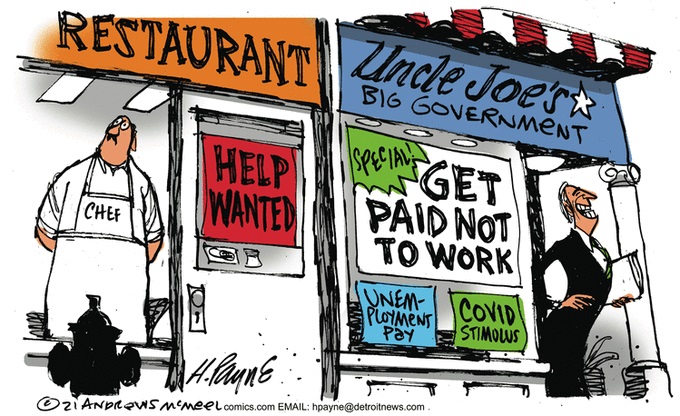 Which is why they support big handouts, including so-called basic income.
 He just turned 83, and let’s hope he has another 20 years of columns to write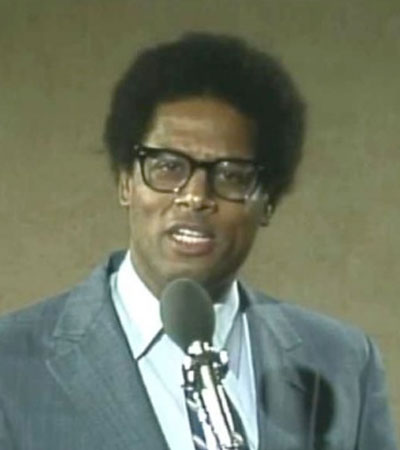


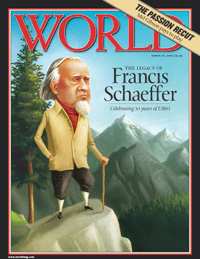








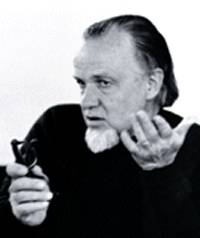

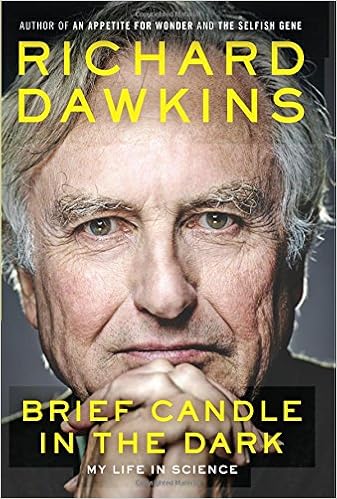


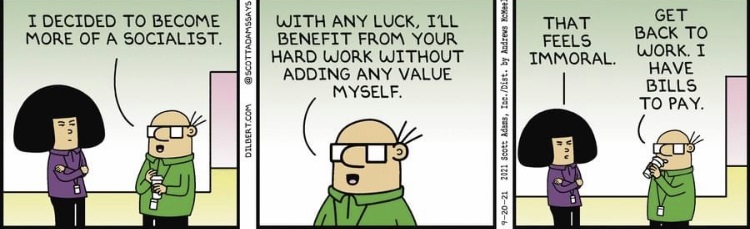



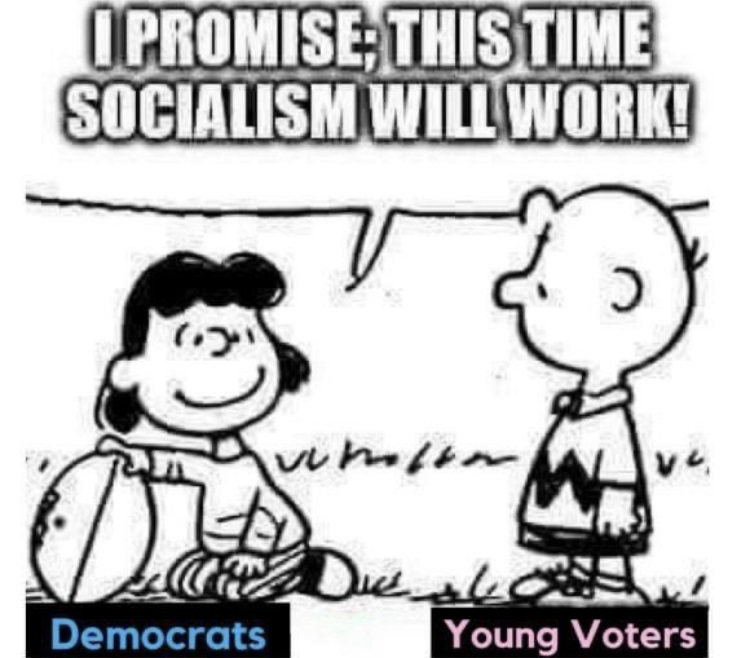

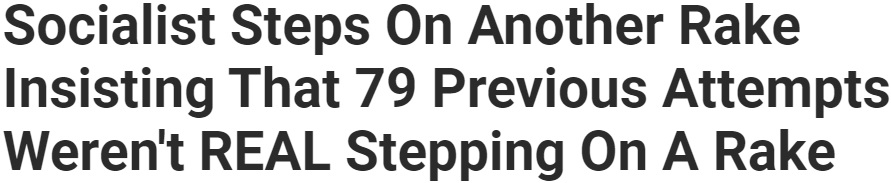

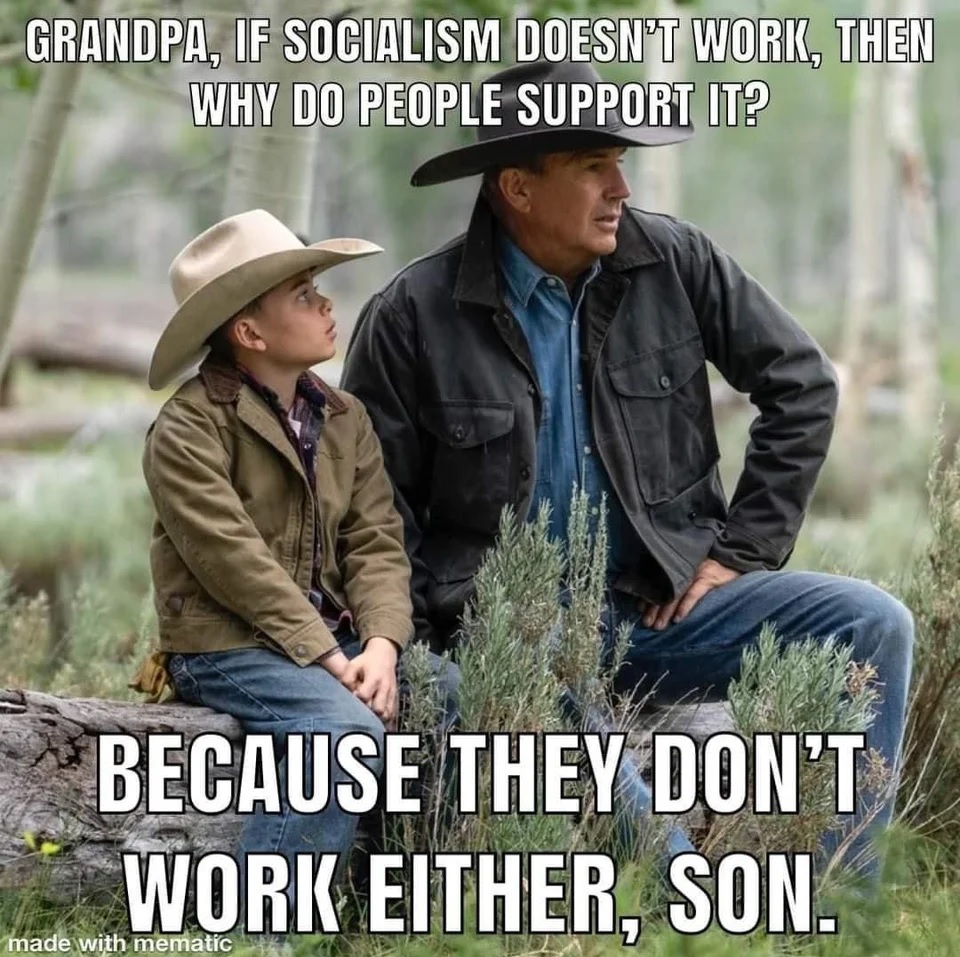


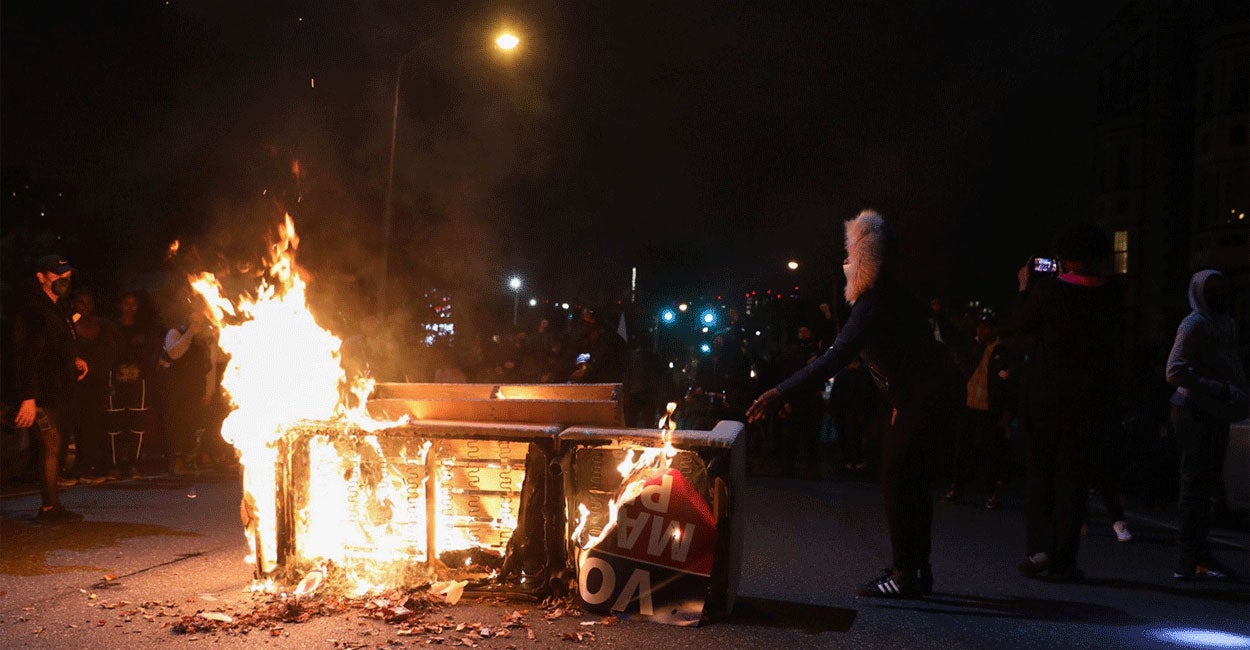





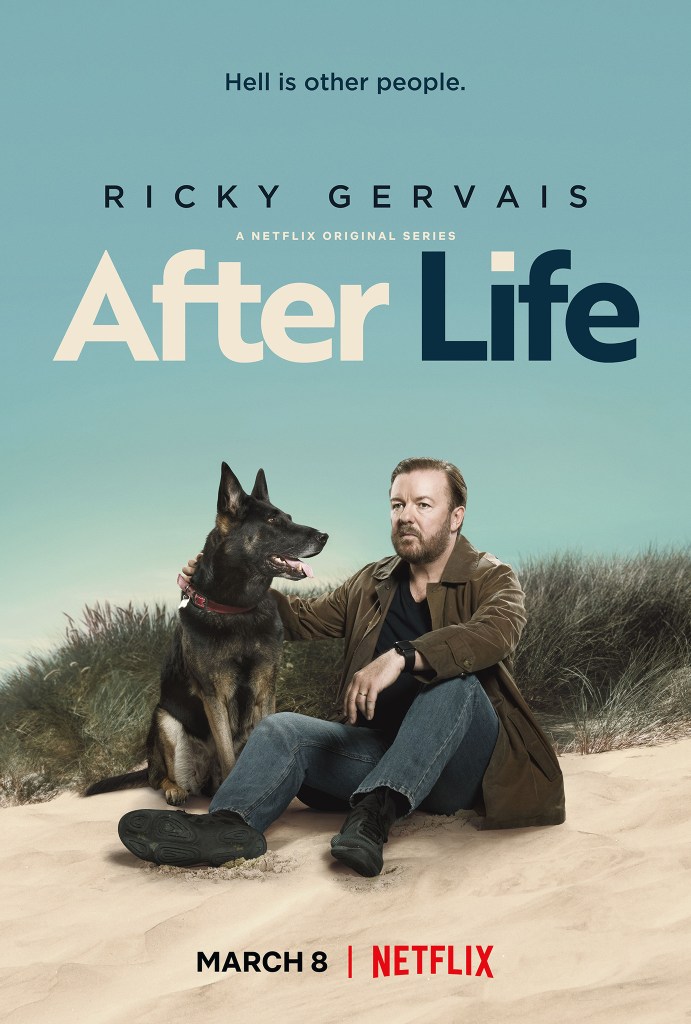


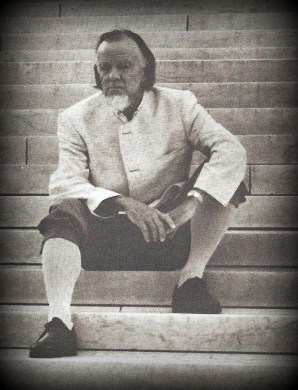









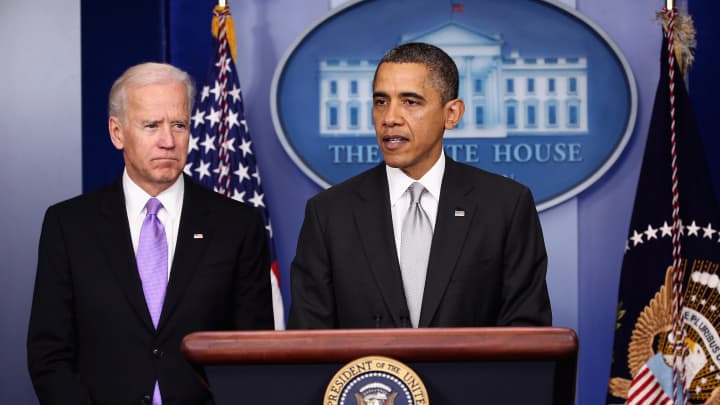 President Barack Obama announces the creation of an interagency task force for guns as as Vice President Joseph Biden listens on.Getty Images




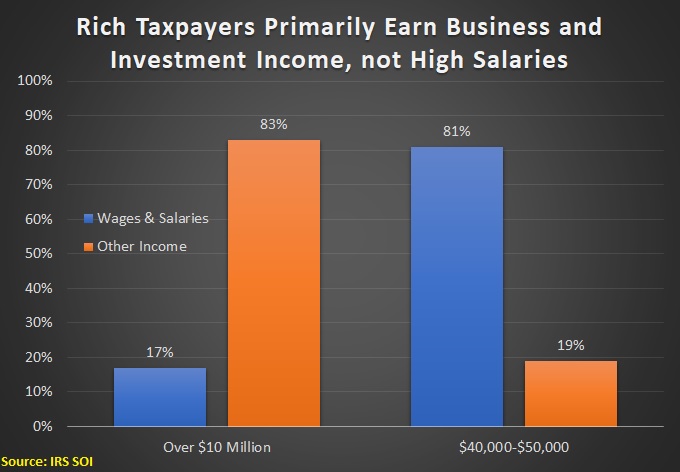
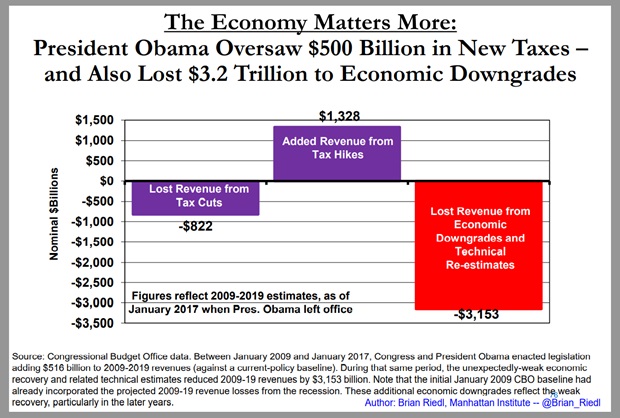


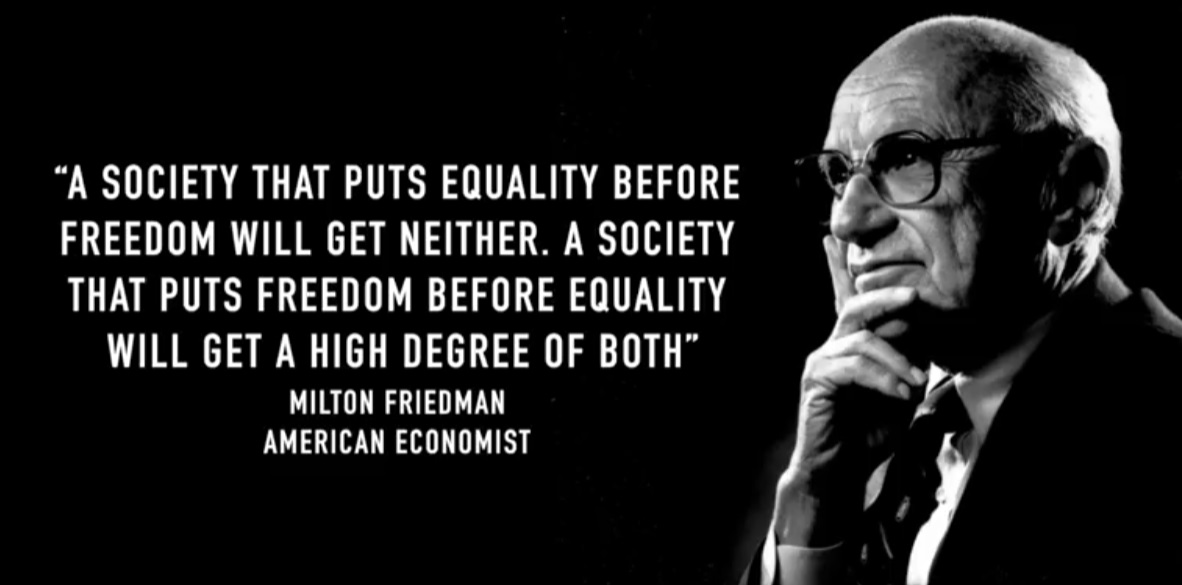



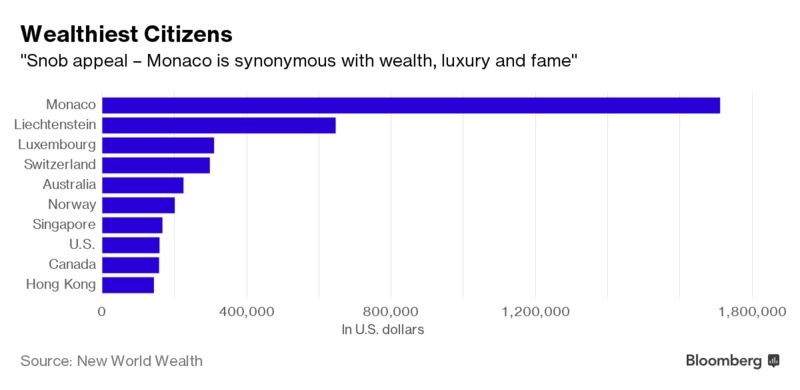






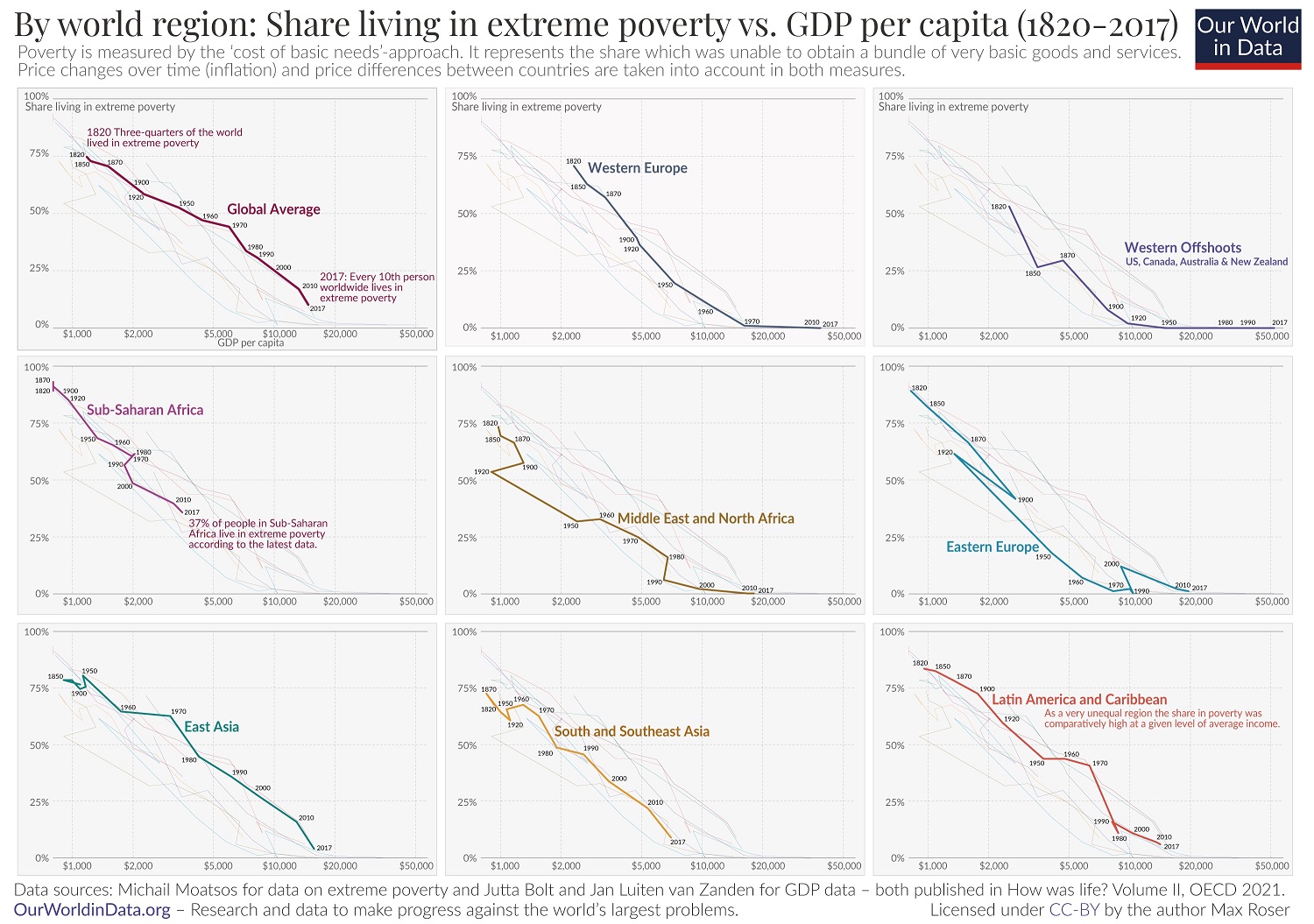


 __
__ On November 21, 2014 I received a letter from
  I have attempted to respond to all of Dr. Kroto’s friends arguments and I have posted my responses one per week for over a year now. Here are some of my earlier posts:
 Francis Schaeffer noted concerning the IMPLICIT FAITH of Bertrand Russell:I was lecturing at the University of St. Andrews one night and someone put forth the question, “If Christianity is so clear and reasonable then why doesn’t Bertrand Russell then become a Christian? Is it because he hasn’t discovered theology?”It wasn’t a matter of studying theology that was involved but rather that he had too much faith. I was surrounded by humanists and you could hear the gasps. Bertrand Russell and faith; Isn’t this the man of reason? I pointed out that this is a man of high orthodoxy who will hold his IMPLICIT FAITH on the basis of his presuppositions no matter how many times he has to zig and zag because it doesn’t conform to the facts.You must understand what the term IMPLICIT FAITH means. In the old Roman Catholic Church when someone who became a Roman Catholic they had to promise implicit faith. That meant that you not only had to believe everything that Roman Catholic Church taught then but also everything it would teach in the future. It seems to me this is the kind of faith that these people have in the uniformity of natural causes in a closed system and they have accepted it no matter what it leads them into. I think that these men are men of a high level of IMPLICIT FAITH in their own set of presuppositions. Paul said (in Romans Chapter One) they won’t carry it to it’s logical conclusion even though they hold a great deal of the truth and they have revolted and they have set up a series of universals in themselves which they won’t transgress no matter if they conform to the facts or not.Here below is the Romans passage that Schaeffer is referring to and verse 19 refers to what Schaeffer calls “the mannishness of man” and verse 20 refers to Schaeffer’s other point which is “the universe and it’s form.”Romans 1:18-20 Amplified Bible :18 For God’s [holy] wrath and indignation are revealed from heaven against all ungodliness and unrighteousness of men, who in their wickedness repress and hinder the truth and make it inoperative. 19 For that which is known about God is evident to them and made plain in their inner consciousness, because God [Himself] has shown it to them. 20 For ever since the creation of the world His invisible nature and attributes, that is, His eternal power and divinity, have been made intelligible and clearly discernible in and through the things that have been made (His handiworks). So [men] are without excuse [altogether without any defense or justification].We can actually see the two points makes playing themselves out in Bertrand Russell’s own life.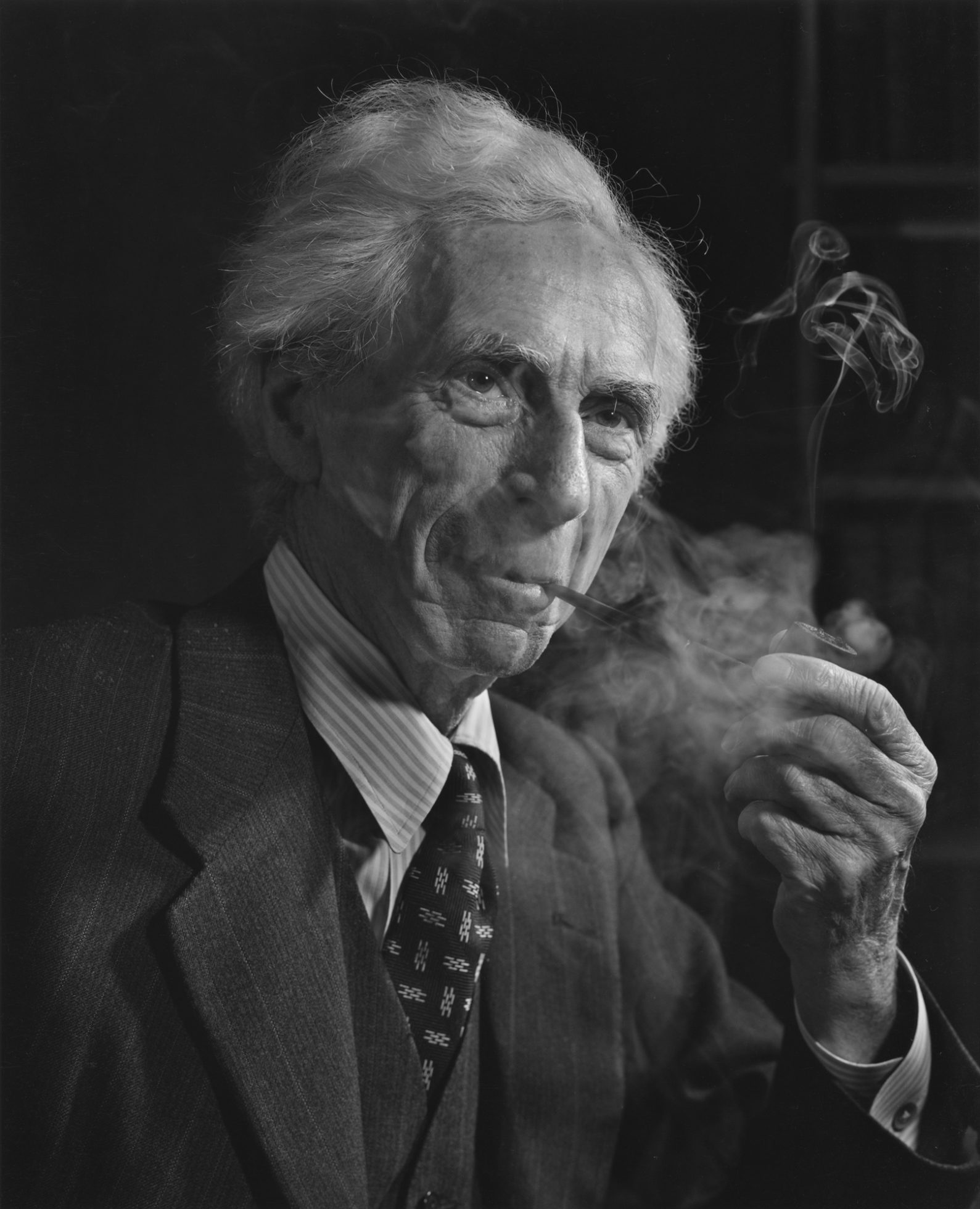








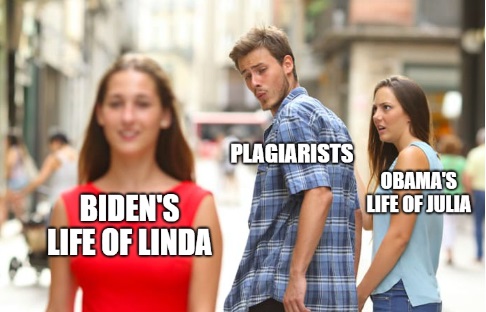

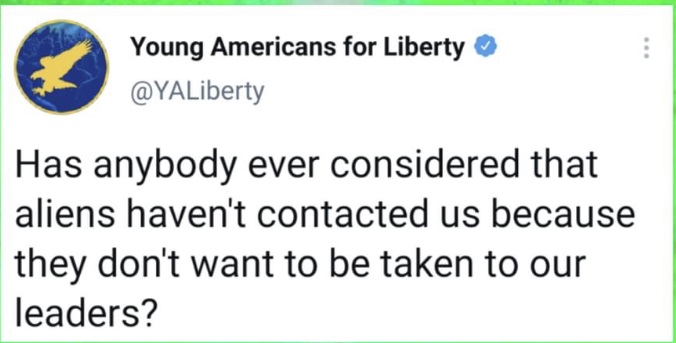

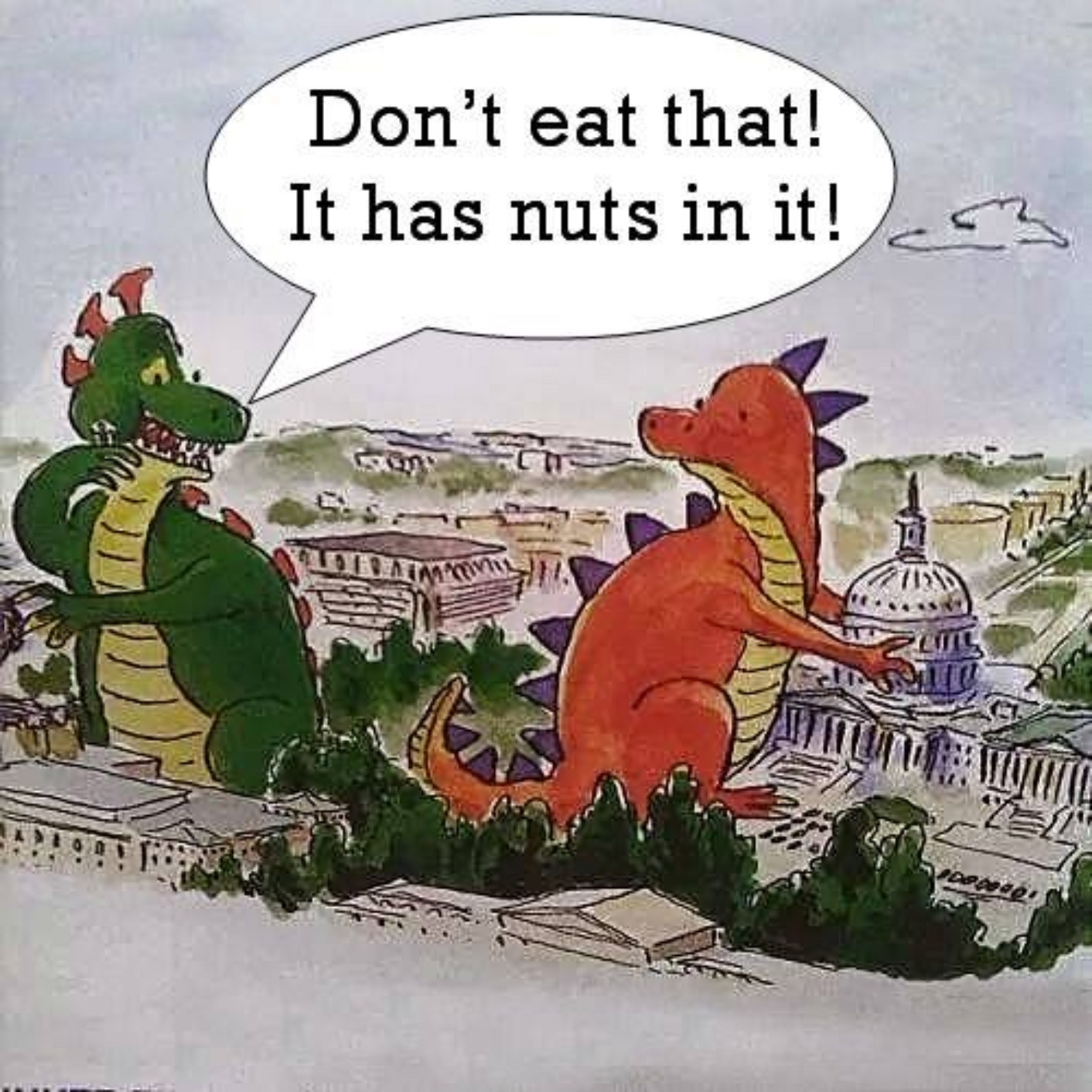
:no_upscale()/cdn.vox-cdn.com/uploads/chorus_image/image/69607892/AP20205603273979.0.jpg) Arkansas state Sen. Jason Rapert presides over a Senate committee at the state Capitol in Little Rock, Ark. in this March 14, 2018, file photo. Rapert’s National Association of Christian Lawmakers met recently to talk model legislation and pass resolutions. Kelly P. Kissel, Associated Press
Arkansas state Sen. Jason Rapert presides over a Senate committee at the state Capitol in Little Rock, Ark. in this March 14, 2018, file photo. Rapert’s National Association of Christian Lawmakers met recently to talk model legislation and pass resolutions. Kelly P. Kissel, Associated Press/cdn.vox-cdn.com/uploads/chorus_asset/file/22726922/AP898166992908.jpg) Texas state Rep. Bryan Hughes speaks during the opening session of the 2015 legislative session on Tuesday, Jan. 13, 2015, in Austin, Texas. Eric Gay, Associated Press
Texas state Rep. Bryan Hughes speaks during the opening session of the 2015 legislative session on Tuesday, Jan. 13, 2015, in Austin, Texas. Eric Gay, Associated Press/cdn.vox-cdn.com/uploads/chorus_asset/file/22726936/merlin_1112102.jpg) A anti-abortion supporter argues with those who attended a press conference and rally held by the Planned Parenthood Action Council of Utah outside of the Capitol in Salt Lake City on Aug. 25, 2015. Stacie Scott, Deseret News
A anti-abortion supporter argues with those who attended a press conference and rally held by the Planned Parenthood Action Council of Utah outside of the Capitol in Salt Lake City on Aug. 25, 2015. Stacie Scott, Deseret News






 The Daily Hatch
.jpg)

