Category Archives: Francis Schaeffer

FRANCIS SCHAEFFER ANALYZES ART AND CULTURE Part 75 THE BEATLES (Part Z WHY DID LENNON CHOOSE HITLER FOR THE COVER OF STG. PEPPER’S? ) (Feature on artist Peter Kien )

Why did John Lennon submit Hitler as one of his selections to appear on the cover of Sgt. Pepper’s Album? It may have been the same reason that TIME MAGAZINE picked Hitler as the MAN OF THE YEAR in 1938 and that is they thought Hitler’s presence should not be ignored. 

Francis Schaeffer holding up Sgt. Pepper’s Album.

______

The Beatles Dont Let Me Down Rooftop Concert 1969

The Beatles documentary || A Long and Winding Road || Episode 1

A square quartered into four head shots of young men with moptop haircuts. All four wear white shirts and dark coats.

John Lennon, Paul McCartney, George Harrison, and Ringo Starr in 1966

The Beatles documentary || A Long and Winding Road || Episode 3

Revolver album cover

The Beatles Get Back Rooftop Concert, 1969 360p

Hitler’s Photos, and Letter from John Lennon at Auction

Peace or war, Hitler or Christ is the choice we all face. John Lennon & Yoko Ono

__________

Hitler pictured below
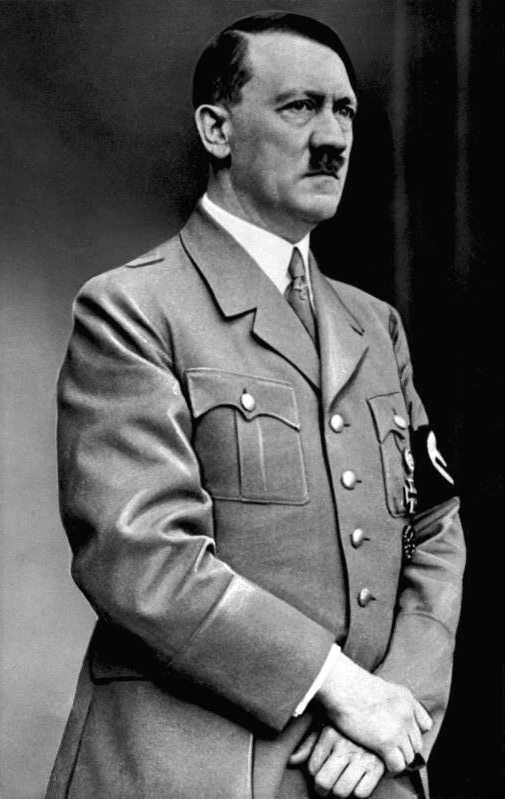
Why did John Lennon submit the name Adolf Hitler as one of his selections to appear on the cover of Sgt. Pepper’s Lonely Hearts Club Band Album? 3000 years ago King Solomon may have given us a hint at why Lennon was willing to put Hitler on the cover. The simple reason was that Hitler was the most powerful man of the 20th century and Lennon thought Hitler’s presence should not be ignored. This is the same reason that Hitler was chosen by TIME MAGAZINE in 1938 as the MAN OF THE YEAR. As German Chancellor, Hitler oversaw the unification of Germany with Austria and the Sudetenland in 1938, after the Anschluss and Munich Agreement respectively. Solomon noted that evil people like Hitler have always used power to hurt those that were powerless to do anything about it.

Ecclesiastes 4 1-3 Next I turned my attention to all the outrageous violence that takes place on this planet—the tears of the victims, no one to comfort them; the iron grip of oppressors, no one to rescue the victims from them. So I congratulated the dead who are already dead instead of the living who are still alive. But luckier than the dead or the living is the person who has never even been, who has never seen the bad business that takes place on this earth.

John Lennon recognized that Hitler had lived by the motto MIGHT MAKES RIGHT, but Lennon did not have an understanding of the Biblical Fall in Genesis 3 and the fact that the world was not always this way until sin entered in.

(Francis Schaeffer pictured below)

Francis Schaeffer asserted in the film series HOW SHOULD WE THEN LIVE? Episode 7:

There is one man who well understood the logical conclusion of the deification of nature, Marquis de Sade. “If nature is all then ‘what is’ is right and nothing more can be said….As nature has made us (the men) the strongest we can do with her (the woman) whatever we please.” The inevitable result was his cruelty to women. Thus there was no basis for either morals or law.
 
Let me dwell for a moment on the Dutch Reformation Painters who so rejoice fully painted the simple things of life. They knew that nature was created by a personal and a good God, but they also knew because of the fall, man’s revolt against God, that nature as it is now is abnormal. That is a very different thing than taking nature as it is now and making it the measure of goodness because when this is done there is no difference between cruelty and non-cruelty.

How Should We then Live Episode 7 small

John Lennon was an atheist and he embraced the humanist worldview. However, atheists do not believe in an afterlife. So what do they say happens to people such as Hitler after death? Do they get off without being punished fully for their actions? It seems to me that without an enforcement factor people can do what they want in this life and get away with it. This is a big glaring weakness in the Humanist Manifestos that have been published so far. All three of them do not recognize the existence of God who is our final judge. (I am not claiming that this is evidence that points to an afterlife, but this post will demonstrate that atheists many times have not thought through the full ramifications of their philosophy of life.)

I had the unique opportunity to discuss this very issue with Robert Lester Mondale and his wife Rosemary  on April 14, 1996 at his cabin in Fredricktown, Missouri , and my visit was very enjoyable and informative. Mr. Mondale had the distinction of being the only person to sign all three of the Humanist Manifestos in 1933, 1973 and 2003. I asked him which signers of Humanist Manifesto Number One did he know well and he said that Raymond B. Bragg, and Edwin H. Wilson  and him were known as “the three young radicals of the group.”  Harold P. Marley used to have a cabin near his and they used to take long walks together, but Marley’s wife got a job in Hot Springs, Arkansas and they moved down there.

Roy Wood Sellars was a popular professor of philosophy that he knew. I asked if he knew John Dewey and he said he did not, but Dewey did contact him one time to ask him some questions about an article he had written, but Mondale could not recall anything else about that. 

Mondale told me some stories about his neighbors and we got to talking about some of his church members when he was an Unitarian pastor. Once during the 1930’s he was told by one of his wealthier Jewish members that he shouldn’t continue to be critical of the Nazis. This member had just come back from Germany and according to him Hitler had done a great job of getting the economy moving and things were good.

Of course, just a few years later after World War II was over Mondale discovered on a second hand basis what exactly had happened over there when he visited with a Lutheran pastor friend who had just returned from Germany. This Lutheran preacher was one of the first to be allowed in after the liberation of the concentration camps in 1945, and he told Mondale what level of devastation and destruction of  innocent lives went on inside these camps. As Mondale listened to his friend he could feel his own face turning pale.

I asked, “If those Nazis escaped to Brazil or Argentina and lived out their lives in peace would they face judgment after they died?”

Mondale responded, “I don’t think there is anything after death.”

I told Mr. Mondale that there is sense in me that says  justice will be given eventually and God will judge those Nazis even if they evade punishment here on earth. I did point out that in Ecclesiastes 4:1 Solomon did note that without God in the picture  the scales may not be balanced in this life and power could reign, but at the same time the Bible teaches that all  must face the ultimate Judge.

Then I asked him if he got to watch the O.J. Simpson trial and he said that he did and he thought that the prosecution had plenty of evidence too. Again I asked Mr. Mondale the same question concerning O.J. and he responded, “I don’t think there is a God that will intervene and I don’t believe in the afterlife.”

Adrian Rogers shared this story below:

I was in Israel, I was a guest, there, of the Israeli government. They gave me the best guide that they had in Israel. And, that man in Israel—I’ll not call his name, because, thank God, I believe he listens to this program; and, I’m grateful he does, because I’m still trying to witness to him—but this man—a brilliant man, the curator of the Rockefeller Museum there—became a friend. We sat up, one night, late, talking. I said, “Sir, do you believe in God?” He said, “No, I do not.” I said, “Why don’t you believe—why don’t you believe—in God?” He said, “The Holocaust. What kind of a God would allow that to happen?” That deals with the message I preached this morning.

Because of the Holocaust. I said, “Then Hitler has caused you not to believe in God?” He said, “Yes, I detest Hitler.” I said, “Well, you’re on the same side as Hitler. Hitler didn’t believe in God, as such; you don’t believe in God. Hitler believed in evolution; you believe in evolution. Evolution is the survival of the fittest; you believe in the survival of the fittest. And, Hitler had his gas ovens, because he thought that the Aryan race was superior to your people, sir. You’ve become very much like the thing that you fight.” It’s only a short step from believing in evolution to the gas ovens, or whatever.

Dan Guinn posted on his blog at http://www.francisschaefferstudies.org concerning the Nazis and evolution: As Schaeffer points out, “…these ideas helped produce an even more far-reaching yet logical conclusion: the Nazi movement in Germany. Heinrich Himmler (1900-1945), leader of the Gestapo, stated that the law of nature must take its course in the survival of the fittest. The result was the gas chambers. Hitler stated numerous times that Christianity and its notion of charity should be “replaced by the ethic of strength over weakness.” Surely many factors were involved in the rise of National Socialism in Germany. For example, the Christian consensus had largely been lost by the undermining from a rationalistic philosophy and a romantic pantheism on the secular side, and a liberal theology (which was an adoption of rationalism in theological terminology) in the universities and many of the churches. Thus biblical Christianity was no longer giving the consensus for German society. After World War I came political and economic chaos and a flood of moral permissiveness in Germany. Thus, many factors created the situation. But in that setting the theory of the survival of the fittest sanctioned what occurred. ” 

Woody Allen’s 1989 movie, CRIMES AND MISDEMEANORS , was on this very subject of the Nazis that Lester Mondale and I discussed on that day in 1996 at Mondale’s cabin in Missouri.  In this film, Allen attacks his own atheistic view of morality. Martin Landau plays a Jewish eye doctor named Judah Rosenthal raised by a religious father who always told him, “The eyes of God are always upon you.” However, Judah later concludes that God doesn’t exist. He has his mistress (played in the film by Anjelica Huston) murdered because she continually threatened to blow the whistle on his past questionable, probably illegal, business activities. She also attempted to break up Judah’s respectable marriage by going public with their two-year affair. Judah struggles with his conscience throughout the remainder of the movie and continues to be haunted by his father’s words: “The eyes of God are always upon you.” This is a very scary phrase to a young boy, Judah observes. He often wondered how penetrating God’s eyes are.

Later in the film, Judah reflects on the conversation his religious father had with Judah ‘s unbelieving Aunt May at the dinner table many years ago:

“Come on Sol, open your eyes. Six million Jews burned to death by the Nazis, and they got away with it because might makes right,” says aunt May

Sol replies, “May, how did they get away with it?”

Judah asks, “If a man kills, then what?”

Sol responds to his son, “Then in one way or another he will be punished.”

Aunt May comments, “I say if he can do it and get away with it and he chooses not to be bothered by the ethics, then he is home free.”

Judah ‘s final conclusion was that might did make right. He observed that one day, because of this conclusion, he woke up and the cloud of guilt was gone. He was, as his aunt said, “home free.”

Woody Allen has exposed a weakness in his own humanistic view that God is not necessary as a basis for good ethics. There must be an enforcement factor in order to convince Judah not to resort to murder. Otherwise, it is fully to Judah ‘s advantage to remove this troublesome woman from his life. CAN A MATERIALIST OR A HUMANIST THAT DOES NOT BELIEVE IN AN AFTERLIFE GIVE JUDAH ONE REASON WHY HE SHOULDN’T HAVE HIS MISTRESS KILLED?

The Bible tells us, “{God} has also set eternity in the hearts of men…” (Ecclesiastes 3:11 NIV). The secularist calls this an illusion, but the Bible tells us that the idea that we will survive the grave was planted in everyone’s heart by God Himself. Romans 1:19-21 tells us that God has instilled a conscience in everyone that points each of them to Him and tells them what is right and wrong (also Romans 2:14 -15).

It’s no wonder, then, that one of Allen’s fellow humanists would comment, “Certain moral truths — such as do not kill, do not steal, and do not lie — do have a special status of being not just ‘mere opinion’ but bulwarks of humanitarian action. I have no intention of saying, ‘I think Hitler was wrong.’ Hitler WAS wrong.” (Gloria Leitner, “A Perspective on Belief,” THE HUMANIST, May/June 1997, pp. 38-39)

Here Leitner is reasoning from her God-given conscience and not from humanist philosophy. It wasn’t long before she received criticism. Humanist Abigail Ann Martin responded, “Neither am I an advocate of Hitler; however, by whose criteria is he evil?” (THE HUMANIST, September/October 1997, p. 2)

On the April 13, 2014 episode of THE GOOD WIFE called “The Materialist,” Alicia in a custody case asks the father Professor Mercer some questions about his own academic publications. She reads from his book that he is a “materialist and he believes that “free-will is just an illusion,” and we are all just products of the physical world and that includes our thoughts and emotions and there is no basis for calling anything right or wrong. Sounds like to me the good professor would agree wholeheartedly with the humanist Abigail Ann Martin’s assertion concerning Hitler’s morality too! Jean-Paul Sartre noted, “No finite point has meaning without an infinite reference point.”

Christians agree with Judah ‘s father that “The eyes of God are always upon us.” Proverbs 5:21 asserts, “For the ways of man are before the eyes of the Lord, and He ponders all his paths.” Revelation 20:12 states, “…And the dead were judged (sentenced) by what they had done (their whole way of feeling and acting, their aims and endeavors) in accordance with what was recorded in the books” (Amplified Version). The Bible is revealed truth from God. It is the basis for our morality. Judah inherited the Jewish ethical values of the Ten Commandments from his father, but, through years of life as a skeptic, his standards had been lowered. Finally, we discover that Judah ‘s secular version of morality does not resemble his father’s biblically-based morality.

Woody Allen’s CRIMES AND MISDEMEANORS forces unbelievers to grapple with the logical conclusions of a purely secular morality, and  the secularist has no basis for asserting that Judah is wrong.

Larry King actually mentioned on his show, LARRY KING LIVE, that Chuck Colson had discussed the movie CRIMES AND MISDEMEANORS with him. Colson asked King if life was just a Darwinian struggle where the ruthless come out on top. Colson continued, “When we do wrong, is that our only choice? Either live tormented by guilt, or else kill our conscience and live like beasts?” (BREAKPOINT COMMENTARY, “Finding Common Ground,” September 14, 1993)

Josef Mengele tortured and murdered many Jews and then lived the rest of his long life out in South America in peace. Will he ever face judgment for his actions?

The ironic thing is that at the end of our visit I that pointed out to Mr. Mondale that Paul Kurtz had said  in light of the horrible events in World War II that Kurtz witnessed himself in the death camps (Kurtz entered a death camp as an U.S. Soldier to liberate it) that it was obvious that Humanist Manifesto I was way too optimistic and it was necessary to come up with another one.  I thought that might encourage  Mr. Mondale to comment further on our earlier conversion concerning evil deeds, but he just said, “That doesn’t surprise me that Kurtz would say something like that.”

I noticed in Wikipedia:

The second Humanist Manifesto was written in 1973 by Paul Kurtz and Edwin H. Wilson, and was intended to update the previous one. It begins with a statement that the excesses of Nazism and world war had made the first seem “far too optimistic”, and indicated a more hardheaded and realistic approach in its seventeen-point statement, which was much longer and more elaborate than the previous version. Nevertheless, much of the unbridled optimism of the first remained, with hopes stated that war would become obsolete and poverty would be eliminated.

Rev Robert L “Lester” Mondale (1904 – 2003)

(Also surviving Lester Mondale are his three brothers: Walter Mondale, former vice president of the United States, Pete Mondale, and Morton Mondale.)

Hitler Did Not Make The Final Cut On The Beatles “Sgt. Peppers Lonely Hearts Club Band” Album Cover

The cover of The Beatles ”Sgt. Pepper’s Lonely Hearts Club Band” features John Lennon,Paul McCartney, George Harrison and RIngo Starr in front of a collage of life-sized cardboard models of famous people and some of their hero’s.  Most of the suggestions came from LennonMcCartney and Harrison.  Harrison opted for a number of Indian gurus to reflect his spiritual leanings while Lennon’s list, thought to be half-joking, included JesusHitler and Gandhi.
Sir Peter Blake who designed the set said,

“Hitler and Jesus were the controversial ones, and after what John said about Jesus we decided not to go ahead with him – but we did make up the image of Hitler. If you look at photographs of the out-takes, you can see the Hitler image in the studio. With the crowd behind there was an element of chance about who you can and cannot see, and we weren’t quite sure who would be covered in the final shot. Hitler was in fact covered up behind the band.”

Here is a photo of the Hitler cut-out on the stage before it was wisely removed and pushed over to the side…

________________

Where’s Adolf? The mystery of Sgt Pepper is solved

Lennon’s choice for album sleeve led to one of rock’s greatest cover-ups

The scene has become one of the world’s most imitated, iconic and widely owned artworks. Since its creation 40 years ago next month, the cover of the Beatles’ Sgt Pepper album has sparked debate about the cultural heroes who were picked or excluded for the final cut.

For generations it has been accepted that John Lennon’s wish to place Jesus Christ, Adolf Hitler and Mahatma Gandhi on the cover was ruled out because of the upset their inclusion would cause. But now the artist who created it, Sir Peter Blake, has revealed for the first time that Hitler did make the final line-up for the sleeve, but was simply obscured by the Fab Four.

Sir Peter told The Independent On Sunday: “Yes he is on there – you just can’t see him.”

The record, bought by around 32 million people since it was released in “the summer of love”, features a crowd of some of the most famous faces of the previous century, including Stan Laurel, Bob Dylan and Marlon Brando.

Each of the band members chose their favourites, with George Harrison opting for a number of Indian gurus to reflect his spiritual leanings, and Ringo Starr happy to go along with the others’ choices.

Lennon’s list, thought to be half-joking, included Jesus, Hitler and Gandhi. However, following his infamous comment the previous year, 1966, that the band was “bigger than Jesus”, it was thought best not to even commission a cardboard cut-out of Christ for the collage. Gandhi was included but edited from the final image, and Hitler has long been thought to have been pushed to the edge of the studio on the grounds of taste.

But Sir Peter said: “Hitler and Jesus were the controversial ones, and after what John said about Jesus we decided not to go ahead with him – but we did make up the image of Hitler. If you look at photographs of the out-takes, you can see the Hitler image in the studio. With the crowd behind there was an element of chance about who you can and cannot see, and we weren’t quite sure who would be covered in the final shot. Hitler was in fact covered up behind the band.”

Sir Peter has just healed a rift with the Beatles’ company Apple that had threatened a planned retrospective of all the record covers he has designed. They include albums by Paul Weller, Eric Clapton and Oasis.

Initially, Apple had refused to allow him to reproduce the Sgt Pepper image – he signed away the copyright when he was paid £200 for his work on the sleeve – but the firm has now relented. “I think they simply changed their minds. It does seem we are on a happier footing now,” Sir Peter said.

September 19, 2011

By Elvis Costello

My absolute favorite albums are Rubber Soul and Revolver. On both records you can hear references to other music — R&B, Dylan, psychedelia — but it’s not done in a way that is obvious or dates the records. When you picked up Revolver, you knew it was something different. Heck, they are wearing sunglasses indoors in the picture on the back of the cover and not even looking at the camera . . . and the music was so strange and yet so vivid. If I had to pick a favorite song from those albums, it would be “And Your Bird Can Sing” . . . no, “Girl” . . . no, “For No One” . . . and so on, and so on. . . .

Their breakup album, Let It Be, contains songs both gorgeous and jagged. I suppose ambition and human frailty creeps into every group, but they delivered some incredible performances. I remember going to Leicester Square and seeing the film of Let It Be in 1970. I left with a melancholy feeling.

88

‘Rain’

the beatles 100 greatest songs
Tom Hanley/Redferns

Main Writer: Lennon
Recorded: April 14 and 16, 1966
Released: May 30, 1966
7 weeks; no. 23 (B side)

“Rain” is a Lennon song about nothing much — “People moaning because . . . they don’t like the weather,” he said. But the song, released months before Revolver as the B side to “Paperback Writer,” was the Beatles’ first public attempt to capture the LSD experience on record. They did it by infusing the track with tantalizing sounds — melting-chant harmonies, the brusque, leadlike flair of McCartney’s bass, Starr’s disorienting drum fills — and the promise of a realm beyond the usual senses. “I can show you,” Lennon sings, “can you hear me?” — as if he’s already got a head start. The most surreal effect was an accident: While stoned, Lennon threaded a rough mix the wrong way on his home tape recorder. He was thrilled with the backward vocals he heard — so thrilled he demanded the sound be used on the song’s fade-out. “From that point on,” engineer Geoff Emerick wrote, “almost every overdub we did on Revolver had to be tried backwards as well as forwards.”

Appears On: Past Masters

87

‘Love Me Do’

the beatles 100 greatest songs
Michael Ochs Archives/Getty Images

Writers: McCartney-Lennon
Recorded: September 11, 1962
Released: April 27, 1964
14 weeks; No. 1

The Beatles’ first single, “Love Me Do,” was also one of the first songs Lennon and McCartney wrote together. They were just teenagers in 1958, scribbling songs in a school notebook, dreaming of stardom, always writing “Another Lennon-McCartney Original” at the top of the page. “Love Me Do” became their debut U.K. single in October 1962, with “P.S. I Love You” as the B side. It hit the charts and reached Number 17 — not bad for a band of scruffy Liverpool lads. But when released in the U.S. with Beatlemania in full effect, it hit Number One.

The Beatles first cut the song during their audition for George Martin, with drummer Pete Best. Martin made them redo it with replacement Ringo Starr and again with a hired session drummer, when Martin demoted Starr to tambourine. “He’s never forgiven me for it,” Martin said, laughing. “I do apologize to him publicly.” But it was Martin’s idea to have Lennon add a harmonica solo. As Mc­Cartney recalled, “John expected to be in jail one day and he’d be the guy who played the harmonica.”

Appears On: Past Masters and Please Please Me

Artist featured today is Peter Kien

____________

F.P.Kien. Portrait of František Jiroudek, circa 1937-1939

Peter Kien

From Wikipedia, the free encyclopedia

Peter Kien (born Varnsdorf, Czechoslovakia, 1 January 1919, died Auschwitz, October 1944) was a Jewish artist and poet active at the Theresienstadt concentration camp.[1][2] He died at the age of twenty-five.

His education[edit]

The name of Franz Peter Kien, a prominent figure among many outstanding artists imprisoned in the Terezín (Theresienstadt) ghetto during World War II, is usually associated with the opera The Emperor of Atlantis by Viktor Ullmann. In addition to the libretto of that opera, Kien left significant artwork, poetry, and plays.

Kien spent his first 10 years in Varnsdorf, an industrial town near the Czech-German border. During the financial crisis his family moved to Brno. In 1936, Kien graduated with honors from a German high school. The certificate contains special notes on his remarkable skills in writing and drawing. The same year, Kien enrolled in Prof. Willy Novak’s class at the Academy of Fine Arts in Prague and in the graphic design school Officina Pragensis under Prof. Hugo Steiner-Prag.

In 1939, after the racist laws were enforced, Kien was expelled from the Academy, but continued to work at the Officina Pragensis under Prof. Jaroslav Švab). He started to teach art at the Vinohrady synagogue. Married to Ilse Stranska in 1940, he tried to emigrate with his family.

In December 1941, Kien was deported to Terezin. Over a thousand drawings, sketches, designs and paintings originate from his pre-Terezin years. Consigned to the drafting room of the Technical Department in Terezin, Kien produced numerous portraits, landscapes, drawings and genre sketches. His artwork radiates light, hope and warmth. By contrast, his writings of this period are mostly tragic and hopeless.

In Terezin, Kien’s social satirical play Marionettes, staged by Gustav Schorsch. was performed 25 times. Gideon Klein set Kien’s poetic cycle Plague to music. His other plays written in the ghetto include Medea, Bad dream and On the Border. They found their way to the Wiener Library in London, but were never published and never performed.

On October 16, 1944, Kien was deported to Auschwitz with his parents and his wife in the final transport in October 1944. He died from disease soon after his arrival. None of the others survived.

His works[edit]

Between his arrival to Terezin in 1941 and his deportation to Auschwitz, Kien was officially the director of the Technical Drawing Office of the Jewish Self Administration. Using stolen paper, he sketched many depictions of living conditions in the Terezin ghetto. These works are among the most important works documenting that Terezin was a concentration camp rather than the model Jewish settlement the Nazis portrayed to outsiders. His works accurately reflect that its inhabitants were confined in inhuman conditions and treated severely.

Kien also wrote the libretto to Viktor Ullmann’s Der Kaiser von Atlantis, a one-act chamber opera that was composed in and rehearsed in Terezin between 1943 and 1944 but never performed there. It was first performed in 1975 in Amsterdamand was recorded for Decca in Leipzig in 1990.[3] An English Touring Opera production was performed at the Royal Opera House in London and toured England in 2012.[3]

JEWISH PAINTERS KILLED IN THE HOLOCAUST

by Santiago Raigorodsky

Santiago Raigorodsky was born in Buenos Aires, Argentina, in December 1944, where he lived until 1975, when he moved to Brazil. There, he continued his artistic activity as a painter, working in many cities but especially in Rio de Janeiro and Curitiva. In 1982, he moved to Israel, in Kfar Saba, where he continued his artistic and also teaching activity. He currently lives in Barcelona. He is also the director of “Fine Arts – Jewish Artists” of the cultural association Tarbut Sefarad and author of countless art reviews and presentations of exhibitions of Jewish art.

Some time ago, I had the opportunity to see, in the La Pedrera building in Barcelona, a magnificent exhibition by Zoran Music, entitled “From Dachau to Venice”, that moved me deeply because of various reasons. I should confess my ignorance of Zoran Music’s existence, his works and personal history. I could see the abundance of the same motifs in many of his artworks, regardless of their excellence. As you would expect, many of his artworks were marked by the time he had spent incarcerated in the Dachau concentration camp. Terrible characters and scenes fill up his artworks and must have populated his life and remained engraved in his mind, as we can also learn from his writings. But Zoran Music, after passing through this terrible experience, was fortunate. He managed to stay alive and he lived to tell us of it, carrying on with his paintings. He chose to live in Venice, the place where he died a few years ago.

Nevertheless, the vision of his works brought to my mind several visits that I had made, in the past, to Yad Vashem, the Holocaust Museum in Jerusalem and also the Lohamei Hagetaot Museum, located in the kibbutz with the same name (Fighters of the Ghetto). This is the reason why I felt the need to write this article, also motivated by some talks with several colleagues on the impossibility to know all the painting, all the painters. What we can see and know is, indisputably, only the tip of a huge iceberg.

How many painters, even important ones, did not have the chance to be engraved in art history, how many painters, like this one, saw their life and work reaped apart by the most terrible plague that happened to humanity, which is the lack of humanity itself. Nazism was an enormous tragedy for the whole world and the terrible and tragic consequences of this black episode in history, meant, undoubtedly, the greatest draw back in the history of civilization. Millions of lives were lost, among which the lives of black people, of gypsies, homosexuals, of the mentally challenged, the physically discapacitated and also millions of Jewish lives, only for being so.

Felix Nussbaum: Skeletten 1944

With these few lines, I would like to rescue from oblivion several names of Jewish painters, who, in this case, were murdered in concentration camps.

Trio – Félix Nussbaum (1944)

We should go back to mid-1930’s of the last century, when the influence of Nazism in Europe first began to be noted. Paris, at that time, was the epicenter of the European artistic activity and the place where many painters, some of them Jewish, lived. In 1937, after the Nazis’ ascent to power, they organized, in a gallery of Munich, what they called a show of “degenerate art” that included some 650 works of avant-garde art by artists like Van Gogh, Picasso, Chagall, Kokoschka, Klee, Feininger, Arp and many more. The majority of these paintings were subsequently sold in international auctions so as to finance the Nazi regime.

Even before that, in 1933, being Goebbels minister of illustration and propaganda, he gained control over all the written press, the radical media and especially over all cultural manifestations of any kind. Propaganda, lack of freedom and brutal repression constituted the best tools to affirm the total control of the Nazi regime. The libraries were cleaned of all that was considered “harmful” to the regime, avant-garde art, expressionism was declared “degenerate art” and they imposed a type of art derived from Greek-Roman classicism that exalted myths and Arian heroism above all. Thousands of scientists, intellectuals and artists, Jewish and non-Jewish had to exile themselves, trying to escape from the claws of Nazism. But many of them did not manage to save themselves. During those years, countless artworks were destroyed and many others got stolen by the Nazi high-ranks officials, many of them with a refined education and good aesthetical knowledge.

Nowadays, many European governments and international institutions are engaged in the attempt of restituting a great amount of the artworks stolen by the Nazis to their true owners. In a perfectly documented book, entitled “The Lost Museum” (Destino Publishing House, November 2004), the portoriquan investigator Hector Feliciano told, during a visit to Madrid: ”Hitler and Goering, as soon as they had captured Paris, set up a unity of artistic plunder, a team of 60 people with license to confiscate, catalogue artworks and photograph paintings, transport them in the best conditions, including restoration if necessary, and they did not even despise the degenerate art, prohibited in Germany. The Nazis stole 203 private collections, in which, aside from 100.000 artworks, many of them masterpieces, there were also half a million of furniture pieces and a million books”.

The history of crimes and deprivations of the Nazi regime is appalling and all of them are very well supported by tons of testimonials and documents proving it, despite all the negationists who try to bury or delegitimize the horrifying truth of those facts. The tragedy of so many human beings, among them, of so many artists, is only an episode of this terrible moment in history.

Peter Kien, Selfportrait, Theresienstadt Museum

A lesser known case is Theresienstadt. There, in the Checz city now called Terezin, some 60 km North of Prague, stood the concentration camp of Theresienstadt. In November 1941,

Adolphe (Aizik) Féder - 1943, Self-portait with Star of David

the Nazis built a walled ghetto where a great number of Jews were concentrated. Apart from the non-Jewish prisoners, they also imprisoned there Jews from Checoslovaquia, Germany, Austria, Holland, Denmark, Luxemburg, Hungary and many other countries. The twisted and evil mind of the Nazis inaugurated in Theresienstadt what was supposed to hide a huge operation of extermination of the Jews. Theresienstadt was meant to look like a “model Jewish colony” and they even recorded there a movie of propagandistic purposes, in an effort to show the world how well the regime treated the Jews. They explained that the Jews came to Theresienstadt voluntarily. The movie was called. “The Fürer offers a city to the Jews.” In June 1944, in the dying days of the regime, the Nazis allowed the visit of a delegation of the International Red Cross, for which, during a brief period, the life conditions improved. They installed cafés, nurseries, schools, even a bank, and certain cultural activity was allowed: conferences and study groups, a library and even opera and theatre.

Schleifer Savely, Still Life - 1941, Lohamei Haghetaot Museum

In fact, the Nazis had gathered there a great number of writers, intellectuals and artists and forced them to work in the technical and graphical department in order to exploit their knowledge for their own good and hide the reality of the regime. Many of the painters imprisoned and abused there and in other concentration camps, like Auschwitz, were able to face the hard and cruel reality thanks to the possibility of expressing themselves through art.

In some occasions, there were the Nazi officials themselves who, aware of their talent, asked them to make their and their families’ portraits. They worked on the sly, risking their lives.

Many of the works created in the concentration camp reached us in a variety of ways. In reality, the Nazis began to search for these works in order to destroy them and make sure that the truth could never be revealed, because the paintings and drawings testified of the reality of the camps. The artists, knowing of the search, used to hide their works in many parts of the ghetto. Fritta, one of them, hid his artwork in a metallic box underneath the earth, Ungar in a niche he dug in a wall, Haas in an attic.

Terezin 1942: Children's Deportation -- a drypoint etching by Leo Haas.

Leo Haas, Auschwitz

In Theresienstadt, a forth of the deportees (around 30.000) died (bear in mind that it was not an extermination camp), due to the harsh conditions, hunger and diseases. Towards the end of the war, some 88.000 persons were moved from there to Auschwitz and other extermination camps, where they were murdered.

Even at Auschwitz, between 1940 and 1945 thousands of artworks were created, and some 1500 of them are kept in the camp

Malva Schalek - 1942, Beit Lohamei Haghetaot

museum, in Poland. Numerous testimonials of the appalling reality of the concentration camps were documented in countless sketches and paintings made by Jewish painters. Many of them died in the gas chambers.

In an exhibition organized in Berlin, in 2005, the great amount of artworks of artists who had been prisoners of Auschwitz showed scenes depicting the realities of the life there. The recurring motifs were self-portraits and portraits of prisoners in the striped uniforms or with the distinctive Star of David, and also scenes for practical purposes, like how to avoid the louse propagation in the ghetto, or for instance, lines of people waiting to be deported (unaware that the final destination would be death), aspects of the streets of the ghetto, ill people, dying or dead.

However, they also painted landscapes of the surroundings, idealized by the mind of the artist, and even some paintings with a tone of humor, caricature characters or skies and mountains or funny scenes and writings. Such was the case of the Checz Peter Kien, whose works are exhibited in the Theresienstadt Museum.

Jacques Gotko – 1942, View of Front Stalag 1

In 1978, the Swiss collector Oscar Ghez del Castelnuovo donated 137 artworks to the University of Haifa, which had been created by 18

Deportation - 1942 - Julius Cohn (Turner)

painters who died in the Holocaust. This collection was a tribute to those artists and is part of the important archives that document the activity of those painters who belonged to what was called the Jewish School of Paris. This collection was exhibited in 2007, in the Hecht Museum of the University of Haifa. Naúm Arenson, from Latvia, Georges Ascher, born in Warsaw, Abraham Berline from Ukraine, Jacques Cytrynovich from Poland, Chaim Epstein from Poland, Shaul Feinsilber from Ukraine, Aizik Federfrom Ukraine, Jacques Gotko from Ukraine, Nathan Greunsweig from Poland, Karl Haber, also Polish , Joseph Hecht from Poland, Max Jacobfrom Great Britain, the Checz George Kars, Moshe Kogan from Bessarabia, Nathalie Kraemerfrom France, Roman Kramsztyk from Poland, Joachim Weingart and León Weissber from Galitzia, these are the names of the 18 artists who were part of that exhibition. They were all murdered by the Nazis between 1942 – 1944, in various extermination camps. Of course, I cannot note down all the names of the painters who were killed during those terrible years, however I would like to write a few more: Peter Kien, who died in Auschwitz, has hundreds of drawings and watercolors in the Terezin Museum, Félix Nussbaum, Charlotte Salomón, Otto Ungar, Bedrich Fritta, Ferdinand Bloch, Malva Schalek, Jacobo Macznik, Samuel Granovsky, David Brainin, Amalie Seckbach, Julius Cohn, Karel Fleischmann, Savely Schleifer, Szymos Szerman, Jerzy Fuks and so many more who would fill up never-ending lists. Artists from all over Europe, from Germany, Ukraine, France, Poland, Estonia, Latvia, Lithuania and other countries were arrested by the Nazi troops, put away in concentration camps where most of them were exterminated with brutal haste.

Moonscape by Petr Ginz

A particular case was that of Petr Ginz, a 14-year old boy who was taken away from his parents and imprisoned in the Terezin concentration camp. Petr was a very talented child and he had already written 8 novels, many articles and made lots of drawings. In Terezin, Petr founded the clandestine magazine Vedem that included essays, poems, short stories and science articles. Petr spent, as testimonials show, his days of hunger and suffering painting and writing, creating images of a free world in which men could sail on the seas and fly to the moon. Petr Ginz, at 16 years old, two years after his imprisonment, was deported to Auschwitz where he died in the gas chamber. His dreams were preserved in 120 drawings that remained hidden in Theresienstadt. After the war, a surviving child took them from their hiding place and gave them to Ginz’s parents who were more fortunate than their son. When they arrived in Israel, they donated these drawings to the Yad Vashem where they were exhibited. Ginz’s parents also managed to rescue some of his writings, in the form of a diary, which remained undiscovered until February 1st 2003.

On that day, the Columbia space shuttle exploded, a tragedy which claimed the lives of its crew of 7 people, among them

The Diary of Petr Ginz

the Israeli Ilan Ramon. Before the flight, Ramon had contacted the Yad Vashem Museum and asked to take with him an object related to the Holocaust, in order to render tribute to its victims, among whom was his own mother. He was given a drawing, Moonscape, by Petr Ginz, in which the Earth was shown as if seen from the Moon. The televisions broadcasted this drawing in the weeks following the tragedy.

Jiri Ruzicka, a resident of Prague, remembered having seen similar drawings in some old boxes. This is how many of Petr’s drawings and writings were discovered, which were afterwards published under the title “The Diary of Petr Ginz, 1941-1942”. As dramatic as Anna Frank’s diary, Petr’s reflects the harsh conditions imposed by the Nazi regime.

Fortunately, many artists were able to survive the Nazi horror and also give their own testimonials of what they lived through during those terrible years that remained forever engraved in their minds, bodies and souls. I would like to name some of them, as a tribute to their lives and their faith in art, which helped them to some extent to survive:Leo Haas, Otto Ungar, Charlote Buresova, Ester Lurie, Halina Olomucki, Karl Schwesig, Howard Oransky, Diana Kurz and many more who continued, without fatigue, to express their feelings through art.

Even if many of the painters and their drawings and paintings that I have mentioned here have more of a testimonial value, because of the poor conditions in which they worked, there are also many others of excellent artistic value.

Petr Ginz and his sister

Before the tragic accident of the Columbia space shuttle, Ilan Ramon said during a conference: “I feel that my journey fulfills the dream of Petr Ginz 58 years on. A dream that is ultimate proof of the greatness of the soul of a boy imprisoned within the ghetto walls, the walls of which could not conquer his spirit.”

Nowadays, we can admire in numerous places drawings and paintings of many of the painters murdered by the Nazis, whose spirit of freedom and life still prevails among us”.

Bibliography:

http://www.belt.es/noticias/2004/noviembre/25/saqueo_nazi.htm

http://www.dw-world.de/dw/article/0,2144,3324693,00.html (Cornelia Rabitz/eu)

http://www.derechos.org/nizkor/espana/doc/auschwitz.html (Araceli Viceconte, Berlín)

http://www.milimcultural.com.ar/artistas/ (Alicia y Salvador Benmergui)

http://www.dw-world.de/dw/article/0,2144,1594375,00.html

http://www.betshalom.cat/modules.php?name=News&file=article&sid=174 (Sonja Friedman – La Palabra Israelita)

http://www.yadvashem.org/

http://redescolar.ilce.edu.mx/redescolar/act_permanentes/historia/html/obrap.htm

http://wc4.worldcrossing.com/webx?14@@.1de1383d/255

http://www.forosegundaguerra.com/viewtopic.php?t=3078&highlight=artistas+theresenstadt

http://es.wikipedia.org/wiki/Campo_de_concentraci%C3%B3n_de_Theresienstadt

http://lastexpression.northwestern.edu/exhibition_fr_search.html

http://www.memoriales.net/topographie/israel/lohamei.htm (Dra. Pnina Rosenberg)

http://www.memoriales.net/topographie/israel/terezin.htm

Revista Raíces Nº 69 – Alberto Saúl – “Artistas judíos fallecido durante el holocausto”

“El museo desaparecido”- Héctor Feliciano, Ed. Destino

“Diario de Praga (1941-1942) – Petr Ginz – Edit. El Acantilado

Janet Blater y Sibil Milton_Art of the Holocaust, Pan Books, Londres 1982

Related posts:

Francis Schaeffer’s “How should we then live?” Video and outline of episode 10 “Final Choices” (Schaeffer Sundays)

E P I S O D E 1 0   Dr. Francis Schaeffer – Episode X – Final Choices 27 min FINAL CHOICES I. Authoritarianism the Only Humanistic Social Option One man or an elite giving authoritative arbitrary absolutes. A. Society is sole absolute in absence of other absolutes. B. But society has to be […]

Francis Schaeffer’s “How should we then live?” Video and outline of episode 9 “The Age of Personal Peace and Affluence” (Schaeffer Sundays)

E P I S O D E 9 Dr. Francis Schaeffer – Episode IX – The Age of Personal Peace and Affluence 27 min T h e Age of Personal Peace and Afflunce I. By the Early 1960s People Were Bombarded From Every Side by Modern Man’s Humanistic Thought II. Modern Form of Humanistic Thought Leads […]

Francis Schaeffer’s “How should we then live?” Video and outline of episode 8 “The Age of Fragmentation” (Schaeffer Sundays)

___________________

“Truth Tuesday” Taking on Ark Times Bloggers on the “Absurdity of Life without God!!” Part 9 (If God does not exist, then both man and the universe are inevitably doomed to death)

Is the Bible historically accurate? Here are some of the posts I have done in the past on the subject: 1. The Babylonian Chronicleof Nebuchadnezzars Siege of Jerusalem2. Hezekiah’s Siloam Tunnel Inscription. 3. Taylor Prism (Sennacherib Hexagonal Prism)4. Biblical Cities Attested Archaeologically. 5. The Discovery of the Hittites6.Shishak Smiting His Captives7. Moabite Stone8Black Obelisk of Shalmaneser III9A Verification of places in Gospel of John and Book of Acts., 9B Discovery of Ebla Tablets10. Cyrus Cylinder11. Puru “The lot of Yahali” 9th Century B.C.E.12. The Uzziah Tablet Inscription13. The Pilate Inscription14. Caiaphas Ossuary14 B Pontius Pilate Part 214c. Three greatest American Archaeologists moved to accept Bible’s accuracy through archaeology.

The Bible and Archaeology – Is the Bible from God? (Kyle Butt 42 min)

Atheists Trying to Have Their Cake and Eat It Too on Morality

Uploaded on Jul 27, 2011

http://reasonablefaith.org – Atheists Trying to Have Their Cake and Eat It Too on Morality. This video shows that when an atheist denies objective morality they also affirm moral good and evil without the thought of any contradiction or inconsistency on their part.

William Lane Craig and his arguments and evidence for God:

Moral Argument for God:

http://www.youtube.com/view_play_list…

Contingency Argument for God (the Leibnizian Argument):

http://www.youtube.com/view_play_list…

Kalam Cosmological Argument for God:

http://www.youtube.com/view_play_list…

Teleological Argument for God:

http://www.youtube.com/view_play_list…

Ontological Argument for God:

http://www.youtube.com/view_play_list…

Belief in God as Properly Basic:

http://www.youtube.com/playlist?p=PLE…

Link:

http://drcraigvideos.blogspot.com

_______________________________________

Dr. Francis Schaeffer – The Biblical flow of Truth & History (intro)

Francis Schaeffer pictured below:

_________________

Life without God in the picture is absurdity!!!. That was the view of King Solomon when he wrote the Book of Ecclesiastes 3000 years ago and it is the view of many of the modern philosophers today. Modern man has tried to come up with a lasting meaning for life without God in the picture (life under the sun), but it is not possible. Without the infinite-personal God of the Bible to reveal moral absolutes then man is left to embrace moral relativism. In a time plus chance universe man is reduced to a machine and can not find a place for values such as love. Both of Francis Schaeffer’s film series have tackled these subjects and he shows how this is reflected in the arts.

Here are some posts I have done on the series “HOW SHOULD WE THEN LIVE? : Francis Schaeffer’s “How should we then live?” Video and outline of episode 10 “Final Choices” episode 9 “The Age of Personal Peace and Affluence”episode 8 “The Age of Fragmentation”episode 7 “The Age of Non-Reason” episode 6 “The Scientific Age”  episode 5 “The Revolutionary Age” episode 4 “The Reformation” episode 3 “The Renaissance”episode 2 “The Middle Ages,”, and  episode 1 “The Roman Age,” .

In the film series “WHATEVER HAPPENED TO THE HUMAN RACE?” the arguments are presented  against abortion (Episode 1),  infanticide (Episode 2),   euthenasia (Episode 3), and then there is a discussion of the Christian versus Humanist worldview concerning the issue of “the basis for human dignity” in Episode 4 and then in the last episode a close look at the truth claims of the Bible.

I have discussed many subjects with my liberal friends over at the Ark Times Blog in the past and I have taken them on now on the subject of the absurdity of life without God in the picture. Most of my responses included quotes from William Lane Craig’s book THE ABSURDITY OF LIFE WITHOUT GOD.  Here is the result of one of those encounters from June of 2013:

I wrote:

Hackett evidently when I present many quotes from secularists that you look up to showing that they can not come up with any reason to believe that there is lasting meaning and there no basis for morals, you still insist there is hope for those who hold the worldview of the atheist when he or she must abandon that view to find hope for the future. Have you ever heard the song “Dust in the Wind” by the group Kansas? Kerry Livgren who wrote that song in 1978 said he realized like King Solomon that in the secular worldview reduces man to just “dust in the wind.” Both Kerry and fellow band member Dave Hope then put their faith in Christ in 1980 and have been serving Christ ever since.

________________
Just today I saw the 1978 movie “Interiors” by Woody Allen and the character Ronata (played by Diane Keaton) probed the question “Does life lose all of it’s meaning in the face of death and she said the argument from the Book of Ecclesiastes was quite convincing.William Lane Craig noted:
“Who am I?” he asks. “Why am I here? Where am I going?” Since the Enlightenment, when modern man threw off the shackles of religion, he has tried to answer these questions without reference to God. But the answers that have come back were not exhilarating, but dark and terrible. “You are the accidental by-product of nature, a result of matter plus time plus chance. There is no reason for your existence. All you face is death.”Modern man thought that when he had gotten rid of God, he had freed himself from all that repressed and stifled him. Instead, he discovered that in killing God, he had only succeeded in orphaning himself.For if there is no God, then man’s life becomes absurd.

If God does not exist, then both man and the universe are inevitably doomed to death. Man, like all biological organisms, must die. With no hope of immortality, man’s life leads only to the grave. His life is but a spark in the infinite blackness, a spark that appears, flickers, and dies forever. Compared to the infinite stretch of time, the span of man’s life is but an infinitesimal moment; and yet this is all the life he will ever know. Therefore, everyone must come face to face with what theologian Paul Tillich has called “the threat of non-being.” For though I know now that I exist, that I am alive, I also know that someday I will no longer exist, that I will no longer be, that I will die. This thought is staggering and threaten-ing: to think that the person I call “myself” will cease to exist, that I will be no more!

I remember vividly the first time my father told me that someday I would die. Somehow, as a child, the thought had just never occurred to me. When he told me, I was filled with fear and unbearable sadness. And though he tried repeatedly to reassure me that this was a long way off, that did not seem to matter. Whether sooner or later, the undeniable fact was that I would die and be no more, and the thought overwhelmed me. Eventually, like all of us, I grew to simply accept the fact. We all learn to live with the inevitable. But the child’s insight remains true. As the French existentialist Jean-Paul Sartre observed, several hours or several years make no difference once you have lost eternity.

Whether it comes sooner or later, the prospect of death and the threat of non-being is a terrible horror. I met a student once who did not feel this threat. He said he had been raised on the farm and was used to seeing the animals being born and dying. Death was for him simply natural—a part of life, so to speak. I was puzzled by how different our two perspectives on death were and found it difficult to understand why he did not feel the threat of non-being. Years later, I think I found my answer in reading Sartre. Sartre observed that death is not threatening so long as we view it as the death of the other, from a third-person standpoint, so to speak. It is only when we internalize it and look at it from the first-person perspective—”my death: I am going to die”—that the threat of non-being be-comes real. As Sartre points out, many people never assume this first-person perspective in the midst of life; one can even look at one’s own death from the third-person standpoint, as if it were the death of another or even of an animal, as did my friend. But the true existential significance of my death can only be appreciated from the first-person perspective, as I realize that I am going to die and forever cease to exist.

Related posts:

Francis Schaeffer’s “How should we then live?” Video and outline of episode 10 “Final Choices” (Schaeffer Sundays)

E P I S O D E 1 0   Dr. Francis Schaeffer – Episode X – Final Choices 27 min FINAL CHOICES I. Authoritarianism the Only Humanistic Social Option One man or an elite giving authoritative arbitrary absolutes. A. Society is sole absolute in absence of other absolutes. B. But society has to be […]

Francis Schaeffer’s “How should we then live?” Video and outline of episode 9 “The Age of Personal Peace and Affluence” (Schaeffer Sundays)

E P I S O D E 9 Dr. Francis Schaeffer – Episode IX – The Age of Personal Peace and Affluence 27 min T h e Age of Personal Peace and Afflunce I. By the Early 1960s People Were Bombarded From Every Side by Modern Man’s Humanistic Thought II. Modern Form of Humanistic Thought Leads […]

Francis Schaeffer’s “How should we then live?” Video and outline of episode 8 “The Age of Fragmentation” (Schaeffer Sundays)

E P I S O D E 8 Dr. Francis Schaeffer – Episode VIII – The Age of Fragmentation 27 min I saw this film series in 1979 and it had a major impact on me. T h e Age of FRAGMENTATION I. Art As a Vehicle Of Modern Thought A. Impressionism (Monet, Renoir, Pissarro, Sisley, […]

Francis Schaeffer’s “How should we then live?” Video and outline of episode 7 “The Age of Non-Reason” (Schaeffer Sundays)

E P I S O D E 7 Dr. Francis Schaeffer – Episode VII – The Age of Non Reason I am thrilled to get this film series with you. I saw it first in 1979 and it had such a big impact on me. Today’s episode is where we see modern humanist man act […]

Francis Schaeffer’s “How should we then live?” Video and outline of episode 6 “The Scientific Age” (Schaeffer Sundays)

E P I S O D E 6 How Should We Then Live 6#1 Uploaded by NoMirrorHDDHrorriMoN on Oct 3, 2011 How Should We Then Live? Episode 6 of 12 ________ I am sharing with you a film series that I saw in 1979. In this film Francis Schaeffer asserted that was a shift in […]

Francis Schaeffer’s “How should we then live?” Video and outline of episode 5 “The Revolutionary Age” (Schaeffer Sundays)

E P I S O D E 5 How Should We Then Live? Episode 5: The Revolutionary Age I was impacted by this film series by Francis Schaeffer back in the 1970′s and I wanted to share it with you. Francis Schaeffer noted, “Reformation Did Not Bring Perfection. But gradually on basis of biblical teaching there […]

Francis Schaeffer’s “How should we then live?” Video and outline of episode 4 “The Reformation” (Schaeffer Sundays)

Dr. Francis Schaeffer – Episode IV – The Reformation 27 min I was impacted by this film series by Francis Schaeffer back in the 1970′s and I wanted to share it with you. Schaeffer makes three key points concerning the Reformation: “1. Erasmian Christian humanism rejected by Farel. 2. Bible gives needed answers not only as to […]

“Schaeffer Sundays” Francis Schaeffer’s “How should we then live?” Video and outline of episode 3 “The Renaissance”

Francis Schaeffer’s “How should we then live?” Video and outline of episode 3 “The Renaissance” Francis Schaeffer: “How Should We Then Live?” (Episode 3) THE RENAISSANCE I was impacted by this film series by Francis Schaeffer back in the 1970′s and I wanted to share it with you. Schaeffer really shows why we have so […]

Francis Schaeffer’s “How should we then live?” Video and outline of episode 2 “The Middle Ages” (Schaeffer Sundays)

  Francis Schaeffer: “How Should We Then Live?” (Episode 2) THE MIDDLE AGES I was impacted by this film series by Francis Schaeffer back in the 1970′s and I wanted to share it with you. Schaeffer points out that during this time period unfortunately we have the “Church’s deviation from early church’s teaching in regard […]

Francis Schaeffer’s “How should we then live?” Video and outline of episode 1 “The Roman Age” (Schaeffer Sundays)

Francis Schaeffer: “How Should We Then Live?” (Episode 1) THE ROMAN AGE   Today I am starting a series that really had a big impact on my life back in the 1970′s when I first saw it. There are ten parts and today is the first. Francis Schaeffer takes a look at Rome and why […]

Francis Schaeffer: “Whatever Happened to the Human Race” (Episode 5) TRUTH AND HISTORY

Francis Schaeffer: “Whatever Happened to the Human Race” (Episode 5) TRUTH AND HISTORY Published on Oct 7, 2012 by AdamMetropolis This crucial series is narrated by the late Dr. Francis Schaeffer and former Surgeon General Dr. C. Everett Koop. Today, choices are being made that undermine human rights at their most basic level. Practices once […]

Francis Schaeffer: “Whatever Happened to the Human Race” (Episode 4) THE BASIS FOR HUMAN DIGNITY

The opening song at the beginning of this episode is very insightful. Francis Schaeffer: “Whatever Happened to the Human Race” (Episode 4) THE BASIS FOR HUMAN DIGNITY Published on Oct 7, 2012 by AdamMetropolis This crucial series is narrated by the late Dr. Francis Schaeffer and former Surgeon General Dr. C. Everett Koop. Today, choices […]

Francis Schaeffer: “Whatever Happened to the Human Race” (Episode 3) DEATH BY SOMEONE’S CHOICE

Francis Schaeffer: “Whatever Happened to the Human Race” (Episode 3) DEATH BY SOMEONE’S CHOICE Published on Oct 6, 2012 by AdamMetropolis This crucial series is narrated by the late Dr. Francis Schaeffer and former Surgeon General Dr. C. Everett Koop. Today, choices are being made that undermine human rights at their most basic level. Practices […]

Francis Schaeffer: “Whatever Happened to the Human Race?” (Episode 2) SLAUGHTER OF THE INNOCENTS

Francis Schaeffer: “Whatever Happened to the Human Race?” (Episode 2) SLAUGHTER OF THE INNOCENTS Published on Oct 6, 2012 by AdamMetropolis This crucial series is narrated by the late Dr. Francis Schaeffer and former Surgeon General Dr. C. Everett Koop. Today, choices are being made that undermine human rights at their most basic level. Practices […]

Francis Schaeffer: “Whatever Happened to the Human Race” (Episode 1) ABORTION OF THE HUMAN RACE

It is not possible to know where the pro-life evangelicals are coming from unless you look at the work of the person who inspired them the most. That person was Francis Schaeffer.  I do care about economic issues but the pro-life issue is the most important to me. Several years ago Adrian Rogers (past president of […]

Ecclesiastes, Purpose, Meaning, and the Necessity of God by Suiwen Liang (Quotes Will Durant, Madalyn Murray O’Hair, Stephen Jay Gould,Richard Dawkins, Jean-Paul Sartre,Bertrand Russell, Leo Tolstoy, Loren Eiseley,Aldous Huxley, G.K. Chesterton, Ravi Zacharias, and C.S. Lewis.)

Ecclesiastes 2-3 Published on Sep 19, 2012 Calvary Chapel Spring Valley | Sunday Evening | September 16, 2012 | Derek Neider _____________________________ I have written on the Book of Ecclesiastes and the subject of the meaning of our lives on several occasions on this blog. In this series on Ecclesiastes I hope to show how secular […]

Robert Leroe on Ecclesiastes (Mentions Thomas Aquinas, Princess Diana, Mother Teresa, King Solomon, King Rehoboam, Eugene Peterson, Chuck Swindoll, and John Newton.)

Ecclesiastes 1 Published on Sep 4, 2012 Calvary Chapel Spring Valley | Sunday Evening | September 2, 2012 | Pastor Derek Neider _____________________ I have written on the Book of Ecclesiastes and the subject of the meaning of our lives on several occasions on this blog. In this series on Ecclesiastes I hope to show how […]

Super Bowl, Black Eyed Peas, and the Meaning of Life and Ecclesiastes

Ecclesiastes 8-10 | Still Searching After All These Years Published on Oct 9, 2012 Calvary Chapel Spring Valley | Sunday Evening | October 7, 2012 | Pastor Derek Neider _______________________ Ecclesiastes 11-12 | Solomon Finds His Way Published on Oct 30, 2012 Calvary Chapel Spring Valley | Sunday Evening | October 28, 2012 | Pastor Derek Neider […]

Brian LePort on Ecclesiastes

Ecclesiastes 6-8 | Solomon Turns Over a New Leaf Published on Oct 2, 2012 Calvary Chapel Spring Valley | Sunday Evening | September 30, 2012 | Pastor Derek Neider _____________________ I have written on the Book of Ecclesiastes and the subject of the meaning of our lives on several occasions on this blog. In this series […]

J.W. Wartick on Ecclesiastes

Ecclesiastes 4-6 | Solomon’s Dissatisfaction Published on Sep 24, 2012 Calvary Chapel Spring Valley | Sunday Evening | September 23, 2012 | Pastor Derek Neider ___________________ I have written on the Book of Ecclesiastes and the subject of the meaning of our lives on several occasions on this blog. In this series on Ecclesiastes I hope […]

Overview of the Book of Ecclesiastes

Overview of the Book of Ecclesiastes Overview of the Book of EcclesiastesAuthor: Solomon or an unknown sage in the royal courtPurpose: To demonstrate that life viewed merely from a realistic human perspective must result in pessimism, and to offer hope through humble obedience and faithfulness to God until the final judgment.Date: 930-586 B.C. Ecclesiastes 2-3 Published on Sep 19, […]

Doy Moyer on the Book of Ecclesiastes and Apologetics

Ecclesiastes 1 Published on Sep 4, 2012 Calvary Chapel Spring Valley | Sunday Evening | September 2, 2012 | Pastor Derek Neider _____________________ I have written on the Book of Ecclesiastes and the subject of the meaning of our lives on several occasions on this blog. In this series on Ecclesiastes I hope to show how […]

Solomon was the author of Ecclesiastes

Ecclesiastes 8-10 | Still Searching After All These Years Published on Oct 9, 2012 Calvary Chapel Spring Valley | Sunday Evening | October 7, 2012 | Pastor Derek Neider _______________________ Ecclesiastes 11-12 | Solomon Finds His Way Published on Oct 30, 2012 Calvary Chapel Spring Valley | Sunday Evening | October 28, 2012 | Pastor Derek Neider […]

By Everette Hatcher III | Posted in Current Events | Edit | Comments (0)

RESPONDING TO HARRY KROTO’S BRILLIANT RENOWNED ACADEMICS!! Victor Stenger “The people who say that science has nothing to say about God are just wrong”


I was really sad to read about Dr. Victor Stenger’s passing. He had some very lively debates with William Lane Craig but I remember him most for his writings from the 1990’s and that is when I first starting writing letters to him.

_________________

On November 21, 2014 I received a letter from Nobel Laureate Harry Kroto and it said:

…Please click on this URL http://vimeo.com/26991975

and you will hear what far smarter people than I have to say on this matter. I agree with them.

Harry Kroto

_________________


Below you have picture of Dr. Harry Kroto:

The Death of Victor J. Stenger – William Lane Craig, PhD

Victor J. Stenger

From Wikipedia, the free encyclopedia
Victor J. Stenger
VicHead2011.jpg

Victor J. Stenger in 2011
Born January 29, 1935
Bayonne, New Jersey
Died August 25, 2014 (aged 79)
Hawaii
Citizenship United States of America
Nationality American
Fields physics, philosophy
Alma mater UCLA (M.S., 1959) (Ph.D, 1963)
Spouse Phylliss Stenger (m. 1962)[1]
Children 2 [1]
Website
http://www.colorado.edu/philosophy/vstenger/

Does God Exist? William Lane Craig vs Victor J. Stenger (Oregon State University, 2010)

Victor John Stenger (January 29, 1935 – August 25, 2014) was an American particle physicist, philosopher, author, and religious skeptic.

Following a career as a research scientist in the field of particle physics, Stenger was associated with New Atheism and he also authored popular science books. He published twelve books for general audiences on physics, quantum mechanics, cosmology, philosophy, religion, atheism, and pseudoscience, including the 2007 best-seller God: The Failed Hypothesis: How Science Shows That God Does Not Exist. His final book was God and the Multiverse: Humanity’s Expanding View of the Cosmos (September 9, 2014). He was also a regular featured science columnist for the Huffington Post.[2]

He was a strong advocate for removing the influence of religion from scientific research, commercial activity, and the political decision process,[3] and he coined the popular phrase “Science flies you to the moon. Religion flies you into buildings”.[4]

Victor J. Stenger was born on January 29, 1935 and raised in a working-class neighborhood of Bayonne, New Jersey. His father was a Lithuanian immigrant and his mother was the daughter of Hungarianimmigrants.[1] He died in August 2014 at the age of 79.[5]

Victor Stenger (1935-2014) – Arguing God from Natural Theology?

_____________________________

Is There a God? William Lane Craig vs. Victor J. Stenger

In  the second video below in the 89th clip in this series are his words and  my response is below them. 

50 Renowned Academics Speaking About God (Part 1)

Another 50 Renowned Academics Speaking About God (Part 2)

A Further 50 Renowned Academics Speaking About God (Part 3)

I grew up at Bellevue Baptist Church under the leadership of our pastor Adrian Rogers and I read many books by the Evangelical Philosopher Francis Schaeffer and have had the opportunity to contact many of the evolutionists or humanistic academics that they have mentioned in their works. Many of these scholars have taken the time to respond back to me in the last 20 years and some of the names  included are  Ernest Mayr (1904-2005), George Wald (1906-1997), Carl Sagan (1934-1996),  Robert Shapiro (1935-2011), Nicolaas Bloembergen (1920-),  Brian Charlesworth (1945-),  Francisco J. Ayala (1934-) Elliott Sober (1948-), Kevin Padian (1951-), Matt Cartmill (1943-) , Milton Fingerman (1928-), John J. Shea (1969-), , Michael A. Crawford (1938-), Paul Kurtz (1925-2012), Sol Gordon (1923-2008), Albert Ellis (1913-2007), Barbara Marie Tabler (1915-1996), Renate Vambery (1916-2005), Archie J. Bahm (1907-1996), Aron S “Gil” Martin ( 1910-1997), Matthew I. Spetter (1921-2012), H. J. Eysenck (1916-1997), Robert L. Erdmann (1929-2006), Mary Morain (1911-1999), Lloyd Morain (1917-2010),  Warren Allen Smith (1921-), Bette Chambers (1930-),  Gordon Stein (1941-1996) , Milton Friedman (1912-2006), John Hospers (1918-2011), Michael Martin (1932-), John R. Cole  (1942-),   Wolf Roder,  Susan Blackmore (1951-),  Christopher C. French (1956-)  Walter R. Rowe Thomas Gilovich (1954-), Paul QuinceyHarry Kroto (1939-), Marty E. Martin (1928-), Richard Rubenstein (1924-), James Terry McCollum (1936-), Edward O. WIlson (1929-), Lewis Wolpert (1929), Gerald Holton (1922-), Martin Rees (1942-), Alan Macfarlane (1941-),  Roald Hoffmann (1937-), Herbert Kroemer (1928-), Thomas H. Jukes (1906-1999), Glenn BranchGeoff Harcourt (1931-), and  Ray T. Cragun (1976-).

QUOTE FROM VICTOR STENGER:

On the video “Another 50 Renowned Academics Speaking About God (Part 2),” and in the article, “Scientists and Religion,” 05/15/2012 12:07 pm, Victor Stenger noted:

Teams of scientists from three highly respected institutions — the Mayo Clinic and Harvard and Duke Universities — have performed carefully controlled experiments on the medical efficacy of blind, intercessory prayer and published their results in peer-reviewed journals. These experiments found no evidence that such prayers provide any health benefit. But, they could have.

Obviously they were hoping to demonstrate that God existed by showing that prayer worked, but it could have and the point is it could have. The people who say that science has nothing to say about God are just wrong. The theist God (Stenger defines this God as a God that acts in the world in contrast to the deist God that does not) should have been detected by now and that is the statement I tried to make and the proper position science should take, but we are ready to hear the evidence to the contrary.

Let me make two points concerning Dr. Stenger’s assertions above. First, back in the 1990’s I wrote 2 letters to Dr. Stenger and in those letters I provided him with evidence that shows that God has taken an active role in the historical events in the past. LET ME COMMEND DR. STENGER ON AN IMPORTANT PORTION OF HIS STATEMENT AND IT IS THIS PART, “The people who say that science has nothing to say about God are just wrong. The theist God (Stenger defines this God as a God that acts in the world in contrast to the deist God that does not) should have been detected by now and that is the statement I tried to make and the proper position science should take, but we are ready to hear the evidence to the contrary.” I TOOK STENGER AT HIS WORD AND PROVIDED HIM WITH PLENTY OF EVIDENCE AND AT THE BOTTOM OF THIS POST YOU WILL FIND EVEN MORE. Below are some of the type evidence that presented to Dr. Stenger in my numerous letters from the middle 1990’s until last year:

Is the Bible historically accurate? Here are some of the posts I have done in the past on the subject: 1. The Babylonian Chronicleof Nebuchadnezzars Siege of Jerusalem2. Hezekiah’s Siloam Tunnel Inscription. 3. Taylor Prism (Sennacherib Hexagonal Prism)4. Biblical Cities Attested Archaeologically. 5. The Discovery of the Hittites6.Shishak Smiting His Captives7. Moabite Stone8Black Obelisk of Shalmaneser III9A Verification of places in Gospel of John and Book of Acts., 9B Discovery of Ebla Tablets10. Cyrus Cylinder11. Puru “The lot of Yahali” 9th Century B.C.E.12. The Uzziah Tablet Inscription13. The Pilate Inscription14. Caiaphas Ossuary14 B Pontius Pilate Part 214c. Three greatest American Archaeologists moved to accept Bible’s accuracy through archaeology.

The Bible and Archaeology – Is the Bible from God? (Kyle Butt 42 min)

Second, there are such people as atheists. I made this point with him both in the 1990’s and in 2014 because I corresponded with him since he was on the board of an organization called CSICOP and I explain more in the letter below:

Letter below that I wrote to Dr. Stenger in 2014:

Dr. Victor Stenger, Adjunct Professor of Philosophy, University of Colorado, 914 Broadway, Boulder, CO 80302

June 19, 2014

Dear Dr. Stenger,

I watched your 49 minute talk on You Tube at an Unitarian Church and since I am an evangelical Christian I did not agree with a lot you had to say. However, you hit the nail on the head when you said evangelicals understand the conflict between Evolution and the Bible. I grew up in Memphis and was a member of Bellevue Baptist where Adrian Rogers was our pastor and he put it this way:

I reject evolution not only for logical reasons, and not only for moral reasons, but I reject evolution for theological reasons. Now, this may not apply to others, but friend, it applies to me, because the Bible doesn’t teach it, and I believe the Bible. And, you cannot have it both ways. There are some people who say, “Well, I believe the Bible, and I believe in evolution.” Well, you can try that if you want, but you have pudding between your ears. You can’t have it both ways.

H. G. Wells, the brilliant historian who wrote The Outlines of History, said this—and I quote: “If all animals and man evolved, then there were no first parents, and no Paradise, and no Fall. If there had been no Fall, then the entire historic fabric of Christianity, the story of the first sin, and the reason for the atonement, collapses like a house of cards.” H. G. Wells says—and, by the way, I don’t believe that he did believe in creation—but he said, “If there’s no creation, then you’ve ripped away the foundation of Christianity.”

Now, the Bible teaches that man was created by God and that he fell into sin. The evolutionist believes that he started in some primordial soup and has been coming up and up. And, these two ideas are diametrically opposed. What we call sin the evolutionist would just call a stumble up. And so, the evolutionist believes that all a man needs—he’s just going up and up, and better and better—he needs a boost from beneath. The Bible teaches he’s a sinner and needs a birth from above. And, these are both at heads, in collision.

__________________

Now on to the other topics I wanted to discuss with you today. I wanted to write you today for two reasons. First, is there a good chance that deep down in your conscience you have repressed the belief in your heart that God does exist and is there a possibility  this deep belief of yours  could be shown through a lie-detector? (Back in the late 1990’s I had the opportunity to correspond with over a dozen members of CSICOP on just this very issue.)

Second, I wanted to point out some scientific evidence that caused Antony Flew to switch from an atheist (as you are now) to a theist. Twenty years I had the opportunity to correspond with two individuals that were regarded as two of the most famous atheists of the 20th Century, Antony Flew and Carl Sagan. (I have enclosed some of those letters between us.) I had read the books and seen the films of the Christian philosopher Francis Schaeffer and he had discussed the works of both of these men. I sent both of these gentlemen philosophical arguments from Schaeffer in these letters and in the first letter I sent a cassette tape of my pastor’s sermon IS THE BIBLE TRUE? (CD is enclosed also.) You may have noticed in the news a few years ago that Antony Flew actually became a theist in 2004 and remained one until his death in 2010. Carl Sagan remained a skeptic until his dying day in 1996.

You will notice in the enclosed letter from June 1, 1994 that Dr. Flew commented, “Thank you for sending me the IS THE BIBLE TRUE? tape to which I have just listened with great interest and, I trust, profit.” It would be a great honor for me if you would take time and drop me a note and let me know what your reaction is to this same message.

I have a good friend who is a street preacher who preaches on the Santa Monica Promenade in California and during the Q/A sessions he does have lots of atheists that enjoy their time at the mic. When this happens he  always quotes Romans 1:18-19 (Amplified Bible) ” For God’s wrath and indignation are revealed from heaven against all ungodliness and unrighteousness of men, who in their wickedness REPRESS and HINDER the truth and make it inoperative. For that which is KNOWN about God is EVIDENT to them and MADE PLAIN IN THEIR INNER CONSCIOUSNESS, because God  has SHOWN IT TO THEM,”(emphasis mine). Then he  tells the atheist that the atheist already knows that God exists but he has been suppressing that knowledge in unrighteousness. This usually infuriates the atheist.

My friend draws some large crowds at times and was thinking about setting up a lie detector test and see if atheists actually secretly believe in God. He discussed this project with me since he knew that I had done a lot of research on the idea about 20 years ago.

Nelson Price in THE EMMANUEL FACTOR (1987) tells the story about Brown Trucking Company in Georgia who used to give polygraph tests to their job applicants. However, in part of the test the operator asked, “Do you believe in God?” In every instance when a professing atheist answered “No,” the test showed the person to be lying. My pastor Adrian Rogers used to tell this same story to illustrate Romans 1:19 and it was his conclusion that “there is no such thing anywhere on earth as a true atheist. If a man says he doesn’t believe in God, then he is lying. God has put his moral consciousness into every man’s heart, and a man has to try to kick his conscience to death to say he doesn’t believe in God.”

It is true that polygraph tests for use in hiring were banned by Congress in 1988.  Mr and Mrs Claude Brown on Aug 25, 1994  wrote me a letter confirming that over 15,000 applicants previous to 1988 had taken the polygraph test and EVERYTIME SOMEONE SAID THEY DID NOT BELIEVE IN GOD, THE MACHINE SAID THEY WERE LYING.

It had been difficult to catch up to the Browns. I had heard about them from Dr. Rogers’ sermon but I did not have enough information to locate them. Dr. Rogers referred me to Dr. Nelson Price and Dr. Price’s office told me that Claude Brown lived in Atlanta. After writing letters to all 9 of the entries for Claude Brown in the Atlanta telephone book, I finally got in touch with the Browns.

Adrian Rogers also pointed out that the Bible does not recognize the theoretical atheist.  Psalms 14:1: The fool has said in his heart, “There is no God.”  Dr Rogers notes, “The fool is treating God like he would treat food he did not desire in a cafeteria line. ‘No broccoli for me!’ ” In other words, the fool just doesn’t want God in his life and is a practical atheist, but not a theoretical atheist. Charles Ryrie in the The Ryrie Study Bible came to the same conclusion on this verse.

Here are the conclusions of the experts I wrote in the secular world concerning the lie detector test and it’s ability to get at the truth:

Professor Frank Horvath of the School of Criminal Justice at Michigan State University has testified before Congress concerning the validity of the polygraph machine. He has stated on numerous occasions that “the evidence from those who have actually been affected by polygraph testing in the workplace is quite contrary to what has been expressed by critics. I give this evidence greater weight than I give to the most of the comments of critics” (letter to me dated October 6, 1994).

There was no better organization suited to investigate this claim concerning the lie detector test than the Committee for the Scientific Investigation of Claims of the Paranormal (CSICOP). This organization changed their name to the Committe for Skeptical Inquiry in 2006. This organization includes anyone who wants to help debunk the whole ever-expanding gamut of misleading, outlandish, and fraudulent claims made in the name of science. I AM WRITING YOU TODAY BECAUSE YOU ARE ASSOCIATED WITH CSICOP.

I read The Skeptical Review(publication of CSICOP) for several years during the 90’s and I would write letters to these scientists about taking this project on and putting it to the test.  Below are some of  their responses (15 to 20 years old now):

1st Observation: Religious culture of USA could have influenced polygraph test results.
ANTONY FLEW  (formerly of Reading University in England, now deceased, in a letter to me dated 8-11-96) noted, “For all the evidence so far available seems to be of people from a culture in which people are either directly brought up to believe in the existence of God or at least are strongly even if only unconsciously influenced by those who do. Even if everyone from such a culture revealed unconscious belief, it would not really begin to show that — as Descartes maintained— the idea of God is so to speak the Creator’s trademark, stamped on human souls by their Creator at their creation.”

2nd Observation: Polygraph Machines do not work. JOHN R. COLE, anthropologist, editor, National Center for Science Education, Dr. WOLF RODER, professor of Geography, University of Cincinnati, Dr. SUSAN BLACKMORE,Dept of Psychology, University of the West of England, Dr. CHRISTOPHER C. FRENCH, Psychology Dept, Goldsmith’s College, University of London, Dr.WALTER F. ROWE, The George Washington University, Dept of Forensic Sciences, Graduate School of Arts and Sciences.

3rd Observation: The sample size probably was not large enough to apply statistical inference. (These gentlemen made the following assertion before I received the letter back from Claude Brown that revealed that the sample size was over 15,000.) JOHN GEOHEGAN, Chairman of New Mexicans for Science and Reason, Dr. WOLF RODER, and Dr WALTER F. ROWE (in a letter dated July 12, 1994) stated, “The polygraph operator for Brown Trucking Company has probably examined only a few hundred or a few thousand job applicants. I would surmise that only a very small number of these were actually atheists. It seems a statistically insignificant (and distinctly nonrandom) sampling of the 5 billion human beings currently inhabiting the earth. Dr. Nelson Price also seems to be impugning the integrity of anyone who claims to be an atheist in a rather underhanded fashion.”

4th Observation: The question (Do you believe in God?)  was out of place and it surprised the applicants. THOMAS GILOVICH, psychologist, Cornell Univ., Dr. ZEN FAULKES, professor of Biology, University of Victoria (Canada), ROBERT CRAIG, Head of Indiana Skeptics Organization, Dr. WALTER ROWE, 
 
5th Observation: Proof that everyone believes in God’s existence does not prove that God does in fact exist. PAUL QUINCEY, Nathional Physical Laboratory,(England), Dr. CLAUDIO BENSKI, Schneider Electric, CFEPP, (France),
6th Observation: Both the courts and Congress recognize that lie-detectors don’t work and that is why they were banned in 1988.  (Governments and the military still use them.)
Dr WALTER ROWE, KATHLEEN M. DILLION, professor of Psychology, Western New England College.
7th Observation:This information concerning Claude Brown’s claim has been passed on to us via a tv preacher and eveybody knows that they are untrustworthy– look at their history. WOLF RODER.
______________
Solomon wisely noted in Ecclesiastes 3:11 “God has planted eternity in the heart of men…” (Living Bible). No wonder Bertrand Russell wrote in his autobiography, “It is odd, isn’t it? I feel passionately for this world and many things and people in it, and yet…what is it all? There must be something more important, one feels, though I don’t believe there is. I am haunted. Some ghosts, for some extra mundane regions, seem always trying to tell me something that I am to repeat to the world, but I cannot understand that message.”
Gene Emery, science writer for Providence Journal-Bulletin is a past winner of the CSICOP “Responsibility in Journalism Award” and he had the best suggestion of all when he suggested, “Actually, if you want to make a good case about whether Romans 1:19 is true, arrange to have a polygraph operator (preferably an atheist or agnostic) brought to the next CSICOP meeting. (I’m not a member of CSICOP, by the way, so I can’t give you an official invitation or anything.) If none of the folks at that meeting can convince the machine that they truly believe in God, maybe there is, in fact, an innate willingness to believe in God.”

DO YOU HAVE ANY REACTIONS TO ADD TO THESE 7 OBSERVATIONS THAT I GOT 15 YEARS AGO? Thank you again for your time and I know how busy you are.

Everette Hatcher, everettehatcher@gmail.com, http://www.thedailyhatch.org, cell ph 501-920-5733, Box 23416, LittleRock, AR 72221

___________
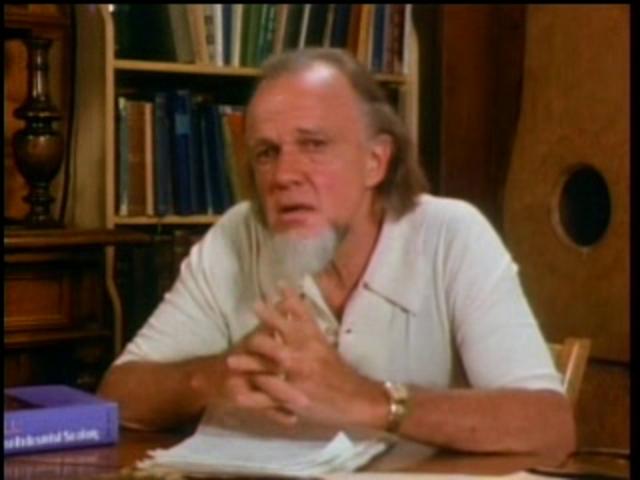
Below is a piece of that evidence given by Francis Schaeffer concerning the accuracy of the Bible.

TRUTH AND HISTORY (chapter 5 of WHATEVER HAPPENED TO THE HUMAN RACE?, under footnote #95)

Two things should be mentioned about the time of Moses in Old Testament history.

First, consider the archaeological evidence that relates to the period. True, it is not of the same explicitness that we have found, say, in relation to the existence of Ahab or Jehu or Jehoiakim. We have no inscription from Egypt which refers to Moses being taken out of the bulrushes and removed from the waterproof basket his mother had made him. But this does not mean that the Book of Exodus is a fictitious account, as some critics has suggested. Some say it is simply an idealized reading-back into history by the Jews under the later monarchy. There is not a reason why these “books of Moses,” as they are called, should not be treated as history, just as we have been forced to treat the Books of Kings and Chronicles dating 500 years later.

There is ample evidence about the building projects of the Egyptian kings, and the evidence we have fits well with Exodus. There are scenes of brick-making (for example, Theban Tomb 100 of Rekhmire). Contemporary parchments and papyri tell of production targets which had to be met. One speaks of a satisfied official report of his men as “making their quota of bricks daily” (Papyrus Anastasi III vso, p.3, in the British Museum. Also Louvre Leather Roll in the Louvre, Paris, col ii, mentions quotes of bricks and “taskmasters”). Actual bricks found show signs of straw which had to be mixed in with the clay, just as Exodus says. This matter of bricks and straw is further affirmed by the record that one despairing official complained, “There are no men to make bricks nor straw in my area.”

We know from contemporary discoveries that Semites were found at all levels of Egypt’s cosmopolitan society. (Brooklyn Museum, New York, no. 35, 1446. Papyrus Brooklyn). There is nothing strange therefore about Joseph’s becoming so important in the pharaoh’s court.

The store cities of Pithom and Raamses (Rameses) mentioned in Exodus 1:11 are well known in Egyptian inscriptions. Raamses was actually in the east-Delta capital, Pi-Ramses (near Goshen), where the Israelites would have had ample experience of agriculture. Thus, the references to agriculture found in the law of Moses would not have been strange to the Israelites even though they were in the desert at the time the law was given. Certainly there is no reason to say, as some critics do, that these sections on agriculture were an indication of a reading-back from a latter period when the Jews were settled in Canaan.

The form of the covenant made at Sinai has remarkable parallels with the covenant forms of other people at that time. (On covenants and parties to a treaty, the Louvre; and Treaty Tablet from Boghaz Koi (i.e., Hittite) in Turkey, Museum of Archaeology in Istanbul.) The covenant form at Sinai resembles just as the forms of letter writings of the first century after Christ (the types of introductions and greetings) are reflected in the letters of the apostles in the New Testament, it is not surprising to find the covenant form of the second millennium before Christ reflected in what occurred at Mount Sinai. God has always spoken to people within the culture of their time, which does not mean that God’s communication is limited by that culture. It is God’s communication but within the forms appropriate to the time.

The Pentateuch tells us that Moses led the Israelites up the east side of the Dead Sea after their long stay in the desert. There they encountered the hostile kingdom of Moab. We have firsthand evidence for the existence of this kingdom of Moab–contrary to what has been said by critical scholars who have denied the existence of Moab at this time. It can be found in a war scene from a temple at Luxor (Al Uqsor). This commemorates a victory by Ramses II over the Moabite nation at Batora (Luxor Temple, Egypt).

Also the definite presence of the Israelites in west Palestine (Canaan) no later than the end of the thirteenth century B.C. is attested by a victory stela of Pharaoh Merenptah (son and successor of Ramses II) to commemorate his victory over Libya (Israel Stela, Cairo Museum, no. 34025). In it he mentions his previous success in Canaan against Aschalon, Gize, Yenom, and Israel; hence there can be no doubt the nation of Israel was in existence at the latest by this time of approximately 1220 B.C. This is not to say it could not have been earlier, but it cannot be later than this date.

D. The Moabite Stone (Stela of Mesha) discovered at Dibon

Click to View
  1. The Moabite Stone was discovered by by Klein 1868 BC at the ancient city of Dibon.
  2. Before it could be fully documented, Muslims had smashed it to pieces because they superstitiously thought the black basalt stone had magical powers to protect their granaries. The Black stone in the Kabba at Mecca is a meteorite thought to have similar qualities which Muslims on their Hajj constantly kiss as they make their 7 counter-clockwise circles around the Black stone. (They only thought there were seven planets in 640 AD.)
  3. Only a fraction was found and put back together. It is presently housed in the Louvre in Paris, France.


  • The story on the Moabite Stone is a spectacular proof that the Bible is true history as told in 2 Kings 1:1; 3:4-27 “Now Mesha king of Moab was a sheep breeder, and used to pay the king of Israel 100,000 lambs and the wool of 100,000 rams.”2 Ki 3:4
  • Mesha King of Moab, wrote the Moabite stone in about 900 BC.
  • The Stele is the oldest known evidence of the Tetragrammaton YHWH (Yahweh) as the personal name God revealed to Moses. It also references the tribe of Gad. It also references two known kings from the Bible: Omri the king of Israel and Mesha King of Moab. It also harmonizes with the Bible in that the King of Moab paid tribute to Omri. There are also references to building many cisterns for water which is possibly a reference to the miracle of water God used to defeat the Moabites.
  • Translation of the Moabite Stone: “I am Mesha, the son of Kemoš-yatti, the king of Moab, from Dibon. My father was king over Moab for thirty years, and I was king after my father. And in Karchoh I made this high place for Kemoš […] because he has delivered me from all kings, and because he has made me look down on all my enemies. Omri was the king of Israel, and he oppressed Moab for many days, for Kemoš was angry with his land. And his son succeeded him, and he said -he too- “I will oppress Moab!” In my days he did so, but I looked down on him and on his house, and Israel has gone to ruin, yes, it has gone to ruin for ever! Omri had taken possession of the whole land of Medeba (Madaba) and he lived there in his days and half the days of his son, forty years, but Kemoš restored it in my days. And I built Baal Meon, and I made in it a water reservoir, and I built Kiriathaim. And the men of Gad lived in the land of Ataroth from ancient times, and the king of Israel built Ataroth for himself, and I fought against the city, and I captured, and I killed all the people from the city as a sacrifice for Kemoš and for Moab, and I brought back the fire-hearth of his Uncle from there, and I hauled it before the face of Kemoš in Kerioth, and I made the men of Sharon live there, as well as the men of Maharith. And Kemoš said to me: “Go, take Nebo from Israel!” And I went in the night, and I fought against it from the break of dawn until noon, and I took it, and I killed its whole population, seven thousand male citizens and aliens, female citizens and aliens, and servant girls; for I had put it to the ban of Aštar Kemoš. And from there, I took the vessels of YHWH, and I hauled them before the face of Kemoš. And the king of Israel had built Jahaz, and he stayed there during his campaigns against me, and Kemoš drove him away before my face, and I took two hundred men from Moab, all its division, and I led it up to Jahaz. And I have taken it in order to add it to Dibon. I have built Karchoh, the wall of the woods and the wall of the citadel, and I have built its gates, and I have built its towers, and I have built the house of the king, and I have made the double reservoir for the spring, in the innermost of the city. Now, there was no cistern in the innermost of the city, in Karchoh, and I said to all the people: “Make, each one of you, a cistern in his house.” And I cut out the moat for Karchoh by means of prisoners from Israel. I have built Aroer, and I made the military road in the Arnon. I have built Beth Bamoth, for it had been destroyed. I have built Bezer, for it lay in ruins. And the men of Dibon stood in battle-order, for all Dibon, they were in subjection. And I am the king over hundreds in the towns which I have added to the land. And I have built the House of Medeba and the House of Diblathaim, and the House of Baal Meon, and I brought there […] the flocks of the land. And Horonaim, there lived […]. And Kemoš said to me: “Go down, fight against Horonaim!” I went down […] and Kemoš restored it in my days. And […] from there […] And I […]”


Does the Merneptah Stele Contain the First Mention of Israel?

Scholars Manfred Görg, Peter van der Veen and Christoffer Theis say maybe not

Does the Merneptah Stele Contain the First Mention of Israel?

The Merneptah Stele has long been touted as the earliest extrabiblical reference to Israel.* The ancient Egyptian inscription dates to about 1205 B.C.E. and recounts the military conquests of the pharaoh Merneptah. Near the bottom of the hieroglyphic inscription, a people called “Israel” is said to have been wiped out by the conquering pharaoh. This has been used by some experts as evidence of the ethnogenesis of Israel around that time.

But a new publication by Egyptologists and Biblical scholars Manfred Görg, Peter van der Veen and Christoffer Theis suggests that there may be an even earlier reference to Israel in the Egyptian record. Manfred Görg discovered a broken statue pedestal containing hieroglyphic name-rings in the Egyptian Museum of Berlin and, after studying it with colleagues Peter van der Veen and Christoffer Theis, they suggest that one of the name-rings should be read as “Israel.” Not all scholars agree with their reading because of slight differences in spelling, but Görg, van der Veen and Theis offer strong arguments, including supportive parallels in the Merneptah Stele itself. This newly rediscovered inscription is dated to around 1400 B.C.E.—about 200 years earlier than the Merneptah Stele. If Görg, van der Veen and Theis are right, their discovery will shed important light on the beginnings of ancient Israel.

As the point where three of the world’s major religions converge, Israel’s history is one of the richest and most complex in the world. Sift through the archaeology and history of this ancient land in the free eBook Israel: An Archaeological Journey, and get a view of these significant Biblical sites through an archaeologist’s lens.

Notes

* See Frank J. Yurco, “3,200-Year-Old Pictures of Israelites Found in Egypt,” Biblical Archaeology Review, September/October 1990.


For more about the discovery of a possible first mention of Israel before the Merneptah Stele by scholars Manfred Görg, Peter van der Veen and Christoffer Theis, see “When Did Ancient Israel Begin?” in Biblical Archaeology Review, January/February 2012.

Related posts:

FRANCIS SCHAEFFER ANALYZES ART AND CULTURE Part 53 THE BEATLES (Part E, Stg. Pepper’s and John Lennon’s search in 1967 for truth was through drugs, money, laughter, etc & similar to King Solomon’s, LOTS OF PICTURES OF JOHN AND CYNTHIA) (Feature on artist Yoko Ono)

The John Lennon and the Beatles really were on a long search for meaning and fulfillment in their lives  just like King Solomon did in the Book of Ecclesiastes. Solomon looked into learning (1:12-18, 2:12-17), laughter, ladies, luxuries, and liquor (2:1-2, 8, 10, 11), and labor (2:4-6, 18-20). He fount that without God in the picture all […]

FRANCIS SCHAEFFER ANALYZES ART AND CULTURE Part 52 THE BEATLES (Part D, There is evidence that the Beatles may have been exposed to Francis Schaeffer!!!) (Feature on artist Anna Margaret Rose Freeman )

______________   George Harrison Swears & Insults Paul and Yoko Lucy in the Sky with Diamonds- The Beatles The Beatles:   I have dedicated several posts to this series on the Beatles and I don’t know when this series will end because Francis Schaeffer spent a lot of time listening to the Beatles and talking […]

FRANCIS SCHAEFFER ANALYZES ART AND CULTURE Part 51 THE BEATLES (Part C, List of those on cover of Stg.Pepper’s ) (Feature on artist Raqib Shaw )

  The Beatles in a press conference after their Return from the USA Uploaded on Nov 29, 2010 The Beatles in a press conference after their Return from the USA. The Beatles:   I have dedicated several posts to this series on the Beatles and I don’t know when this series will end because Francis […]

FRANCIS SCHAEFFER ANALYZES ART AND CULTURE Part 50 THE BEATLES (Part B, The Psychedelic Music of the Beatles) (Feature on artist Peter Blake )

__________________   Beatles 1966 Last interview I have dedicated several posts to this series on the Beatles and I don’t know when this series will end because Francis Schaeffer spent a lot of time listening to the Beatles and talking and writing about them and their impact on the culture of the 1960’s. In this […]

FRANCIS SCHAEFFER ANALYZES ART AND CULTURE Part 49 THE BEATLES (Part A, The Meaning of Stg. Pepper’s Cover) (Feature on artist Mika Tajima)

_______________ The Beatles documentary || A Long and Winding Road || Episode 5 (This video discusses Stg. Pepper’s creation I have dedicated several posts to this series on the Beatles and I don’t know when this series will end because Francis Schaeffer spent a lot of time listening to the Beatles and talking and writing about […]

FRANCIS SCHAEFFER ANALYZES ART AND CULTURE PART 48 “BLOW UP” by Michelangelo Antonioni makes Philosophic Statement (Feature on artist Nancy Holt)

_______________ Francis Schaeffer pictured below: _____________________ I have included the 27 minute  episode THE AGE OF NONREASON by Francis Schaeffer. In that video Schaeffer noted,  ” Sergeant Pepper’s Lonely Hearts Club Band…for a time it became the rallying cry for young people throughout the world. It expressed the essence of their lives, thoughts and their feelings.” How Should […]

FRANCIS SCHAEFFER ANALYZES ART AND CULTURE Part 47 Woody Allen and Professor Levy and the death of “Optimistic Humanism” from the movie CRIMES AND MISDEMEANORS Plus Charles Darwin’s comments too!!! (Feature on artist Rodney Graham)

Crimes and Misdemeanors: A Discussion: Part 1 ___________________________________ Today I will answer the simple question: IS IT POSSIBLE TO BE AN OPTIMISTIC SECULAR HUMANIST THAT DOES NOT BELIEVE IN GOD OR AN AFTERLIFE? This question has been around for a long time and you can go back to the 19th century and read this same […]

FRANCIS SCHAEFFER ANALYZES ART AND CULTURE PART 46 Friedrich Nietzsche (Featured artist is Thomas Schütte)

____________________________________ Francis Schaeffer pictured below: __________ Francis Schaeffer has written extensively on art and culture spanning the last 2000years and here are some posts I have done on this subject before : Francis Schaeffer’s “How should we then live?” Video and outline of episode 10 “Final Choices” , episode 9 “The Age of Personal Peace and Affluence”, episode 8 […]

FRANCIS SCHAEFFER ANALYZES ART AND CULTURE Part 45 Woody Allen “Reason is Dead” (Feature on artists Allora & Calzadilla )

Love and Death [Woody Allen] – What if there is no God? [PL] ___________ _______________ How Should We then Live Episode 7 small (Age of Nonreason) #02 How Should We Then Live? (Promo Clip) Dr. Francis Schaeffer 10 Worldview and Truth Two Minute Warning: How Then Should We Live?: Francis Schaeffer at 100 Francis Schaeffer […]

FRANCIS SCHAEFFER ANALYZES ART AND CULTURE Part 44 The Book of Genesis (Featured artist is Trey McCarley )

___________________________________ Francis Schaeffer pictured below: ____________________________ Francis Schaeffer “BASIS FOR HUMAN DIGNITY” Whatever…HTTHR Dr. Francis schaeffer – The flow of Materialism(from Part 4 of Whatever happened to human race?) Dr. Francis Schaeffer – The Biblical flow of Truth & History (intro) Francis Schaeffer – The Biblical Flow of History & Truth (1) Dr. Francis Schaeffer […]

THE ARTISTS, POETS and PROFESSORS of BLACK MOUNTAIN COLLEGE (the college featured in the film THE LONGEST RIDE) Part 19 composer Heinrich Jalowetz, student of Arnold Schoenberg

_______________

Fully Awake – PREVIEW

____________

My first post in this series was on the composer John Cage and my second post was on Susan Weil and Robert Rauschenberg who were good friend of CageThe third post in this series was on Jorge Fick. Earlier we noted that  Fick was a student at Black Mountain College and an artist that lived in New York and he lent a suit to the famous poet Dylan Thomas and Thomas died in that suit.

The fourth post in this series is on the artist  Xanti Schawinsky and he had a great influence on John Cage who  later taught at Black Mountain College. Schawinsky taught at Black Mountain College from 1936-1938 and Cage right after World War II. In the fifth post I discuss David Weinrib and his wife Karen Karnes who were good friends with John Cage and they all lived in the same community. In the 6th post I focus on Vera B. William and she attended Black Mountain College where she met her first husband Paul and they later  co-founded the Gate Hill Cooperative Community and Vera served as a teacher for the community from 1953-70. John Cage and several others from Black Mountain College also lived in the Community with them during the 1950’s. In the 7th post I look at the life and work of M.C.Richards who also was part of the Gate Hill Cooperative Community and Black Mountain College.

In the 8th post I look at book the life of   Anni Albers who is  perhaps the best known textile artist of the 20th century and at Paul Klee who was one  of her teachers at Bauhaus. In the 9th post the experience of Bill Treichler in the years of 1947-1949  is examined at Black Mountain College. In 1988, Martha and Bill started The Crooked Lake Review, a local history journal and Bill passed away in 2008 at age 84.

In the 10th post I look at the art of Irwin Kremen who studied at Black Mountain College in 1946-47 and there Kremen spent his time focused on writing and the literature classes given by the poet M. C. Richards. In the 11th post I discuss the fact that Josef Albers led the procession of dozens of Bauhaus faculty and students to Black Mountain.

In the 12th post I feature Wassily Kandinsky (1866-1944) who was featured in the film THE LONGEST RIDE and the film showed Kandinsky teaching at BLACK MOUNTAIN COLLEGE which was not true according to my research. Evidently he was invited but he had to decline because of his busy schedule but many of his associates at BRAUHAUS did teach there. In the 13th post I look at the writings of the communist Charles Perrow. 

Willem de Kooning was such a major figure in the art world and because of that I have dedicated the 14th15th and 16th posts in this series on him. Paul McCartney got interested in art through his friendship with Willem because Linda’s father had him as a client. Willem was a  part of New York School of Abstract expressionism or Action painting, others included Jackson Pollock, Elaine de Kooning, Lee Krasner, Franz Kline, Arshile Gorky, Mark Rothko, Hans Hofmann, Adolph Gottlieb, Anne Ryan, Robert Motherwell, Philip Guston, Clyfford Still, and Richard Pousette-Dart.

In the 17th post I look at the founder Ted Dreier and his strength as a fundraiser that make the dream of Black Mountain College possible. In the 18th post I look at the life of the famous San Francisco poet Robert Duncan who was both a student at Black Mountain College in 1933 and a professor in 1956. In the 19th post I look at the composer Heinrich Jalowetz who starting teaching at Black Mountain College in 1938 and he was one of  Arnold Schoenberg‘s seven ‘Dead Friends’ (the others being Berg, Webern, Alexander Zemlinsky, Franz Schreker, Karl Kraus and Adolf Loos).

Scott Eastwood Interview – The Longest Ride

In the article ‘The Longest Ride,’ A Love Story About Luke, A Champion Bull Rider, And Sophia, A Young College Girl, Is Based On The Bestselling Nicholas Sparks Novel, Hits Theaters April 10, 2015, I read:

From the art of bull riding to the art of…art, Nicholas Sparks’ research took him to unexpected places. “One of the story’s principal locales ended up being one of the greatest moments of kismet in my entire career,” he continues. “I remember sitting at the desk thinking, how on earth is this couple [young Ira and Ruth] from North Carolina going to become big art collectors?

“My research led me to Black Mountain College, which was the center of the modern art movement in the 1930s, 1940s and 1950s.”

Black Mountain College was founded in the 1930s as an experimental college. It came to define the modern art movement. “Everyone from de Kooning to Rauschenberg was there,” says Sparks. “Robert De Niro’s father, another noted artist, attended Black Mountain College. There were very famous artists there and if you look at the American modern art movement in the 1940s and 1950s, there were important intersections there with the great works of this century.”

Group Portrait, Blue Ridge Campus, Black Mountain College. Photograph of Charles Lindsley (?), John Evarts, Robert Wunsch, Erwin Straus, Heinrich Jalowetz.


Heinrich Jalowetz (Black Mountain College music instructor, 1939-1946) with students

Faculty meeting at Black Mountain College, Blue Ridge campus. Left to right: Robert Wunsch, Josef Albers, Heinrich Jalowetz, Theodore Dreier, Erwin Straus,…

Faculty meeting; Left to right: Robert Wunsch, Josef Albers, Heinrich Jalowetz, Theodore Dreier, Erwin Straus, unknown, Lawrence Kocher.

__________


Albers1

Josef Albers critiquing student work. Left to right: Frances Kuntz,
Hope Stephens (Foote), Lisa Jalowetz (Aronson), Bela Martin, Elizabeth Brett (Hamlin).


_______________

Jalowetz, Heinrich. At BMC 1939-46. Taught Music. Had been conductor in Europe, including Prague and Cologne, member of Schoenberg’s inner circle. Forced out by Nazis. Died 1946.

Heinrich Jalowetz

From Wikipedia, the free encyclopedia

Heinrich Jalowetz (December 3, 1882,[1] Brno – February 2, 1946,[2] Black Mountain, North Carolina, USA) was an Austrian musicologist and conductor who settled in the USA. He was one of the core members of what became known as the Second Viennese Schoolin the orbit of Arnold Schoenberg.

A musicology pupil of Guido Adler,[3] Jalowetz was among Schoenberg’s first students in Vienna, 1904-1908. From 1909 to 1933 he worked as a conductor in Regensburg, Danzig, Stettin, Prague, Vienna and Cologne (as successor to Otto Klemperer). After emigrating to the USA in 1938 he taught at Black Mountain College, North Carolina. Though his name is less widely known than that of many of Schoenberg’s more famous students, Schoenberg regarded Jalowetz very highly indeed. He is one of the seven ‘Dead Friends’ (the others being Berg, Webern, Alexander Zemlinsky, Franz Schreker, Karl Kraus and Adolf Loos) to whom he once envisaged dedicating his book Style and Idea, with the comment that those men ‘belong to those with whom principles of music, art, artistic morality and civic morality need not be discussed. There was a silent and sound mutual understanding on all these matters’.

Stravinsky on art and limits vs. Schaeffer on 20th-century music

5584025334_3ed64aa69a_z

I’m in the country this summer, reading, resting, and working on curriculum projects. One of these projects is sets of Composer Study lessons. The best part, so far, has been reading some great books about music and the appreciation of music, including Igor Stravinsky’s Poetics of Music in the Form of Six Lessons.

Here are a few gems:

“The old original sin was chiefly a sin of knowledge; the new original sin, if I may speak in these terms, is first and for most a sin of non-acknowledgement — a refusal to acknowledge the truth and the laws that proceed therefrom, laws that we have called fundamental.”

“For imagination is not only the mother of caprice but the servant and handmaiden of the creative will as well. The creator’s function is to sift the elements he receives from her, for human activity must impose limits on itself. The more art is controlled, limited, worked over, the more it is free.”

“I have no use for theoretical freedom.”

I find these fascinating because they contradict a simplistic understanding of the “modern” period in art and cultural history as one of license and fragmentation, in which art governed by chance and lacking in limits was elevated above the art of order and natural law that supposedly existed before (in the Golden Age of Bach and Rembrandt who Believed in God).

In trying to remember where I got that simplistic understanding in the first place, I realized it probably originated from Francis Schaeffer and a system of teaching about art and culture that was born out of his book How Shall We Then Live?, published in 1976. I looked it up today, my country retreat handily having a copy. He doesn’t have much to say about Stravinsky (and no wonder, I suppose, because Stravinsky, though hugely influential in 20th-century music, does not strengthen his case), but he does have this to say about Schoenberg:

“Then came Schoenberg (1874-1951), and with him we are into the music which was a vehicle for modern thought. Schoenberg totally rejected the past tradition in music and invented the ’12-tone row.’ This was ‘modern’ in that there was perpetual variation with no resolution. This stands in sharp contrast to Bach who, on his biblical base, had much diversity but always resolution. Bach’s music had resolution because as a Christian he believed that there will be resolution both for each individual life and for history. As the music which came out of the biblical teaching of the Reformation was shaped by that world view, so the world view of modern man shapes modern music.”

Here, in contrast, is what Stravinsky has to say about Schoenberg’s music inPoetics of Music:

“Cacophony means bad sound, contraband merchandise, uncoordinated music that will not stand up under serious criticism. Whatever opinion one may hold about the music of Arnold Schoenberg (to take as an example a composer evolving along lines essentially different from mine, both aesthetically and technically), whose works have frequently given rise to violent reactions or ironic smiles — it is impossible for a self-respecting mind equipped with genuine musical culture not to feel that the composer of Pierrot Lunaire is fully aware of what he is doing and that he is not trying to deceive anyone. He adopted the musical system suited to his needs and, within that system, he is perfectly consistent with himself, perfectly coherent. One cannot dismiss music that he dislikes by labeling it cacophony.”

Schaeffer argues that Schoenberg turns his back on resolution, but Stravinsky argues that, within the perfectly rational system he uses, Schoenberg is coherent. What is resolution in music but meeting the expectations of a certain system of tonality? “Will they be met? Will they be met? Yes, here it is.” That’s what’s happening in our brains when we listen. A friend of mine who studied music composition once told me that, with training, the ear hears 12-tone music with the same dialogue of expectation and fulfillment that we naturally bring to our more common system of major/minor tonality.

It isn’t that 12-tone music is a system of constant variation but no resolution. It’s that resolution occurs under different circumstances within the 12-tone system. The tonality of Bach happens to be better-known and easier for us to hear, but Schoenberg’s system is no less ordered. It doesn’t deny an ordered universe.

Back to those interesting Stravinsky quotes at the beginning of the post, you would think that the “revolutionary” whose Rite of Spring caused an actual riot upon first hearing would support Schaeffer’s claims about fragmentation in 20th century music, but in Poetics of Music he sounds as orderly and unified as Schaeffer could wish. “Art is by essence constructive,” Stravinsky says, and “art is the contrary of chaos. It never gives itself up to chaos without immediately finding its living works, its very existence, threatened.”

I find Stravinsky’s words encouraging as I go about the large task of trying to help students hear order in music, to listen, within any given musical framework, for tension and release, for narrative, for drama, for idea, for dialogue. It is no less difficult with Mozart, which students can hear simply as “nice” or “boring,” than it is for Schoenberg and Stravinsky, which they might perceive as “ugly,” but it is a worthwhile endeavor for both.

Schoenberg: Variations for Orchestra Op 31 (1934) – Pierre Boulez and the CSO (Part 1)

Arnold Schoenberg

From Wikipedia, the free encyclopedia

Arnold Schoenberg, Los Angeles, 1948

Arnold Schoenberg or Schönberg (German: [ˈaːʁnɔlt ˈʃøːnbɛʁk]; 13 September 1874 – 13 July 1951) was an Austrian composer and painter, associated with the expressionist movement in German poetry and art, and leader of the Second Viennese School. With the rise of the Nazi Party, by 1938 Schoenberg’s works were labelled as degenerate music because he was Jewish (Anon. 1997–2013); he moved to the United States in 1934.

Schoenberg’s approach, both in terms of harmony and development, has been one of the most influential of 20th-century musical thought. Many European and American composers from at least three generations have consciously extended his thinking, whereas others have passionately reacted against it.

Schoenberg was known early in his career for simultaneously extending the traditionally opposed German Romantic styles of Brahms and Wagner. Later, his name would come to personify innovations in atonality (although Schoenberg himself detested that term) that would become the most polemical feature of 20th-century art music. In the 1920s, Schoenberg developed the twelve-tone technique, an influential compositional method of manipulating an ordered series of all twelve notes in the chromatic scale. He also coined the term developing variation and was the first modern composer to embrace ways of developing motifs without resorting to the dominance of a centralized melodic idea.

Schoenberg was also a painter, an important music theorist, and an influential teacher of composition; his students included Alban Berg, Anton Webern, Hanns Eisler, Egon Wellesz, and later John Cage, Lou Harrison, Earl Kim,Leon Kirchner, and other prominent musicians. Many of Schoenberg’s practices, including the formalization of compositional method and his habit of openly inviting audiences to think analytically, are echoed in avant-gardemusical thought throughout the 20th century. His often polemical views of music history and aesthetics were crucial to many significant 20th-century musicologists and critics, including Theodor W. Adorno, Charles Rosen andCarl Dahlhaus, as well as the pianists Artur Schnabel, Rudolf Serkin, Eduard Steuermann and Glenn Gould.

Schoenberg’s archival legacy is collected at the Arnold Schönberg Center in Vienna.

Bogeyman — Prophet — Guardian (Schoenberg documentary): Episode 1: Part 1

Biography[edit]

Early life[edit]

Arnold Schönberg in Payerbach, 1903

Arnold Schoenberg was born into a lower middle-class Jewish family in the Leopoldstadt district (in earlier times a Jewish ghetto) of Vienna, at “Obere Donaustraße 5”. His father Samuel, a native of Bratislava, was ashopkeeper, and his mother Pauline was native of Prague. Arnold was largely self-taught. He took only counterpoint lessons with the composer Alexander von Zemlinsky, who was to become his first brother-in-law (Beaumont 2000, 87).

In his twenties, Schoenberg earned a living by orchestrating operettas, while composing his own works, such as the string sextet Verklärte Nacht (“Transfigured Night”) (1899). He later made an orchestral version of this, which became one of his most popular pieces. Both Richard Strauss and Gustav Mahler recognized Schoenberg’s significance as a composer; Strauss when he encountered Schoenberg’s Gurre-Lieder, and Mahler after hearing several of Schoenberg’s early works.

Strauss turned to a more conservative idiom in his own work after 1909, and at that point dismissed Schoenberg. Mahler adopted him as a protégé and continued to support him, even after Schoenberg’s style reached a point Mahler could no longer understand. Mahler worried about who would look after him after his death. Schoenberg, who had initially despised and mocked Mahler’s music, was converted by the “thunderbolt” of Mahler’s Third Symphony, which he considered a work of genius. Afterward he “spoke of Mahler as a saint” (Stuckenschmidt 1977, 103; Schoenberg 1975, 136).

In 1898 Schoenberg converted to Christianity in the Lutheran church. According to MacDonald (2008, 93) this was partly to strengthen his attachment to Western European cultural traditions, and partly as a means of self-defence “in a time of resurgent anti-Semitism”. In 1933, after long meditation, he returned to Judaism, because he realised that “his racial and religious heritage was inescapable”, and to take up an unmistakable position on the side opposing Nazism. He would self-identify as a member of the Jewish religion later in life (Marquis Who’s Who n.d.).

In October 1901, he married Mathilde Zemlinsky, the sister of the conductor and composer Alexander von Zemlinsky, with whom Schoenberg had been studying since about 1894. Mathilde bore him two children, Gertrud (1902–1947) and Georg (1906–1974). Gertrud would marry Schoenberg’s pupil Felix Greissle in 1921 (Neighbour 2001). During the summer of 1908, his wife Mathilde left him for several months for a young Austrian painter,Richard Gerstl. This period marked a distinct change in Schoenberg’s work. It was during the absence of his wife that he composed “You lean against a silver-willow” (German: Du lehnest wider eine Silberweide), the thirteenth song in the cycle Das Buch der Hängenden Gärten, Op. 15, based on the collection of the same name by the German mystical poet Stefan George. This was the first composition without any reference at all to a key (Stuckenschmidt 1977, 96). Also in this year, he completed one of his most revolutionary compositions, the String Quartet No. 2, whose first two movements, though chromatic in color, use traditional key signatures, yet whose final two movements, also settings of George, daringly weaken the links with traditional tonality. Both movements end on tonic chords, and the work is not fully non-tonal. Breaking with previous string-quartet practice, it incorporates a soprano vocal line.

Schoenberg’s Der Rote Blick (Red Gaze), 1910

Bogeyman — Prophet — Guardian (Schoenberg documentary): Episode 1: Part 2

Bogeyman — Prophet — Guardian (Schoenberg documentary): Episode 1: Part 3

Bogeyman — Prophet — Guardian (Schoenberg documentary): Episode 2: Part 1

Bogeyman — Prophet — Guardian (Schoenberg documentary): Episode 2: Part 2

Bogeyman — Prophet — Guardian (Schoenberg documentary): Episode 2: Part 3

Published on Jun 26, 2013

Final part of the second episode in a two-part series on composer Arnold Schoenberg. Directed by the inimitable Barrie Gavin, 1974.


During the summer of 1910, Schoenberg wrote his Harmonielehre (Theory of Harmony, Schoenberg 1922), which remains one of the most influential music-theory books. From about 1911, Schoenberg belonged to a circle of artists and intellectuals who included Lene Schneider-Kainer, Franz Werfel, Herwarth Walden and the latter’s wife, Else Lasker-Schüler.

In 1910 he met Edward Clark, an English music journalist then working in Germany. Clark became his sole English student, and in his later capacity as a producer for the BBC he was responsible for introducing many of Schoenberg’s works, and Schoenberg himself, to Britain (as well as Webern, Berg and others).

Another of his most important works from this atonal or pantonal period is the highly influential Pierrot Lunaire, Op. 21, of 1912, a novel cycle of expressionist songs set to a German translation of poems by the Belgian-French poetAlbert Giraud. Utilizing the technique of Sprechstimme, or melodramatically spoken recitation, the work pairs a female vocalist with a small ensemble of five musicians. The ensemble, which is now commonly referred to as the Pierrot ensemble, consists of flute (doubling on piccolo), clarinet (doubling on bass clarinet), violin (doubling on viola), violoncello, speaker, and piano.

Wilhelm Bopp, director of the Vienna Conservatory from 1907, wanted a break from the stale environment personified for him by Robert Fuchs and Hermann Graedener. Having considered many candidates, he offered teaching positions to Schoenberg and Franz Schreker in 1912. At the time Schoenberg lived in Berlin. He was not completely cut off from the Vienna Conservatory, having taught a private theory course a year earlier. He seriously considered the offer, but he declined. Writing afterward to Alban Berg, he cited his “aversion to Vienna” as the main reason for his decision, while contemplating that it might have been the wrong one financially, but having made it he felt content. A couple of months later he wrote to Schreker suggesting that it might have been a bad idea for him as well to accept the teaching position (Hailey 1993, 55–57).

World War I[edit]

Arnold Schoenberg, byEgon Schiele 1917

World War I brought a crisis in his development. Military service disrupted his life when at the age of 42 he was in the army. He was never able to work uninterrupted or over a period of time, and as a result he left many unfinished works and undeveloped “beginnings”. On one occasion, a superior officer demanded to know if he was “this notorious Schoenberg, then”; Schoenberg replied: “Beg to report, sir, yes. Nobody wanted to be, someone had to be, so I let it be me” (Schoenberg 1975, 104) (according to Norman Lebrecht (2001), this is a reference to Schoenberg’s apparent “destiny” as the “Emancipator of Dissonance”).

In what Ross calls an “act of war psychosis,” Schoenberg drew comparisons between Germany’s assault on France and his assault on decadent bourgeois artistic values. In August 1914, while denouncing the music of Bizet,Stravinsky and Ravel, he wrote: “Now comes the reckoning! Now we will throw these mediocre kitschmongers into slavery, and teach them to venerate the German spirit and to worship the German God” (Ross 2007, 60).

The deteriorating relation between contemporary composers and the public led him to found the Society for Private Musical Performances (Verein für musikalische Privataufführungen in German) in Vienna in 1918. He sought to provide a forum in which modern musical compositions could be carefully prepared and rehearsed, and properly performed under conditions protected from the dictates of fashion and pressures of commerce. From its inception through 1921, when it ended because of economic reasons, the Society presented 353 performances to paid members, sometimes at the rate of one per week. During the first year and a half, Schoenberg did not let any of his own works be performed (Rosen 1975, 65). Instead, audiences at the Society’s concerts heard difficult contemporary compositions by Scriabin, Debussy, Mahler, Webern, Berg, Reger, and other leading figures of early 20th-century music (Rosen 1996, 66).

Development of the twelve-tone method[edit]

Arnold Schoenberg, 1927, by Man Ray

Later, Schoenberg was to develop the most influential version of the dodecaphonic (also known as twelve-tone) method of composition, which in French and English was given the alternative name serialism by René Leibowitz andHumphrey Searle in 1947. This technique was taken up by many of his students, who constituted the so-called Second Viennese School. They included Anton Webern, Alban Berg and Hanns Eisler, all of whom were profoundly influenced by Schoenberg. He published a number of books, ranging from his famous Harmonielehre (Theory of Harmony) to Fundamentals of Musical Composition (Schoenberg 1967), many of which are still in print and used by musicians and developing composers.

Schoenberg viewed his development as a natural progression, and he did not deprecate his earlier works when he ventured into serialism. In 1923 he wrote to the Swiss philanthropist Werner Reinhart:

“For the present, it matters more to me if people understand my older works … They are the natural forerunners of my later works, and only those who understand and comprehend these will be able to gain an understanding of the later works that goes beyond a fashionable bare minimum. I do not attach so much importance to being a musical bogey-man as to being a natural continuer of properly-understood good old tradition!” (Stein 1987, 100; quoted in Strimple 2005, 22)

His first wife died in October 1923, and in August of the next year Schoenberg married Gertrud Kolisch (1898–1967), sister of his pupil, the violinist Rudolf Kolisch (Neighbour 2001; Silverman 2010, 223). She wrote the libretto for Schoenberg’s one-act opera Von heute auf morgen under the pseudonym Max Blonda. At her request Schoenberg’s (ultimately unfinished) piece, Die Jakobsleiter was prepared for performance by Schoenberg’s studentWinfried Zillig. After her husband’s death in 1951 she founded Belmont Music Publishers devoted to the publication of his works (Shoaf 1992, 64). Arnold used the notes G and E (German: Es, i.e., “S”) for “Gertrud Schoenberg”, in the Suite, for septet, Op. 29 (1925) (MacDonald 2008, 216) (see musical cryptogram).

Following the 1924 death of composer Ferruccio Busoni, who had served as Director of a Master Class in Composition at the Prussian Academy of Arts in Berlin, Schoenberg was appointed to this post the next year, but because of health problems was unable to take up his post until 1926. Among his notable students during this period were the composers Roberto Gerhard, Nikos Skalkottas, and Josef Rufer.

Along with his twelve-tone works, 1930 marks Schoenberg’s return to tonality, with numbers 4 and 6 of the Six Pieces for Male Chorus Op.35, the other pieces being dodecaphonic (Auner 1999, 85).

Third Reich and move to America[edit]

Schoenberg continued in his post until the Nazis came to power under Adolf Hitler in 1933. While vacationing in France, he was warned that returning to Germany would be dangerous. Schoenberg formally reclaimed membership in the Jewish religion at a Paris synagogue, then traveled with his family to the United States (Friedrich 1986, 31). However, this happened only after his attempts to move to Britain came to nothing. He enlisted the aid of his former student and great champion Edward Clark, now a senior producer with the BBC, in helping him gain a British teaching post or even a British publisher, but to no avail.

His first teaching position in the United States was at the Malkin Conservatory in Boston. He moved to Los Angeles, where he taught at the University of Southern California and the University of California, Los Angeles, both of which later named a music building on their respective campuses Schoenberg Hall (UCLA Department of Music [2008]; University of Southern California Thornton School of Music [2008]). He was appointed visiting professor at UCLA in 1935 on the recommendation of Otto Klemperer, music director and conductor of the Los Angeles Philharmonic Orchestra[citation needed]; and the next year was promoted to professor at a salary of $5,100 per year, which enabled him in either May 1936 or 1937 to buy a Spanish Revival house at 116 North Rockingham in Brentwood Park, near the UCLA campus, for $18,000. This address was directly across the street from Shirley Temple‘s house, and there he befriended fellow composer (and tennis partner) George Gershwin. The Schoenbergs were able to employ domestic help and began holding Sunday afternoon gatherings that were known for excellent coffee and Viennese pastries. Frequent guests included Otto Klemperer (who studied composition privately with Schoenberg beginning in April 1936), Edgard Varèse, Joseph Achron, Louis Gruenberg, Ernst Toch, and, on occasion, well-known actors such as Harpo Marx and Peter Lorre (Crawford 2009, 116; Feisst 2011, 6; Laskin 2008; MacDonald 2008, 79; Schoenberg 1975, 514; Starr 1997, 383; Watkins 2010, 114). Composers Leonard Rosenman and George Tremblay studied with Schoenberg at this time.

After his move to the United States in 1934 (Steinberg 1995, 463), the composer used the alternative spelling of his surname Schoenberg, rather than Schönberg, in what he called “deference to American practice” (Foss 1951, 401), though according to one writer he first made the change a year earlier (Ross 2007, 45).

He lived there the rest of his life, but at first he was not settled. In around 1934, he applied for a position of teacher of harmony and theory at the New South Wales State Conservatorium in Sydney. The Director, Edgar Bainton, rejected him for being Jewish and for having “modernist ideas and dangerous tendencies”. Schoenberg also at one time explored the idea of emigrating to New Zealand. His secretary and student (and nephew of Schoenberg’s mother-in-law Henriette Kolisch), was Richard (Dick) Hoffmann Jr, Viennese-born but who lived in New Zealand 1935–47, and Schoenberg had since childhood been fascinated with islands, and with New Zealand in particular, possibly because of the beauty of the postage stamps issued by that country (Plush 1996).

Stroop Report original caption: “Smoking out the Jews and bandits.” –Warsaw Ghetto Uprising

During this final period, he composed several notable works, including the difficult Violin Concerto, Op. 36 (1934/36), the Kol Nidre, Op. 39, for chorus and orchestra (1938), the Ode to Napoleon Buonaparte, Op. 41 (1942), the haunting Piano Concerto, Op. 42 (1942), and his memorial to the victims of the Holocaust, A Survivor from Warsaw, Op. 46 (1947). He was unable to complete his opera Moses und Aron (1932/33), which was one of the first works of its genre written completely using dodecaphonic composition. Along with twelve-tone music, Schoenberg also returned to tonality with works during his last period, like the Suite for Strings in G major (1935), theChamber Symphony No. 2 in E minor, Op. 38 (begun in 1906, completed in 1939), the Variations on a Recitative in D minor, Op. 40 (1941). During this period his notable students included John Cage and Lou Harrison.

In 1941 he became a citizen of the United States.

Later years and death[edit]

Schoenberg’s grave in theZentralfriedhof, Vienna

Schoenberg’s superstitious nature may have triggered his death. The composer had triskaidekaphobia (the fear of the number 13), and according to friend Katia Mann, he feared he would die during a year that was a multiple of 13 (quoted in Lebrecht 1985, 294). He dreaded his sixty-fifth birthday in 1939 so much that a friend asked the composer and astrologer Dane Rudhyar to prepare Schoenberg’s horoscope. Rudhyar did this and told Schoenberg that the year was dangerous, but not fatal.

But in 1950, on his seventy-sixth birthday, an astrologer wrote Schoenberg a note warning him that the year was a critical one: 7 + 6 = 13 (Nuria Schoenberg-Nono, quoted in Lebrecht 1985, 295). This stunned and depressed the composer, for up to that point he had only been wary of multiples of 13 and never considered adding the digits of his age. He died on Friday, 13 July 1951, shortly before midnight. Schoenberg had stayed in bed all day, sick, anxious and depressed. His wife Gertrud reported in a telegram to her sister-in-law Ottilie the next day that Arnold died at 11:45 pm, 15 minutes before midnight (Stuckenschmidt 1977, 520). In a letter to Ottilie dated 4 August 1951, Gertrud explained, “About a quarter to twelve I looked at the clock and said to myself: another quarter of an hour and then the worst is over. Then the doctor called me. Arnold’s throat rattled twice, his heart gave a powerful beat and that was the end” (Stuckenschmidt 1977, 521).

Schoenberg’s ashes were later interred at the Zentralfriedhof in Vienna on 6 June 1974 (McCoy 1999, 15).

Music[edit]

MENU
0:00
Played by the Carmel Quartet with soprano Rona Israel-Kolatt, in 2007

Problems playing this file? See media help.

In Schoenberg’s Variations for Orchestra, Op. 31tone row form P1’s second half has the same notes, in a different order, as the first half of I10: “Thus it is possible to employ P1 and I10 simultaneously and in parallel motion without causing note doubling” (Leeuw 2005, 154–55). About this sound Play 

Featuring hexachordal combinatoriality between its primary forms, P1 and I6, Schoenberg’s Piano Piece, Op. 33a tone row About this sound Play  contains threeperfect fifths, which is the relation between P1 and I6, and a source of contrast between, “accumulations of 5ths”, and, “generally more complex simultaneity” (Leeuw 2005, 155–57). For example group A consists of B-F-C-B while the, “more blended”, group B consists of A-F-C-D

Schoenberg’s significant compositions in the repertory of modern art music extend over a period of more than 50 years. Traditionally they are divided into three periods though this division is arguably arbitrary as the music in each of these periods is considerably varied. The idea that his twelve-tone period “represents a stylistically unified body of works is simply not supported by the musical evidence” (Haimo 1990, 4), and important musical characteristics—especially those related to motivic development—transcend these boundaries completely. The first of these periods, 1894–1907, is identified in the legacy of the high-Romantic composers of the late nineteenth century, as well as with “expressionist” movements in poetry and art. The second, 1908–1922, is typified by the abandonment of key centers, a move often described (though not by Schoenberg) as “free atonality”. The third, from 1923 onward, commences with Schoenberg’s invention of dodecaphonic, or “twelve-tone” compositional method. Schoenberg’s best-known students, Hanns Eisler,Alban Berg, and Anton Webern, followed Schoenberg faithfully through each of these intellectual and aesthetic transitions, though not without considerable experimentation and variety of approach.

First period: Late Romanticism[edit]

Beginning with songs and string quartets written around the turn of the century, Schoenberg’s concerns as a composer positioned him uniquely among his peers, in that his procedures exhibited characteristics of both Brahms and Wagner, who for most contemporary listeners, were considered polar opposites, representing mutually exclusive directions in the legacy of German music. Schoenberg’s Six Songs, Op. 3 (1899–1903), for example, exhibit a conservative clarity of tonal organization typical of Brahms and Mahler, reflecting an interest in balanced phrases and an undisturbed hierarchy of key relationships. However, the songs also explore unusually bold incidental chromaticism, and seem to aspire to a Wagnerian “representational” approach to motivic identity. The synthesis of these approaches reaches an apex in his Verklärte Nacht, Op. 4 (1899), a programmatic work for string sextet that develops several distinctive “leitmotif“-like themes, each one eclipsing and subordinating the last. The only motivic elements that persist throughout the work are those that are perpetually dissolved, varied, and re-combined, in a technique, identified primarily in Brahms’s music, that Schoenberg called “developing variation”. Schoenberg’s procedures in the work are organized in two ways simultaneously; at once suggesting a Wagnerian narrative of motivic ideas, as well as a Brahmsian approach to motivic development and tonal cohesion.

Second period: Free atonality[edit]

Schoenberg’s music from 1908 onward experiments in a variety of ways with the absence of traditional keys or tonal centers. His first explicitly atonal piece was the second string quartet, Op. 10, with soprano. The last movement of this piece has no key signature, marking Schoenberg’s formal divorce from diatonic harmonies. Other important works of the era include his song cycle Das Buch der Hängenden Gärten, Op. 15 (1908–1909), his Five Orchestral Pieces, Op. 16 (1909), the influential Pierrot Lunaire, Op. 21 (1912), as well as his dramatic Erwartung, Op. 17 (1909). The urgency of musical constructions lacking in tonal centers, or traditional dissonance-consonance relationships, however, can be traced as far back as his Chamber Symphony No. 1, Op. 9 (1906), a work remarkable for its tonal development of whole-tone andquartal harmony, and its initiation of dynamic and unusual ensemble relationships, involving dramatic interruption and unpredictable instrumental allegiances; many of these features would typify the timbre-oriented chamber music aesthetic of the coming century.

Third period: Twelve-tone and tonal works[edit]

In the early 1920s, he worked at evolving a means of order that would make his musical texture simpler and clearer. This resulted in the “method of composing with twelve tones which are related only with one another” (Schoenberg 1984, 218), in which the twelve pitches of the octave (unrealized compositionally) are regarded as equal, and no one note or tonality is given the emphasis it occupied in classical harmony. He regarded it as the equivalent in music of Albert Einstein‘s discoveries in physics. Schoenberg announced it characteristically, during a walk with his friend Josef Rufer, when he said, “I have made a discovery which will ensure the supremacy of German music for the next hundred years” (Stuckenschmidt 1977, 277). This period included the Variations for Orchestra, Op. 31 (1928); Piano Pieces, Opp. 33a & b (1931), and the Piano Concerto, Op. 42 (1942). Contrary to his reputation for strictness, Schoenberg’s use of the technique varied widely according to the demands of each individual composition. Thus the structure of his unfinished opera Moses und Aron is unlike that of his Fantasy for Violin and Piano, Op. 47 (1949).

Ten features of Schoenberg’s mature twelve-tone practice are characteristic, interdependent, and interactive (Haimo 1990, 41):

  1. Hexachordal inversional combinatoriality
  2. Aggregates
  3. Linear set presentation
  4. Partitioning
  5. Isomorphic partitioning
  6. Invariants
  7. Hexachordal levels
  8. Harmony, “consistent with and derived from the properties of the referential set”
  9. Metre, established through “pitch-relational characteristics”
  10. Multidimensional set presentations

Reception and legacy[edit]

First works[edit]

After some early difficulties, Schoenberg began to win public acceptance with works such as the tone poem Pelleas und Melisande at a Berlin performance in 1907. At the Vienna première of the Gurre-Lieder in 1913, he received an ovation that lasted a quarter of an hour and culminated with Schoenberg’s being presented with a laurel crown (Rosen 1996, 4; Stuckenschmidt 1977, 184).

Nonetheless, much of his work was not well received. His Chamber Symphony No. 1 premièred unremarkably in 1907. However, when it was played again in the Skandalkonzert on 31 March 1913, (which also included works by Berg, Webern and Zemlinsky), “one could hear the shrill sound of door keys among the violent clapping, and in the second gallery the first fight of the evening began.” Later in the concert, during a performance of the Altenberg Lieder by Berg, fighting broke out after Schoenberg interrupted the performance to threaten removal by the police of any troublemakers (Stuckenschmidt 1977, 185).

Twelve-tone period[edit]

According to Ethan Haimo, understanding of Schoenberg’s twelve-tone work has been difficult to achieve owing in part to the “truly revolutionary nature” of his new system, misinformation disseminated by some early writers about the system’s “rules” and “exceptions” that bear “little relation to the most significant features of Schoenberg’s music”, the composer’s secretiveness, and the widespread unavailability of his sketches and manuscripts until the late 1970s. During his life, he was “subjected to a range of criticism and abuse that is shocking even in hindsight” (Haimo 1990, 2–3).

Watschenkonzert, caricature in Die Zeit from 6 April 1913

Schoenberg criticized Igor Stravinsky‘s new neoclassical trend in the poem “Der neue Klassizismus” (in which he derogates Neoclassicism, and obliquely refers to Stravinsky as “Der kleine Modernsky”), which he used as text for the third of his Drei Satiren, Op. 28 (Schonberg 1970, 503).

Schoenberg’s serial technique of composition with twelve notes became one of the most central and polemical issues among American and European musicians during the mid- to late-twentieth century. Beginning in the 1940s and continuing to the present day, composers such as Pierre Boulez, Karlheinz Stockhausen, Luigi Nono and Milton Babbitt have extended Schoenberg’s legacy in increasingly radical directions. The major cities of the United States (e.g., Los Angeles, New York, and Boston) have had historically significant performances of Schoenberg’s music, with advocates such as Babbitt in New York and the Franco-American conductor-pianist Jacques-Louis Monod. Schoenberg’s students have been influential teachers at major American universities: Leonard Stein at USC, UCLA and CalArts; Richard Hoffmann at Oberlin; Patricia Carpenter at Columbia; and Leon Kirchner and Earl Kim at Harvard. Musicians associated with Schoenberg have had a profound influence upon contemporary music performance practice in the USA (e.g., Louis Krasner, Eugene Lehner and Rudolf Kolisch at the New England Conservatory of Music; Eduard Steuermann and Felix Galimir at the Juilliard School). In Europe, the work of Hans Keller, Luigi Rognoni, and René Leibowitz has had a measurable influence in spreading Schoenberg’s musical legacy outside of Germany and Austria.

Criticism[edit]

In the 1920s, Ernst Krenek criticized a certain unnamed brand of contemporary music (presumably Schoenberg and his disciples) as “the self-gratification of an individual who sits in his studio and invents rules according to which he then writes down his notes.” Schoenberg took offense at this masturbatory metaphor and answered that Krenek “wishes for only whores as listeners” (Ross 2007, 156).

Allen Shawn has noted that, given Schoenberg’s living circumstances, his work is usually defended rather than listened to, and that it is difficult to experience it apart from the ideology that surrounds it (Taruskin 2004, 7). Richard Taruskin asserts that Schoenberg committed what he terms a “poietic fallacy”, the conviction that what matters most (or all that matters) in a work of art is the making of it, the maker’s input, and that the listener’s pleasure must not be the composer’s primary objective (Taruskin 2004, 10). Taruskin also criticizes the ideas of measuring Schoenberg’s value as a composer in terms of his influence on other artists, the overrating of technical innovation, and the restriction of criticism to matters of structure and craft while derogating other approaches as vulgarian (Taruskin 2004, 12).[clarification needed]

Personality and extramusical interests[edit]

Arnold Schoenberg, self-portrait, 1910

Schoenberg was a painter of considerable ability, whose pictures were considered good enough to exhibit alongside those of Franz Marc and Wassily Kandinsky (Stuckenschmidt 1977, 142) as fellow members of the expressionist Blue Rider group.

He was interested in Hopalong Cassidy films, which Paul Buhle and David Wagner (2002, v–vii) attribute to the films’ left-wing screenwriters—a rather odd claim in light of Schoenberg’s statement that he was a “bourgeois” turnedmonarchist (Stuckenschmidt 1977, 551–52).

Schoenberg experienced triskaidekaphobia (the fear of the number 13), which possibly began in 1908 with the composition of the thirteenth song of the song cycle Das Buch der Hängenden Gärten Op. 15 (Stuckenschmidt 1977, 96).Moses und Aron was originally spelled Moses und Aaron, but when he realised this contained 13 letters, he changed it[citation needed]. His superstitious nature may have triggered his death. According to friend Katia Mann, he feared he would die during a year that was a multiple of 13 (quoted in Lebrecht 1985, 294).

Francis Schaeffer in his book HOW SHOULD WE THEN LIVE? noted on pages 200-203:

Jackson Pollock (1912-1956) is perhaps the clearest example in the United States of painting deliberately in order to make the statements that all is chance. He placed canvases horizontally on the floor and dripped paint on them from suspended cans swinging over them. Thus, his paintings were a product of chance. But wait a minute! Is there not an order in the lines of paint on his canvases? Yes, because it was not really chance shaping his canvases! The universe is not a random universe; it has order. Therefore, as the dripping paint from the swinging cans moved over the canvases, the lines of paint were following the order of the universe itself. The universe is not what these painters said it is.

The third way the idea spread was through music. This came about first in classical music, though later many of the same elements came into popular music, such as rock. In classical music two streams are involved: the German and the French.

The first shift in German music came with the last Quartets of Beethoven, composed in 1825 and 1826. These certainly were not what we would call “modern,” but they were a shift from the music prior to them. Leonard Bernstein (1918-) speaks of Beethoven as the “new artist–the artist as priest and prophet.” Joseph Machlis (1906-) says in INTRODUCTION TO COMTEMPORARY MUSIC (1961), “Schoenberg took his point of departure from the final Quartets of Beethoven.” And Stravinsky said, “These Quartets are my highest articles of musical belief (which is a longer word for love, whatever else), as indispensable to the ways and meaning of art, as a musician of my era thinks of art and has to learn it, as temperature is to life.”

Beethoven was followed by Wagner (1813-1883); then came Gustav Mahler (1860-1911). Leonard Bernstein in the NORTON LECTURES at Harvard University in 1973 says of Mahler and especially Mahler’s Ninth Symphony, “Ours is the century of death and Mahler is its musical prophet…If Mahler knew this (personal death, death of tonality, and the death of culture as it had been) and his message is so clear, how do we knowing it too, manage to survive? Why are we still here, struggling to go on? We are now face to face with the truly ultimate ambiguity of all…We learn to accept our mortality; yet we persist in our search for immortality…All this ultimate ambiguity is to be heard in the finale of Mahler’s Ninth.” Notice how closely this parallels Nietzsche’s poem on page 193. (Oh Man! Take heed, of what the dark midnight says: I slept, I slept–from deep dreams I awoke: The world is deep–and more profound than day would have thought. Profound in her pain–Pleasure–more profound than pain of heart, Woe speaks; pass on. But all pleasure seeks eternity–a deep and profound eternity.) This is modern man’s position. He has come to a position of the death of man in his own mind, but he cannot live with it, for it does not describe what he is.

Then came Schoenberg (1874-1951), and with him we are into the music which was a vehicle for modern thought. Schoenberg totally rejected the past tradition in music and invented the “12 tone row.” This was “modern” in that there was perpetual variation with NO RESOLUTION. This stands in sharp contrast to Bach who, on his biblical base, had much diversity but always resolution. Bach’s music had resolution because as a Christian he believed that there will be resolution both for eah individual life and for history. As the music which came out of the biblical teaching of the Reformation was shaped by that world-view, so the world-view of modern man shapes modern music.

Among Schoenberg’s pupils were Allen Berg (1885-1935), Anton Webern (1883-1945), and John Cage (1912-). Each of these carried on this line of nonresolution in his own way. Donald Jay Grout (1902-) in A HISTORY OF WESTERN MUSIC speaks of Schoenberg’s and Berg’s subject matter in the modern world: “…isolated, helpless in the grip of forces he does not understand, prey to inner conflict, tension, anxiety and fear.” One can understand that a music of nonresolution is a fitting expression of the place to which modern man has come.

In INTRODUCTION TO CONTEMPORARY MUSIC Joseph Machlis says of Webern that his way of placing the weightier sounds on the offbeat and perpetually varying the rhythmic phrase imparts to his music its indefinable quality of “hovering suspension.” Machlis adds that Karlheinz Stockhausen (1928-), and the German Cologne school in general, take up from Webern with the formation of electronic  music which “generates, transforms and manipulates sounds electronically.” Stockhausen produced the first published score of electronic music in his ELECTRONIC STUDIES. A part of his concern was with the element of chance in composition. As we shall see, this ties into the work of John Cage, whom we will study in more detail below. But first let us look at the French stream.

The French shift began with Claude Debussy (1862-1918). His direction was not so much that of nonresolution but of FRAGMENTATION. Many of us enjoy and admire much of Debussy’s music, but he opened the door to FRAGMENTATION in music and has influenced most of the composers since, not only in classical music but in popular music and rock as well. Even the music which is one of the glories of America–black jazz and black spirituals–was gradually infiltrated.

It is worth reemphasizing that this FRAGMENTATION in music is parallel to the FRAGMENTATION which occurred in painting. An again let us say that these were not just changes of technique; they expressed a world-view and became a vehicle for carrying that world-view to masses of people which the bare philosophic writings never would have touched.

John Cage provides perhaps the clearest example of what is involved in the shift of music. Cage believed the universe is a universe of chance. He tried carrying this out with great consistency. For example, at times he flipped coins to decide what the music should be. At other times he erected a machine that led an orchestra by chance motions so that the orchestra would not know what was coming next. Thus there was no order. Or again, he placed two conductors leading the same orchestra, separated from each other by a partition, so that what resulted was utter confusion. There is a close tie-in again to painting; in 1947 Cage made a composition he called MUSIC FOR MARCEL DUCHAMP. But the sound produced by his music was composed only of silence (interrupted only by random environmental sounds), but as soon as he used his chance methods sheer noise was the outcome.

But Cage also showed that one cannot live on such a base, that the chance concept of the universe does not fit the universe as it is. Cage is an expert in mycology, the science of mushrooms. And he himself said, “I became aware that if I approached mushrooms in the spirit of my chance operation, I would die shortly.” Mushroom picking must be carefully discriminative. His theory of the universe does not fit the universe that exists.

All of this music by chance, which results in noise, makes a strange contrast to the airplanes sitting in our airports or slicing through our skies. An airplane is carefully formed; it is orderly (and many would also think it beautiful). This is in sharp contrast to the intellectualized art which states that the universe is chance. Why is the airplane carefully formed and orderly, and what Cage produced utter noise? Simply because an airplane must fit the orderly flow lines of the universe if it is to fly!

Sir Archibald Russel (1905-) was the British designer for the Concorde airliner. In a NEWSWEEK: European Edition interview (February 16, 1976) he was asked : “Many people find that the Concorde is a work of art in its design. Did you consider its aesthetic appearance when you were designing it?” His answer was, “When one designs an airplane, he must stay as close as possible to the laws of nature. You are really playing with the laws of nature and trying not to offend them. It so happens that our ideas of beauty are those of nature. That’s why I doubt that the Russian supersonic airplane is a crib of ours. The Russians have the same basic phenomena imposed on them by nature as we do.”

Cage’s music and the world-view for which it is the vehicle do not fit the universe that is. Someone might here bring in Einstein, Werner Heisenberg’s principle of uncertainty and quantum, but we have considered them on page 162, and so will not repeat the discussion here. The universe is not what Cage in his music and Pollock in his painting say it is. And we must add that Cage’s music does not fit what people are, either. It has had to become increasingly spectacular to keep interest; for example, a nude cellist has played Cage’s music under water.

A further question is: Is this art really art? Is it not rather a bare philosophic, intellectual statement, separated from the fullness of who people are and the fullness of what the universe is? The more it tends to be only an intellectual statement, rather than a work of art, the more it becomes anti-art

Q&A with Vincent Katz about Black Mountain College

Happy Wednesday! Here’s our Q&A with Vincent Katz, editor of  Black Mountain College: Experiment in Art. Unavailable for several years, this generously illustrated book documents the most successful experiment in the history of American arts education. Vincent Katz is a poet, translator, and curator based in New York City.


What inspired you to edit a book about Black Mountain College?

I was asked by Juan Manuel Bonet, the Director of the Reina Sofia Museum in Madrid, if I would be interested in curating an exhibition on Black Mountainfor the museum. I had curated the first museum retrospective of Rudy Burckhardt’s work for the Institute of Modern Art in Valencia, when Bonet had been the Director there. I said yes to the Black Mountain idea instantly, though I must admit that my knowledge of the school then was much less than it has become. With Bonet’s support, we put on an exhibition of more than 300 objects, including paintings, sculptures, prints, drawings, artist’s books, manuscripts, films, and audio. MIT published the English version of the catalogue, and it is on a scale commensurate with the exhibition, including four essays by specialists and over 500 illustrations, many in color.


Has your perception of Black Mountain College’s influence changed in the years since the first edition of this book came out in 2003?

I have found that Black Mountain infiltrates itself into almost any discussion of modern and contemporary art, from the early history of the Bauhaus to the work of contemporary artists today. I have noticed many people referring to Black Mountain in recent years. This is especially true in the poetry world, where the influence of poets such as Charles Olson, Robert Creeley, Robert Duncan, and others continues to be central to the most innovative practices in poetry. In the world of visual arts, the wide range of artists who taught and studied at Black Mountain—from Josef and Anni Albers to Willem de Kooning, Franz Kline, Robert Rauschenberg, Cy Twombly, Susan Weil, Dorothea Rockburne, and a multitude of others—is such that one constantly finds references to people who either studied with these artists, knew them, or were influenced by their work.


Josef Albers, Buckminster Fuller, Robert Rauschenberg, and Cy Twombly, among several others, were all connected to Black Mountain College. How did such a small school (fewer than 1,200 students in 23 years) attract such a high caliber of artistic talent?

The school had a unique approach to education, and the arts program was central from the beginning. There was no governing board, so the teachers, with input from the students, had entire decision-making powers. Students would create their own curricula, based on the availability of teachers in their chosen areas. There were ample opportunities for collaborative work and cross-fertilization. Dorothea Rockburne went to study art but found some of her most fruitful studies at Black Mountain in mathematics. Sculptors studied poetry, poets were involved in dance and pottery. The printing press played a central role, with teachers like M.C. Richards and Charles Olson encouraging students to take the reins and publish their own work. Jonathan Williams, who came to study with Harry Callahan and Aaron Siskind, ended up being, in addition to an excellent portrait photographer, one of the most important poetry publishers of his time. Word somehow got out, and the most adventurous students were attracted to the place.


Why was this school so successful and, alternatively, unsuccessful?

The success of the school was based on its freedom from conventional supervision—artists had a significant say in how the curriculum was designed and implemented. This was true from the school’s very first years, when Josef Albers was instrumental in establishing its pedagogical basis, and it was true in the school’s final years, when Charles Olson took the lead in offering as challenging a curriculum as he could devise. The perils were financial and organizational. Without a governing board, the school was always strapped for cash and often did not know if it could continue. Teachers often worked for room and board, an indication of their willingness to sacrifice for the educational ideals the school embodied.  Finally, the organizational challenges become too great, as the numbers of students dwindled. The school started selling off pieces of the farm that had always given it part of its identity, and ultimately it had to close.


Do you think this level of experimental art still happens today?

I believe that the same level of experimental art does happen today, though it is rare. Rarer still is an educational institution that will sacrifice everything for its ideals, thus bringing students into the creative nexus of experimentation and collaboration.


_____________

ART DOCUMENTATION • Volume 22, Number 2 • 2003

Alternative Education

BLACK MOUNTAIN COLLEGE: EXPERIMENT IN ART /

Edited by Vincent Katz.–Cambridge, MA: The MIT Press,

March 2003.–329 p.” ill.–ISBN 0-262-11-279-5

(cl., alk. paper):  $75.00

Seventy years after its formation, the educational experiment embodied in Black Mountain College still holds fascination for those seeking to discern the wellsprings of American art, music, and literature in the twentieth century.  This generously endowed book accompanied the exhibition Black Mountain College: Una Aventura Americana, curated by Vincent Katz, at the Museo Nacional Centro de Arte Reina Sofia in Madrid from October 28, 2002 to January 13, 2003.  Katz, a poet and critic, also contributed the book’s longest and most substantive essay, profiling sixty-five renowned painters, sculptors, photographers, and fiber artists who passed through Black Mountain College as faculty or students.  Drawing on recent interviews as well as documentary sources, Katz characterizes the College’s impact on each artist’s development.  he also discusses the innovative artistic interactions during the late 1940s that were generated by the presence of Buckminster Fuller and John Cage on campus.  Although Katz describes the educational and cultural forces that led to the school’s founding in North Carolina in 1933, he neither provides a comprehensive history of the college nor does he explore the college’s demise in 1956.  For this, researchers need to turn to the definitive monograph The Arts at Black Mountain College by Mary Emma Harris (Cambridge, MA: MIT Press, 1987) that has recently been reprinted.  Harris provides the historical and scholarly framework that is lacking in Black Mountain College: Experiment in Art; she includes a roster of faculty and students, a comprehensive bibliography, and scores of documentary photographs.  However, Harris’s book reproduces only a handful of art works in color, whereas half of the 470 illustrations in the new book are in color.  Katz has made a concerted effort to include several examples of each artist’s work, often selecting unfamiliar pieces that were created during the artist’s tenure at Black Mountain, many of which are still in the artist’s possession.  Unfortunately, none of the illustrations are referred to in the text.

The book’s second essay is by Martin Brody, a composer and music professor at Wellesley College.  Brody takes one event, Black Mountain’s 1944 Summer Music Institute celebrating Arnold Schoenberg’s eightieth birthday, and traces its impact on the musical and cultural landscape of the United States.

Kevin Power, chair of American Literature at the Universidad de Allocate, contributes the book’s third essay, an impressionistic accounting of the short-lived literary journal Black Mountain Review (1953-57).  Under the editorship of poet Robert Creeley, the Black Mountain Review gained a reputation as an experimental forum where the poetics of American experience and language were explored.

The final essay is Robert Creeley’s eloquent reminiscence of Charles Olson, the expansive poet who served as Black Mountain’s Rector during the College’s final years.  Creeley describes Olson’s impact on the College and perceptively characterizes his mentor’s energy, focus, and intensity.

Three previously unpublished poems by Olson, Creeley and John Wieners complete the book by conveying a bit of the spirit and vitality that characterized Black Mountain.  Regrettably, the poems are not indexed or referenced by name in the Table of Contents.

The book’s scholarly apparatus leaves much to be desired.  The two-page bibliography cites only major publications on the College and books by and about the most well known faculty members.  This index, limited to personal names, is similarly inadequate.  Scholars will continue to rely on the extensive bibliographies in Harris’s The Arts at Black Mountain College, as well as historian Martin Duberman’s Black Mountain College: An Exploration in Community (New York, NY: Dutton, 1972).

This book is a welcome complement to the available literature on Black Mountain College because it focuses on the creative output of specific influential artists and includes abundant visual documentation.  It is most appropriate for the scholar or graduate student who already has some familiarity with Black Mountain College and with the cultural milieu of the United States in the mid-twentieth century.

Janis Ekdahl

New York, NY


________________

Related posts:

FRANCIS SCHAEFFER ANALYZES ART AND CULTURE Part 55 THE BEATLES (Part G, The Beatles and Rebellion) (Feature on artist Wallace Berman )

FRANCIS SCHAEFFER ANALYZES ART AND CULTURE Part 54 THE BEATLES (Part F, Sgt Pepper’s & Eastern Religion) (Feature on artist Richard Lindner )

FRANCIS SCHAEFFER ANALYZES ART AND CULTURE Part 53 THE BEATLES (Part E, Stg. Pepper’s and John Lennon’s search in 1967 for truth was through drugs, money, laughter, etc & similar to King Solomon’s, LOTS OF PICTURES OF JOHN AND CYNTHIA) (Feature on artist Yoko Ono)


_____________

“Schaeffer Sunday” Liberals at Ark Times can not stand up to Scott Klusendorf’s pro-life arguments (Part 7) Liberals say “We shouldn’t go back to the time of coat-hanger/back-alley abortions”

Anti Abortion Pro-Life Training Video by Scott Klusendorf Part 2 of 4

Francis Schaeffer: “Whatever Happened to the Human Race” (Episode 1) ABORTION OF THE HUMAN RACE

Published on Oct 6, 2012 by 

This crucial series is narrated by the late Dr. Francis Schaeffer and former Surgeon General Dr. C. Everett Koop. Today, choices are being made that undermine human rights at their most basic level. Practices once considered unthinkable are now acceptable – abortion, infanticide and euthanasia. The destruction of human life, young and old, is being sanctioned on an ever-increasing scale by the medical profession, by the courts, by parents and by silent Christians. The five episodes in this series examine the sanctity of life as a social, moral and spiritual issue which the Christian must not ignore. The conclusion presents the Christian alternative as the only real solution to man’s problems.

_______________________________________

I have gone back and forth with Ark Times liberal bloggers on the issue of abortion, but I am going to try something new. I am going to respond with logical and rational reasons the pro-life view is true. All of this material is from a paper by Scott Klusendorf called FIVE BAD WAYS TO ARGUE ABOUT ABORTION .

Max Brantley of the Ark Times Blog noted on 5-13-13, “KERMIT GOSNELL GUILTY VERDICT: The Philadelphia doctor was convicted of murder for killing living infants delivered during abortions. He could face the death penalty. Again, NARAL Pro-Choice offers a statement worth considering. Laws passed to restrict legitimate medical choices for women create an environment that encourages outlaws:

NARAL STATEMENT (just first paragraph)
“Justice was served to Kermit Gosnell today and he will pay the price for the atrocities he committed. We hope that the lessons of the trial do not fade with the verdict. Anti-choice politicians, and their unrelenting efforts to deny women access to safe and legal abortion care, will only drive more women to back-alley butchers like Kermit Gosnell.”

I responded:

NARAL Statement is worth considering according to Max. Let’s break a few points down on it:
1. “Anti-choice politicians, and their unrelenting efforts to deny women access to safe and legal abortion care, will only drive more women to back-alley butchers like Kermit Gosnell.”
WE AGREE THAT GOSNELL IS A BUTCHER BUT WHAT ARE OTHER ABORTIONISTS WHO TAKE INNOCENT UNBORN BABY LIVES?

 Scott Klusendorf responded to this kind of thinking by stating:

Many pro-choice arguments beg the question. So is the coat-hanger/back-alley argument, which states that women will once again be forced to procure dangerous illegal abortions if laws are passed protecting the unborn. Besides, we are told, the law can’t stop all abortions, so why not keep the practice legal? But unless you begin with the assumption that the unborn are not human, you are making the highly questionable claim that because some people will die attempting to kill others, the state should make it safe and legal for them to do so. Why should the law be faulted for making it tougher for one human being to take the life of another, completely innocent one? Should we legalize bank robbery so it is safer for felons? As abortion advocate Mary Anne Warren points out, “The fact that restricting access to abortion has tragic side effects does not, in itself, show that the restrictions are unjustified, since murder is wrong regardless of the consequences of forbidding it.”32 Again, the issue isn’t safety. The issue is the status of the unborn.

(To digress for a moment, the objection that the law cannot stop all abortions is silly. Laws cannot stop all rape—should we legalize rape? The fact is that laws against abortion, like laws against rape, drastically reduce its occurrence. Prior to Roe v. Wade (1973), there were at most 210,000 illegal abortions per year while more conservative estimates suggest an average of 89,000 per year. Within seven years of legalization, abortion totals jumped to over 1.5 million annually!

___________________

Related posts:

Taking on Ark Times Bloggers on various issues Part P “Freedom of speech lives on Ark Times Blog” (includes the video ABORTION OF THE HUMAN RACE) (editorial cartoon)

I have gone back and forth and back and forth with many liberals on the Arkansas Times Blog on many issues such as abortion, human rights, welfare, poverty, gun control  and issues dealing with popular culture. Here is another exchange I had with them a while back. My username at the Ark Times Blog is Saline […]

Taking on Ark Times Bloggers on various issues Part O “Without God in the picture there can not be lasting meaning to our lives” (includes film ABORTION OF THE HUMAN RACE)

I have gone back and forth and back and forth with many liberals on the Arkansas Times Blog on many issues such as abortion, human rights, welfare, poverty, gun control  and issues dealing with popular culture. Here is another exchange I had with them a while back. My username at the Ark Times Blog is Saline […]

Taking on Ark Times Bloggers on various issues Part K “On what basis do you say murder is wrong?”Part 1 (includes film ABORTION OF THE HUMAN RACE)

I have gone back and forth and back and forth with many liberals on the Arkansas Times Blog on many issues such as abortion, human rights, welfare, poverty, gun control  and issues dealing with popular culture. Here is another exchange I had with them a while back. My username at the Ark Times Blog is Saline […]

Taking on Ark Times Bloggers on various issues Part J “Can atheists find lasting meaning to their lives?” (includes film ABORTION OF THE HUMAN RACE)

I have gone back and forth and back and forth with many liberals on the Arkansas Times Blog on many issues such as abortion, human rights, welfare, poverty, gun control  and issues dealing with popular culture. Here is another exchange I had with them a while back. My username at the Ark Times Blog is Saline […]

Taking on Ark Times Bloggers on various issues Part H “Are humans special?” includes film ABORTION OF THE HUMAN RACE) Reagan: ” To diminish the value of one category of human life is to diminish us all”

I have gone back and forth and back and forth with many liberals on the Arkansas Times Blog on many issues such as abortion, human rights, welfare, poverty, gun control  and issues dealing with popular culture. Here is another exchange I had with them a while back. My username at the Ark Times Blog is Saline […]

Taking on Ark Times Bloggers on various issues Part G “How do moral nonabsolutists come up with what is right?” includes the film “ABORTION OF THE HUMAN RACE”)

I have gone back and forth and back and forth with many liberals on the Arkansas Times Blog on many issues such as abortion, human rights, welfare, poverty, gun control  and issues dealing with popular culture. Here is another exchange I had with them a while back. My username at the Ark Times Blog is Saline […]

Taking on Ark Times Bloggers on various issues Part E “Moral absolutes and abortion” Francis Schaeffer Quotes part 5(includes the film SLAUGHTER OF THE INNOCENTS) (editorial cartoon)

I have gone back and forth and back and forth with many liberals on the Arkansas Times Blog on many issues such as abortion, human rights, welfare, poverty, gun control  and issues dealing with popular culture. Here is another exchange I had with them a while back. My username at the Ark Times Blog is Saline […]

“Sanctity of Life Saturday” Abortion supporters lying in order to further their clause? Window to the Womb (includes video ABORTION OF THE HUMAN RACE)

It is truly sad to me that liberals will lie in order to attack good Christian people like state senator Jason Rapert of Conway, Arkansas because he headed a group of pro-life senators that got a pro-life bill through the Arkansas State Senate the last week of January in 2013. I have gone back and […]

Taking on Ark Times Bloggers on various issues Part D “If you can’t afford a child can you abort?”Francis Schaeffer Quotes part 4 includes the film ABORTION OF THE HUMAN RACE) (editorial cartoon)

I have gone back and forth and back and forth with many liberals on the Arkansas Times Blog on many issues such as abortion, human rights, welfare, poverty, gun control  and issues dealing with popular culture. Here is another exchange I had with them a while back. My username at the Ark Times Blog is Saline […]

Taking on Ark Times Bloggers on various issues Part C “Abortion” (Francis Schaeffer Quotes part 3 includes the film SLAUGHTER OF THE INNOCENTS) (editorial cartoon)

I have gone back and forth and back and forth with many liberals on the Arkansas Times Blog on many issues such as abortion, human rights, welfare, poverty, gun control  and issues dealing with popular culture. Here is another exchange I had with them a while back. My username at the Ark Times Blog is Saline […]

By Everette

SANCTITY OF LIFE SATURDAY Francis Schaeffer predicted July 30, 2015 would come when the video “Planned Parenthood VP Says Fetuses May Come Out Intact, Agrees Payments Specific to the Specimen” would be released!!!!

______

Rand Paul on Planned Parenthood | “The Glenn Beck Program”

Francis Schaeffer predicted July 30, 2015 would come when the video “Planned Parenthood VP Says Fetuses May Come Out Intact, Agrees Payments Specific to the Specimen” would be released!!!!

4th video July 30, 2015

Planned Parenthood VP Says Fetuses May Come Out Intact, Agrees Payments Specific to the Specimen

Published on Jul 30, 2015

FOR IMMEDIATE RELEASE

#PPSellsBabyParts PLANNED PARENTHOOD VP SAYS FETUSES MAY COME OUT INTACT, AGREES PAYMENTS SPECIFIC TO THE SPECIMEN
Planned Parenthood Rocky Mountains VP & Medical Director Savita Ginde Discusses Contract Details, Aborted Body Parts Pricing, and How to Not “Get Caught”

Contact: Peter Robbio, probbio@crcpublicrelations.com, 703.683.5004

DENVER, July 30–New undercover footage shows Planned Parenthood of the Rocky Mountains’ Vice President and Medical Director, Dr. Savita Ginde, negotiating a fetal body parts deal, agreeing multiple times to illicit pricing per body part harvested, and suggesting ways to avoid legal consequences.

Planned Parenthood of the Rocky Mountains (PPRM) is a wealthy, multi-state Planned Parenthood affiliate that does over 10,000 abortions per year. PPRM has a contract to supply aborted fetal tissue to Colorado State University in Fort Collins.

In the video, actors posing as representatives from a human biologics company meet with Ginde at the abortion-clinic headquarters of PPRM in Denver to discuss a potential partnership to harvest fetal organs. When the actors request intact fetal specimens, Ginde reveals that in PPRM’s abortion practice, “Sometimes, if we get, if someone delivers before we get to see them for a procedure, then we are intact.”

Since PPRM does not use digoxin or other feticide in its 2nd trimester procedures, any intact deliveries before an abortion are potentially born-alive infants under federal law (1 USC 8).

“We’d have to do a little bit of training with the providers or something to make sure that they don’t crush” fetal organs during 2nd trimester abortions, says Ginde, brainstorming ways to ensure the abortion doctors at PPRM provide usable fetal organs.

When the buyers ask Ginde if “compensation could be specific to the specimen?” Ginde agrees, “Okay.” Later on in the abortion clinic’s pathological laboratory, standing over an aborted fetus, Ginde responds to the buyer’s suggestion of paying per body part harvested, rather than a standard flat fee for the entire case: “I think a per-item thing works a little better, just because we can see how much we can get out of it.”

The sale or purchase of human fetal tissue is a federal felony punishable by up to 10 years in prison or a fine of up to $500,000 (42 U.S.C. 289g-2). Federal law also requires that no alteration in the timing or method of abortion be done for the purposes of fetal tissue collection (42 U.S.C. 289g-1).

Ginde also suggests ways for Planned Parenthood to cover-up its criminal and public relations liability for the sale of aborted body parts. “Putting it under ‘research’ gives us a little bit of an overhang over the whole thing,” Ginde remarks. “If you have someone in a really anti state who’s going to be doing this for you, they’re probably going to get caught.”

Ginde implies that PPRM’s lawyer, Kevin Paul, is helping the affiliate skirt the fetal tissue law: “He’s got it figured out that he knows that even if, because we talked to him in the beginning, you know, we were like, ‘We don’t want to get called on,’ you know, ‘selling fetal parts across states.’” The buyers ask, “And you feel confident that they’re building those layers?” to which Ginde replies, “I’m confident that our Legal will make sure we’re not put in that situation.”

As the buyers and Planned Parenthood workers identify body parts from last fetus in the path lab, a Planned Parenthood medical assistant announces: “Another boy!”

The video is the latest by The Center for Medical Progress documenting Planned Parenthood’s sale of aborted fetal parts. Project Lead David Daleiden notes: “Elected officials need to listen to the public outcry for an immediate moratorium on Planned Parenthood’s taxpayer funding while the 10 state investigations and 3 Congressional committees determine the full extent of Planned Parenthood’s sale of baby parts.” Daleiden continues, “Planned Parenthood’s recent call for the NIH to convene an expert panel to ‘study’ fetal experimentation is absurd after suggestions from Planned Parenthood’s Dr. Ginde that ‘research’ can be used as a catch-all to cover-up baby parts sales. The biggest problem is bad actors like Planned Parenthood who hold themselves above the law in order to harvest and make money off of aborted fetal brains, hearts, and livers.”

###

See the video at: https://www.youtube.com/watch?v=GWQuZ…

Tweet: #PPSellsBabyParts

For more information on the Human Capital project, visit centerformedicalprogress.org.
The Center for Medical Progress is a 501(c)3 non-profit dedicated to monitoring and reporting on medical ethics and advances.

Dr. Francis Schaeffer: Whatever Happened to the Human Race Episode 1 ABORTION

Some have argued whenever anyone cries “Nazi” this is a good reason to reject their whole point of view because nothing could really compare. Nothing in our country could be properly characterized by that kind of comparison. Well, I don’t know. You be the judge.

I have a piece here that I would like to read to you. It’s not ordinary that I read a piece in its entirety, but in this particular case I think it is critical. It’s not only a critical issue, but it is said so well and so effectively that I just want to pass on what columnist Mona Charen has written November 9 in a piece that is simply entitled “Harvesting Part for Sale.”

If you have not heard anything about this, I suggest that you sit down. If you have younger children around the radio, they don’t need to hear this. You’re going to have a hard time hearing what I am about to read, to think that this is possible in our country.

Oftentimes we talk about causal slippery slopes and how one thing leads to another. I have talked and written in the past about moral velocitizing, the idea that when you take another step in moral decay for a few months or years it seems radical because it is such a change from what things have been like. Then we get used to it and it seems like normal. It’s like when you go out on the freeway and you accelerate to 60 mph. You’re moving pretty good until you get used to 60 mph and then it just seems like it’s not fast enough. Then you accelerate to 80 mph and that’s fast until you get used to it, and then it is just regular and you need to accelerate even faster. So you go faster, and faster, and faster at deadly speeds. It seems like you’re safe.

Morally, we have become velocitized because every time we take another step for just a few moments we feel uncomfortable. Then we get used to it and it is ordinary. As FrancIs Schaeffer has said, “What is unthinkable yesterday is thinkable today, and ordinary and commonplace tomorrow.”

We are witnessing a moral velocitizing in our culture. We have been witnessing it for some time. I have argued that one of the things that has contributed to this is the increasing death of humanness. The idea of being a human being is not something that makes one valuable or worthwhile in itself. We have been chipping away at the essential, inherent value of human beings, and we have been doing it with abortion, infanticide, doctor-assisted suicide. All of these things have chipped away.

In fact, twenty years ago when Dr. Francis Schaeffer and C. Everett Koop produced material that basically asked, What has happened to the human race, they warned that it would come to this. Everybody thought these people were like Chicken Little crying about the world coming to an end. But their sober warnings have come to pass as little by little we can see human dignity being chipped away, such that the unique value of humanness is dying.

And so, in 1973 when men of the Supreme Court consigned 1.3 million unborn human beings to the grave every year through the Roe v. Wade decision, it set aggressively in course a way of thinking about humanity that says, There is a life that is not worthy to be lived.”

This, by the way, was a motto of the Third Reich. A few years back, I wrote a piece called “Nazi Doctors” and I talked about having read the book by Robert J. Lifton by the same title. He asked himself the question, How is it that a culture could have come to this point and had doctors committed to caring for life and saving lives actually participate in one of the greatest killing machines the world has ever seen? A part of the answer was in the first 90 pages of the book, which is all that I read. I didn’t read the whole psychoanalytic position that he espoused and developed about how doctors get schizophrenic.

I read the first 90 pages that was really the sociological effort of the Nazi regime to encourage people to find this whole approach palatable. Ergo the slogan, there is a life that’s not worthy of being lived. This is the pro-choice position, actually, in many ways. And we see the same thing happening now.

But you know when I use the term Nazi here, many people are offended because it is easy to conjure up the image of the Third Reich, this malevolent image, to kind of color your argument. All you have to do is cry “Nazi” and people will immediately be influenced in your favor because of this powerful term.

Some have argued whenever anyone cries “Nazi” this is a good reason to reject their whole point of view because nothing could really compare. Nothing in our country could be properly characterized by that kind of comparison. Well, I don’t know. You be the judge. I’ve been to Auschwitz. I’ve been to Majdaneck. I’ve been to some of these camps where you see blankets made of human hair, the lampshades made of human skin, and the piles of teeth that have been busted out for the gold that was in them, where human beings became a cash crop. I’ve seen it.

That is all a backdrop to what I am about to read to you, published here in the Daily News in Southern California, Thursday, November 11, 1999, by Mona Charen. She is a syndicated columnist with the Creators Syndicate and therefore, her piece is read nationwide. You might have read it in another publication. But let me just read it.

“Kelly” (a pseudonym) was a medical technician working for a firm that trafficked in baby body parts. This is not a bad joke. Nor is it the hysterical propaganda of an interest group. It was reported in the American Enterprise magazine–the intelligent, thought-provoking, and utterly trustworthy publication of the American Enterprise Institute.

The firm Kelly worked for collected fetuses from clinics that performed late-term abortions. She would dissect the aborted fetuses in order to obtain ‘high-quality” parts for sale. They were interested in blood, eyes, livers, brains, and the thymuses, among other things.

“What we did was to have a contract with an abortion clinic that would allow us to go there on certain days. We would get a generated list each day to tell us what tissue researchers, pharmaceutical companies, and universities were looking for. Then we would examine the patient charts. We only wanted the most perfect specimens.’ That didn’t turn out to be difficult. Of the hundreds of late-term fetuses Kelly saw on a weekly basis, only about 2 percent had abnormalities. About 30 to 40 babies per week were around 30 weeks old–well past the point of viability.

Is this legal? Federal law makes it illegal to buy and sell human body parts. But there are loopholes in the law. Here’s how one body parts company–Opening Lines Inc.–disguised the trade in a brochure for abortionists: “Turn your patient’s decision into something wonderful.”

For its buyers, Opening Lines offers “the highest quality, most affordable, freshest tissue prepared to your specifications and delivered in the quantities you need, when you need it.” Eyes and ears go for $75, and brains for $999. An “intact trunk” fetches $500, a whole liver $150. To evade the law’s prohibition, body-parts dealers like Opening Lines offer to lease space in the abortion clinic to “perform the harvesting,” as well as to “offset the clinic’s overhead.” Opening Lines further boasted, “Our daily average case volume exceeds 1,500 and we serve clinics across the United States.”

Kelly kept at her grisly task until something made her reconsider. One day, “a set of twins at 24 weeks gestation was brought to us in a pan. They were both alive. The doctor came back and said, ‘Got you some good specimens–twins.’ I looked at him and said: ‘There’s something wrong here. They are moving. I can’t do this. This is not in my contract.’ I told him I would not be part of taking their lives. So he took a bottle of sterile water and poured it in the pan until the fluid came up over their mouths and noses, letting them drown. I left the room because I could not watch this.”

But she did go back and dissect them later. The twins were only the beginning. “It happened again and again. At 16 weeks, all the way up to sometimes even 30 weeks, we had live births come back to us. Then the doctor would either break the neck or take a pair of tongs and beat the fetus until it was dead.”

American Enterprise asked Kelly if abortion procedures were ever altered to provide specific body parts. “Yes. Before the procedures they would want to see the list of what we wanted to procure. The (abortionist) would get us the most complete intact specimens that he could. They would be delivered to us completely intact. Sometimes the fetus appeared to be dead, but when we opened up the chest cavity, the heart was still beating.”

The magazine pressed Kelly again. Was the type of abortion ever altered to provide an intact specimen, even if it meant producing a live baby? “Yes, that was so we could sell better tissue. At the end of the year, they would give the clinic back more money because we got good specimens.”

Some practical souls will probably swallow hard and insist that, well, if these babies are going to be aborted anyway, isn’t it better that medical research should benefit? No. This isn’t like voluntary organ donation. This reduces human beings to the level of commodities. And it creates of doctors who swore an oath never to kill, the kind of people who can beat a breathing child to death with tongs.

That is the end of the article.

This ghastly practice is getting more press. One wonders why it isn’t on the front page of every newspaper in this country. There is a massive industry for human body parts coming from unborn children whose lives are being taken, sometimes after they are delivered, so that we can have “the highest quality, most affordable, freshest tissue prepared to your specifications and delivered in the quantities you need, when you need it.”

This kind of news absolutely boggles the imagination.

As I mentioned earlier, when you raise the issue of Nazi Germany, people scoff. That’s just inflammatory rhetoric.

Well, how would you describe this?

Let’s forget about Nazi Germany for just a moment. Let’s just look at what we have come to. Again, it’s hard to know how to respond because if people can read this and say, Well, I don’t know what the problem is, then I don’t know what to say to them. If this is not obviously barbaric, I don’t know what to say. If you can’t see it for yourself, then I say that you are desperately morally velocitized and the spirit of the age has overtaken you.

Sometimes there is what can be called “unbelievable unbelief.” You know, in John 11 when Lazarus was raised from the dead, and those who were aware of the resurrection of Lazarus were so incensed at the powerful miracle that was done that was good evidence that Jesus was the Messiah, as He claimed, that they purposed to destroy Lazarus, as well as Jesus. They would kill Jesus, he was the troublemaker. But the problem was the proof was still walking around–Lazarus. They’d have to kill him too.

It’s kind of wild. You think, Wake up, folks! You only want to kill this man because he is proof against your view. But they didn’t get it. Sometimes people are so rebellious against authority that they can’t see what is so obvious.

Matt Drudge recently lost his job on the Fox News Channel. As I understand it, the reason was that he had footage he wanted to show on the air that was about a quite amazing medical procedure. It was a procedure that allowed doctors to rectify pre-natal problems by doing surgery on the unborn before it was delivered. They could actually go in and do spina bifida surgery to rectify this problem. To be more precise, they didn’t exactly go in, they brought the baby out. That is, they incised the mother’s abdomen and moved her uterus out in a sense onto her belly, opened her uterus just enough to do the surgery, did the microsurgery on the little developing child inside, repaired the problem, sewed up the uterus, replaced it inside the woman, stitched her up, and then she continued with a normal pregnancy.

That is pretty amazing. What a story!

But you see, it is not just a story about technology, is it? It is also a story about little precious unborn human persons. There is also a problem with showing this on T.V. because it gives a much more graphic window into the womb. But there’s more in this particular case because, not only was this a remarkable medical feat that obviously and visibly bore testimony to the humanity of the unborn, but in the course of these films being taken, that little baby that was being operated on while it was being filmed, reached up its little hand, and took hold of the finger of the surgeon. That was on film. Don’t you wish you could have seen that?

Well, you can’t because it won’t be aired.

The powers that be on that station told Matt Drudge he could not air that segment. Why not? It is a case that they never show gore on T.V.? It is the case they never show medical procedures on T.V.?

It is because in this particular medical procedure there was a powerful, factual, and emotionally compelling representation of the true and genuine humanity of the unborn, such that anyone watching it would realize that abortion destroys a precious unborn human person.

They wouldn’t let him show it. He was so incensed he walked off the set and, having walked off the set and not completing his show, he was in violation of his contract and so they fired him.

That’s unbelievable unbelief. You know why? Because those very people could see that very hand reach out of that mom and grab the finger of the surgeon. That little life, that little human person grabbing hold. It should have been obvious to them, as much as it would be obvious to anyone else watching, that there was a human being in there. But they didn’t want anybody else to see it. They just wanted it to be shut down so that abortion could go on.

Unbelievable unbelief.

I have the same feeling here about the harvesting of body parts at abortion clinics. There are some people who will read this and say, It doesn’t bother me, man. It’s okay. We’re killing them anyway. What’s the big deal? Might as well make some use out of it.

These folks would have fit in well at the killing camps peddling lampshades of human skin and blankets made of human hair.

_____________
I love the works of Francis Schaeffer and I have been on the internet reading several blogs that talk about Schaeffer’s work and the work below was really helpful. Schaeffer’s film series “How should we then live?  Wikipedia notes, “According to Schaeffer, How Should We Then Live traces Western history from Ancient Rome until the time of writing (1976) along three lines: the philosophic, scientific, and religious.[3] He also makes extensive references to art and architecture as a means of showing how these movements reflected changing patterns of thought through time. Schaeffer’s central premise is: when we base society on the Bible, on the infinite-personal God who is there and has spoken,[4] this provides an absolute by which we can conduct our lives and by which we can judge society.  Here are some posts I have done on this series: Francis Schaeffer’s “How should we then live?” Video and outline of episode 10 “Final Choices” , episode 9 “The Age of Personal Peace and Affluence”, episode 8 “The Age of Fragmentation”, episode 7 “The Age of Non-Reason” , episode 6 “The Scientific Age”  episode 5 “The Revolutionary Age” , episode 4 “The Reformation” episode 3 “The Renaissance”, episode 2 “The Middle Ages,”, and  episode 1 “The Roman Age,” .

In the film series “WHATEVER HAPPENED TO THE HUMAN RACE?” the arguments are presented  against abortion (Episode 1), infanticide (Episode 2),euthanasia (Episode 3), and then there is a discussion of the Christian versus Humanist worldview concerning the issue of “the basis for human dignity” in Episode 4 and then in the last episode a close look at the truth claims of the Bible.

_________________
Francis Schaeffer

__________________________

I truly believe that many of the problems we have today in the USA are due to the advancement of humanism in the last few decades in our society. Ronald Reagan appointed the evangelical Dr. C. Everett Koop to the position of Surgeon General in his administration. He partnered with Dr. Francis Schaeffer in making the video below. It is very valuable information for Christians to have.  Actually I have included a video below that includes comments from him on this subject.

Francis Schaeffer “BASIS FOR HUMAN DIGNITY” Whatever…HTTHR

Dr. Francis schaeffer – The flow of Materialism(from Part 4 of Whatever happened to human race?)

Dr. Francis Schaeffer – The Biblical flow of Truth & History (intro)

Francis Schaeffer – The Biblical Flow of History & Truth (1)

Dr. Francis Schaeffer – The Biblical Flow of Truth & History (part 2)

__________

Dr. Francis Schaeffer: Whatever Happened to the Human Race Episode 1 ABORTION

Is the Bible historically accurate? Here are some of the posts I have done in the past on the subject: 1. The Babylonian Chronicleof Nebuchadnezzars Siege of Jerusalem2. Hezekiah’s Siloam Tunnel Inscription. 3. Taylor Prism (Sennacherib Hexagonal Prism)4. Biblical Cities Attested Archaeologically. 5. The Discovery of the Hittites6.Shishak Smiting His Captives7. Moabite Stone8Black Obelisk of Shalmaneser III9A Verification of places in Gospel of John and Book of Acts., 9B Discovery of Ebla Tablets10. Cyrus Cylinder11. Puru “The lot of Yahali” 9th Century B.C.E.12. The Uzziah Tablet Inscription13. The Pilate Inscription14. Caiaphas Ossuary14 B Pontius Pilate Part 214c. Three greatest American Archaeologists moved to accept Bible’s accuracy through archaeology.

The Bible and Archaeology – Is the Bible from God? (Kyle Butt 42 min)

Related posts:

Taking on Ark Times bloggers about abortion on the 40th anniversary date of Roe v. Wade (Part 7) “Poverty not good reason for abortion, why not give up for adoption?”

Dr Richard Land discusses abortion and slavery – 10/14/2004 – part 3 The best pro-life film I have ever seen below by Francis Schaeffer and Dr. C. Everett Koop “Whatever happened to the human race?” Over the years I have taken on the Ark Times liberal bloggers over and over and over concerning the issue […]

Taking on Ark Times bloggers about abortion on the 40th anniversary date of Roe v. Wade (Part 6) For many pro-abortionists ” …the problem is not determining when actual human life begins, but when the value of that life begins to out weigh other considerations”

The best pro-life film I have ever seen below by Francis Schaeffer and Dr. C. Everett Koop “Whatever happened to the human race?” Francis Schaeffer pictured above._________ The 45 minute video above is from the film series created from Francis Schaeffer’s book “Whatever Happened to the Human Race?” with Dr. C. Everett Koop. This book  really […]

Taking on Ark Times bloggers about abortion on the 40th anniversary date of Roe v. Wade (Part 5) “Slavery issue compared to rights of unborn child”

The best pro-life film I have ever seen below by Francis Schaeffer and Dr. C. Everett Koop “Whatever happened to the human race?” Over the years I have taken on the Ark Times liberal bloggers over and over and over concerning the issue of abortion. I asked over and over again for one liberal blogger […]

Taking on Ark Times bloggers about abortion on the 40th anniversary date of Roe v. Wade (Part 4) “How do pro-lifers react to the movie THE CIDER HOUSE RULES?”

Francis Schaeffer pictured above._________ The best pro-life film I have ever seen below by Francis Schaeffer and Dr. C. Everett Koop “Whatever happened to the human race?” Over the years I have taken on the Ark Times liberal bloggers over and over and over concerning the issue of abortion. I asked over and over again […]

Taking on Ark Times bloggers about abortion on the 40th anniversary date of Roe v. Wade (Part 3) “What should be the punishment for abortion doctors?”

The best pro-life film I have ever seen below by Francis Schaeffer and Dr. C. Everett Koop “Whatever happened to the human race?” On 1-24-13 I took on the child abuse argument put forth by Ark Times Blogger “Deathbyinches,” and the day before I pointed out that because the unborn baby has all the genetic code […]

Taking on Ark Times bloggers about abortion on the 40th anniversary date of Roe v. Wade (Part 2) “The pro-abortion child abuse argument destroyed here”

PHOTO BY STATON BREIDENTHAL from Pro-life march in Little Rock on 1-20-13. Tim Tebow on pro-life super bowl commercial. Over the years I have taken on the Ark Times liberal bloggers over and over and over concerning the issue of abortion. Here is another encounter below. On January 22, 2013 (on the 40th anniversary of the […]

Taking on Ark Times bloggers about abortion on the 40th anniversary date of Roe v. Wade (Part 1)

Dr Richard Land discusses abortion and slavery – 10/14/2004 – part 3 The best pro-life film I have ever seen below by Francis Schaeffer and Dr. C. Everett Koop “Whatever happened to the human race?” Over the years I have taken on the Ark Times liberal bloggers over and over and over concerning the issue […]

RESPONDING TO HARRY KROTO’S BRILLIANT RENOWNED ACADEMICS!! Ronald de Sousa, Dept of Philosophy, Univ of Toronto, WHAT IS BLIND FAITH?

On November 21, 2014 I received a letter from Nobel Laureate Harry Kroto and it said:

…Please click on this URL http://vimeo.com/26991975

and you will hear what far smarter people than I have to say on this matter. I agree with them.

Harry Kroto

_________________


Below you have picture of 1996 Chemistry Nobel Prize Winner Dr. Harry Kroto:

______________

Ronnie

Ronald de Sousa

From Wikipedia, the free encyclopedia Ronald Bon de Sousa Pernes (born 1940 in Switzerland) is an Emeritus Professor at the Department of Philosophy of the University of Toronto which he joined in 1966. He is best known for his work in philosophy of emotions, and has also made contributions to philosophy of mind and philosophy of biology. He was elected a fellow of the Royal Society of Canada in 2005.[1]

de Sousa possesses both UK and Canadian citizenship. Educated in Switzerland and England, he took his B.A. at New College, Oxford University in 1962, and his Ph.D. at Princeton University in 1966. He has contributed to and is frequently cited in the Stanford Encyclopedia of Philosophy.

_____________________________

In  the second video below in the 98th clip in this series are his words and  my response is below them. 

50 Renowned Academics Speaking About God (Part 1)

Another 50 Renowned Academics Speaking About God (Part 2)

A Further 50 Renowned Academics Speaking About God (Part 3)


___________

Quote from Ronald de Sousa:

To have conviction is very different than having faith because conviction is a kind of belief that can be sensitive to evidence and argument. the whole point of faith and the virtue of faith which is praised by Christians is precisely the strength to continue to believe something in the face of reason and evidence.

What you are describing is “blind faith” that is not based on any evidence at all and I do reject that!!! I am glad that Ronald de Sousa and I can agree on that.  By the way Ronald de Sousa does have a sort of faith and that is in his faith in the view of the uniformity of natural causes in a closed system!!!! I expand more on that in this letter below:

March 12, 2015

Professor Ronald de Sousa, University of Toronto, Philosophy,

Dear Dr. de Sousa,

As you can tell from reading this letter I am an evangelical Christian and I have made it a hobby of mine to correspond with scientists like yourself over the last 25 years. Some of those who corresponded back with me have been   Ernest Mayr (1904-2005), George Wald (1906-1997), Carl Sagan (1934-1996),  Robert Shapiro (1935-2011), Nicolaas Bloembergen (1920-),  Brian Charlesworth (1945-),  Francisco J. Ayala (1934-) Elliott Sober (1948-), Kevin Padian (1951-), Matt Cartmill (1943-) , Milton Fingerman (1928-), John J. Shea (1969-), , Michael A. Crawford (1938-), Harry Kroto (1939-), Edward O. WIlson(1929-), Lewis Wolpert (1929), Gerald Holton (1922-), Martin Rees (1942-), Alan Macfarlane (1941-),  Roald Hoffmann (1937-), Herbert Kroemer (1928-), Thomas H. Jukes (1906-1999), Glenn Branch, and Ray T. Cragun(1976-). I would consider it an honor to add you to this very distinguished list. 

I just finished reading the online addition of the book Darwin, Francis ed. 1892. Charles Darwin: his life told in an autobiographical chapter, and in a selected series of his published letters [abridged edition]. London: John Murray. There are several points that Charles Darwin makes in this book that were very wise, honest, logical, shocking and some that were not so wise. The Christian Philosopher Francis Schaeffer once said of Darwin’s writings, “Darwin in his autobiography and in his letters showed that all through his life he never really came to a quietness concerning the possibility that chance really explained the situation of the biological world. You will find there is much material on this [from Darwin] extended over many many years that constantly he was wrestling with this problem.”

Here is a quote I ran across recently from you:

To have conviction is very different than having faith because conviction is a kind of belief that can be sensitive to evidence and argument. the whole point of faith and the virtue of faith which is praised by Christians is precisely the strength to continue to believe something in the face of reason and evidence.

 ——-
What you are describing is “blind faith” that is not based on any evidence at all and I do reject that as you do too!!!! I am glad we can agree on that. I will revisit this issue later in this letter. By the way did you know that you too have a sort of faith and that is in your faith in the view of the uniformity of natural causes in a closed system!!!!

Many secularists have claimed that Christians do not even have the right to have a place at the table. However, the vast majority of great scientists of the last 500 years did hold the view that we live in an open system and they did not hold the view of the uniformity of natural causes in a closed system. Recently I read the article ANSWERING THE NEW ATHEISTS, by  KerbyAnderson,  Sunday, January 30 th, 2011, and that article notes:

Are science and Christianity at odds with one another? Certainly there have been times in the past when that has been the case. But to only focus on those conflicts is to miss the larger point that modern science grew out of a Christian world view. In a previous radio program based upon the book Origin Science by Dr. Norman Geisler and me, I explain Christianity’s contribution to the rise of modern science.{27}

Sean McDowell and Jonathan Morrow also point out in their book that most scientific pioneers were theists. This includes such notable as Nicolas Copernicus, Robert Boyle, Isaac Newton, Blaise Pascal, Johannes Kepler, Louis Pasteur, Francis Bacon, and Max Planck. Many of these men actually pursued science because of their belief in the Christian God.

Alister McGrath challenges this idea that science and religion are in conflict with one another. He says, “Once upon a time, back in the second half of the nineteenth century, it was certainly possible to believe that science and religion were permanently at war. . . . This is now seen as a hopelessly outmoded historical stereotype that scholarship has totally discredited.”{28}

.Do religious people have a blind faith? Certainly some religious people exercise blind faith. But is this true of all religions, including Christianity? Of course not. The enormous number of Christian books on topics ranging from apologetics to theology demonstrate that the Christian faith is based upon evidence.

But we might turn the question around on the New Atheists. You say that religious faith is not based upon evidence. What is your evidence for that broad, sweeping statement? Where is the evidence for your belief that faith is blind?

Orthodox Christianity has always emphasized that faith and reason go together. Biblical faith is based upon historical evidence. It is not belief in spite of the evidence, but it is belief because of the evidence.

The Bible, for example, says that Jesus appeared to the disciples and provided “many convincing proofs, appearing to them over a period of forty days and speaking of ​​the things concerning the kingdom of God” (Acts 1:3).

Peter appealed to evidence and to eyewitnesses when he preached about Jesus as “a man attested to you by God with mighty works and wonders and signs that God did through him in your midst, as you yourselves know” (Acts 2:22).

The Christian faith is not a blind faith. It is a faith based upon evidence. In fact, some authors contend that it takes more faith to be an atheist than to believe in God.{7}

_________________

Francis Schaeffer also has discussed the nature of proper Christian faith with this story below:

Suppose we are climbing in the Alps and are very high on the bare rock, and suddenly the fog rolls in. The guide turns to us and says that the ice is forming and that there is no hope; before morning we will all freeze to death here on the shoulder of the mountain. Simply to keep warm the guide keeps us moving in the dense fog further out on the shoulder until none of us have any idea where we are. After an hour or so, someone says to the guide, “Suppose I dropped and hit a ledge ten feet down in the fog. What would happen then?” The guide would say that you might make it until the morning and thus live. So, with absolutely no knowledge or any reason to support his action, one of the group hangs and drops into the fog. This would be one kind of faith, a leap of faith.

Suppose, however, after we have worked out on the shoulder in the midst of the fog and the growing ice on the rock, we had stopped and we heard a voice which said, “You cannot see me, but I know exactly where you are from your voices.  I am on another ridge. I have lived in these mountains, man and boy, for over sixty years and I know every foot of them. I assure you that ten feet below you there is a ledge. If you hang and drop, you can make it through the night and I will get you in the morning.

I would not hang and drop at once, but would ask questions to try to ascertain if the man knew what he was talking about and it he was not my enemy. In the Alps, for example, I would ask him his name. If the name he gave me was the name of a family from that part of the mountains, it would count a great deal to me. In the Swiss Alps there are certain family names that indicate mountain families of that area. In my desperate situation, even though time would be running out, I would ask him what to me would be the adequate and sufficient questions, and when I became convinced by his answers, then I would hang and drop.

___________

What kind of evidence is today that would convince you that God exists and the Bible is true? I submit to you that Biblical Archaeology is a field that has advanced tremendously in the last few decades and I propose you look in that area. Did you know that Charles Darwin was looking for evidence that confirmed the Bible’s accuracy back in the 19th century and this is one of the exact areas that he mentioned.

Darwin wrote in his Autobiography in 1876:

“But I was very unwilling to give up my belief; I feel sure of this, for I can well remember often and often inventing day-dreams of old letters between distinguished Romans, and manuscripts being discovered at Pompeii or elsewhere, which confirmed in the most striking manner all that was written in the Gospels.

Francis Schaeffer commented:

This is very sad. He lies on his bunk and the Beagle tosses and turns and he makes daydreams, and his dreams and hopes are that someone would find in Pompeii or some place like this, an old manuscript by a distinguished Roman that would put his stamp of authority on it, which would be able to show that Christ existed. This is undoubtedly what he is talking about. Darwin gave up this hope with great difficulty. I think he didn’t want to come to the position where his accepted presuppositions were driving him. He didn’t want to give it up, just as an older man he understood where it would lead and “man can do his duty.” Instinctively this of brains understood where this whole thing was going to eventually go…

SINCE CHARLES DARWIN’S DEATH WE NOW HAVE LOTS OF HISTORICAL RECORDS AND MUCH EVIDENCE FROM THE FIELD OF ARCHAEOLOGY THAT SHOW THE BIBLE IS HISTORICALLY ACCURATE.

Just like Darwin you need to ask yourself this same question but you will be doing it almost a century and a half later: Is the Bible historically accurate and have I taken the time to examine the evidence? Obviously Darwin was hoping that archaeology would provide some hope for the accuracy of the Bible. Here are some of the posts I have done in the past on the subject and if you like you could just google these subjects: 1. The Babylonian Chronicleof Nebuchadnezzars Siege of Jerusalem2. Hezekiah’s Siloam Tunnel Inscription. 3. Taylor Prism (Sennacherib Hexagonal Prism)4. Biblical Cities Attested Archaeologically. 5. The Discovery of the Hittites6.Shishak Smiting His Captives7. Moabite Stone8Black Obelisk of Shalmaneser III9A Verification of places in Gospel of John and Book of Acts., 9B Discovery of Ebla Tablets10. Cyrus Cylinder11. Puru “The lot of Yahali” 9th Century B.C.E.12. The Uzziah Tablet Inscription13. The Pilate Inscription14. Caiaphas Ossuary14 B Pontius Pilate Part 214c. Three greatest American Archaeologists moved to accept Bible’s accuracy through archaeology.,

AFTER ADEQUATE AND SUFFICIENT QUESTIONS OF YOURS BEING ANSWERED THEN YOU CAN BECOME CONVINCED AS SCHAEFFER’S STORY POINTS OUT.

This might interest you that my good friend in Little Rock  Craig Carney has an uncle named  Warren Carney who lives in Dayton, Tennessee, and  Warren was born in 1917 and he is last living witness of the Scopes Monkey trial. His father took him to the trial every day since they lived in Dayton and it was the biggest happening in the town’s history. Also I attended the funeral of Dr. Robert G. Lee (1886-1978) at Bellevue Baptist in Memphis and he is the minister who presided over William Jennings Bryan’s funeral in 1925. Of course, William Jennings Bryan took on Clarence Darrow at that famous trial. Below is an excerpt from the CD I sent you from Adrian Rogers on DARWINISM and it mentions some evidence presented by evolutionists in favor of Evolution. DOES THIS EVIDENCE FROM EVOLUTIONISTS EVEN COMPARE TO THAT I HAVE PUT FORTH CONCERNING THE ACCURACY OF THE BIBLE?

ADRIAN ROGERS FROM HIS MESSAGE ON “DARWINISM”:

The evolutionist can’t explain the steadfastness, the fixity, of the species. Now, what does the Bible say about the species? Well, Genesis 1, verses 11–12: “And God said, Let the earth bring forth grass, the herb yielding seed, and the fruit tree yielding fruit”—now, listen to this phrase—“after his kind, whose seed is in itself, upon the earth: and it was so. And the earth brought forth grass, and herb yielding seed after his kind, and the tree yielding fruit, whose seed was in itself, after his kind: and God saw that it was good” (Genesis 1:11–12). You continue this passage. Ten times God uses this phrase, “after his kind”—“after his kind,” “after his kind”—because like produces like.

Now, the evolutionist must believe that reproduction does not always come kind after kind. There has to be a mutation—or a transmutation, rather—between species—that you can become a protozoa; and then you can become an un-segmented worm; and then you may become a fish; and then you may become a reptile, and move from one species to another. Now, all of us know there is such a thing as mutation. If you have roses, you can get various varieties of roses. If you have dogs—canines—you can have everything from a poodle to a Great Dane, but they’re still canines; they’re still dogs. The scientists have bombarded fruit flies with gamma rays or some kind of rays to cause mutations, and they get all kinds of strange fruit flies. But, they never get June bugs; they’re still fruit flies. You see, there are variations and adaptations that God has built, but you never have one species turning to another species. You never have a cat turn into a dog that turns to a cow that turns to a horse. You just don’t have that.

Now, men have tried to do that. I heard, one time, about a marine biologist who tried to take one of these beautiful shell creatures called an abalone and cross it with a crocodile. What he got was a crock of baloney. And, anytime anybody tries this, that’s exactly what they come up with.
Now, you say, “Pastor Rogers, why are you so certain about the fixity of the species, the steadfastness of the species?” Number one: because the Bible teaches it, and that’s enough for me. But, let’s move beyond that. We’re not talking about theological reasons now; we’re talking about logical reasons. Friend, if this is true, you would expect to find transitional forms in the fossils. There are billions of fossils; there are trillions of fossils— multiplied fossils. In not one instance—are you listening?—in not one instance do we find a transitional form. None—there are none.

Now, there are some people who will attempt to show you a proof of these, but I can tell you that eminent scientists have proven that these are not true. You would think that if man has evolved for millions and billions of years, and that life has evolved from one-celled life, some amoeba, to what we have today, that, in the fossils in the earth, we would find these transitional forms. But, they’re not there. The people talking about finding the missing link… Friend, the whole chain is missing—the whole chain is missing. Now, you ask them to prove it—that that is not true; and, they cannot come up with evidence. Well, you say, “But Pastor, they seem to have the proof. What about these ape-men? What about these people who lived in caves—these cave dwellers?” We have cave dwellers today. People have lived in caves through the years. “But, what about these things that we see in the museum? What about these creatures in this Time-Life advertisement?” Those are the products of imagination, and artistry, and plaster of Paris.

Some years ago—in 1925, I believe it was—in Tennessee—Dayton, Tennessee— we had something called The Monkey Trial. Clarence Darrow and William Jennings Bryan were in a court case. A teacher had taught evolution in school, and there were people who sued that evolution should not be taught in school. Now it is reversed— you’re sued if you don’t teach evolution in school. But, there was a great debate, and Clarence Darrow, who was a very brilliant lawyer, was presenting evidence for evolution. Part of the evidence that Clarence Darrow presented was Nebraska Man, and he had all of these pictures.

Now, what had happened is there was a man named Harold Cook. And, Harold Cook had found a piece of evidence, and out of that piece of evidence the artist had created this half-man, half-ape—this Nebraska Man. Well, what was it that Clarence Darrow used as evidence that Harold Cook had discovered? It was a tooth. I didn’t say, “teeth”; I said, “tooth.” He had a tooth; and, with that tooth, he had devised a race—male and female.

I was interested in reading, in my research for this message, where a creationist went to the University of Nebraska, where they have the campus museum. And, since he’s named Nebraska Man, they have the replica of Nebraska Man there, in the museum. So, this creationist went in there and said, “I want to see Nebraska Man.” So, they took him in there, and in a case were the skull and the skeleton of Nebraska Man. And, the creationist said, “Are these the actual bones of Nebraska Man?” “Oh,” he said, “no, they’re not the actual bones.” “Well,” the man said, “where could I see the actual bones?” “Oh,” he said, “well, we don’t have the bones. These are plaster of Paris casts of Nebraska Man.” “Well, you must have had the bones to make the cast.” The man in charge seemed embarrassed. “We don’t have any bones. All we have is a tooth.” That’s Nebraska Man. And, what they had done was to take a tooth, take some imagination, take an artist, take plaster of Paris, take some paste and some hair, and glue it on him—make a male, make a female, make a civilization called Nebraska Man out of one—one—tooth.

And, Dr. Austin H. Clark, noted biologist of the Smithsonian Institute,  said this—listen to this, this is Smithsonian: “There is no evidence which would show man developing step-by-step from lower forms of life. There is nothing to show that man was in any way connected with monkeys. He appeared suddenly and in substantially the same form as he is today. There are no such things as missing links. So far as concerns the major groups of animals, the creationists appear to have the best argument. There is not the slightest evidence that any one of the major groups arose from any other.” Folks, again—not that I’m embarrassed at being a Baptist preacher—but that’s not a Baptist preacher speaking; that’s a biologist at the Smithsonian.

There’s a man today who’s going about speaking on college campuses. His name is Dr. Philip E. Johnson. He’s a Harvard gradate and also a graduate of the University of Chicago. He’s an attorney—and no mean attorney. He has served as a law clerk for the Chief Justice of the United State Supreme Court. I want you… And, by the way, Mr. Johnson, whose books are in our library and in our bookstore, I believe, is a true believer and does not believe in evolution. He’s brilliant. And, he tells the following story of a lecture given by Colin Patterson at the American Museum of Natural History in 1981. Let me tell you who Patterson is. Patterson is a senior paleontologist—that means, just simply, “someone who studies ancient events, and creatures, and so forth”—he is a senior paleontologist at the British Natural History Museum. And, I’ve been to that museum. As you walk in, the first thing you see is the head of Darwin there—the bust of Darwin. He is—Colin Patterson is—the senior paleontologist at the British Natural History Museum, and he is the author of that museum’s general text on evolution. So, this guy’s no “6” or “7.” When it comes to science, he’s a “9” or “10.”

Now, Philip Johnson, who is this lawyer from Harvard, quotes Colin Patterson, and he says this happened: He says—Patterson is lecturing now, and Philip Johnson is talking about it; and, here’s what Philip Johnson says: “First, Patterson asked his audience of experts a question which reflected his own doubts about much of what has been thought to be secured knowledge about evolution.” Now, here’s this man; he’s asking his colleagues this question: “Can you tell me anything you know about evolution—any one thing—that is true?” A good question: “Can you tell me…”—now listen; it’s kind of funny—“Can you tell me anything—any one thing—you know is true?” Now, here are these learned men sitting out there. And, let me tell you what happened: He said, “I tried that question on the geology staff at the Field Museum of Natural History, and the only answer I got was silence. I tried it on the members of the Evolutionary Morphology Seminar in the University of Chicago”—morphology means, “to change from one form to another”—I tried it on the members of the Evolutionary Morphology Seminar in the University of Chicago, a very prestigious body of evolutionists, and all I got there was silence for a long time. Eventually, one person said, ‘I do know one thing: It ought not to be taught in high school.’”
Now, get the setting: Here is a man, a brilliant scientist from the British Museum, who has written a book on the thing. And, he gets these high muckety-mucks out there—these intellectual top waters—and he said, “

Can you tell me one thing that you know to be true—that you know to be true?” Silence. Only thing one of them said: “I know that it ought not to be taught in high school.”

You see, folks, there are some bridges that they cannot cross. One bridge is the origin of life. George Wald said, “That’s impossible, but I believe it—spontaneous generation—because I don’t want to believe in God.” The other is the fixity of the species. We don’t have any evolutionary fossilized remains, missing links.

Is your faith in the evidence that supports the theory of evolution comparable to the faith I have in the Word of God being true and God creating the world? Recently I ran across the term “Implicit Faith” and I thought of your view that evolution must be true and we have to be living in a closed system. When I read the book  Charles Darwin: his life told in an autobiographical chapter, and in a selected series of his published letters, I also read  a commentary on it by Francis Schaeffer. I wanted to both  quote some of Charles Darwin’s own words to you and then include the comments of Francis Schaeffer on those words. I have also enclosed a CD with two messages from Adrian Rogers and Bill Elliff concerning Darwinism.

The passages which here follow are extracts, somewhat abbreviated, from a part of the Autobiography, written in 1876, in which my father gives the history of his religious views:—

By further reflecting that the clearest evidence would be requisite to make any sane man believe in the miracles by which Christianity is supported,—and that the more we know of the fixed laws of nature the more incredible do miracles become,—that the men at that time were ignorant and credulous to a degree almost incomprehensible by us,”

Francis Schaeffer commented:

 He now says who can accept the miracles? But notice again this is an argument from presuppositions, because what this means is that he has accepted the uniformity of natural causes in a closed system which I say is the basic presupposition  of modern man. So therefore since he has accepted a closed system he assumes there is no miracle, but that doesn’t mean he has any evidence that there were no miracles. It doesn’t mean he  is at ease as a man because he has ruled these things out. Darwin is a man in tension. Does  the uniformity of natural causes in a closed system explain the wonder of the universe and secondly the mannishness of man? He himself feels caught on these two great hooks of the real world. In others I would say, “DARWIN your presuppositions don’t even satisfy you. You rule miracles on the basis of your presuppositions but your belief of the uniformity of natural causes in a closed system does not even satisfy you.” Darwin went to his death unsatisfied and yet  he was forced to give up his own presuppositions but he never gave them up. It seems to me you have the old man Darwin perspiring in his tension that you can only think of Paul’s conclusion in Romans 1, that when men deliberately turn away from the truth that is there, the external universe and the mannishness of man, God gives them up to an unsound mind. If there even was anybody that ever demonstrated this it was Darwin himself  at the end of his life. It is a position that Darwin holds with implicit faith. You must understand what the term IMPLICIT FAITH  means. In the old Roman Catholic Church when someone who became a Roman Catholic they had to promise implicit faith. That meant that you not only had to believe everything that Roman Catholic Church taught then but also everything it would teach in the future. It seems to me this is the kind of faith that these people have in the uniformity of natural causes in a closed system and they have accepted it no matter what it leads them into. 

There was an amazing man by the name of  H.J.Blackham (1903-2009) and he was the former president of the BRITISH HUMANIST ASSOCIATION. Francis Schaeffer and Dr. C. Everett Koop quoted him in their book WHATEVER HAPPENED TO THE HUMAN RACE?

The humanist H. J. Blackham has expressed this with a dramatic illustration:

On humanist assumptions, life leads to nothing, and every pretense that it does not is a deceit.79

One does not have to be highly educated to understand this. It follows directly from the starting point of the humanists’ position, namely, that everything is just matter. That is, that which has existed forever and ever is only some form of matter or energy, and everything in our world now is this and only this in a more or less complex form.

_______________

To sum up Schaeffer is saying, “If man has been kicked up out of that which is only impersonal by chance , then those things that make him man-hope of purpose and significance, love, motions of morality and rationality, beauty and verbal communication-are ultimately unfulfillable and thus meaningless.” (Francis Schaeffer in THE GOD WHO IS THERE)

IF WE ARE LEFT WITH JUST THE MACHINE THEN WHAT IS THE FINAL CONCLUSION IF THERE WAS NO PERSONAL GOD THAT CREATED US? I sent you a CD that starts off with the song DUST IN THE WIND by Kerry Livgren of the group KANSAS which was a hit song in 1978 when it rose to #6 on the charts because so many people connected with the message of the song. It included these words, “All we do, crumbles to the ground though we refuse to see, Dust in the Wind, All we are is dust in the wind, Don’t hang on, Nothing lasts forever but the Earth and Sky, It slips away, And all your money won’t another minute buy.”

Kerry Livgren himself said that he wrote the song because he saw where man was without a personal God in the picture. Solomon pointed out in the Book of Ecclesiastes that those who believe that God doesn’t exist must accept three things. FIRST, death is the end and SECOND, chance and time are the only guiding forces in this life.  FINALLY, power reigns in this life and the scales are never balanced. The Christian can  face death and also confront the world knowing that it is not determined by chance and time alone and finally there is a judge who will balance the scales.

Both Kerry Livgren and the bass player Dave Hope of Kansas became Christians eventually. Kerry Livgren first tried Eastern Religions and Dave Hope had to come out of a heavy drug addiction. I was shocked and elated to see their personal testimony on The 700 Club in 1981 and that same  interview can be seen on You Tube today. Livgren lives in Topeka, Kansas today where he teaches “Diggers,” a Sunday school class at Topeka Bible ChurchDAVE HOPE is the head of Worship, Evangelism and Outreach at Immanuel Anglican Church in Destin, Florida.

The answer to find meaning in life is found in putting your faith and trust in Jesus Christ. The Bible is true from cover to cover and can be trusted.

Thank you again for your time and I know how busy you are.

Everette Hatcher, everettehatcher@gmail.com, http://www.thedailyhatch.org, cell ph 501-920-5733, Box 23416, LittleRock, AR 72221, United States


You can hear DAVE HOPE and Kerry Livgren’s stories from this youtube link:

(part 1 ten minutes)

(part 2 ten minutes)

Kansas – Dust in the Wind (Official Video)

Uploaded on Nov 7, 2009

Pre-Order Miracles Out of Nowhere now at http://www.miraclesoutofnowhere.com

About the film:
In 1973, six guys in a local band from America’s heartland began a journey that surpassed even their own wildest expectations, by achieving worldwide superstardom… watch the story unfold as the incredible story of the band KANSAS is told for the first time in the DVD Miracles Out of Nowhere.

ADRIAN ROGERS ON DARWINISM


The Bible and Archaeology – Is the Bible from God? (Kyle Butt 42 min)

Related posts:

FRANCIS SCHAEFFER ANALYZES ART AND CULTURE Part 53 THE BEATLES (Part E, Stg. Pepper’s and John Lennon’s search in 1967 for truth was through drugs, money, laughter, etc & similar to King Solomon’s, LOTS OF PICTURES OF JOHN AND CYNTHIA) (Feature on artist Yoko Ono)

The John Lennon and the Beatles really were on a long search for meaning and fulfillment in their lives  just like King Solomon did in the Book of Ecclesiastes. Solomon looked into learning (1:12-18, 2:12-17), laughter, ladies, luxuries, and liquor (2:1-2, 8, 10, 11), and labor (2:4-6, 18-20). He fount that without God in the picture all […]

FRANCIS SCHAEFFER ANALYZES ART AND CULTURE Part 52 THE BEATLES (Part D, There is evidence that the Beatles may have been exposed to Francis Schaeffer!!!) (Feature on artist Anna Margaret Rose Freeman )

______________   George Harrison Swears & Insults Paul and Yoko Lucy in the Sky with Diamonds- The Beatles The Beatles:   I have dedicated several posts to this series on the Beatles and I don’t know when this series will end because Francis Schaeffer spent a lot of time listening to the Beatles and talking […]

FRANCIS SCHAEFFER ANALYZES ART AND CULTURE Part 51 THE BEATLES (Part C, List of those on cover of Stg.Pepper’s ) (Feature on artist Raqib Shaw )

  The Beatles in a press conference after their Return from the USA Uploaded on Nov 29, 2010 The Beatles in a press conference after their Return from the USA. The Beatles:   I have dedicated several posts to this series on the Beatles and I don’t know when this series will end because Francis […]

FRANCIS SCHAEFFER ANALYZES ART AND CULTURE Part 50 THE BEATLES (Part B, The Psychedelic Music of the Beatles) (Feature on artist Peter Blake )

__________________   Beatles 1966 Last interview I have dedicated several posts to this series on the Beatles and I don’t know when this series will end because Francis Schaeffer spent a lot of time listening to the Beatles and talking and writing about them and their impact on the culture of the 1960’s. In this […]

FRANCIS SCHAEFFER ANALYZES ART AND CULTURE Part 49 THE BEATLES (Part A, The Meaning of Stg. Pepper’s Cover) (Feature on artist Mika Tajima)

_______________ The Beatles documentary || A Long and Winding Road || Episode 5 (This video discusses Stg. Pepper’s creation I have dedicated several posts to this series on the Beatles and I don’t know when this series will end because Francis Schaeffer spent a lot of time listening to the Beatles and talking and writing about […]

FRANCIS SCHAEFFER ANALYZES ART AND CULTURE PART 48 “BLOW UP” by Michelangelo Antonioni makes Philosophic Statement (Feature on artist Nancy Holt)

_______________ Francis Schaeffer pictured below: _____________________ I have included the 27 minute  episode THE AGE OF NONREASON by Francis Schaeffer. In that video Schaeffer noted,  ” Sergeant Pepper’s Lonely Hearts Club Band…for a time it became the rallying cry for young people throughout the world. It expressed the essence of their lives, thoughts and their feelings.” How Should […]

FRANCIS SCHAEFFER ANALYZES ART AND CULTURE Part 47 Woody Allen and Professor Levy and the death of “Optimistic Humanism” from the movie CRIMES AND MISDEMEANORS Plus Charles Darwin’s comments too!!! (Feature on artist Rodney Graham)

Crimes and Misdemeanors: A Discussion: Part 1 ___________________________________ Today I will answer the simple question: IS IT POSSIBLE TO BE AN OPTIMISTIC SECULAR HUMANIST THAT DOES NOT BELIEVE IN GOD OR AN AFTERLIFE? This question has been around for a long time and you can go back to the 19th century and read this same […]

FRANCIS SCHAEFFER ANALYZES ART AND CULTURE PART 46 Friedrich Nietzsche (Featured artist is Thomas Schütte)

____________________________________ Francis Schaeffer pictured below: __________ Francis Schaeffer has written extensively on art and culture spanning the last 2000years and here are some posts I have done on this subject before : Francis Schaeffer’s “How should we then live?” Video and outline of episode 10 “Final Choices” , episode 9 “The Age of Personal Peace and Affluence”, episode 8 […]

FRANCIS SCHAEFFER ANALYZES ART AND CULTURE Part 45 Woody Allen “Reason is Dead” (Feature on artists Allora & Calzadilla )

Love and Death [Woody Allen] – What if there is no God? [PL] ___________ _______________ How Should We then Live Episode 7 small (Age of Nonreason) #02 How Should We Then Live? (Promo Clip) Dr. Francis Schaeffer 10 Worldview and Truth Two Minute Warning: How Then Should We Live?: Francis Schaeffer at 100 Francis Schaeffer […]

FRANCIS SCHAEFFER ANALYZES ART AND CULTURE Part 44 The Book of Genesis (Featured artist is Trey McCarley )

___________________________________ Francis Schaeffer pictured below: ____________________________ Francis Schaeffer “BASIS FOR HUMAN DIGNITY” Whatever…HTTHR Dr. Francis schaeffer – The flow of Materialism(from Part 4 of Whatever happened to human race?) Dr. Francis Schaeffer – The Biblical flow of Truth & History (intro) Francis Schaeffer – The Biblical Flow of History & Truth (1) Dr. Francis Schaeffer […]

FRANCIS SCHAEFFER ANALYZES ART AND CULTURE Part 74 THE BEATLES (Part Y, The link between the Beatles’ song HAPPINESS IS A WARM GUN and PEANUTS creator Charles Schulz) (Featured artist is Andrew Wyeth)

_

Paul McCartney – Wonderful Christmas Time

Uploaded on Dec 23, 2007

1979 Classic Paul McCartney and Wings Christmas Song.

John Lennon – Happy Xmas (War Is Over)

Uploaded on Dec 7, 2010

“Happy Xmas (War Is Over)” is a Christmas song by John Lennon, Yoko Ono and the Plastic Ono Band.

______________________________

Happiness is a Warm Gun – John Lennon [Beatles]

“Happiness Is A Warm Gun”

She’s not a girl who misses much
Do do do do do do do do, oh yeah
She’s well acquainted with the touch of the velvet hand
Like a lizard on a window pane
The man in the crowd with the multicoloured mirrors
On his hobnail boots
Lying with his eyes while his hands are busy
Working overtime
A soap impression of his wife which he ate
And donated to the National TrustDown
I need a fix ’cause I’m going down
Down to the bits that I left uptown
I need a fix ’cause I’m going downMother Superior jump the gun
Mother Superior jump the gun
Mother Superior jump the gunHappiness is a warm gun (Happiness bang, bang, shoot, shoot)
Happiness is a warm gun, mama (Happiness bang, bang, shoot, shoot)
When I hold you in my arms (Oo-oo oh yeah)
And I feel my finger on your trigger (Oo-oo oh yeah)
I know nobody can do me no harm (Oo-oo oh yeah)Because happiness is a warm gun, mama (Happiness bang, bang, shoot, shoot)
Happiness is a warm gun, yes it is (Happiness bang, bang, shoot, shoot)
Happiness is a warm, yes it is, gun (Happiness bang, bang, shoot, shoot)
Well, don’t you know that happiness is a warm gun, mama? (Happiness is a warm gun, yeah)^ Nice pictures. :) Here are some of John and Yoko.

Happiness Is A Warm Gun

The Beatles (White Album) artworkWritten by: Lennon-McCartney
Recorded:23, 24, 25 September 1968
Producer: Chris Thomas
Engineer: Ken Scott

Released: 22 November 1968 (UK), 25 November 1968 (US)

John Lennon: vocals, backing vocals, lead guitar
Paul McCartney: backing vocals, bass
George Harrison: backing vocals, lead guitar
Ringo Starr: drums, tambourine

Available on:
The Beatles (White Album)
Anthology 3

Featuring one of John Lennon’s best vocals on the White Album, Happiness Is A Warm Gun was made up of four distinct song fragments, and took its title from a gun magazine, The American Rifleman, which John Lennon saw in the studio at Abbey Road.

George Martin showed me the cover of a magazine that said, ‘Happiness is a warm gun’. I thought it was a fantastic, insane thing to say. A warm gun means you’ve just shot something.
John Lennon
Anthology

The first section of the song was made up of phrases thought up by Lennon and Apple’s publicist Derek Taylor during an acid trip the pair experienced along with Neil Aspinall and Lennon’s childhood friend Pete Shotton.

The opening line was a Liverpudlian expression of approval, and the ‘velvet hand’ line was inspired by a fetishist Taylor and his wife met on the Isle of Man.

I told a story about a chap my wife Joan and I met in the Carrick Bay Hotel on the Isle of Man. It was late one night drinking in the bar and this local fellow who liked meeting holiday makers and rapping to them suddenly said to us, ‘I like wearing moleskin gloves you know. It gives me a little bit of an unusual sensation when I’m out with my girlfriend.’ He then said, ‘I don’t want to go into details.’ So we didn’t. But that provided the line, ‘She’s well acquainted with the touch of the velvet hand’.
Derek Taylor
A Hard Day’s Write, Steve Turner

The lizard on the window pane was a recollection from Taylor’s days living in Los Angeles. The man in the crowd, meanwhile, was from a newspaper report about a Manchester City football fan who had been arrested after inserting mirrors into his footwear in order to see up the skirts of women during matches.

The hands busy working overtime… referred to a story heard by Taylor about a man who used false hands as an elaborate shoplifting technique.

The final part of the verse was perhaps the most abstract, but came from earthy origins.

I don’t know where the ‘soap impression of his wife’ came from but the eating of something and then donating it to the National Trust came from a conversation we’d had about the horrors of walking in public spaces on Merseyside, where you were always coming across the evidence of people having crapped behind bushes and in old air raid shelters. So to donate what you’ve eaten to the National Trust was what would now be known as ‘defecation on common land owned by the National Trust.’ When John put it all together, it created a series of layers of images. It was like a whole mess of colour.
Derek Taylor
A Hard Day’s Write, Steve Turner

The second part of the song (‘I need a fix ’cause I’m going down’) contains Lennon’s clearest reference to heroin while in The Beatles, although he later denied the line was about drugs.

Happiness Is A Warm Gun was another one which was banned on the radio – they said it was about shooting up drugs. But they were advertising guns and I thought it was so crazy that I made a song out of it. It wasn’t about ‘H’ at all.
John Lennon
Anthology

The double-speed ‘Mother Superior jump the gun’ section, meanwhile, was inspired by his infatuation with Yoko Ono. Mother Superior was a name he used for her, and ‘jump the gun’ could be interpreted as a sexual metaphor.

On, well, by then I’m into double meanings. The initial inspiration was from the magazine cover. But that was the beginning of my relationship with Yoko and I was very sexually oriented then. When we weren’t in the studio, we were in bed.
John Lennon
All We Are Saying, David Sheff

An early acoustic version of the song, recorded at George Harrison’s home in Esher, Surrey in May 1968 found Lennon reworking the words and chords of this section, at one point simply singing Ono’s name.

The final part introduces the title phrase over the conventional doo-wop chord sequence (I-vi-IV-V) and a number of changes between 2/4, 3/4 and 4/4 time signatures. The song’s complexity led to The Beatles spending 15 hours and recording 95 takes before being satisfied.

In the studio

On 23 September 1968 The Beatles began recording the song, with the working title Happiness Is A Warm Gun In Your Hand. They taped the first 45 takes of the song, with Lennon on lead guitar and guide vocals, McCartney on bass, Harrison on fuzz lead guitar and Starr playing drums.

The following day the group recorded takes 46-70. At the end of these it was decided that the first half of take 53 and the second half of take 65 were the best, and the two were edited together on the evening of 25 September.

With the edit in place, the group began overdubbing later that night. Lennon’s lead vocals were supported by backing vocals from Lennon, McCartney and Harrison. Other additions were an organ, piano, snare drum, tambourine and bass.

During the mixing stage it was decided that the first instance of the ‘I need a fix’ line should be left out. The word ‘down’ can be heard on the final version, however, when the vocals were faded up slightly too early.

___________

John Lennon’s “Lost Weekend” lasted 14 months in Los Angeles and was filled with many nights of sex and drugs:

The Beatles really were on a long search for happiness, meaning and fulfillment in their lives  just like King Solomon did in the Book of Ecclesiastes. He looked into learning (1:12-18, 2:12-17), laughter, ladies, luxuries, and liquor (2:1-2, 8, 10, 11), and labor (2:4-6, 18-20). Obviously the Beatles went through this list of “L” words pretty fast and the song HAPPINESS IS A WARM GUM is filled with references to drugs and sex which Solomon tried a lot too in his day (I imagine getting drunk 3000 years ago is the only thing that could be compared to a drug trip in modern times and in the area of sexual exploits nobody could compare to Solomon’s fathering over 1000 children). The true secret of happiness and satisfaction is not found in drugs or sex but in a relationship with the Christ of Christmas and Charles Schulz emphasized that in his film A CHARLIE BROWN CHRISTMAS. Below is the tie in with the title of HAPPINESS IS A WARM GUN to Charles Schulz.

Happiness Is a Warm Gun

From Wikipedia, the free encyclopedia

Writing and inspiration[edit]

According to Lennon, the title came from a magazine cover that producer George Martin showed him: “I think he showed me a cover of a magazine that said ‘Happiness Is a Warm Gun.’ It was a gun magazine. I just thought it was a fantastic, insane thing to say. A warm gun means you just shot something.”[2] The title is one of many 1960s riffs on Charles M. Schulz‘s axiom that “happiness is a warm puppy”, which began in the Peanuts comic strip and became the title of a related book.[citation needed]

11.29.2012

November 1962: ‘Happiness is a Warm Puppy’


“Peanuts” creator Charles M. Schulz’s small book of gentle joys is published by Determined Productions. It took its title and concept from the last panel of his daily comic strip of April 25, 1960. The book quickly became a best-seller. 

 
* “Special Report on Happiness” (Life magazine, December 14, page 23): @
* “Schulz and Peanuts” (David Michaelis, 2008): @
* Charles M. Schulz Museum: @ 

Charles Schulz said, “Happiness is a warm puppy.” 

Charles Schulz was the creator of the comic series Peanuts and John Lennon got the name of the Beatles’ song.

Beatles – Happy Crimble (A Beatles Christmas Greeting)

December 11, 2009|5:01 pm

charlie brown christmas

(Photo: ABC)

On Tuesday, countless households tuned in to watch as Charlie Brown and the rest of the Peanuts gang pondered the meaning of Christmas. I admit that I have watched the show from my youth, and have always enjoyed both the characters and the special, “A Charlie Brown Christmas.”

The Christmas special, originally believed to be a failure in the minds of those bankrolling the project back in 1965, has become as much a part of “Christmas Americana” as other well known favorites like, “It’s a Wonderful Life,” “Rudolph the Red-Nosed Reindeer,” and “How the Grinch Stole Christmas.”

Even conservative Christians who believe the Bible to be the divinely inspired, plenary (look it up), infallible, authoritative Word of God show excitement when this favorite returns to the airwaves. How can this be, you ask, when these people are typically known for having a disdain for most things secular? I believe it all hinges on 60 seconds of footage toward the end of the cartoon.

After being terribly frustrated with the consumer mentalities around him, not to mention how badly things are going with the Christmas play, blockhead-turned-director Charlie Brown asks the pivotal question: “Isn’t there anyone who knows what Christmas is all about?

To the credit of Charles Schulz and Bill Melendez, the show’s main creative forces, Linus responds by stepping onto the stage, and reciting Luke 2:8-14 from his King James Bible, reminding us of the true “Reason for the Season,” that being the virgin birth of the promised One, the Messiah, the Lamb of God: Jesus Christ.

And there were in the same country shepherds abiding in the field, keeping watch over their flock by night.
And, lo, the angel of the Lord came upon them, and the glory of the Lord shone round about them: and they were sore afraid.
And the angel said unto them, Fear not: for, behold, I bring you good tidings of great joy, which shall be to all people.
For unto you is born this day in the city of David a Savior, which is Christ the Lord.
And this shall be a sign unto you; Ye shall find the babe wrapped in swaddling clothes, lying in a manger.
And suddenly there was with the angel a multitude of the heavenly host praising God, and saying,
Glory to God in the highest, and on earth peace, good will toward men.

I still get shivers up and down my spine when Linus shares the gospel with his cartoon friends. While I do have some sentimental feelings toward this classic, I have to press a hard question: So what? What good came out of Linus sharing the truth of the coming Messiah to Charlie Brown and the rest of the gang?

The rest of the story shows that little to no change of heart happened in the lives of his friends. Sure, there was renewed hope for the little tree, and they sang, “Hark the Herald Angels Sing” together as the credits rolled, but no one responded biblically to the gospel. No one repented of their sins. No one accepted the reality of their lost condition before a holy and righteous God. Sadly, no one was saved by grace through faith in Jesus.

We can be sure that Schulz and Melendez did all they could to bring these biblical truths to their Christmas special. Under the conditions in which they were working, it is surprising that any Scripture made it to the viewers at home. Turning people away from their “consumer Christmas” mentality, though, isn’t enough. We need to remember that, unless our loved ones understand of their great need of the Savior, and turn to faith in Christ, a fiery eternity apart from God awaits them.

The beloved “Charlie Brown Christmas” special has once again come and gone, but the Great Commission is still before us. May we, like little Linus Van Pelt, be faithful to proclaim the good news of Jesus Christ to our family and friends. May we be committed to the hard thing, the uncomfortable thing – for the sake of He who was committed to the most difficult of things when He allowed Himself to be scourged and slain so that sinners might be saved – and share the Father’s wonderful plan of salvation with our loved ones this Christmas season.

This world famous strip by Charles Schulz needs no introduction.  Have a look at these…

A Charlie Brown Christmas — Ending Restored!

Peanuts, Biblical Studies and Systematic Theology

A brief commentary on the separation of the theological disciplines:

10 Things You Probably Didn’t Know About ‘A Charlie Brown Christmas’

Read More: 10 Things You Probably Didn’t Know About ‘A Charlie Brown Christmas’ | http://thefw.com/10-things-you-probably-didnt-know-about-a-charlie-brown-christmas/?trackback=tsmclip

a charlie brown christmas special charles schulz sparky peanuts
ABC

Charles Schulz’s ‘Peanuts’ characters have become timeless classics, thanks to their long-lasting presence in newspapers and their many animated TV specials. (“It’s Arbor Day Again, Charlie Brown!”) A big part of the characters’ success is thanks to the classic ‘A Charlie Brown Christmas’ TV special.

Since it first aired in 1965, the beloved special has practically become required viewing for families celebrating the holiday season. Its message of anti-commercialism and good will towards man mixed with Schulz’s trademark humor of caustic kids in a cynical world is a perfect remedy for the holidays that can get sappier than your aunt’s homemade egg nog.

At the time of its airing, ‘A Charlie Brown Christmas’ received rave reviews, record ratings and an annual presence on television and home video for decades to come. And yet 46 years later, few fans know about its rocky beginnings that were fraught with much frustration and cynicism by the network executives who commissioned it and the producers who fought so hard to preserve Schulz’s humor and pathos. In celebration of the special’s annual TV airing, here are some things you might not know about ‘A Charlie Brown Christmas.’

a charlie brown christmas skating ice

Hulu

a charlie brown christmas charlie brown linus

Hulu
5

Linus’ “True Meaning of Christmas” speech was almost cut

Sparky was also a religious man and, according to his biography, “the life of Jesus remained for him a consuming subject.” He also insisted in the early days of production that the script feature some religious overtones, particularly a passage from the St. Luke gospel about the birth of Jesus Christ, to bring some meaning to the holiday that “had been lost in the general good-time frivolity.” The producers agreed to include a Nativity scene to represent Sparky’s feelings, but by the time the script was finished, Mendelson realized he had included an entire minute-long speech directly from the New Testament. This led to the biggest arguments between Sparky and the producers, with Mendelson insisting that the special was an “entertainment show” and the speech would scare off advertisers by narrowing its audience. Thankfully, the now iconic speech survived the final cut and has aired in the special every year since.

a charlie brown christmas snoopy

Hulu
6

The network execs and sponsors hated the special and wanted to bury it

Linus’ famous speech was just one of the complaints the network executives and Coca-Cola, the special’s chief sponsor, had with the final cut of the cartoon. They expected a TV comedy with a laugh track, and got instead a wry, melancholy commentary on the holiday season. (The network also objected to real children voicing all of the characters.) The brass was particularly wary of the religious overtones that Sparky insisted the special carry on the air. According to Mendelson, the executives agreed to air it “once and that will be all.” Of course, we all know what happened next.

a charlie brown christmas tree

Hulu
7

The producers thought it would be a flop and that they “ruined Charlie Brown forever”

If the network executives were a tad bit too hard on their first screening of ‘A Charlie Brown Christmas,’ the show’s producers were downright cynical. Mendelson and Melendez were more pleased with the final product than the network, but they feared the public would not embrace it, let alone watch it. They also thought it would forever tarnish Sparky’s characters and comic strip. Mendelson said in an interview, “We kind of agreed with the network. One of the animators stood up in the back of the room – he had had a couple of drinks – and he said, ‘It’s going to run for a hundred years,’ and then fell down. We all thought he was crazy.”

snoopy a charlie brown christmas doghouse decorations

______

a charlie brown christmas tree linus

Hulu
10

It is the second longest-running Christmas special of all time

 The drunken animator turned out to be the smartest person in the screening room. The first broadcast on Dec. 9, 1965 garnered more than 15.4 million viewers, received rave reviews by almost every major television critic and earned Schulz and Mendelson an Emmy for Outstanding Children’s Program. CBS immediately commissioned more ‘Peanuts’ specials. Since then, ‘A Charlie Brown Christmas’ has aired every year during the holidays on CBS and ABC, who scored the rights in 2001. The broadcasts still earn the highest ratings in their time slot. Even more impressive, it has become the second longest-running Christmas special of all time behind ‘Rudolph the Red Nosed Reindeer.’ Poor Charlie Brown never comes in first.

A Charlie Brown Christmas (The Meaning of Christmas)

A Charlie Brown Christmas

From Wikipedia, the free encyclopedia
For the album of the same name, see A Charlie Brown Christmas (album).
A Charlie Brown Christmas
Title frame from A Charlie Brown Christmas.jpg
Based on Peanuts
by Charles M. Schulz
Written by Charles M. Schulz
Directed by Bill Melendez
Theme music composer Vince Guaraldi
Country of origin United States
Originallanguage(s) English
Production
Producer(s) Bill Melendez
Running time 25 minutes
Productioncompany(s) Lee Mendelson Film Productions
Bill Melendez Productions
Distributor United Feature Syndicate
Budget $96,000[1]
Release
Original channel CBS
Original release
  • December 9, 1965
Chronology
Preceded by A Boy Named Charlie Brown (1963)
Followed by Charlie Brown’s All-Stars(1966)

A Charlie Brown Christmas is a musical animated television special based on the comic strip Peanuts, by Charles M. Schulz. Produced by Lee Mendelson and directed by Bill Melendez, the program made its debut on CBS on December 9, 1965. In the special, lead character Charlie Brown finds himself depressed despite the onset of the cheerful holiday season. Lucy suggests he direct a school Christmas play, but he is both ignored and mocked by his peers. The story touches on the over-commercialization and secularism of Christmas, and serves to remind viewers of the true meaning of Christmas (the birth of Jesus Christ).

Peanuts had become a phenomenon worldwide by the mid-1960s, and the special was commissioned and sponsored by The Coca-Cola Company. It was written over a period of several weeks, and animated on a shoestring budget in only six months. In casting the characters, the producers went an unconventional route, hiring child actors. The program’s soundtrack was similarly unorthodox: it features a jazz score by pianist Vince Guaraldi. Its absence of a laugh track (a staple in television animation in this period), in addition to its tone, pacing, music, and animation, led both the producers and network to wrongly envision the project as a disaster preceding its broadcast.

A Charlie Brown Christmas received high ratings and acclaim from critics. It has since been honored with both an Emmy and Peabody Award. It became an annual broadcast in the United States, and has been aired during the Christmas season traditionally every year since its premiere. Its jazz soundtrack also achieved commercial success, going triple platinum in the US. Live theatrical versions of A Charlie Brown Christmas have been staged. ABC currently holds the rights to the special, and broadcasts it at least twice during the weeks leading up to Christmas.

Plot[edit]

The special begins on a frozen pond, put to use as an ice rink by the Peanuts cast, who skate and sing “Christmas Time Is Here” over the opening credits.

It’s Christmas season, and Charlie Brown is depressed. He confides in Linus this fact, citing his dismay with the over-commercialization of Christmas and his inability to grasp what Christmas is all about; Linus dismisses it as typical Charlie Brown behavior at first. Brown’s depression and aggravation only get exacerbated by the goings-on in the neighborhood. Though his mailbox is empty, he tries sarcastically to thank Violet for the card she “sent” him, though Violet just uses the opportunity to put Brown down again. Eventually, Charlie Brown visits Lucy in her psychiatric booth. Deciding that he needs more involvement, she recommends that he direct a Christmas play, to which he agrees. On his way to the auditorium, he finds his dog Snoopy decorating his doghouse for a neighborhood lights and display contest. En route to the rehearsals, he runs into his sister Sally, who asks him to write her letter to Santa Claus. When she tells him to put in a request for money (“tens and twenties“), Charlie Brown becomes even more dismayed.

Charlie Brown arrives at the rehearsals, but he is unable to control the situation as the uncooperative kids are more interested in modernizing the play with dancing and lively music, mainly Schroeder‘s rendition of “Linus and Lucy.” Thinking the play requires “the proper mood,” Charlie Brown decides they need a Christmas tree. Lucy takes over the crowd and dispatches Charlie Brown to get a “big, shiny aluminum tree.” With Linus in tow, Charlie Brown sets off on his quest. When they get to the tree market, filled with numerous trees fitting Lucy’s description, Charlie Brown zeroes in on a small sapling which is the only real tree on the lot. Linus is reluctant about Charlie Brown’s choice, but Charlie Brown is convinced that after decorating it, it will be just right for the play. They return to the auditorium with the tree, at which point the children (particularly the girls and Snoopy) ridicule, then laugh at Charlie Brown before walking away. In desperation, Charlie Brown loudly asks if anybody really knows what Christmas is all about. Linus, standing alone on the stage, states he can tell him, and recites the annunciation to the shepherds scene from the Gospel of Luke, chapter 2, verses 8 through 14, as translated by the Authorized King James Version:

8And there were in the same country shepherds abiding in the field, keeping watch over their flock by night.
9And, lo, the angel of the Lord came upon them, and the glory of the Lord shone round about them: and they were sore afraid.
10And the angel said unto them, Fear not; for, behold, I bring you tidings of great joy, which shall be to all people.
11For unto you is born this day in the city of David a Savior, which is Christ the Lord.
12And this shall be a sign unto you: Ye shall find the babe wrapped in swaddling clothes, lying in a manger.
13And suddenly there was with the angel a multitude of the heavenly host praising God, and saying,
14Glory to God in the highest, and on earth peace and goodwill towards men.”

“…That’s what Christmas is all about, Charlie Brown.”[2]

Charlie Brown quietly picks up the little tree and walks out of the auditorium, intending to take the tree home to decorate and show the others it will work in the play as an “O Tannenbaum” instrumental plays in the background. On the way, he stops at Snoopy’s decorated doghouse, which now sports a first prize blue ribbon for winning the display contest. He puts an ornamental ball on the top of his tree; the branch, with the ball still on it, promptly flops over to one side instead of remaining upright, prompting him to declare “I’ve killed it” and run off in disgust at his perpetual failure. The rest of the gang, Linus included, have quietly arrived outside Snoopy’s doghouse. Linus goes up to the tree and gently props the drooping branch back to its upright position, wrapping his security blanket around the tree. After they reconsider their previous stance, they add the remaining decorations from Snoopy’s doghouse to the tree and start humming “Hark! The Herald Angels Sing.” When Charlie Brown sees what they have done with the tree, he is surprised and the kids give him a Christmas greeting before singing the song, as Charlie Brown joins in. The closing credits then roll.

Production[edit]

Development[edit]

By the early 1960s, Charles M. Schulz’s comic strip Peanuts had become a sensation worldwide.[3] Television producer Lee Mendelson acknowledged the strip’s cultural impression and had an idea for a documentary on its success, phoning Schulz to propose the idea. Schulz, an avid baseball fan, recognized Mendelson from his documentary on ballplayer Willie Mays, A Man Named Mays, and invited him to his home in Sebastopol, California to discuss the project.[4]Their meeting was cordial, with the plan to produce a half-hour documentary set. Mendelson wanted to feature roughly “one or two” minutes of animation, and Schulz suggested animator Bill Melendez, with whom he collaborated some years before on a spot for the Ford Motor Company.[5]

Writing[edit]

Charles M. Schulz in 1956. His goal for the special was to focus on the “true meaning of Christmas.”

Schulz’s main goal for a Peanuts-based Christmas special was to focus on what he deemed “the true meaning of Christmas.”[8] He desired to juxtapose this theme with interspersed shots of snow and ice-skating, perhaps inspired by his own childhood growing up in St. Paul, Minnesota.[8] He also created the idea for the school play, and mixing jazz with traditional Christmas carols.[8] Schulz was adamant about Linus’s reading of the Bible, despite Mendelson and Melendez’s concerns that religion was a controversial topic, especially on television.[10] Melendez recalled Schulz turned to him and remarked “If we don’t do it, who will?”[3] Schulz’s estimation proved accurate, and in the 1960s, less than 9 percent of television Christmas episodes contained a substantive reference to religion, according to university researcher Stephen Lind.[11]

Schulz’s faith in the Bible stemmed from his Midwest background…

Television broadcasts[edit]

Although originally broadcast on the CBS network from 1965 until December 25, 2000, in January 2000, the broadcast rights were acquired by ABC, which is where the special currently airs, usually twice, in December.

The original broadcasts included references to the sponsor, Coca-Cola.[35][36] Subsequent broadcasts and home media releases have excised all references to Coca-Cola products.

On December 6, 2001, a half-hour documentary on the special titled The Making of ‘A Charlie Brown Christmas’ (hosted by Whoopi Goldberg) aired on ABC. This documentary has been released as a special feature on the DVD and Blu-ray editions of the special.

The show’s 40th anniversary broadcast on Tuesday, December 6, 2005, had the highest ratings in its time slot.

Legacy[edit]

A Charlie Brown Christmas became a Christmas staple in the United States for several decades afterward. Within the scope of future Peanuts specials, it established their style, combining thoughtful themes, jazzy scores, and simple animation.[38] It also, according to author Charles Solomon, established the half-hour animated special as a television tradition, inspiring the creation of numerous others, including How the Grinch Stole Christmas! (1966) and Frosty the Snowman.[38] USA Today summarized the program’s appeal upon its 40th anniversary in 2005: “Scholars of pop culture say that shining through the program’s skeletal plot is the quirky and sophisticated genius that fueled the phenomenal popularity of Schulz’s work.”[14] Beyond its references to religion, unheard of on television at the time, the special also marked the first time children voiced animated characters.[14]

The special influenced dozens of young aspiring artists and animators, many of whom went on to work within both the comics and animation industries, among them Eric Goldberg (Pocahontas),[39] Pete Docter (Monsters, Inc., Up), Andrew Stanton (Finding Nemo, WALL-E),[1] Jef Mallett (Frazz),[38] and Patrick McDonnell (Mutts).[40] The show’s score made an equally pervasive impact on viewers who would later perform jazz, among them David Benoit[41] and George Winston.[42]

______________

RESPONDING TO HARRY KROTO’S BRILLIANT RENOWNED ACADEMICS!! J. L. Schellenberg, Professor of Philosophy, Mt. Saint Vincent Univ, “The Hiddenness argument”

On November 21, 2014 I received a letter from Nobel Laureate Harry Kroto and it said:

…Please click on this URL http://vimeo.com/26991975

and you will hear what far smarter people than I have to say on this matter. I agree with them.

Harry Kroto

_________________


Below you have picture of Dr. Harry Kroto:

______________

J. L. Schellenberg on the program CLOSER TO TRUTH pictured below:

J. L. Schellenberg

From Wikipedia, the free encyclopedia

J. L. Schellenberg (born 1959) is a Canadian philosopher best known for his work in philosophy of religion. He has a DPhil in Philosophy from the University of Oxford, and is Professor of Philosophy at Mount Saint Vincent University and Adjunct Professor in the Faculty of Graduate Studies at Dalhousie University.[1]

Schellenberg’s early development of an argument from divine hiddenness for atheism has been influential.[2] In a subsequent series of books he has arrived at a form of religion called ‘skeptical religion’ which he regards as being compatible with atheism.[3] In 2013 the Cambridge University Press journal Religious Studies published a special issue devoted to critical discussion of Schellenberg’s philosophy of religion.[4]

_____________________________

In  the third video below in the 127th clip in this series are his words and  my response is below them. 

50 Renowned Academics Speaking About God (Part 1)

Another 50 Renowned Academics Speaking About God (Part 2)

A Further 50 Renowned Academics Speaking About God (Part 3)

Quote from J. L. Schellenberg on the program CLOSER TO TRUTH:

 That is the starting point for the hiddenness argument It starts with the claim that if God exists then God is unsurprisingly loving or perfectly loving and we are talking about the personal idea of an ultimate Divine reality. So if God exists, God is perfectly loving, So if God is perfectly loving then if anyone that is capable of a relationship with God and is not resisting a relationship will be in the position to participate in a relationship with God. To be in the position you have to believe that God exists and so anyone who is capable and non-resistant will believe that God exists, but yet that is not the case. You have plenty of non-resistant non-belief. Therefore, there is no perfectly loving God. Therefore, there is no God.  

___

I think that God has imprinted on our souls a conviction that God exists and that is the reason so many people have tried to get a relationship with the creator and that is why we have found that every society acts with moral motions. I expanded on this in my letter to Dr. Schellenberg which is shown below:

February 23, 2015

J.L. Schellenberg, dept of Philosophy, Mount Saint Vincent University,

Dear Dr. J.L. Schellenberg,

As you can tell from reading this letter I am an evangelical Christian and I have made it a hobby of mine to correspond with scientists or academics like yourself over the last 25 years. Some of those who corresponded back with me have been  Ernest Mayr (1904-2005), George Wald (1906-1997), Carl Sagan (1934-1996),  Robert Shapiro (1935-2011), Nicolaas Bloembergen (1920-),  Brian Charlesworth (1945-),  Francisco J. Ayala (1934-) Elliott Sober (1948-), Kevin Padian (1951-), Matt Cartmill (1943-) , Milton Fingerman (1928-), John J. Shea (1969-), , Michael A. Crawford (1938-), Paul Kurtz (1925-2012), Sol Gordon (1923-2008), Albert Ellis (1913-2007), Barbara Marie Tabler (1915-1996), Renate Vambery (1916-2005), Archie J. Bahm (1907-1996), Aron S “Gil” Martin ( 1910-1997), Matthew I. Spetter (1921-2012), H. J. Eysenck (1916-1997), Robert L. Erdmann (1929-2006), Mary Morain (1911-1999), Lloyd Morain (1917-2010),  Warren Allen Smith (1921-), Bette Chambers (1930-),  Gordon Stein (1941-1996) , Milton Friedman (1912-2006), John Hospers (1918-2011), Michael Martin (1932-), John R. Cole  (1942-),   Wolf Roder,  Susan Blackmore (1951-),  Christopher C. French (1956-)  Walter R. Rowe Thomas Gilovich (1954-), Paul QuinceyHarry Kroto (1939-), Marty E. Martin (1928-), Richard Rubenstein (1924-), James Terry McCollum (1936-), Edward O. WIlson (1929-), Lewis Wolpert (1929), Gerald Holton (1922-), Martin Rees (1942-), Alan Macfarlane (1941-),  Roald Hoffmann (1937-), Herbert Kroemer (1928-), Thomas H. Jukes (1906-1999), Glenn BranchGeoff Harcourt (1931-) and  Ray T. Cragun (1976-). I would consider it an honor to add you to this very distinguished list. 

I just finished reading the online addition of the book Darwin, Francis ed. 1892. Charles Darwin: his life told in an autobiographical chapter, and in a selected series of his published letters [abridged edition]. London: John Murray. There are several points that Charles Darwin makes in this book that were very wise, honest, logical, shocking and some that were not so wise. The Christian Philosopher Francis Schaeffer once said of Darwin’s writings, “Darwin in his autobiography and in his letters showed that all through his life he never really came to a quietness concerning the possibility that chance really explained the situation of the biological world. You will find there is much material on this [from Darwin] extended over many many years that constantly he was wrestling with this problem.”

Recently I ran across the following quote from you:

 That is the starting point for the hiddenness argument It starts with the claim that if God exists then God is unsurprisingly loving or perfectly loving and we are talking about the personal idea of an ultimate Divine reality. So if God exists, God is perfectly loving, So if God is perfectly loving then if anyone that is capable of a relationship with God and is not resisting a relationship will be in the position to participate in a relationship with God. To be in the position you have to believe that God exists and so anyone who is capable and nonresistant will believe that God exists, but yet that is not the case. You have plenty of nonresistant non-belief. Therefore, there is no perfectly loving God. Therefore, there is no God.  

 ——–

Let make 2 points here. First, the Bible teaches that everyone knows in their heart that God exists because of the beauty of God’s creation and the conscience that God has planted in everyone’s heart (Romans 1).

Second, all humans have moral motions.

 Francis Schaffer in his book THE GOD WHO IS THERE addresses these same issues:

“[in Christianity] there is a sufficient basis for morals. Nobody has ever discovered a way of having real “morals” without a moral absolute. If there is no moral absolute, we are left with hedonism (doing what I like) or some form of the social contract theory (what is best for society as a a hole is right). However, neither of these alternative corresponds to the moral motions that men have. Talk to people long enough and deeply enough, and you will find that they consider some things are really right and something are really wrong. Without absolutes, morals as morals cease to exist, and humanistic mean starting from himself is unable to find the absolute he needs. But because the God of the Bible is there, real morals exist. Within this framework I can say one action is right and another wrong, without talking nonsense.” 117

Now back to my first point, concerning ROMANS CHAPTER ONE. It has been found that when atheists are asked with a polygraph machine if they believe in God and  they so “NO” the polygraph indicates they are lying. Claude Brown actually tested this with over 15,000 job applicants over a long period of time in his trucking line during the 1970’s and most of the 1980’s.   

Romans 1:18-19 (Amplified Bible) ” For God’s wrath and indignation are revealed from heaven against all ungodliness and unrighteousness of men, who in their wickedness REPRESS and HINDER the truth and make it inoperative. For that which is KNOWN about God is EVIDENT to them and MADE PLAIN IN THEIR INNER CONSCIOUSNESS, because God  has SHOWN IT TO THEM,”(emphasis mine).  At the 37 minute mark on the CD that I sent you today Adrian Rogers noted,”“There is no such thing anywhere on earth as a true atheist. If a man says he doesn’t believe in God, then he is lying. God has put his moral consciousness into every man’s heart, and a man has to try to kick his conscience to death to say he doesn’t believe in God.”

ROMANS CHAPTER ONE IS RIGHT WHEN IT SAYS THAT GOD PUT THAT CONSCIENCE IN EVERYONE’S HEART THAT BEARS WITNESS THAT HE CREATED THEM FOR A PURPOSE AND THAT IS WHY THE VAST MAJORITY OF PEOPLE IN THE WORLD ARE ATTEMPTING TO SEEK OUT GOD!!!!

Instead of addressing the issue of which morality is right today, I just what to ask you why you think materialist anthropologists are not able to explain why humans always have a sense of moral motions? No tribe of people have ever been found without moral motions!!!!!

When I read the book  Charles Darwin: his life told in an autobiographical chapter, and in a selected series of his published letters, I also read  a commentary on it by Francis Schaeffer and I wanted to both  quote some of Charles Darwin’s own words to you and then include the comments of Francis Schaeffer on those words. I have also enclosed a CD with two messages from Adrian Rogers and Bill Elliff concerning Darwinism. THESE COMMENTS BY SCHAEFFER ON THE MORAL MOTIONS PROMPTED ME TO WRITE YOU TODAY. 

The passages which here follow are extracts, somewhat abbreviated, from a part of the Autobiography, written in 1876, in which my father gives the history of his religious views:—

CHARLES DARWIN’S WORDS:

But now the grandest scenes would not cause any such convictions  and feelings to rise in my mind. It may be truly said that I am like a man who has become colour-blind and the universal belief by men of the existence of redness makes my present loss of perception of not the least value as evidence. This argument would be a valid one if all men of all races had the same inward conviction of the existence of one God; but we know that this is very far from being the case. Therefore I cannot see that such inward convictions and feelings are of any weight as evidence of what really exists. The state of mind which grand scenes formerly excited in me, and which was intimately connected with a belief in God, did not essentially differ from that which is often called the sense of sublimity; and however difficult it may be to explain the genesis of this sense, it can hardly be advanced as an argument for the existence of God, any more than the powerful though vague and similar feelings excited by music.

Francis Schaeffer observed:

You notice that Darwin had already said he had lost his sense of music [appreciation]. However, he brings forth what I think is a false argument. I usually use it in the area of morality. I mention that materialistic anthropologists point out that different people have different moral [systems]  and this is perfectly true, but what the materialist anthropologist can never point out is why man has a sense of moral motion and that is the problem here. Therefore, it is perfectly true that men have different concepts of God and different concepts of moral motion, but Darwin himself is not satisfied in his own position and WHERE DO THEY [MORAL MOTIONS] COME FROM AT ALL? So you are wrestling with the same dilemma here in this reference as you do in the area of all things human. For these men it is not the distinction that raises the problem, but it is the overwhelming factor of the existence of the humanness of man, the mannishness of man. The simple fact is he saw that you are shut up to either God or chance, and he said basically “I don’t see how it could be chance” and at the same time he looks at a mountain or listens to a piece of music it is a testimony that really chance isn’t sufficient enough. So gradually with the sensitivity of his own inborn self conscience he kills it. He deliberately  kills the beauty so it doesn’t argue with his theory. Maybe I am being false to Darwin here. Who can say about Darwin’s subconscious thoughts? It seems to me though this is exactly the case. What you find is a man who can’t stand the argument of the external beauty and the mannishness of man so he just gives it up in this particular place.

As a secularist you believe that it is sad indeed that millions of Christians are hoping for heaven but no heaven is waiting for them. Paul took a close look at this issue too:

I Corinthians 15 asserts:

12 But if it is preached that Christ has been raised from the dead, how can some of you say that there is no resurrection of the dead? 13 If there is no resurrection of the dead, then not even Christ has been raised. 14 And if Christ has not been raised, our preaching is useless and so is your faith. 15 More than that, we are then found to be false witnesses about God, for we have testified about God that he raised Christ from the dead. But he did not raise him if in fact the dead are not raised. 16 For if the dead are not raised, then Christ has not been raised either. 17 And if Christ has not been raised, your faith is futile; you are still in your sins. 18 Then those also who have fallen asleep in Christ are lost. 19 If only for this life we have hope in Christ, we are of all people most to be pitied.

I sent you a CD that starts off with the song DUST IN THE WIND by Kerry Livgren of the group KANSAS which was a hit song in 1978 when it rose to #6 on the charts because so many people connected with the message of the song. It included these words, “All we do, crumbles to the ground though we refuse to see, Dust in the Wind, All we are is dust in the wind, Don’t hang on, Nothing lasts forever but the Earth and Sky, It slips away, And all your money won’t another minute buy.”

Kerry Livgren himself said that he wrote the song because he saw where man was without a personal God in the picture. Solomon pointed out in the Book of Ecclesiastes that those who believe that God doesn’t exist must accept three things. FIRST, death is the end and SECOND, chance and time are the only guiding forces in this life.  FINALLY, power reigns in this life and the scales are never balanced. The Christian can  face death and also confront the world knowing that it is not determined by chance and time alone and finally there is a judge who will balance the scales.

Both Kerry Livgren and the bass player Dave Hope of Kansas became Christians eventually. Kerry Livgren first tried Eastern Religions and Dave Hope had to come out of a heavy drug addiction. I was shocked and elated to see their personal testimony on The 700 Club in 1981 and that same  interview can be seen on You Tube today. Livgren lives in Topeka, Kansas today where he teaches “Diggers,” a Sunday school class at Topeka Bible ChurchDAVE HOPE is the head of Worship, Evangelism and Outreach at Immanuel Anglican Church in Destin, Florida.

The answer to find meaning in life is found in putting your faith and trust in Jesus Christ. The Bible is true from cover to cover and can be trusted.

Thank you again for your time and I know how busy you are.

Everette Hatcher, everettehatcher@gmail.com, http://www.thedailyhatch.org, cell ph 501-920-5733, Box 23416, LittleRock, AR 72221, United States

Is the Bible historically accurate? Here are some of the posts I have done in the past on the subject: 1. The Babylonian Chronicleof Nebuchadnezzars Siege of Jerusalem2. Hezekiah’s Siloam Tunnel Inscription. 3. Taylor Prism (Sennacherib Hexagonal Prism)4. Biblical Cities Attested Archaeologically. 5. The Discovery of the Hittites6.Shishak Smiting His Captives7. Moabite Stone8Black Obelisk of Shalmaneser III9A Verification of places in Gospel of John and Book of Acts., 9B Discovery of Ebla Tablets10. Cyrus Cylinder11. Puru “The lot of Yahali” 9th Century B.C.E.12. The Uzziah Tablet Inscription13. The Pilate Inscription14. Caiaphas Ossuary14 B Pontius Pilate Part 214c. Three greatest American Archaeologists moved to accept Bible’s accuracy through archaeology.

You can hear DAVE HOPE and Kerry Livgren’s stories from this youtube link:

(part 1 ten minutes)

(part 2 ten minutes)

Kansas – Dust in the Wind (Official Video)

Uploaded on Nov 7, 2009

Pre-Order Miracles Out of Nowhere now at http://www.miraclesoutofnowhere.com

About the film:
In 1973, six guys in a local band from America’s heartland began a journey that surpassed even their own wildest expectations, by achieving worldwide superstardom… watch the story unfold as the incredible story of the band KANSAS is told for the first time in the DVD Miracles Out of Nowhere.

_____________________________

Adrian Rogers on Darwinism

_________________


The Bible and Archaeology – Is the Bible from God? (Kyle Butt 42 min)

Related posts:

FRANCIS SCHAEFFER ANALYZES ART AND CULTURE Part 53 THE BEATLES (Part E, Stg. Pepper’s and John Lennon’s search in 1967 for truth was through drugs, money, laughter, etc & similar to King Solomon’s, LOTS OF PICTURES OF JOHN AND CYNTHIA) (Feature on artist Yoko Ono)

The John Lennon and the Beatles really were on a long search for meaning and fulfillment in their lives  just like King Solomon did in the Book of Ecclesiastes. Solomon looked into learning (1:12-18, 2:12-17), laughter, ladies, luxuries, and liquor (2:1-2, 8, 10, 11), and labor (2:4-6, 18-20). He fount that without God in the picture all […]

FRANCIS SCHAEFFER ANALYZES ART AND CULTURE Part 52 THE BEATLES (Part D, There is evidence that the Beatles may have been exposed to Francis Schaeffer!!!) (Feature on artist Anna Margaret Rose Freeman )

______________   George Harrison Swears & Insults Paul and Yoko Lucy in the Sky with Diamonds- The Beatles The Beatles:   I have dedicated several posts to this series on the Beatles and I don’t know when this series will end because Francis Schaeffer spent a lot of time listening to the Beatles and talking […]

FRANCIS SCHAEFFER ANALYZES ART AND CULTURE Part 51 THE BEATLES (Part C, List of those on cover of Stg.Pepper’s ) (Feature on artist Raqib Shaw )

  The Beatles in a press conference after their Return from the USA Uploaded on Nov 29, 2010 The Beatles in a press conference after their Return from the USA. The Beatles:   I have dedicated several posts to this series on the Beatles and I don’t know when this series will end because Francis […]

FRANCIS SCHAEFFER ANALYZES ART AND CULTURE Part 50 THE BEATLES (Part B, The Psychedelic Music of the Beatles) (Feature on artist Peter Blake )

__________________   Beatles 1966 Last interview I have dedicated several posts to this series on the Beatles and I don’t know when this series will end because Francis Schaeffer spent a lot of time listening to the Beatles and talking and writing about them and their impact on the culture of the 1960’s. In this […]

FRANCIS SCHAEFFER ANALYZES ART AND CULTURE Part 49 THE BEATLES (Part A, The Meaning of Stg. Pepper’s Cover) (Feature on artist Mika Tajima)

_______________ The Beatles documentary || A Long and Winding Road || Episode 5 (This video discusses Stg. Pepper’s creation I have dedicated several posts to this series on the Beatles and I don’t know when this series will end because Francis Schaeffer spent a lot of time listening to the Beatles and talking and writing about […]

FRANCIS SCHAEFFER ANALYZES ART AND CULTURE PART 48 “BLOW UP” by Michelangelo Antonioni makes Philosophic Statement (Feature on artist Nancy Holt)

_______________ Francis Schaeffer pictured below: _____________________ I have included the 27 minute  episode THE AGE OF NONREASON by Francis Schaeffer. In that video Schaeffer noted,  ” Sergeant Pepper’s Lonely Hearts Club Band…for a time it became the rallying cry for young people throughout the world. It expressed the essence of their lives, thoughts and their feelings.” How Should […]

FRANCIS SCHAEFFER ANALYZES ART AND CULTURE Part 47 Woody Allen and Professor Levy and the death of “Optimistic Humanism” from the movie CRIMES AND MISDEMEANORS Plus Charles Darwin’s comments too!!! (Feature on artist Rodney Graham)

Crimes and Misdemeanors: A Discussion: Part 1 ___________________________________ Today I will answer the simple question: IS IT POSSIBLE TO BE AN OPTIMISTIC SECULAR HUMANIST THAT DOES NOT BELIEVE IN GOD OR AN AFTERLIFE? This question has been around for a long time and you can go back to the 19th century and read this same […]

FRANCIS SCHAEFFER ANALYZES ART AND CULTURE PART 46 Friedrich Nietzsche (Featured artist is Thomas Schütte)

____________________________________ Francis Schaeffer pictured below: __________ Francis Schaeffer has written extensively on art and culture spanning the last 2000years and here are some posts I have done on this subject before : Francis Schaeffer’s “How should we then live?” Video and outline of episode 10 “Final Choices” , episode 9 “The Age of Personal Peace and Affluence”, episode 8 […]

FRANCIS SCHAEFFER ANALYZES ART AND CULTURE Part 45 Woody Allen “Reason is Dead” (Feature on artists Allora & Calzadilla )

Love and Death [Woody Allen] – What if there is no God? [PL] ___________ _______________ How Should We then Live Episode 7 small (Age of Nonreason) #02 How Should We Then Live? (Promo Clip) Dr. Francis Schaeffer 10 Worldview and Truth Two Minute Warning: How Then Should We Live?: Francis Schaeffer at 100 Francis Schaeffer […]

FRANCIS SCHAEFFER ANALYZES ART AND CULTURE Part 44 The Book of Genesis (Featured artist is Trey McCarley )

___________________________________ Francis Schaeffer pictured below: ____________________________ Francis Schaeffer “BASIS FOR HUMAN DIGNITY” Whatever…HTTHR Dr. Francis schaeffer – The flow of Materialism(from Part 4 of Whatever happened to human race?) Dr. Francis Schaeffer – The Biblical flow of Truth & History (intro) Francis Schaeffer – The Biblical Flow of History & Truth (1) Dr. Francis Schaeffer […]

RESPONDING TO HARRY KROTO’S BRILLIANT RENOWNED ACADEMICS!! Herman Philipse, professor of philosophy, Utrecht Univ, Netherlands “…scientific advances showed religious knowledge were not valid sources of religious knowledge at all”

On November 21, 2014 I received a letter from Nobel Laureate Harry Kroto and it said:

…Please click on this URL http://vimeo.com/26991975

and you will hear what far smarter people than I have to say on this matter. I agree with them.

Harry Kroto

_________________

Dr. Harry Kroto is the 1996 Chemistry Nobel Prize Winner and he is seen the photo below on the left:

___________

Herman Philipse

From Wikipedia, the free encyclopedia
Jump to: navigation, search
Herman Philipse
Herman Philipse-crop.jpg

At the Studium Generale of Utrecht University, 2012
Born (1951-05-13) 13 May 1951 (age 63)
The Hague, The Netherlands
Nationality Dutch
Alma mater Leiden University
Occupation Professor of philosophy
Years active 1986–present
Employer Utrecht University
Religion None (Atheist)
Website
http://www.phil.uu.nl/~philipse/

Herman Philipse (born 13 May 1951) is a professor of philosophy at Utrecht University in the Netherlands. From 1986 until 2003, he taught at Leiden University, where he obtained his doctorate in 1983.

_____________________________

In  the second video below in the 70th clip in this series are his words and  my response is below them. 

50 Renowned Academics Speaking About God (Part 1)

Another 50 Renowned Academics Speaking About God (Part 2)

A Further 50 Renowned Academics Speaking About God (Part 3)

Quote from Herman Philipse:

It was very clear there was a fierce battle between science and religion and that scientific advances showed that all so called sources of religious knowledge were not valid sources of religious knowledge at all.

March 12, 2015

Prof.Dr.Mr. H. Philipse, Universiteitshoogleraar UU, Achter de Dom 20, Utrecht, The Netherlands

Dear Dr. Philipse, 

As you can tell from reading this letter I am an evangelical Christian and I have made it a hobby of mine to correspond with scientists or academics like yourself over the last 25 years. Some of those who corresponded back with me have been  Ernest Mayr (1904-2005), George Wald (1906-1997), Carl Sagan (1934-1996),  Robert Shapiro (1935-2011), Nicolaas Bloembergen (1920-),  Brian Charlesworth (1945-),  Francisco J. Ayala (1934-) Elliott Sober (1948-), Kevin Padian (1951-), Matt Cartmill (1943-) , Milton Fingerman (1928-), John J. Shea (1969-), , Michael A. Crawford (1938-), Paul Kurtz (1925-2012), Sol Gordon (1923-2008), Albert Ellis (1913-2007), Barbara Marie Tabler (1915-1996), Renate Vambery (1916-2005), Archie J. Bahm (1907-1996), Aron S “Gil” Martin ( 1910-1997), Matthew I. Spetter (1921-2012), H. J. Eysenck (1916-1997), Robert L. Erdmann (1929-2006), Mary Morain (1911-1999), Lloyd Morain (1917-2010),  Warren Allen Smith (1921-), Bette Chambers (1930-),  Gordon Stein (1941-1996) , Milton Friedman (1912-2006), John Hospers (1918-2011), Michael Martin (1932-), John R. Cole  (1942-),   Wolf Roder,  Susan Blackmore (1951-),  Christopher C. French (1956-)  Walter R. Rowe Thomas Gilovich (1954-), Paul QuinceyHarry Kroto (1939-), Marty E. Martin (1928-), Richard Rubenstein (1924-), James Terry McCollum (1936-), Edward O. WIlson (1929-), Lewis Wolpert (1929), Gerald Holton (1922-), Martin Rees (1942-), Alan Macfarlane (1941-),  Roald Hoffmann (1937-), Herbert Kroemer (1928-), Thomas H. Jukes (1906-1999), Glenn BranchGeoff Harcourt (1931-) and  Ray T. Cragun (1976-). I would consider it an honor to add you to this very distinguished list. 

I just finished reading the online addition of the book Darwin, Francis ed. 1892. Charles Darwin: his life told in an autobiographical chapter, and in a selected series of his published letters [abridged edition]. London: John Murray. There are several points that Charles Darwin makes in this book that were very wise, honest, logical, shocking and some that were not so wise. The Christian Philosopher Francis Schaeffer once said of Darwin’s writings, “Darwin in his autobiography and in his letters showed that all through his life he never really came to a quietness concerning the possibility that chance really explained the situation of the biological world. You will find there is much material on this [from Darwin] extended over many many years that constantly he was wrestling with this problem.”

I recently ran across this quote from you:

It was very clear there was a fierce battle between science and religion and that scientific advances showed that all so called sources of religious knowledge were not valid sources of religious knowledge at all.

YOU MAY FIND IT INTERESTING THAT CHARLES DARWIN WAS ALSO INTERESTED IN THE HISTORICAL ASPECT OF THE BIBLE. When I read the book  Charles Darwin: his life told in an autobiographical chapter, and in a selected series of his published letters, I also read  a commentary on it by Francis Schaeffer and I wanted to both  quote some of Charles Darwin’s own words to you and then include the comments of Francis Schaeffer on those words. I have also enclosed a CD with two messages from Adrian Rogers and Bill Elliff concerning Darwinism.

In 1879 Charles Darwin was applied to by a German student, in a similar manner. The letter was answered by a member of my father’s family, who wrote:–

“Mr. Darwin begs me to say that he receives so many letters, that he cannot answer them all.He considers that the theory of Evolution is quite compatible with the belief in a God; but that you must remember that different persons have different definitions of what they mean by God.” 

Francis Schaeffer commented:

You find a great confusion in his writings although there is a general structure in them. Here he says the word “God” is alright but you find later what he doesn’t take is a personal God. Of course, what you open is the whole modern linguistics concerning the word “God.” is God a pantheistic God? What kind of God is God? Darwin says there is nothing incompatible with the word “God.”

This, however, did not satisfy the German youth, who again wrote to my father, and received from him the following reply:—

“I am much engaged, an old man, and out of health, and I cannot spare time to answer your questions fully,—nor indeed can they be answered. Science has nothing to do with Christ, except in so far as the habit of scientific research makes a man cautious in admitting evidence. For myself, I do not believe that there ever has been any revelation.As for a future life, every man must judge for himself between conflicting vague probabilities.”

Francis Schaeffer observed:

So he has come to the place as an old man that he doesn’t believe there has been any revelation. In his younger years he held a different position. He lost his position not on the basis of reason but simply that it disagreed with his theory and his presuppositions and he was forced to give it up.

The passages which here follow are extracts, somewhat abbreviated, from a part of the Autobiography, written in 1876, in which my father gives the history of his religious views:—“During these two years* (ft note *October 1836 to January 1839.) I was led to think much about religion. Whilst on board the Beagle I was quite orthodox, and I remember being heartily laughed at by several of the officers (though themselves orthodox) for quoting the Bible as an unanswerable authority on some point of morality.

Francis Schaeffer noted:

So you find that as a younger man he did accept the Bible. As an older man he has given up revelation but he is not satisfied with his own answers. He is caught in the tension that modern man is caught in. He is a prefiguration  of the modern man and he himself contributed to. Then Darwin goes on and tells us why he gave up the Bible.

Darwin went to write:

I suppose it was the novelty of the argument that amused them. But I had gradually come by this time, i.e. 1836 to 1836, to see that the Old Testament was no more to be trusted than the sacred books of the Hindoos. The question then continually rose before my mind and would not be banished,—is it credible that if God were now to make a revelation to the Hindoos, he would permit it to be connected with the belief in Vishnu, Siva, &c., as Christianity is connected with the Old Testament? This appeared to me utterly incredible.

Francis Schaeffer asserted:

Darwin is saying that he gave up the New Testament because it was connected to the Old Testament. He gave up the Old Testament because it conflicted with his own theory. Did he have a real answer himself and the answer is no. At the end of his life we see that he is dehumanized by his position and on the other side we see that he never comes to the place of intellectual satisfaction for himself that his answers were sufficient.

Darwin continued:

“But I was very unwilling to give up my belief; I feel sure of this, for I can well remember often and often inventing day-dreams of old letters between distinguished Romans, and manuscripts being discovered at Pompeii or elsewhere, which confirmed in the most striking manner all that was written in the Gospels.

Francis Schaeffer commented:

This is very sad. He lies on his bunk and the Beagle tosses and turns and he makes daydreams, and his dreams and hopes are that someone would find in Pompeii or some place like this, an old manuscript by a distinguished Roman that would put his stamp of authority on it, which would be able to show that Christ existed. This is undoubtedly what he is talking about. Darwin gave up this hope with great difficulty. I think he didn’t want to come to the position where his accepted presuppositions were driving him. He didn’t want to give it up, just as an older man he understood where it would lead and “man can do his duty.” Instinctively this of brains understood where this whole thing was going to eventually go…

SINCE CHARLES DARWIN’S DEATH WE NOW HAVE LOTS OF HISTORICAL RECORDS AND MUCH EVIDENCE FROM THE FIELD OF ARCHAEOLOGY THAT SHOW THE BIBLE IS HISTORICALLY ACCURATE.

**************TAKE TIME TO CONSIDER THIS EVIDENCE BELOW********************

I  have been amazed at the prophecies in the Bible that have been fulfilled in history, and also many of the historical details in the Bible have been confirmed by archaeology too. One of the most amazing is the prediction that the Jews would be brought back and settle in Jerusalem again. Another prophecy in Psalms 22 describes the Messiah dying on a cross  almost 1000 years before the Romans came up with this type of punishment.

Many times it has been alleged that the author of the Book of Daniel was from a later period but how did a later author know these 5 HISTORICAL FACTS? How did he know [1] that Belshazzar was ruling during the last few years of the Babylonian Empire when the name “Belshazzar” was lost to history until 1853 when it was uncovered in the monuments? [2] The author also knew that the Babylonians executed individuals by casting them into fire, and that the Persians threw the condemned to the lions. [3] He knew  the practice in the 6th Century was to mention first the Medes, then the Persians and not the other way around. [4] Plus he knew the laws made by Persian kings could not be revoked and [5] he knew that in the sixth century B.C., Susa was in the province of Elam (Dan. 8:2). Of course, the Book of Daniel (2:37-42) clearly predicted the rise of the 4 world empires in the correct order of Babylon, Medo-Persia, Greece, and Rome.

One of the top 10 posts on my blog on this next subject concerning Tyre.   John MacArthur went through every detail of the prophecy concerning Tyre and how history shows the Bible prophecy was correct.  Sagan said he had taken a look at Old Testament prophecy and it did not impress him because it was too vague.

HOW CAN ANYONE SAY THAT THIS FOLLOWING PROPHECY CONCERNING TYRE IS “TOO VAGUE?”

Below is an outline from a sermon from Dr. John MacArthur

Photo of John MacArthur

________________

John MacArthur on the amazing fulfilled prophecy on Tyre and how it was fulfilled by historical events.

LESSON

I. BIBLICAL PROPHECY CONCERNING TYRE (Ezekiel 26:1–28:19)

A. The Forecast

1. The specifics

a) That King Nebuchadnezzar of Babylon would destroy the mainland city of Tyre (26:7-8).

b) That many nations would rise up against Tyre. These nations would come like waves of the sea, one after another (26:3- 4).

c) That Tyre will be made like a flat rock (26:4, 14).

d) That fisherman will dry their nets there (26:5, 14).

e) That the rubble of the city would be cast into the sea (26:12).

f) That Tyre would never be rebuilt (26:14).

2. The setting

Tyre was a great city. It was one of the largest and most powerful cities of Phoenicia, which is modern day Lebanon.

It was well fortified. A great wall protected the city from land attacks while their world-renowned fleet protected them from attack by sea.

Tyre was a flourishing city during the time when Joshua led Israel into the Promised Land. King Hiram, who began his reign during the rule of David, offered David cedars from Tyre to build his palace. He also loaned David his artisans to craft parts of the great palace (1 Chron. 14:1). Hiram also helped Solomon build the Temple by floating cedars down the shoreline to be picked up and hauled to Jerusalem (2 Chron. 2:16). So Tyre was a great city, and both David and Solomon looked to it for aid.

B. The Fulfillment

1. The prophetic call

a) To Nebuchadnezzar

Not long after the prophecy given by Ezekiel, Nebuchadnezzar did exactly what had been predicted–he laid siege against the city in 585 B.C. For thirteen years Nebuchadnezzar cut off the flow of supplies into the city. In 537 B.C. he finally succeeded in breaking the gates down, but found the city almost empty.

During the thirteen-year siege, the people of Tyre moved all their possessions by ship to an island one-half mile offshore. So Nebuchadnezzar gained no plunder (Ezek. 29:17- 20). Although he destroyed the mainland city (Ezek. 26:8), the new city offshore continued to flourish for 250 years. The prophecy of Ezekiel 26:12–“they shall lay thy stones and thy timber and thy dust in the midst of the water”–remained unfulfilled.

b) To Alexander the Great

At age twenty-two, Alexander the Great came east conquering the known world with an army of between thirty and forty thousand men. Having defeated the Persians under Darius III, Alexander was on the march toward Egypt.

(1) The dilemma

Alexander arrived in the Phoenician territory and demanded that the cities open their gates to him. The citizens of Tyre refused, feeling they were secure on their island with their superior fleet.

(2) The decision

Realizing he did not have a fleet that could match Tyre’s, Alexander decided to build a causeway to the island using the ruins from the mainland city. It was about two hundred feet wide. The prophet said that the city would be thrown into the water, and that’s exactly what happened.

(3) The details

Arrian, a Greek historian, wrote about the overthrow of Tyre and how it was accomplished (The Campaigns of Alexander [New York: Penquin, 1958], pp. 132-43). The fortification of Tyre resembled Alcatraz. The city sat offshore like a rock with walls that came down to the edge of the water. Alexander set out to build the only means to approach the city–a land peninsula. Soldiers started pitching rubble into the water, leveling it off as they went so they could march on it. The water got deeper as they approached the island, and to make their task even more difficult, the people of Tyre bombarded them with missiles.

Werner Keller in The Bible as History tells us that to safeguard the operation, Alexander built mobile shields called “tortoises” (New York: Bantam, 1956], p. 361). Knowing that when they reached the city they would have to scale the walls, Alexander built “Hele-poleis,” which were mobile siege towers 160 foot high. The idea was to roll these structures across the causeway and push them up against the walls. A drawbridge on the front of the towers enabled the soldiers to march across the top of the walls and into the city.

Alexander’s men were under constant attack from people within the city and from the Tyrian navy. Realizing that he needed ships to defend his flanks, Alexander returned to the cities he had conquered and demanded their assistance. That fulfilled the prophecy that God “will cause many nations to come up against thee, as the sea causeth its waves to come up” (Ezek. 26:3).

(4) The destruction

Alexander’s plan succeeded. Eight thousand people were slain and thirty thousand were sold into slavery. It took Alexander seven months to conquer Tyre. The causeway he built can be seen to this day.

2. The prophetic result

How did Ezekiel know all those things would happen? The only explanation is he expressed the mind of God. Historian Philip Myers said, “Alexander the Great reduced it [Tyre] to ruins (332 B.C.). She recovered in a measure from this blow, but never regained the place she had previously held in the world. The larger part of the site … is now as bare as the top of a rock–a place where the fishermen that still frequent the spot spread their nets to dry” (General History for Colleges and High Schools [Boston: Ginn and Co., 1889], p. 55). That fulfills the prophecies of Ezekiel 26:4-5, 14. The island city was repopulated, later to be destroyed by the Moslems in A.D. 1281. However, God said the mainland city would never be rebuilt–and it never has. Jerusalem has been rebuilt many times but Tyre will never be rebuilt because a prophet in Babylon said twenty-five centuries ago, “Thou shalt be built no more” (Ezek. 26:14).

___________________

ANY HISTORIAN CAN HAVE ACCESS TO ALL OF THESE RECORDS. WHY NOT TAKE A FEW MOMENTS AND CHECK OUT THESE FACTS YOURSELF? As a secularist you believe that it is sad indeed that millions of Christians are hoping for heaven but no heaven is waiting for them. Paul took a close look at this issue too:

I Corinthians 15 asserts:

12 But if it is preached that Christ has been raised from the dead, how can some of you say that there is no resurrection of the dead? 13 If there is no resurrection of the dead, then not even Christ has been raised. 14 And if Christ has not been raised, our preaching is useless and so is your faith. 15 More than that, we are then found to be false witnesses about God, for we have testified about God that he raised Christ from the dead. But he did not raise him if in fact the dead are not raised. 16 For if the dead are not raised, then Christ has not been raised either. 17 And if Christ has not been raised, your faith is futile; you are still in your sins. 18 Then those also who have fallen asleep in Christ are lost. 19 If only for this life we have hope in Christ, we are of all people most to be pitied.

I sent you a CD that starts off with the song DUST IN THE WIND by Kerry Livgren of the group KANSAS which was a hit song in 1978 when it rose to #6 on the charts because so many people connected with the message of the song. It included these words, “All we do, crumbles to the ground though we refuse to see, Dust in the Wind, All we are is dust in the wind, Don’t hang on, Nothing lasts forever but the Earth and Sky, It slips away, And all your money won’t another minute buy.”

Kerry Livgren himself said that he wrote the song because he saw where man was without a personal God in the picture. Solomon pointed out in the Book of Ecclesiastes that those who believe that God doesn’t exist must accept three things. FIRST, death is the end and SECOND, chance and time are the only guiding forces in this life.  FINALLY, power reigns in this life and the scales are never balanced. The Christian can  face death and also confront the world knowing that it is not determined by chance and time alone and finally there is a judge who will balance the scales.

Both Kerry Livgren and the bass player Dave Hope of Kansas became Christians eventually. Kerry Livgren first tried Eastern Religions and Dave Hope had to come out of a heavy drug addiction. I was shocked and elated to see their personal testimony on The 700 Club in 1981 and that same  interview can be seen on You Tube today. Livgren lives in Topeka, Kansas today where he teaches “Diggers,” a Sunday school class at Topeka Bible ChurchDAVE HOPE is the head of Worship, Evangelism and Outreach at Immanuel Anglican Church in Destin, Florida.

The answer to find meaning in life is found in putting your faith and trust in Jesus Christ. The Bible is true from cover to cover and can be trusted.

Thank you again for your time and I know how busy you are.

Everette Hatcher, everettehatcher@gmail.com, http://www.thedailyhatch.org, cell ph 501-920-5733, Box 23416, LittleRock, AR 72221, United States

Is the Bible historically accurate? Here are some of the posts I have done in the past on the subject: 1. The Babylonian Chronicleof Nebuchadnezzars Siege of Jerusalem2. Hezekiah’s Siloam Tunnel Inscription. 3. Taylor Prism (Sennacherib Hexagonal Prism)4. Biblical Cities Attested Archaeologically. 5. The Discovery of the Hittites6.Shishak Smiting His Captives7. Moabite Stone8Black Obelisk of Shalmaneser III9A Verification of places in Gospel of John and Book of Acts., 9B Discovery of Ebla Tablets10. Cyrus Cylinder11. Puru “The lot of Yahali” 9th Century B.C.E.12. The Uzziah Tablet Inscription13. The Pilate Inscription14. Caiaphas Ossuary14 B Pontius Pilate Part 214c. Three greatest American Archaeologists moved to accept Bible’s accuracy through archaeology.

You can hear DAVE HOPE and Kerry Livgren’s stories from this youtube link:

(part 1 ten minutes)

(part 2 ten minutes)

Kansas – Dust in the Wind (Official Video)

Uploaded on Nov 7, 2009

Pre-Order Miracles Out of Nowhere now at http://www.miraclesoutofnowhere.com

About the film:
In 1973, six guys in a local band from America’s heartland began a journey that surpassed even their own wildest expectations, by achieving worldwide superstardom… watch the story unfold as the incredible story of the band KANSAS is told for the first time in the DVD Miracles Out of Nowhere.

_____________________________

Adrian Rogers on Darwinism

The Bible and Archaeology – Is the Bible from God? (Kyle Butt 42 min)

Related posts:

FRANCIS SCHAEFFER ANALYZES ART AND CULTURE Part 53 THE BEATLES (Part E, Stg. Pepper’s and John Lennon’s search in 1967 for truth was through drugs, money, laughter, etc & similar to King Solomon’s, LOTS OF PICTURES OF JOHN AND CYNTHIA) (Feature on artist Yoko Ono)

The John Lennon and the Beatles really were on a long search for meaning and fulfillment in their lives  just like King Solomon did in the Book of Ecclesiastes. Solomon looked into learning (1:12-18, 2:12-17), laughter, ladies, luxuries, and liquor (2:1-2, 8, 10, 11), and labor (2:4-6, 18-20). He fount that without God in the picture all […]

FRANCIS SCHAEFFER ANALYZES ART AND CULTURE Part 52 THE BEATLES (Part D, There is evidence that the Beatles may have been exposed to Francis Schaeffer!!!) (Feature on artist Anna Margaret Rose Freeman )

______________   George Harrison Swears & Insults Paul and Yoko Lucy in the Sky with Diamonds- The Beatles The Beatles:   I have dedicated several posts to this series on the Beatles and I don’t know when this series will end because Francis Schaeffer spent a lot of time listening to the Beatles and talking […]

FRANCIS SCHAEFFER ANALYZES ART AND CULTURE Part 51 THE BEATLES (Part C, List of those on cover of Stg.Pepper’s ) (Feature on artist Raqib Shaw )

  The Beatles in a press conference after their Return from the USA Uploaded on Nov 29, 2010 The Beatles in a press conference after their Return from the USA. The Beatles:   I have dedicated several posts to this series on the Beatles and I don’t know when this series will end because Francis […]

FRANCIS SCHAEFFER ANALYZES ART AND CULTURE Part 50 THE BEATLES (Part B, The Psychedelic Music of the Beatles) (Feature on artist Peter Blake )

__________________   Beatles 1966 Last interview I have dedicated several posts to this series on the Beatles and I don’t know when this series will end because Francis Schaeffer spent a lot of time listening to the Beatles and talking and writing about them and their impact on the culture of the 1960’s. In this […]

FRANCIS SCHAEFFER ANALYZES ART AND CULTURE Part 49 THE BEATLES (Part A, The Meaning of Stg. Pepper’s Cover) (Feature on artist Mika Tajima)

_______________ The Beatles documentary || A Long and Winding Road || Episode 5 (This video discusses Stg. Pepper’s creation I have dedicated several posts to this series on the Beatles and I don’t know when this series will end because Francis Schaeffer spent a lot of time listening to the Beatles and talking and writing about […]

FRANCIS SCHAEFFER ANALYZES ART AND CULTURE PART 48 “BLOW UP” by Michelangelo Antonioni makes Philosophic Statement (Feature on artist Nancy Holt)

_______________ Francis Schaeffer pictured below: _____________________ I have included the 27 minute  episode THE AGE OF NONREASON by Francis Schaeffer. In that video Schaeffer noted,  ” Sergeant Pepper’s Lonely Hearts Club Band…for a time it became the rallying cry for young people throughout the world. It expressed the essence of their lives, thoughts and their feelings.” How Should […]

FRANCIS SCHAEFFER ANALYZES ART AND CULTURE Part 47 Woody Allen and Professor Levy and the death of “Optimistic Humanism” from the movie CRIMES AND MISDEMEANORS Plus Charles Darwin’s comments too!!! (Feature on artist Rodney Graham)

Crimes and Misdemeanors: A Discussion: Part 1 ___________________________________ Today I will answer the simple question: IS IT POSSIBLE TO BE AN OPTIMISTIC SECULAR HUMANIST THAT DOES NOT BELIEVE IN GOD OR AN AFTERLIFE? This question has been around for a long time and you can go back to the 19th century and read this same […]

FRANCIS SCHAEFFER ANALYZES ART AND CULTURE PART 46 Friedrich Nietzsche (Featured artist is Thomas Schütte)

____________________________________ Francis Schaeffer pictured below: __________ Francis Schaeffer has written extensively on art and culture spanning the last 2000years and here are some posts I have done on this subject before : Francis Schaeffer’s “How should we then live?” Video and outline of episode 10 “Final Choices” , episode 9 “The Age of Personal Peace and Affluence”, episode 8 […]

FRANCIS SCHAEFFER ANALYZES ART AND CULTURE Part 45 Woody Allen “Reason is Dead” (Feature on artists Allora & Calzadilla )

Love and Death [Woody Allen] – What if there is no God? [PL] ___________ _______________ How Should We then Live Episode 7 small (Age of Nonreason) #02 How Should We Then Live? (Promo Clip) Dr. Francis Schaeffer 10 Worldview and Truth Two Minute Warning: How Then Should We Live?: Francis Schaeffer at 100 Francis Schaeffer […]

FRANCIS SCHAEFFER ANALYZES ART AND CULTURE Part 44 The Book of Genesis (Featured artist is Trey McCarley )

___________________________________ Francis Schaeffer pictured below: ____________________________ Francis Schaeffer “BASIS FOR HUMAN DIGNITY” Whatever…HTTHR Dr. Francis schaeffer – The flow of Materialism(from Part 4 of Whatever happened to human race?) Dr. Francis Schaeffer – The Biblical flow of Truth & History (intro) Francis Schaeffer – The Biblical Flow of History & Truth (1) Dr. Francis Schaeffer […]