Category Archives: Francis Schaeffer

“Woody Wednesday” ECCLESIASTES AND WOODY ALLEN’S FILMS: SOLOMON “WOULD GOT ALONG WELL WITH WOODY!” (Part 6 MIDNIGHT IN PARIS Part E, A FURTHER LOOK AT T.S. Eliot’s DESPAIR AND THEN HIS SOLUTION)

In the last post I pointed out how King Solomon in Ecclesiastes painted a dismal situation for modern man in life UNDER THE SUN  and that Bertrand Russell, and T.S. Eliot and  other modern writers had agreed with Solomon’s view. However, T.S. Eliot had found a solution to this problem and put his faith in Christ. We will take a further look at Eliot’s faith in this post.

In the film MIDNIGHT IN PARIS the main character has this short encounter with T.S. Eliot and he tells Eliot of his admiration for the poem “The Love Song of J. Alfred Prufrock,” and Gil Pender also comments on Californians inclination to take drugs. 

GIL PENDER WHILE GETTING INTO CAR: Gil Pender.-

T.S.EILIOT: Tom Eliot.

GIL PENDER: Tom Eliot? Tom Stearns Eliot? T.S Eliot?  T.S. Eliot?

T.S.EILIOT: – Pender.-

GIL PENDER: PRUFROCK’S like my mantra! OK. Sorry. Sorry. Listen. Where I come from,people measure out their lives with COKE SPOONS.

In June of 2011 Betty Casey wrote in her article, “I’ll Take Paris,” these words:

At one point, Gil tells T.S. Eliot that Californians measure out their lives in cocaine spoons, an allusion, of course, to “The Lovesong of J. Alfred Prufrock.”

Californians  were also caught in this predicament because they were looking for lasting meaning in their lives and they were doing it in the same 6 areas that King Solomon did in what I call the 6 big L words. He looked into  learning (1:16-18), laughter, ladies, luxuries,  and liquor (2:1-3, 8, 10, 11), and labor (2:4-6, 18-20). They didn’t have drugs 3000 years ago but liquor was the closest thing they had to it.

Solomon exclaims in Ecclesiastes 2:3, “I searched in my mind how to cheer my body with wine…” Later in this chapter Solomon came to the same conclusion that T.S. Eliot did earlier in his life and that conclusion is that LIFE WAS USELESS AND UNPRODUCTIVE. Solomon asserted in Ecclesiastes 2:17, “ So I hated life, because what is done under the sun was grievous to me; for all is vanity and a striving after the wind.”

Solomon’s experiment was a search for meaning to life “UNDER THE SUN.” Then in last few words in the Book of Ecclesiastes he looks ABOVE THE SUN and brings God back into the picture: “The conclusion, when all has been heard, is: Fear God and keep His commandments, because this applies to every person. For God will bring every act to judgment, everything which is hidden, whether it is good or evil.” THIS TOO IS THE CONCLUSION THAT T.S. ELIOT COMES TO IN HIS LATER LIFE.

Also in the movie MIDNIGHT IN PARIS we see the foreshadowing of how alcohol abuse would later ruin the lives of the Fitzgerald family:

ZELDA FITZGERALD: You look lost!-

GIL PENDER: Oh, yeah!- You’re an American?-

ZELDA FITZGERALD: If you count Alabama as America, which I do.I miss the bathtub gin. What do you do?-

GIL PENDER: Me? I’m a writer.-

ZELDA FITZGERALD: Who do you write?-

GIL PENDER: Oh, right now I’m working on a novel.- Oh, yes?

ZELDA FITZGERALD: I’m Zelda, by the way. Oh, Scott! Scott!- Yes, what it is, sweetheart?- Here’s a writer, from, um… where?-

GIL PENDER: California.

SCOTT FITZGERALD: Scott Fitzgerald, and who are you, old sport?

GIL PENDER: Gil…the… You havethe same names as…As what? Scott Fitzgerald and…Scott and Zelda Fitzgerald.

SCOTT FITZGERALD:The Fitzgeralds. Isn’t she beautiful?

GIL PENDER: Yes. Yes! Yeah, that’s… that’sa coincidence…like….uh…

ZELDA FITZGERALD: You have a glazed look in your eye. Stunned.Stupefied. Anesthetized. Lobotomized

GIL PENDER: I…I…keep looking at the man playing piano, and I believe it or not, recognize hisface from some old sheet music.

ZELDA FITZGERALD: I know I can be one of the great writers of musical lyrics- not that I can write melodies, and I try,and then I hear the songs he writes, and thenI realize: I’ll never write a great lyric,- and my talent really lies in drinking.-

SCOTT FITZGERALD: Sure does.

GIL PENDER: Yeah, but, he didn’twrite the music, did he?That’s not possible…

SCOTT FITZGERALD: So…um…- What kind of books do you write?- I…I…I’m working on a…um…Where am I?

SCOTT FITZGERALD:Oh, I’m sorry. Don’t you know the host?Some friends have gotten together a little party for Jean Cocteau.

GIL PENDER: Hey, lady. What… Are you kiddding me?

ZELDA FITZGERALD: I know what you’re thinking.This is boring. I agree!I’m ready to move on.Let’s do Bricktop’s!- Bricktop’s?-

SCOTT FITZGERALD: I’m bored! He’s bored! We’re all bored.We. Are. All. Bored.Let’s do Bricktop’s.Why don’t you tell Cole and Linda to come with, and…um…uh…Gil? You coming?

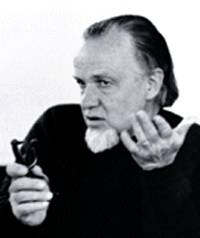
(Francis Schaeffer pictured below)

Francis Schaeffer in his book HOW SHOULD WE THEN LIVE? noted:

The fourth vehicle for these ideas is what I will call general culture. By this, I mean poetry, the novel, drama, and cinema. In the Anglo-Saxon world, the introduction in poetry came with T.S.Eliot’s (1888-1965) “The Waste Land,” which was published in 1922. Here he matched a fragmented message to a fragmented form of poetry. The end of the fifth (and last) section of “The Waste Land” reads:

Le Prince d’Aquitaine à la tour abolie
These fragments I have shored against my ruins
Why then Ile fit you. Hieronymo’s mad againe.
Datta. Dayadhvam. Damyata.
                  Shantih     shantih     shantih
In this poem he opened the door to modern poetry the way Picasso opened the way to a fragmented concept of life in his painting LES DEMOISELLES D’AVIGNON. It is interesting that later when Eliot became a Christian, his form of writing, although it did not become “old-fashioned,” did change. We will pick up elements of general culture later in this chapter, especially the uniquely twentieth-century art form–the cinema. Popular music, such as some elements of rock, brought to the young people of the entire world the concept of a fragmented world–and optimism only in the area of nonreason. And poetry, drama, the novel, and especially films carried these ideas to the mass of people in a way that went beyond the other vehicles we have considered.


T.S. Eliot
Modernist poet
Friday, August 8, 2008

“The only hope, or else despair
Lies in the choice of pyre or pyre—
To be redeemed from fire by fire.”

The man who wrote the most despairing poem of the twentieth century is today mostly remembered as the author of doggerel verse made popular in the hit musical Cats. Besides his poetry (the serious, the light, and the profoundly Christian), he produced literary criticism and drama so fine he was awarded the 1948 Nobel Prize for Literature and the British Order of Merit.

Timeline
1867 The Dominion of Canada is Established
1876 Alexander Grahm Bell invents the telephone
1882 Formation of Standard Oil Company
1888 T.S. Eliot born
1965 T.S. Eliot dies
1966 Chinese Cultural Revolution

Brooding masterpiece
Thomas Stearns Eliot was born in St. Louis to a family descended from New England stock. There was no smoking or drinking in the Eliot household, and the literary-minded family—Tom, his brother, five sisters, and mother—would gather around his father, a wholesale grocer, as he read Dickens aloud. In fact, frail Tom spent much of his childhood curled up in a big leather armchair reading.

He was sent to New England to private schools and was accepted at Harvard University, where he studied under the likes of philosopher and poet George Santayana and completed his degree in three years. Though naturally shy, he gained a reputation as a dancer and party-goer, and when he decided he was too puny, he took boxing lessons.

Eliot won a traveling fellowship to Germany in 1914; he barely escaped getting caught by the war and made his way to Britain. It turned out to be a long stay. He never returned to take his oral examination, which was all that stood between him and a Harvard Ph.D.

After a year at Oxford University, then a stint at teaching history, Latin, French, German, arithmetic, drawing, and swimming in English schools, he became a banker with Lloyds of London. Later he became an editor with Faber and Faber (where he eventually became known as a prolific writer of blurbs for book jackets).

Meanwhile he brooded over the crumbling of European civilization.

His first masterpiece, the first “modernist” poem in English, was “The Love Song of J. Alfred Prufrock,” a portrait of an aging man reviewing a life frittered away between timid hopes and lost opportunities:

For I have known them all already, known them all
Have known the evenings, mornings, afternoons
I have measured out my life with coffee spoons …

With the publication of “The Waste Land” in 1922, he came to international attention. The poem begins,

April is the cruelest month, breeding
Lilacs out of the dead land, mixing
Memory and desire, stirring
Dull roots with spring rain.

It expresses the disillusionment and disgust after World War I, portraying a fearful world pursuing barren lusts, yearning desperately for any sign of redemption. It is considered by many to be the most influential poem of the twentieth century.

Redeemed from fire
Eliot’s despair, however, was short-lived. After reading agnostic Bertrand Russell’s essay “A Free Man’s Worship,” essentially an argument that man must worship man, Eliot decided its reasoning was shallow. He moved in the opposite direction and in 1927 was confirmed in the Church of England. The same year, he also gave up his American citizenship and became a British subject.

His faith became more widely known with the publication of “Ash Wednesday” in 1930, a poem showing the difficult search for truth (“Where shall the word be found, where will the word / Resound? Not here, there is not enough silence”) and the discovery of a faith that will last, expressed in the repeated phrase, “Because I do not hope to turn again.” Though criticized sharply by the literati for his turn to Christianity, he continued to express his faith in his poetry.

Eliot believed his finest achievement was writing the broadly religious poem “Four Quartets” (1943). It deals with the themes of incarnation, time and eternity, spiritual insight and revelation, culminating in an allusion to Pentecost:

The dove descending breaks the air
With flame of incandescent terror
Of which the tongues declare
The one discharge from sin and error.
The only hope, or else despair
Lies in the choice of pyre or pyre—
To be redeemed from fire by fire.

In The Idea of a Christian Society (1939), as well as other works, Eliot argued that the humanist attempt to form a non-Christian, “rational” civilization was doomed. “The experiment will fail,” he wrote, “but we must be very patient in awaiting its collapse; meanwhile redeeming the time: so that the Faith may be preserved alive through the dark ages before us; to renew and rebuild civilization, and save the world from suicide.”

He didn’t believe society should be ruled by the church, only by Christian principles, with Christians being “the conscious mind and the conscience of the nation.”

Eliot turned to writing plays in the 1930s and ’40s because he believed drama attracts people who unconsciously seek a religion. The year 1935 saw the premiere of Murder in the Cathedral, a play based on the martyrdom of Thomas Becket, in which Eliot reiterates that faith can live only if the faithful are ready to die for it. It was followed by The Family Reunion (1939) and The Cocktail Party(1949), his greatest theatrical success. In his plays, he managed to handle complex moral and religious themes while entertaining audiences with farcical plots and keen social satire.

Verse to the postman
More personally, Eliot’s first marriage was a disaster: his wife became increasingly unstable until she had to spend her last days in a mental institution. He then shared a flat with writer-critic John Hayward (who was almost completely paralyzed) until he married again in 1957.

Eliot enjoyed children, was a fan of Sherlock Holmes detective stories, addressed letters in verse (“Postman, propel thy feet / And take this note to greet / The Mrs. Hutchinson / Who lives on Charlotte Street … “), and made up rhymes about cats, which turned into his Old Possum’s Book of Practical Cats (1939). He was an Anglican of Anglo-Catholic persuasion and served for a time as church warden at his local parish.

_______________________________________

What Became of T.S. Eliot? [The Common Room]

Published on Aug 4, 2015

Torrey Common Room discussion with Joe Henderson, Matt Jenson, and Melissa Schubert

The impact of T.S. Eliot’s Christianity on his poetry

By Barry Spurr
ABC Religion and Ethics | 16 Aug 2010

By the time that T.S. Eliot, aged 39, was baptised and confirmed in the Church of England in 1927, his reputation as the leading Modernist poet had been secured by the publication of the revolutionary collection, Prufrock and Other Observations (1917) and The Waste Land in (1922).

These presented confronting analyses of the human condition in contemporary Western society which was emerging from the bloodbath of the Great War, in which the opposing sides had claimed the support of God.

Eliot focused on individual lives (in the monologues of such despairing figures as Prufrock, in his ironically-titled “Love Song,” and Gerontion, the little old man in the poem of that name). But he also criticised civilisation at large in the epic range of The Waste Land, where the title introduces the principal metaphor of the hopelessness it describes.

Eliot presented a post-Christian world, despairing of human and divine love or redemption from its despair. The best expression of this diagnosis, in his verse, came in “The Hollow Men” (1925), where Eliot’s speakers are discovered hopelessly – but, paradoxically, with an extraordinary lyrical beauty – on the brink of Hell.

Here was a poet, according to Eliot’s contemporaries, who had evoked the nihilism of modern lives and societies. Phrases from these poems still resonate powerfully, nearly a century later: “I have measured out my life with coffee spoons,” “This is the way the world ends / Not with a bang but a whimper,” “After such knowledge, what forgiveness?” and so on.

It might have been expected, after Eliot’s conversion a few years later, that his recognition of the promise of salvation which Christianity proposes would have been reflected in revolutionary changes in his poetic subjects and techniques.

Instead, it is the consistency of Eliot’s poetry, from 1927 onwards, with what he had been writing before that most often strikes us.

Several powerful metaphors remain, such as, for example, that of the journey (which we encounter, for instance, in “Prufrock” and in the quest-motif in The Waste Land).

Indeed, Eliot’s first “Christian” poem is called “Journey of the Magi” (1927). What is notable about this work is the perilousness of the undertaking (“A cold coming we had of it”), underlined by the contingency of the outcome and the lack of final resolution as a single Magus meditates upon the journey at the end.

These wise men, while recalling the biblical figures who were drawn to the Christ-child, are more tellingly interpreted as the worldly-wise men of modern life – people much like Eliot himself – who must struggle to reclaim the experience of faith and cannot even be sure of the character or implications of that experience when they have had it.

His Magi travel backwards through time, past the scene of suffering at the crucifixion (dimly represented as “three trees on the low sky”), to the baby at Bethlehem.

It is an encounter with the source of faith – “it was (you may say) satisfactory,” they note flatly – apprehended after intense and protracted personal and universal suffering and attended by the ever-present temptations of worldliness (“silken girls bringing sherbet”) and in the face of contemporary, irreligious derision – “with the voices ringing in our ears, saying / That this was all folly.”

This was precisely how Eliot’s conversion was regarded by many of his friends and literary associates in these years.

The Magi return from their encounter with the Incarnation to a now-alien people, “clutching their gods.” Incompleteness closes the poem as one of them yearns for a further dying to worldliness – “I should be glad of another death.”

For all its negativity, the poem is rich in Christian symbolism and, for the first time, there is at least the sense that the journey is not absolutely pointless, but, rather, a challenging experience.

Moreover, as it is undeniably focused on the Lord’s birth, it presents, in Eliot’s first recognizably Christian poem, that emphasis on the Word made flesh – the doctrine of the Incarnation – which is central to Anglo-Catholic theological, liturgical and spiritual life.

From this still point of “intersection of the timeless / With time” (as Eliot was later to put it, in Four Quartets) was derived the richly sacramental rule and practice of faith which dominated the rest of Eliot’s life, particularly in the Mass and in recourse to the sacrament of penance.

In “Journey of the Magi,” there is the symbol of a “water-mill beating the darkness.” It speaks of rejuvenation, conquering the darkness of sin and, sacramentally, of baptism. It has the potential to revive the desert landscape of The Waste Land where there “is no water.”

In 1930, in his most liturgical poem, Ash-Wednesday, Eliot presents an extended meditation on that aspect of spirituality which inspired his own quest for transcendence of the world of the wastelanders and the hollow men, and which had its source in his own abiding sense of unworthiness. This is his preoccupation with sin and purification.

In the liturgical calendar, Ash Wednesday is the first day of the penitential season of Lent. So, in this Lenten poem, Eliot’s speaker embarks on yet another journey – but this time, of renunciation and penitence.

Again, in its six sections, there is the dominant sense of the difficulty of the process, in the midst of worldliness, a condition characterised here as a “time of tension between dying and birth.”

One of the reasons that Eliot’s poetry of his “Christian” period speaks as strongly to the contemporary world as his earlier nihilistic works – which seem more aligned to its values – is that he never imagines that religious belief, or the behaviour which that belief entails, makes life or the acceptance of oneself, with all its demons, easier.

On the contrary, it is a more difficult journey. In Ash-Wednesday, scepticism about faith and lack of faith in the penitent’s own ability to rise to the demands of belief dramatically bedevil him as he makes his painful way through those several weeks to Easter and the mystery of the resurrection.

Typically, the poem only looks forward to this theological resolution, finding its centre, rather, in “this brief transit where the dreams cross,” the temporal dispensation of past, present and future which the speaker aspires to transcend now that he has recognized a higher reality beyond that dream-time.

His glimpses of the beatific vision – Ash-Wednesday is much indebted to Dante for several of its references – encourage the speaker at the end, in quotation from the old prayer, Anima Christi, to plead, “Suffer me not to be separated / And let my cry come unto Thee.”

This “cry” is a prayer coming out of suffering. Such was Eliot’s faith.

Barry Spurr is Associate Professor in the Department of English at the University of Sydney. His most recent book is “Anglo-Catholic in Religion”: T.S. Eliot and Christianity (Lutterworth, 2010).

Below is an excellent article from Breakpoint.org:

A Costly Journey Print
threekings

By Diane Singer|Published Date: November 29, 2010

Now after Jesus was born in Bethlehem of Judea in the days of Herod the king, behold, wise men from the east came to Jerusalem, saying, “Where is he who has been born king of the Jews? For we saw his star when it rose and have come to worship him.”
-–Matthew 2:1-2

Before he became a Christian in 1927, Nobel laureate T.S. Eliot wrote poems – such as The Waste Land and “The Love Song of J. Alfred Prufrock”– which characterized the despair, disillusionment, and nihilist spirit of the post-World War I period. But not long after his conversion and his confirmation in the Anglican Church, Eliot published “Journey of the Magi” [1] – a poem which imagines events from the viewpoint of one of wise men who followed the Christmas star in search of the king of the Jews. Eliot used the form of a dramatic monologue to reveal what the magi endured as they made the arduous journey toJudea, and how their encounter with the Christ child impacted their lives.

In the first twenty lines, the speaker is remembering – and not fondly – the difficult trek from their home in the east (tradition says they came from Persia) to Bethlehem. It’s a litany of complaints about the cold, the long distance, the stubbornness of the camels, the unreliability and crudeness of the camel drivers, and the filth and corruption they found in every village and town they passed through. On too many nights and days, they had good reason to regret their decision to undertake the journey, and reason enough to call themselves every kind of fool for leaving “the summer palaces” and “silken girls bringing sherbet” back home.

In the second stanza (lines 21-31), the speaker describes their disappointing arrival in Bethlehem. Despite the warmer climate, their mood is somber and puzzled because none of the locals seemed aware that something momentous has just occurred, the arrival of their long-awaited Messiah (Genesis 3:15; Jeremiah 23:5-6; Micah 5:2; Daniel 9:25).

Significantly, Eliot packs this section with images that foreshadow not the birth of Christ, but the agony of His death, such as “three trees on the low sky” and “[s]ix hands at an open door dicing for pieces of silver” – images which remind readers that Jesus was a newborn destined for a very particular kind of death (Psalm 22:17-18). And it is this juxtaposition of birth and death which leaves the speaker, decades after he sees the baby Jesus, longing for his own death.

In the last stanza (lines 32 -43), the setting shifts from the distant past to the aged speaker’s present as he mulls over the journey and tries to puzzle out what it meant. Rather than glowing words expressing joy, as we might expect, his words are uncertain, tentative, even pained. They found this infant’s birth “[h]ard and bitter agony for us, like Death, our death” (ll. 38-39). Though they left their gifts and returned to their homeland, they never again felt at home: “We returned to our places, these Kingdoms, / But no longer at ease here, in the old dispensation, / With an alien people clutching their gods” (ll. 40-42). He then ends his musings on a sigh, a longing: “I should be glad of another death” (l. 43).

“The Journey of the Magi” is an unusual Christmas poem in that it lacks the seasonal cheerfulness and celebratory mood that we generally expect from such fare. Instead, Eliot’s poem reveals the paradoxical nature of our Lord and of our own faith journey. While Jesus is the Prince of Peace (Isaiah 9:6) who came to reconcile God and man through His death on the Cross (Colossians 1:19-20), He is also the One who brought “a sword” (Matthew 10:34-39) that inevitably divides families, friends, and peers – as Eliot discovered when he converted, much to the disdain of his fellow members of the intelligentsia.

While Jesus offers His disciples abundant life, it comes at the cost of our old life, our old way of thinking, and our old values. And while He guarantees us a heavenly home, He leaves us with a nagging sense of alienation in our earthly ones. Therefore, like the magi, we may one day look back on our journey of faith and see much that disappoints and confuses us. But also like the magi, we can anticipate the day we will die and come face to face with our Lord. Then, we will understand that though it was a costly journey, it was well worth the price.

at_the_cross
For more insight to this topic, get the book,
Christians at the Cross, by N. T. Wright, from our online store. Or read the article, “The Humanity of Christmas: The Nativity Story,” by Charles Colson.


[1] The poem may be found at http://www.poetryarchive.org/poetryarchive/singlePoem.do?poemId=7070 where you can both read the text and hear Eliot reading the poem.

Comments: All comments are approved before posting.

Copyright © 2011 Prison Fellowship. All Rights Reserved

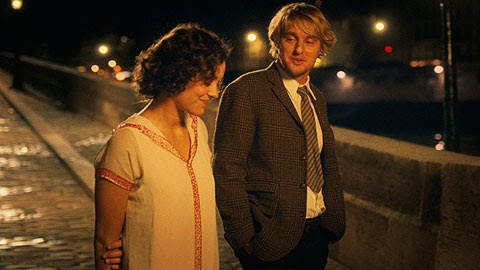
Lea Seydoux as Gabrielle and Owen Wilson as Gil in "Midnight in Paris." 2011 Roger Arpajou / Sony Pictures Classics

Lea Seydoux as Gabrielle and Owen Wilson as Gil in “Midnight in Paris.”

Owen Wilson portrays Gil Pender, a Hollywood screenwriter on holiday in Paris with his fiancée, Inez (Rachel McAdams) and her parents.  Gil is on vacation from being a Hollywood Hack and in the process of writing his “Great American Novel;” the theme of which is being enamored of the past.  You can tell from the beginning that he is not happy with either his life or his fiancé and wishes to be part of a better generation and era.

Inez, the direct opposite of Gil, is a materialistic ambitious character who is pretty much unlikable from the beginning.  Her mother is such a bitch that you cannot help but expect the same of her.  Her father is portrayed as a right-wing “tea bagger” who is constantly getting into arguments with the liberal Gil, mostly over politics.  There is never a point in the film when you feel the slightest sympathy for anyone in Inez’s family.  You just simply know that Inez will do something during the course of the film that will allow Gil to get out of the engagement and relationship.

There is not much more I can say without giving the major plot twist away.  However, I will say that the majority of  jokes and dialogue require the viewer to have a strong background in the material.  Anything short of that will leave the viewer perplexed and completely out of touch with the plot.  In fact, when I saw the film, there were many jokes where only about five people in the audience were laughing hysterically.  The remainder of the sold-out crowd just didn’t get it.

This is where the elitism and self-indulgent nature of Woody Allen shines.  If you are not part of the inside joke and well aware of the literary and artistic references throughout, you will be lost.  And, this, unfortunately, will be what kills this film commercially.  It will play very well in intellectual centers and areas where elitism shines.  But the mass general public throughout the world will almost definitely never see it.  In fact, I was mentioning this film to a Thai friend this morning and we were both sure that it will never see the light of day there.

As is always the case in Woody Allen films, the acting is outstanding.  Although, in my opinion, Owen Wilson tries a little too hard to play the nebbish character that Woody Allen himself has portrayed in all of his movies prior to the turn of the Century.

The Paris locales shine under the cinematography of Darius Khondji.  The use of rain and earth tones gives this film the feel needed to transport the viewer to another world.  The Costume and Set Design is also outstanding.

Three stars out of five.

____________________________________

How Should We Then Live – Episode 8 – The Age of Fragmentation

Published on Aug 6, 2015

Francis Shaeffer

__________

The above clip is from the film series by Francis Schaeffer “How should we then live?” Below is an outline of the 8th episode on the Impressionists and the age of Fragmentation and he spends some time on T.S. Eliot’s “The Wasteland.”

AGE OF FRAGMENTATION

I. Art As a Vehicle Of Modern Thought

A. Impressionism (Monet, Renoir, Pissarro, Sisley, Degas) and Post-Impressionism (Cézanne, Van Gogh, Gauguin, Seurat): appearance and reality.

1. Problem of reality in Impressionism: no universal.

2. Post-Impression seeks the universal behind appearances.

3. Painting expresses an idea in its own terms as a work of art; to discuss the idea in a painting is not to intellectualize art.

4. Parallel search for universal in art and philosophy; Cézanne.

B. Fragmentation.

1. Extremes of ultra-naturalism or abstraction: Wassily Kandinsky.

2. Picasso leads choice for abstraction: relevance of this choice.

3. Failure of Picasso (like Sartre, and for similar reasons) to be fully consistent with his choice.

C. Retreat to absurdity.

1. Dada , and Marcel Duchamp: art as absurd. (Dada gave birth to Surrealism).

2. Art followed philosophy but came sooner to logical end.

3. Chance in his art technique as an art theory impossible to practice: Pollock.

II. Music As a Vehicle of Modern Thought

A. Non-resolution and fragmentation: German and French streams.

1. Influence of Beethoven’s last Quartets.

2. Direction and influence of Debussy.

3. Schoenberg’s non-resolution; contrast with Bach.

4. Stockhausen: electronic music and concern with the element of change.

B. Cage: a case study in confusion.

1. Deliberate chance and confusion in Cage’s music.

2. Cage’s inability to live the philosophy of his music.

C. Contrast of music-by-chance and the world around us.

1. Inconsistency of indulging in expression of chaos when we acknowledge order for practical matters like airplane design.

2. Art as anti-art when it is mere intellectual statement, divorced from reality of who people are and the fullness of what the universe is.

III. General Culture As the Vehicle of Modern Thought

A. Propagation of idea of fragmentation in literature.

1. Effect of Eliot’s Wasteland and Picasso’s Demoiselles d’ Avignon

compared; the drift of general culture.

2. Eliot’s change in his form of writing when he became a Christian.

3. Philosophic popularization by novel: Sartre, Camus, de Beauvoir.

B. Cinema as advanced medium of philosophy.

1. Cinema in the 1960s used to express Man’s destruction: e.g. Blow-up.

2. Cinema and the leap into fantasy:

The Hour of the Wolf, Belle de Jour, Juliet of the Spirits, The Last Year at Marienbad.

3. Bergman’s inability to live out his philosophy (see Cage):

Silence and The Hour of the Wolf.

IV. Only on Christian Base Can Reality Be Faced Squarely

Related posts:

The Characters referenced in Woody Allen’s “Midnight in Paris” (Part 8, Henri Toulouse Lautrec)

The Characters referenced in Woody Allen’s “Midnight in Paris” (Part 7 Paul Gauguin)

The Characters referenced in Woody Allen’s “Midnight in Paris” (Part 6 Gertrude Stein)

The Characters referenced in Woody Allen’s “Midnight in Paris” (Part 5 Juan Belmonte)

The Characters referenced in Woody Allen’s “Midnight in Paris” (Part 4 Ernest Hemingway)

The Characters referenced in Woody Allen’s “Midnight in Paris” (Part 3 Scott and Zelda Fitzgerald)

The Characters referenced in Woody Allen’s “Midnight in Paris” (Part 2 Cole Porter)

The Characters referenced in Woody Allen’s “Midnight in Paris” (Part 1 William Faulkner)

JERRAM BARRS TALKS ABOUT HIS MENTOR FRANCIS SCHAEFFER!!!!

JERRAM BARRS TALKS ABOUT HIS MENTOR FRANCIS SCHAEFFER!!!! In the 1960’s Schaeffer came along and rightly tied together the prolife view from the Bible to the prolife political view. Some in the church like to deny that but even Peter Singer of Princeton can see the powerful impact of such a move and Singer has even pulled out of debates when he realizes that his opponent has that view.

Francis Schaeffer “BASIS FOR HUMAN DIGNITY” Whatever…HTTHR

Dr. Francis Schaeffer: Whatever Happened to the Human Race Episode 1 ABORTION

Published on Jan 10, 2015

Whatever Happened to the Human Race?
Abortion
Dr. Francis Schaeffer

Francis Schaeffer: The Man and His Message
Jerram Barrs 

Professor of Christian Studies and Contemporary Culture and
Resident Scholar of the Francis A. Schaeffer Institute 

Introduction 

Francis Schaeffer never presented himself as an academic apologist, as a philosopher, as a theologian, or as a scholar. Instead, he spoke of himself as an evangelist and a pastor, and this truly is how he thought about the ministry that God had graciously given him. I felt it might be useful to begin with a somewhat personal account of factors that contributed to his theological development.

Conversion 

Francis Schaeffer was converted at the age of 17 in 1930 while he was a junior in high school. I heard him tell the story on several occasions, but here I will use his wife Edith’s account from The Tapestry, her autobiographical account of their life together. Edith recounts how, by “accident,”

Fran was sent home from a bookstore with a book on Greek philosophy, when he had in fact entered the shop to buy a beginner’s English reading book to help him teach English to a Russian. In God’s providence reading this book on Greek philosophy set his mind on fire—but he soon discovered that the philosophers asked many questions, yet seemed to have no answers to the basic problems of the human condition. Reflecting on this he recognized that the preaching he heard on Sundays in the liberal church he attended was just as devoid of answers. “I wonder,” he mused to himself, “whether I should stop calling myself a Christian, and discard the Bible?” Then he reconsidered, and faced the fact that he had never read the Bible in his life. Since at this time he was reading Ovid, he decided that before discarding the Bible, he’d read some of Ovid and some of the Bible night by night. Gradually he put aside Ovid altogether and spent all the time he had on reading the Bible.

How did he read it? Who helped him to understand? No one gave him any suggestions. He wouldn’t have known who to ask, and in any case, he had no idea that there was any way to read it other than to read it in the same way as any other book. He started at the beginning of Genesis and read to the end. If you want to know why Fran has such high regard for the Bible and feels it is adequate in answering the questions of life, the answer is right here. As a seventeen-year-old boy with a thirst for the answers to life’s questions, he began to discover for himself the existence of adequate and complete answers right in the Bible. . . .

Sometime in the next six months Francis Schaeffer became a Christian. He believed and bowed before God, accepting Christ as his Savior, having come to an understanding directly from the Word of God itself. He thought he had discovered something no one else knew about. He thought what he had found was unique, and that he alone had found it. If what he had discovered was being a Christian, then he thought he was the only one. But—he didn’t call himself that. It was a transforming reality that changed his whole outlook; it began to change his marks at school and the way he looked at the world. But, for a time, he did not know that there was anyone else who shared this truth he felt he had discovered. You see, he thought that Christianity was what he heard preached by an old-fashioned liberal who gave ethical talks and who did not preach Biblical truth. At that time Fran was totally ignorant of the fact that there was any other kind of preaching.

This beginning to his Christian life was, as Edith says, and as he would say himself repeatedly, foundational to his approach to the Bible. He discovered that in following what he was later to call “the flow of biblical history,” the answers to the most fundamental questions and problems of human existence were to be found. In the unfolding biblical account of creation, fall, and redemption God answered his questions through his Word. Long before he had ever heard of such a term, Schaeffer was beginning to develop what theologians today would call a biblical theology, and what many Christians would describe as a biblical world and life view.

Creation in God’s Image 

Scaheffer saw our creation as God’s image-bearers as foundational to everything else that Scripture reveals about human persons. Where many Christians today want to begin with the sin and the fallenness of people around us in our secular society, Schaeffer insisted that the fall did not “stop anyone from being human.”9 The same point is made repeatedly in his study on Genesis, Genesis in Space and Time. See, for example, his account of the creation of human persons in chapter 2: “For twentieth-century man this phrase, the image of God, is as important as anything in Scripture, because men today can no longer answer that crucial question, ‘Who am I?’”10 Or again: “That which differentiates man from the machine is that his basic relationship is upward rather than downward or horizontal. He is created to relate to God in a way that none of the other created beings are. . . . This differentiation makes genuine love possible. . . . Furthermore, if we are made in the image of God, we are not confused as to the possibility of communication; and we are not confused as to the possibility of revelation, for God can reveal propositional truth to me as I am made in his image.”11

This recognition of human uniqueness at the heart of all that Scripture reveals about who we are also marked Schaeffer’s approach to the Christian life and true spirituality. He believed that Christian growth is restoration to the image of God, that is, to true humanness. It was his lead in this area, and his personal encouragement that stands behind the book Ranald Macaulay and I wrote together: Being Human: The Nature of Spiritual Experience.12

Human Life 

This approach of always going back to biblical foundations enabled Schaeffer to have the freedom to think about subjects that were not normally matters of discussion or concern among evangelical Christians. This is true with regard to human life issues. He began to address the problems of abortion, infanticide, and euthanasia long before most other evangelicals. The reason for this was his deep sense that human persons are made in the image of God and are therefore to be treasured by us.

Just two years before his death, Schaeffer said in a lecture entitled “Priorities”: “We must understand that human life stands at a unique place. Human life stands at a crucial place because there is an unbreakable link between the existence of the infinite personal God and the unique dignity, intrinsic dignity of people. If God does not exist and he has not made people in his own image, there is no basis for an intrinsic, unique dignity of human life.”13 For Schaeffer, his conviction that Scripture teaches that we are God’s image-bearers continually fed his passion to help alienated young people see that they had dignity and value, and also challenged him to speak up for the unborn, for the newborn, for the handicapped, and for the elderly.

8 See Reclaiming the World, a video series and accompanying handbook in which Schaeffer sets out his apologetic methodology. Richard B. Sherman, Reclaiming the World: Comprehensive Leader’s Guide (Los Gatos, CA: Schaeffer V Productions, 1982), contains a transcript of the text of the videos.

9 Francis A. Schaeffer, The Finished Work of Christ: The Truth of Romans 1–8 (Wheaton, IL: Crossway, 1998), 32. 10 Schaeffer, Genesis in Space and Time, 46. 11 Ibid., 47.

10 Schaeffer, Genesis in Space and Time, 46.

11 Ibid., 47.

12 Ranald Macaulay and Jerram Barrs, Being Human: The Nature of Spiritual Experience (Downers Grove, IL: Inter-Varsity Press, 1978).

13 See also Francis A. Schaeffer, The Great Evangelical Disaster (Westchester, IL: Crossway, 1984), chapter 4, in which he quotes Peter Singer, the Australian ethicist now at Princeton. Singer recognizes that once the tie between the personal God of the Bible and human persons has been cut, then there is no basis for protecting the life of the unborn, newborn, or elderly and infirm. One of Singer’s more recent books is, consequently, entitled Unsanctifying Human Life. I was once scheduled to debate with Singer on Australian television, but when he learned of my connection to Schaeffer, he withdrew, saying there was no point in our meeting to discuss on the same panel as we would have nothing in common. I must confess that I was relieved by his withdrawal because of his evident brilliance, but also saddened to lose the opportunity to try to appeal to his humanity.)

Peter Singer below.

Dr. Francis schaeffer – The flow of Materialism(from Part 4 of Whatever happened to human race?)

Dr. Francis Schaeffer – The Biblical flow of Truth & History (intro)

Related posts:

SANCTITY OF LIFE SATURDAY Francis Schaeffer predicted July 21, 2015 would come when the video “Second Planned Parenthood Senior Executive Haggles Over Baby Parts Prices, Changes Abortion Methods” would be released!!!!

Francis Schaeffer predicted July 21, 2015 would come when the video “Second Planned Parenthood Senior Executive Haggles Over Baby Parts Prices, Changes Abortion Methods” would be released!!!! Al Mohler wrote the article ,”FIRST-PERSON: They indeed were prophetic,” Jan 29, 2004, and in this great article he noted:   . “We stand today on the edge of a […]

“Schaeffer Sunday” Liberals at Ark Times can not stand up to Scott Klusendorf’s pro-life arguments (Part 4) Liberal blogger says “…you don’t get to force your beliefs on me (concerning abortion)…”

I just wanted to note that I have spoken on the phone several times and corresponded with Dr. Paul D. Simmons who is very much pro-choice. (He is quoted in the article below.) He actually helped me write an article to submit to Americans United for the Separation of Church and State back in the […]

RESPONDING TO HARRY KROTO’S BRILLIANT RENOWNED ACADEMICS!! Peter Singer, Professor of Bioethics at Princeton University, THE PROBLEM OF EVIL

On November 21, 2014 I received a letter from Nobel Laureate Harry Kroto and it said: …Please click on this URL http://vimeo.com/26991975 and you will hear what far smarter people than I have to say on this matter. I agree with them. Harry Kroto _________________ Below you have picture of 1996 Chemistry Nobel Prize Winner Dr. […]

Very good article on Francis Schaeffer. Tom Wolfe and Peter Singer!! by Dr. Steven Garber from on November 19, 2013

_______________________ Very good article on Francis Schaeffer. Tom Wolfe. Peter Singer!! Presuppositional Life and Learning Posted on November 19, 2013 by Dr. Steven Garber   Francis Schaeffer. Tom Wolfe. Peter Singer. I spent the morning with the Capitol Fellows thinking about these three men, and their ideas. The first one I studied and studied with many […]

MUSIC MONDAY The Staple Singers Part 1

The Staple Singers Part 1     click to enlarge Mavis Staples   From Wikipedia, the free encyclopedia   Jump to: navigation, search   Mavis Staples Staples performing in Brooklyn, New York in 2007 Background information Birth name Mavis Staples Born July 10, 1939 (age 74) Origin Chicago, Illinois, U.S. Genres Rhythm and blues, soul, gospel […]

FRANCIS SCHAEFFER ANALYZES ART AND CULTURE Part 50 THE BEATLES (Part B, The Psychedelic Music of the Beatles) (Feature on artist Peter Blake )

Francis Schaeffer noted, “In this flow there was also the period of psychedelic rock, an attempt to find this experience without drugs, by the use of a certain type of music. This was the period of the Beatles’ Revolver (1966) and Strawberry Fields Forever (1967)…The psychedelic began with their records REVOLVER, STRAWBERRY FIELDS FOREVER, AND […]

The Staple Singers Part 1 (Mavis Staples in Concert in Little Rock on Oct 11th

The Staple Singers Part 1 Mavis Staples to give concert at Christ Church in Little Rock Posted by Lindsey Millar on Fri, Sep 6, 2013 at 2:48 PM click to enlarge Whoa. One of the greatest soul divas OF ALL TIME is coming to Little Rock next month. Christ Church Little Rock is hosting Mavis […]

FRANCIS SCHAEFFER ANALYZES ART AND CULTURE PART THE BEATLES Part 87 George Bernard Shaw Part B “Why was Shaw on the cover of SGT. PEPPER’S?” Featured Photographer is Henry Grossman

In my last post I demonstrated that George Bernard Shaw was a vocal communist and that probably had a lot to do with his inclusion on the cover of SGT PEPPER’S but today I will look more into more this great playwright’s views. Did you know that Shaw wrote the play that MY FAIR LADY […]

SANCTITY OF LIFE SATURDAY Transcript and Video of Francis Schaeffer speech in 1983 on the word “Evangelical”

Transcript and Video of Francis Schaeffer speech in 1983 on the word “Evangelical” _____________ SOUNDWORD LABRI CONFERENCE VIDEO – Names and Issues – Francis A. Schaeffer Published on Apr 20, 2014 This video is from the 1983 L’Abri Conference in Atlanta. The full lecture with Q&A time has been included. The lecture was also previously […]

“Schaeffer Sunday” Debating Kermit Gosnell Trial, Abortion and infanticide with Ark Times Bloggers Part 2

Surgeon General of the United States In office January 21, 1982 – October 1, 1989 President Ronald Reagan George H. W. Bush Francis Schaeffer Founder of the L’Abri community Born Francis August Schaeffer January 30, 1912 Died May 15, 1984 (aged 72) I truly believe that many of the problems we have today in the USA are […]

THE SERMON ON EVOLUTION BY ADRIAN ROGERS THAT I SENT TO OVER 250 ATHEIST SCIENTISTS FROM 1992 TO 2015!

My good friend Rev. Sherwood Haisty Jr. and I used to discuss which men were the ones who really influenced our lives  and Adrian Rogers had influenced us both more than anybody else. During the 1990′s I actually made it a practice to write famous atheists and scientists that were mentioned by Adrian Rogers and […]

“Truth Tuesday” Taking on Ark Times Bloggers on the “Absurdity of Life without God!!” Part 24 (Repenting and putting our faith in God is only way to find a lasting meaning to our lives)

Is the Bible historically accurate? Here are some of the posts I have done in the past on the subject: 1. The Babylonian Chronicleof Nebuchadnezzars Siege of Jerusalem2. Hezekiah’s Siloam Tunnel Inscription. 3. Taylor Prism (Sennacherib Hexagonal Prism)4. Biblical Cities Attested Archaeologically. 5. The Discovery of the Hittites6.Shishak Smiting His Captives7. Moabite Stone8Black Obelisk of Shalmaneser III9A Verification of places in Gospel of John and Book of Acts., 9B Discovery of Ebla Tablets10. Cyrus Cylinder11. Puru “The lot of Yahali” 9th Century B.C.E.12. The Uzziah Tablet Inscription13. The Pilate Inscription14. Caiaphas Ossuary14 B Pontius Pilate Part 214c. Three greatest American Archaeologists moved to accept Bible’s accuracy through archaeology.

The Bible and Archaeology – Is the Bible from God? (Kyle Butt 42 min)

Eastwooding Richard Dawkins’ Moral Argument Objections

Published on Oct 20, 2012

For more information and resources visit: http://www.reasonablefaith.org

On September 29th, 2012, William Lane Craig participated in the Contending with Christianity’s Critics Conference held at Watermark Community Church in Dallas, TX. In this short clip, Dr. Craig uses the technique of Eastwooding to deal with Richard Dawkins’ attempted refutations of the moral argument for God’s existence.

To view the entire video: http://youtu.be/_XZb8m7p8ng

The statements ascribed to Richard Dawkins in this presentation are statements actually made by Prof. Dawkins. The following is a list of the sources of such statements:

Dawkins, Richard. “Afterword.” In Lawrence Krauss, A Universe from Nothing. New York: Free Press, 2012.

_____. “Comment.” http://old.richarddawkins.net/comment….

_____. The God Delusion. New York: Houghton-Mifflin, 2006.

_____. River out of Eden: a Darwinian View of Life. New York: Basic Books, 1996.

_____. “The Ultraviolet Garden,” Lecture 4 of 7 Royal Institution Christmas Lectures (1992), http://physicshead.blogspot.com/2007/….

_____. “Why I Refuse to Debate William Lane Craig.” The Guardian 20 October 2011 http://old.richarddawkins.net/comment…

Citations of these statements with references may be found in:

“Richard Dawkins on Arguments for God.” In God Is Great, God Is Good, pp. 13-31. Ed. Wm. L Craig and Chad Meister. Downers Grove, Ill.: Inter-Varsity, 2009.

Citations in lecture format may be found at:

http://youtu.be/9HLmow850iE

We welcome your comments in the Reasonable Faith forums:
http://www.reasonablefaith.org/forums/

Be sure to also visit Reasonable Faith’s other channel: http://www.youtube.com/drcraigvideos

Follow Reasonable Faith On Twitter: http://twitter.com/rfupdates

Add Reasonable Faith On Facebook: http://www.facebook.com/reasonablefaith

Francis Schaeffer and  Gospel of Christ in the pages of the Bible

(The Bible is the key in understanding the universe in its form)

Francis and Edith Schaeffer pictured below:

_________________

Life without God in the picture is absurdity!!!. That was the view of King Solomon when he wrote the Book of Ecclesiastes 3000 years ago and it is the view of many of the modern philosophers todayModern man has tried to come up with a lasting meaning for life without God in the picture (life under the sun), but it is not possible. Without the infinite-personal God of the Bible to reveal moral absolutes then man is left to embrace moral relativism. In a time plus chance universe man is reduced to a machine and can not find a place for values such as love. Both of Francis Schaeffer’s film series have tackled these subjects and he shows how this is reflected in the arts.

Here are some posts I have done on the series “HOW SHOULD WE THEN LIVE? : Francis Schaeffer’s “How should we then live?” Video and outline of episode 10 “Final Choices” episode 9 “The Age of Personal Peace and Affluence”episode 8 “The Age of Fragmentation”episode 7 “The Age of Non-Reason” episode 6 “The Scientific Age”  episode 5 “The Revolutionary Age” episode 4 “The Reformation” episode 3 “The Renaissance”episode 2 “The Middle Ages,”, and  episode 1 “The Roman Age,” .

In the film series “WHATEVER HAPPENED TO THE HUMAN RACE?” the arguments are presented  against abortion (Episode 1),  infanticide (Episode 2),   euthenasia (Episode 3), and then there is a discussion of the Christian versus Humanist worldview concerning the issue of “the basis for human dignity” in Episode 4 and then in the last episode a close look at the truth claims of the Bible.

I have discussed many subjects with my liberal friends over at the Ark Times Blog in the past and I have taken them on now on the subject of the absurdity of life without God in the picture. Most of my responses included quotes from William Lane Craig’s book THE ABSURDITY OF LIFE WITHOUT GOD.  Here is the result of one of those encounters from June of 2013:

I wrote:

Doigotta, I know you were referring to something else entirely when you wrote, “I repent.” However, that is the key to finding a lasting meaning to life. Without God there is no meaning in life.

William Lane Craig notes:

First, the area of meaning. We saw that without God, life has no meaning. Yet philosophers continue to live as though life does have meaning. For example, Sartre argued that one may create meaning for his life by freely choosing to follow a certain course of action. Sartre himself chose Marxism.

Now this is utterly inconsistent. It is inconsistent to say that life is objectively absurd and then to say that one may create meaning for his life. If life is really absurd, then man is trapped in the lower story. To try to create meaning in life represents a leap to the upper story. But Sartre has no basis for this leap. Without God, there can be no objective meaning in life. Sartre’s program is actually an exercise in self-delusion. For the universe does not really acquire meaning just because I happen to give it one. This is easy to see: for suppose I give the universe one meaning, and you give it another. Who is right? The answer, of course, is neither one. For the universe without God remains objectively meaningless, no matter how we regard it. Sartre is really saying, “Let’s pretend the universe has meaning.” And this is just fooling ourselves.

The point is this: if God does not exist, then life is objectively meaningless; but man cannot live consistently and happily knowing that life is meaningless; so in order to be happy he pretends that life has meaning. But this is, of course, entirely inconsistent—for without God, man and the universe are without any real significance.

Related posts:

Francis Schaeffer’s “How should we then live?” Video and outline of episode 10 “Final Choices” (Schaeffer Sundays)

E P I S O D E 1 0   Dr. Francis Schaeffer – Episode X – Final Choices 27 min FINAL CHOICES I. Authoritarianism the Only Humanistic Social Option One man or an elite giving authoritative arbitrary absolutes. A. Society is sole absolute in absence of other absolutes. B. But society has to be […]

Francis Schaeffer’s “How should we then live?” Video and outline of episode 9 “The Age of Personal Peace and Affluence” (Schaeffer Sundays)

E P I S O D E 9 Dr. Francis Schaeffer – Episode IX – The Age of Personal Peace and Affluence 27 min T h e Age of Personal Peace and Afflunce I. By the Early 1960s People Were Bombarded From Every Side by Modern Man’s Humanistic Thought II. Modern Form of Humanistic Thought Leads […]

Francis Schaeffer’s “How should we then live?” Video and outline of episode 8 “The Age of Fragmentation” (Schaeffer Sundays)

E P I S O D E 8 Dr. Francis Schaeffer – Episode VIII – The Age of Fragmentation 27 min I saw this film series in 1979 and it had a major impact on me. T h e Age of FRAGMENTATION I. Art As a Vehicle Of Modern Thought A. Impressionism (Monet, Renoir, Pissarro, Sisley, […]

Francis Schaeffer’s “How should we then live?” Video and outline of episode 7 “The Age of Non-Reason” (Schaeffer Sundays)

E P I S O D E 7 Dr. Francis Schaeffer – Episode VII – The Age of Non Reason I am thrilled to get this film series with you. I saw it first in 1979 and it had such a big impact on me. Today’s episode is where we see modern humanist man act […]

Francis Schaeffer’s “How should we then live?” Video and outline of episode 6 “The Scientific Age” (Schaeffer Sundays)

E P I S O D E 6 How Should We Then Live 6#1 Uploaded by NoMirrorHDDHrorriMoN on Oct 3, 2011 How Should We Then Live? Episode 6 of 12 ________ I am sharing with you a film series that I saw in 1979. In this film Francis Schaeffer asserted that was a shift in […]

Francis Schaeffer’s “How should we then live?” Video and outline of episode 5 “The Revolutionary Age” (Schaeffer Sundays)

E P I S O D E 5 How Should We Then Live? Episode 5: The Revolutionary Age I was impacted by this film series by Francis Schaeffer back in the 1970′s and I wanted to share it with you. Francis Schaeffer noted, “Reformation Did Not Bring Perfection. But gradually on basis of biblical teaching there […]

Francis Schaeffer’s “How should we then live?” Video and outline of episode 4 “The Reformation” (Schaeffer Sundays)

Dr. Francis Schaeffer – Episode IV – The Reformation 27 min I was impacted by this film series by Francis Schaeffer back in the 1970′s and I wanted to share it with you. Schaeffer makes three key points concerning the Reformation: “1. Erasmian Christian humanism rejected by Farel. 2. Bible gives needed answers not only as to […]

“Schaeffer Sundays” Francis Schaeffer’s “How should we then live?” Video and outline of episode 3 “The Renaissance”

Francis Schaeffer’s “How should we then live?” Video and outline of episode 3 “The Renaissance” Francis Schaeffer: “How Should We Then Live?” (Episode 3) THE RENAISSANCE I was impacted by this film series by Francis Schaeffer back in the 1970′s and I wanted to share it with you. Schaeffer really shows why we have so […]

Francis Schaeffer’s “How should we then live?” Video and outline of episode 2 “The Middle Ages” (Schaeffer Sundays)

  Francis Schaeffer: “How Should We Then Live?” (Episode 2) THE MIDDLE AGES I was impacted by this film series by Francis Schaeffer back in the 1970′s and I wanted to share it with you. Schaeffer points out that during this time period unfortunately we have the “Church’s deviation from early church’s teaching in regard […]

Francis Schaeffer’s “How should we then live?” Video and outline of episode 1 “The Roman Age” (Schaeffer Sundays)

Francis Schaeffer: “How Should We Then Live?” (Episode 1) THE ROMAN AGE   Today I am starting a series that really had a big impact on my life back in the 1970′s when I first saw it. There are ten parts and today is the first. Francis Schaeffer takes a look at Rome and why […]

Francis Schaeffer: “Whatever Happened to the Human Race” (Episode 5) TRUTH AND HISTORY

Francis Schaeffer: “Whatever Happened to the Human Race” (Episode 5) TRUTH AND HISTORY Published on Oct 7, 2012 by AdamMetropolis This crucial series is narrated by the late Dr. Francis Schaeffer and former Surgeon General Dr. C. Everett Koop. Today, choices are being made that undermine human rights at their most basic level. Practices once […]

Francis Schaeffer: “Whatever Happened to the Human Race” (Episode 4) THE BASIS FOR HUMAN DIGNITY

The opening song at the beginning of this episode is very insightful. Francis Schaeffer: “Whatever Happened to the Human Race” (Episode 4) THE BASIS FOR HUMAN DIGNITY Published on Oct 7, 2012 by AdamMetropolis This crucial series is narrated by the late Dr. Francis Schaeffer and former Surgeon General Dr. C. Everett Koop. Today, choices […]

Francis Schaeffer: “Whatever Happened to the Human Race” (Episode 3) DEATH BY SOMEONE’S CHOICE

Francis Schaeffer: “Whatever Happened to the Human Race” (Episode 3) DEATH BY SOMEONE’S CHOICE Published on Oct 6, 2012 by AdamMetropolis This crucial series is narrated by the late Dr. Francis Schaeffer and former Surgeon General Dr. C. Everett Koop. Today, choices are being made that undermine human rights at their most basic level. Practices […]

Francis Schaeffer: “Whatever Happened to the Human Race?” (Episode 2) SLAUGHTER OF THE INNOCENTS

Francis Schaeffer: “Whatever Happened to the Human Race?” (Episode 2) SLAUGHTER OF THE INNOCENTS Published on Oct 6, 2012 by AdamMetropolis This crucial series is narrated by the late Dr. Francis Schaeffer and former Surgeon General Dr. C. Everett Koop. Today, choices are being made that undermine human rights at their most basic level. Practices […]

Francis Schaeffer: “Whatever Happened to the Human Race” (Episode 1) ABORTION OF THE HUMAN RACE

It is not possible to know where the pro-life evangelicals are coming from unless you look at the work of the person who inspired them the most. That person was Francis Schaeffer.  I do care about economic issues but the pro-life issue is the most important to me. Several years ago Adrian Rogers (past president of […]

Ecclesiastes, Purpose, Meaning, and the Necessity of God by Suiwen Liang (Quotes Will Durant, Madalyn Murray O’Hair, Stephen Jay Gould,Richard Dawkins, Jean-Paul Sartre,Bertrand Russell, Leo Tolstoy, Loren Eiseley,Aldous Huxley, G.K. Chesterton, Ravi Zacharias, and C.S. Lewis.)

Ecclesiastes 2-3 Published on Sep 19, 2012 Calvary Chapel Spring Valley | Sunday Evening | September 16, 2012 | Derek Neider _____________________________ I have written on the Book of Ecclesiastes and the subject of the meaning of our lives on several occasions on this blog. In this series on Ecclesiastes I hope to show how secular […]

Robert Leroe on Ecclesiastes (Mentions Thomas Aquinas, Princess Diana, Mother Teresa, King Solomon, King Rehoboam, Eugene Peterson, Chuck Swindoll, and John Newton.)

Ecclesiastes 1 Published on Sep 4, 2012 Calvary Chapel Spring Valley | Sunday Evening | September 2, 2012 | Pastor Derek Neider _____________________ I have written on the Book of Ecclesiastes and the subject of the meaning of our lives on several occasions on this blog. In this series on Ecclesiastes I hope to show how […]

Super Bowl, Black Eyed Peas, and the Meaning of Life and Ecclesiastes

Ecclesiastes 8-10 | Still Searching After All These Years Published on Oct 9, 2012 Calvary Chapel Spring Valley | Sunday Evening | October 7, 2012 | Pastor Derek Neider _______________________ Ecclesiastes 11-12 | Solomon Finds His Way Published on Oct 30, 2012 Calvary Chapel Spring Valley | Sunday Evening | October 28, 2012 | Pastor Derek Neider […]

Brian LePort on Ecclesiastes

Ecclesiastes 6-8 | Solomon Turns Over a New Leaf Published on Oct 2, 2012 Calvary Chapel Spring Valley | Sunday Evening | September 30, 2012 | Pastor Derek Neider _____________________ I have written on the Book of Ecclesiastes and the subject of the meaning of our lives on several occasions on this blog. In this series […]

J.W. Wartick on Ecclesiastes

Ecclesiastes 4-6 | Solomon’s Dissatisfaction Published on Sep 24, 2012 Calvary Chapel Spring Valley | Sunday Evening | September 23, 2012 | Pastor Derek Neider ___________________ I have written on the Book of Ecclesiastes and the subject of the meaning of our lives on several occasions on this blog. In this series on Ecclesiastes I hope […]

Overview of the Book of Ecclesiastes

Overview of the Book of Ecclesiastes Overview of the Book of EcclesiastesAuthor: Solomon or an unknown sage in the royal courtPurpose: To demonstrate that life viewed merely from a realistic human perspective must result in pessimism, and to offer hope through humble obedience and faithfulness to God until the final judgment.Date: 930-586 B.C. Ecclesiastes 2-3 Published on Sep 19, […]

Doy Moyer on the Book of Ecclesiastes and Apologetics

Ecclesiastes 1 Published on Sep 4, 2012 Calvary Chapel Spring Valley | Sunday Evening | September 2, 2012 | Pastor Derek Neider _____________________ I have written on the Book of Ecclesiastes and the subject of the meaning of our lives on several occasions on this blog. In this series on Ecclesiastes I hope to show how […]

Solomon was the author of Ecclesiastes

Ecclesiastes 8-10 | Still Searching After All These Years Published on Oct 9, 2012 Calvary Chapel Spring Valley | Sunday Evening | October 7, 2012 | Pastor Derek Neider _______________________ Ecclesiastes 11-12 | Solomon Finds His Way Published on Oct 30, 2012 Calvary Chapel Spring Valley | Sunday Evening | October 28, 2012 | Pastor Derek Neider […]

By Everette Hatcher III | Posted in Current Events | Edit | Comments (0)

“Schaeffer Sunday” Debating Kermit Gosnell Trial, Abortion and infanticide with Ark Times Bloggers Part 15 Murray Vasser: “Despite the efforts of Barack Obama and Planned Parenthood, abortion doctors are not supposed to kill babies outside of their mothers”

Francis Schaeffer
Francis Schaeffer.jpg

Founder of the L’Abri community
Born Francis August Schaeffer
January 30, 1912

Died May 15, 1984 (aged 72)

I truly believe that many of the problems we have today in the USA are due to the advancement of humanism in the last few decades in our society. Ronald Reagan appointed the evangelical Dr. C. Everett Koop to the position of Surgeon General in his administration. He partnered with Dr. Francis Schaeffer in making the video below. It is very valuable information for Christians to have.  Actually I have included a video below that includes comments from him on this subject.

Francis Schaeffer “BASIS FOR HUMAN DIGNITY” Whatever…HTTHR

Dr. Francis Schaeffer: Whatever Happened to the Human Race Episode 1 ABORTION

Dr. Francis schaeffer – The flow of Materialism(from Part 4 of Whatever happened to human race?)

Dr. Francis Schaeffer – The Biblical flow of Truth & History (intro)

Francis Schaeffer – The Biblical Flow of History & Truth (1)

Dr. Francis Schaeffer – The Biblical Flow of Truth & History (part 2)

I have gone back and forth and back and forth with many liberals on the Arkansas Times Blog on many issues such as abortionhuman rightswelfarepovertygun control  and issues dealing with popular culture . This time around I have discussed morality with the Ark Times Bloggers and particularly the trial of the abortionist Dr. Kermit Gosnell and through that we discuss infanticide, abortion and even partial birth abortion. Here are some of my favorite past posts on the subject of Gosnell: ,Abby Johnson comments on Dr. Gosnell’s guilty verdict, Does President Obama care about Kermit Gosnell verdict?,  Dr. Gosnell Trial mostly ignored by media,  Kermit Gosnell is guilty of same crimes of abortion clinics are says Jennifer Mason,  Denny Burk: Is Dr. Gosnell the usual case or not?Pro-life Groups thrilled with Kermit Gosnell guilty verdict,  Reactions to Dr. Gosnell guilty verdict from pro-life leaders,  Kermit Gosnell and Planned Parenthood supporting infanticide?, Owen Strachan on Dr. Gosnell Trial, Al Mohler on Kermit Gosnell’s abortion practice, Finally we get justice for Dr. Kermit Gosnell .

In July of 2013 I went back and forth with several bloggers from the Ark Times Blog concerning Dr. Kermit Gosnell’s abortion practice and his trial which had finished up in the middle of May:

Olphart asserted, “You, obviously, have an intense hatred for Obama, comparing him to slave traders and murderers.”

I personally have good relationships with some of the most liberal people in the USA. We enjoy each others’ company and have always respected each other. I don’t know of anyone that I hate. I would like to sit down and have a meal with you Olphart. You have always struck me as a very learned person and have made some of the best points I have read for the liberal view.

Now do I disagree with President Obama? Yes, and I disagreed with President Clinton when he came out in favor of partial birth abortion. I deeply respect Clinton for being wise enough to realize that in order to get things accomplished the last 6 years he had to meant Newt halfway. President Obama does not share that same view.

Let’s see if Obama can be linked to Dr. Gosnell’s views in any way.

Murray Vasser noted:

Now it is true that what Gosnell did was technically illegal in America. Despite the efforts of Barack Obama and Planned Parenthood, abortion doctors are not supposed to kill babies outside of their mothers. However, there is absolutely nothing illegal or unusual about decapitating babies or cutting off their hands and feet. Furthermore, while the nurses and doctors cannot usually hear them screaming, there is nothing unusual about babies writhing and struggling during these procedures.

http://murrayvasser.blogspot.com/2013/04/w…

A Twin Lives Through an Abortion – CBN.com

Uploaded on Jan 7, 2011

My name is Claire Culwell, and I am an abortion survivor…

__________

“Everyone needs to hear Claire’s story! Often times at pro-life events or banquets we can forget who is at stake in abortion. Claire’s passion reminds the audience that every life lost due to abortion cannot be taken back but every life saved from abortion is a profound witness of God’s hope and love for every human life. Having seen her speak multiple times, I know that Claire’s story captures an audience at a pregnancy center event like no other story because she is living proof of what we stand for, life!” –Shawn Carney, Co-founder 40 Days for Life, Host of Being Human on EWTN

Claire’s Story:

I found out I was affected by abortion about 3 years ago. This changed my life. I had walked into the Coalition For Life wondering what their organization provided and 5 months later I met my birth mother who told me my life is a miracle.

My birth mother was 13 years old at the time she became pregnant with me. Her mother took her straight to an abortion clinic where she had a surgical abortion. After thinking she had “fixed the problem,” a few weeks later she realized her belly was still growing. Her mother took her back to the abortion clinic where she learned that she had been pregnant with twins…One was aborted; One survived.

My life is a miracle and I would be selfish to keep this GIFT of life to myself. I want to tell everyone what a gift I and even they have been given!! I want to encourage them to seek alternatives to abortion because I would never want any woman/man to go through the grief and the pain that my birth mother went through simply because she didn’t know she had any other option. I also want to be a vessel to offer God’s forgiveness to the men and women who have previously had abortions. I know healing is possible and I have been given the gift of surviving an abortion so that I can tell these men and women that they are forgiven…coming from an aborted child, I hope they know the power of forgiveness and healing through meeting me. My involvement in Coalition For Life transformed me, taught me how to stand up for life on the front lines, and how to share my story in a meaningful way. I have the staff at Coalition For Life to thank for encouraging me to get involved and to share my story not only on the sidewalk but in public (my biggest fear) because God is glorified when I publically proclaim that “I am here not because of anything I did, but ONLY because of God’s mercy and love for me.”

My life is a testimony that there are wonderful alternatives to abortion (such as adoption in my case) and an accident/unwanted child still deserves life…even a child with disabilities. I was born 2 1/2 months early, weighed 3 lbs 2 oz, had dislocated hips and club feet. I had to wear casts on my feet, a harness and eventually a body cast. The abortion still affects me today. All that to say, LIFE IS STILL WORTH IT.If my life can touch just one person who has had an abortion or considering an abortion or adoption, then I am fulfilling my purpose in the pro-life movement.

I will not be silent because each mother and child are in the same place my biological mother, my twin and I were in 22 years ago and I am here to say THERE IS HOPE and there are options!

Traveling and sharing my story was not something that I had planned for myself, but God proved to have better plans for me than I had for myself. Sharing my story is as much of a gift to MYSELF as it is to others.

Related posts:

GBCSUMC on Gosnell: What’s abortion got to do with it? #UMC

Many in the world today are taking a long look at the abortion industry because of the May 14, 2013 guilty verdict and life term penalty handed down by a jury (which included 9 out of 12 pro-choice jurors)  to Dr. Kermit Gosnell. During this time of reflection I wanted to put forth some of the […]

Kermit Gosnell and the irony of the coat hanger back alley argument

Many in the world today are taking a long look at the abortion industry because of the May 14, 2013 guilty verdict and life term penalty handed down by a jury (which included 9 out of 12 pro-choice jurors)  to Dr. Kermit Gosnell. During this time of reflection I wanted to put forth some of the […]

History’s Jury Is Out: Has Gosnell Rocked Our Conscience?

Many in the world today are taking a long look at the abortion industry because of the May 14, 2013 guilty verdict and life term penalty handed down by a jury (which included 9 out of 12 pro-choice jurors)  to Dr. Kermit Gosnell. During this time of reflection I wanted to put forth some of the […]

Evangelical Blogger Lists Eight Reasons the Media Are Ignoring the Gosnell Murder Trial

Many in the world today are taking a long look at the abortion industry because of the May 14, 2013 guilty verdict and life term penalty handed down by a jury (which included 9 out of 12 pro-choice jurors)  to Dr. Kermit Gosnell. During this time of reflection I wanted to put forth some of the […]

Cornerstone Executive Ashley Pratte on Gosnell Trial Verdict

Many in the world today are taking a long look at the abortion industry because of the May 14, 2013 guilty verdict and life term penalty handed down by a jury (which included 9 out of 12 pro-choice jurors)  to Dr. Kermit Gosnell. During this time of reflection I wanted to put forth some of the […]

Dr. Gosnell Trial ignored for a while by mainstream media

Many in the world today are taking a long look at the abortion industry because of the May 14, 2013 guilty verdict and life term penalty handed down by a jury (which included 9 out of 12 pro-choice jurors)  to Dr. Kermit Gosnell. During this time of reflection I wanted to put forth some of the […]

ANALYSIS: Will the Kermit Gosnell verdict change the abortion debate?

Many in the world today are taking a long look at the abortion industry because of the May 14, 2013 guilty verdict and life term penalty handed down by a jury (which included 9 out of 12 pro-choice jurors)  to Dr. Kermit Gosnell. During this time of reflection I wanted to put forth some of the […]

What’s So Bad About Kermit Gosnell?

Many in the world today are taking a long look at the abortion industry because of the May 14, 2013 guilty verdict and life term penalty handed down by a jury (which included 9 out of 12 pro-choice jurors)  to Dr. Kermit Gosnell. During this time of reflection I wanted to put forth some of the […]

Kermit Gosnell and the Gospel

Many in the world today are taking a long look at the abortion industry because of the May 14, 2013 guilty verdict and life term penalty handed down by a jury (which included 9 out of 12 pro-choice jurors)  to Dr. Kermit Gosnell. During this time of reflection I wanted to put forth some of the […]

VIDEO: Kermit Gosnell killings like ‘weeding your garden’

Many in the world today are taking a long look at the abortion industry because of the May 14, 2013 guilty verdict and life term penalty handed down by a jury (which included 9 out of 12 pro-choice jurors)  to Dr. Kermit Gosnell. During this time of reflection I wanted to put forth some of the […]

Gosnell: The Silence is Deafening

Many in the world today are taking a long look at the abortion industry because of the May 14, 2013 guilty verdict and life term penalty handed down by a jury (which included 9 out of 12 pro-choice jurors)  to Dr. Kermit Gosnell. During this time of reflection I wanted to put forth some of the […]

Five Thoughts on the Gosnell Conviction

Many in the world today are taking a long look at the abortion industry because of the May 14, 2013 guilty verdict and life term penalty handed down by a jury (which included 9 out of 12 pro-choice jurors)  to Dr. Kermit Gosnell. During this time of reflection I wanted to put forth some of the […]

Implications of the Kermit Gosnell Verdict

Many in the world today are taking a long look at the abortion industry because of the May 14, 2013 guilty verdict and life term penalty handed down by a jury (which included 9 out of 12 pro-choice jurors)  to Dr. Kermit Gosnell. During this time of reflection I wanted to put forth some of the […]

Godly comments on Dr. Kermit Gosnell

Many in the world today are taking a long look at the abortion industry because of the May 14, 2013 guilty verdict and life term penalty handed down by a jury (which included 9 out of 12 pro-choice jurors)  to Dr. Kermit Gosnell. During this time of reflection I wanted to put forth some of the […]

Dr. Gosnell Trial has prompted closer look at Albuquerque abortion clinic

Many in the world today are taking a long look at the abortion industry because of the May 14, 2013 guilty verdict and life term penalty handed down by a jury (which included 9 out of 12 pro-choice jurors)  to Dr. Kermit Gosnell. During this time of reflection I wanted to put forth some of the […]

Why won’t President Obama comment on Dr. Gosnell Trial?

Many in the world today are taking a long look at the abortion industry because of the May 14, 2013 guilty verdict and life term penalty handed down by a jury (which included 9 out of 12 pro-choice jurors)  to Dr. Kermit Gosnell. During this time of reflection I wanted to put forth some of the […]

Dr. Alveda King reacts to guilty verdict of Kermit Gosnell

Francis Schaeffer: “Whatever Happened to the Human Race” (Episode 1) ABORTION OF THE HUMAN RACE Published on Oct 6, 2012 by AdamMetropolis ________________ What a great article below: Dr. Alveda King: Guilty Gosnell Verdict May Spark More Justice for Women and Babies Contact: Eugene Vigil, King for America, 470-244-3302 PHILADELPHIA, May 13, 2013 /Christian Newswire/ […]

Kristen Hatten: Dr. Gosnell guilty verdict, but what about the rest?

Many in the world today are taking a long look at the abortion industry because of the May 14, 2013 guilty verdict and life term penalty handed down by a jury (which included 9 out of 12 pro-choice jurors)  to Dr. Kermit Gosnell. During this time of reflection I wanted to put forth some of the […]

Lila Rose of Live Action comments on Kermit Gosnell guilty verdict

Francis Schaeffer: “Whatever Happened to the Human Race” (Episode 1) ABORTION OF THE HUMAN RACE Published on Oct 6, 2012 by AdamMetropolis ________________ May 14, 2013 Murdered Thousands, Convicted for Three: The Kermit Gosnell Verdict By Drew Belsky Read more: http://www.americanthinker.com/2013/05/murdered_thousands_convicted_for_three_the_kermit_gosnell_verdict.html#ixzz2TMstLk1c Follow us: @AmericanThinker on Twitter | AmericanThinker on FacebookPhiladelphia abortionist Kermit Gosnell was convicted […]

Gerard M. Nadal: Dr. Gosnell Guilty, but now what?

Many in the world today are taking a long look at the abortion industry because of the May 14, 2013 guilty verdict and life term penalty handed down by a jury (which included 9 out of 12 pro-choice jurors)  to Dr. Kermit Gosnell. During this time of reflection I wanted to put forth some of the […]

Reince Priebus on Kermit Gosnell guilty verdict

Francis Schaeffer: “Whatever Happened to the Human Race” (Episode 1) ABORTION OF THE HUMAN RACE Published on Oct 6, 2012 by AdamMetropolis ________________ A Verdict Doesn’t End the Gosnell Story By: Chairman Reince Priebus (Diary)  |  May 13th, 2013 at 03:27 PM  |  28 RESIZE: AAA The horrors that unfolded in the clinic of Dr. […]

Kirsten Powers of USA Today on Dr. Gosnell Trial

Many in the world today are taking a long look at the abortion industry because of the May 14, 2013 guilty verdict and life term penalty handed down by a jury (which included 9 out of 12 pro-choice jurors)  to Dr. Kermit Gosnell. During this time of reflection I wanted to put forth some of the […]

Top 10 Revelations of Kermit Gosnell Trial

Francis Schaeffer: “Whatever Happened to the Human Race” (Episode 1) ABORTION OF THE HUMAN RACE Published on Oct 6, 2012 by AdamMetropolis ________________ All-American Horror Story: Top 10 Kermit Gosnell Trial Revelations by Kristan Hawkins | Washington, DC | LifeNews.com | 4/12/13 3:38 PM Since so many in the media have failed/refused to report on […]

Denny Burk: We have to learn from Dr. Gosnell’s Crimes

Many in the world today are taking a long look at the abortion industry because of the May 14, 2013 guilty verdict and life term penalty handed down by a jury (which included 9 out of 12 pro-choice jurors)  to Dr. Kermit Gosnell. During this time of reflection I wanted to put forth some of the […]

Tony Perkins on Kermit Gosnell Trial

Francis Schaeffer: “Whatever Happened to the Human Race” (Episode 1) ABORTION OF THE HUMAN RACE Published on Oct 6, 2012 by AdamMetropolis _____________ Tony Perkins: Gosnell Trial – FOX News Published on May 13, 2013 Tony Perkins: Gosnell Trial – FOX News ________________ Hey Obama, Kermit Gosnell Is What a Real War on Women Looks Like […]

Ross Douthat of NY Times on Dr. Gosnell

Many in the world today are taking a long look at the abortion industry because of the May 14, 2013 guilty verdict and life term penalty handed down by a jury (which included 9 out of 12 pro-choice jurors)  to Dr. Kermit Gosnell. During this time of reflection I wanted to put forth some of the […]

Family Research Council happy with Kermit Gosnell Guilty Verdict

Francis Schaeffer: “Whatever Happened to the Human Race” (Episode 1) ABORTION OF THE HUMAN RACE Published on Oct 6, 2012 by AdamMetropolis ___ _____________ Tony Perkins: Gosnell Trial – FOX News Published on May 13, 2013 Tony Perkins: Gosnell Trial – FOX News ________________ Family Research Council Praises Jury for Bringing Justice to Victims of Abortionist […]

Peter Jones on Infanticide and Dr. Gosnell

Many in the world today are taking a long look at the abortion industry because of the May 14, 2013 guilty verdict and life term penalty handed down by a jury (which included 9 out of 12 pro-choice jurors)  to Dr. Kermit Gosnell. During this time of reflection I wanted to put forth some of the […]

Is Dr. Gosnell a “one-of-a-kind anomaly”?

Many in the world today are taking a long look at the abortion industry because of the May 14, 2013 guilty verdict and life term penalty handed down by a jury (which included 9 out of 12 pro-choice jurors)  to Dr. Kermit Gosnell. During this time of reflection I wanted to put forth some of the […]

Kermit Gosnell and the Logic of “Pro-Choice”

Francis Schaeffer: “Whatever Happened to the Human Race” (Episode 1) ABORTION OF THE HUMAN RACE Published on Oct 6, 2012 by AdamMetropolis ________________ _____________ Tony Perkins: Gosnell Trial – FOX News Published on May 13, 2013 Tony Perkins: Gosnell Trial – FOX News ________________ Kermit Gosnell and the Logic of “Pro-Choice” by  Matthew J. Franck within […]

______________________

Do New York late term abortionists need more attention like Dr. Gosnell did?

Many in the world today are taking a long look at the abortion industry because of the May 14, 2013 guilty verdict and life term penalty handed down by a jury (which included 9 out of 12 pro-choice jurors)  to Dr. Kermit Gosnell. During this time of reflection I wanted to put forth some of the […]

Dr. Gosnell Trial has prompted Texas authorities to take closer look a Houston abortionist

Many in the world today are taking a long look at the abortion industry because of the May 14, 2013 guilty verdict and life term penalty handed down by a jury (which included 9 out of 12 pro-choice jurors)  to Dr. Kermit Gosnell. During this time of reflection I wanted to put forth some of the […]

Father Frank Pavone reacts to Kermit Gosnell guilty verdict

Francis Schaeffer: “Whatever Happened to the Human Race” (Episode 1) ABORTION OF THE HUMAN RACE Published on Oct 6, 2012 by AdamMetropolis ________________ Fr. Pavone: Right to choose must yield to right to life STATEN ISLAND, NY — Father Frank Pavone, National Director of Priests for Life, had the following comment on the verdict in […]

NAF reacts to Dr. Gosnell guilty verdict

Many in the world today are taking a long look at the abortion industry because of the May 14, 2013 guilty verdict and life term penalty handed down by a jury (which included 9 out of 12 pro-choice jurors)  to Dr. Kermit Gosnell. During this time of reflection I wanted to put forth some of the […]

Hope for Kermit Gosnell’s repentance?

Francis Schaeffer: “Whatever Happened to the Human Race” (Episode 1) ABORTION OF THE HUMAN RACE Published on Oct 6, 2012 by AdamMetropolis ________________ The truth of abortion … the hope for Gosnell’s repentance A conviction in the murder trial of Philadelphia abortionist Kermit Gosnell has boosted the efforts of pro-lifers to demonstrate what abortion really […]

The Selfishness of Chris Evert Part 5 (Includes videos and Pictures)

The Selfishness of Chris Evert Part 2 (Includes videos and Pictures) _________________________________ _____________________ _______________________ __________________________ Tennis – Wimbledon 1974 [ Official Film ] – 05/05 Published on May 1, 2012 John Newcombe, Ken Rosewall, Bjor Borg, Jimmy Connors, Cris Evert… ___________________ Jimmy Connors Reflects Published on May 13, 2013 Jimmy Connors visits “SportsCenter” to discuss his memoir, […]

By Everette Hatcher III | Posted in Current EventsFrancis SchaefferProlife | Tagged  | Edit | Comments (0)

FRANCIS SCHAEFFER ANALYZES ART AND CULTURE Part 89 THE BEATLES, Breaking down the song “BLACKBIRD” Part B (Featured Photographer is Jürgen Vollmer)

Since racial tensions were extremely high in the 1960’s I am adding a part two to my last post. I grew up in Memphis and was a resident when MLK Jr. was unfortunately assassinated. Just two months later Paul McCartney wrote the song BLACKBIRD because of this assassination. Francis Schaeffer also spoke out strongly against racial segregation.

Francis Schaeffer: The Man and His Message
Jerram Barrs 

Professor of Christian Studies and Contemporary Culture and
Resident Scholar of the Francis A. Schaeffer Institute 

Introduction 

Francis Schaeffer never presented himself as an academic apologist, as a philosopher, as a theologian, or as a scholar. Instead, he spoke of himself as an evangelist and a pastor, and this truly is how he thought about the ministry that God had graciously given him.

Racial Equality 

This sense of the unique dignity of all human persons also filled Schaeffer with a deep passion for racial equality and reconciliation, both in his own personal life and in his teaching. We can readily see this in examples from his college days when, as a very young believer, he would walk across the fields from the college to teach a class of African-American children each Sunday afternoon; and when he regularly visited the African-American janitor from the college when he became ill—Schaeffer would go to the man’s home to read the Scriptures and to pray with him.

This valuing of all men and women showed too in the way people of all races were welcomed to the Schaeffers’ home at L’Abri in Switzerland. He was happy to take the wedding service of Interracial couples, despite, in the case of two special friends of ours, the anger of the white parents (a minister in Britain and his wife) at Schaeffer’s “aiding and abetting marriage between blacks and whites.” I well remember how disturbed some white Christians were by his words in Whatever Happened to the Human Race?—at his speaking with such passion about the injustice and wickedness of slavery and the slave trade. These views on race may have seemed, particularly at that time, unusual for someone of Schaeffer’s strongly conservative views about the Bible and about moral and social issues. But he never felt constrained by a “system,” whether it was some particular detail of a theological system that seemed imposed on Scripture rather than drawn from it,15 or a political system of thought that had undermined evangelical concern for those who were discriminated against or downtrodden.

Human Life 

This approach of always going back to biblical foundations enabled Schaeffer to have the freedom to think about subjects that were not normally matters of discussion or concern among evangelical Christians. This is true with regard to human life issues. He began to address the problems of abortion, infanticide, and euthanasia long before most other evangelicals. The reason for this was his deep sense that human persons are made in the image of God and are therefore to be treasured by us.

Just two years before his death, Schaeffer said in a lecture entitled “Priorities”: “We must understand that human life stands at a unique place. Human life stands at a crucial place because there is an unbreakable link between the existence of the infinite personal God and the unique dignity, intrinsic dignity of people. If God does not exist and he has not made people in his own image, there is no basis for an intrinsic, unique dignity of human life.”13 For Schaeffer, his conviction that Scripture teaches that we are God’s image-bearers continually fed his passion to help alienated young people see that they had dignity and value, and also challenged him to speak up for the unborn, for the newborn, for the handicapped, and for the elderly.

© 2006 Jerram Barrs. This article originally appeared in the November 2006 edition of Reformation 21: The Online Magazine of the Alliance of Confessing Evangelicals. It is used by permission. For more information or permission to reprint, contact covenantseminary@covenantseminary.edu. 

The Seminary of the Presbyterian Church in America 

12330 Conway Road, Saint Louis, MO 63141 

_

Image result for beatles

The Beatles – In my Life

Published on Feb 25, 2011

Image result for beatles

Here Comes The Sun – The Beatles Tribute

Not sung by George but good nonetheless!!

Francis Schaeffer’s favorite album was SGT. PEPPER”S and he said of the album “Sergeant Pepper’s Lonely Hearts Club Band…for a time it became the rallying cry for young people throughout the world. It expressed the essence of their lives, thoughts and their feelings.”  (at the 14 minute point in episode 7 of HOW SHOULD WE THEN LIVE? ) 

Image result for francis schaeffer how should we then live

How Should We Then Live – Episode Seven – 07 – Portuguese Subtitles

Francis Schaeffer

Image result for francis schaeffer

_

_

Image result for beatles

The Beatles – Revolution

Published on Oct 20, 2015

Image result for beatles
_

______________________

The Beatles – Blackbird (official video)

Lyrics-
Blackbird singing in the dead of night
Take these broken wings and learn to fly
All your life
You were only waiting for this moment to arise

Black bird singing in the dead of night
Take these sunken eyes and learn to see
all your life
you were only waiting for this moment to be free

Blackbird fly, Blackbird fly
Into the light of the dark black night.

Blackbird fly, Blackbird fly
Into the light of the dark black night.

Blackbird singing in the dead of night
Take these broken wings and learn to fly
All your life
You were only waiting for this moment to arise,
You were only waiting for this moment to arise

THE SCHAEFFER LEGACY PROJECT – INTERVEW WITH SYLVESTER JACOBS

L’Abri 1974 (England) – Sylvester & Simone Jacobs

THE GOOD SOCIETY AND THE MORAL LAW

Rating: 5.00

I’m Eric Metaxas. Today on BreakPoint we re-present Chuck Colson’s commentary on Martin Luther King Day and Dr. King’s dramatic defense of the moral law.

Chuck Colson

More than forty years ago, on August 28, 1963, a quarter million people gathered in front of the Lincoln Memorial. They marched here for the cause of civil rights. And that day they heard Martin Luther King Jr. deliver his famous “I Have a Dream” speech, a speech in which he challenged America to fulfill her promise.

“I have a dream,” he said, “that one day this nation will rise up and live out the true meaning of its creed. ‘We hold these truths to be self-evident that all men are created equal.’ ”

While we know of the speech, most people are unaware that King also penned one of the most eloquent defenses of the moral law: the law that formed the basis for his speech, for the civil rights movement, and for all of the law, for that matter.

In the spring of 1963, King was arrested for leading a series of massive non-violent protests against the segregated lunch counters and discriminatory hiring practices rampant in Birmingham, Alabama. While in jail, King received a letter from eight Alabama ministers. They agreed with his goals, but they thought that he should call off the demonstrations and obey the law.

King explained why he disagreed in his famous Letter from a Birmingham Jail. “One might well ask,” he wrote, “how can you advocate breaking some laws and obeying others?” The answer “is found in the fact that there are two kinds of laws: just laws … and unjust laws. One has not only a legal but a moral responsibility to obey just laws,” King said, “but conversely, one has a moral responsibility to disobeyunjust laws.”

How does one determine whether the law is just or unjust? A just law, King wrote, “squares with the moral law of the law of God. An unjust law … is out of harmony with the moral law.”

Then King quoted Saint Augustine: “An unjust law is no law at all.” He quoted Thomas Aquinas: “An unjust law is a human law not rooted in eternal or natural law.”

This is the great issue today in the public square: Is the law rooted in truth? Is it transcendent, immutable, and morally binding? Or is it, as liberal interpreters argue, simply whatever courts say it is? Do we discover the law, or do we create it?

Many think of King as a liberal firebrand, waging war on traditional values. Nothing could be further from the truth. King was a great conservative on this central issue, and he stood on the shoulders of Augustine and Aquinas, striving to restore our heritage of justice rooted in the law of God.

Were he alive today, I believe he’d be in the vanguard of the pro-life movement. I also believe that he would be horrified at the way in which out of control courts have trampled down the moral truths he advocated.

From the time of Emperor Nero, who declared Christianity illegal, to the days of the American slave trade, from the civil rights struggle of the sixties to our current battles against abortion, euthanasia, cloning, and same-sex “marriage,” Christians have always maintained exactly what King maintained.

King’s dream was to live in harmony with the moral law as God established it. So this Martin Luther King Day, reflect on that dream—for it is worthy of our aspirations, our hard work, and the same commitment Dr. King showed.

The original commentary first aired on August 28, 2003.

How Christians Ended Slavery

Dinesh D’Souza | Jan 14, 2008

Isn’t it remarkable that atheists, who did virtually nothing to oppose slavery, condemn Christians, who are the ones who abolished it?

Consider atheist Sam Harris, who blames Christianity for supporting slavery. Harris is right that slavery existed among the Old Testament Jews, and Paul even instructs slaves to obey their masters. During the civil war both sides quoted the Bible. We know all this. (Yawn, yawn.)

But slavery pre-dated Christianity by centuries and even millennia. As we read from sociologist Orlando Patterson’s work, all known cultures had slavery. For centuries, slavery needed no defenders because it had no critics. Atheists who champion ancient Greece and pre-Christian Rome somehow seem to forget that those empires were based on large-scale enslavement.

Atheist Michael Shermer says Christians are “late comers” to the movement against slavery. Shermer advanced this argument in our Cal Tech debate in December. That debate is now online, and you can watch it at michaelshermer.com.

But if what Shermer says is true, who were the early opponents of slavery who got there before the Christians did? Actually, there weren’t any. Shermer probably thinks the Christians only got around to opposing slavery in the modern era.

Wrong. Slavery was mostly eradicated from Western civilization–then called Christendom–between the fourth and the tenth century. The Greco-Roman institution of slavery gave way to serfdom. Now serfdom has its problems but at least the serf is not a “human tool” and cannot be bought and sold like property. So slavery was ended twice in Western civilization, first in the medieval era and then again in the modern era.

In the American South, Christianity proved to be the solace of the oppressed. As historian Eugene Genovese documents in Roll, Jordan, Roll, when black slaves sought to find dignity during the dark night of slavery, they didn’t turn to Marcus Aurelius or David Hume; they turned to the Bible. When they sought hope and inspiration for liberation, they found it not in Voltaire or D’Holbach but in the Book of Exodus.

The anti-slavery movements led by Wilberforce in England and abolitionists in America were dominated by Christians. These believers reasoned that since we are all created equal in the eyes of God, no one has the right to rule another without consent. This is the moral basis not only of anti-slavery but also of democracy.

Jefferson was in some ways the least orthodox and the most skeptical of the founders. Yet when he condemned slavery he found himself using biblical language. In Notes on the State of Virginia Jefferson warned that those who would enslave people should reflect that “the Almighty has no attribute which can take side with us in such a contest.” Jefferson famously added, “And can the liberties of a nation be thought secure when we have removed their only firm basis, a conviction in the minds of the people that these liberties are the gift of God? That they are not to be violated but with His wrath? Indeed I tremble for my country when I reflect that God is just: that His justice cannot sleep for ever.”

But wasn’t Jefferson also a man of science? Yes he was, and it was on the basis of the latest science of his day that Jefferson expressed his convictions about black inferiority. Citing the discoveries of modern science, Jefferson noted that “there are varieties in the race of man, distinguished by their powers both of body and of mind…as I see to be the case with races of other animals.” Blacks, Jefferson continued, lack the powers of reason that are evident in whites and even in native Indians. While atheists today like to portray themselves as paragons of equal dignity, Jefferson’s scientific and skeptical outlook contributed not to his anti-slavery sentiments but to his racism. Somehow Harris and Shermer neglect to point this out.

In the end the fact remains that the only movements that opposed slavery in principle were mobilized in the West, and they were overwhelmingly led and populated by Christians. Sadly the West had to use force to stop slavery in other cultures, such as the Muslim slave trade off the coast of Africa. In some quarters the campaign to eradicate slavery still goes on.

So who killed slavery? The Christians did, while everyone else generally stood by and watched.

_____________

_____________________

The Inspirations Behind “I Have a Dream”

Aerial view of the 1963 March on Washington, looking north from the Washington Monument. (Martin S. Trikosko/Library …

On Aug. 28, 1963, a quarter of a million people peaceably gathered at the Lincoln Memorial for the March on Washington for Jobs and Freedom. Attendant celebrities lent their Hollywood credentials. The media coverage was international. More than 22,000 police officers, guards, soldiers, and paratroopers were placed on alert.

Yet all this has been submerged into the backdrop to Dr. Martin Luther King Jr.’s words in “I Have a Dream.” The speech was an afterthought, one that King crafted in the final hours before the momentous convocation, working its rhythms like a poem. It is one of the finest speeches delivered on American soil — the distillation of Old Testament wisdom, Shakespearean drama, the Founding Fathers’ vision, and King’s own sermons and his emergent understanding of what it meant to be free, equal, and American.

With the help of Stanford University’s King Papers Project, the Civil Rights Project at UCLA, and “Voice of Deliverance” author Keith Miller, the following is an examination of key passages in “I Have a Dream” and a look at the historic origins that shaped them.

The “greatest demonstration in history

The March on Washington for Jobs and Freedom still ranks as the largest civil rights assembly in the country’s history. Before then, America’s largest demonstration had been in 1925, when an estimated 35,000 Ku Klux Klan members marched down Pennsylvania Avenue. King’s powerful oration was the “first of its kind” broadcast live on all three networks and around the world via the Telstar satellite.

“Five score years ago”: Abraham Lincoln and Psalms

King noted the Emancipation Proclamation’s centennial but referenced the first line — and its ideals — from Abraham Lincoln’s Gettysburg Address: “Fourscore and seven years ago, our fathers brought forth on this continent a new nation, conceived in liberty and dedicated to the proposition that all men are created equal.” King linked democratic values to biblical imagery of hellfires and then salvation, notably Psalms 30:5: “For his anger is but for a moment; his favor is for a lifetime. Weeping may linger for the night, but joy comes with the morning.”

The “chains of discrimination”: Frederick Douglass, Ida B. Wells, John Donne, and Exodus

This passage packs in several key literary influences. Abolitionists long evoked the images of chains to depict slavery’s dehumanizing nature. Frederick Douglass did so in his oft-repeated historic speech “The Meaning of of July Fourth for the Negro.” King’s link to Douglass is even more fundamental, points out Arizona State University English professor Keith Miller, author of “Voices of Deliverance.” Douglass “basically uses the Bible and the Declaration of Independence to indict slavery.” Other speakers who linked the Bible with America’s founding documents included journalist and suffragist Ida B. Wells, who also alluded to the lyrics of the patriotic song “My Country, ‘Tis of Thee” (“America”).

King, who wrote of the “paralyzing chains of conformity” in his pivotal “Letter from Birmingham City Jail,” also referred to “twenty million Negro brothers smothering in an airtight cage of poverty” in that letter. In this speech, though, the single man on the “lonely island of poverty” harks back to John Donne’s renowned poem, “No Man Is An Island.”

The notion of the exile points to Exodus — when the Jews lived in exile — and an allegory that King evokes throughout “I Have a Dream.”

To “cash a check”: The Constitution, the Declaration of Independence, and Clarence B. Jones

Besides the two documents that laid out America’s foundation, this passage includes a more contemporary metaphor about check-cashing and a promissory note. This decidedly mundane metaphor was suggested by his counsel and speechwriter, Clarence B. Jones. The religious link, however, reinforces the principles of equality not just as a contract but, as many scholars point out, as a covenant — a moral right, as much as a civil one.

The “Negro’s legitimate discontent”: Shakespeare, Gospel, and blunt words

“Now is the winter of our discontent made glorious summer by this sun of York.” The homage to William Shakespeare’s play “Richard III” is clear. Scholars have dug for more comparisons — the troubled relationship between brothers Richard and Edward is echoed in the troubled relationships between black and white brothers.

In the midst of Shakespearean allusions and Gospel-tinged language (“whirlwinds of revolt”), King plunks a cliché-laden sentence smack in the middle (“blow off steam,” “rude awakening,” “business as usual”). It’s as though he has stepped off the trail to the mountaintop for a moment for some blunt talk.

“[U]ntil justice rolls down like water”: Old Testament prophets

The audience of 1963 would have been far more versed in the Bible then today’s secular audiences.  The next few passages dip heavily into the Old Testament, from Jeremiah to Amos. King’s talk about suffering finally gets to a New Testament reference, one he touched on his 1959 sermon “Unfulfilled Hopes” on the Apostle Paul. And in his repeated urgings to “go back” lay the sorrowful hope of Exodus — the dream of home.

“We hold these truths to be self-evident”: Thomas Jefferson

Thomas Jefferson wrote those key words in the Declaration of Independence, which King cited here. Of course, Jefferson was an active slave owner. But here, King is following the precedent that Abraham Lincoln established with the Gettysburg Address: He extended the Declaration and transformed it into an accountability doctrine to amend the Constitution.

The Constitution permitted slavery and the slave trade. There’s nothing explicit about privacy, sexual orientation, nor racial equality. The Constitution even rewarded the South’s political power by counting slaves as a fraction of one person, which greased census numbers.

“[It] had no legal power as a source to justify the moral imperative of blocking the expansion of slavery, and later, for emancipation,” said Gary Orfield, co-director of the Civil Rights Project at UCLA.

“I have a dream”: Sermon on the Mount and the Declaration of Independence

King told an interviewer that he ad-libbed the speech’s most famous repetition.

“I started out reading the speech, and I read it down to a point…the audience response was wonderful that day … And all of a sudden this thing came to me that … I’d used many times before … ‘I have a dream.’ And I just felt that I wanted to use it here … I used it, and at that point I just turned aside from the manuscript altogether. I didn’t come back to it.”

Of course, by the time King turned away from his scripted speech, he had spoken about this dream many times before. History professor Clayborne Carson, who oversees Stanford’s collection of King’s papers, said the phrase riffs on the song “My Country, ‘Tis of Thee” (“America”), a device that other speakers (see above) used, as did King’s family friend Archibald Carey. The Chicago lawyer, minister, and diplomat also referenced the lyrics while speaking in support of Dwight Eisenhower at the 1952 Republican Convention.

It is the emphasis on basic and universal appeals that makes the speech so memorable. Historians say that had King spoken of specifics — the March on Washington had been a rally for jobs and freedom, focusing on wages, among other issues — historical memory would be different.

“It’s about a direction, but it doesn’t have the same specific bite that some of his other speeches have, which makes it a lot more acceptable for a lot of people who don’t want to do anything specific or feel like we’ve already done it,” Orfield said.

The “dream” moves the speech’s movement from fiery Old Testament prophets to the New Testament. Its repetition echoes the Sermon on the Mount, where Jesus instructs his followers: Blessed are those who hunger and search after justice; blessed are those who suffer persecution for justice’s sake for theirs is the kingdom of heaven.

“Let freedom ring”: Samuel Francis Smith’s “My Country, ‘Tis of Thee” (“America”)

These words have their origins in Samuel Francis Smith’s “My Country ‘Tis of Thee.”

Freedom is “probably the most fundamental American value,” Orfield said. “Even as the opponents of civil rights were fighting for ‘freedom’ from government, King wanted Americans to understand that government had to act and that civil rights law and the social and cultural changes that would come with it would bring a great expansion of freedom.”

King’s geographic references, such as the mention of Stone Mountain in Georgia, were intended to take topological high ground away from resurgent antagonists, such as the KKK.

“Free at last, free at last:” Negro spirituals and the Book of Exodus

Some of King’s thinking can be traced back to the Book of Exodus in the Old Testament. King sometimes began his Sunday sermons reading from the book. Listeners recognized the symbolism in Pharaoh, hardship going through Egypt, and the arrival at the Promised Land.

“It’s very congruent with King’s speeches,” he said. “When you were listening to Dr. King, you would hear about how we were making the path to freedom and we’re going to take down the walls of Jericho. All of this had an incredibly powerful resonance in the black churches where he was organizing people, where it was in their hearts and their souls and it became redemptive politically.”

King’s speech had a powerful inflection point at its end. After his martyrdom, King became associated with street names, public schools and more widespread honors. Lost amid the celebrations, Orfield said, was the recognition, which King held, that the work is never finished.

“The arc [of history] doesn’t bend automatically toward justice,” he said. “Plessy v. Ferguson was the law of the land for 60 years. It took a long struggle to get to Brown v. Board of Education. Every generation has to win its own rights. Anyone who thinks it ends with a big speech 50 years ago is saying something Dr. King would’ve never believed for a second.”

___________

September 19, 2011

By Elvis Costello

My absolute favorite albums are Rubber Soul and Revolver. On both records you can hear references to other music — R&B, Dylan, psychedelia — but it’s not done in a way that is obvious or dates the records. When you picked up Revolver, you knew it was something different. Heck, they are wearing sunglasses indoors in the picture on the back of the cover and not even looking at the camera . . . and the music was so strange and yet so vivid. If I had to pick a favorite song from those albums, it would be “And Your Bird Can Sing” . . . no, “Girl” . . . no, “For No One” . . . and so on, and so on. . . .

Their breakup album, Let It Be, contains songs both gorgeous and jagged. I suppose ambition and human frailty creeps into every group, but they delivered some incredible performances. I remember going to Leicester Square and seeing the film of Let It Be in 1970. I left with a melancholy feeling.

39

‘Day Tripper’

the beatles 100 greatest songs
SSPL/Getty Images

Main Writer: Lennon
Recorded: October 16, 1965
Released: December 6, 1965
10 weeks; no. 5

“Day Tripper” was “a drug song,” Lennon told Rolling Stone in 1970. “I’ve always needed a drug to survive. The [other Beatles], too, but I always had more, I always took more pills and more of everything, ’cause I’m more crazy.”

The song was Lennon’s indictment of poseurs. “Day trippers are people who go on a day trip, right? Usually on a ferryboat or something,” he said. “But [the song] was kind of ‘you’re just a weekend hippie.'” In contrast, “We saw ourselves as full-time trippers,” McCartney said, “fully committed drivers.”

The in-jokes didn’t stop with that bit of wordplay. The Beatles put in “references that we knew our friends would get but that the Great British Public might not,” McCartney said. “So ‘she’s a big teaser’ was ‘she’s a prick teaser.’ . . . We thought that’d be fun to put in.”

Lennon and McCartney conceded that “Day Tripper” had been a “forced” song, written on deadline for a scheduled December single. While Lennon’s blues-based guitar hook may have been his answer to the Rolling Stones’ recent Number One hit, “Satisfaction,” “Day Tripper” was more complex, a gleaming combination of muscle and intricate arranging.

Lennon’s riff builds to a midsong rave-up that climaxes with soaring harmonies and Harrison climbing a scale behind Lennon’s solo, until Starr’s tambourine roll brings back the original groove. Lennon’s half sister, Julia Baird, was perplexed by the complicated nature of the song when she attended the recording session. “It seemed like bits and pieces were being put together,” she said. “I can’t understand how they got the final version.”

“Day Tripper” was planned as a single, but just a few days later, the Beatles recorded “We Can Work It Out,” which was generally thought to be a more commercial song. Lennon objected to losing the spot, though, so the two songs were marketed as the first-ever double-A-side single.

Though “We Can Work It Out” charted higher, “Day Tripper” was the more popular live number. The Beatles played it every night on their final concert tour, up to the last show, at San Francisco’s Candlestick Park on August 29th, 1966.

Appears On: Past Masters

The Beatles – Blackbird (official video)

38

‘Blackbird’

the beatles 100 greatest songs
Jan Persson/Redferns

Main Writer: McCartney
Recorded: June 11, 1968
Released: November 25, 1968
Not released as a single

“Blackbird” was really about the struggle over civil rights: “I had in mind a black woman, rather than a bird,” McCartney said. “Those were the days of the civil rights movement, which all of us cared passionately about, so this was really a song from me to a black woman, experiencing these problems in the States: ‘Let me encourage you to keep trying, to keep your faith, there is hope.'”

In one sense, the song was an oblique response to Lennon’s “Revolution,” the other big political song on the White Album. “As is often the case with my things, a veiling took place,” said McCartney, “so, rather than say, ‘Black woman living in Little Rock,’ and be very specific, she became a bird, became symbolic.”

McCartney recorded “Blackbird” on his own. Harrison and Starr were in California (where Harrison was being filmed for Ravi Shankar’s movie Raga), and Lennon was in a different studio working on “Revolution 9.” McCartney has said that the fingerpicked guitar lines of “Blackbird,” written at his Scotland farm soon after he returned from India, were loosely based on Bach’s “Bourrée in E minor,” which he and Harrison used to practice in their early years. The blackbird heard on the track was from a sound-effects collection. “He did a very good job, I thought,” McCartney joked. “He sings very well on that.”

After he’d run through the song a number of times, McCartney told engineer Geoff Emerick that he wanted the song to sound as if he were singing it outdoors. “Fine,” Emerick said, “then let’s do it outdoors” — and they relocated to tape “Blackbird” outside Abbey Road Studios’ echo chamber.

McCartney gave the first semipublic performance of “Blackbird” to a group of fans outside his Cavendish Avenue home. “Paul opened the window and called out to us, ‘Are you still down there?'” one of them recalled. “Then he sat on the windowsill with his acoustic guitar and sang ‘Blackbird’ to us, standing down there in the dark.”

Appears On:The Beatles


Featured Photographer is  Jürgen Vollmer


October 15, 2011 by The Belated Nerd

It was fifty years ago today, Jürgen Vollmer taught the band how to do their hair.

The traditional story has it that former Beatle bassist Stu Sutcliffe (living in Germany) was the first to wear the mop-top style haircut  thanks to the barbering skills of his artist-girlfriend Astrid Kirchherr. The myth continues that while performing in Hamburg, Stu’s look was copied by George Harrison and soon after by John Lennon and Paul McCartney (Drummer Pete Best kept his D.A .)  The problem with this story is that when the Beatles returned to Liverpool from Germany in July 1961, they all still sported  “duck-arse” haircuts.

The true story was confirmed by both John and Paul in the Sixties and since then has been mostly ignored. In late September and early October, John and Paul decided to celebrate John’s 21st birthday by hitchhiking to Spain. They only made it as far as Paris where they met up with a friend from their frequent sojourns in Hamburg, Jürgen Vollmer (top-left with Paul McCartney). By this time Vollmer had been wearing the style for years since he apparently stumbled upon the look after going swimming.  During a visit to Vollmer’s Left Bank hotel room, the two Beatles convinced him to cut their hair in a similar fashion.  Vollmer wrote that after the haircuts, the trio visited a Paris flea market where John and Paul were tempted to abandon their old look completely for the mod French style of attire (collarless jackets, bell bottoms, etc.) . The two eventually decided that the haircut was about as much novelty as their home town of Liverpool and their rapidly expanding fan base was ready for. On their return to Liverpool they stopped off in London where they bought some Chelsea boots, which were later to become fashionable as ‘Beatle boots.’ During the trip, John and Paul also tried to incorporate bowler hats into their new look but abandoned them before returning to Liverpool.

Vollmer took several photographs of the two during their stay in Paris:

When they saw their bandmates’ new look, George was quick to adopt the hairstyle and, always the outsider, Pete Best kept his old haircut. The three haircuts grew a little longer until Brian Epstein took over management of the group near the end of the year and arranged for the Beatles to have their hair cut by a salon called Horne Brothers in Liverpool where the mop-top look was finally standardized. Pete Best insisted that his hair continue to be cut in a DA. When Pete Best was fired the following year, Ringo Starr dutifully showed up for his first day of work properly coiffed.

____________

Jürgen Vollmer

From Wikipedia, the free encyclopedia

Jürgen Vollmer, with Astrid Kirchherr and Klaus Voormann (the “Exis“), befriended the Beatles during the band’s time in Hamburg in the early 1960s. The son of a professional army officer who died during World War II, Vollmer attended Hamburg’s Institute of Fashion at the time he met the Beatles, who at the time included drummer Pete Best and bassist Stu Sutcliffe. Vollmer quickly became one of the group’s photographers, and was responsible for some of their most iconic images in their leather-clad days prior to Brian Epstein. John Lennon was particularly impressed with Vollmer’s photos, and used one of his favourites on the cover of his 1975 album Rock ‘n’ Roll. During the time Vollmer lived in the US, he worked as a set photographer in several Hollywood film productions.

External links[edit]

______________

Image result for sergent peppers album cover

Francis Schaeffer’s favorite album was SGT. PEPPER”S and he said of the album “Sergeant Pepper’s Lonely Hearts Club Band…for a time it became the rallying cry for young people throughout the world. It expressed the essence of their lives, thoughts and their feelings.”  (at the 14 minute point in episode 7 of HOW SHOULD WE THEN LIVE? ) 

Image result for francis schaeffer how should we then live

How Should We Then Live – Episode Seven – 07 – Portuguese Subtitles

Francis Schaeffer

Image result for francis schaeffer

______

FRANCIS SCHAEFFER ANALYZES ART AND CULTURE PART 202 the BEATLES’ last song FREE AS A BIRD (Featured artist is Susan Weil )

February 15, 2018 – 1:45 am

FRANCIS SCHAEFFER ANALYZES ART AND CULTURE Part 200 George Harrison song HERE ME LORD (Featured artist is Karl Schmidt-Rottluff )

FRANCIS SCHAEFFER ANALYZES ART AND CULTURE PART 184 the BEATLES’ song REAL LOVE (Featured artist is David Hammonds )

FRANCIS SCHAEFFER ANALYZES ART AND CULTURE Part 170 George Harrison and his song MY SWEET LORD (Featured artist is Bruce Herman )

FRANCIS SCHAEFFER ANALYZES ART AND CULTURE Part 168 George Harrison’s song AWAITING ON YOU ALL Part B (Featured artist is Michelle Mackey )

FRANCIS SCHAEFFER ANALYZES ART AND CULTURE Part 167 George Harrison’s song AWAITING ON YOU Part A (Artist featured is Paul Martin)

RESPONDING TO HARRY KROTO’S BRILLIANT RENOWNED ACADEMICS!! Part 133 Louise Antony is UMass, Phil Dept, “Atheists if they commit themselves to justice, peace and the relief of suffering can only be doing so out of love for the good. Atheist have the opportunity to practice perfect piety”

FRANCIS SCHAEFFER ANALYZES ART AND CULTURE Part 166 George Harrison’s song ART OF DYING (Featured artist is Joel Sheesley )

FRANCIS SCHAEFFER ANALYZES ART AND CULTURE Part 165 George Harrison’s view that many roads lead to Heaven (Featured artist is Tim Lowly)

FRANCIS SCHAEFFER ANALYZES ART AND CULTURE Part 164 THE BEATLES Edgar Allan Poe (Featured artist is Christopher Wool)

PART 163 BEATLES Breaking down the song LONG AND WINDING ROAD (Featured artist is Charles Lutyens )

FRANCIS SCHAEFFER ANALYZES ART AND CULTURE PART 162 A look at the BEATLES Breaking down the song ALL WE NEED IS LOVE Part C (Featured artist is Grace Slick)

PART 161 A look at the BEATLES Breaking down the song ALL WE NEED IS LOVE Part B (Featured artist is Francis Hoyland )


FRANCIS SCHAEFFER ANALYZES ART AND CULTURE PART 160 A look at the BEATLES Breaking down the song ALL WE NEED IS LOVE Part A (Featured artist is Shirazeh Houshiary)

FRANCIS SCHAEFFER ANALYZES ART AND CULTURE Part 159 BEATLES, Soccer player Albert Stubbins made it on SGT. PEP’S because he was sport hero (Artist featured is Richard Land)

FRANCIS SCHAEFFER ANALYZES ART AND CULTURE Part 158 THE BEATLES (breaking down the song WHY DON’T WE DO IT IN THE ROAD?) Photographer Bob Gomel featured today!

FRANCIS SCHAEFFER ANALYZES ART AND CULTURE Part 118 THE BEATLES (Why was Tony Curtis on cover of SGT PEP?) (Feature on artist Jeffrey Gibson )

FRANCIS SCHAEFFER ANALYZES ART AND CULTURE Part 117 THE BEATLES, Breaking down the song WITHIN YOU WITHOUT YOU Part B (Featured artist is Emma Amos )

Related posts:

Conservative looks at Martin Luther King Jr’s “I have a dream speech”

I really got a lot out of this article from the Cato Institute concerning Martin Luther King’s “I have a dream speech.” The Constitutional Foundations of Martin Luther King’s Dream By David Azerrad January 14, 2011   Nearly 50 years ago, Martin Luther King Jr. delivered one of the greatest speeches in American history. Standing […]

Three conservative principles Martin Luther King believed in

Why do liberals ignore these core principles that Martin Luther King Jr believed in? Martin Luther King’s Conservative Principles Matt Spalding January 15, 2012 at 9:00 am Martin Luther King Day has arrived once again, and like clockwork, liberals are invoking King’s name to support their causes. In an e-mail to activists, Obama’s former “green […]

Libertarian Jonathan Martin on Francis Schaeffer

Libertarian Jonathan Martin on Francis Schaeffer Episode 8: The Age Of Fragmentation Published on Jul 24, 2012 Dr. Schaeffer’s sweeping epic on the rise and decline of Western thought and Culture How Should We Then Live Episode 9: The Age Of Personal Peace & Affluence _______________________ I love the works of Francis Schaeffer and I […]

The most popular posts in the last 30 days about the spiritual quest of Chris Martin of Coldplay that can be found on www.thedailyhatch.org

These are some of the most popular posts in the last 30 days about the spiritual quest of Chris Martin of Coldplay that can be found on http://www.thedailyhatch.org: Chris Martin of Coldplay unknowingly lives out his childhood Christian beliefs (Part 3 of notes from June 23, 2012 Dallas Coldplay Concert, Martin left Christianity because of […]

Jesse Jackson in 1979: “There are those who argue that the right to privacy is of a higher order than the right to life…That was the premise to slavery!”

Nat Hentoff is an atheist, but he became a pro-life activist because of the scientific evidence that shows that the unborn child is a distinct and separate human being and even has a separate DNA. His perspective is a very intriguing one that I thought you would be interested in. I have shared before many   […]

Liberals at Ark Times can not stand up to Scott Klusendorf’s pro-life arguments (Part 1) Prochoice blogger stated, “You people will kill and murder doctors and anyone who is pro choice…”

Anti Abortion Pro-Life Training Video by Scott Klusendorf Part 1 of 4 Francis Schaeffer: “Whatever Happened to the Human Race” (Episode 1) ABORTION OF THE HUMAN RACE Published on Oct 6, 2012 by AdamMetropolis This crucial series is narrated by the late Dr. Francis Schaeffer and former Surgeon General Dr. C. Everett Koop. Today, choices […]

“Sanctity of Life Saturday” Jesse Jackson in 1979: “There are those who argue that the right to privacy is of a higher order than the right to life…That was the premise to slavery!”

Nat Hentoff is an atheist, but he became a pro-life activist because of the scientific evidence that shows that the unborn child is a distinct and separate human being and even has a separate DNA. His perspective is a very intriguing one that I thought you would be interested in. I have shared before many   […]

Pro-life Atheist Nat Hentoff’s conversation with Ken Burns about the censoring of pro-life history!!!!!

Nat Hentoff is an atheist, but he became a pro-life activist because of the scientific evidence that shows that the unborn child is a distinct and separate human being and even has a separate DNA. His perspective is a very intriguing one that I thought you would be interested in. I have shared before many   […]

The Selfishness of Chris Evert Part 3 (Includes videos and Pictures) What if she had an ultrasound done first?

The Selfishness of Chris Evert Part 3 (Includes videos and Pictures) ___________________ SportsCentury Chris Evert Part 1 SportsCentury Chris Evert Part 2 Chicago 1982 Michelob – Connors vs McEnroe flare-up In 1984 I  traveled to Memphis and watched Jimmy Connors win the United States National Indoor tennis championships. I had been a big tennis fan […]

Hope for Kermit Gosnell’s repentance?

Francis Schaeffer: “Whatever Happened to the Human Race” (Episode 1) ABORTION OF THE HUMAN RACE Published on Oct 6, 2012 by AdamMetropolis ________________ The truth of abortion … the hope for Gosnell’s repentance A conviction in the murder trial of Philadelphia abortionist Kermit Gosnell has boosted the efforts of pro-lifers to demonstrate what abortion really […]

_________

“Truth Tuesday” Taking on Ark Times Bloggers on the “Absurdity of Life without God!!” Part 23 (The atheist without a moral lawgiver can not base his or her moral views on anything but moral relativism)

Is the Bible historically accurate? Here are some of the posts I have done in the past on the subject: 1. The Babylonian Chronicleof Nebuchadnezzars Siege of Jerusalem2. Hezekiah’s Siloam Tunnel Inscription. 3. Taylor Prism (Sennacherib Hexagonal Prism)4. Biblical Cities Attested Archaeologically. 5. The Discovery of the Hittites6.Shishak Smiting His Captives7. Moabite Stone8Black Obelisk of Shalmaneser III9A Verification of places in Gospel of John and Book of Acts., 9B Discovery of Ebla Tablets10. Cyrus Cylinder11. Puru “The lot of Yahali” 9th Century B.C.E.12. The Uzziah Tablet Inscription13. The Pilate Inscription14. Caiaphas Ossuary14 B Pontius Pilate Part 214c. Three greatest American Archaeologists moved to accept Bible’s accuracy through archaeology.

The Bible and Archaeology – Is the Bible from God? (Kyle Butt 42 min)

There Is A Difference Between Absolute and Objective Moral Values

Published on Dec 6, 2012

For more resources visit: http://www.reasonablefaith.org

The Bethinking National Apologetics Day Conference: “Countering the New Atheism” took place during the UK Reasonable Faith Tour in October 2011. Christian academics William Lane Craig, John Lennox, Peter J Williams and Gary Habermas lead 600 people in training on how to defend and proclaim the credibility of Christianity against the growing tide of secularism and New Atheist popular thought in western society.

In this session, William Lane Craig delivers his critique of Richard Dawkins’ objections to arguments for the existence of God, followed by questions and answers from the audience. In this clip, Dr Craig addresses a question about objective moral values and distinguishes them from absolute moral values.

Dr. Francis Schaeffer – The Biblical Flow of Truth & History (part 2)

Francis Schaeffer pictured below:

______________________________

_________________

Life without God in the picture is absurdity!!!. That was the view of King Solomon when he wrote the Book of Ecclesiastes 3000 years ago and it is the view of many of the modern philosophers todayModern man has tried to come up with a lasting meaning for life without God in the picture (life under the sun), but it is not possible. Without the infinite-personal God of the Bible to reveal moral absolutes then man is left to embrace moral relativism. In a time plus chance universe man is reduced to a machine and can not find a place for values such as love. Both of Francis Schaeffer’s film series have tackled these subjects and he shows how this is reflected in the arts.

Here are some posts I have done on the series “HOW SHOULD WE THEN LIVE? : Francis Schaeffer’s “How should we then live?” Video and outline of episode 10 “Final Choices” episode 9 “The Age of Personal Peace and Affluence”episode 8 “The Age of Fragmentation”episode 7 “The Age of Non-Reason” episode 6 “The Scientific Age”  episode 5 “The Revolutionary Age” episode 4 “The Reformation” episode 3 “The Renaissance”episode 2 “The Middle Ages,”, and  episode 1 “The Roman Age,” .

In the film series “WHATEVER HAPPENED TO THE HUMAN RACE?” the arguments are presented  against abortion (Episode 1),  infanticide (Episode 2),   euthenasia (Episode 3), and then there is a discussion of the Christian versus Humanist worldview concerning the issue of “the basis for human dignity” in Episode 4 and then in the last episode a close look at the truth claims of the Bible.

I have discussed many subjects with my liberal friends over at the Ark Times Blog in the past and I have taken them on now on the subject of the absurdity of life without God in the picture. Most of my responses included quotes from William Lane Craig’s book THE ABSURDITY OF LIFE WITHOUT GOD.  Here is the result of one of those encounters from June of 2013:

I wrote:

Vanessa, thank you for your thoughts. You wrote, “The afterlife: there’s good and there’s evil. Most people fall on one side or the other. The part of you that’s left when your earthly body turns to dust, or begins to turn to dust, becomes one with good or one with evil. The force. The force has nothing to do with the bible, which is still a decent history book and an outline for living a good life if you don’t get too literal with it.”
___________

Your view of the afterlife is a very popular view that is spreading to more parts of the world than ever before, but is it right? I have defended the truthfulness of the Bible and have given evidence to show that it is the revealed word of God. On what basis do you make your claims? WHAT IS EVIL AND WHAT IS GOOD ACCORDING TO YOU AND ON WHAT BASIS CAN YOU MAKE THOSE CLAIMS?

Evidently you do not believe in the infinite-personal God of the Bible. It sounds like to me that you are similar in your religious views to Steve Jobs. His views were based on evolution and he did not believe in a personal God. I have written about his views many times in the past.

https://thedailyhatch.org/2011/10/31/steve-…

The sad fact is that without a moral lawgiver then you can not base your moral views on anything but moral relativism. An atheistic religion just doesn’t cut it.

William Lane Craig noted:

The dilemma of modern man is thus truly terrible. The atheistic worldview is insufficient to maintain a happy and consistent life. Man cannot live consistently and happily as though life were ultimately without meaning, value, or purpose. If we try to live consistently within the framework of the atheistic worldview, we shall find ourselves profoundly unhappy. If instead we manage to live happily, it is only by giving the lie to our worldview.

Confronted with this dilemma, modern man flounders pathetically for some means of escape. In a remarkable address to the American Academy for the Advancement of Science in 1991, Dr. L. D. Rue, confronted with the predicament of modern man, boldly advocated that we deceive ourselves by means of some “Noble Lie” into thinking that we and the universe still have value.28 Claiming that “the lesson of the past two centuries is that intellectual and moral relativism is profoundly the case,” Dr. Rue muses that the consequence of such a realization is that one’s quest for personal wholeness (or self-fulfillment) and the quest for social coherence become independent from one another. This is because on the view of relativism the search for self-fulfillment becomes radically privatized: each person chooses his own set of values and meaning. “There is no final, objective reading on the world or the self. There is no universal vocabulary for integrating cosmology and morality.” If we are to avoid “the madhouse option,” where self-fulfillment is pursued regardless of social coherence, and “the totalitarian option,” where social coherence is imposed at the expense of personal wholeness, then we have no choice but to embrace some Noble Lie that will inspire us to live beyond selfish interests and so achieve social coherence. A Noble Lie “is one that deceives us, tricks us, compels us beyond self-interest, beyond ego, beyond family, nation, [and] race.” It is a lie, because it tells us that the universe is infused with value (which is a great fiction), because it makes a claim to universal truth (when there is none), and because it tells me not to live for self-interest (which is evidently false). “But without such lies, we cannot live.”

This is the dreadful verdict pronounced over modern man. In order to survive, he must live in self-deception. But even the Noble Lie option is in the end unworkable. For if what I have said thus far is correct, belief in a Noble Lie would not only be necessary to achieve social coherence and personal wholeness for the masses, but it would also be necessary to achieve one’s own personal wholeness. For one cannot live happily and consistently on an atheistic worldview. In order to be happy, one must believe in objective meaning, value, and purpose. But how can one believe in those Noble Lies while at the same time believing in atheism and relativism? The more convinced you are of the necessity of a Noble Lie, the less you are able to believe in it. Like a placebo, a Noble Lie works only on those who believe it is the truth. Once we have seen through the fiction, then the Lie has lost its power over us. Thus, ironically, the Noble Lie cannot solve the human predicament for anyone who has come to see that predicament.

The Noble Lie option therefore leads at best to a society in which an elitist group of illuminati deceive the masses for their own good by perpetuating the Noble Lie. But then why should those of us who are enlightened follow the masses in their deception? Why should we sacrifice self-interest for a fiction? If the great lesson of the past two centuries is moral and intellectual relativism, then why (if we could) pretend that we do not know this truth and live a lie instead? If one answers, “for the sake of social coherence,” one may legitimately ask why I should sacrifice my self-interest for the sake of social coherence. The only answer the relativist can give is that social coherence is in my self-interest—but the problem with this answer is that self-interest and the interest of the herd do not always coincide. Besides, if (out of self-interest) I do care about social coherence, the totalitarian option is always open to me: forget the Noble Lie and maintain social coherence (as well as my self-fulfillment) at the expense of the personal wholeness of the masses. Generations of Soviet leaders who extolled proletarian virtues while they rode in limousines and dined on caviar in their country dachas found this alternative quite workable. Rue would undoubtedly regard such an option as repugnant. But therein lies the rub. Rue’s dilemma is that he obviously values deeply both social coherence and personal wholeness for their own sakes; in other words, they are objective values, which according to his philosophy do not exist. He has already leapt to the upper story. The Noble Lie option thus affirms what it denies and so refutes itself.

Related posts:

Francis Schaeffer’s “How should we then live?” Video and outline of episode 10 “Final Choices” (Schaeffer Sundays)

E P I S O D E 1 0   Dr. Francis Schaeffer – Episode X – Final Choices 27 min FINAL CHOICES I. Authoritarianism the Only Humanistic Social Option One man or an elite giving authoritative arbitrary absolutes. A. Society is sole absolute in absence of other absolutes. B. But society has to be […]

Francis Schaeffer’s “How should we then live?” Video and outline of episode 9 “The Age of Personal Peace and Affluence” (Schaeffer Sundays)

E P I S O D E 9 Dr. Francis Schaeffer – Episode IX – The Age of Personal Peace and Affluence 27 min T h e Age of Personal Peace and Afflunce I. By the Early 1960s People Were Bombarded From Every Side by Modern Man’s Humanistic Thought II. Modern Form of Humanistic Thought Leads […]

Francis Schaeffer’s “How should we then live?” Video and outline of episode 8 “The Age of Fragmentation” (Schaeffer Sundays)

E P I S O D E 8 Dr. Francis Schaeffer – Episode VIII – The Age of Fragmentation 27 min I saw this film series in 1979 and it had a major impact on me. T h e Age of FRAGMENTATION I. Art As a Vehicle Of Modern Thought A. Impressionism (Monet, Renoir, Pissarro, Sisley, […]

Francis Schaeffer’s “How should we then live?” Video and outline of episode 7 “The Age of Non-Reason” (Schaeffer Sundays)

E P I S O D E 7 Dr. Francis Schaeffer – Episode VII – The Age of Non Reason I am thrilled to get this film series with you. I saw it first in 1979 and it had such a big impact on me. Today’s episode is where we see modern humanist man act […]

Francis Schaeffer’s “How should we then live?” Video and outline of episode 6 “The Scientific Age” (Schaeffer Sundays)

E P I S O D E 6 How Should We Then Live 6#1 Uploaded by NoMirrorHDDHrorriMoN on Oct 3, 2011 How Should We Then Live? Episode 6 of 12 ________ I am sharing with you a film series that I saw in 1979. In this film Francis Schaeffer asserted that was a shift in […]

Francis Schaeffer’s “How should we then live?” Video and outline of episode 5 “The Revolutionary Age” (Schaeffer Sundays)

E P I S O D E 5 How Should We Then Live? Episode 5: The Revolutionary Age I was impacted by this film series by Francis Schaeffer back in the 1970′s and I wanted to share it with you. Francis Schaeffer noted, “Reformation Did Not Bring Perfection. But gradually on basis of biblical teaching there […]

Francis Schaeffer’s “How should we then live?” Video and outline of episode 4 “The Reformation” (Schaeffer Sundays)

Dr. Francis Schaeffer – Episode IV – The Reformation 27 min I was impacted by this film series by Francis Schaeffer back in the 1970′s and I wanted to share it with you. Schaeffer makes three key points concerning the Reformation: “1. Erasmian Christian humanism rejected by Farel. 2. Bible gives needed answers not only as to […]

“Schaeffer Sundays” Francis Schaeffer’s “How should we then live?” Video and outline of episode 3 “The Renaissance”

Francis Schaeffer’s “How should we then live?” Video and outline of episode 3 “The Renaissance” Francis Schaeffer: “How Should We Then Live?” (Episode 3) THE RENAISSANCE I was impacted by this film series by Francis Schaeffer back in the 1970′s and I wanted to share it with you. Schaeffer really shows why we have so […]

Francis Schaeffer’s “How should we then live?” Video and outline of episode 2 “The Middle Ages” (Schaeffer Sundays)

  Francis Schaeffer: “How Should We Then Live?” (Episode 2) THE MIDDLE AGES I was impacted by this film series by Francis Schaeffer back in the 1970′s and I wanted to share it with you. Schaeffer points out that during this time period unfortunately we have the “Church’s deviation from early church’s teaching in regard […]

Francis Schaeffer’s “How should we then live?” Video and outline of episode 1 “The Roman Age” (Schaeffer Sundays)

Francis Schaeffer: “How Should We Then Live?” (Episode 1) THE ROMAN AGE   Today I am starting a series that really had a big impact on my life back in the 1970′s when I first saw it. There are ten parts and today is the first. Francis Schaeffer takes a look at Rome and why […]

Francis Schaeffer: “Whatever Happened to the Human Race” (Episode 5) TRUTH AND HISTORY

Francis Schaeffer: “Whatever Happened to the Human Race” (Episode 5) TRUTH AND HISTORY Published on Oct 7, 2012 by AdamMetropolis This crucial series is narrated by the late Dr. Francis Schaeffer and former Surgeon General Dr. C. Everett Koop. Today, choices are being made that undermine human rights at their most basic level. Practices once […]

Francis Schaeffer: “Whatever Happened to the Human Race” (Episode 4) THE BASIS FOR HUMAN DIGNITY

The opening song at the beginning of this episode is very insightful. Francis Schaeffer: “Whatever Happened to the Human Race” (Episode 4) THE BASIS FOR HUMAN DIGNITY Published on Oct 7, 2012 by AdamMetropolis This crucial series is narrated by the late Dr. Francis Schaeffer and former Surgeon General Dr. C. Everett Koop. Today, choices […]

Francis Schaeffer: “Whatever Happened to the Human Race” (Episode 3) DEATH BY SOMEONE’S CHOICE

Francis Schaeffer: “Whatever Happened to the Human Race” (Episode 3) DEATH BY SOMEONE’S CHOICE Published on Oct 6, 2012 by AdamMetropolis This crucial series is narrated by the late Dr. Francis Schaeffer and former Surgeon General Dr. C. Everett Koop. Today, choices are being made that undermine human rights at their most basic level. Practices […]

Francis Schaeffer: “Whatever Happened to the Human Race?” (Episode 2) SLAUGHTER OF THE INNOCENTS

Francis Schaeffer: “Whatever Happened to the Human Race?” (Episode 2) SLAUGHTER OF THE INNOCENTS Published on Oct 6, 2012 by AdamMetropolis This crucial series is narrated by the late Dr. Francis Schaeffer and former Surgeon General Dr. C. Everett Koop. Today, choices are being made that undermine human rights at their most basic level. Practices […]

Francis Schaeffer: “Whatever Happened to the Human Race” (Episode 1) ABORTION OF THE HUMAN RACE

It is not possible to know where the pro-life evangelicals are coming from unless you look at the work of the person who inspired them the most. That person was Francis Schaeffer.  I do care about economic issues but the pro-life issue is the most important to me. Several years ago Adrian Rogers (past president of […]

Ecclesiastes, Purpose, Meaning, and the Necessity of God by Suiwen Liang (Quotes Will Durant, Madalyn Murray O’Hair, Stephen Jay Gould,Richard Dawkins, Jean-Paul Sartre,Bertrand Russell, Leo Tolstoy, Loren Eiseley,Aldous Huxley, G.K. Chesterton, Ravi Zacharias, and C.S. Lewis.)

Ecclesiastes 2-3 Published on Sep 19, 2012 Calvary Chapel Spring Valley | Sunday Evening | September 16, 2012 | Derek Neider _____________________________ I have written on the Book of Ecclesiastes and the subject of the meaning of our lives on several occasions on this blog. In this series on Ecclesiastes I hope to show how secular […]

Robert Leroe on Ecclesiastes (Mentions Thomas Aquinas, Princess Diana, Mother Teresa, King Solomon, King Rehoboam, Eugene Peterson, Chuck Swindoll, and John Newton.)

Ecclesiastes 1 Published on Sep 4, 2012 Calvary Chapel Spring Valley | Sunday Evening | September 2, 2012 | Pastor Derek Neider _____________________ I have written on the Book of Ecclesiastes and the subject of the meaning of our lives on several occasions on this blog. In this series on Ecclesiastes I hope to show how […]

Super Bowl, Black Eyed Peas, and the Meaning of Life and Ecclesiastes

Ecclesiastes 8-10 | Still Searching After All These Years Published on Oct 9, 2012 Calvary Chapel Spring Valley | Sunday Evening | October 7, 2012 | Pastor Derek Neider _______________________ Ecclesiastes 11-12 | Solomon Finds His Way Published on Oct 30, 2012 Calvary Chapel Spring Valley | Sunday Evening | October 28, 2012 | Pastor Derek Neider […]

“Schaeffer Sunday” Debating Kermit Gosnell Trial, Abortion and infanticide with Ark Times Bloggers Part 14 Al Mohler: “Dr. Gosnell is not alone in having the blood of babies on his hands”

Francis Schaeffer.jpg

Founder of the L’Abri community
Born Francis August Schaeffer
January 30, 1912

Died May 15, 1984 (aged 72)

I truly believe that many of the problems we have today in the USA are due to the advancement of humanism in the last few decades in our society. Ronald Reagan appointed the evangelical Dr. C. Everett Koop to the position of Surgeon General in his administration. He partnered with Dr. Francis Schaeffer in making the video below. It is very valuable information for Christians to have.  Actually I have included a video below that includes comments from him on this subject.

Francis Schaeffer “BASIS FOR HUMAN DIGNITY” Whatever…HTTHR

Dr. Francis Schaeffer: Whatever Happened to the Human Race Episode 1 ABORTION

Dr. Francis schaeffer – The flow of Materialism(from Part 4 of Whatever happened to human race?)

Dr. Francis Schaeffer – The Biblical flow of Truth & History (intro)

Francis Schaeffer – The Biblical Flow of History & Truth (1)

Dr. Francis Schaeffer – The Biblical Flow of Truth & History (part 2)

I have gone back and forth and back and forth with many liberals on the Arkansas Times Blog on many issues such as abortionhuman rightswelfarepovertygun control  and issues dealing with popular culture . This time around I have discussed morality with the Ark Times Bloggers and particularly the trial of the abortionist Dr. Kermit Gosnell and through that we discuss infanticide, abortion and even partial birth abortion. Here are some of my favorite past posts on the subject of Gosnell: ,Abby Johnson comments on Dr. Gosnell’s guilty verdict, Does President Obama care about Kermit Gosnell verdict?,  Dr. Gosnell Trial mostly ignored by media,  Kermit Gosnell is guilty of same crimes of abortion clinics are says Jennifer Mason,  Denny Burk: Is Dr. Gosnell the usual case or not?Pro-life Groups thrilled with Kermit Gosnell guilty verdict,  Reactions to Dr. Gosnell guilty verdict from pro-life leaders,  Kermit Gosnell and Planned Parenthood supporting infanticide?, Owen Strachan on Dr. Gosnell Trial, Al Mohler on Kermit Gosnell’s abortion practice, Finally we get justice for Dr. Kermit Gosnell .

In July of 2013 I went back and forth with several bloggers from the Ark Times Blog concerning Dr. Kermit Gosnell’s abortion practice and his trial which had finished up in the middle of May:

Olphart you wrote a well thought out post. In it you noted, “Even I can see that you jump to a huge conclusion when you draw the line by saying that abortion is murder. The Bible doesn’t tell you that.”

______________

Is abortion murder according to the Bible. Let’s take just a few verses.

For you created my inmost being; you knit me together in my mother’s womb. I praise you because I am fearfully and wonderfully made; your works are wonderful, I know that full well. My frame was not hidden from you when I was made in the secret place. When I was woven together in the depths of the earth, your eyes saw my unformed body. All the days ordained for me were written in your book before one of them came to be.

Psalm 139:13-16
________

Sue Bohlin of Probe Ministries has asserted:

Sometimes you will hear a pro-choice argument that says the Bible does not put the same value on the life of the unborn as on infants, citing an Old Testament passage on personal injury law. Exodus 21:22-25 gives two penalties if fighting men hit a pregnant woman. The first penalty was a fine, and some people conclude from this that an unborn baby doesn’t have the same value as a born child. But that penalty was for a situation where nothing serious happened. If there was serious injury, the offender was severely punished with the same injury he inflicted. If the mother or baby died, the offender was to be put to death. This actually shows very eloquently how valuable God considers both the mother and her unborn baby.

https://thedailyhatch.org/2013/04/16/rememb…

Al Mohler talked about Americans’ sense of right and wrong and how everything is turned upside down now while viewing the results of the Gosnell Trial:

What the pro-abortion movement fears most is that Americans will pause to consider what this trial really means. It means that Dr. Gosnell would not be on trial for murder if he had killed those three babies while inside their mother’s body. His murder convictions have everything to do with the fact that the abortions were “botched” and the babies were accidentally born alive. Had the abortions been “successful” — even up to the last hours of pregnancy — Dr. Gosnell might have been charged with performing a late-term abortion, but not of murder.

And, speaking of late-term abortions, the abortion rights movement is against all legal restrictions on those as well. They insist on a woman’s unfettered right to an abortion up to the moment of birth.

Even more chillingly, a Planned Parenthood representative recently told a committee of the Florida legislature that even a baby born alive after a failed abortion should have its life or death decided only by its mother and her doctor.

This is America. A nation that has legalized murder in the womb and that now finds itself staring at what abortion really represents. Human dignity cannot survive in a society that insists that a baby inside the womb has no right to live while that same baby, just seconds later, is a murder victim. Respect for human life cannot endure when a baby inside the womb is just a fetus, but when moved only a few centimeters is a full citizen.

The body parts of babies presented as evidence in the Gosnell trial are routinely discarded as “medical waste” outside your local abortion clinic.

What the Gosnell trial revealed is not the exceptional gruesomeness of a single clinic in Philadelphia. It reveals the truth that all Americans are, by our laws, complicit in Dr. Gosnell’s evil. The real scandal is not just the babies murdered outside the womb, but the millions aborted legally — torn apart by blades, suctioned out as waste, poisoned unto death by drugs.

The trial of Dr. Kermit Gosnell revealed the truth about this homicidal doctor and his house of horrors, but it also revealed the moral house of mirrors behind which America hides. Dr. Gosnell is not alone in having the blood of babies on his hands.

https://thedailyhatch.org/2013/05/15/al-moh…

Part 1 of 2 Gianna Jessen, abortion survivor speaks at Queen’s Hall, Parliament House, Victoria. Australia – on the eve of the debate to decriminalize abortion in Victoria.
Gianna’s visit was sponsored by the Ad Hoc Interfaith Committee.

Gianna Jessen is an abortion survivor. She  was intervewed on Fox’s Hannity and Colmes, where she shared her personal story and also commented on Obama’s voting record. As an Illinois state senator, four times he voted “no” on the Illinois Born-Alive Infant Defined Act, which would protect babies born alive after failed abortions.
There is a lively discussion at the end about whether or not Obama, by his vote, was in fact denying born babies (abortion survivors now outside the womb), the right to live. Pay attention especially to Alan Combs who tries to defend his pro-life liberal president.
Sean Hannity show with Gianna Jessen
Did you see how difficult it was for Alan Combs to defend his liberal president from the charge of infanticide. Logically there is no escape but he tried the best he could.  President Obama was so intent on protecting Roe v Wade that he had to endorse a form of infanticide in order to protect Roe v Wade.
Liberals must acknowledge that hospitals are required to save lives. However, if a hospital is paid to perform an abortion and they botch the job then they must turn from trying to snuff out a life to trying to save it again. How ironic.
Part 2 of 2 Gianna Jessen, abortion survivor speaks at Queen’s Hall.

Related posts:

GBCSUMC on Gosnell: What’s abortion got to do with it? #UMC

Many in the world today are taking a long look at the abortion industry because of the May 14, 2013 guilty verdict and life term penalty handed down by a jury (which included 9 out of 12 pro-choice jurors)  to Dr. Kermit Gosnell. During this time of reflection I wanted to put forth some of the […]

Kermit Gosnell and the irony of the coat hanger back alley argument

Many in the world today are taking a long look at the abortion industry because of the May 14, 2013 guilty verdict and life term penalty handed down by a jury (which included 9 out of 12 pro-choice jurors)  to Dr. Kermit Gosnell. During this time of reflection I wanted to put forth some of the […]

History’s Jury Is Out: Has Gosnell Rocked Our Conscience?

Many in the world today are taking a long look at the abortion industry because of the May 14, 2013 guilty verdict and life term penalty handed down by a jury (which included 9 out of 12 pro-choice jurors)  to Dr. Kermit Gosnell. During this time of reflection I wanted to put forth some of the […]

Evangelical Blogger Lists Eight Reasons the Media Are Ignoring the Gosnell Murder Trial

Many in the world today are taking a long look at the abortion industry because of the May 14, 2013 guilty verdict and life term penalty handed down by a jury (which included 9 out of 12 pro-choice jurors)  to Dr. Kermit Gosnell. During this time of reflection I wanted to put forth some of the […]

Cornerstone Executive Ashley Pratte on Gosnell Trial Verdict

Many in the world today are taking a long look at the abortion industry because of the May 14, 2013 guilty verdict and life term penalty handed down by a jury (which included 9 out of 12 pro-choice jurors)  to Dr. Kermit Gosnell. During this time of reflection I wanted to put forth some of the […]

Dr. Gosnell Trial ignored for a while by mainstream media

Many in the world today are taking a long look at the abortion industry because of the May 14, 2013 guilty verdict and life term penalty handed down by a jury (which included 9 out of 12 pro-choice jurors)  to Dr. Kermit Gosnell. During this time of reflection I wanted to put forth some of the […]

ANALYSIS: Will the Kermit Gosnell verdict change the abortion debate?

Many in the world today are taking a long look at the abortion industry because of the May 14, 2013 guilty verdict and life term penalty handed down by a jury (which included 9 out of 12 pro-choice jurors)  to Dr. Kermit Gosnell. During this time of reflection I wanted to put forth some of the […]

What’s So Bad About Kermit Gosnell?

Many in the world today are taking a long look at the abortion industry because of the May 14, 2013 guilty verdict and life term penalty handed down by a jury (which included 9 out of 12 pro-choice jurors)  to Dr. Kermit Gosnell. During this time of reflection I wanted to put forth some of the […]

Kermit Gosnell and the Gospel

Many in the world today are taking a long look at the abortion industry because of the May 14, 2013 guilty verdict and life term penalty handed down by a jury (which included 9 out of 12 pro-choice jurors)  to Dr. Kermit Gosnell. During this time of reflection I wanted to put forth some of the […]

VIDEO: Kermit Gosnell killings like ‘weeding your garden’

Many in the world today are taking a long look at the abortion industry because of the May 14, 2013 guilty verdict and life term penalty handed down by a jury (which included 9 out of 12 pro-choice jurors)  to Dr. Kermit Gosnell. During this time of reflection I wanted to put forth some of the […]

Gosnell: The Silence is Deafening

Many in the world today are taking a long look at the abortion industry because of the May 14, 2013 guilty verdict and life term penalty handed down by a jury (which included 9 out of 12 pro-choice jurors)  to Dr. Kermit Gosnell. During this time of reflection I wanted to put forth some of the […]

Five Thoughts on the Gosnell Conviction

Many in the world today are taking a long look at the abortion industry because of the May 14, 2013 guilty verdict and life term penalty handed down by a jury (which included 9 out of 12 pro-choice jurors)  to Dr. Kermit Gosnell. During this time of reflection I wanted to put forth some of the […]

Implications of the Kermit Gosnell Verdict

Many in the world today are taking a long look at the abortion industry because of the May 14, 2013 guilty verdict and life term penalty handed down by a jury (which included 9 out of 12 pro-choice jurors)  to Dr. Kermit Gosnell. During this time of reflection I wanted to put forth some of the […]

Godly comments on Dr. Kermit Gosnell

Many in the world today are taking a long look at the abortion industry because of the May 14, 2013 guilty verdict and life term penalty handed down by a jury (which included 9 out of 12 pro-choice jurors)  to Dr. Kermit Gosnell. During this time of reflection I wanted to put forth some of the […]

Dr. Gosnell Trial has prompted closer look at Albuquerque abortion clinic

Many in the world today are taking a long look at the abortion industry because of the May 14, 2013 guilty verdict and life term penalty handed down by a jury (which included 9 out of 12 pro-choice jurors)  to Dr. Kermit Gosnell. During this time of reflection I wanted to put forth some of the […]

Why won’t President Obama comment on Dr. Gosnell Trial?

Many in the world today are taking a long look at the abortion industry because of the May 14, 2013 guilty verdict and life term penalty handed down by a jury (which included 9 out of 12 pro-choice jurors)  to Dr. Kermit Gosnell. During this time of reflection I wanted to put forth some of the […]

Dr. Alveda King reacts to guilty verdict of Kermit Gosnell

Francis Schaeffer: “Whatever Happened to the Human Race” (Episode 1) ABORTION OF THE HUMAN RACE Published on Oct 6, 2012 by AdamMetropolis ________________ What a great article below: Dr. Alveda King: Guilty Gosnell Verdict May Spark More Justice for Women and Babies Contact: Eugene Vigil, King for America, 470-244-3302 PHILADELPHIA, May 13, 2013 /Christian Newswire/ […]

Kristen Hatten: Dr. Gosnell guilty verdict, but what about the rest?

Many in the world today are taking a long look at the abortion industry because of the May 14, 2013 guilty verdict and life term penalty handed down by a jury (which included 9 out of 12 pro-choice jurors)  to Dr. Kermit Gosnell. During this time of reflection I wanted to put forth some of the […]

Lila Rose of Live Action comments on Kermit Gosnell guilty verdict

Francis Schaeffer: “Whatever Happened to the Human Race” (Episode 1) ABORTION OF THE HUMAN RACE Published on Oct 6, 2012 by AdamMetropolis ________________ May 14, 2013 Murdered Thousands, Convicted for Three: The Kermit Gosnell Verdict By Drew Belsky Read more: http://www.americanthinker.com/2013/05/murdered_thousands_convicted_for_three_the_kermit_gosnell_verdict.html#ixzz2TMstLk1c Follow us: @AmericanThinker on Twitter | AmericanThinker on FacebookPhiladelphia abortionist Kermit Gosnell was convicted […]

Gerard M. Nadal: Dr. Gosnell Guilty, but now what?

Many in the world today are taking a long look at the abortion industry because of the May 14, 2013 guilty verdict and life term penalty handed down by a jury (which included 9 out of 12 pro-choice jurors)  to Dr. Kermit Gosnell. During this time of reflection I wanted to put forth some of the […]

Reince Priebus on Kermit Gosnell guilty verdict

Francis Schaeffer: “Whatever Happened to the Human Race” (Episode 1) ABORTION OF THE HUMAN RACE Published on Oct 6, 2012 by AdamMetropolis ________________ A Verdict Doesn’t End the Gosnell Story By: Chairman Reince Priebus (Diary)  |  May 13th, 2013 at 03:27 PM  |  28 RESIZE: AAA The horrors that unfolded in the clinic of Dr. […]

Kirsten Powers of USA Today on Dr. Gosnell Trial

Many in the world today are taking a long look at the abortion industry because of the May 14, 2013 guilty verdict and life term penalty handed down by a jury (which included 9 out of 12 pro-choice jurors)  to Dr. Kermit Gosnell. During this time of reflection I wanted to put forth some of the […]

Top 10 Revelations of Kermit Gosnell Trial

Francis Schaeffer: “Whatever Happened to the Human Race” (Episode 1) ABORTION OF THE HUMAN RACE Published on Oct 6, 2012 by AdamMetropolis ________________ All-American Horror Story: Top 10 Kermit Gosnell Trial Revelations by Kristan Hawkins | Washington, DC | LifeNews.com | 4/12/13 3:38 PM Since so many in the media have failed/refused to report on […]

Denny Burk: We have to learn from Dr. Gosnell’s Crimes

Many in the world today are taking a long look at the abortion industry because of the May 14, 2013 guilty verdict and life term penalty handed down by a jury (which included 9 out of 12 pro-choice jurors)  to Dr. Kermit Gosnell. During this time of reflection I wanted to put forth some of the […]

Tony Perkins on Kermit Gosnell Trial

Francis Schaeffer: “Whatever Happened to the Human Race” (Episode 1) ABORTION OF THE HUMAN RACE Published on Oct 6, 2012 by AdamMetropolis _____________ Tony Perkins: Gosnell Trial – FOX News Published on May 13, 2013 Tony Perkins: Gosnell Trial – FOX News ________________ Hey Obama, Kermit Gosnell Is What a Real War on Women Looks Like […]

Ross Douthat of NY Times on Dr. Gosnell

Many in the world today are taking a long look at the abortion industry because of the May 14, 2013 guilty verdict and life term penalty handed down by a jury (which included 9 out of 12 pro-choice jurors)  to Dr. Kermit Gosnell. During this time of reflection I wanted to put forth some of the […]

Family Research Council happy with Kermit Gosnell Guilty Verdict

Francis Schaeffer: “Whatever Happened to the Human Race” (Episode 1) ABORTION OF THE HUMAN RACE Published on Oct 6, 2012 by AdamMetropolis ___ _____________ Tony Perkins: Gosnell Trial – FOX News Published on May 13, 2013 Tony Perkins: Gosnell Trial – FOX News ________________ Family Research Council Praises Jury for Bringing Justice to Victims of Abortionist […]

Peter Jones on Infanticide and Dr. Gosnell

Many in the world today are taking a long look at the abortion industry because of the May 14, 2013 guilty verdict and life term penalty handed down by a jury (which included 9 out of 12 pro-choice jurors)  to Dr. Kermit Gosnell. During this time of reflection I wanted to put forth some of the […]

Is Dr. Gosnell a “one-of-a-kind anomaly”?

Many in the world today are taking a long look at the abortion industry because of the May 14, 2013 guilty verdict and life term penalty handed down by a jury (which included 9 out of 12 pro-choice jurors)  to Dr. Kermit Gosnell. During this time of reflection I wanted to put forth some of the […]

Kermit Gosnell and the Logic of “Pro-Choice”

Francis Schaeffer: “Whatever Happened to the Human Race” (Episode 1) ABORTION OF THE HUMAN RACE Published on Oct 6, 2012 by AdamMetropolis ________________ _____________ Tony Perkins: Gosnell Trial – FOX News Published on May 13, 2013 Tony Perkins: Gosnell Trial – FOX News ________________ Kermit Gosnell and the Logic of “Pro-Choice” by  Matthew J. Franck within […]

______________________

Do New York late term abortionists need more attention like Dr. Gosnell did?

Many in the world today are taking a long look at the abortion industry because of the May 14, 2013 guilty verdict and life term penalty handed down by a jury (which included 9 out of 12 pro-choice jurors)  to Dr. Kermit Gosnell. During this time of reflection I wanted to put forth some of the […]

Dr. Gosnell Trial has prompted Texas authorities to take closer look a Houston abortionist

Many in the world today are taking a long look at the abortion industry because of the May 14, 2013 guilty verdict and life term penalty handed down by a jury (which included 9 out of 12 pro-choice jurors)  to Dr. Kermit Gosnell. During this time of reflection I wanted to put forth some of the […]

Father Frank Pavone reacts to Kermit Gosnell guilty verdict

Francis Schaeffer: “Whatever Happened to the Human Race” (Episode 1) ABORTION OF THE HUMAN RACE Published on Oct 6, 2012 by AdamMetropolis ________________ Fr. Pavone: Right to choose must yield to right to life STATEN ISLAND, NY — Father Frank Pavone, National Director of Priests for Life, had the following comment on the verdict in […]

NAF reacts to Dr. Gosnell guilty verdict

Many in the world today are taking a long look at the abortion industry because of the May 14, 2013 guilty verdict and life term penalty handed down by a jury (which included 9 out of 12 pro-choice jurors)  to Dr. Kermit Gosnell. During this time of reflection I wanted to put forth some of the […]

Hope for Kermit Gosnell’s repentance?

Francis Schaeffer: “Whatever Happened to the Human Race” (Episode 1) ABORTION OF THE HUMAN RACE Published on Oct 6, 2012 by AdamMetropolis ________________ The truth of abortion … the hope for Gosnell’s repentance A conviction in the murder trial of Philadelphia abortionist Kermit Gosnell has boosted the efforts of pro-lifers to demonstrate what abortion really […]

The Selfishness of Chris Evert Part 5 (Includes videos and Pictures)

The Selfishness of Chris Evert Part 2 (Includes videos and Pictures) _________________________________ _____________________ _______________________ __________________________ Tennis – Wimbledon 1974 [ Official Film ] – 05/05 Published on May 1, 2012 John Newcombe, Ken Rosewall, Bjor Borg, Jimmy Connors, Cris Evert… ___________________ Jimmy Connors Reflects Published on May 13, 2013 Jimmy Connors visits “SportsCenter” to discuss his memoir, […]

By Everette Hatcher III | Posted in Current EventsFrancis SchaefferProlife | Tagged  | Edit | Comments (0)

FRANCIS SCHAEFFER ANALYZES ART AND CULTURE Part 88 THE BEATLES, Breaking down the song “BLACKBIRD” Part A (Featured Photographer is Richard Avedon)

The Beatles in their song BLACKBIRD were taking  notice of the plight of the Blacks and their civil rights struggles in the USA in the 1960’s. The song reminds me  of U2’s song PRIDE and Dion’s song ABRAHAM, MARTIN AND JOHN. Obviously Martin Luther King was the central leader of the Civil Rights Movement at this time and he was murdered  in Memphis just 2  months before the song was recorded by the Beatles. Paul McCartney wrote this song because it was a subject that had to be addressed!!! No wonder in the video THE AGE OF NON-REASON Francis Schaeffer noted that the Beatles did a great job of expressing exactly what people at the time were thinking and feeling in their songs.

How Should We then Live Episode 7 small (Age of Nonreason)

HowShouldweThenLive Episode 6

The Beatles – Blackbird (official video)

U2 – Pride (In The Name Of Love)

Dion — Abraham, Martin and John — Smothers Brothers Comedy Hour.


The Beatles – Blackbird Meaning

Martin Luther King noted in 1963 in his I HAVE A DREAM SPEECH: 

In a sense we’ve come to our nation’s capital to cash a check. When the architects of our republic wrote the magnificent words of the Constitution and the Declaration of Independence, they were signing a promissory note to which every American was to fall heir. This note was a promise that all men, yes, black men as well as white men, would be guaranteed the “unalienable Rights” of “Life, Liberty and the pursuit of Happiness.” It is obvious today that America has defaulted on this promissory note, insofar as her citizens of color are concerned. Instead of honoring this sacred obligation, America has given the Negro people a bad check, a check which has come back marked “insufficient funds.”

But we refuse to believe that the bank of justice is bankrupt. We refuse to believe that there are insufficient funds in the great vaults of opportunity of this nation. And so, we’ve come to cash this check, a check that will give us upon demand the riches of freedom and the security of justice.

Francis Schaeffer asserted shortly before his death: 

The world view that the final reality is only material or energy shaped by pure chance, inevitably, (that’s the next word I would bring to you ) mathematically — with mathematical certainty — brings forth all these other results which are in our country and in our society which have led to the breakdown in the country — in society — and which are its present sorrows. So, if you hold this other world view, you must realize that it is inevitable that we will come to the very sorrows of relativity and all these other things that are so represented in our country at this moment of history.

It should be noticed that this new dominant world view is a view which is exactly opposite from that of the founding fathers of this country. Now, not all the founding fathers were individually, personally, Christians. That certainly is true. But, nevertheless, they founded the country on the base that there is a God who is the Creator (now I come to the next central phrase) who gave the inalienable rights.

We must understand something very thoroughly. If society — if the state gives the rights, it can take them away — they’re not inalienable. If the states give the rights, they can change them and manipulate them. But this was not the view of the founding fathers of this country. They believed, although not all of them were individual Christians, that there was a Creator and that this Creator gave the inalienable rights — this upon which our country was founded and which has given us the freedoms which we still have — even the freedoms which are being used now to destroy the freedoms.

The reason that these freedoms were there is because they believed there was somebody who gave the inalienable rights. But if we have the view that the final reality is material or energy which has existed forever in some form, we must understand that this view never, never, never would have given the rights which we now know and which, unhappily, I say to you (those of you who are Christians) that too often you take all too much for granted. You forget that the freedoms which we have in northern Europe after the Reformation (and the United States is an extension of that, as would be Australia or Canada, New Zealand, etc.) are absolutely unique in the world.

______________

According to SONGFACTS.COM:

  • Paul McCartney wrote this about the civil rights struggle for blacks after reading about race riots in the US. He penned it in his kitchen in Scotland not long after Little Rock, when the federal courts forced the racial desegregation of the Arkansas capital’s school system. McCartney told Mojo magazine October 2008: “We were totally immersed in the whole saga which was unfolding. So I got the idea of using a blackbird as a symbol for a black person. It wasn’t necessarily a black ‘bird’, but it works that way, as much as then you called girls ‘birds’; the Everlys had had Bird Dog, so the word ‘bird’ was around. ‘Take these broken wings’ was very much in my mind, but it wasn’t exactly an ornithological ditty; it was purposely symbolic.”

Paul McCartney ‘Early Days’

Published on Jul 7, 2014

http://www.PaulMcCartney.com
‘Early Days’ is taken from Paul McCartney’s ‘NEW’ album.

Get ‘NEW’:
From Amazon: http://smarturl.it/PMc_New_Album_Amzn
From iTunes: http://smarturl.it/PMnewiTunes
From Google Play: http://g.co/PlayPaulMcCartney

Early Days:

They can’t take it from me if they try
I lived through those early days
So many times I had to change the pain to laughter
Just to keep from getting crazed

Dressed in black from head to toe
Two guitars across our backs
We would walk the city roads
Seeking someone who would listen to the music
That we were writing down at home

But they can’t take it from me if they try
I lived through those early days
So many times I had to change the pain to laughter
Just to keep from getting crazy

Hair slicked back with Vaseline
Like the pictures on the wall
Of the local record shop
Hearing noises we were destined to remember
We willed the thrill to never stop

May sweet memories of friends from the past
Always come to you, when you look for them
And your inspiration, long may it last
May it come to you, time and time again

Now everybody seems to have their own opinion
Who did this and who did that
But as for me I don’t see how they can remember
When they weren’t where it was at

And they can’t take it from me if they try
I lived through those early days
So many times I had to change the pain to laughter
Just to keep from getting crazed
I lived through those early days

Paul McCartney – Blackbird (Live)

Blackbird (Beatles song)

From Wikipedia, the free encyclopedia
This article is about the Beatles song. For other songs with similar titles, see Blackbird (disambiguation).
“Blackbird”
Beatles-blackbird.jpg

Sheet music
Song by The Beatles from the album The Beatles
Released 22 November 1968
Recorded 11 June 1968, EMI Studios,London
Genre Folk
Length 2:19
Label Apple Records
Writer Lennon–McCartney
Producer George Martin

Blackbird” is a Beatles song from the double-disc album The Beatles (known as the White Album). The song was written by Paul McCartney, though credited to Lennon–McCartney.

Origins[edit]

McCartney explained on Chaos and Creation at Abbey Road, aired in 2005, that the guitar accompaniment for “Blackbird” was inspired by J.S. Bach‘s Bourrée in E minor, a well known lute piece, often played on the classical guitar.
The first night his future wife Linda Eastman stayed at his home, McCartney played “Blackbird” for the fans camped outside his house.[1]As teenagers, he and George Harrison tried to learn Bourrée as a “show off” piece. The Bourrée is distinguished by melody and bass notes played simultaneously on the upper and lower strings. McCartney adapted a segment of the Bourrée (reharmonised into the original’s relative major key of G) as the opening of “Blackbird”, and carried the musical idea throughout the song.

Meaning[edit]

McCartney was inspired to write it while in Scotland as a reaction to racial tensions escalating in the United States in the spring of 1968.[2]

In May 2002, during a show at the Reunion Arena in Dallas, Texas as part of the Driving USA Tour supporting the Driving Rain album, McCartney spoke on stage about the meaning of the song. KCRW DJ Chris Douridas interviewed McCartney backstage afterwards for his radio show New Ground, and the meaning of the song was discussed.[3] This interview aired on KCRW on 25 May 2002.

I had been doing poetry readings. I had been doing some in the last year or so because I’ve got a poetry book out called Blackbird Singing, and when I would read “Blackbird”, I would always try and think of some explanation to tell the people, ’cause there’s not a lot you can do except just read the poem, you know, you read 10 poems that takes about 10 minutes, almost. It’s like, you’ve got to, just, do a bit more than that. So, I was doing explanations, and I actually just remembered why I’d written “Blackbird”, you know, that I’d been, I was in Scotland playing on my guitar, and I remembered this whole idea of “you were only waiting for this moment to arise” was about, you know, the black people’s struggle in the southern states, and I was using the symbolism of a blackbird. It’s not really about a blackbird whose wings are broken, you know, it’s a bit more symbolic.— Paul McCartney, Interview with KCRW’s Chris Douridas, 25 May 2002 episode of New Ground (17:50–19:00)

Also, before his solo acoustic guitar set during the Driving USA Tour, McCartney explained that “bird” is British slang for girl, making “blackbird” a synonym for ‘black girl’. Near the end of the song’s performance, a young black woman sang the lyrics, “You were only waiting for this moment to arrive, blackbird fly…”, after which the program faded to a commercial.

In 2009, McCartney performed this song at the Coachella Valley Music and Arts Festival, commenting prior to singing it on how it had been written in response to the 1960s Civil Rights movement, and added, “It’s so great to realise so many civil rights issues have been overcome.”[4]

The Beatles – Blackbird (Subtitulada en español)

Composition and recording[edit]

The song was recorded on 11 June 1968 in EMI Studios, with George Martin as the producer and Geoff Emerick as the audio engineer.[5] It is a solo performance with McCartney playing a Martin D 28 acoustic guitar. The track includes recordings of a male blackbird singing in the background.[5][6]

The accompaniment consists of guitar, tapping, and birdsong overdub. The tapping “has been incorrectly identified as a metronome in the past”, according to engineer Geoff Emerick, who says it is actually the sound of Paul tapping his foot, which Emerick recalls as being mic’d up separately.[7] Footage included in the bonus content on disc two of the 2009 remaster of the album shows McCartney tapping both his feet alternately while performing the song.

The mono version contains bird sounds different from the stereo recording, and was originally issued on a mono incarnation of The Beatles (it has since been issued worldwide as part of The Beatles in Mono CD box set). The song appears on Love with “Yesterday“, billed as “Blackbird/Yesterday”. “Blackbird” provides an introduction to “Yesterday”.

George Harrison Interview 2000 (rare!)

Personnel[edit]

Cover versions[edit]

“Blackbird” is, by one count, one of the top ten most recorded covers of all time.[8] The following artists have recorded “Blackbird” in a variety of styles (in alphabetical order):

_____________

Featured Photographer is Richard Avedon

Charlie Rose – Richard Avedon

Published on Feb 26, 2014

1999 Interview of photographer Richard Avedon by Charlie Rose. The first half of this episode of The Charlie Rose Show is an interview with photographer Annie Leibovitz here: http://bit.ly/1llyFo4

_________________

These first few people were on the cover of Sgt. Pepper’s:

Marlene Dietrich, Actor, The Ritz, Paris, August 1955 © Richard Avedon

______________


Bob Dylan

__________________


Aldous Huxley

___________

Marilyn Monroe and Arthur Miller by Richard Avedon, New York, May 8, 1957

________________


William S. Burroughs

___________________

Below Paul by Richard Avedon

____________

Richard Avedon is mentioned at the 4:40 mark in the clip below:

Beatles Revolution #7-A

Richard Avedon below:

___________

___________

_____________________

_______________

_____________________________

GEORGE BY AVEDON:

______________

This shot of Ringo as Nero was taken by Richard Avedon on 29 January and used as illustration for a Daily Mail article titlled ‘Hail, Ringo’. The pic was taken at Thomson House where Avedon later took his iconic image of the four Beatles on 11 August 1967 (used for the psychedelic Daily Express posters in 1968 and, of course, on the Love Songs album. The Beatles also came to thomson House to start the Mad Day out photo shoot on 28 July 1968. BTW, Thomson House is now the headquarters of the ITV media empire.

Tags: ,

___________

Richard Avedon- Darkness and Light

Published on Sep 6, 2012

From the 1995 American Masters Series.

Good article below:

Once and For All: What’s The Beatles’ Coolest Collective Look?

Posted by

Let’s kick off Once and For All February with a subject that hits on a large segment of the Hall’s demographic, involving a favorite band, Rock Superpowers, and the all-important issues of Look. Let’s determine—once and for allThe Beatles’ Coolest Collective Look.

The nominees and the RTH People’s Poll follow…after the jump!

Collarless Suits. What’s more classic, more Beatle-esque than the original collarless suits? Next to the moptop hairdos (and the music, of course), those suits are most responsible for putting the band on the map.

collarless

Sgt. Pepper’s. What’s more classic, more Beatle-esque than the moustachioed Sgt. Pepper’s Look? Any Beatles tribute band performance builds to a crescendo once the vaguely Beatles-looking members come back from a brief intermission in their colorful silk military suits and glue-on moustaches.

sgtpeppers

Rooftop Concert. The rooftop performance Look is heavy, man. Hair is blowing in the wind. Facial hair is in need of that snazzy electric razor favored by Adrien Brody, André 3000, and the Spanish guy from that overlooked gem of a movie The Science of Sleep. To top it off, they’re wearing a mish-mash of women’s fur coats, raincoats, green jeans, and proto-hipster sneaks!

rooftop

Stoned Soul Picnic. The Rubber Soul album cover photo shoot caught the band on a day when they probably needed a haircut, but someone must have watched the weather report and realized that low humidity would allow for one more day of stoned shagginess.

rubbersoulphoto

Richard Avedon glossies. Fashion photographer Richard Avedon’s White Album glossies capture a unique perspective on the boys: they are both immersed in their hippie-dom yet cleaned up and glammed up just enough to show their original guise as the fresh-faced lads they had been just a few years earlier.

avedon

Runners up (not eligible): Leonine (ie, when all 4 Beatles were bearded, which I don’t believe was ever captured on camera simultaneously); Walrus/Eggman costumes; Beatles Dress Up Like The Band (ie, Beatles Again album cover)…

_____________

Richard Avedon Biography

Photographer (1923–2004)
American photographer Richard Avedon was best known for his work in the fashion world and for his minimalist, large-scale character-revealing portraits.
American photographer Richard Avedon was best known for his work in the fashion world and for his minimalist portraits. He worked first as a photographer for the Merchant Marines, taking identification photos. He then moved to fashion, shooting for Harper’s Bazaar and Vogue, demanding that his models convey emotion and movement, a departure from the norm of motionless fashion photography.

Profile

Richard Avedon was born on May 15, 1923 in New York City. His mother, Anna Avedon, came from a family of dress manufacturers, and his father, Jacob Israel Avedon, owned a clothing store called Avedon’s Fifth Avenue. Inspired by his parents’ clothing businesses, as a boy Avedon took a great interest in fashion, especially enjoying photographing the clothes in his father’s store. At the age of 12, he joined the YMHA (Young Men’s Hebrew Association) Camera Club.

Avedon later described one childhood moment in particular as helping to kindle his interest in fashion photography: “One evening my father and I were walking down Fifth Avenue looking at the store windows,” he remembered. “In front of the Plaza Hotel, I saw a bald man with a camera posing a very beautiful woman against a tree. He lifted his head, adjusted her dress a little bit and took some photographs. Later, I saw the picture in Harper’s Bazaar. I didn’t understand why he’d taken her against that tree until I got to Paris a few years later: the tree in front of the Plaza had that same peeling bark you see all over the Champs-Elysees.”

Avedon attended DeWitt Clinton High School in New York City, where one of his classmates and closest friends was the great writer James Baldwin. In addition to his continued interest in fashion and photography, in high school Avedon also developed an affinity for poetry. He and Baldwin served as co-editors of the school’s prestigious literary magazine, The Magpie, and during his senior year, in 1941, Avedon was named “Poet Laureate of New York City High Schools.” After high school, Avedon enrolled at Columbia University to study philosophy and poetry. However, he dropped out after only one year to serve in the United States Merchant Marine during World War II. As a Photographer’s Mate Second Class, his main duty was taking identification portraits of sailors. Avedon served in the Merchant Marine for two years, from 1942 to 1944.

Upon leaving the Merchant Marine in 1944, Avedon attended the New School for Social Research in New York City to study photography under Alexey Brodovitch, the acclaimed art director of Harper’s Bazaar. Avedon and Brodovitch formed a close bond, and within one year Avedon was hired as a staff photographer for the magazine. After several years photographing daily life in New York City, Avedon was assigned to cover the spring and fall fashion collections in Paris. While legendary editor Carmel Snow covered the runway shows, Avedon’s task was to stage photographs of models wearing the new fashions out in the city itself. Throughout the late 1940s and early 1950s he created elegant black-and-white photographs showcasing the latest fashions in real-life settings such as Paris’s picturesque cafes, cabarets and streetcars.

Already established as one of the most talented young fashion photographers in the business, in 1955 Avedon made fashion and photography history when he staged a photo shoot at a circus. The iconic photograph of that shoot, “Dovima with Elephants,” features the most famous model of the time in a black Dior evening gown with a long white silk sash. She is posed between two elephants, her back serenely arched as she holds on to the trunk of one elephant while reaching out fondly toward the other. The image remains one of the most strikingly original and iconic fashion photographs of all time. “He asked me to do extraordinary things,” Dovima said of Avedon. “But I always knew I was going to be part of a great picture.”

Avedon served as a staff photographer for Harper’s Bazaar for 20 years, from 1945 to 1965. In addition to his fashion photography, he was also well known for his portraiture. His black-and-white portraits were remarkable for capturing the essential humanity and vulnerability lurking in such larger-than-life figures as President Dwight D. Eisenhower, Marilyn Monroe, Bob Dylan and The Beatles. During the 1960s, Avedon also expanded into more explicitly political photography. He did portraits of civil rights leaders such as Dr. Martin Luther King Jr., Malcolm X and Julian Bond, as well as segregationists such as Alabama Governor George Wallace, and ordinary people involved in demonstrations. In 1969, he shot a series of Vietnam War portraits that included the Chicago Seven, American soldiers and Vietnamese napalm victims.

Avedon left Harper’s Bazaar in 1965, and from 1966 to 1990 he worked as a photographer for Vogue, its chief rival among American fashion magazines. He continued to push the boundaries of fashion photography with surreal, provocative and often controversial pictures in which nudity, violence and death featured prominently. He also continued to take illuminating portraits of leading cultural and political figures, ranging from Stephen Sondheim and Toni Morrison to Hillary Clinton. In addition to his work for Vogue, Avedon was also a driving force behind photography’s emergence as a legitimate art form during the 1960s, ’70s and ’80s. In 1959 he published a book of photographs, Observations, featuring commentary by Truman Capote, and in 1964 he published Nothing Personal, another collection of photographs, with an essay by his old friend James Baldwin.

In 1974 Avedon’s photographs of his terminally ill father were featured at the Museum of Modern Art, and the next year a selection of his portraits was displayed at the Marlborough Gallery. In 1977, a retrospective collection of his photographs, “Richard Avedon: Photographs 1947-1977,” was exhibited at the Metropolitan Museum of Art before beginning an international tour of many of the world’s most famous museums. As one of the first self-consciously artistic commercial photographers, Avedon played a large role in defining the artistic purpose and possibilities of the genre. “The moment an emotion or fact is transformed into a photograph it is no longer a fact but an opinion,” he once said. “There is no such thing as inaccuracy in a photograph. All photographs are accurate. None of them is the truth.”

Richard Avedon married a model named Dorcas Nowell in 1944, and they remained married for six years before parting ways in 1950. In 1951, he married a woman named Evelyn Franklin; they had one son, John, before they also divorced.

In 1992, Avedon became the first staff photographer in the history of The New Yorker. “I’ve photographed just about everyone in the world,” he said at the time. “But what I hope to do is photograph people of accomplishment, not celebrity, and help define the difference once again.” His last project for The New Yorker, which remained unfinished, was a portfolio entitled “Democracy” that included portraits of political leaders such as Karl Rove and John Kerry as well as ordinary citizens engaged in political and social activism.

Richard Avedon passed away on October 1, 2004, while on assignment forThe New Yorker in San Antonio, Texas. He was 81 years old.

One of the greatest photographers of the 20th century, Richard Avedon expanded the genre of photography with his surreal and provocative fashion photography as well as portraits that bared the souls of some of the most important and opaque figures in the world. Avedon was such a predominant cultural force that he inspired the classic 1957 film Funny Face, in which Fred Astaire’s character is based on Avedon’s life. While much has been and continues to be written about Avedon, he always believed that the story of his life was best told through his photographs. Avedon said, “Sometimes I think all my pictures are just pictures of me. My concern is… the human predicament; only what I consider the human predicament may simply be my own.”

______________

___________

Groucho Marx by Richard Avedon

_______________

__________

Buster Keaton, comedian, New York, September 1952. Photo Richard Avedon

______________

Dwight-EistenhowerRichard Avedon Foundation. Eli Reed. ‘Tupac Shakur’ 1992 (printed 2013)Richard Avedon. Charlie Chaplin Leaving America. NYC, September 13 1952___________
SIMPLY STUNNING: RICHARD AVEDON’S PORTRAITS

August 31, 2012

Good luck keeping your $#!% together when you walk into a room and see Jackie O., Malcolm X, Elizabeth Taylor, Tina Turner, Truman Capote, Janis Joplin, Katharine Hepburn, and Andy Warhol all in the same place.  Perhaps one of the most striking photography exhibitions in modern history, the SF MoMA’s Richard Avedon retrospective in 2009 was the first comprehensive retrospective of the American photographer since his death in 2004.  Titled “Richard Avedon: Photographs 1946-2004,” the exhibit focused purely on Avedon’s black and white photographs spanning his fifty+ year career, from pieces that graced the pages of Vogue to a portrait series of rural, Midwestern farm hands, carneys and beekeepers.

Born to a Russian Jewish family in New York City in 1923, Avedon began his career in his 20s in commercial and fashion photography, producing shots for Harper’s Bazaar, and soon after for Vogue and Life Magazine.

Funny Face – trailer (1956) AUDREY HEPBURN

Though he began his career in fashion photography, as he became a more established artist his interests  meandered to the movers and shakers of the American political and social scene.  Many of Avedon’s iconic photos depict some of the most famous models, actresses and actors, politicians, writers and artists in modern history.  In most cases, however, Avedon tried to capture a version of each person that is stripped of the Hollywood or political branding and bravado, instead aiming to represent basic human emotions and relatable expressions.

Keep in mind that the vast majority of the work reproduced below was originally produced on a larger-than-life scale, some reaching 8 by 10 feet or larger.

Even if you had no idea who these people were or what they did for a living, each portrait could give you a pretty good idea based on how Avedon chose to represent them.  The combination of the simple background with the close-up details and epic proportions of each photograph force your eyes to focus sharply on each facial expression and body movement; You notice the wrinkles around the lips of the trumpeter, the musician’s easy posture, a wife’s admirative stare, the grin and outstretched hand of a budding politician.

“He was trying to cut to the heart of the matter…to understand what people’s lives were really like under force of pressure.  His work, in a way, strips away the masks that we all wear, and in doing so reveals a kind of deeper humanity.  I think that when photographers today, or artists or writers or the public at large, look at his photographs, that this is what they’ll really be able to take away from the work: this penetrating of the masks that we all wear in order to hide ourselves.”  -Paul Roth, curator of Photography at Corcoran Gallery in Washington D.C.

Famous for saying, “All photographs are accurate.  None of them is the truth.”, Avedon understood that photography is an art of collaboration between a photographer and his subject, with push and pull, give and take from each.  He enjoyed using stories to evoke specific reactions from his subjects and to play with their emotions, allowing him to capture the expressions he wanted to show.

Take, for example, his photo shoot with the Duke and Duchess of Windsor.  Here is a photo of the duo taken in the Bahamas by the The Vancouver Sun in 1940 (not by Avedon):

Infamous for abdicating the throne to marry the woman he loved, Edward VIII was given the title Duke of Windsor, and his new wife Wallis Simpson became the Duchess of Windsor upon their marriage in the 1930s.  Wallis was an American socialite with two living ex-husbands (the second divorce was not finalized when she met Edward VIII)–hardly a suitable companion for a British monarch.  In addition to the initial political uproar that their romance caused in Britain,  during the Second World War the Duke and Duchess of Windsor were also suspected by many to be Nazi sympathizers.

Avedon knew that these political and socialite subjects were no strangers to being photographed, and that they were likely expecting a classic “stock photo shoot.”  As they sat down in front of the camera, and with the knowledge that they were avid Pug lovers, Avedon told them that on his way to meet them that day, his taxi had run over and killed a dog.

The following expression ensued:

The Duke and Duchess of Windsor, Waldorf Astoria, Suite 28A, New York, April 16, 1957

In the late 1970s and early 1980s, Avedon’s focus shifted from celebrity portraits to documenting “working class” Americans.  He created a series, eventually published into an exhibition catalogue, called “In the American West: 1979-1984.”

Avedon himself said, during his transition from celebrity and fashion photographer  to “staff photographer” (ha!) at U.S.A. Today:

“I’ve photographed just about everyone in the world…but what I hope to do is photograph people of accomplishment, not celebrity, and help define the difference once again.”

In lieu of me posting a million (or two) additional mesmerizing Avedon portraits, check out The Richard Avedon Foundation’s website, which keeps his artwork and legacy alive in truly stunning photo displays, as well as in arts institutions worldwide.

Avedon Self Portrait

Richard Avedon, Self-portrait, Provo, Utah, August 20, 1980; © 2009 The Richard Avedon Foundation

________________

Salvador Dalí and Dovima, New York, January 1963Photographer: Richard Avedon

Avedon’s son and father, 1969

Avedon’s 8 x 10 portrait of his son, his father, and himself during a visit to Jacob Avedon’s home in Sarasota, Florida, August 9, 1969

Evidence 1944-1994 by Richard Avedon, Random House, 1994, p. 151: “Avedon’s 8″ x 10″ portrait of his son, his father, and himself during a visit to Jacob Avedon’s home in Sarasota, Florida, August 9, 1969”. © Richard Avedon Foundation.

This is the portrait of three different generations of men from the same family, each of them moving through life at different speed and in different direction, immobilized for a fraction of a second within the same frame.

From left to right: John Avedon, Jacob Israel Avedon (died in 1973) and Richard Avedon (died in 2004). The complete series of photos Richard Avedon took of his father can be found online at The Richard Avedon Foundation website.

palonka: photo of Coco Chanel by Richard Avedon via Accro de la Mode

____________

PATTI HANSEN aka Ms KEITH RICHARDS – Richard Avedon (1977) (Via superseventies)George Bush below:Henri Cartier-Bresson – Photographer Richard Avedon, Carmel Snow and Marie-Louise Bousquet, Paris 1951

Boston Museum of Fine Arts Hosts Richard Avedon Exhibit

Legendary American fashion photographer Richard Avedon who revolutionized the industry during his 60-year-long career (until his death in 2004) has taken tens upon thousands of the most well-done and well-known photographs. He is also famous for saying, “Think about the dream of Paris that everyone has. I helped invent that dream.” To honor this icon, theBoston Museum of Fine Arts is hosting a traveling exhibition of Avedon’s works entitled Avedon Fashion 1944-2000 which runs through January 17 2011.

Whether it be his photos of 15-year-old Brooke Shields in the controversial Calvin Klein Jeans campaign, his portraits of Andy Warhol, The Beatles, Audrey Hepburn, Elizabeth Taylor, Bob Dylan, his tenure at Harper’s Bazaar, US Vogue and Life, or his photos for Gianni Versace, Richard Avedon’s name has been synonymous with fashion since the 1940s.

Brooke Shields, Calvin Klein Jeans, 1981

Andy Warhol, Jay Johnson and Candy Darling, New York, August 20, 1969

Audrey Hepburn, evening wear by Balmain, Dior, Patou, at Maxim’s, Paris, 1957

Born in New York City in the 1920s, Richard Avedon was fascinated since childhood by the art of photography, and the power that it has to portray clothes and women. He realized this as he grew up watching his father’s business (a women’s clothing store). Dropping out of Columbia University, Avedon began his career as a photographer for the Merchant Marines in 1942, followed by shooting advertisements for a department store. He soon caught the eye of Harper’s Bazaar’s creative director, eventually leading him to occupy the role of chief photographer for the magazine. During this time, Avedon opened up his own studio and began working on assignments for US Vogue and Life magazine.

Dorian Leigh, evening dress by Piguet, Paris, August 1949

Marilyn Monroe, New York City, May 6, 1957

Dovima with elephants, evening dress by Dior, Cirque d’Hiver, 1955

In 1966, Avedon followed famous editor Diana Vreeland when she left Harper’s Bazaar for Vogue; he subsequently became the staff photographer at Vogue until Anna Wintour‘s entry in 1988. He was also the star photographer year after year for the Gianni Versace label circa the 1980s. Numerous 1990s supermodels such as Linda Evangelista, Naomi Campbell, Christy Turlington, Stephanie Seymour and Cindy Crawford were featured in his photos. These images are now considered precious collectibles.

Christy Turlington, Linda Evangelista & Paulina Porizkova for Gianni Versace, 1988

Christy Turlington & Linda Evangelista for Gianni Versace, 1987

Karen Elson for Versace Couture, 1997

At a time, when fashion photographers followed de rigeur of asking models to remain still and emotionless in order to emphasize the clothes, Avedon went against the grain, asking models to jump, laugh, run down the street and wear rollerblades. He is said to have been able to animate the clothes via the model unlike any other photographer.

Model Carmen, coat by Cardin, Paris, August 1957

Richard Avedon with Twiggy in the 1960s

Stephanie Seymour, dress by Chanel, Paris, 1995

Richard Avedon was not only responsible for animating designers’ creations, but his photos of Paris can be said to hold testament to his self-proclaimed statement regarding the invention of the dreamy vision of Paris that exists today. As he frequented Paris in the latter half of the 1940s on Harper’s Bazaar assignments, Avedon began taking multiple series of photos of bleak Post-World War II Paris. However instead of showing a disheartened, gray city, he showed models skipping on the sidewalks, showing a real sense of joie de vivre.

Models Elise & Monique, hats by Schiaparelli, Cafe de Flore, Paris, August 1948

Suzy Parker & Robin Tattersall, evening dress by Grès, Moulin Rouge, Paris, 1957

Christian Bérard & Renée, suit by Dior, Le Marais, Paris, 1947

He found a way to take designers’ creations, be it Dior or Balenciaga, depict a woman wearing these clothes with sophistication, and then involve her with an element of the city, be it at the Moulin Rouge, or watching street performers in the Marais or outside the many cafes that line the Parisian sidewalks.

Kate Moss, May 1998

John Galliano, December 1999

Although Avedon did take non-fashion photographs as well, the Avedon Fashion exhibition explores only one aspect of his multi-faceted talent. The exhibition runs at the Boston Museum of Fine Arts until January 17, 2011.

Images from TFS & The Richard Avedon Foundation.

Richard Avedon

From Wikipedia, the free encyclopedia
“Avedon” redirects here. For other uses, see Avedon (disambiguation).
Richard Avedon
Richard Avedon.jpg

Richard Avedon, 2004
Born May 15, 1923
New York City, New York, U.S.
Died October 1, 2004 (aged 81)
San Antonio, Texas, U.S.
Alma mater The New School for Social Research
Known for Photography
Spouse(s) Dorcas Marie “Doe” (Nowell) Avedon (m. 1944; div. 1949)
Evelyn Franklin (m. 1951)

Richard Avedon (May 15, 1923 – October 1, 2004) was an American fashion and portrait photographer. An obituary published in The New York Times said that “his fashion and portrait photographs helped define America’s image of style, beauty and culture for the last half-century”.[1]

Personal life and death[edit]

In 1944, Avedon married 19-year-old bank teller Dorcas Marie Nowell who later became the model and actress Doe Avedon; they did not have children and divorced in 1949.[27] In 1951, he married Evelyn Franklin; she died on March 13, 2004.[28] Their marriage produced one son, John Avedon, who has written extensively about Tibet.[29][30][31] [32]

In 1970, Avedon purchased a former carriage house on the Upper East Side that would serve as both his studio and his apartment.[33] In the late 1970s, he purchased a four-bedroom house on a 7.5-acre (3.0 ha) estate in Montauk, nestled between the Atlantic Ocean and a nature preserve; in 1998, he put the place on the market for $10 million and sold it for almost $9 million in 2000.[32][34]

On October 1, 2004, Avedon died in a San Antonio, Texas hospital of complications from a cerebral hemorrhage. He was in San Antonio shooting an assignment for The New Yorker. At the time of his death, he was also working on a new project titled Democracy to focus on the run-up to the 2004 U.S. presidential election.[1]

Legacy[edit]

The Richard Avedon Foundation is a private operating foundation, structured by Avedon during his lifetime. It began its work shortly after his death in 2004. Based in New York, the foundation is the repository for Avedon’s photographs, negatives, publications, papers, and archival materials.[35] In 2006, Avedon’s personal collection was shown at the Pace/MacGill Gallery, New York, and at the Fraenkel Gallery, San Francisco, and later sold to benefit the Avedon Foundation. The collection included photographs by Martin Munkacsi, Edward Steichen and Man Ray, among others. A slender volume, Eye of the Beholder: Photographs From the Collection of Richard Avedon (Fraenkel Gallery), assembles the majority of the collection in a boxed set of five booklets: “Diane Arbus,” “Peter Hujar”, “Irving Penn”, “The Countess de Castiglione” and “Etcetera,” which includes 19th- and 20th-century photographers.[36]

In popular culture[edit]

Hollywood presented a fictional account of his early career in the 1957 musical Funny Face, starring Fred Astaire as the fashion photographer “Dick Avery.” Avedon supplied some of the still photographs used in the production, including its most famous single image: an intentionally overexposed close-up of Audrey Hepburn‘s face in which only her famous features – her eyes, her eyebrows, and her mouth – are visible.

Hepburn was Avedon’s muse in the 1950s and 1960s, and he went so far as to say: “I am, and forever will be, devastated by the gift of Audrey Hepburn before my camera. I cannot lift her to greater heights. She is already there. I can only record. I cannot interpret her. There is no going further than who she is. She has achieved in herself her ultimate portrait.”[37]

Famous photographs[edit]

_______________


Alberto Giacometti

________________


J. Robert Oppenheimer

____________

Ronald Reagan by Richard Avedon

Merce Cunningham, choreographer, New York, February 17, 1993

_______________

__________

Arnold Schwarzenegger, actor, Republican candidate for Governor of California, New York, June

_____________


Truman Capote

_________________

Richard Avedon with Francis Bacon

____________


Willem de Kooning

___________


Ronald Reagan

___________________


Patti Smith

____________


Janis Joplin

____________


John and Jackie Kennedy

__________


Andy Warhol and Group

_____________

Image result for sergent peppers album cover

Francis Schaeffer’s favorite album was SGT. PEPPER”S and he said of the album “Sergeant Pepper’s Lonely Hearts Club Band…for a time it became the rallying cry for young people throughout the world. It expressed the essence of their lives, thoughts and their feelings.”  (at the 14 minute point in episode 7 of HOW SHOULD WE THEN LIVE? ) 

Image result for francis schaeffer how should we then live

How Should We Then Live – Episode Seven – 07 – Portuguese Subtitles

Francis Schaeffer

Image result for francis schaeffer

______

FRANCIS SCHAEFFER ANALYZES ART AND CULTURE PART 202 the BEATLES’ last song FREE AS A BIRD (Featured artist is Susan Weil )

February 15, 2018 – 1:45 am

FRANCIS SCHAEFFER ANALYZES ART AND CULTURE Part 200 George Harrison song HERE ME LORD (Featured artist is Karl Schmidt-Rottluff )

FRANCIS SCHAEFFER ANALYZES ART AND CULTURE PART 184 the BEATLES’ song REAL LOVE (Featured artist is David Hammonds )

FRANCIS SCHAEFFER ANALYZES ART AND CULTURE Part 170 George Harrison and his song MY SWEET LORD (Featured artist is Bruce Herman )

FRANCIS SCHAEFFER ANALYZES ART AND CULTURE Part 168 George Harrison’s song AWAITING ON YOU ALL Part B (Featured artist is Michelle Mackey )

FRANCIS SCHAEFFER ANALYZES ART AND CULTURE Part 167 George Harrison’s song AWAITING ON YOU Part A (Artist featured is Paul Martin)

RESPONDING TO HARRY KROTO’S BRILLIANT RENOWNED ACADEMICS!! Part 133 Louise Antony is UMass, Phil Dept, “Atheists if they commit themselves to justice, peace and the relief of suffering can only be doing so out of love for the good. Atheist have the opportunity to practice perfect piety”

FRANCIS SCHAEFFER ANALYZES ART AND CULTURE Part 166 George Harrison’s song ART OF DYING (Featured artist is Joel Sheesley )

FRANCIS SCHAEFFER ANALYZES ART AND CULTURE Part 165 George Harrison’s view that many roads lead to Heaven (Featured artist is Tim Lowly)

FRANCIS SCHAEFFER ANALYZES ART AND CULTURE Part 164 THE BEATLES Edgar Allan Poe (Featured artist is Christopher Wool)

PART 163 BEATLES Breaking down the song LONG AND WINDING ROAD (Featured artist is Charles Lutyens )

FRANCIS SCHAEFFER ANALYZES ART AND CULTURE PART 162 A look at the BEATLES Breaking down the song ALL WE NEED IS LOVE Part C (Featured artist is Grace Slick)

PART 161 A look at the BEATLES Breaking down the song ALL WE NEED IS LOVE Part B (Featured artist is Francis Hoyland )


FRANCIS SCHAEFFER ANALYZES ART AND CULTURE PART 160 A look at the BEATLES Breaking down the song ALL WE NEED IS LOVE Part A (Featured artist is Shirazeh Houshiary)

FRANCIS SCHAEFFER ANALYZES ART AND CULTURE Part 159 BEATLES, Soccer player Albert Stubbins made it on SGT. PEP’S because he was sport hero (Artist featured is Richard Land)

FRANCIS SCHAEFFER ANALYZES ART AND CULTURE Part 158 THE BEATLES (breaking down the song WHY DON’T WE DO IT IN THE ROAD?) Photographer Bob Gomel featured today!

FRANCIS SCHAEFFER ANALYZES ART AND CULTURE Part 118 THE BEATLES (Why was Tony Curtis on cover of SGT PEP?) (Feature on artist Jeffrey Gibson )

FRANCIS SCHAEFFER ANALYZES ART AND CULTURE Part 117 THE BEATLES, Breaking down the song WITHIN YOU WITHOUT YOU Part B (Featured artist is Emma Amos )

Related posts:

Conservative looks at Martin Luther King Jr’s “I have a dream speech”

I really got a lot out of this article from the Cato Institute concerning Martin Luther King’s “I have a dream speech.” The Constitutional Foundations of Martin Luther King’s Dream By David Azerrad January 14, 2011   Nearly 50 years ago, Martin Luther King Jr. delivered one of the greatest speeches in American history. Standing […]

Three conservative principles Martin Luther King believed in

Why do liberals ignore these core principles that Martin Luther King Jr believed in? Martin Luther King’s Conservative Principles Matt Spalding January 15, 2012 at 9:00 am Martin Luther King Day has arrived once again, and like clockwork, liberals are invoking King’s name to support their causes. In an e-mail to activists, Obama’s former “green […]

Libertarian Jonathan Martin on Francis Schaeffer

Libertarian Jonathan Martin on Francis Schaeffer Episode 8: The Age Of Fragmentation Published on Jul 24, 2012 Dr. Schaeffer’s sweeping epic on the rise and decline of Western thought and Culture How Should We Then Live Episode 9: The Age Of Personal Peace & Affluence _______________________ I love the works of Francis Schaeffer and I […]

The most popular posts in the last 30 days about the spiritual quest of Chris Martin of Coldplay that can be found on www.thedailyhatch.org

These are some of the most popular posts in the last 30 days about the spiritual quest of Chris Martin of Coldplay that can be found on http://www.thedailyhatch.org: Chris Martin of Coldplay unknowingly lives out his childhood Christian beliefs (Part 3 of notes from June 23, 2012 Dallas Coldplay Concert, Martin left Christianity because of […]

Jesse Jackson in 1979: “There are those who argue that the right to privacy is of a higher order than the right to life…That was the premise to slavery!”

Nat Hentoff is an atheist, but he became a pro-life activist because of the scientific evidence that shows that the unborn child is a distinct and separate human being and even has a separate DNA. His perspective is a very intriguing one that I thought you would be interested in. I have shared before many   […]

Liberals at Ark Times can not stand up to Scott Klusendorf’s pro-life arguments (Part 1) Prochoice blogger stated, “You people will kill and murder doctors and anyone who is pro choice…”

Anti Abortion Pro-Life Training Video by Scott Klusendorf Part 1 of 4 Francis Schaeffer: “Whatever Happened to the Human Race” (Episode 1) ABORTION OF THE HUMAN RACE Published on Oct 6, 2012 by AdamMetropolis This crucial series is narrated by the late Dr. Francis Schaeffer and former Surgeon General Dr. C. Everett Koop. Today, choices […]

“Sanctity of Life Saturday” Jesse Jackson in 1979: “There are those who argue that the right to privacy is of a higher order than the right to life…That was the premise to slavery!”

Nat Hentoff is an atheist, but he became a pro-life activist because of the scientific evidence that shows that the unborn child is a distinct and separate human being and even has a separate DNA. His perspective is a very intriguing one that I thought you would be interested in. I have shared before many   […]

Pro-life Atheist Nat Hentoff’s conversation with Ken Burns about the censoring of pro-life history!!!!!

Nat Hentoff is an atheist, but he became a pro-life activist because of the scientific evidence that shows that the unborn child is a distinct and separate human being and even has a separate DNA. His perspective is a very intriguing one that I thought you would be interested in. I have shared before many   […]

The Selfishness of Chris Evert Part 3 (Includes videos and Pictures) What if she had an ultrasound done first?

The Selfishness of Chris Evert Part 3 (Includes videos and Pictures) ___________________ SportsCentury Chris Evert Part 1 SportsCentury Chris Evert Part 2 Chicago 1982 Michelob – Connors vs McEnroe flare-up In 1984 I  traveled to Memphis and watched Jimmy Connors win the United States National Indoor tennis championships. I had been a big tennis fan […]

Hope for Kermit Gosnell’s repentance?

Francis Schaeffer: “Whatever Happened to the Human Race” (Episode 1) ABORTION OF THE HUMAN RACE Published on Oct 6, 2012 by AdamMetropolis ________________ The truth of abortion … the hope for Gosnell’s repentance A conviction in the murder trial of Philadelphia abortionist Kermit Gosnell has boosted the efforts of pro-lifers to demonstrate what abortion really […]

The Surrealists, Woody Allen, Ecclesiastes, Chance and Absurdity!!!


Woody Allen believes that we live in a cold, violent and meaningless universe and it seems that his main character (Gil Pender, played by Owen Wilson) in the movie MIDNIGHT IN PARIS shares that view. Pender’s meeting with the Surrealists is by far the best scene in the movie because they are ones who can understand his predicament concerning the absurdity of life UNDER THE SUN (as Solomon used to phrase it.) If we are here as a result of chance then what lasting purpose can be found? The Surrealists truly grasped the problem and it seems that Gil does too realize the full weight of the predicament.

In the movie Gertrude Stein says to Gil, “Now, about your book,it’s very unusual, indeed.I mean, in a way, it’s almost like science fiction.We all fear death, and question our place in the universe.The artist’s job is not to succumb to DESPAIR,but to find an antidote for the emptiness of existence.You have a clear and lively voice. Don’t be such a defeatist.”

Also in the film we find this exchange.

ADRIANA: Tell me more about your book.

GIL PENDER: My book is kind of a…You know what? I couldn’t careless about my book tonight.I just want to walk around Paris with you.

ADRIANA: I keep forgetting you’re just a tourist.

GIL PENDER: That’s putting it mildly.

ADRIANA: I can never decide whether Paris is more beautiful by day or by night.

GIL PENDER: No, you can’t. You couldn’t pick one. I mean,I can give you a checkmate argument for each side.You know, I sometimes think,”How’s anyone gonna come up with a book, or a painting, or a symphony or a sculpture that can compete with a great city?”You can’t, ’cause, like,you look around, every…every street, every boulevardis its own special art form.And when you think that in the cold,violent, meaningless universe,that Paris exists, these lights…I mean, come on, there’s nothing happening on Jupiter or Neptune,but from way out in space you can see these lights, the cafe’s, people drinking, and singing…I mean, for all we know, Paris is the hottest spot in the universe.-

ADRIANA: Vous êtes un poète.(You are a poet.)-

GIL PENDER:Aw, come on.It’s just… You’re very kind, butI wouldn’t call my babbling poetic.Although I was on a pretty good roll there.

Woody Allen’s main character GIL PENDER in the movie MIDNIGHT IN PARIS firmly believes that we live in a cold, violent, and meaningless universe brought to us by Darwinism chance plus time. 

Let’s see what King Solomon had to say about that. Solomon said in Ecclesiastes 9:11-13 “I have seen something else UNDER THE SUN:  The race is not to the swift or the battle to the strong, nor does food come to the wise or wealth to the brilliant  or favor to the learned; but time and chance happen to them all.  Moreover, no one knows when their hour will come: As fish are caught in a cruel net, or birds are taken in a snare, so people are trapped by evil times  that fall unexpectedly upon them.”

WHY IS SOLOMON CAUGHT IN DESPAIR IN THE BOOK OF ECCLESIASTES?  Christian scholar Ravi Zacharias has noted, “The key to understanding the Book of Ecclesiastes is the term ‘UNDER THE SUN.’ What that literally means is you lock God out of a closed system, and you are left with only this world of time plus chance plus matter.” THIS IS EXACT POINT SCHAEFFER SAYS SECULAR ARTISTS ARE PAINTING FROM TODAY BECAUSE THEY BELIEVED ARE A RESULT OF MINDLESS CHANCE.

By the way, the final chapter of Ecclesiastes finishes with Solomon emphasizing that serving God is the only proper response of man. Solomon LOOKS ABOVE THE SUN AND BRINGS GOD BACK INTO THE PICTURE in the final chapter of the book in Ecclesiastes 12:13-14, “ Now all has been heard; here is the conclusion of the matter: Fear God and keep his commandments, for this is the whole duty of man.  For God will bring every deed into judgment, including every hidden thing, whether it is good or evil.”

(Francis Schaeffer pictured below)

Francis Schaeffer in Art and the Bible noted, “Many modern artists, it seems to me, have forgotten the value that art has in itself. Much modern art is far too intellectual to be great art. Many modern artists seem not to see the DISTINCTION BETWEEN MAN AND NON-MAN, and it is a part of the lostness of modern man that they no longer see value in the work of art as a work of art.” 

Many modern artists are left in this point of desperation that Schaeffer points out and it reminds me of the despair that Solomon speaks of in Ecclesiastes as you looks at life UNDER THE SUN.  Another group of artists reached this point of desperation and it is those involved in the Dada movement and then the later Surrealist movement.

Francis Schaeffer noted:

Dada was started in Zurich and came along in modern art. Dada means nothing. The word “Dada” means rocking horse, but it was chosen by chance. The whole concept of Dada is everything means nothing. [In this materialistic mindset Chance and Time have determined the past, and they will determine the future according to Solomon in life UNDER THE SUN]…  Dada carried to its logical conclusion the notion of all having come about by chance; the result was the final absurdity of everything, including humanity.

(Surrealists: Man Ray, Jean Arp, Yves Tanguy, André Breton; Tristan Tzara, Salvador Dalí, Paul Eluard, Max Ernst and Rene Clevel, 1930.)

Jean Arp below.

Below is a portion from the Francis Schaeffer book HOW SHOULD WE THEN LIVE?:

Hans (Jean) Arp (1887-1966), an Alsatian sculptor, wrote a poem which appeared in the final issue of the magazine De Stijl (The Style) which was published by the De Stijl group of artists led by Piet Mondrian and Theo van Doesburg. Mondrian (1872-1944) was the best-known artist of this school. He was not of the Dada school which accepted and portrayed absurdity. Rather, Mondrian was hoping to paint the absolute. Hand Arp, however, was a Dadaist artist connected with De Stijl. His power “Für Theo Van Doesburg,” translated from German reads:

the head downward
the legs upward
he tumbles into the bottomless
from whence he came

he has no more honour in his body
he bites no more bite of any short meal
he answers no greeting
and is not proud when being adored

the head downward
the legs upward
he tumbles into the bottomless
from whence he came

like a dish covered with hair
like a four-legged sucking chair
like a deaf echotrunk
half full half empty

the head downward
the legs upward
he tumbles into the bottomless
from whence he came

Jean Arp (Hans Arp)
Jean Arp is associated with the DADA movement. His collages were of torn pieces of paper dropped and affixed where they would land. His use of chance is intended to create free of human intervention. “Dada,” wrote Arp, “wished to destroy the hoaxes of reason and to discover an unreasoned order.”


Collage with Squares Arranged According to the Laws of Chance


Random Collage


Torn Paper and Gouache

Dada carried to its logical conclusion the notion of all having come about by chance; the result was the final absurdity of everything, including humanity.

Pictured below: Salvador Dalí (lower center) and Marcel Duchamp (upper left) attending a bullfight.

_____

Nude Descending a Staircase (1912) by Marcel Duchamp

Francis Schaeffer continues: 

The man who perhaps most clearly and consciously showed this understanding of the resulting absurdity fo all things was Marcel Duchamp (1887-1969). He carried the concept of fragmentation further in Nude Descending a Staircase (1912), one version of which is now in the Philadelphia Museum of Art–a painting in which the human disappeared completely. The chance and fragmented concept of what is led to the devaluation and absurdity of all things. All one was left with was a fragmented view of a life which is absurd in all its parts. Duchamp realized that the absurdity of all things includes the absurdity of art itself. His “ready-mades” were any object near at hand, which he simply signed. It could be a bicycle wheel or a urinal. Thus art itself was declared absurd.

_____

(Jackson Pollock pictured below dripping his paint)

Francis Schaeffer in his book HOW SHOULD WE THEN LIVE? noted on pages 200-203:

Jackson Pollock (1912-1956) is perhaps the clearest example in the United States of painting deliberately in order to make the statements that all is chance. He placed canvases horizontally on the floor and dripped paint on them from suspended cans swinging over them. Thus, his paintings were a product of chance. But wait a minute! Is there not an order in the lines of paint on his canvases? Yes, because it was not really chance shaping his canvases! The universe is not a random universe; it has order. Therefore, as the dripping paint from the swinging cans moved over the canvases, the lines of paint were following the order of the universe itself. The universe is not what these painters said it is.

(John Cage pictured above)

(Woody Allen, Peter O’Toole and Capucine)

________

(Marcel Duchamp plays white, John Cage plays black, on a chessboard modified to generate tones depending on where the chess pieces are. Toronto, 1968. Teeny Duchamp at far left, camerman in the background.  This was a performance.)

John Cage provides perhaps the clearest example of what is involved in the shift of music. Cage believed the universe is a universe of chance. He tried carrying this out with great consistency. For example, at times he flipped coins to decide what the music should be. At other times he erected a machine that led an orchestra by chance motions so that the orchestra would not know what was coming next. Thus there was no order. Or again, he placed two conductors leading the same orchestra, separated from each other by a partition, so that what resulted was utter confusion. There is a close tie-in again to painting; in 1947 Cage made a composition he called MUSIC FOR MARCEL DUCHAMP. But the sound produced by his music was composed only of silence (interrupted only by random environmental sounds), but as soon as he used his chance methods sheer noise was the outcome.

But Cage also showed that one cannot live on such a base, that the chance concept of the universe does not fit the universe as it is. Cage is an expert in mycology, the science of mushrooms. And he himself said, “I became aware that if I approached mushrooms in the spirit of my chance operation, I would die shortly.” Mushroom picking must be carefully discriminative. His theory of the universe does not fit the universe that exists.

All of this music by chance, which results in noise, makes a strange contrast to the airplanes sitting in our airports or slicing through our skies. An airplane is carefully formed; it is orderly (and many would also think it beautiful). This is in sharp contrast to the intellectualized art which states that the universe is chance. Why is the airplane carefully formed and orderly, and what Cage produced utter noise? Simply because an airplane must fit the orderly flow lines of the universe if it is to fly!

!Midnight in the Paris-best scene of the movie Salvador Dali, Man Ray and Woody Allen

published on Dec 18, 2012

Woody Allen talking with Salvador Dali and Man Ray and Luis Bunuel. 

This is the transcript of

DALI: We met, earlier tonight…At the party! Dali.

GIL: I remember!-

DALI: A bottle of red wine!

GIL: It can’t be… Yeah….So?

DALI: Another glass for this man, please. I love the language!The French! The waiters? No.You like the shape of the rhinoceros?

GIL: The rhinoceros? Uh…Haven’t really thought about it.I paint the rhinoceros.

DALI: I paint you. Your sad eyes.Your big lips, melting over the hot sand,with one tear.Yes! And in your tear, another face.The Christ’s face!Yes, in the rhinoceros.

GIL: Yeah. I mean, I probably do look sad. I’m in…a very perplexing situation.

DALI: Diablo…Luis! Oye, Luis!(Damn. Luis! Hey, Luis!)My friends.This… is Luis Bunuel…and…Mr. Man Ray.-

GIL: Man Ray? My Gosh!- How ’bout that?

DALI: This is Pen-der. Pen-der. Pender!- Yes. And I am Dalí!- Dalí. Yes.You have to remember. Pender is in a perplexing situation.

GIL: It sounds so crazy to say.You guys are going tothink I’m drunk, but I have to tell someone. I’m…from a…a different time. Another era.The future. OK? I come…from the 2000th millenium to here.I get in a car, and I slide through time.

MAN RAY: Exactly correct.You inhabit two worlds.- So far, I see nothing strange.- Why?

GIL: Yeah, you’re surrealists!But I’m a normal guy. See, in one life,I‘m engaged to marry a woman I love.At least, I think I love her.Christ! I better love her! I’m marrying her!

DALI: The rhinoceros makes love by mounting the female.But…is there a difference in the beauty between two rhinoceroses?

MAN RAY: There is another woman?Adriana. Yes, and I’m…very drawn to her.I find her extremely alluring.The problem is that other men,great artists – geniuses- also find her alluring,and she finds them. So, there’s that…

MAN RAY: A man in love with a woman from a different era.I see a photograph.

LUIS BUNUEL: I see a film.I see an insurmountable problem.I see……a rhinoceros.

Let me make a few points here. We see that Gil Pender’s perplexing problem is that he is in love and this goes against his views that we are not put here for a purpose, but by mindless chance. God created us so we can’t deny that we are created for a purpose and when a person falls truly in love with another person then they have a hard time maintaining  this is only just a product of evolution and has no lasting significance.

Solomon wisely noted in Ecclesiastes 3:11 “God has planted eternity in the heart of men…” (Living Bible). No wonder Bertrand Russell wrote in his autobiography, “It is odd, isn’t it? I feel passionately for this world and many things and people in it, and yet…what is it all? There must be something more important, one feels, though I don’t believe there is. I am haunted. Some ghosts, for some extra mundane regions, seem always trying to tell me something that I am to repeat to the world, but I cannot understand that message.”

Bertrand Russell playing chess with his son (1940).

The Bible teaches that we all know that God exists and has made us in his image and if we deny that then we are suppressing the knowledge of our conscience in unrighteousness.  Romans 1:18-19 (Amplified Bible) ” For God’s wrath and indignation are revealed from heaven against all ungodliness and unrighteousness of men, who in their wickedness REPRESS and HINDER the truth and make it inoperative. For that which is KNOWN about God is EVIDENT to them and MADE PLAIN IN THEIR INNER CONSCIOUSNESS, because God  has SHOWN IT TO THEM,”(emphasis mine).

I wanted to share a portion of a review of MIDNIGHT IN PARIS that caught my attention by   , “The Charms of a Pessimistic Workaholic,”  February 11, 2012:

Being in Woody’s shoes is not the most cheerful place to be: he sees the universe as a cold place, with no ultimate meaning; transient, unsatisfying; with nothing to hold onto other than temporary distractions from these cold truths. Allen’s favorite distraction is getting absorbed in work (which explains the volume of his creative output). Another distraction we fall into are relationships with other people.

Woody is keenly aware why the life feels unsatisfactory, and he is good at unmasking the fallacies of the usual ‘coping strategies’ (such as hoping to achieve satisfaction by leaving something behind which would outlast oneself, or even his self-prescribed absorption in work). Because of this, our life and Allen’s films are full of illusions that we build like walls between ourselves and the reality….At the end, the protagonist gets the point: “That’s what the present is. It’s a little unsatisfying because life is unsatisfying.” The problem is not in the when or where we live, but it is inherent in the experience of living. Allen’s films are moving because there is the realization of the distraction being just that, a distraction, but embracing it never-the-less because it is the best thing we have.

I am grateful for having Allen’s movies as beautiful distractions. It is hard for me to distinguish whether Allen’s worldview happens to coincide with mine, or whether my views were shaped so much by watching and admiring his films since my early teenage years. Where we differ is that I also hope that when we face the cold universe – as we do from time to time whether we want to or not – we can wait a while before blocking it out again, and perhaps discern something that has a real value amidst the fleeting time. But Paris might still be the preferred place for this.

I know that there are many people like  out there who do not accept the existence of the supernatural and if there are correct then I would agree with them that all we have left is the “cold universe.” But let me respond further with the words of Francis Schaeffer from his book HE IS THERE AND HE IS NOT SILENT (the chapter is entitled, “Is Propositional Revelation Nonsense?”

Of course, if the infinite uncreated Personal communicated to the finite created personal, he would not exhaust himself in his communication; but two things are clear here:
 
1. Even communication between once created person and another is not exhaustive, but that does not mean that for that reason it is not true. 
 
2. If the uncreated Personal really cared for the created personal, it could not be thought unexpected for him to tell the created personal things of a propositional nature; otherwise as a finite being the created personal would have numerous things he could not know if he just began with himself as a limited, finite reference point. In such a case, there is no intrinsic reason why the uncreated Personal could communicate some vaguely true things, but could not communicate propositional truth concerning the world surrounding the created personal – for fun, let’s call that science. Or why he could not communicate propositional truth to the created personal concerning the sequence that followed the uncreated Personal making everything he made – let’s call that history. There is no reason we could think of why he could not tell these two types of propositional things truly. They would not be exhaustive; but could we think of any reason why they would not be true? The above is, of course, what the Bible claims for itself in regard to propositional revelation.
(Francis Schaeffer pictured below)
DOES THE BIBLE ERR IN THE AREA OF SCIENCE AND HISTORY? The Bible is true from cover to cover and can be trusted. Charles Darwin himself longed for evidence to come forward from the area of  Biblical Archaeology  but so much has  advanced  since Darwin wrote these words in the 19th century! Here are some of the posts I have done in the past on the subject and if you like you could just google these subjects: 1. The Babylonian Chronicleof Nebuchadnezzars Siege of Jerusalem, 2. Hezekiah’s Siloam Tunnel Inscription.13. The Pilate Inscription14. Caiaphas Ossuary14 B Pontius Pilate Part 214c. Three greatest American Archaeologists moved to accept Bible’s accuracy through archaeology.
The only alternative to believing that we were made for a purpose by God is to embrace the chance universe that Woody Allen has demonstrated so well in his films. Below is such a scene from the movie PLAY IT AGAIN SAM.
The Best Art References in Woody Allen Films Image via Complex / APJAC Productions

Film: Play It Again, Sam (1972)

In 1972’s Play It Again, Sam, Allen plays a film critic trying to get over his wife’s leaving him by dating again. In one scene, Allen tries to pick up a depressive woman in front of the early Jackson Pollock work. This painting, because of its elusive title, has been the subject of much debate as to what it portrays. This makes for a nifty gag when Allen strolls up and asks the suicidal belle, “What does it say to you?”

______________

Woody Allen in Play It Again Sam

Uploaded on May 20, 2009

Scene from ‘Play it Again Sam’ (1972)

____________

Allan: That’s quite a lovely Jackson Pollock, isn’t it?

Museum Girl: Yes, it is.

Allan: What does it say to you?

Museum Girl: It restates the negativeness of the universe. The hideous lonely emptiness of existence. Nothingness. The predicament of Man forced to live in a barren, Godless eternity like a tiny flame flickering in an immense void with nothing but waste, horror and degradation, forming a useless bleak straitjacket in a black absurd cosmos.

Allan: What are you doing Saturday night?

Museum Girl: Committing suicide.

Allan: What about Friday night?

(Below: Jackson Pollock, Guardians of the Secret, 1943)

 ____

Francis Schaeffer pictured below:

Related posts:

_____________


____________

“Truth Tuesday” Taking on Ark Times Bloggers on the “Absurdity of Life without God!!” Part 22 (The idea that humanists and atheists can come up with a logical moral system that rules out murder is not realistic)

Is the Bible historically accurate? Here are some of the posts I have done in the past on the subject: 1. The Babylonian Chronicleof Nebuchadnezzars Siege of Jerusalem2. Hezekiah’s Siloam Tunnel Inscription. 3. Taylor Prism (Sennacherib Hexagonal Prism)4. Biblical Cities Attested Archaeologically. 5. The Discovery of the Hittites6.Shishak Smiting His Captives7. Moabite Stone8Black Obelisk of Shalmaneser III9A Verification of places in Gospel of John and Book of Acts., 9B Discovery of Ebla Tablets10. Cyrus Cylinder11. Puru “The lot of Yahali” 9th Century B.C.E.12. The Uzziah Tablet Inscription13. The Pilate Inscription14. Caiaphas Ossuary14 B Pontius Pilate Part 214c. Three greatest American Archaeologists moved to accept Bible’s accuracy through archaeology.

The Bible and Archaeology – Is the Bible from God? (Kyle Butt 42 min)

Why Can’t Morals Be Grounded In Society?

Published on Aug 31, 2012

Dr William Lane Craig was invited by the School of Oriental and African Studies (SOAS) Christian Union, London to give a lecture titled “Can we be good without God?” In this video Dr Craig answers a question about the objectivity of morality. Should we consider morals to be objective? If so, why can’t morals be “abiding” and objectively grounded in society?

The lecture formed part of the Reasonable Faith Tour in October 2011. The Tour was sponsored by Damaris Trust, UCCF and Premier Christian Radio.

The entire lecture “Can We Be Good Without God” can be viewed here: http://youtu.be/jzlEnrJfDBc

For more resources visit Dr Craig’s website: http://www.reasonablefaith.org

We welcome your comments in the Reasonable Faith forums:
http://www.reasonablefaith.org/forums/

Be sure to visit both of our Youtube channels for more videos:
youtube.com/reasonablefaithorg and youtube.com/drcraigvideos

More videos from the tour can be viewed at: http://www.youtube.com/user/Reasonabl…

____________________________________

Dr. Francis schaeffer – The flow of Materialism

(Samuel Beckett example: Life is  meaningless, live in tension with reality)

(Modern man sees no hope for the future and has deluded himself by appealing to nonreason to stay sane. Look at the example of the lady tied to the railroad tracks in this above video as a example.)

Francis and Edith Schaeffer pictured below:

HOW SHOULD WE THEN LIVE? was both a book and a film series.

______________

_________________

Life without God in the picture is absurdity!!!. That was the view of King Solomon when he wrote the Book of Ecclesiastes 3000 years ago and it is the view of many of the modern philosophers todayModern man has tried to come up with a lasting meaning for life without God in the picture (life under the sun), but it is not possible. Without the infinite-personal God of the Bible to reveal moral absolutes then man is left to embrace moral relativism. In a time plus chance universe man is reduced to a machine and can not find a place for values such as love. Both of Francis Schaeffer’s film series have tackled these subjects and he shows how this is reflected in the arts.

Here are some posts I have done on the series “HOW SHOULD WE THEN LIVE? : Francis Schaeffer’s “How should we then live?” Video and outline of episode 10 “Final Choices” episode 9 “The Age of Personal Peace and Affluence”episode 8 “The Age of Fragmentation”episode 7 “The Age of Non-Reason” episode 6 “The Scientific Age”  episode 5 “The Revolutionary Age” episode 4 “The Reformation” episode 3 “The Renaissance”episode 2 “The Middle Ages,”, and  episode 1 “The Roman Age,” .

In the film series “WHATEVER HAPPENED TO THE HUMAN RACE?” the arguments are presented  against abortion (Episode 1),  infanticide (Episode 2),   euthenasia (Episode 3), and then there is a discussion of the Christian versus Humanist worldview concerning the issue of “the basis for human dignity” in Episode 4 and then in the last episode a close look at the truth claims of the Bible.

I have discussed many subjects with my liberal friends over at the Ark Times Blog in the past and I have taken them on now on the subject of the absurdity of life without God in the picture. Most of my responses included quotes from William Lane Craig’s book THE ABSURDITY OF LIFE WITHOUT GOD.  Here is the result of one of those encounters from June of 2013:

I wrote:

Steven E you are right that atheists can live a moral life. I personally know of many atheists who are very fine moral people who have a wonderful marriage and a great family life. I could go on and name a bunch of names. However, I will mention my good friend John George who passed away a couple of years ago after a battle with cancer.

He wrote a book published by Prometheus which was started by Paul Kurtz. Kurtz was the originator of the Humanist Manifesto II. I have corresponded in the past with him and I have found him to be a very kind man. I highly recommend his debate concerning humanism on the John Ankerberg Show.

I do not question the fact that many atheists live moral lives. However, this idea that humanists and atheists can come up with a logical moral system that rules out murder is not realistic. Rationally they can not do it. Without God in the picture then you only have this world of time and chance. If evolution teaches us the survival of the fittest then why would “might makes right” ever be wrong?

I am not going to repeat what I have said in the past about the movie “Crimes and Misdemeanors” but atheists can not come up with a rational reason not to murder in the same circumstances that Woody Allen presents in that movie. Here is the link:

https://thedailyhatch.org/2012/10/23/debati…

William Lane Craig has noted:

If I am right, NO ATHEIST OR AGNOSTIC REALLY LIVES CONSISTENTLY WITH HIS WORLDVIEW. IN SOME WAY HE AFFIRMS MEANING, VALUE, OR PURPOSE WITHOUT AN ADEQUATE BASIS. It is our job to discover those areas and lovingly show him where those beliefs are groundless. We need not attack his values themselves—for they are probably largely correct—but we may agree with him concerning them, and then point out only that he lacks any foundation for those values, whereas the Christian has a foundation. Thus, we need not make him defensive by a frontal attack on his personal values; rather we offer him a foundation for the values he already possesses.

I have found the appeal to moral values to be an especially powerful apologetic to university students. Although students may give lip service to relativism, my experience is that 95 percent can be very quickly convinced that objective moral values do exist after all. All you have to do is produce a few illustrations and let them decide for themselves. Ask what they think of the Hindu practice of suttee (burning widows alive on the funeral pyres of their husbands) or the ancient Chinese custom of crippling women for life by tightly binding their feet from childhood to resemble lotus-blossoms. Point out that without God to provide a transcultural basis for moral values, we’re left with socio-cultural relativism, so that such practices are morally unobjectionable—which scarcely anyone can sincerely accept….We believe certain acts to be genuinely wrong or right. Therefore, one ought to respond to the unbeliever on this score by saying, “You’re exactly right: if God does not exist, then values are merely social conventions. But the point I’m trying to make is that it’s impossible to live consistently and happily with such a worldview.” Push him on the Holocaust or some issue of popular concern like ethnic cleansing, apartheid, or child abuse. Bring it home to him personally, and if he’s honest and you are not threatening, I think he will admit that he does hold to some absolutes. Thus, it’s very important to analyze exactly what the unbeliever’s objection actually attacks before we answer.

I believe that this mode of apologetics can be very effective in helping to bring people to Christ because it does not concern neutral matters but cuts to the heart of the unbeliever’s own existential situation. I remember once, when I was delivering a series of talks at the University of Birmingham in England, that the audience the first night was very hostile and aggressive. The second night I spoke on the absurdity of life without God. This time the largely same audience was utterly subdued: the lions had turned to lambs, and now their questions were no longer attacking but sincere and searching. The remarkable transformation was due to the fact that the message had penetrated their intellectual facade and struck at the core of their existence. I would encourage you to employ this material in evangelistic dorm meetings and fraternity/sorority meetings, where you can compel people to really think about the desperate human predicament in which we all find ourselves.

Related posts:

Francis Schaeffer’s “How should we then live?” Video and outline of episode 10 “Final Choices” (Schaeffer Sundays)

E P I S O D E 1 0   Dr. Francis Schaeffer – Episode X – Final Choices 27 min FINAL CHOICES I. Authoritarianism the Only Humanistic Social Option One man or an elite giving authoritative arbitrary absolutes. A. Society is sole absolute in absence of other absolutes. B. But society has to be […]

Francis Schaeffer’s “How should we then live?” Video and outline of episode 9 “The Age of Personal Peace and Affluence” (Schaeffer Sundays)

E P I S O D E 9 Dr. Francis Schaeffer – Episode IX – The Age of Personal Peace and Affluence 27 min T h e Age of Personal Peace and Afflunce I. By the Early 1960s People Were Bombarded From Every Side by Modern Man’s Humanistic Thought II. Modern Form of Humanistic Thought Leads […]

Francis Schaeffer’s “How should we then live?” Video and outline of episode 8 “The Age of Fragmentation” (Schaeffer Sundays)

E P I S O D E 8 Dr. Francis Schaeffer – Episode VIII – The Age of Fragmentation 27 min I saw this film series in 1979 and it had a major impact on me. T h e Age of FRAGMENTATION I. Art As a Vehicle Of Modern Thought A. Impressionism (Monet, Renoir, Pissarro, Sisley, […]

Francis Schaeffer’s “How should we then live?” Video and outline of episode 7 “The Age of Non-Reason” (Schaeffer Sundays)

E P I S O D E 7 Dr. Francis Schaeffer – Episode VII – The Age of Non Reason I am thrilled to get this film series with you. I saw it first in 1979 and it had such a big impact on me. Today’s episode is where we see modern humanist man act […]

Francis Schaeffer’s “How should we then live?” Video and outline of episode 6 “The Scientific Age” (Schaeffer Sundays)

E P I S O D E 6 How Should We Then Live 6#1 Uploaded by NoMirrorHDDHrorriMoN on Oct 3, 2011 How Should We Then Live? Episode 6 of 12 ________ I am sharing with you a film series that I saw in 1979. In this film Francis Schaeffer asserted that was a shift in […]

Francis Schaeffer’s “How should we then live?” Video and outline of episode 5 “The Revolutionary Age” (Schaeffer Sundays)

E P I S O D E 5 How Should We Then Live? Episode 5: The Revolutionary Age I was impacted by this film series by Francis Schaeffer back in the 1970′s and I wanted to share it with you. Francis Schaeffer noted, “Reformation Did Not Bring Perfection. But gradually on basis of biblical teaching there […]

Francis Schaeffer’s “How should we then live?” Video and outline of episode 4 “The Reformation” (Schaeffer Sundays)

Dr. Francis Schaeffer – Episode IV – The Reformation 27 min I was impacted by this film series by Francis Schaeffer back in the 1970′s and I wanted to share it with you. Schaeffer makes three key points concerning the Reformation: “1. Erasmian Christian humanism rejected by Farel. 2. Bible gives needed answers not only as to […]

“Schaeffer Sundays” Francis Schaeffer’s “How should we then live?” Video and outline of episode 3 “The Renaissance”

Francis Schaeffer’s “How should we then live?” Video and outline of episode 3 “The Renaissance” Francis Schaeffer: “How Should We Then Live?” (Episode 3) THE RENAISSANCE I was impacted by this film series by Francis Schaeffer back in the 1970′s and I wanted to share it with you. Schaeffer really shows why we have so […]

Francis Schaeffer’s “How should we then live?” Video and outline of episode 2 “The Middle Ages” (Schaeffer Sundays)

  Francis Schaeffer: “How Should We Then Live?” (Episode 2) THE MIDDLE AGES I was impacted by this film series by Francis Schaeffer back in the 1970′s and I wanted to share it with you. Schaeffer points out that during this time period unfortunately we have the “Church’s deviation from early church’s teaching in regard […]

Francis Schaeffer’s “How should we then live?” Video and outline of episode 1 “The Roman Age” (Schaeffer Sundays)

Francis Schaeffer: “How Should We Then Live?” (Episode 1) THE ROMAN AGE   Today I am starting a series that really had a big impact on my life back in the 1970′s when I first saw it. There are ten parts and today is the first. Francis Schaeffer takes a look at Rome and why […]

Francis Schaeffer: “Whatever Happened to the Human Race” (Episode 5) TRUTH AND HISTORY

Francis Schaeffer: “Whatever Happened to the Human Race” (Episode 5) TRUTH AND HISTORY Published on Oct 7, 2012 by AdamMetropolis This crucial series is narrated by the late Dr. Francis Schaeffer and former Surgeon General Dr. C. Everett Koop. Today, choices are being made that undermine human rights at their most basic level. Practices once […]

Francis Schaeffer: “Whatever Happened to the Human Race” (Episode 4) THE BASIS FOR HUMAN DIGNITY

The opening song at the beginning of this episode is very insightful. Francis Schaeffer: “Whatever Happened to the Human Race” (Episode 4) THE BASIS FOR HUMAN DIGNITY Published on Oct 7, 2012 by AdamMetropolis This crucial series is narrated by the late Dr. Francis Schaeffer and former Surgeon General Dr. C. Everett Koop. Today, choices […]

Francis Schaeffer: “Whatever Happened to the Human Race” (Episode 3) DEATH BY SOMEONE’S CHOICE

Francis Schaeffer: “Whatever Happened to the Human Race” (Episode 3) DEATH BY SOMEONE’S CHOICE Published on Oct 6, 2012 by AdamMetropolis This crucial series is narrated by the late Dr. Francis Schaeffer and former Surgeon General Dr. C. Everett Koop. Today, choices are being made that undermine human rights at their most basic level. Practices […]

Francis Schaeffer: “Whatever Happened to the Human Race?” (Episode 2) SLAUGHTER OF THE INNOCENTS

Francis Schaeffer: “Whatever Happened to the Human Race?” (Episode 2) SLAUGHTER OF THE INNOCENTS Published on Oct 6, 2012 by AdamMetropolis This crucial series is narrated by the late Dr. Francis Schaeffer and former Surgeon General Dr. C. Everett Koop. Today, choices are being made that undermine human rights at their most basic level. Practices […]

Francis Schaeffer: “Whatever Happened to the Human Race” (Episode 1) ABORTION OF THE HUMAN RACE

It is not possible to know where the pro-life evangelicals are coming from unless you look at the work of the person who inspired them the most. That person was Francis Schaeffer.  I do care about economic issues but the pro-life issue is the most important to me. Several years ago Adrian Rogers (past president of […]

Ecclesiastes, Purpose, Meaning, and the Necessity of God by Suiwen Liang (Quotes Will Durant, Madalyn Murray O’Hair, Stephen Jay Gould,Richard Dawkins, Jean-Paul Sartre,Bertrand Russell, Leo Tolstoy, Loren Eiseley,Aldous Huxley, G.K. Chesterton, Ravi Zacharias, and C.S. Lewis.)

Ecclesiastes 2-3 Published on Sep 19, 2012 Calvary Chapel Spring Valley | Sunday Evening | September 16, 2012 | Derek Neider _____________________________ I have written on the Book of Ecclesiastes and the subject of the meaning of our lives on several occasions on this blog. In this series on Ecclesiastes I hope to show how secular […]

Robert Leroe on Ecclesiastes (Mentions Thomas Aquinas, Princess Diana, Mother Teresa, King Solomon, King Rehoboam, Eugene Peterson, Chuck Swindoll, and John Newton.)

Ecclesiastes 1 Published on Sep 4, 2012 Calvary Chapel Spring Valley | Sunday Evening | September 2, 2012 | Pastor Derek Neider _____________________ I have written on the Book of Ecclesiastes and the subject of the meaning of our lives on several occasions on this blog. In this series on Ecclesiastes I hope to show how […]

Super Bowl, Black Eyed Peas, and the Meaning of Life and Ecclesiastes

Ecclesiastes 8-10 | Still Searching After All These Years Published on Oct 9, 2012 Calvary Chapel Spring Valley | Sunday Evening | October 7, 2012 | Pastor Derek Neider _______________________ Ecclesiastes 11-12 | Solomon Finds His Way Published on Oct 30, 2012 Calvary Chapel Spring Valley | Sunday Evening | October 28, 2012 | Pastor Derek Neider […]

Brian LePort on Ecclesiastes

Ecclesiastes 6-8 | Solomon Turns Over a New Leaf Published on Oct 2, 2012 Calvary Chapel Spring Valley | Sunday Evening | September 30, 2012 | Pastor Derek Neider _____________________ I have written on the Book of Ecclesiastes and the subject of the meaning of our lives on several occasions on this blog. In this series […]

J.W. Wartick on Ecclesiastes

Ecclesiastes 4-6 | Solomon’s Dissatisfaction Published on Sep 24, 2012 Calvary Chapel Spring Valley | Sunday Evening | September 23, 2012 | Pastor Derek Neider ___________________ I have written on the Book of Ecclesiastes and the subject of the meaning of our lives on several occasions on this blog. In this series on Ecclesiastes I hope […]

Overview of the Book of Ecclesiastes

Overview of the Book of Ecclesiastes Overview of the Book of EcclesiastesAuthor: Solomon or an unknown sage in the royal courtPurpose: To demonstrate that life viewed merely from a realistic human perspective must result in pessimism, and to offer hope through humble obedience and faithfulness to God until the final judgment.Date: 930-586 B.C. Ecclesiastes 2-3 Published on Sep 19, […]

Doy Moyer on the Book of Ecclesiastes and Apologetics

Ecclesiastes 1 Published on Sep 4, 2012 Calvary Chapel Spring Valley | Sunday Evening | September 2, 2012 | Pastor Derek Neider _____________________ I have written on the Book of Ecclesiastes and the subject of the meaning of our lives on several occasions on this blog. In this series on Ecclesiastes I hope to show how […]

Solomon was the author of Ecclesiastes

Ecclesiastes 8-10 | Still Searching After All These Years Published on Oct 9, 2012 Calvary Chapel Spring Valley | Sunday Evening | October 7, 2012 | Pastor Derek Neider _______________________ Ecclesiastes 11-12 | Solomon Finds His Way Published on Oct 30, 2012 Calvary Chapel Spring Valley | Sunday Evening | October 28, 2012 | Pastor Derek Neider […]

By Everette Hatcher III | Posted in Current Events | Edit | Comments (0)